Visual presentation slides to guide students through the Artistic Alphabet Adventure lesson, including warm-up activities, instructions, and sharing prompts.
A one-page worksheet designed to help students write a biographical paragraph about Claude Monet using structured sentence starters based on a provided mind map. It includes large guided completion areas and a final writing space with 8 extra-large lines (48px height) for students who need more space.
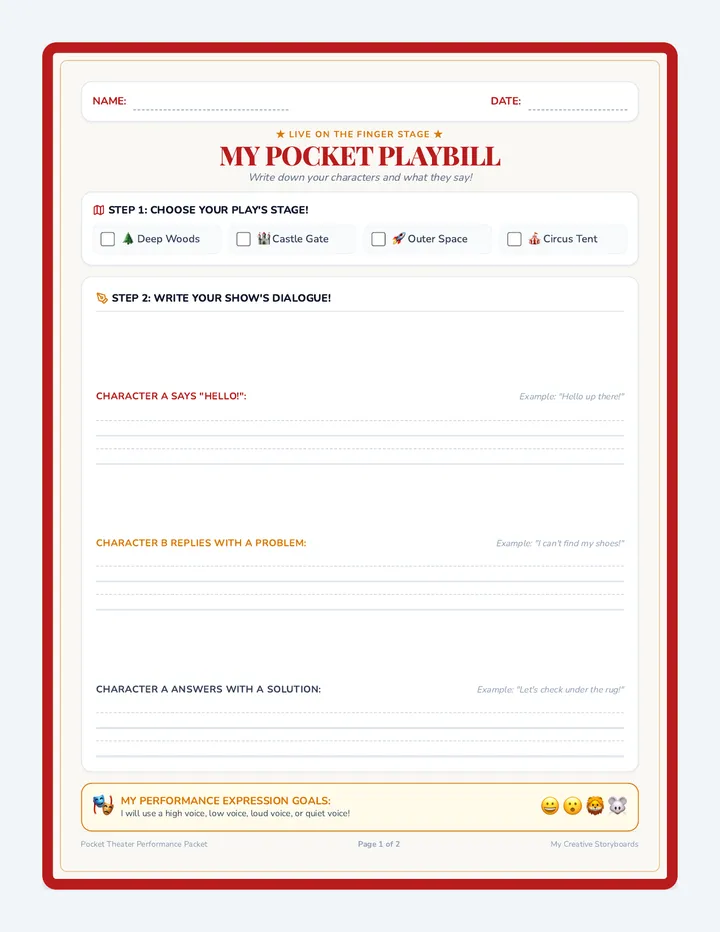
Instructions for the Mystery Performance Lab, guiding students through solo reading, role assignment with tie-breakers, plot analysis, fluency practice, and final presentation.
A comprehensive 2-page follow-up worksheet for students to complete after performing or watching mystery plays. Focuses on fluency self-reflection, high-rigor character analysis, comprehension of plot devices like red herrings, and social-emotional debriefing. Optimized for print with writing lines instead of boxes. Updated terminology to "Character Change".
Six lengthened mystery/problem-solving plays featuring 4-5 characters each. Each play includes increased plot complexity, red herrings, and higher rigor dialogue focused on social-emotional conflicts. Includes a reusable analysis log template. Themes are strictly school-based with no space or weapon-related content. Every script and the analysis log are formatted to fit on a single page. Optimized with writing lines and no heavy boxes.
A student worksheet for analyzing the plot structure of a play, including sections for setting, characters, beginning, middle, end, problem, and solution. Optimized with writing lines and no heavy boxes. fits on one page.
A short model play script titled "The Missing Lunchbox" used to demonstrate play structure, characters, and dialogue. Features a friendship-based problem and solution. Dinosaur theme used for the lunchbox.
Instructional slides teaching the components of a play script (dialogue, stage directions), plot elements (beginning, middle, end, problem, solution), and fluency skills.
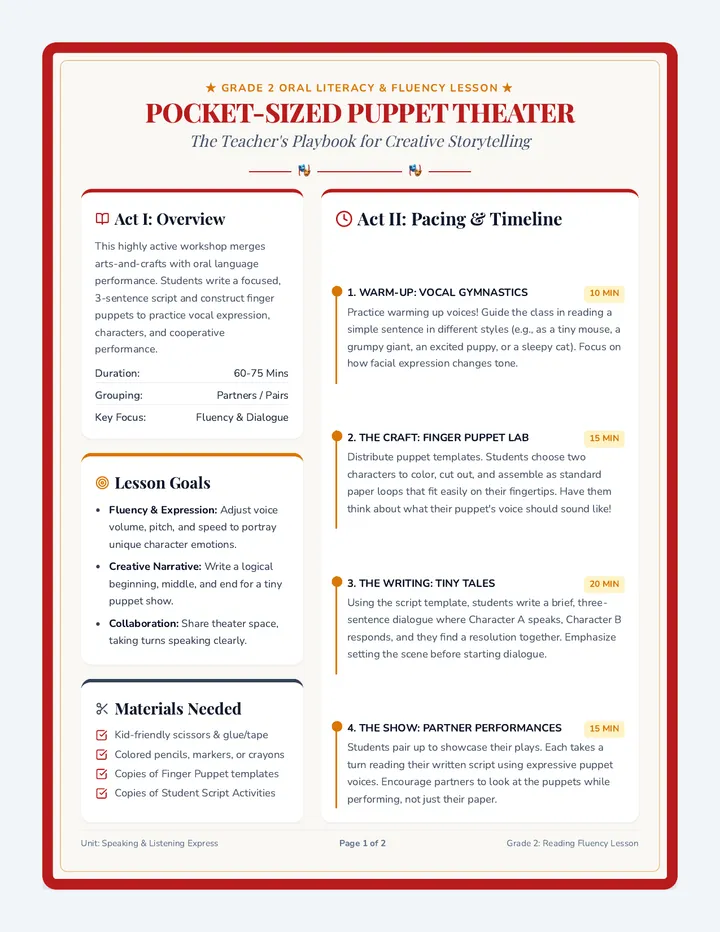
A teacher's guide for implementing reader's theater in the classroom, including pacing suggestions, instructional goals, and discussion prompts.
A spacious, easy-to-read version of the Snow Detective reader's theater script and RL.1 exit ticket, designed with larger fonts and a 2-page layout. Fits on two pages (front and back).
A spacious, easy-to-read version of the Jack Fame reader's theater script and RL.1 exit ticket, designed with larger fonts and a 2-page layout. Fits on two pages (front and back).
A spacious, easy-to-read version of the Smart Bears reader's theater script and RL.1 exit ticket, designed with larger fonts and a 2-page layout. Fits on two pages (front and back).
A spacious, easy-to-read version of the Sneaker Ella reader's theater script and RL.1 exit ticket, designed with larger fonts and a 2-page layout. Fits on two pages (front and back).
A balanced, easy-to-read version of the Wolf Kitchen reader's theater script and RL.1 exit ticket, designed with appropriate fonts and a 2-page layout to save paper while remaining accessible to young readers.
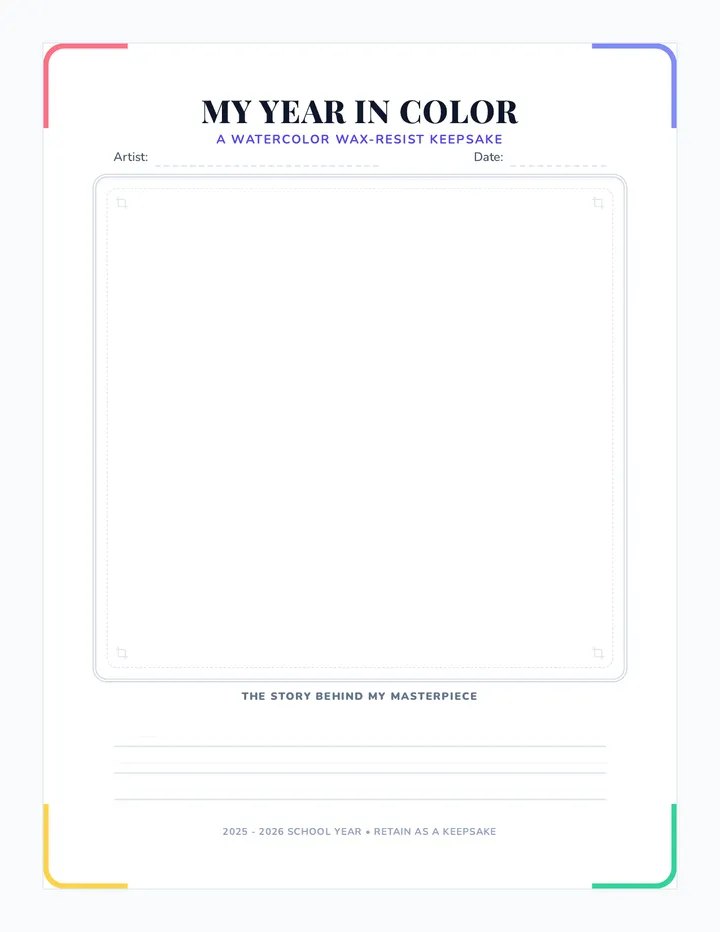
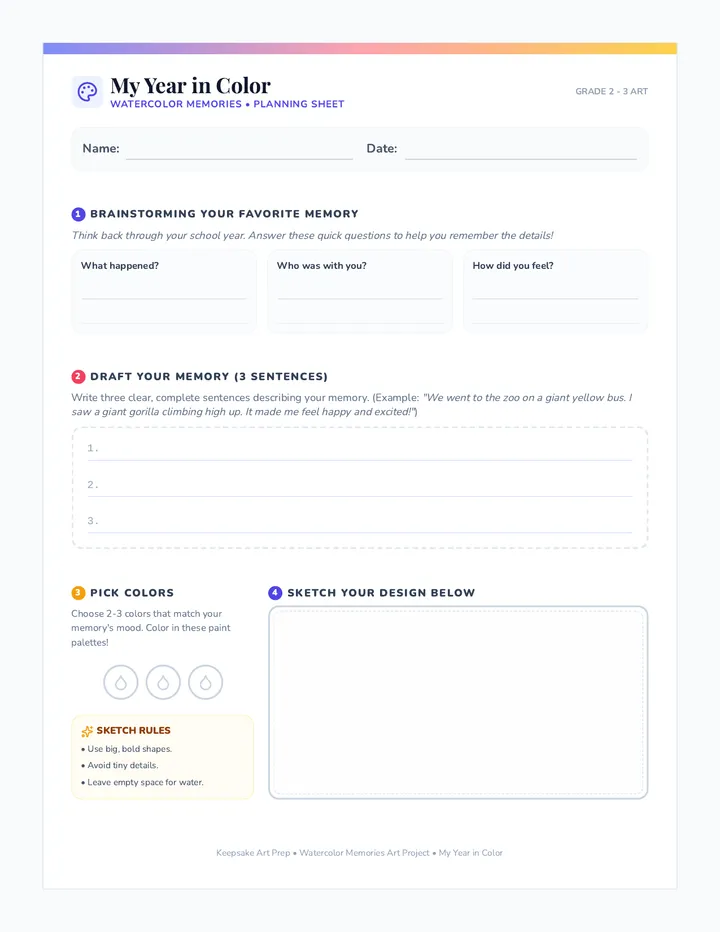
A year-end reflection portfolio page for students. It includes a sketch area for their final project, material preference checks, and written reflection prompts.
An art history presentation slide deck introducing Vincent van Gogh and his 'Starry Night'. Focuses on emotional expression and the 'impasto' technique.
A collage activity sheet for Unit 2 focused on torn paper texture. It introduces texture vocabulary and sets a 'Winter Wonderland' creative challenge without scissors.
A student project guide for Unit 1, teaching line types and landscape basics through a 'Line Lab' activity. Includes a practice sketch area and clear studio steps.
An introductory slide deck for the 2nd Grade art year, establishing studio habits, the meaning of art, and a visual preview of the four upcoming units.