A comprehensive teacher facilitation guide for the Air Catcher Academy lesson, including a timed script, materials checklist, troubleshooting tips, and an answer key for the student lab report.
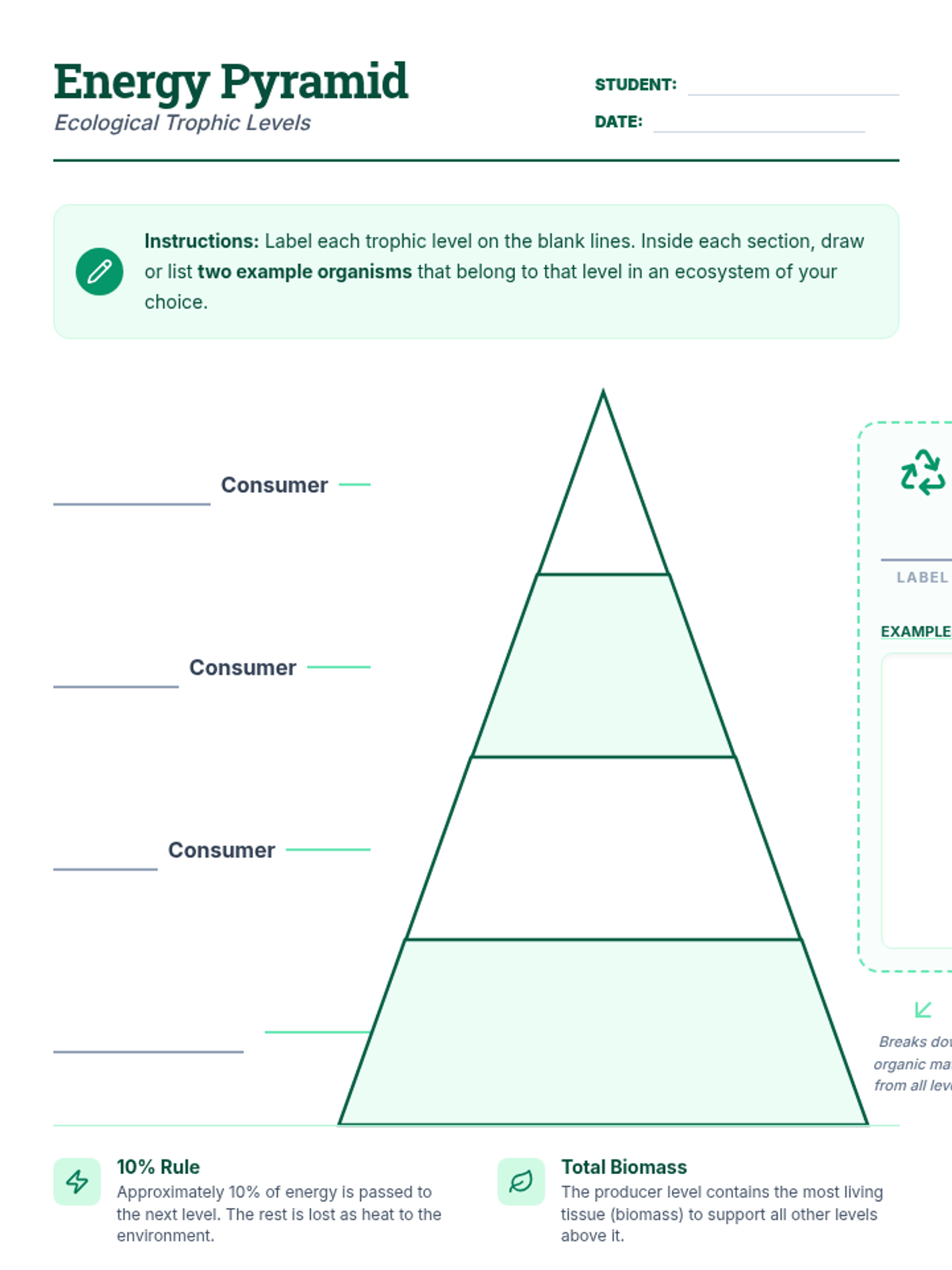
A blank energy pyramid diagram for students to label trophic levels (Producer, Primary Consumer, Secondary Consumer, Tertiary Consumer) and identify corresponding organisms within an ecosystem. Features a section for Decomposers and key ecological concepts at the bottom.
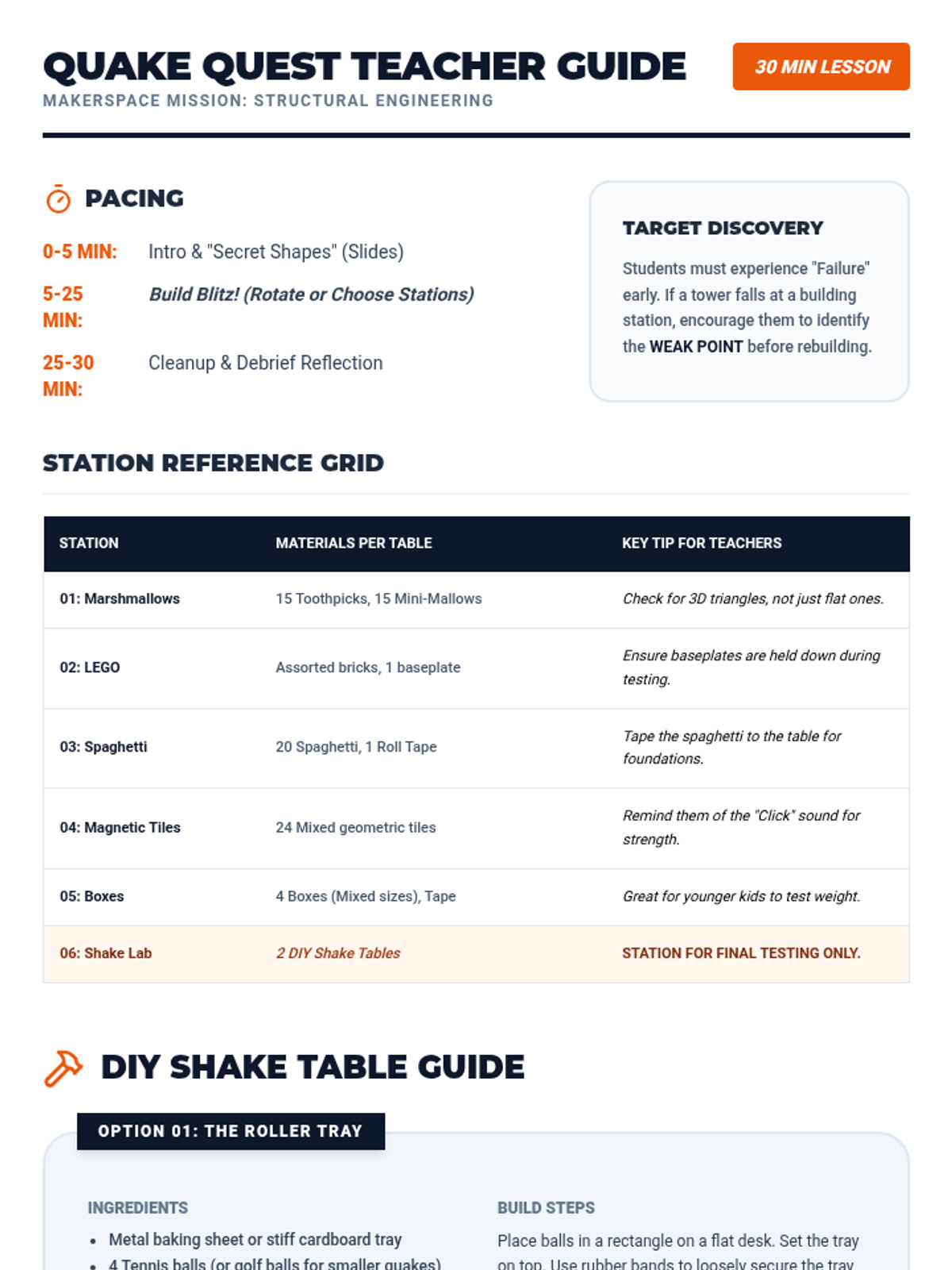
A comprehensive teacher's guide for the Quake Quest lesson. Revised with a detailed station material grid, step-by-step DIY shake table instructions, and a balanced two-page layout. Fixes pacing alignment and DIY card layout issues.
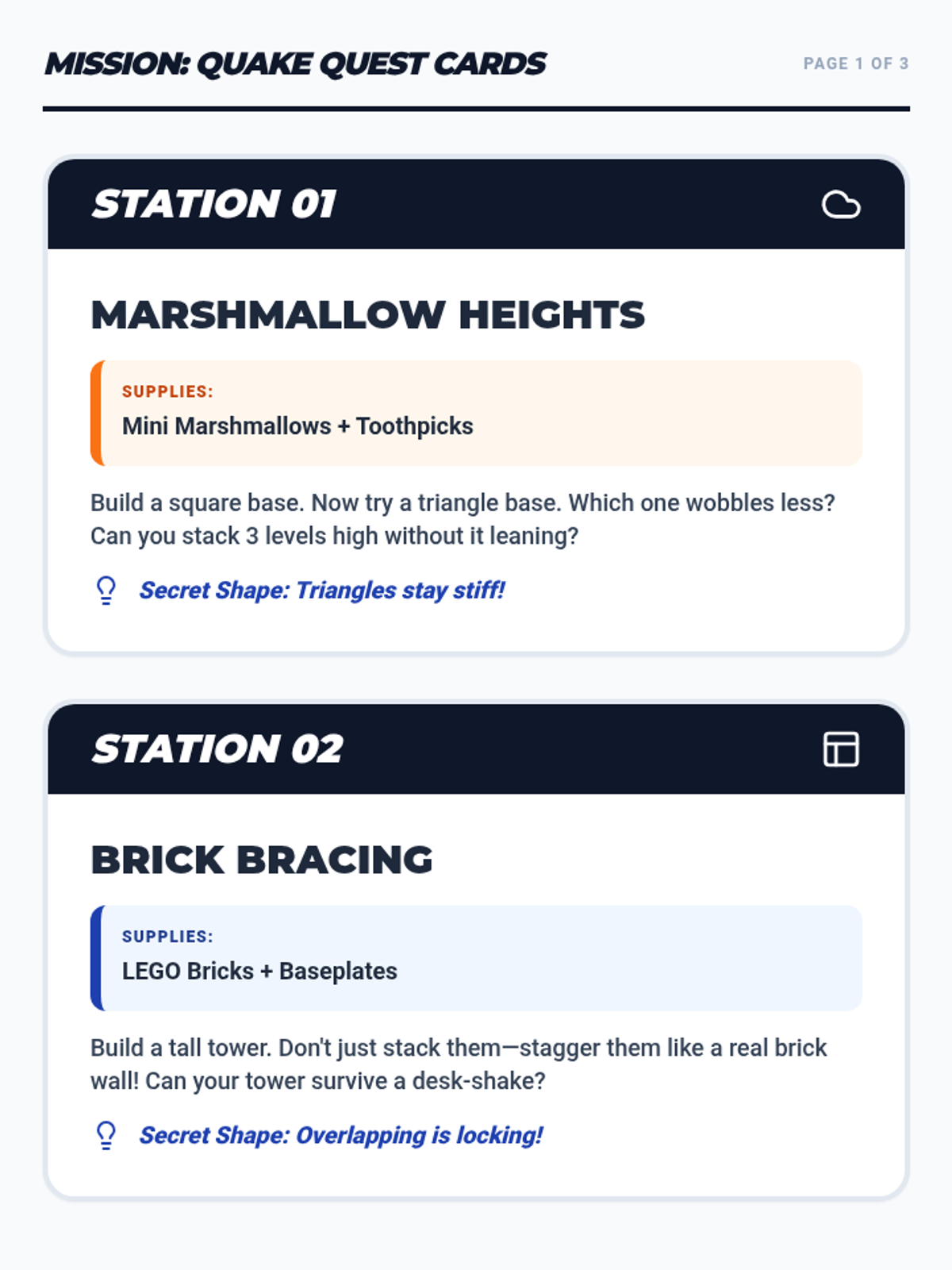
Printable challenge cards for each of the six makerspace stations. Optimized for 2-cards-per-page printing with consistent card heights and clear K-5 instructions. Revised for correct page flow and layout consistency.
An engaging slide deck for a 30-minute K-5 makerspace lesson on earthquake stability. Revised for improved contrast, layout breathing room, and larger font sizes for clarity.
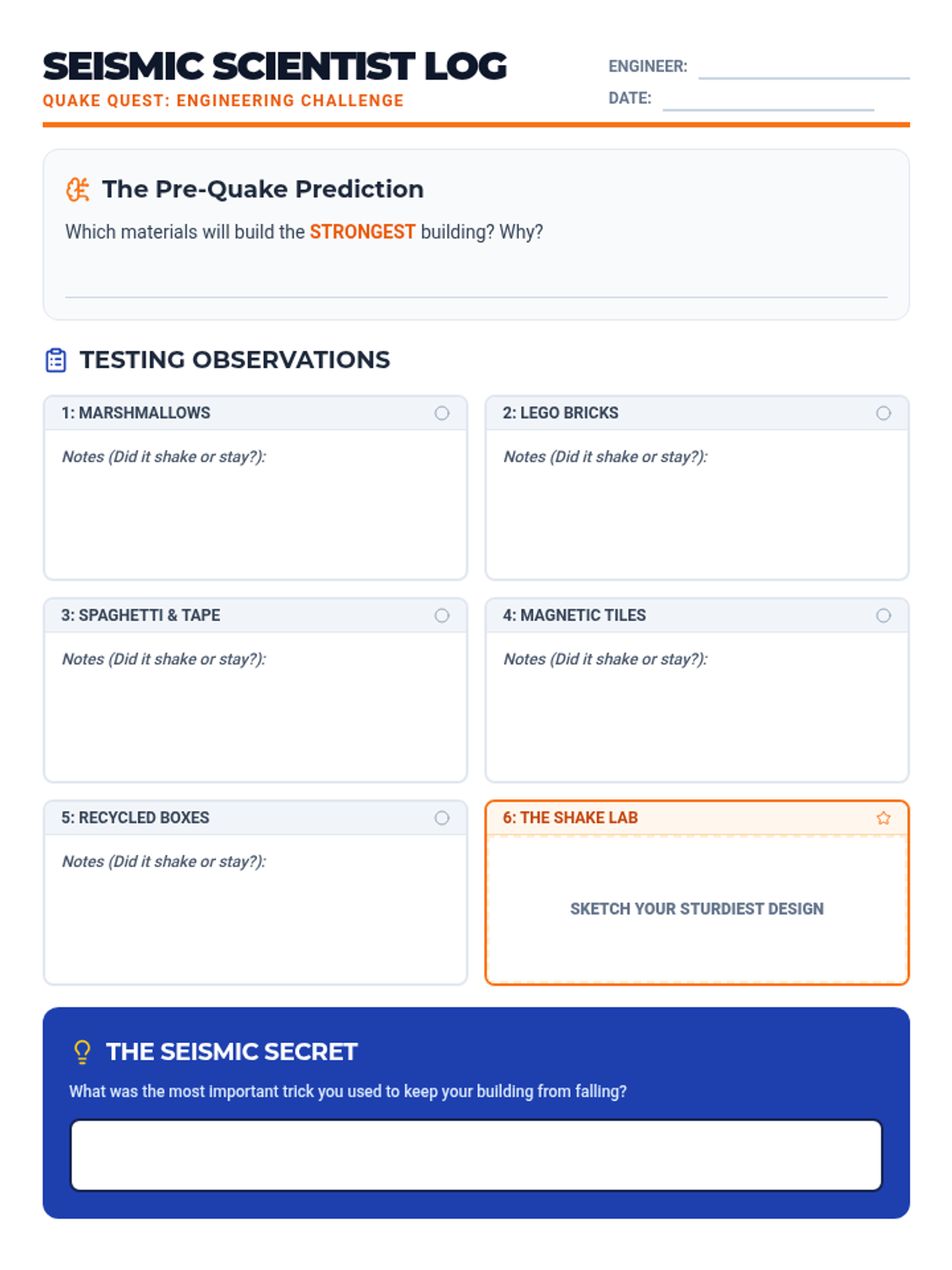
A student log for documenting predictions and observations during the Quake Quest makerspace lesson. Revised for single-page layout with larger fonts and improved contrast for student work areas.
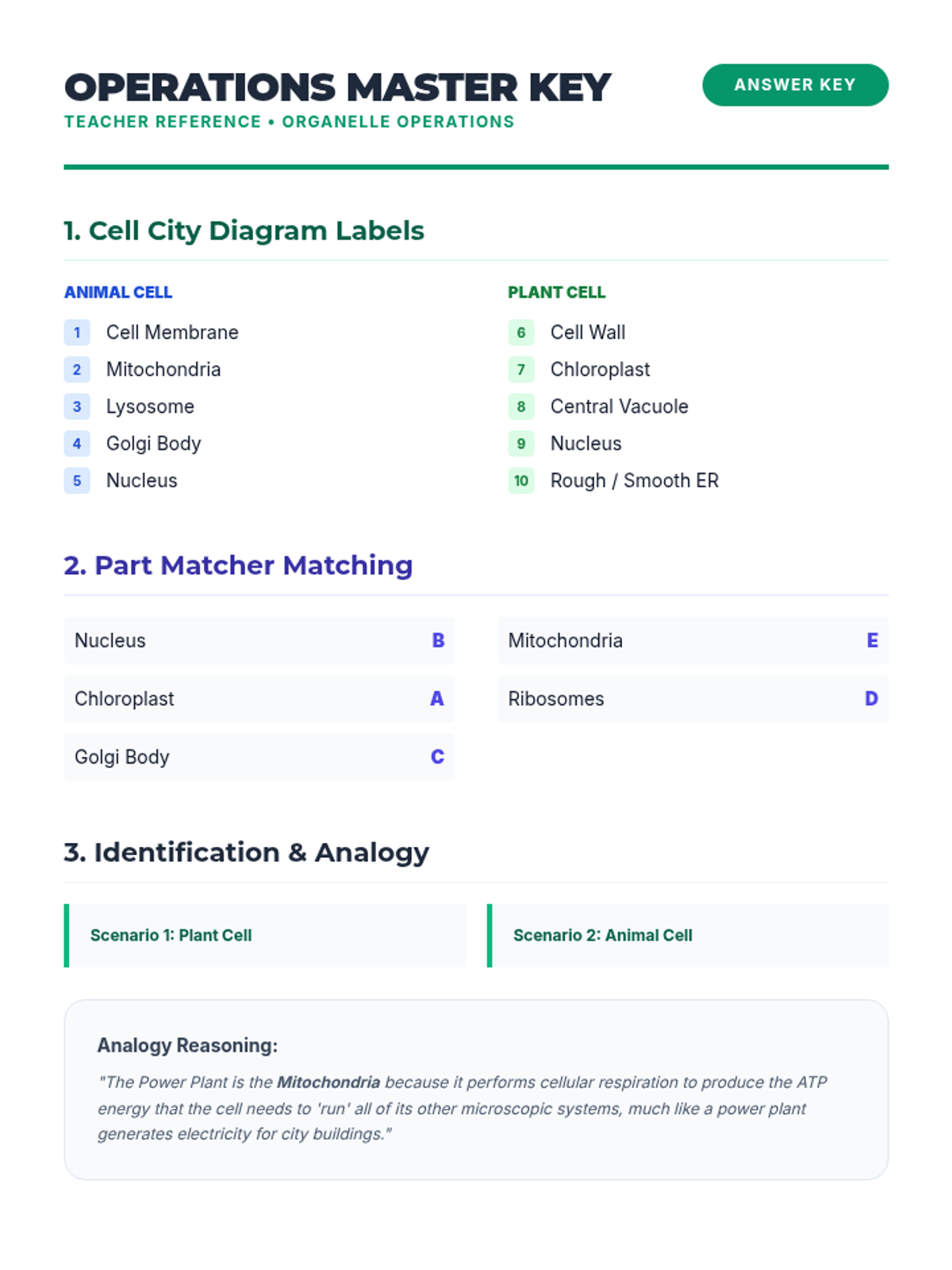
A teacher's answer key for the Cell City Diagram and Part Matcher worksheets. Provides clear answers and supporting evidence for identification scenarios.
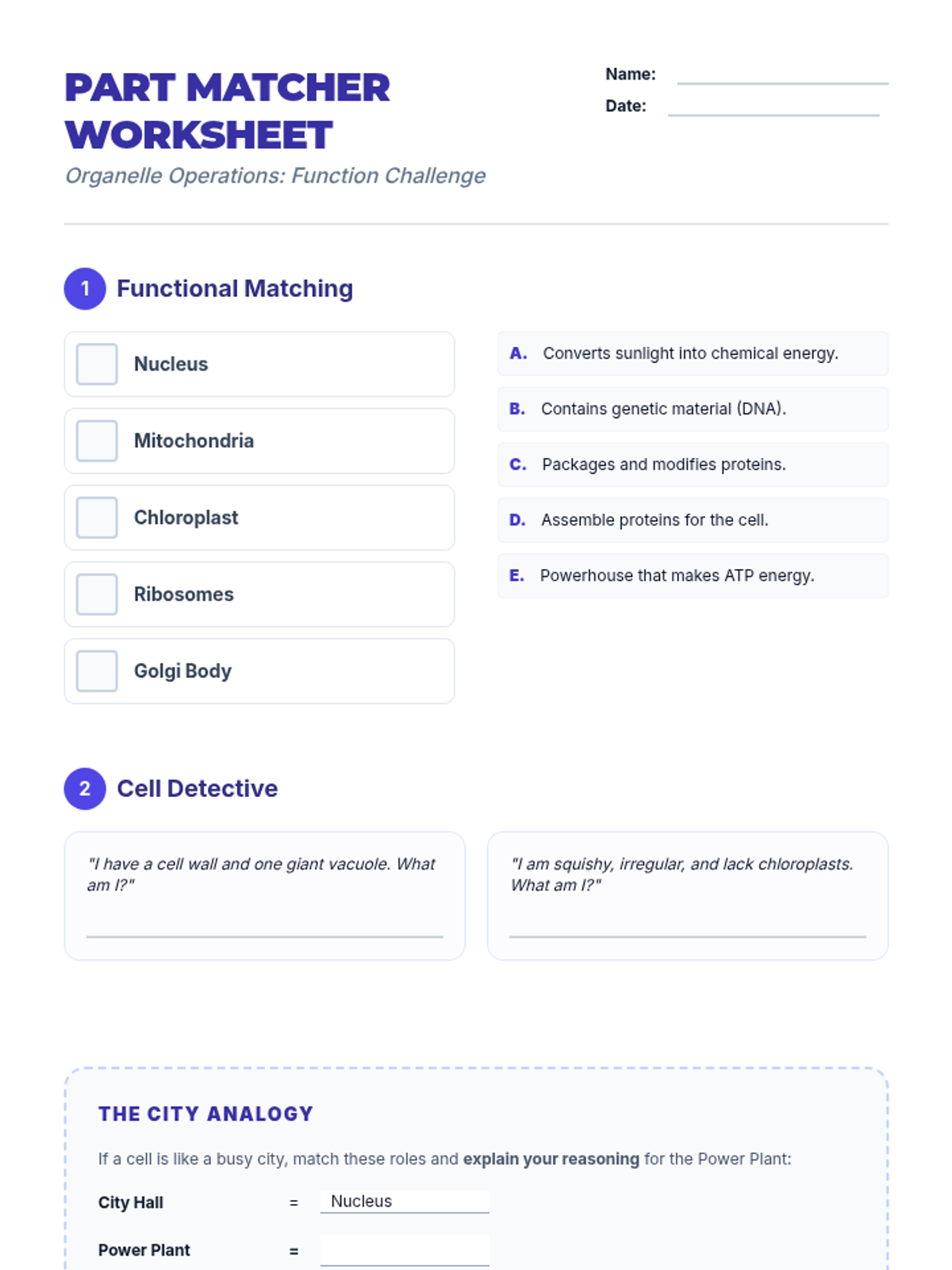
A matching activity for organelle functions and cell type identification scenarios. Designed to test student understanding of biological roles.
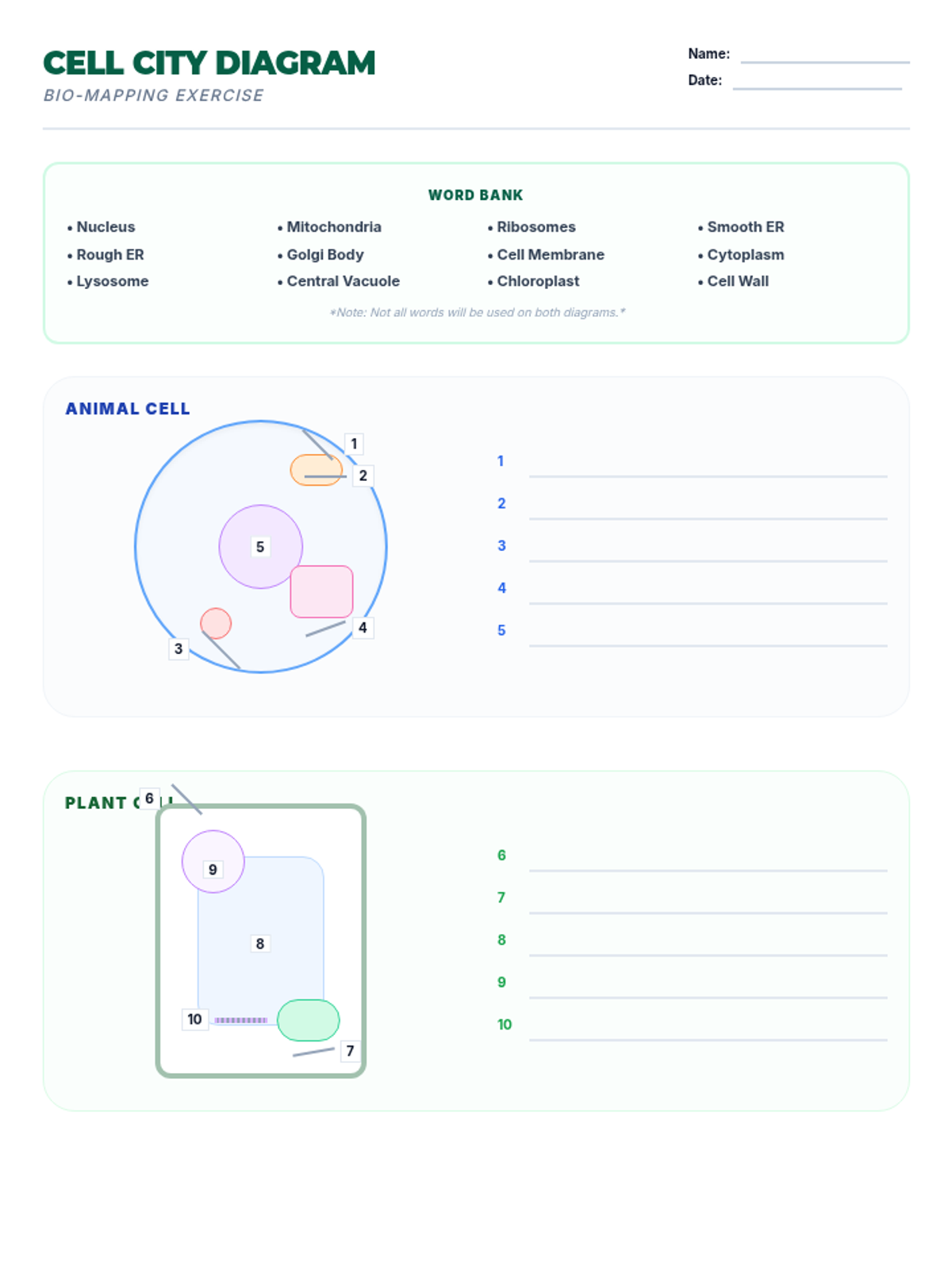
A labeling worksheet for identifying organelles in both animal and plant cells. Includes a word bank and structured writing areas for labeling diagrams.
A comprehensive visual guide to animal and plant cell organelles, highlighting key structures, energy production, manufacturing, and structural differences. Includes high-visibility text and modern icons.
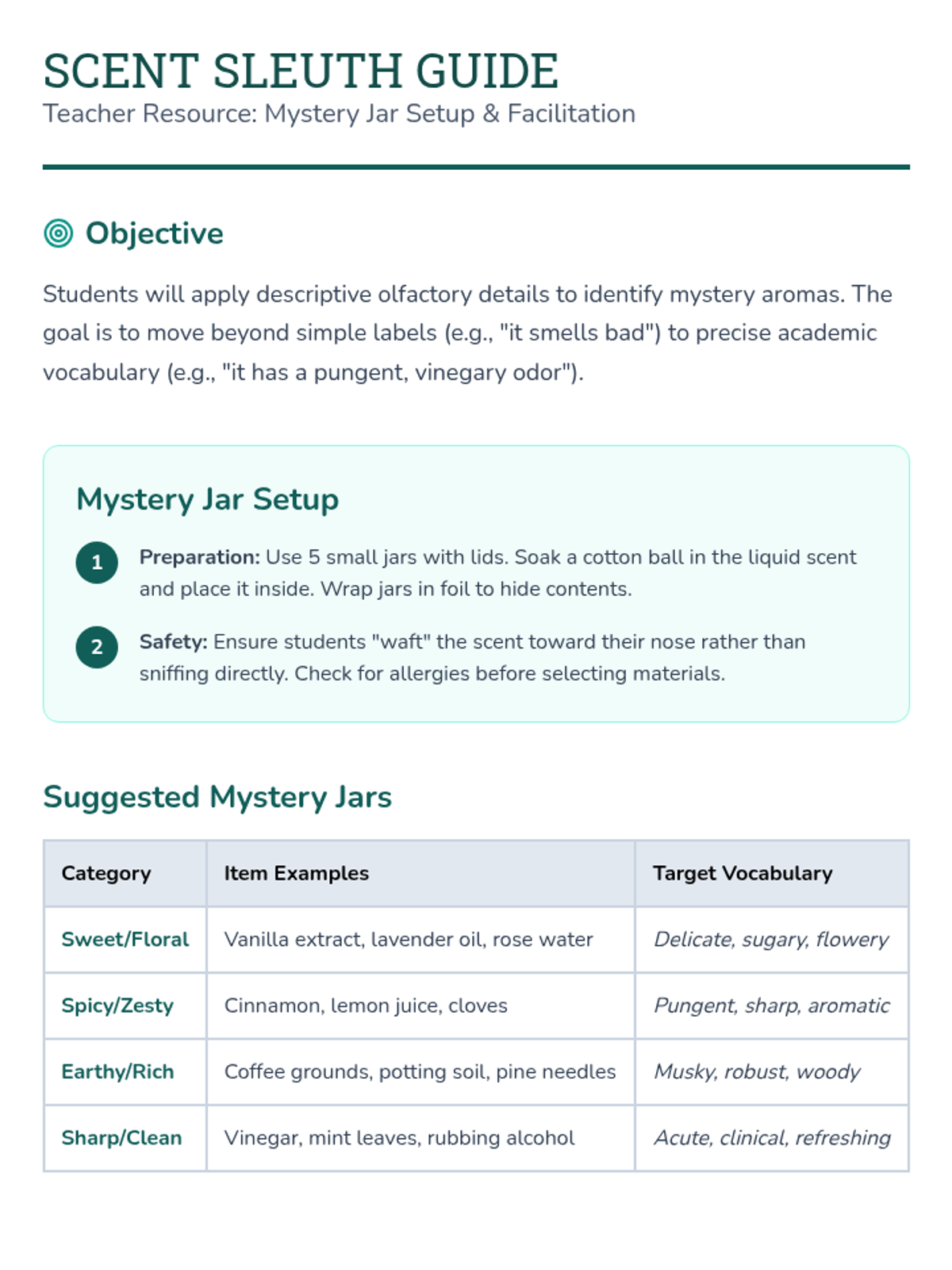
A teacher guide for the Scent and Search lesson, including jar setup instructions, suggested scents, and safety wafting techniques. Revised for better page layout and content density. Adjusted table contrast and added a facilitator notes section. Increased line-height for teacher handwriting.
A presentation to introduce the mystery scent activity, focusing on olfactory vocabulary and the difference between simple and descriptive language. Structured into 4 high-contrast slides.
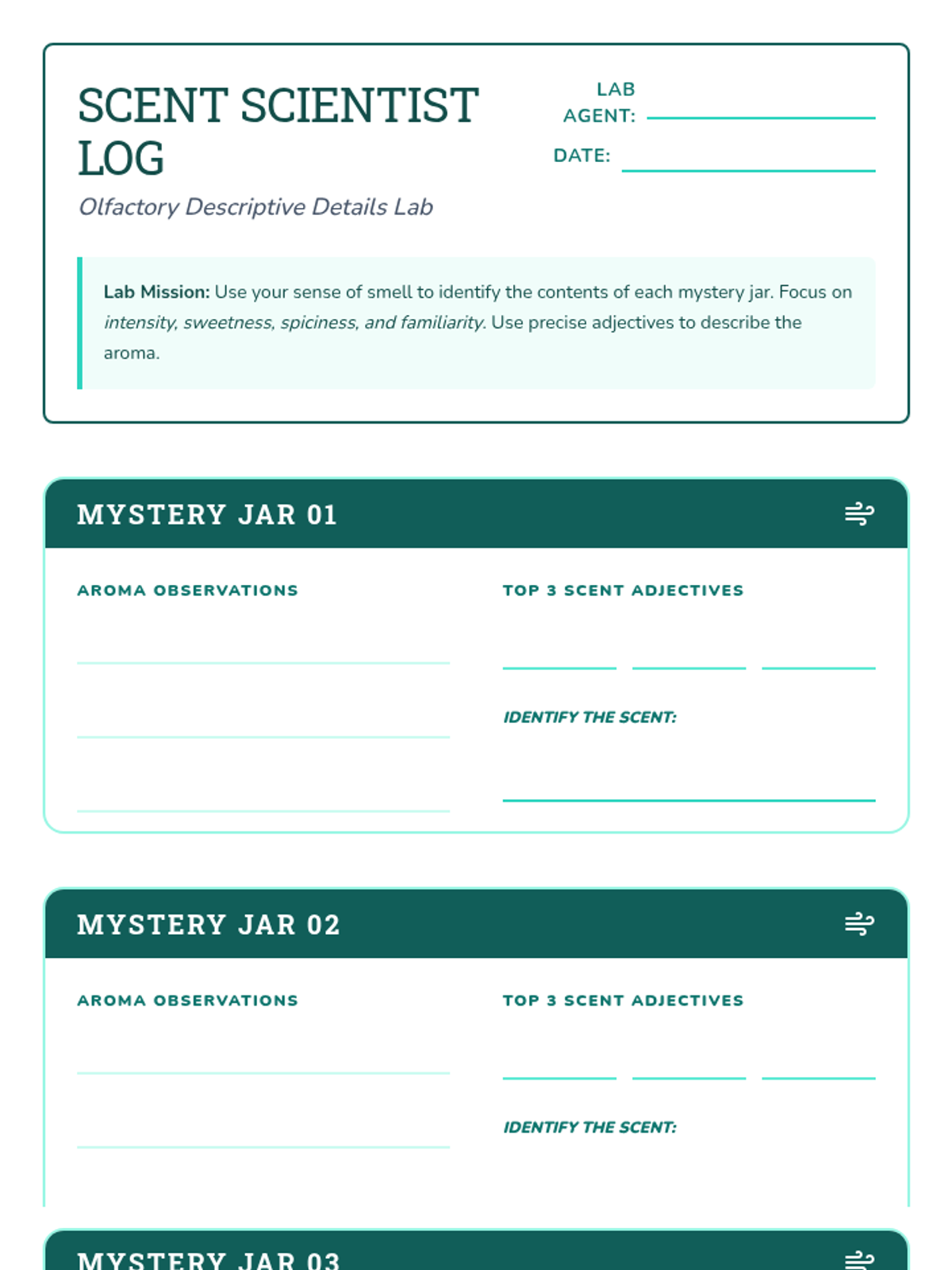
A two-page graphic organizer for a scent exploration activity. Features large recording areas for 5 mystery scent jars, detailed observation sections, and standardized layouts. Designed for double-sided printing to maximize student work space. Every box includes 3 observation lines and 3 adjective slots. Revised for optimal page utilization and line spacing.
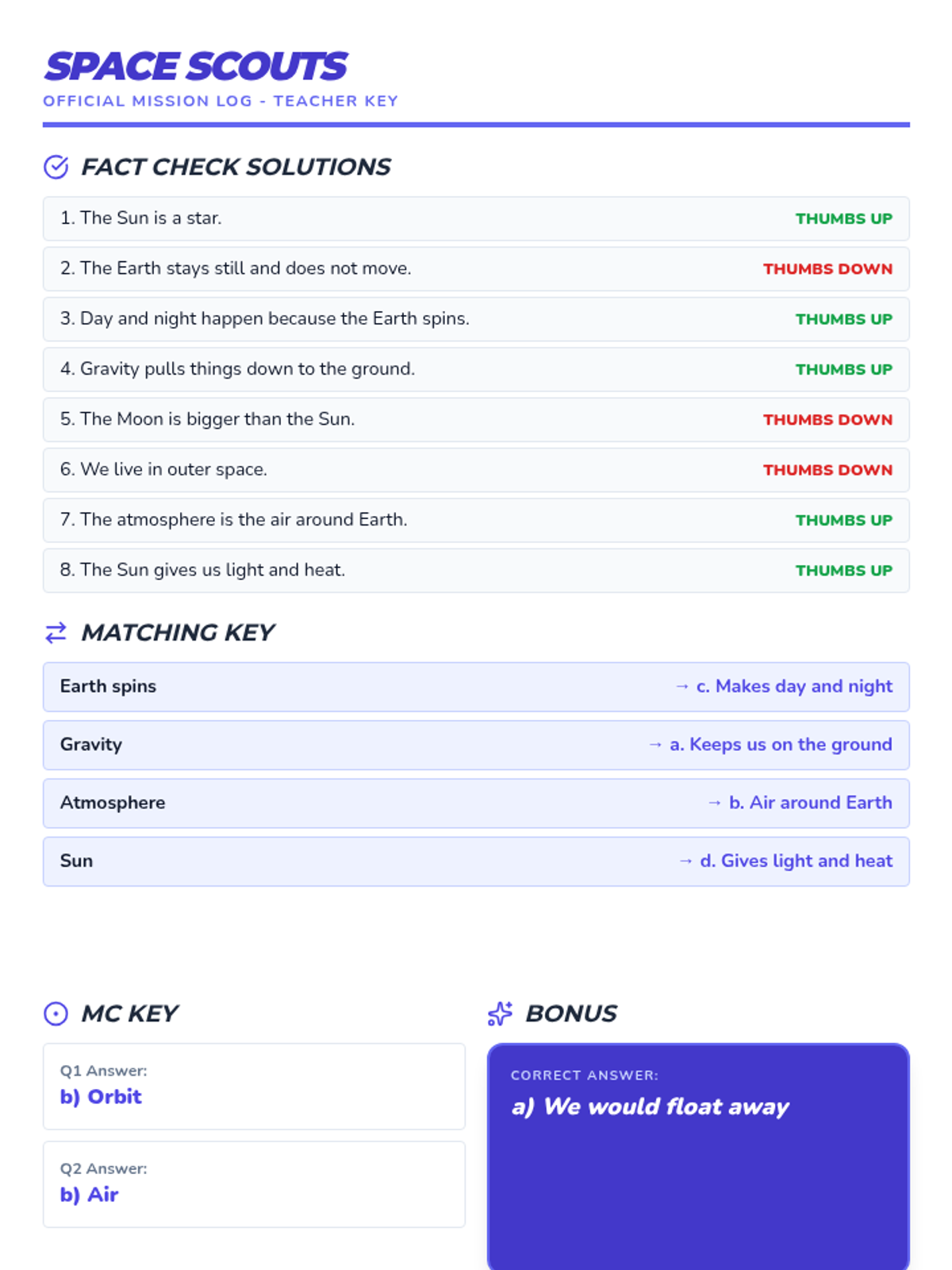
A concise answer key for the Space Scouts worksheet, providing clear solutions for all sections including Fact Check, Matching, Multiple Choice, and Bonus questions. Optimized for single-page layout.
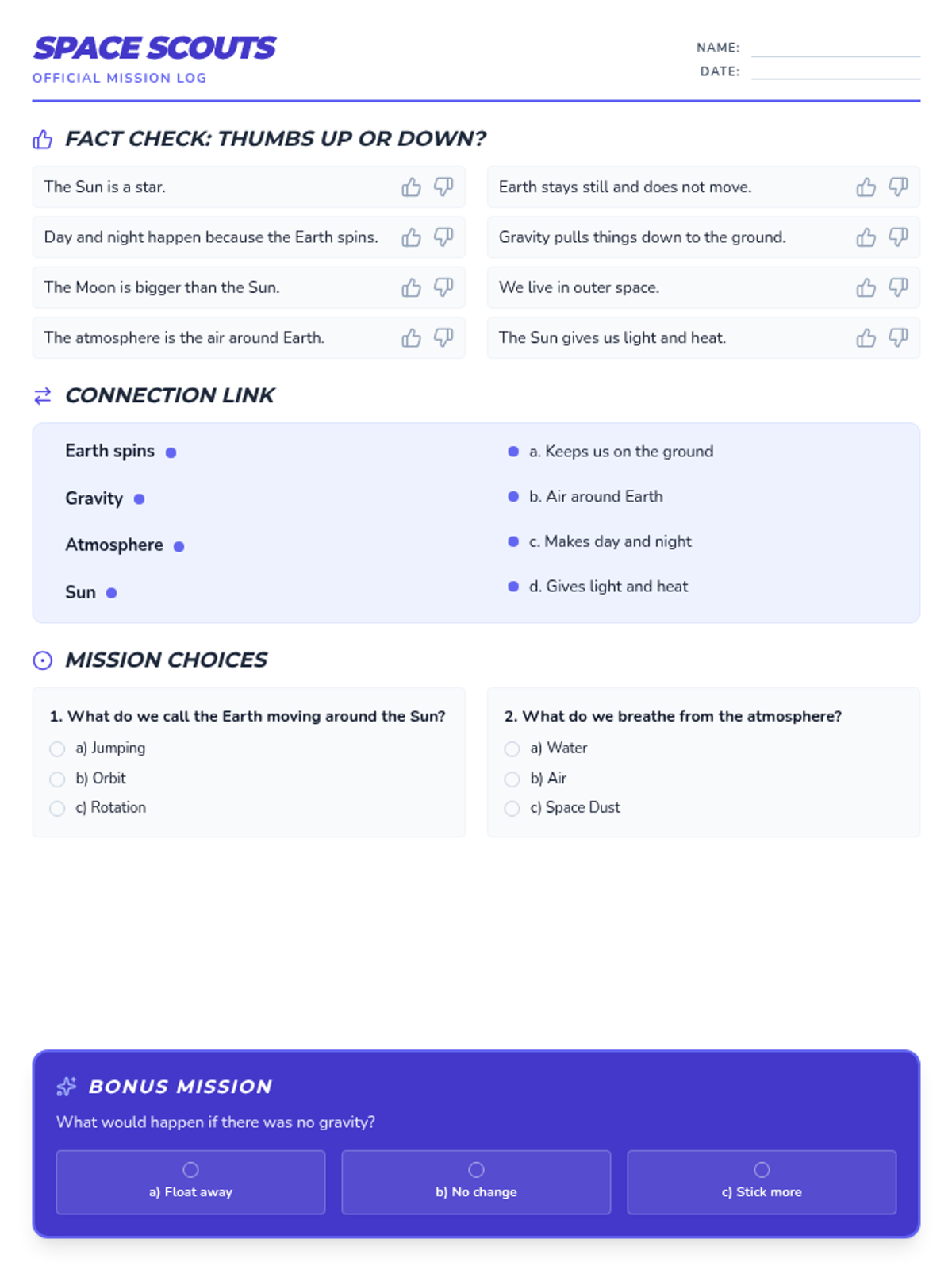
A visually engaging single-page student handout for elementary space exploration. Features sections for true/false (thumbs up/down), matching definitions, multiple choice, and a bonus gravity question. Optimized for single-page layout with clear visual hierarchy.
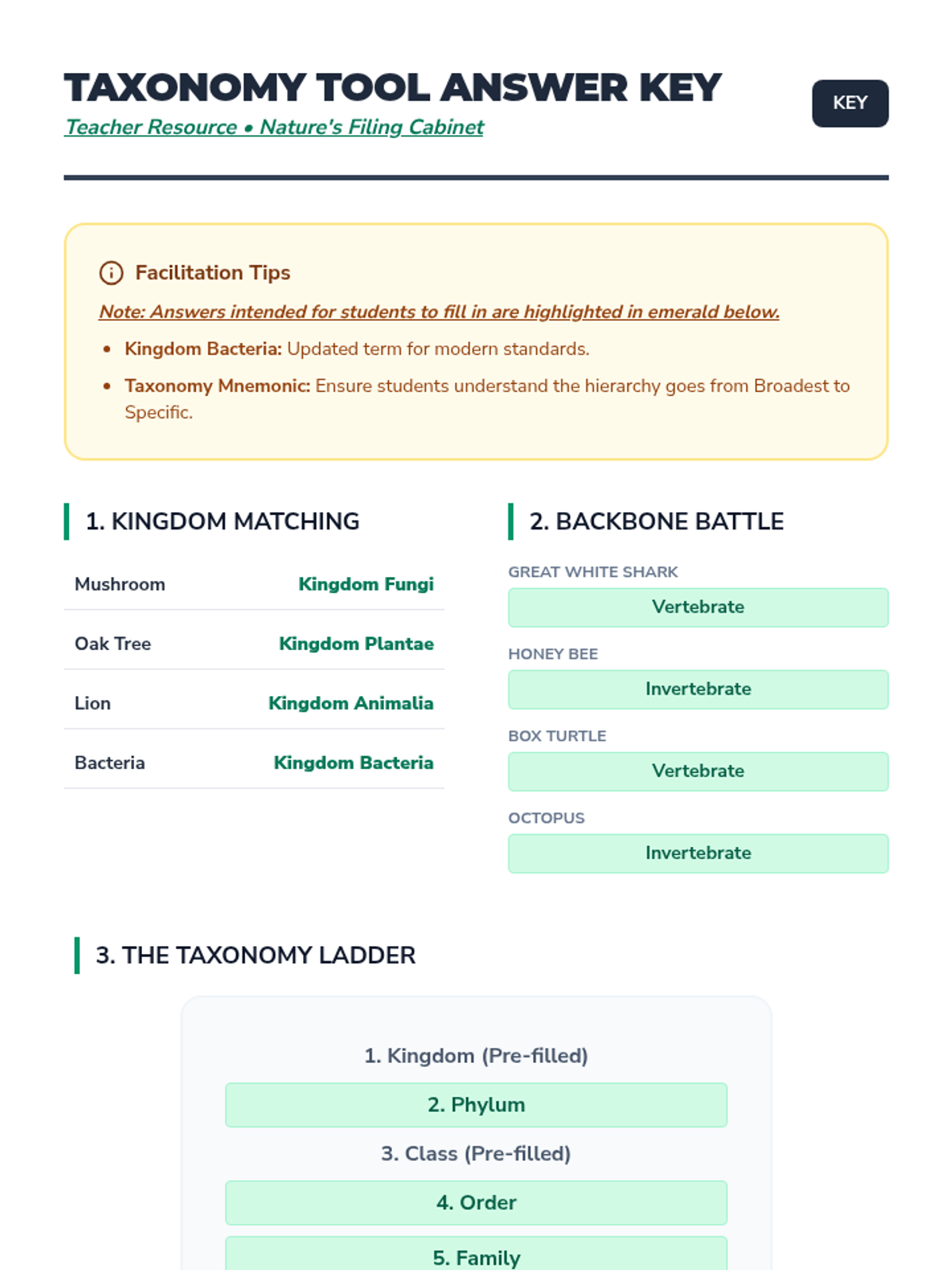
Final polished answer key for the Wild World Worksheet. Resolved page break issues to keep the taxonomy ladder cohesive and increased contrast for pre-filled items for better legibility.
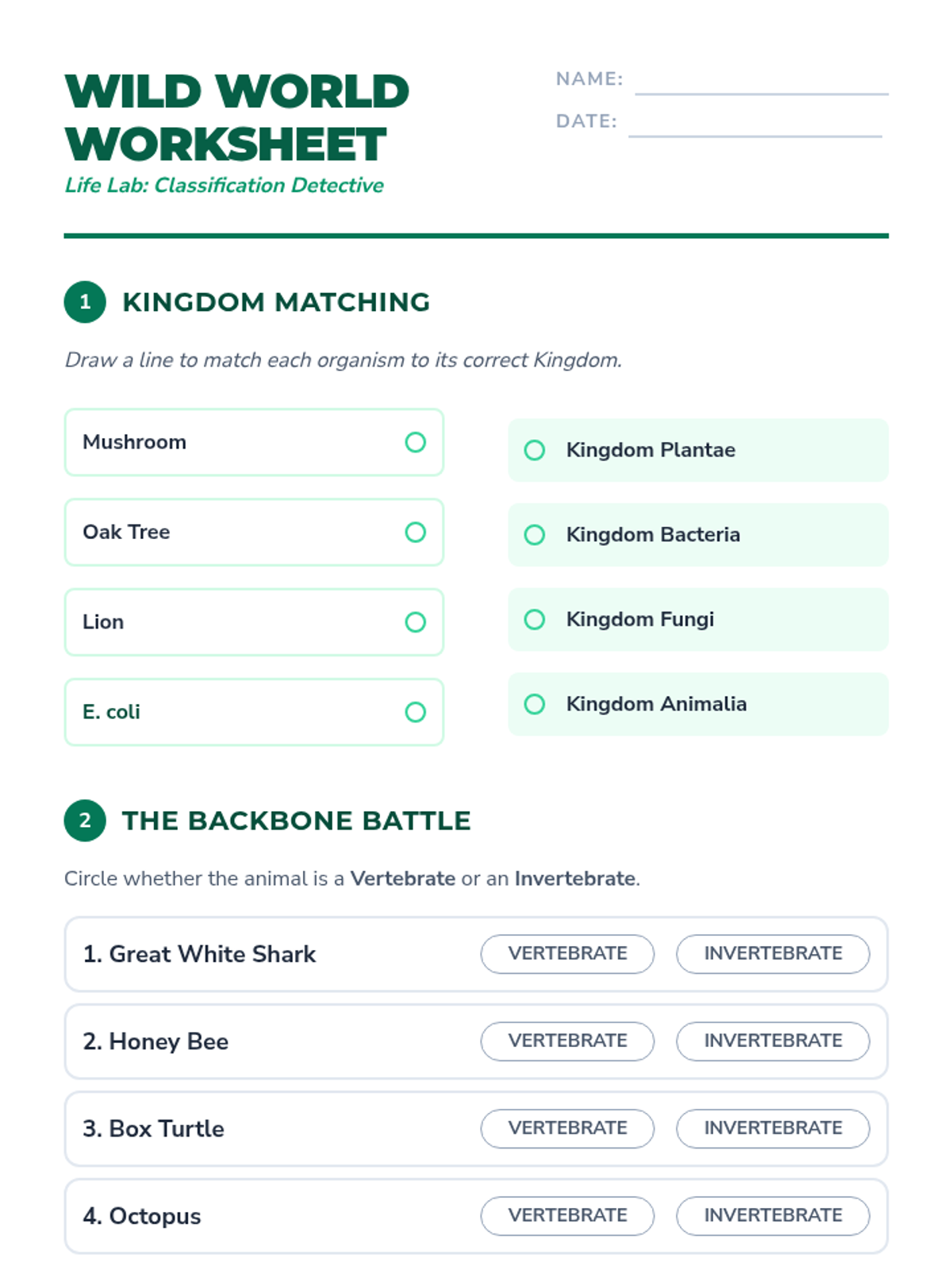
Final polished classification practice worksheet for Grade 5. Improved kingdom matching alignment, fixed page breaks for consistent animal cards, and corrected the taxonomy ladder to 7 levels.