Teacher answer key and grading rationale for Week 3 and 4 (The Gene Game & Probability Pro). Includes monohybrid cross solutions, ratio breakdowns, and the "Probability Paradox" reasoning rubric.

A set of introductory slides for the substitute to display, setting the project scenario, explaining requirements, and outlining Day 1 goals.
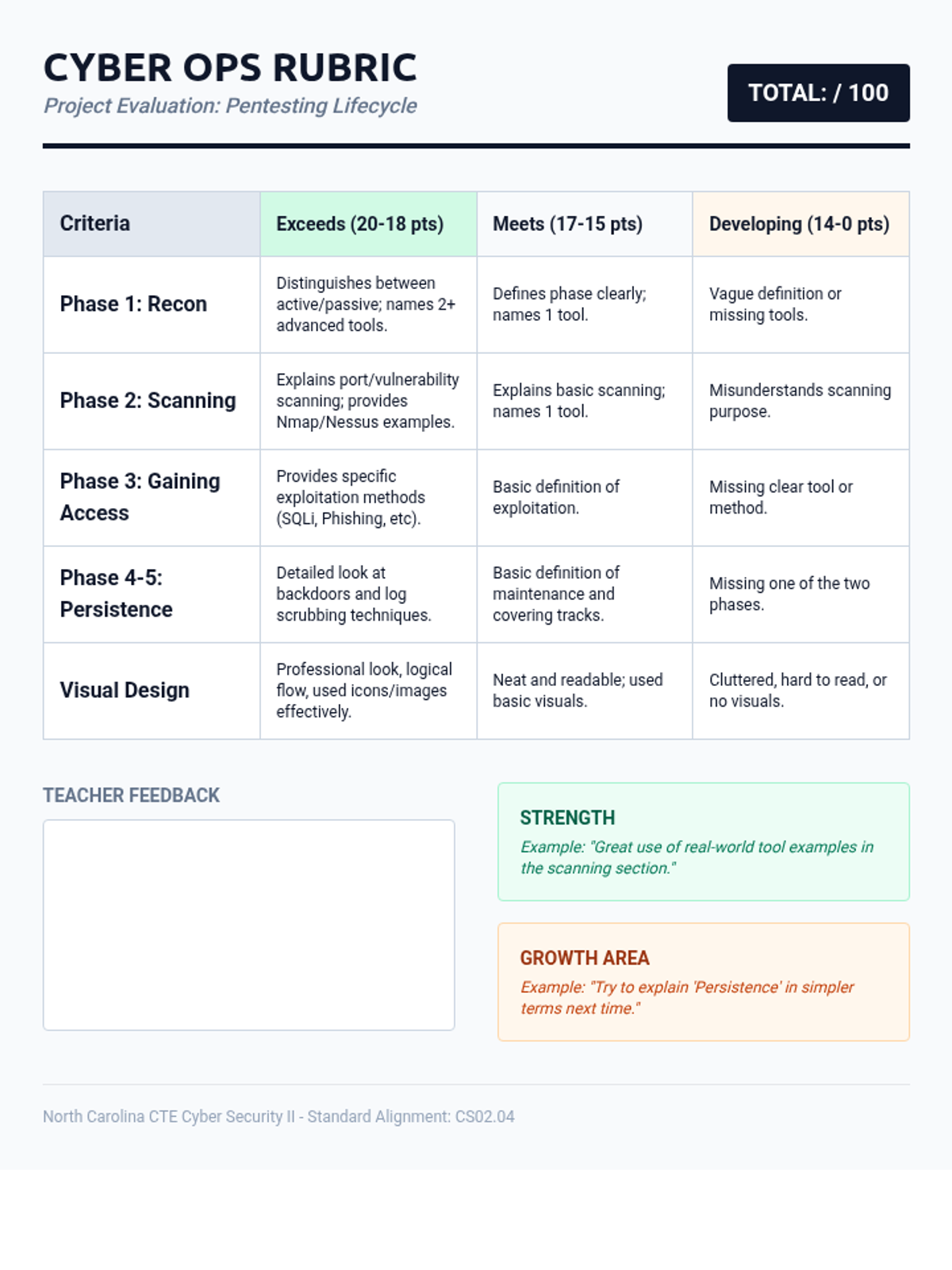
A grading rubric for the penetration testing project, focusing on technical accuracy, tool identification, and visual presentation.
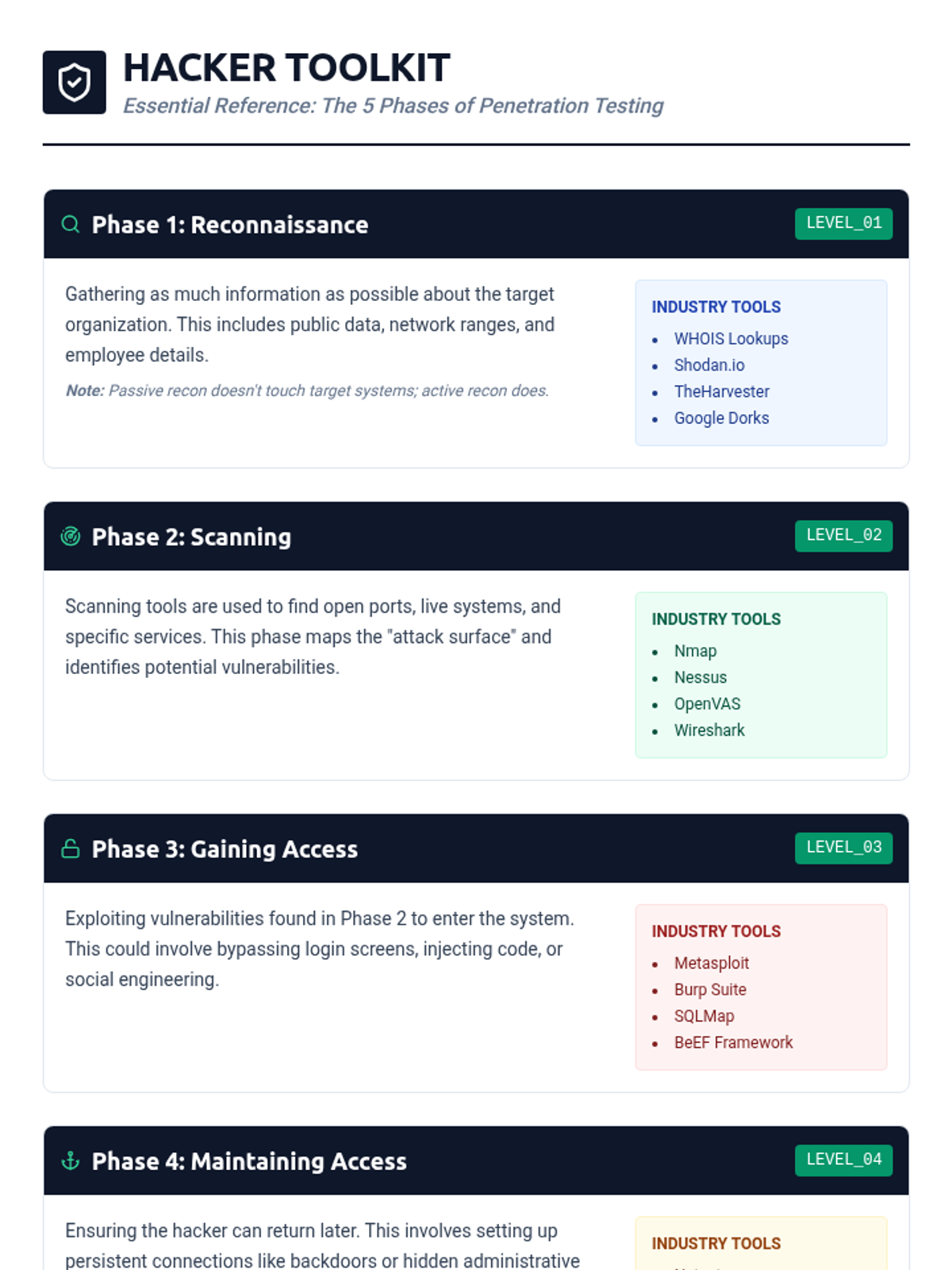
A detailed reference sheet defining the five phases of ethical hacking and listing common industry tools for each phase. Acts as a starting point for student research.
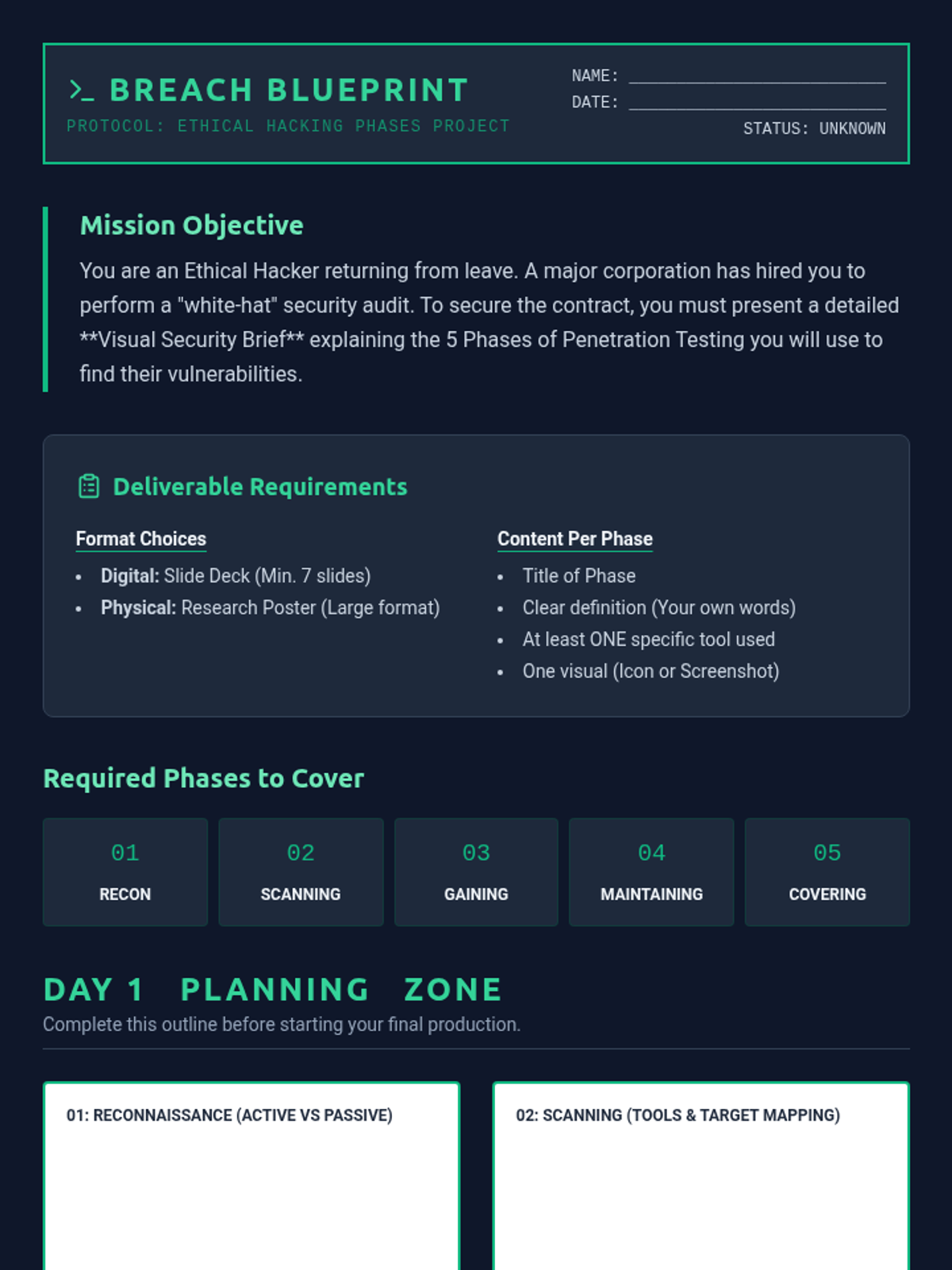
The core project document for students, featuring mission objectives, project requirements, a 5-phase checklist, and a structured planning area for Day 1 research.
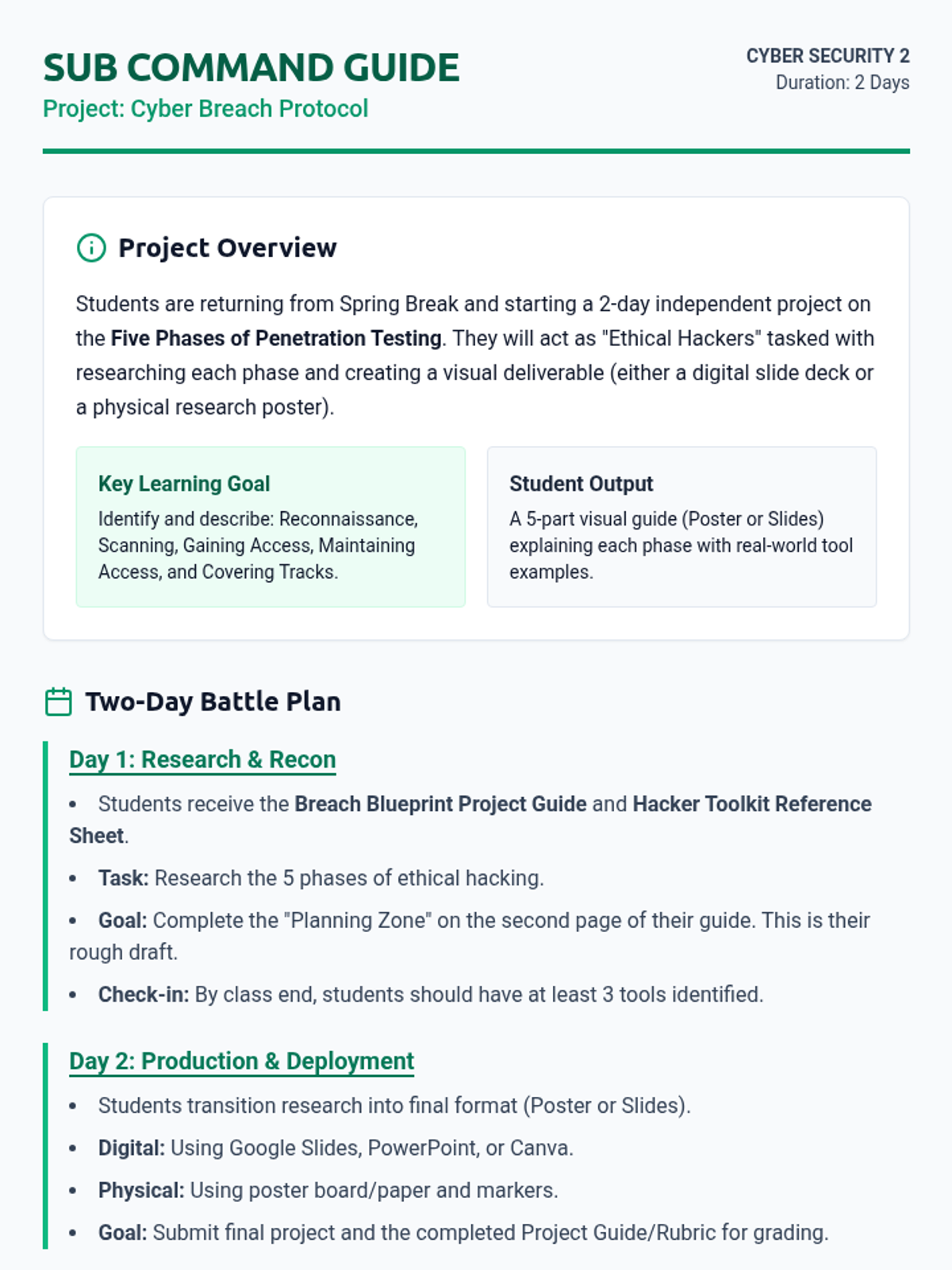
A facilitation guide for substitute teachers outlining the 2-day project schedule, key learning goals, and tips for student support.
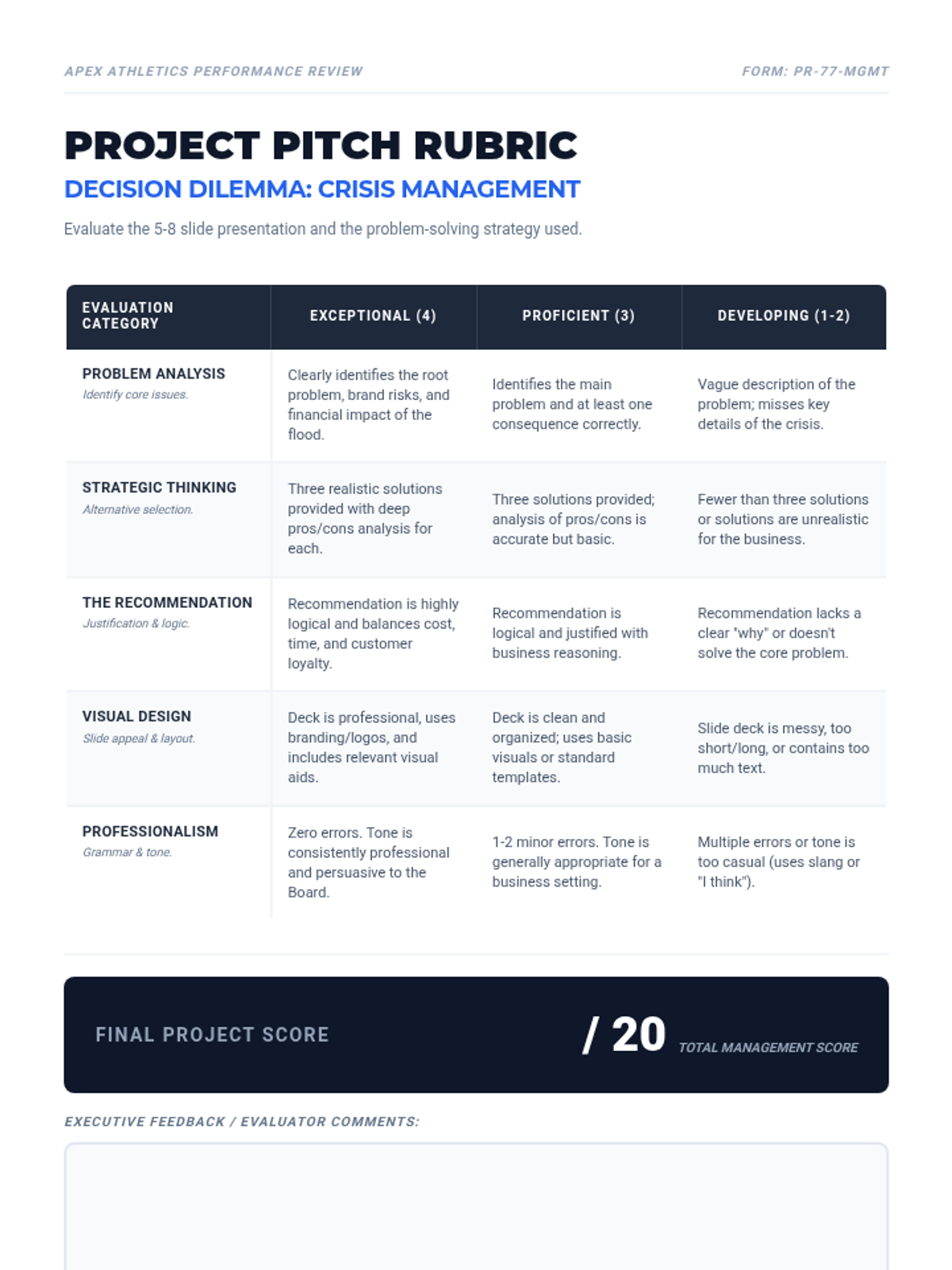
A professional assessment rubric for the 2-day management project. It evaluates students on problem analysis, strategic thinking, recommendation logic, slide design, and professionalism.
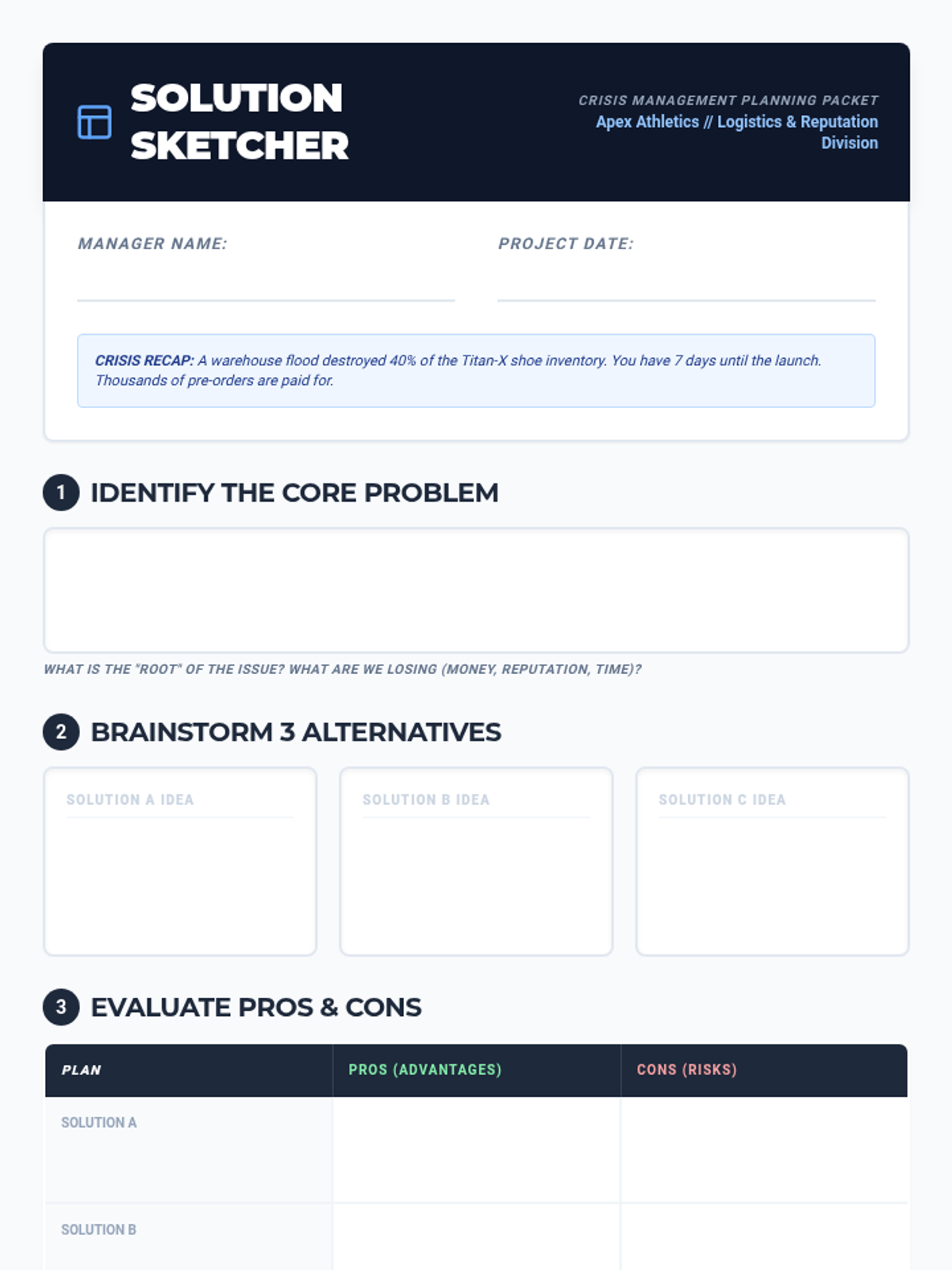
A two-page planning worksheet for students to use during Day 1 of their project. It guides them through the rational decision-making model steps and helps them map out their slide presentation content.
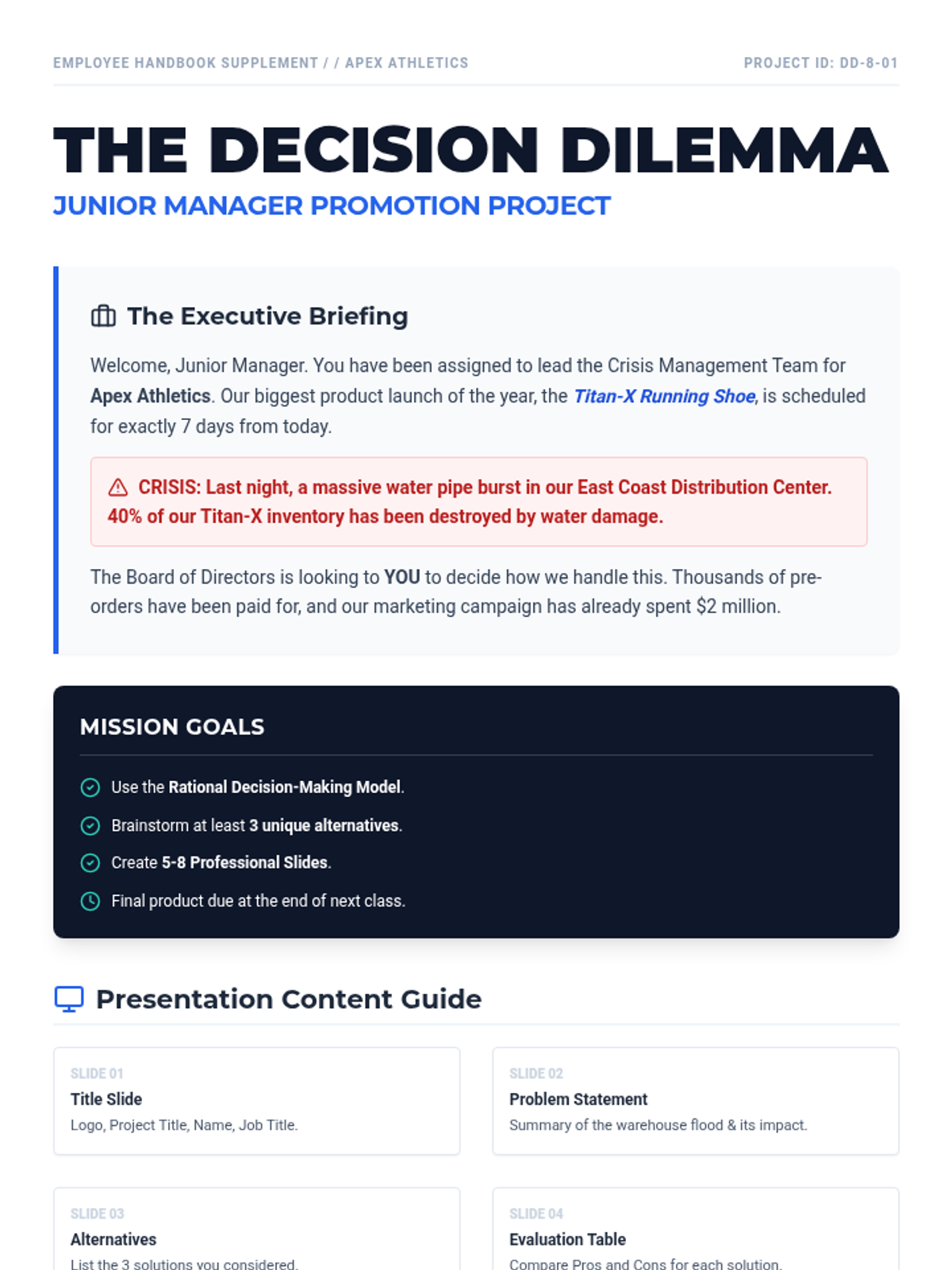
A student-facing guide for the "Decision Dilemma" project. It outlines the business crisis scenario, the mission requirements, and the specific slide content for their presentation.
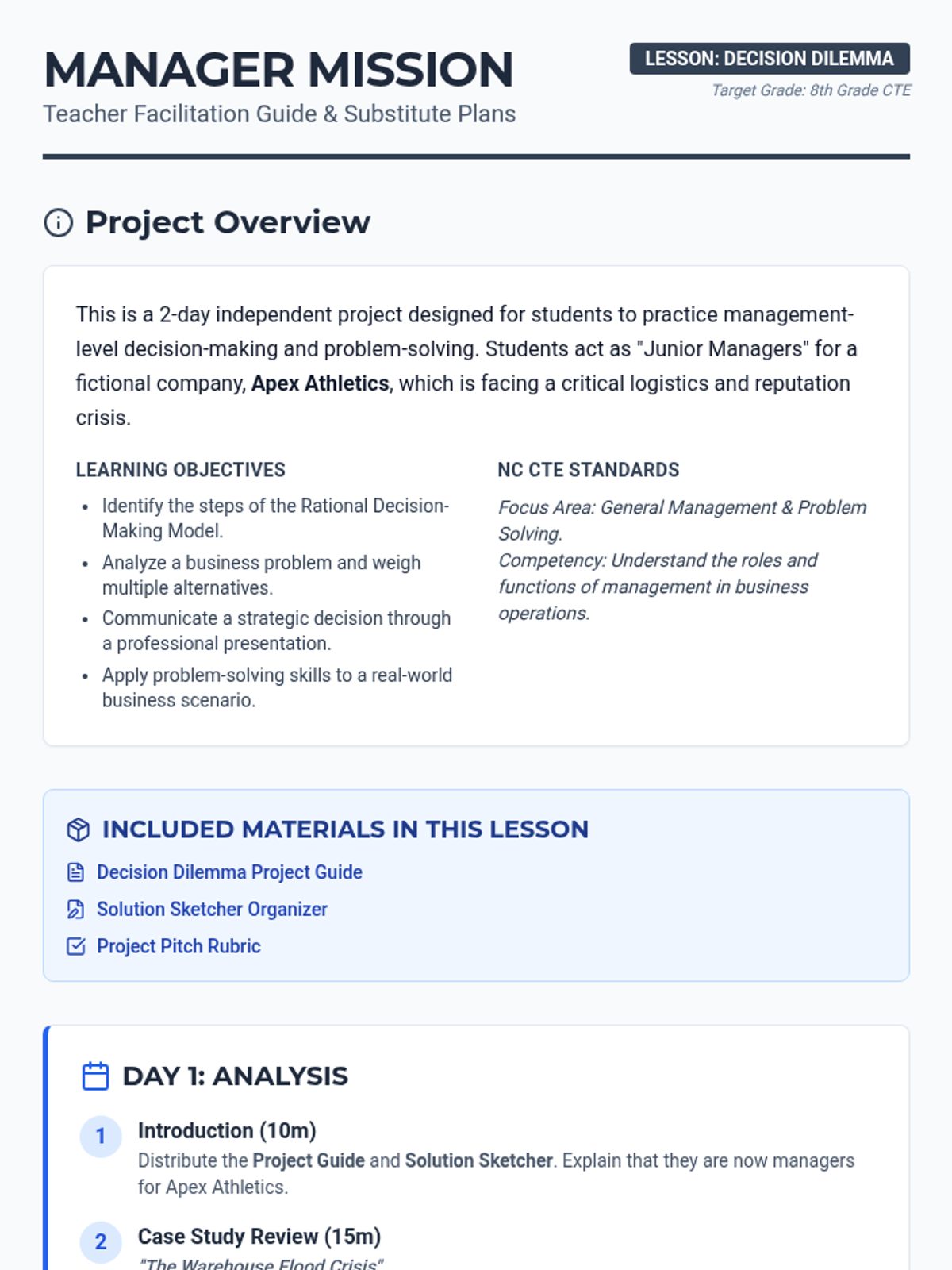
A teacher-facing guide and substitute plan for a 2-day independent project focused on management decision-making. It includes learning objectives, a daily schedule, and facilitation tips.
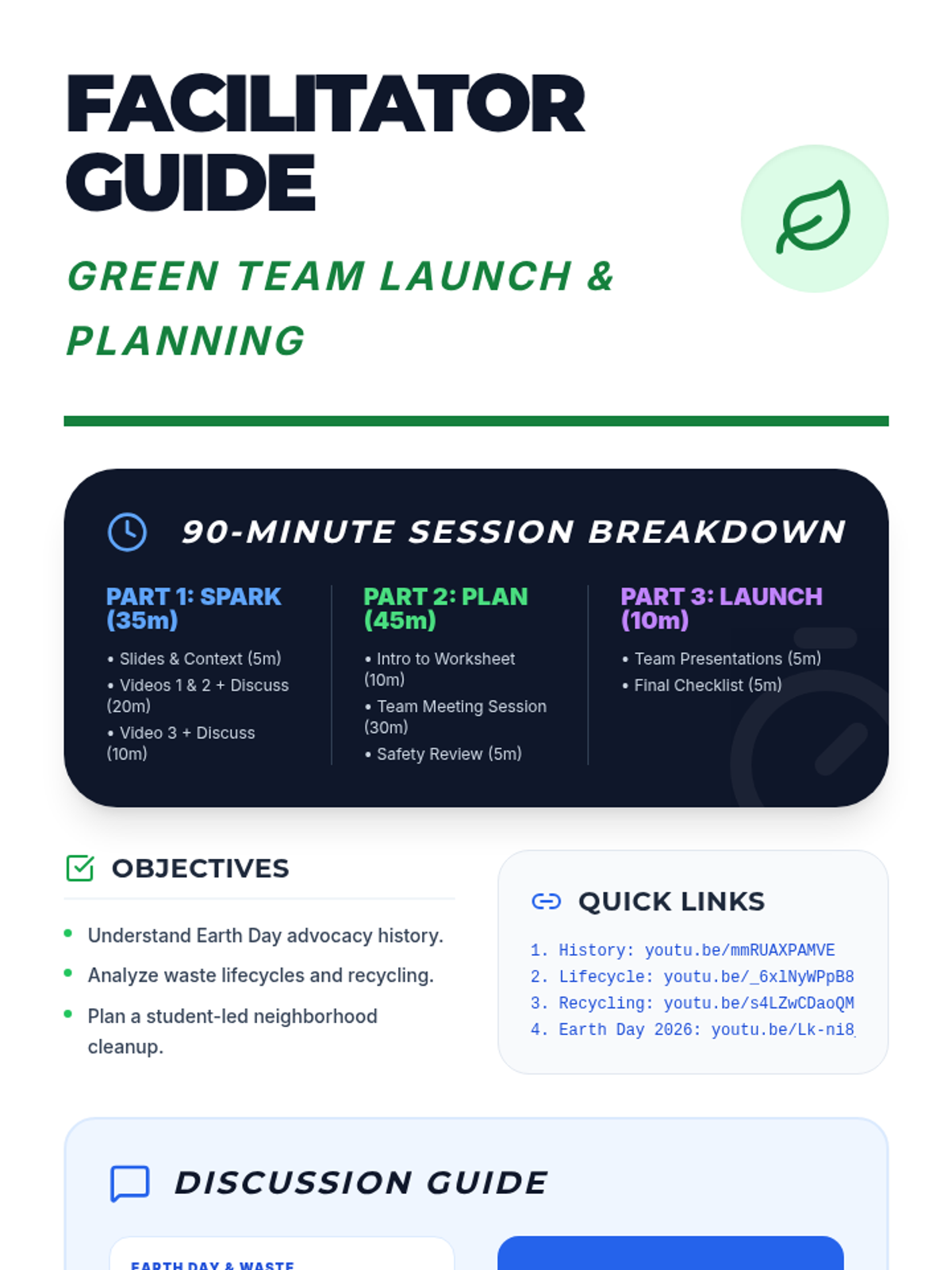
A comprehensive facilitator guide for teachers to lead the Earth Day cleanup project. Includes a 90-minute session breakdown, objectives, video discussion prompts, safety protocols, and team meeting tips.
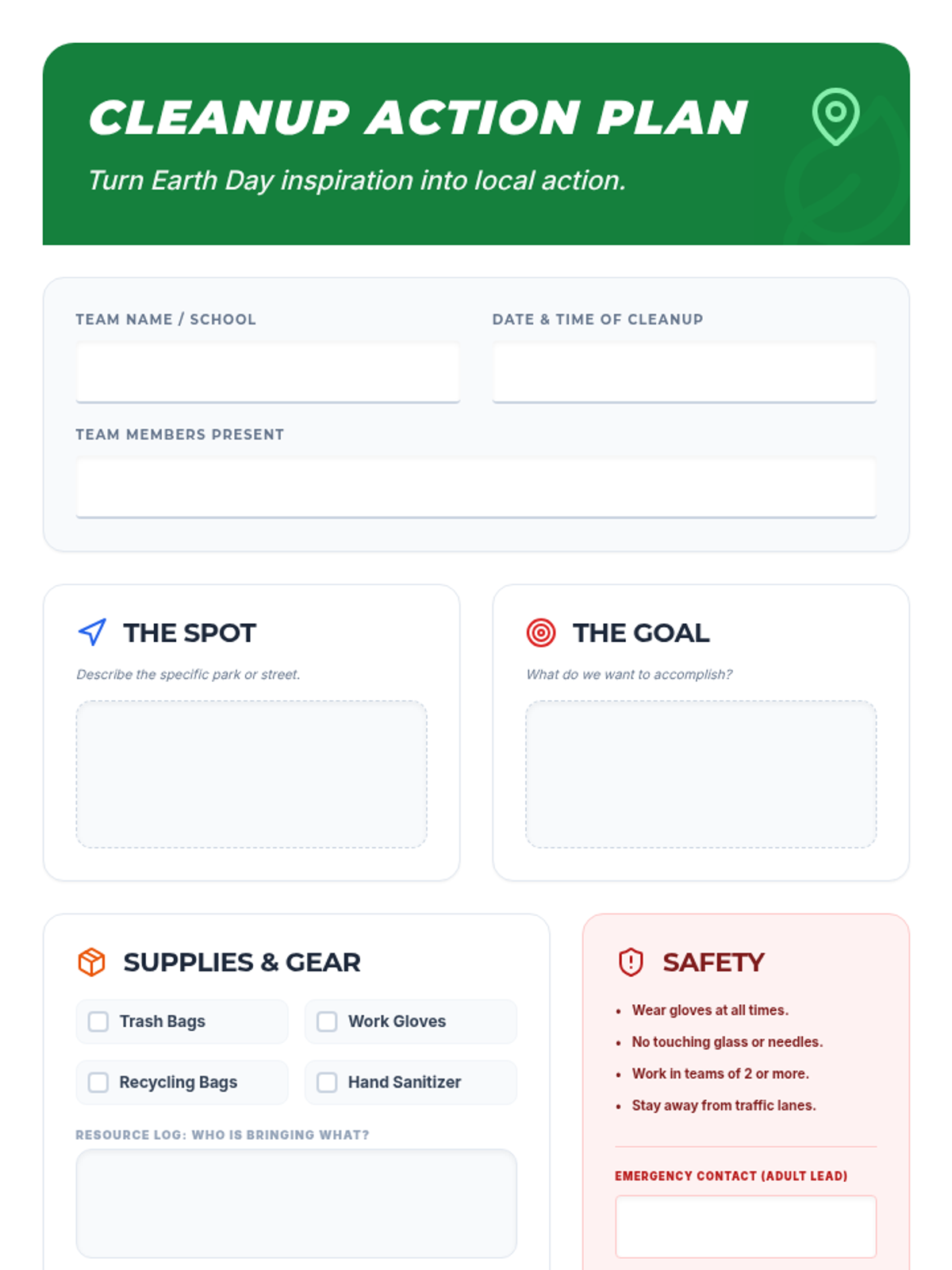
A practical meeting guide for students to organize their community cleanup. Includes sections for team goal-setting, role assignment, supply checklists, safety protocols, and recruitment strategies.
A visually engaging slide deck covering Earth Day history, the impact of plastic waste, recycling processes, and a guide for organizing a community cleanup. Includes four embedded educational videos.
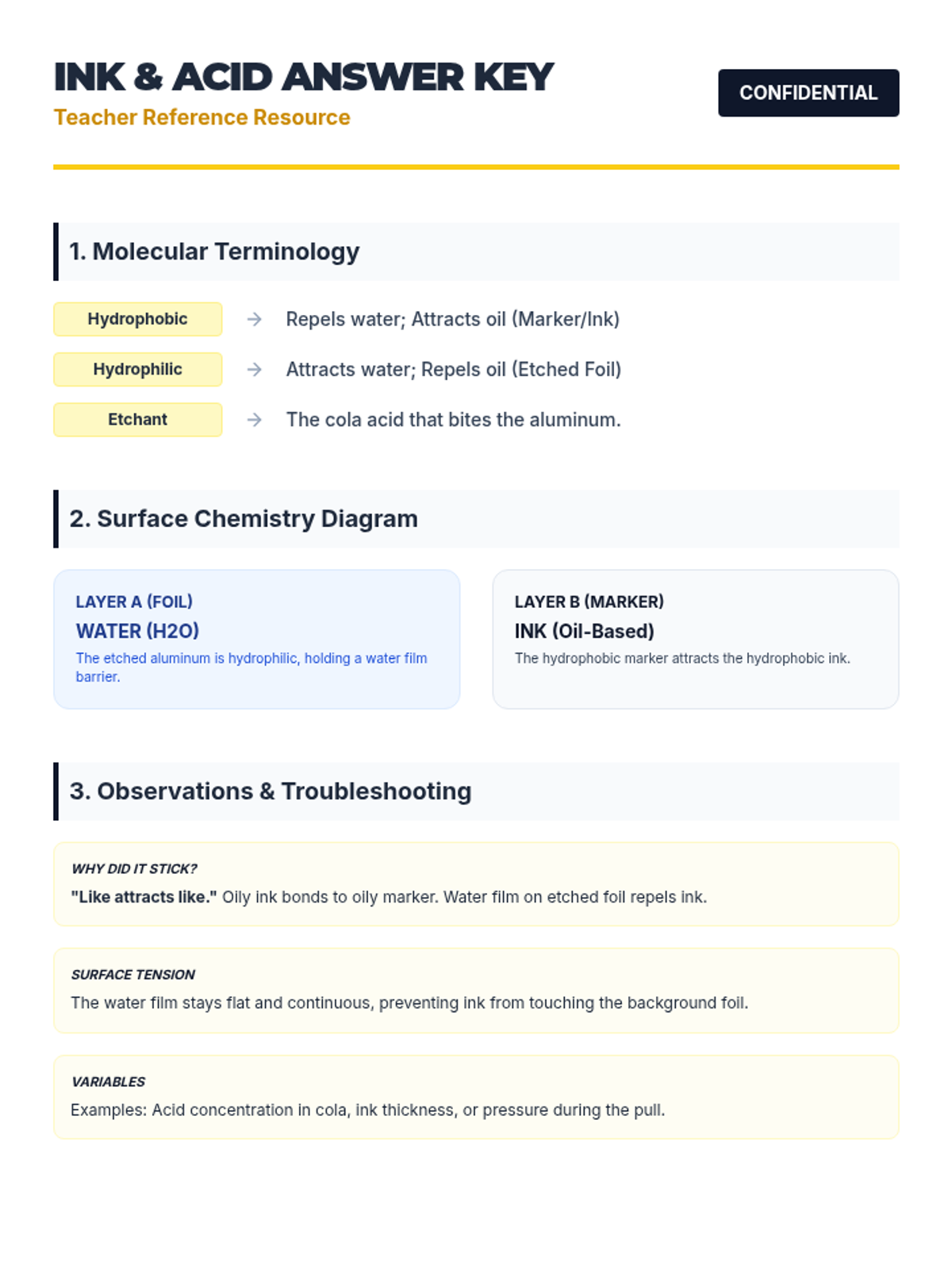
The teacher's answer key for the Ink and Acid Worksheet, providing correct scientific terminology, diagram labels, and sample high-quality reflection responses.
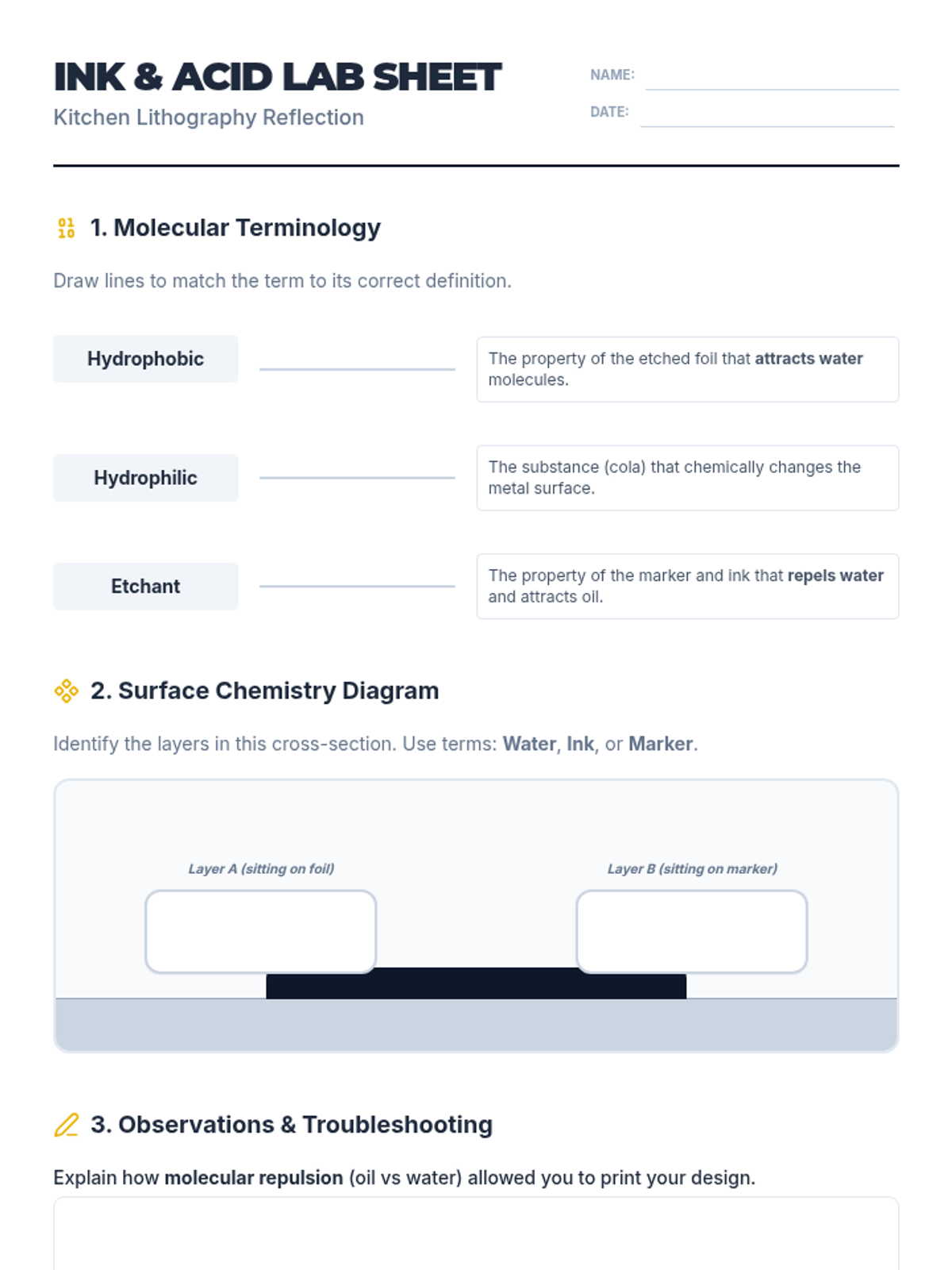
A student worksheet focusing on the chemistry of kitchen lithography. Features vocabulary matching, a cross-section diagram analysis of surface layers, and reflection questions on hydrophobia and process improvement.
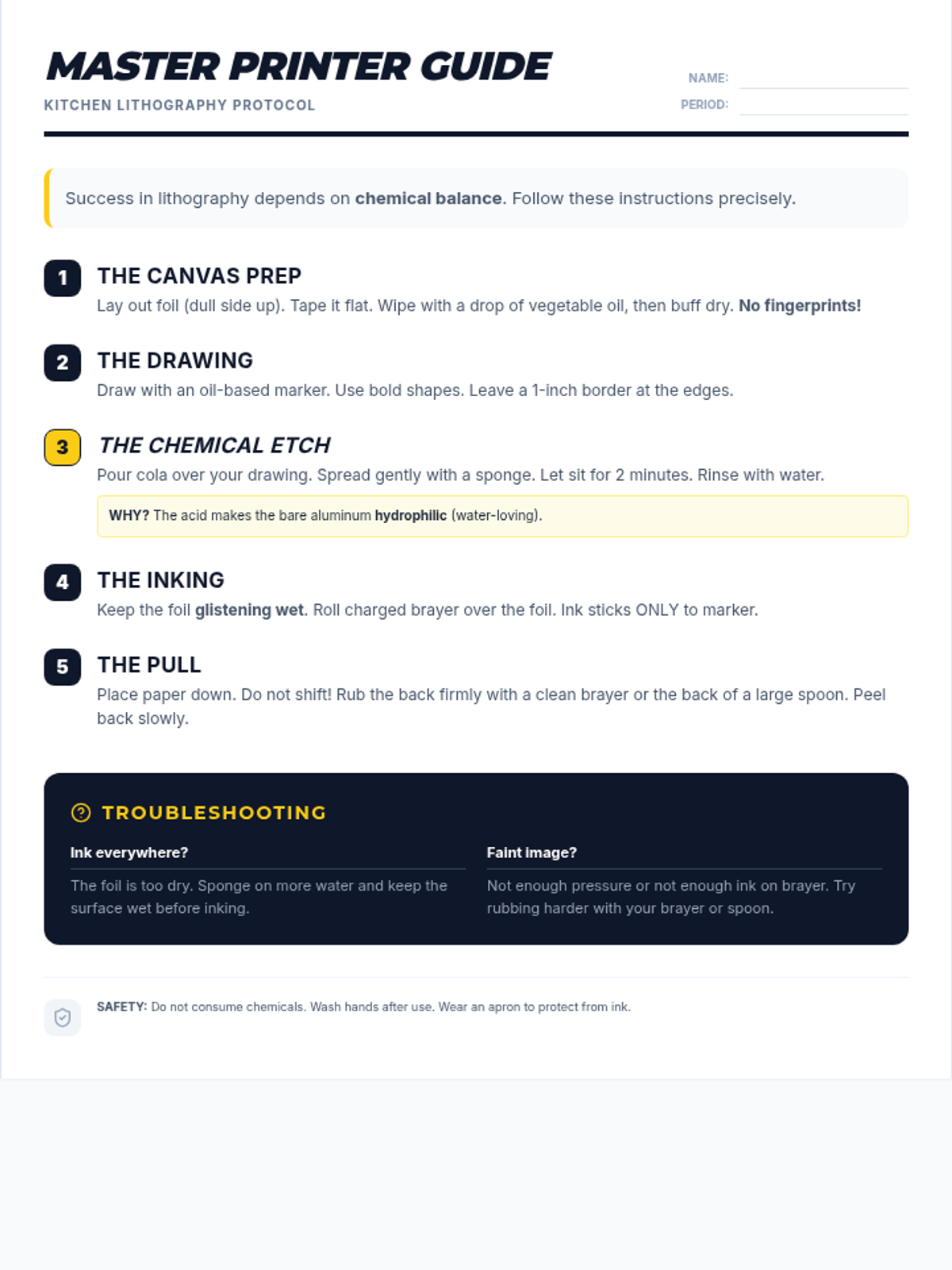
A step-by-step student activity guide for the kitchen lithography process. Includes visual cues, "pro tips," and chemical explanations for each stage of preparing, etching, and printing.
A visually engaging instructional slide deck for students covering the history of lithography, the chemistry of hydrophobia/hydrophilia, and the specific role of cola in etching aluminum foil.
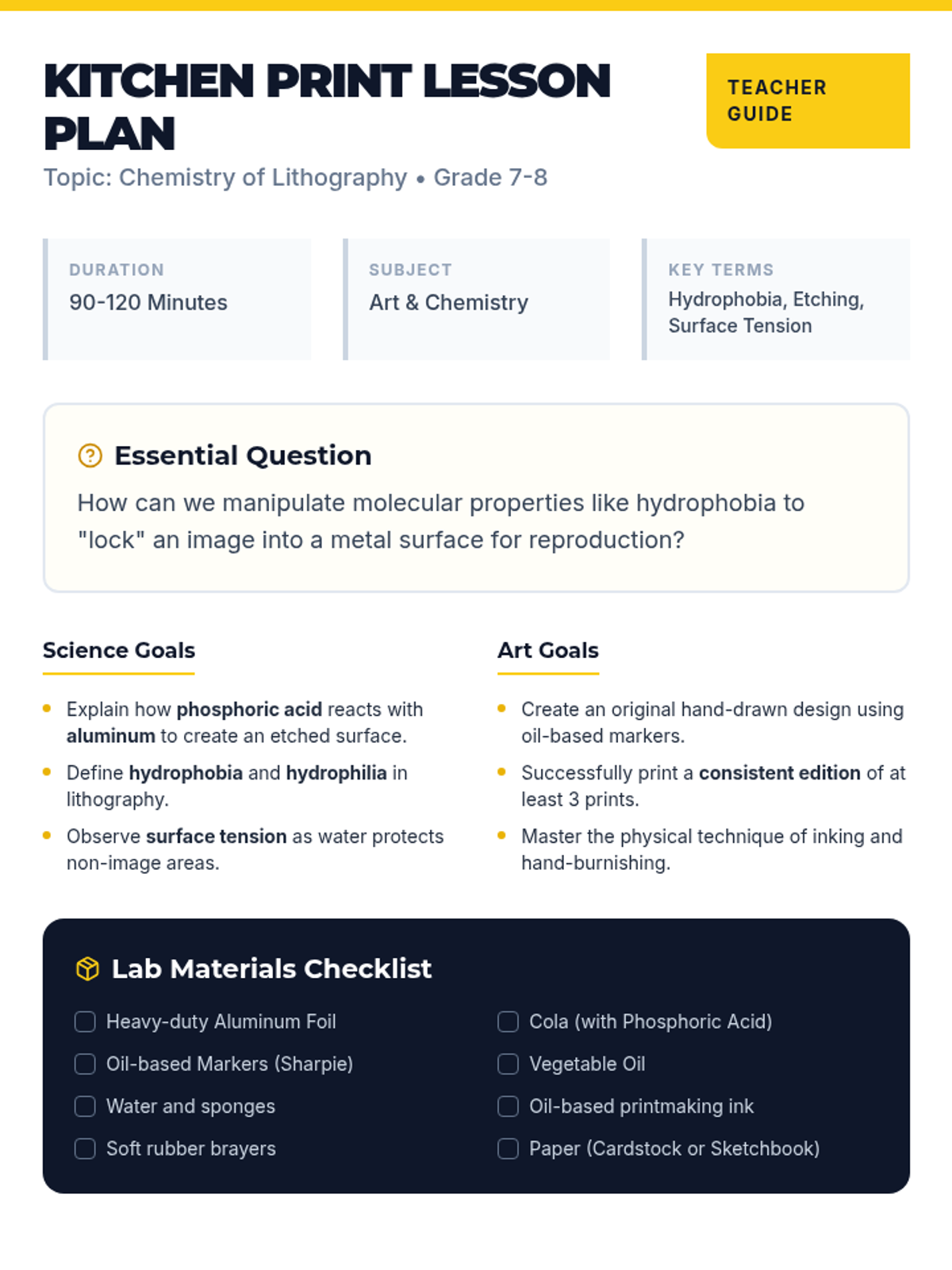
A comprehensive lesson plan for teachers detailing the chemistry and artistic process of kitchen lithography. Includes learning objectives, materials checklists, step-by-step instructional sequence, and troubleshooting tips.
An 8-slide visual presentation deck for teaching the Chilean mining disaster, featuring improved contrast, updated graphics, and expanded content covering logistics and legacy. Updated with fixed contrast and icon IDs.
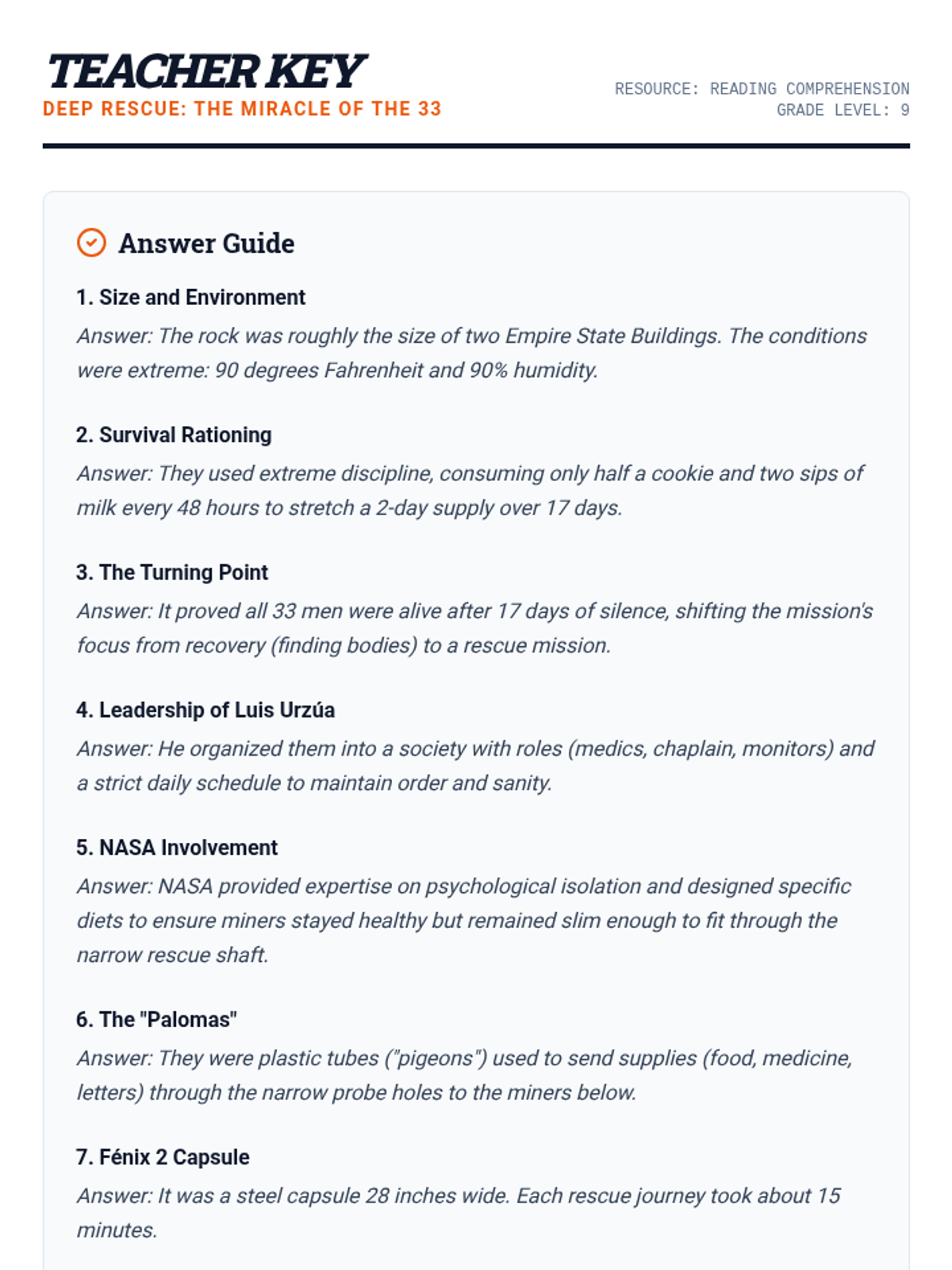
Detailed answer key and teacher's guide for the Deep Rescue reading worksheet, including expected responses and discussion prompts.
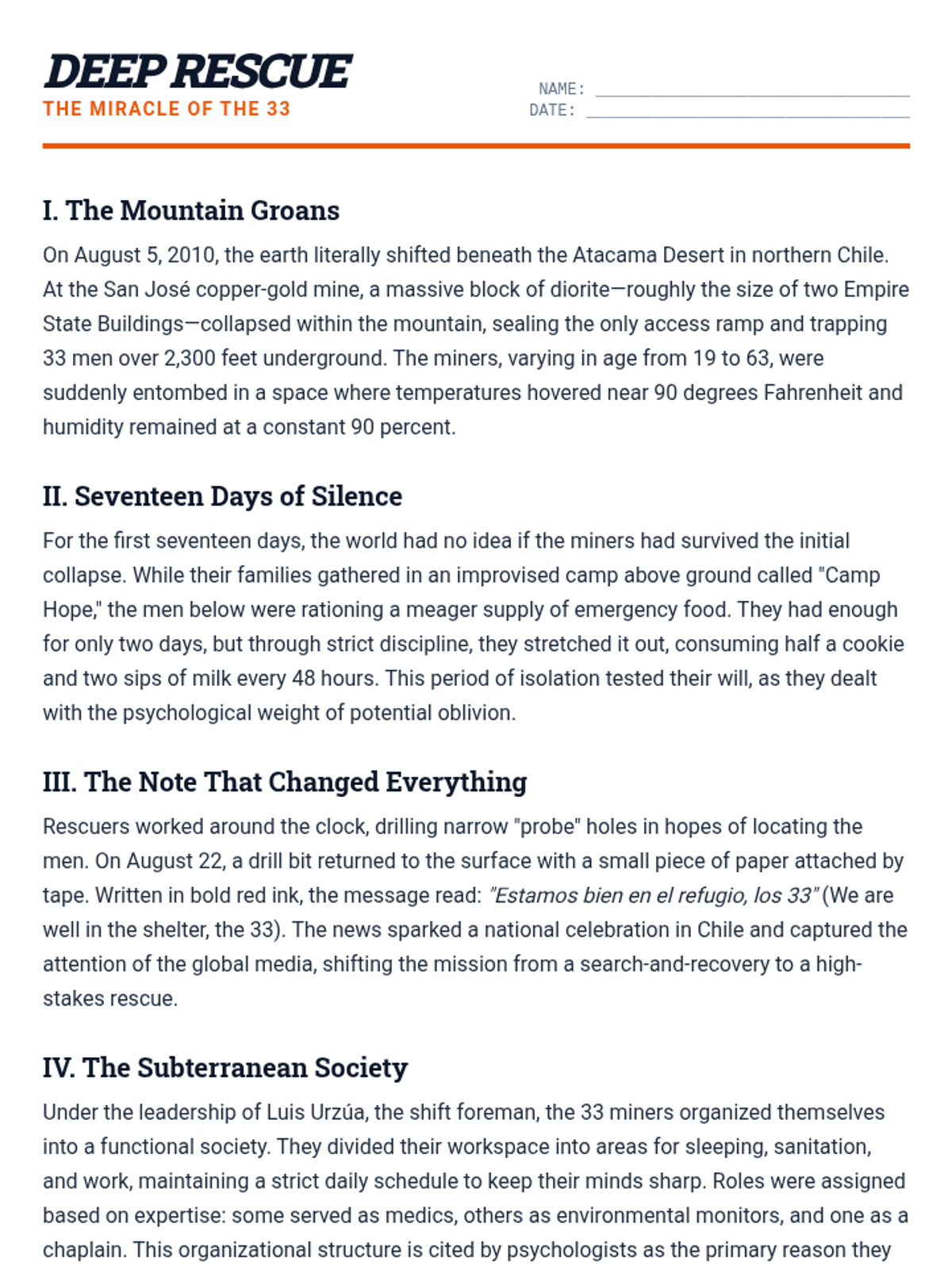
A comprehensive reading passage and comprehension worksheet about the 2010 Chilean mining rescue, featuring an 8-paragraph narrative and 10 short-answer questions. Updated with improved layout and larger response areas.
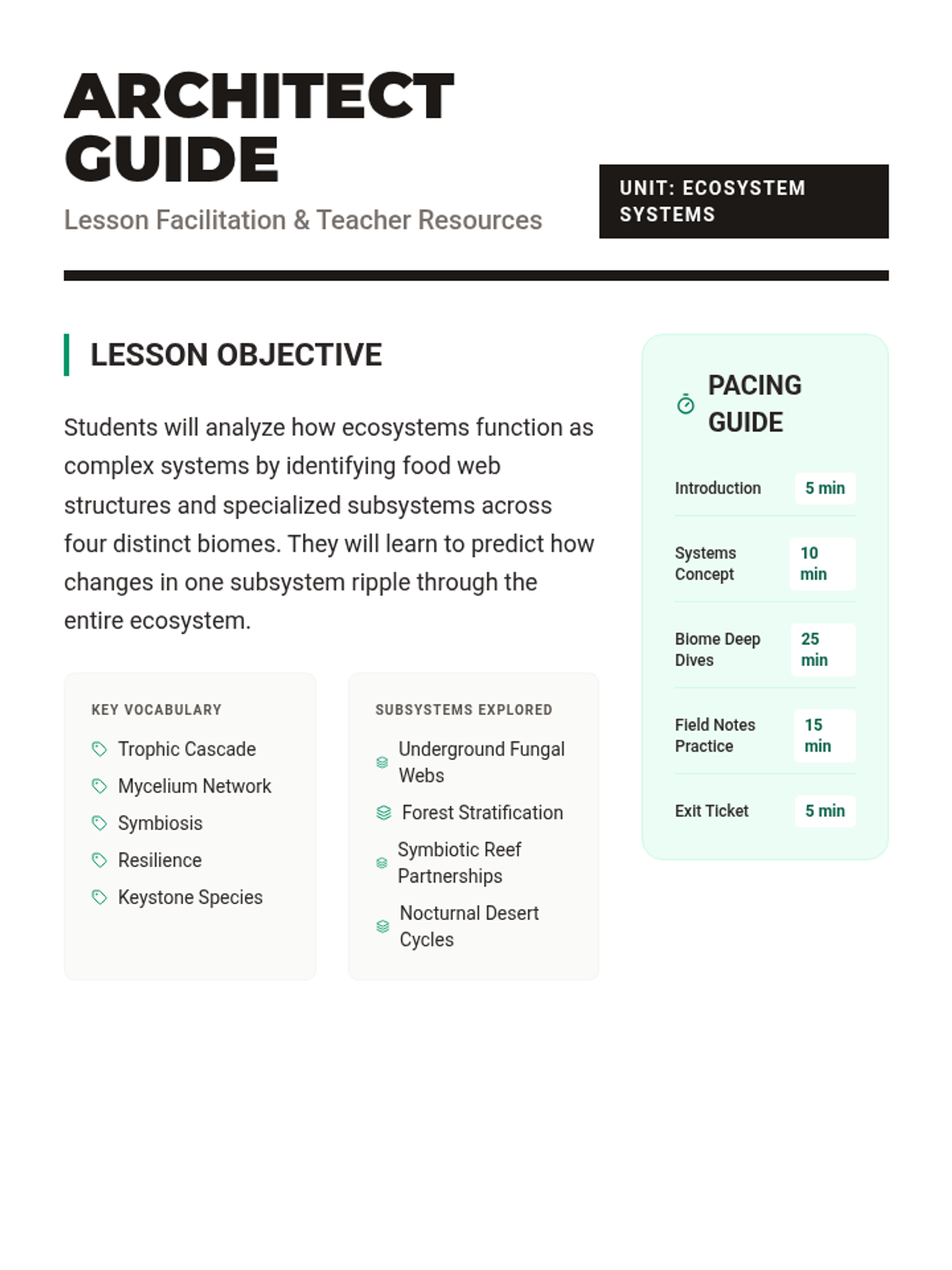
A comprehensive teacher's guide for the Ecosystem Architect lesson, revised for layout polish, clear answer keys, and better page-break management.
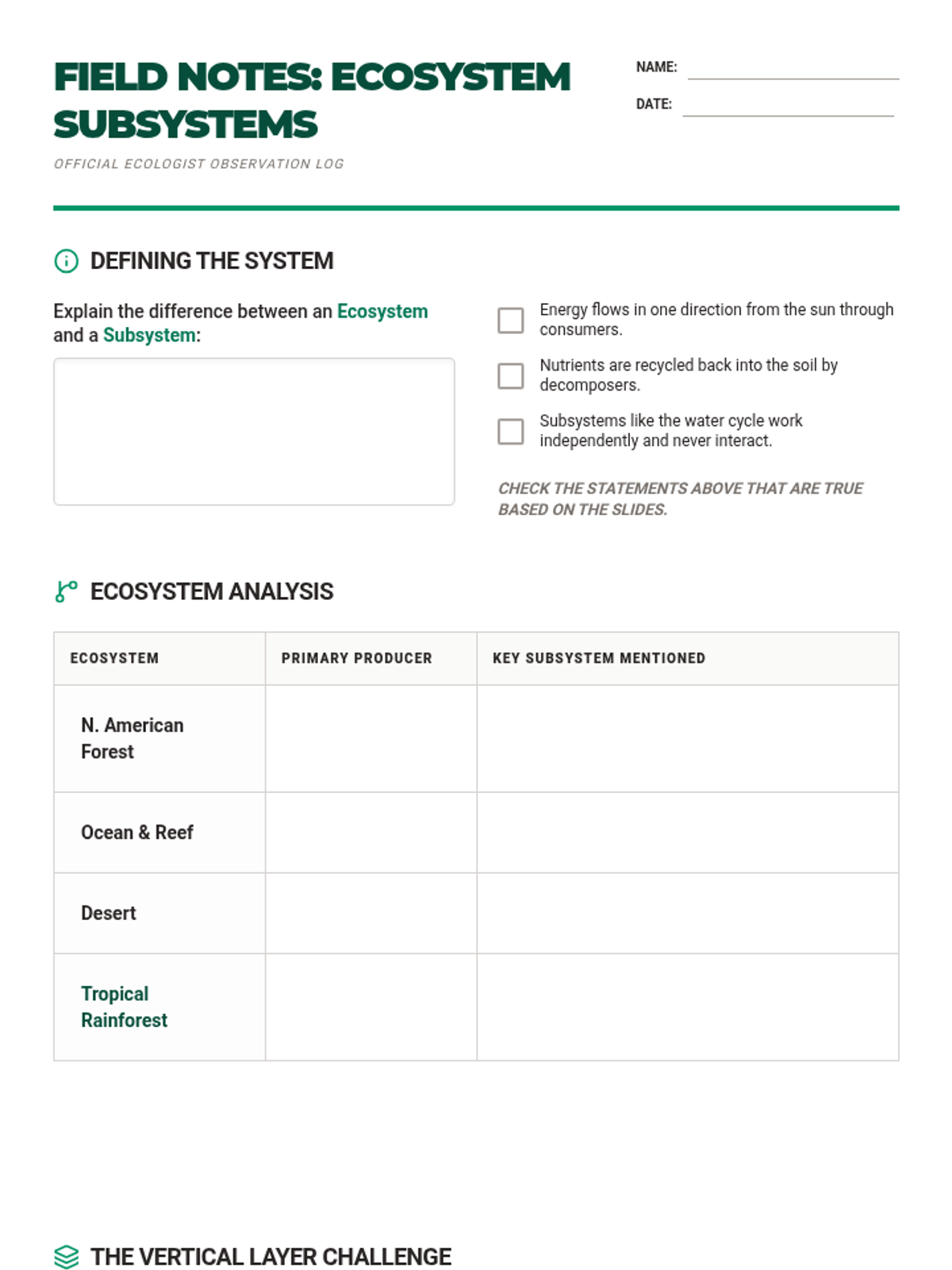
A 2-page student worksheet designed to accompany the ecosystem slides, focusing on systems, subsystems, and food webs across different biomes. Revised for better spacing and legibility.
A 14-slide presentation exploring ecosystems through the lens of systems and subsystems, covering the North American Forest, Ocean/Coral Reefs, Deserts, and Tropical Rainforests.
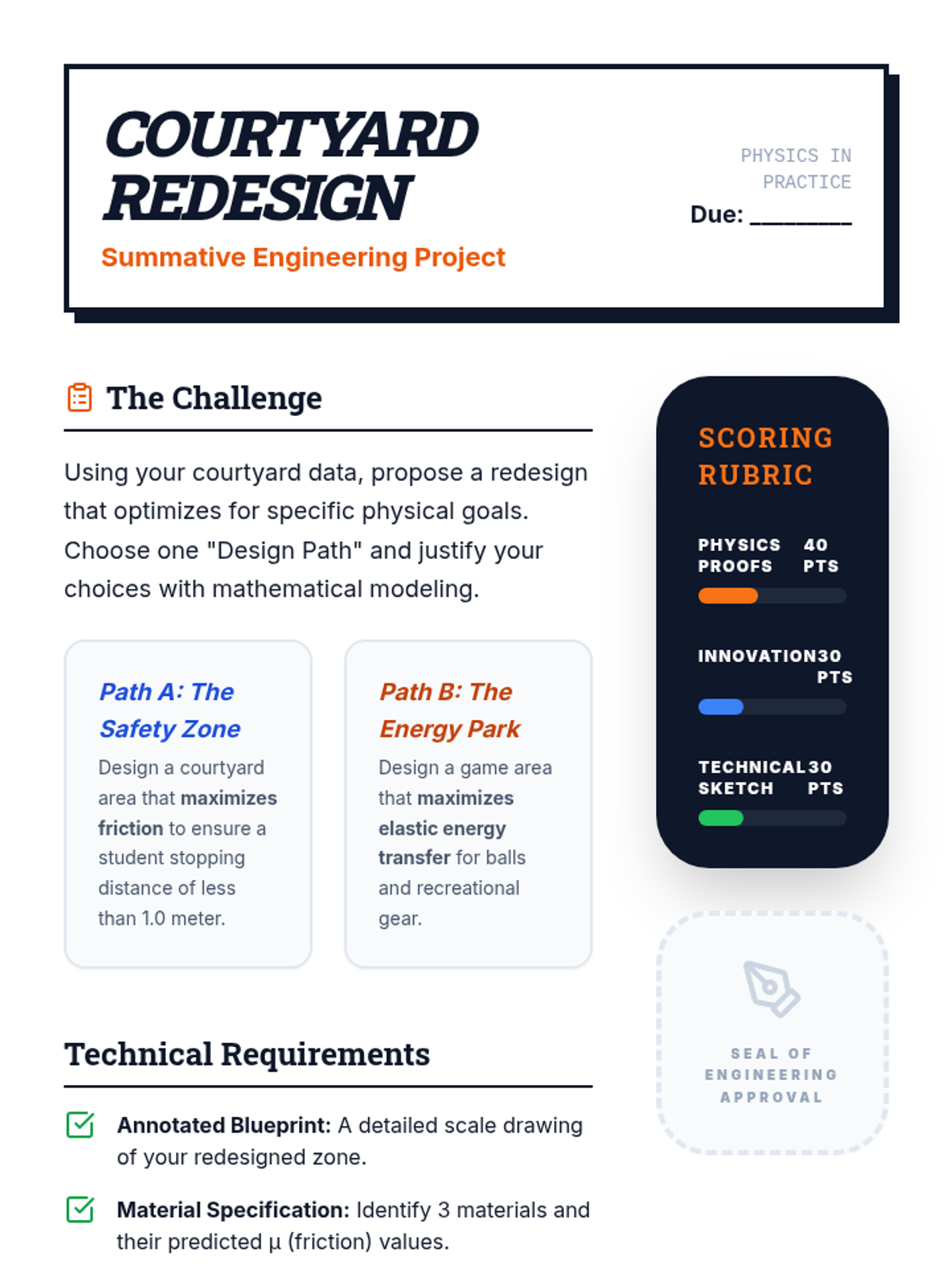
Engineering project handout with corrected Greek character rendering, expanded blueprint workspace, and improved visual hierarchy for high school students.
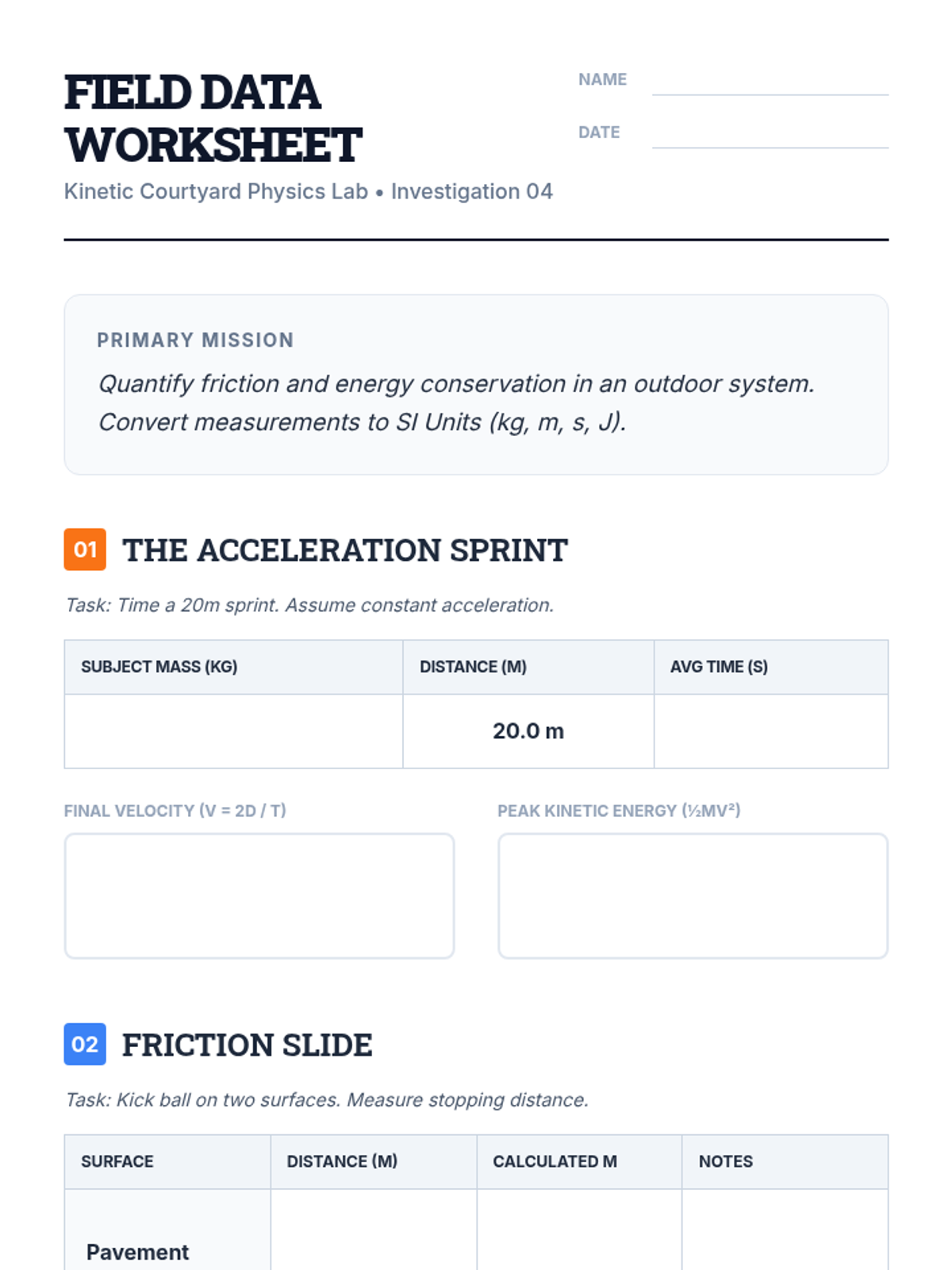
Student data collection worksheet with fixed page breaks, circle guides for energy pie charts, and high-quality math notation for the outdoor physics lab.
High-contrast instructional slide deck for Courtyard Physics, updated with improved visibility, noise-reduced visuals, and robust layouts to prevent content cutoff.
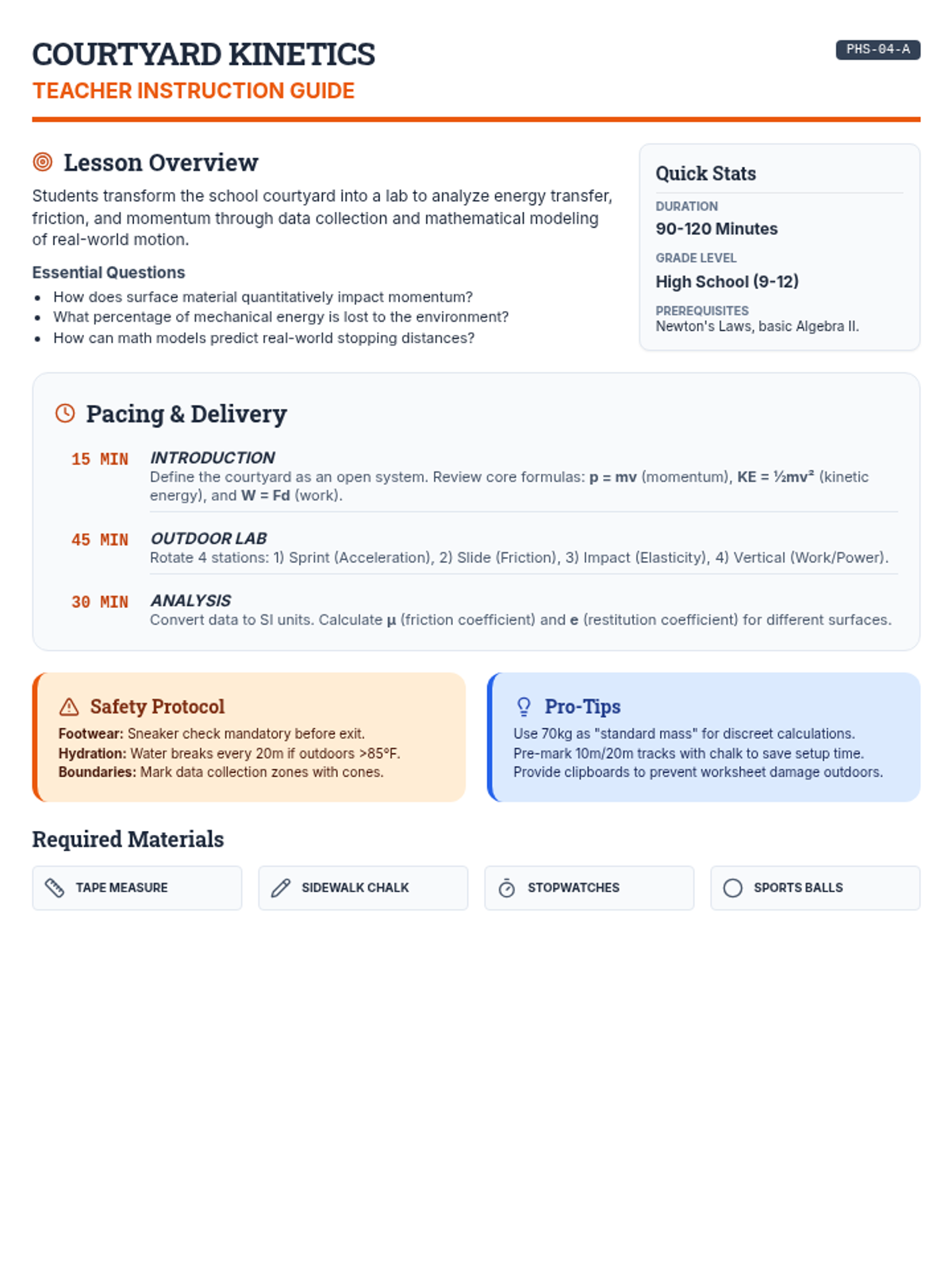
Comprehensive teacher's guide for the Kinetic Courtyard Physics lesson, optimized for single-page printing with improved math rendering and high-contrast icons.
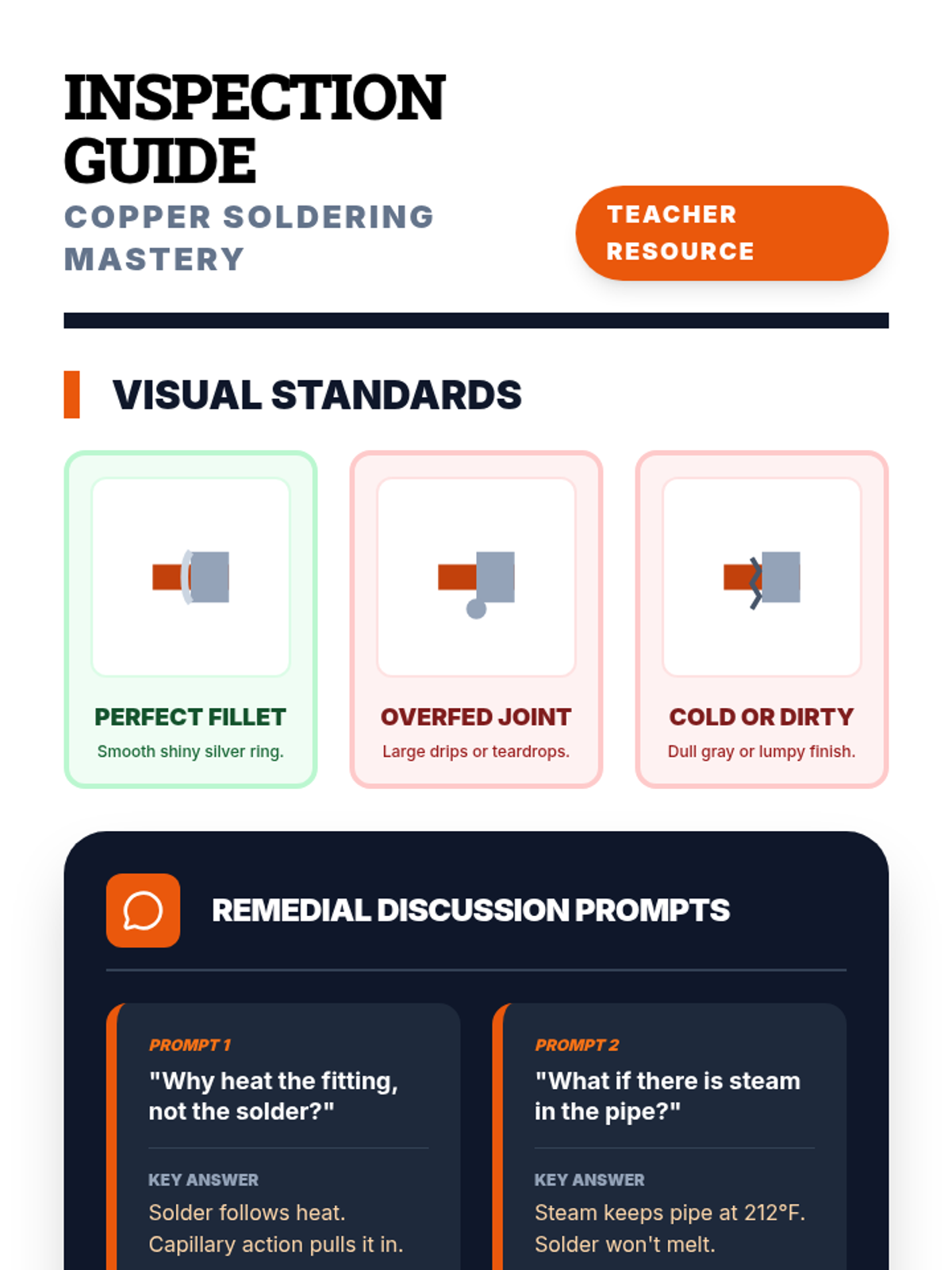
A teacher-facing resource for assessing student soldering work. Includes inspection criteria for perfect vs. failed joints, discussion prompts for remedial learners, and technical troubleshooting tips.
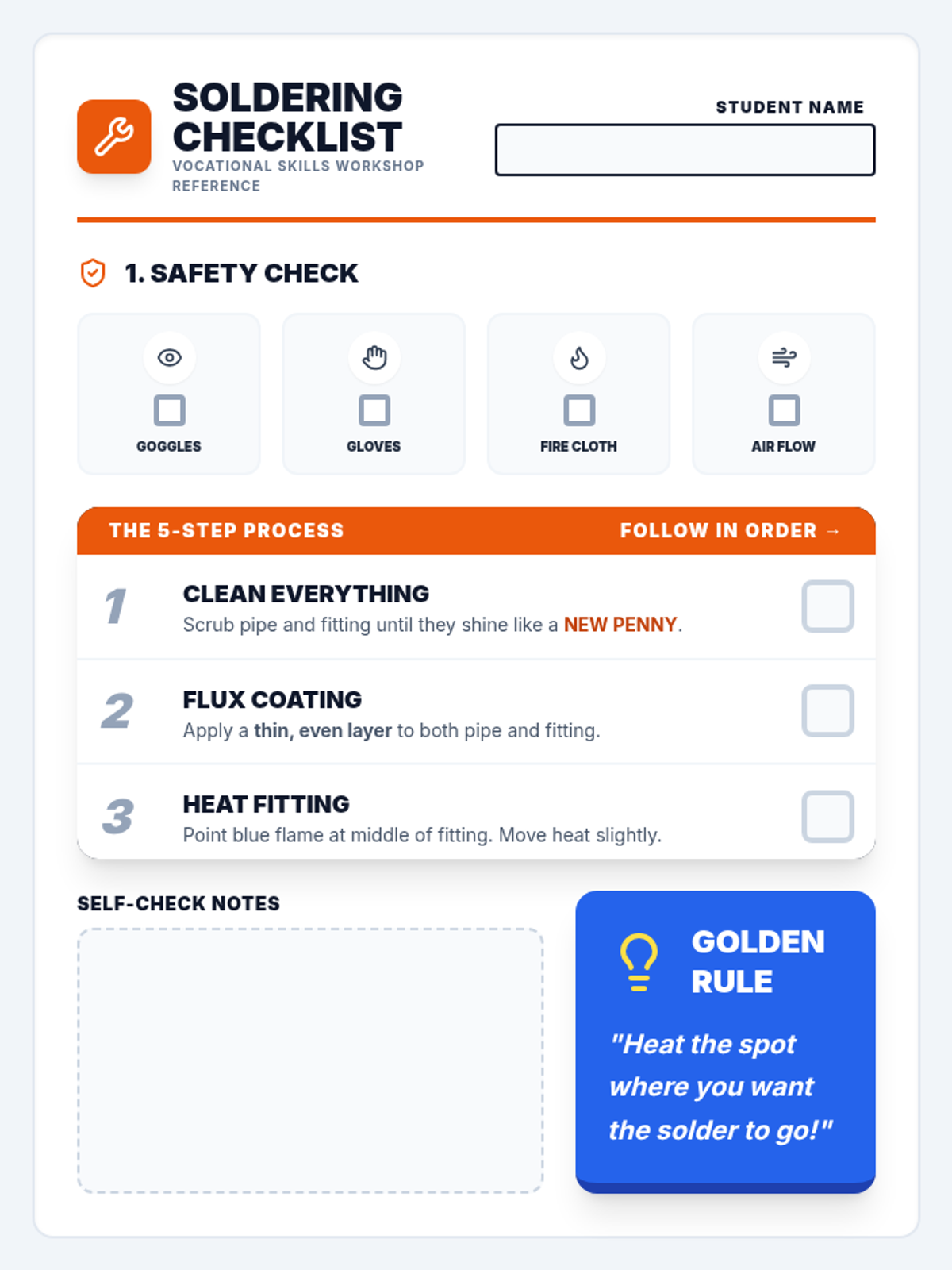
A student-facing checklist and visual guide for copper soldering. Includes a safety equipment checklist, a numbered 5-step process summary, and a space for inspection notes.
A visual slide deck teaching the fundamentals of copper soldering. It uses high-contrast visuals, simplified steps, and safety-first messaging tailored for remedial and visual learners.
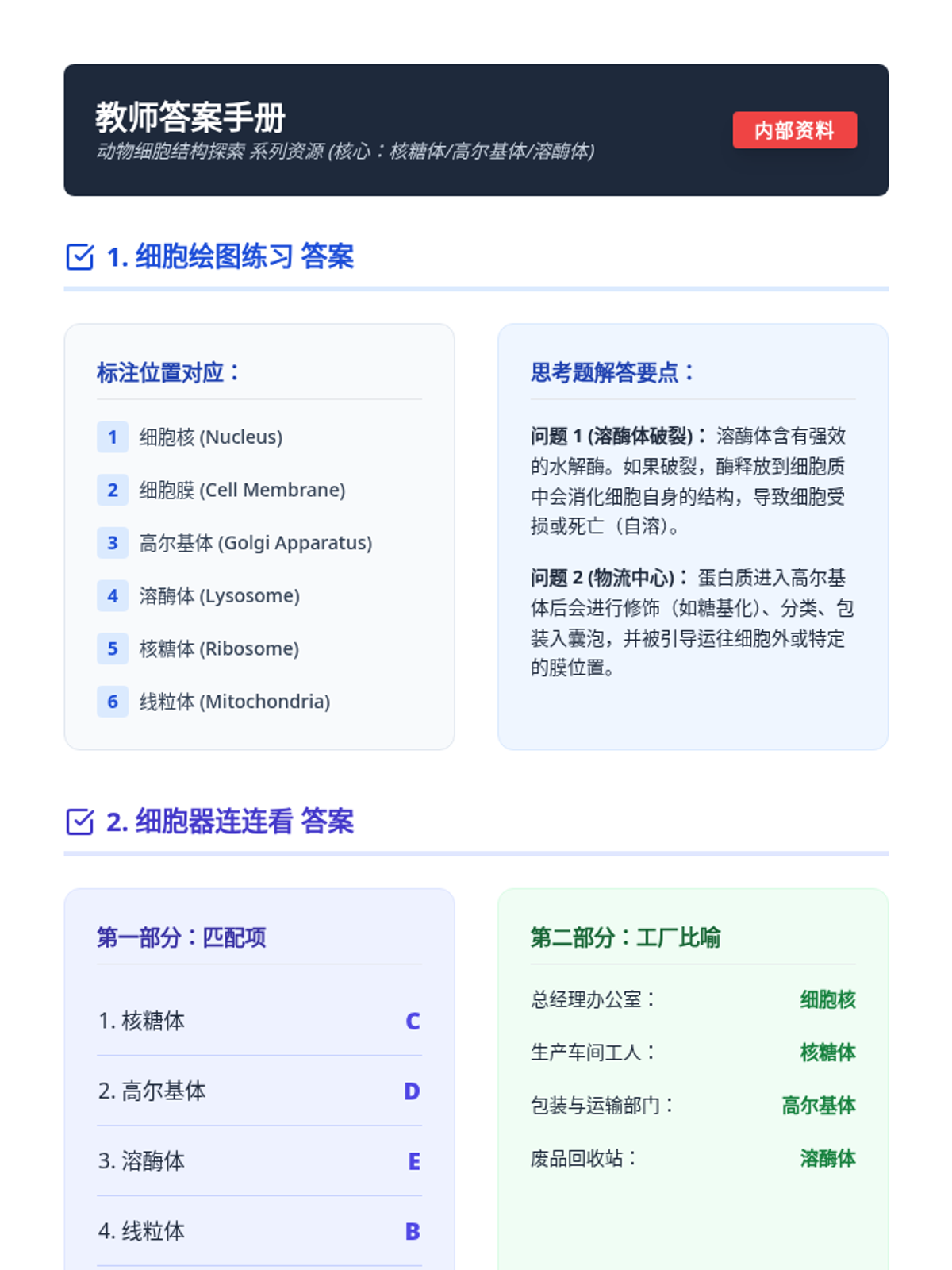
为教师提供的完整答案手册,包含所有练习的正确答案和解析,以及针对教学过程的额外建议。
一个匹配练习,旨在强化学生对细胞器功能的理解。通过将结构与功能匹配,以及使用工厂比喻来加深记忆。包含核糖体、高尔基体、溶酶体等核心内容。单页精简版。
一份学生练习纸,包含动物细胞结构的标注活动。学生需要根据示意图填入正确的细胞器名称,并回答有关溶酶体和高尔基体功能的思考题。设计简洁专业,适合打印。词库直接附于练习下方。