Geometric classification, measurement of area and volume, and the study of transformations and rigid motions. Builds toward complex proofs, trigonometry for general triangles, and the algebraic representation of conic sections.
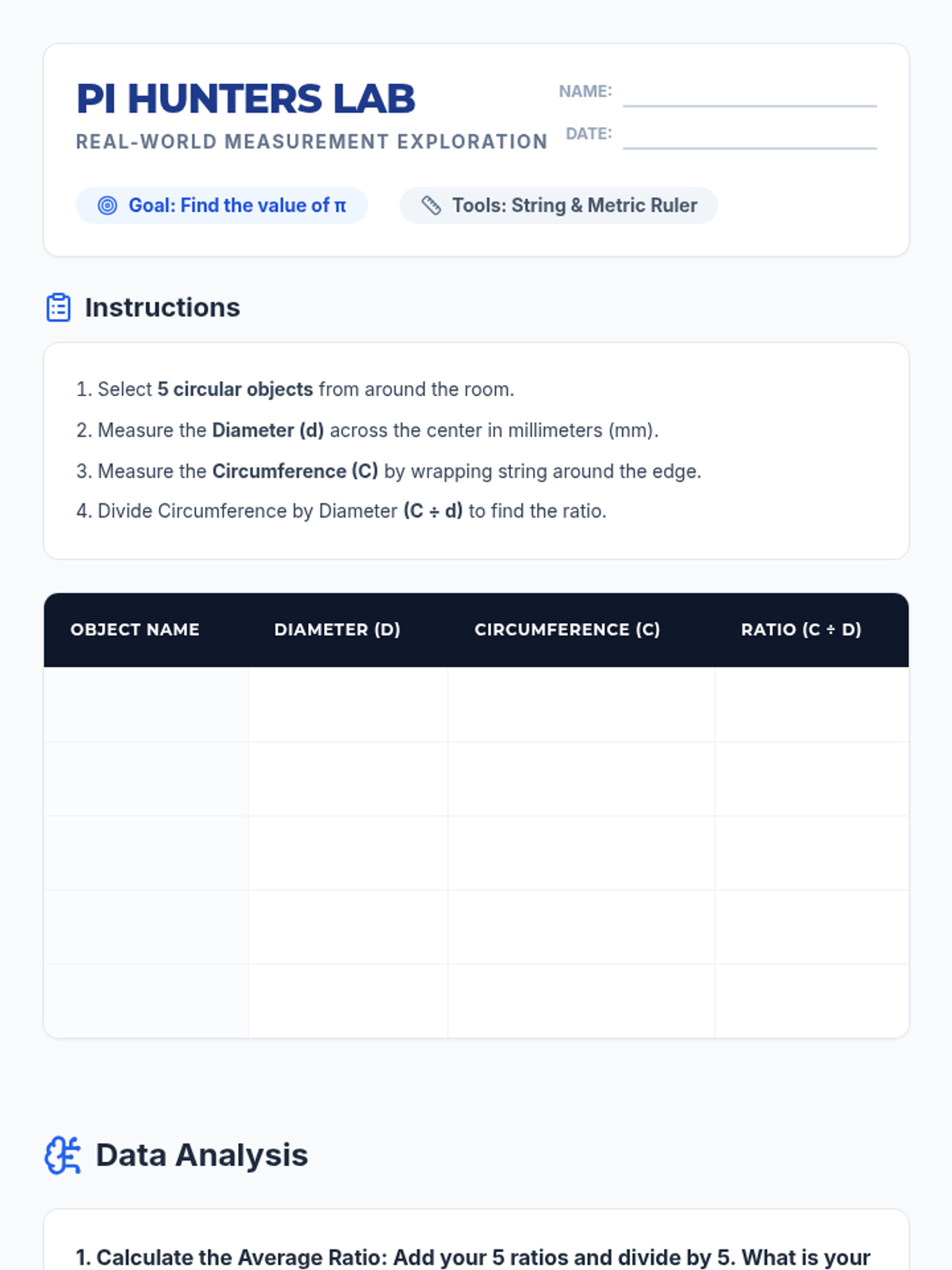
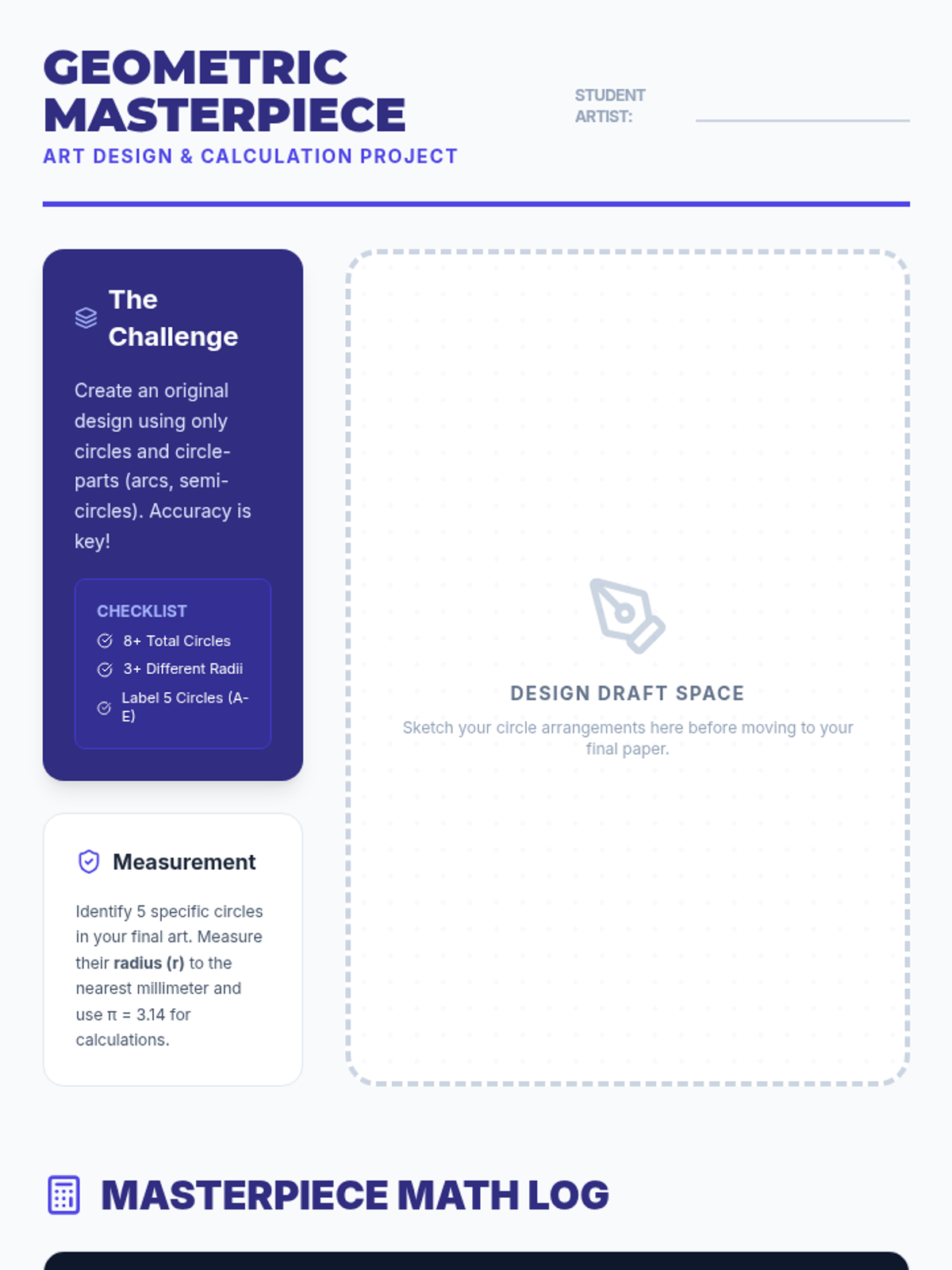
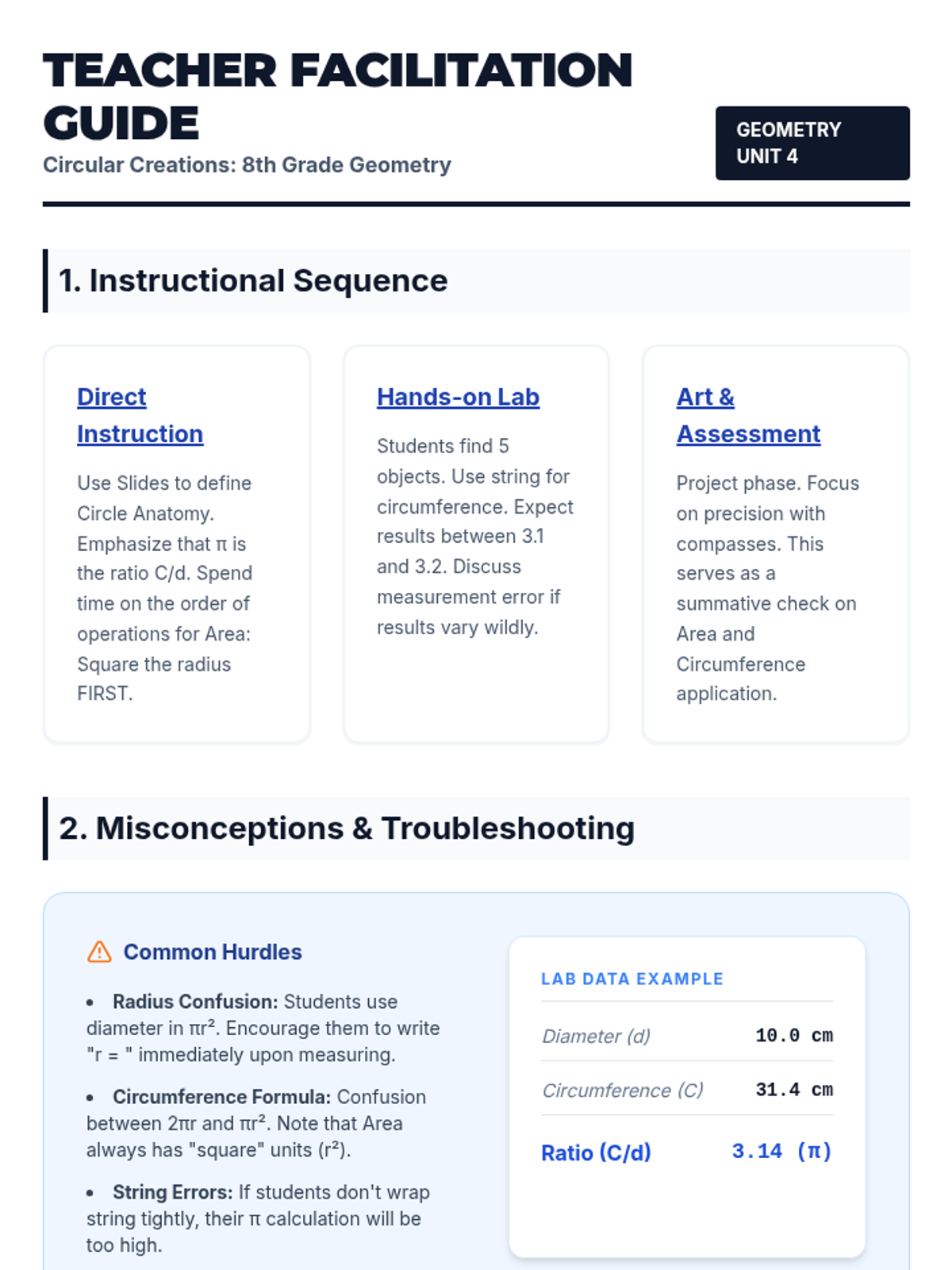
A hands-on geometry lesson where students explore the mathematical properties of circles through real-world measurement and creative geometric art design. Students discover the relationship between circumference and diameter while applying area formulas to their own masterpieces.
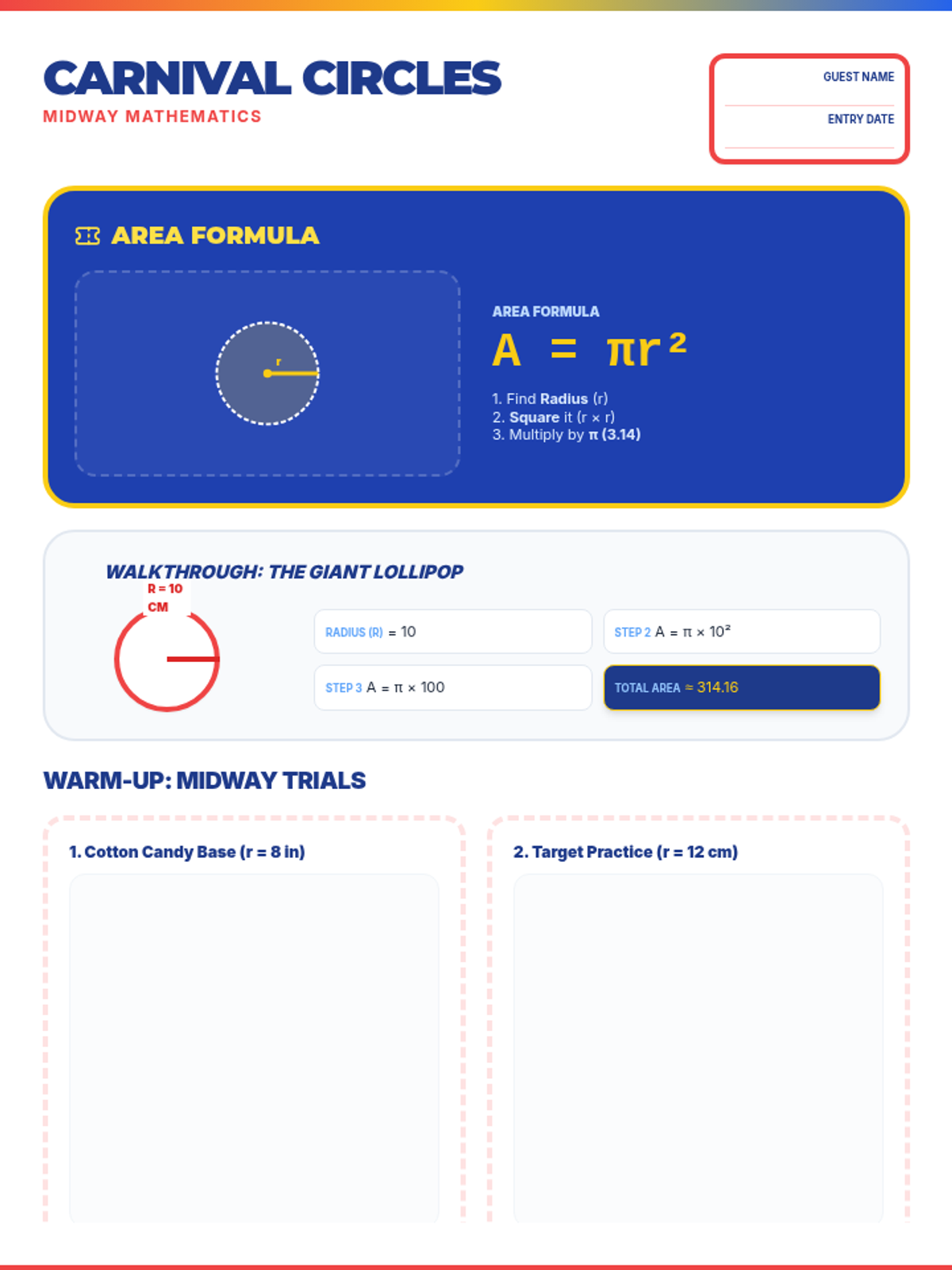
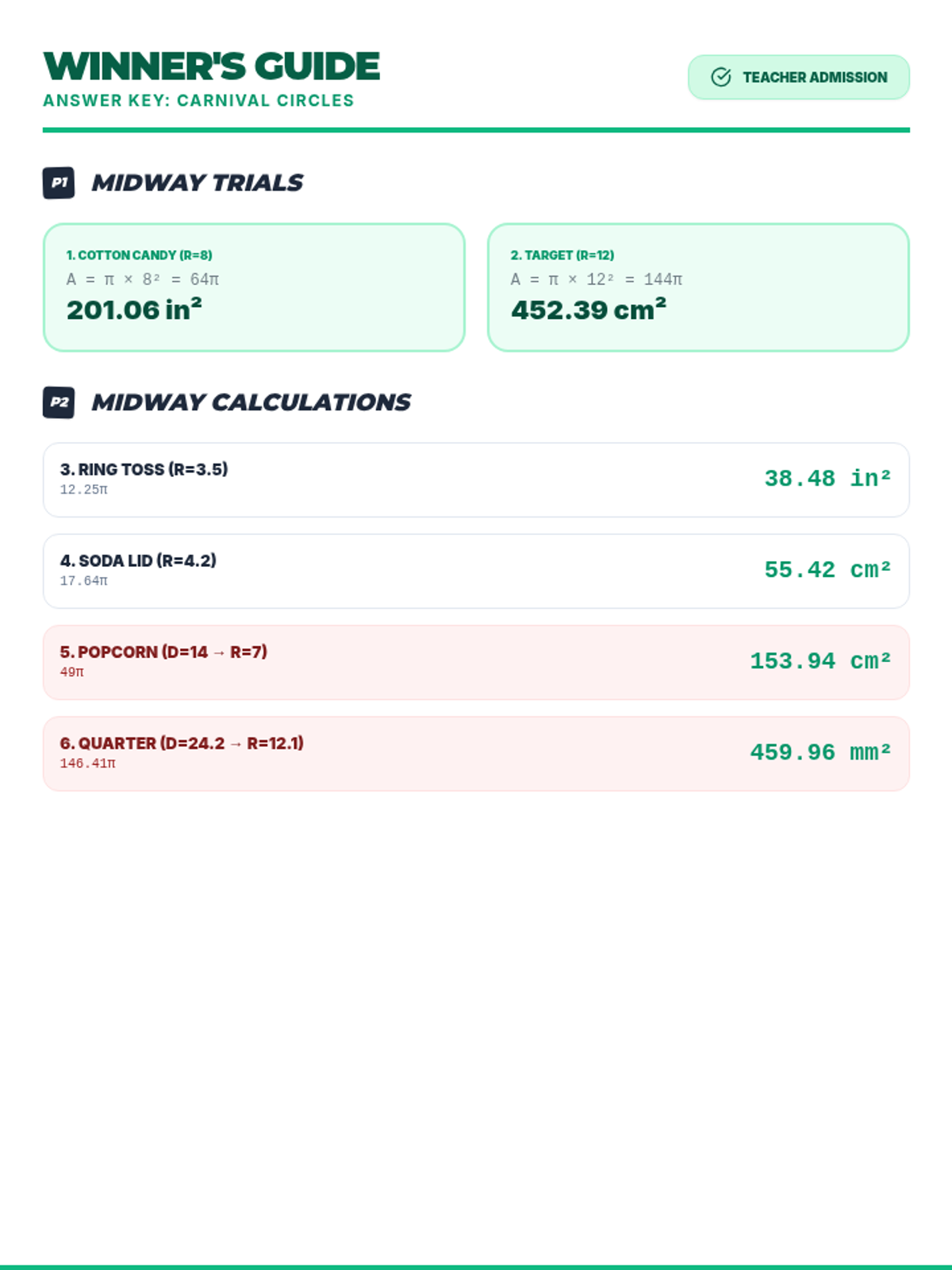
A high-energy, amusement park-themed packet for calculating the area of a circle. Students explore the Midway and Thrill Rides while solving radius and diameter problems using visual aids and calculators.
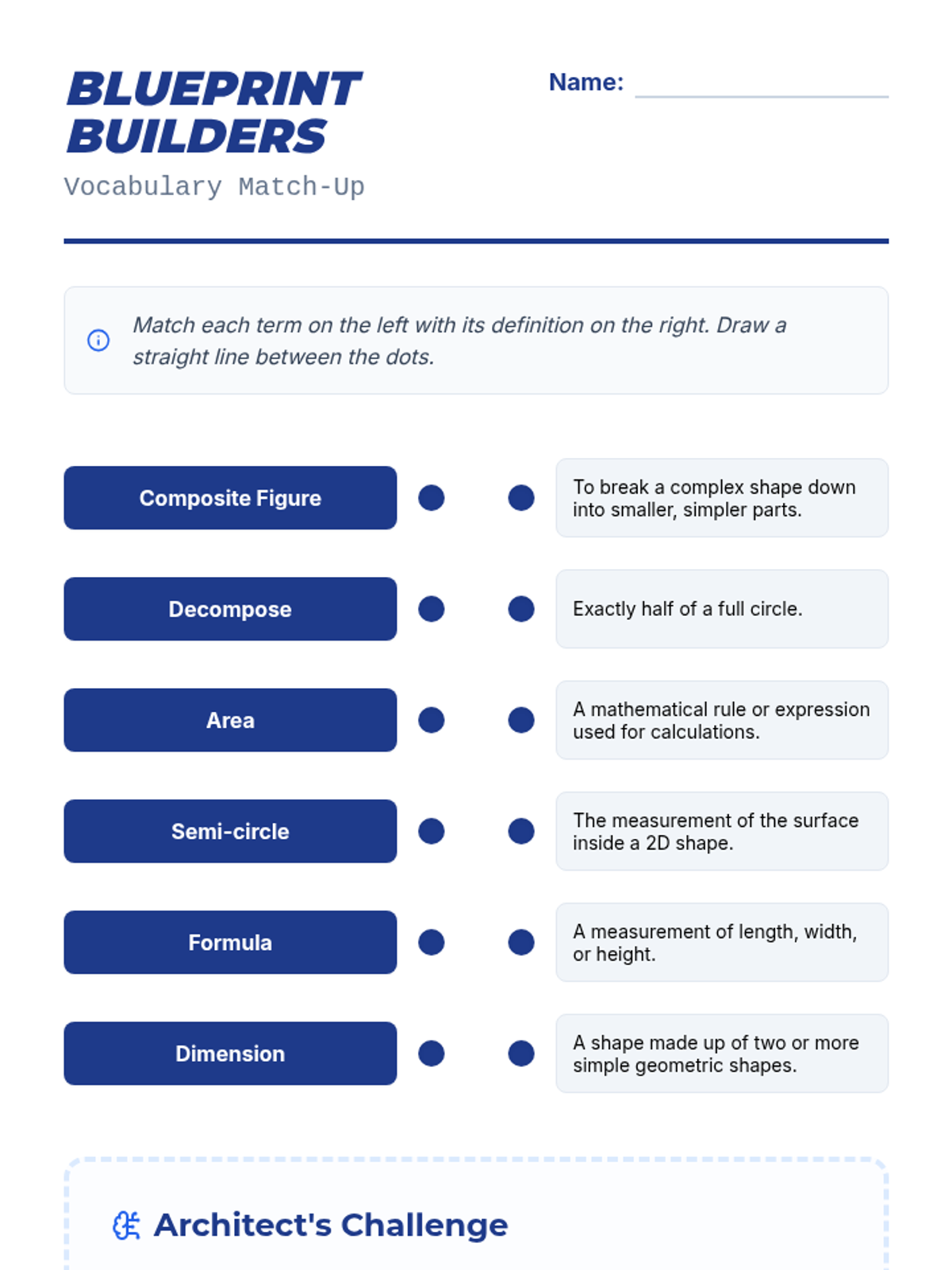
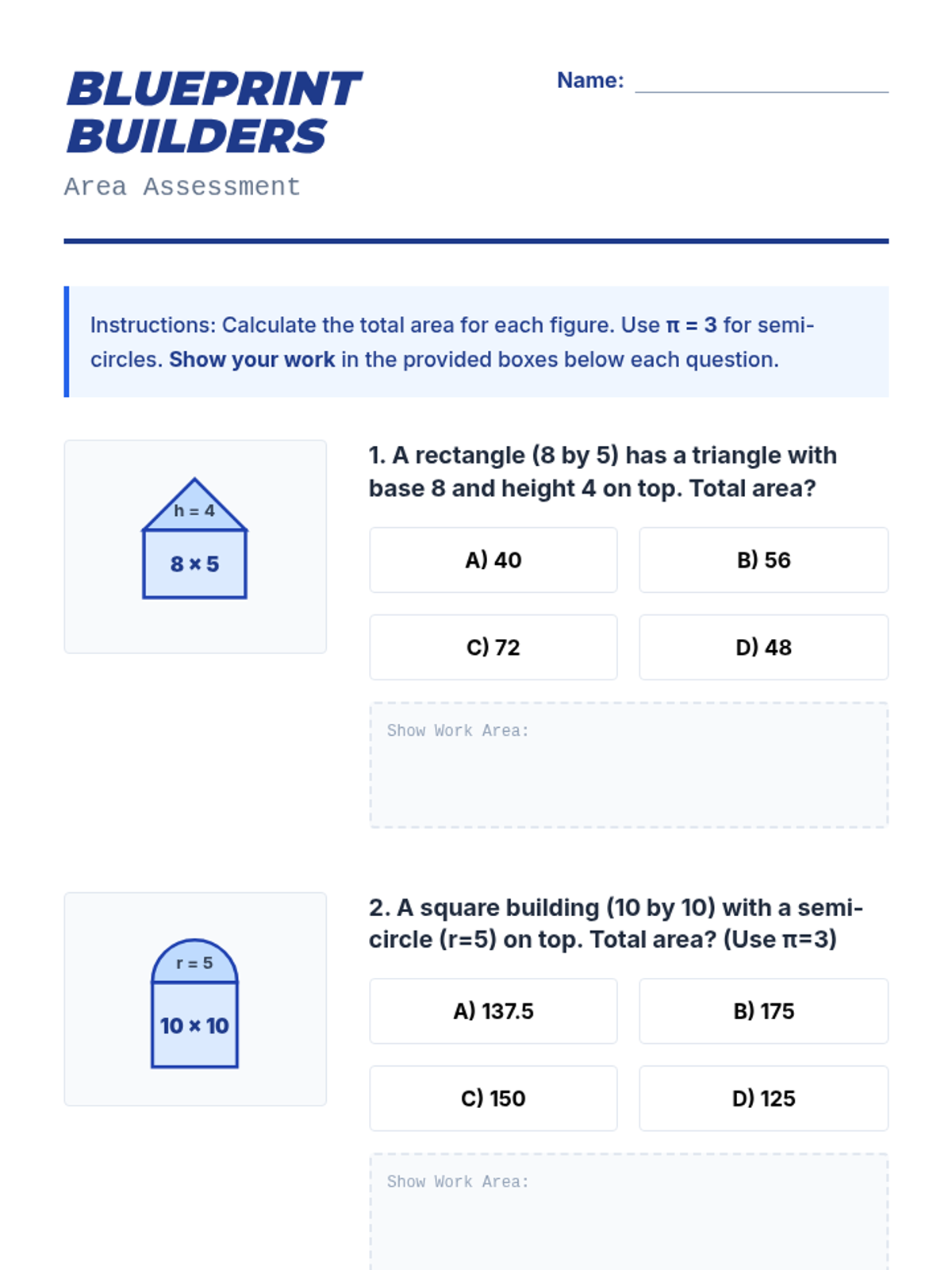
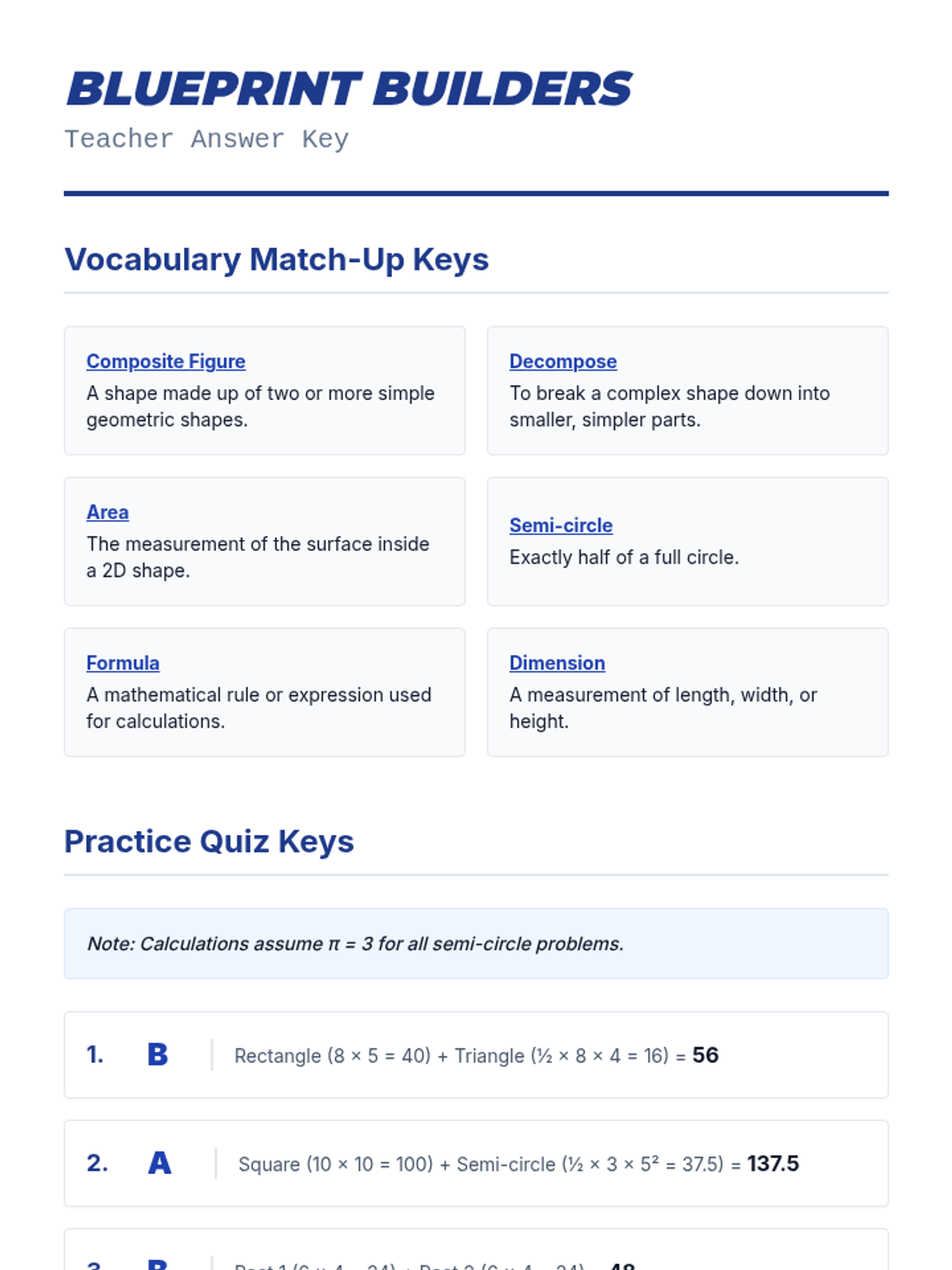
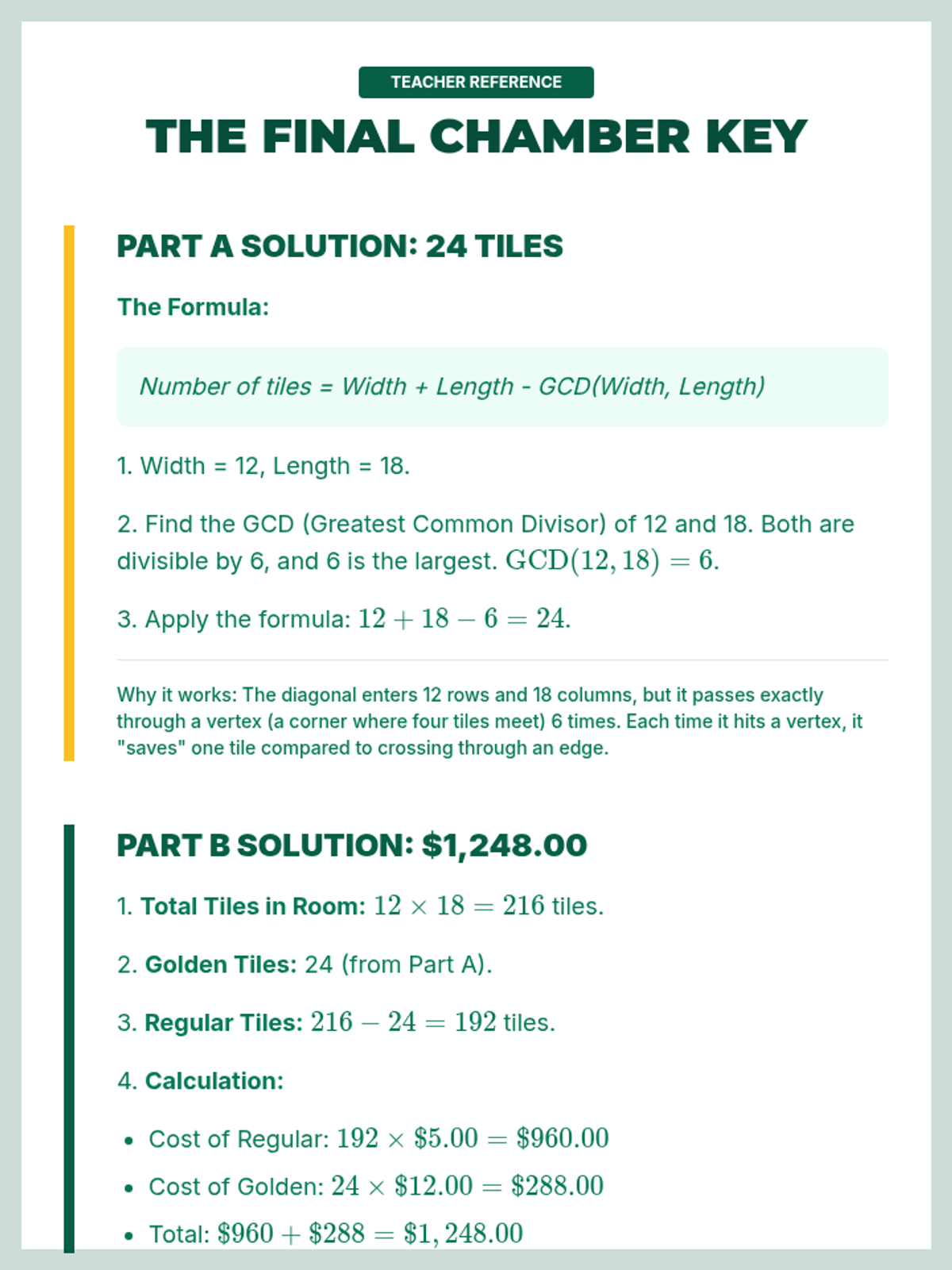
A comprehensive lesson on calculating the area of composite figures by decomposing them into simpler shapes like rectangles, triangles, and semi-circles using integer-based measurements.
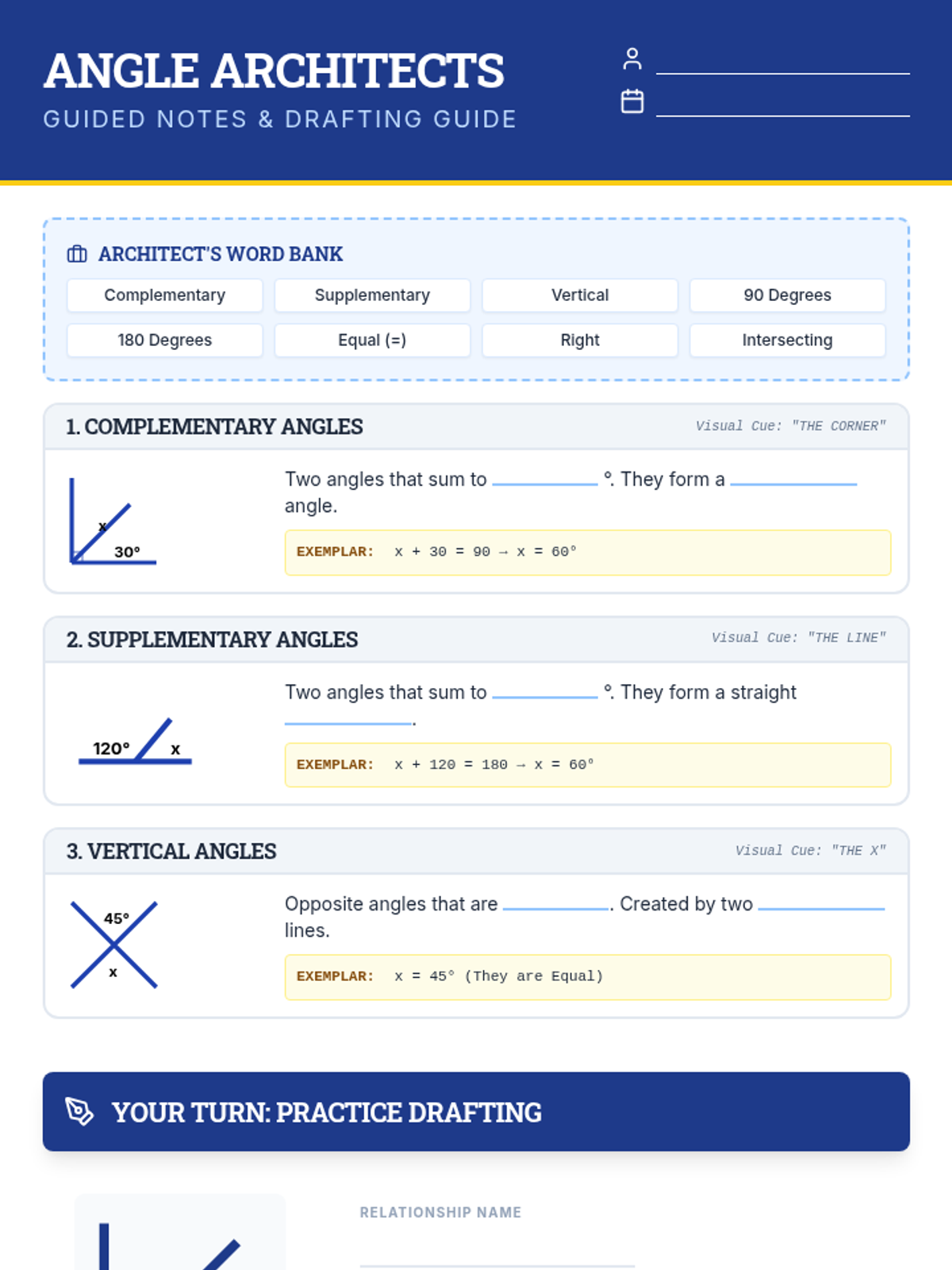
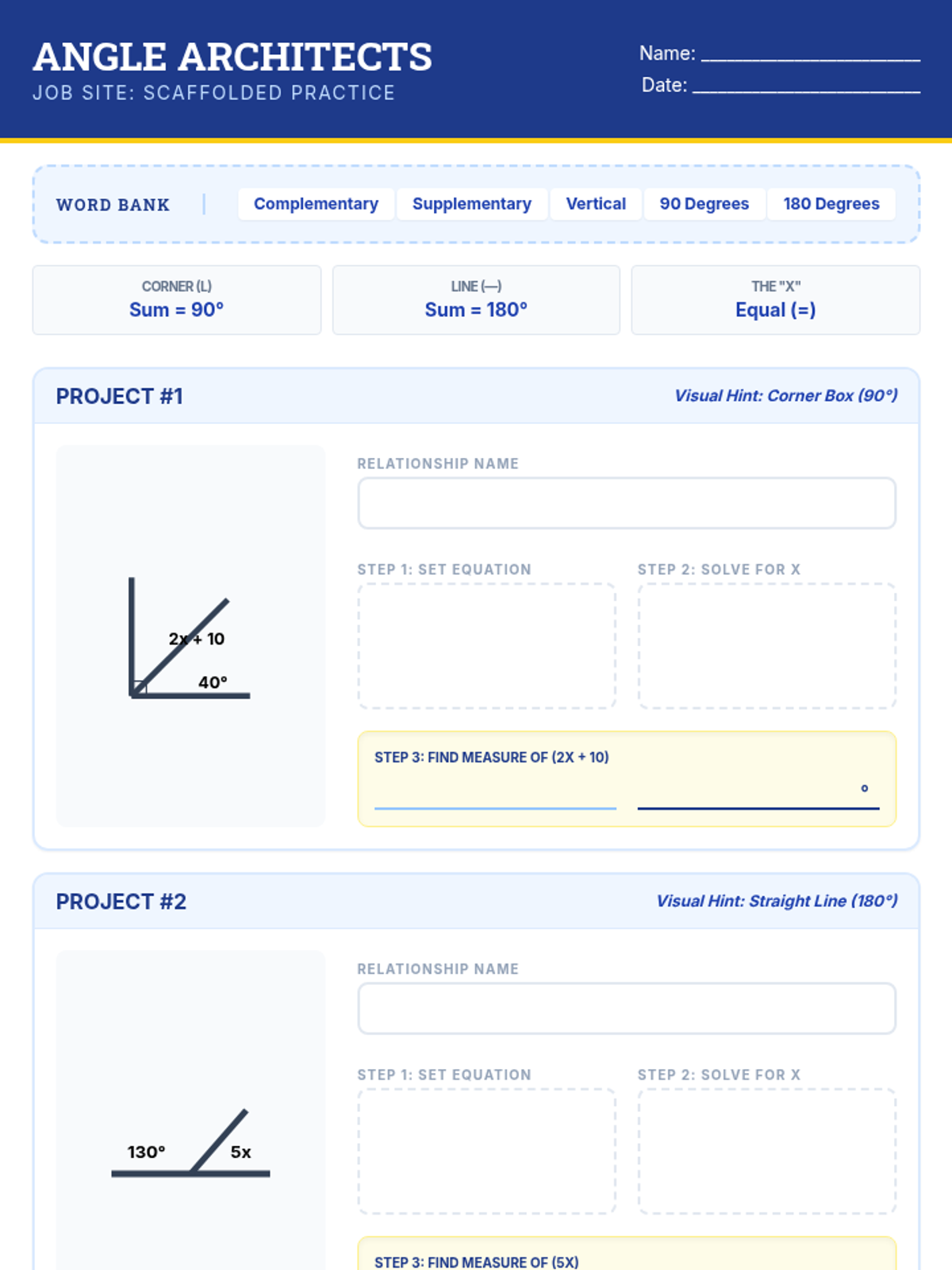
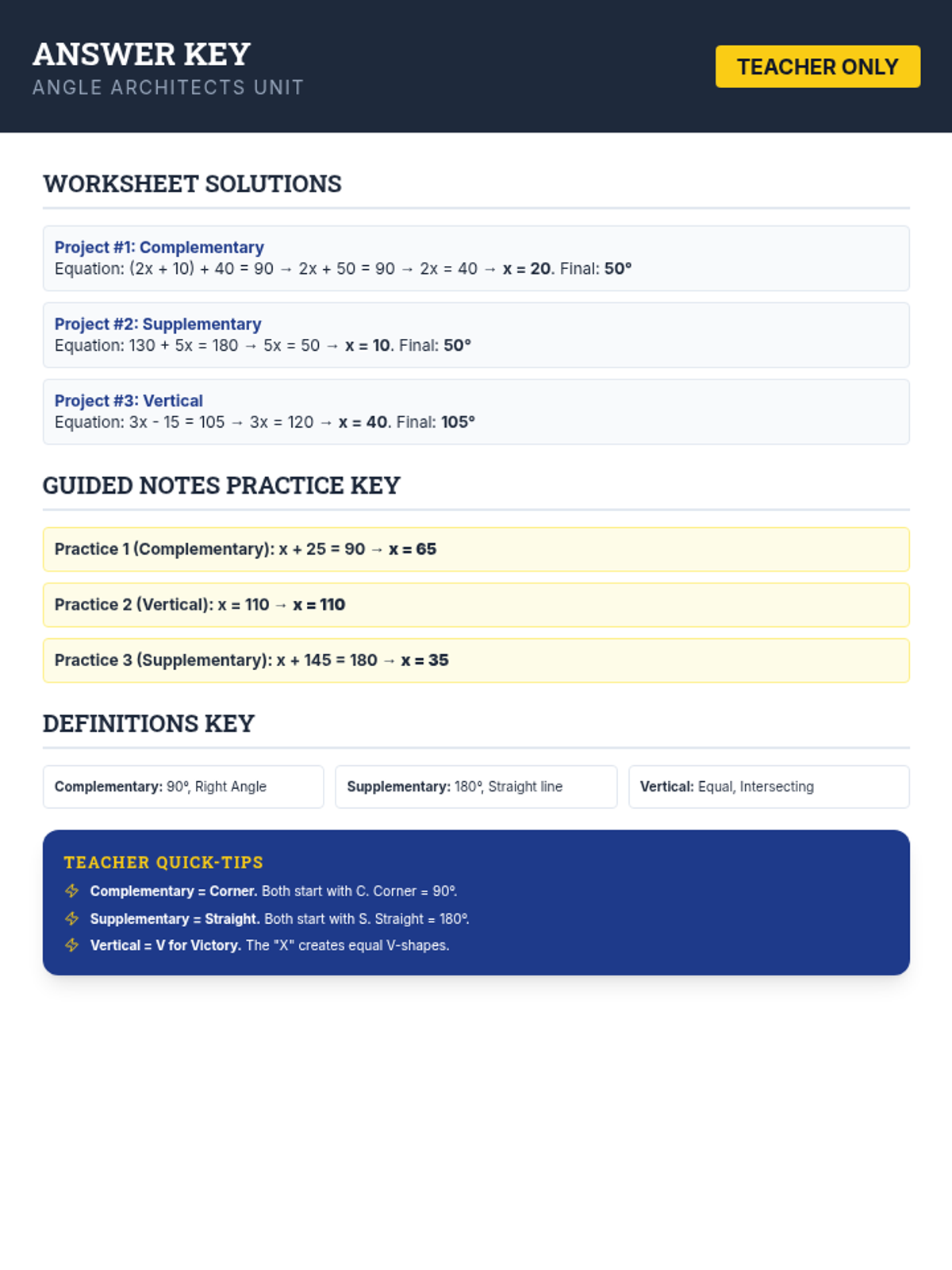
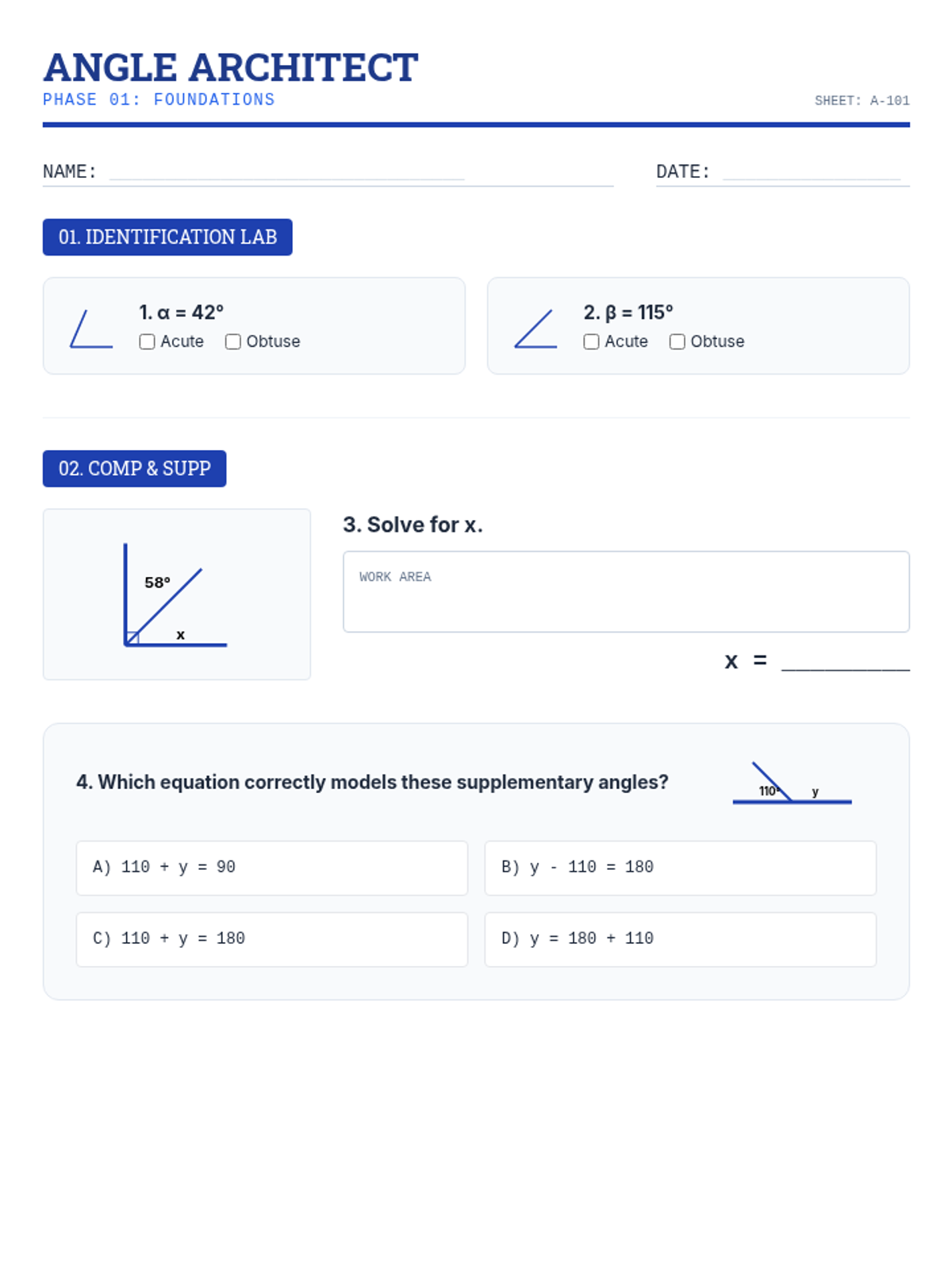
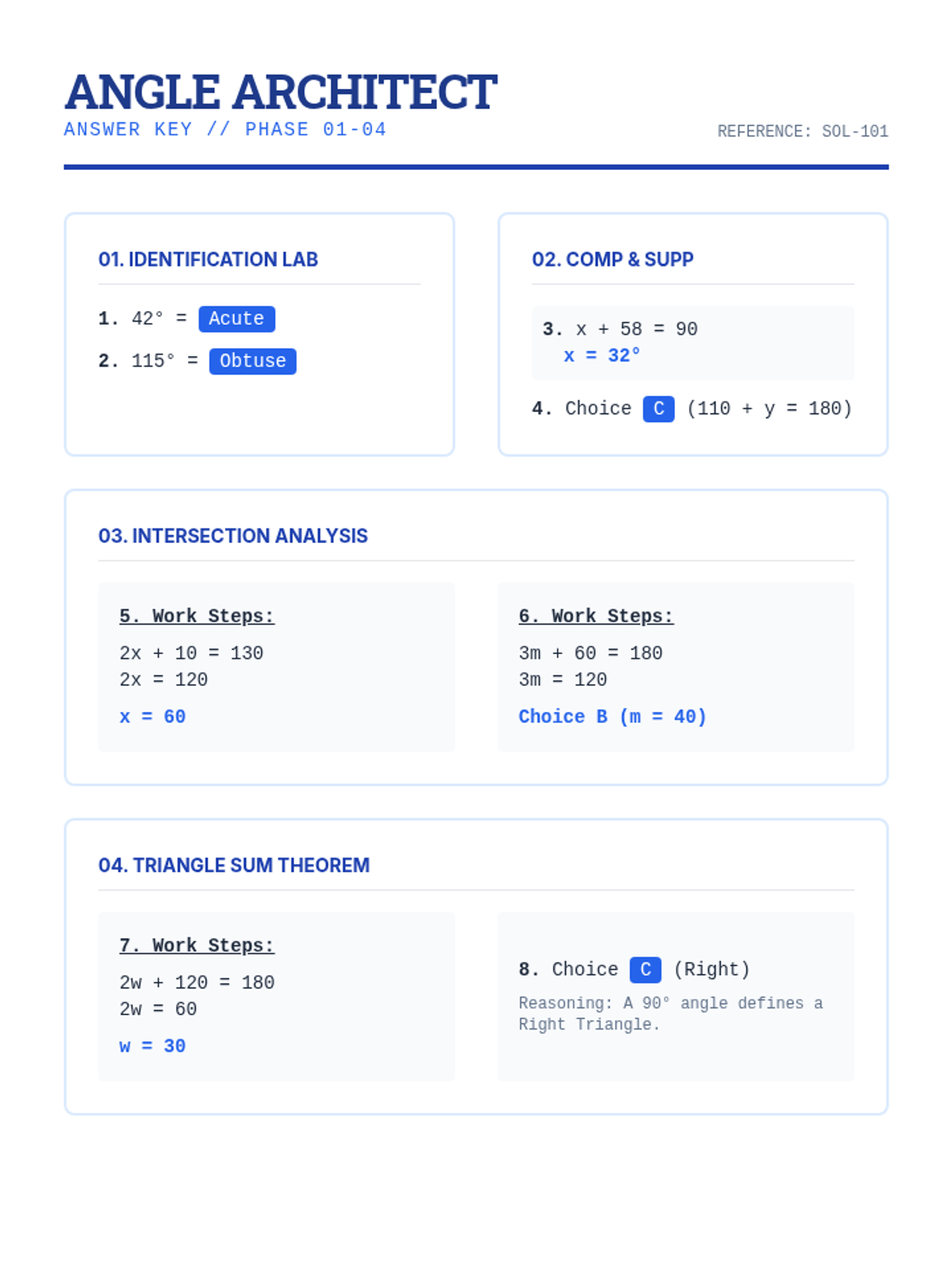
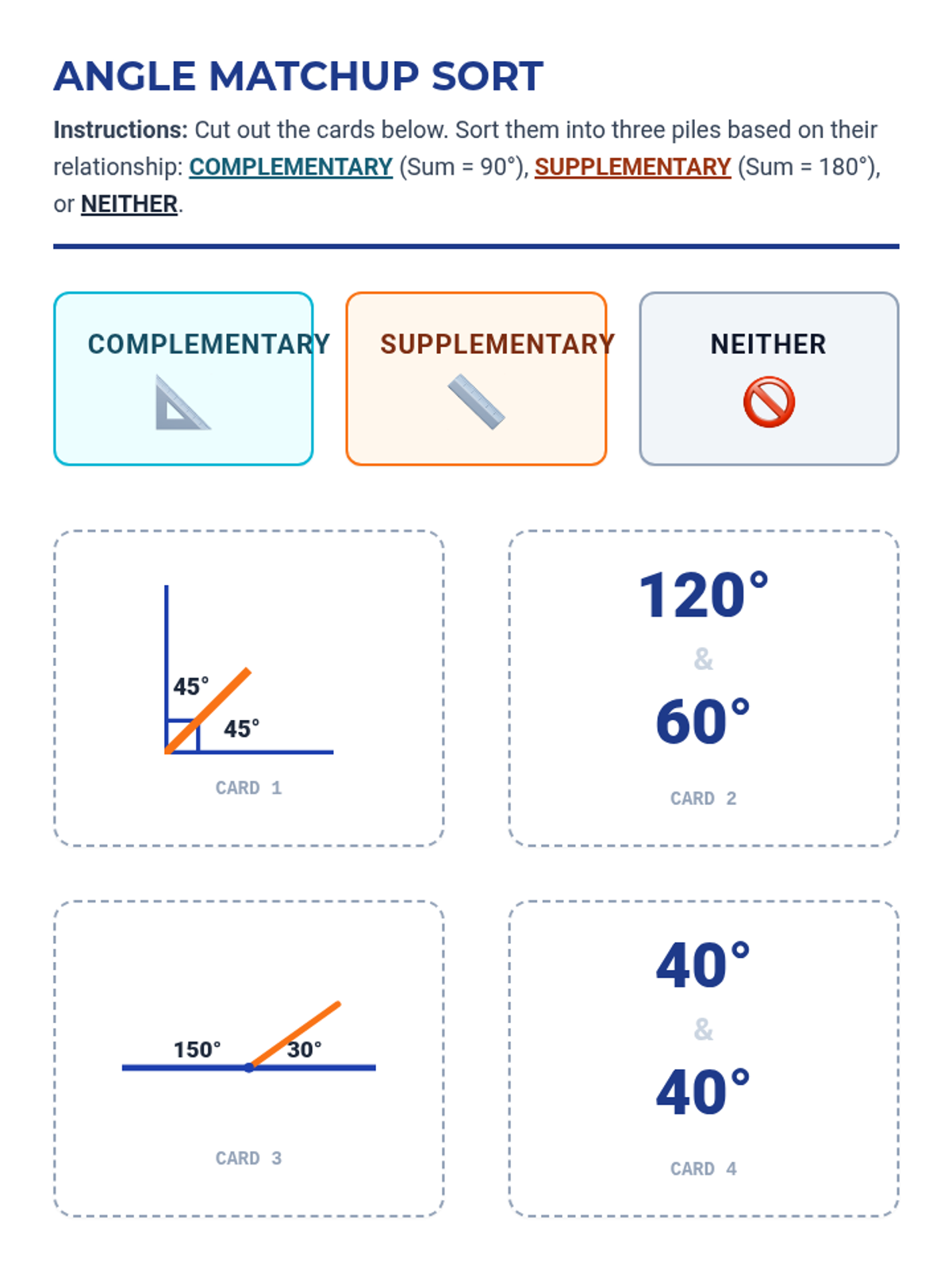
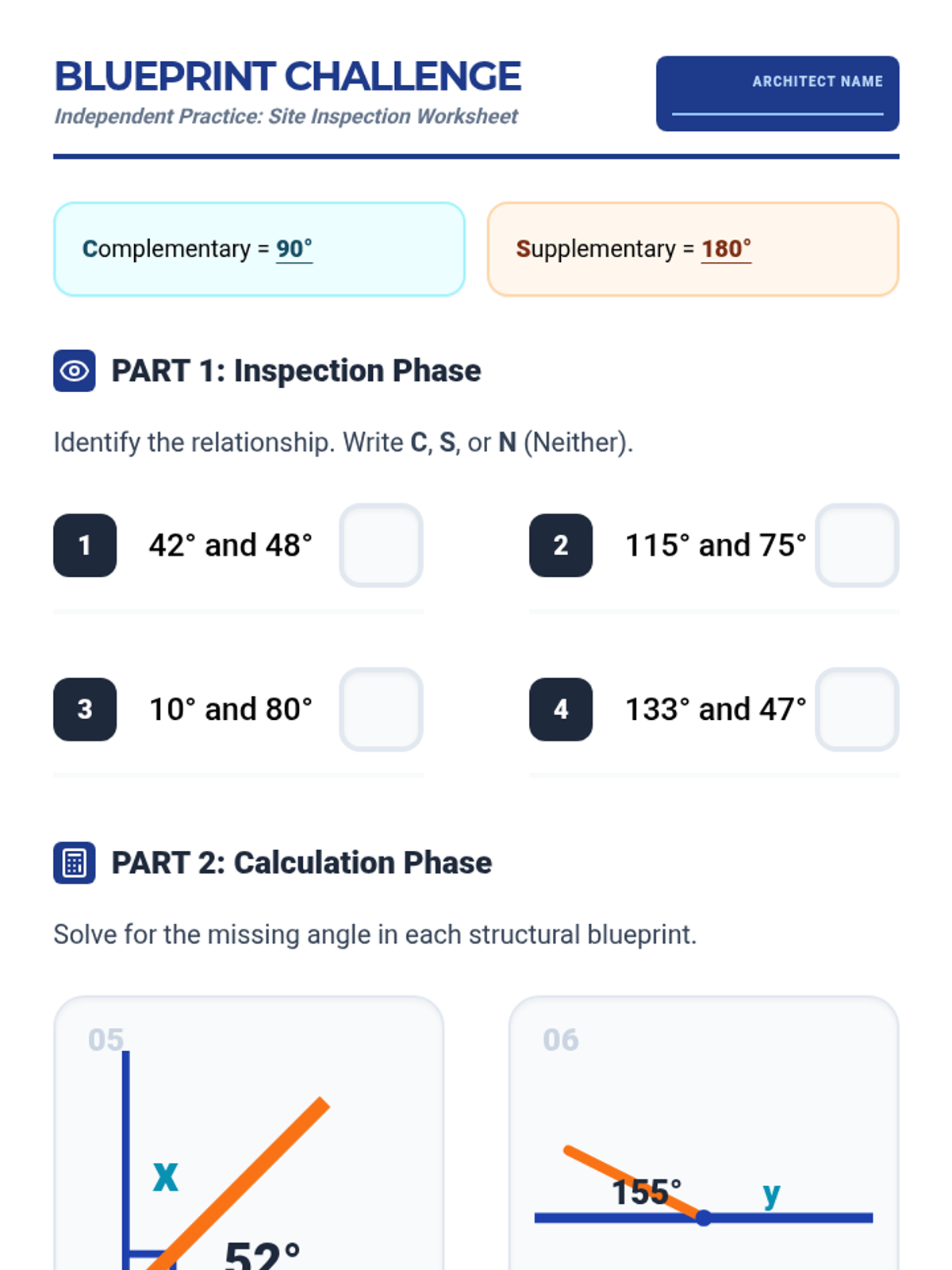
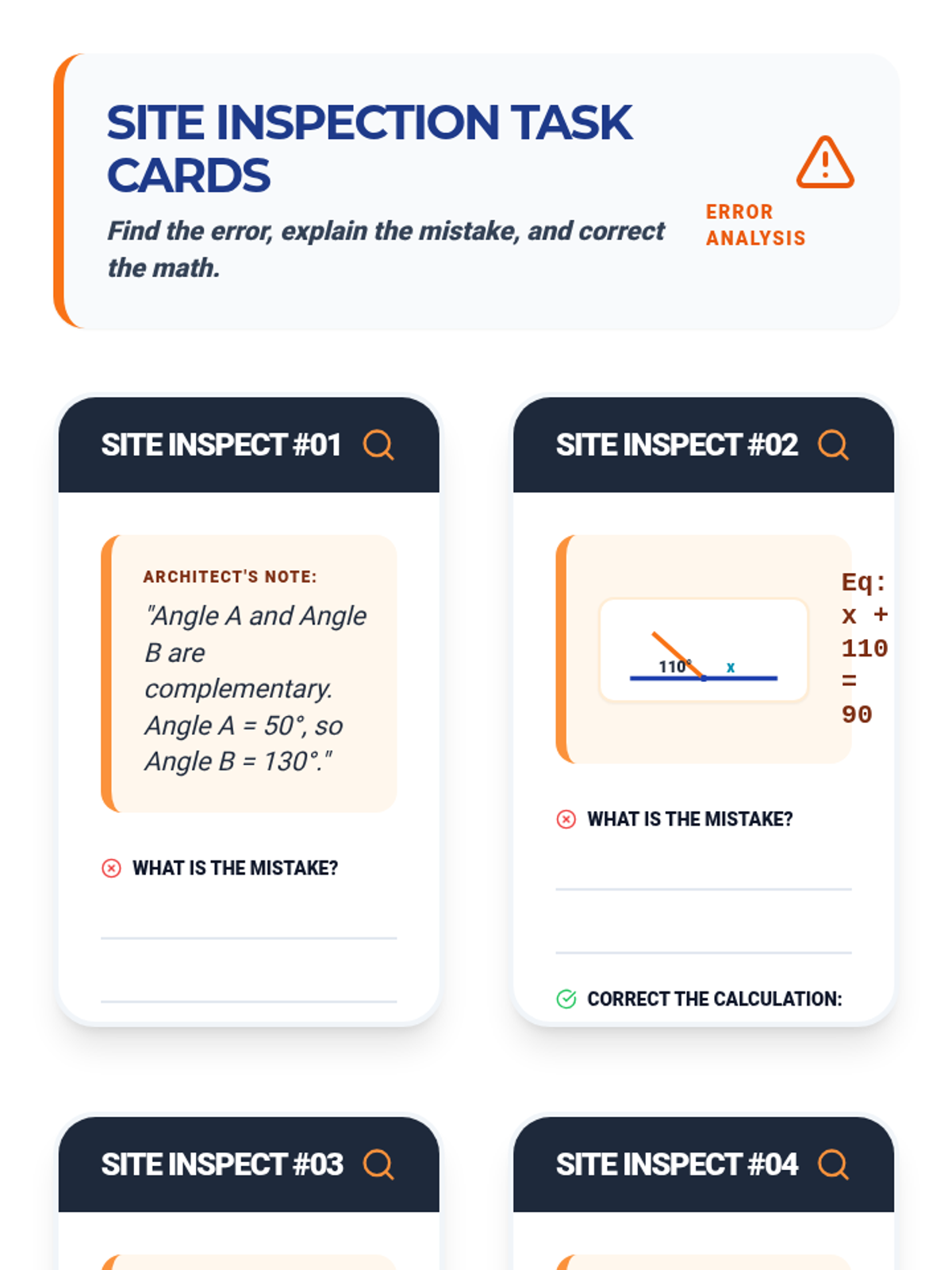
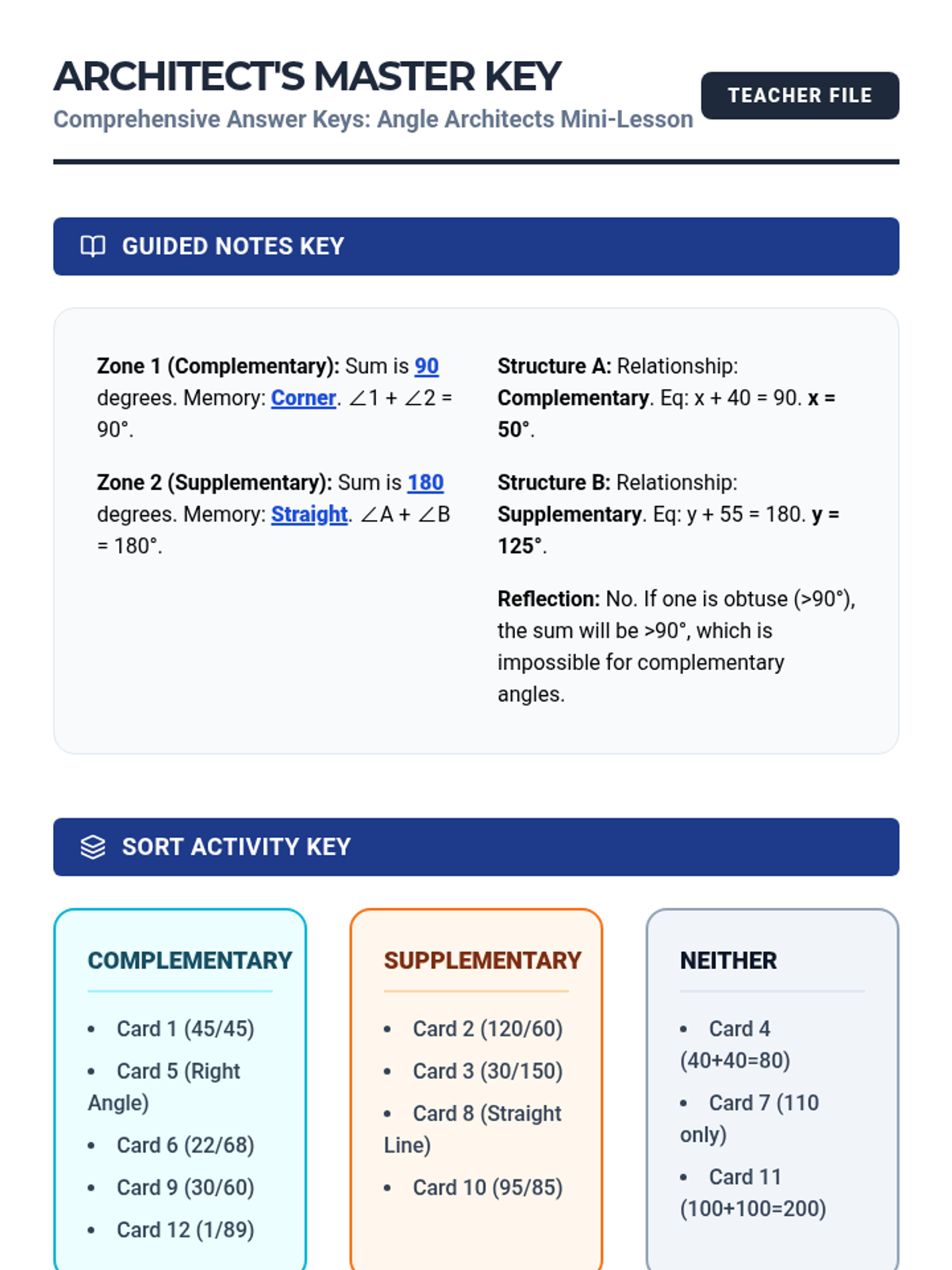
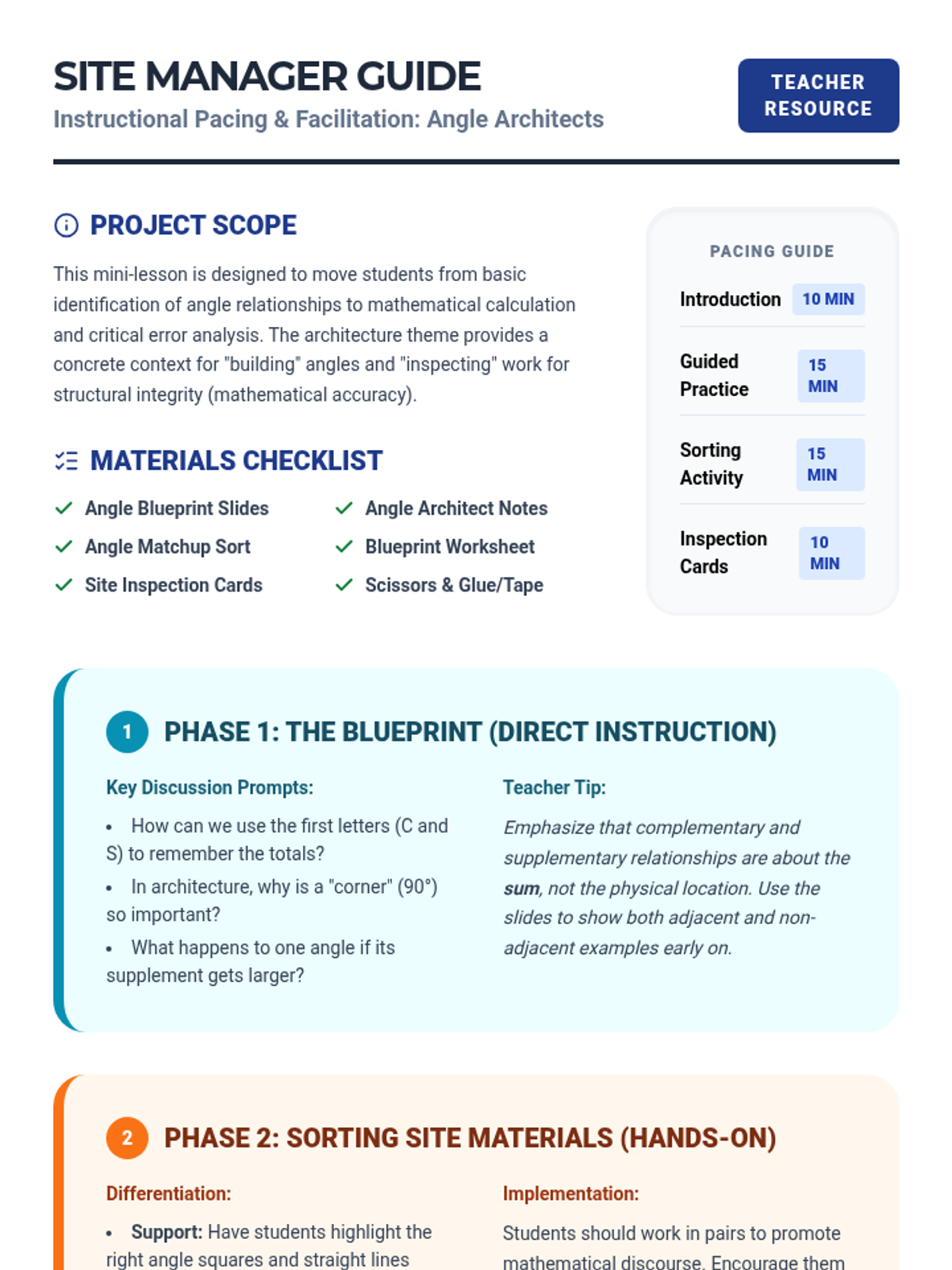
A highly scaffolded lesson on angle relationships (vertical, complementary, and supplementary) featuring an architectural blueprint theme. Includes guided notes with exemplars and step-by-step practice materials.
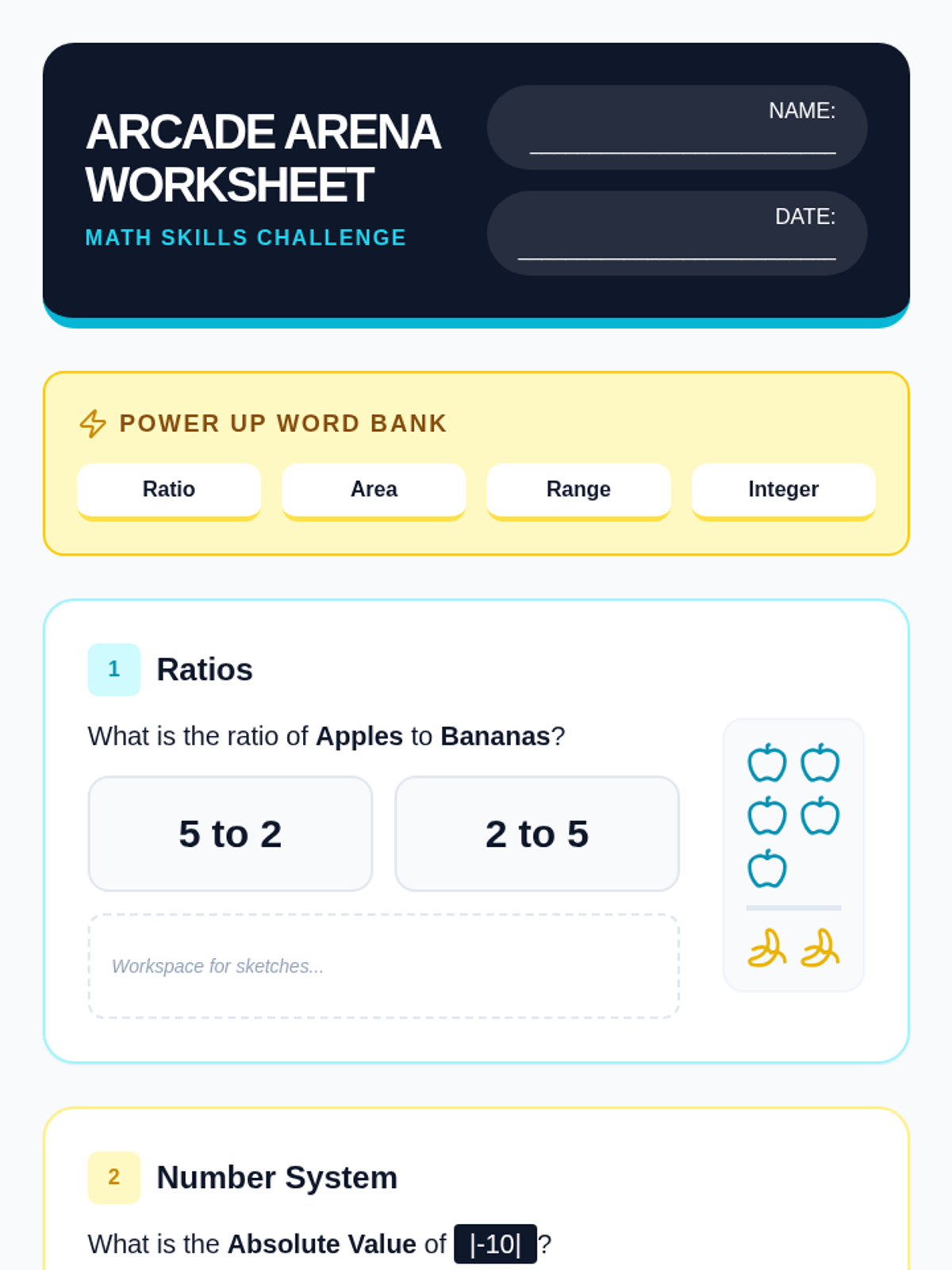
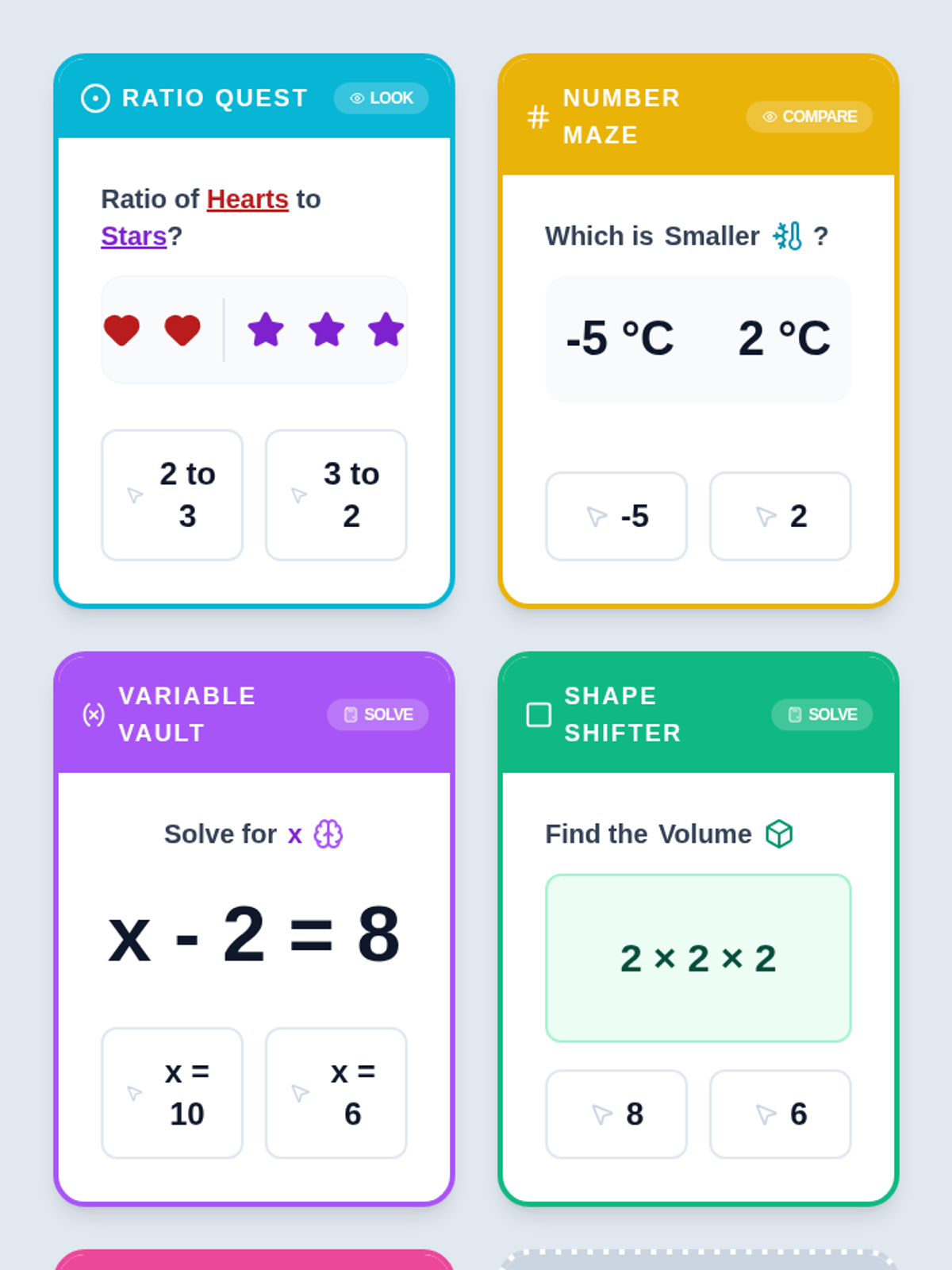
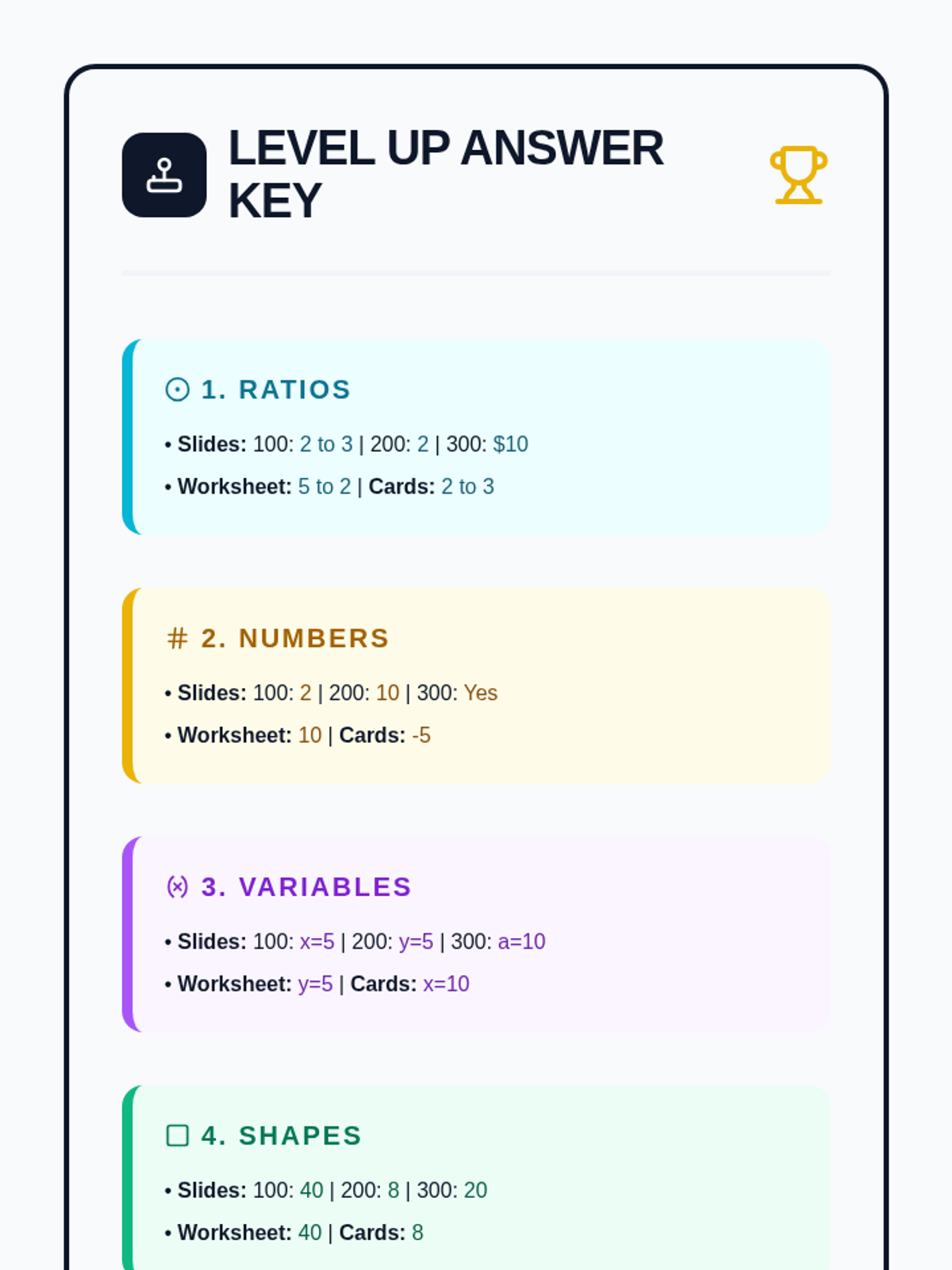
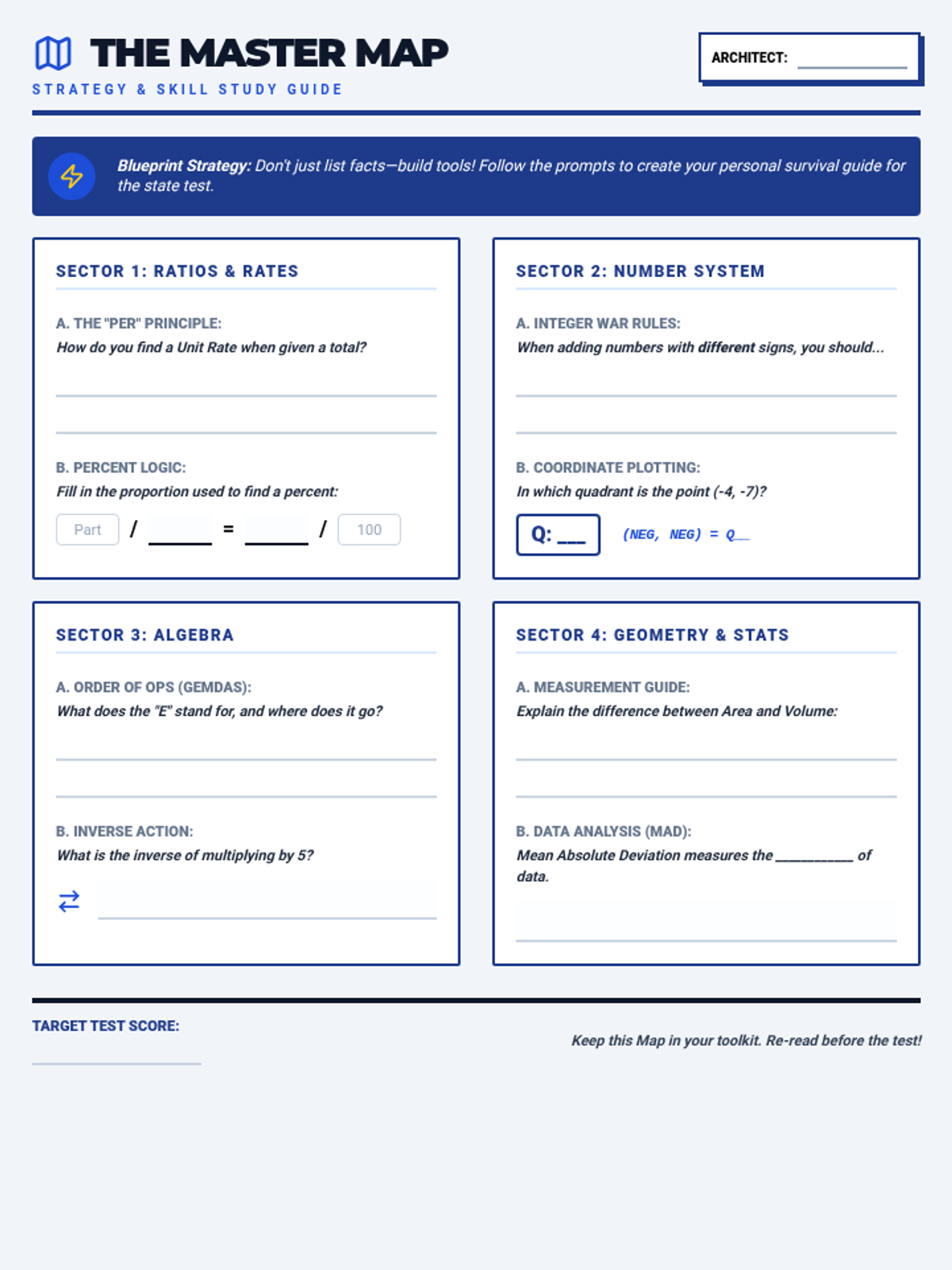
An all-in-one review lesson covering the five major 6th-grade math domains. Designed for IEP support with visual scaffolds and simplified 2-option choices.
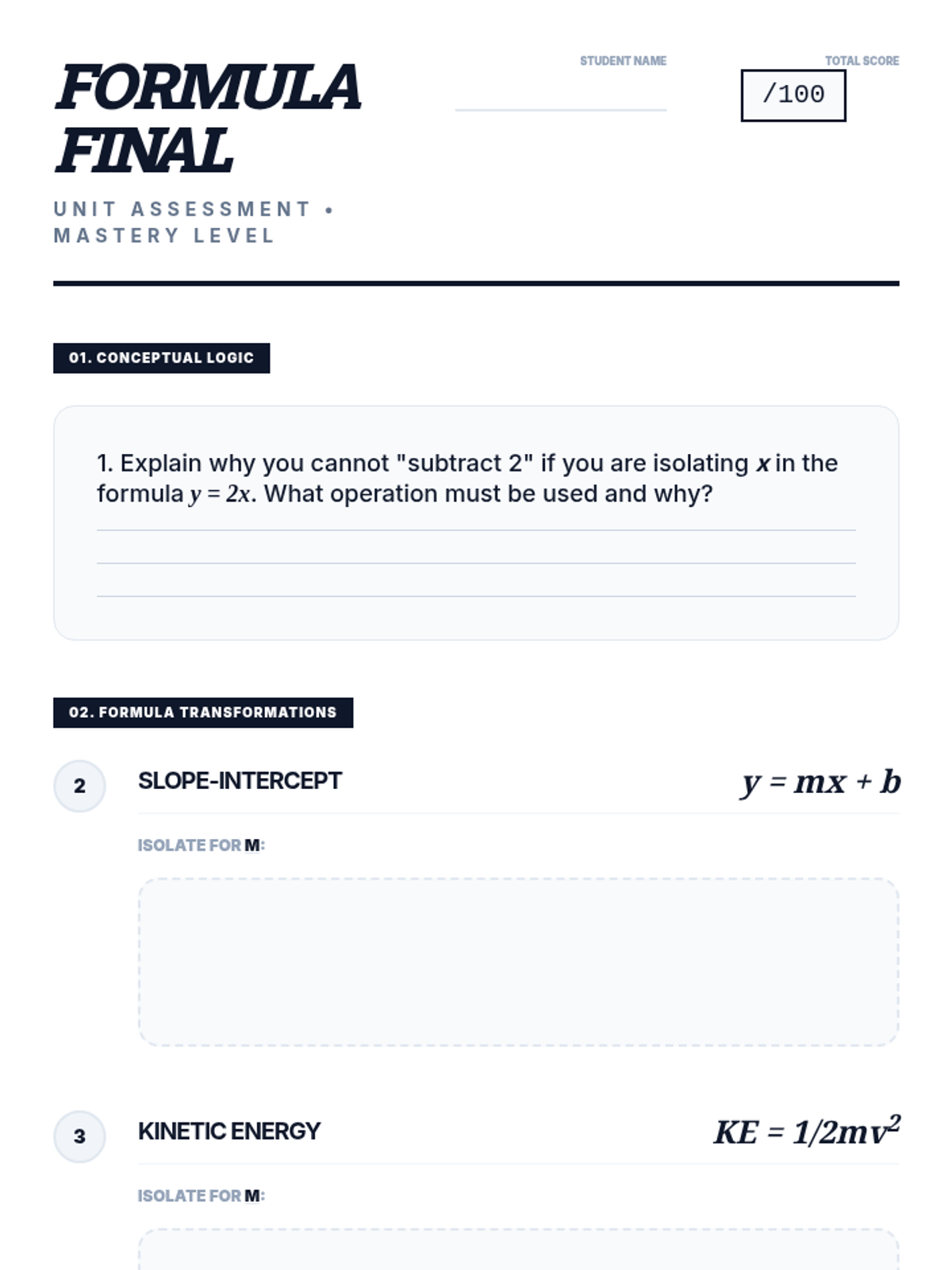
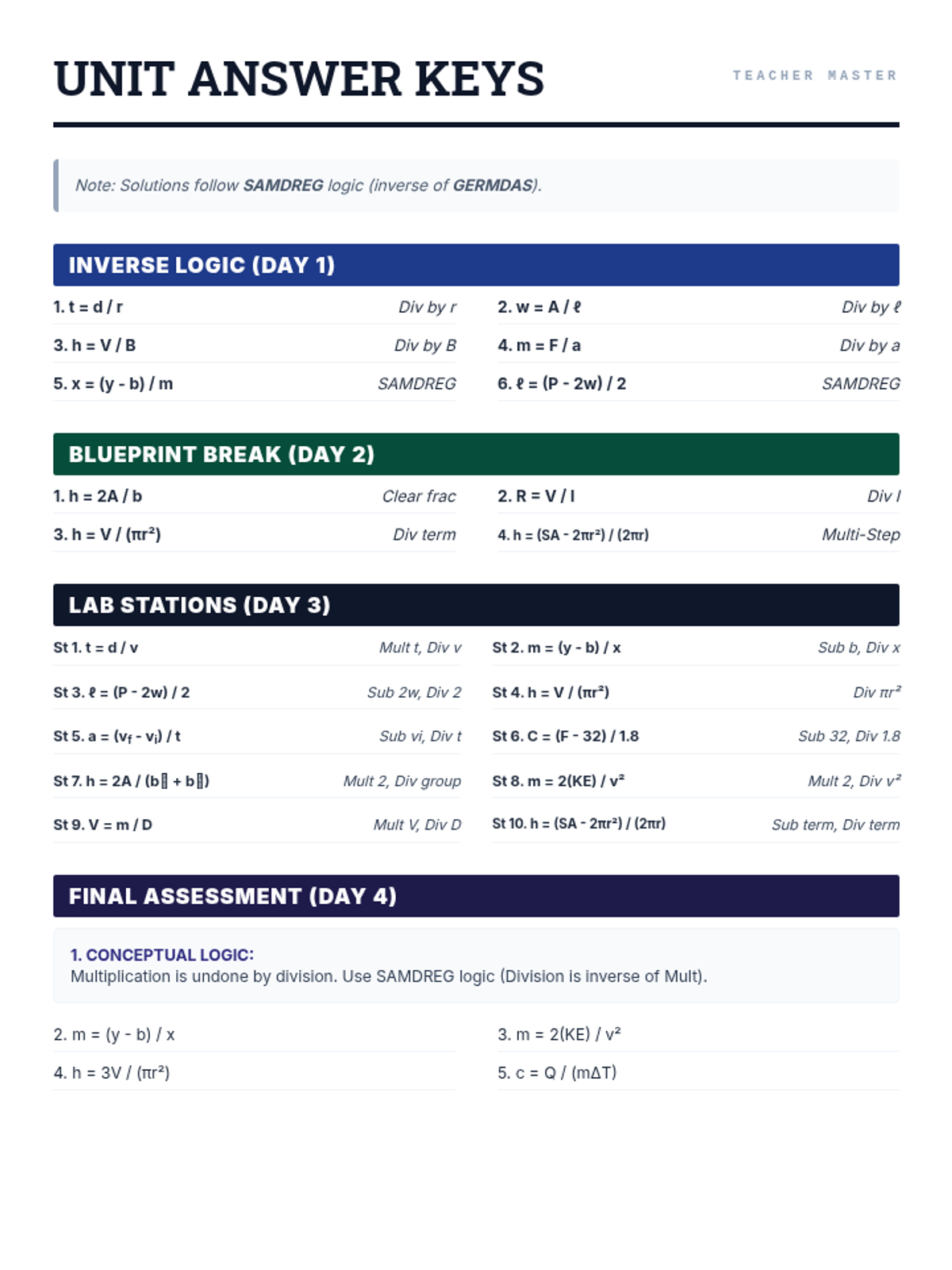
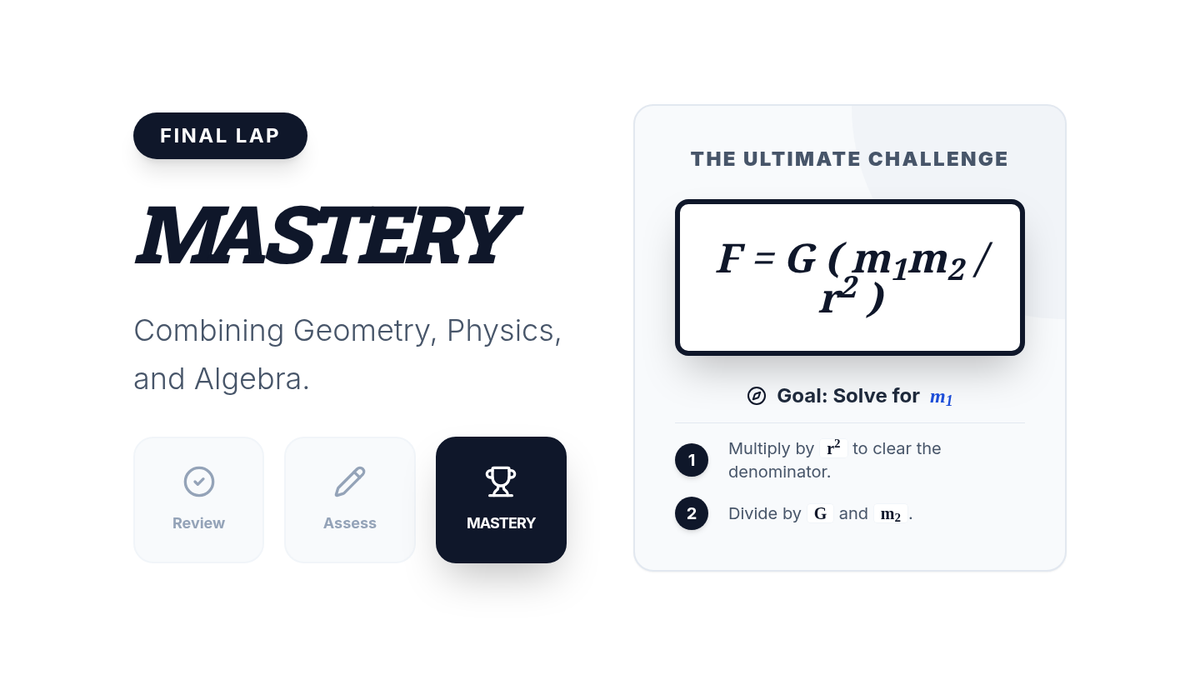
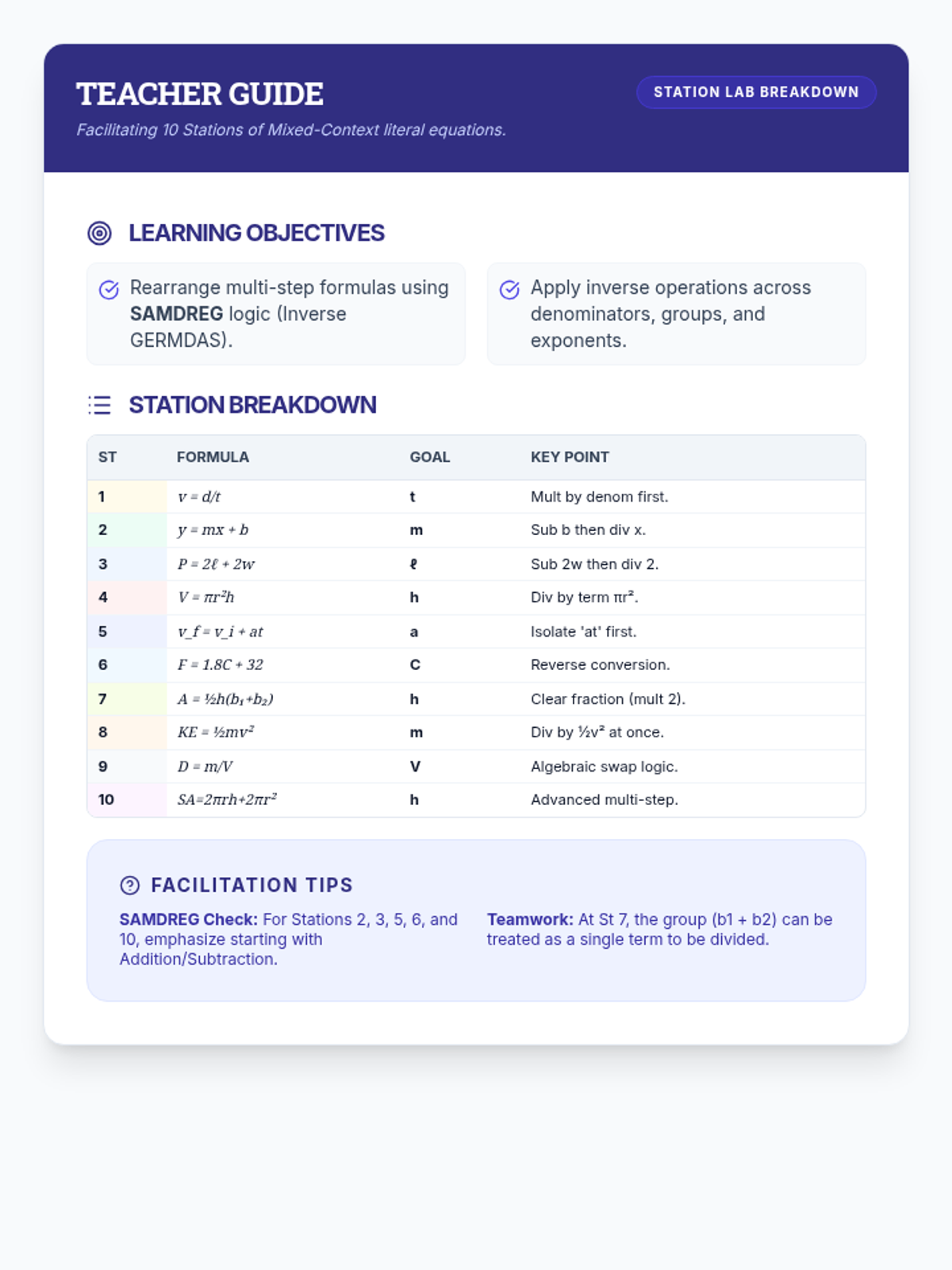
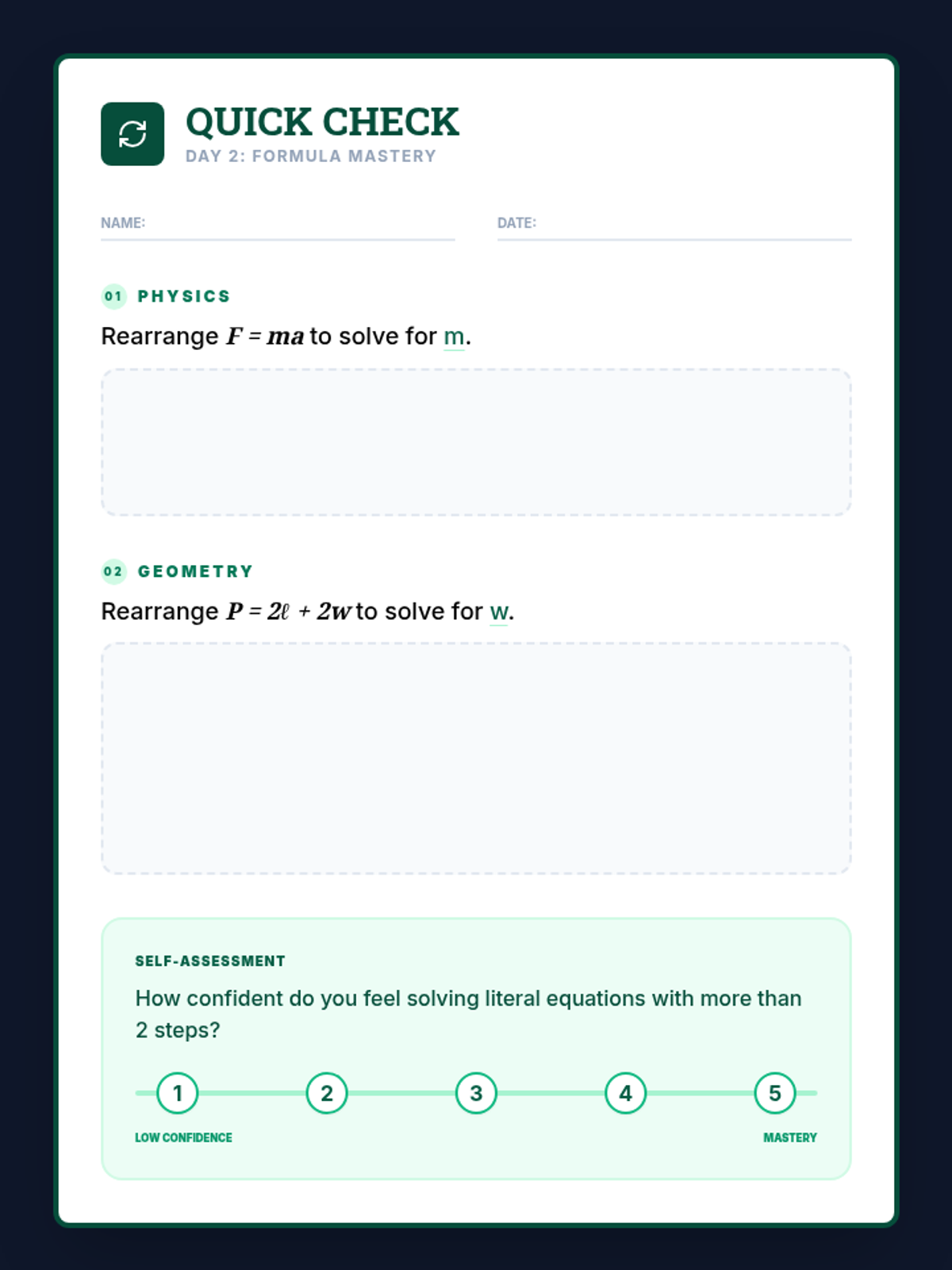
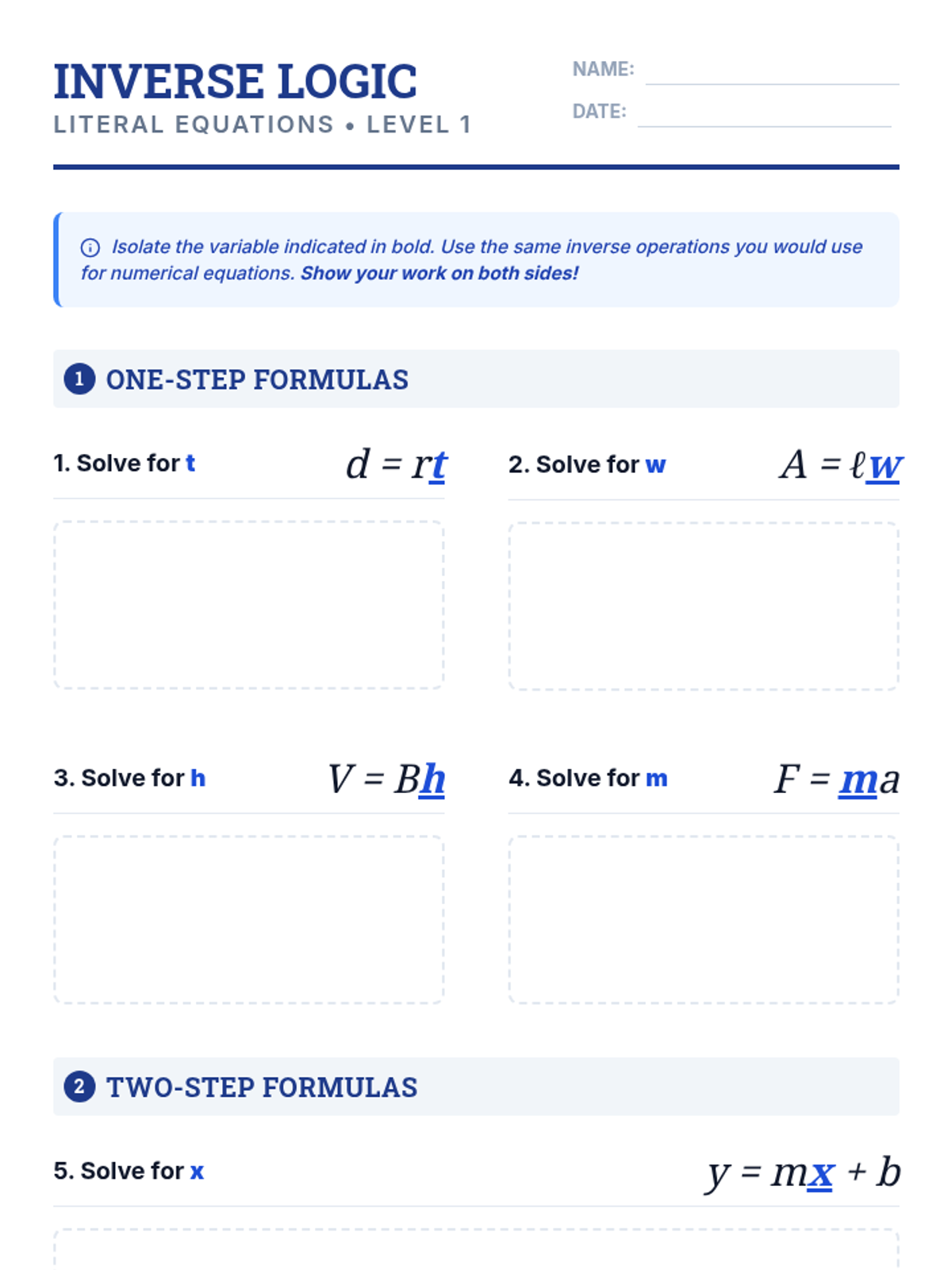
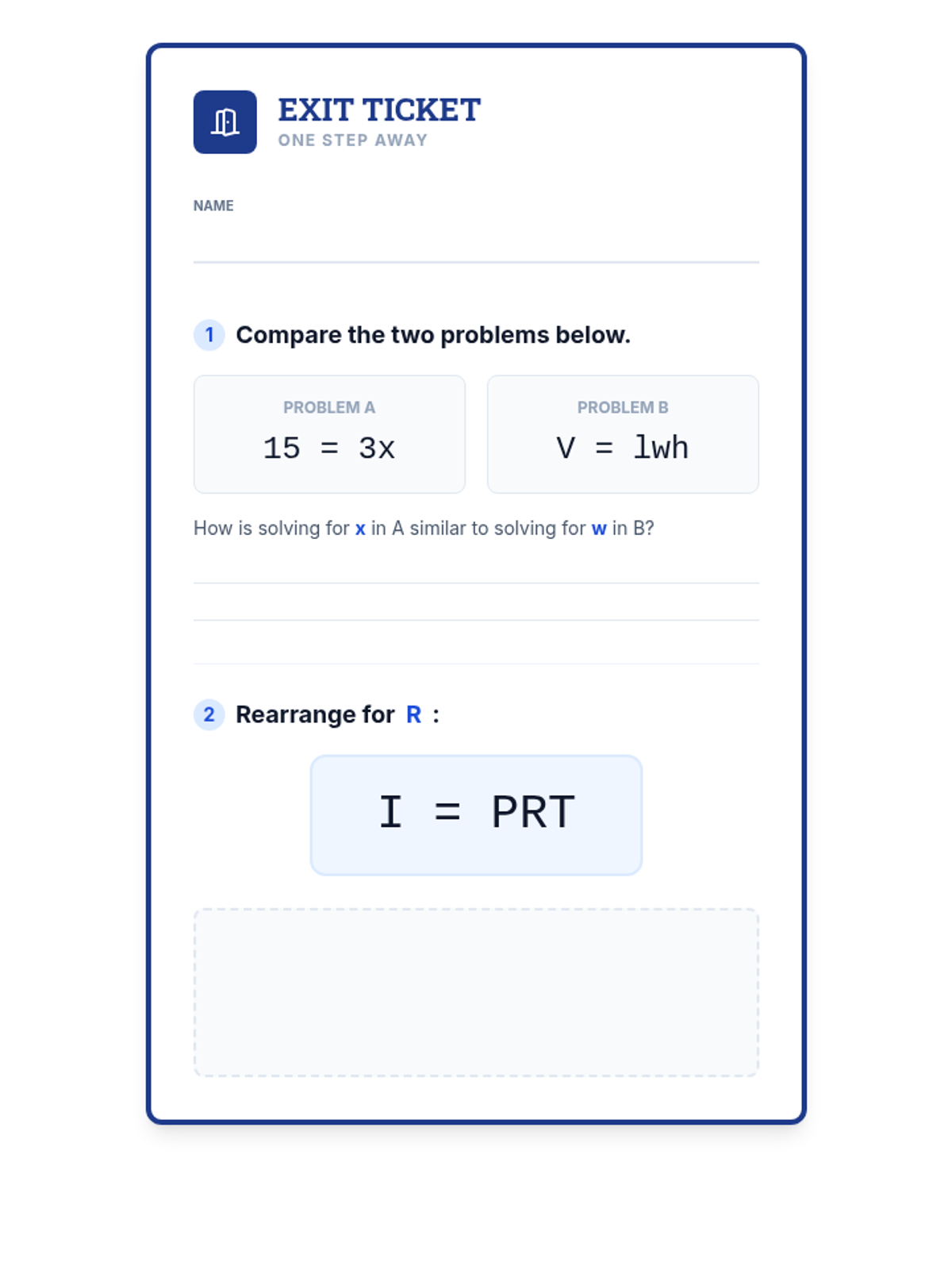
Review and assessment of literal equation mastery through multi-step problems.
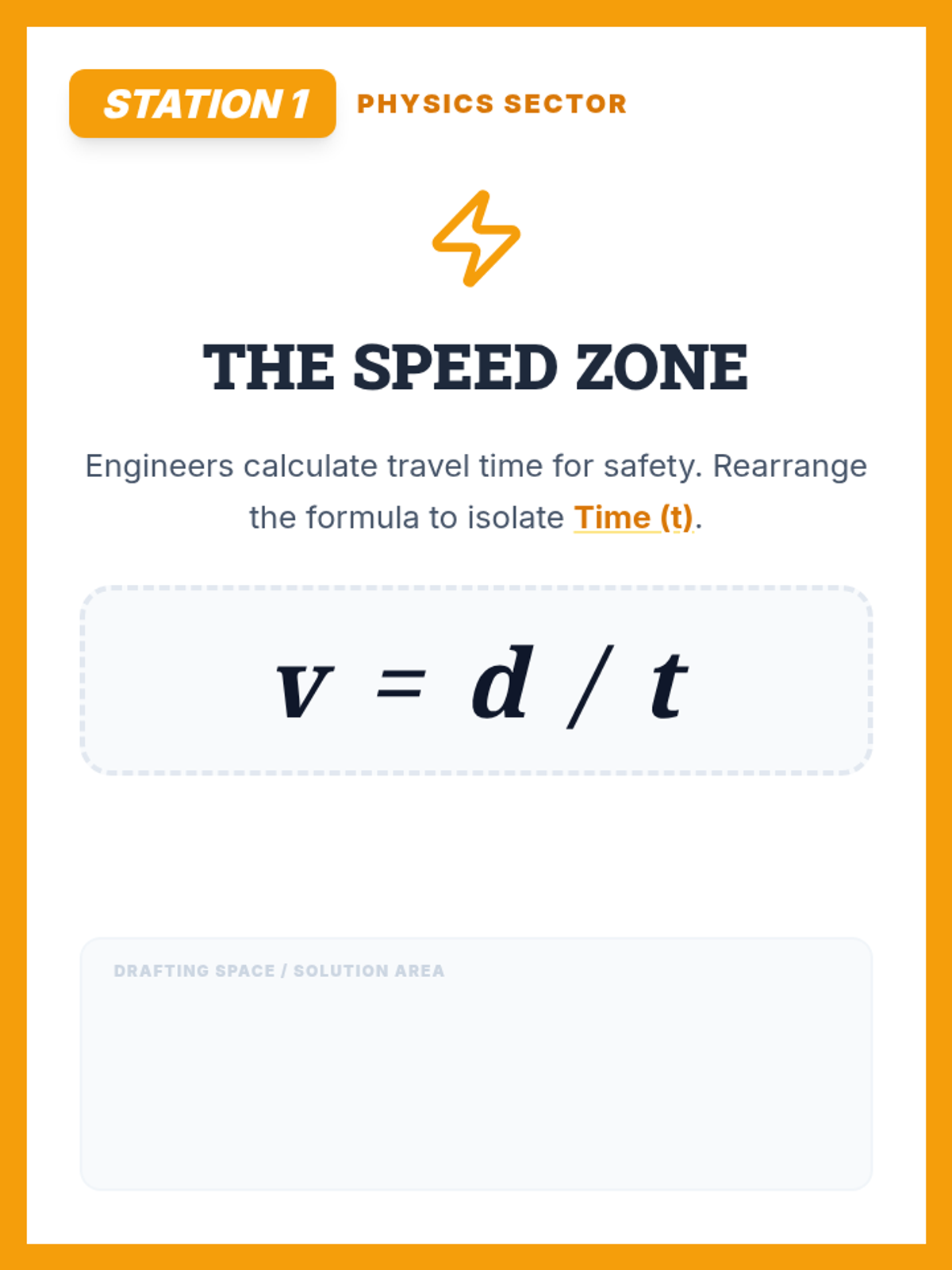
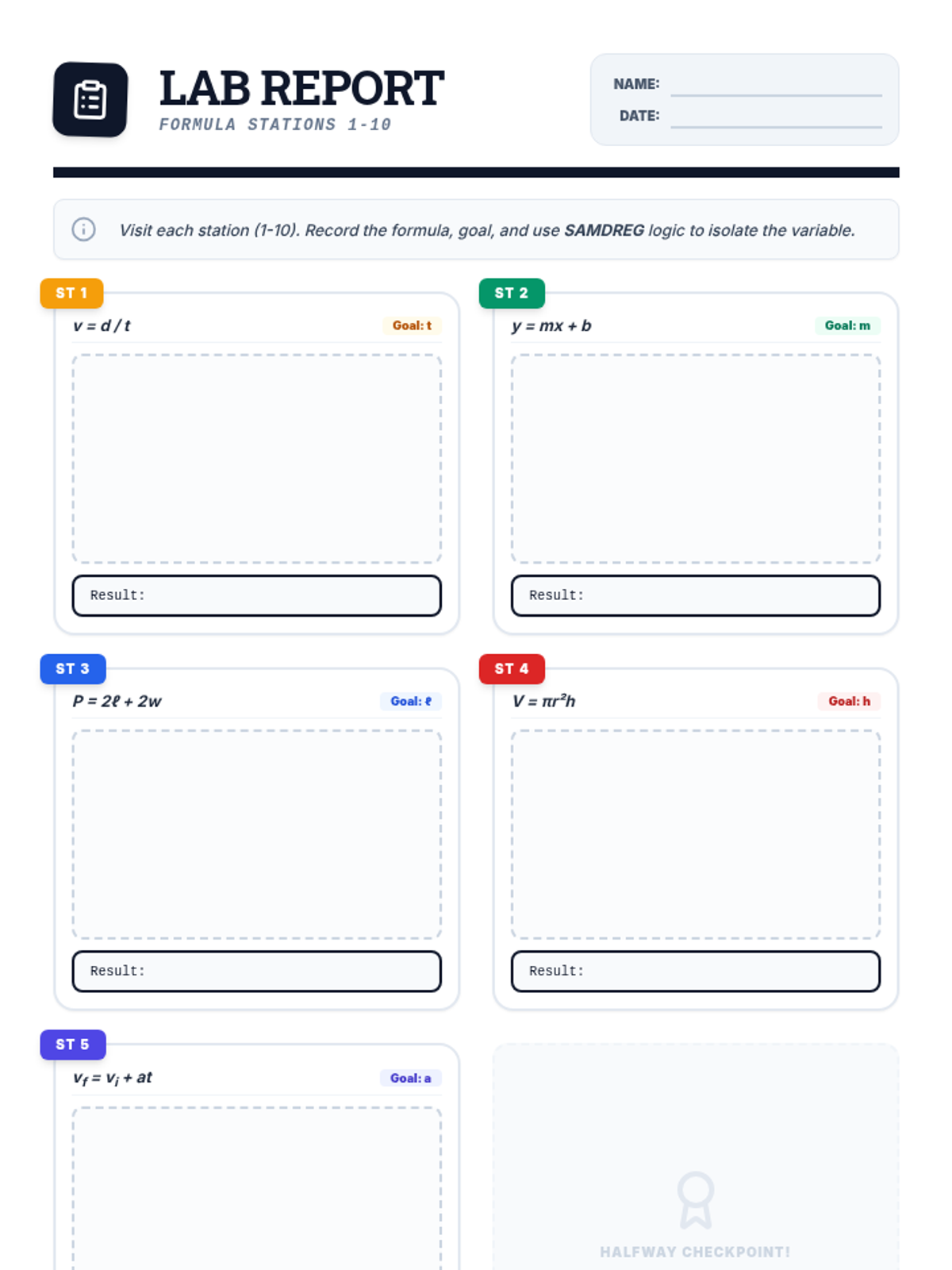
A stations-based exploration of physics formulas like force, velocity, and Ohm's law.
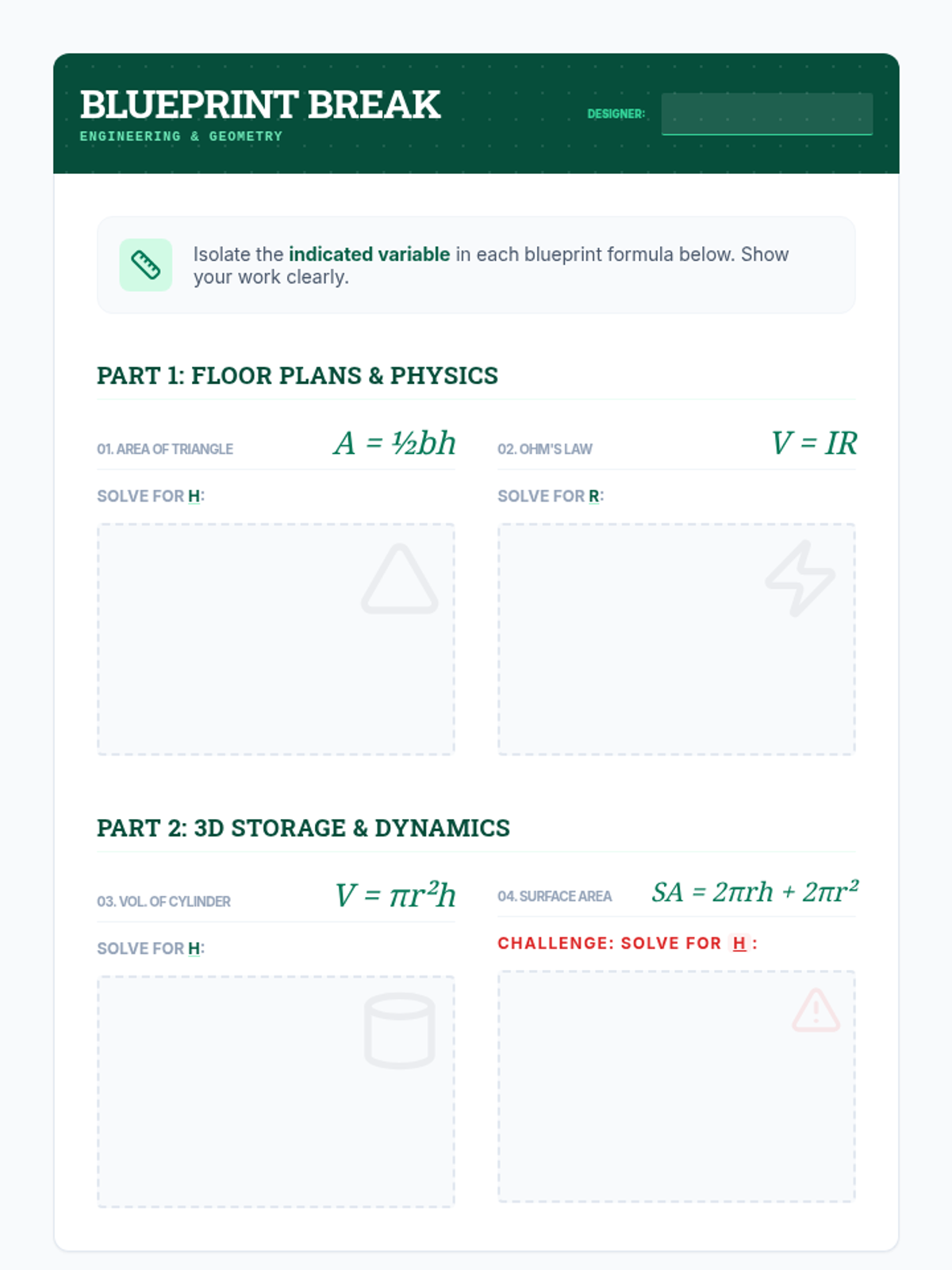
Applying formula manipulation to geometric formulas for area, perimeter, and volume.
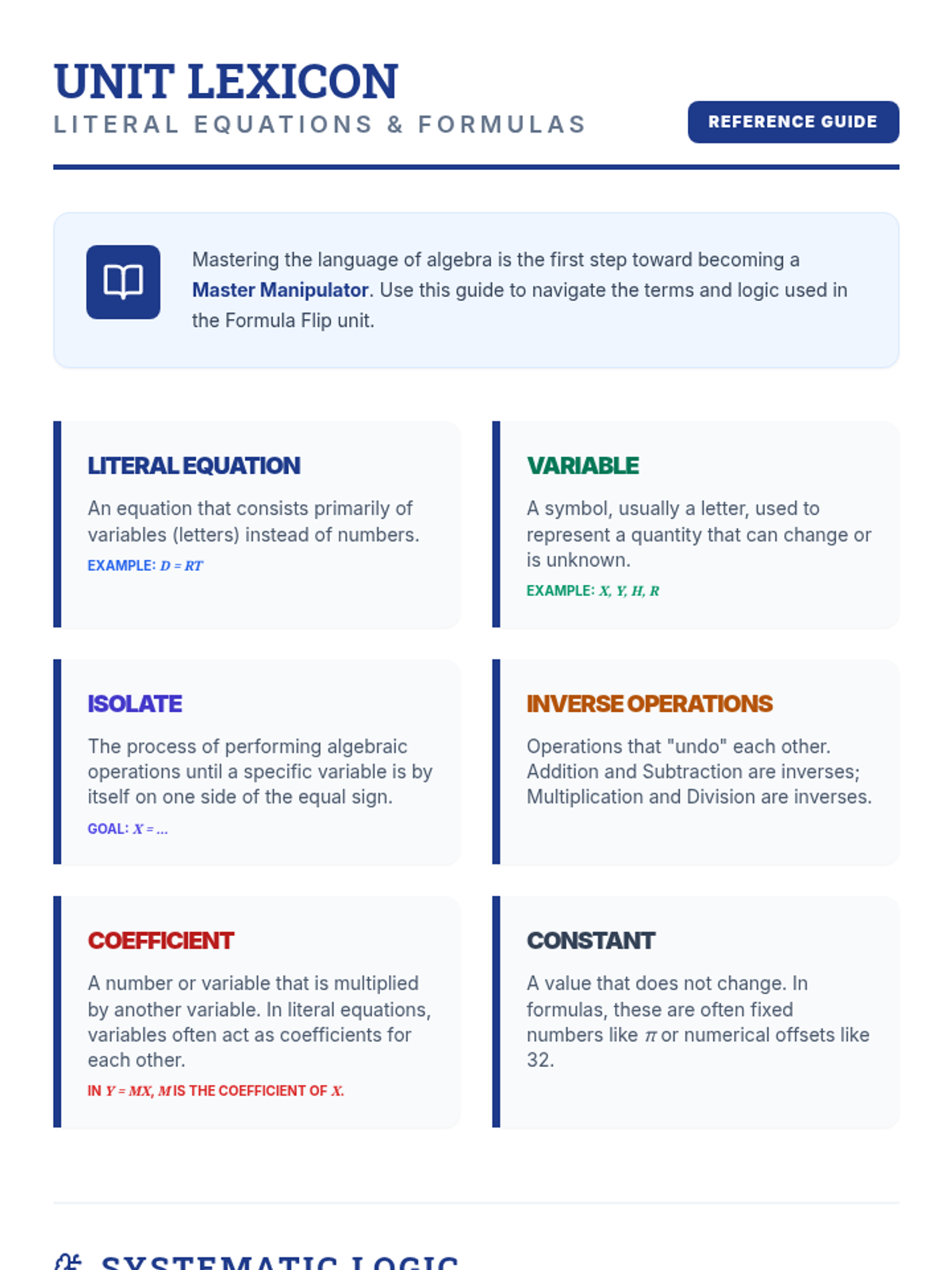
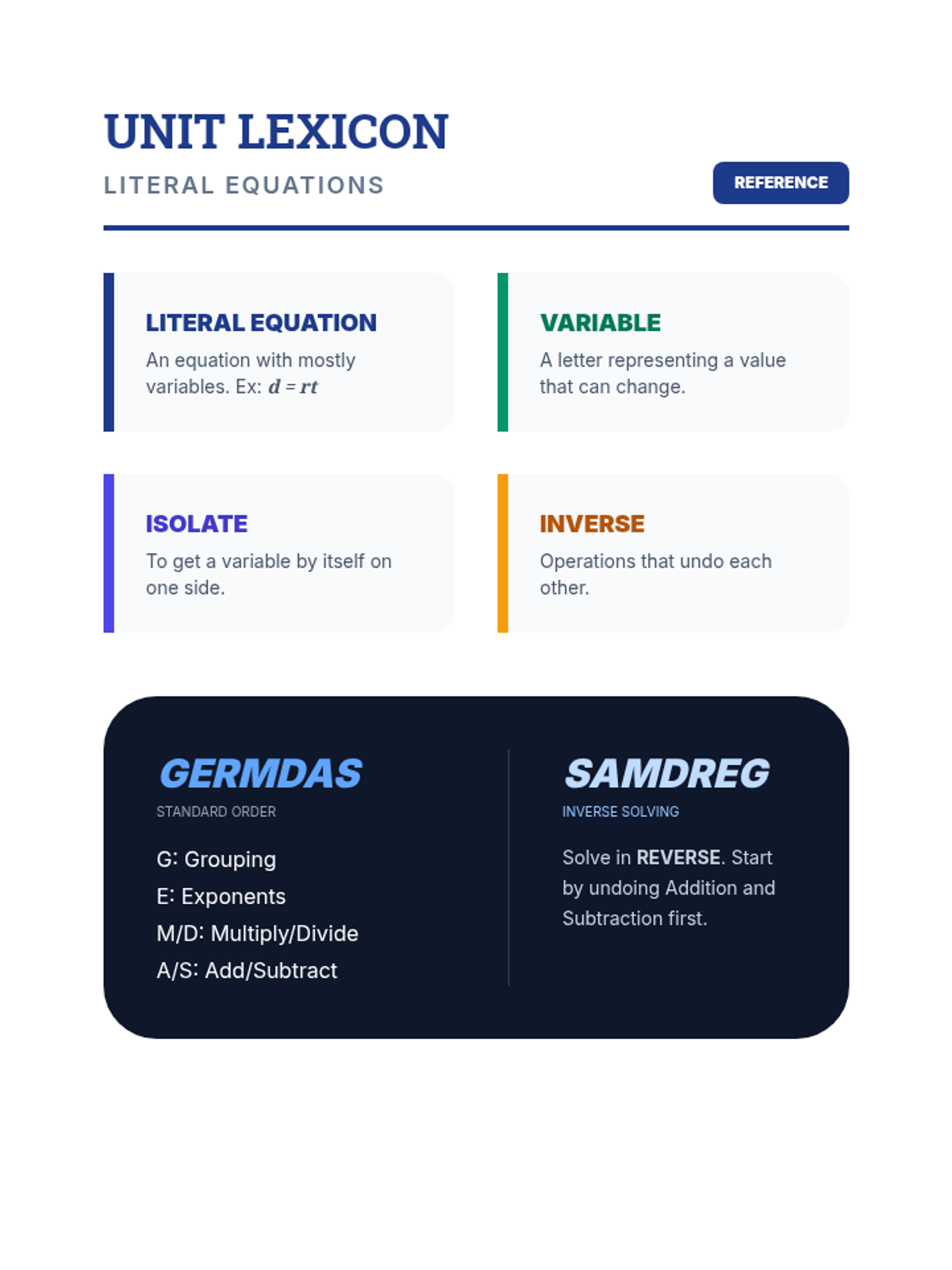
Introduction to literal equations by connecting the logic of solving standard equations to rearranging variables.
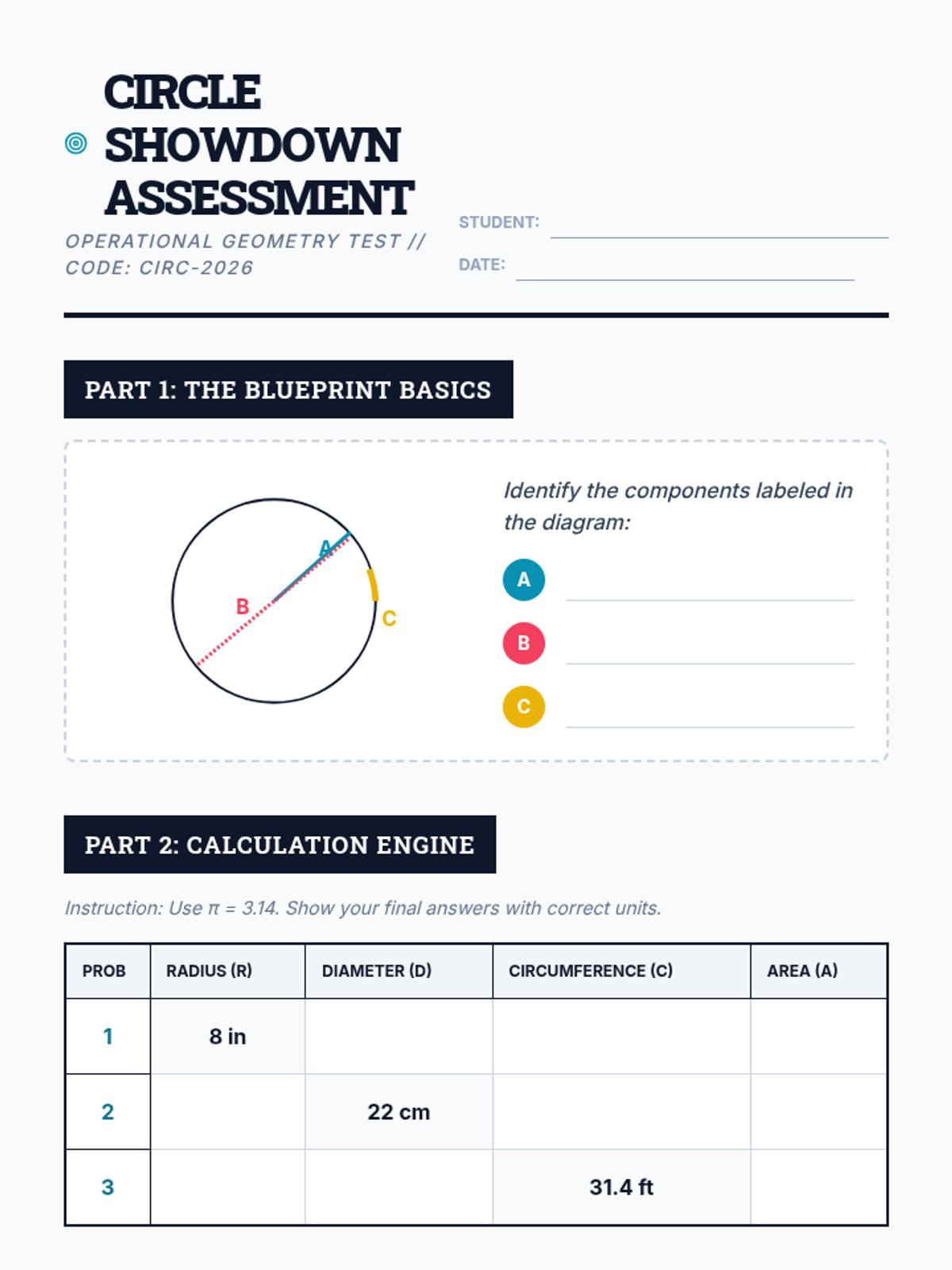
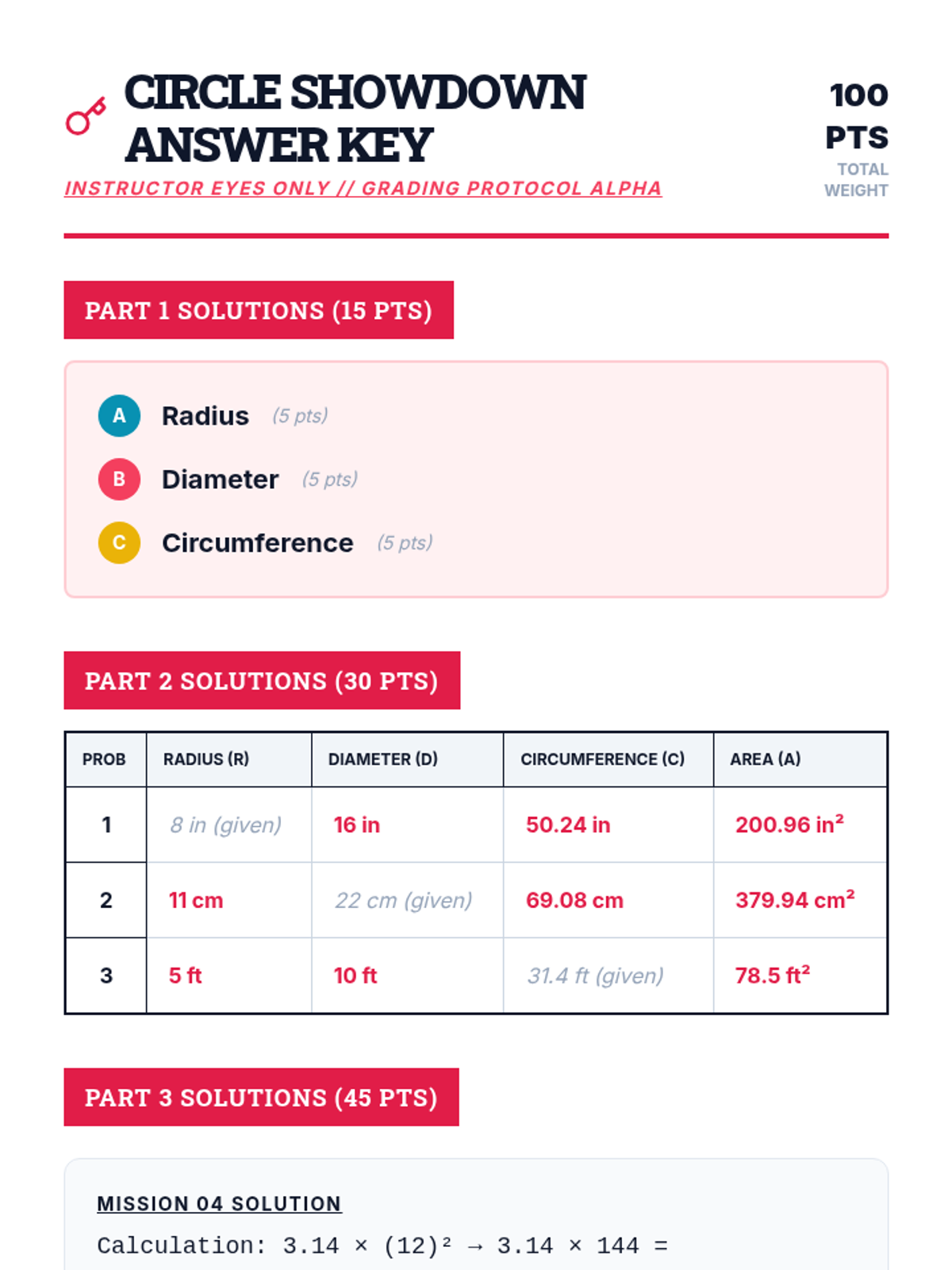
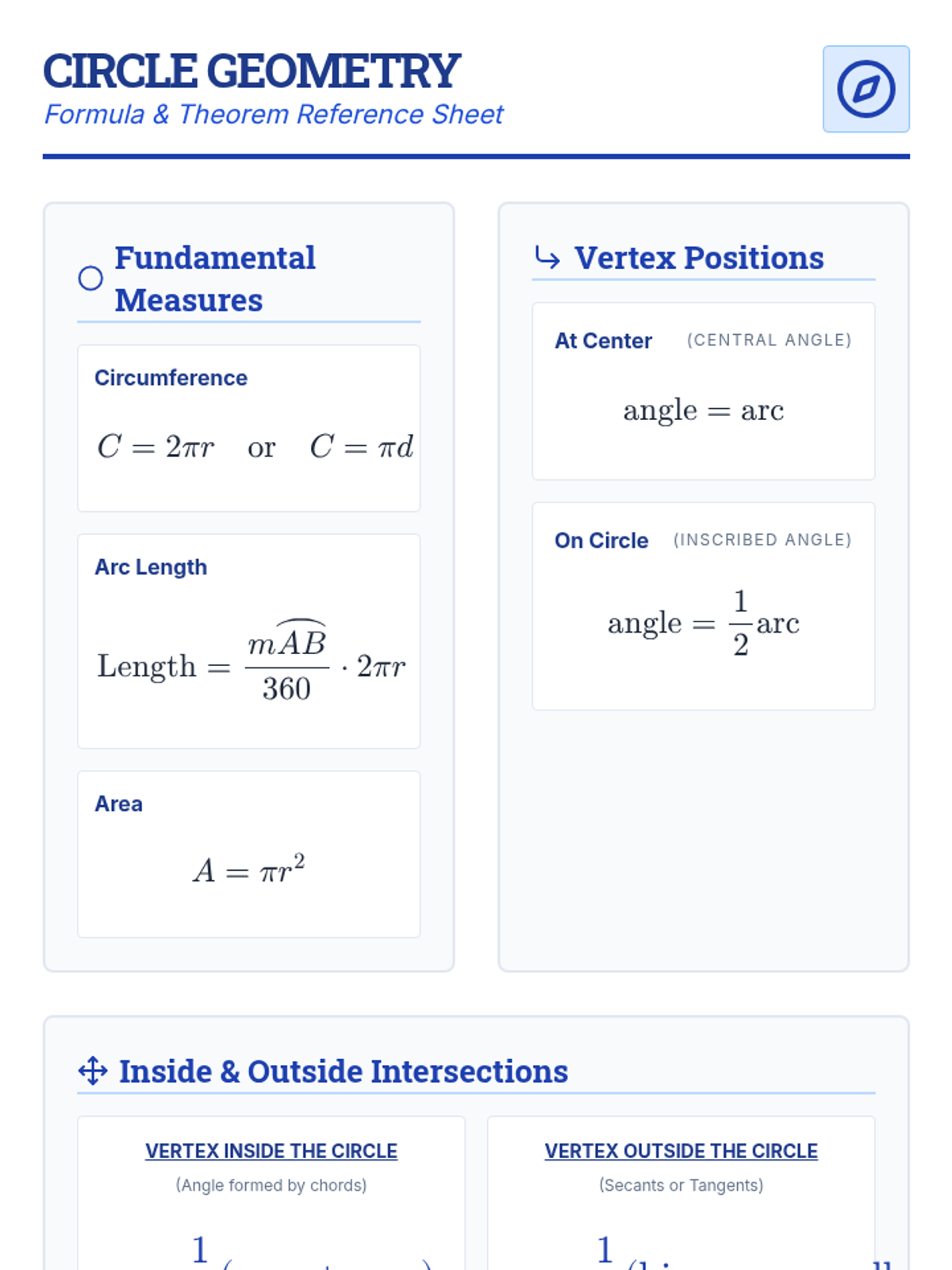
A comprehensive lesson on circles covering radius, diameter, circumference, and area through a visual slide deck and a summative assessment.
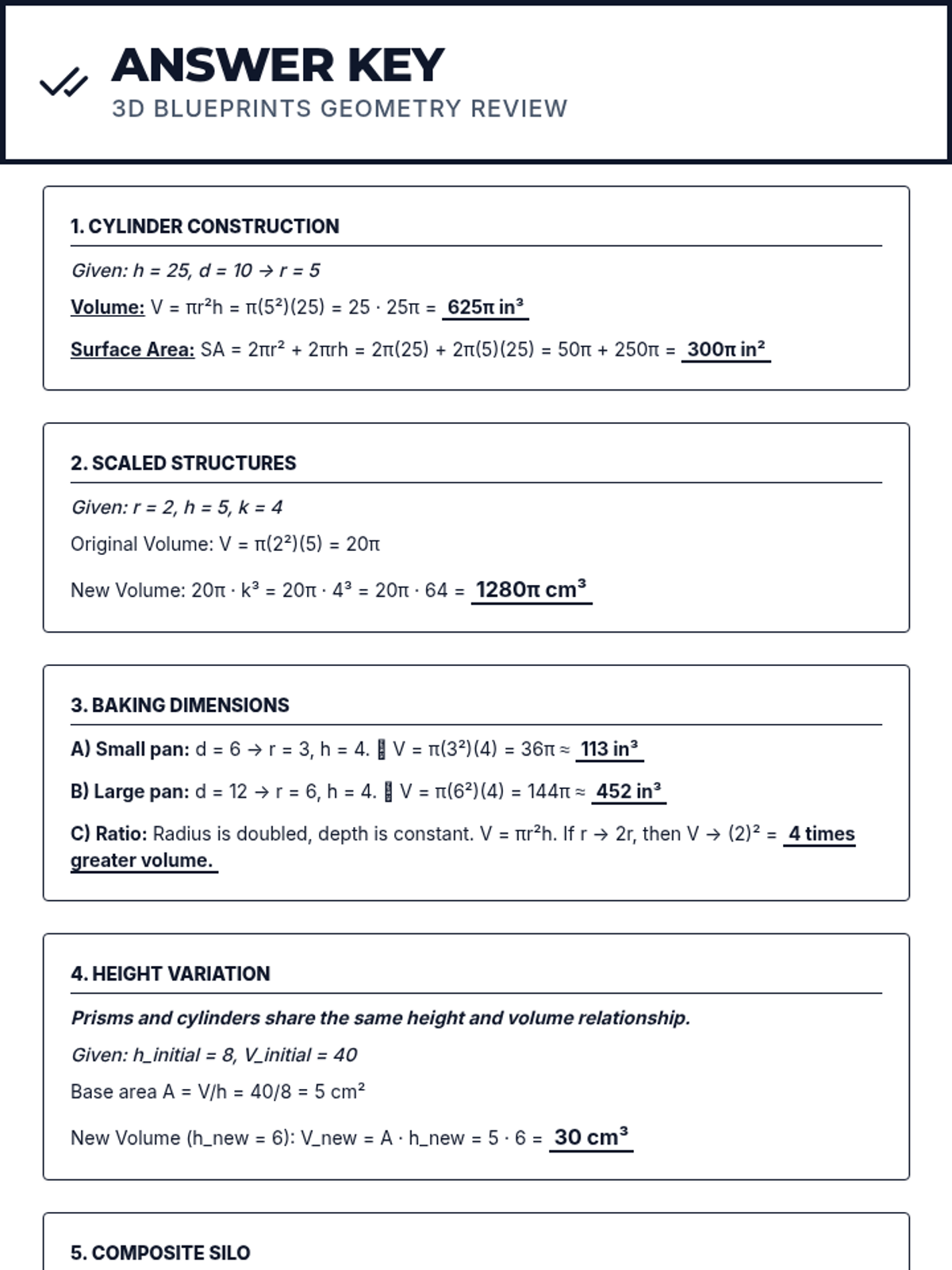
A focused review of volume and surface area concepts for cylinders, cones, and pyramids, featuring open-response practice problems that mirror district assessment standards.
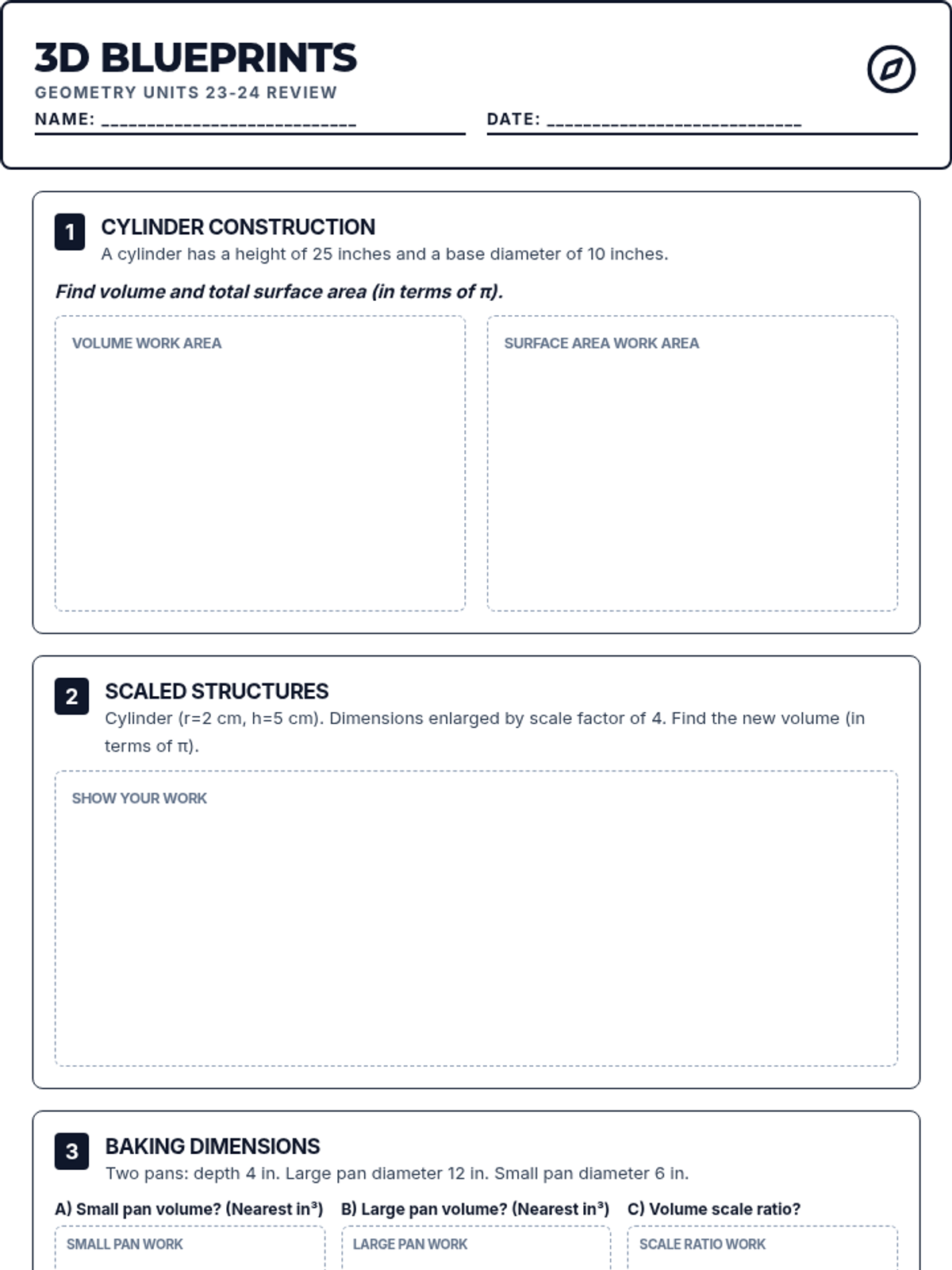
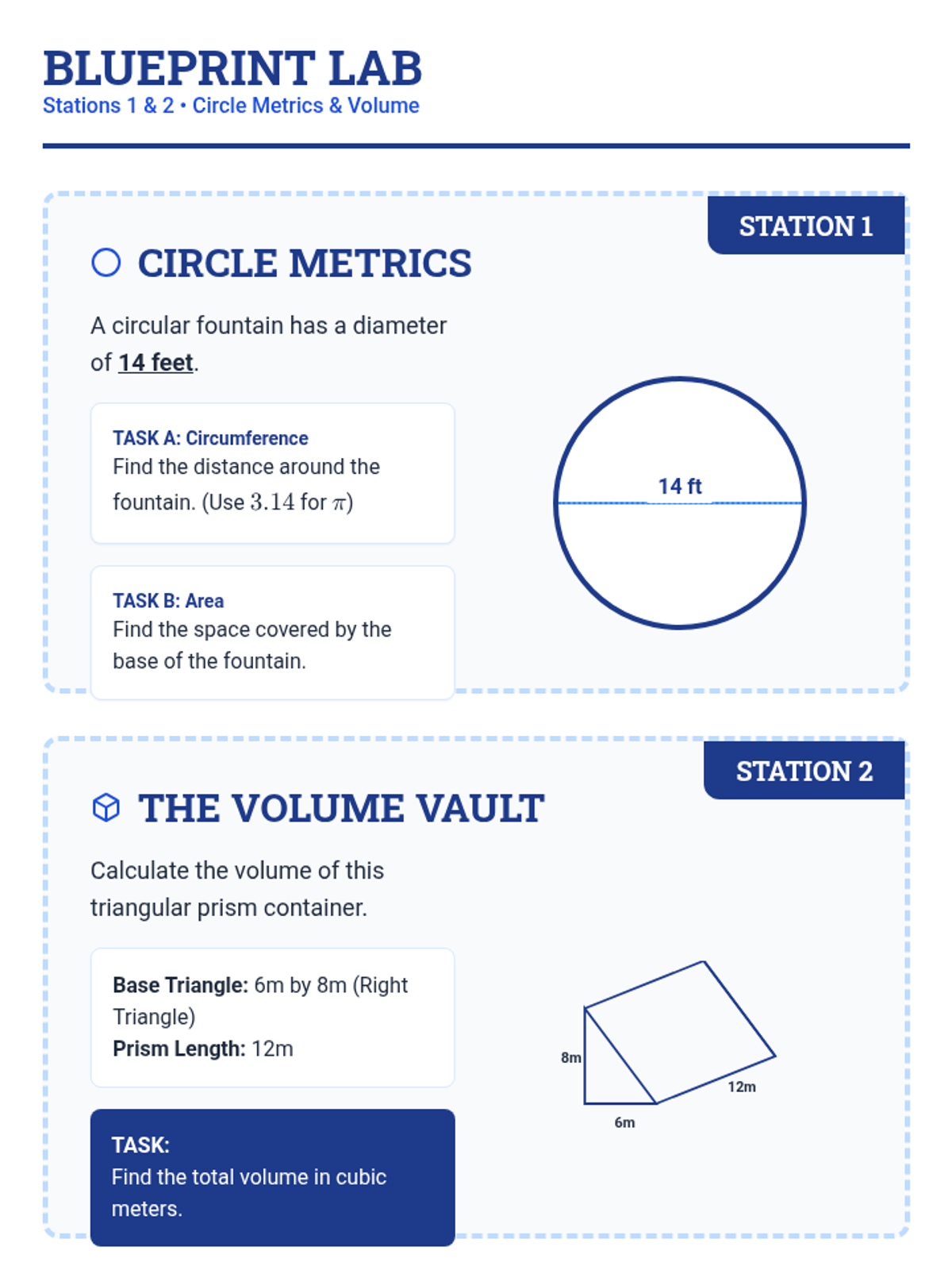
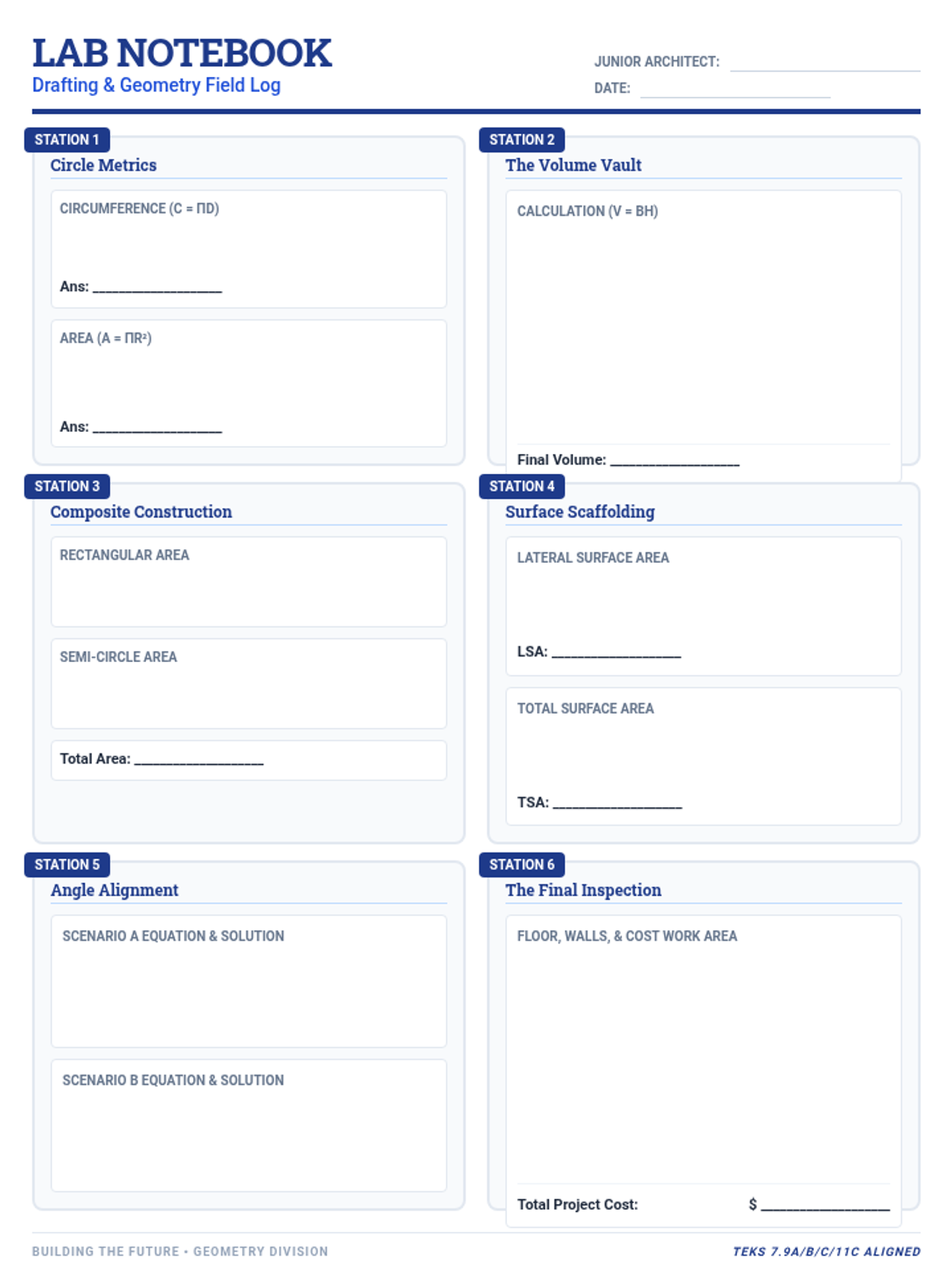
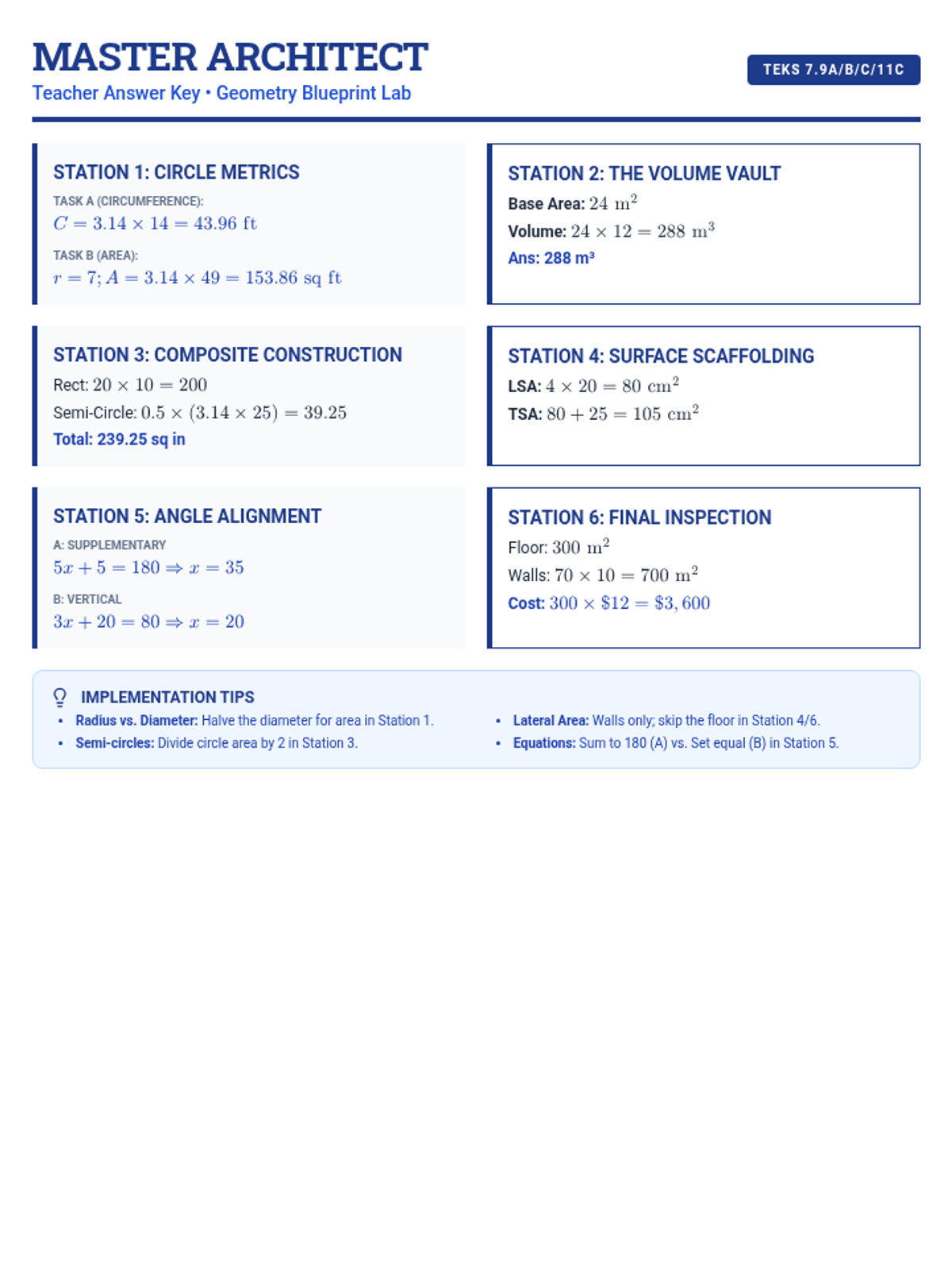
A hands-on geometry station activity focusing on circles, volume, surface area, and angle relationships using an architectural blueprint theme. Students rotate through specialized 'Lab Stations' to apply their geometric knowledge to real-world drafting scenarios.
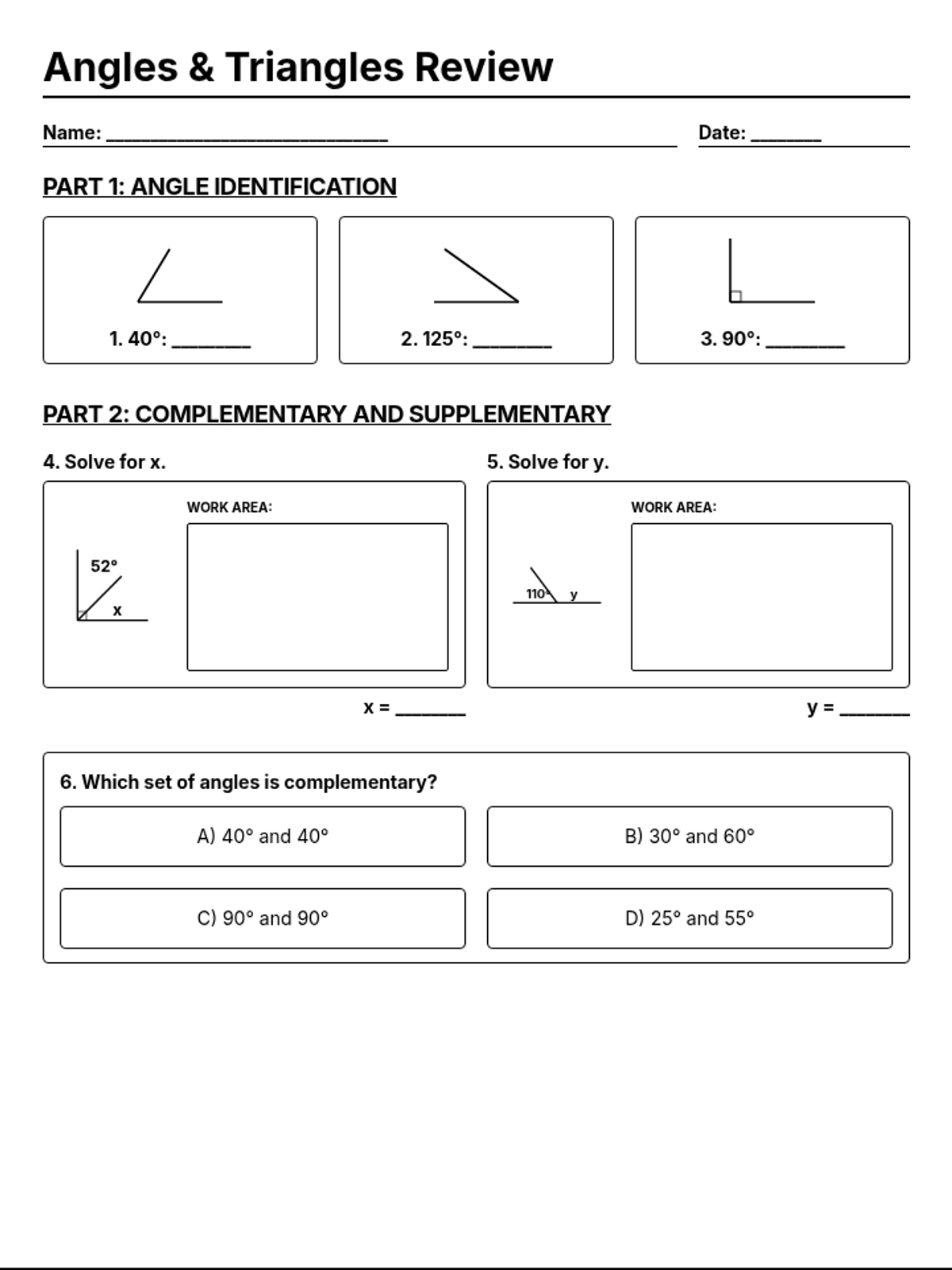
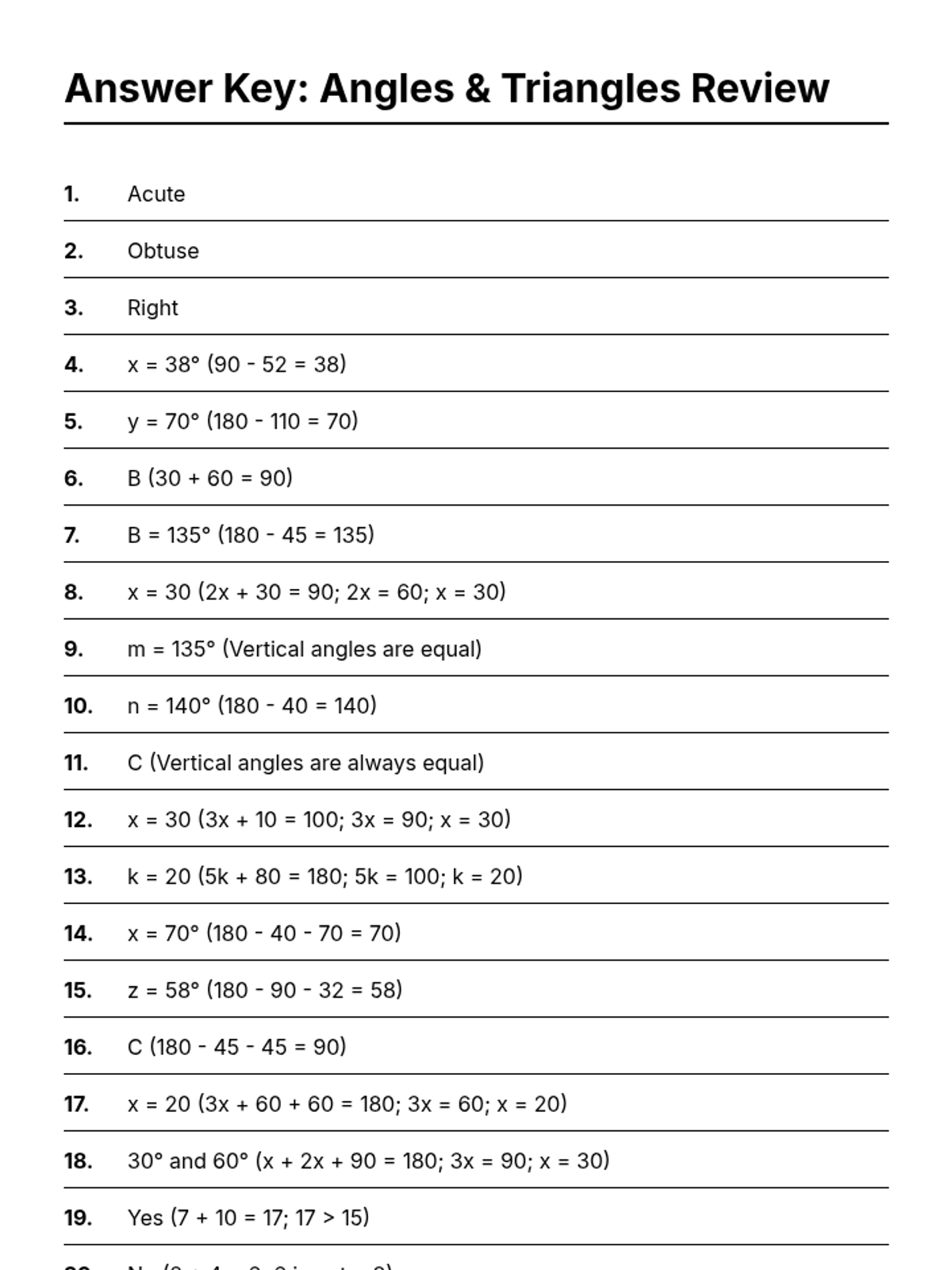
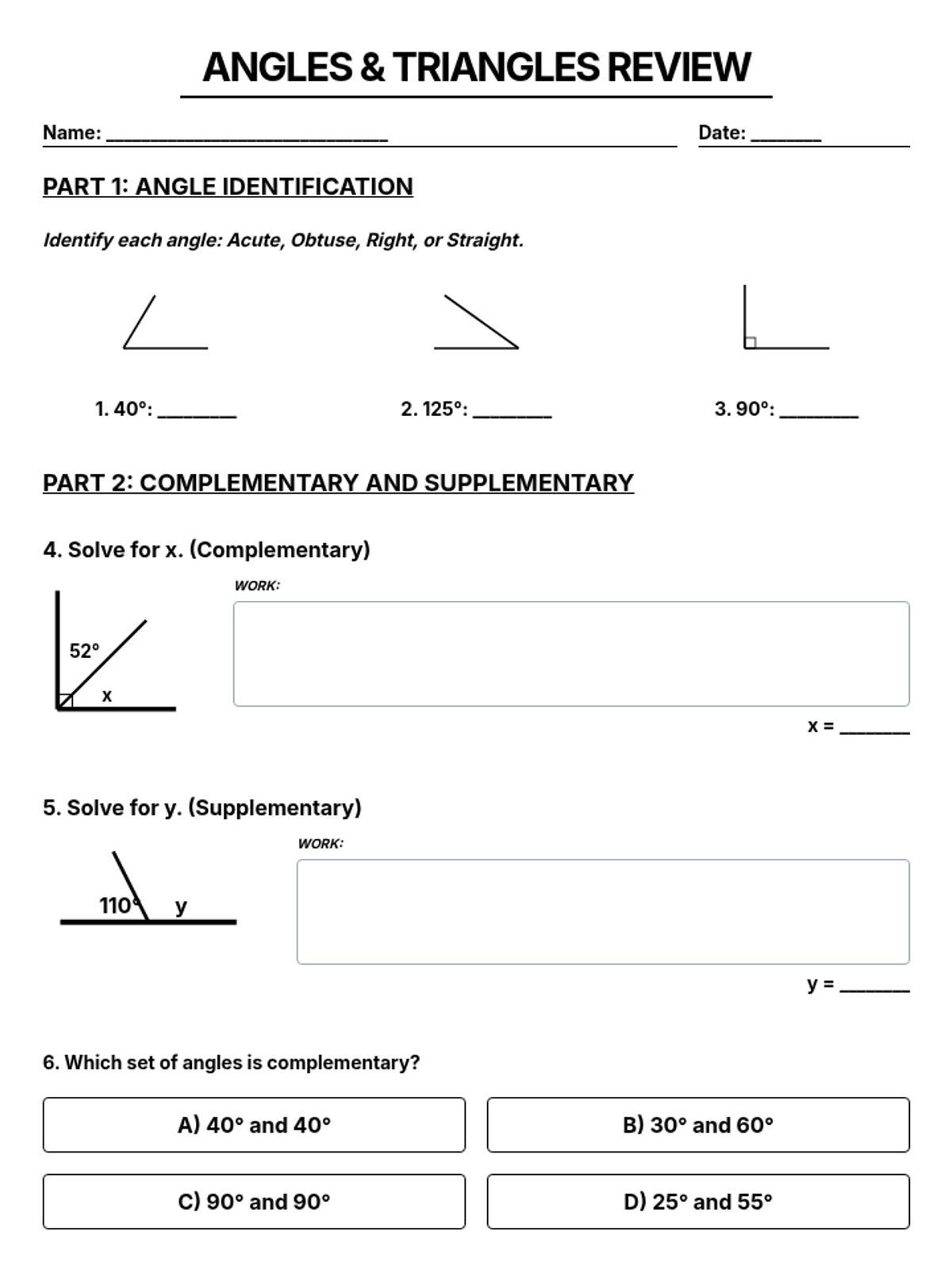
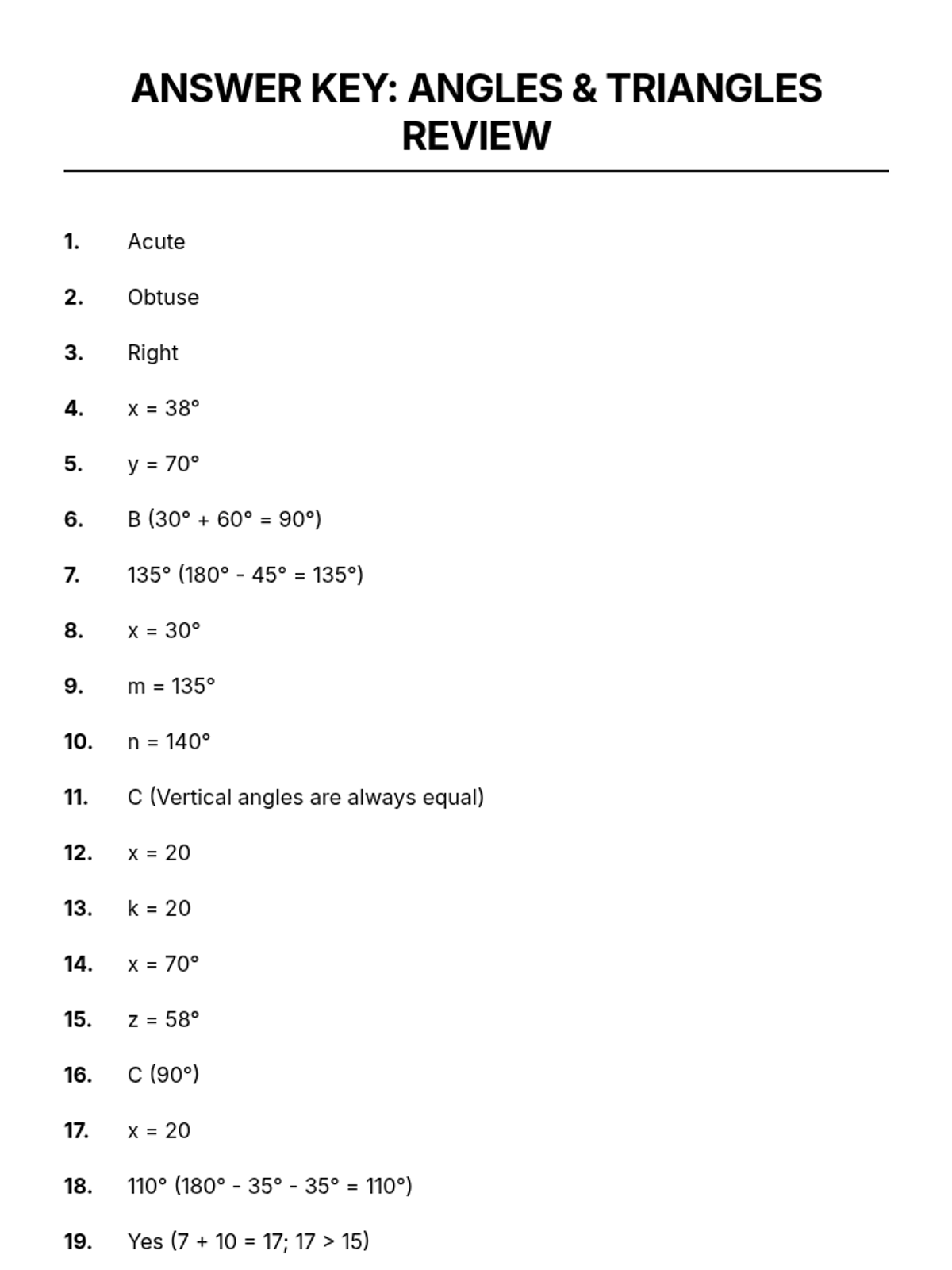
A comprehensive review of angle relationships and triangle properties, featuring guided scaffolds and visual equation solving. Students will master identifying angles, solving for unknowns, and applying triangle theorems.
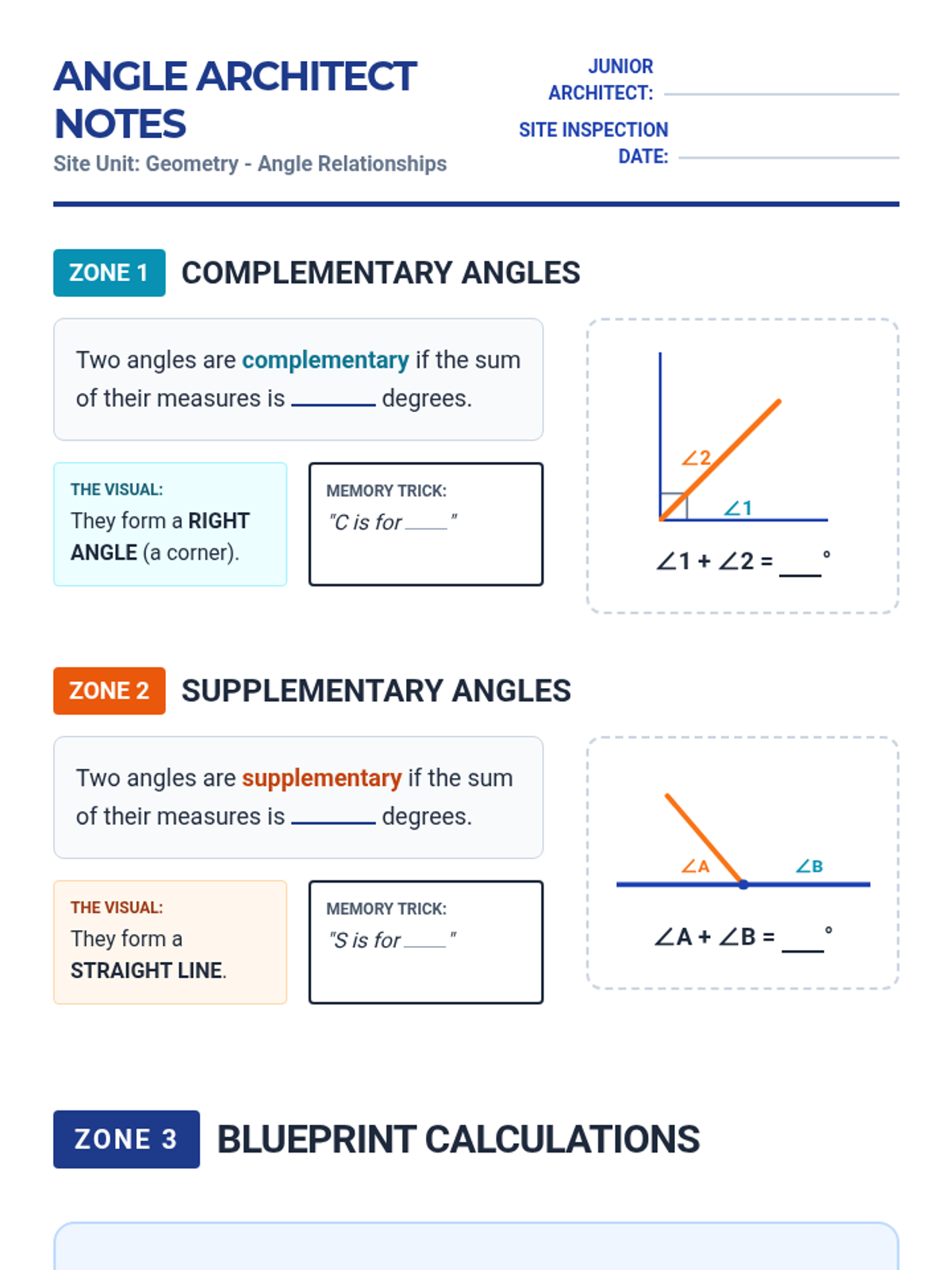
A focused mini-lesson on identifying, calculating, and analyzing complementary and supplementary angles using color-coded visual supports and real-world architect-themed scenarios.
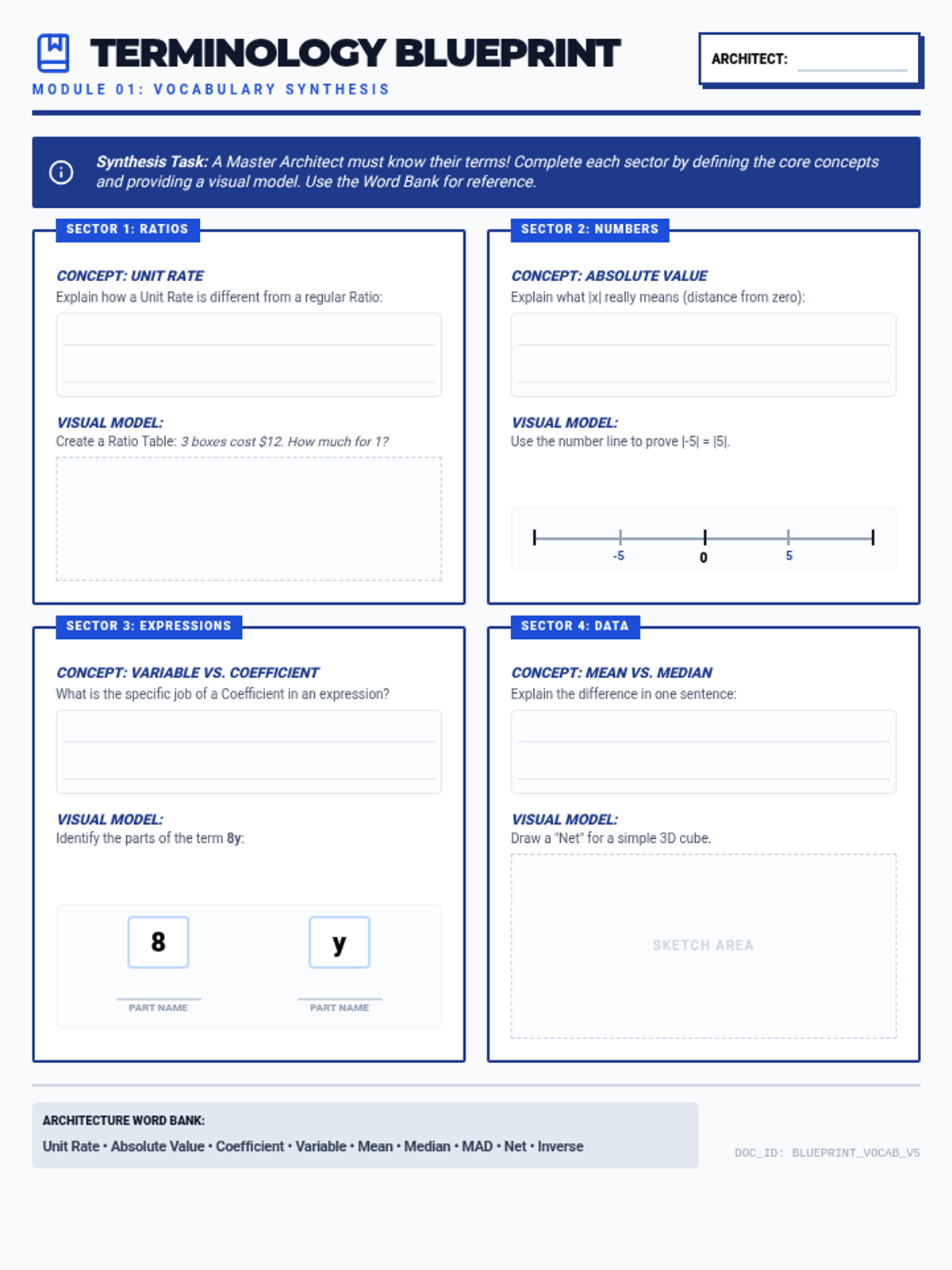
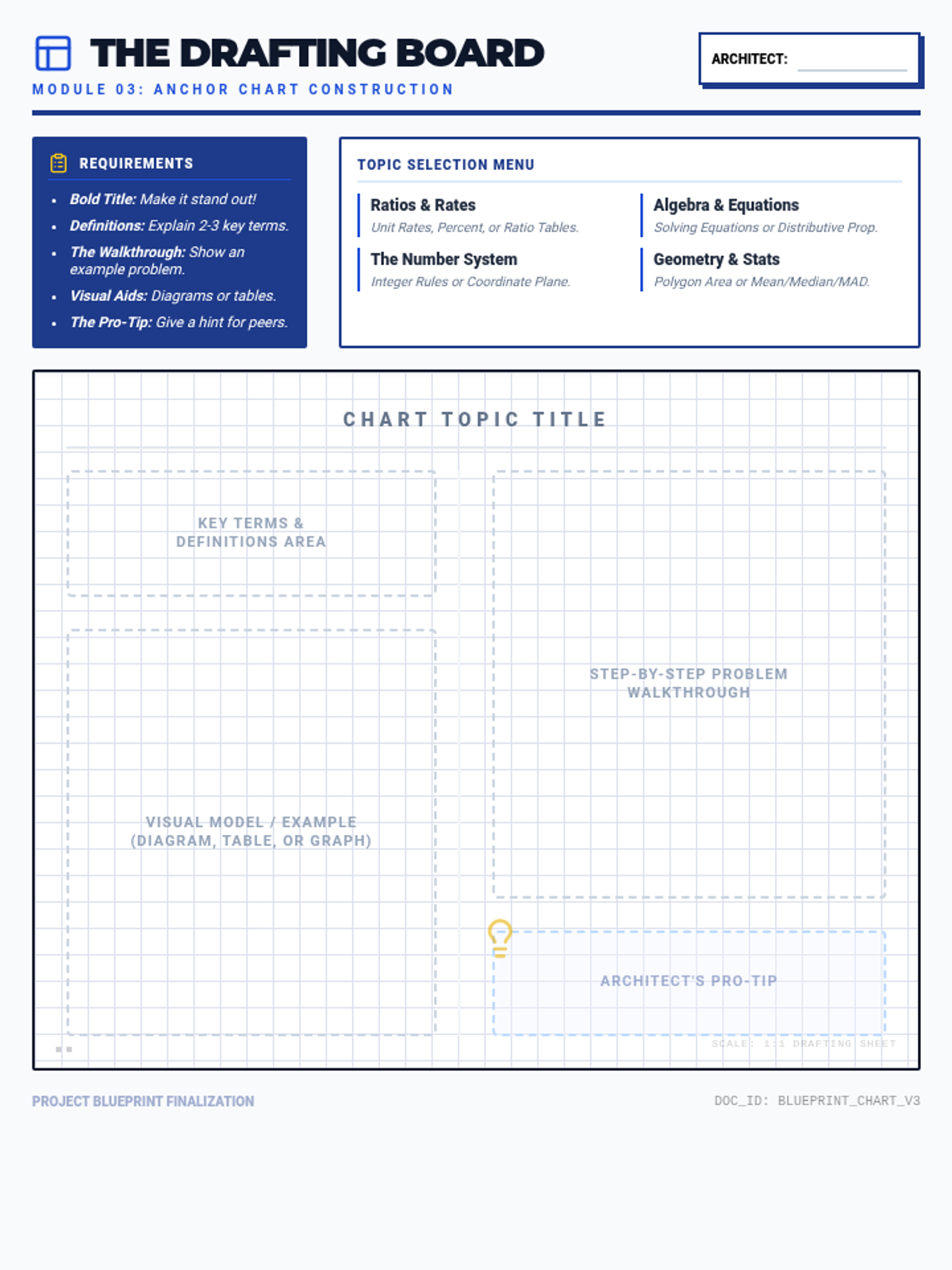
A set of interactive study resources designed to help students review key domains for the NYS Math Test through active creation and synthesis of information.
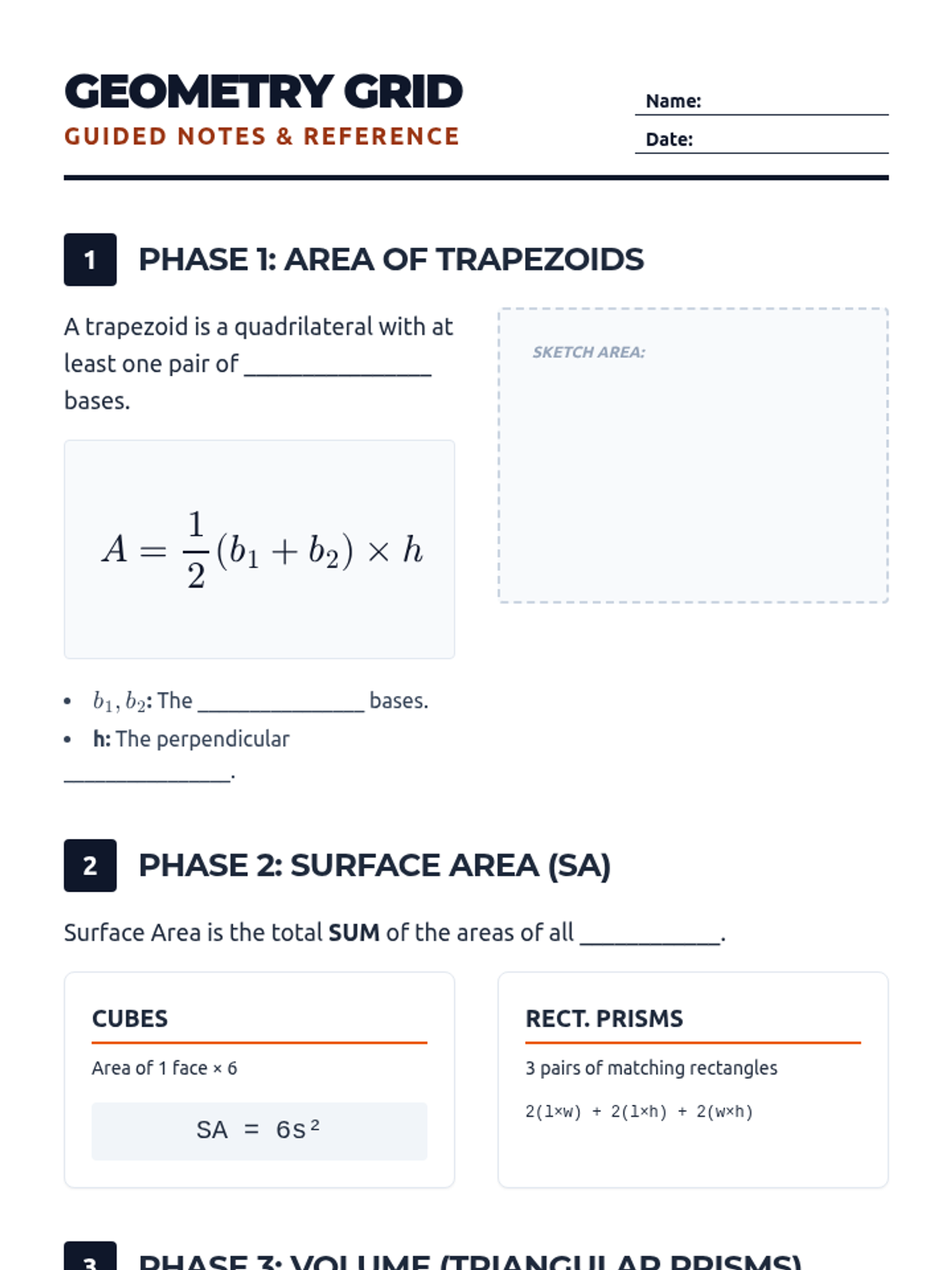
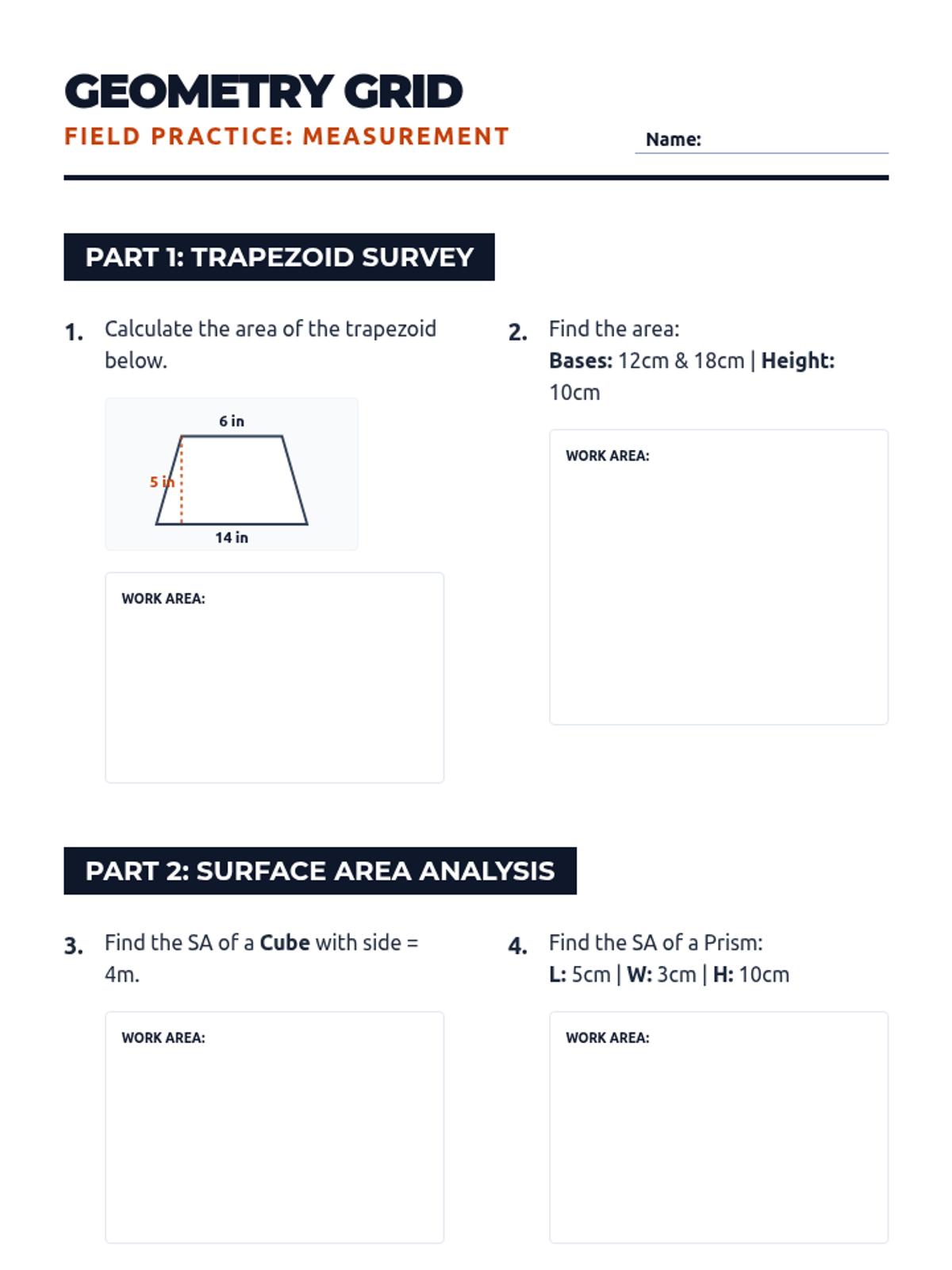
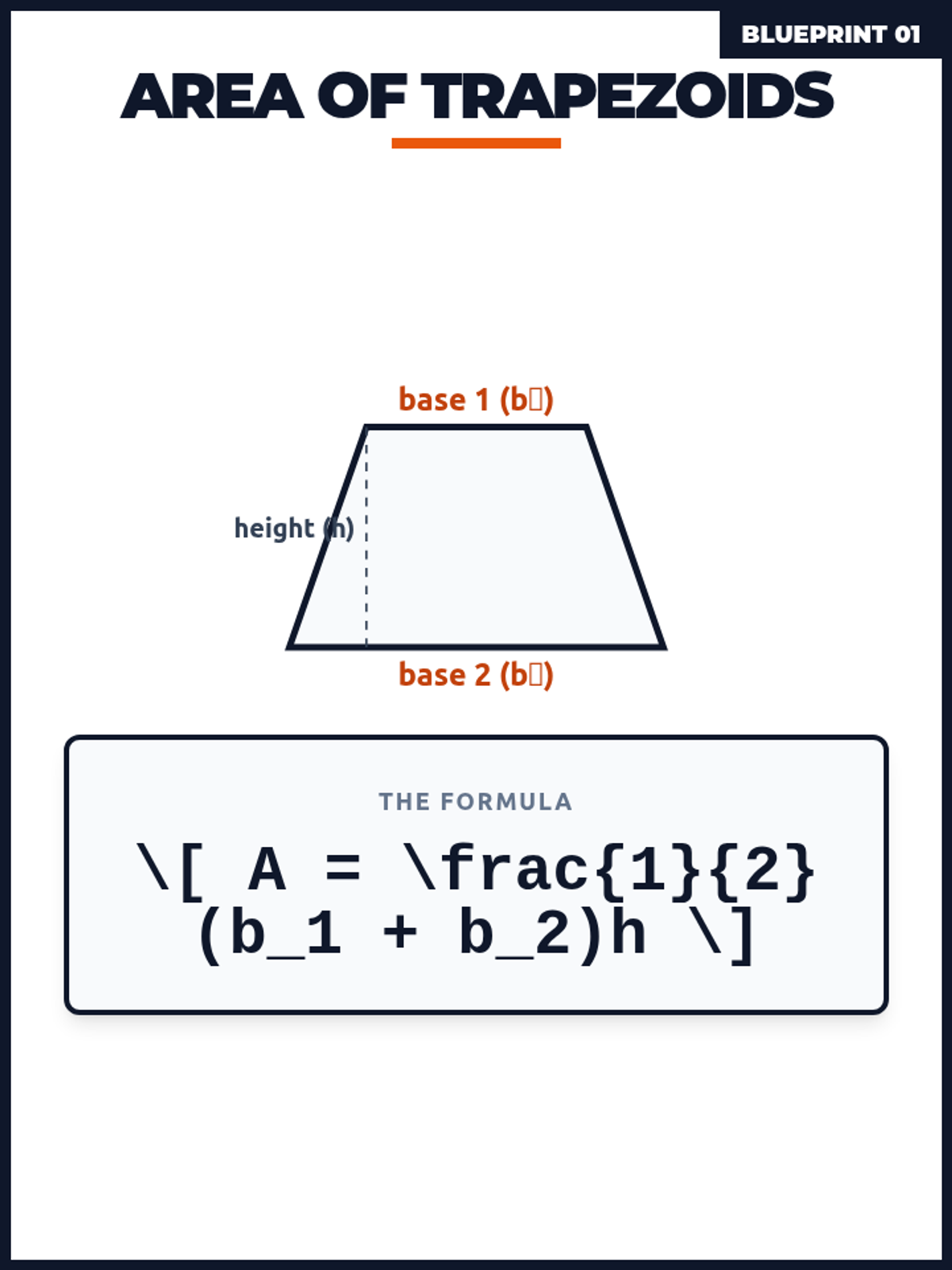
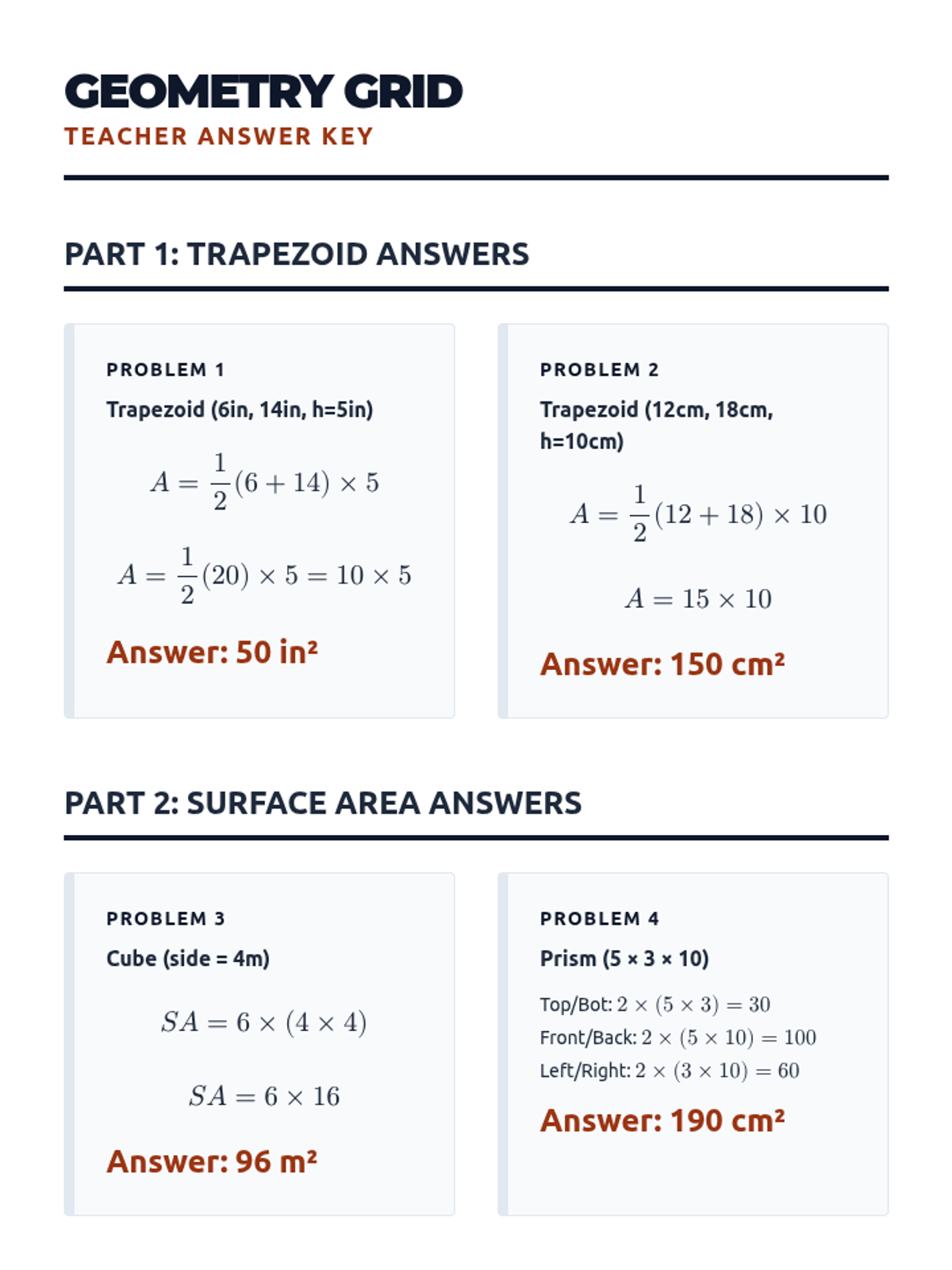
A comprehensive lesson covering the area of trapezoids, surface area of rectangular prisms and cubes, and the volume of triangular prisms using a technical blueprint aesthetic.
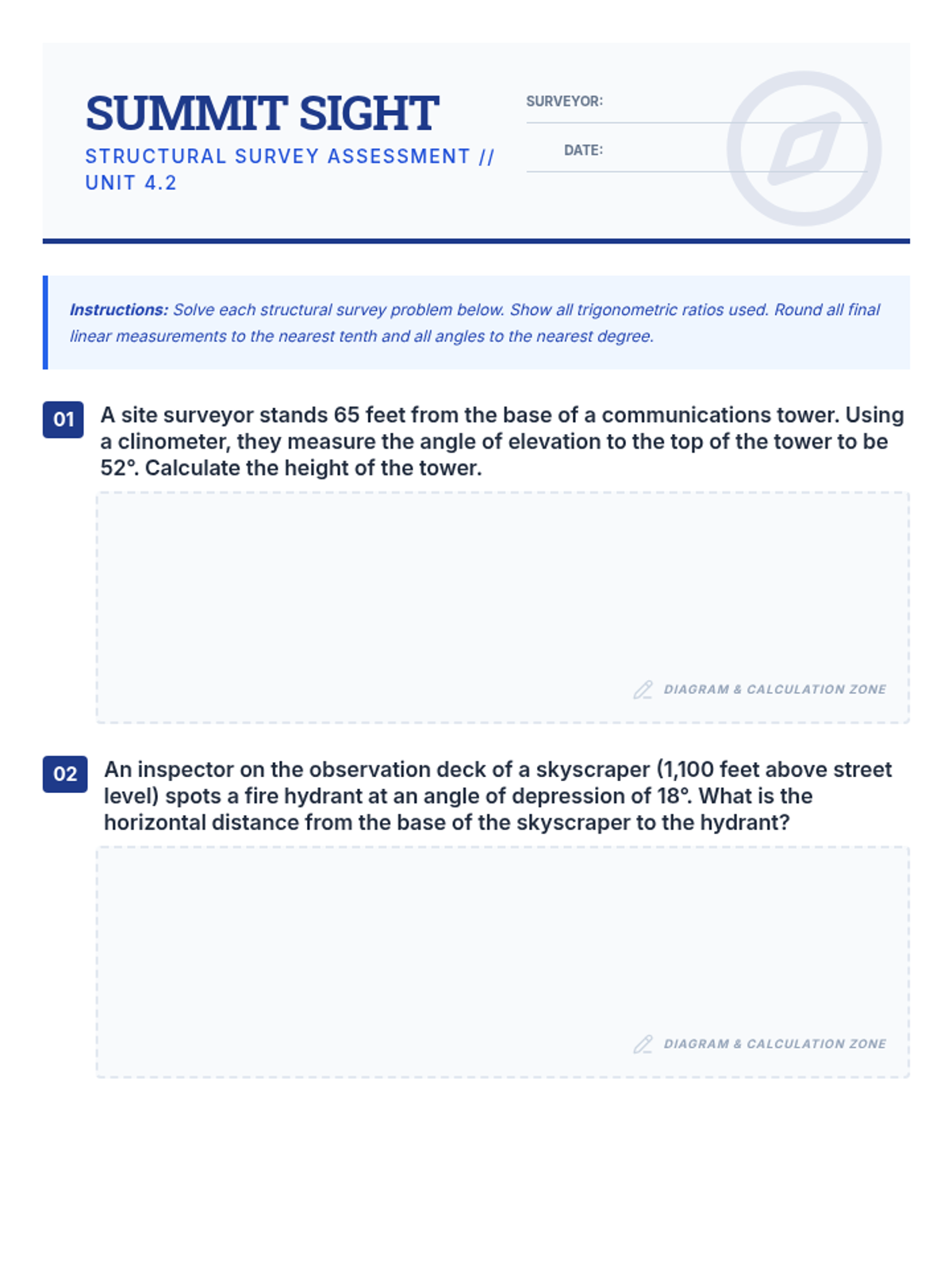
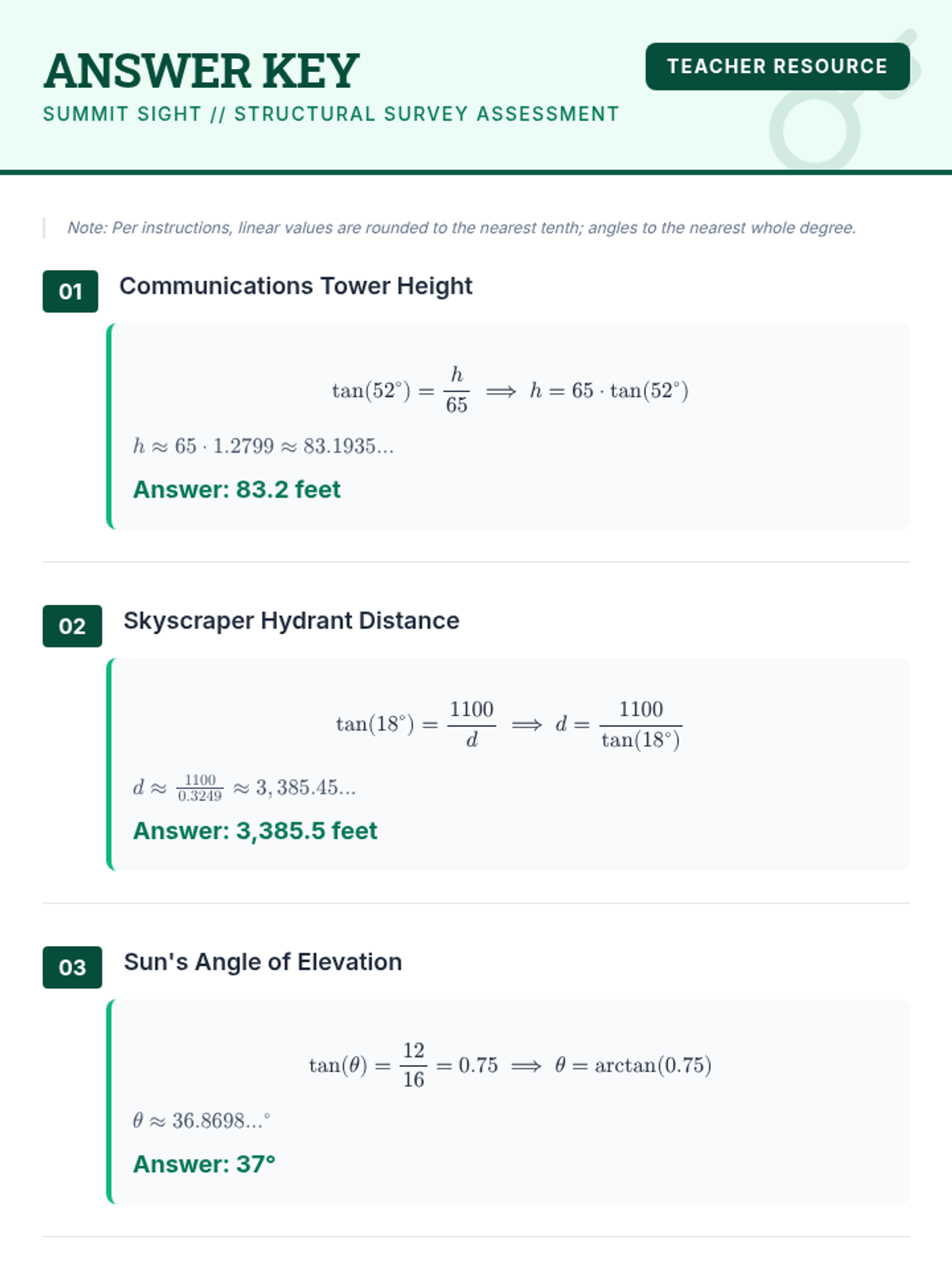
A focused assessment and practice module on right-triangle trigonometry, specifically covering the concepts of elevation and depression through architectural and surveying contexts.
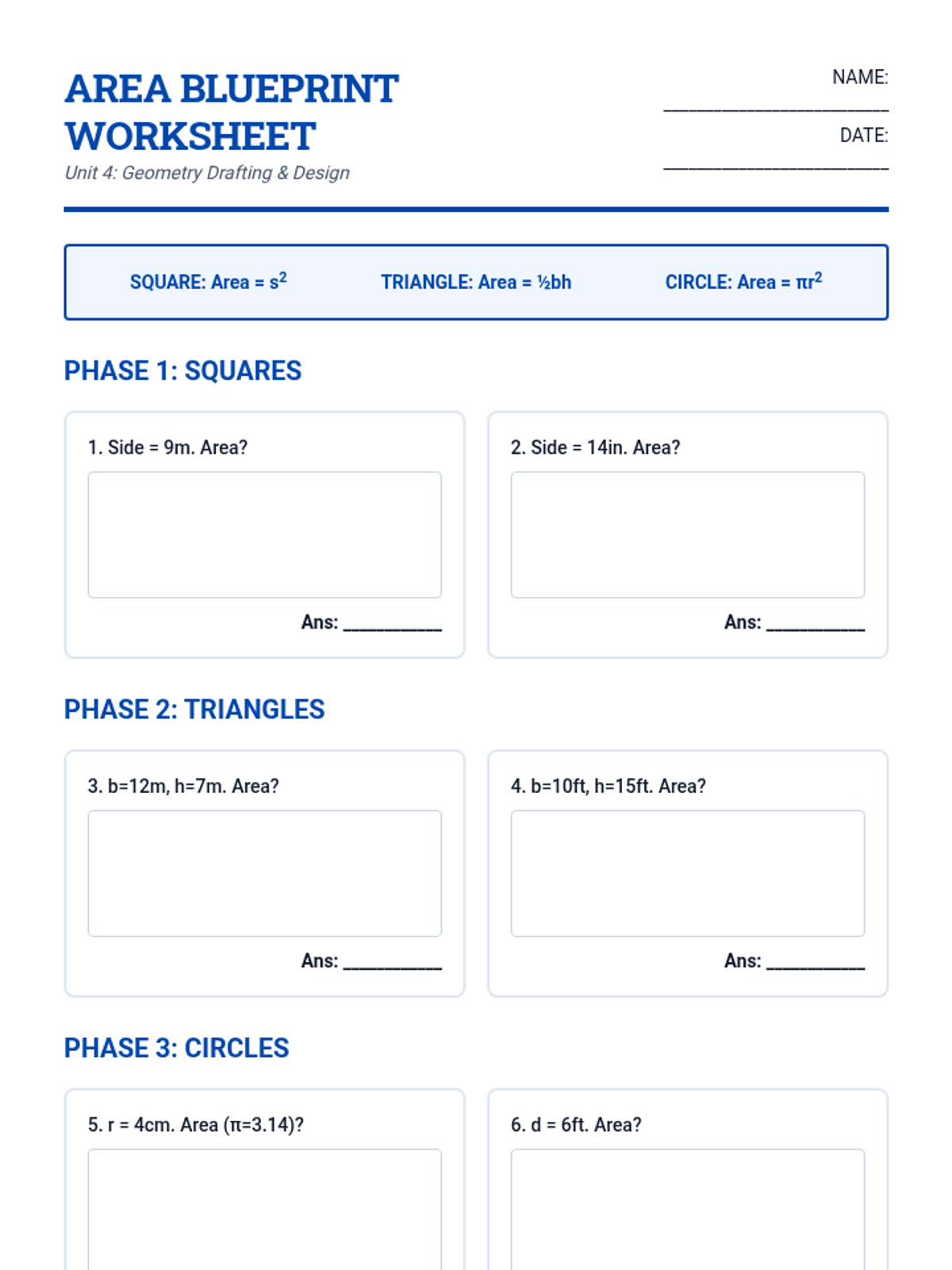
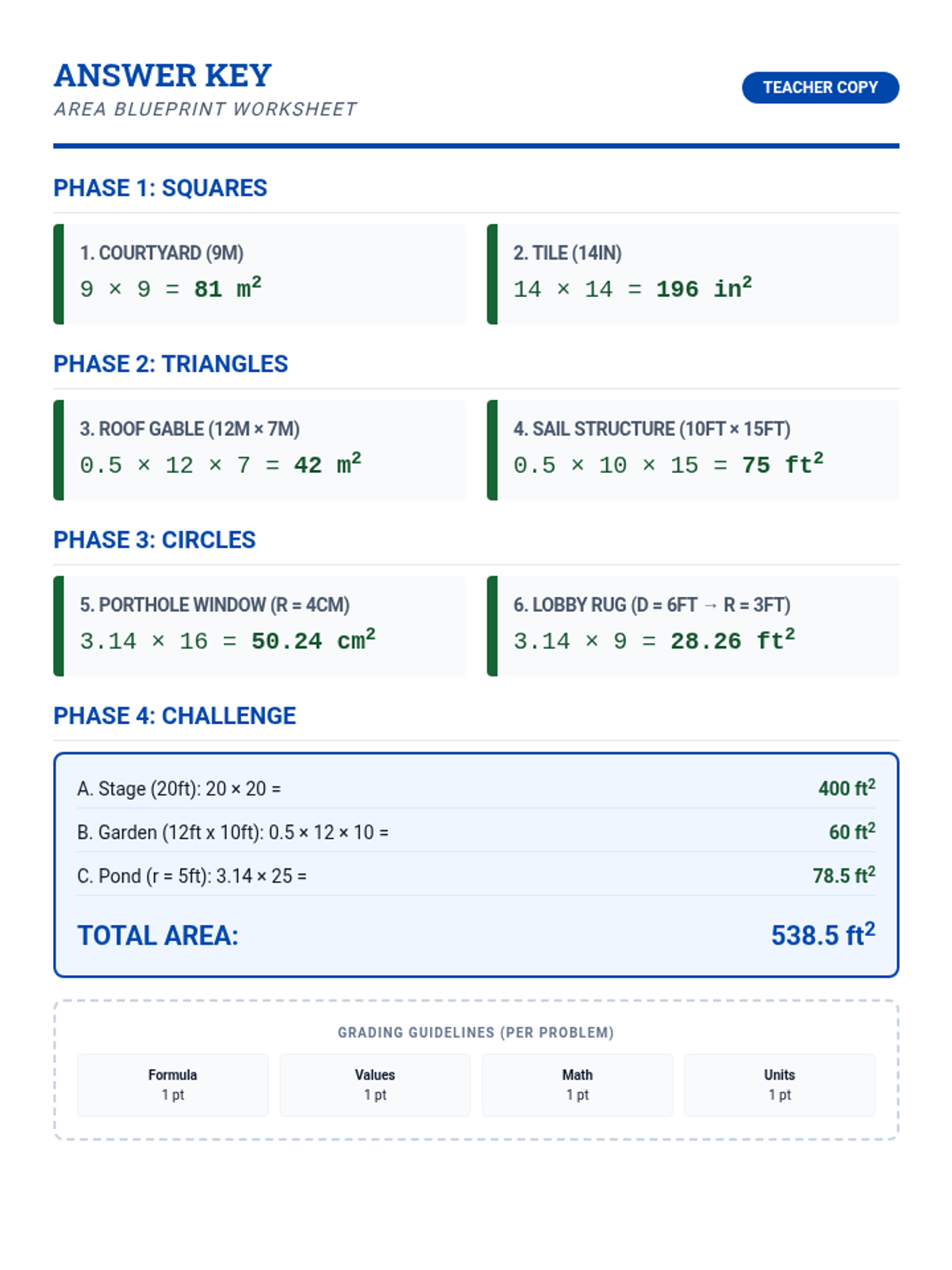
A comprehensive lesson on calculating the area of squares, triangles, and circles, featuring architectural themes and step-by-step drafting techniques.
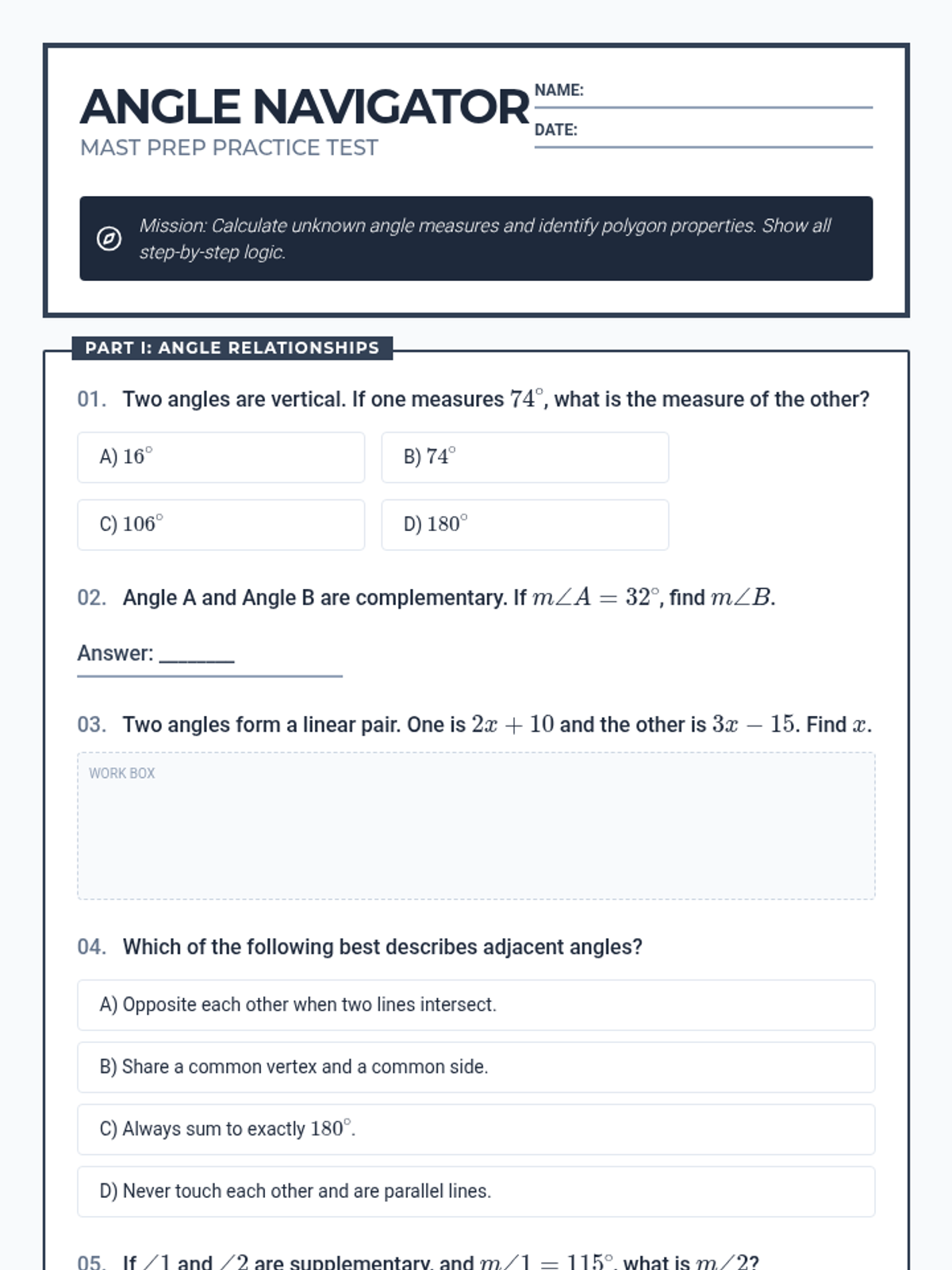
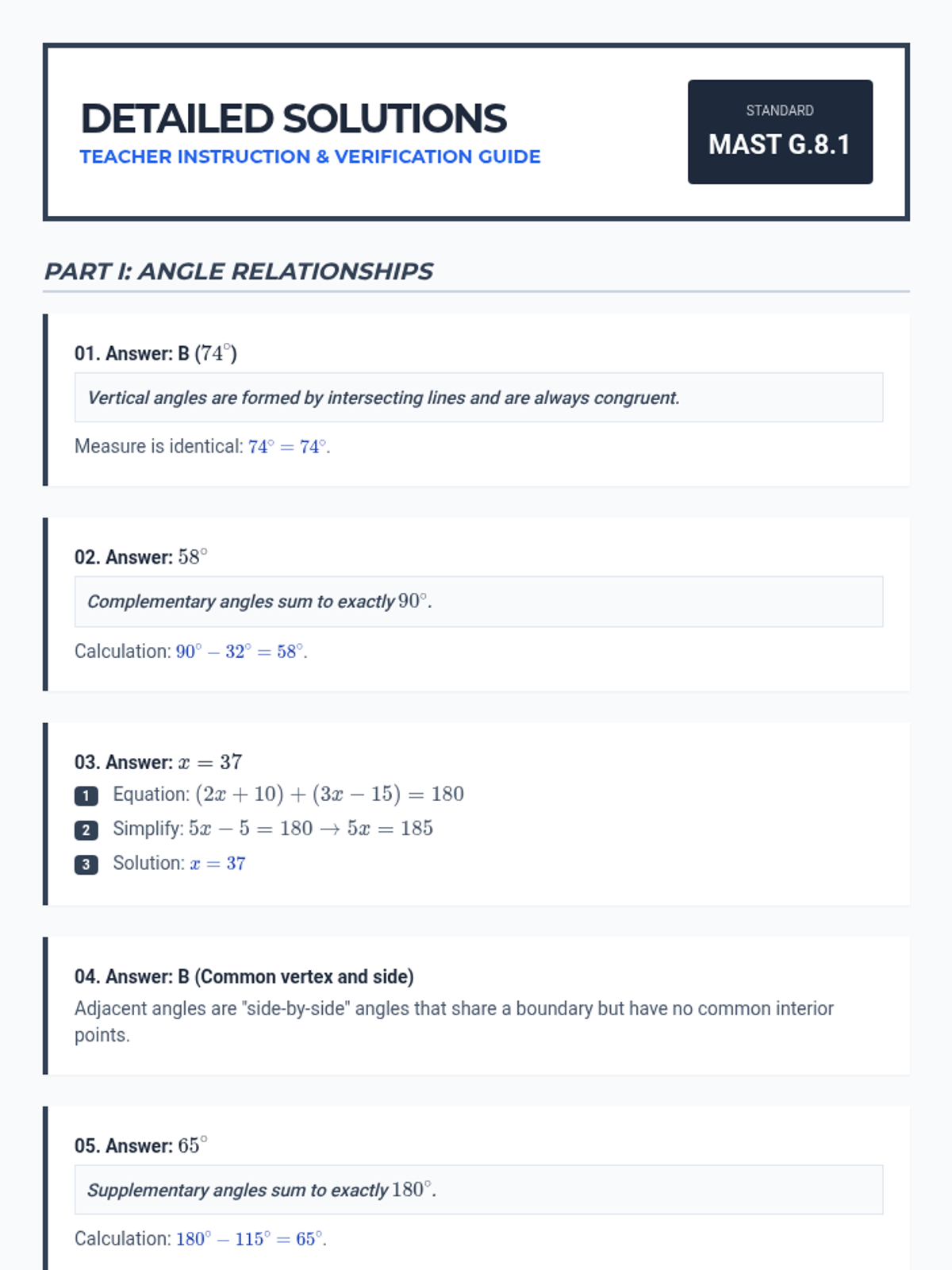
A comprehensive review of angle relationships and interior angle sums for triangles and quadrilaterals, designed for MAST test preparation.
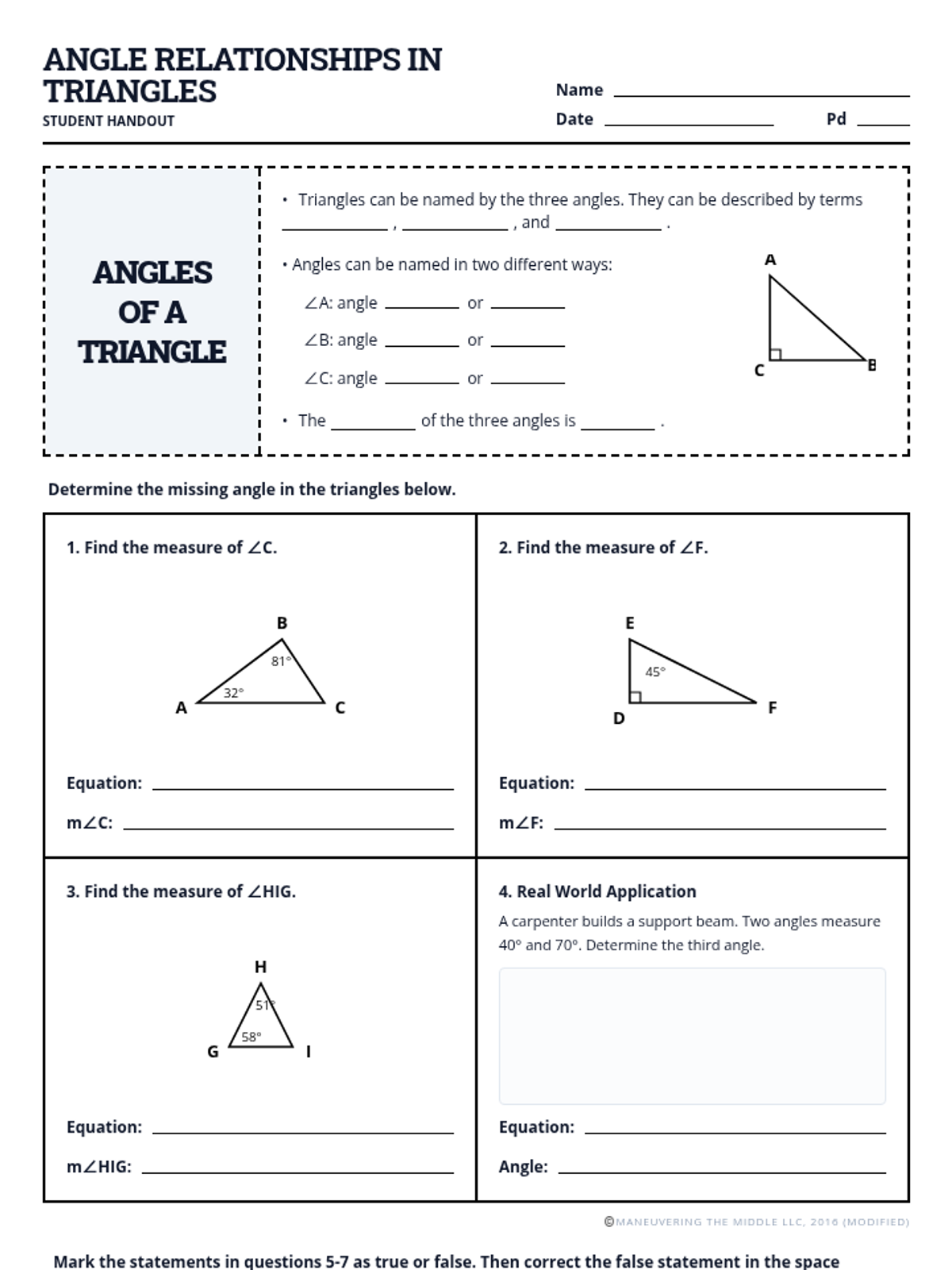
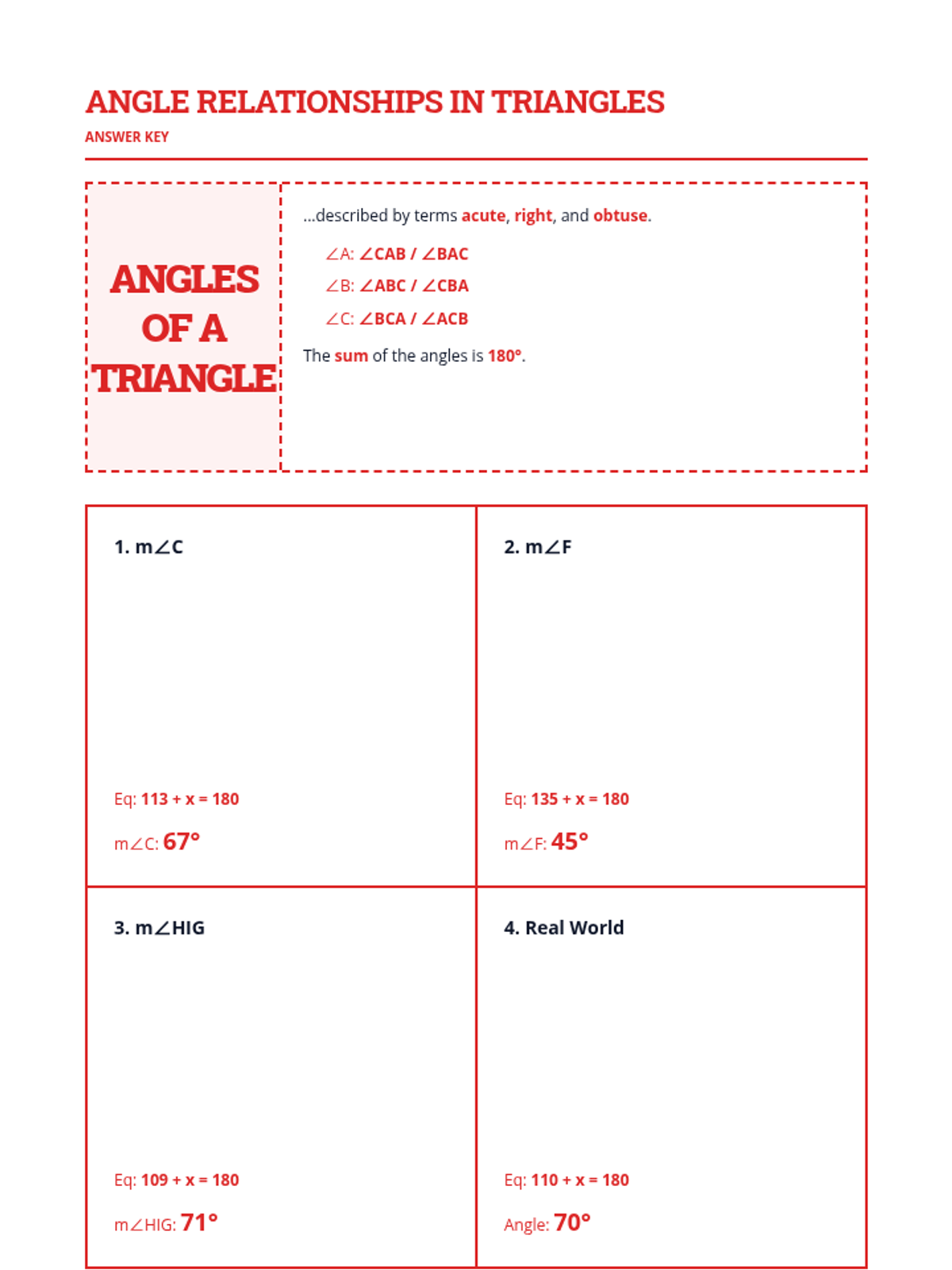
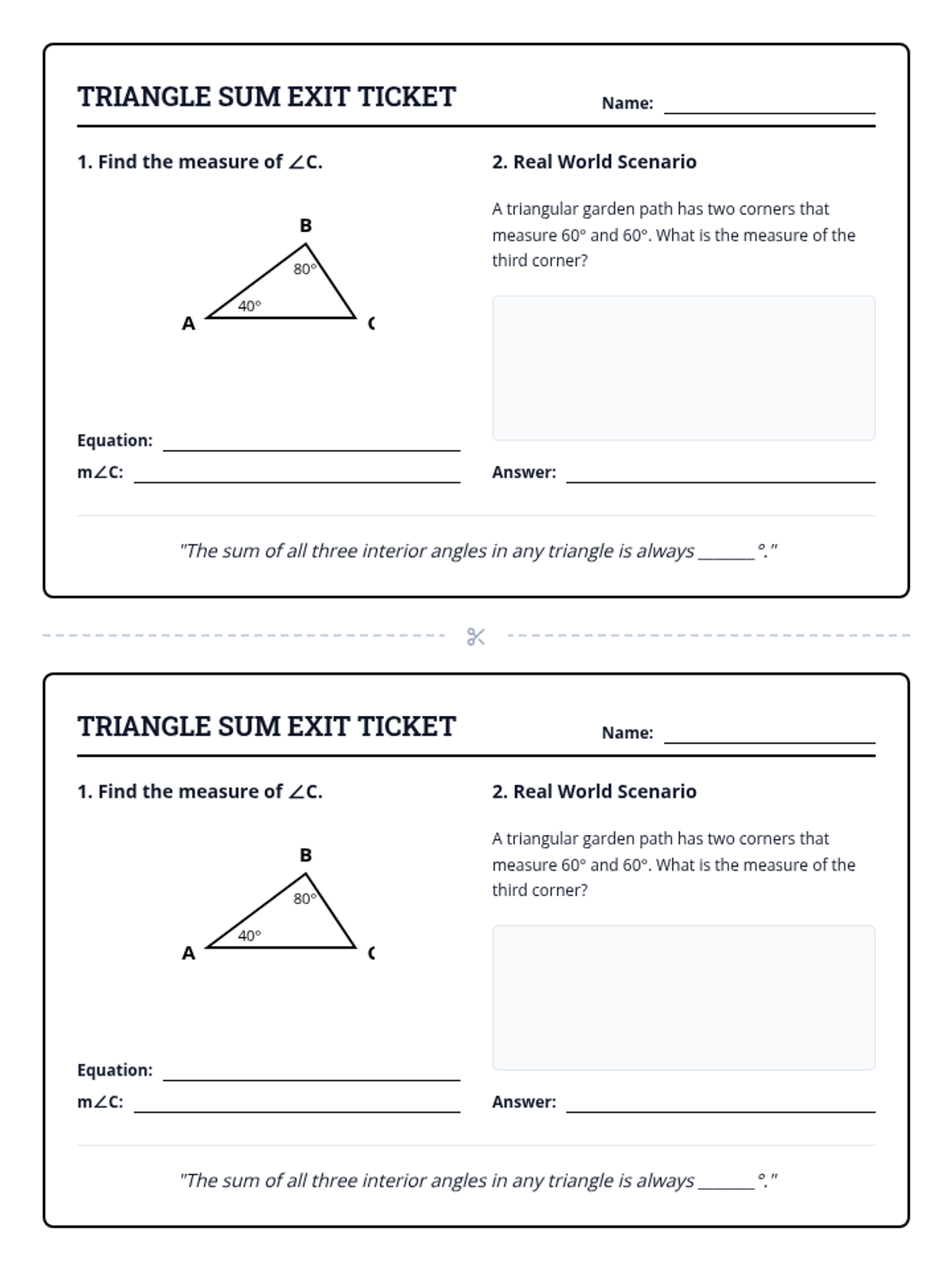
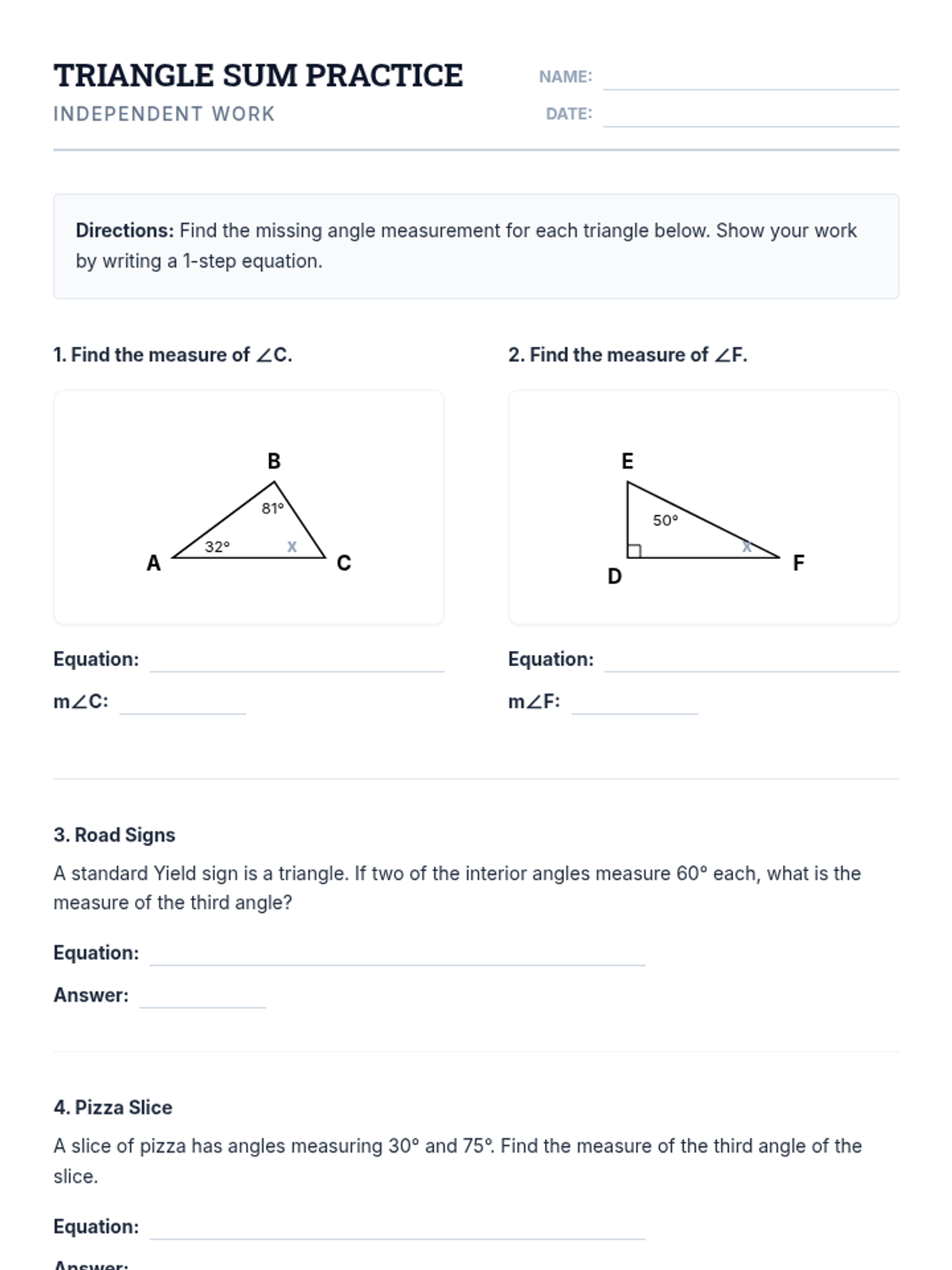
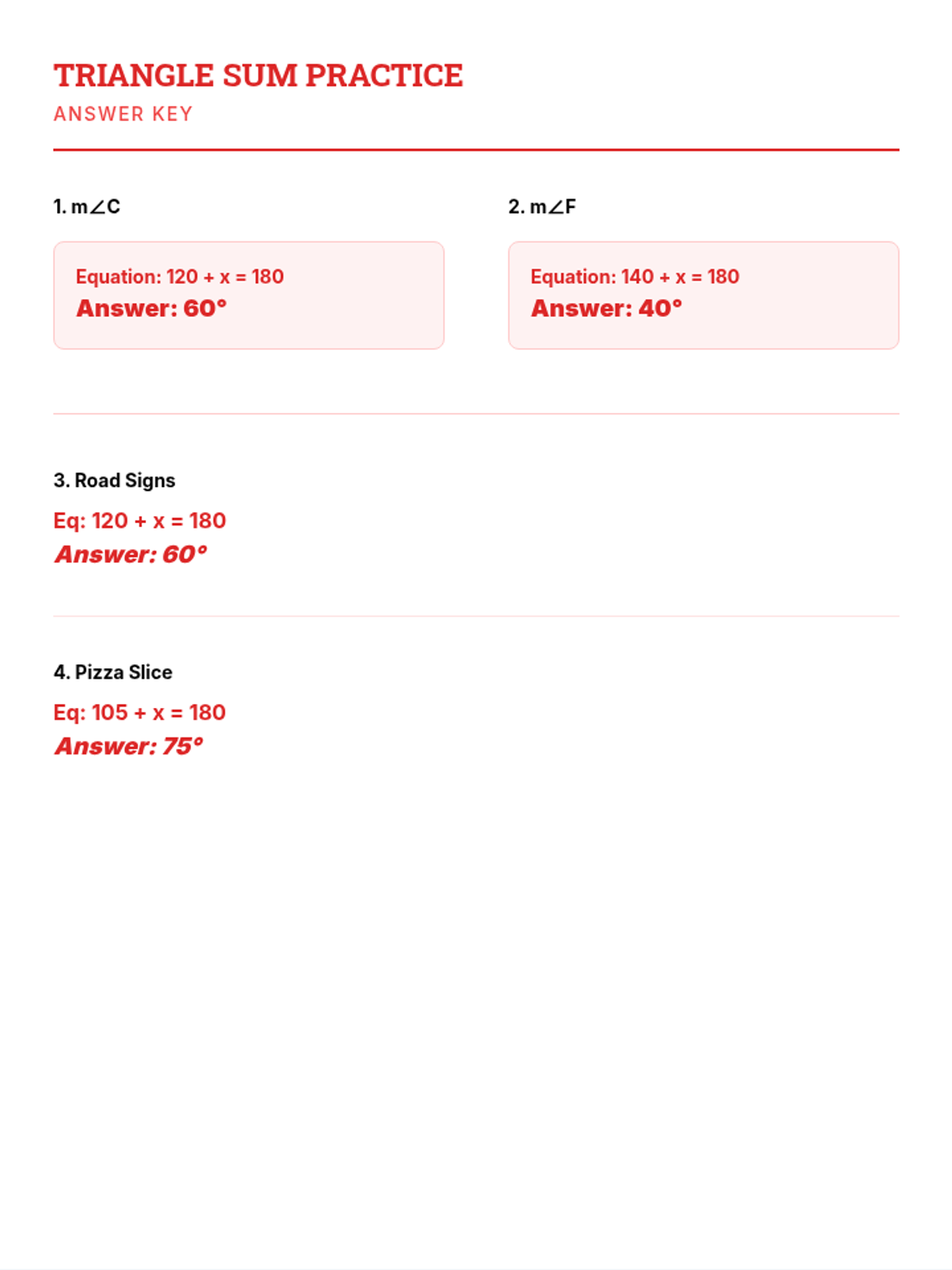
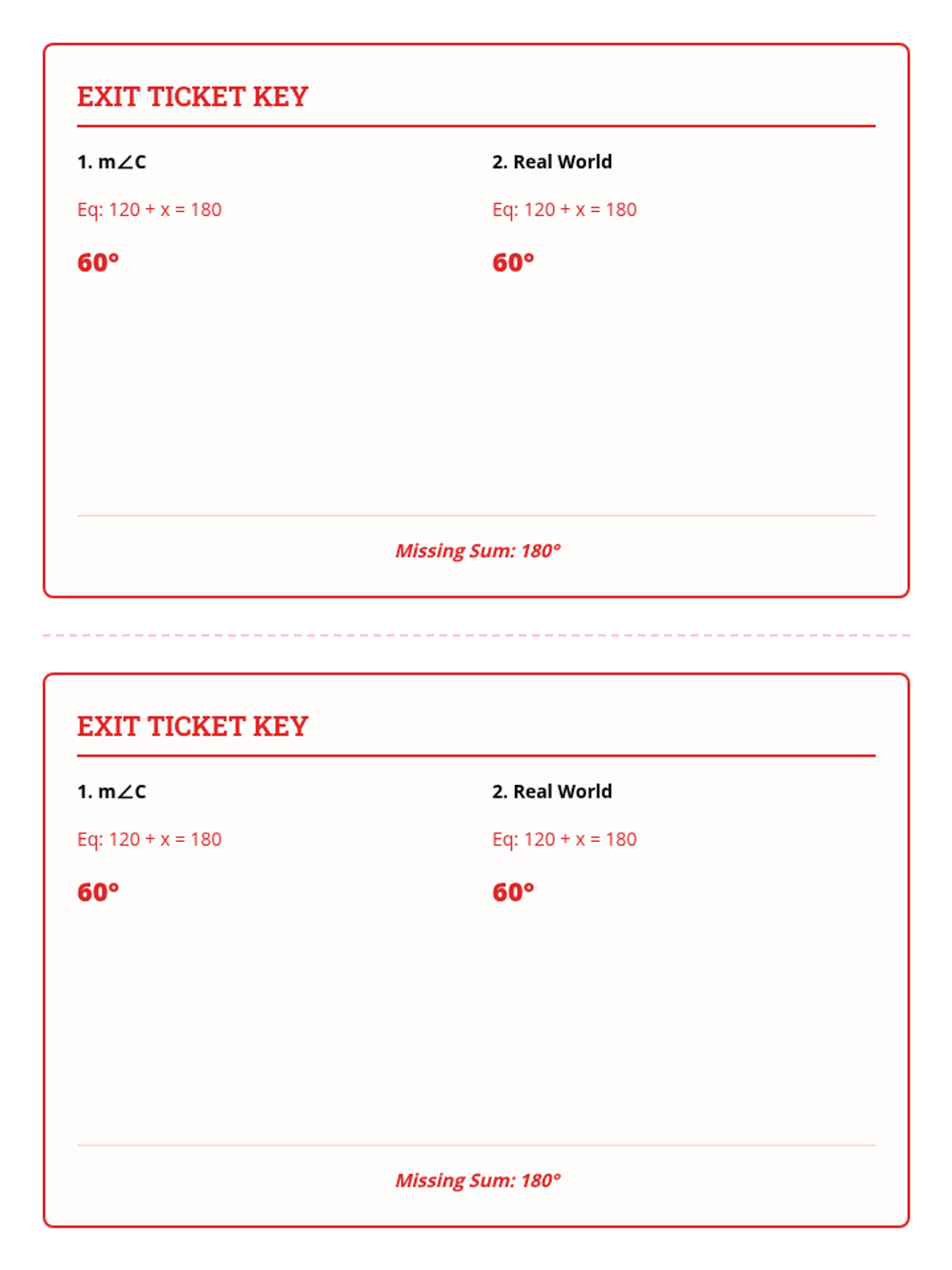
A simplified lesson on the Triangle Sum Rule, focusing on 3-letter angle naming and solving for missing angles using one-step equations with whole numbers.
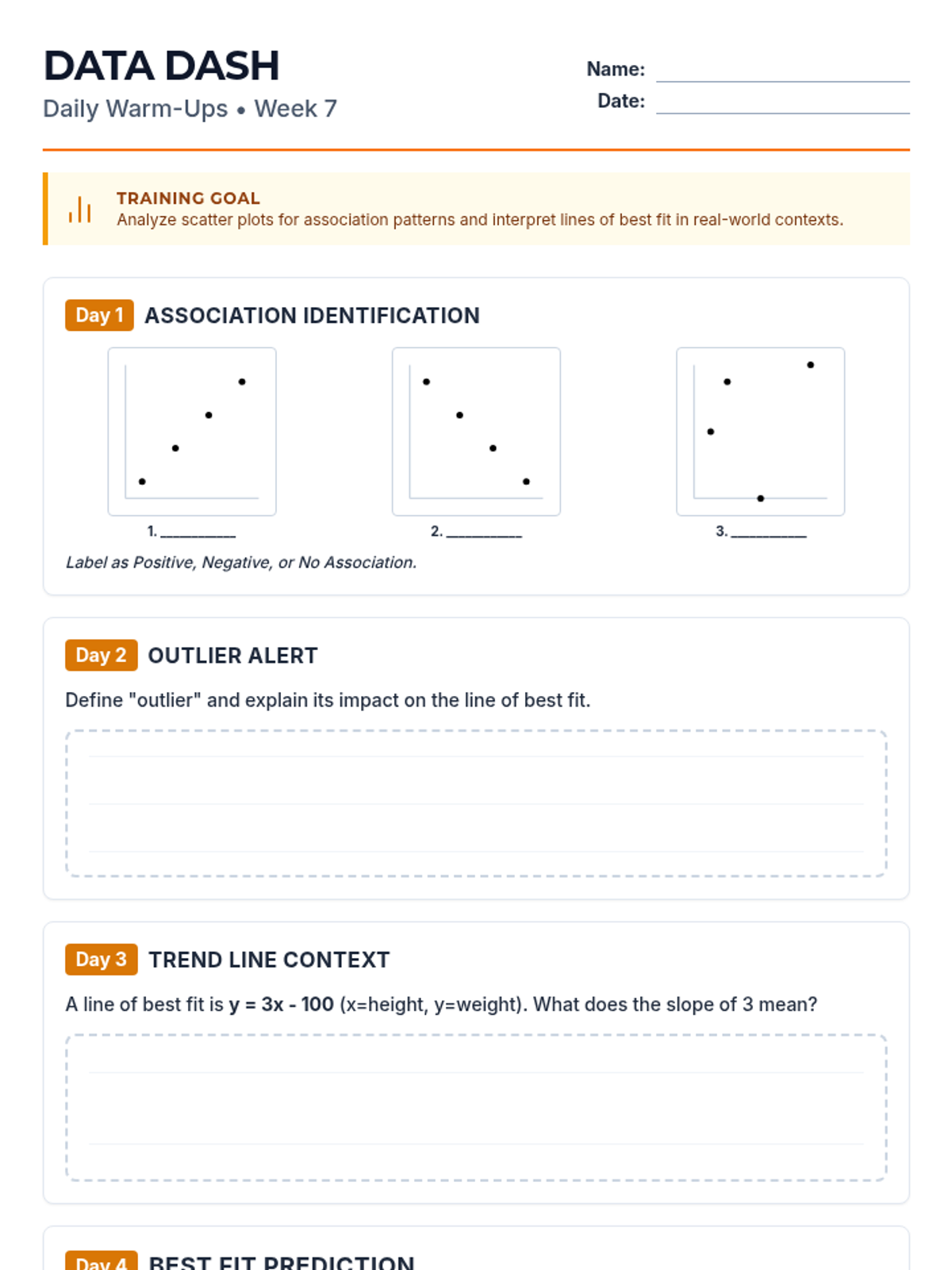
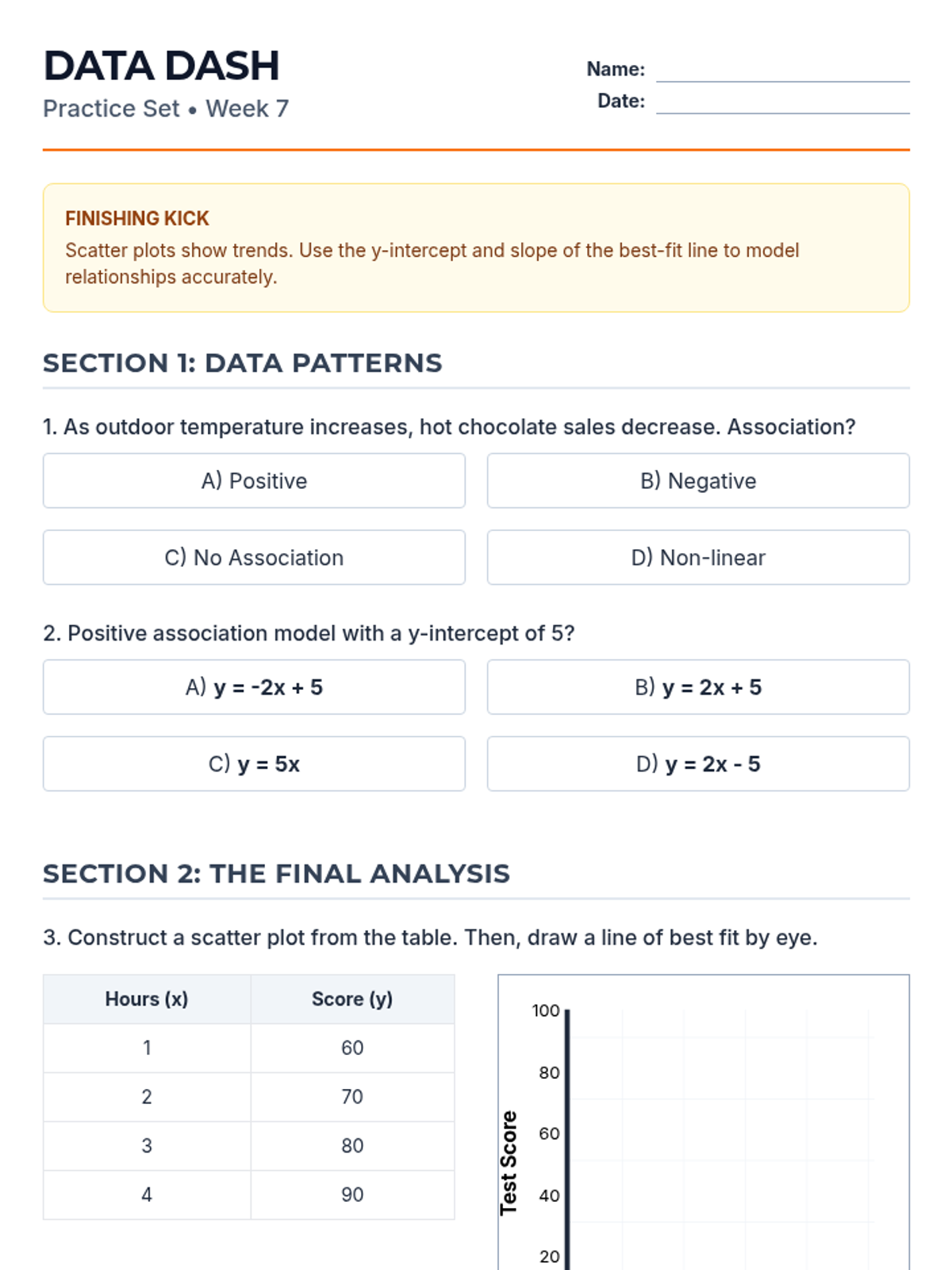
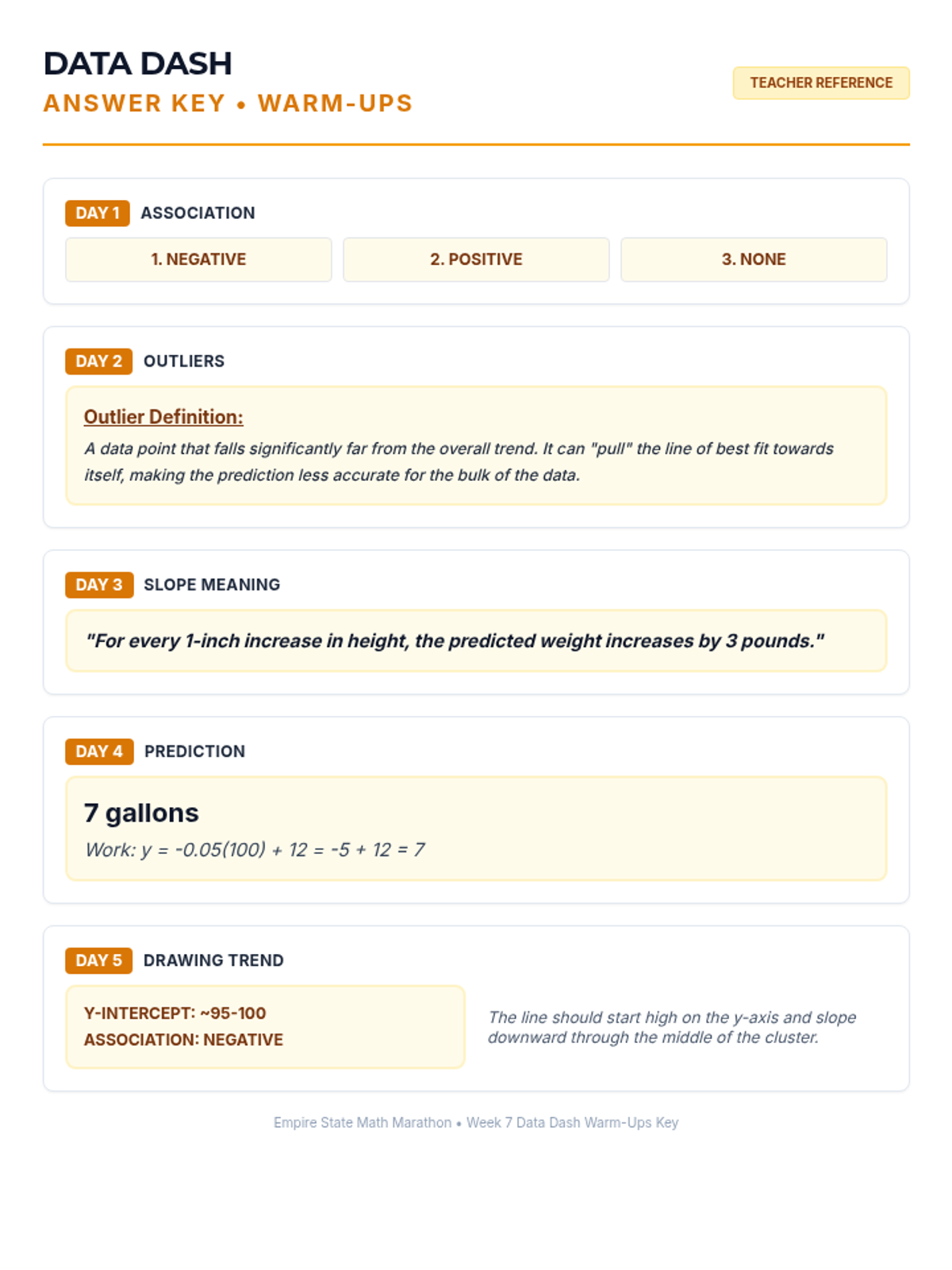
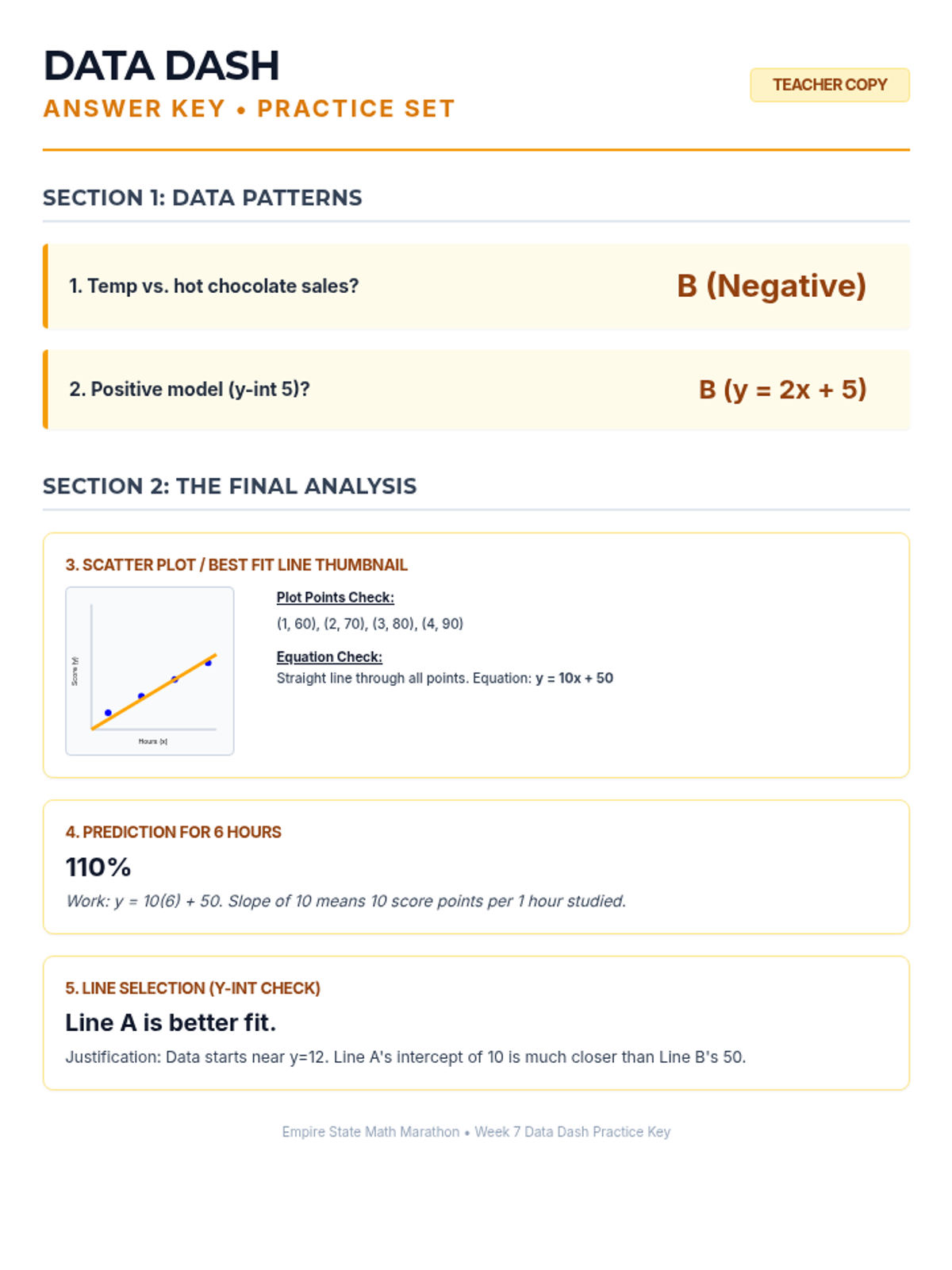
Week 7 analyzes bivariate data through scatter plots, interpreting lines of best fit, and using linear models to make predictions.
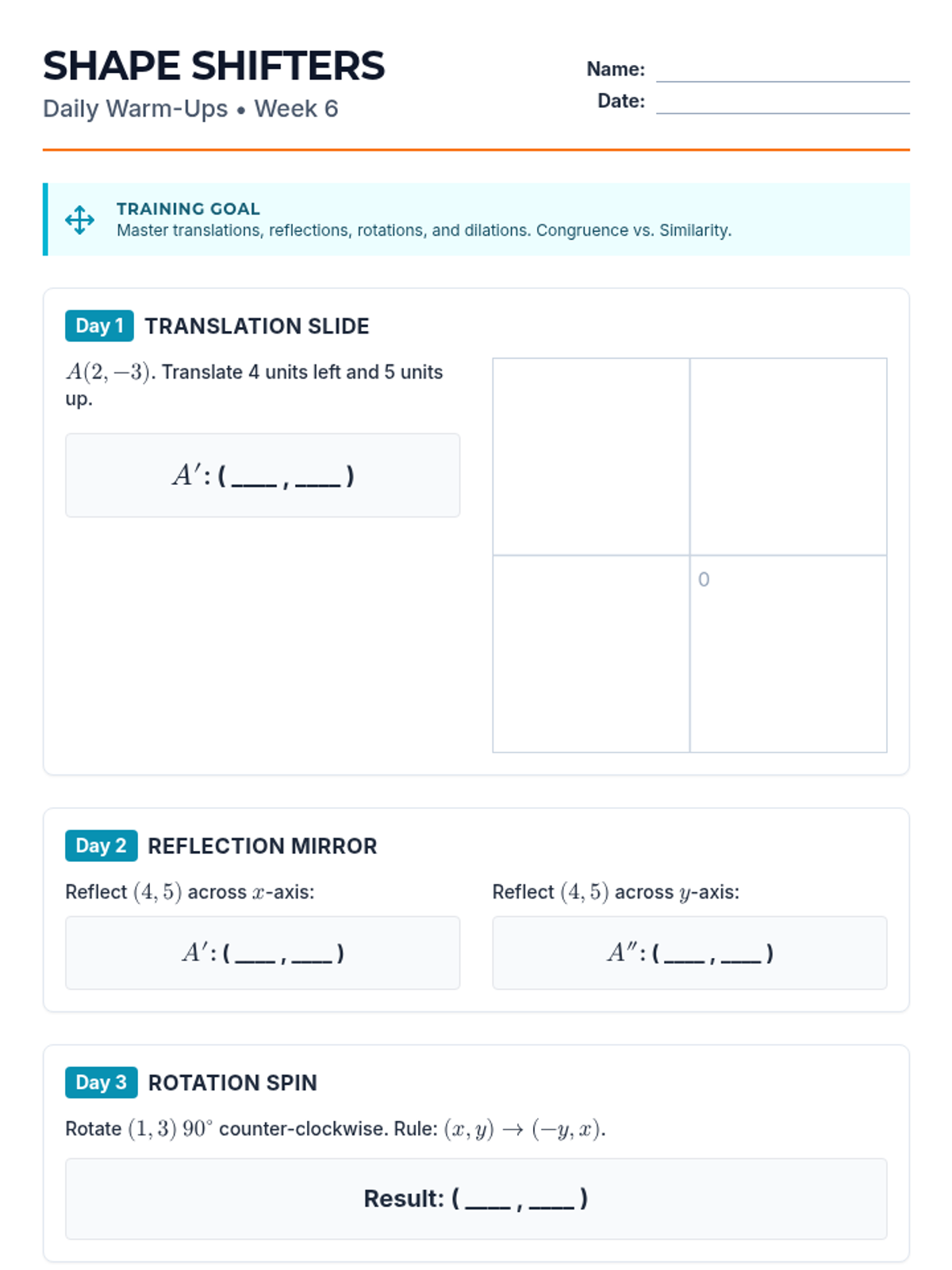
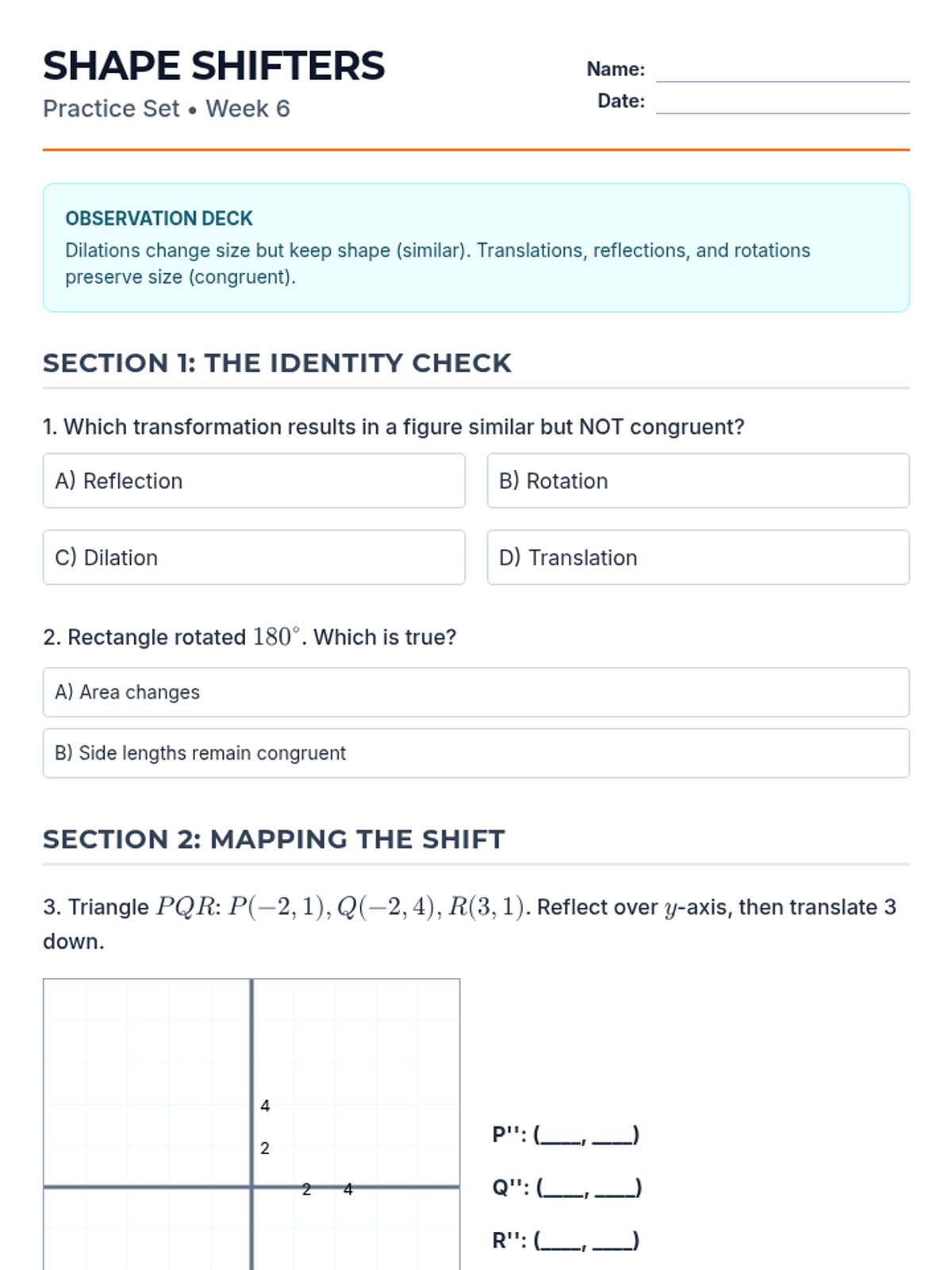
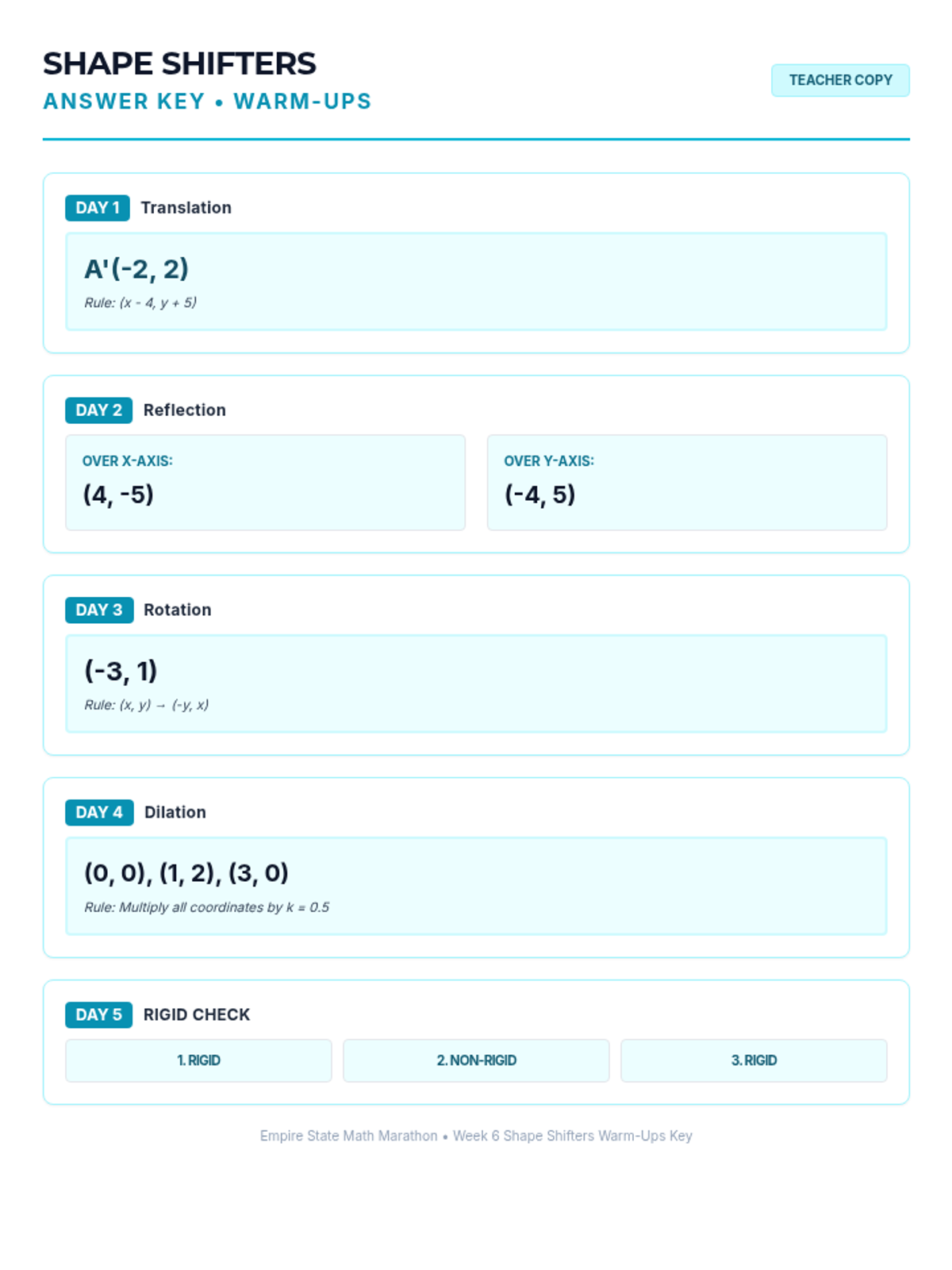
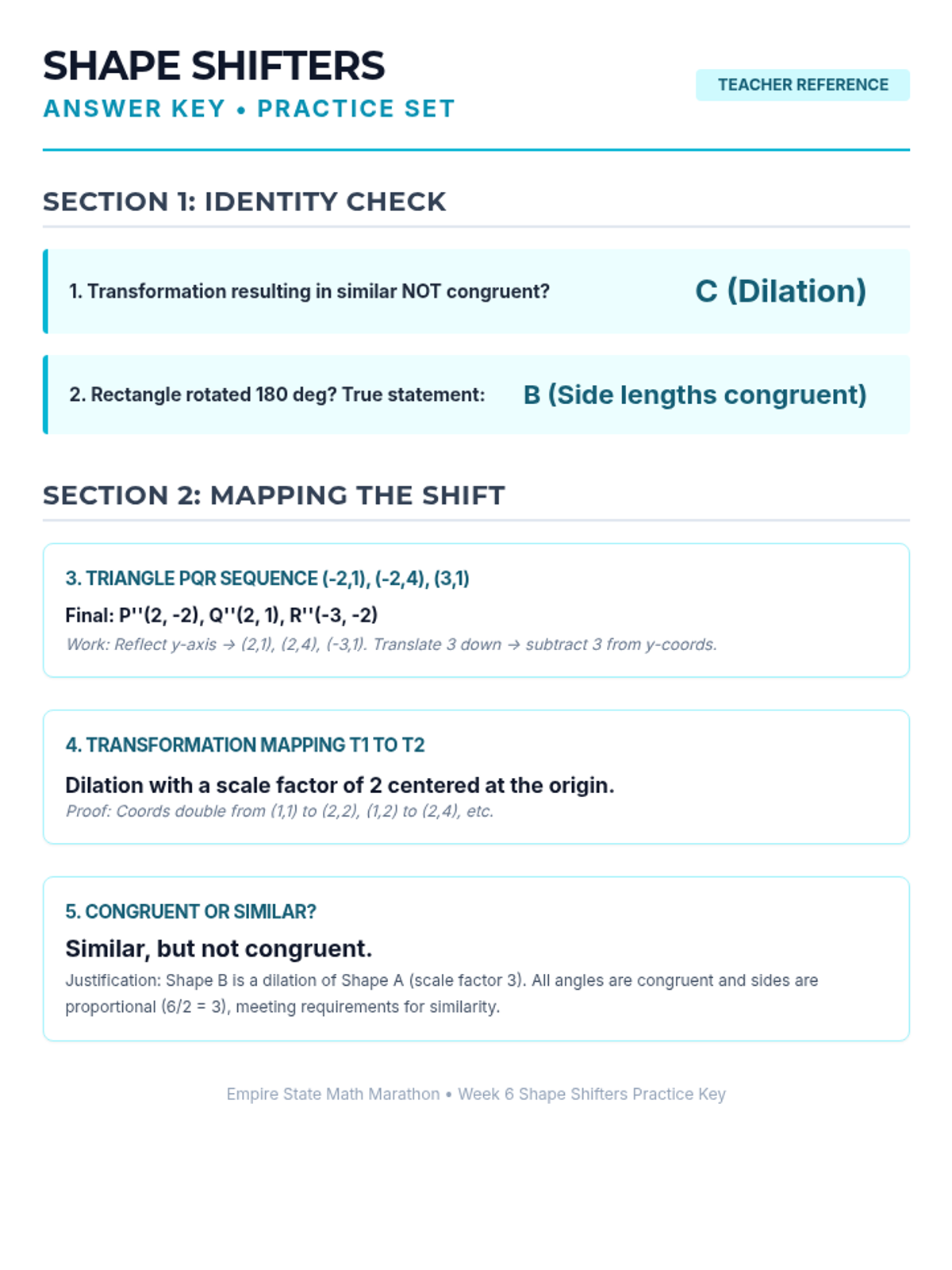
Week 6 focuses on rigid transformations (translations, reflections, rotations) and similarity transformations (dilations).
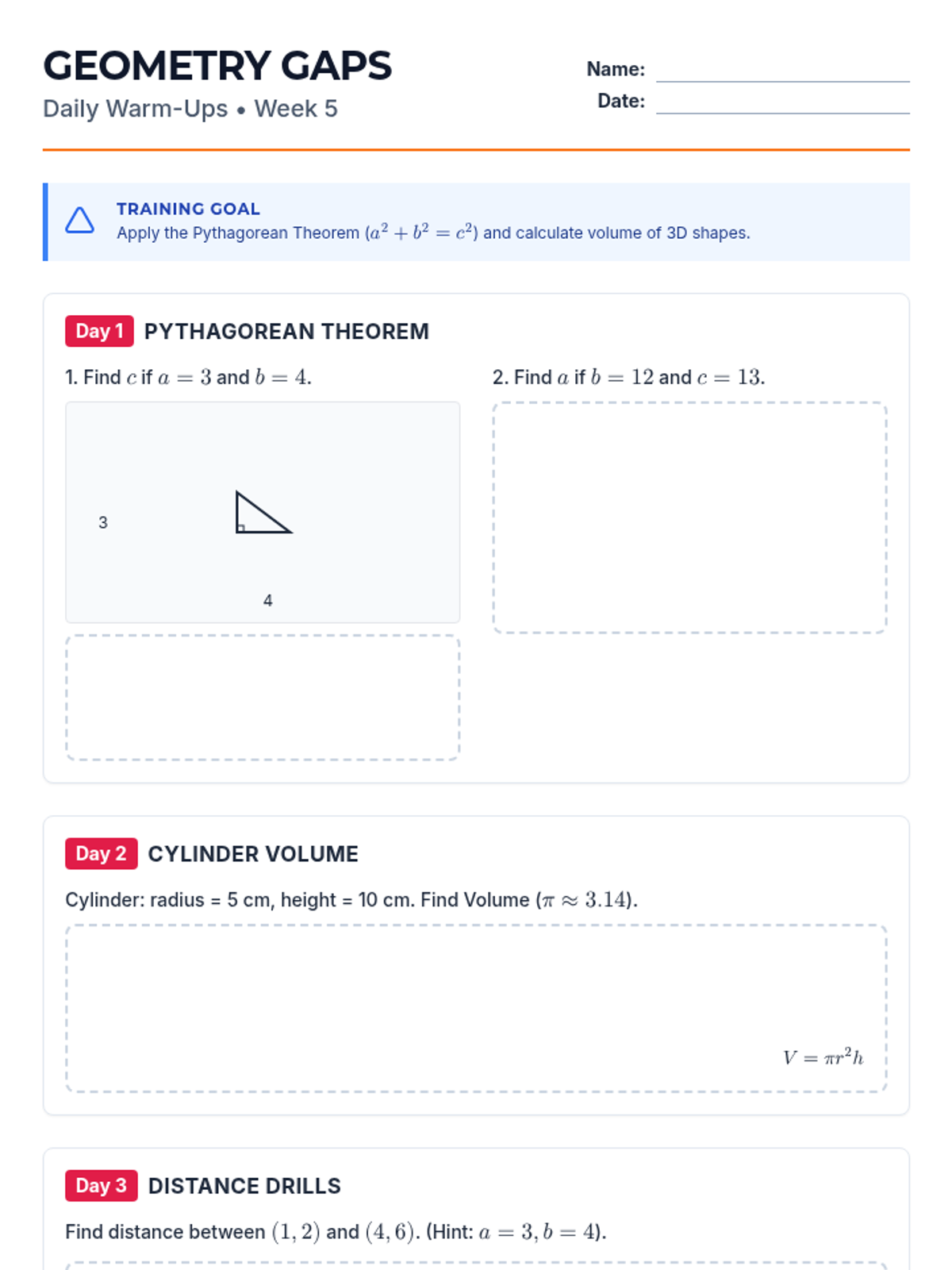
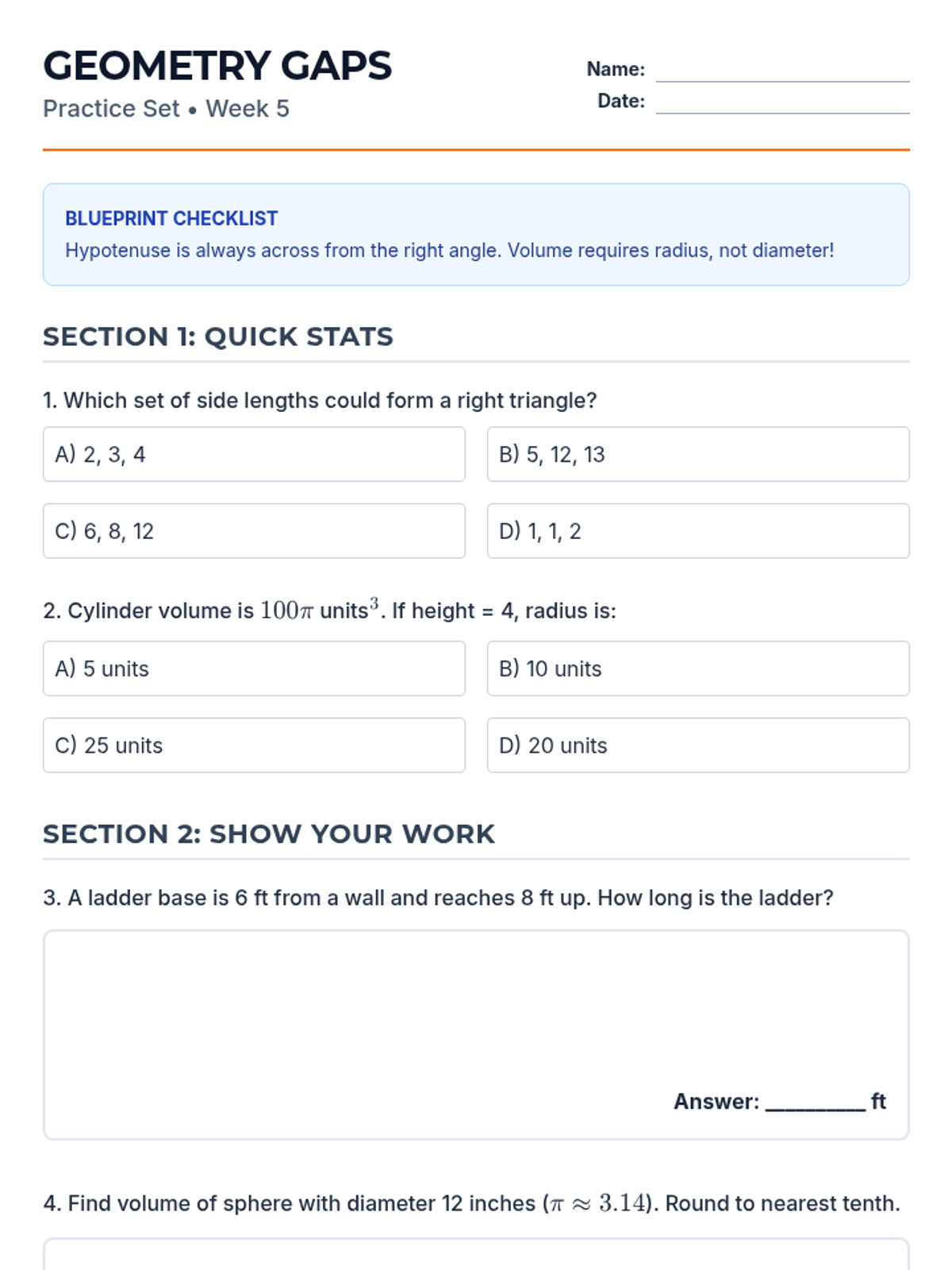
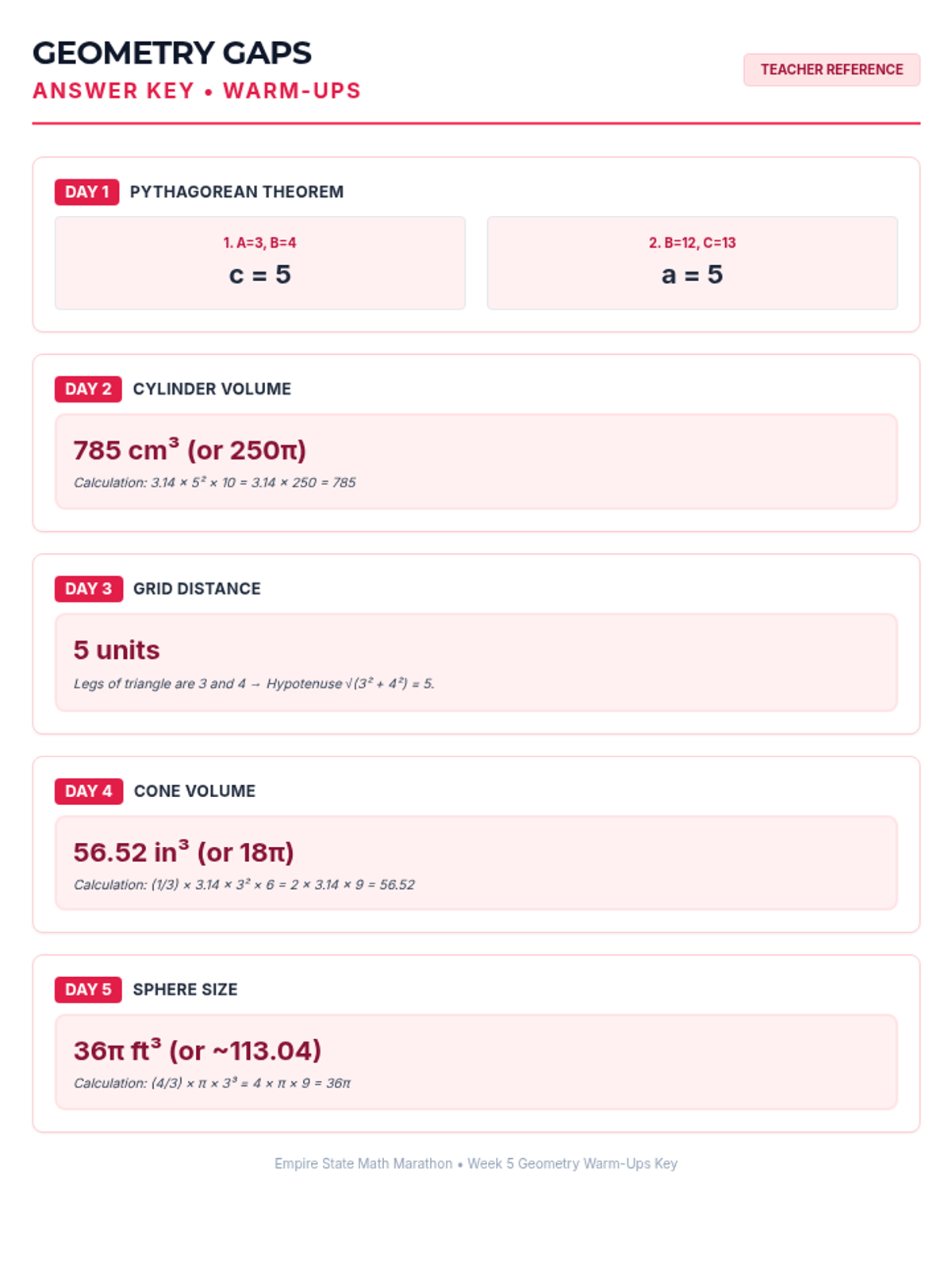
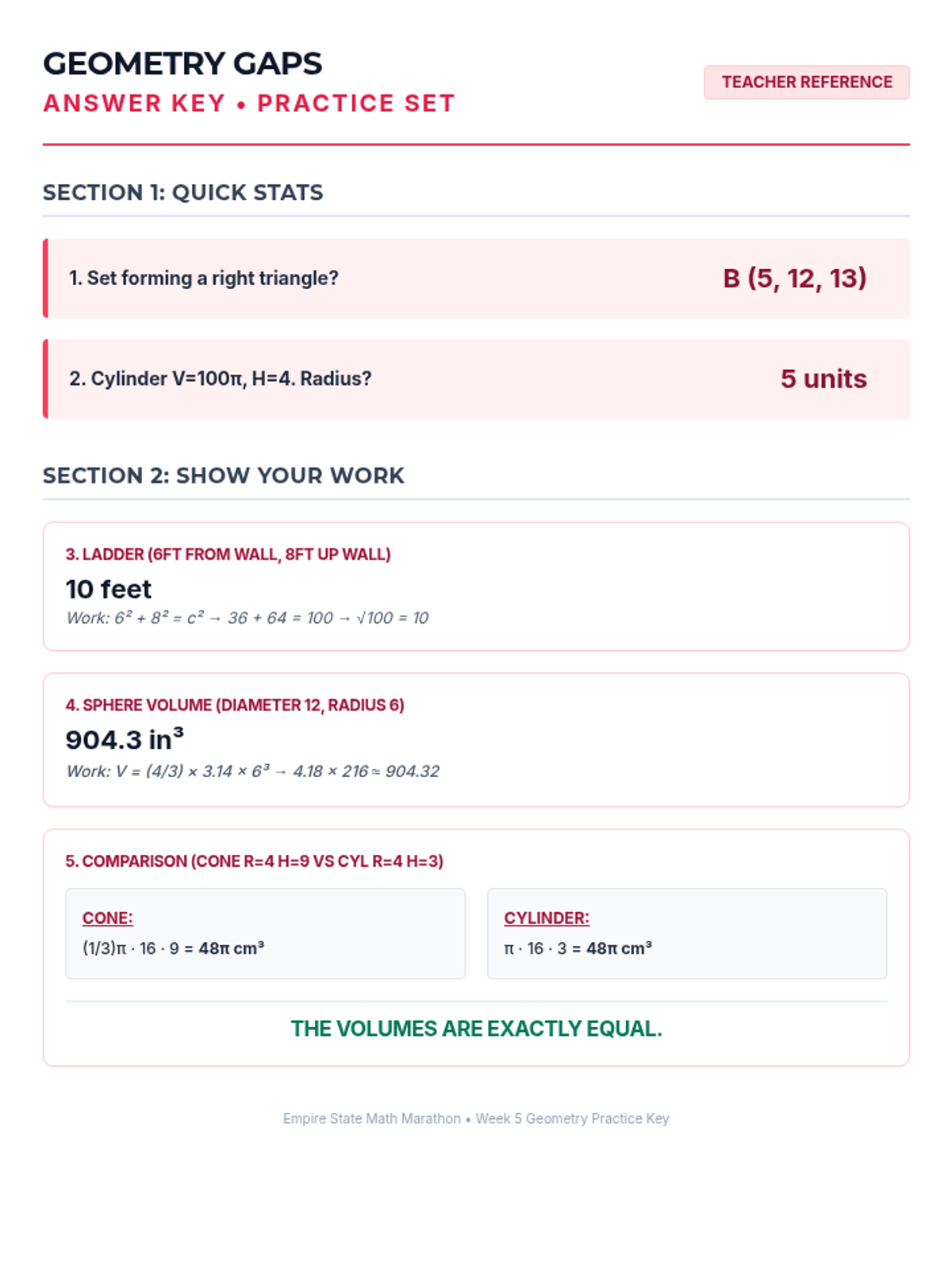
Week 5 reviews the Pythagorean Theorem and volume formulas for cylinders, cones, and spheres.
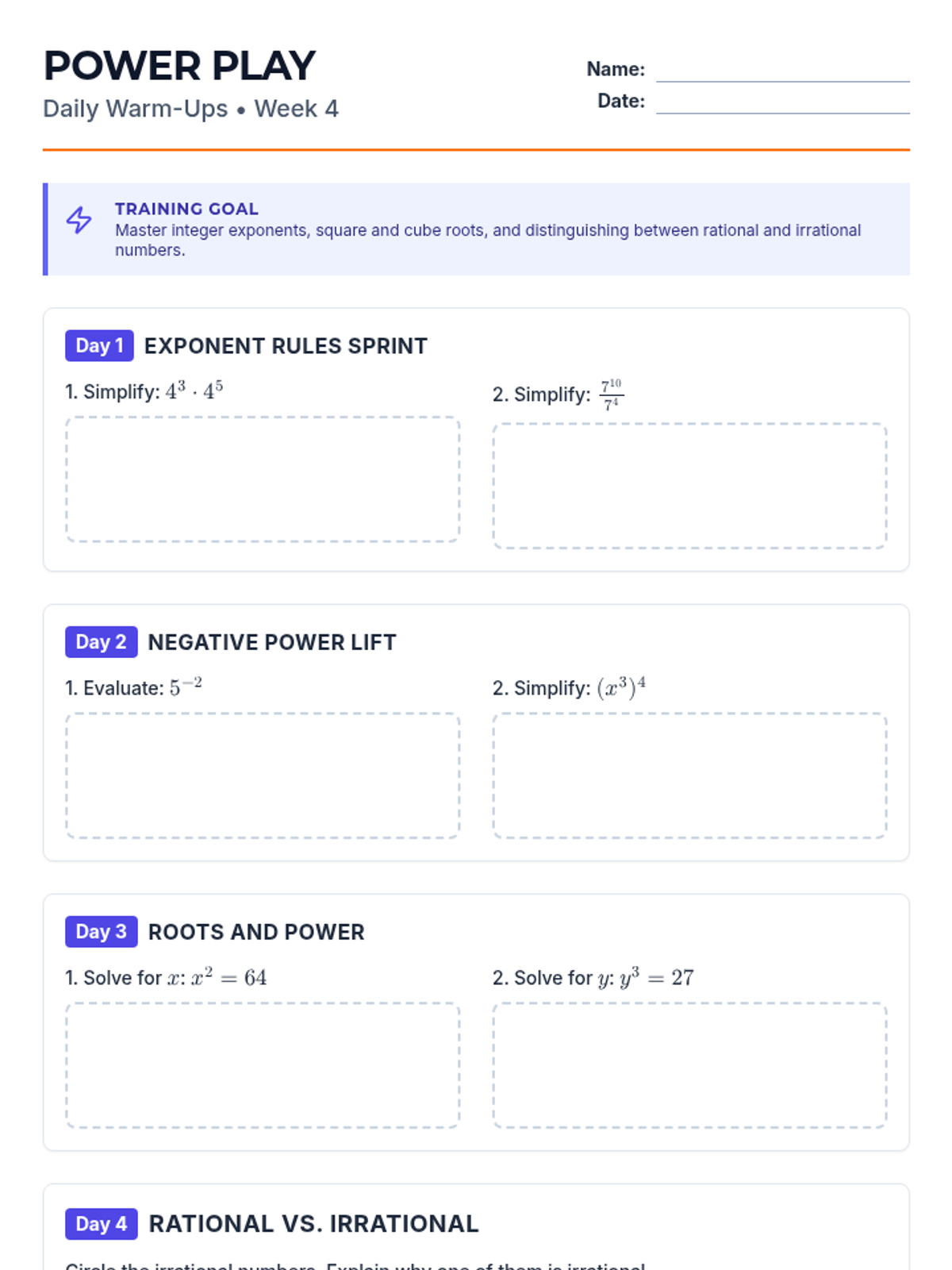
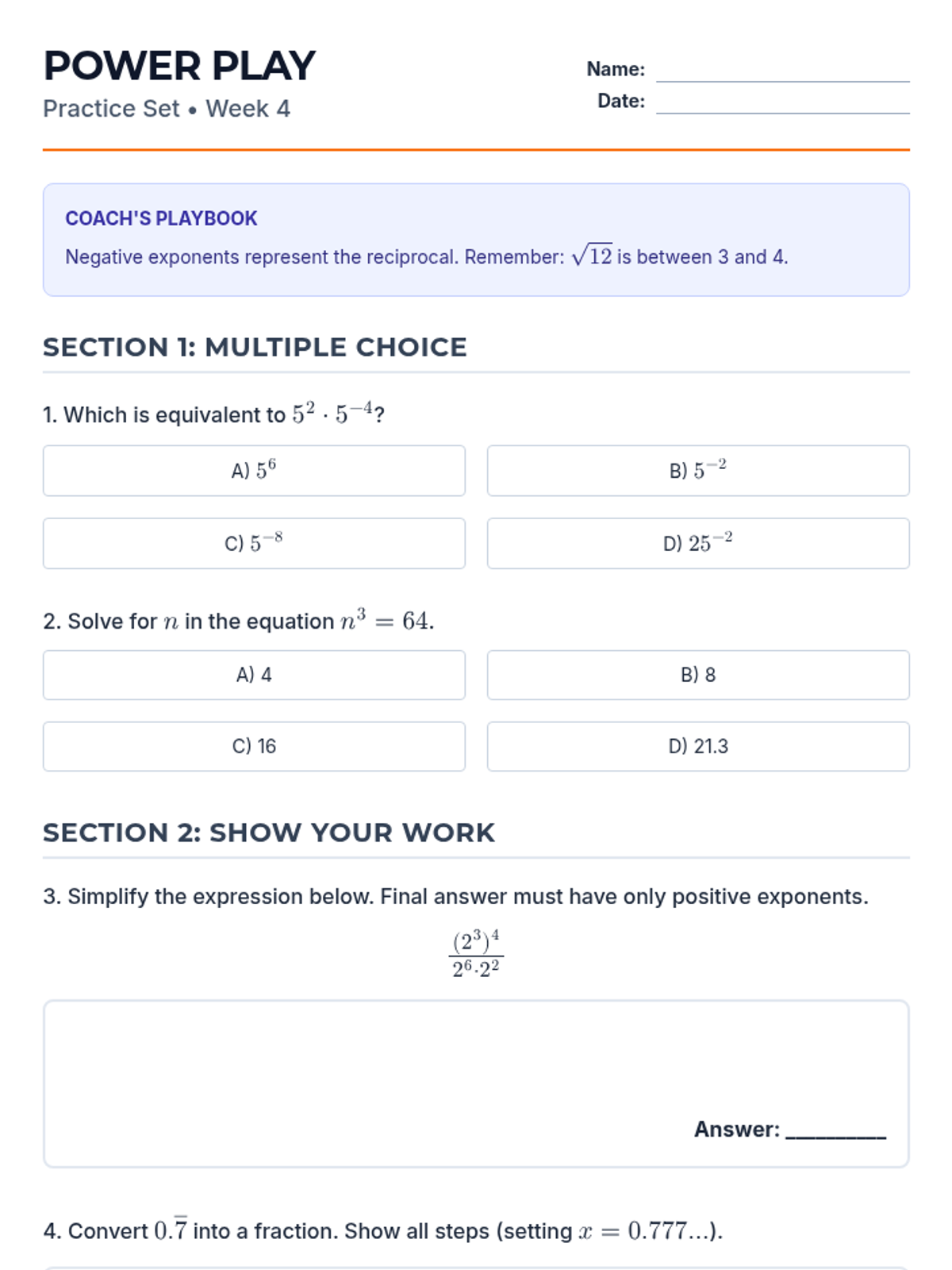
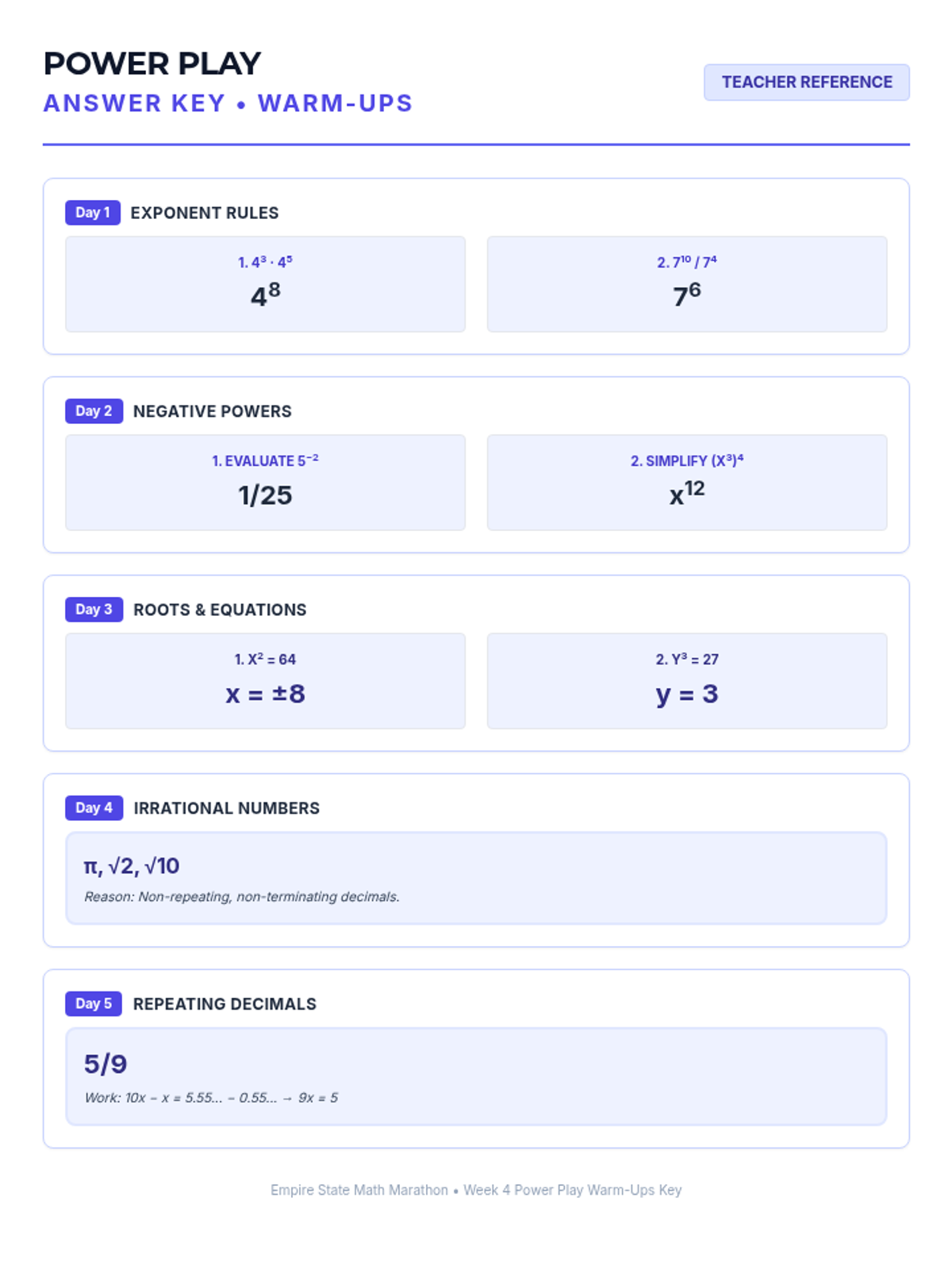
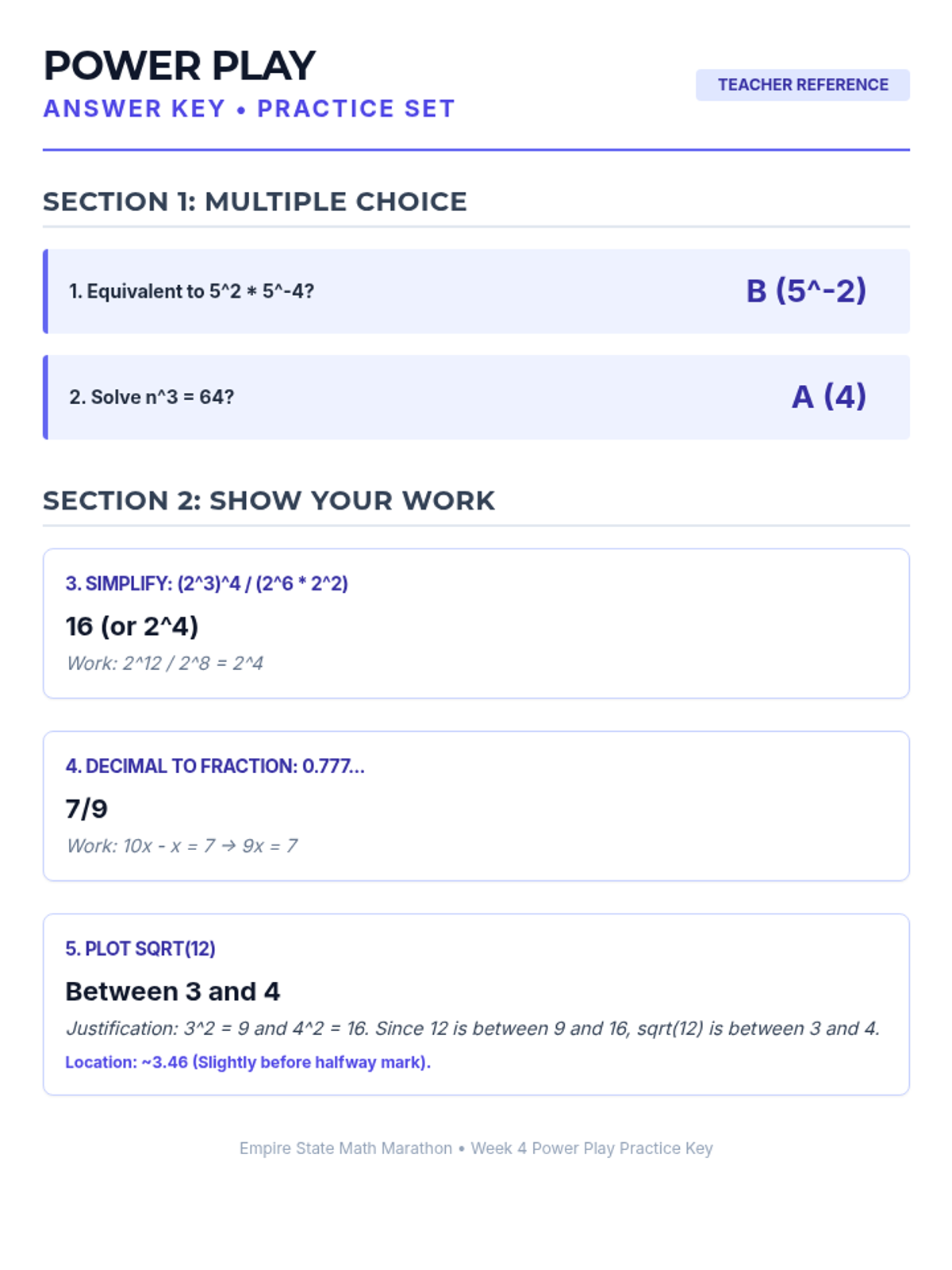
Week 4 explores integer exponent rules, perfect squares and cubes, and distinguishing between rational and irrational numbers.
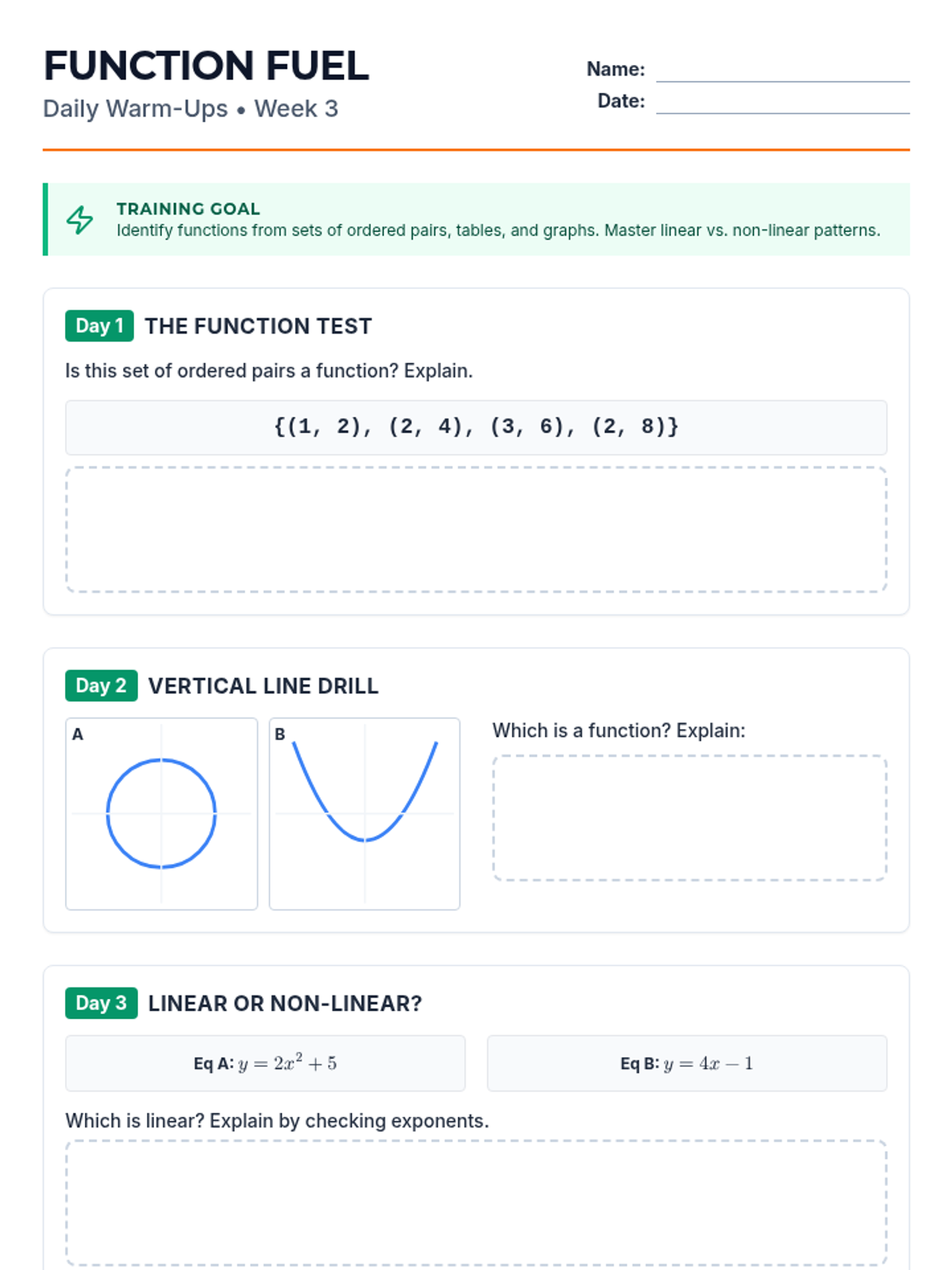
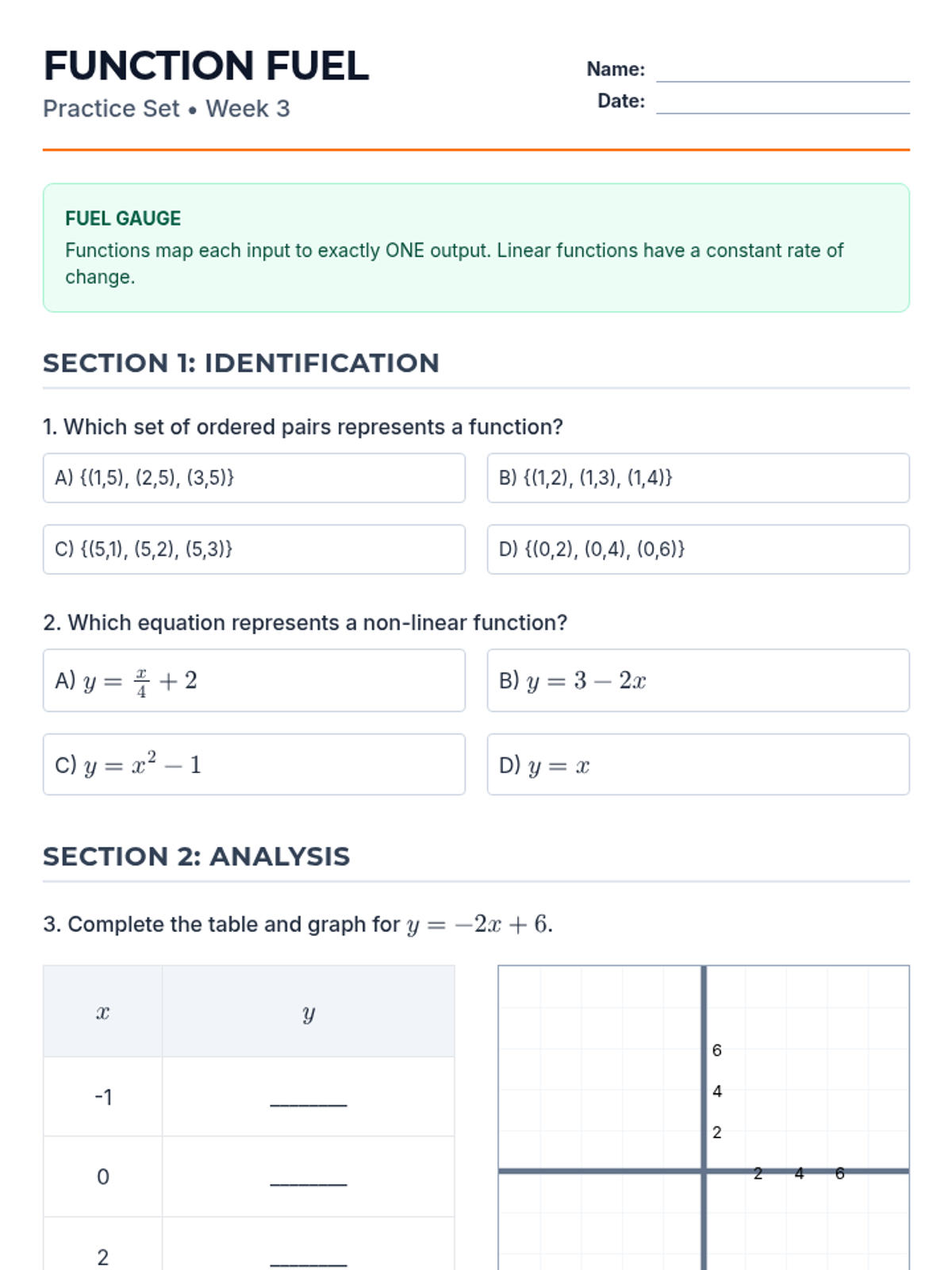
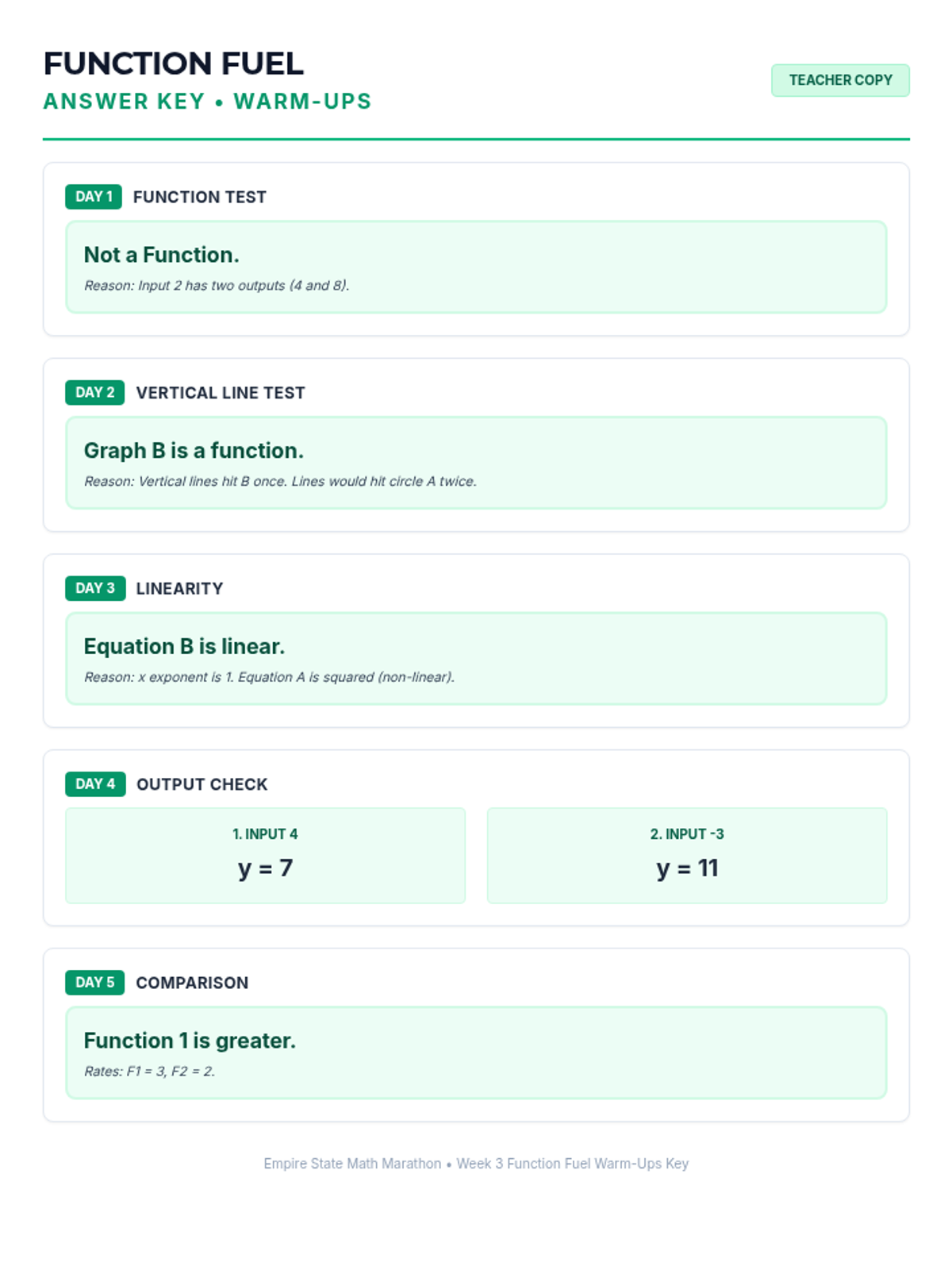
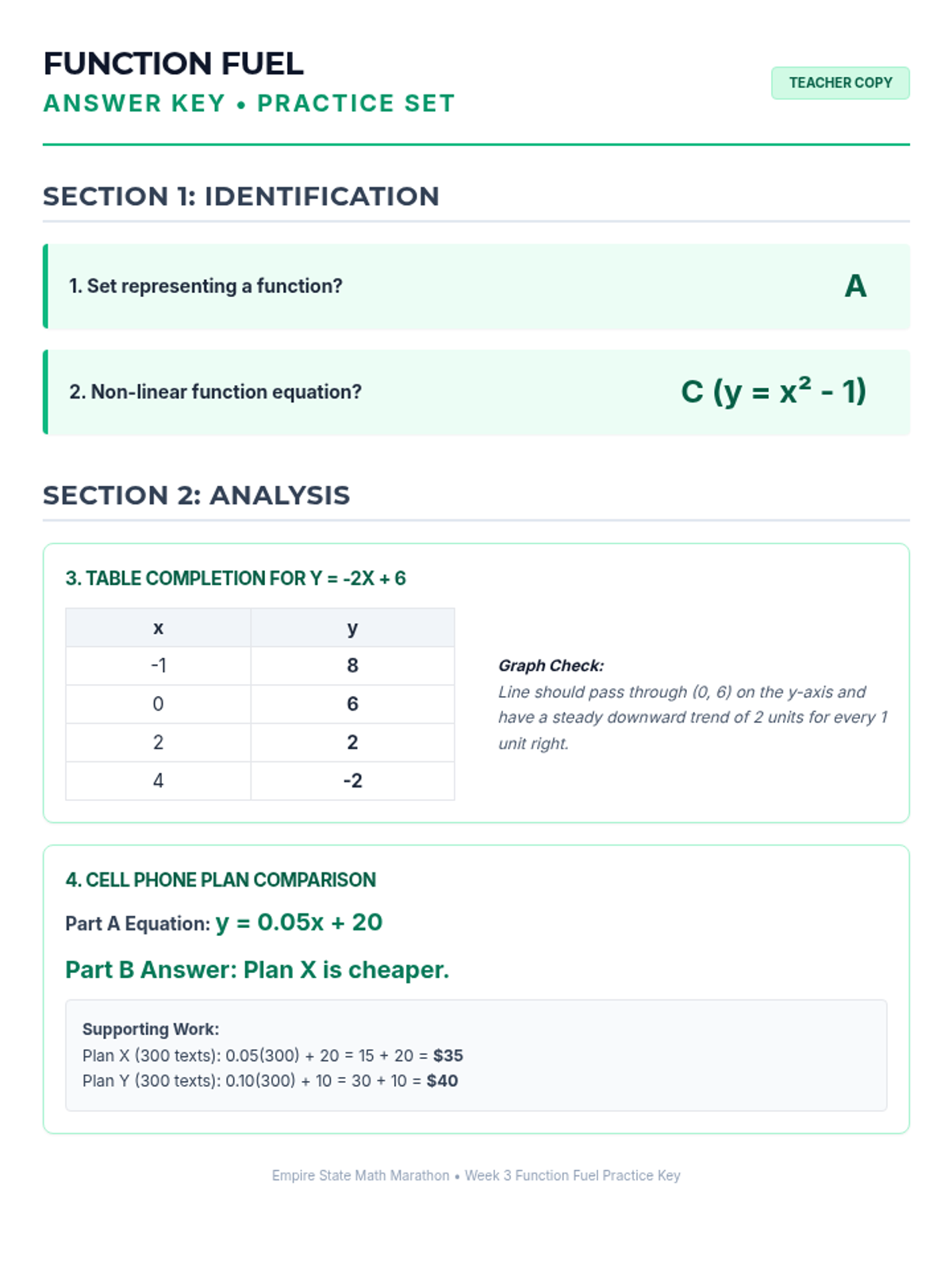
Week 3 defines, evaluates, and compares functions represented in different ways (tables, graphs, equations).
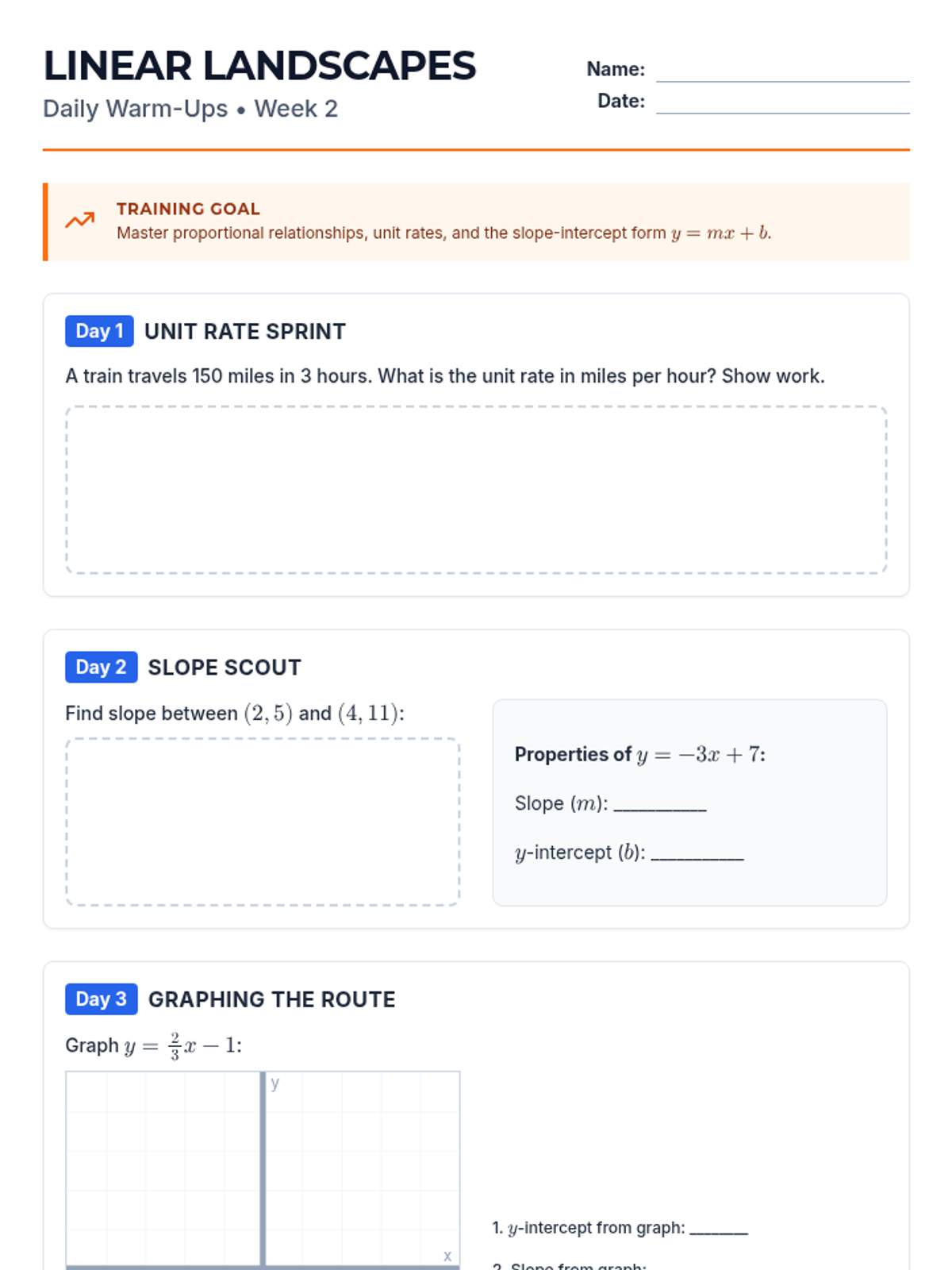
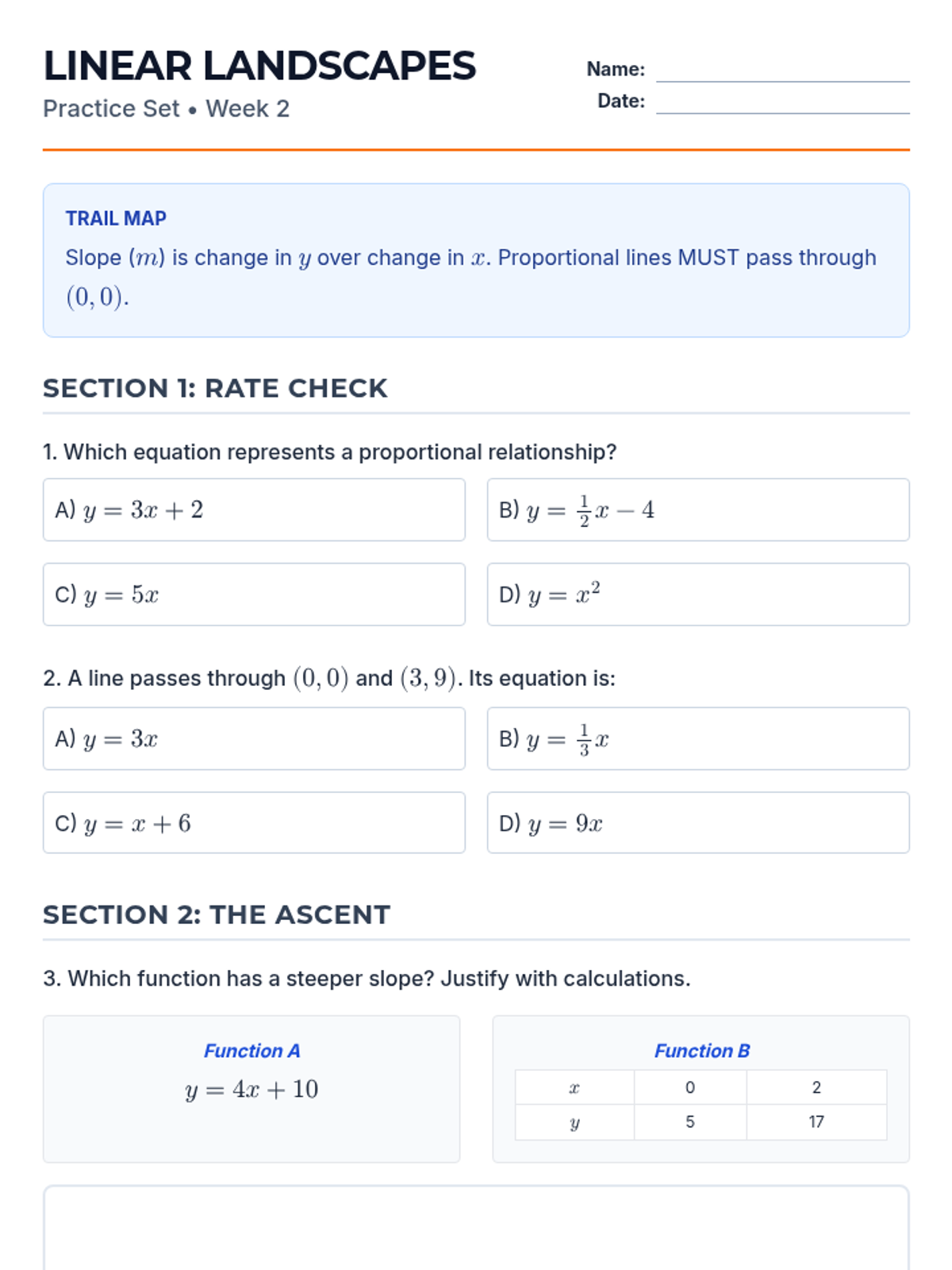
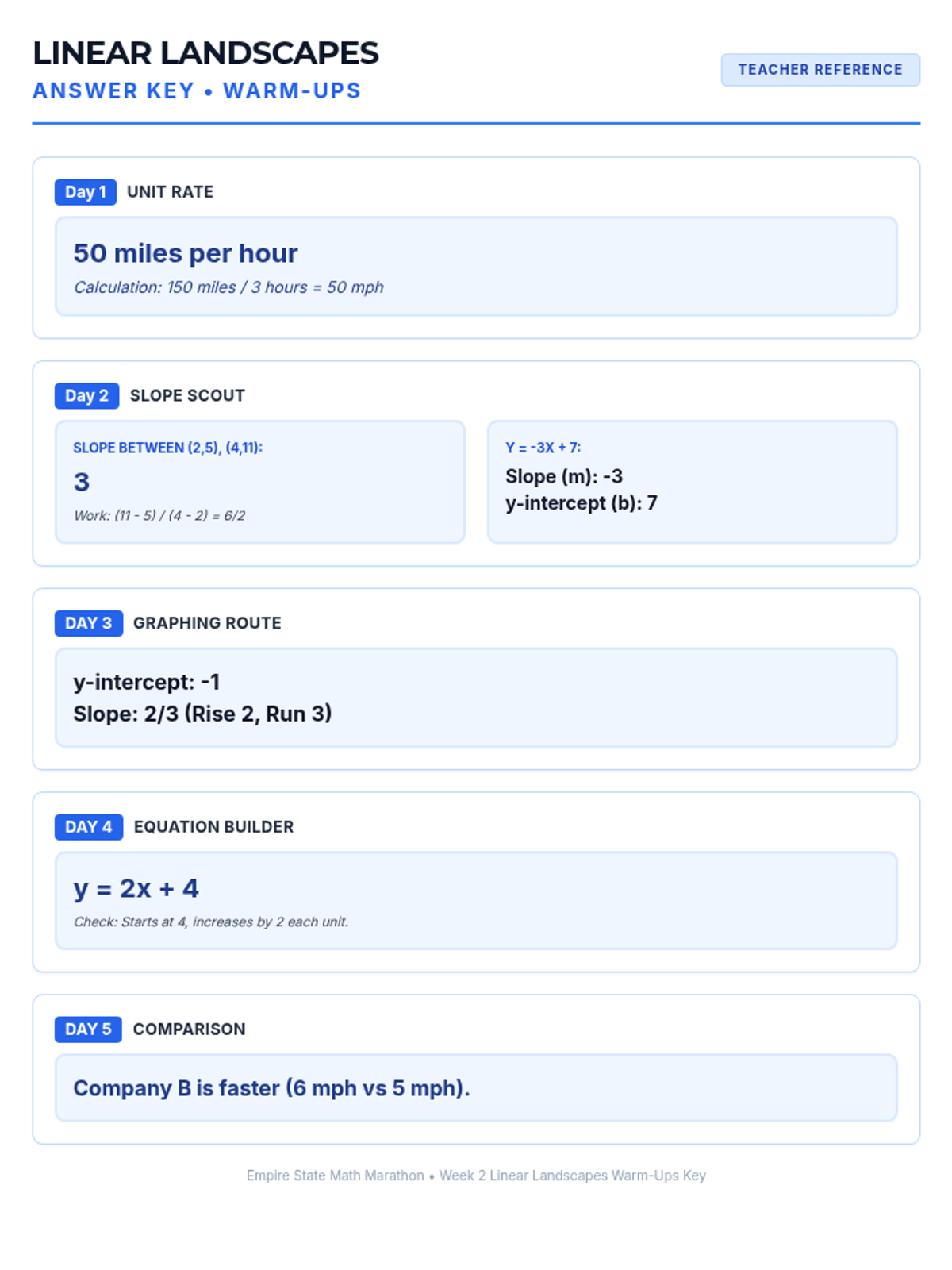
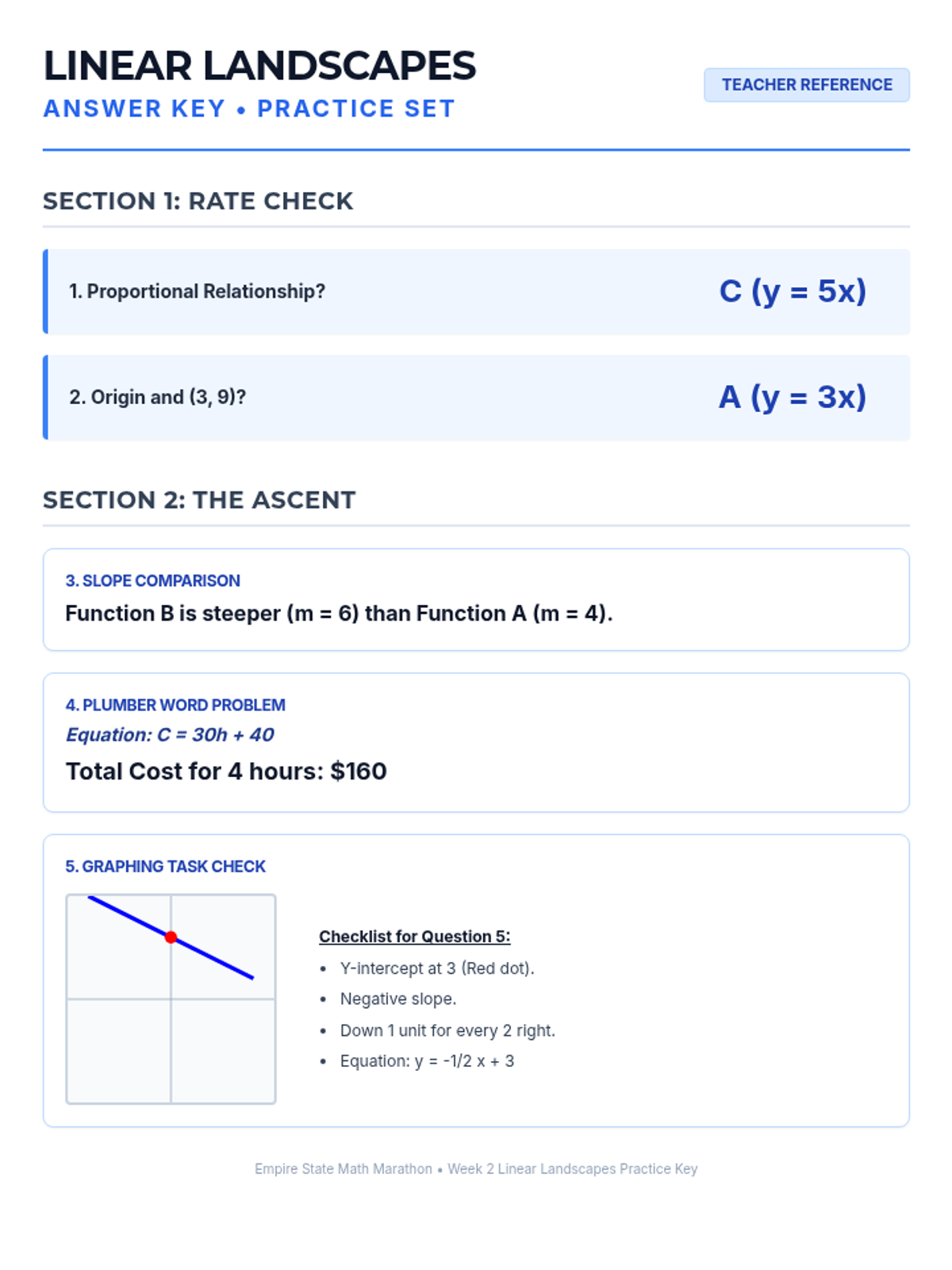
Week 2 covers proportional relationships, unit rates, and the slope-intercept form of linear equations.
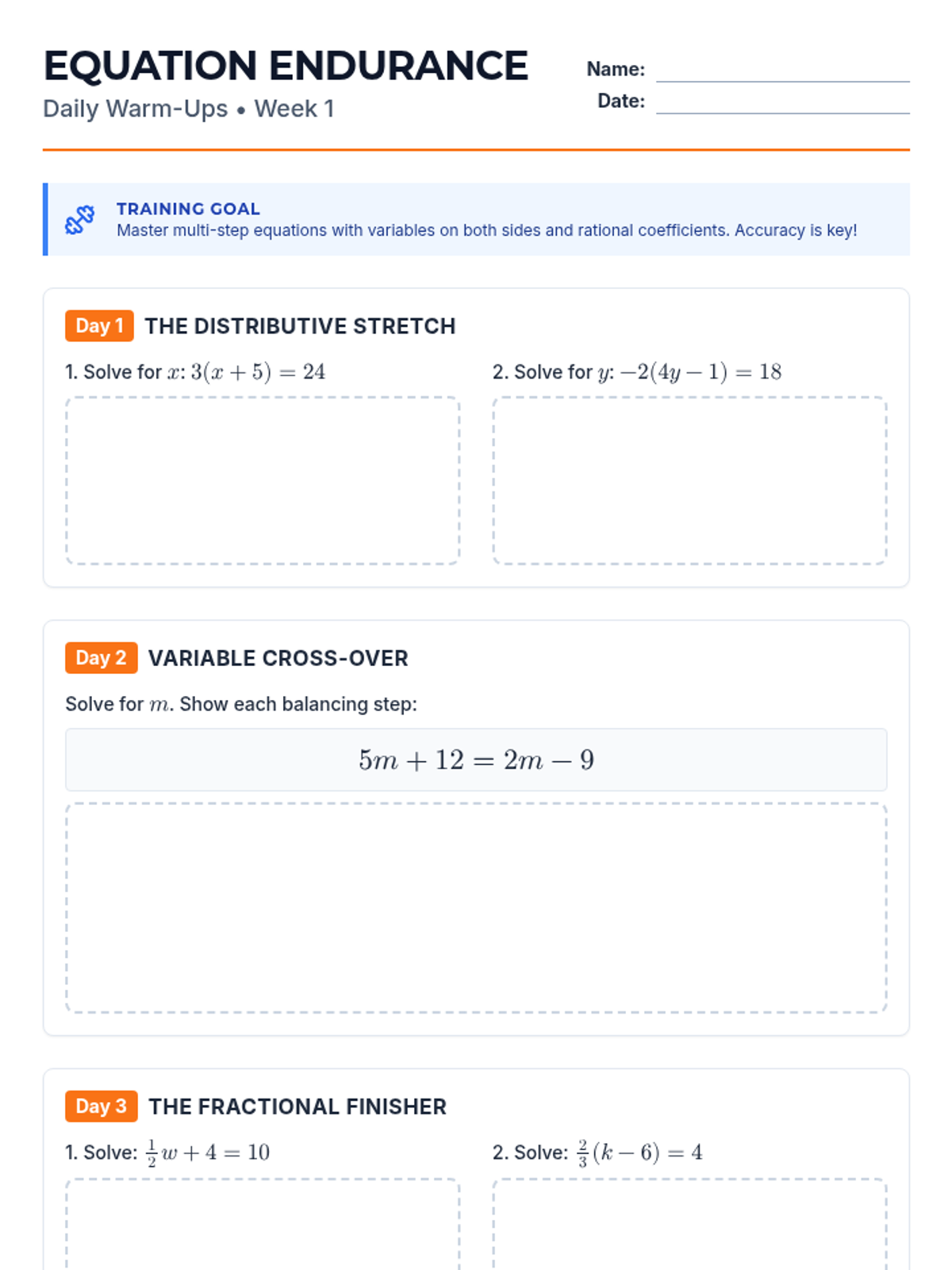
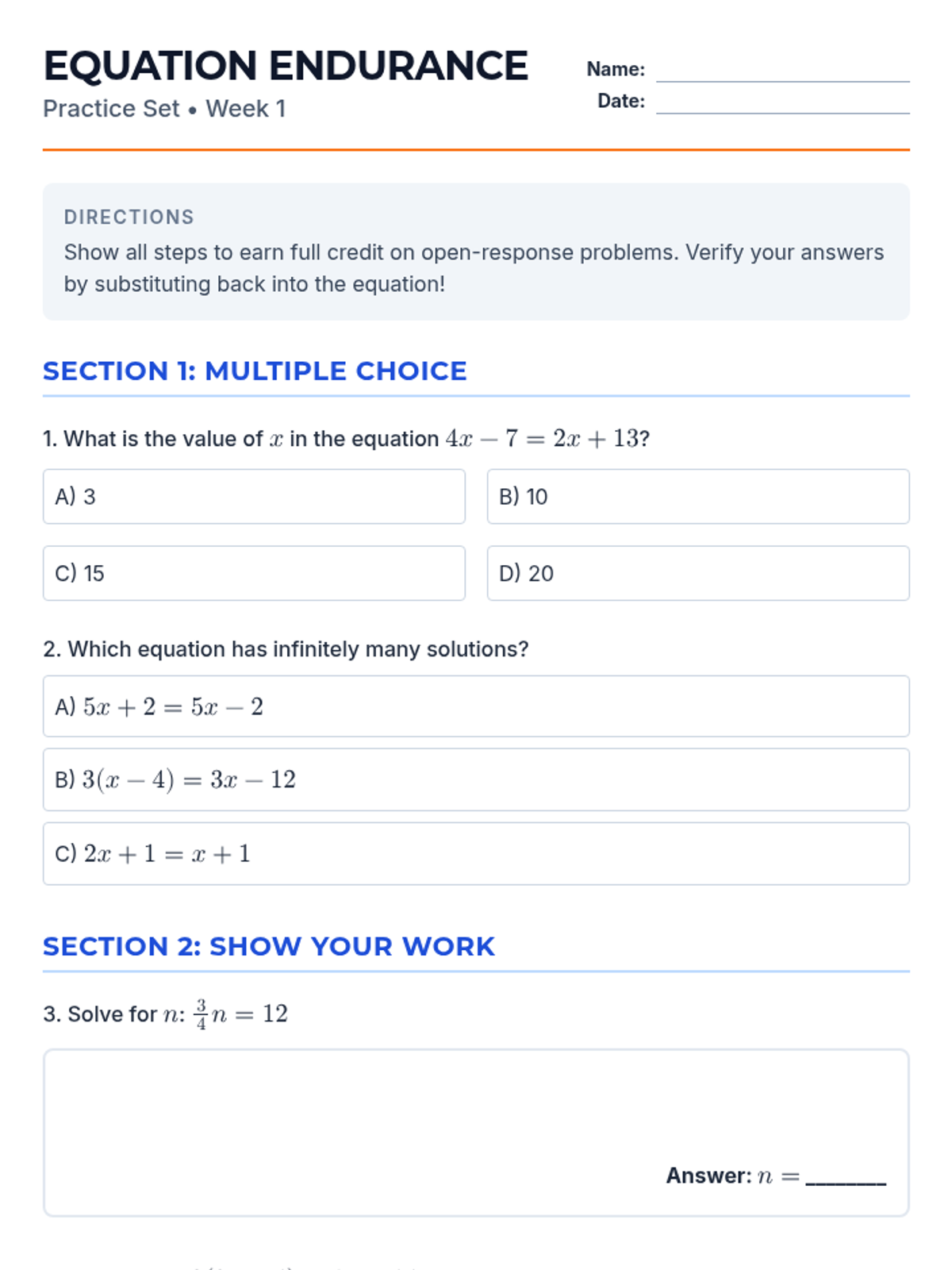
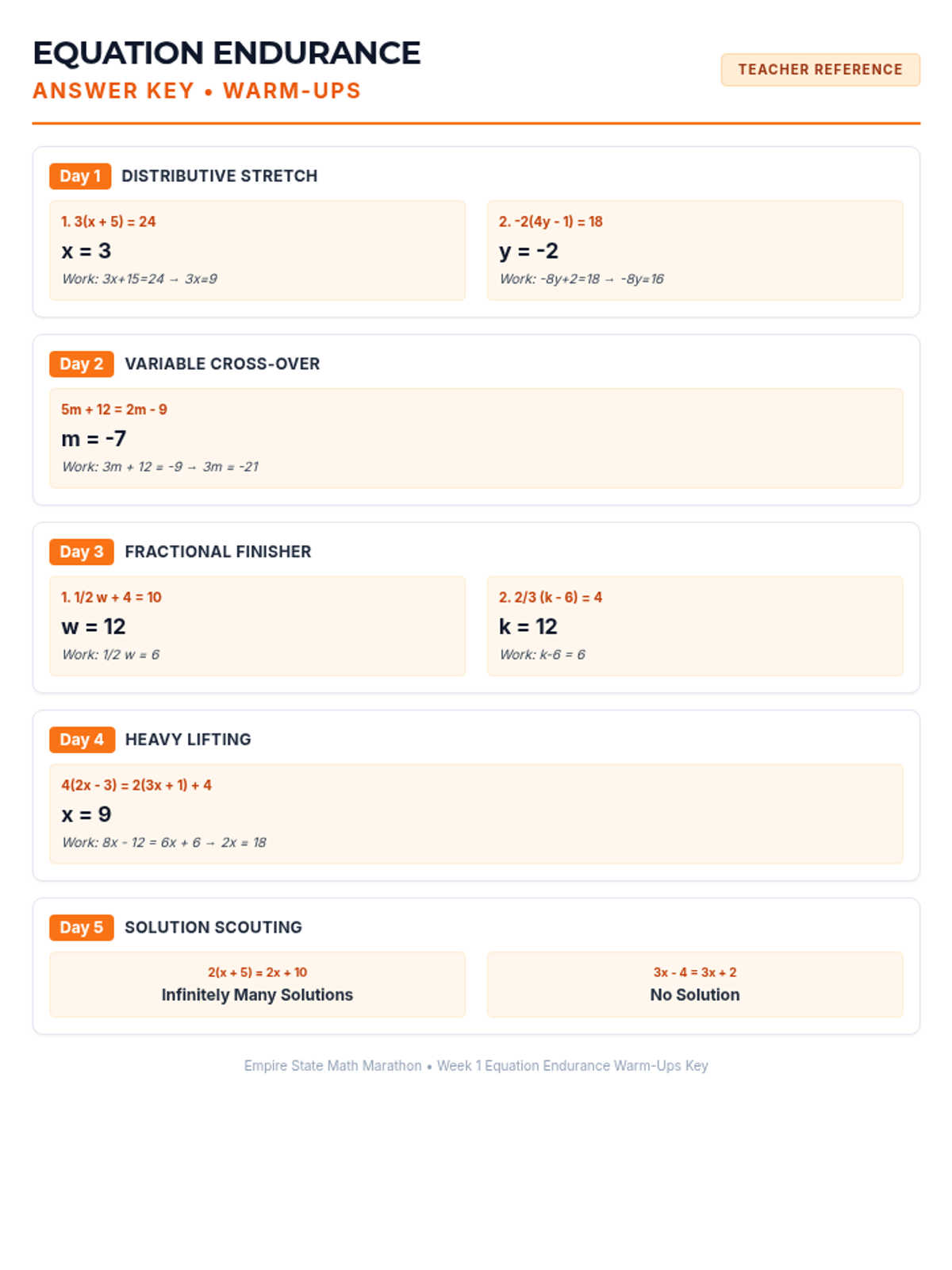
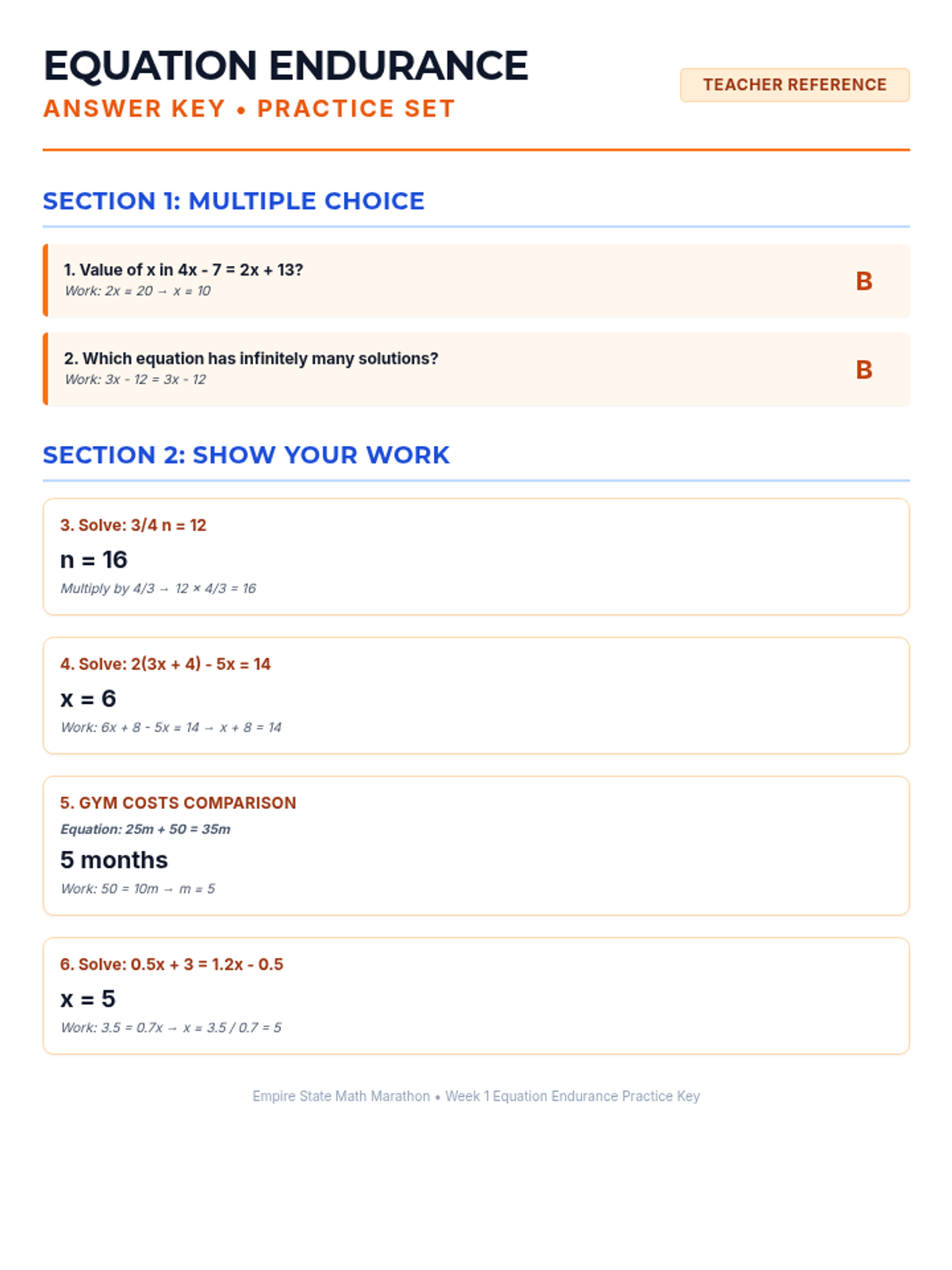
Week 1 focuses on solving multi-step equations, including those with variables on both sides, rational coefficients, and checking solutions.
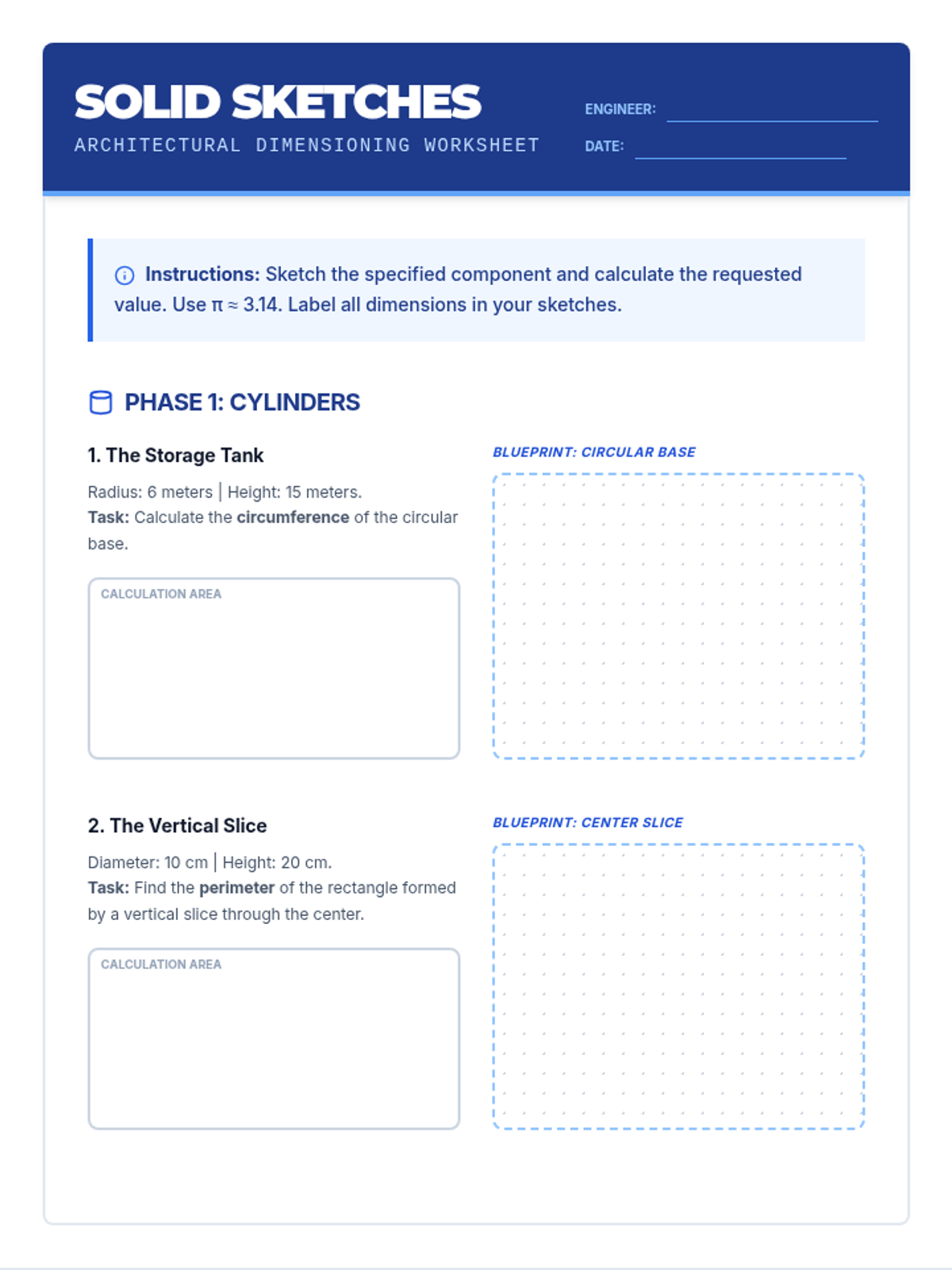
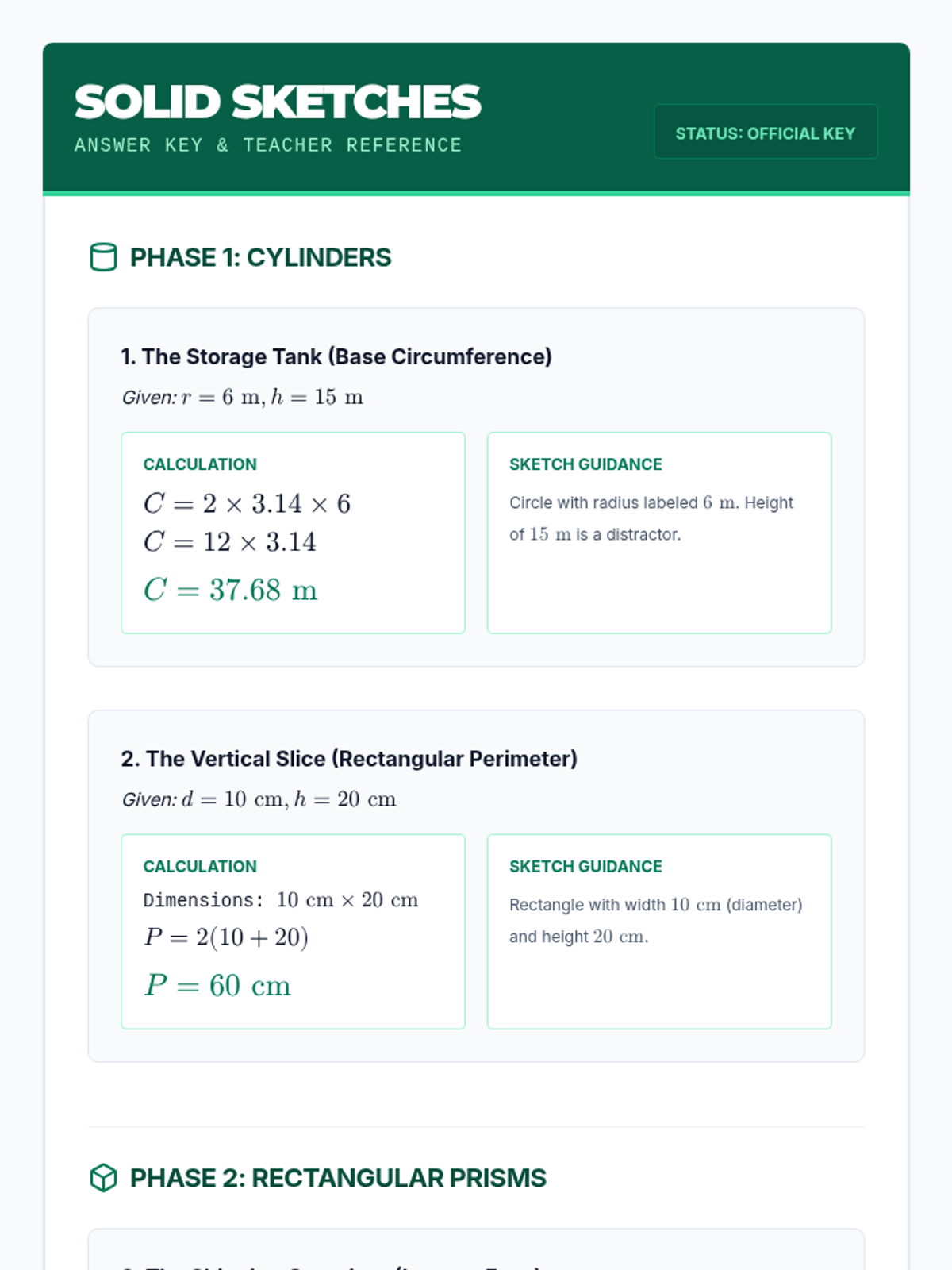
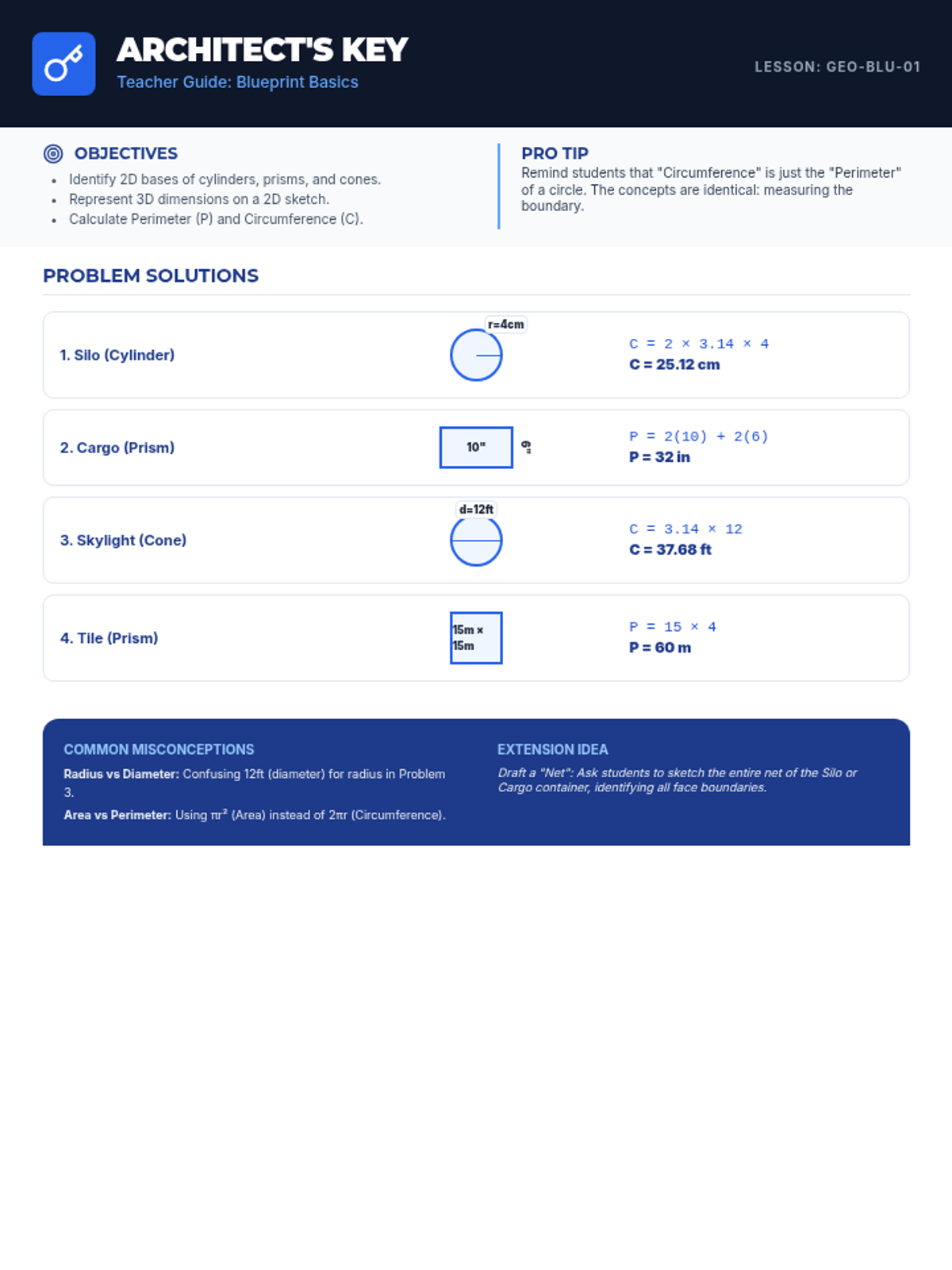
A lesson focused on identifying and calculating the perimeters and circumferences of specific components within 3D solid figures like cylinders, rectangular prisms, and cones.
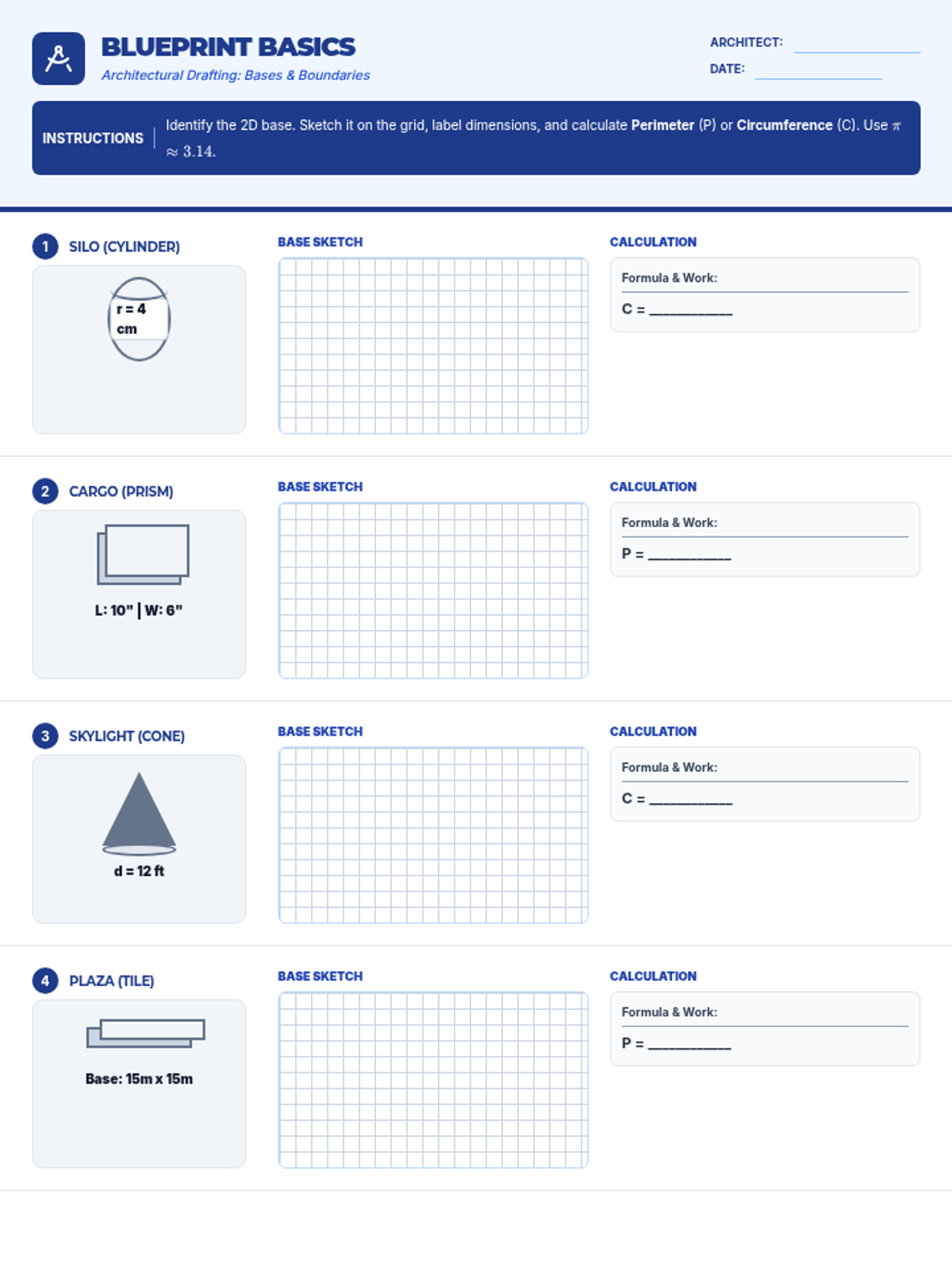
A lesson focused on identifying the 2D bases of 3D figures and calculating their perimeter or circumference. Students will practice sketching bases and applying geometry formulas in an architectural context.
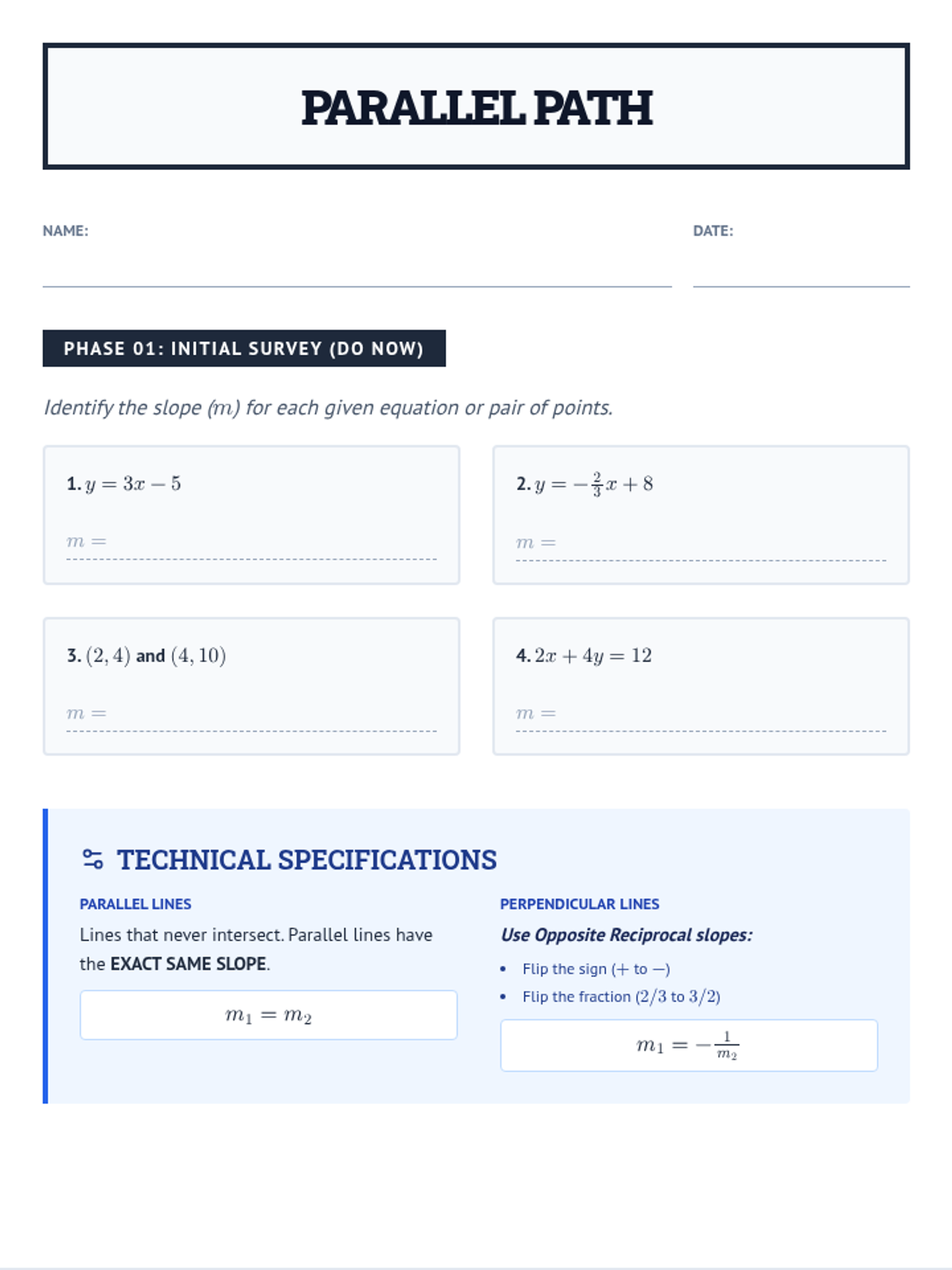
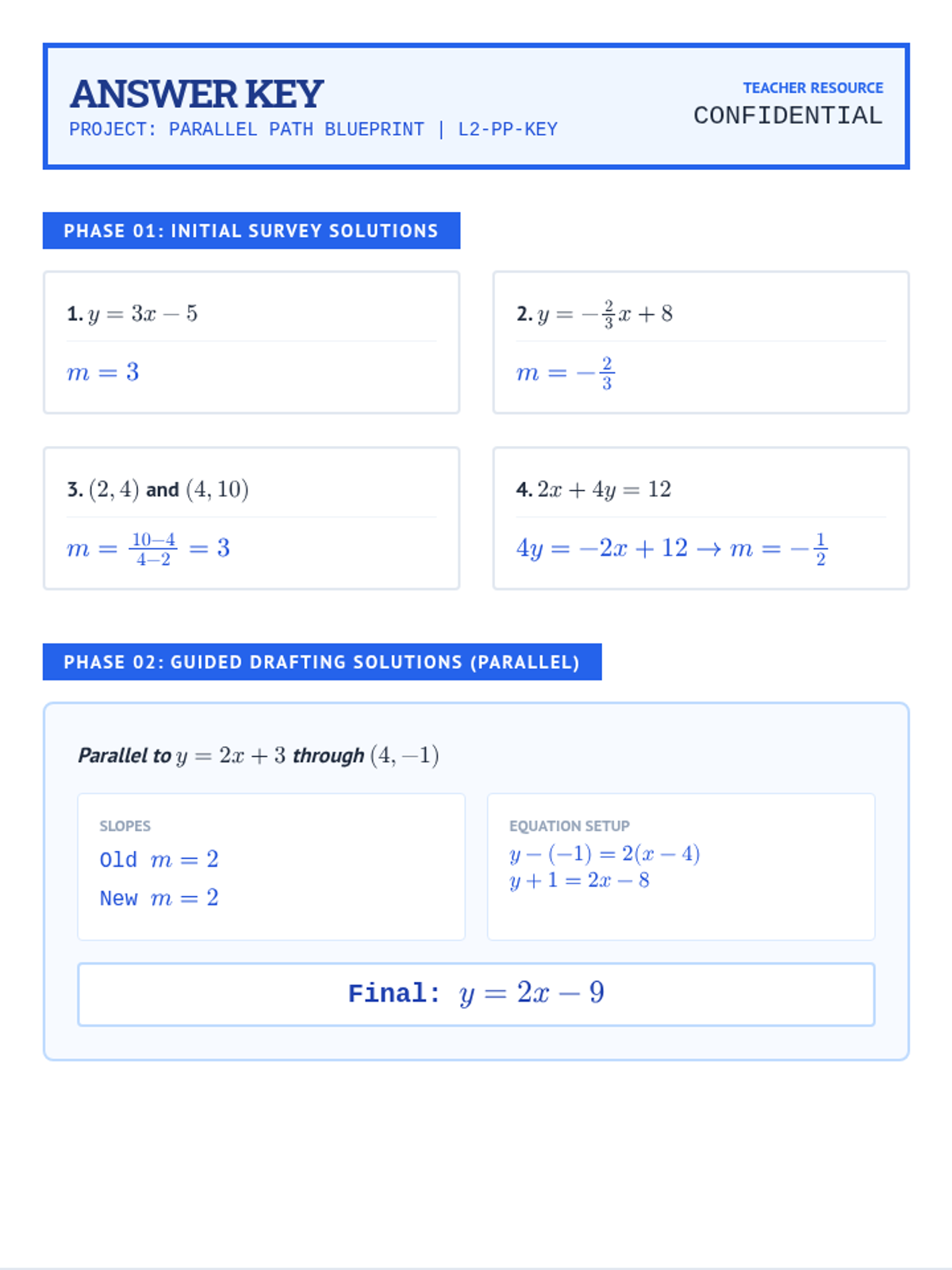
A lesson focused on the geometric and algebraic relationships of parallel and perpendicular lines, teaching students how to identify slopes and write new equations using a technical blueprint aesthetic.
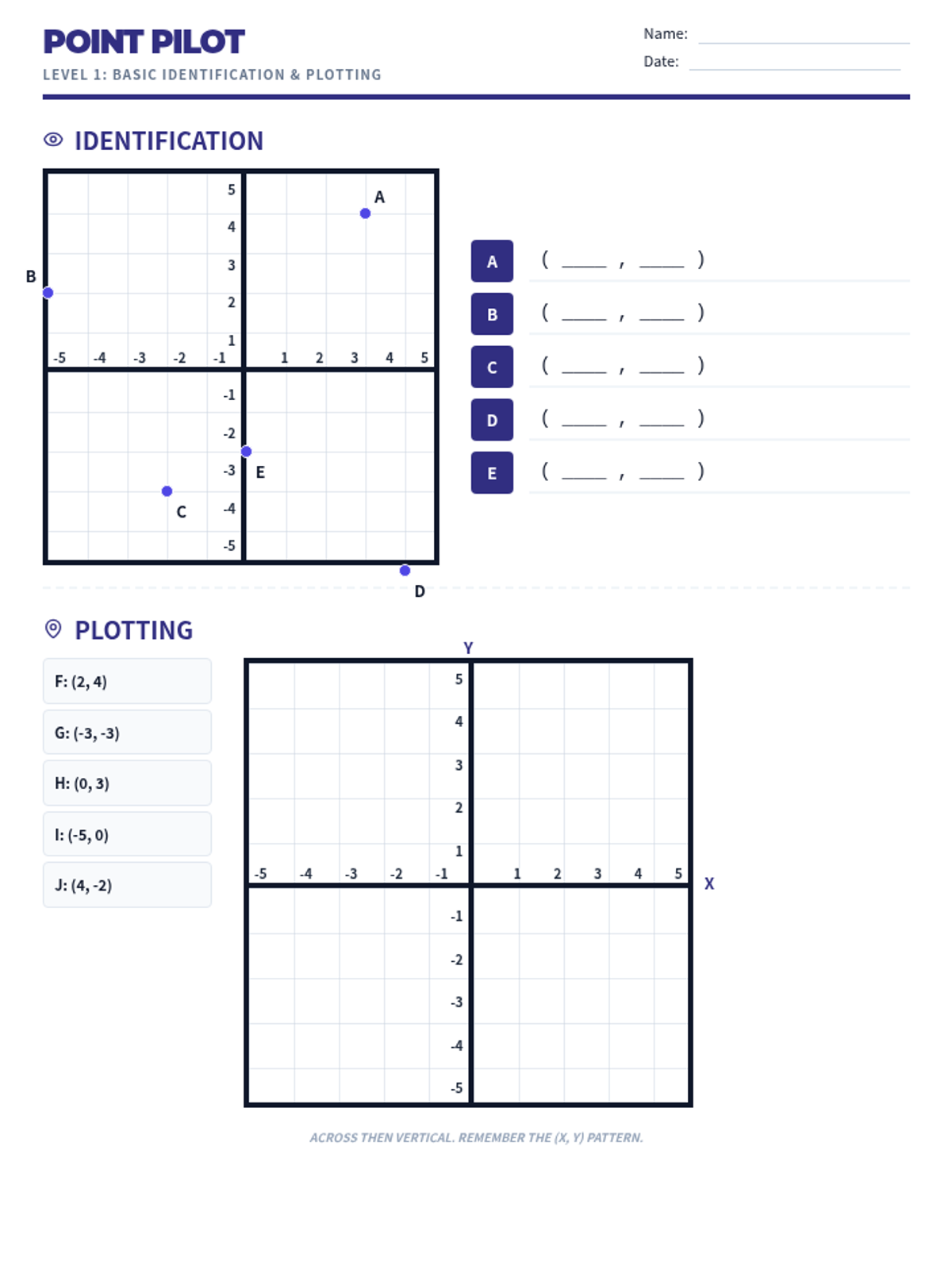
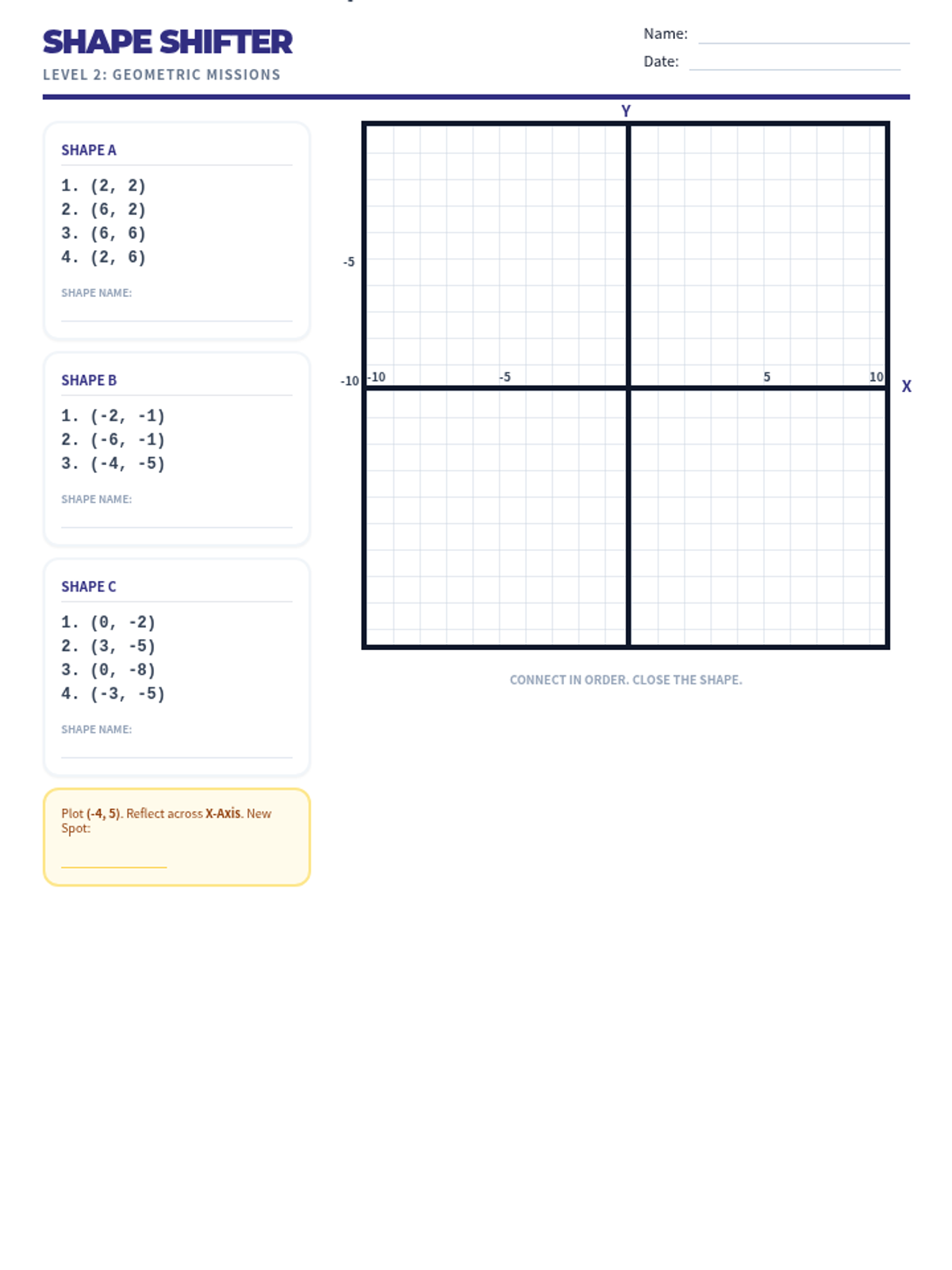
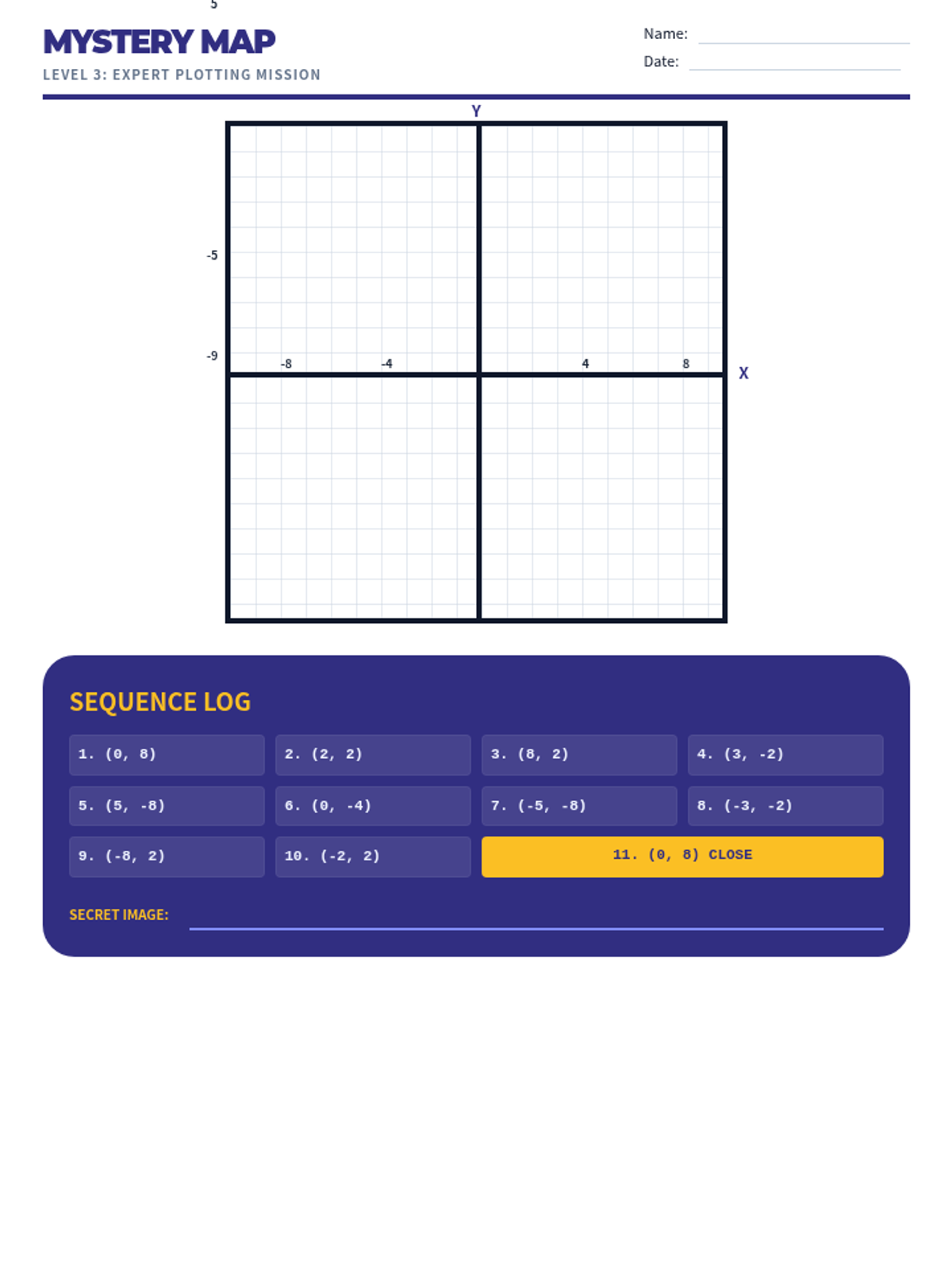
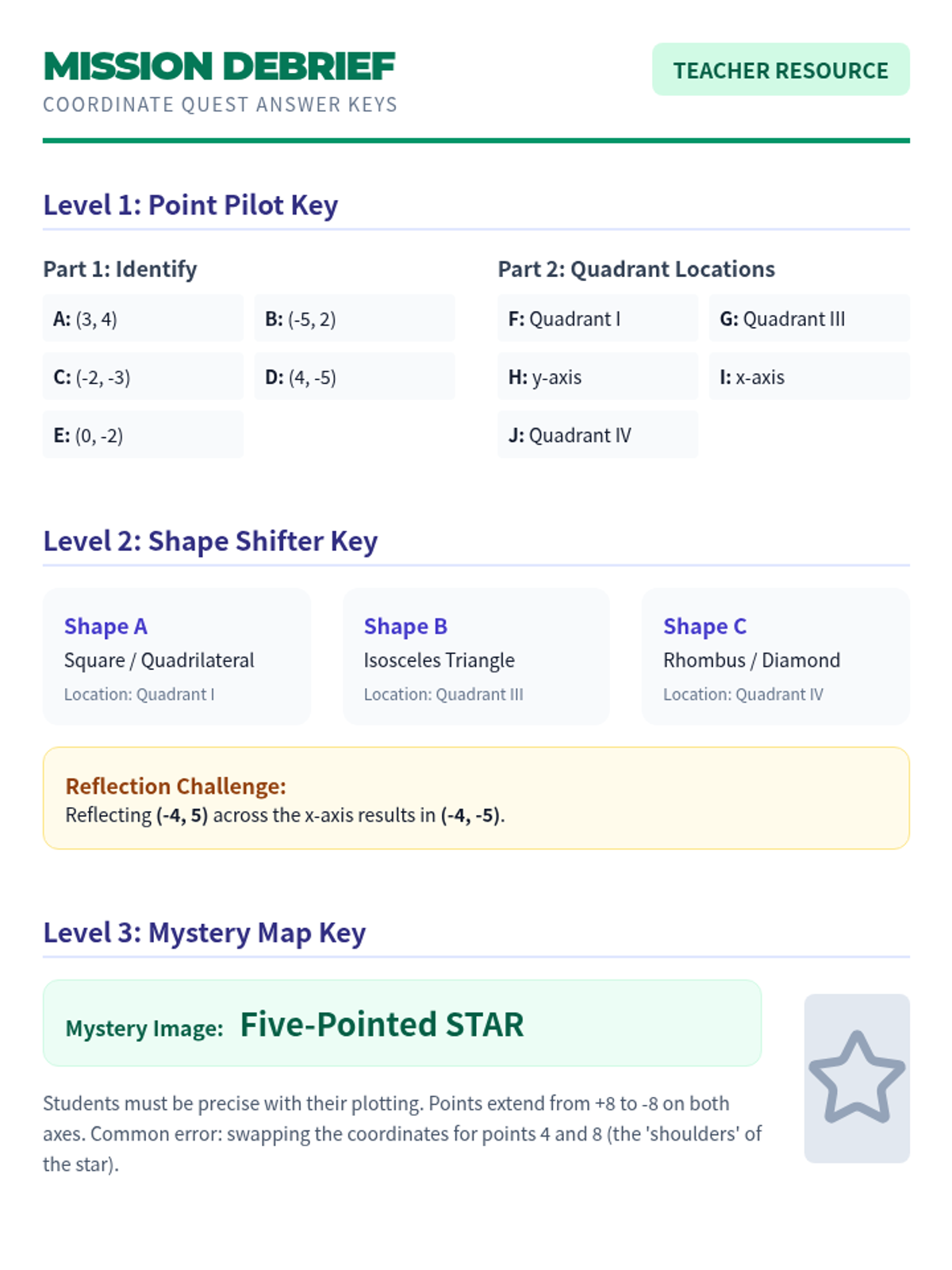
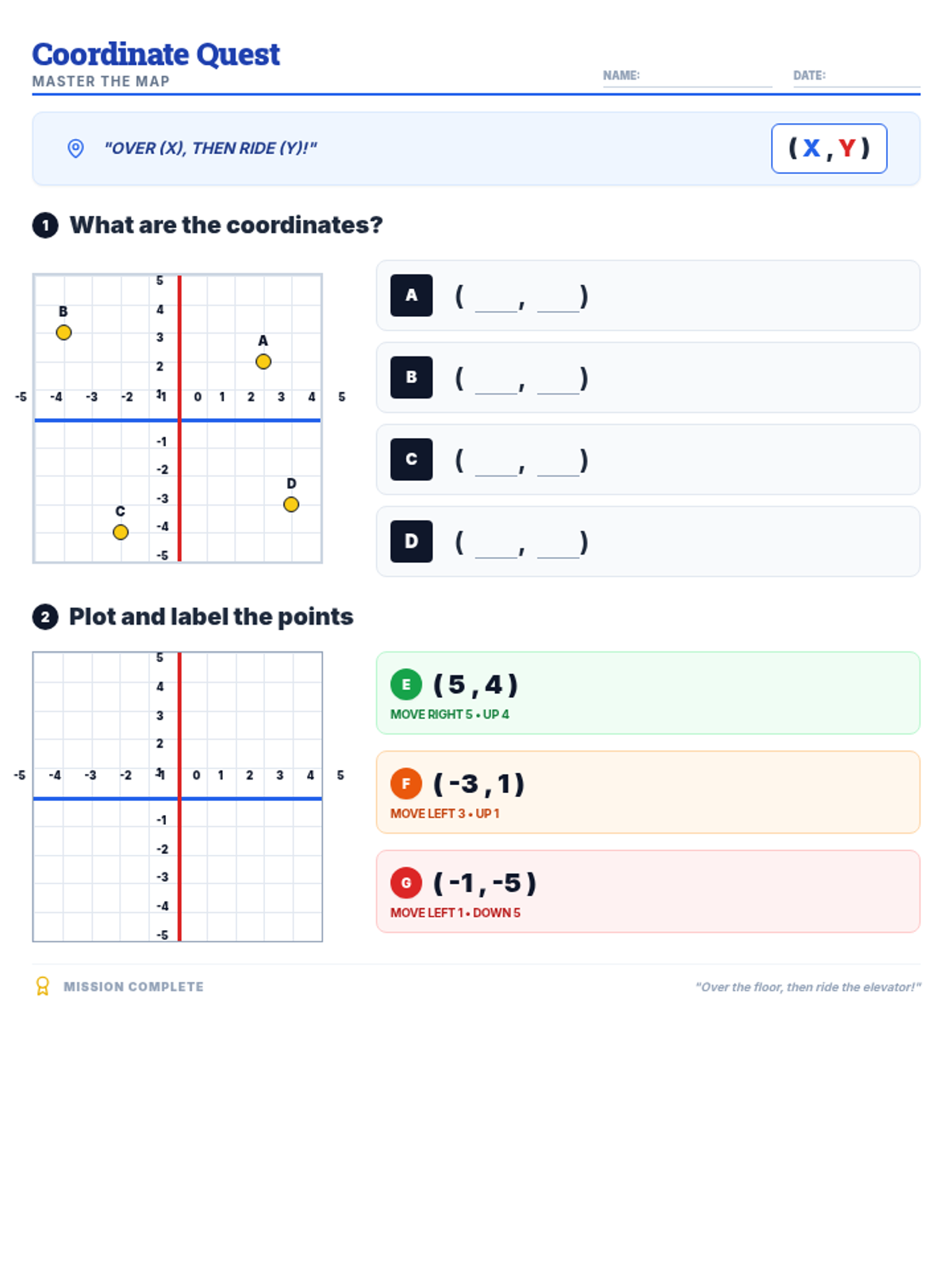
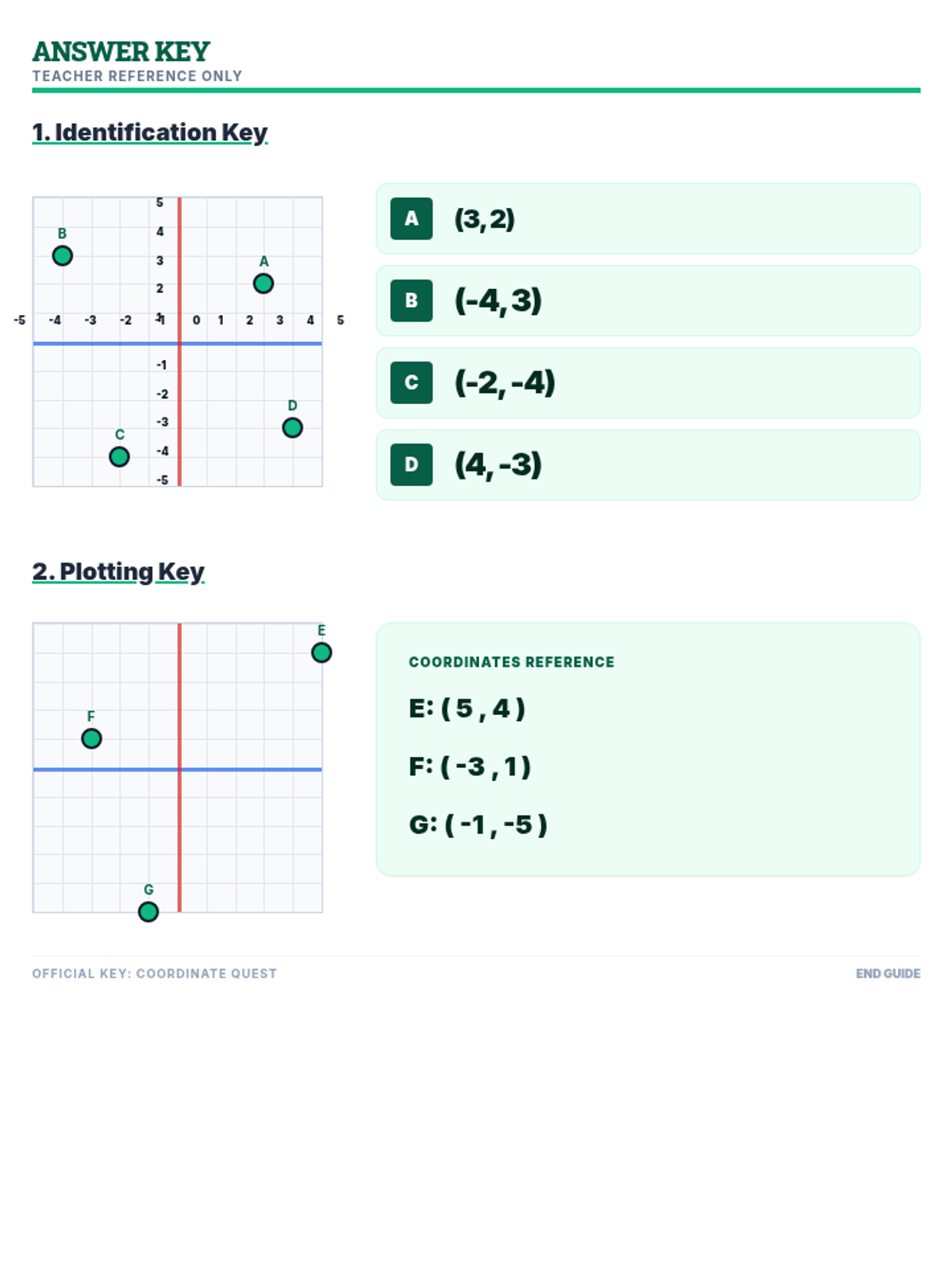
A comprehensive lesson on plotting points across all four quadrants of the coordinate plane, progressing from basic identification to complex shape creation.
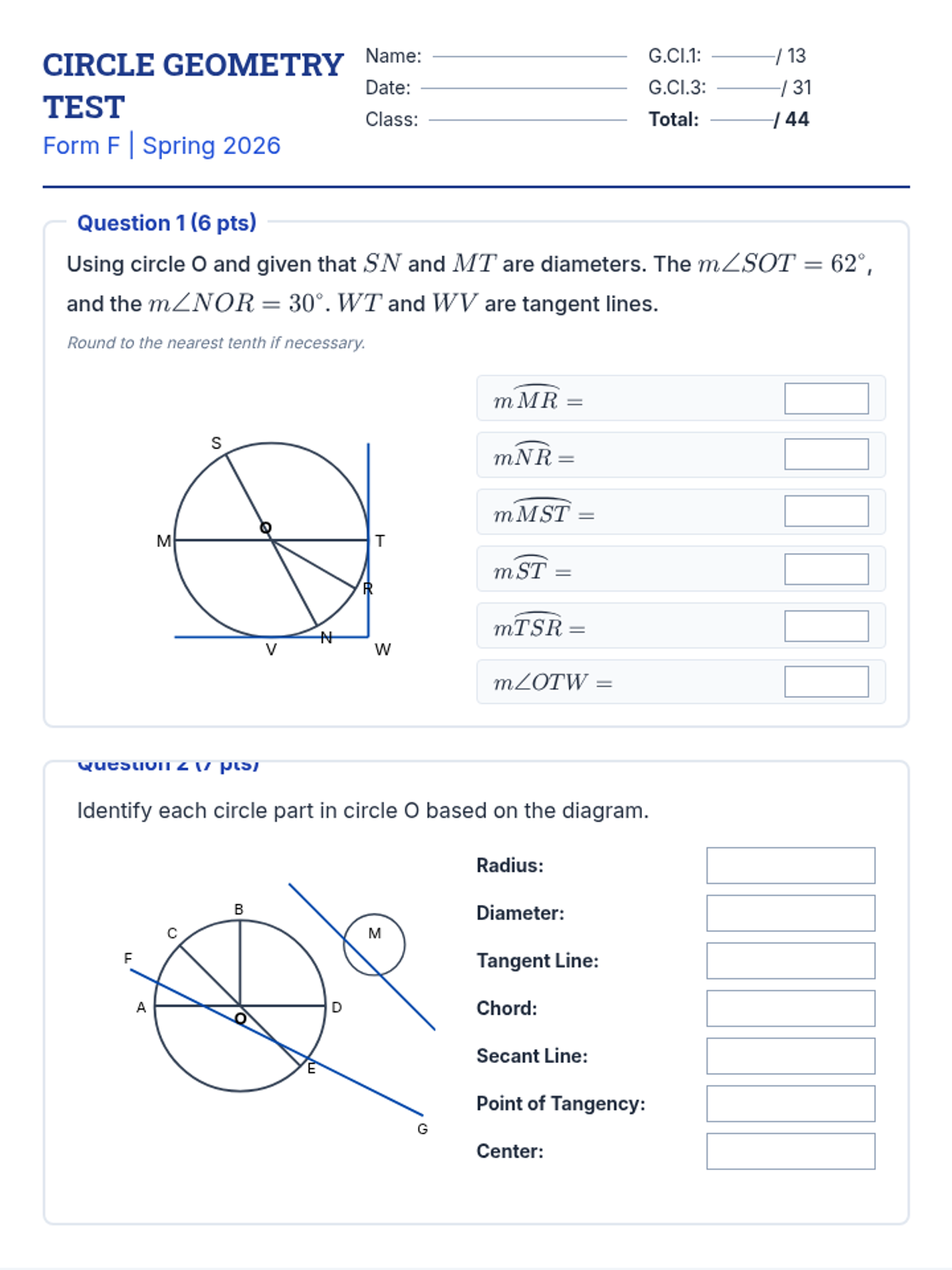
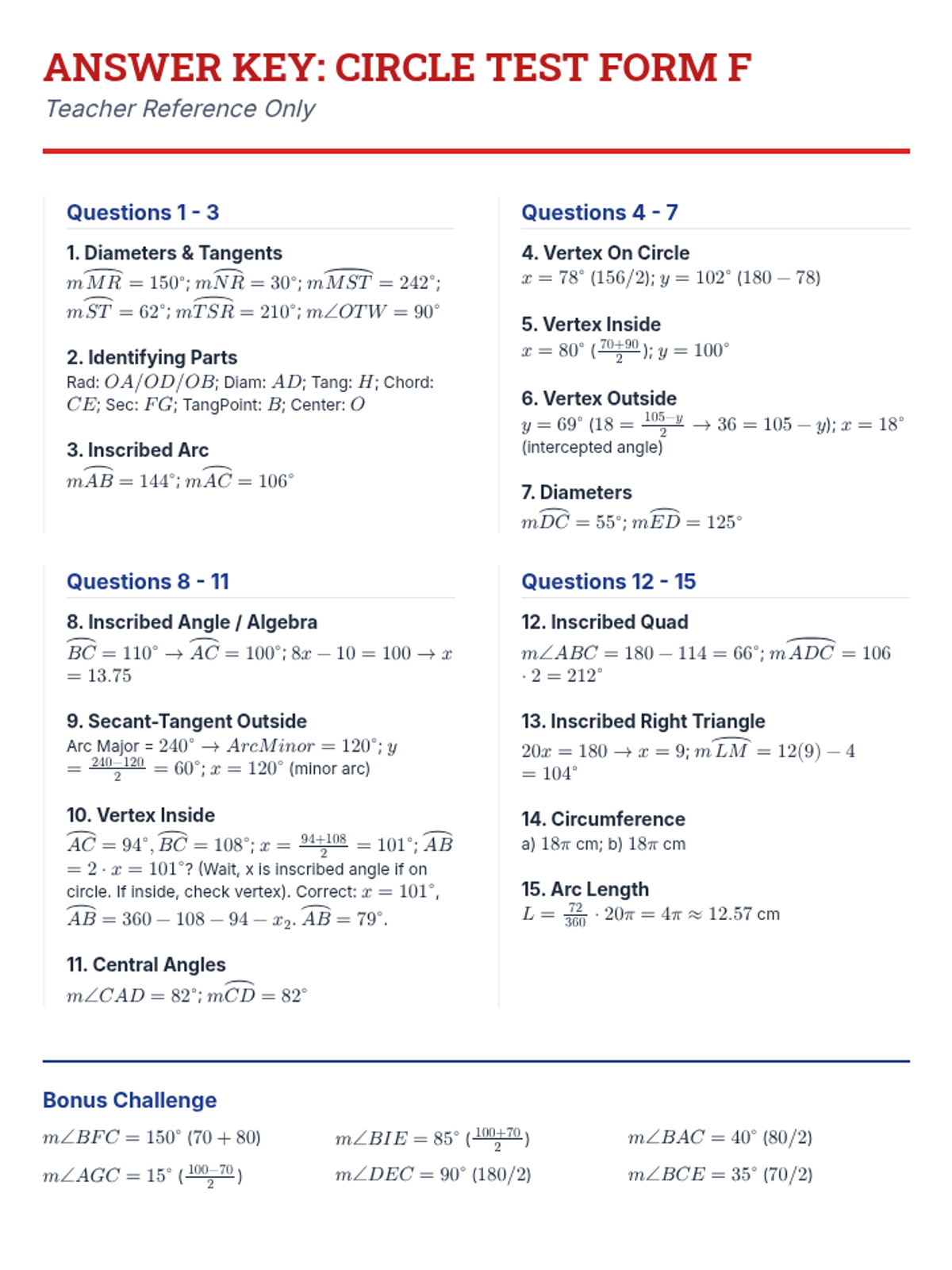
A comprehensive assessment covering circle geometry, including angle relationships, arc measures, and circle components. Students will identify circle parts, calculate angle and arc measures using various theorems, and determine circumference and arc length.
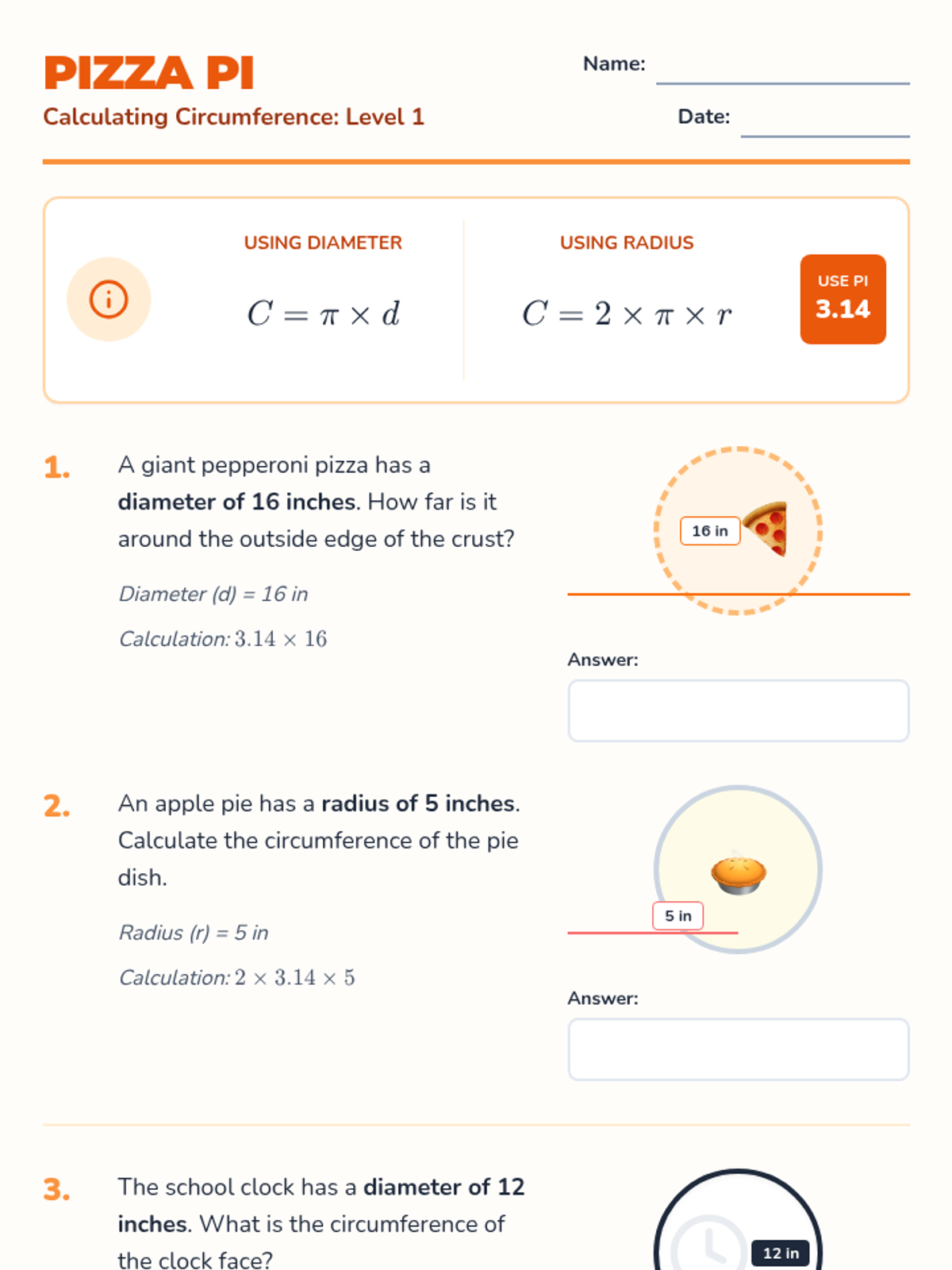
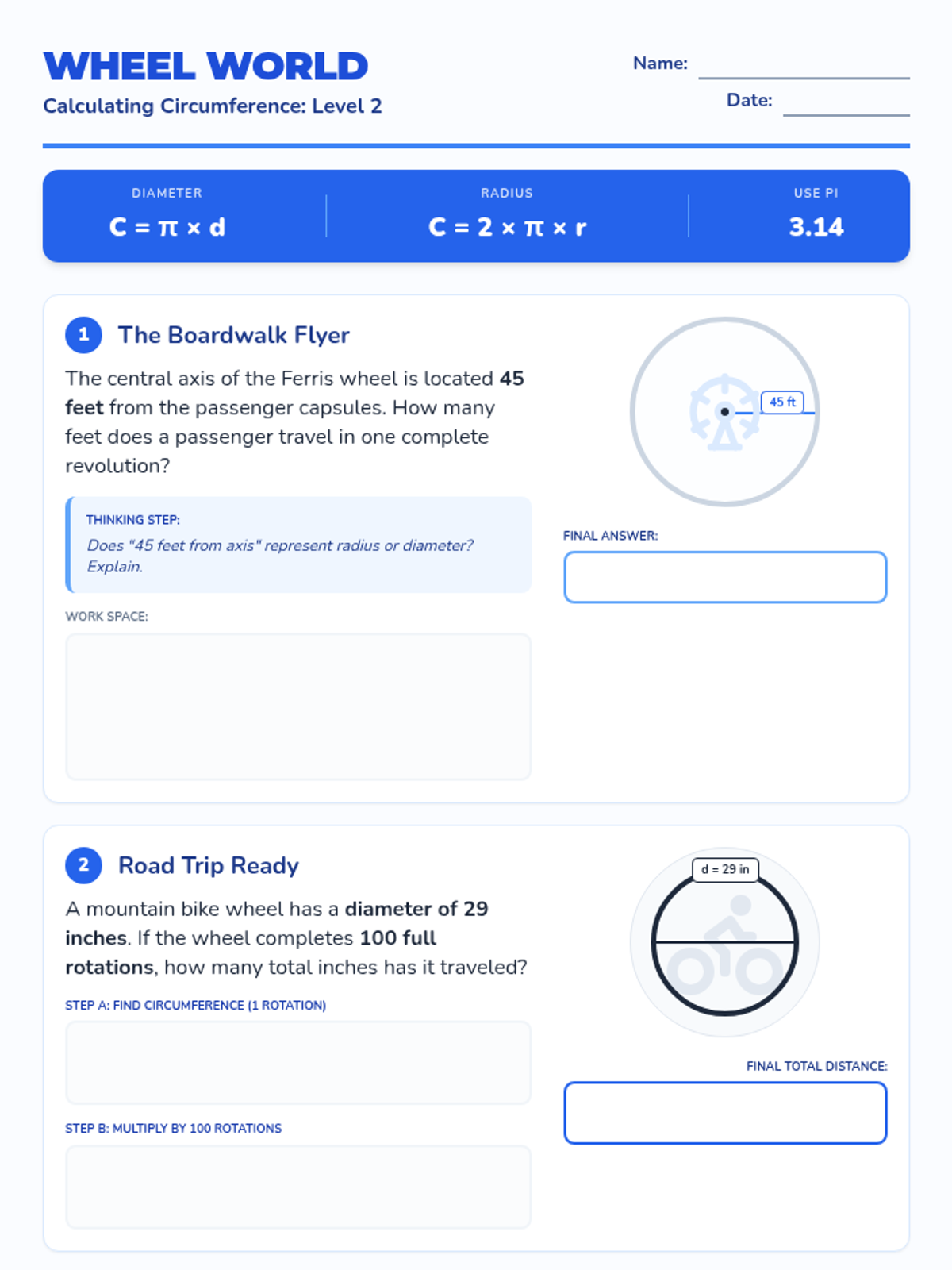
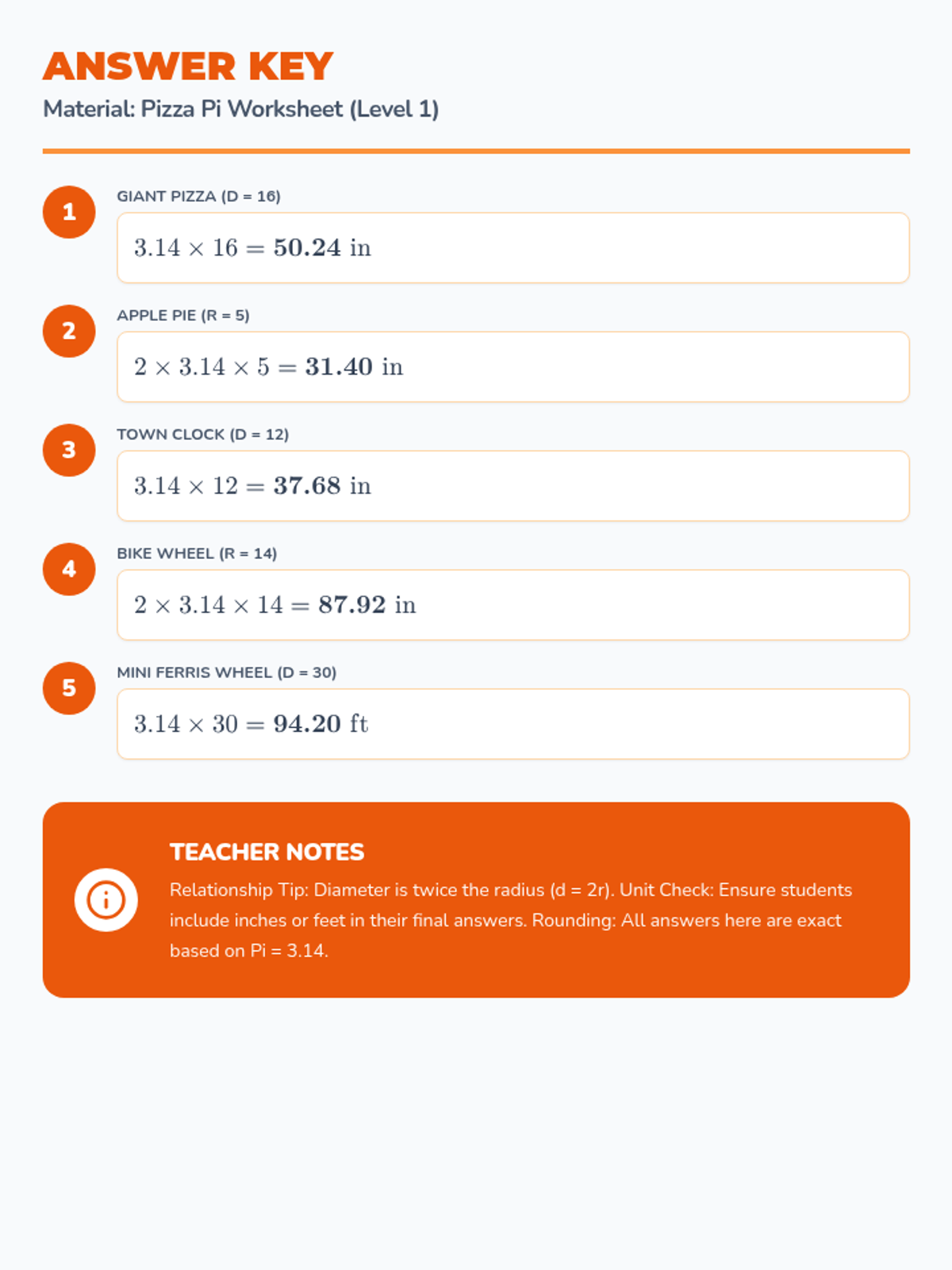
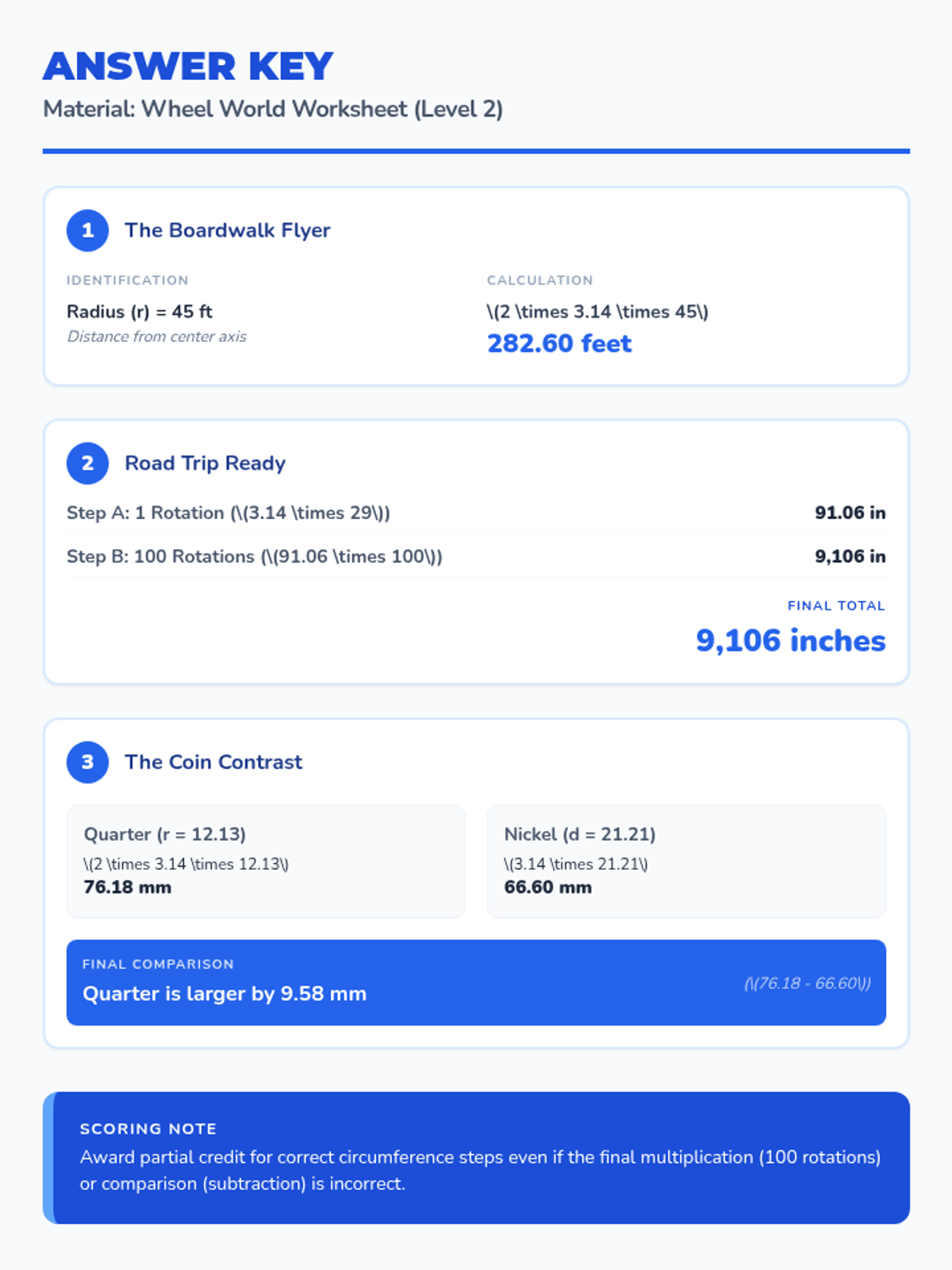
A math exploration into the world of round objects, focusing on calculating circumference using radius and diameter through real-world scenarios including food, wheels, and timepieces.
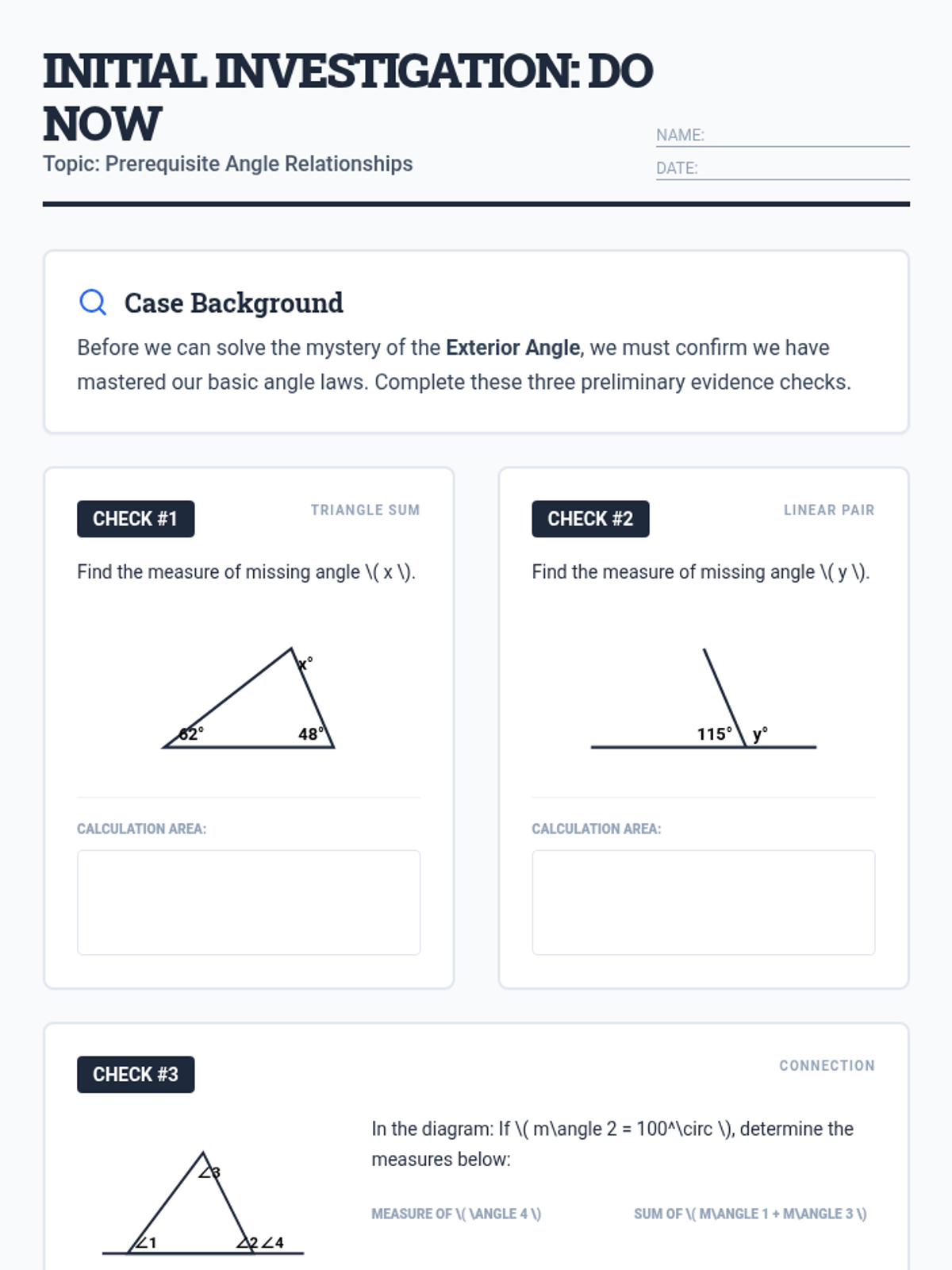
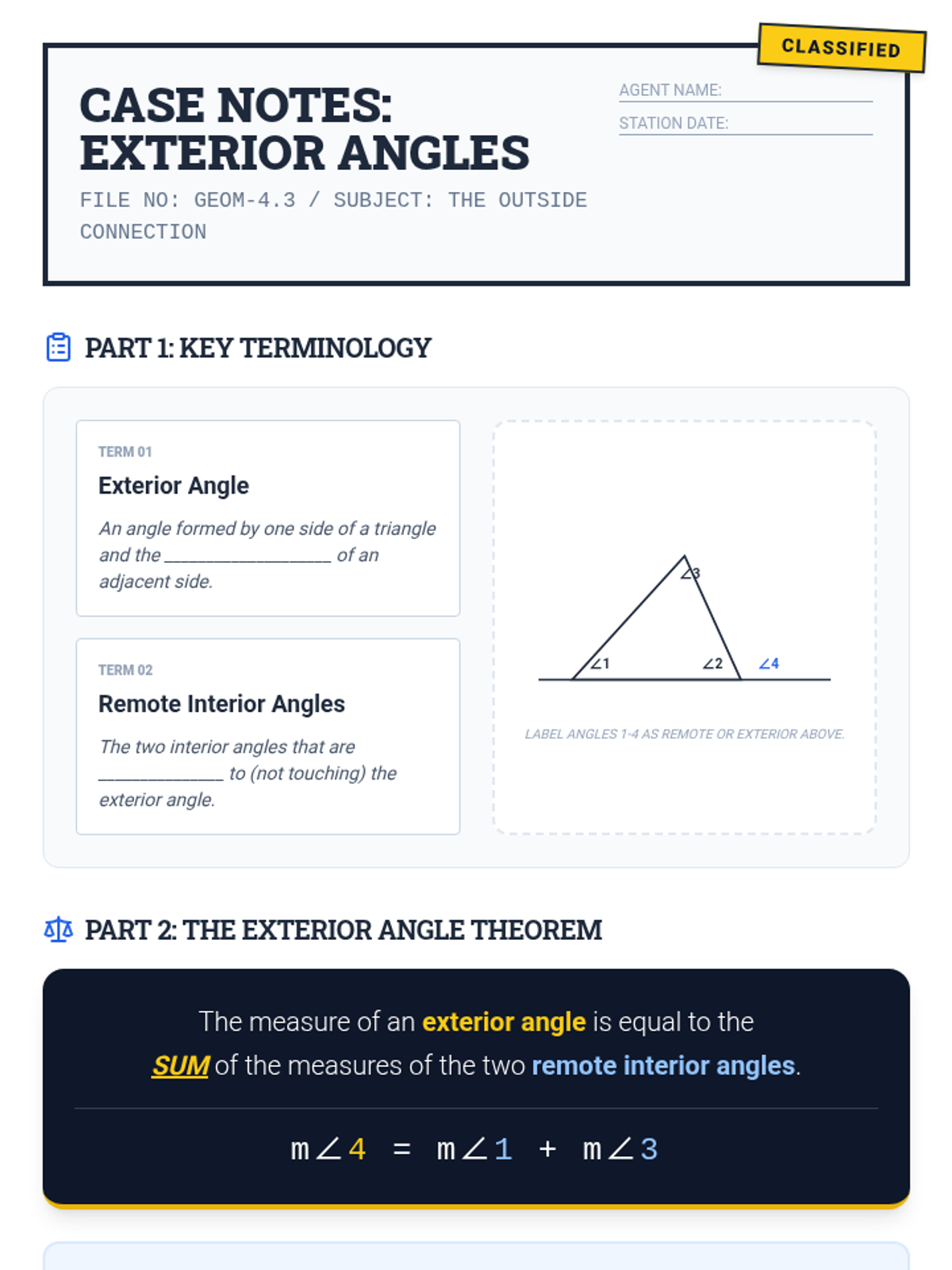
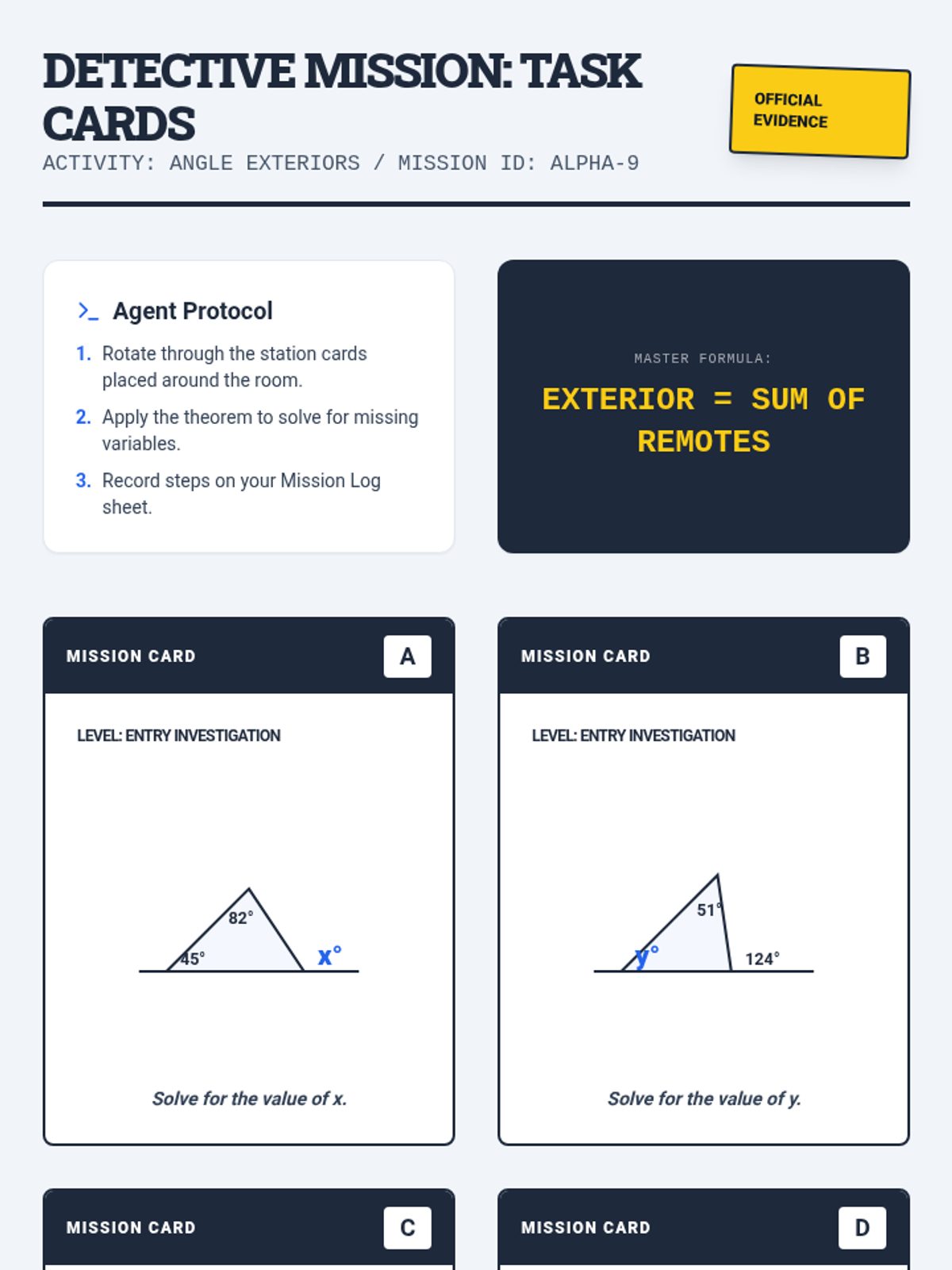
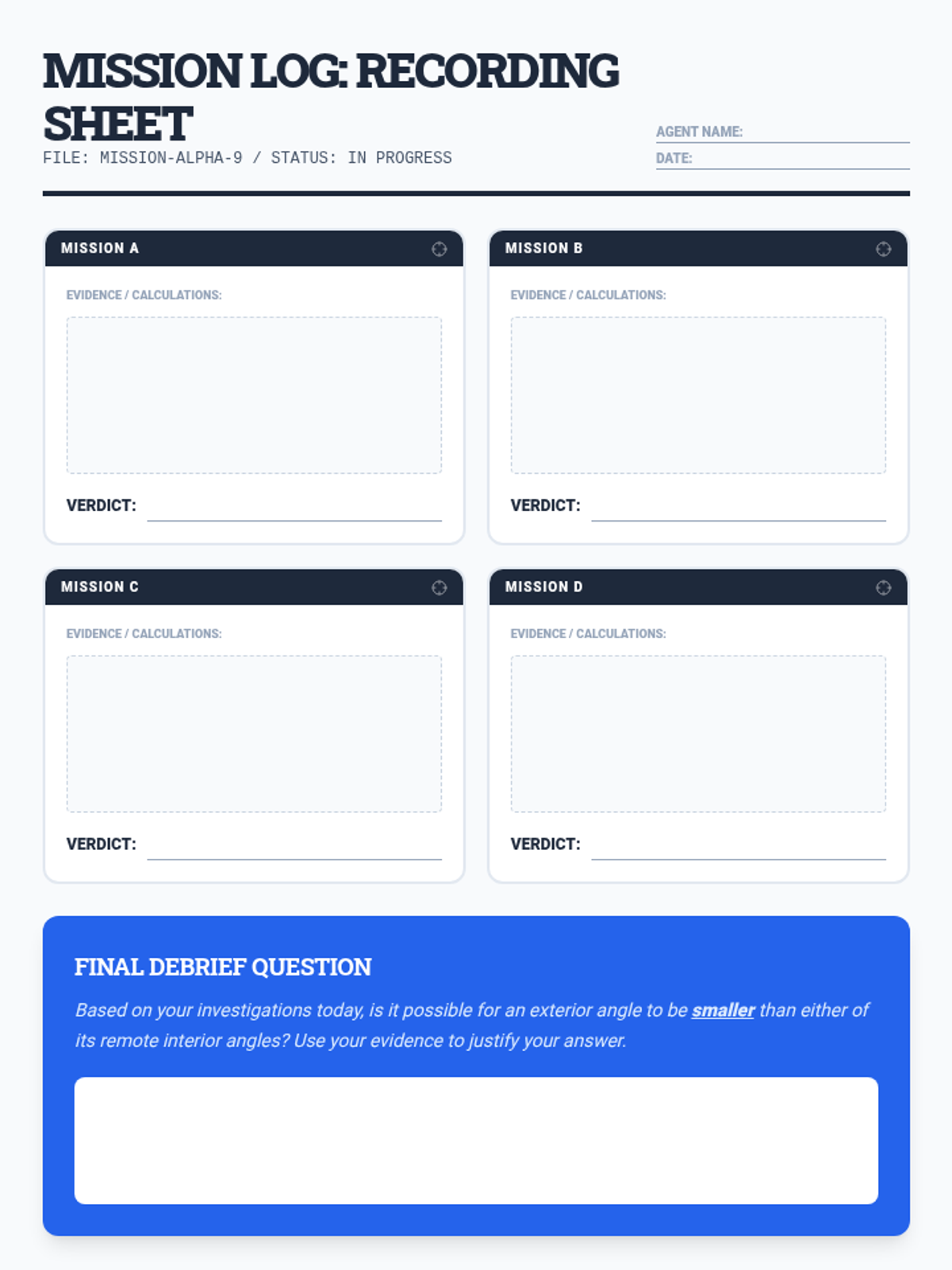
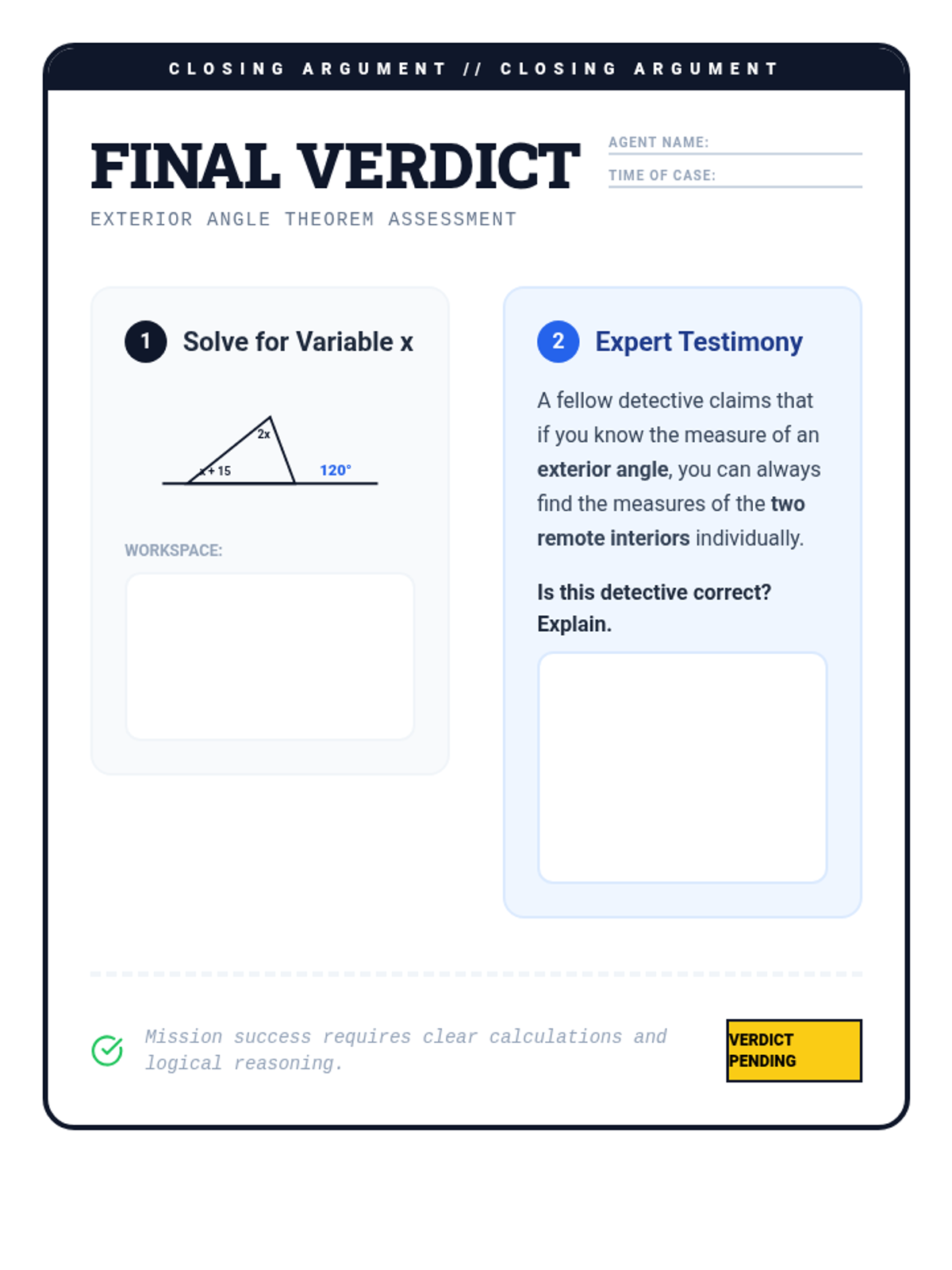
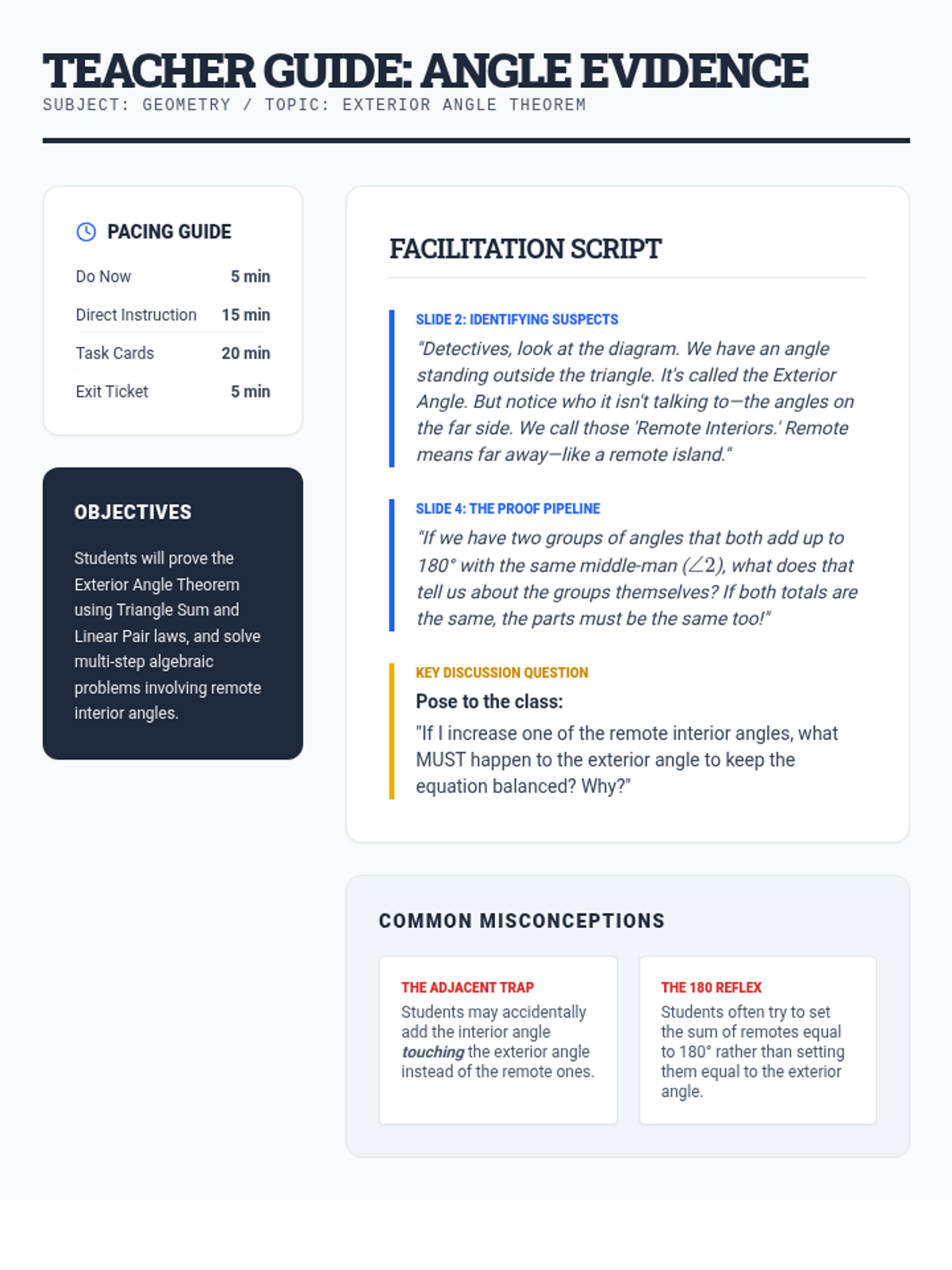
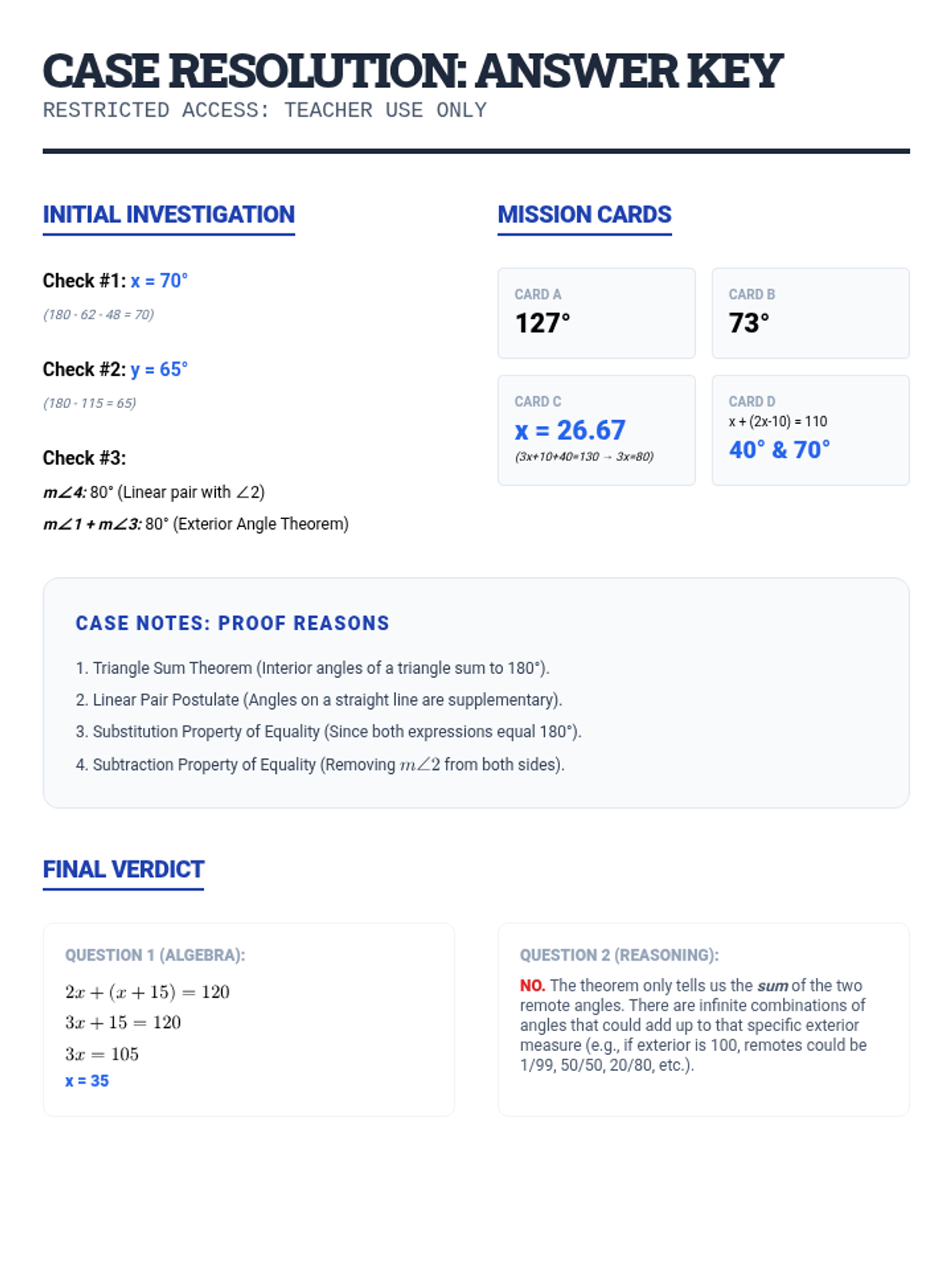
A comprehensive lesson package exploring the Exterior Angle Theorem through a 'detective case' lens. Students investigate the relationship between exterior and remote interior angles through proof and application.
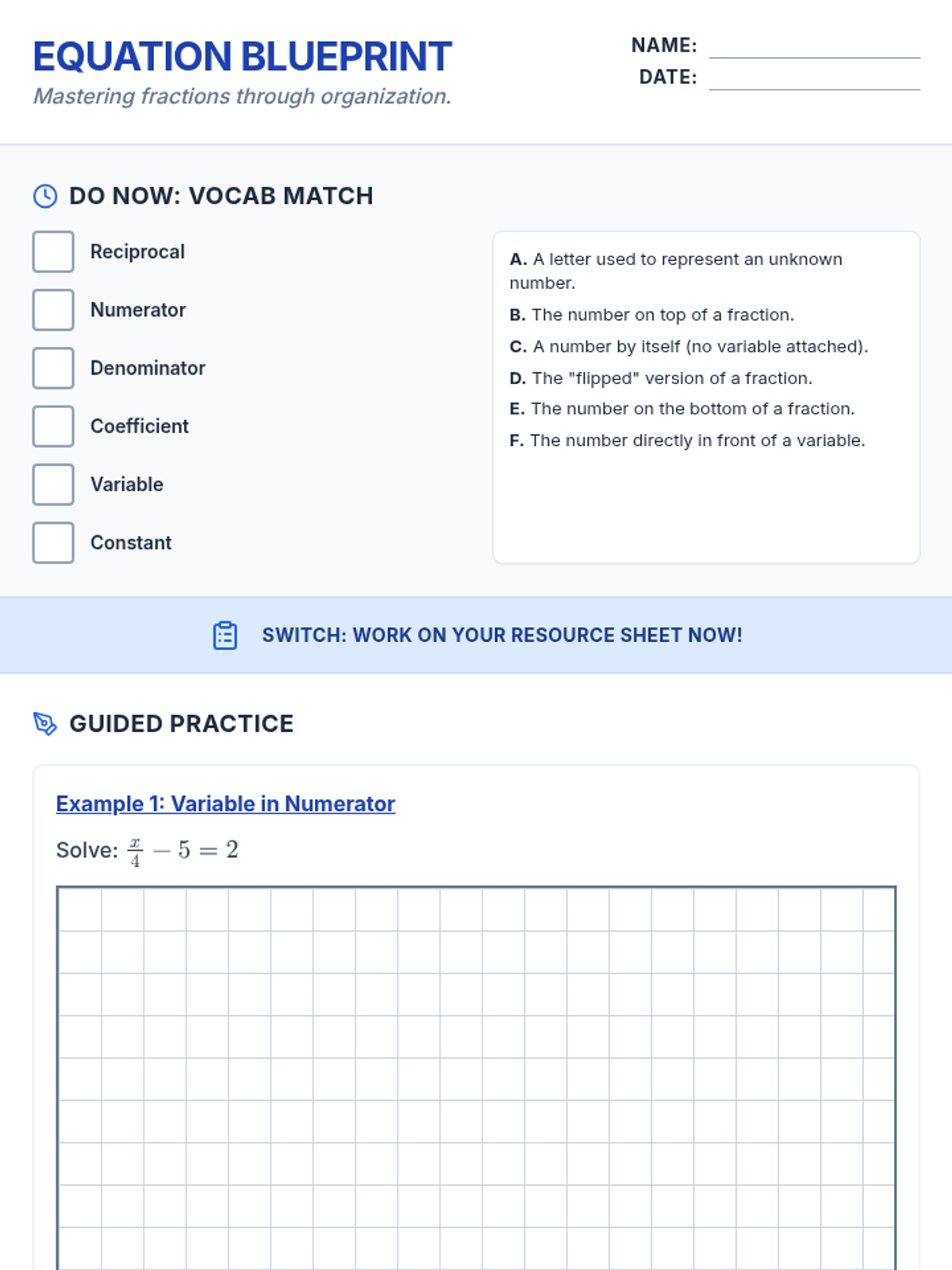
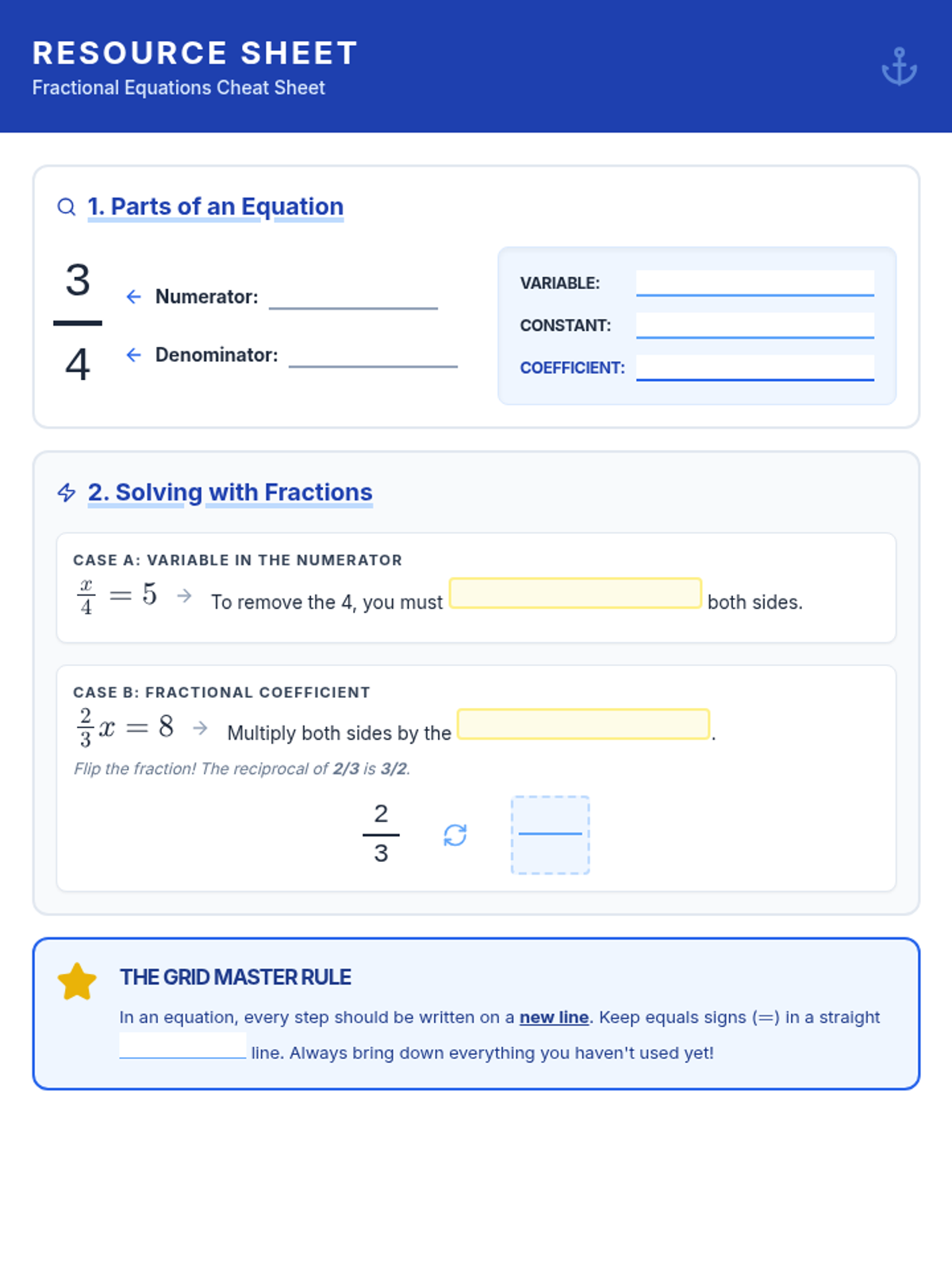
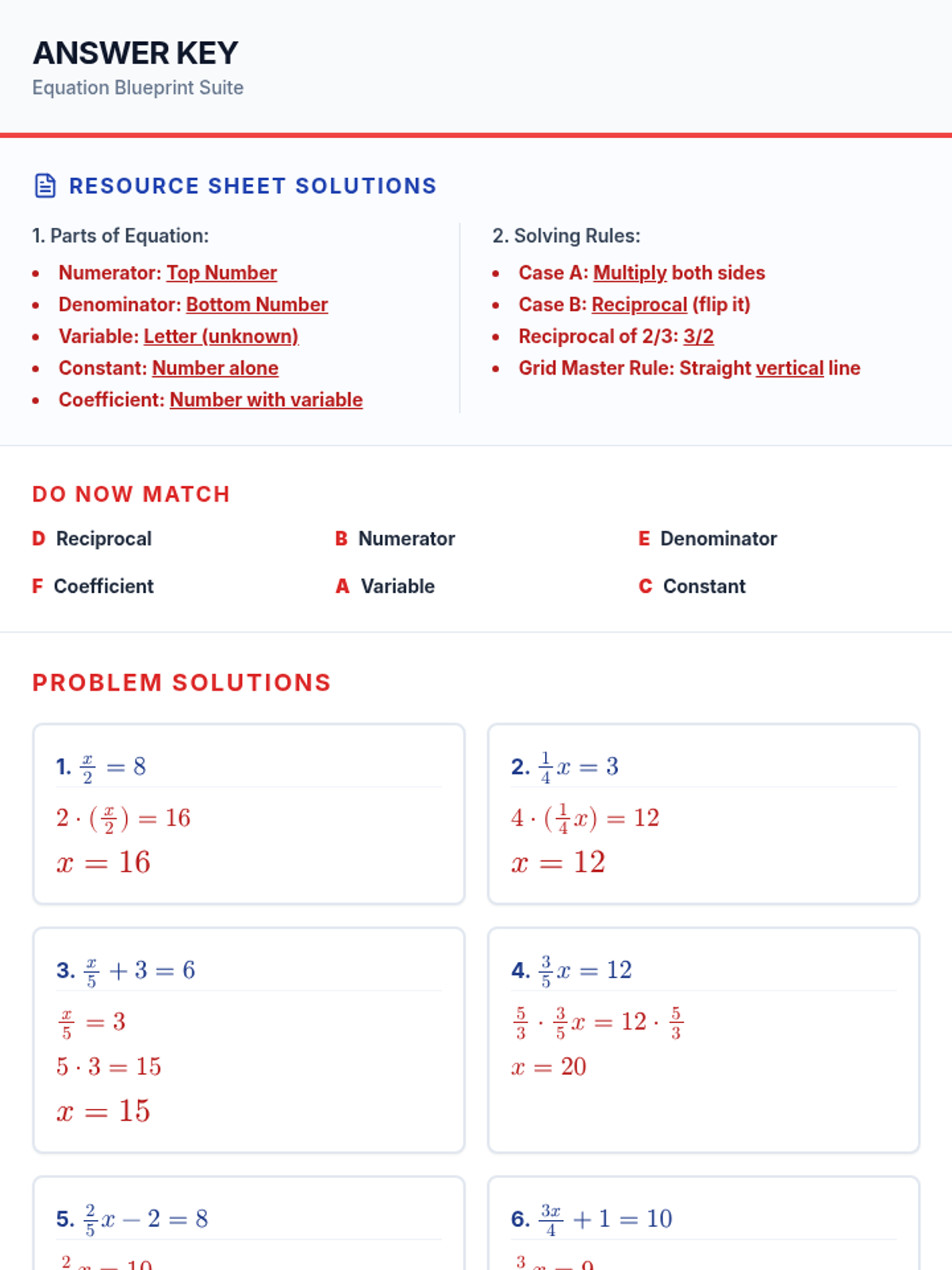
A math foundations lesson for 9th and 10th grade students focusing on solving equations with fractions through organized, line-by-line computation on grid-style layouts.
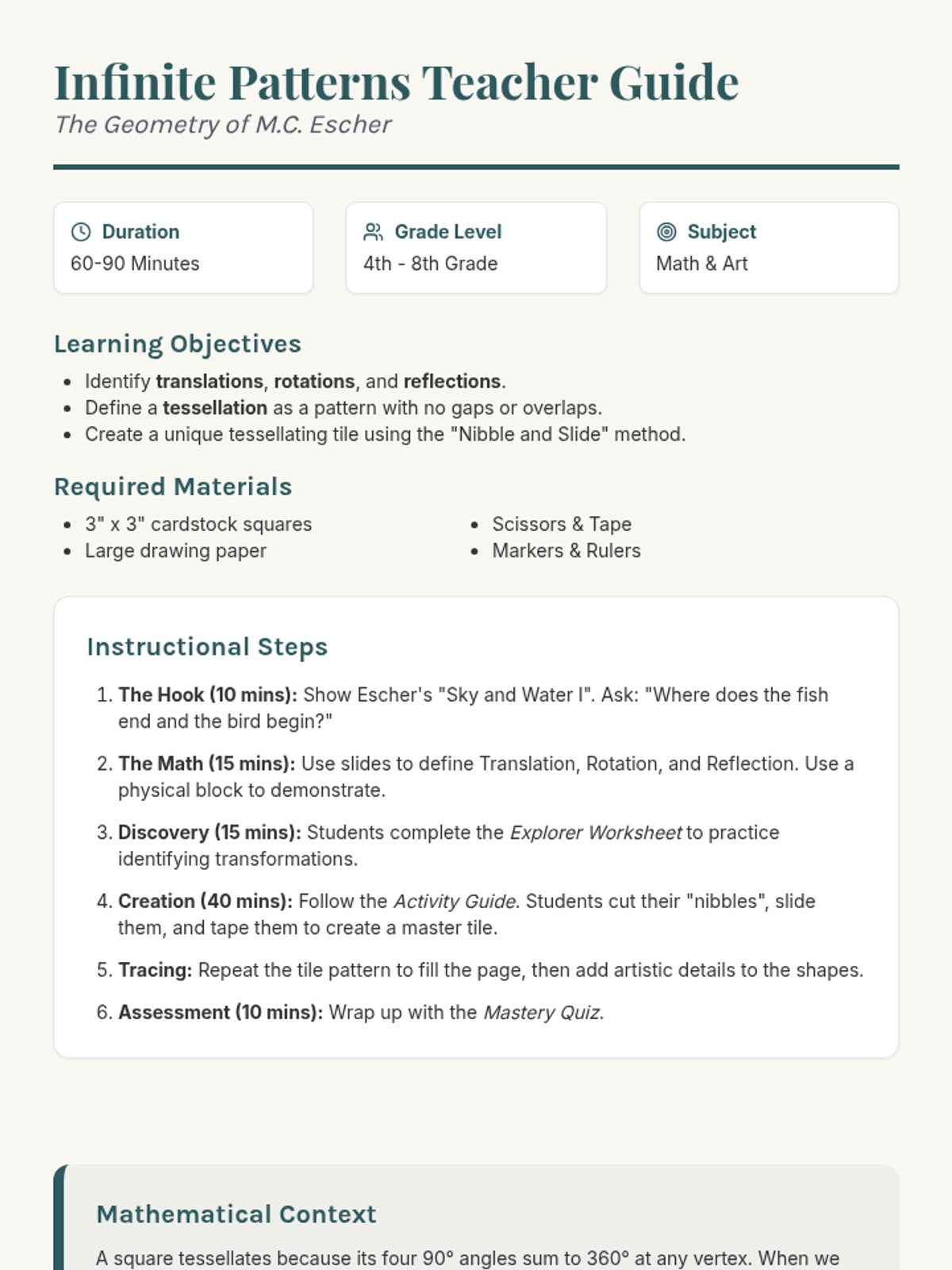
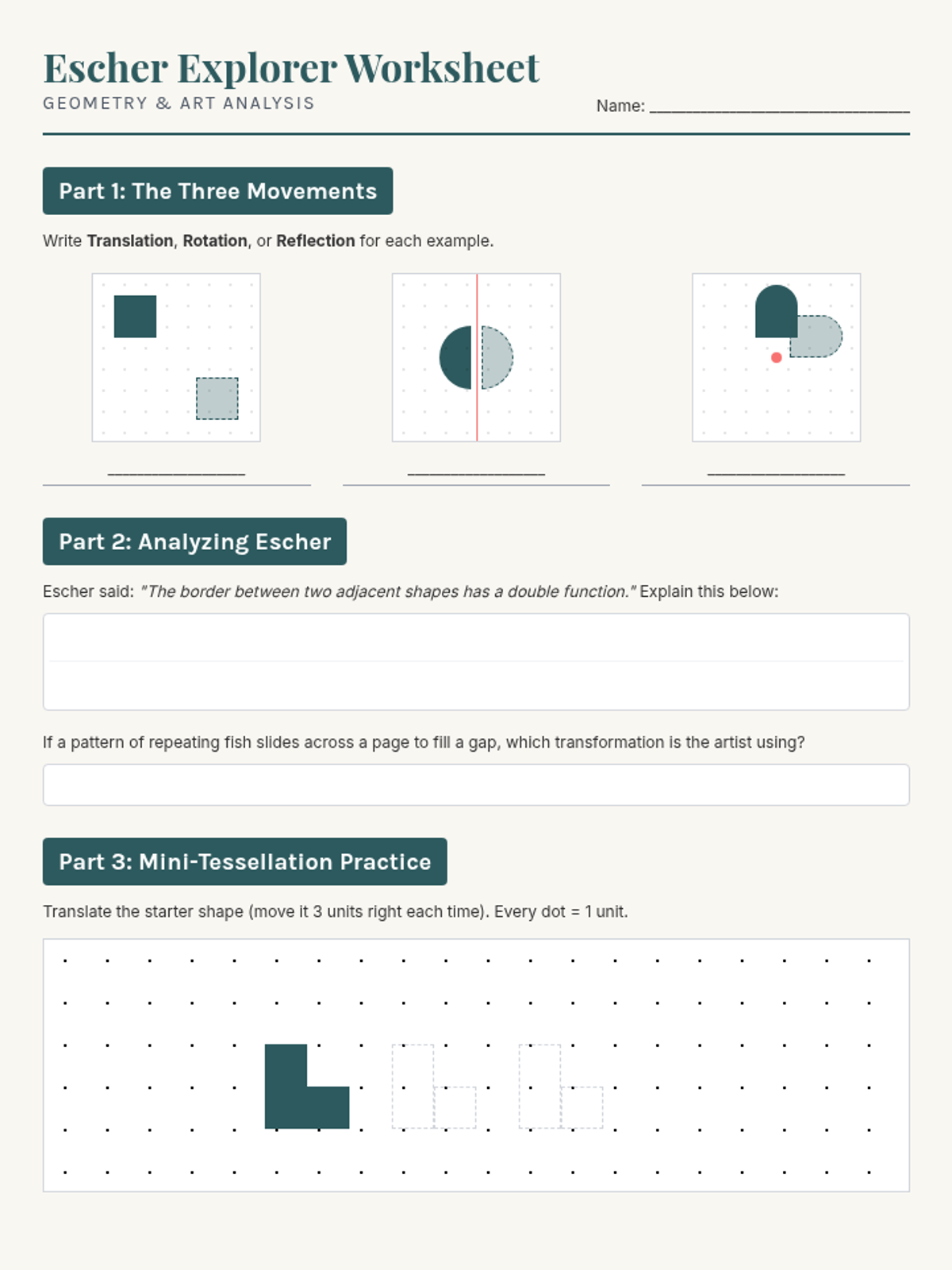
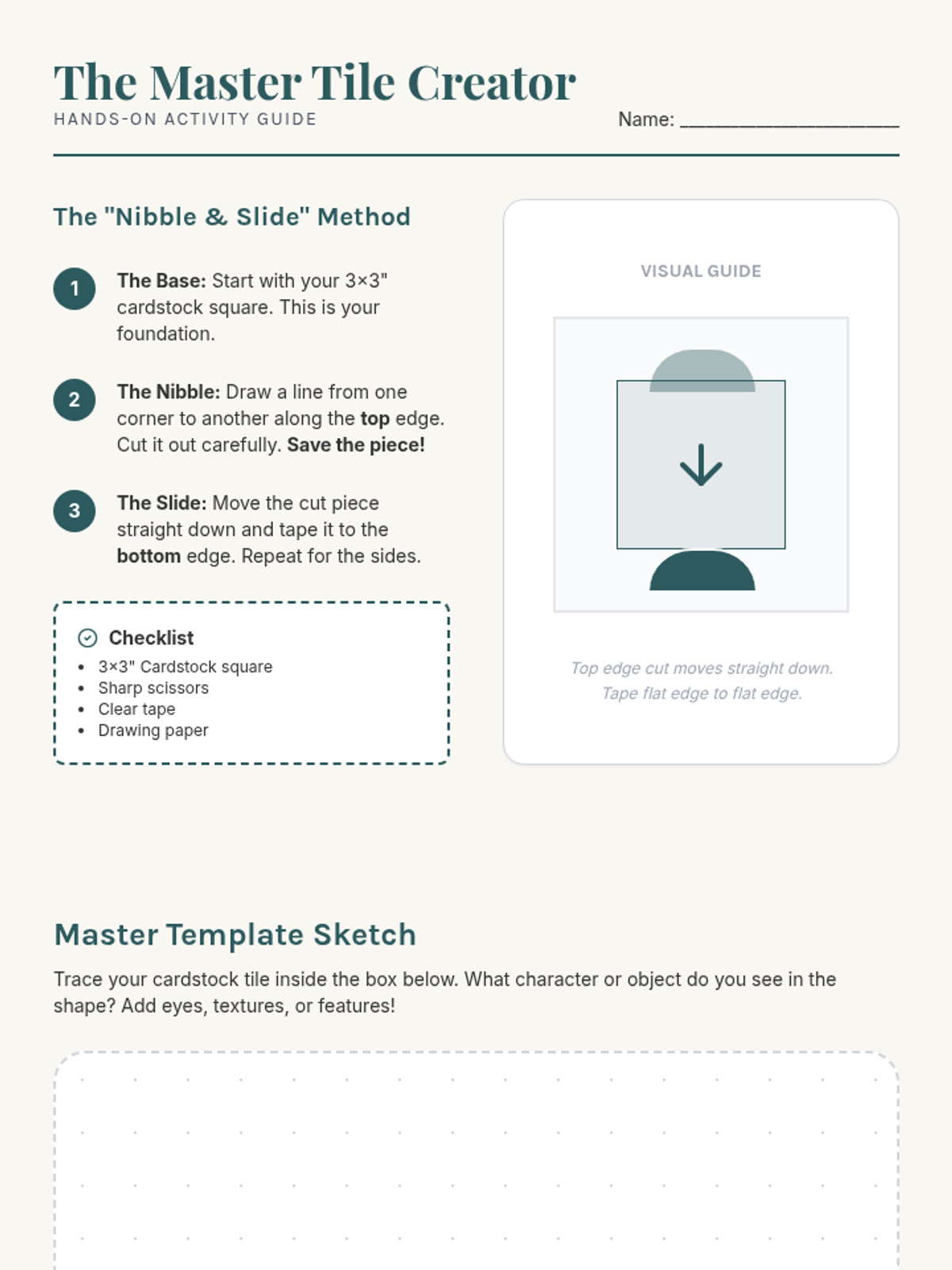
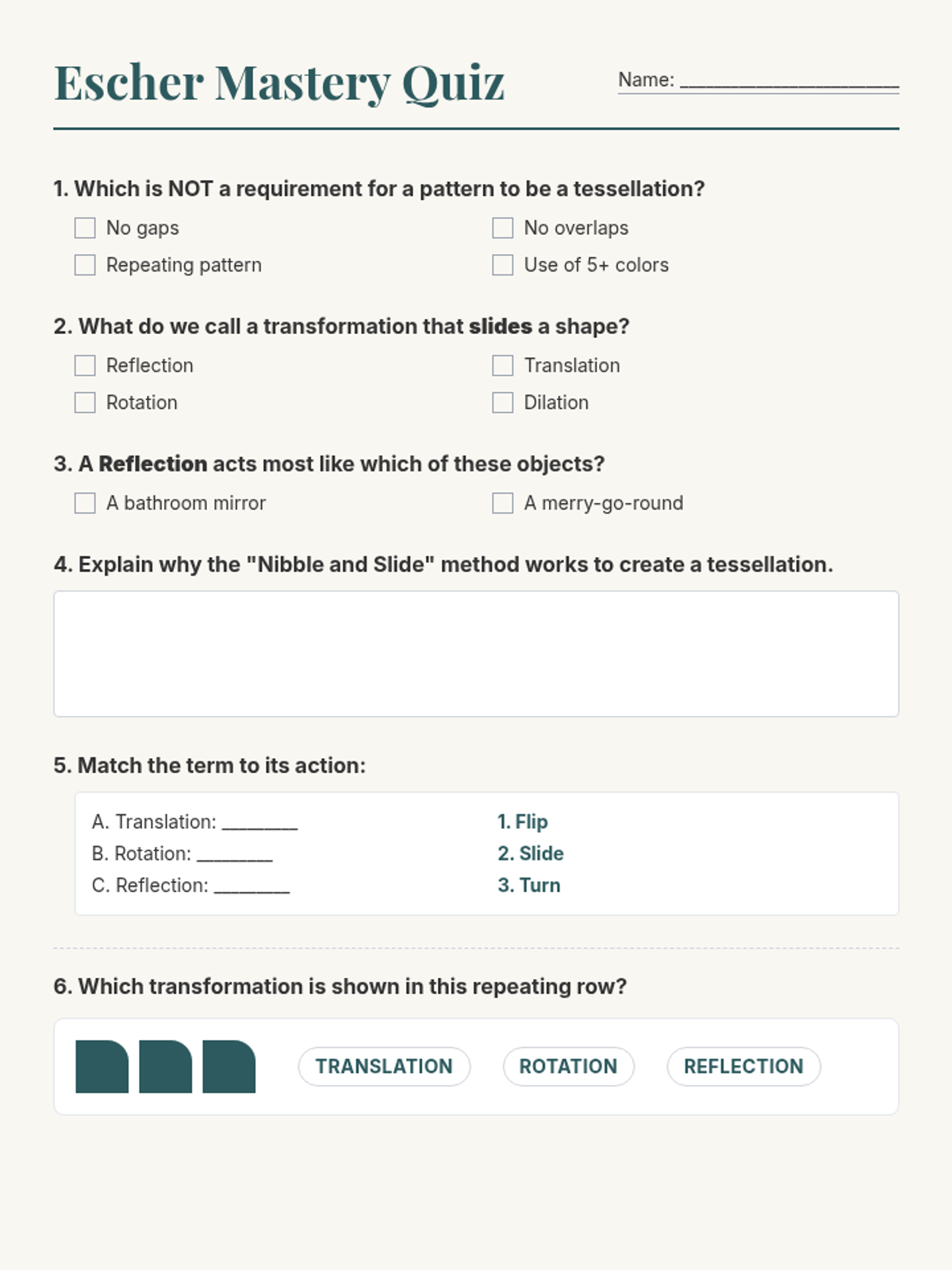
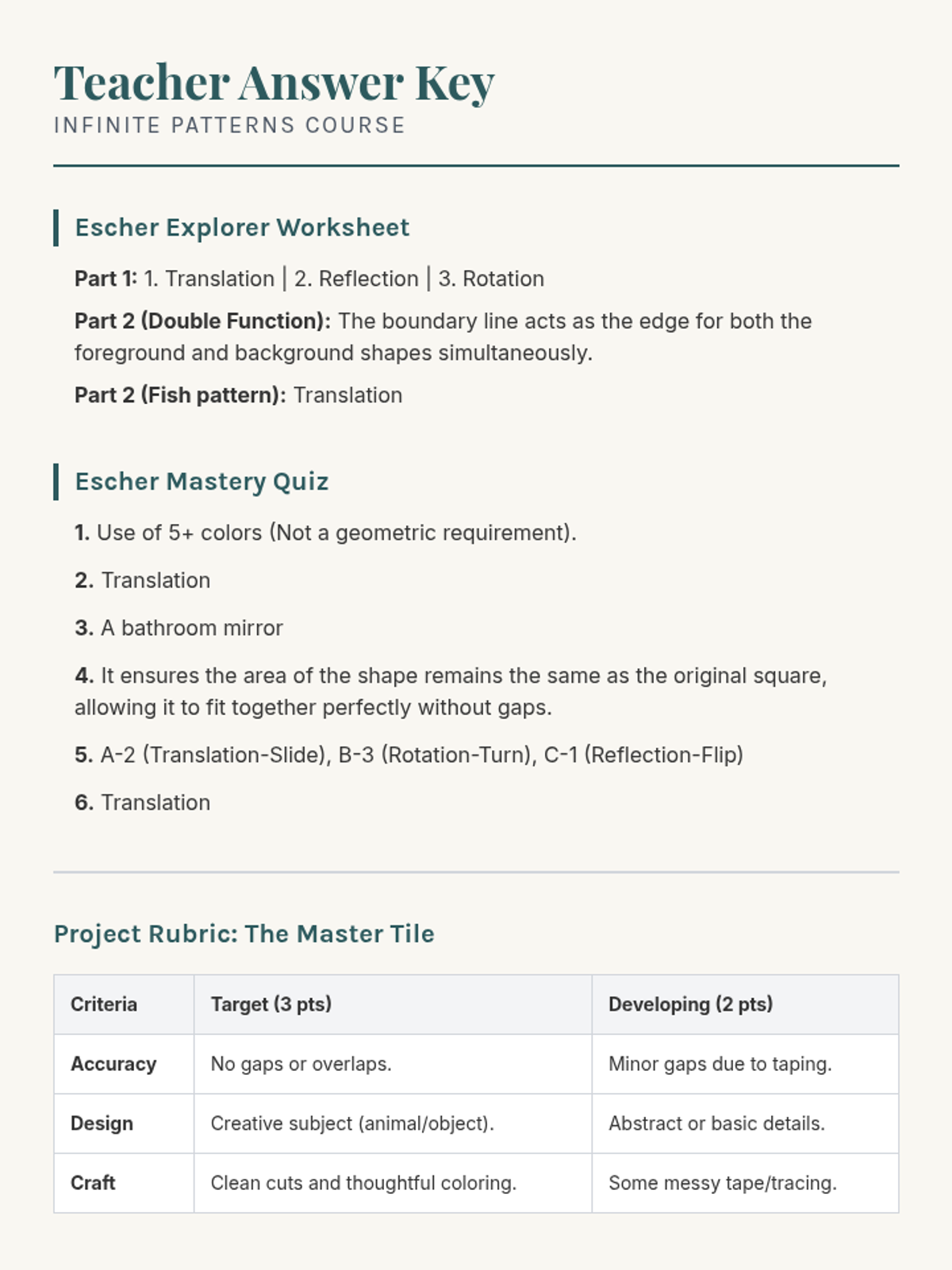
A hands-on interdisciplinary lesson blending geometry and art. Students explore M.C. Escher's work to understand and apply translations, rotations, and reflections through the creation of original tessellating patterns.
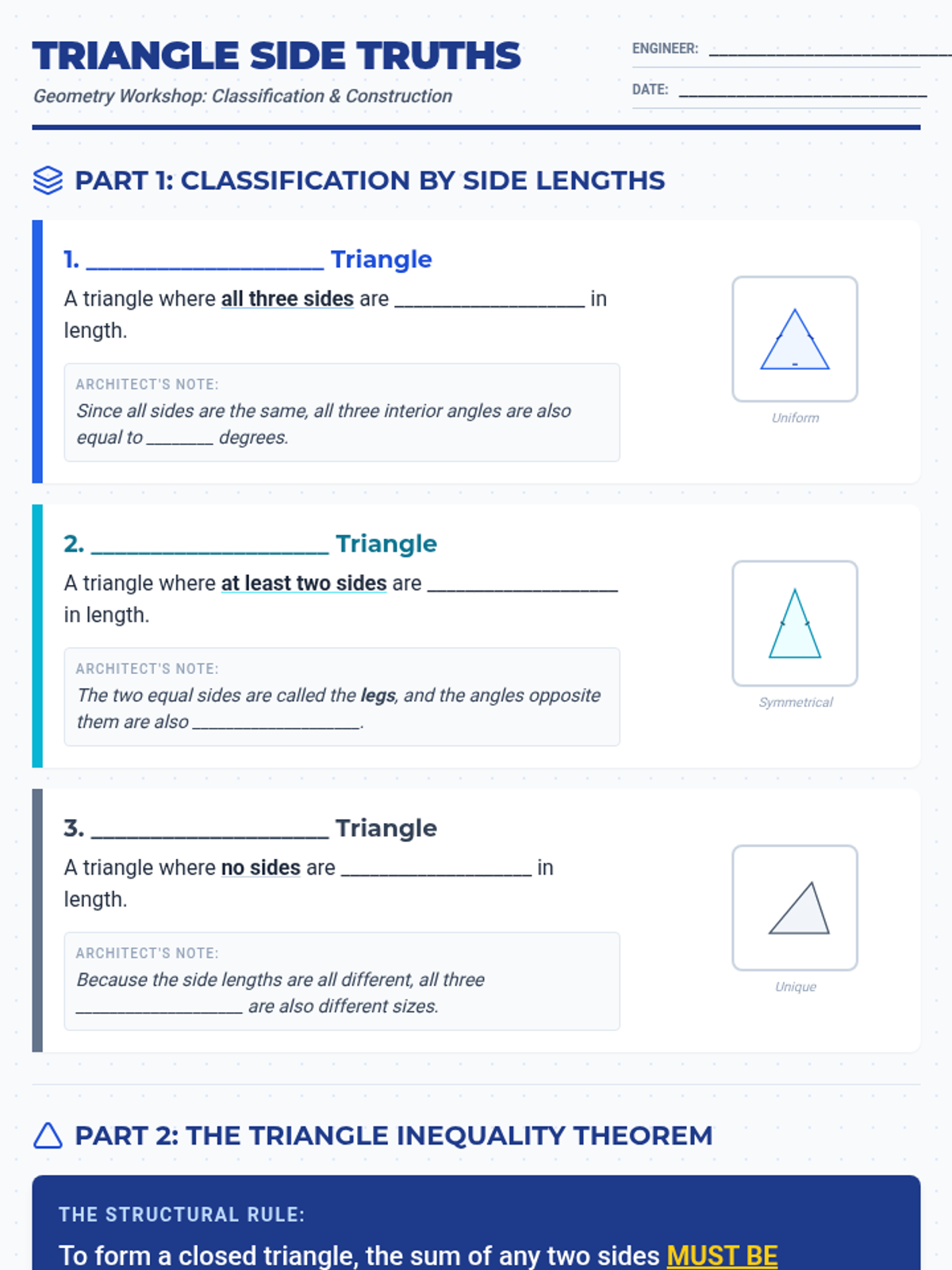
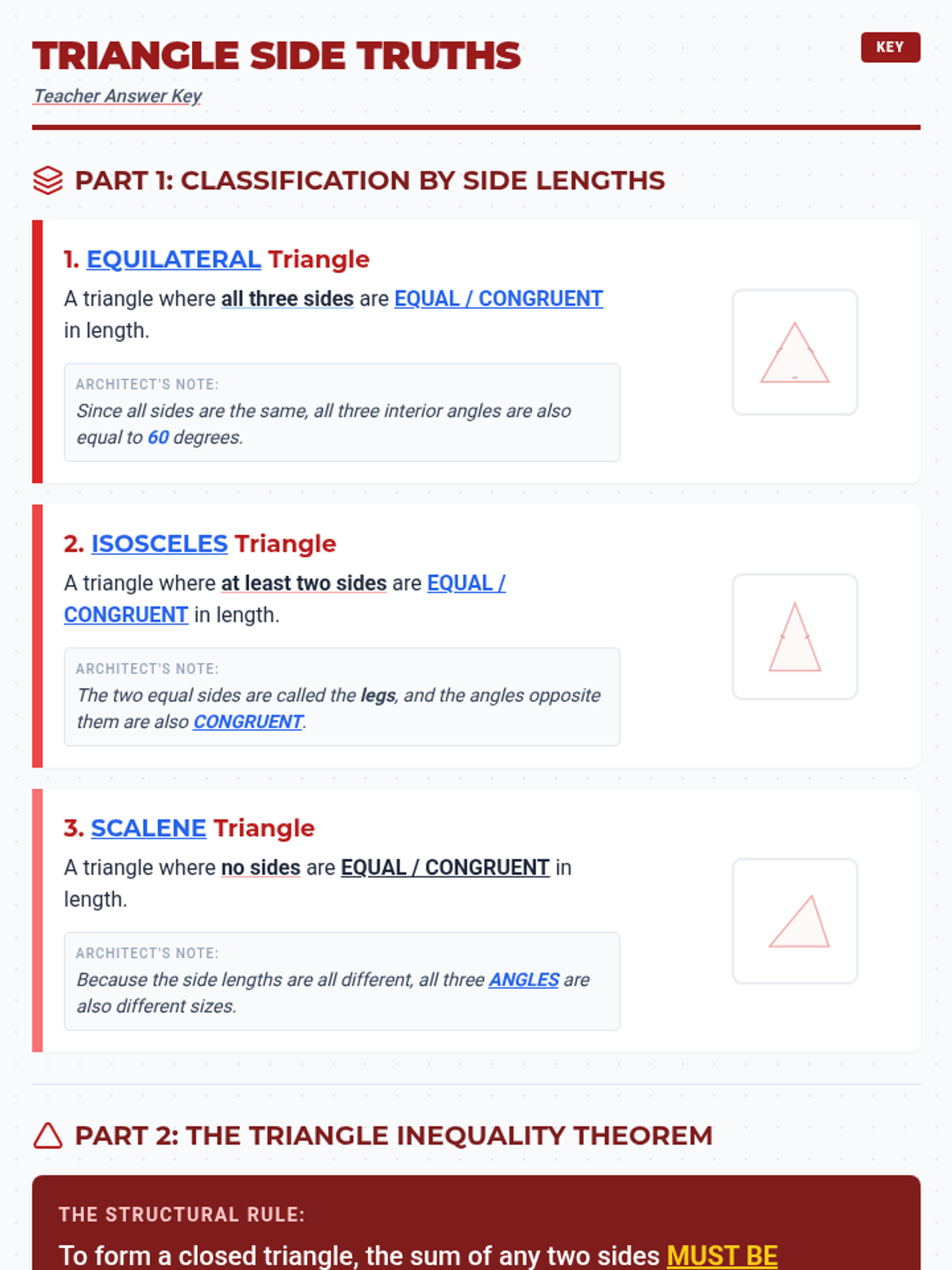
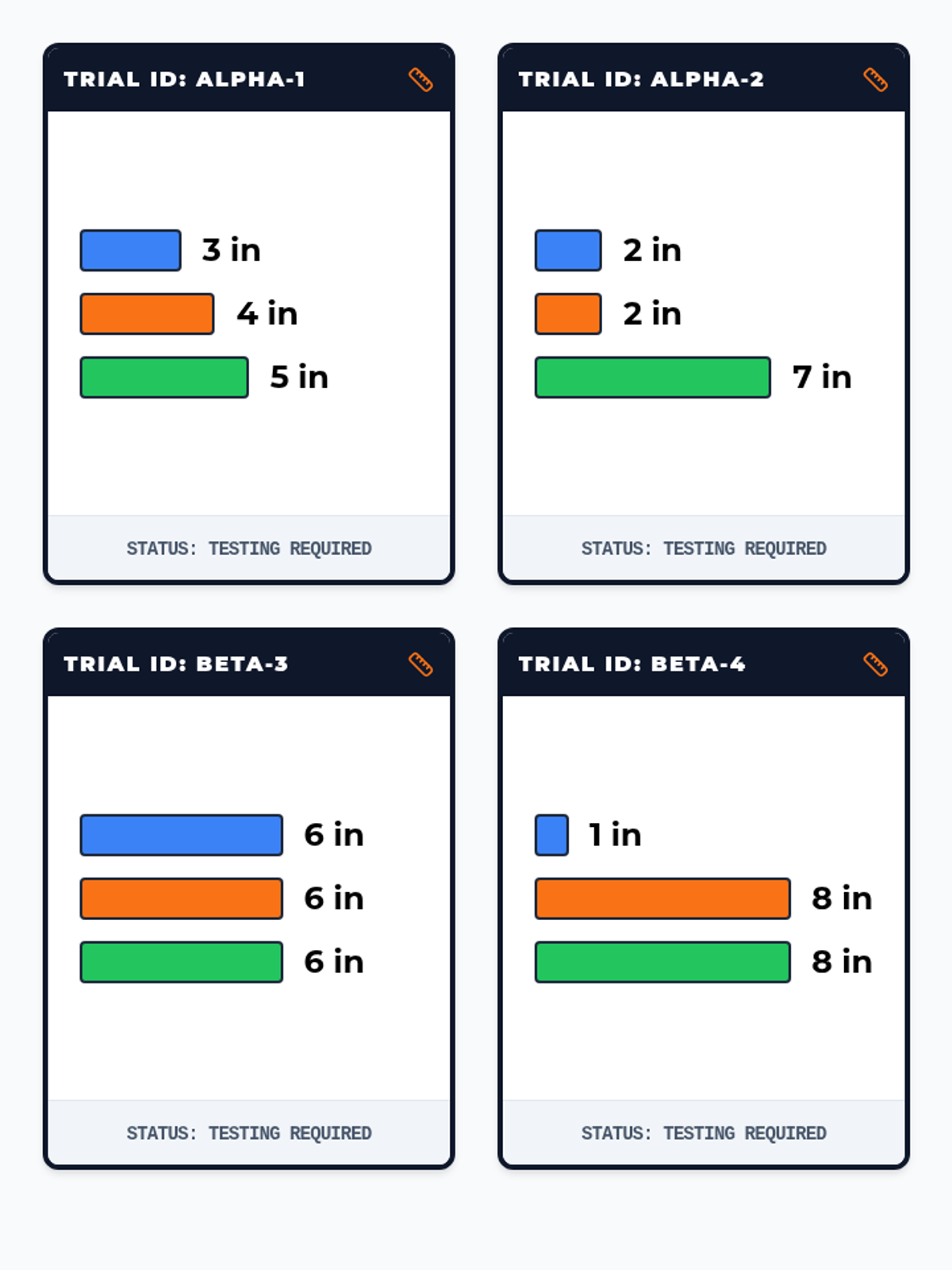
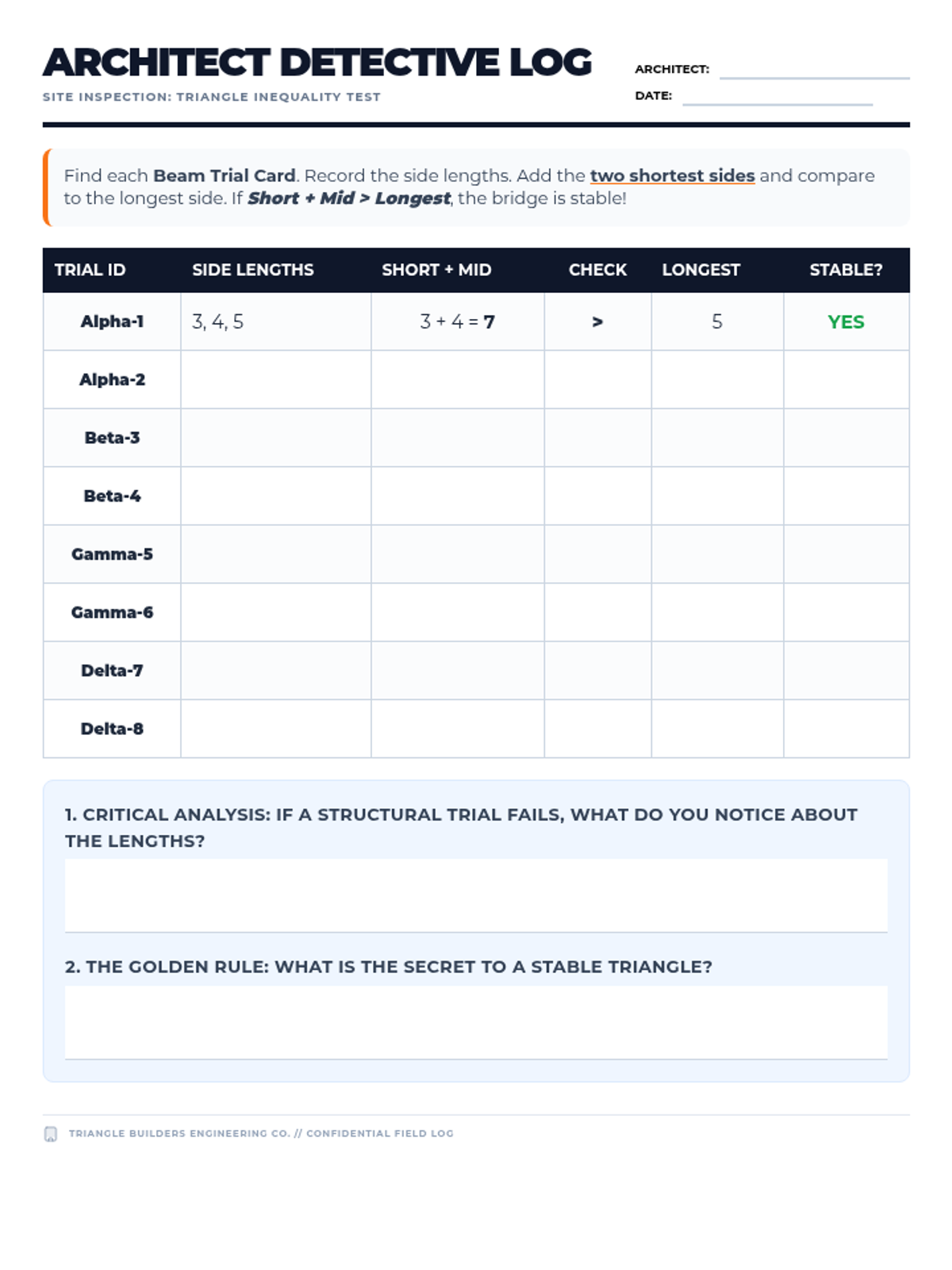
In this lesson, students explore the fundamental properties of triangles based on their side lengths. They will learn to classify triangles as equilateral, isosceles, or scalene and master the Triangle Inequality Theorem to determine if any three side lengths can actually form a closed triangle.
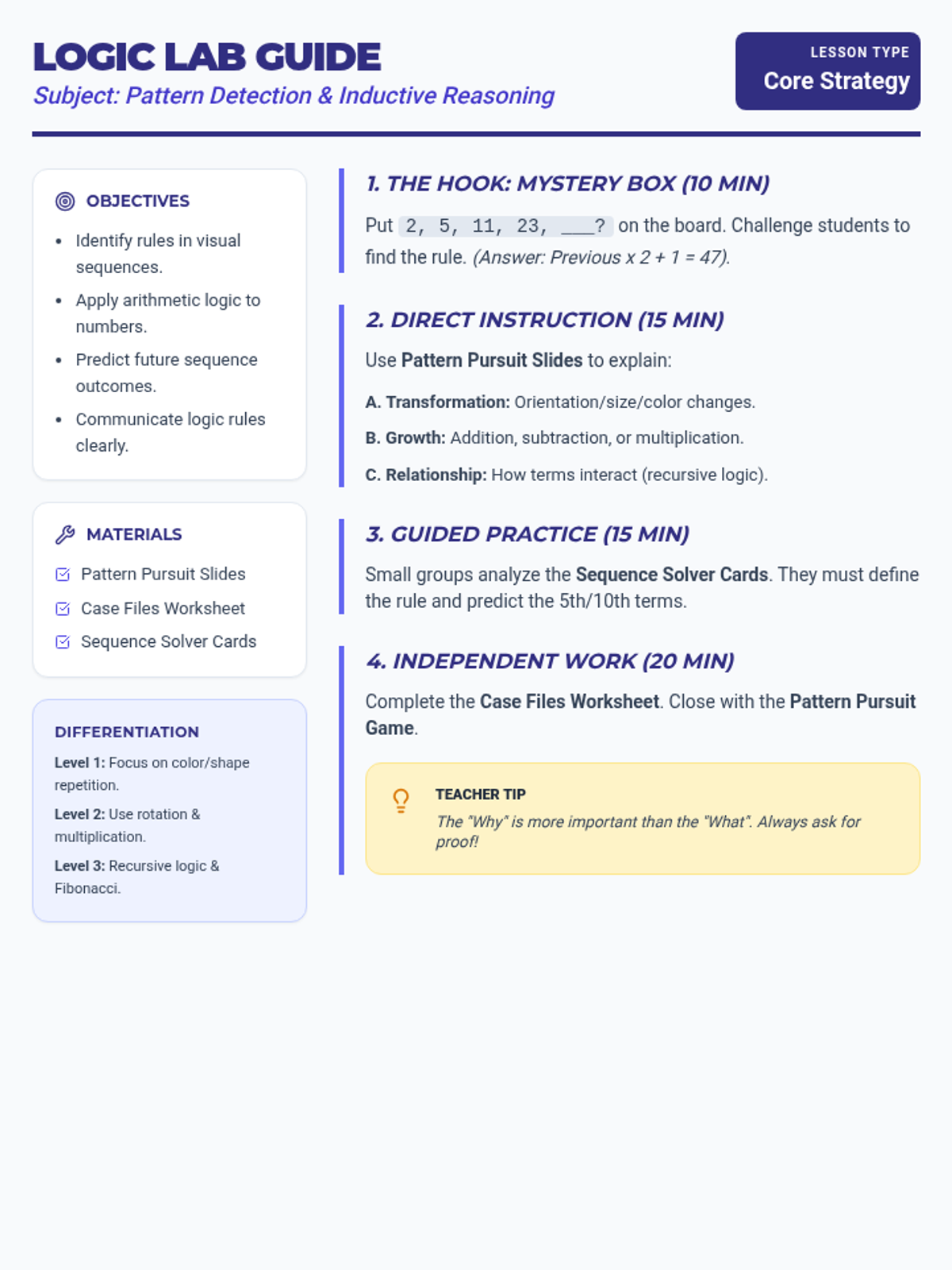
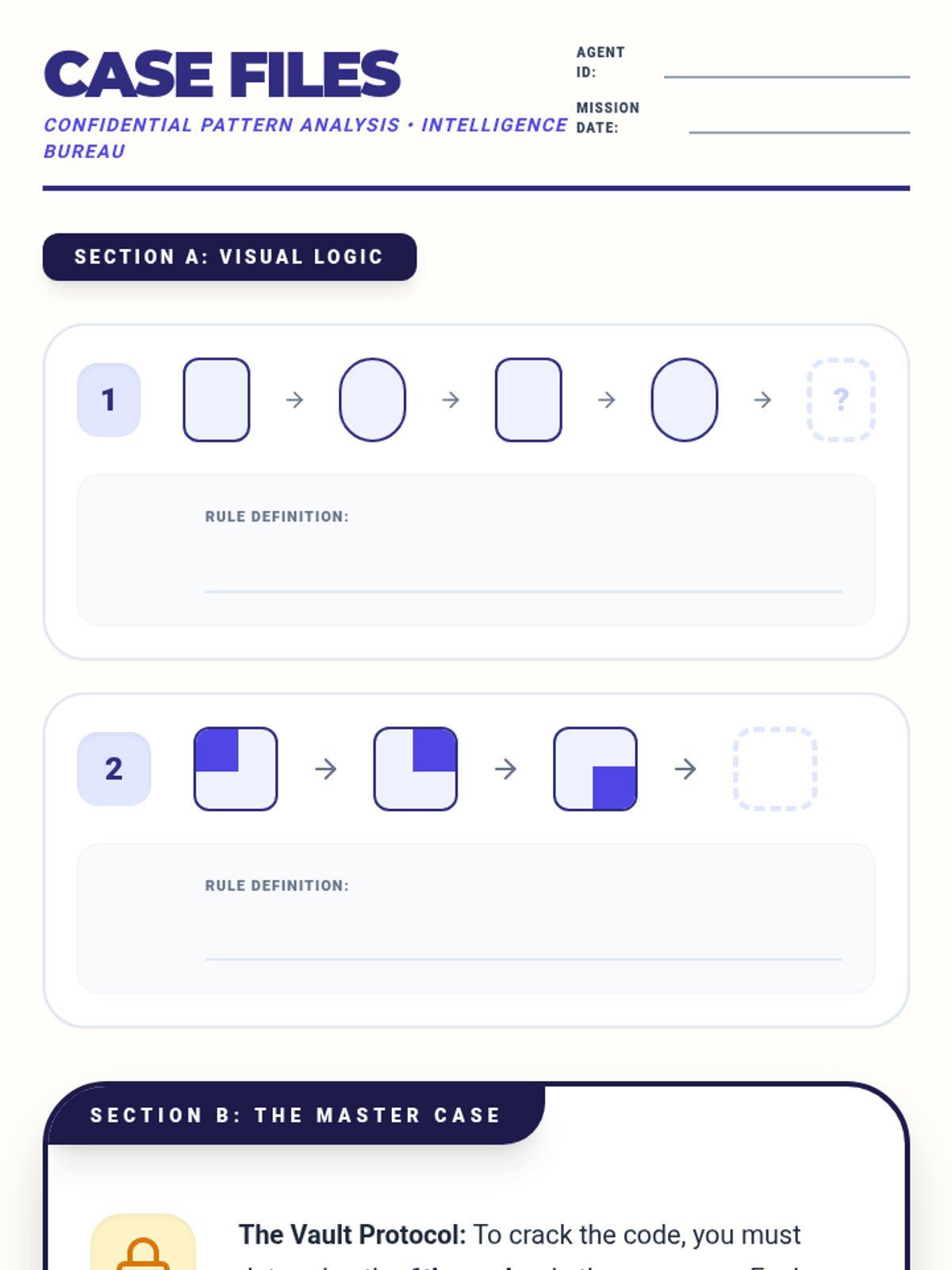
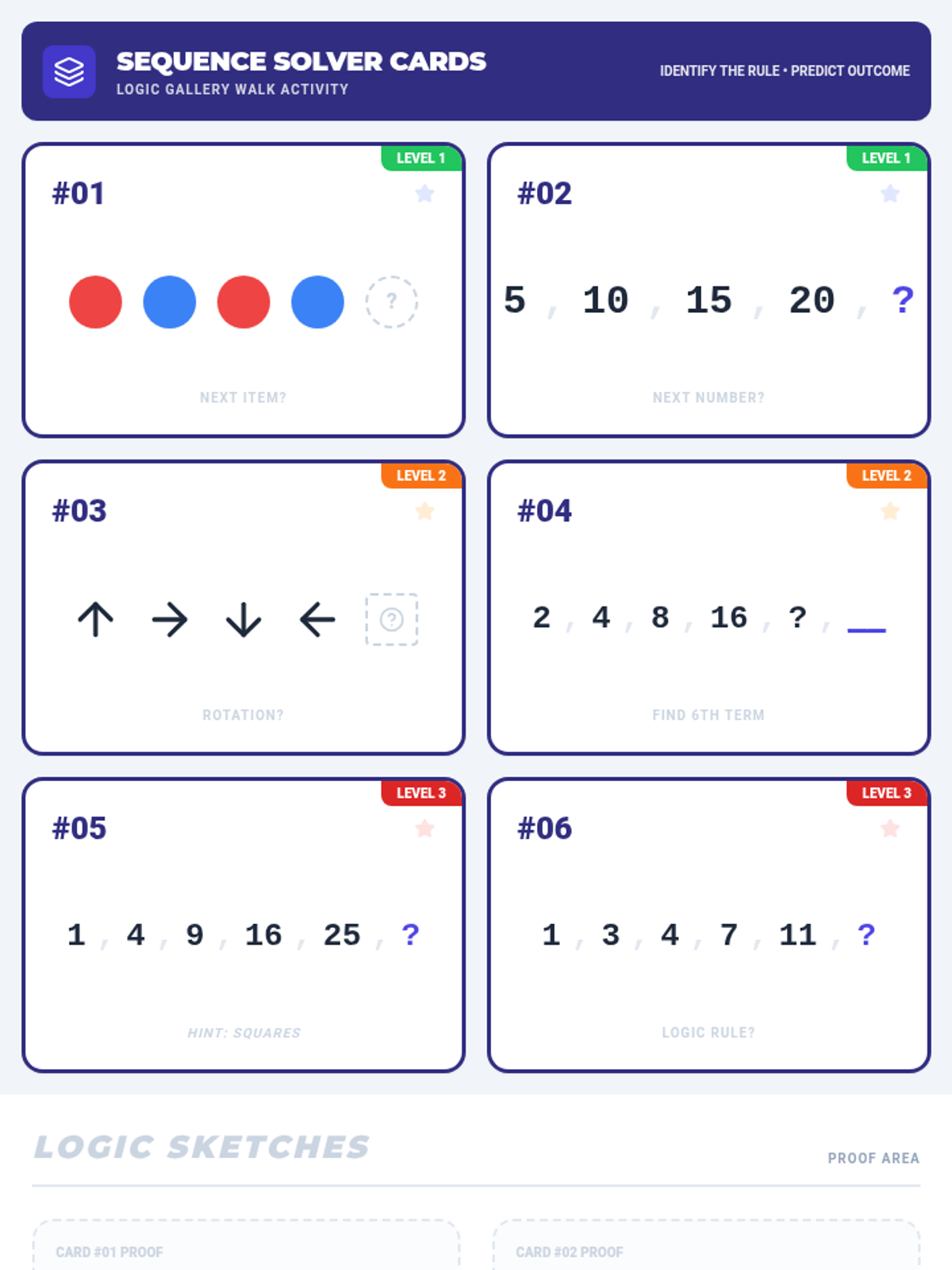
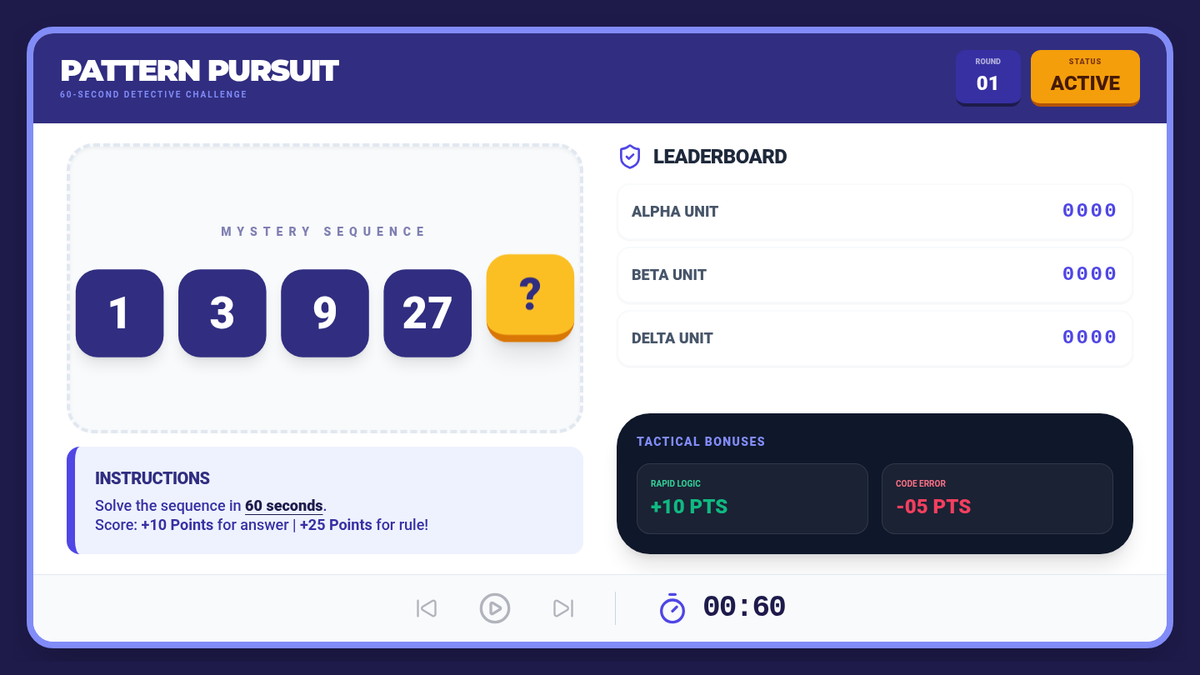
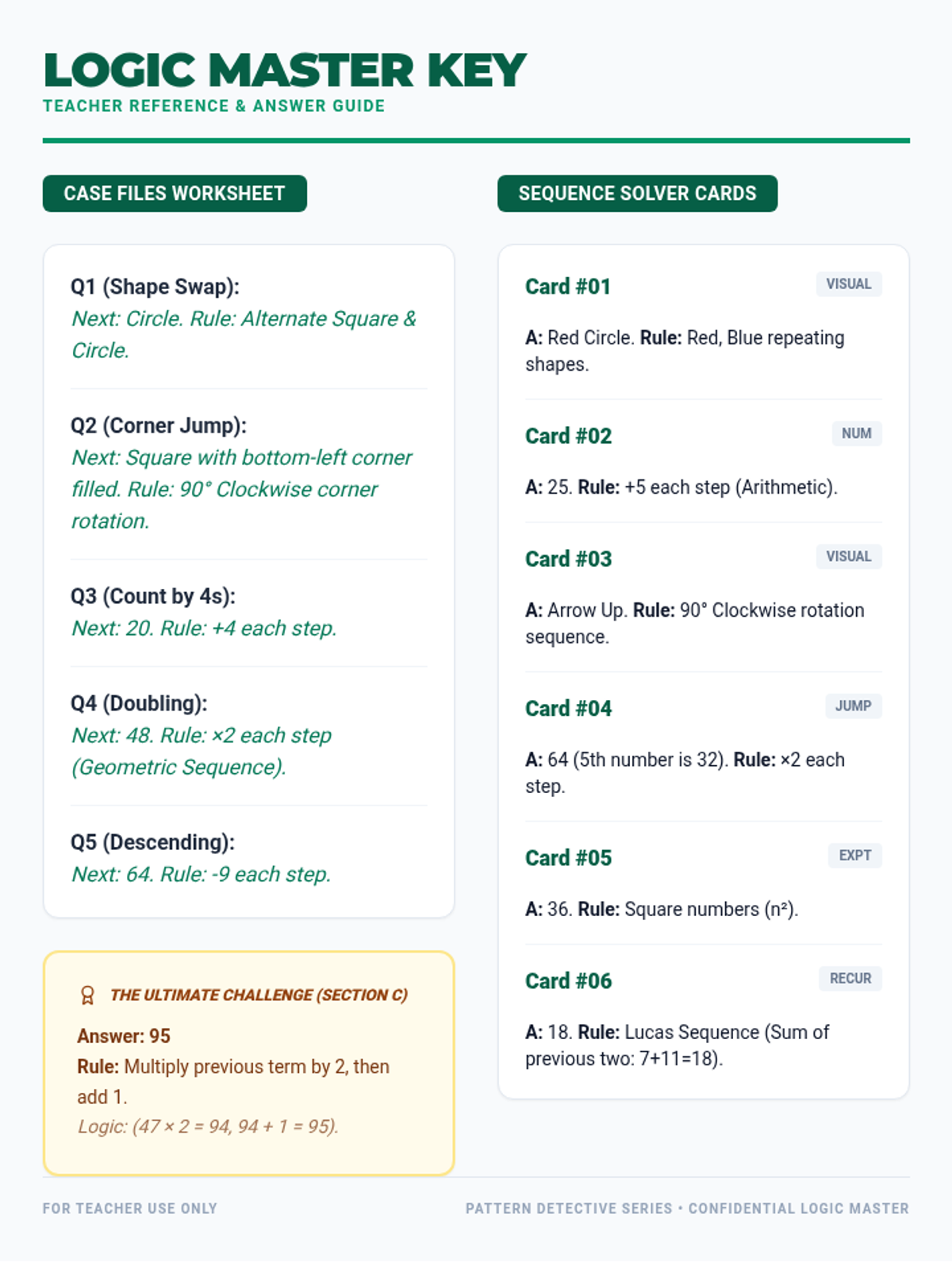
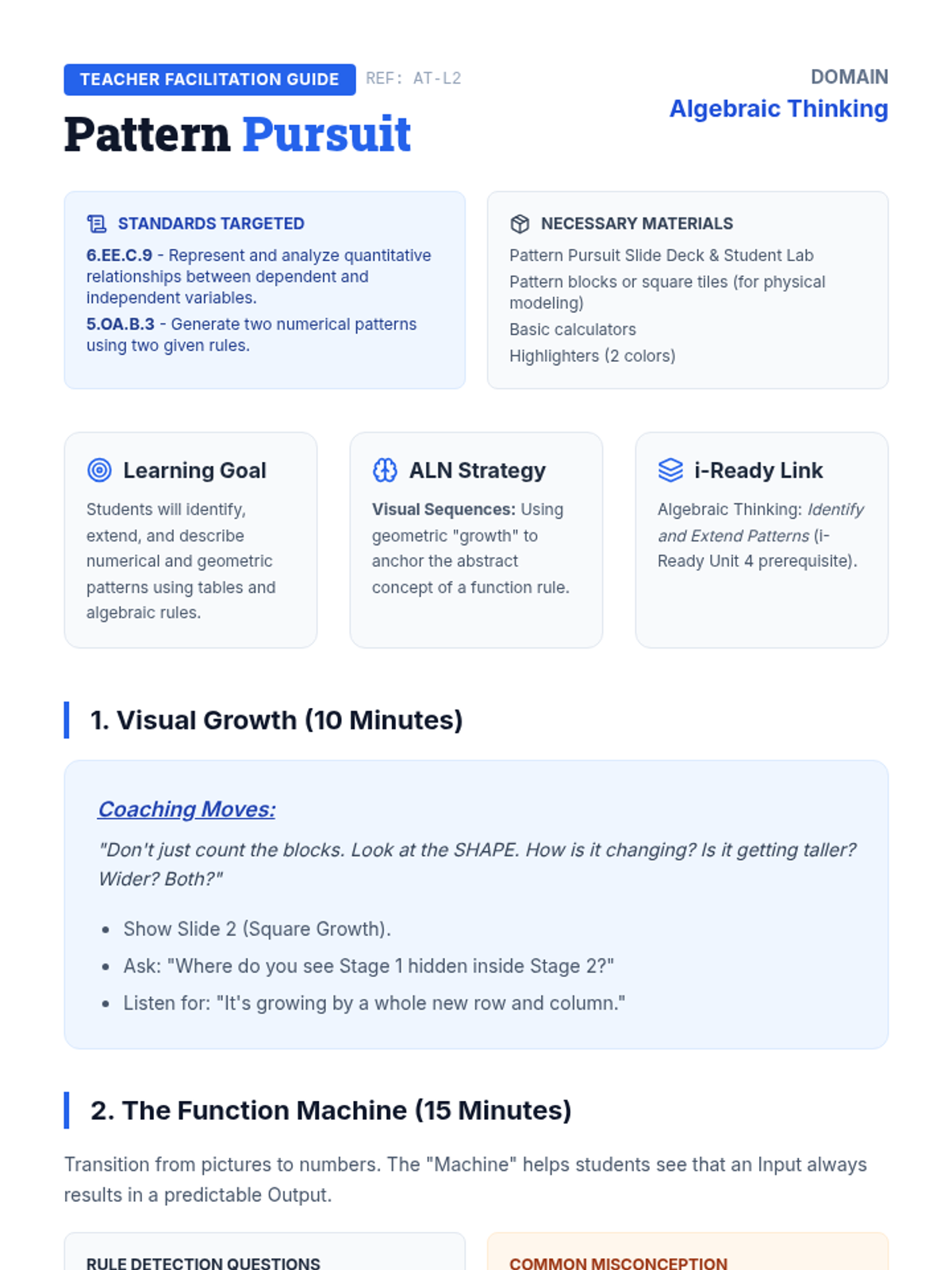
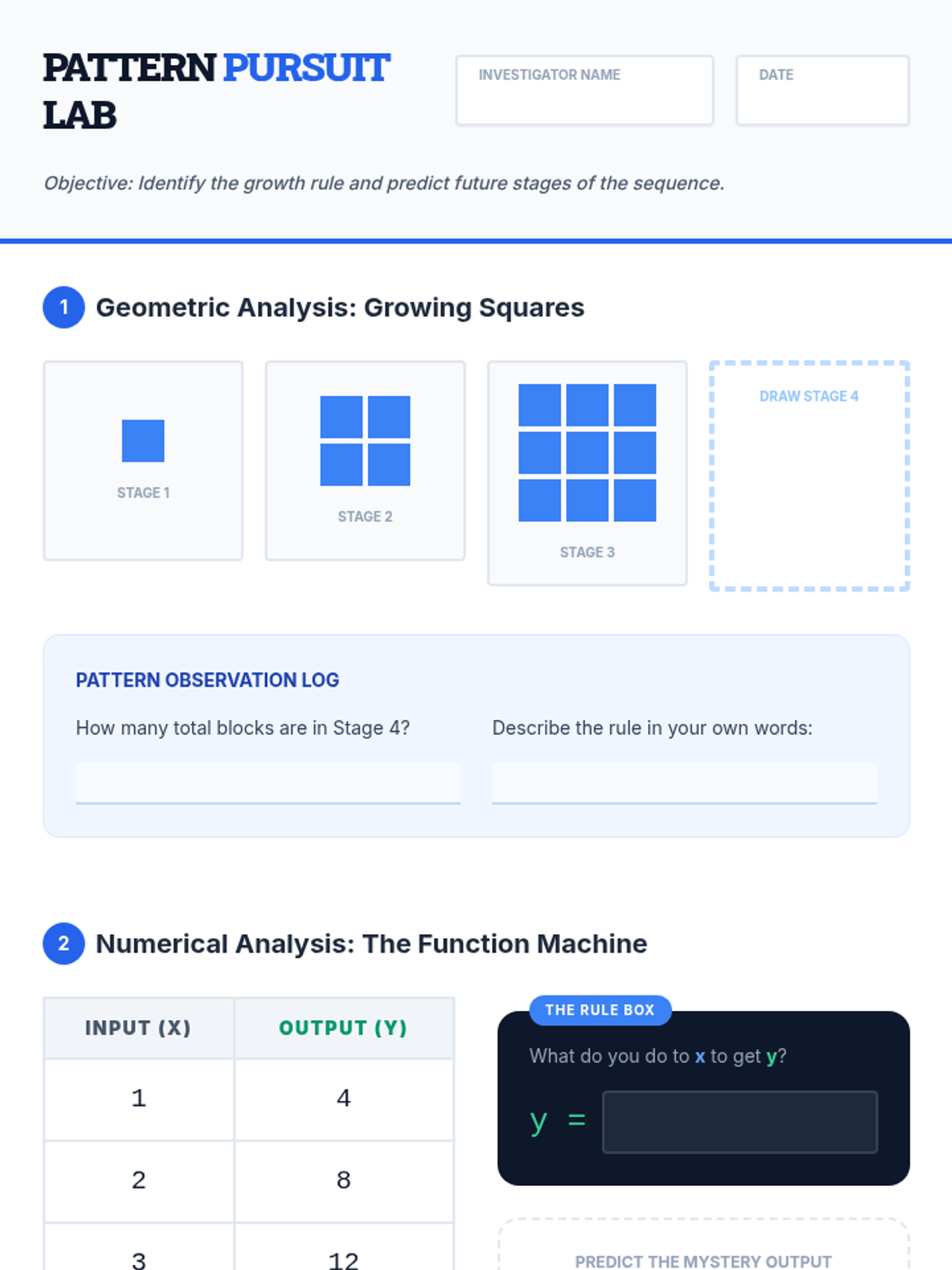
A comprehensive logic lesson where students act as detectives to identify rules in visual and numerical sequences, building inductive reasoning and prediction skills.
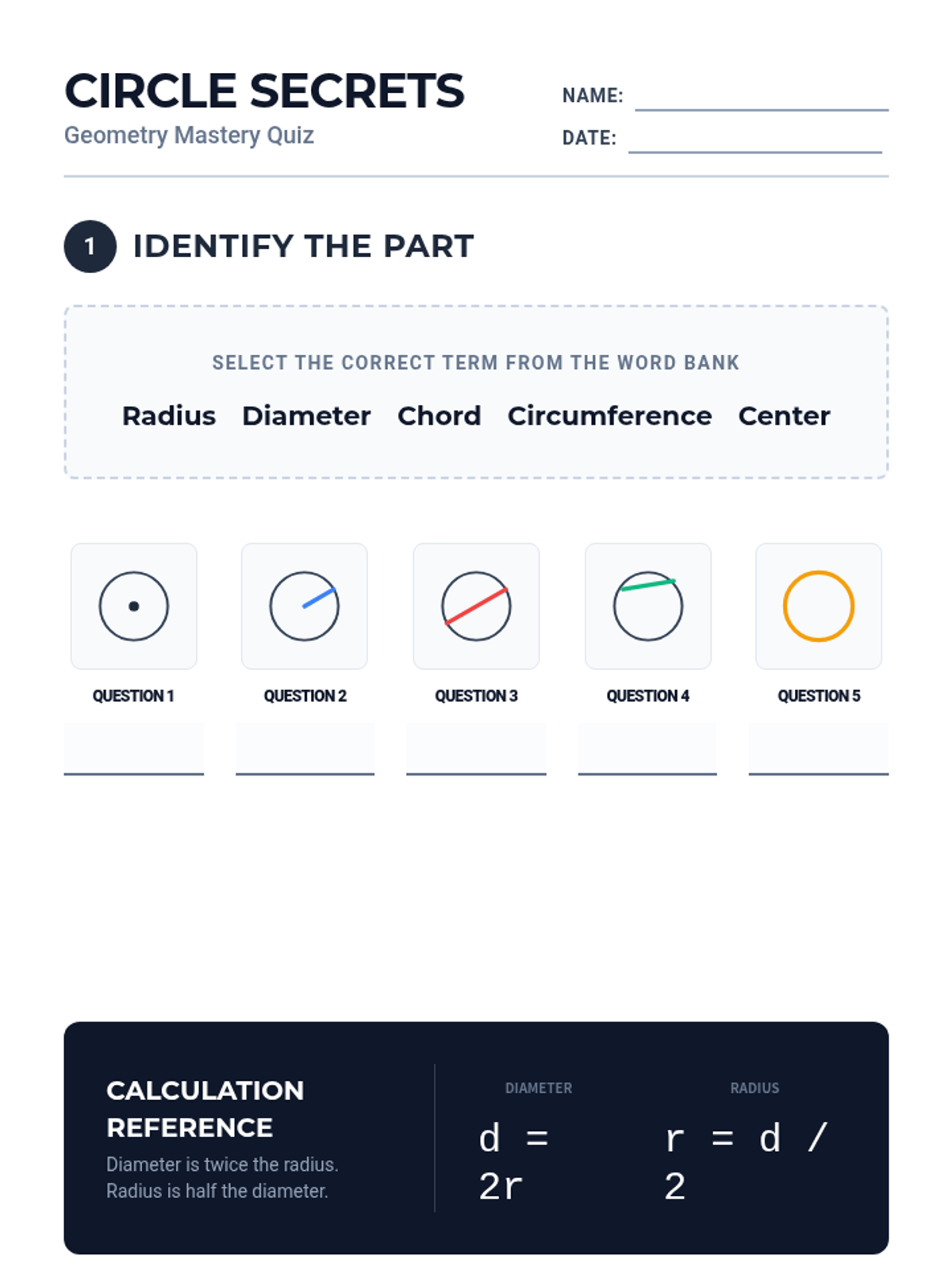
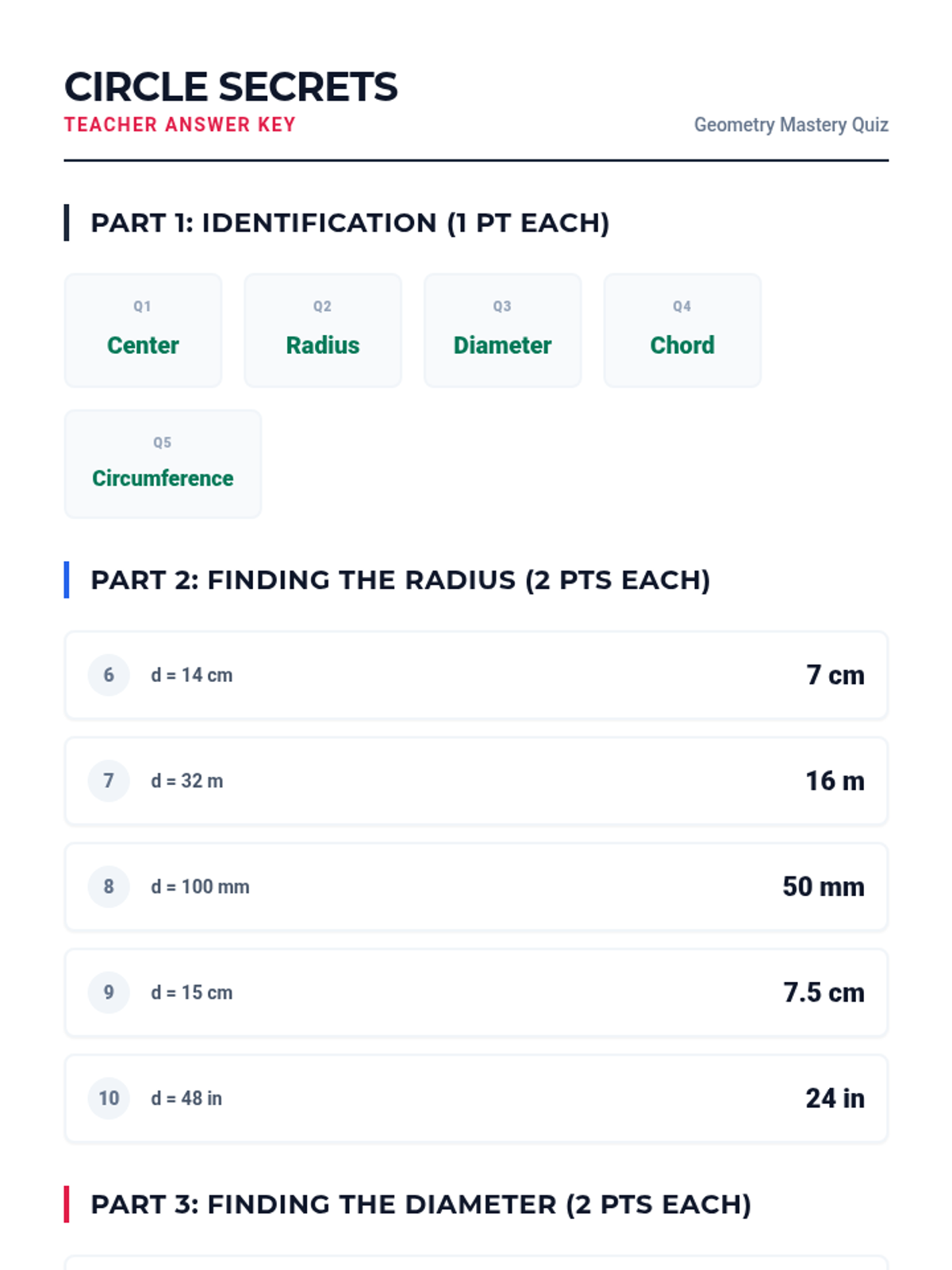
A comprehensive assessment on circle geometry, focusing on identifying key parts and calculating radius and diameter.
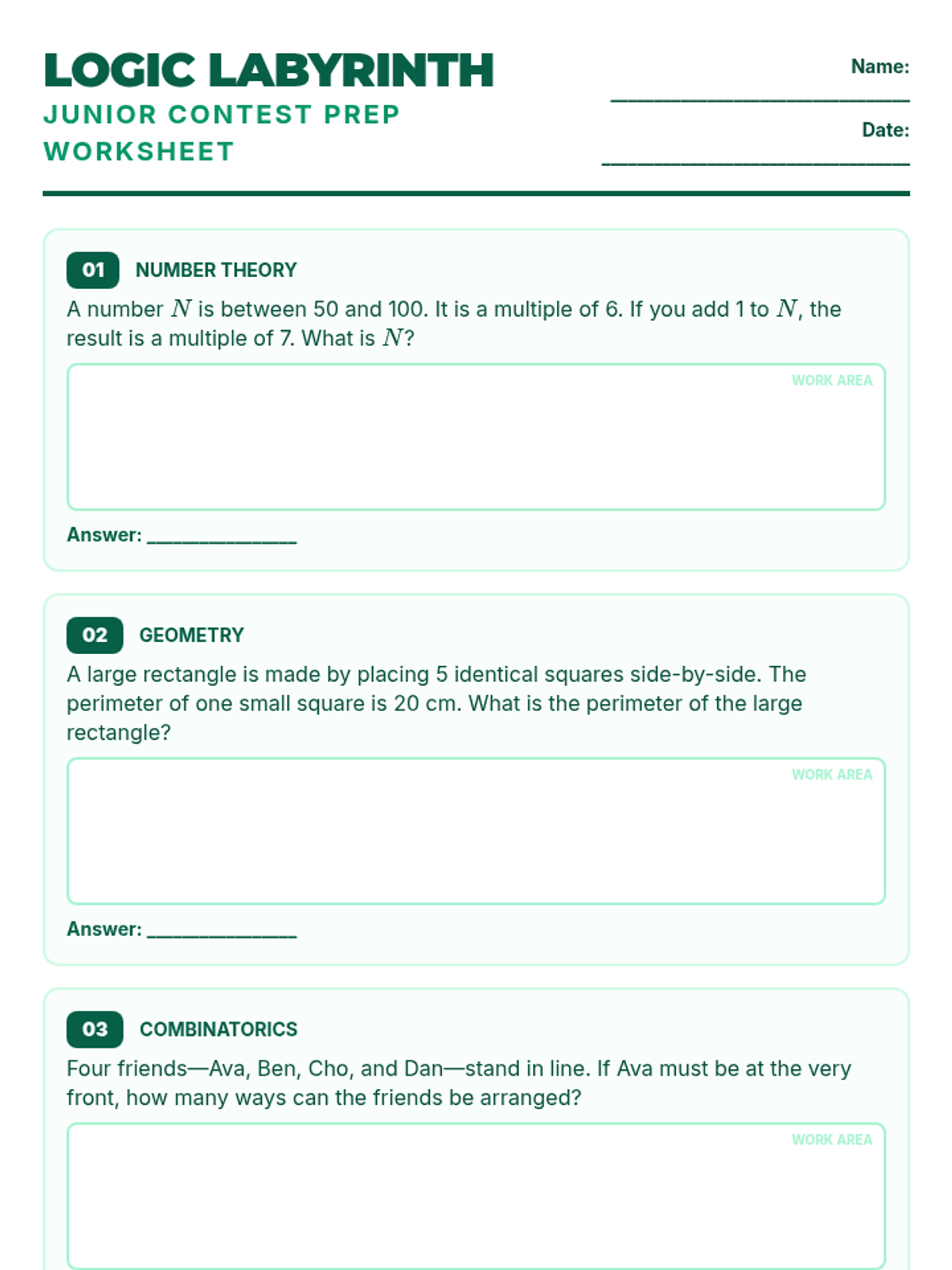
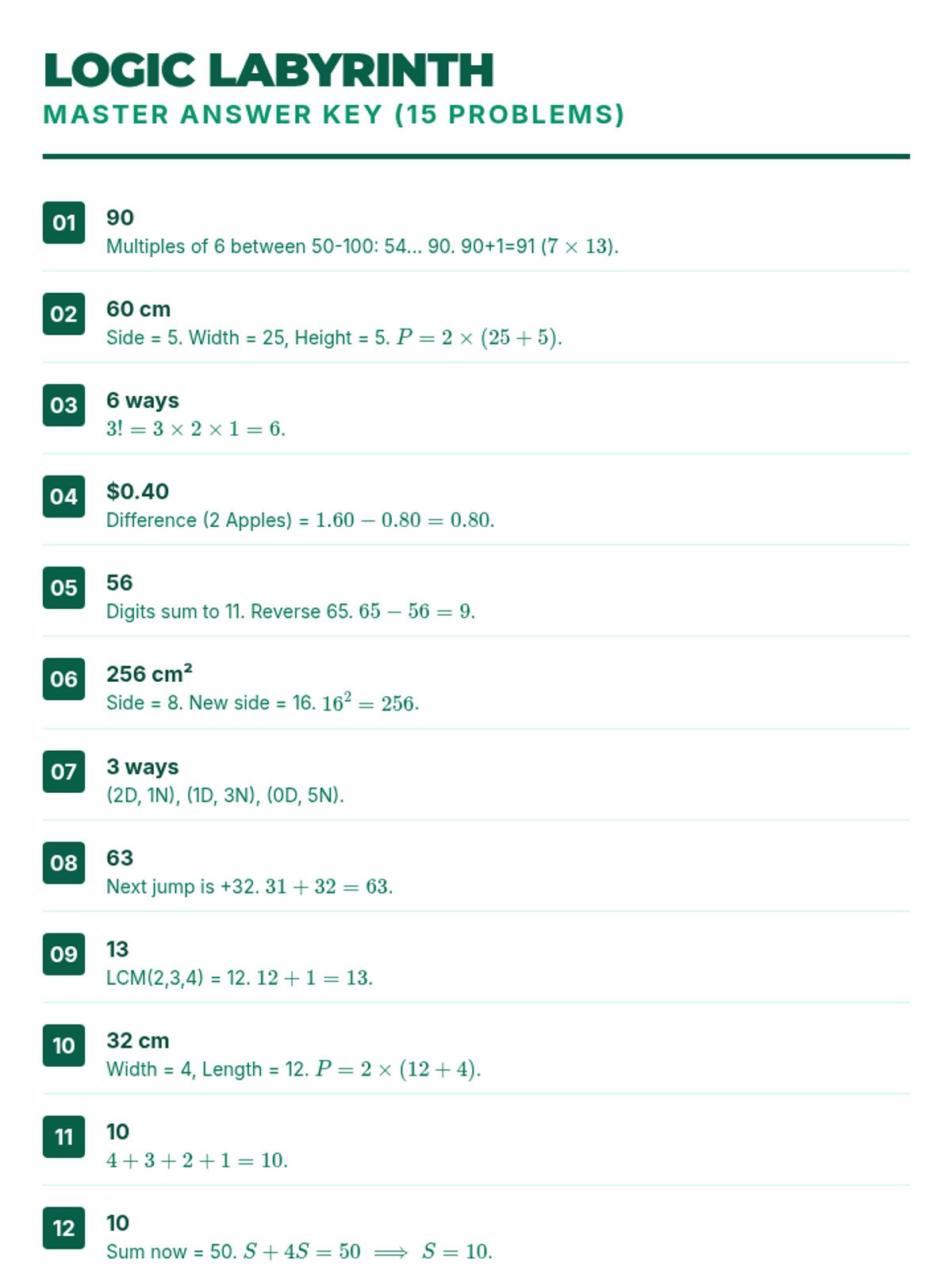
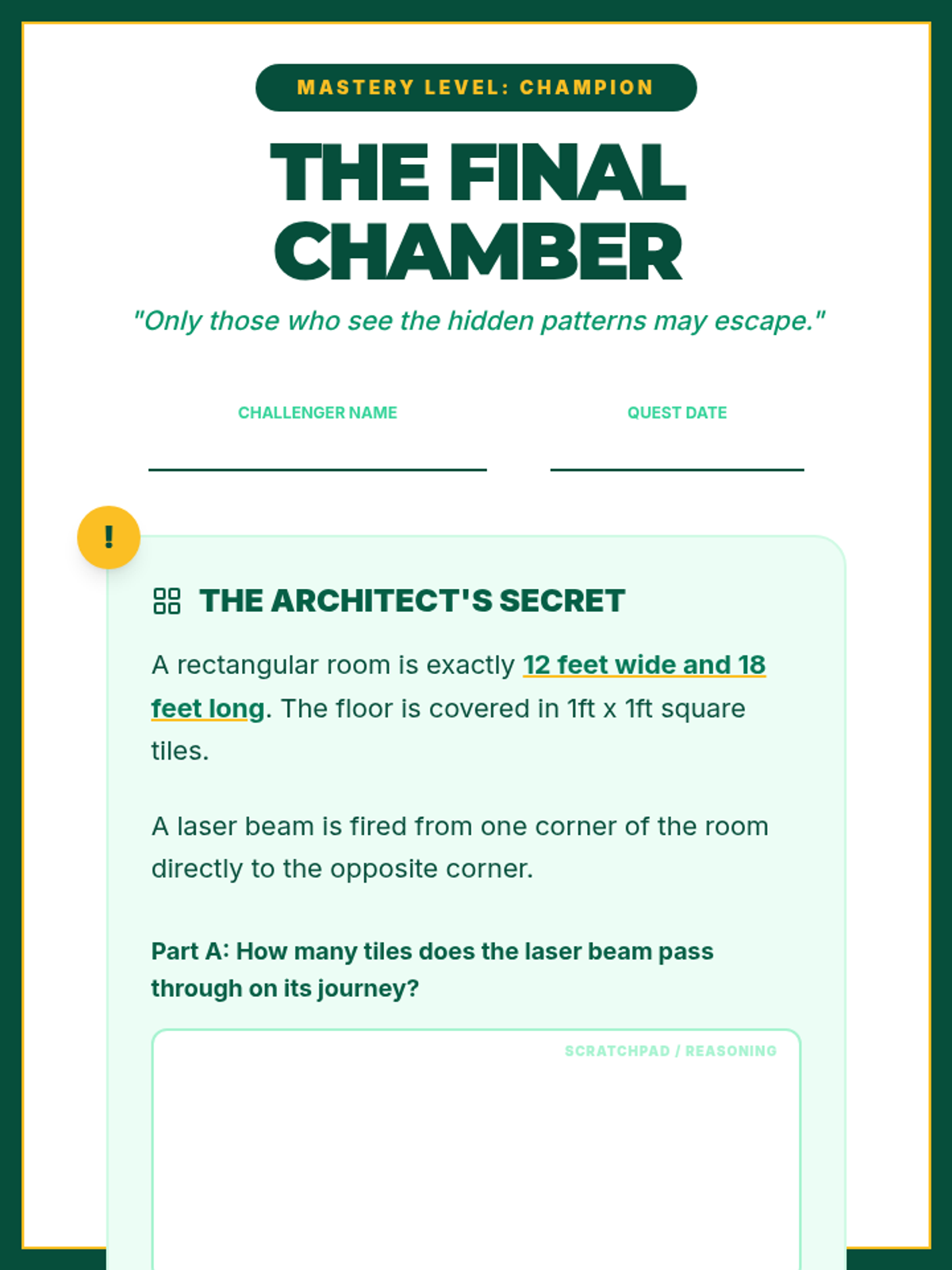
A collection of challenging math problems focusing on number theory, geometry, combinatorics, and algebra, designed for middle school students preparing for GAIM and similar math competitions.
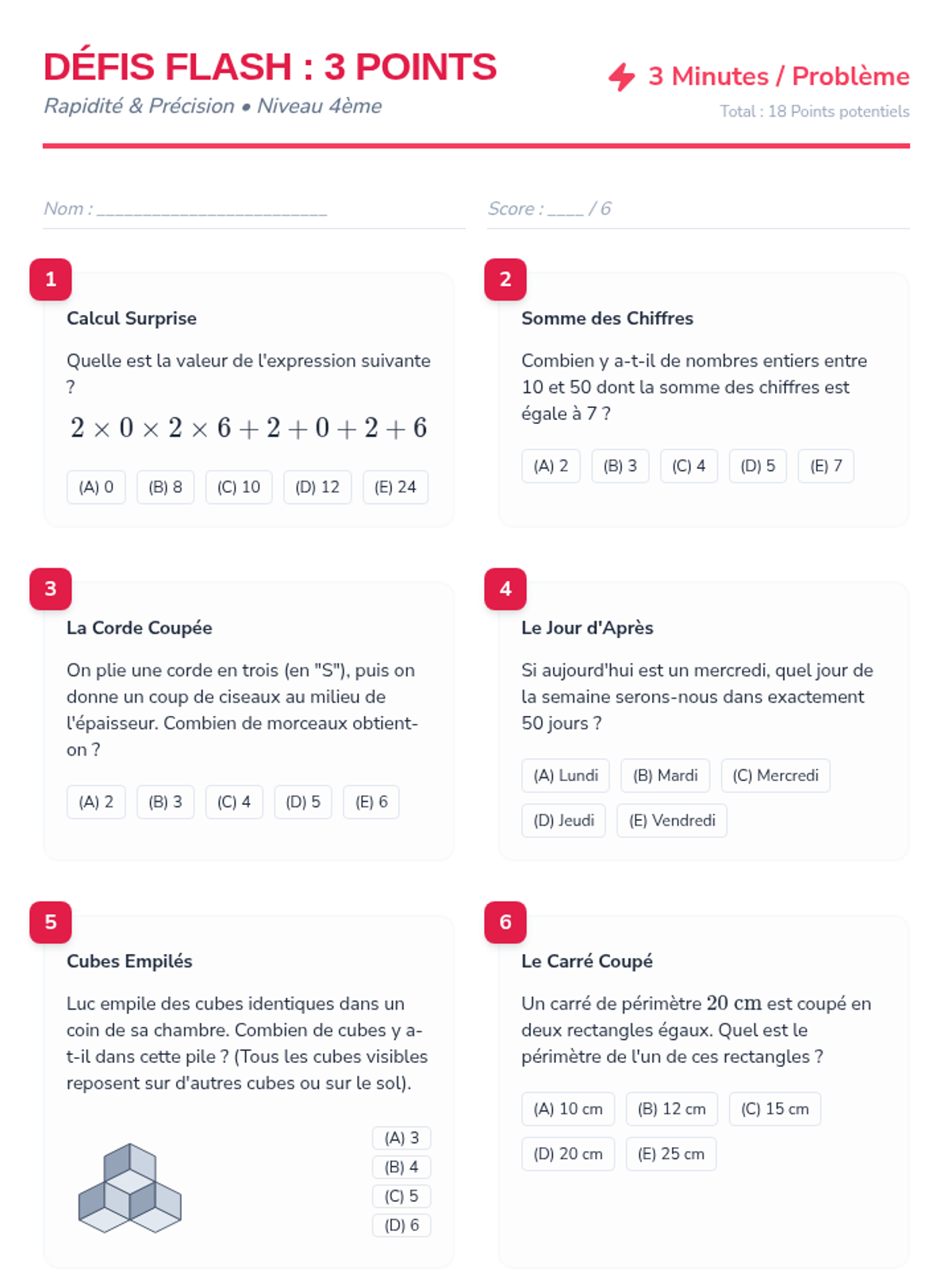
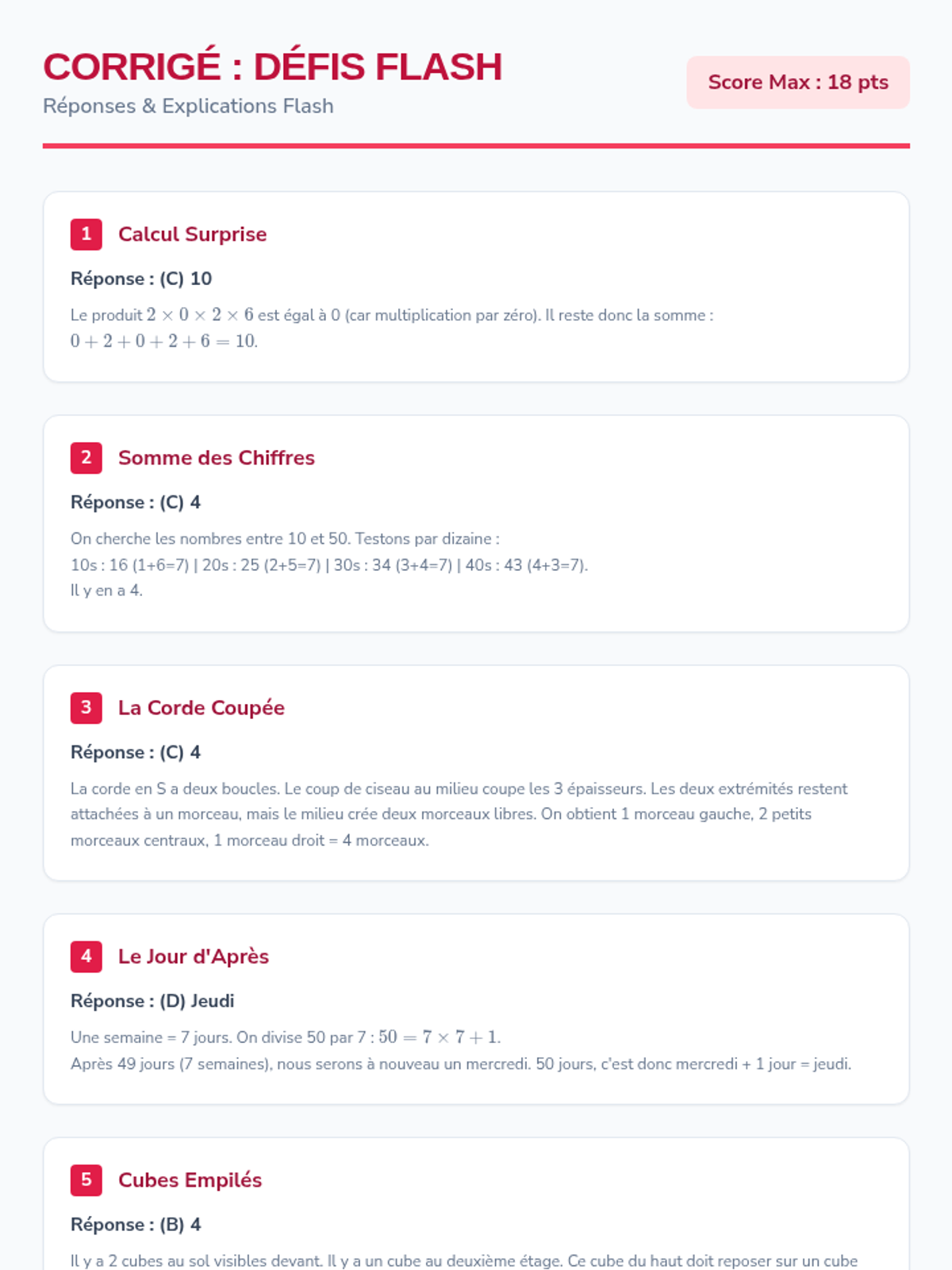
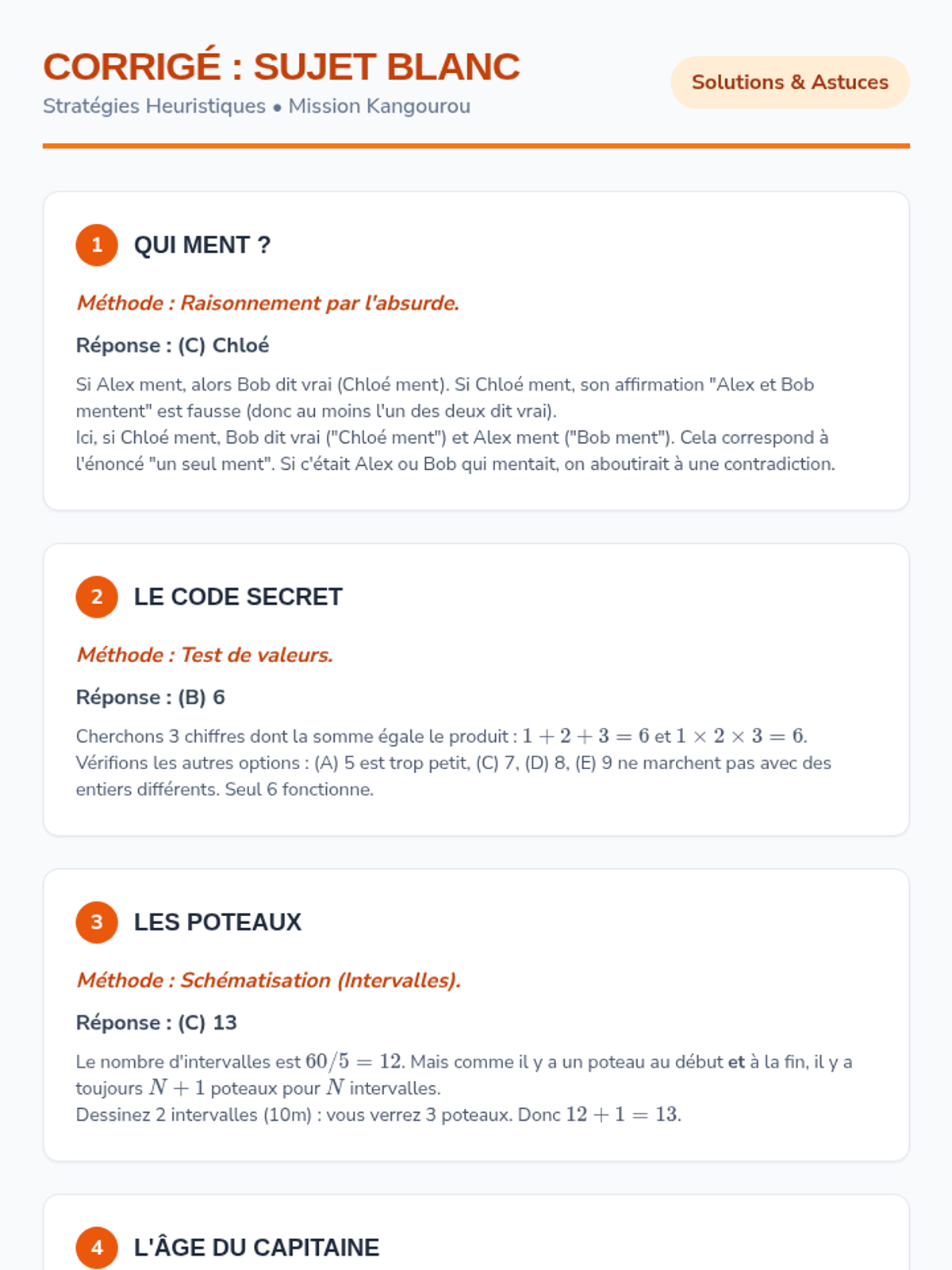
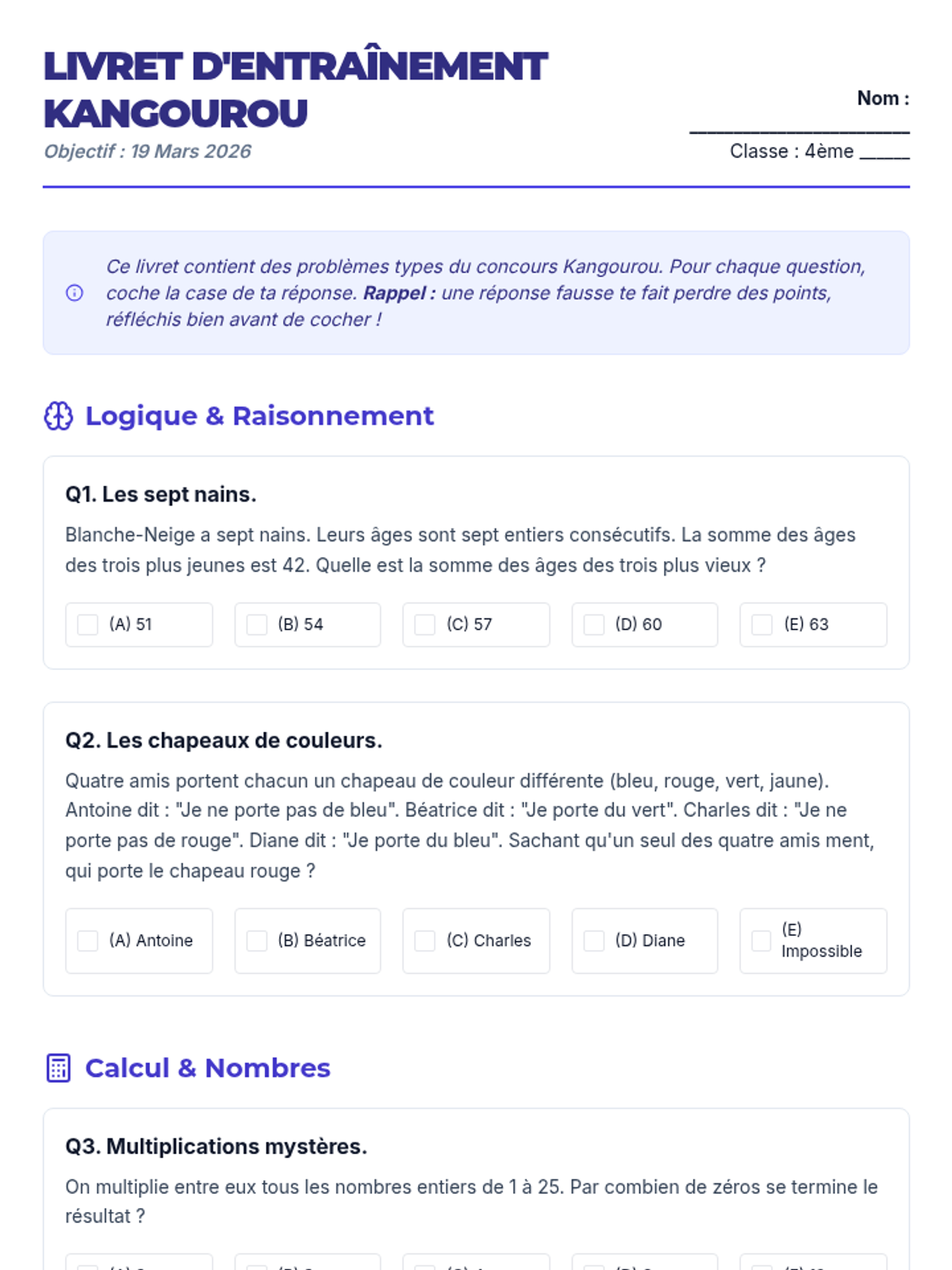
Une collection de problèmes courts et rapides pour s'échauffer et gagner des points faciles au concours Kangourou.
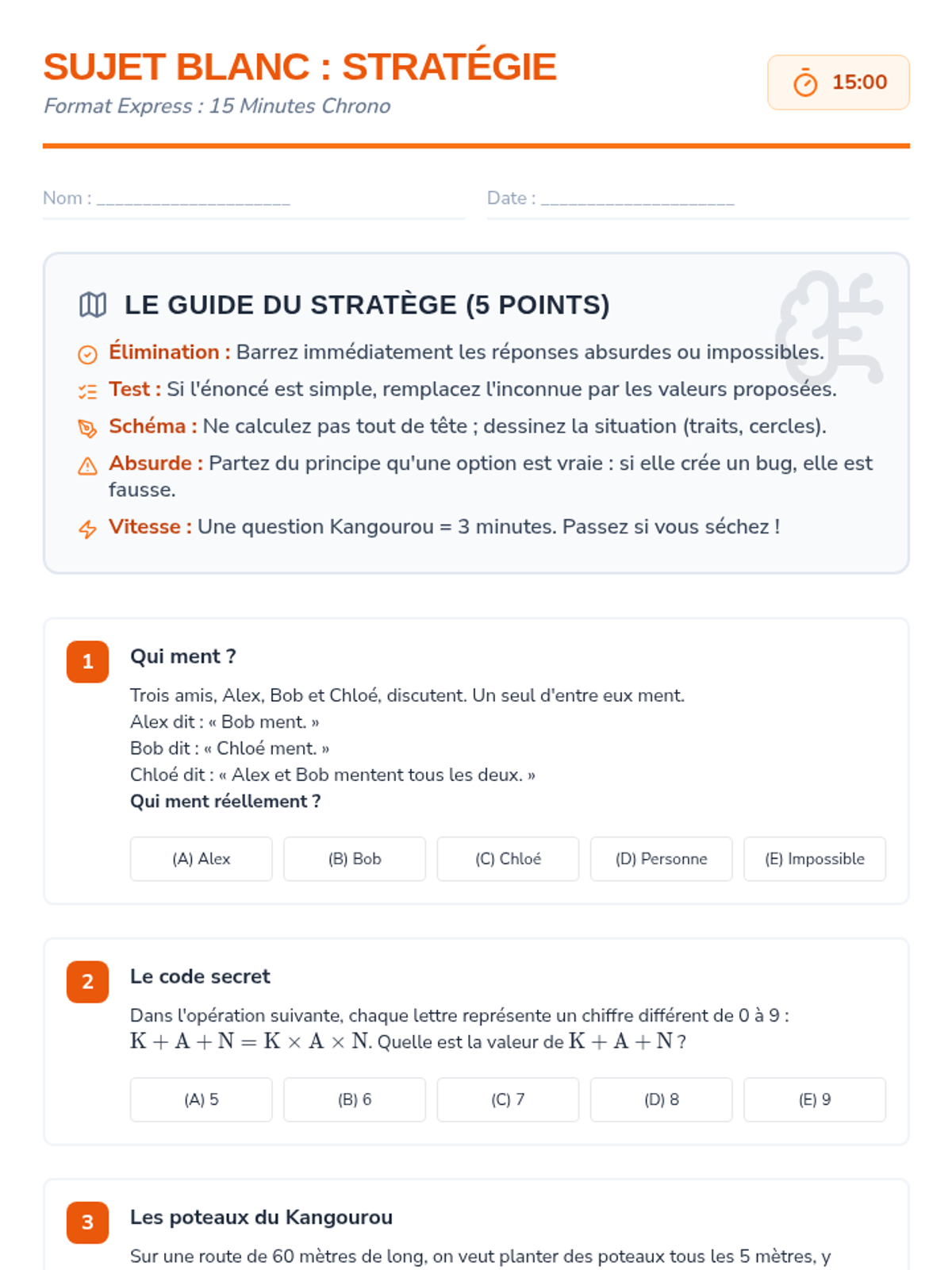
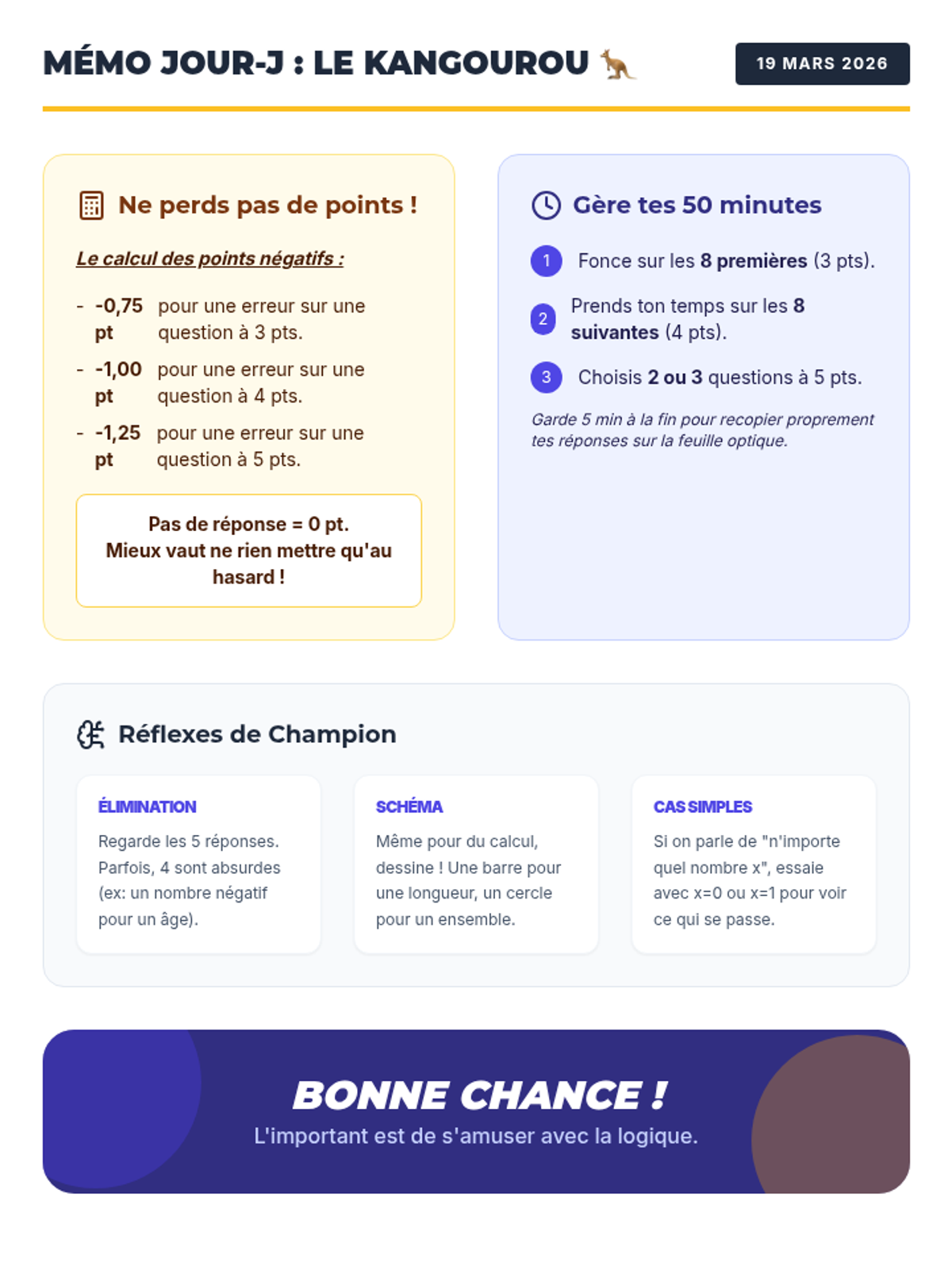
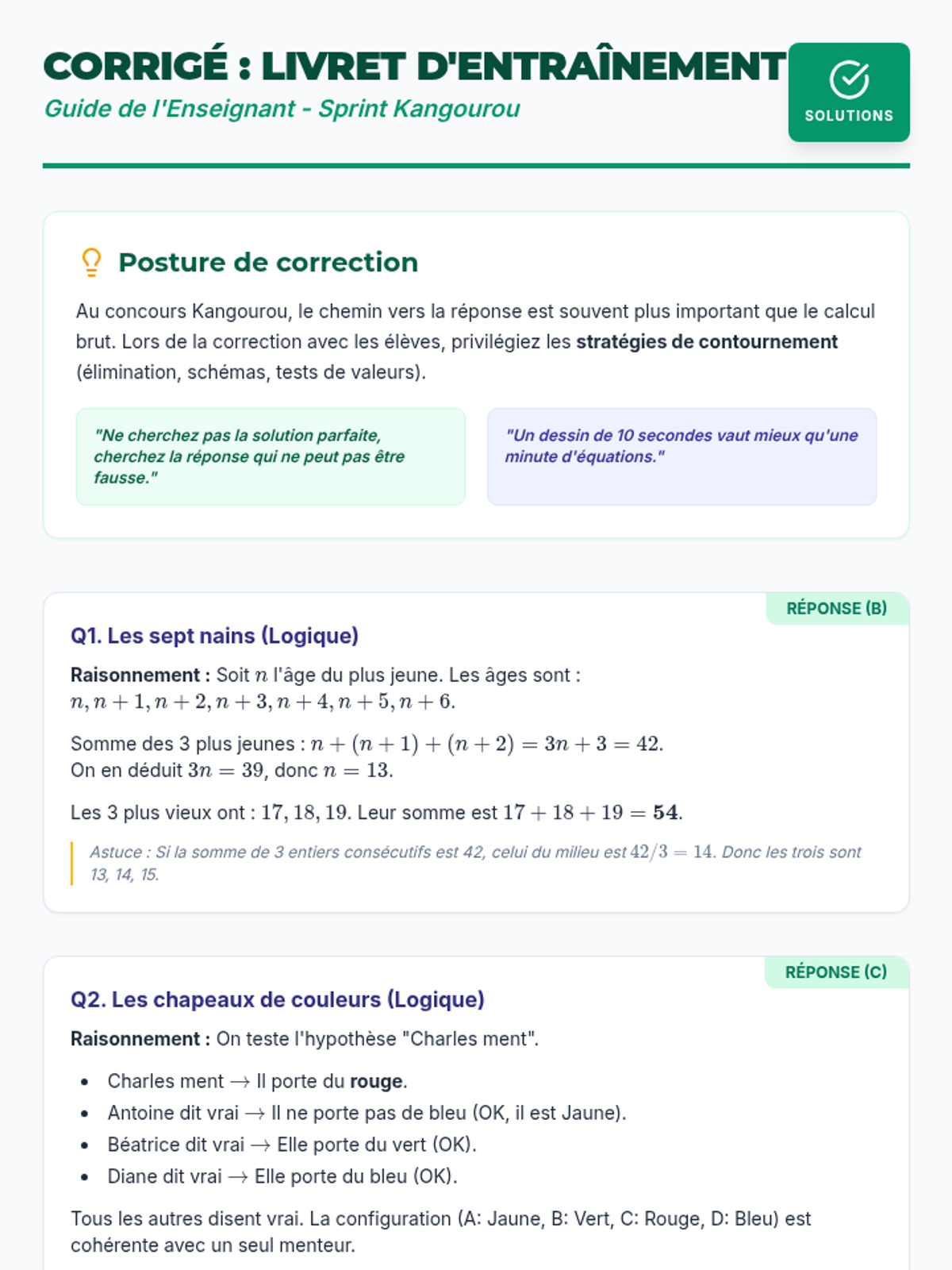
Focus sur les techniques d'élimination, de test de valeurs et de modélisation par le dessin pour résoudre des problèmes complexes rapidement.
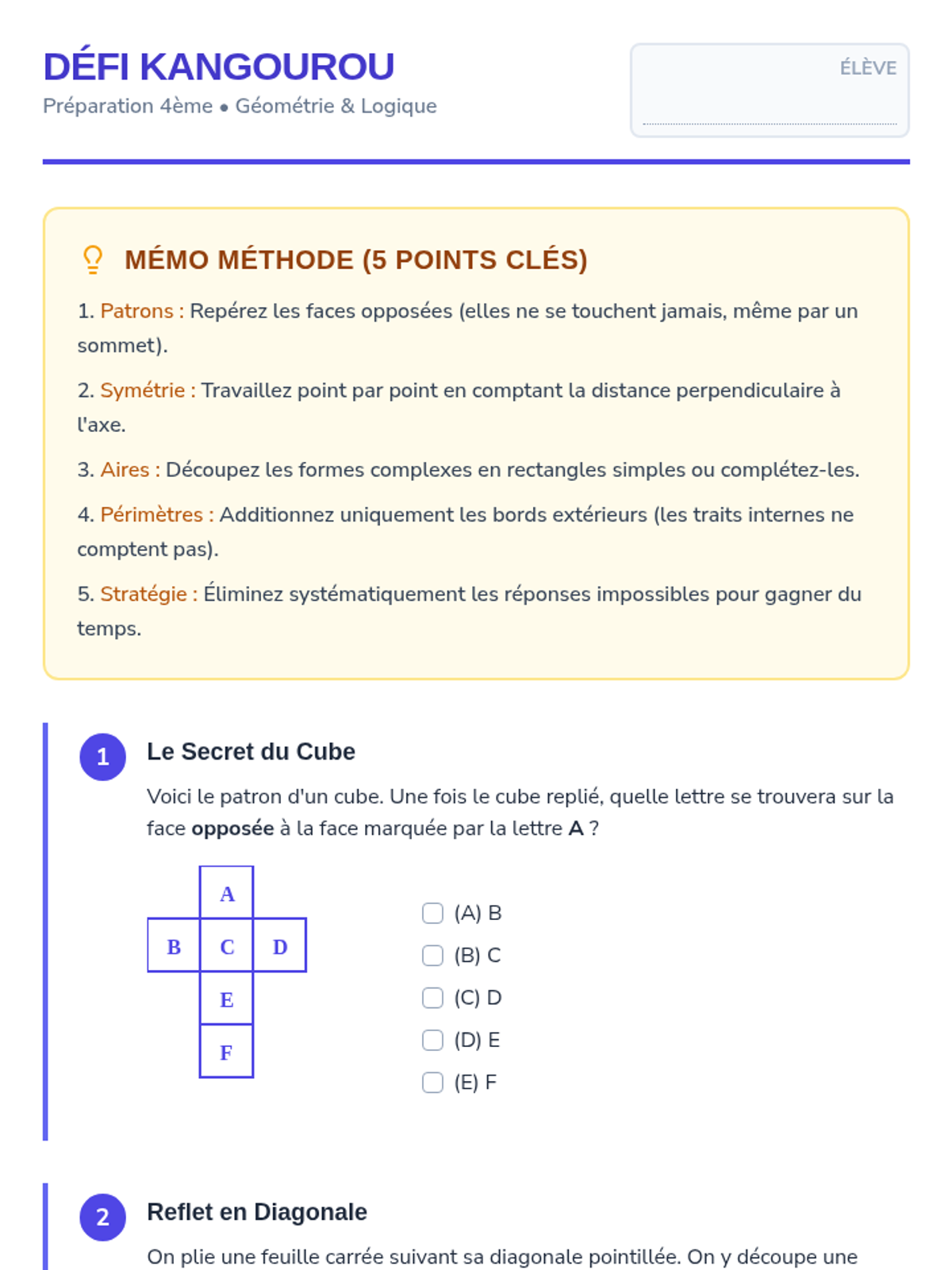
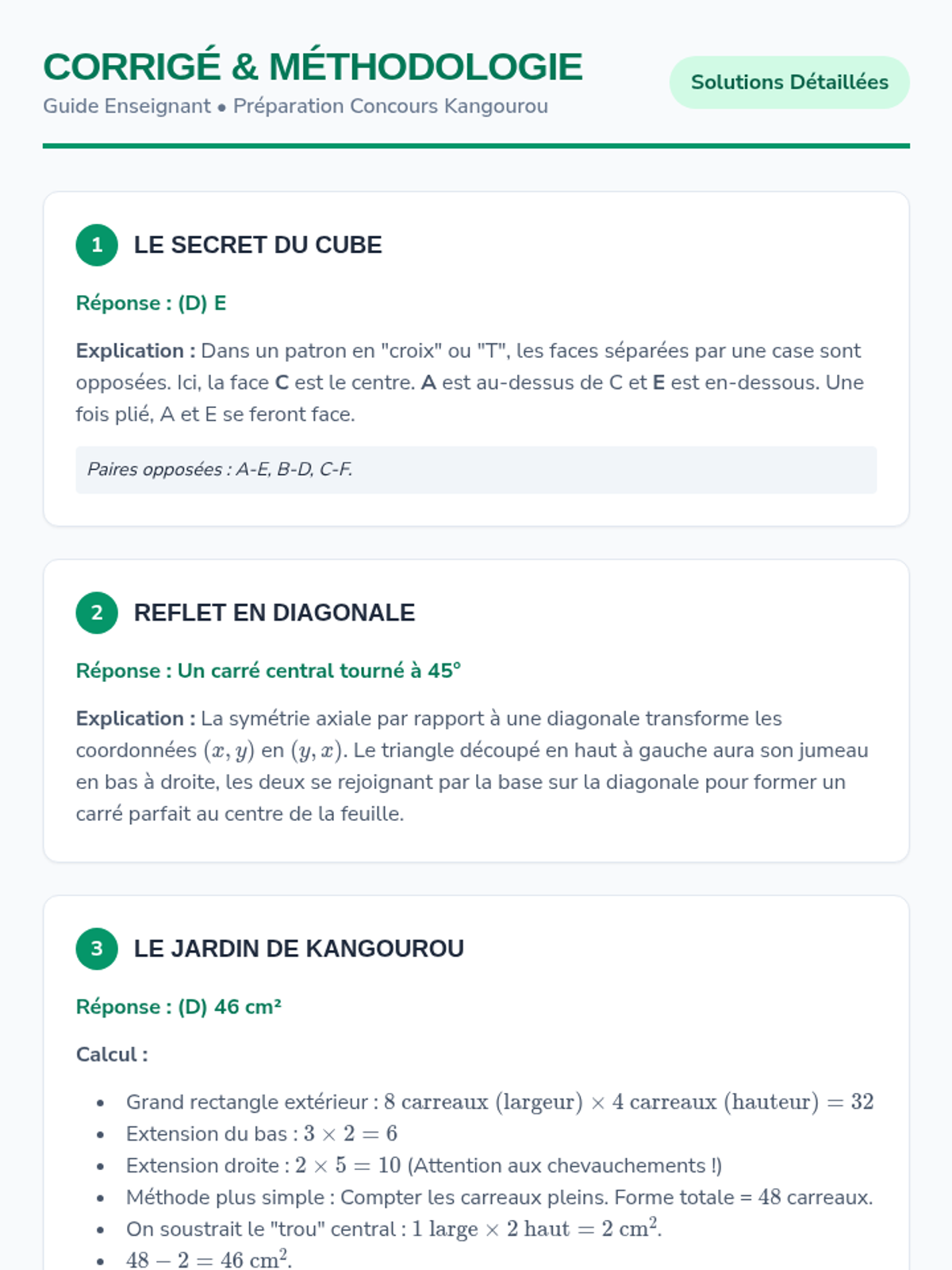
Une série d'exercices ciblés pour préparer le concours Kangourou des mathématiques, focalisée sur la visualisation spatiale et la géométrie de réflexion.
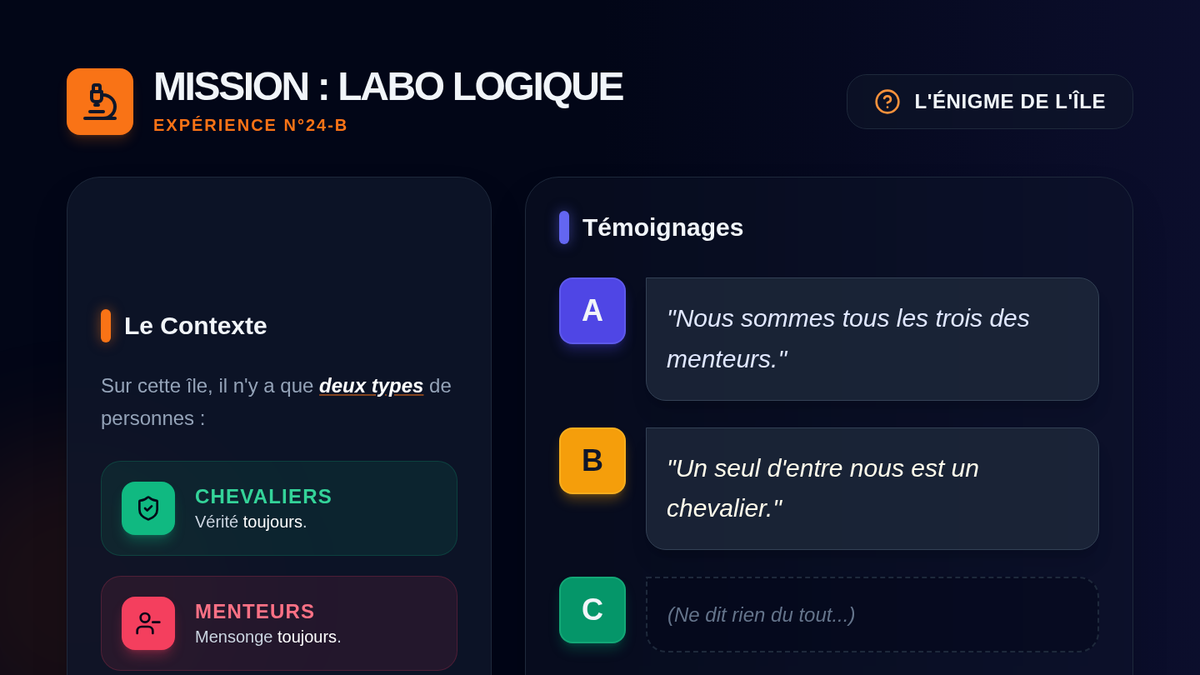
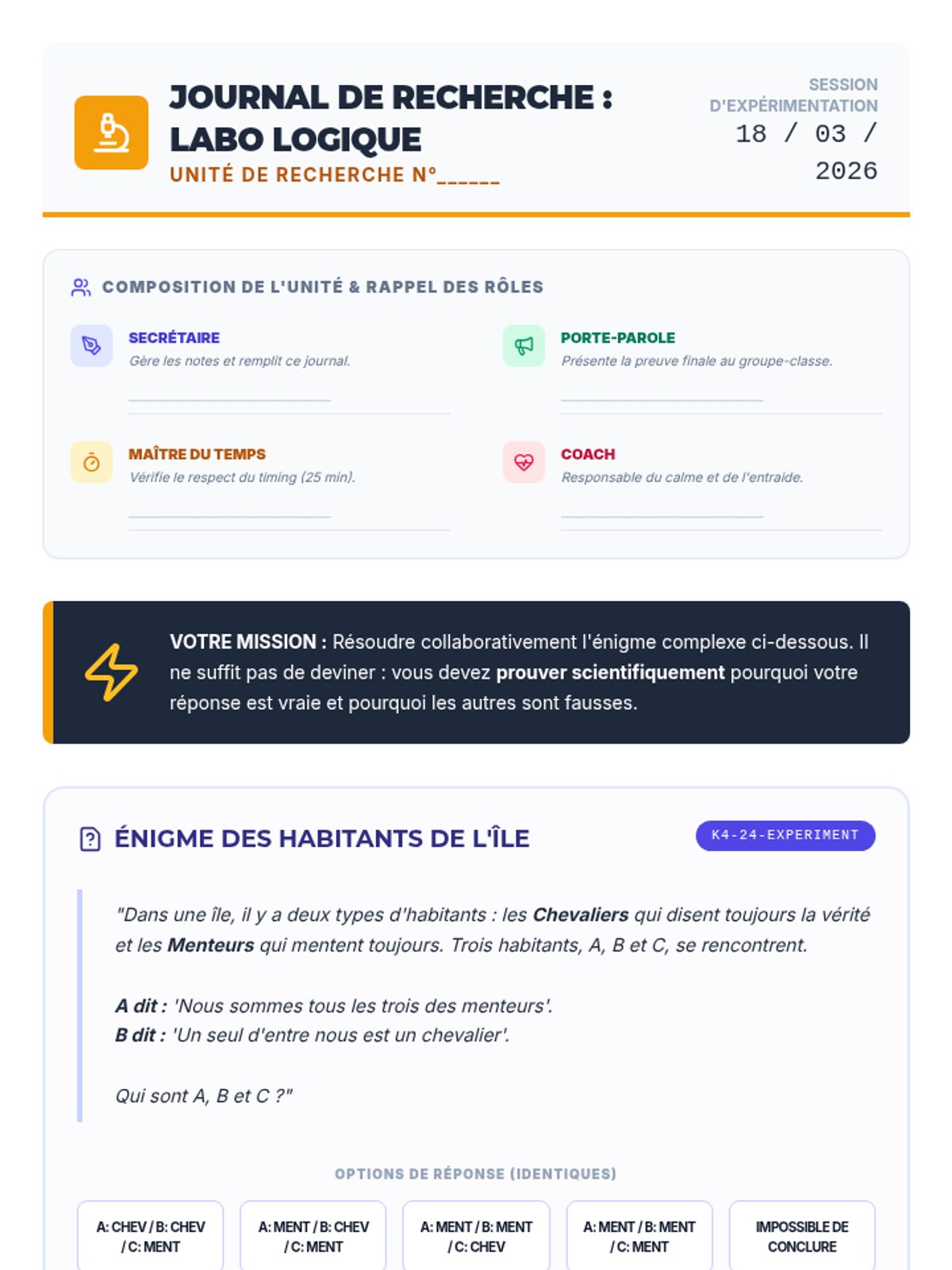
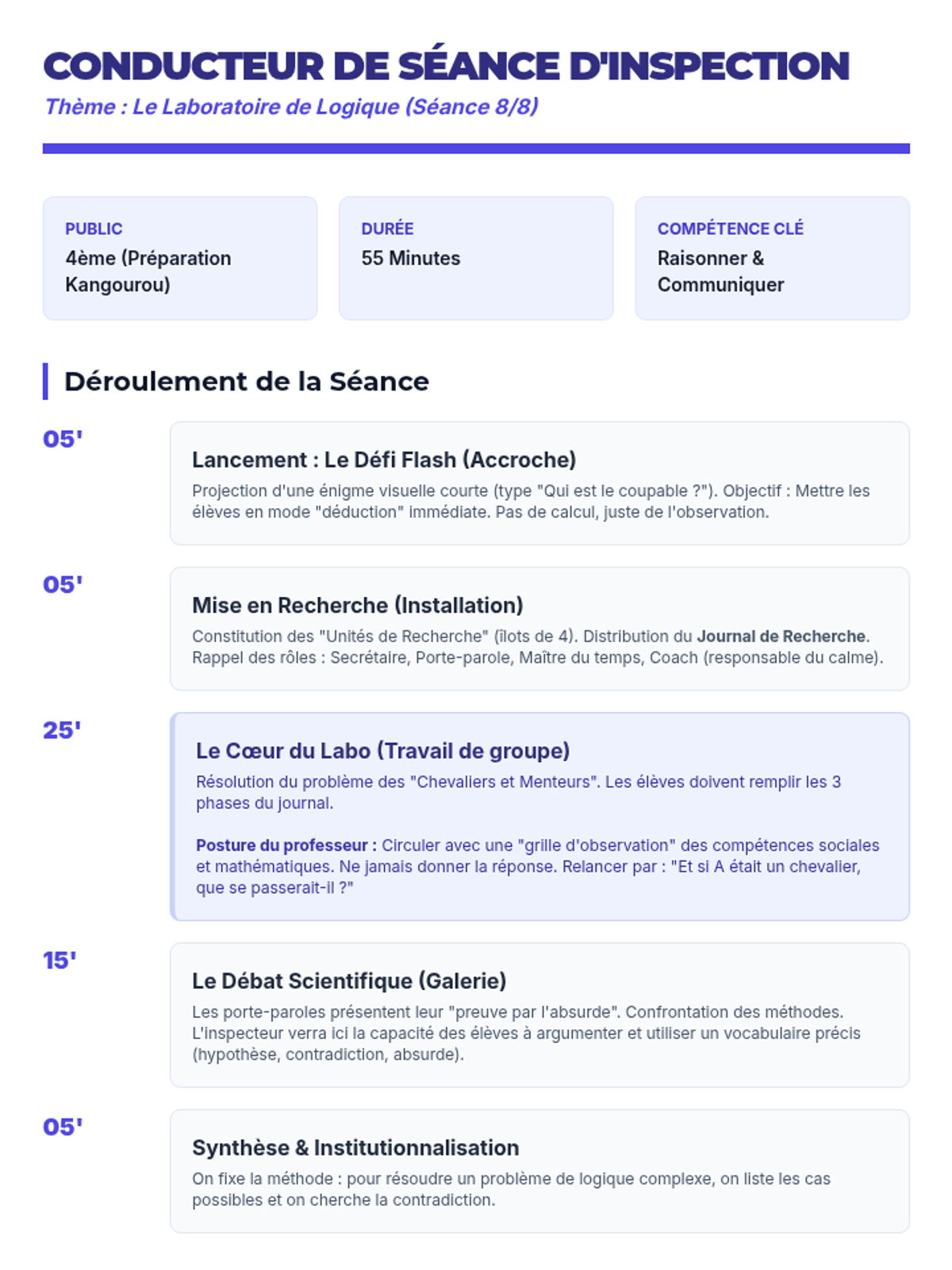
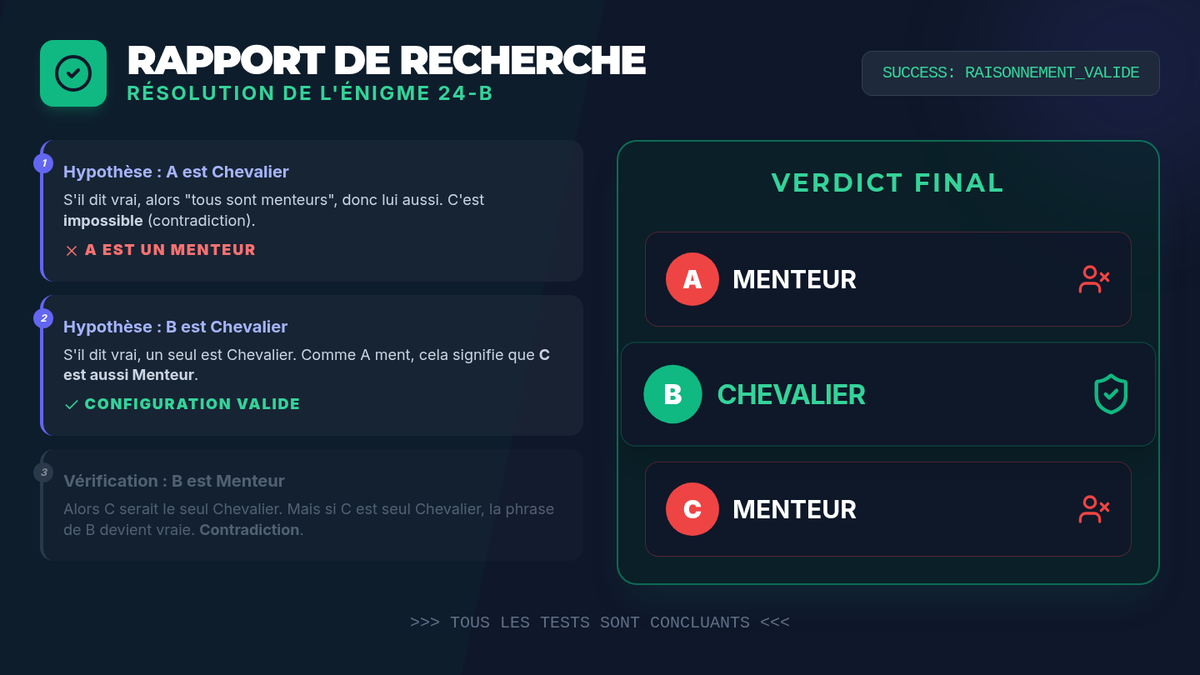
La séance d'inspection finale conçue comme un laboratoire de recherche collaborative où les élèves décortiquent des problèmes complexes en petits groupes.
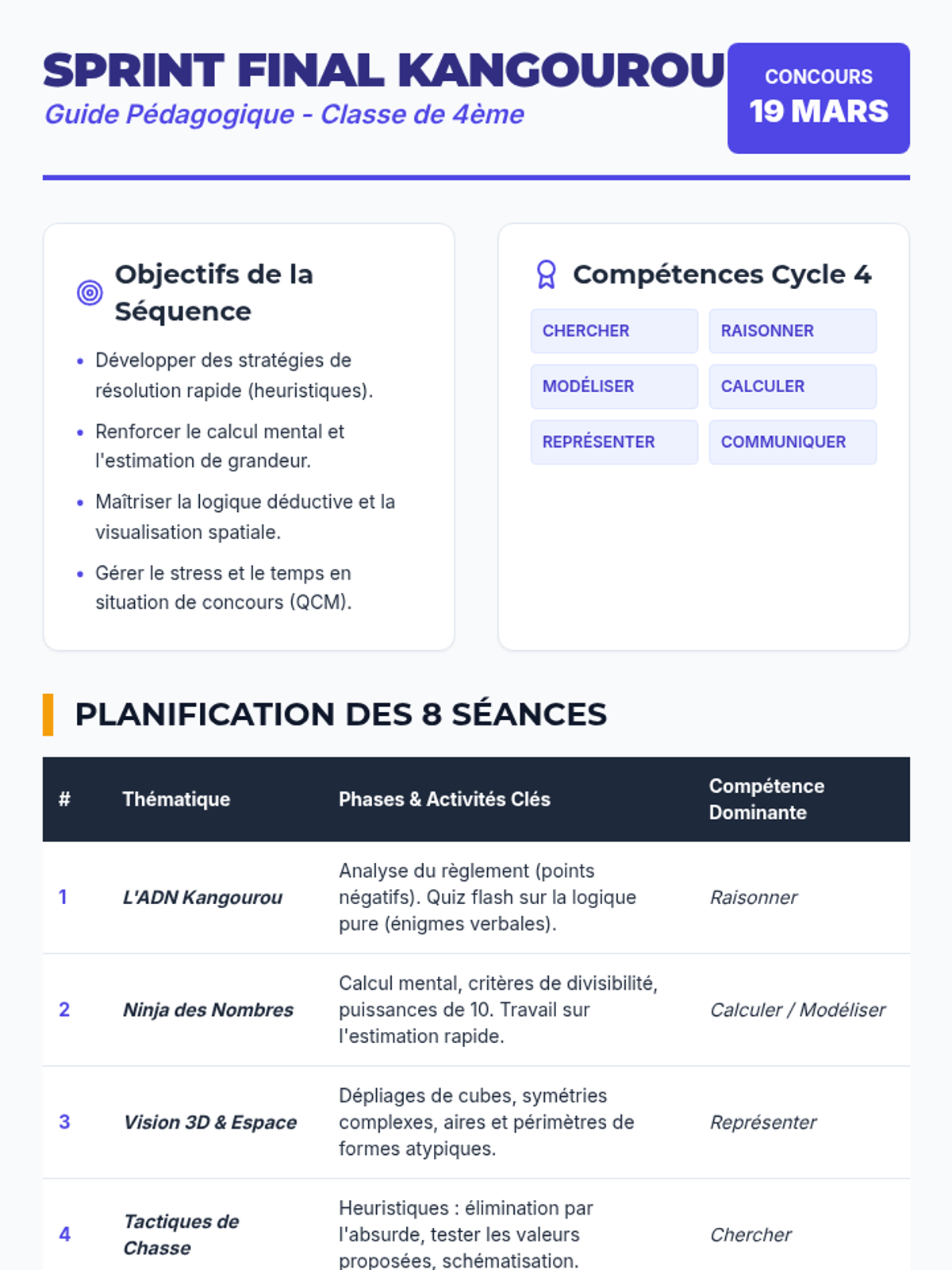
Une série de 7 séances d'entraînement intensif et stratégique pour couvrir les domaines clés du concours Kangourou : calcul, logique et géométrie.
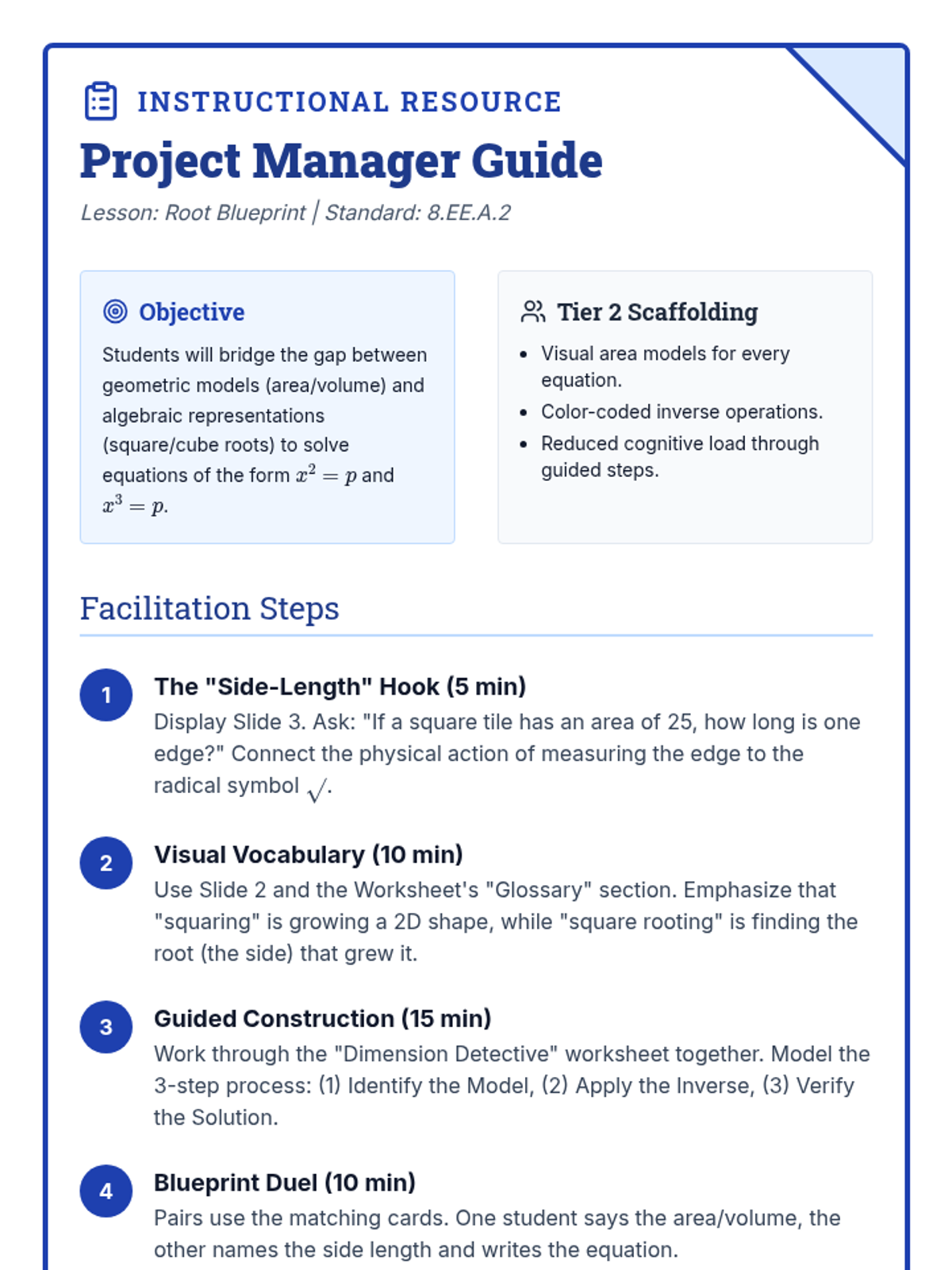
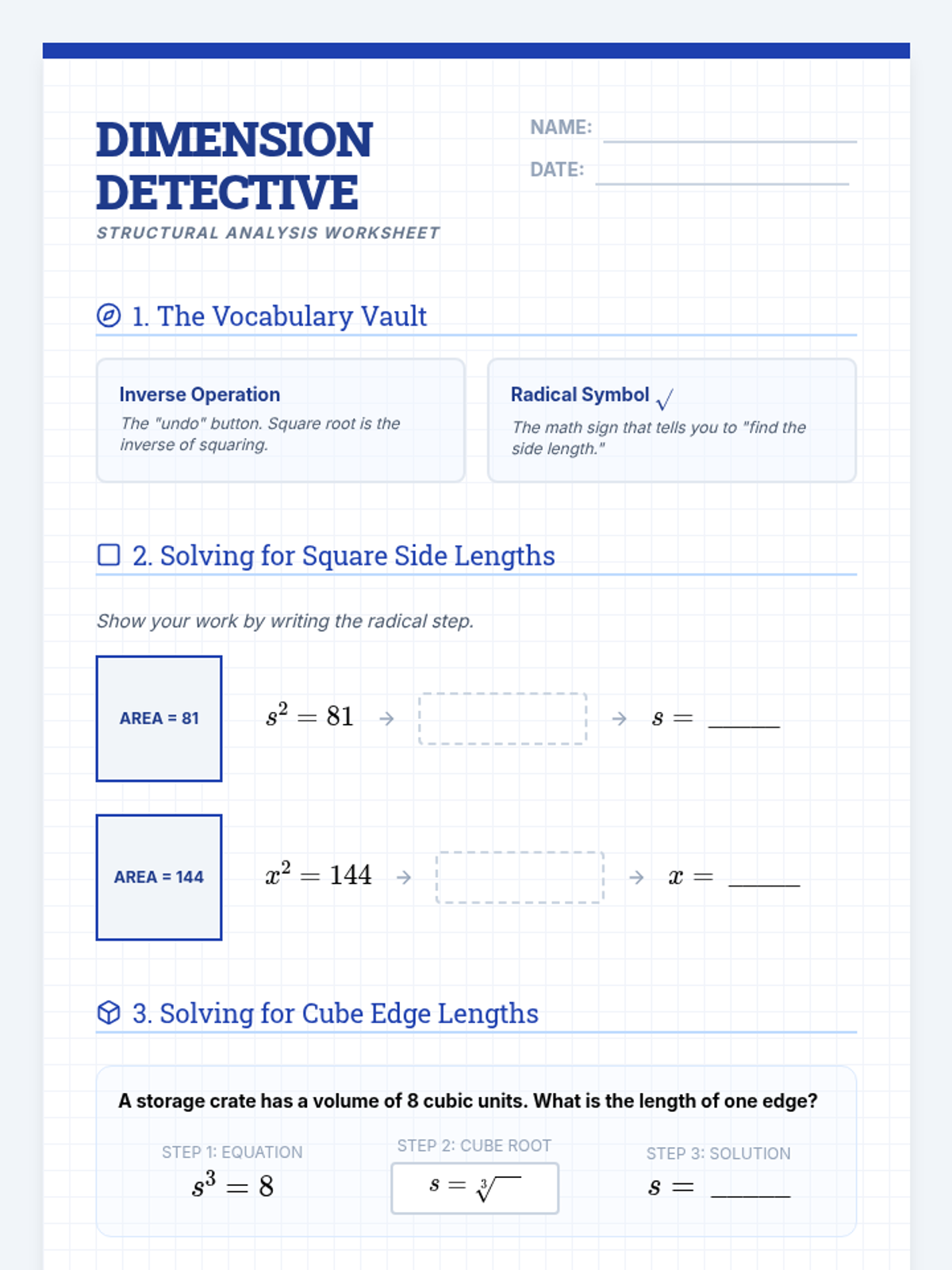
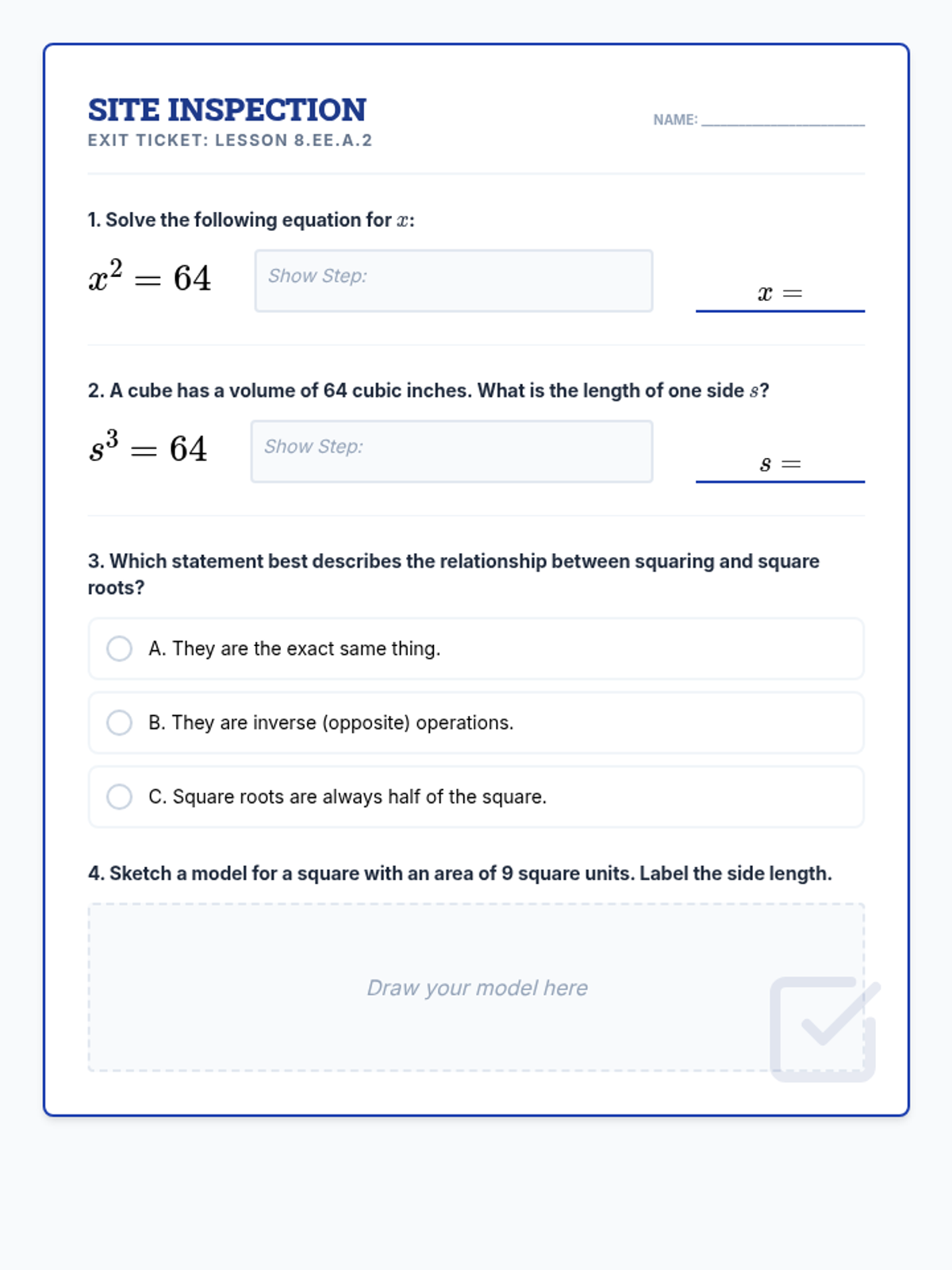
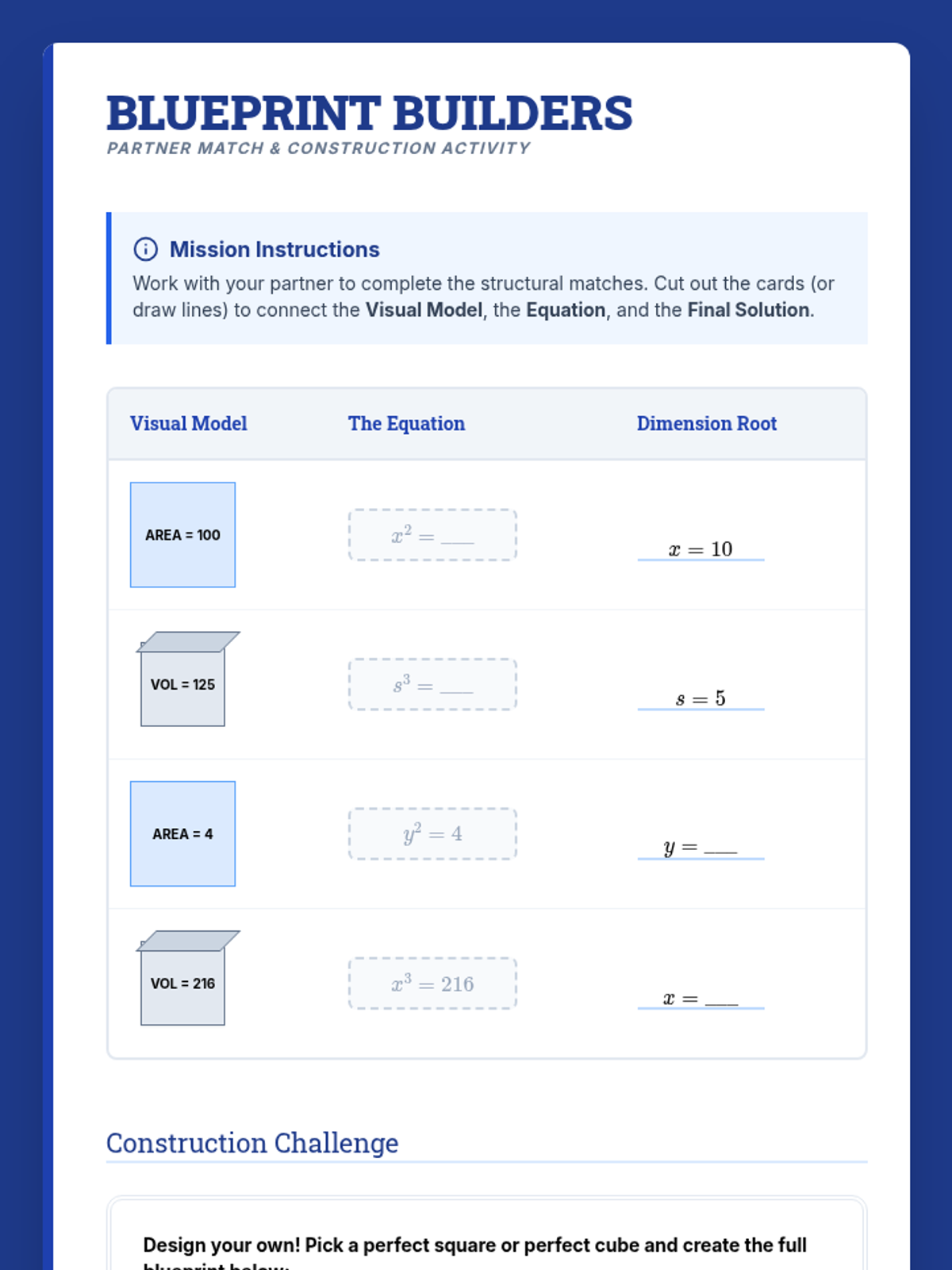
A Tier 2 intervention lesson connecting geometric area and volume models to square and cube root equations, specifically designed for small group instruction with high visual scaffolding.
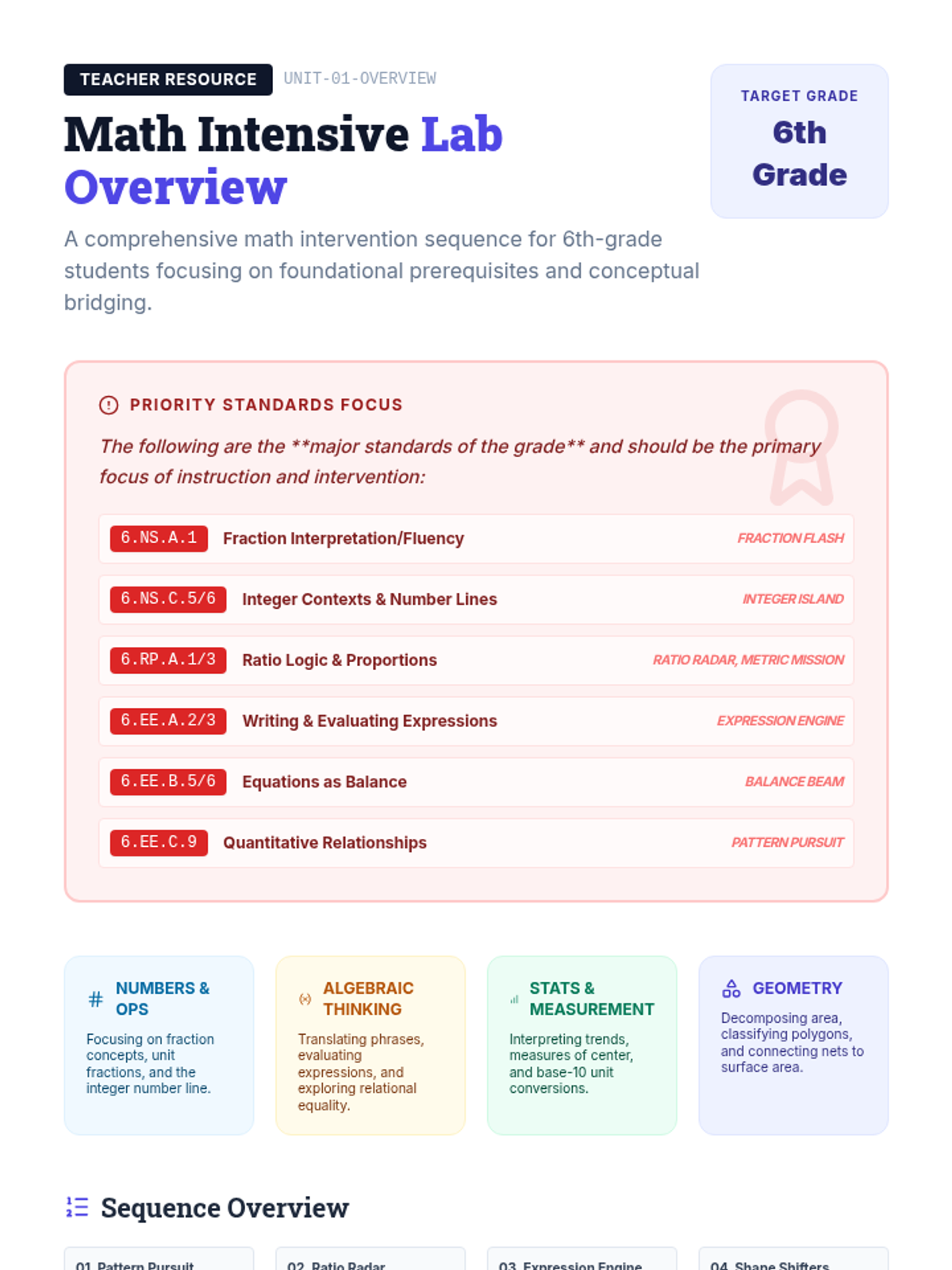
General administrative and planning resources for the Math Intensive Lab sequence, including the unit overview and sequence-wide instructional supports.
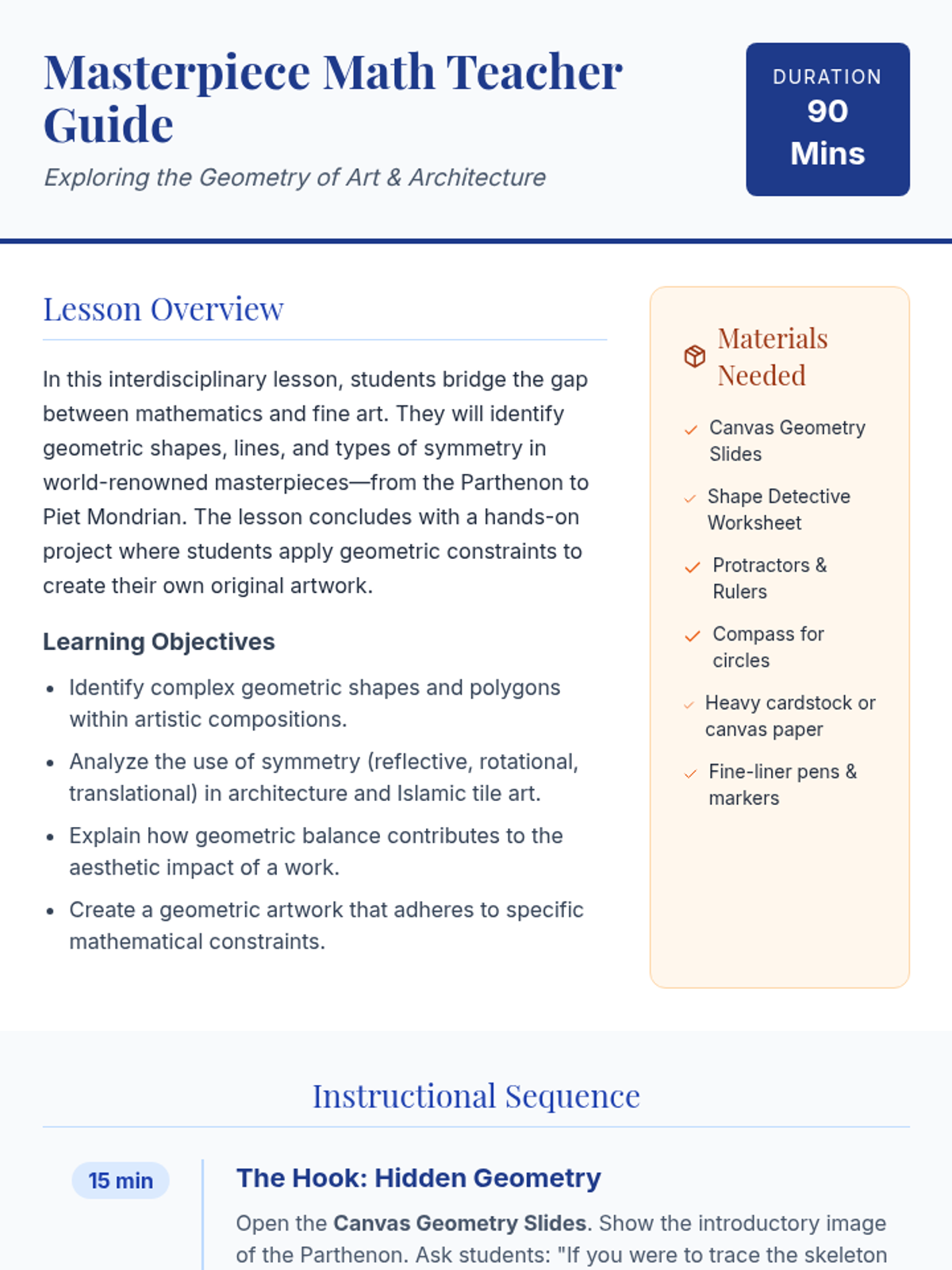
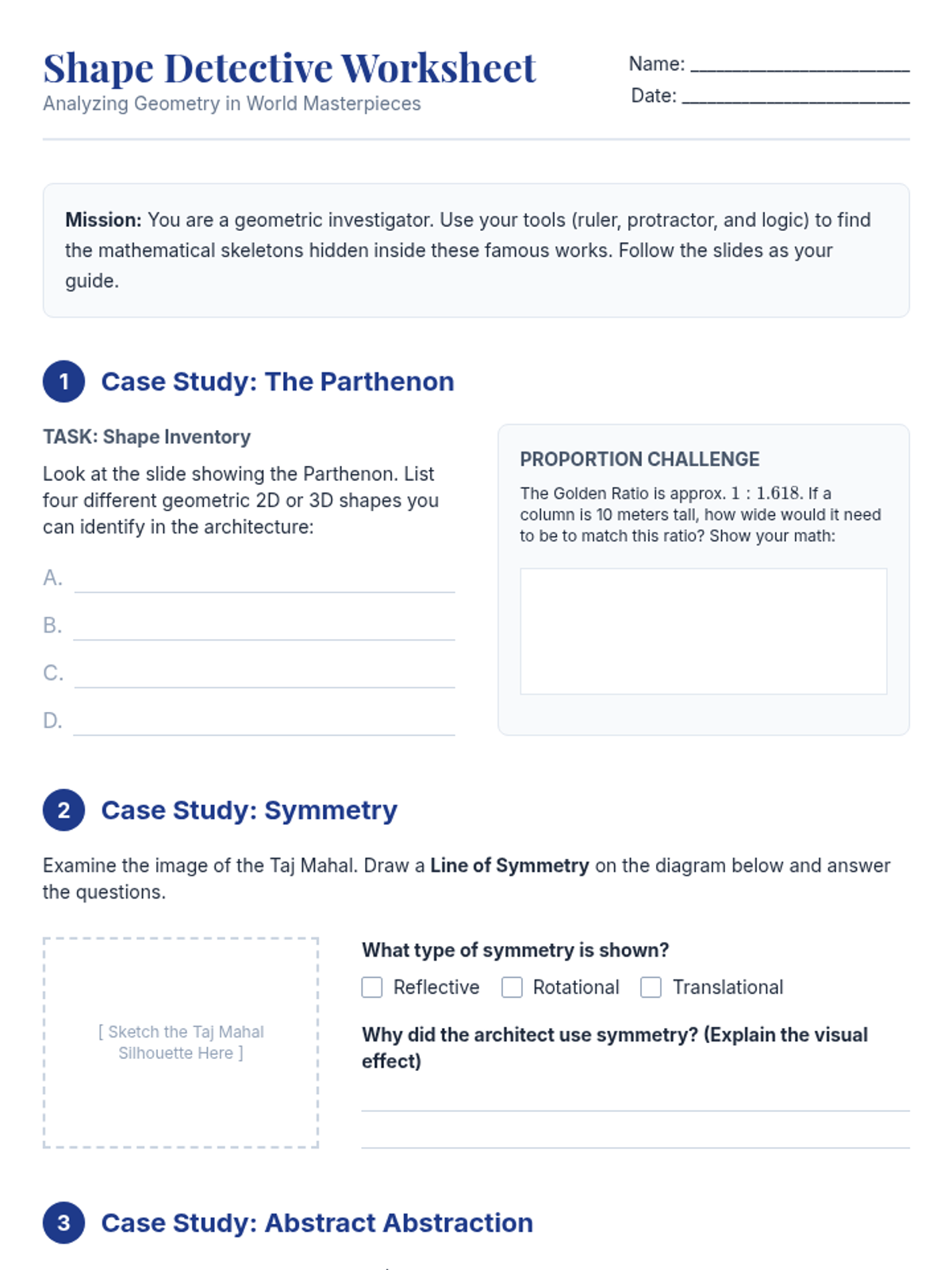
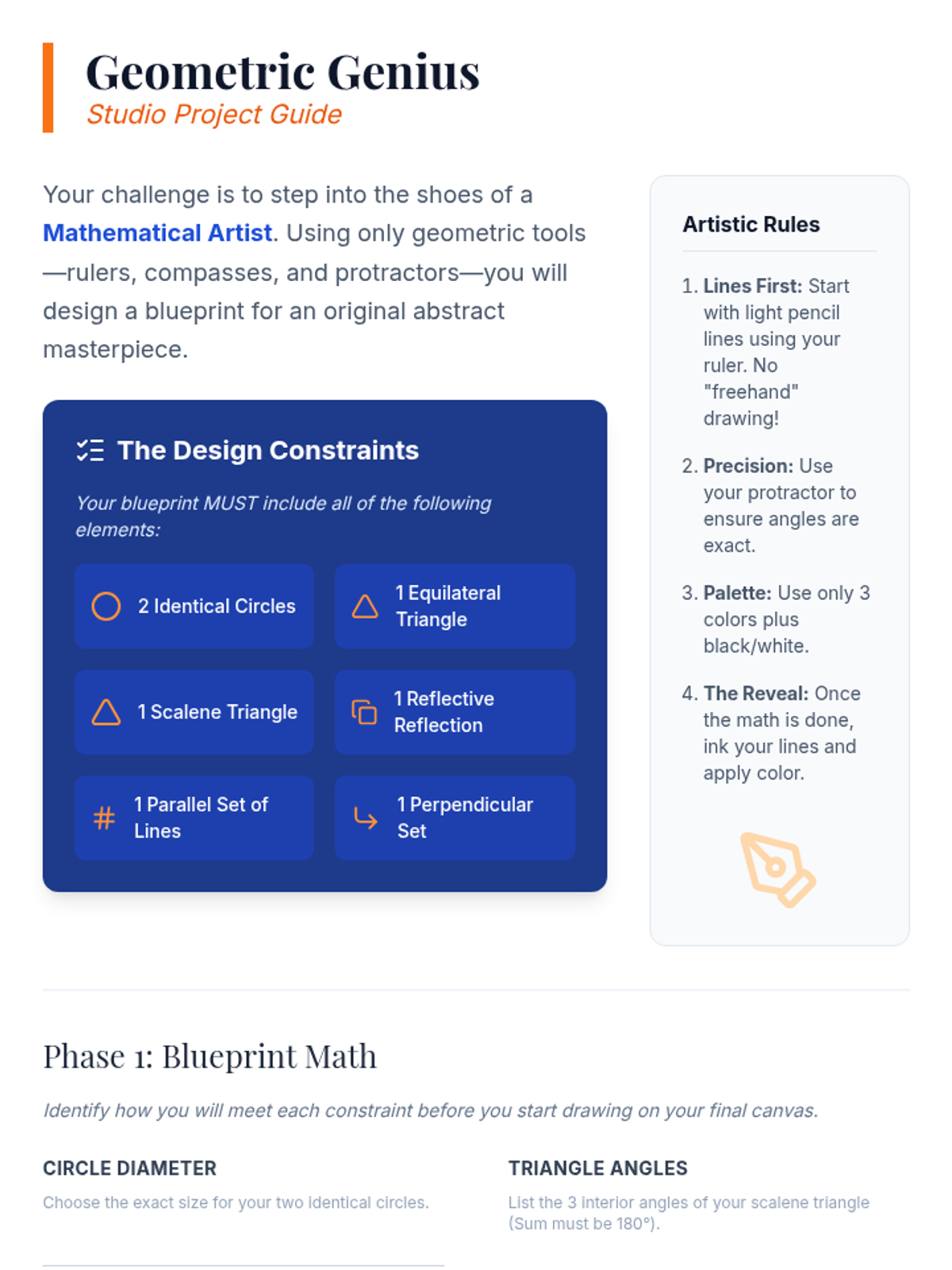
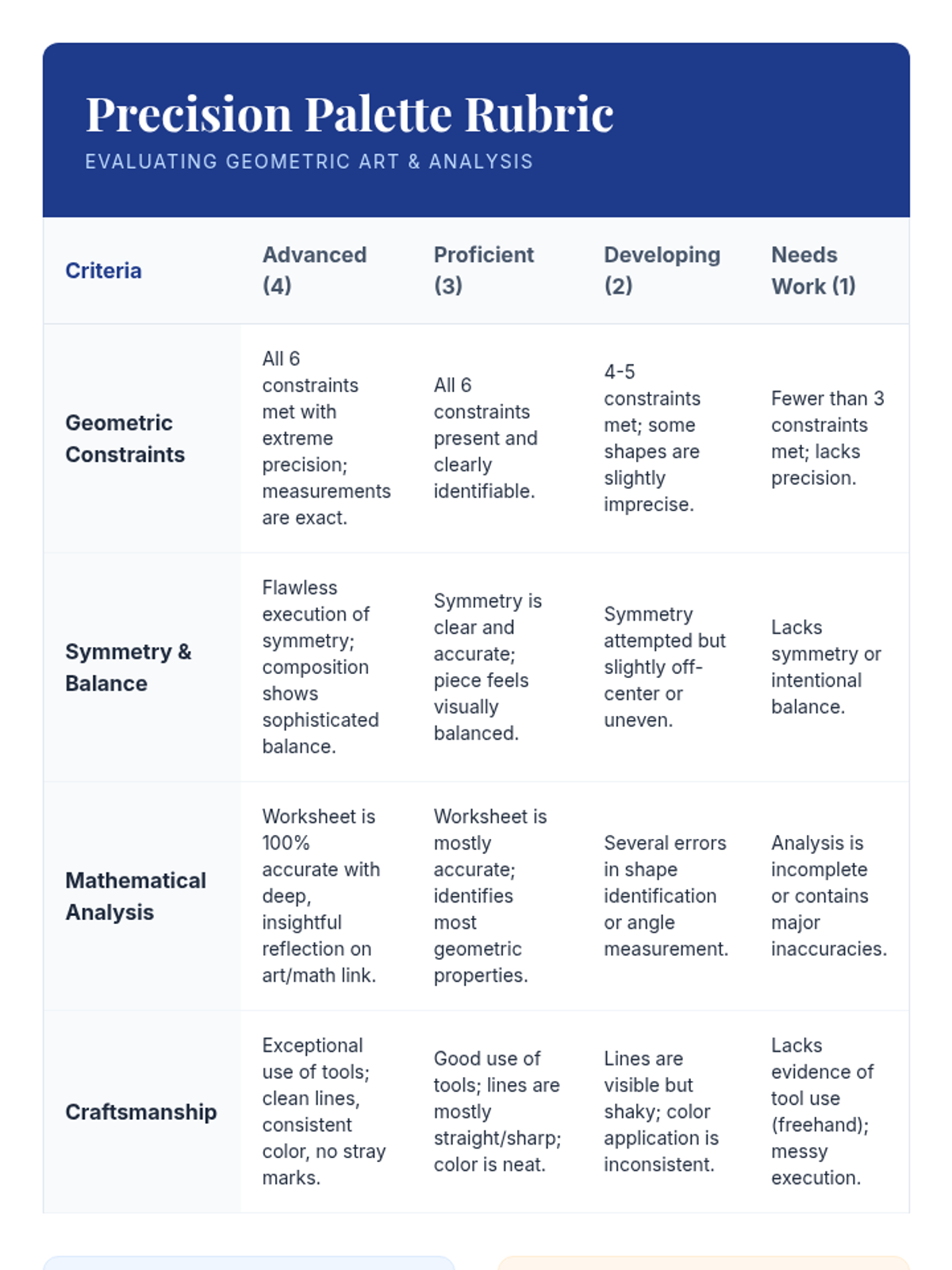
An interdisciplinary exploration of geometry in world-famous art and architecture, where students analyze symmetry and shape before creating their own geometric masterpieces.
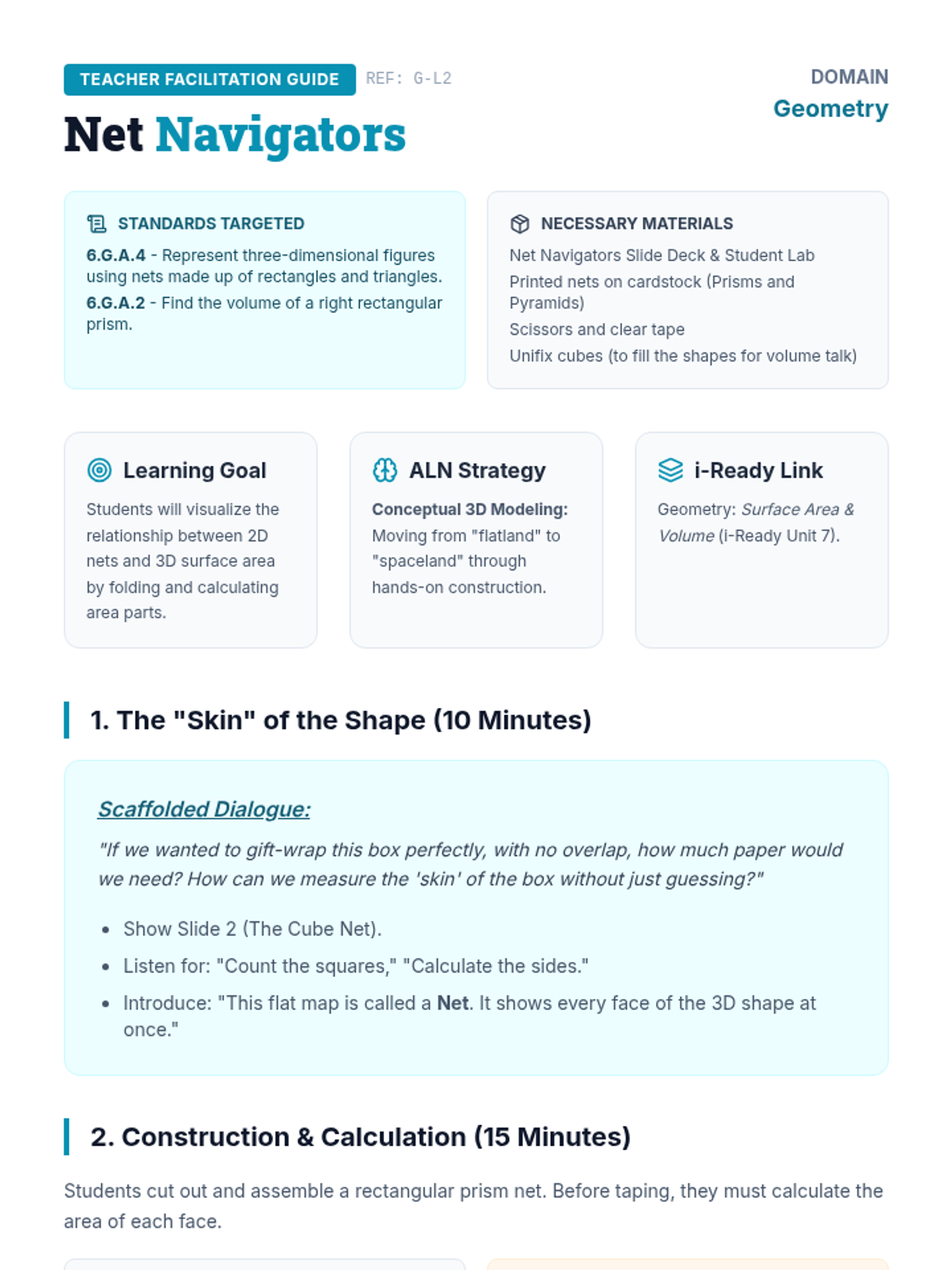
Connects 2D representations to 3D volumes by exploring nets of prisms and pyramids to calculate surface area conceptually.
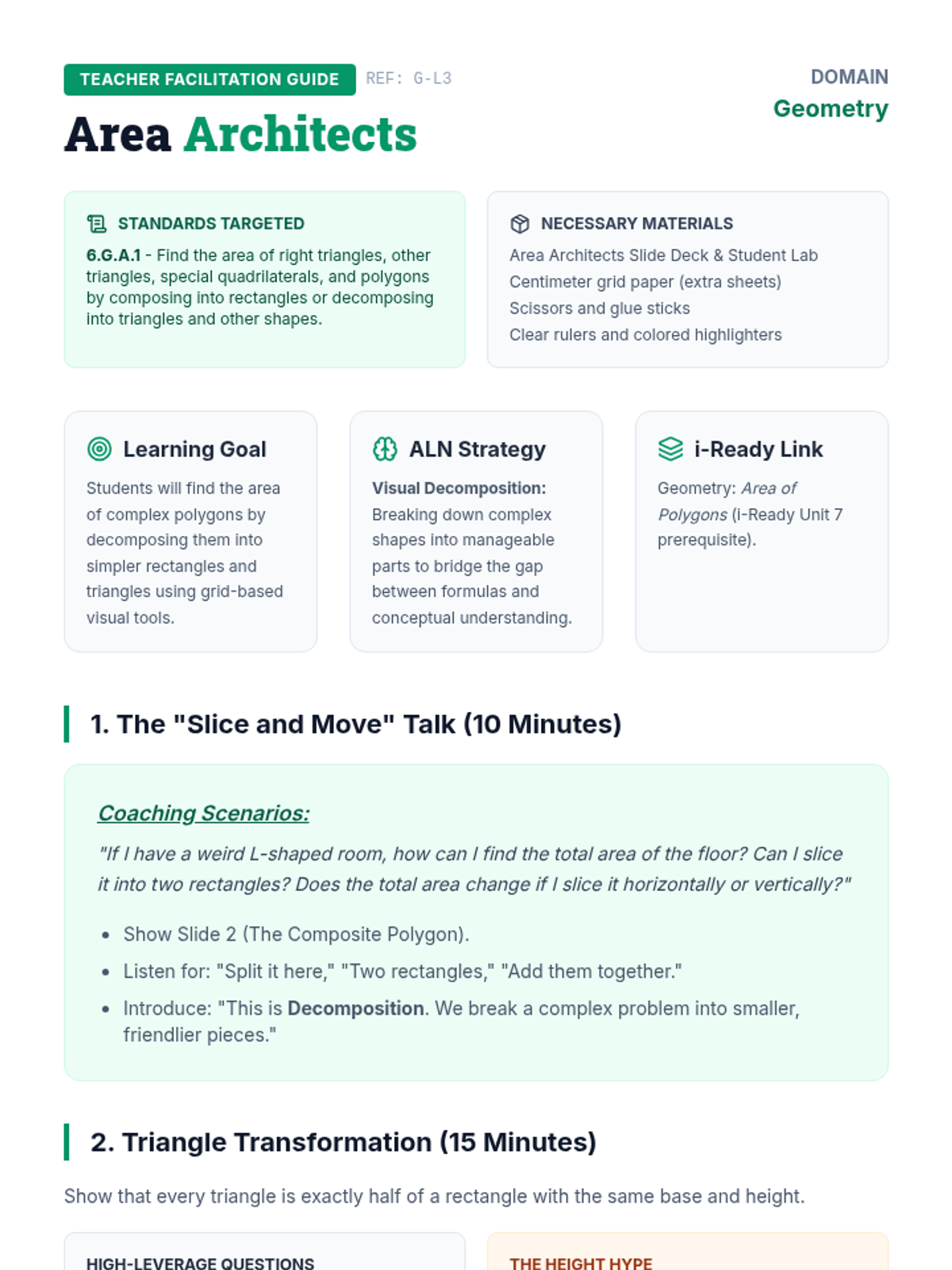
Deepens understanding of area by decomposing complex shapes into rectangles and triangles using grid-based visual tools.
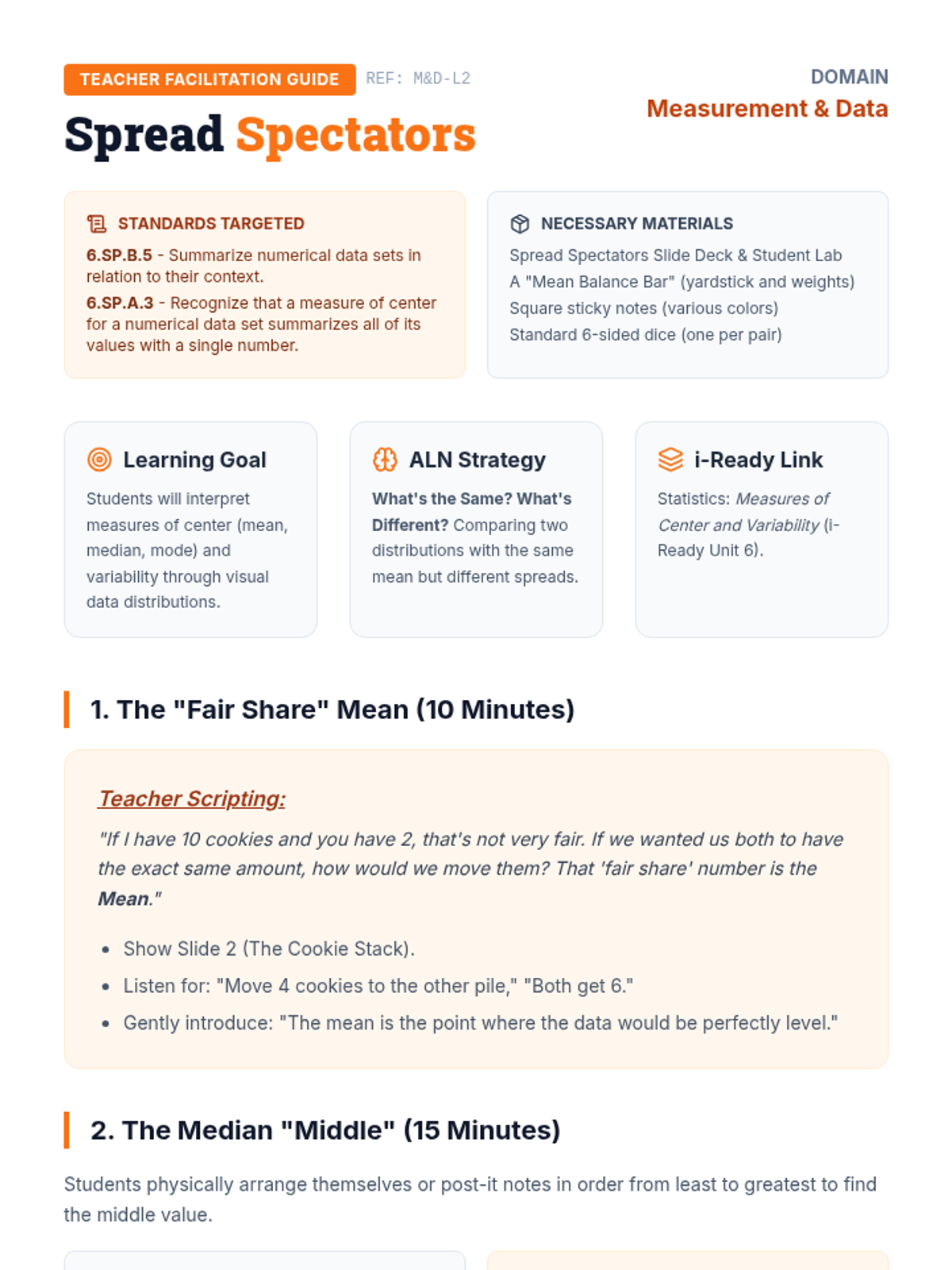
Interprets measures of center (mean, median, mode) through data visualization and 'What's the Same? What's Different?' statistical talks.
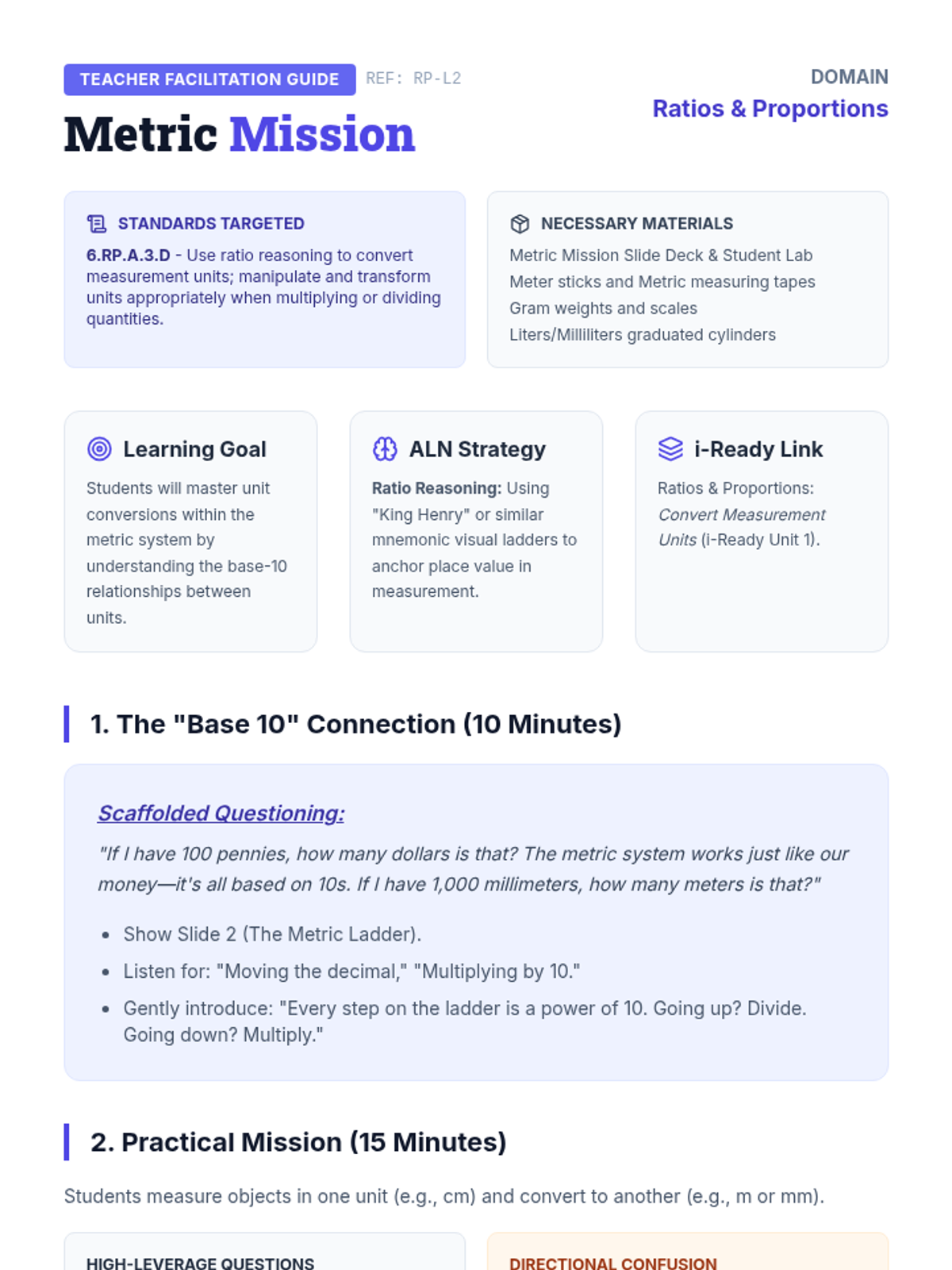
Provides hands-on challenges to master unit conversions within the same system, focusing on the relationship between larger and smaller units.
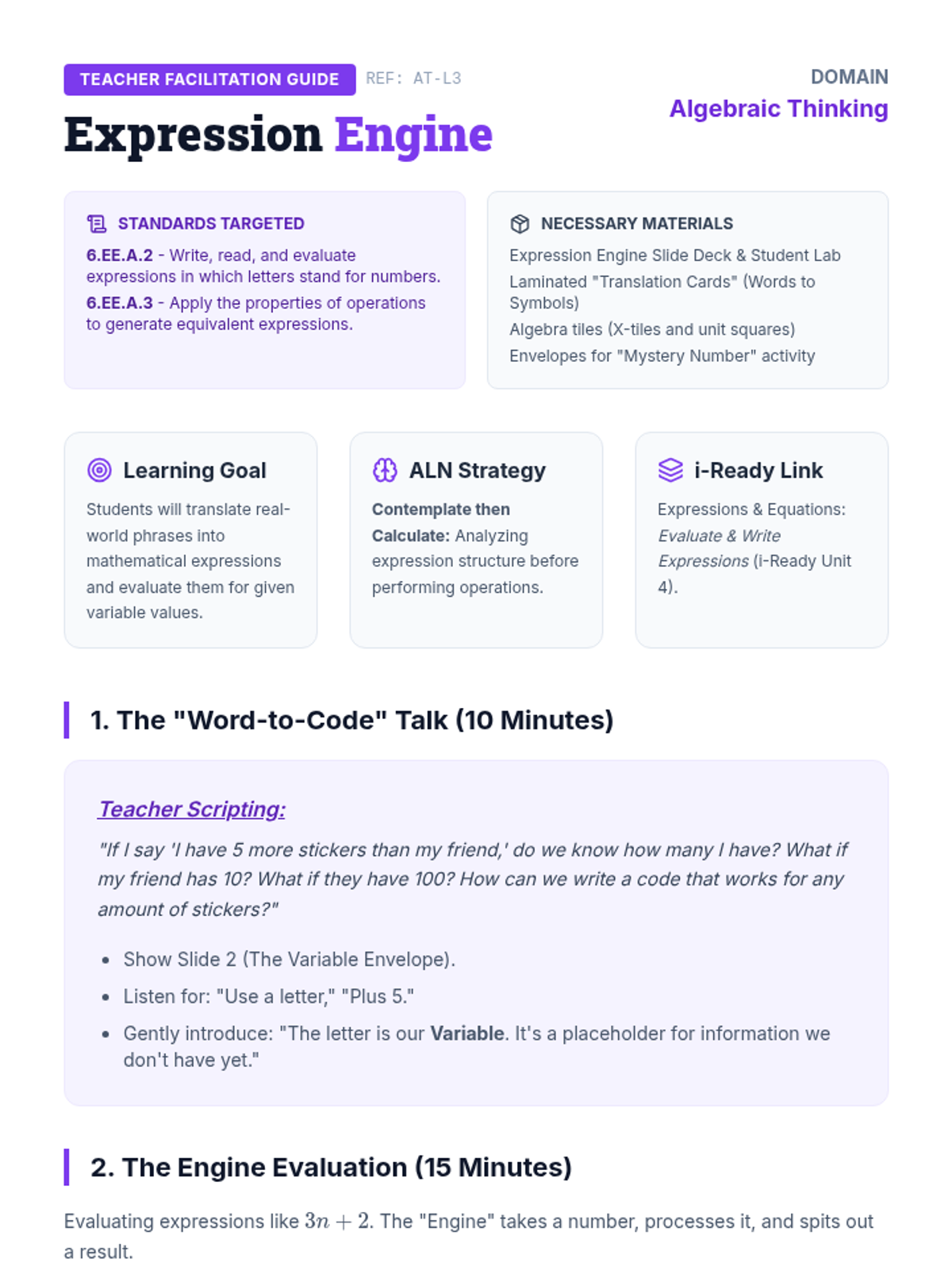
Focuses on translating real-world phrases into algebraic expressions and evaluating them using 'Contemplate then Calculate' strategies.
Uses visual sequences and function machines to help students identify, extend, and describe numerical patterns and rules.
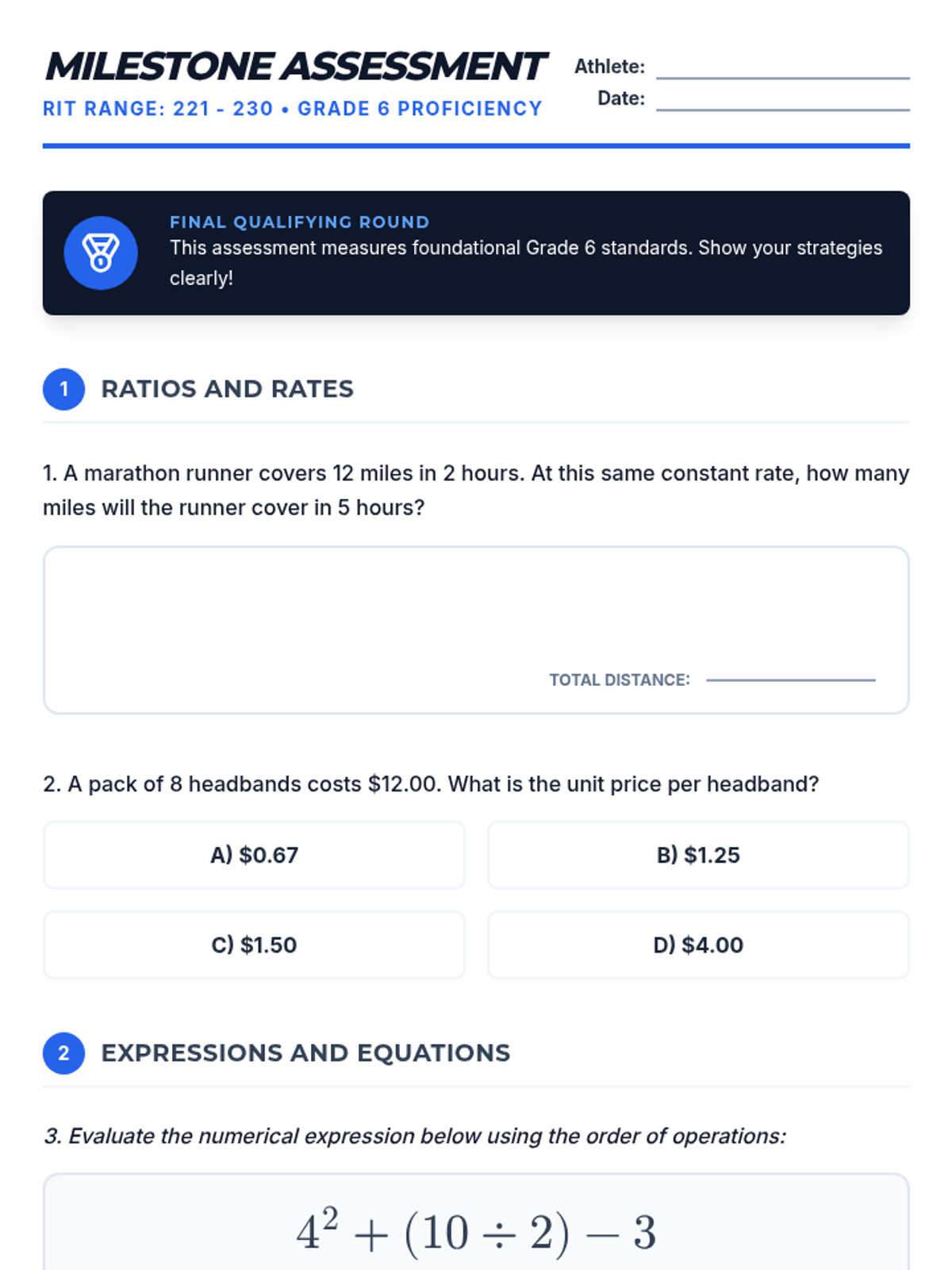
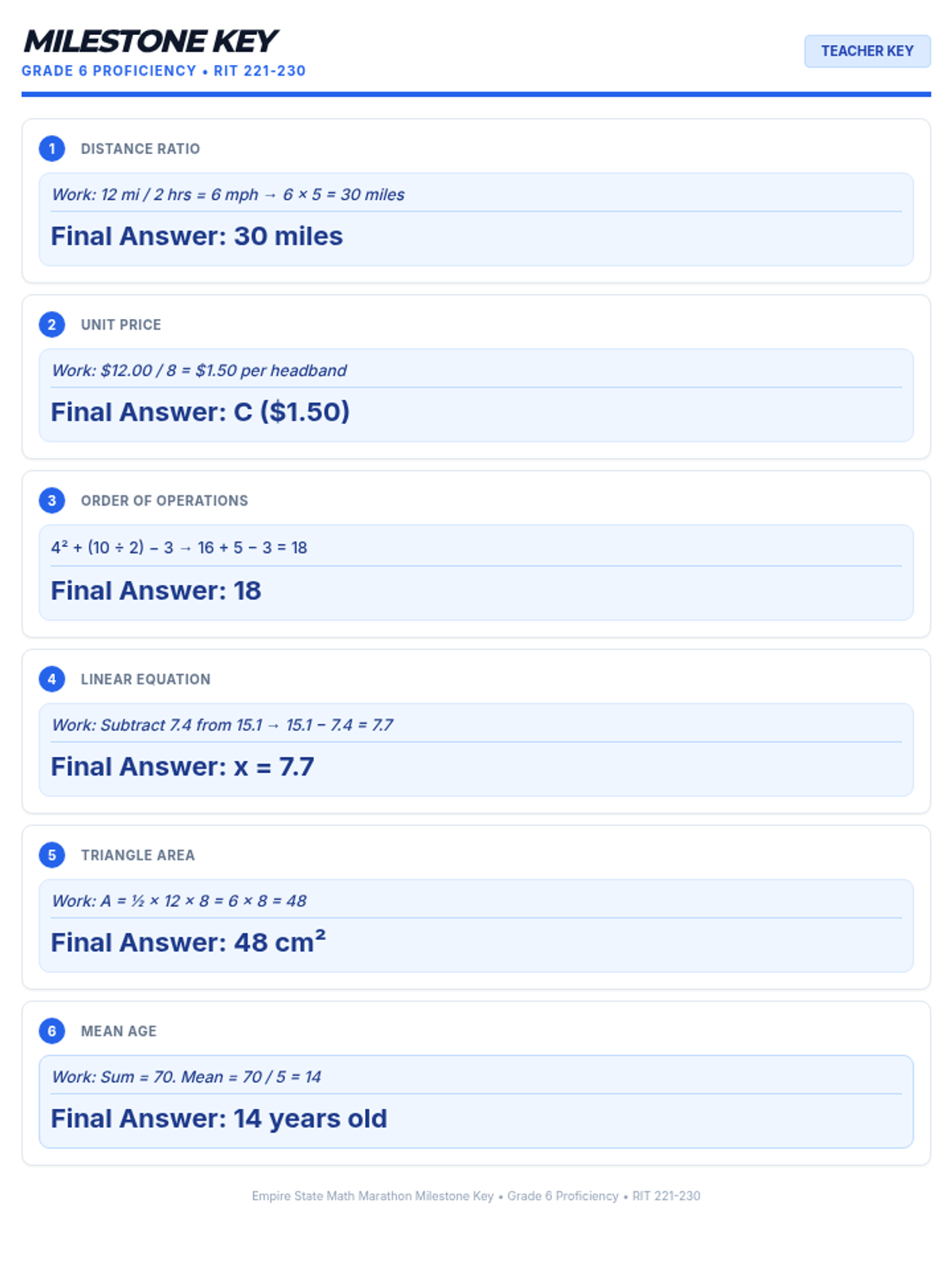
A cumulative milestone assessment designed for students at Grade 6 proficiency (RIT 221-230). This assessment checks foundational understanding of ratios, expressions, and geometry needed for 8th-grade success.
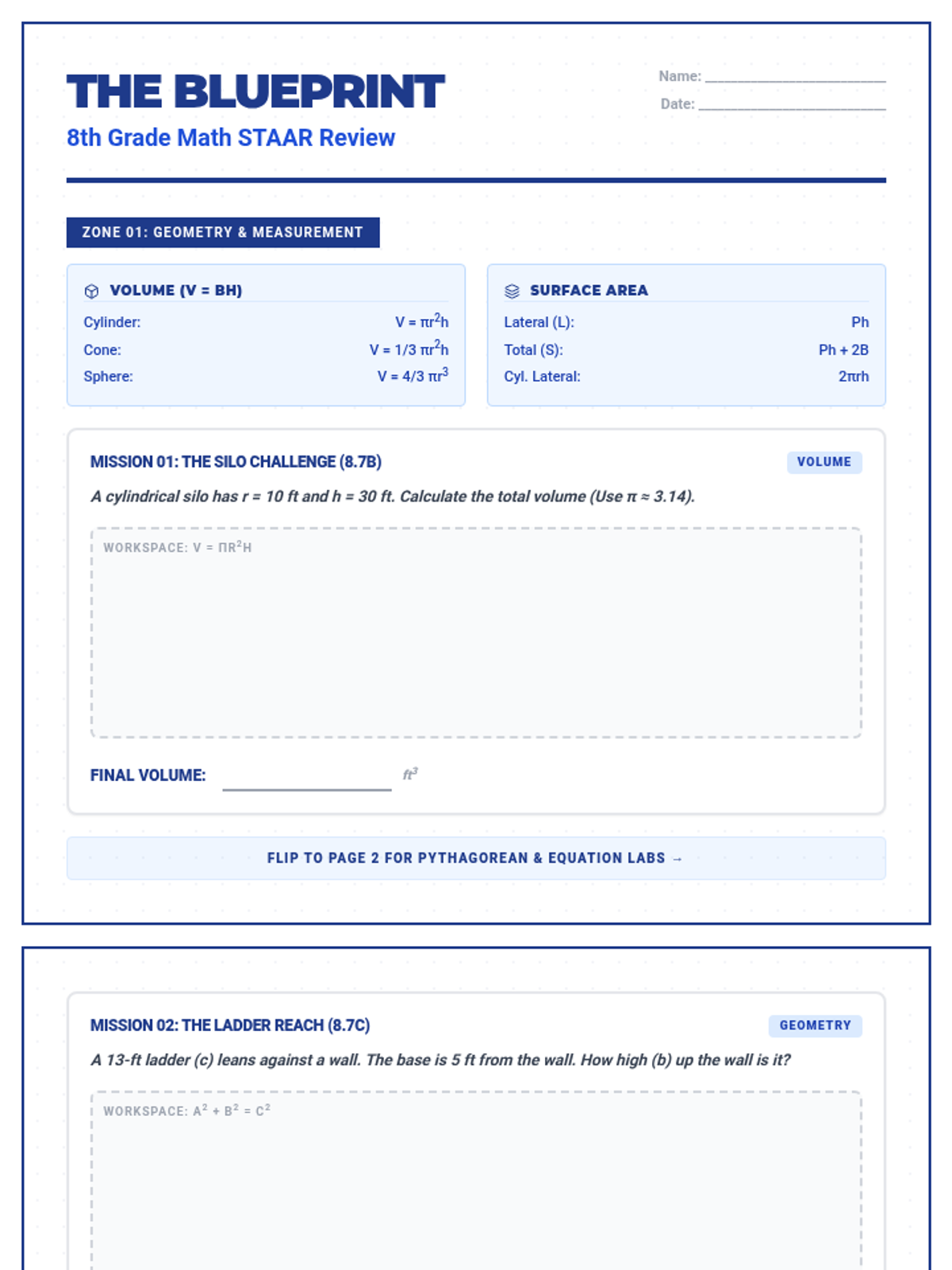
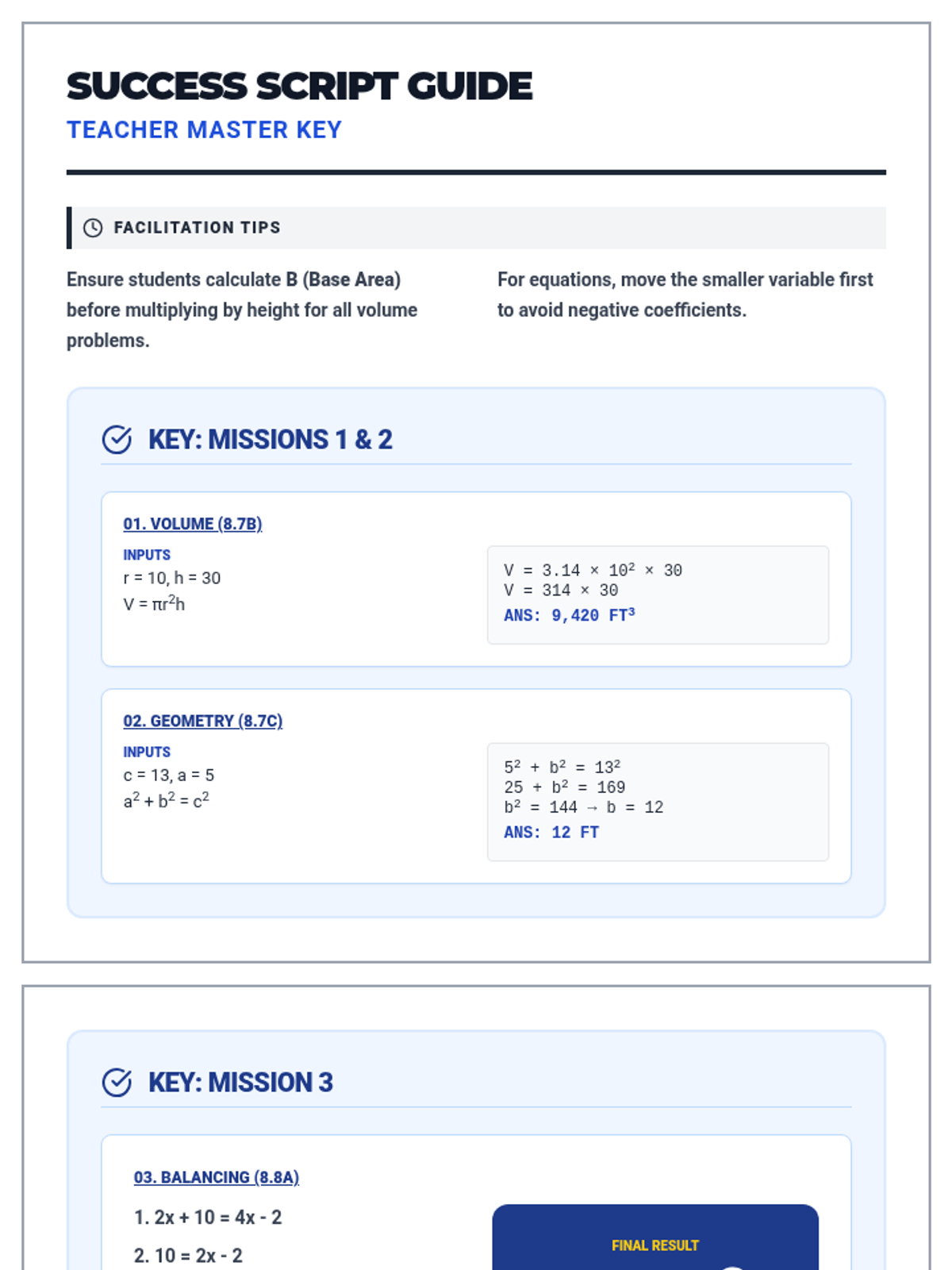
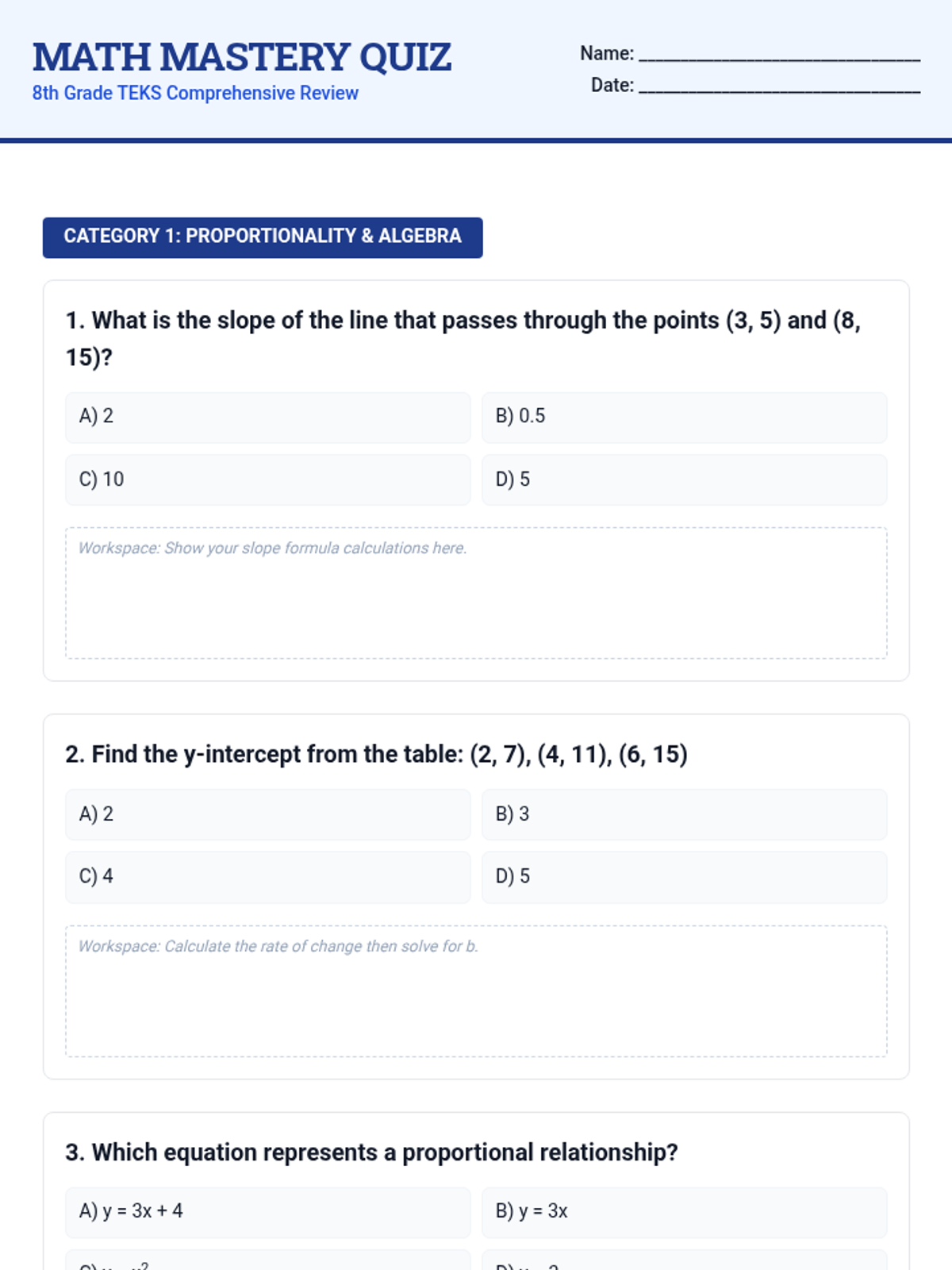
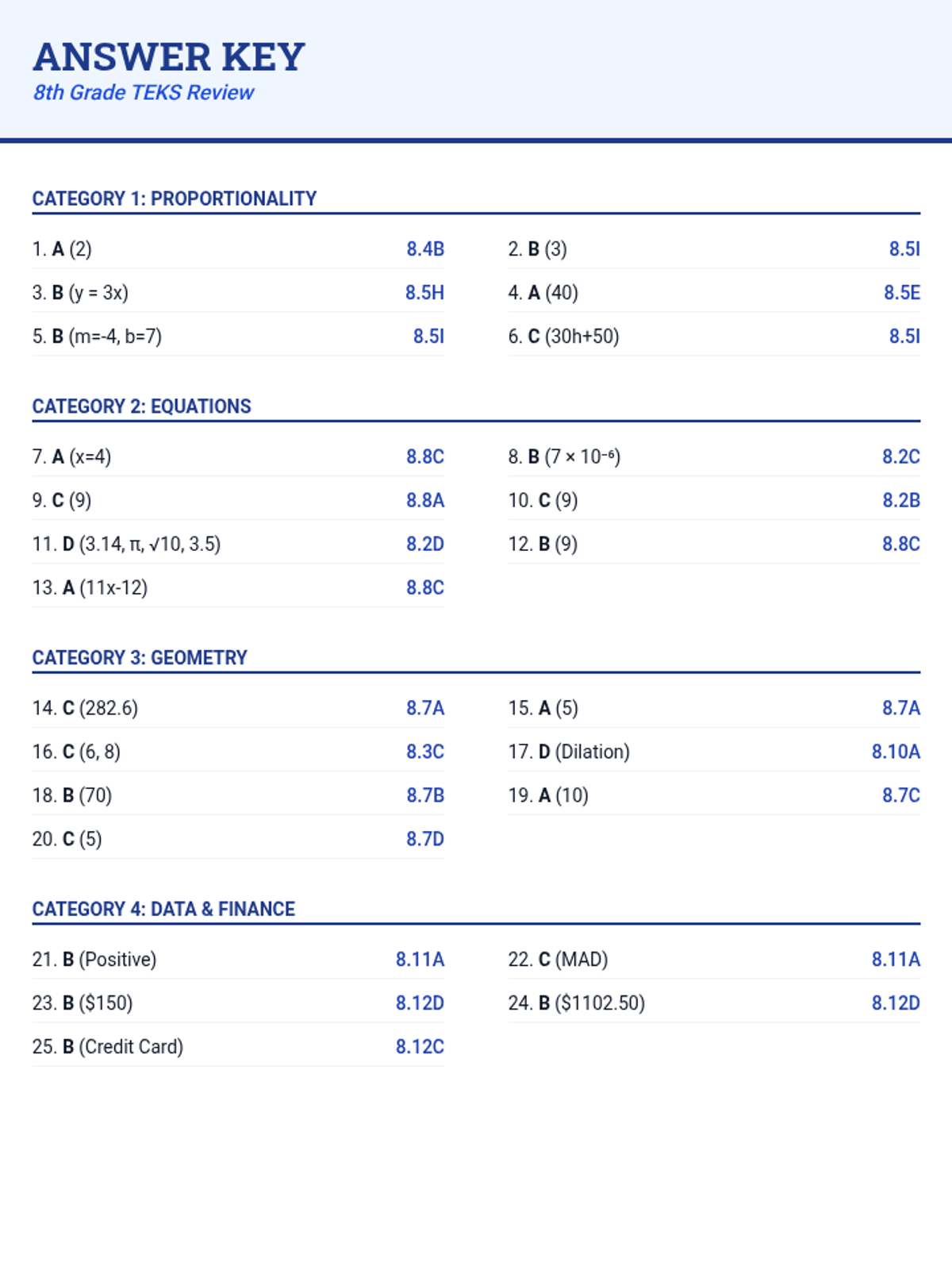
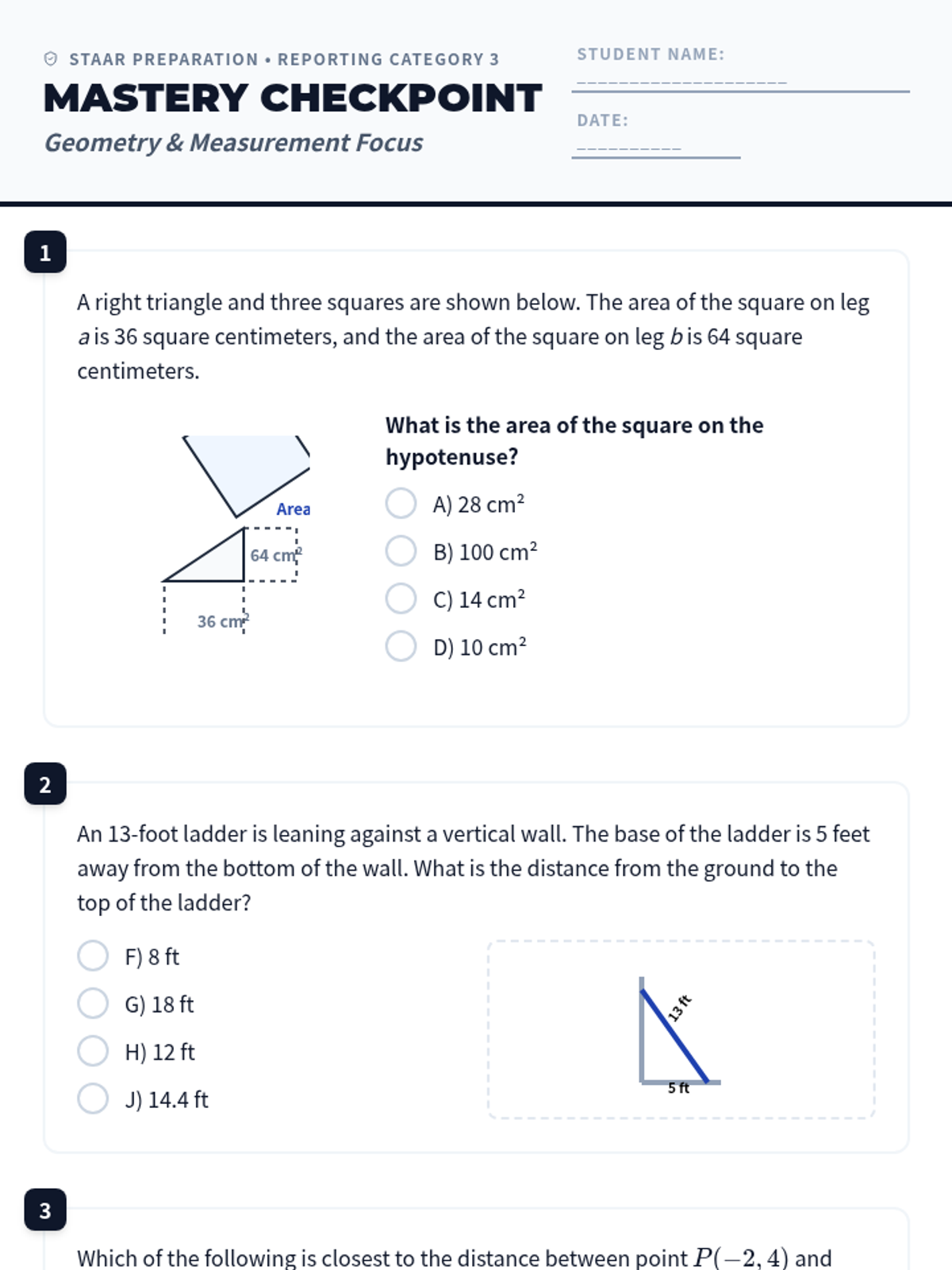
A comprehensive 8th-grade TEKS review covering Geometry, Measurement, Equations, and Inequalities. Includes visual instruction, student practice, and teacher guidance for STAAR-aligned mastery.
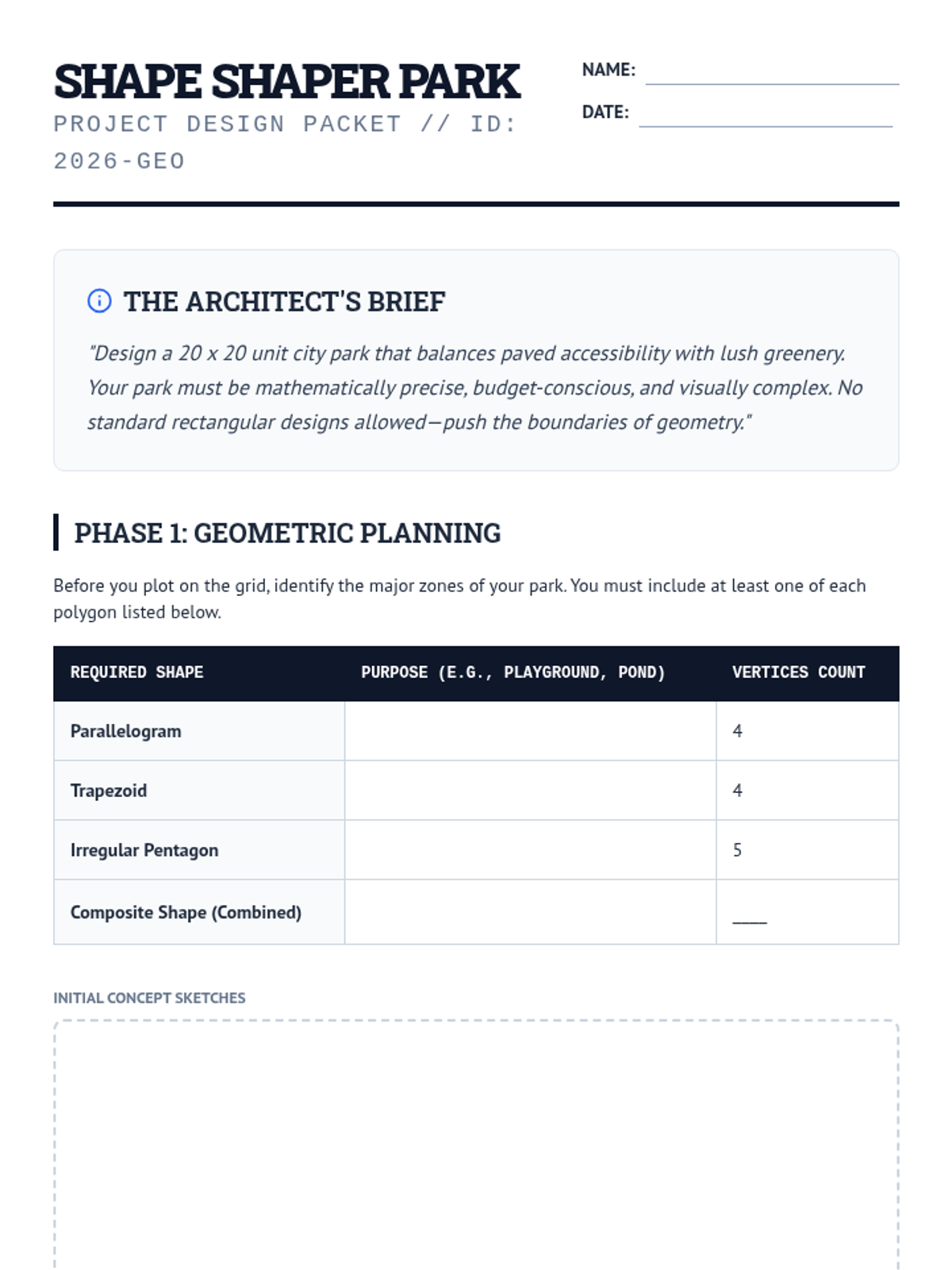
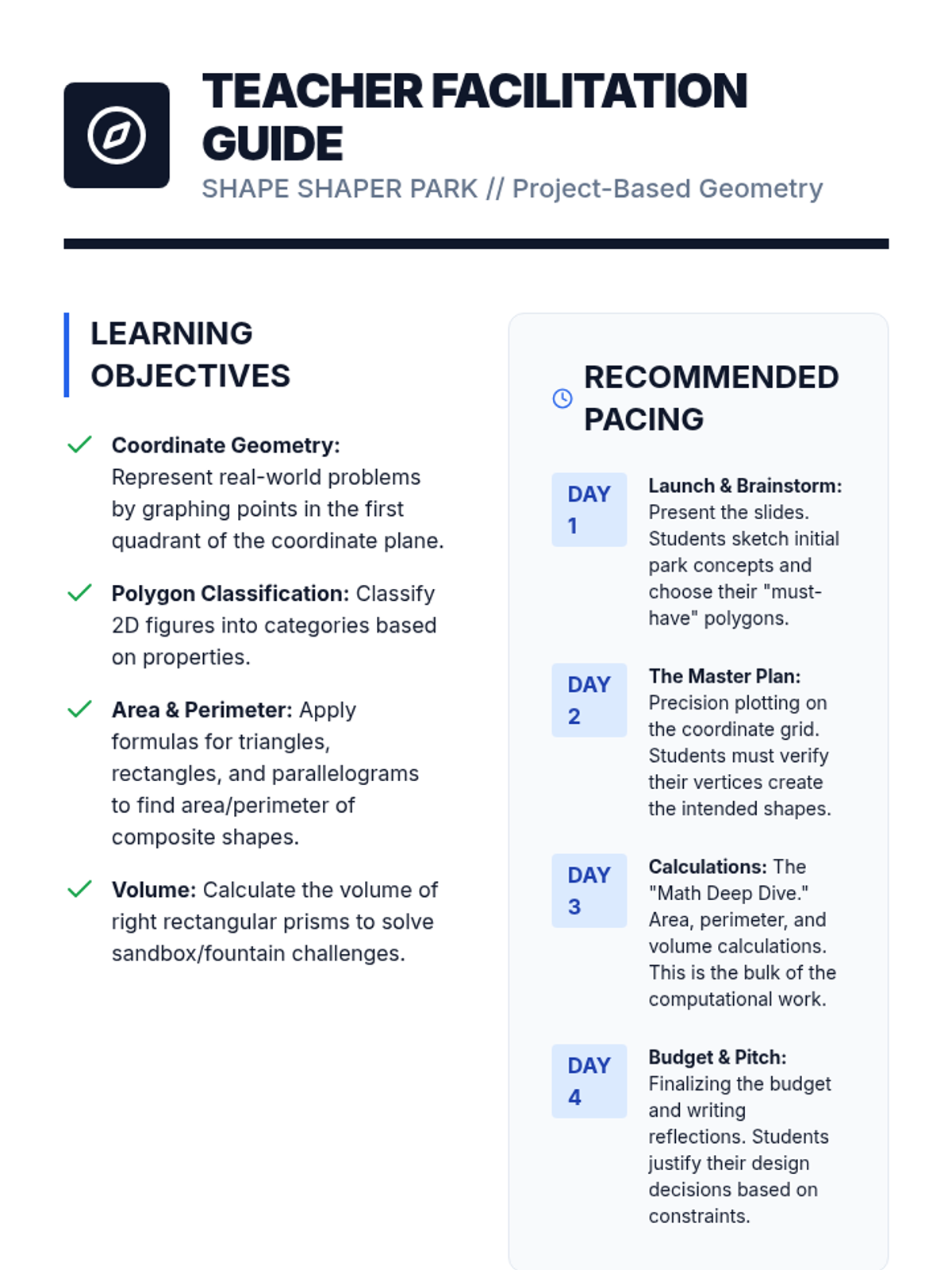
A geometry project where students design a futuristic city park using complex polygons, coordinate geometry, and volume calculations. This project-based learning investigation challenges students to balance aesthetic design with mathematical constraints and cost-efficiency.
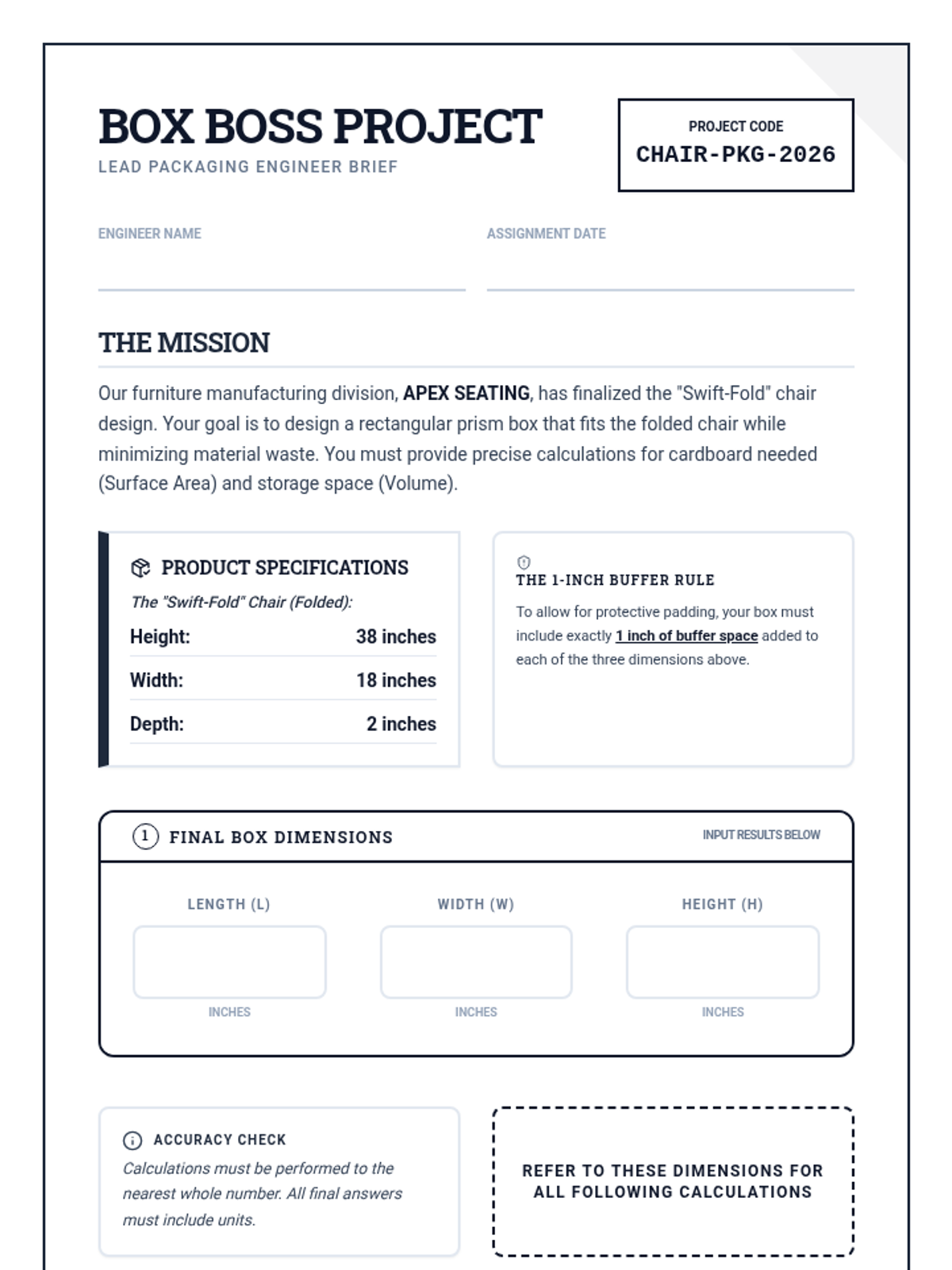
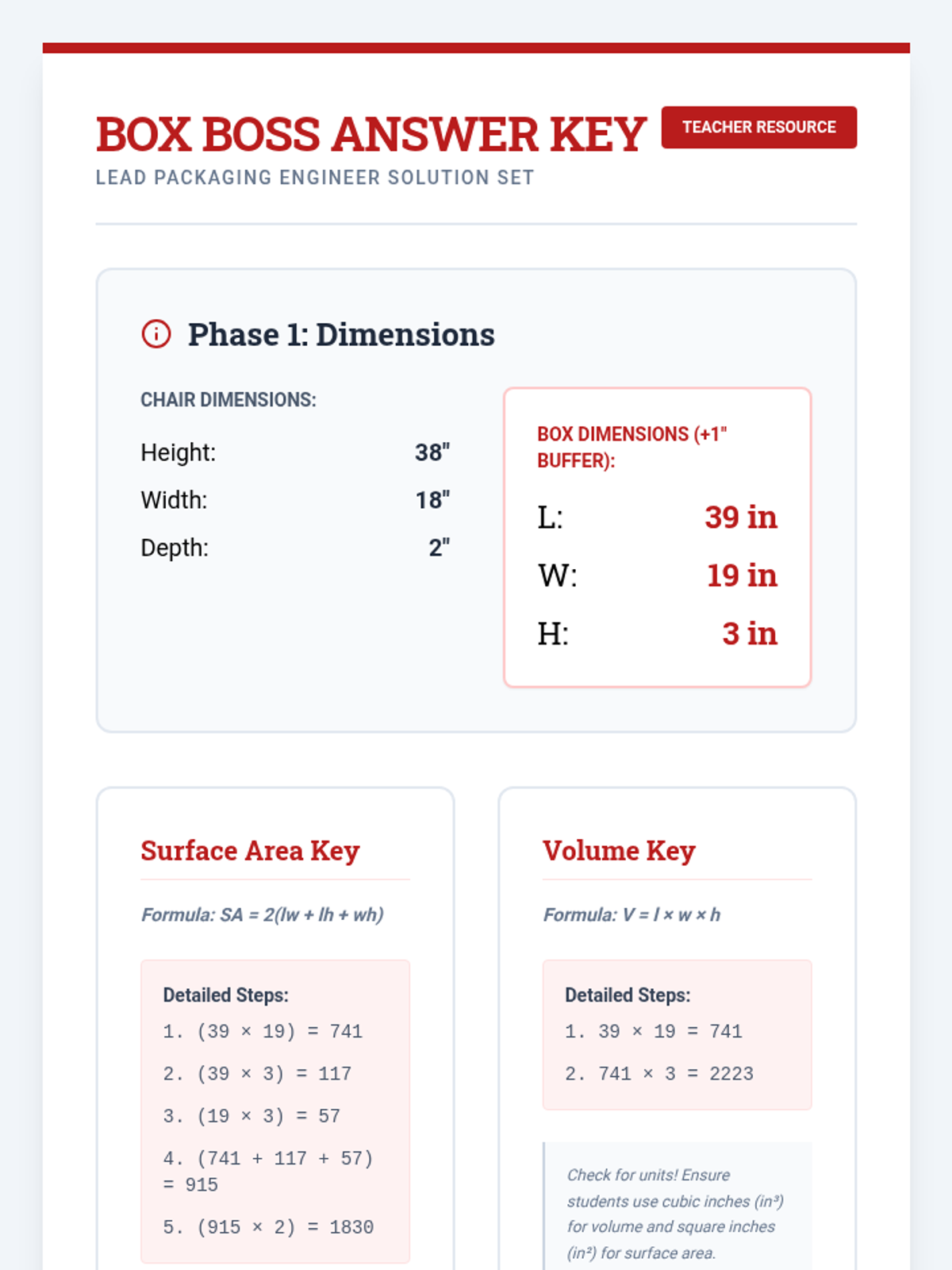
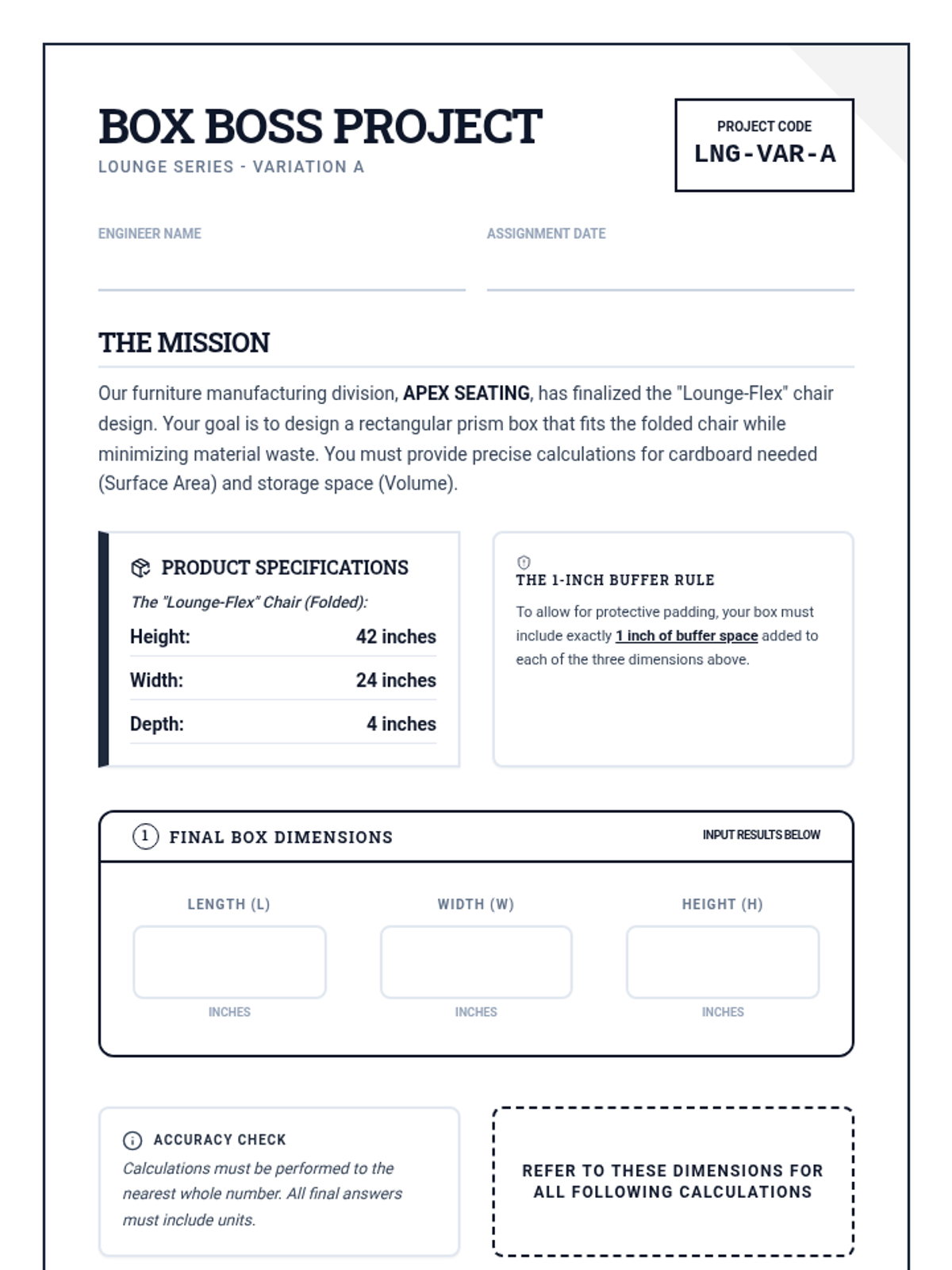
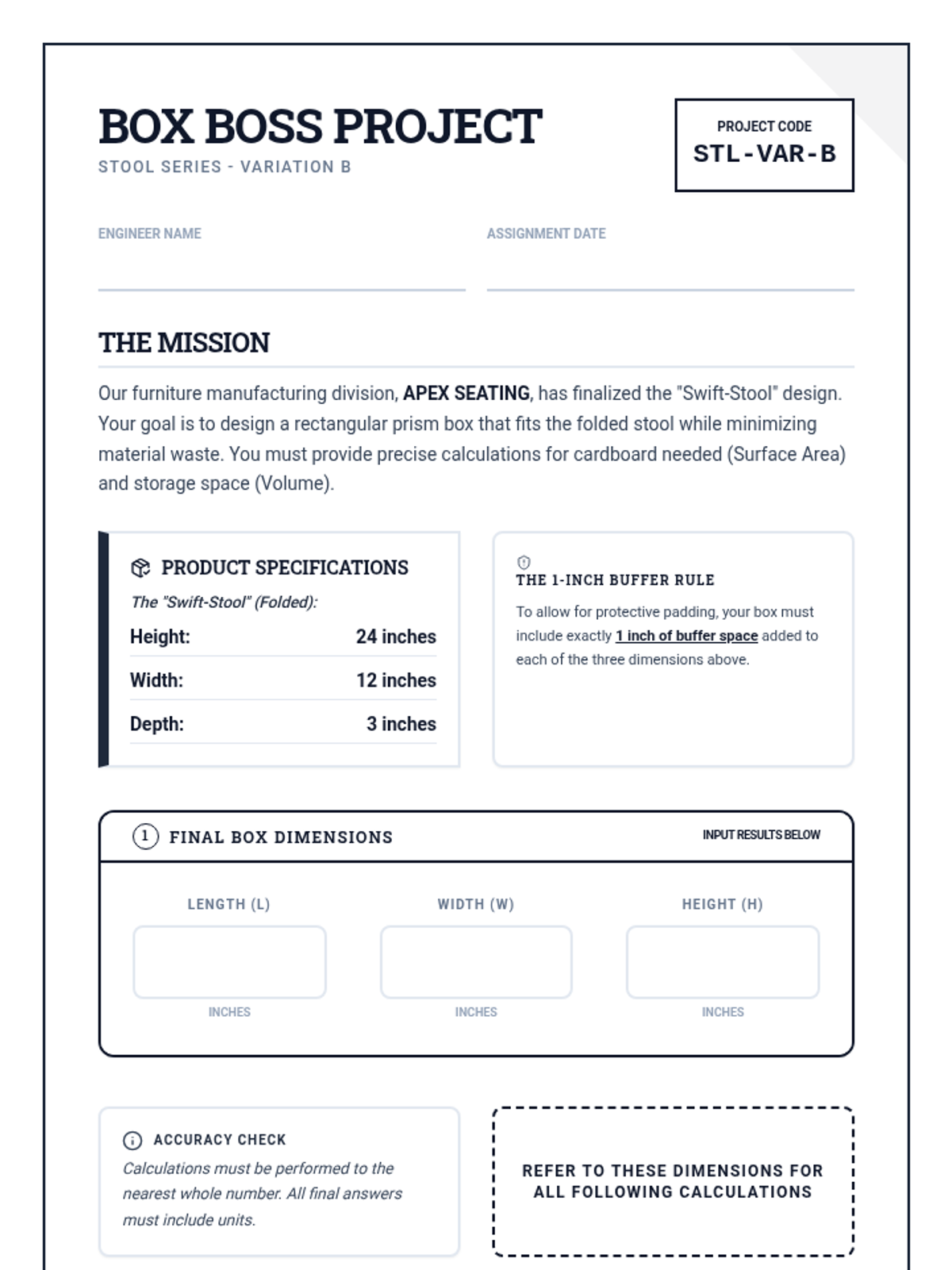
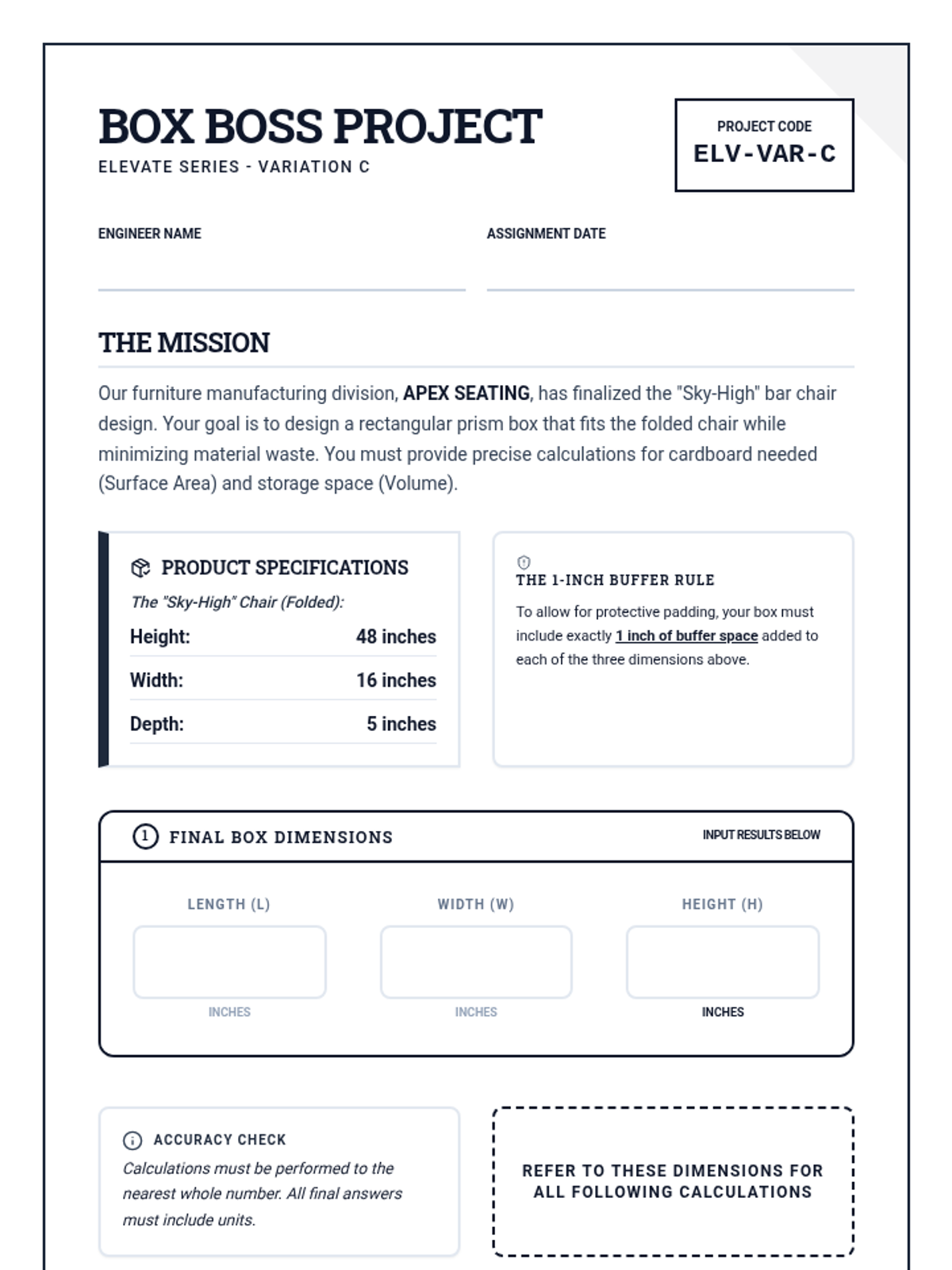
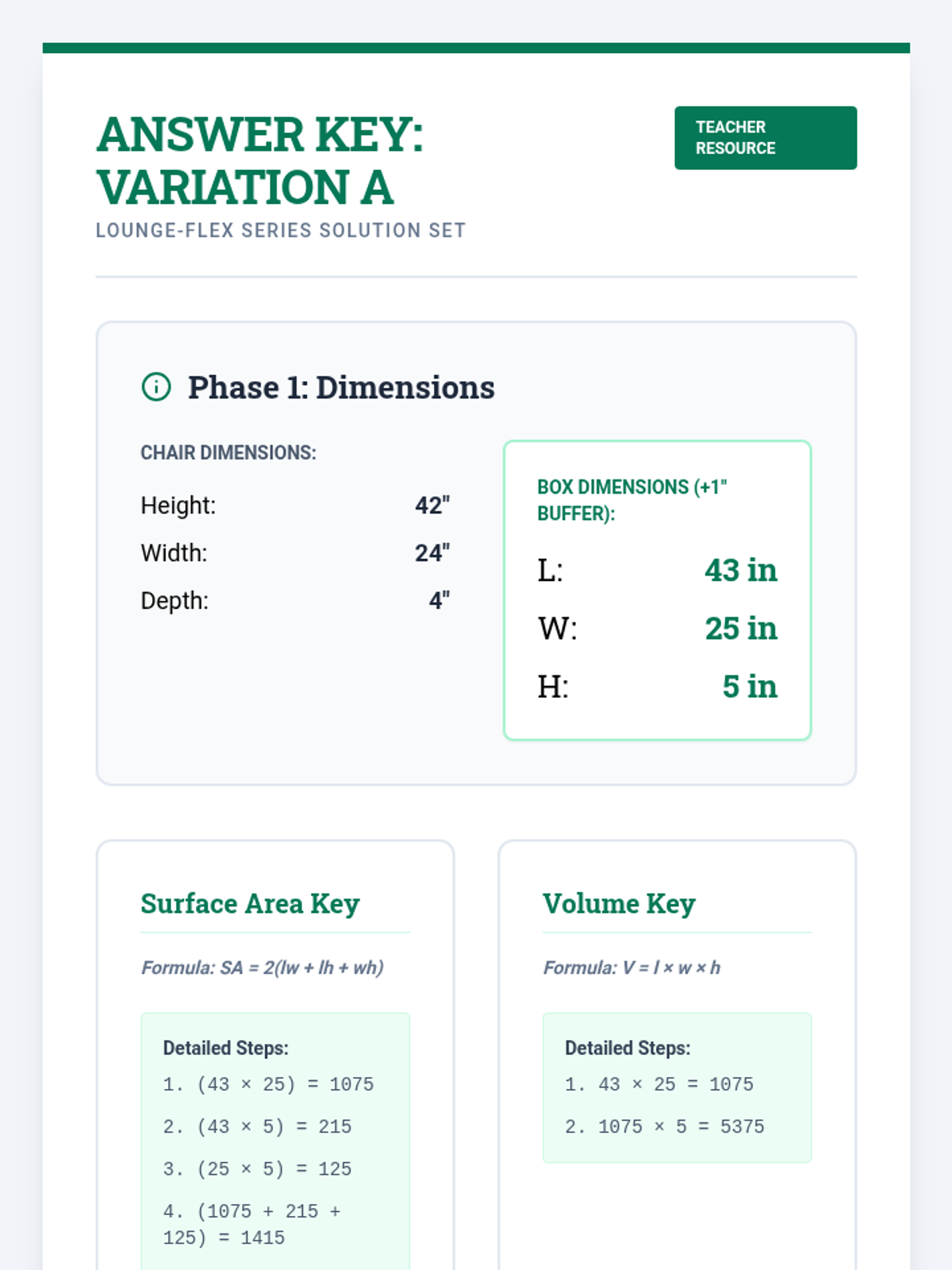
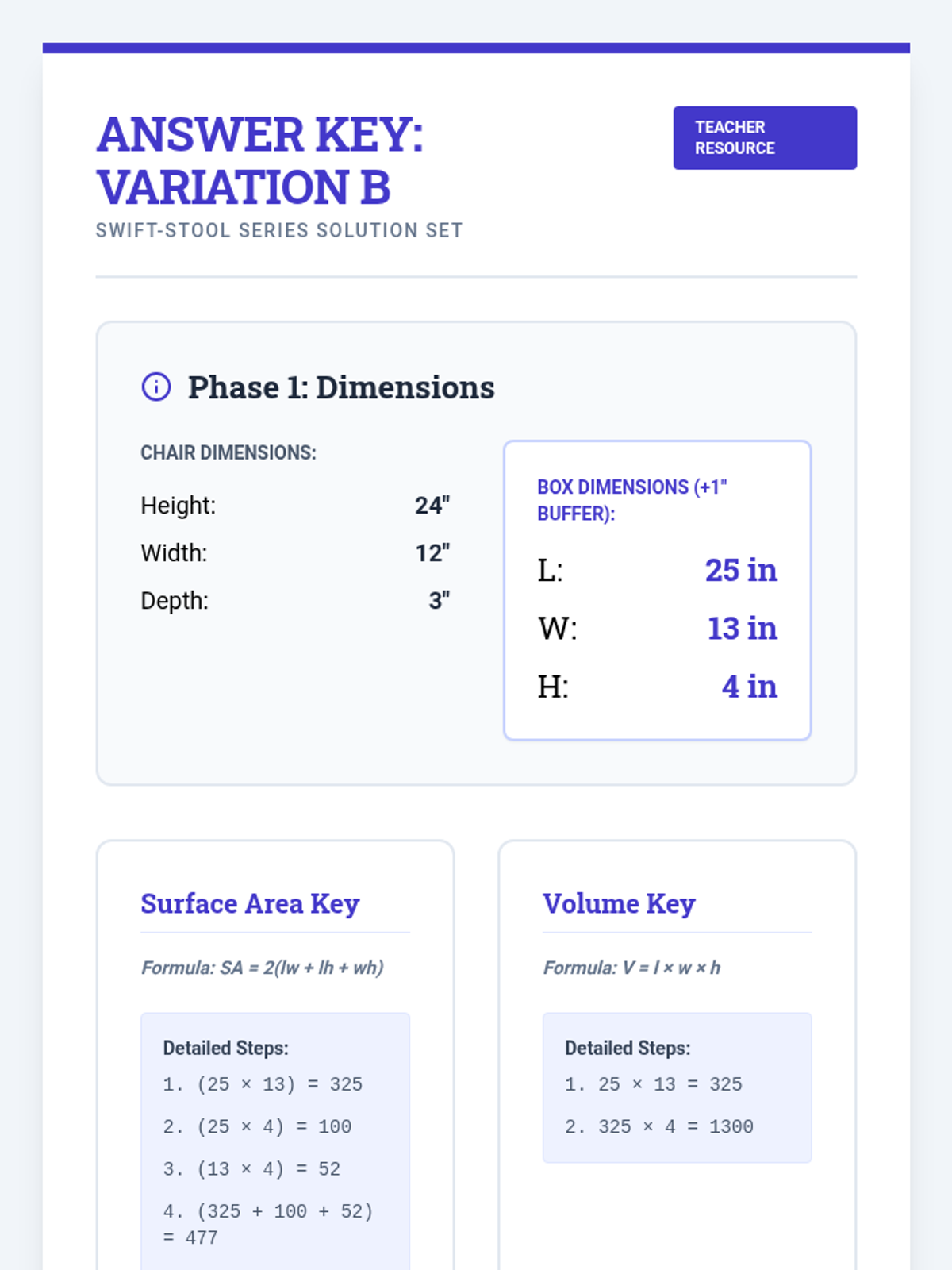
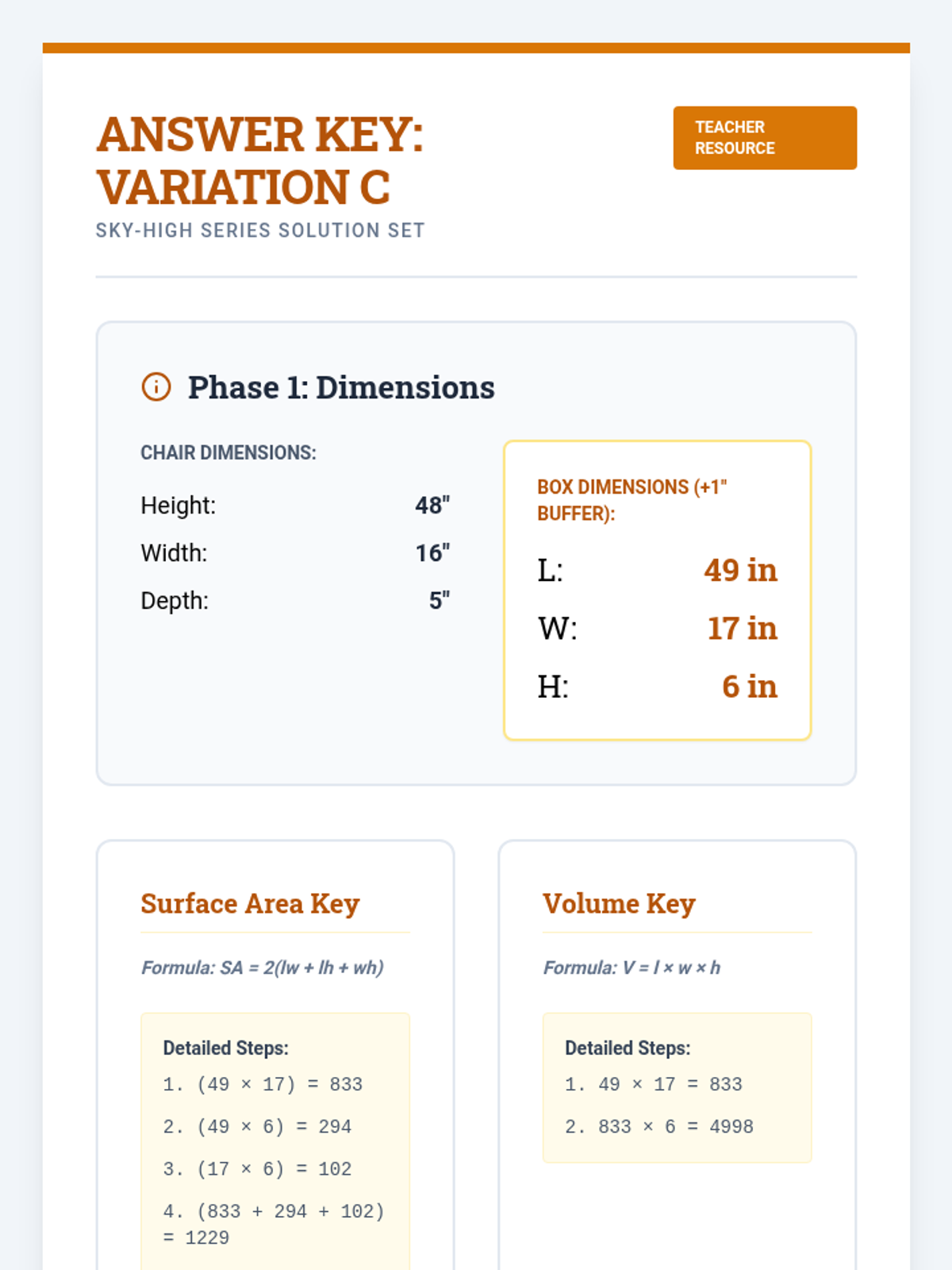
A hands-on engineering project where students design packaging for a folding chair, calculating the precise surface area and volume required for production.
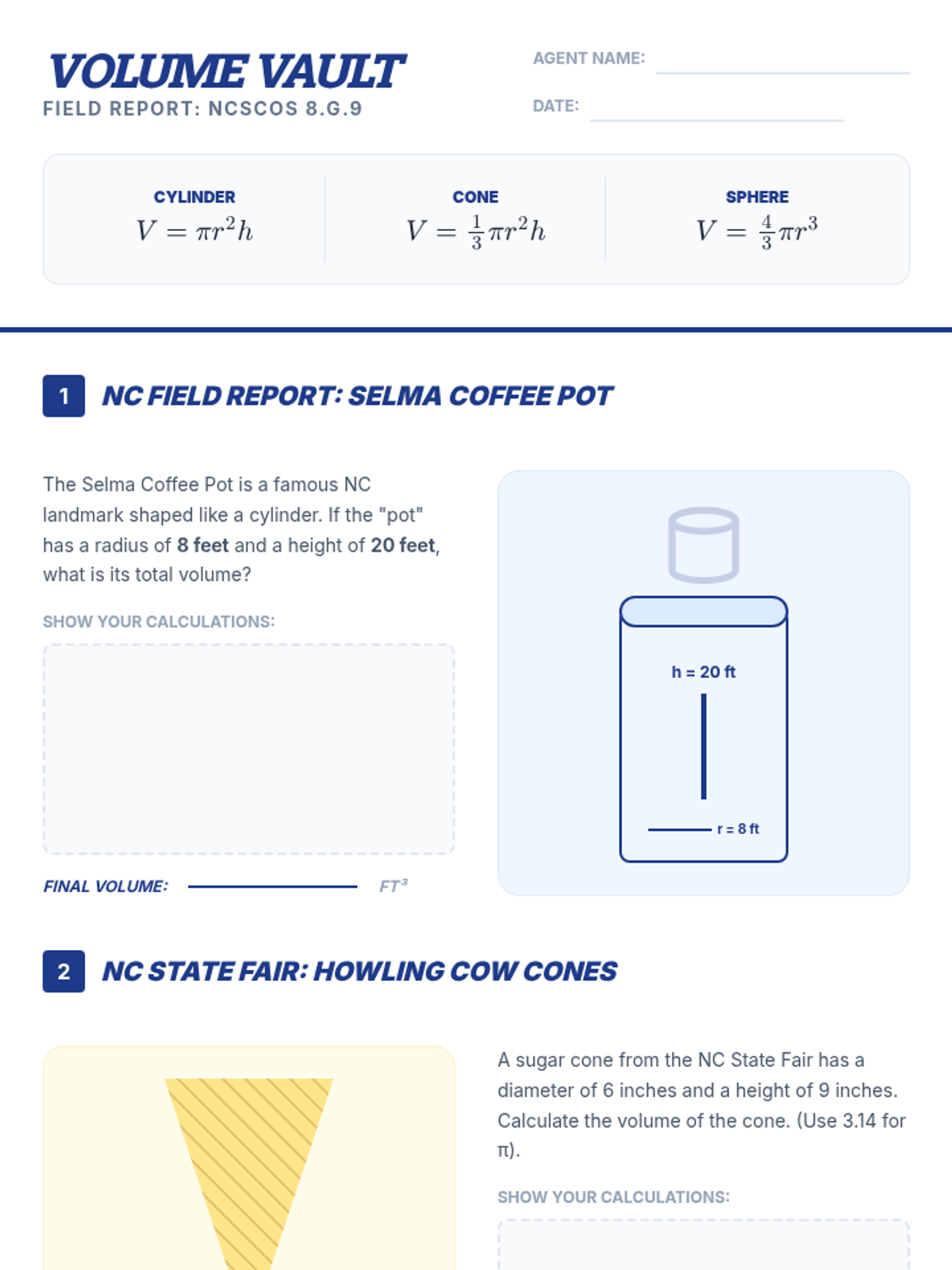
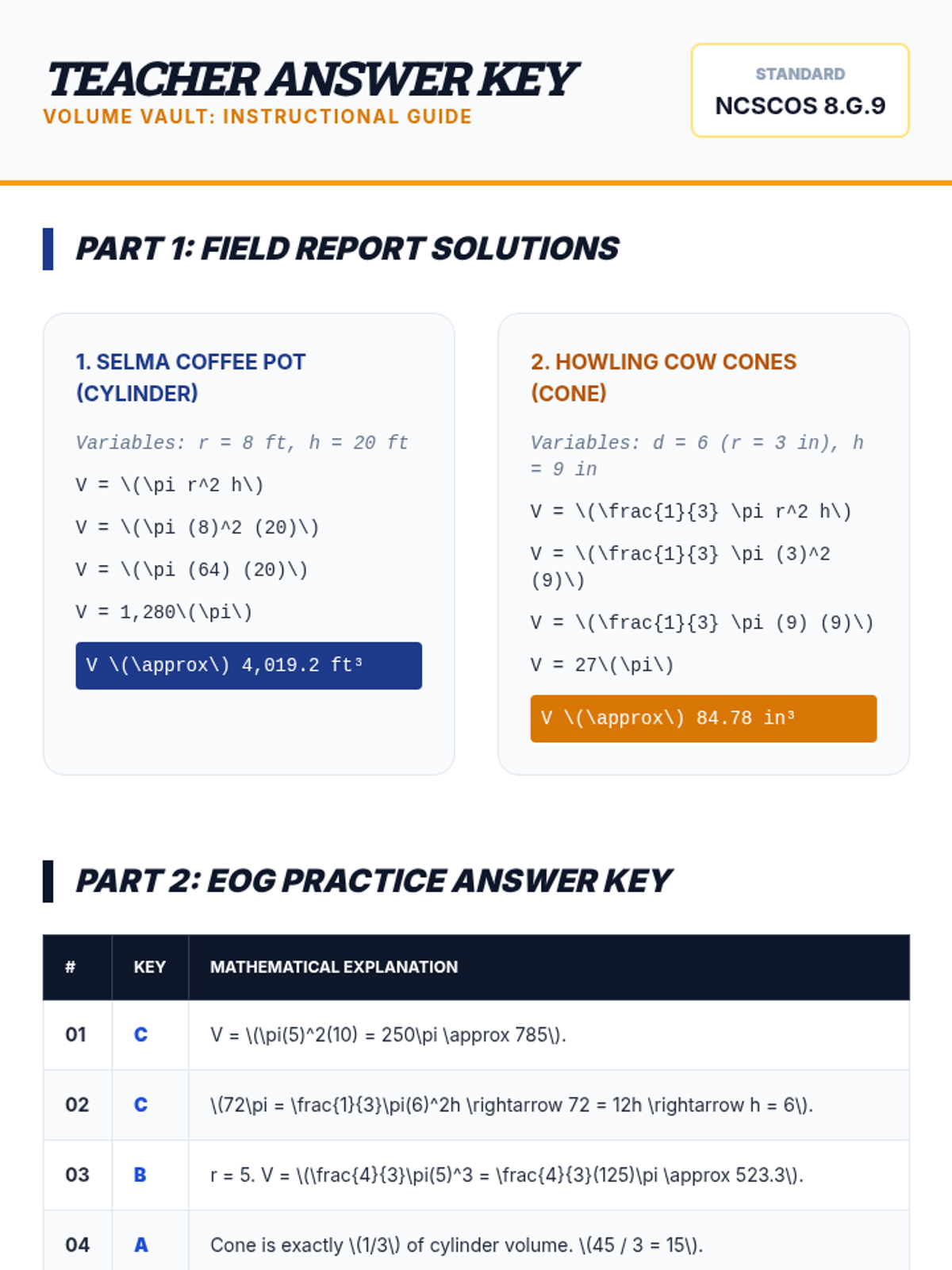
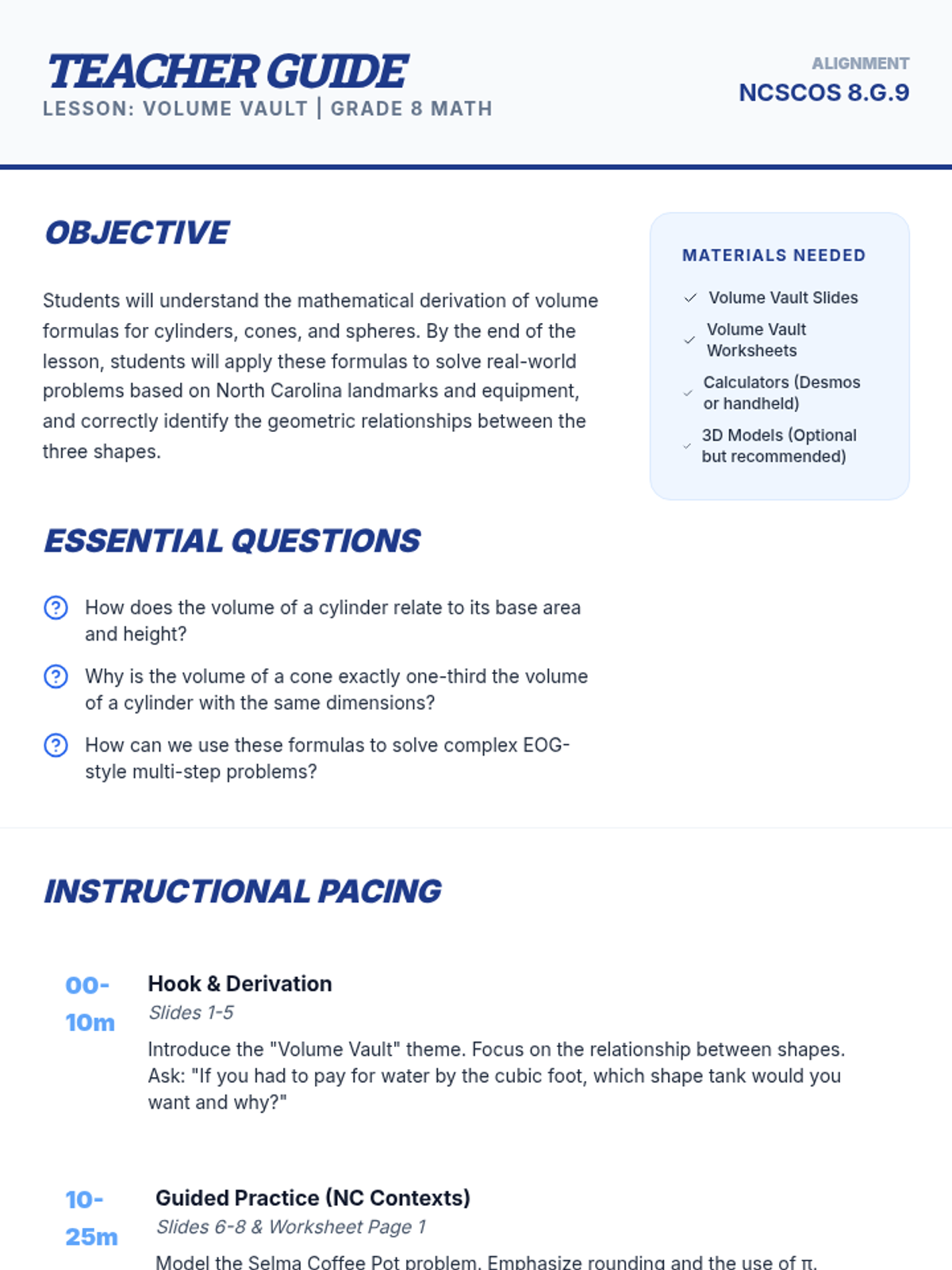
Students derive and apply volume formulas for cylinders, cones, and spheres through real-world North Carolina contexts like water towers and sports equipment. This lesson emphasizes the geometric relationships between these three-dimensional shapes.
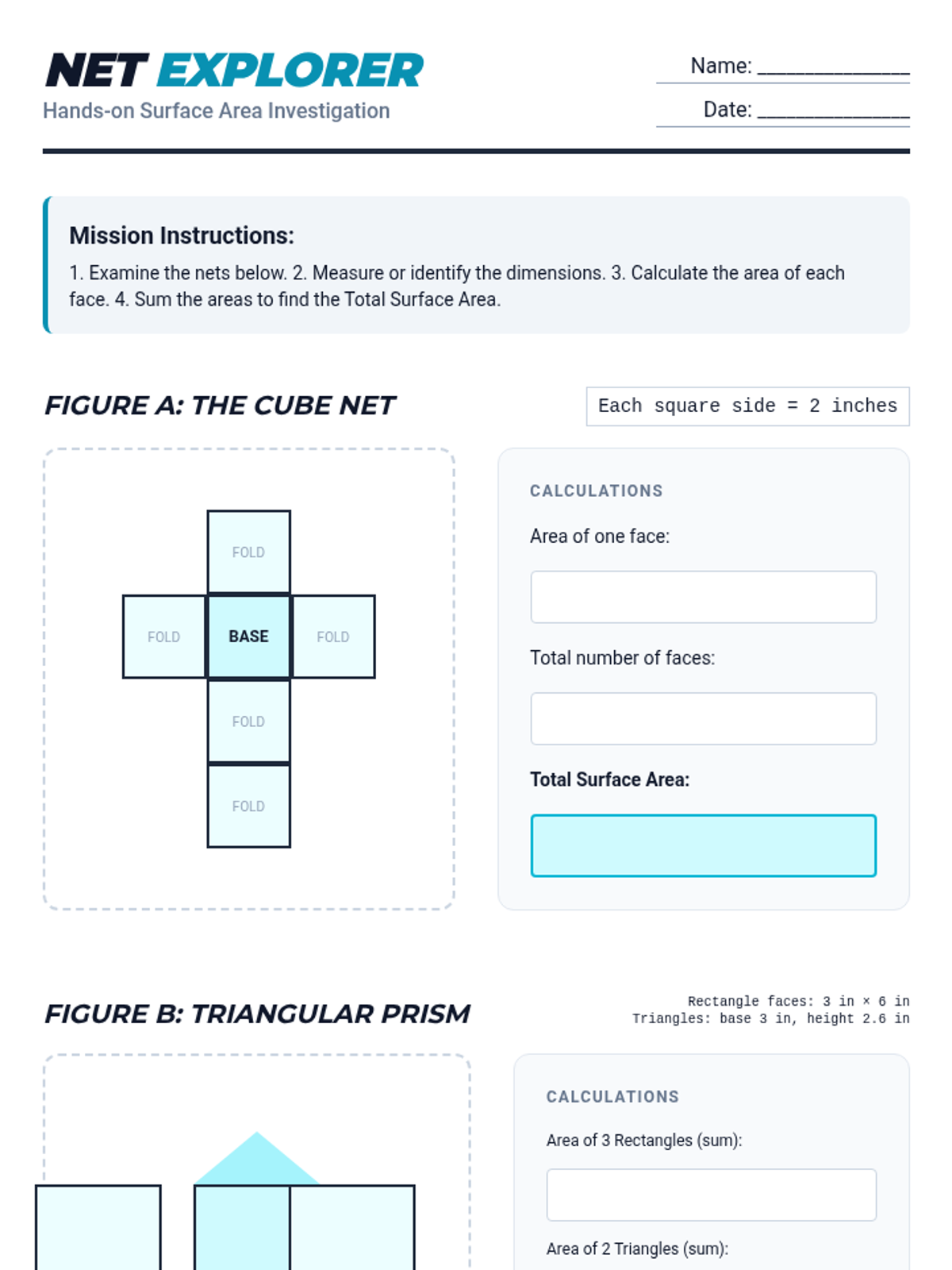
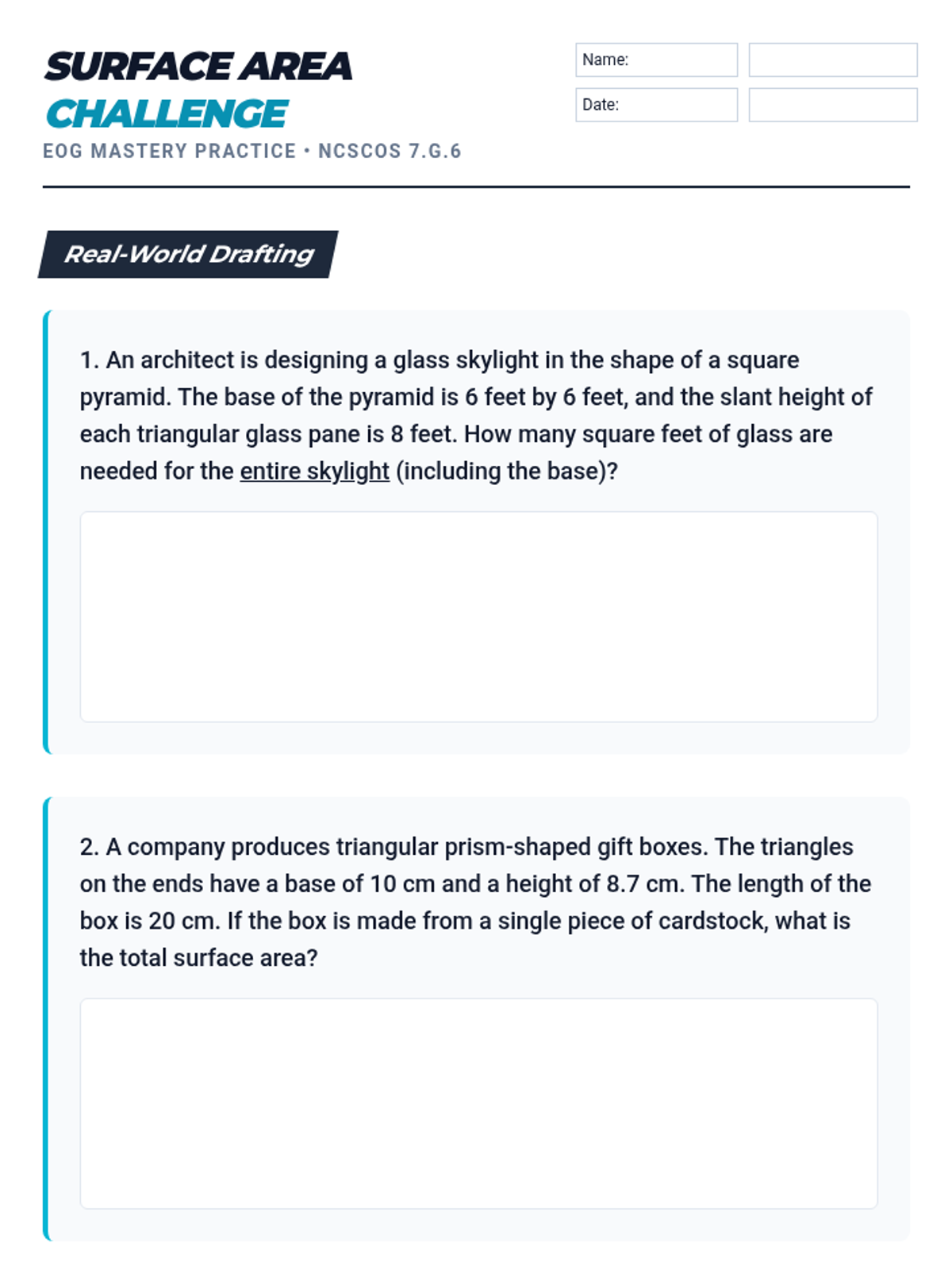
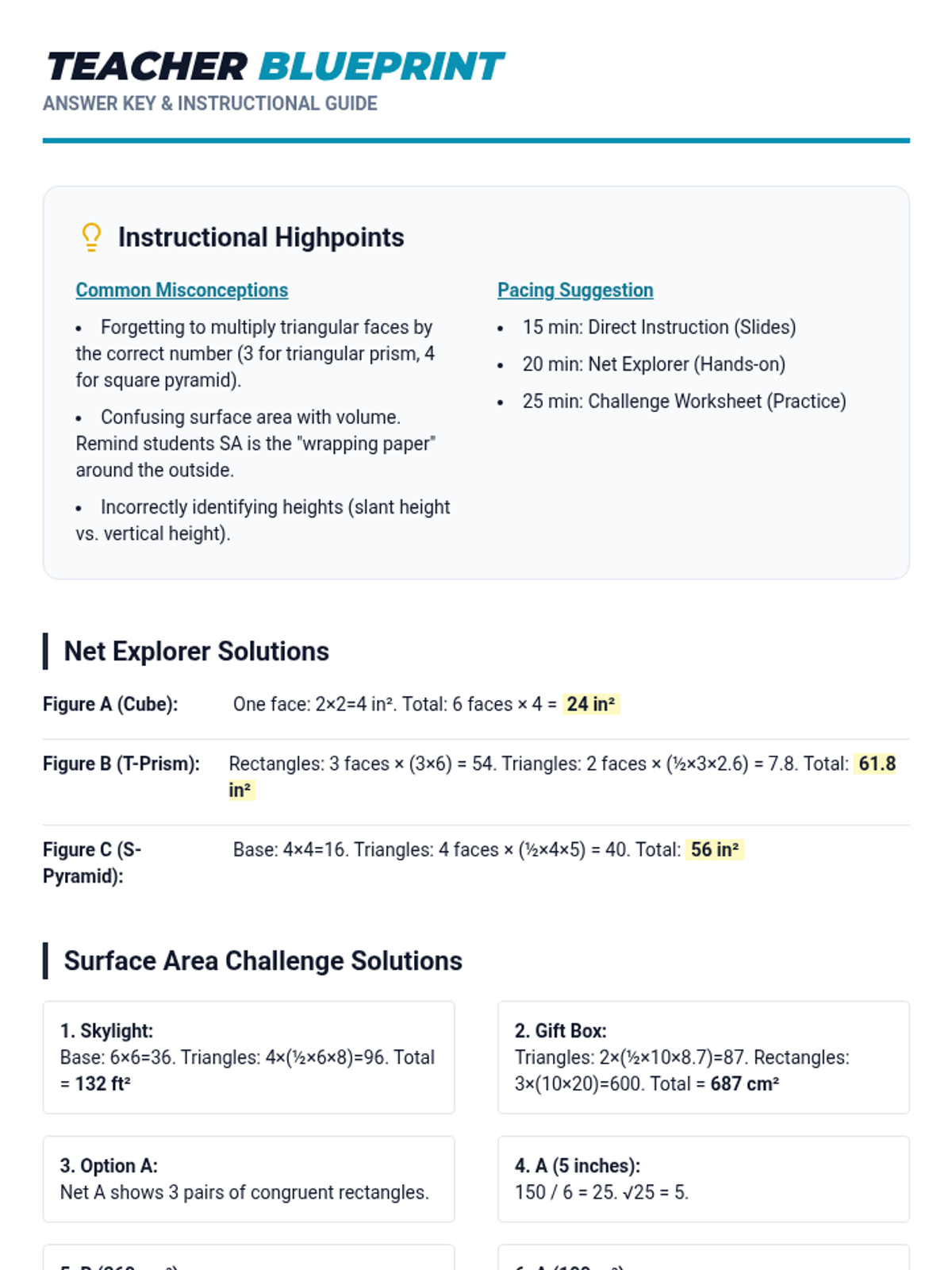
A comprehensive lesson on surface area and nets of 3D figures, focusing on prisms and pyramids through hands-on exploration and EOG-style practice.
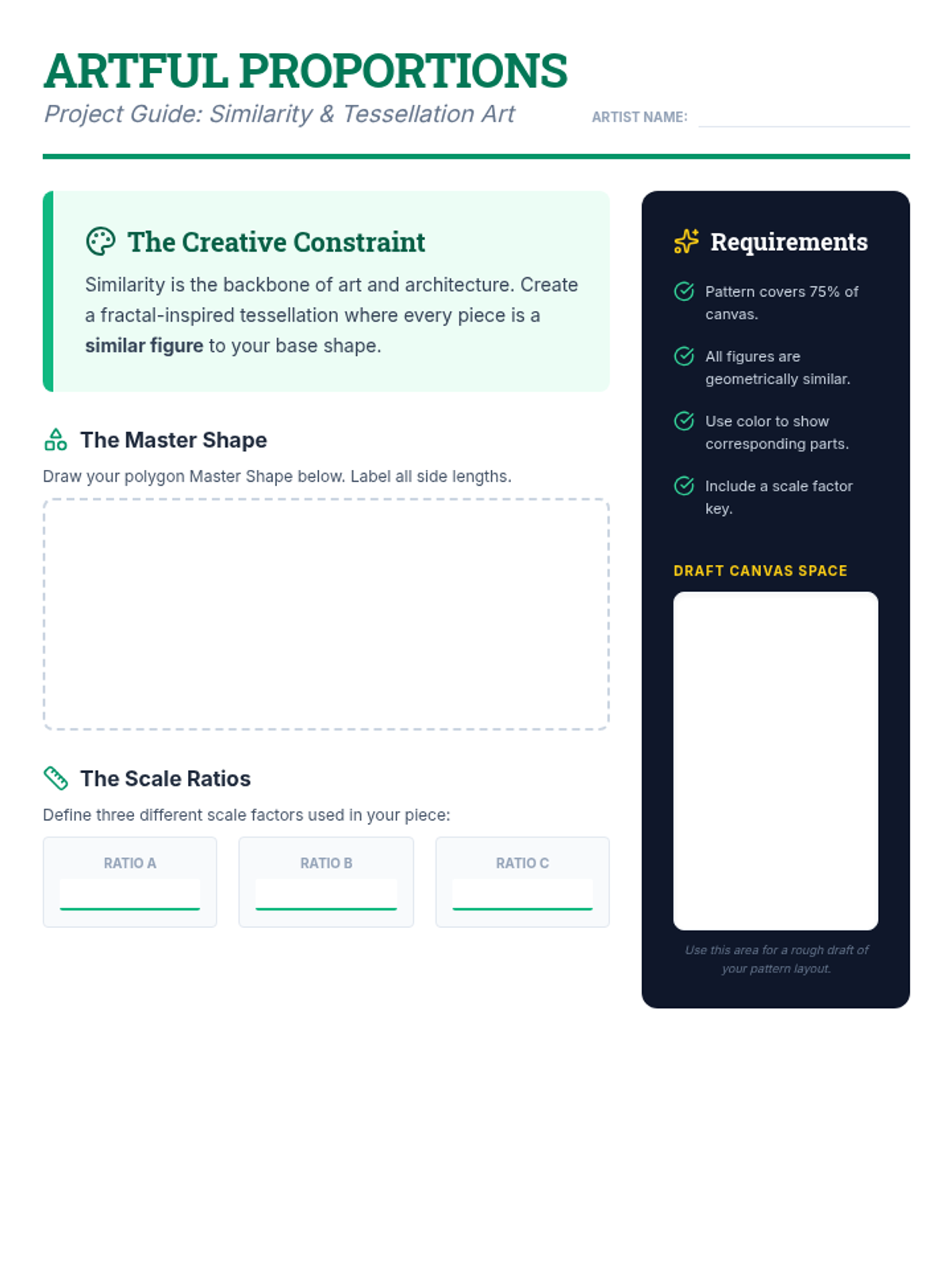
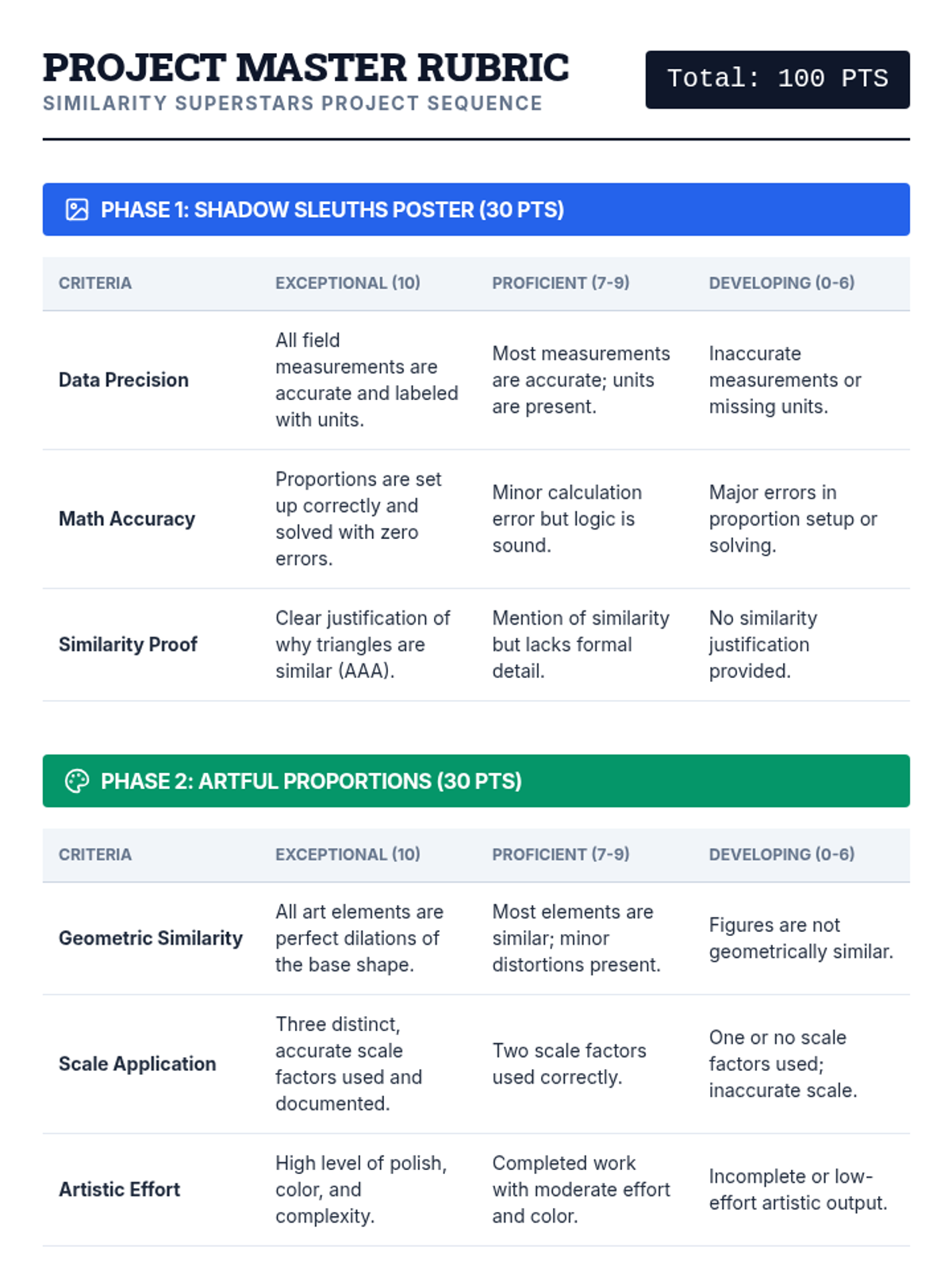
Students explore geometric similarity through art and tessellations, applying ratios and proportional parts to create scaled masterpieces.
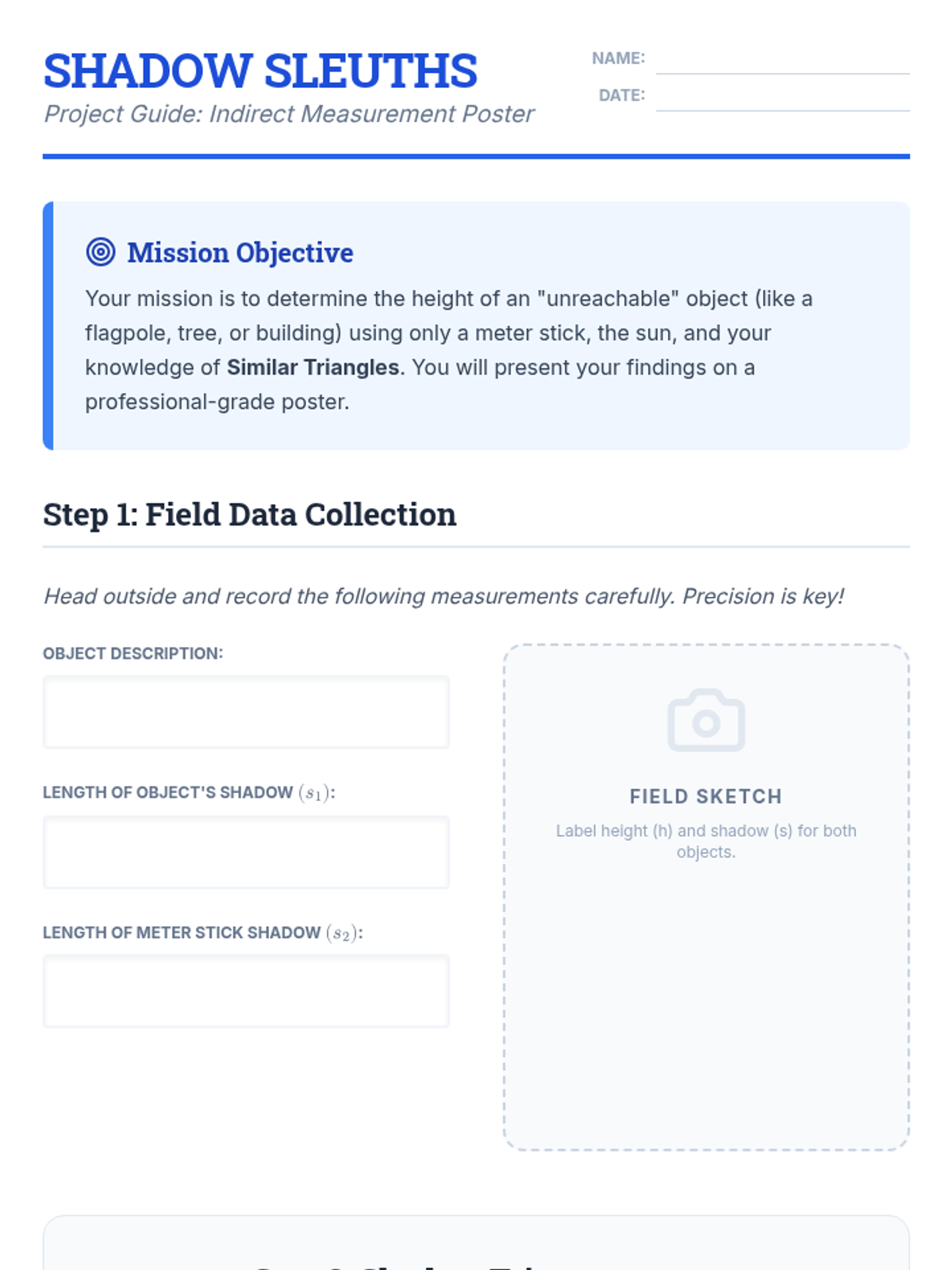
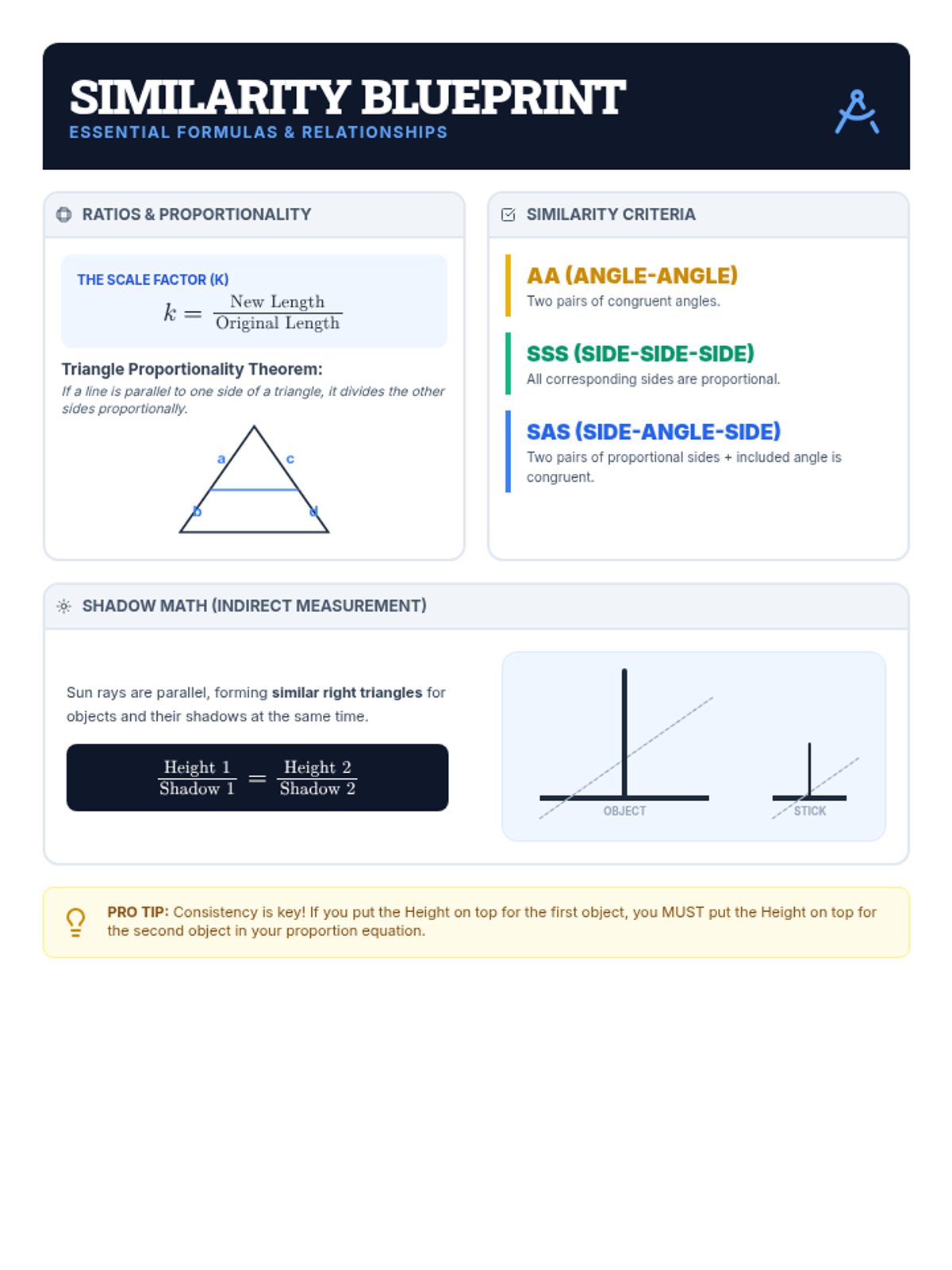
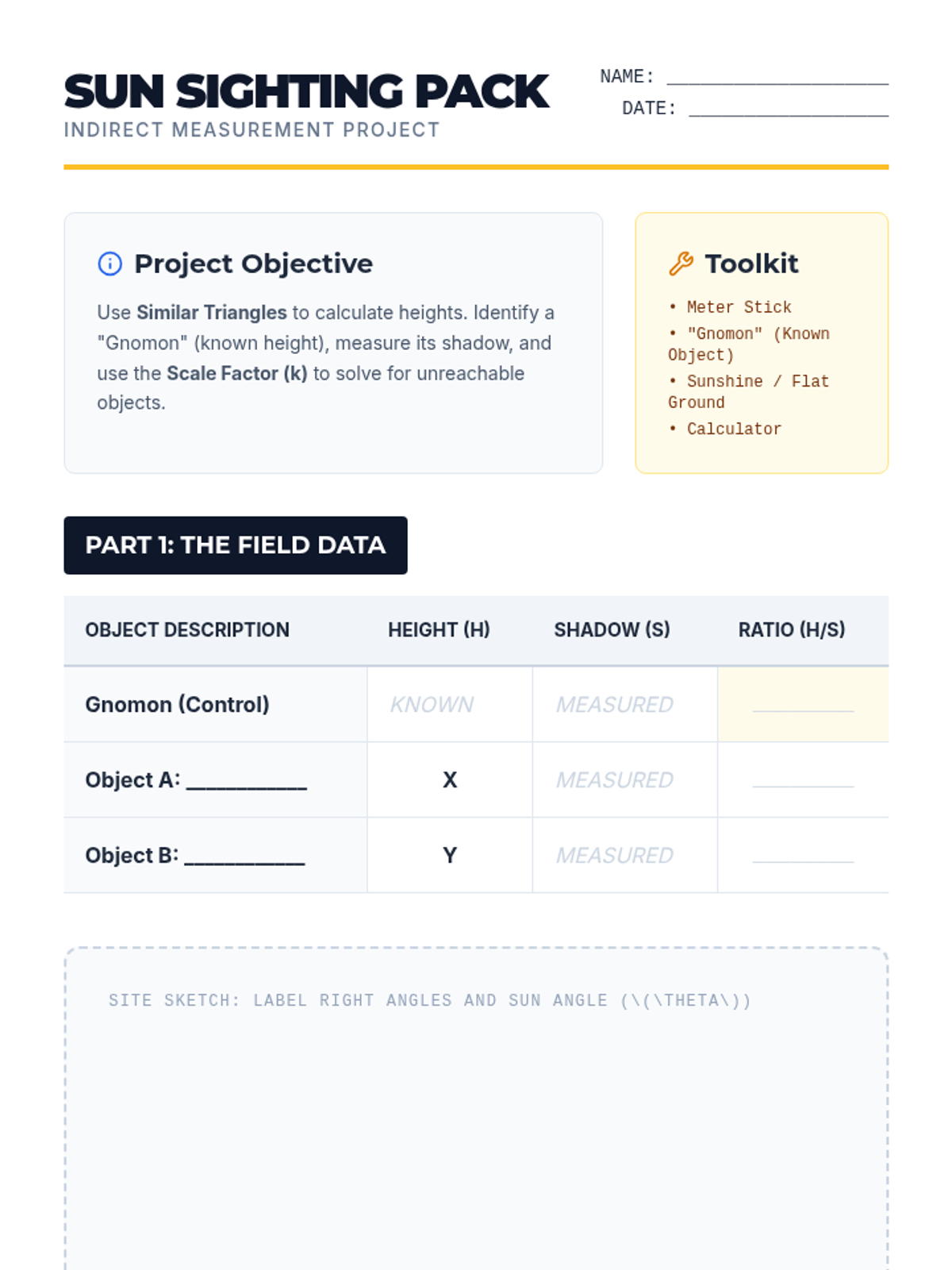
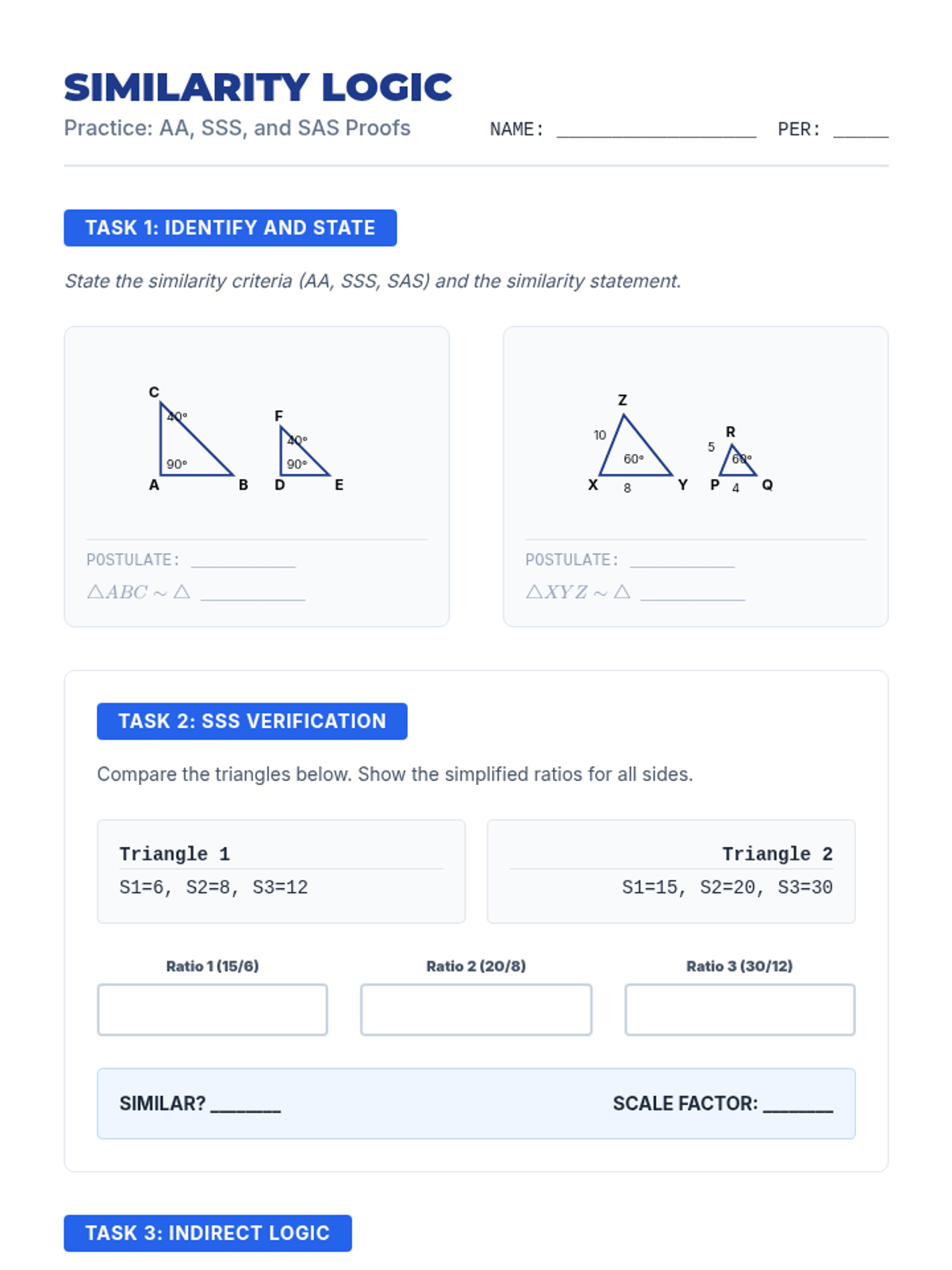
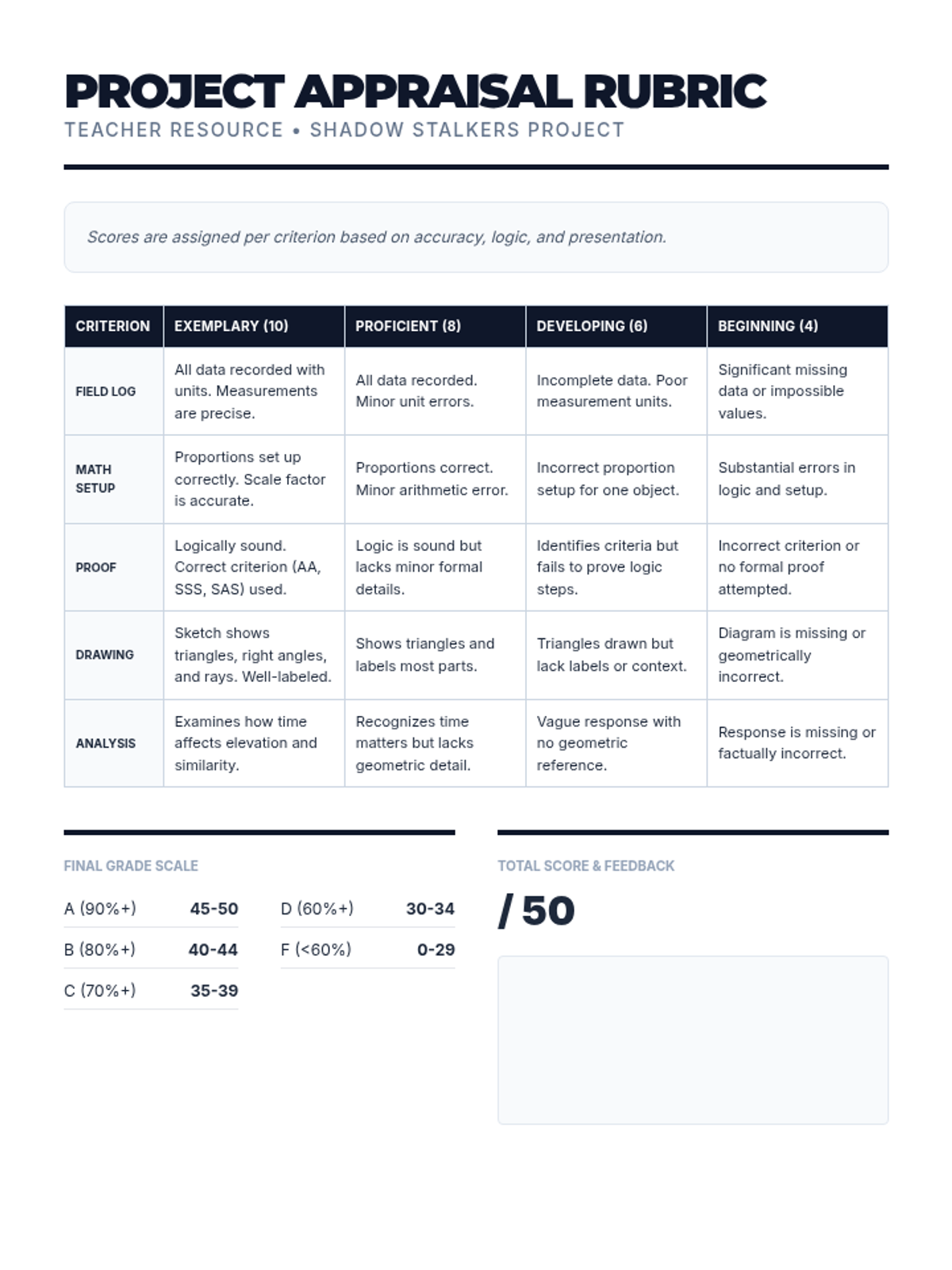
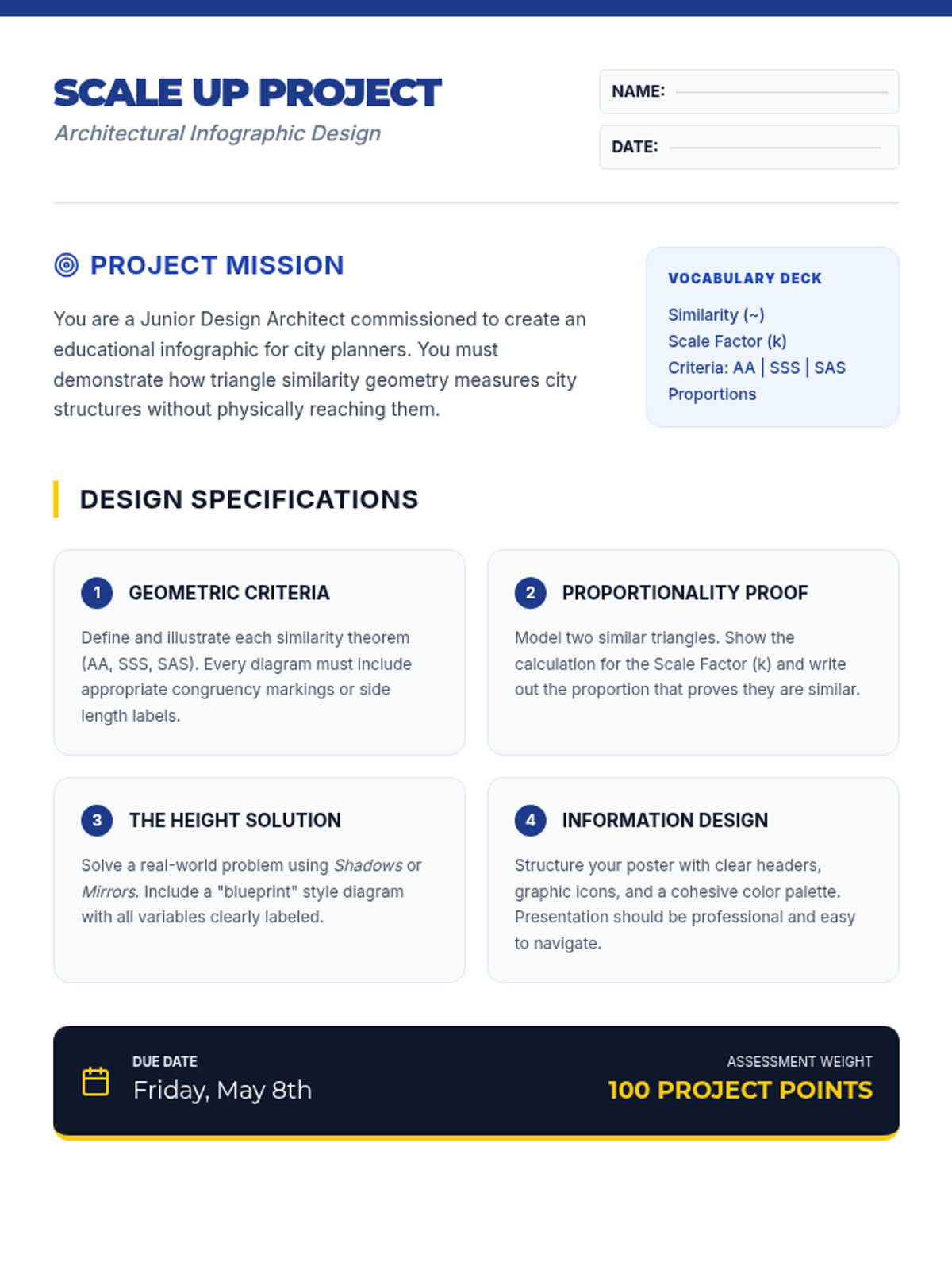
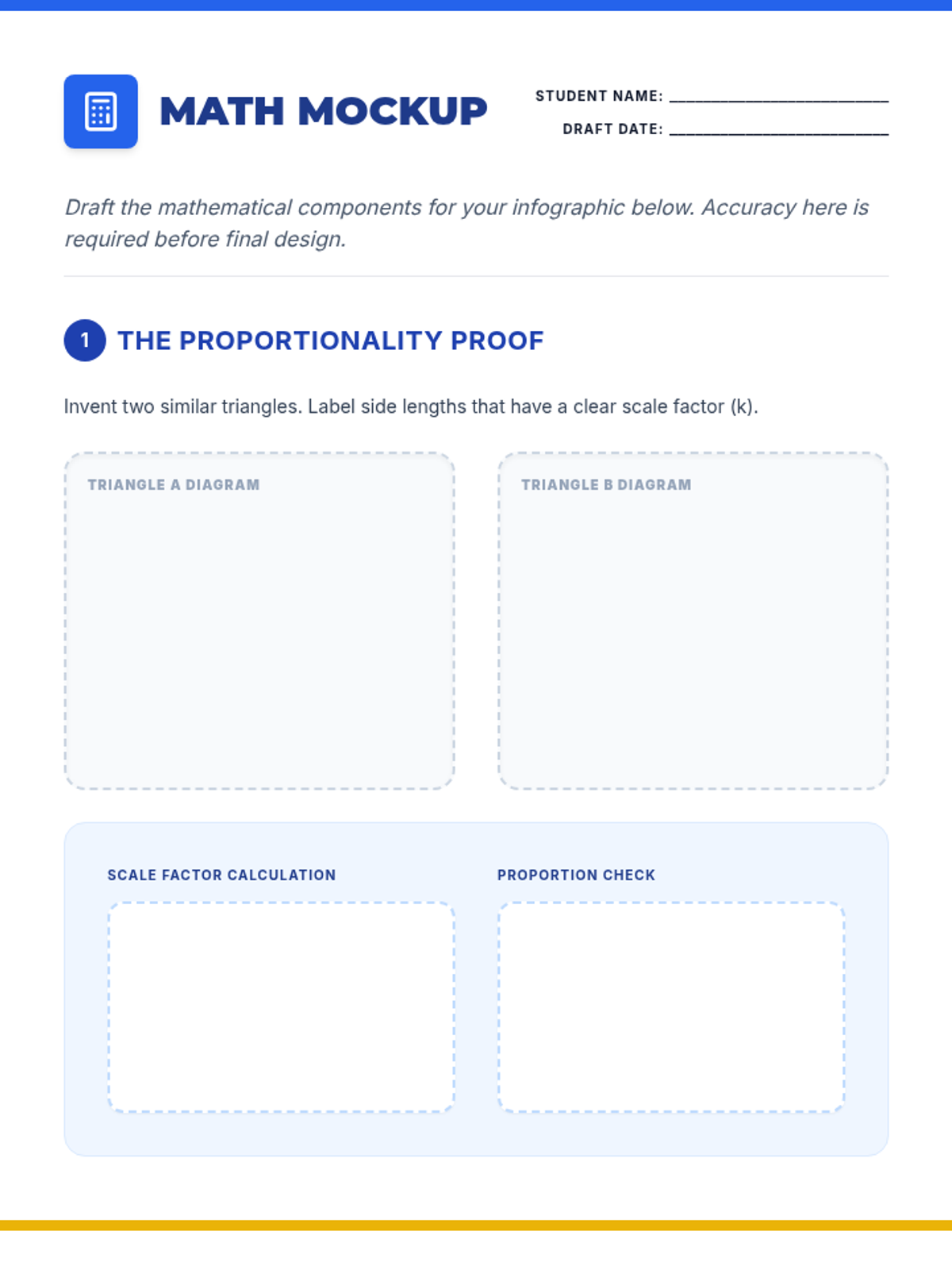
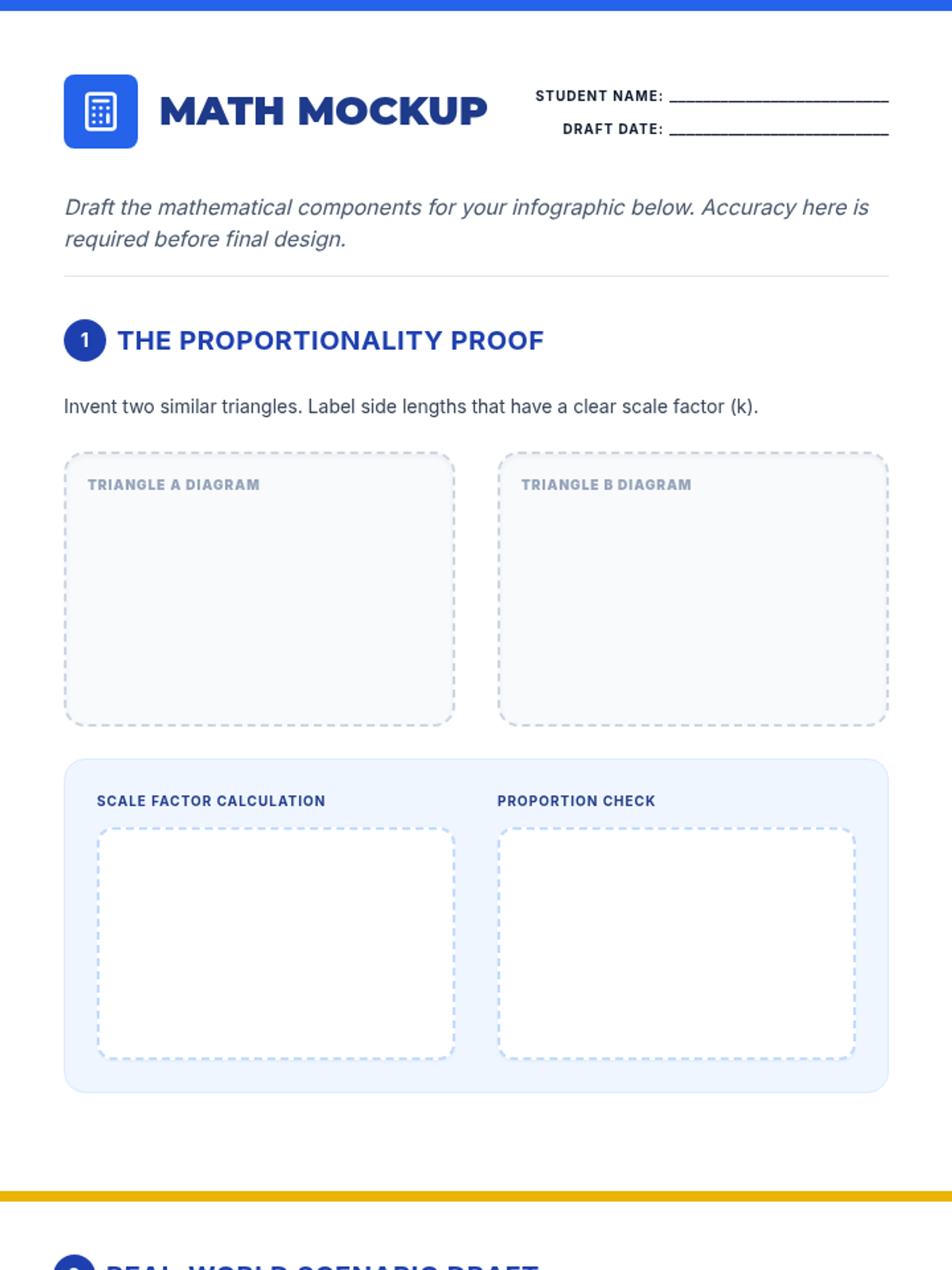
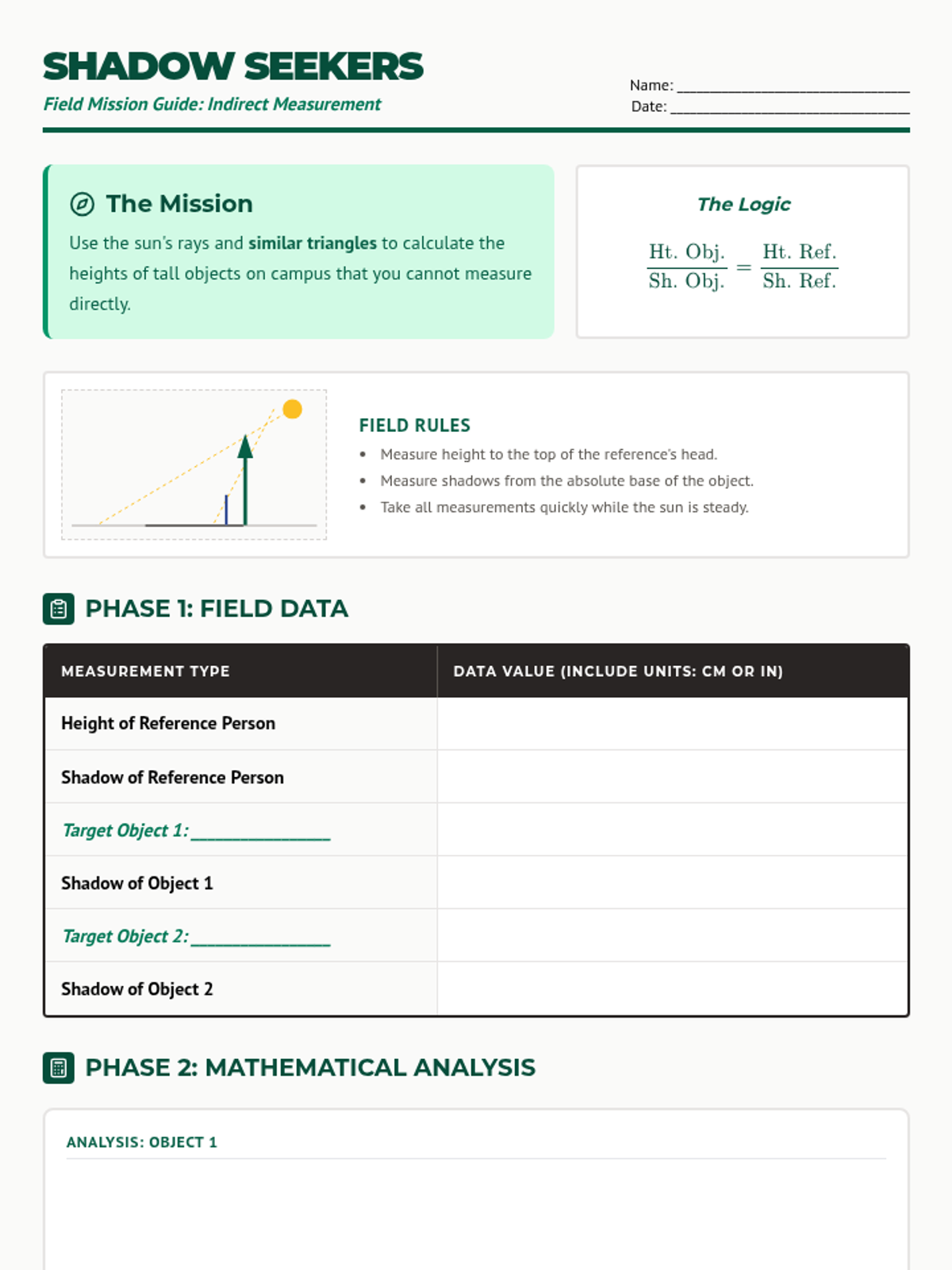
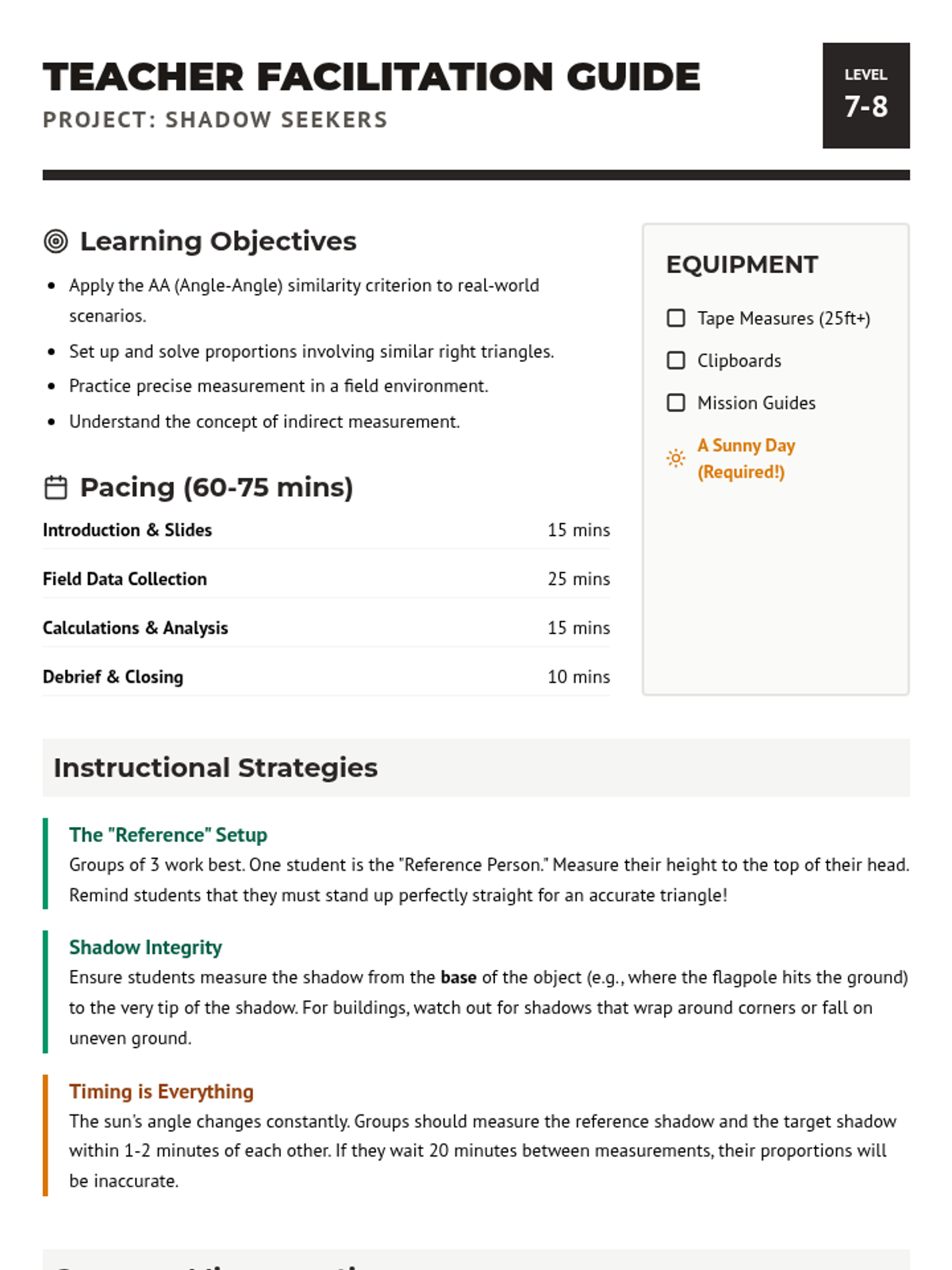
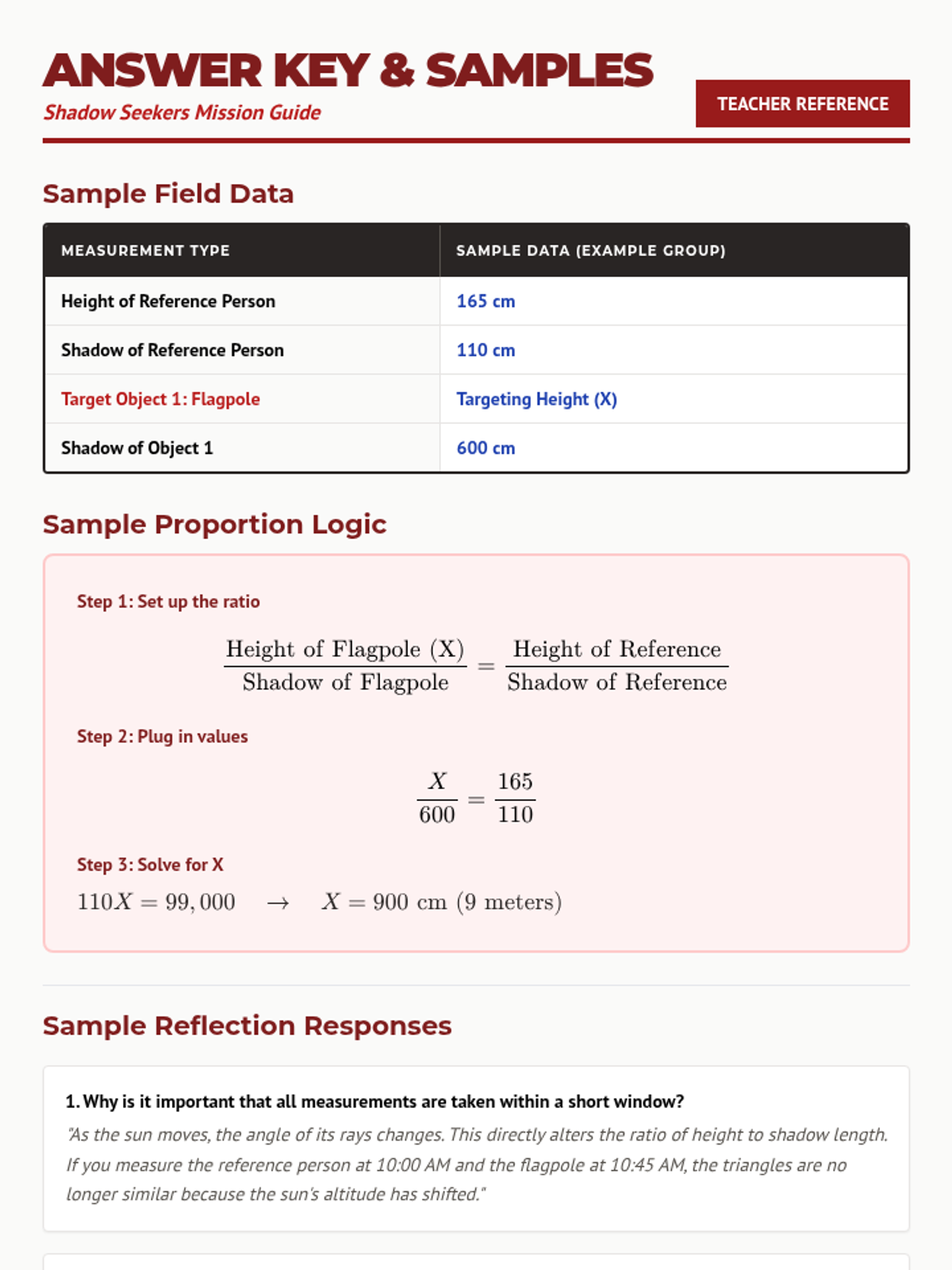
A hands-on geometry project where students apply similarity criteria (AA, SSS, SAS) to measure unreachable heights using shadow casting and mirror reflections. Students will perform outdoor measurements, calculate scale factors, and provide formal geometric proofs for their methods.
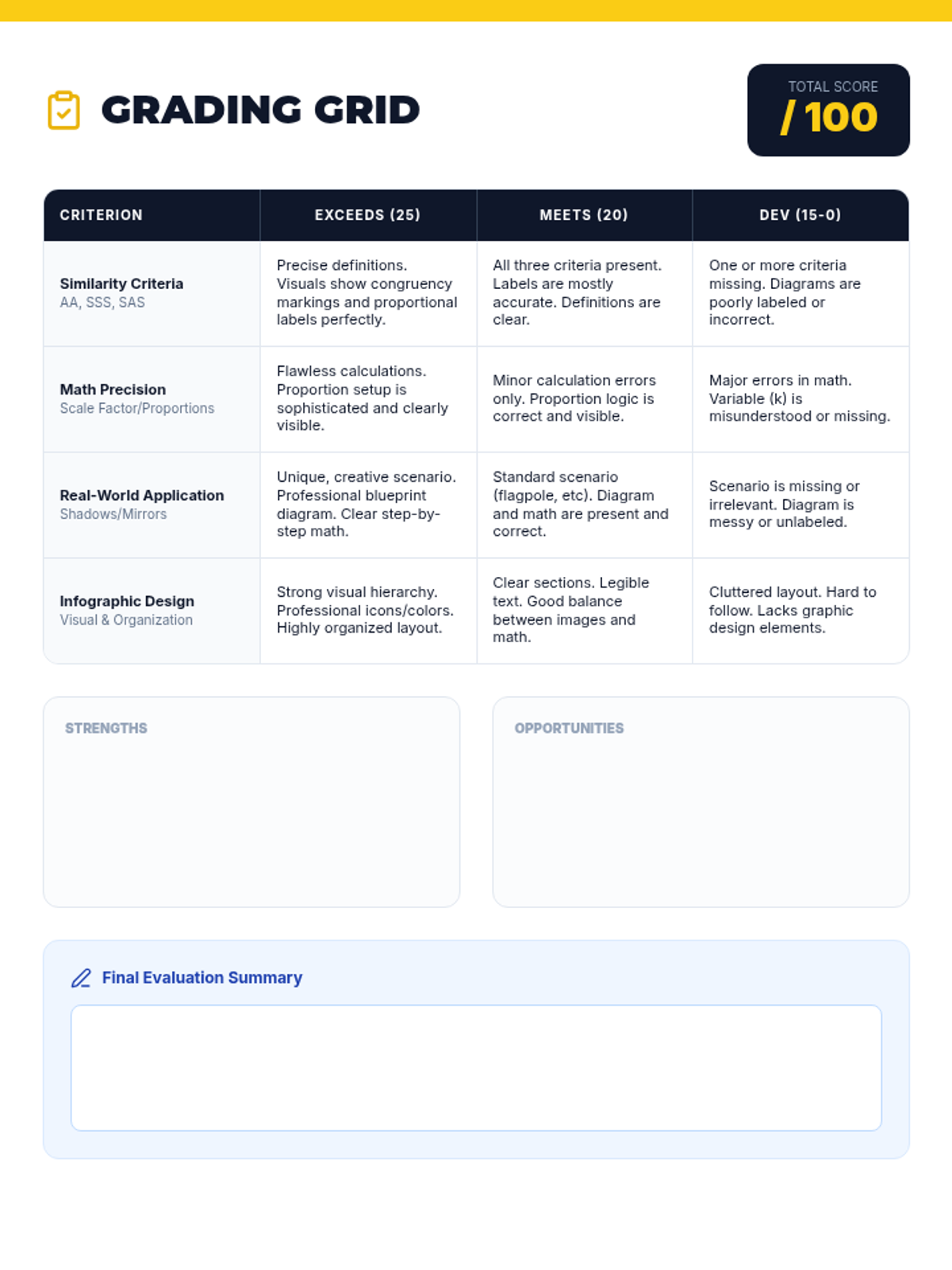
A project-based lesson where students design an infographic poster demonstrating their mastery of triangle similarity criteria and real-world proportional reasoning.
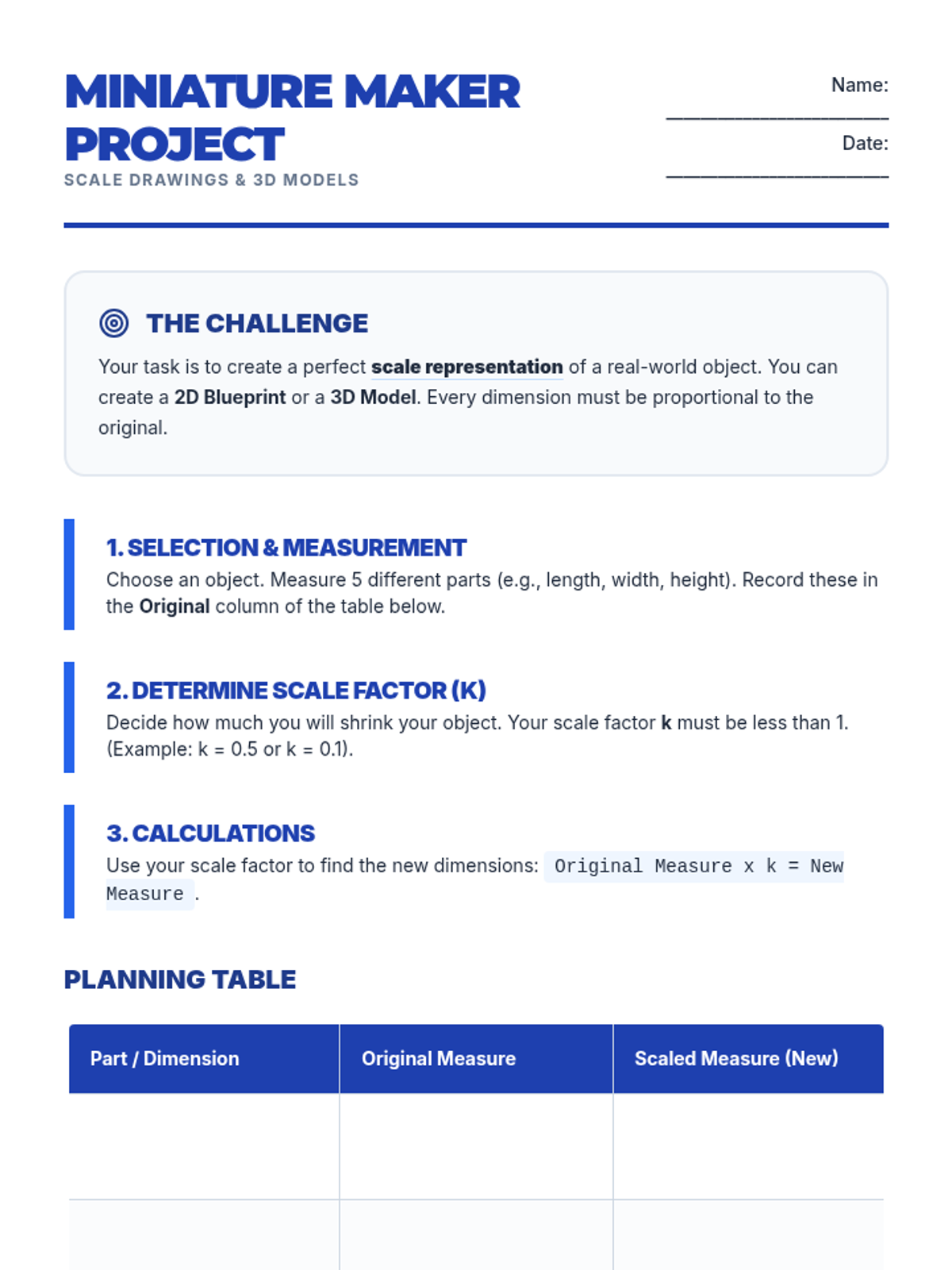
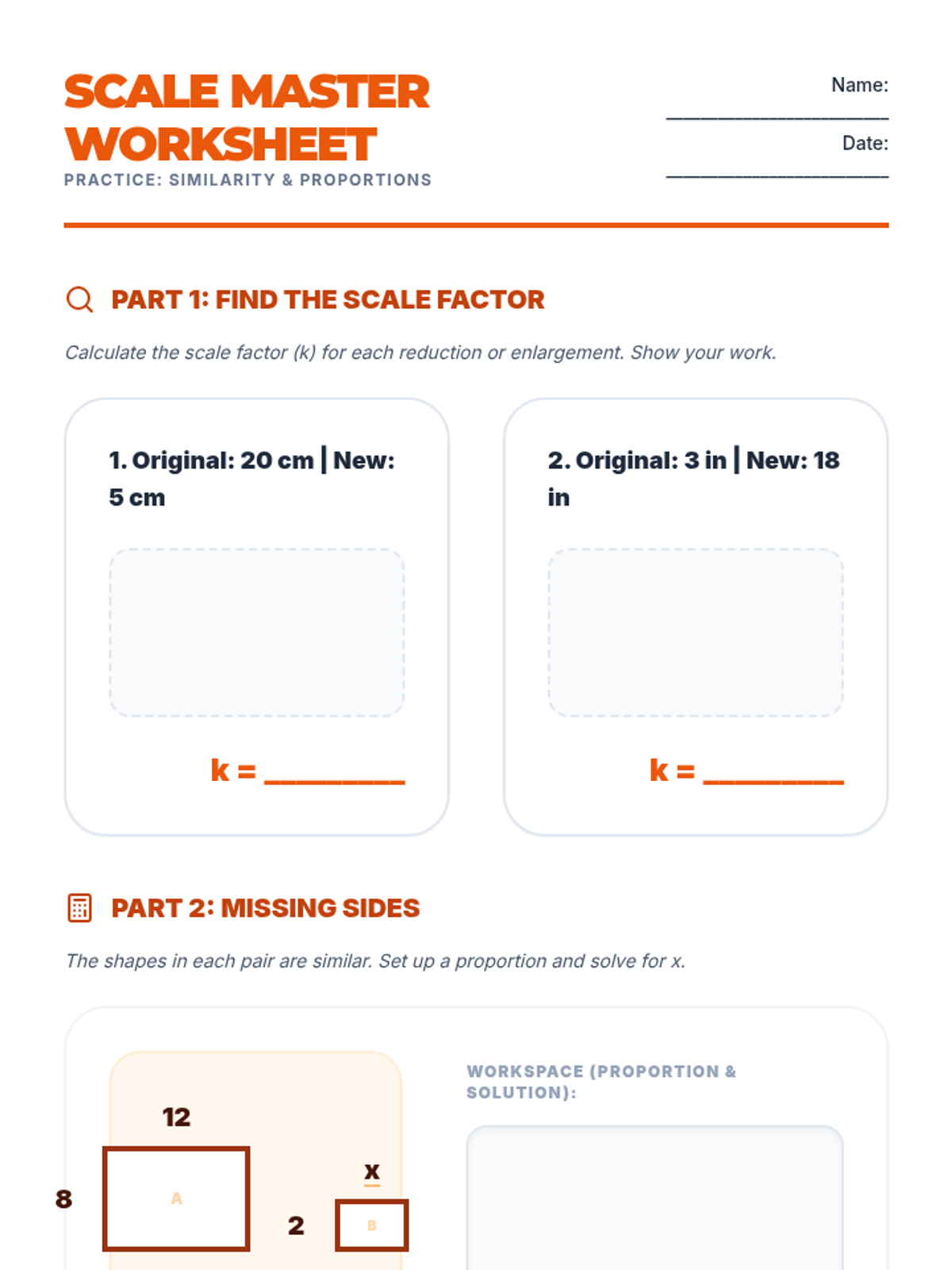
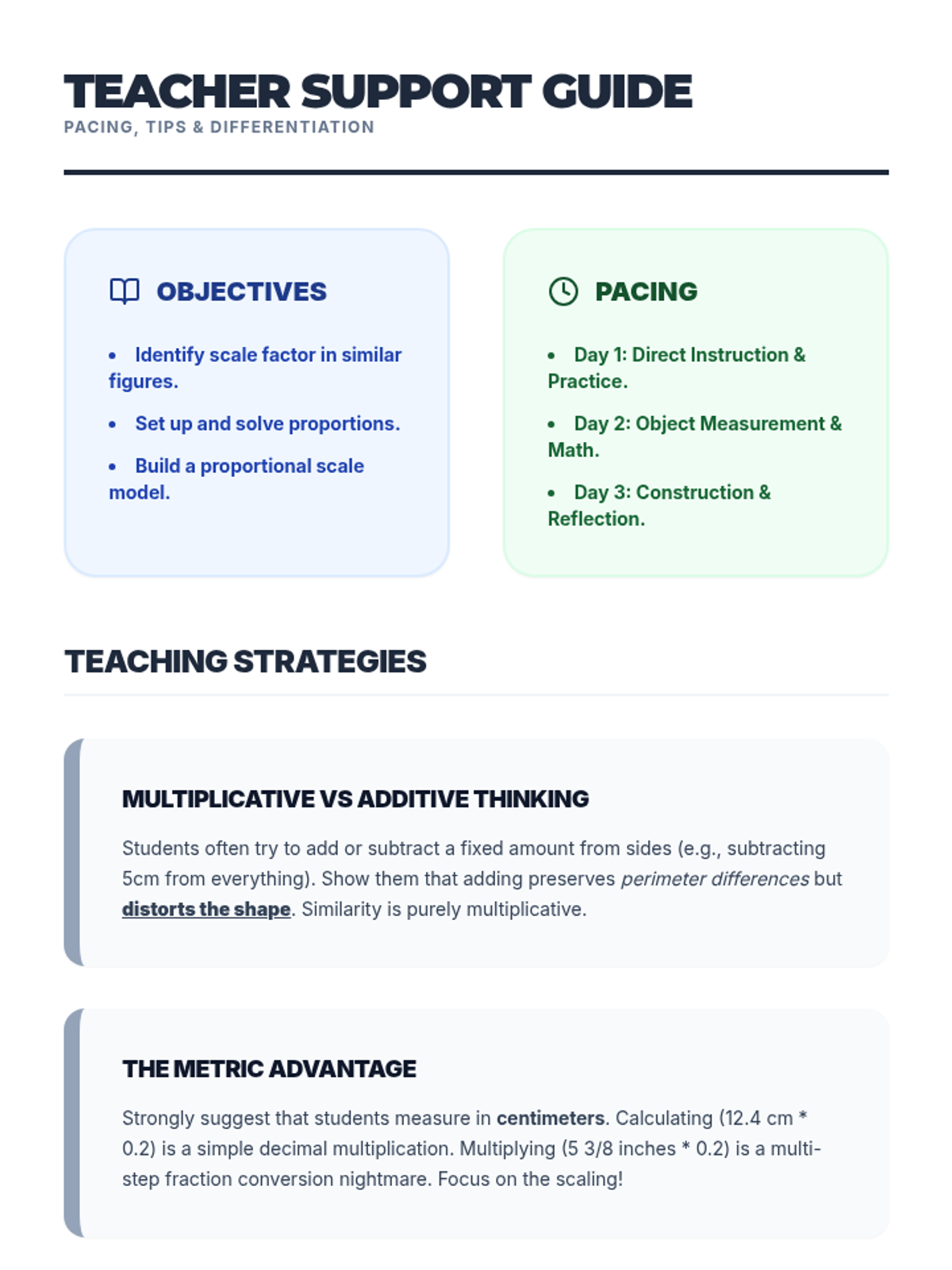
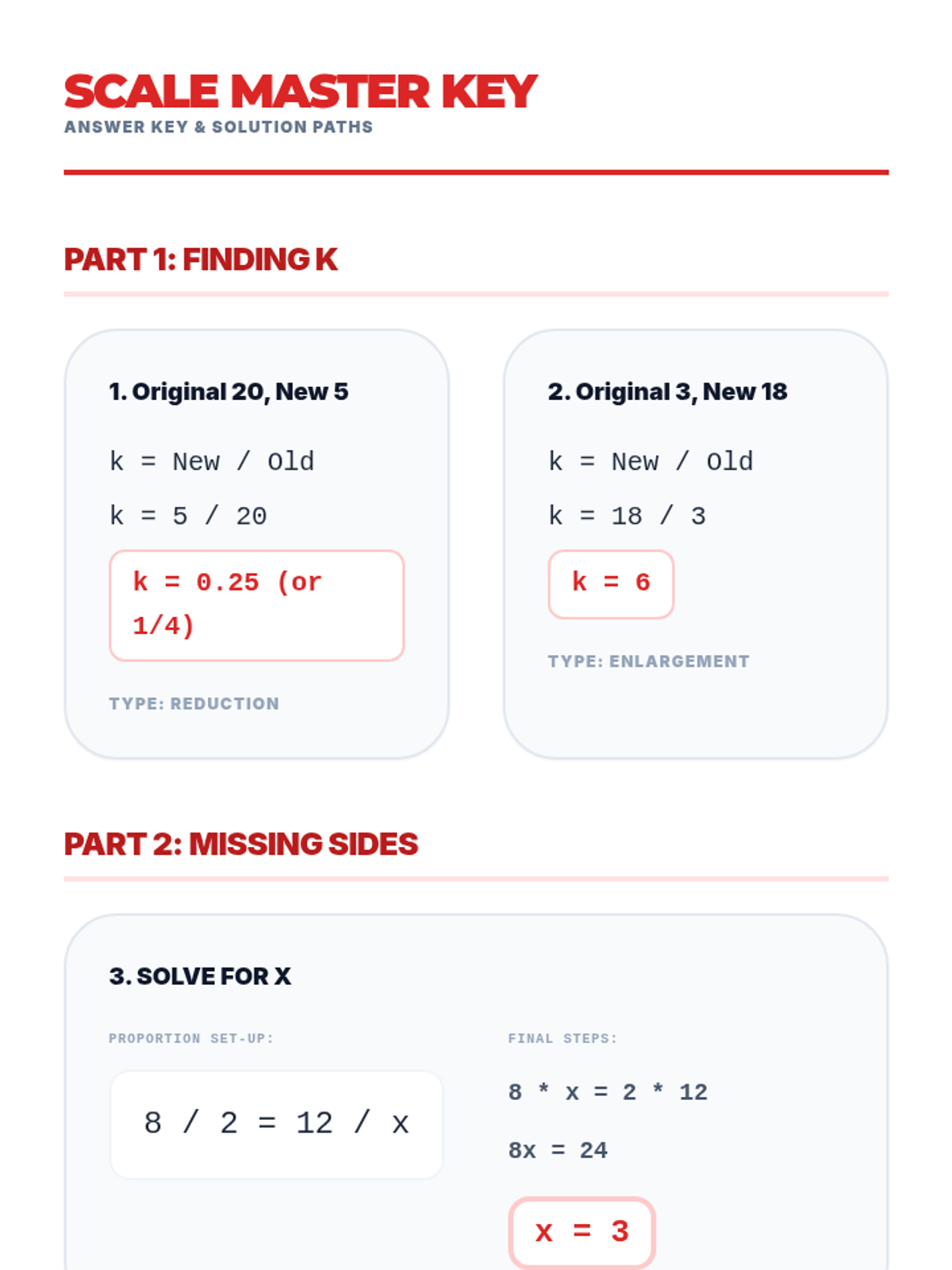
A project-based lesson where students apply concepts of similarity, scale factor, and proportions to create a scale drawing or 3D model of a real-world object. Students move from mathematical practice to creative application.
A hands-on geometry project where students apply the properties of similar triangles to calculate the height of tall, unmeasurable objects using their shadows.
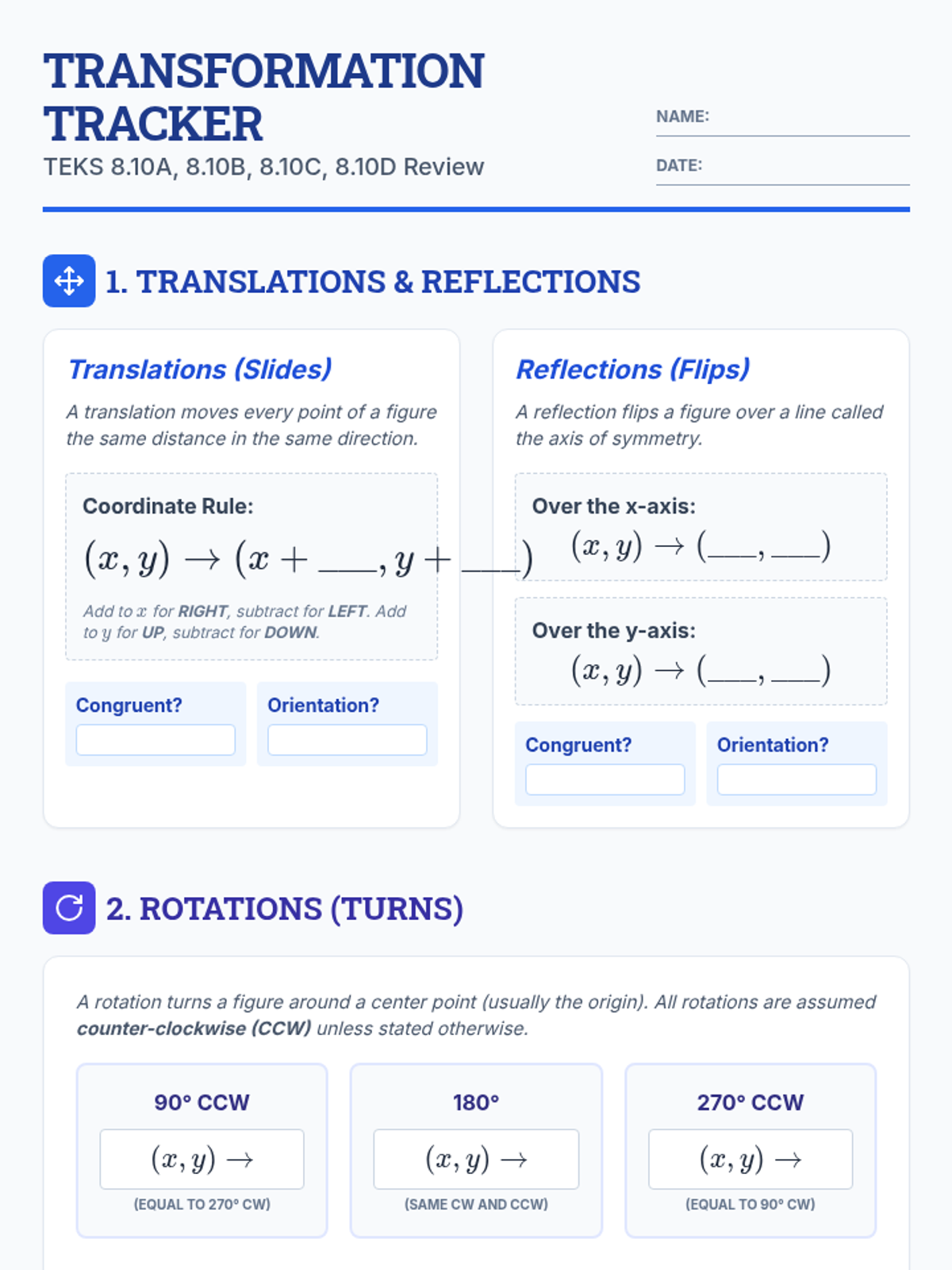
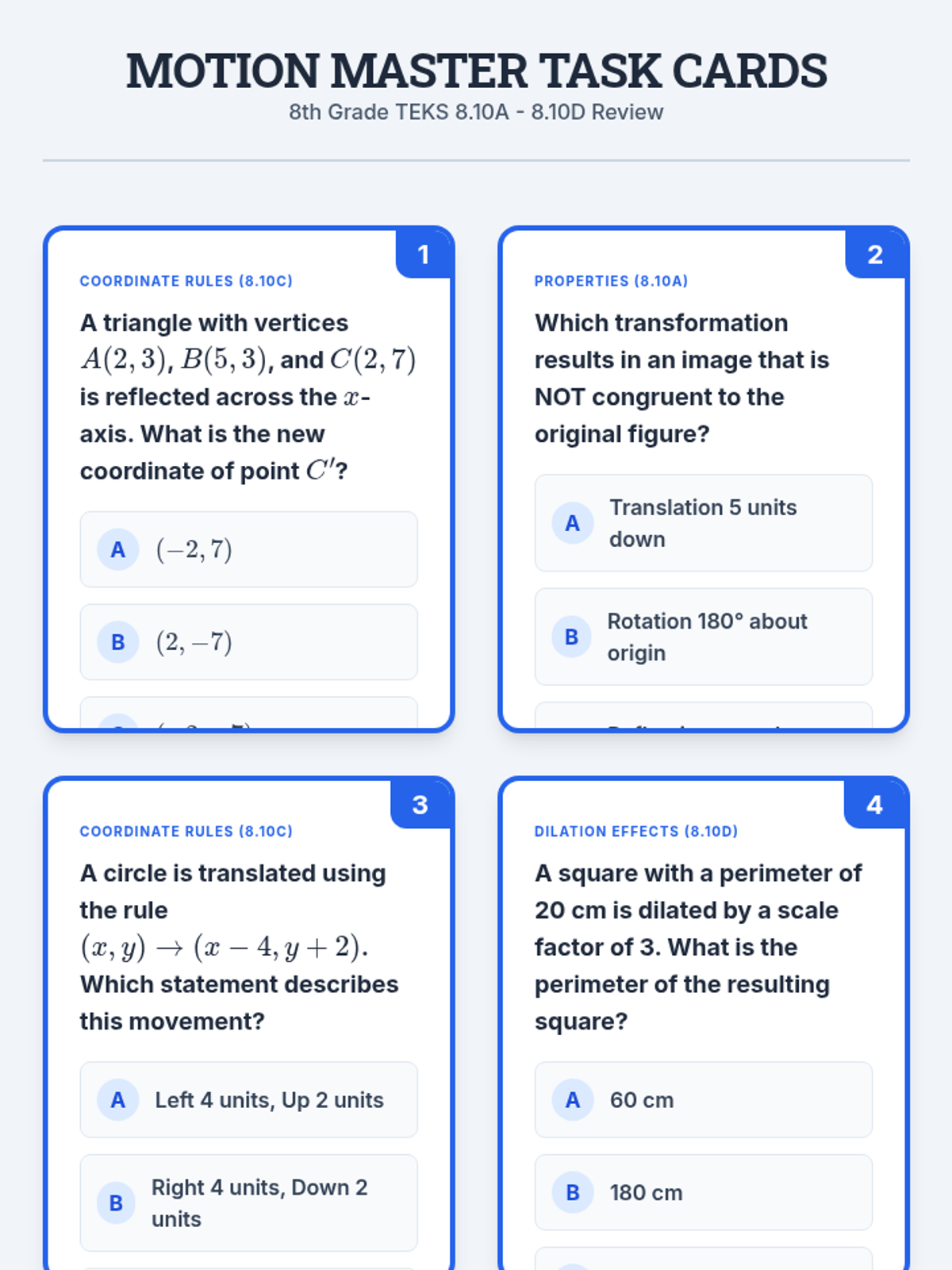
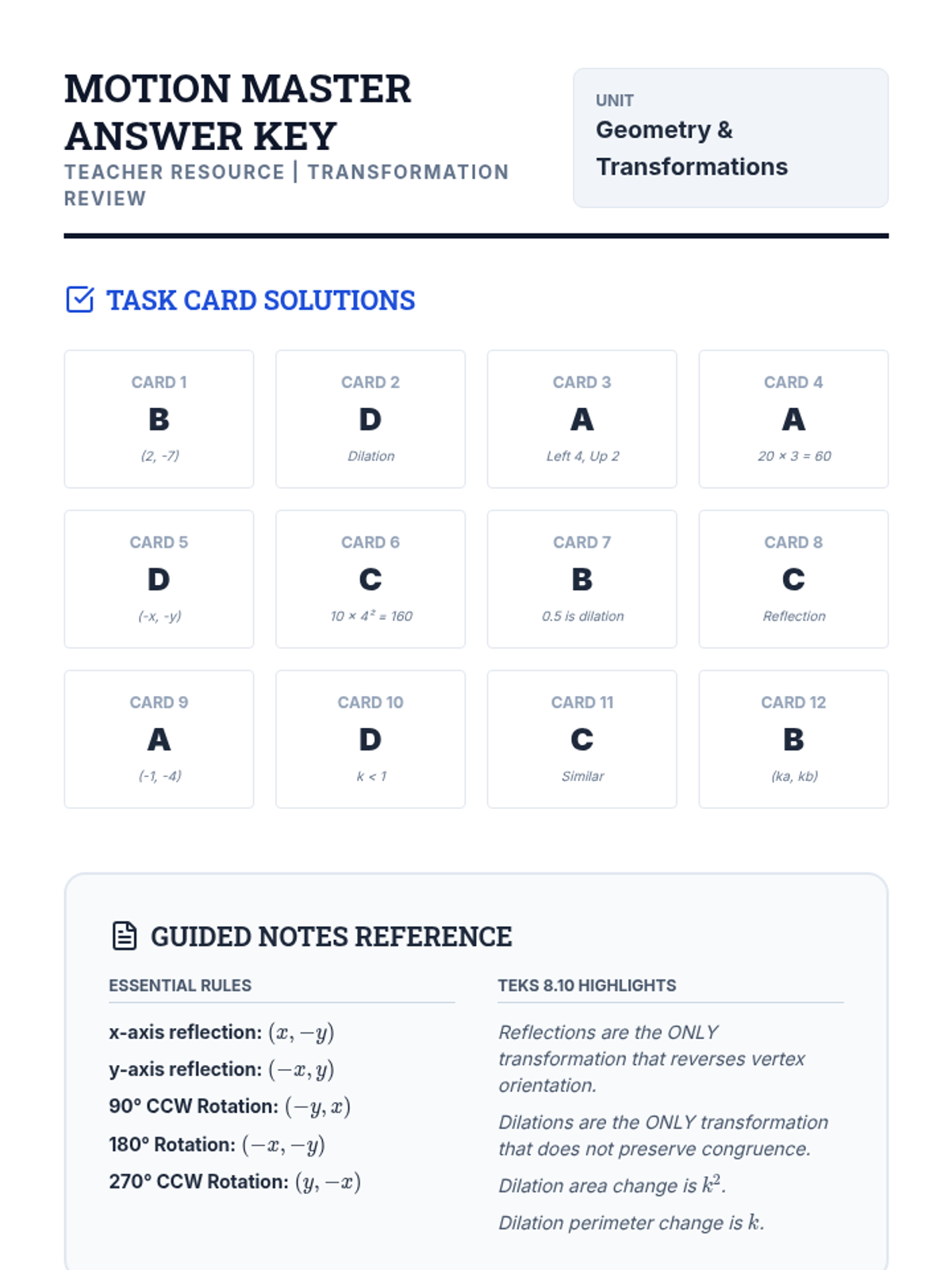
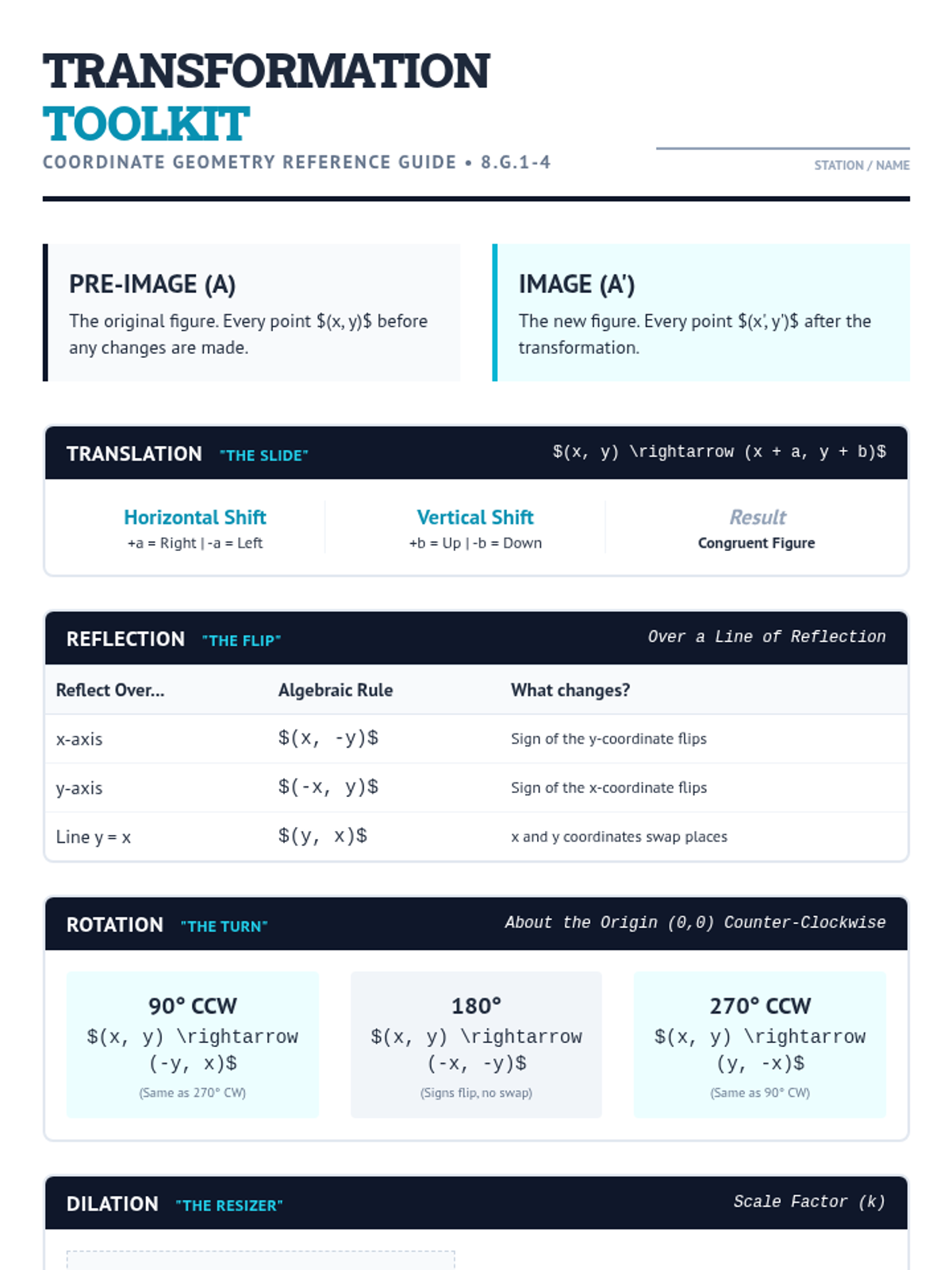
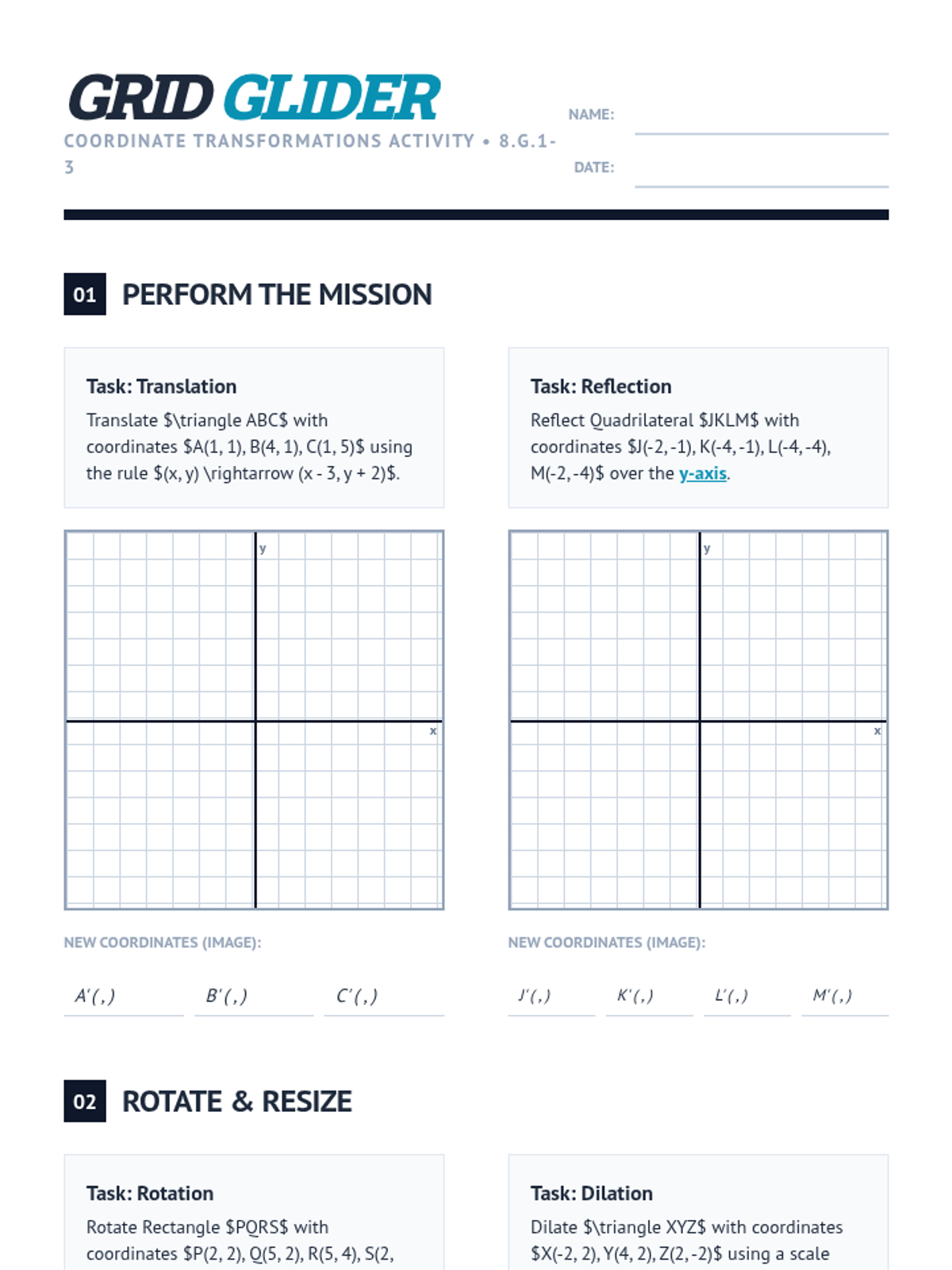
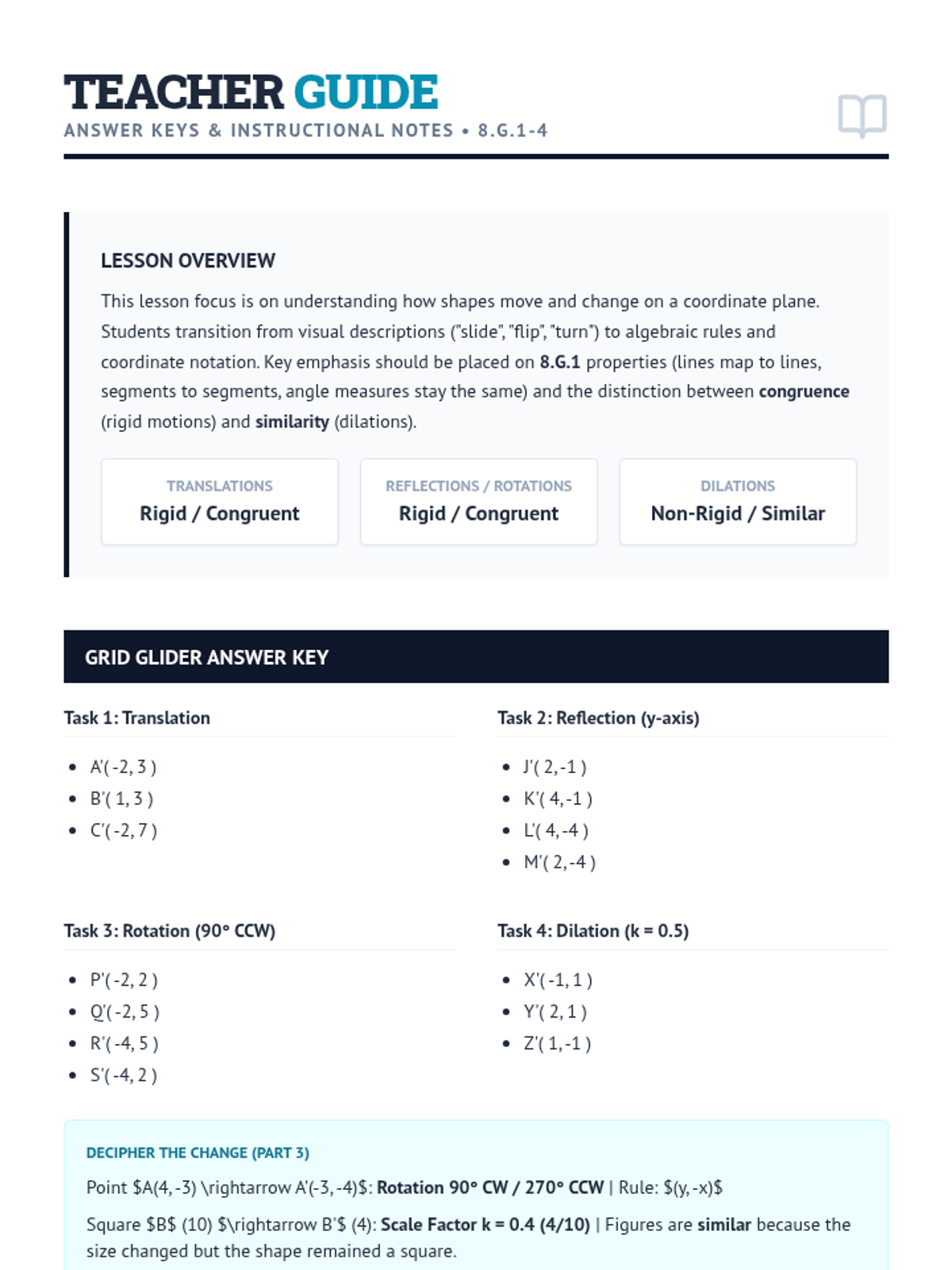
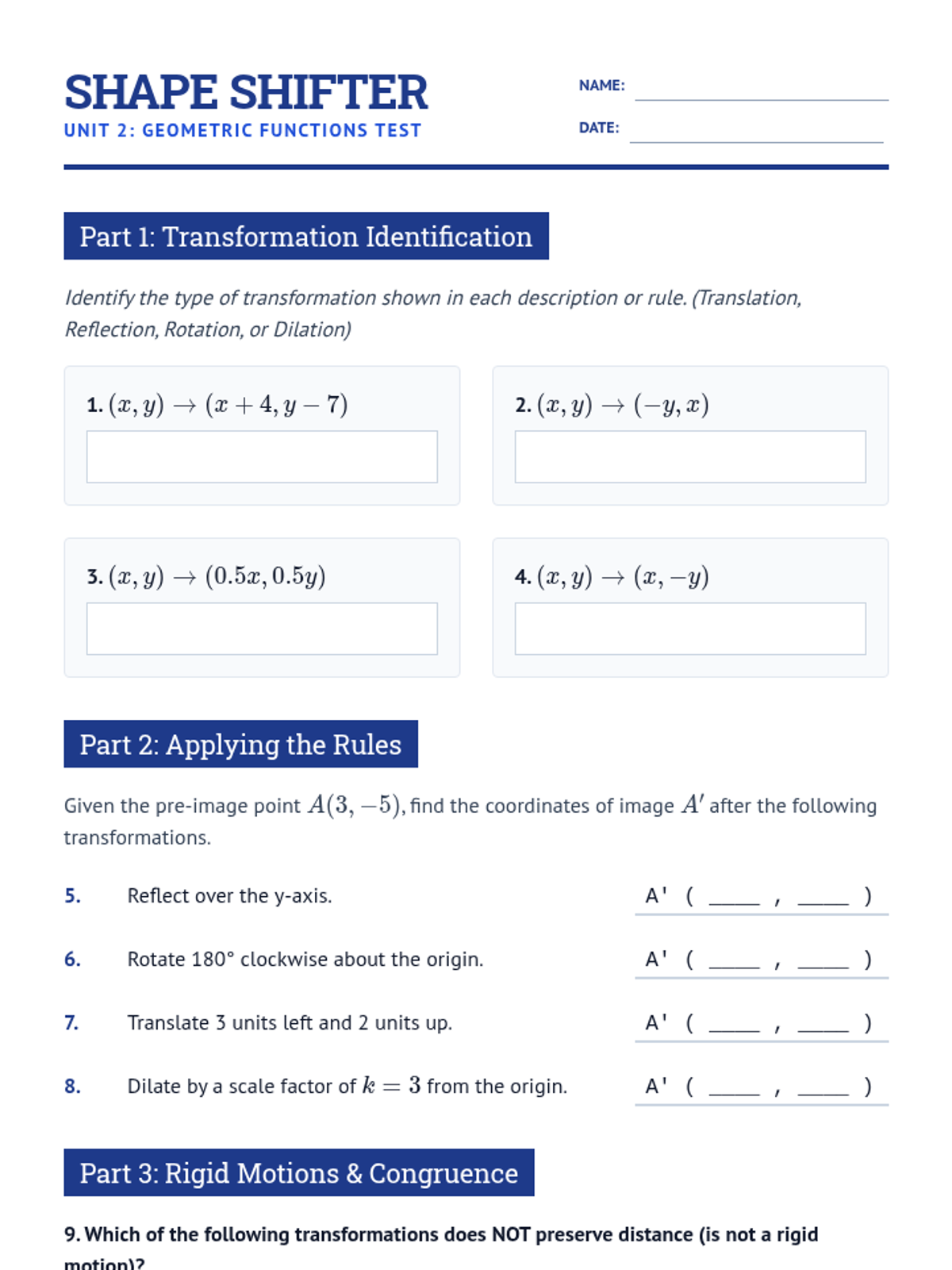
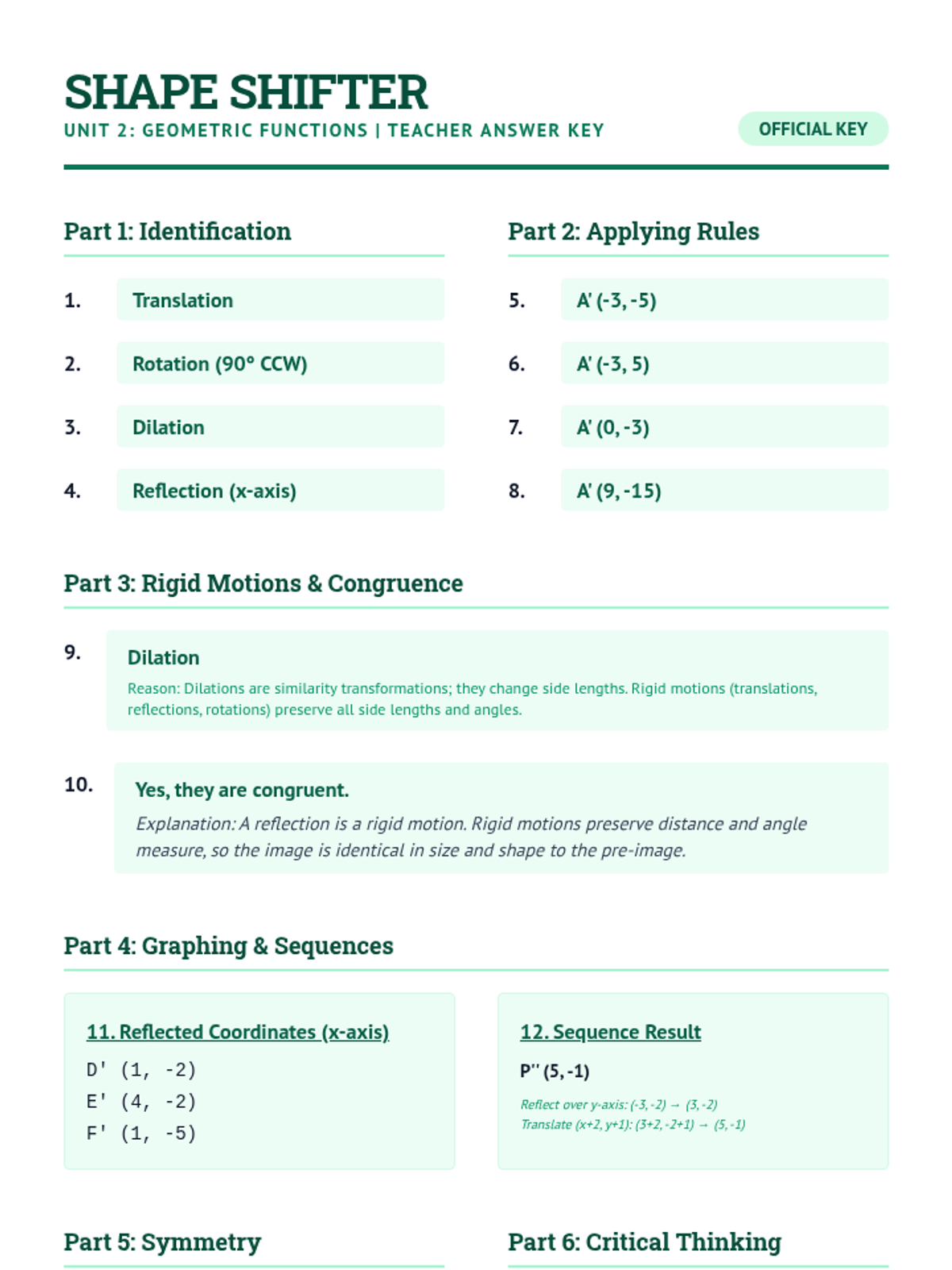
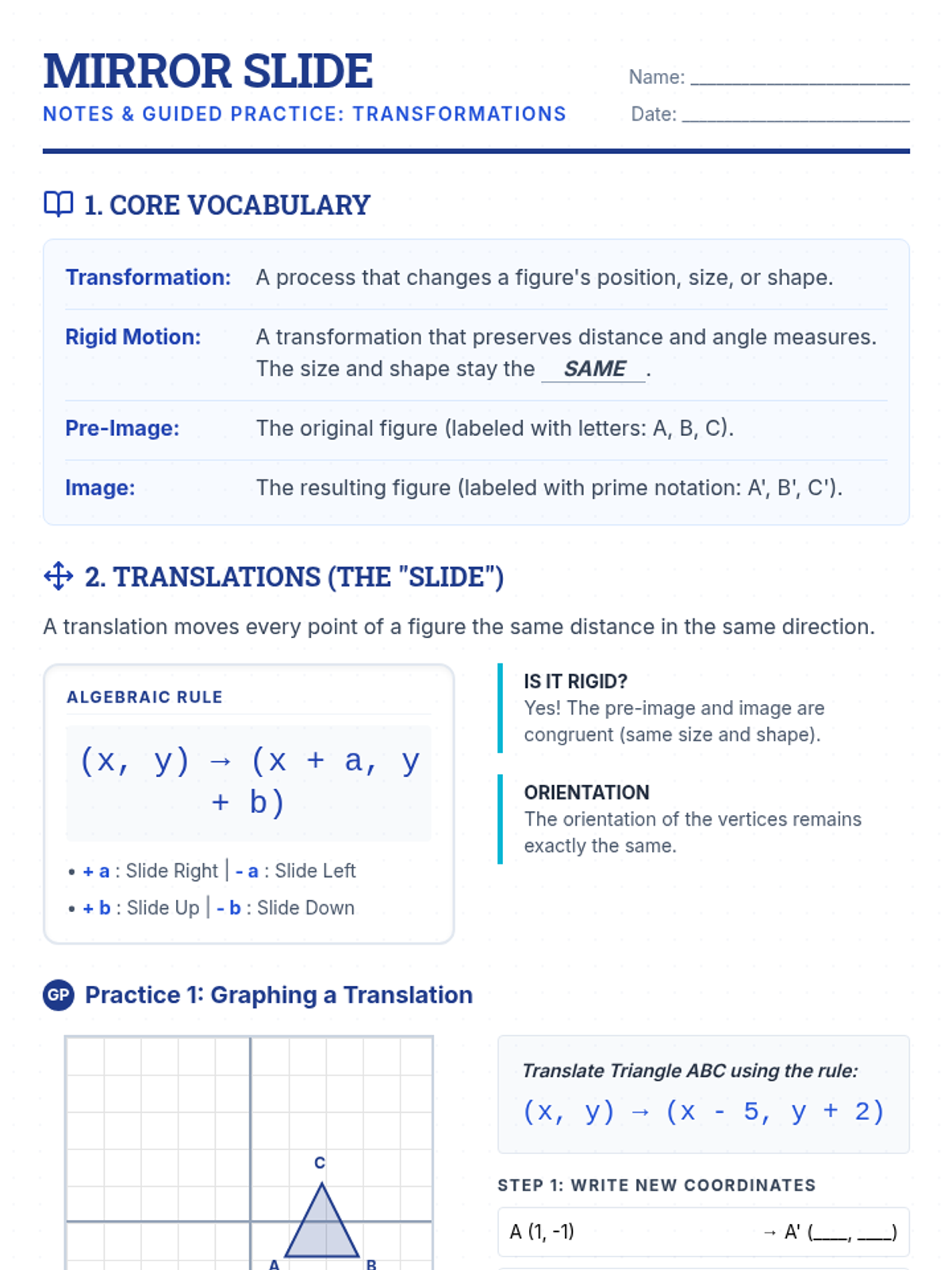
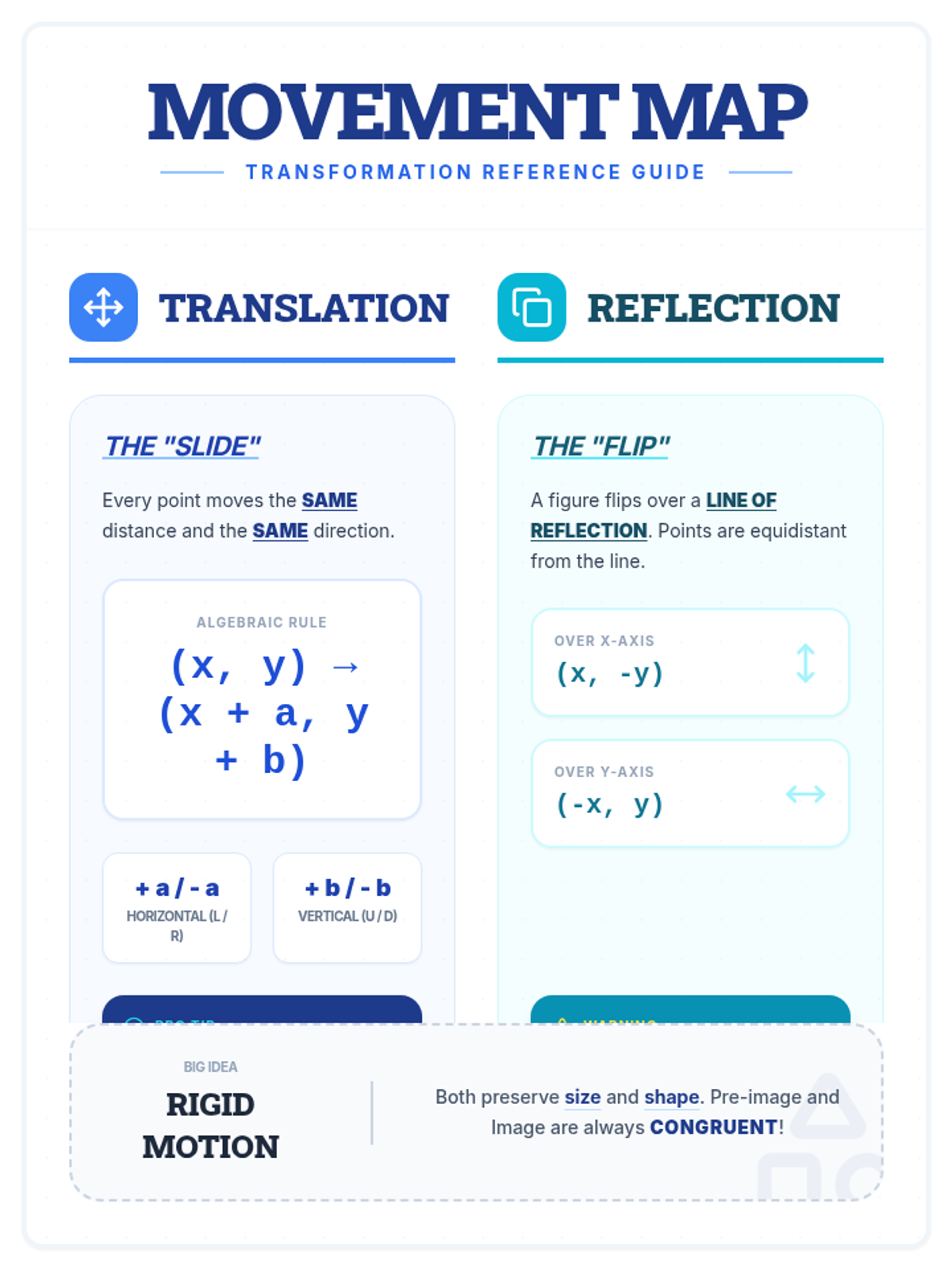
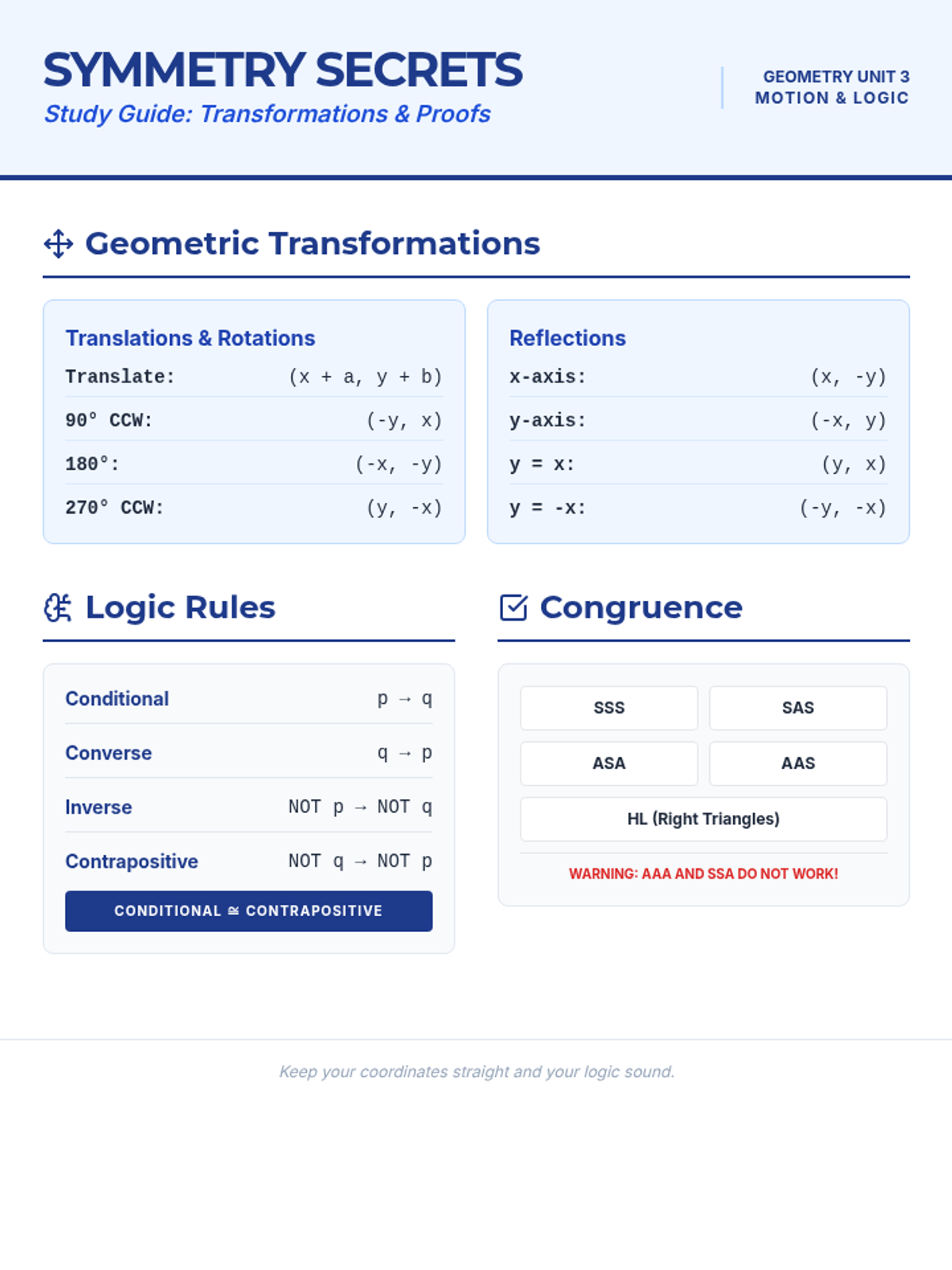
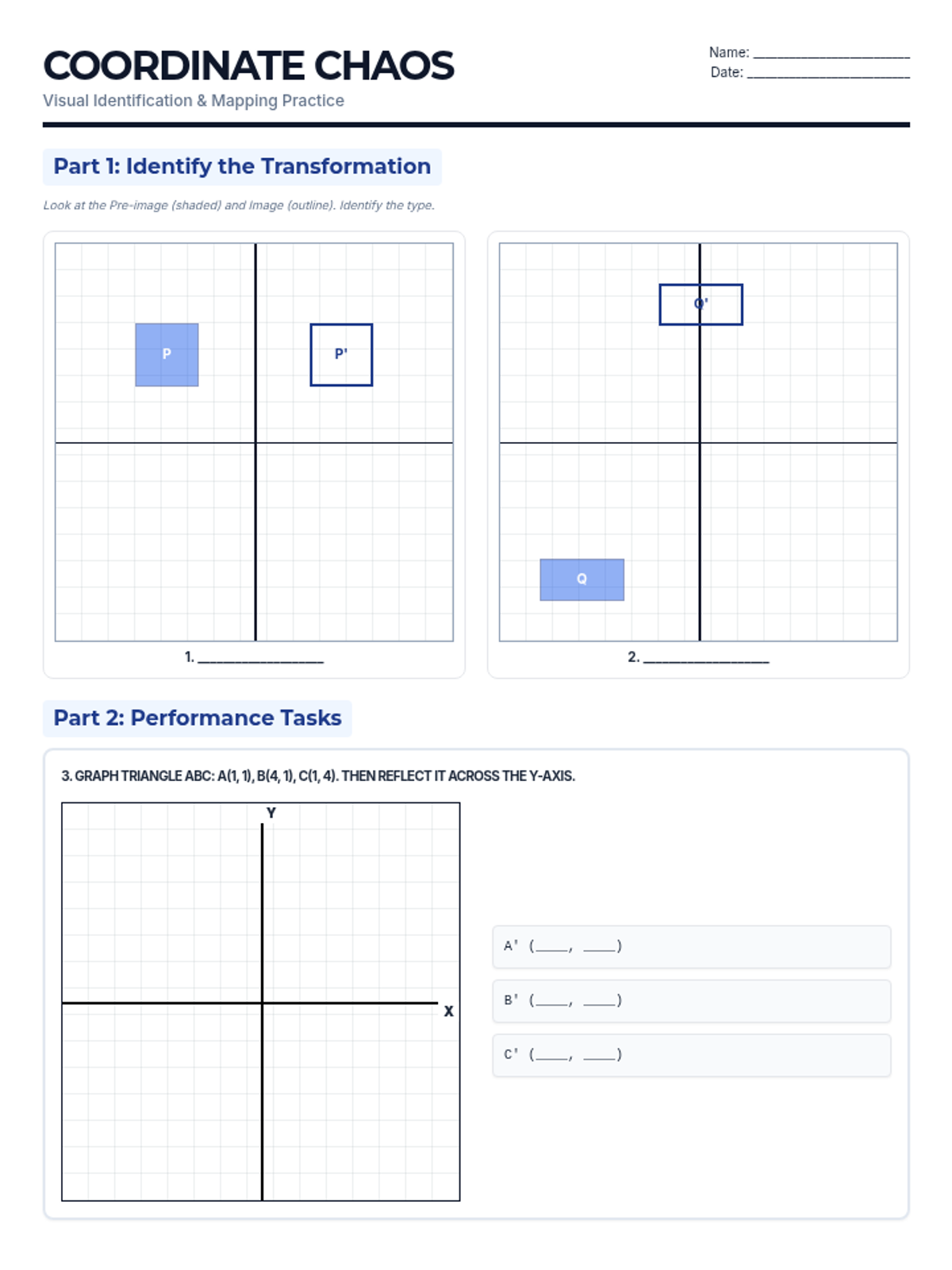
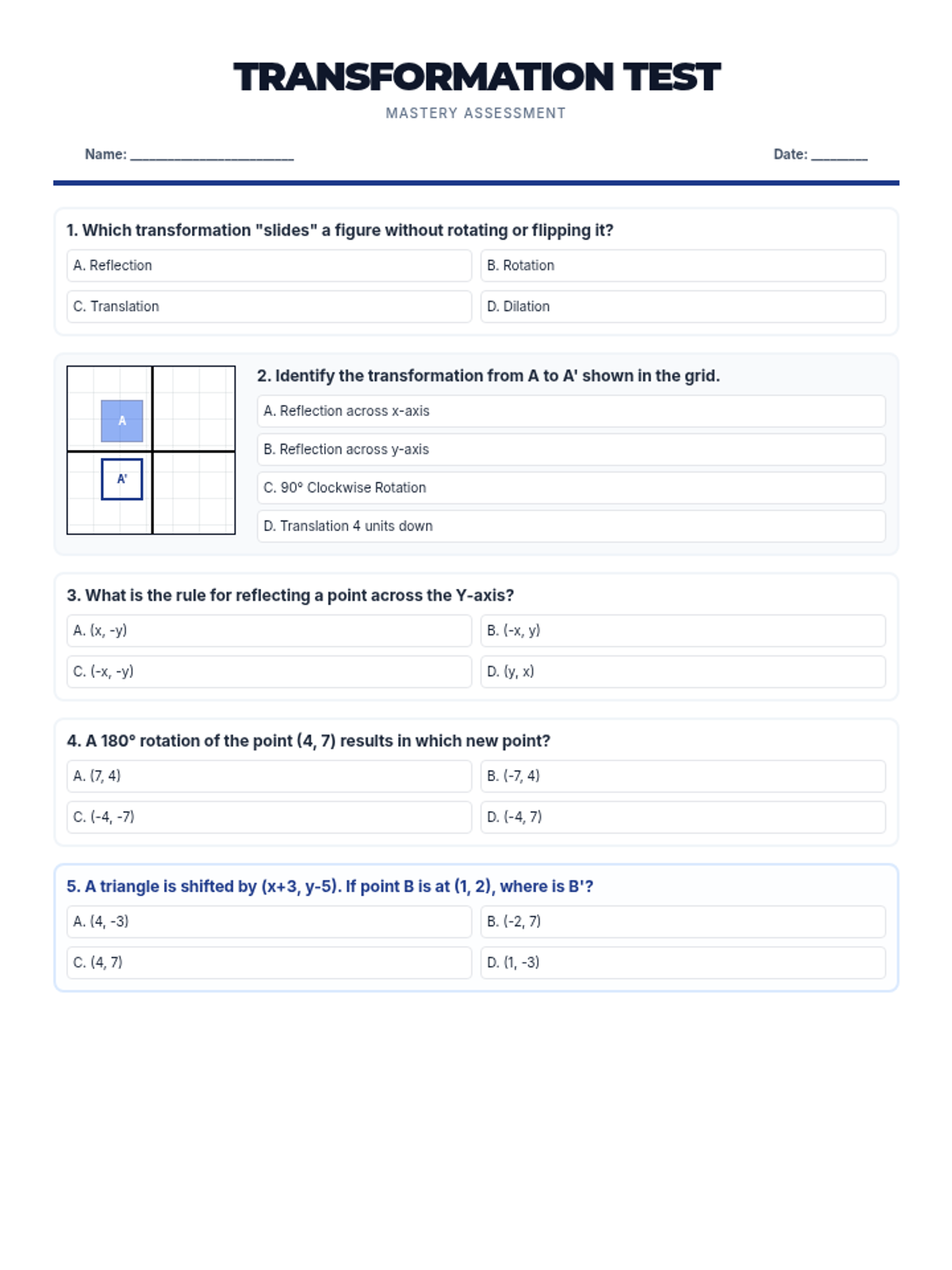
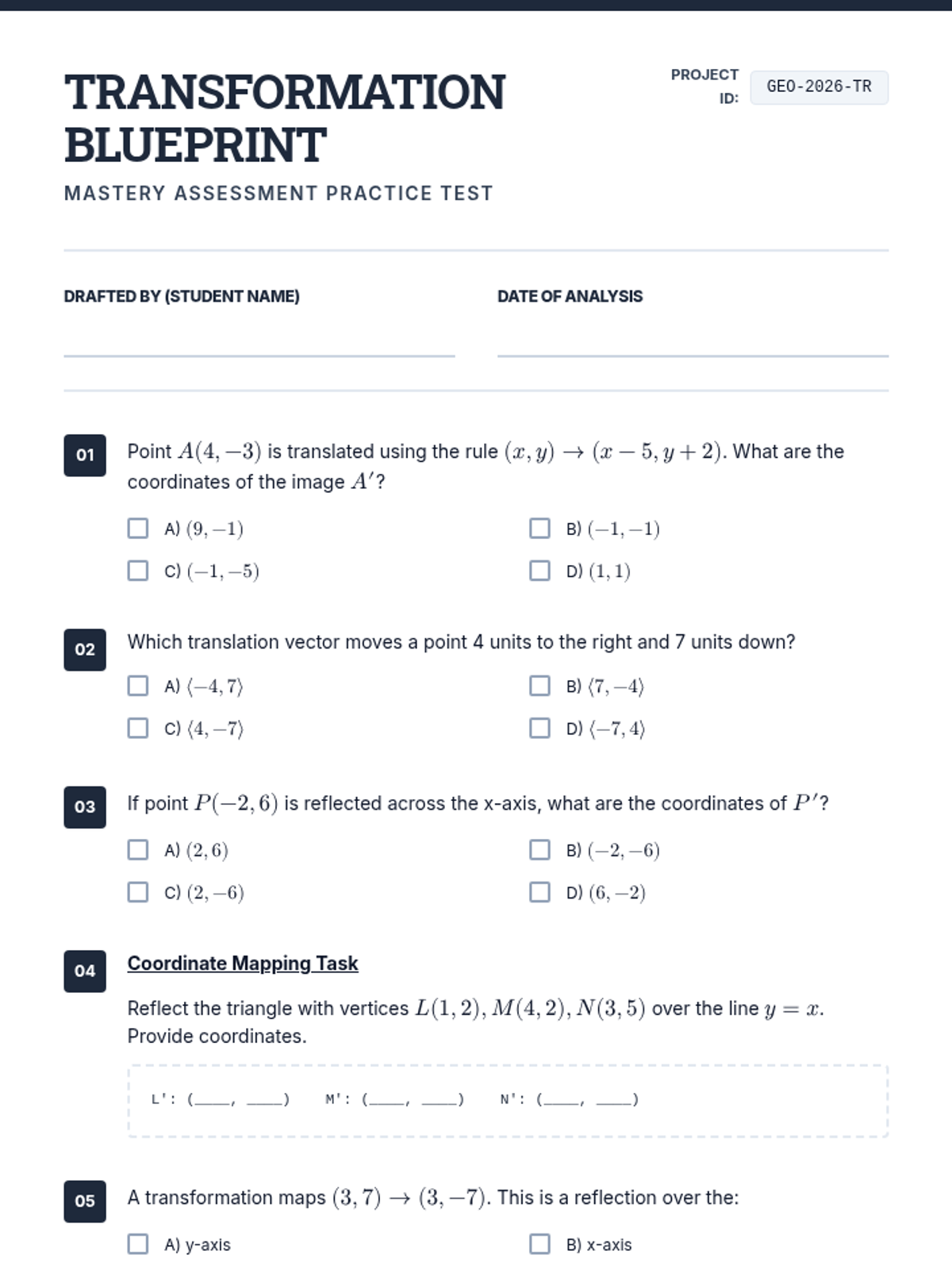
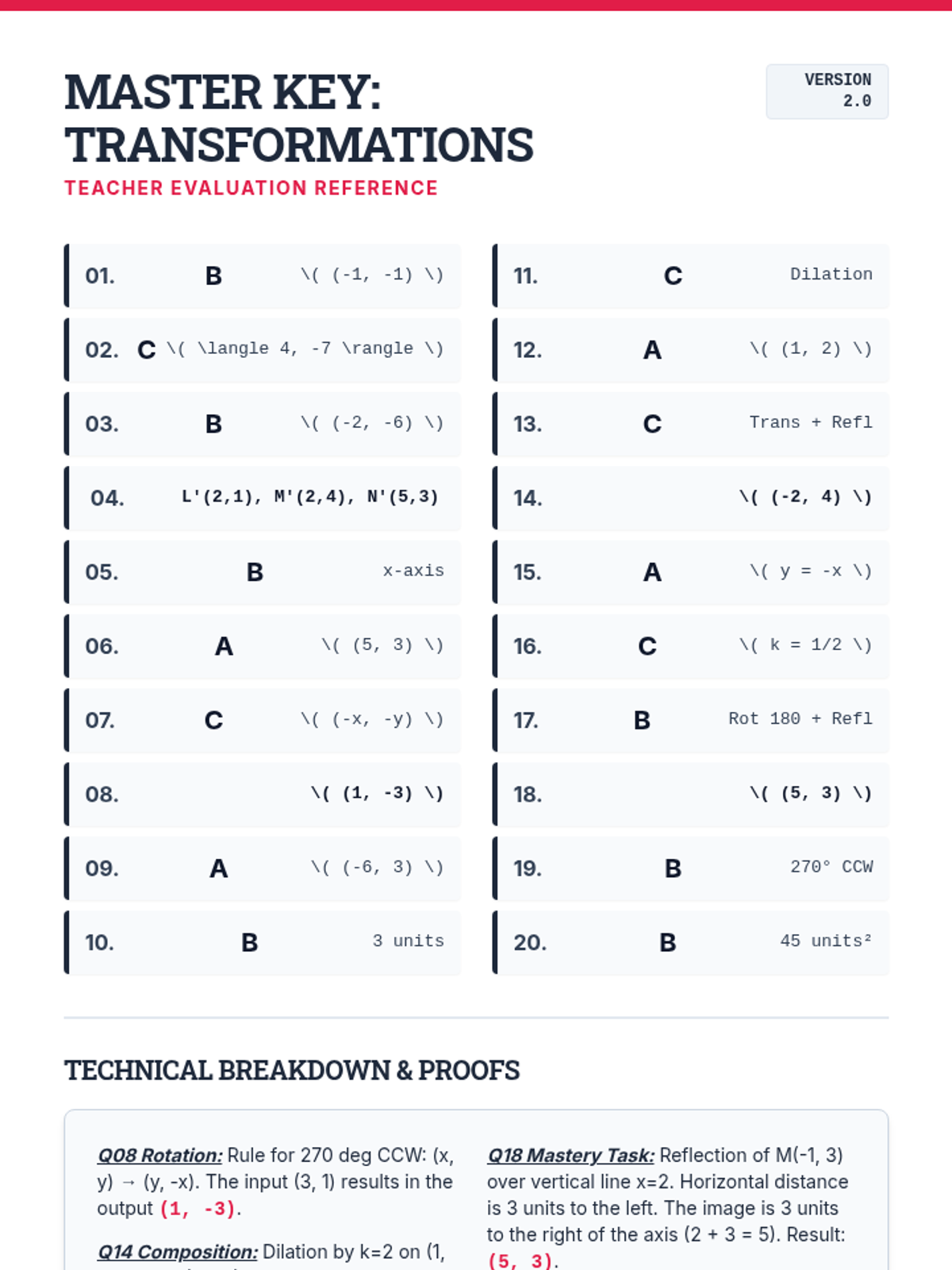
A comprehensive review of geometric transformations including translations, reflections, rotations, and dilations, focusing on coordinate rules and algebraic representations.
This lesson covers the four types of geometric transformations: translations, reflections, rotations, and dilations. Students will learn to perform these transformations on a coordinate plane, describe them using algebraic notation, and distinguish between congruent and similar figures.
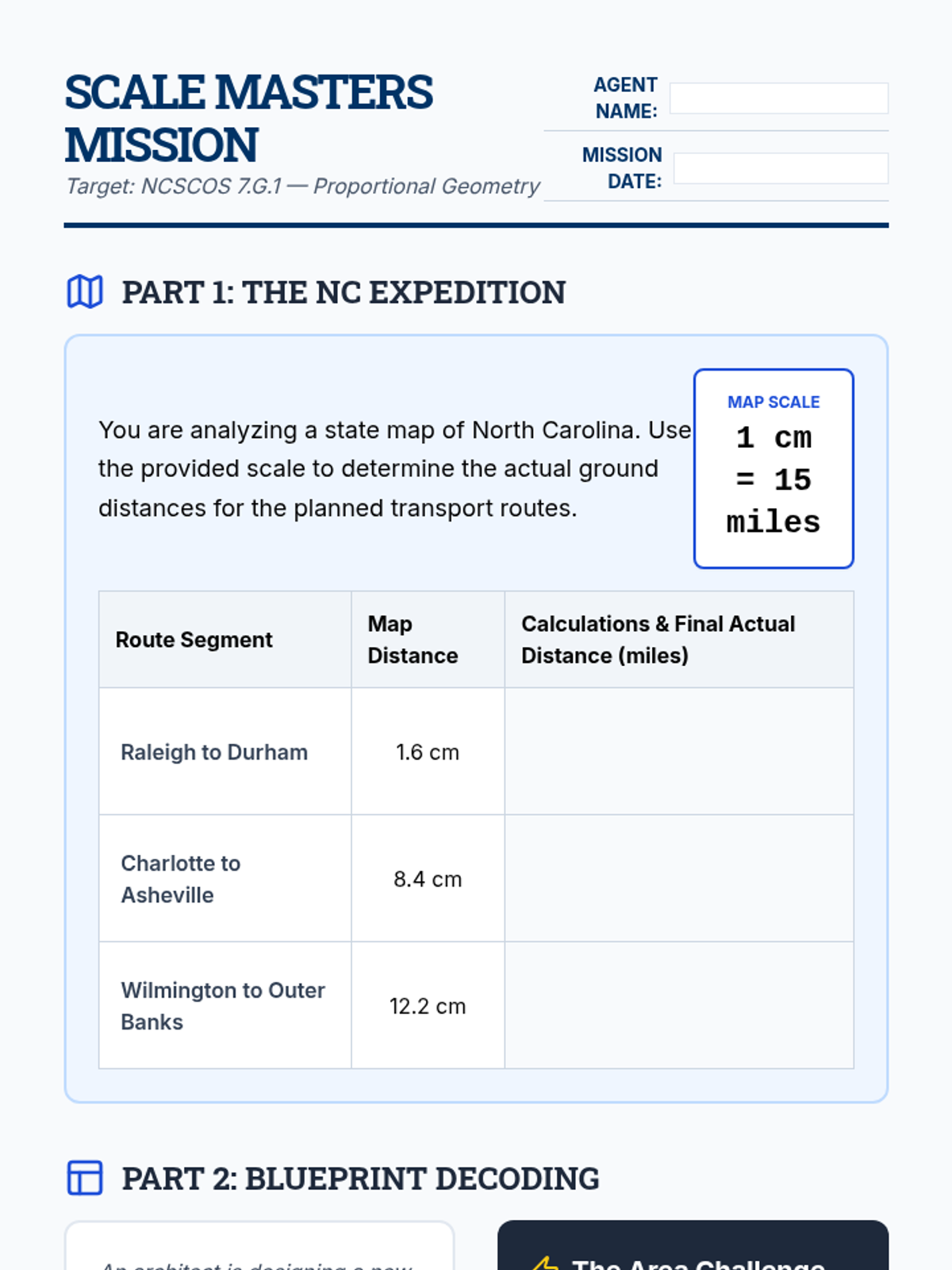
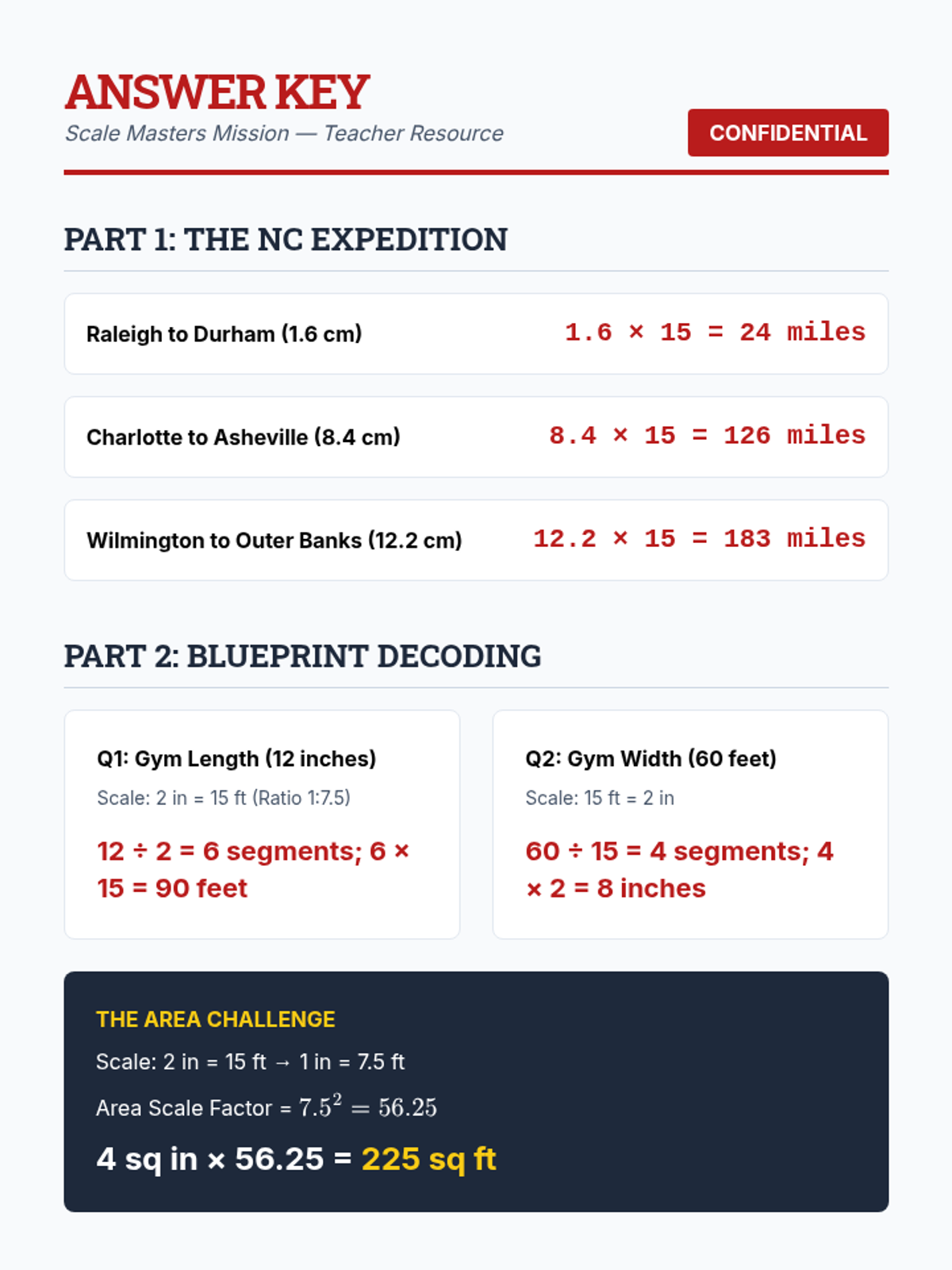
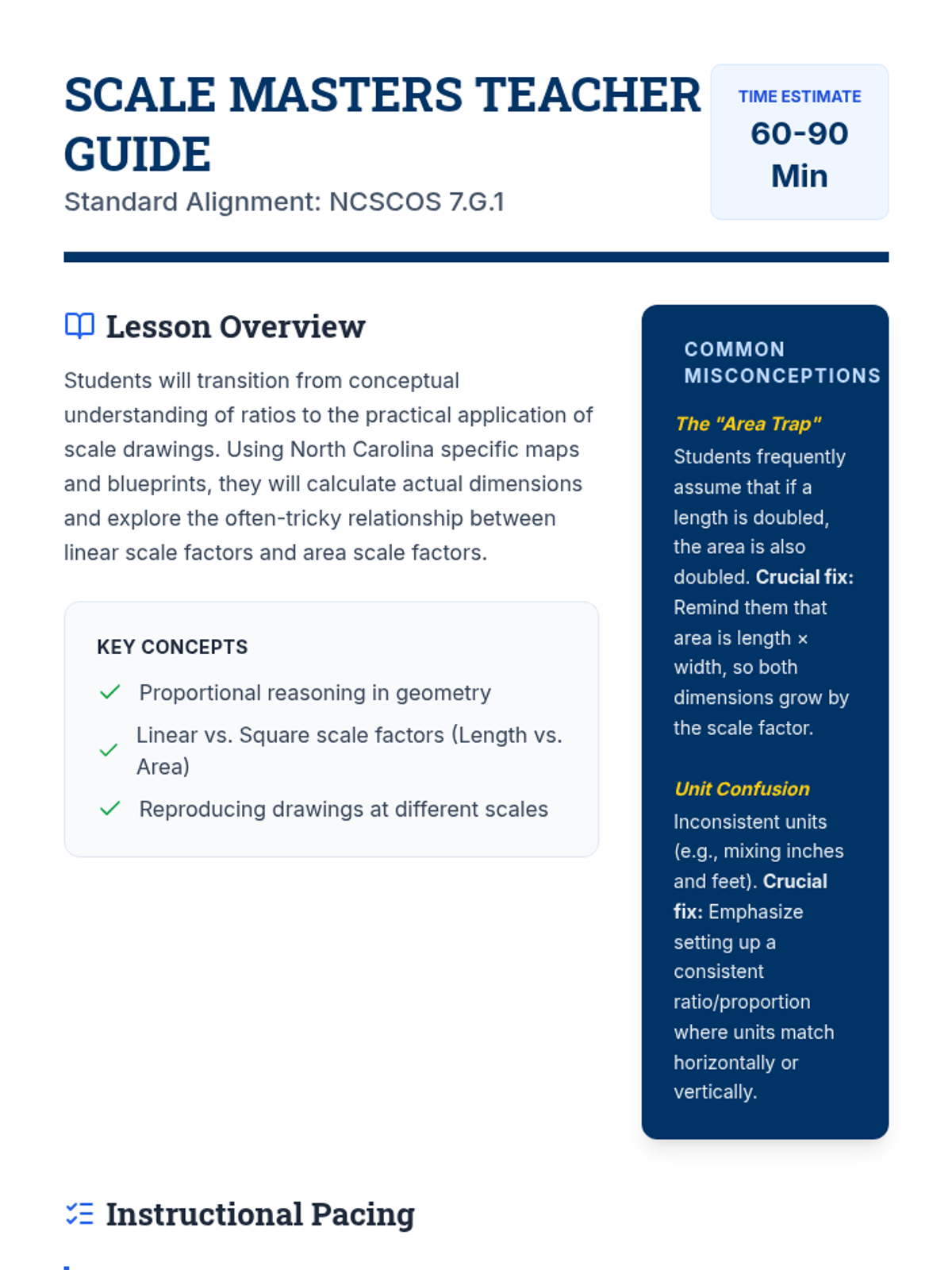
A comprehensive lesson on scale drawings and scale factors, featuring NC-themed applications including state maps and school blueprints. Students learn to compute actual dimensions and solve real-world proportional problems.
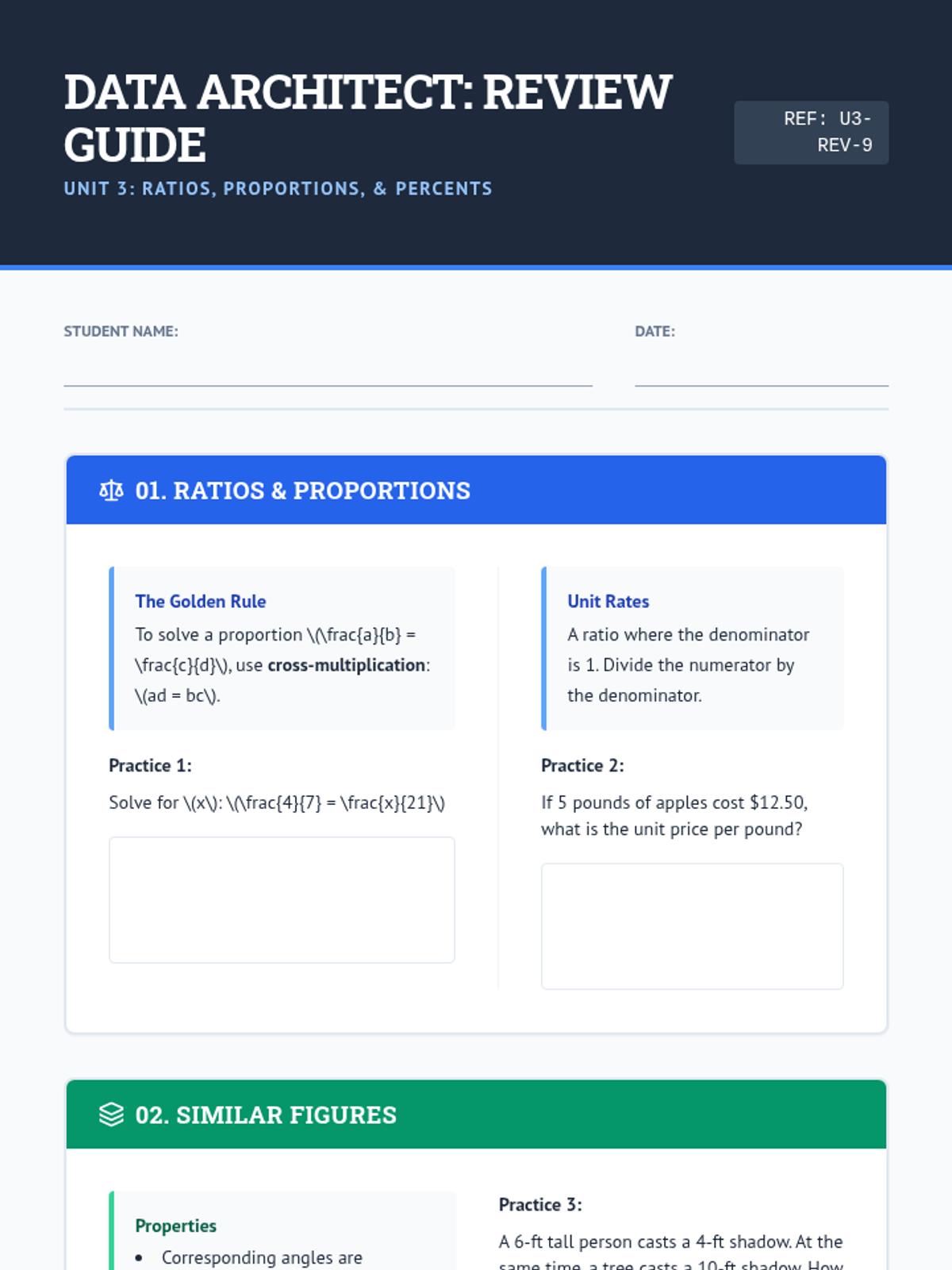
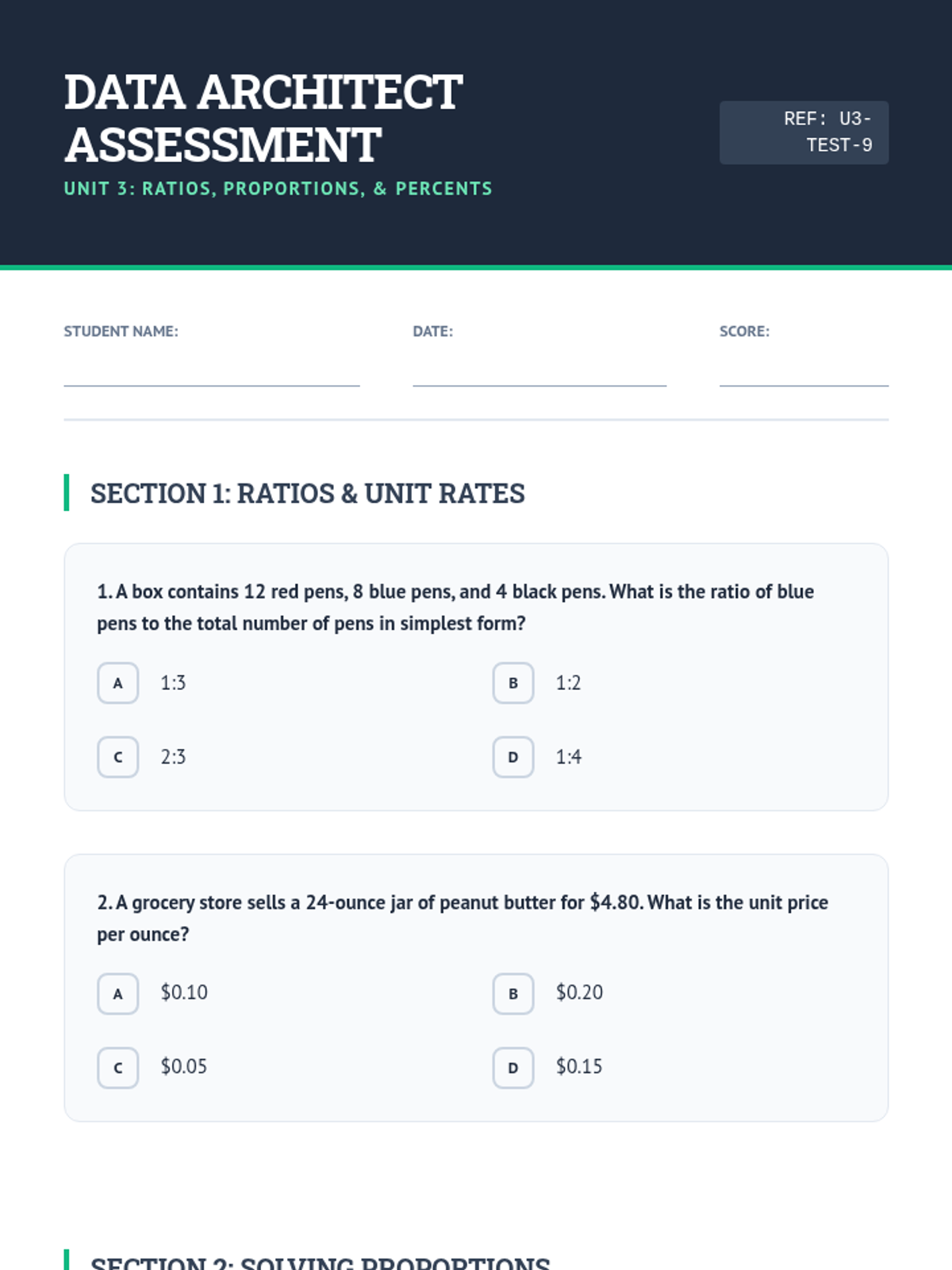
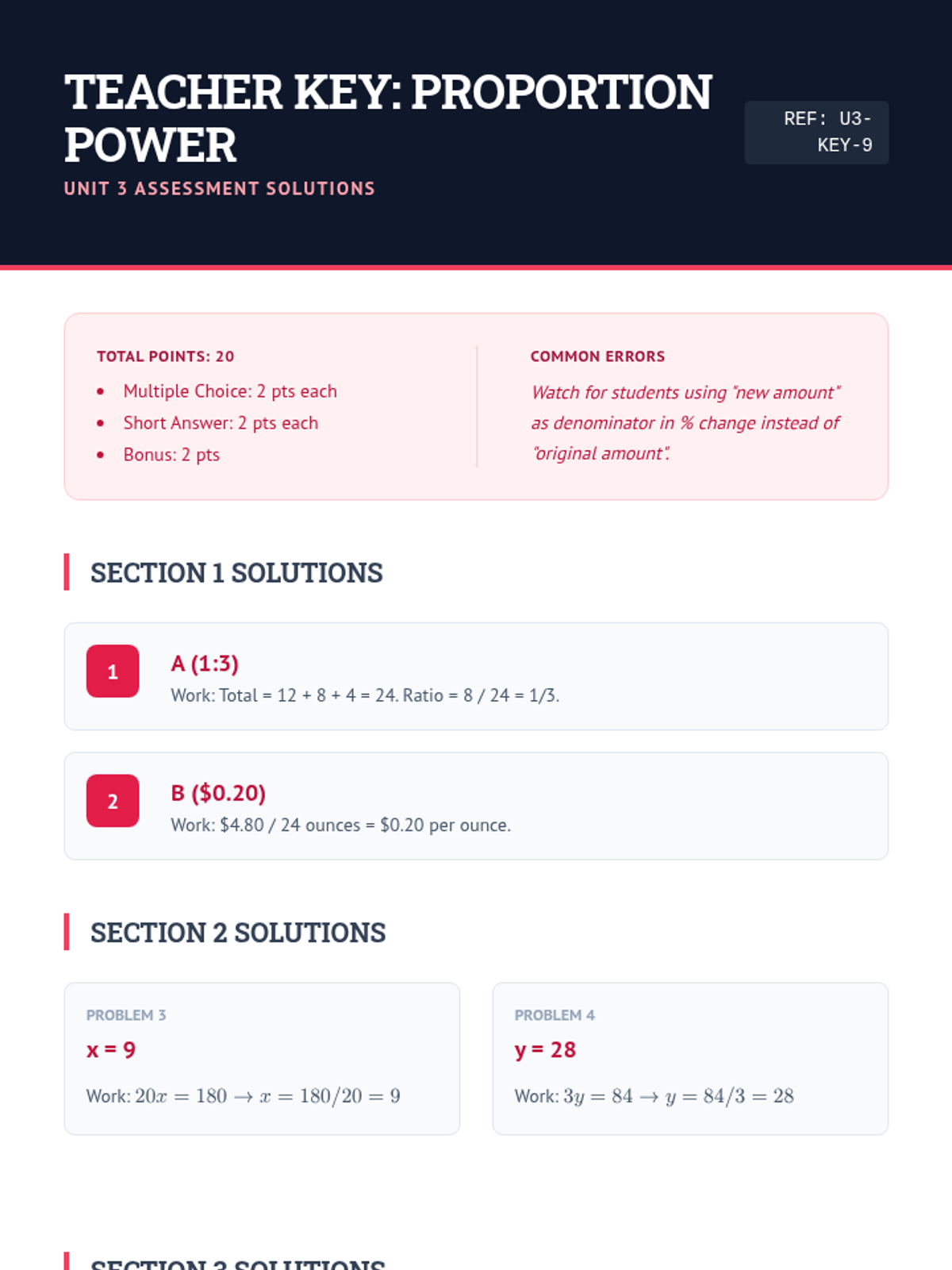
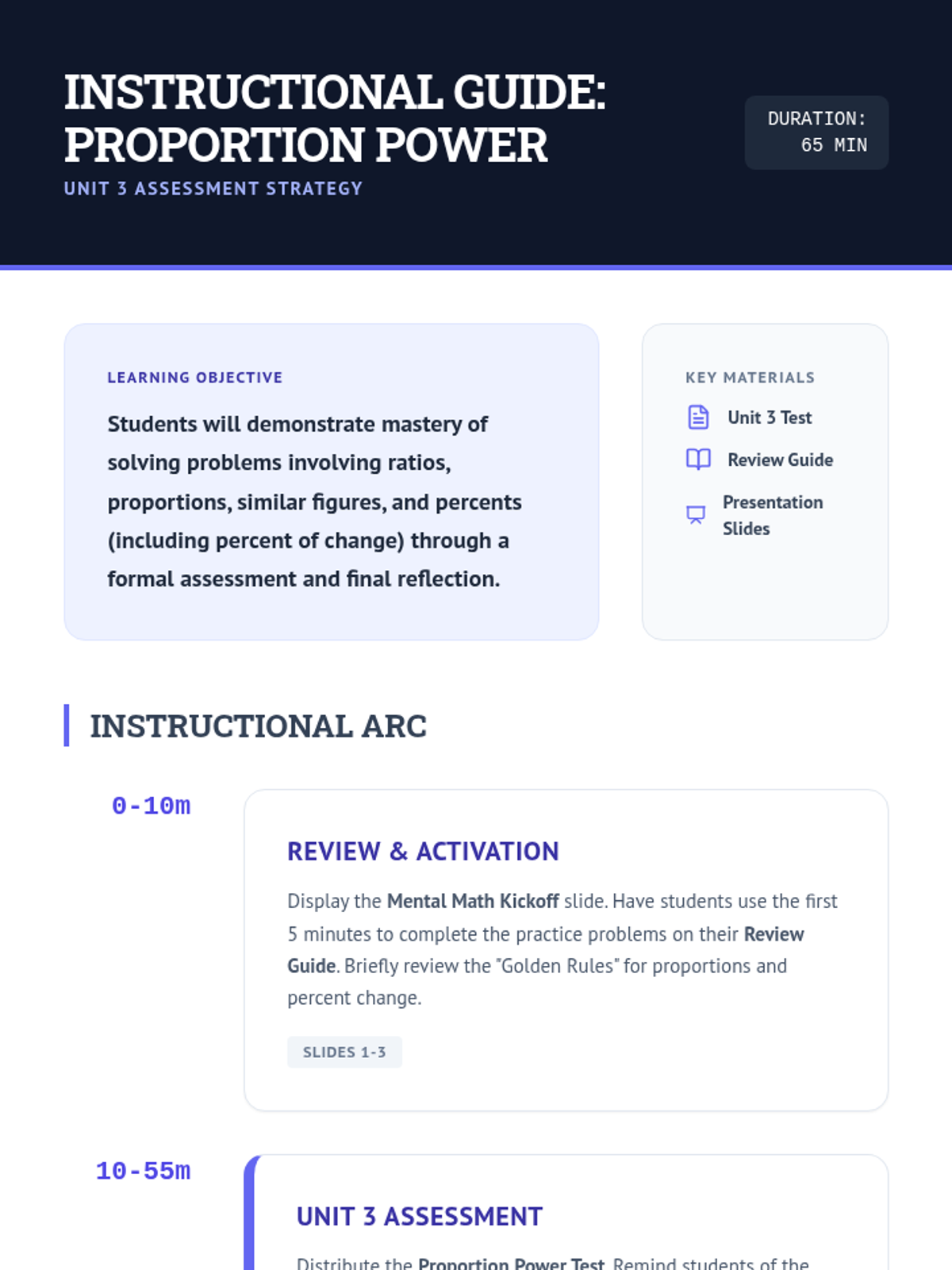
A comprehensive assessment lesson where students review key concepts of ratios, proportions, and percents before completing a formal unit test.
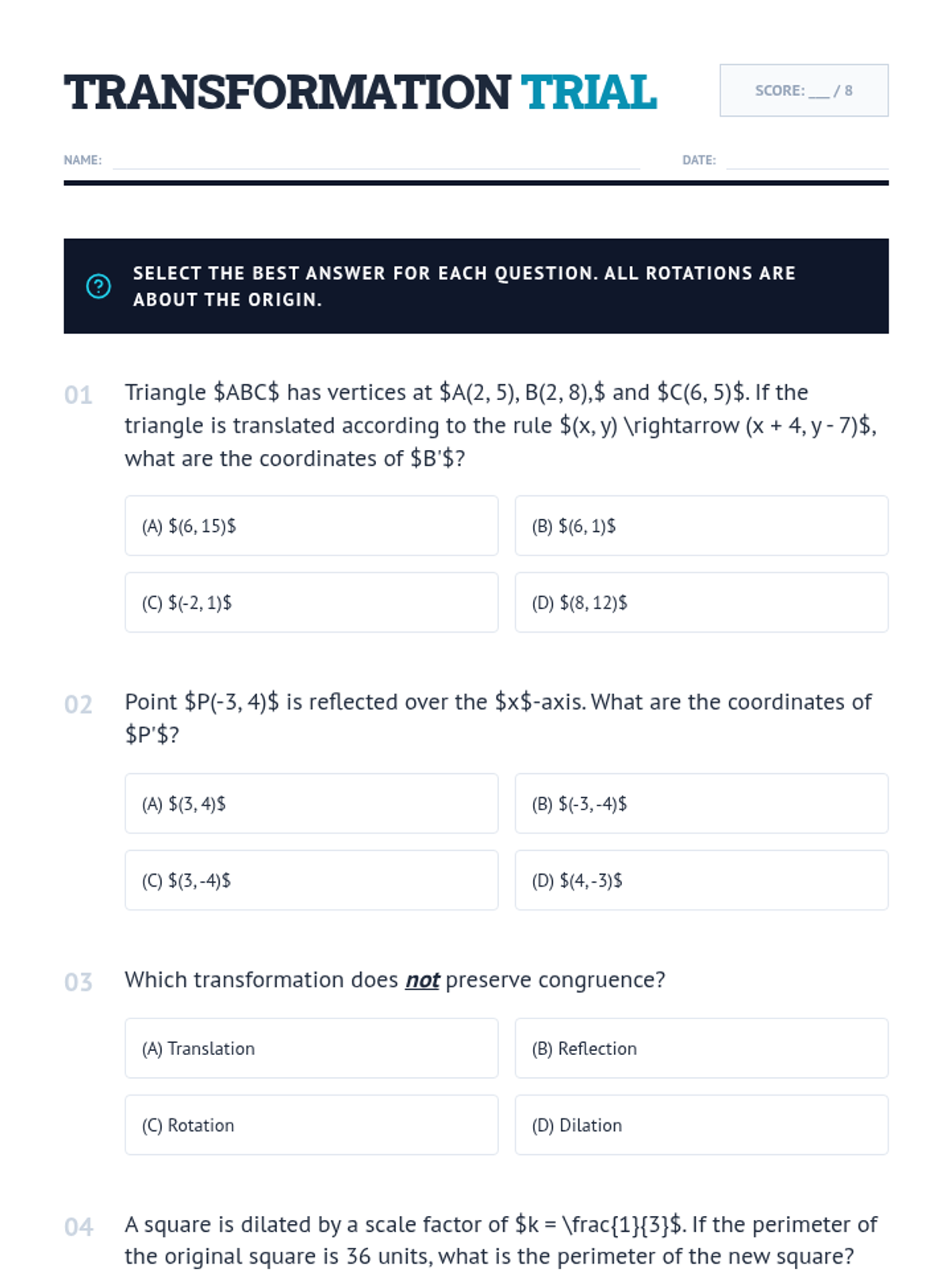
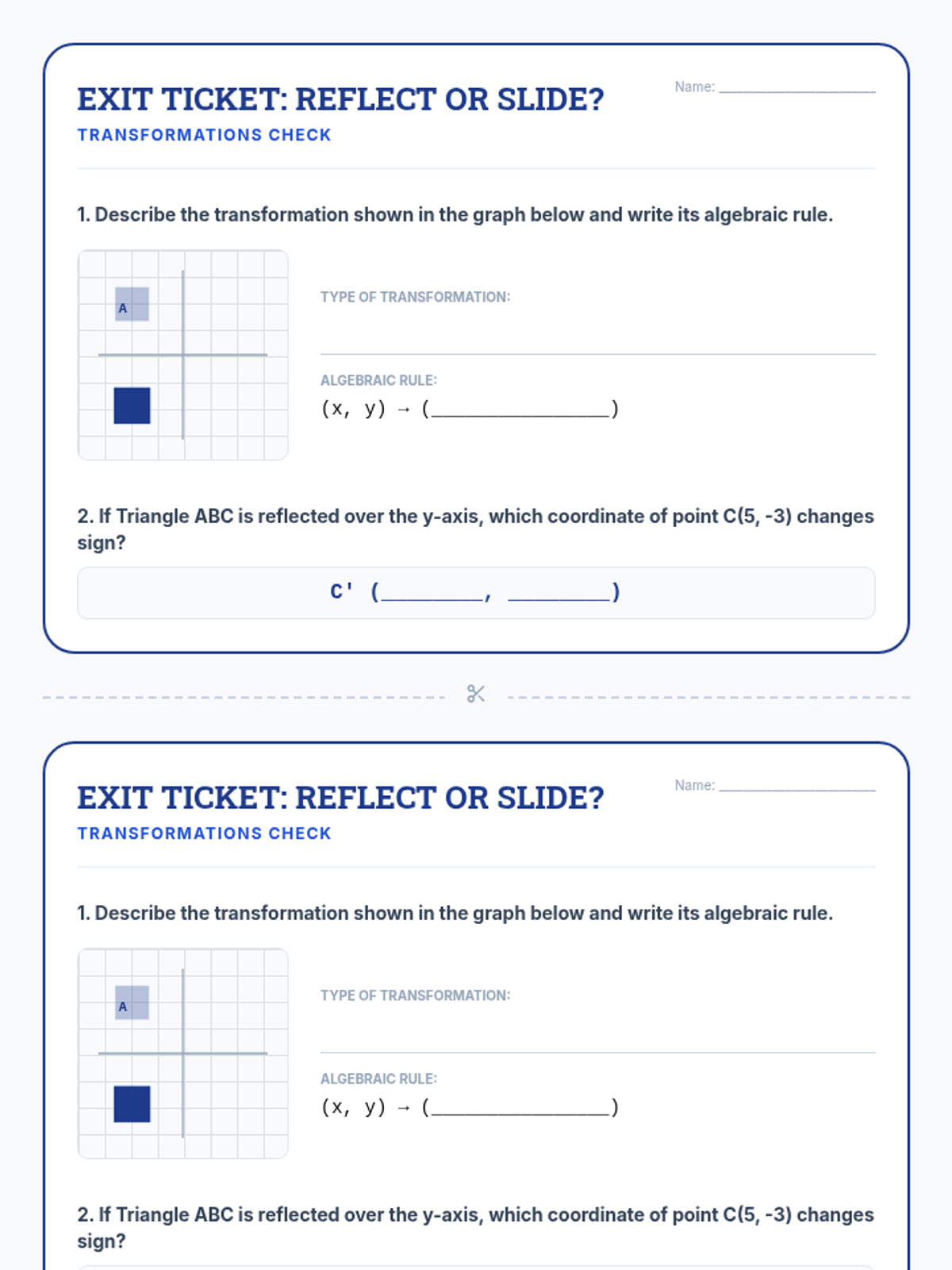
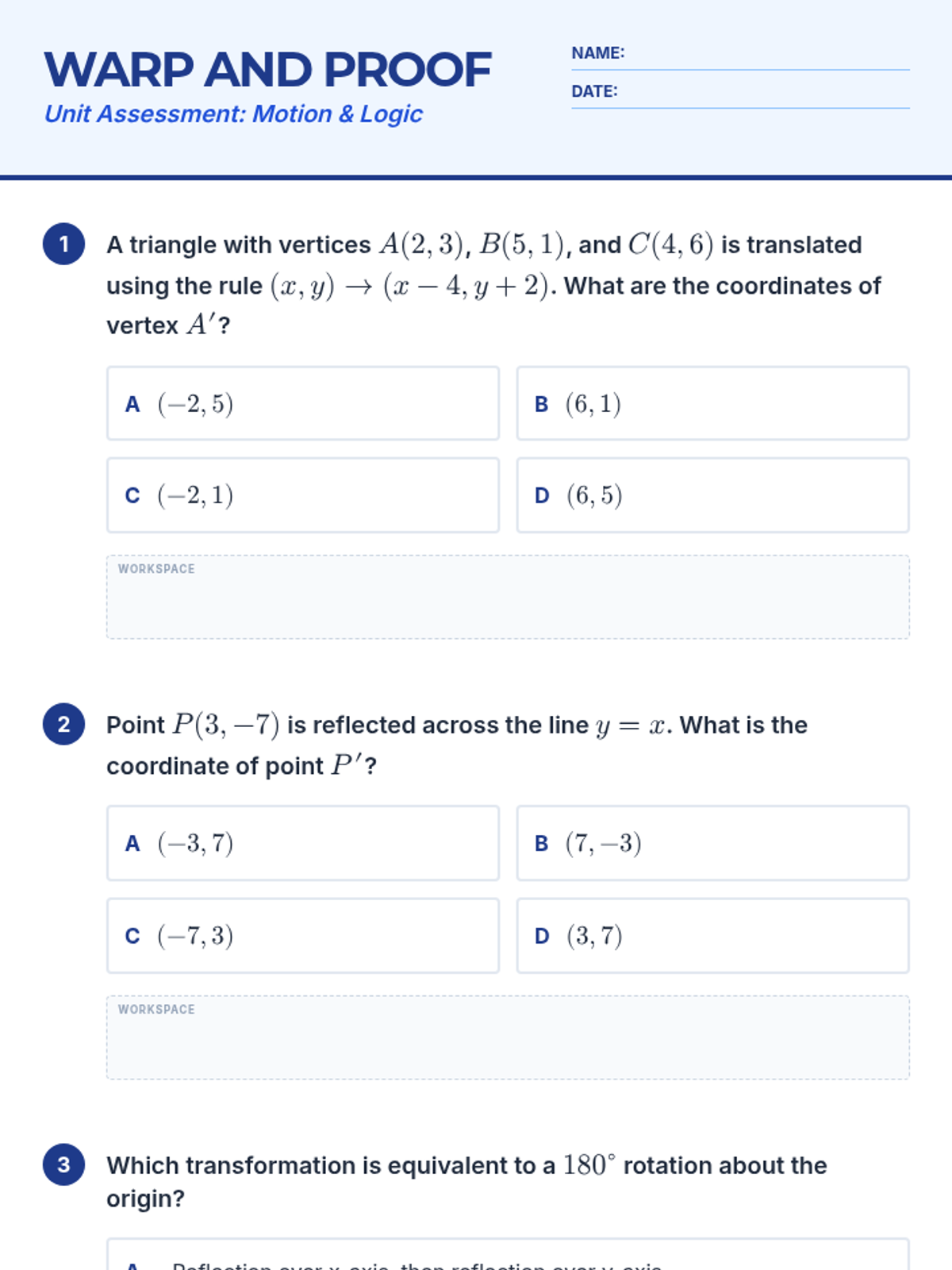
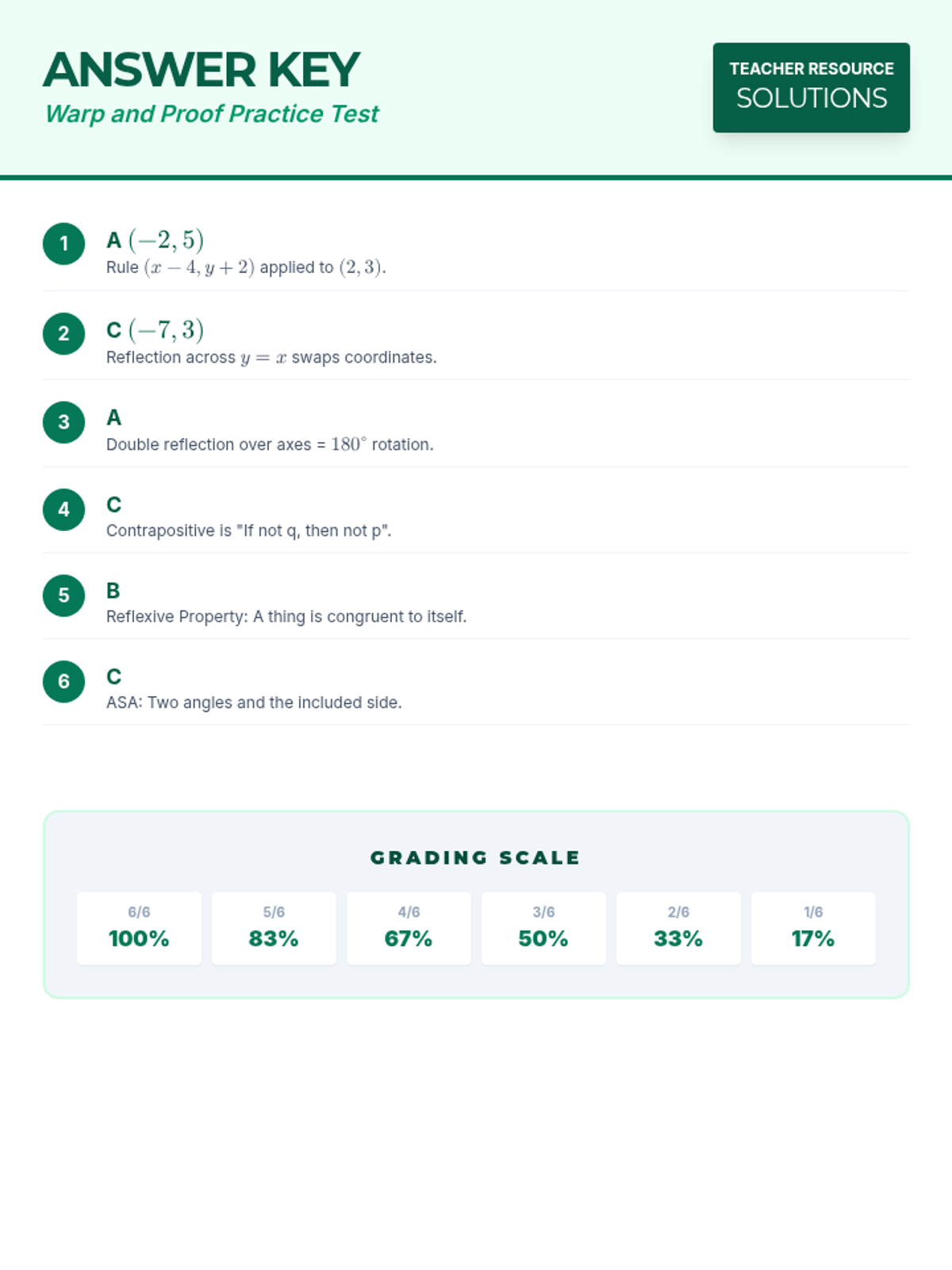
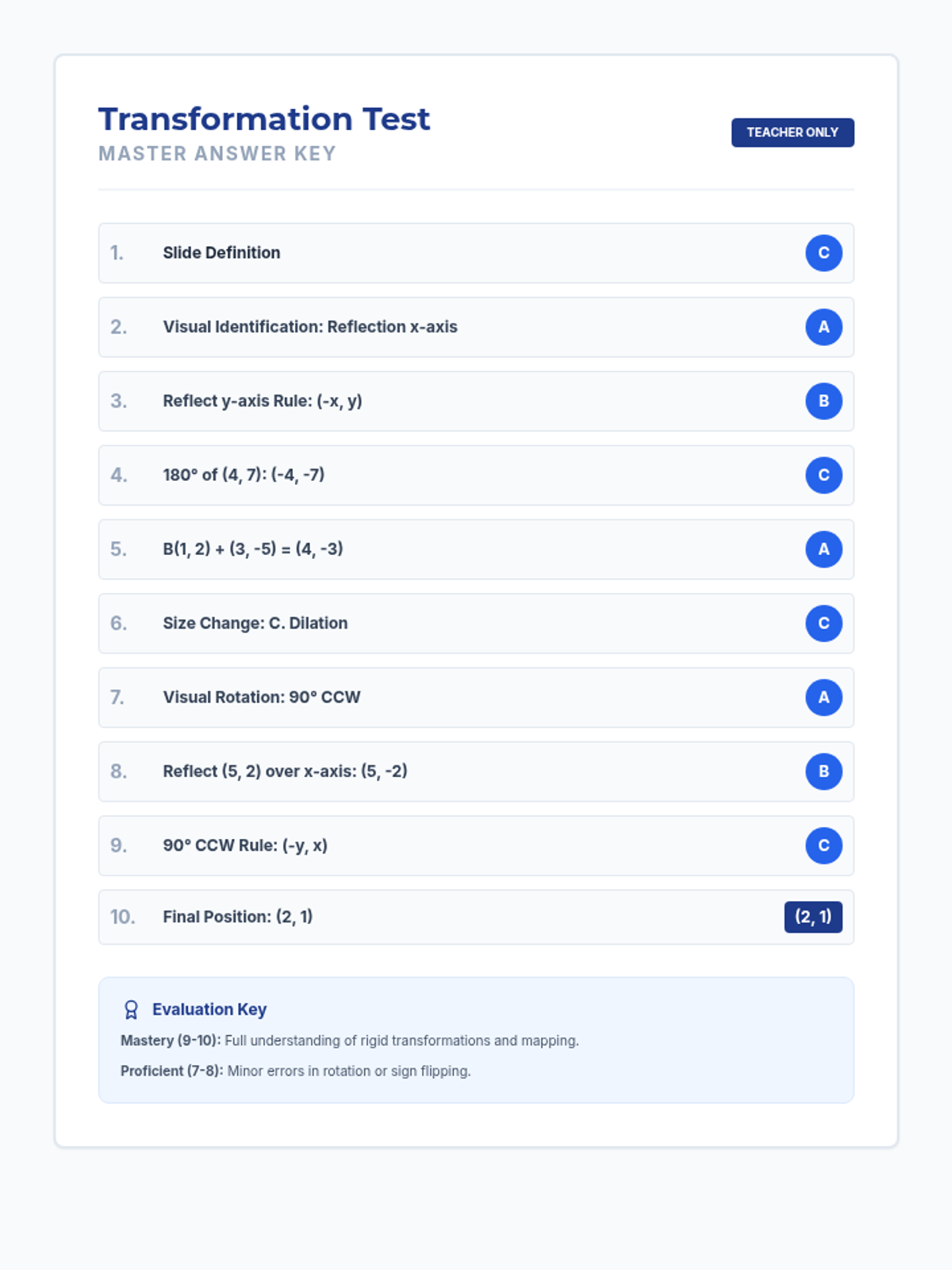
A comprehensive assessment focused on geometric transformations including translations, reflections, rotations, and dilations. Students will demonstrate their mastery of coordinate rules, sequences of transformations, and symmetry.
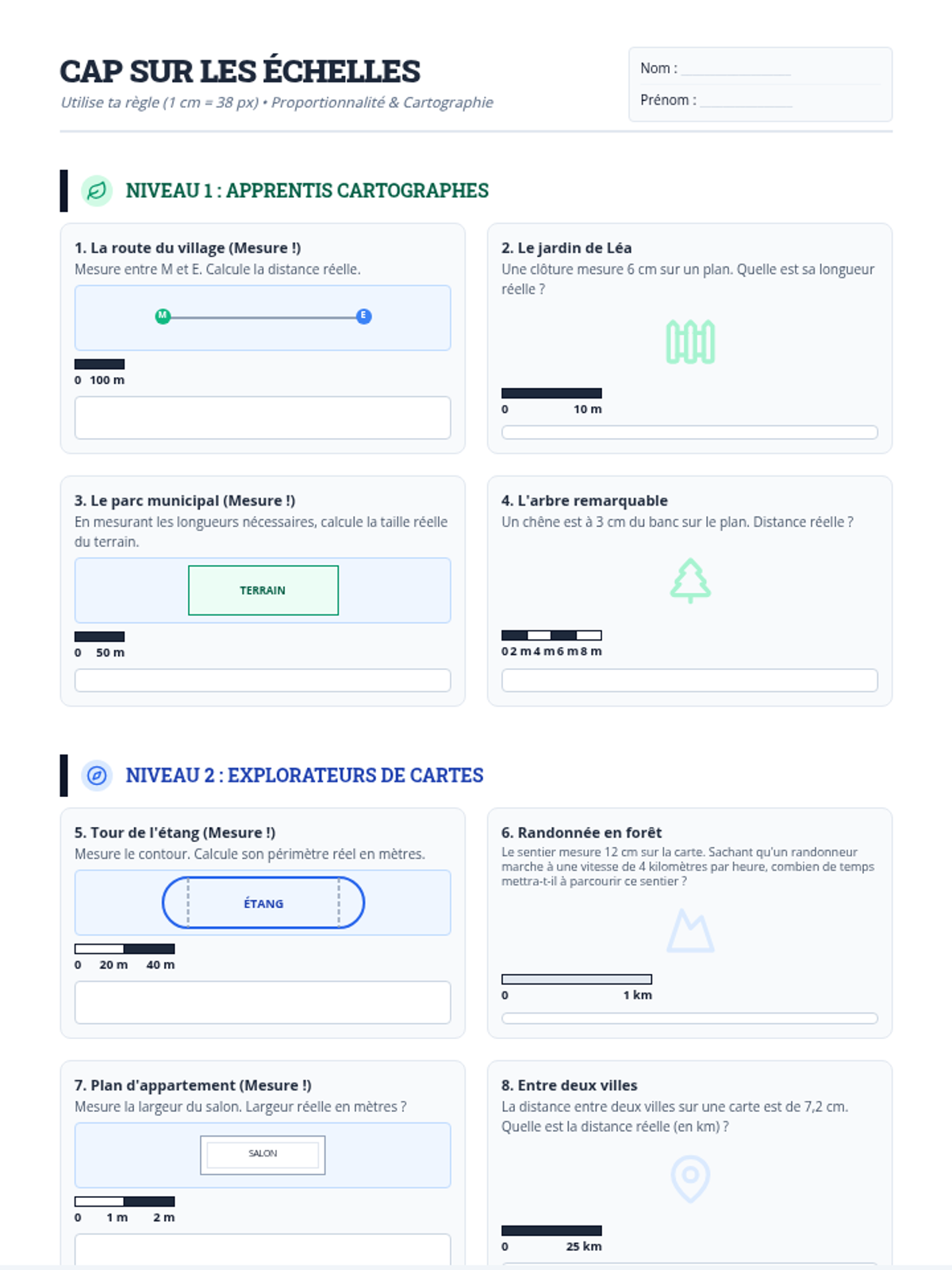
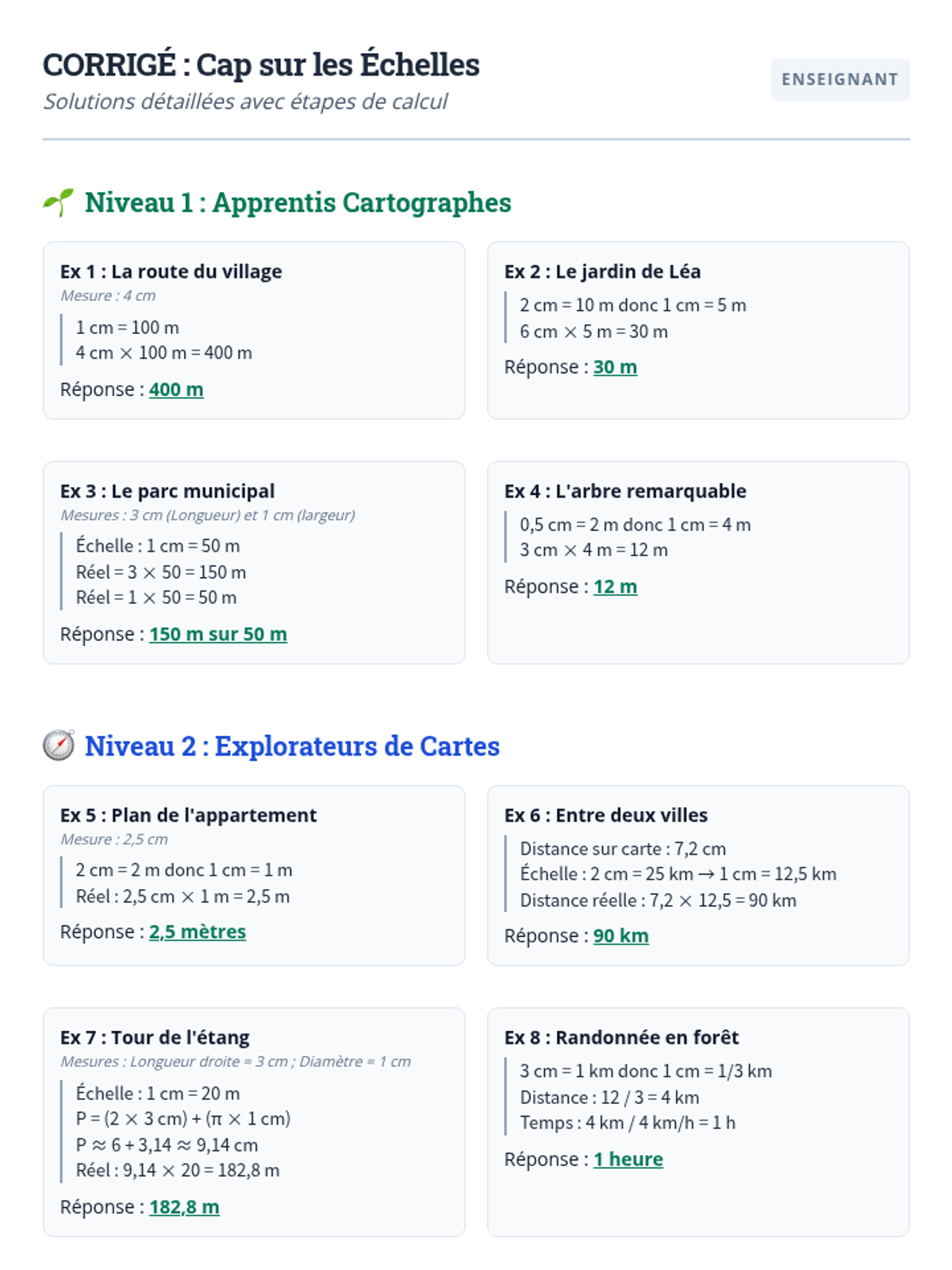
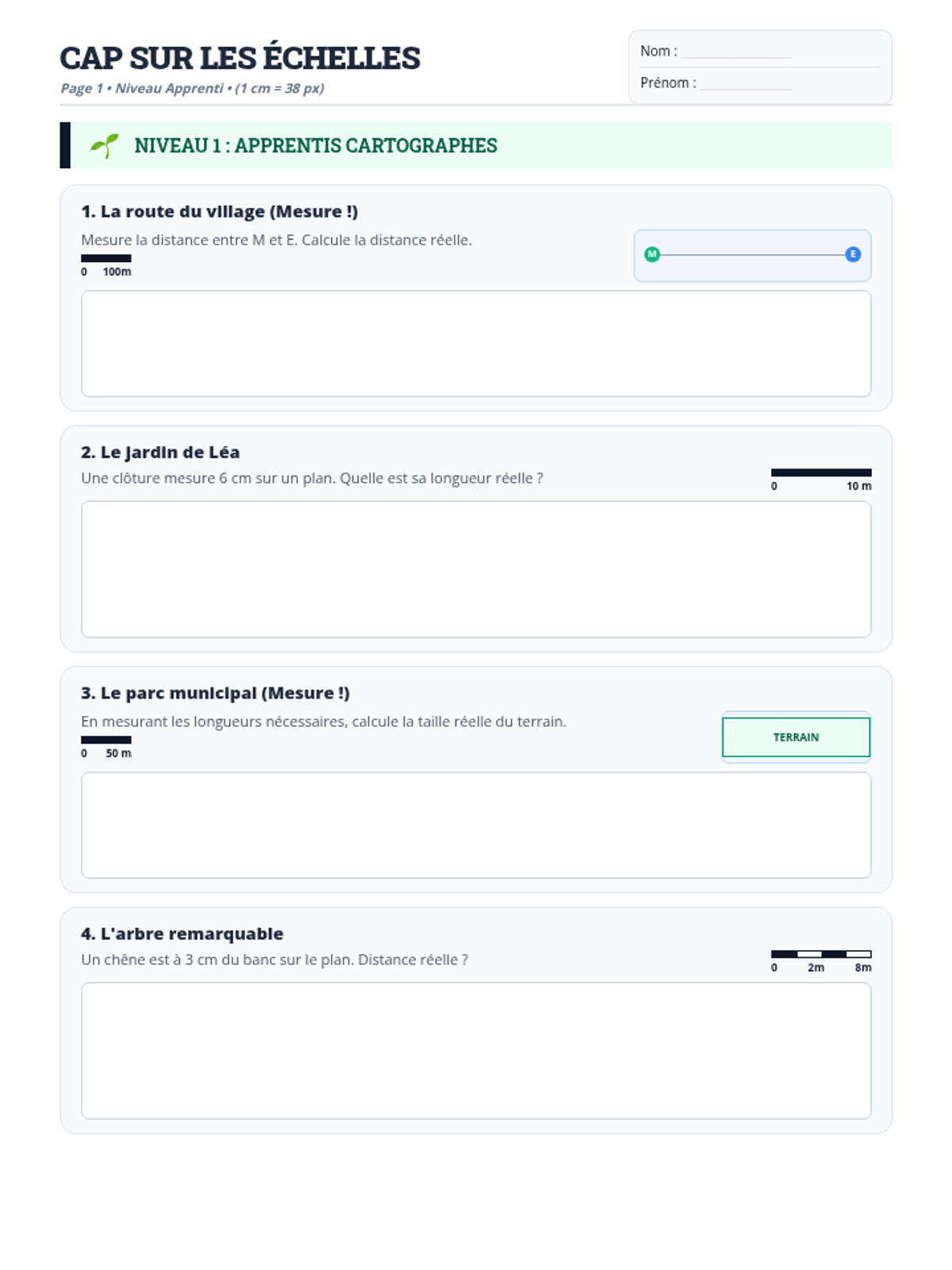
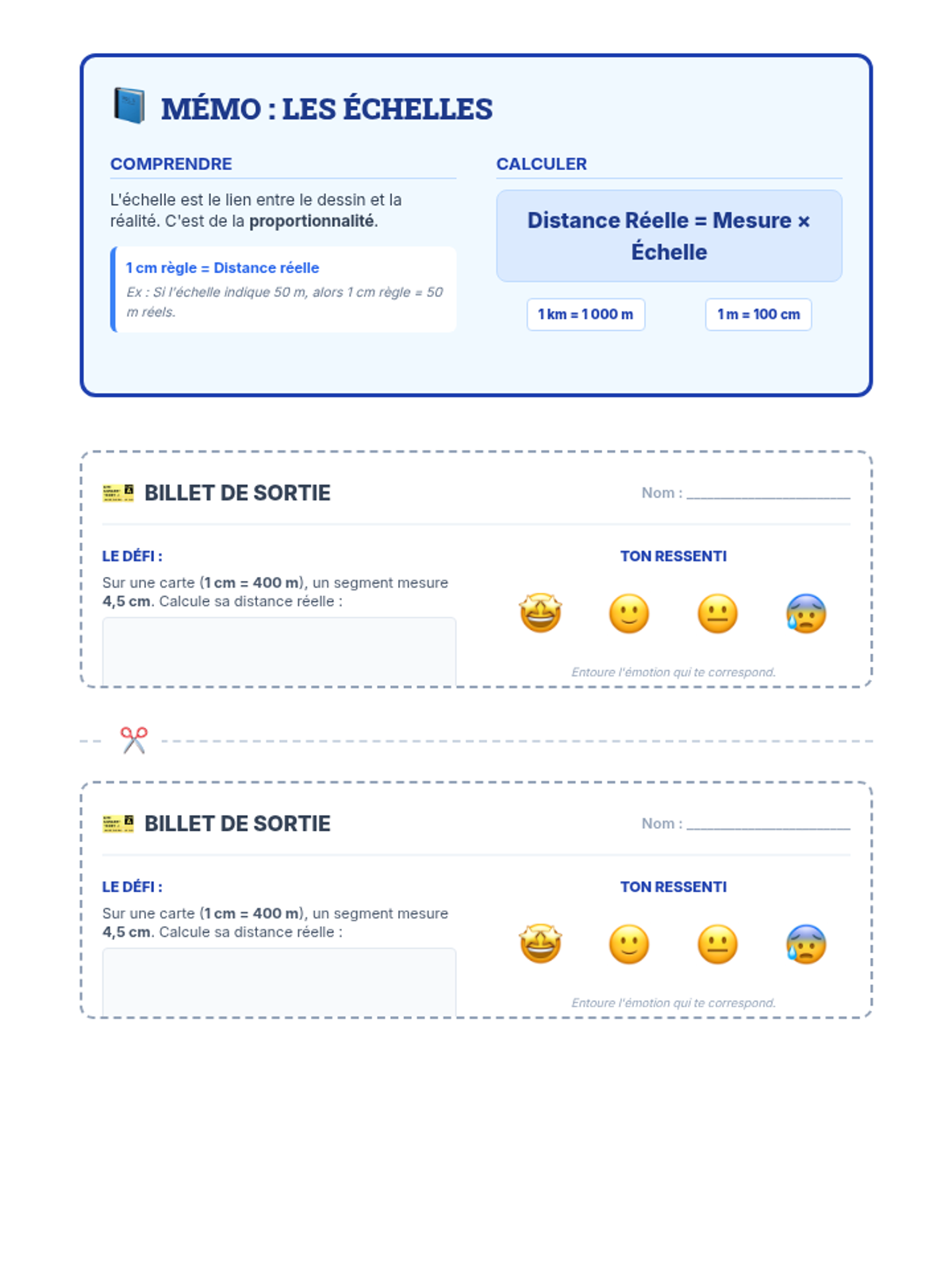
Une séance d'exercices différenciés sur la proportionnalité et les échelles (données graphiquement) pour trois niveaux de difficulté.
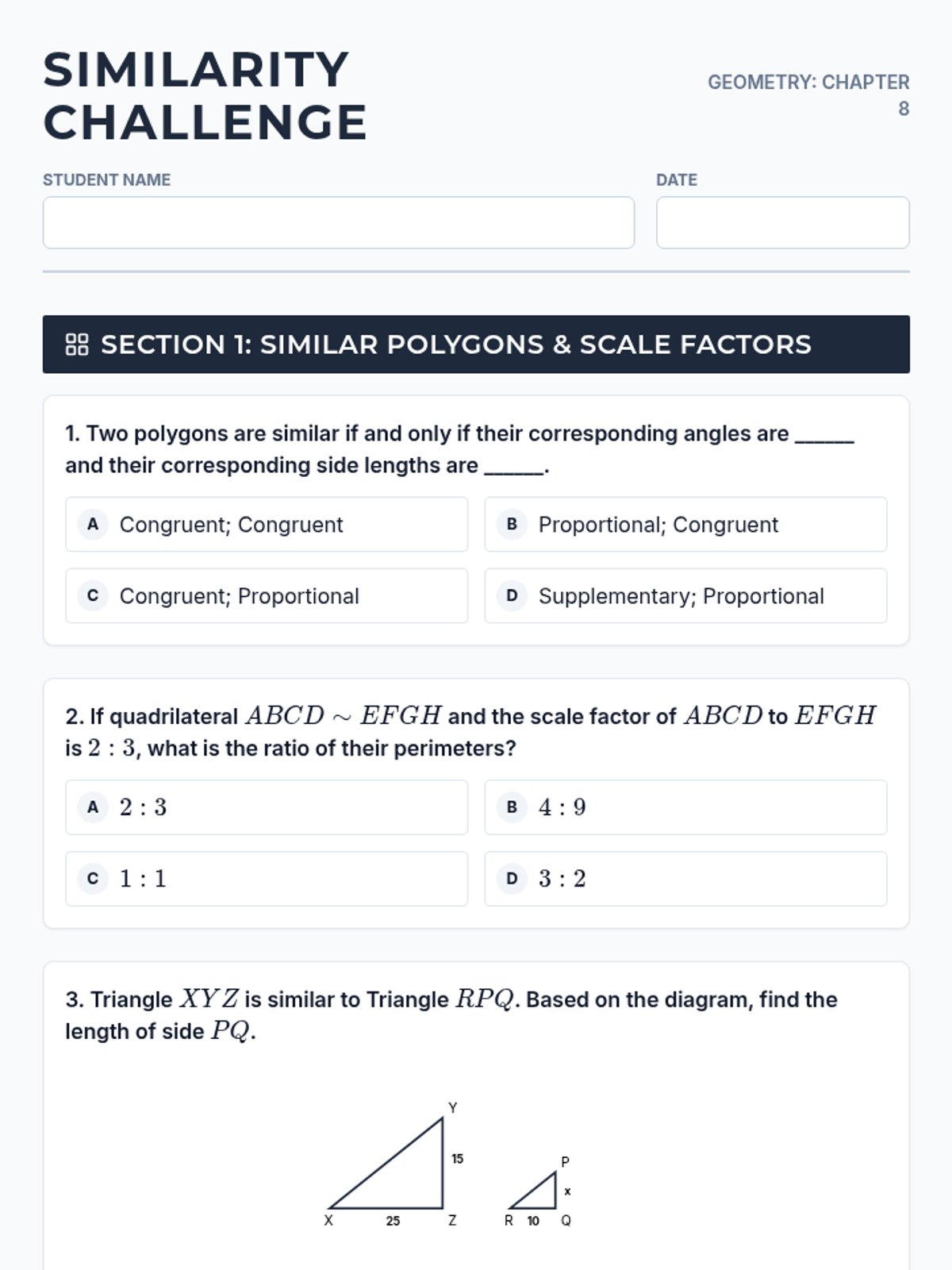
A comprehensive assessment covering polygons, quadrilaterals, and similarity based on chapters 7 and 8 content. Students will demonstrate mastery of geometric properties, proportionality theorems, and similarity proofs.
A lesson exploring the geometry of bridge trusses, focusing on triangle classification and congruence theorems (SSS, SAS, ASA, AAS, HL).
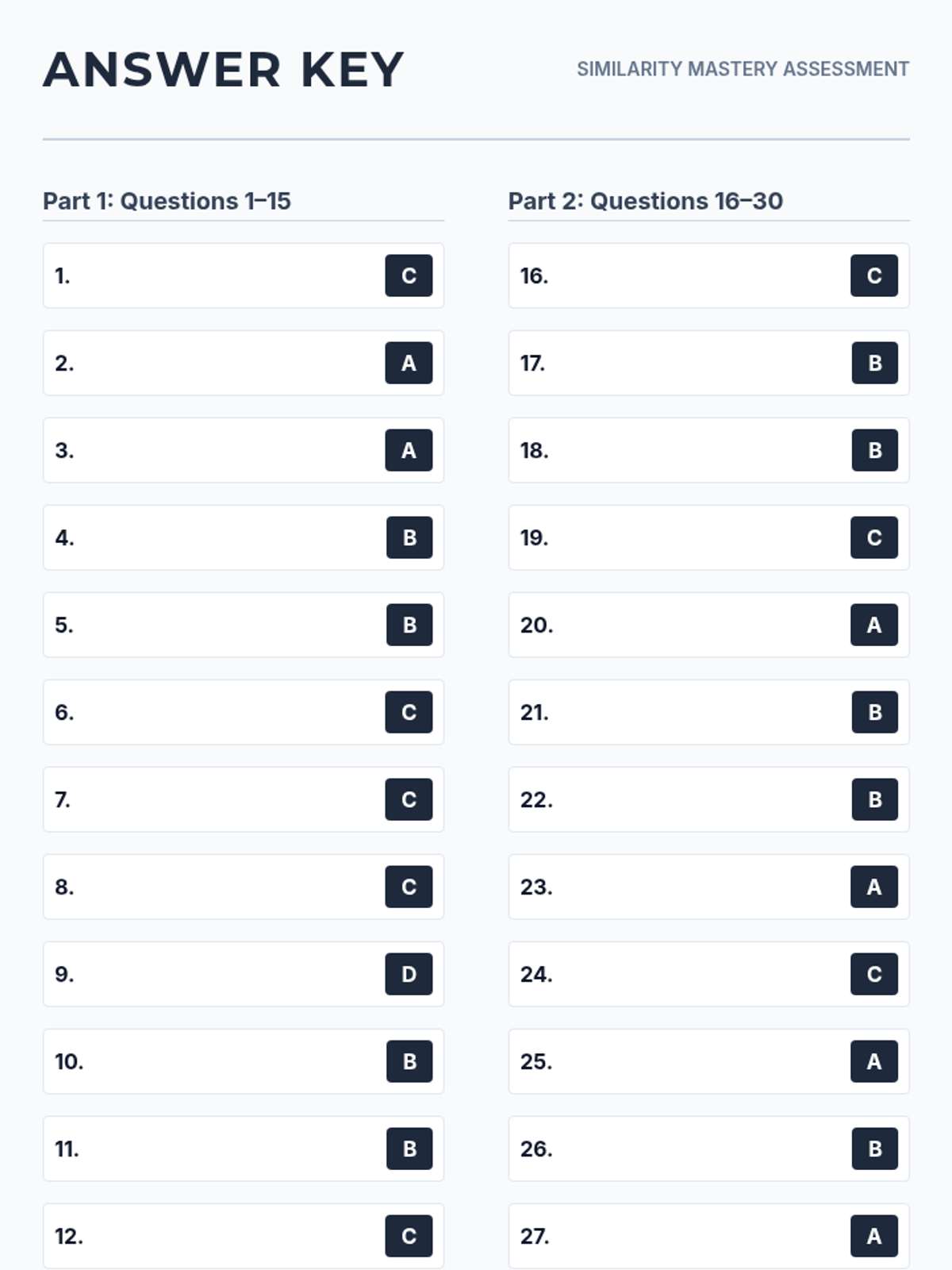
A comprehensive assessment and answer key covering similar polygons, triangle similarity theorems (AA, SSS, SAS), and proportionality theorems.
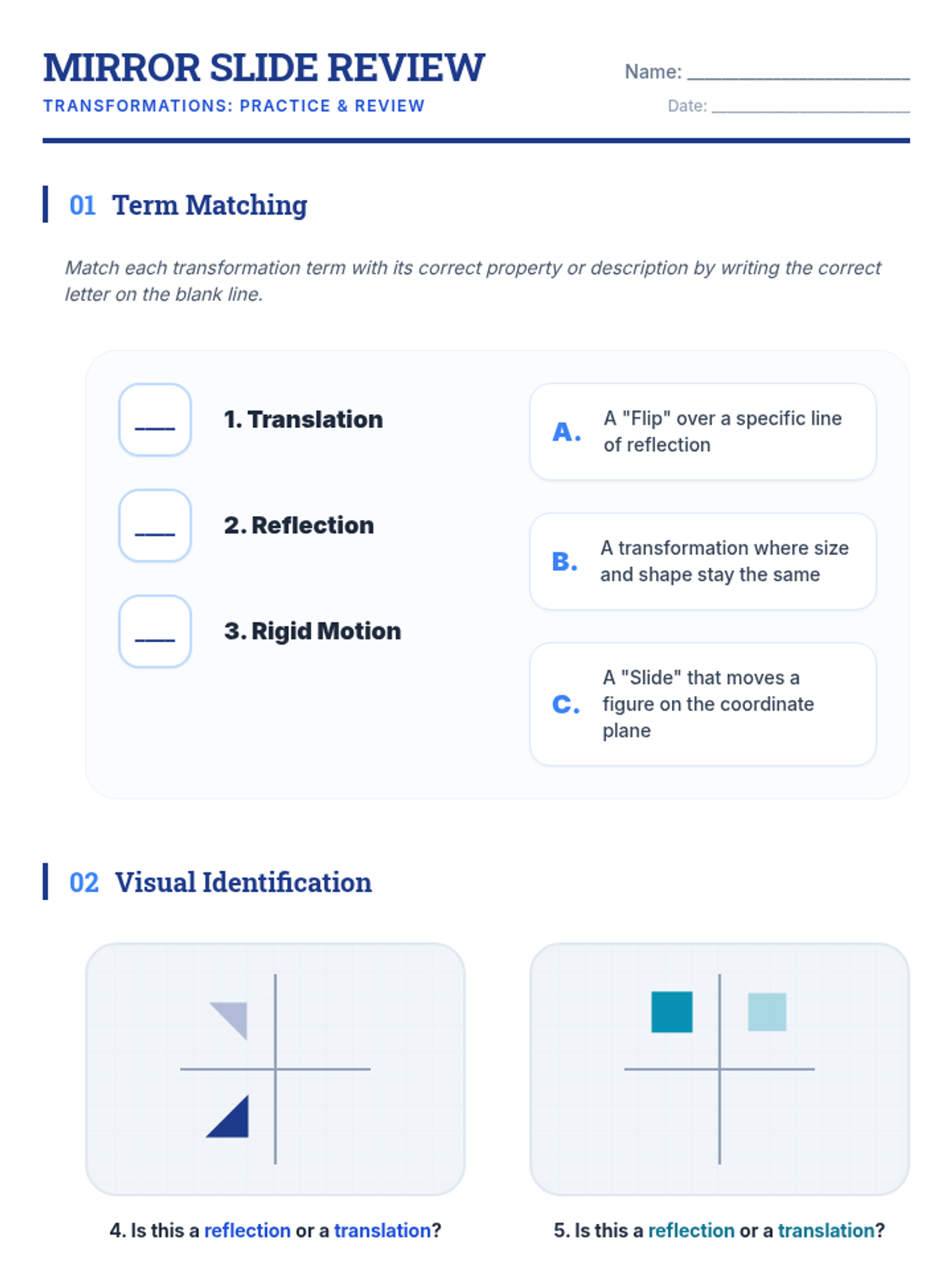
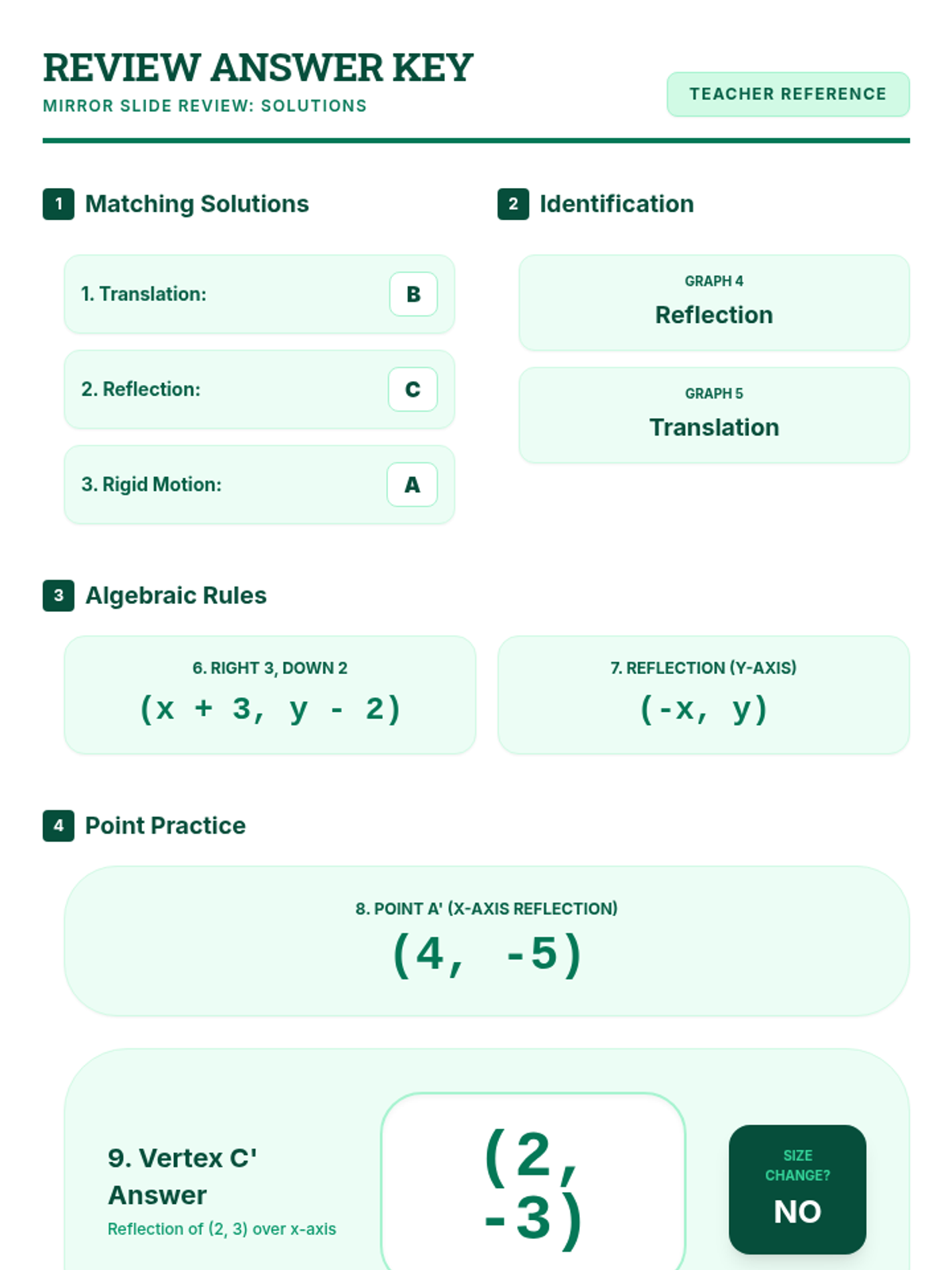
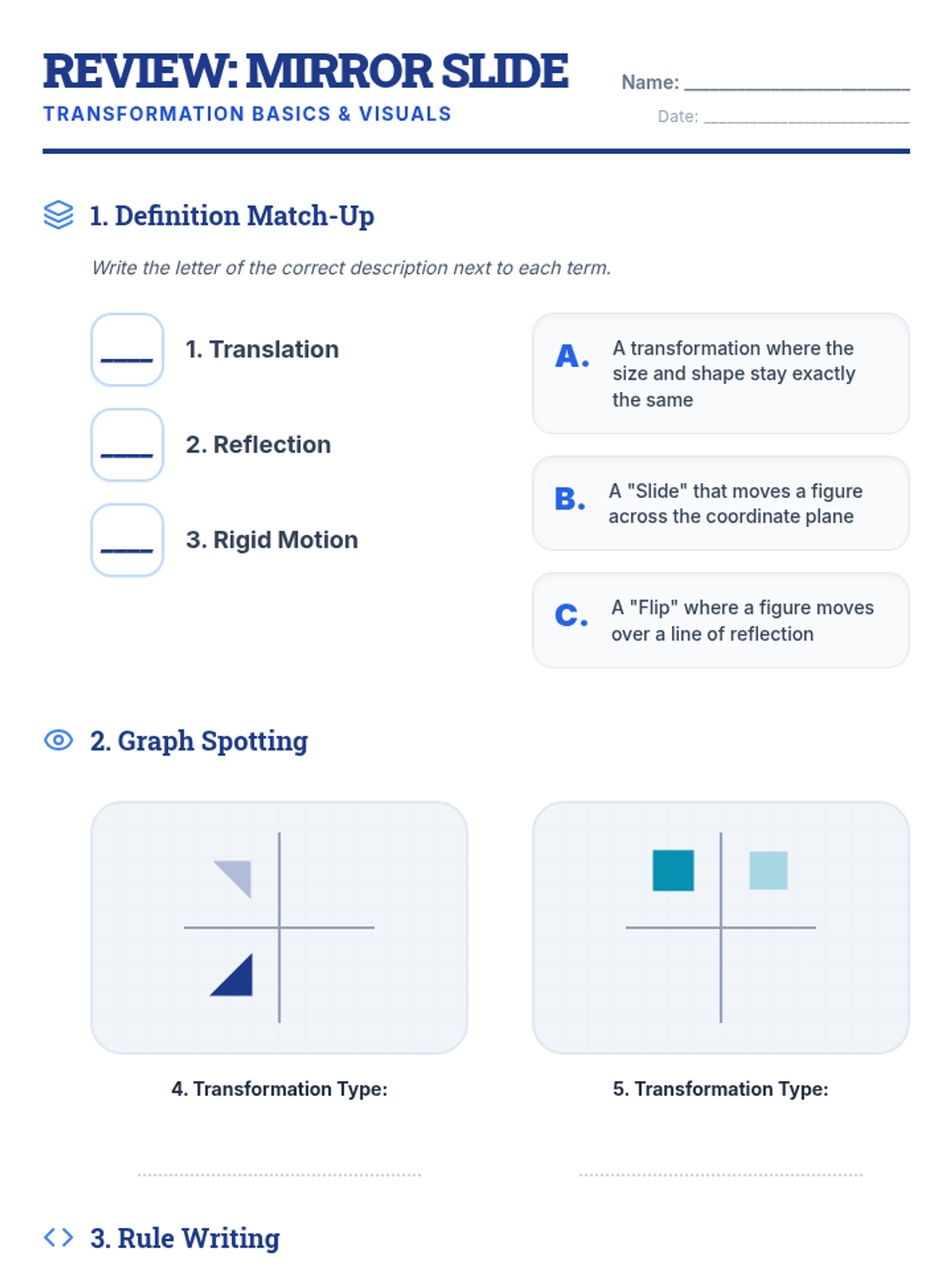
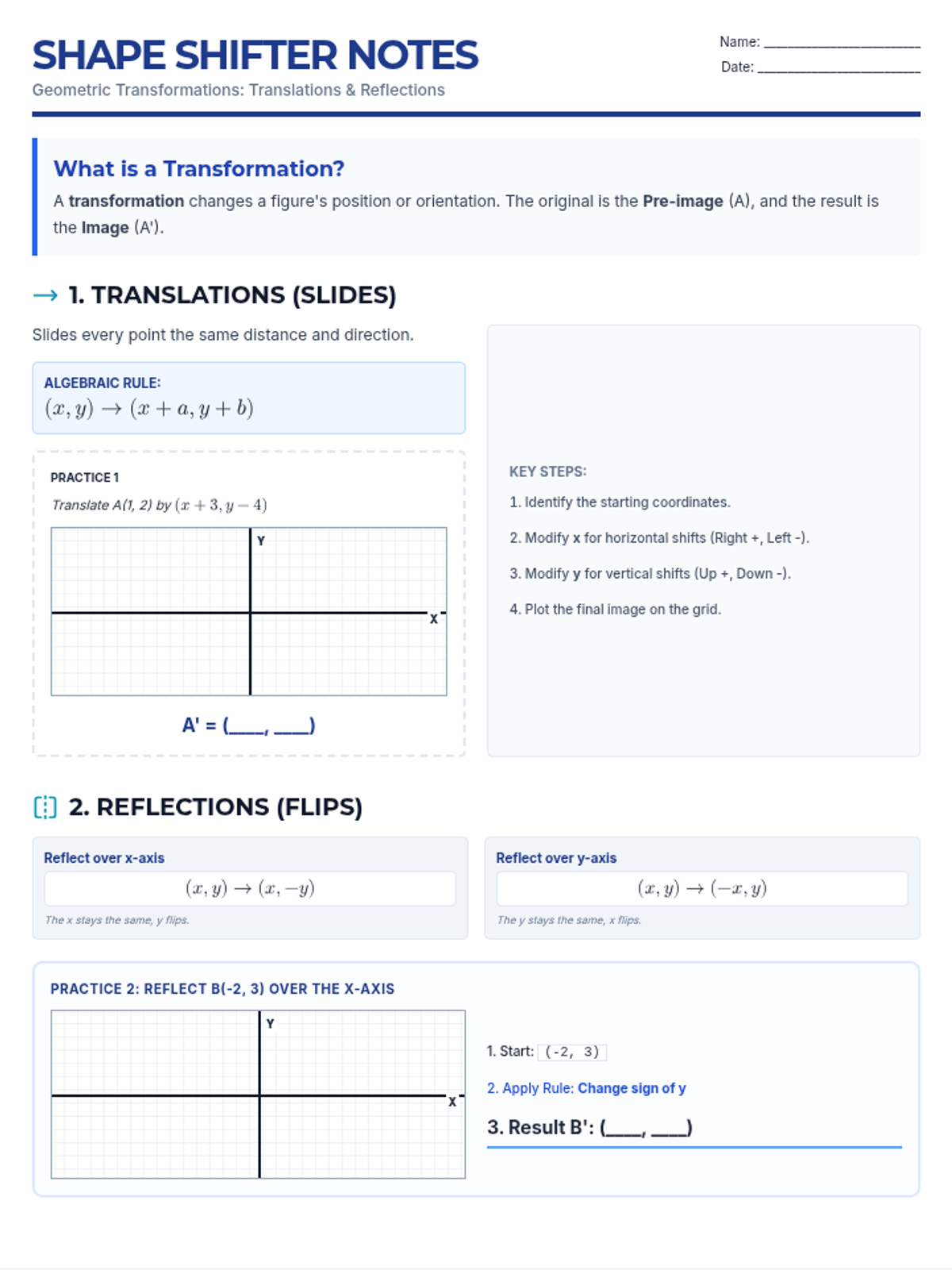
A comprehensive lesson on translations and reflections, focusing on coordinate plane graphing, properties of rigid motions, and identifying transformations. includes guided notes, an anchor chart, and an assessment.
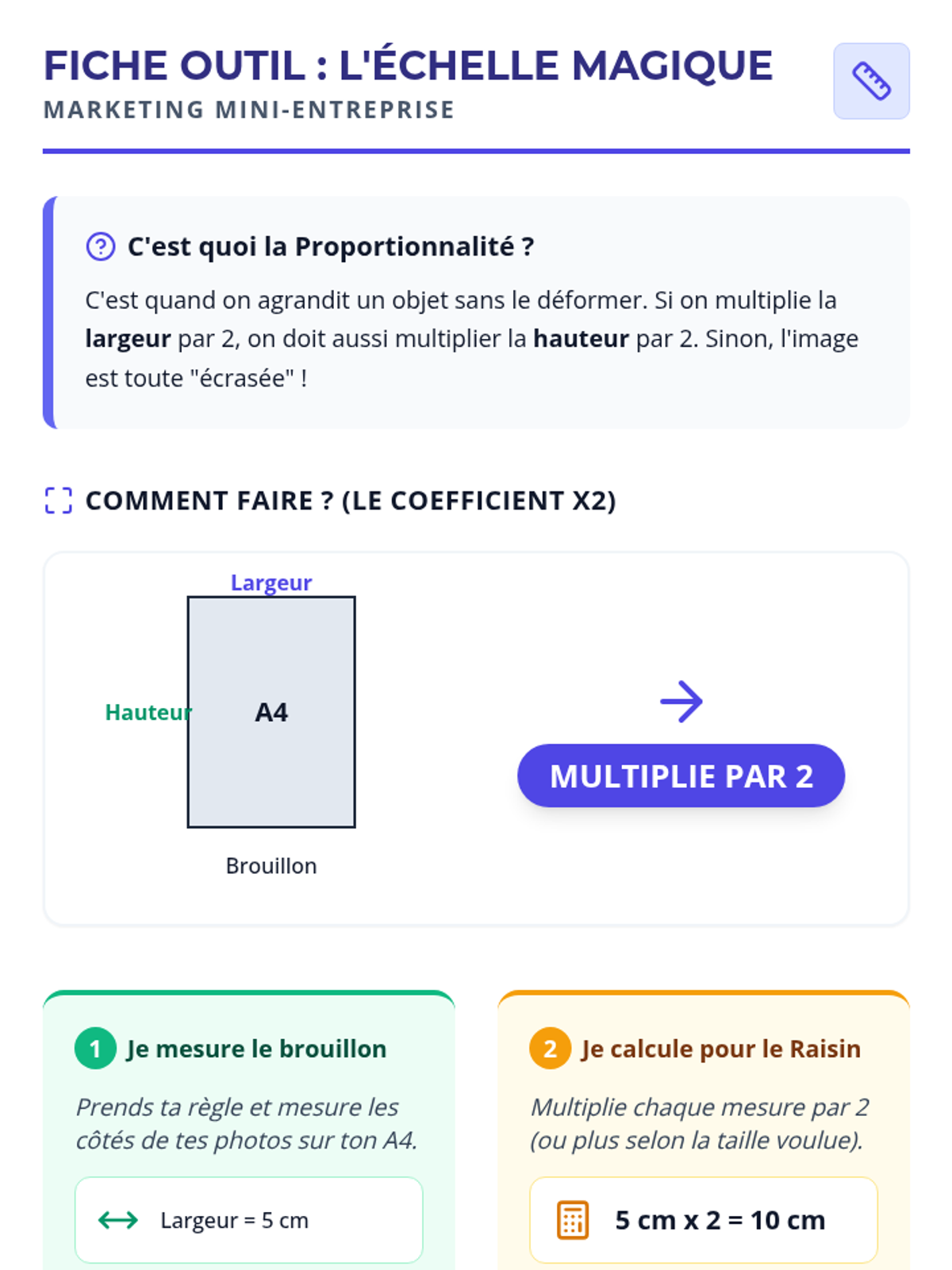
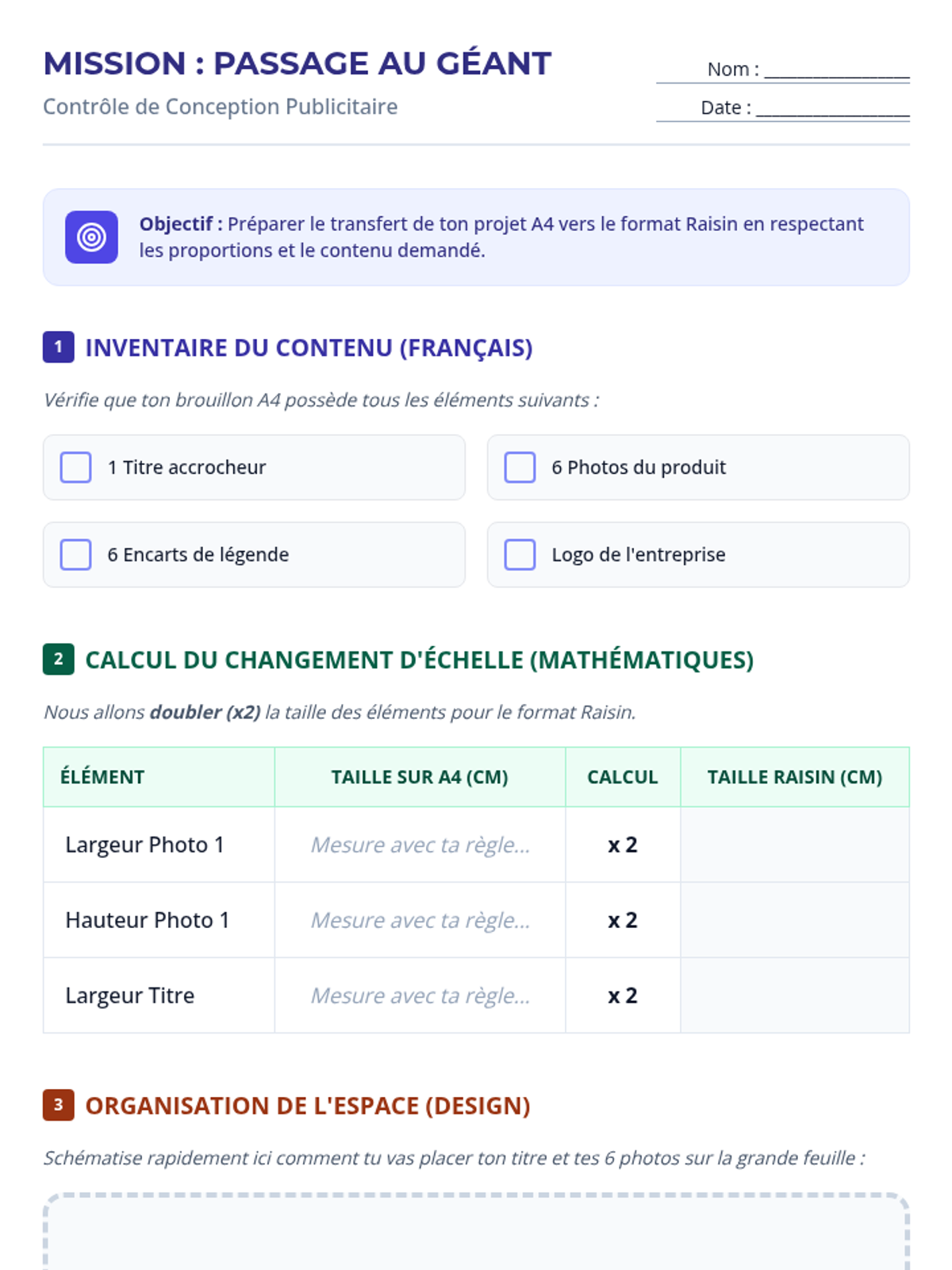
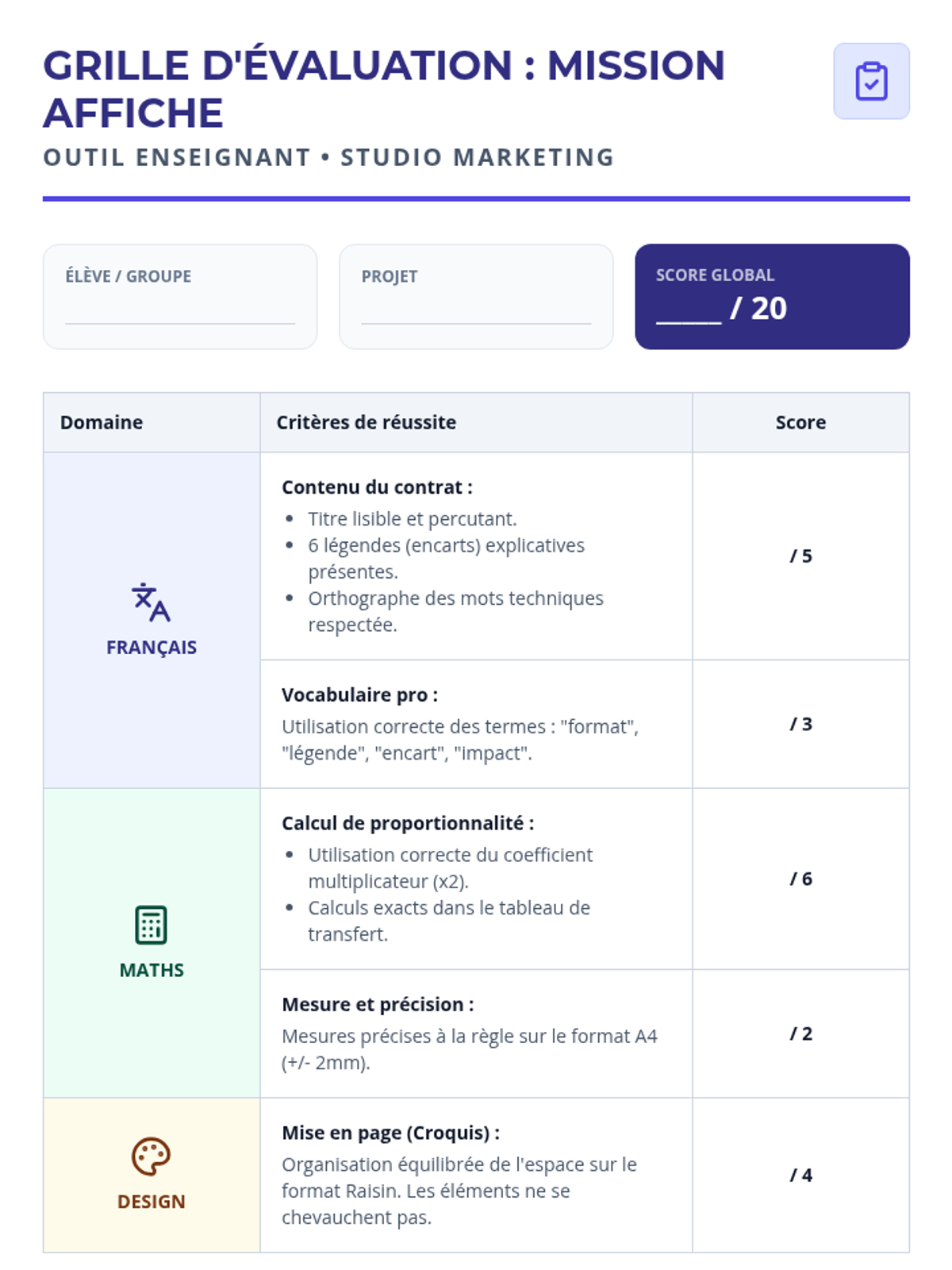
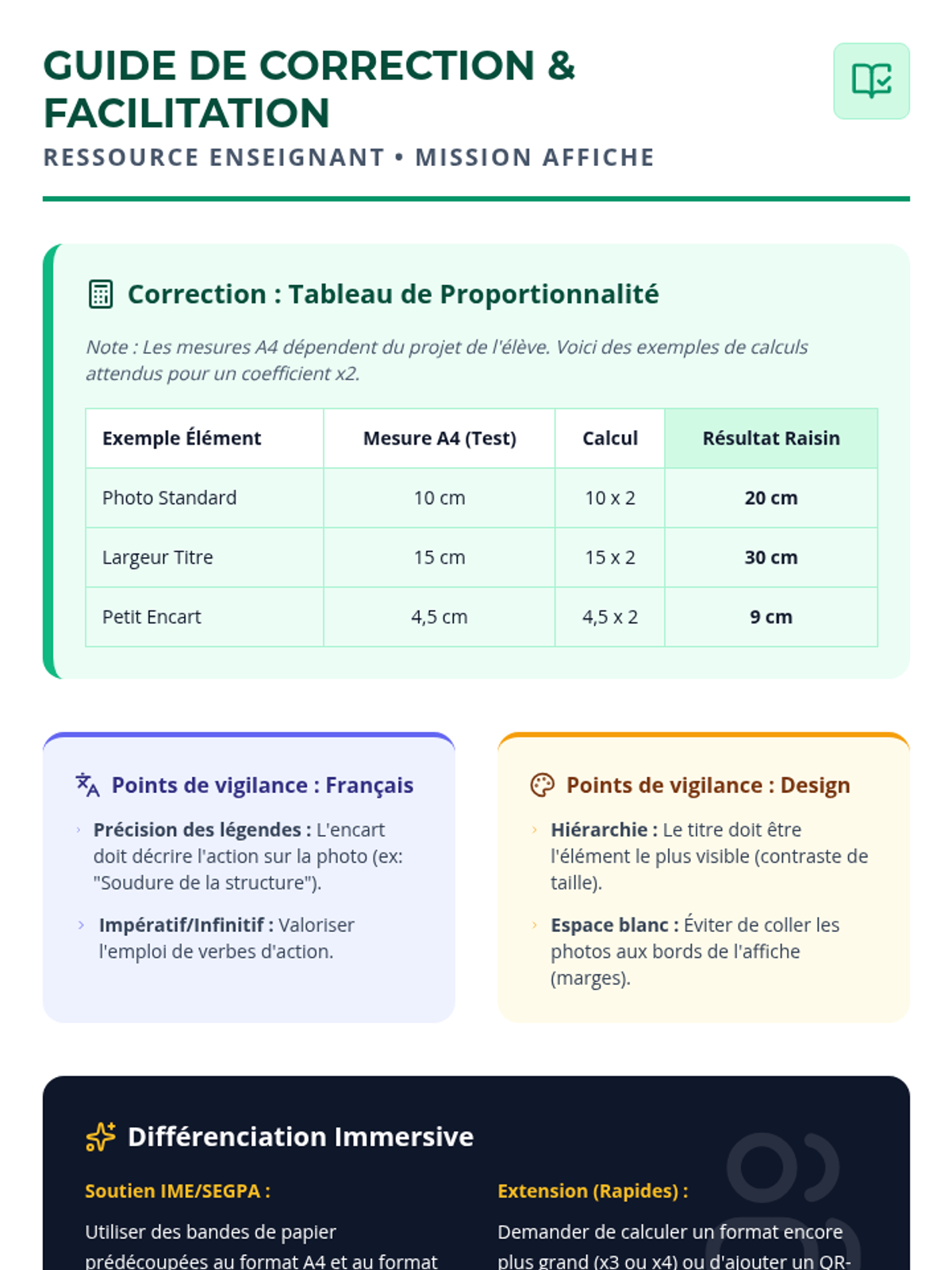
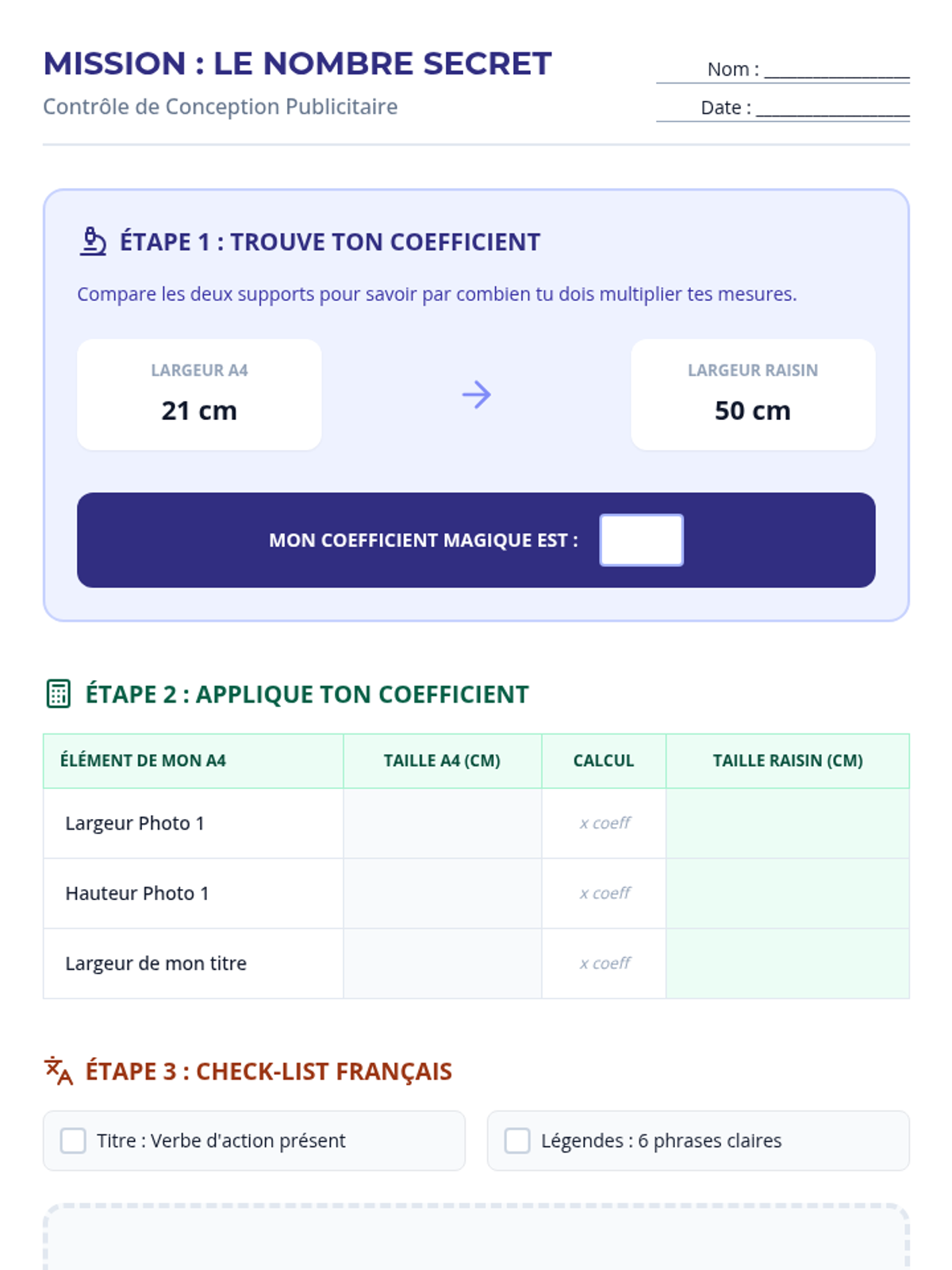
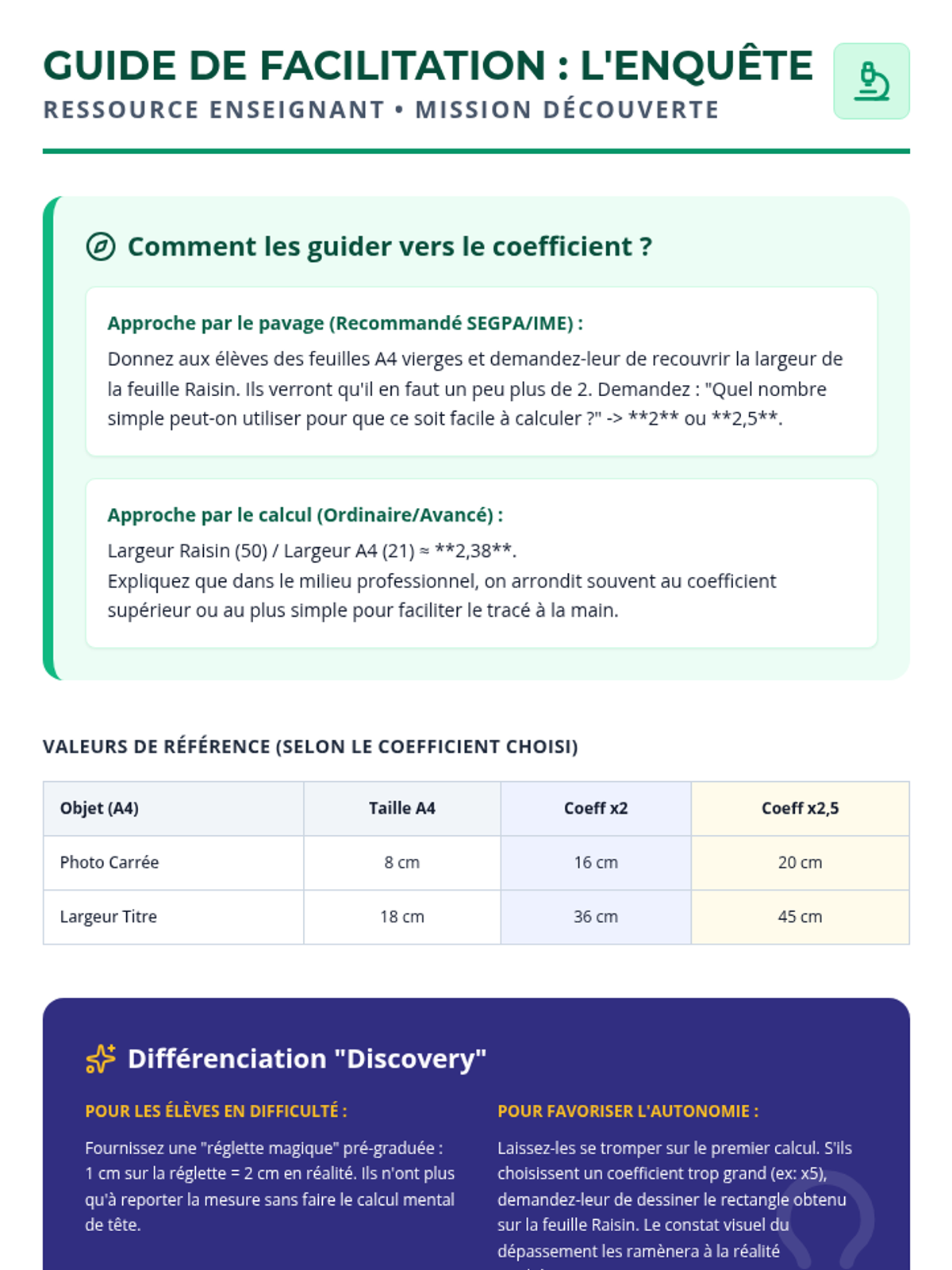
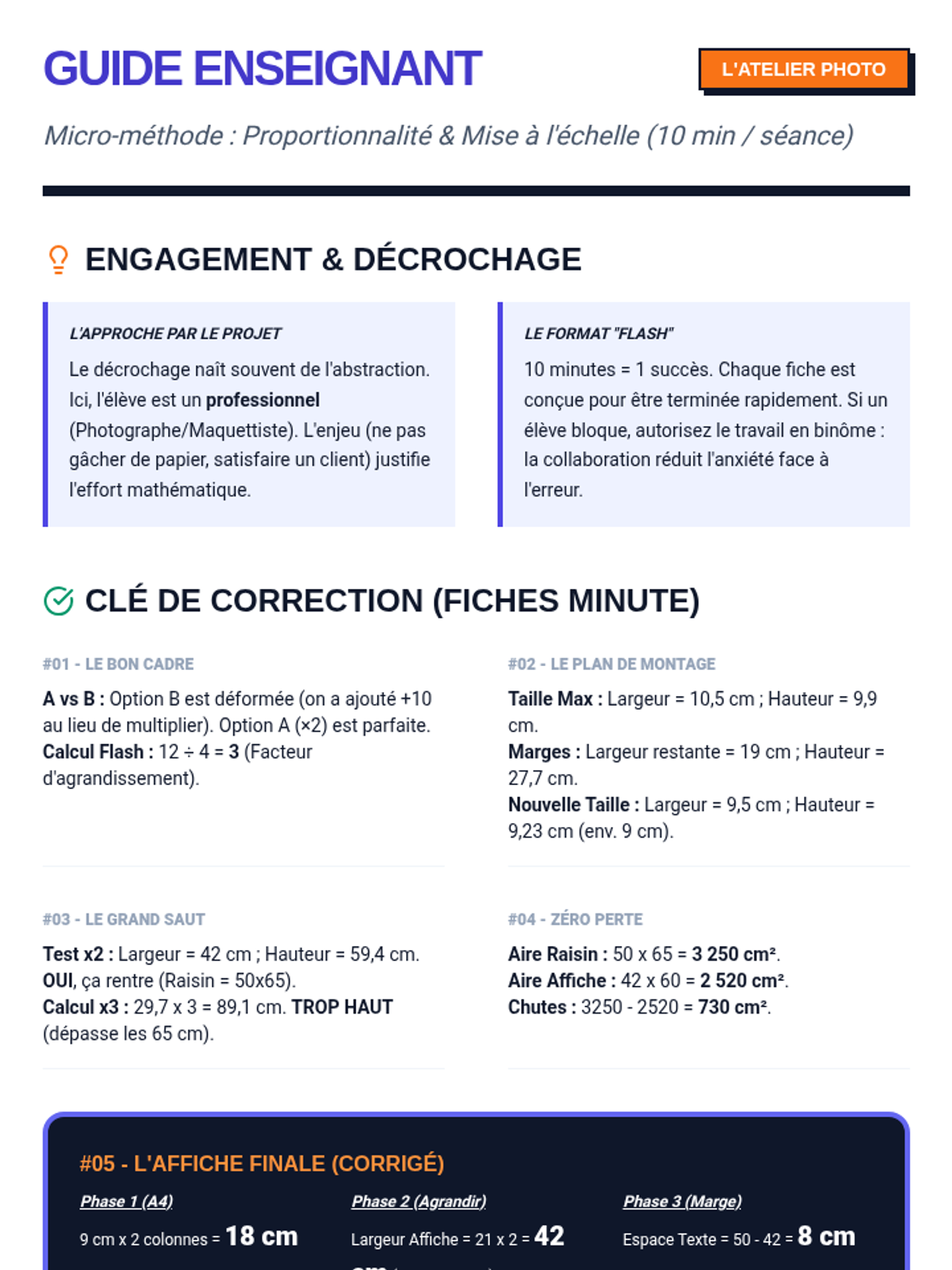
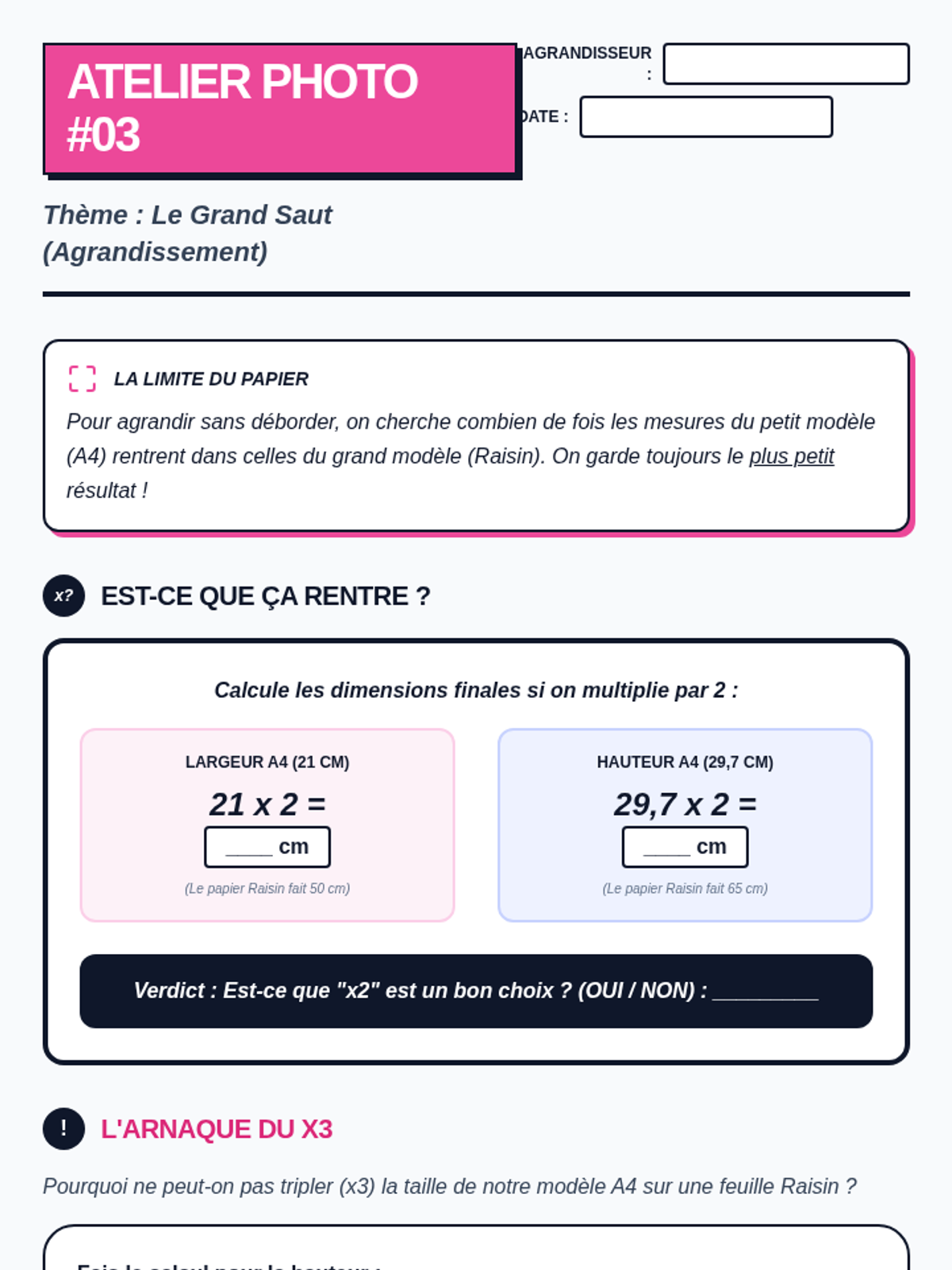
Cette leçon guide les élèves dans la conception d'une affiche publicitaire pour leur mini-entreprise, en se concentrant sur le passage du format A4 au format Raisin. Elle intègre des notions de français (titre, légendes) et de mathématiques (proportionnalité) dans un cadre professionnel immersif.
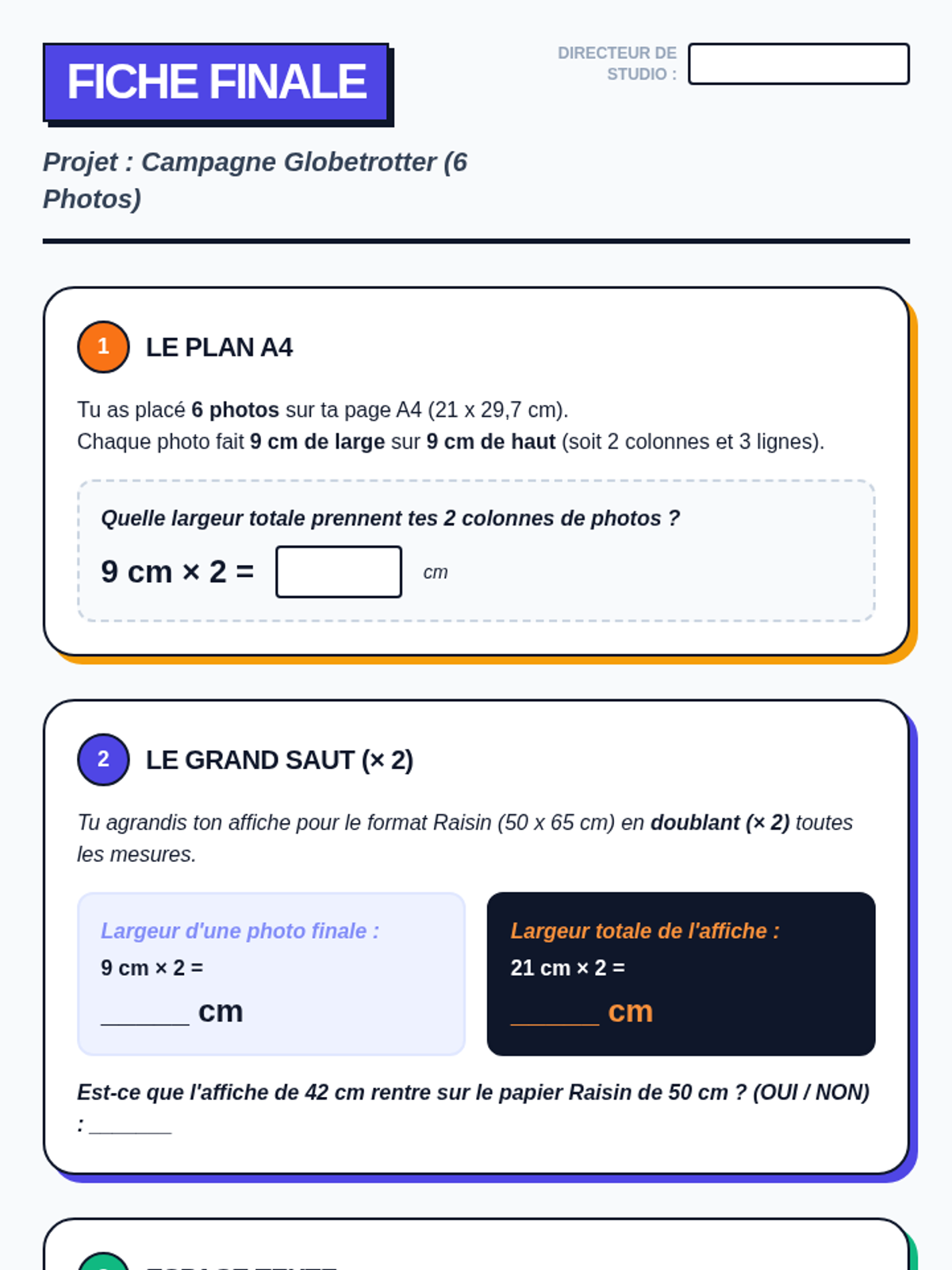
Réaliser la mise à l'échelle complète d'un projet client : 6 photos, encarts de texte et calcul des dimensions finales sur format Raisin.
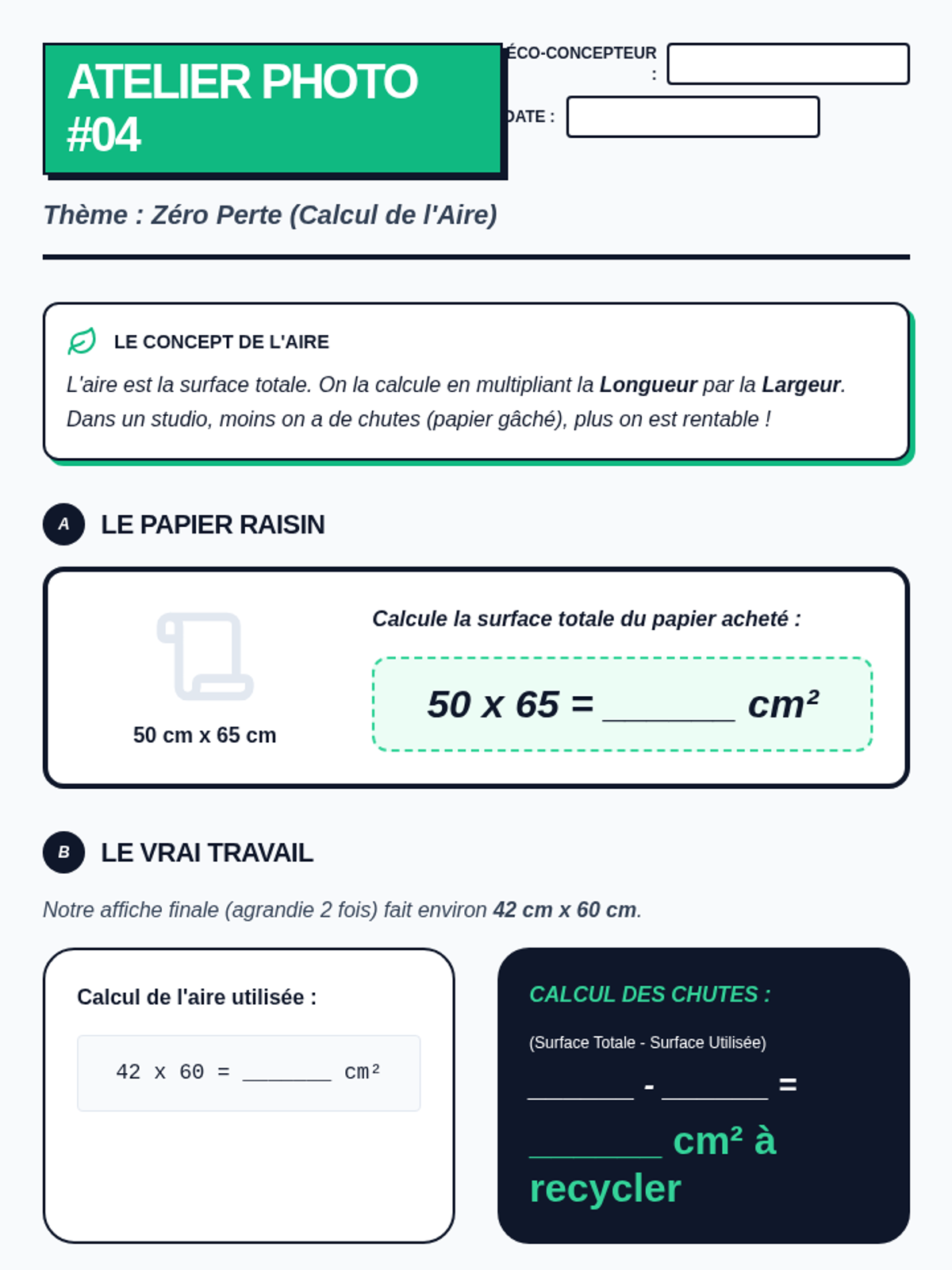
Calculer la surface de papier utilisée et la surface de "perte" (chutes). Sensibilisation à l'optimisation et au coût écologique du gâchis.
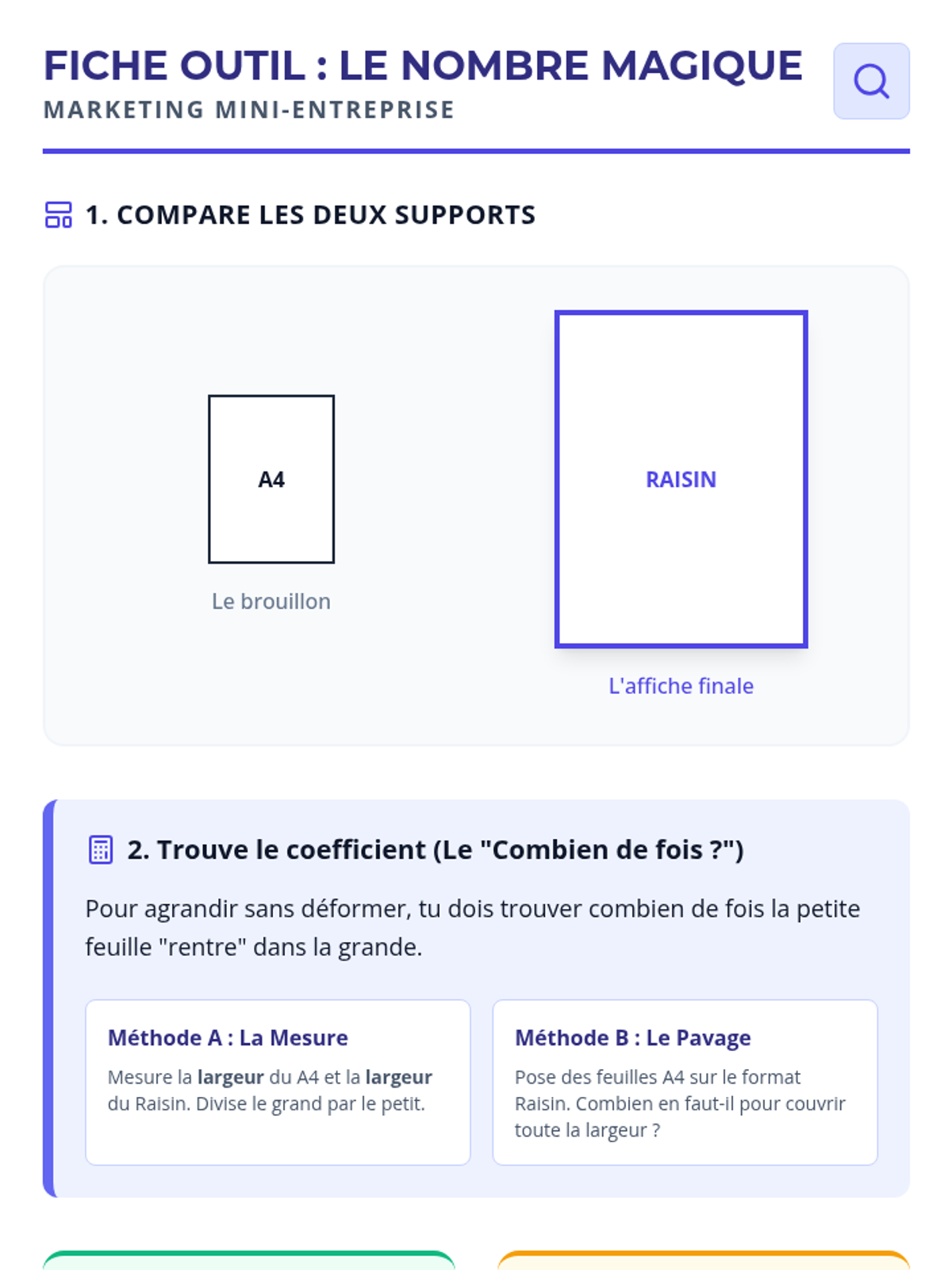
Calculer le facteur d'agrandissement maximal pour passer d'un modèle A4 au format Raisin (50x65 cm) sans dépasser les bords du papier.
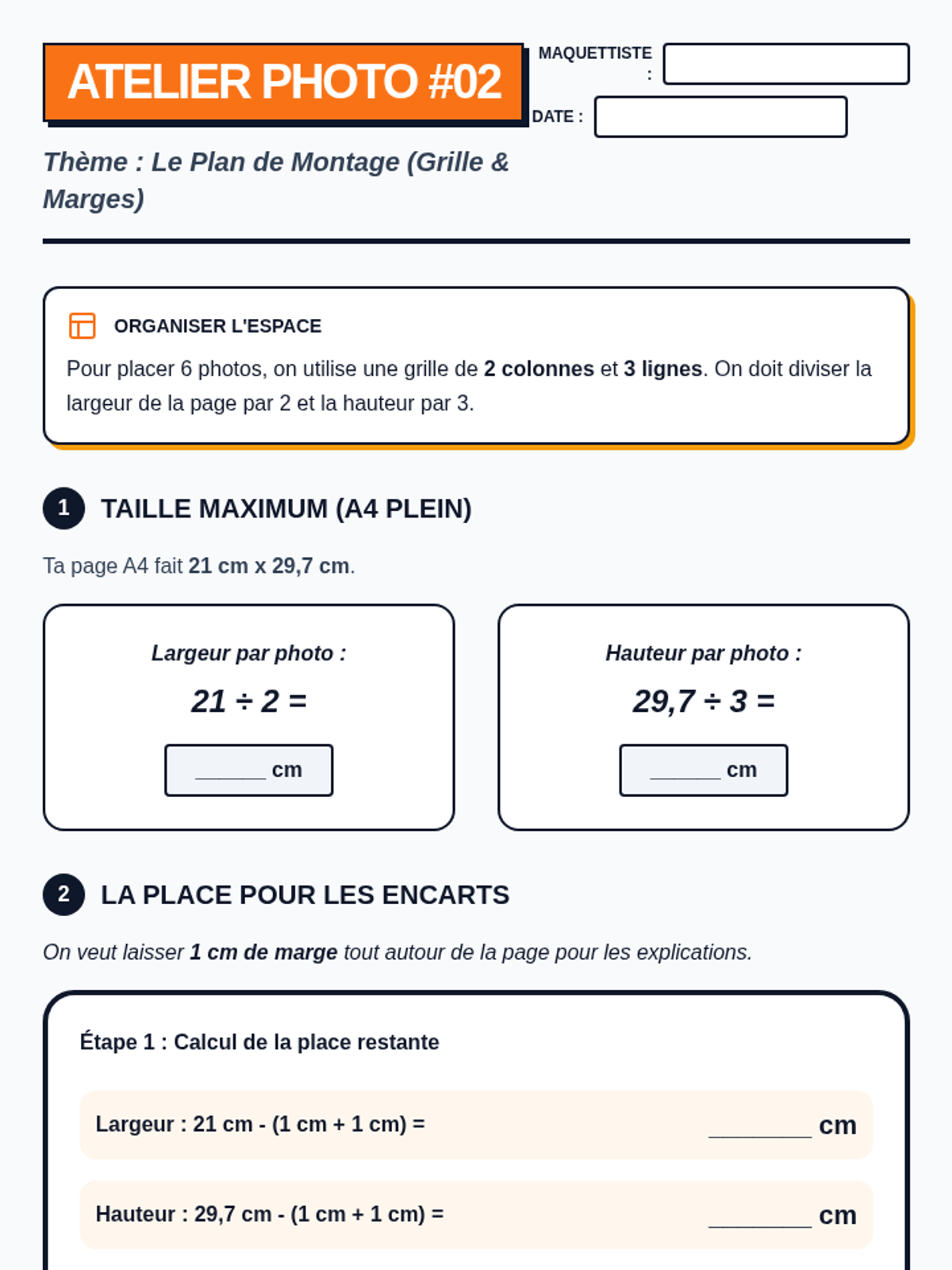
Calculer les dimensions et l'espacement pour placer 6 photos sur une page A4. Utilisation de la division et de la multiplication pour une mise en page équilibrée.
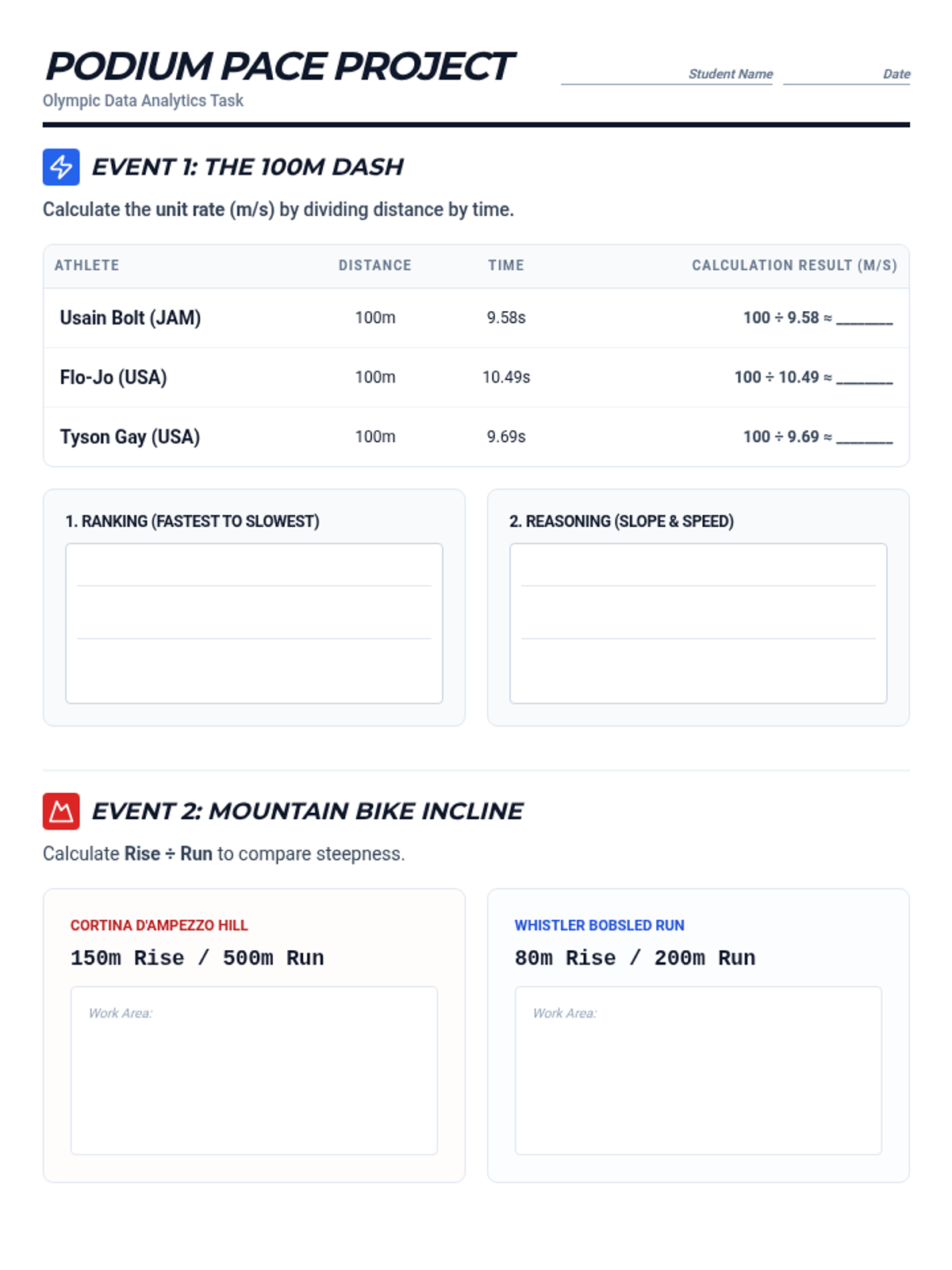
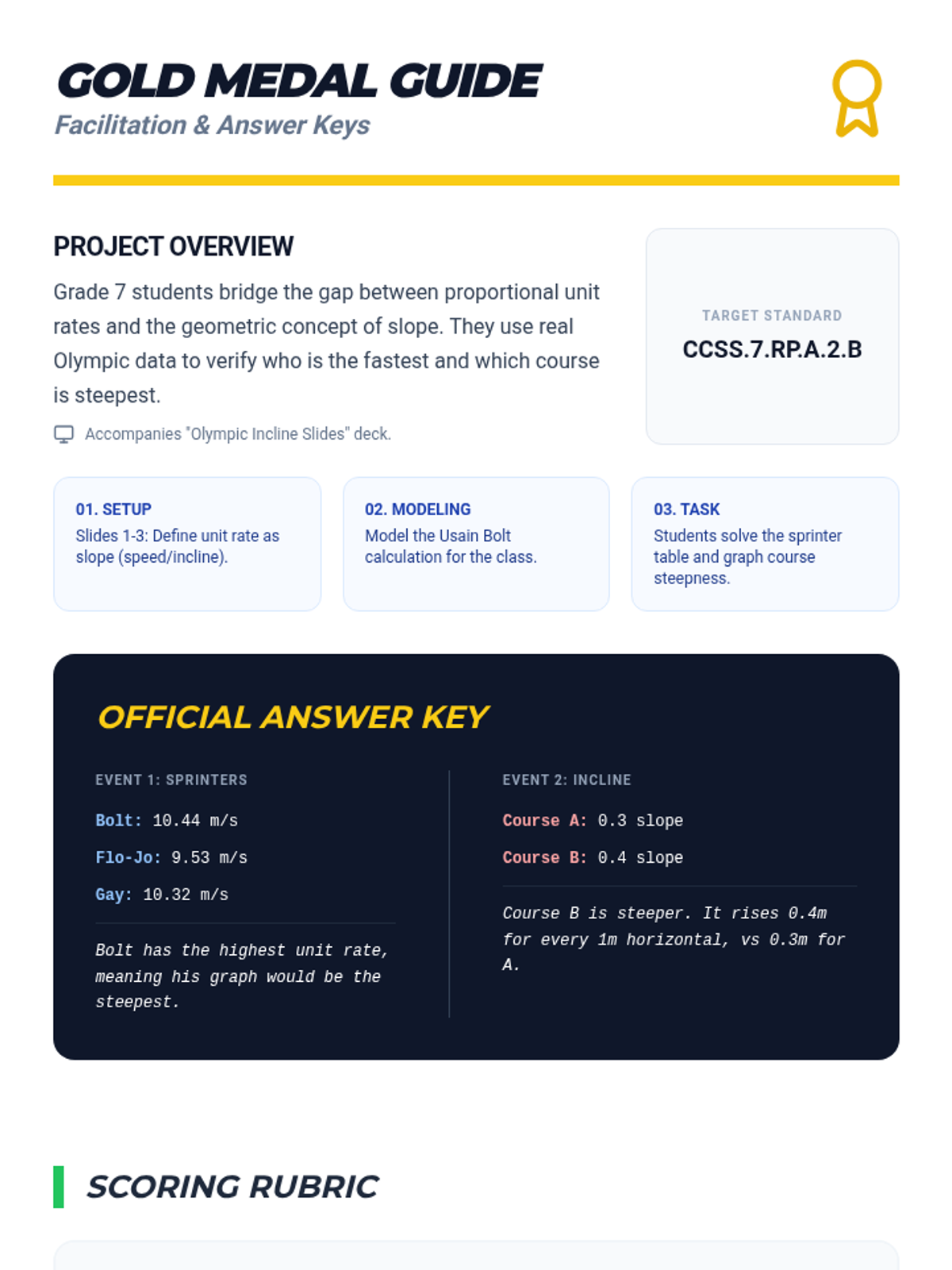
A math project where students analyze Olympic athlete performance and track difficulty using unit rates and slope concepts to determine who is the fastest and which courses are the steepest.
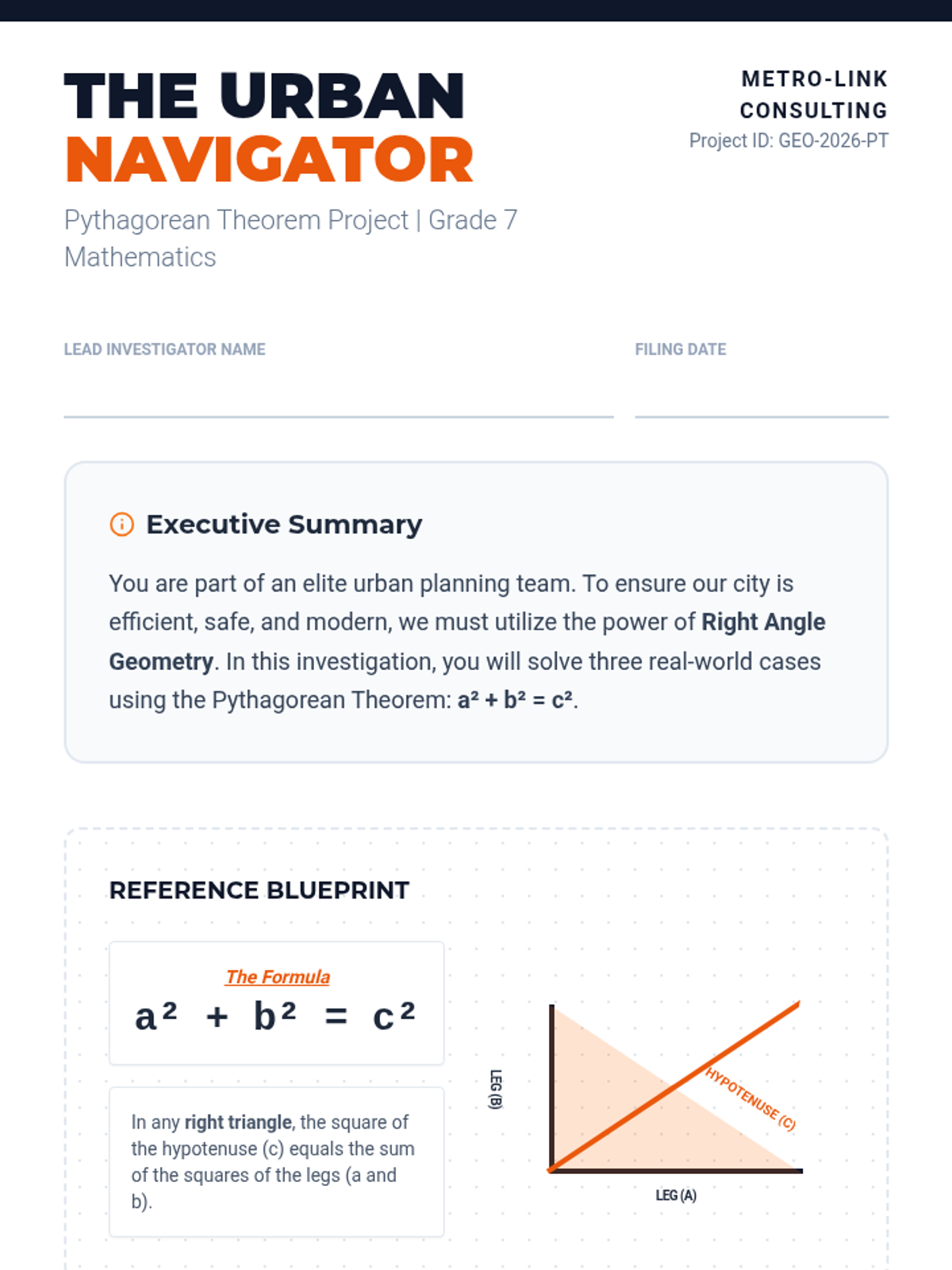
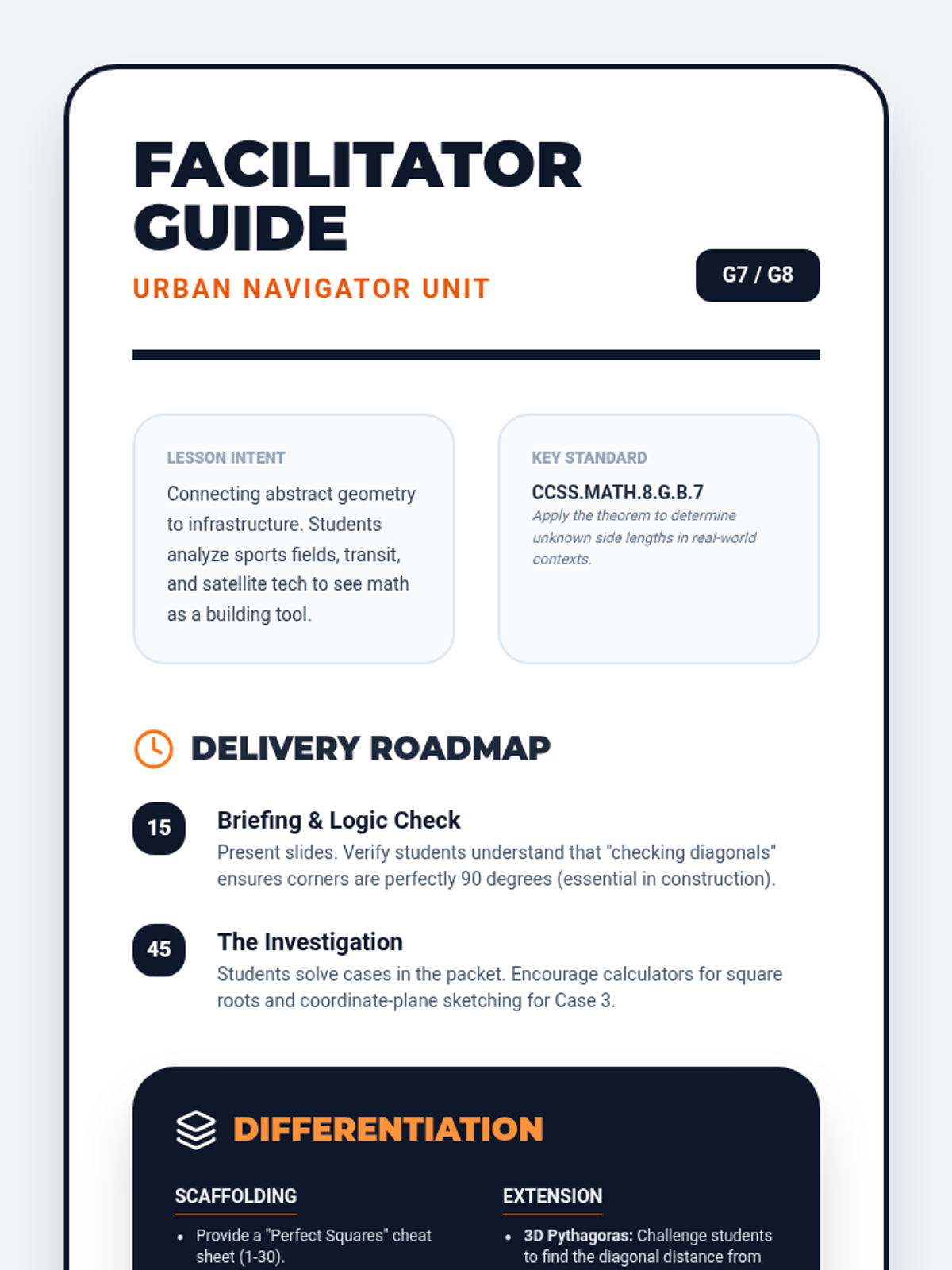
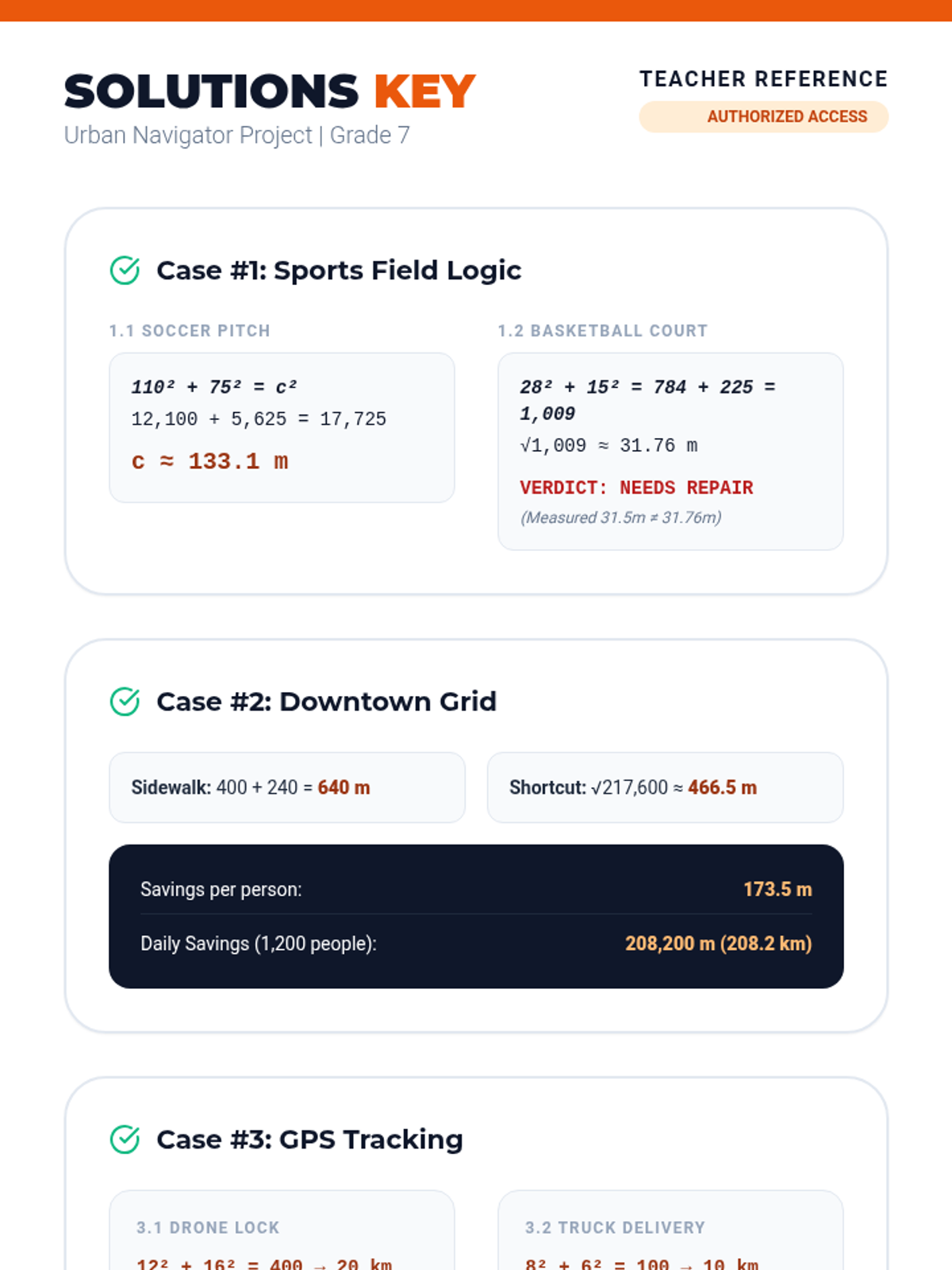
A real-world project-based learning unit where students apply the Pythagorean Theorem to urban planning, sports field design, and GPS navigation. Students act as urban developers and navigators to solve practical distance problems.
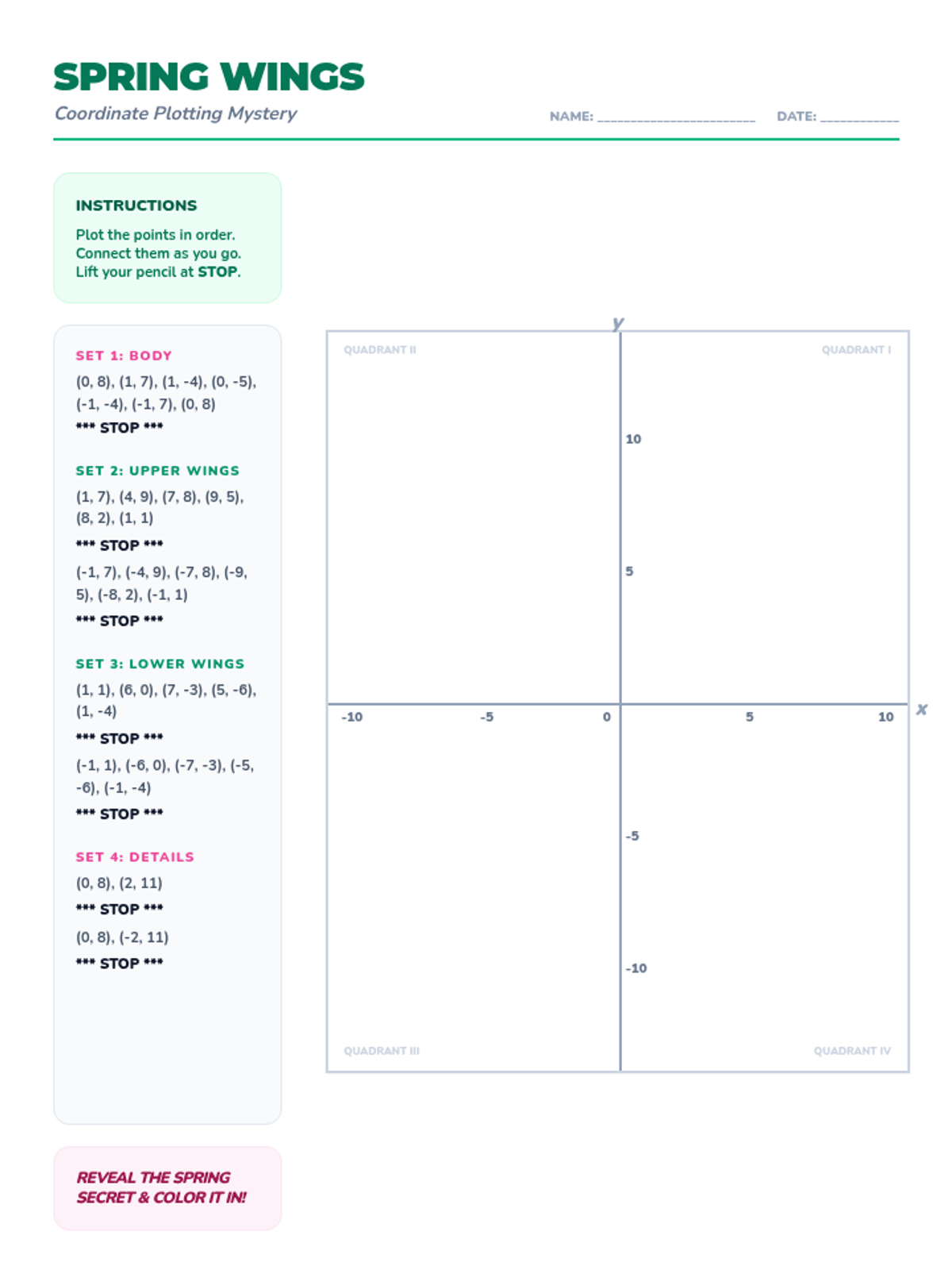
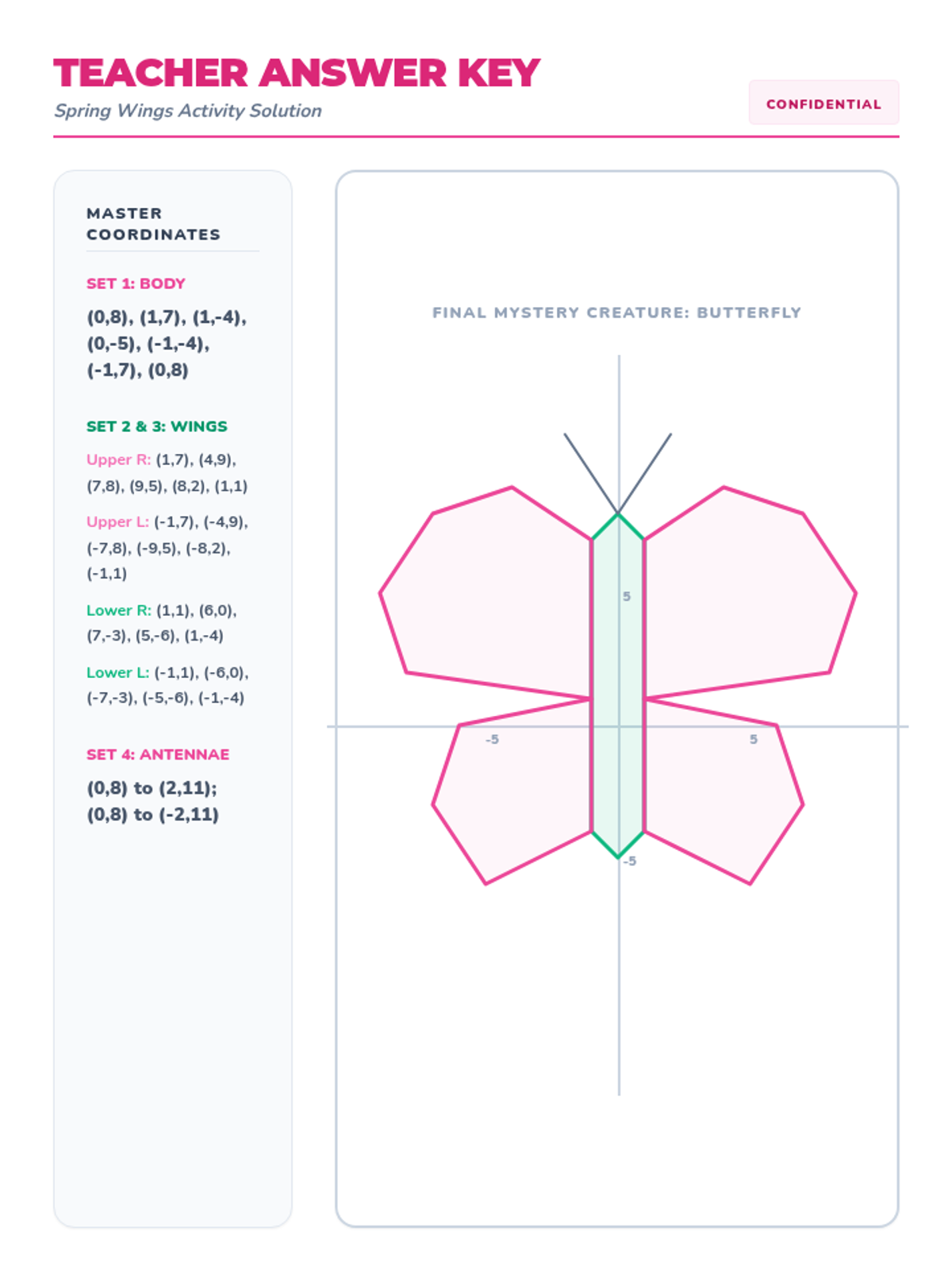
A coordinate plane lesson where students plot integer coordinates in four quadrants to reveal a butterfly. The activity combines math precision with creative coloring for a spring-themed classroom experience.
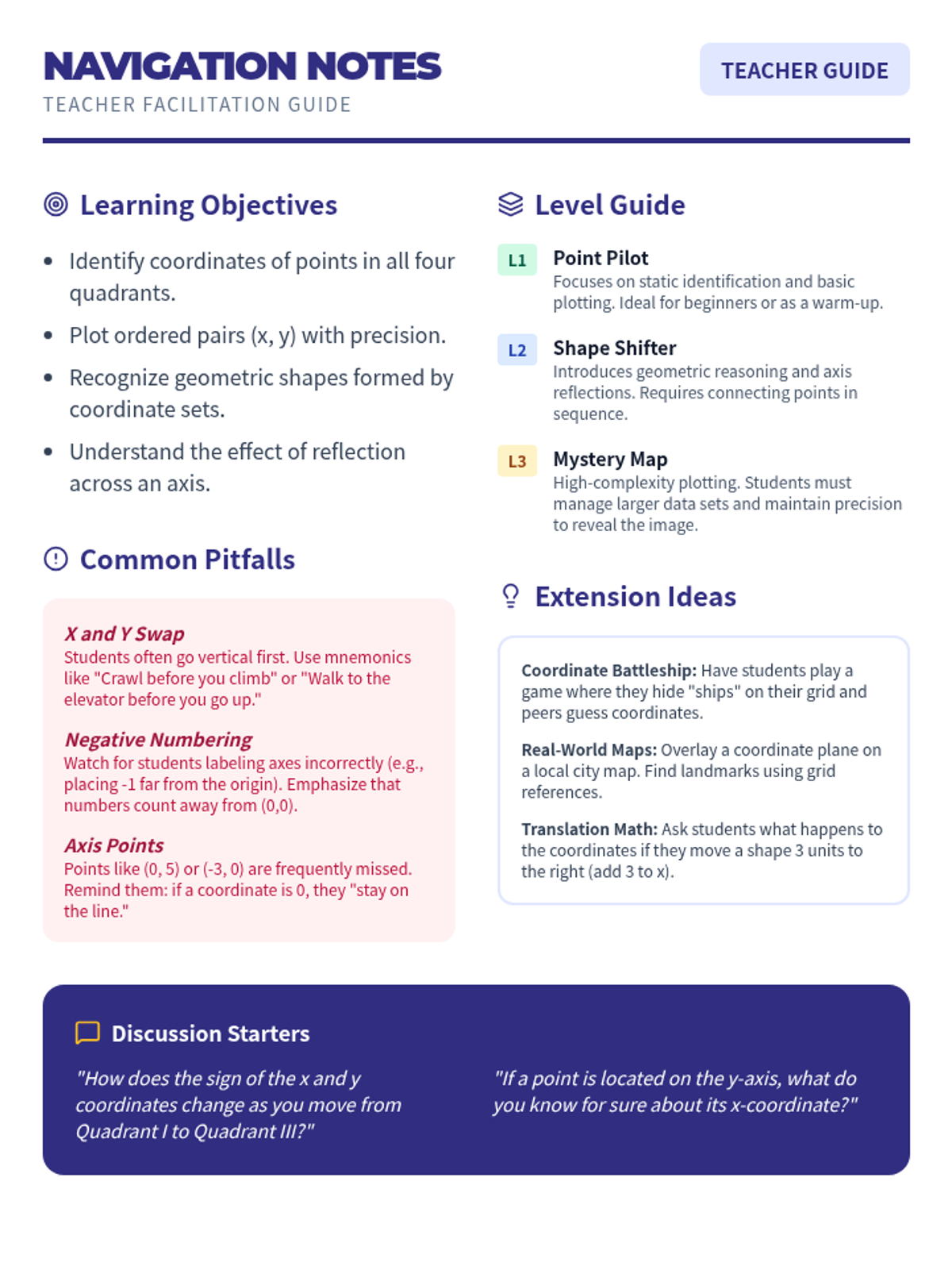
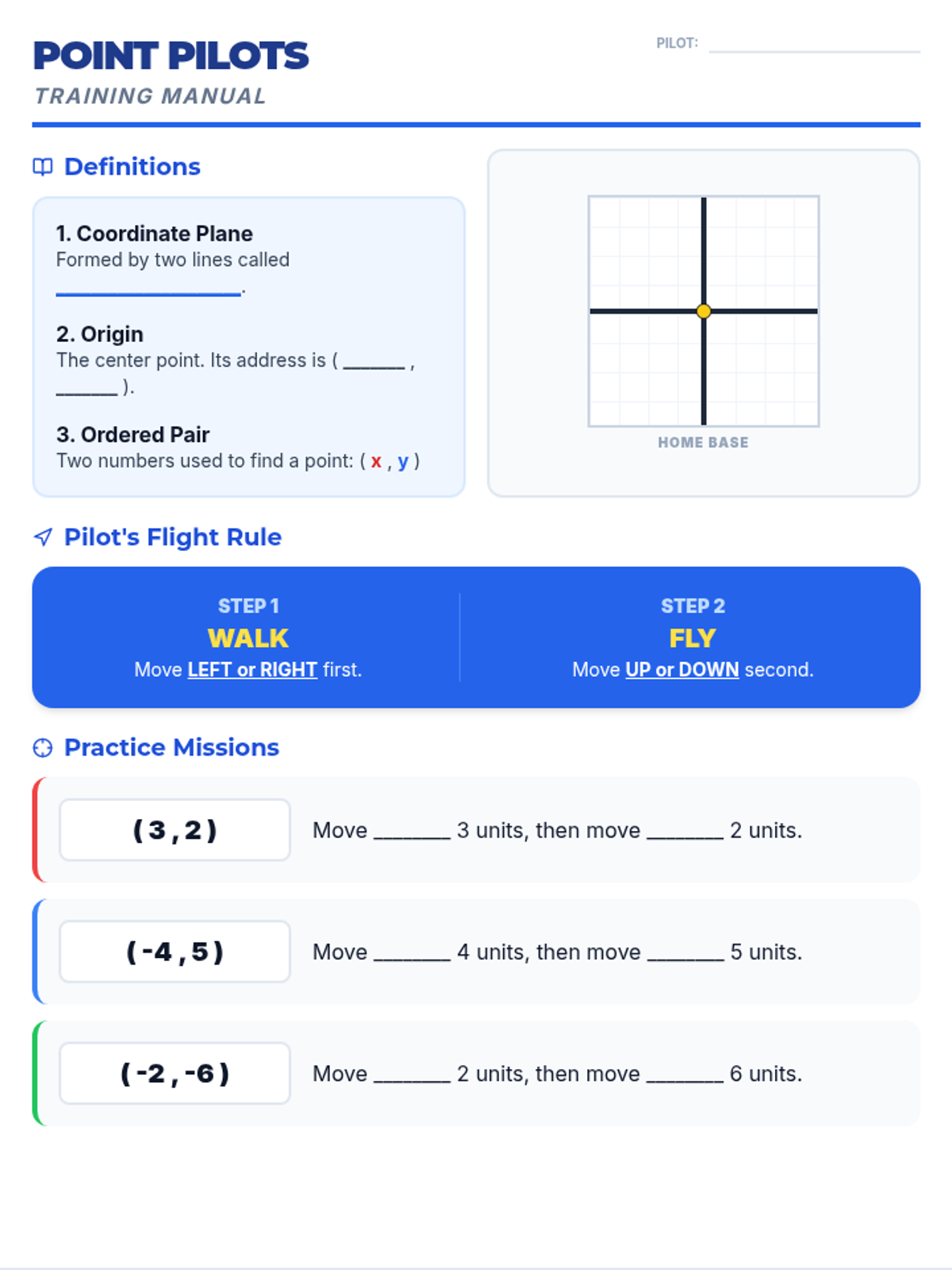
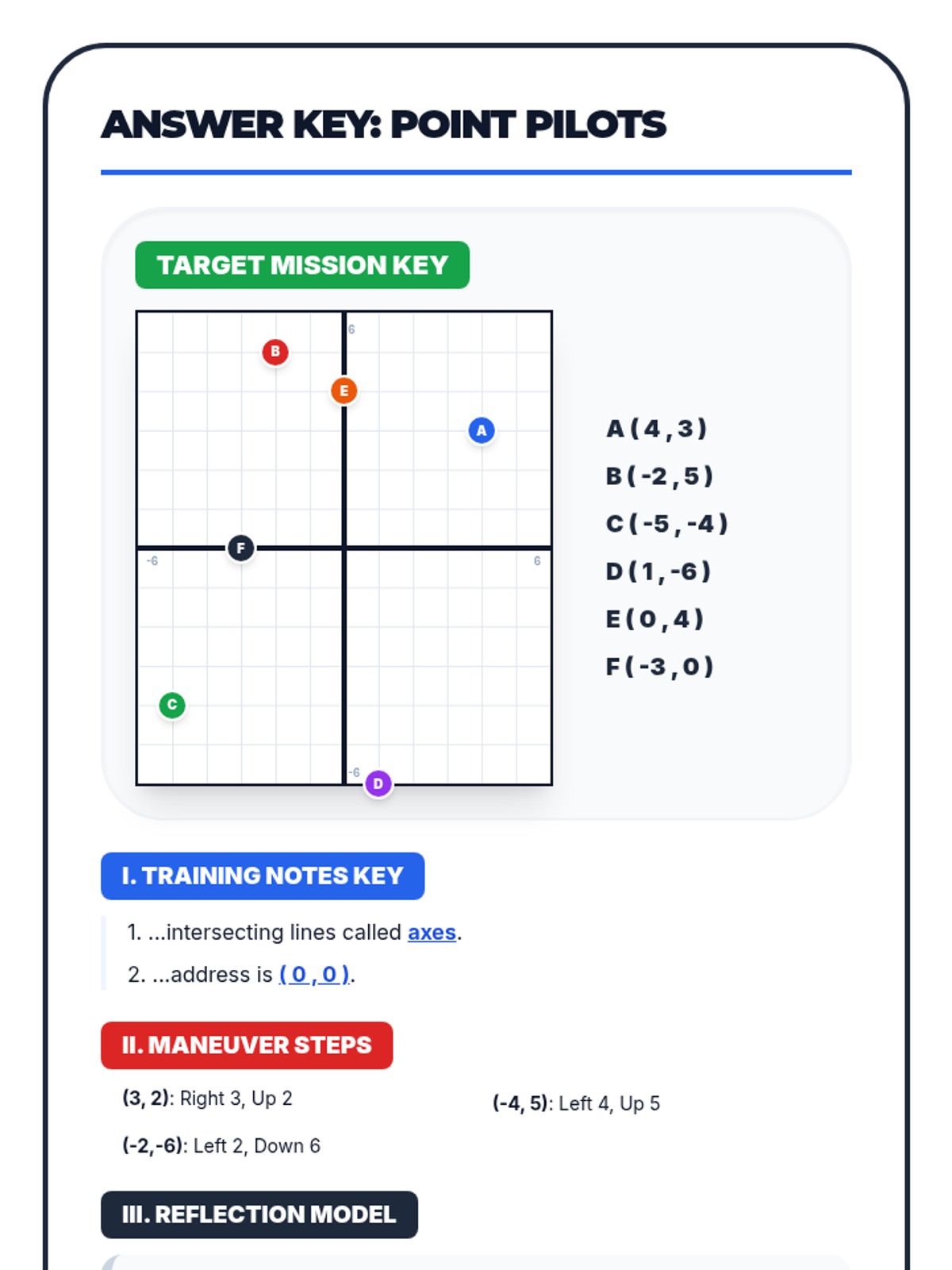
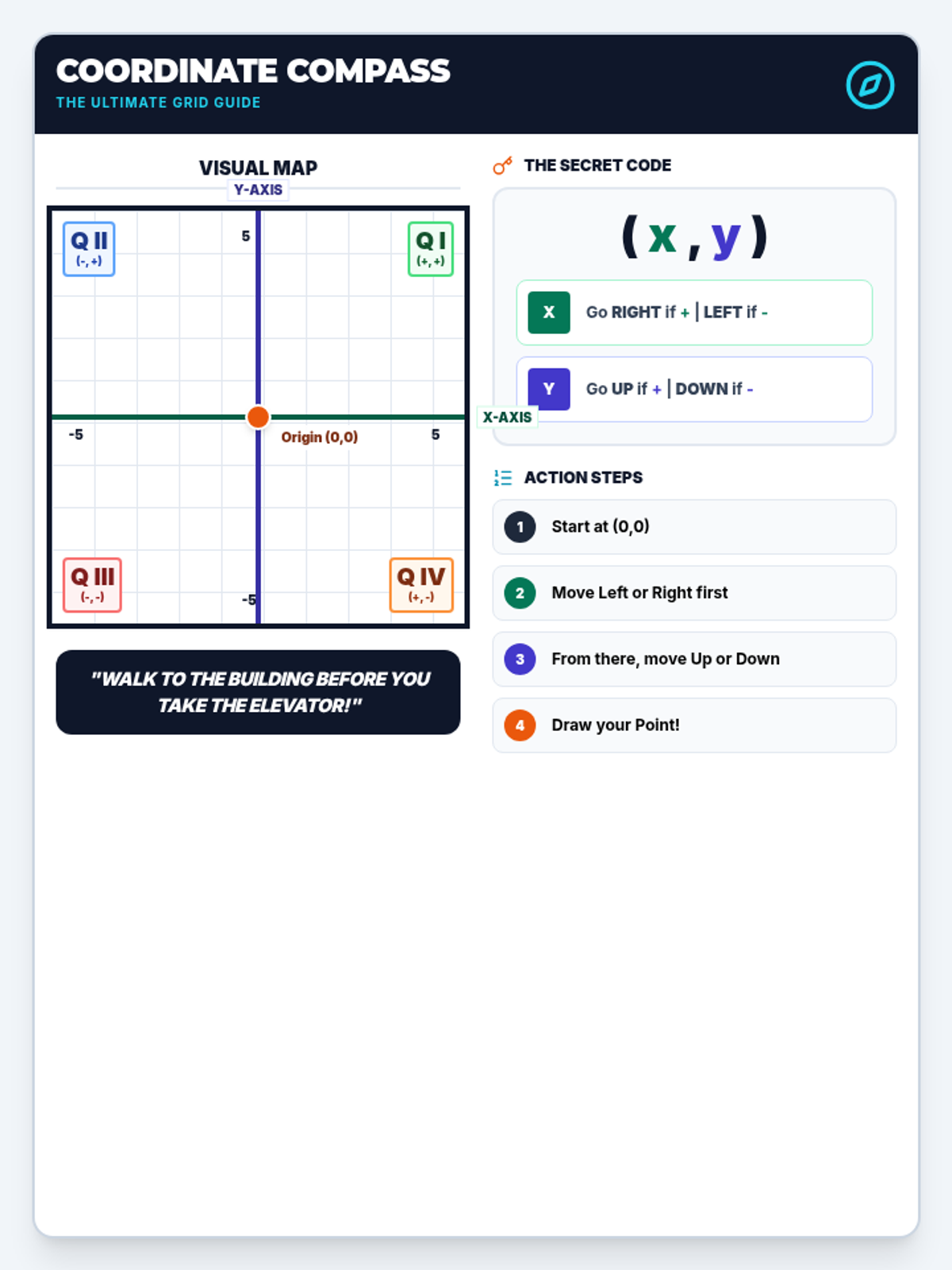
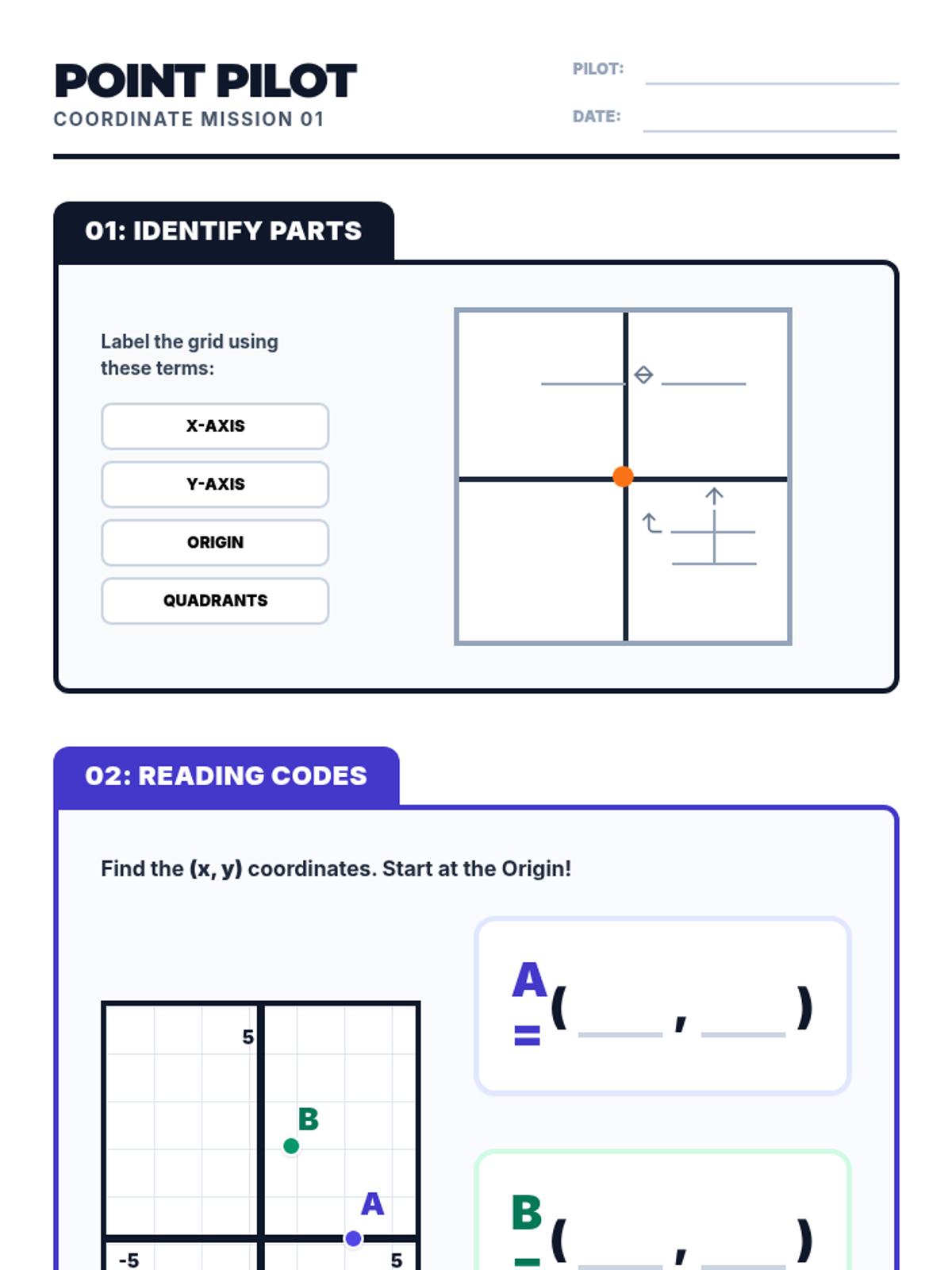
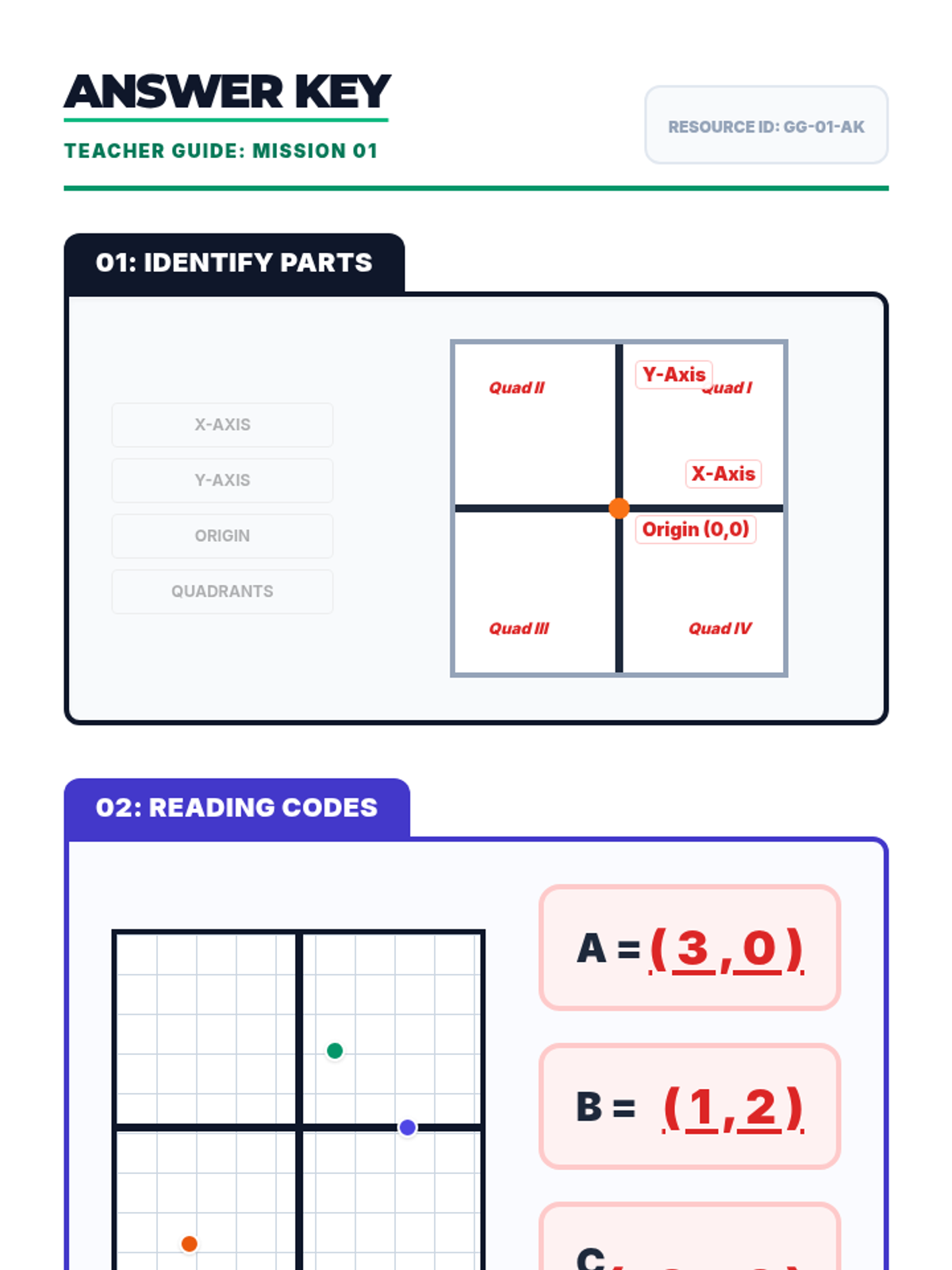
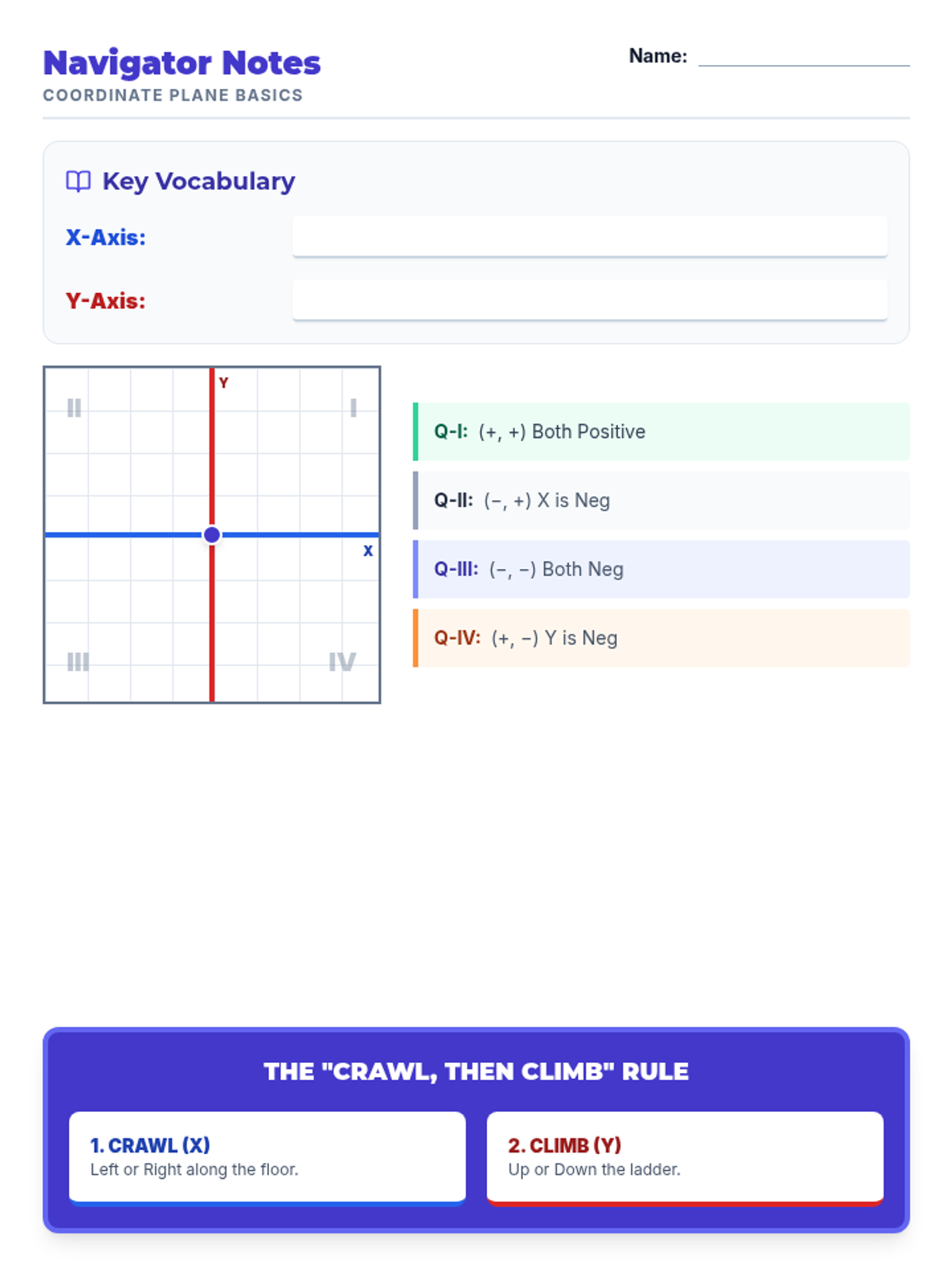
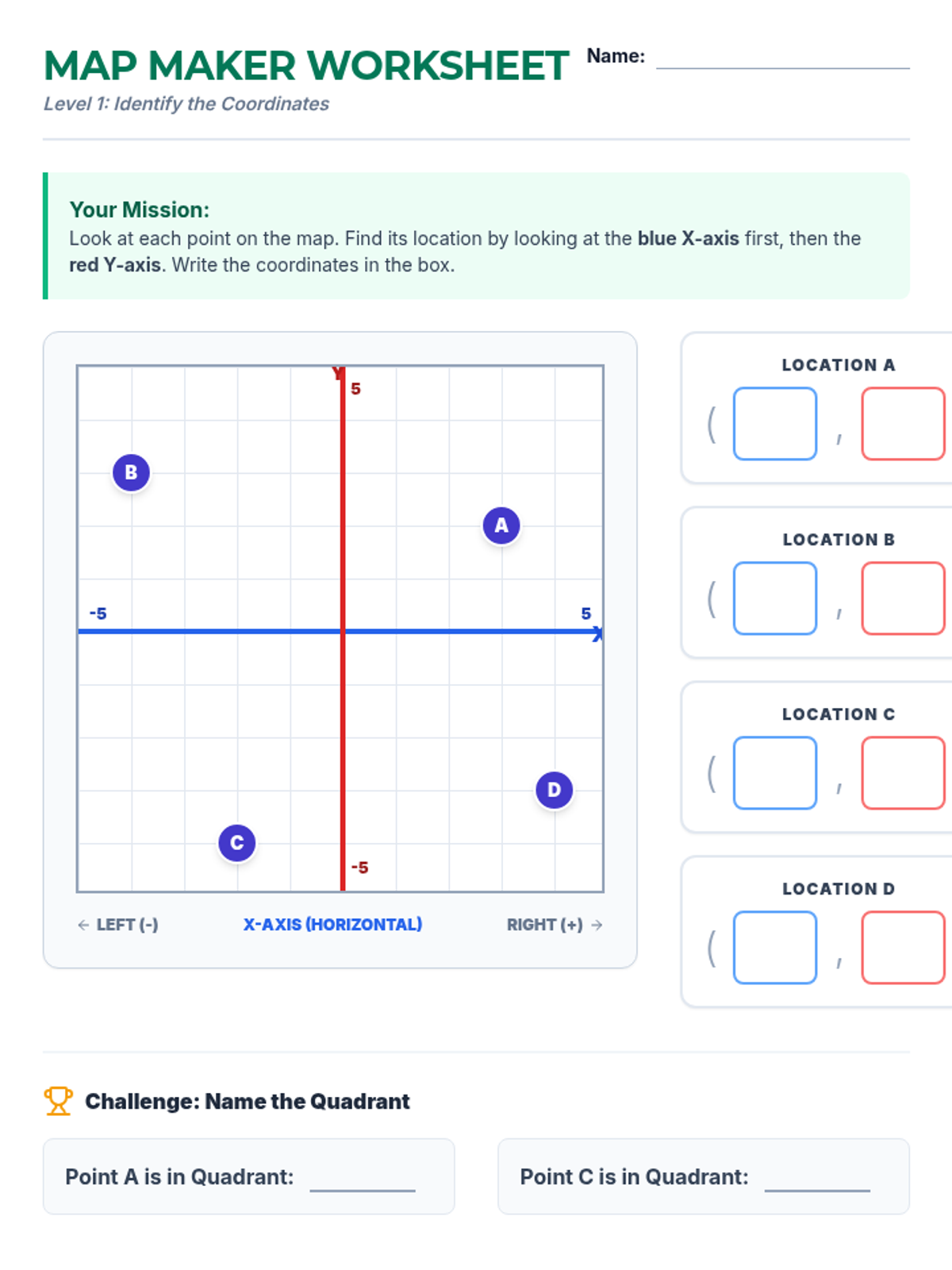
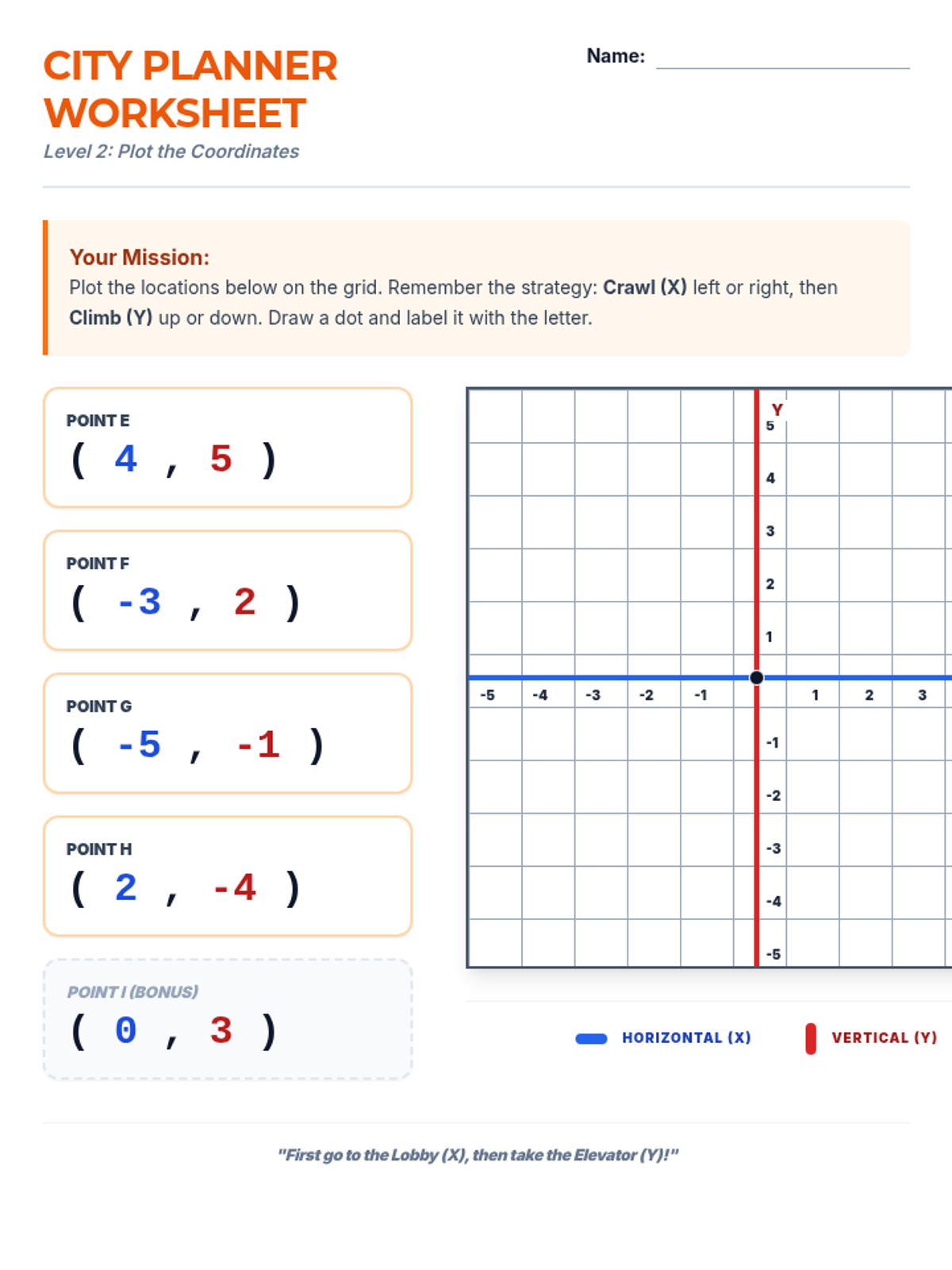
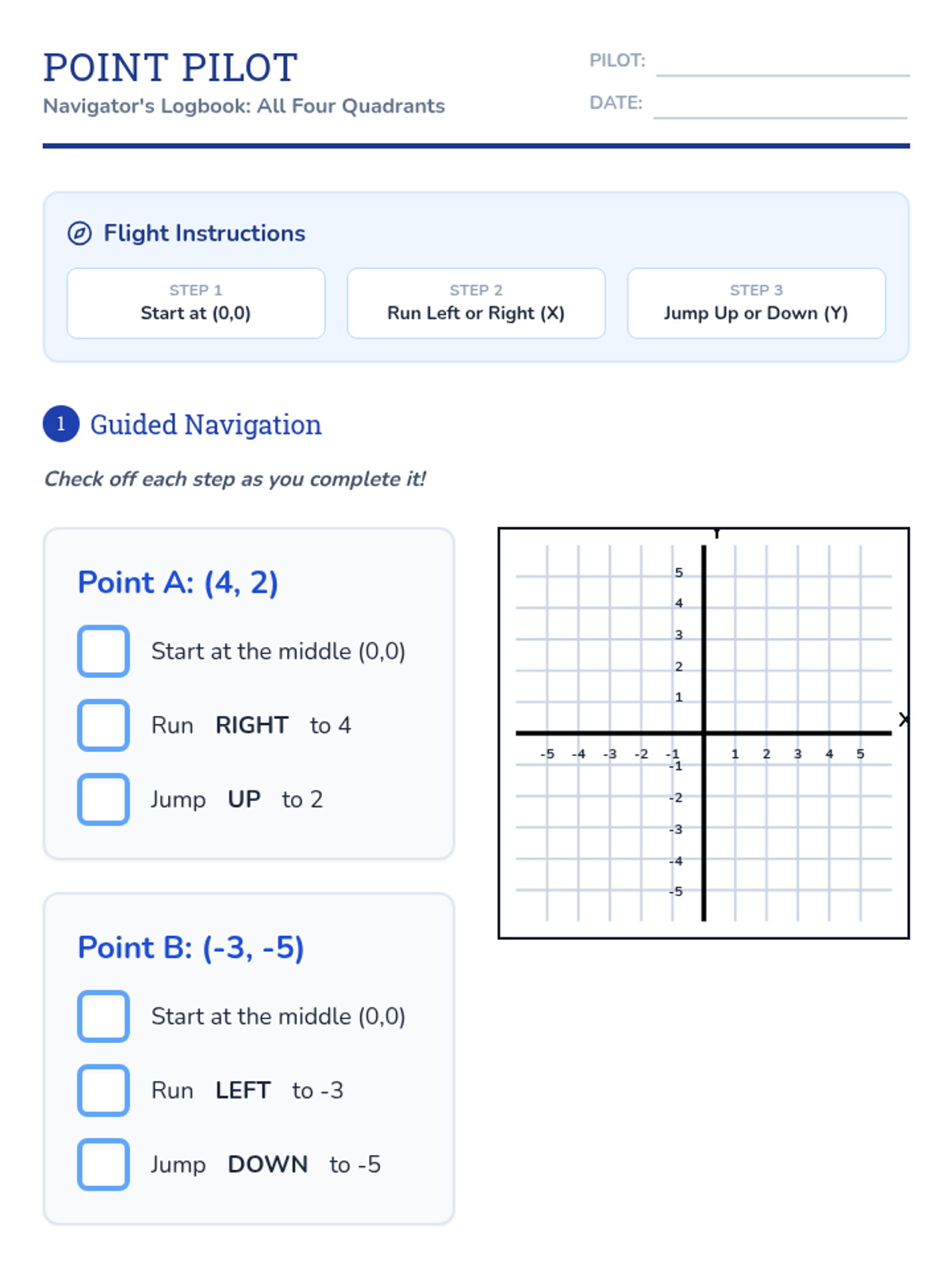
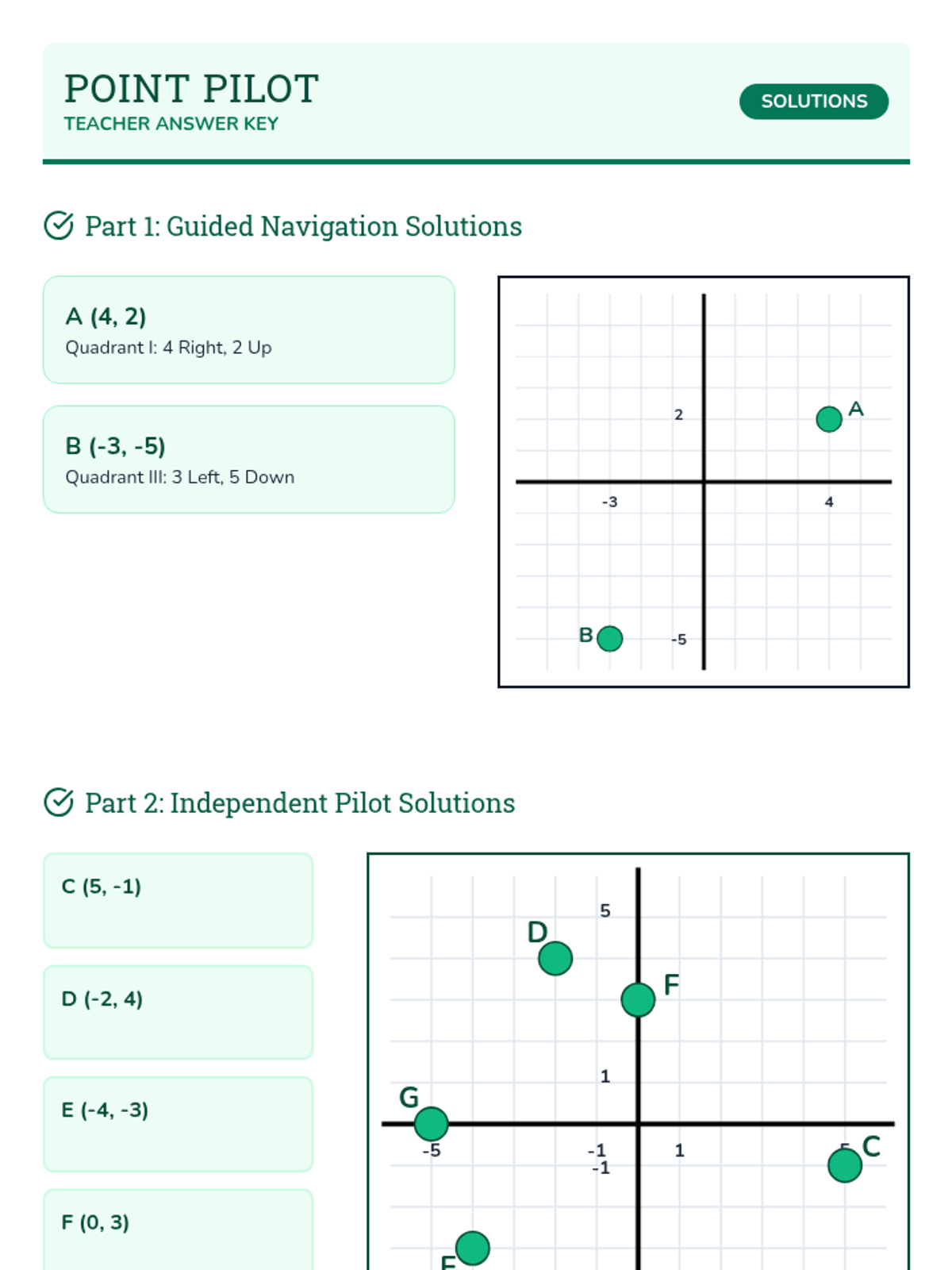
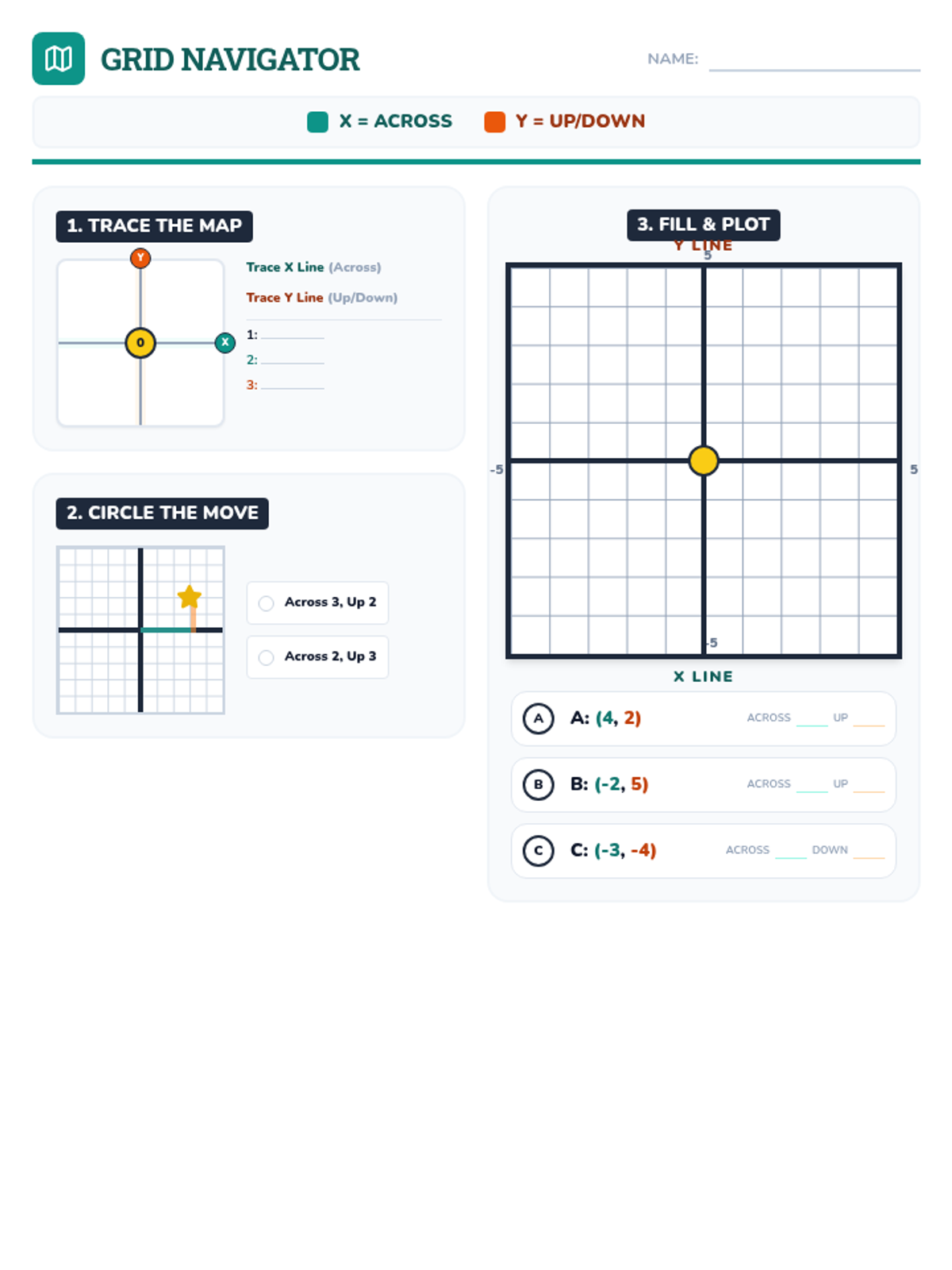
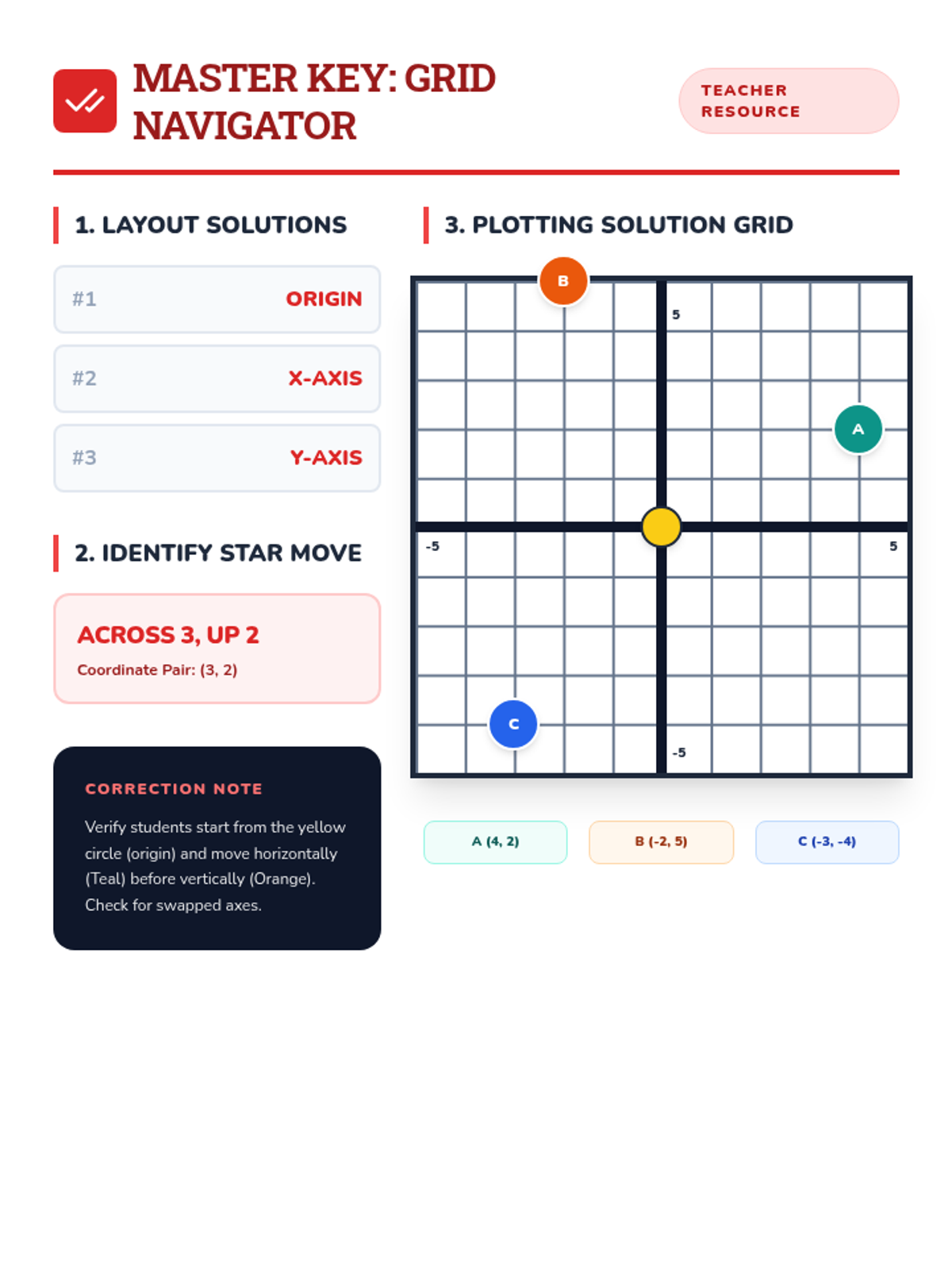
A scaffolded introduction to the four-quadrant coordinate plane, using a navigation theme to help students master plotting points with visual aids and step-by-step guides.
A scaffolded introduction to the four-quadrant coordinate plane, designed for students needing extra support. It covers identifying the axes and origin, understanding quadrants, and step-by-step plotting of points.
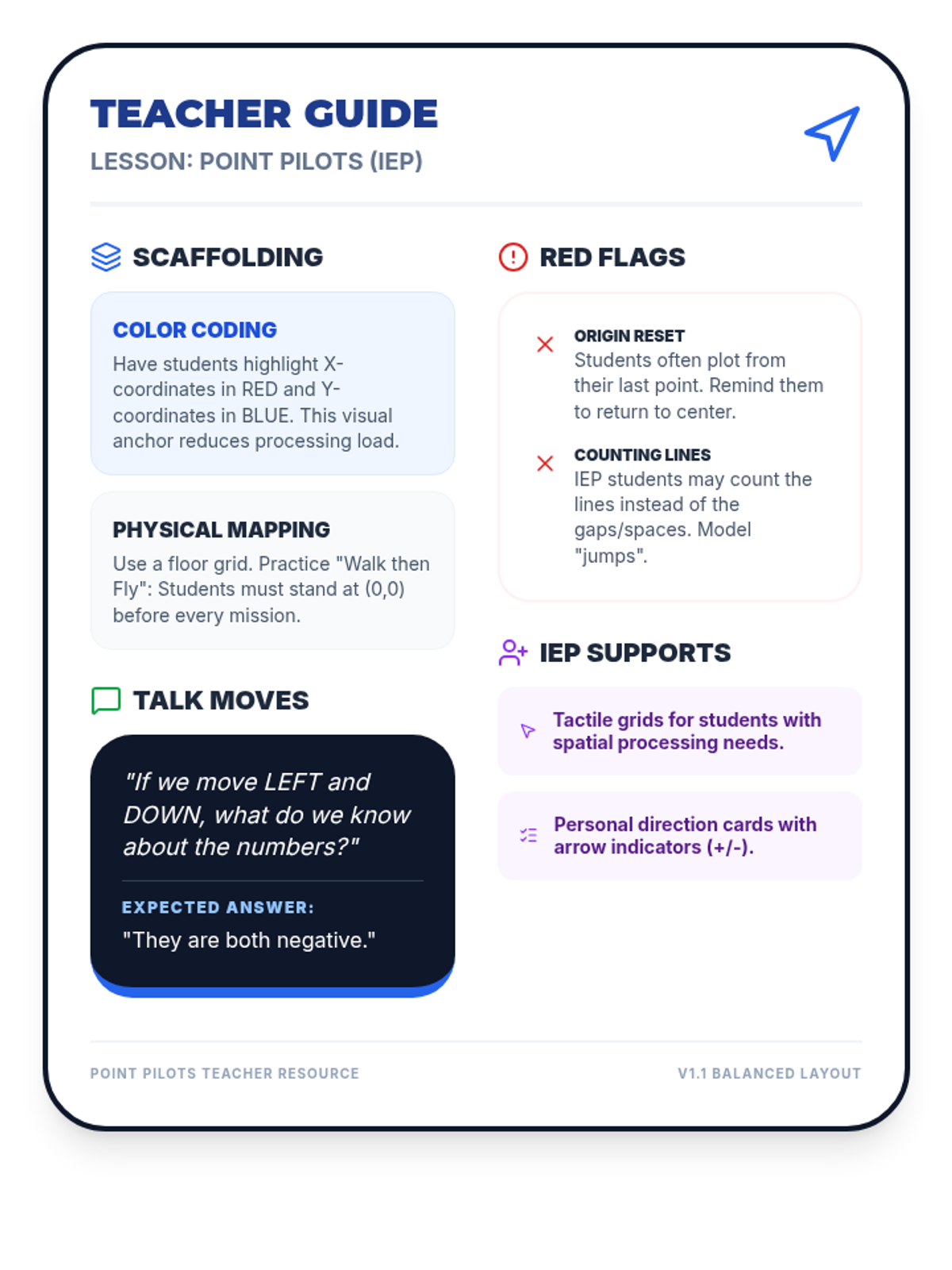
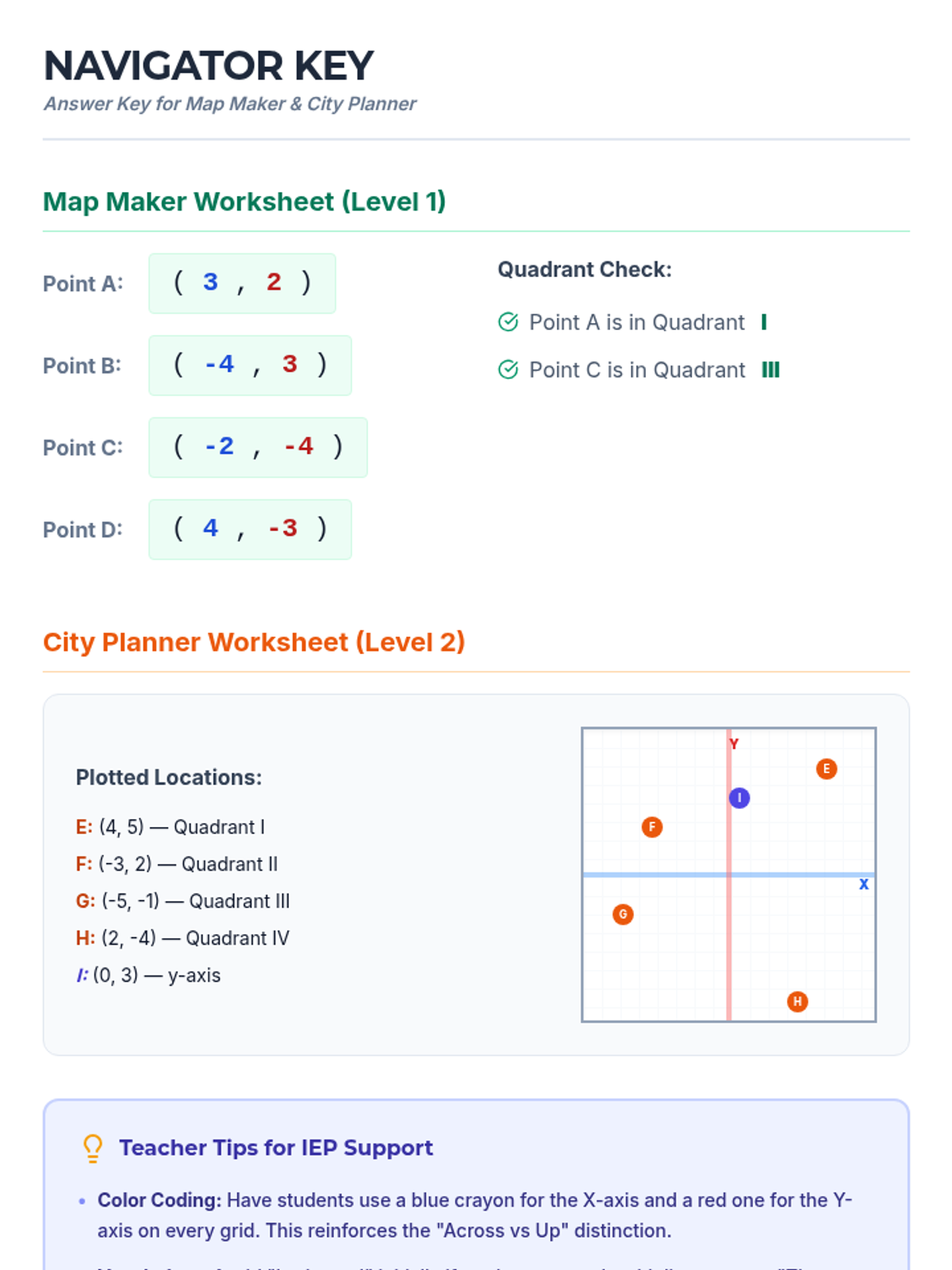
A foundational lesson on the 4-quadrant coordinate plane, specifically designed for students with IEPs. Includes visual-heavy instruction on identifying and plotting ordered pairs using color-coded axes and step-by-step strategies.
A scaffolded lesson on plotting points across all four quadrants of the coordinate plane, designed specifically for students with IEPs through visual aids and step-by-step guided practice.
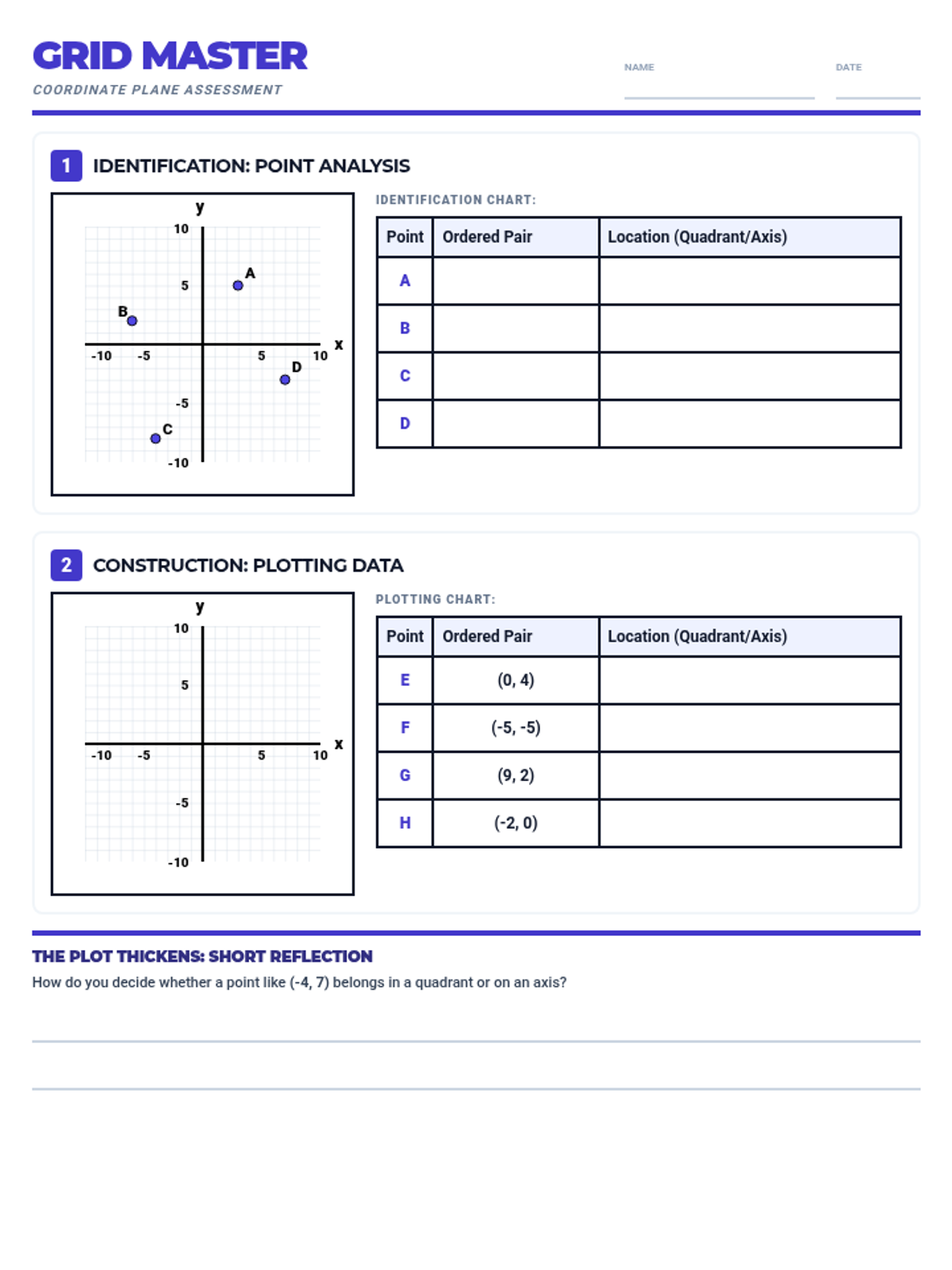
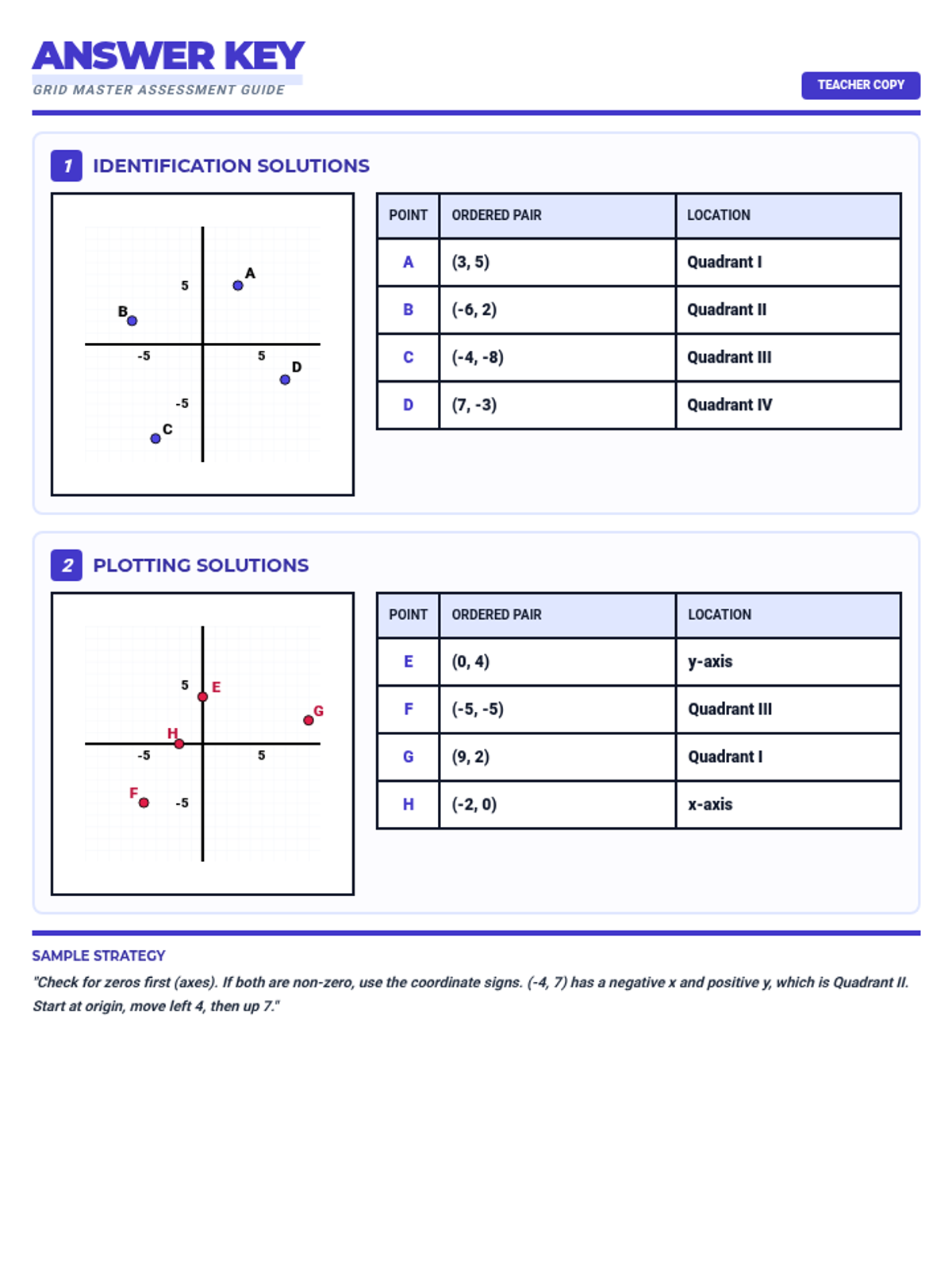
A quick assessment on identifying quadrants and plotting points on a four-quadrant coordinate plane.
A foundational lesson on navigating the four-quadrant coordinate plane, designed with visual supports for IEP students to master plotting and identifying coordinates.
A modified lesson on the coordinate plane focusing on identifying axes, the origin, and plotting points in all four quadrants with visual scaffolding.
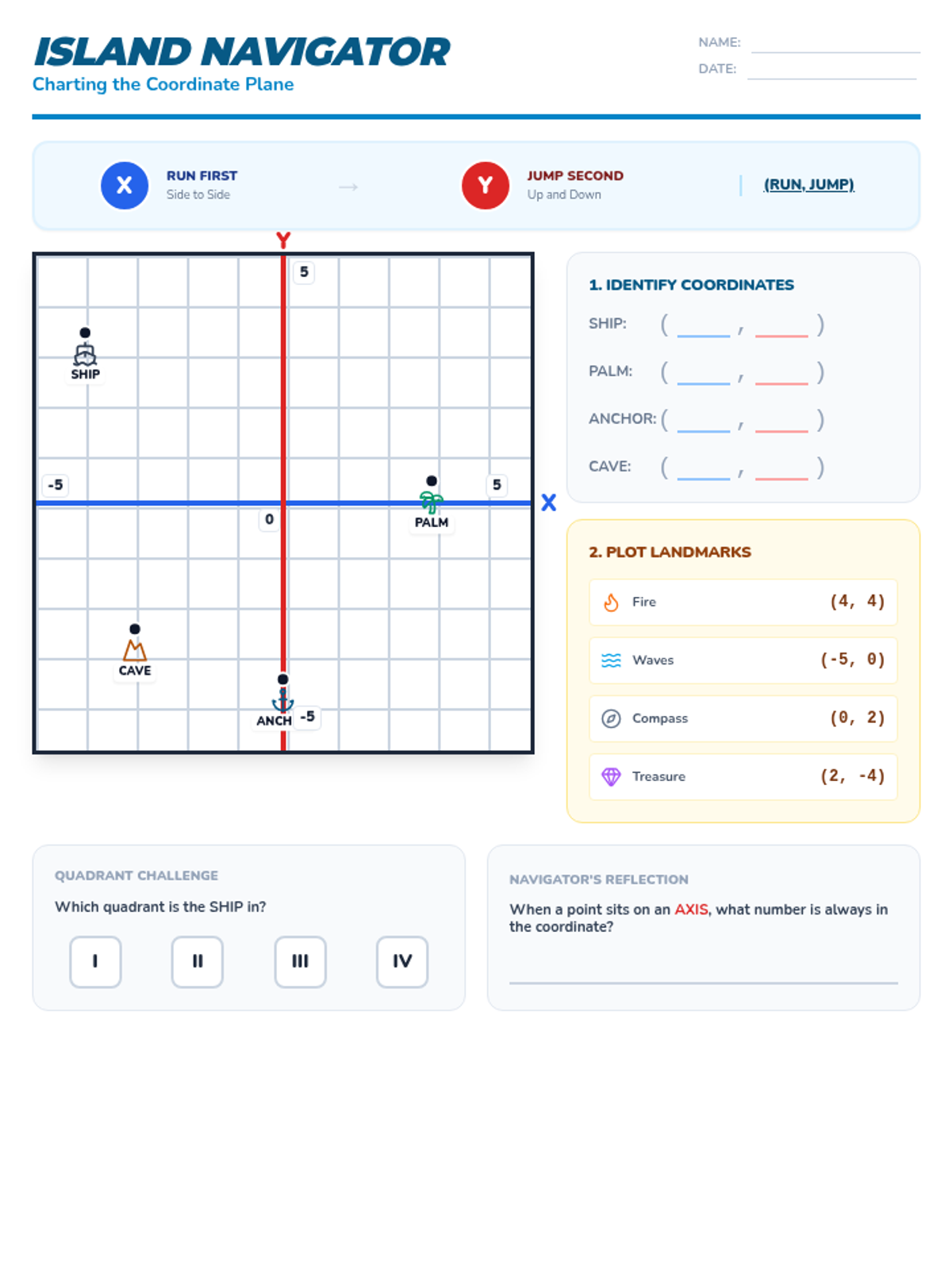
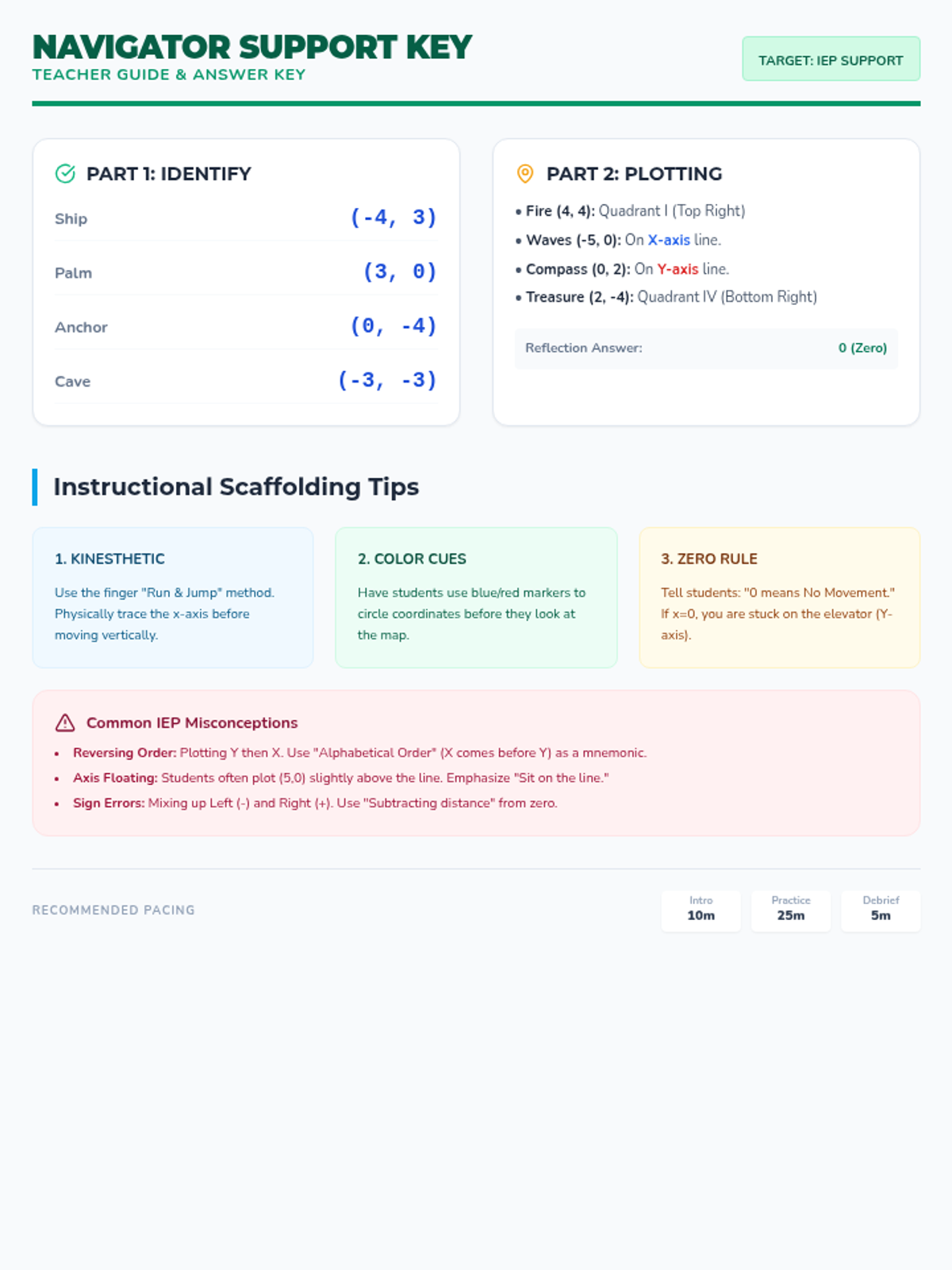
A specialized math lesson for plotting coordinates across all four quadrants and on the axes, designed with heavy scaffolding and visual cues for IEP support. Students will use an island map theme to practice identifying and plotting points.
A comprehensive lesson covering geometric transformations (translations, reflections, rotations, and dilations) and the fundamentals of geometric proofs, including logical reasoning and triangle congruence.
A comprehensive lesson on geometric transformations including translations, reflections, and rotations through guided notes, coordinate plane practice, and assessment.
A comprehensive 8th-grade TEKS mathematics review focusing on Proportionality, Algebra, Expressions, Equations, Geometry, Measurement, and Data Analysis. This lesson includes a diagnostic quiz and a supporting presentation for classroom review.
A comprehensive review lesson on geometric transformations including translations, reflections, rotations, dilations, and compositions, designed for mastery assessment preparation.
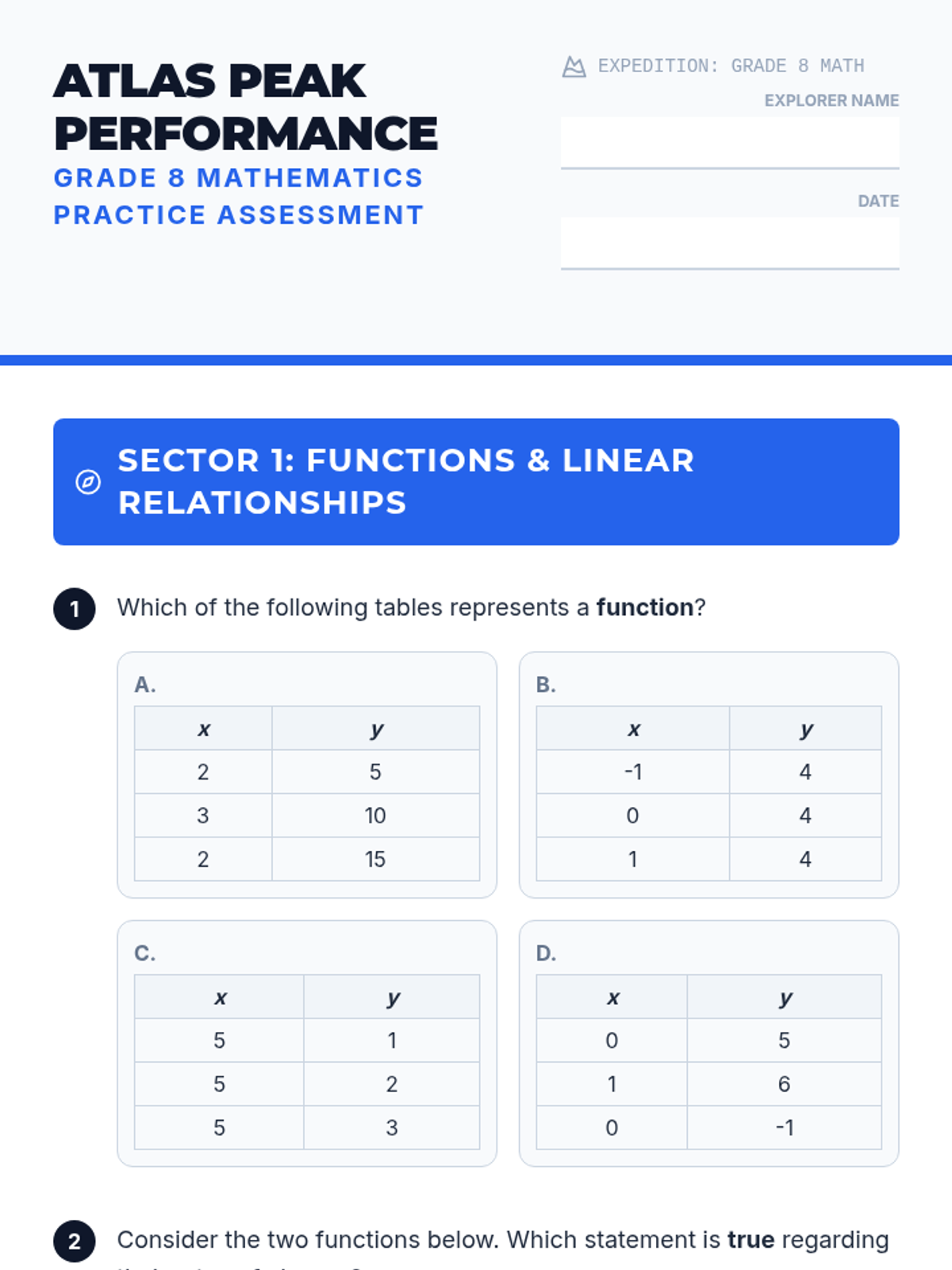
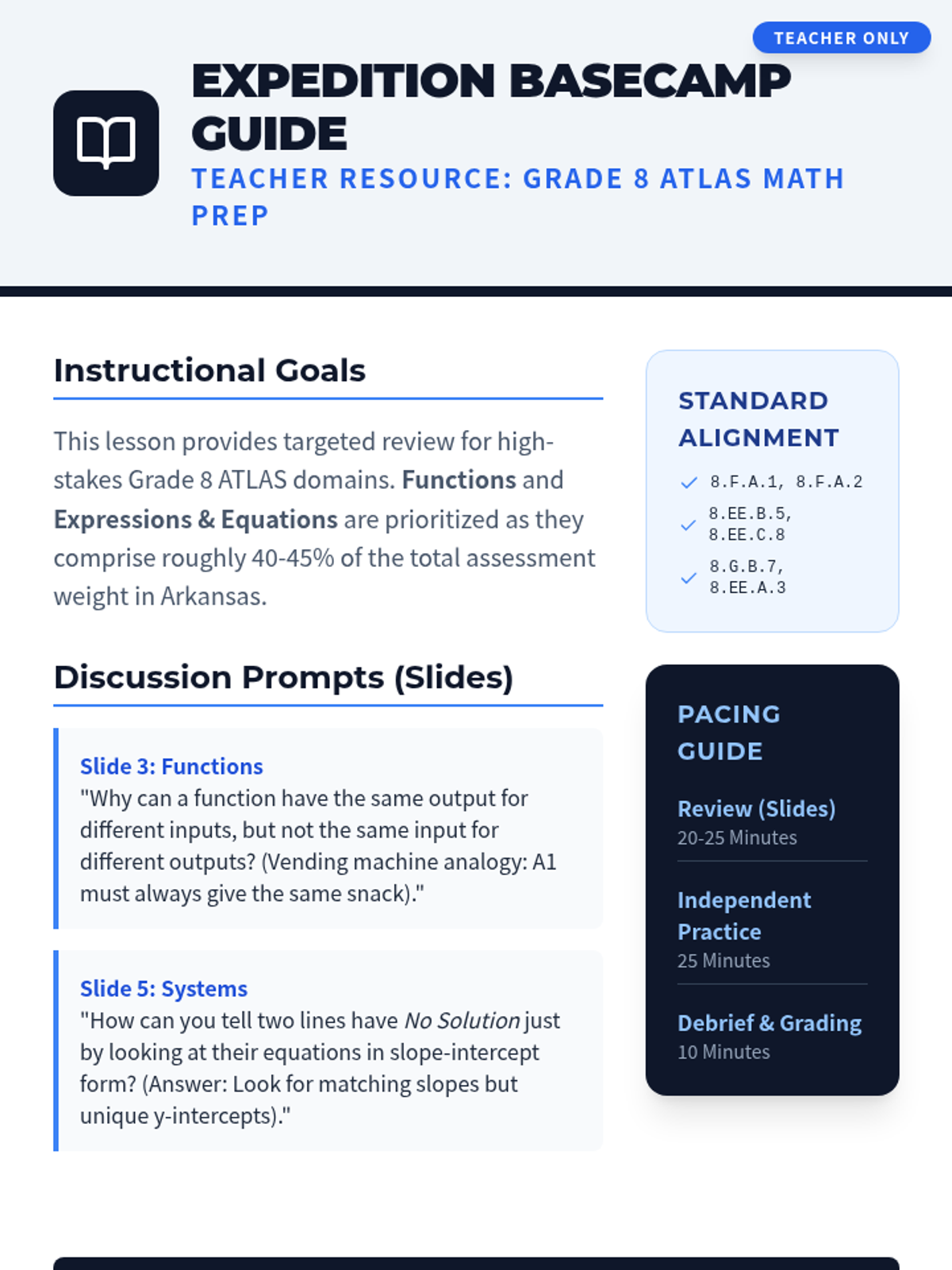
A comprehensive test prep lesson for the Grade 8 Arkansas ATLAS assessment, focusing on high-stakes topics like functions, linear equations, systems, geometry, and scientific notation. Includes a visual presentation, a practice test with ATLAS-style items, and a teacher guide.
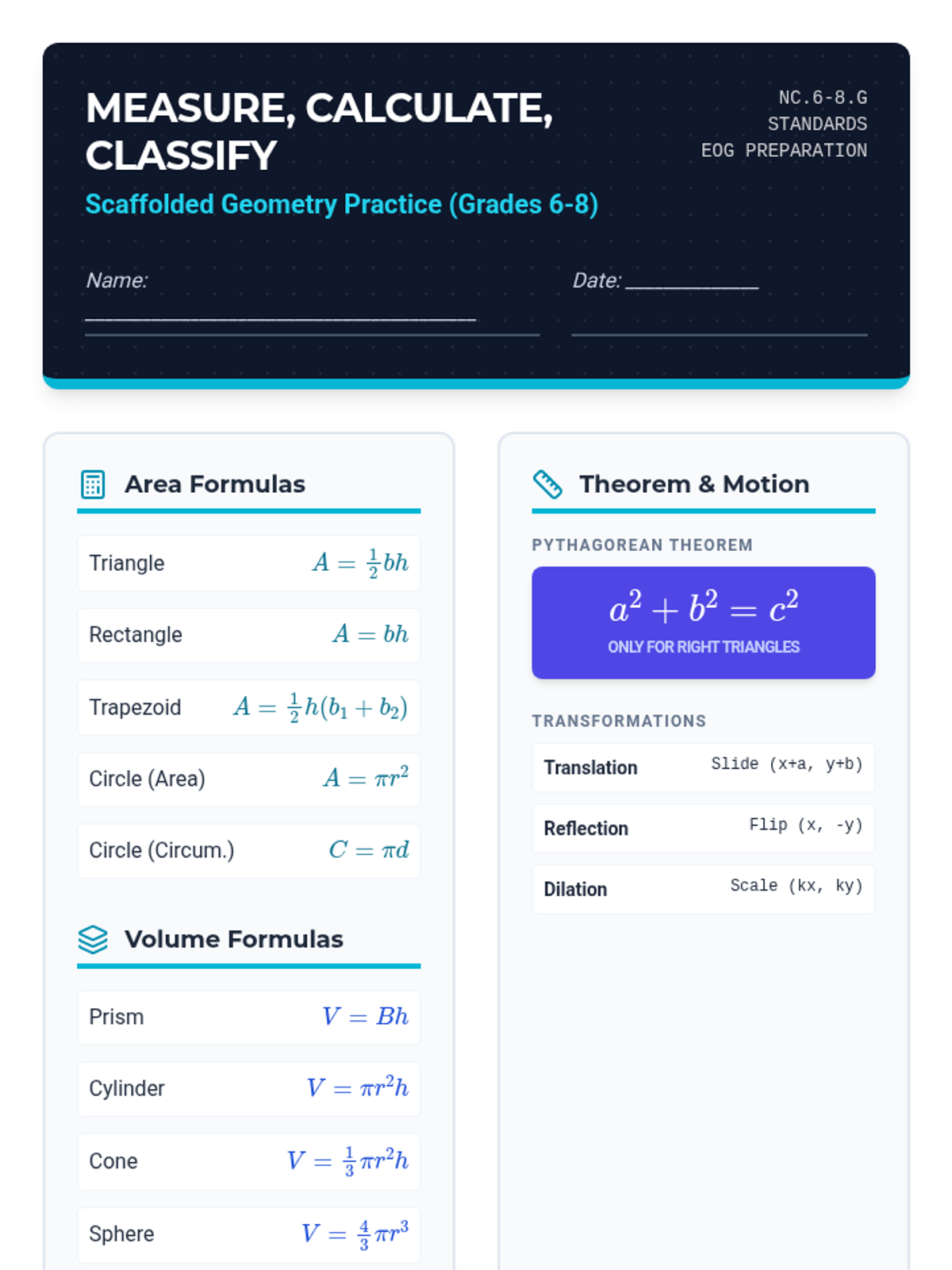
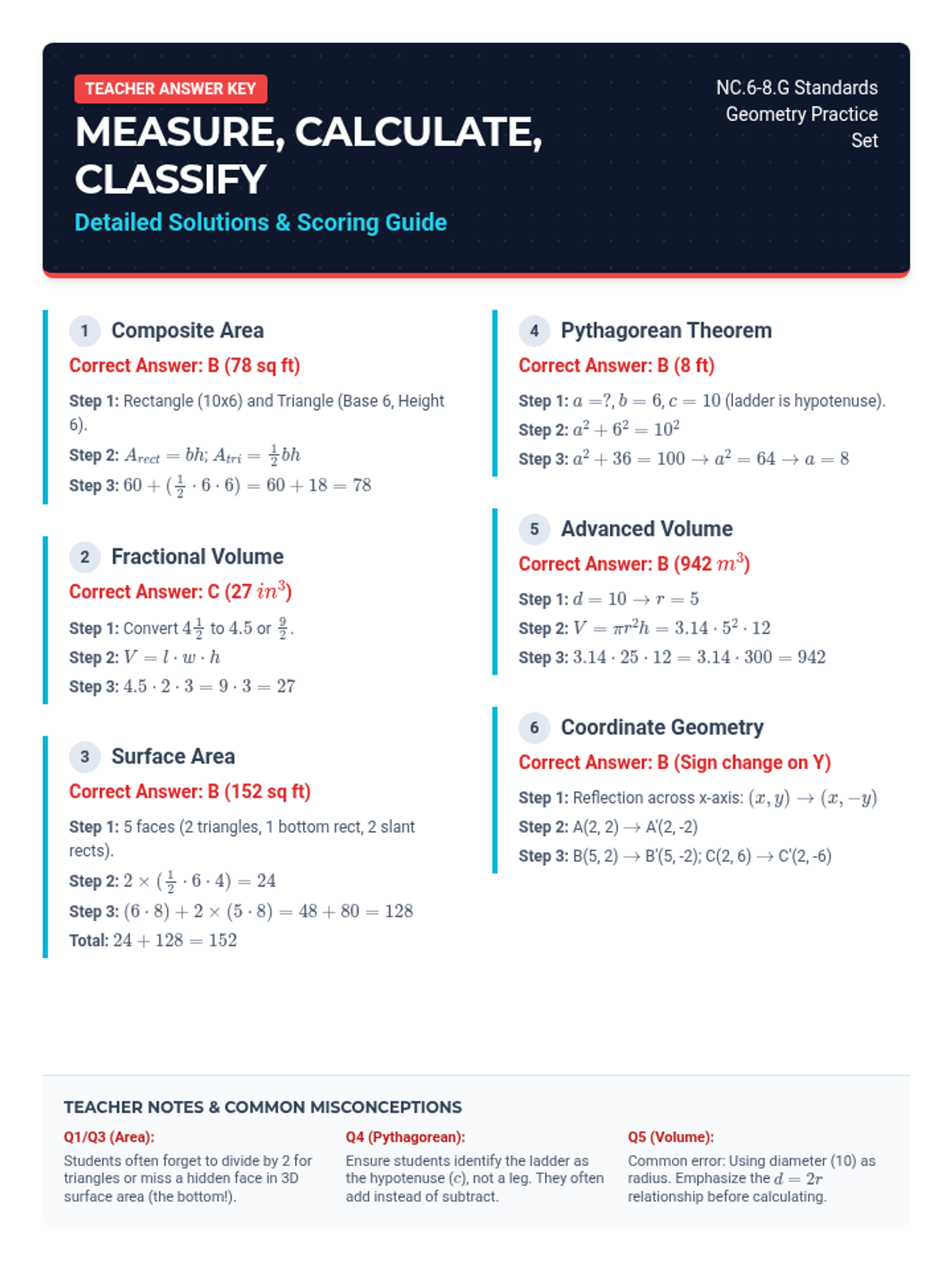
A comprehensive geometry practice set for middle school students, focusing on NC EOG standards for grades 6-8, including area, volume, and the Pythagorean theorem.
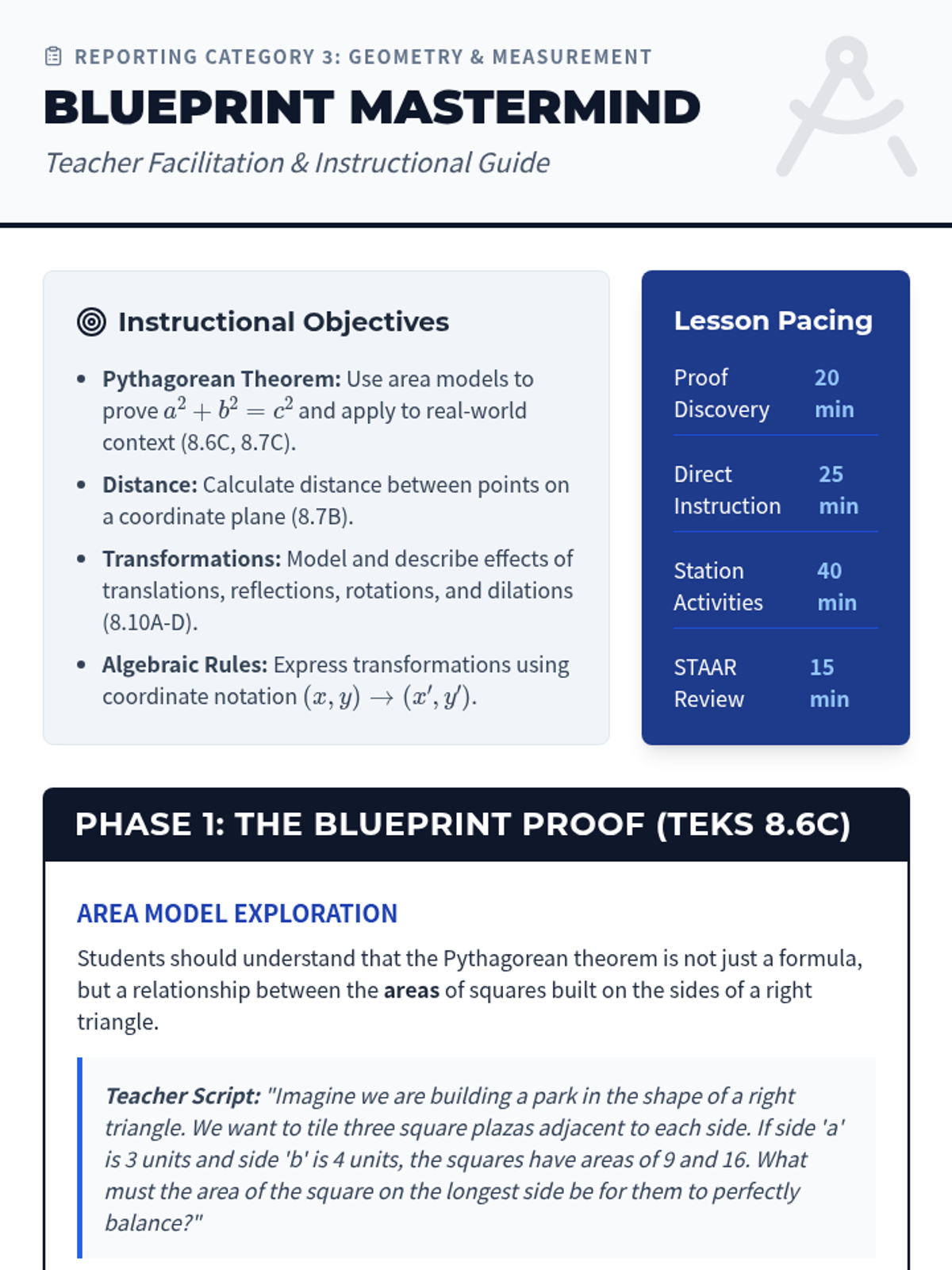
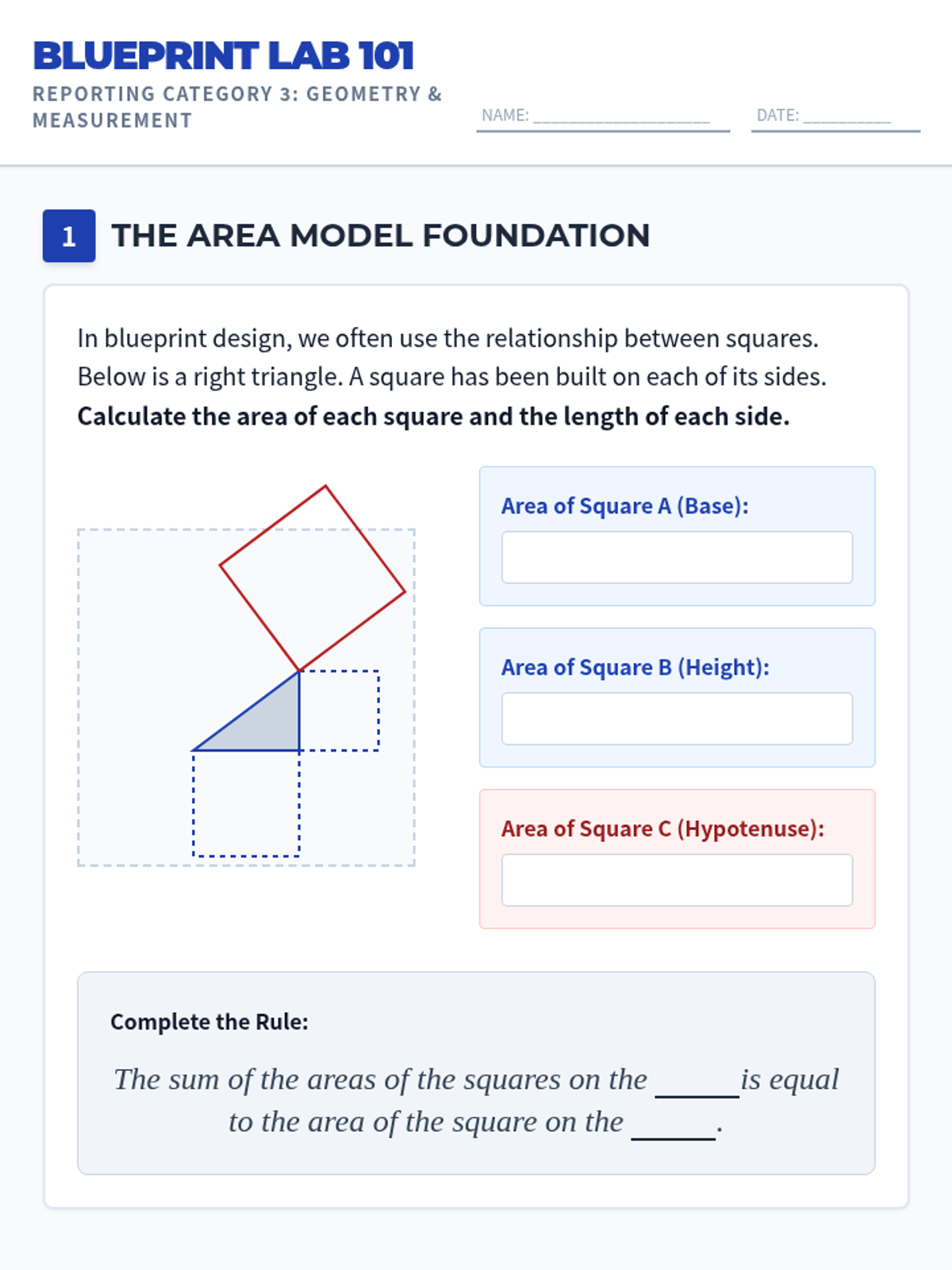
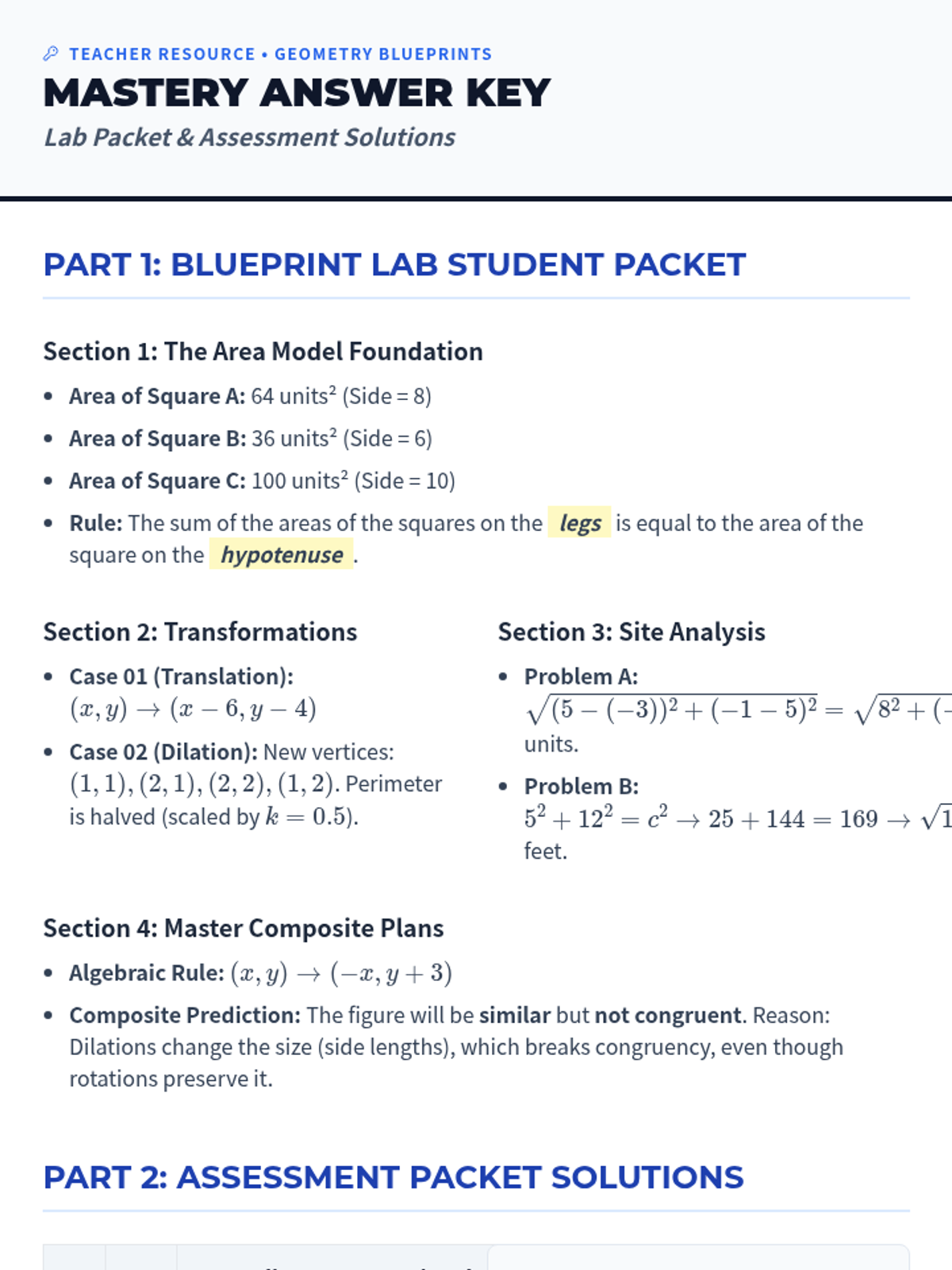
A comprehensive Grade 8 Mathematics lesson focused on TEKS Reporting Category 3, covering the Pythagorean theorem and geometric transformations through technical 'blueprint' exploration and STAAR-aligned practice.
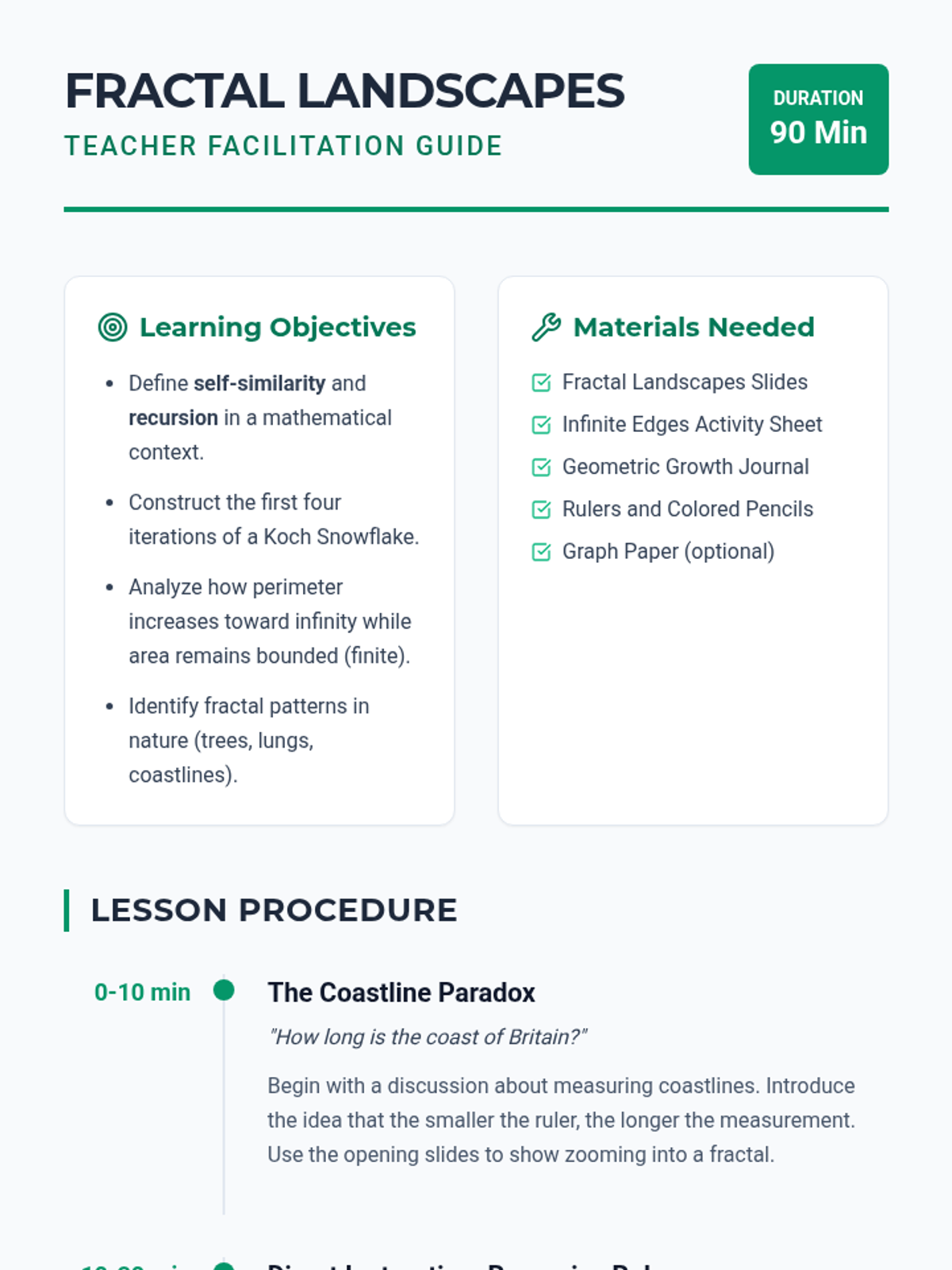
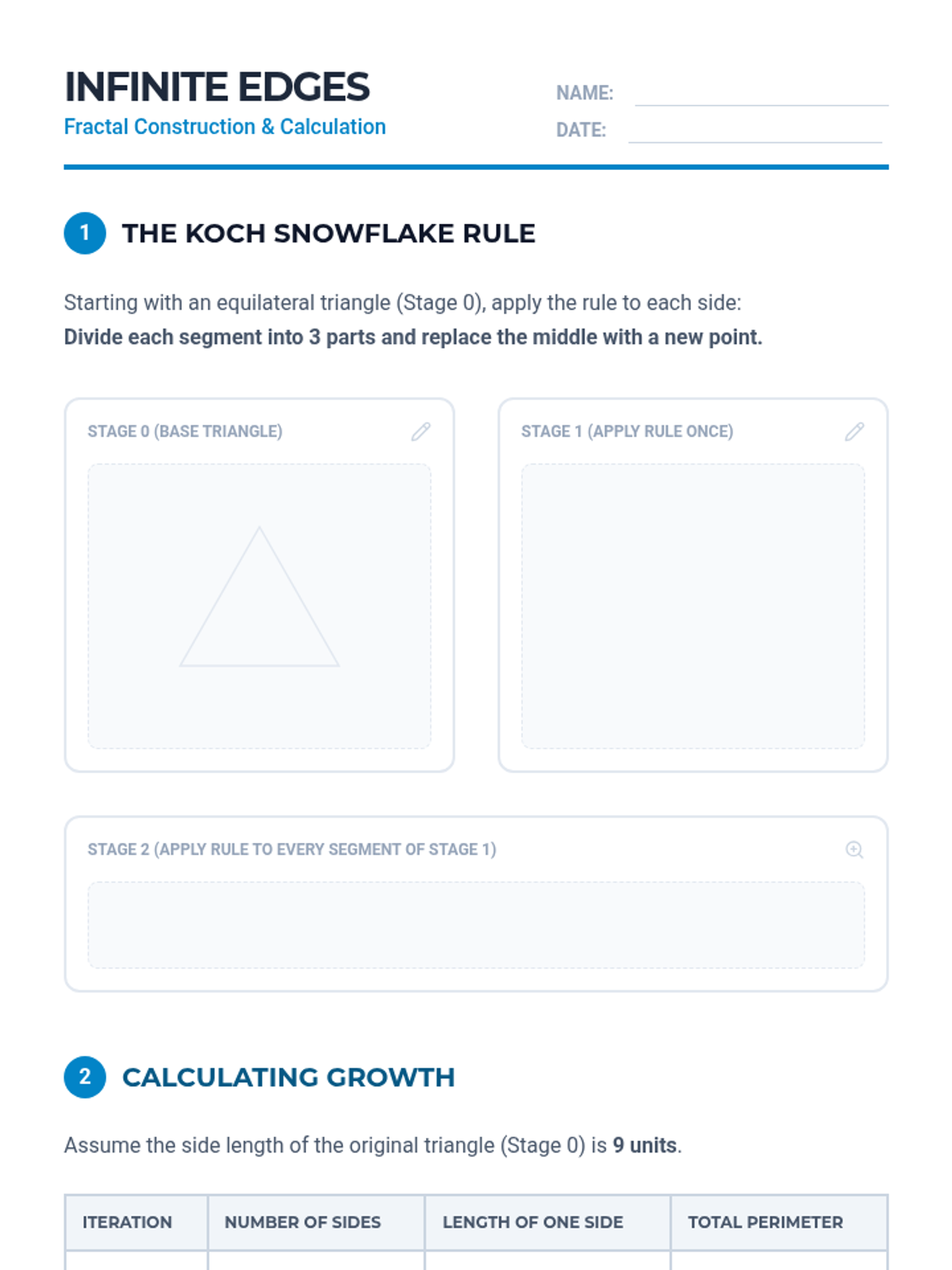
Explore the mesmerizing world of fractals where art meets mathematics. Students investigate recursive patterns, self-similarity, and the mind-bending paradox of infinite perimeters within finite spaces.
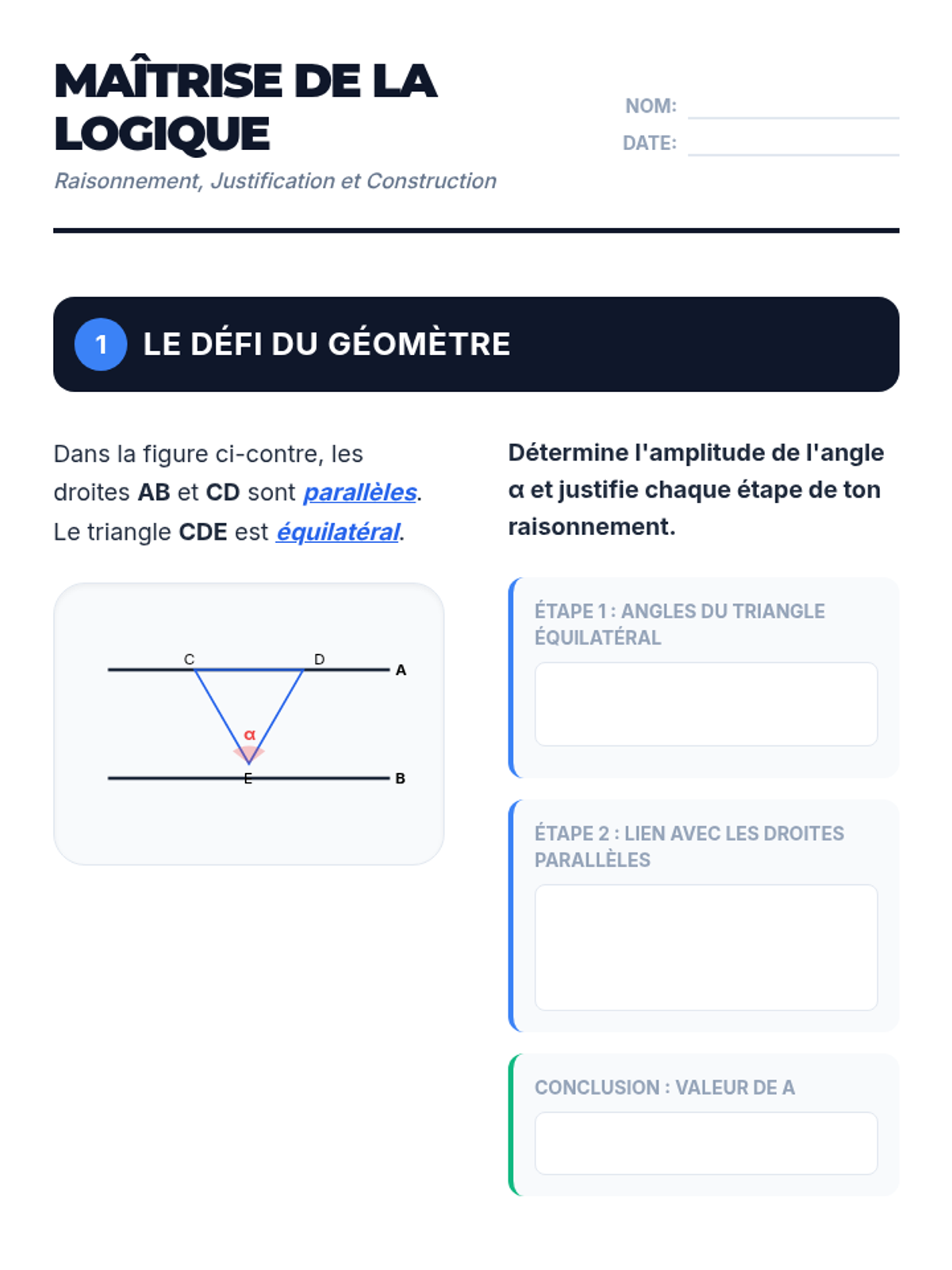
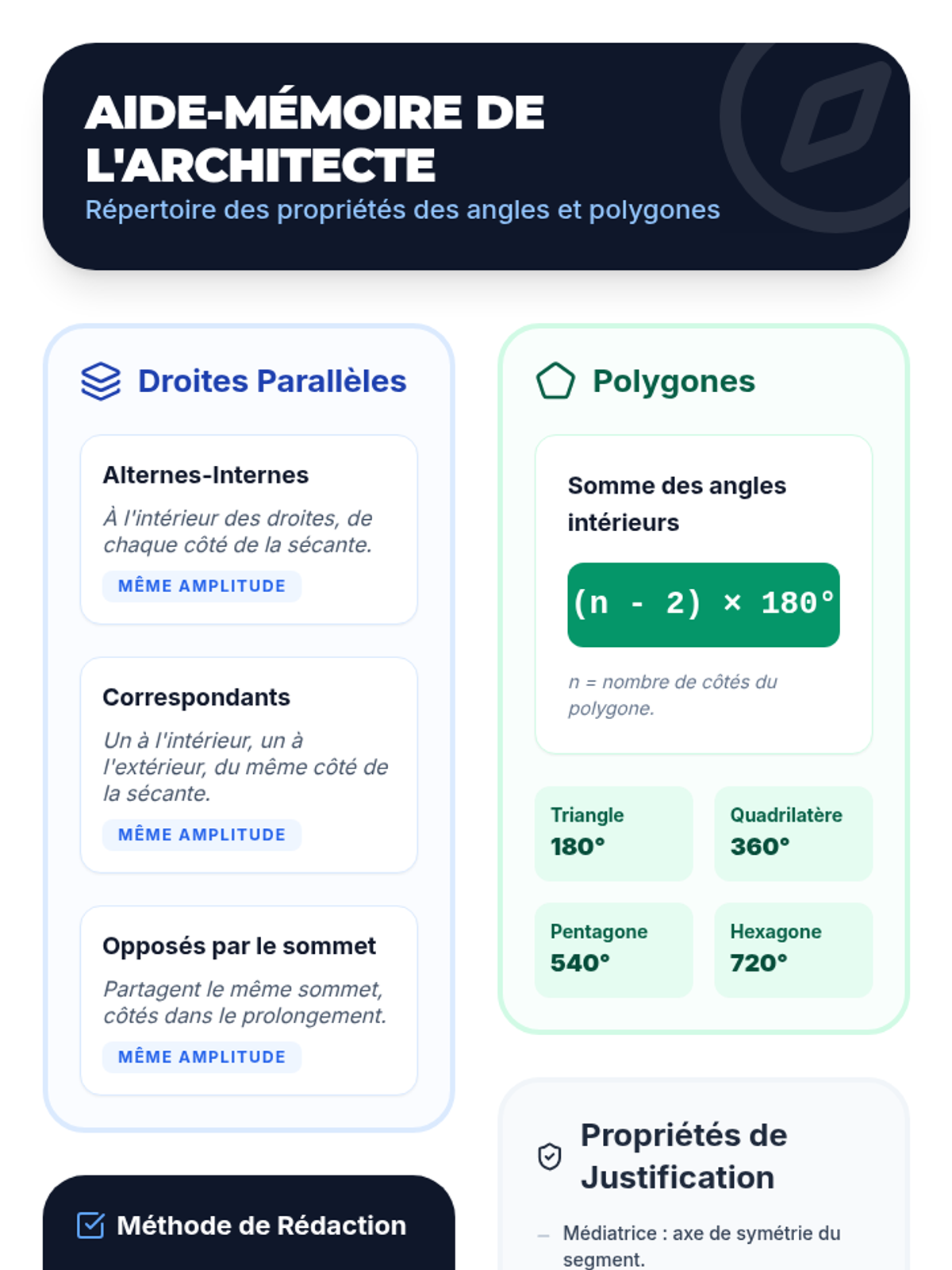
Apprendre à justifier rigoureusement chaque étape d'un calcul ou d'une construction géométrique.
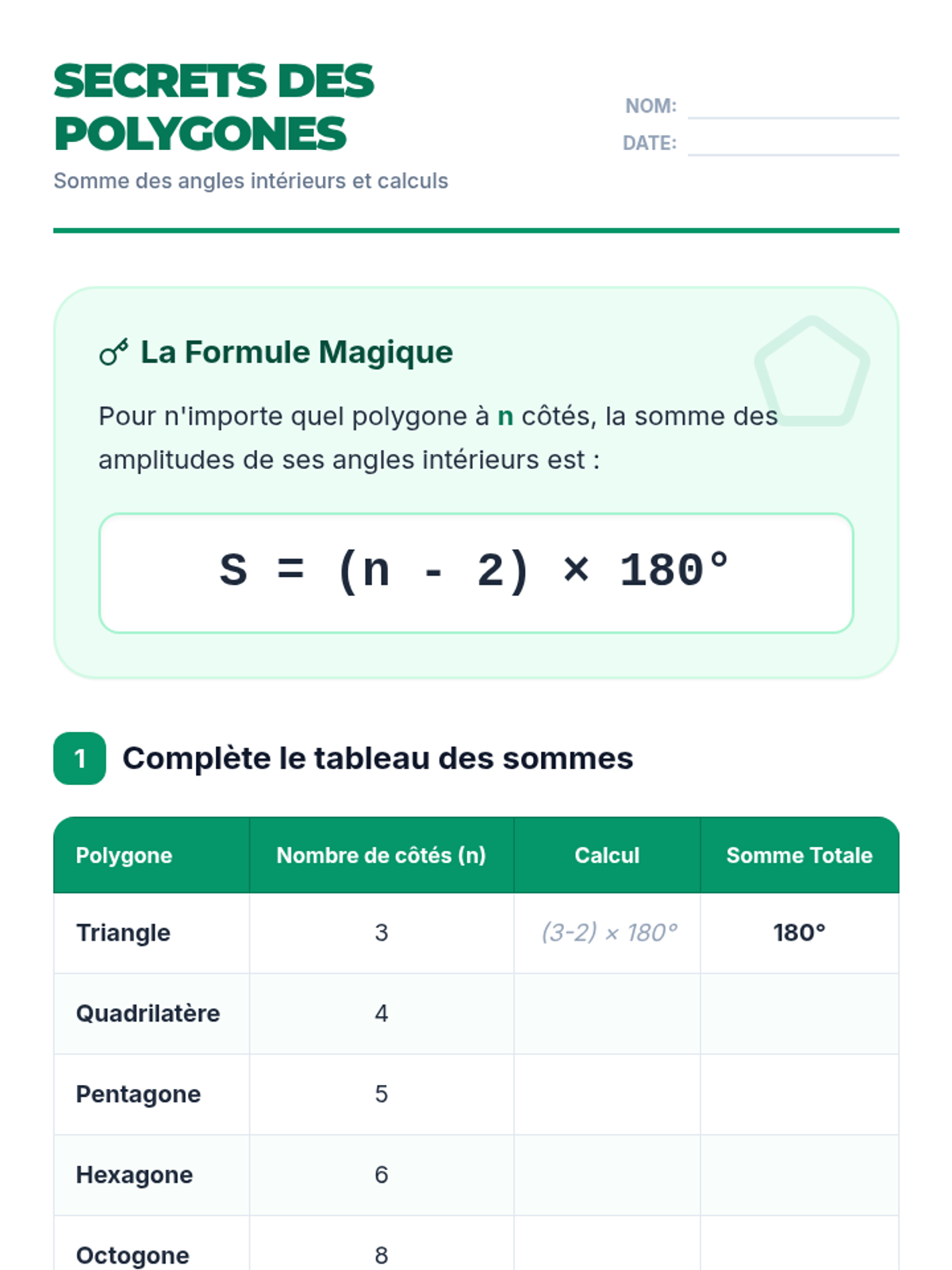
Calculer la somme des angles intérieurs des polygones et résoudre des problèmes complexes d'amplitudes d'angles.
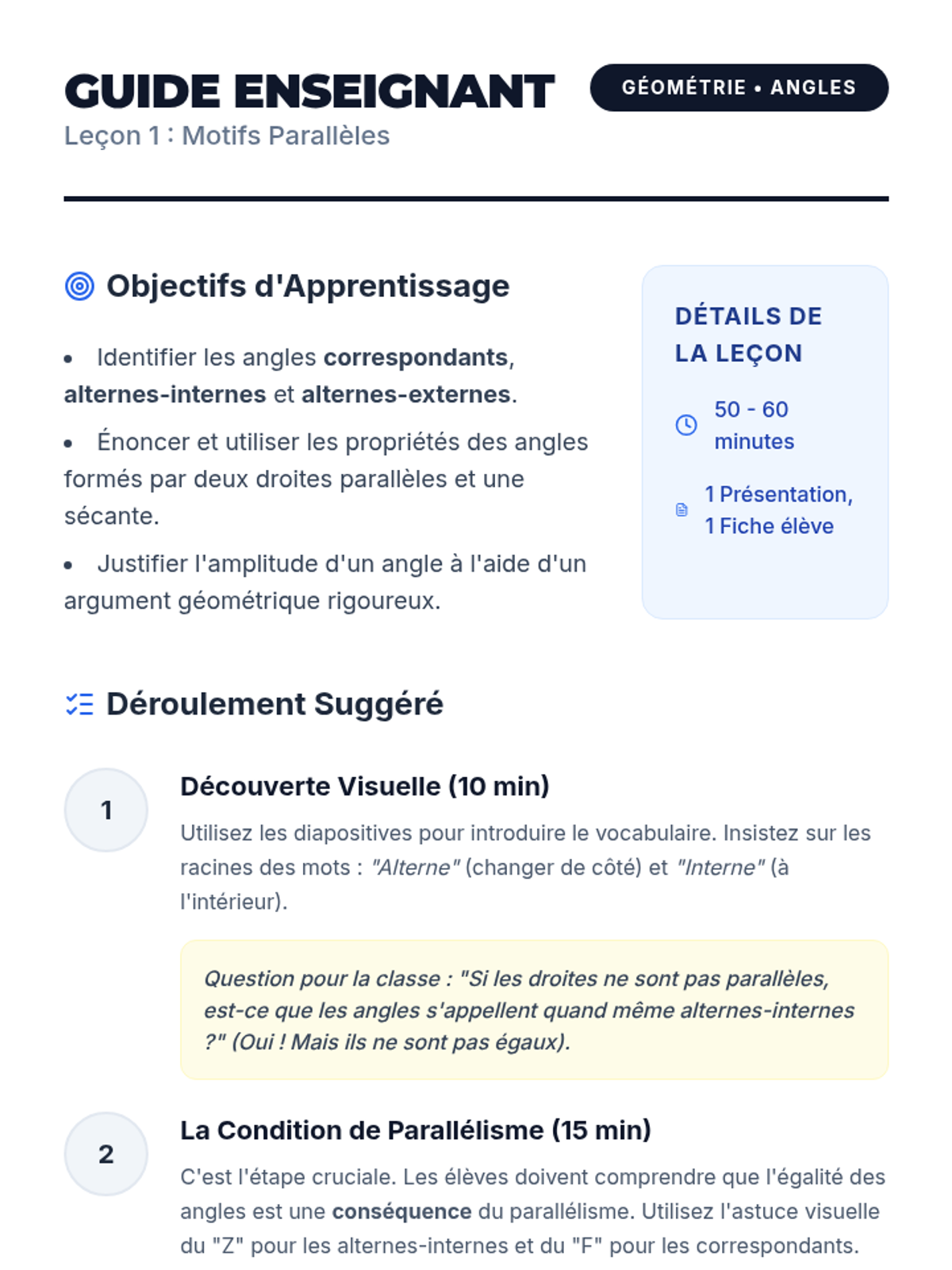
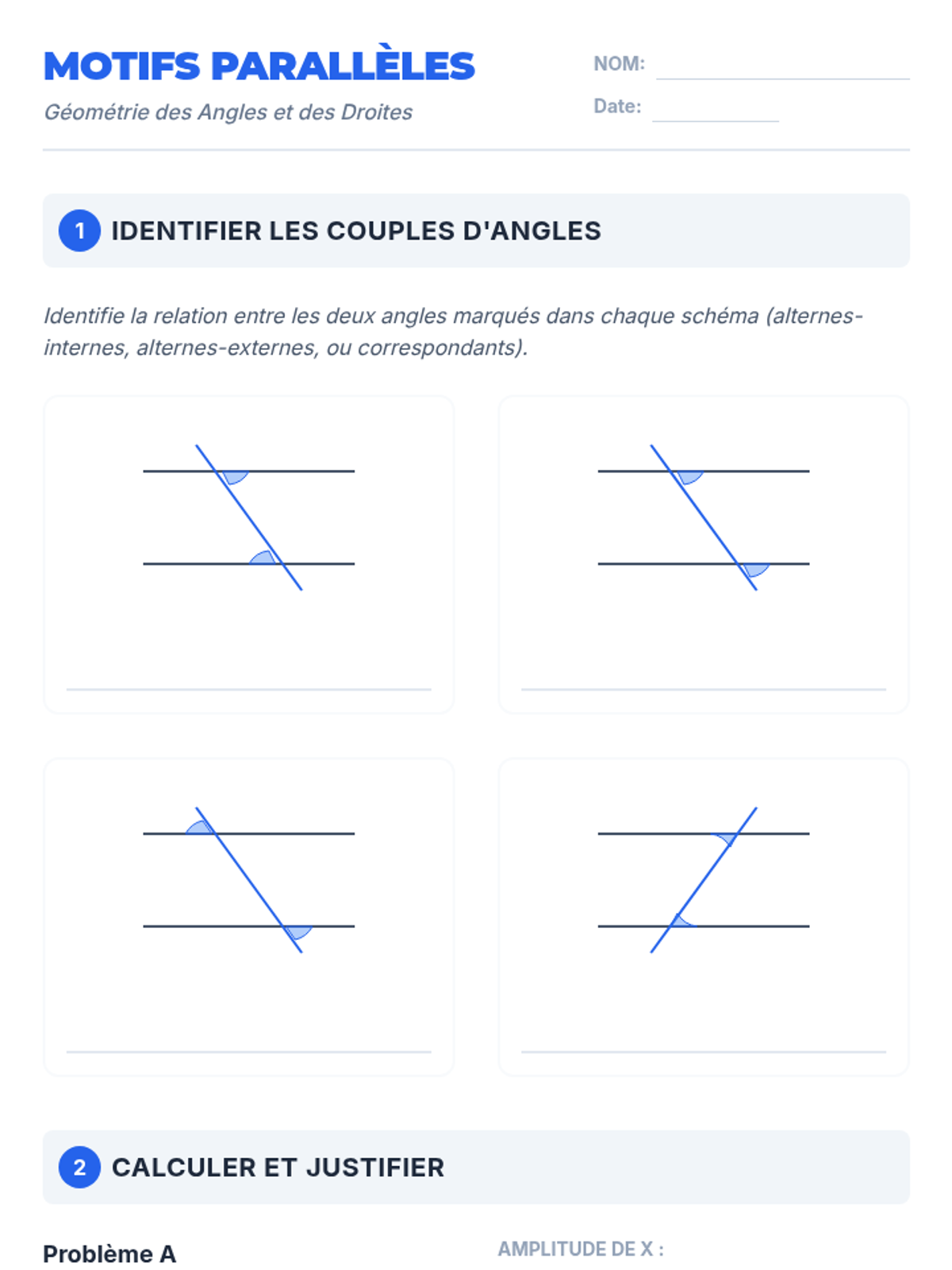
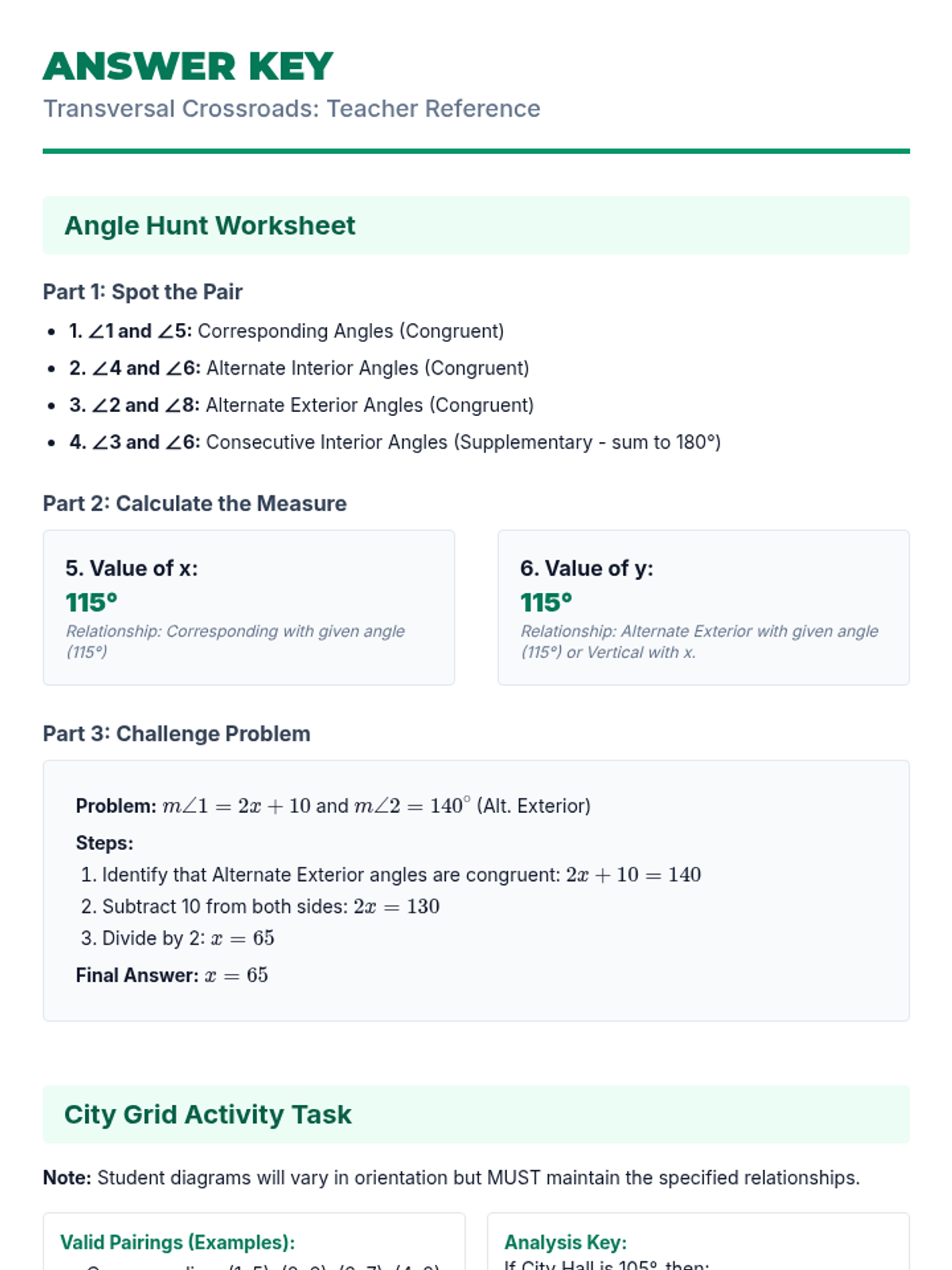
Identifier les angles correspondants, alternes-internes et alternes-externes, et découvrir les propriétés des droites parallèles coupées par une sécante.
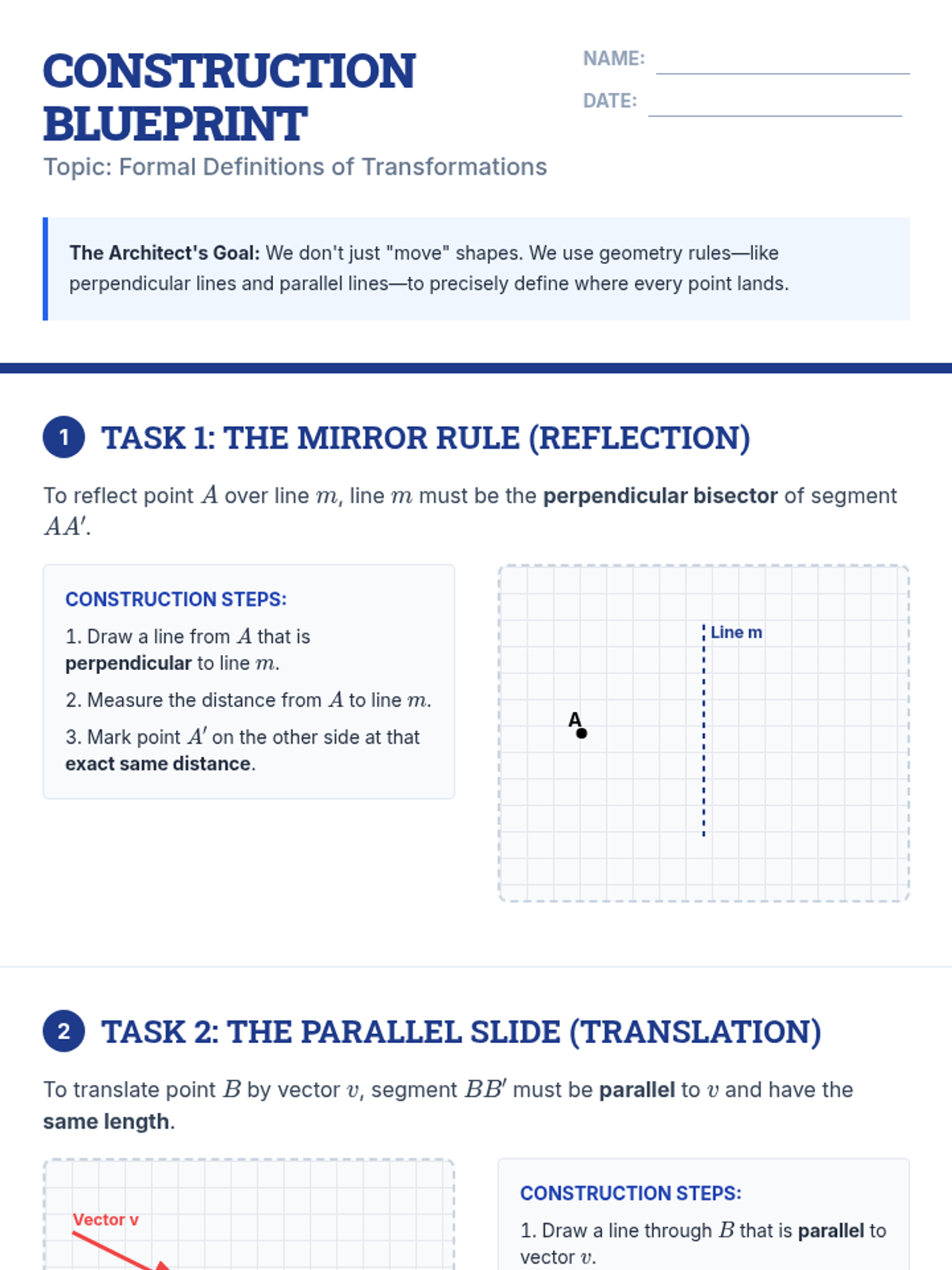
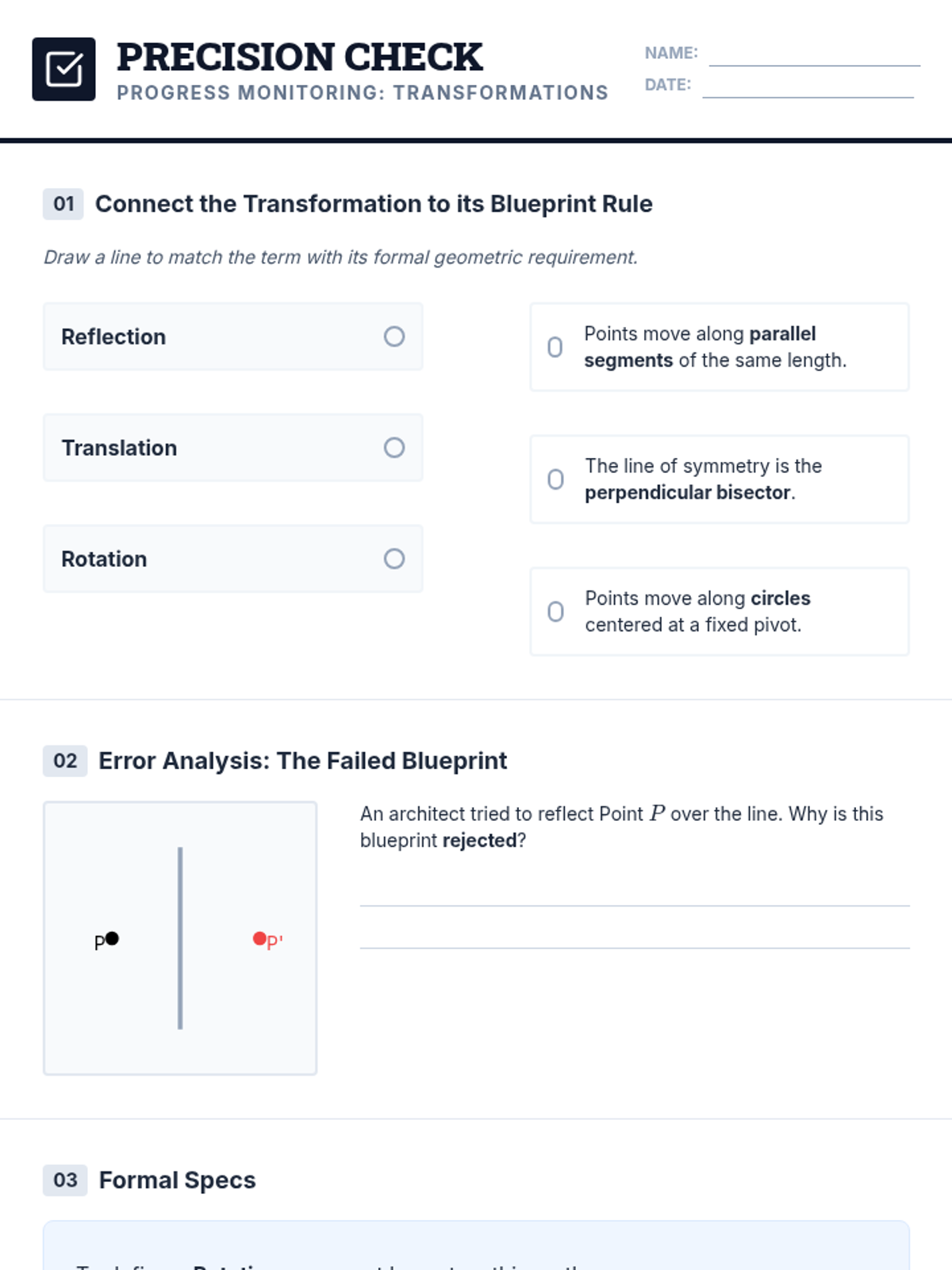
Focuses on developing formal definitions for reflections, translations, and rotations using the language of perpendicular lines, parallel lines, and angles. Students use step-by-step construction logic to define rigid motions.
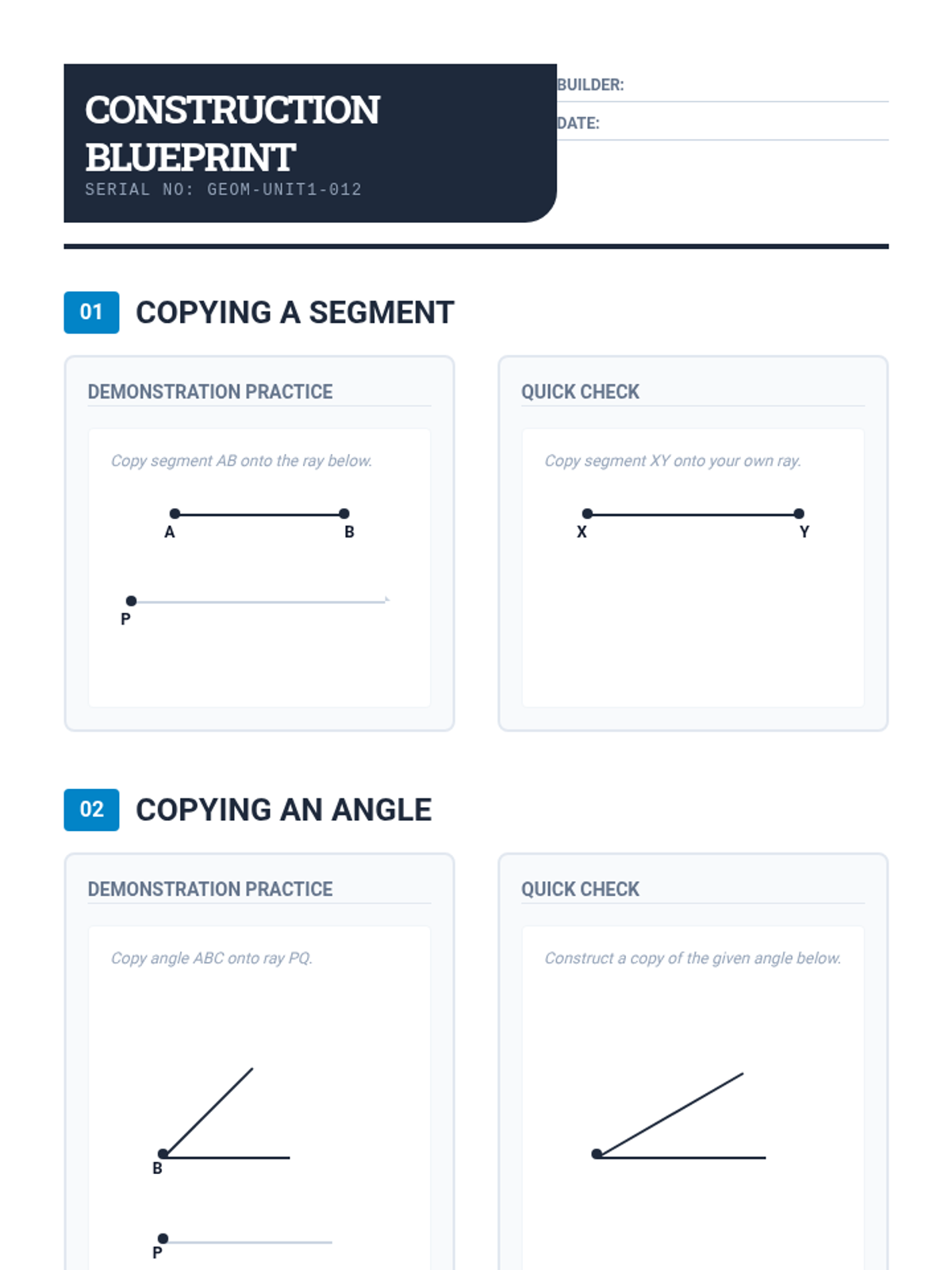
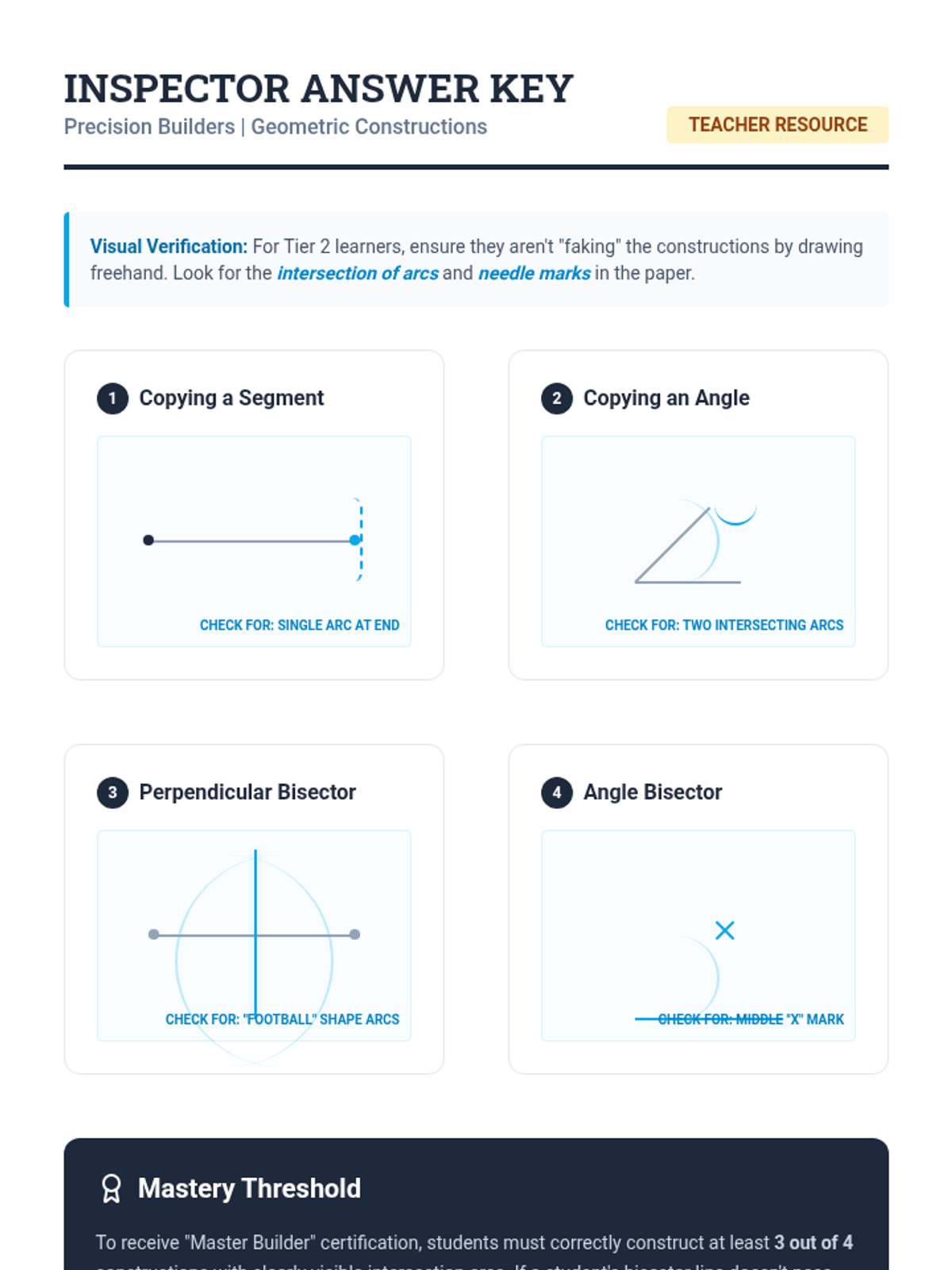
A Tier 2 intervention lesson focused on mastering fundamental geometric constructions through demonstration and scaffolded practice. Students will learn to copy segments, copy angles, and bisect both using a compass and straightedge.
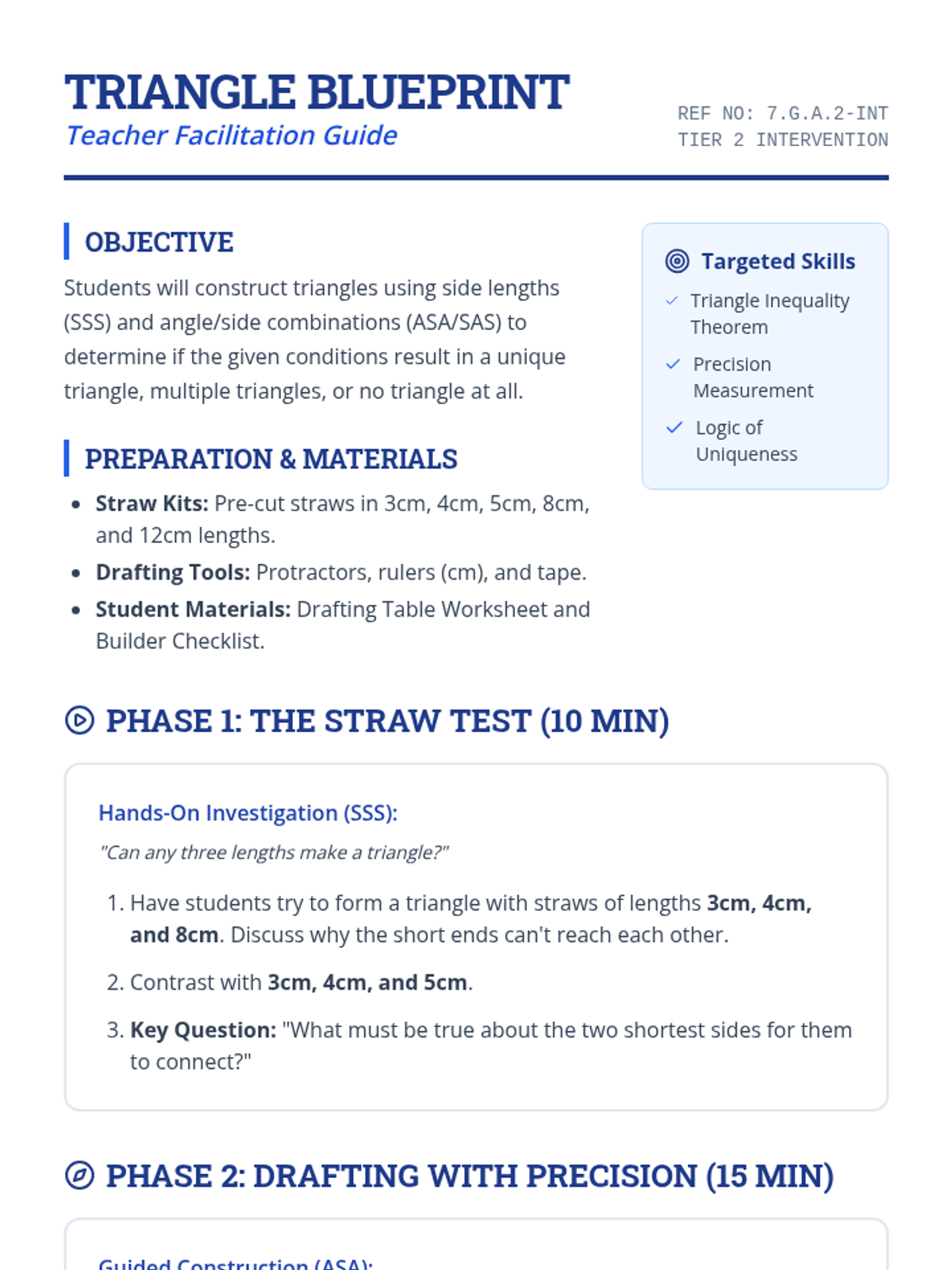
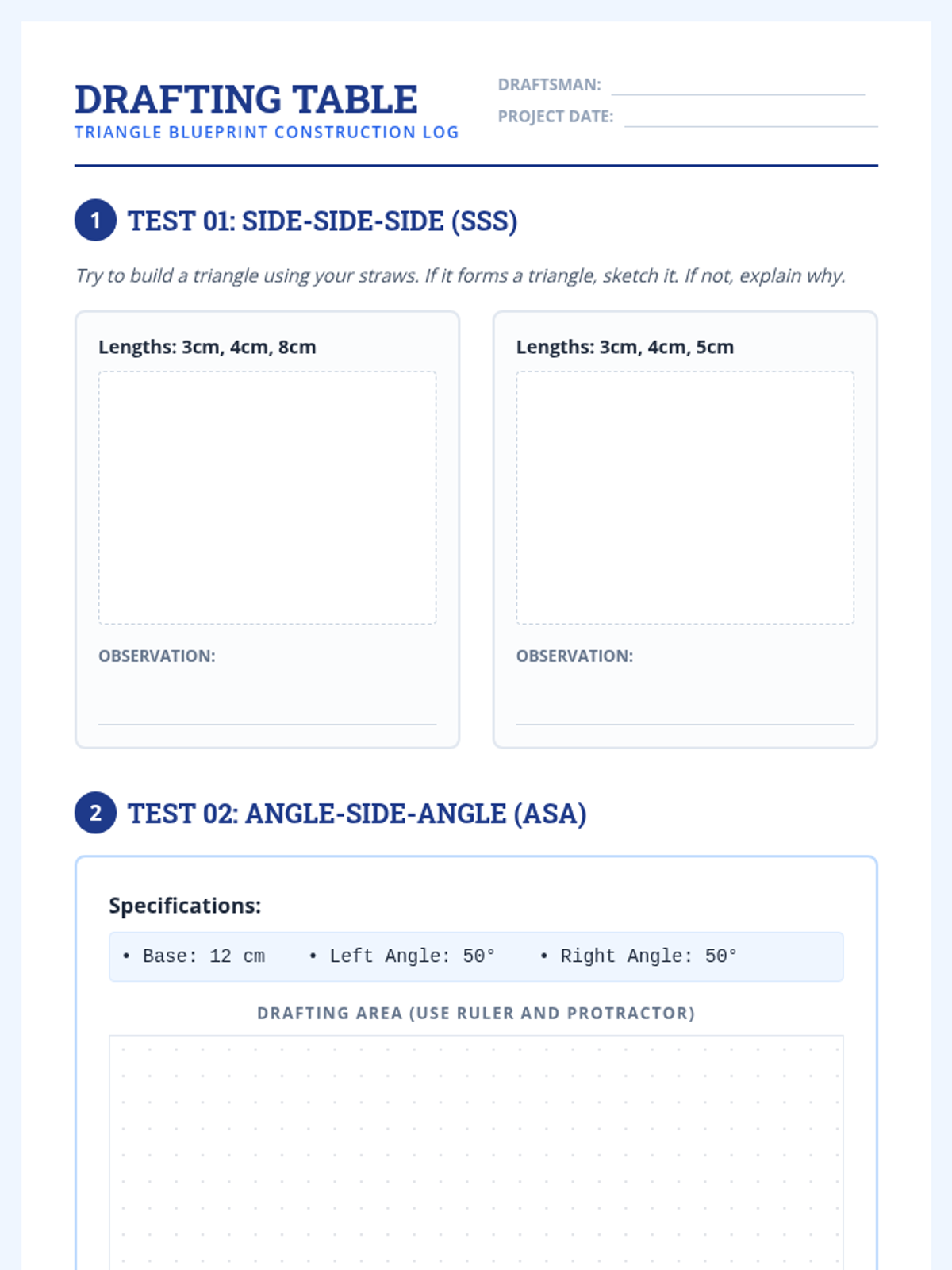
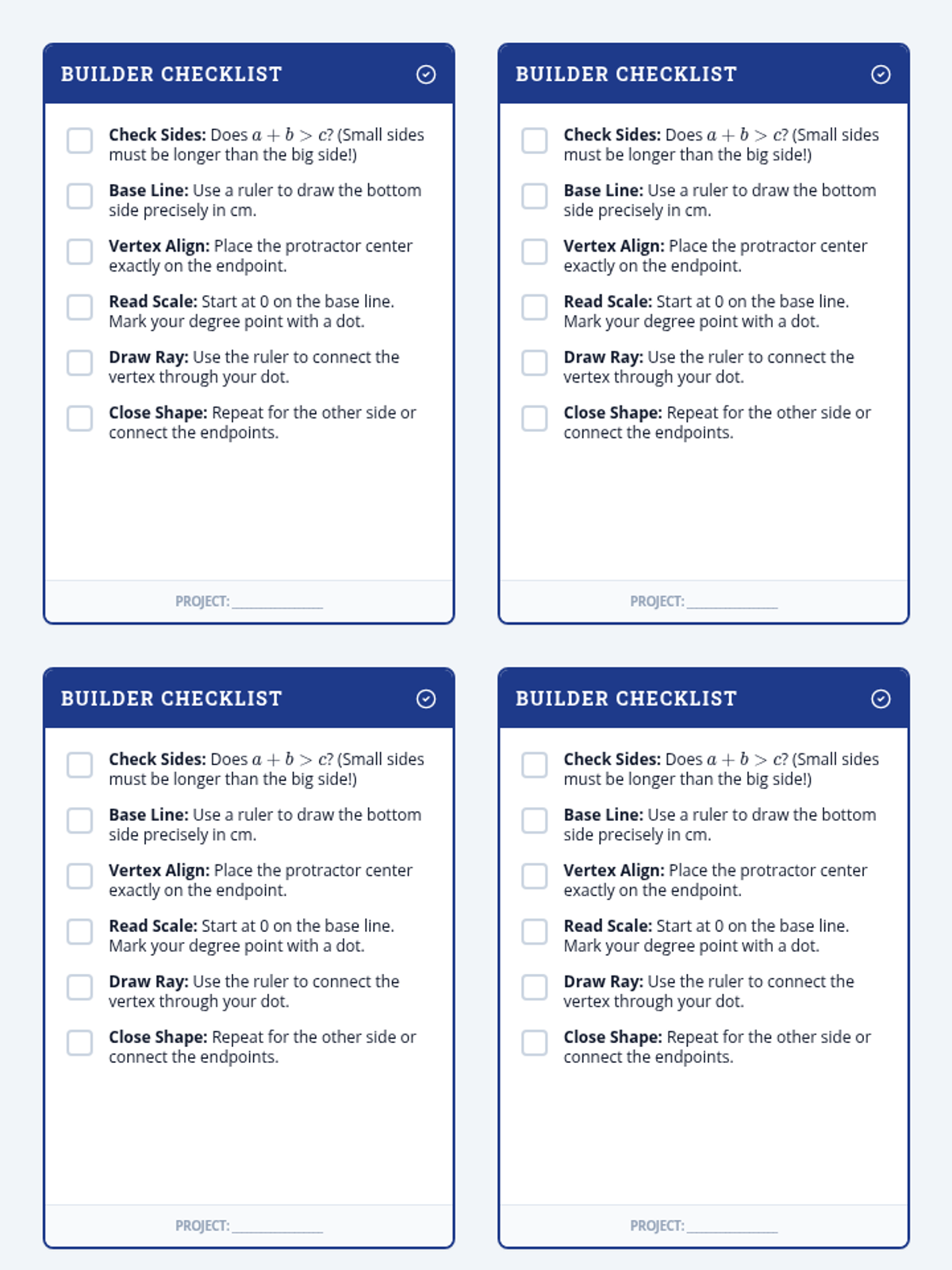
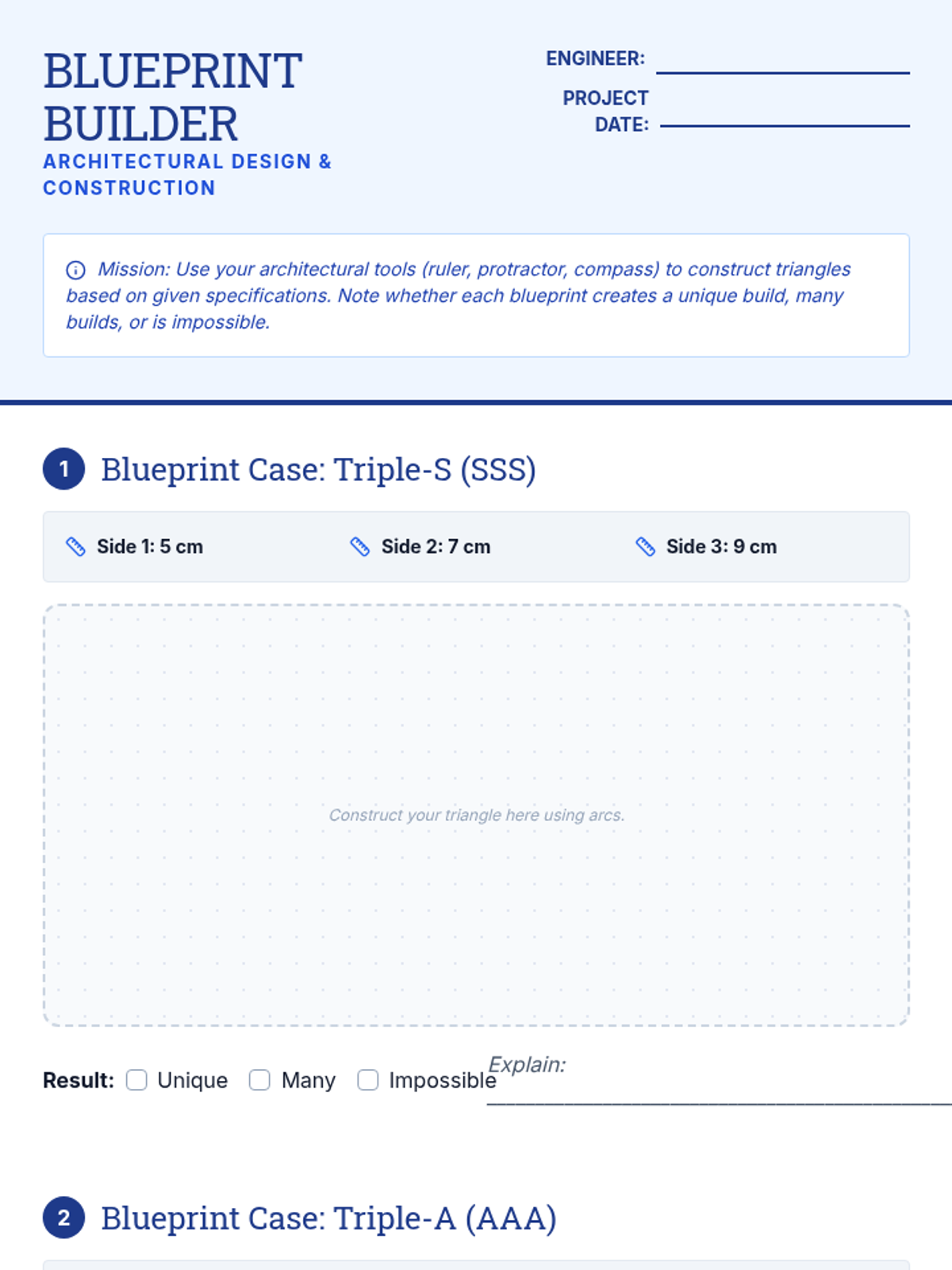
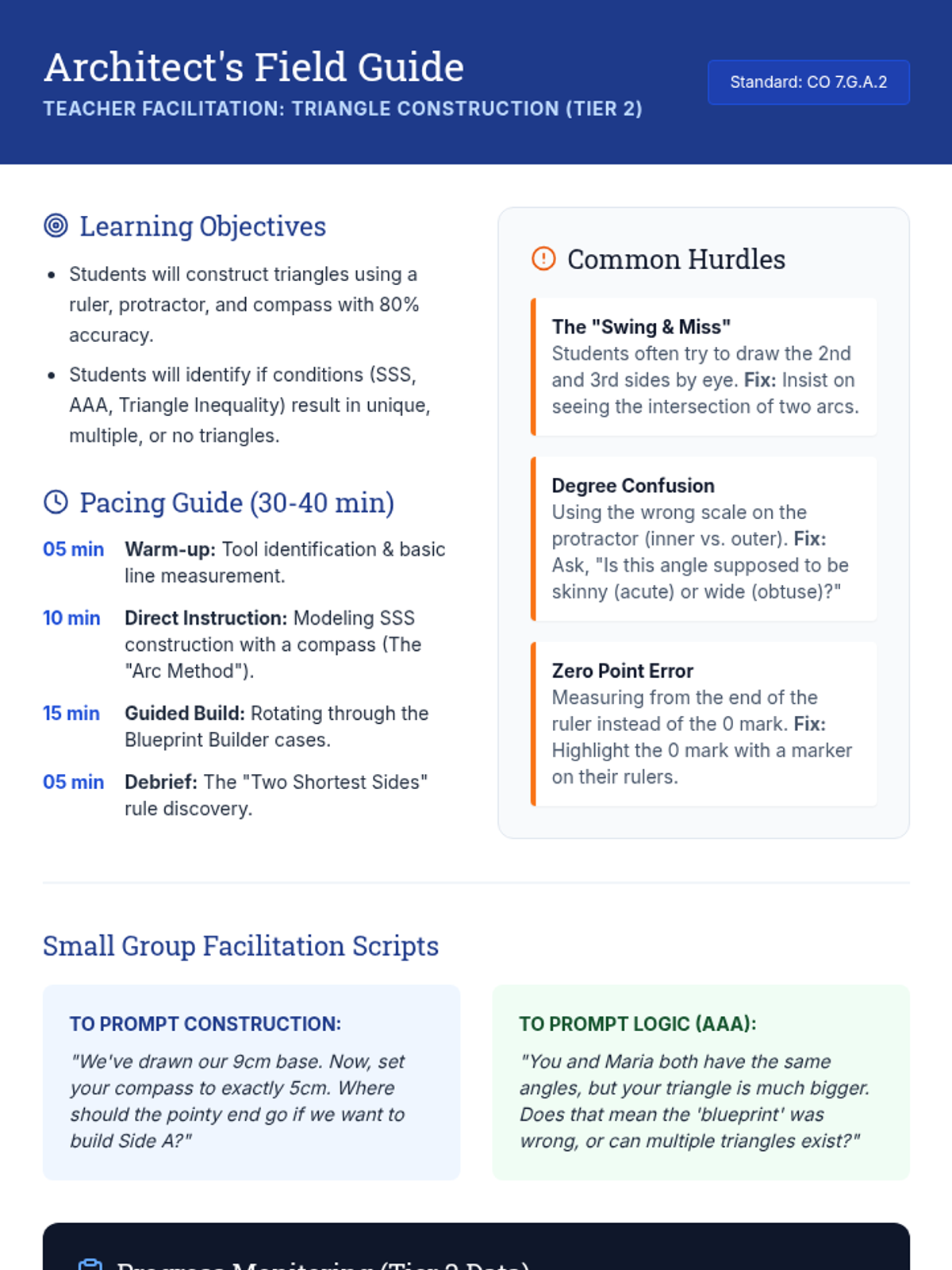
A targeted Tier 2 intervention lesson focusing on constructing triangles from side and angle measures, exploring the Triangle Inequality Theorem, and identifying unique vs. non-unique triangles through hands-on drafting.
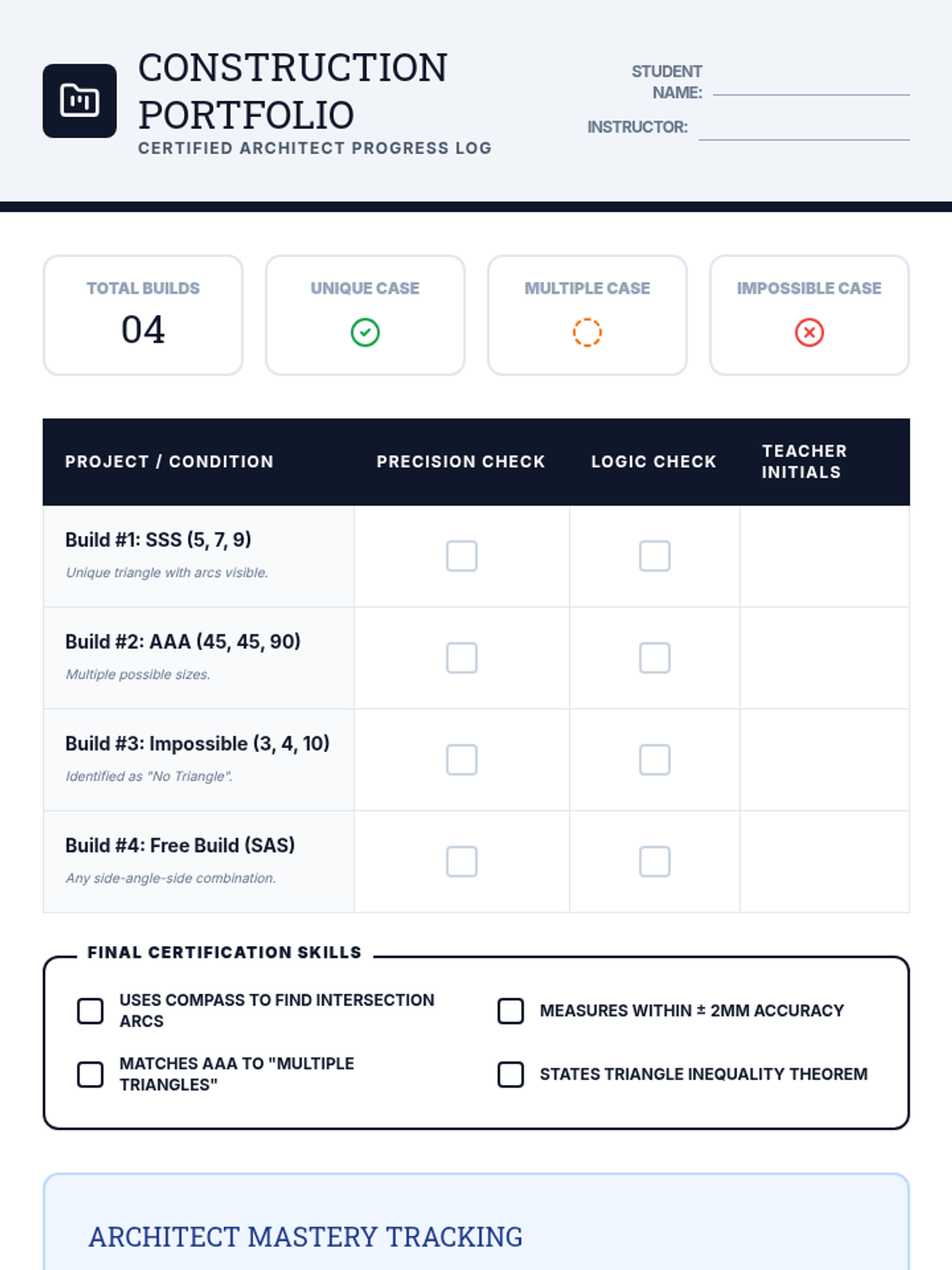
A Tier 2 intervention lesson focused on the construction of triangles using rulers and protractors. Students explore how different side and angle conditions lead to unique, multiple, or no triangles through scaffolded, hands-on architectural tasks.
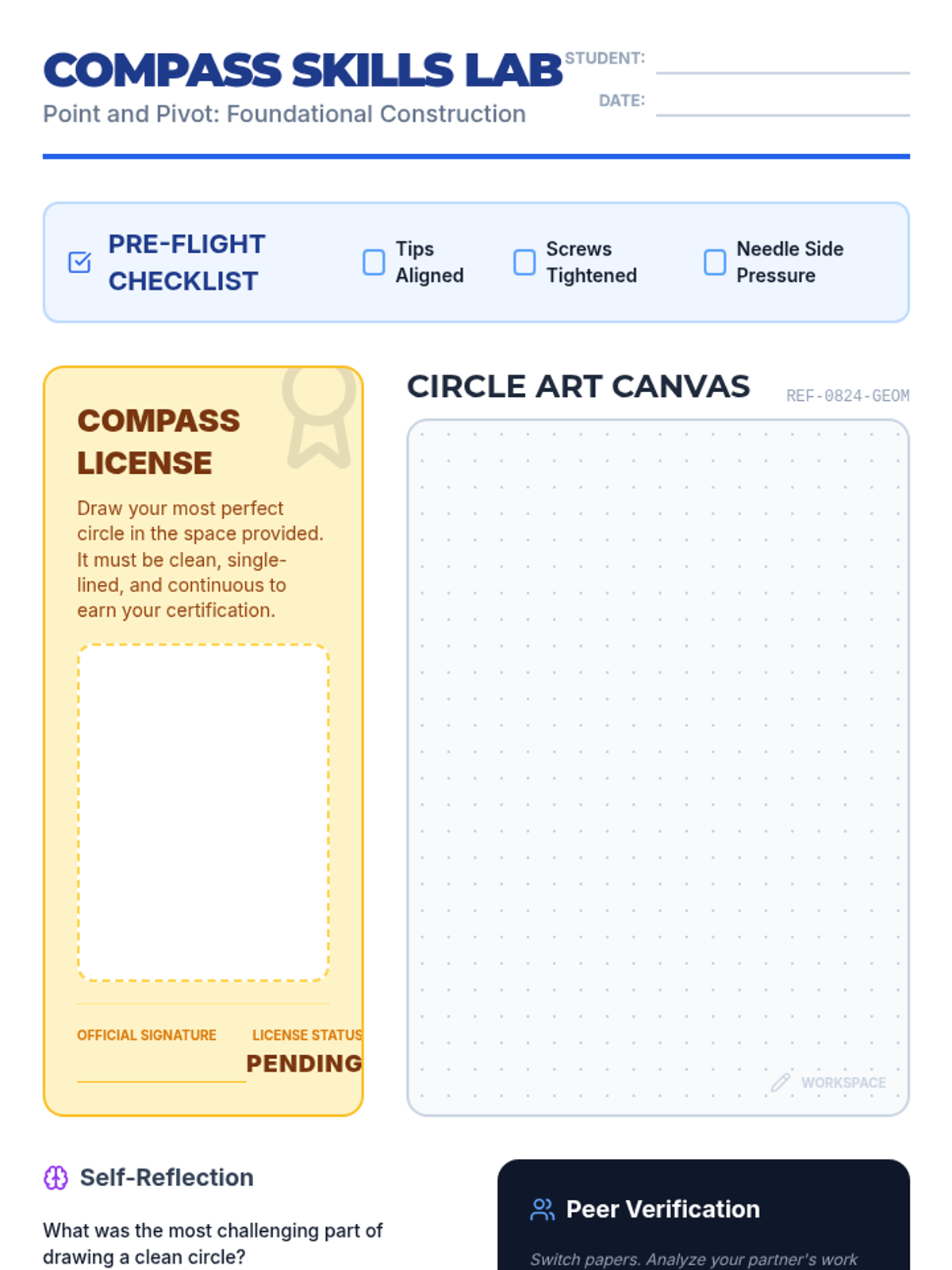
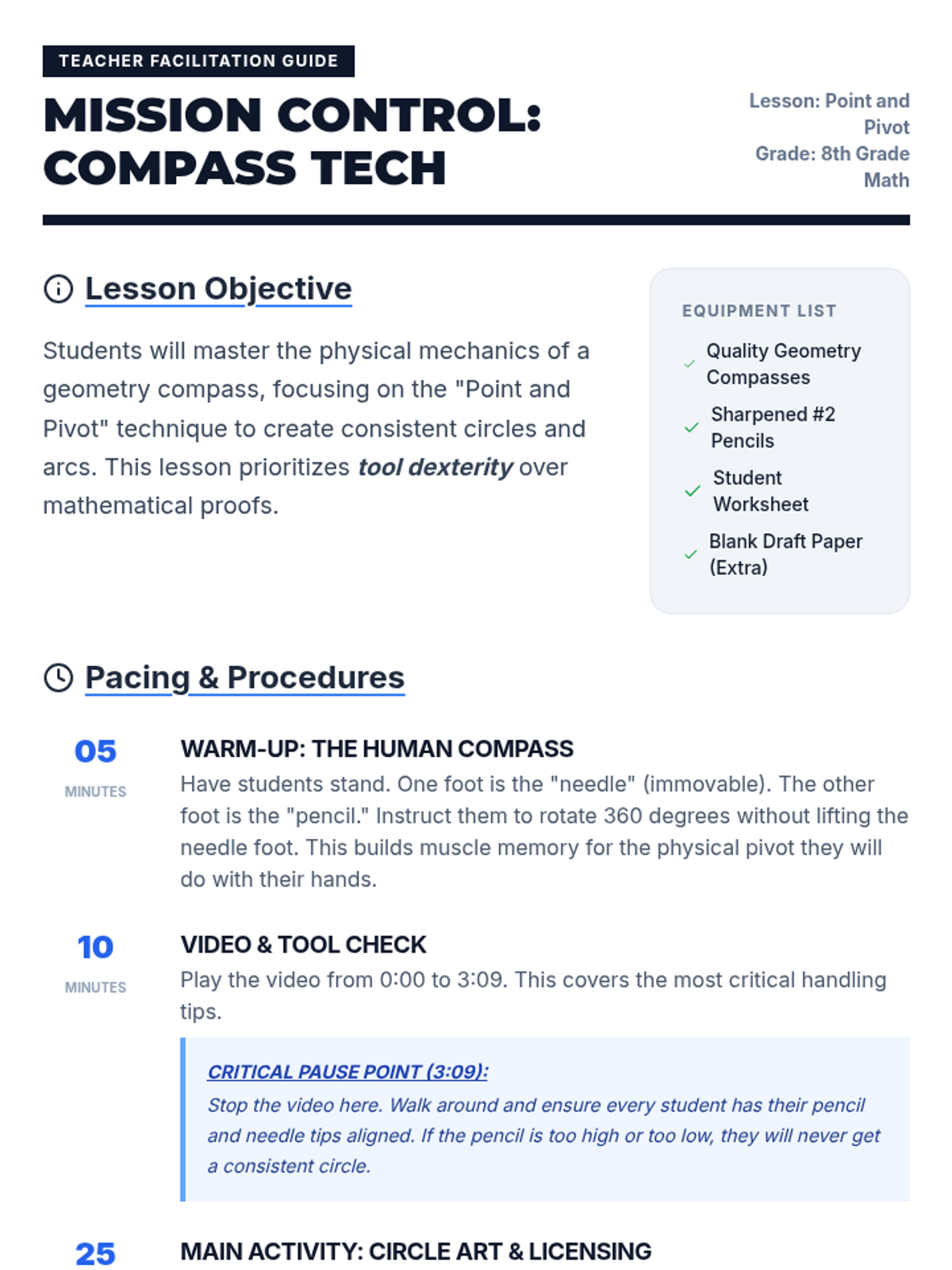
A foundational lesson for 8th-grade math students to master the physical manipulation of a geometry compass. Students learn proper grip, pressure, and alignment through a 'Compass License' challenge and creative circle art.
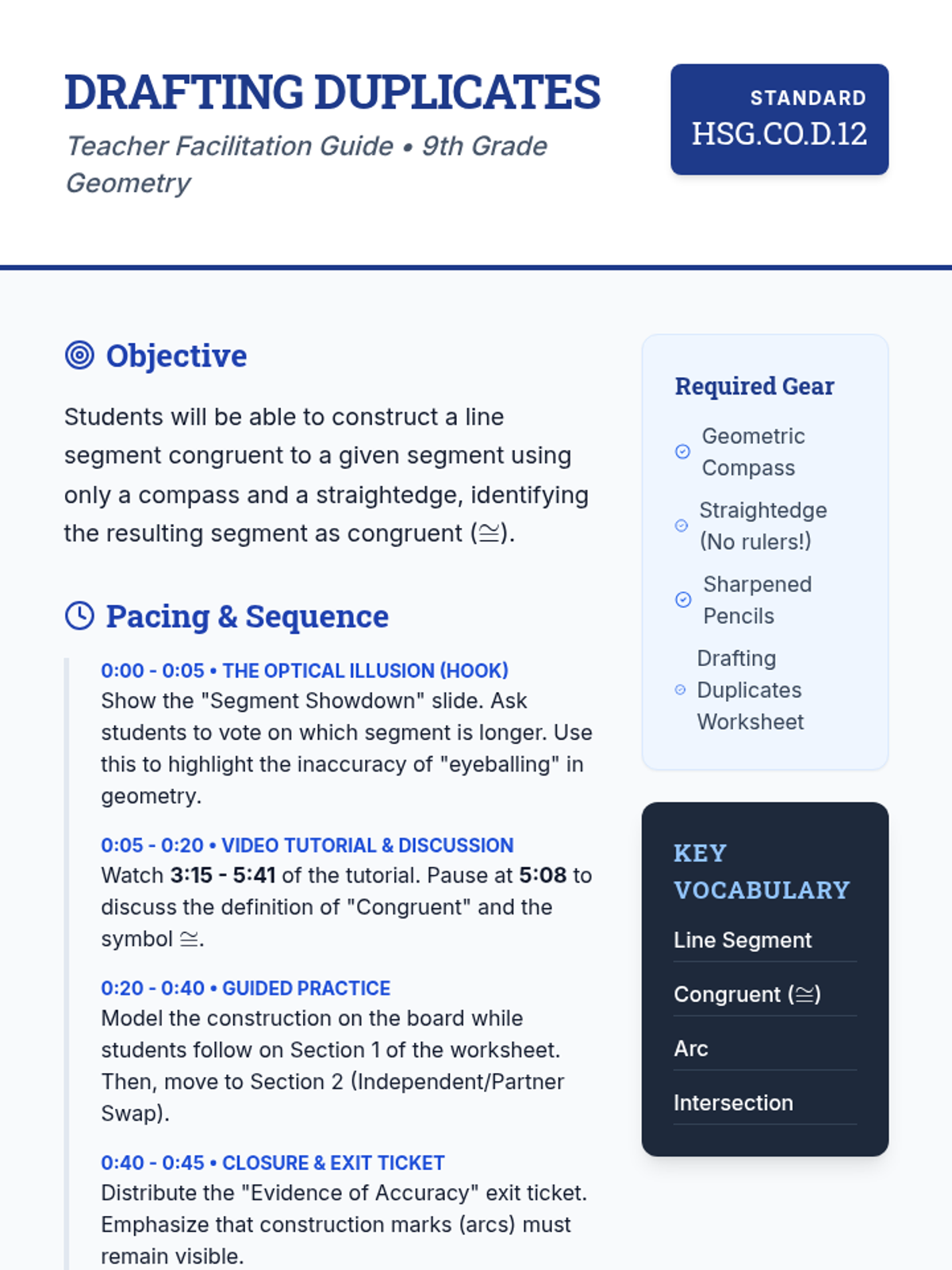
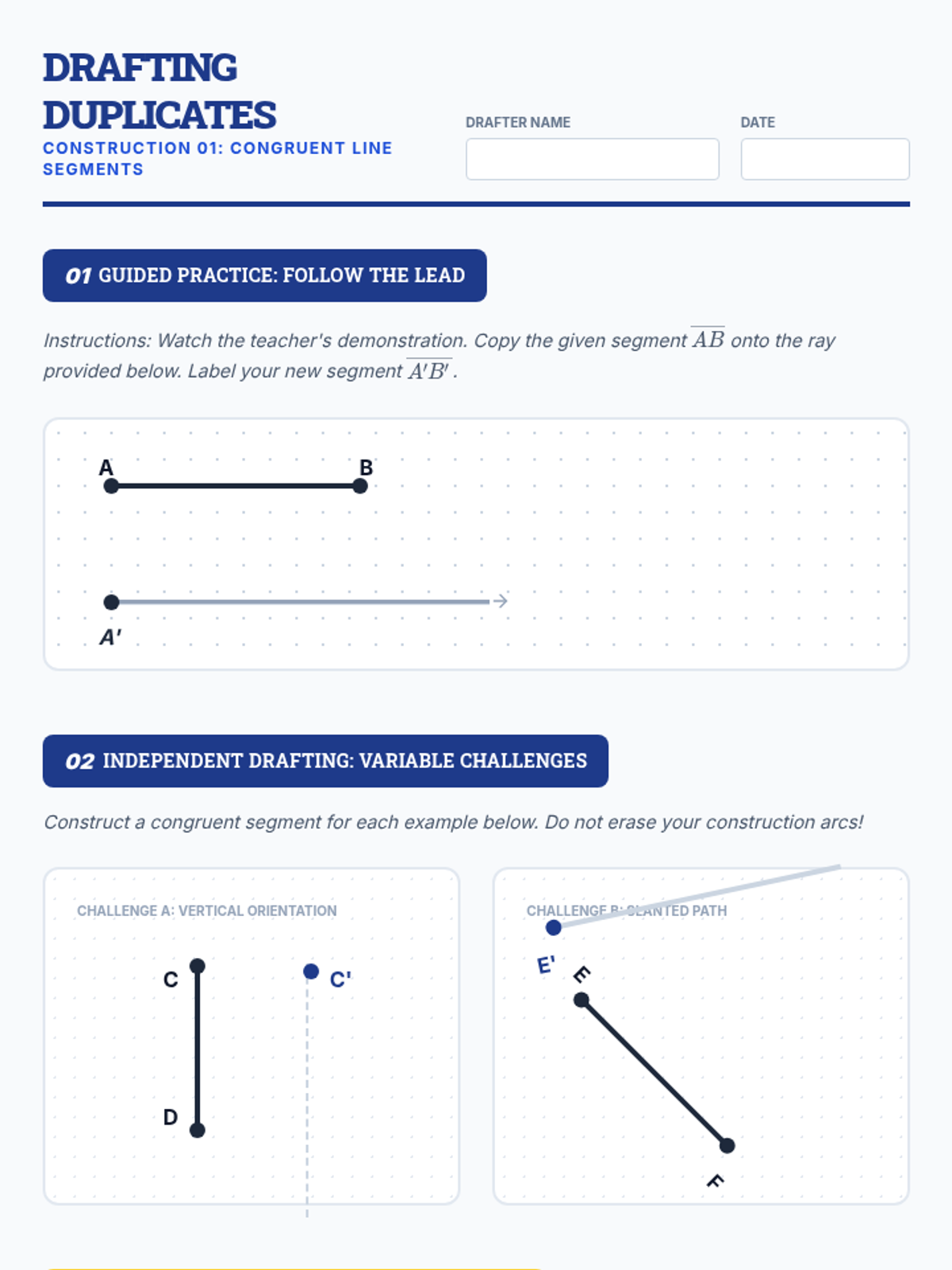
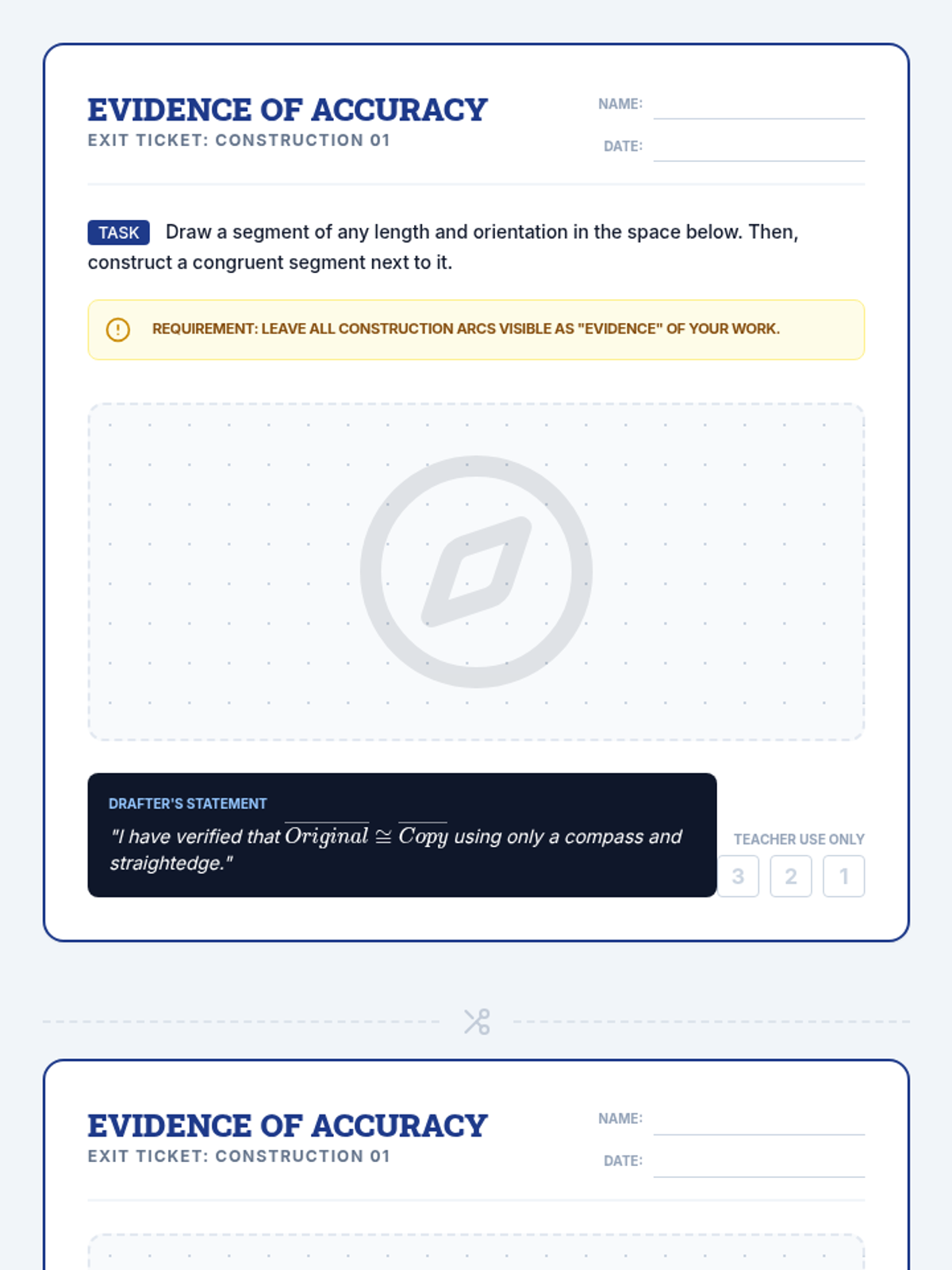
A foundational geometry lesson on using a compass and straightedge to construct congruent line segments, including video analysis and hands-on practice.
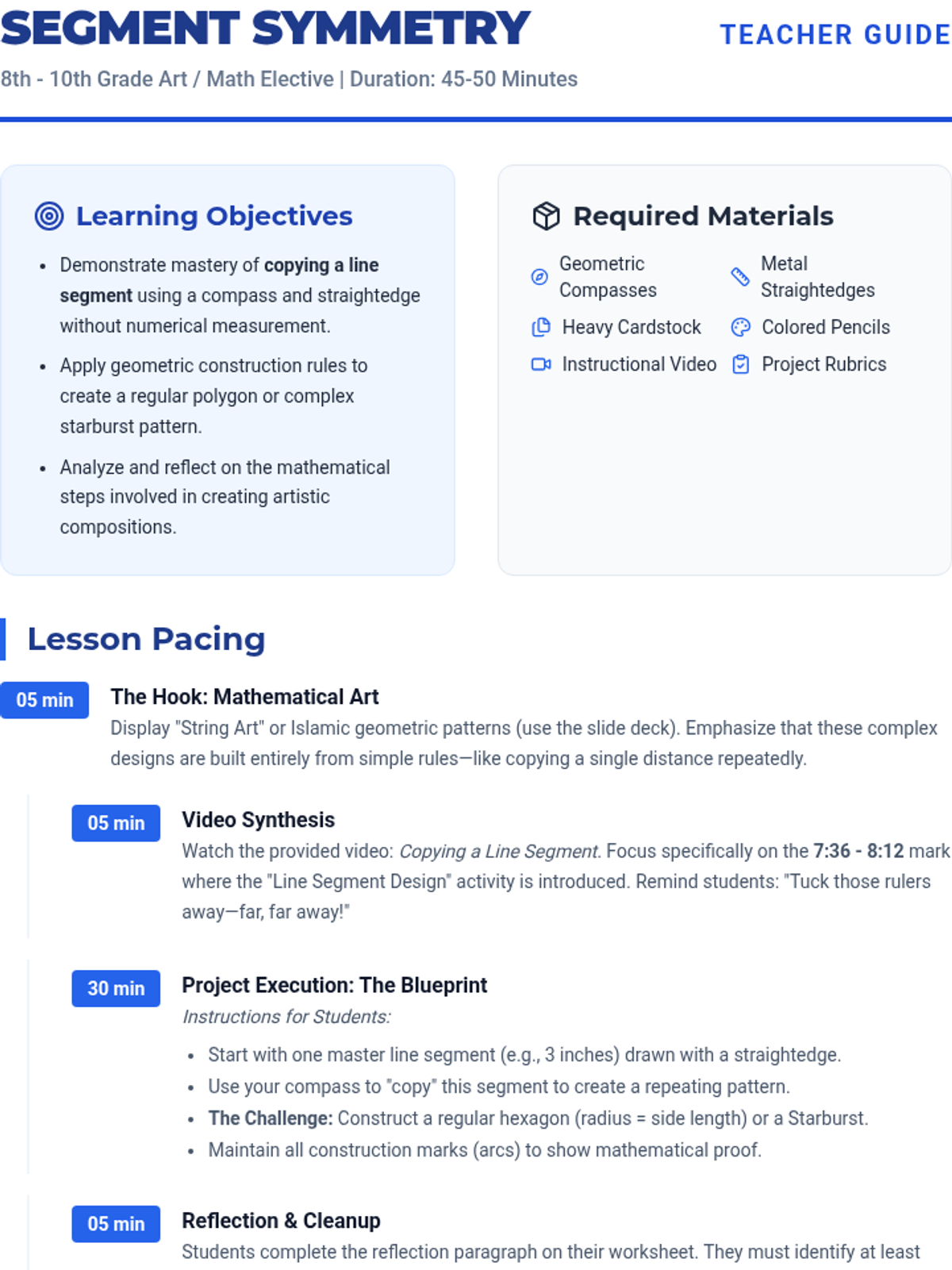
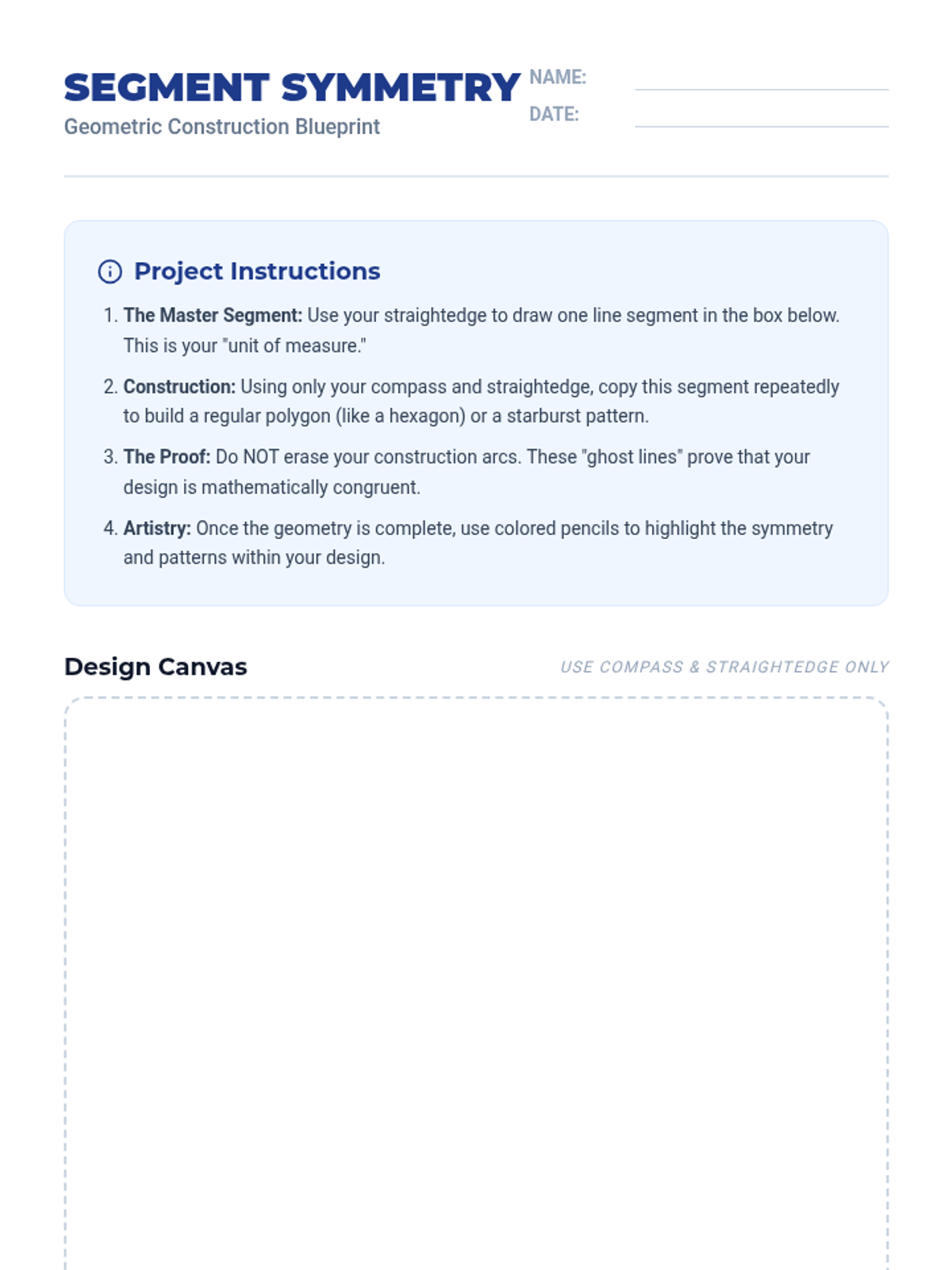
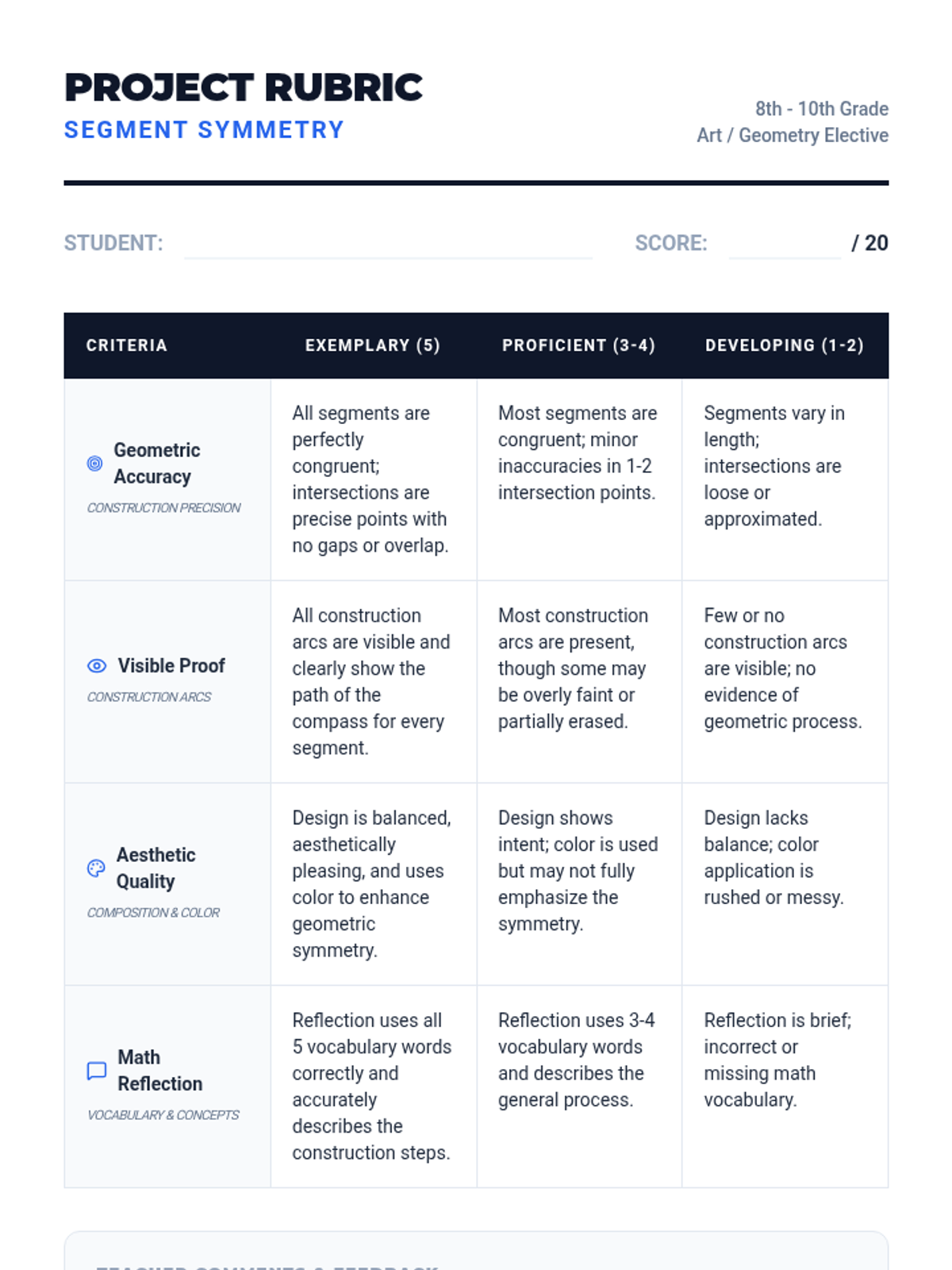
A cross-curricular project for 8th-10th grade students that bridges geometry and art. Students learn the foundational skill of copying line segments using a compass and straightedge to create intricate, aesthetically pleasing geometric designs and reflections.
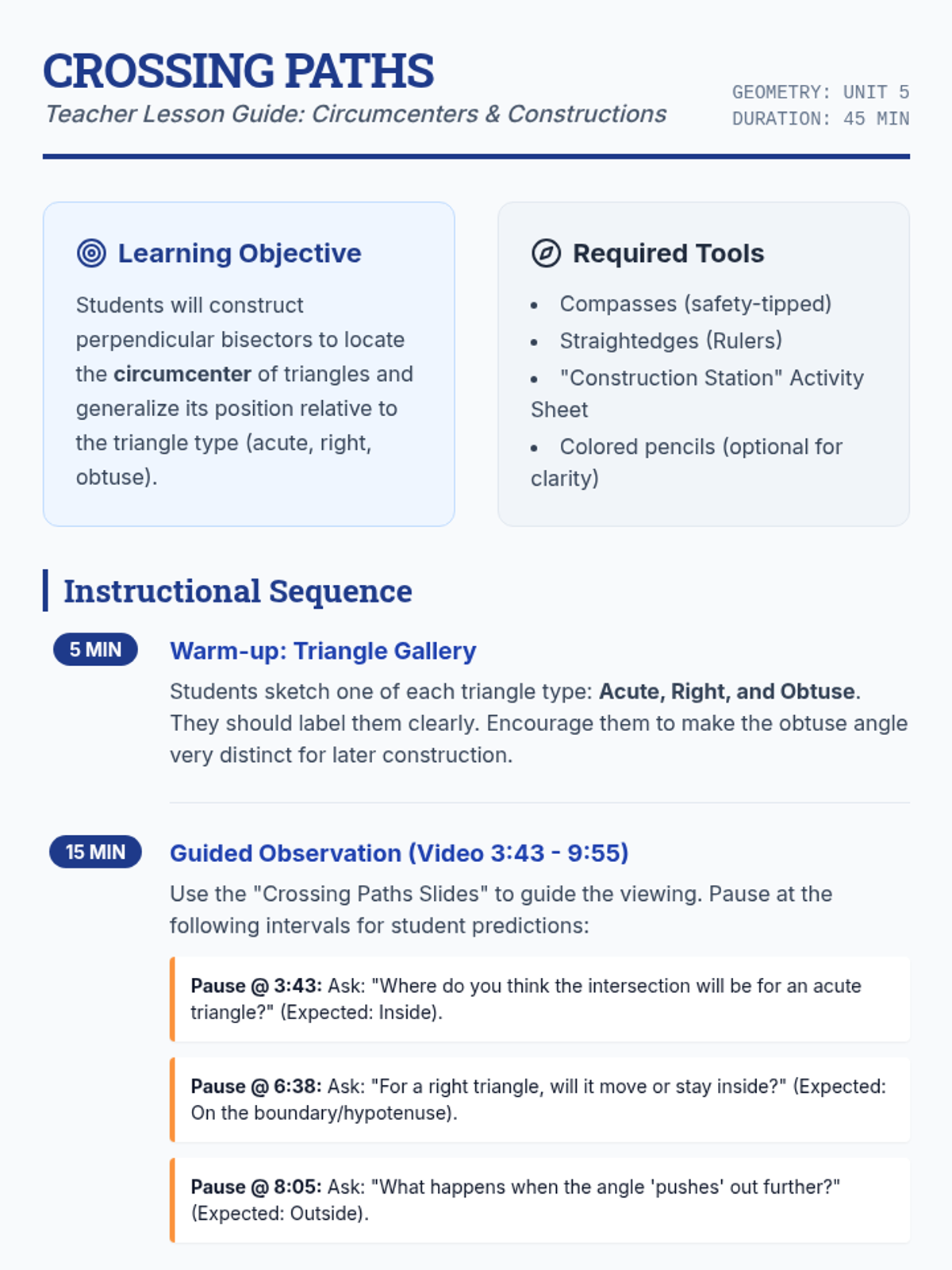
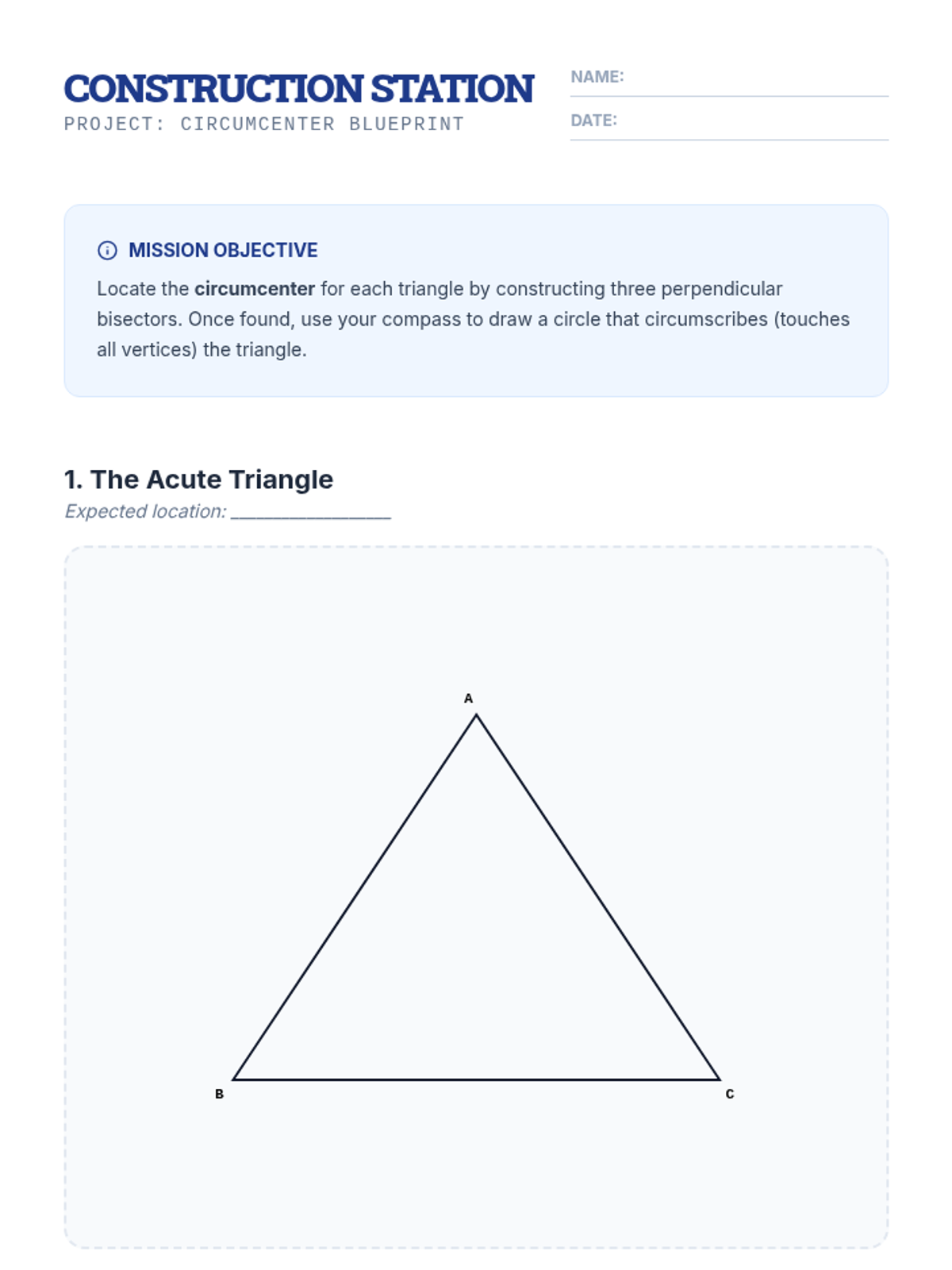
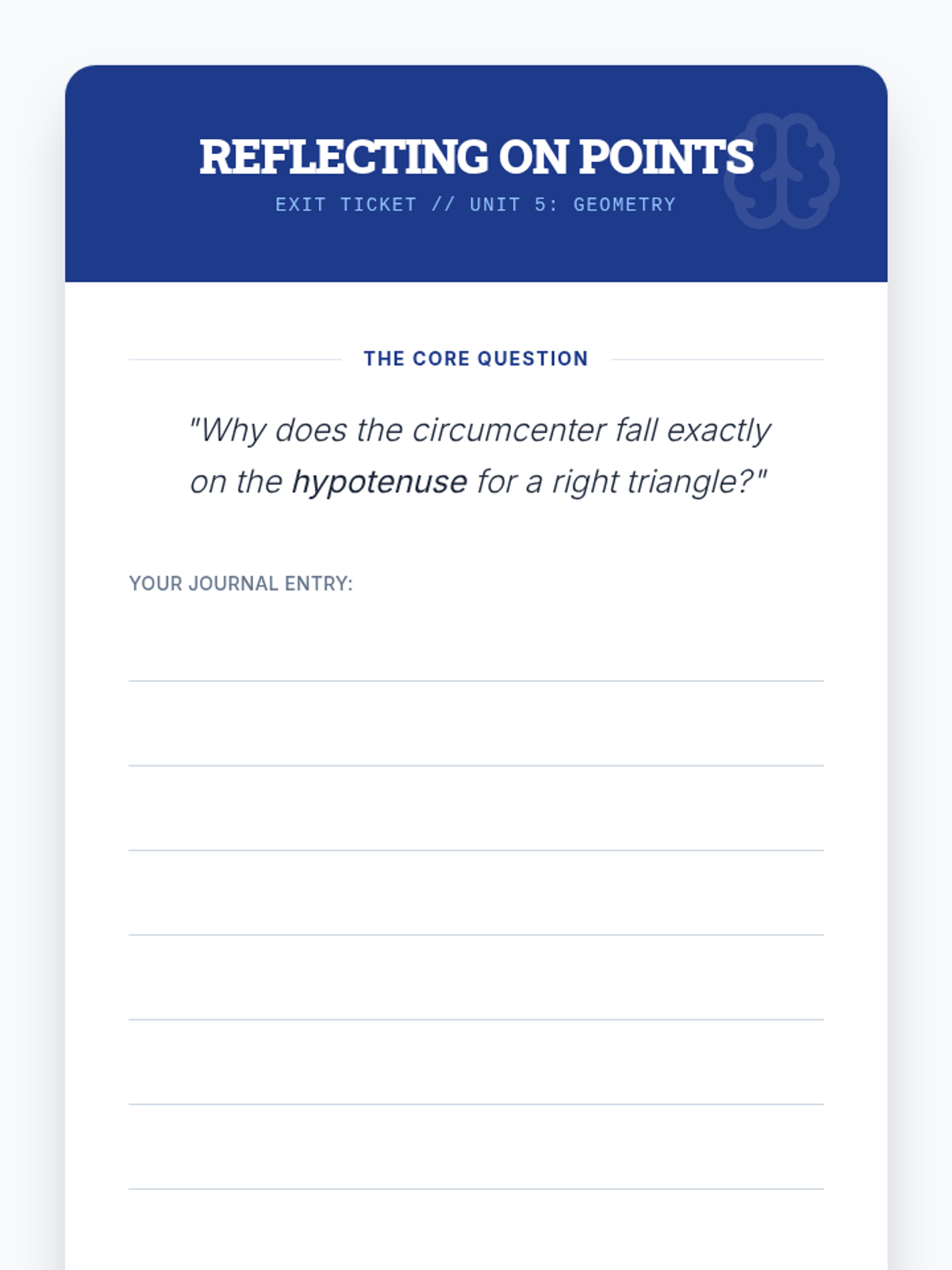
Students will construct perpendicular bisectors to find the circumcenter of acute, right, and obtuse triangles, exploring how the triangle's shape dictates the circumcenter's location.
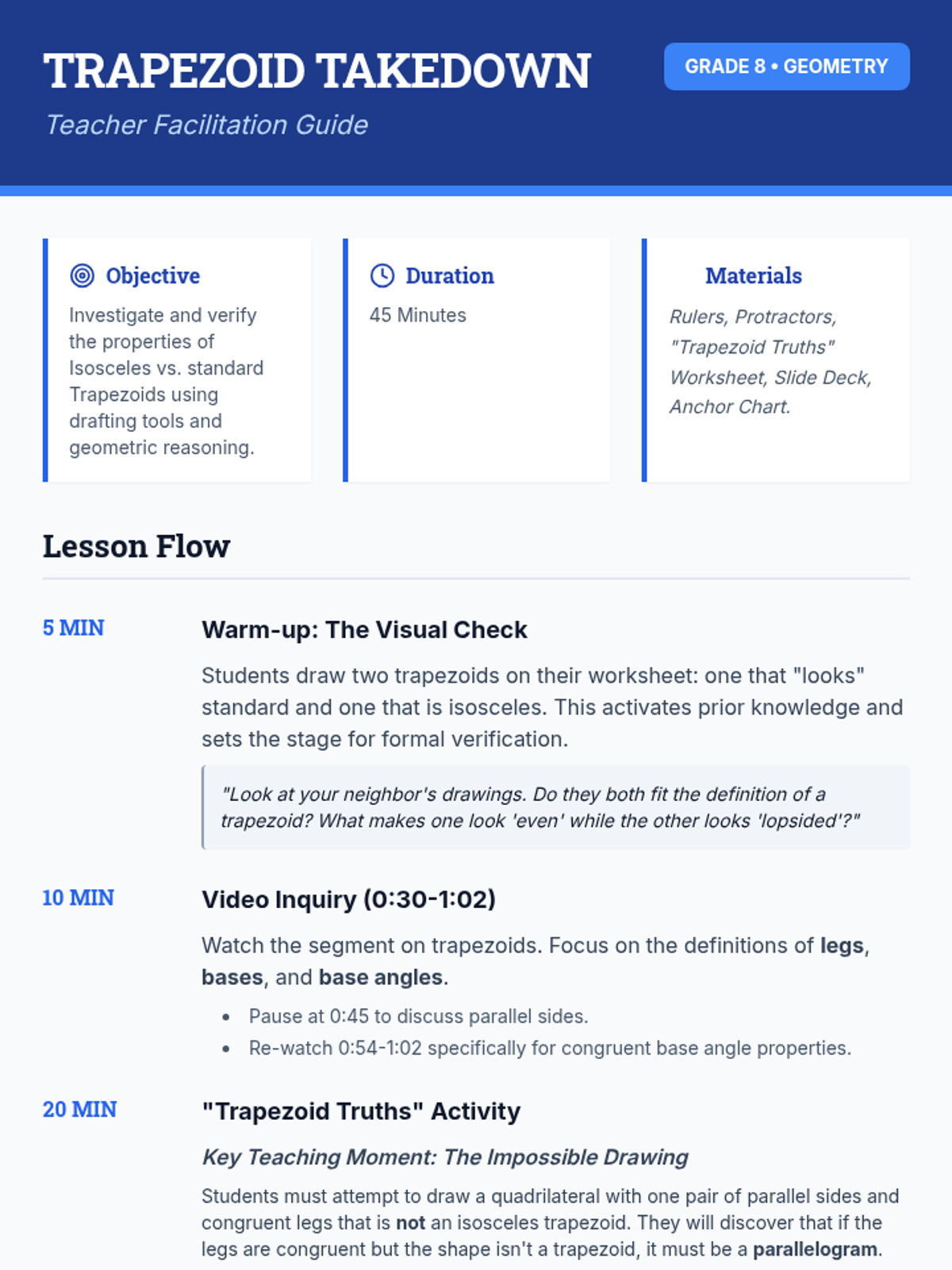
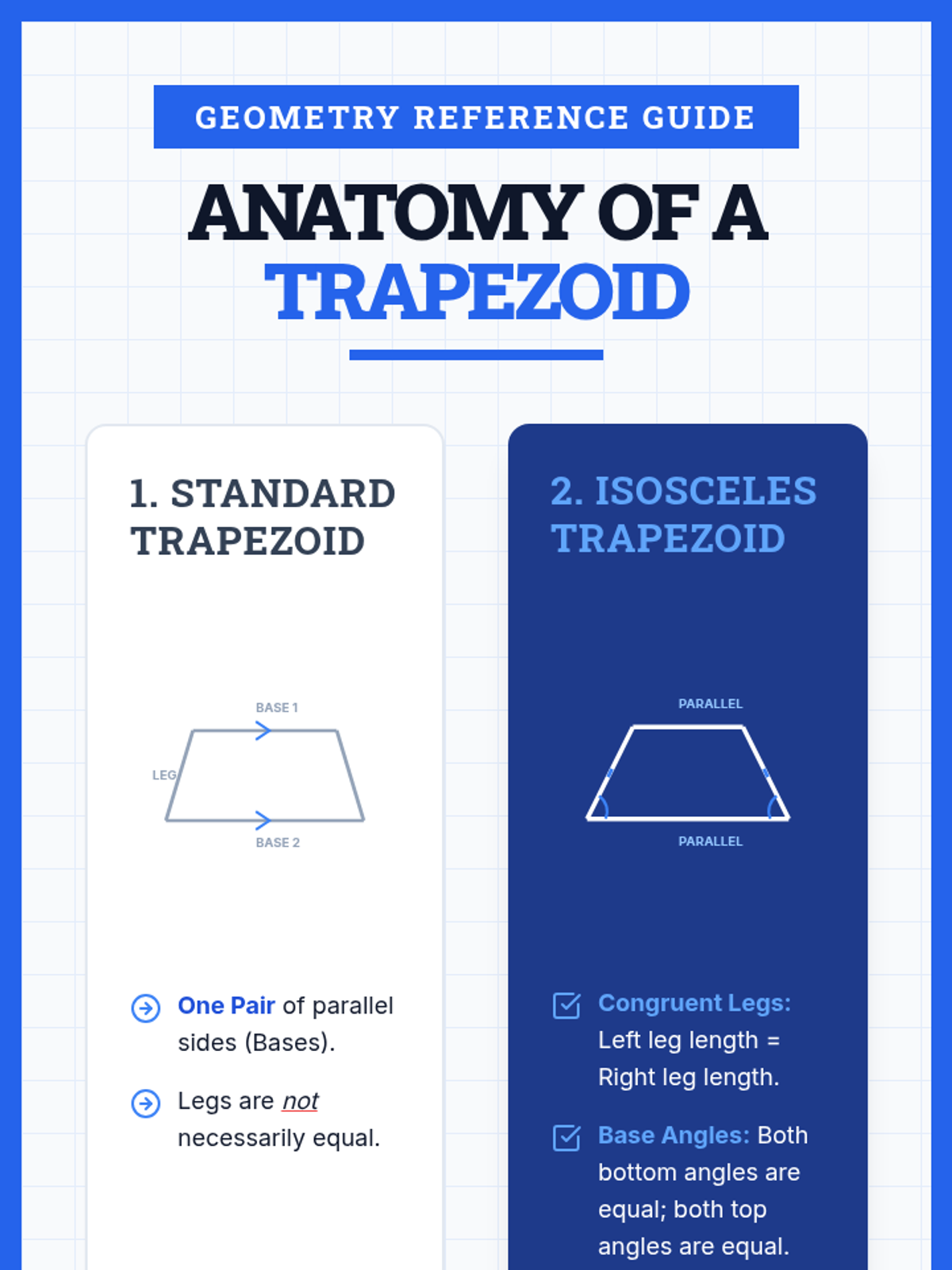
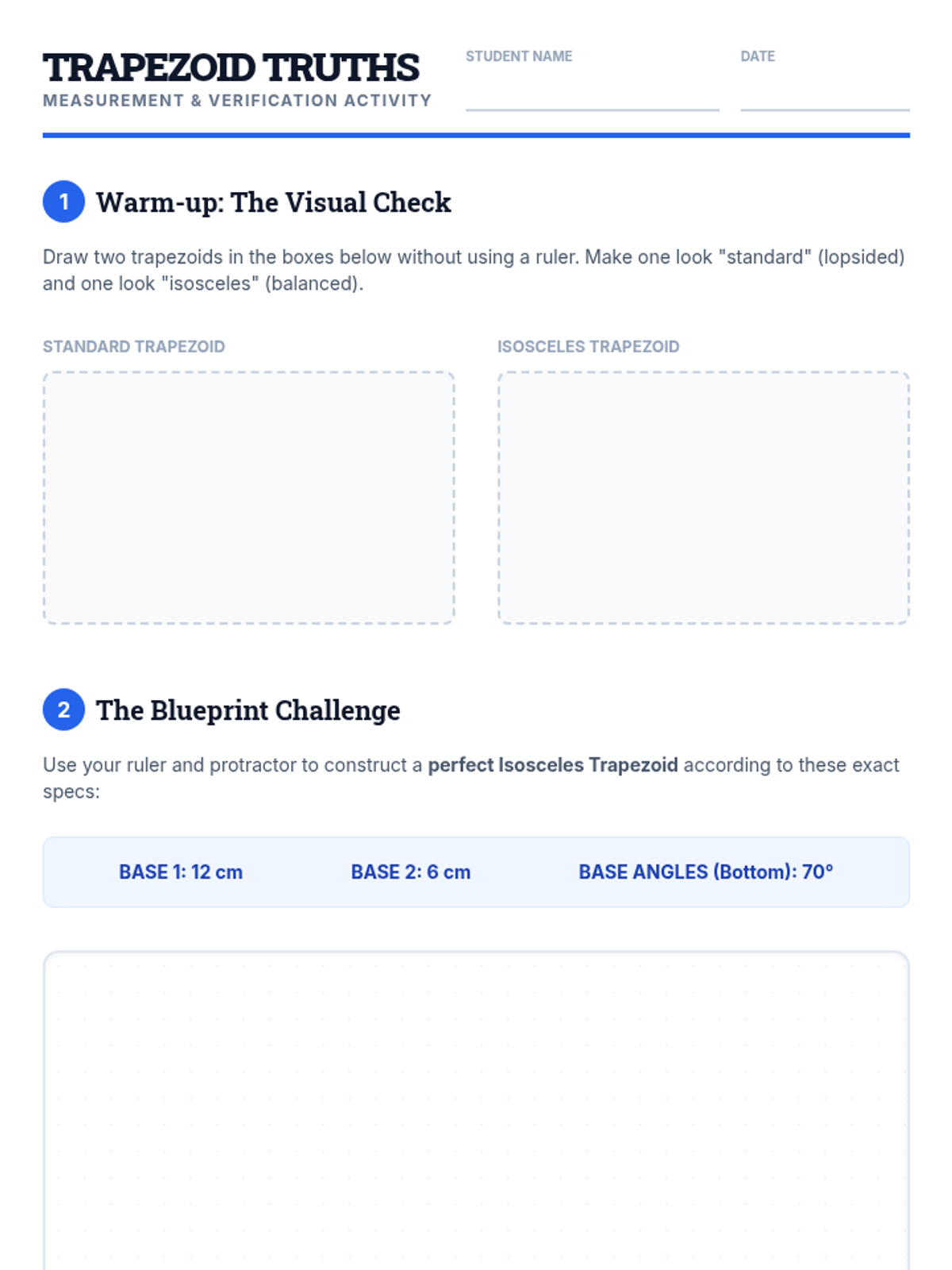
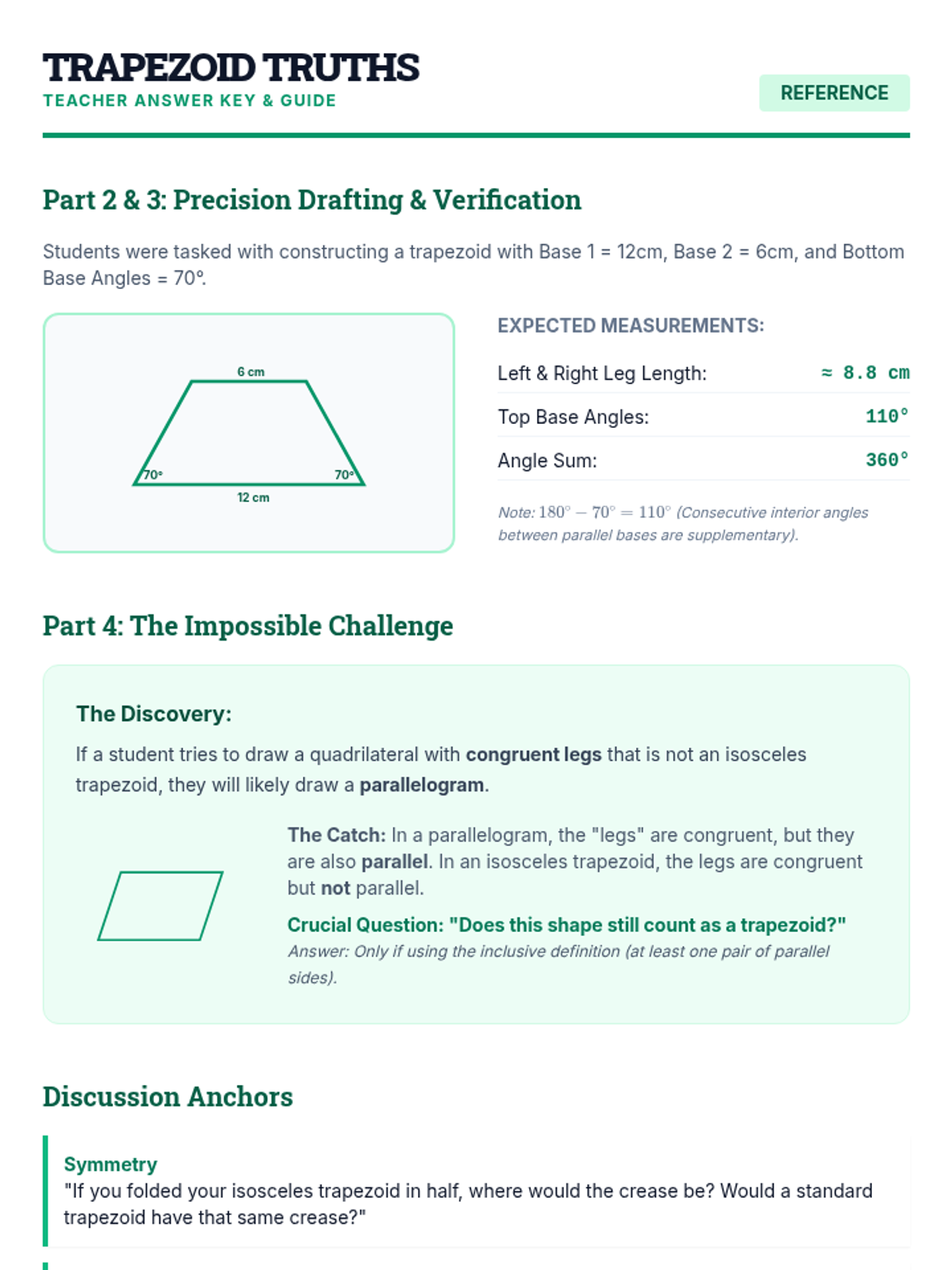
Students investigate the defining characteristics of trapezoids, specifically comparing standard and isosceles varieties through hands-on drafting, measurement, and geometric verification.
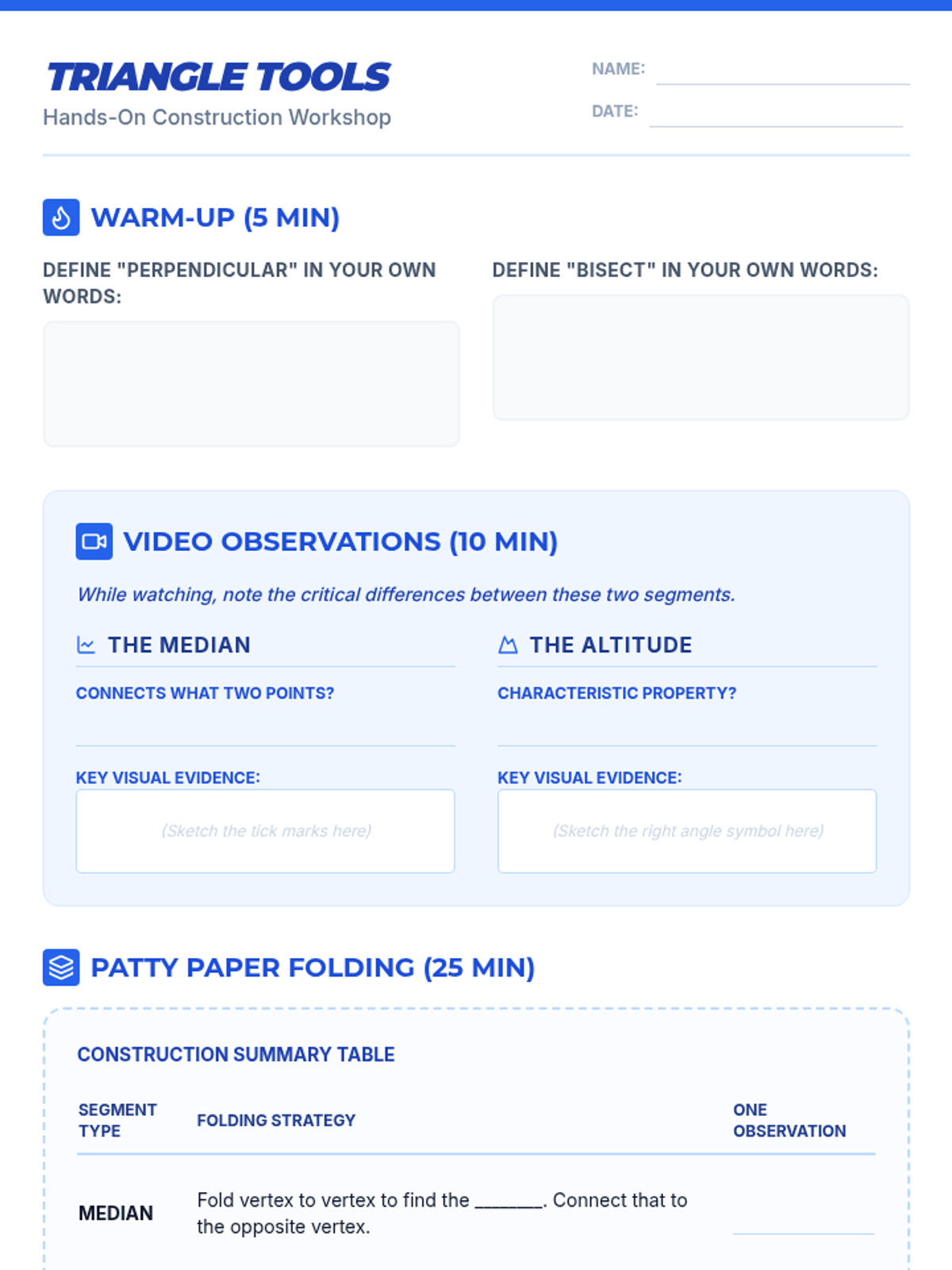
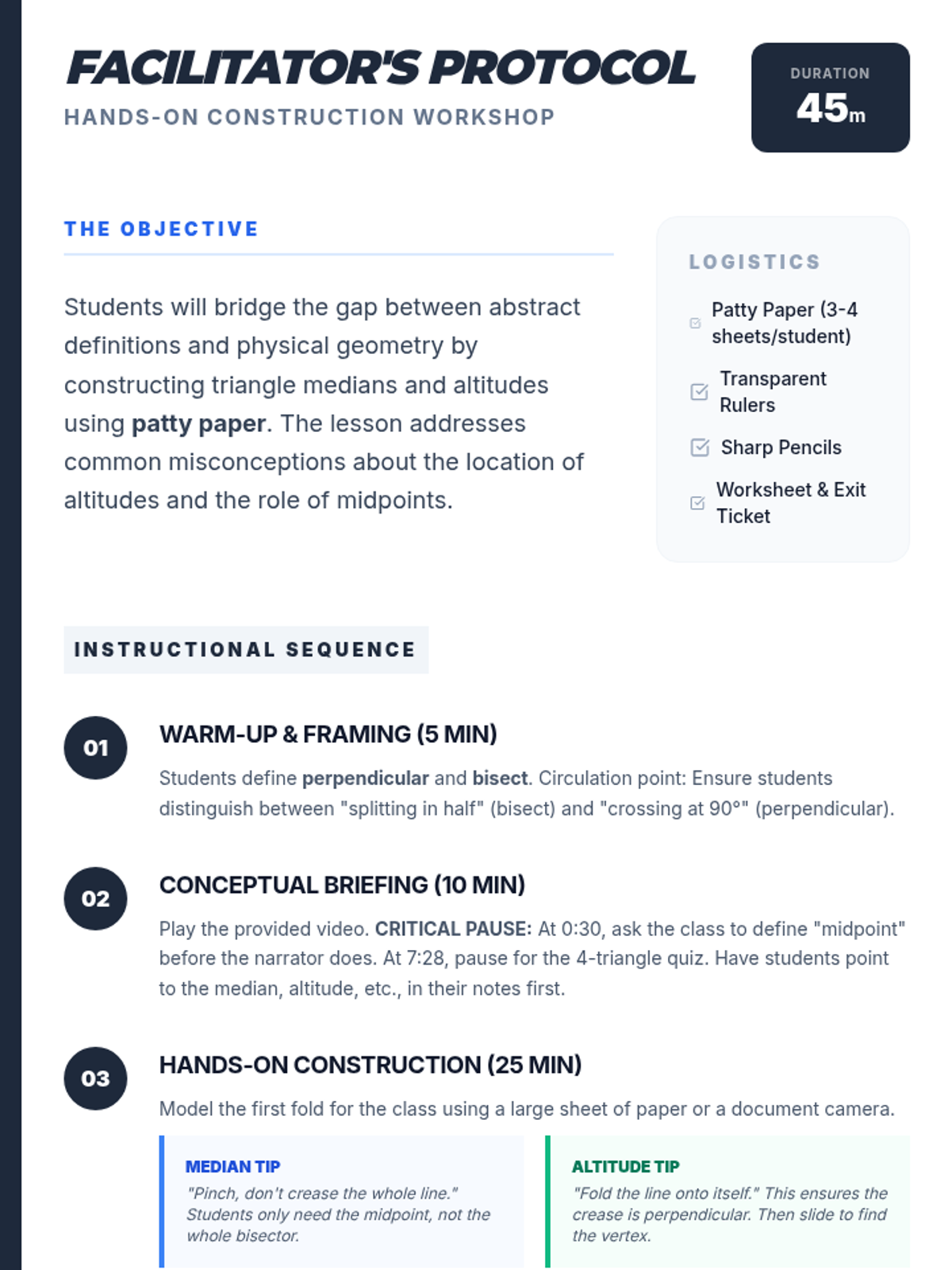
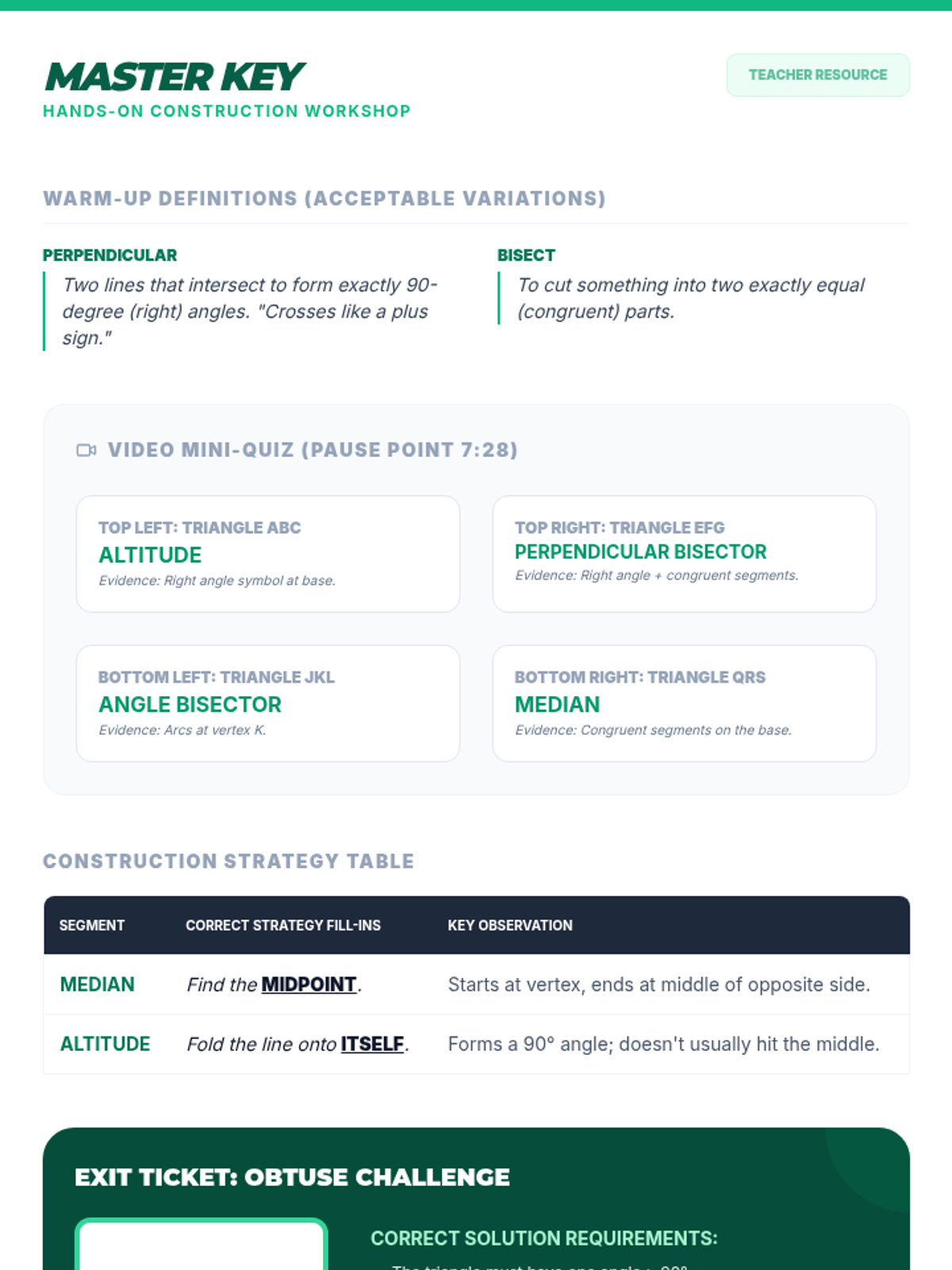
A hands-on geometry lesson where students use patty paper folding techniques to explore the properties of triangle medians and altitudes. The lesson includes a video-based conceptual review followed by a physical construction activity.
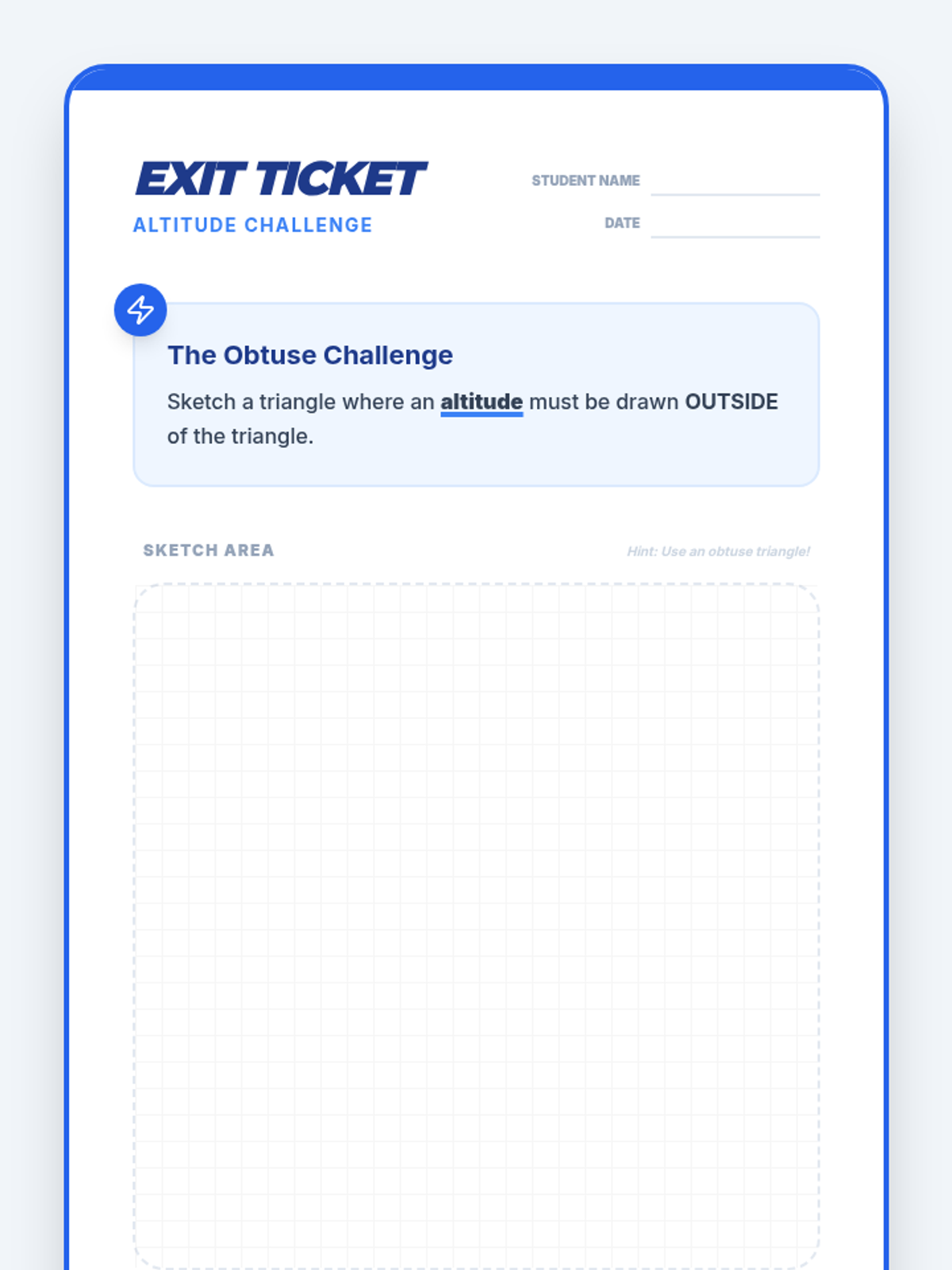
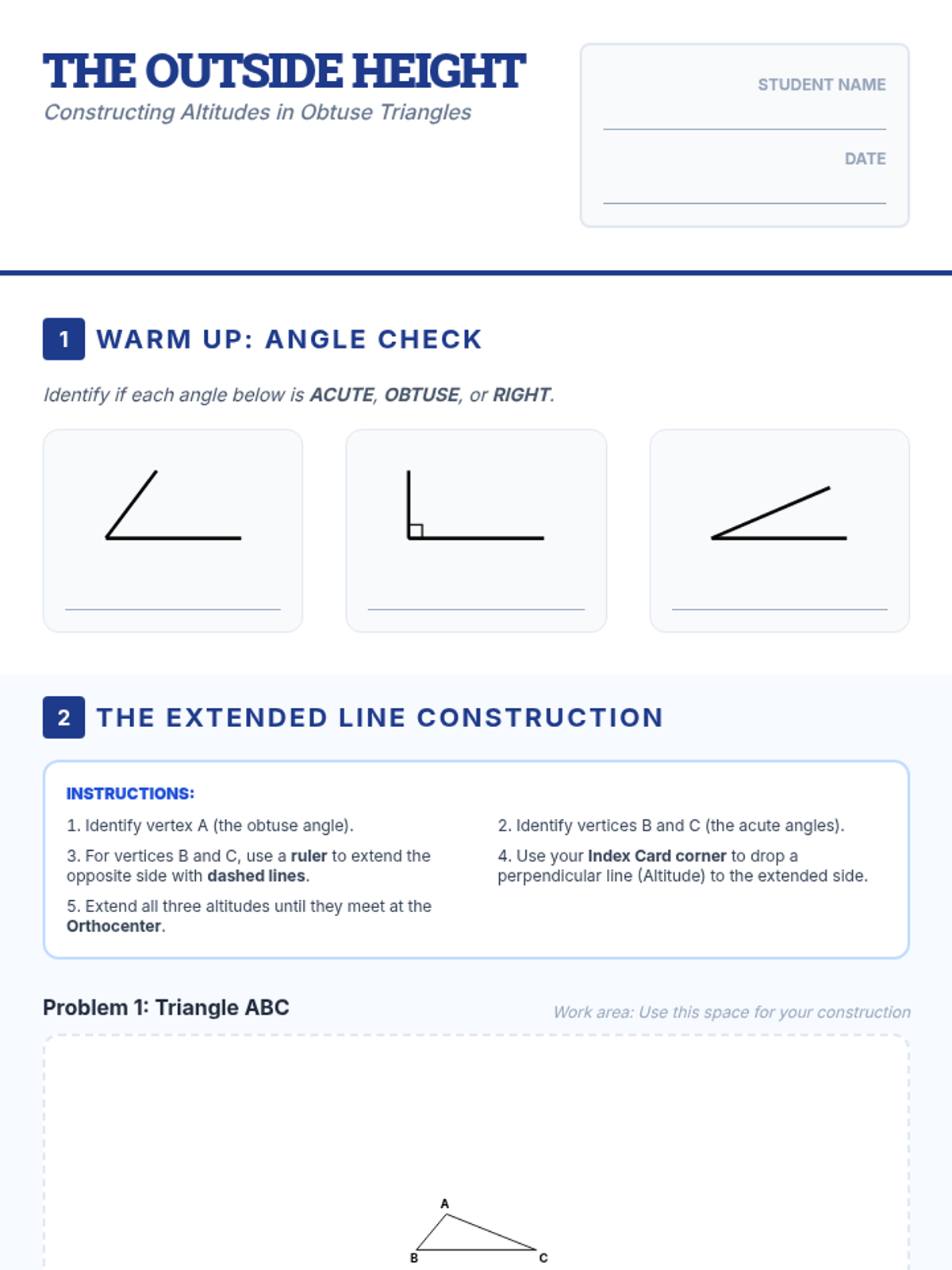
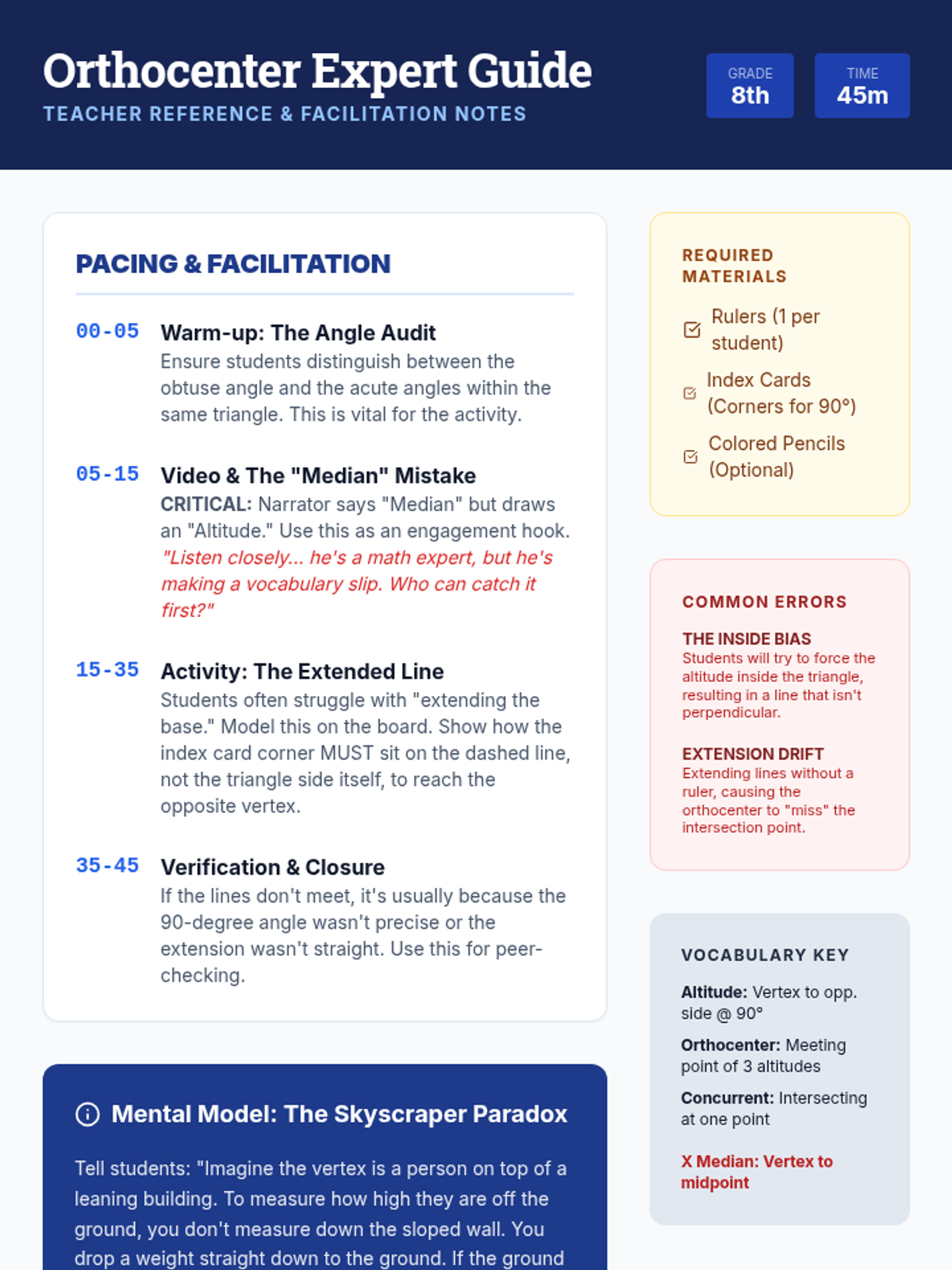
A hands-on geometry lesson for 8th graders focused on constructing altitudes for obtuse triangles, identifying the orthocenter, and correcting vocabulary errors in instructional media.
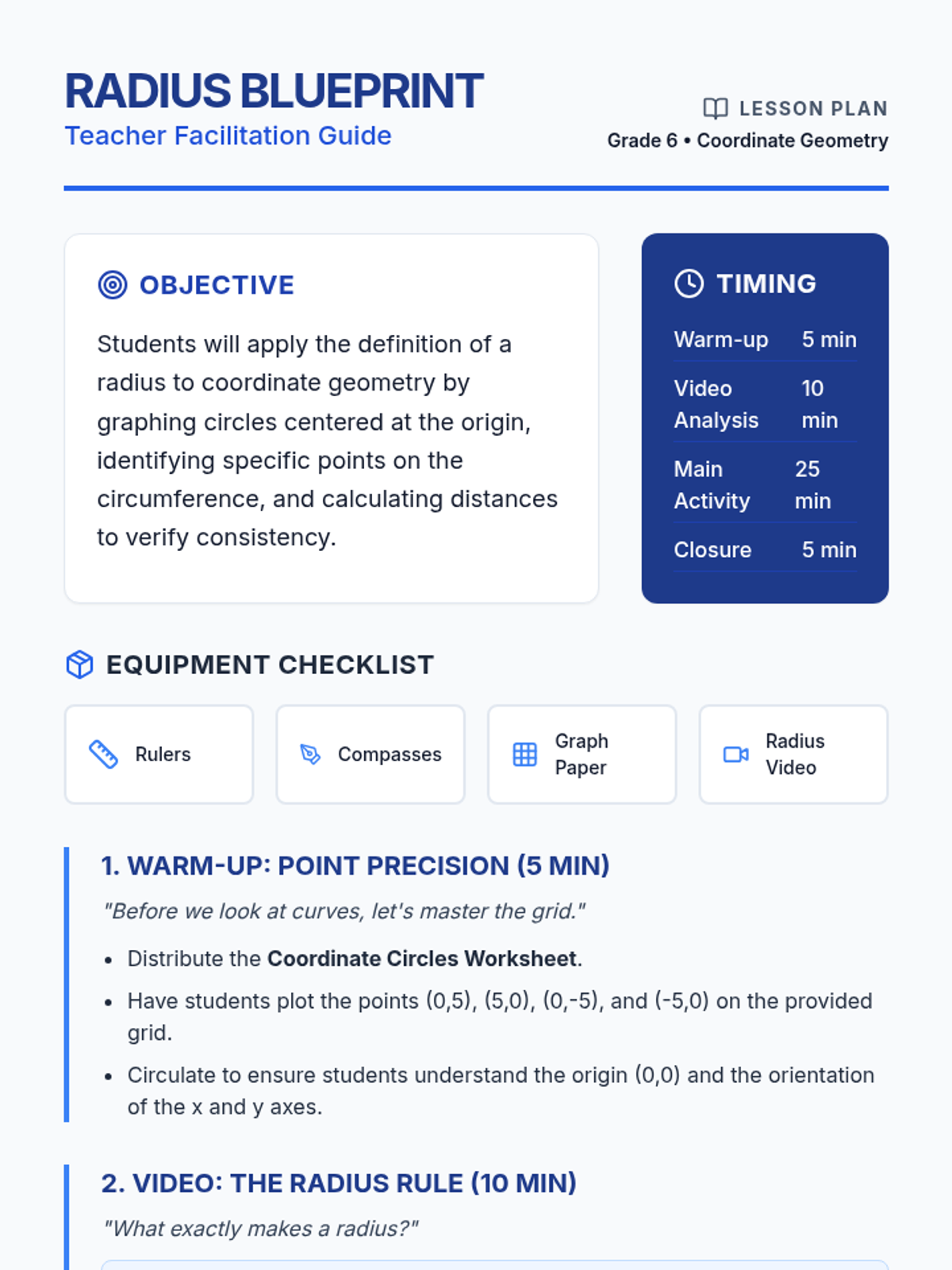
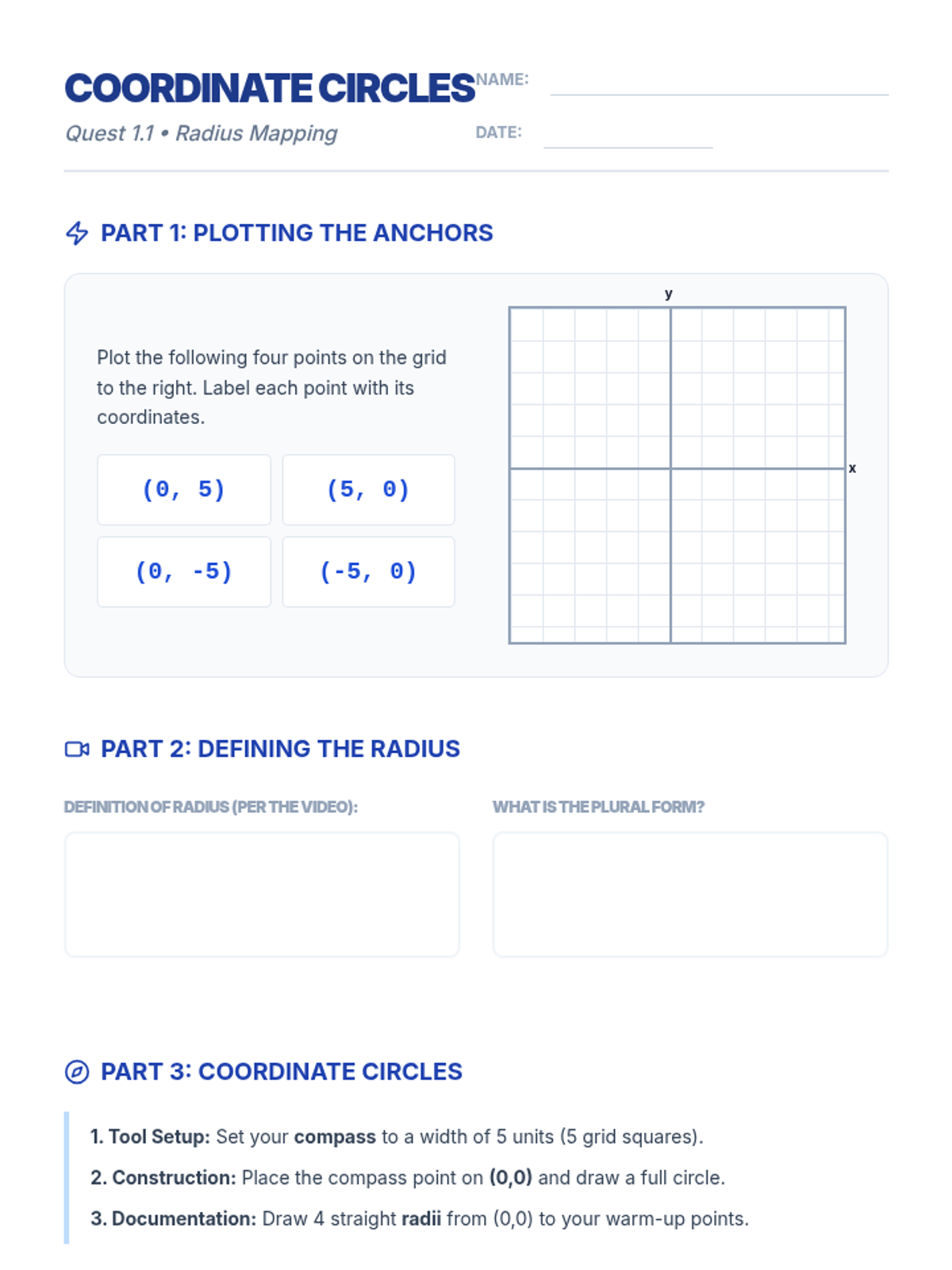
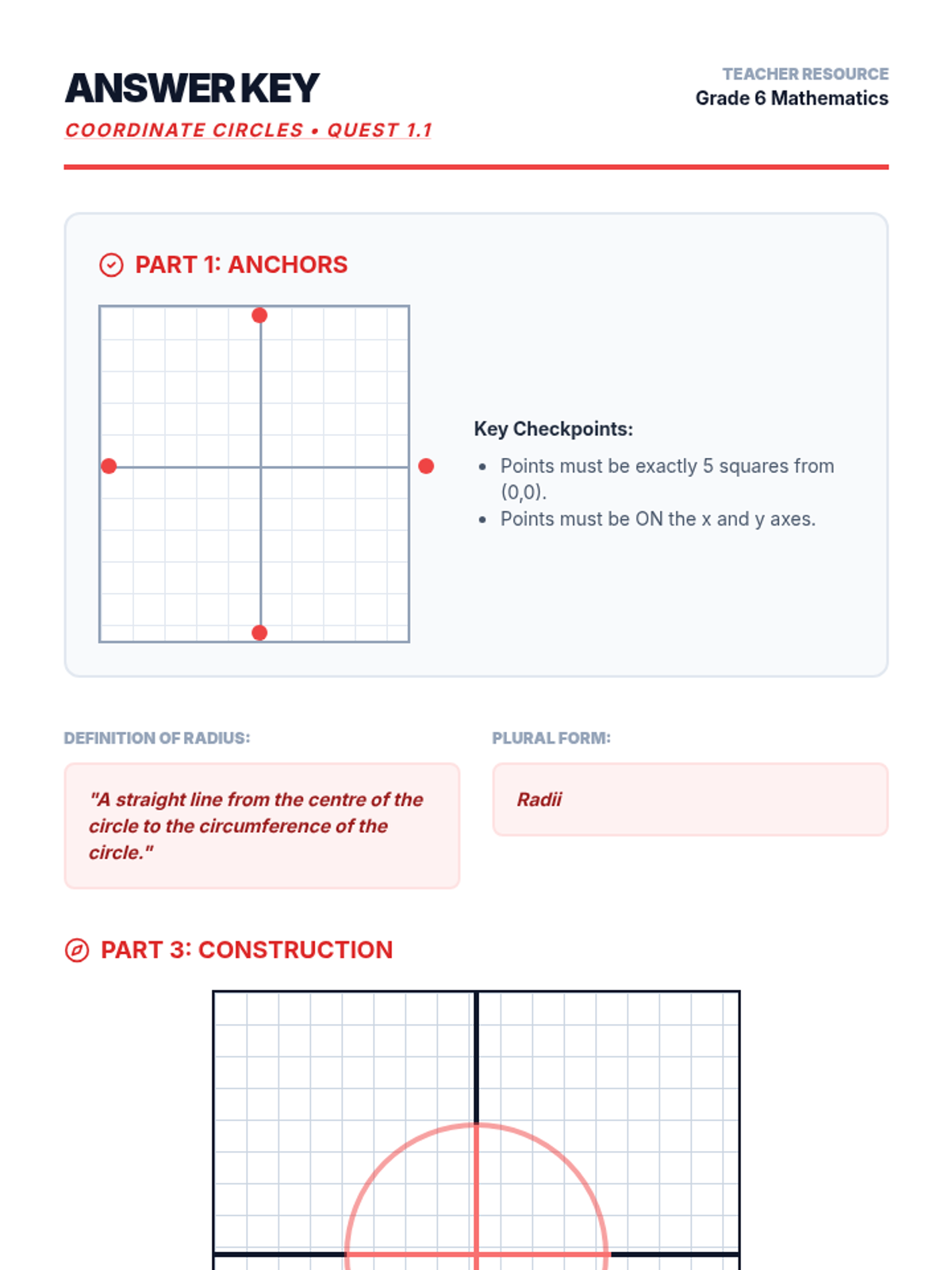
Students explore the definition of a radius by plotting circles on a coordinate plane, identifying key points, and discovering the constant distance from the center to the circumference.
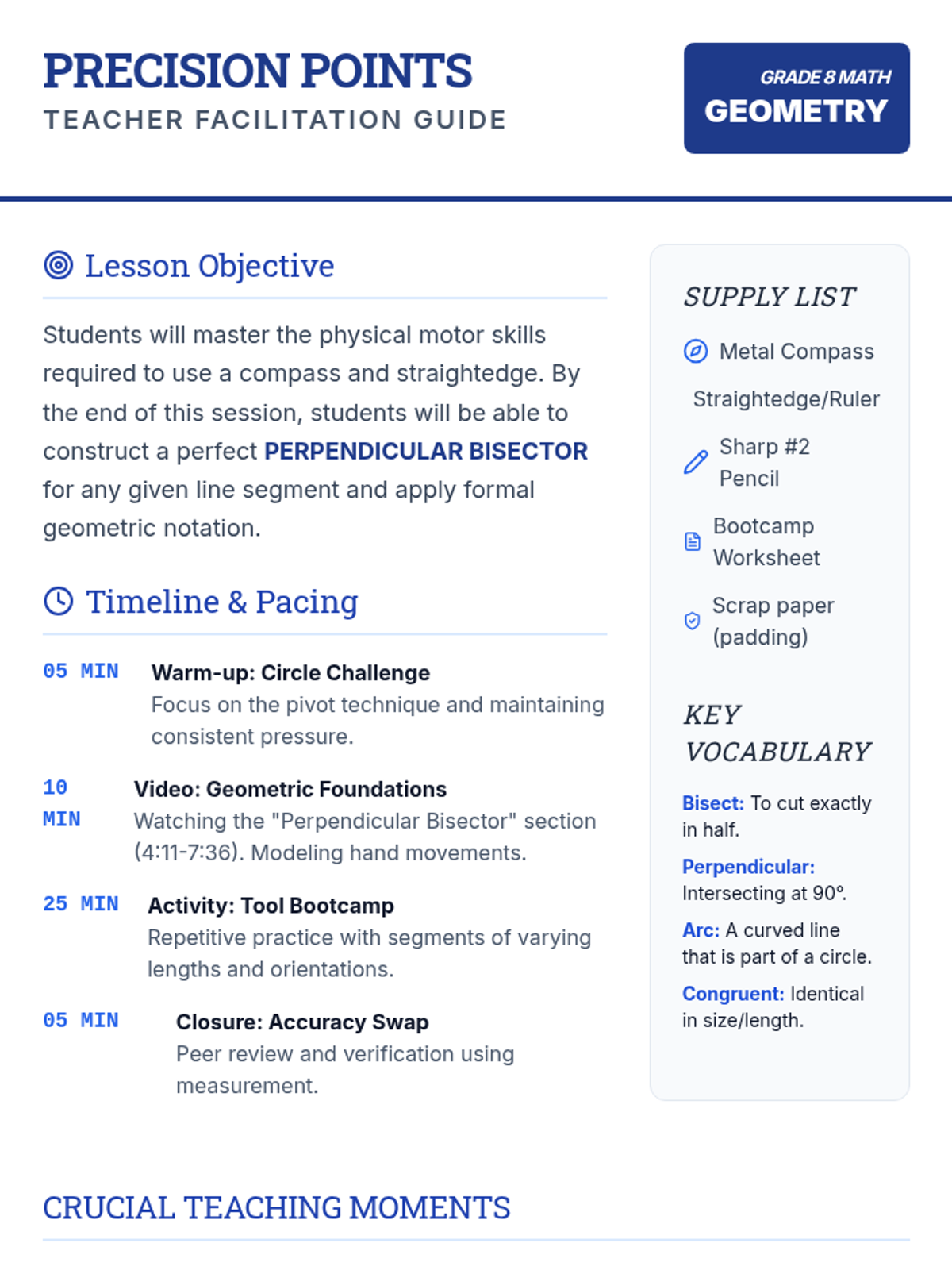
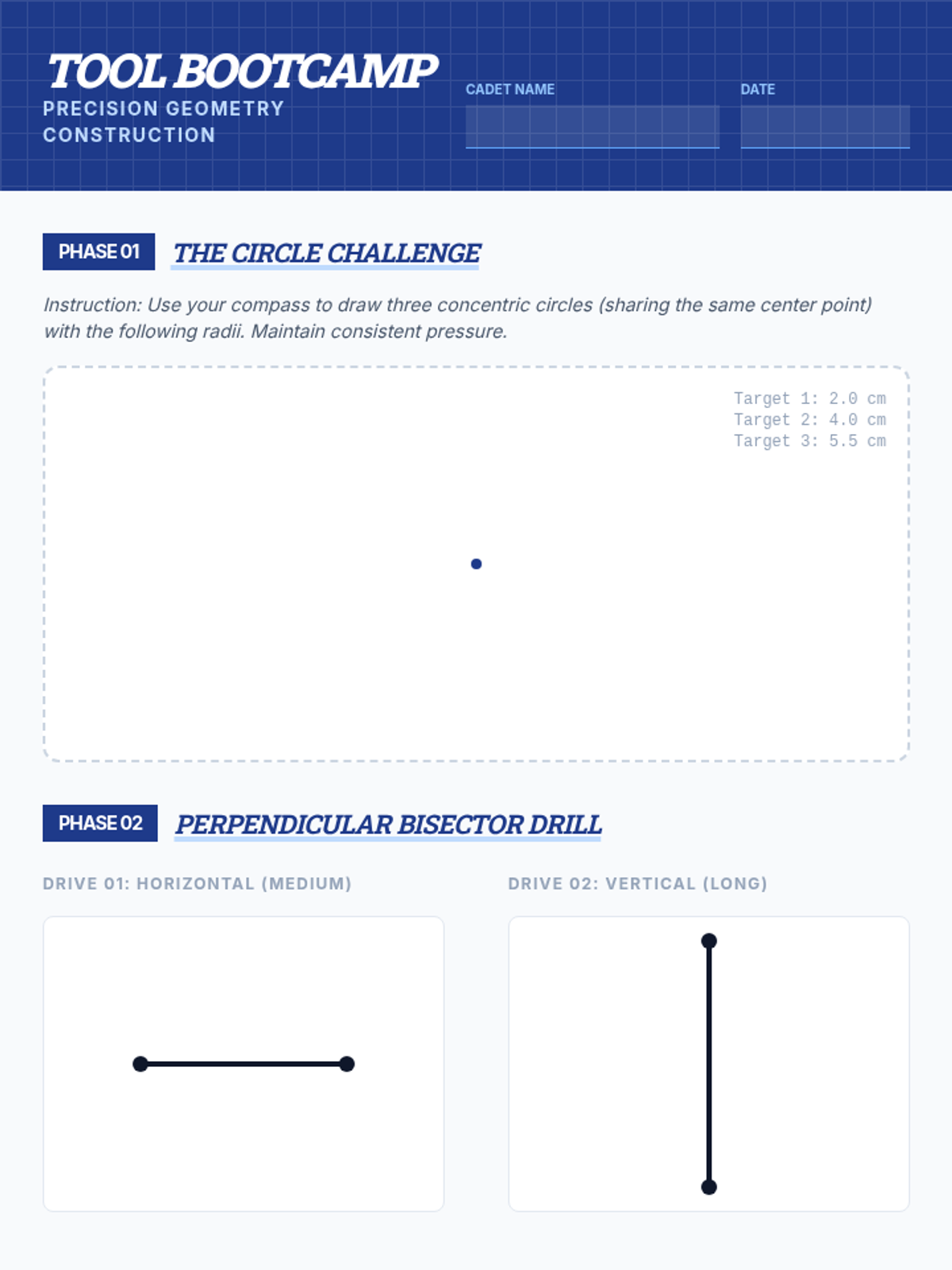
A hands-on geometry lesson where students develop the motor skills and precision needed to construct perpendicular bisectors using a compass and straightedge. The lesson features a 'Tool Bootcamp' activity focusing on accuracy and proper geometric notation.
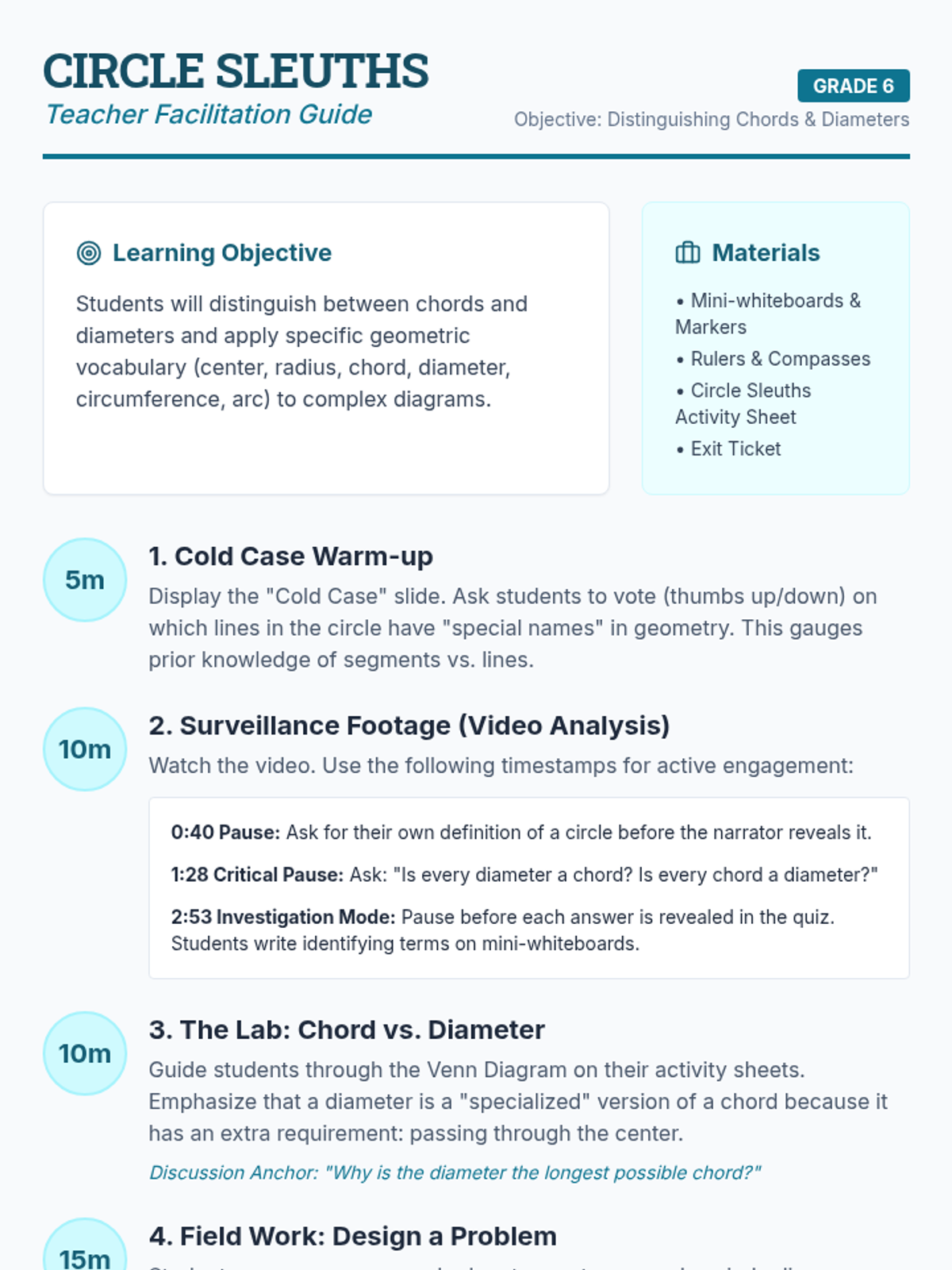
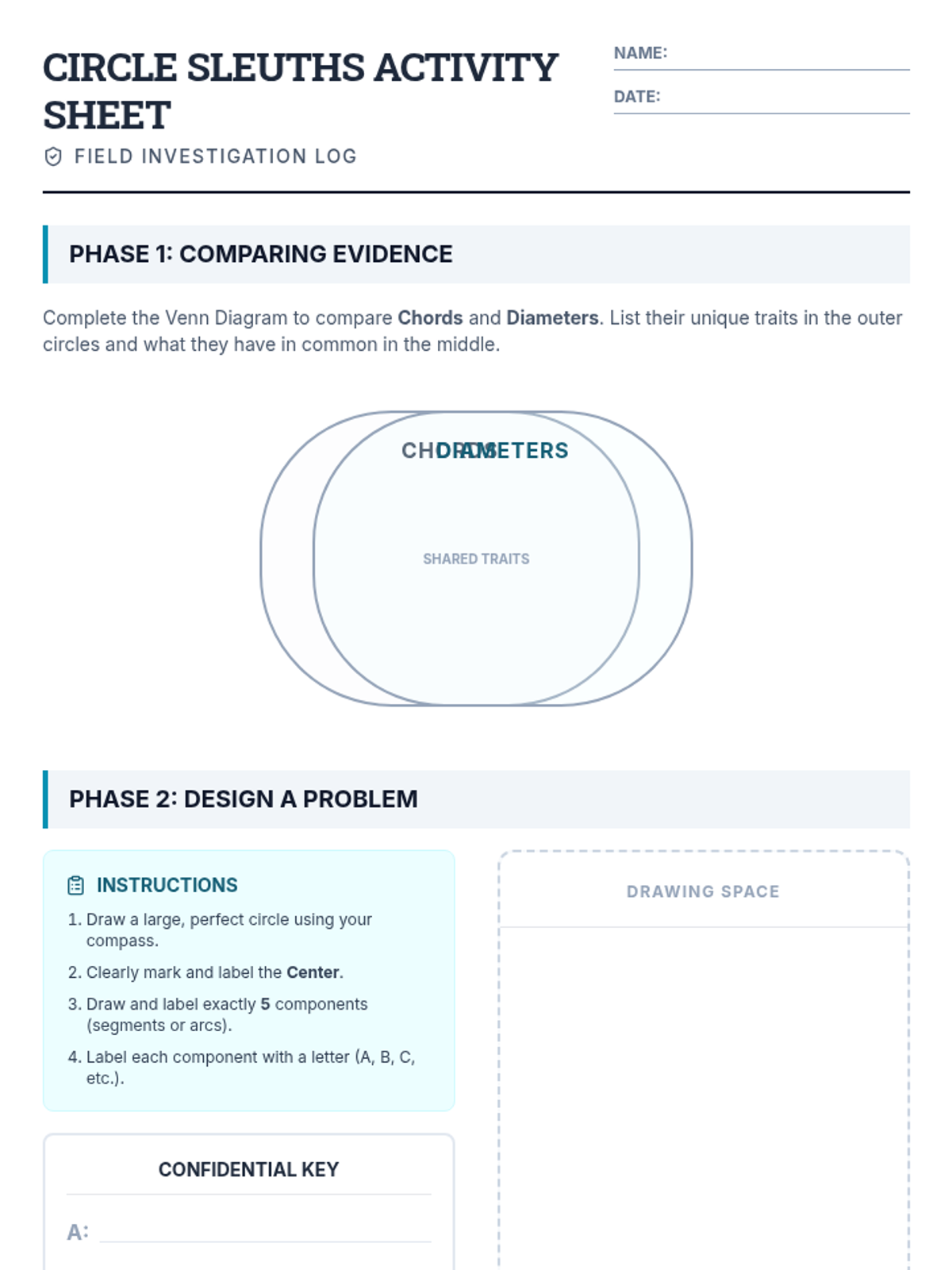
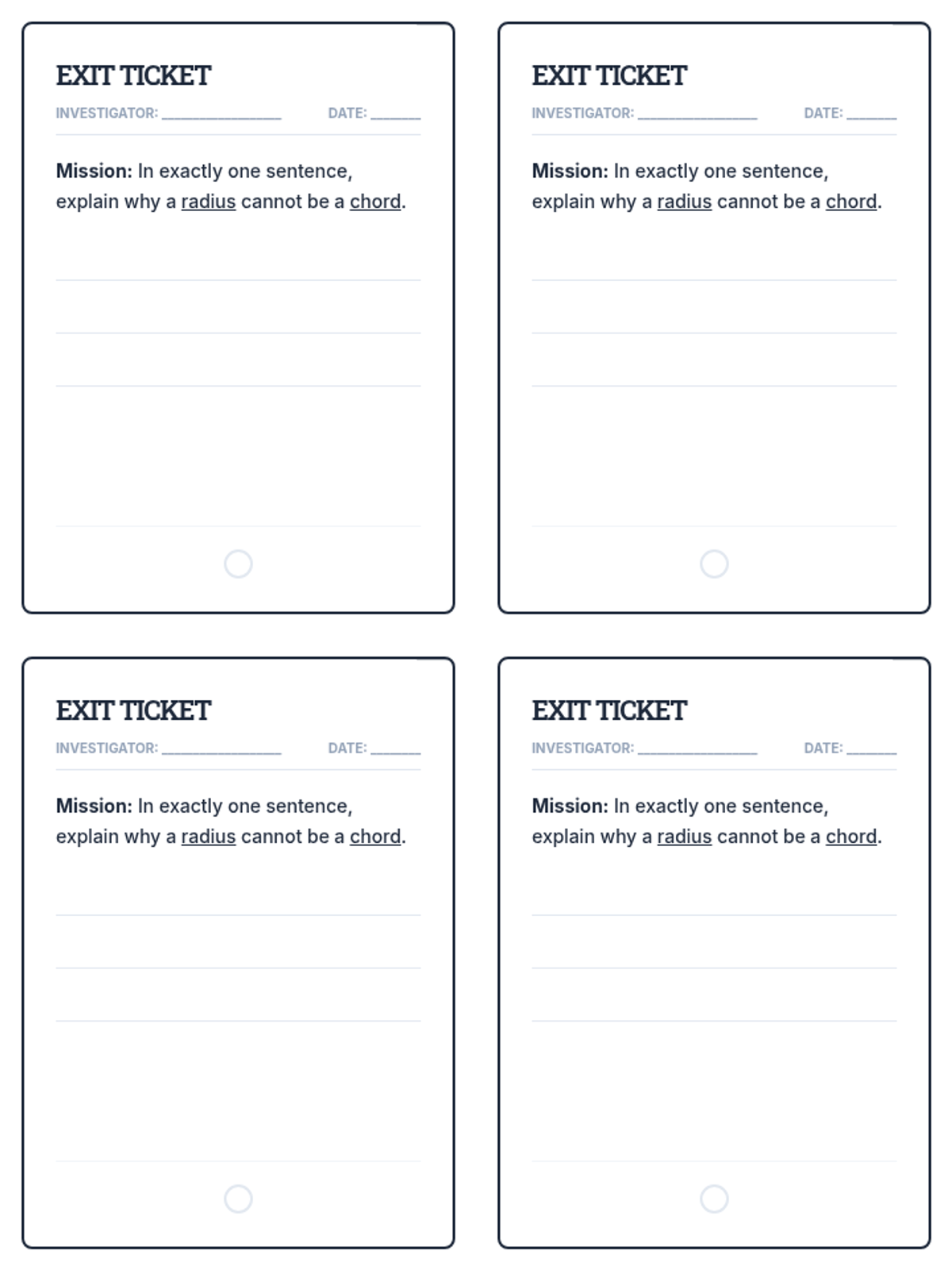
A detective-themed geometry lesson where students distinguish between chords and diameters through video analysis, Venn diagrams, and peer-to-peer problem design.
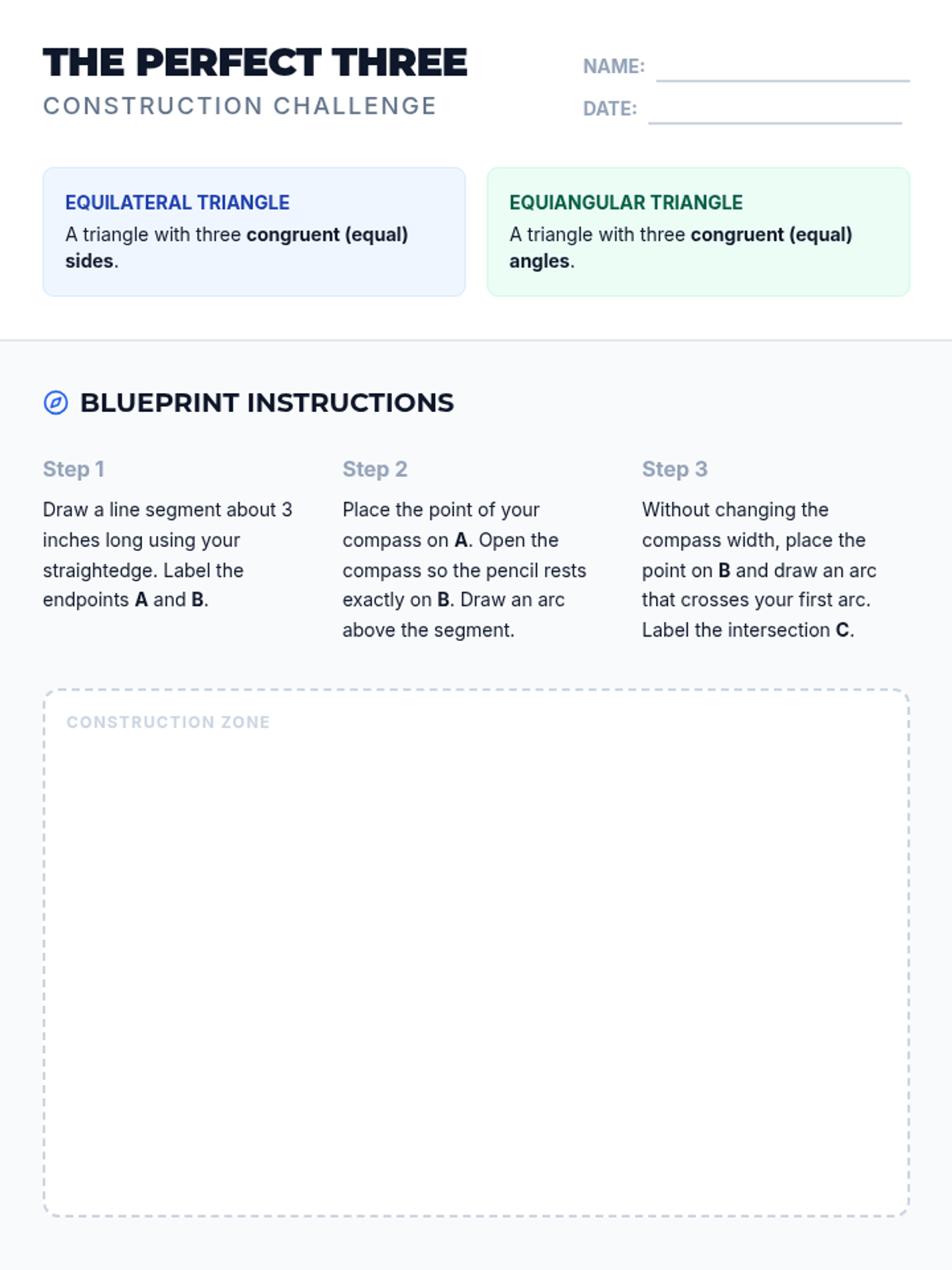
A geometry lesson for middle schoolers exploring the unique properties of equilateral and equiangular triangles through architectural observation, video analysis, and hands-on compass-and-straightedge construction.
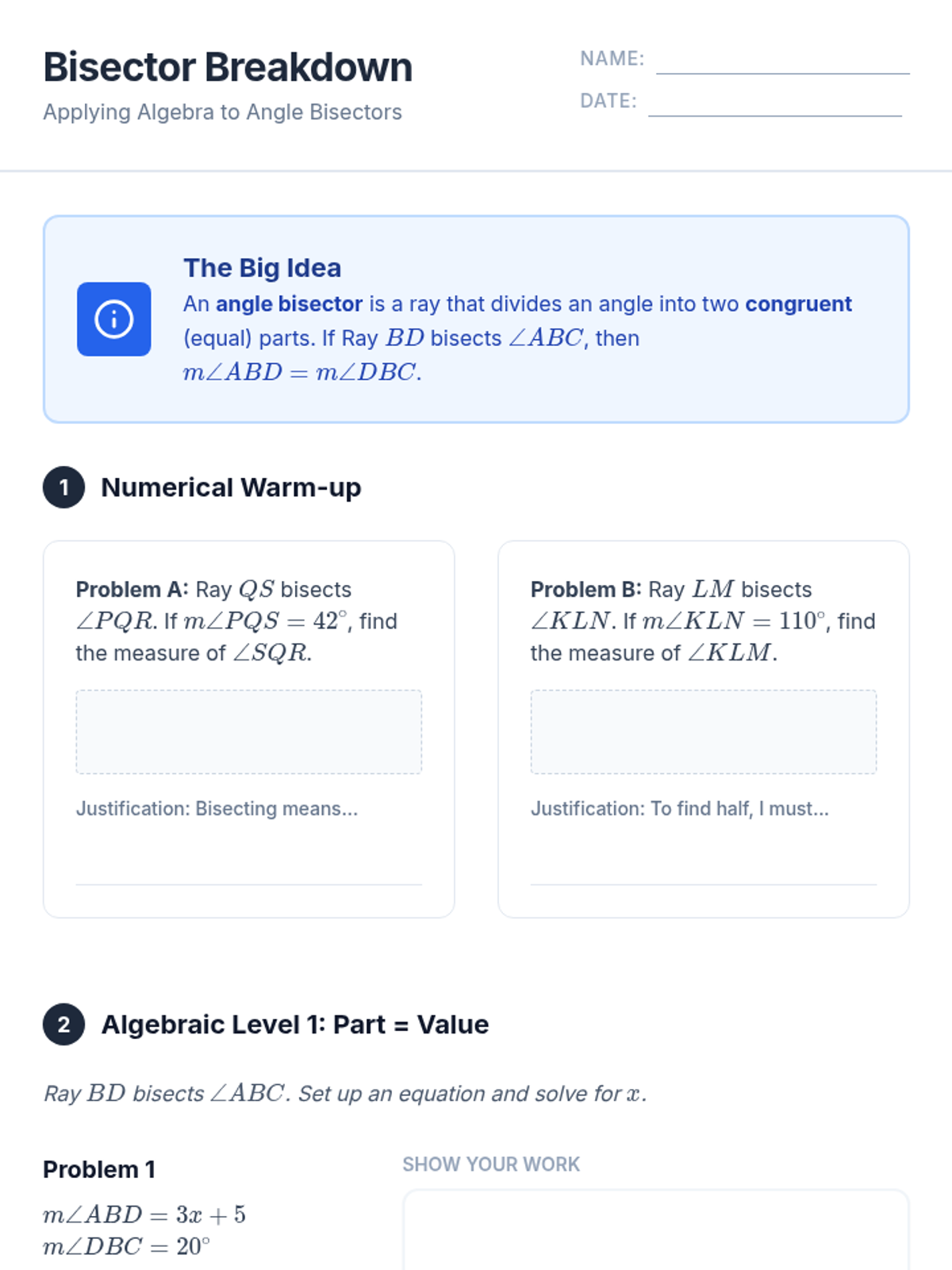
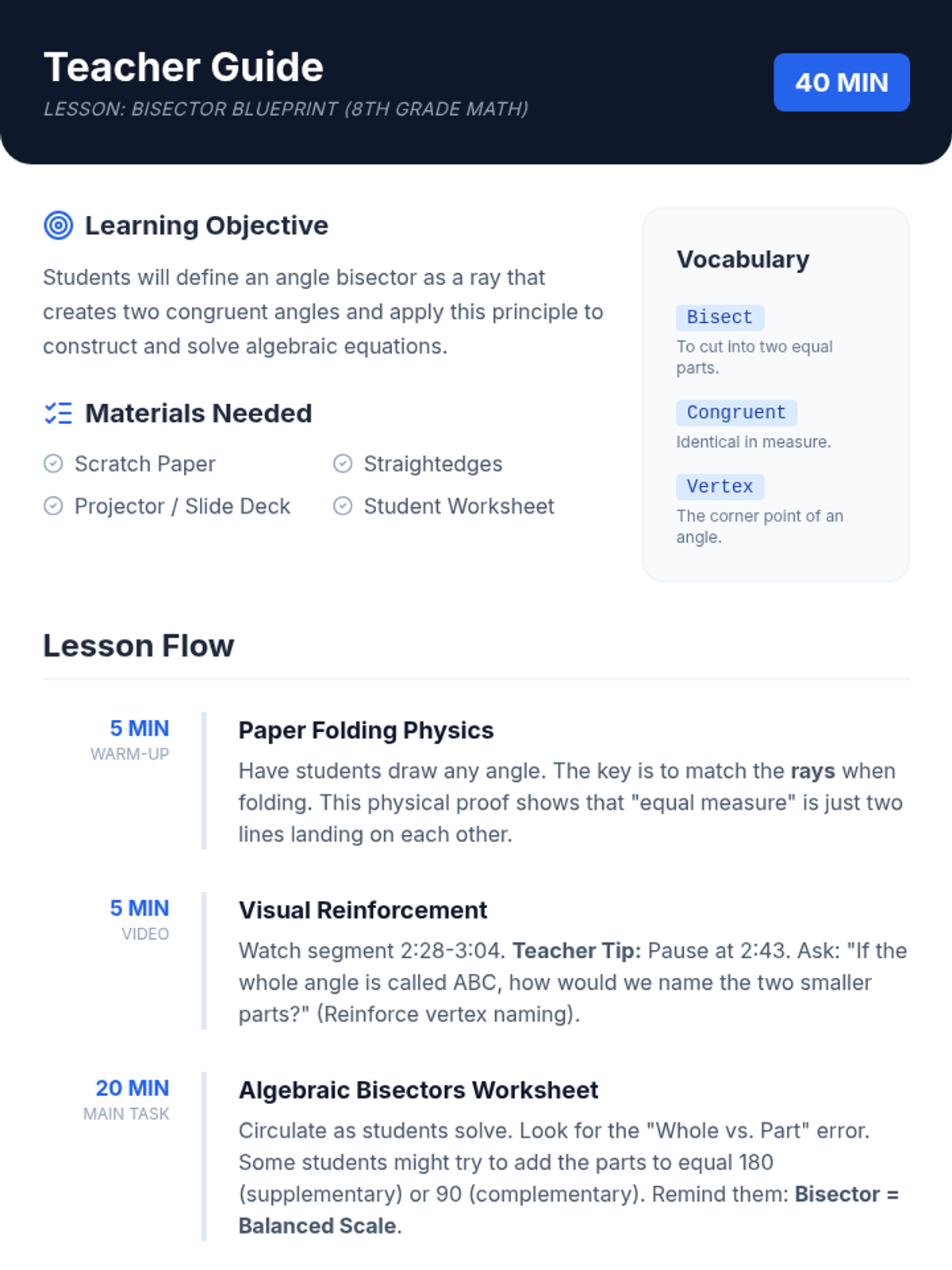
A geometry lesson for 8th grade students focusing on angle bisectors. Students explore physical bisectors through paper folding, view a targeted video segment, and apply algebraic reasoning to solve problems where bisecting rays create equal angle measures.
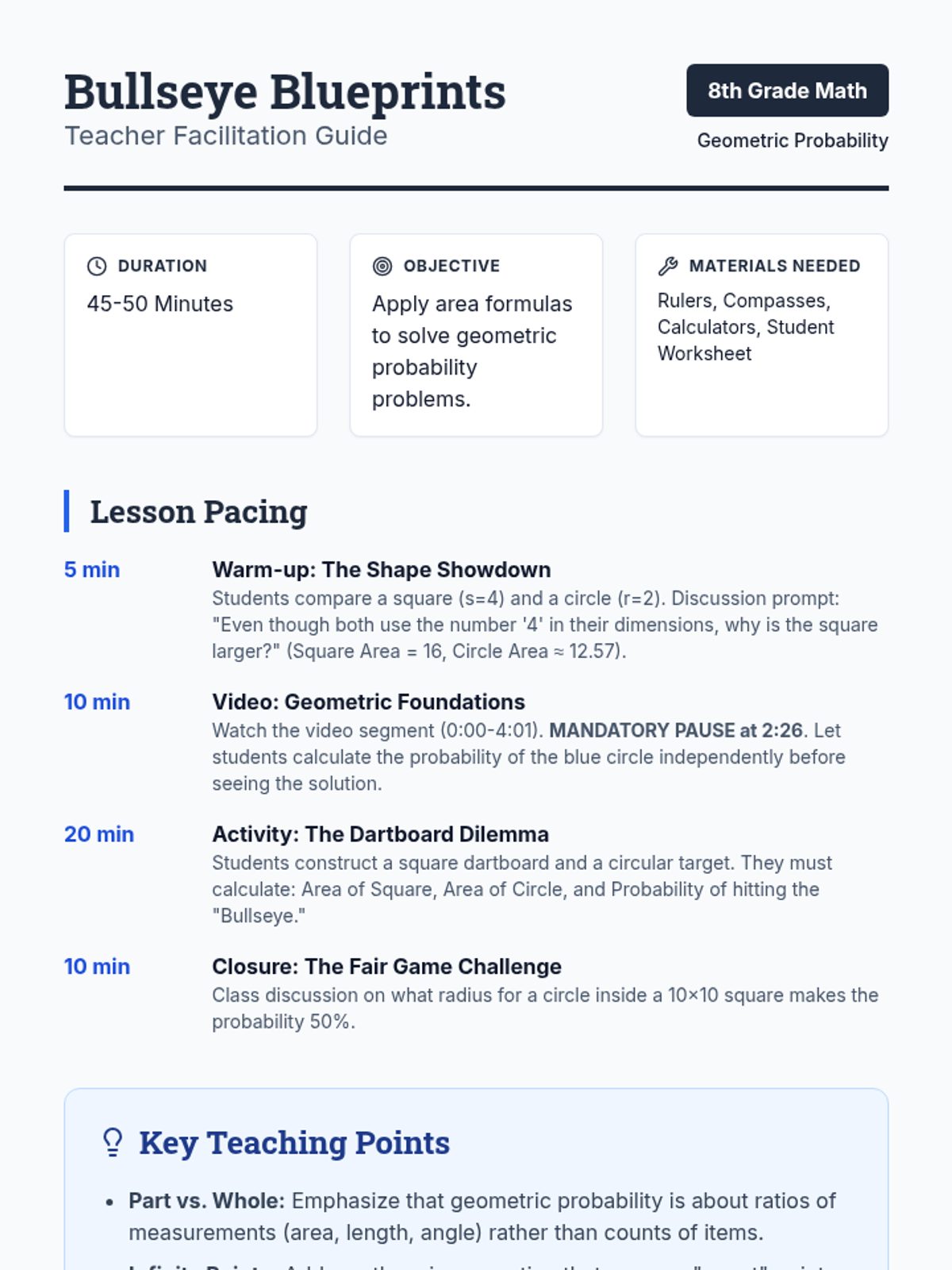
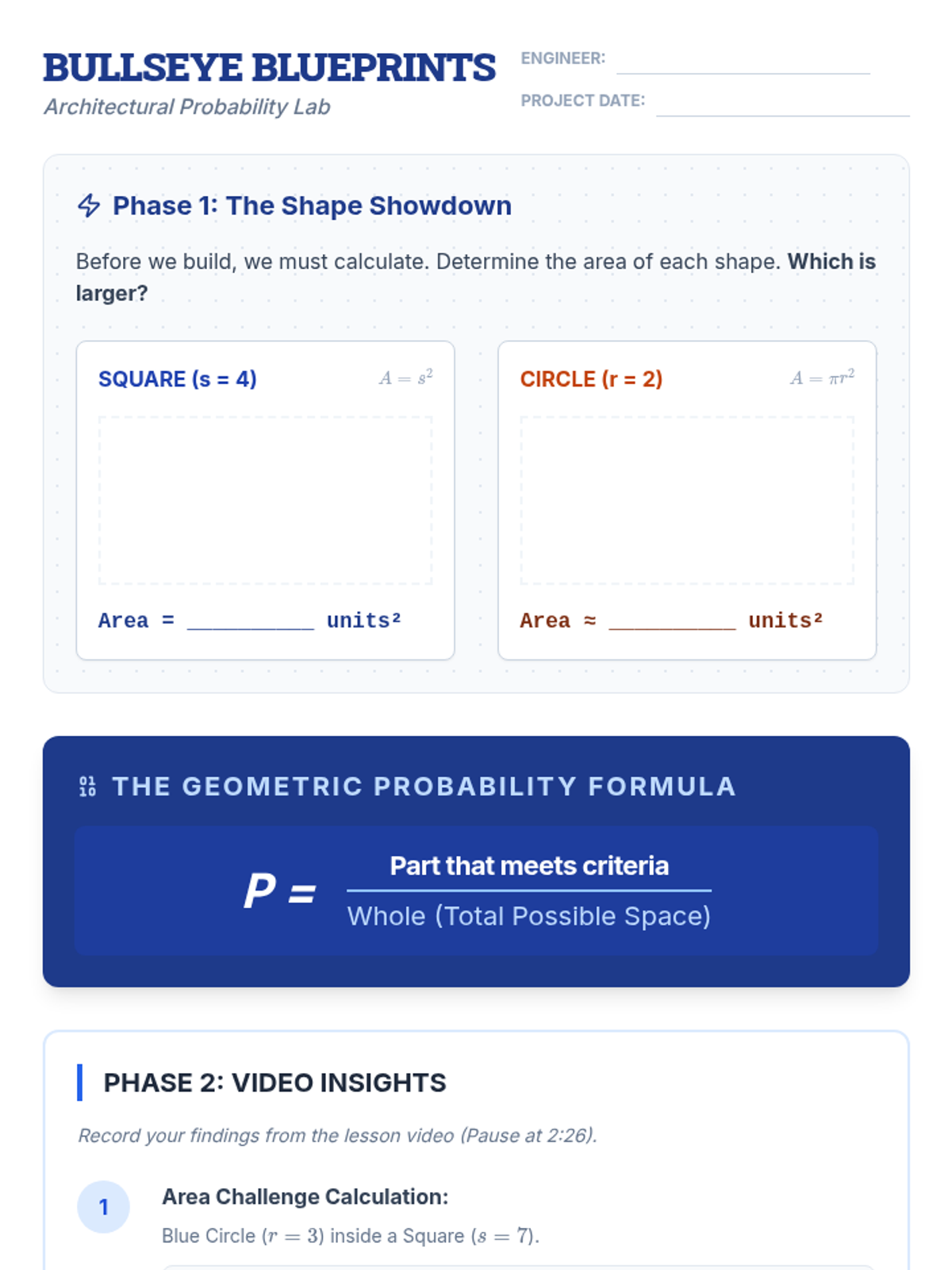
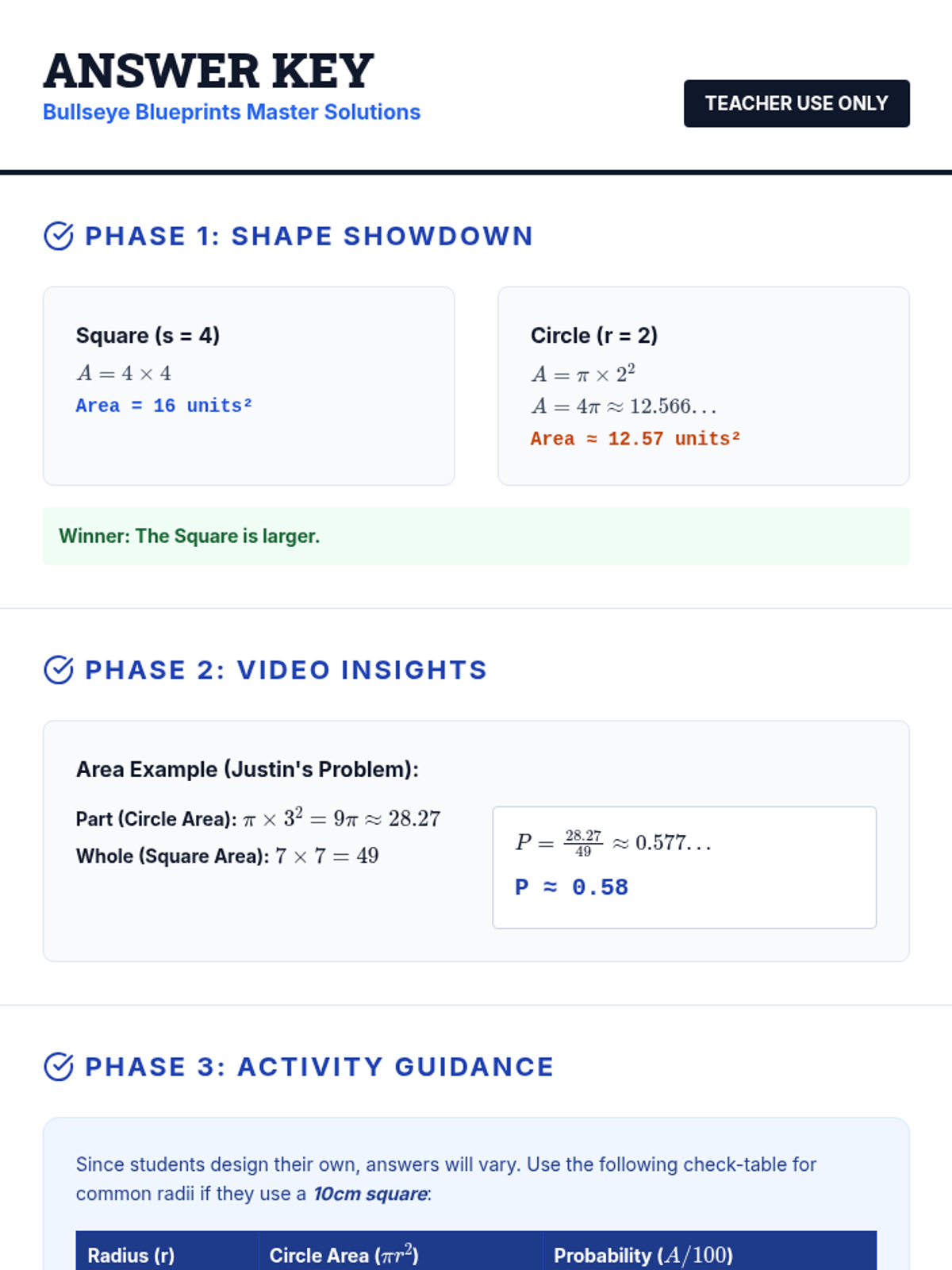
A lesson where 8th-grade students use circle and square area formulas to calculate geometric probabilities, culminating in a creative dartboard design challenge.
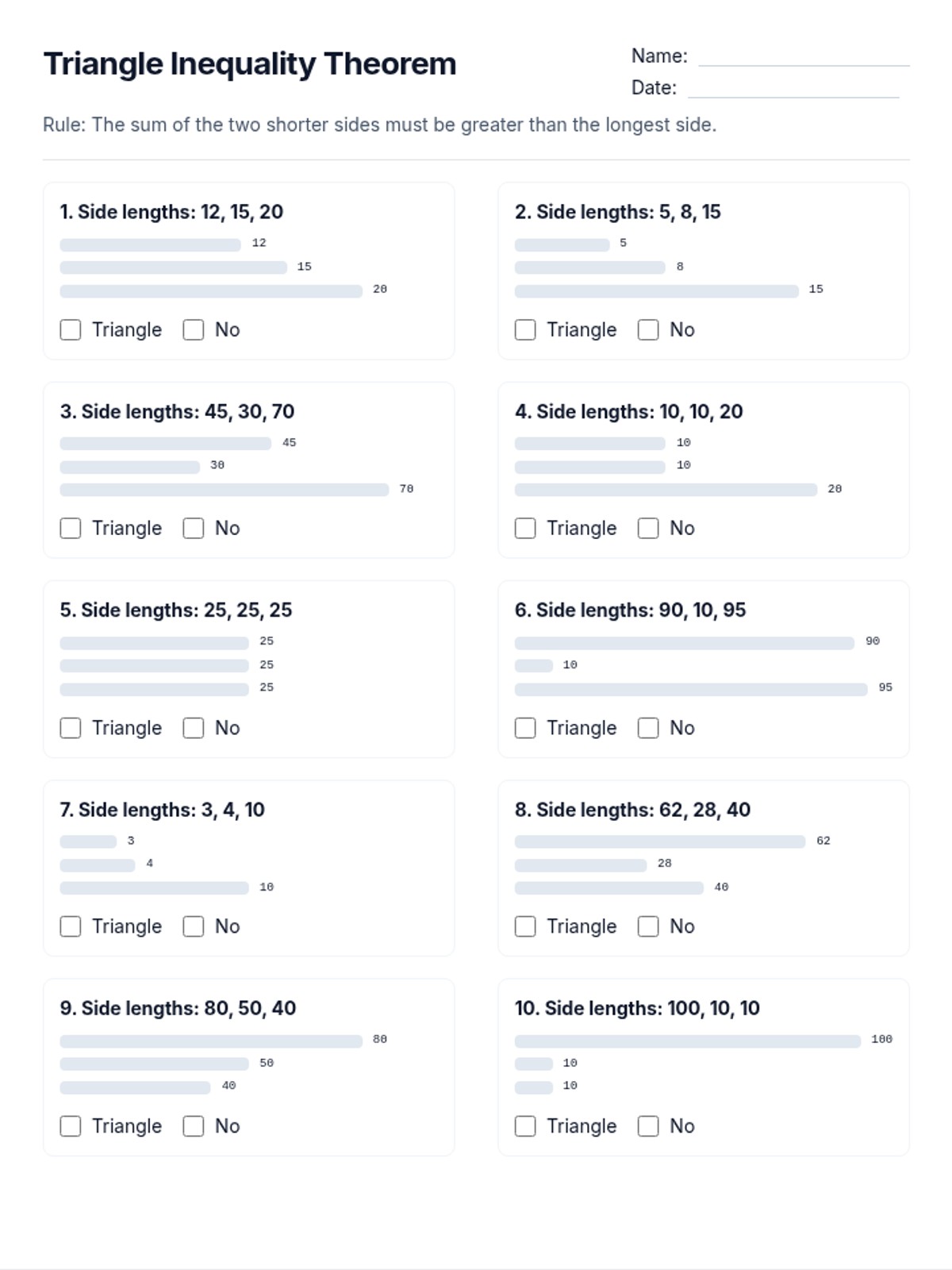
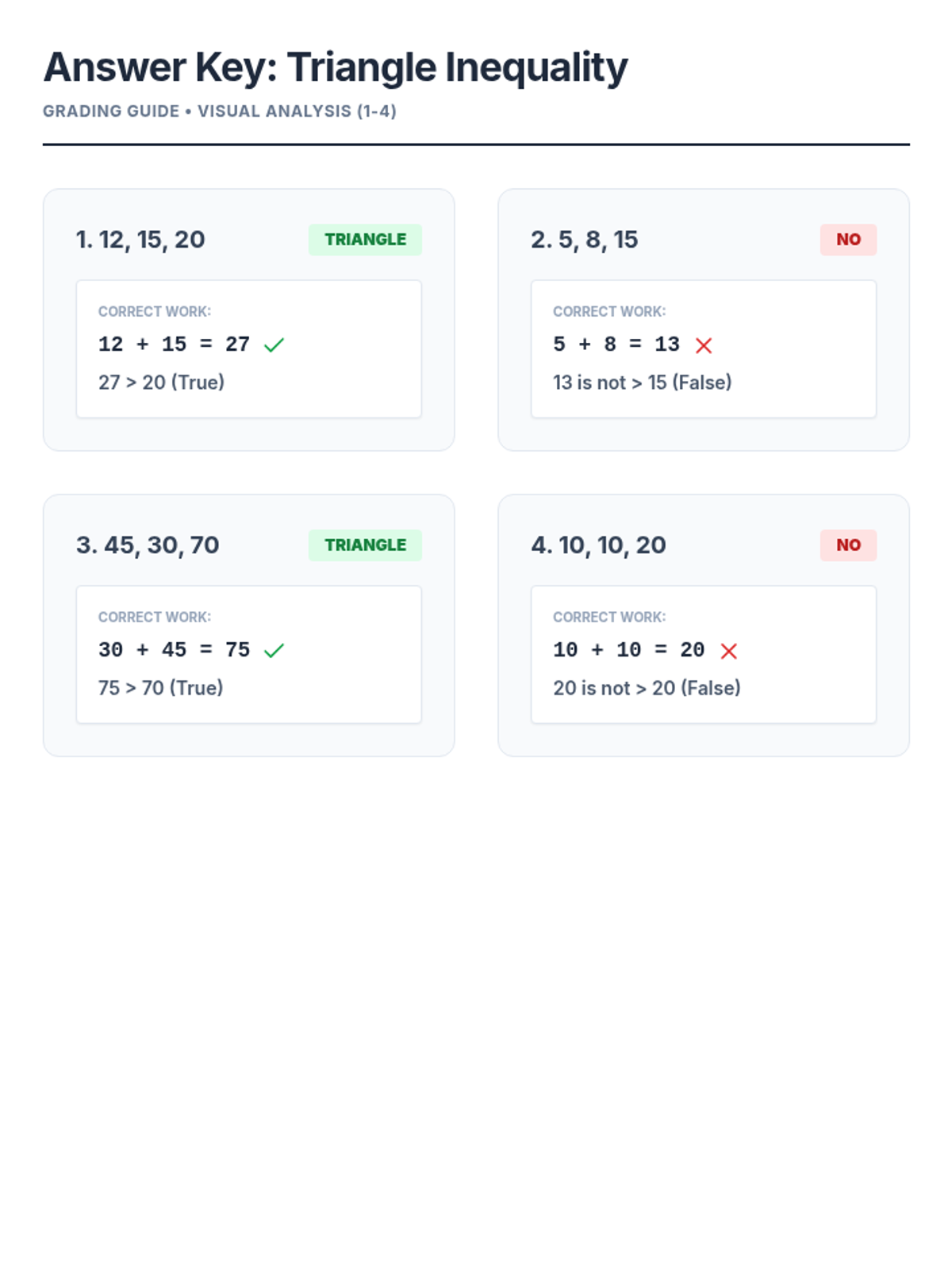
A lesson focusing on the Triangle Inequality Theorem, teaching students how to determine if three given side lengths can form a valid triangle.
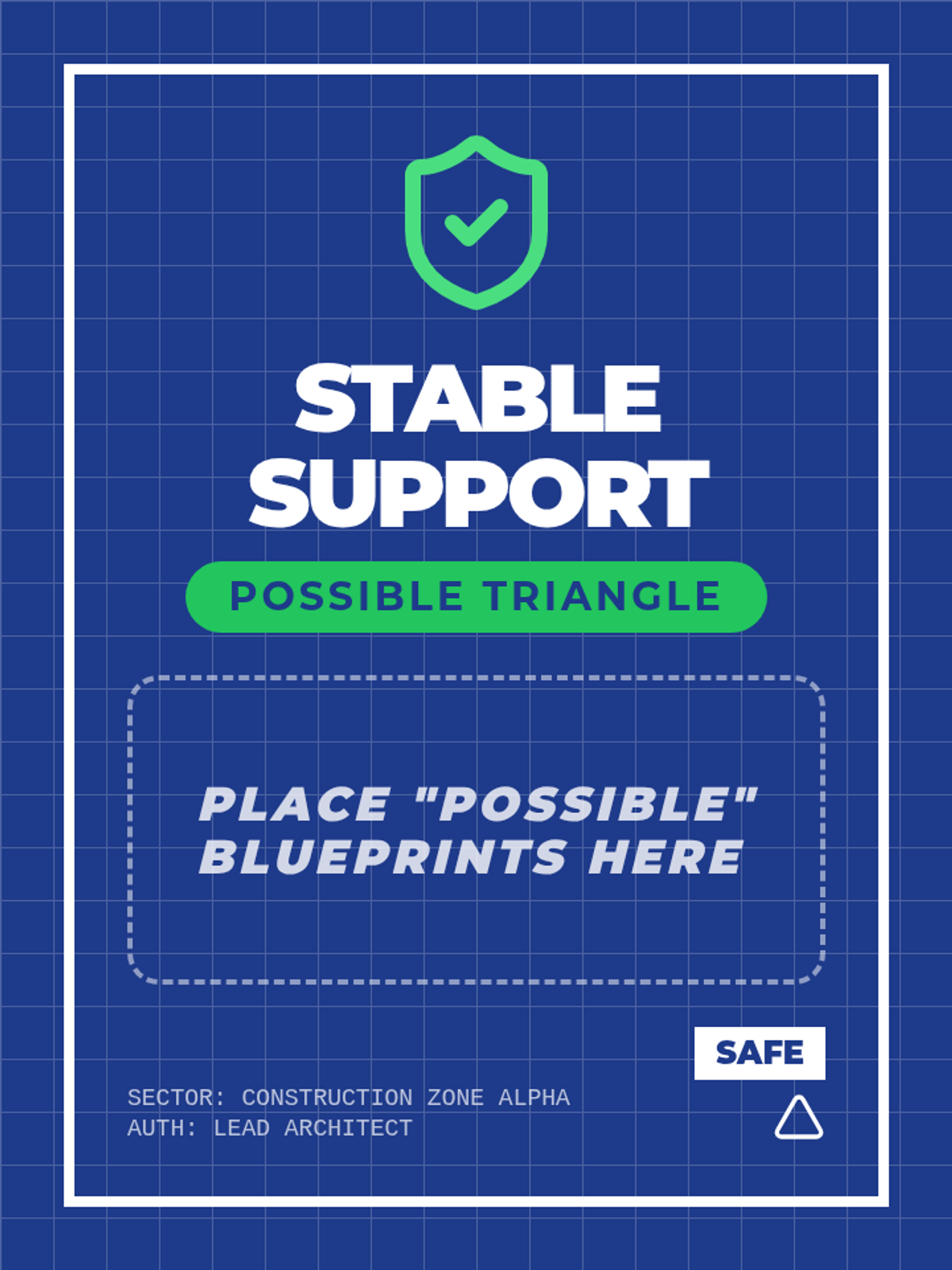
A hands-on geometry lesson where students act as structural engineers to discover the Triangle Inequality Theorem through sorting and investigation.
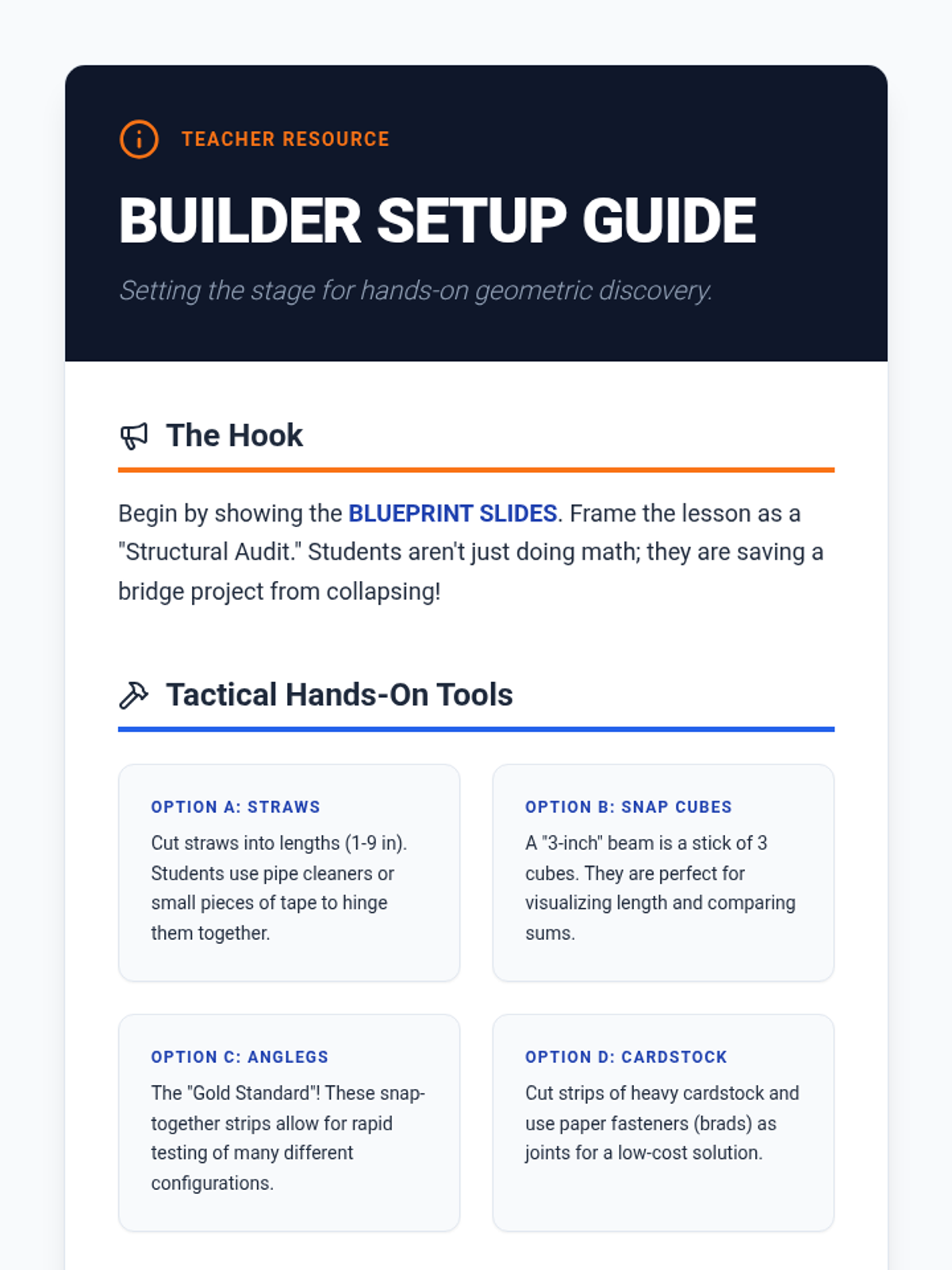
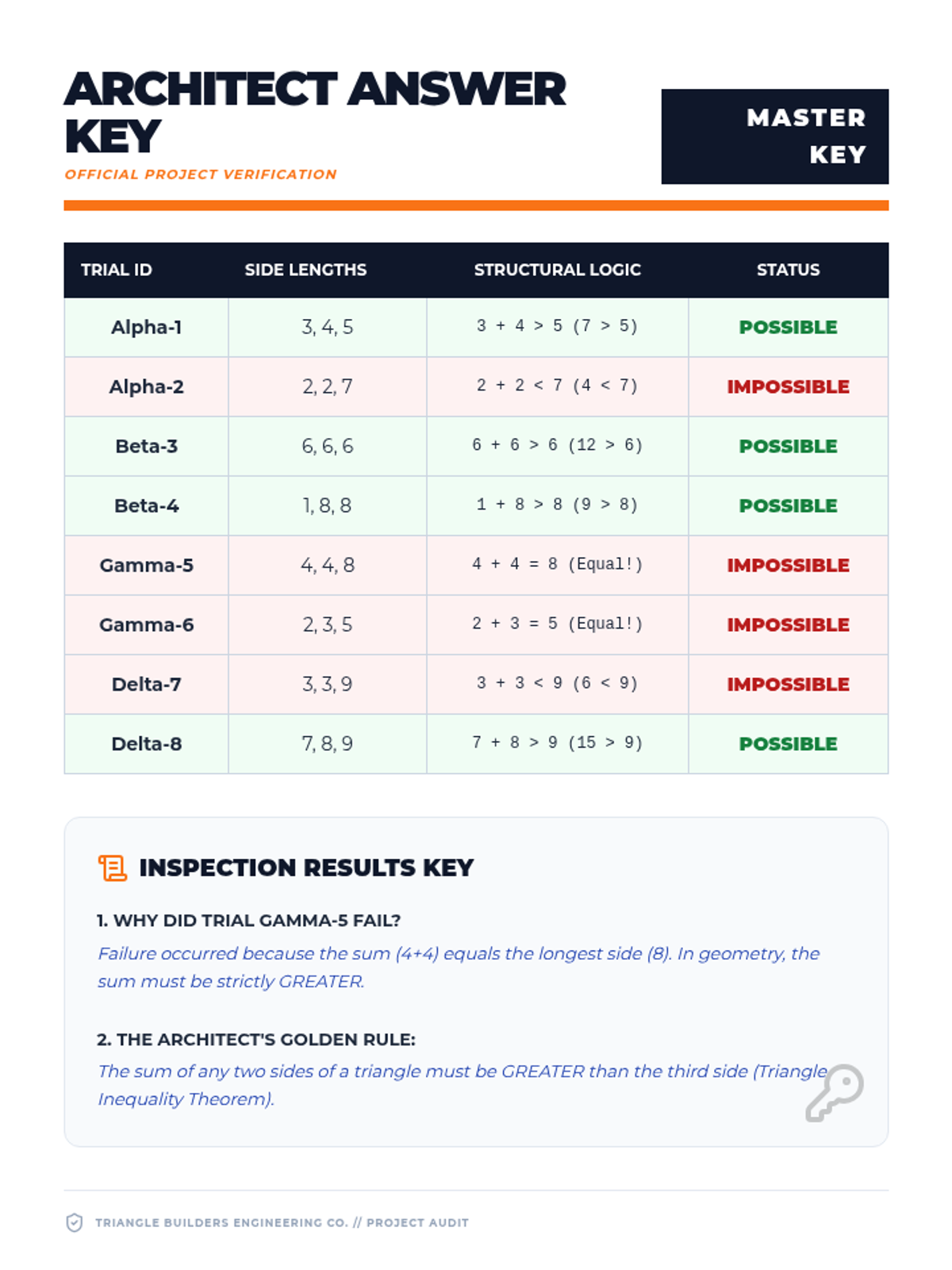
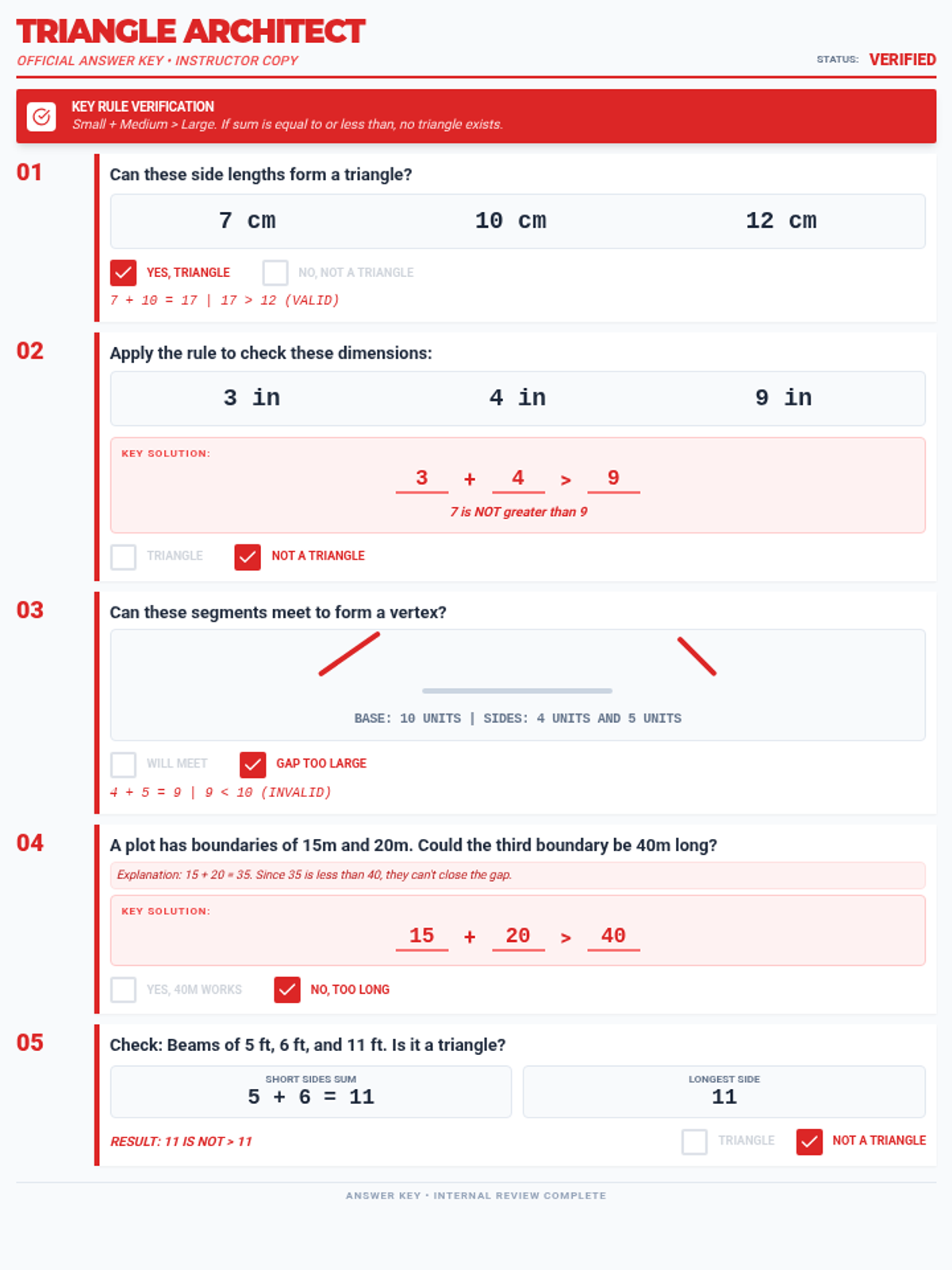
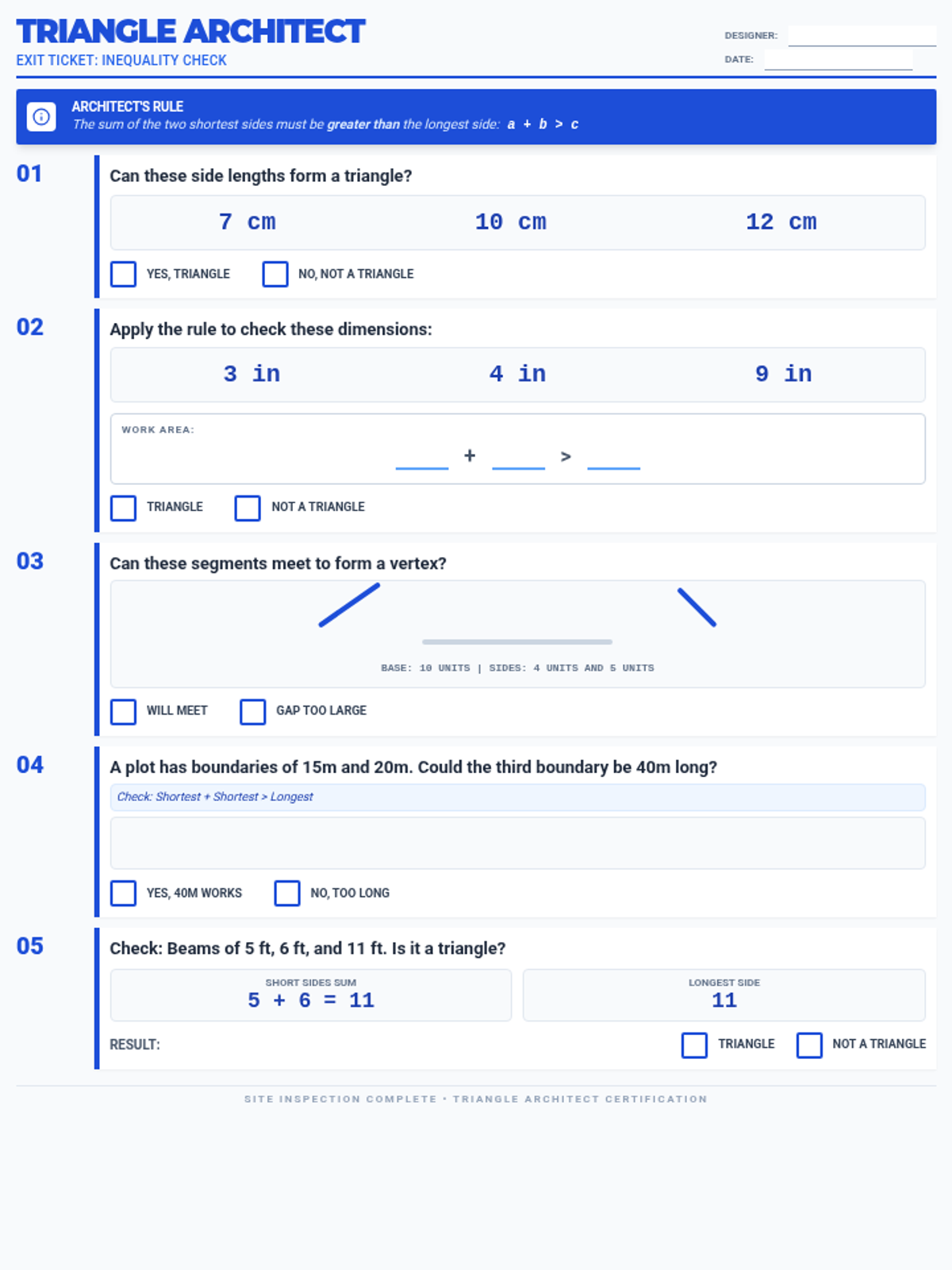
Students act as architects to verify the structural integrity of triangular designs using the Triangle Inequality Theorem. They perform numeric checks, analyze visual models, and solve word problems to determine if three side lengths can form a valid triangle.
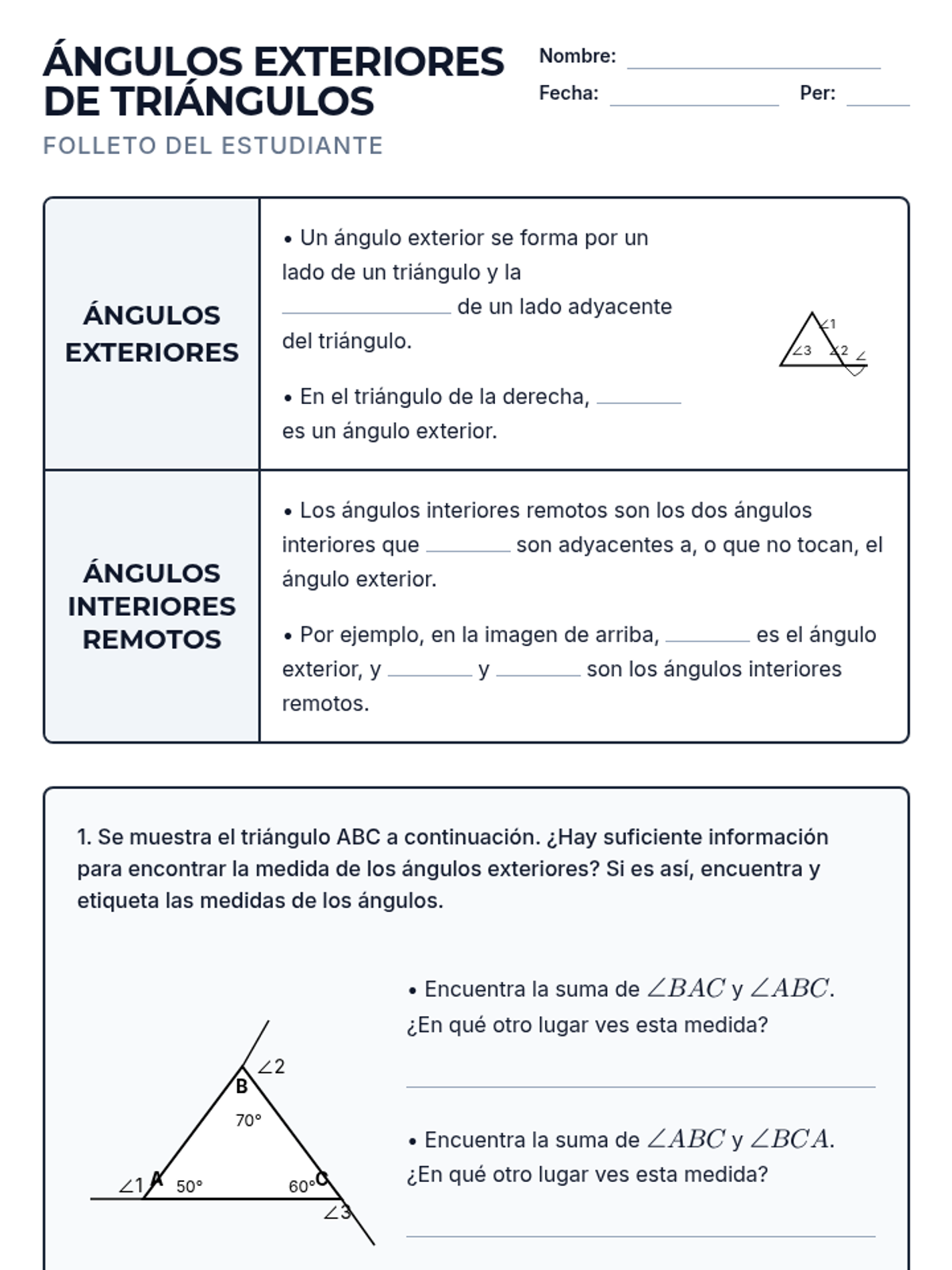
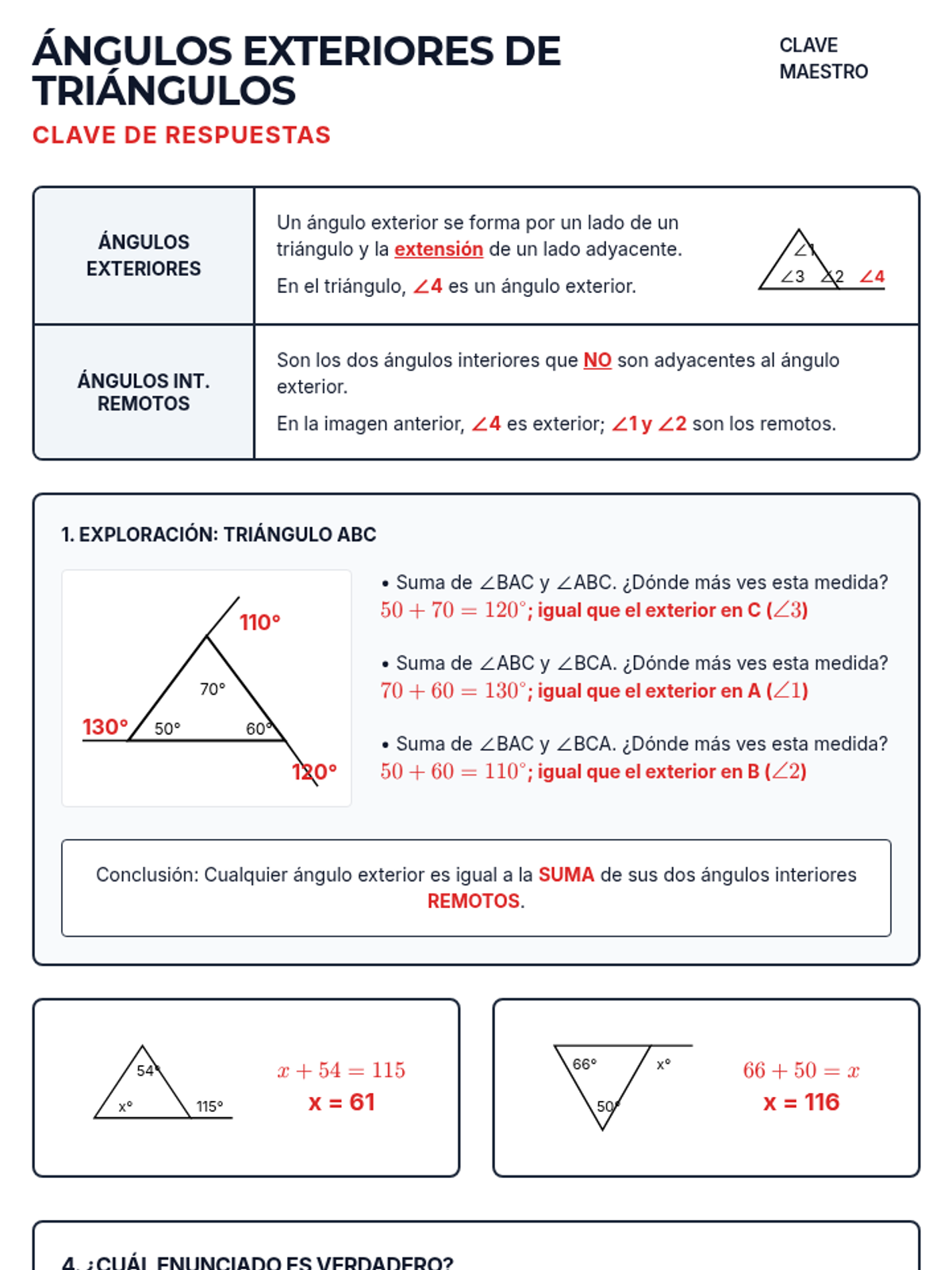
Este recurso ayuda a los estudiantes a comprender y aplicar el Teorema del Ángulo Exterior de los Triángulos. Incluye definiciones guiadas, una actividad de exploración y problemas de práctica con variables algebraicas.
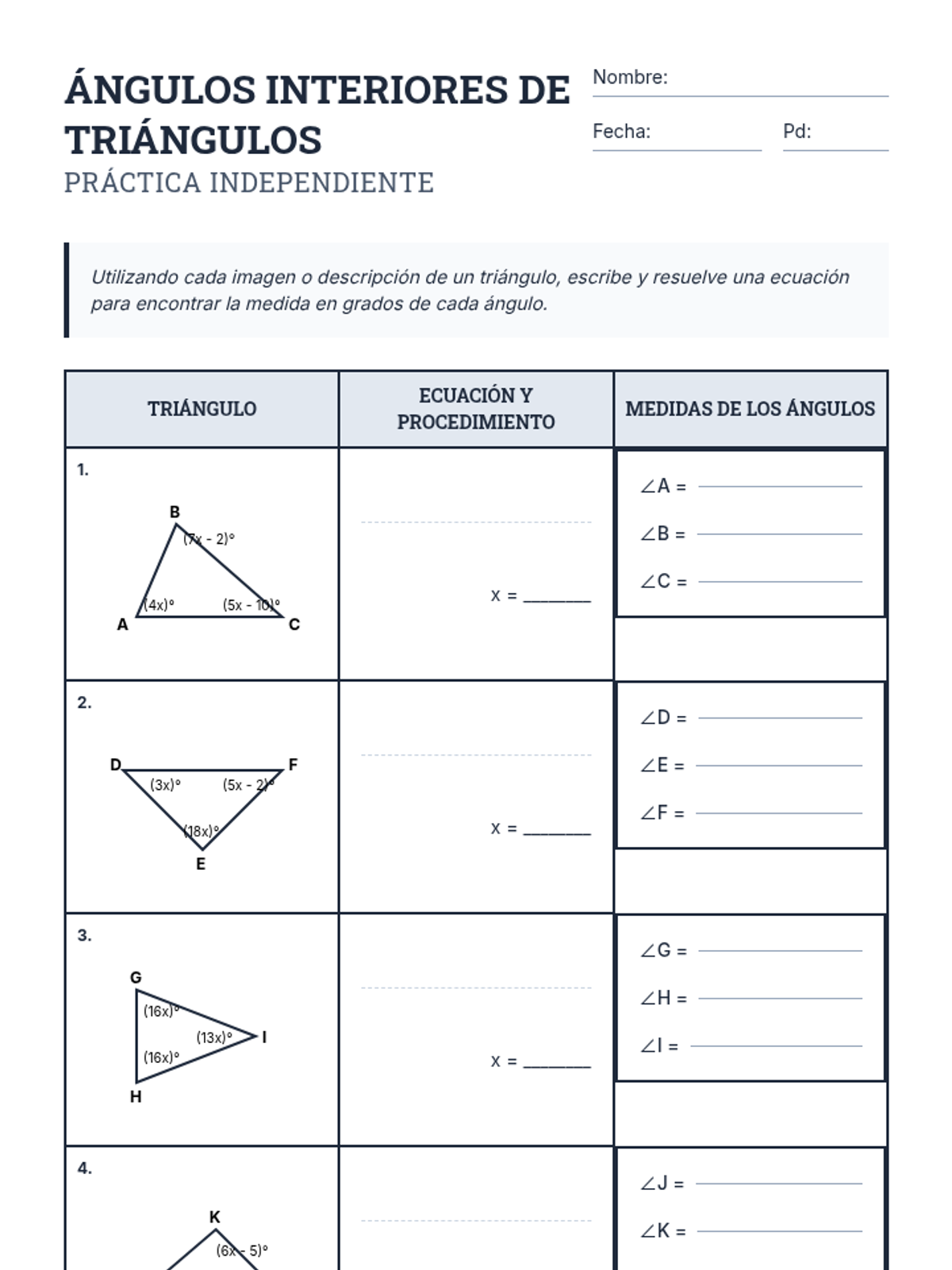
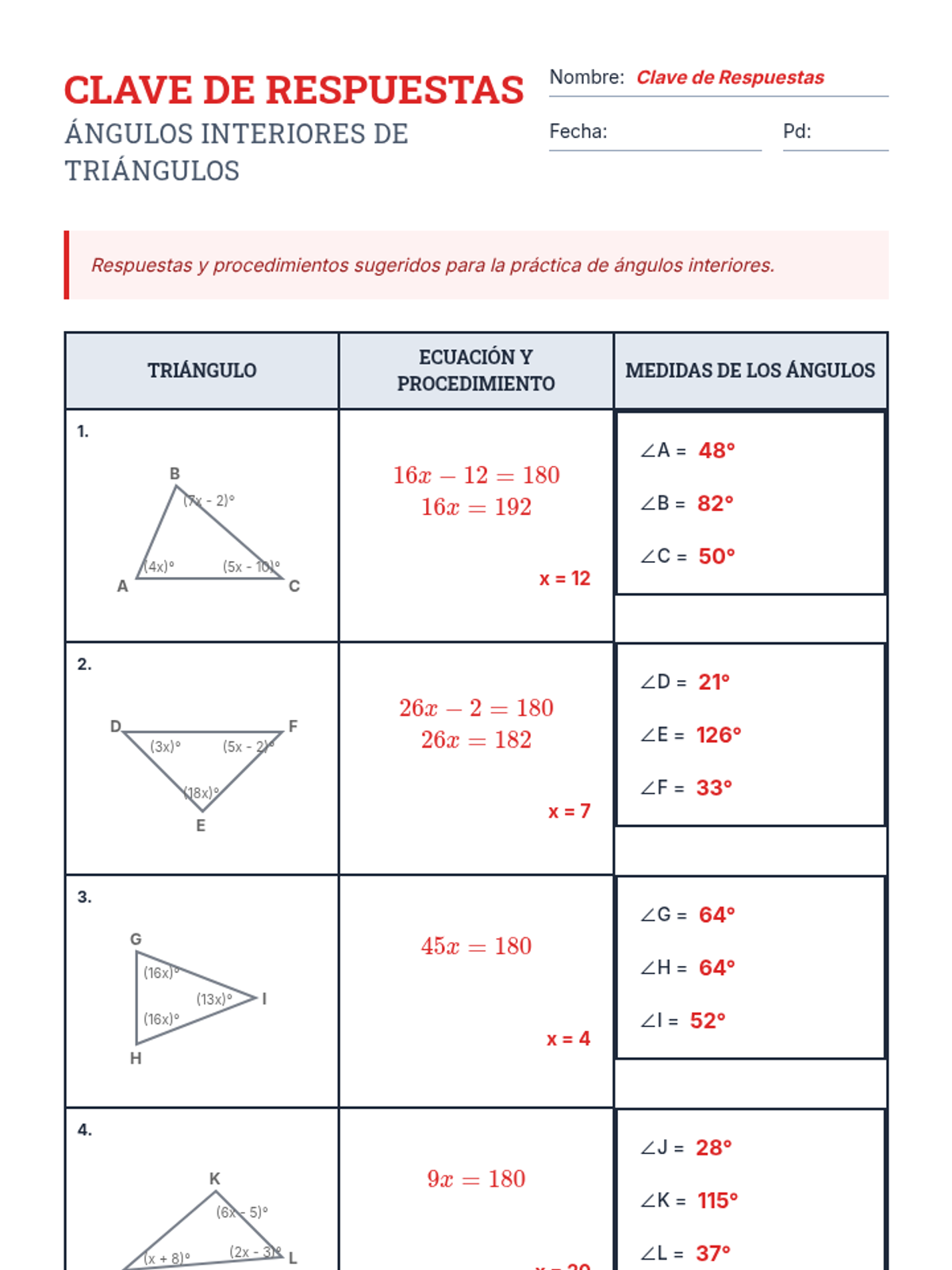
Una lección sobre el cálculo de ángulos interiores de triángulos mediante ecuaciones algebraicas. Incluye práctica independiente y su respectiva clave de respuestas.
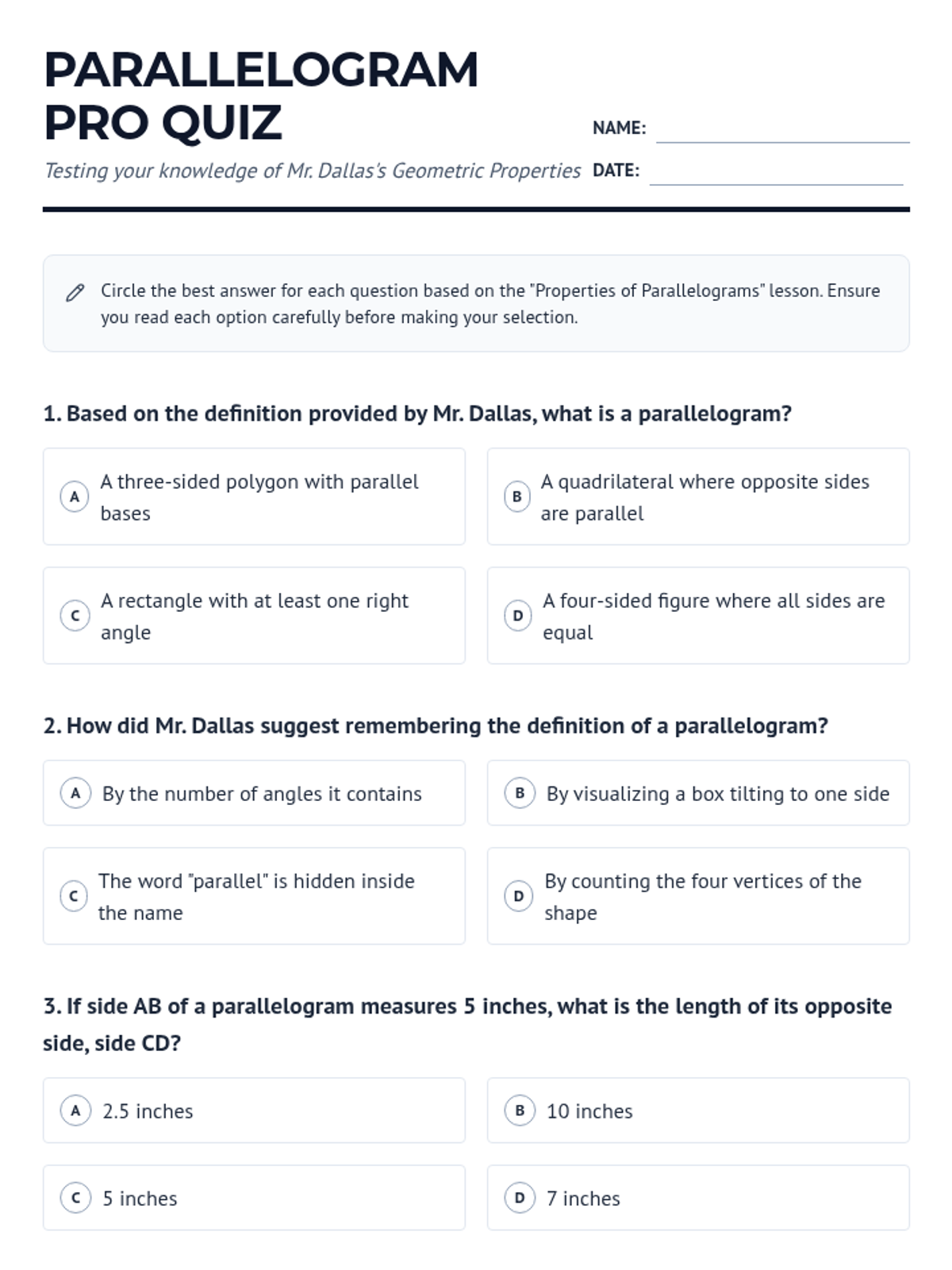
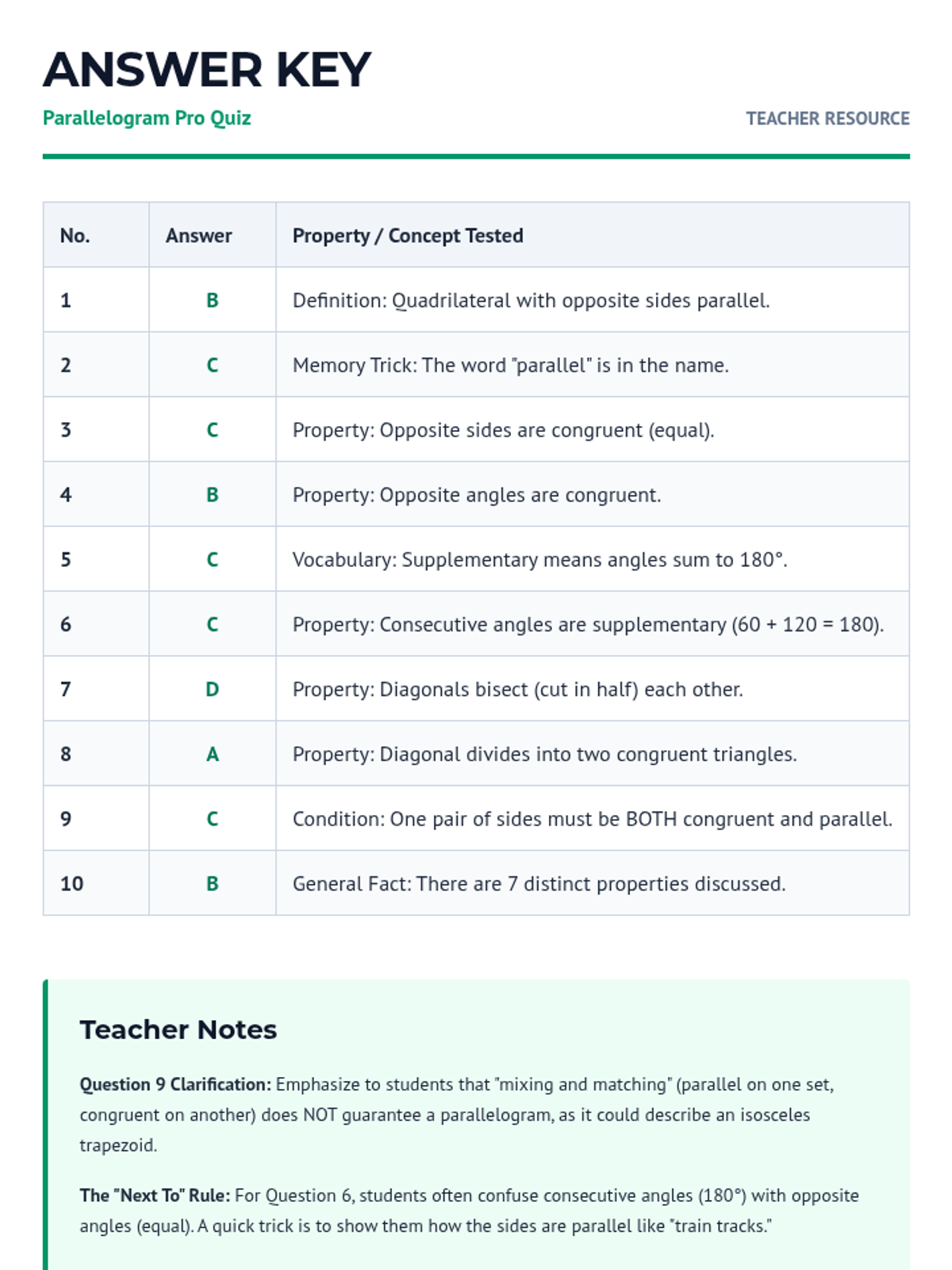
A comprehensive lesson covering the seven fundamental properties of parallelograms, based on the instructional video by Mr. Dallas. Students will learn definitions, congruence, supplementary angles, and diagonal relationships.
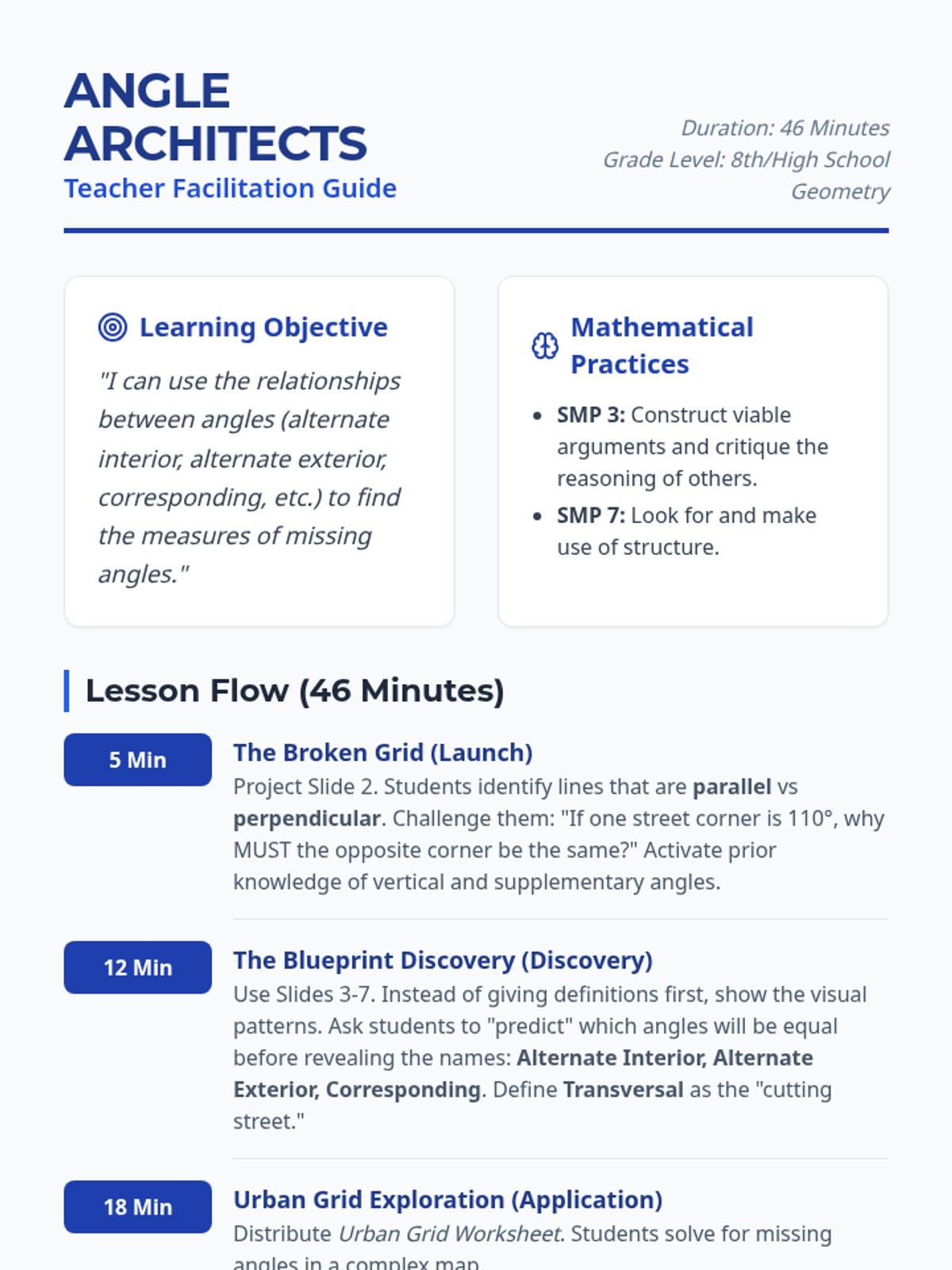
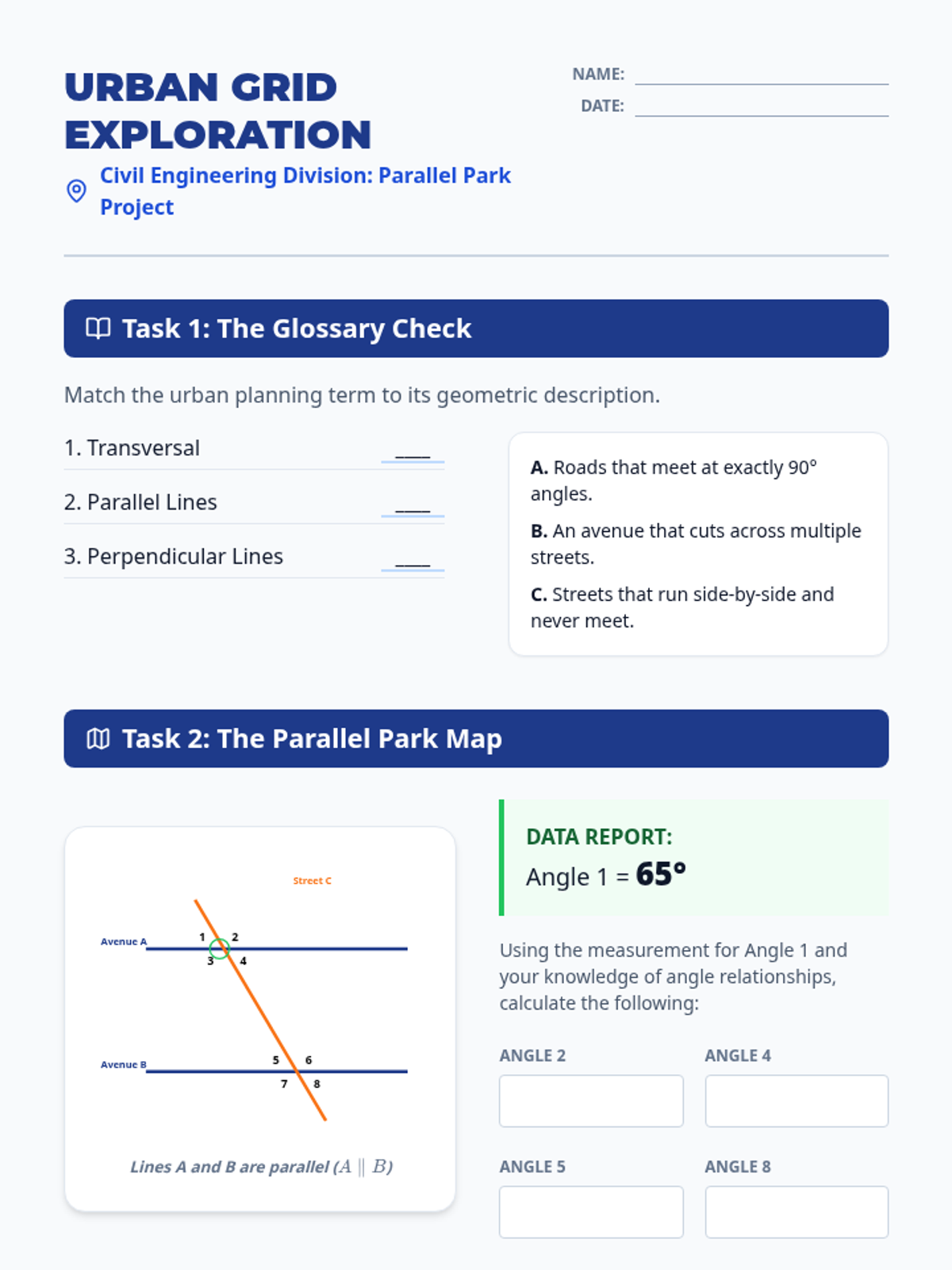
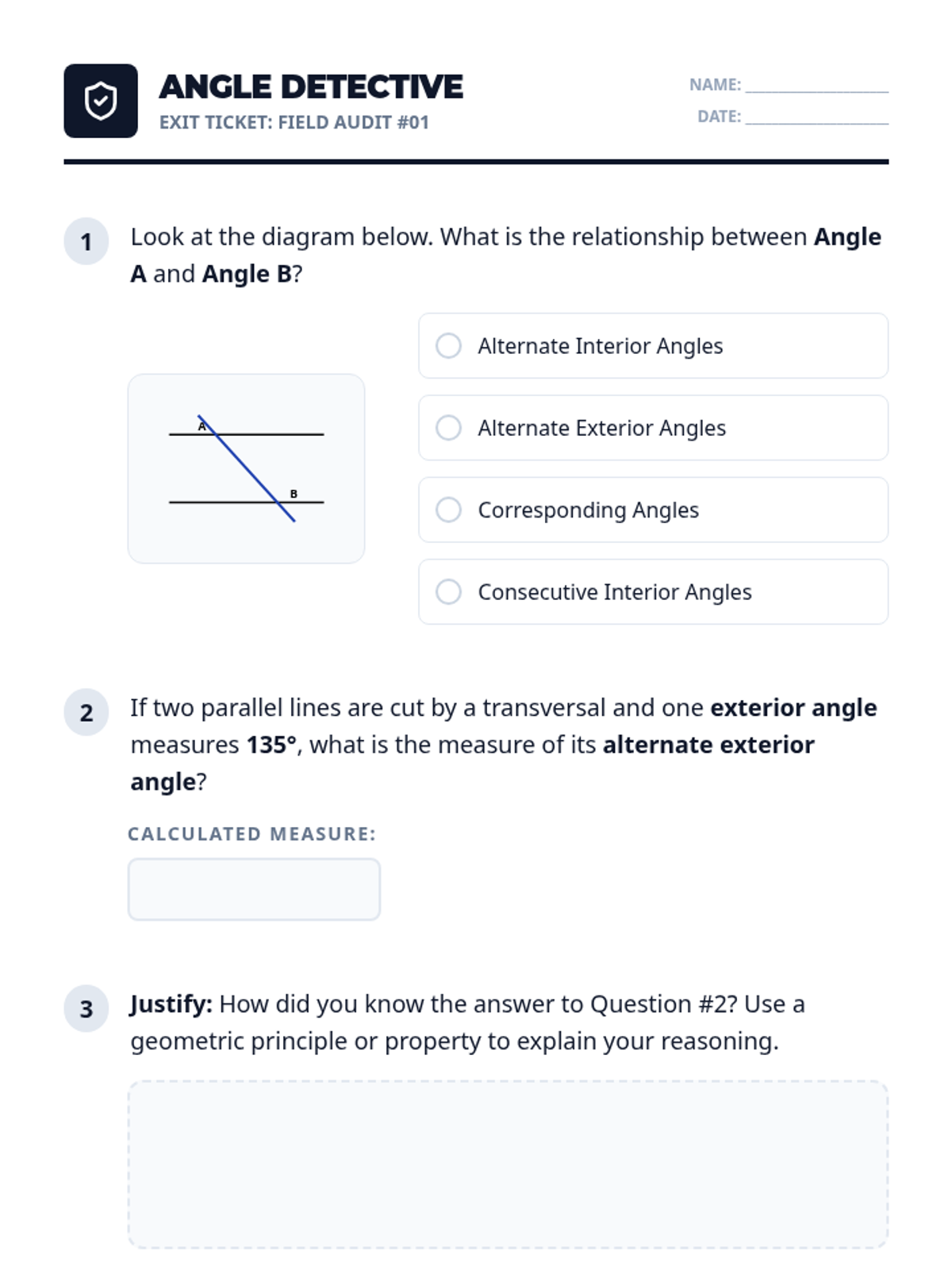
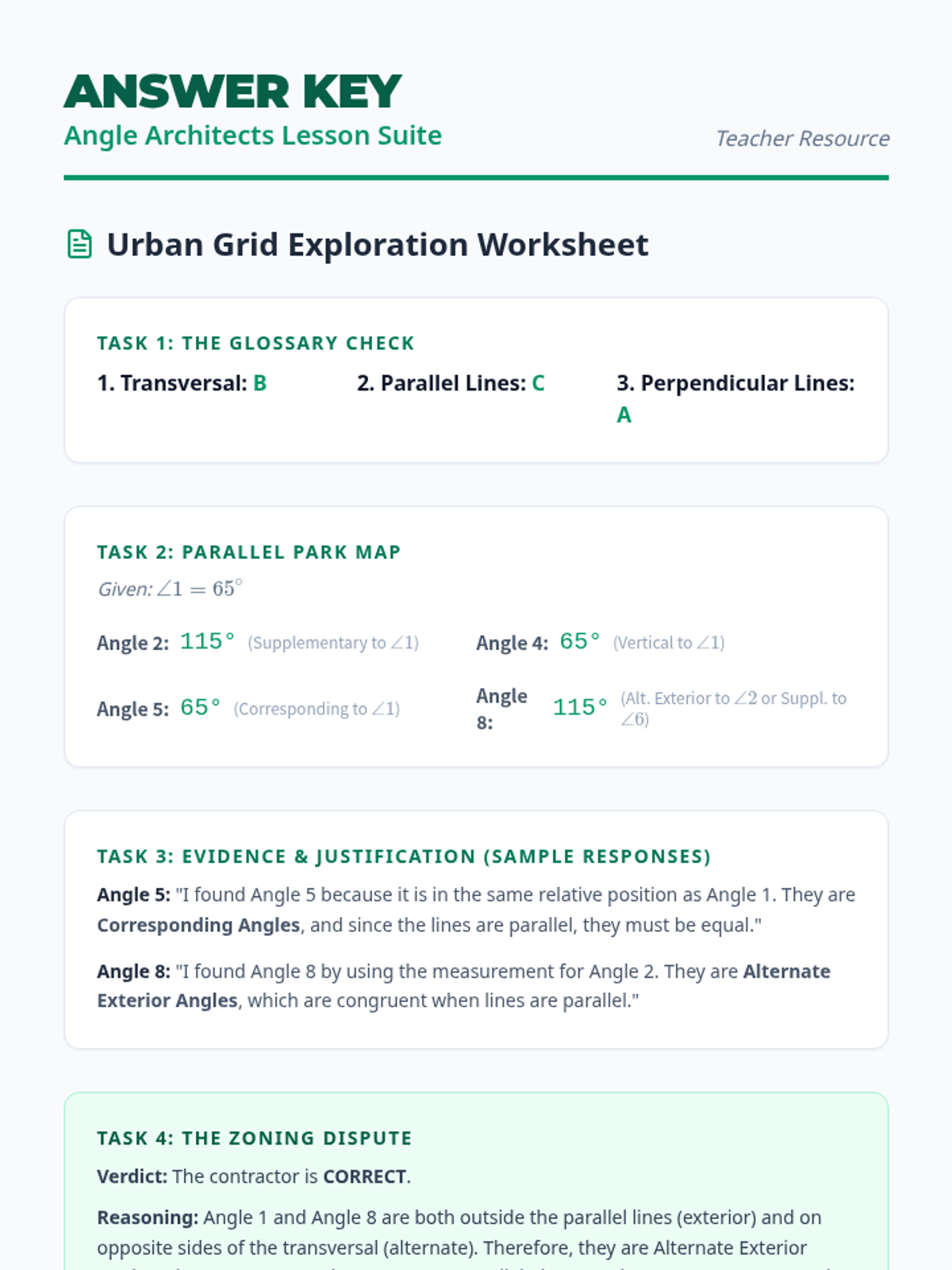
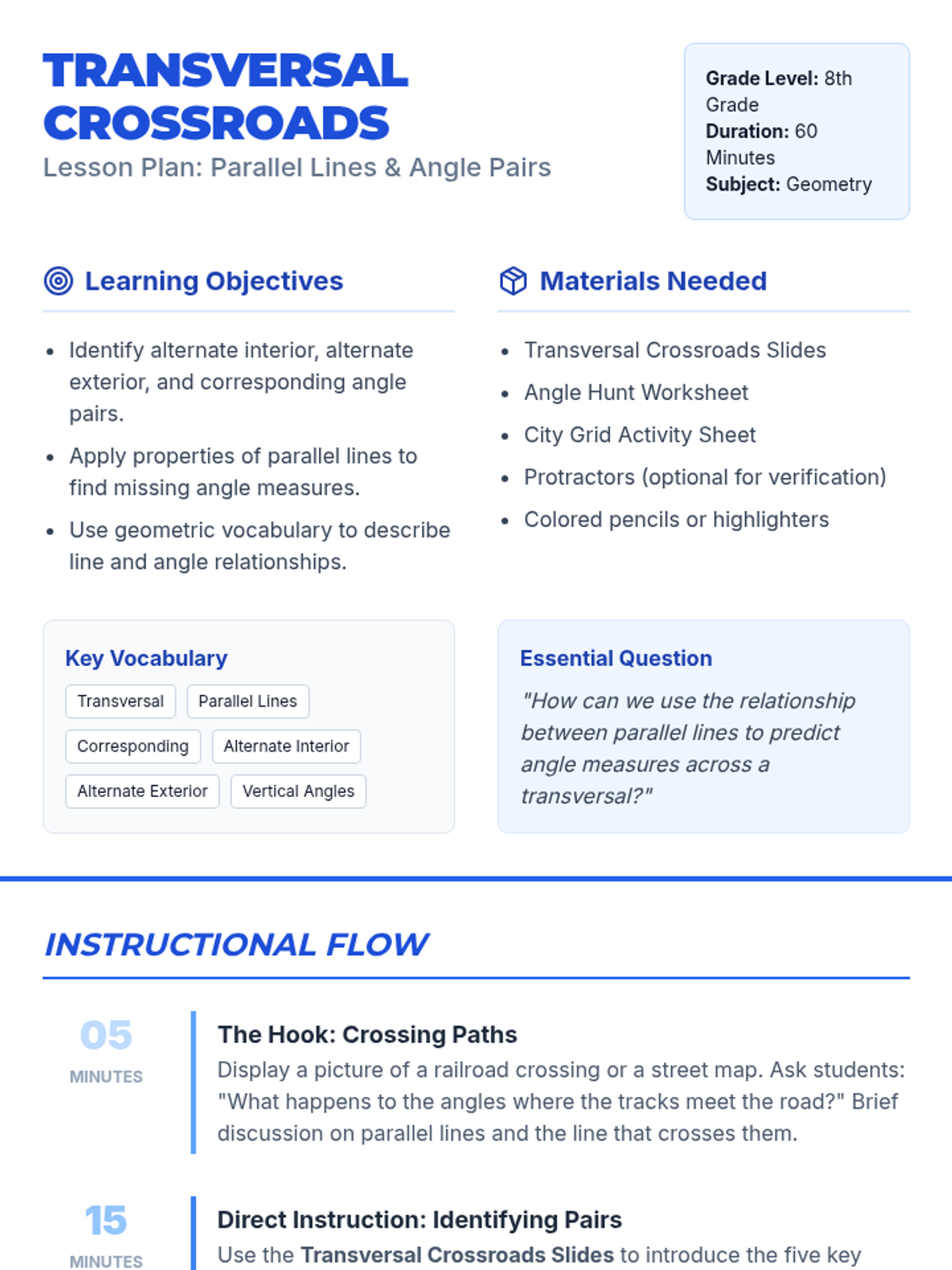
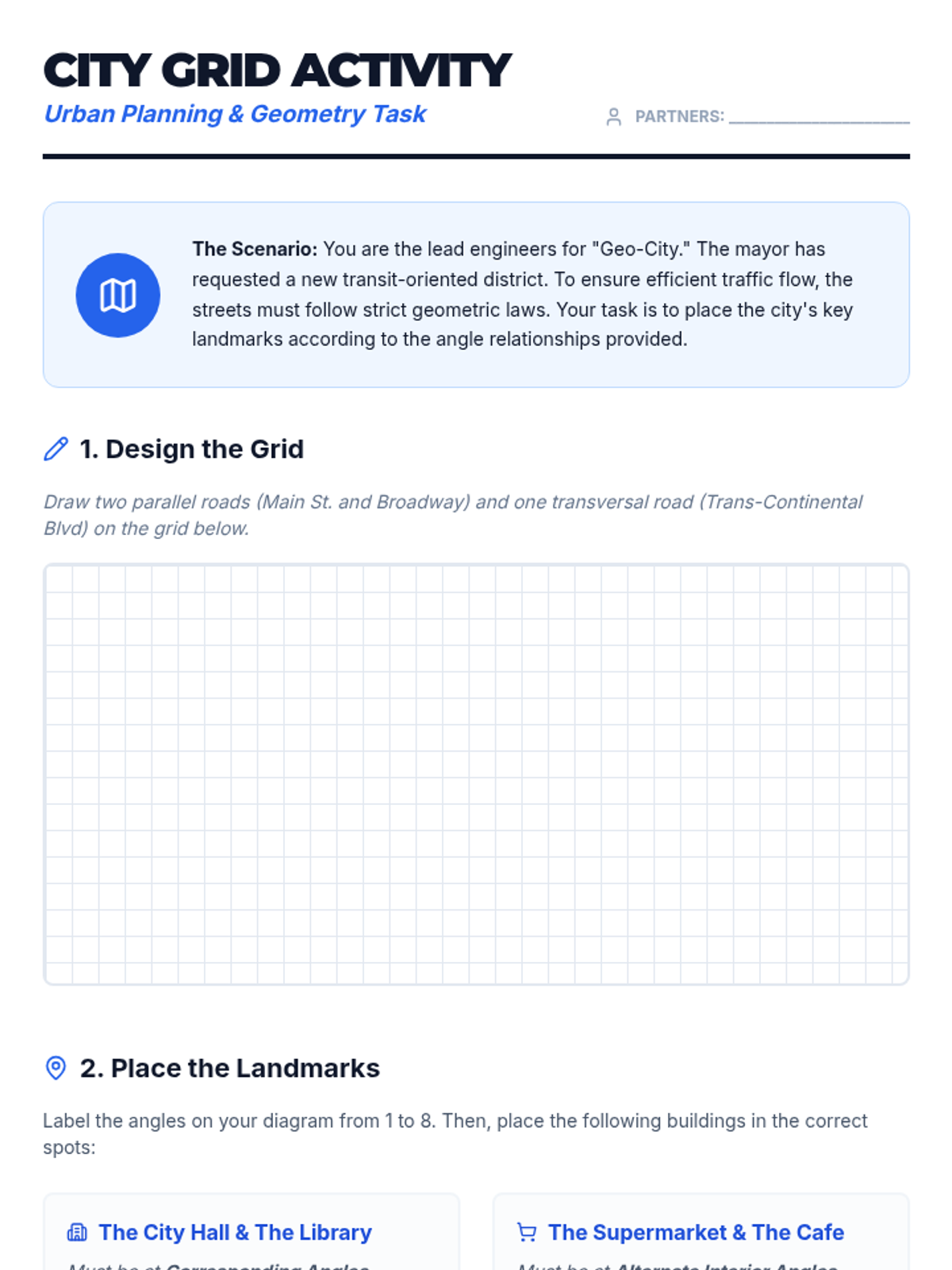
A thought-provoking 46-minute geometry lesson where students act as urban planners to discover and apply angle relationships created by transversals and parallel lines. Students use SMP 3 and 7 to justify missing angle measures in complex 'city grids'.
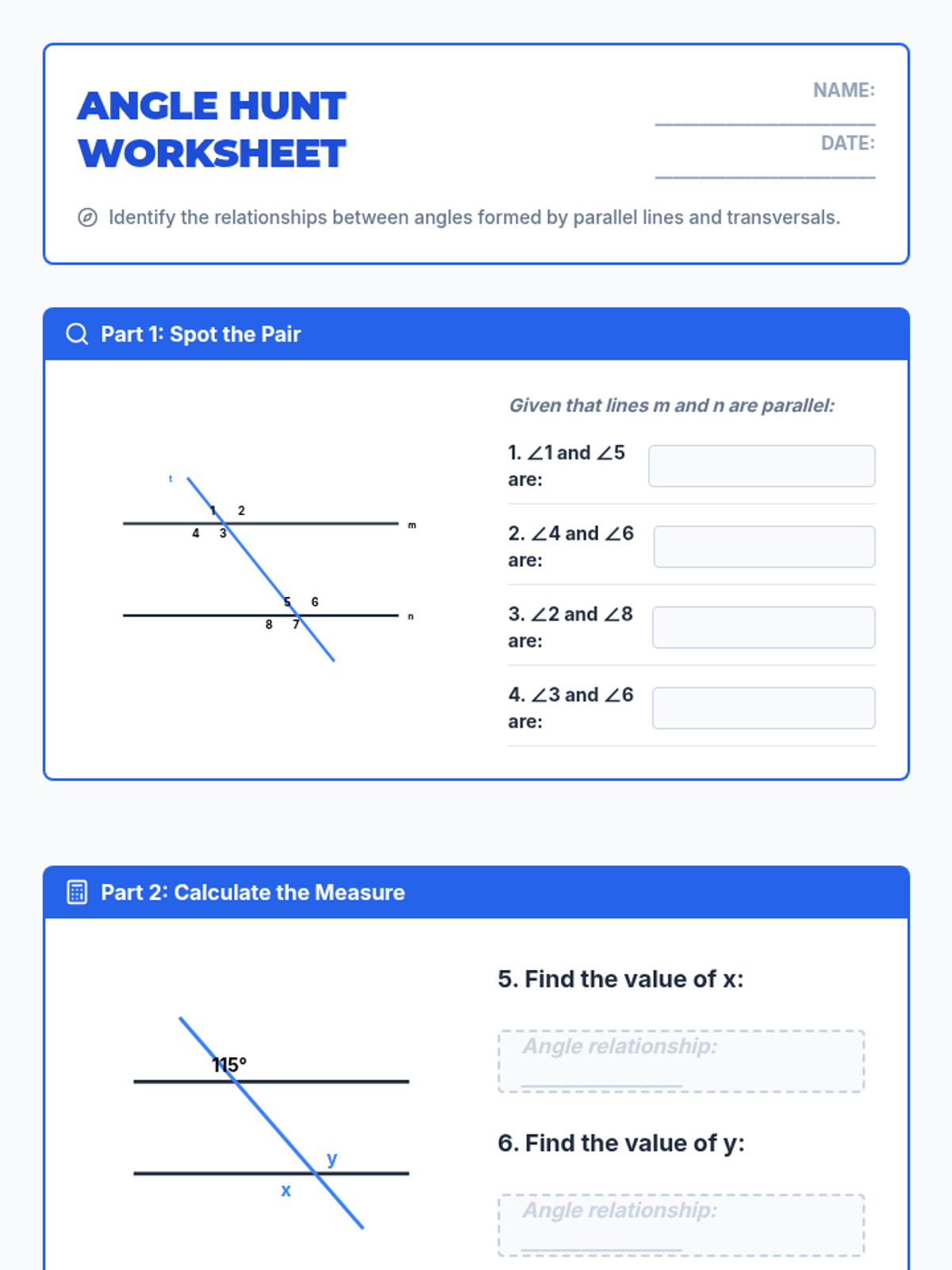
A comprehensive lesson exploring the relationships between angles formed when parallel lines are intersected by a transversal, including identifying angle pairs and calculating missing measures.
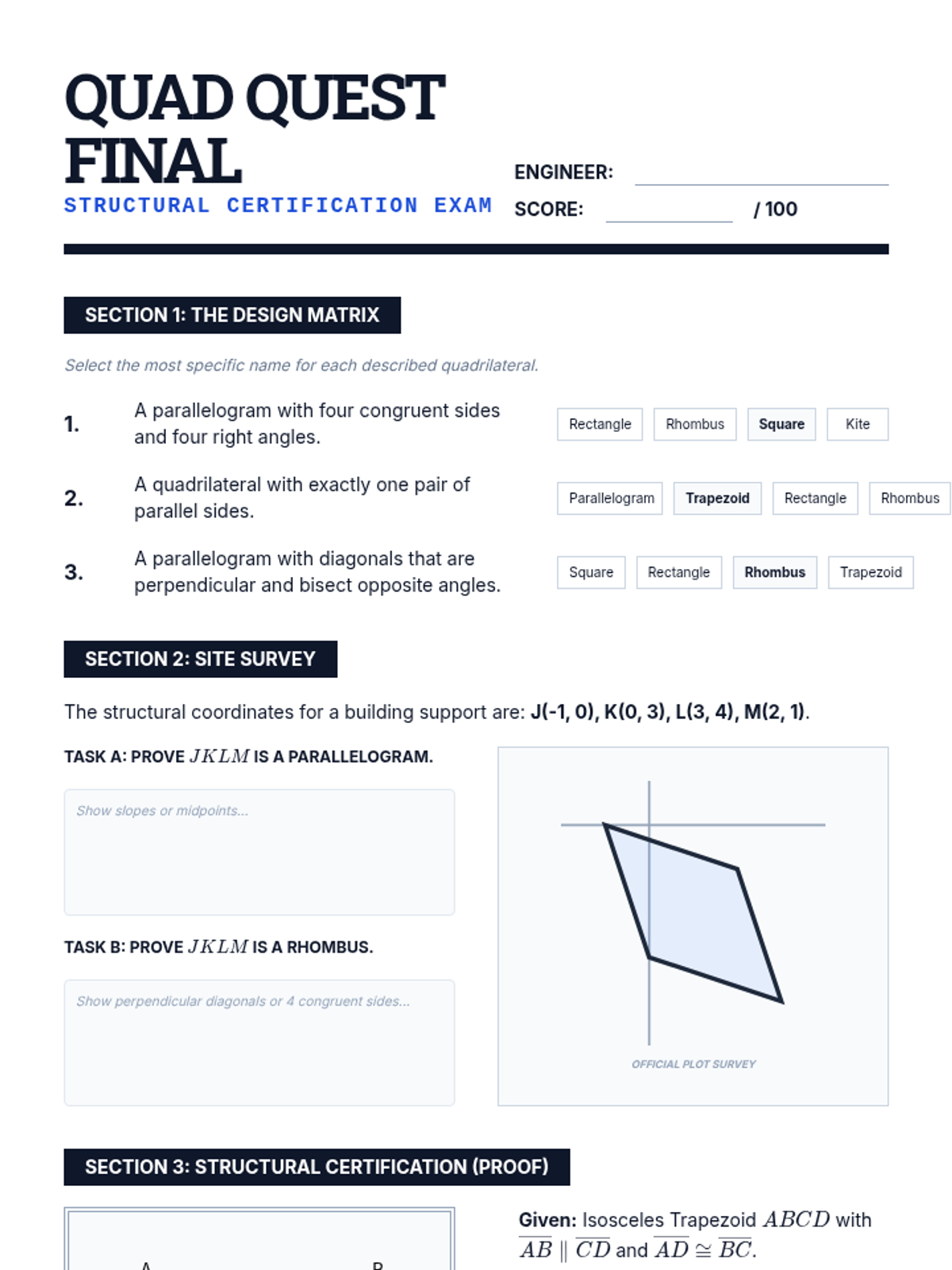
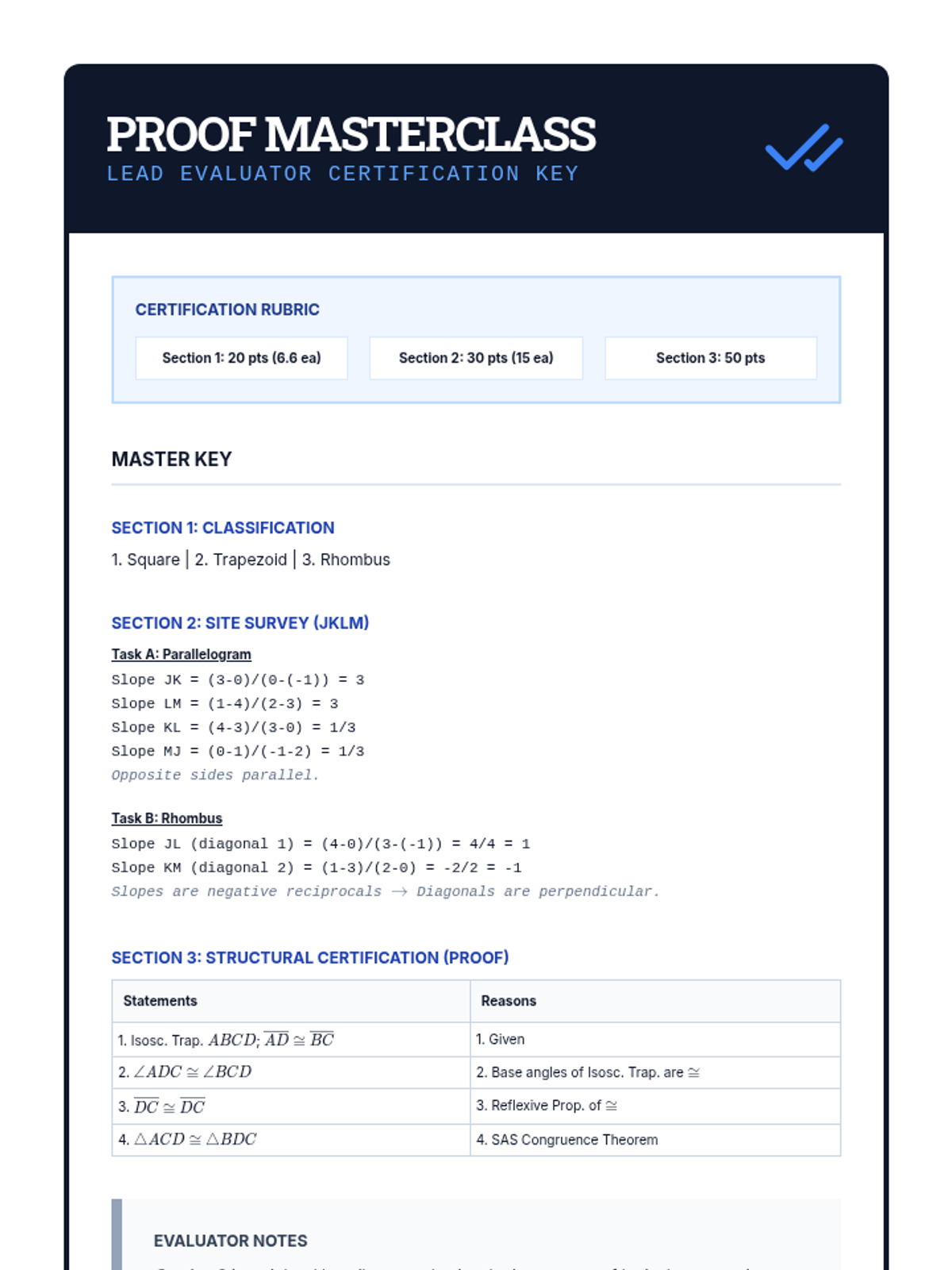
A culminating lesson featuring a mixed review of all quadrilateral proofs and a formal assessment of unit mastery.
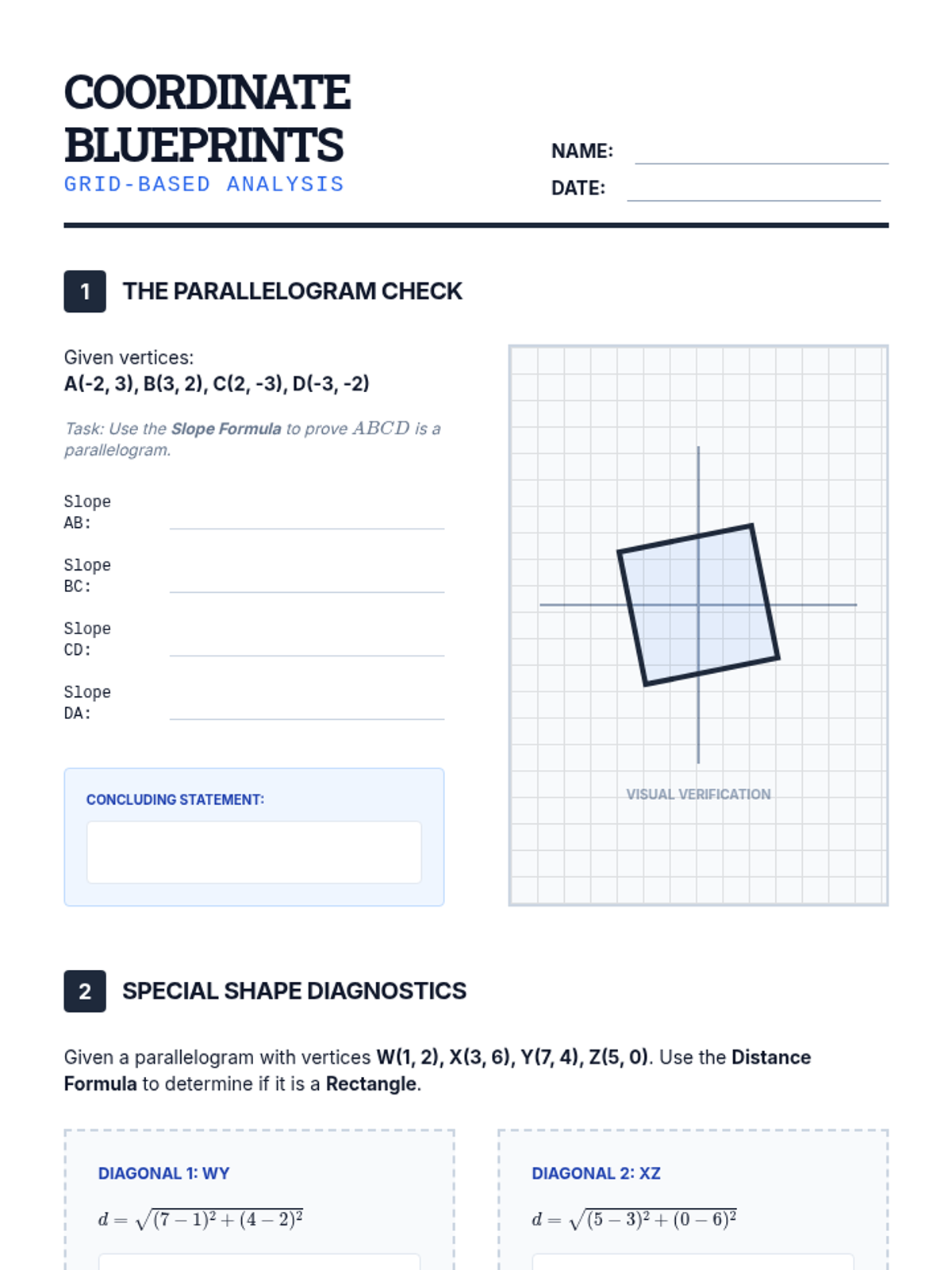
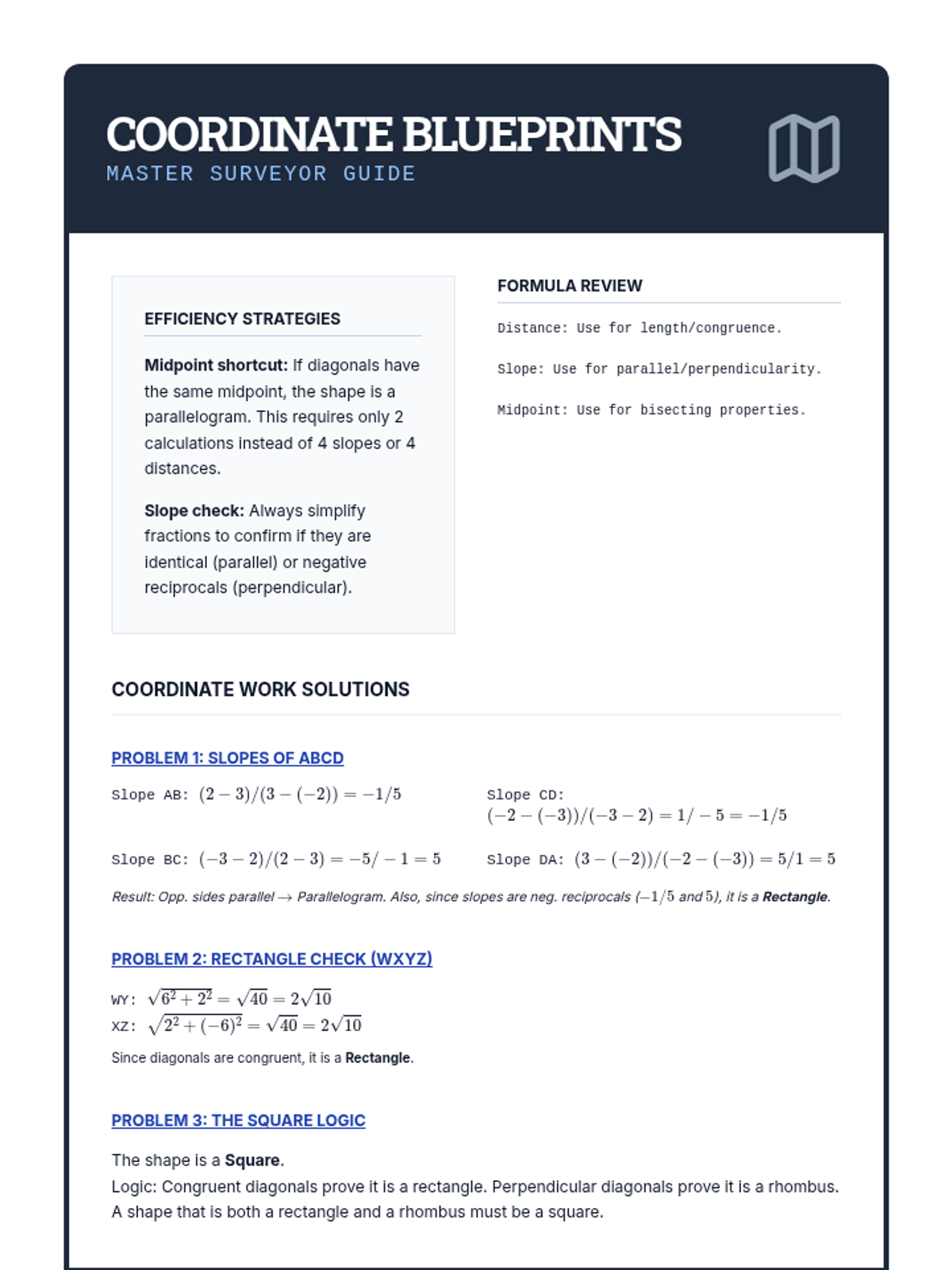
Applying the distance, midpoint, and slope formulas to prove quadrilateral classifications on the coordinate plane.
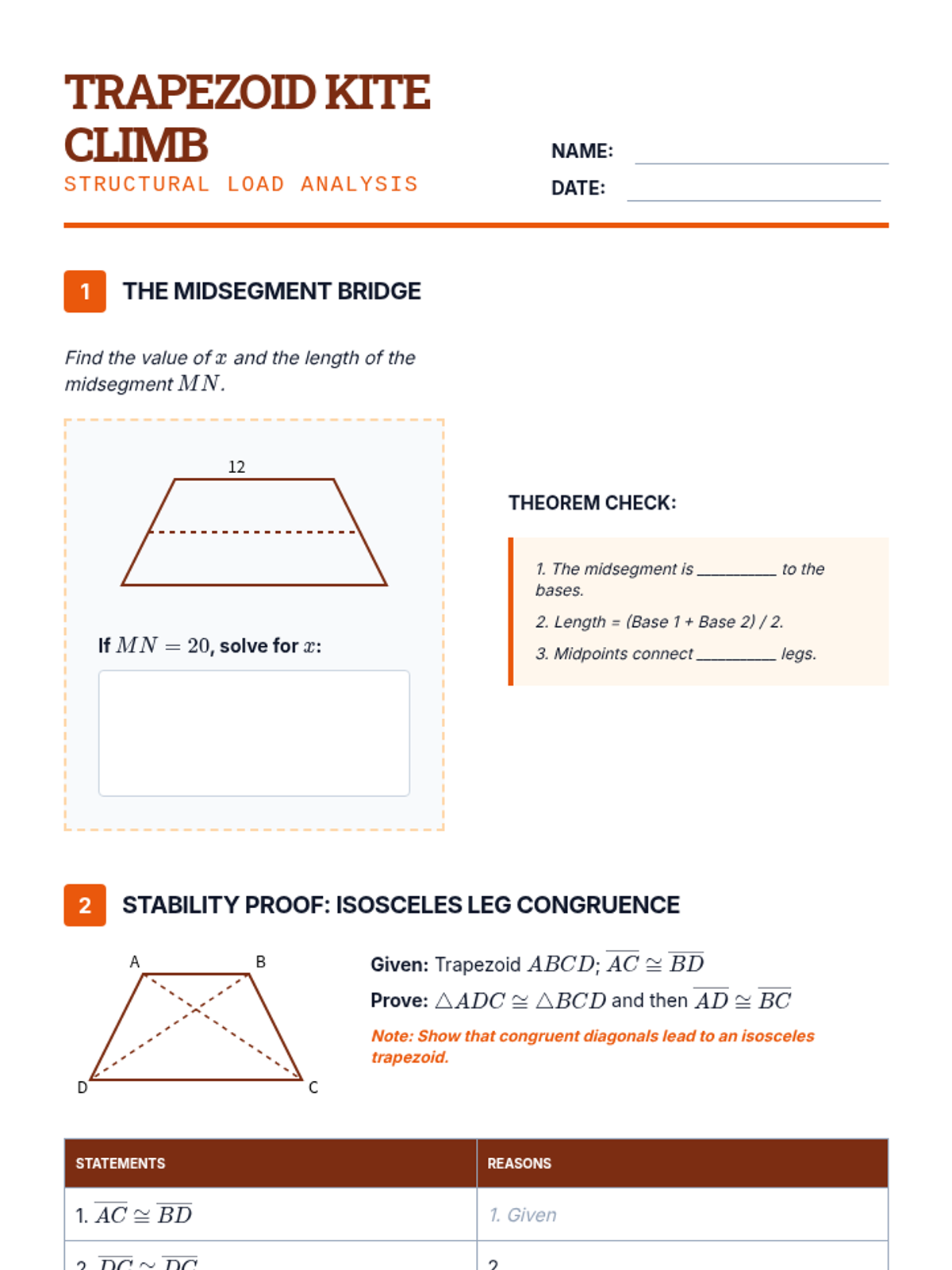
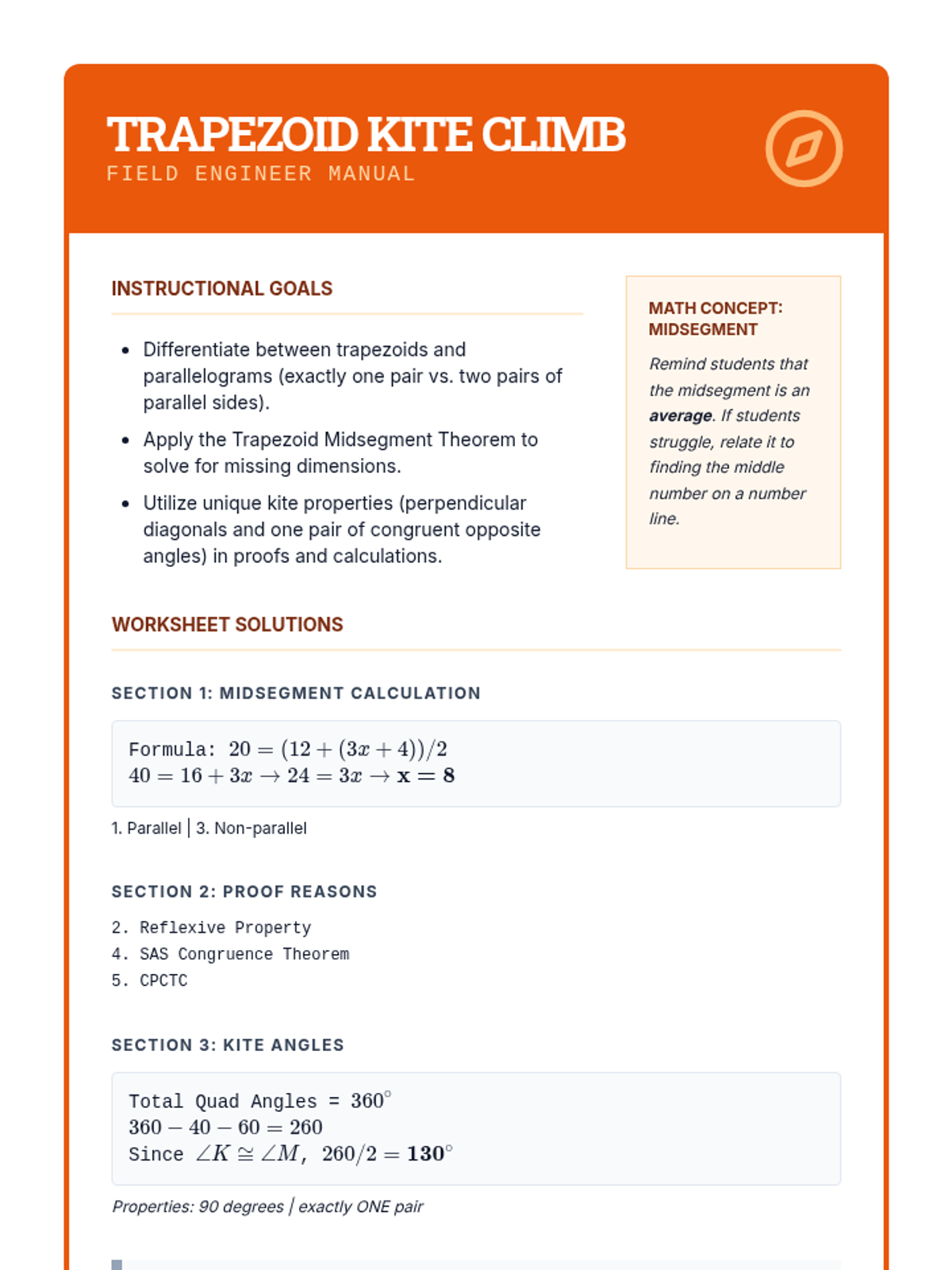
Investigating the properties of trapezoids, isosceles trapezoids, and kites, including proofs involving midsegments and diagonals.
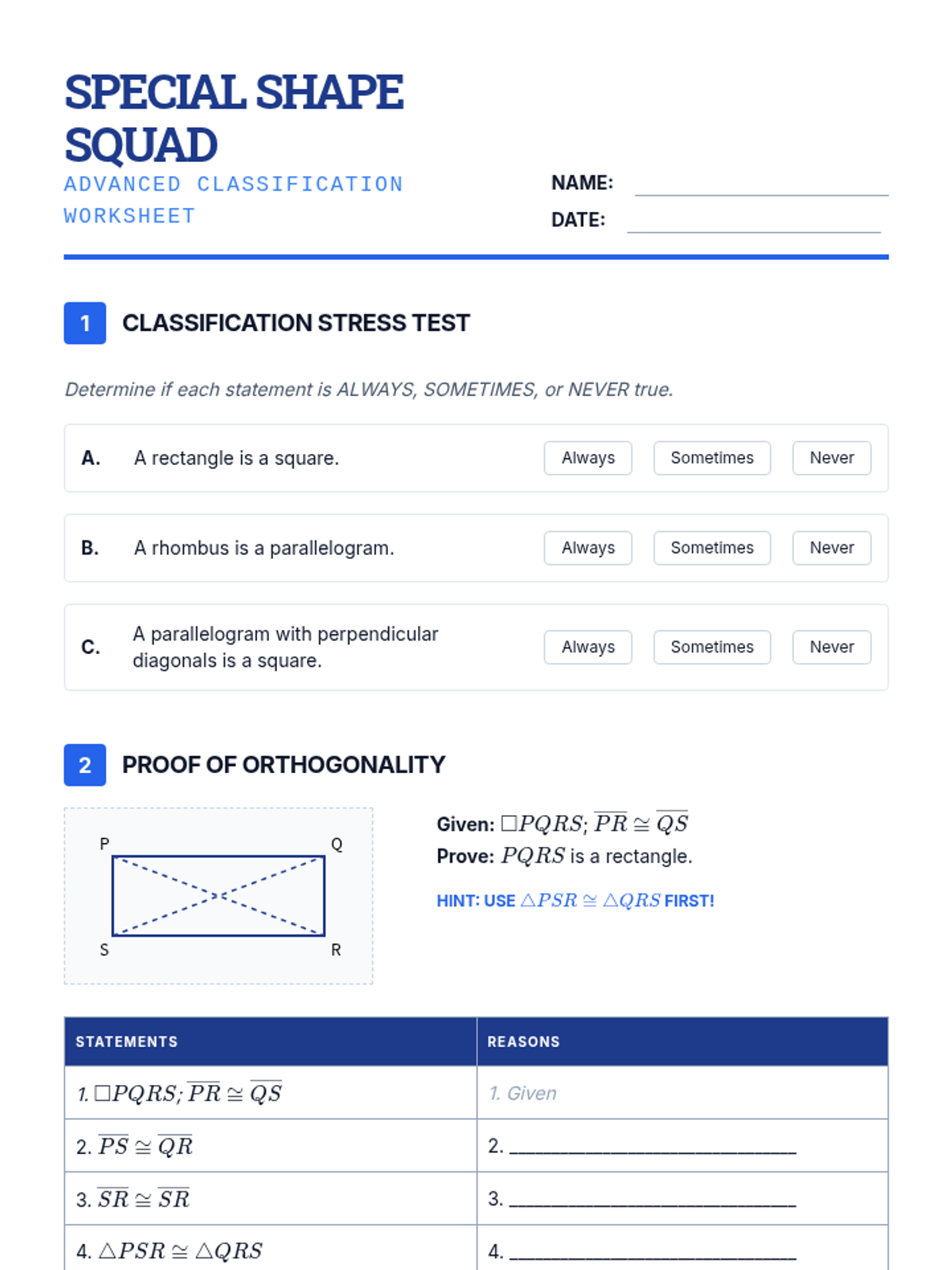
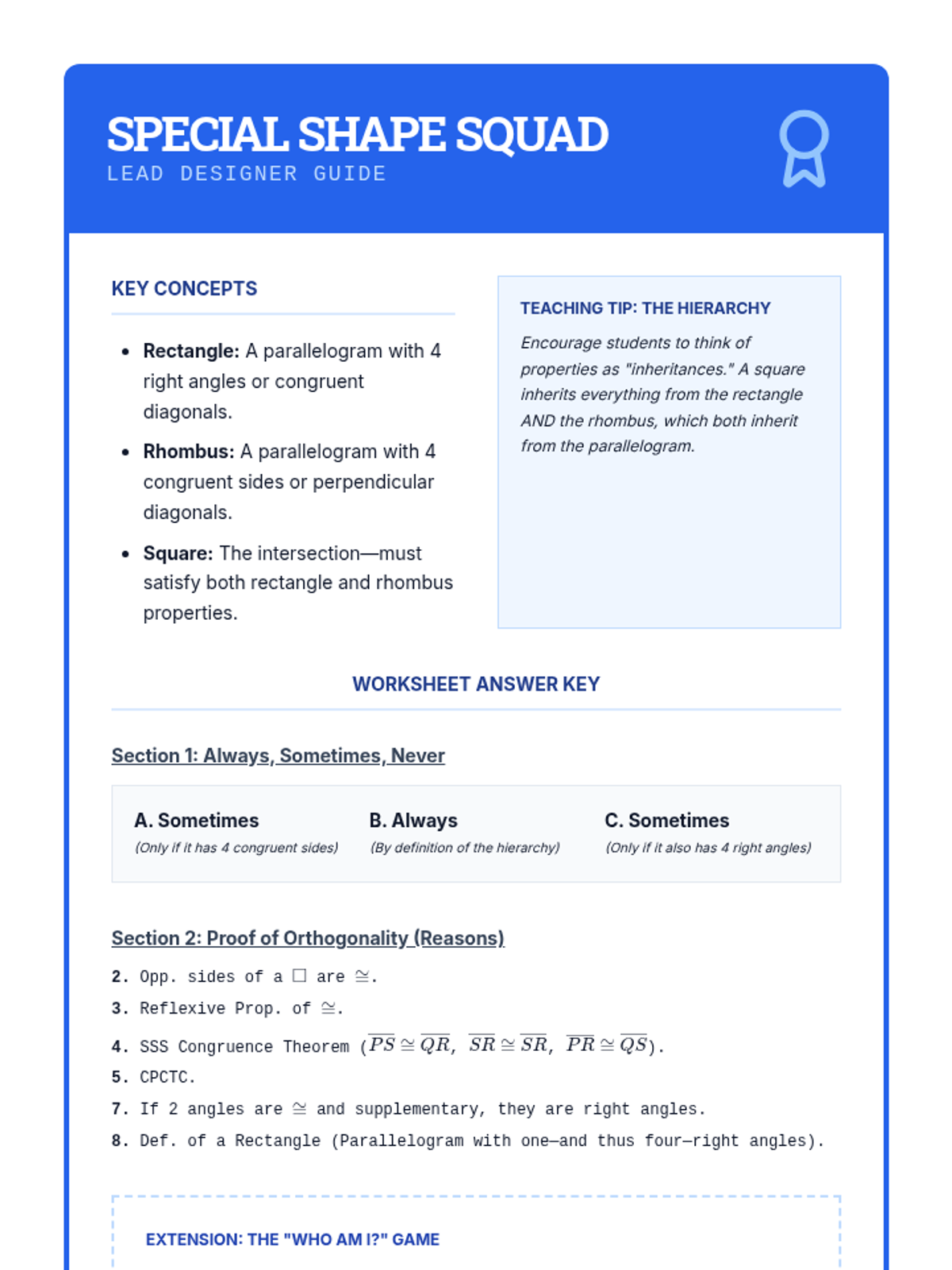
Exploration of rectangles, rhombi, and squares, focusing on their unique properties and using them in formal proofs.
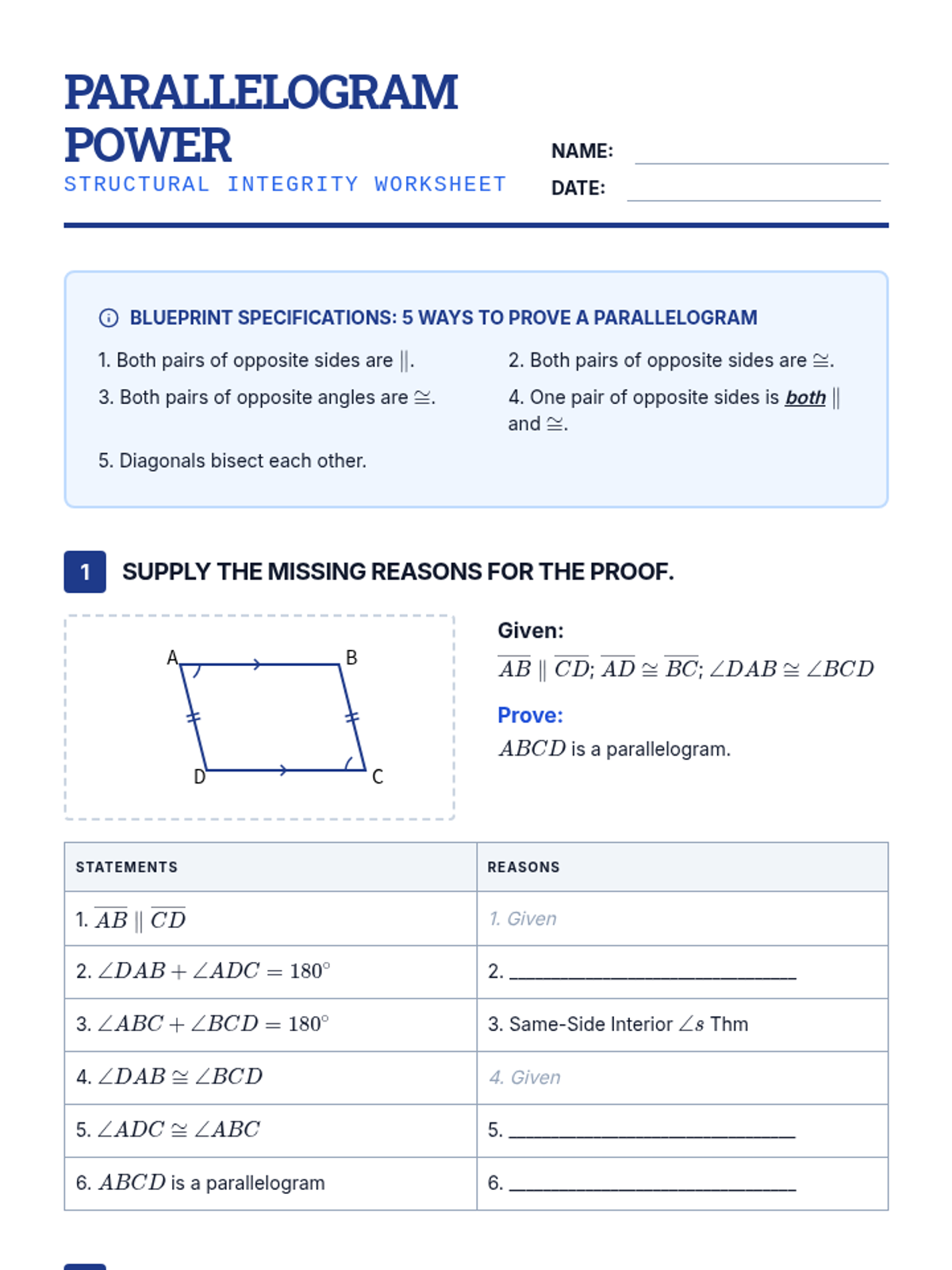
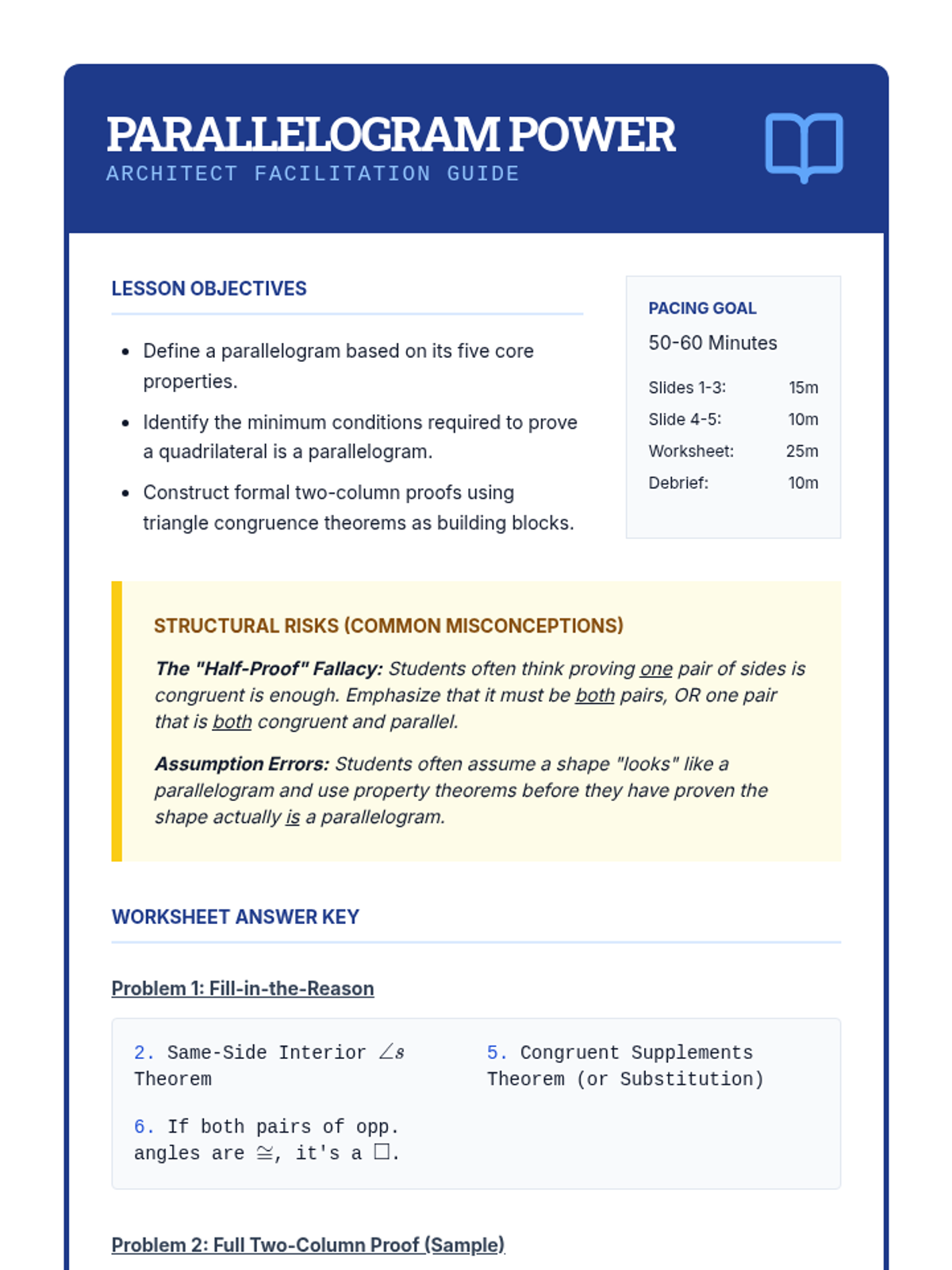
Introduction to the properties of parallelograms and the five ways to prove a quadrilateral is a parallelogram using two-column proofs.
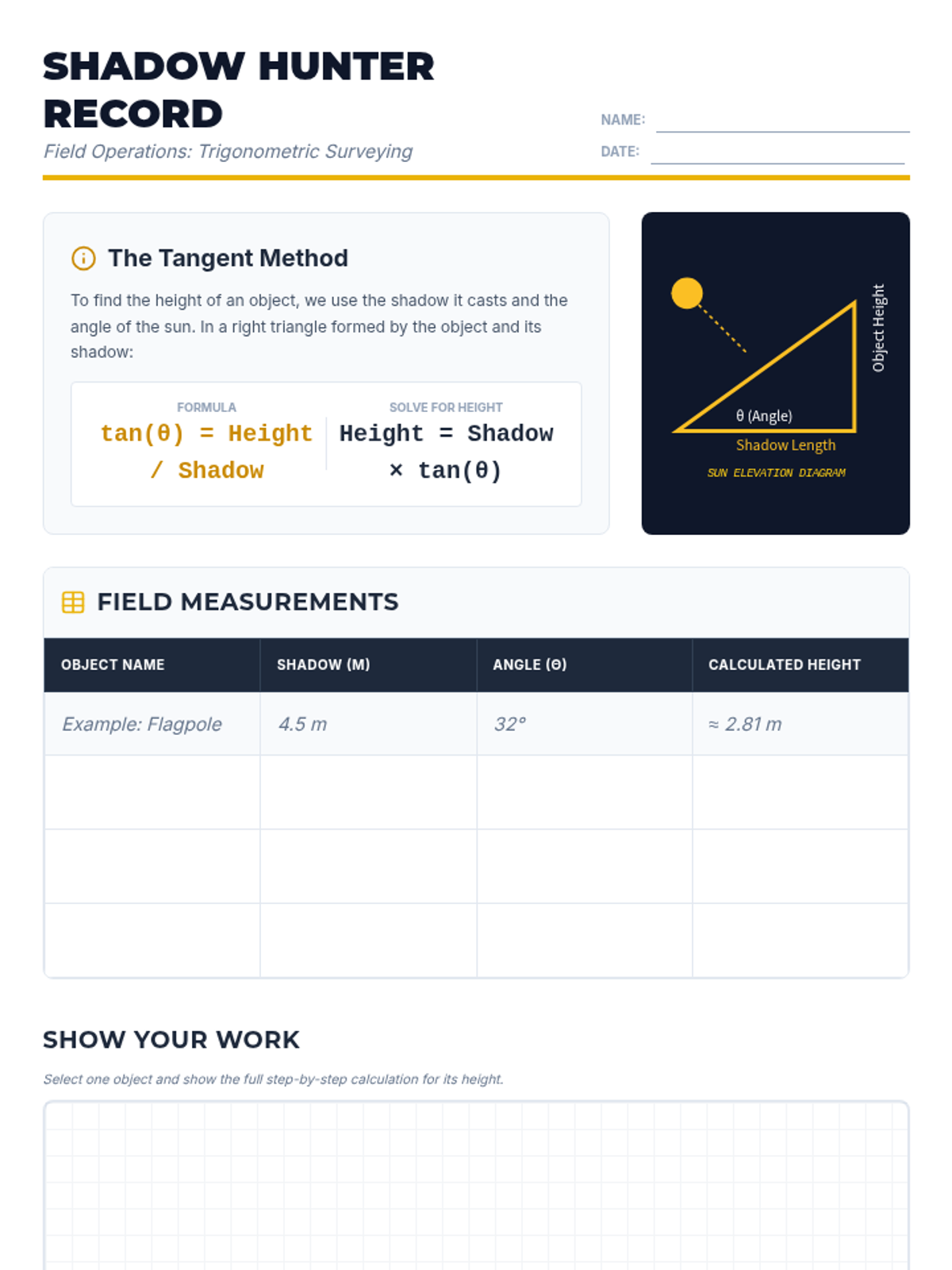
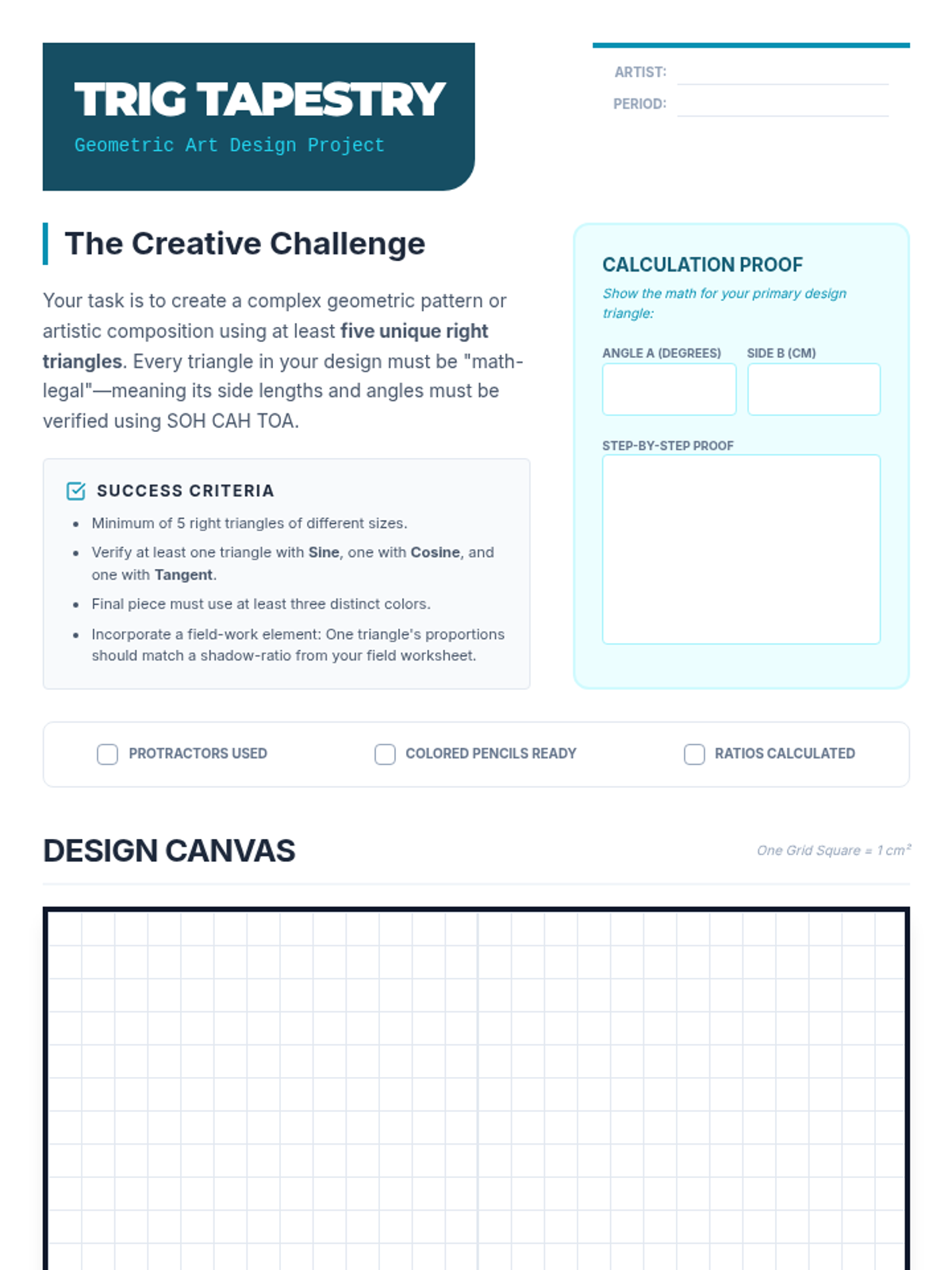
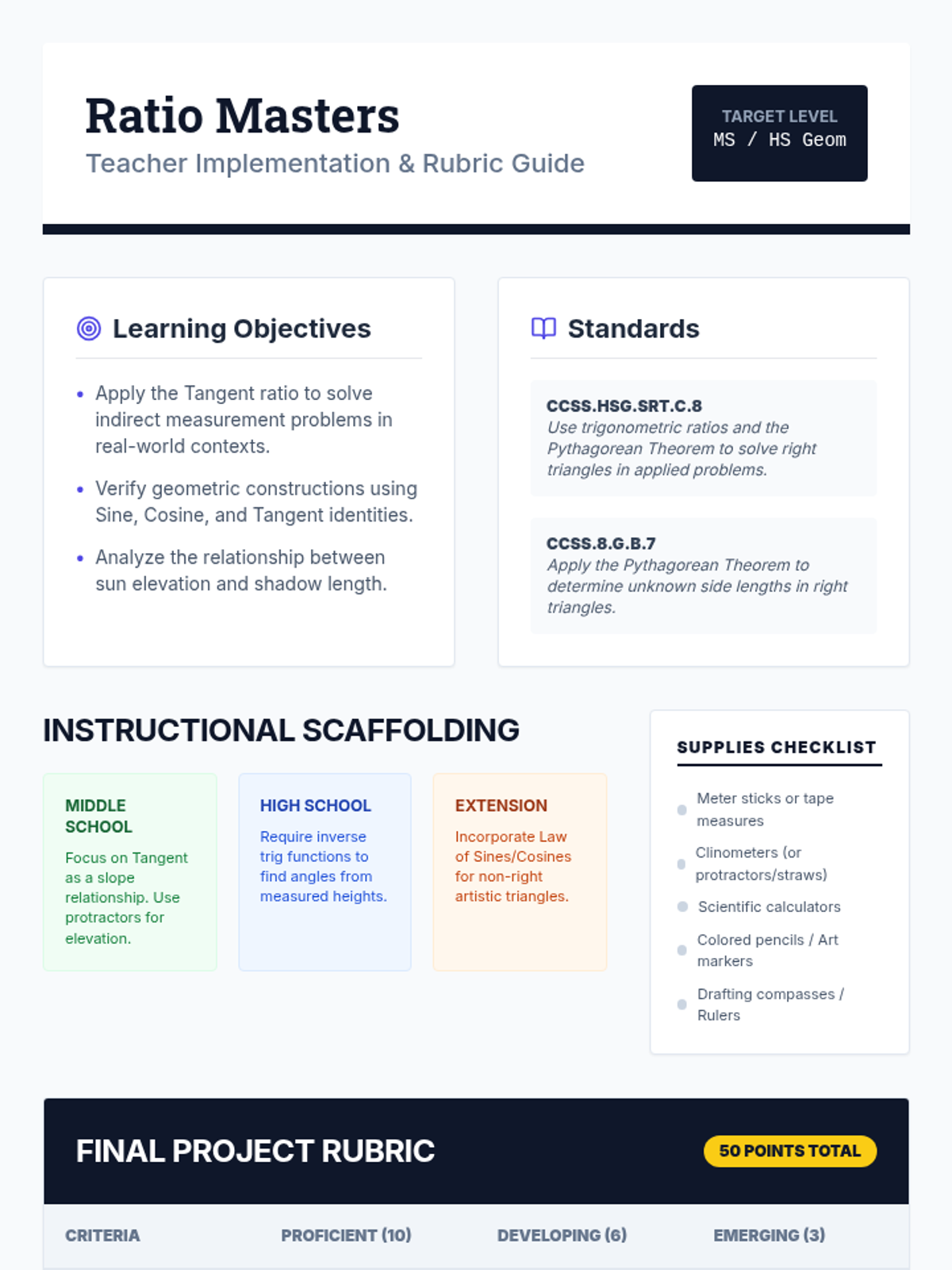
Students learn to apply Sine, Cosine, and Tangent to real-world measurements and abstract artistic design, culminating in a dual-phase project.
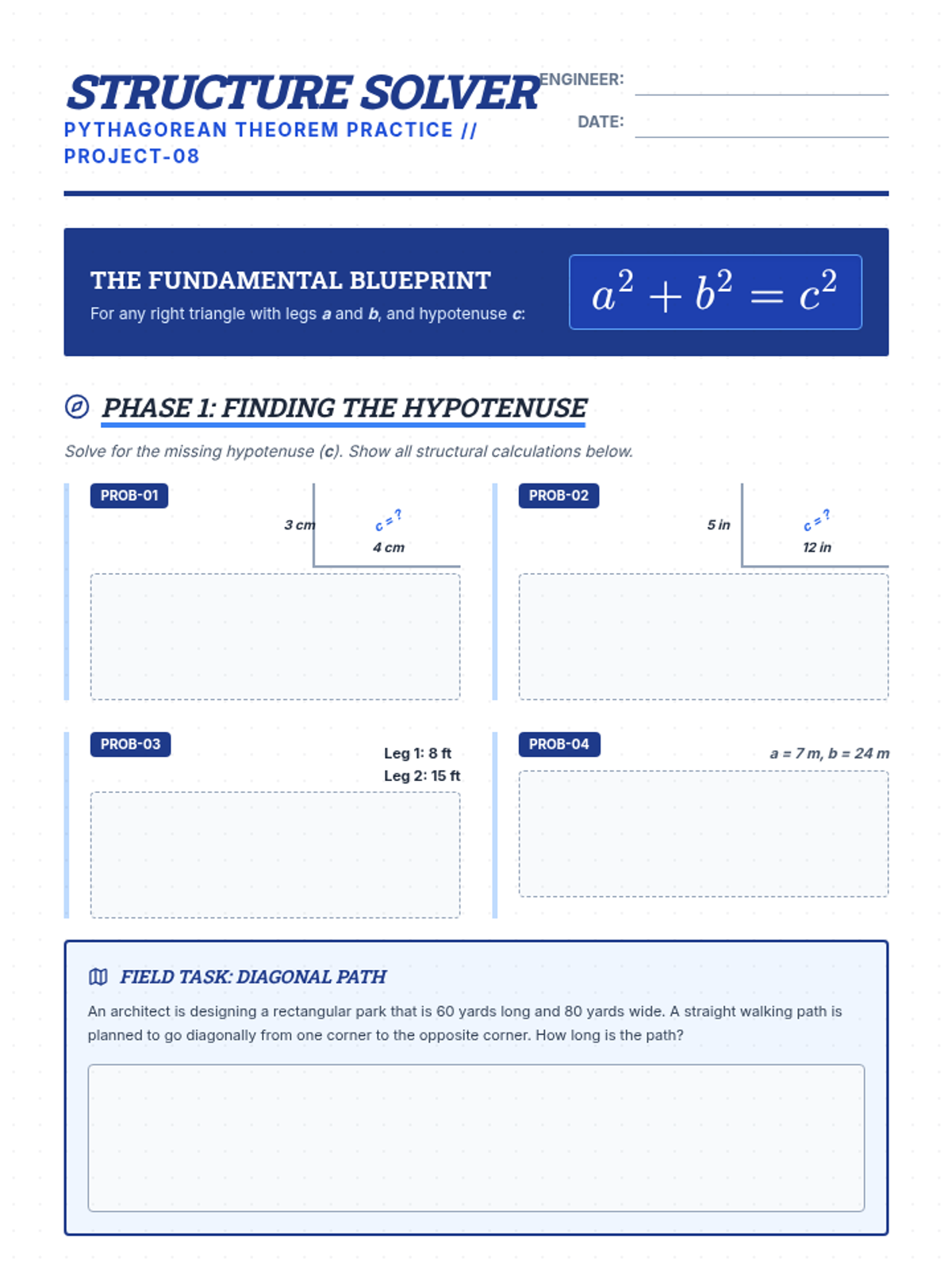
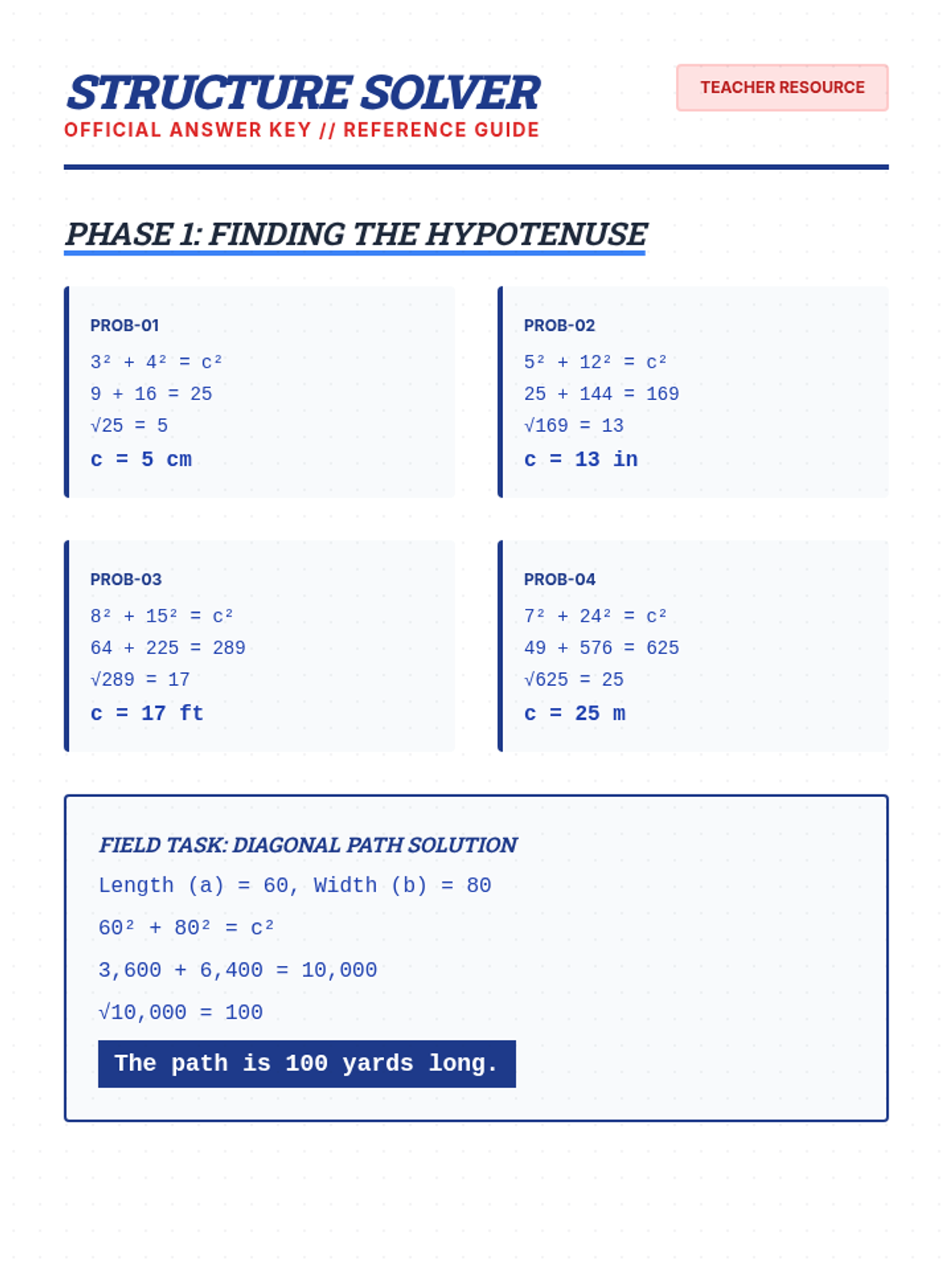
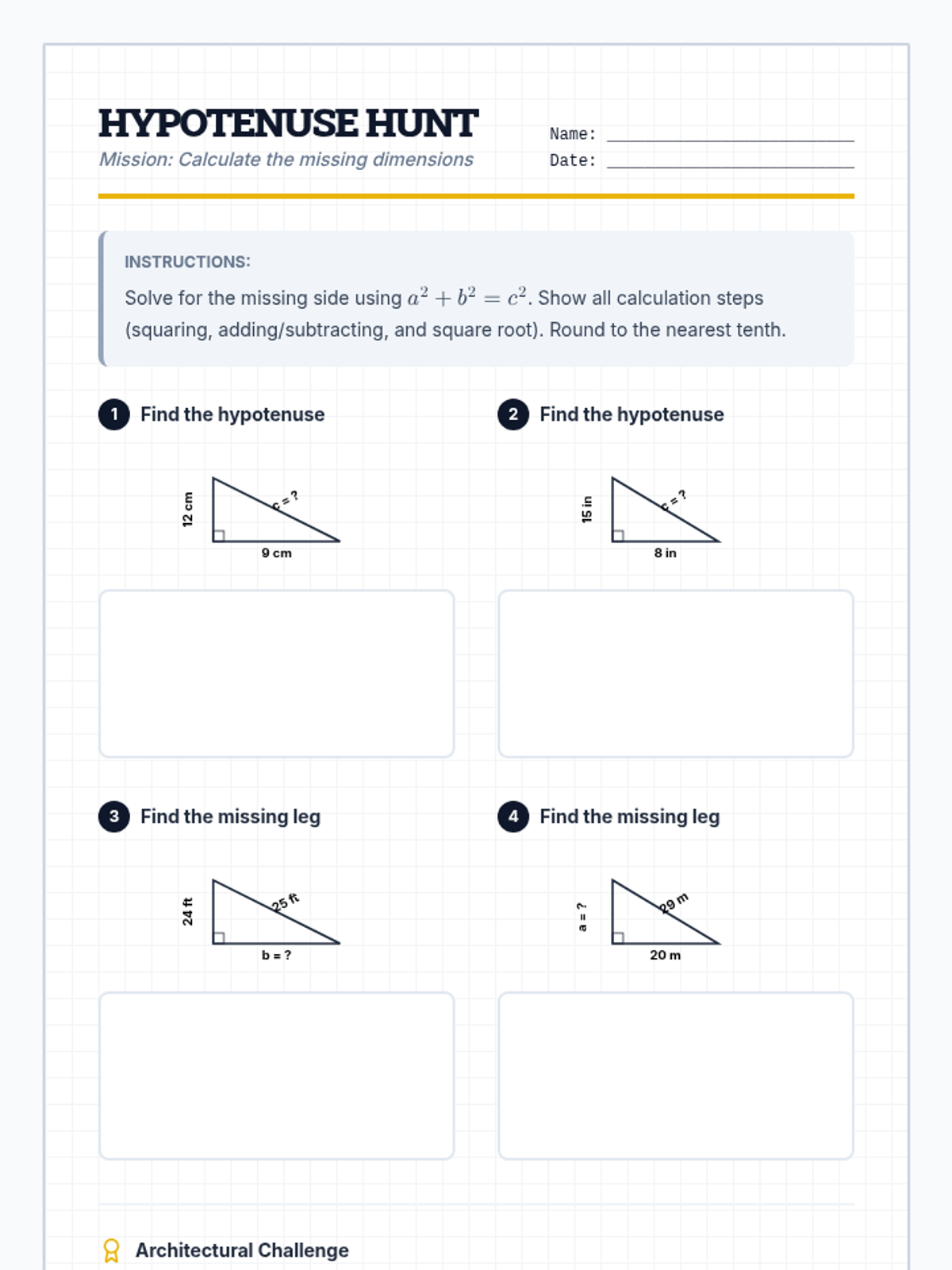
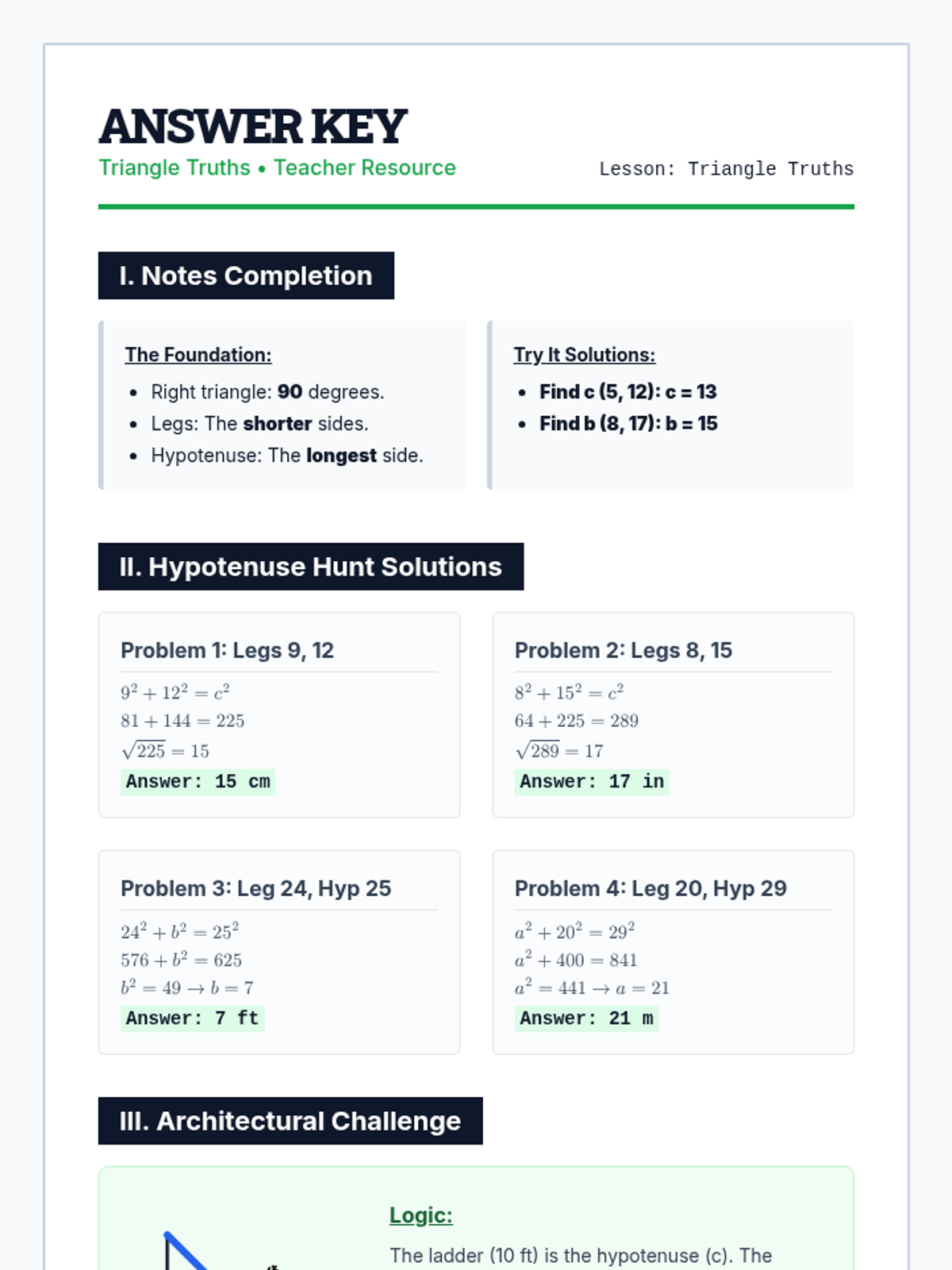
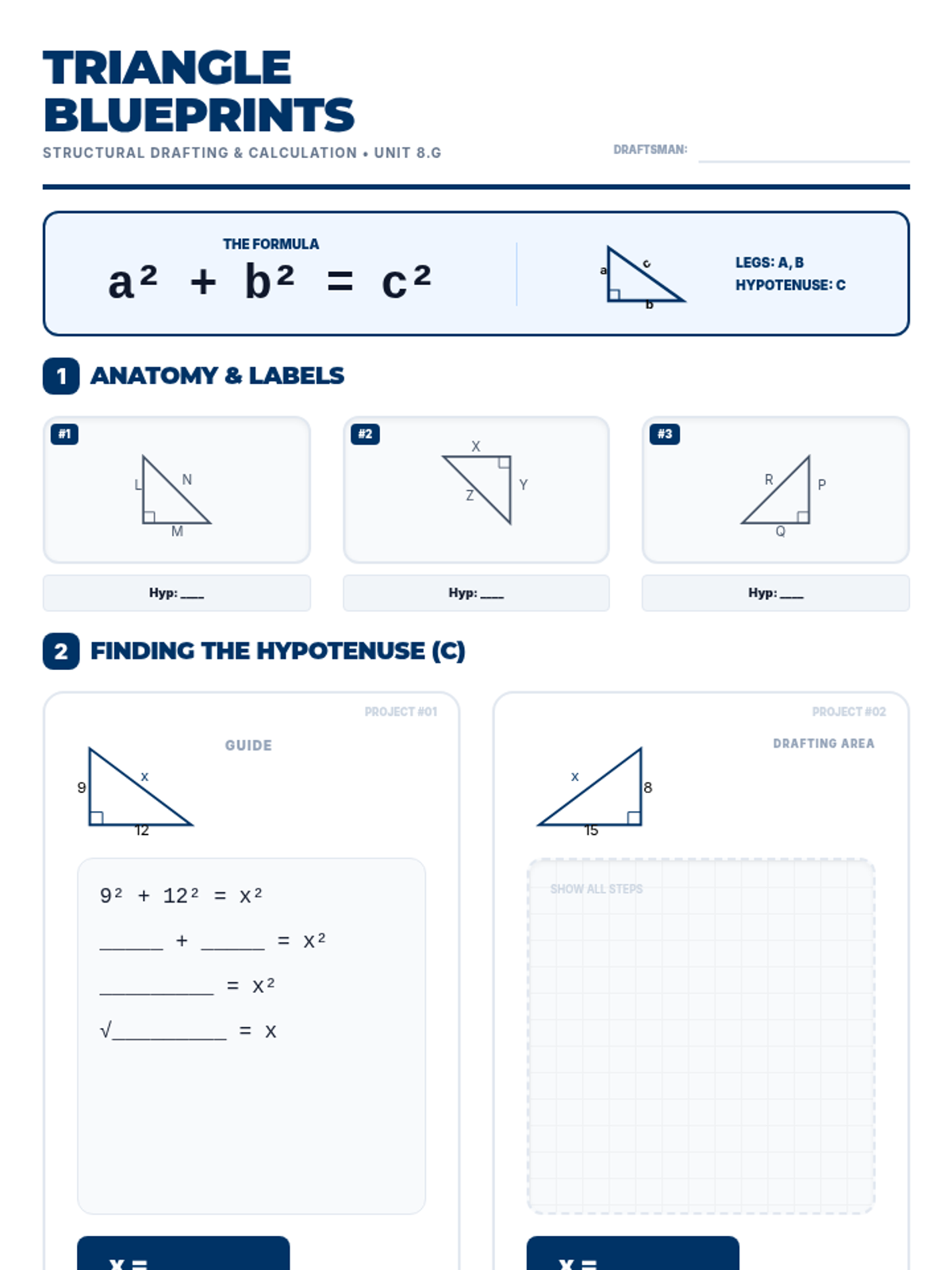
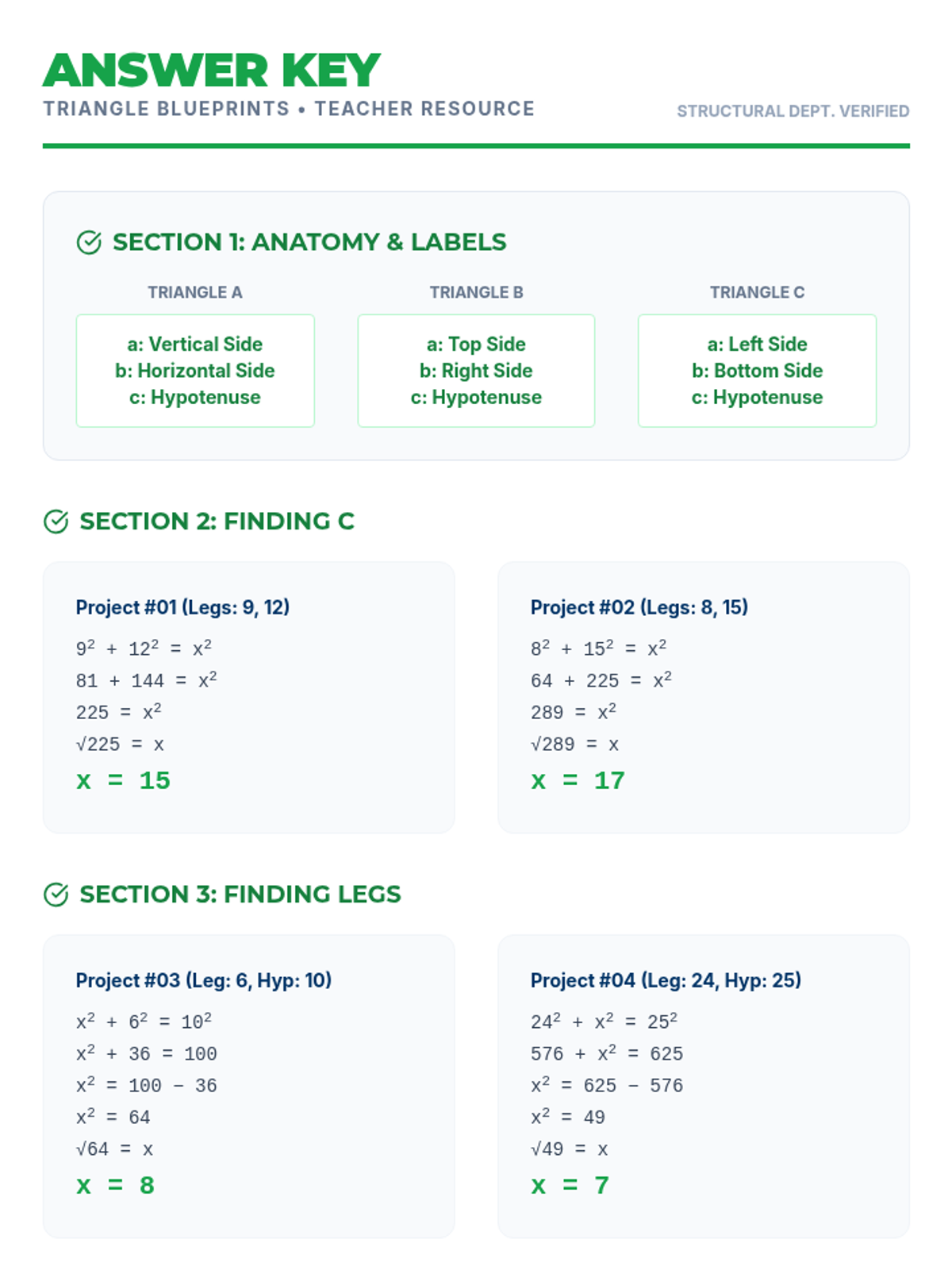
A focused practice session on applying the Pythagorean Theorem to find missing side lengths in right triangles, including both hypotenuse and leg calculations.
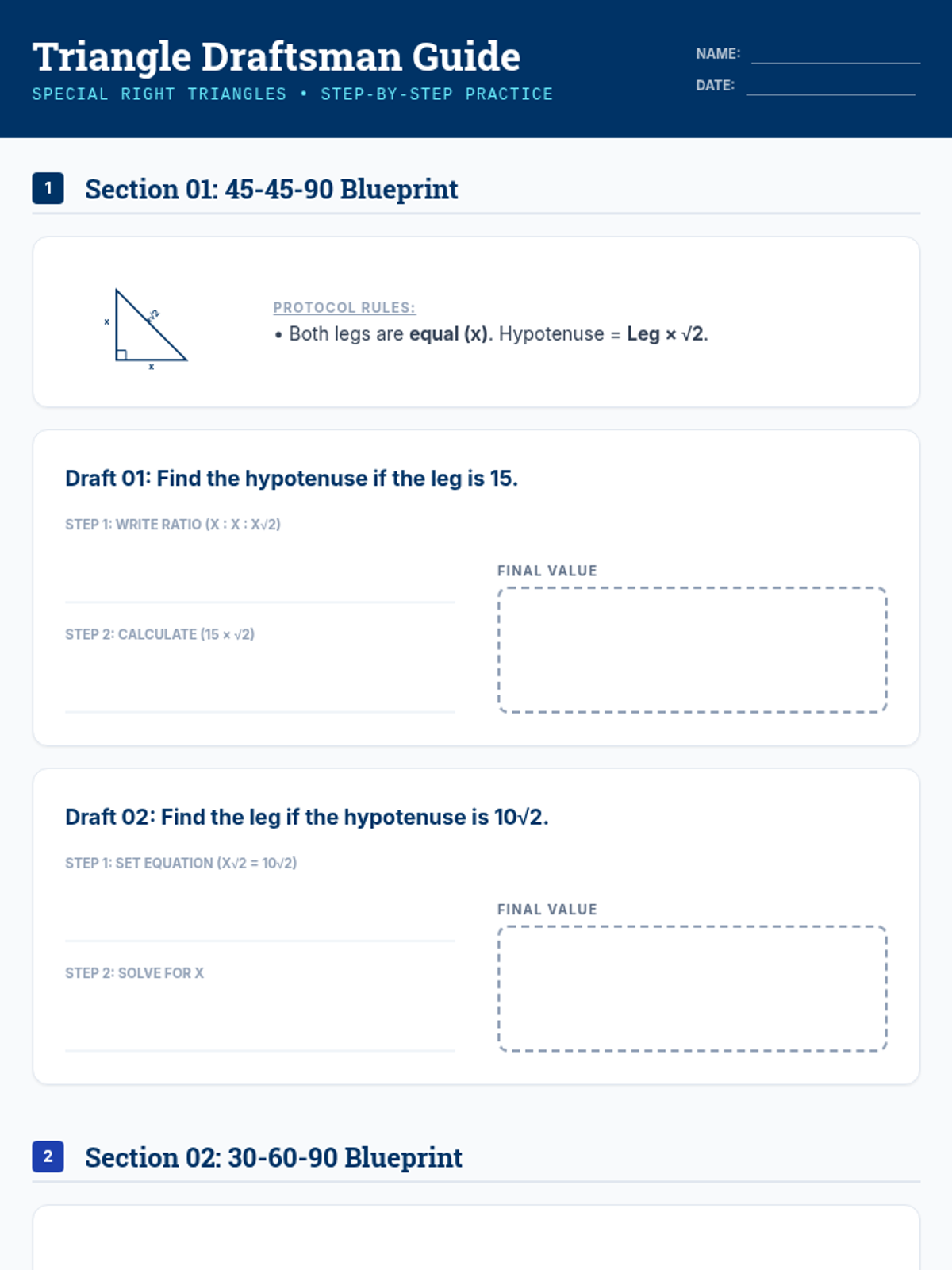
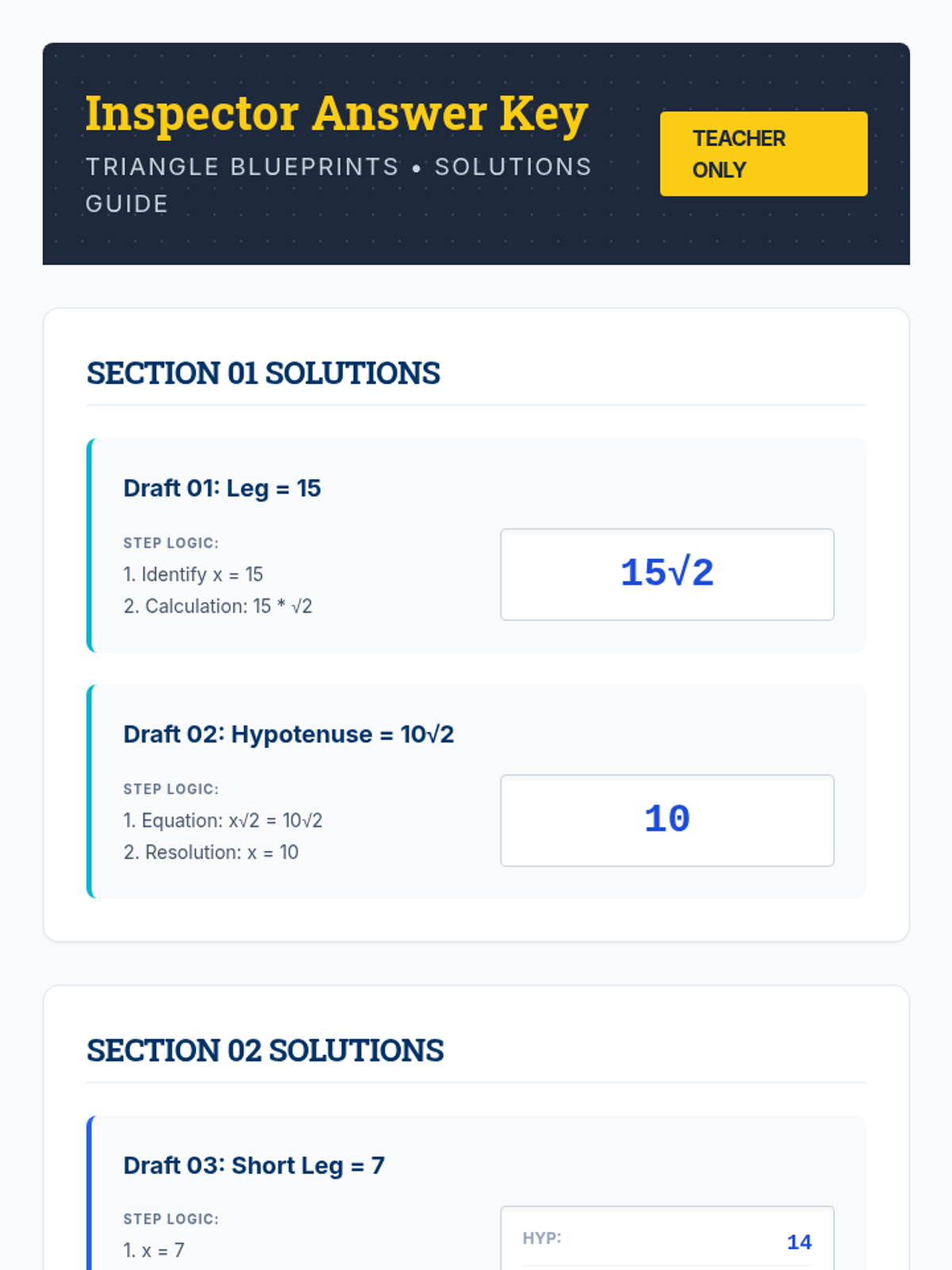
A comprehensive lesson introducing 45-45-90 and 30-60-90 triangles through the lens of architectural drafting and technical blueprints.
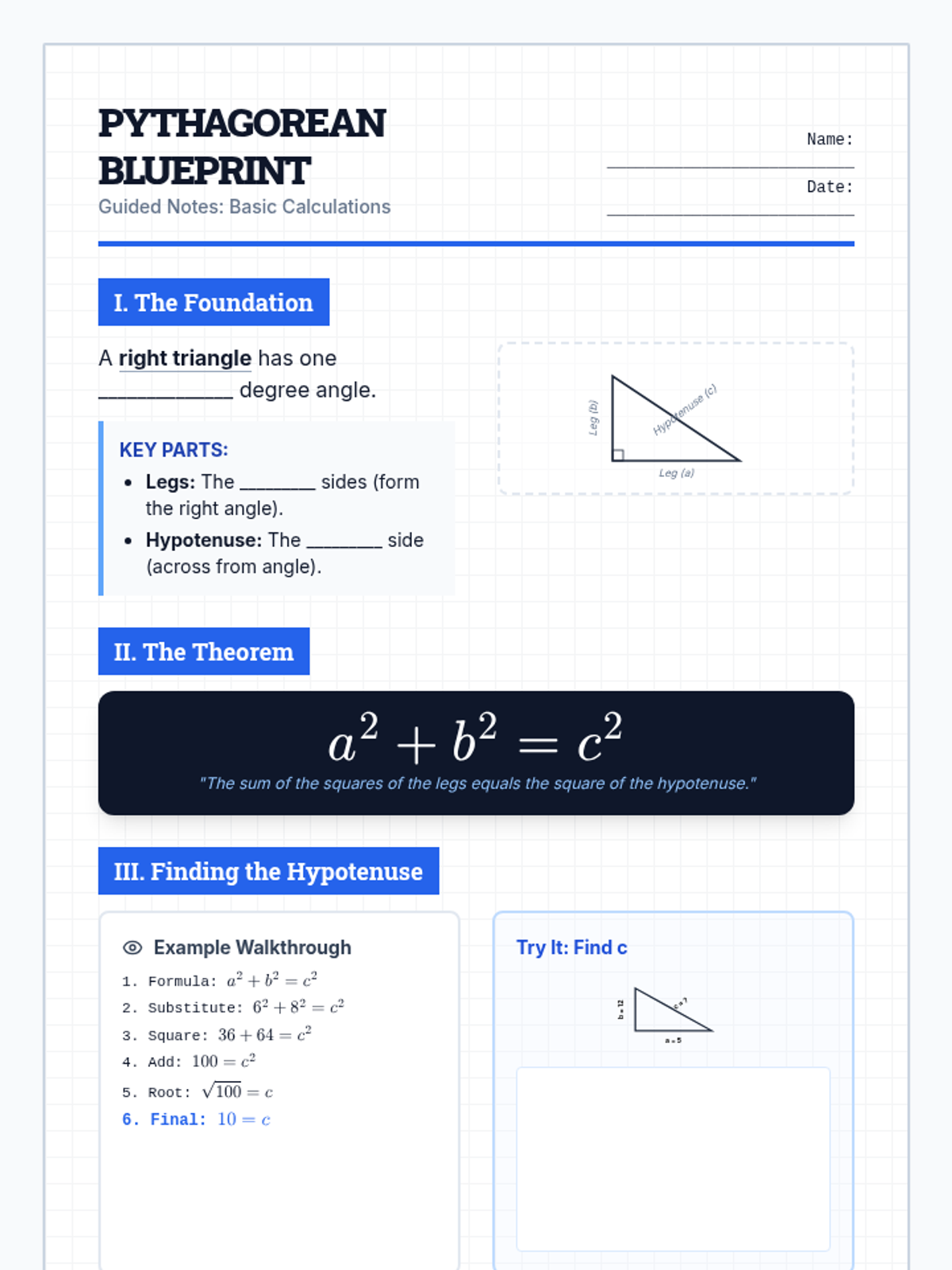
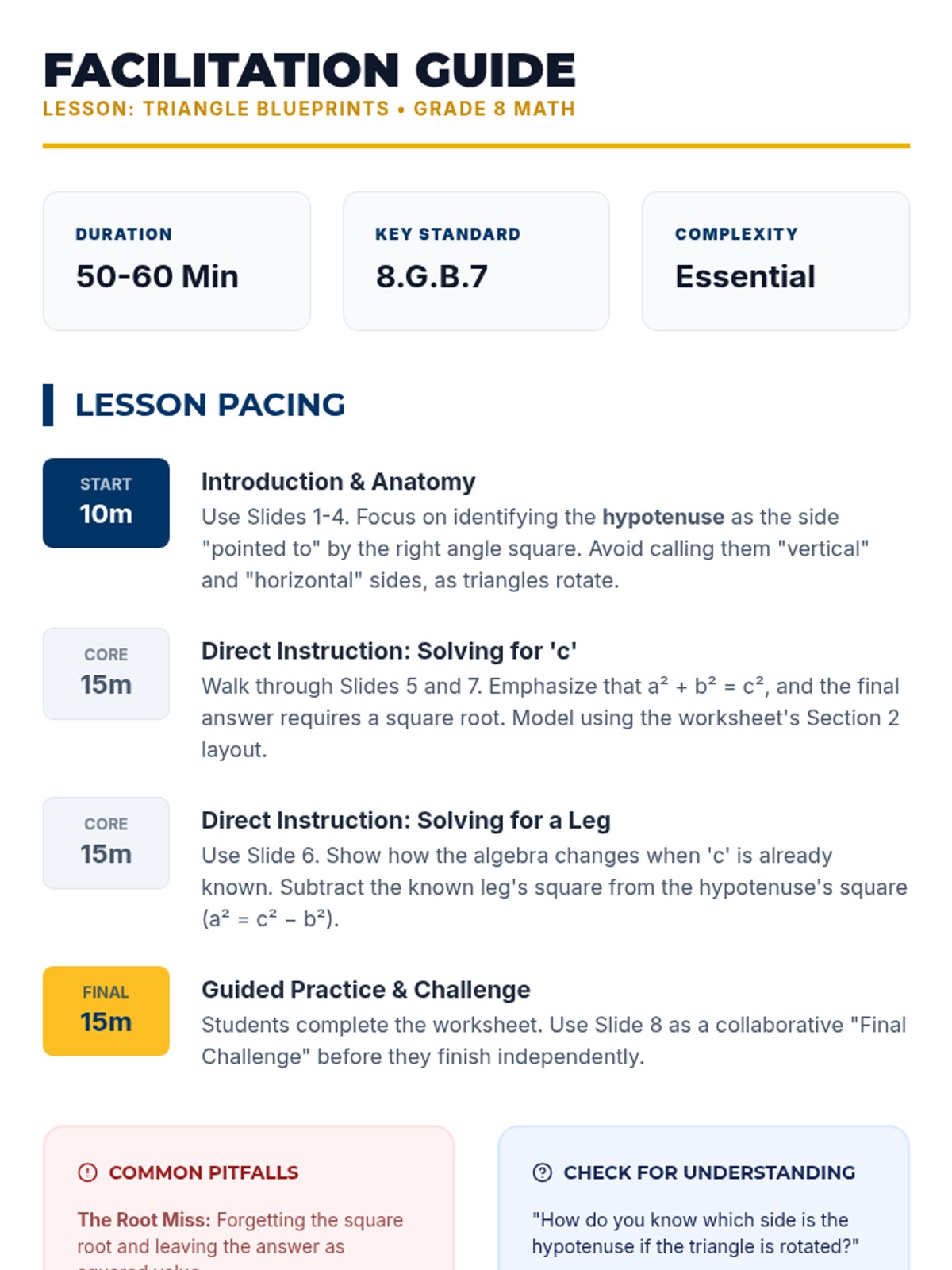
An introductory lesson on the Pythagorean Theorem, focusing on identifying triangle parts and performing basic calculations for the hypotenuse and legs.
A foundational lesson on calculating missing sides of right triangles using the Pythagorean Theorem, framed within an architectural drafting context. Students will learn to identify legs and hypotenuse and apply the formula $a^2 + b^2 = c^2$ to solve for missing lengths.
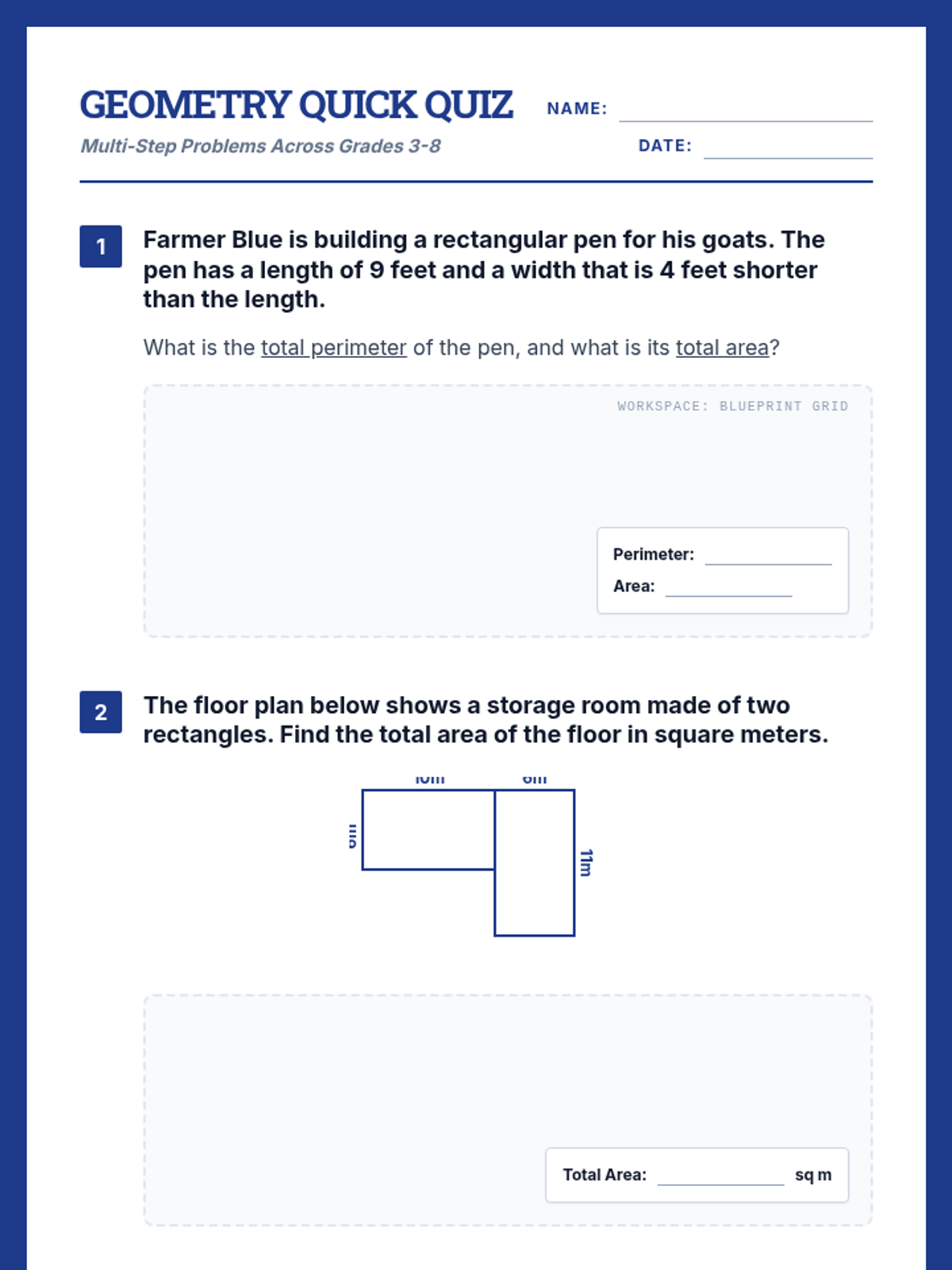
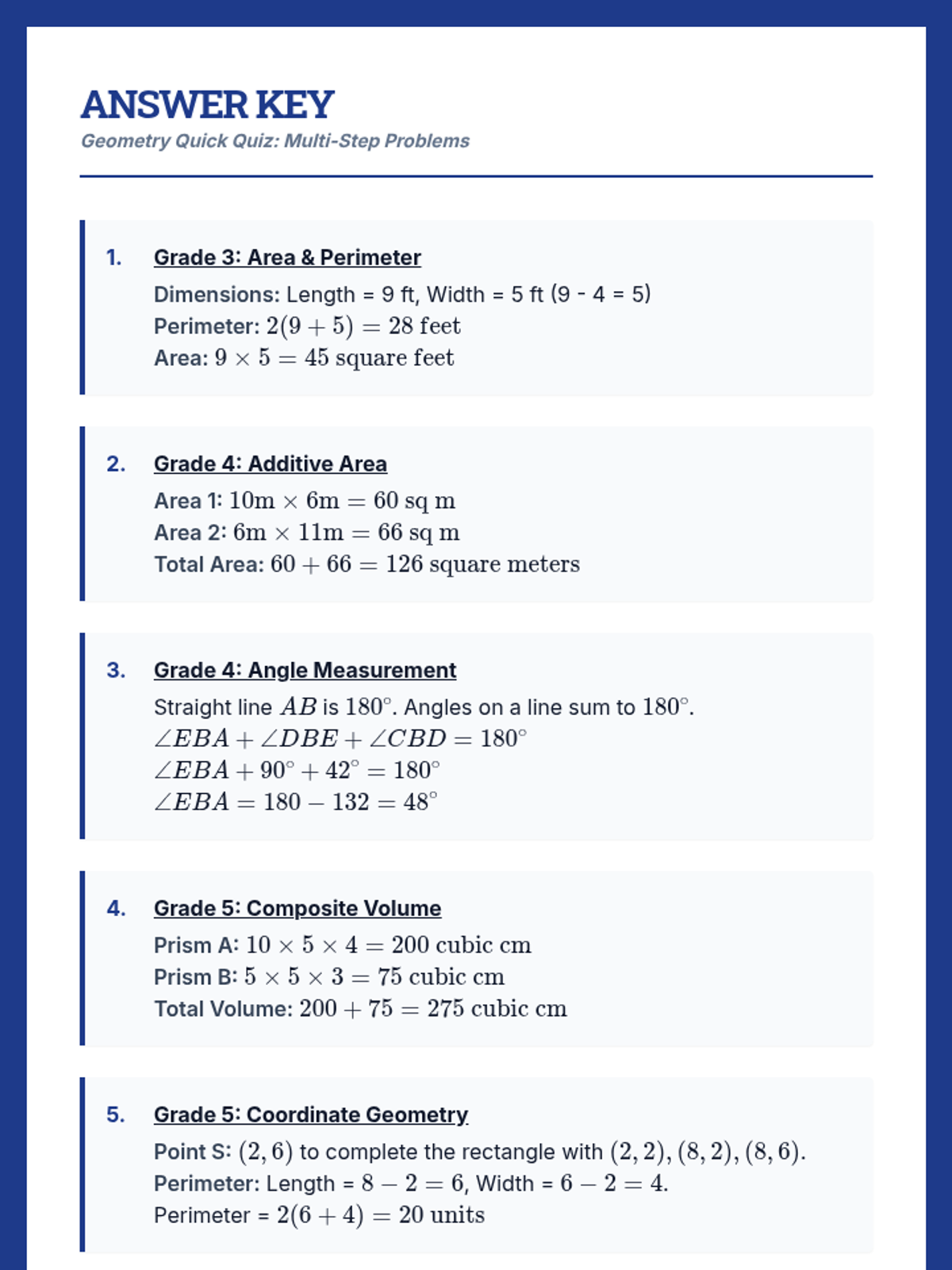
A comprehensive geometry and measurement assessment featuring multi-step problems aligned with North Carolina EOG standards for grades 3 through 8.
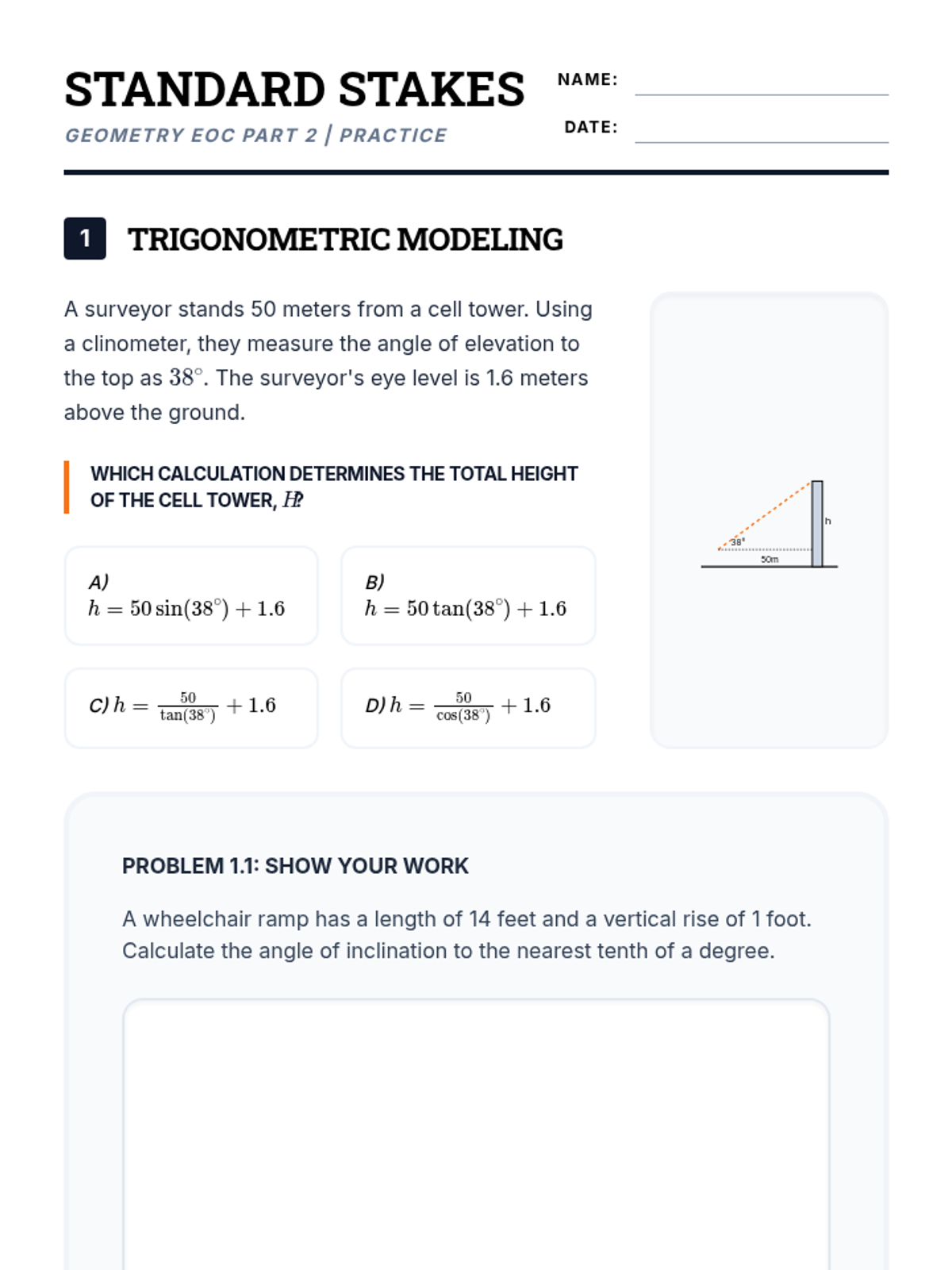
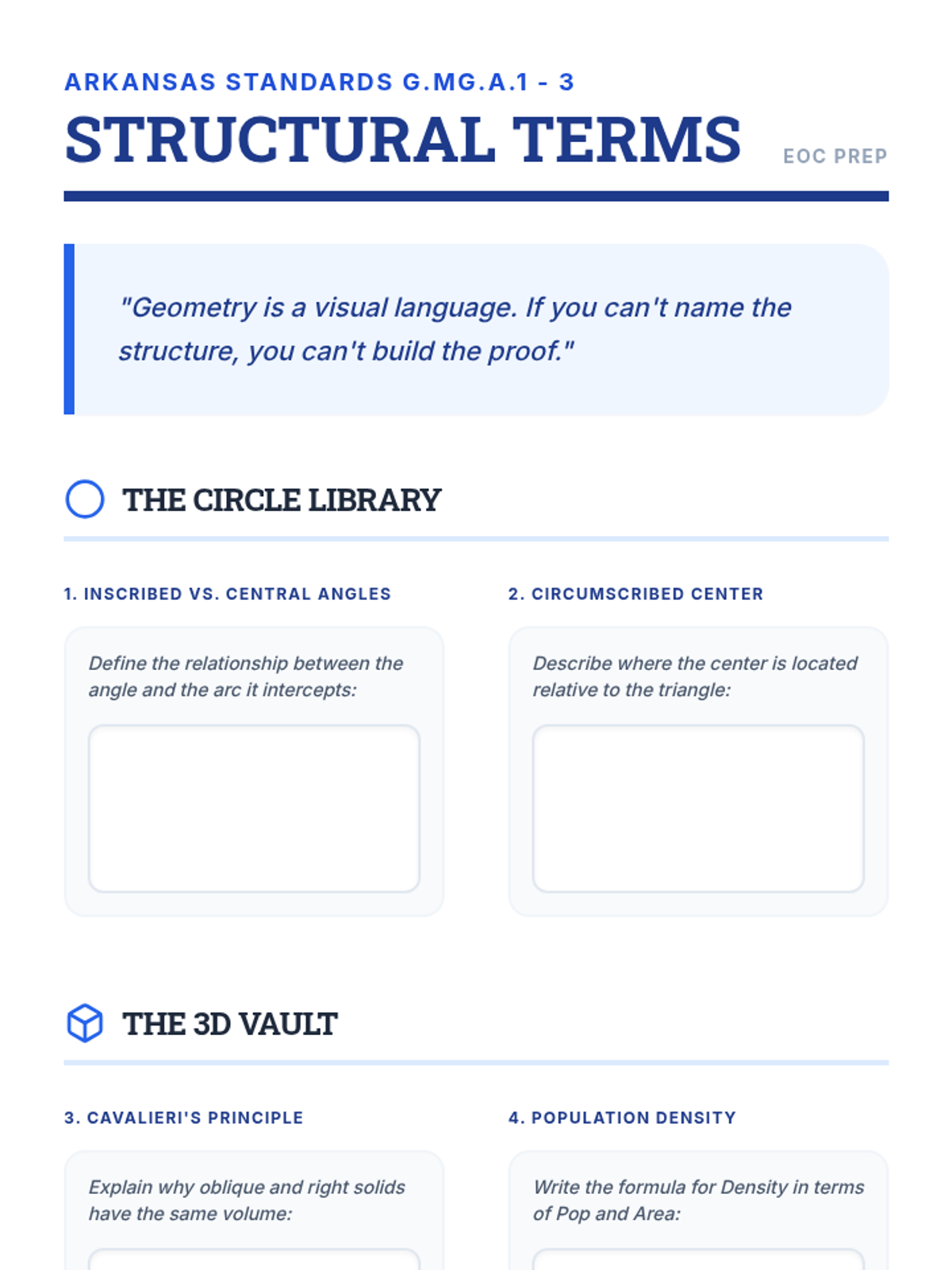
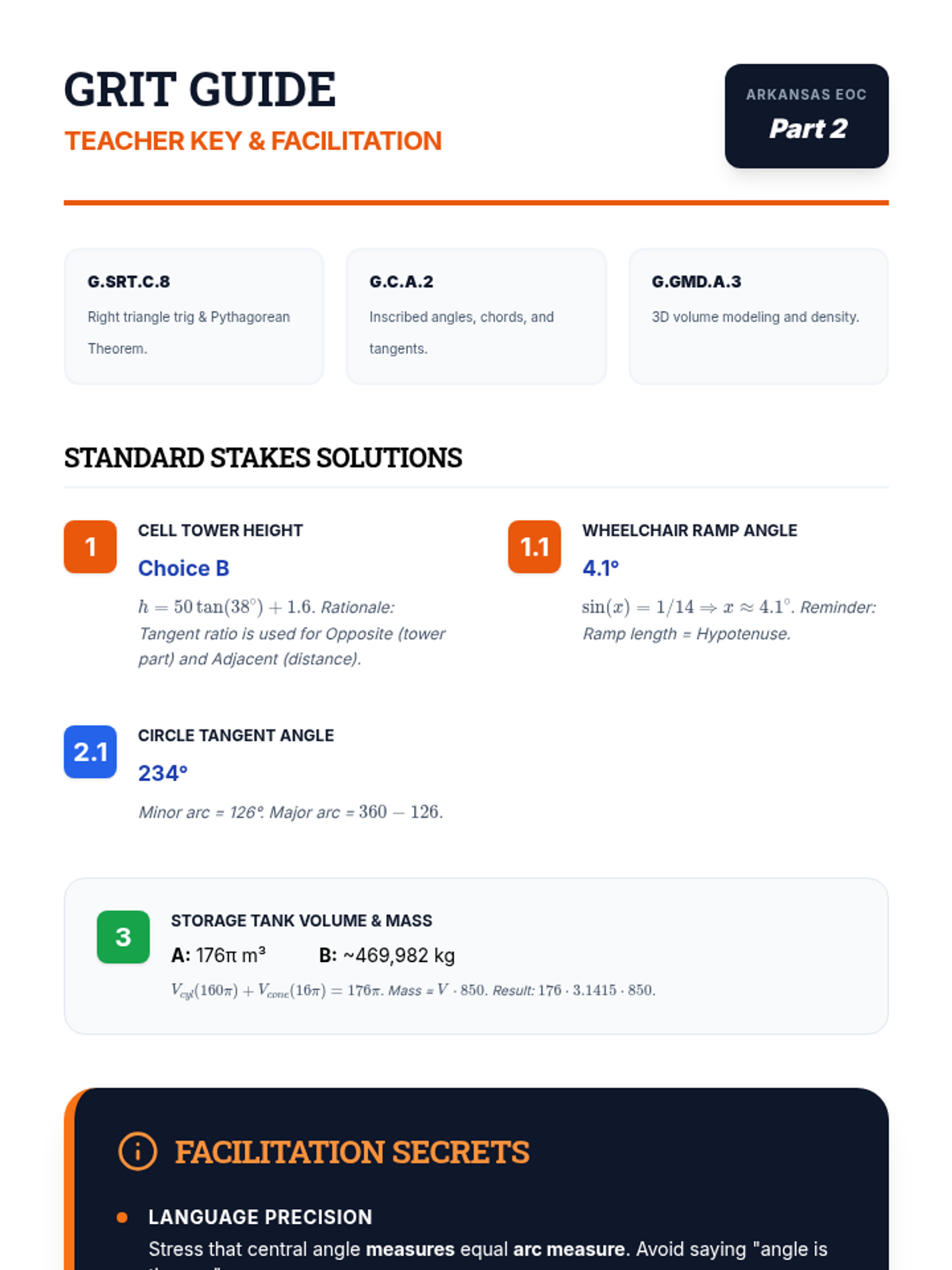
A high-intensity EOC prep lesson for Arkansas Geometry standards, focusing on trigonometry, circle properties, and 3D geometry through diagram-heavy practice.