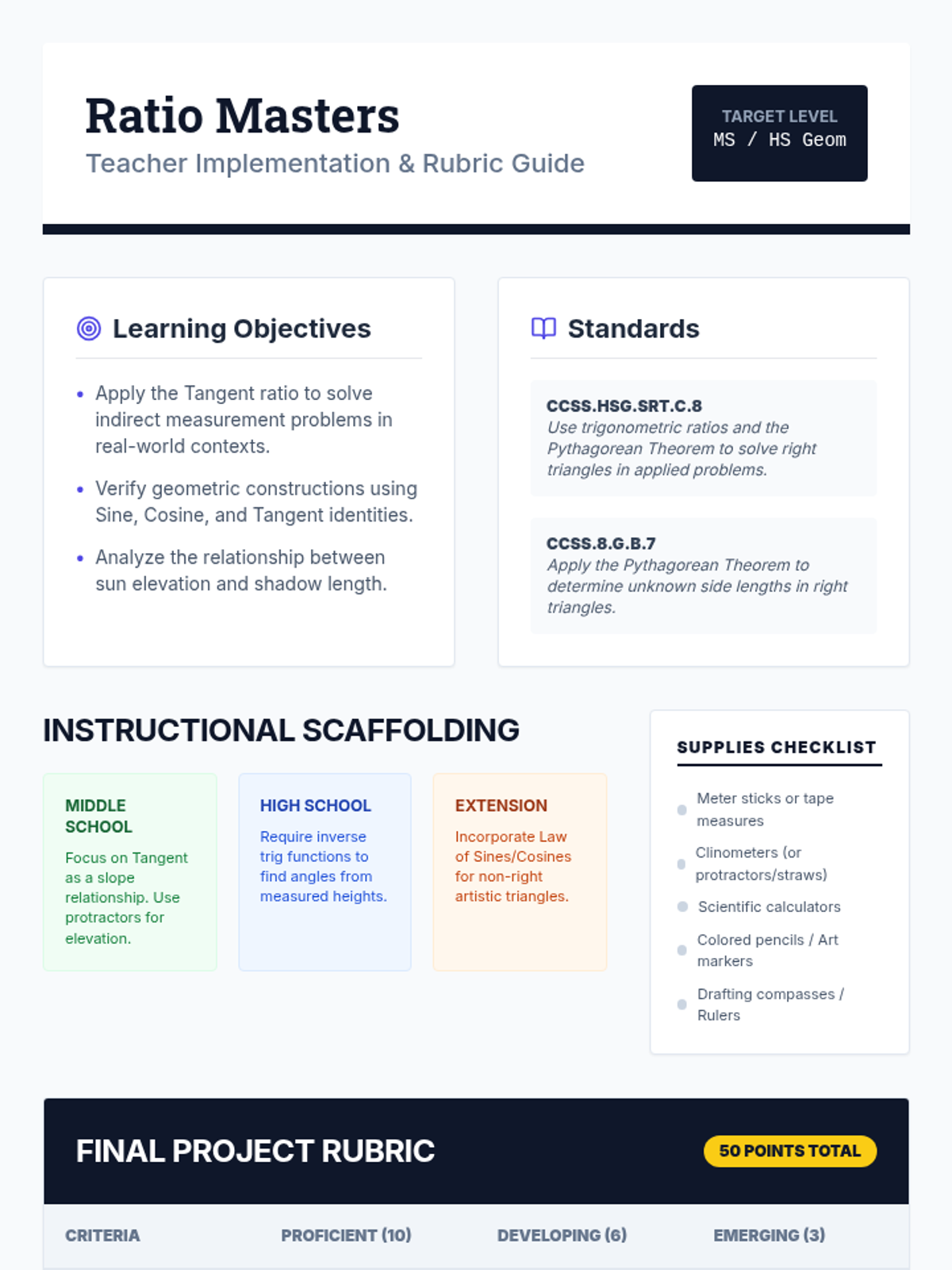
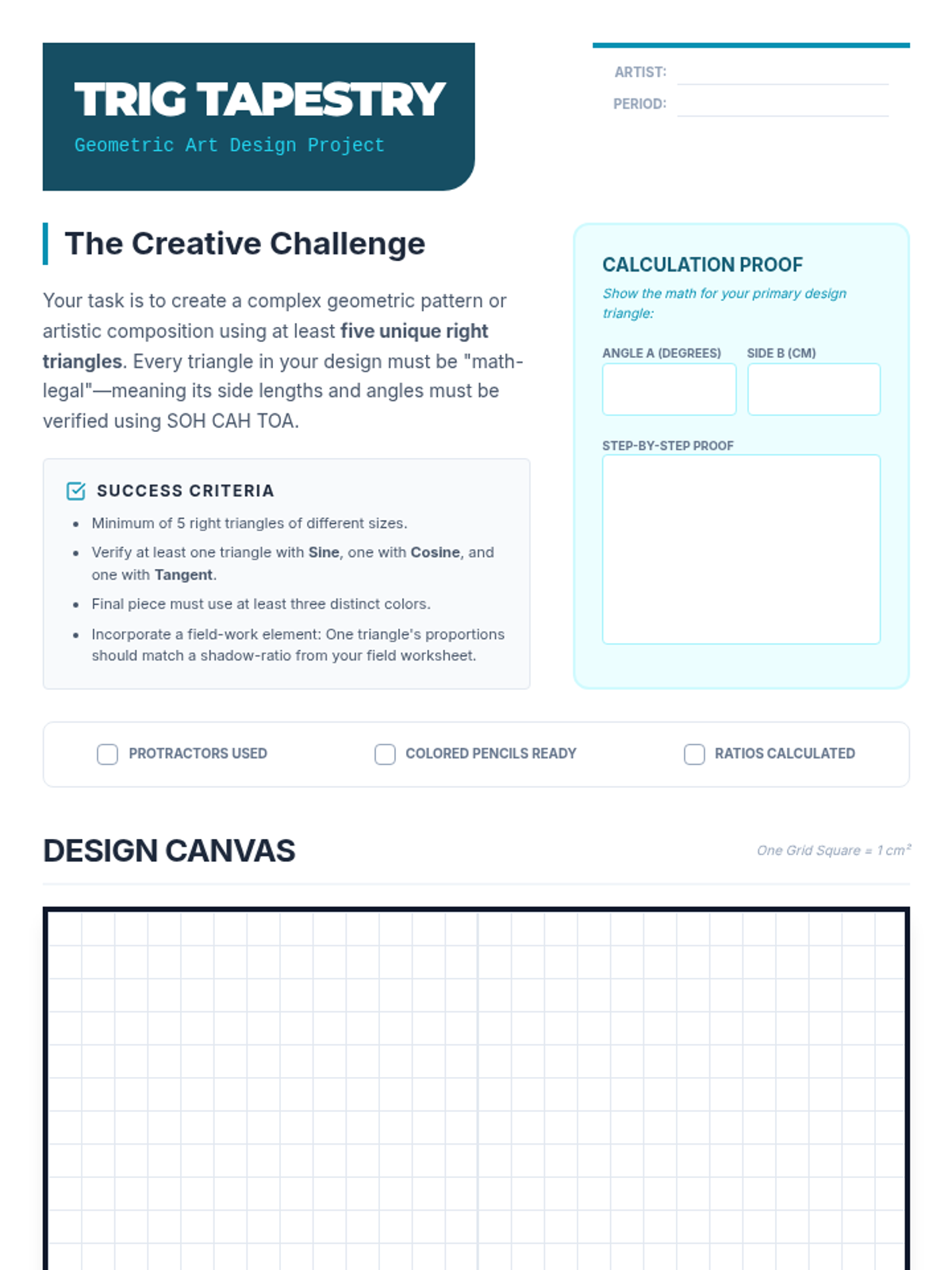
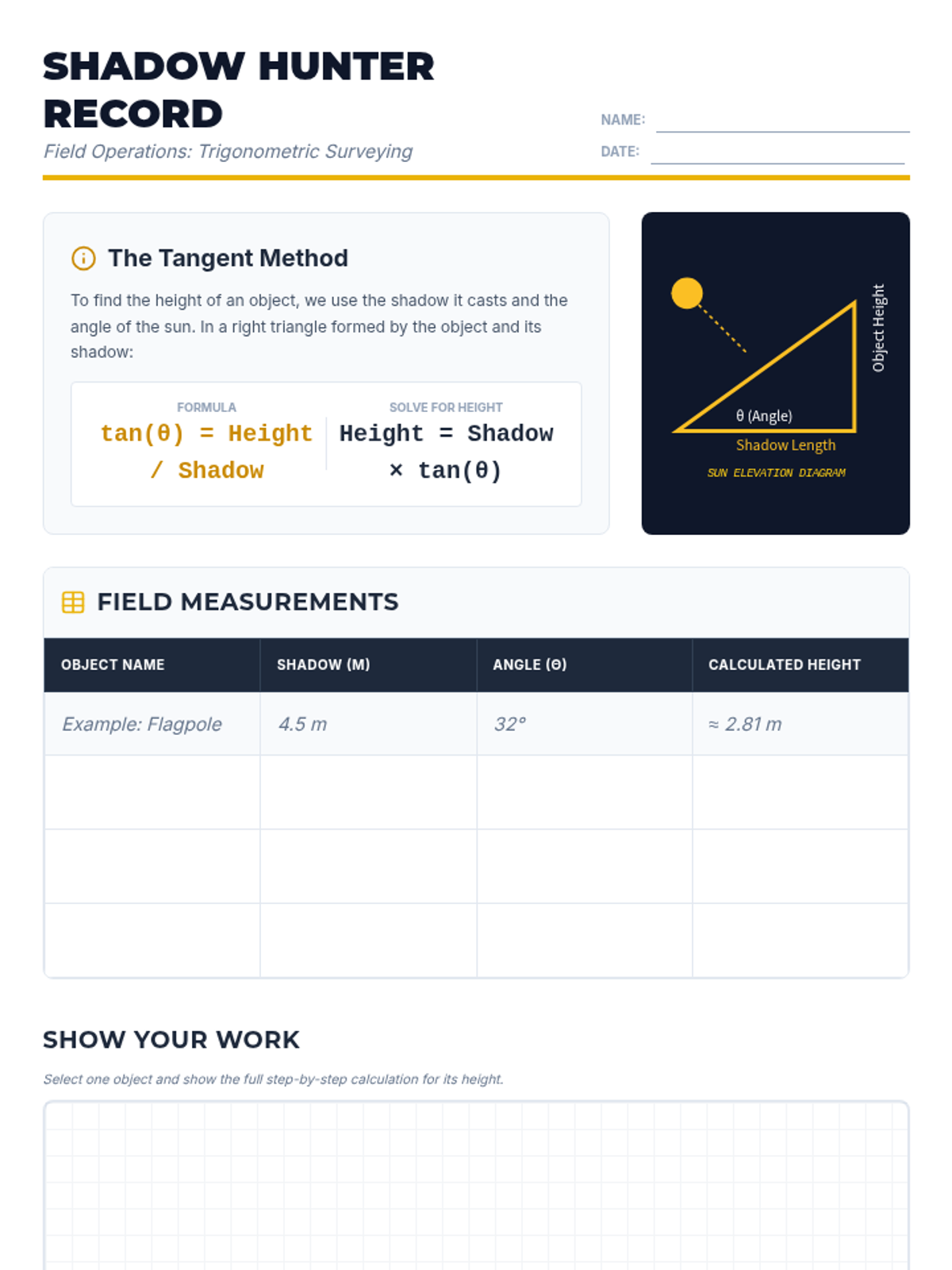
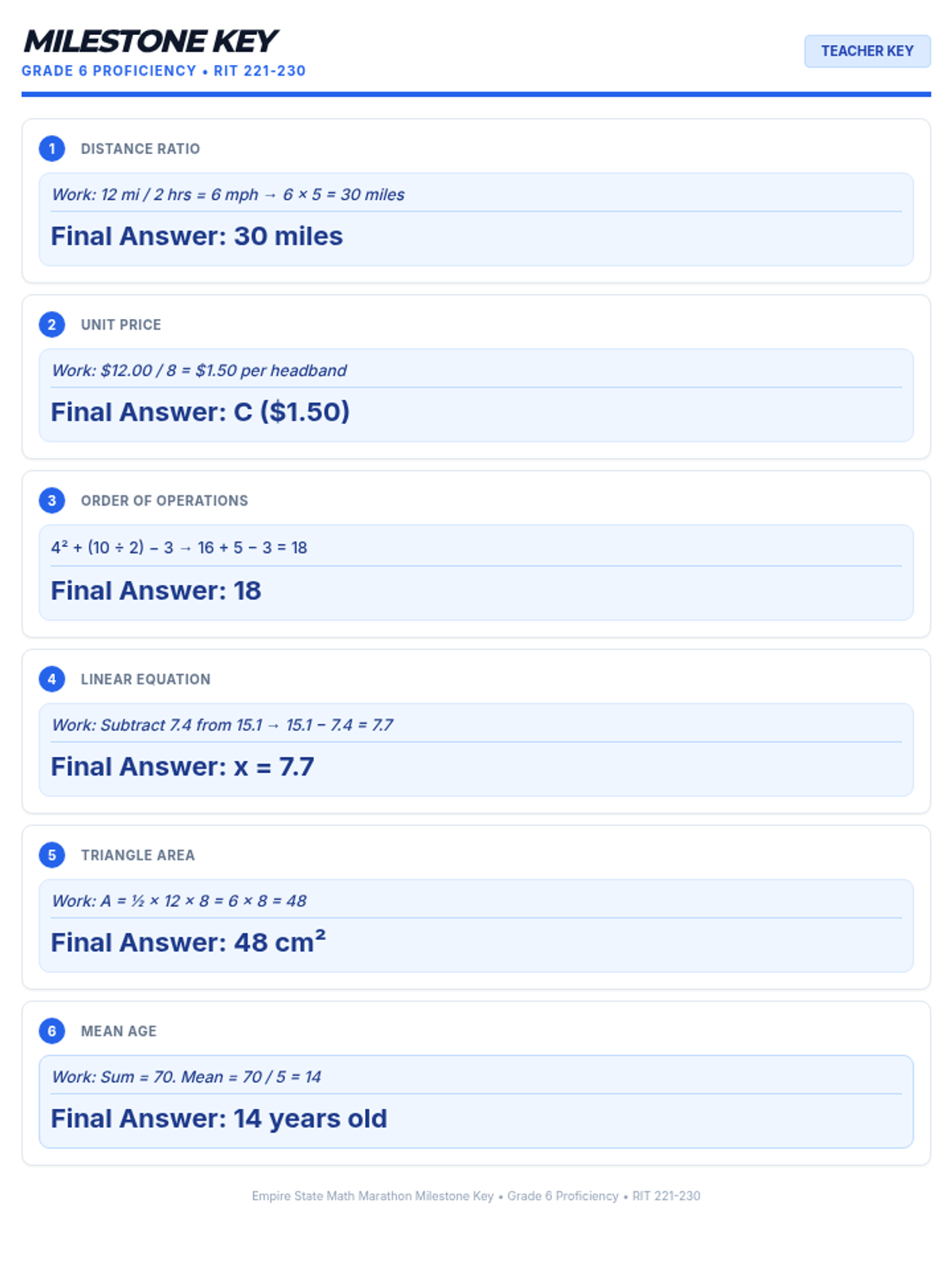
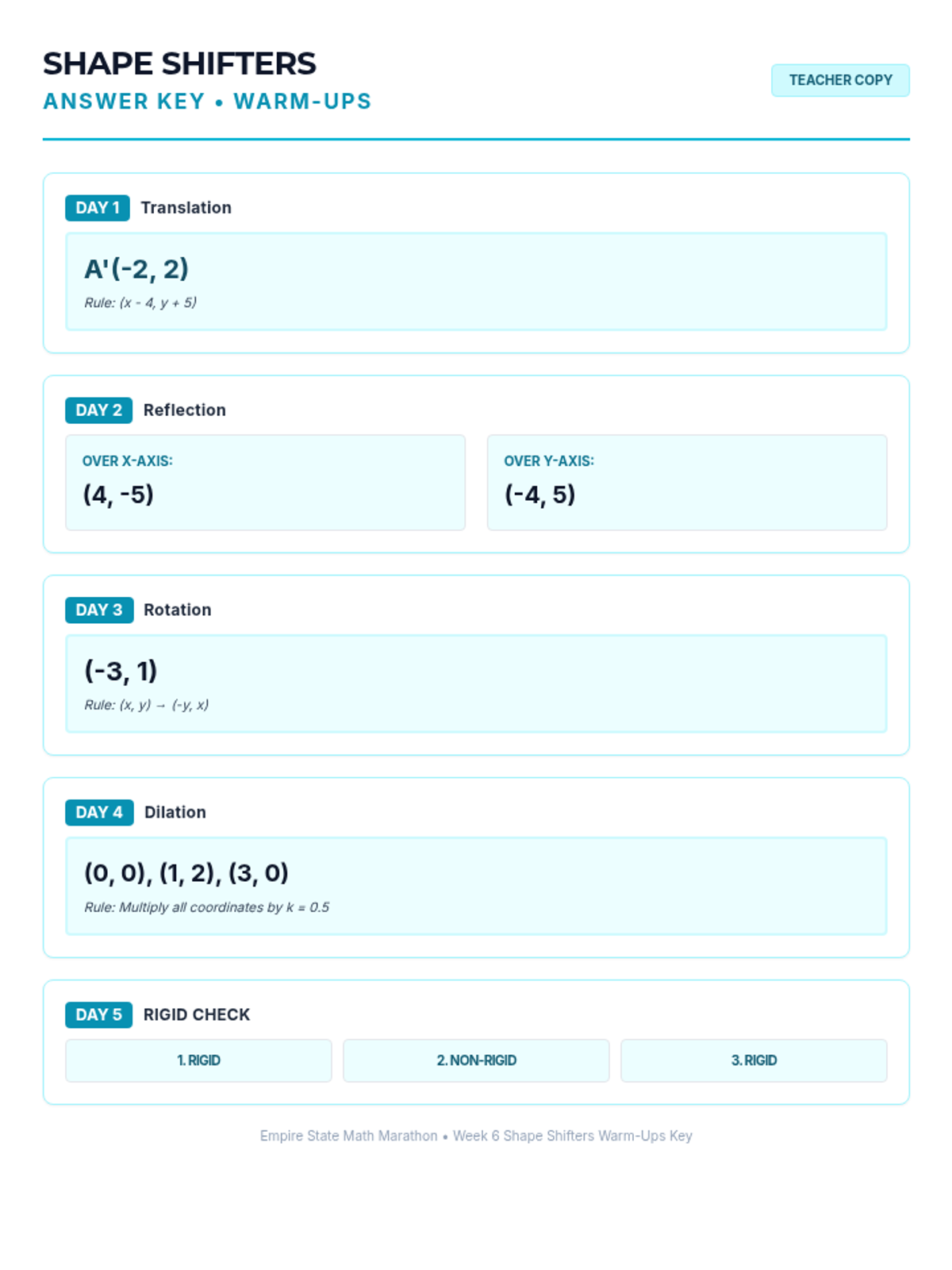
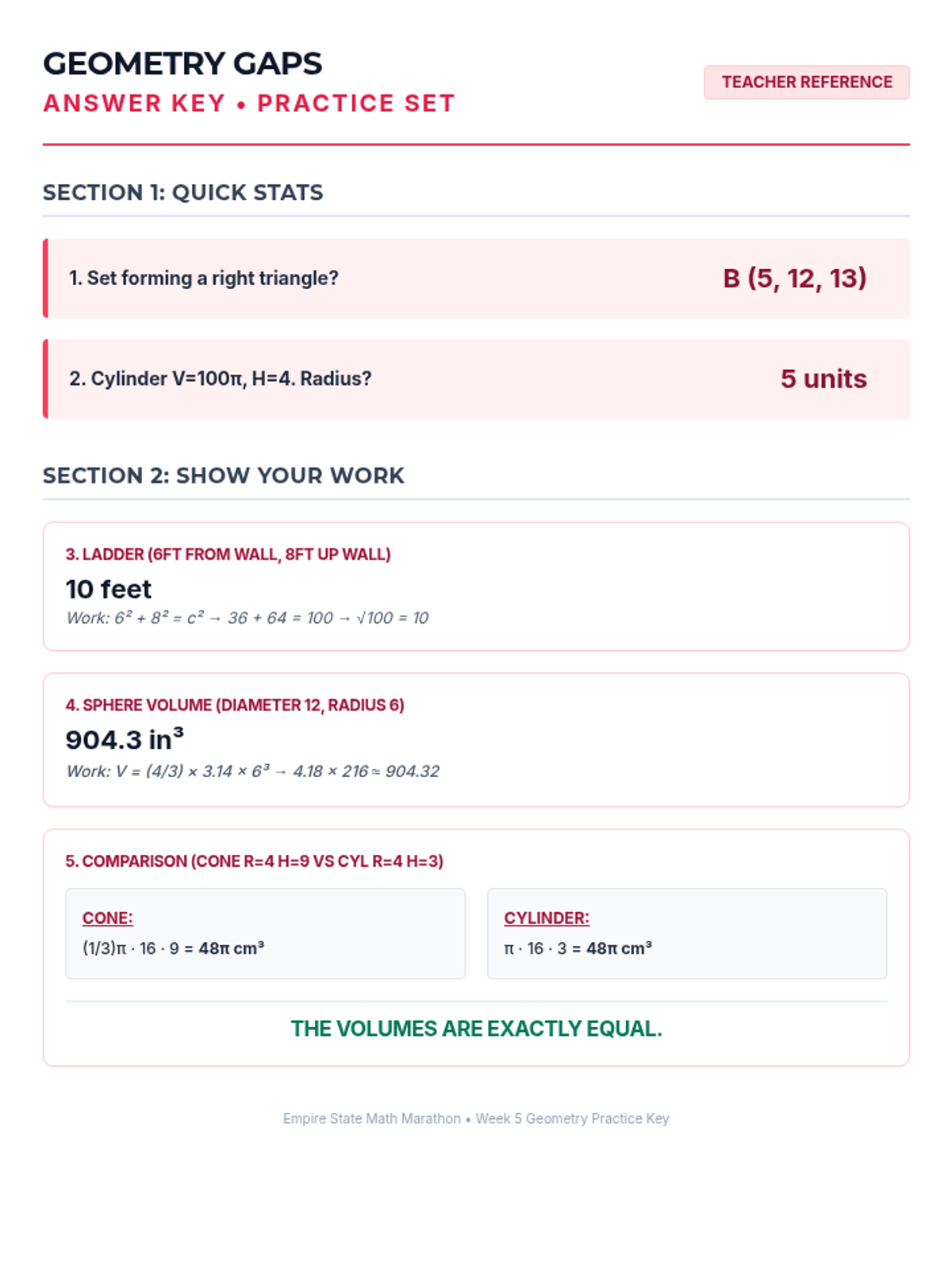
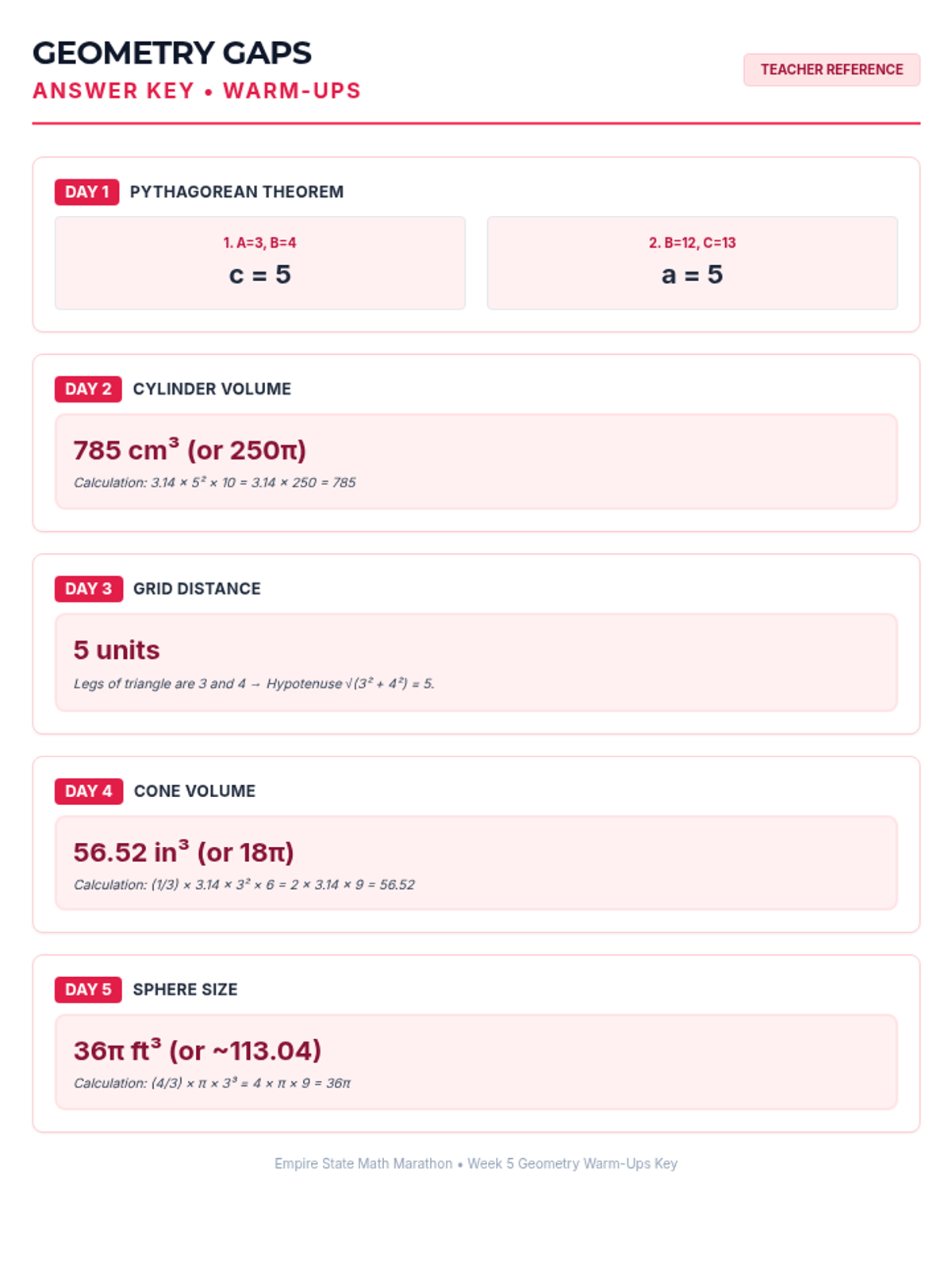
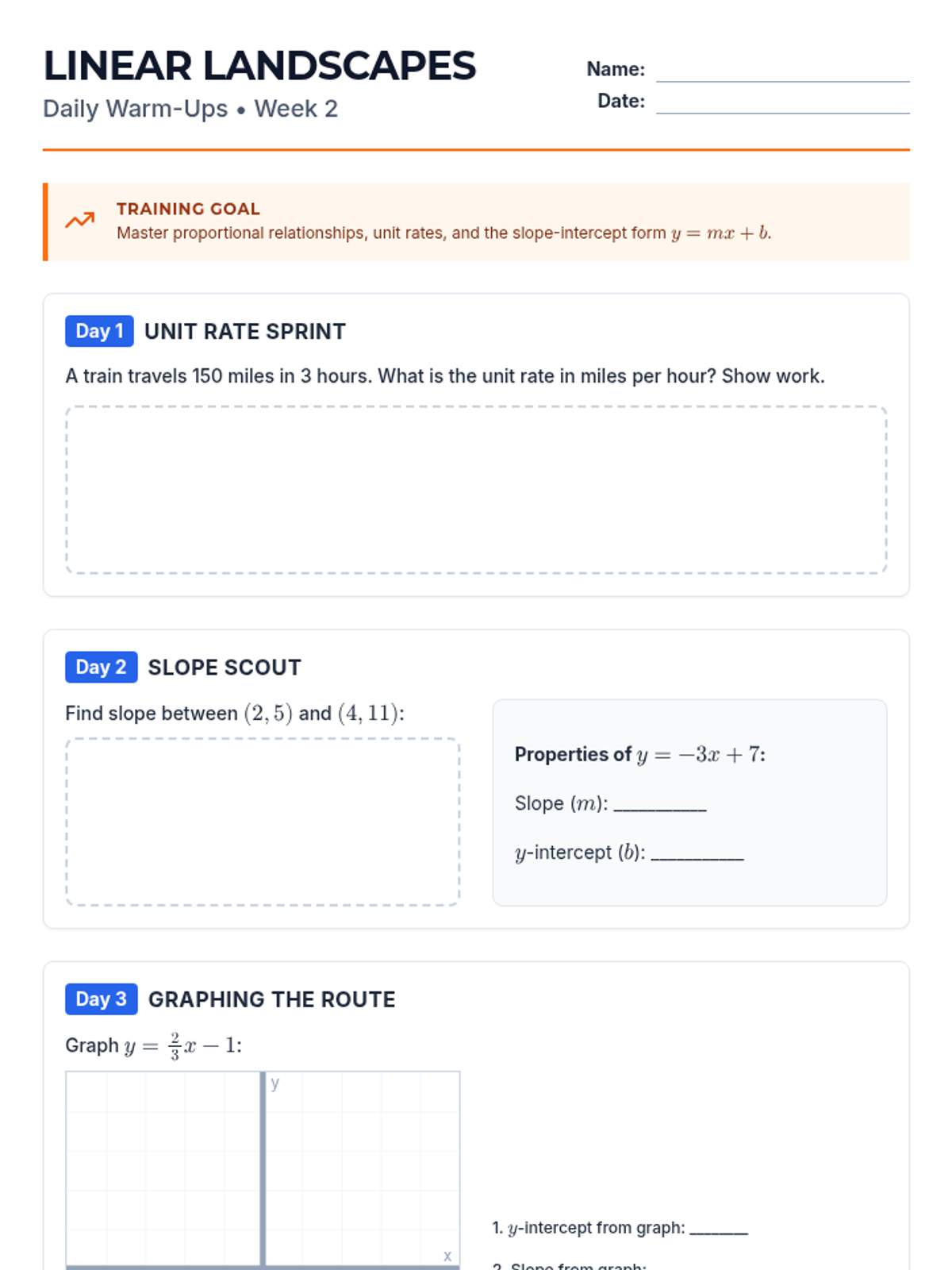
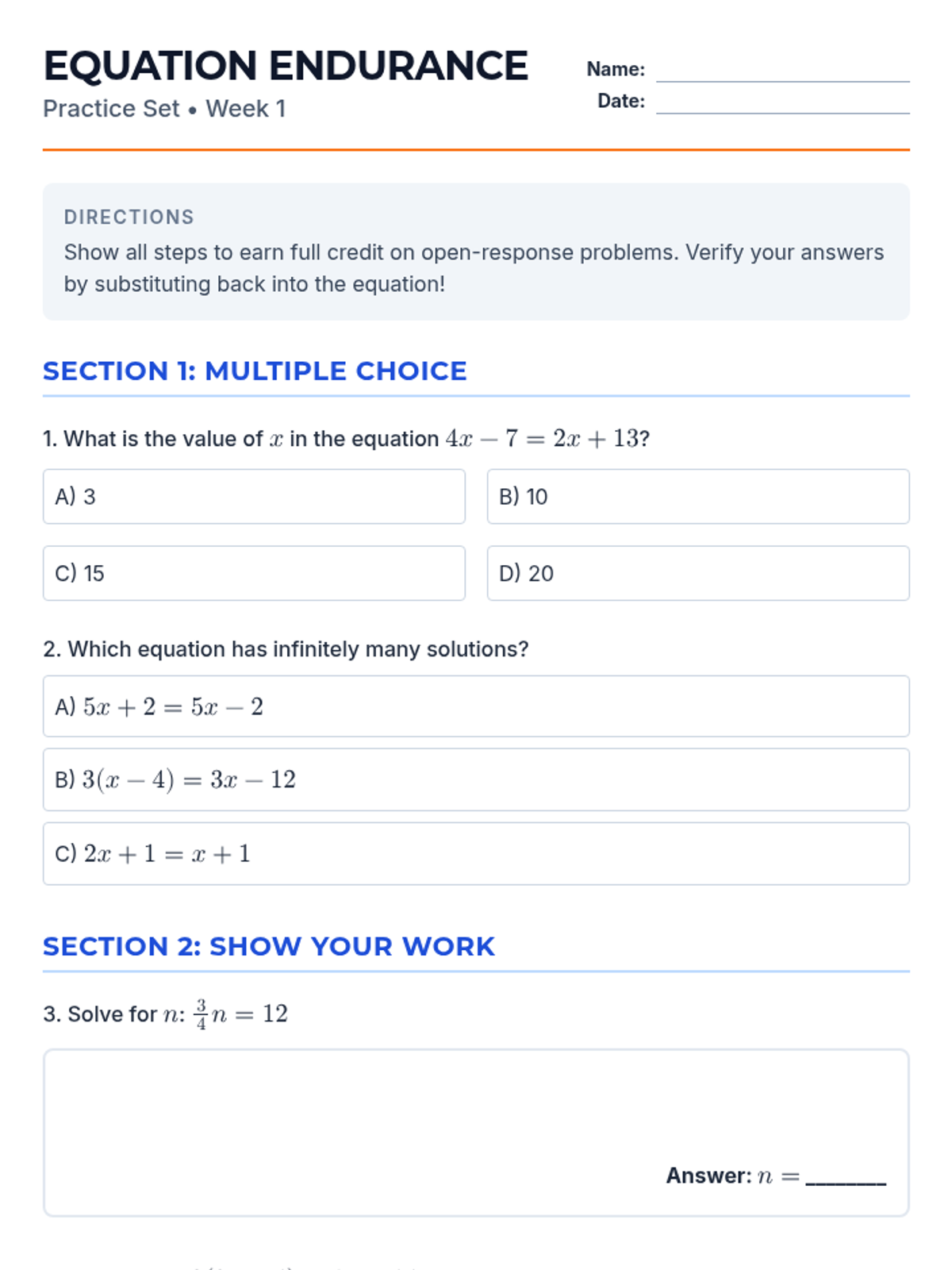
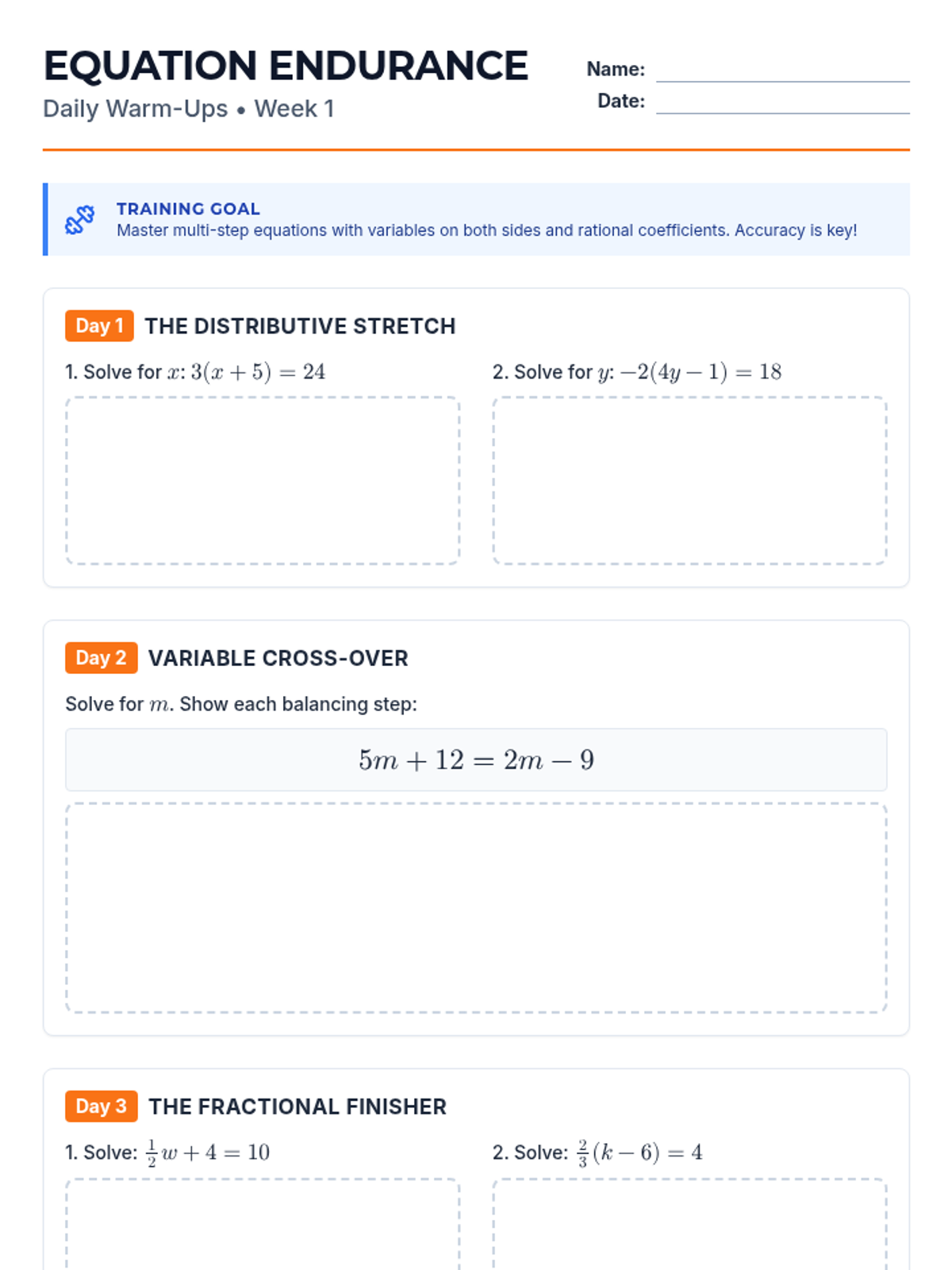
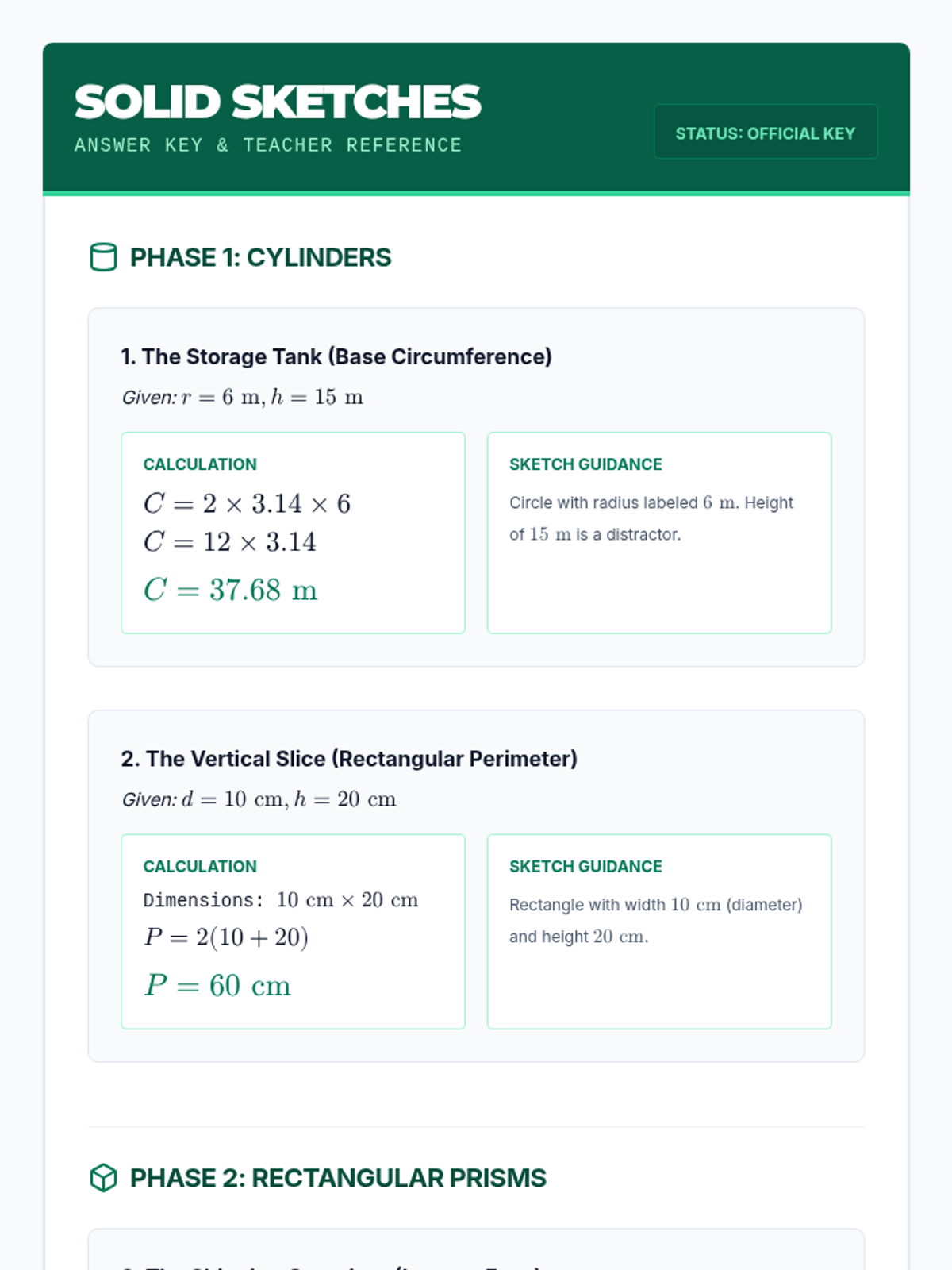
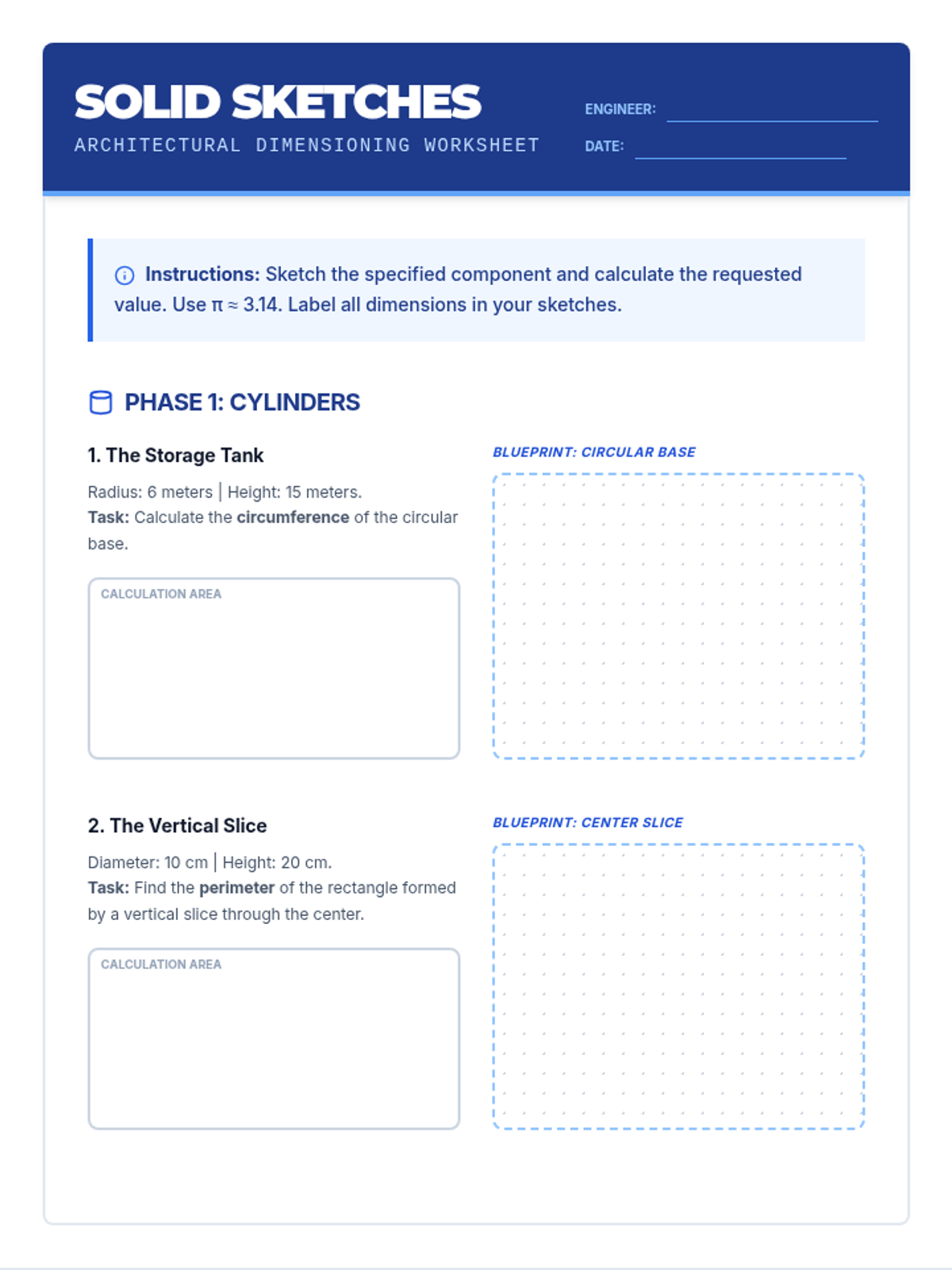
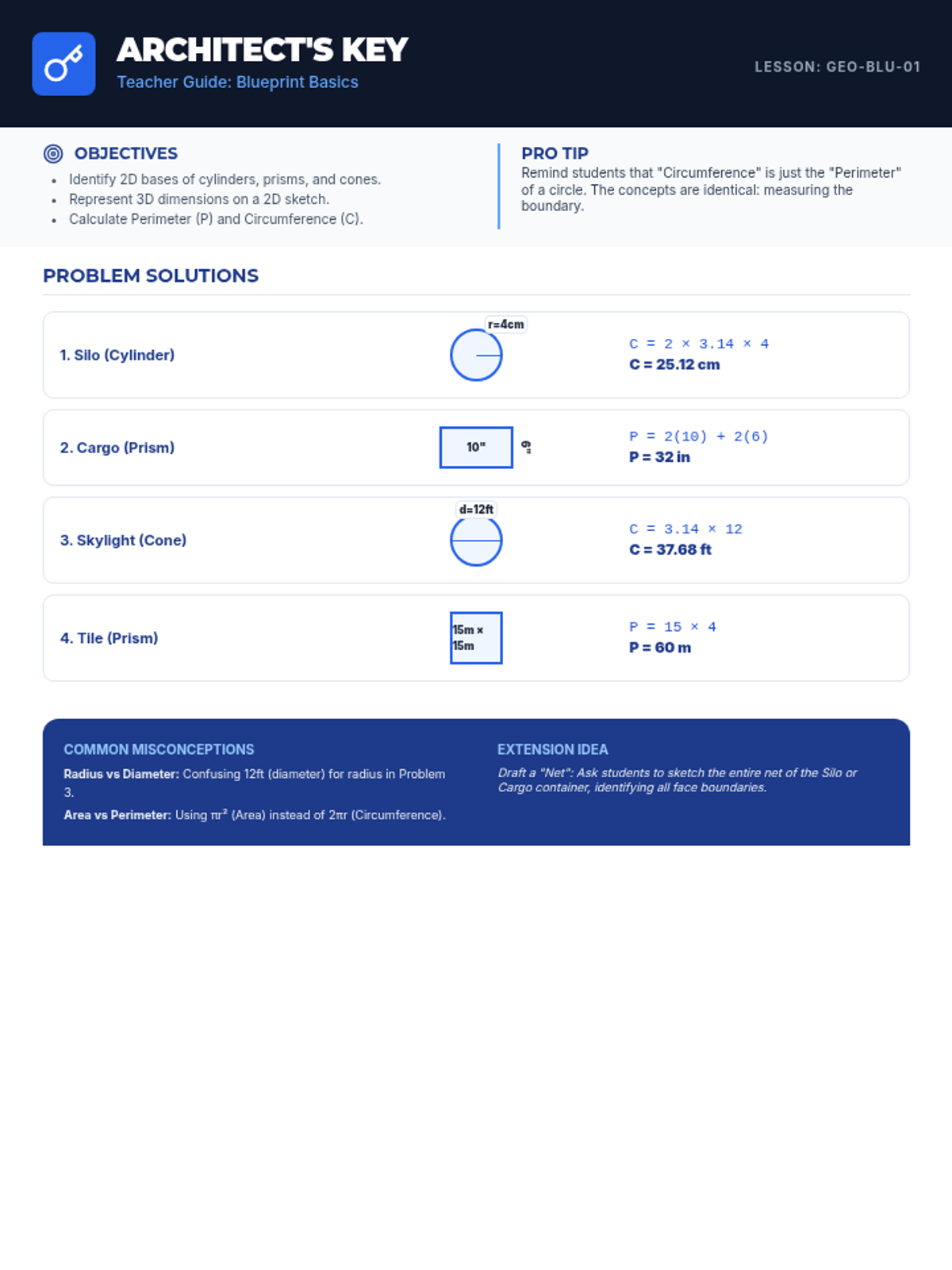
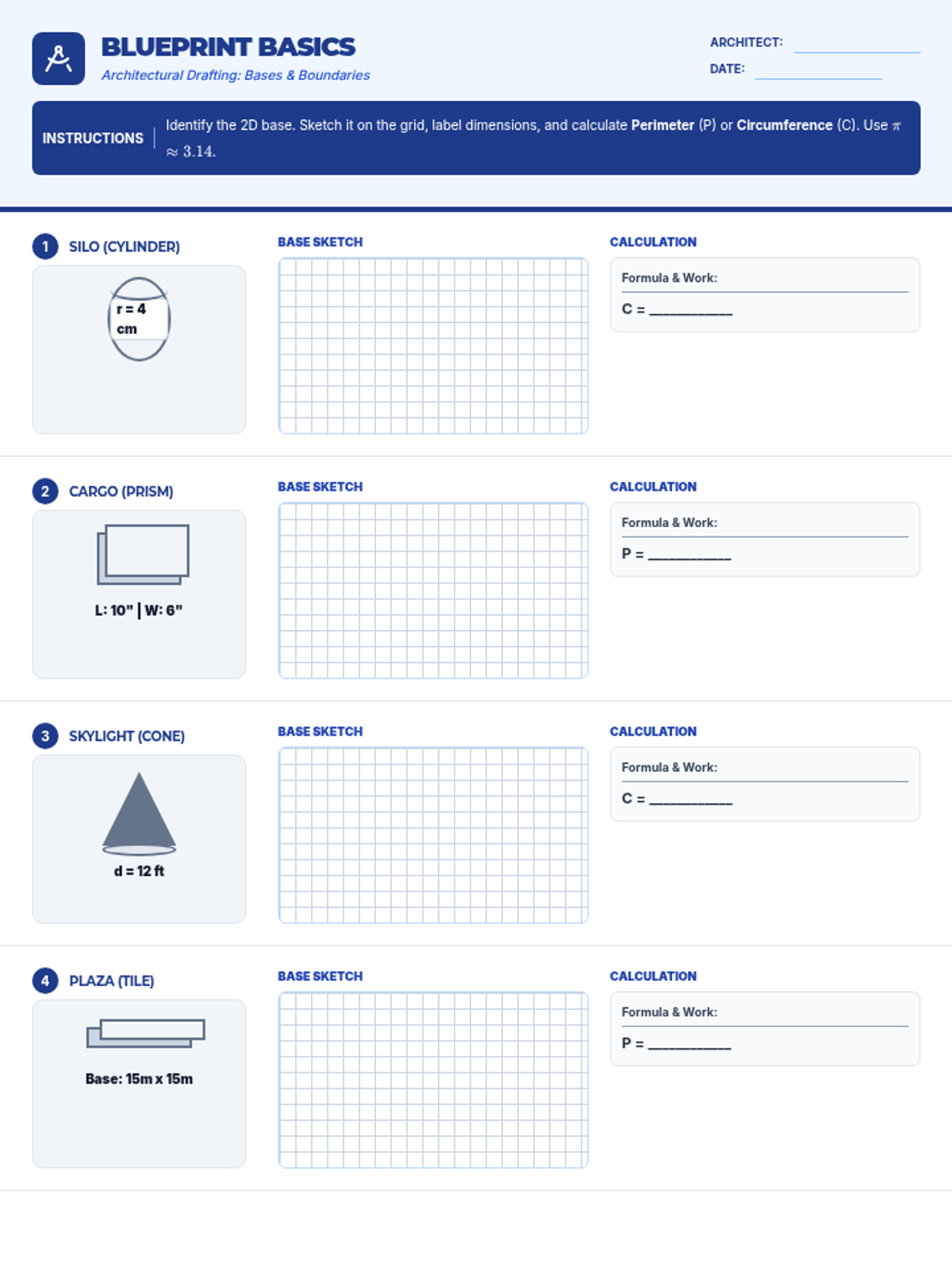
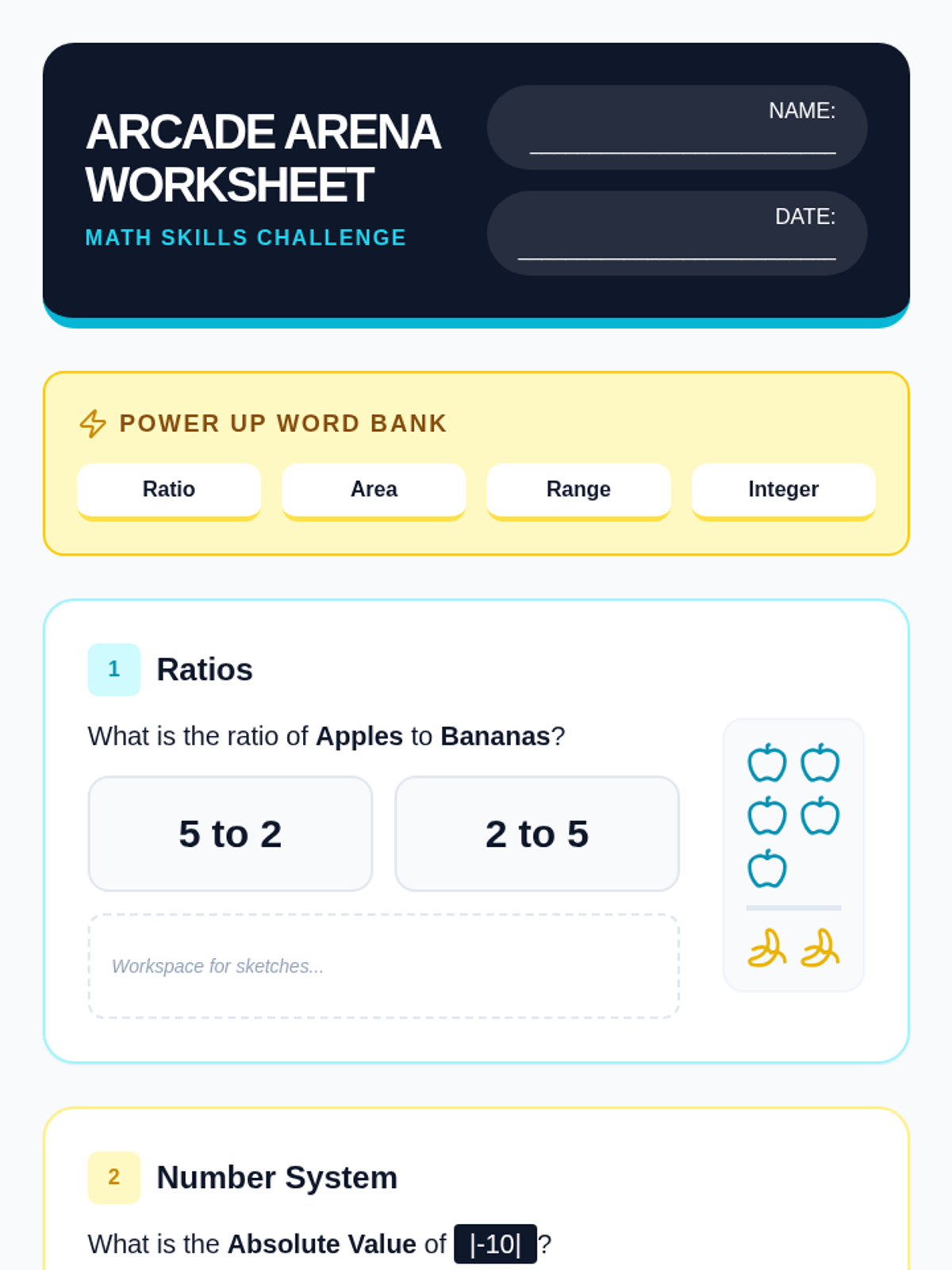
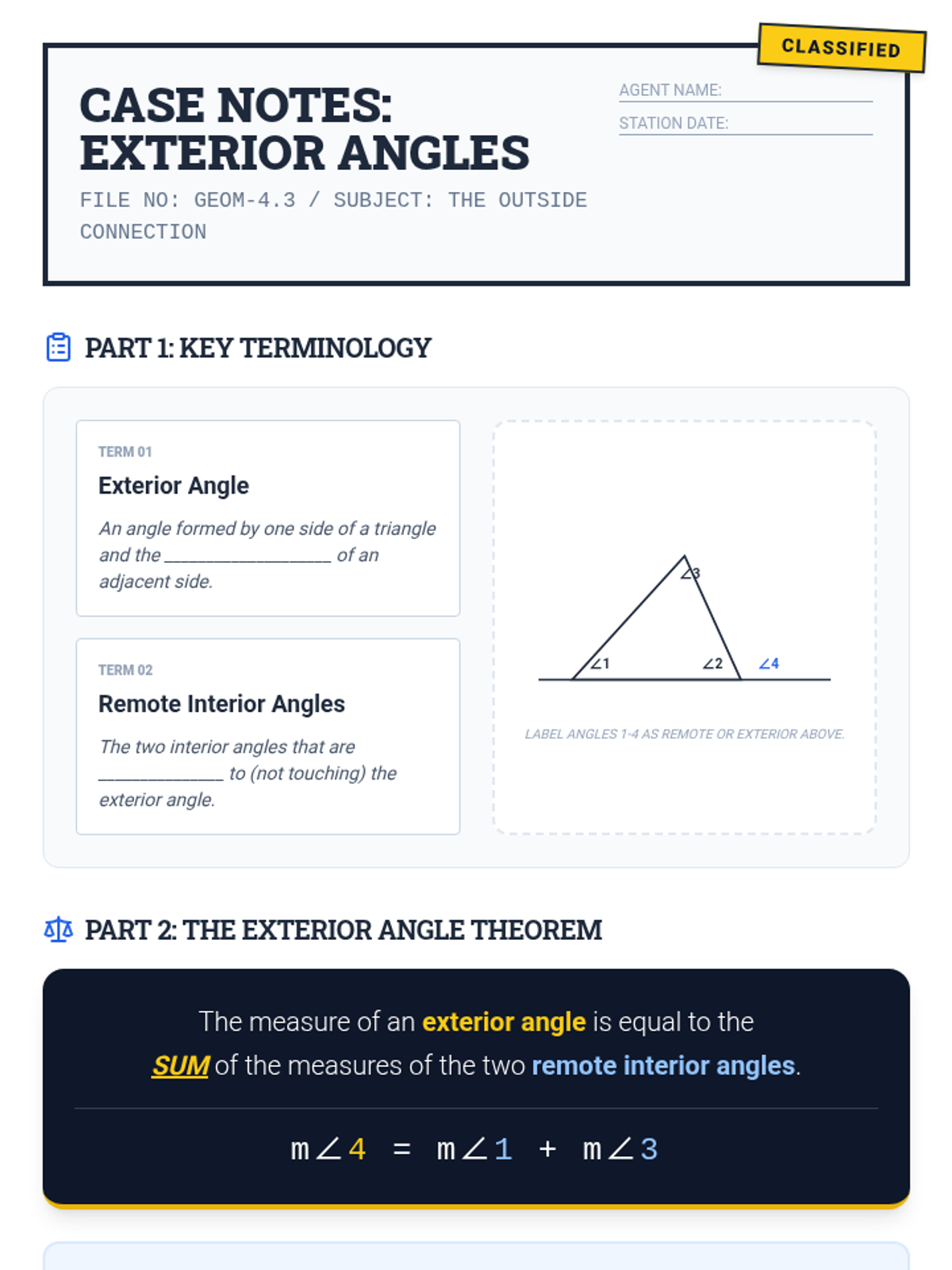
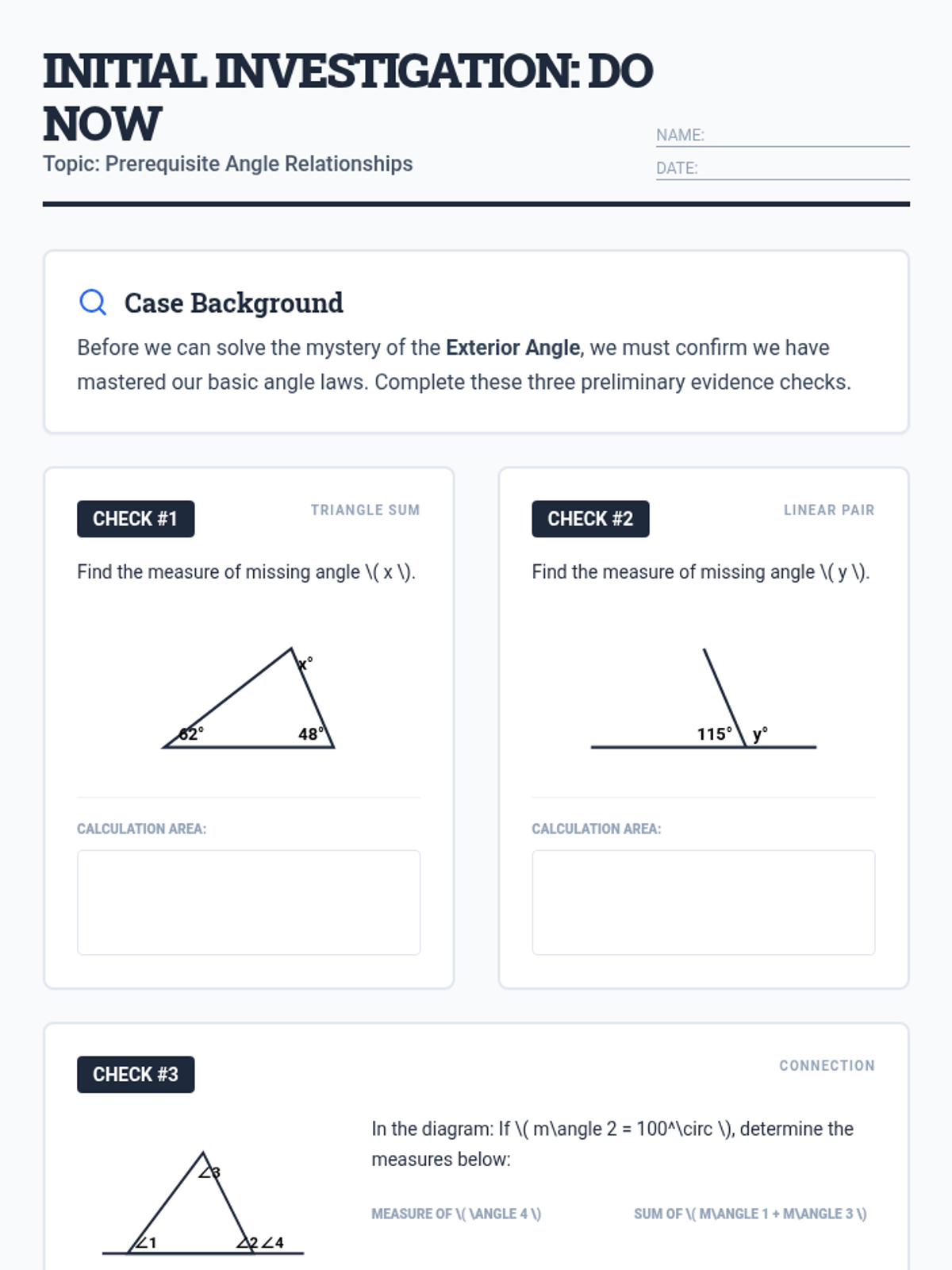
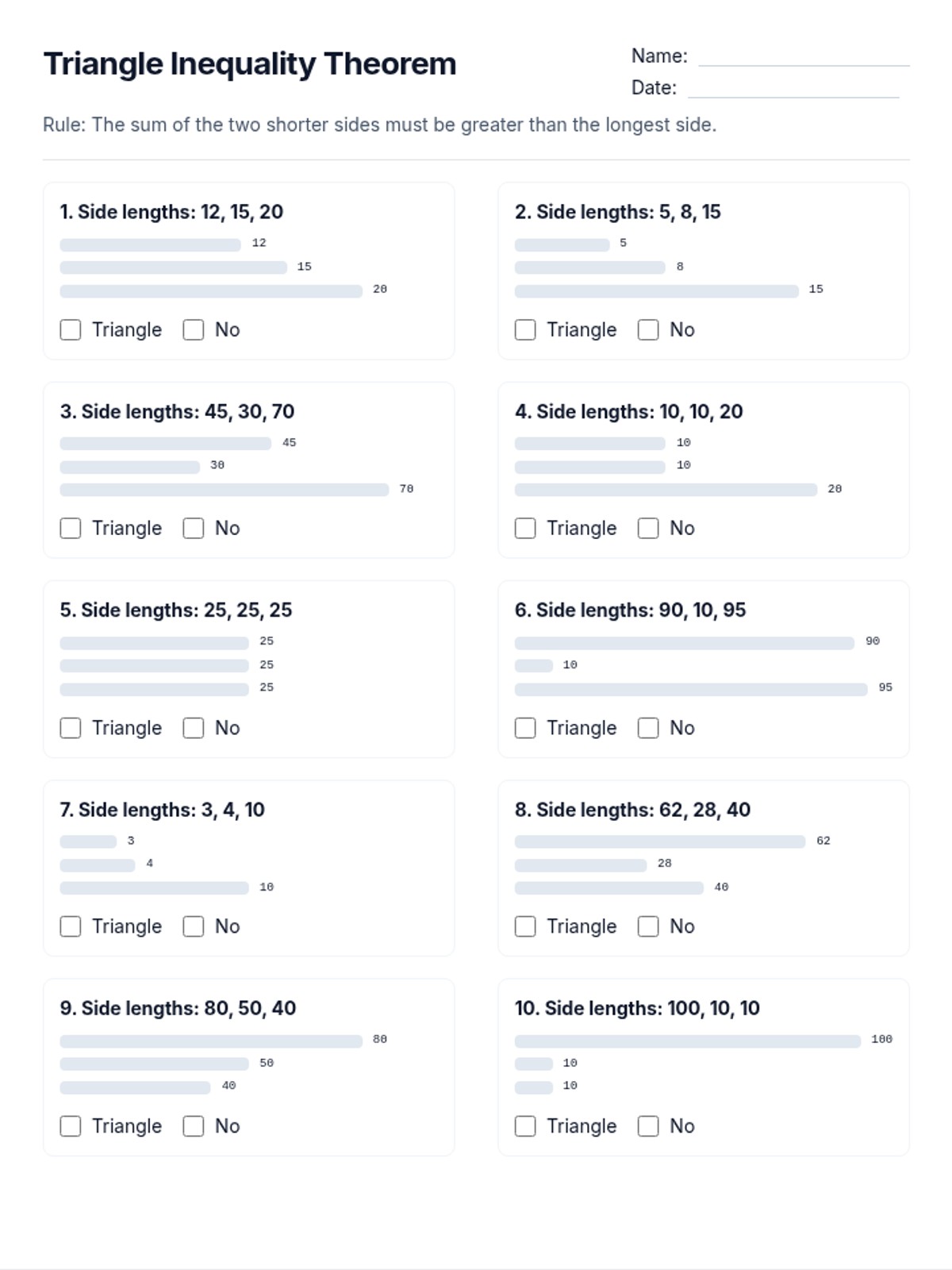
Geometric classification, measurement of area and volume, and the study of transformations and rigid motions. Builds toward complex proofs, trigonometry for general triangles, and the algebraic representation of conic sections.
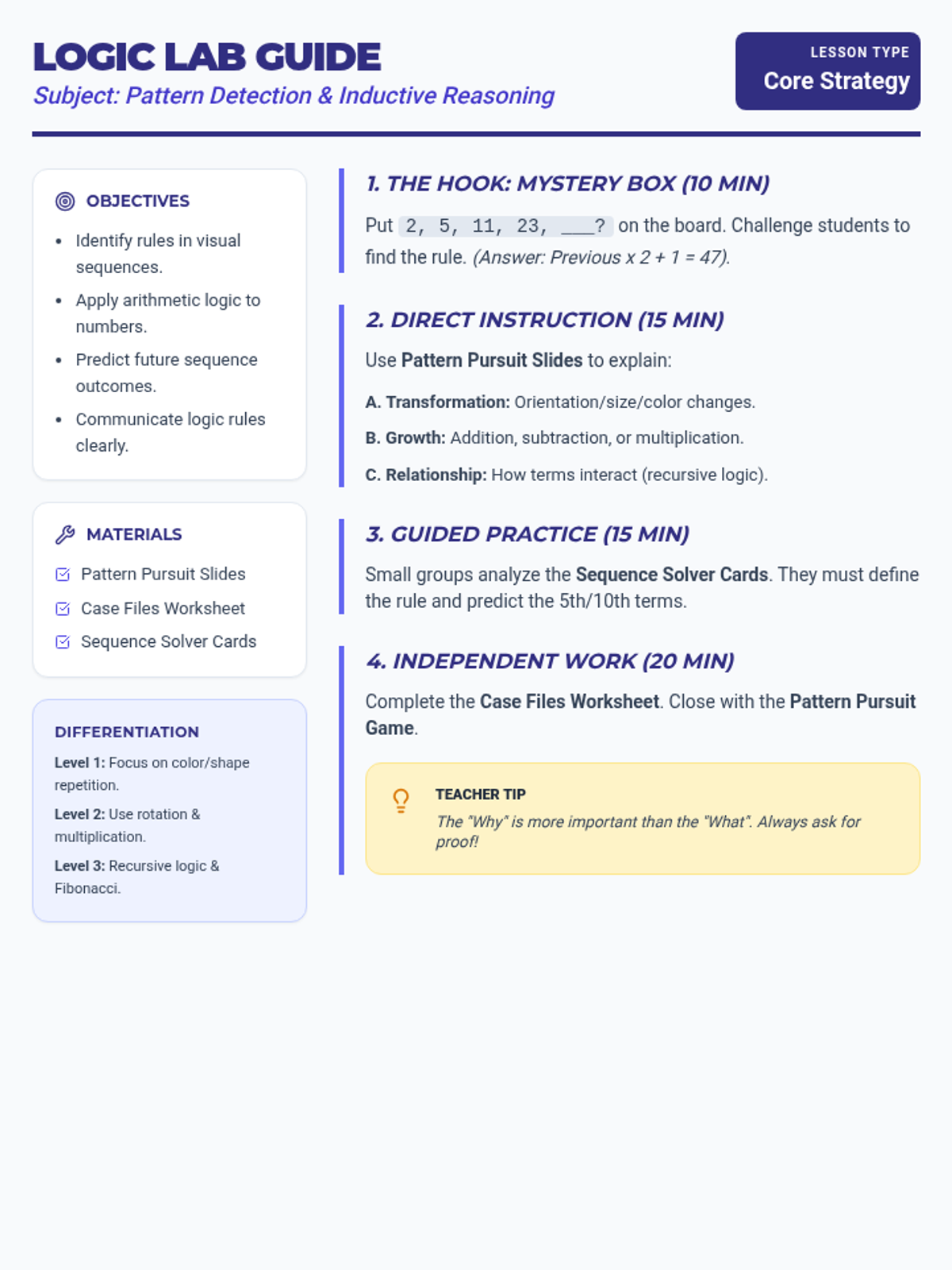
Présentation interactive (slides) pour le Labo Logique, recréant l'énigme des habitants de l'île (Chevaliers et Menteurs) avec l'ajout du personnage silencieux C et une résolution guidée.
Solutions détaillées et rapides pour les 6 problèmes de 3 points, expliquant les raisonnements arithmétiques et géométriques simples.
Série de 6 problèmes de niveau 3 points pour le concours Kangourou, conçus pour être résolus en 3 minutes chacun, couvrant le calcul, la logique et la géométrie de base.
Guide des solutions pour le sujet blanc "Logique et Stratégie", expliquant les heuristiques de résolution rapide comme l'absurde, les intervalles et la logique d'élimination.
Sujet blanc de 15 minutes pour s'entraîner aux stratégies de résolution du concours Kangourou, incluant 5 exercices sur la logique, les tests de valeurs et la schématisation.
Guide des solutions détaillées pour les exercices de préparation au concours Kangourou, incluant des explications géométriques et des astuces de calcul rapide pour les enseignants.
Fiche d'exercices d'entraînement pour le concours Kangourou (niveau 4ème) comprenant 5 problèmes sur les cubes, les symétries et les calculs d'aires, accompagnée d'un mémo méthodologique.
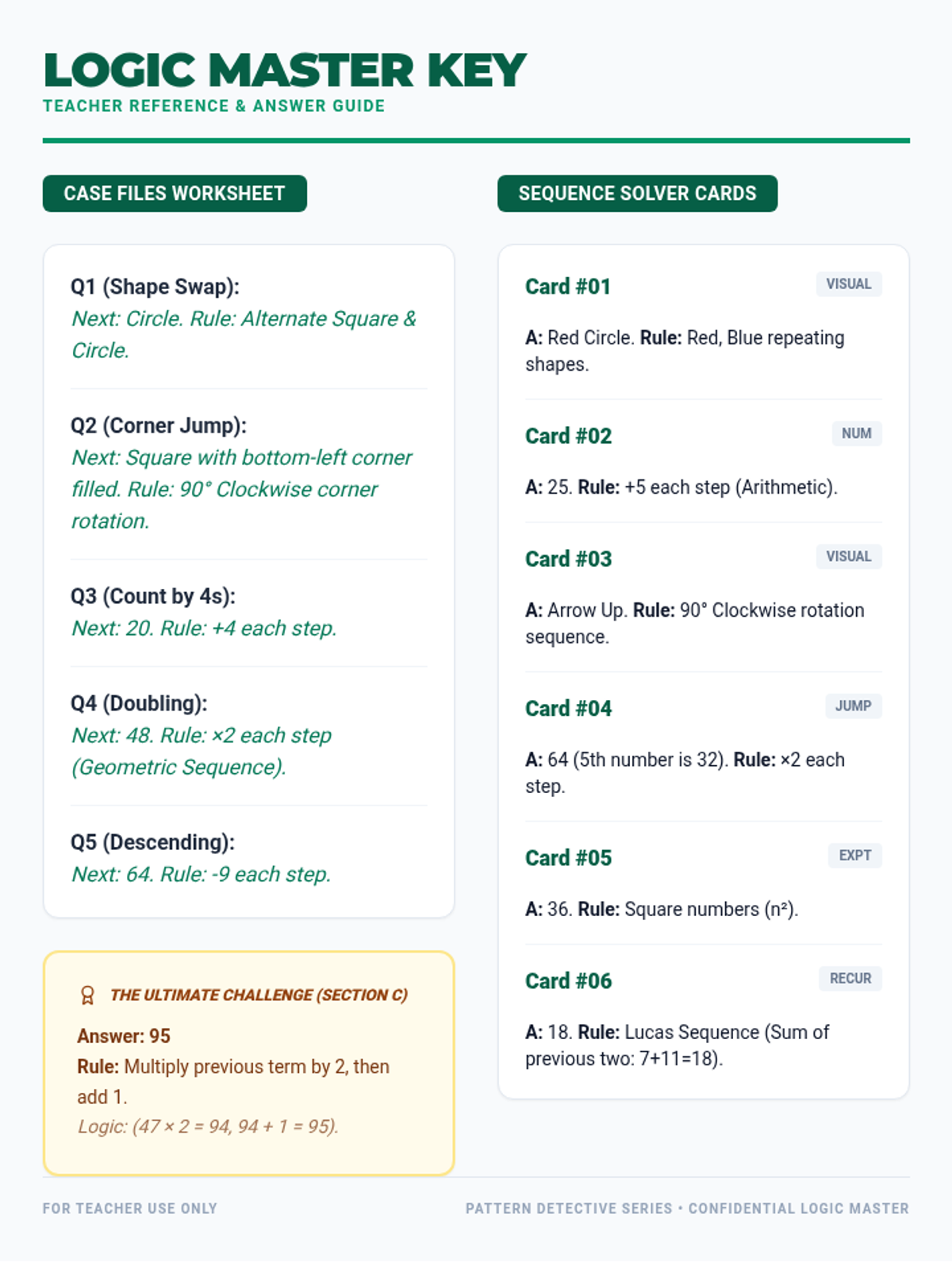
Un guide de correction détaillé pour l'enseignant, reprenant les exercices du livret d'entraînement avec des explications pédagogiques et des astuces de résolution rapide.
Une slide de correction visuelle pour la séance d'inspection, détaillant le raisonnement logique par l'absurde pour l'énigme des chevaliers et menteurs.
Une slide de présentation visuelle et immersive pour projeter l'énigme des chevaliers et menteurs lors de la séance d'inspection.
Un conducteur de séance détaillé pour l'enseignant lors de sa séance d'inspection, précisant le minutage, la posture pédagogique et les éléments de plus-value pour l'évaluation.
Une fiche mémo synthétique pour les élèves, récapitulant les règles du concours, la gestion du temps et les astuces stratégiques de dernière minute.
Un support de travail collaboratif pour la séance d'inspection, structuré comme un journal de bord de chercheur avec les rôles détaillés (Secrétaire, Porte-parole, Maître du temps, Coach) et les étapes de la recherche.
Un cahier d'exercices regroupant des problèmes types du concours Kangourou classés par catégories (logique, calcul, géométrie) pour l'entraînement individuel des élèves.
Une présentation visuelle pour accompagner les premières séances de préparation au concours Kangourou, présentant les règles du jeu et des stratégies de résolution.
Un guide pédagogique détaillé pour l'enseignant, présentant la séquence de 8 séances pour préparer les élèves de 4ème au concours Kangourou, avec les objectifs et les compétences du cycle 4.
A partner-based matching activity where students connect geometric visual models with their corresponding algebraic equations and root solutions.
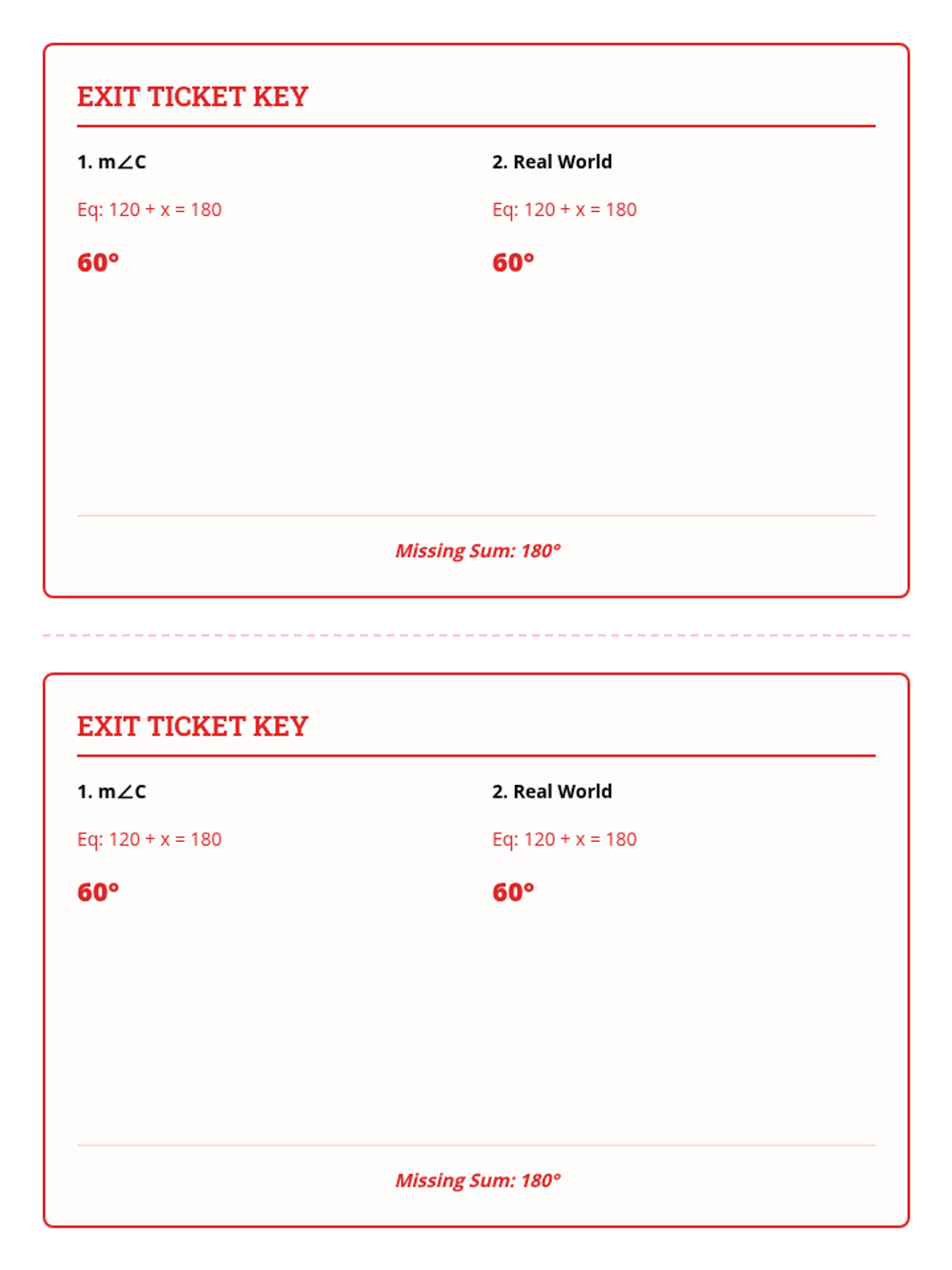
A formal assessment tool (exit ticket) to check student understanding of solving square and cube root equations using geometric contexts.
A scaffolded practice worksheet for students to calculate side lengths of squares and cubes from area and volume models, including space for showing inverse operations.
A visually engaging slide deck with blueprint-themed graphics that guide students through the connection between geometric shapes (squares/cubes) and root operations.
An error-analysis worksheet where students act as medical diagnosticians to find and correct common mathematical mistakes in algebra, geometry, and proportional reasoning.
The student practice packet for the Math Medics review, containing real-world application problems and state-assessment style items for proportional relationships, equations, and geometry. Includes ample workspace for calculations.
An engaging, high-energy slide deck for a 50-minute middle school math review, featuring a medical clinic theme with segments on proportions, equations, and geometry formulas.
A comprehensive teacher facilitation guide and answer key for the Math Medics review lesson, including a 50-minute pacing guide, instructional tips, and detailed solutions for all student activities.
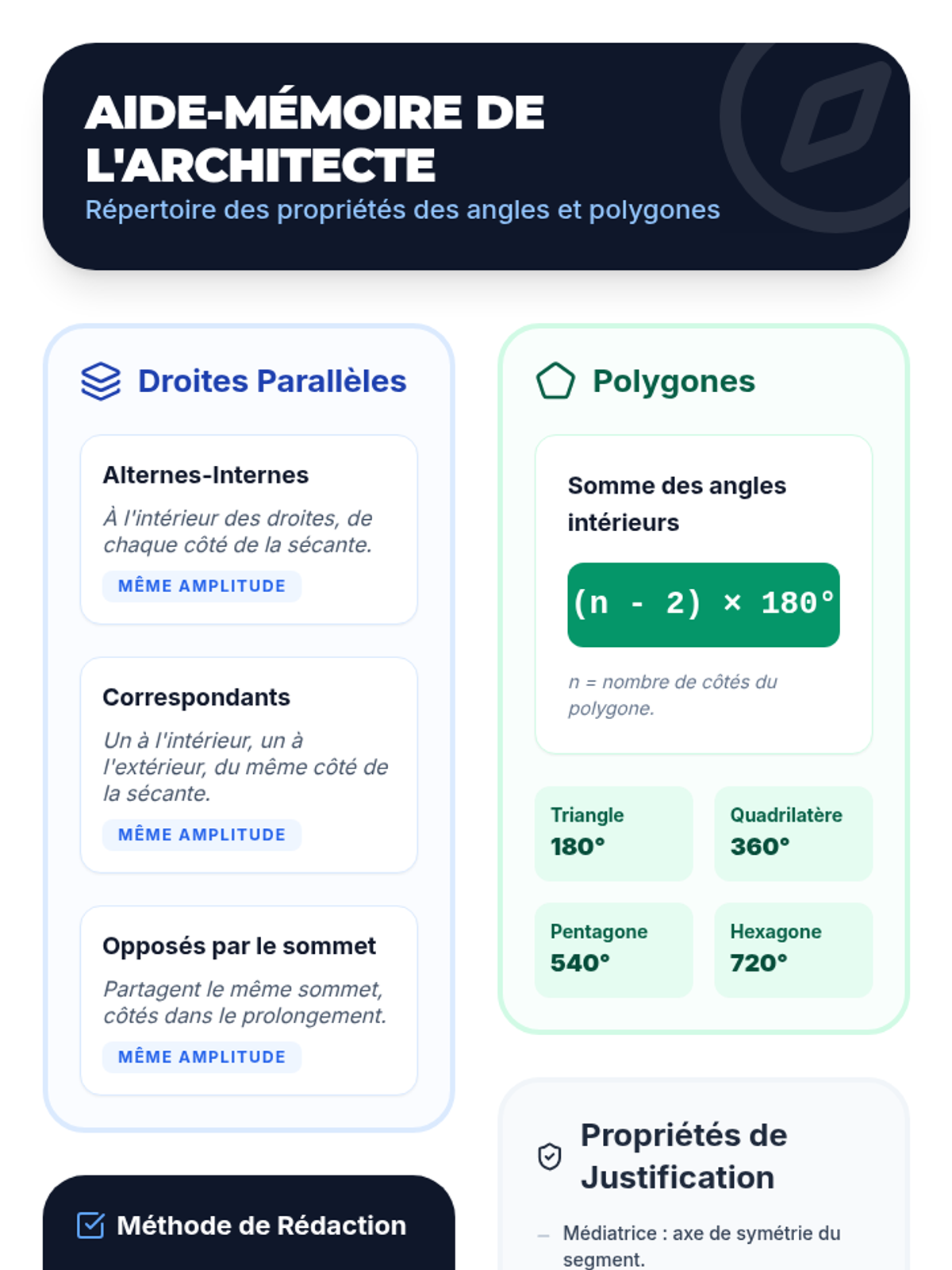
Comprehensive facilitation guide for the Angle Alliances lesson, including CCSS standards, time-stamped instructional sequence, and differentiation strategies.
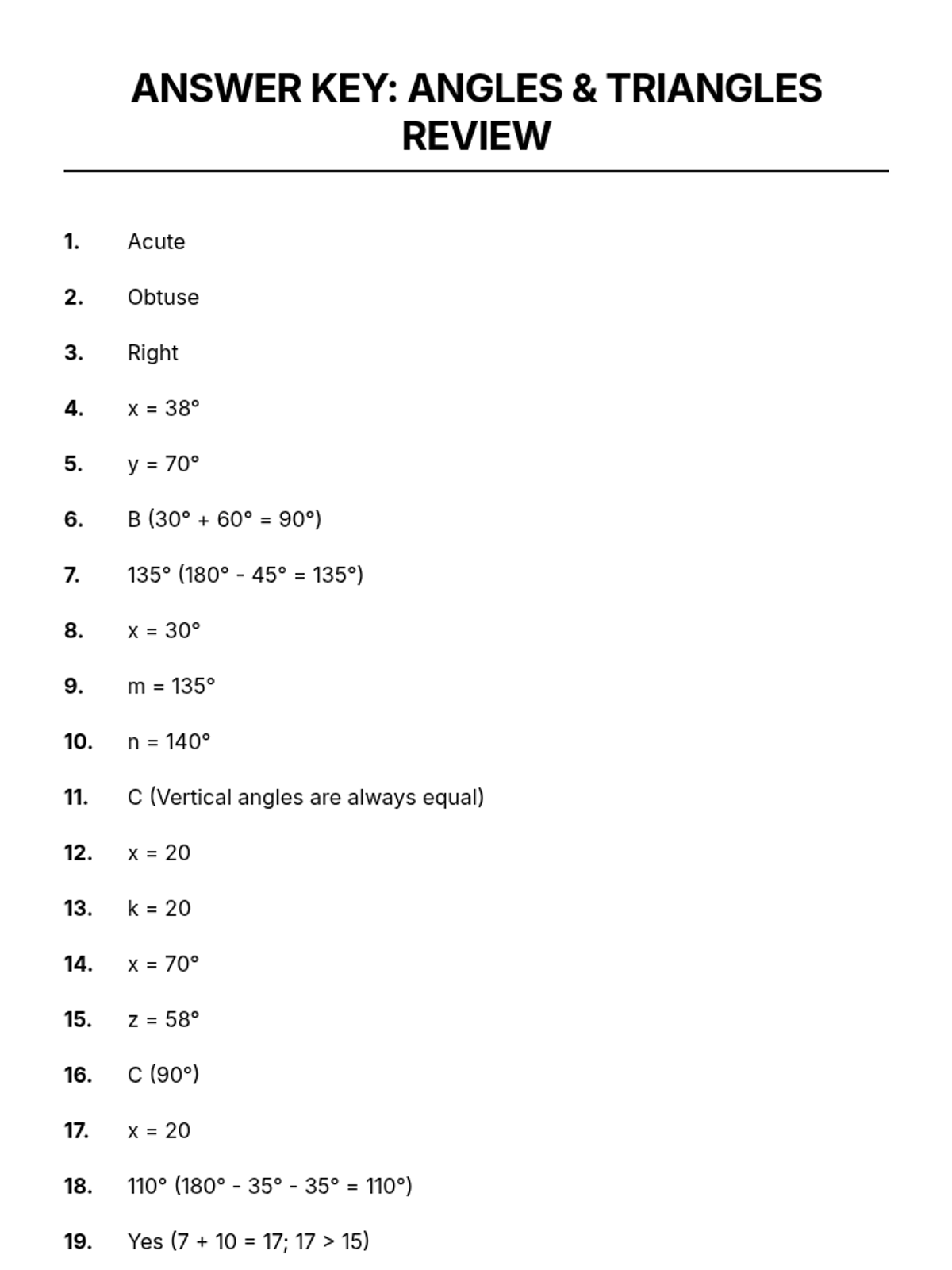
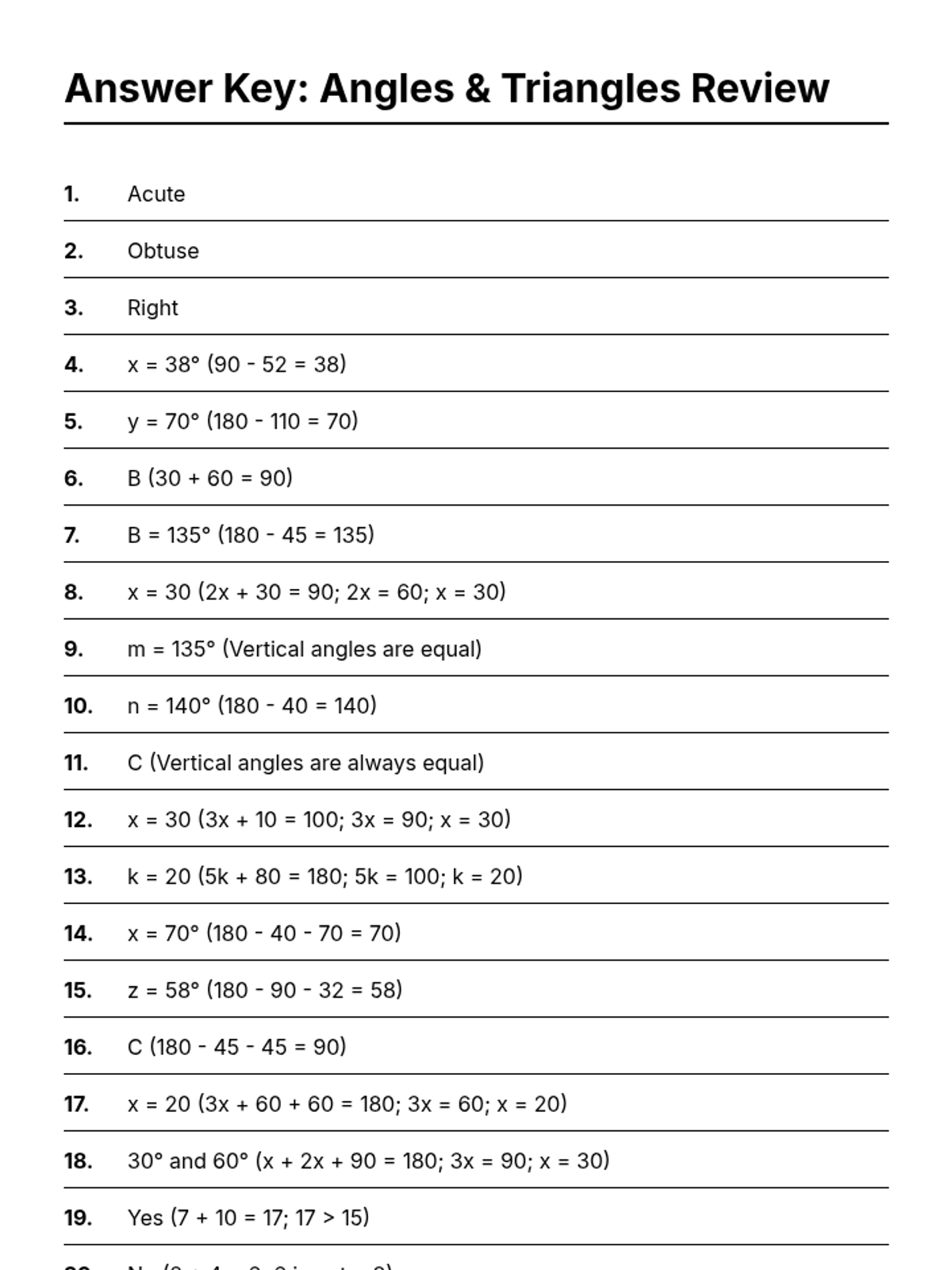
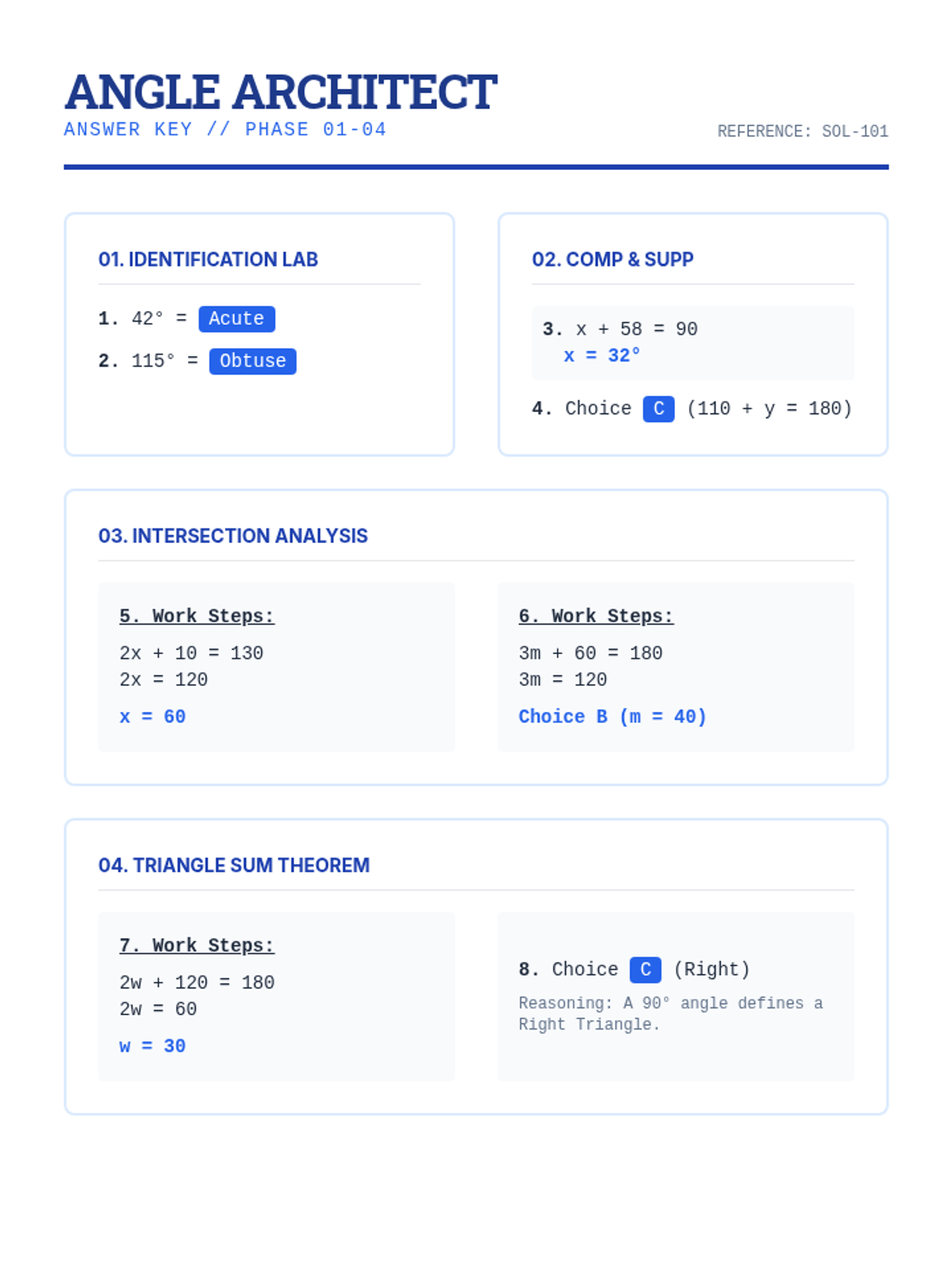
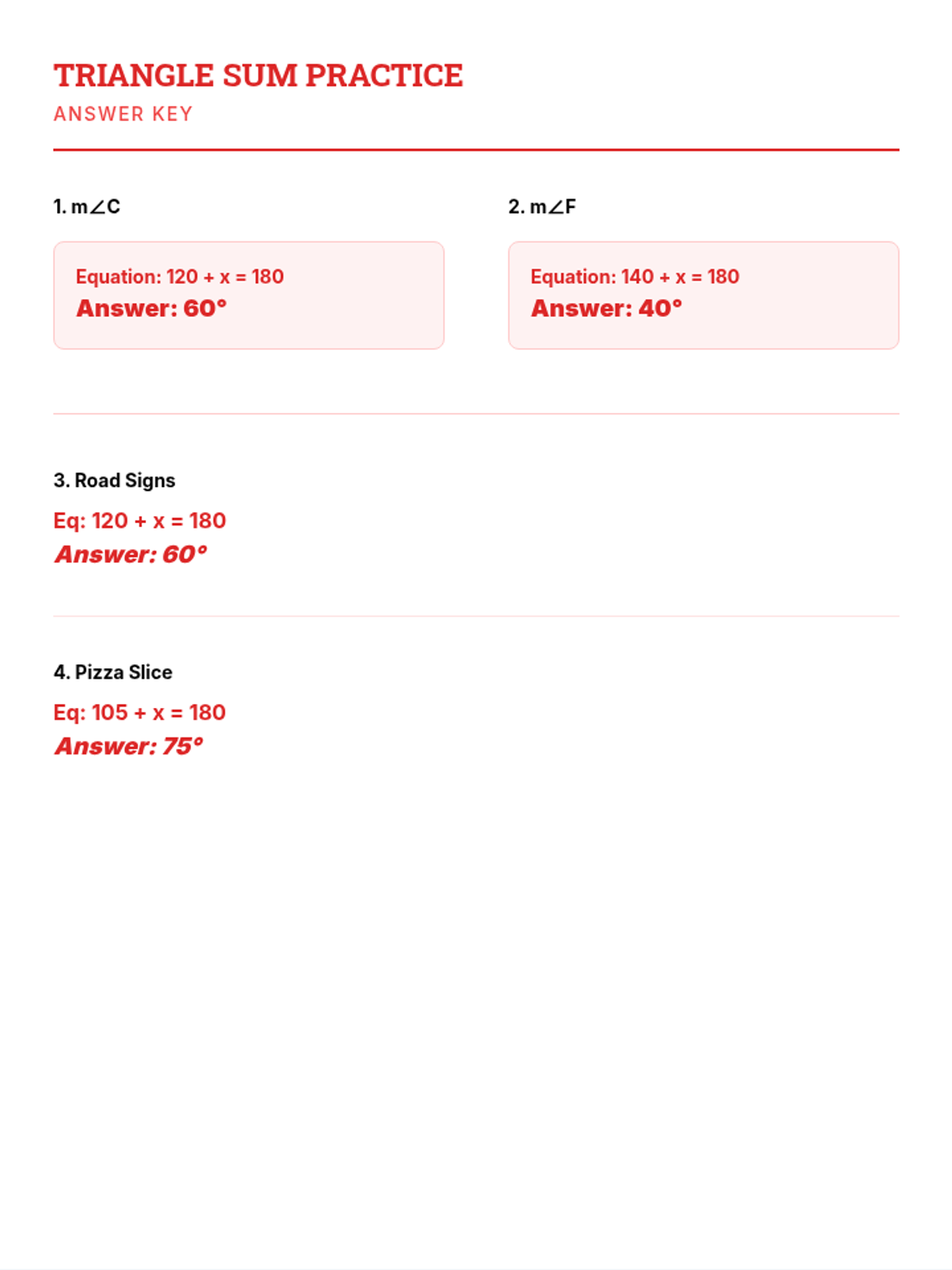
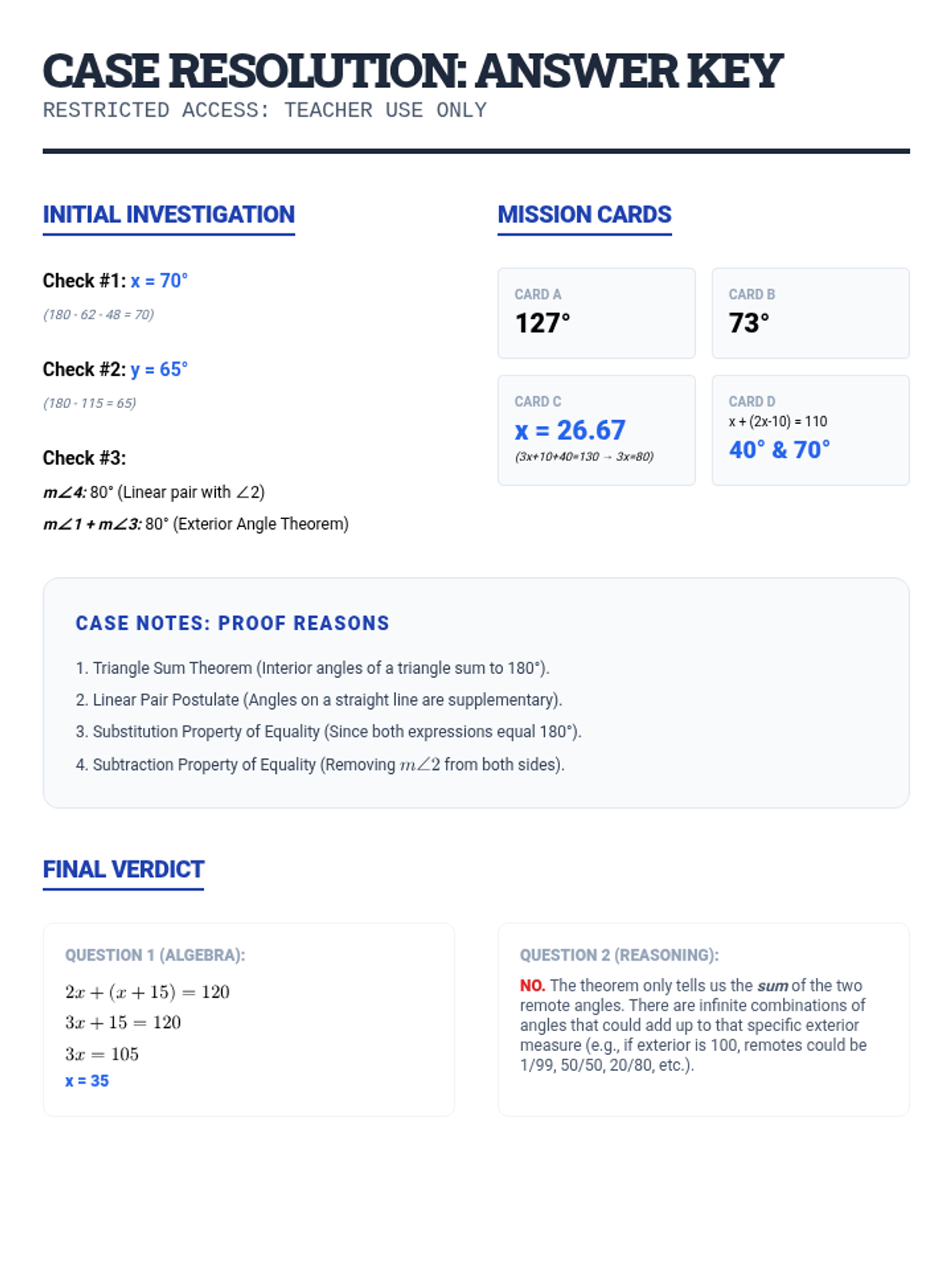
Detailed answer key for the Angle Alliances worksheet, including step-by-step algebraic solutions for all geometric problems.
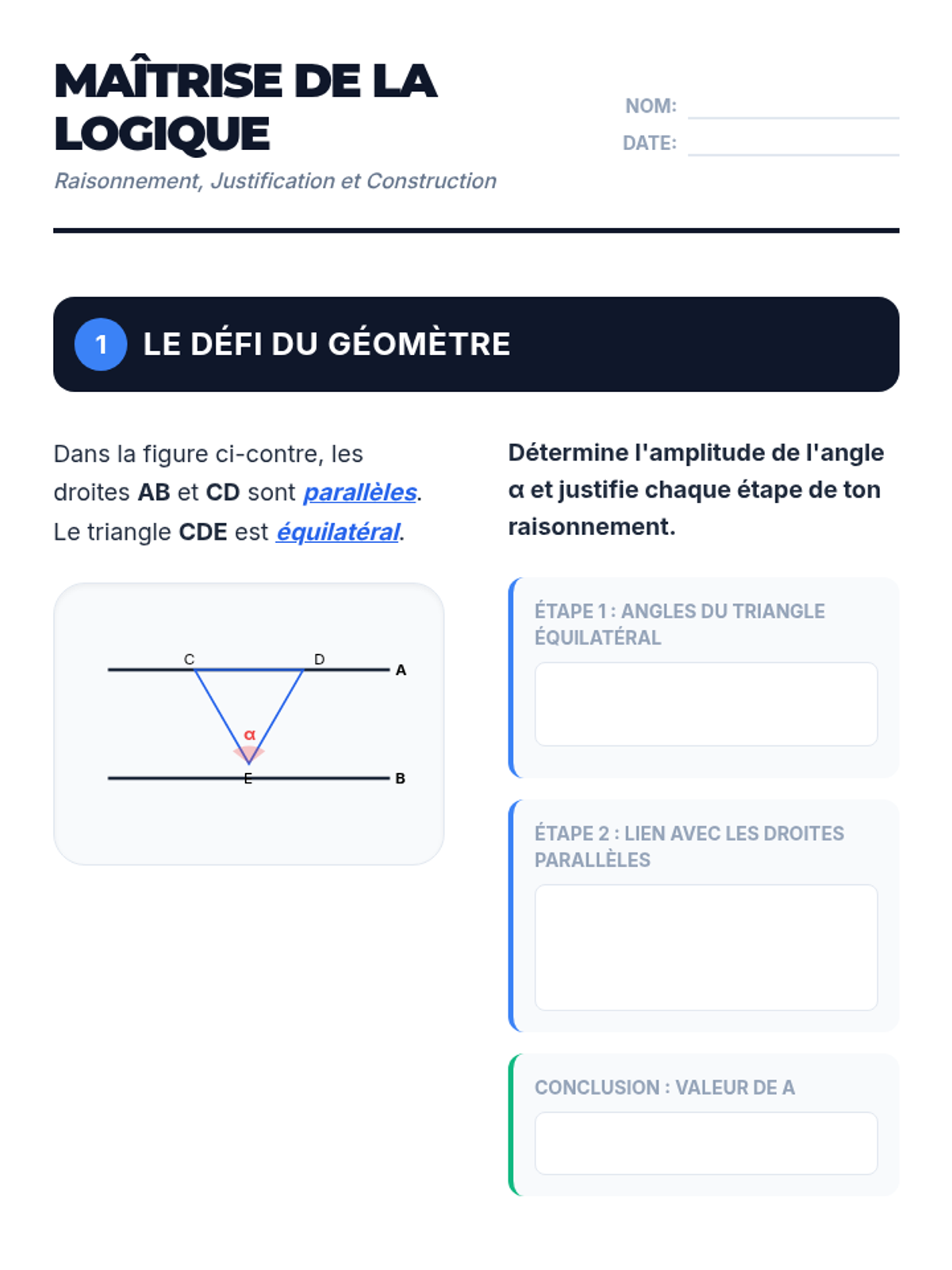
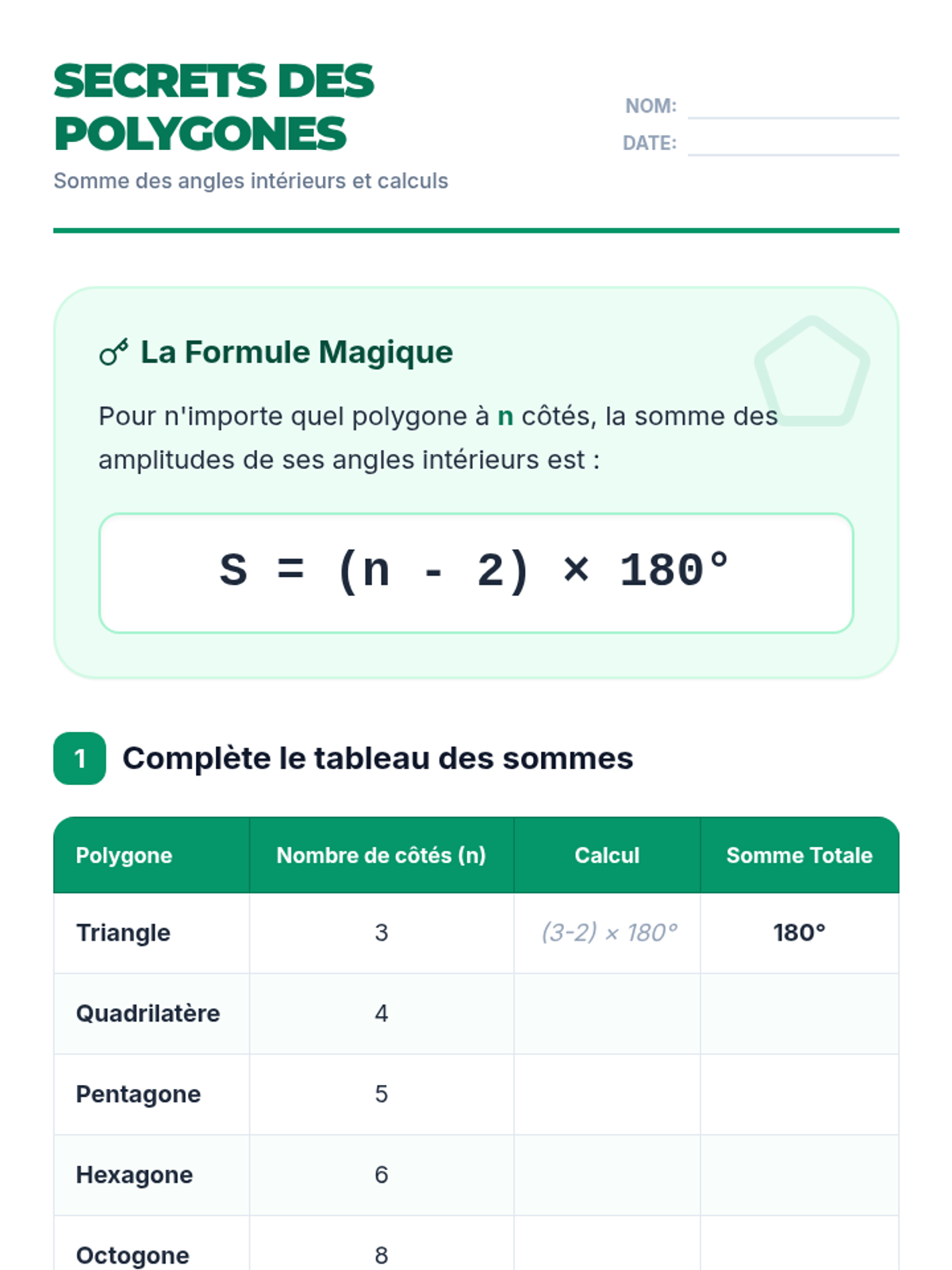
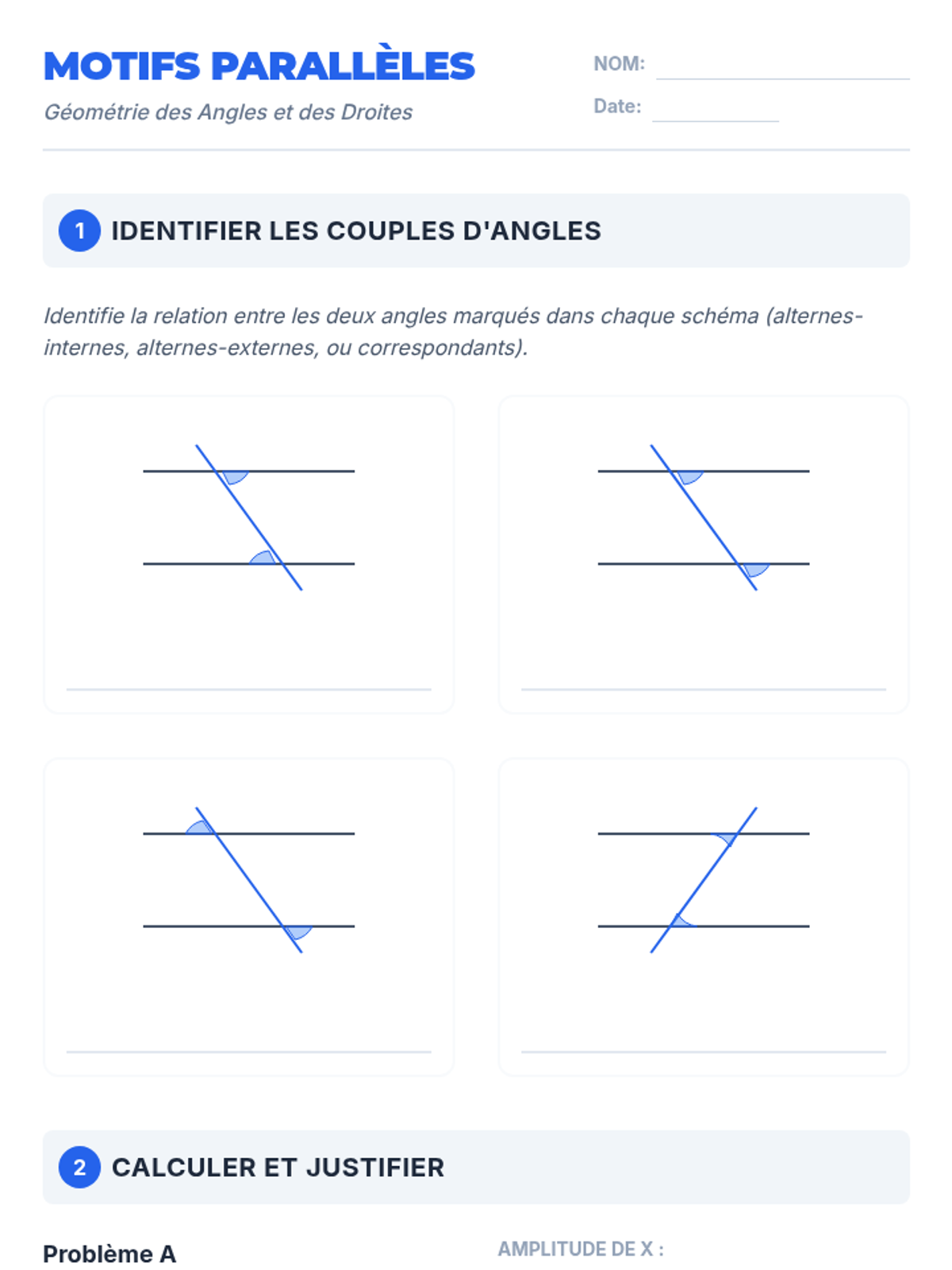
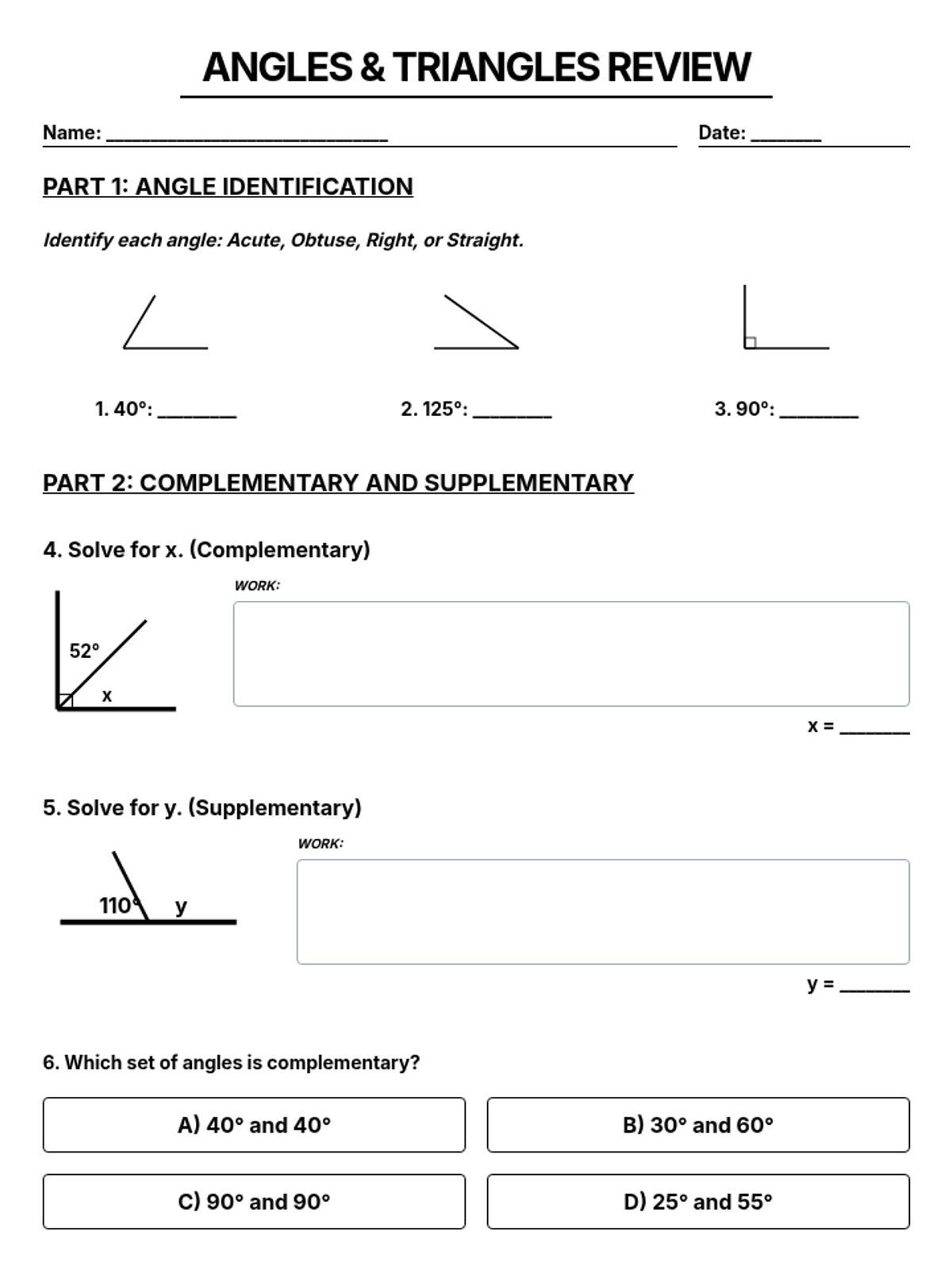
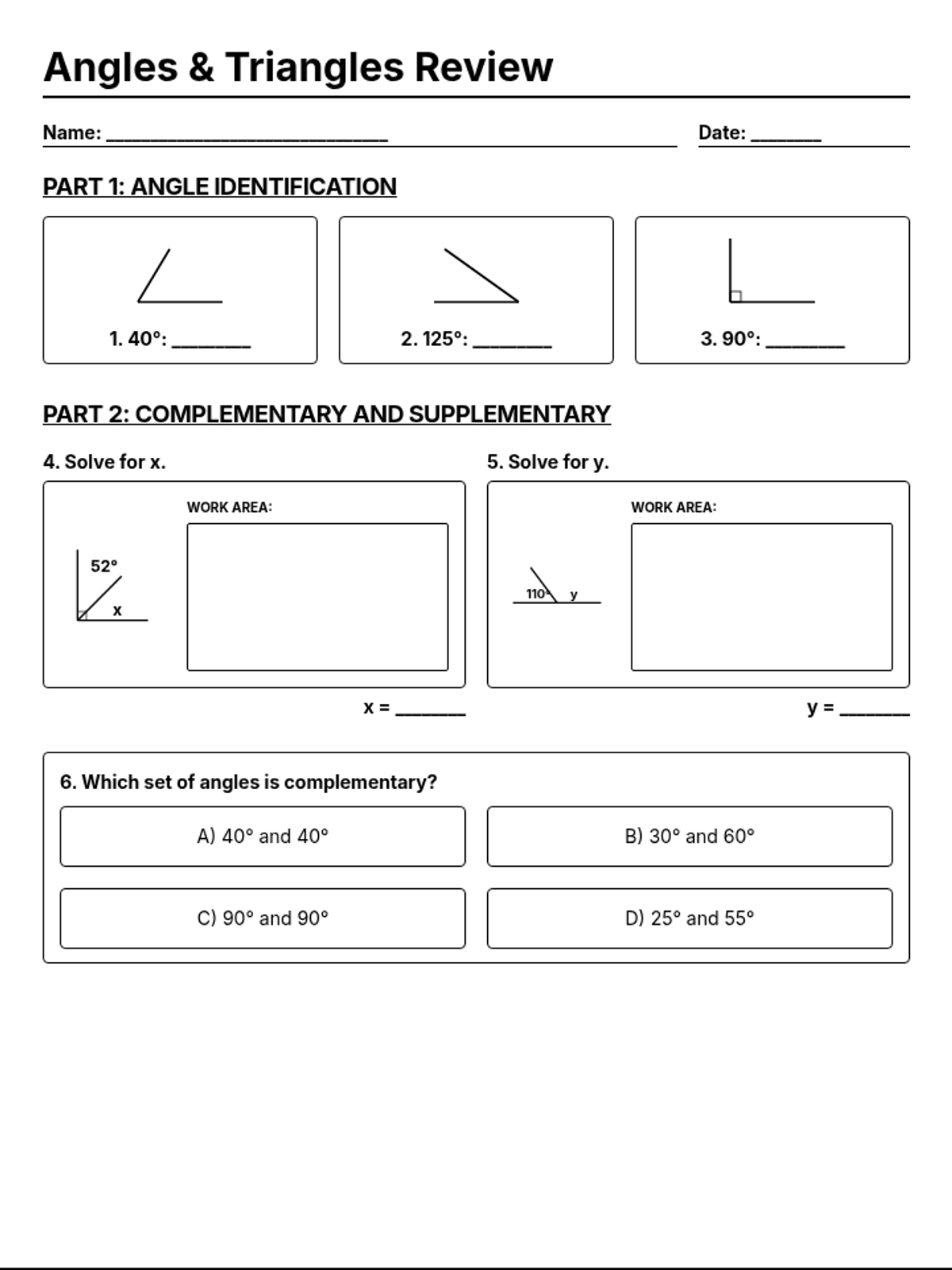
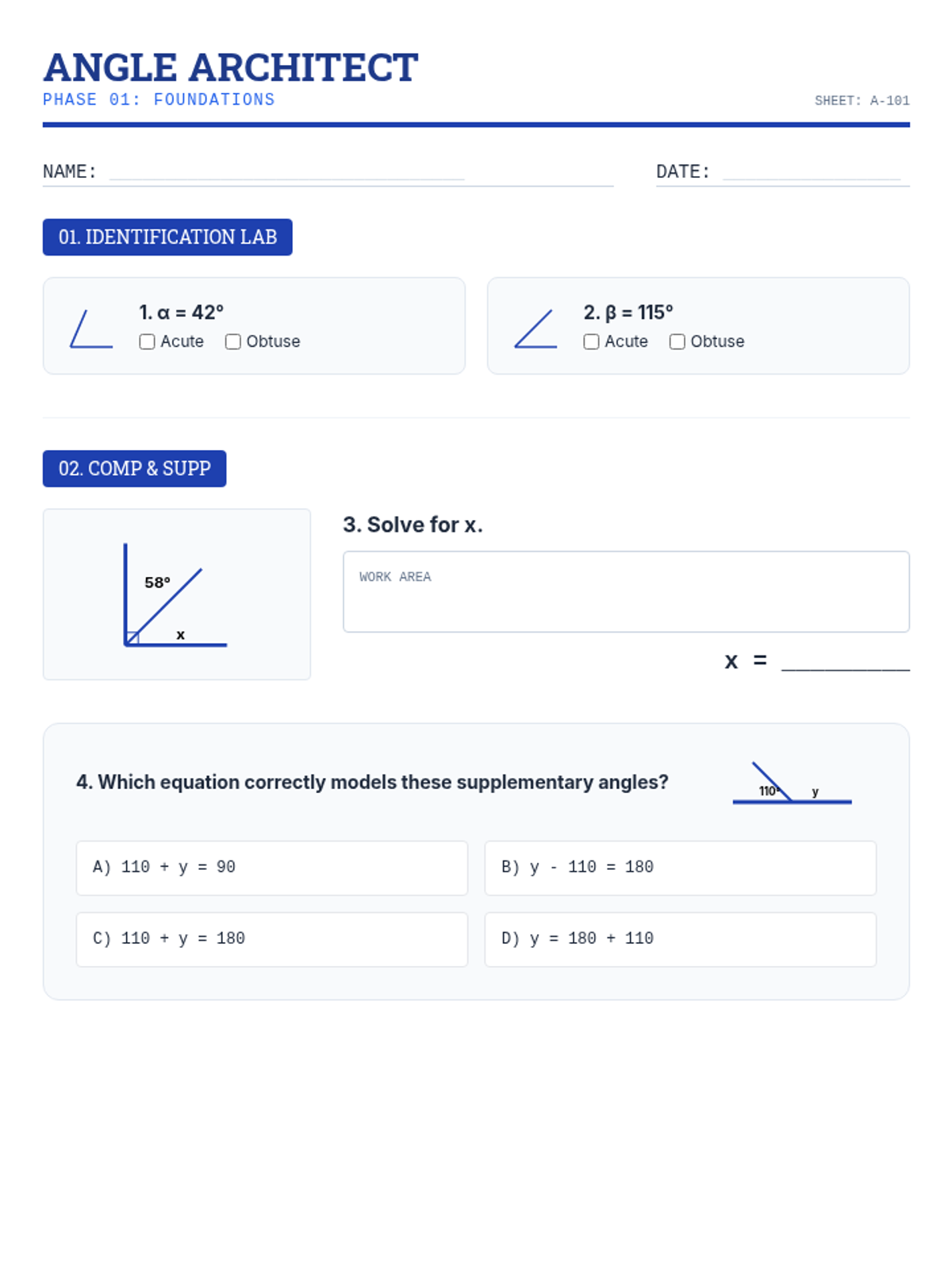
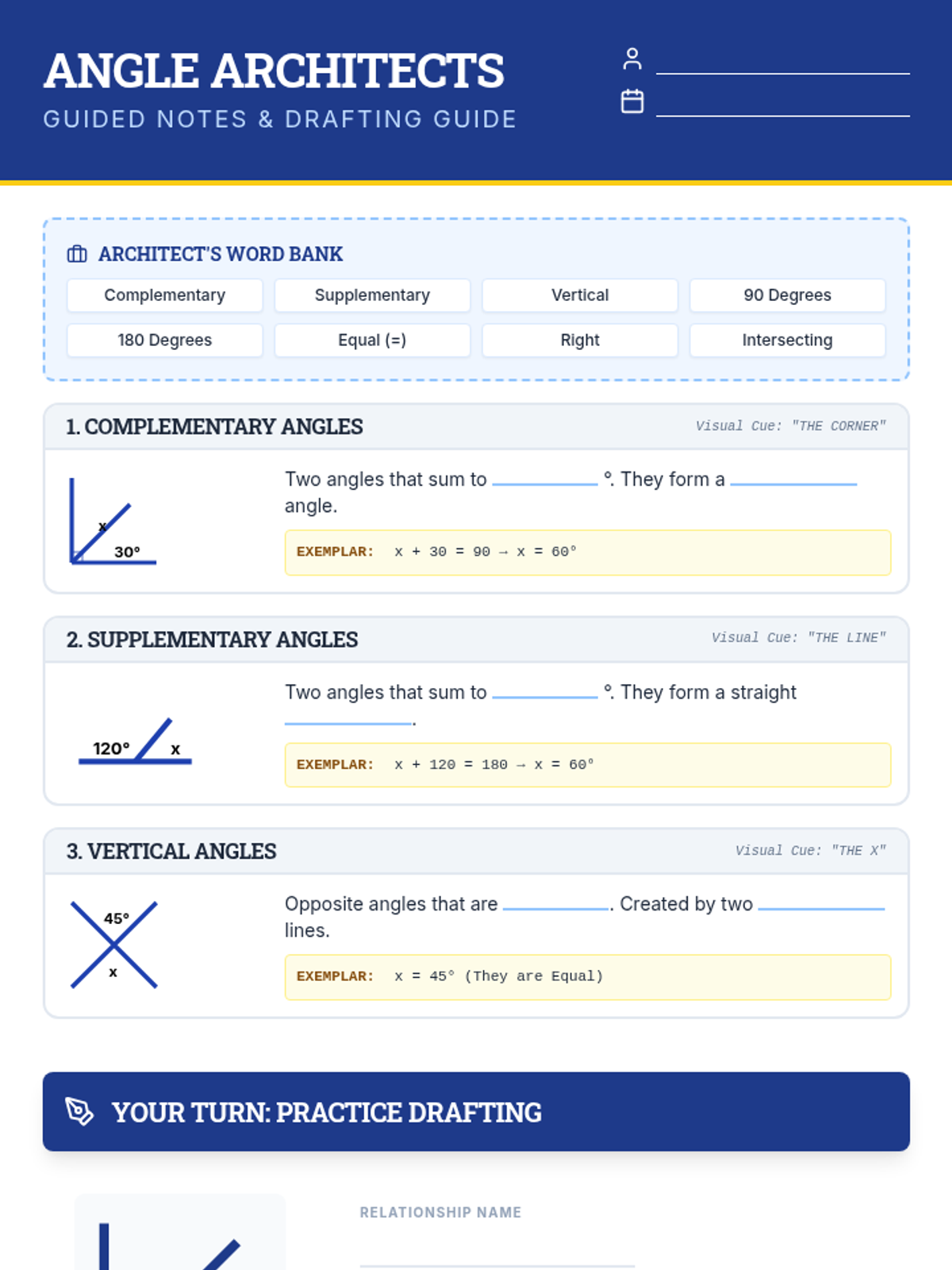
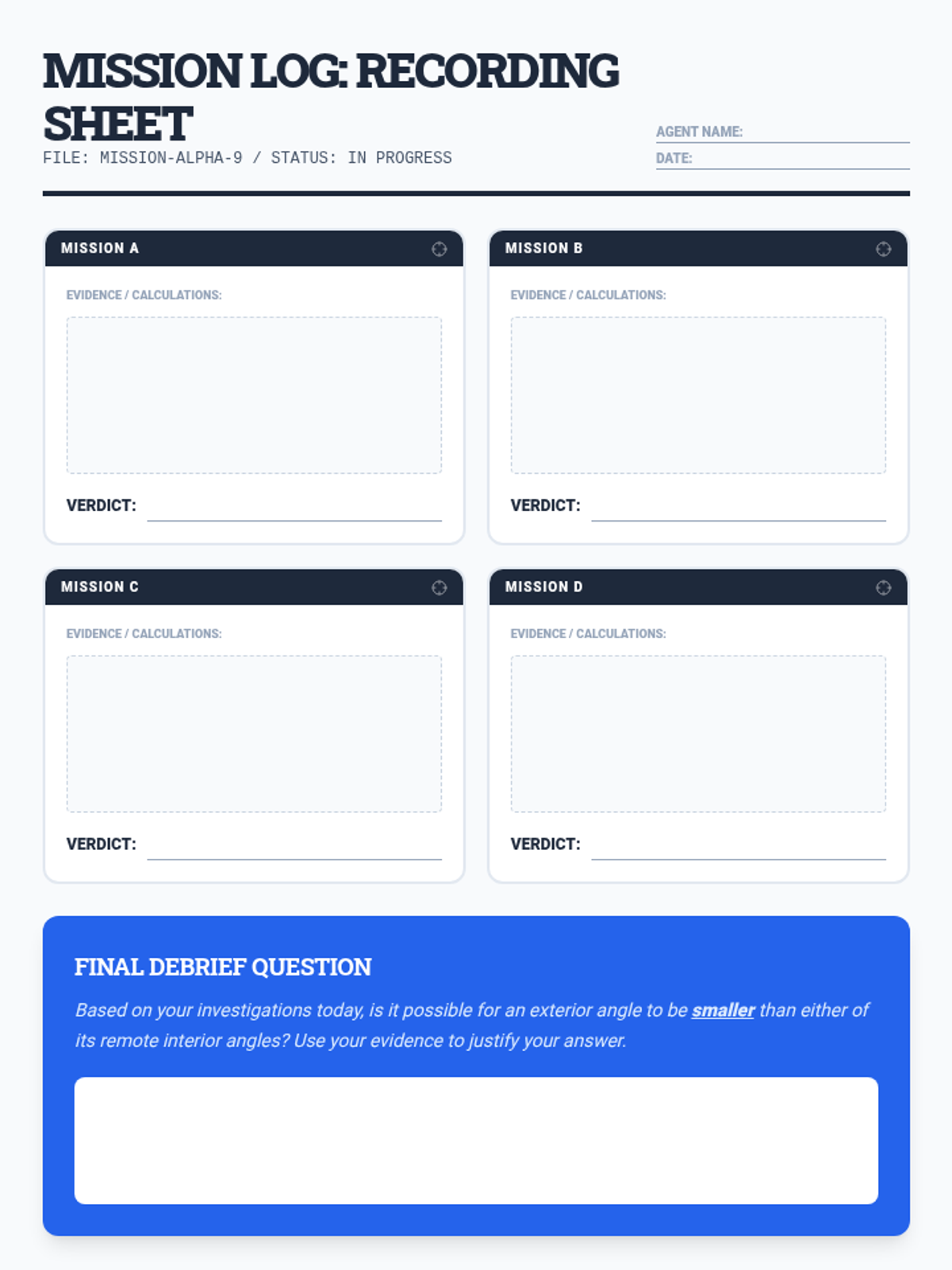
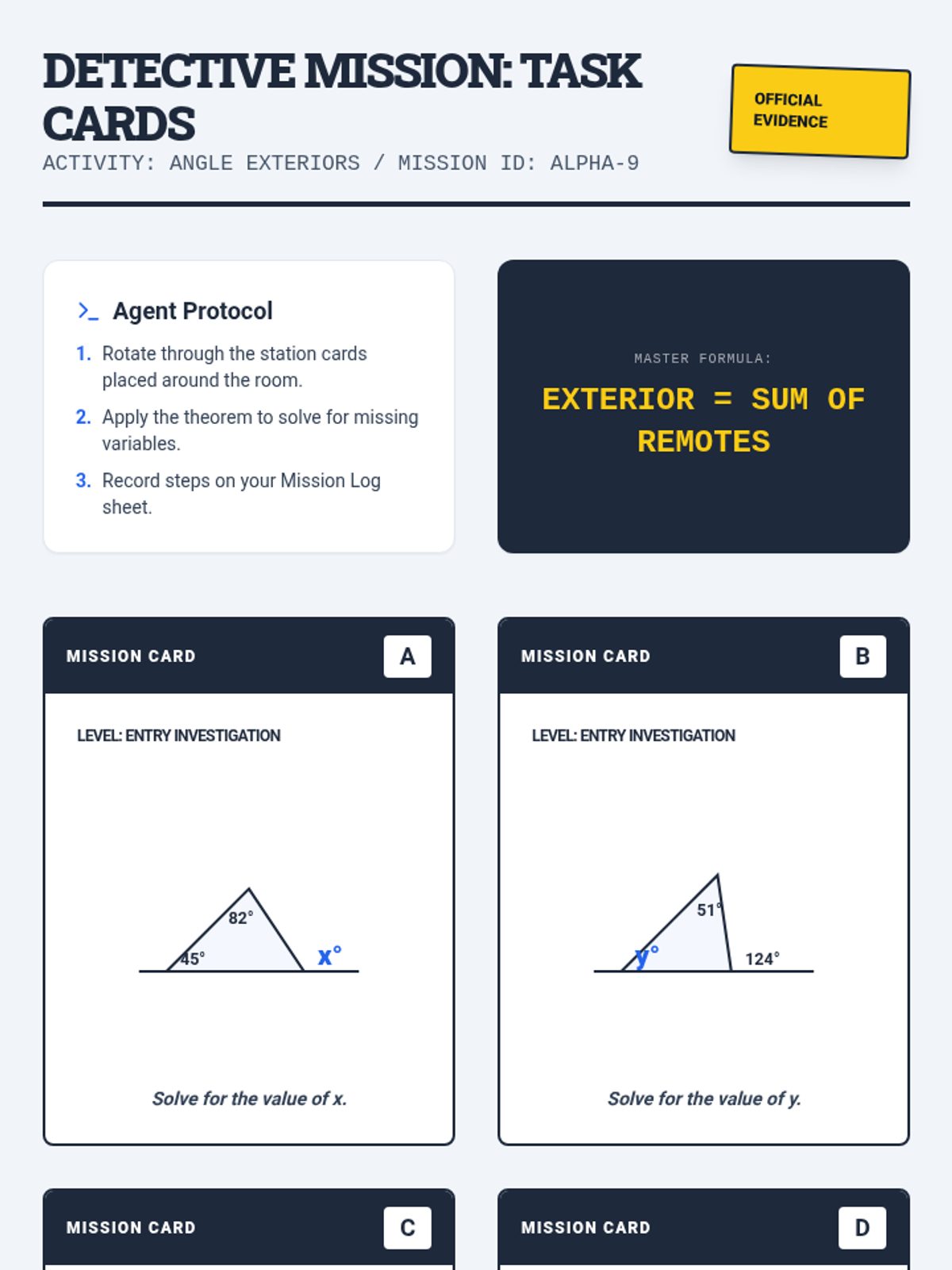
A comprehensive investigation worksheet where students identify angle relationships, measure triangles to discover the angle sum theorem, and solve algebraic equations based on geometric properties.
A visually striking presentation for 7th-grade geometry covering angle relationships and the triangle sum theorem with an architectural blueprint theme.
A comprehensive teacher facilitation guide for the Root Hunters lesson, featuring instructional tips, common student misconceptions for factoring by grouping and completing the square, and formative assessment prompts.
A 2-page answer key for the Root Hunters worksheet, providing step-by-step solutions for both factoring by grouping and completing the square problems.
A 2-page blueprint-themed worksheet featuring practice problems for quadratic equations using factoring by grouping and completing the square, with generous grid-patterned work spaces.
A 9-slide instructional presentation on factoring by grouping and completing the square, using an architectural 'blueprint' theme with clear step-by-step guides and visual aids.
An instructional slide deck for the City Grid Geometry lesson. It introduces the area formulas for parallelograms and trapezoids using a modern urban planning theme, featuring large diagrams and step-by-step examples.
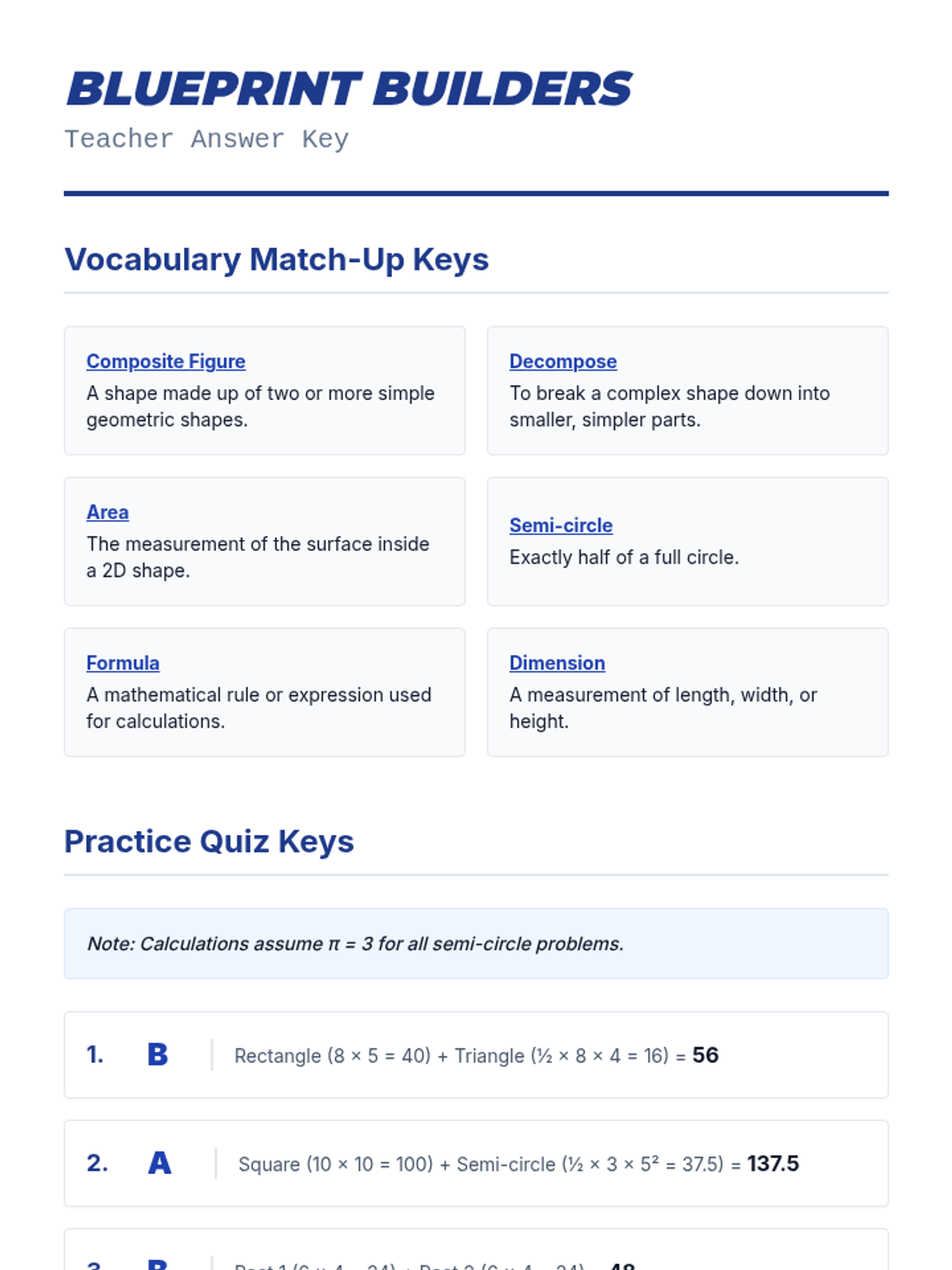
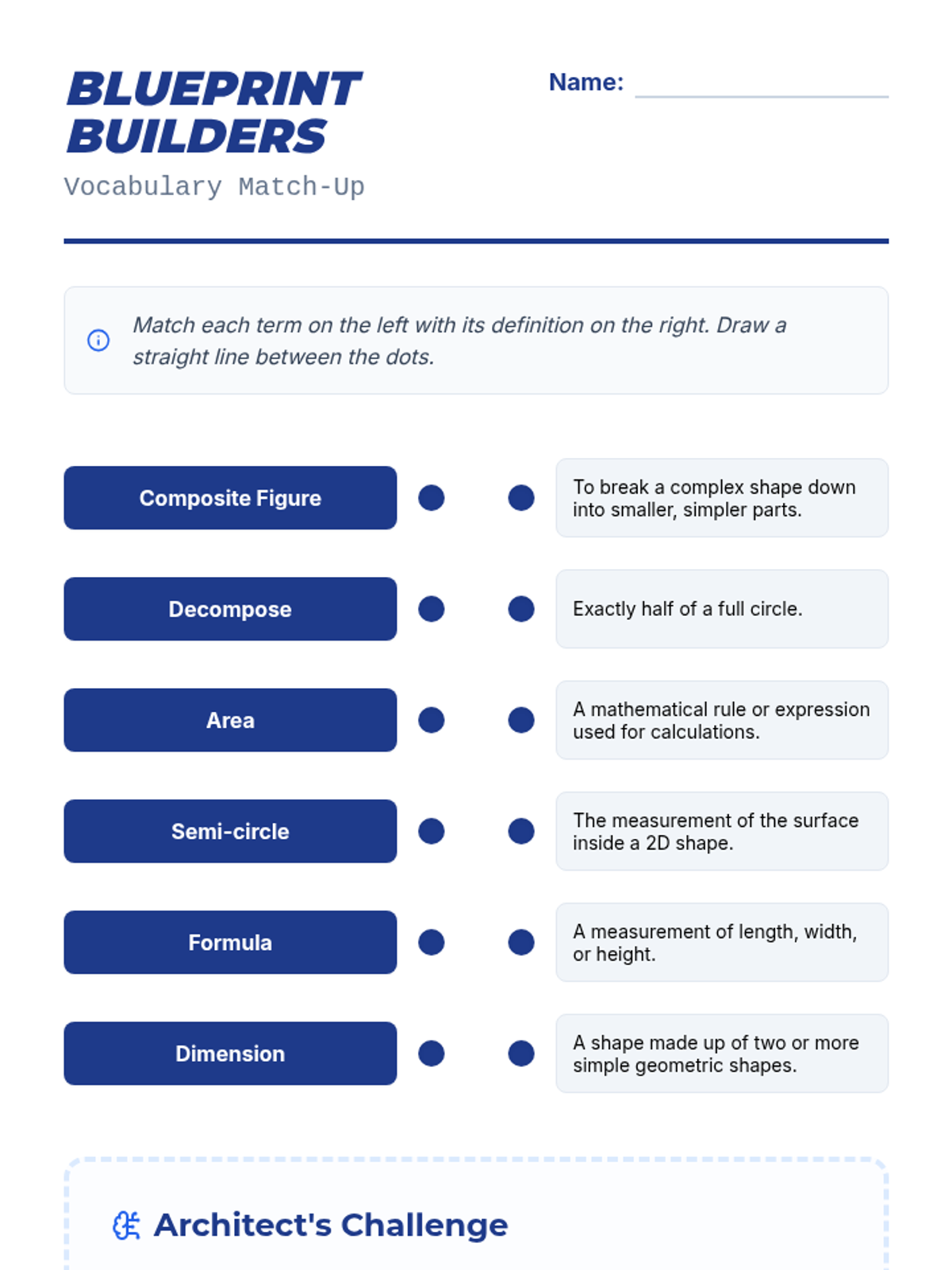
A comprehensive answer key for the Blueprint Builders worksheet, providing step-by-step calculation paths and teacher notes for each of the five area problems.
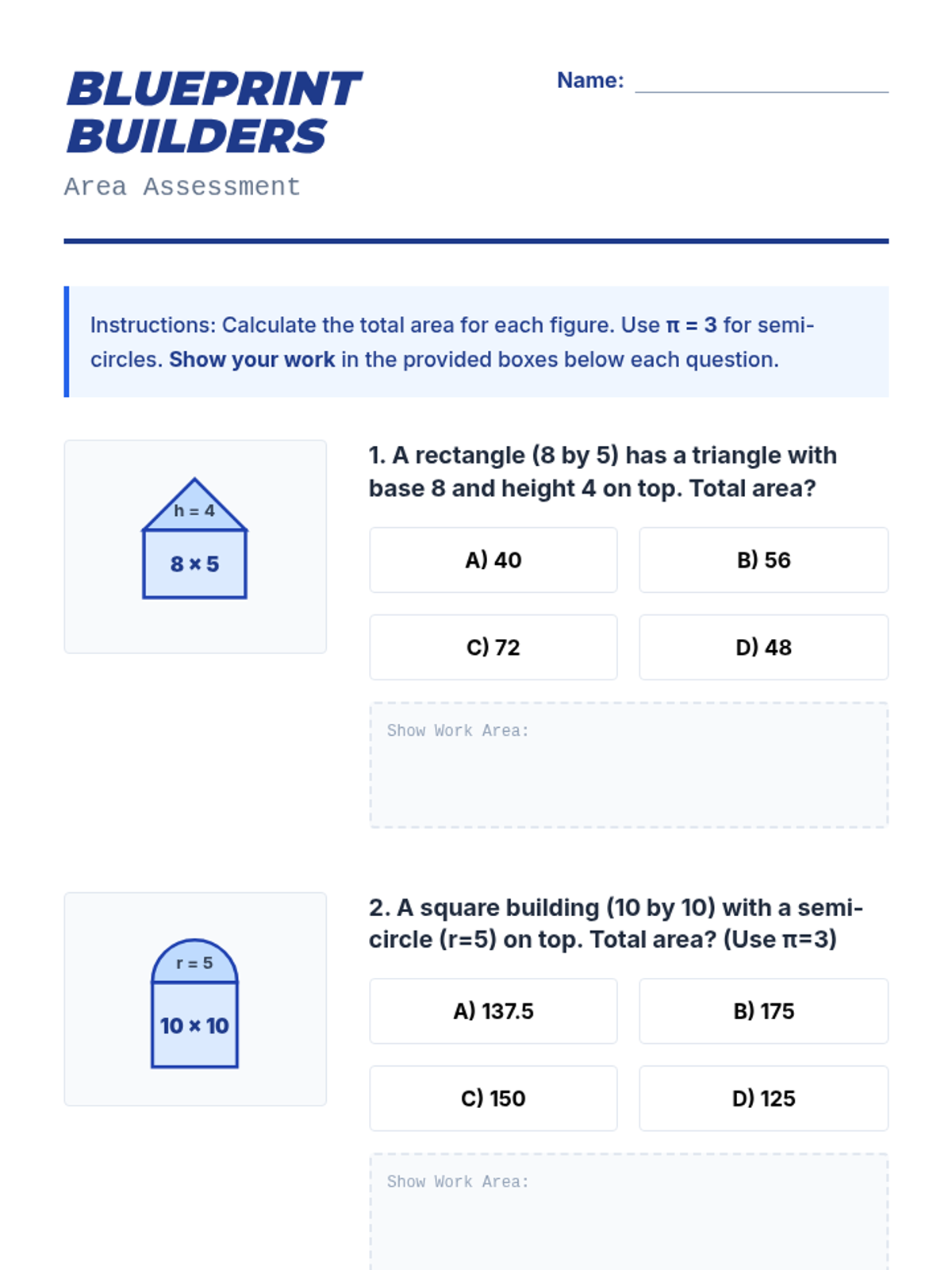
A geometric worksheet where students calculate the area of parallelograms and trapezoids themed around city planning and blueprint design. Includes five problems with designated drafting bays for student work.
Updated instructional slide deck that teaches surface area using the specific formula SA = 2B + Ph. Features step-by-step examples for rectangular and triangular prisms, plus the composite "Hidden Face" rule.
The answer key for the Blueprint Practice Worksheet, providing step-by-step solutions, formula substitutions, and final answers rounded to the nearest hundredth.
A blueprint-themed slide deck for 8th-grade volume instruction. Features clear formulas, visual diagrams of cylinders, cones, and spheres, and a "Diameter Trap" warning slide.
A blueprint-themed volume practice worksheet for 8th-grade geometry. It includes problems for calculating the volume of cylinders, cones, and spheres, with a specific "diameter trap" warning and an architect's challenge problem.
A facilitation guide for co-teachers teaching the volume of cylinders, cones, and spheres. Includes roles for lead and support teachers, scaffolding strategies for diverse learners, and discussion prompts.
A blueprint-themed volume anchor chart for 8th-grade geometry. It features clean technical drawings, formula breakdowns for cylinders, cones, and spheres, and a key for variables.
A comprehensive answer key for teachers, providing full step-by-step solutions for the word problems, guided practice worksheet, and multiple-choice quiz within the Master Builders Surface Area lesson.
A 5-question multiple-choice quiz assessment for 7th-grade students on composite surface area. Features identical styling for all answer choices and a professional certification-themed layout.
A guided practice worksheet that breaks down the process of calculating surface area into three clear steps: individual area calculation, identification of hidden faces, and final summation. Features a cube-on-cube composite and a triangular prism, now with mixed number dimensions.
A redesigned project-based learning activity focused exclusively on 3D surface area. Students design a composite monument made of multiple prisms with mixed number dimensions, requiring them to calculate individual surface areas using 2B+Ph and subtract overlapping "hidden" areas.
A set of 5 word problems for 7th-grade students focused on calculating the surface area of composite 3D objects using the formula SA = 2B + Ph, now featuring mixed number dimensions.
A comprehensive teacher guide for the Volume Lab intervention lesson. Includes time allocations, instructional strategies for the 1/3 rule, scaffolding tips, common misconception tables, and assessment guidance.
A short, two-per-page exit ticket for progress monitoring, assessing student understanding of Cavalieri's Principle and the sphere volume formula.
A quick assessment tool for the end of a lesson. It features a conceptual question about the cylinder/cone relationship and a computational sphere problem, along with a self-reflection section for students.
A formative assessment exit ticket for the Volume Lab lesson. Includes a conceptual question about the cone/cylinder relationship, a computational problem for sphere volume (with a diameter trap), and a student self-reflection section.
Scaffolded student guided exploration worksheet for deriving the sphere volume formula using visual aids and step-by-step calculations.
A set of instructional slides for a small group geometry lesson. It emphasizes the "Base x Height" concept, the "Pointy Rule" for cones and pyramids, and the unique properties of spheres with large, readable text and clear diagrams.
A scaffolded worksheet for Tier 2 intervention. Includes identification practice (flat vs. pointy shapes), structured 4-step problem solving for cylinders and pyramids, and a real-world snow cone word problem with guided steps.
Visual slide deck explaining the informal derivation of sphere volume using Cavalieri's Principle, comparing a hemisphere to a cylinder with a cone removed.
A scaffolded worksheet featuring themed geometry problems. It guides students through identifying key components (radius vs. diameter, base area) before solving for volume in a variety of 3D figures, culminating in a multi-step "Empty Space" problem.
A comprehensive teacher resource including lesson pacing, standard alignment, common student misconceptions, and full answer keys for all student activities.
A coordinate geometry activity where students calculate the distance between city landmarks by creating right triangles on a grid, reinforcing Standard 8.G.B.8.
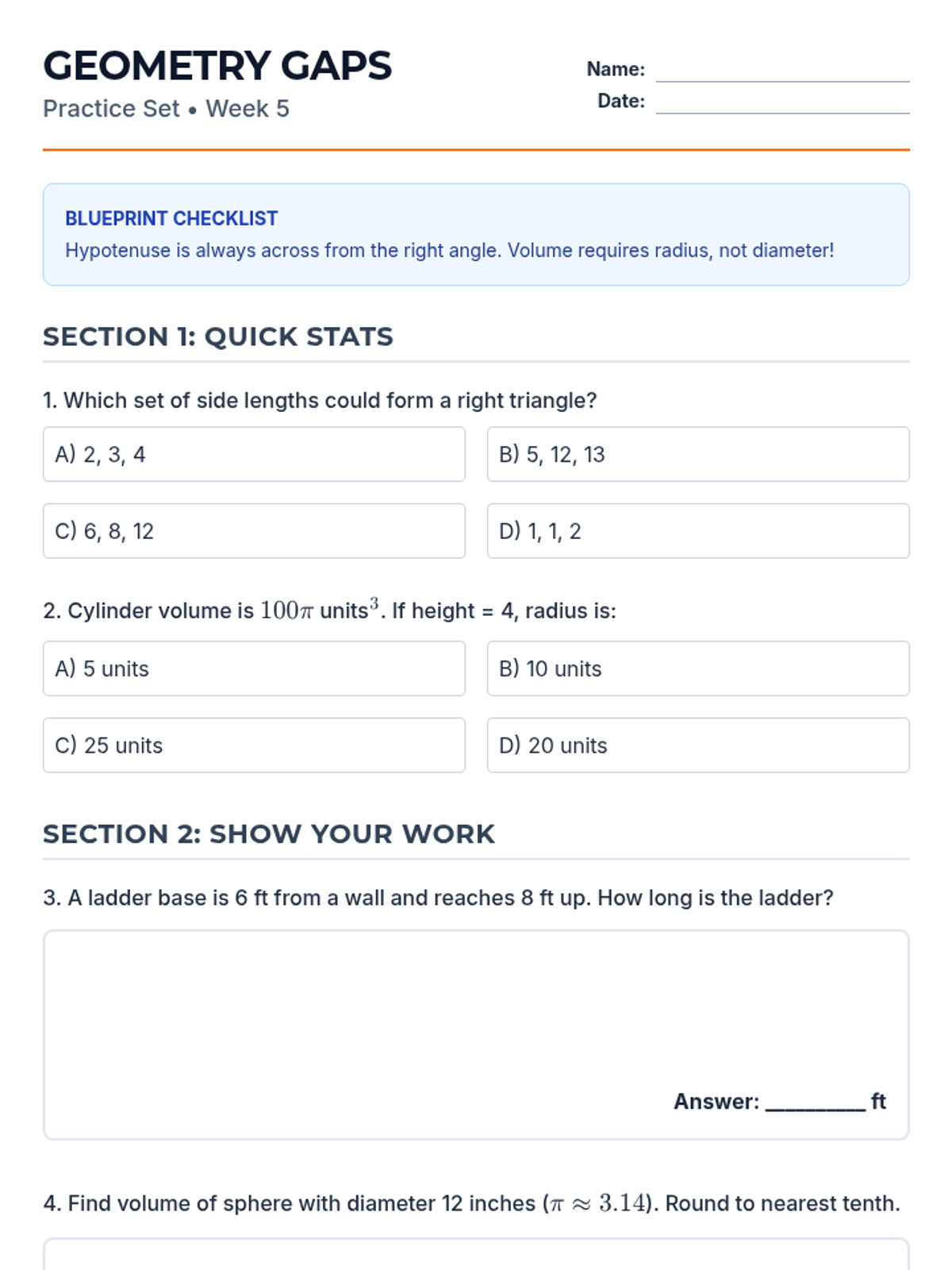
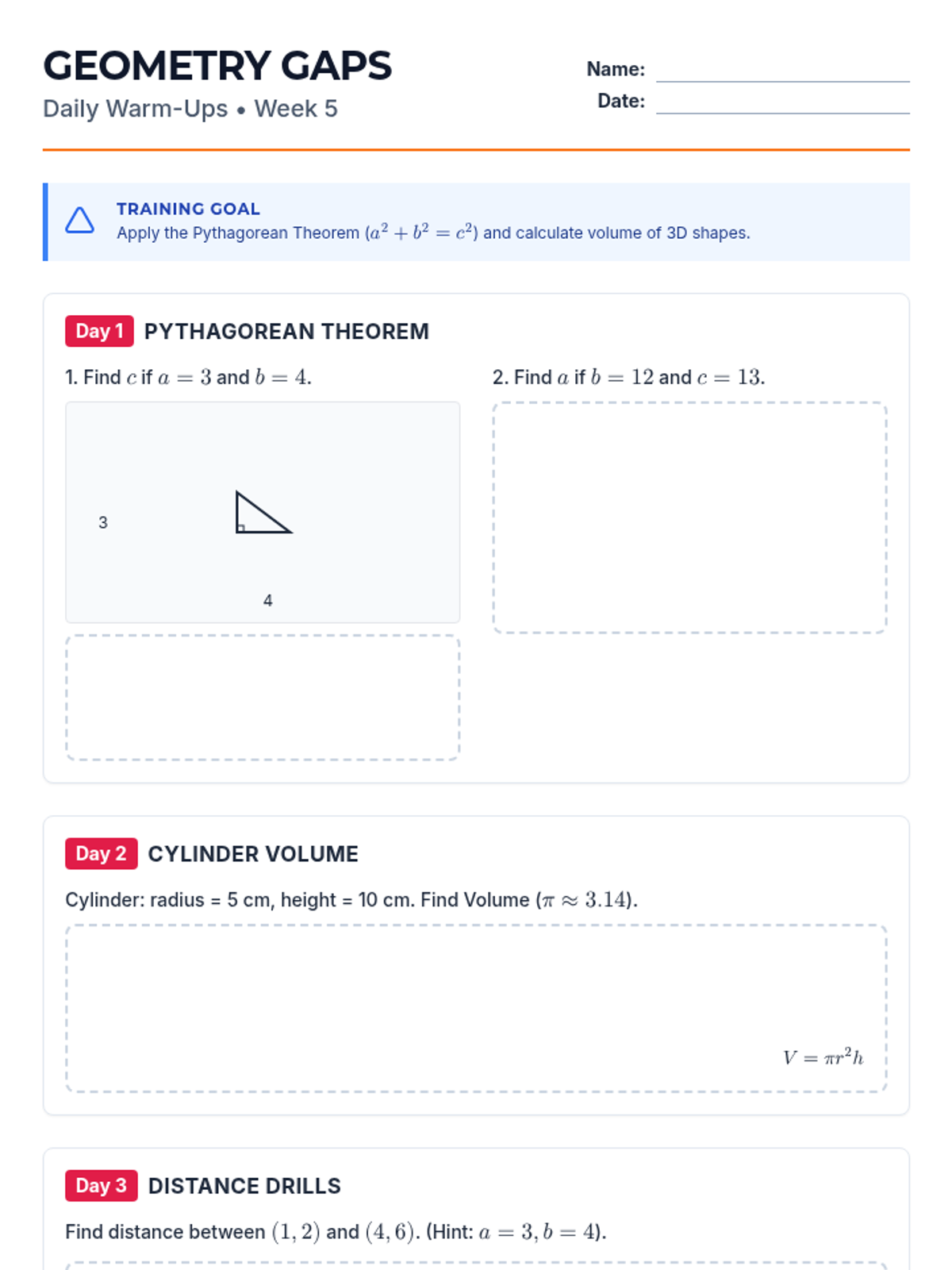
A geometric practice worksheet for finding missing side lengths using the Pythagorean Theorem, featuring triangle anatomy, direct calculation, and a real-world firefighter ladder application.
An instructional slide deck introducing the Pythagorean Theorem through visual area proofs and real-world walking distance examples, designed with a blueprint/architectural aesthetic. All text is sized for maximum visibility (minimum 24px).
A high-energy 9-slide visual presentation for a comprehensive 8th-grade MCAS math review. Each slide breaks down a core domain—Number Systems, Exponents, Scientific Notation, Equations, Geometry, and Statistics—using bold typography and clear examples with a minimum font size of 24px.
A detailed teacher solution key for the Marathon Math Challenge Worksheet, featuring step-by-step calculations and reasoning for all 11 8th-grade MCAS practice problems.
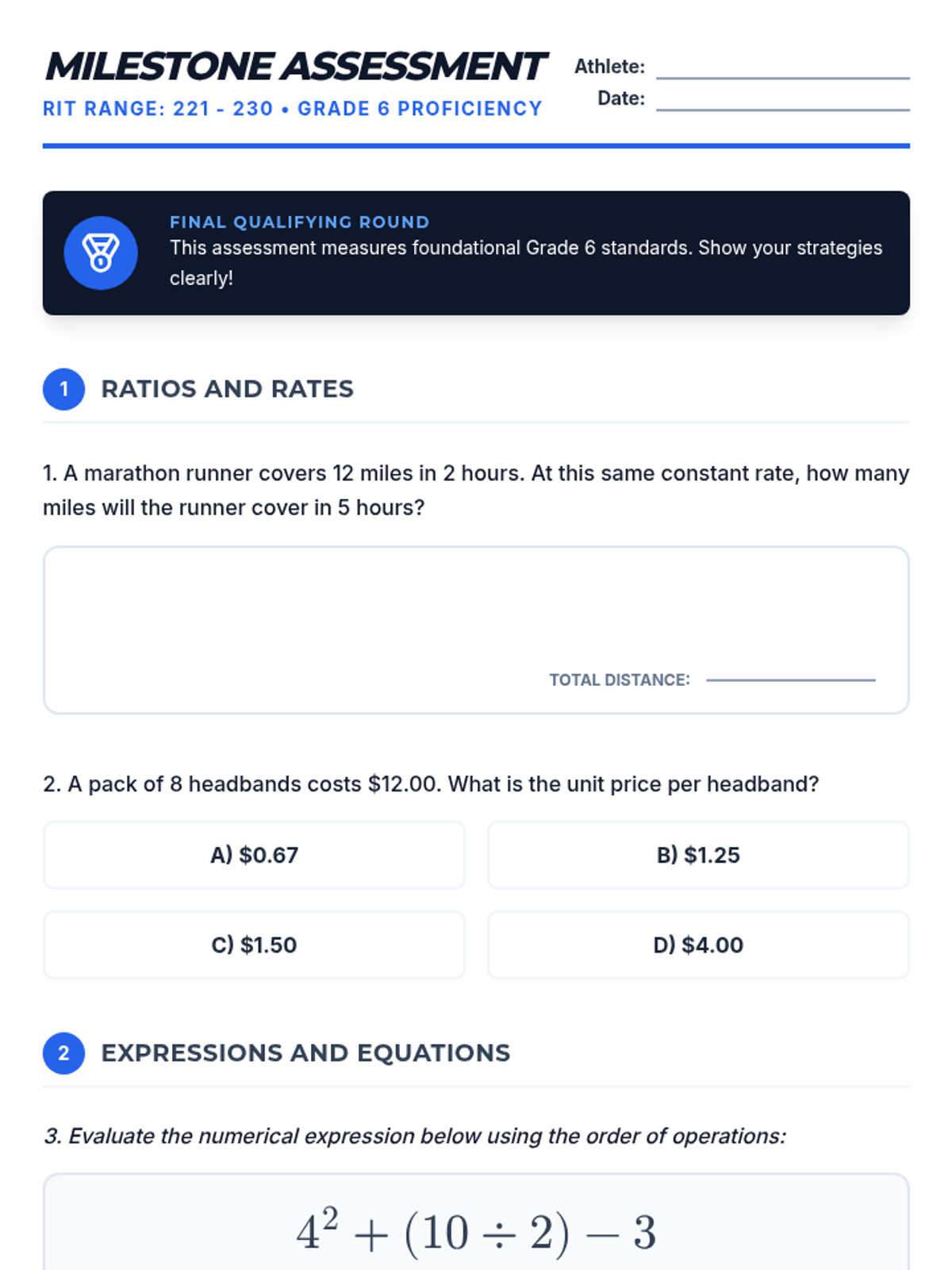
A comprehensive 8th-grade MCAS math practice worksheet with 11 problems spanning all major domains: Number Systems, Expressions and Equations, Functions, Geometry, and Statistics. Designed with a blueprint aesthetic and generous student work space.
A comprehensive answer key and grading rubric for the Quad Quest unit assessment, providing detailed solutions and scoring guidelines for the teacher.
A formal unit assessment covering quadrilateral classification, coordinate geometry proofs, and a two-column proof for an isosceles trapezoid.
A teacher guide for the Coordinate Blueprints lesson, providing detailed formula applications and complete answer keys for coordinate-based quadrilateral proofs.
A student worksheet for applying coordinate geometry formulas (distance, midpoint, slope) to classify quadrilaterals on a Cartesian plane.
An instructional slide deck detailing the coordinate geometry methods (distance, slope, and midpoint formulas) used to prove quadrilateral classifications on the Cartesian plane.
A teacher guide for the Trapezoid Kite Climb lesson, providing step-by-step solutions for midsegment and kite angle problems, along with proof justifications and differentiation strategies.
A student worksheet for analyzing the properties of trapezoids and kites, featuring midsegment calculations, an isosceles trapezoid diagonal proof, and kite angle problems.
An instructional slide deck detailing the properties of trapezoids and kites, including isosceles trapezoid characteristics, the midsegment formula, and perpendicular diagonal properties of kites.
A teacher guide for the Special Shape Squad lesson, featuring a breakdown of quadrilateral hierarchies, answer keys for the worksheet, and a group activity extension.
A student worksheet focused on the classification and proofs of special quadrilaterals, featuring an Always/Sometimes/Never section and a detailed rectangle proof.
An instructional presentation covering the unique properties and proof requirements for rectangles, rhombi, and squares, including diagonal characteristics and the 'hierarchy of design'.
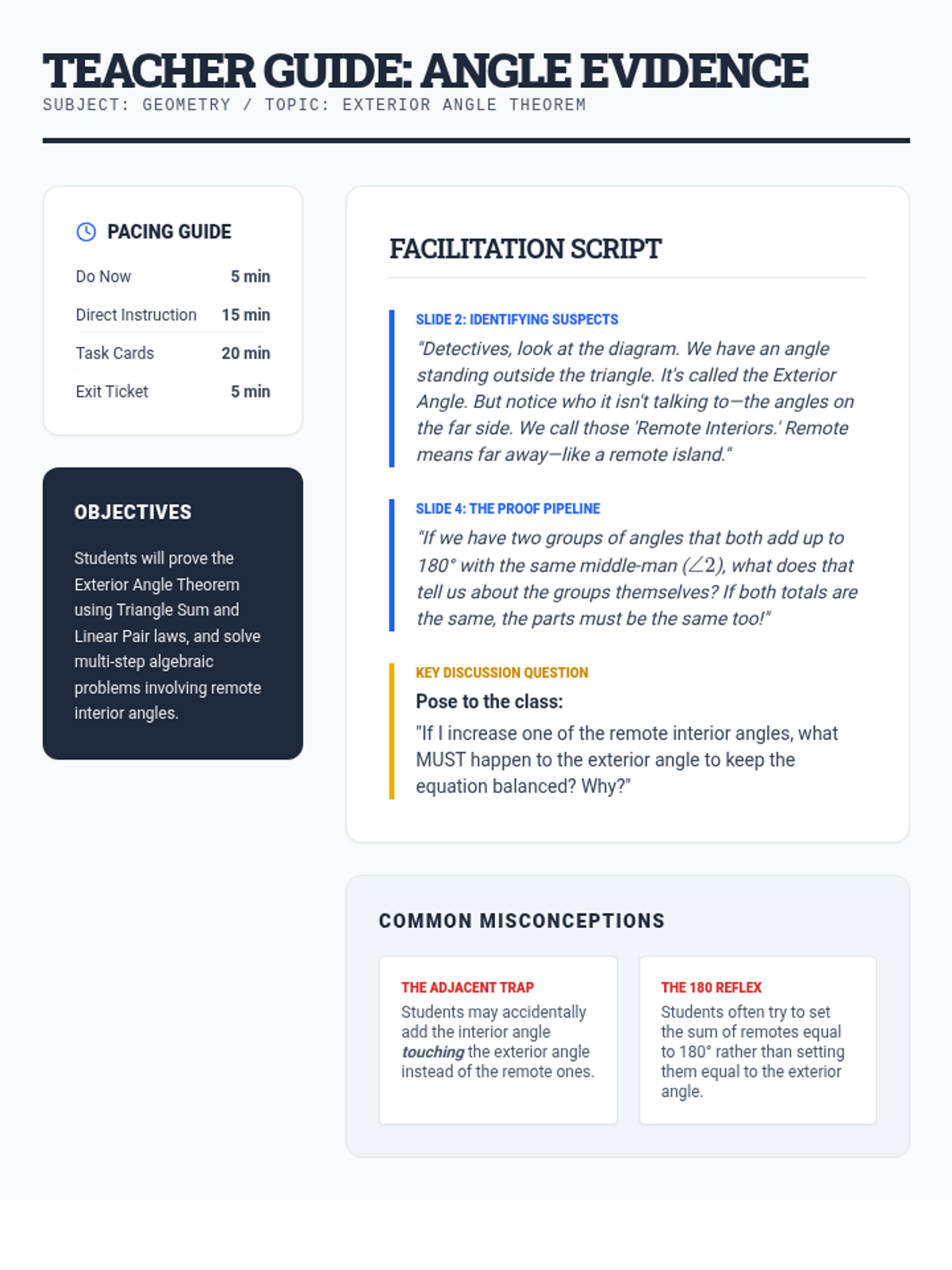
A teacher facilitation guide for the Parallelogram Power lesson, including instructional goals, common student misconceptions, and a complete answer key for the worksheet.
A student worksheet for practicing two-column parallelogram proofs, featuring a diagram with perpendicular congruence marks and parallel arrow symbols.
A set of four hands-on field missions for students to experiment with daylight estimation, historical nautical timekeeping, fractal scaling, and sun-based coordinate mapping. All missions now feature consistent, professional layouts with scientific sidebars.
A comprehensive quiz covering fixed-point navigation, coordinate axes, microcosms vs macrocosms, and different types of symmetry. Refactored for standard portrait format.
A reference page explaining Longitude as the X-axis of navigation, along with advanced symmetry concepts like Rotational and Logarithmic Spirals. Updated for scientific accuracy regarding the difficulty of longitude and spiral patterns. Standard portrait format.
A conceptual worksheet for students to identify patterns of symmetry and scale in nature. Updated with 'Mission Break' callouts after Section 1 and Section 2 to guide students to specific field activities.
A two-page reference sheet covering the North Star (Polaris) as a navigation tool on page one, and the concepts of symmetry and scale (Microcosm/Macrocosm) in nature on page two. Updated for scientific accuracy and refactored for standard portrait format with small, professional font sizes.
A teacher guide providing a 15-minute pacing plan, discussion script, and answer key for the Cosmic Symmetry lesson. Updated for scientific accuracy regarding precession and terminology. Standard portrait format.
A student worksheet focused on identifying microcosm/macrocosm patterns and using coordinate symmetry (reflection) to complete a geometric compass rose design. Refactored for standard portrait format with an added 'Mission Break' callout.
A visual slide deck distinguishing between the North Star (fixed points) and Nature's Symmetry (repeating patterns) as tools for ancient navigation, now updated with integrated 'Mission Break' slides to signal field work timing.
A teacher-facing lesson guide with pacing, hands-on activity instructions, discussion prompts, and key concepts for the 15-30 minute Cosmic Compass lesson. Redesigned with a modern star chart aesthetic.
A three-page student resource featuring 'The Navigator's Codex' (informational text) and a two-part 'Blueprint Analysis' (interactive worksheet). Covers the historical breakthrough of Polaris, rotational symmetry in nature and navigation, Greek root decoding, and mathematical coordinate prediction. Redesigned with a modern star chart aesthetic and updated with the specific 'Why it matters' takeaway requested by the user. Vertical spacing tightened and font sizes adjusted to prevent content overlap.
Instructional slides for the 'Cosmic Compass' lesson, redesigned with a modern star chart aesthetic. Features neon accents, geometric layouts, and high-contrast digital motifs to teach the Greek roots micro/macro/cosmos and rotational symmetry. Updated with the specific 'Why it matters' takeaway requested by the user.
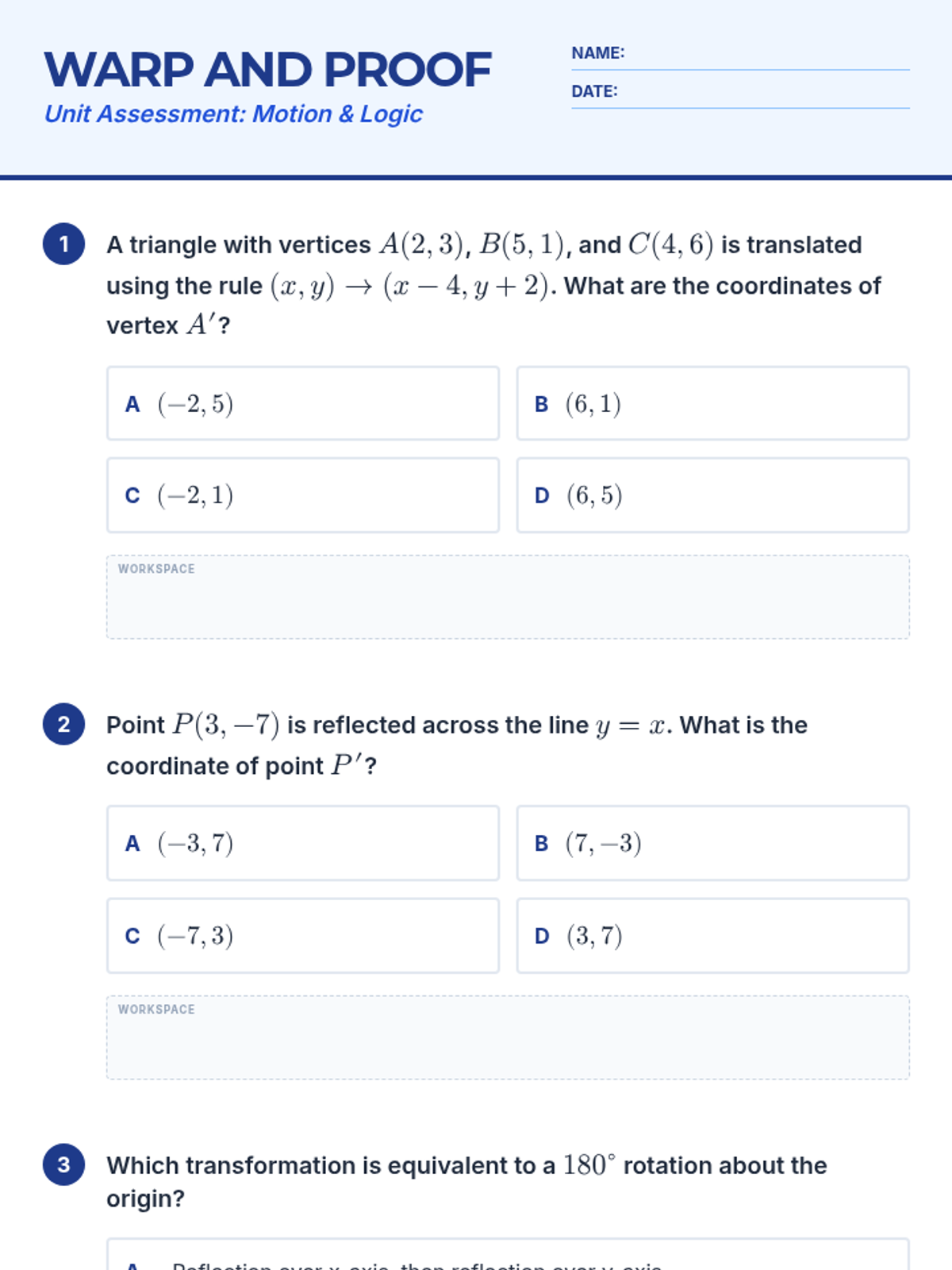
A simplified 10-question review worksheet covering translations and reflections. Features a visually improved matching activity for vocabulary, visual identification with graphs, rule writing, and coordinate point practice. Designed to keep figures and questions together on the same page.
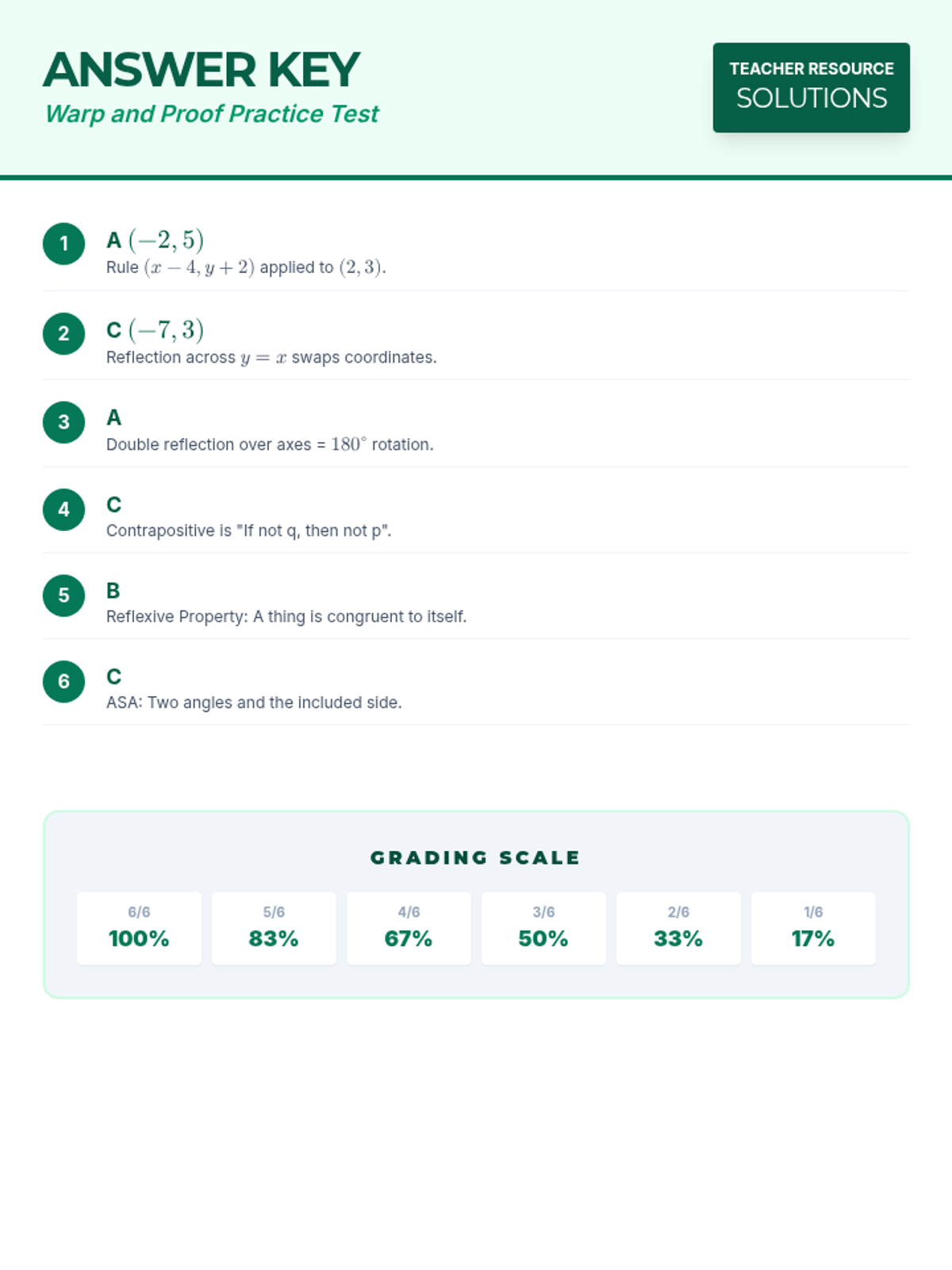
An answer key for the Mirror Slide Review Worksheet, providing solutions for all 10 review problems including vocabulary matching, visual identification, and coordinate calculations. Layout matches the review structure to ensure clarity for teachers.
A simplified 10-question review worksheet covering translations and reflections. Features a matching activity for vocabulary with scrambled definitions, visual identification, and basic coordinate practice. Designed to keep figures and questions together on the same page.
A quick check for understanding to be completed at the end of the lesson. Includes two questions on identifying a reflection/translation and writing coordinate rules. Double-up layout for efficient printing.
Visual presentation slides for teaching translations and reflections. Covers key vocabulary, rigid motion properties, and algebraic rules for coordinate plane transformations with high-contrast, large-font layouts.
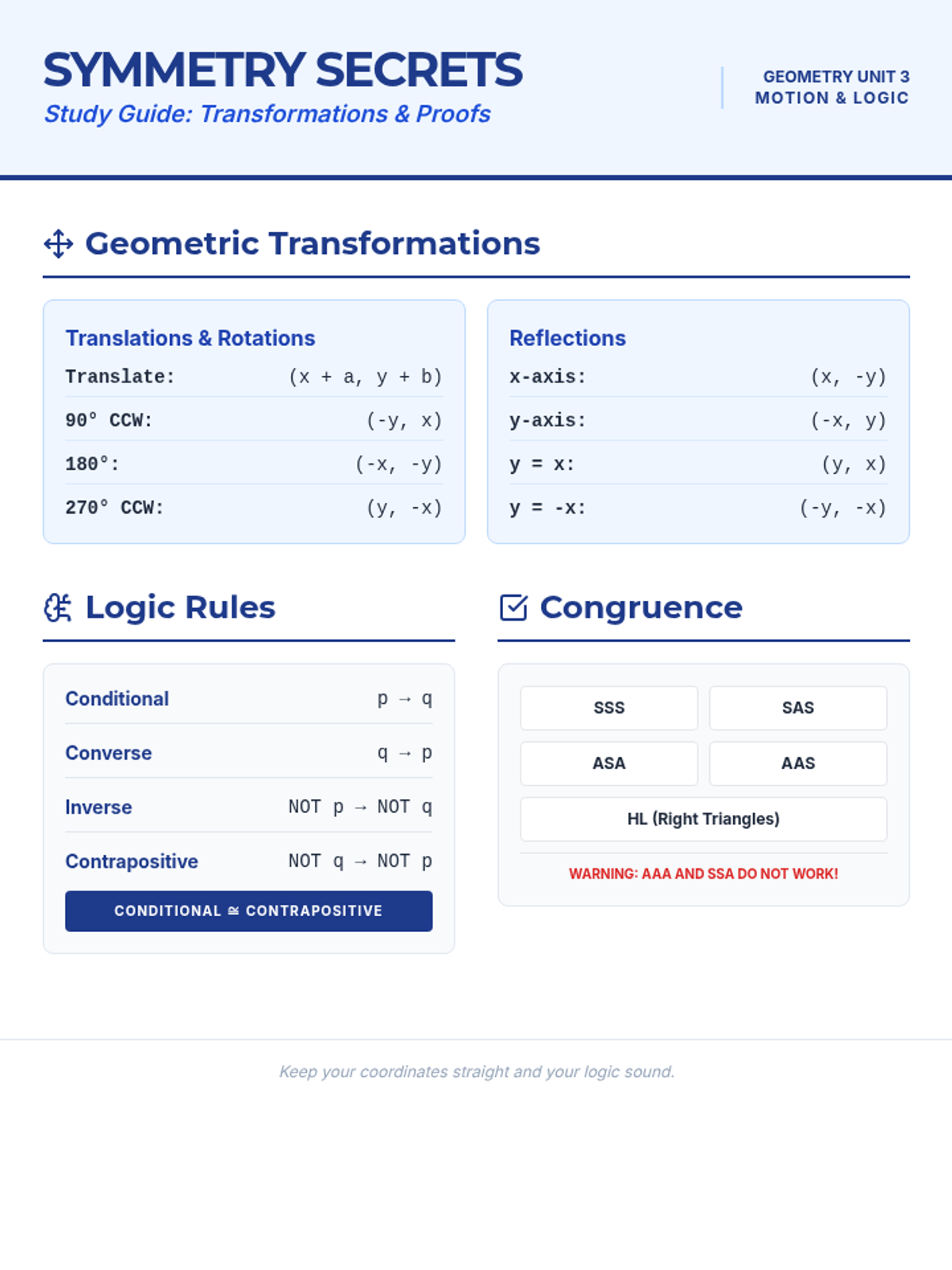
A visually striking single-page anchor chart summarizing the algebraic rules and key properties for translations and reflections. Features clear side-by-side comparisons of the "Slide" and the "Flip" with a print-friendly light background.
Guided notes and practice problems for transformations, focusing on translations and reflections. Includes core vocabulary, algebraic rules, and step-by-step coordinate graphing practice. Fixed figure containment for printing.
Guide enseignant révisé pour accompagner la phase de découverte du coefficient. Il propose des méthodes pédagogiques pour amener les élèves à déduire le rapport de proportionnalité par l'expérimentation ou le calcul.
Exercice de transfert révisé pour inclure une étape d'investigation où les élèves doivent déterminer eux-mêmes le coefficient de proportionnalité avant d'effectuer les calculs d'agrandissement.
Une fiche outil révisée pour encourager la découverte autonome du coefficient de proportionnalité. Elle propose deux méthodes (mesure ou pavage) pour aider les élèves à comprendre le rapport entre le format A4 et le format Raisin.
Diapositives révisées pour introduire le défi de "découverte du coefficient". La présentation pose la question du rapport de taille entre les formats A4 et Raisin comme une enquête à résoudre.
Un guide complet pour l'enseignant incluant le corrigé type pour les mathématiques, des points de vigilance pour le français et le design, ainsi que des stratégies de différenciation CUA pour les élèves à besoins particuliers.
Une grille d'évaluation détaillée pour l'enseignant, couvrant les compétences en français, mathématiques (proportionnalité) et design. Adaptée aux profils SEGPA/IME avec des critères clairs et un système de points équilibré.
Un support d'exercice pour les élèves permettant de tester le passage du format A4 au format Raisin. Il comprend une vérification de contenu (Français), un tableau de calcul de proportionnalité (Maths) et un espace de croquis pour la mise en page.
Une fiche outil conçue selon les principes de la Conception Universelle de l'Apprentissage (CUA) pour expliquer la proportionnalité lors de l'agrandissement d'une affiche. Elle utilise des aides visuelles, des codes couleurs et un langage simple.
Une présentation dynamique de 4 diapositives pour lancer le défi de création d'affiche. Elle définit les termes du contrat (A4 vers Raisin) et le contenu requis (titre, 6 photos avec encarts) dans un style professionnel immersif.
Guide pédagogique pour l'enseignant. Contient les principes de la micro-méthode (10 min), les corrigés des fiches et des conseils pour l'engagement des élèves en difficulté.
Une fiche d'activité finale combinant toutes les notions : mise à l'échelle de photos, calcul de grille, gestion des marges pour encarts et optimisation papier.
Réaliser la mise à l'échelle complète d'un projet client : 6 photos, encarts de texte et calcul des dimensions finales sur format Raisin. Présentation finale.
Une fiche d'activité pour calculer la surface de papier utilisée et la surface de "perte" (chutes). Sensibilisation à l'optimisation.
A comprehensive teacher resource containing lesson objectives, suggested pacing, common student misconceptions, and full answer keys for all student materials in the lesson. Updated with improved layouts and clearer instructions.
An advanced activity focusing on compositions of transformations. Students explore the non-commutative property (order matters) through coordinate calculations and a multi-step graphing challenge. Updated with improved layouts and clearer instructions.
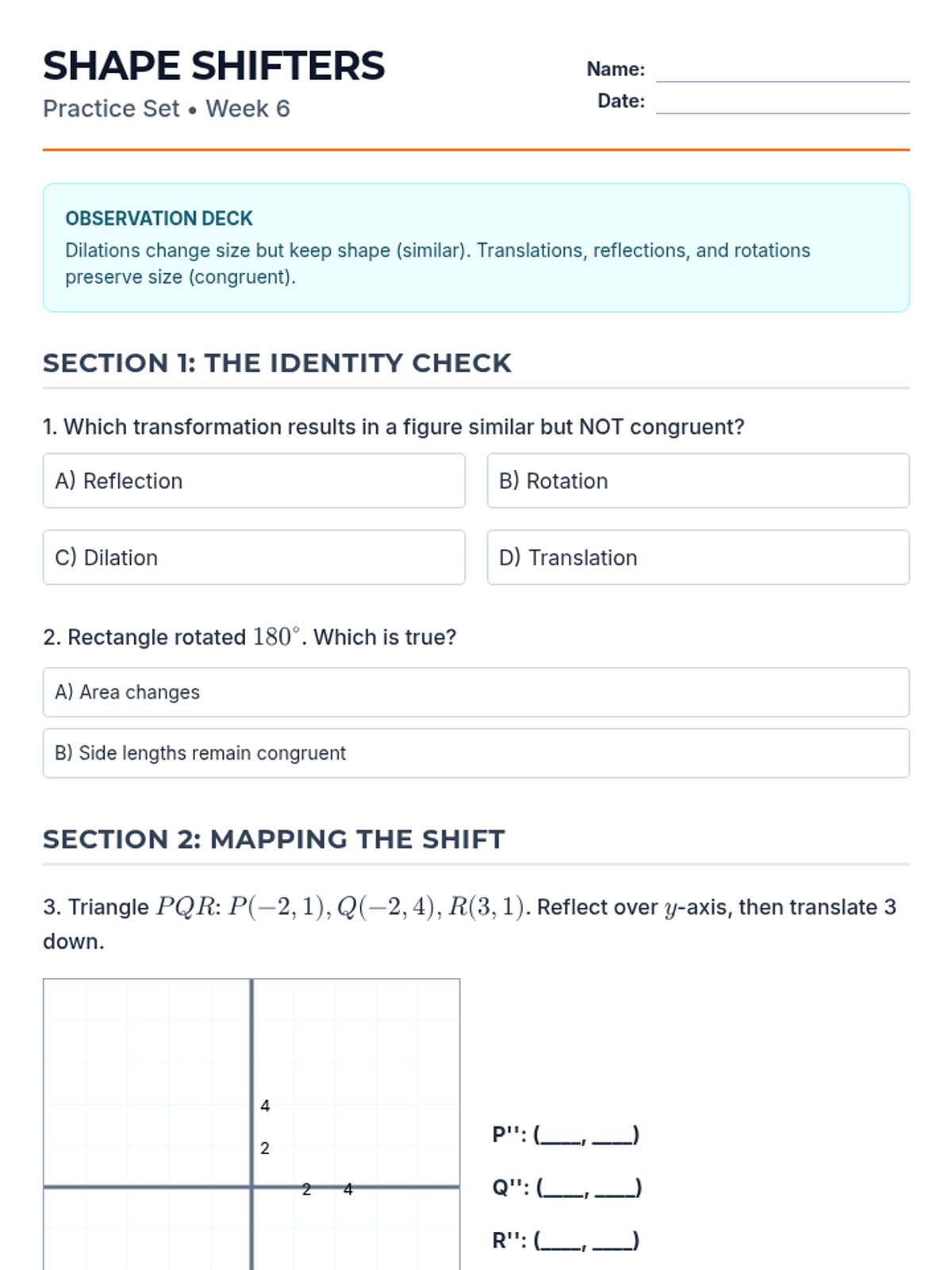
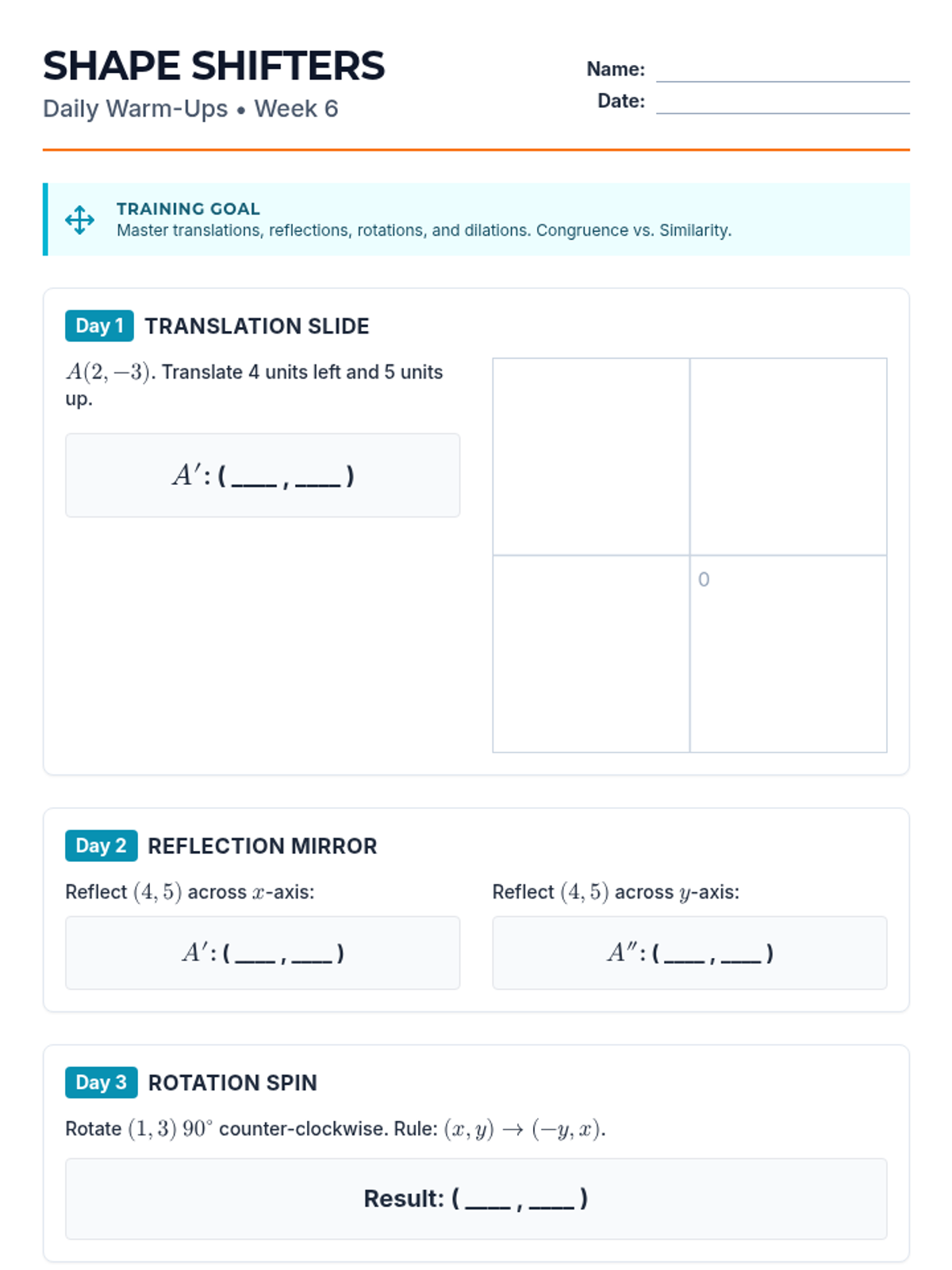
A structured worksheet for students to practice translations, reflections, and rotations on the coordinate plane. Includes coordinate tables, blank grids for graphing, and a composition challenge. Updated with axis markers and cleaner work areas.
A high-impact visual slide deck introducing translations, reflections, and rotations. Features clear coordinate rules, geometric visualizations, and an introduction to compositions of transformations. Updated with larger font sizes for accessibility.
Facilitation guide for teachers, including lesson objectives, timing, common student misconceptions, and a step-by-step instructional flow.
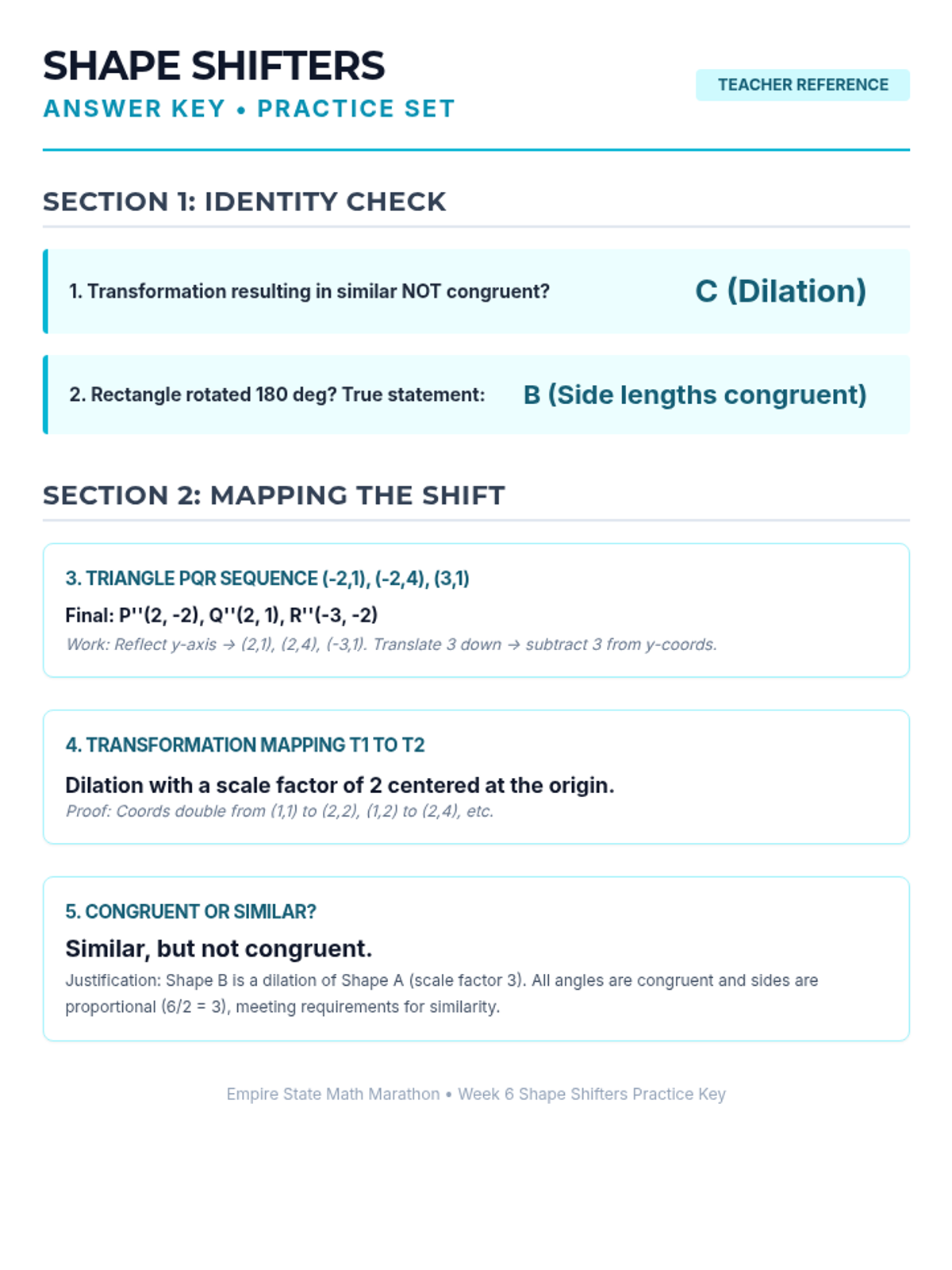
Detailed answer key for the Grid Shifters Worksheet, including step-by-step logic for translations and reflections, final coordinates, and sample explanations.
Engaging classroom presentation slides introducing coordinate transformations. Includes visual rules for translations and reflections over the axes, along with guided practice problems.
A comprehensive geometry worksheet focusing on coordinate transformations, including translations and reflections over the x and y axes. Each major mission is provided on its own dedicated page for maximum work space.
A coordinate practice worksheet for student use, featuring a large coordinate grid (from -10 to 10) with every unit labeled for accessibility and clarity. All content is optimized for a single-page printable format.
Visual presentation slides for Day 1 and Day 2 math review, featuring modeled strategies for exponents, functions, transformations, and square roots.
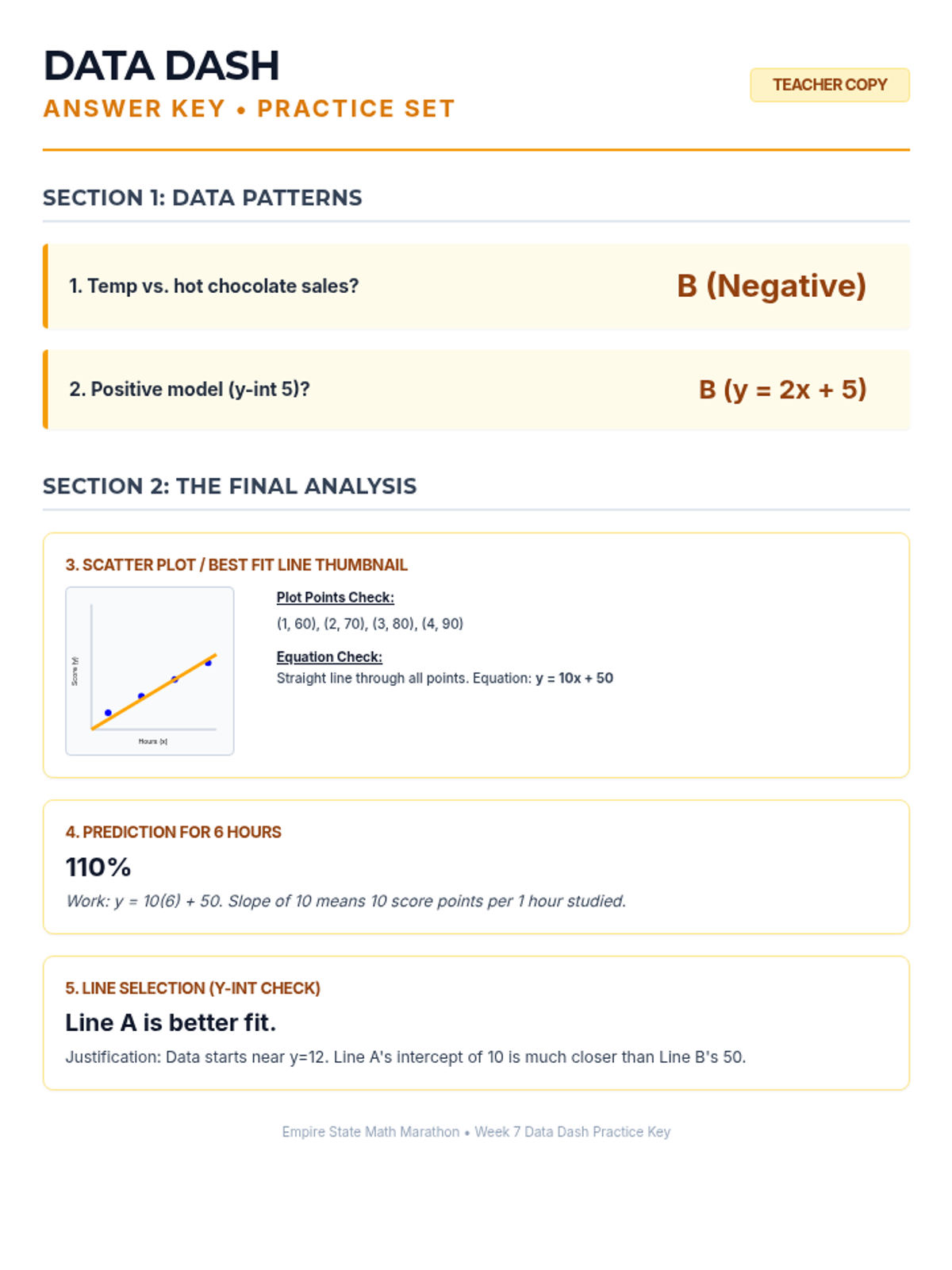
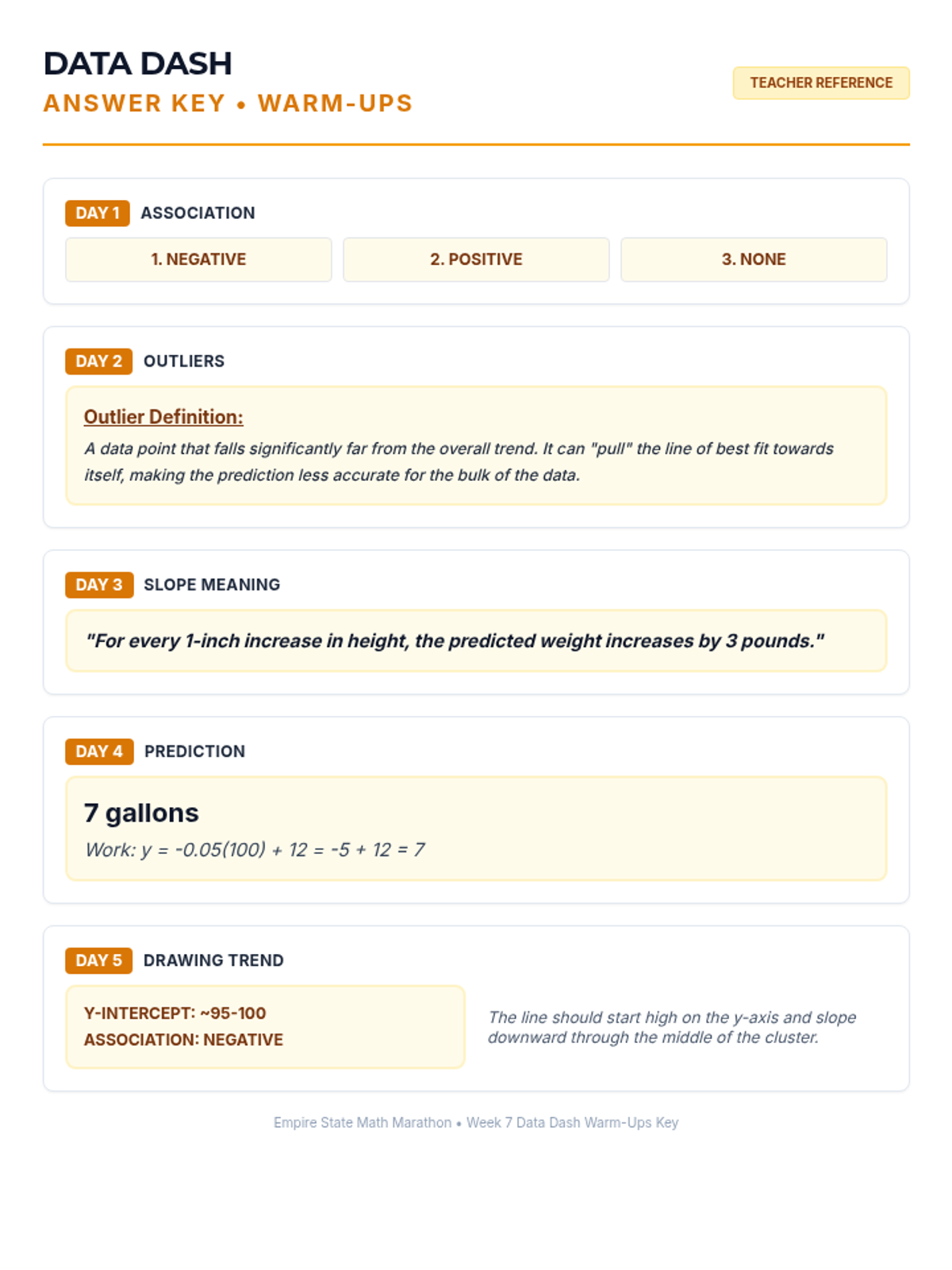
Teacher answer key for both Day 1 and Day 2 review worksheets, including step-by-step work and rationales for Tier 3 instruction.
Day 2 student worksheet focusing on transformations, estimating square roots, and identifying constants for equations with infinite solutions. Revised with clearer grid lines and higher contrast.
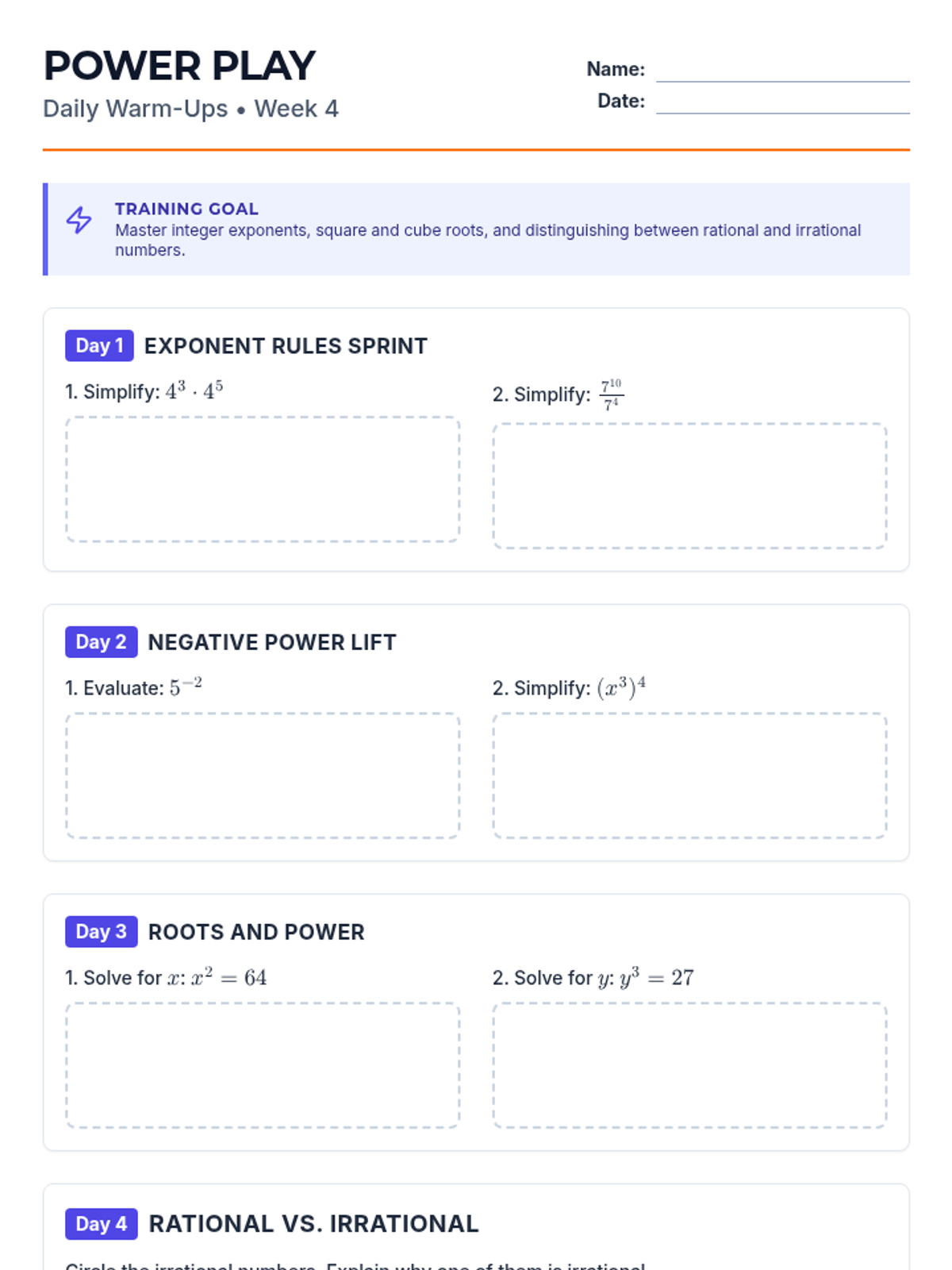
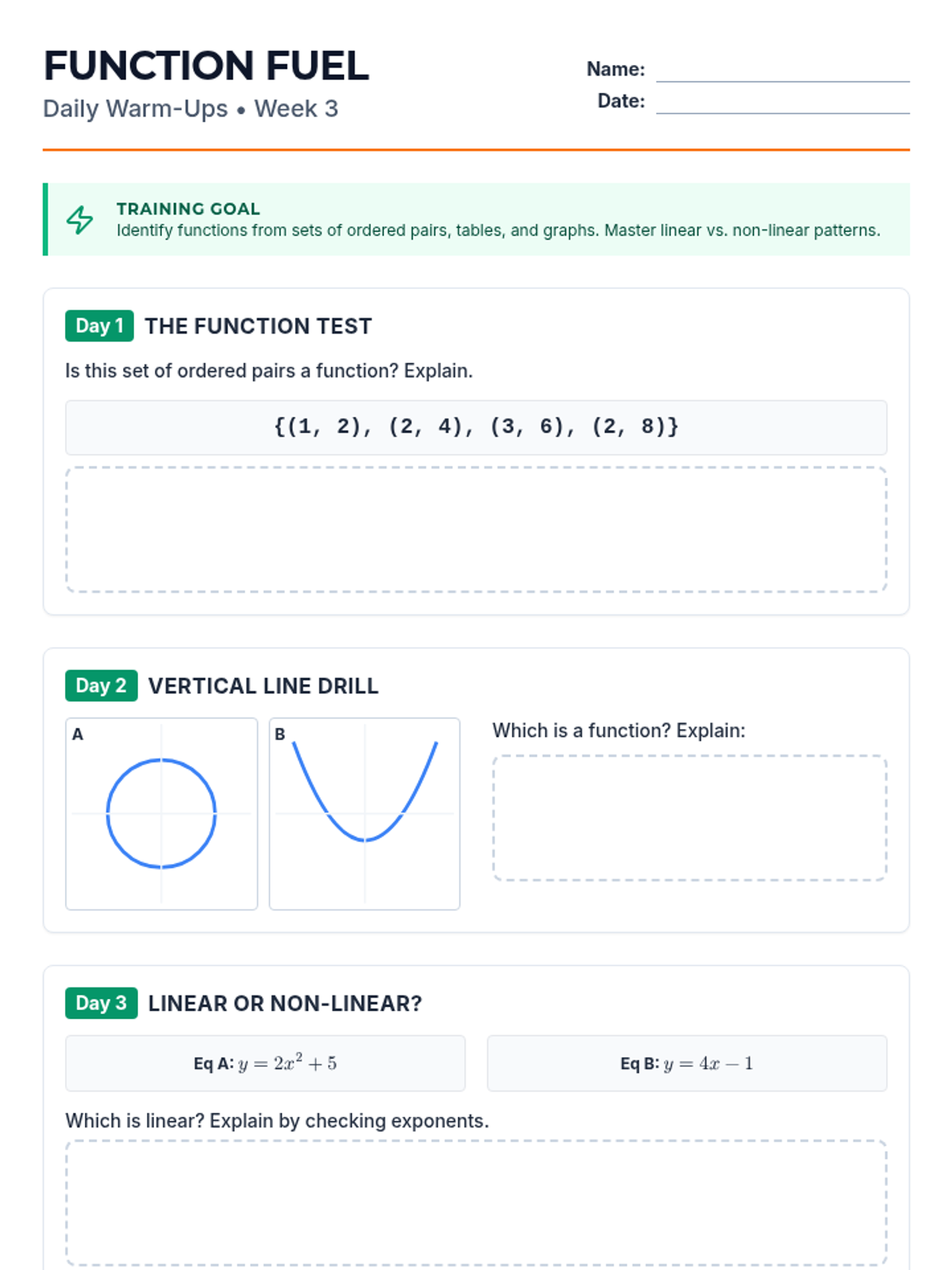
Day 1 student worksheet focusing on exponent rules, distinguishing between linear and nonlinear functions, and identifying scatter plot trends.
A teacher facilitation guide outlining the two-day review plan for 8th-grade math topics, including time breakdowns, instructional scripts, and Tier 3 strategies.
Présentation sur la surface de papier utilisée et la surface de "perte" (chutes). Sensibilisation à l'optimisation et au coût écologique du gâchis.
Une fiche d'activité pour calculer le facteur d'agrandissement maximal d'un modèle A4 vers le format Raisin. Focus sur la comparaison des limites.
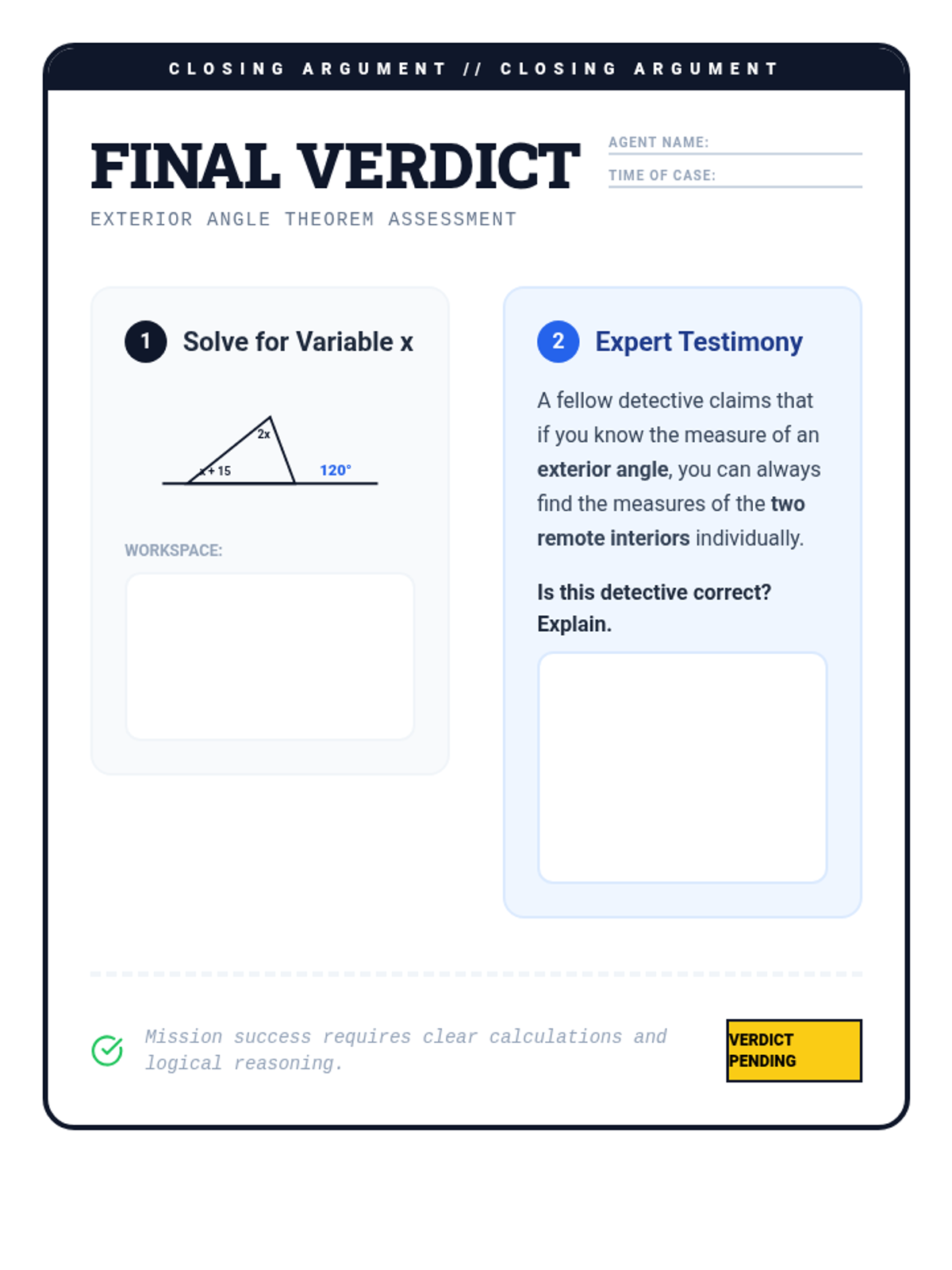
An answer key for the Angle Architects worksheet and exit ticket, providing correct measures, vocabulary identification, and sample justifications for teacher use.
A quick assessment tool for students to demonstrate their understanding of alternate exterior angle relationships and justify their reasoning.
A student activity sheet where they act as urban planners to solve for missing angles on a city map using transversal and parallel line relationships.
A visual presentation for teaching angle relationships, using an urban planning theme to introduce transversals, interior/exterior zones, and parallel line patterns.
A comprehensive 46-minute lesson plan for teaching angle relationships, featuring a detailed pacing guide, teaching tips, and alignment to Standards for Mathematical Practice.
A comprehensive answer key and teacher reference guide for the Transversal Crossroads activities and worksheets.
An engaging project-based activity where students design a city grid based on specific geometric angle relationships between buildings.
A student worksheet for identifying and calculating angle pairs formed by transversals, including a challenge problem involving algebraic expressions.
A visual presentation for teaching transversal and parallel line angle relationships, featuring clear diagrams and interactive check questions.
A detailed lesson plan for teaching angle pairs formed by parallel lines and transversals, including instructional flow, timing, and differentiation strategies.
A comprehensive teacher resource providing lesson objectives, a 45-minute pacing guide, an answer key for the worksheet, and tips for addressing common cross-curricular misconceptions between math and geography.
A cross-curricular student worksheet where students identify the domain and range of stylized geographic regions on a coordinate grid, translate real-world latitude and longitude into mathematical notation, and design a landmass within specified boundaries.
A visually engaging slide deck that introduces the concepts of domain and range by comparing them to geographic width (longitude) and height (latitude). It includes clear visual aids, mathematical notation, and real-world connections to topography.
Day 1 of the Graphing Navigator packet, covering coordinate plane anatomy and point plotting with clear examples and practice. Optimized for PDF printing with 0.5in margins and refined spacing to prevent overlapping.
The complete answer key and teacher facilitation guide for the 5-day Graphing Navigator packet. Optimized for PDF printing with 0.5in margins.
Day 5 of the Graphing Navigator packet, providing a comprehensive review and final challenge covering all skills from the 5-day unit. Optimized for PDF printing with 0.5in margins and dense, aligned grids.
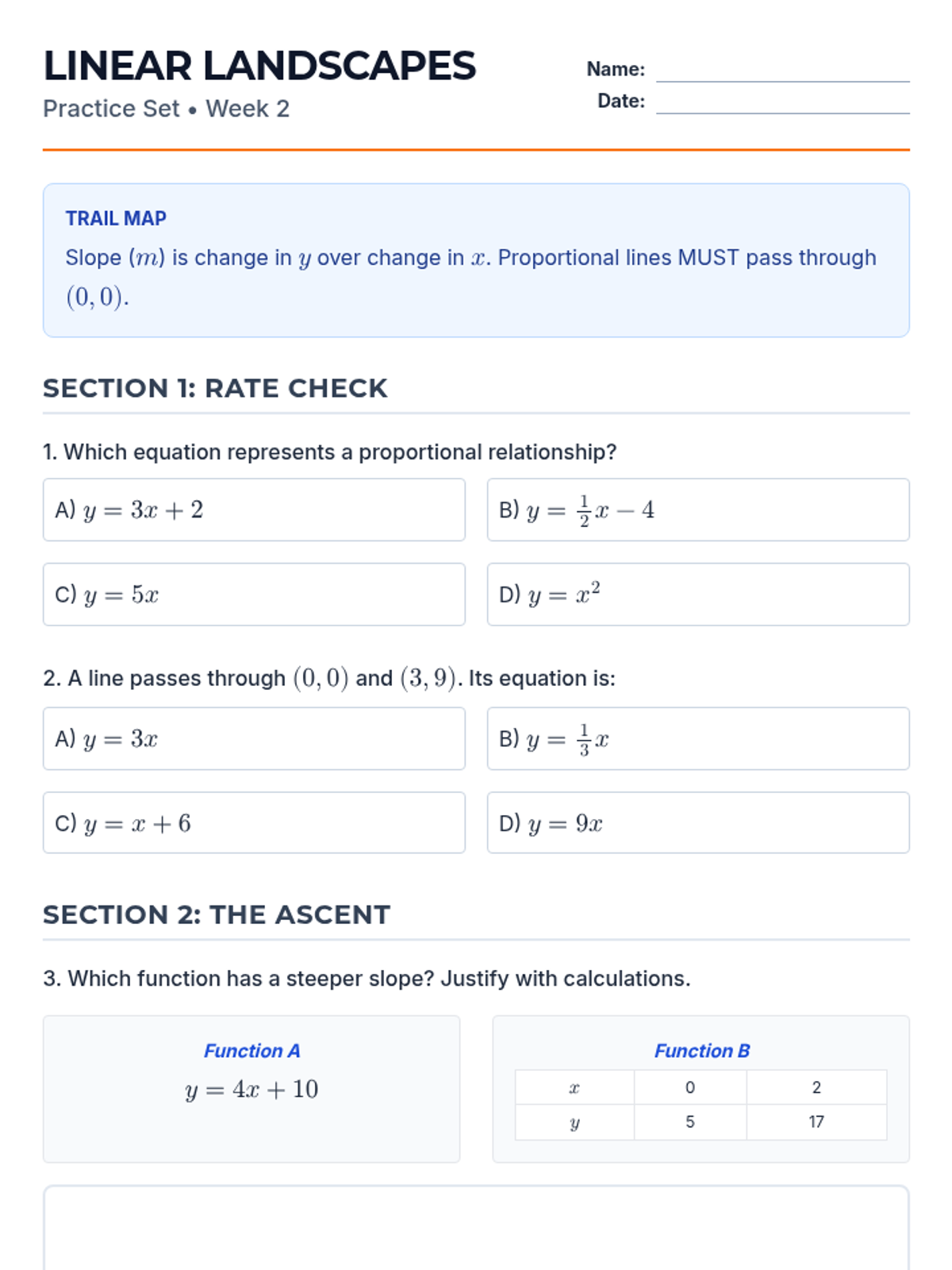
Day 4 of the Graphing Navigator packet, focusing on identifying and calculating slope as "rise over run" from linear graphs. Optimized for PDF printing with 0.5in margins. Grids corrected for 1:1 point alignment.
Day 3 of the Graphing Navigator packet, focusing on drawing straight lines when provided with only two specific coordinate points. Optimized for PDF printing with 0.5in margins and light handwriting areas.
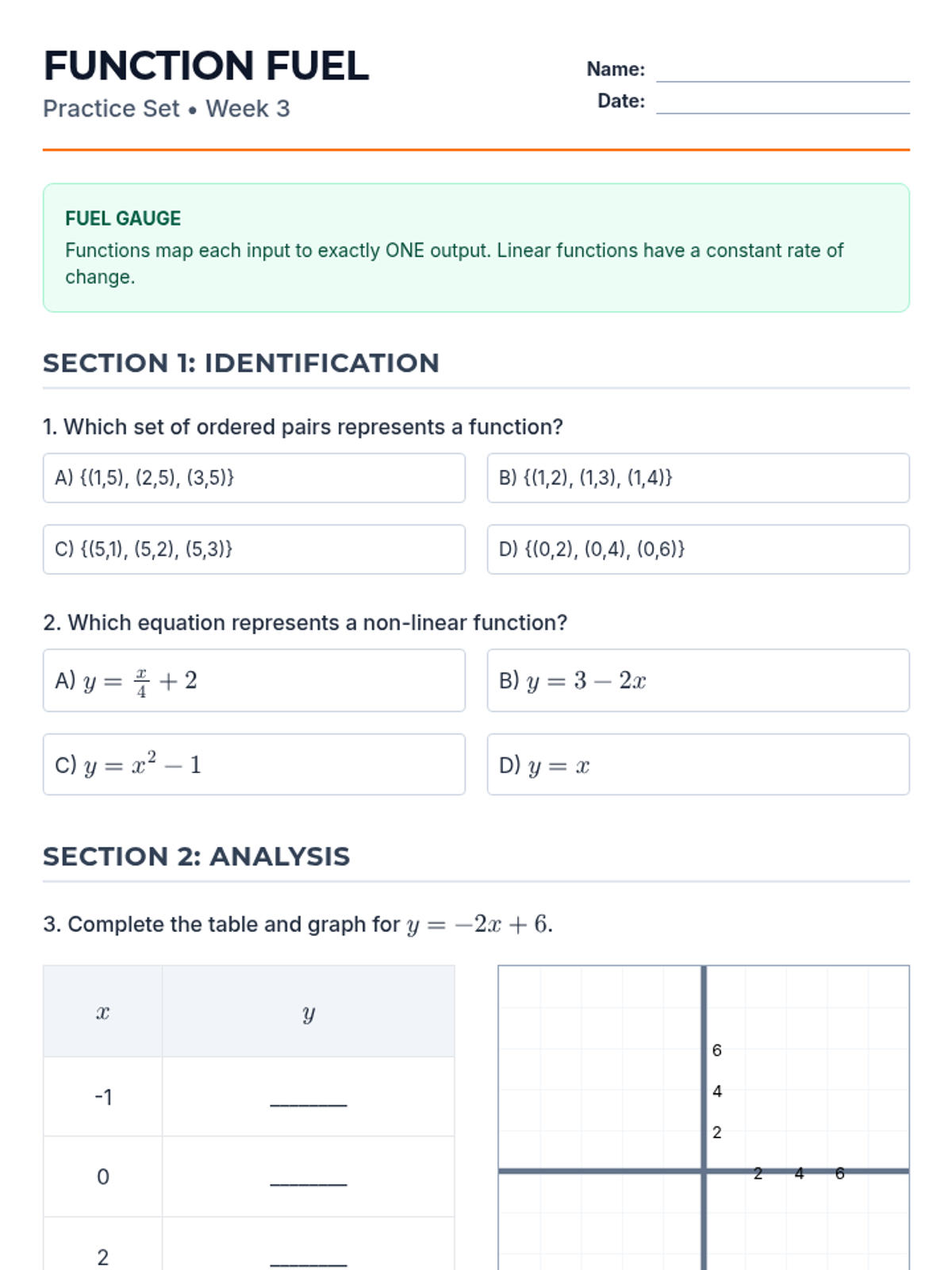
Day 2 of the Graphing Navigator packet, focusing on converting data tables to ordered pairs and graphing linear paths. Optimized for PDF printing with 0.5in margins.
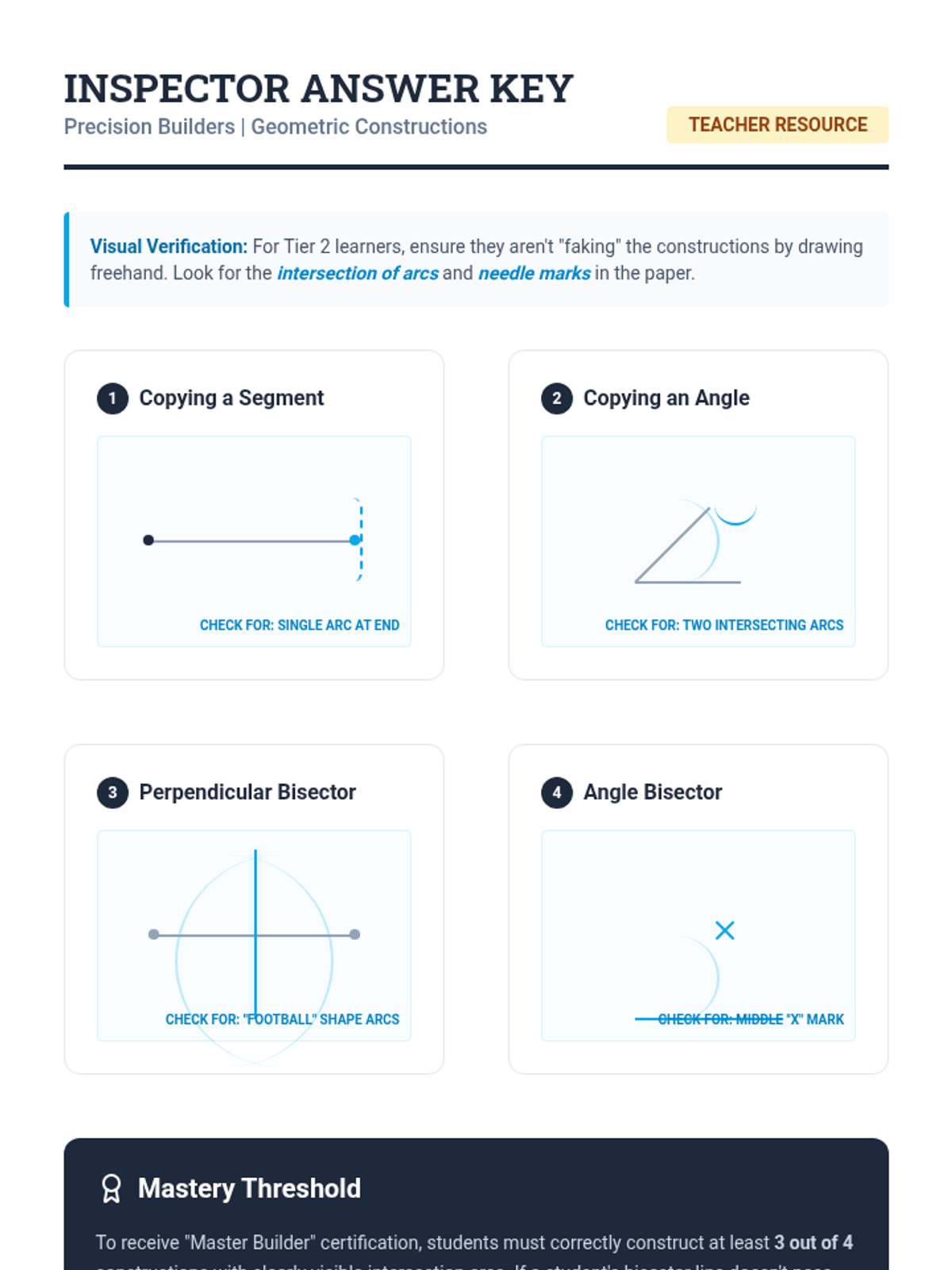
A visual answer key for teachers to quickly verify student geometric constructions. It highlights the specific arc intersections and 'mastery marks' that demonstrate a student has correctly followed the compass-and-straightedge procedures.
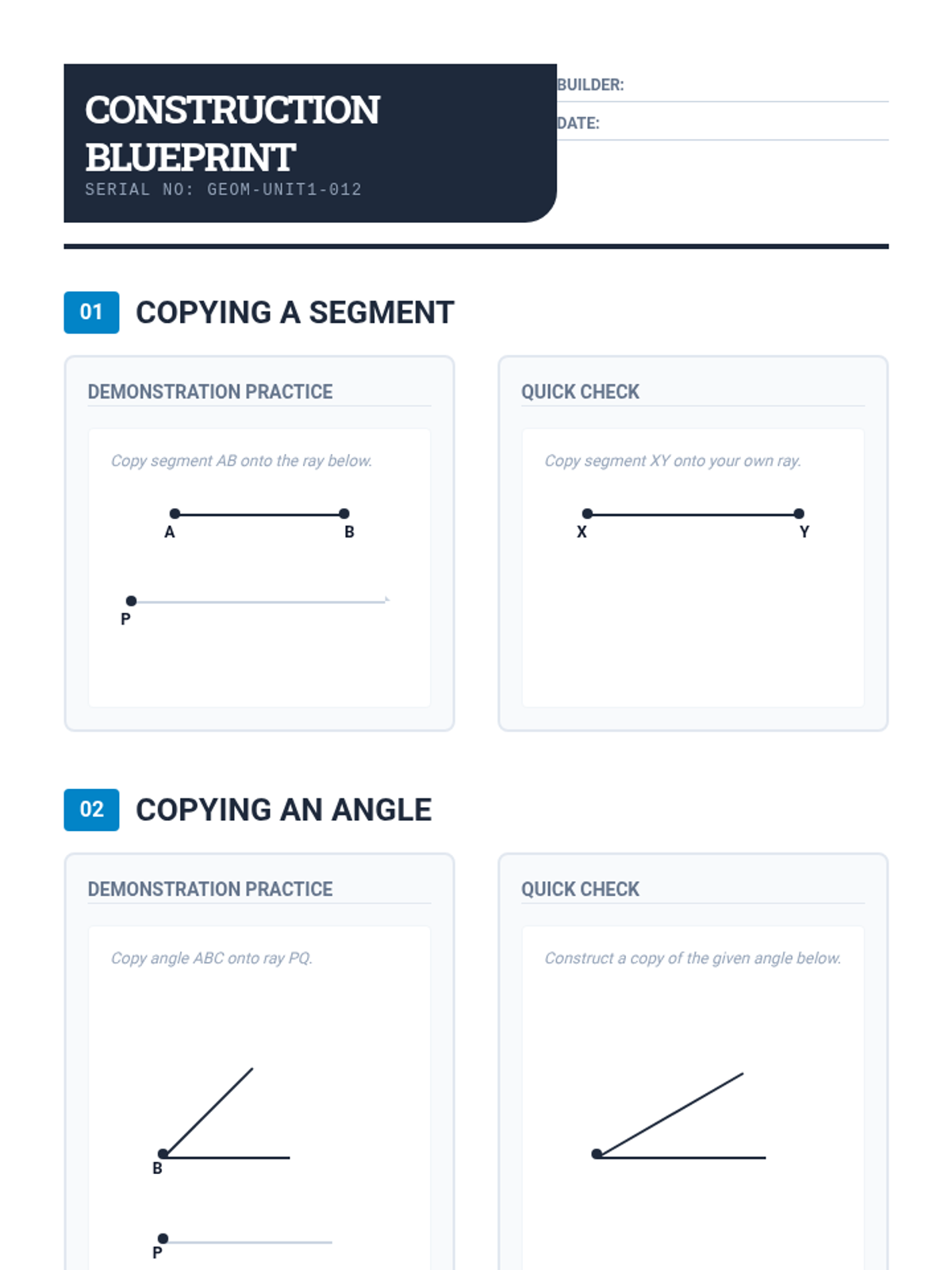
A scaffolded student workbook for practicing geometric constructions. It includes 'Demonstration Practice' areas for guided instruction and 'Quick Check' areas for independent work, culminating in a Mastery Certification page for progress monitoring.
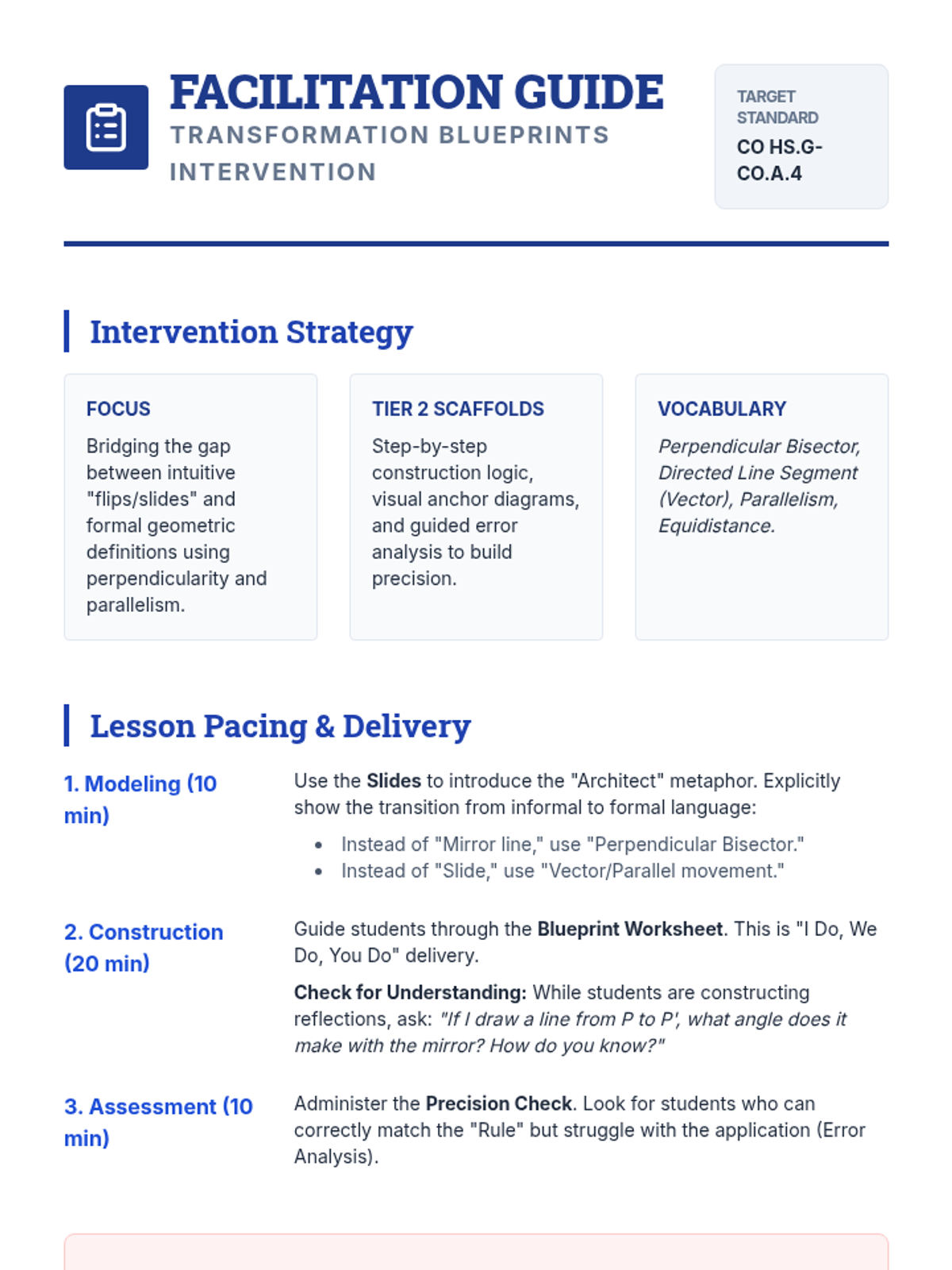
A comprehensive teacher resource containing instructional strategies, pacing guides, common student misconceptions, and differentiation tips for teaching formal transformation definitions. It aligns with Tier 2 intervention practices for High School Geometry.
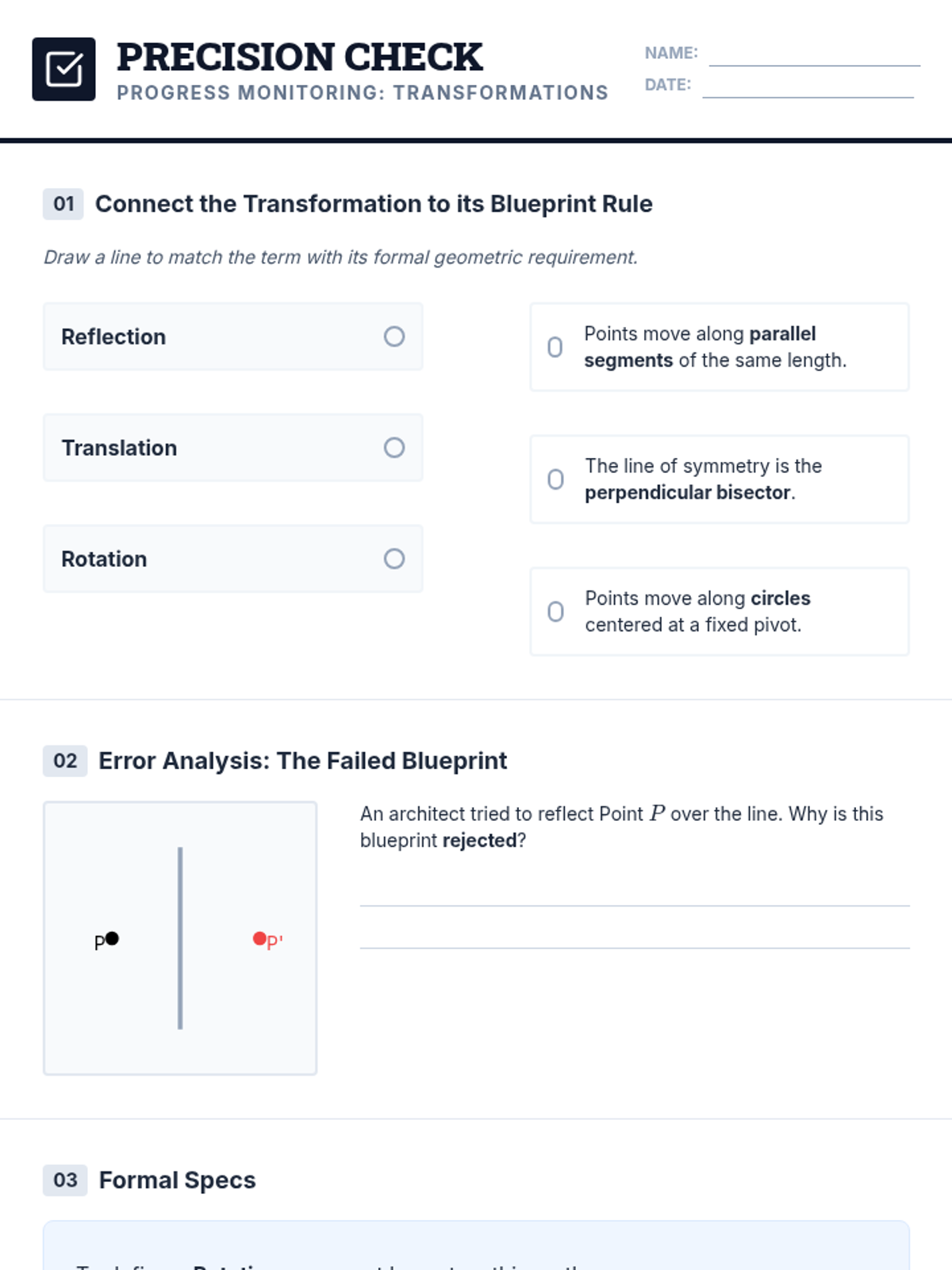
A quick progress monitoring assessment for transformations. It includes matching terms to formal geometric definitions, an error analysis task on reflection, and fill-in-the-blank questions regarding translation and rotation parameters.
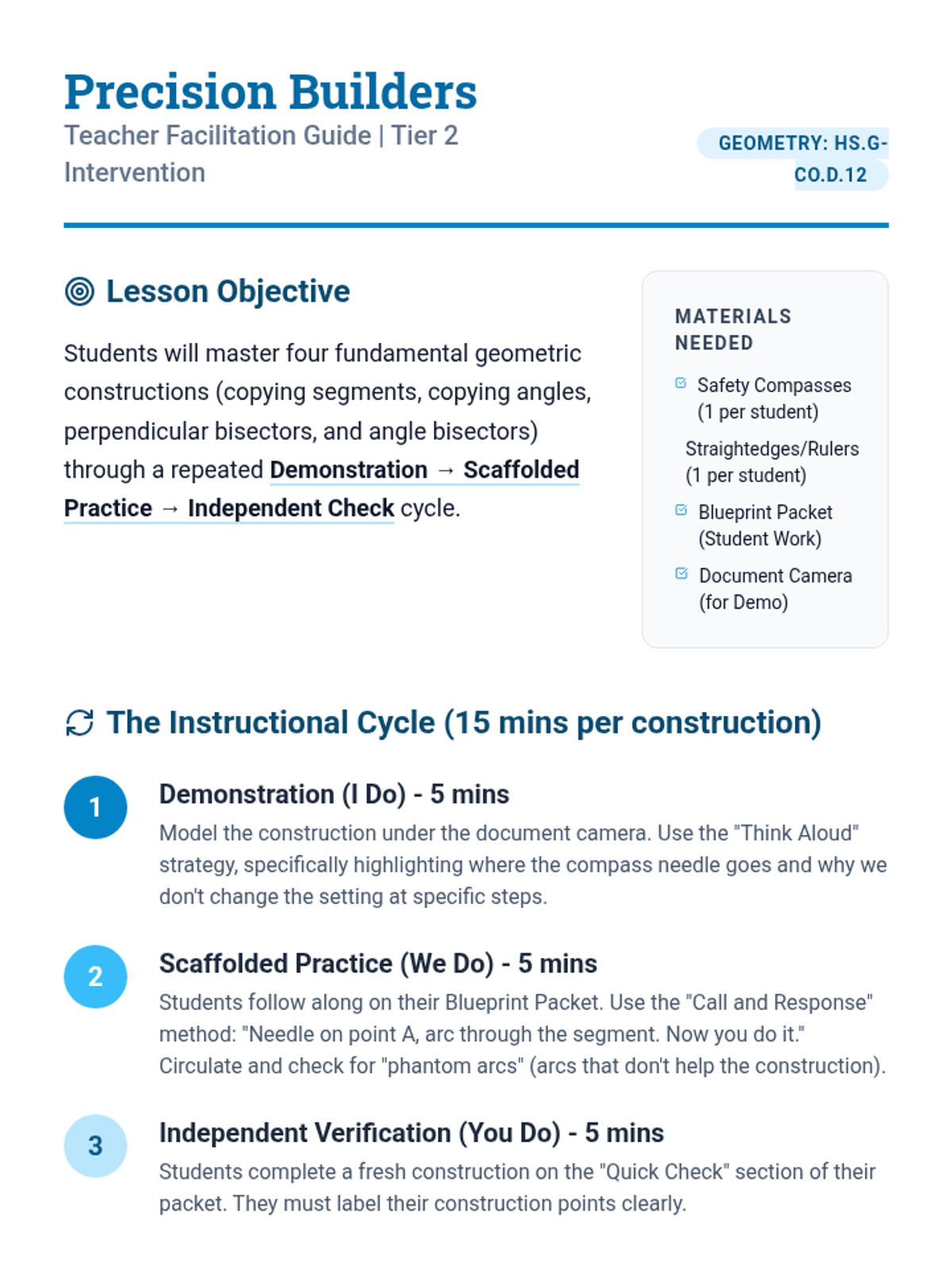
A comprehensive teacher facilitation guide for the Precision Builders lesson. It outlines the Demonstration-Practice instructional cycle, common student misconceptions with intervention fixes, and a detailed pacing guide with differentiation strategies.
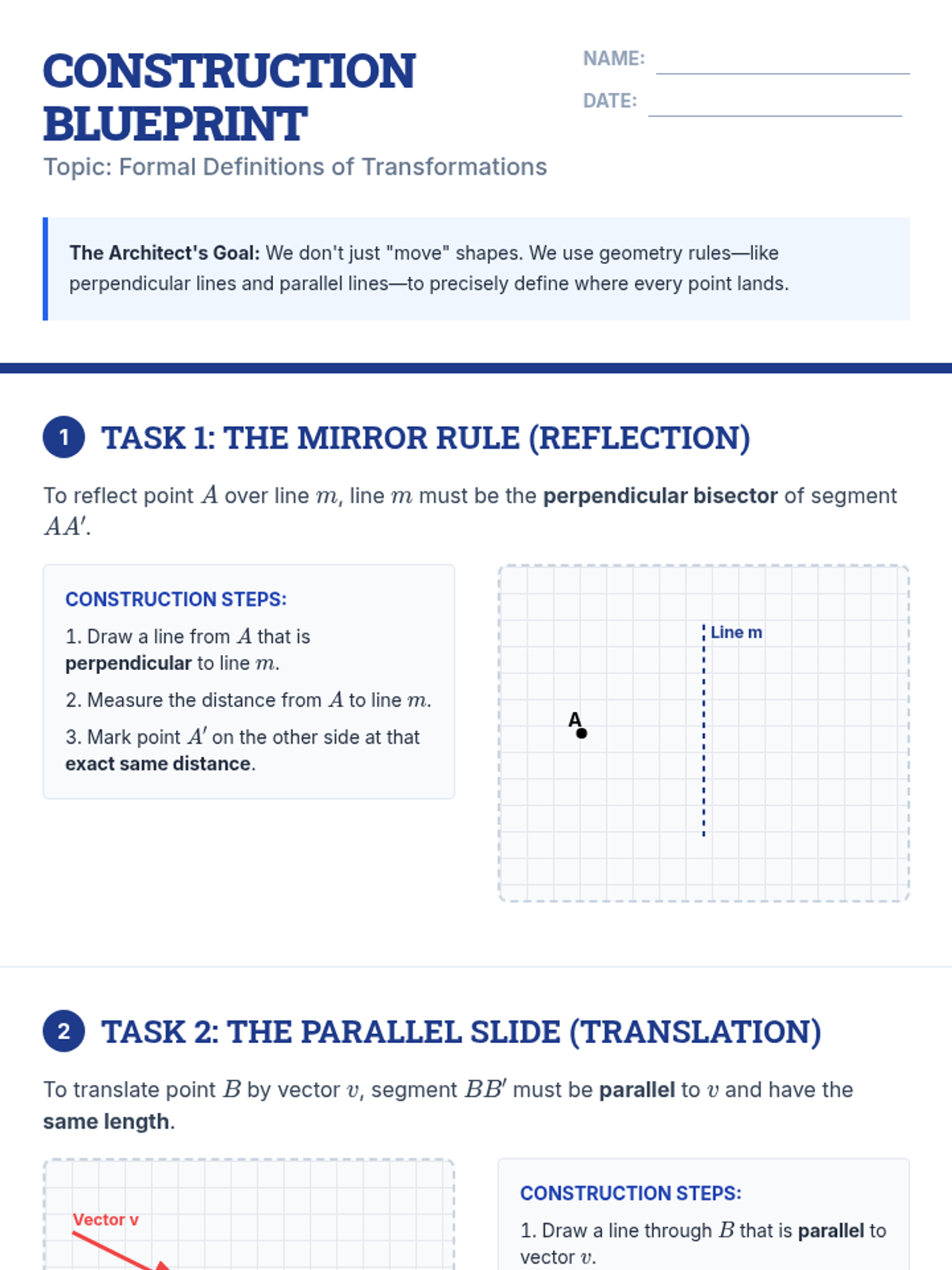
A scaffolded student worksheet featuring step-by-step construction tasks for reflections, translations, and rotations. Designed with a blueprint aesthetic, it includes grid-based workspace for drawing and formal definition reinforcement.
A technical, blueprint-themed slide deck for introducing geometric constructions. It includes clear, step-by-step instructions for copying segments, copying angles, and bisecting segments and angles, optimized for Tier 2 intervention.
A presentation deck for a Tier 2 intervention lesson defining transformations (reflections, translations, and rotations) using formal geometric terms such as perpendicular bisectors, parallel lines, and angles. Includes visual diagrams for each rigid motion.
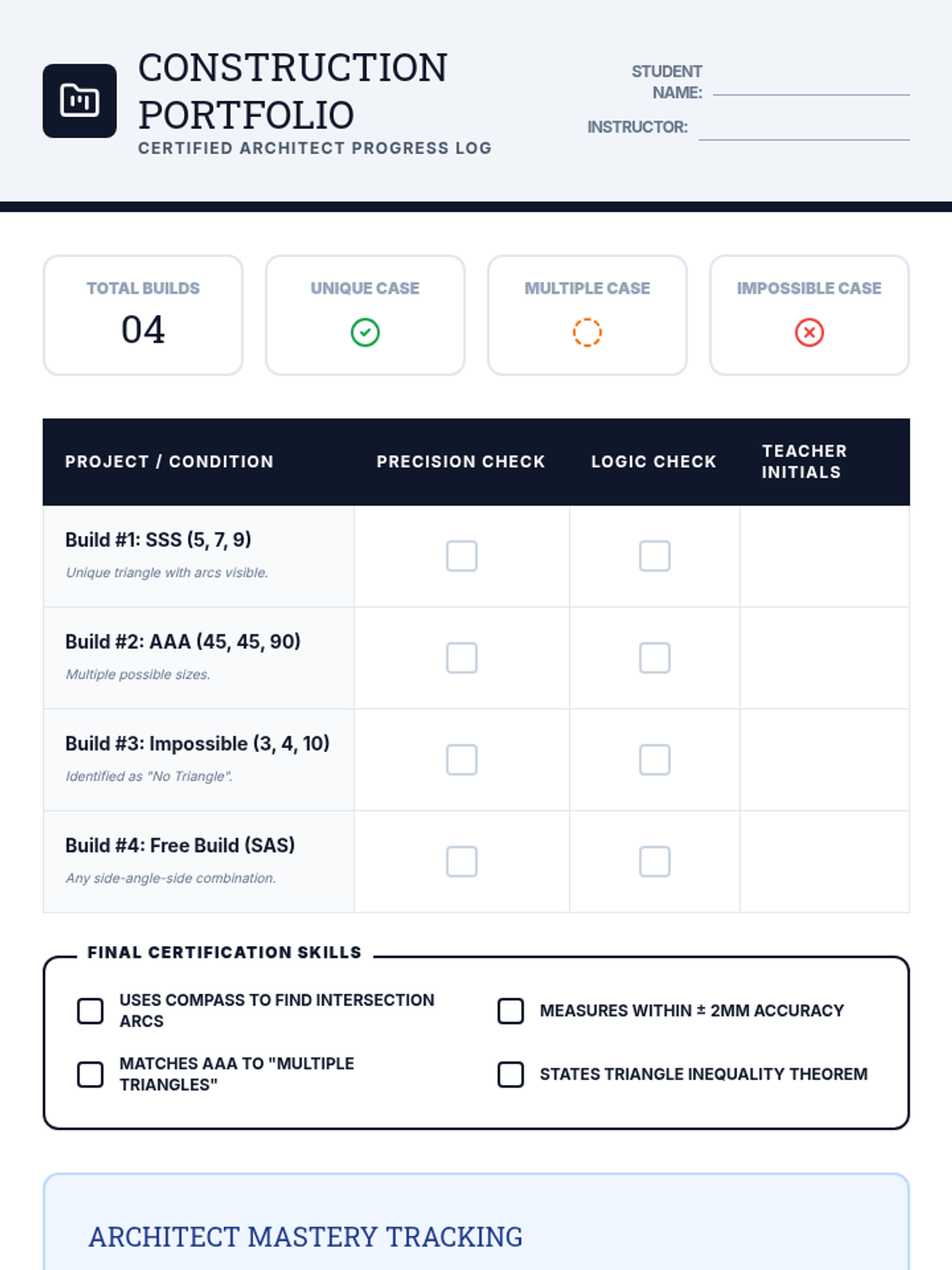
Progress monitoring tool for both students and teachers, formatted as an architectural construction portfolio tracker. Includes a build log, skills checklist, and mastery tracking graph for Tier 2 data collection.
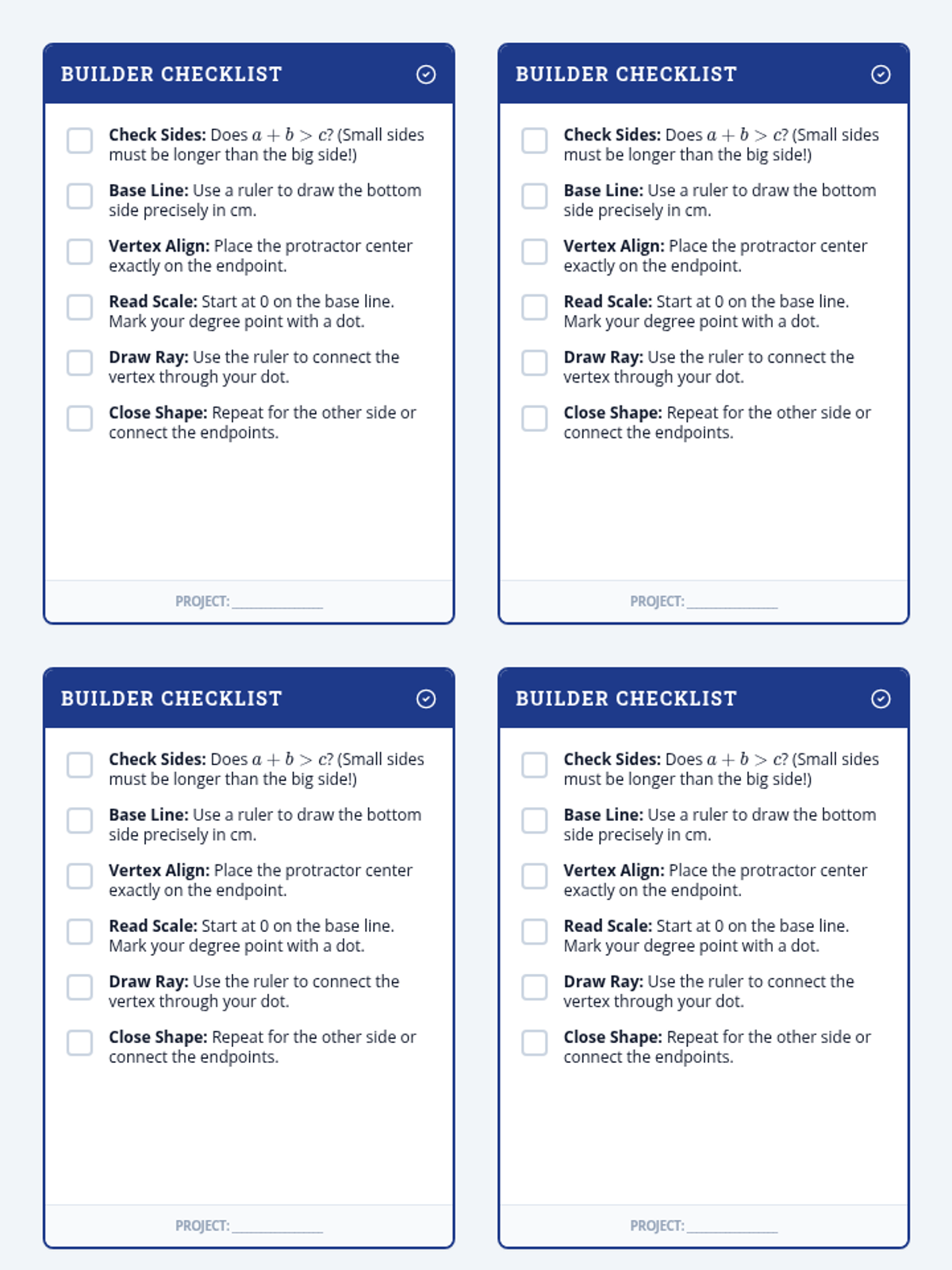
A student-facing construction checklist and teacher monitoring tool designed to guide students through precision triangle drafting steps.
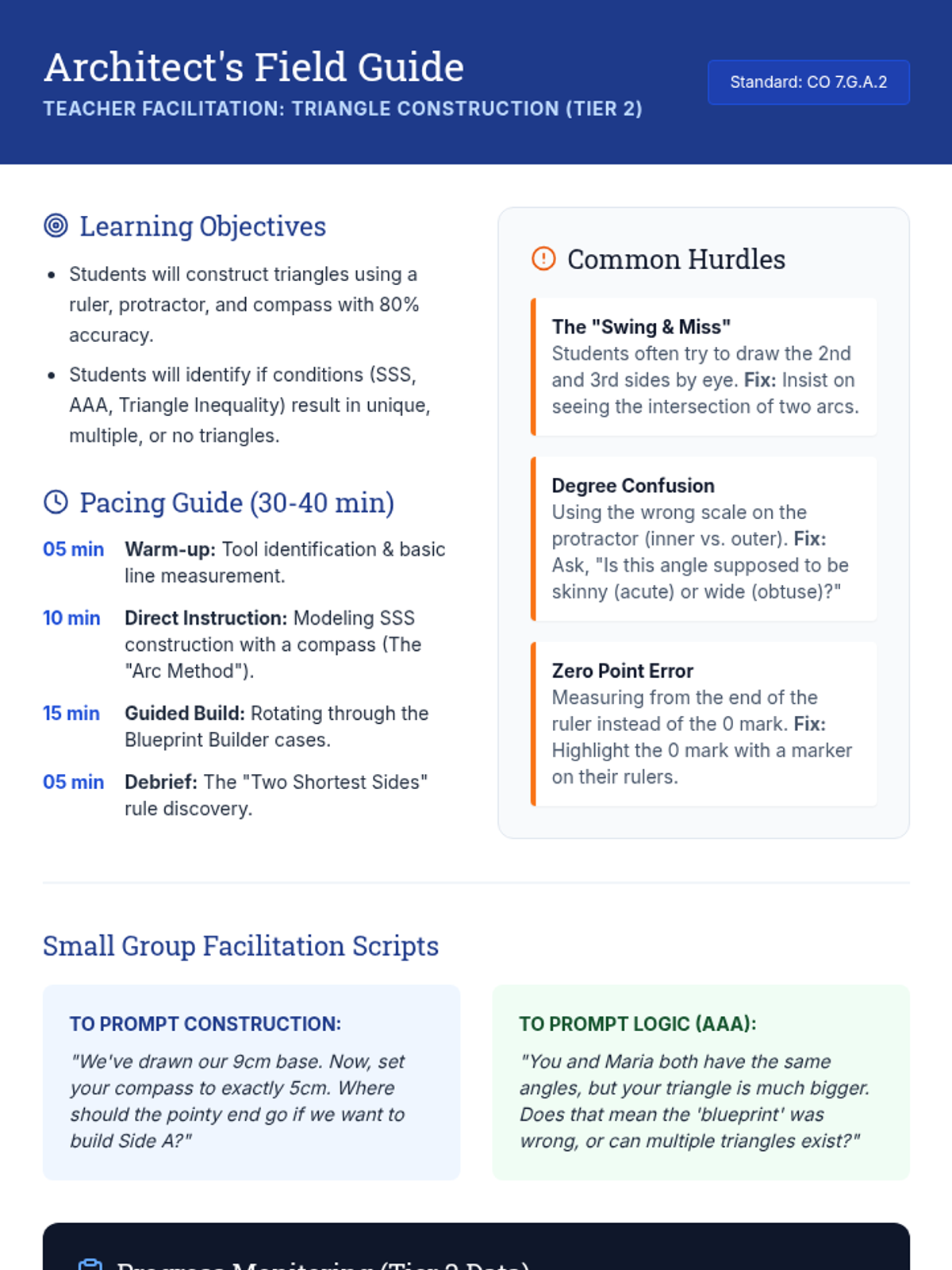
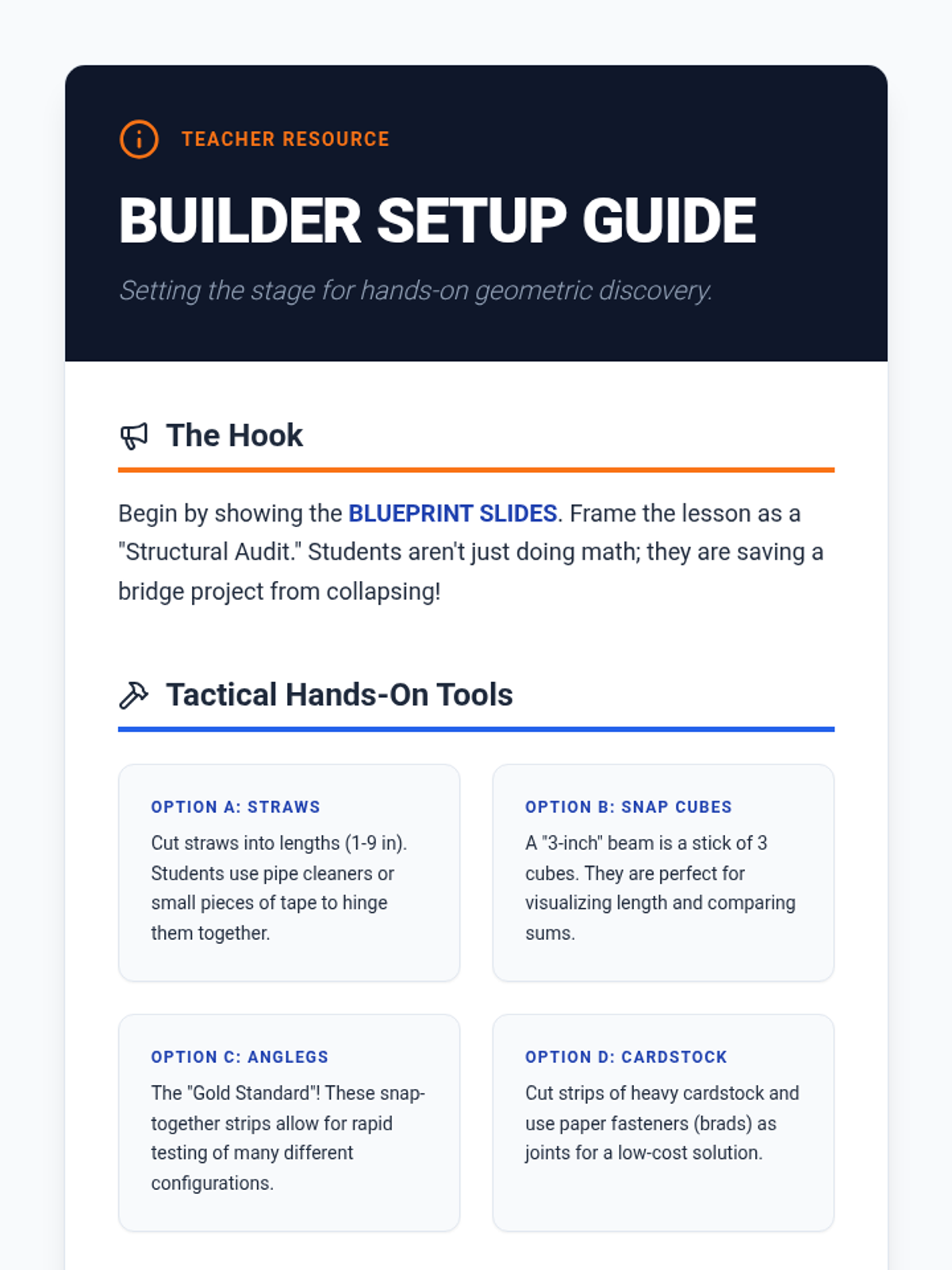
Facilitation guide for teachers, providing Tier 2 intervention strategies, common student misconceptions, small group scripts, and pacing for the triangle construction lesson.
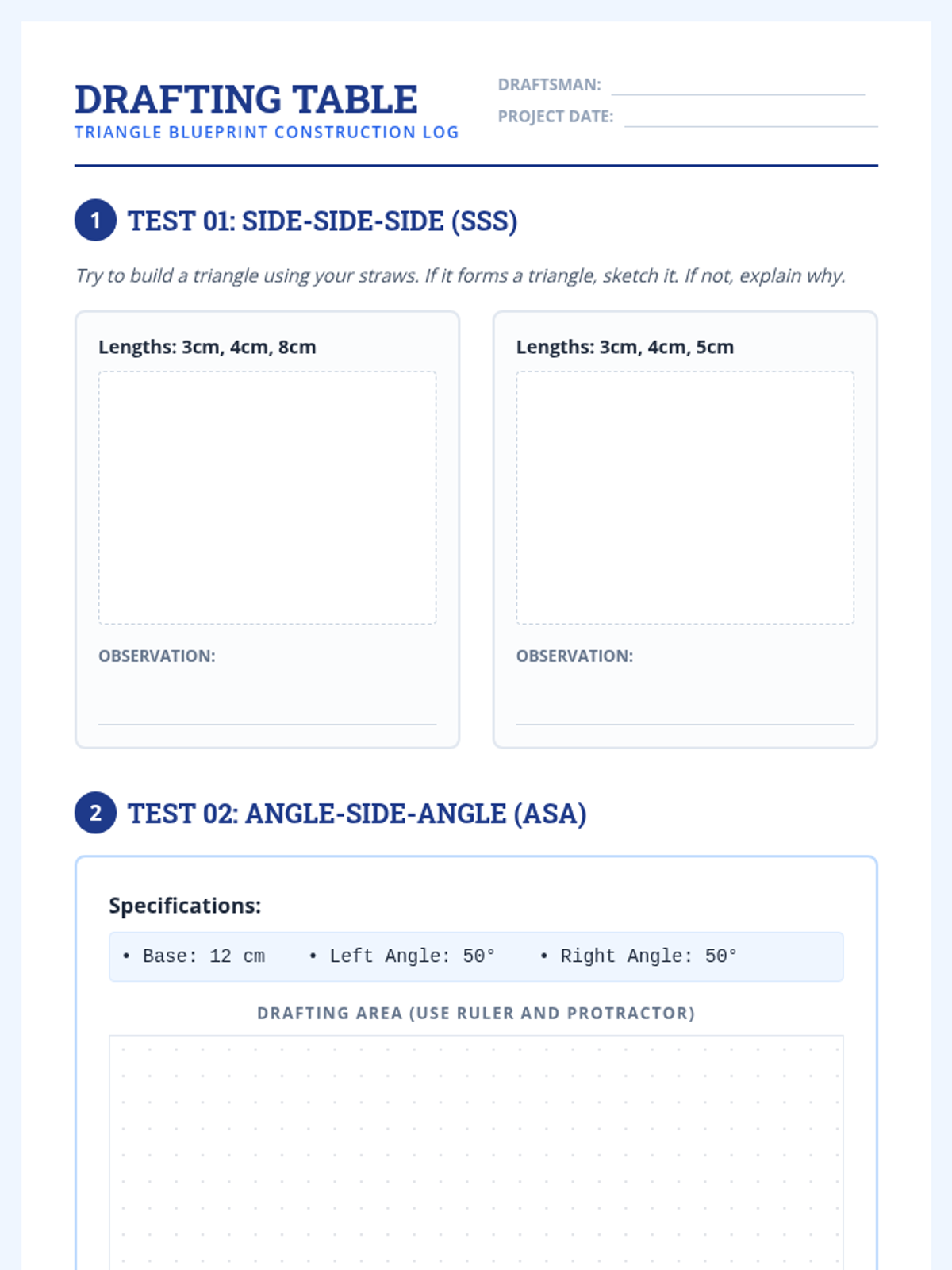
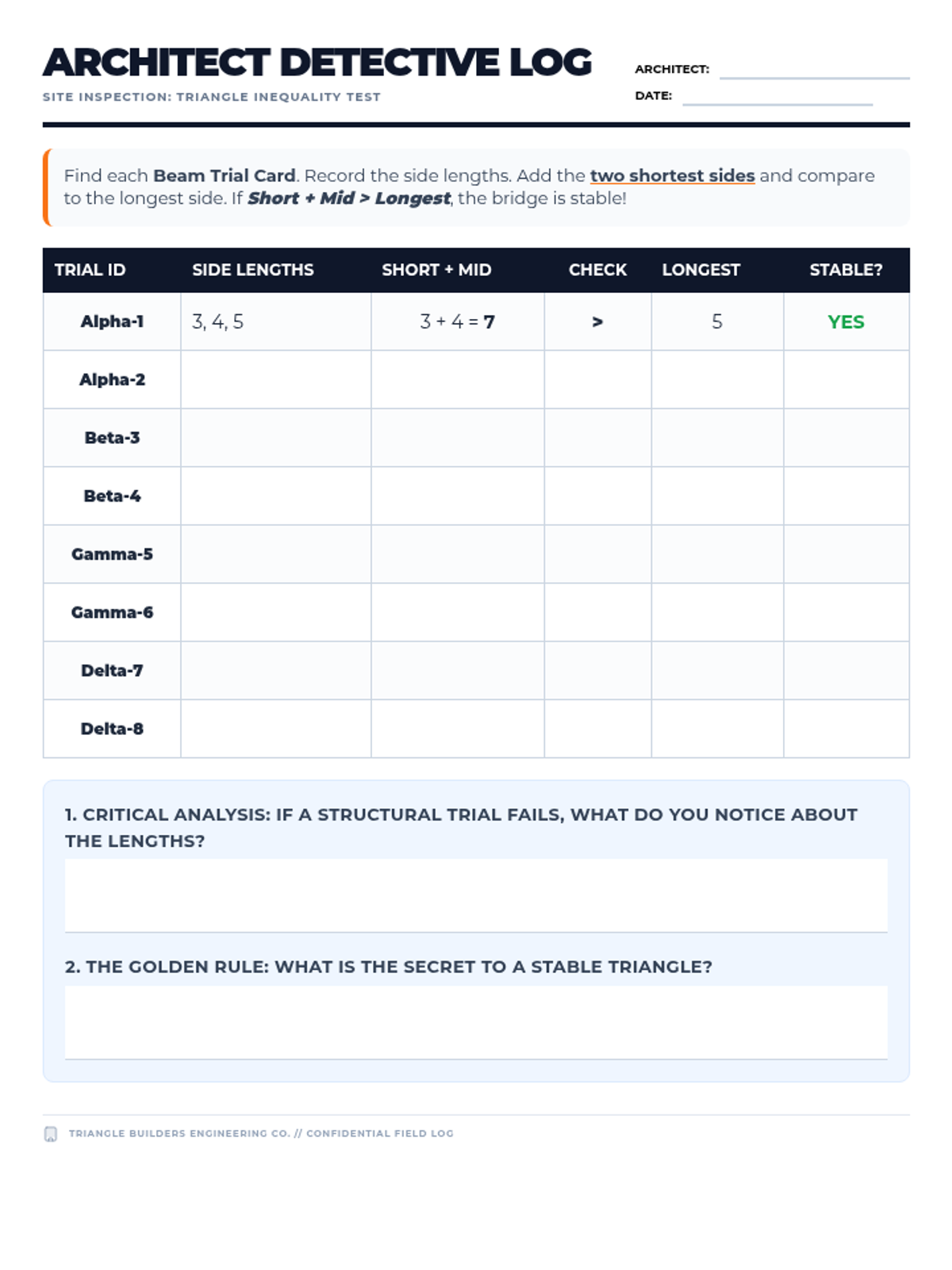
A hands-on student activity worksheet for constructing triangles with straws, rulers, and protractors, featuring sections for SSS, ASA, and AAA investigations.
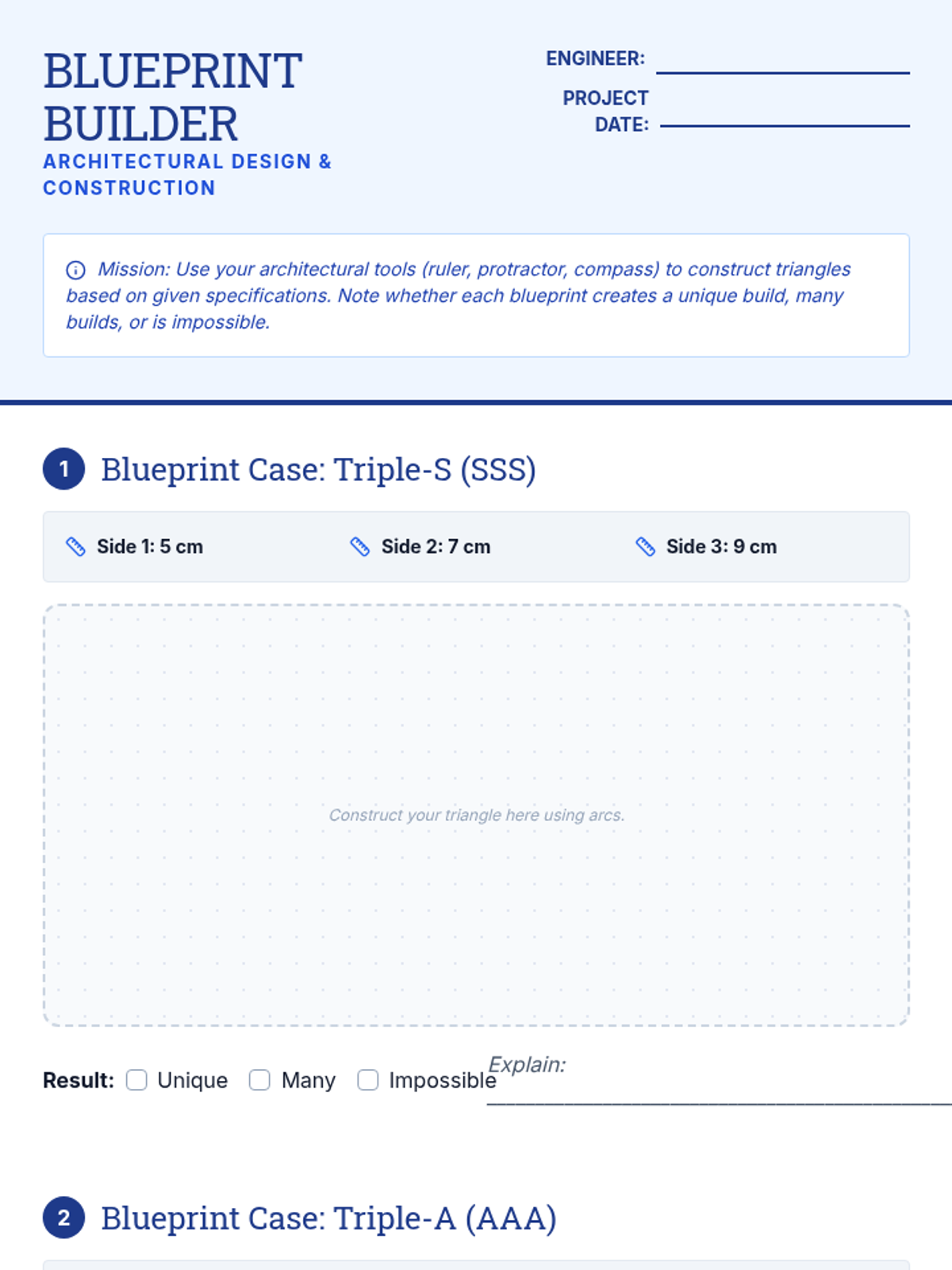
Scaffolded construction worksheet for students, guiding them through SSS, AAA, and impossible triangle builds. Includes dedicated space for tool use and reflection on triangle conditions.
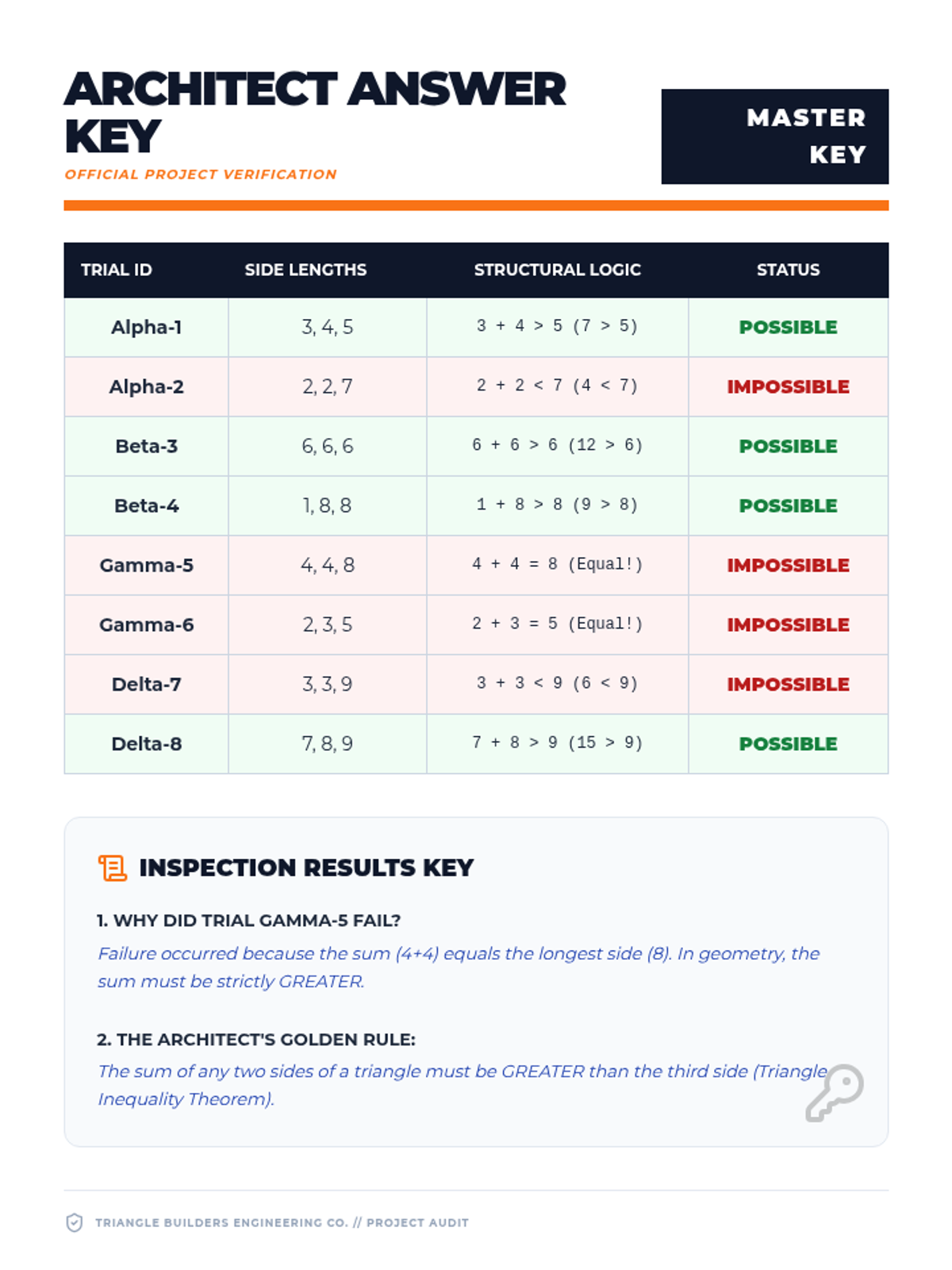
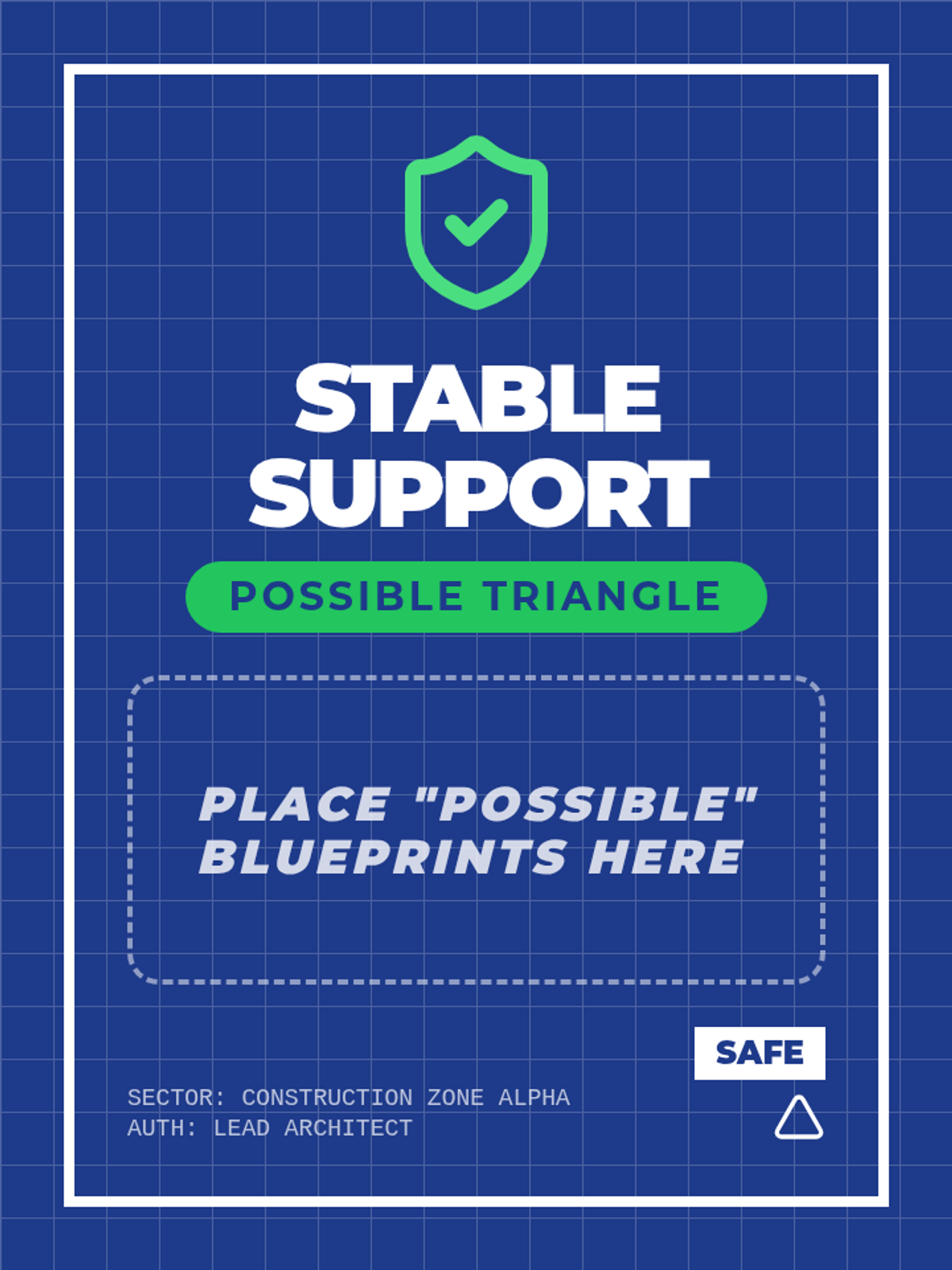
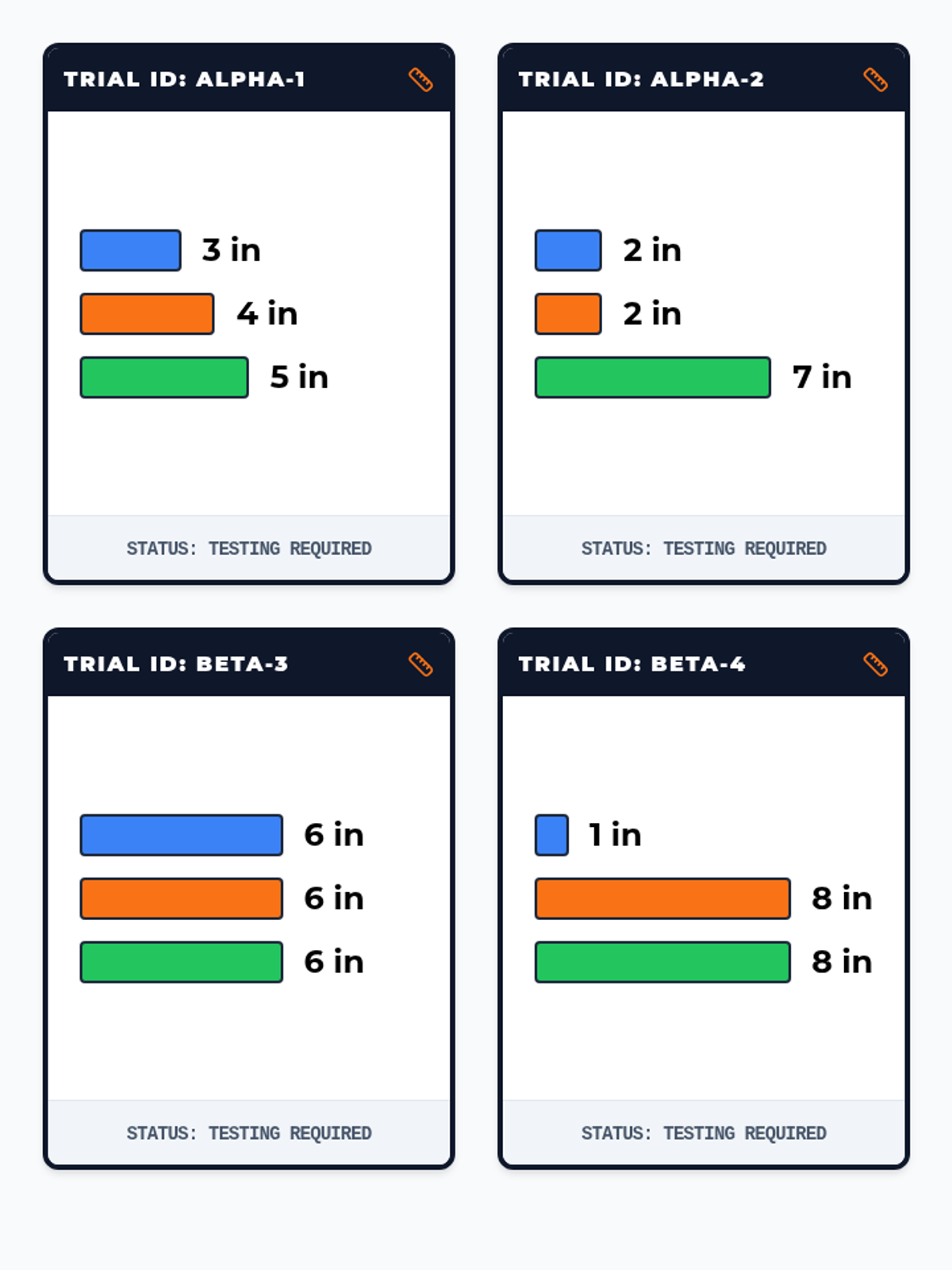
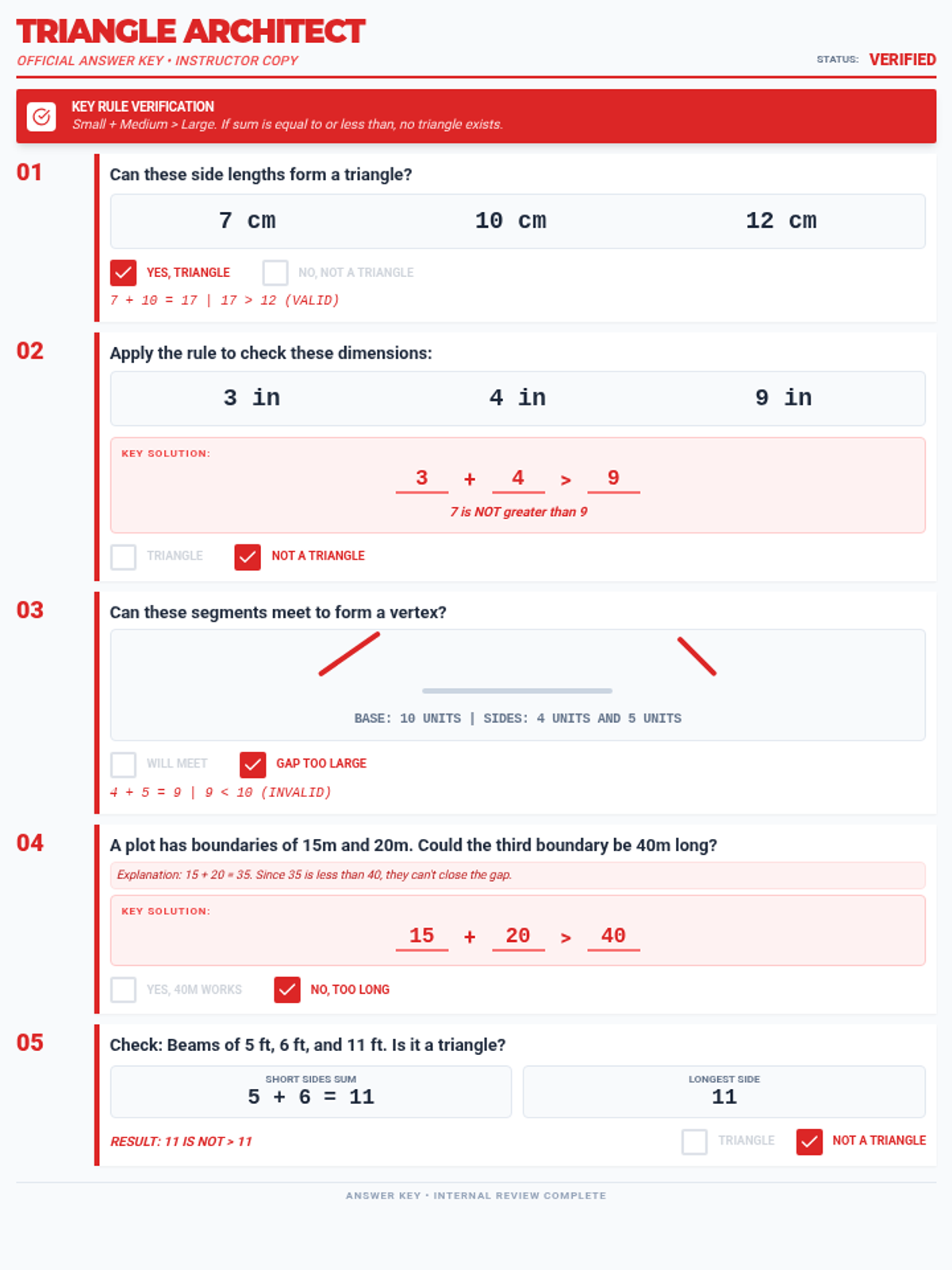
A visual presentation for a Tier 2 intervention lesson on triangle construction, featuring the Triangle Inequality Theorem, step-by-step drafting guides, and a comparison of unique vs. non-unique conditions.
Visual slide deck for Tier 2 intervention, introducing triangle construction conditions (SSS, AAA, and impossible triangles) with an architectural theme. Includes instructional visuals for tool use and a summary decision chart for triangle outcomes.
A comprehensive teacher facilitation guide for a Tier 2 intervention lesson on triangle construction, featuring instructional phases, common misconceptions, and progress monitoring indicators.
A formal grading rubric for the Segment Symmetry project, evaluating geometric accuracy, visibility of construction arcs, aesthetic quality, and mathematical reflection.
Final assessment for the Drafting Duplicates lesson, requiring students to demonstrate the construction of congruent segments and preserve their construction arcs as evidence.
A comprehensive teacher facilitation guide for the 'Point and Pivot' lesson. It includes a minute-by-minute pacing guide, troubleshooting tips for common compass errors, and classroom management strategies.
The main student project sheet for the Segment Symmetry activity, featuring instructions, a large construction work area, and a reflection section for writing.