Fundamental movement patterns including locomotor actions, non-locomotor stability, and spatial awareness. Develops body control through fine motor precision and manipulative skills such as throwing and catching.
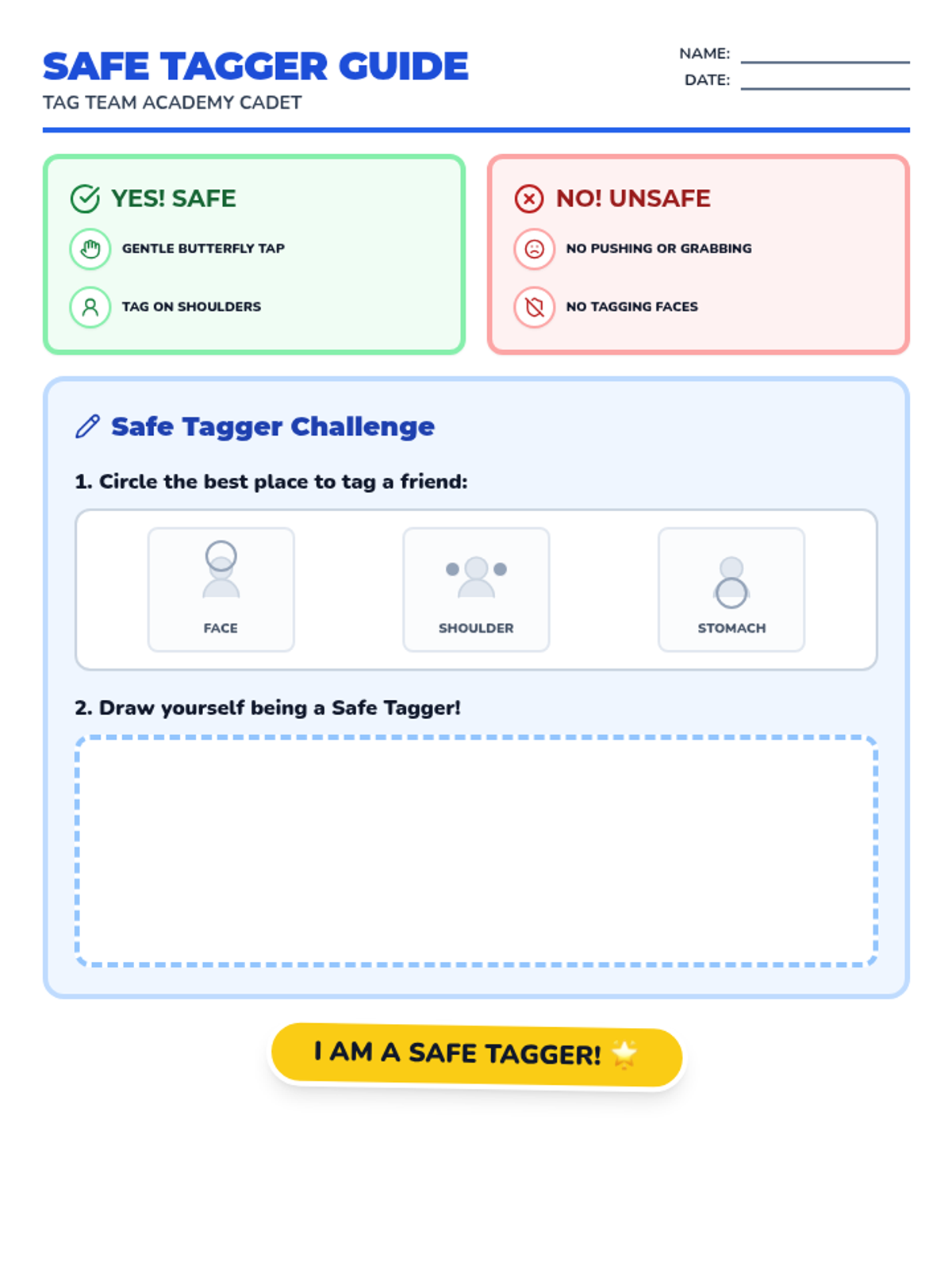
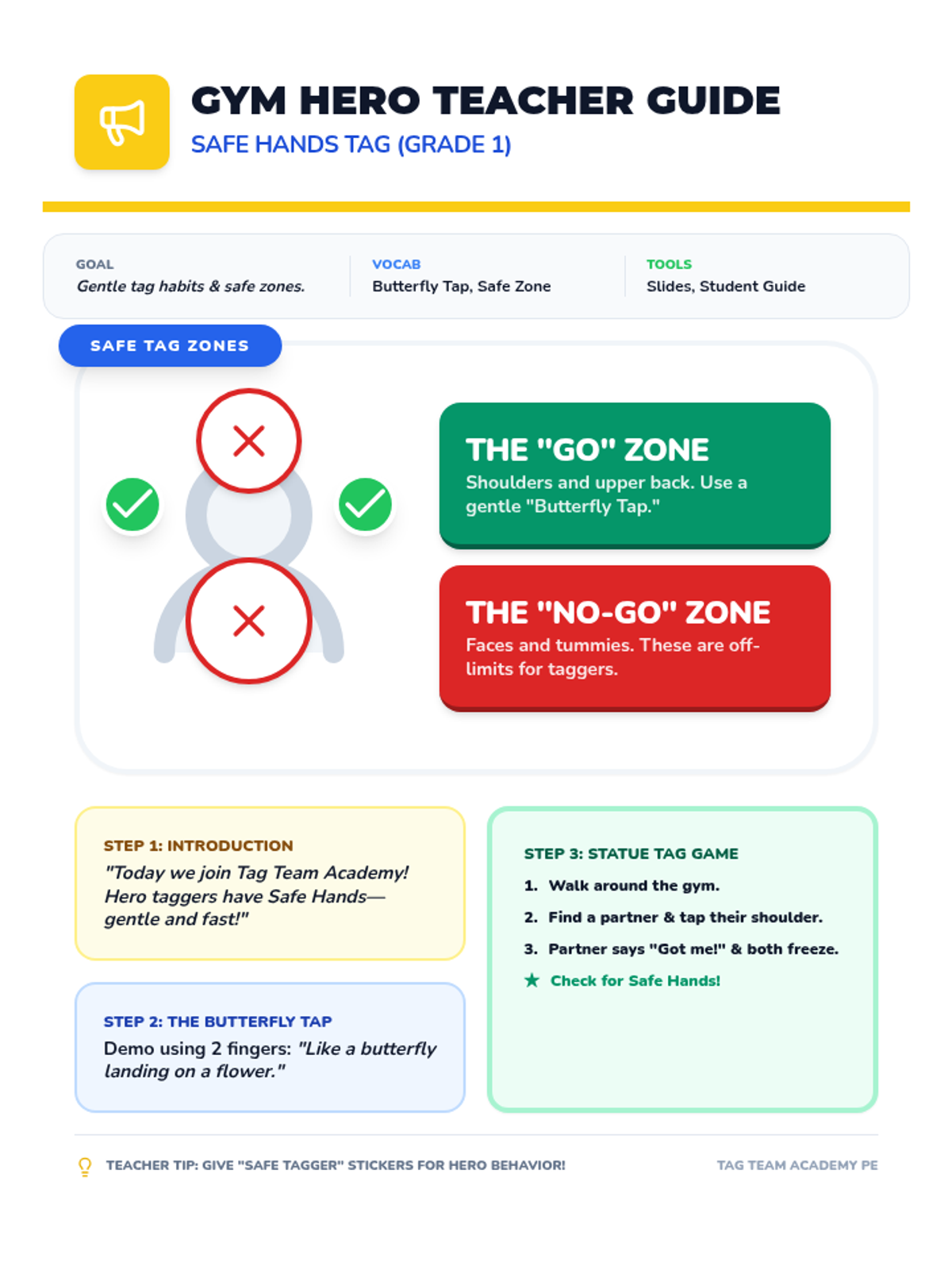
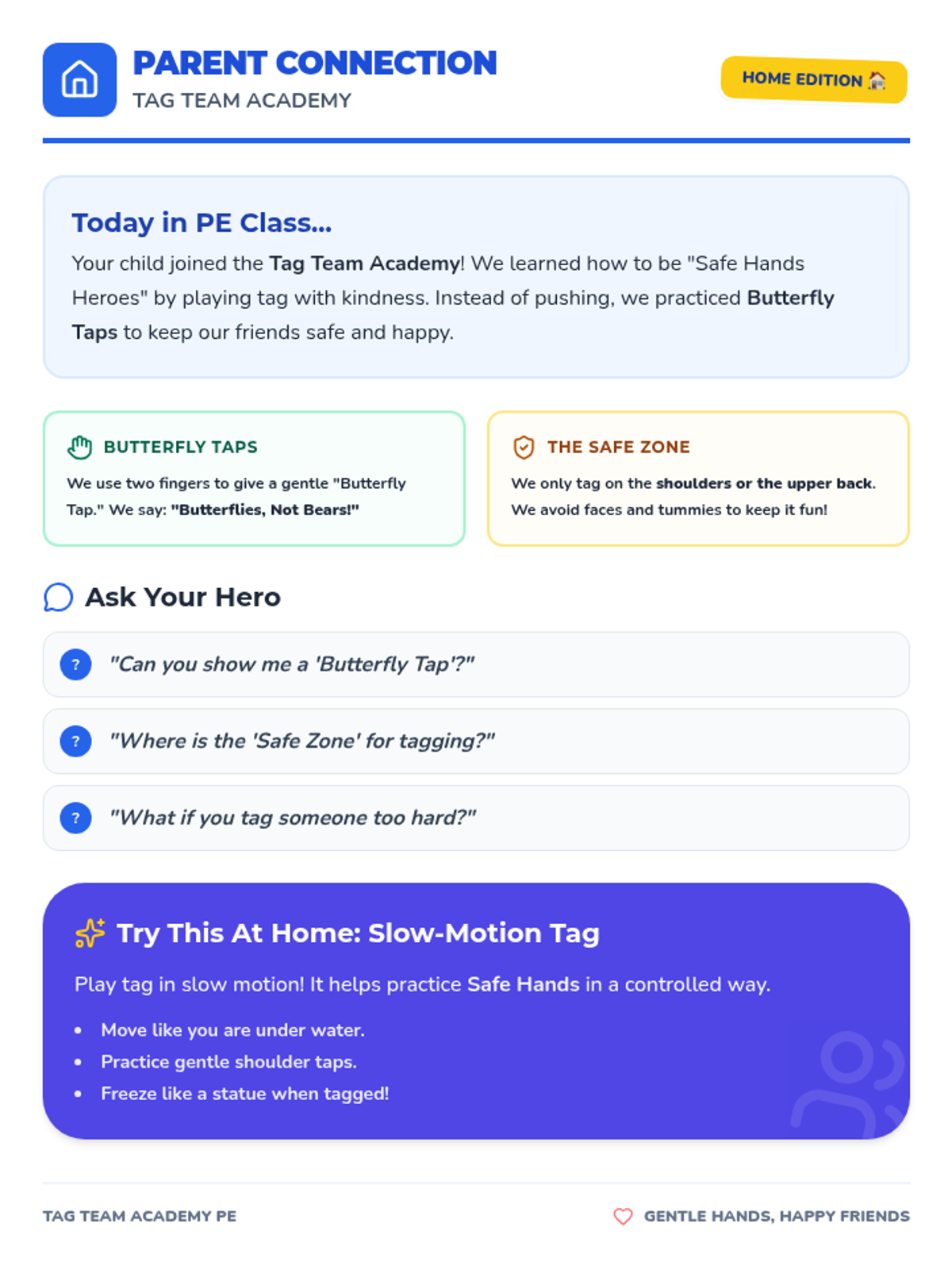
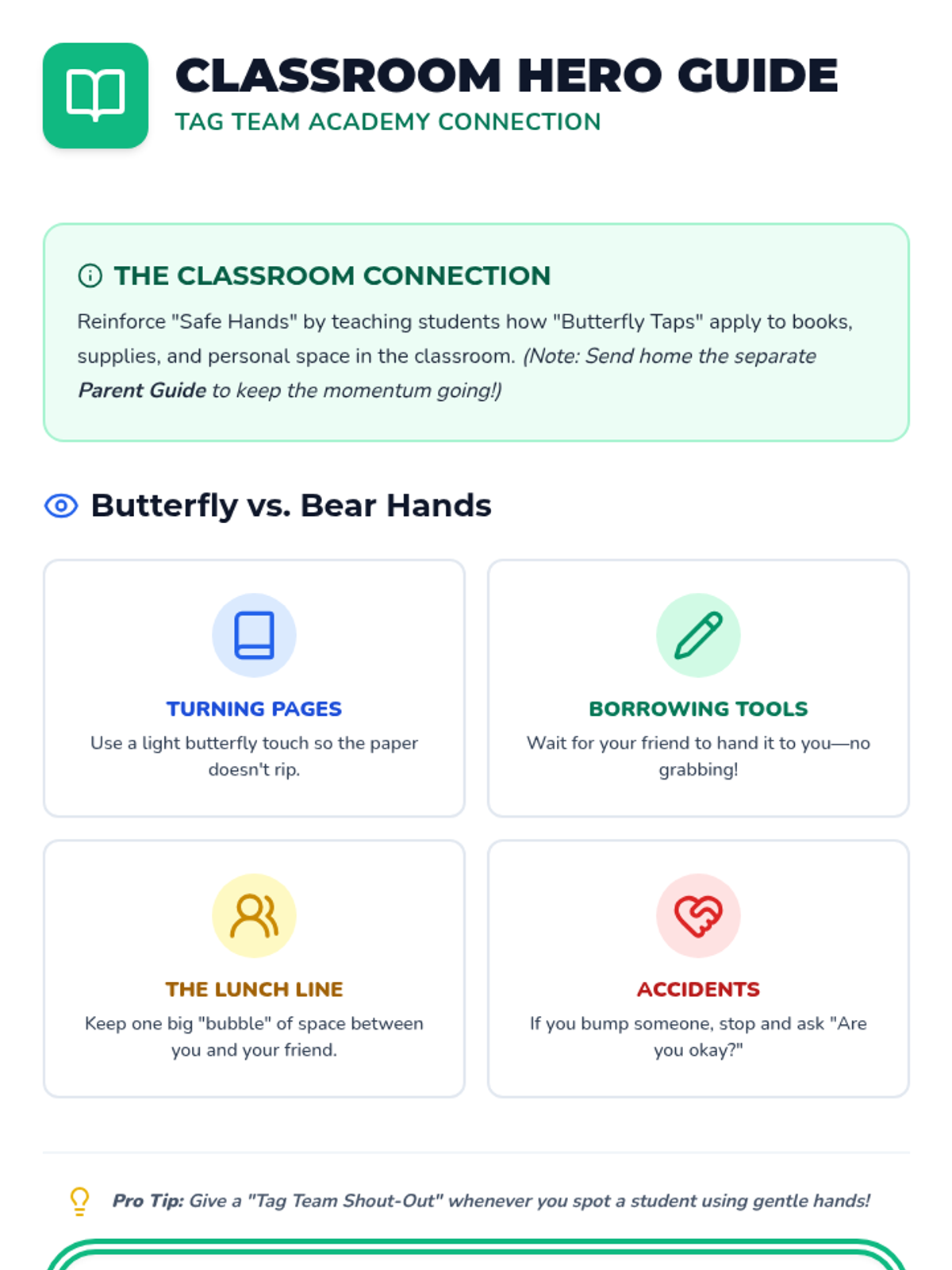
A lesson designed for 1st graders to learn the importance of 'safe hands' during tag games in PE. The lesson focuses on gentle touches, appropriate body parts for tagging, and the social-emotional aspect of keeping friends safe while playing.
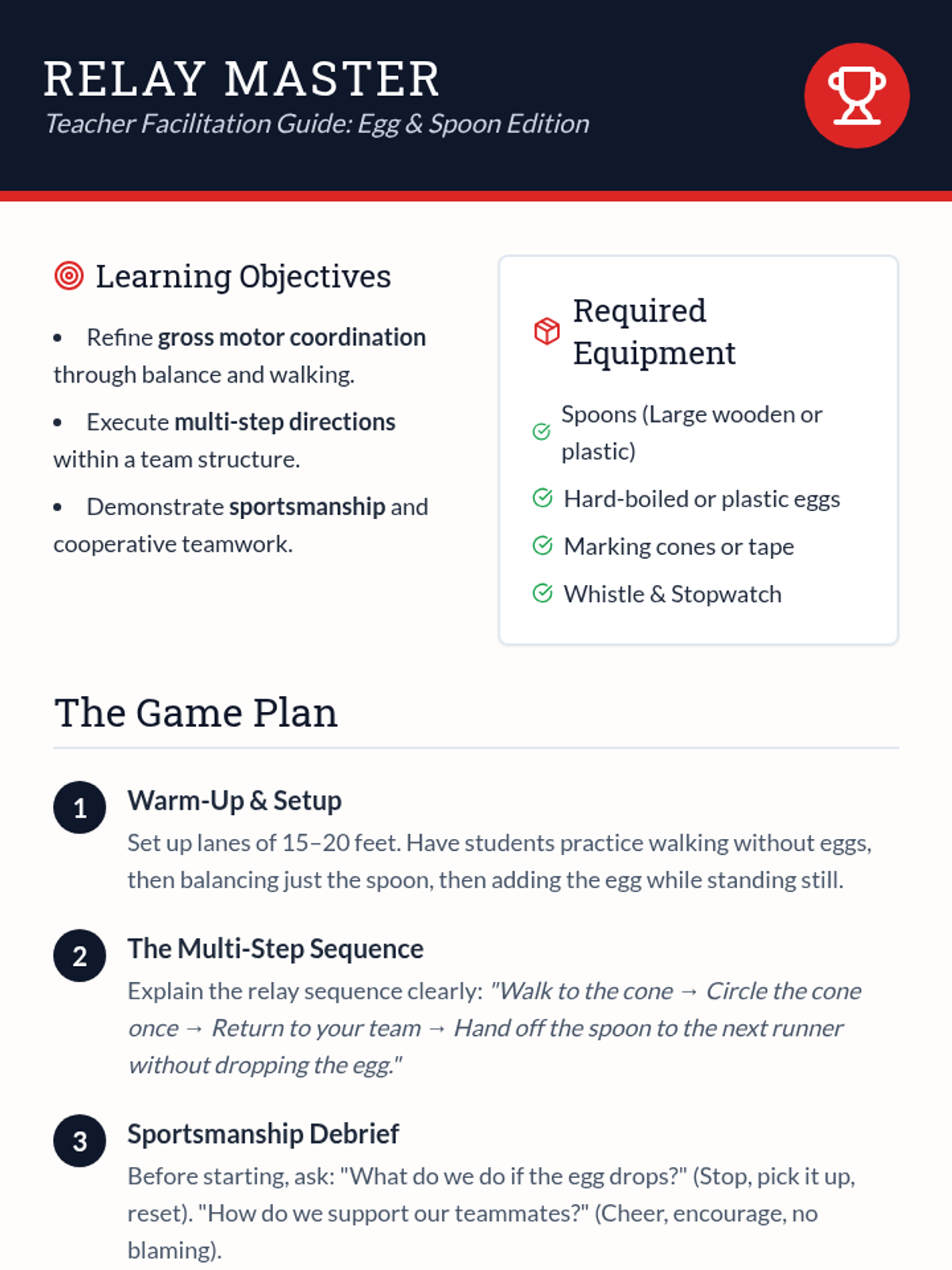
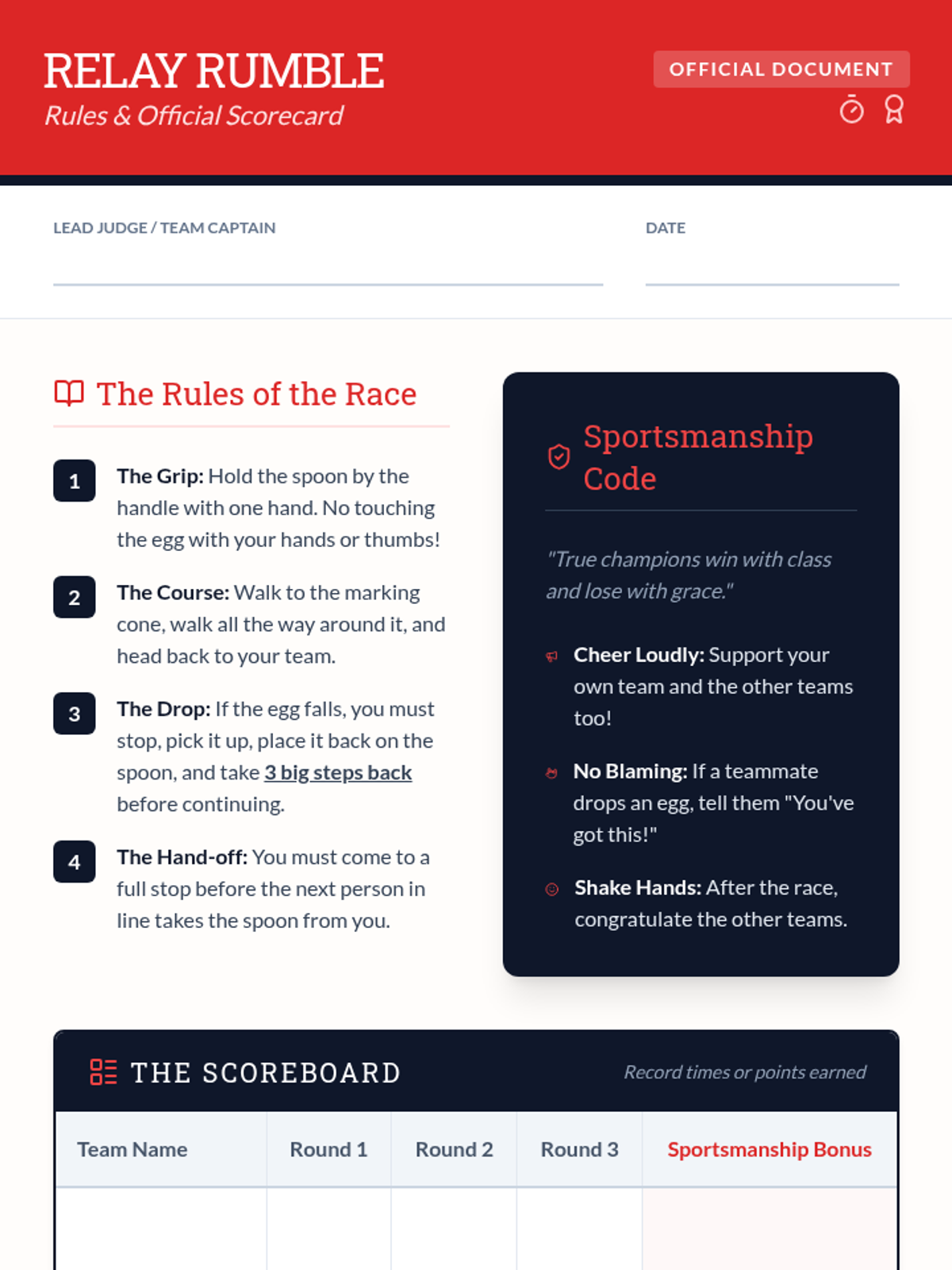
A high-energy lesson focused on gross motor skills, following complex directions, and practicing good sportsmanship through an egg and spoon relay race.
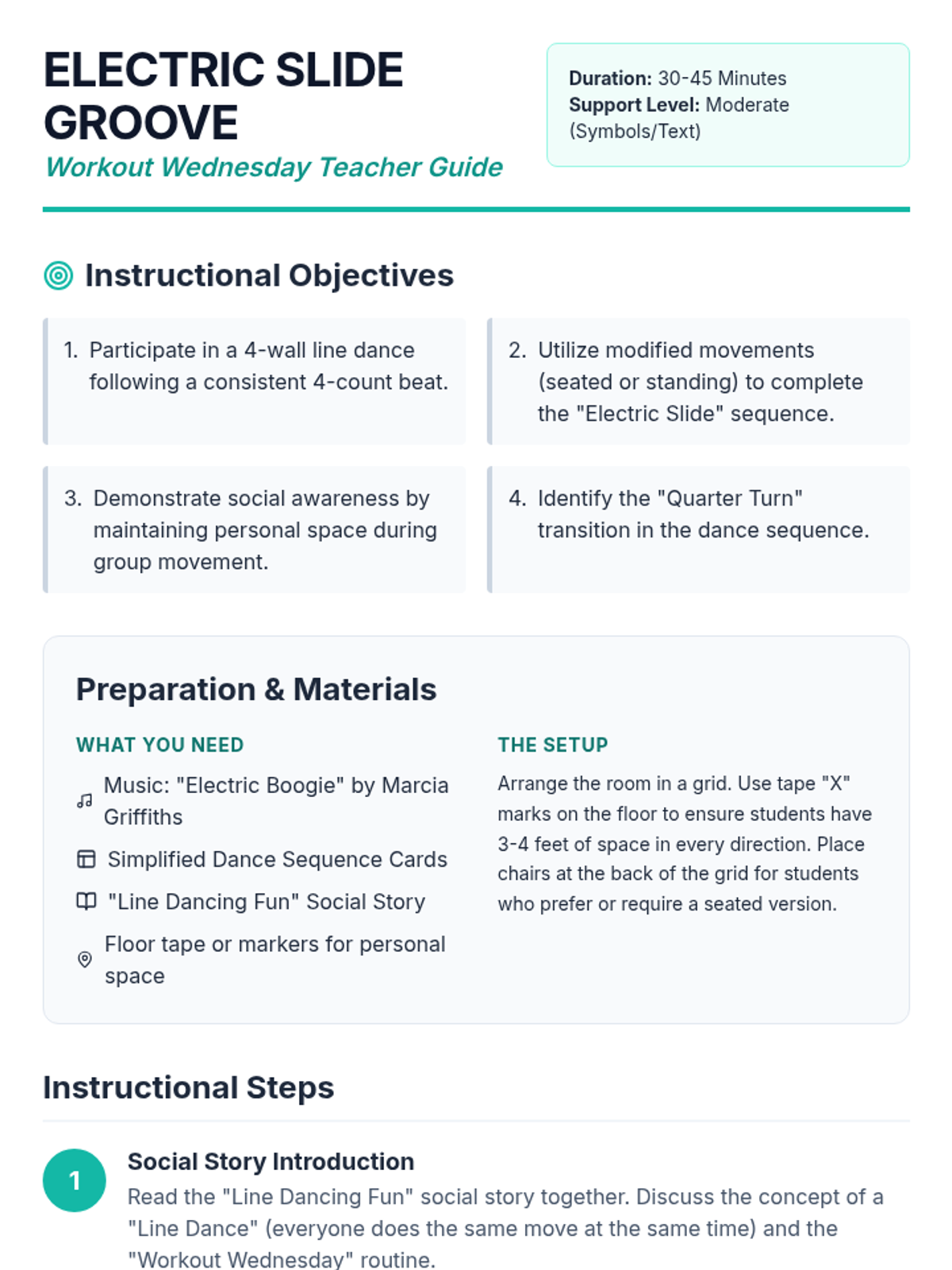
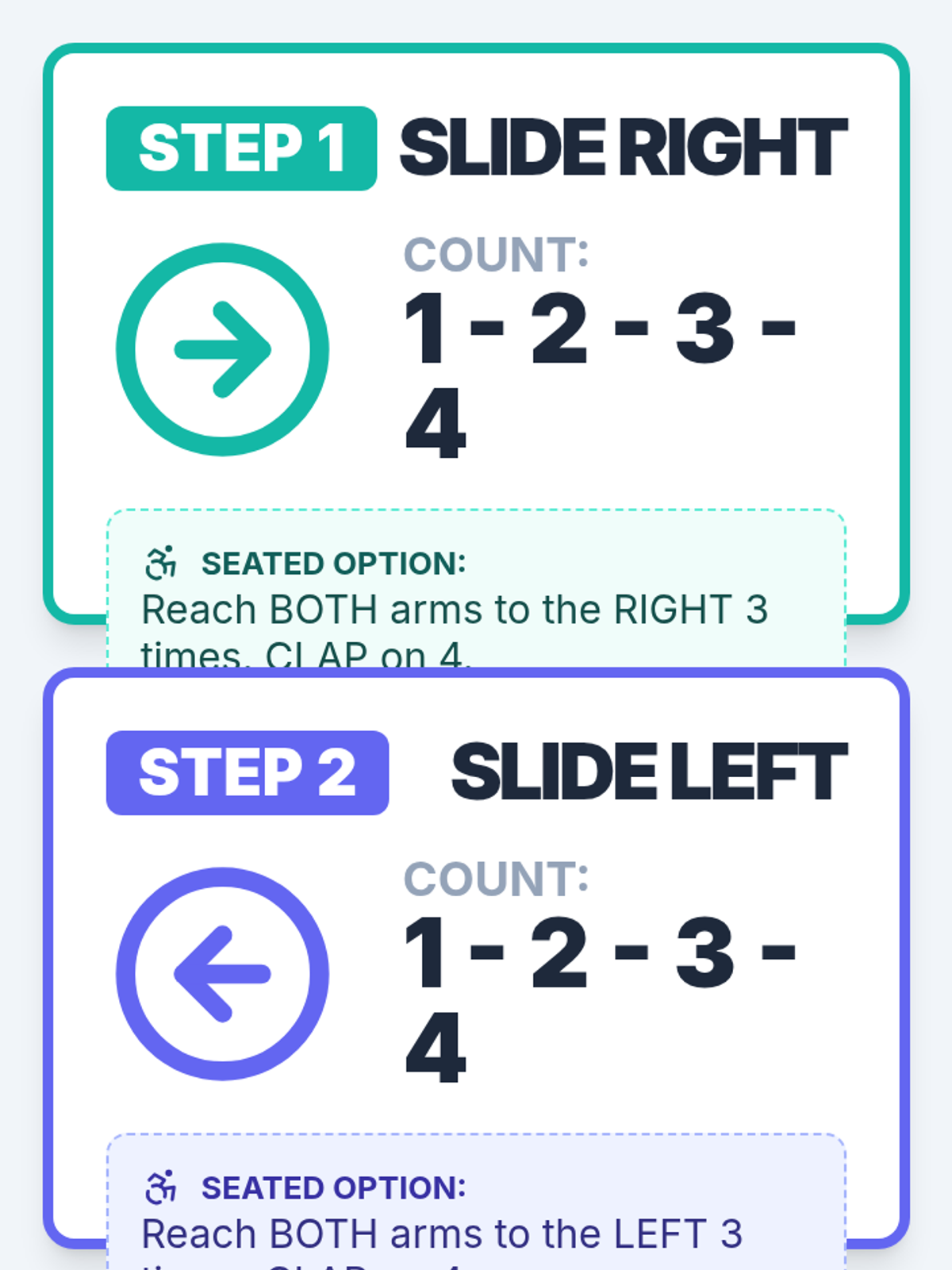
A guided introduction to the Electric Slide, featuring simplified steps and modifications for students with limited mobility or wheelchair users.
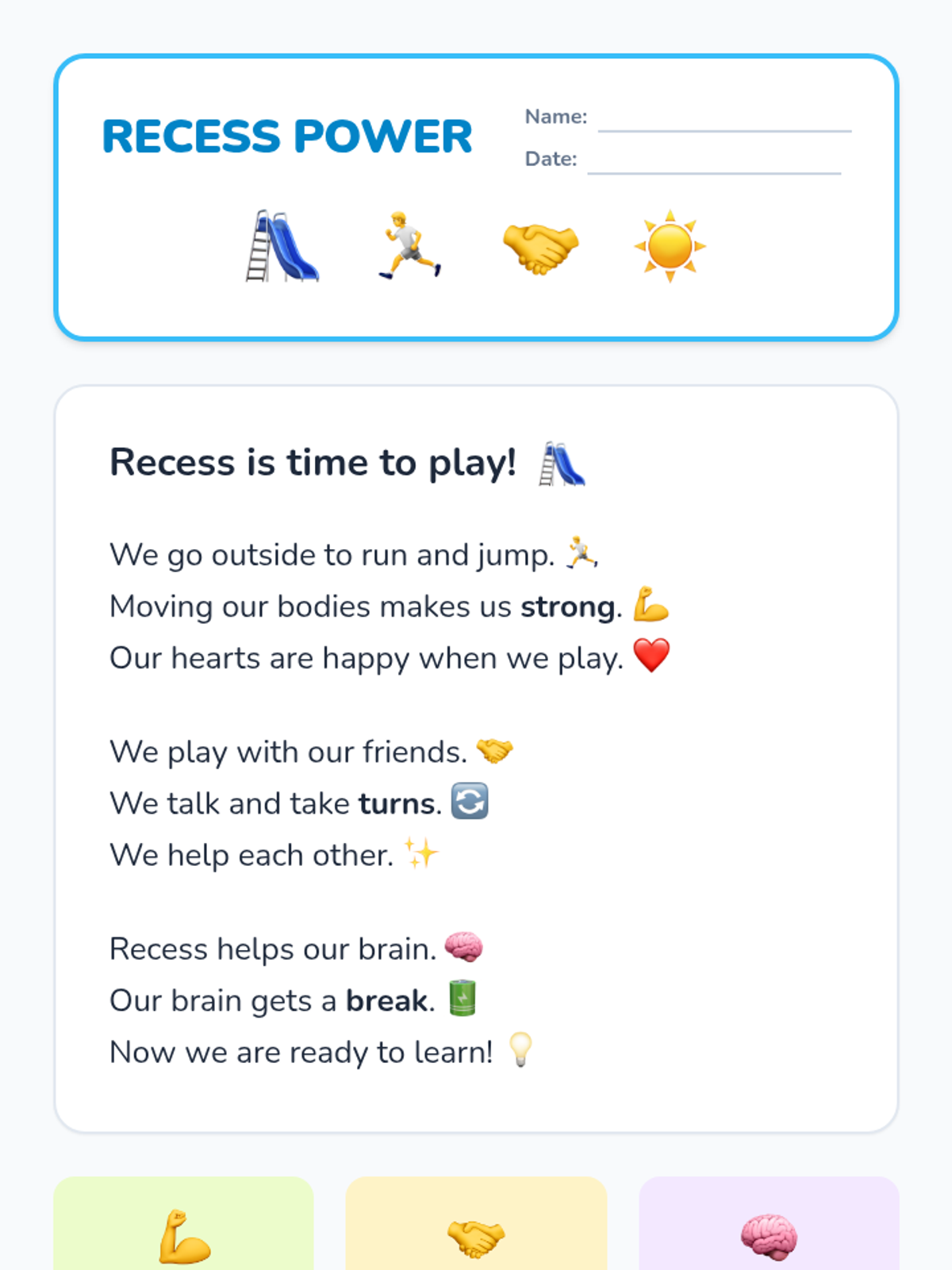
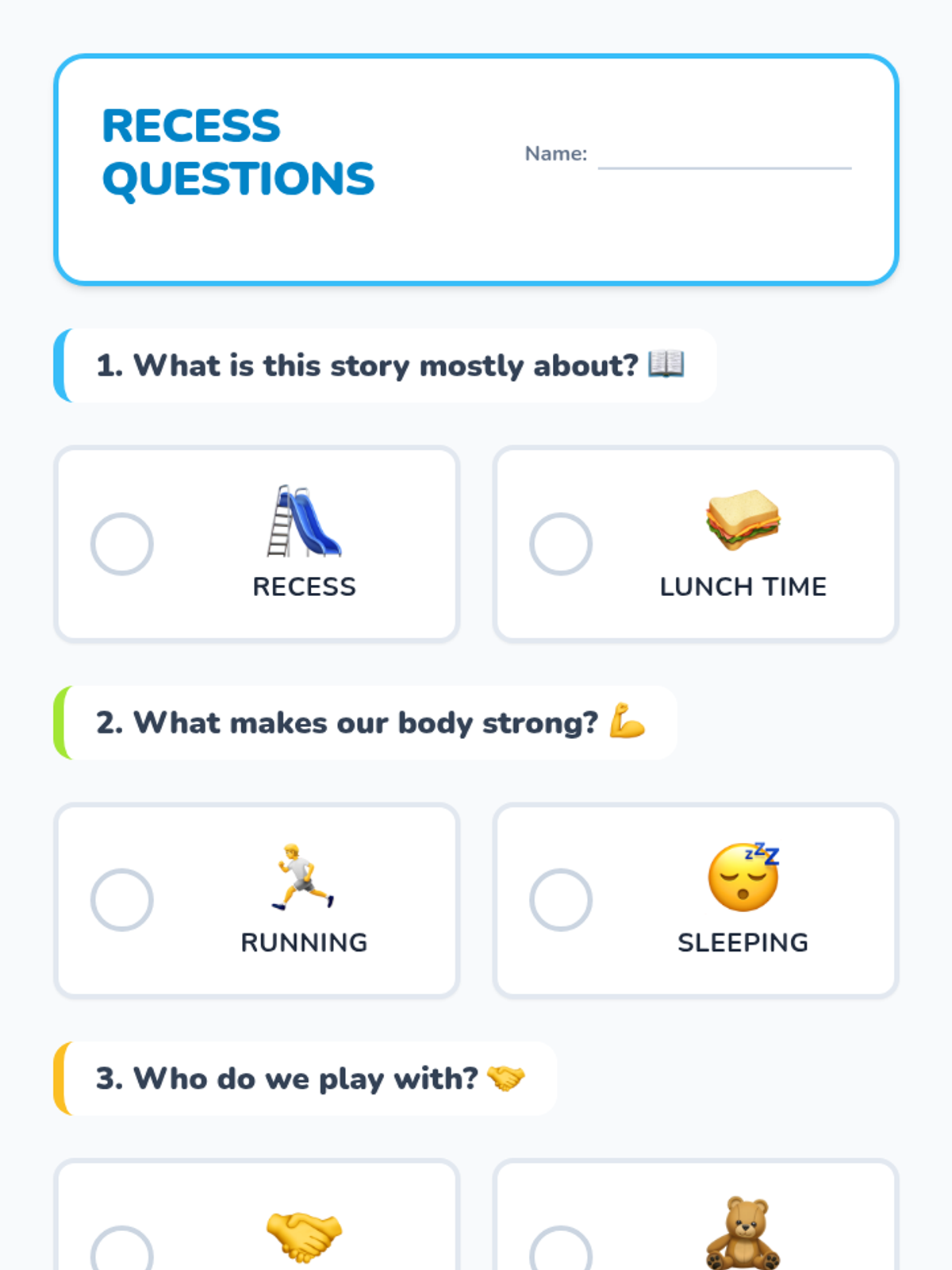
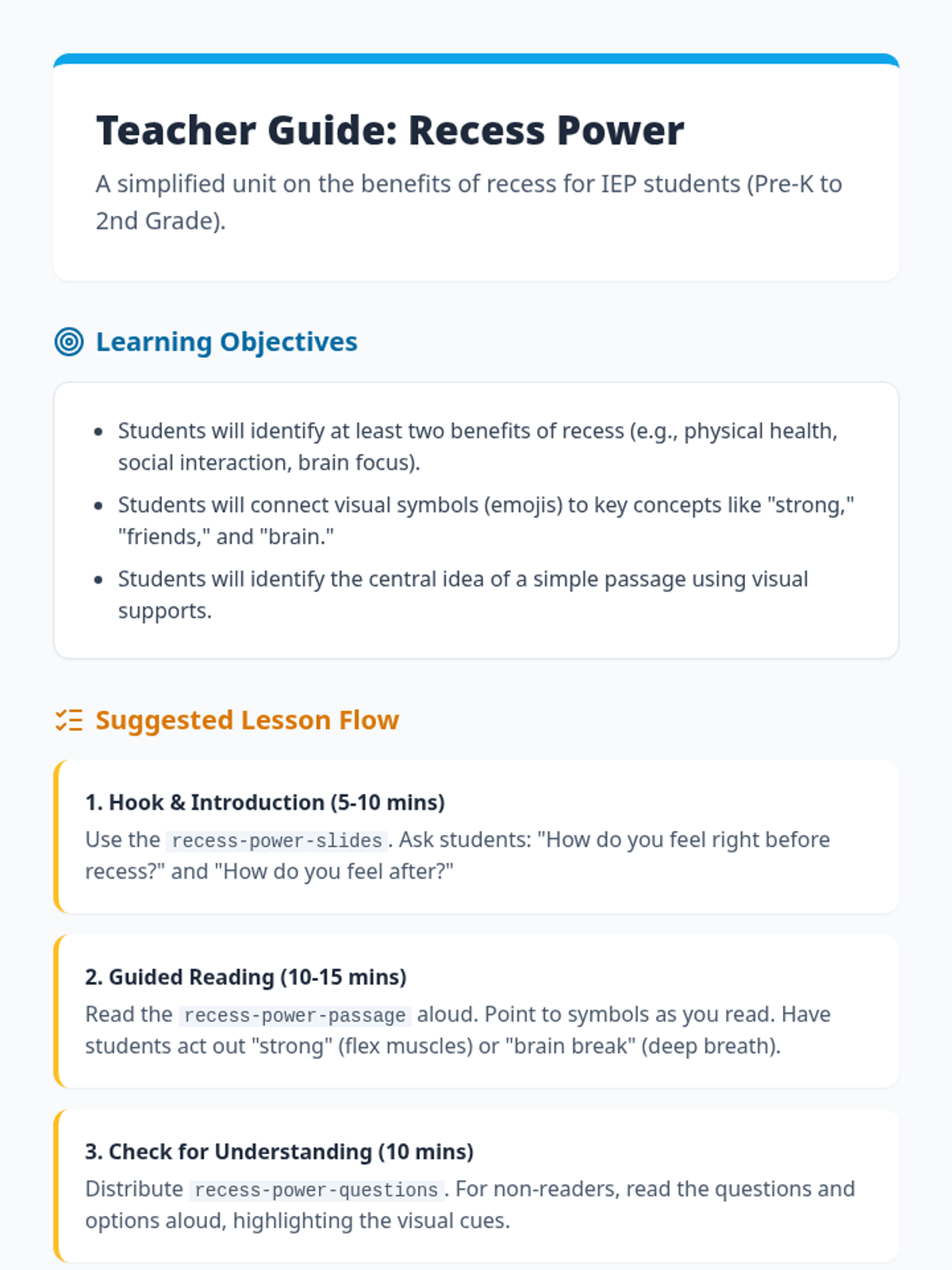
A lesson exploring the physical, social, and emotional benefits of recess for young learners, designed with accessibility and visual supports for IEP students.
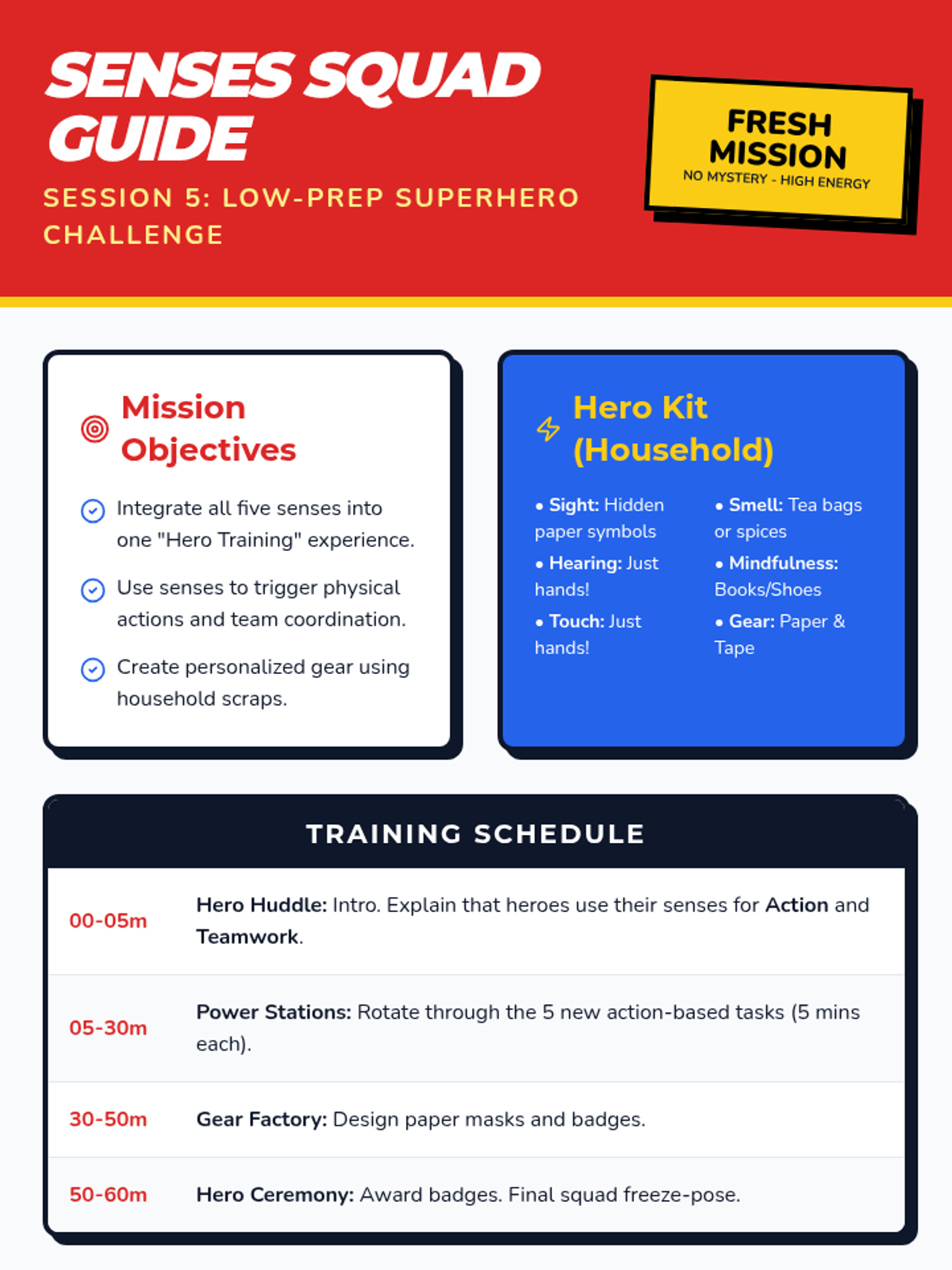
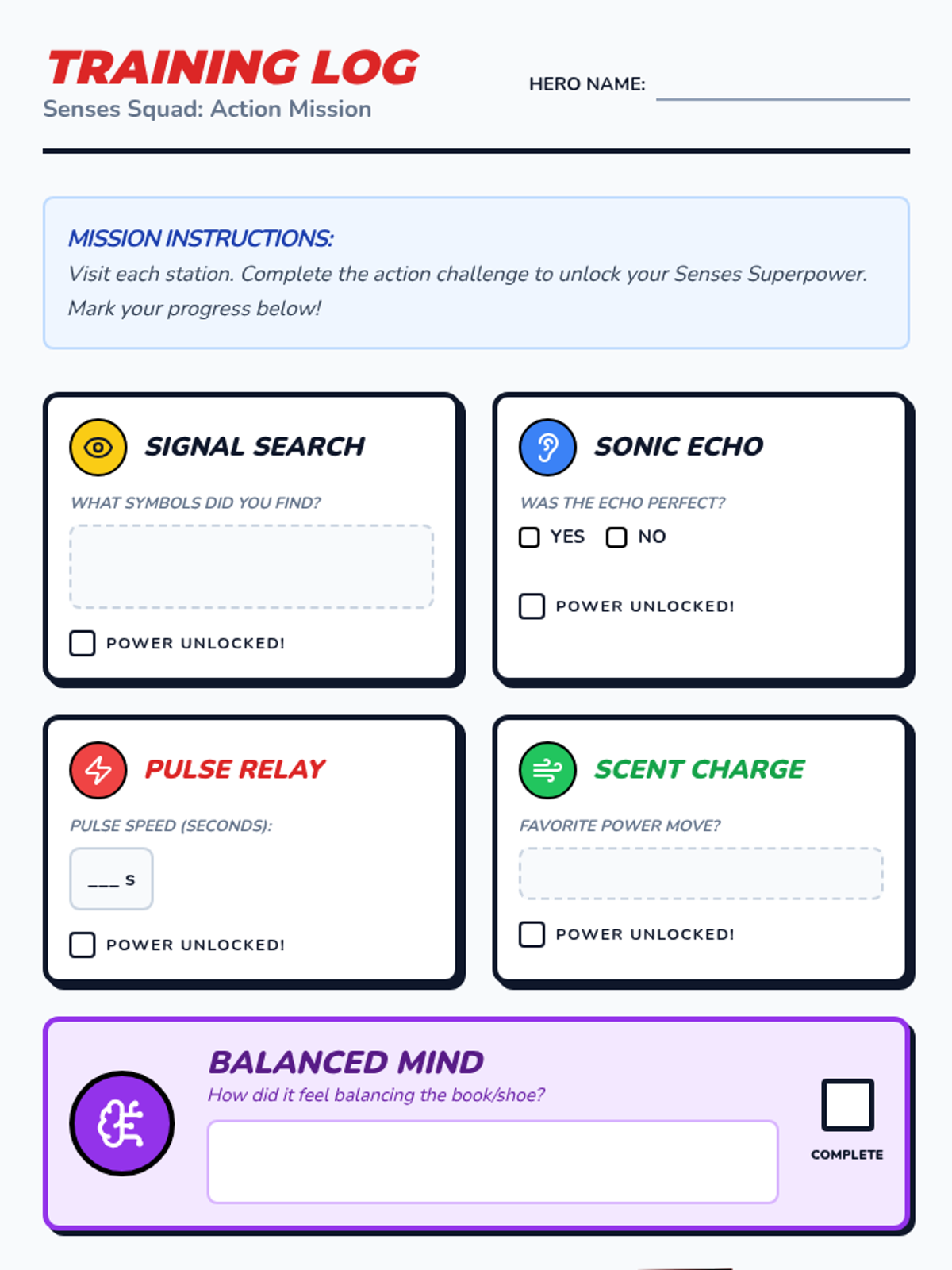
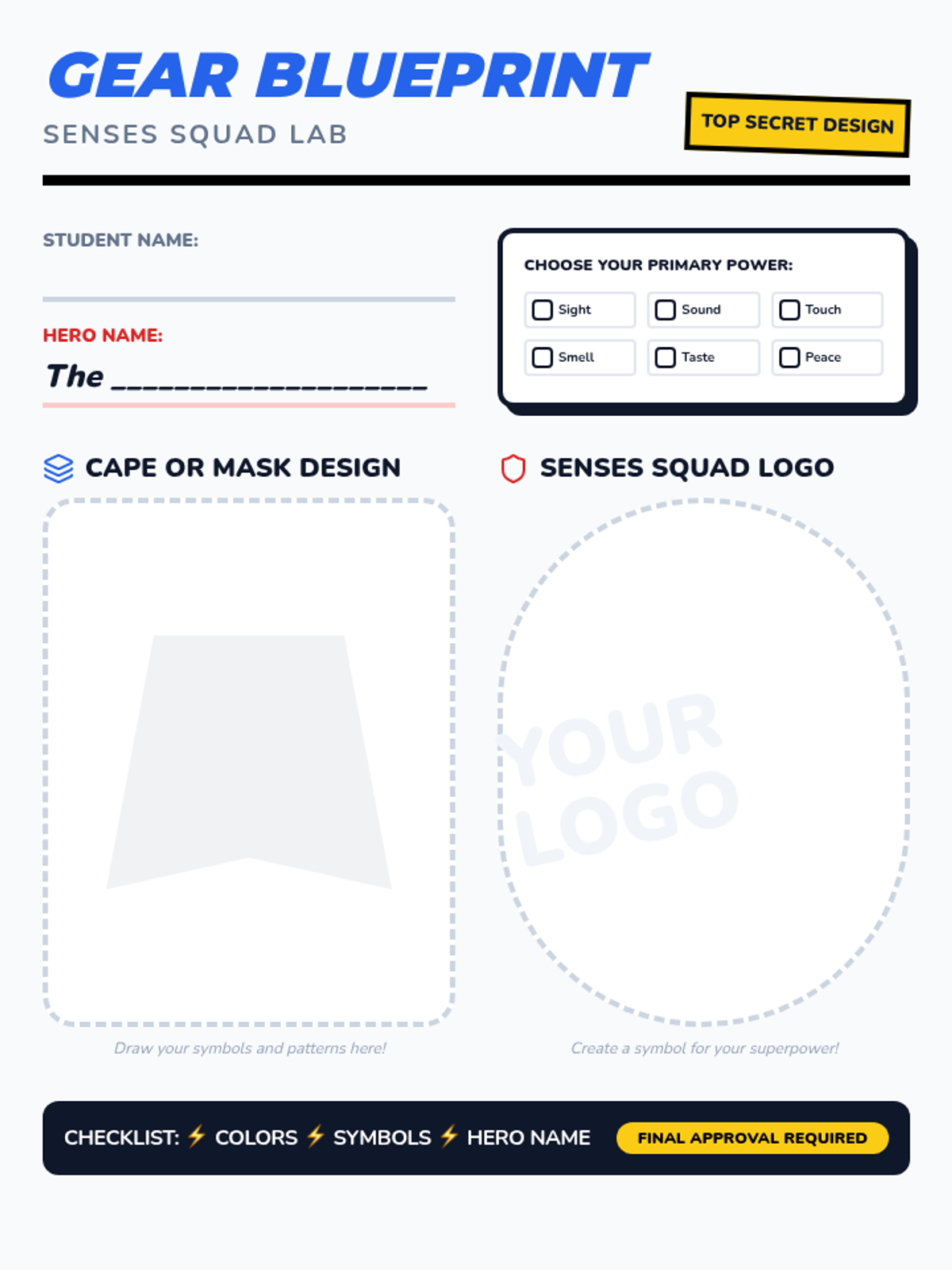
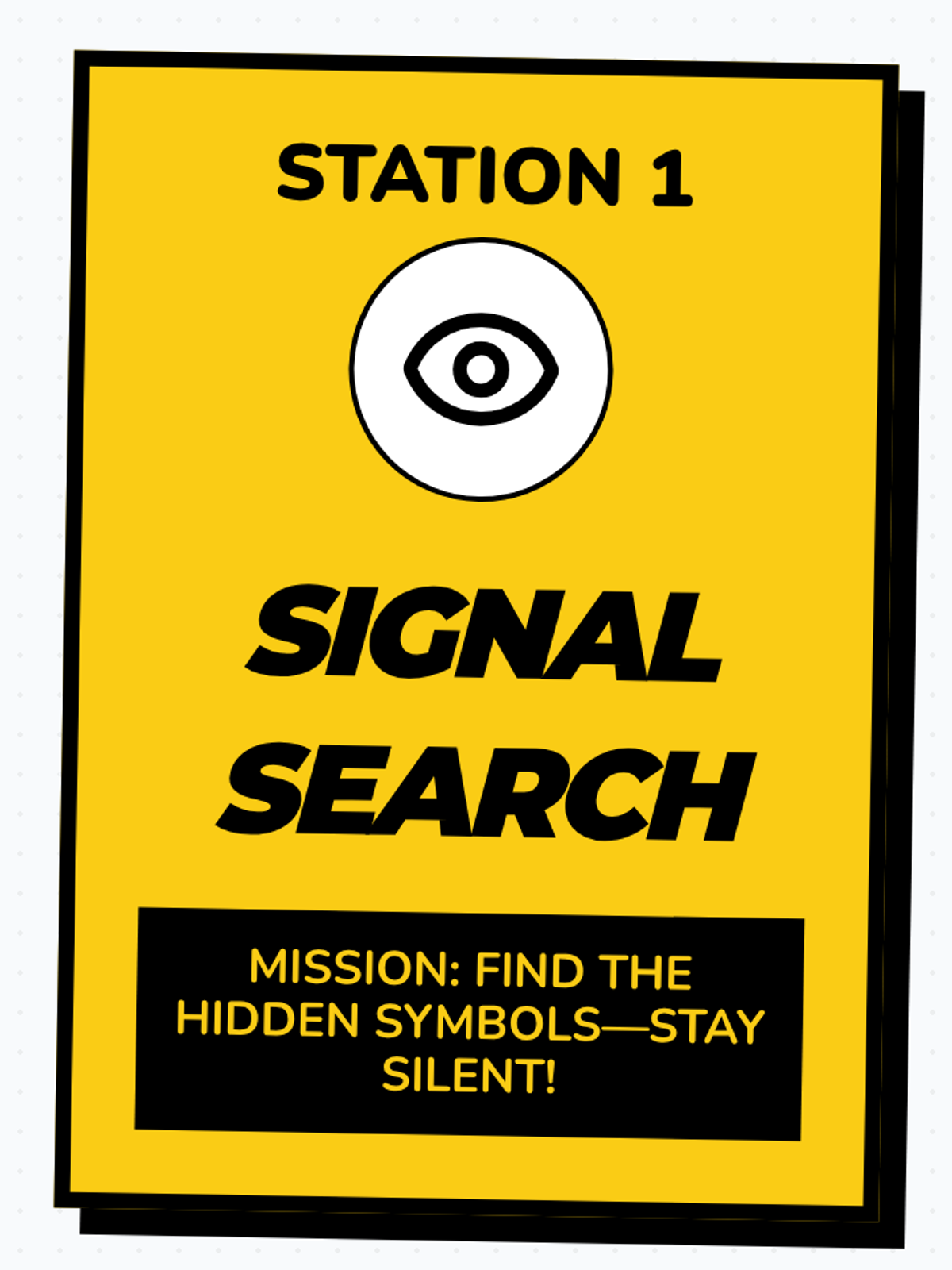
A high-energy wrap-up session for K-2 students to integrate their knowledge of the five senses and mindfulness through a superhero-themed training challenge. Students rotate through sensory stations and create their own superhero gear to represent their 'Senses Superpowers'.
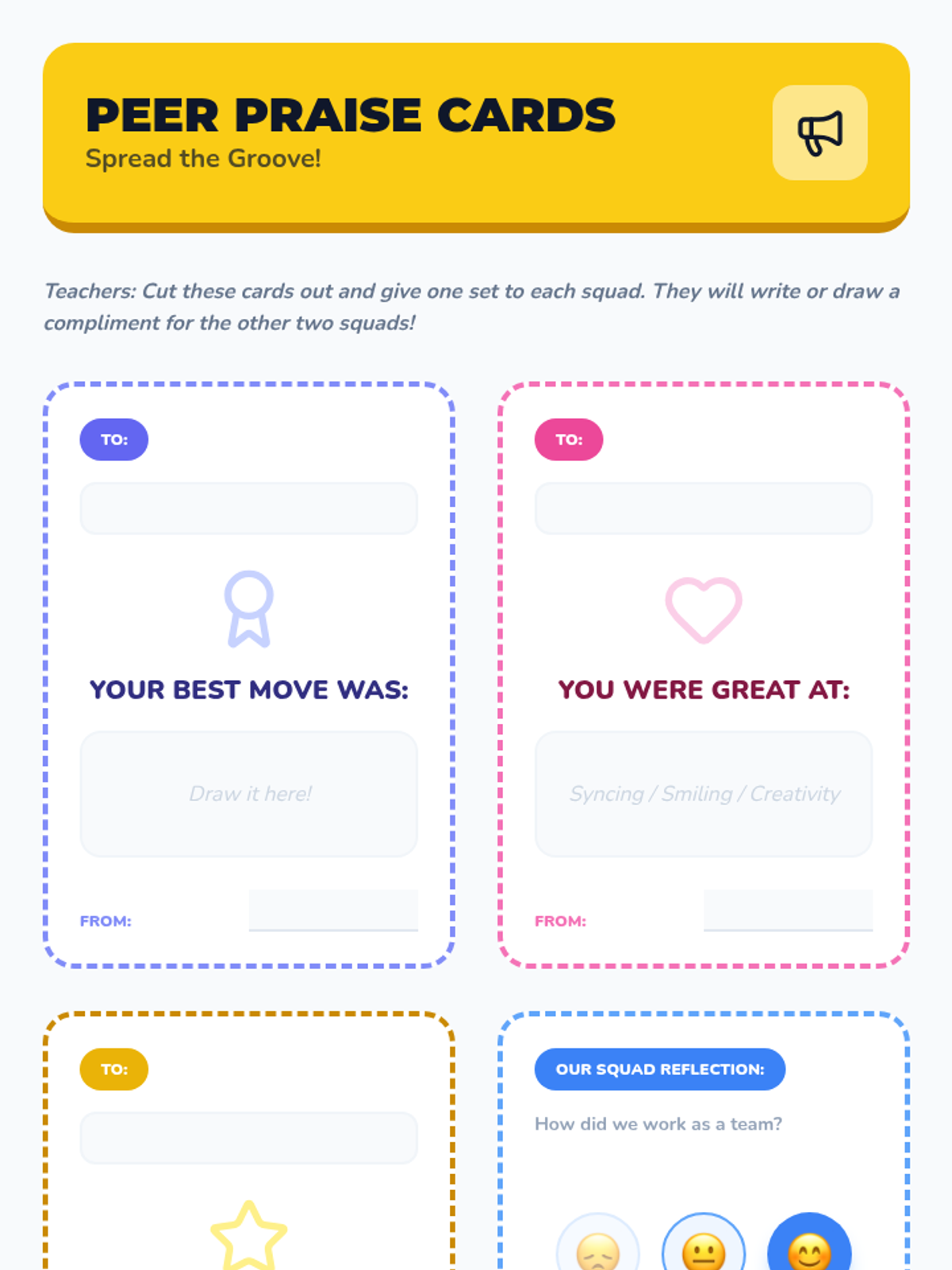
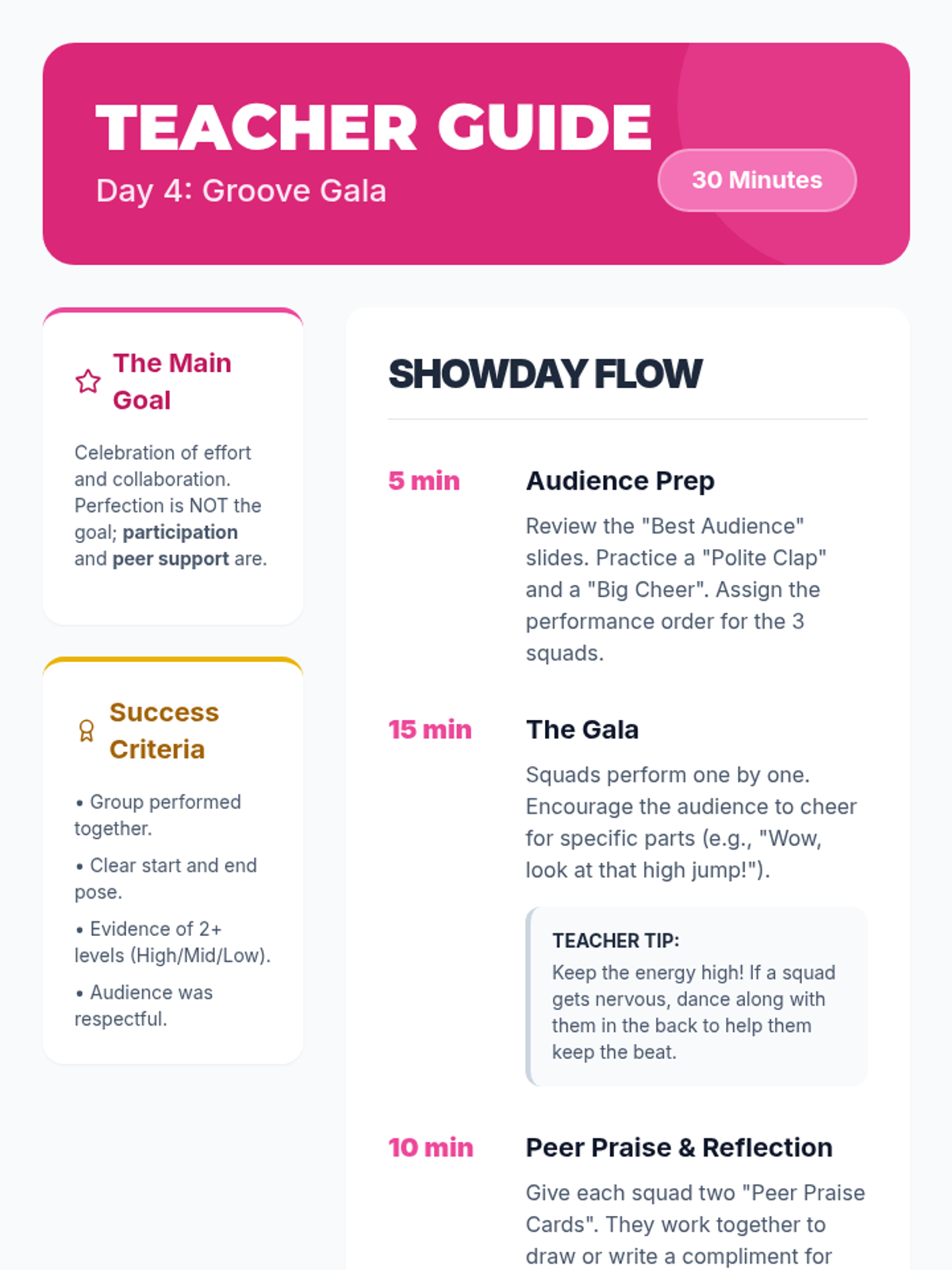
The final performance day where groups showcase their choreography and celebrate each other's creativity.
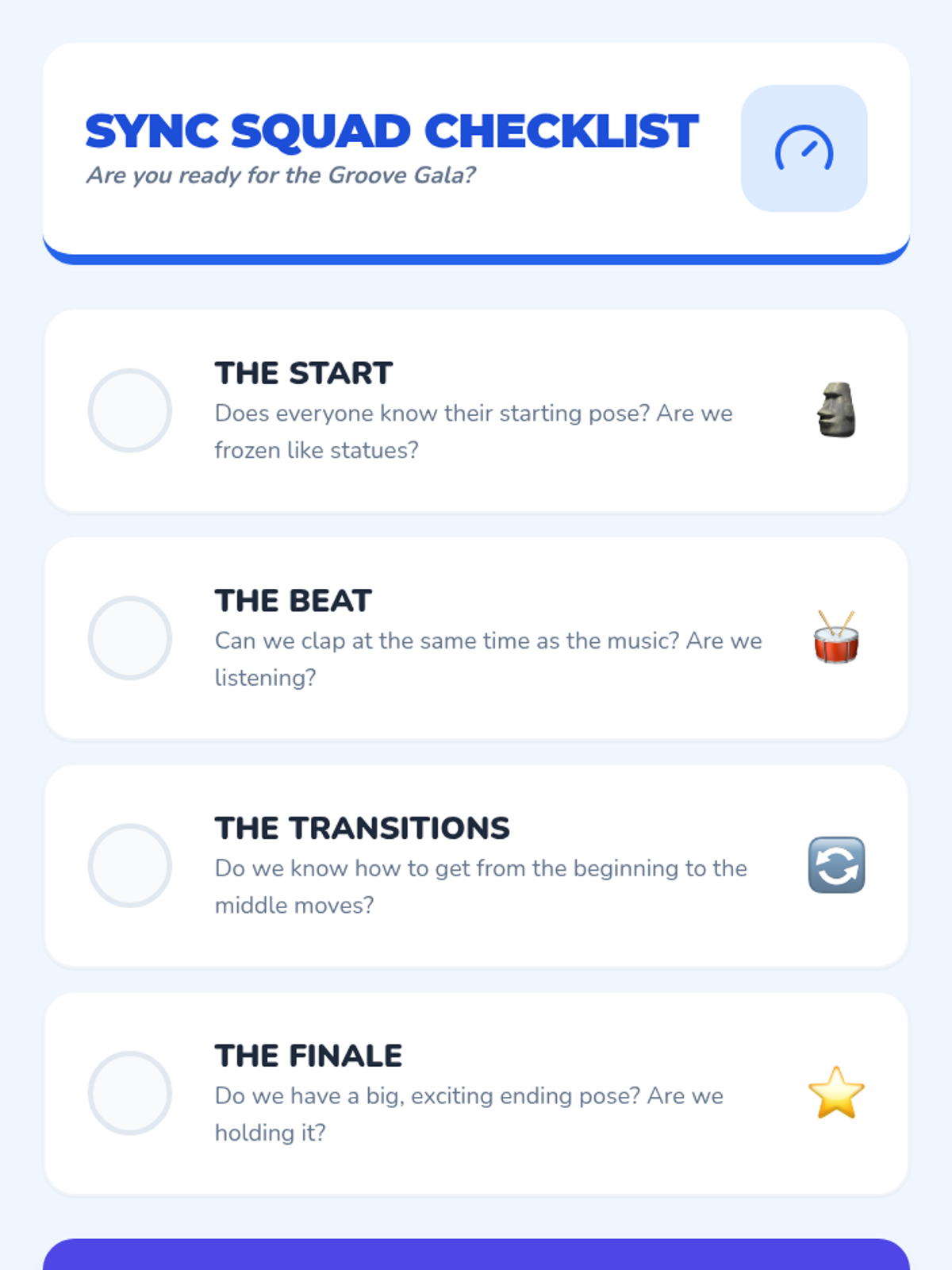
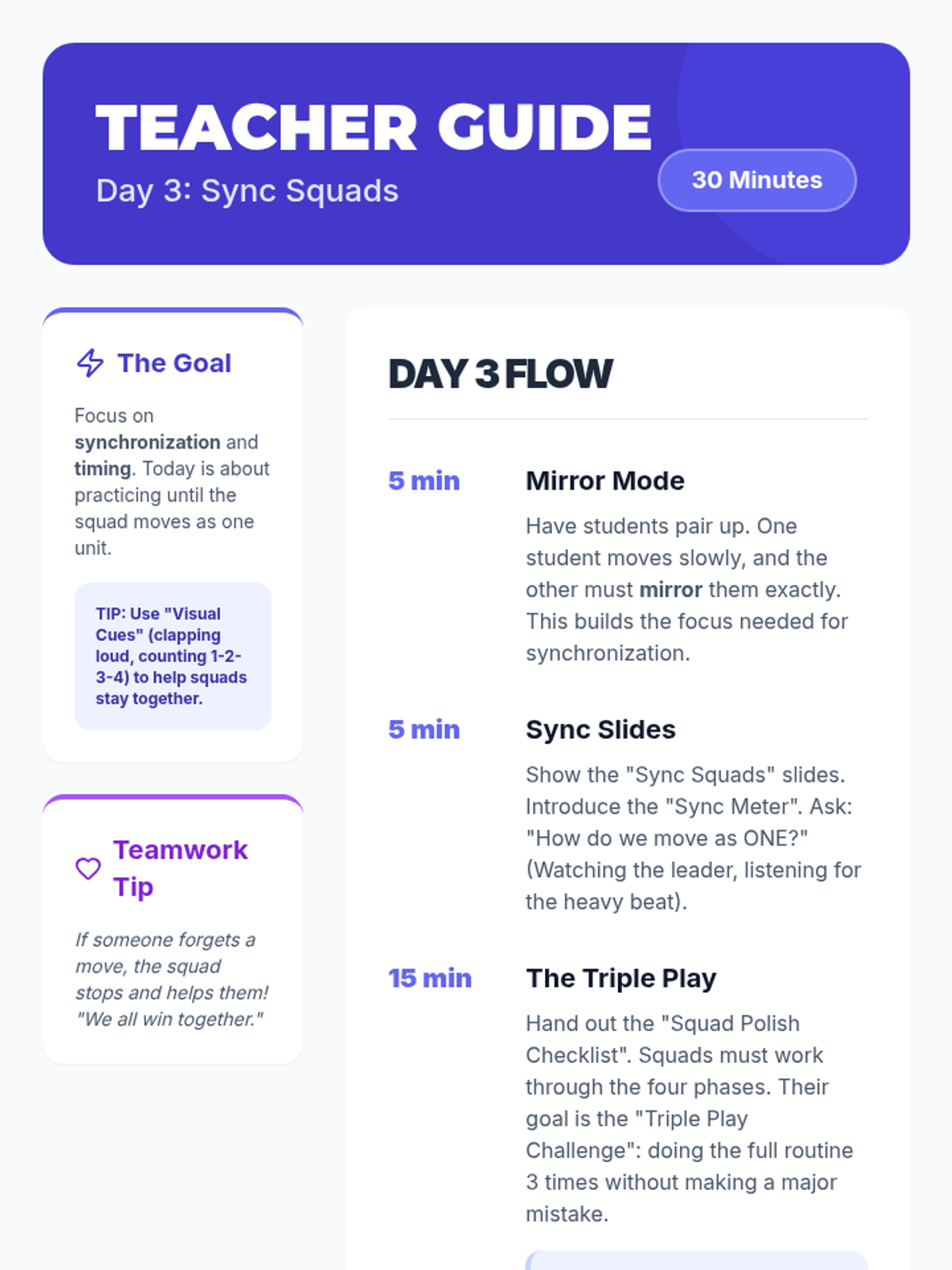
Squads practice their full routine, adding transitions and ensuring every member is in sync.
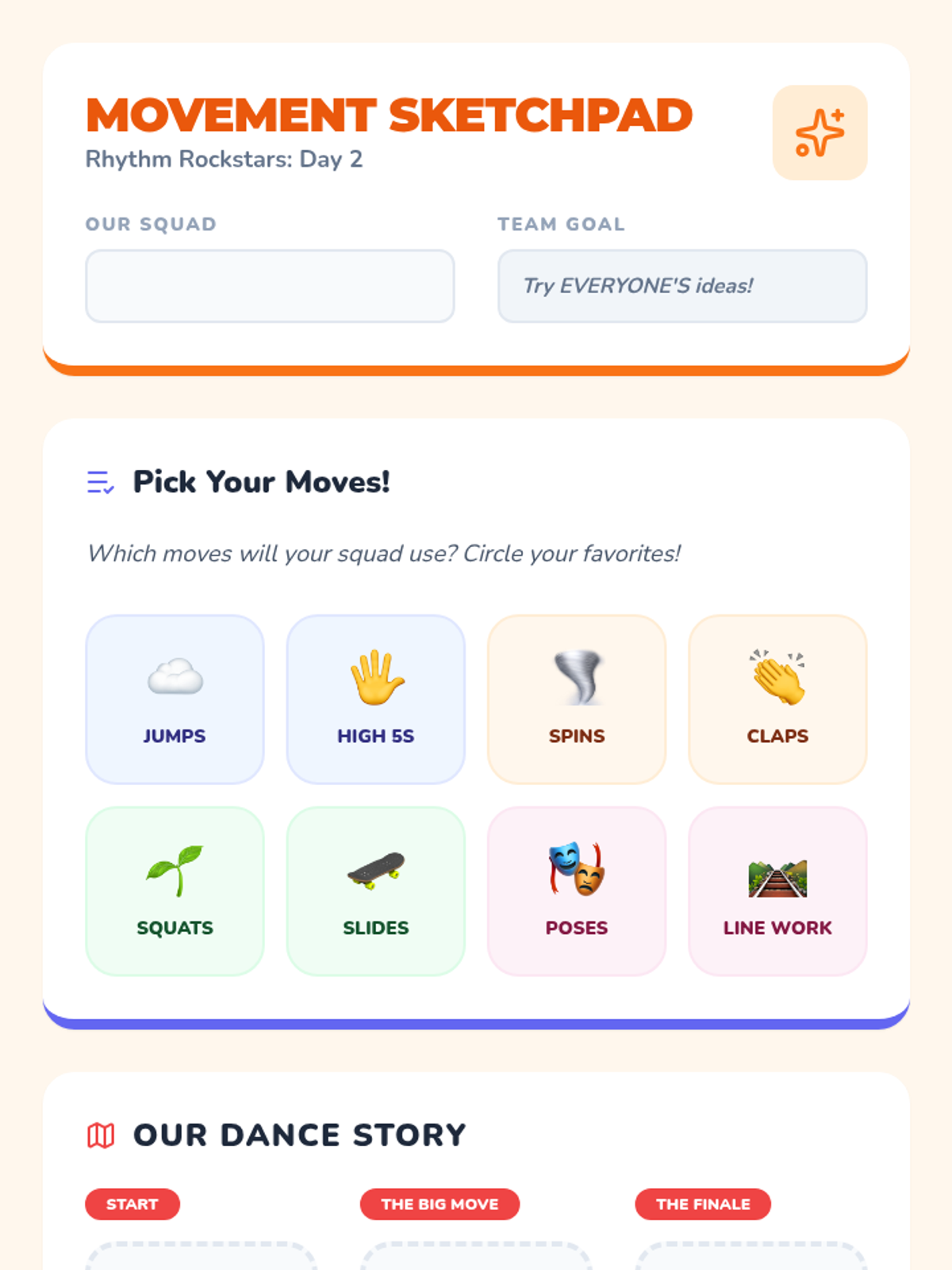
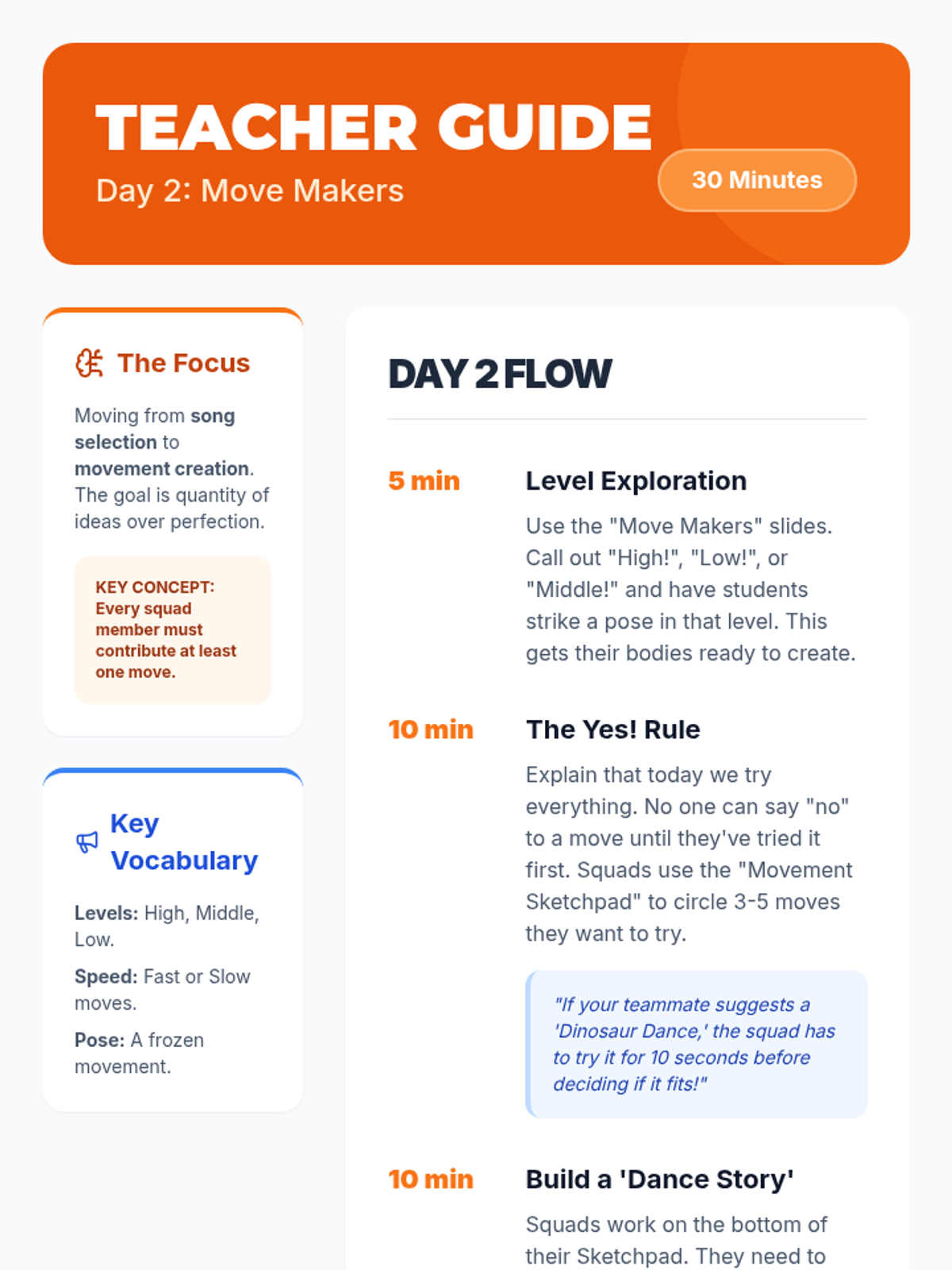
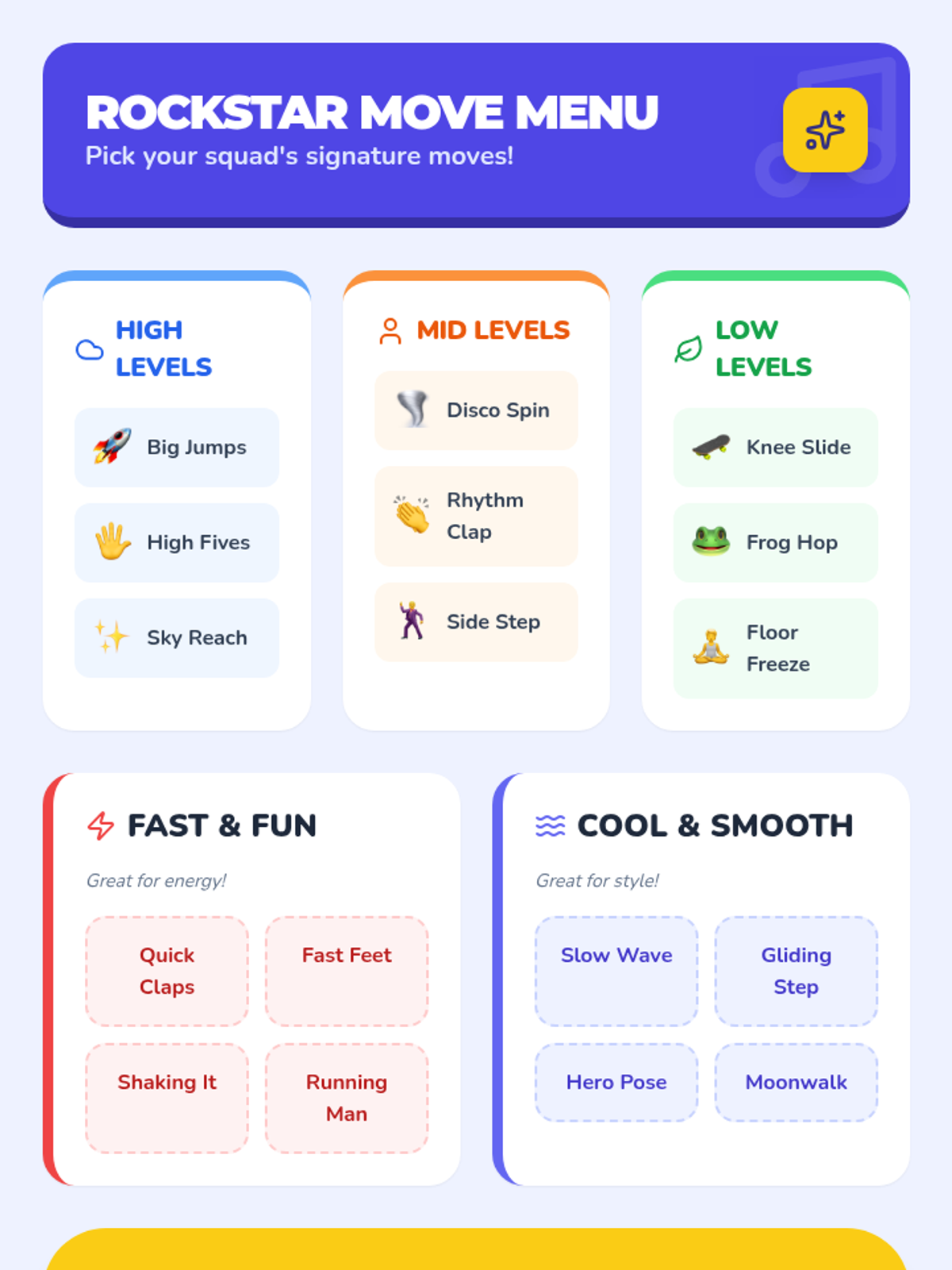
Groups brainstorm dance moves using different levels and speeds, focusing on including everyone's ideas.
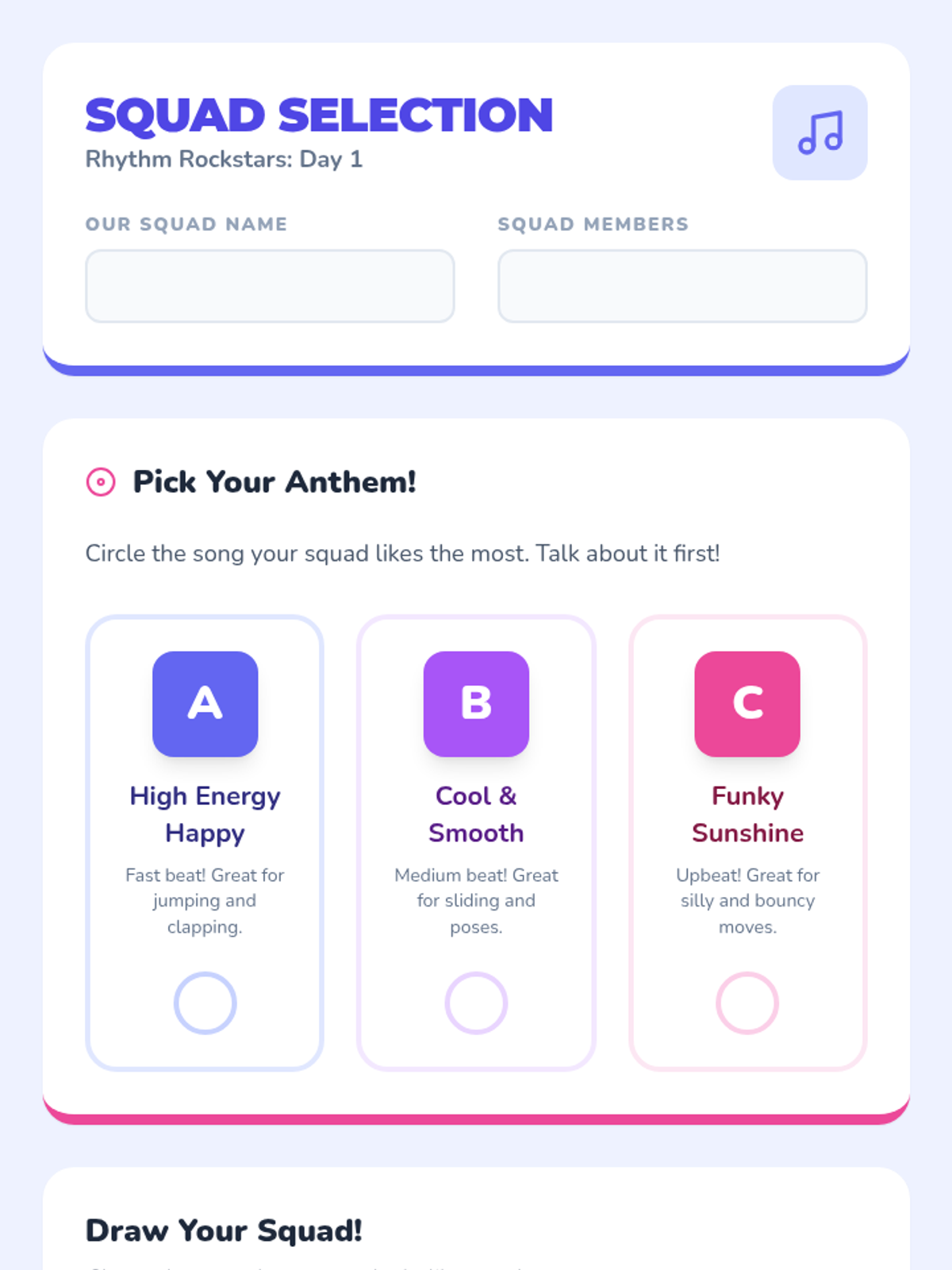
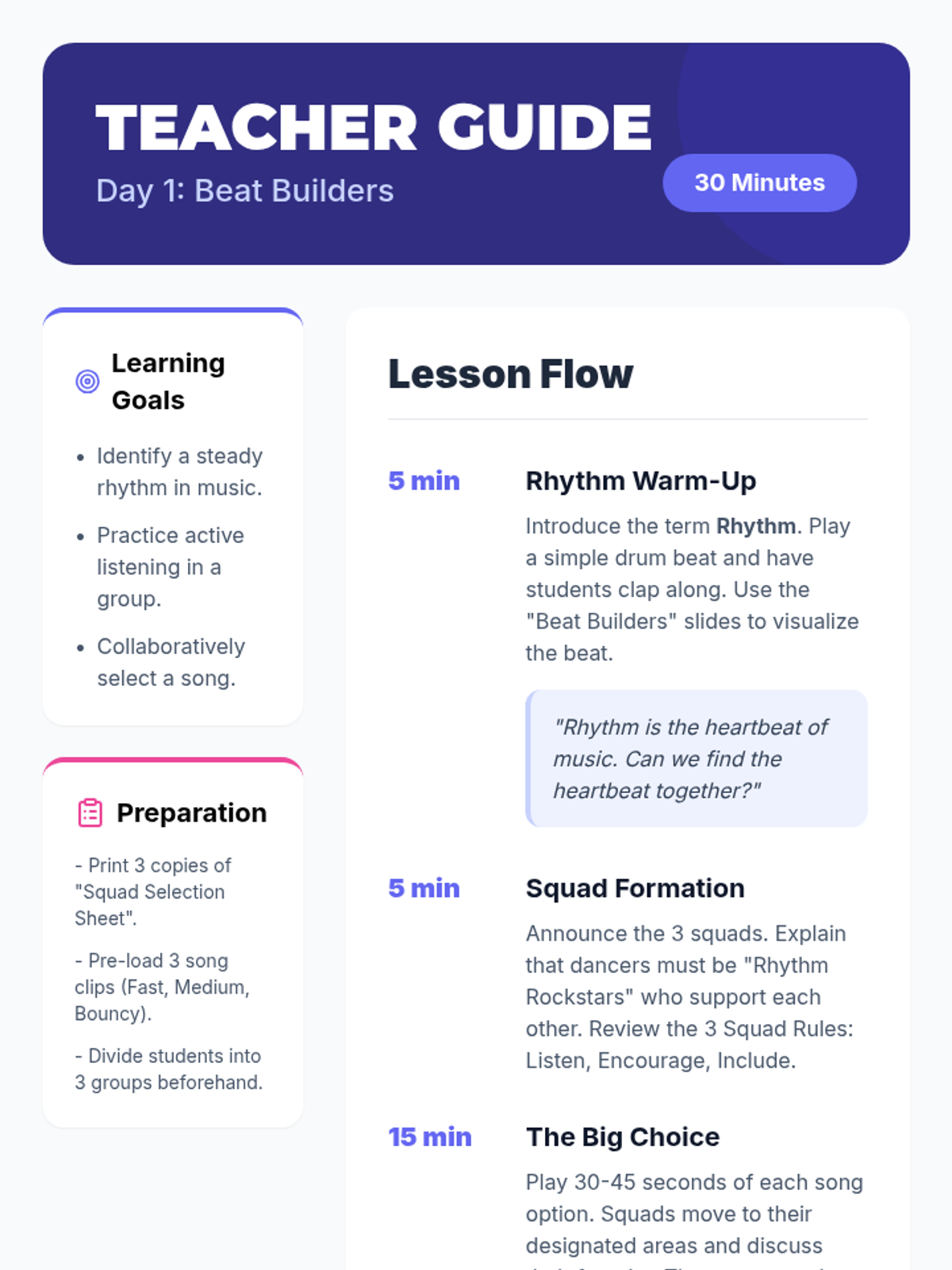
Students explore rhythm and tempo, form their dance squads, and select their group's performance song.
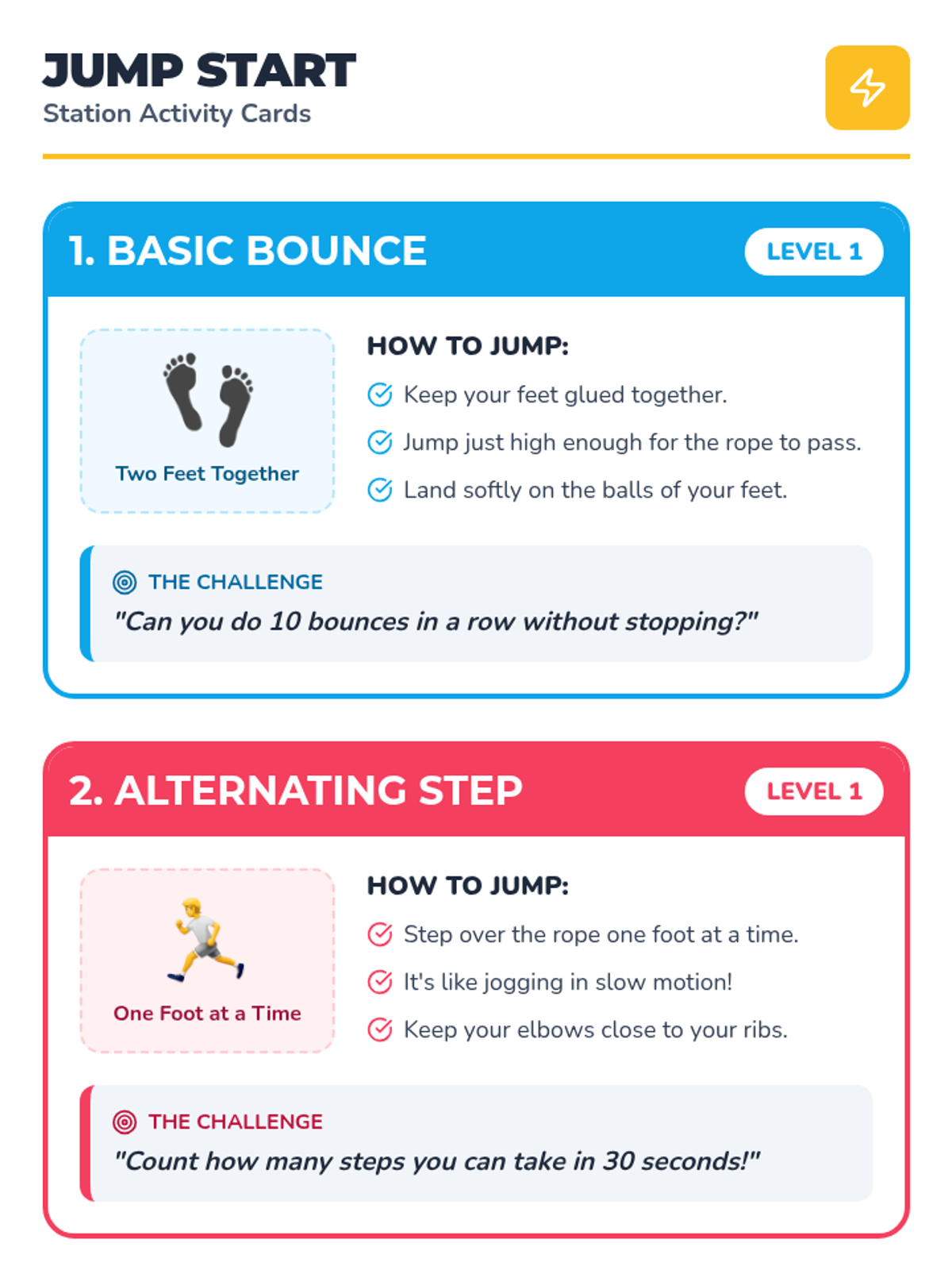
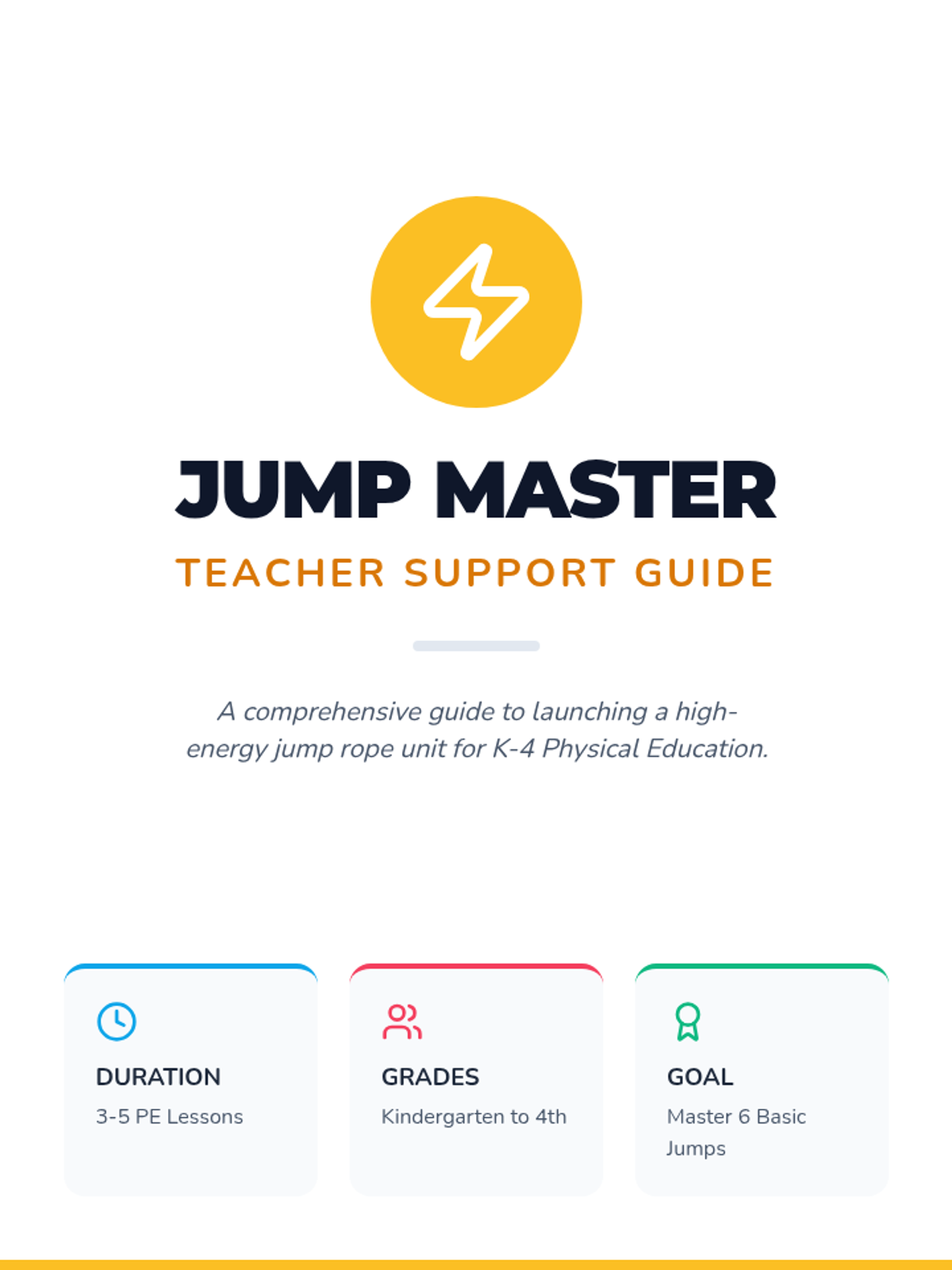
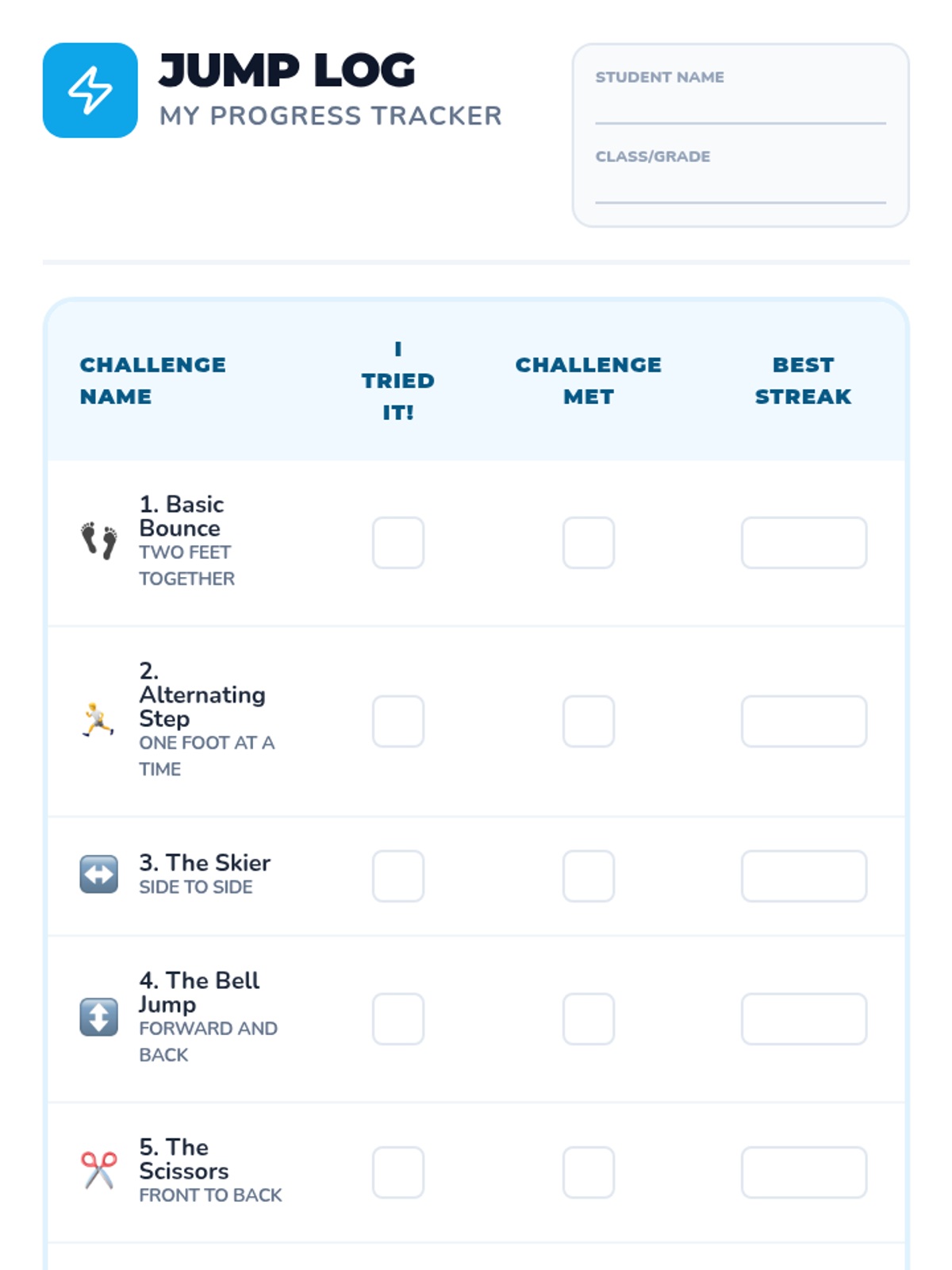
An energetic introduction to jump rope basics for elementary students, featuring colorful station cards, progress tracking, and teacher-led activities.
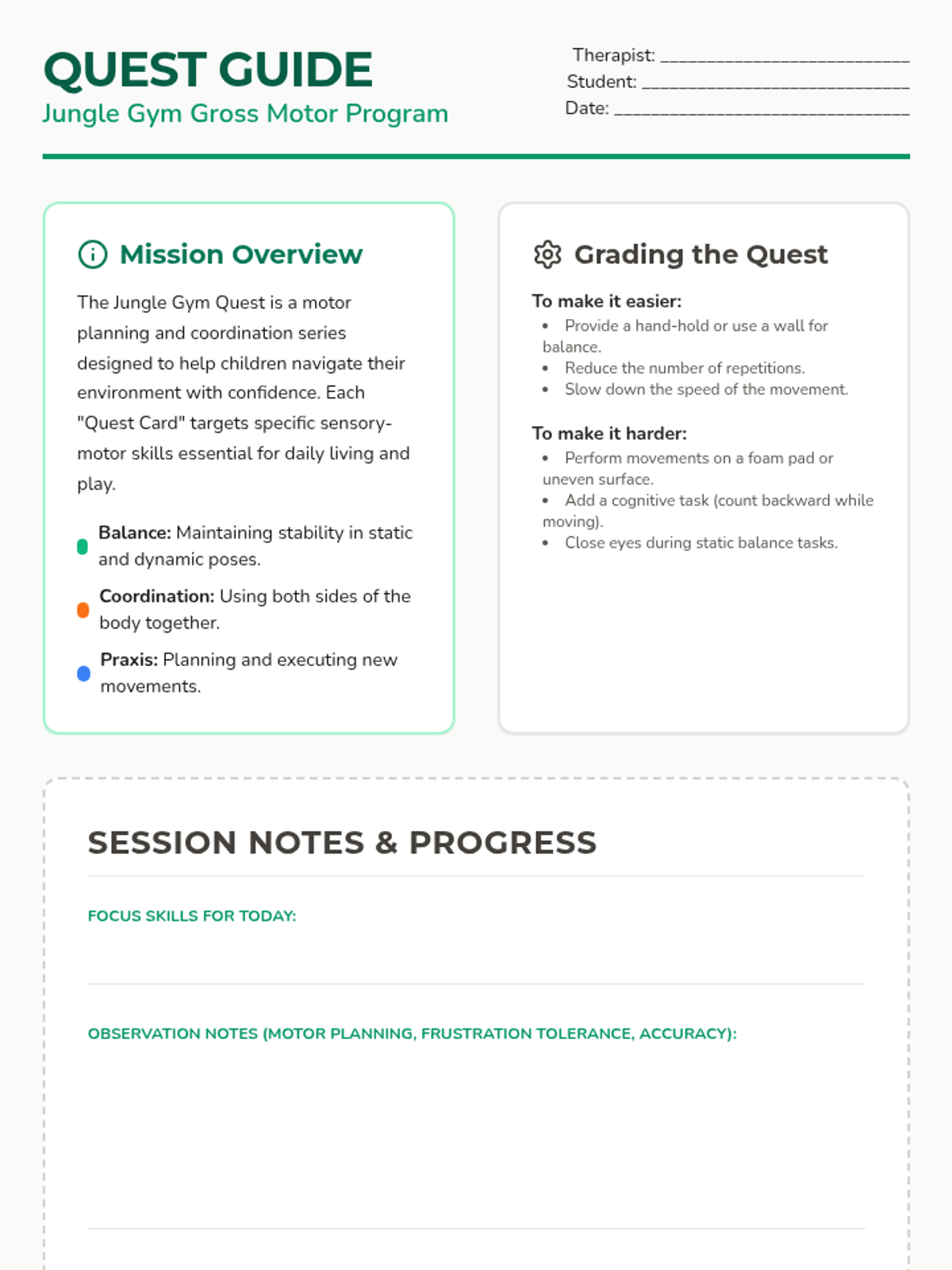
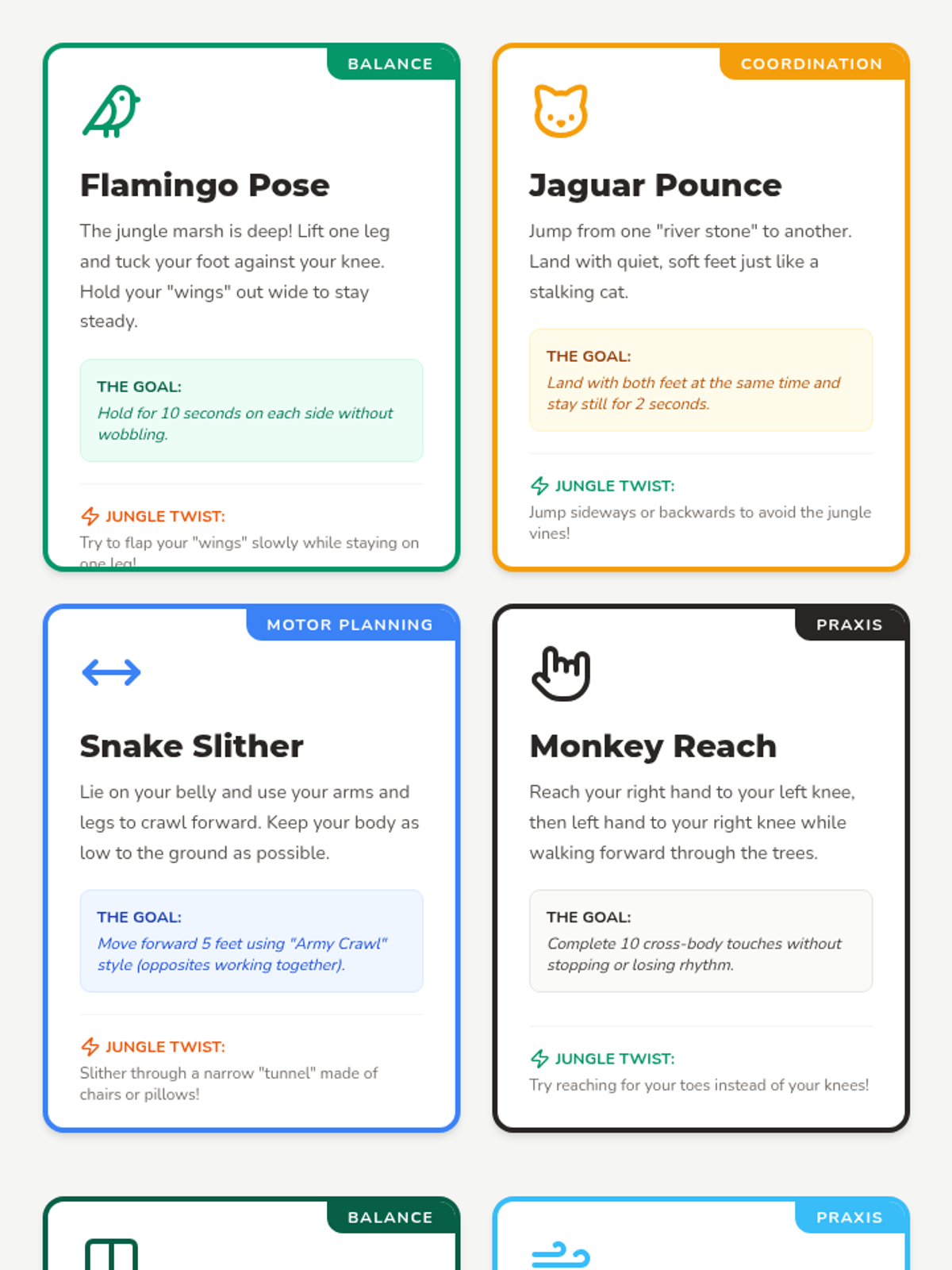
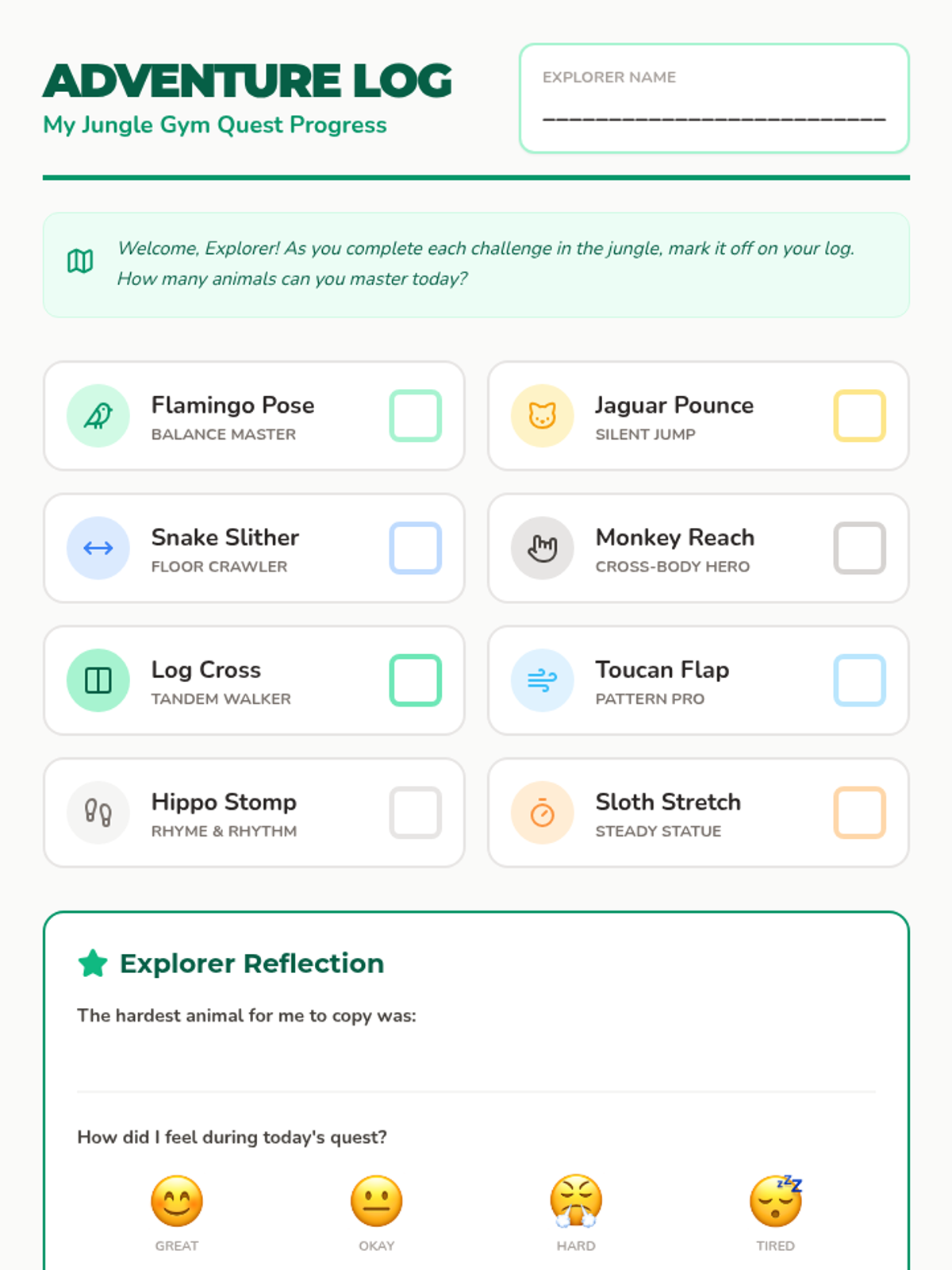
A series of engaging, jungle-themed gross motor activities designed to improve balance, coordination, and motor planning for pediatric occupational therapy.
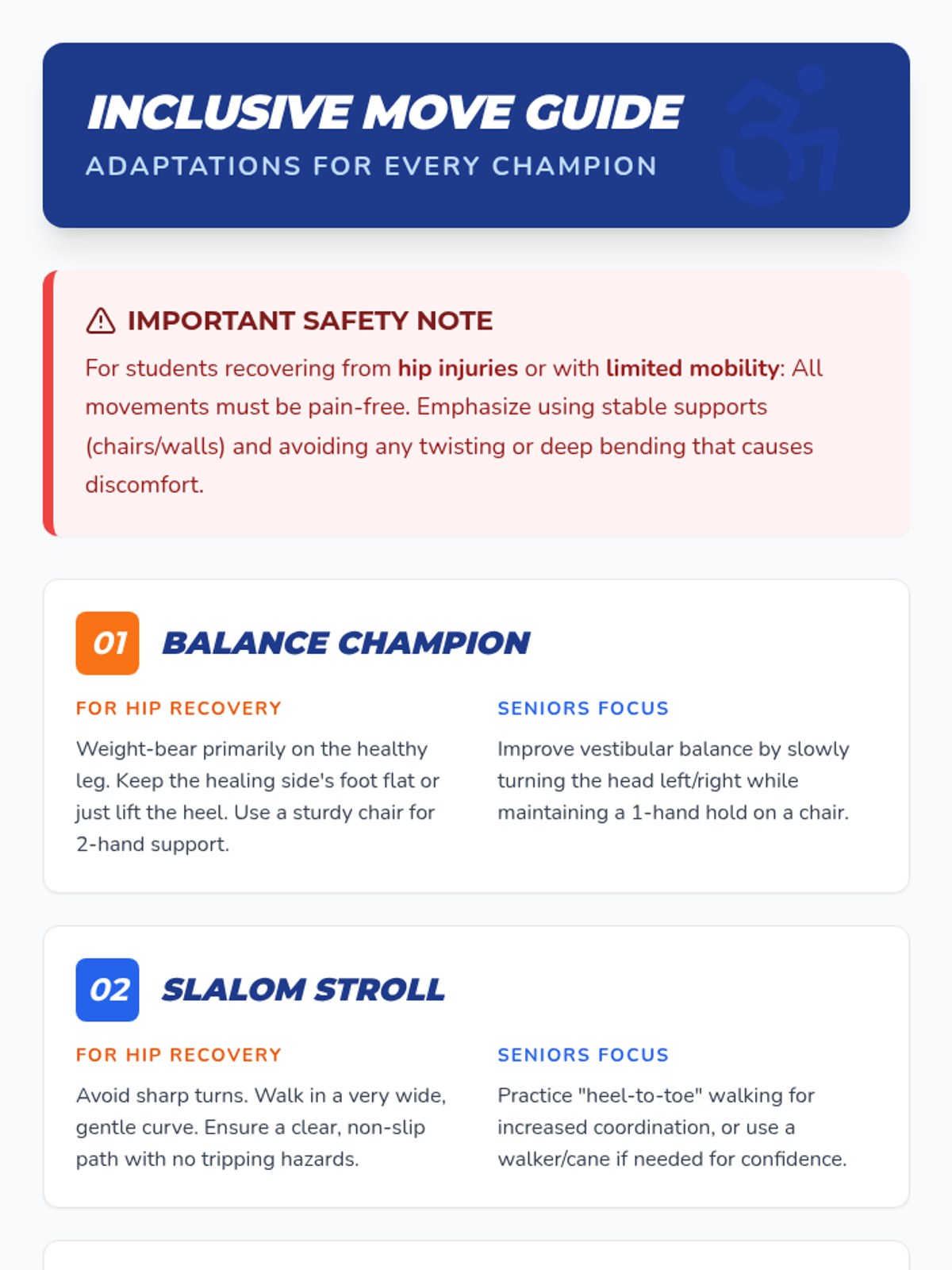
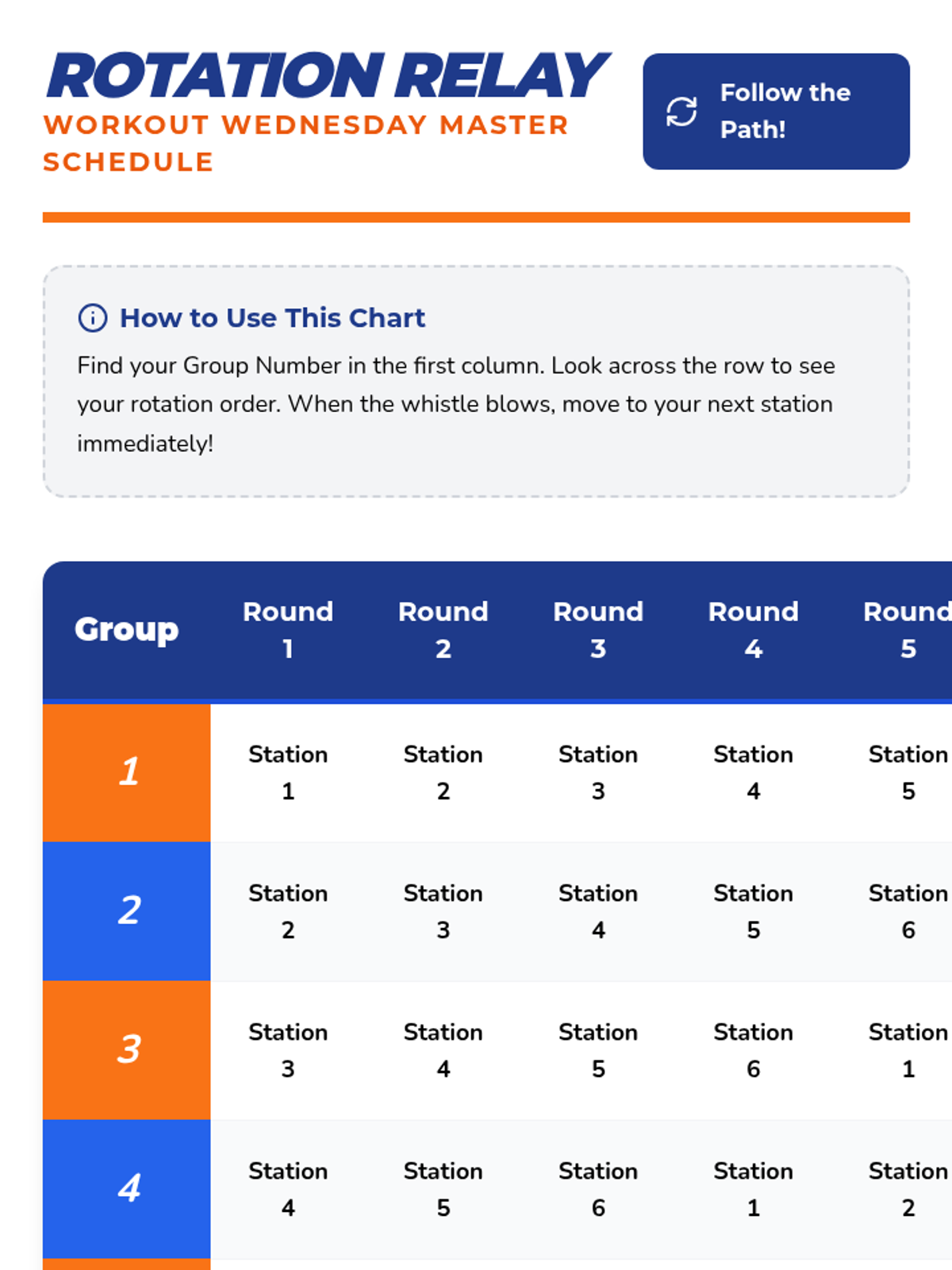
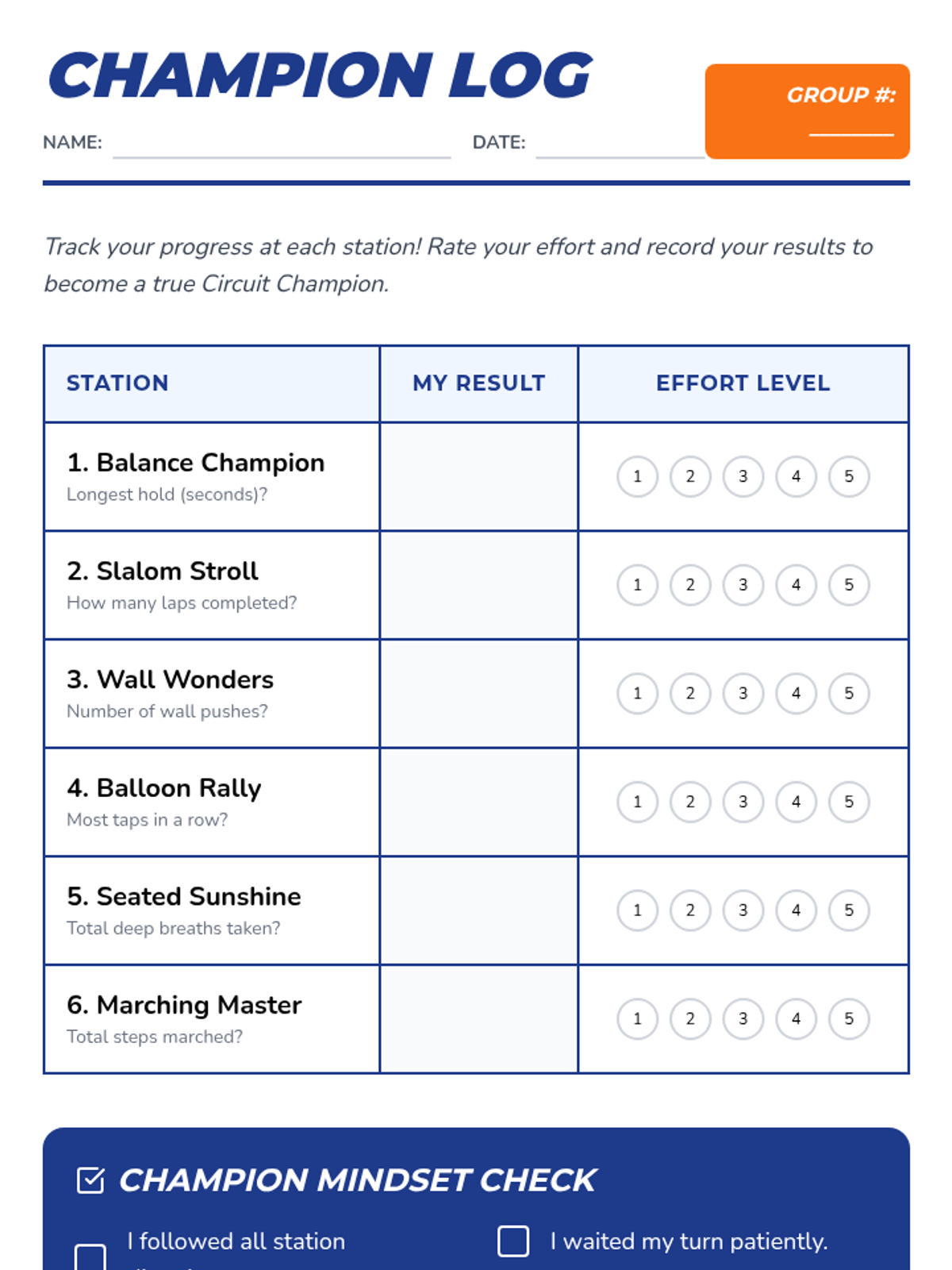
A high-energy station rotation circuit designed to build gross motor skills, balance, and social teamwork through 'Workout Wednesday' routines. Students rotate through six physical challenges while tracking their personal progress.
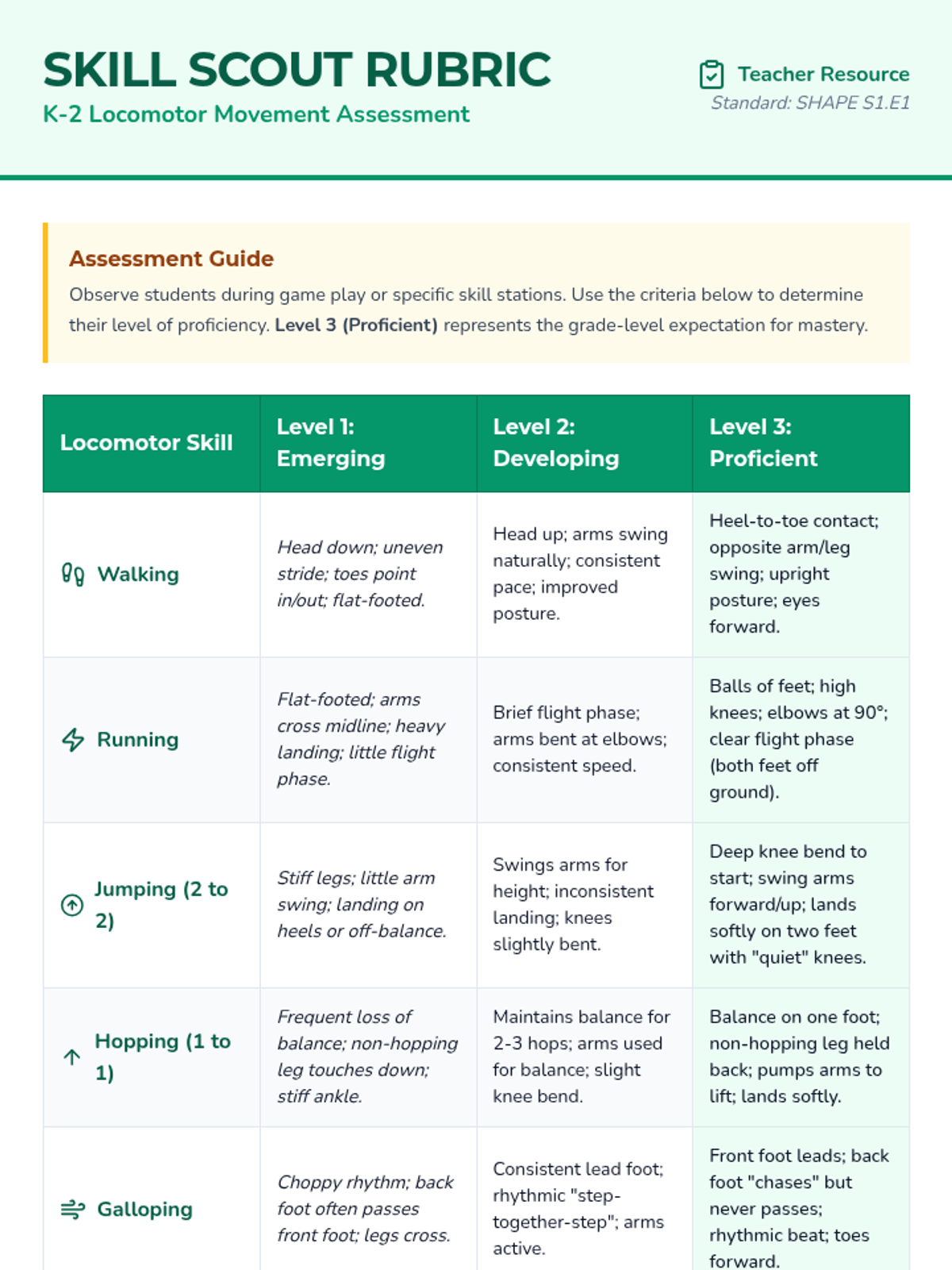
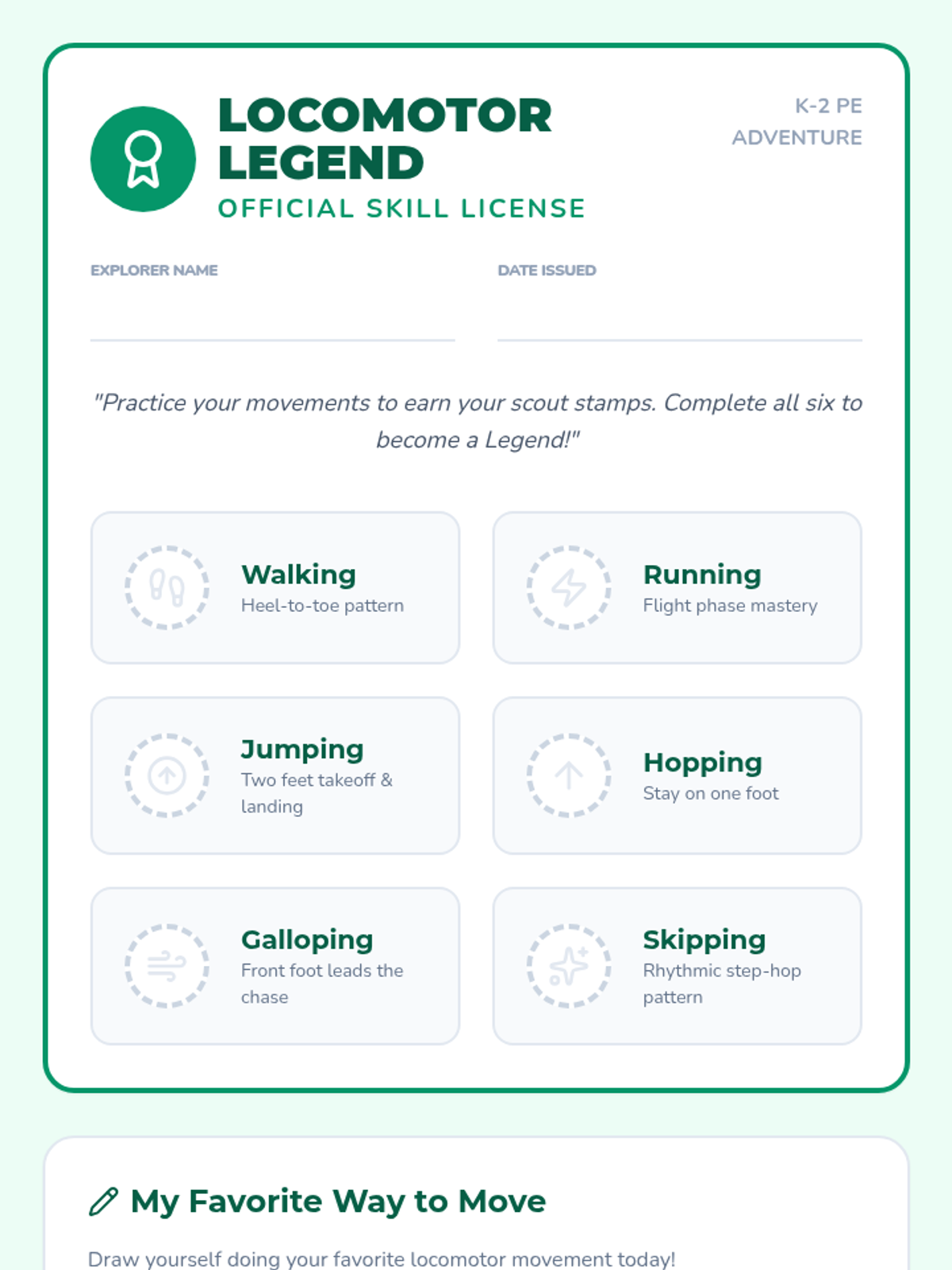
A physical education lesson for K-2 students focusing on mastering the fundamental locomotor movements through practice and assessment.
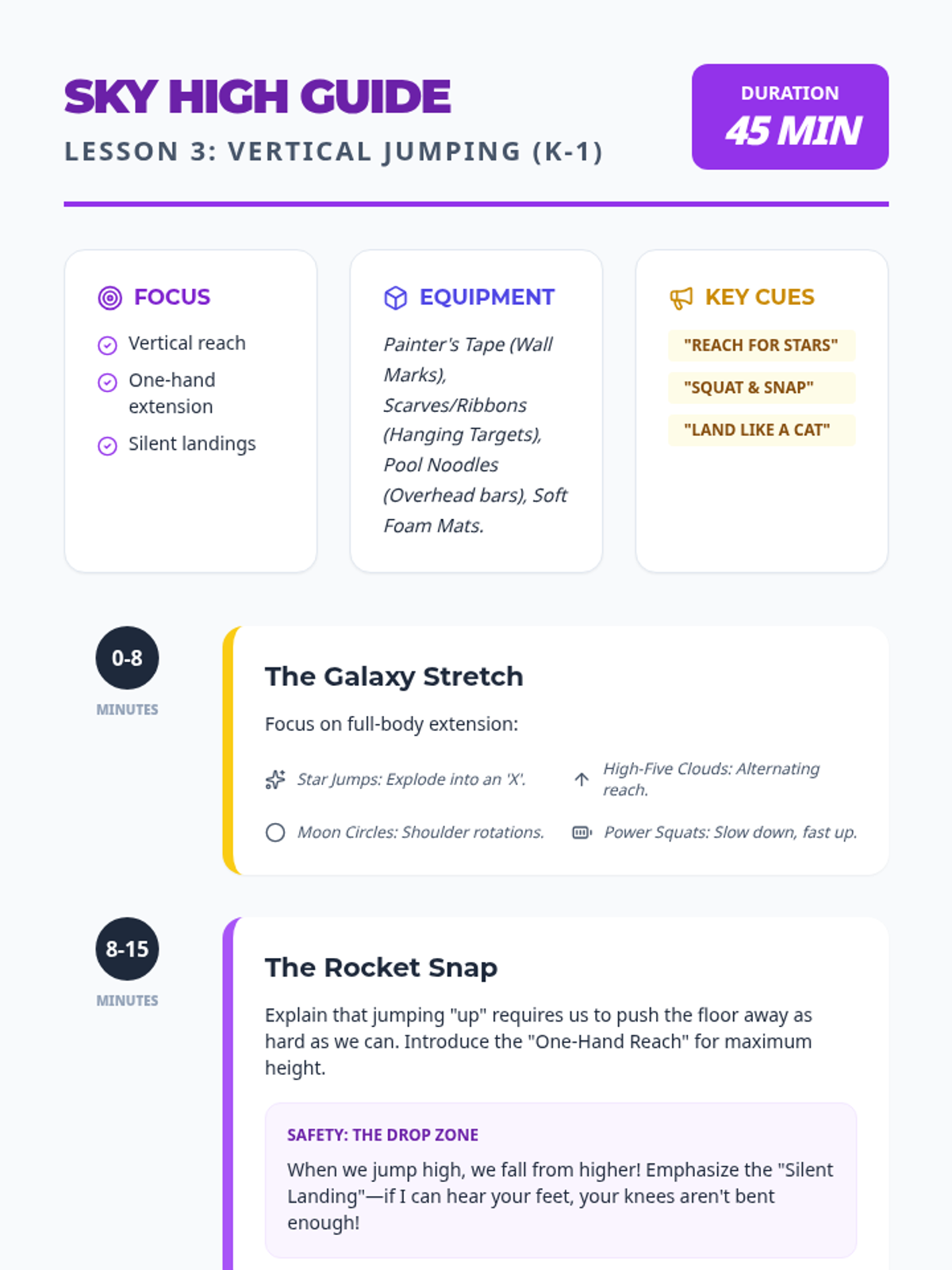
A 45-minute lesson for K-1 students focusing on vertical jumping (height) and reaching for targets while maintaining a safe landing.
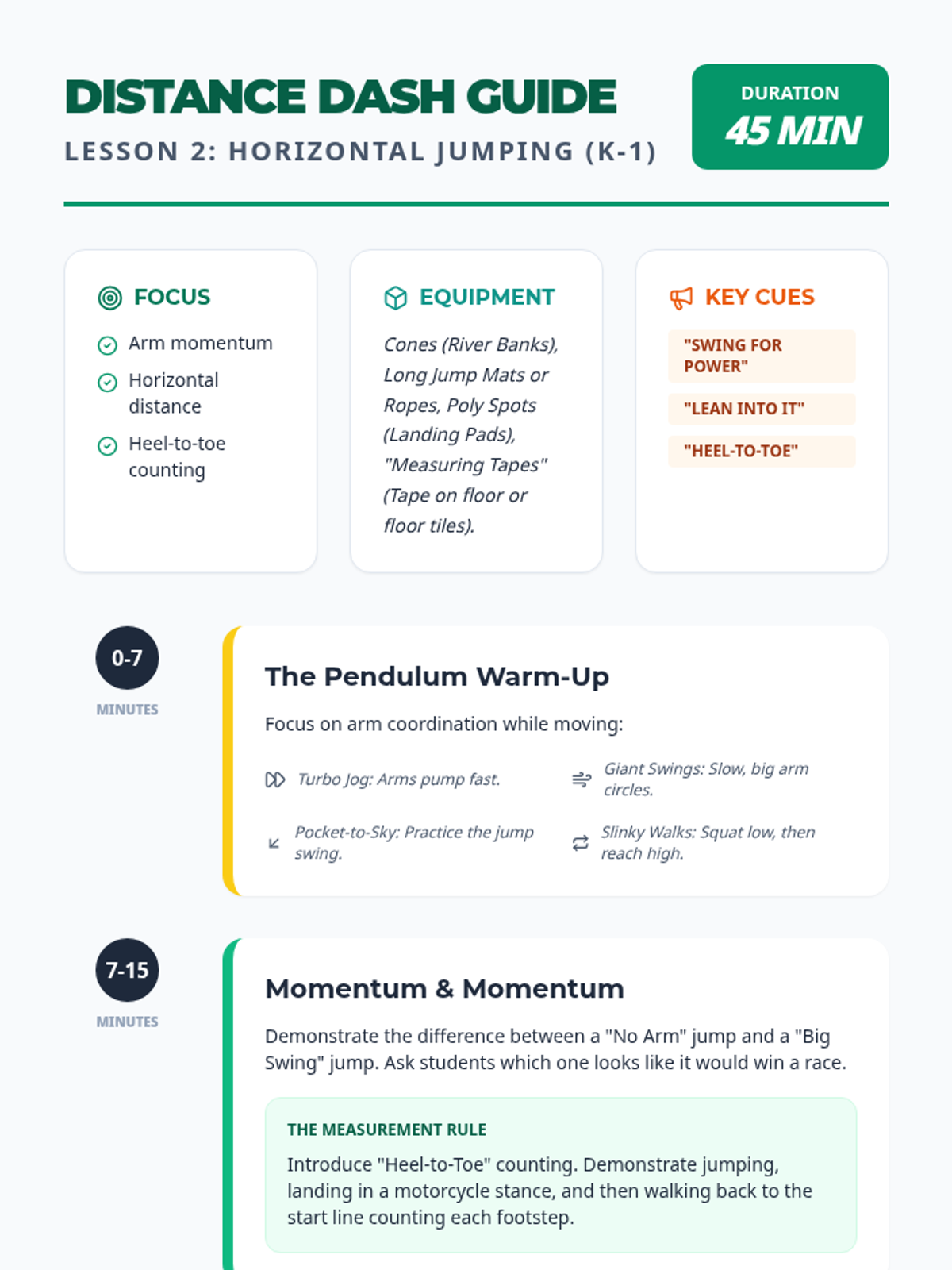
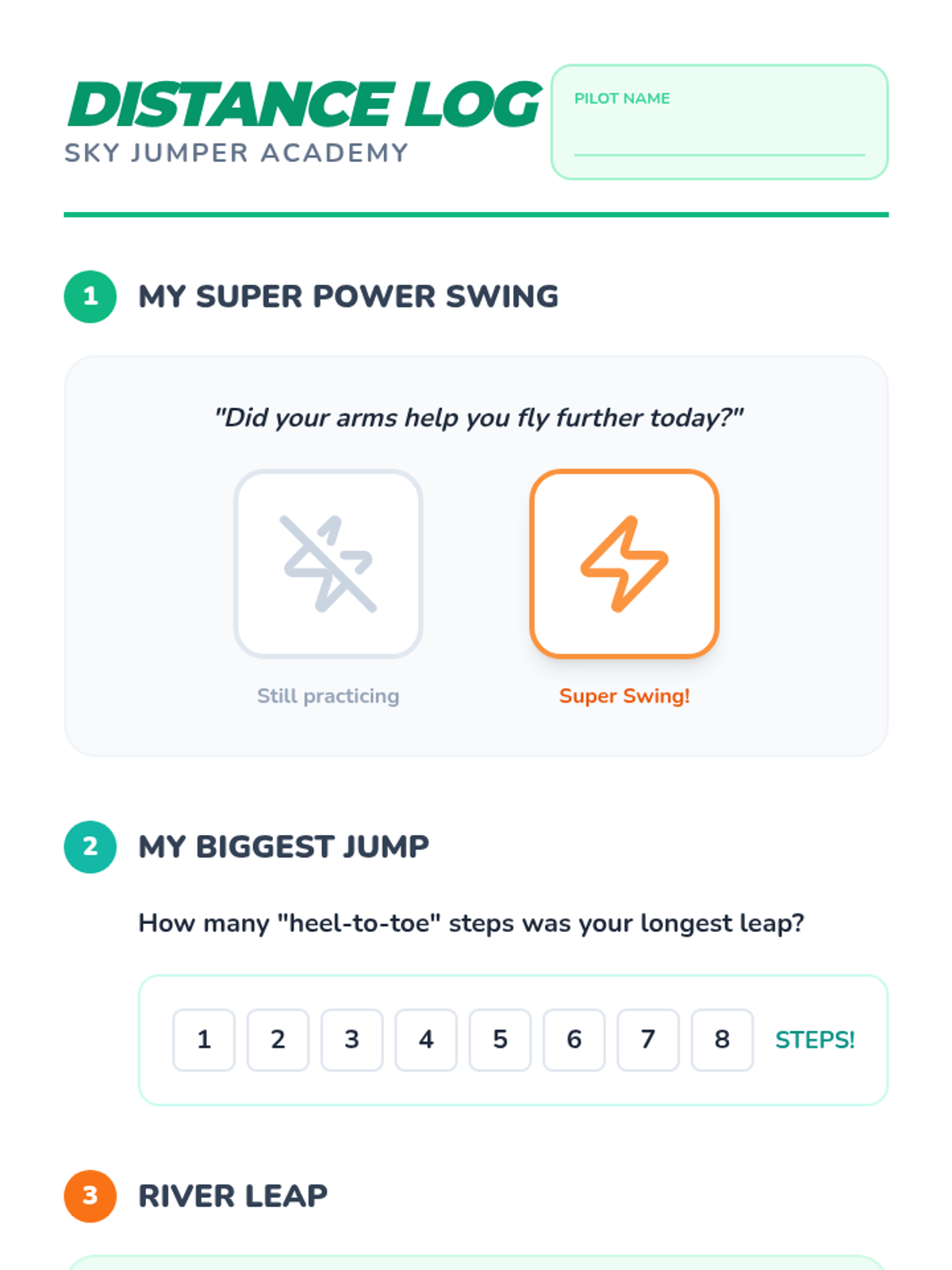
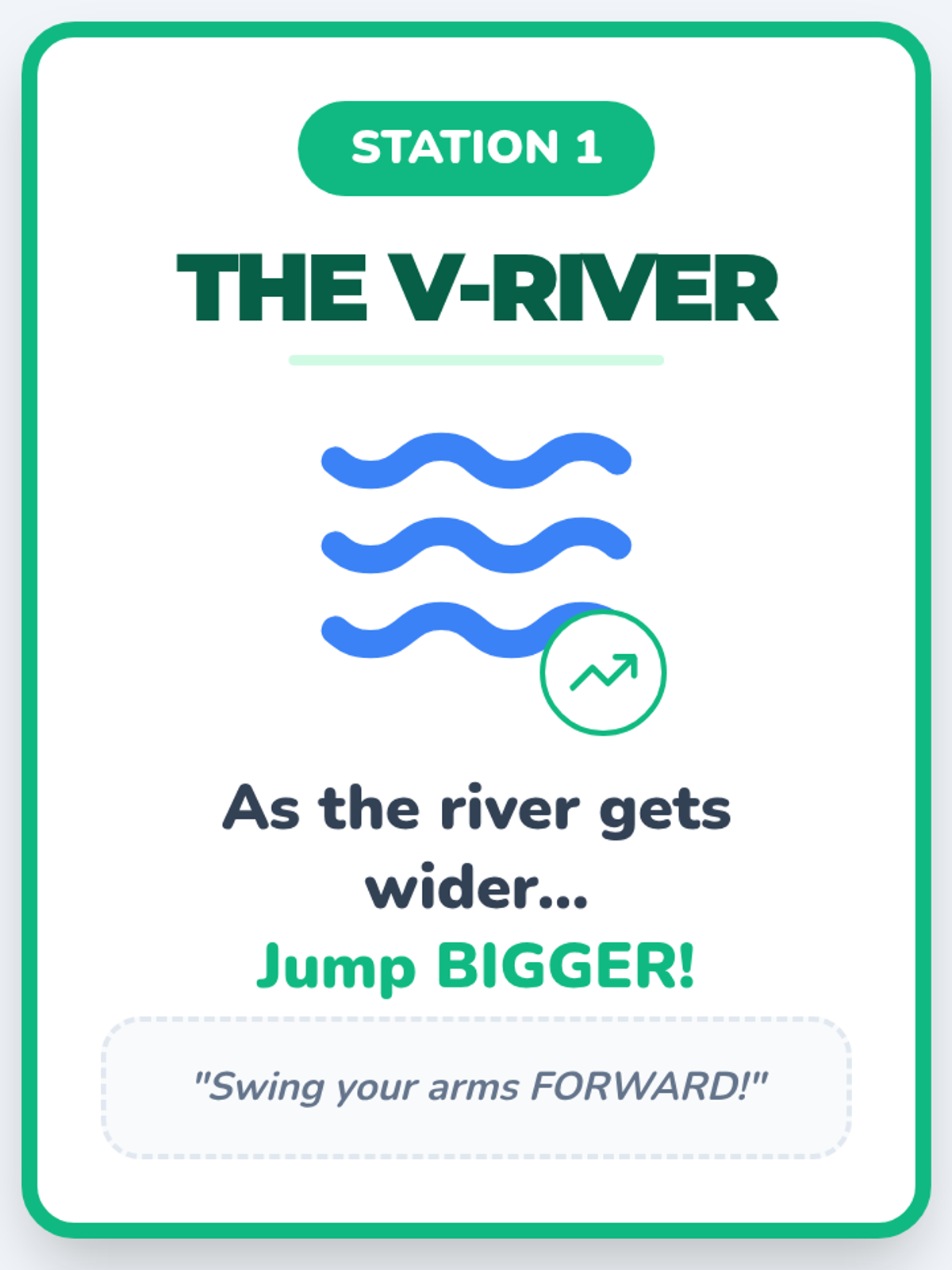
A 45-minute lesson for K-1 students focusing on the broad jump (horizontal distance) and the power of the 'arm swing' for momentum.
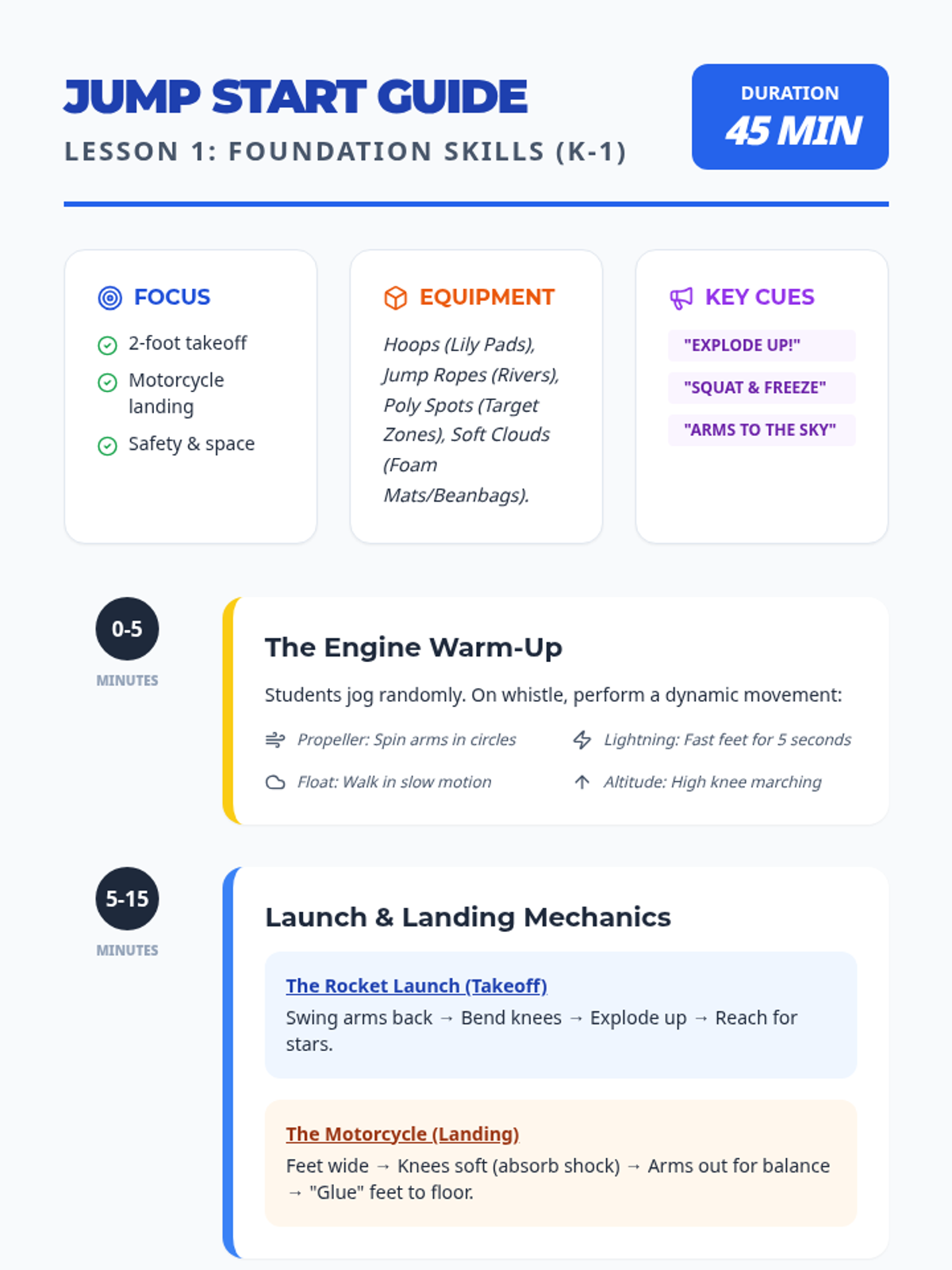
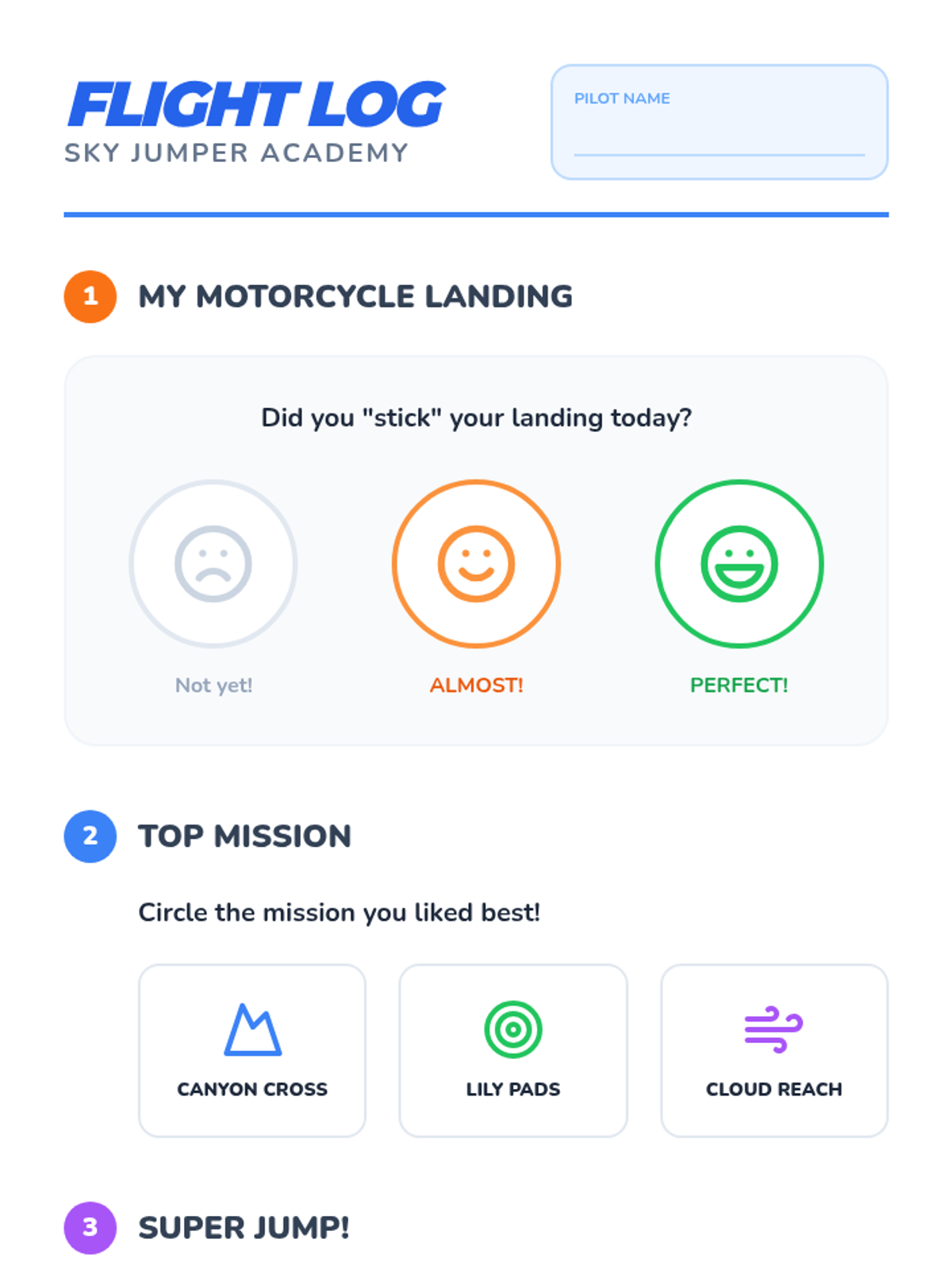
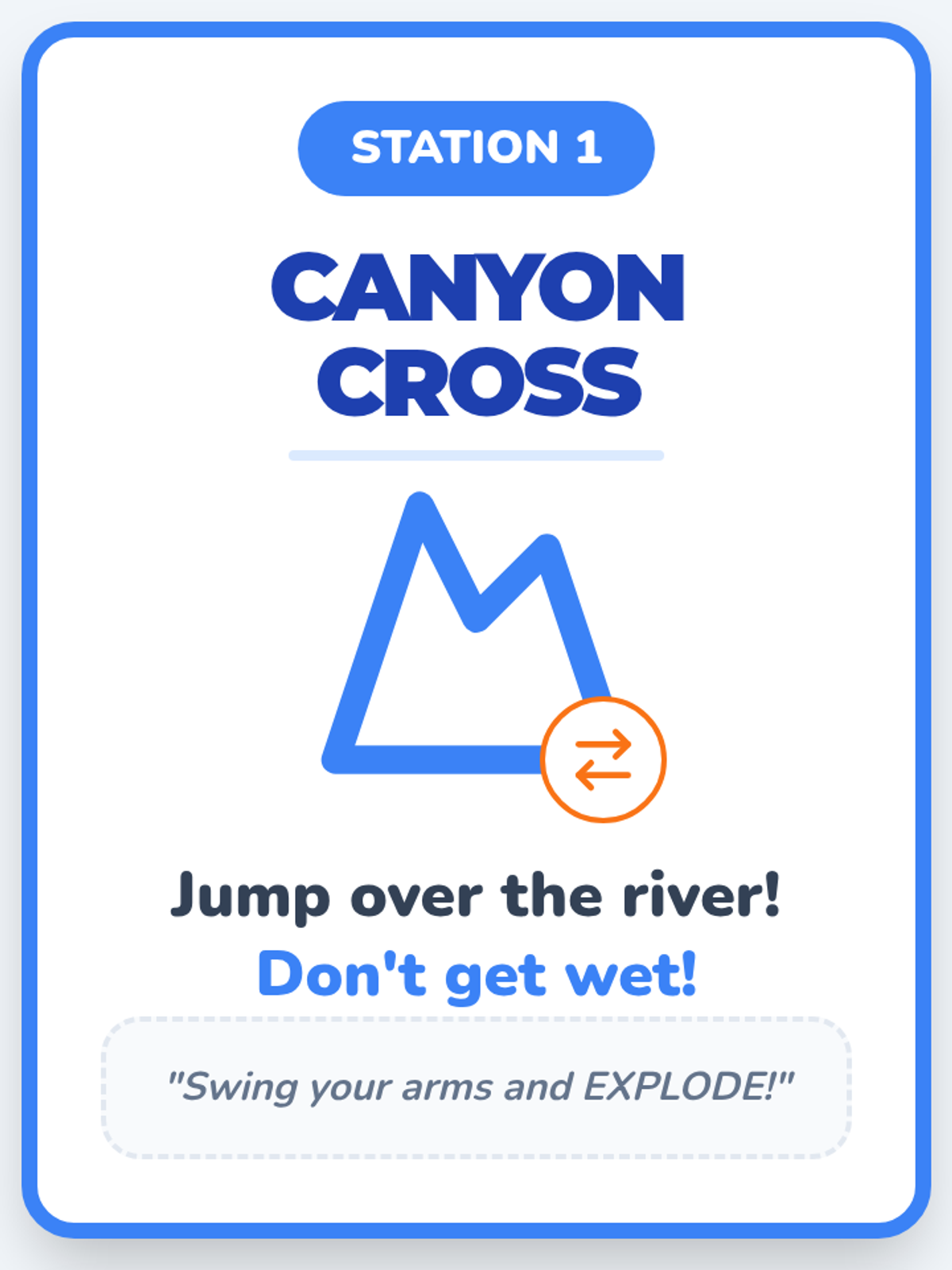
A 45-minute introductory lesson for K-1 students focusing on two-foot takeoffs and 'motorcycle' landings to ensure safety and power.
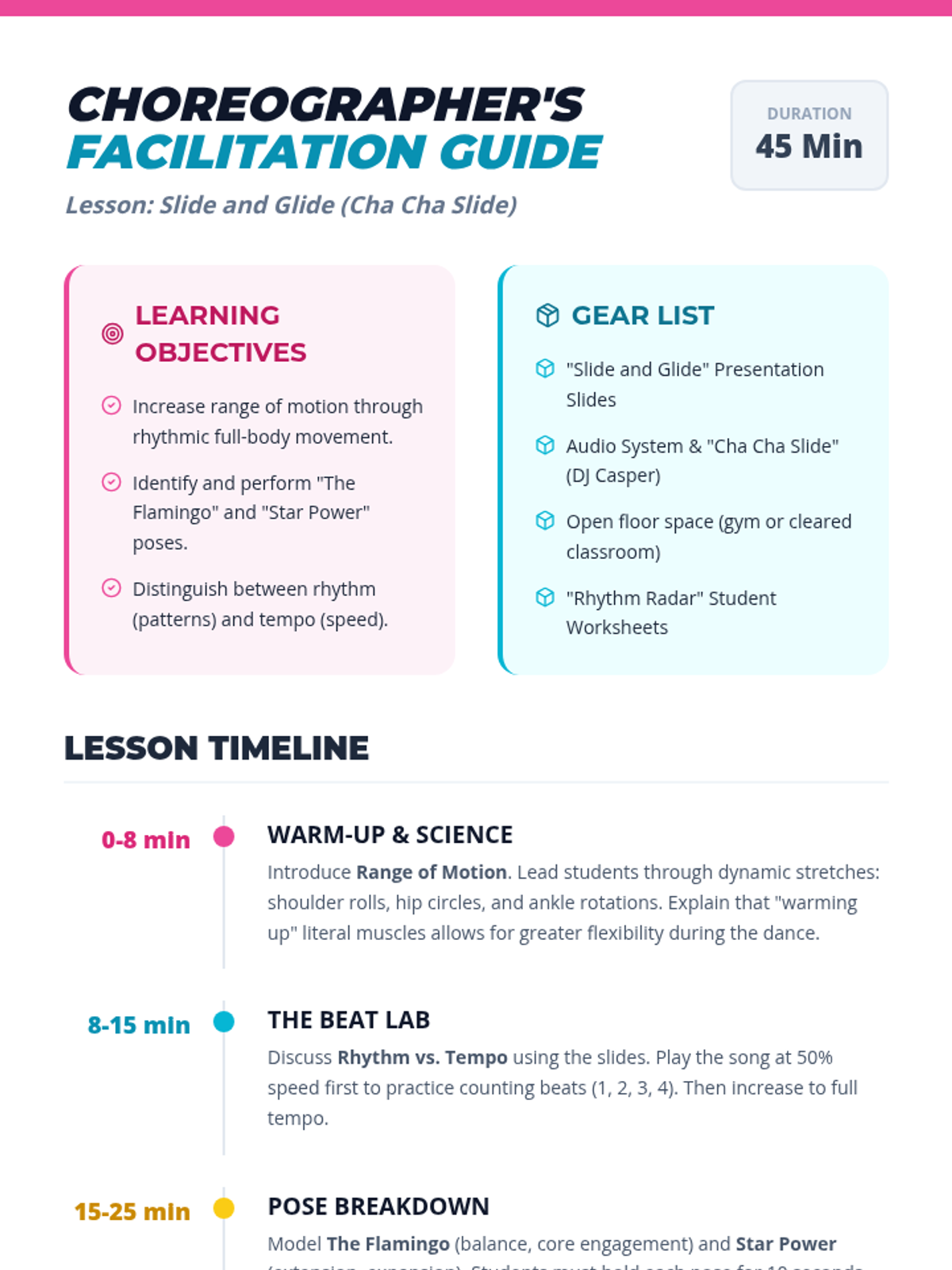
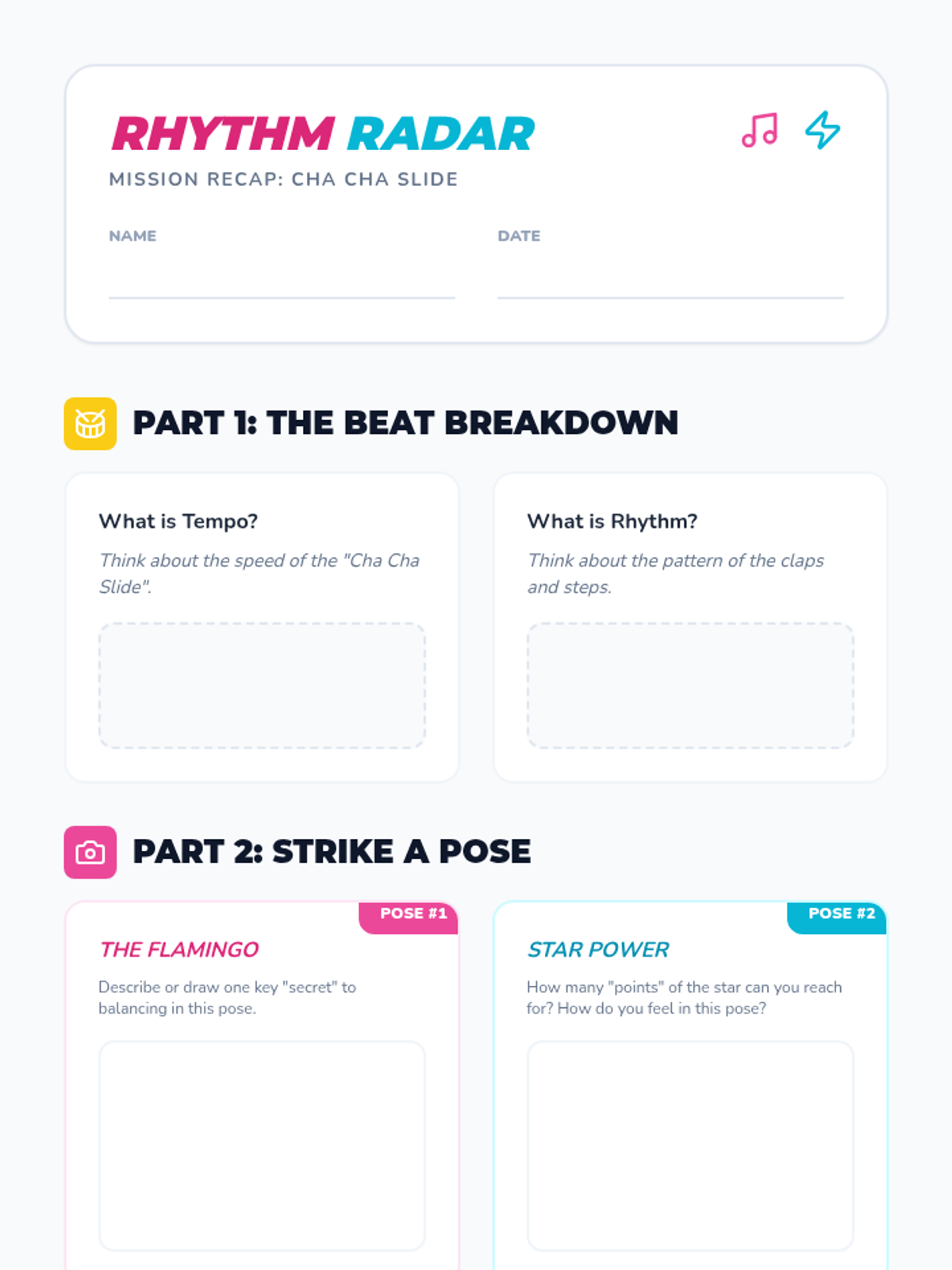
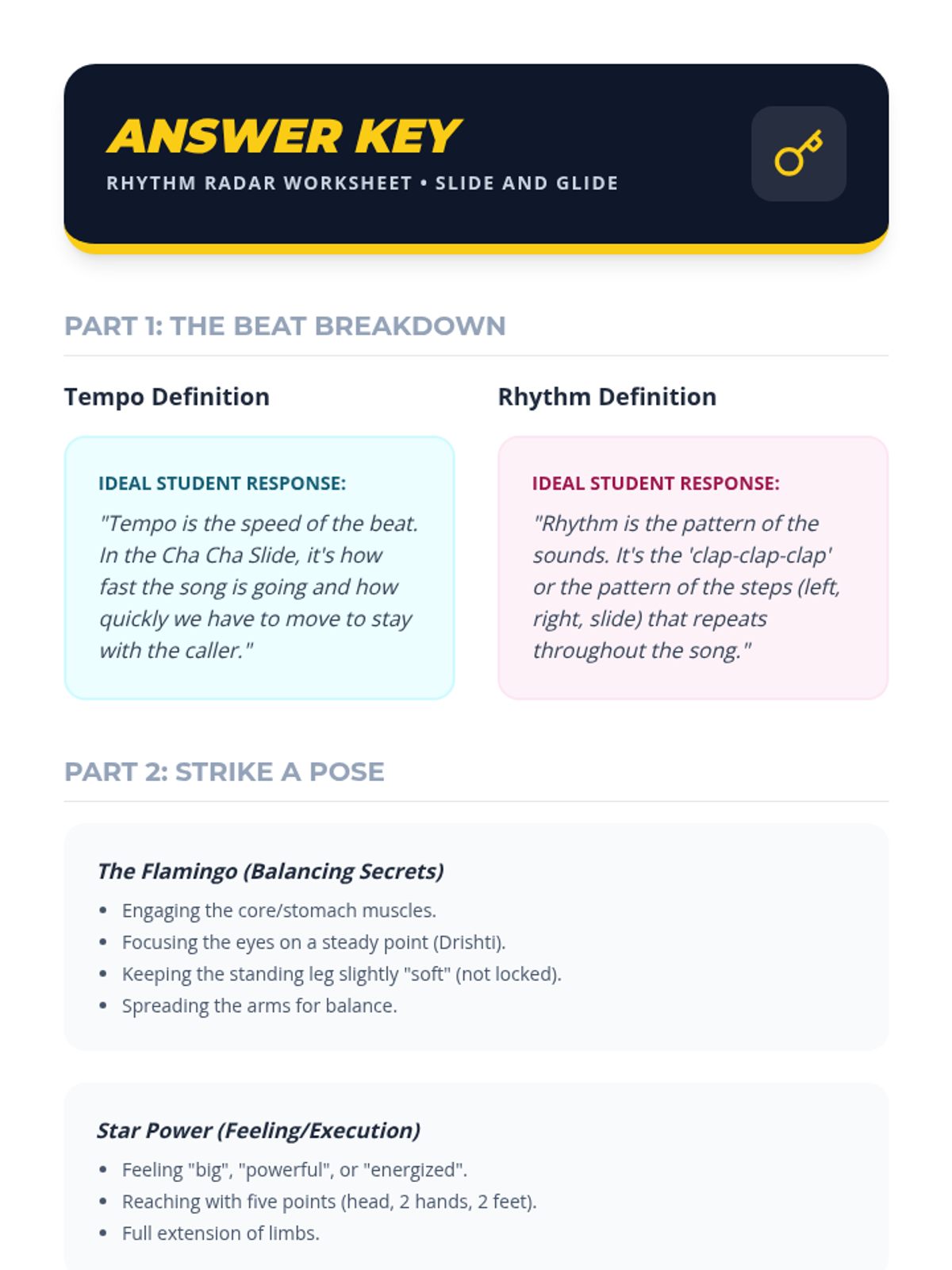
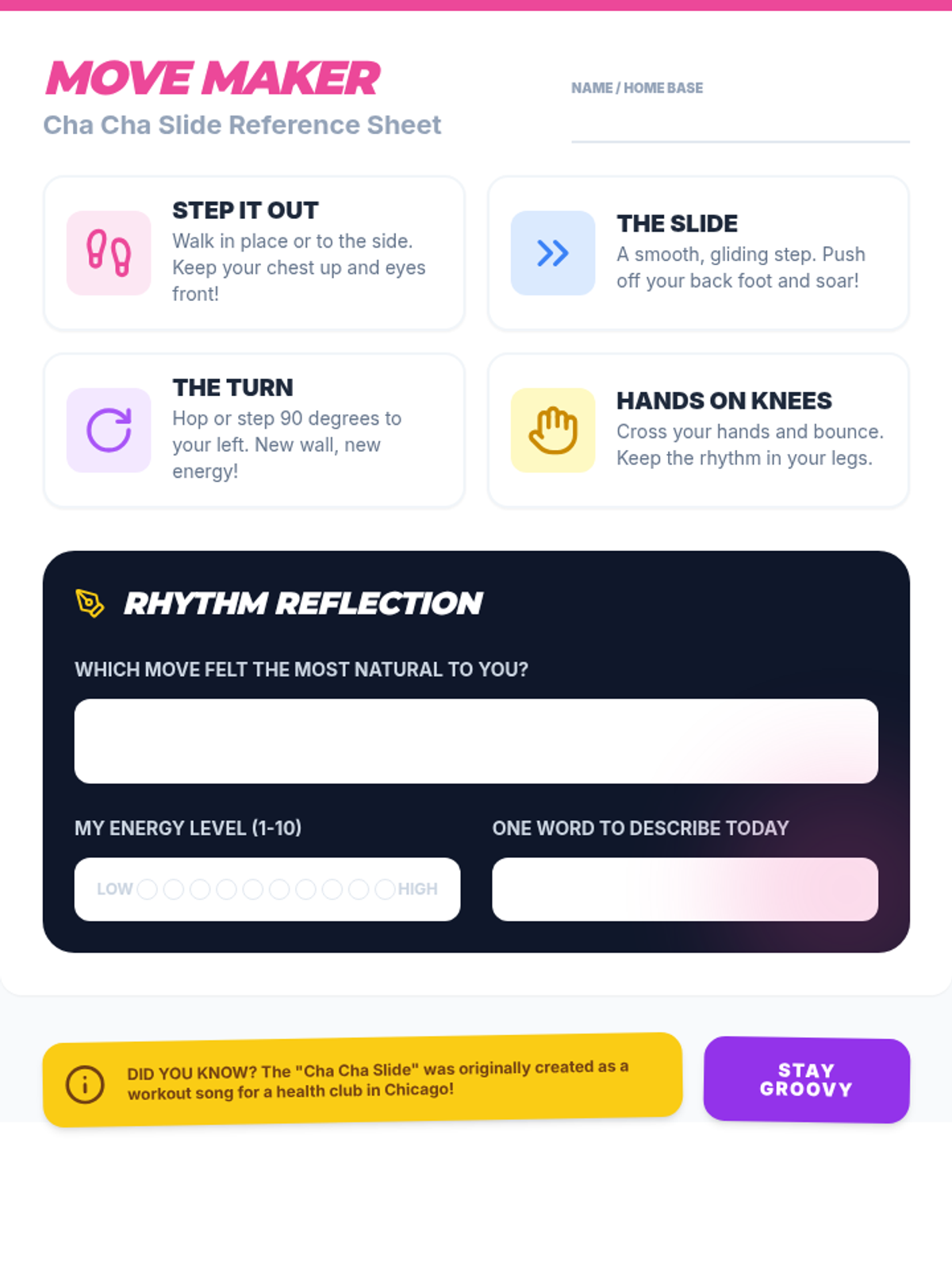
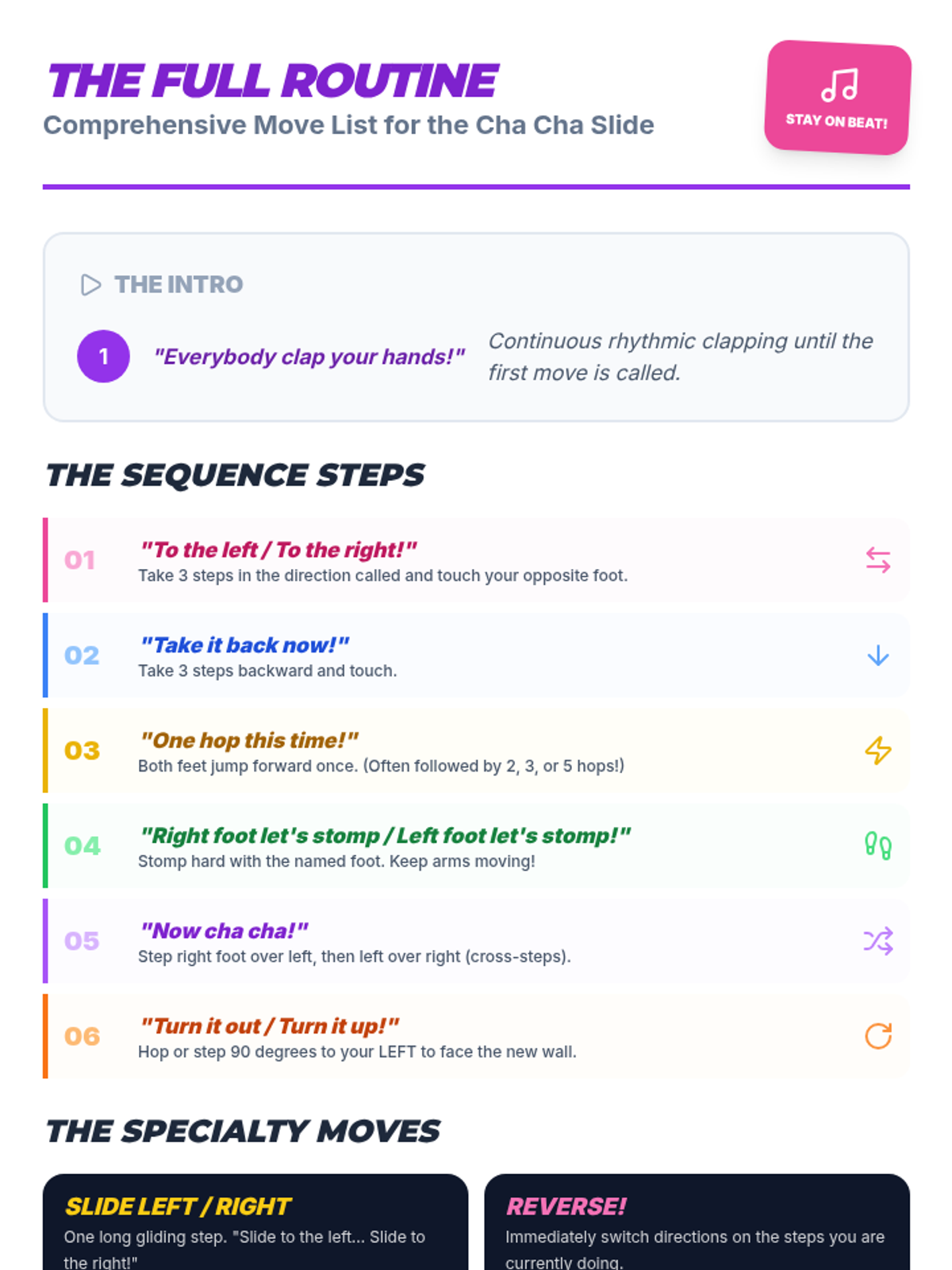
A high-energy dance lesson focused on the Cha Cha Slide to improve flexibility, master rhythm, and explore creative dance poses. Students will learn the signature moves while understanding the musical elements that drive the beat.
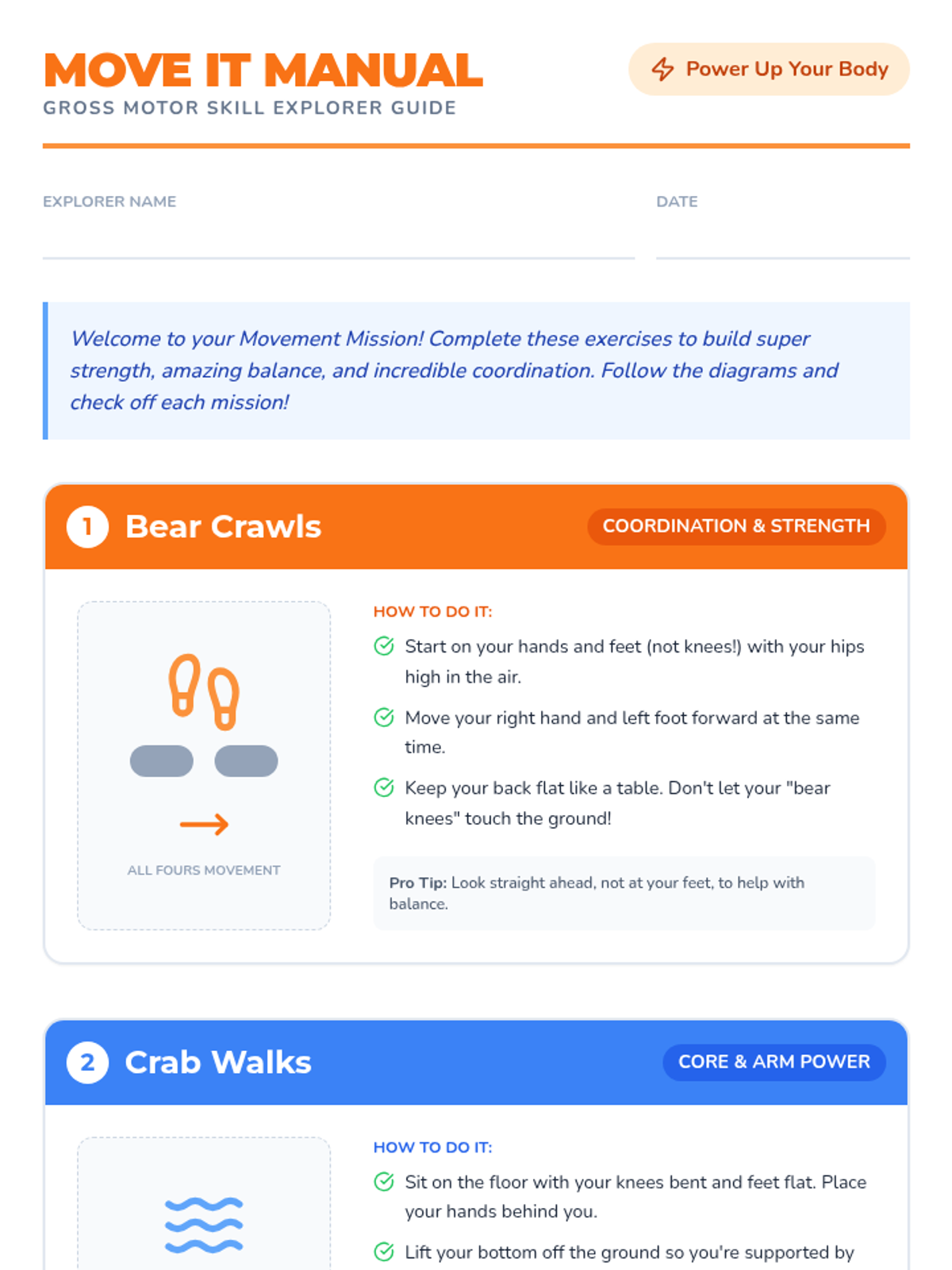
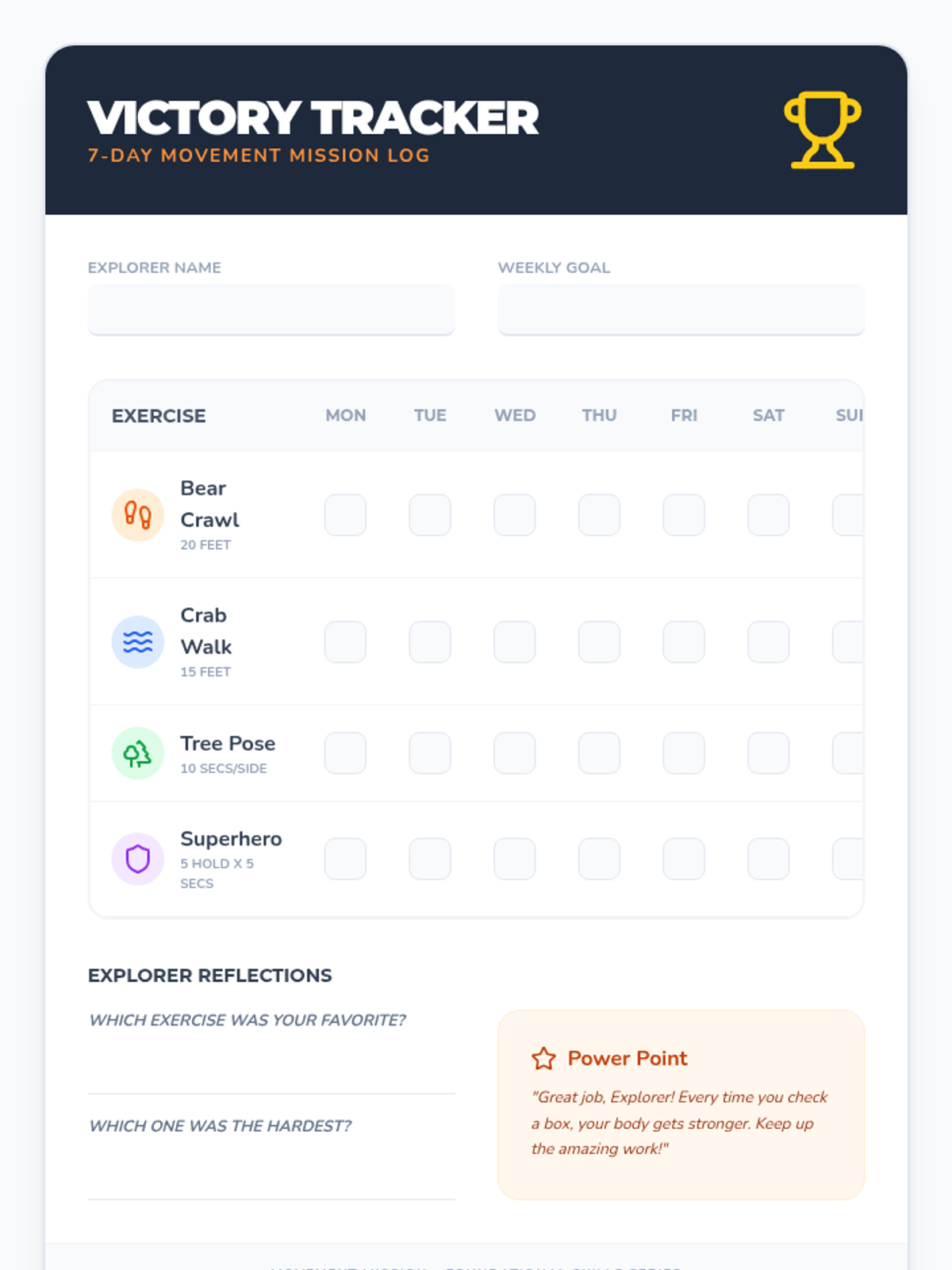
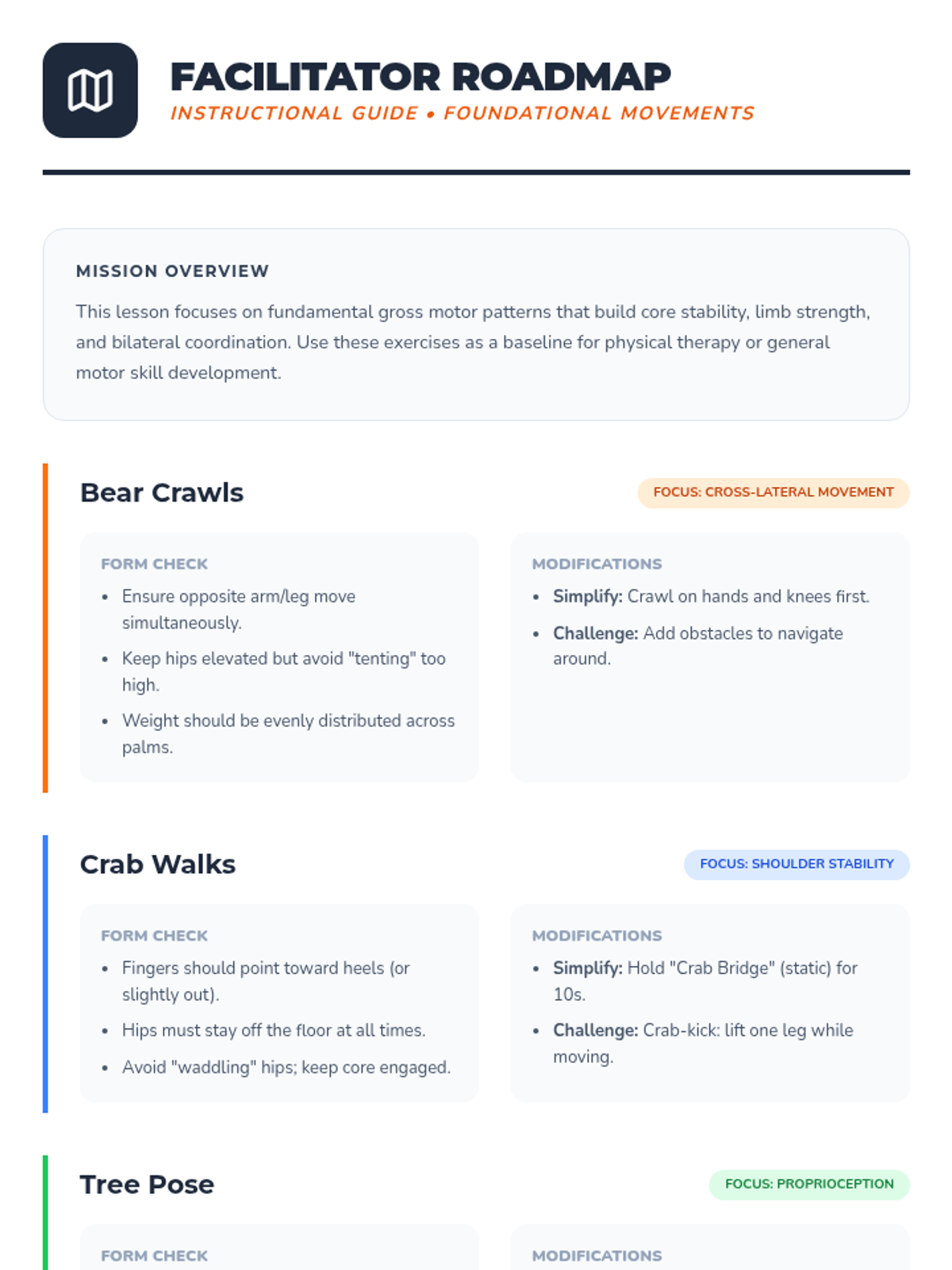
This lesson introduces four foundational gross motor exercises: Bear Crawls, Crab Walks, Tree Pose, and Superhero Flights. It focuses on strength, balance, and bilateral coordination.
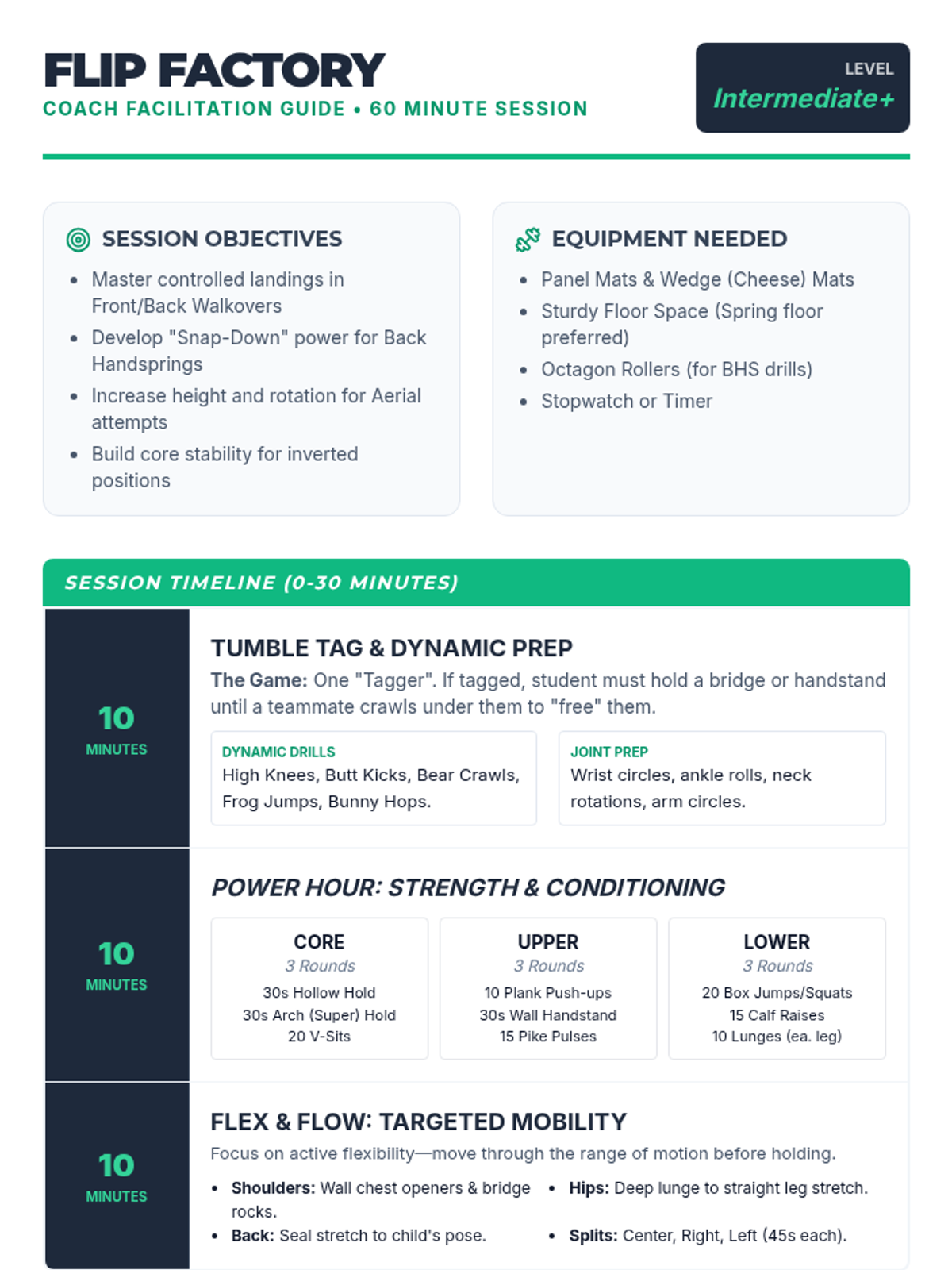
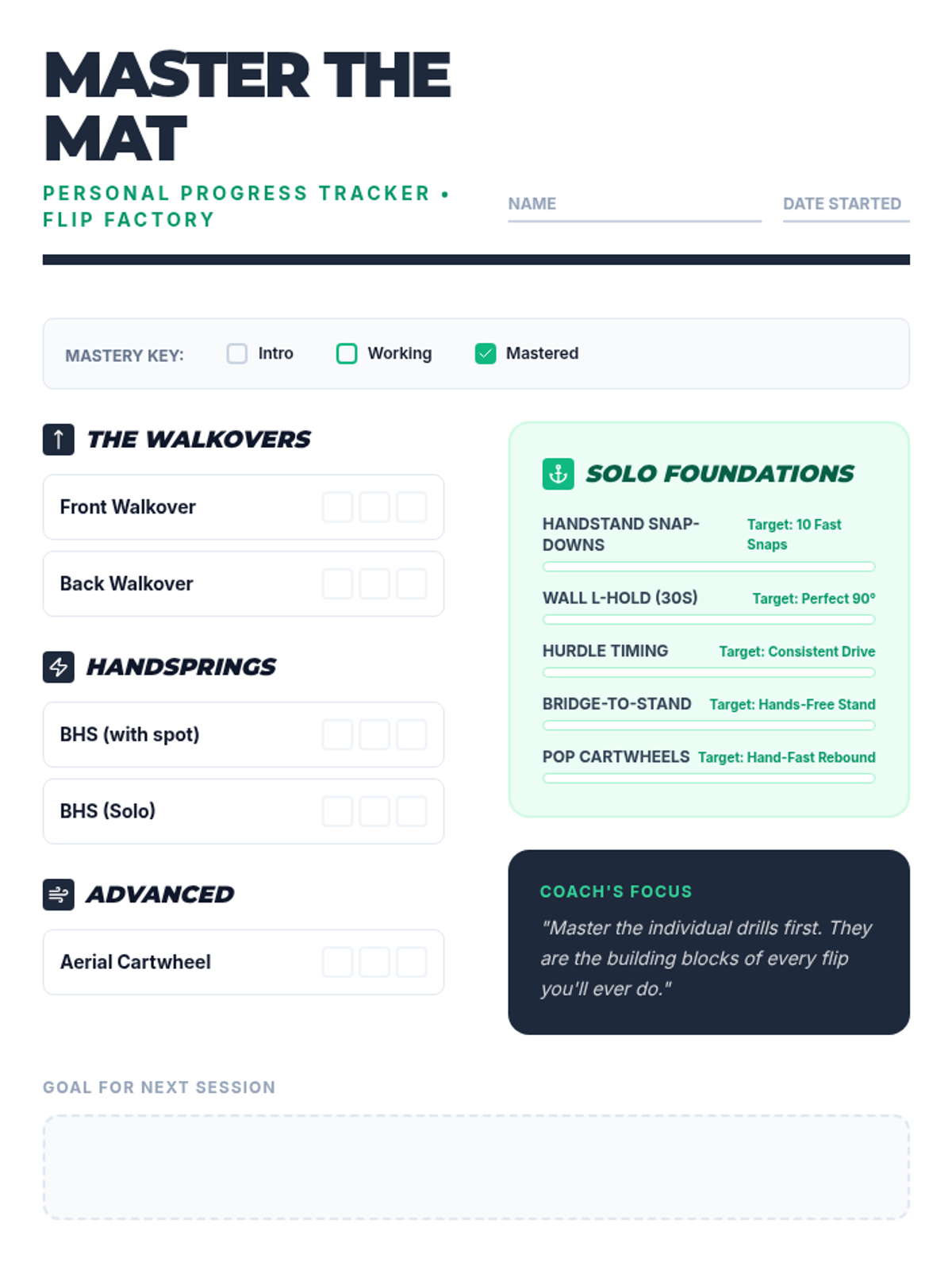
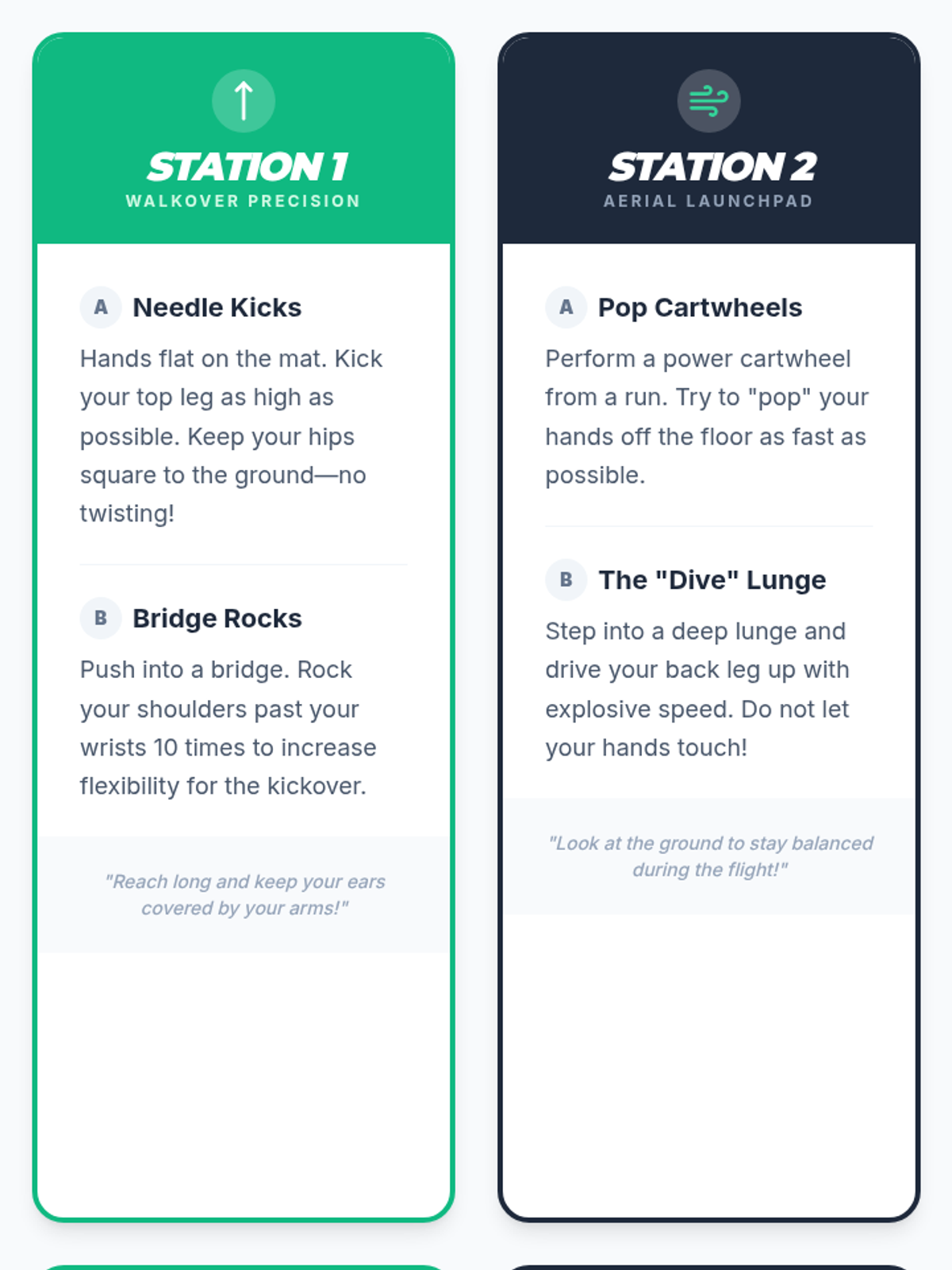
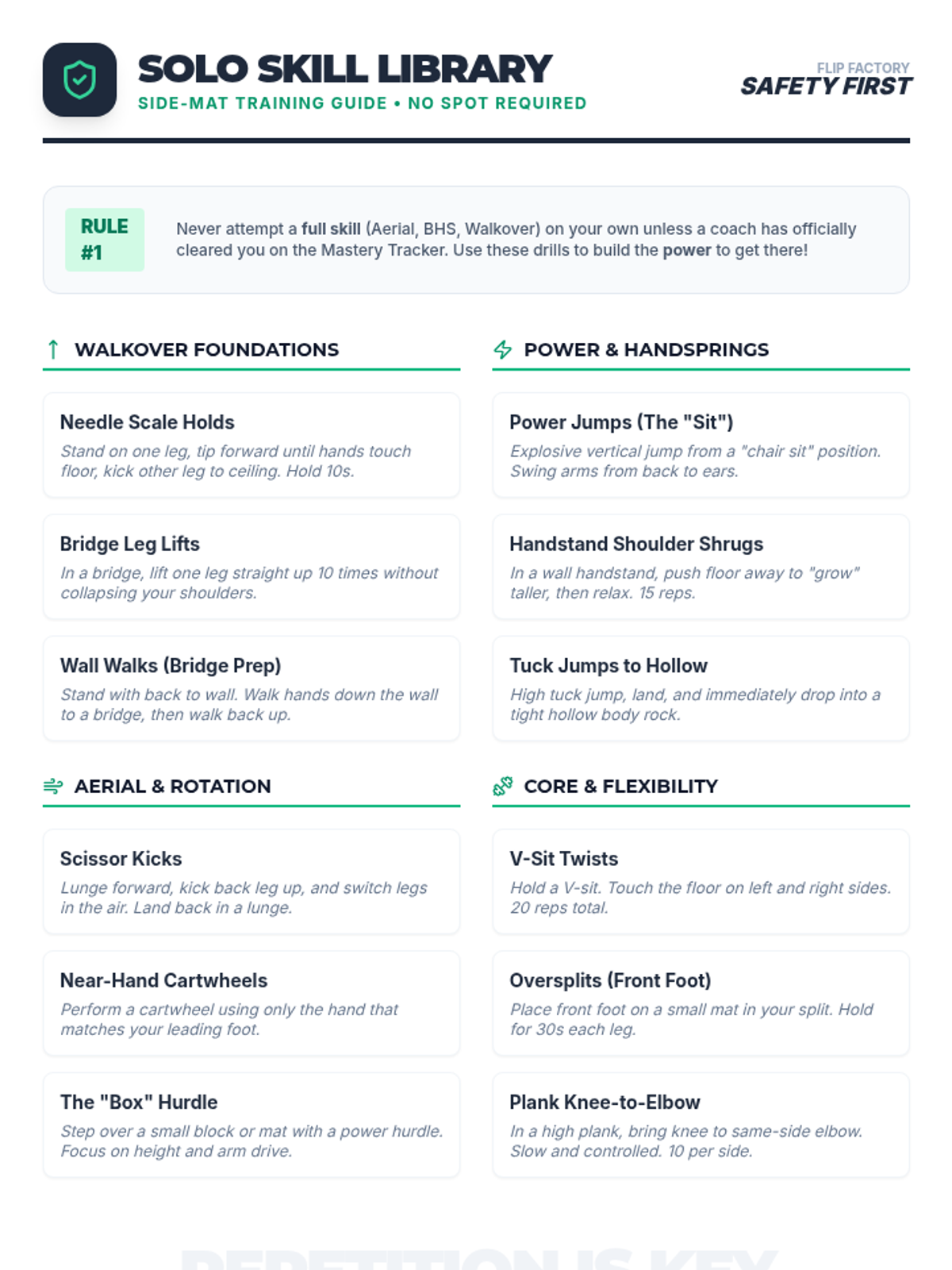
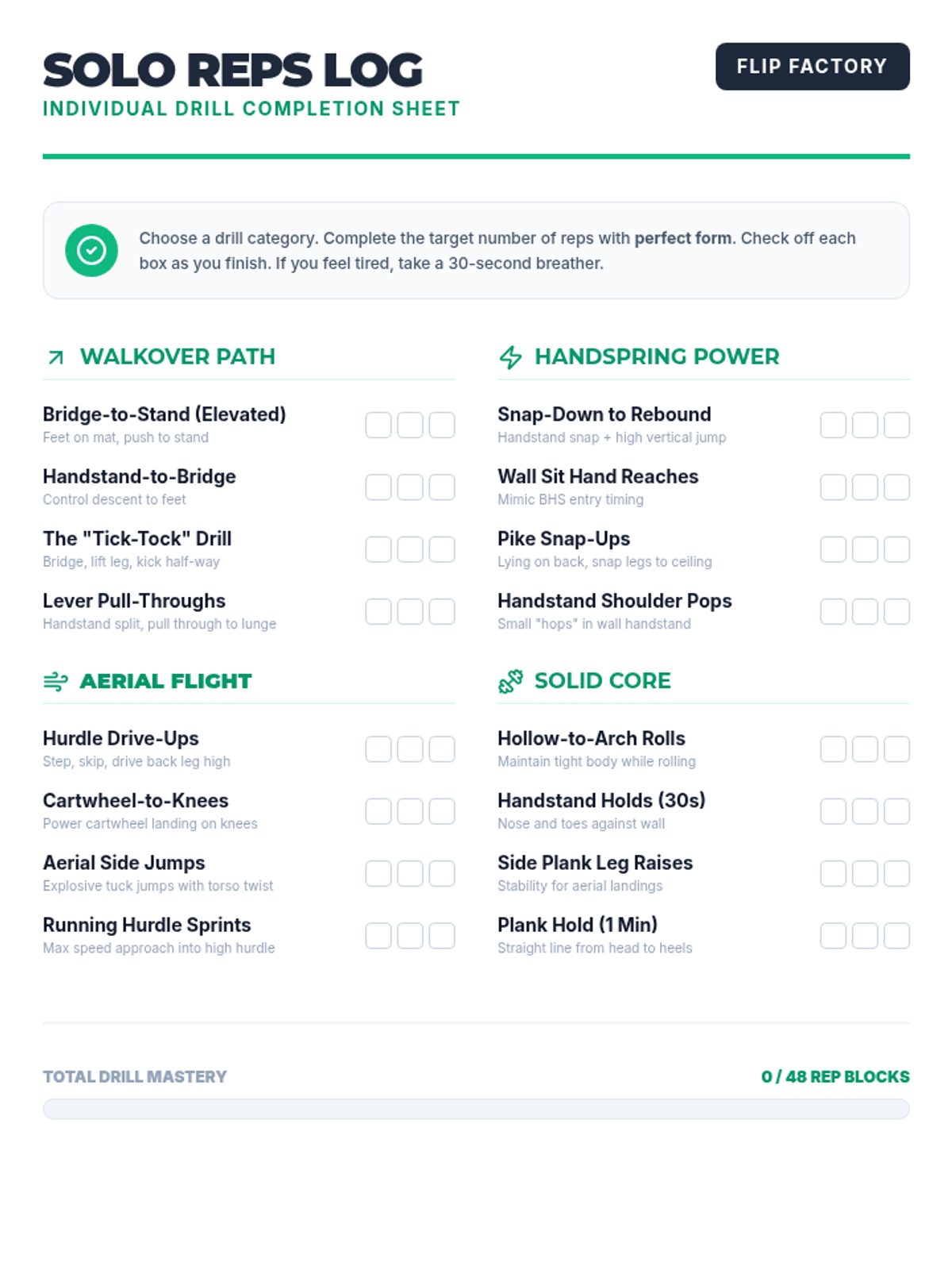
A high-energy 60-minute tumbling lesson focused on intermediate to advanced floor skills including walkovers, handsprings, and aerials. Includes a comprehensive coach guide, visual drills, and a student progress tracker.
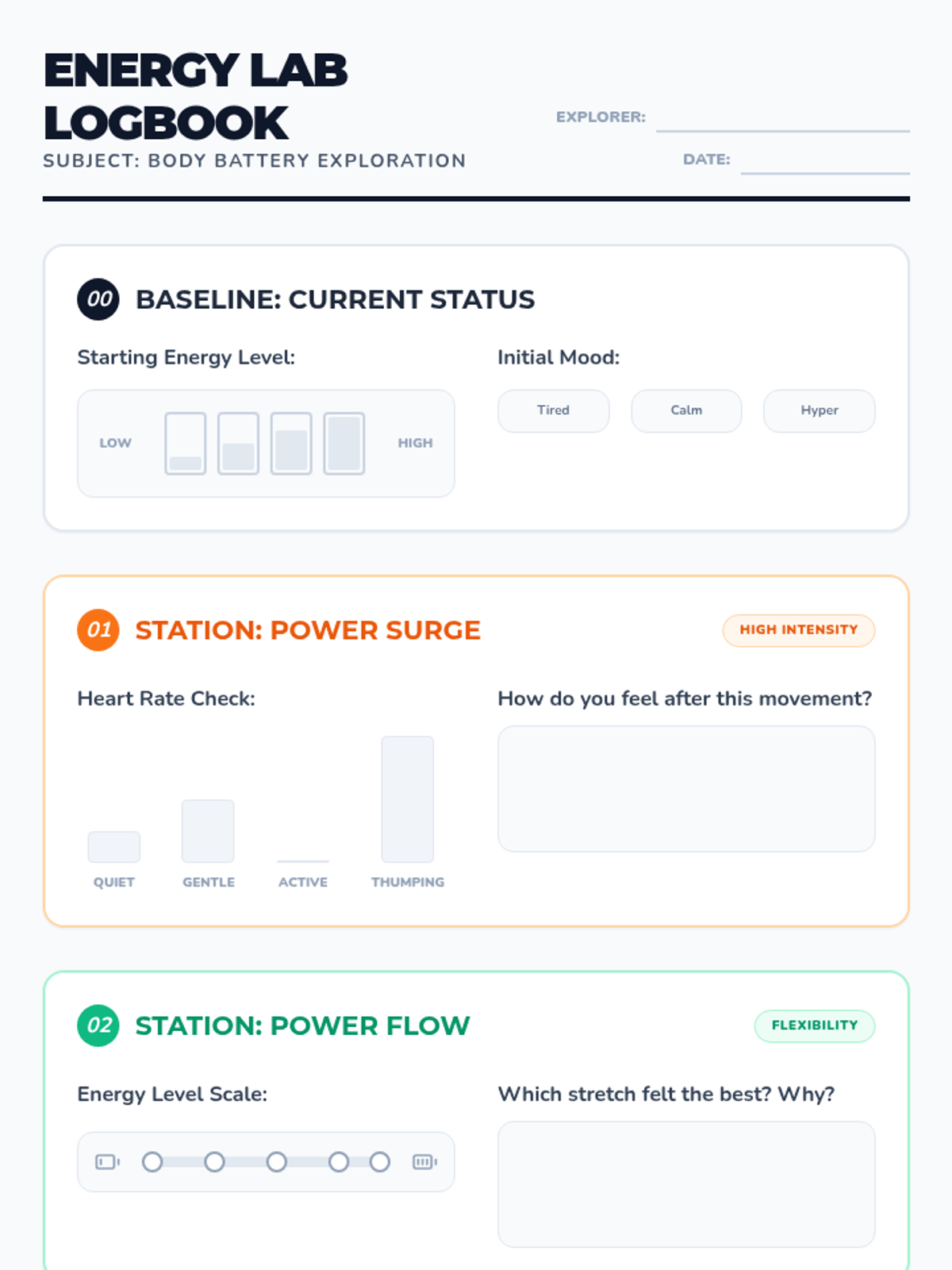
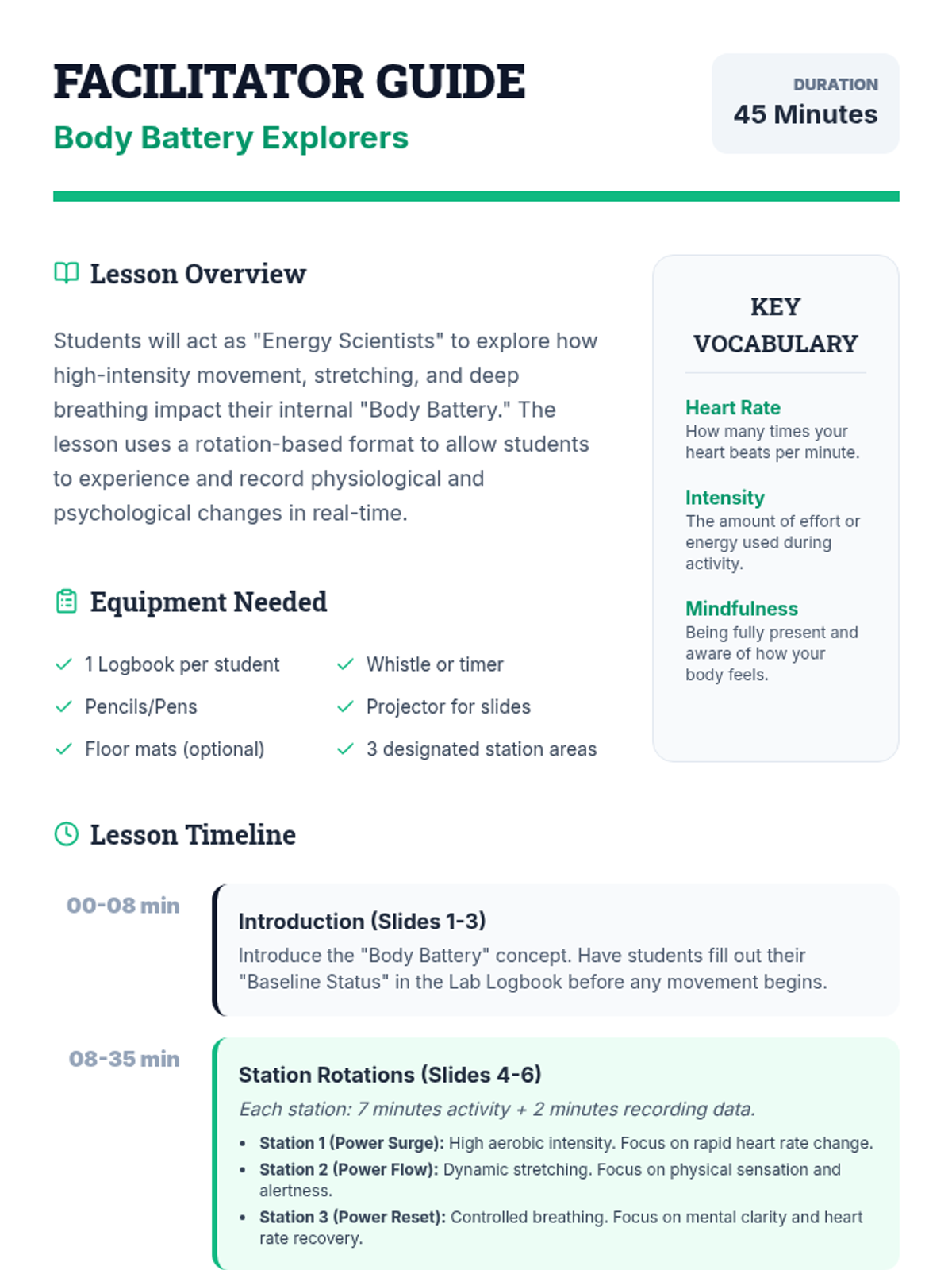
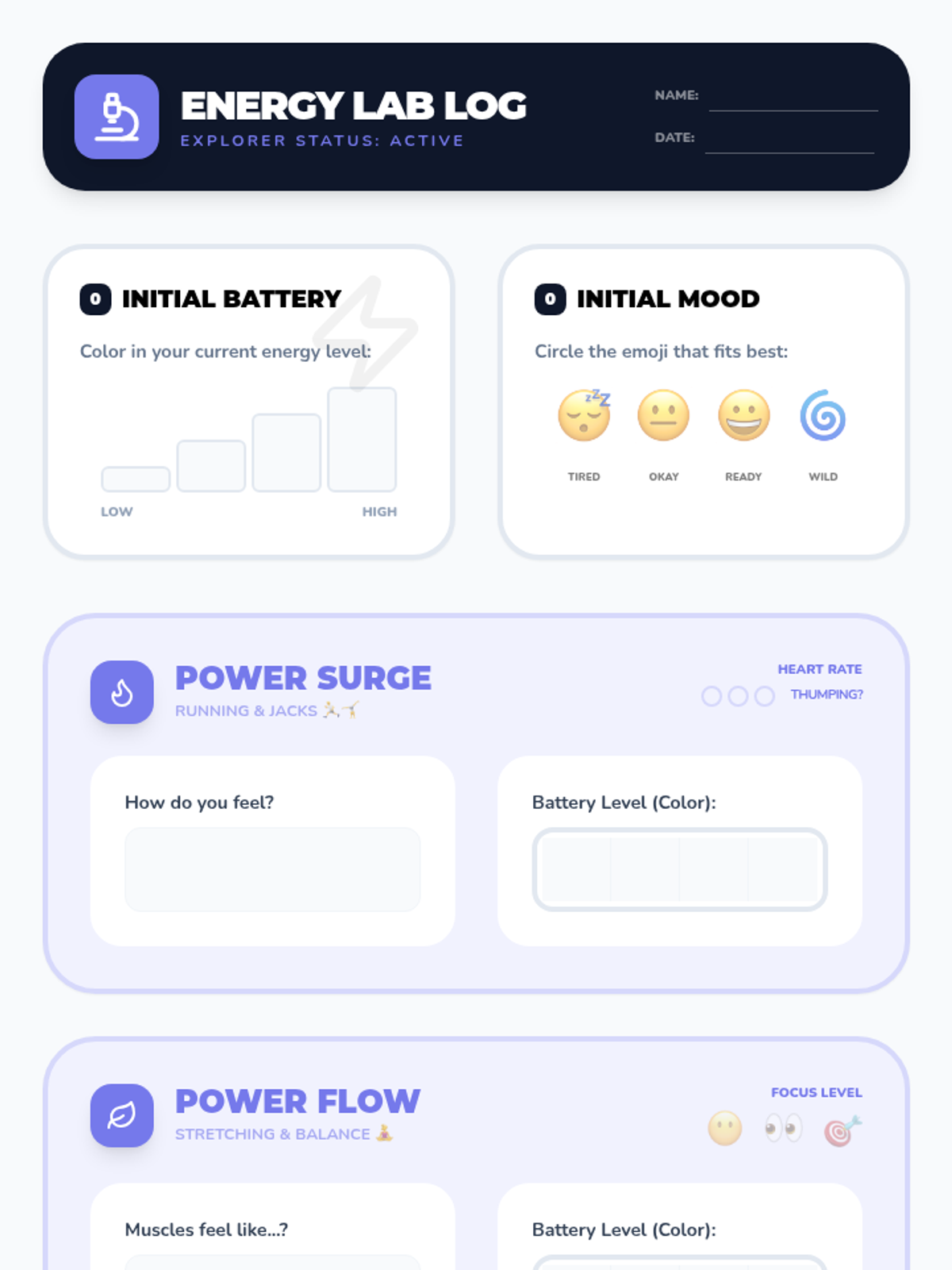
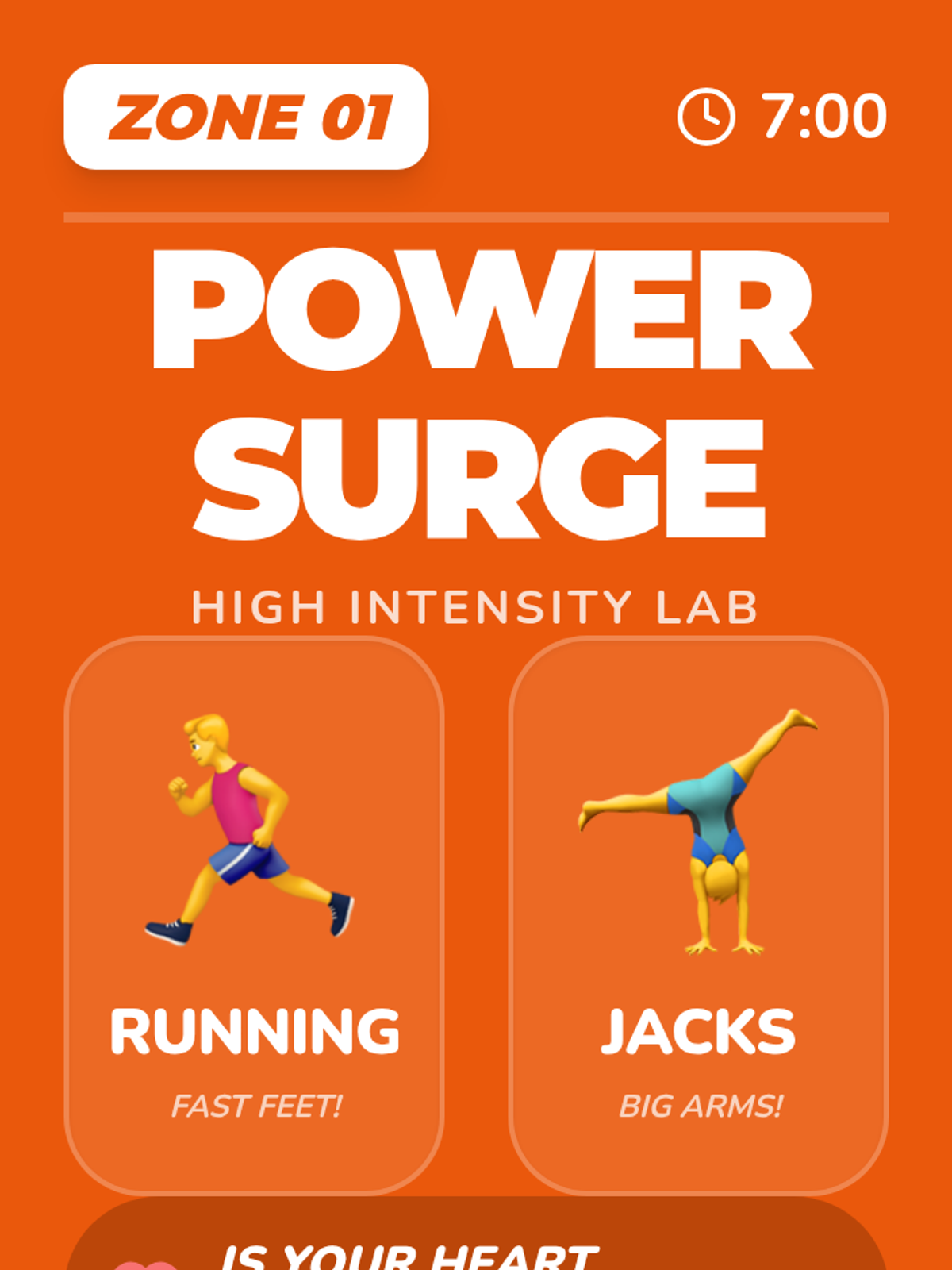
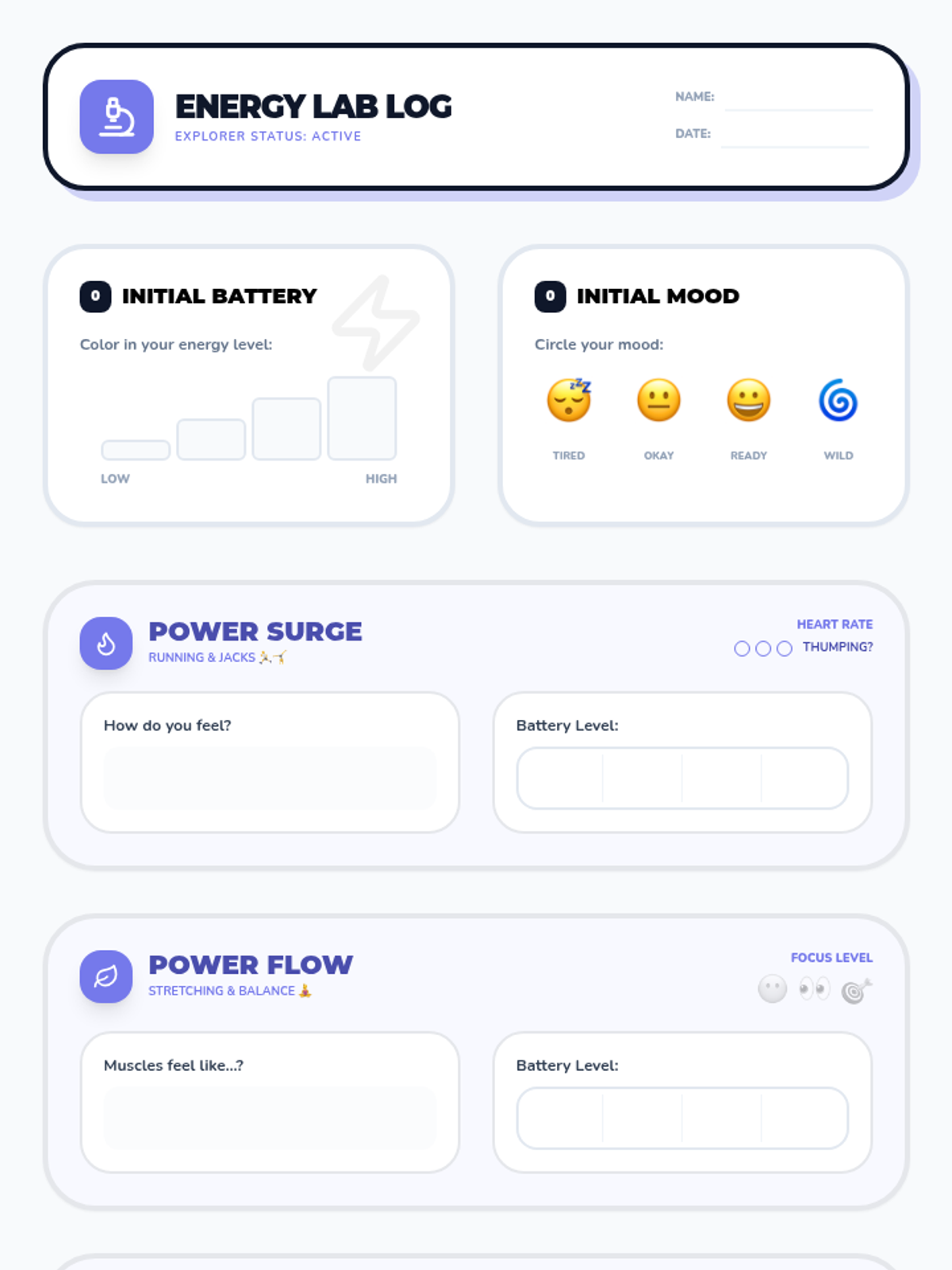
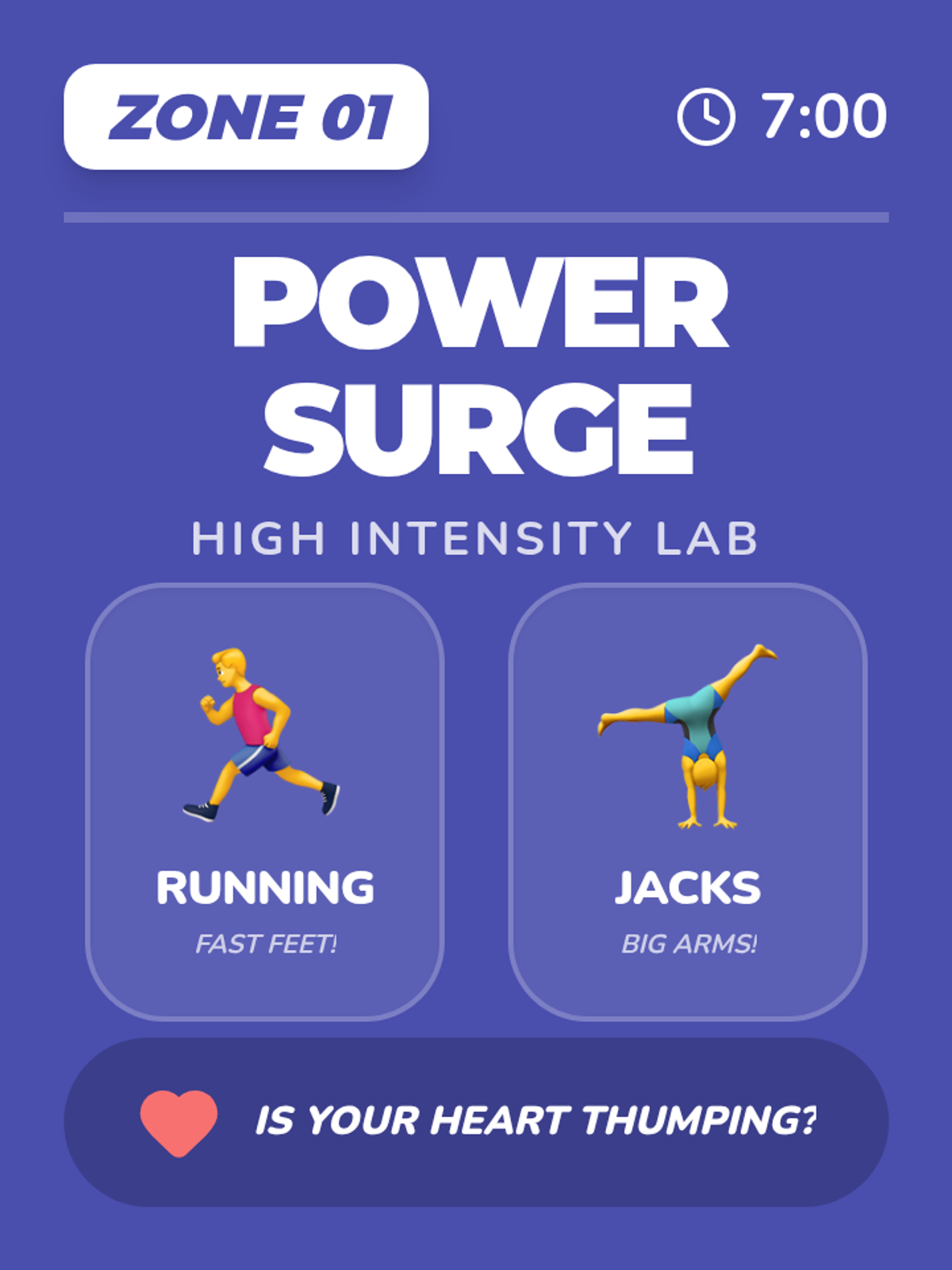
A movement-based physical health lesson where students investigate how different physical activities (aerobic, stretching, and breathing) impact their heart rate and perceived energy levels through 'Body Battery' stations.
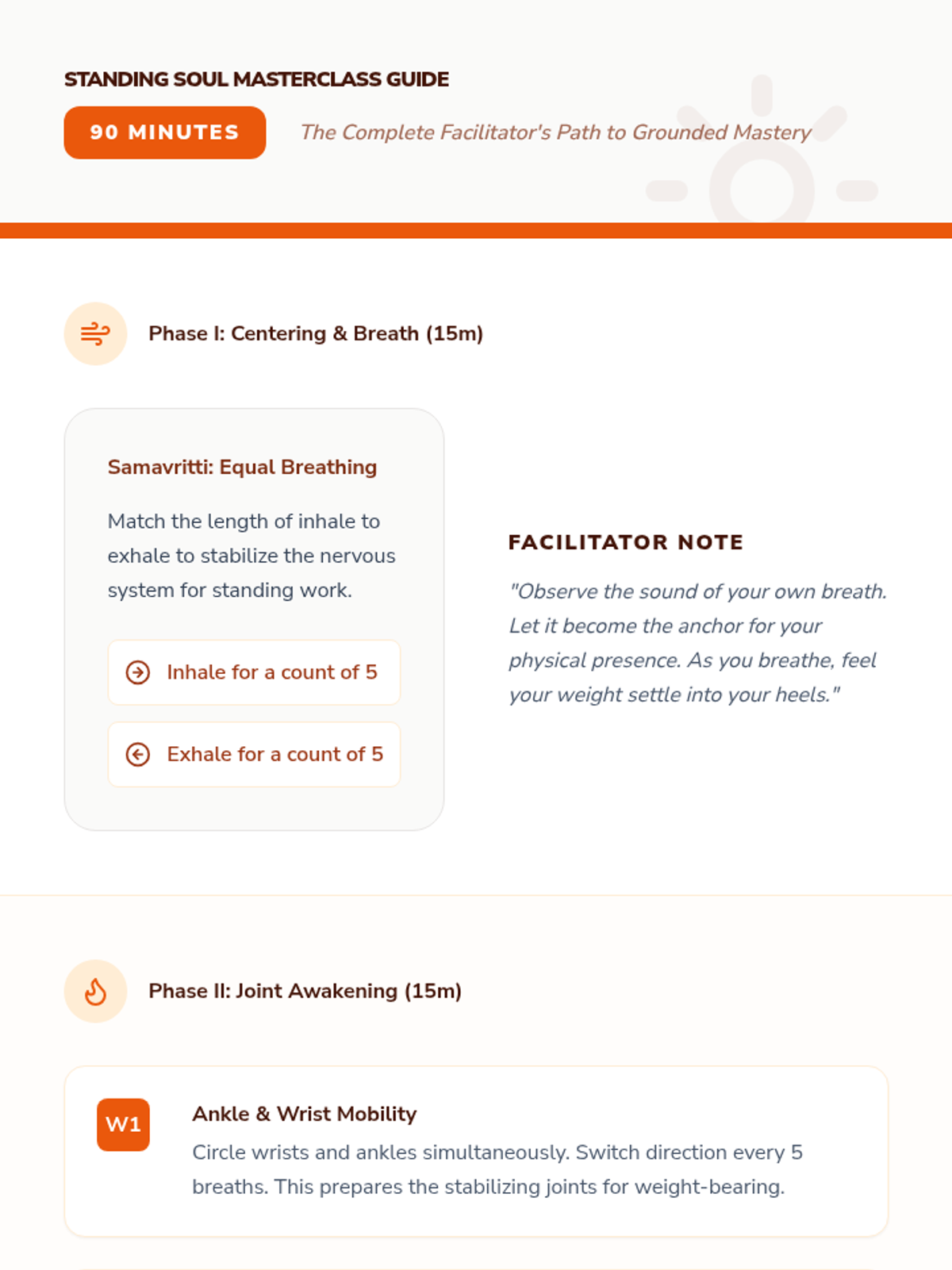
A beginner-friendly 90-minute standing yoga session focused on grounding, balance, and fundamental postures to transition from seated to standing practice.
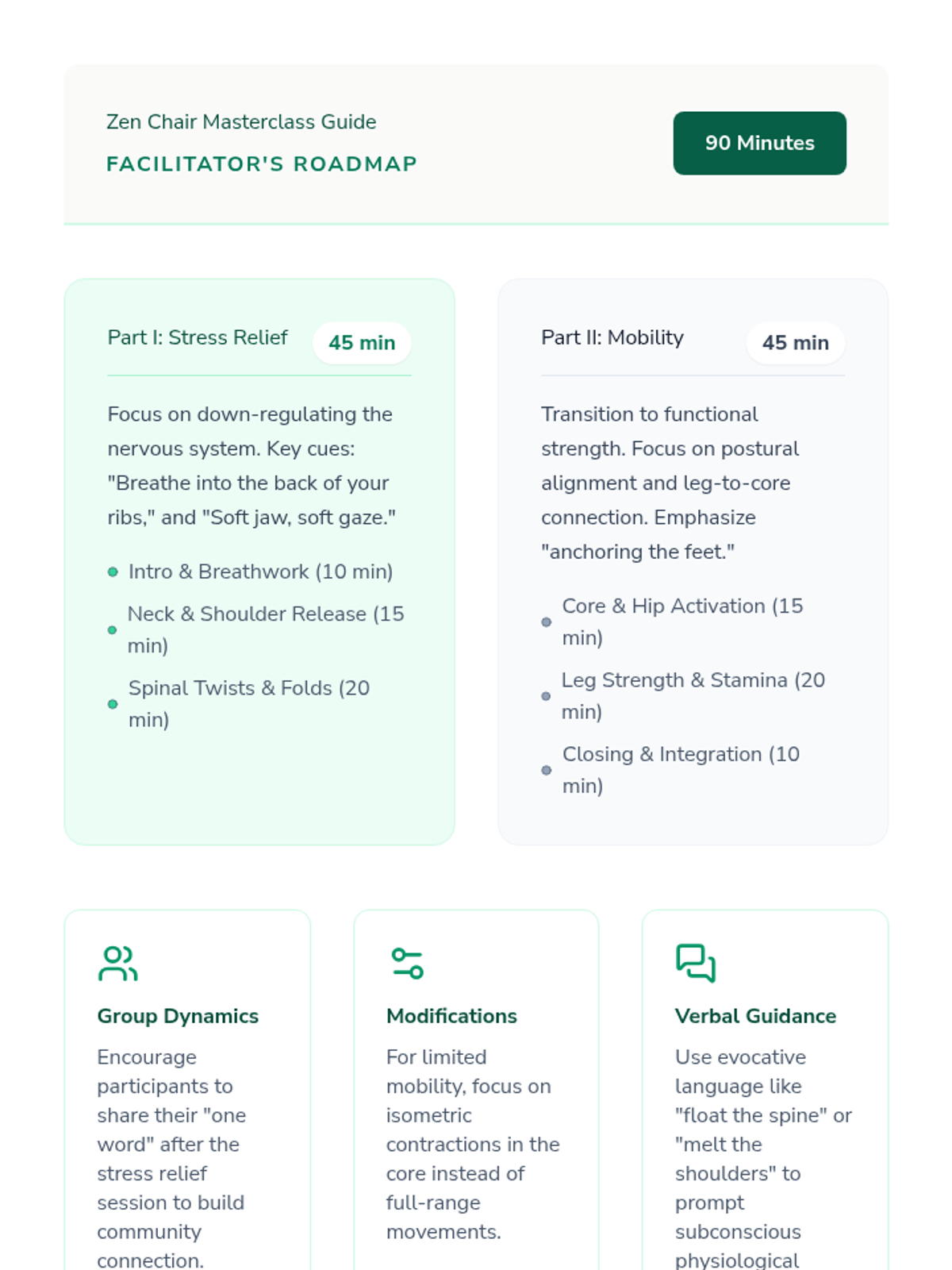
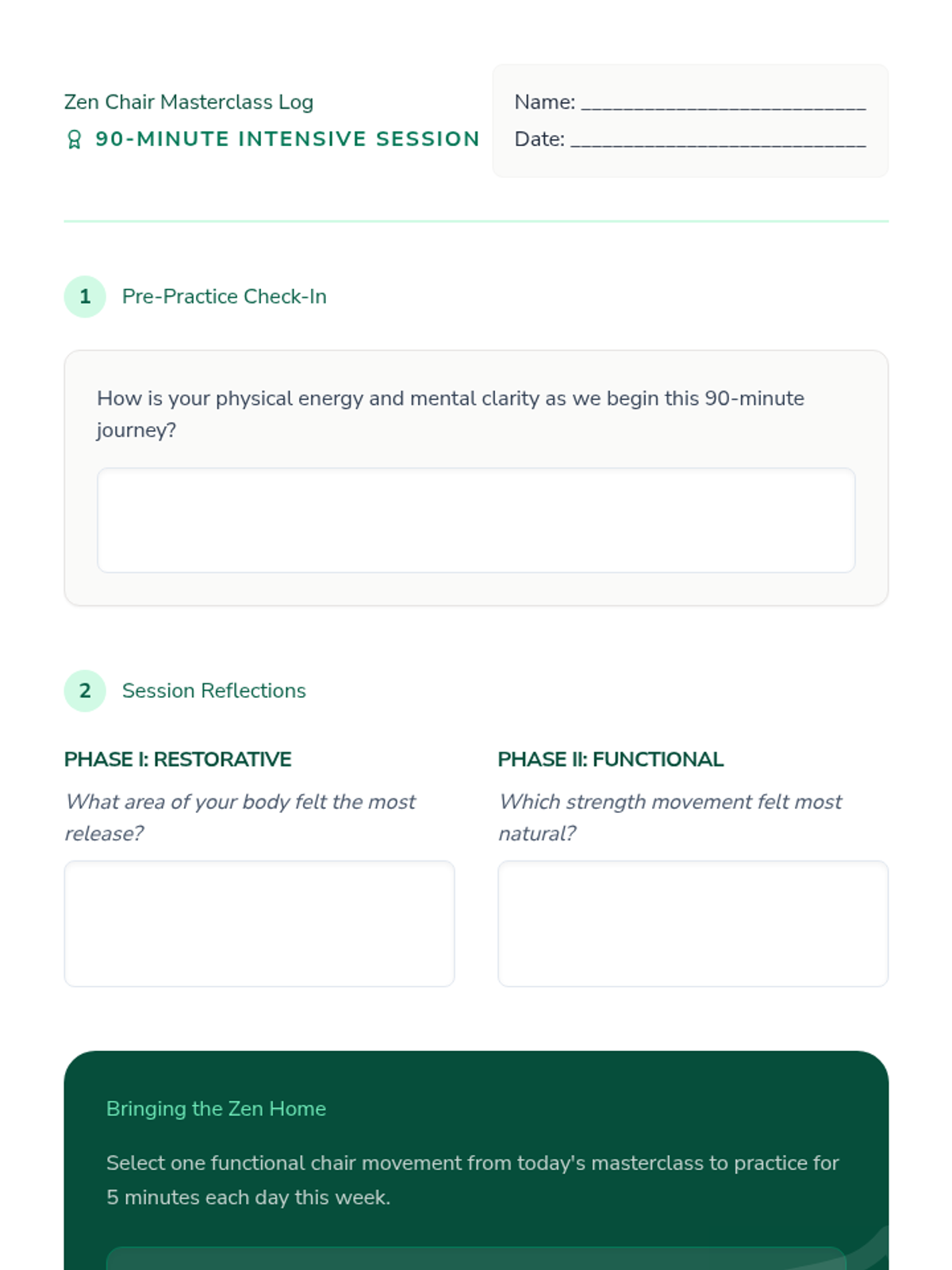
A deep-dive chair yoga experience combining stress relief and functional mobility, featuring two full-length guided practice videos. This 90-minute masterclass is designed to build both mental calm and physical strength.
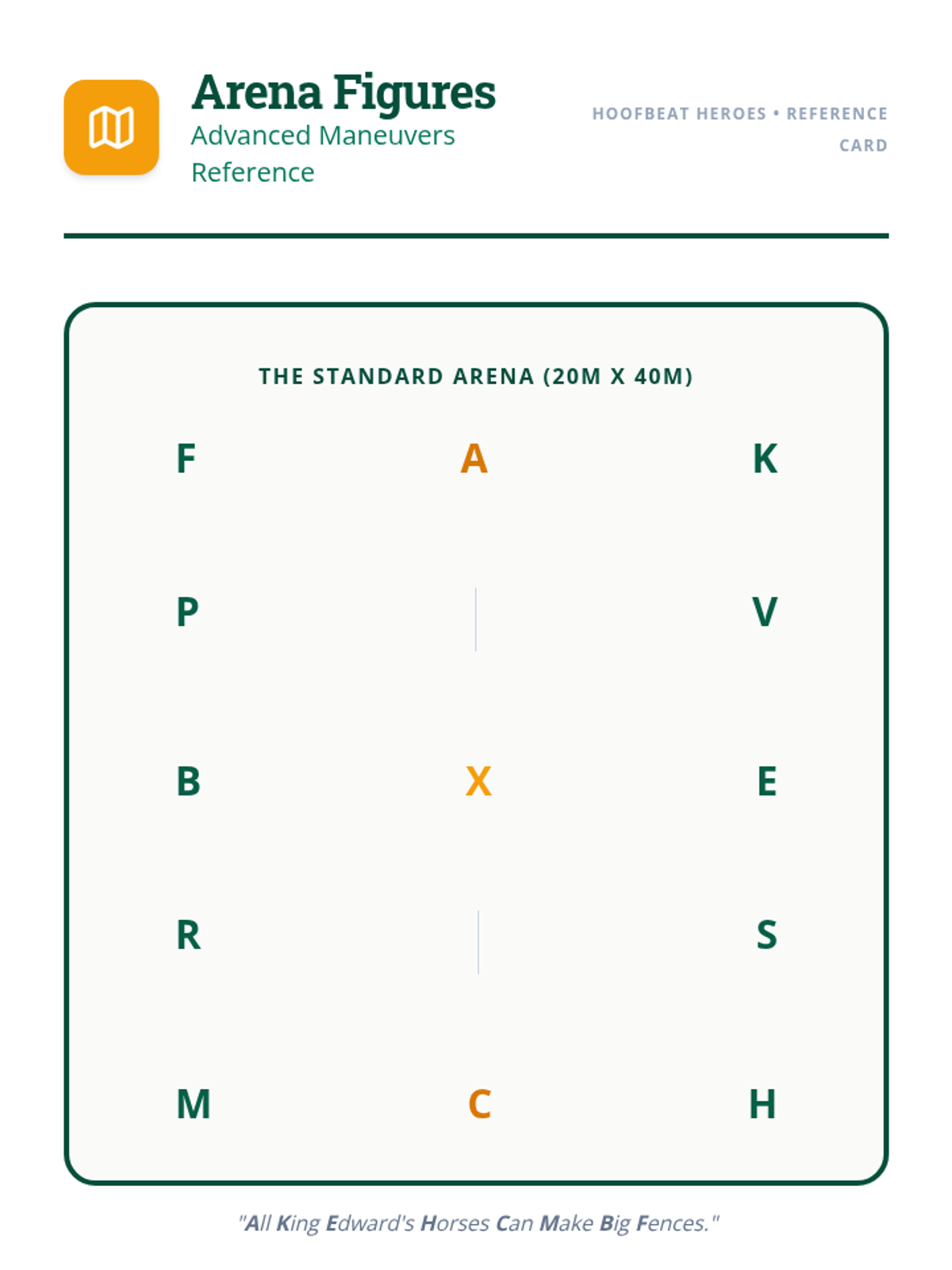
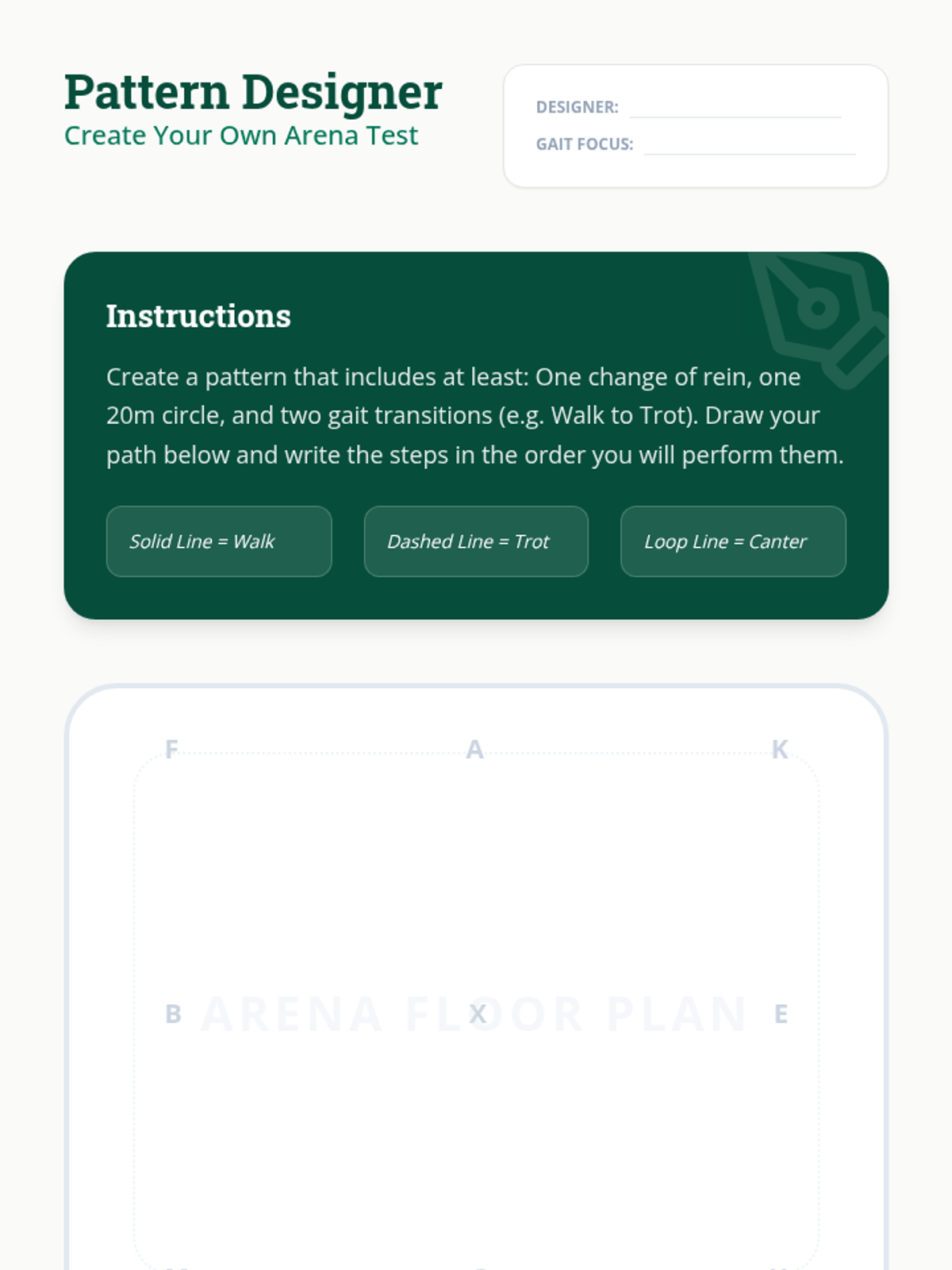
Advances to more complex maneuvers including the canter, arena figures, and introducing the basics of jumping or advanced equitation patterns.
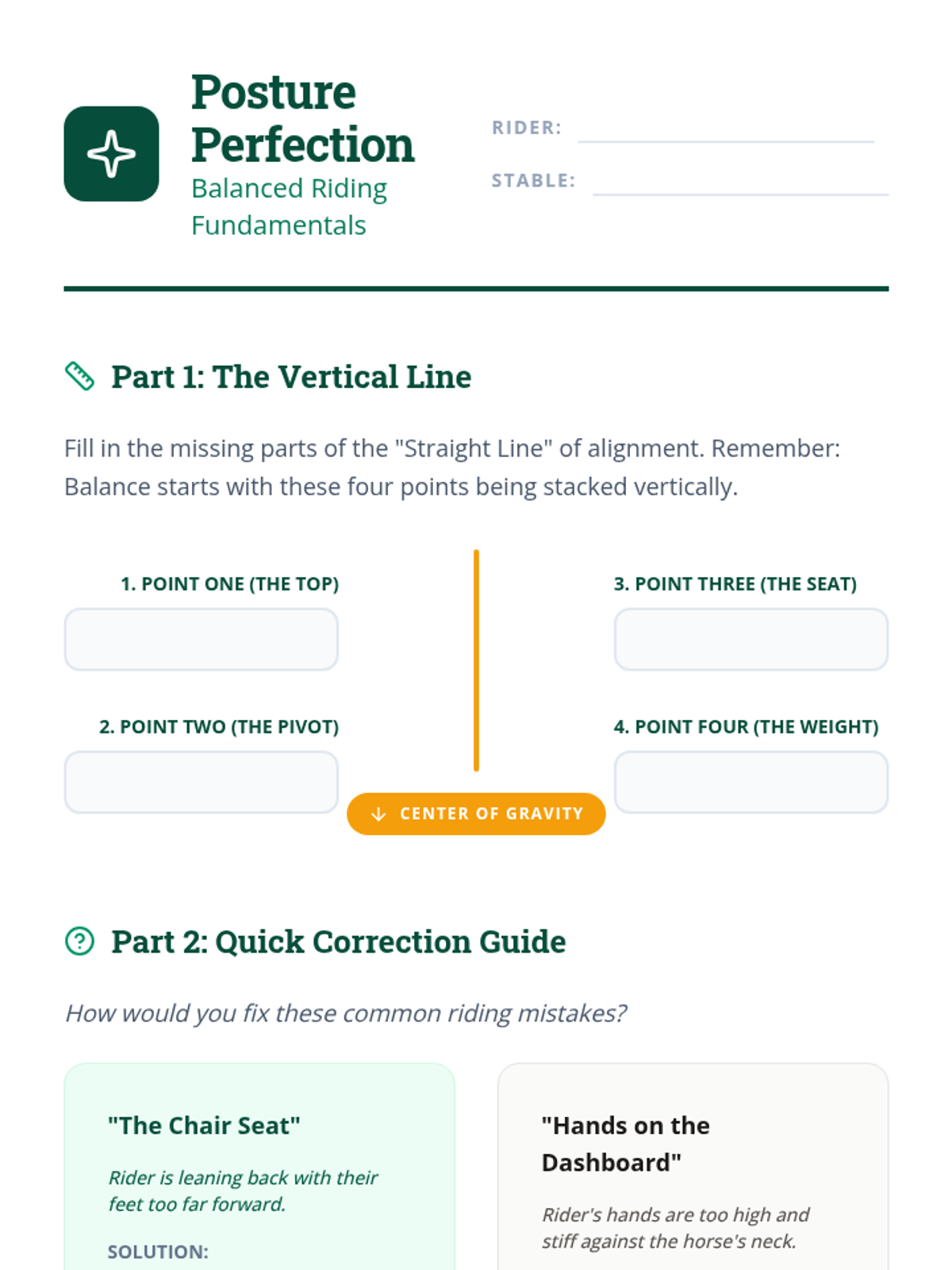
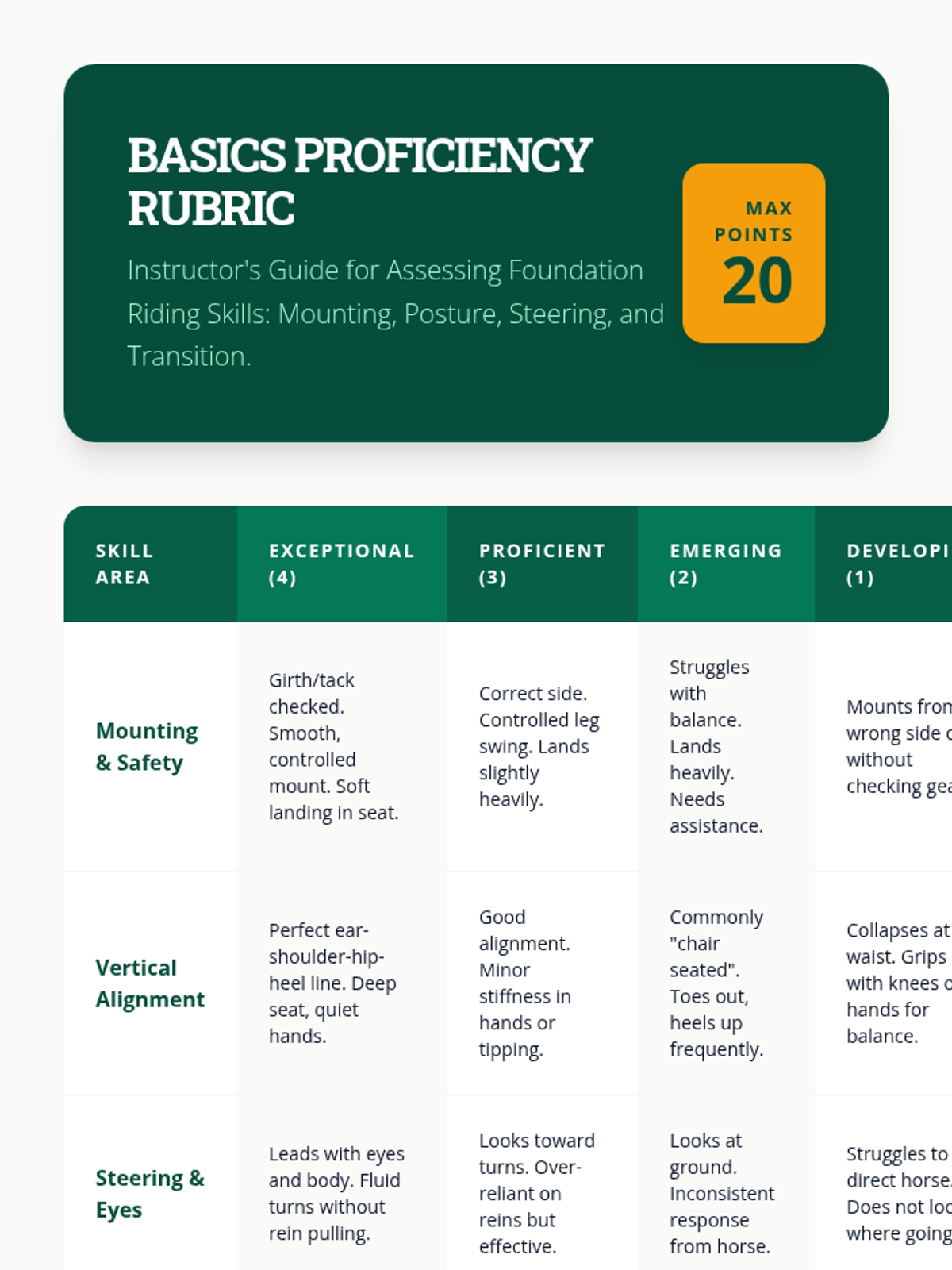
Introduces the foundational elements of riding, including mounting, correct posture, steering, and mastering the walk and trot gaits.
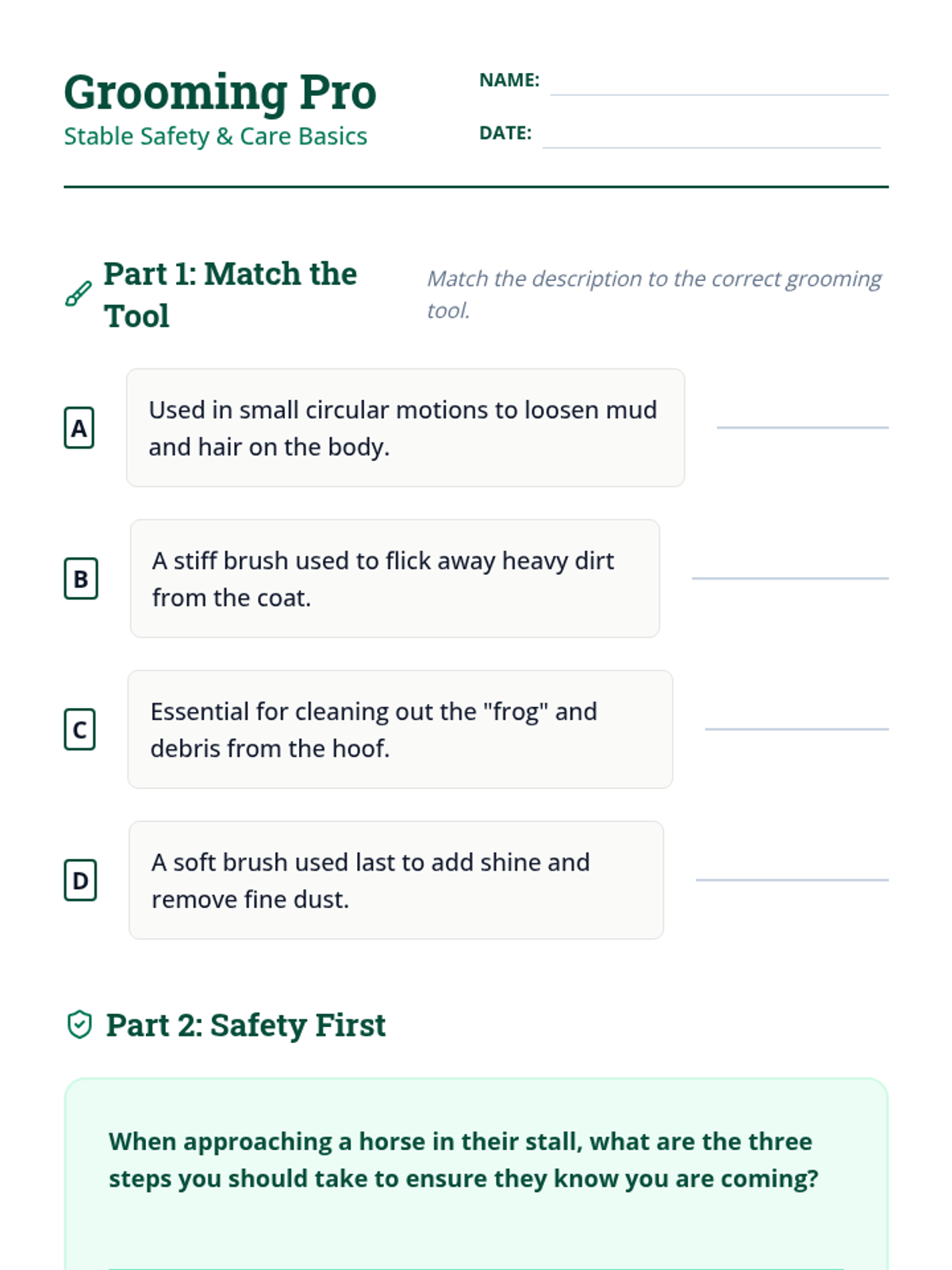
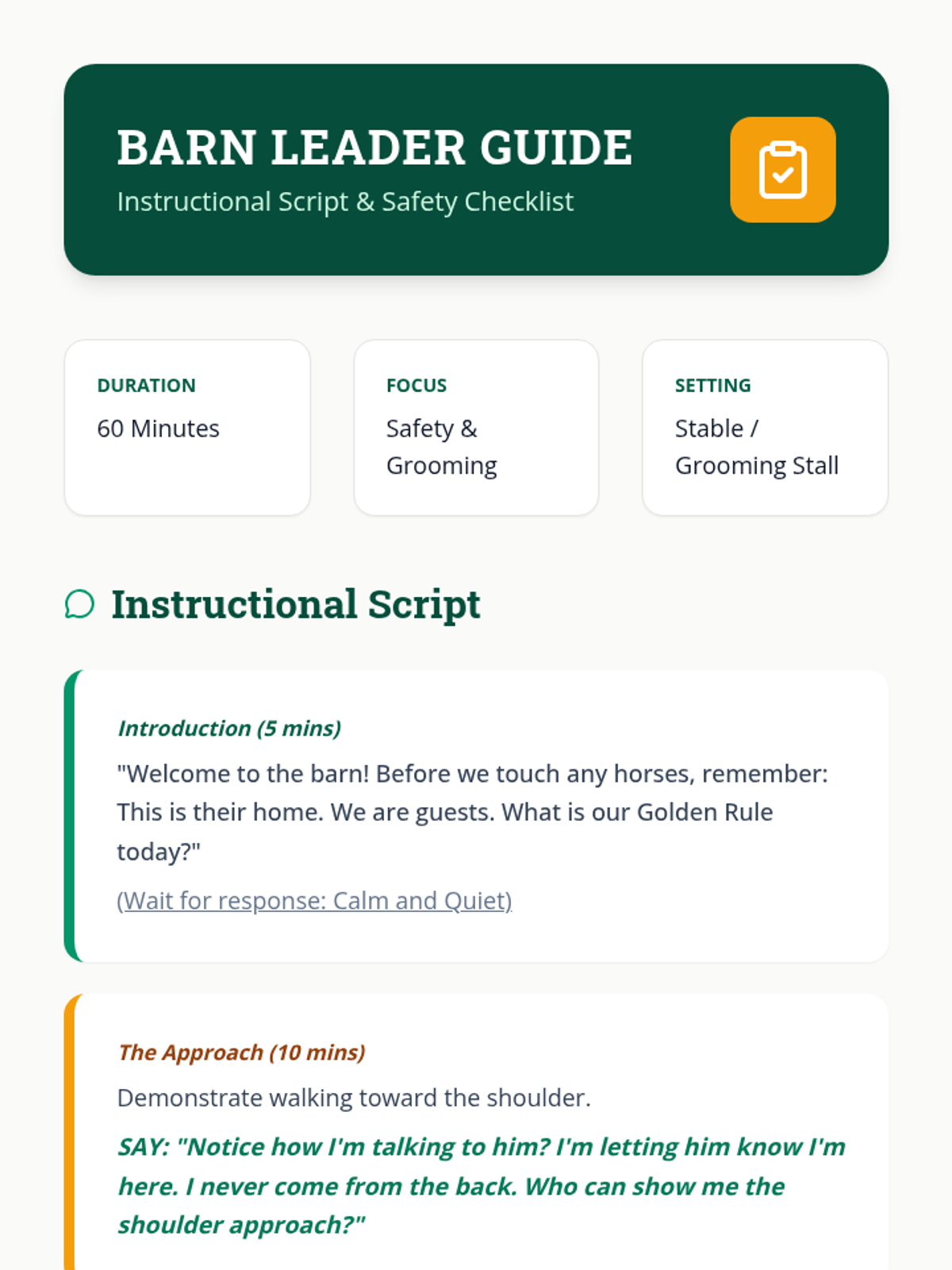
Focuses on the essential first steps of equestrianism: understanding horse behavior, safe handling, grooming techniques, and the names and uses of various tack components.
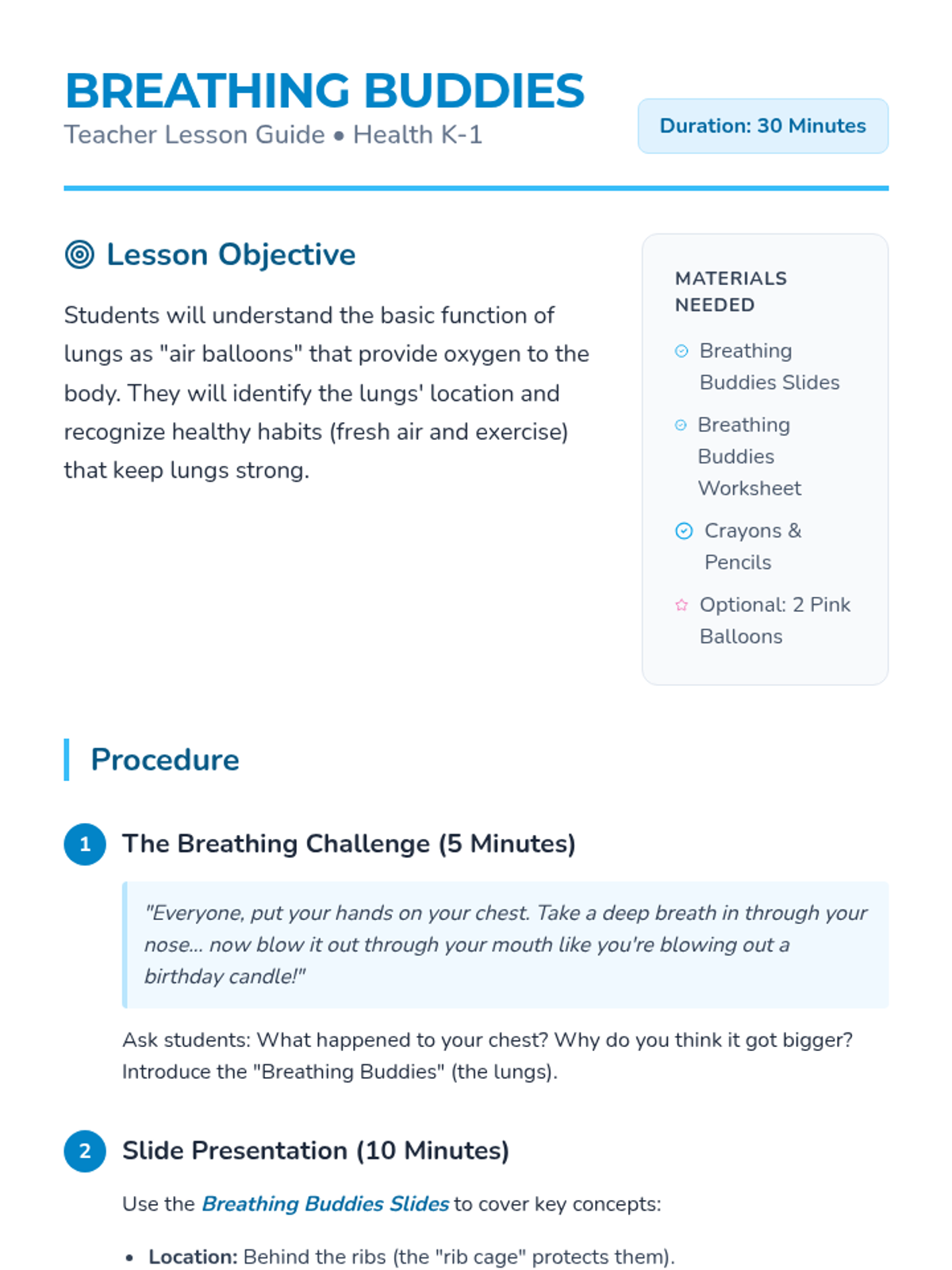
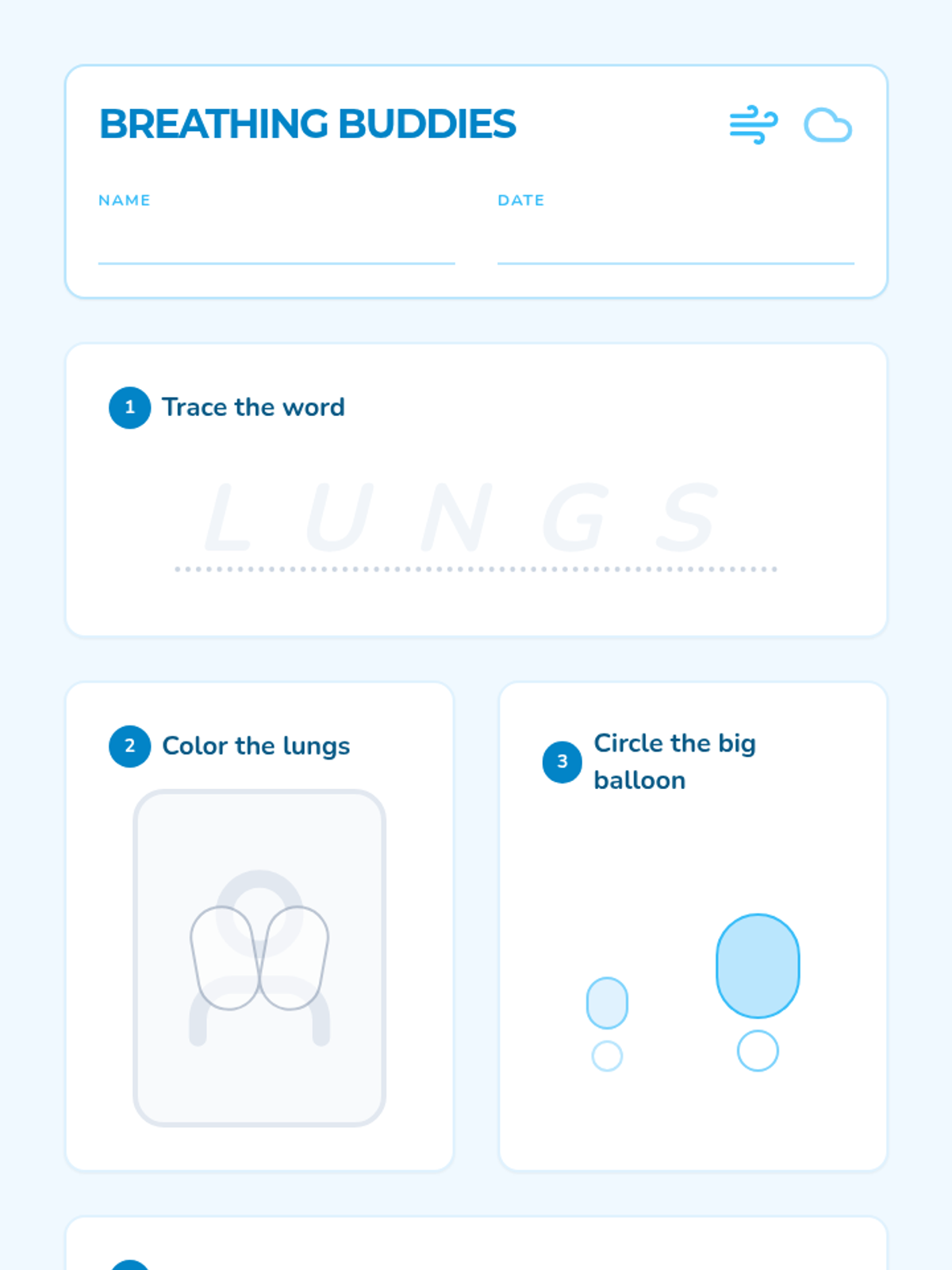
A 30-minute introductory health lesson for K-1 students about the lungs, focusing on their function as 'air balloons' for the body and how to keep them healthy.
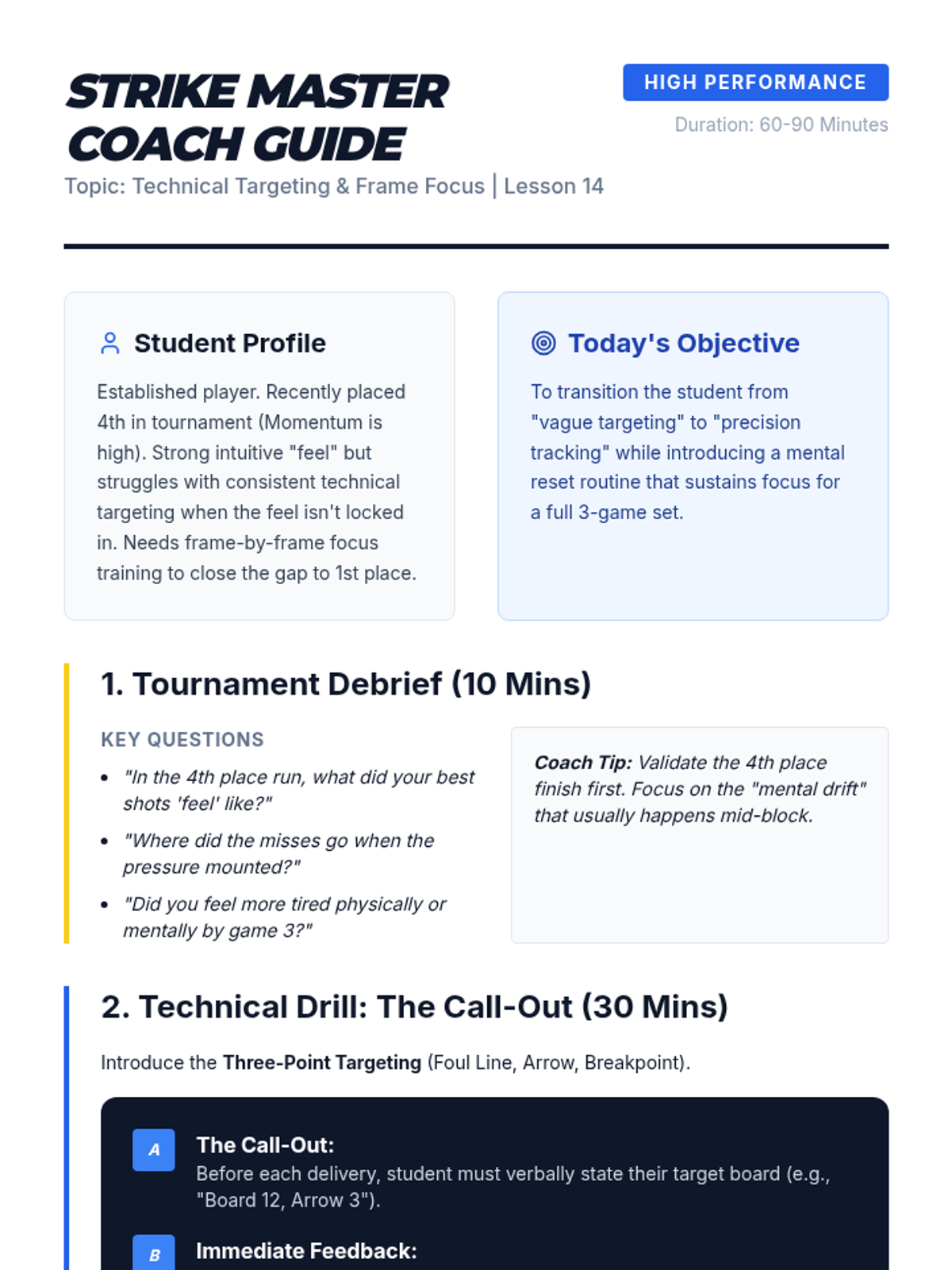
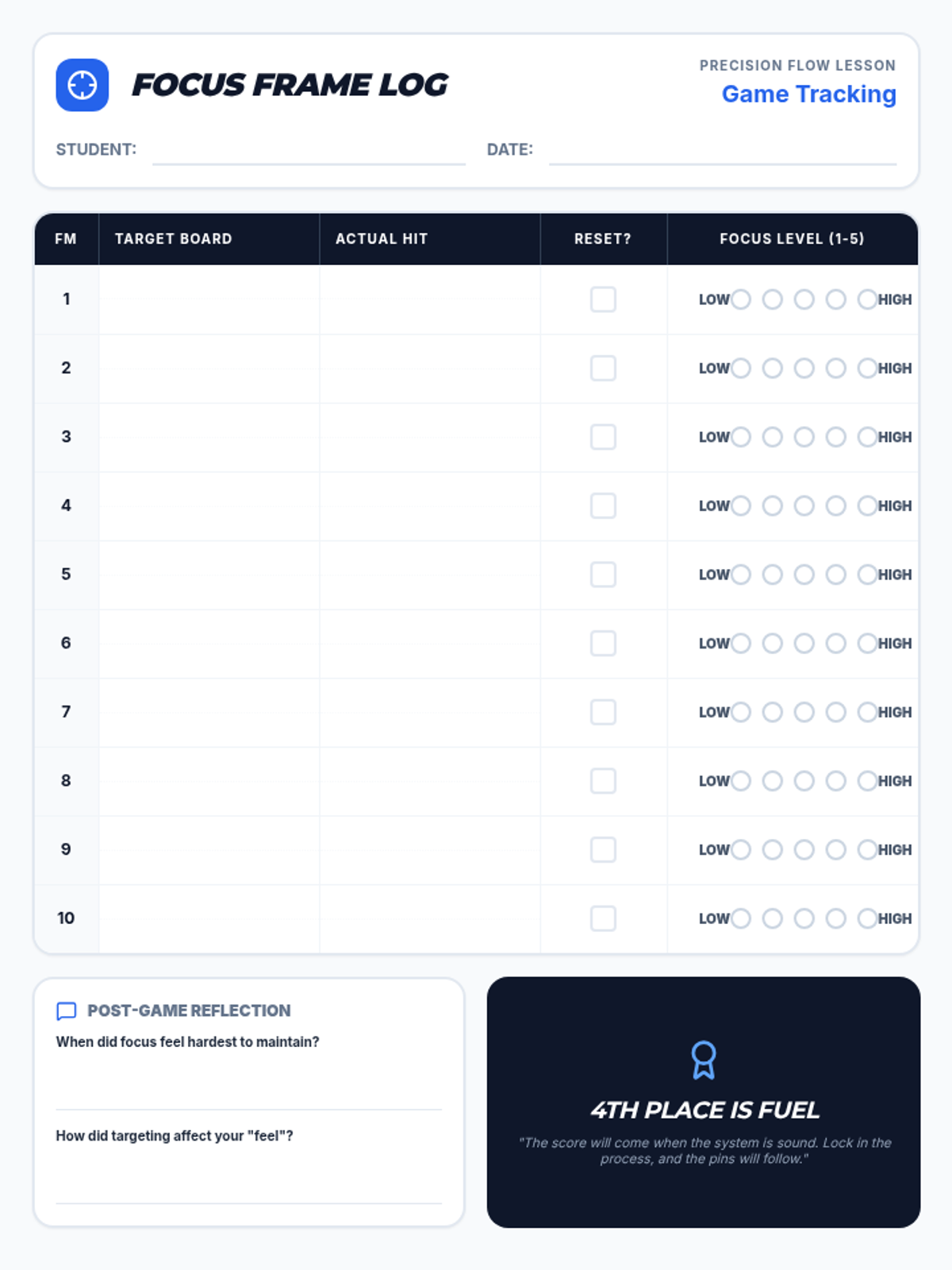
A high-performance bowling lesson designed to bridge the gap between intuitive 'feel' and technical precision targeting. Focused on maintaining mental stamina and frame-by-frame consistency for competitive athletes.
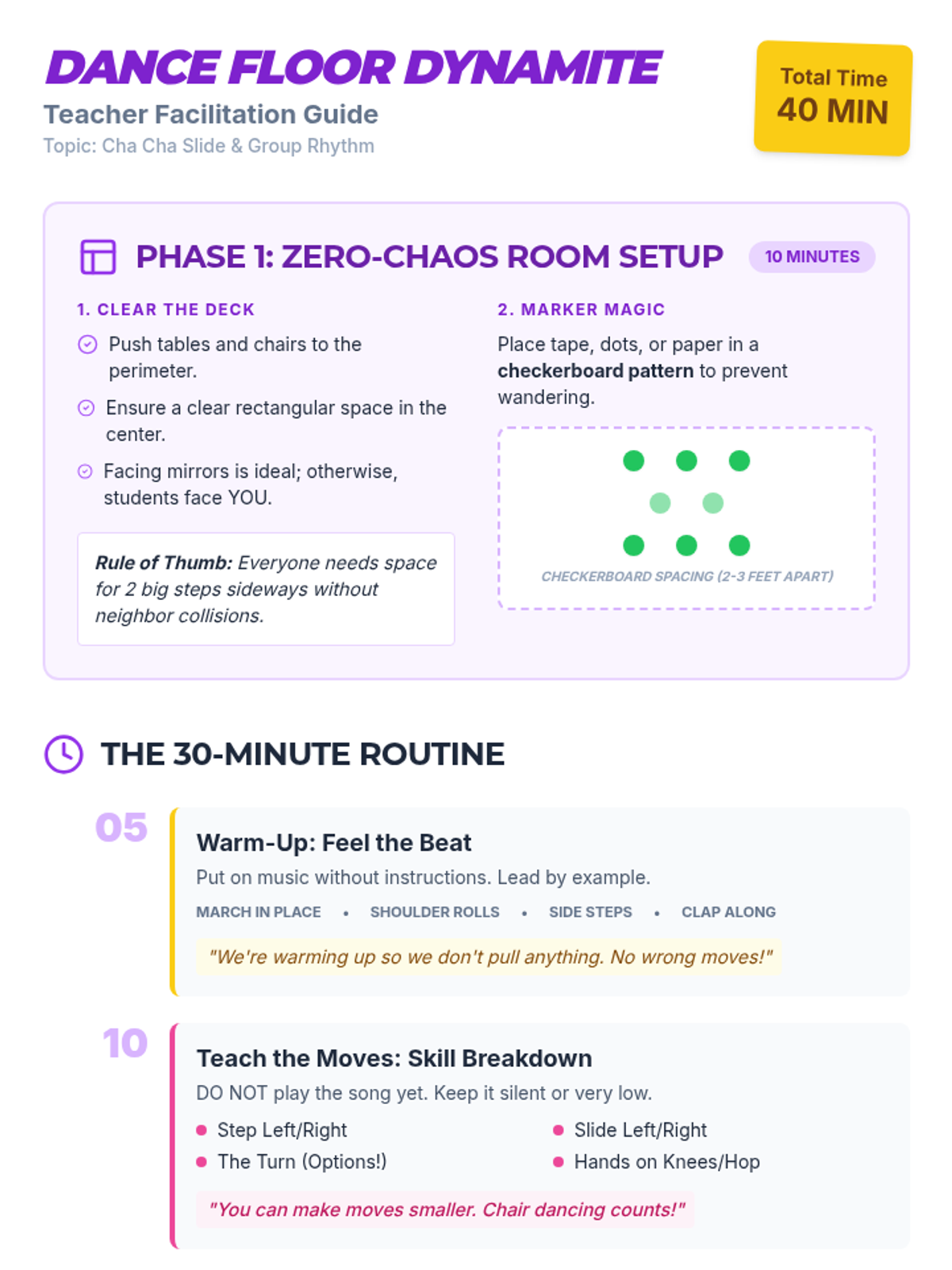
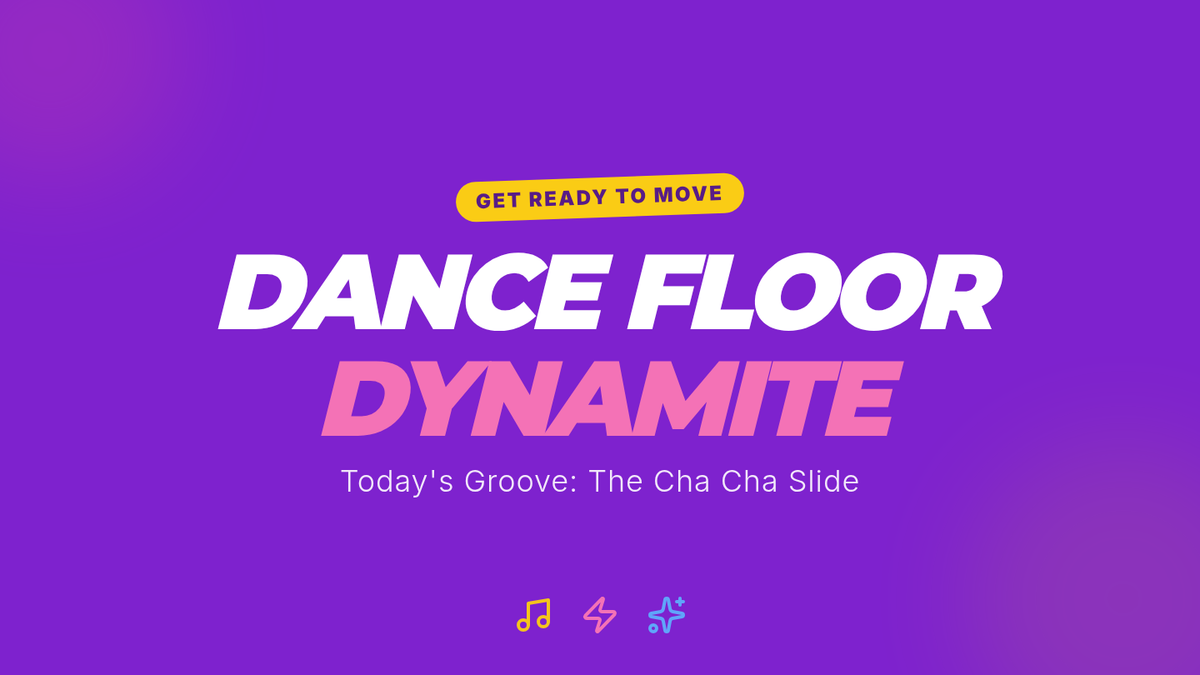
A high-energy introduction to line dancing focused on the Cha Cha Slide. This lesson covers room configuration, basic movement patterns, and group synchronization while prioritizing accessibility and confidence.
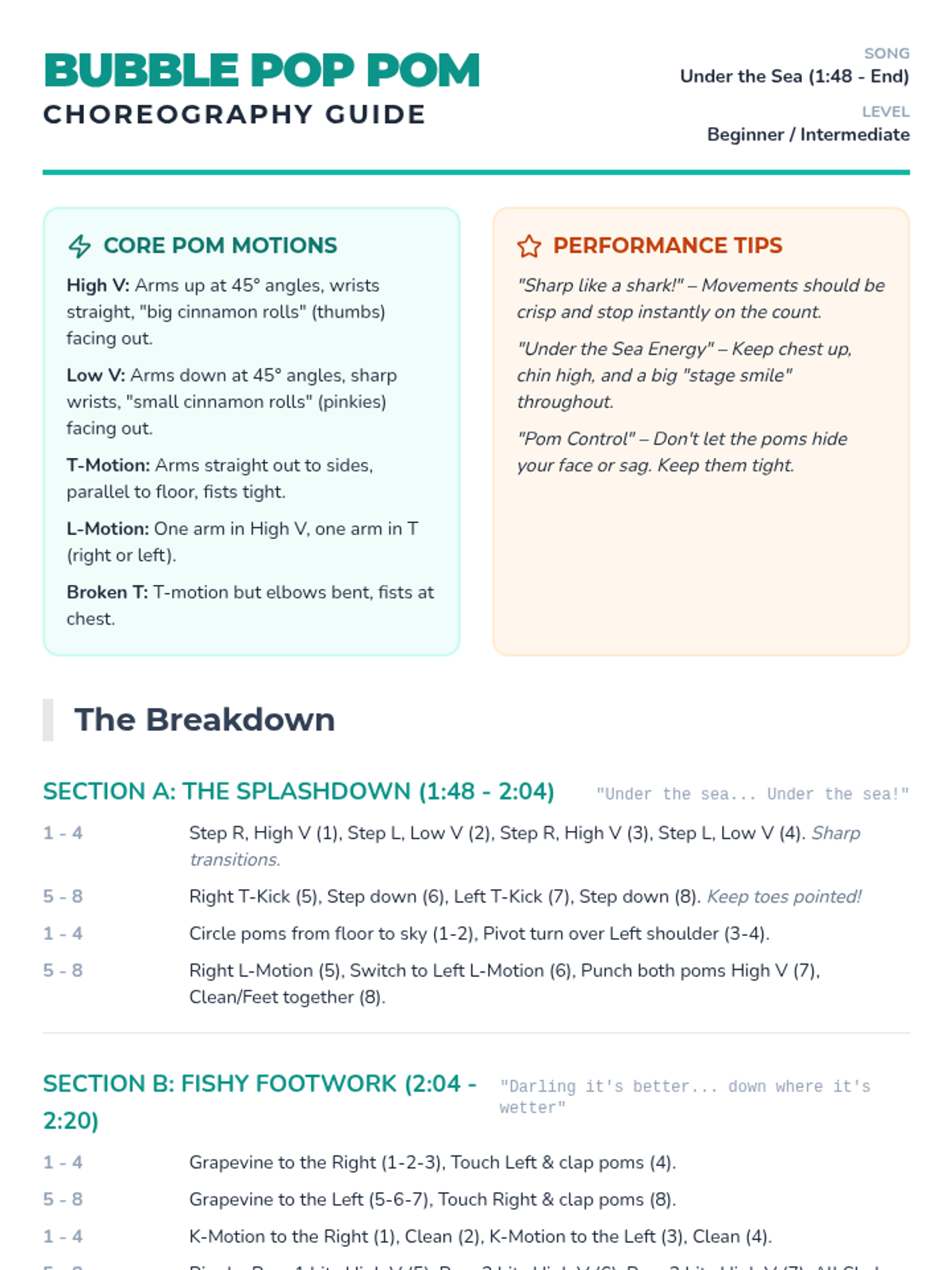
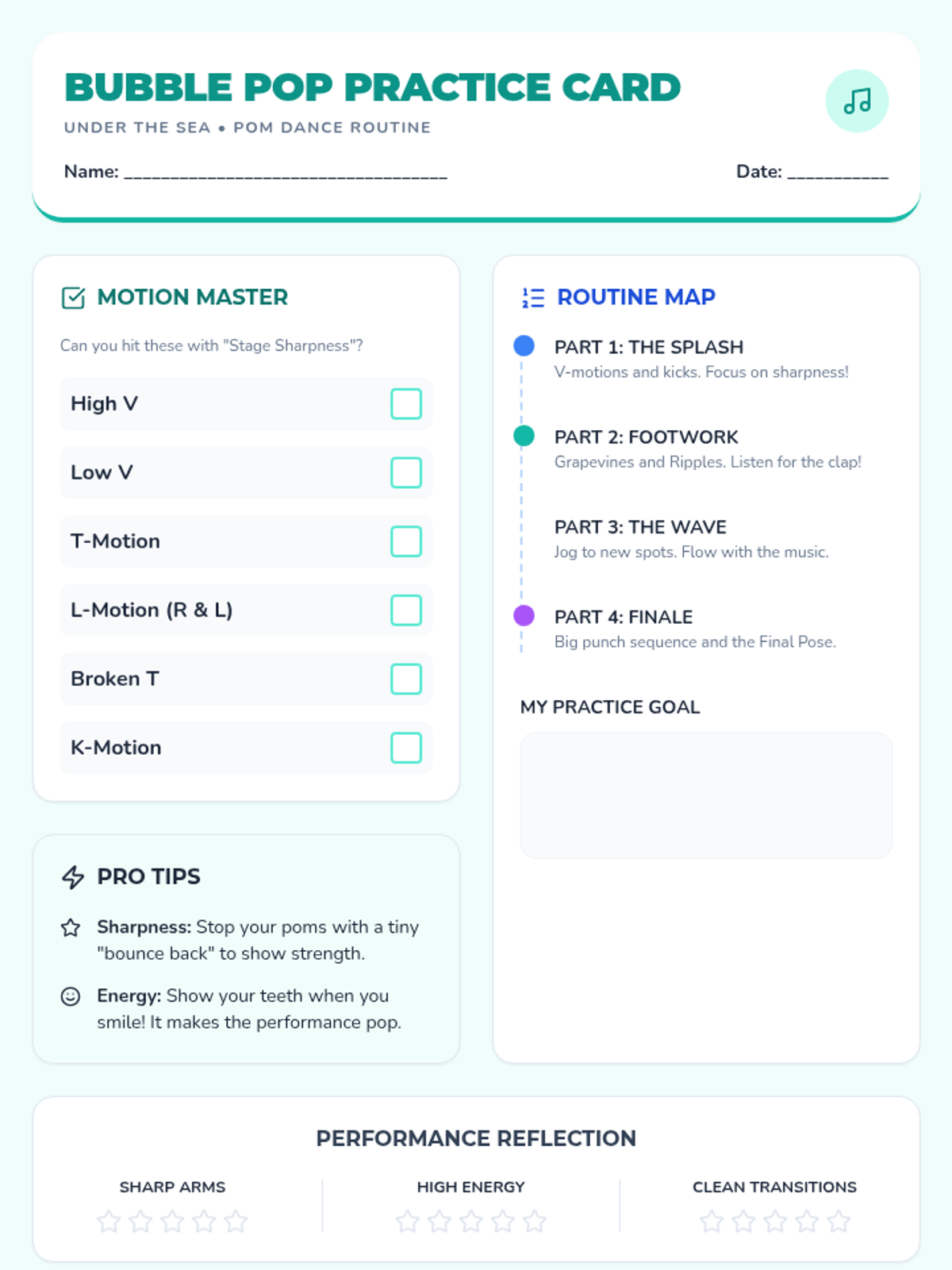
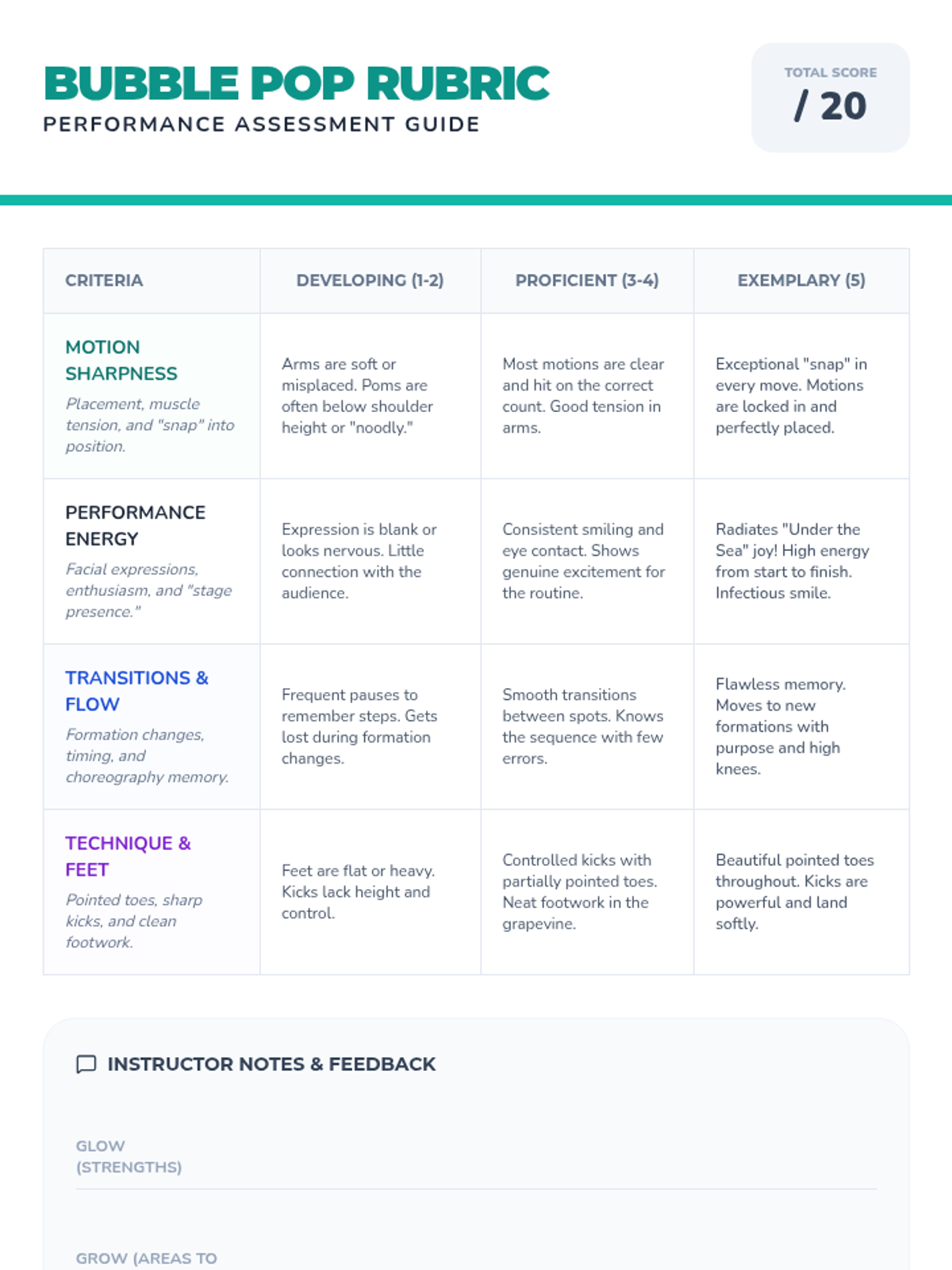
A high-energy pom dance lesson for beginner to intermediate students, featuring choreography to 'Under the Sea' from The Little Mermaid. Focuses on sharp pom motions, formations, and performance energy.
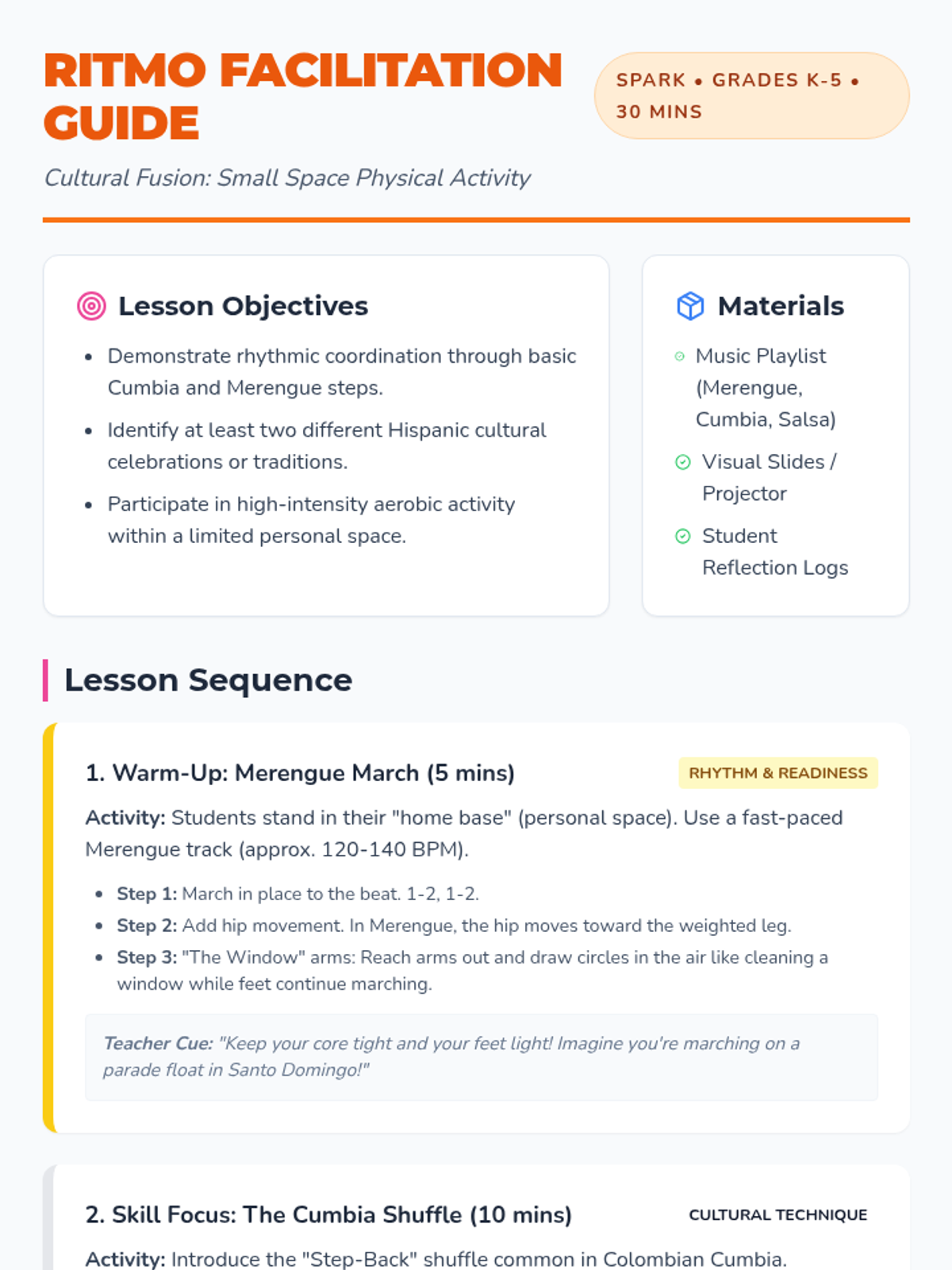
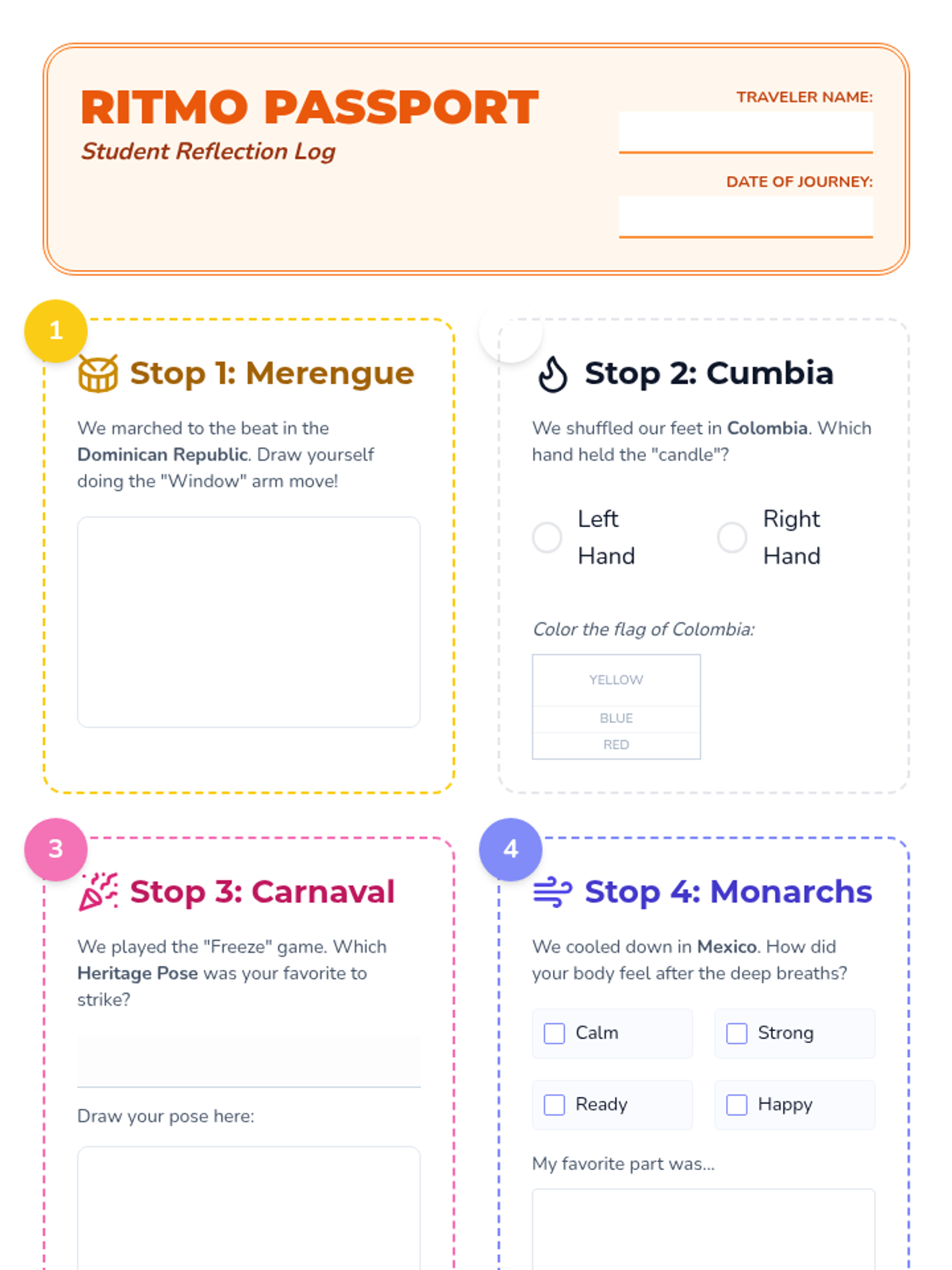
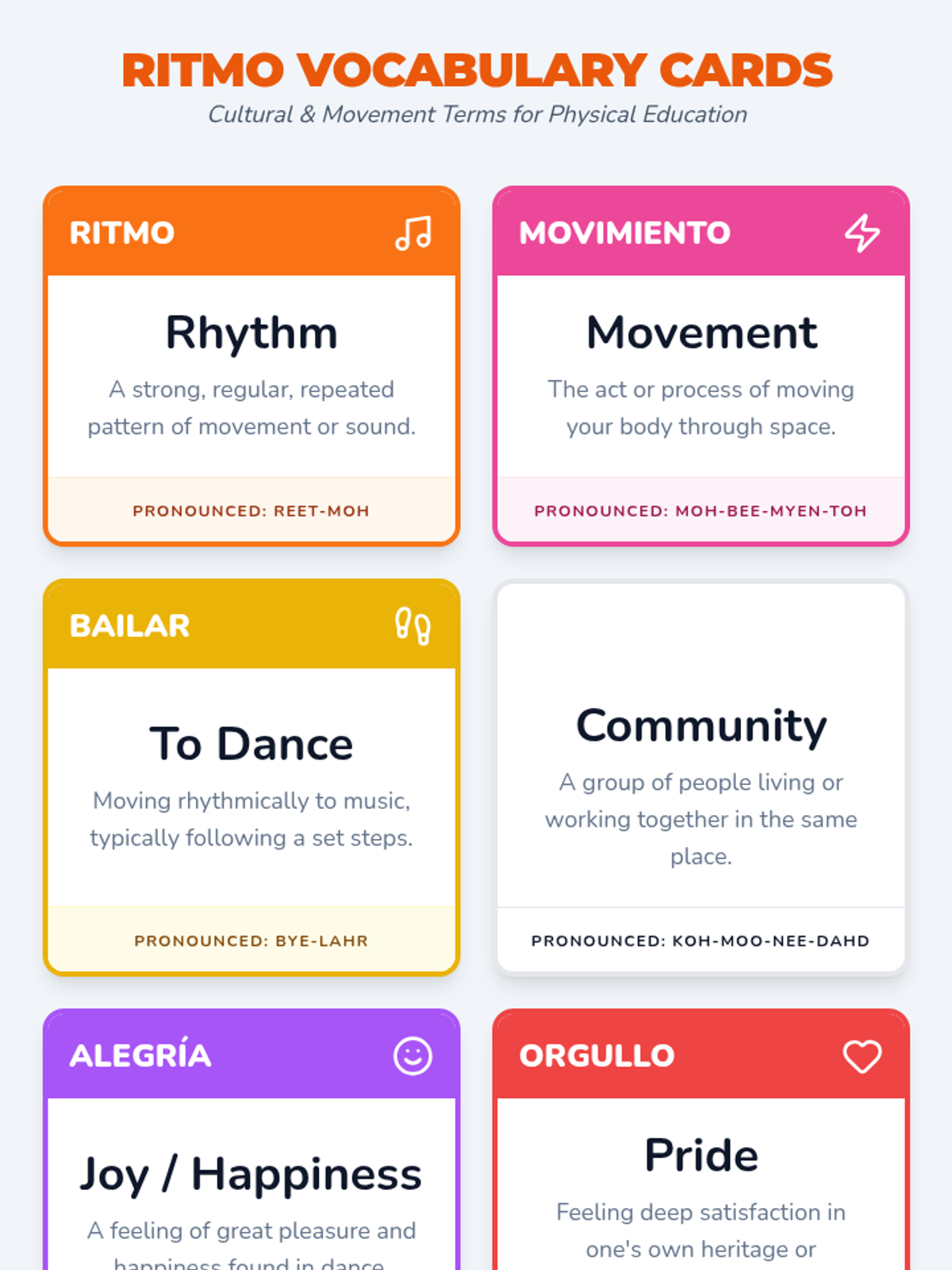
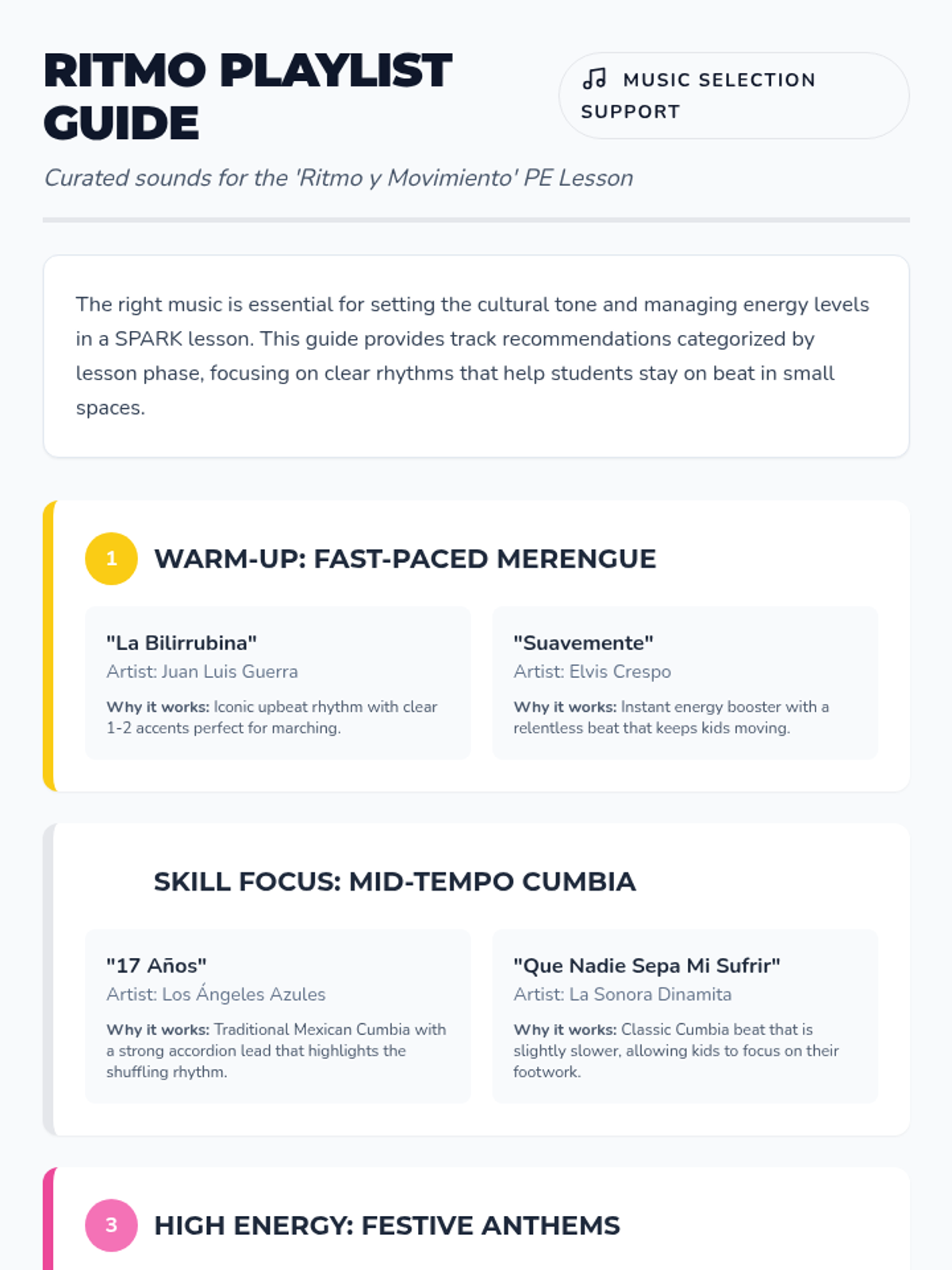
A 30-minute SPARK-inspired physical education lesson for grades K-5 focused on Hispanic cultural dances, games, and music, designed for small spaces.
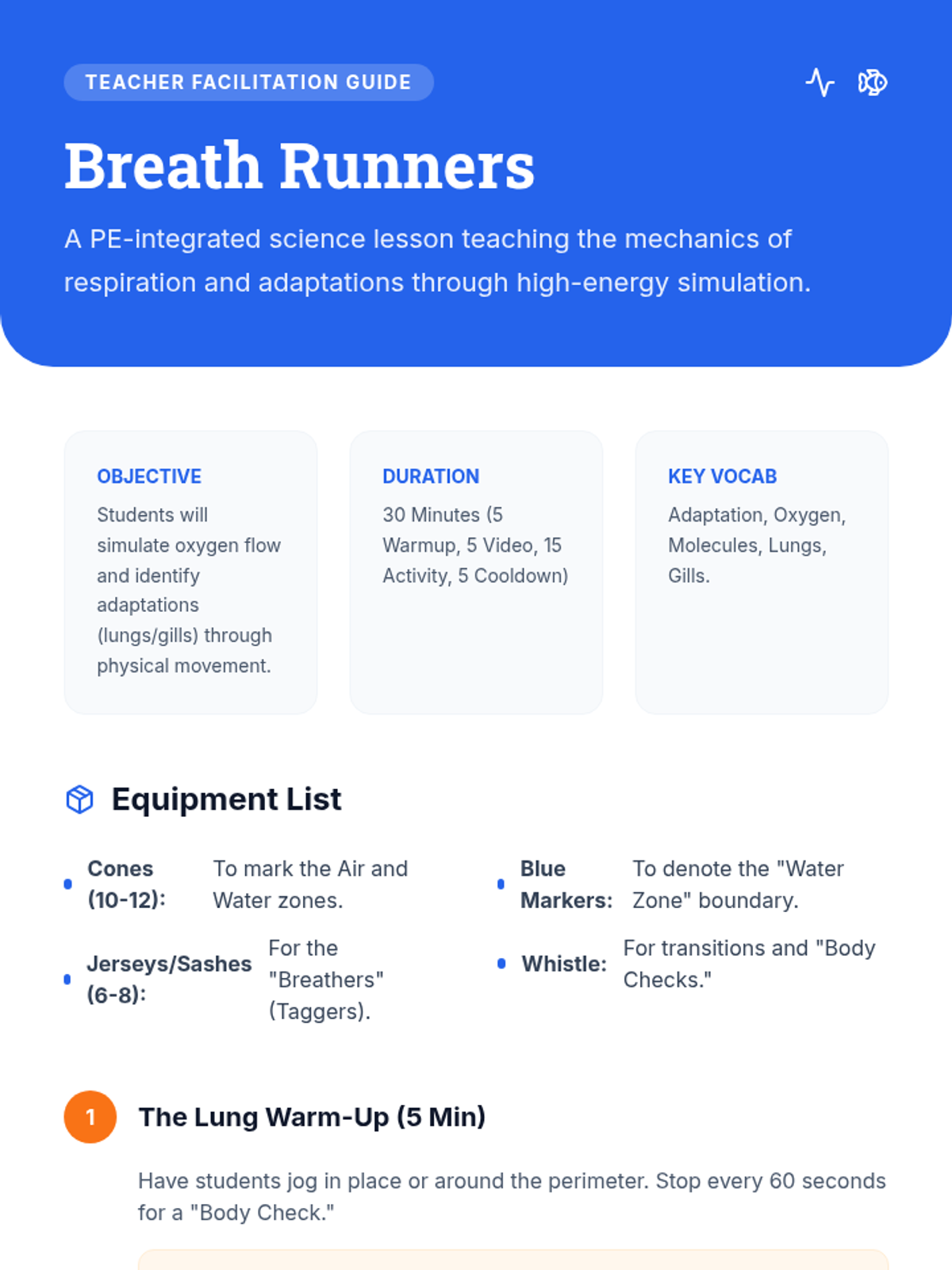
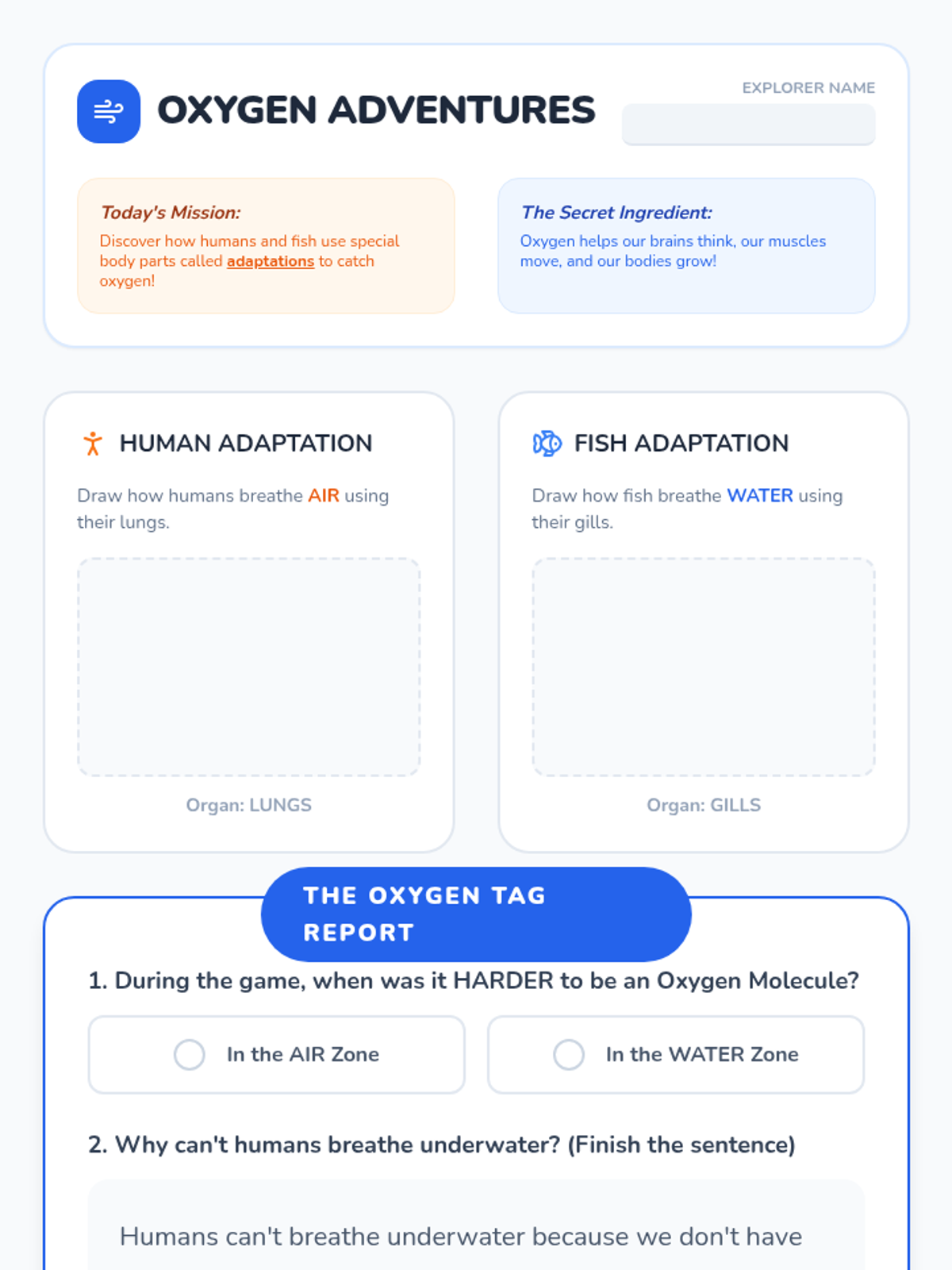
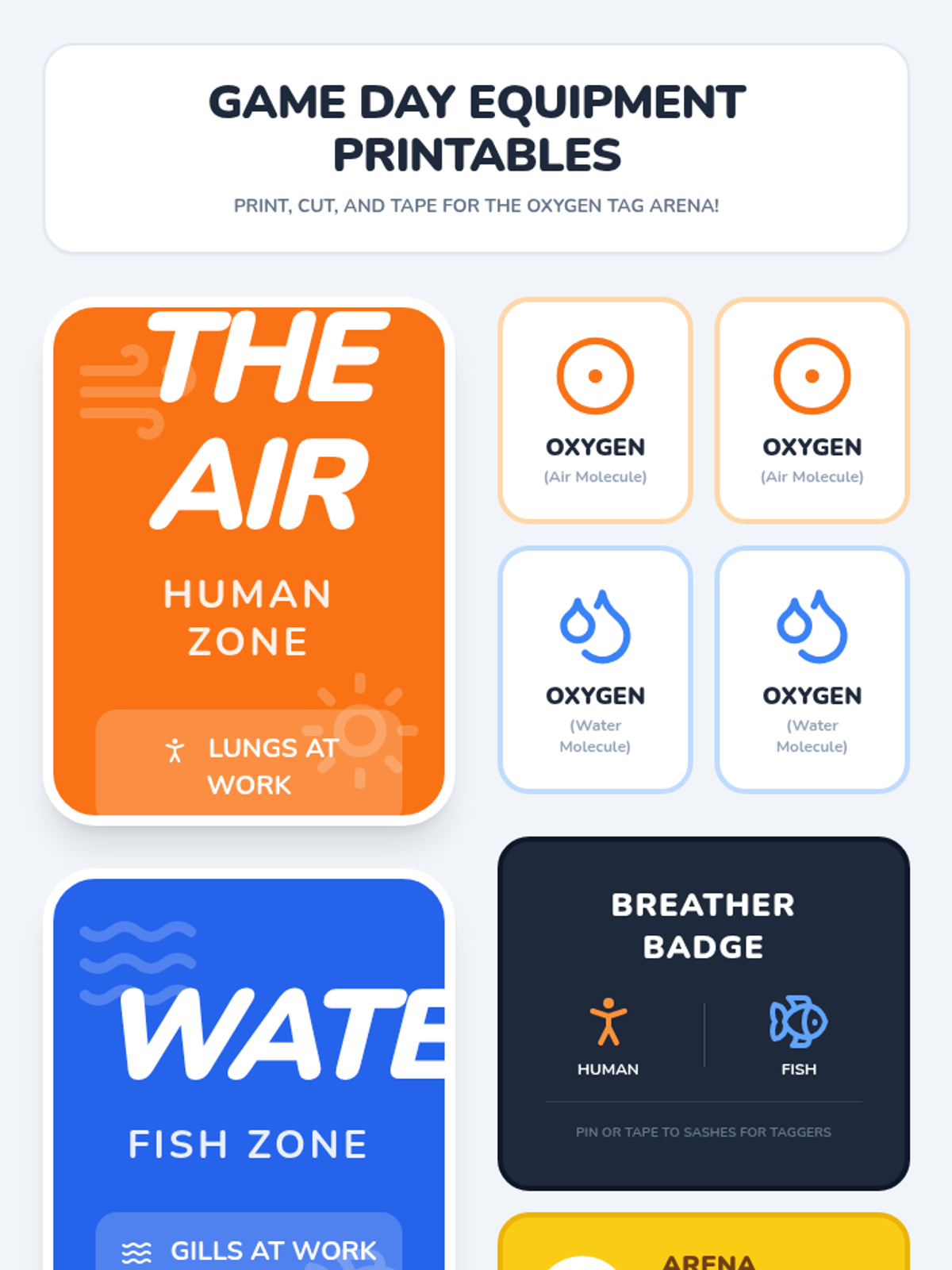
A high-energy physical education lesson where students simulate the respiratory systems of humans and fish through a fast-paced game of tag, exploring adaptations like lungs and gills.
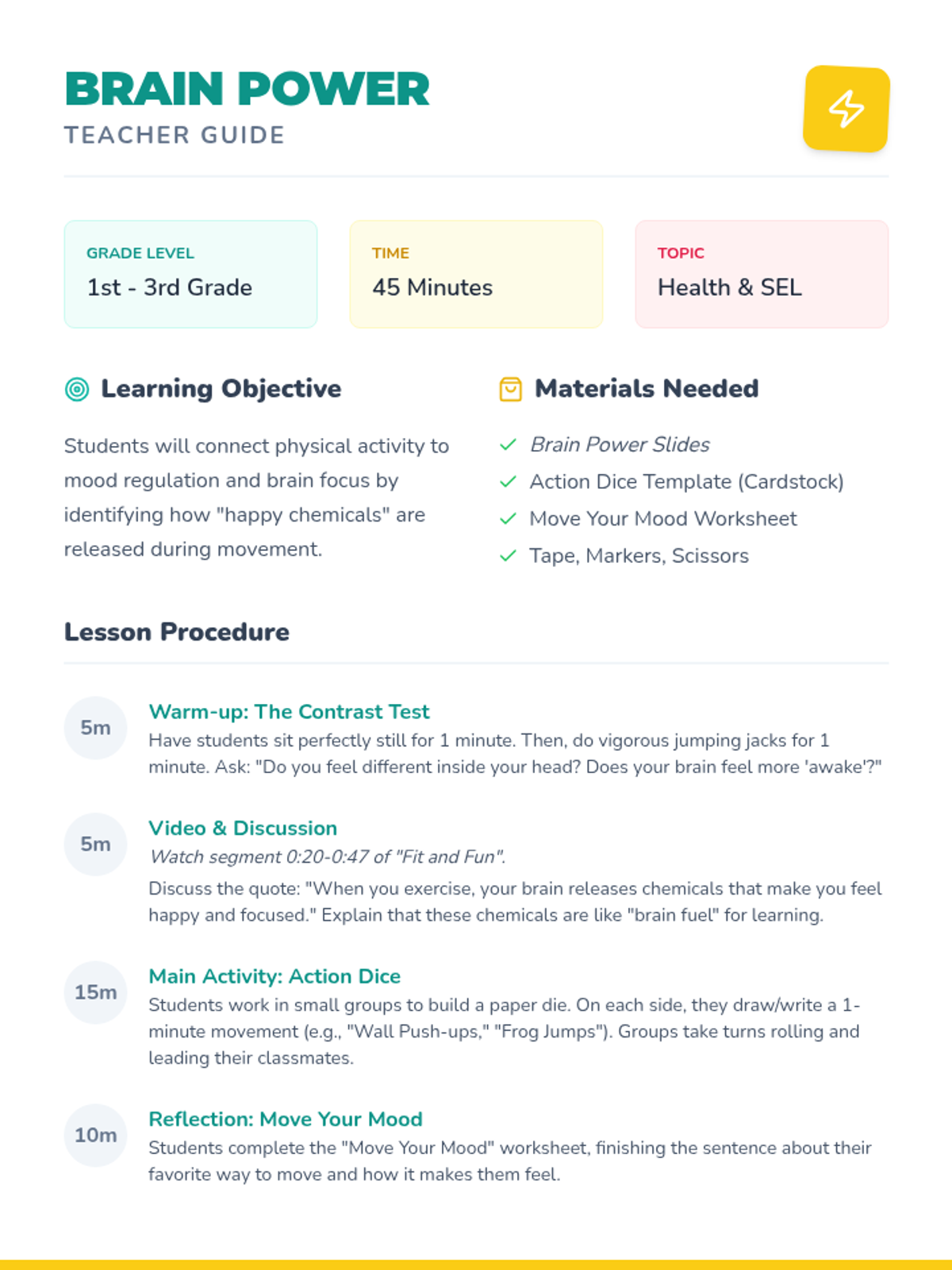
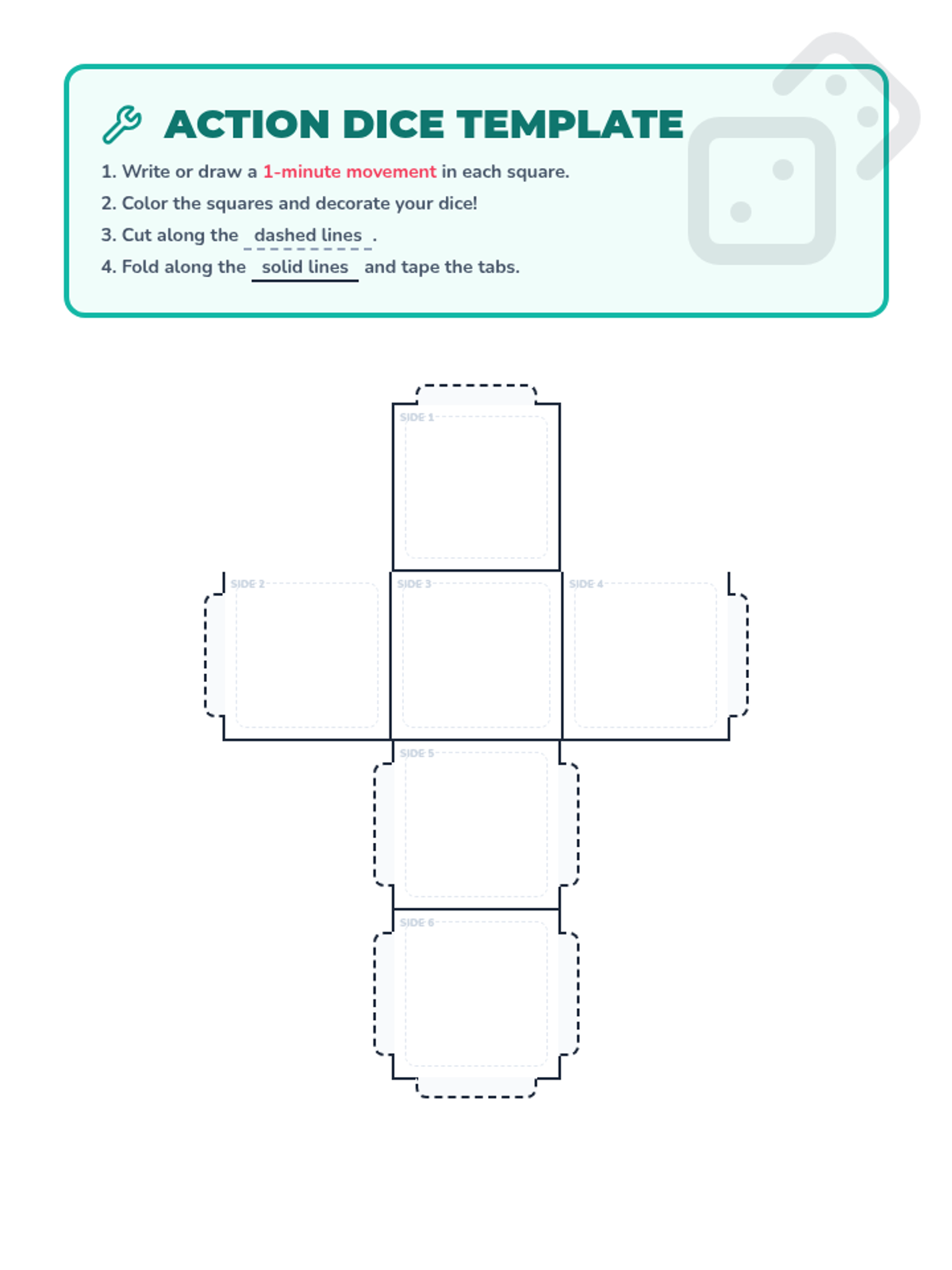
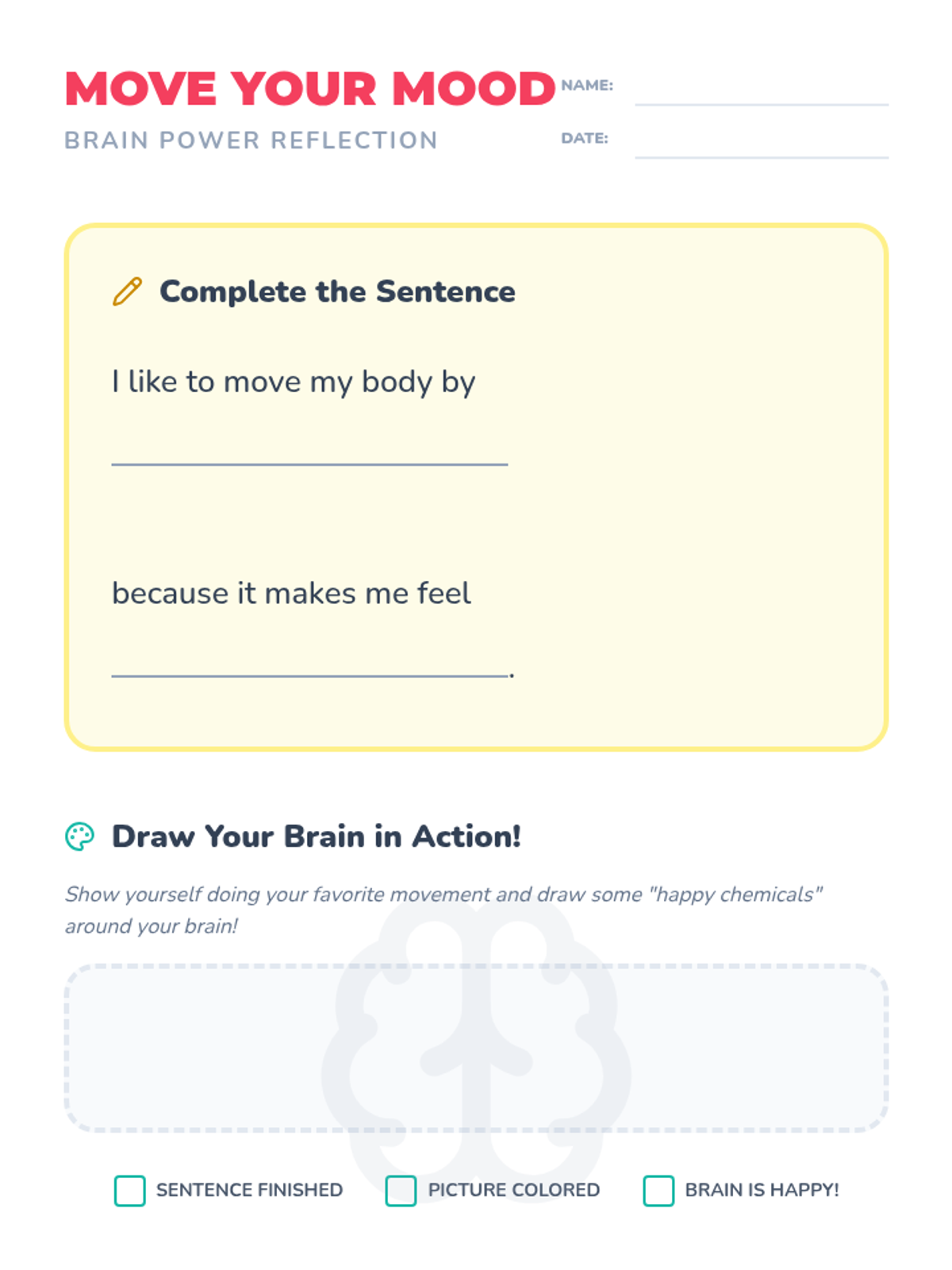
A high-energy lesson for 1st-3rd graders that explores the science of 'happy chemicals' released during exercise. Students create their own movement dice to lead brain breaks and reflect on how physical activity helps them stay focused.
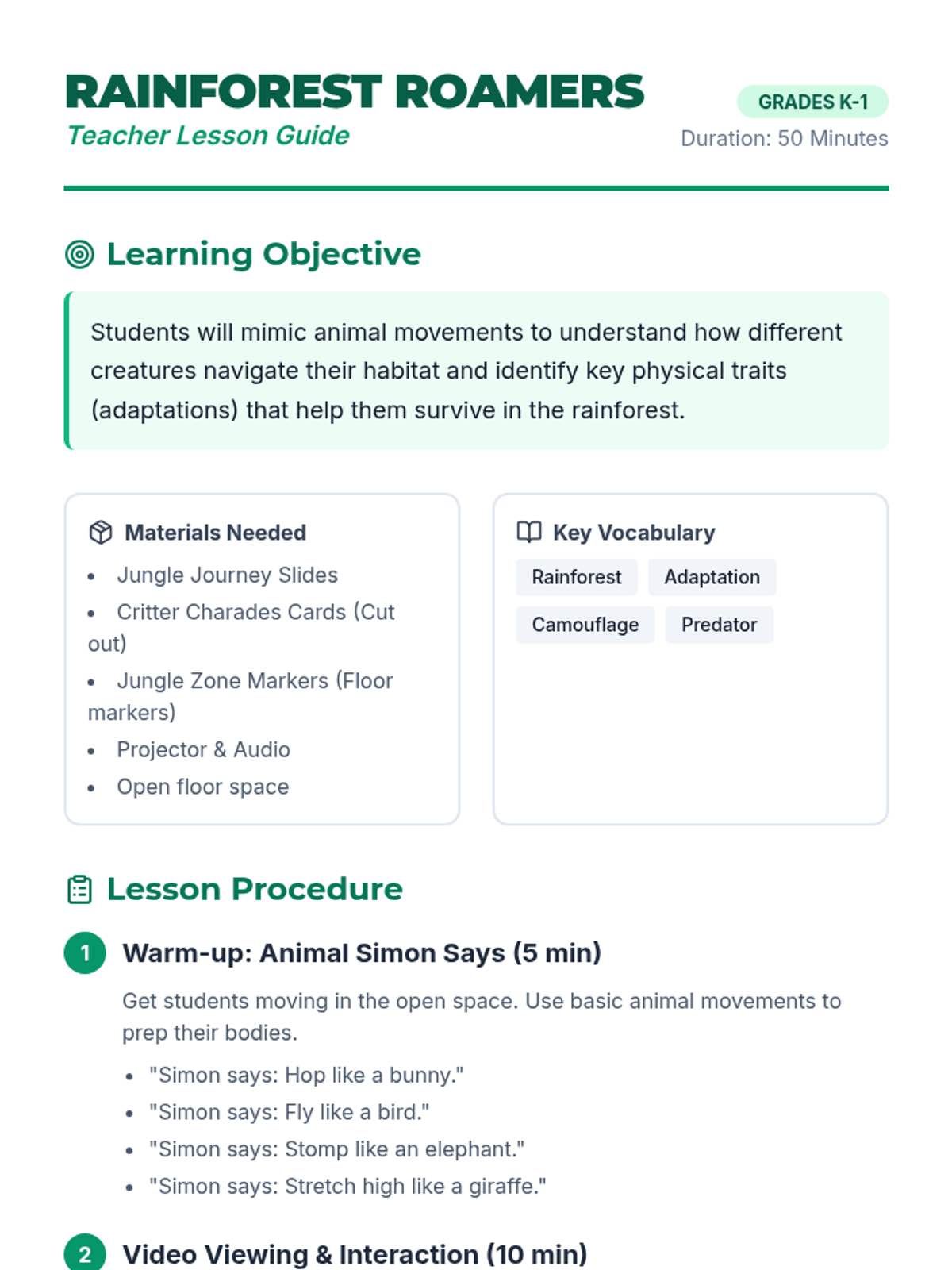
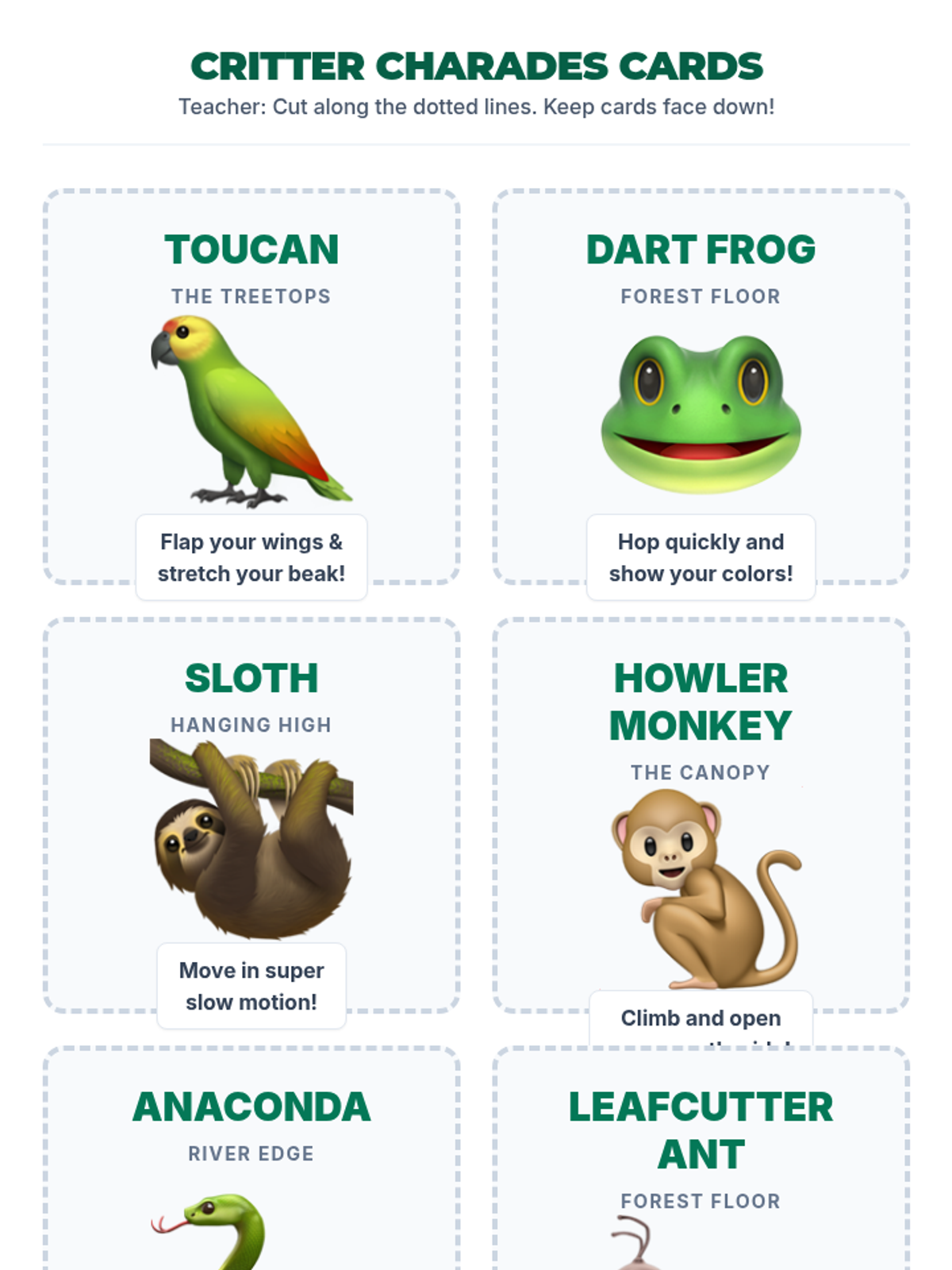
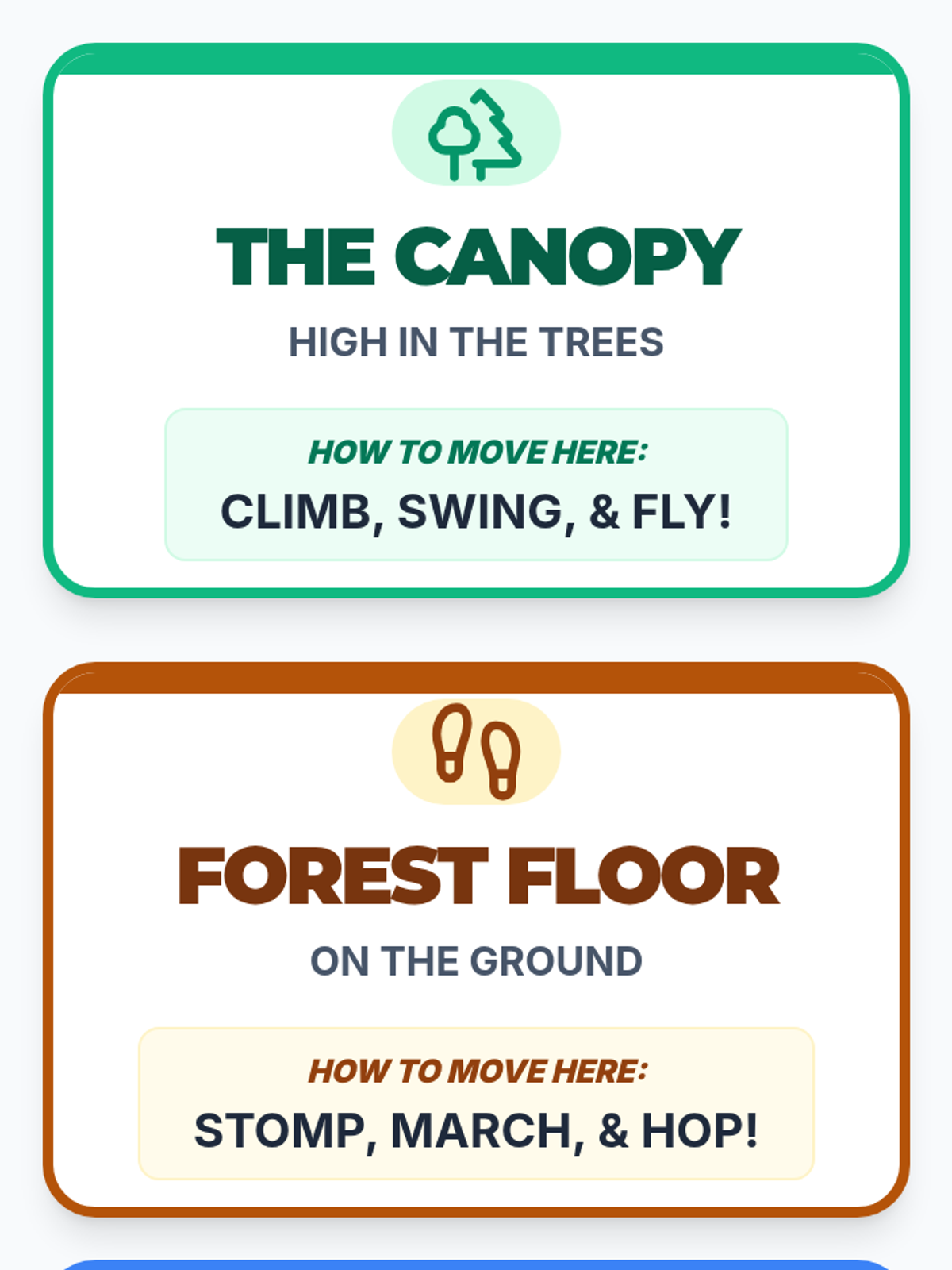
Students will explore how rainforest animals move through their habitat by mimicking their actions, watching an interactive video, and playing a movement-based game.
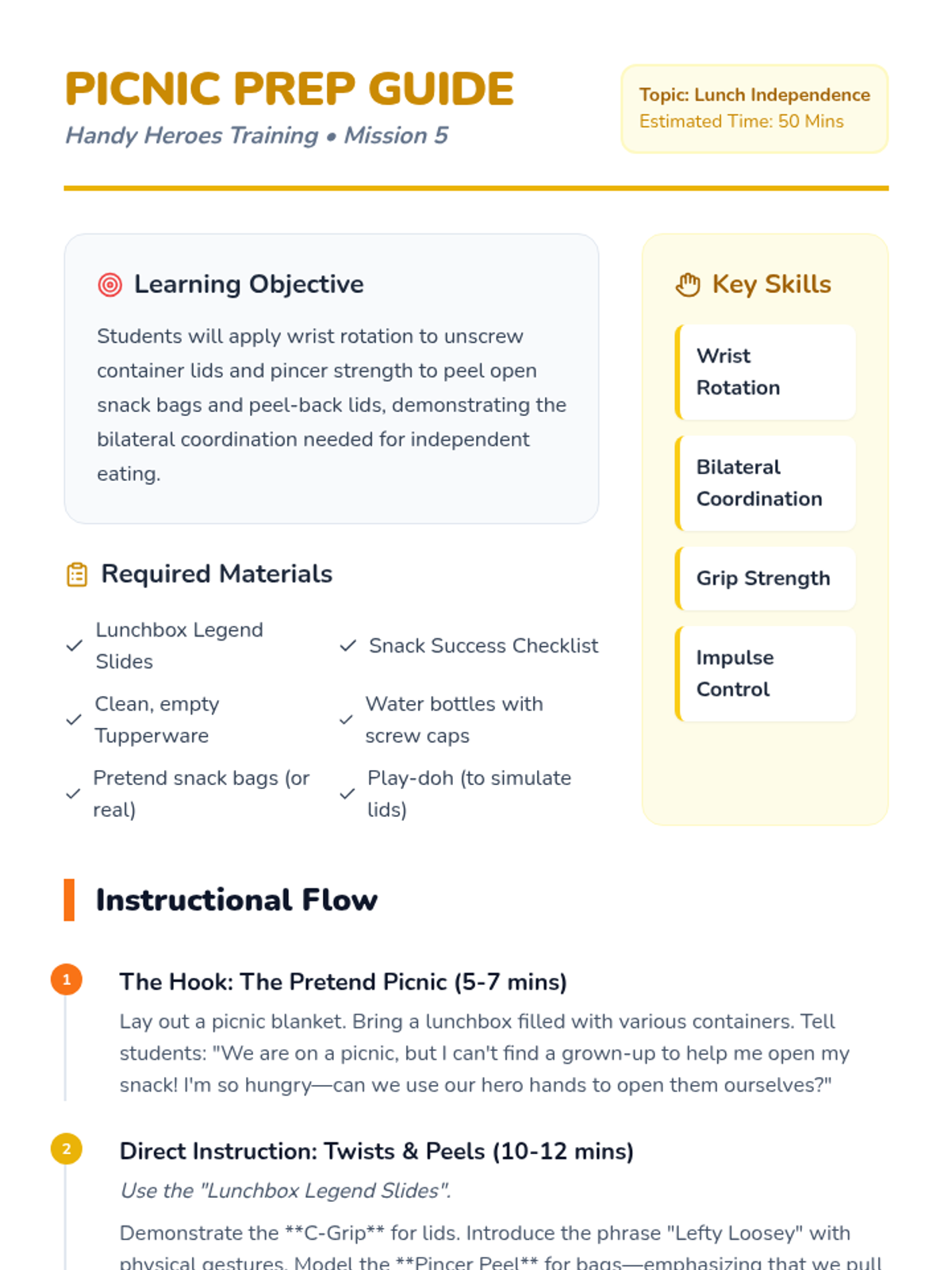
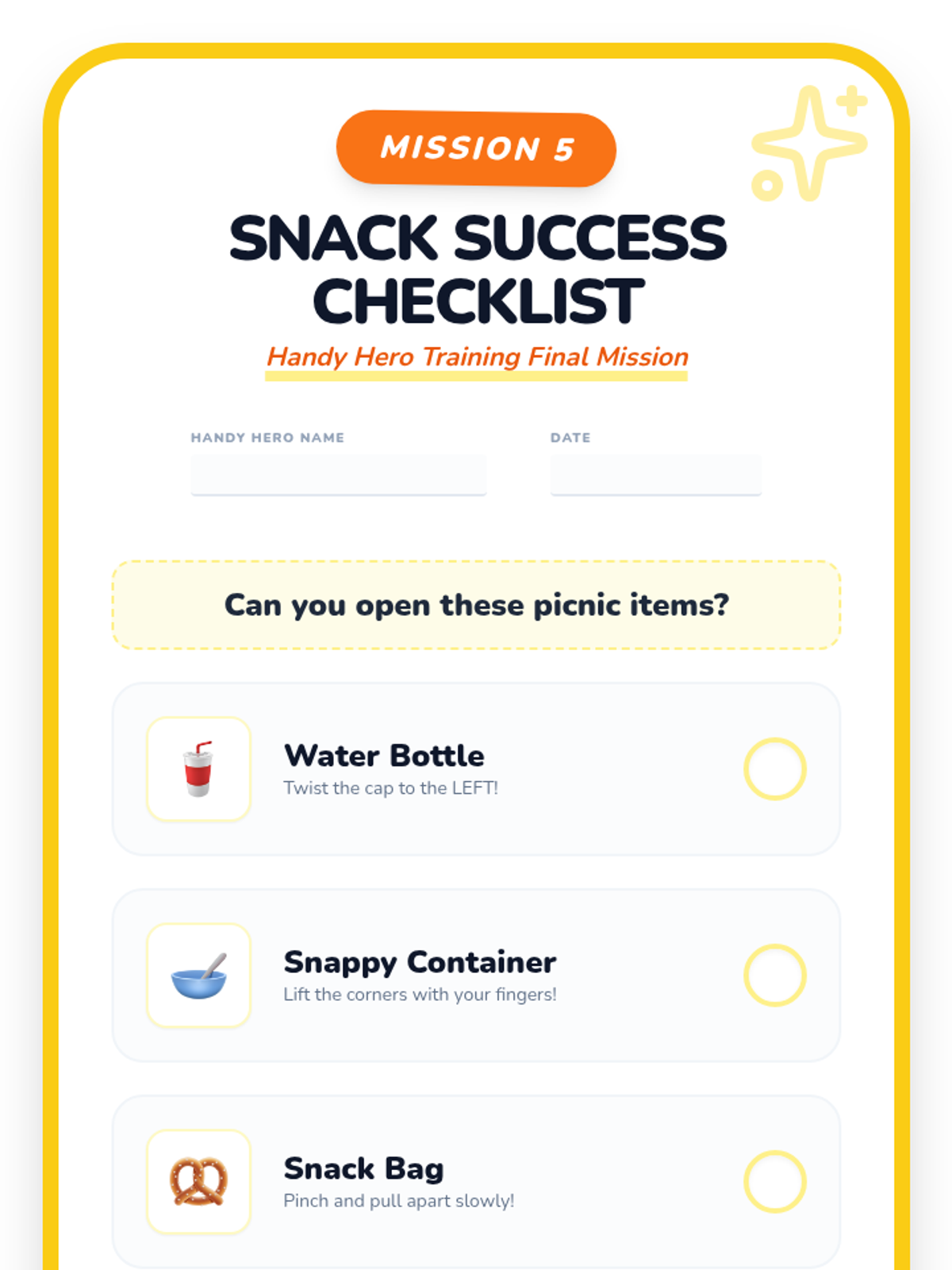
Targeting wrist rotation and grip strength, students practice opening containers and snack packaging for lunch independence.
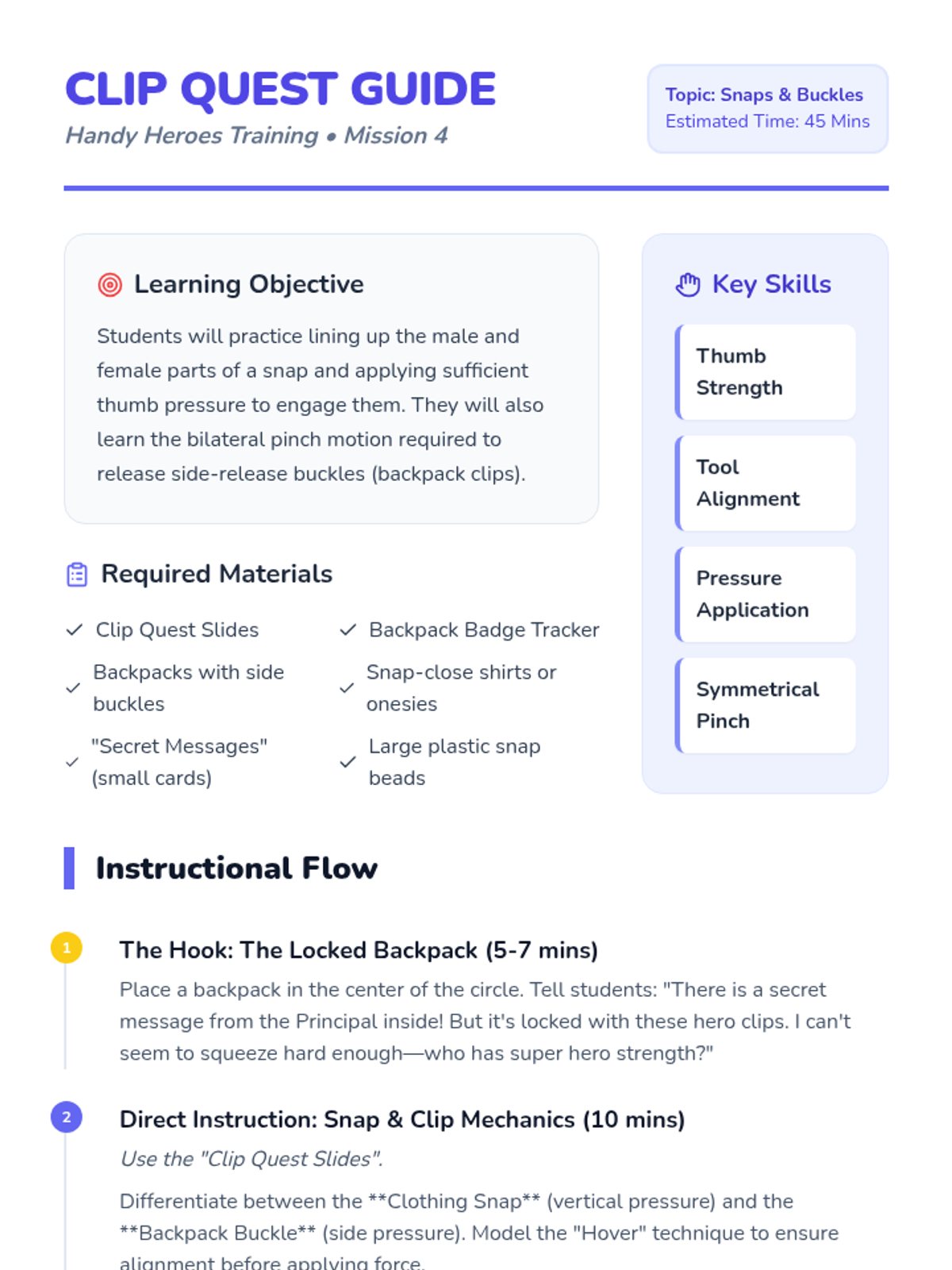
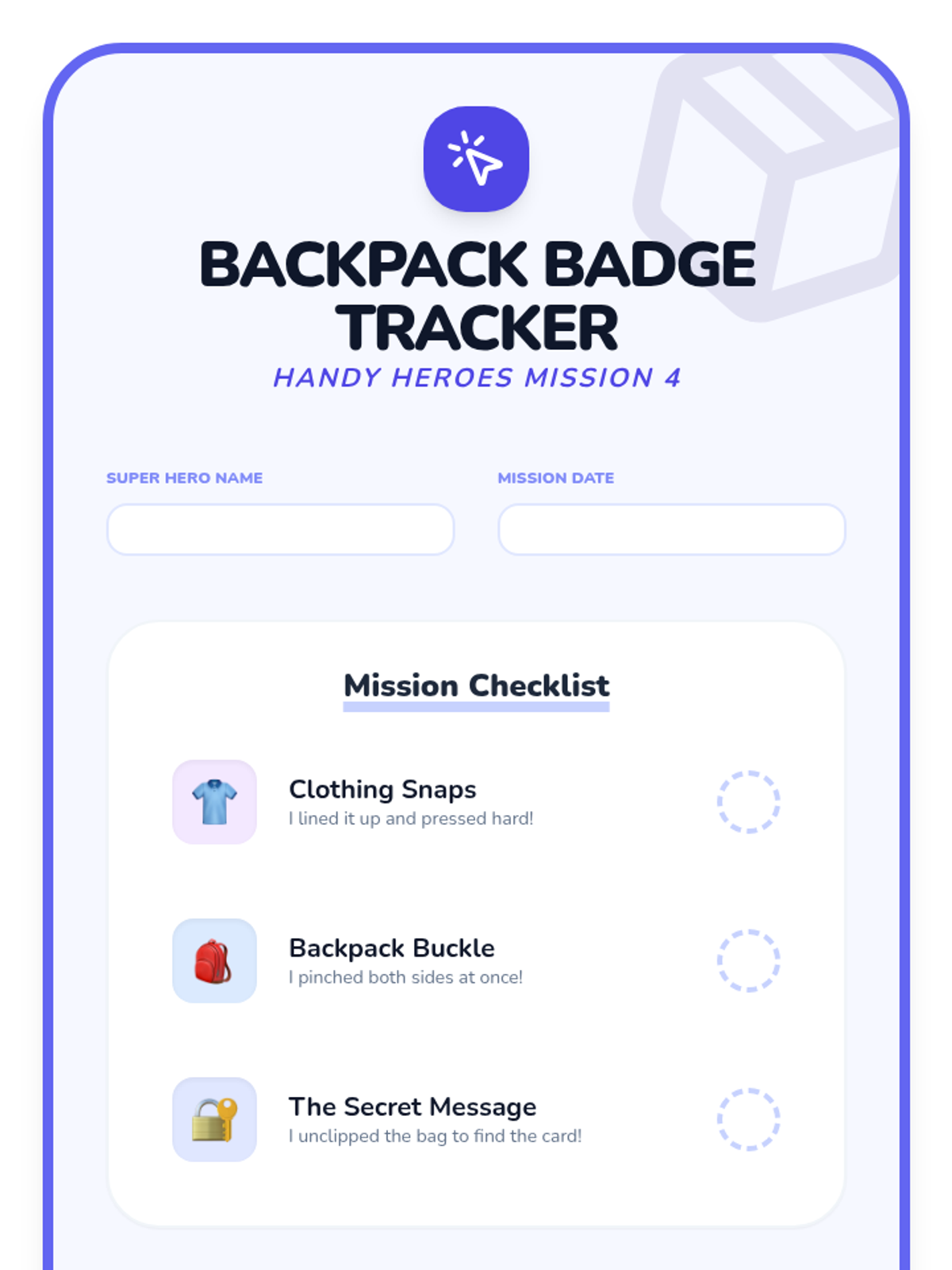
Students tackle snaps and side-release buckles, building thumb strength and alignment skills.
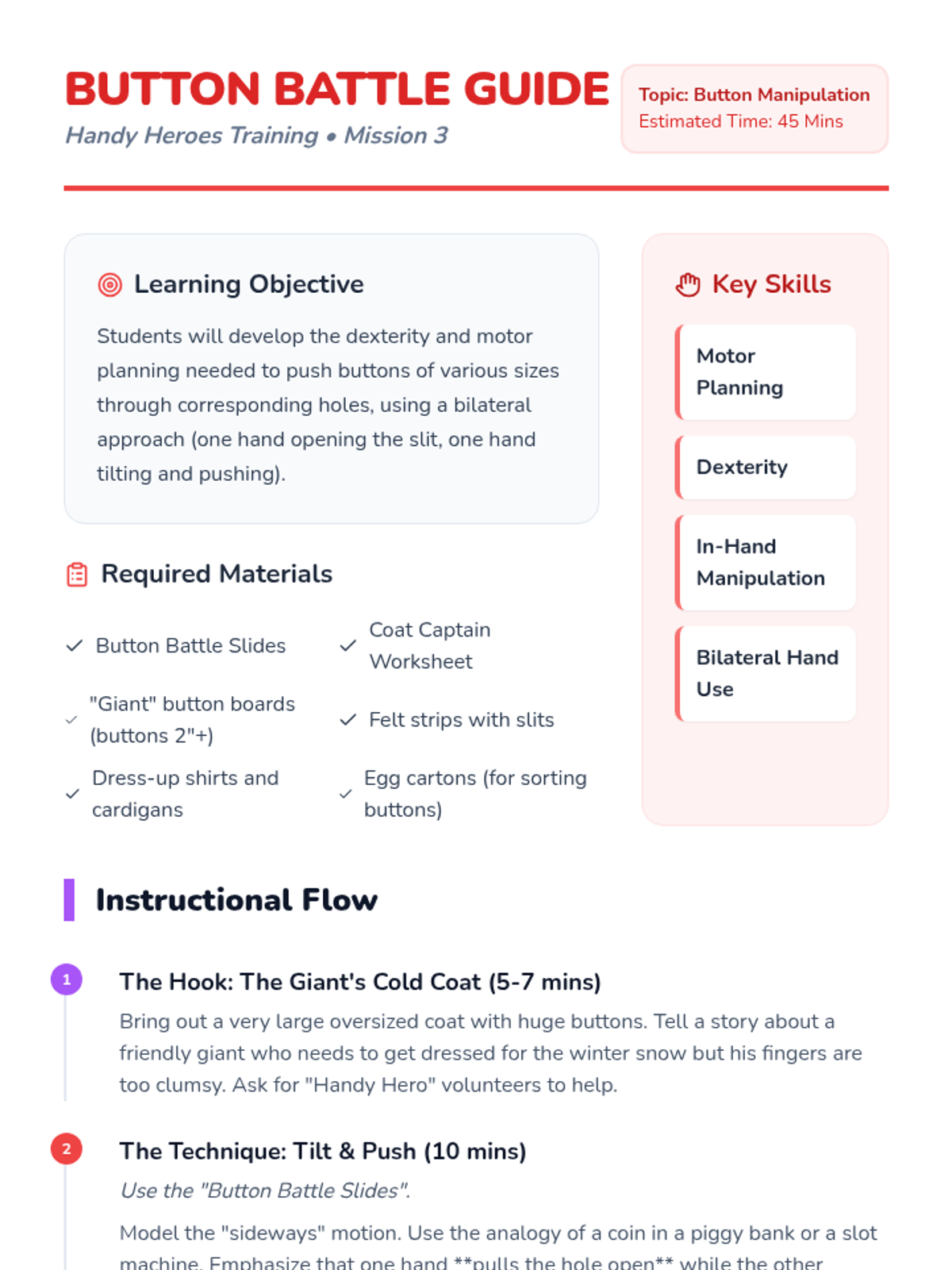
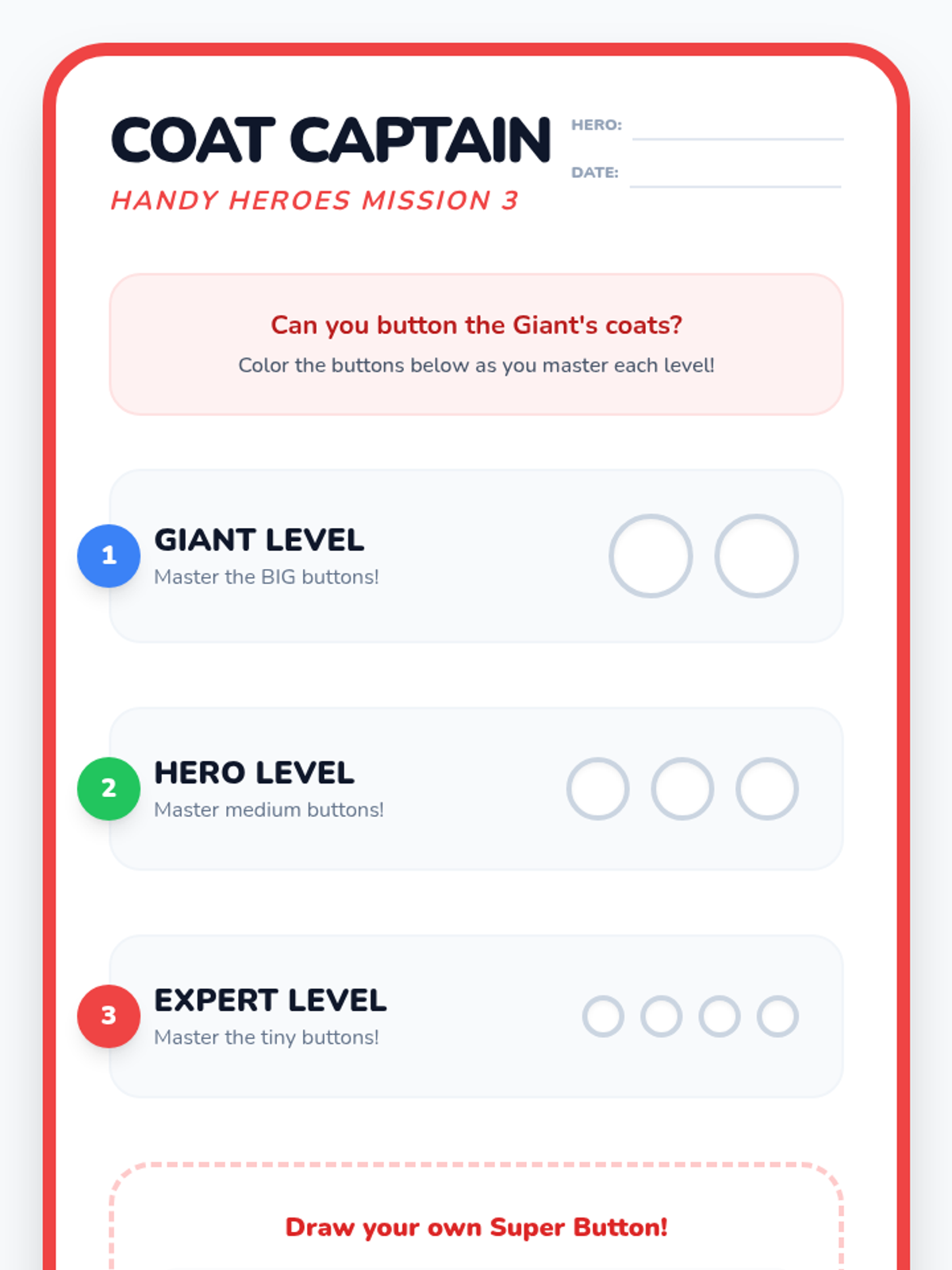
Focusing on dexterity and motor planning, students practice pushing buttons through holes of various sizes.
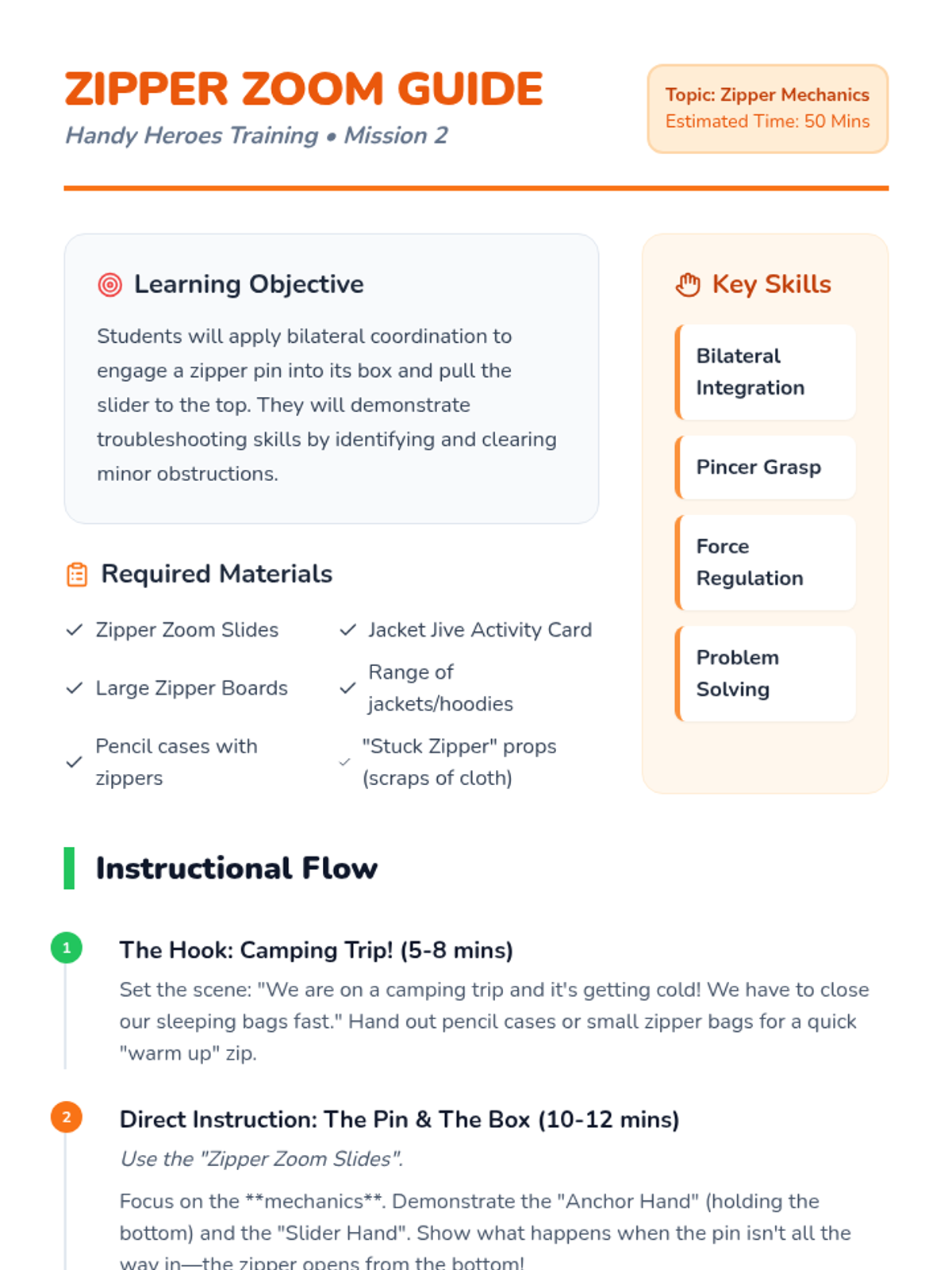
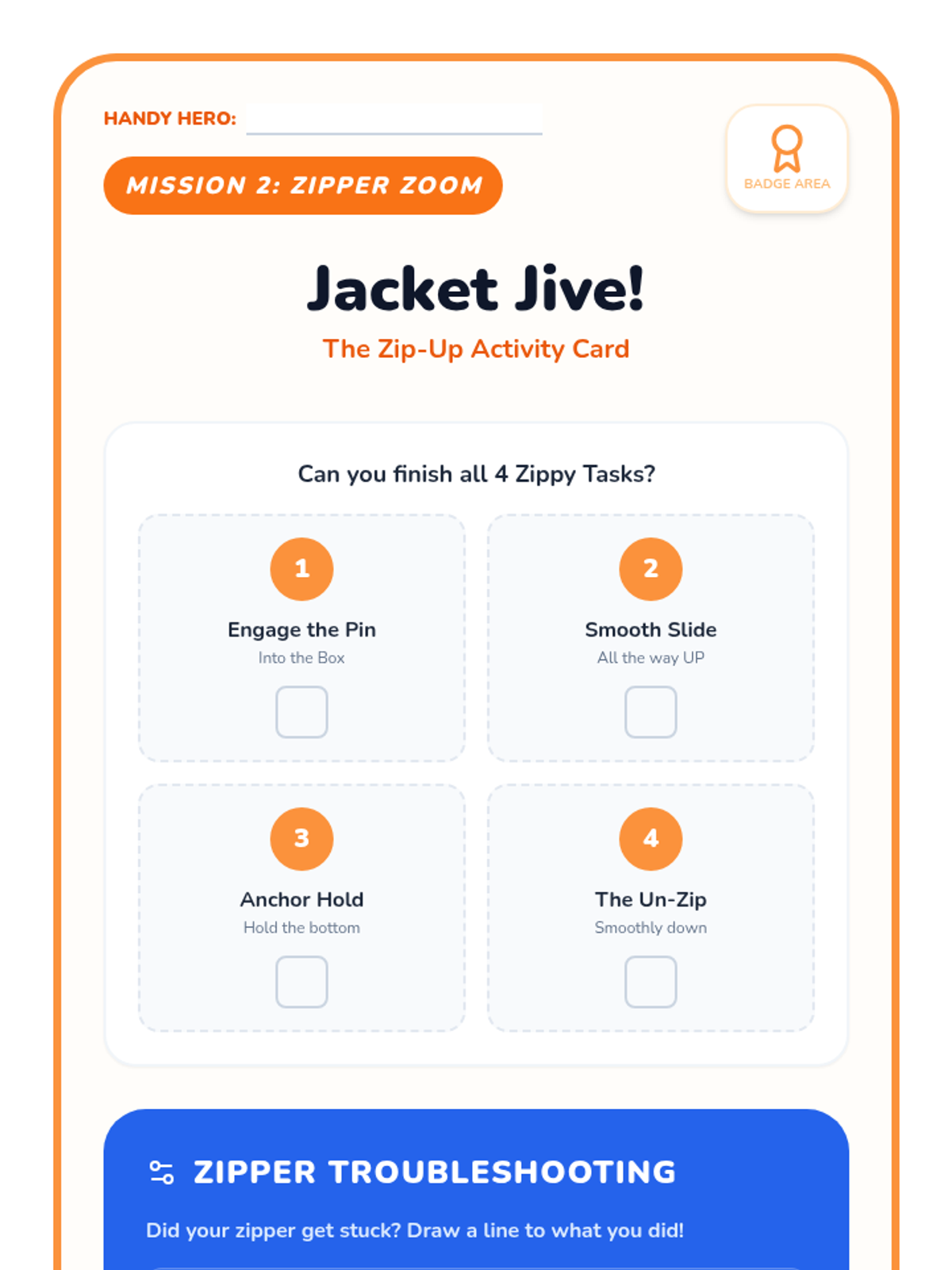
Students master the bilateral coordination required to engage and pull zippers on clothing and gear.
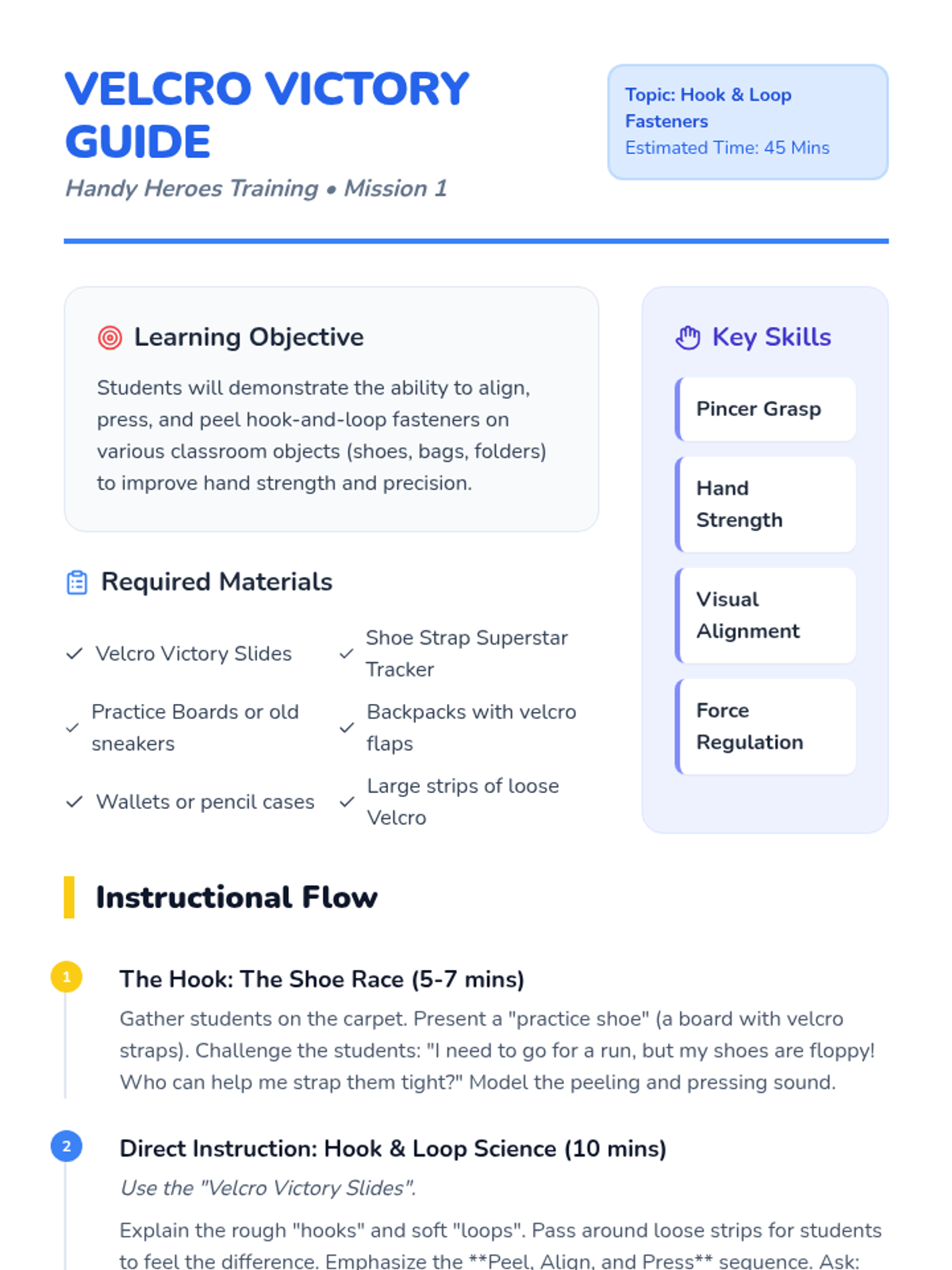
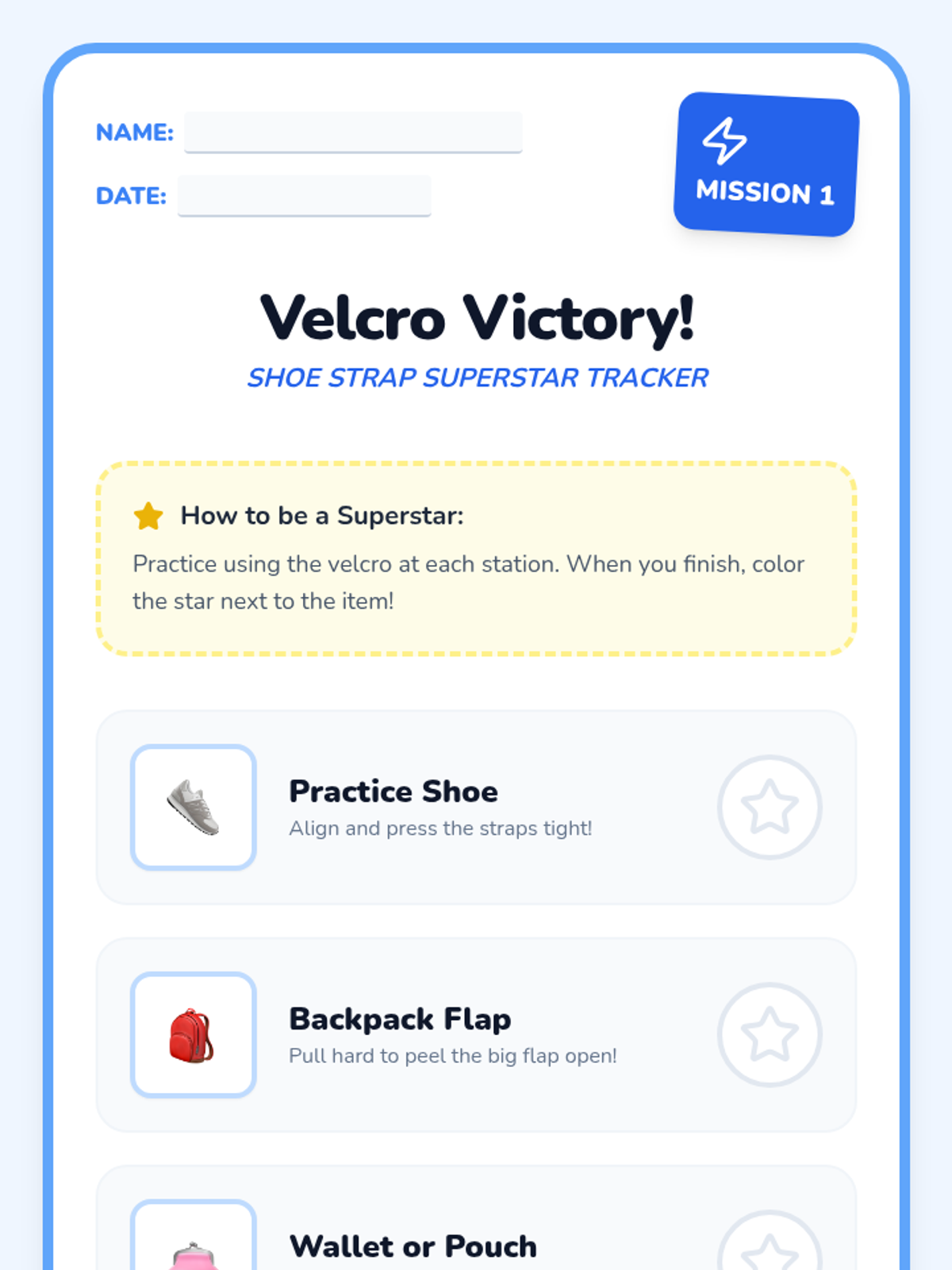
Students practice aligning and pressing hook-and-loop fasteners to build hand strength and precision for shoes and bags.
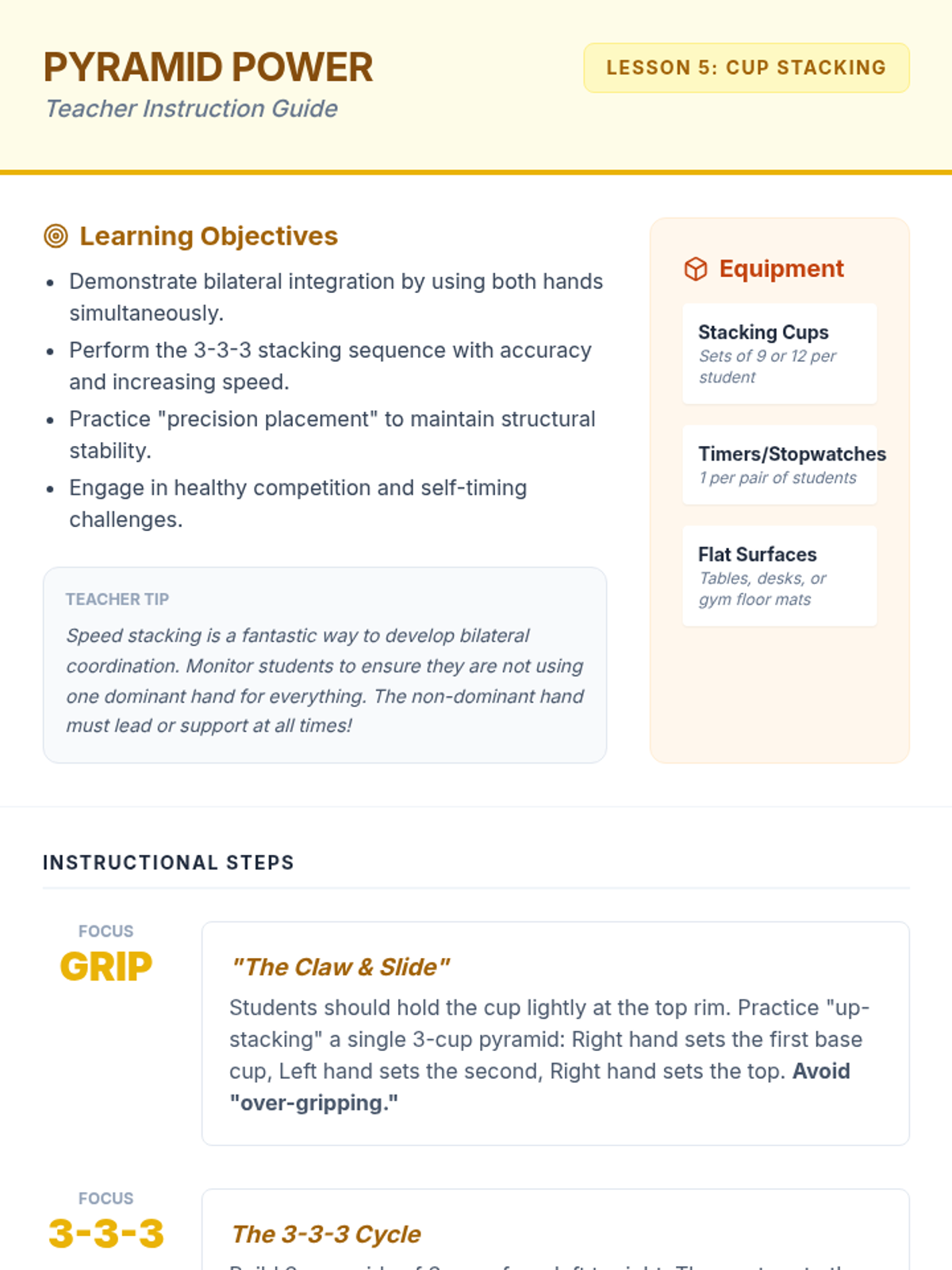
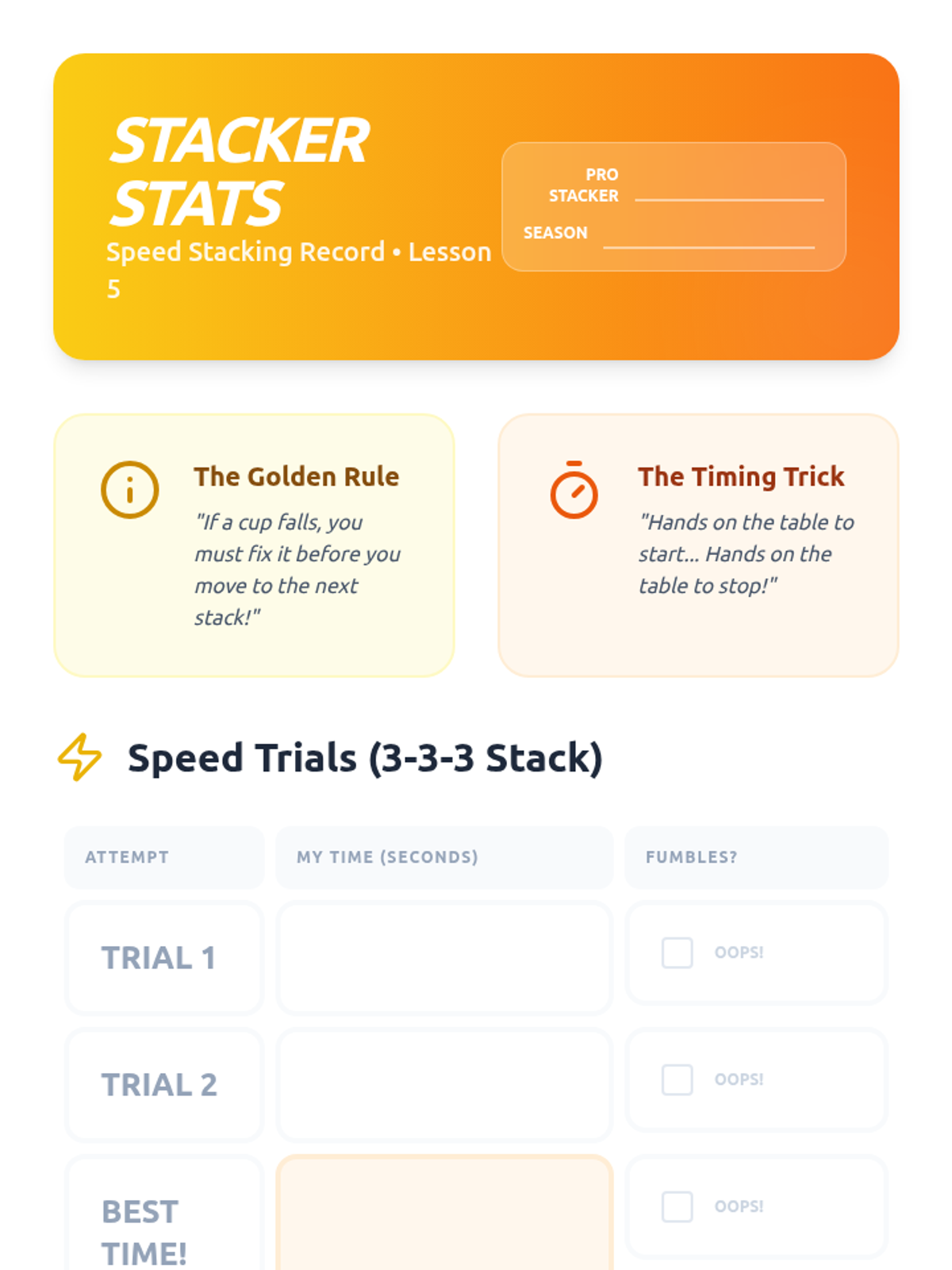
A high-speed lesson on cup stacking that emphasizes bilateral integration, precision placement, and hand-eye agility.
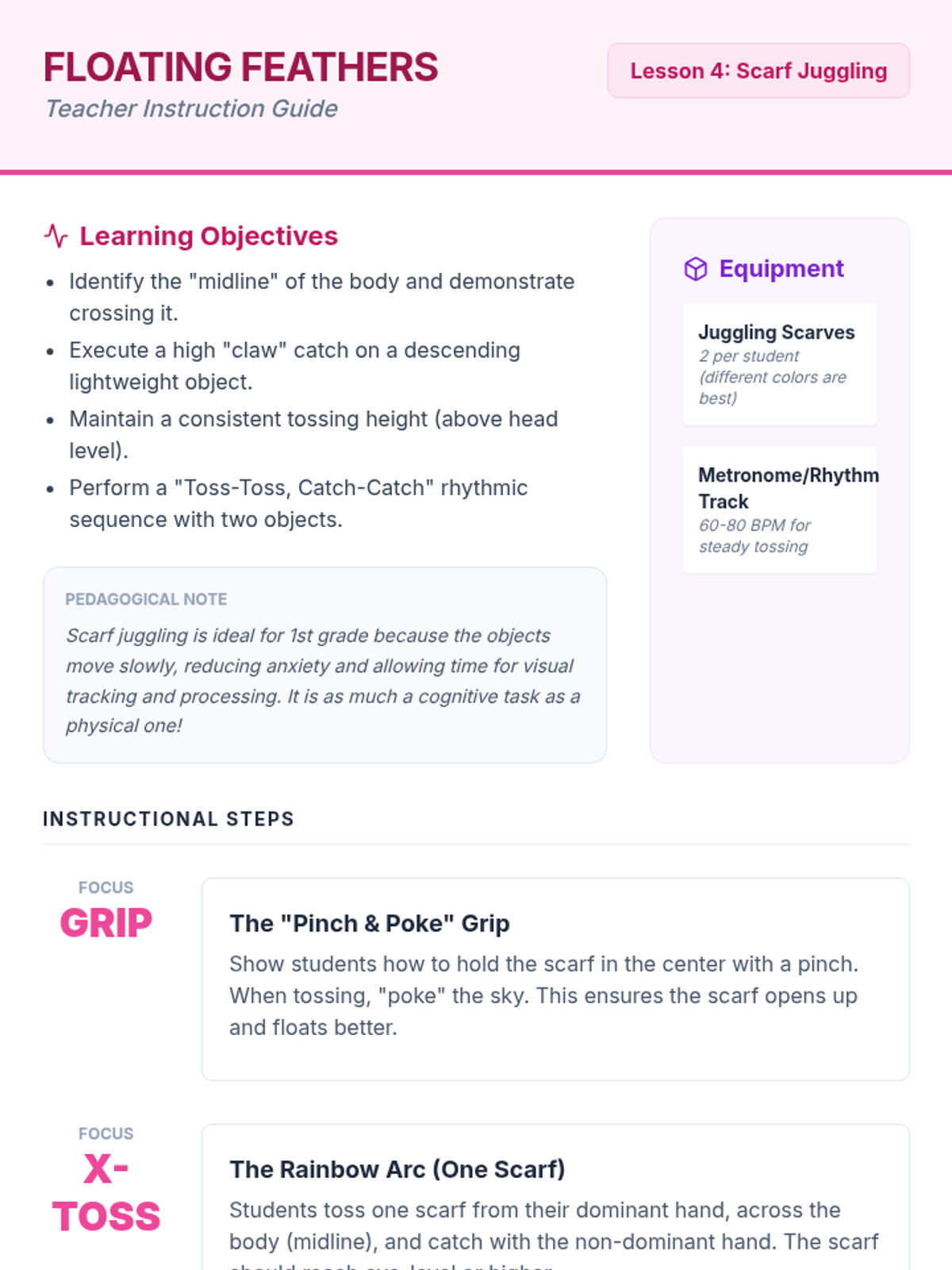
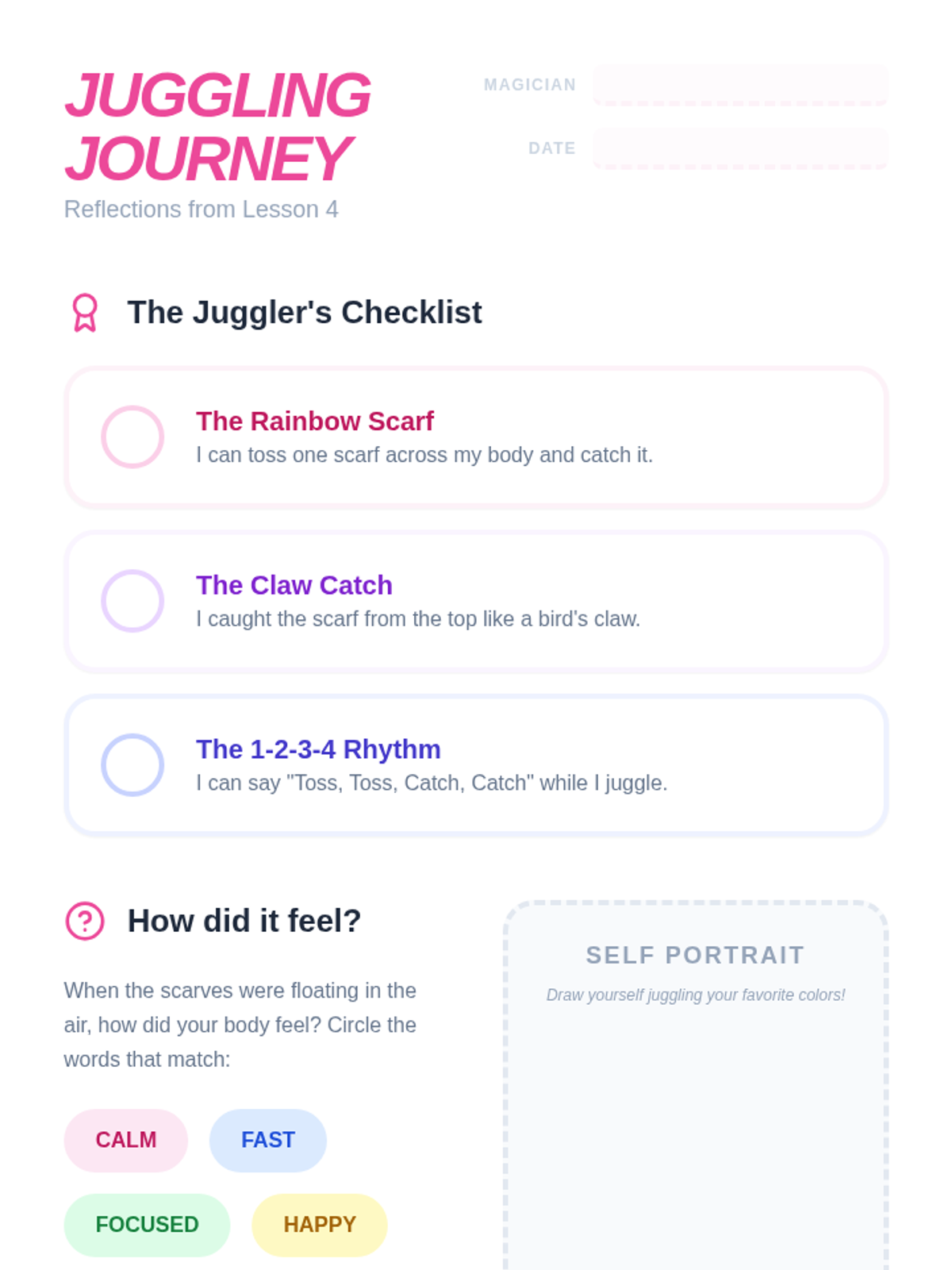
Using lightweight scarves, students learn the fundamentals of juggling while practicing crossing the midline and rhythmic tracking.
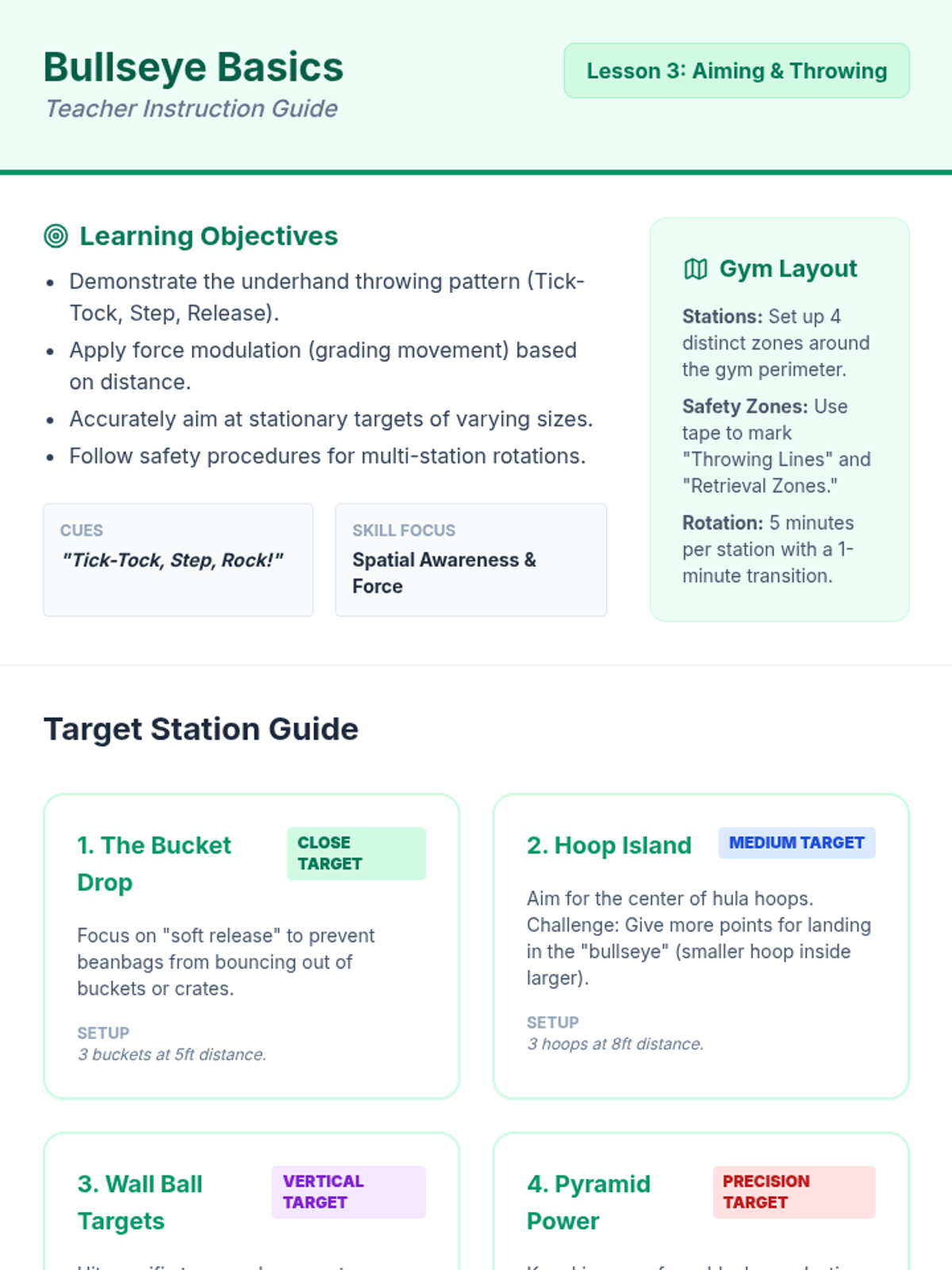
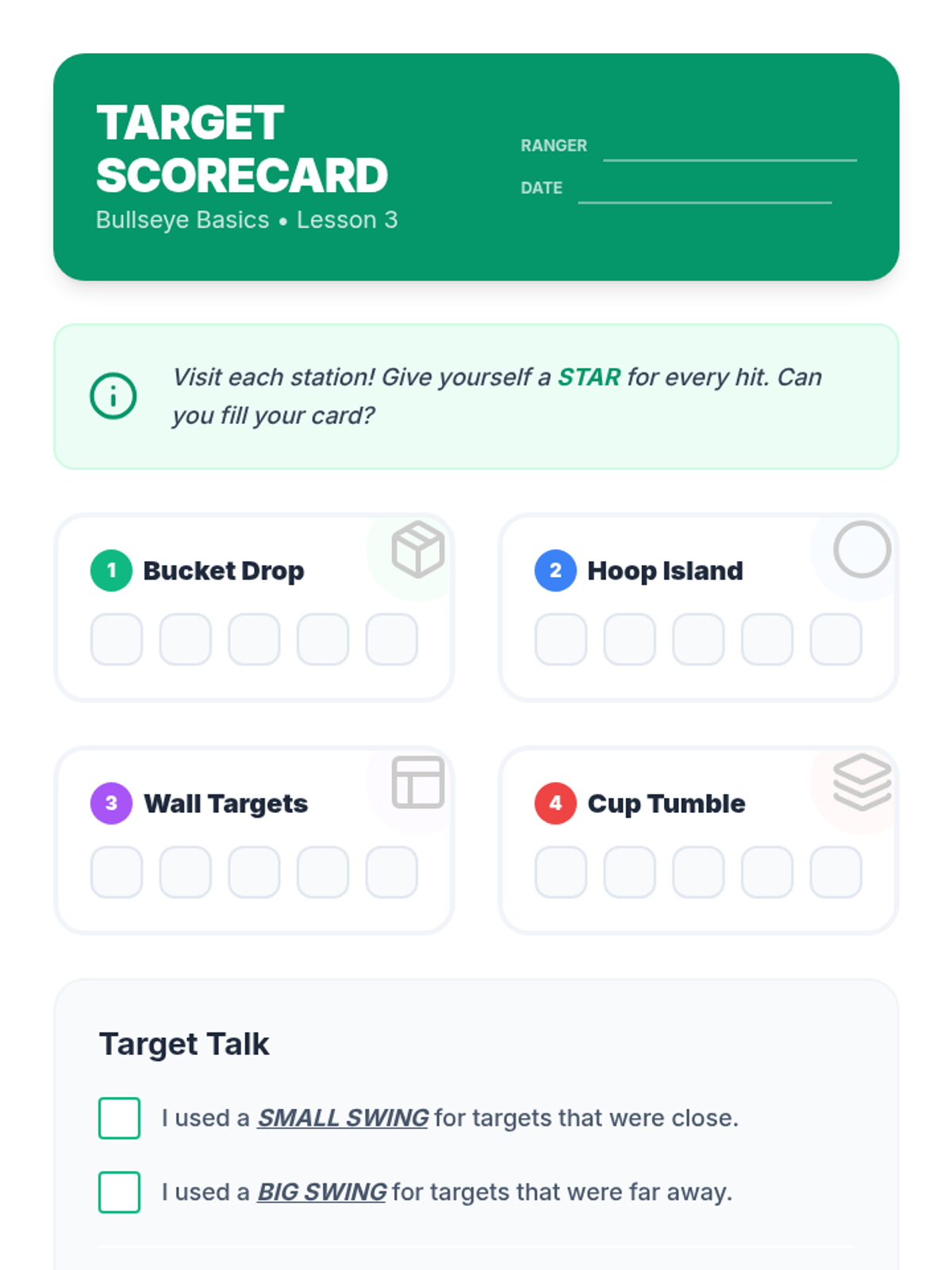
Focusing on spatial awareness and force modulation, students practice underhand throwing at various targets to improve aiming accuracy.
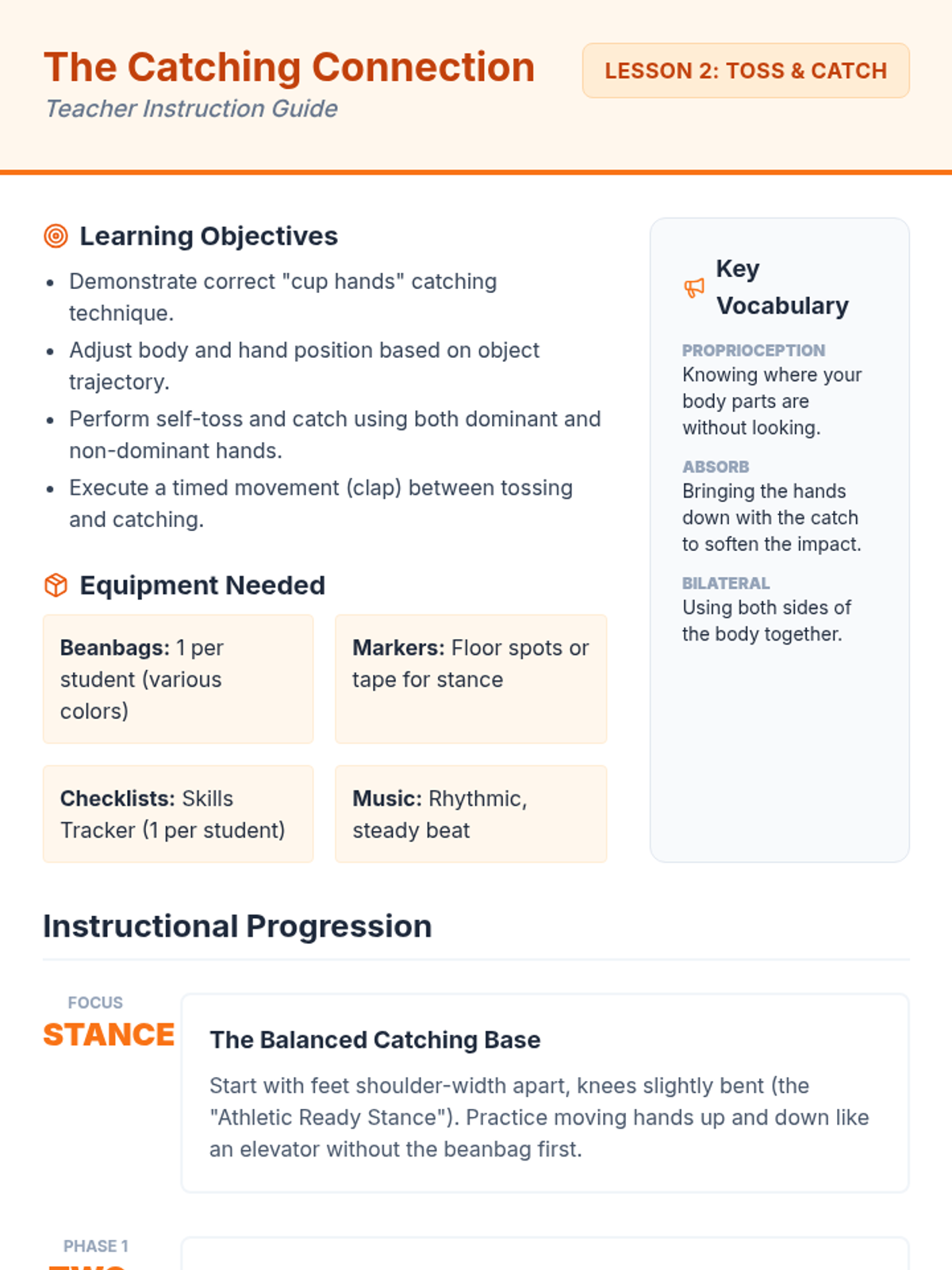
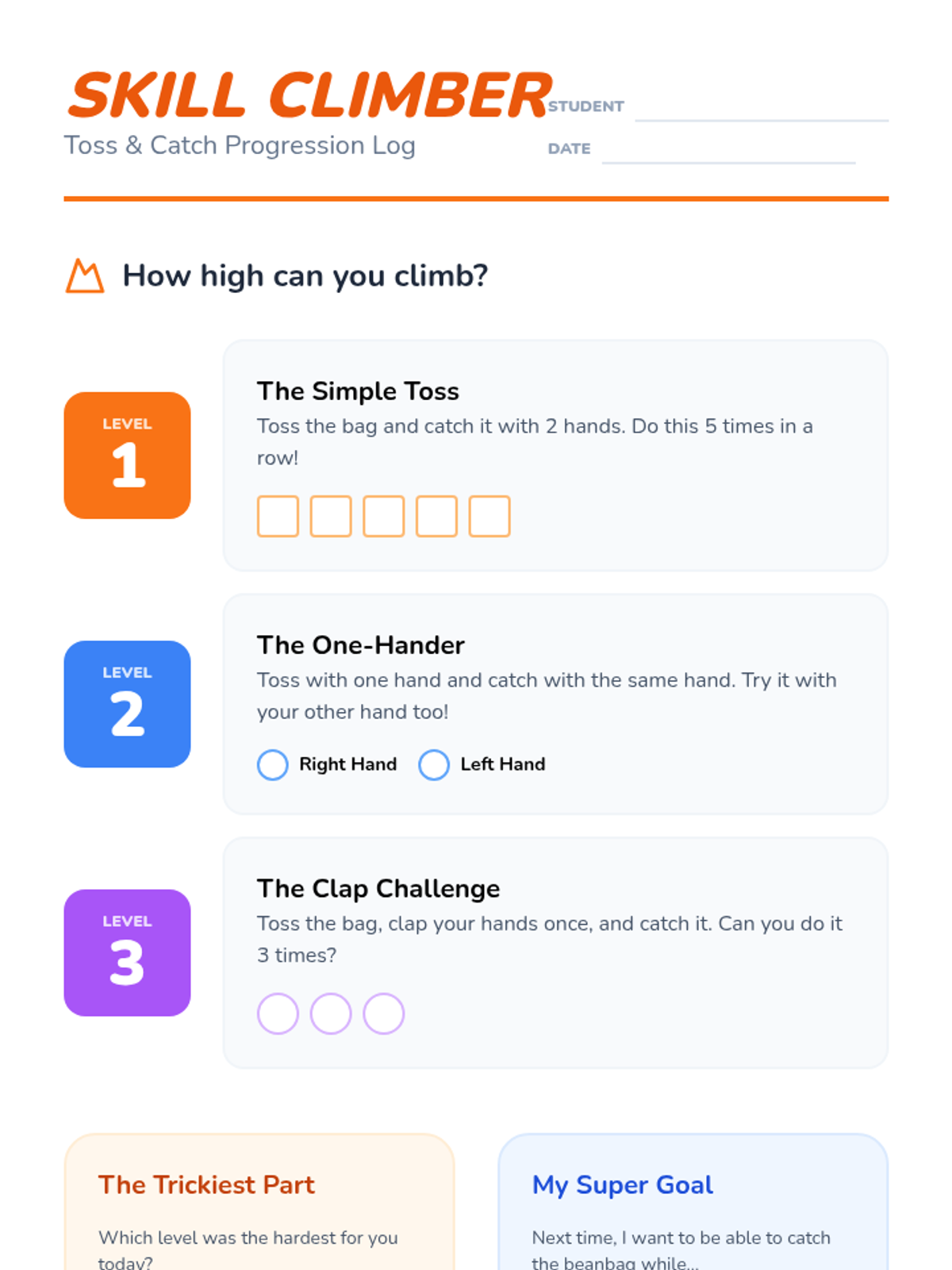
Students develop bilateral coordination and reaction time through a series of self-toss and catch progressions using beanbags.
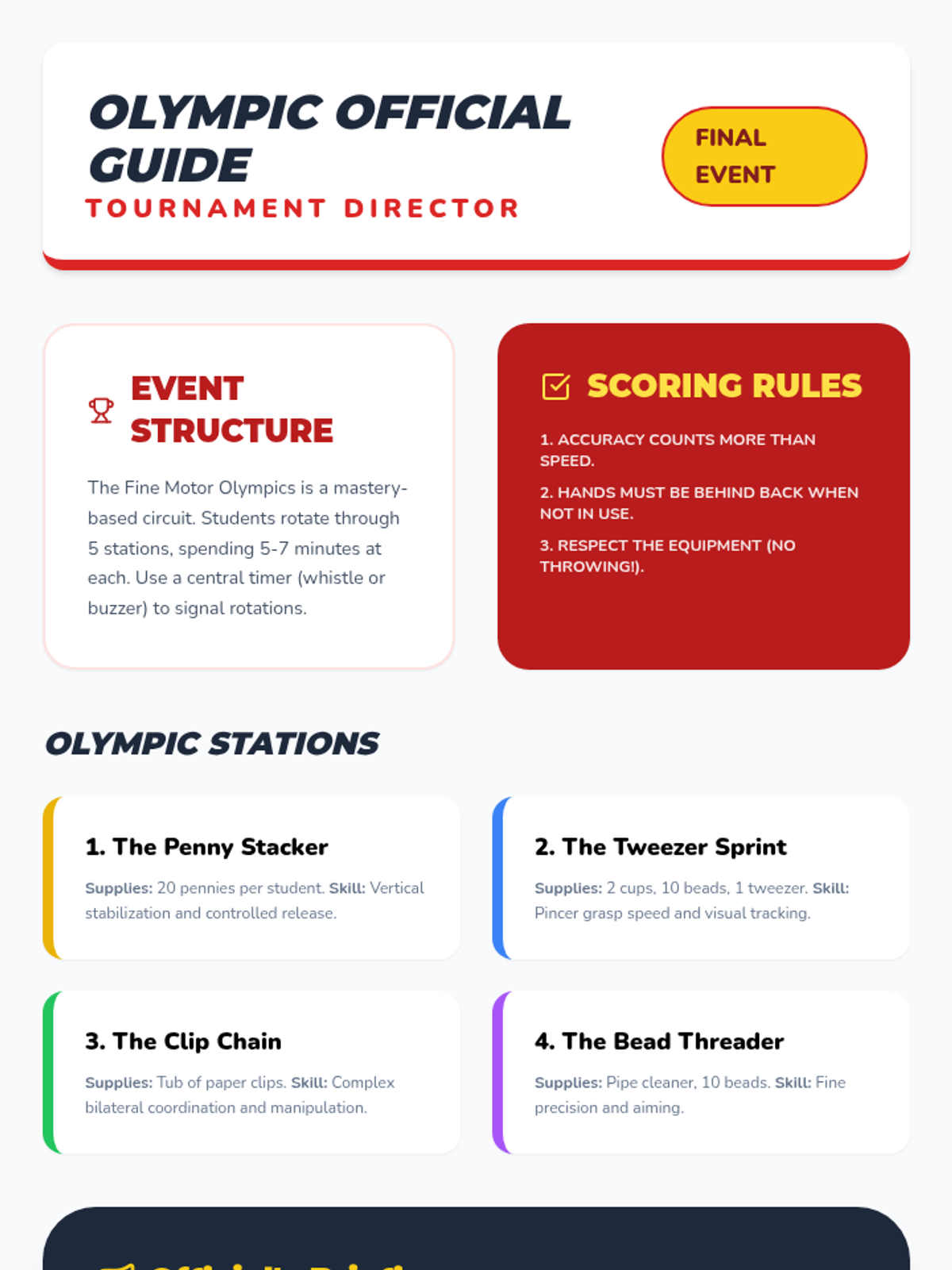
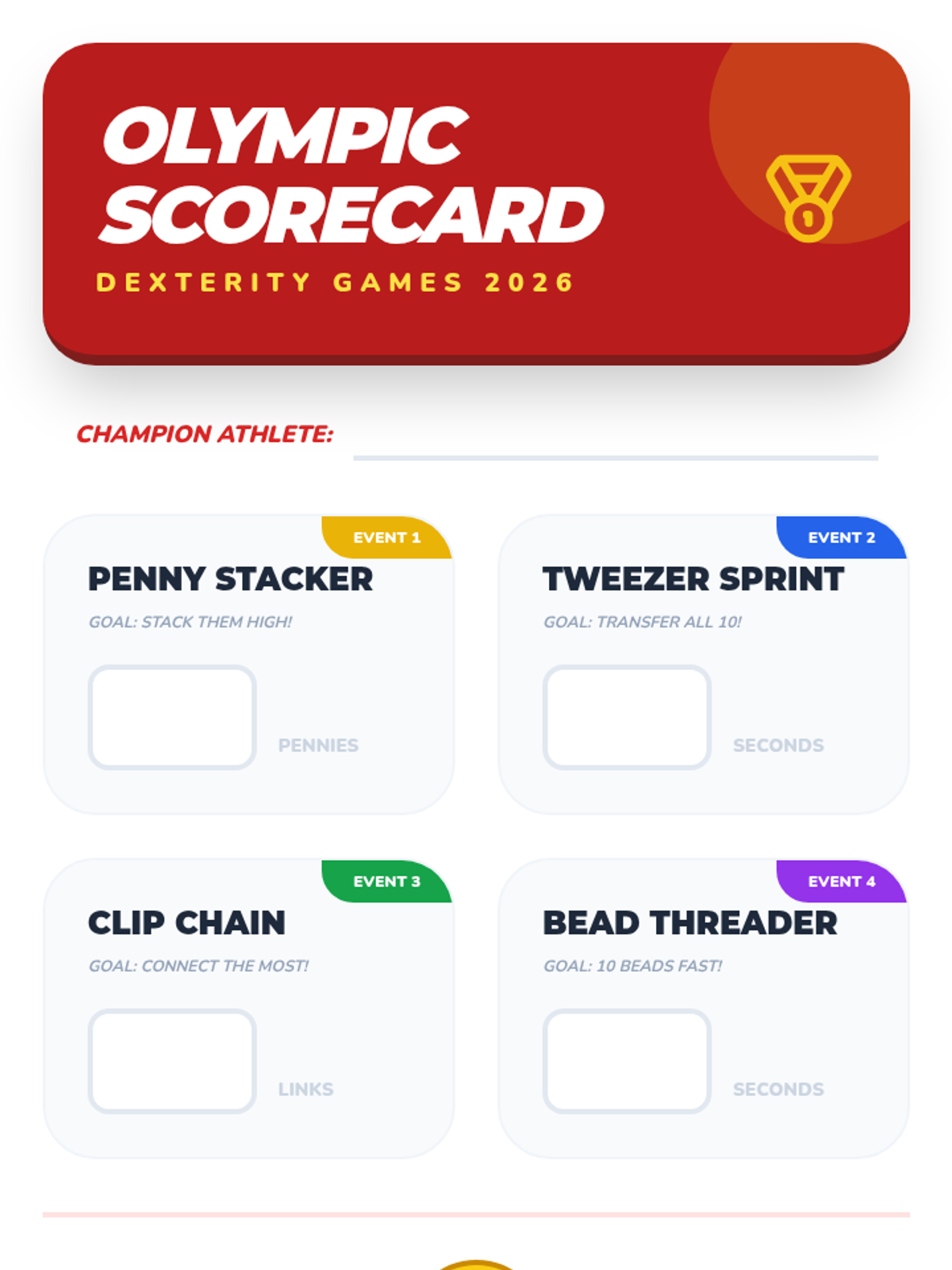
A culminating event where students rotate through timed dexterity challenges to demonstrate mastery of hand strength and control.
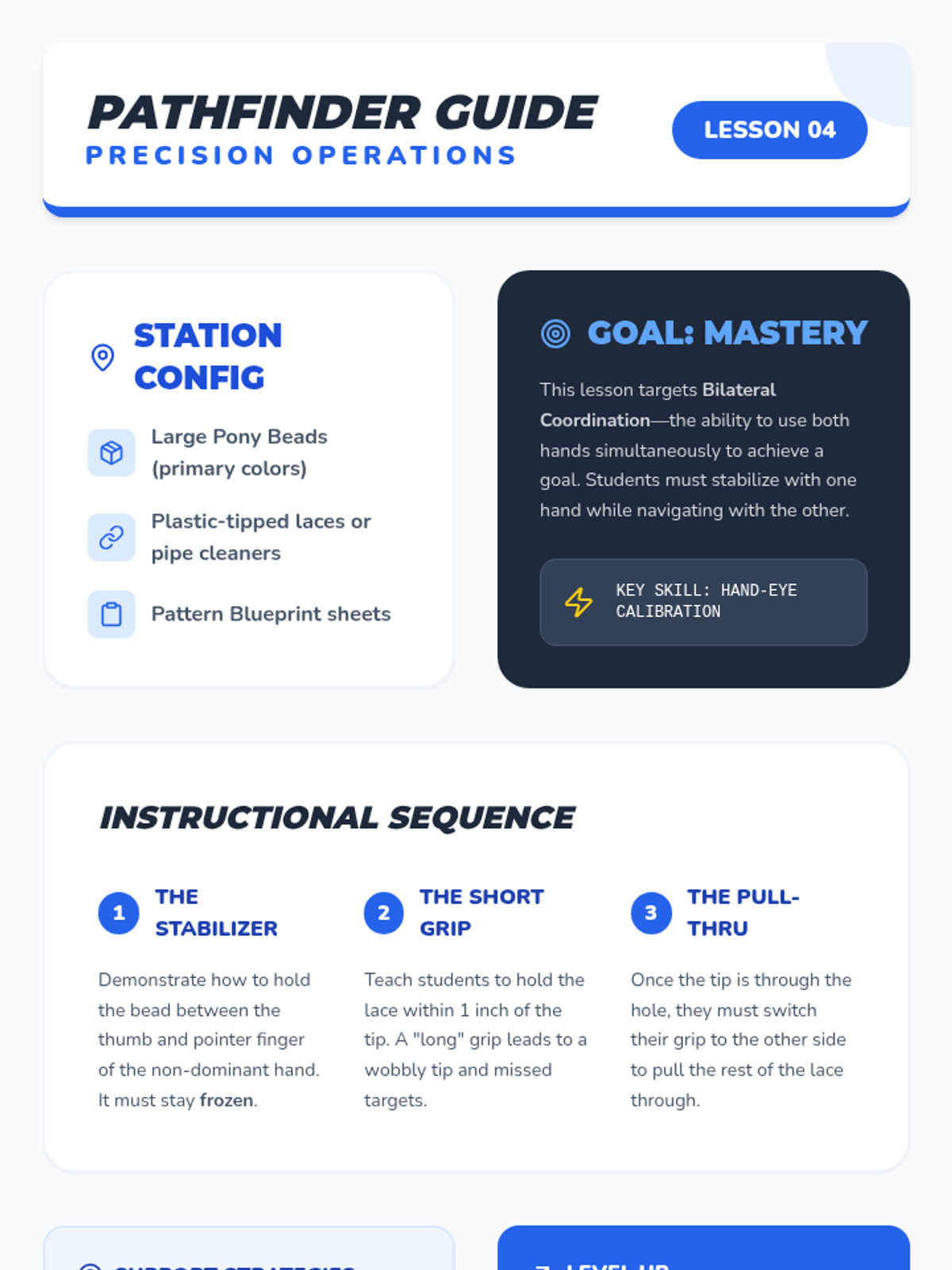
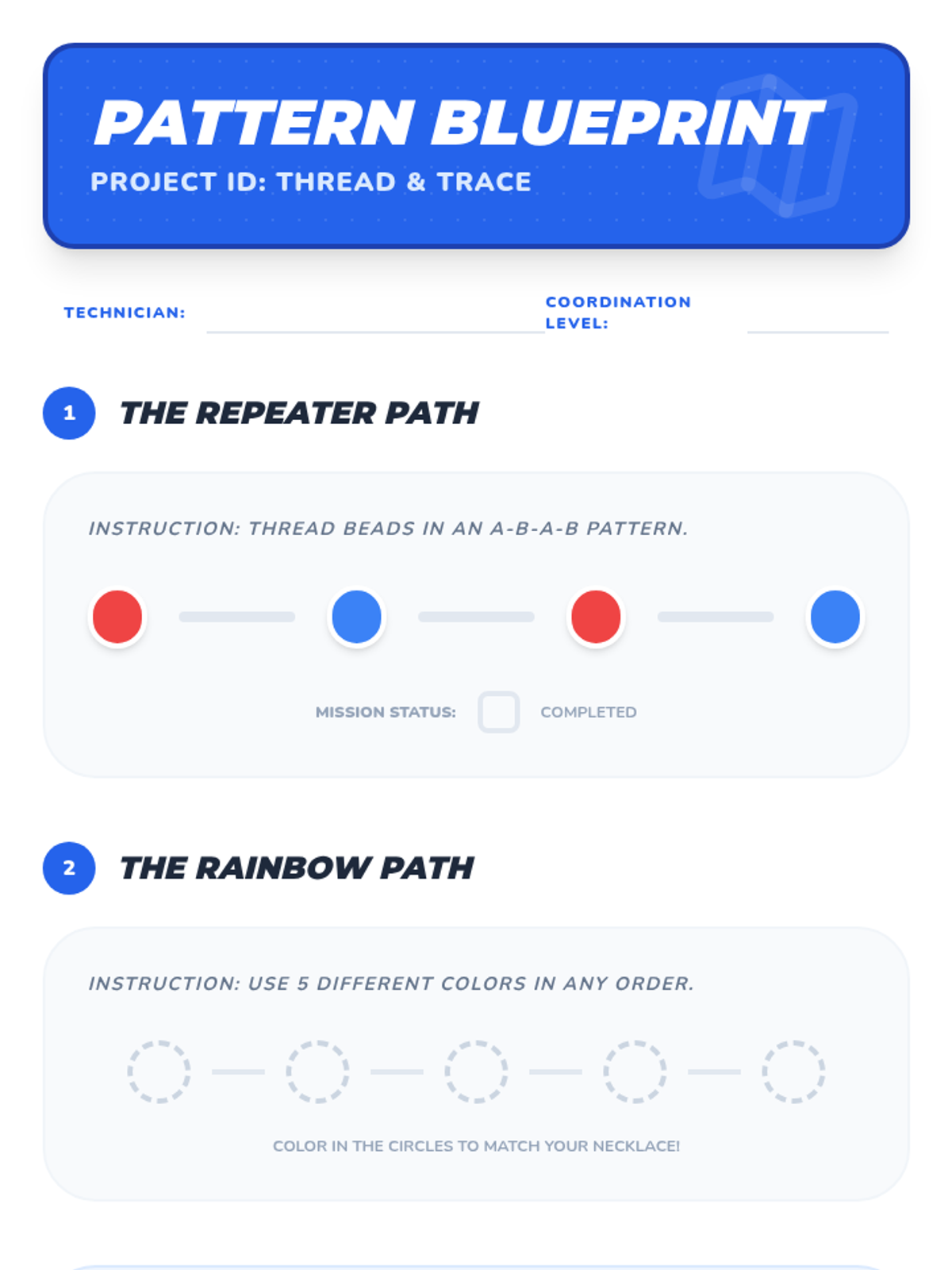
Students refine precision manipulation and bilateral coordination by threading beads onto laces and pipe cleaners in specific patterns.
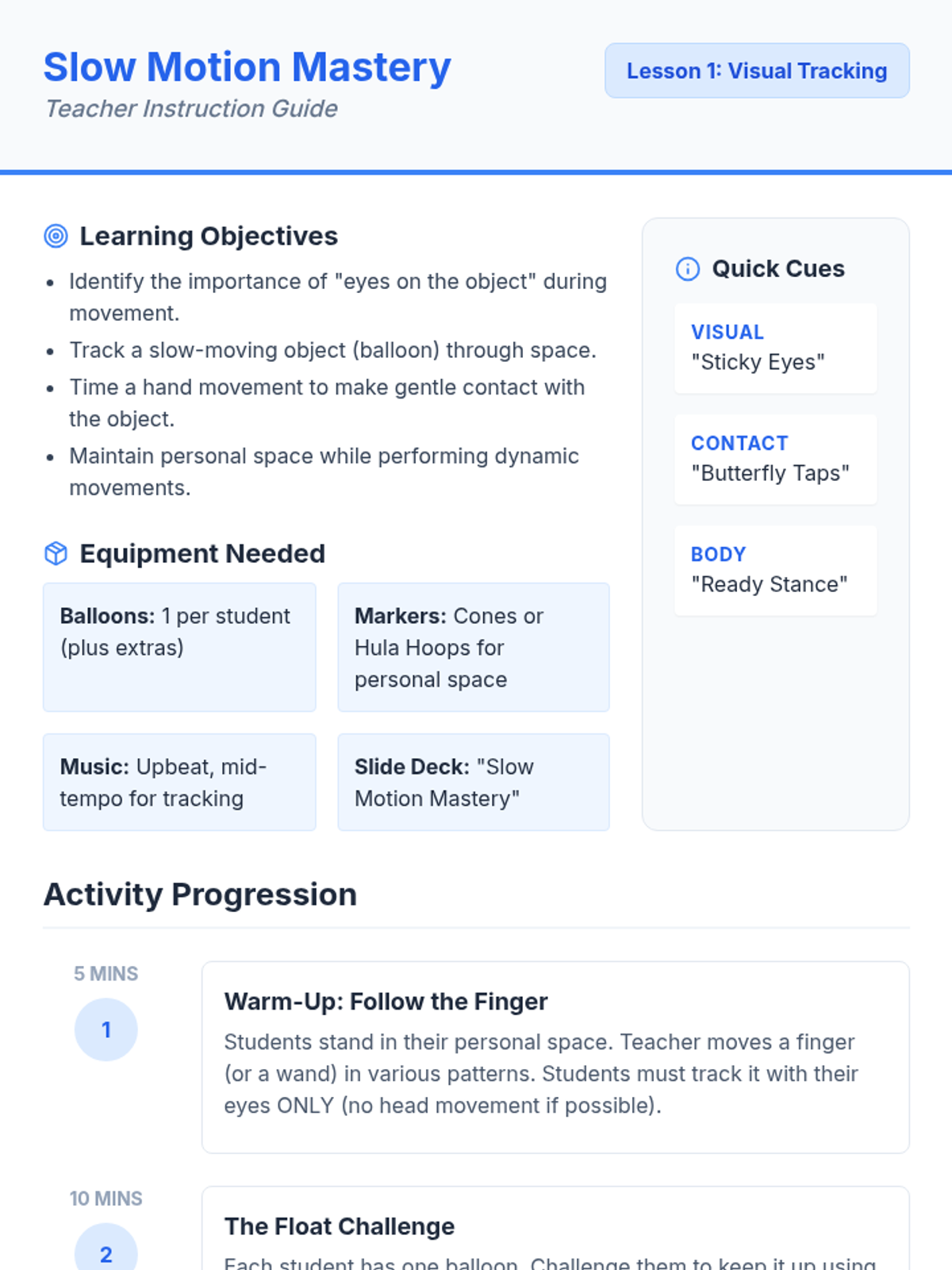
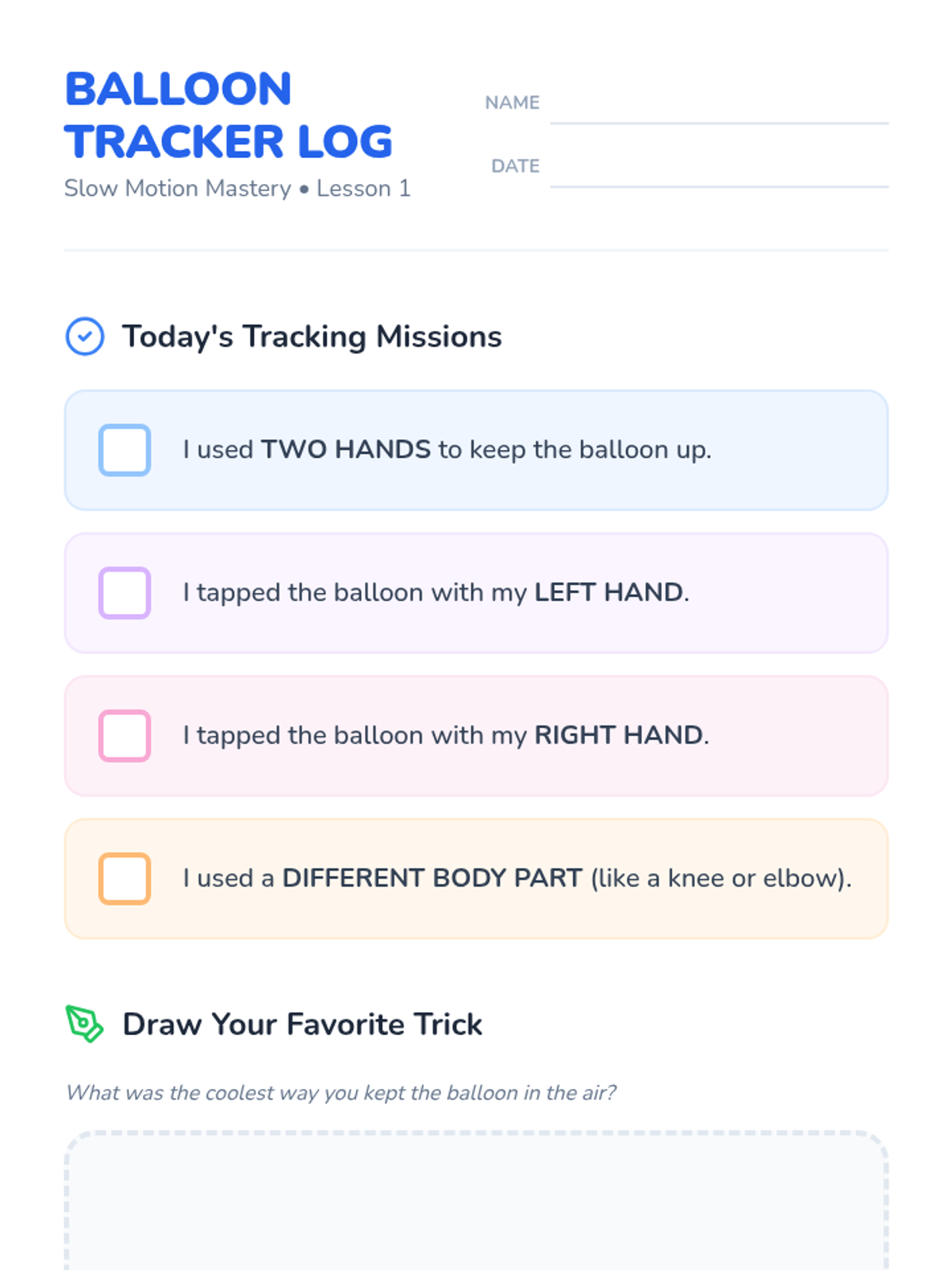
Students practice visual tracking and timing by keeping balloons afloat, using slow-motion movement to build confidence in hand-eye coordination.
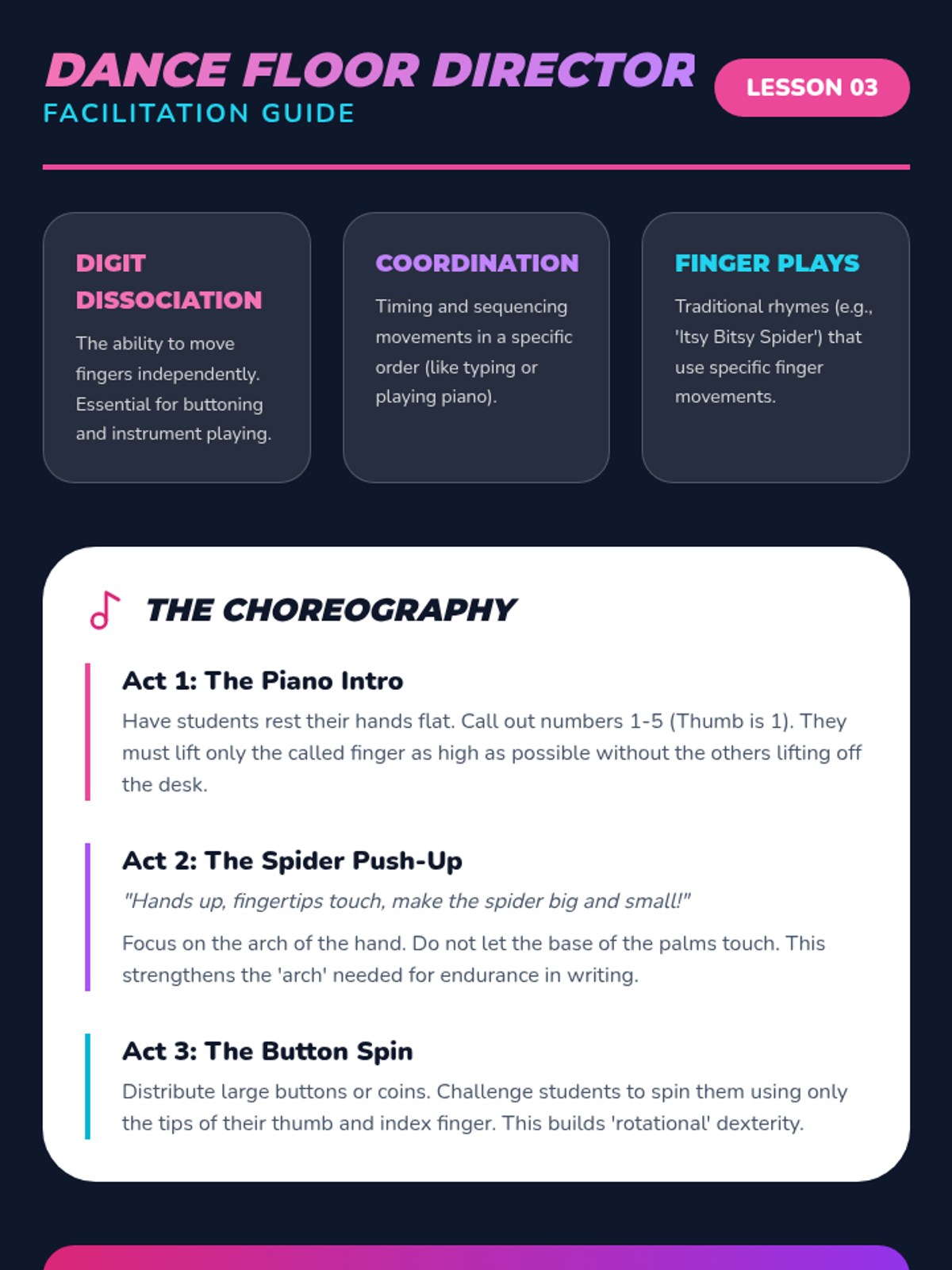
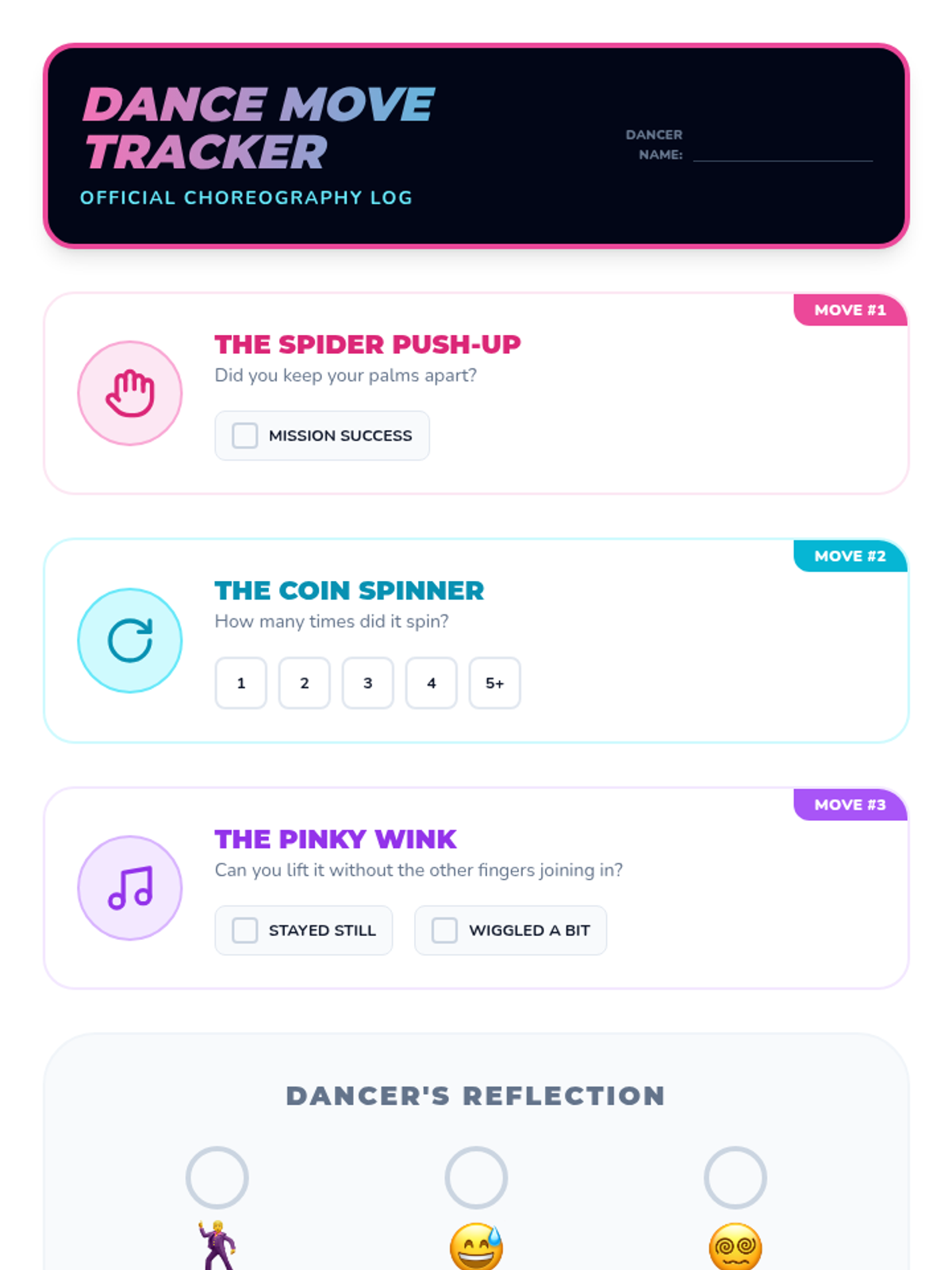
Focuses on moving individual fingers through finger plays and tapping exercises to improve coordination and digit dissociation.
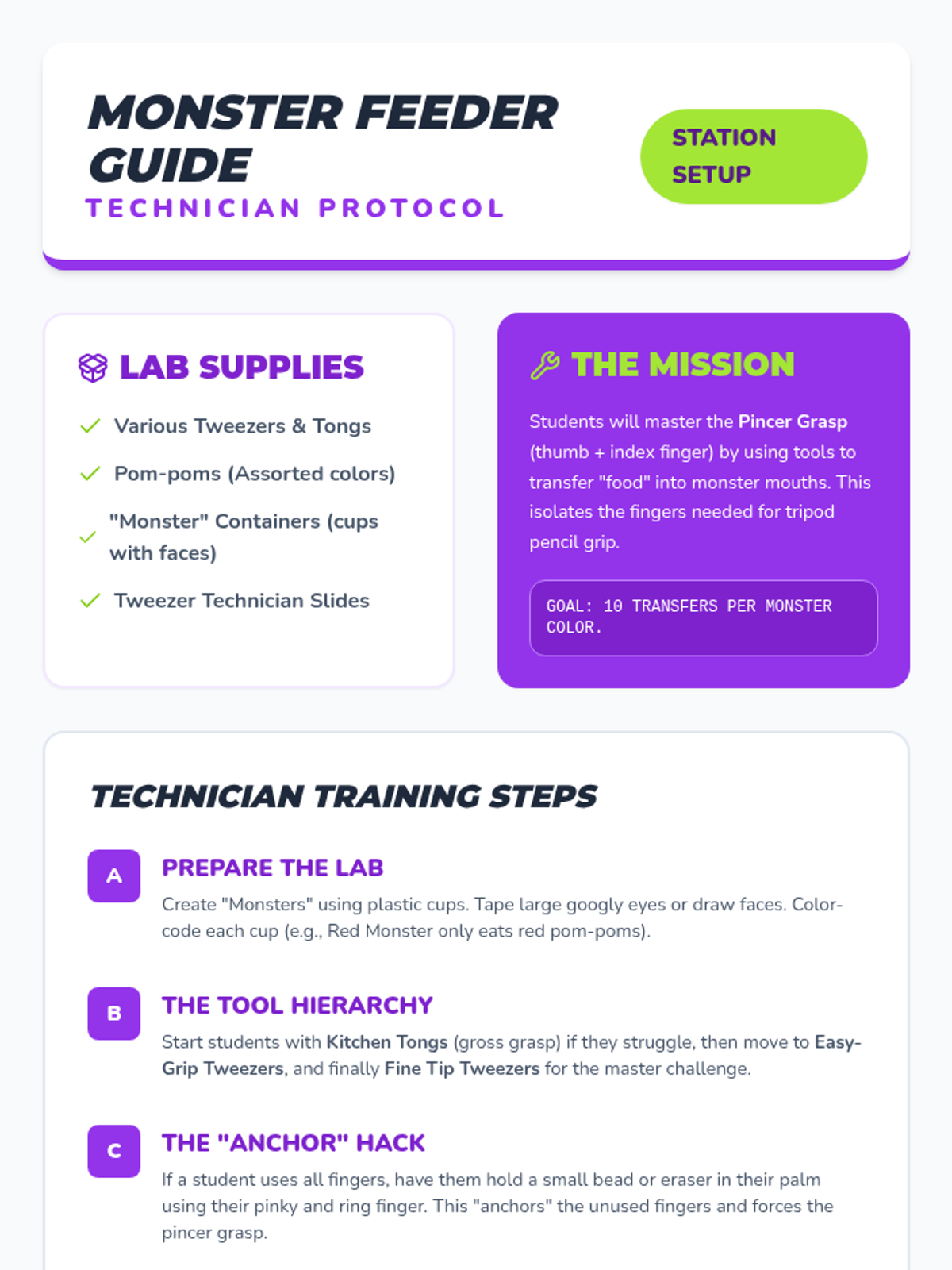
Students practice isolating the thumb and index finger using tweezers and tongs to transfer small objects, reinforcing the pincer grasp.
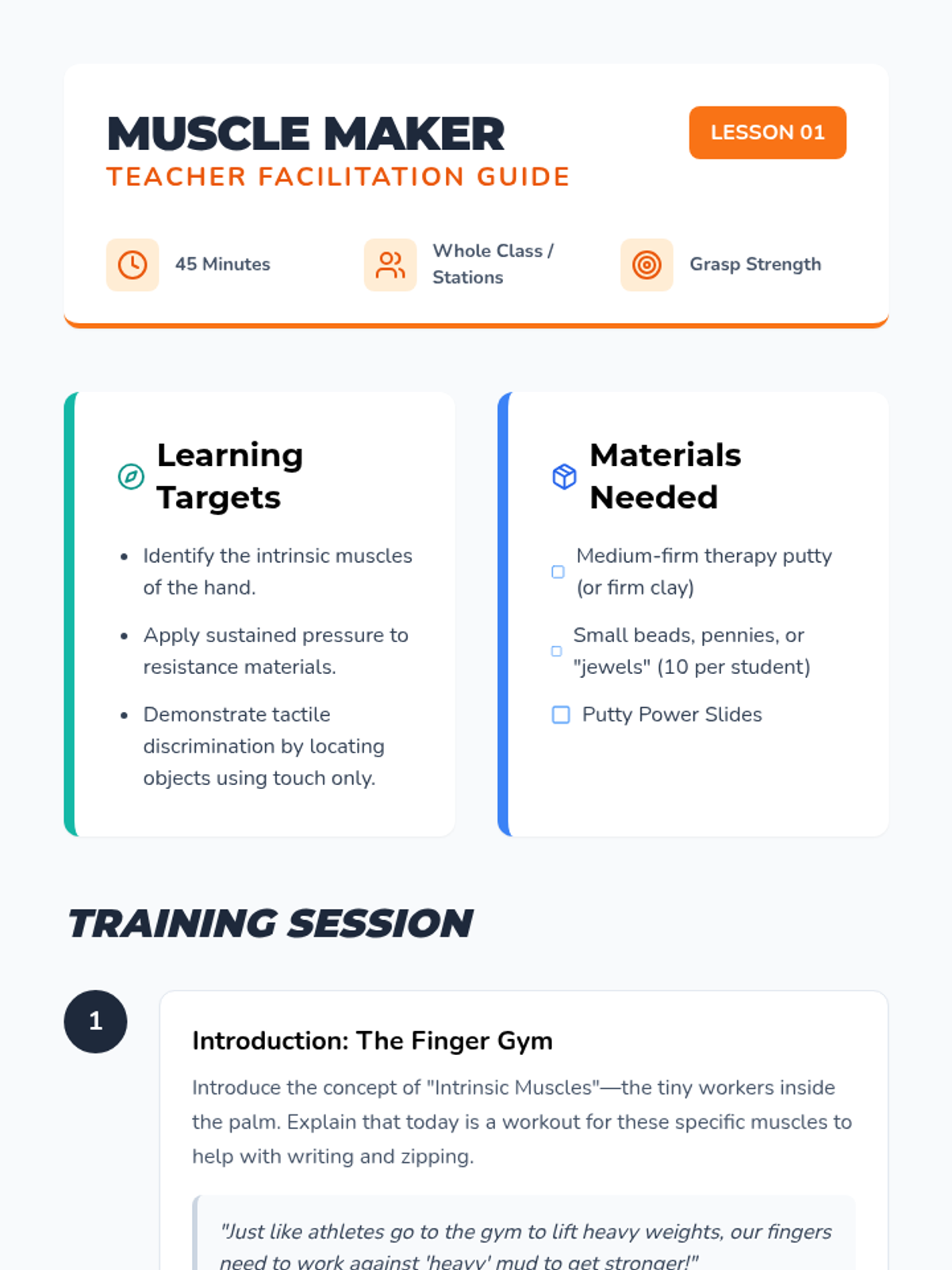
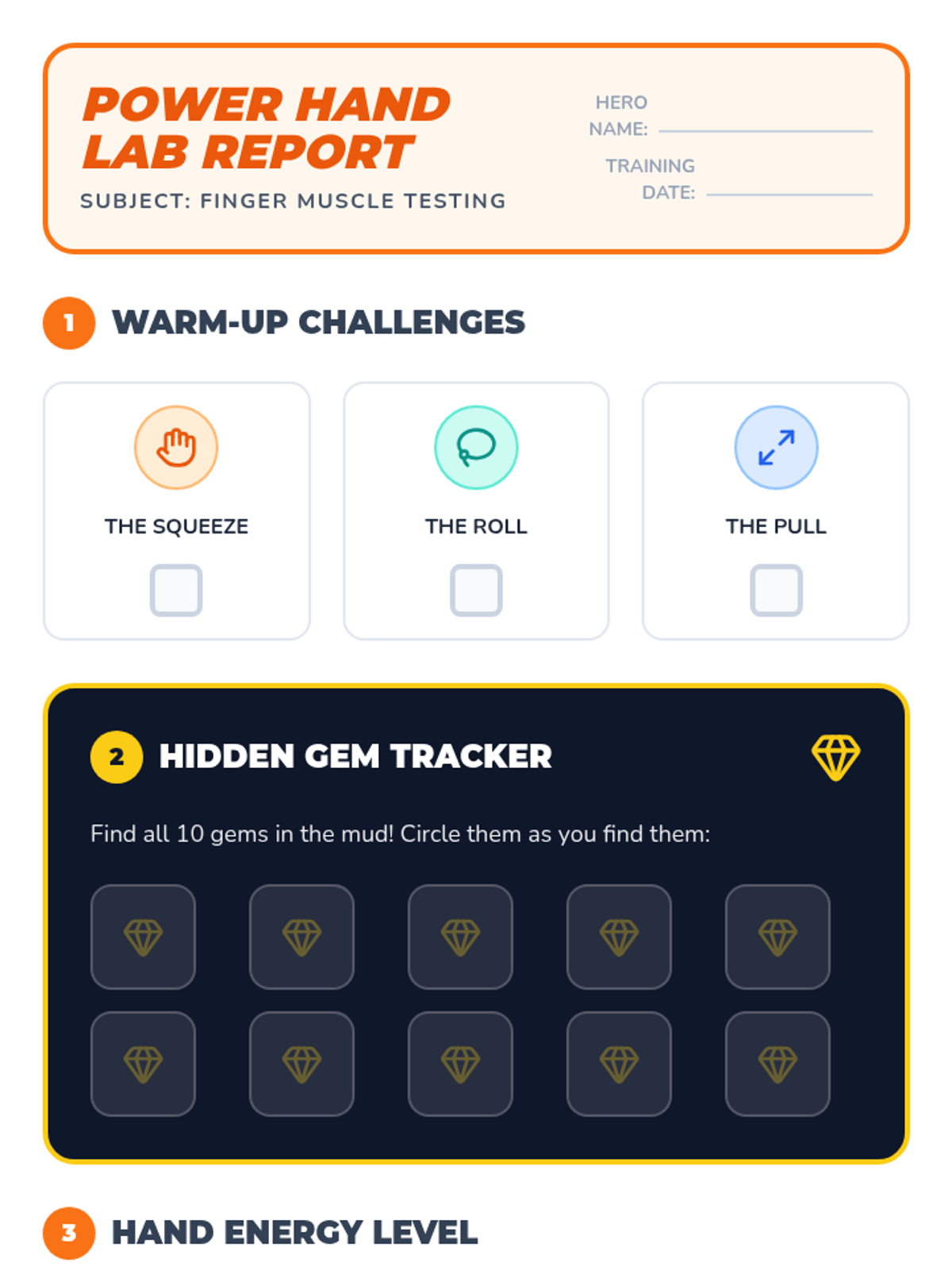
Students use resistance materials like putty and clay to strengthen intrinsic hand muscles and improve tactile perception by finding hidden objects.
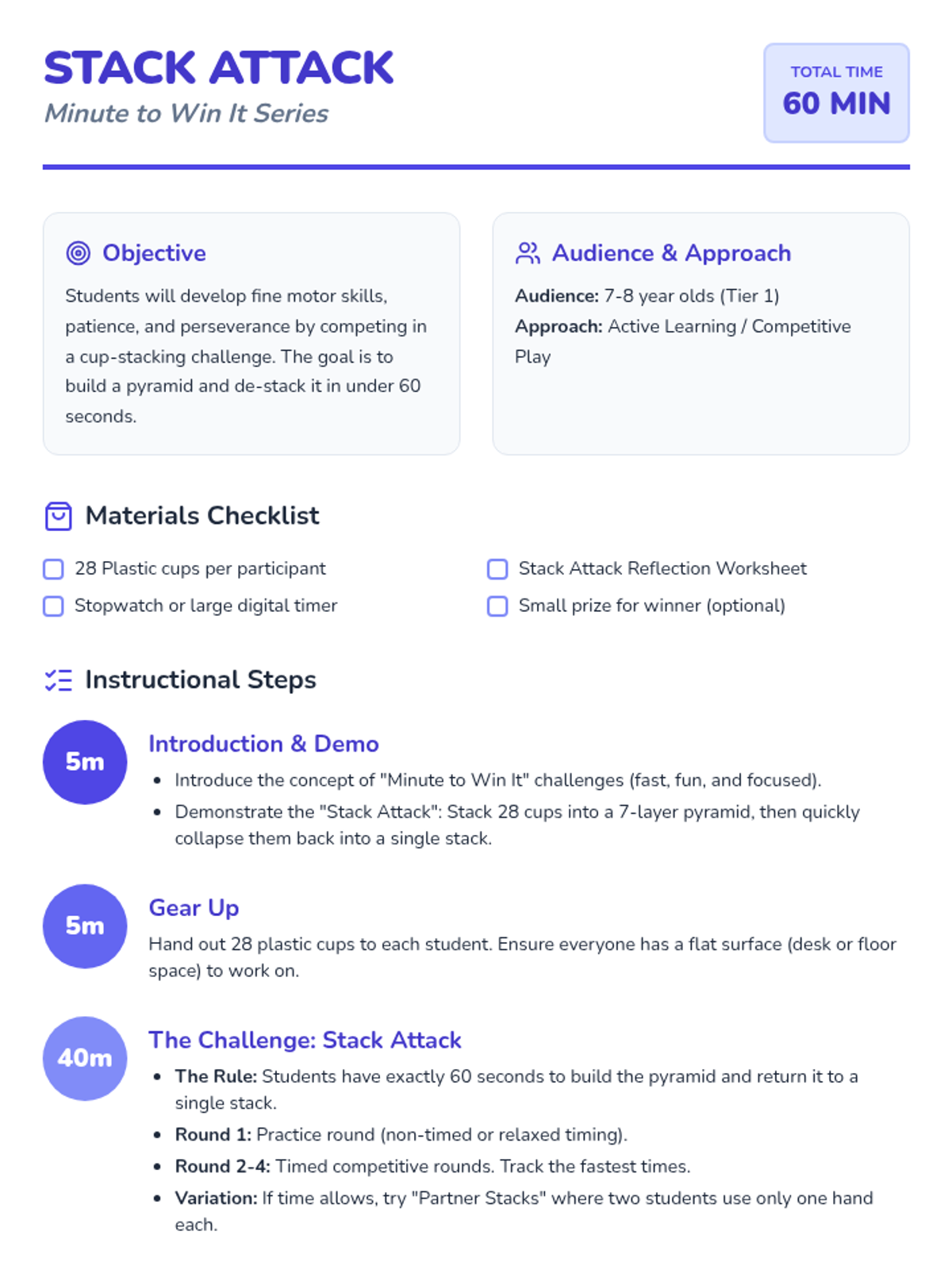
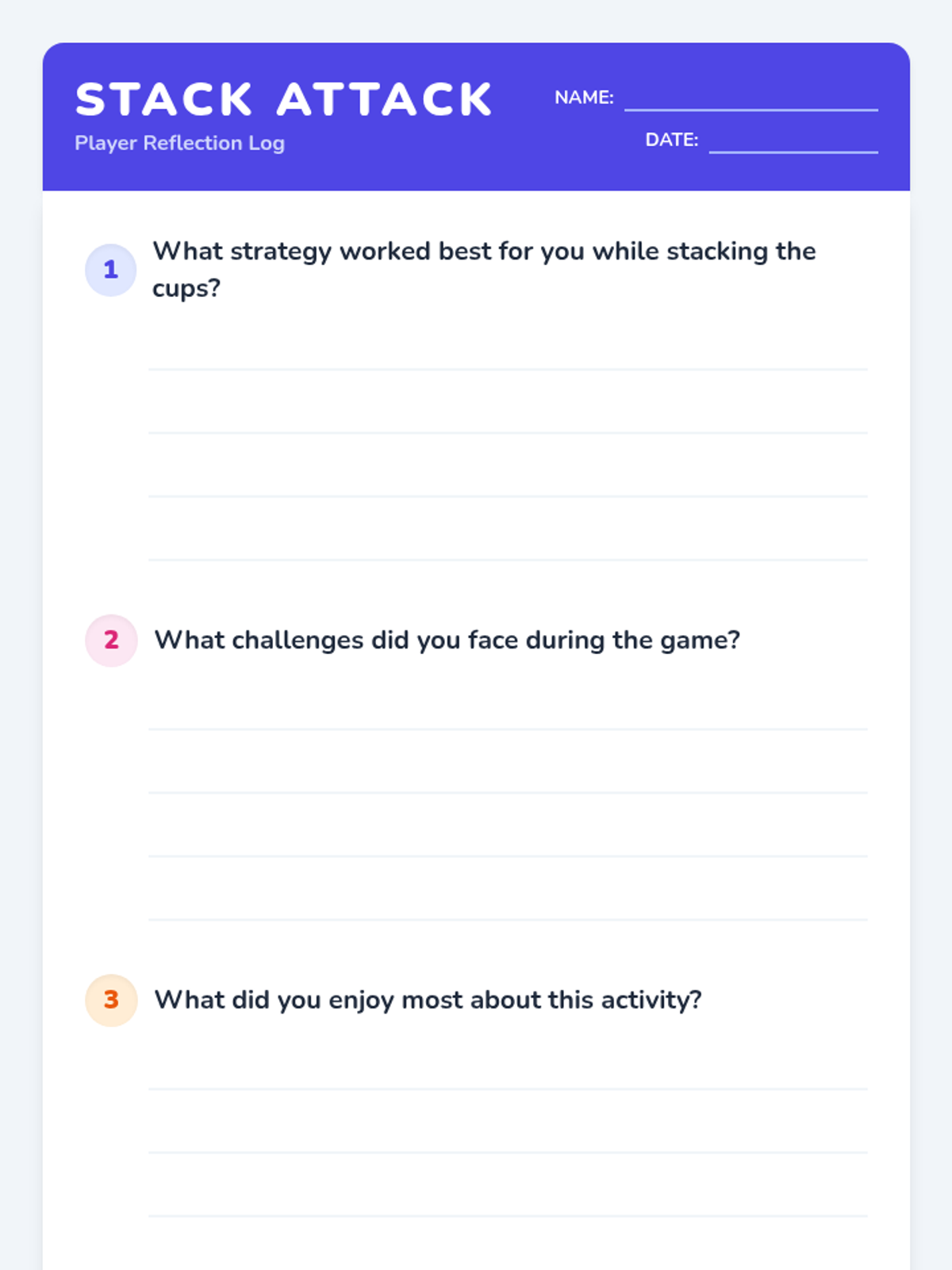
A high-energy lesson where students participate in the 'Stack Attack' challenge, building fine motor skills and perseverance through a fast-paced cup-stacking game.
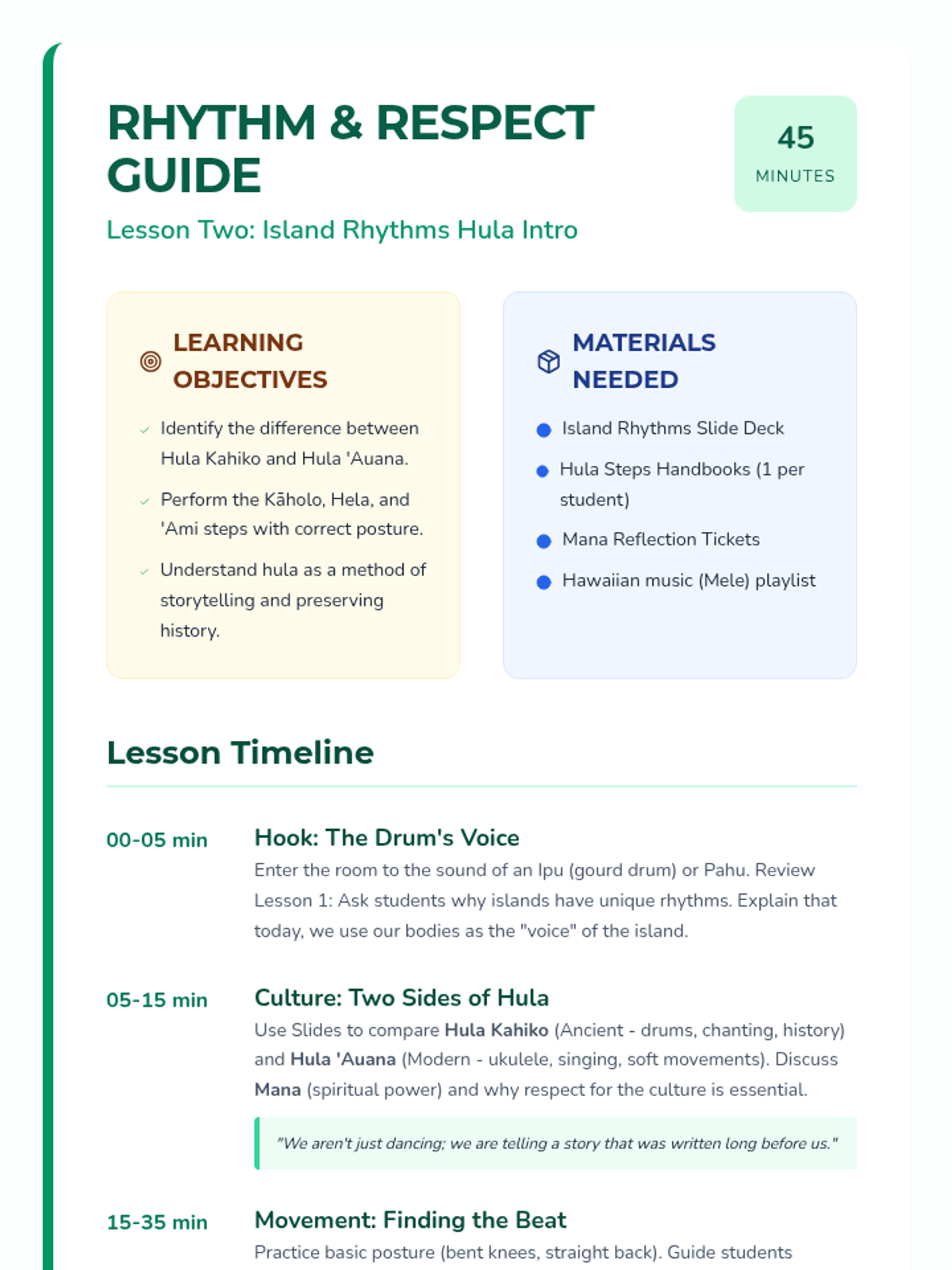
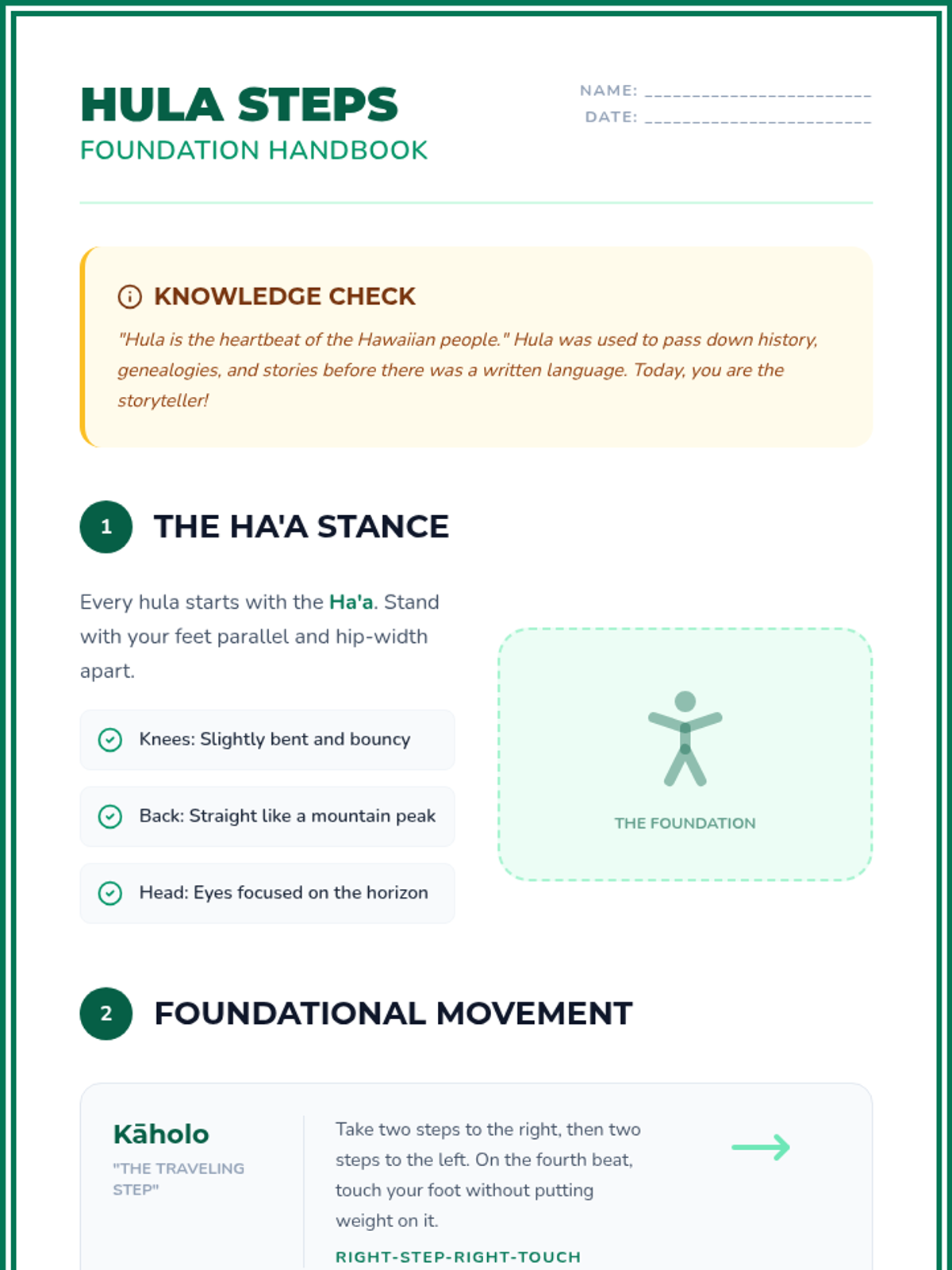
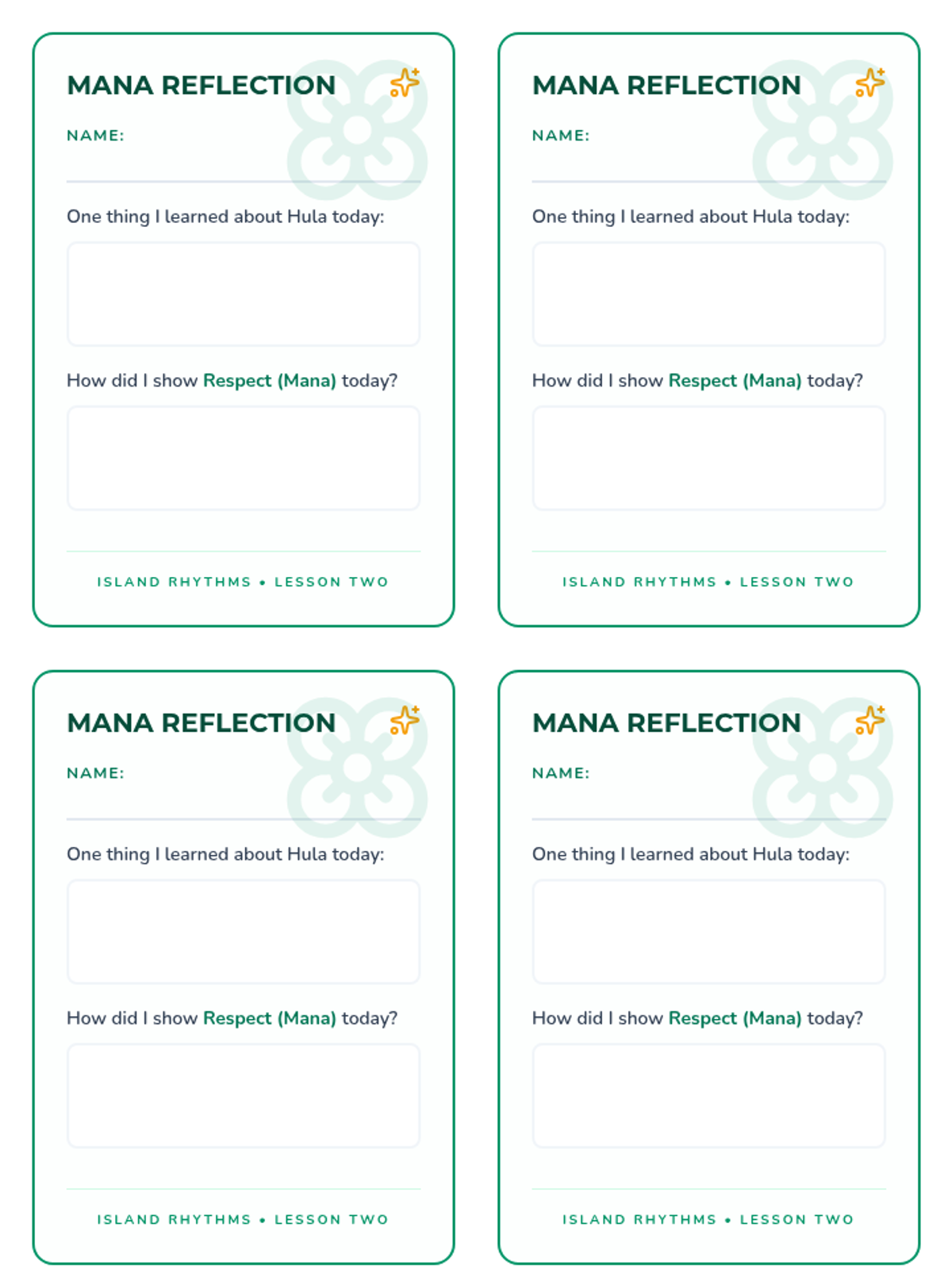
A 45-minute introduction to hula that blends cultural storytelling with foundational movement. Students will learn the difference between Kahiko and 'Auana styles and practice basic footwork and hand gestures.
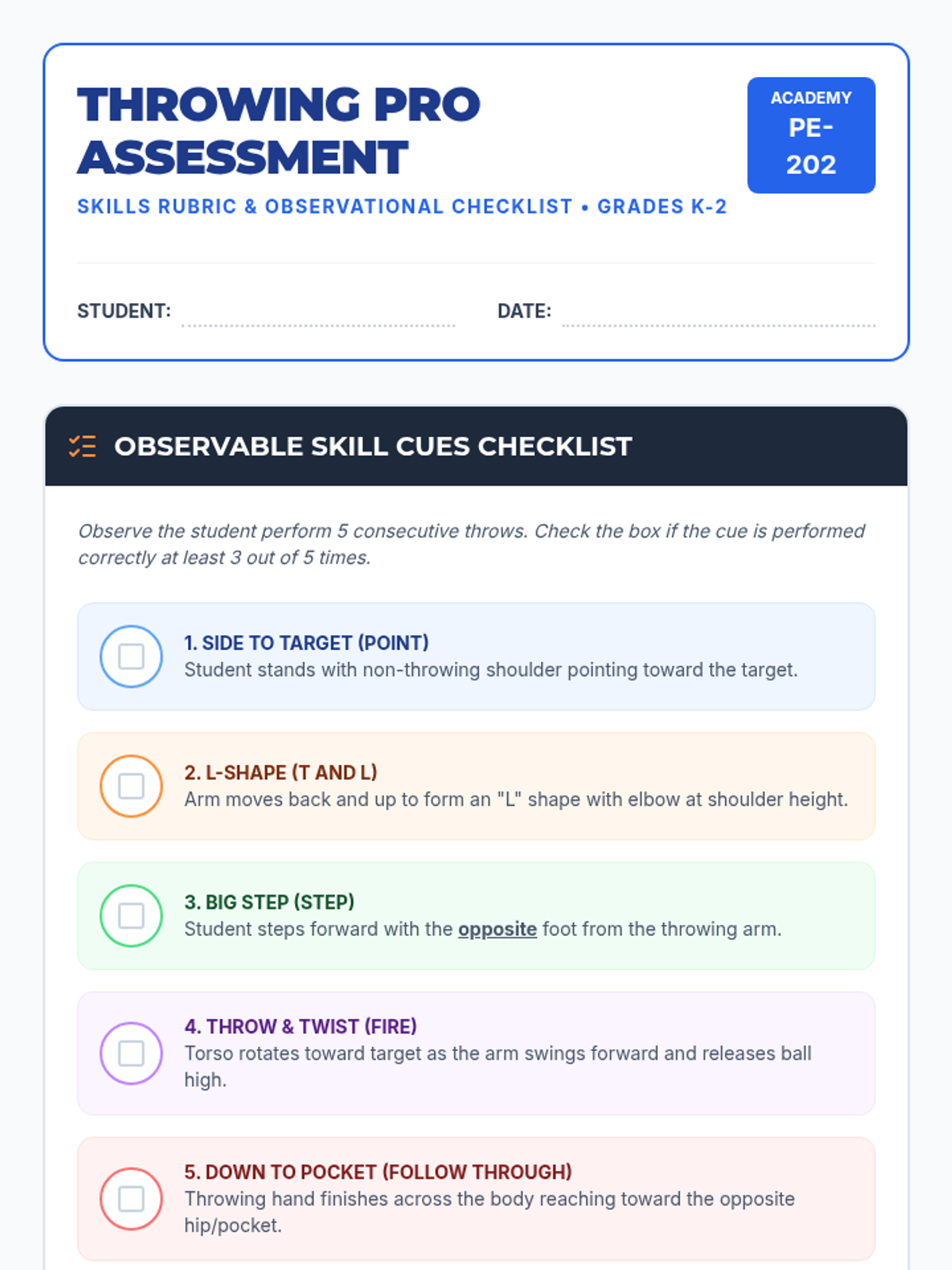
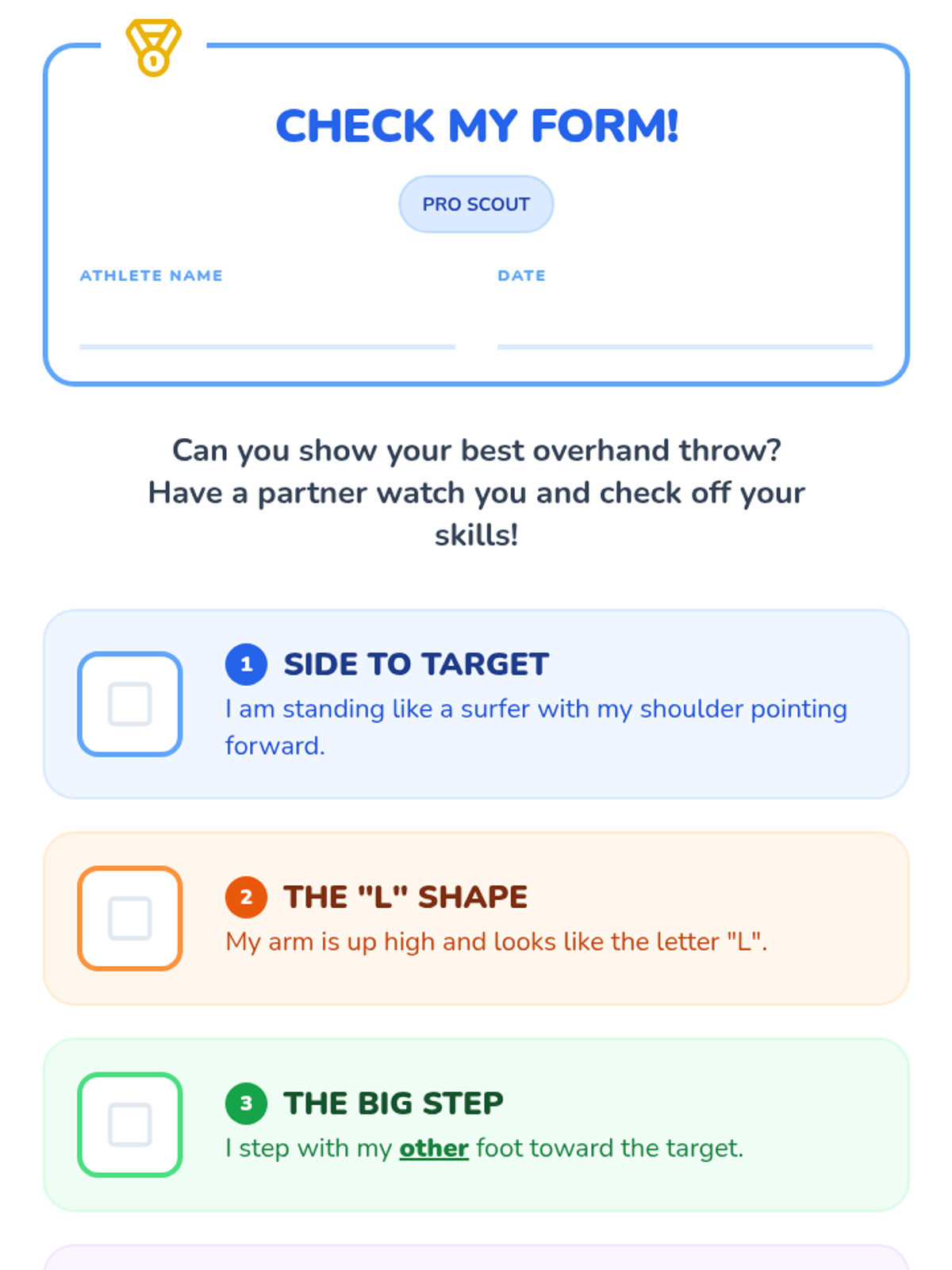
A comprehensive assessment suite for teaching and evaluating overhand throwing skills in grades K-2, focusing on form, cues, and consistency.
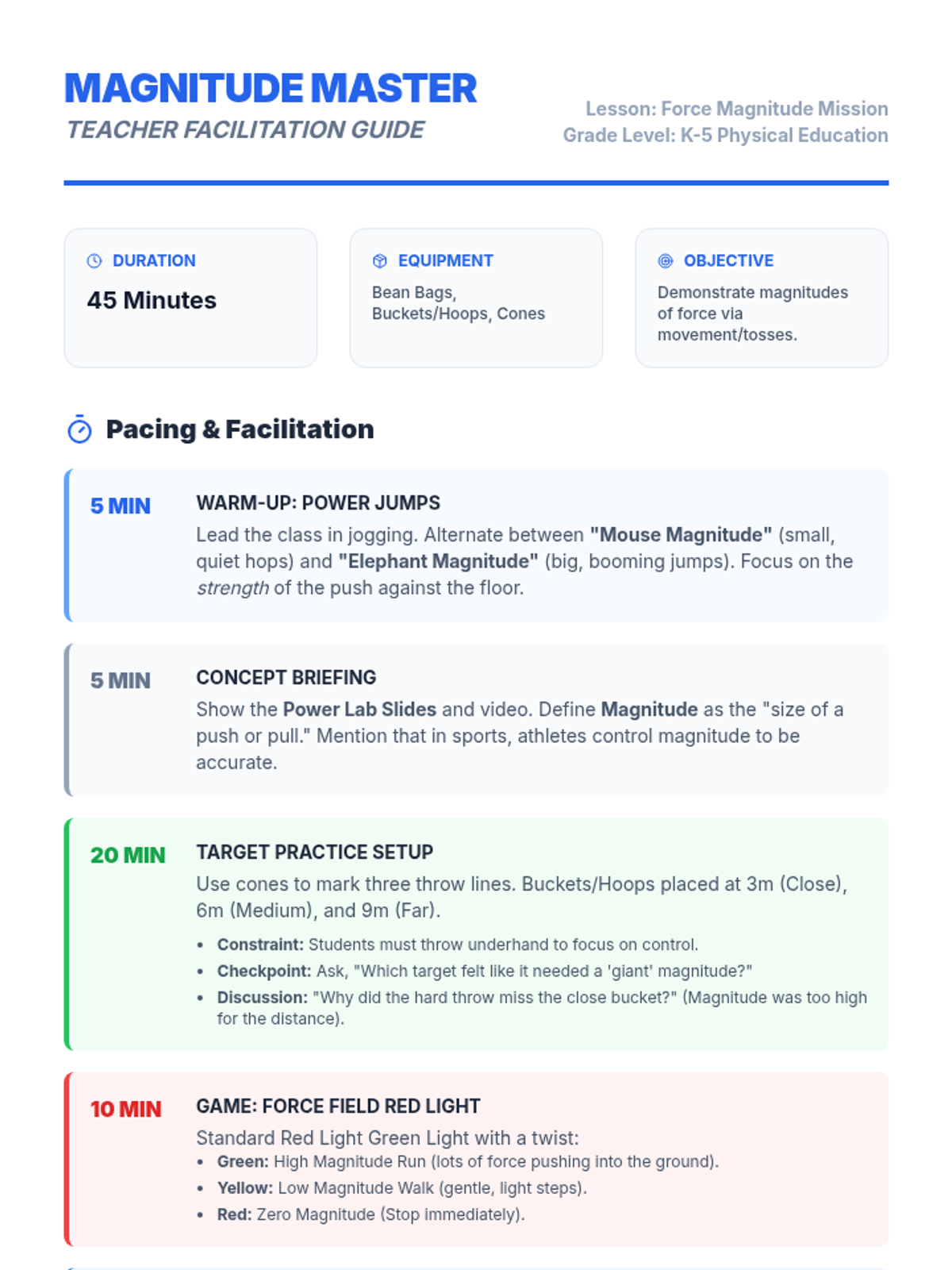
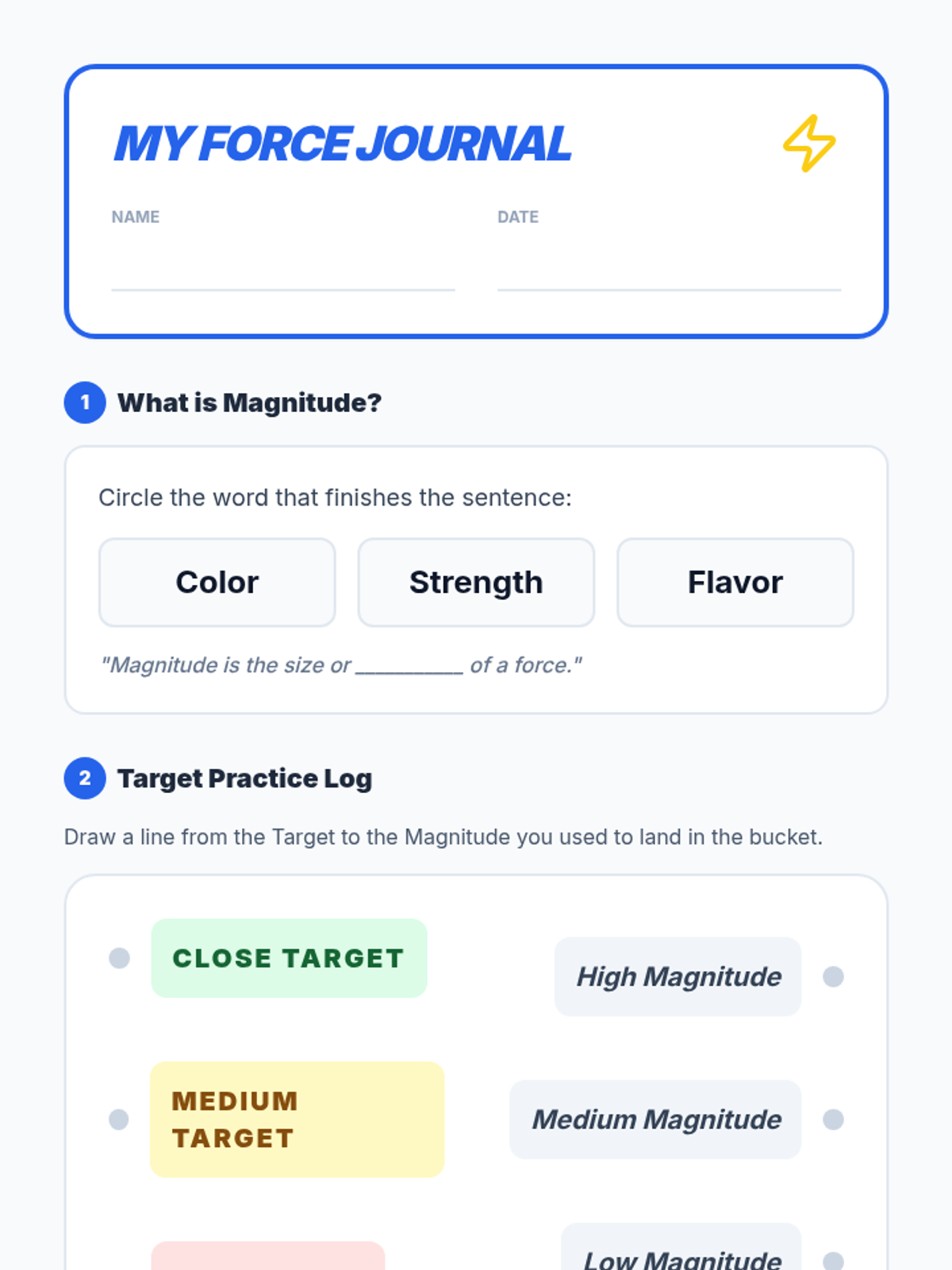
Students will explore the concept of magnitude in physical education through a series of active challenges, comparing high-strength and low-strength movements using beanbags, buckets, and running games.
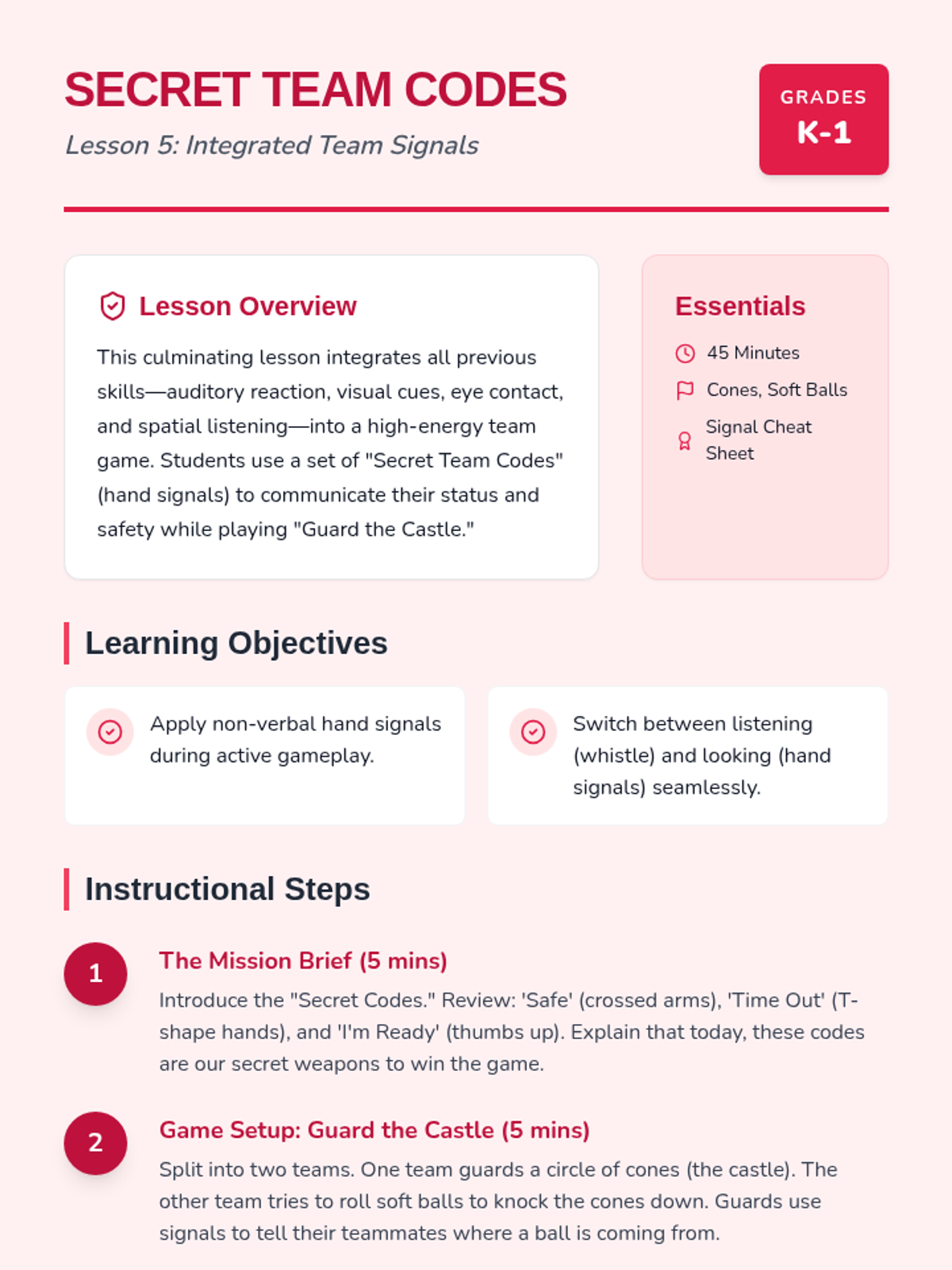
A culminating game where students apply hand signals and auditory cues in a fast-paced team environment.
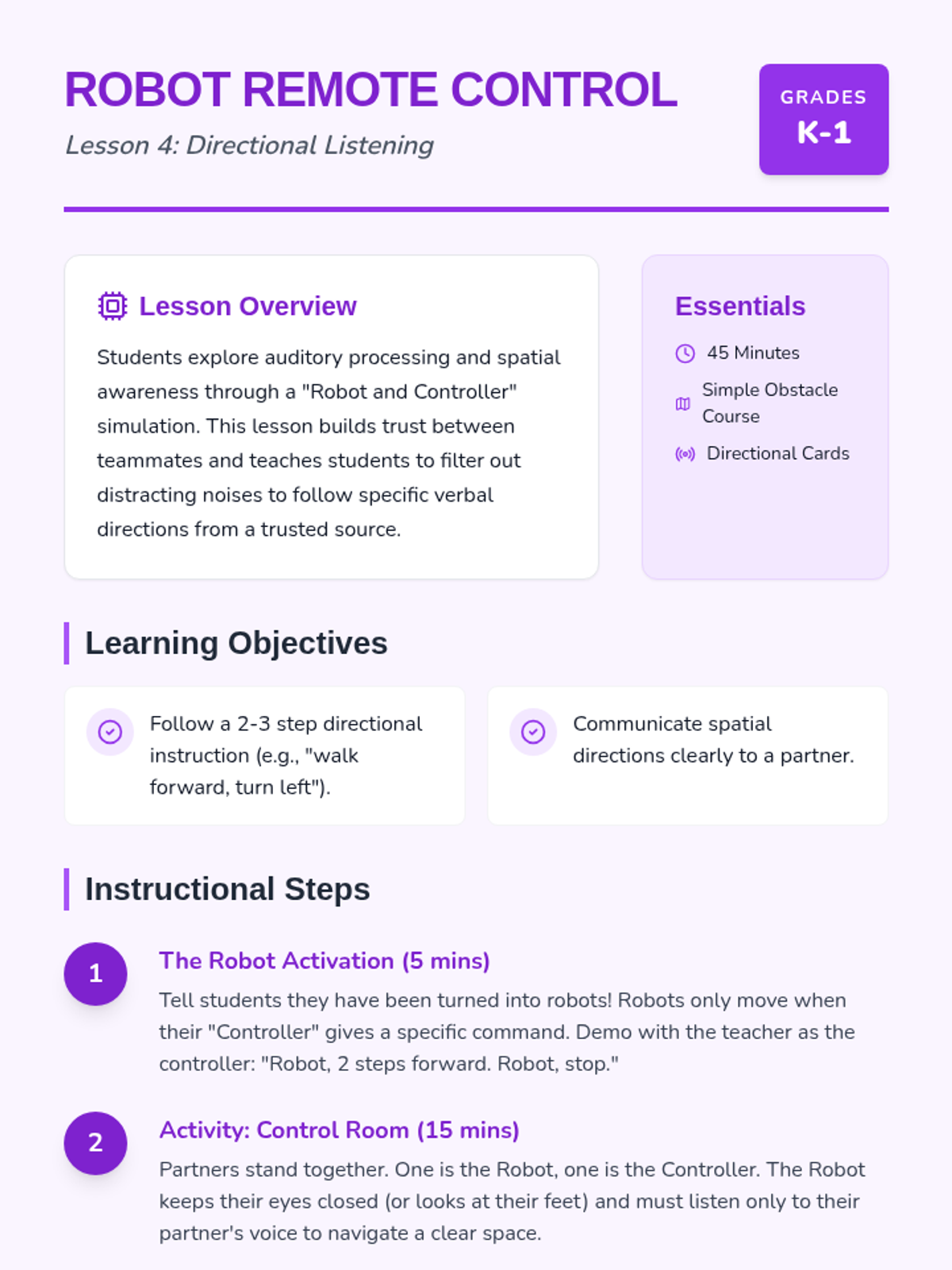
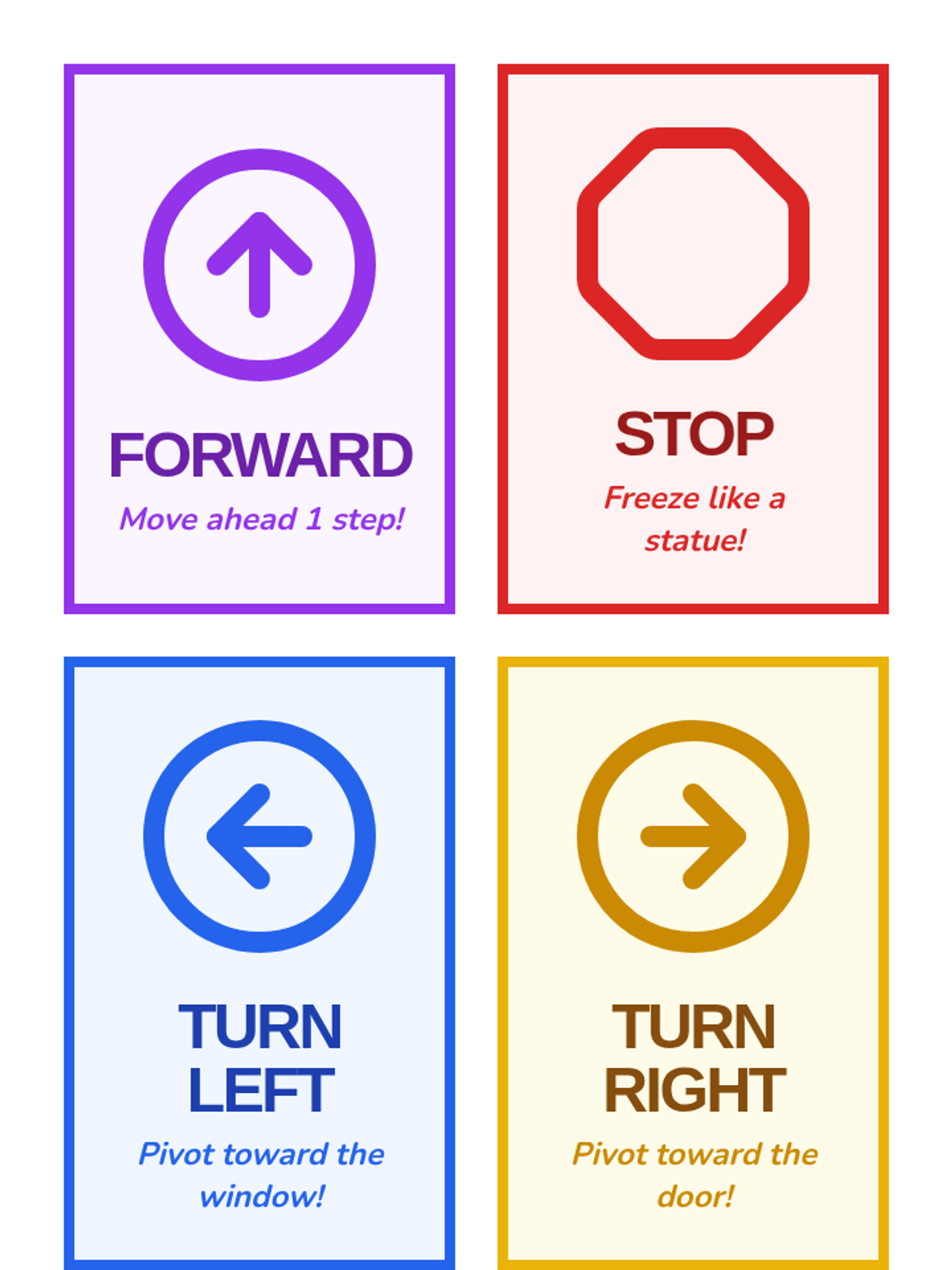
Students navigate spatial challenges by following verbal directions, building trust and focus in a noisy environment.
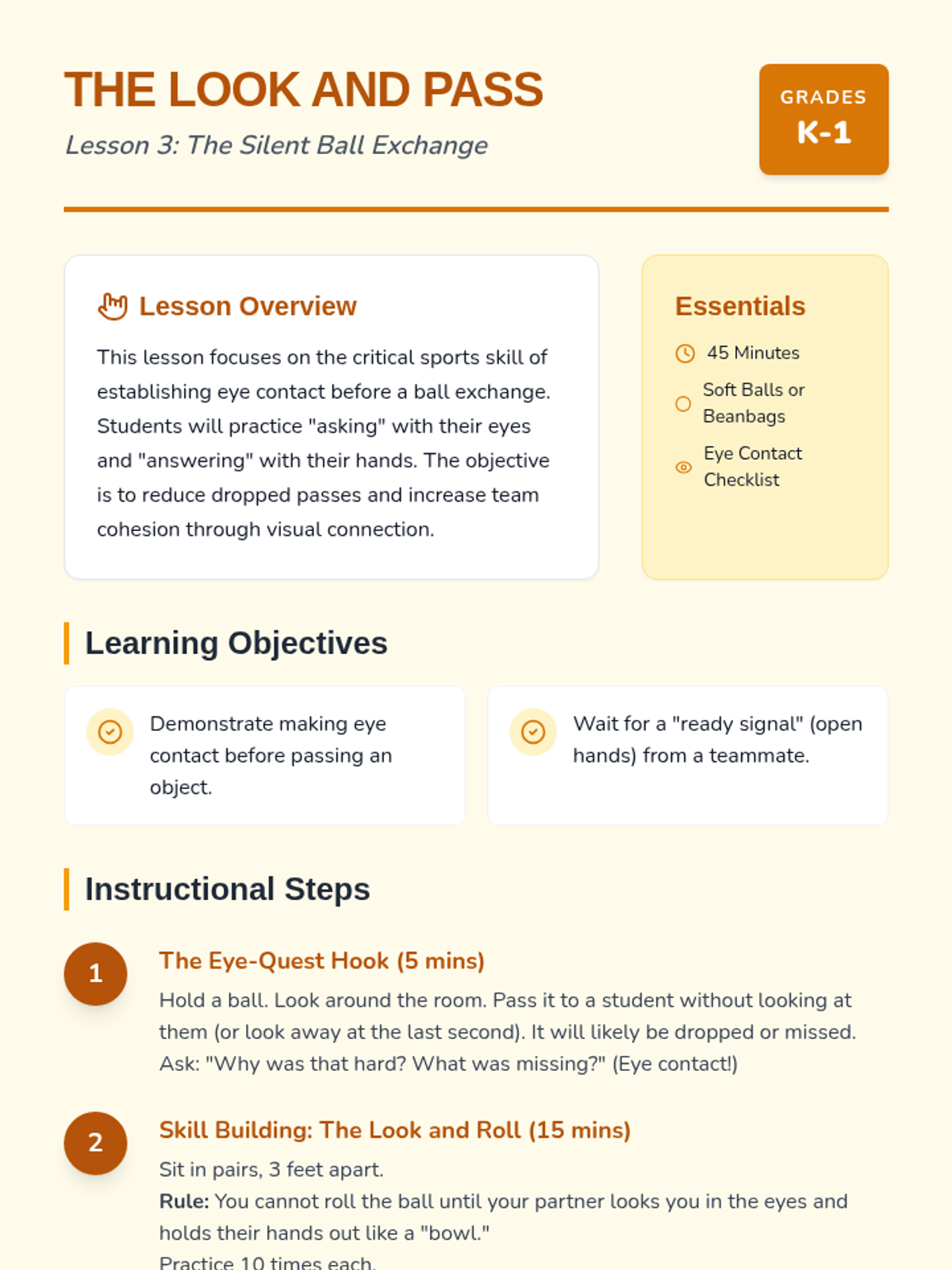
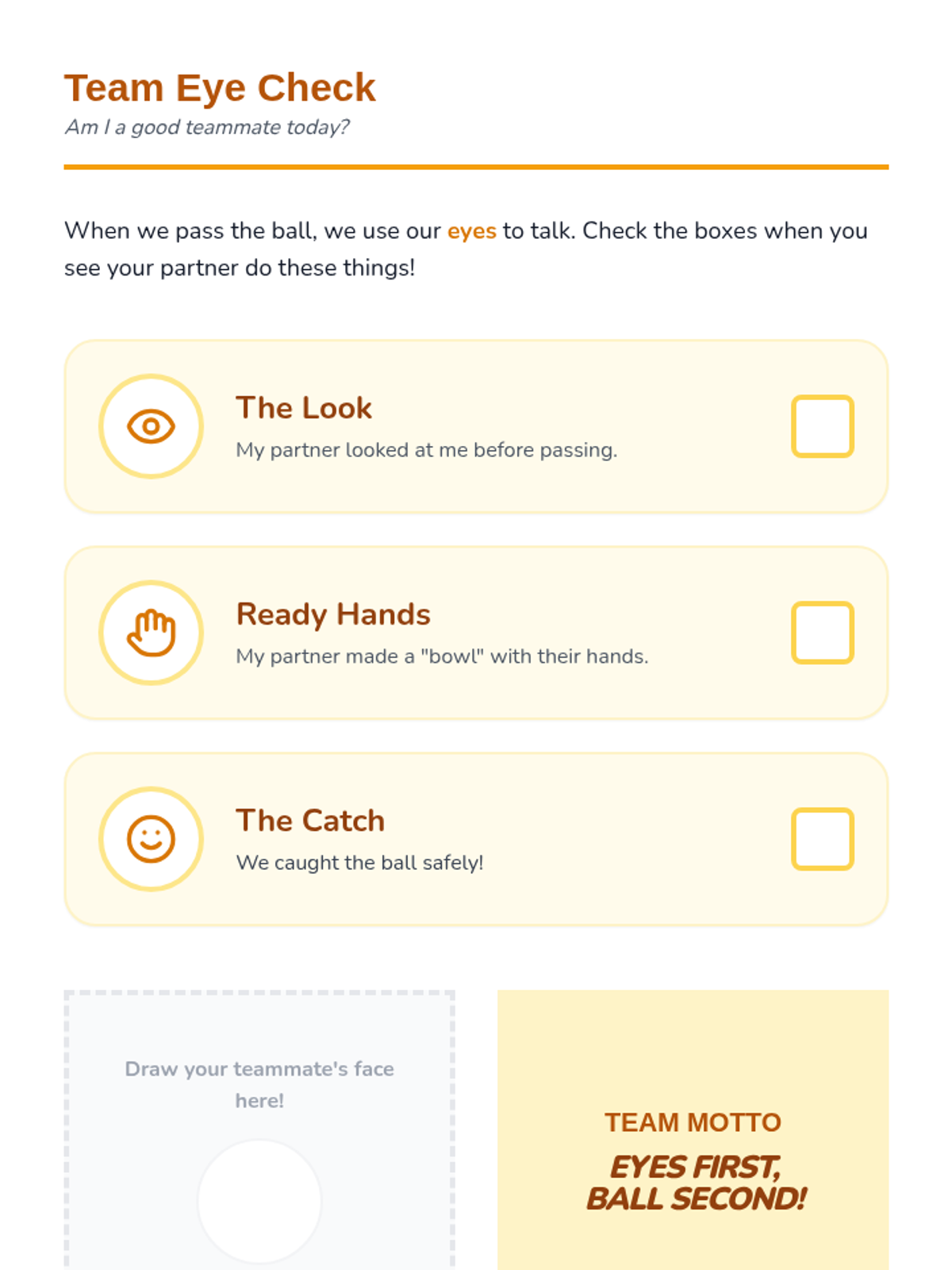
A cooperative passing activity where students must establish eye contact before engaging with teammates, reinforcing visual attention.
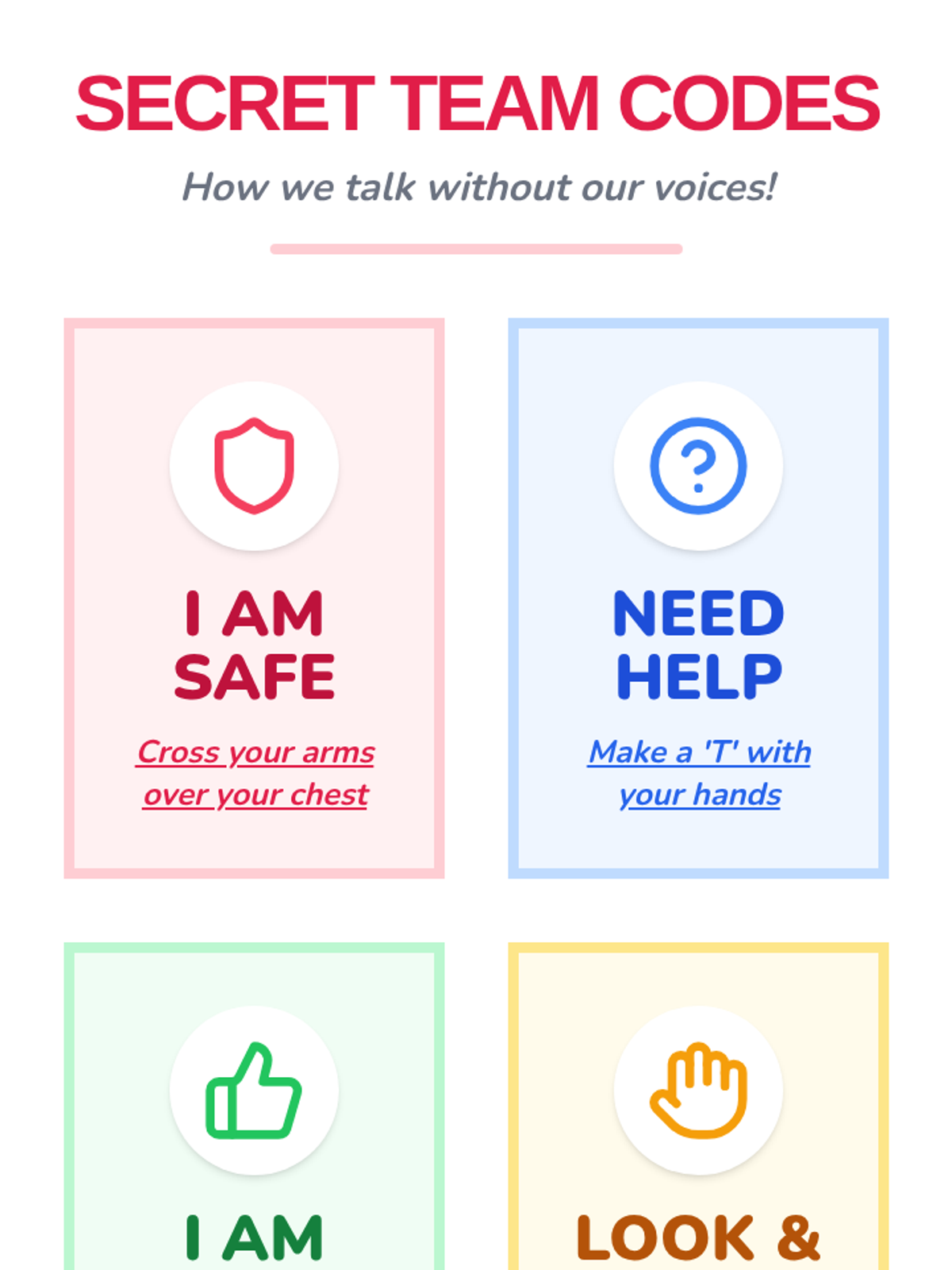
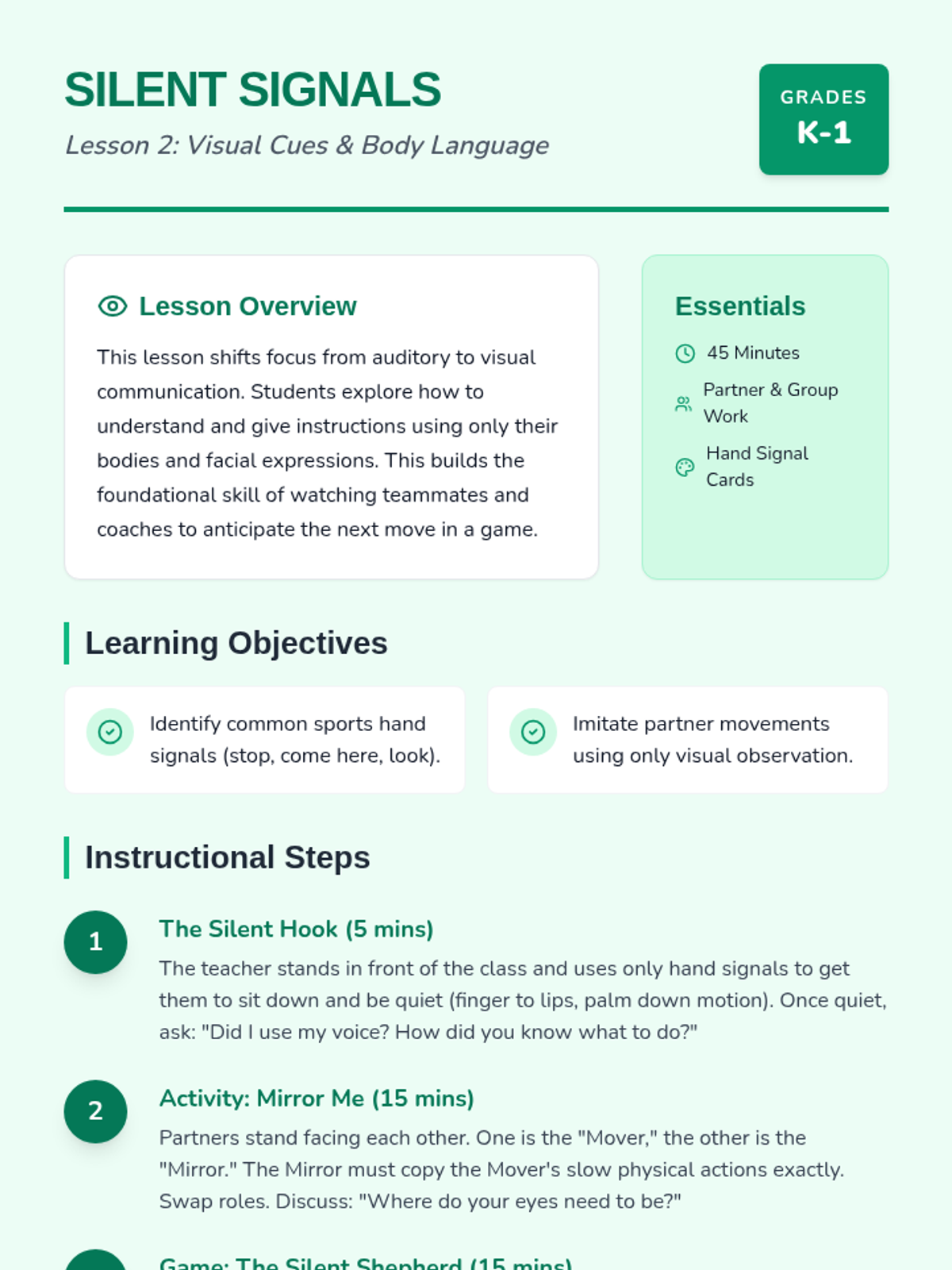
Students explore how to communicate without words, using observation and motor imitation to follow non-verbal instructions.
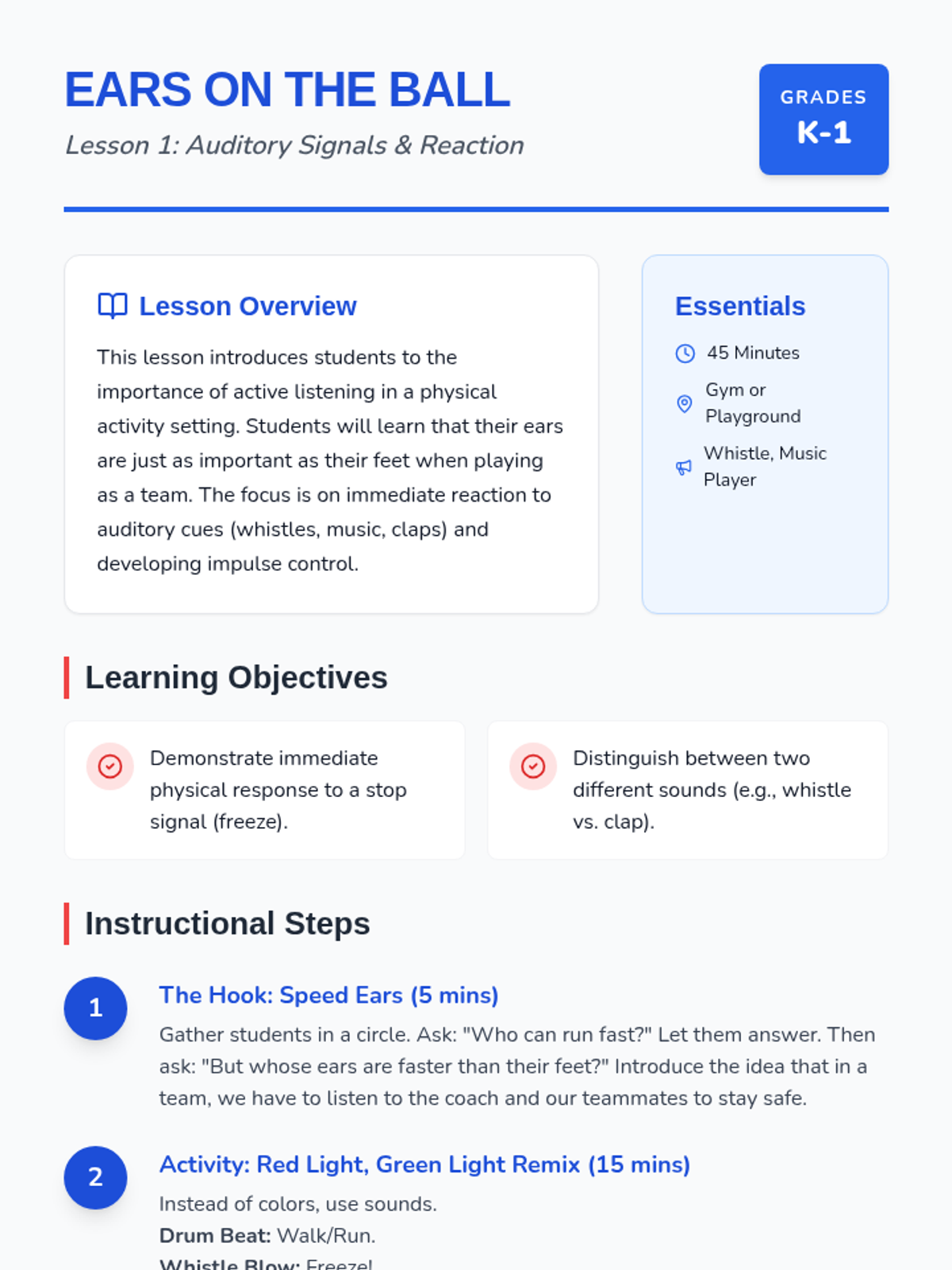
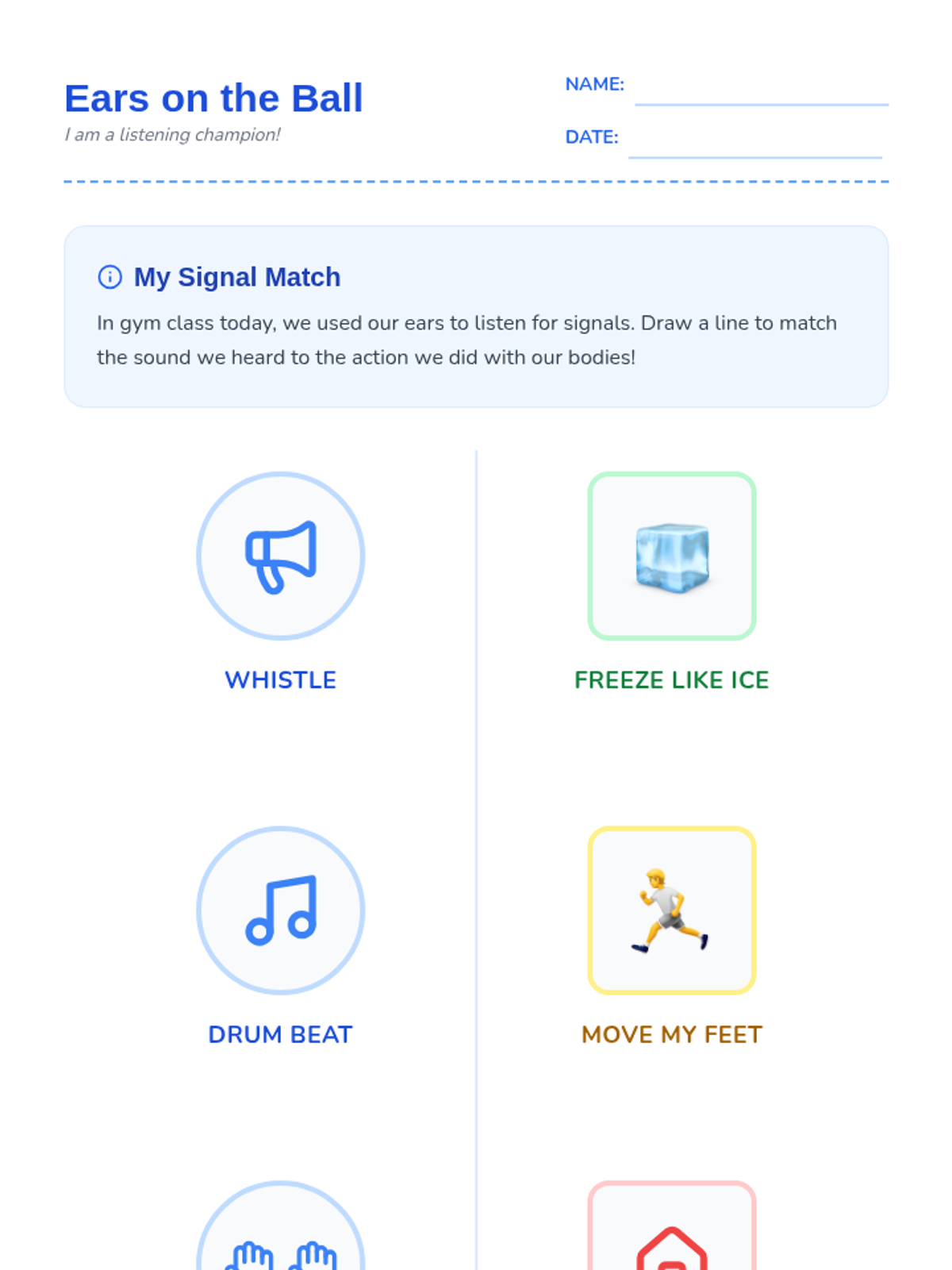
Students practice starting and stopping physical actions immediately based on auditory cues like whistles and music, focusing on safety and impulse control.
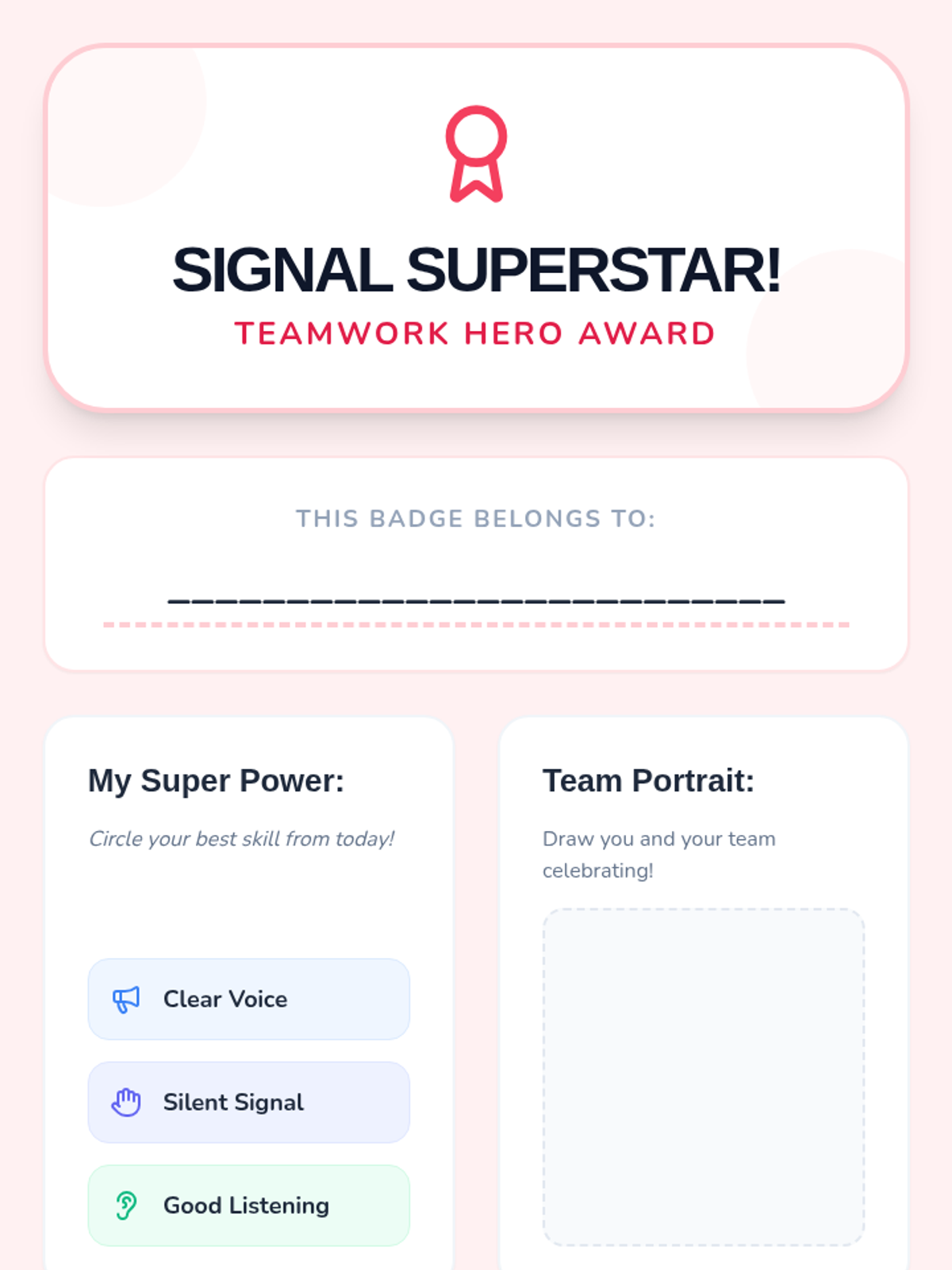
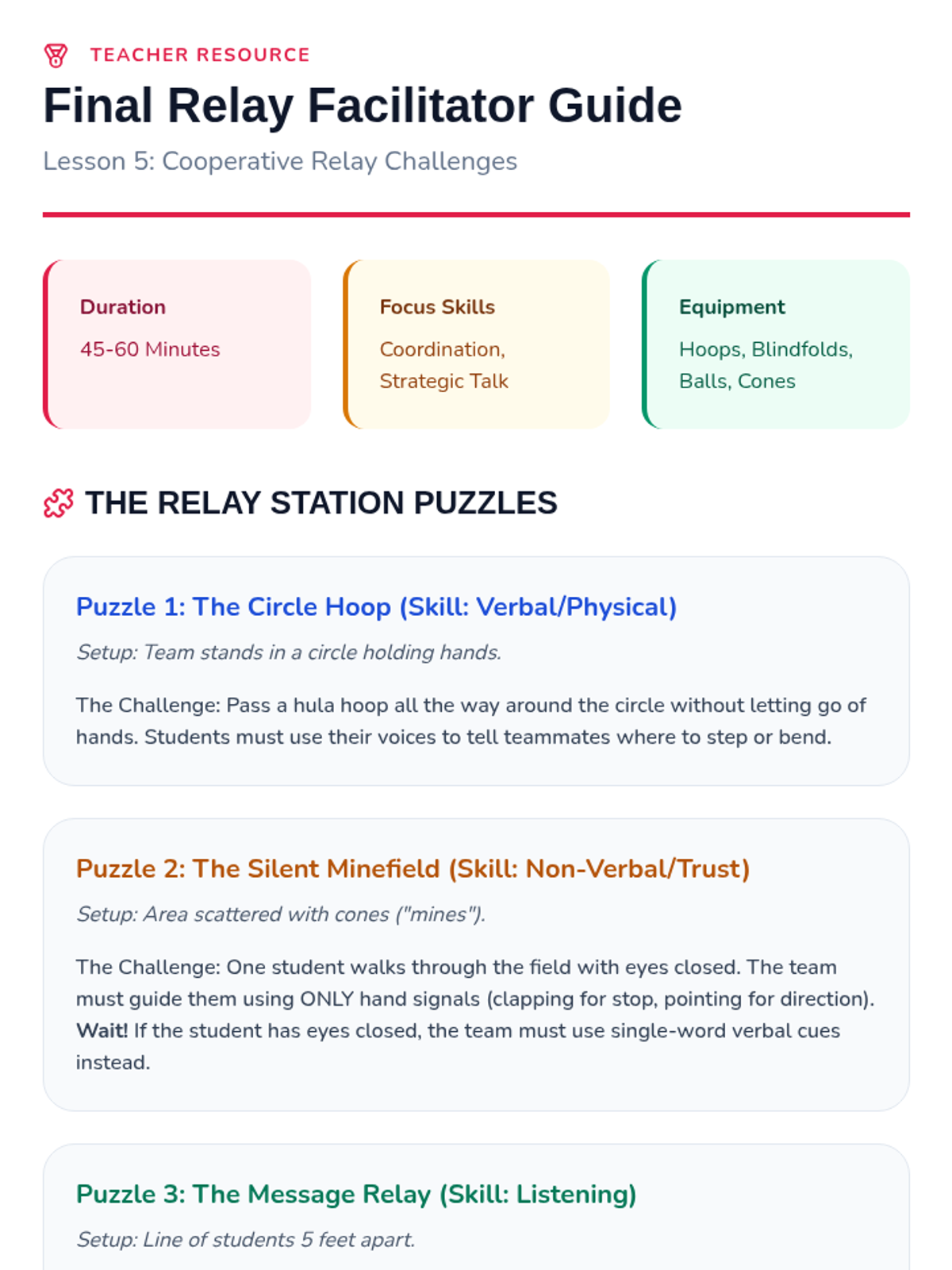
The culmination of the sequence where small groups solve physical relay puzzles using a combination of all communication skills.
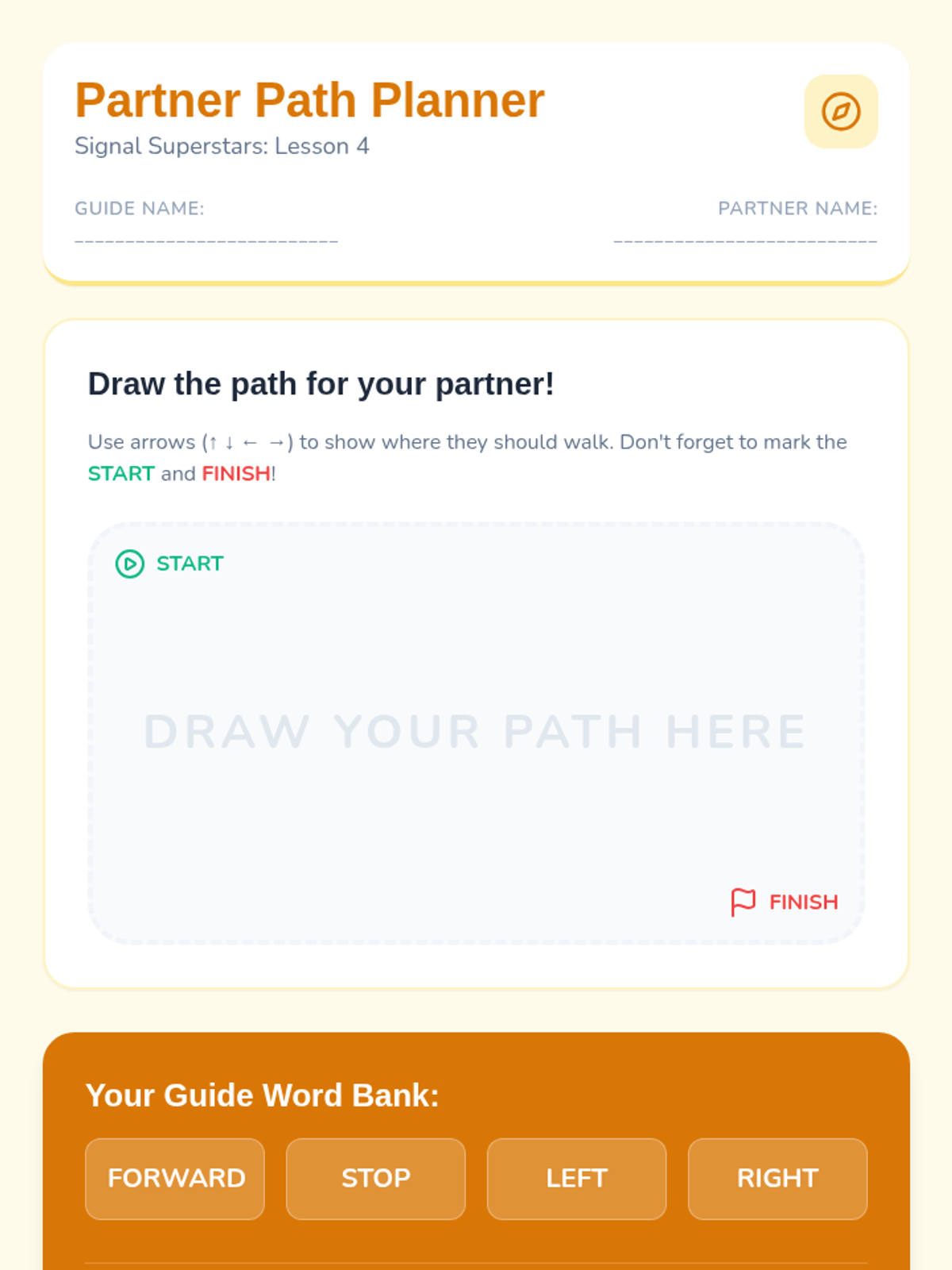
Pairs work together as guides and receivers to navigate paths, building trust and using precise directional vocabulary.
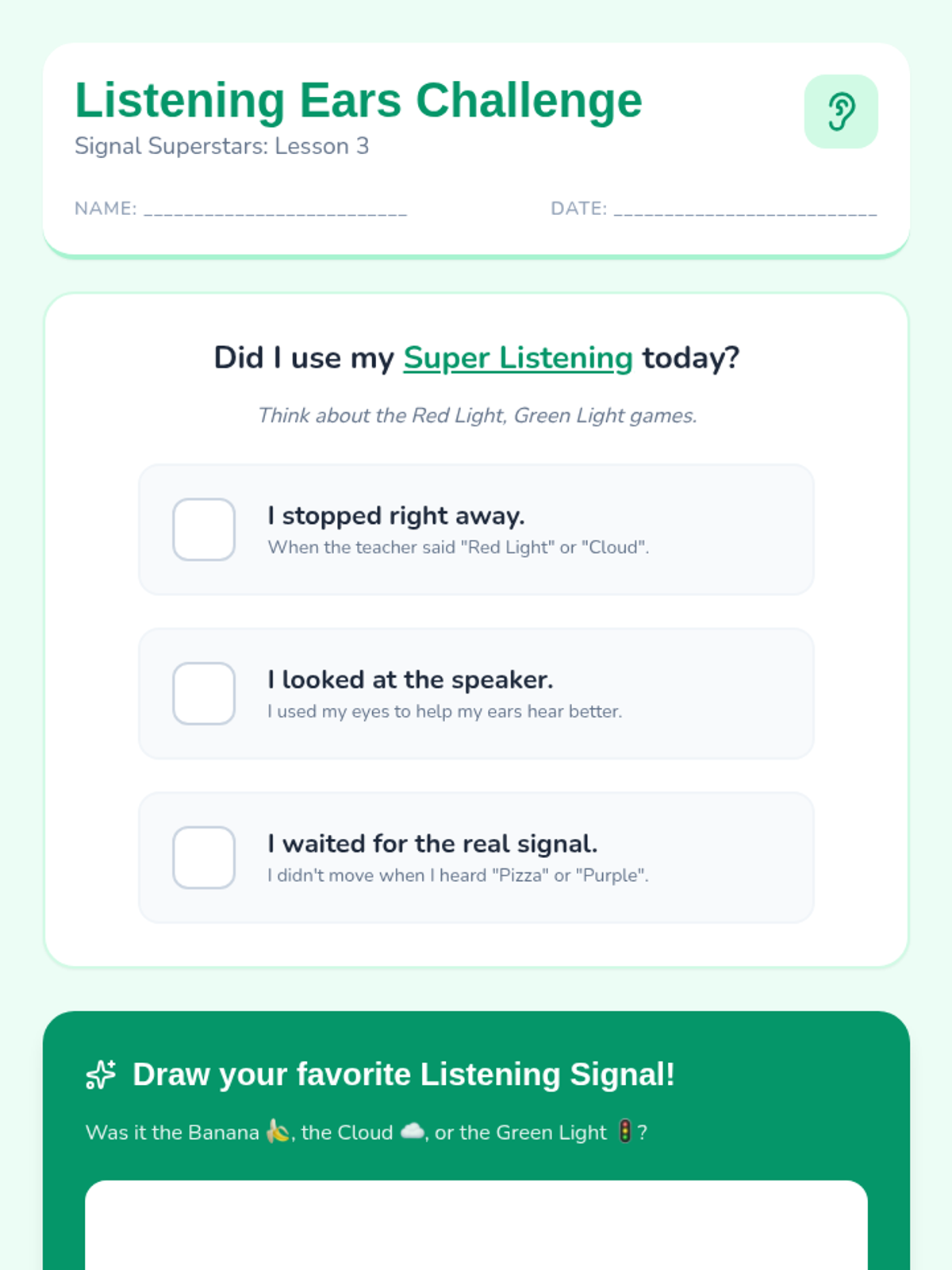
Focuses on active listening skills during movement games like 'Red Light, Green Light' variations, emphasizing stopping and processing instructions.
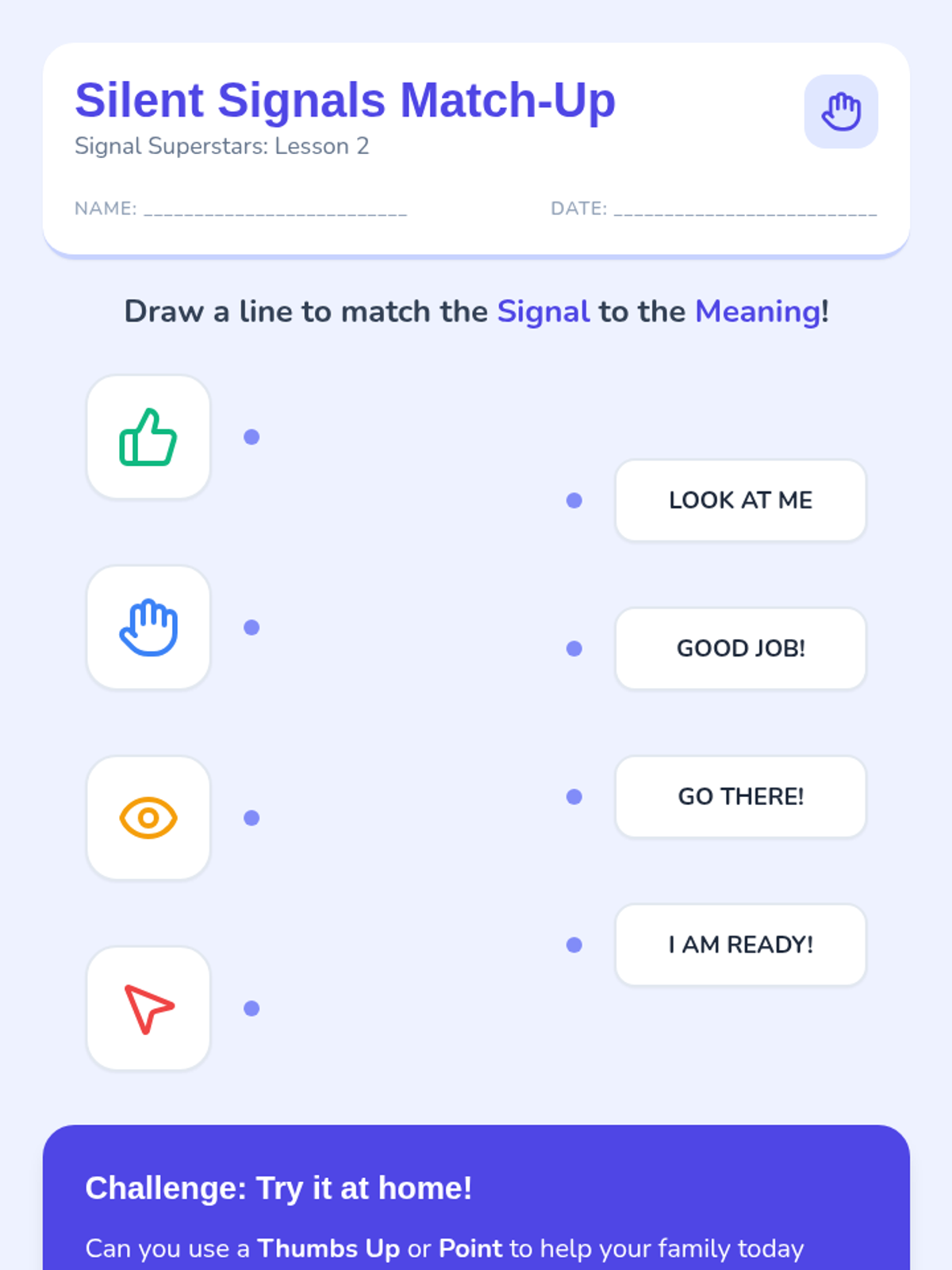
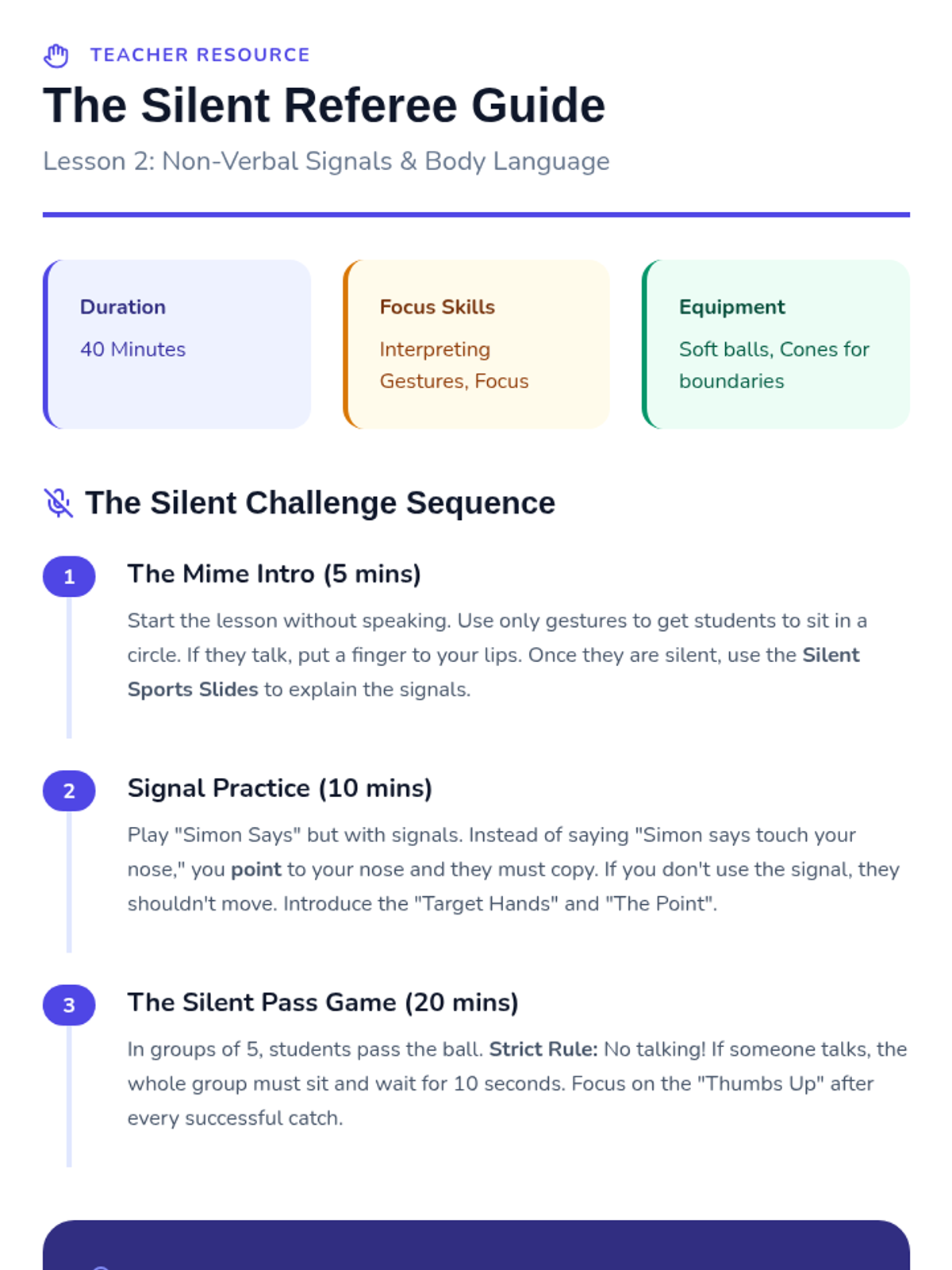
Students explore non-verbal communication through 'Silent Sports,' using hand signals and body language to coordinate movements.
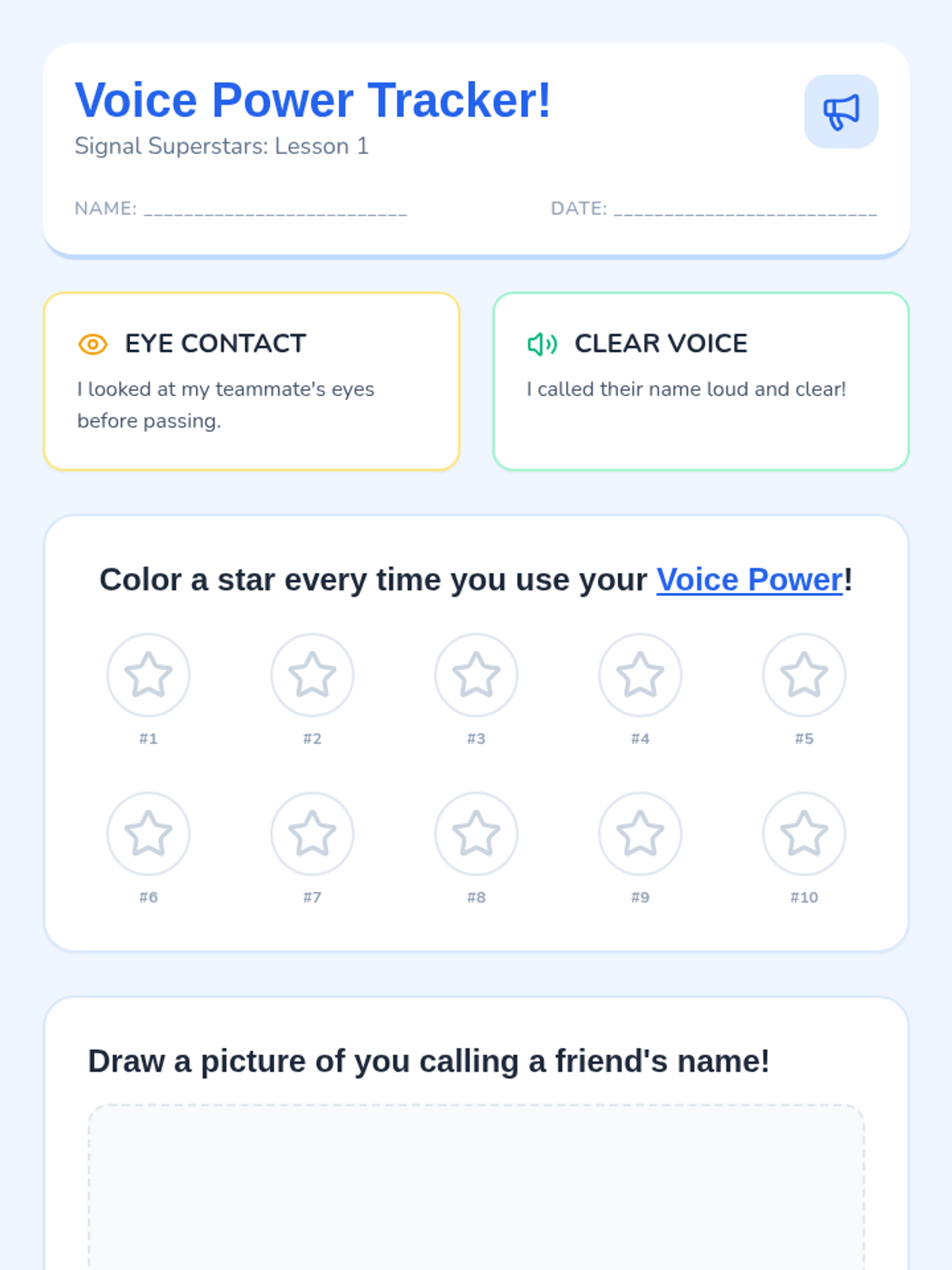
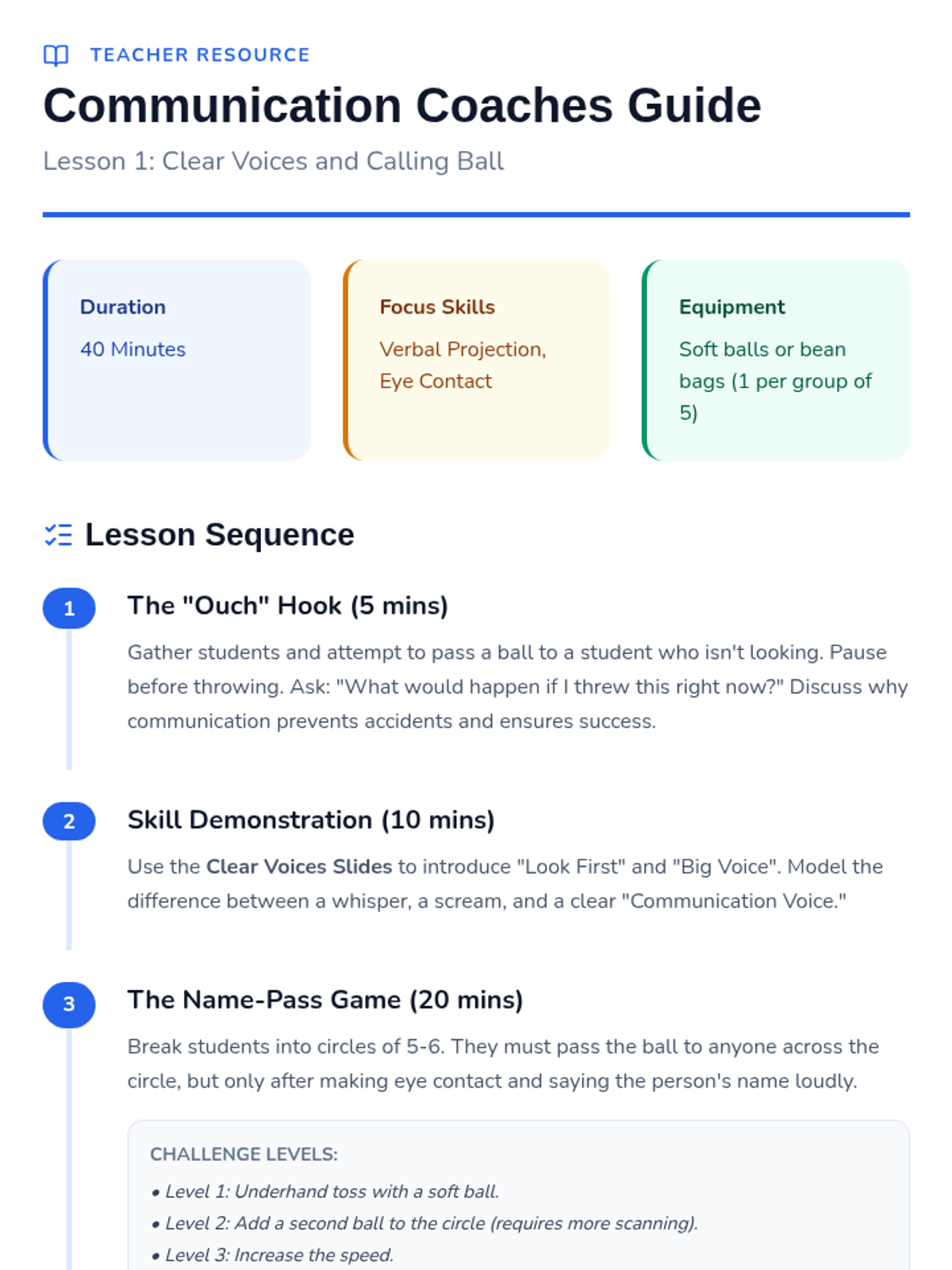
Students learn to use clear, loud voices and eye contact when passing objects to teammates, ensuring the receiver is ready.
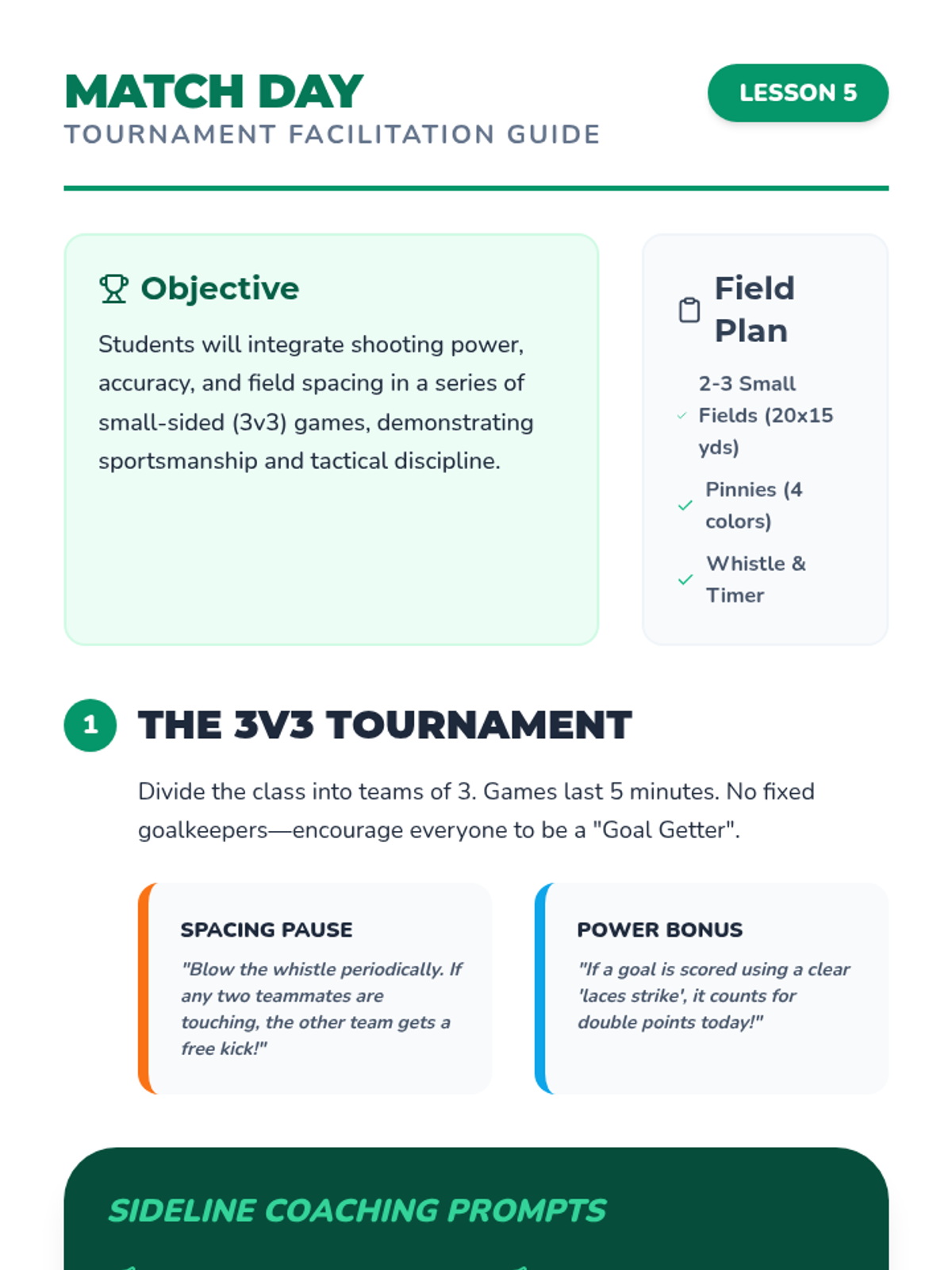
The sequence culminates in a 3v3 mini-game on a small field, focusing on applying shooting skills and maintaining the spacing rules learned in previous lessons.
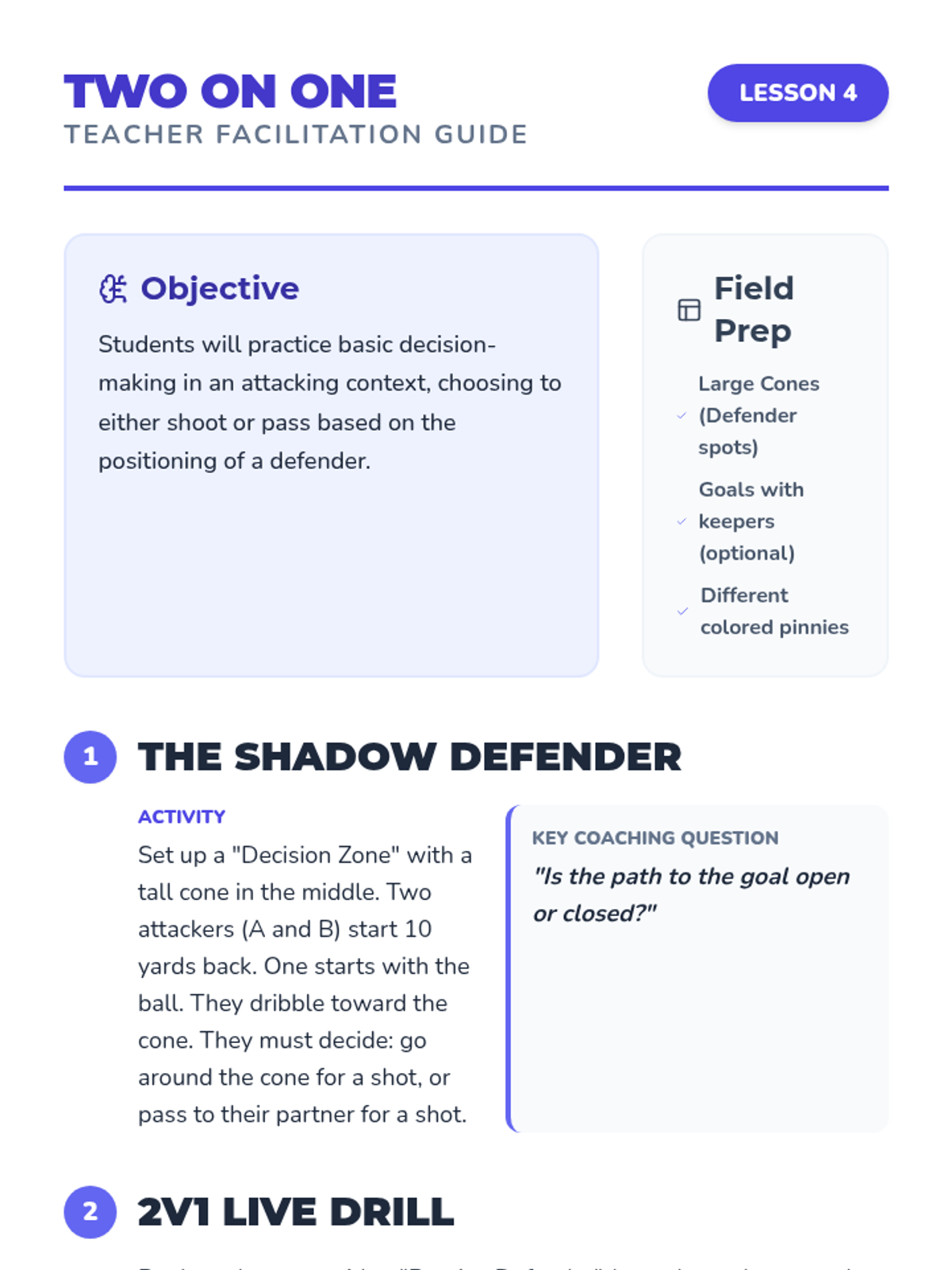
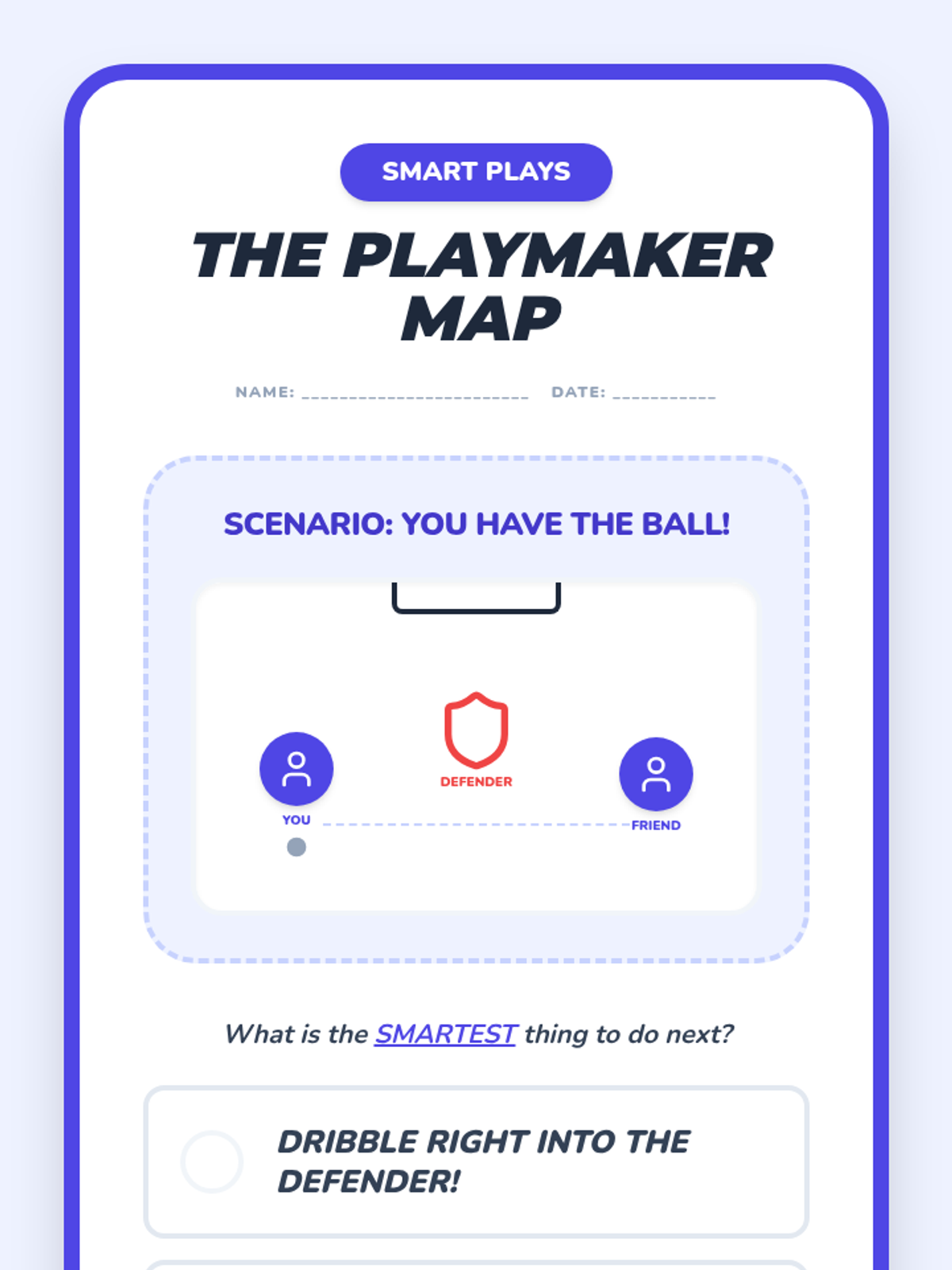
Students work in pairs against a single defender to decide whether to dribble and shoot or pass to a teammate, introducing basic decision-making in an attacking context.
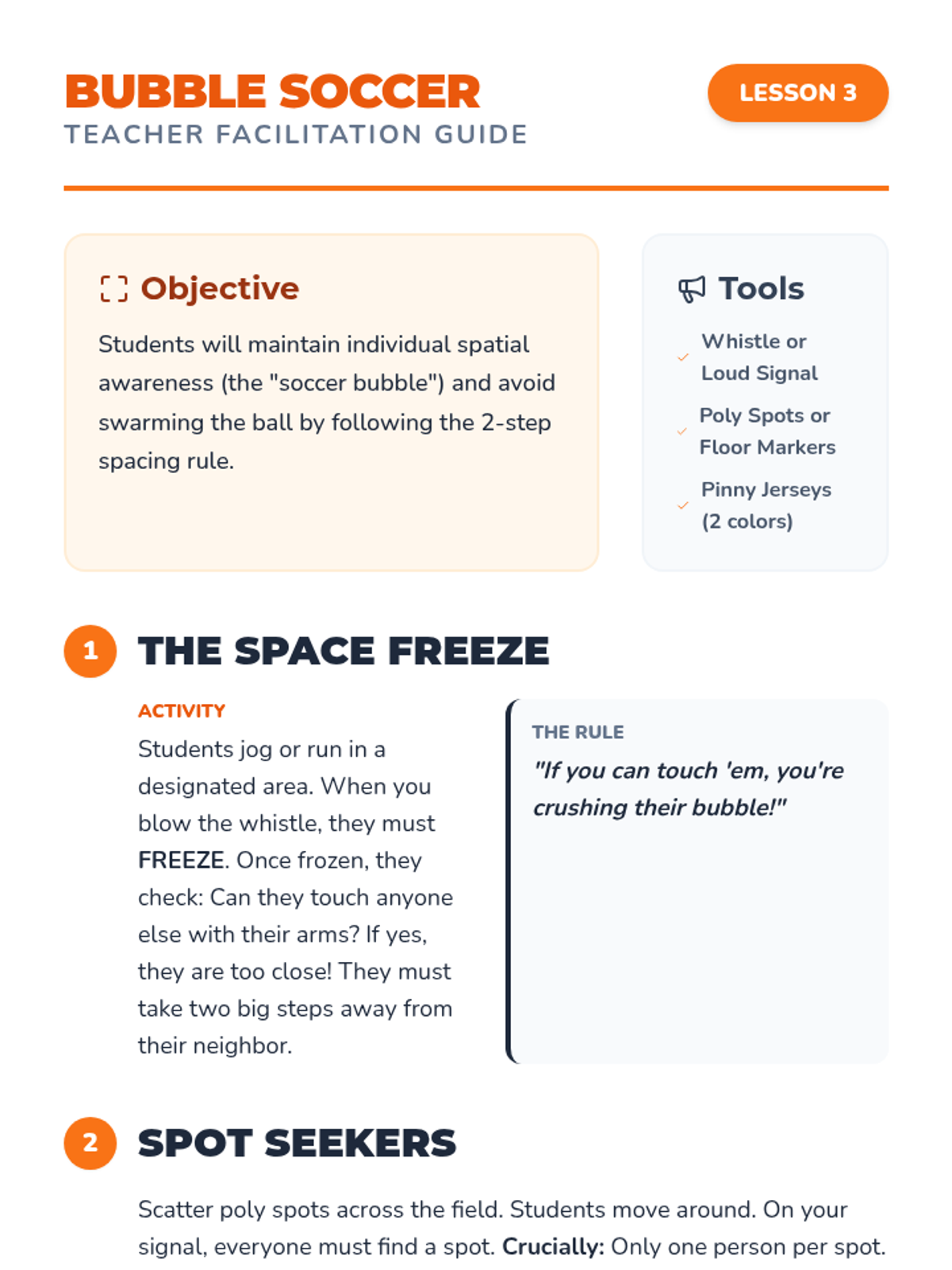
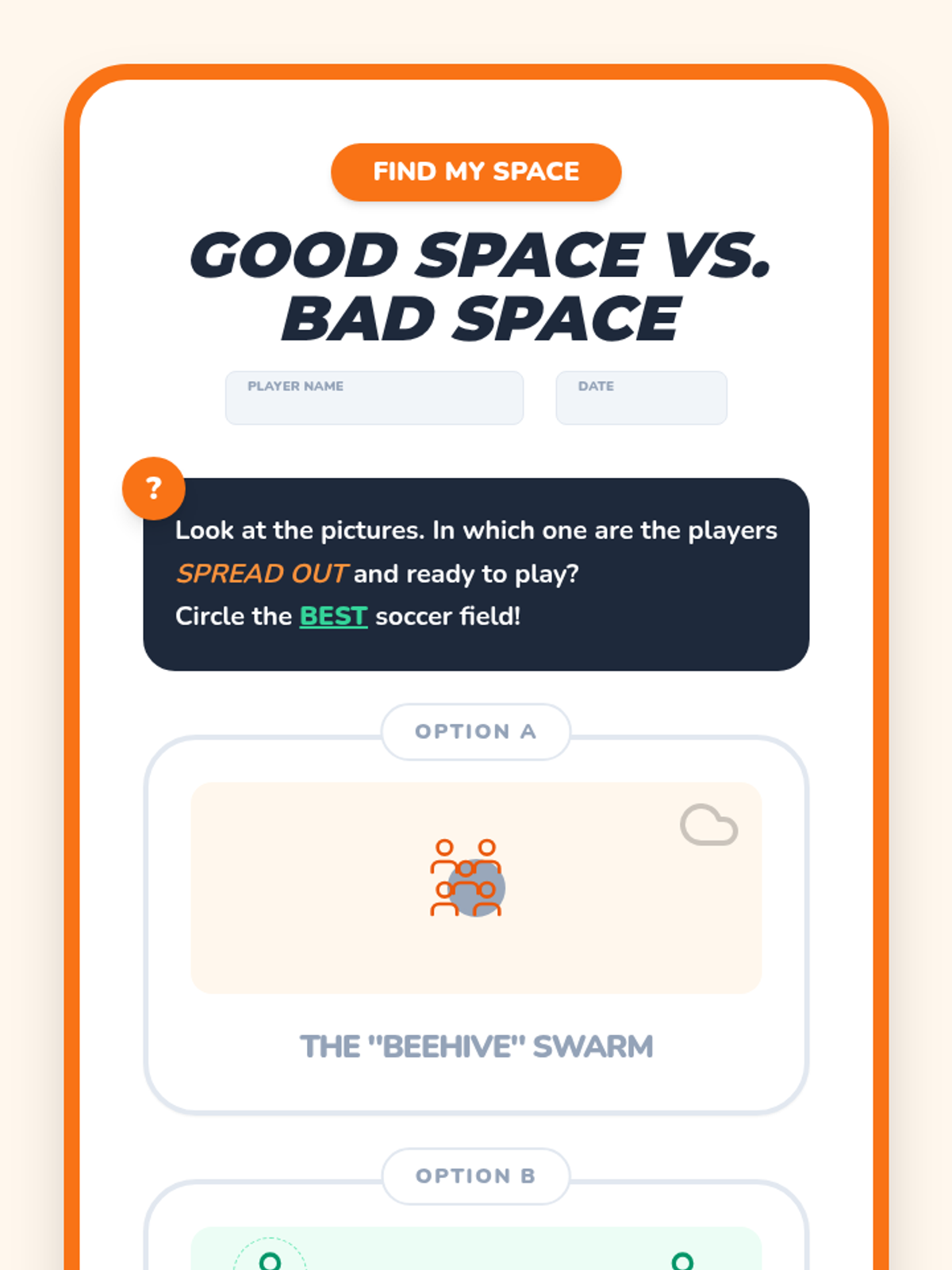
Students learn physical spacing through a 'Freeze' game to prevent swarming the ball, applying these concepts to maintain spatial awareness on the soccer field.
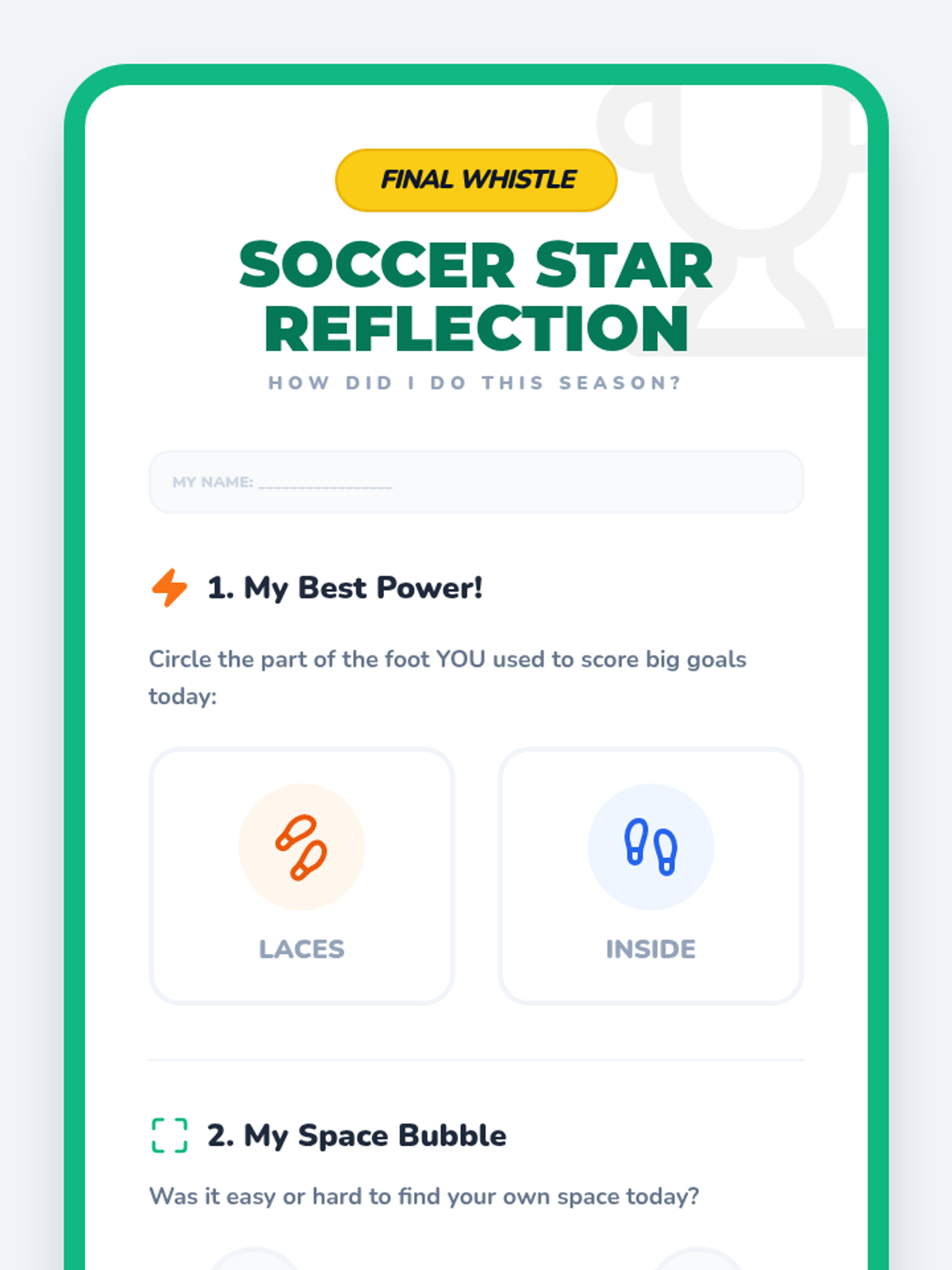
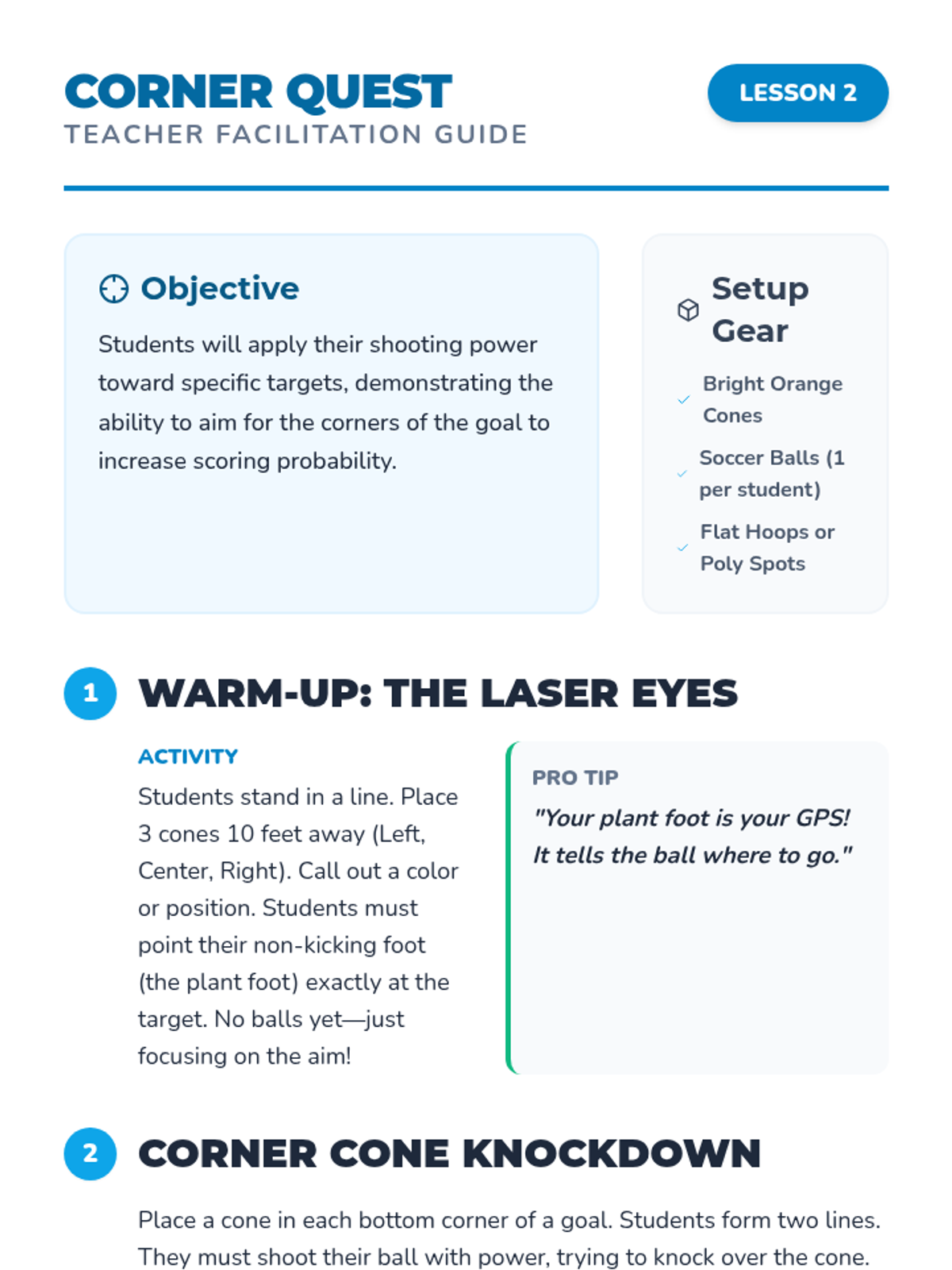
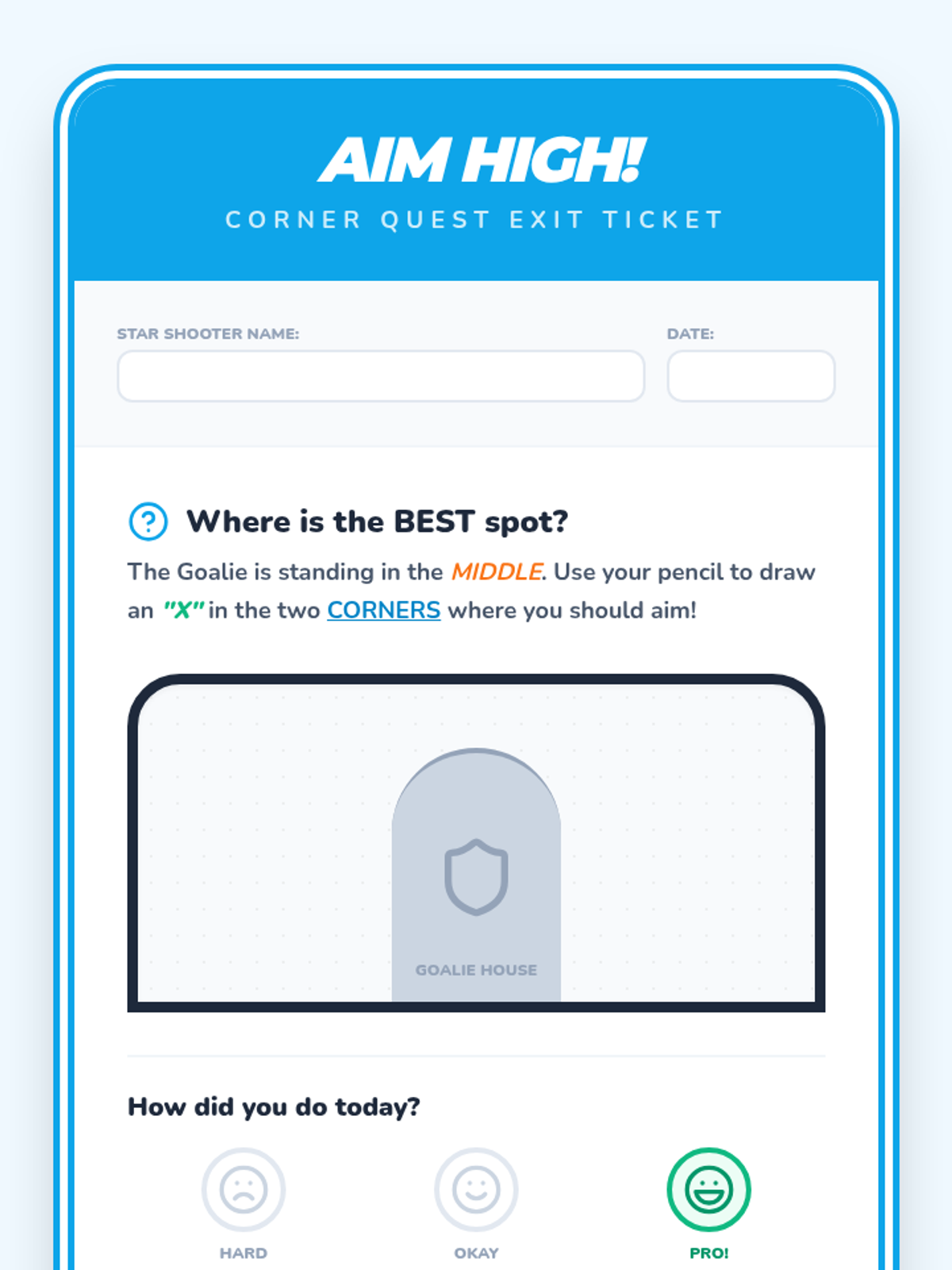
Students engage in target practice, aiming for cones placed in the corners of the goal rather than the center to learn placement over raw power.