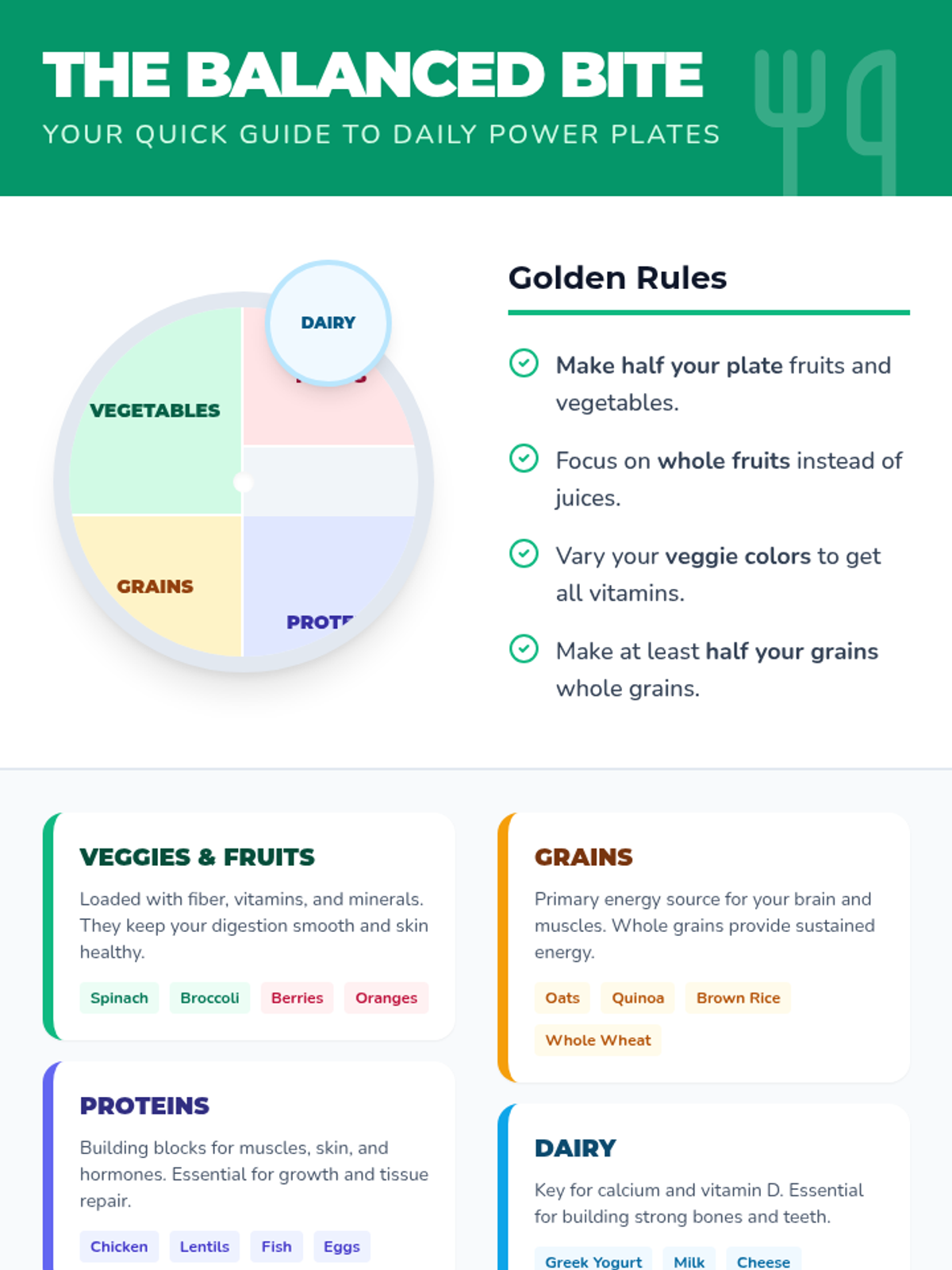
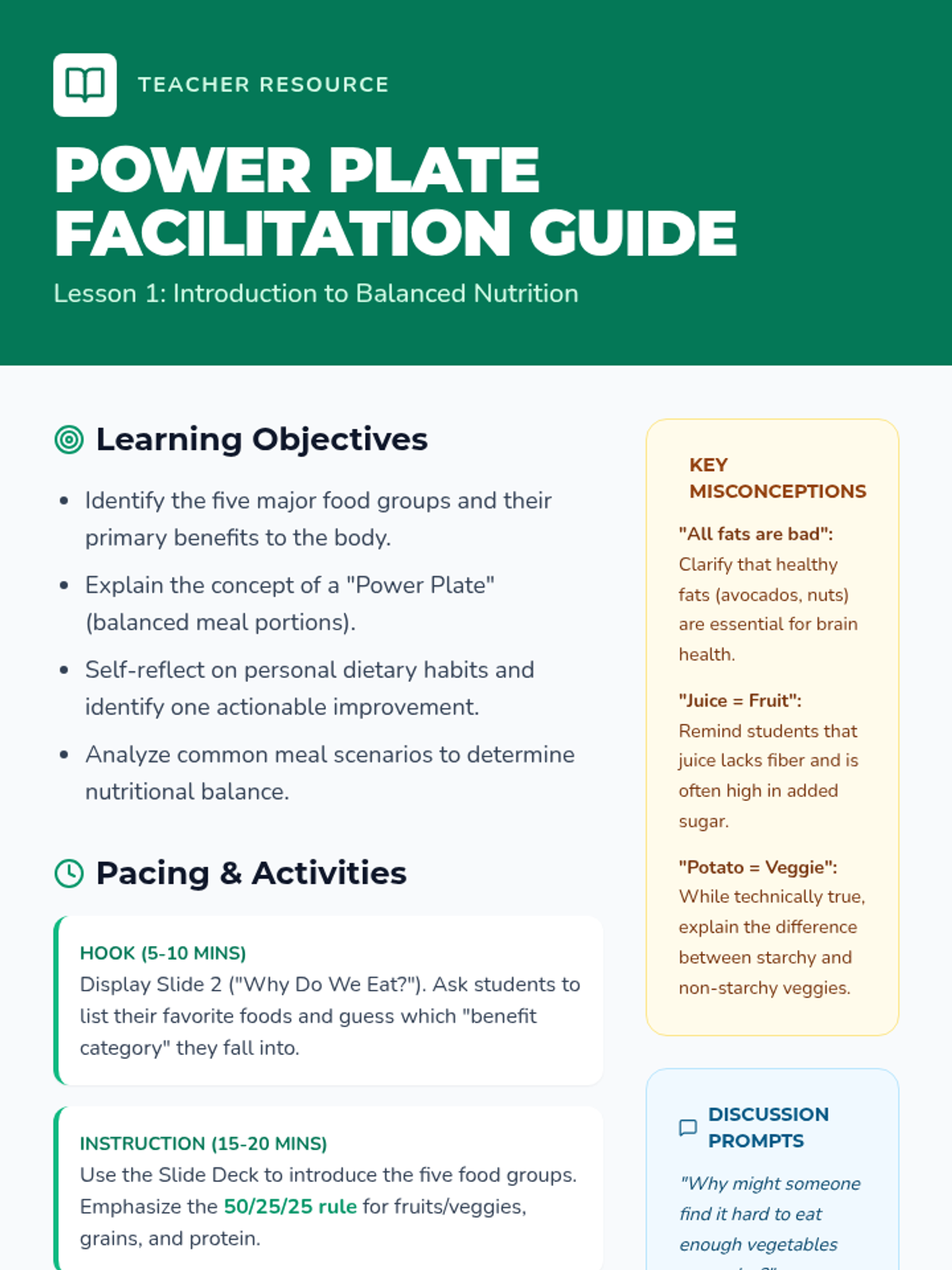
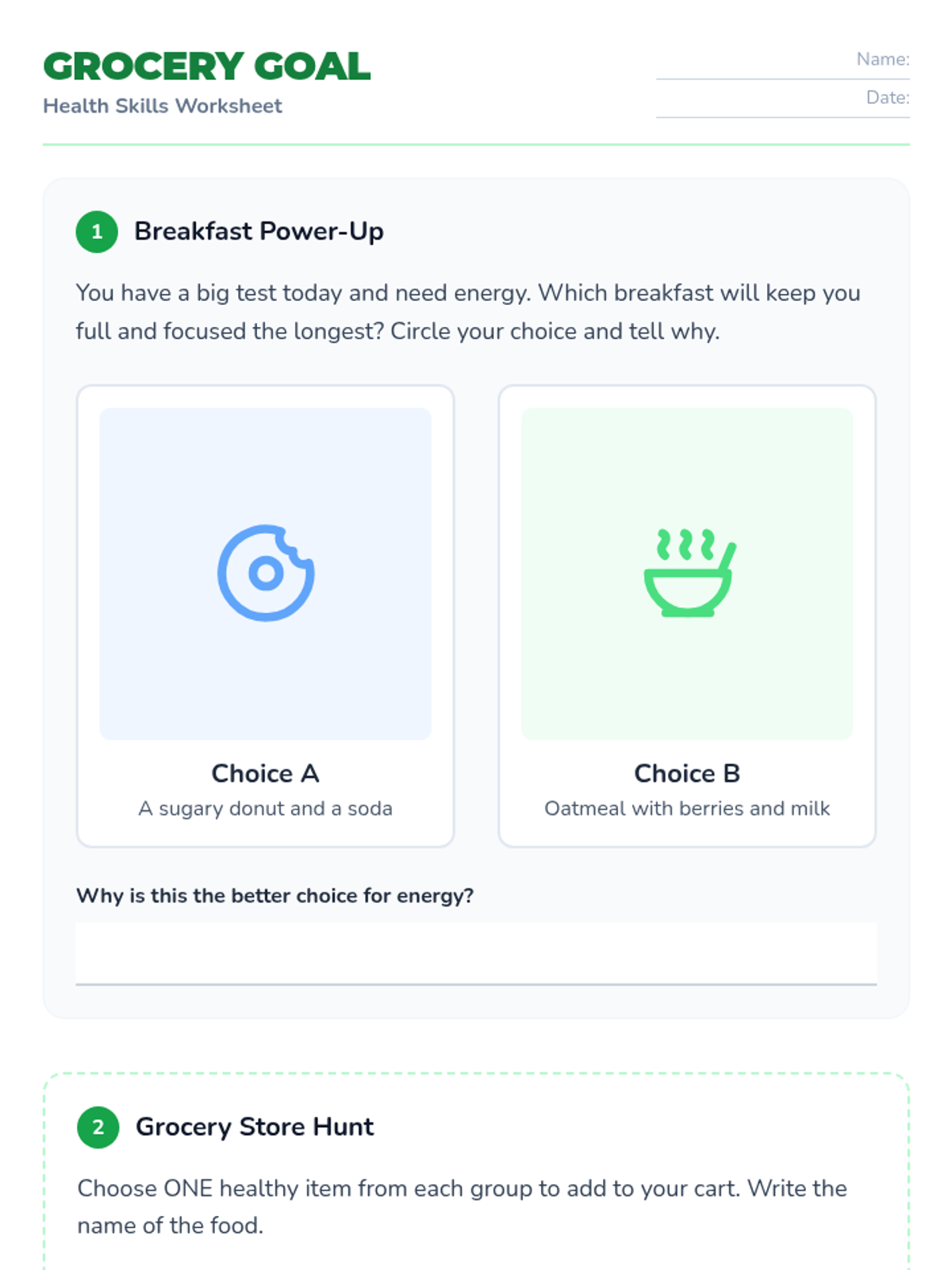
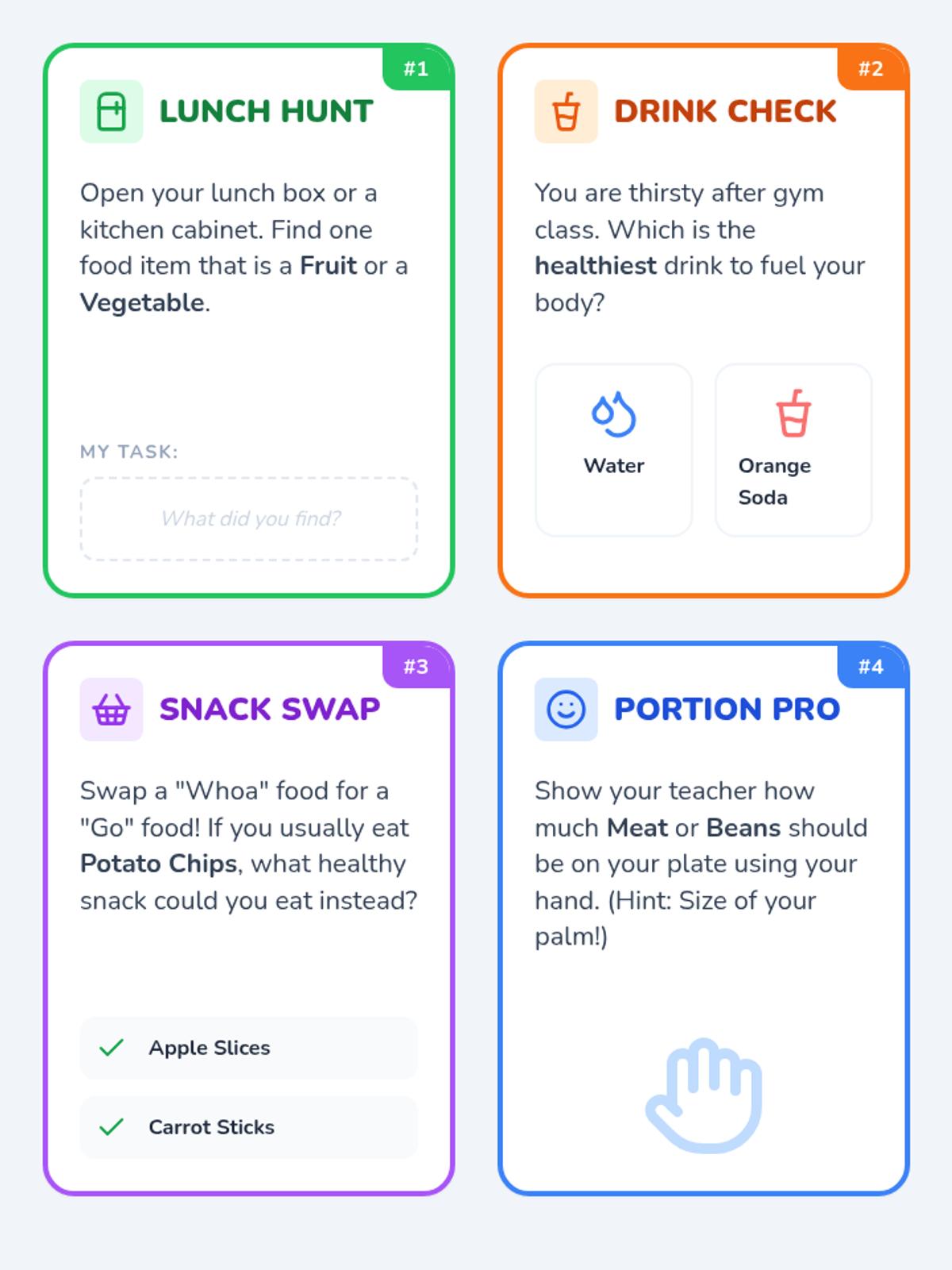
Essential food groups, nutrient functions, and balanced meal planning. Develops skills for interpreting nutrition labels and adopting lifelong healthy eating patterns.
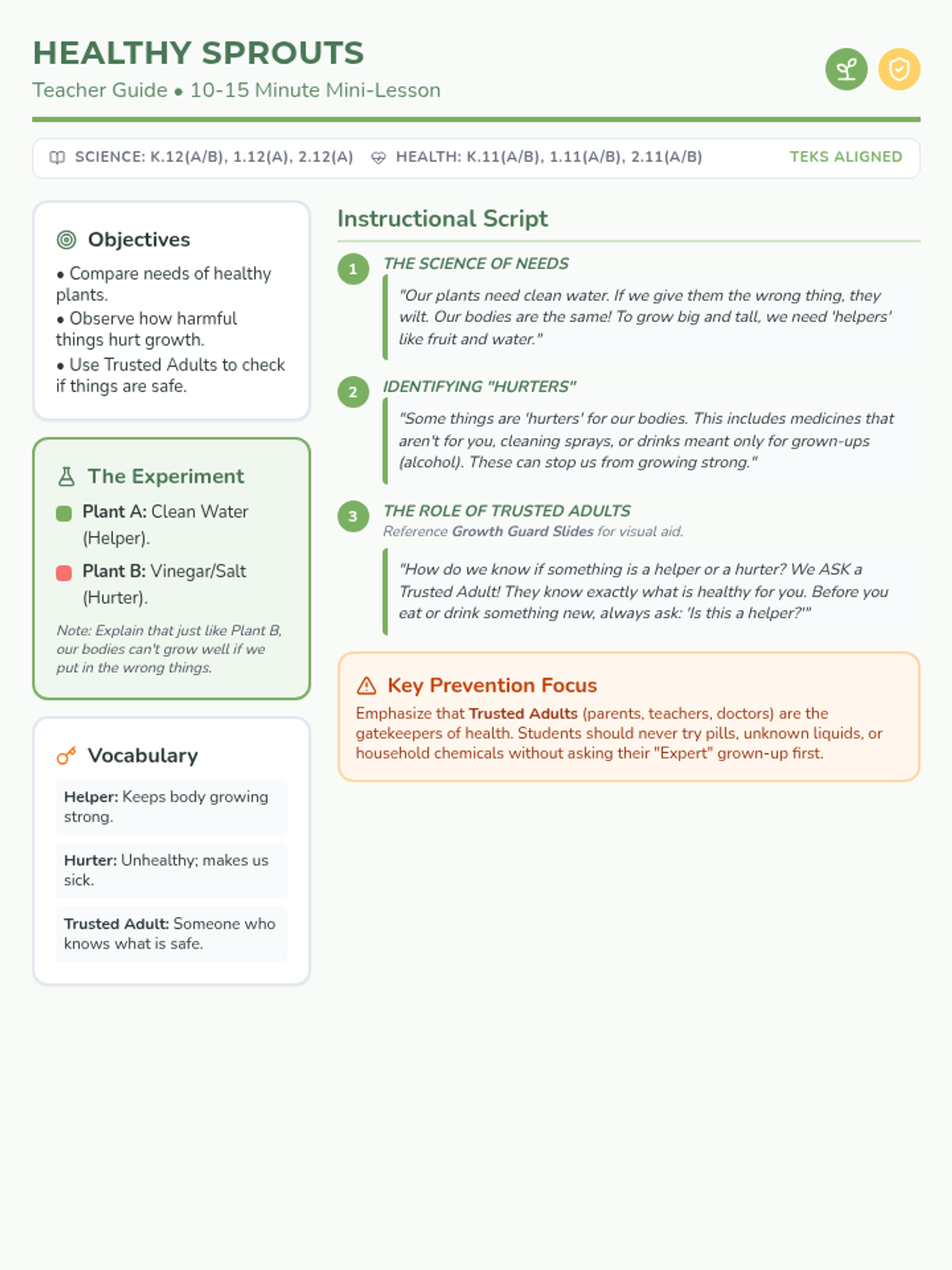
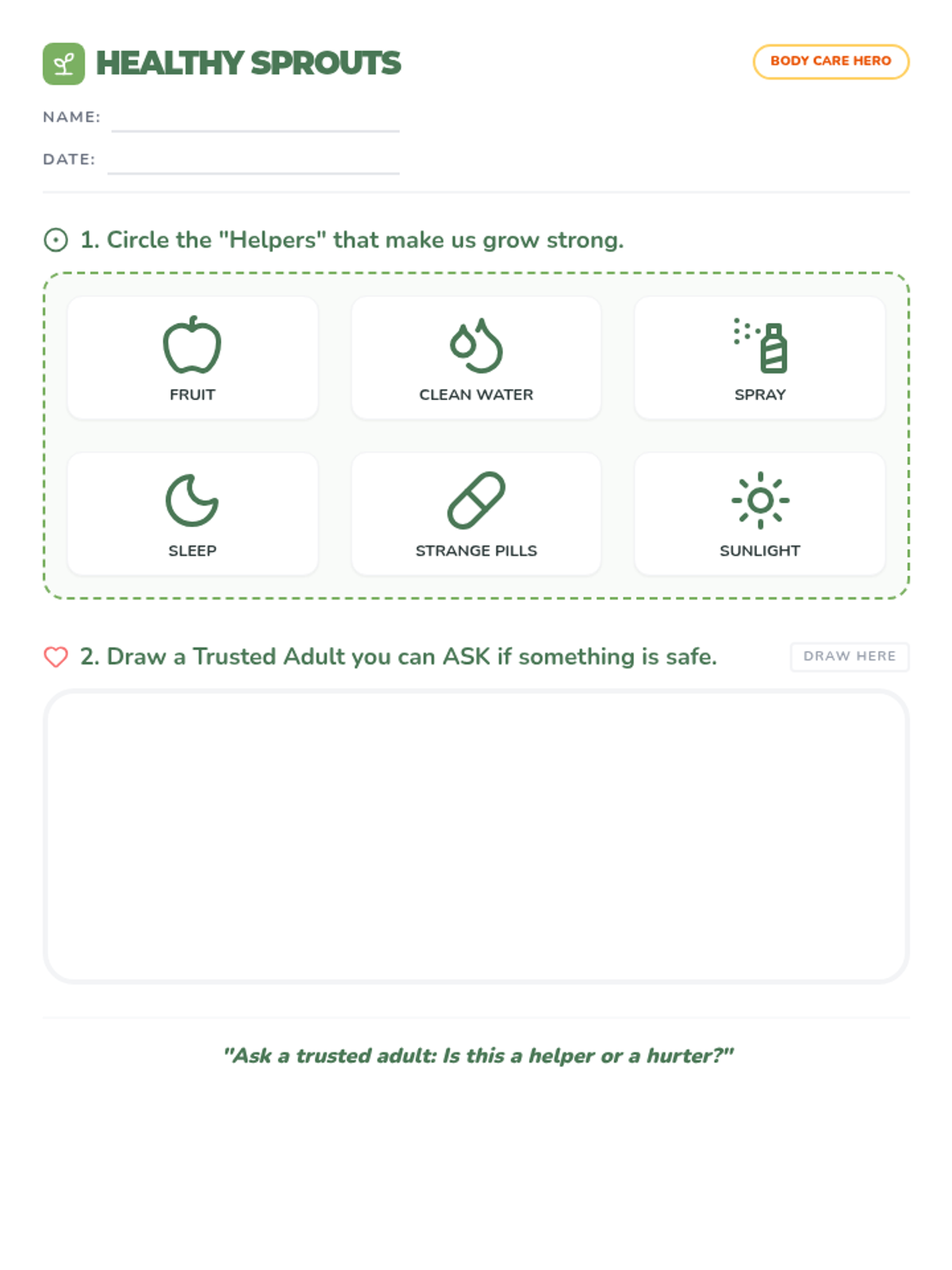
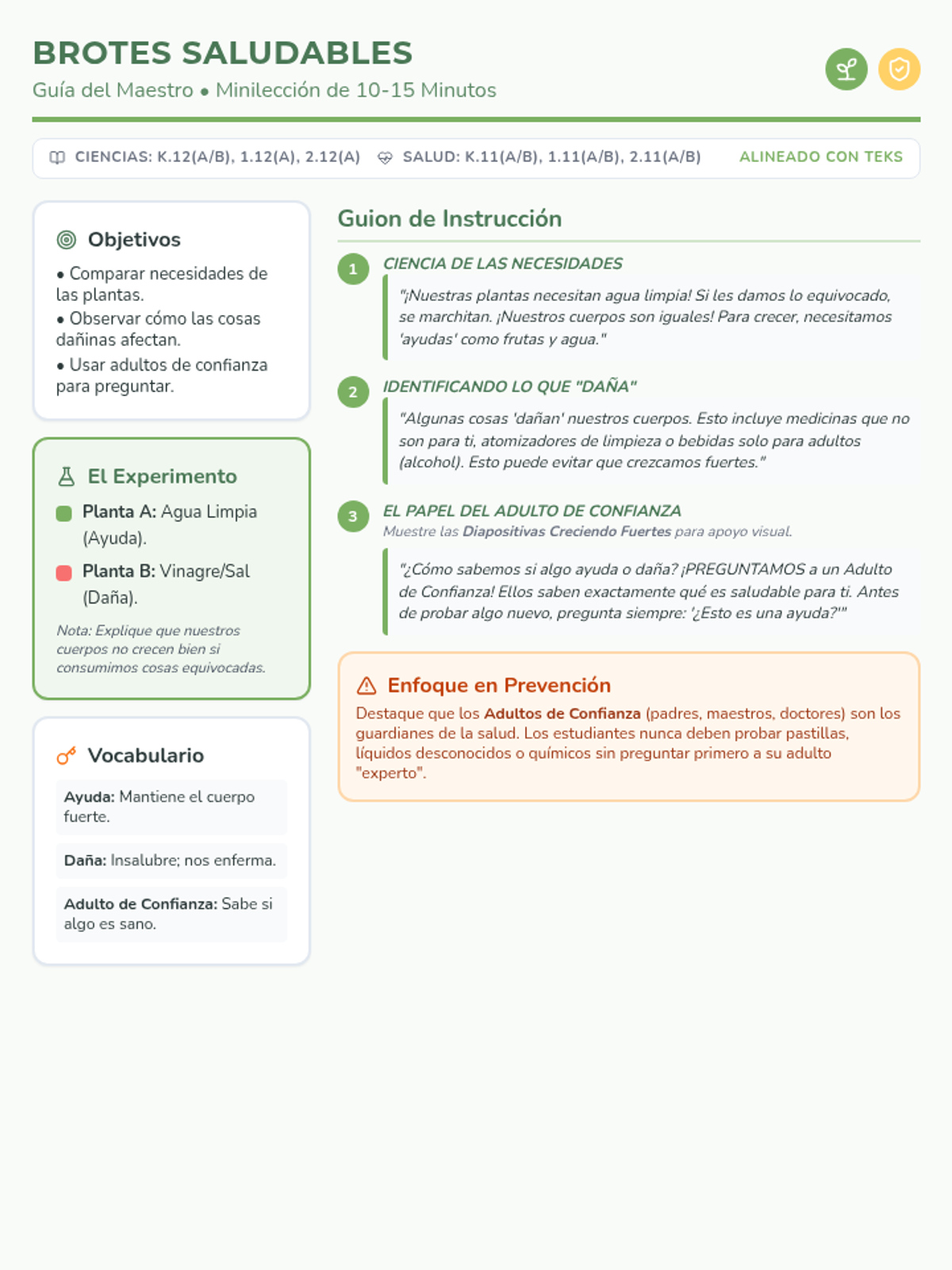
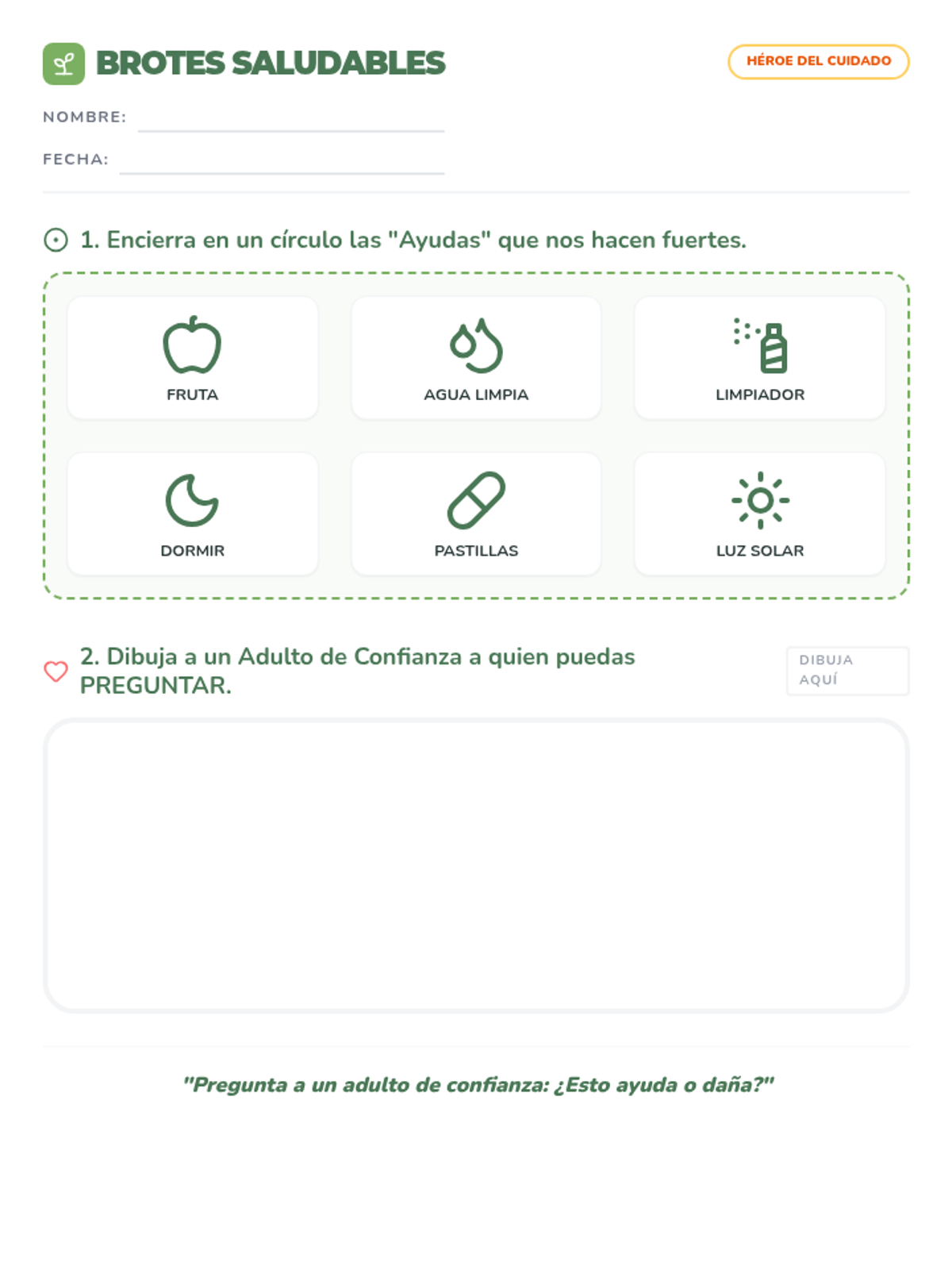
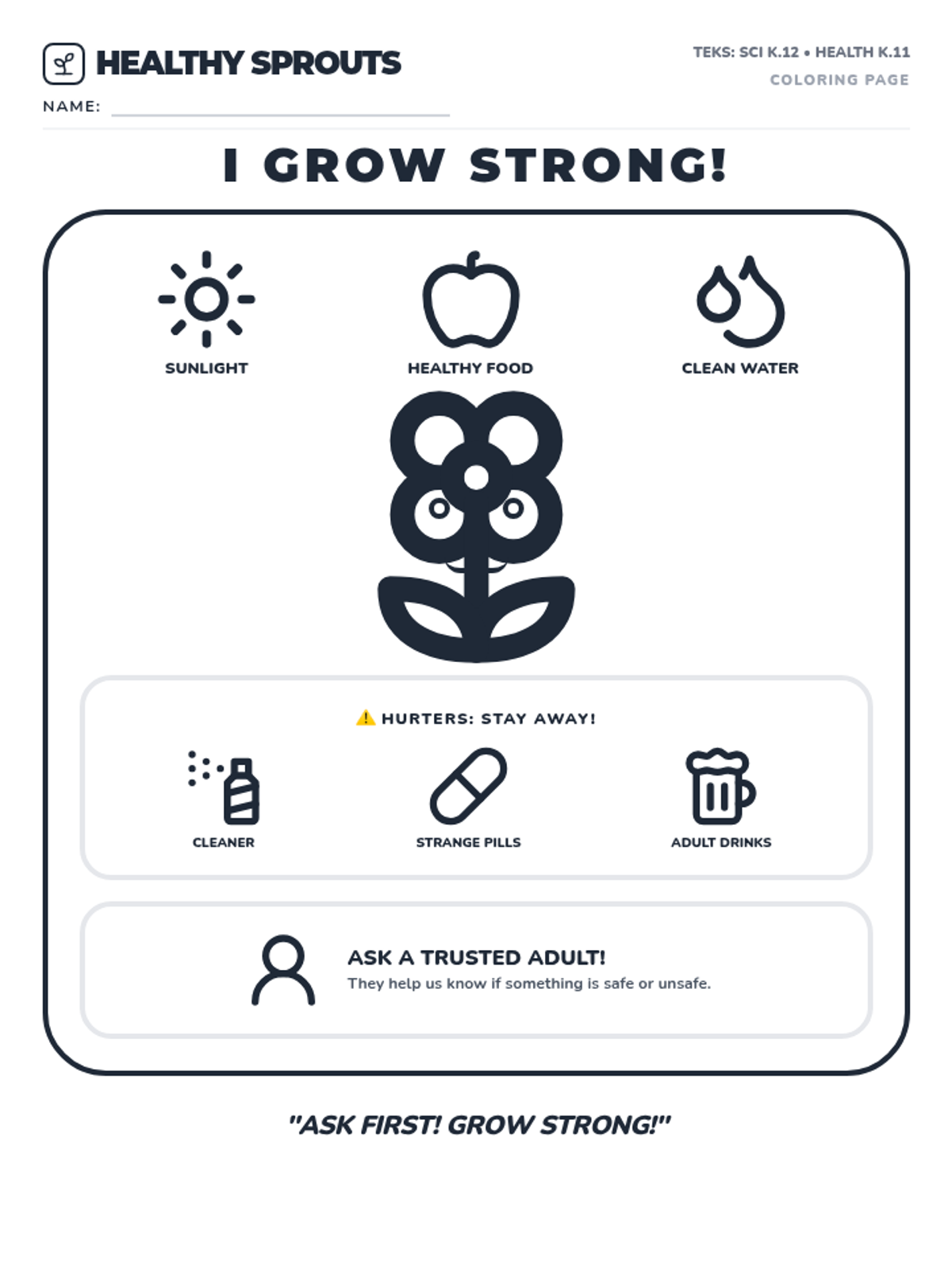
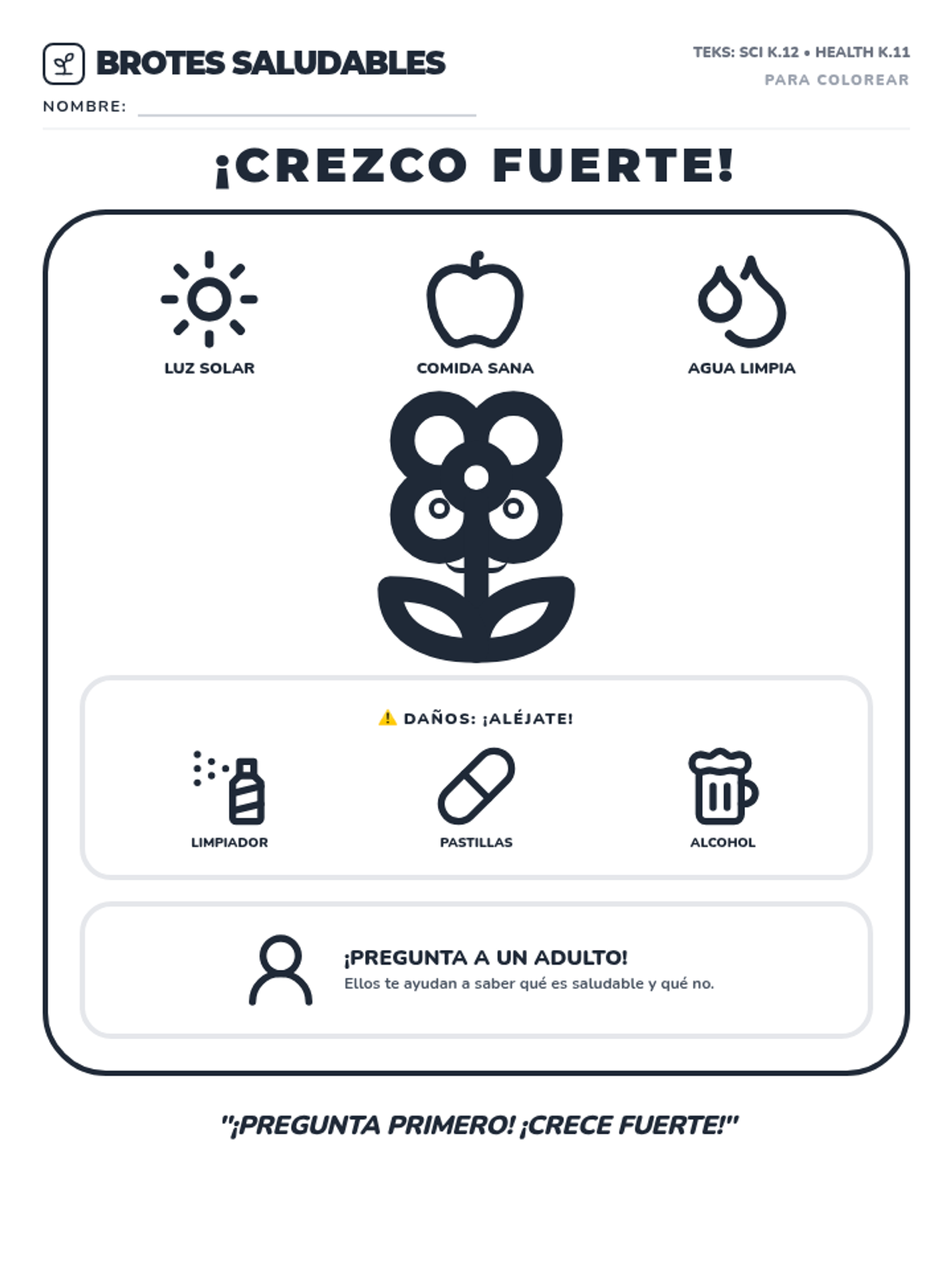
A 10-15 minute mini-lesson for Kindergarten students connecting plant/animal needs to human body care and substance prevention. Students learn what living things need to thrive and how harmful substances can disrupt growth, emphasizing the role of trusted adults.
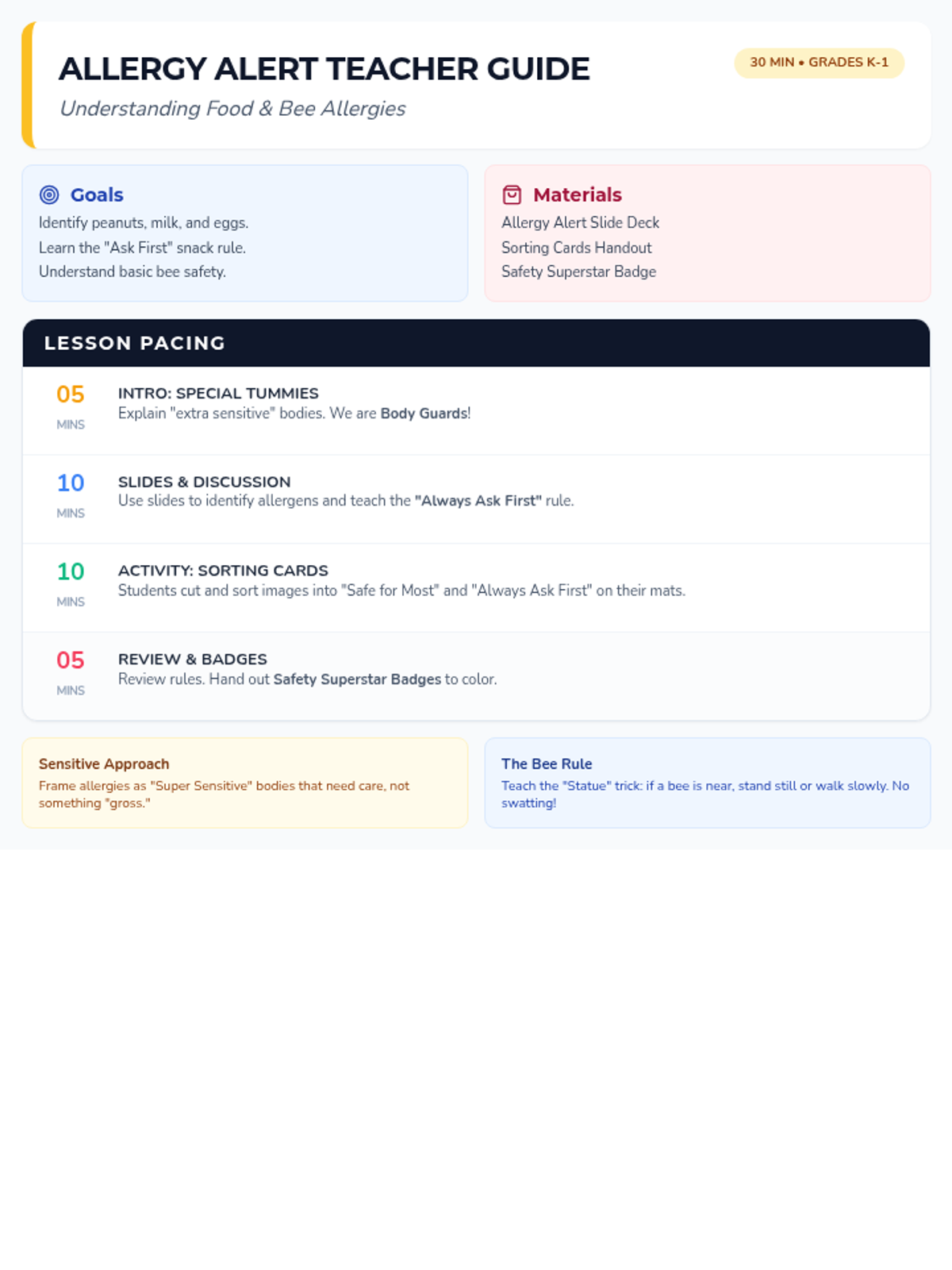
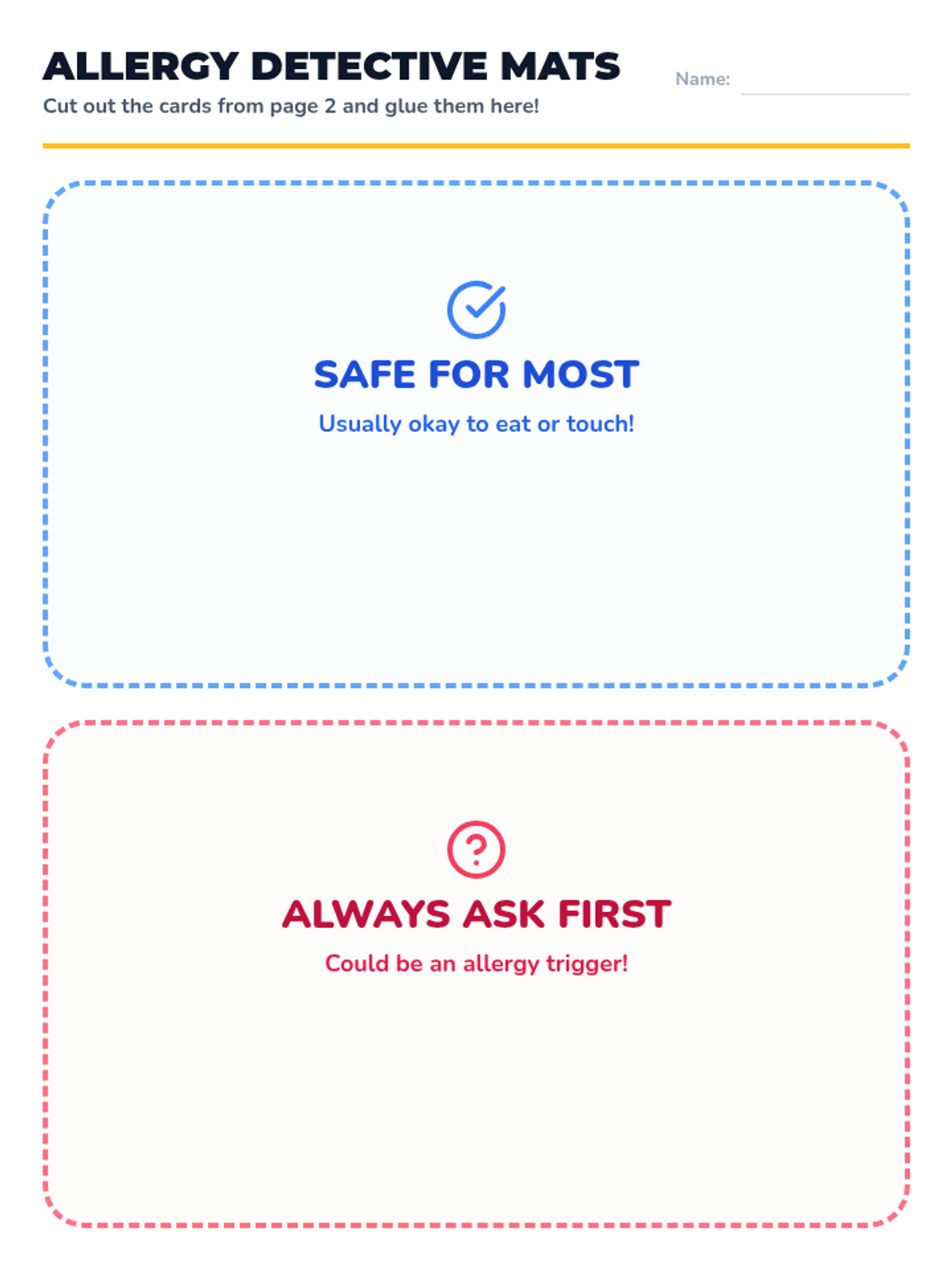
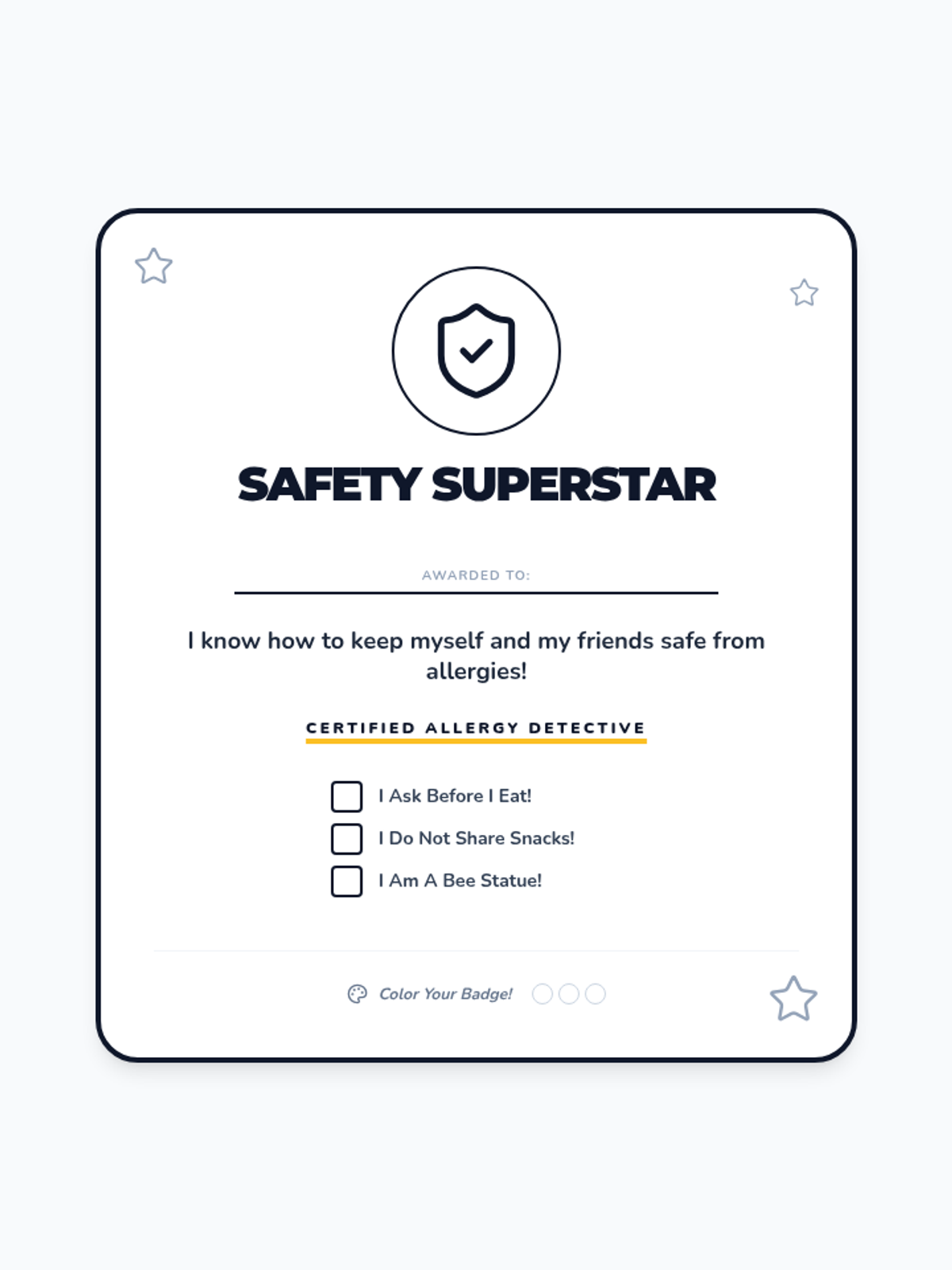
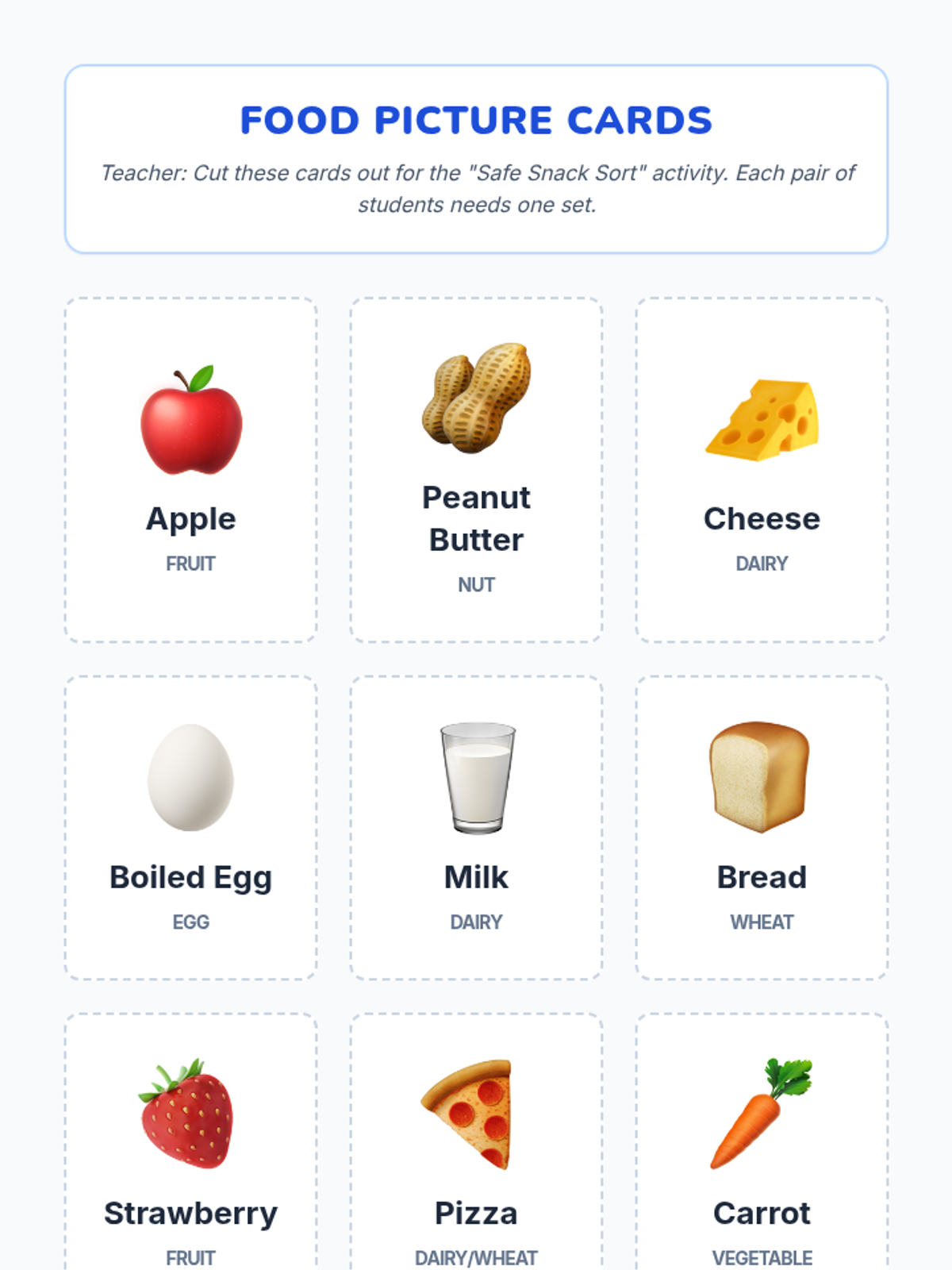
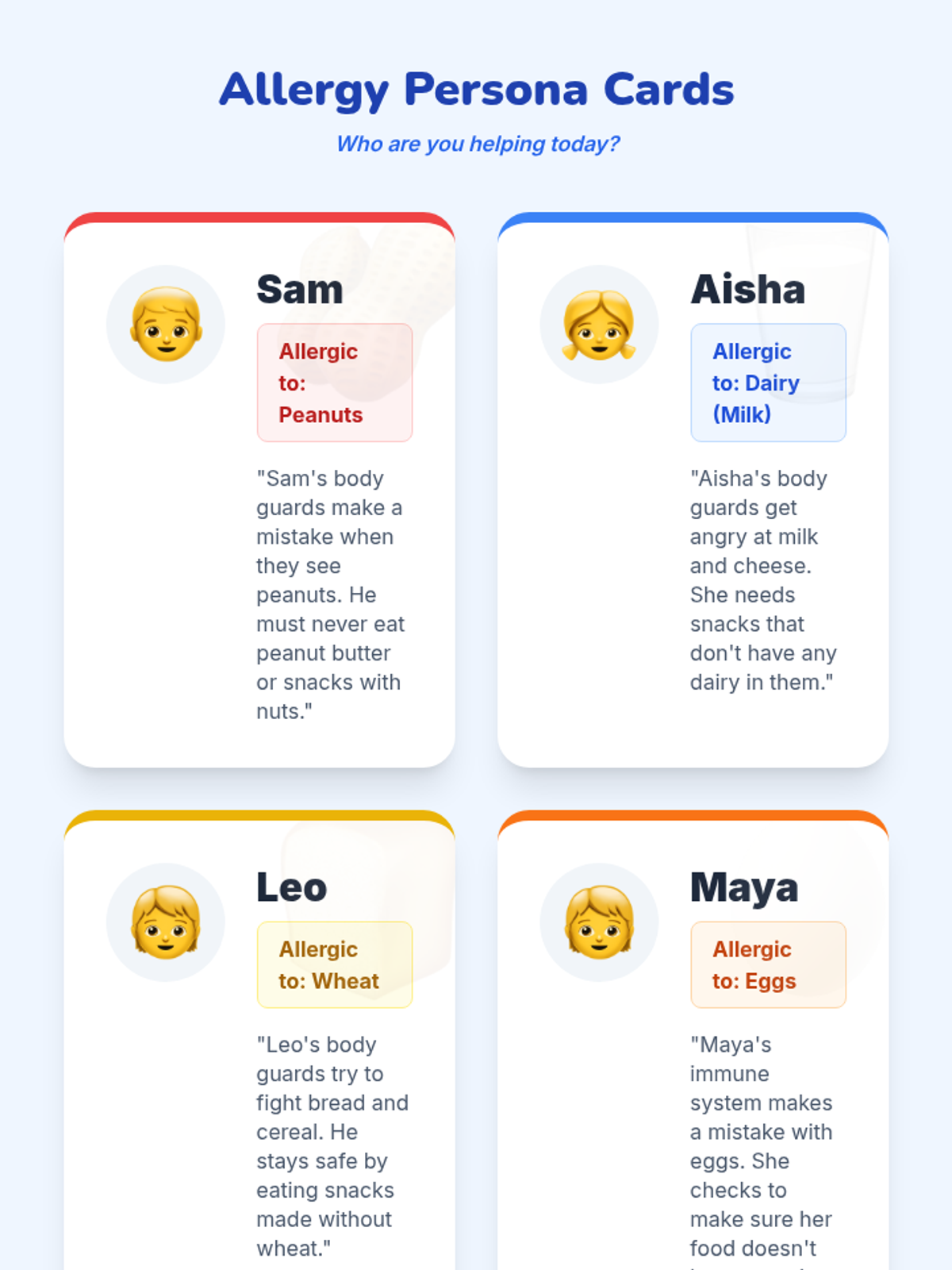
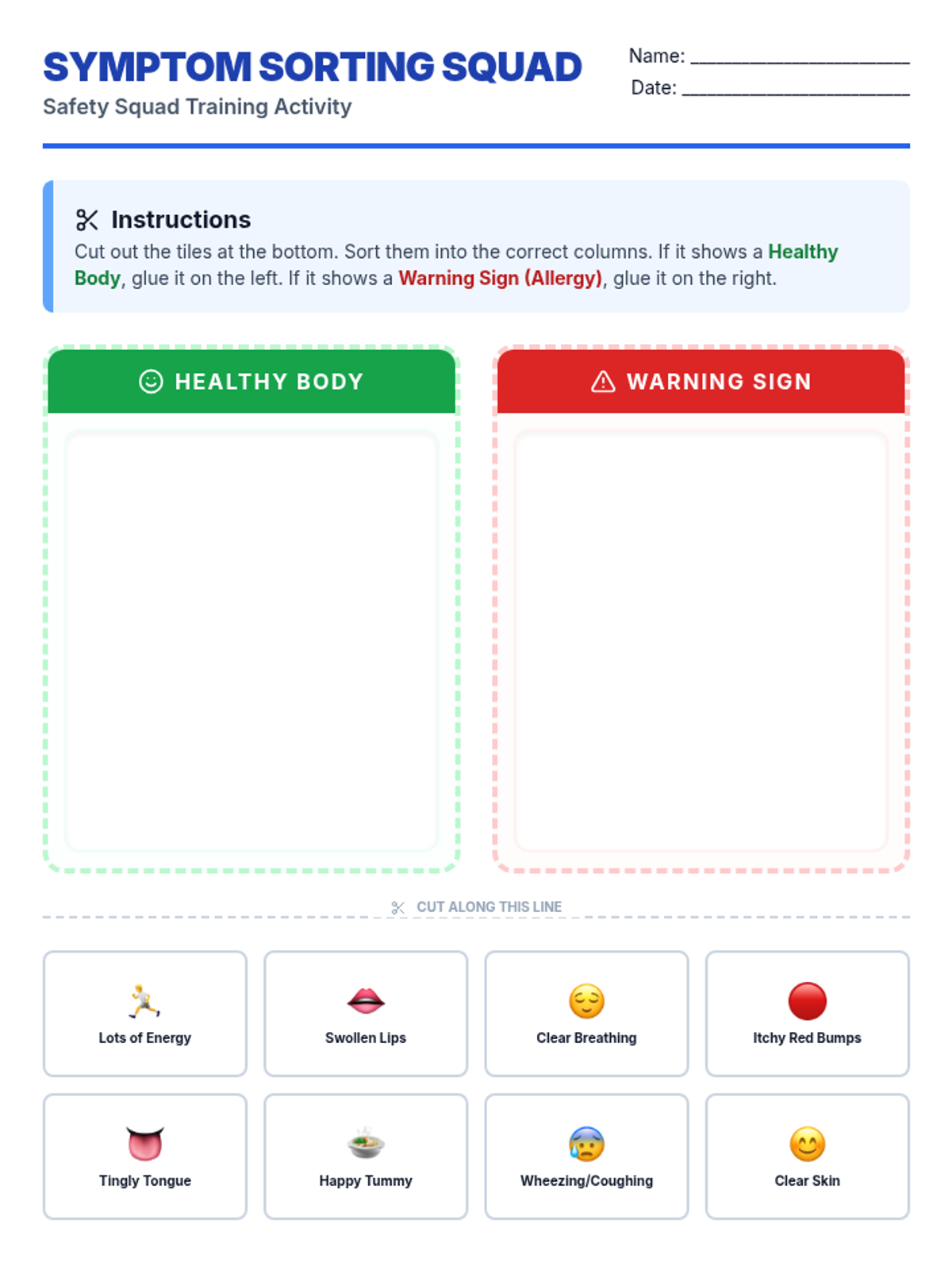
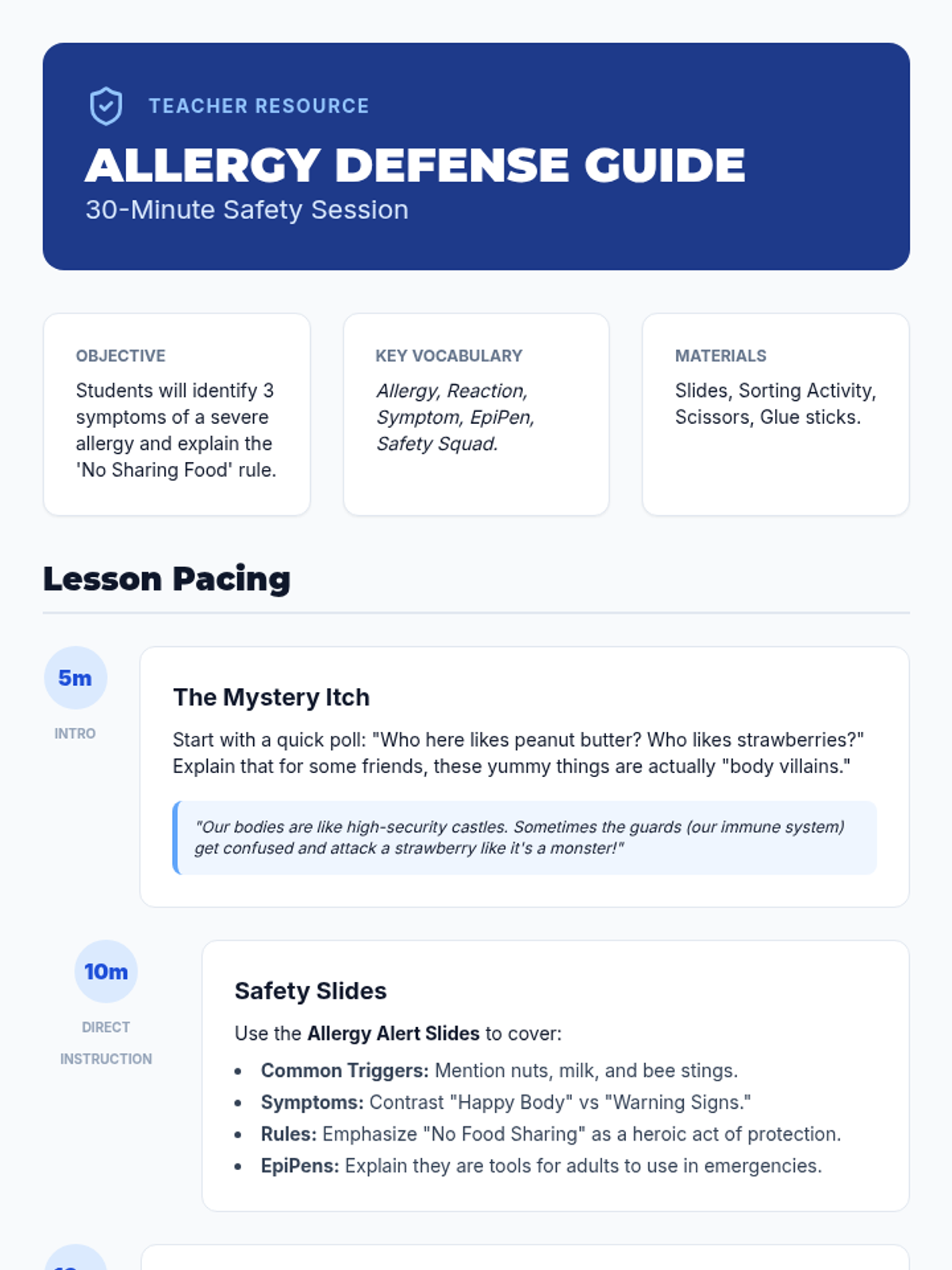
A 30-minute introductory lesson for kindergarteners on identifying common food and bee sting allergies and learning safety rules.
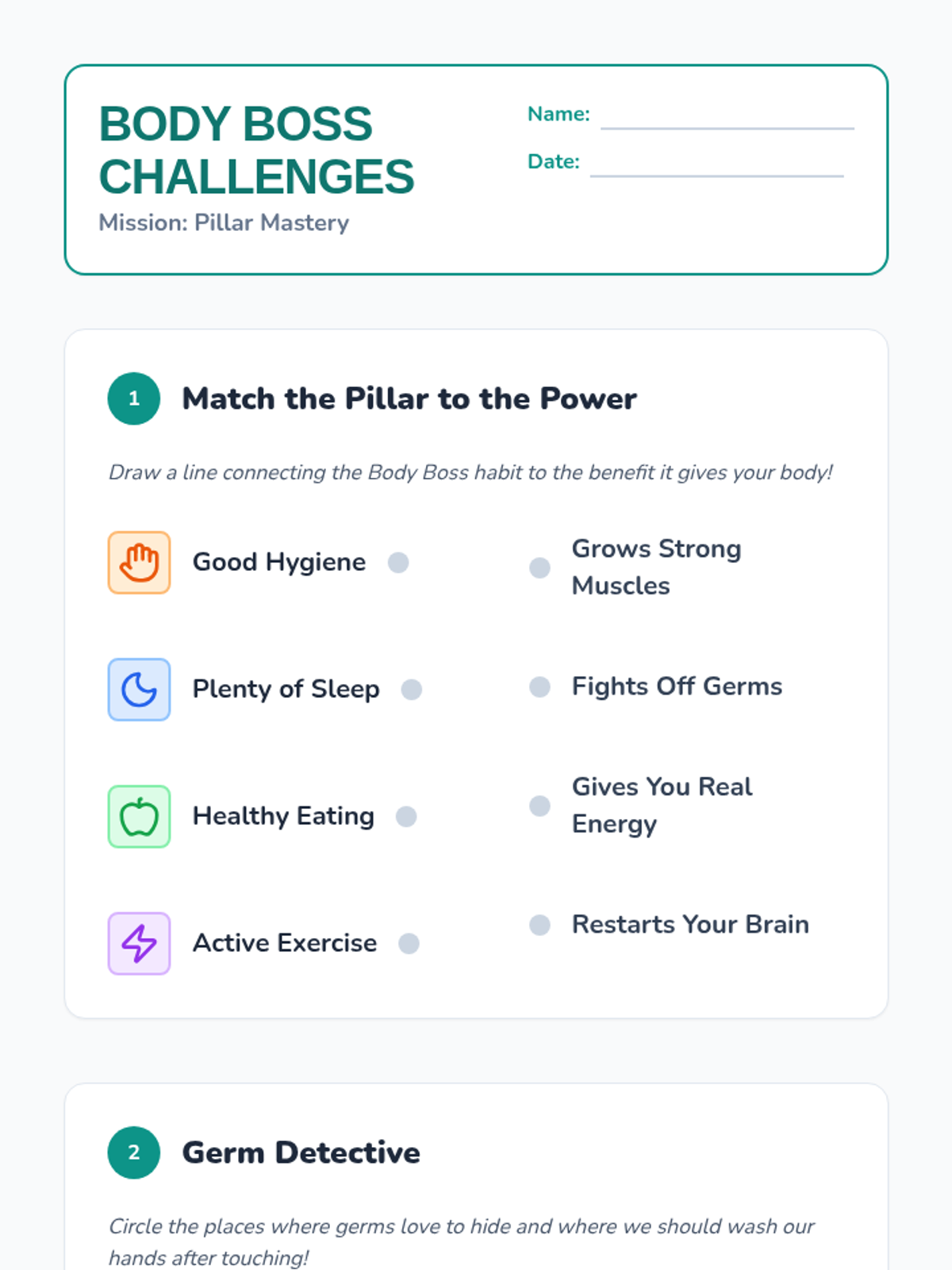
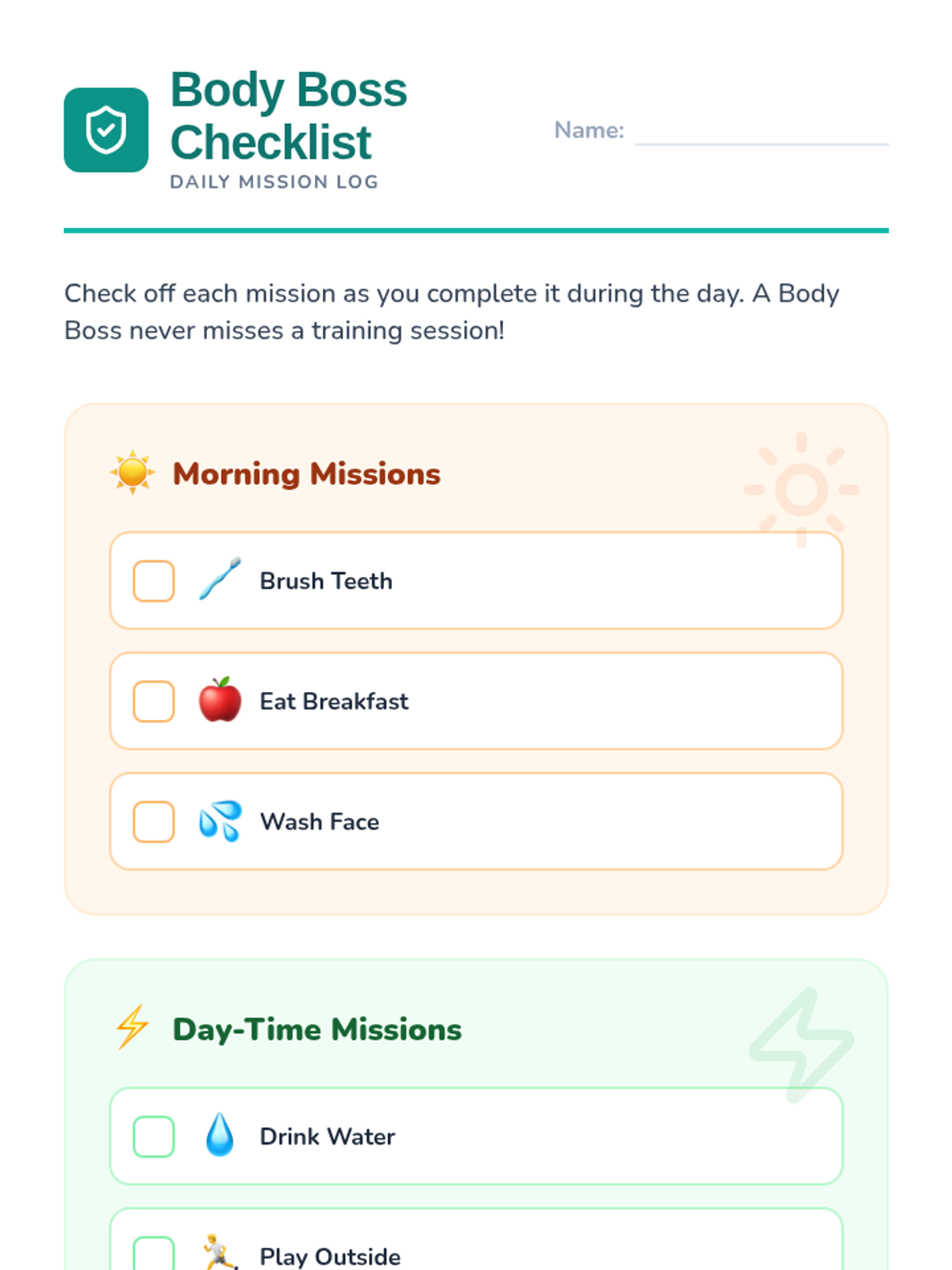
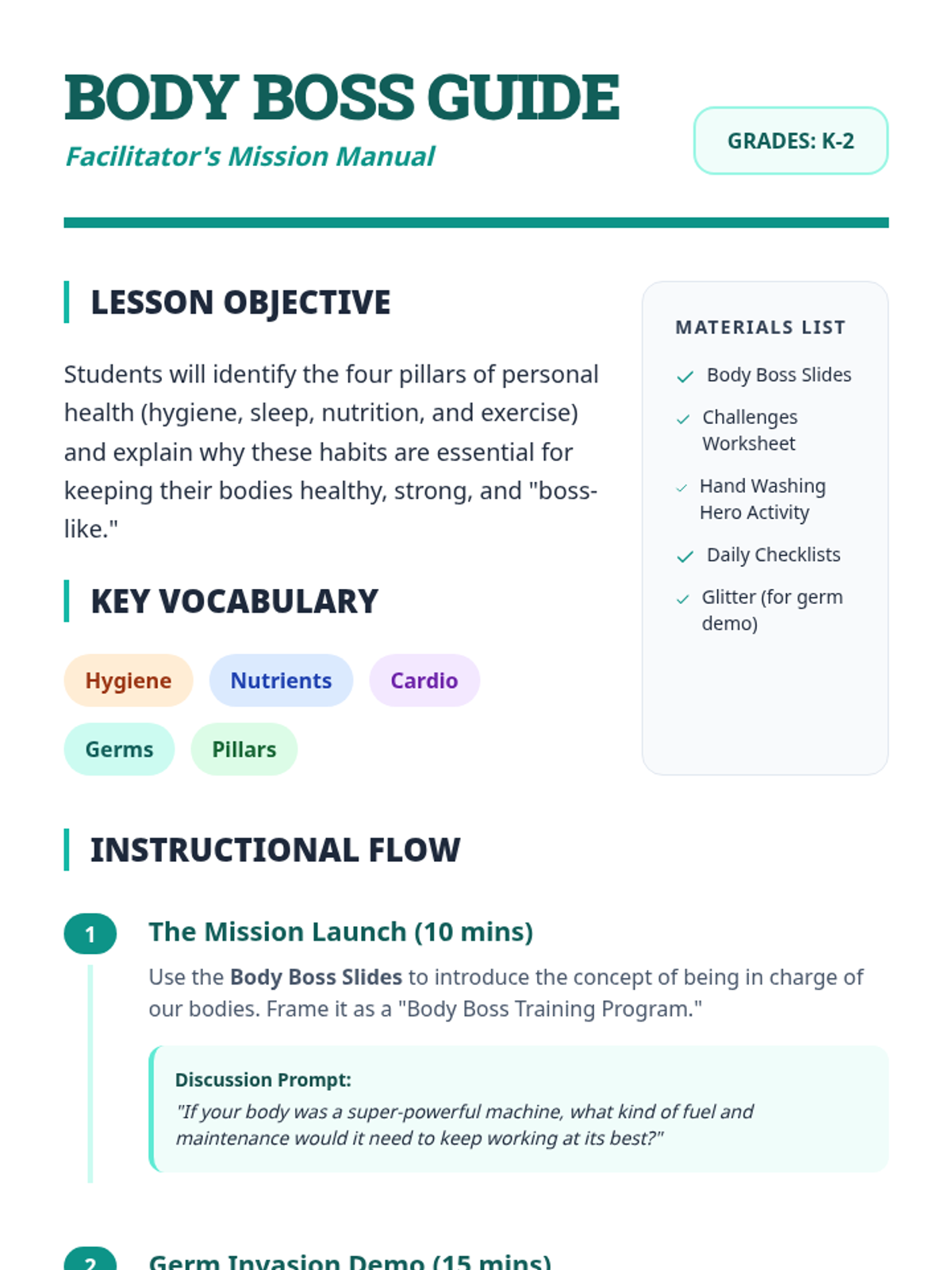
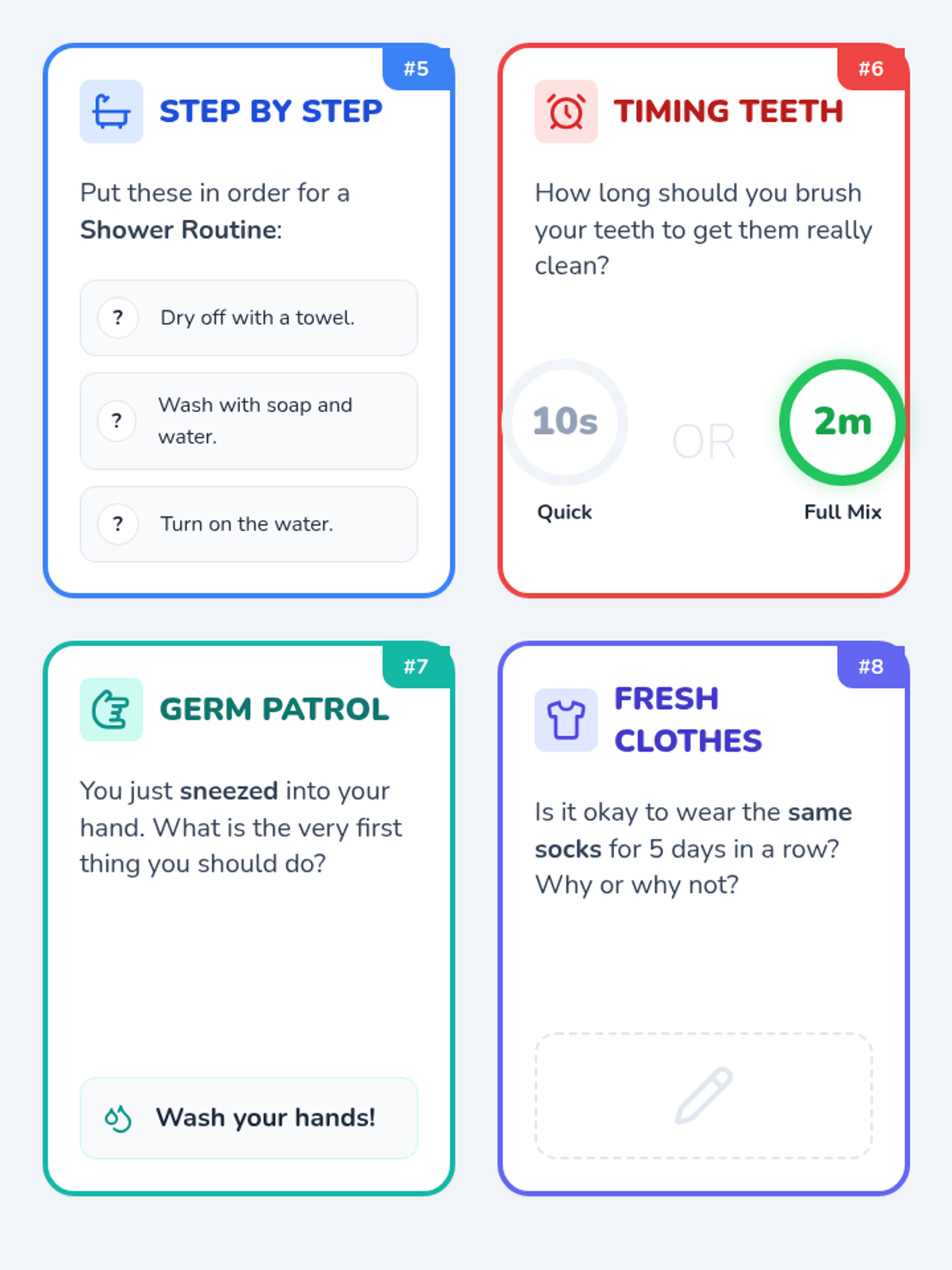
A comprehensive lesson teaching students the four pillars of health: hygiene, sleep, nutrition, and exercise. Students will learn why these habits are essential for their bodies through interactive slides, matching activities, and a personal routine checklist.
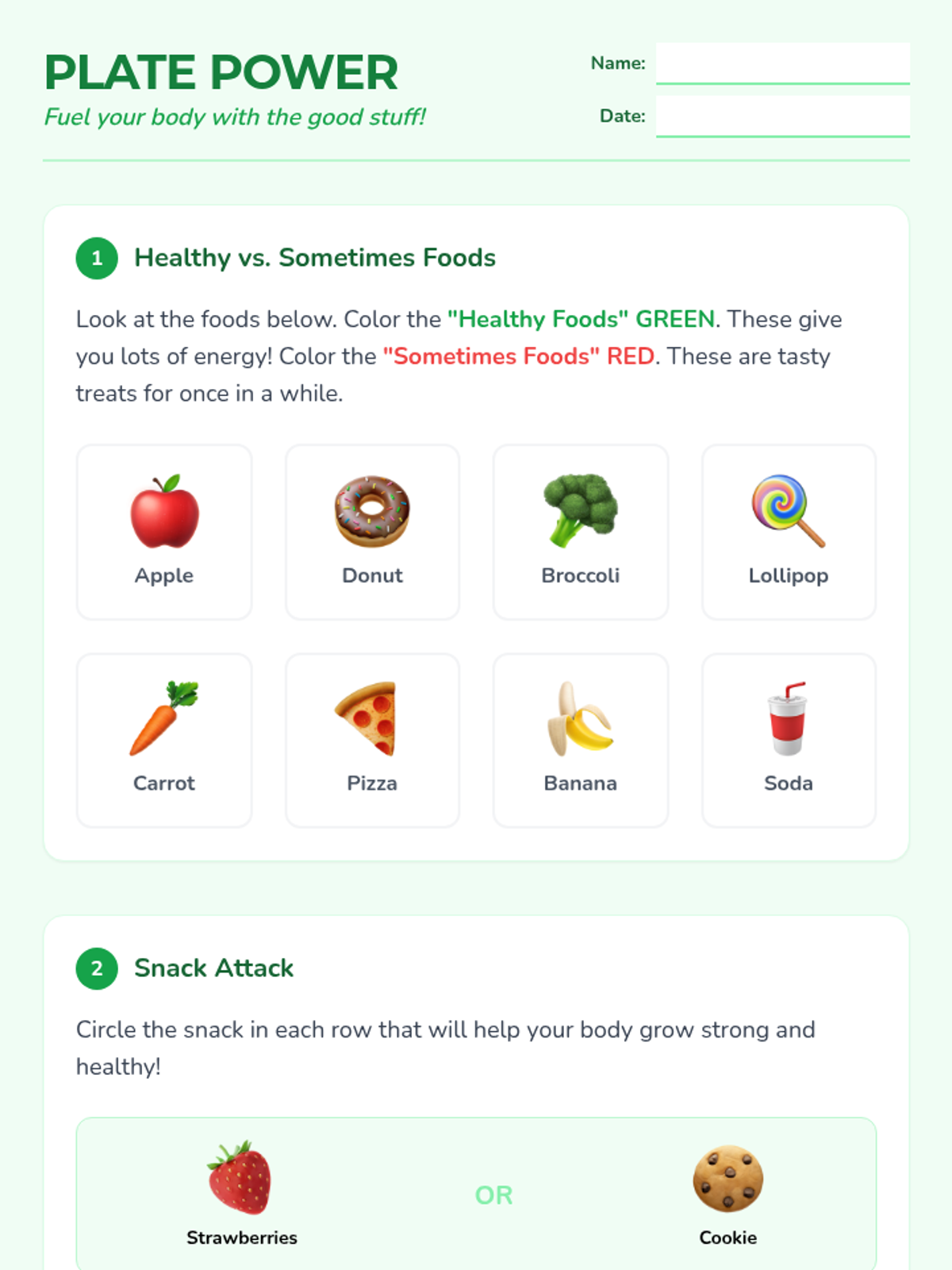
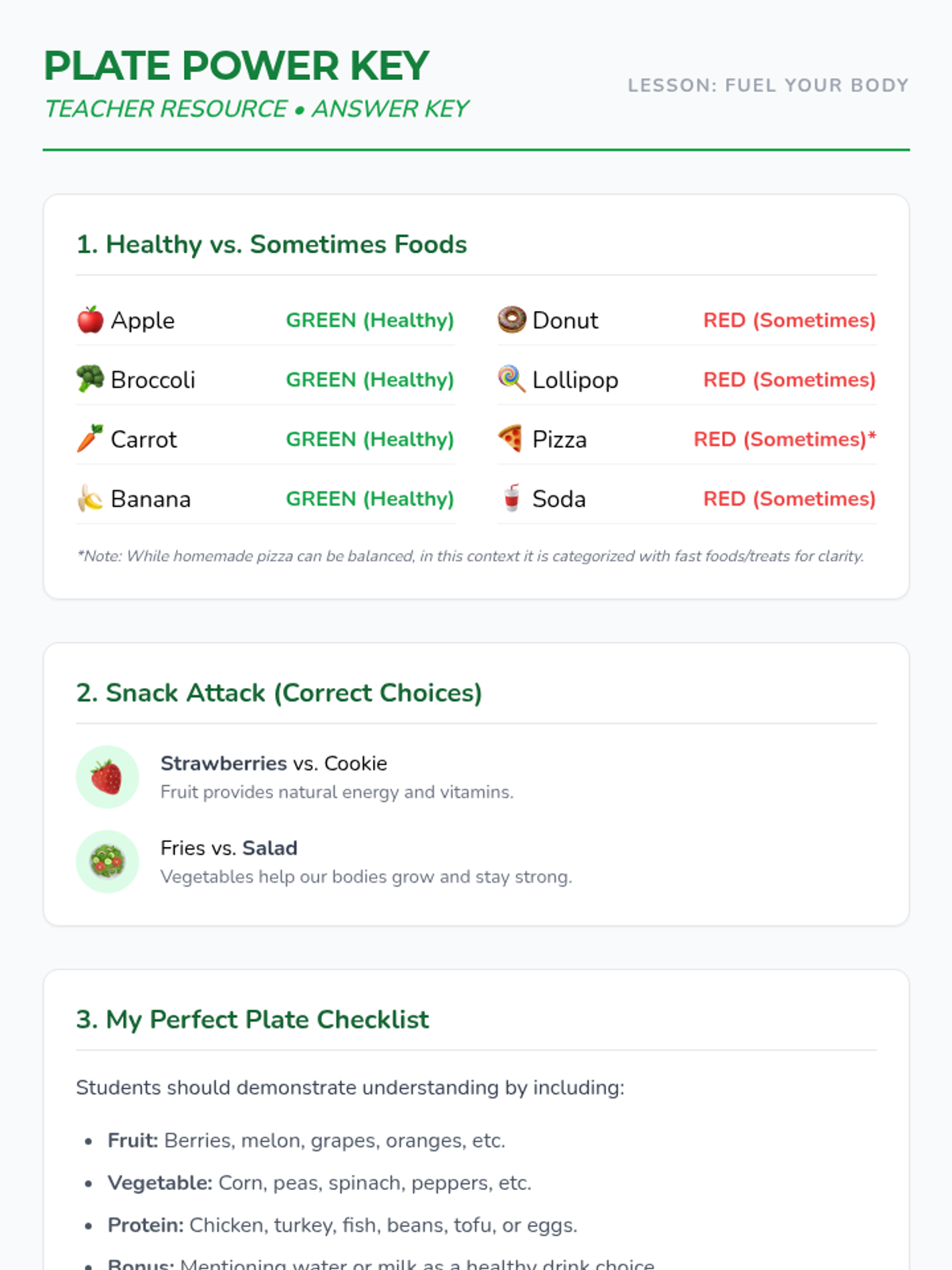
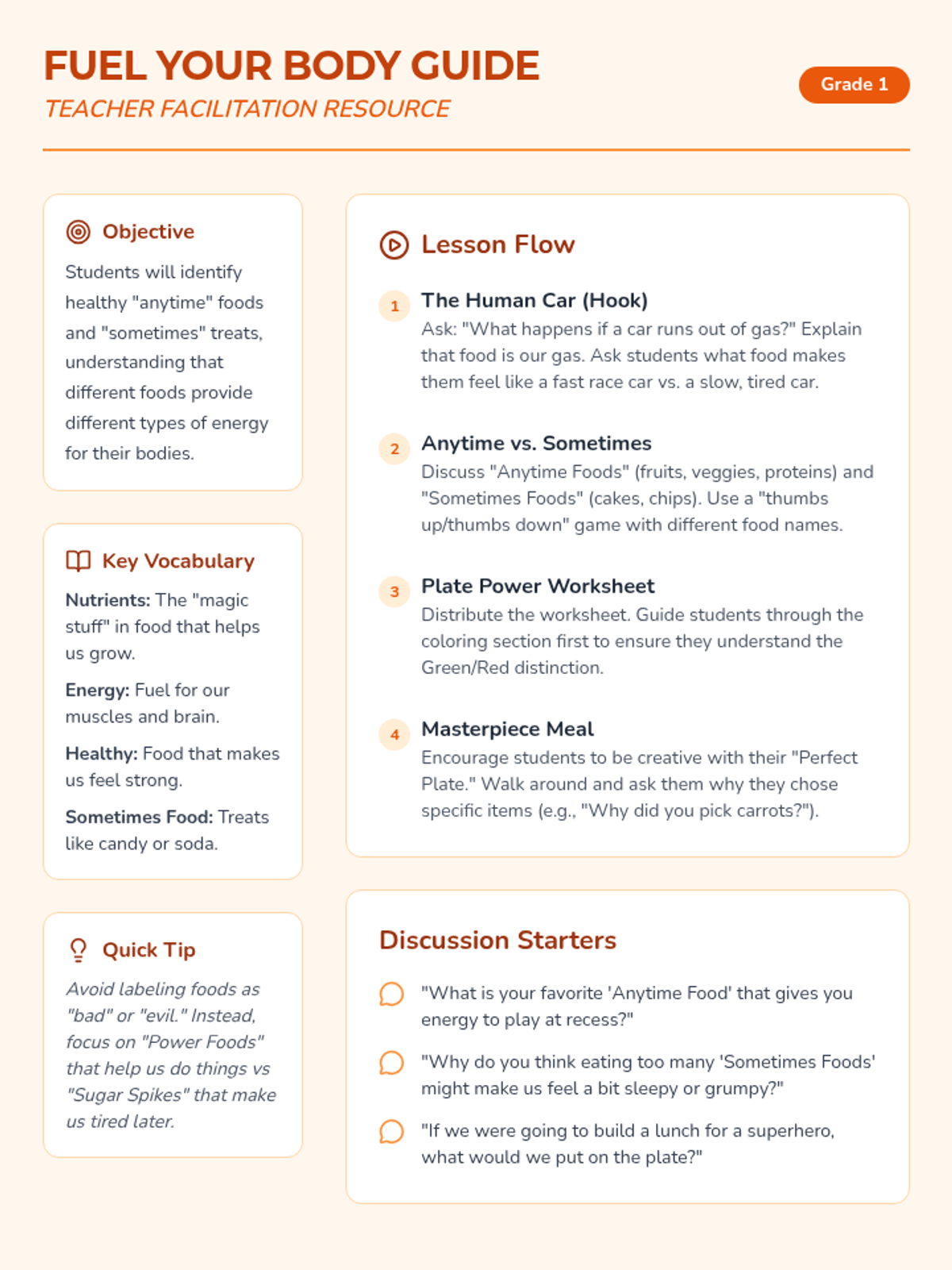
This lesson introduces 1st-grade students to the concept of healthy food choices, focusing on identifying nutrient-dense 'anytime' foods versus 'sometimes' treats to fuel their bodies.
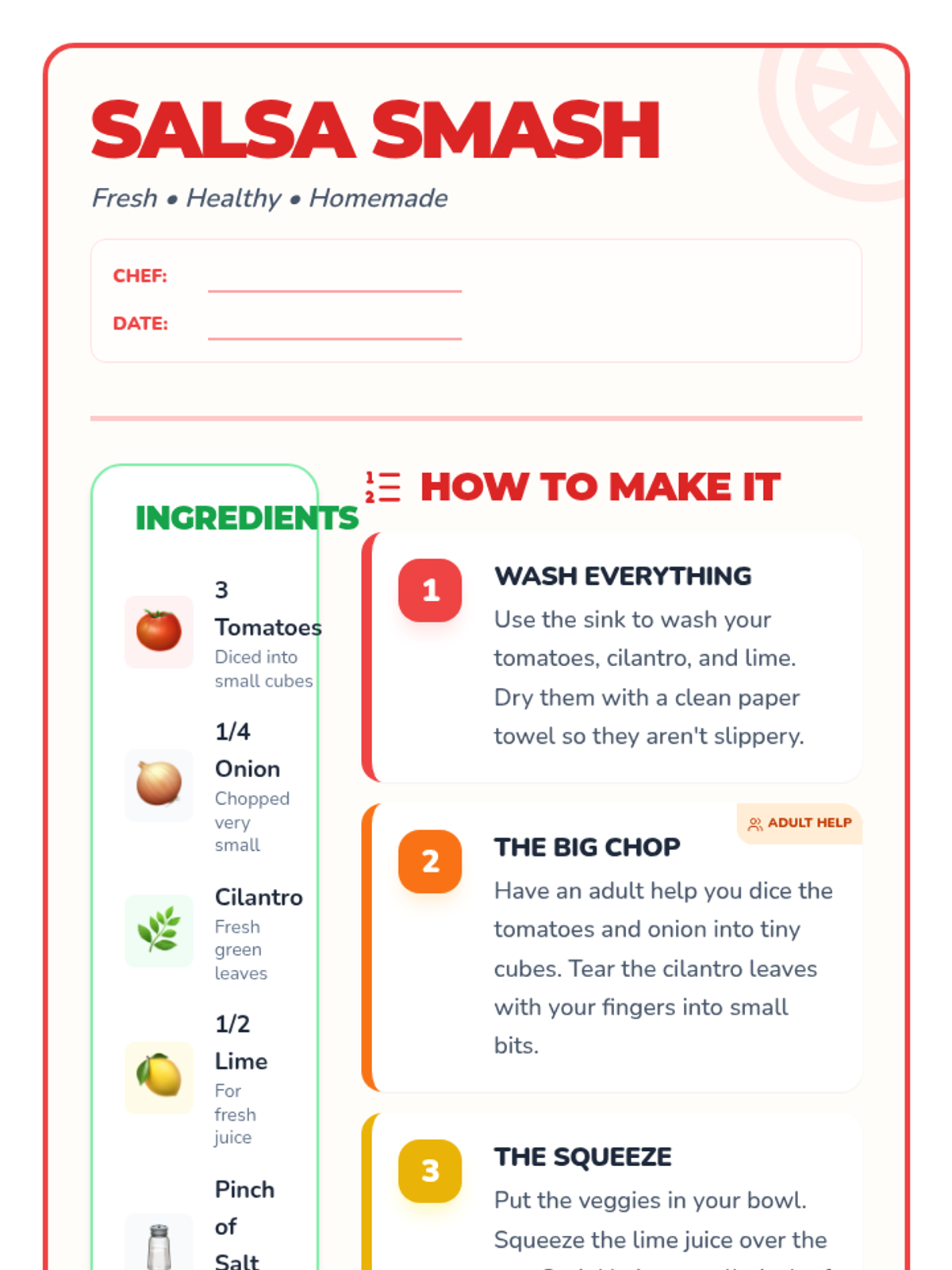
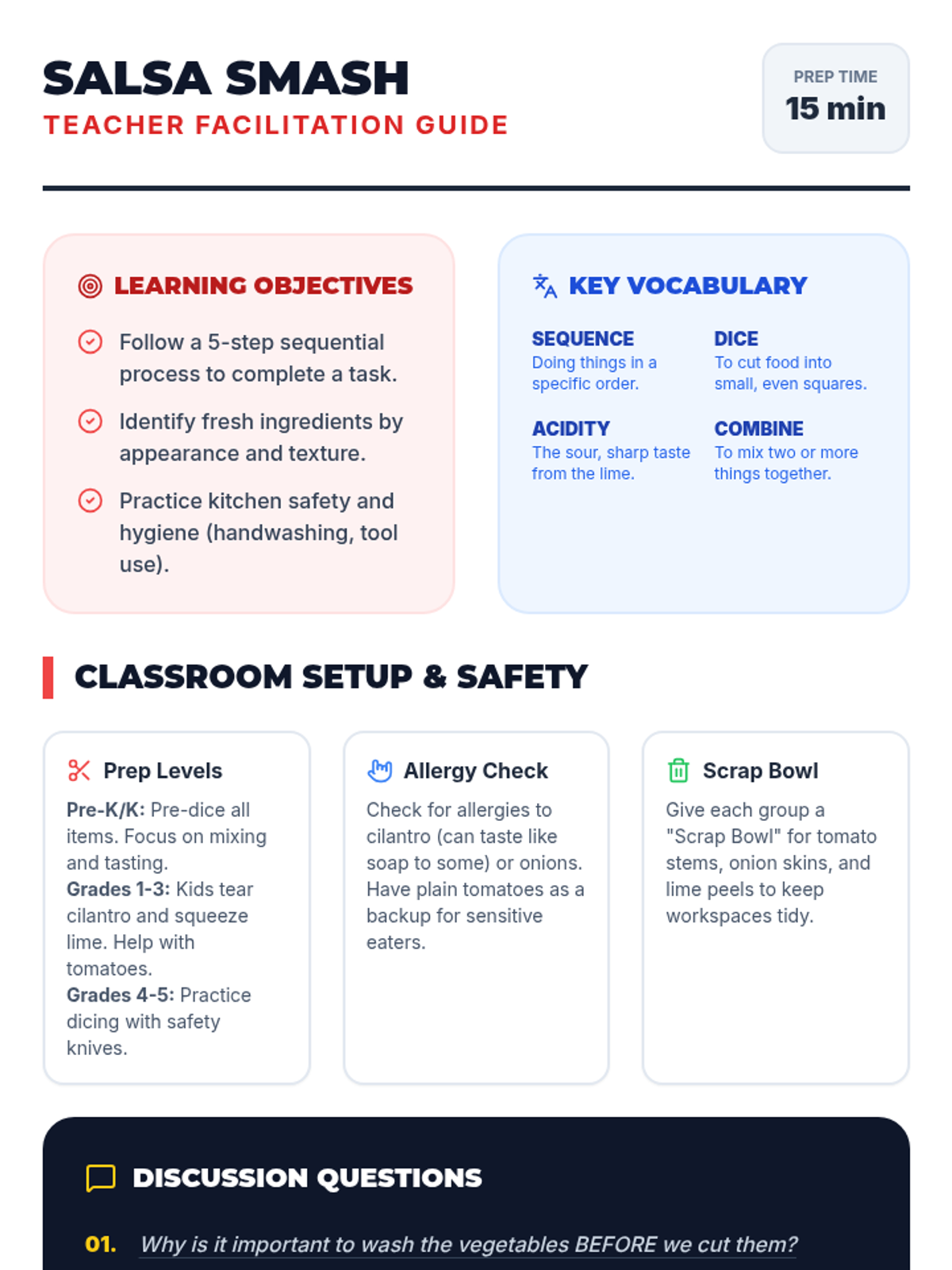
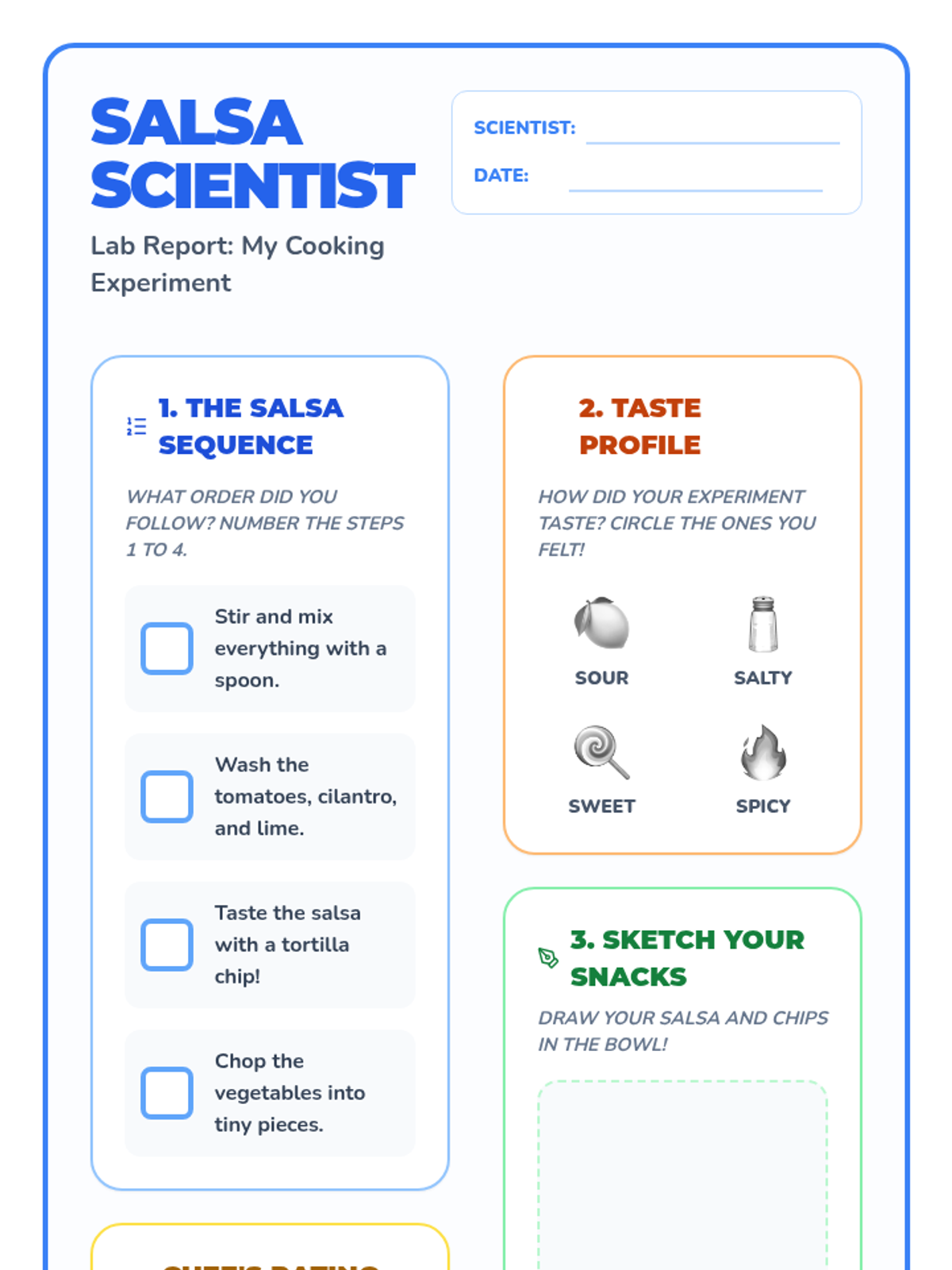
A beginner-friendly cooking lesson focused on following sequential instructions and identifying fresh ingredients while making a simple salsa.
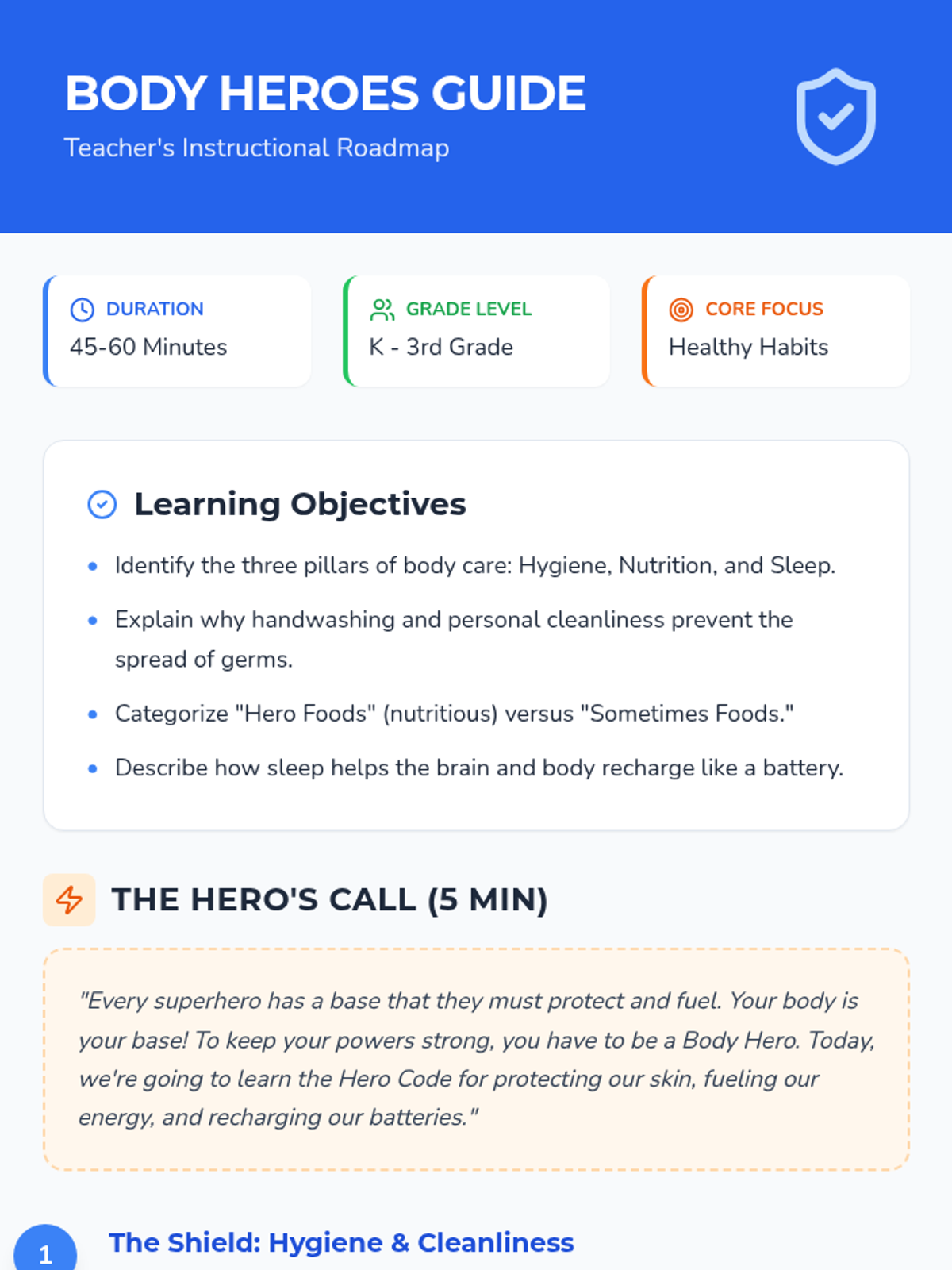
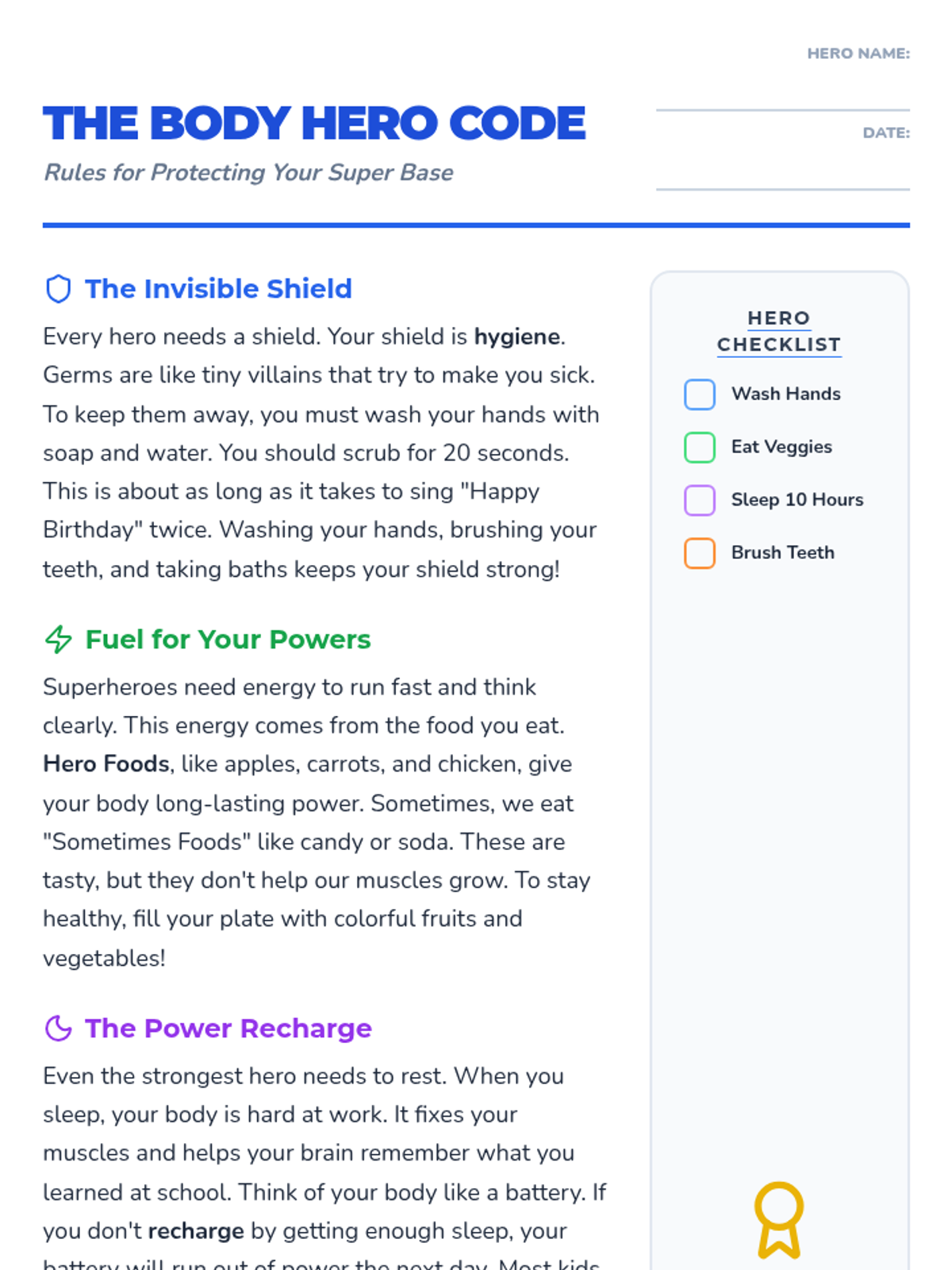
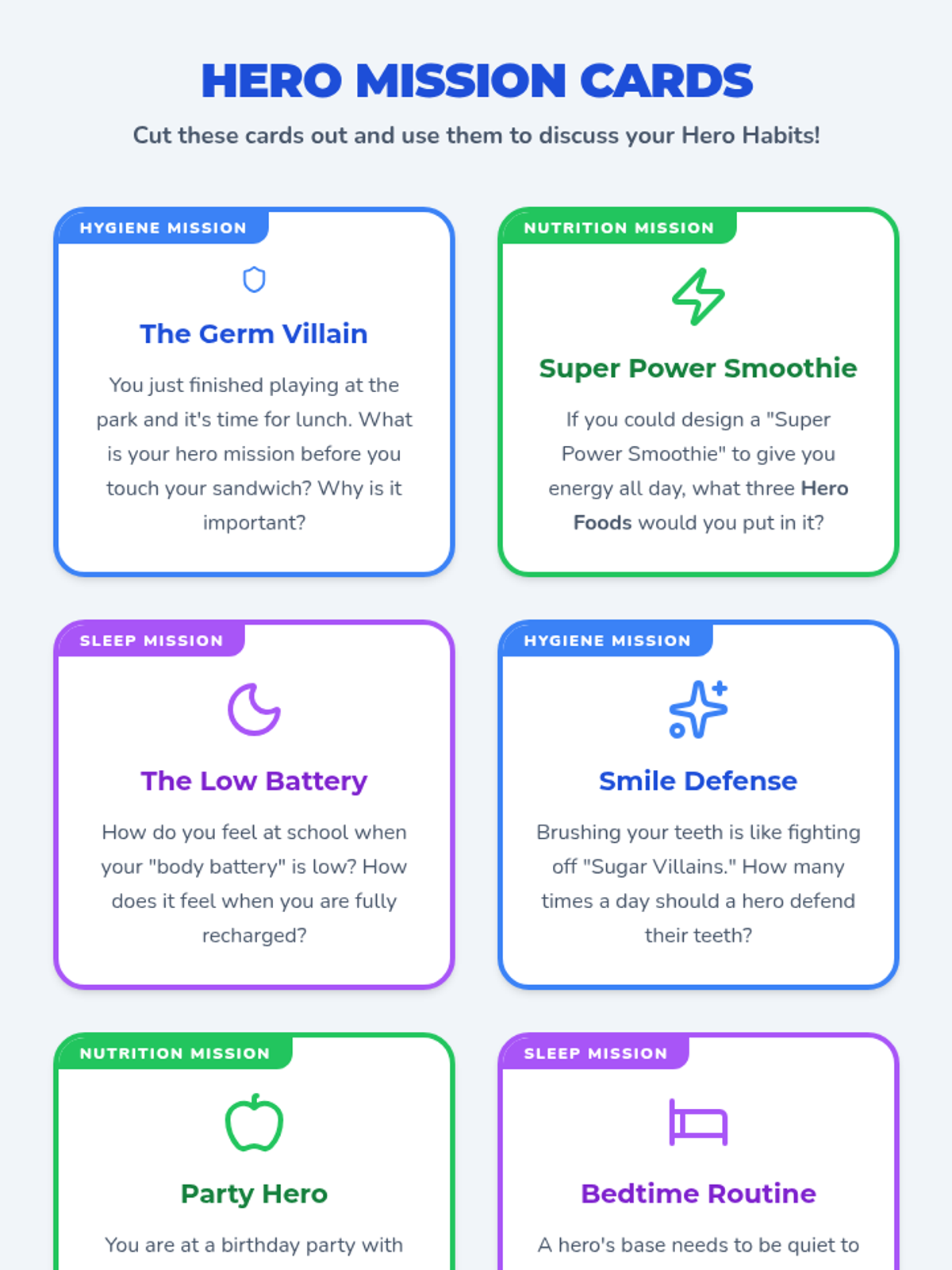
A foundational lesson on physical health focusing on hygiene, nutrition, and sleep. Students learn to view themselves as 'Body Heroes' who protect and fuel their systems through daily habits.
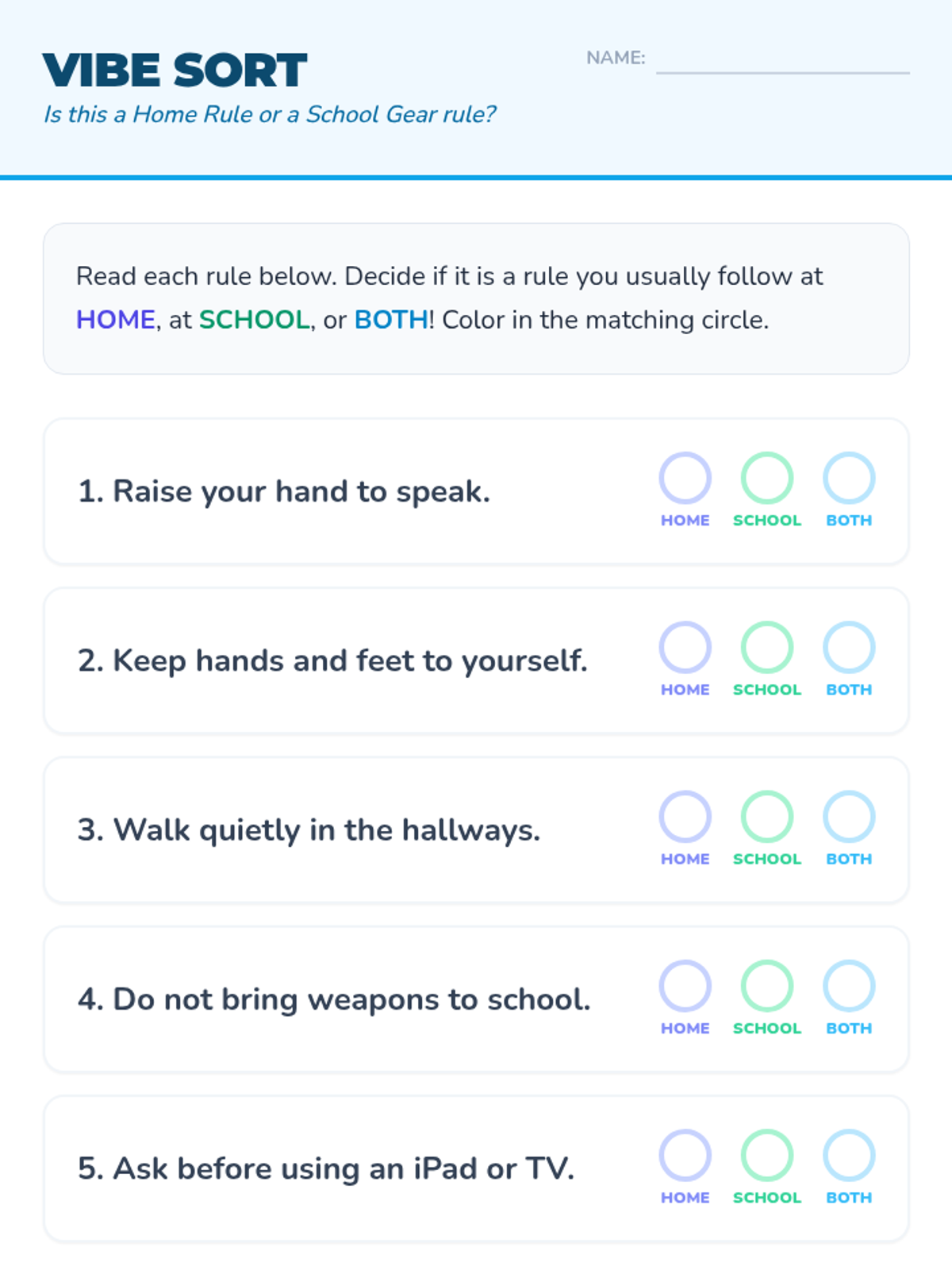
Students learn to navigate different social environments by understanding that rules and expectations change based on the setting (home vs. school).
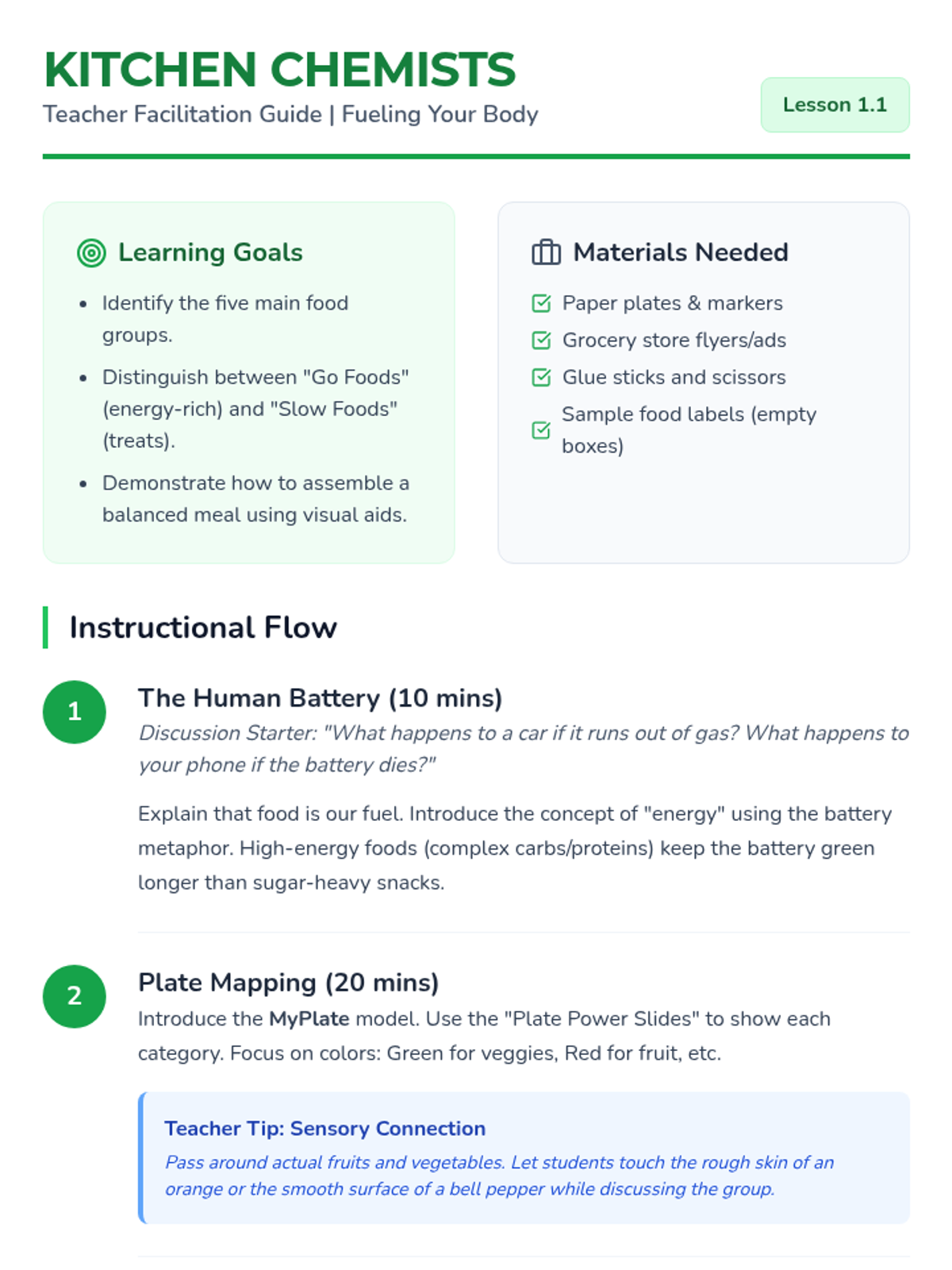
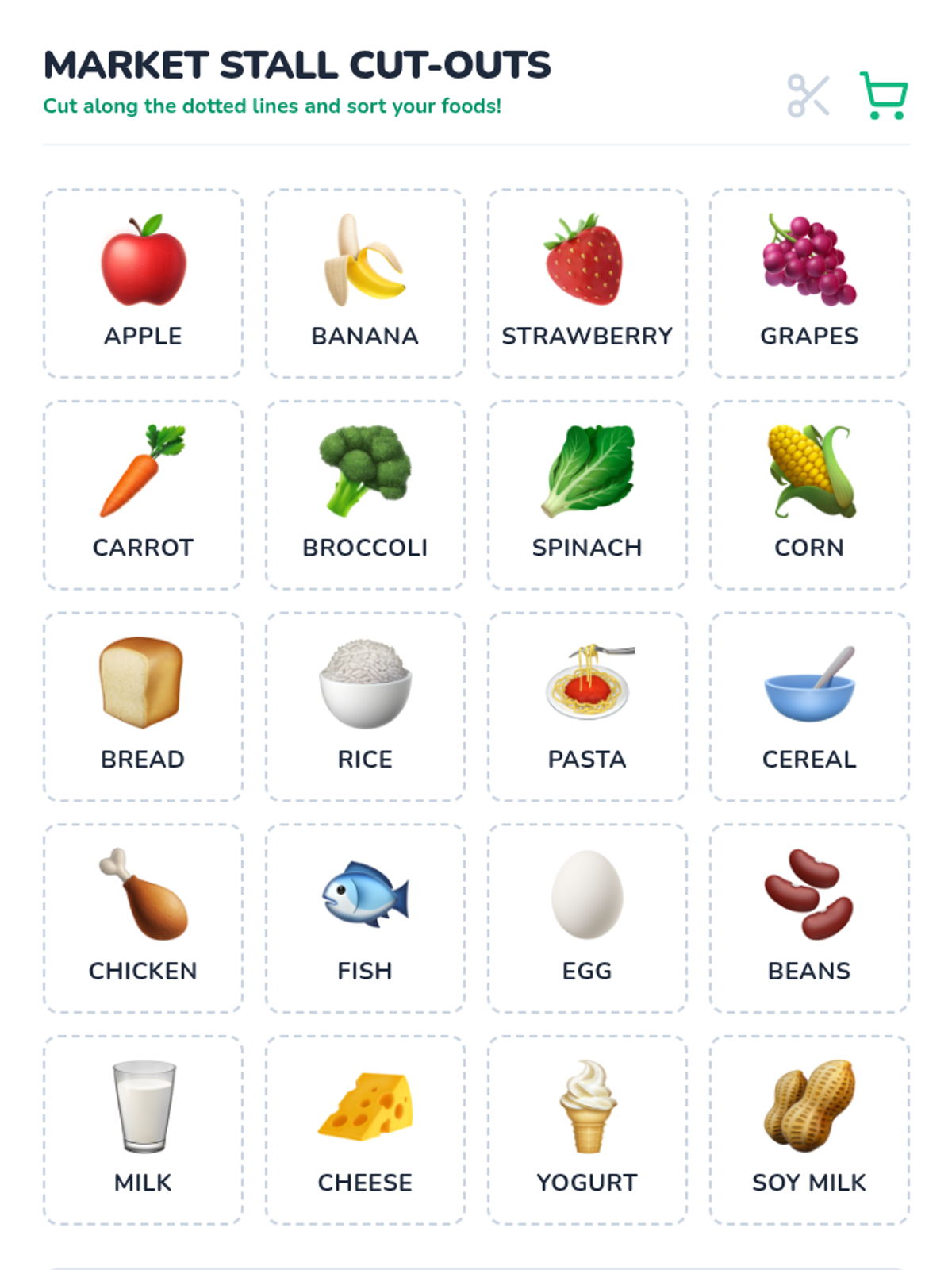
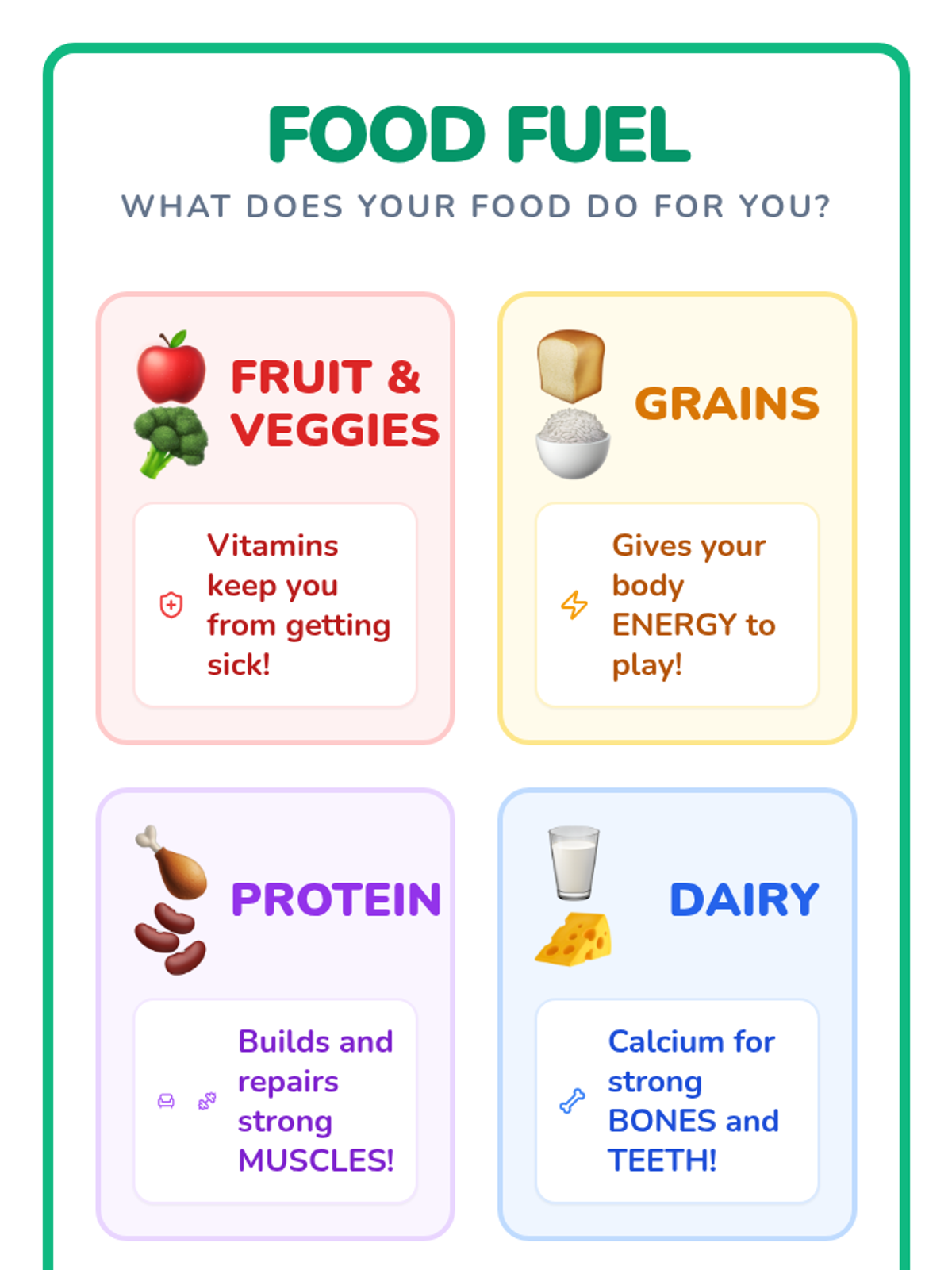
Students explore the five food groups, understand the importance of balanced nutrition, and learn how to build a healthy plate.
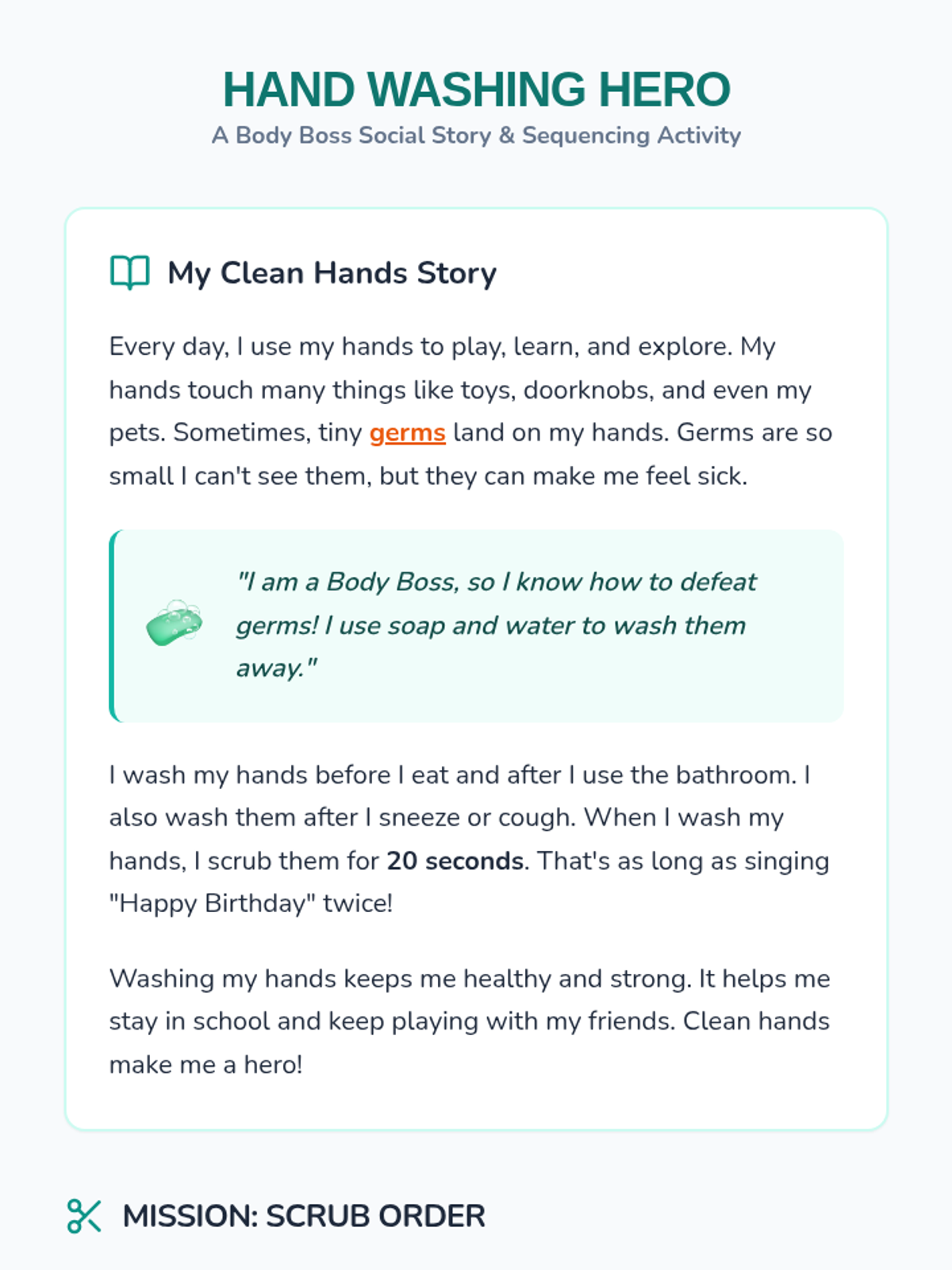
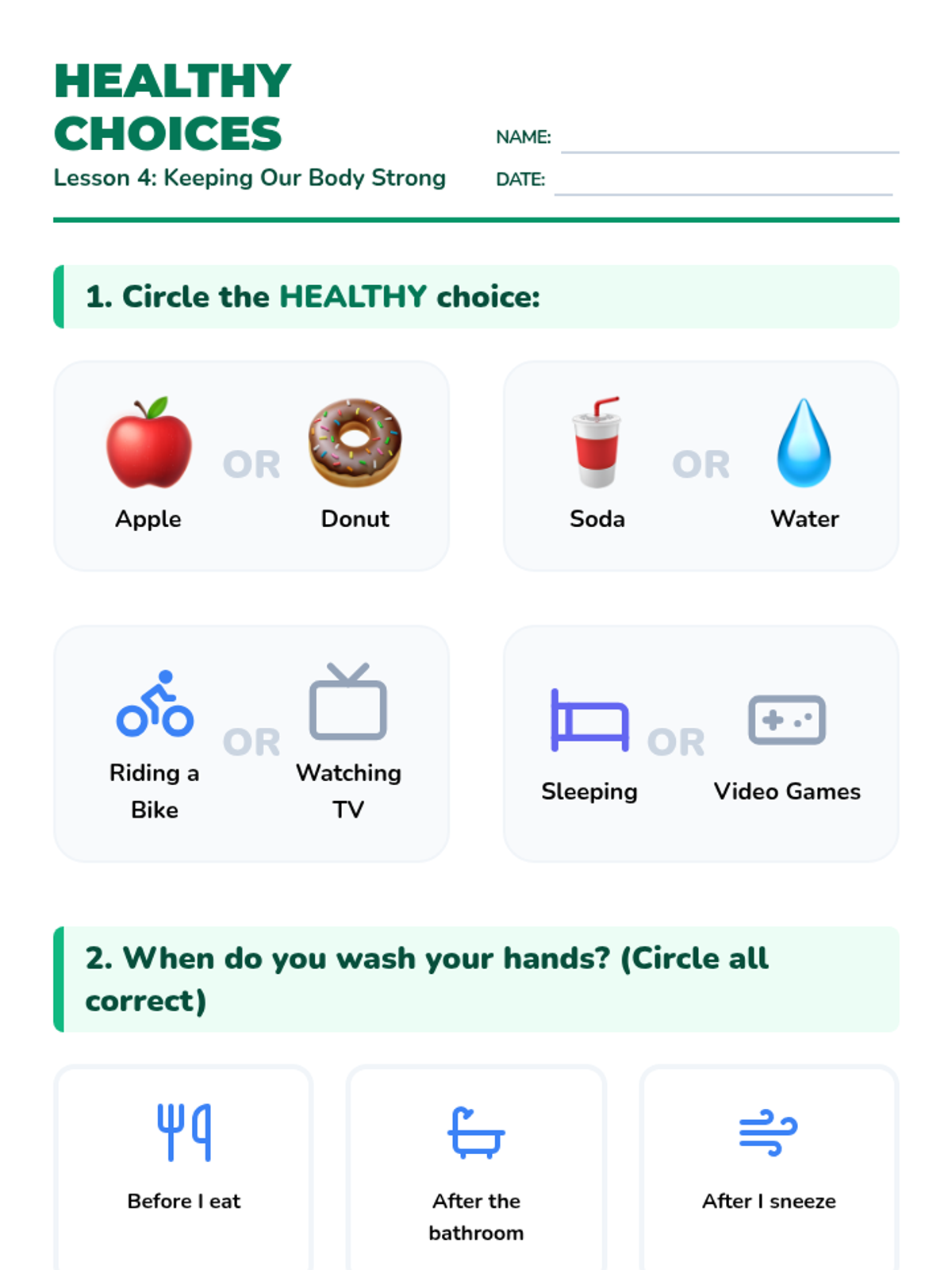
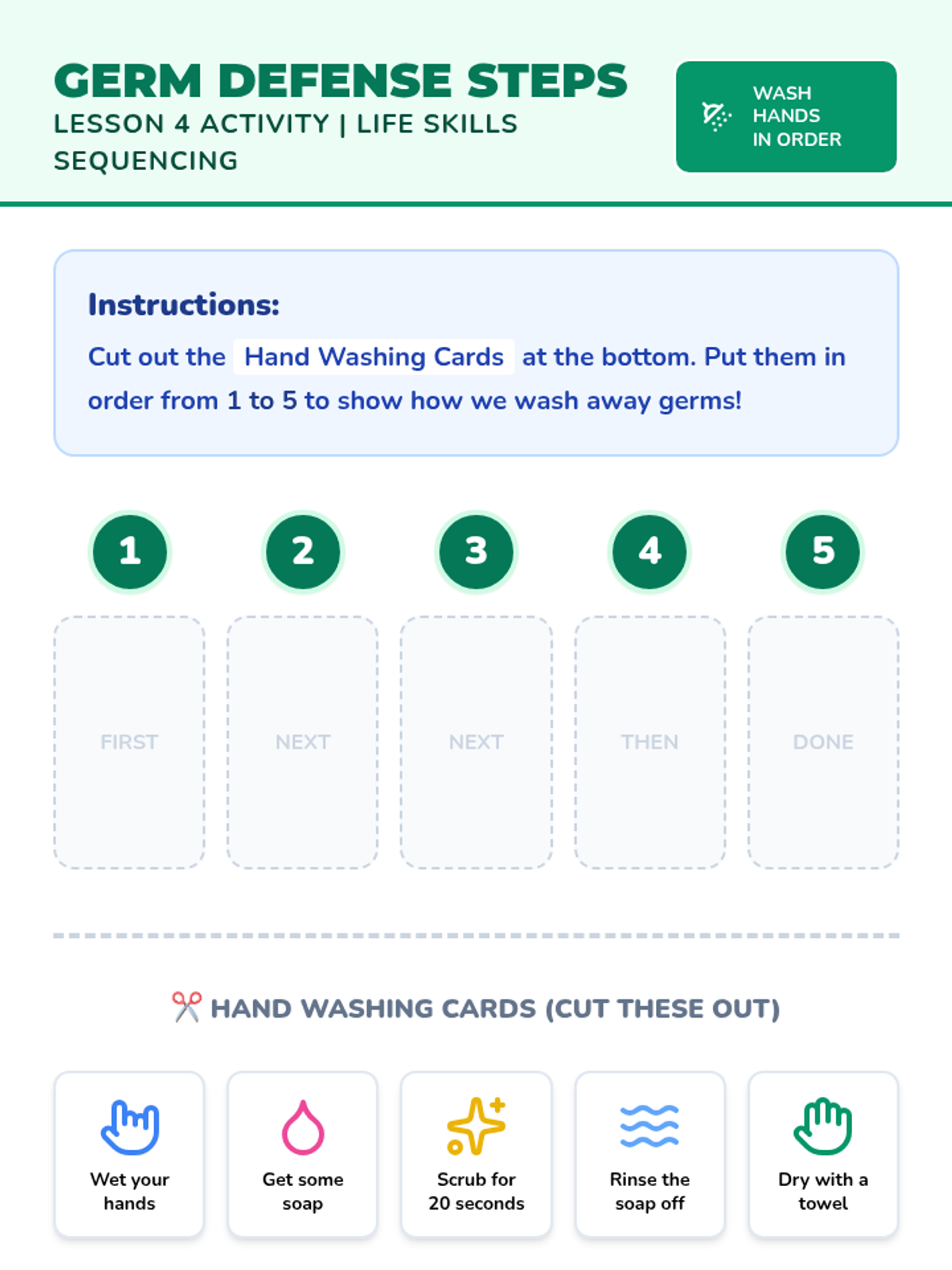
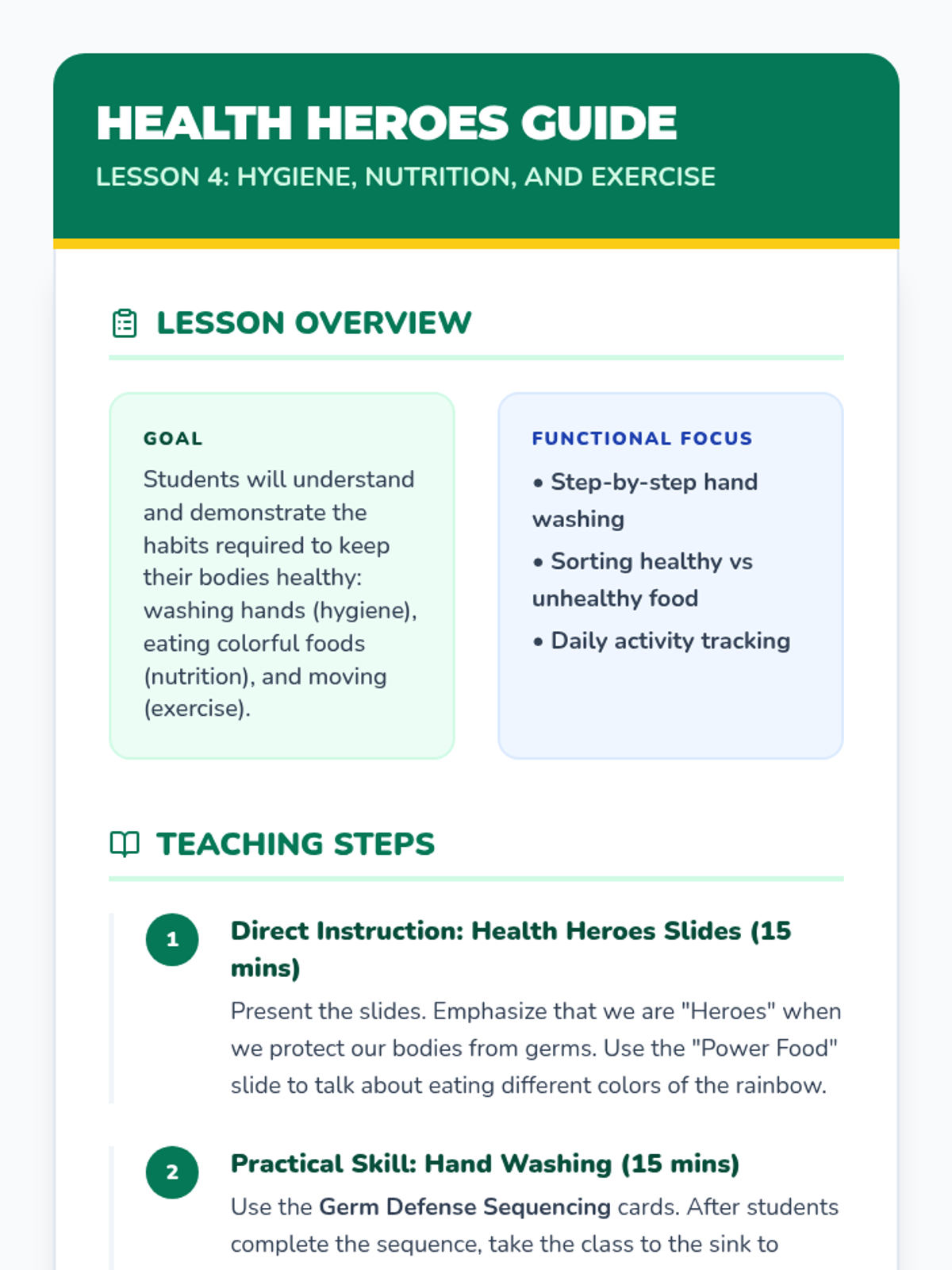
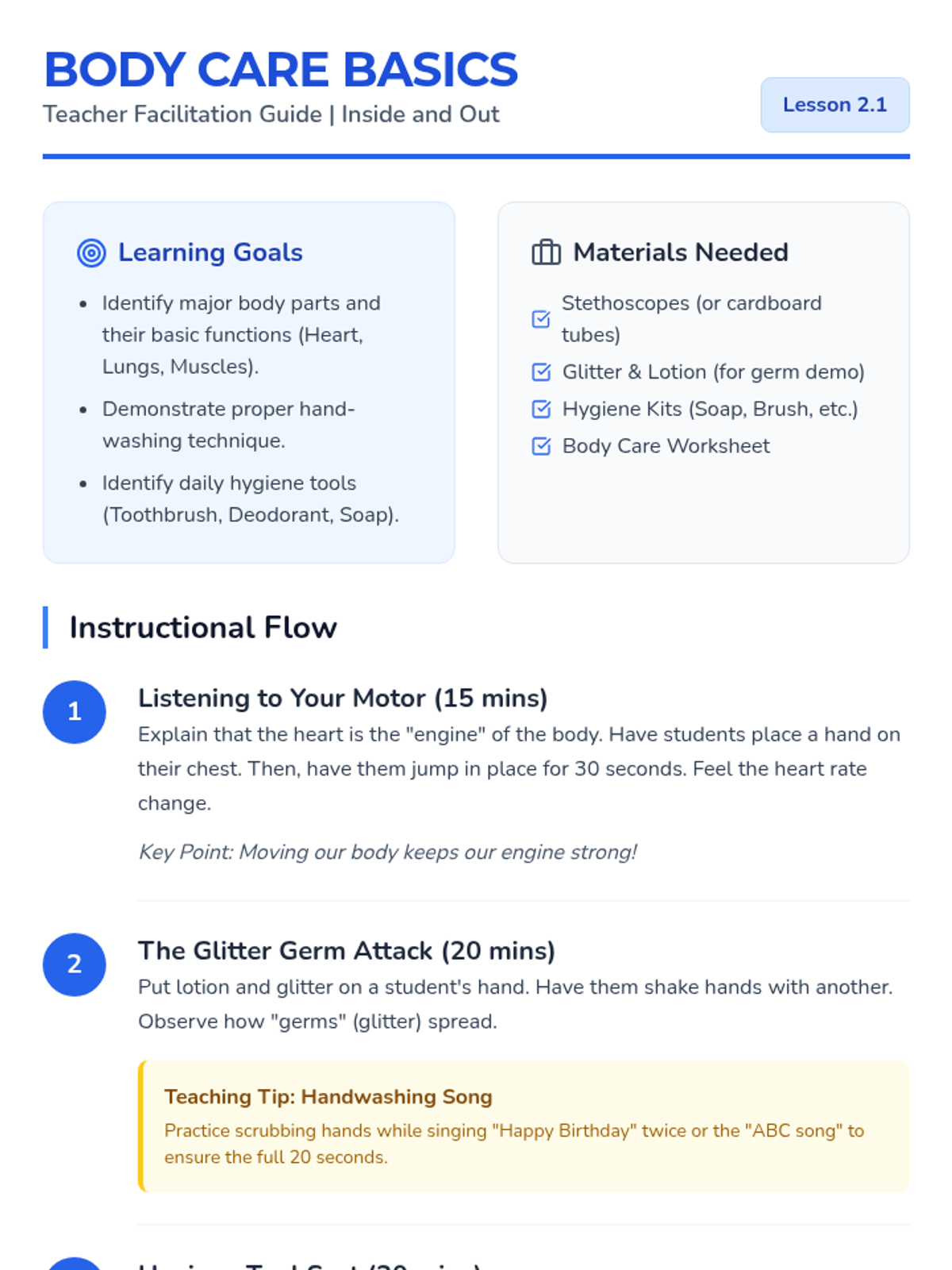
Covers essential health habits including hand washing, nutrition, and exercise to keep the body functioning at its best.
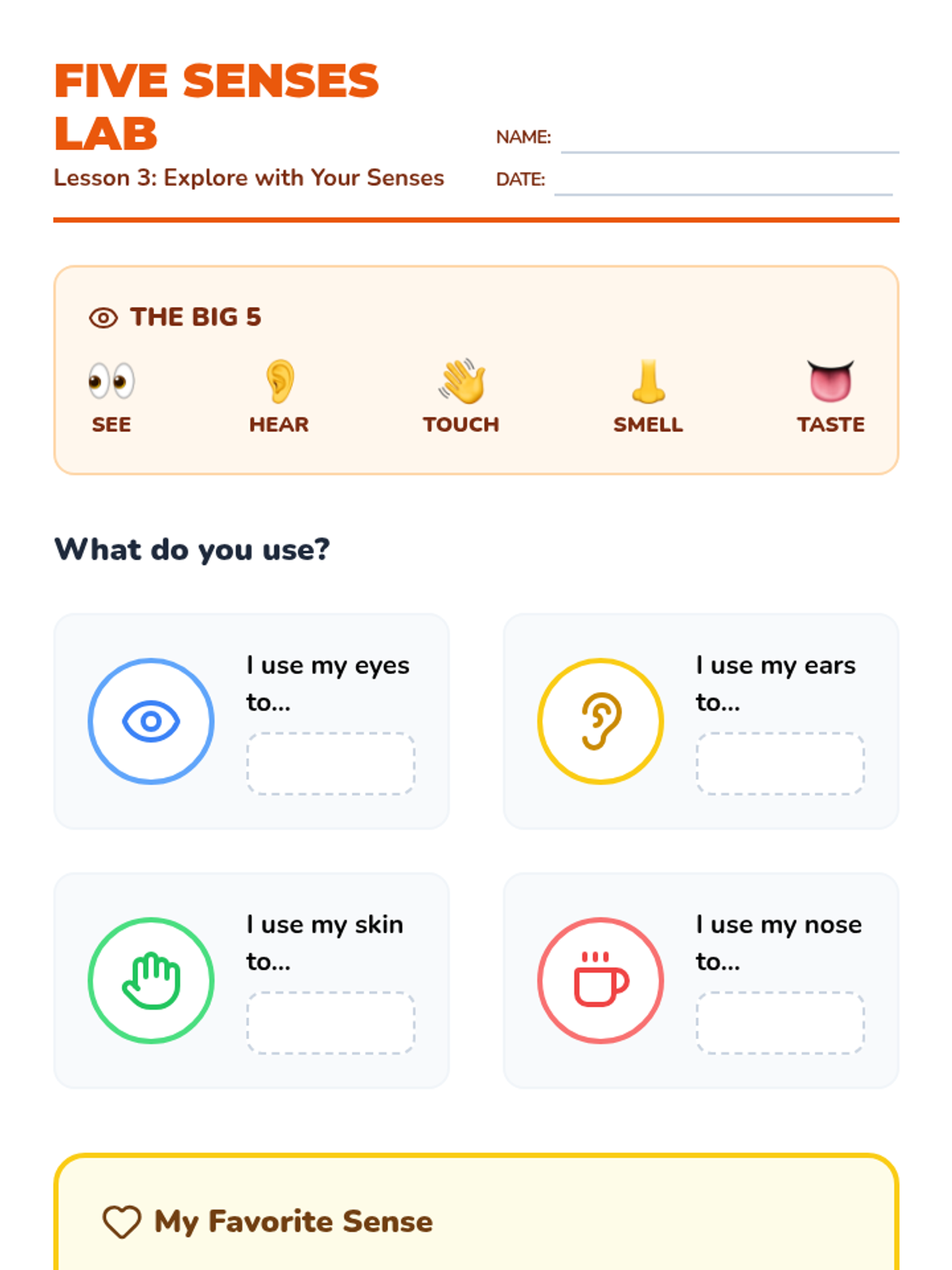
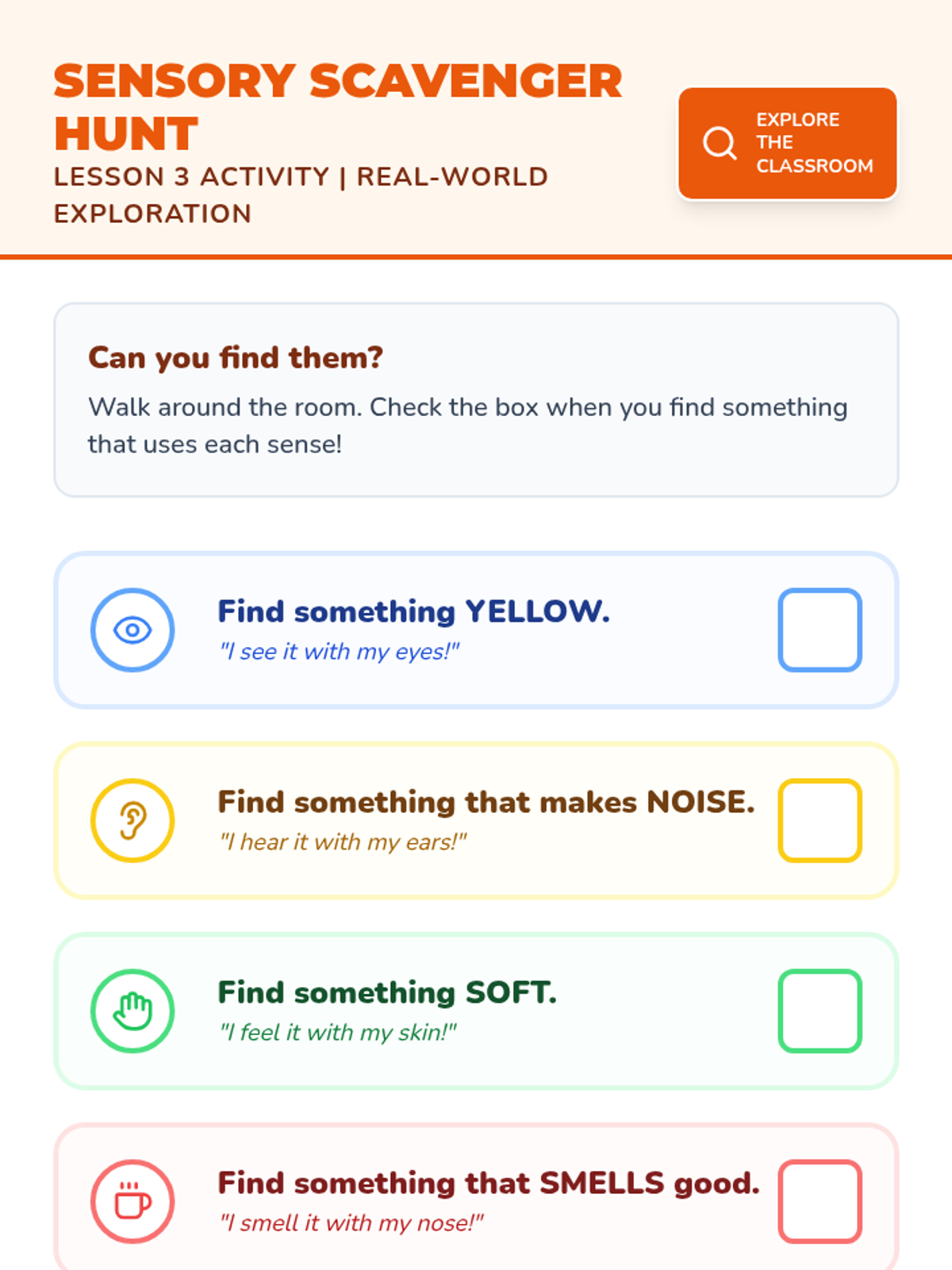
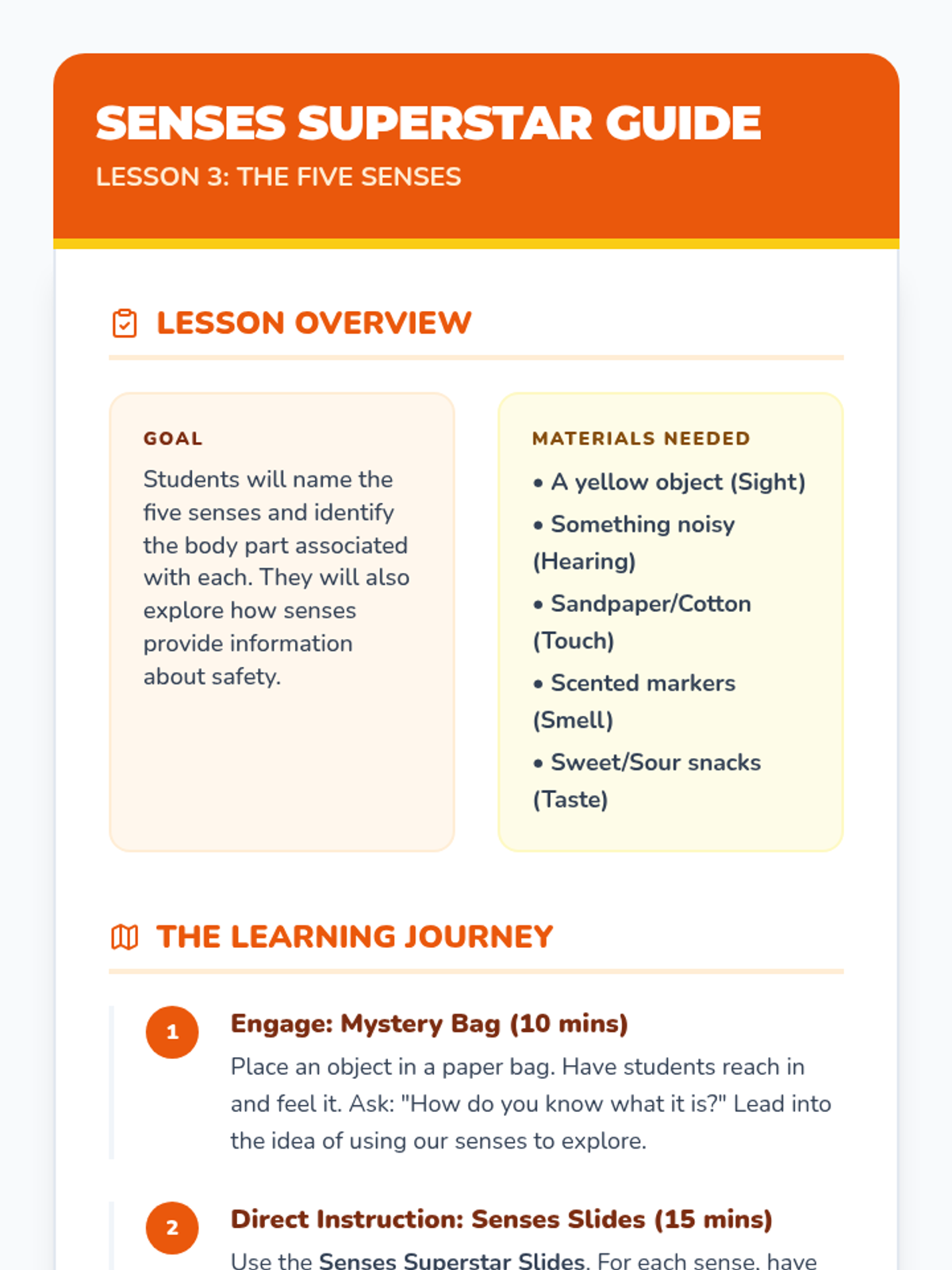
Explores how the five senses help us interact with and stay safe in our environment.
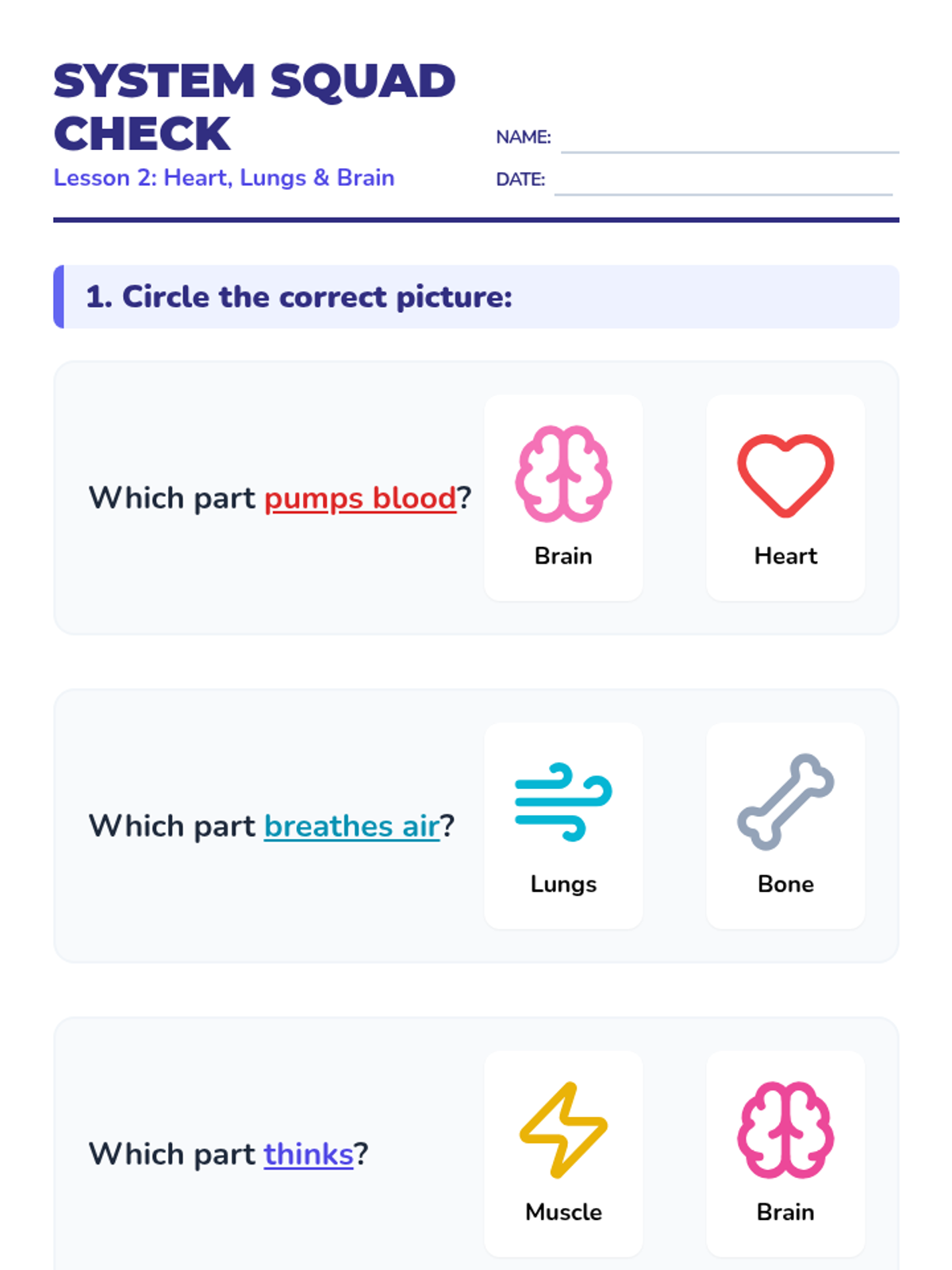
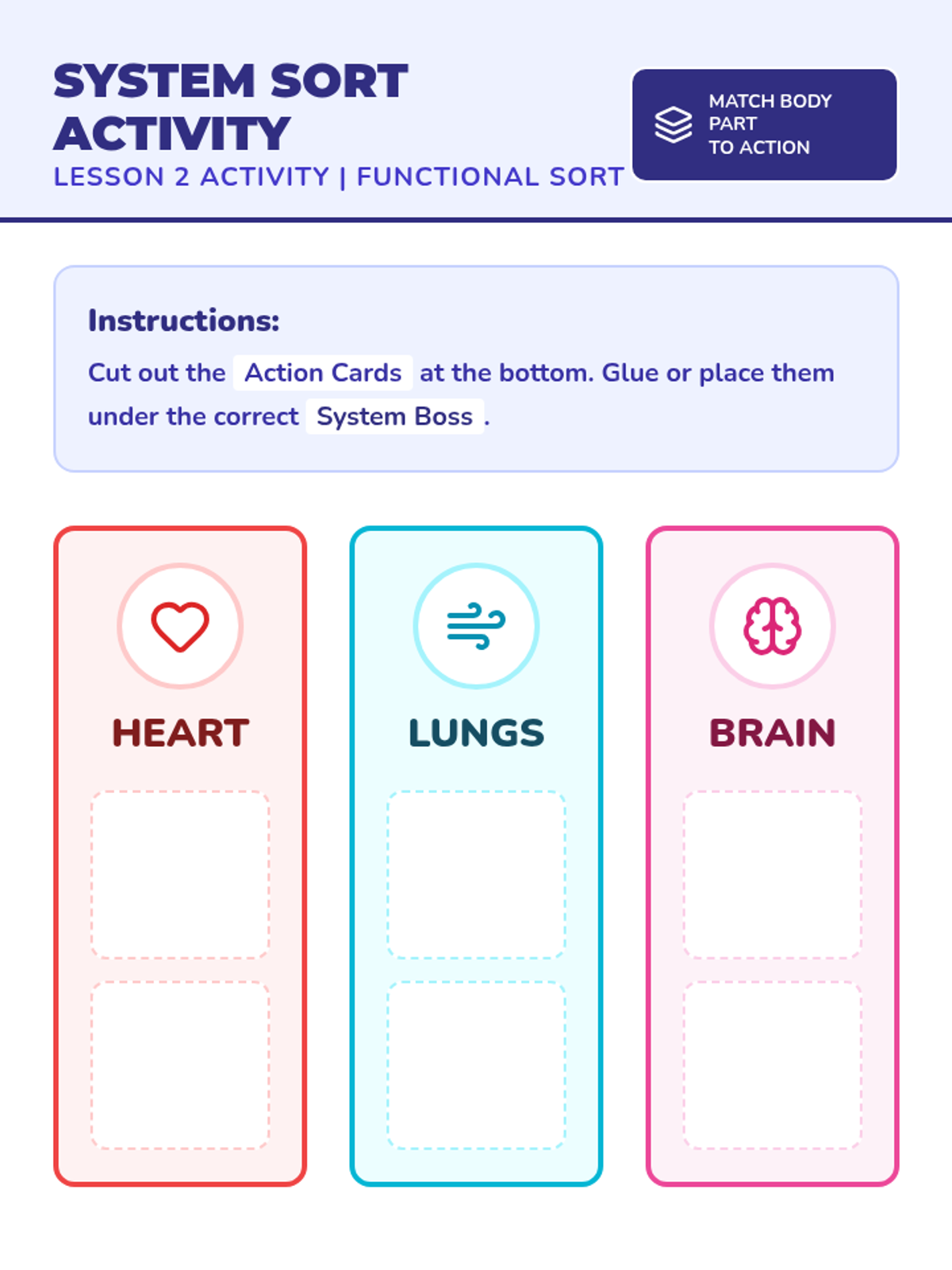
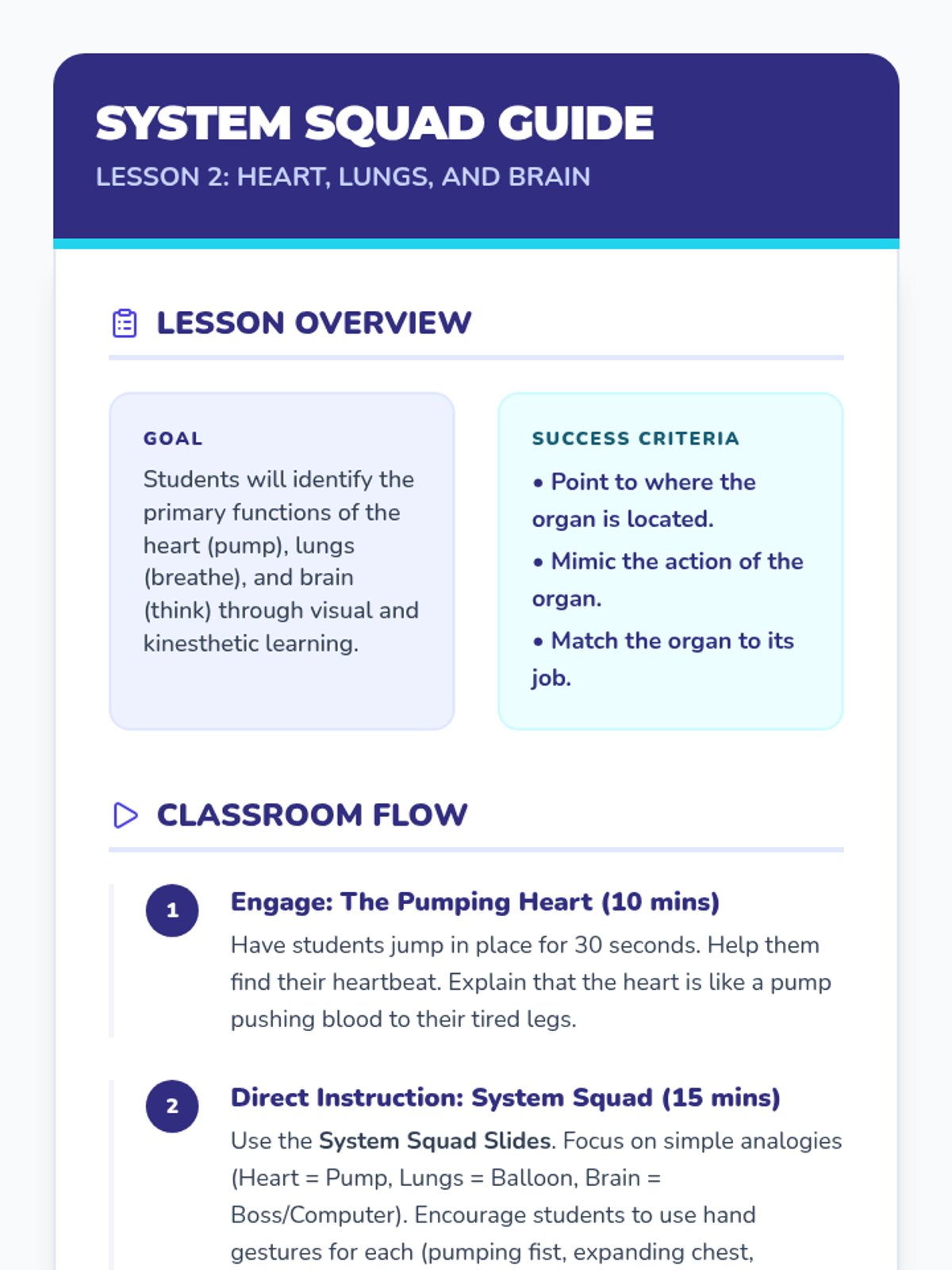
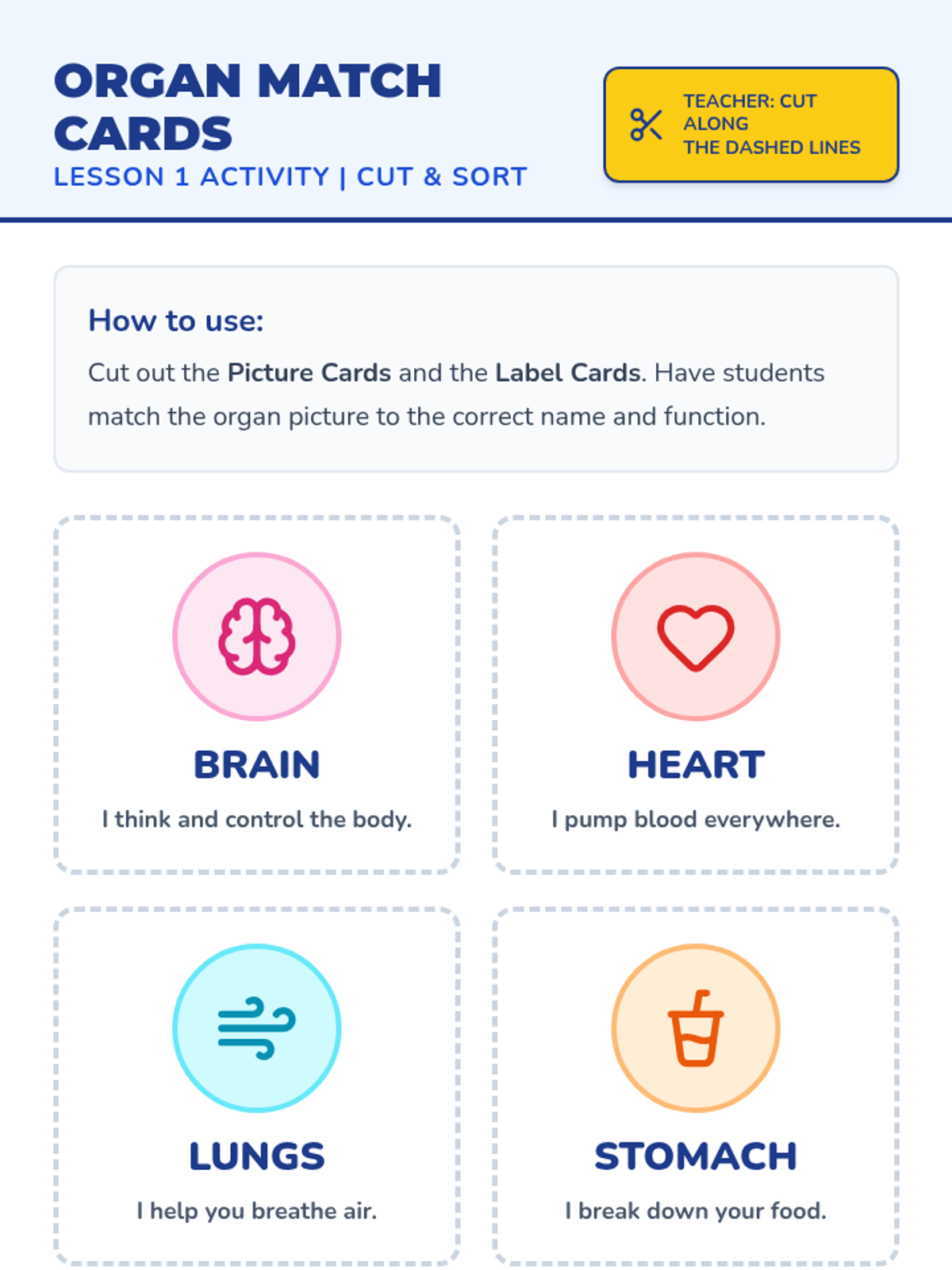
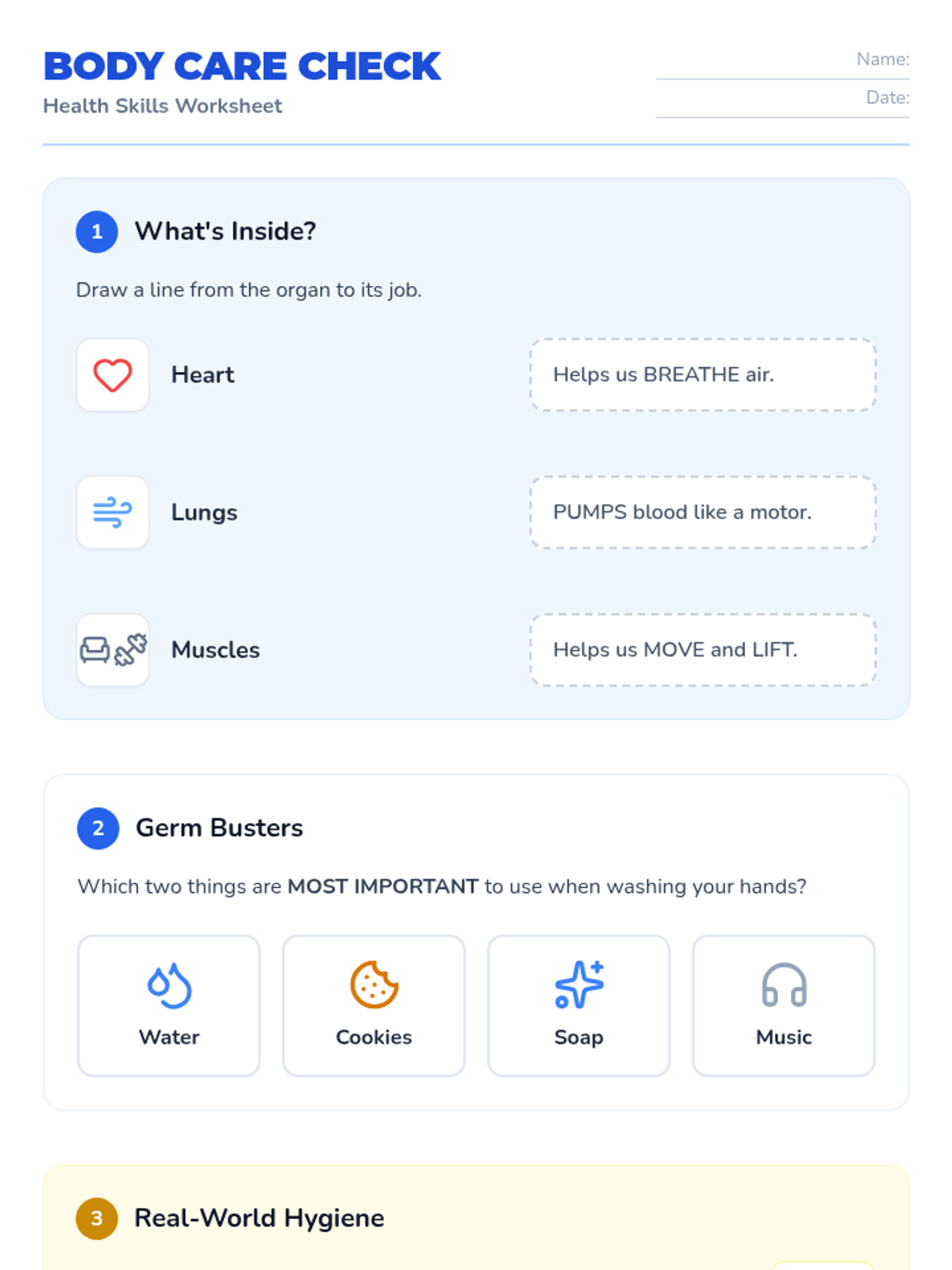
Introduces the heart, lungs, and brain as the 'engine' of the body, explaining their vital functions in simple, functional terms.
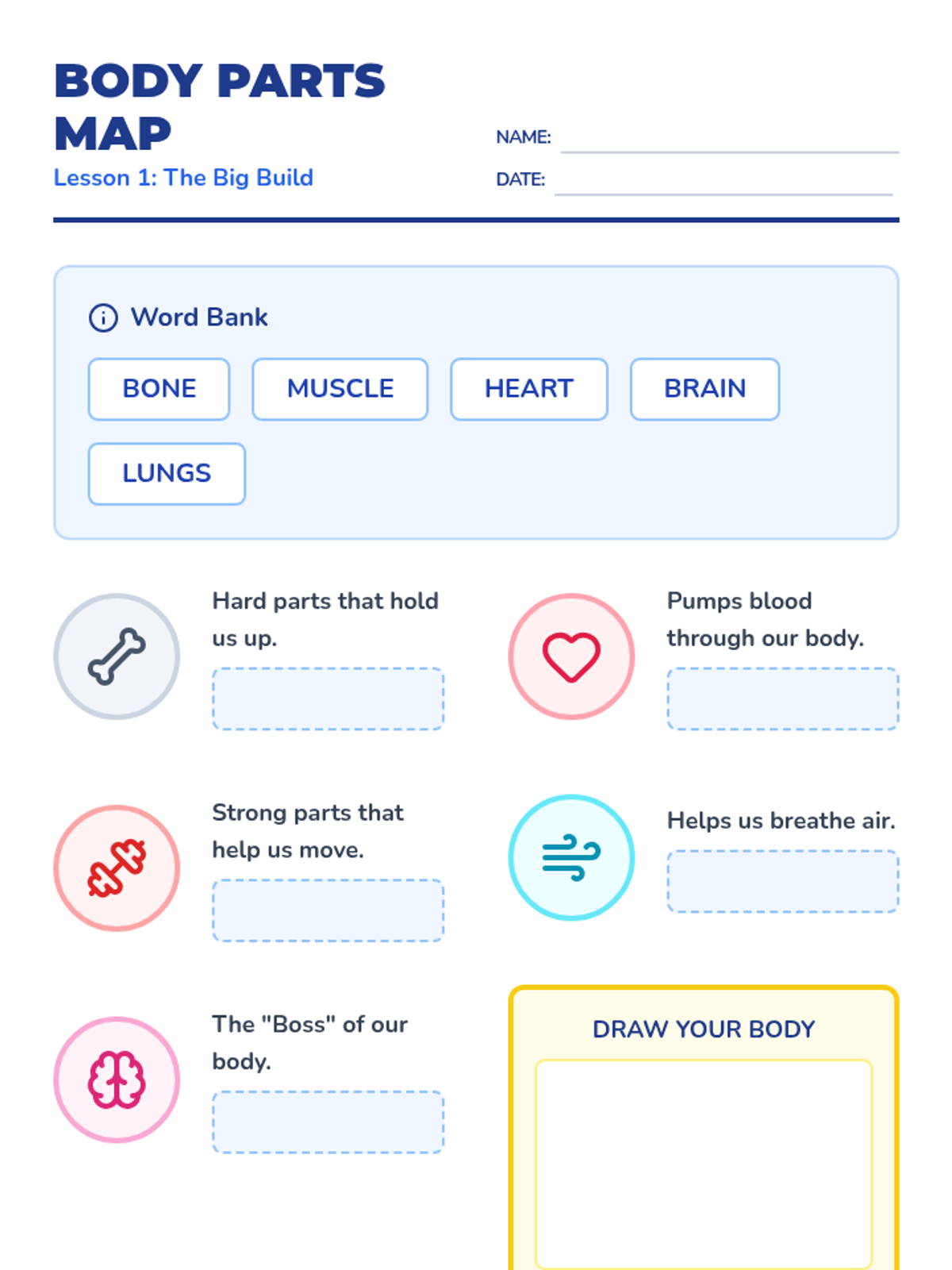
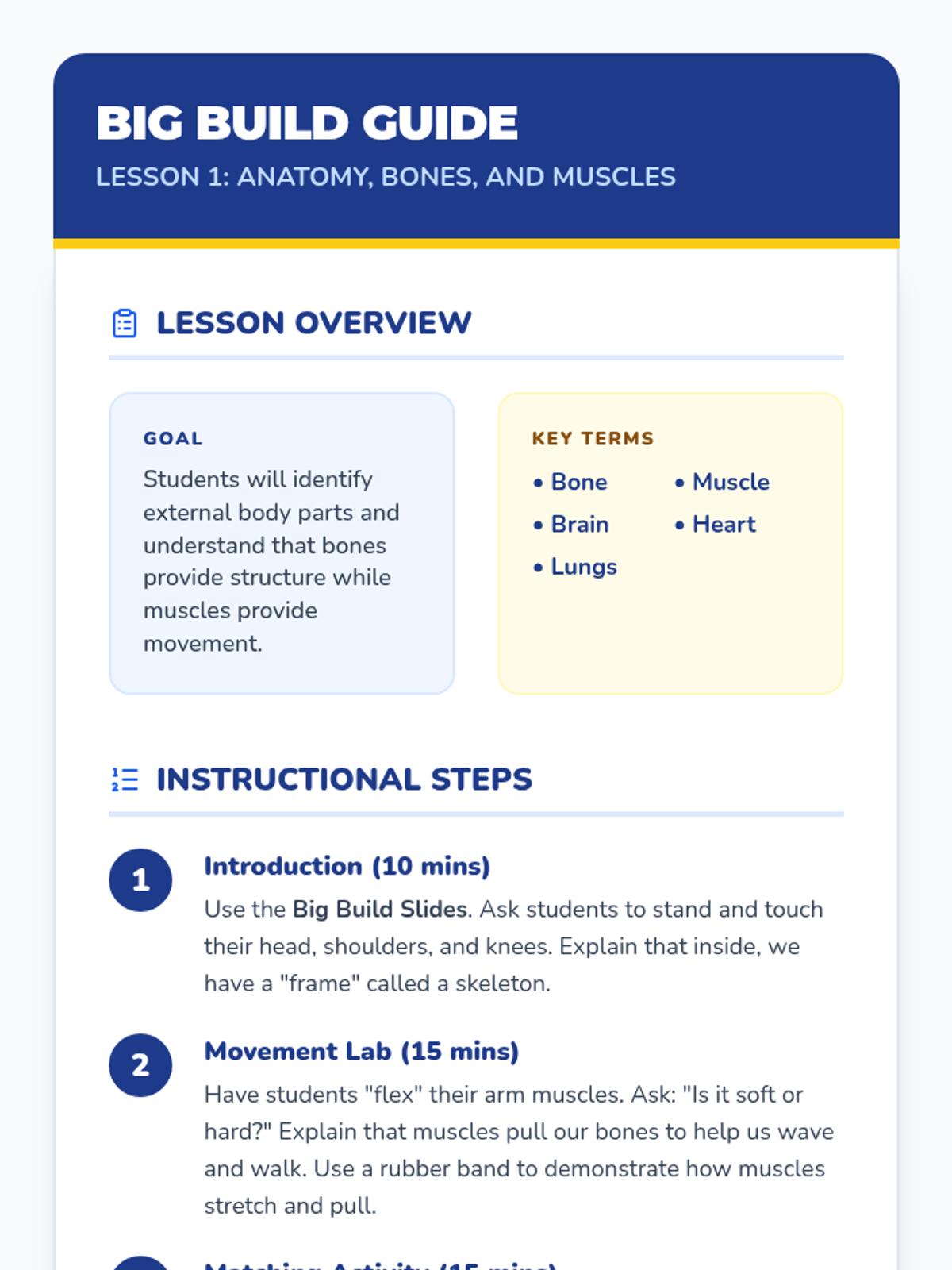
Focuses on the external body parts and the internal framework of bones and muscles that help us move and stay strong.
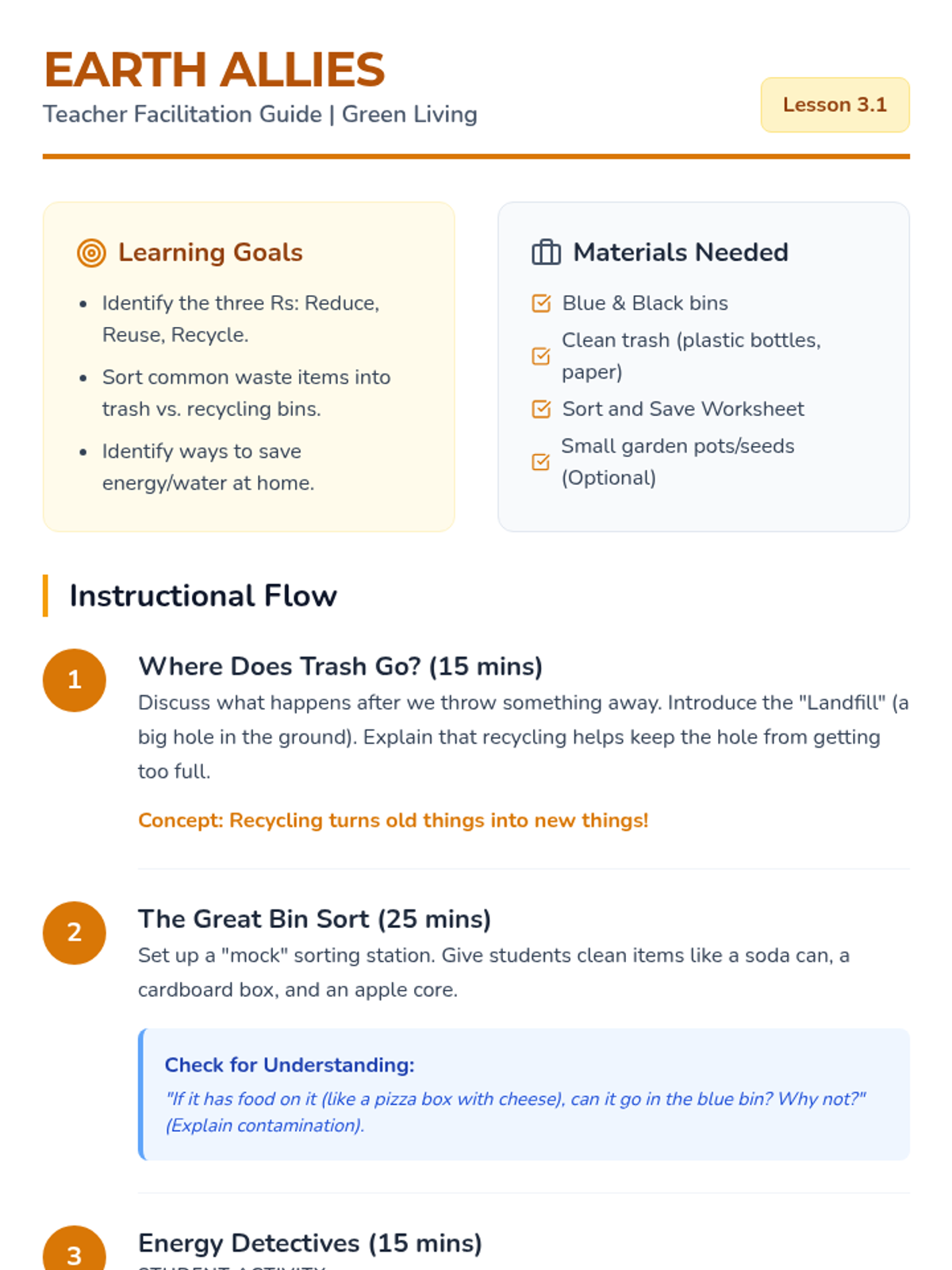
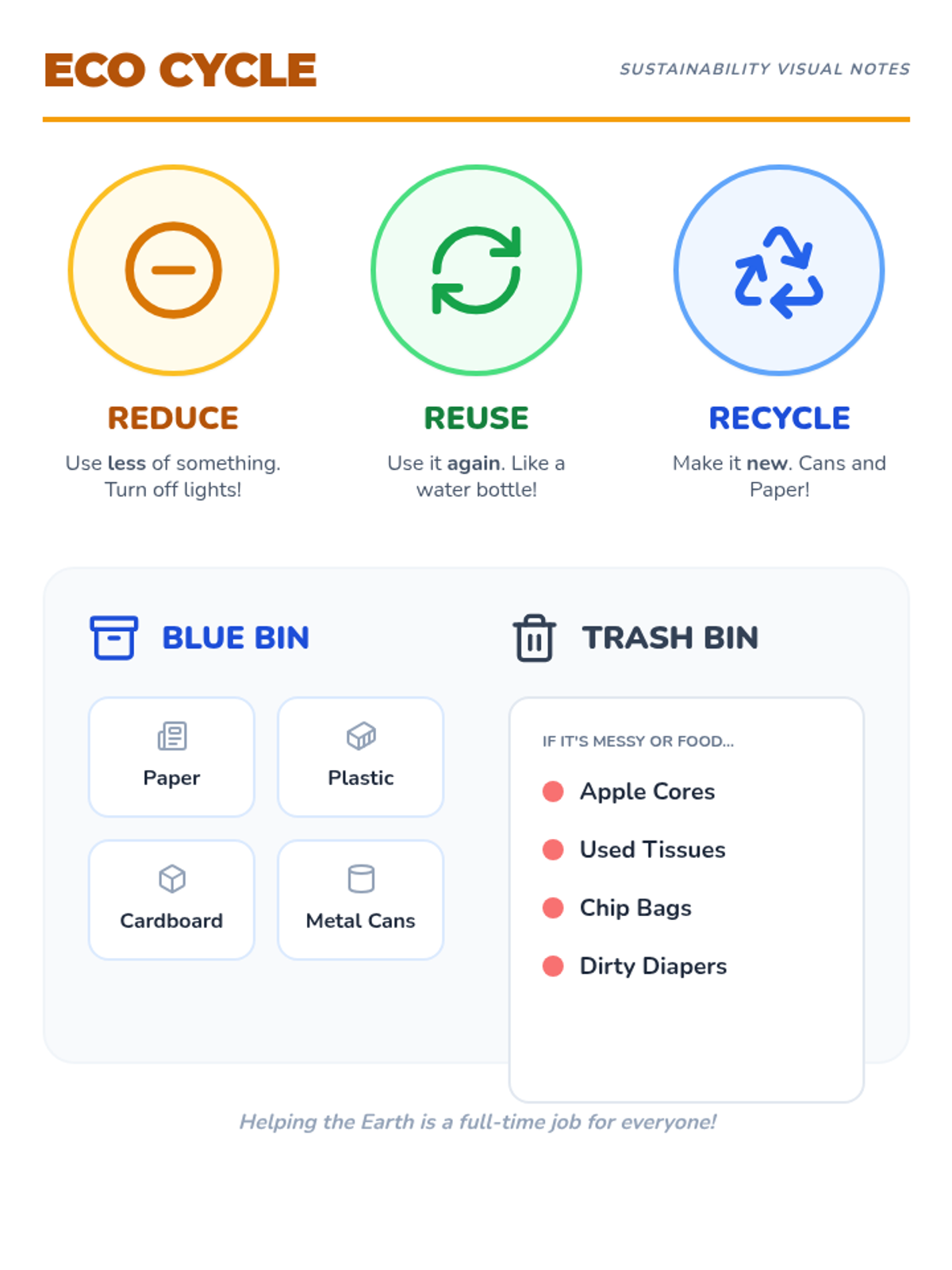
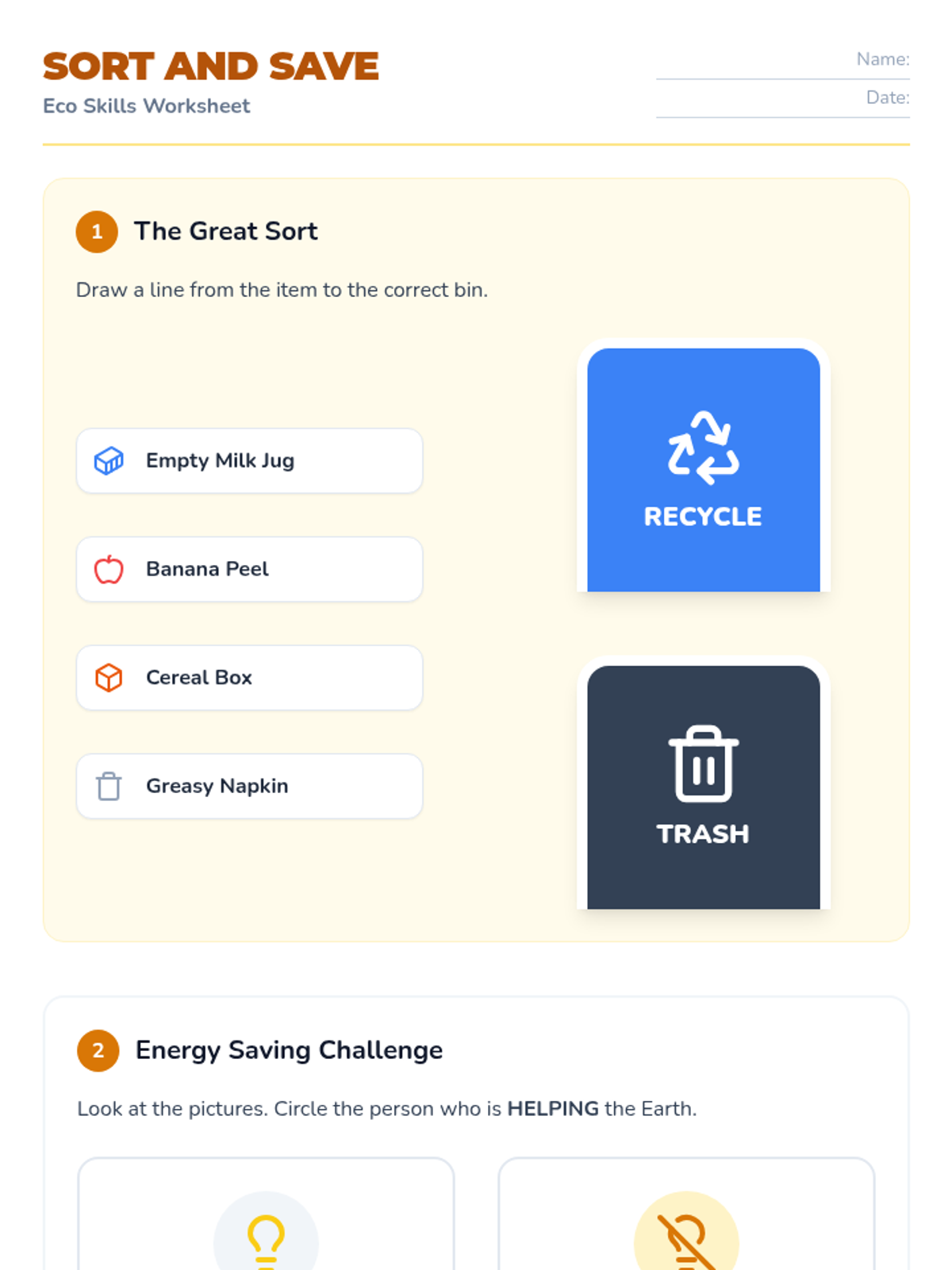
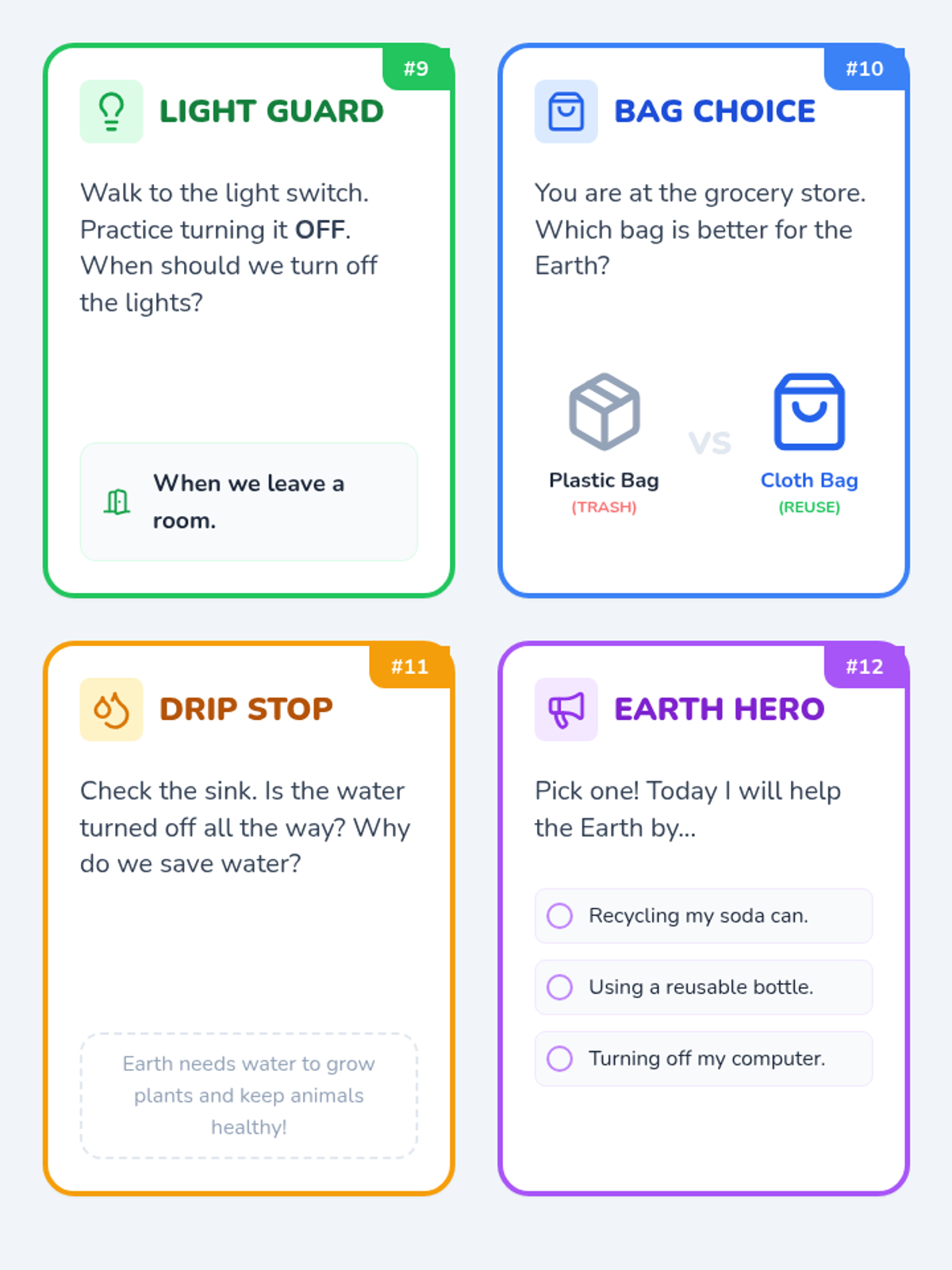
Introduces sustainability through waste reduction, recycling, and understanding how personal choices impact the local environment.
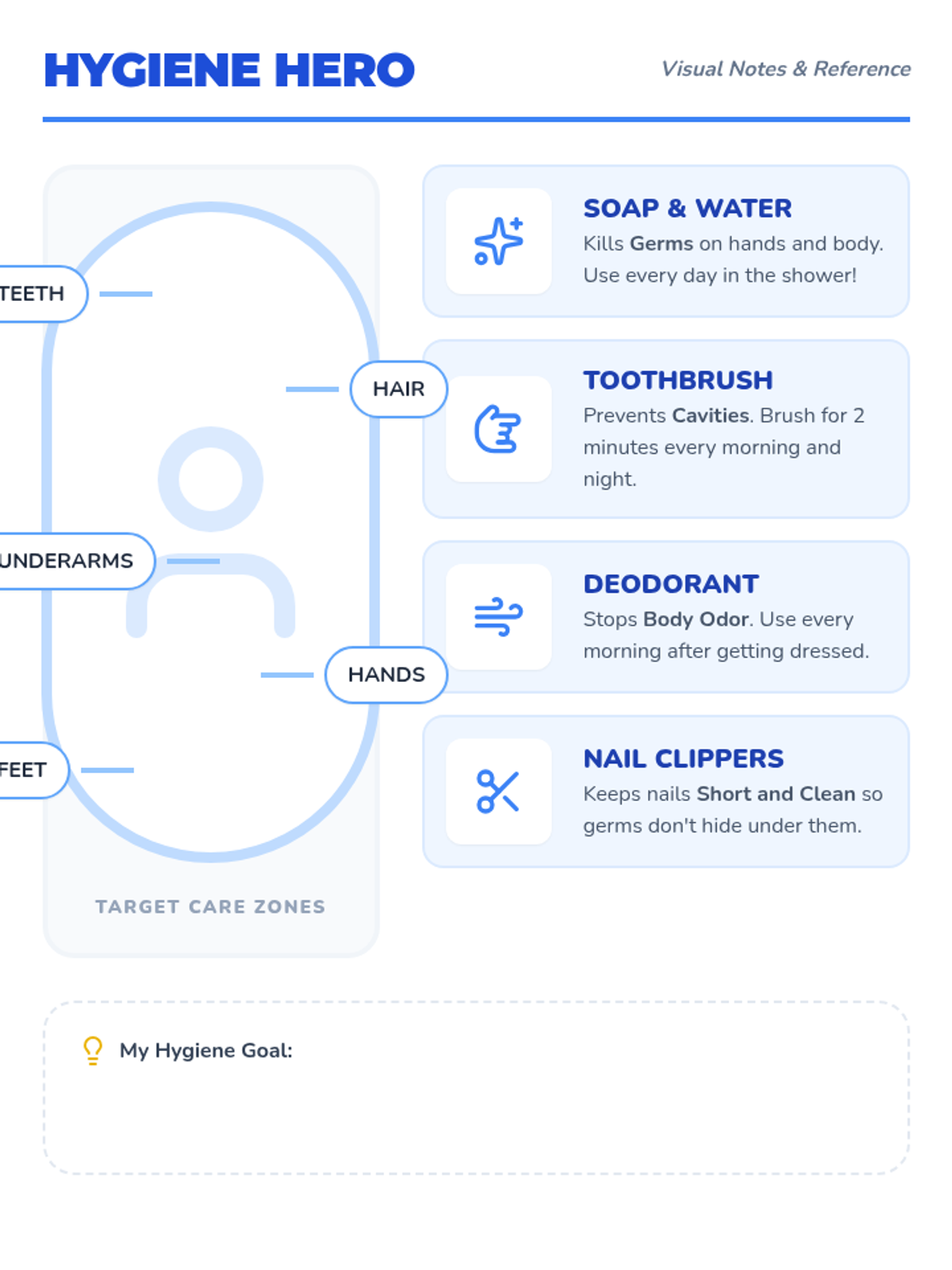
Covers basic human anatomy related to movement and health, alongside essential personal hygiene routines for daily living.
Focuses on identifying healthy food groups, reading simple food labels, and making informed nutritional choices for daily energy.
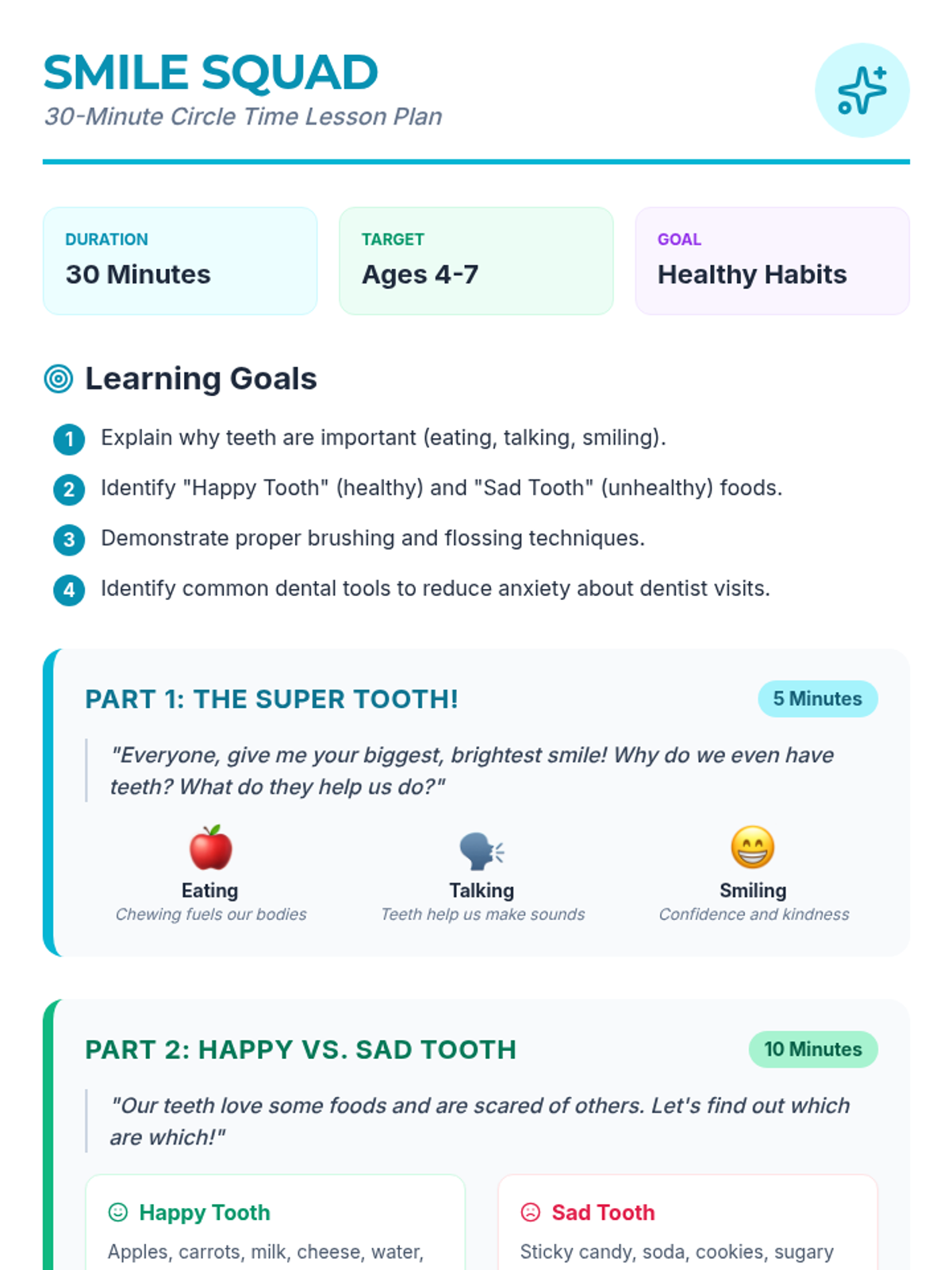
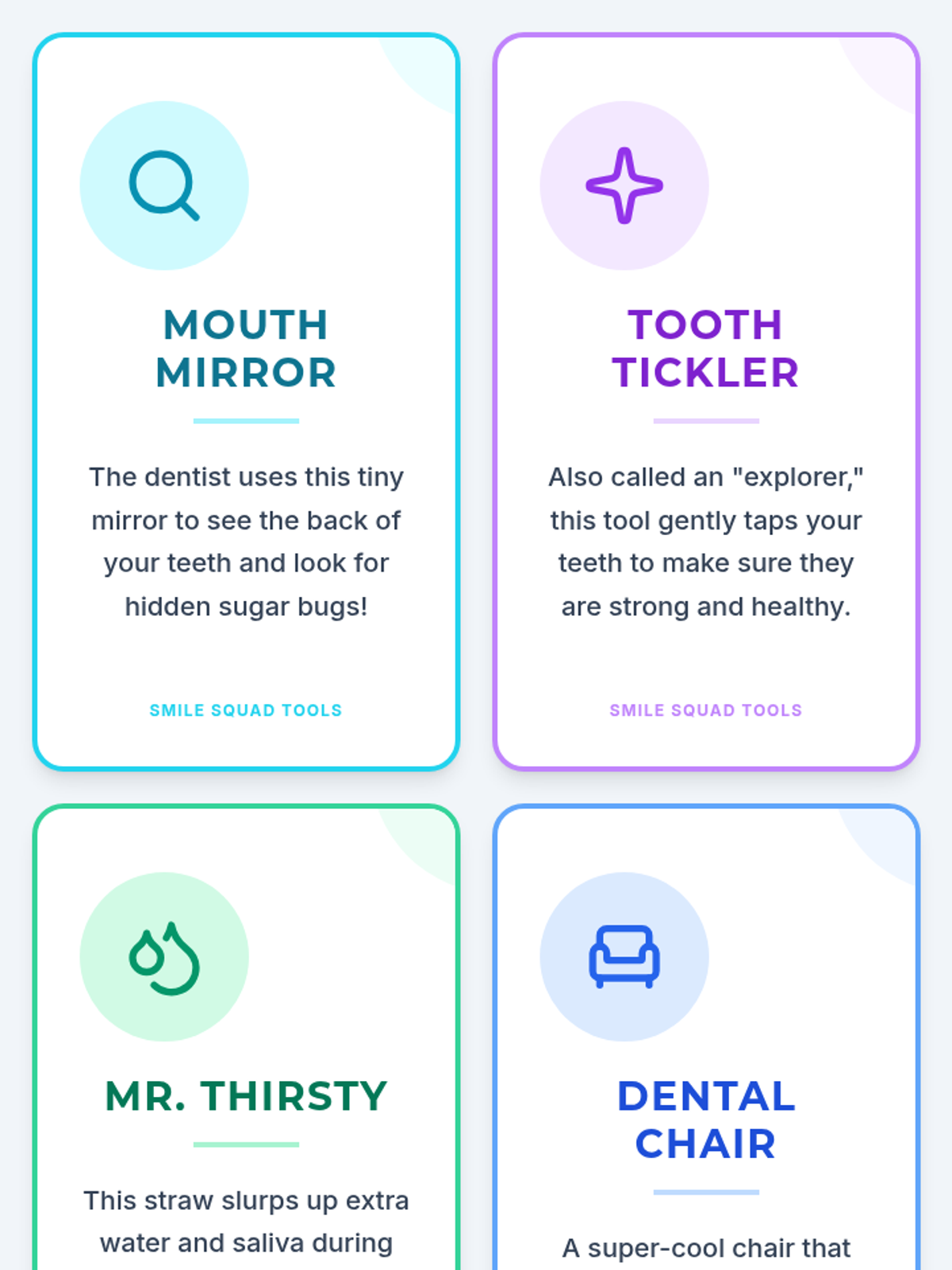
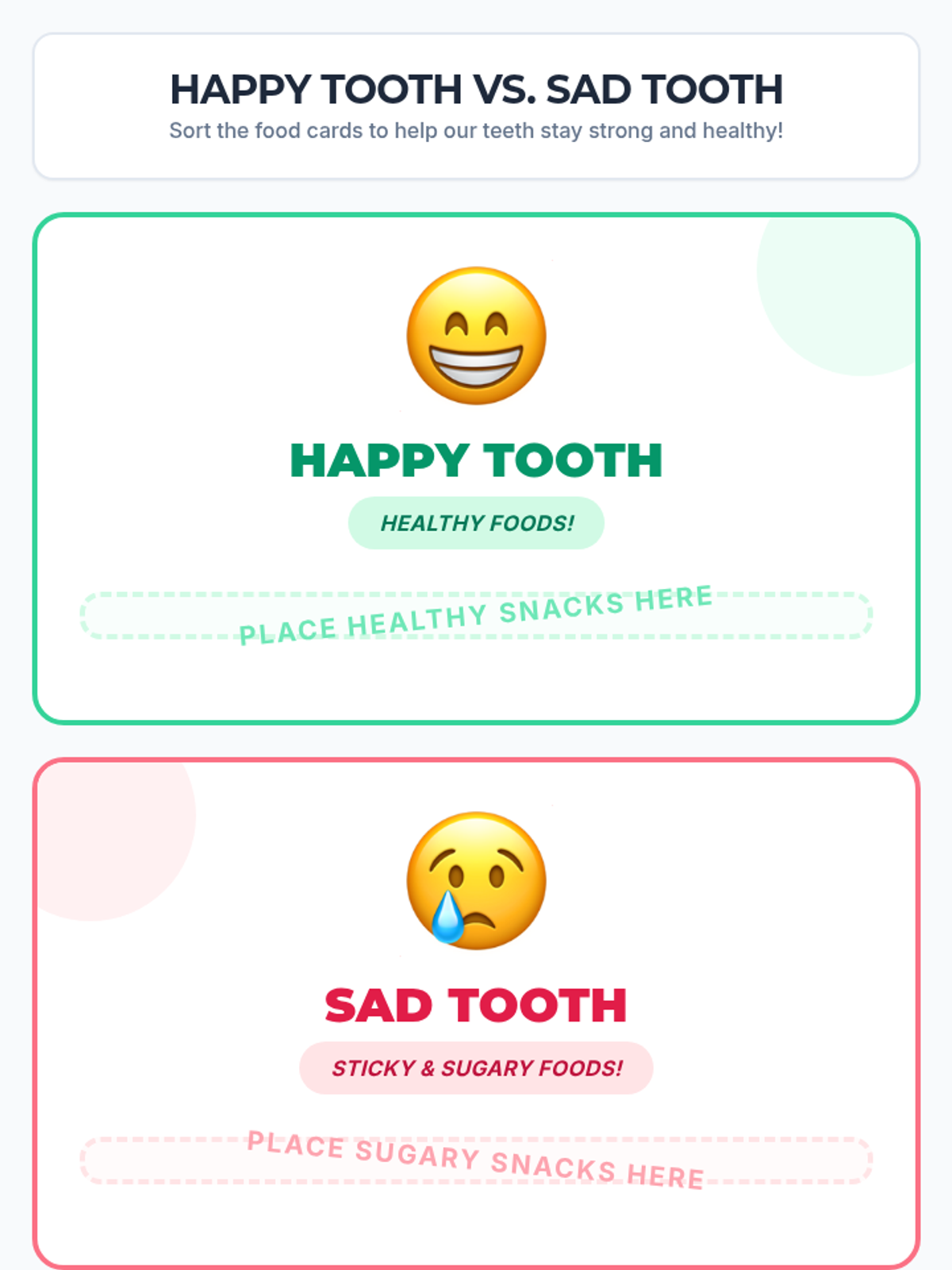
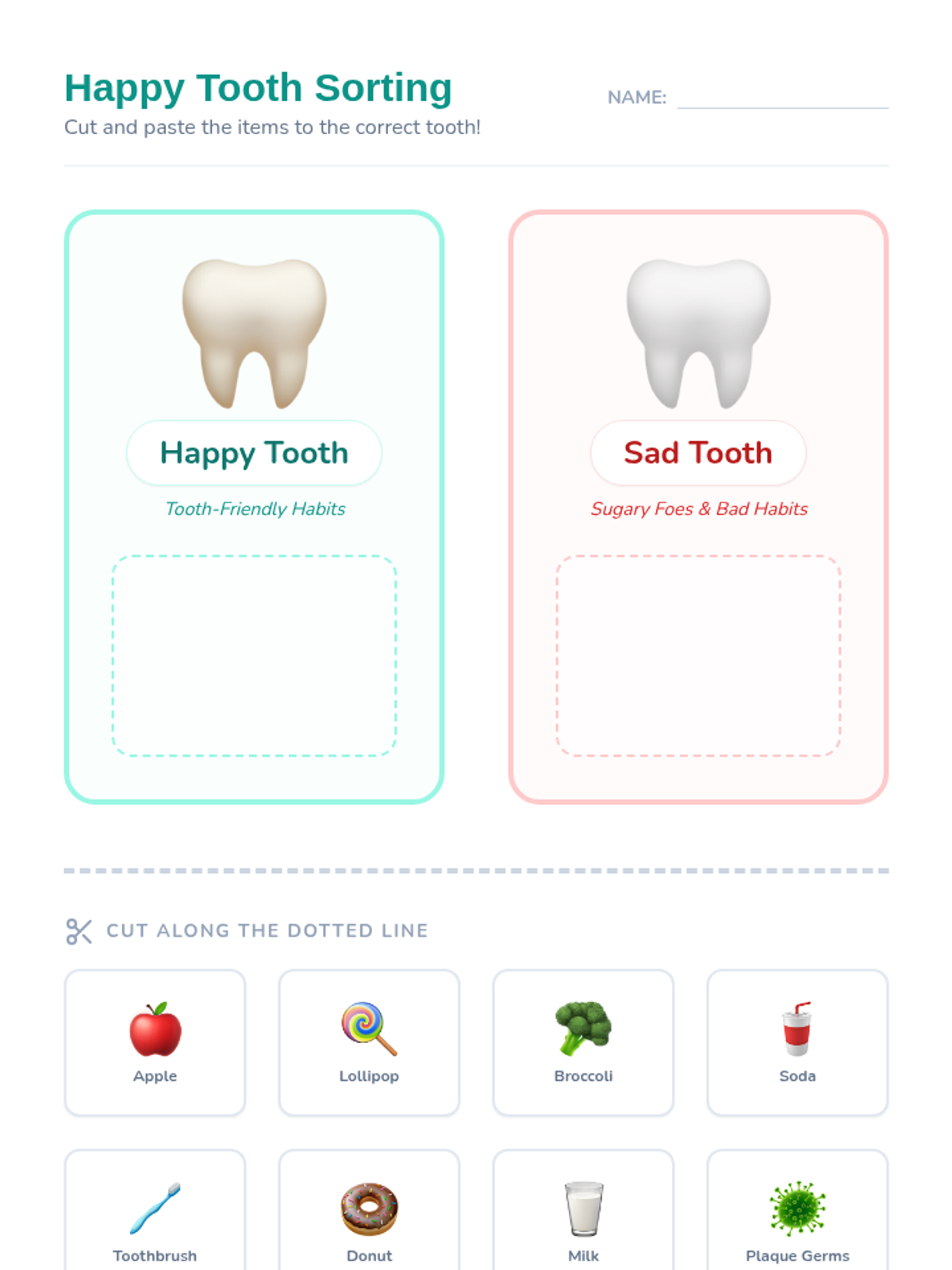
A comprehensive 30-minute circle time lesson covering dental hygiene, healthy eating habits for teeth, and what to expect during a dentist visit.
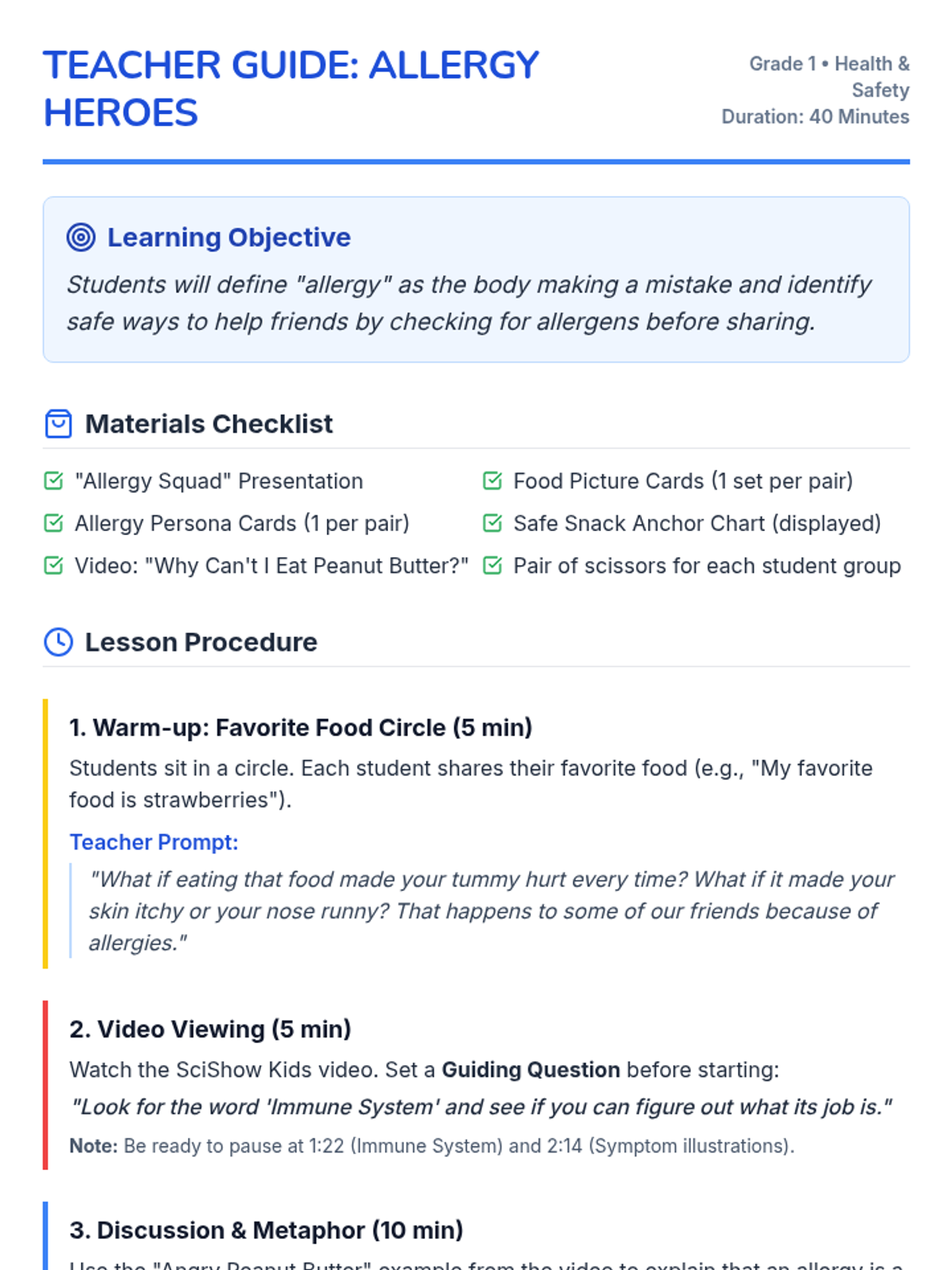
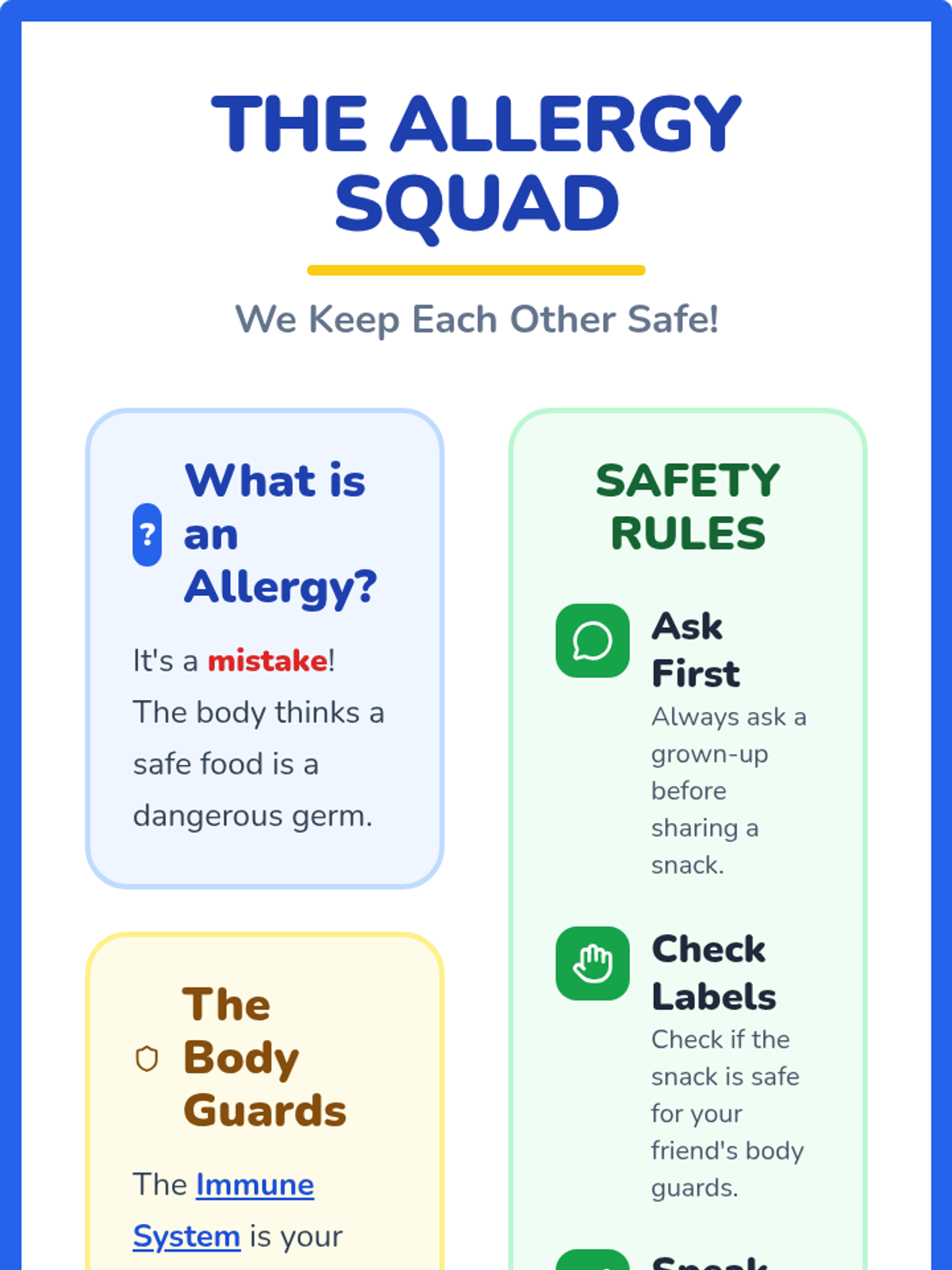
A 1st-grade lesson where students define 'allergy' and learn how to keep friends safe. Through a fun 'Body Guard' theme, they'll explore the immune system's role and practice identifying safe snacks.
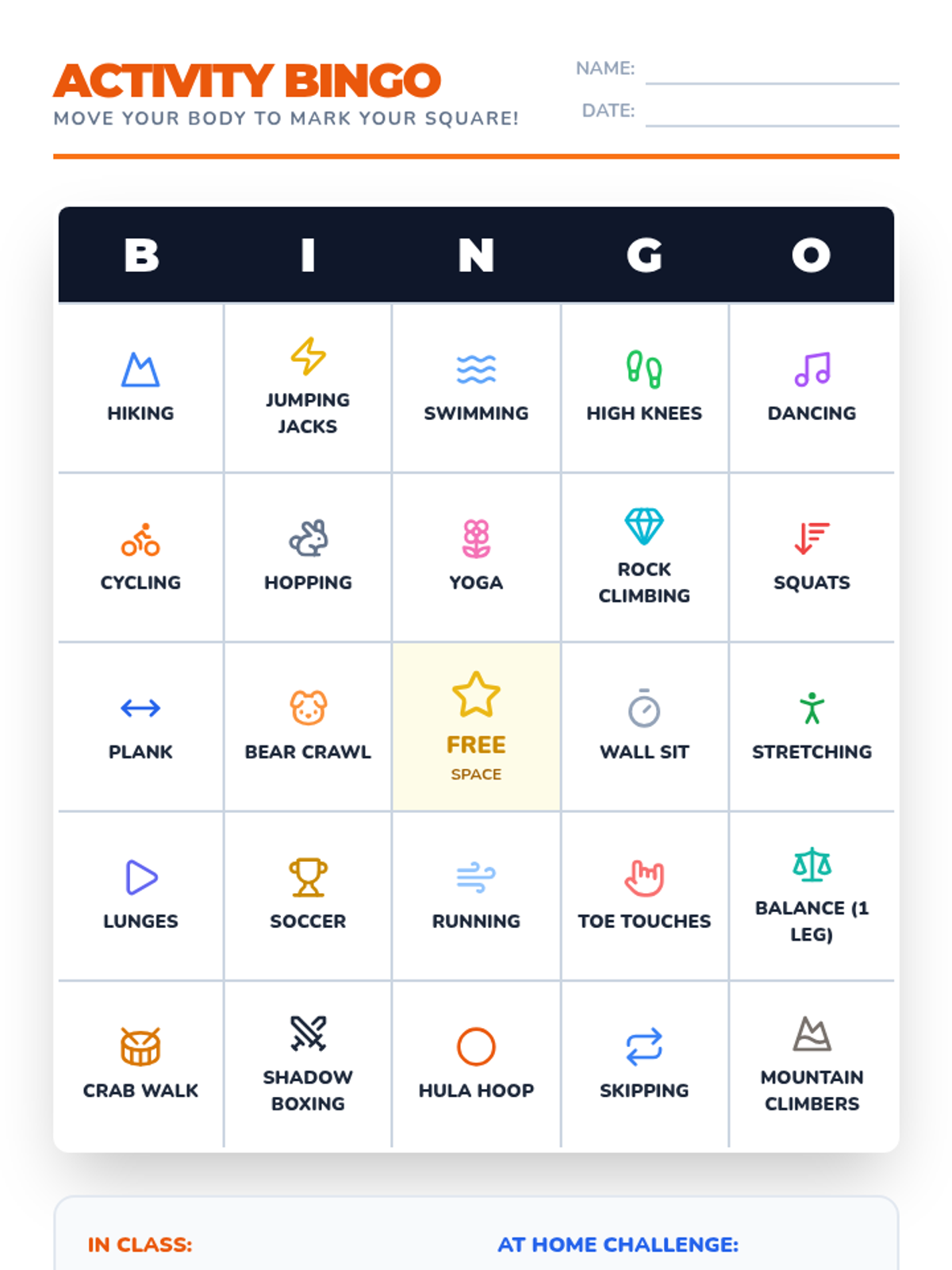
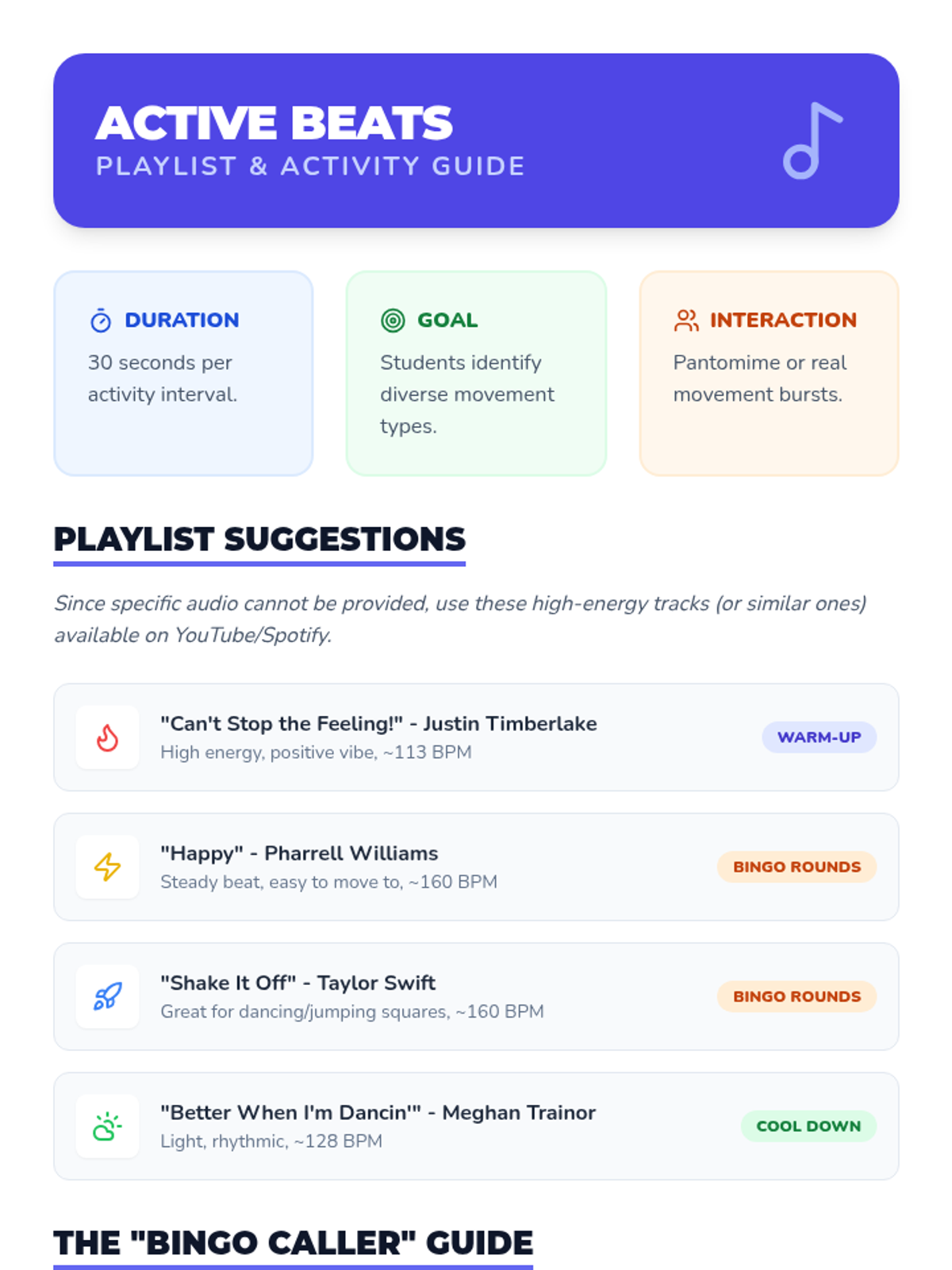
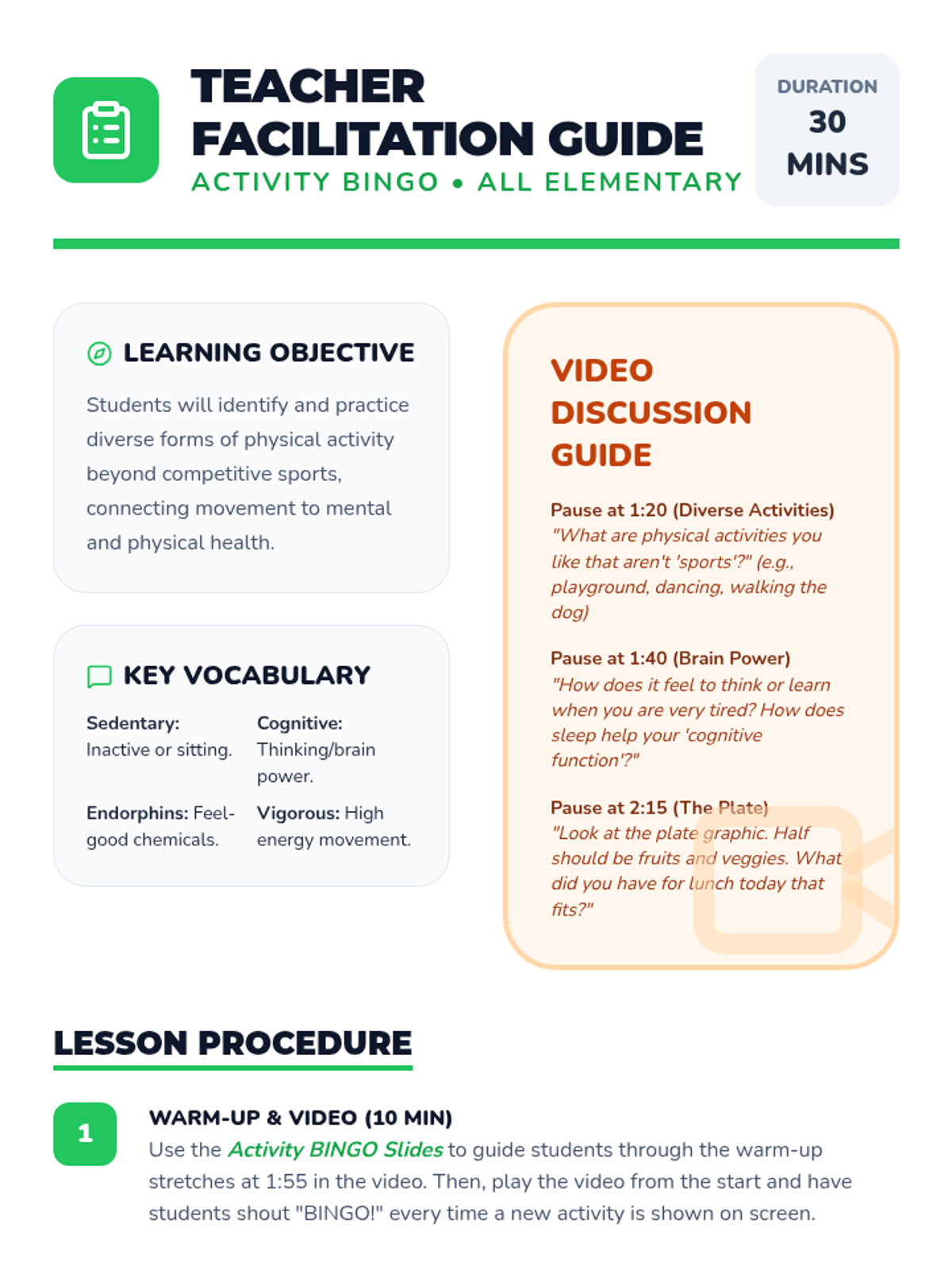
A high-energy PE lesson where students discover that exercise can be anything from hiking to dancing, culminating in a movement-based BINGO game.
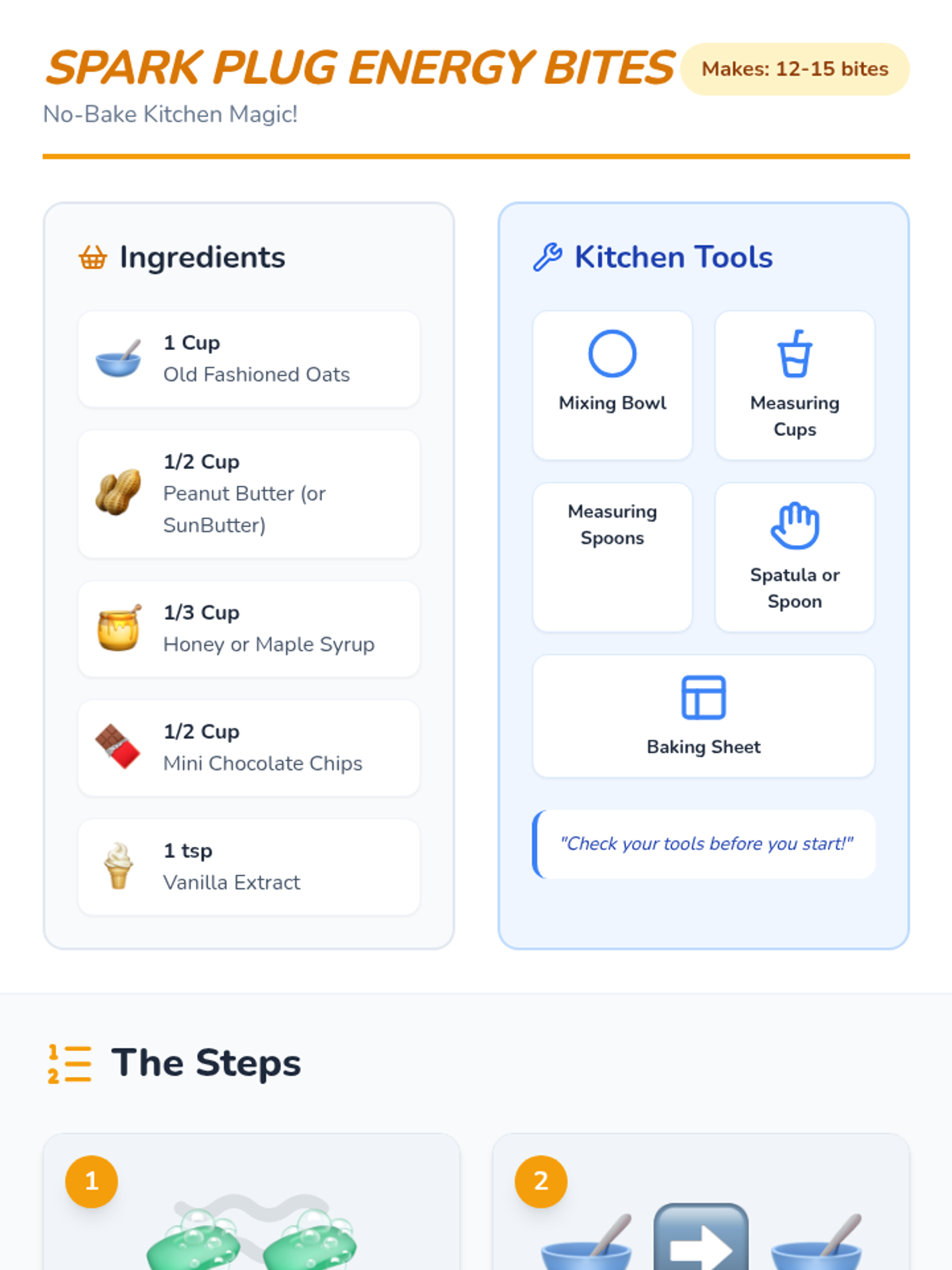
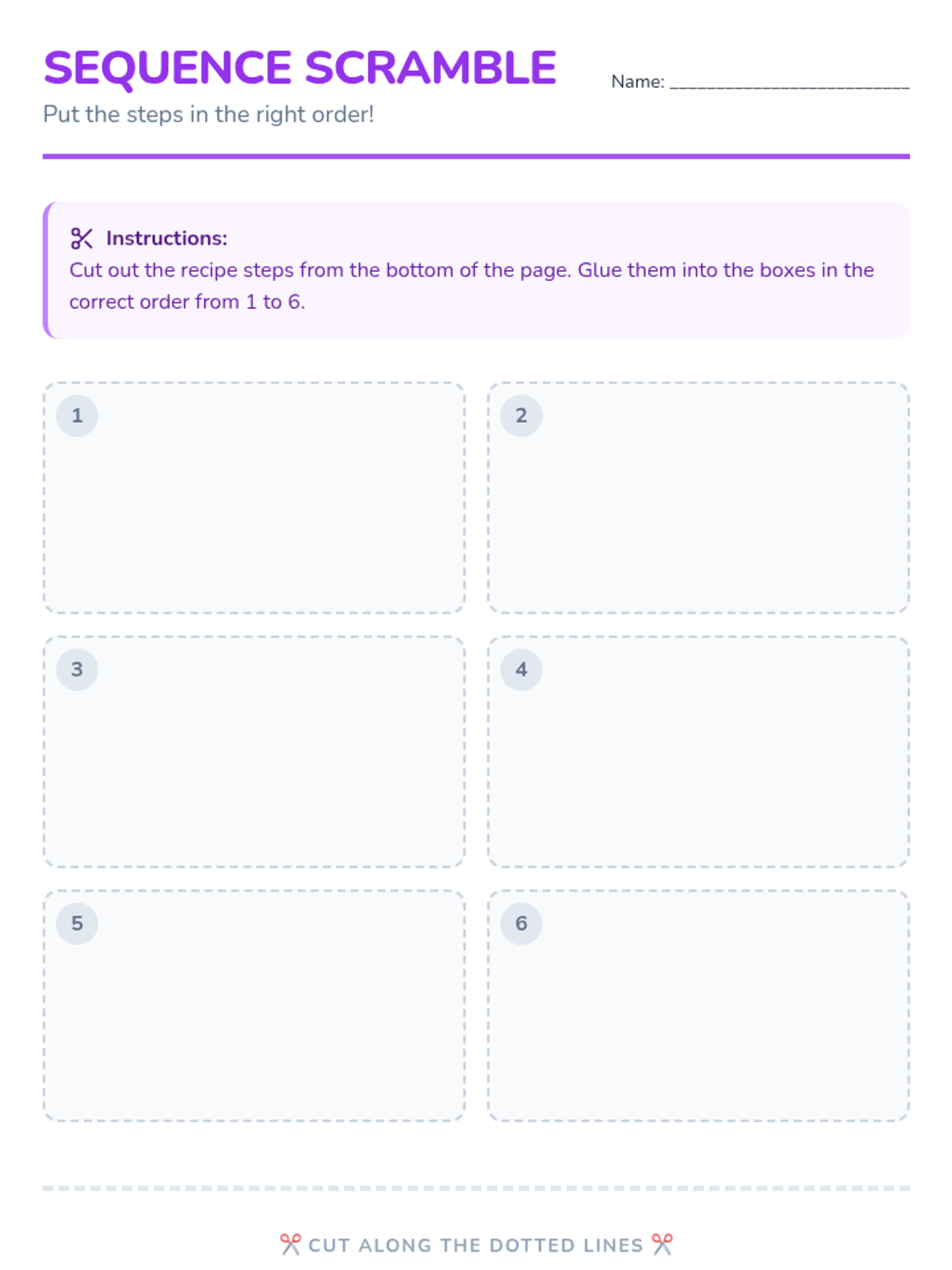
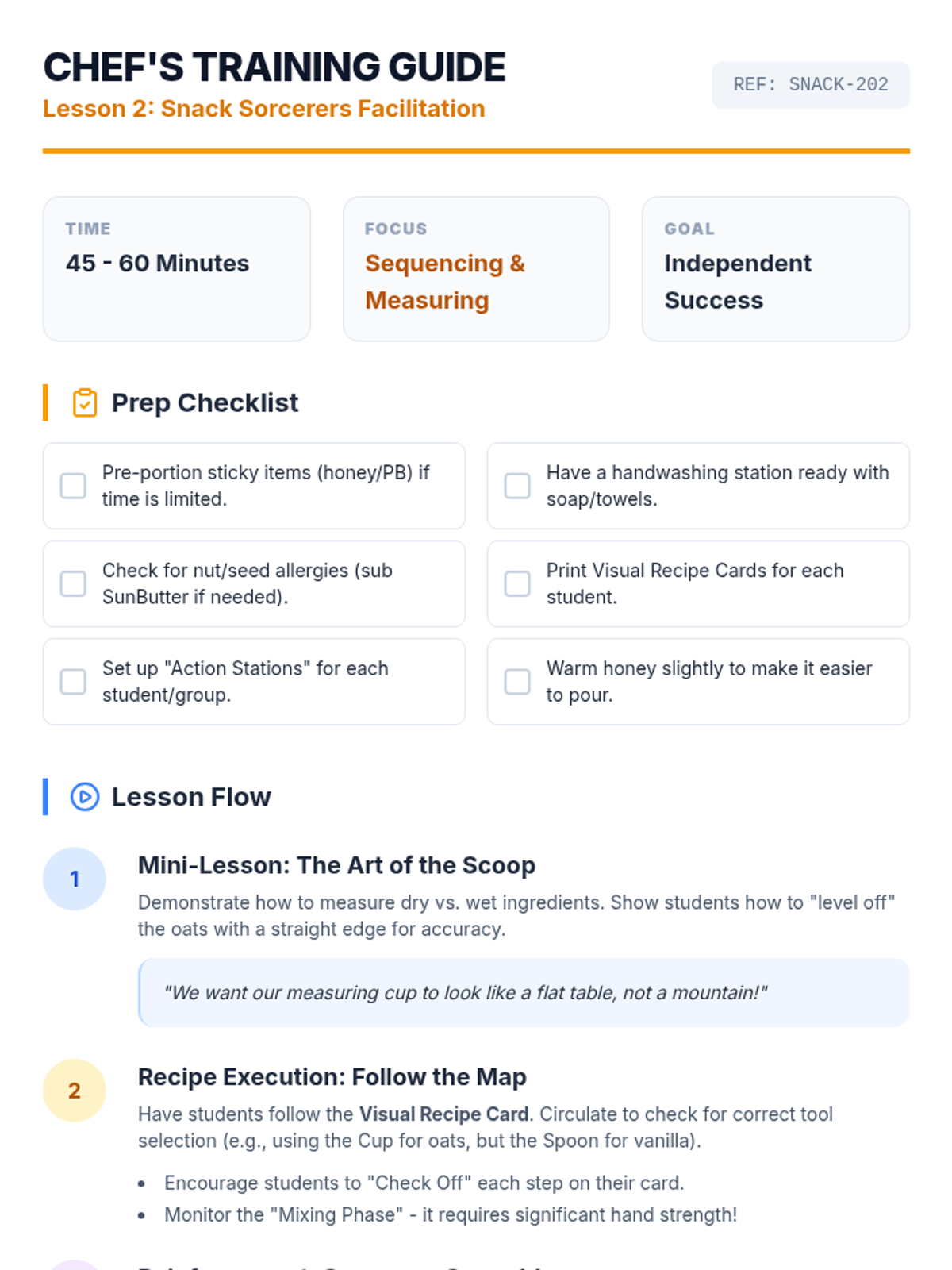
Students follow a visual recipe to create no-bake energy bites, focusing on sequencing, measuring, and independent living skills.
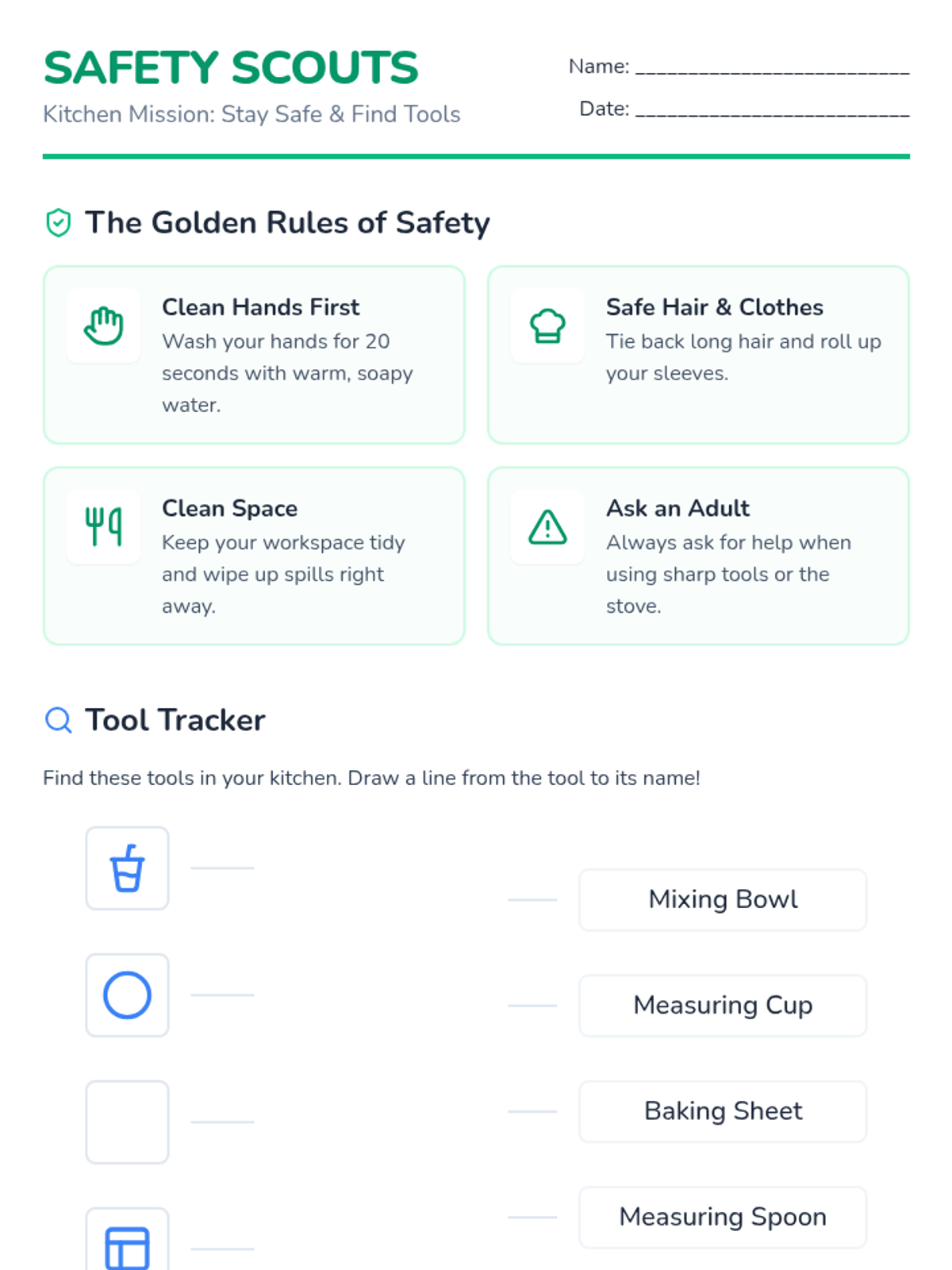
Students learn the essential rules of kitchen safety and identify common measuring tools and kitchen equipment.
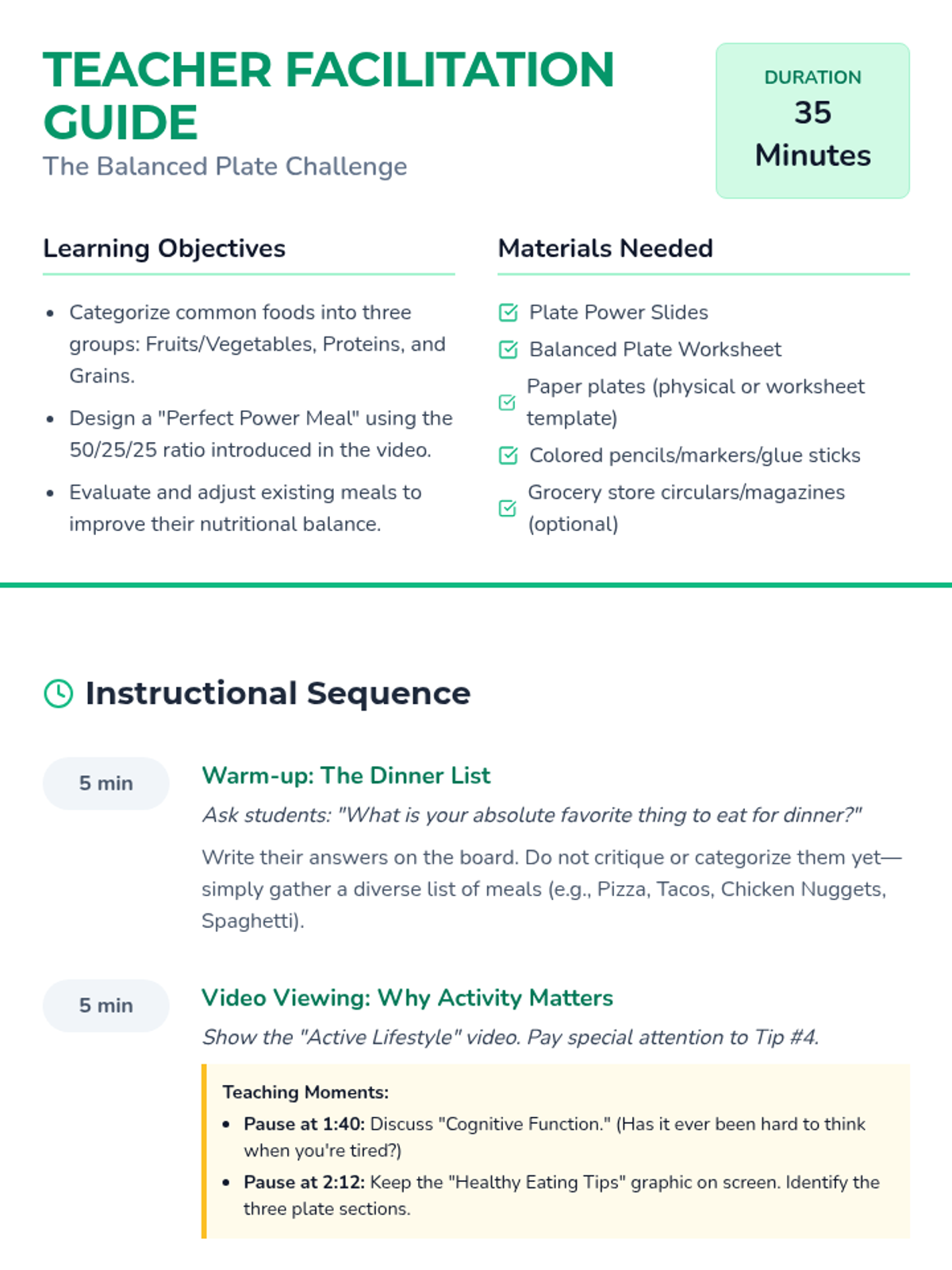
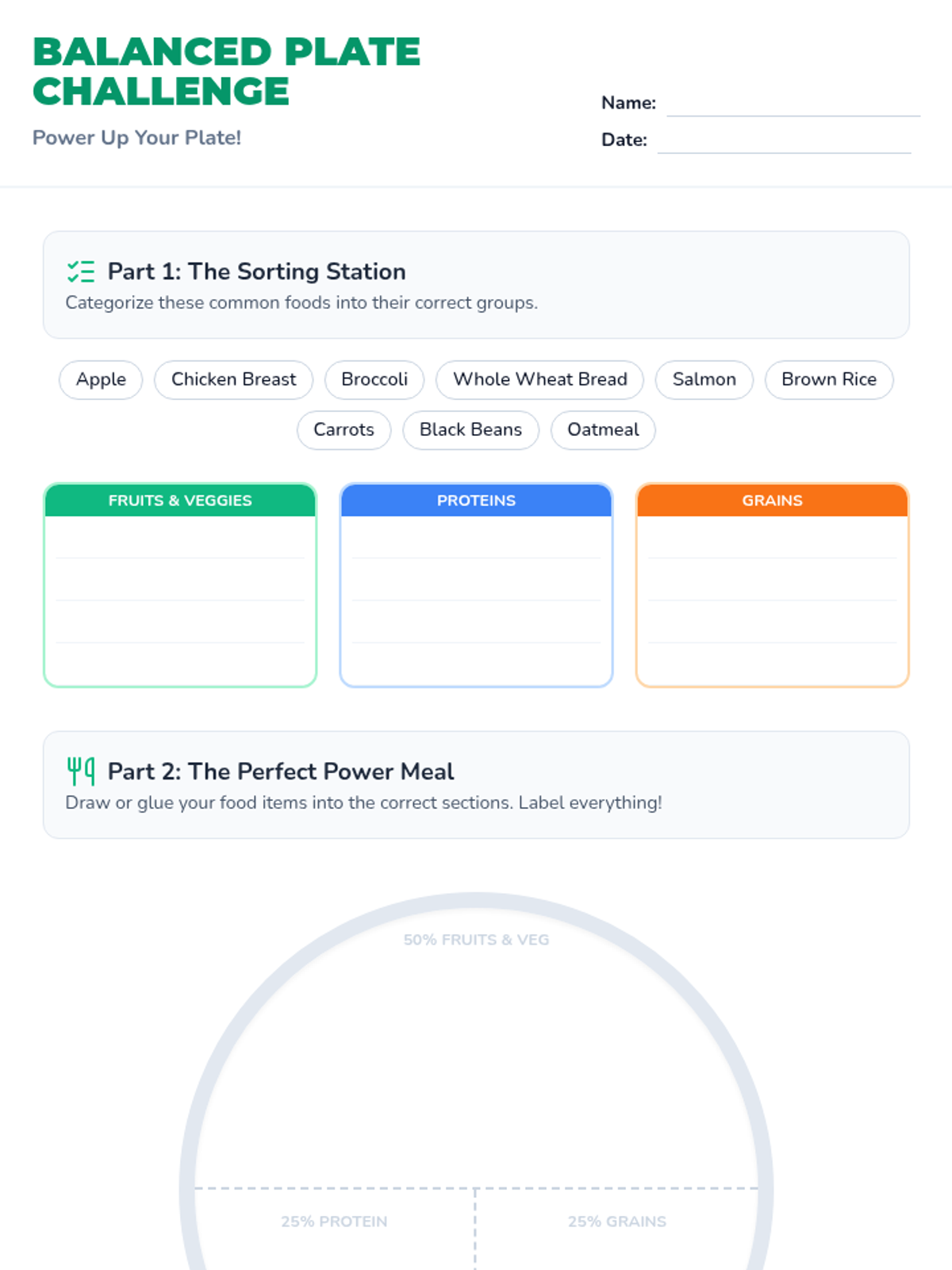
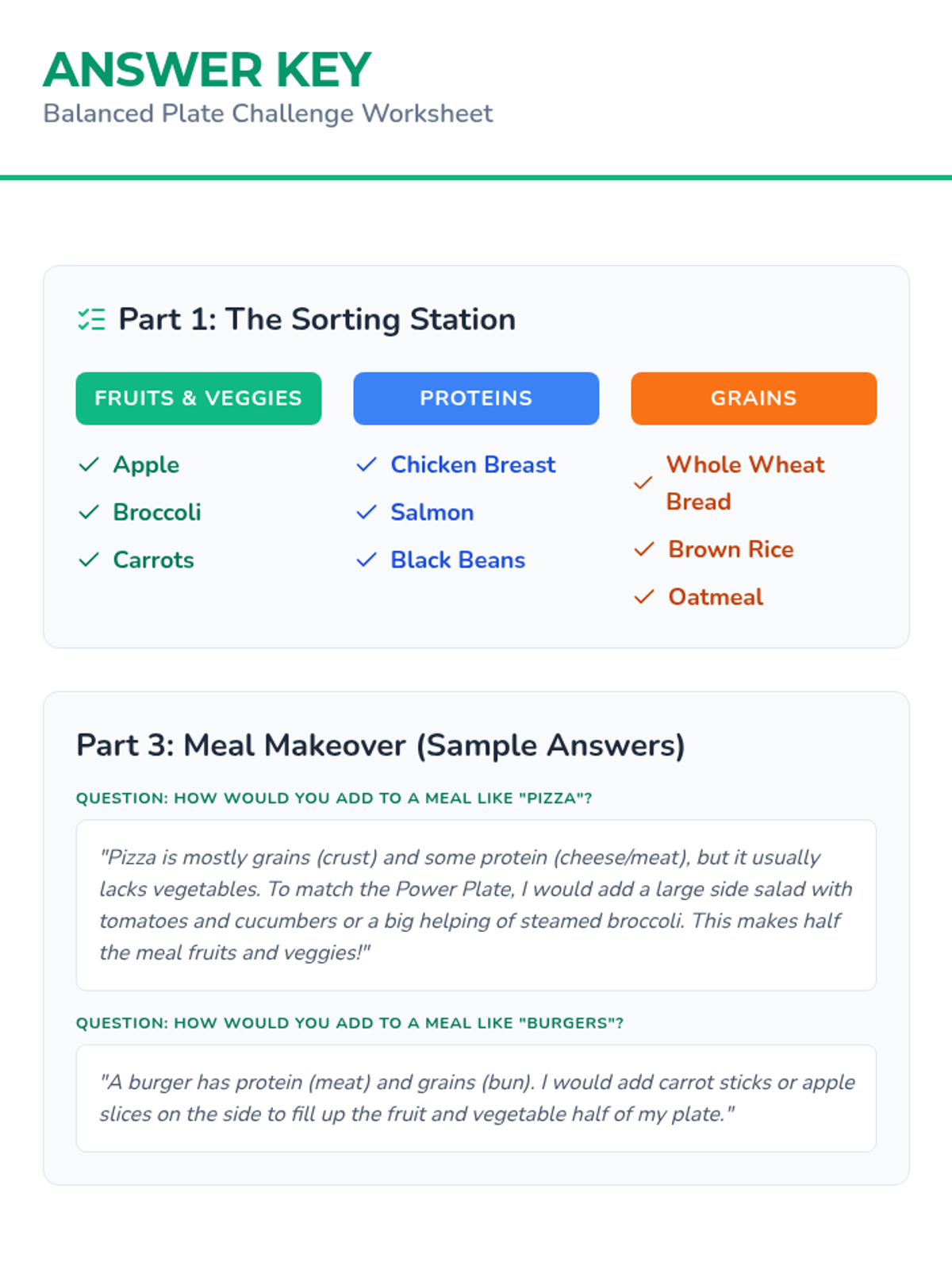
A lesson where students learn to categorize food groups and design a balanced meal using a 50/25/25 ratio (fruits/veggies, proteins, grains) based on nutritional tips.
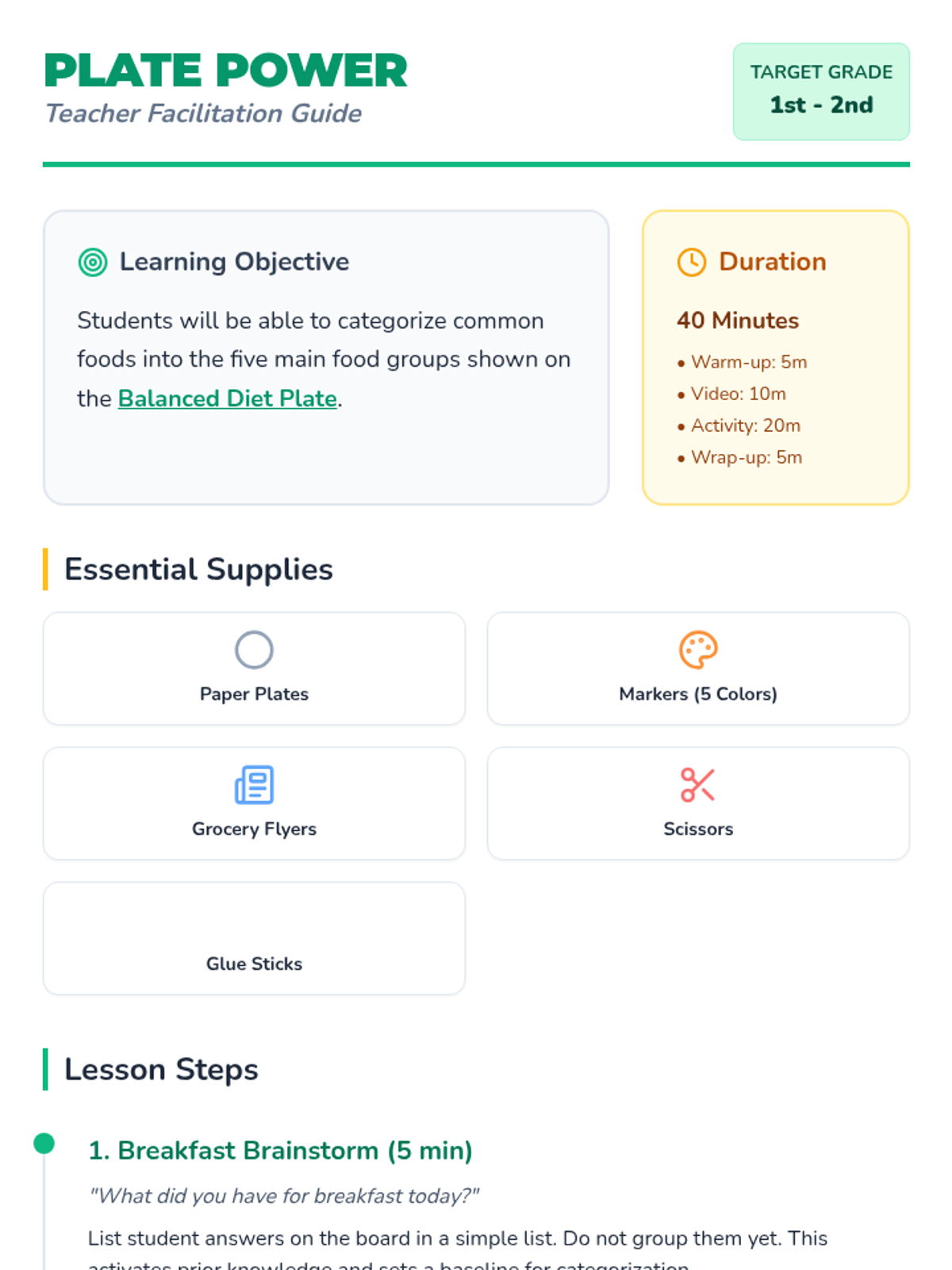
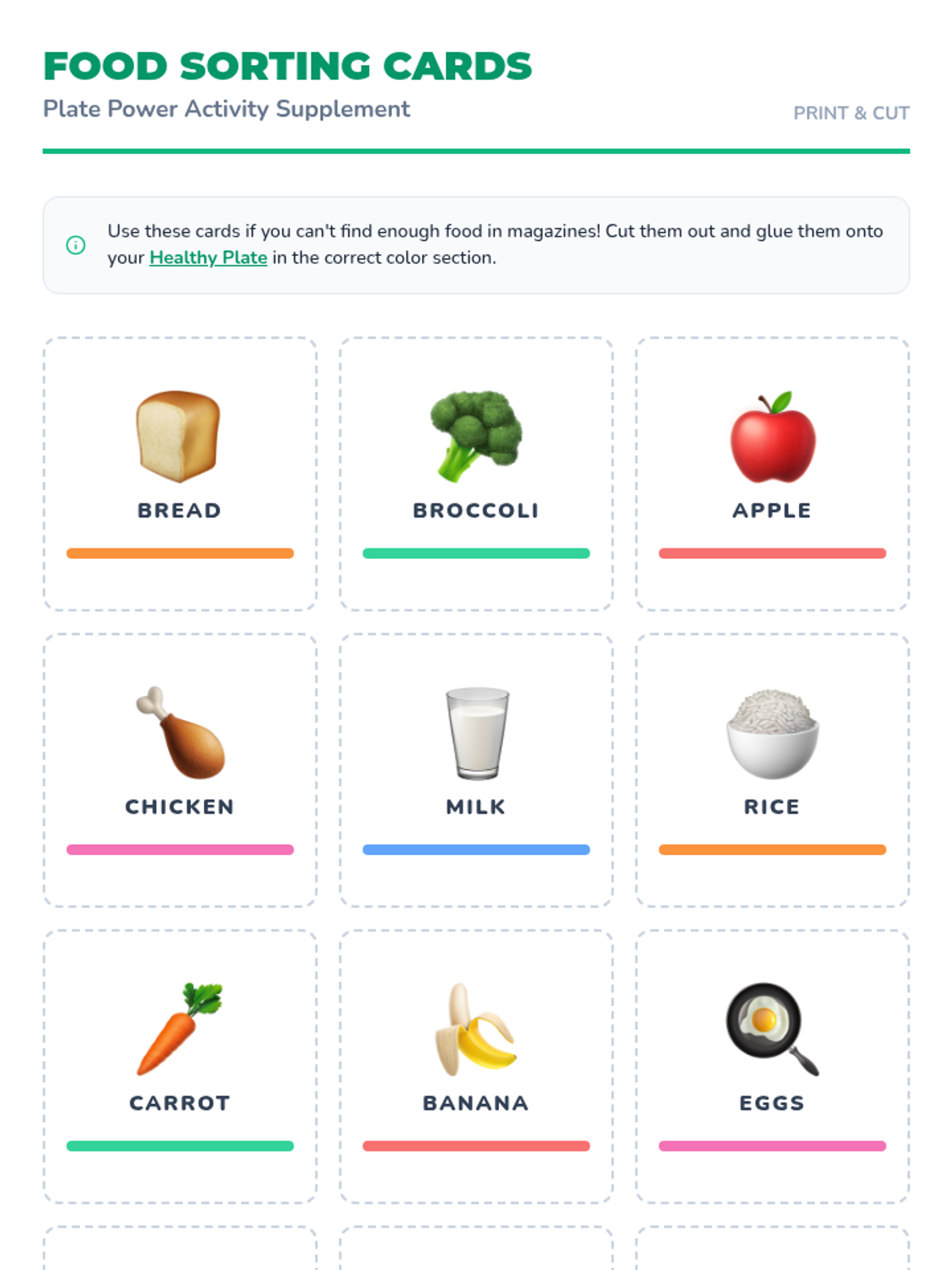
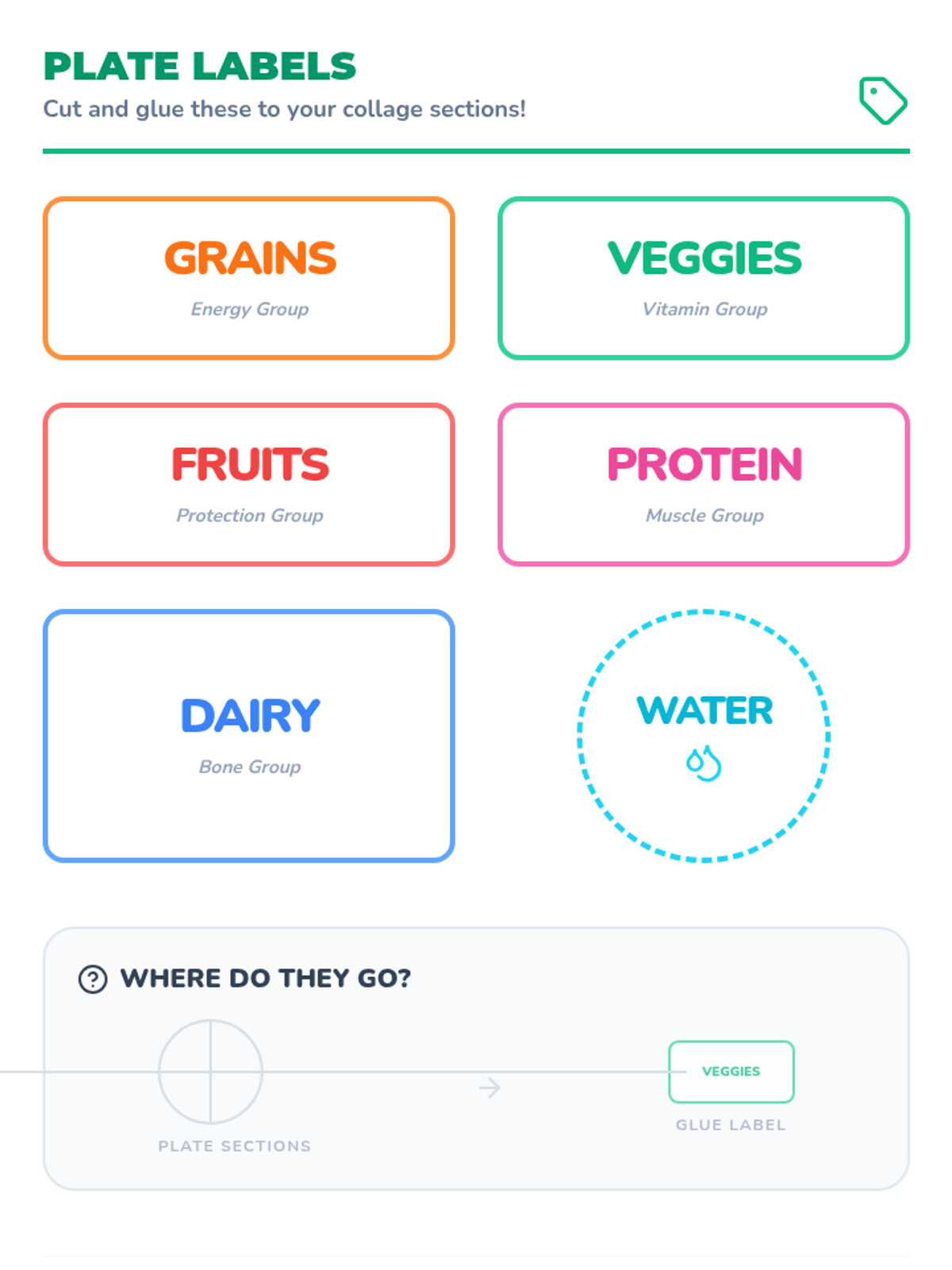
Students learn to categorize foods into the five main food groups (Grains, Vegetables, Fruits, Protein, and Dairy) using the Balanced Diet Plate model through an interactive video and a hands-on collage activity.
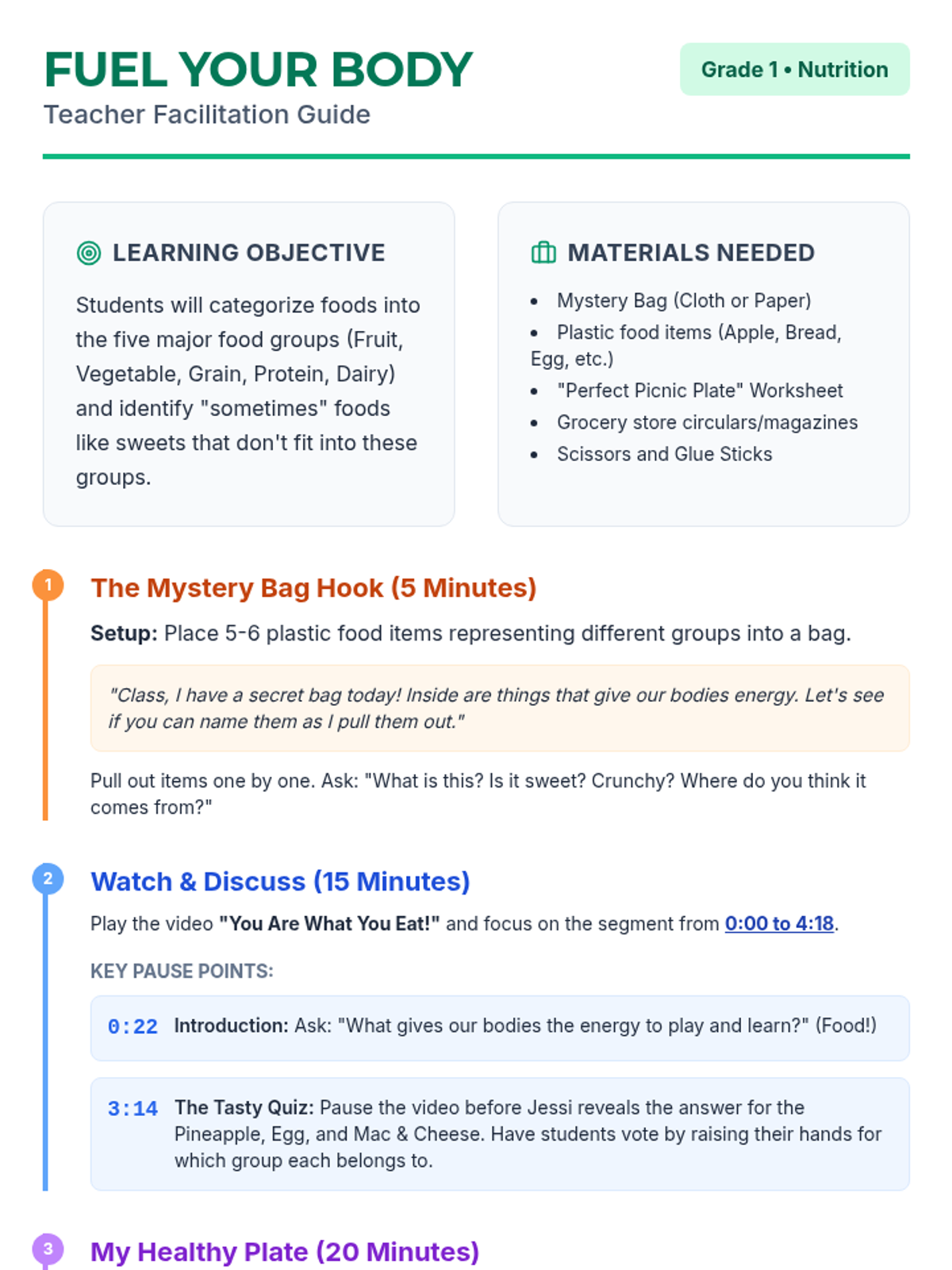
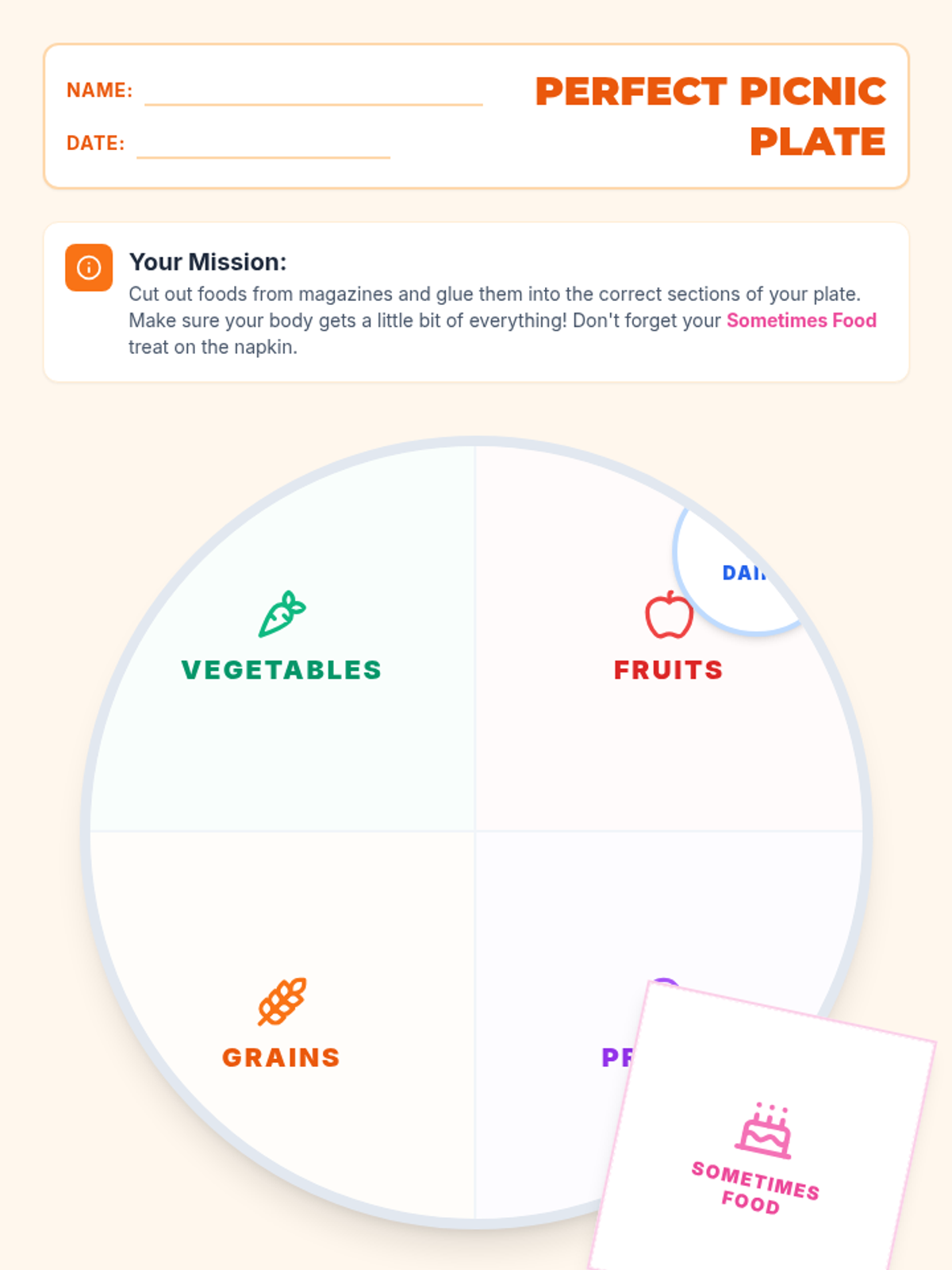
A 1st-grade lesson focused on identifying the five major food groups and understanding balanced nutrition through a 'My Healthy Plate' hands-on activity. Students watch a guided video segment, participate in a mystery bag hook, and create their own nutritional collage.
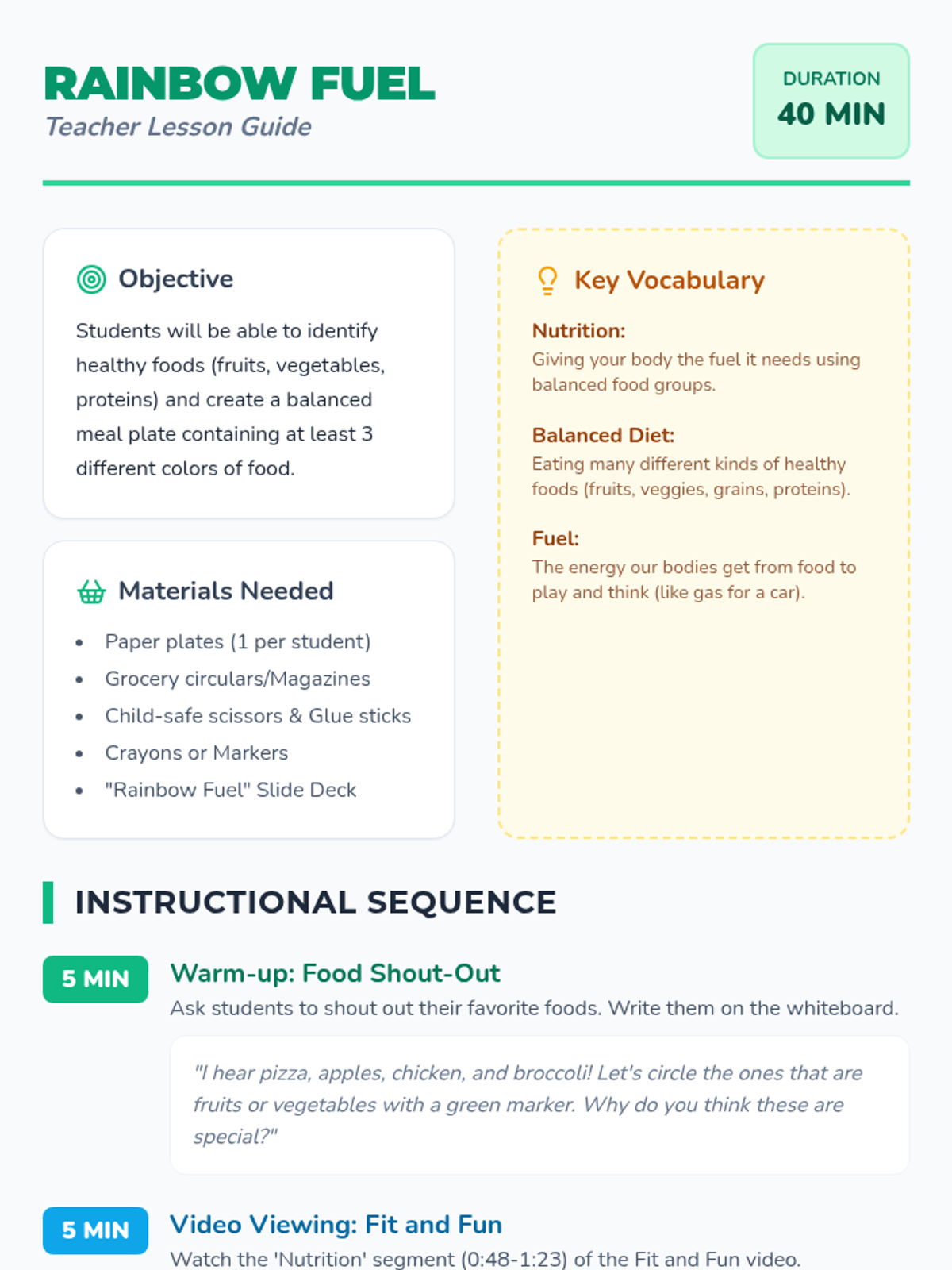
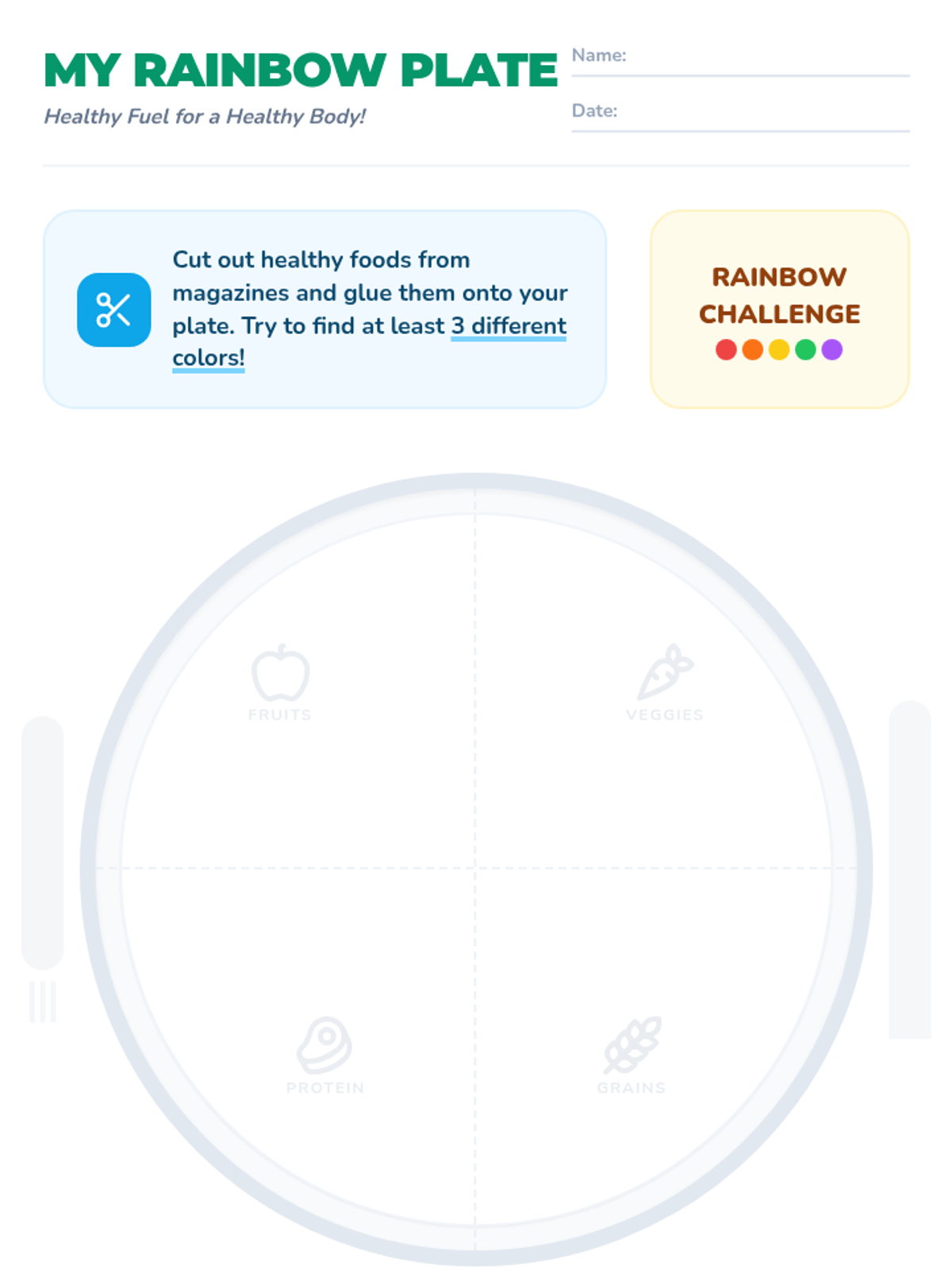
A Kindergarten to 1st Grade lesson focused on identifying healthy foods and building a balanced, colorful meal plate using the 'Eat the Rainbow' concept.
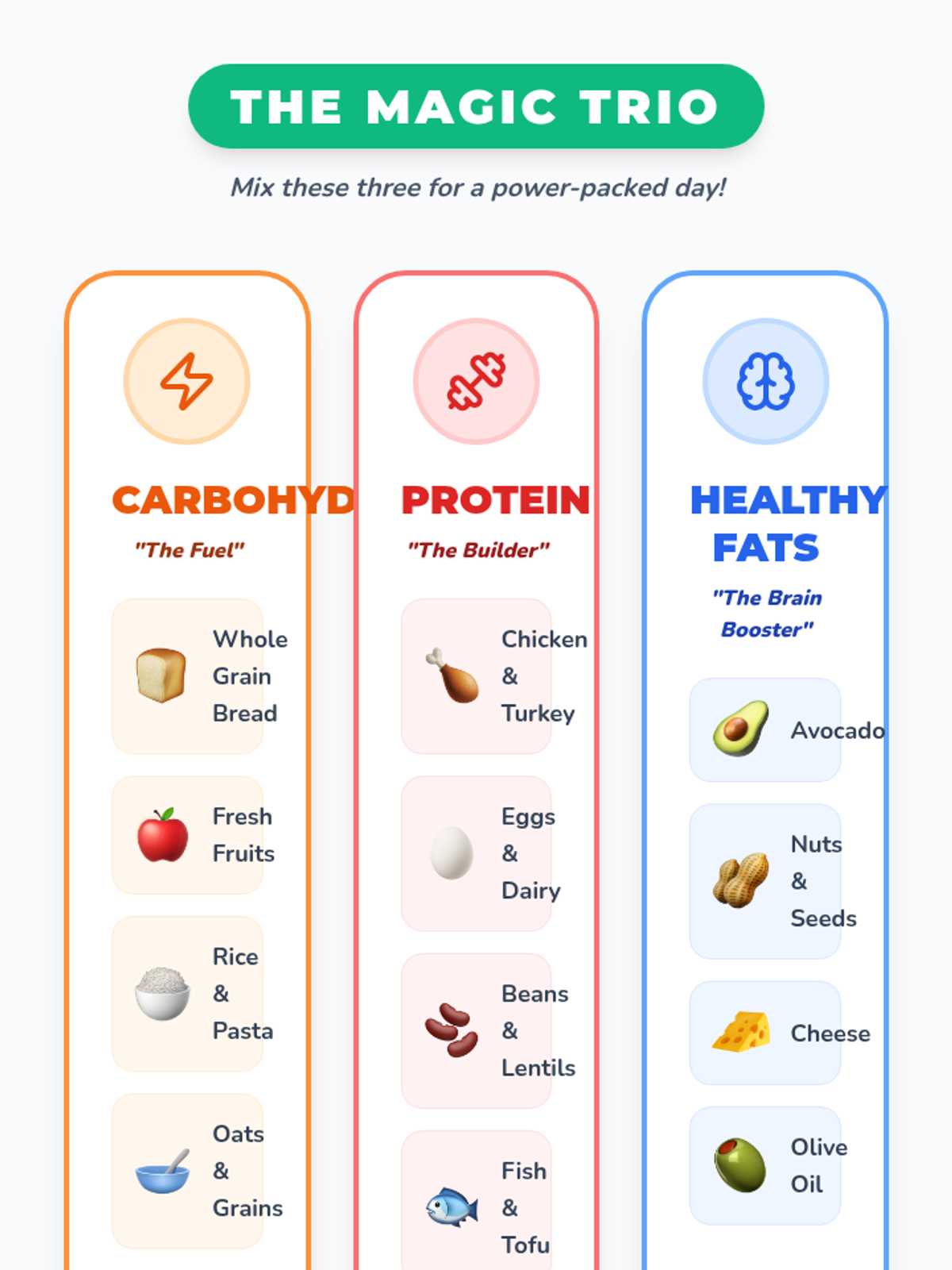
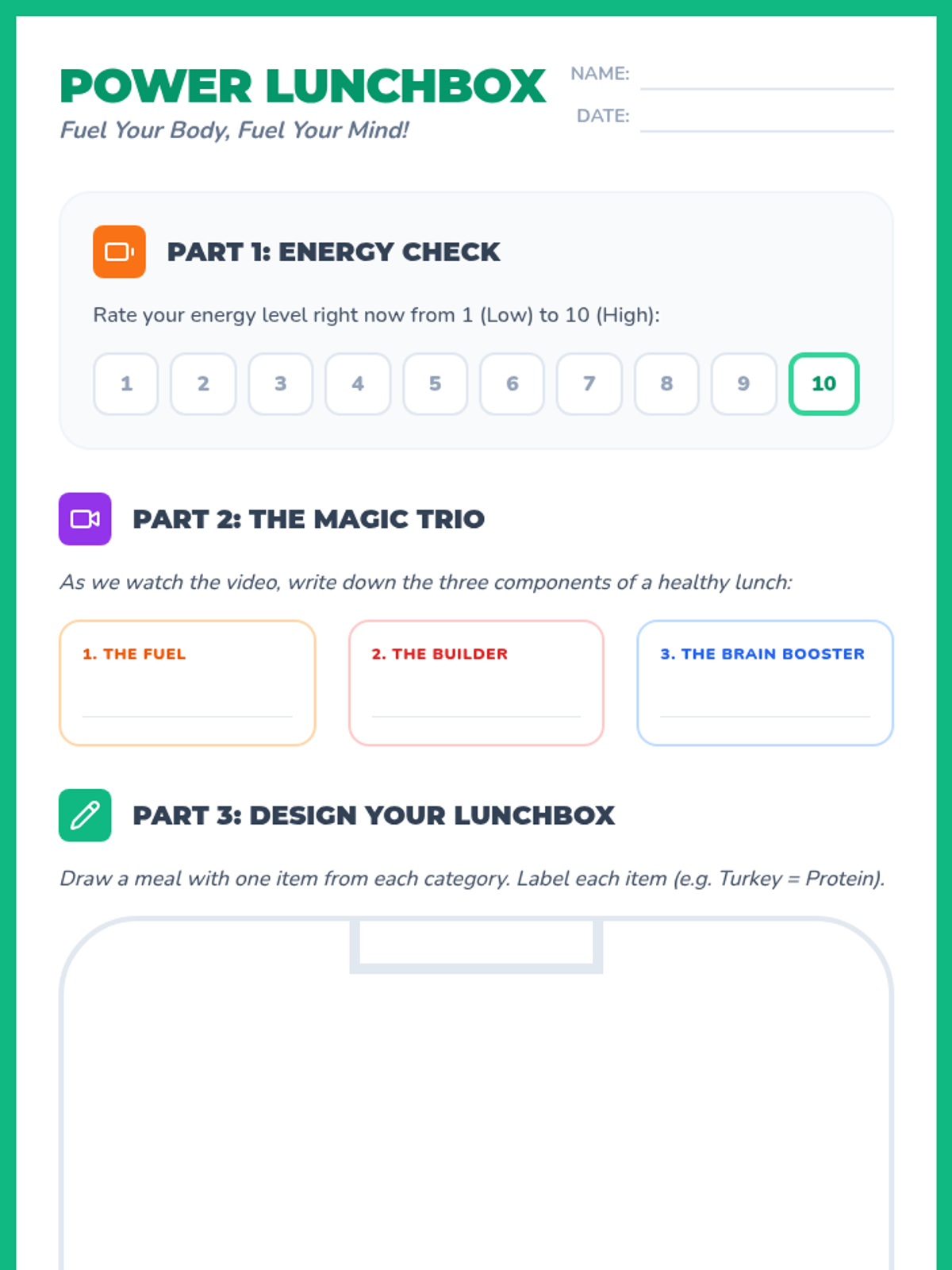
Students will learn about the 'Magic Trio' of nutrition—carbohydrates, proteins, and healthy fats—to understand how food fuels their bodies. They will analyze energy levels and design a balanced 'Power Lunchbox' based on video-guided principles.
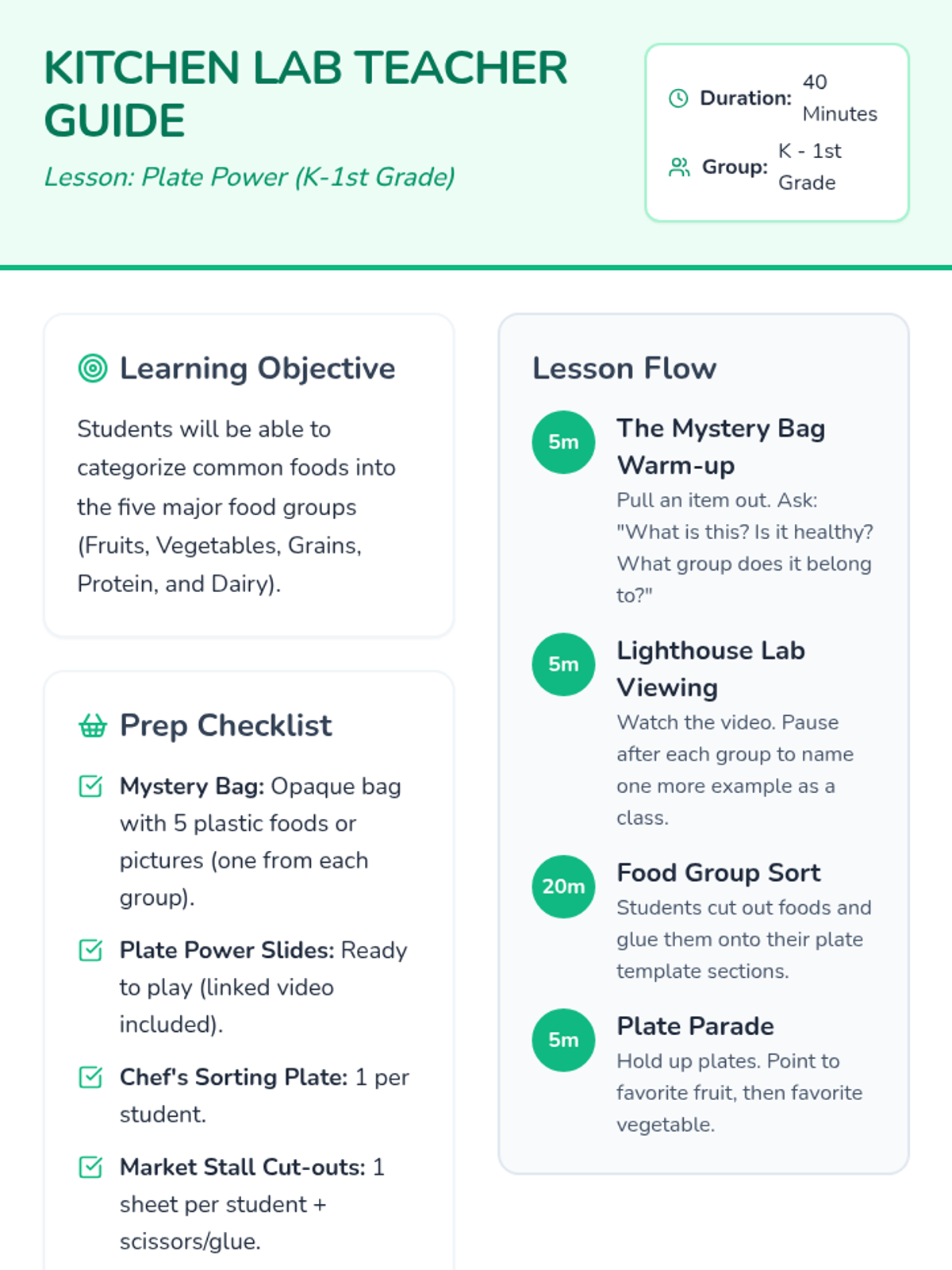
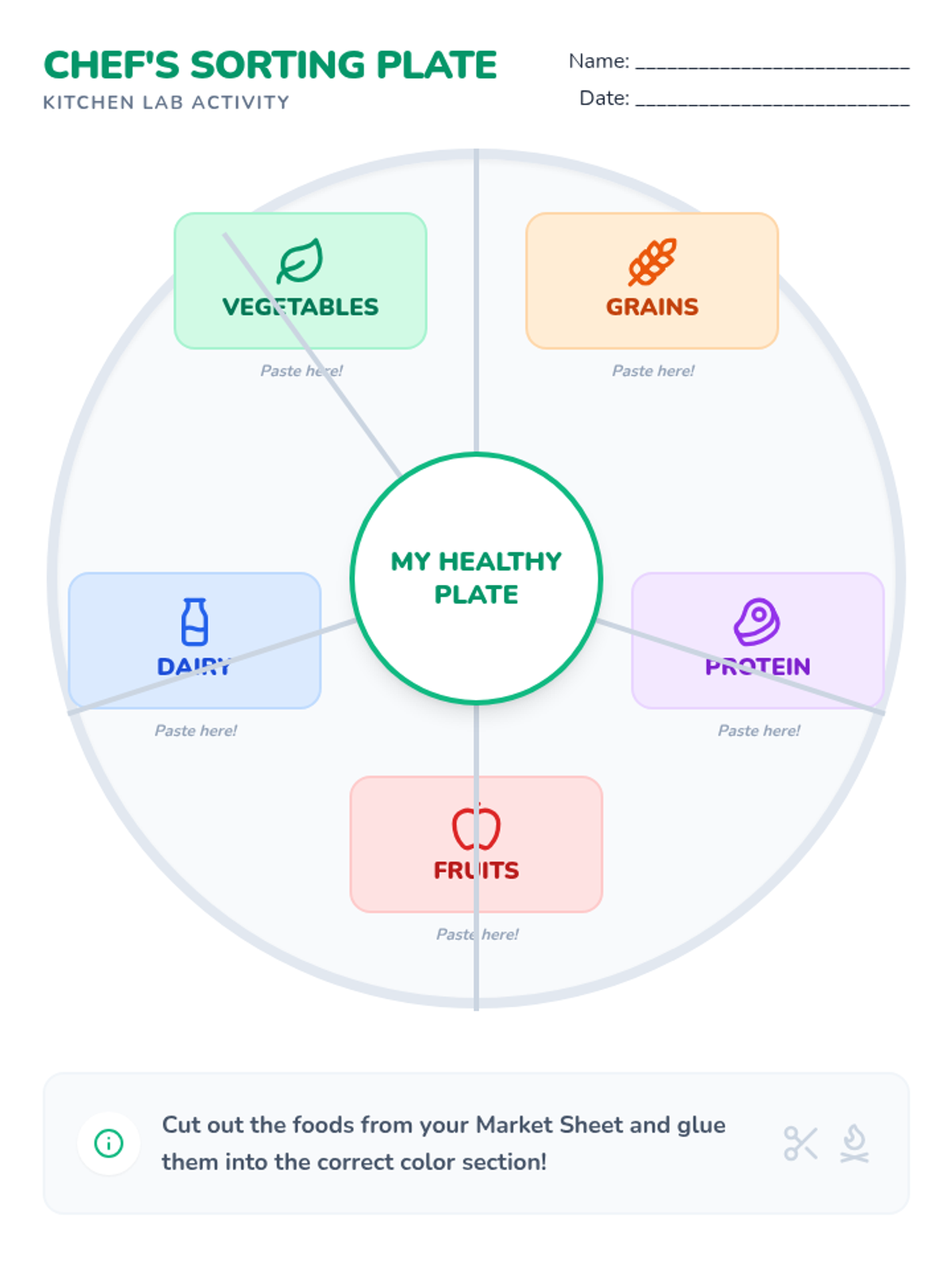
A Kindergarten and 1st-grade lesson focused on identifying and categorizing foods into the five major food groups using a 'Kitchen Lab' theme. Students will watch a guided video, participate in a hands-on sorting activity on a paper plate, and learn about the specific benefits each food group provides to the body.
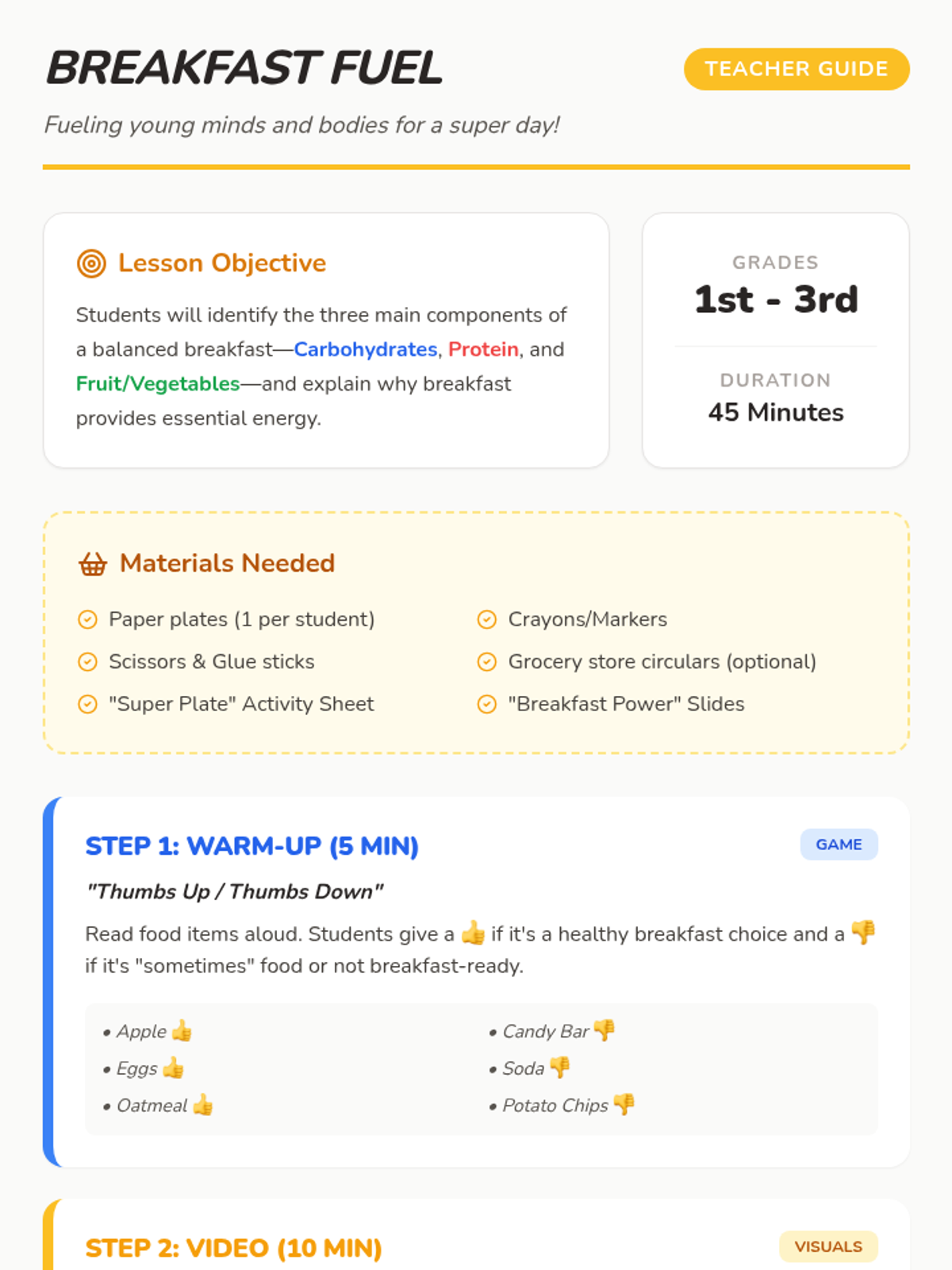
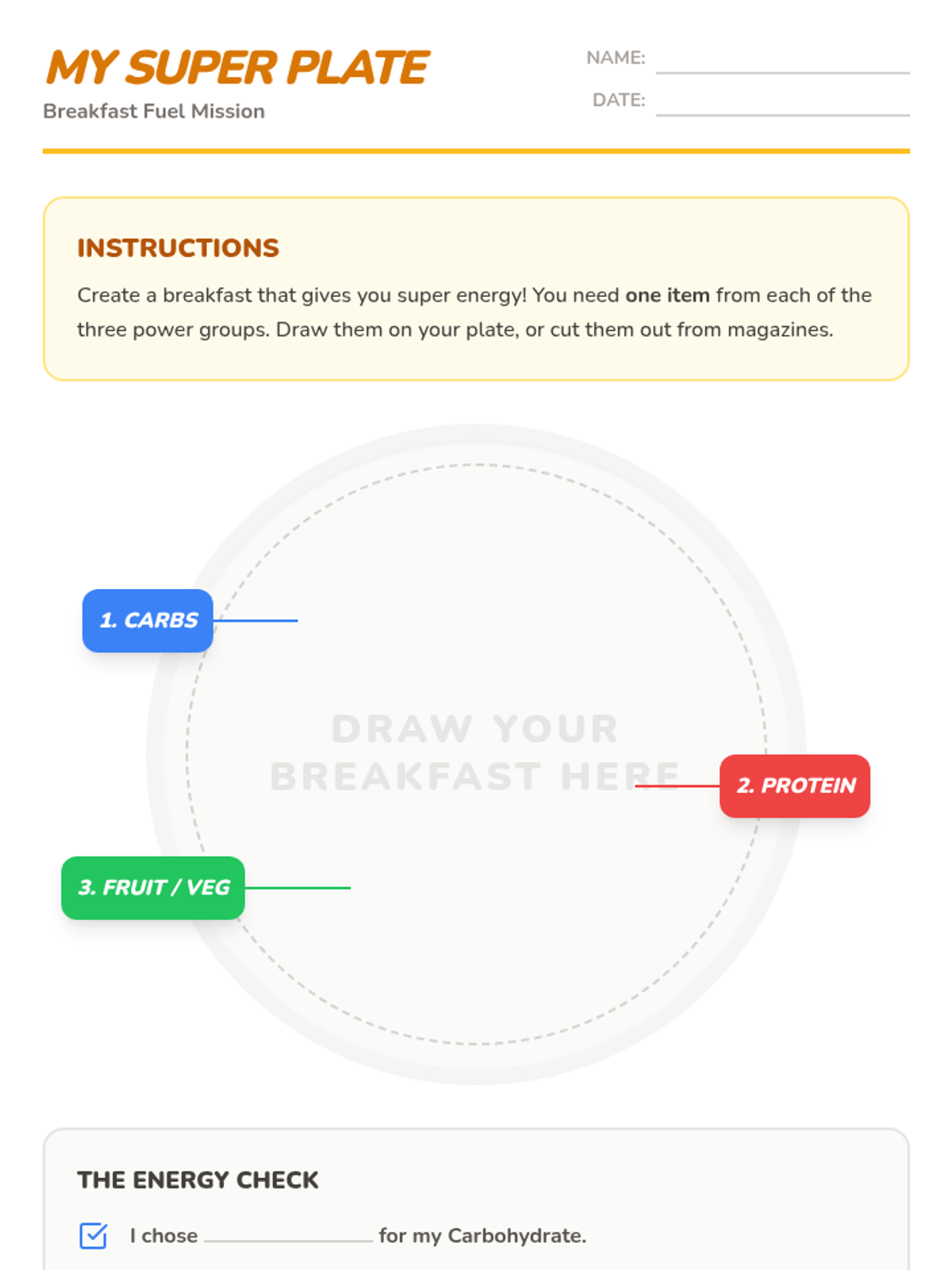
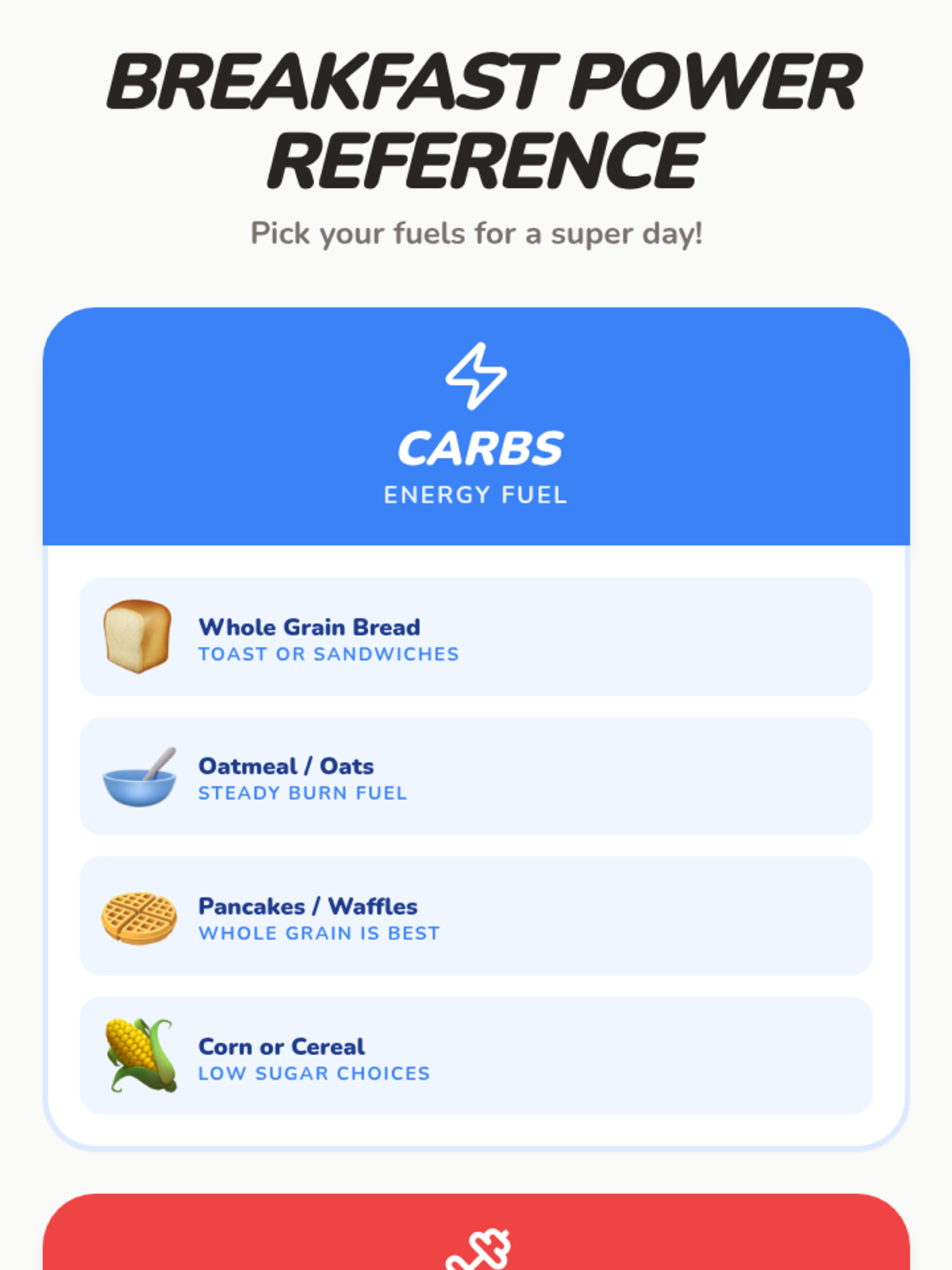
A high-energy lesson for 1st-3rd grade students to learn about the importance of a balanced breakfast and identify the three main components needed to fuel their bodies: carbohydrates, protein, and fruit/vegetables.
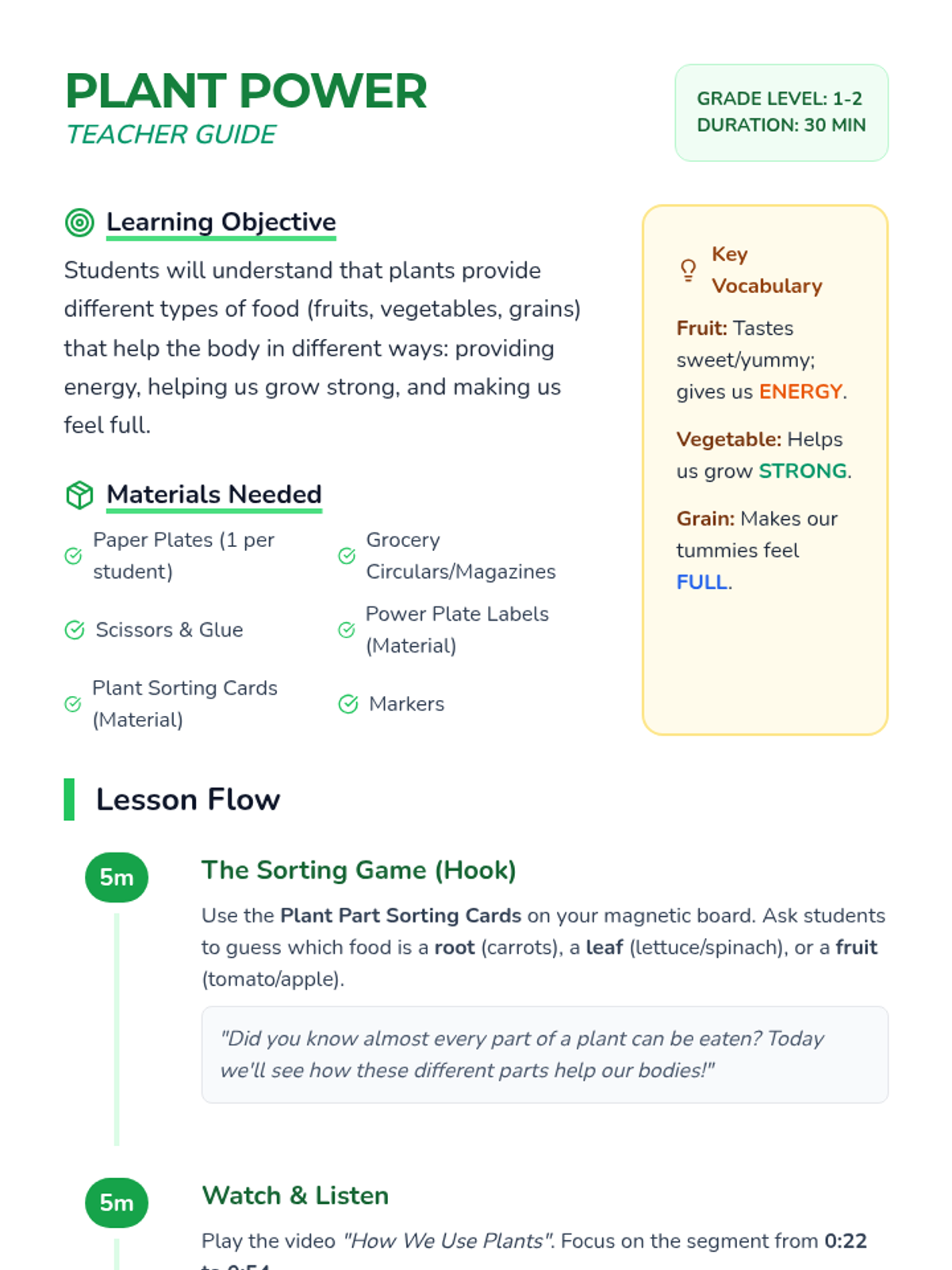
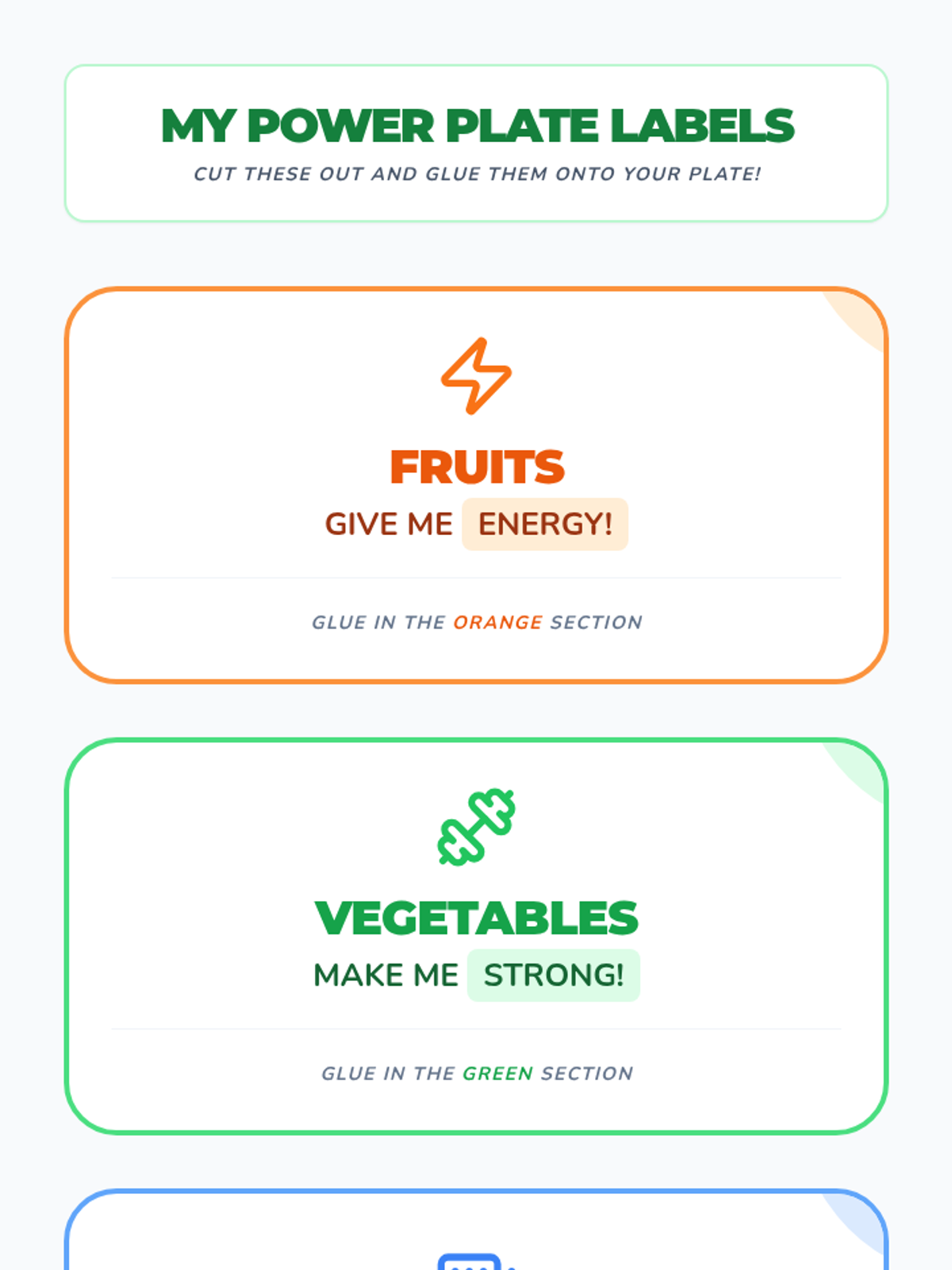
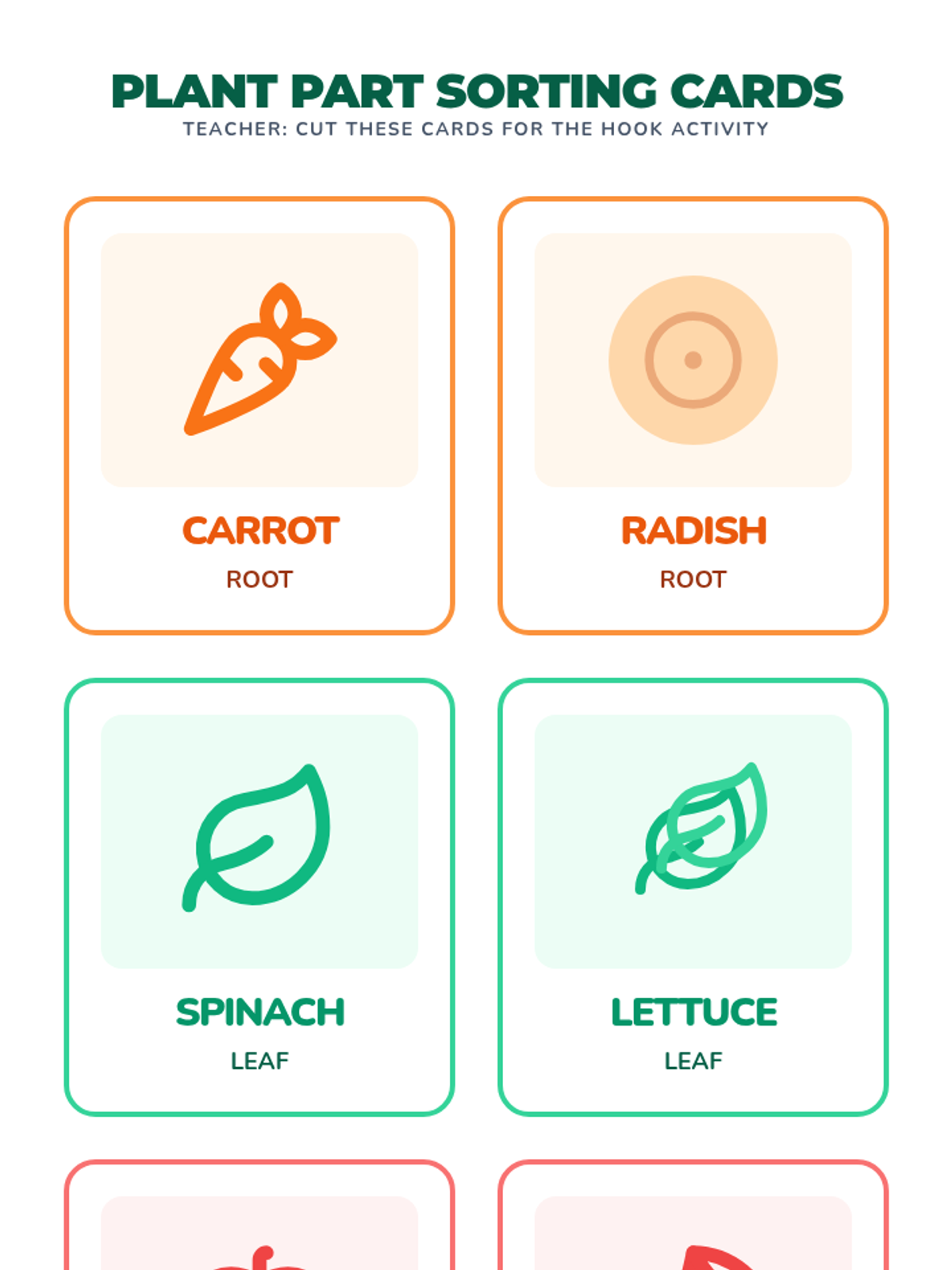
Students explore how plants provide food in the form of fruits, vegetables, and grains, learning the specific benefits each group provides for the human body through video, discussion, and a hands-on 'Power Plate' activity.
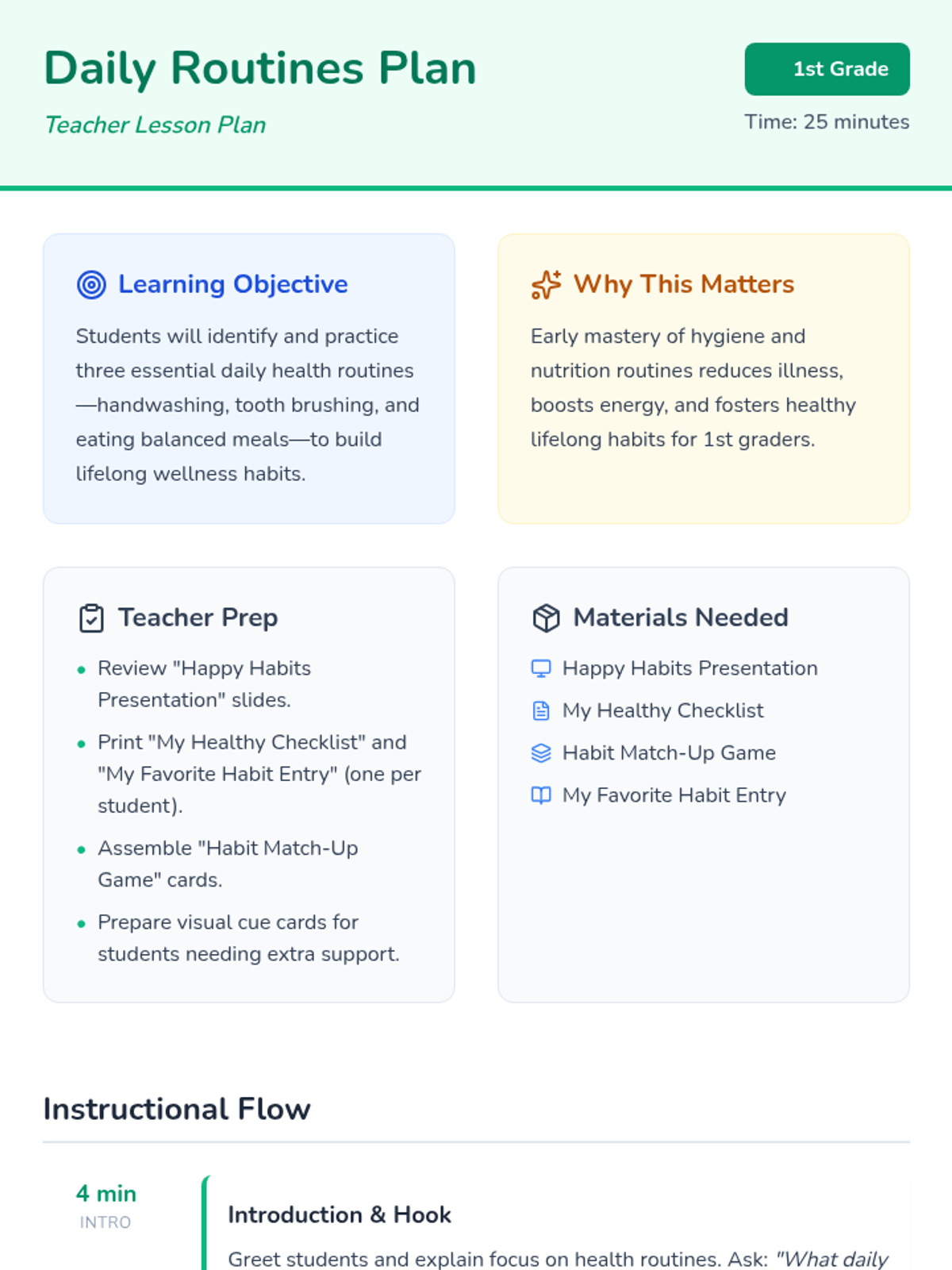
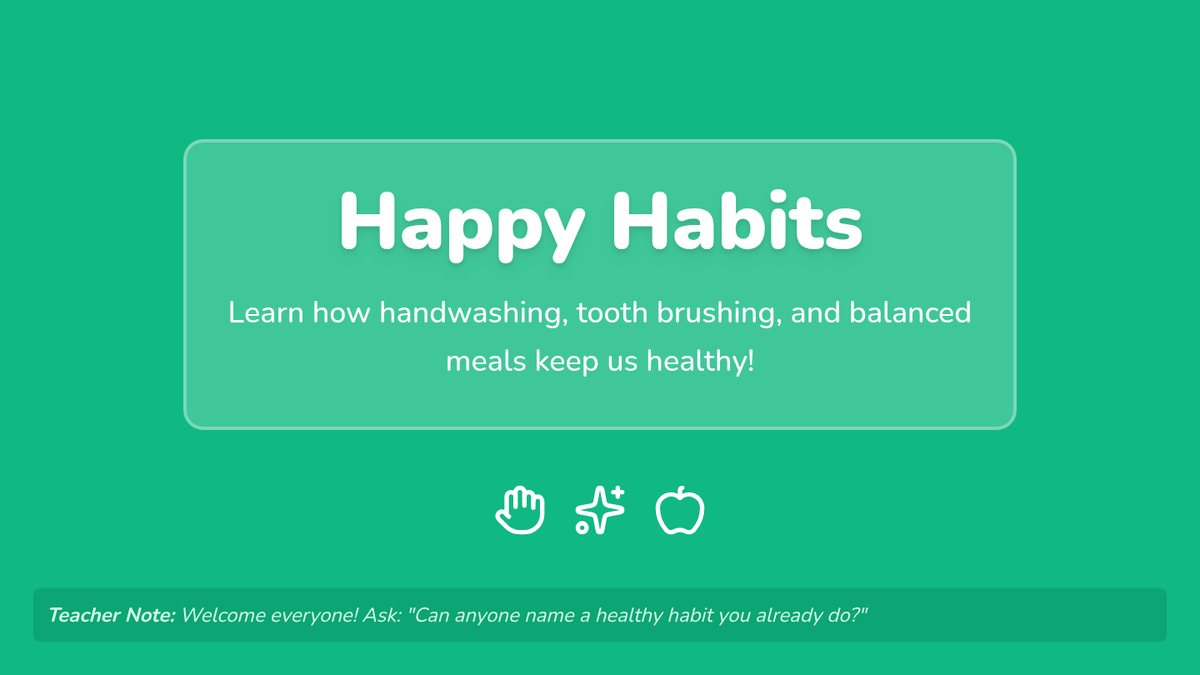
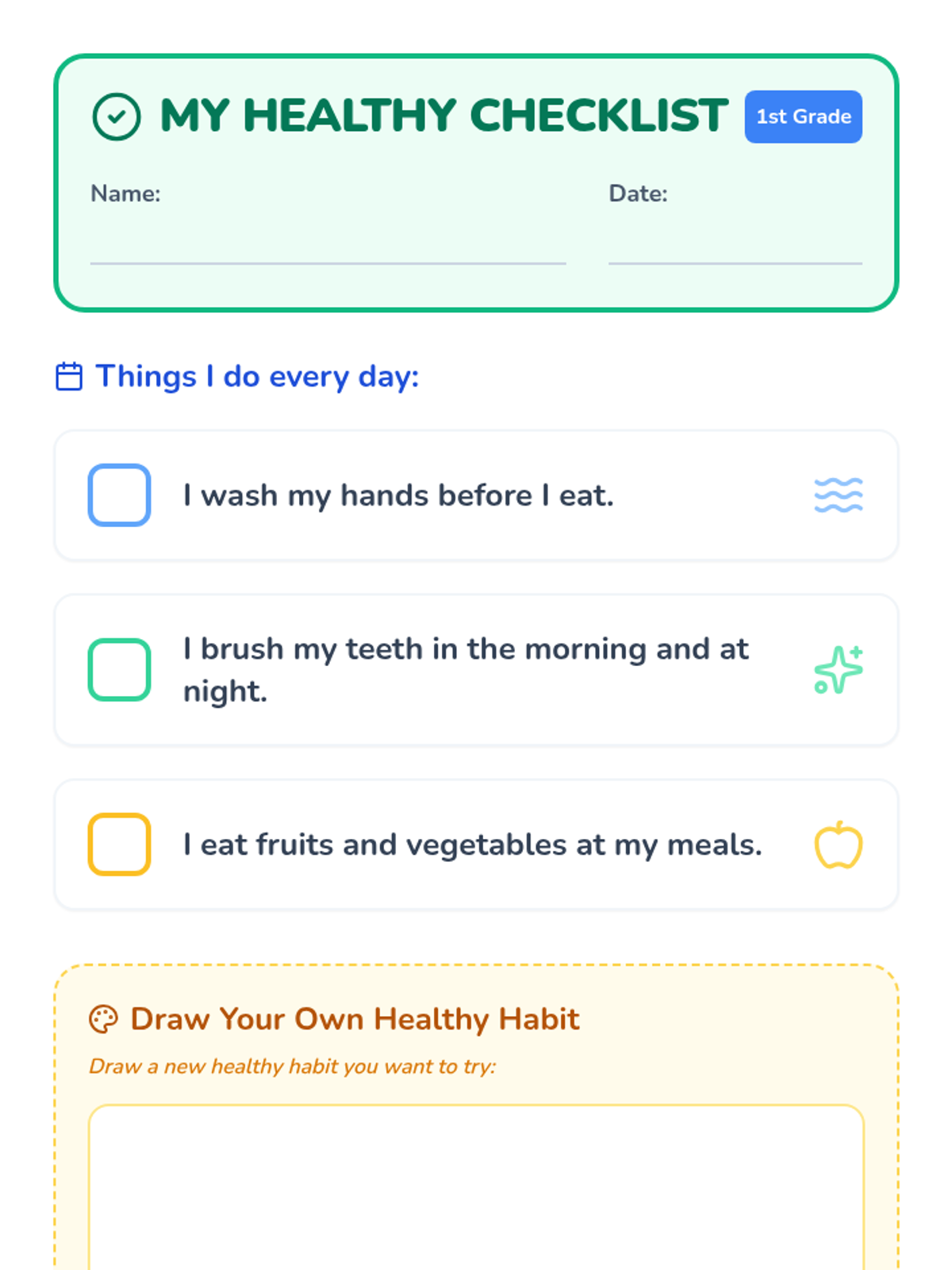
A 25-minute Tier 1 lesson for 1st graders focused on essential daily health routines—handwashing, tooth brushing, and balanced meals—to build lifelong wellness habits.
A 30-minute lesson focusing on identifying common allergy symptoms, understanding food safety rules, and recognizing the importance of EpiPens for emergency response.
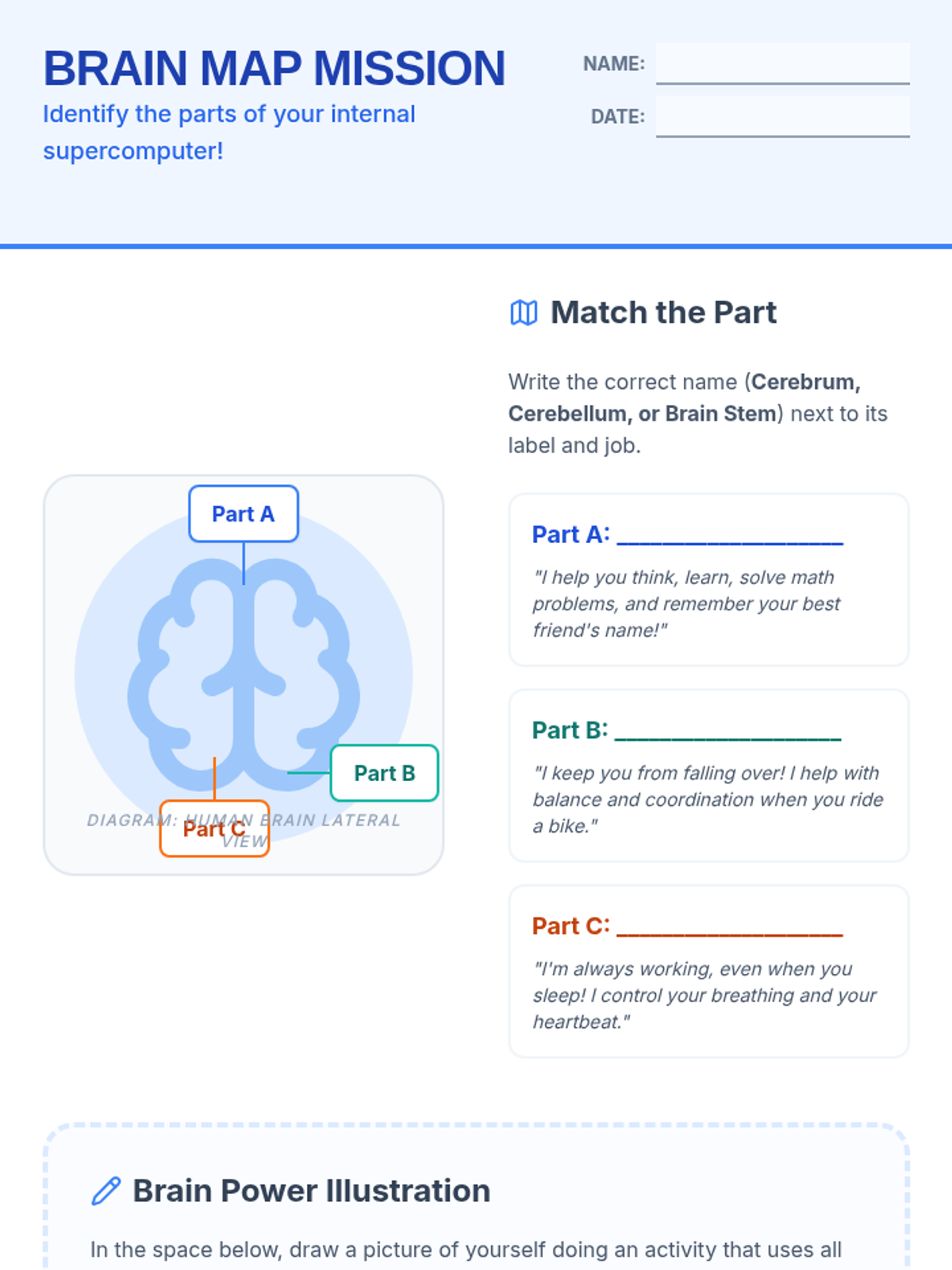
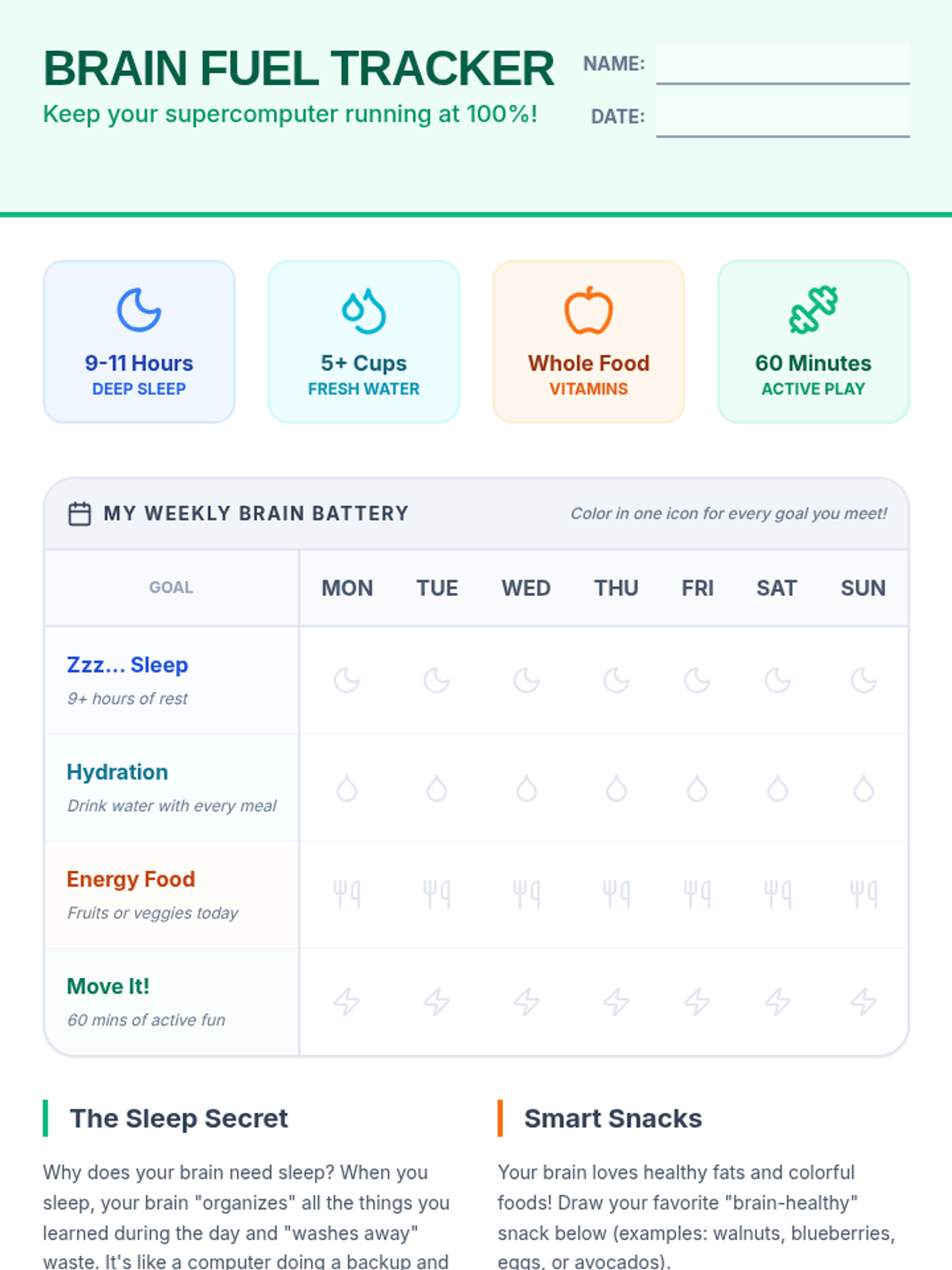
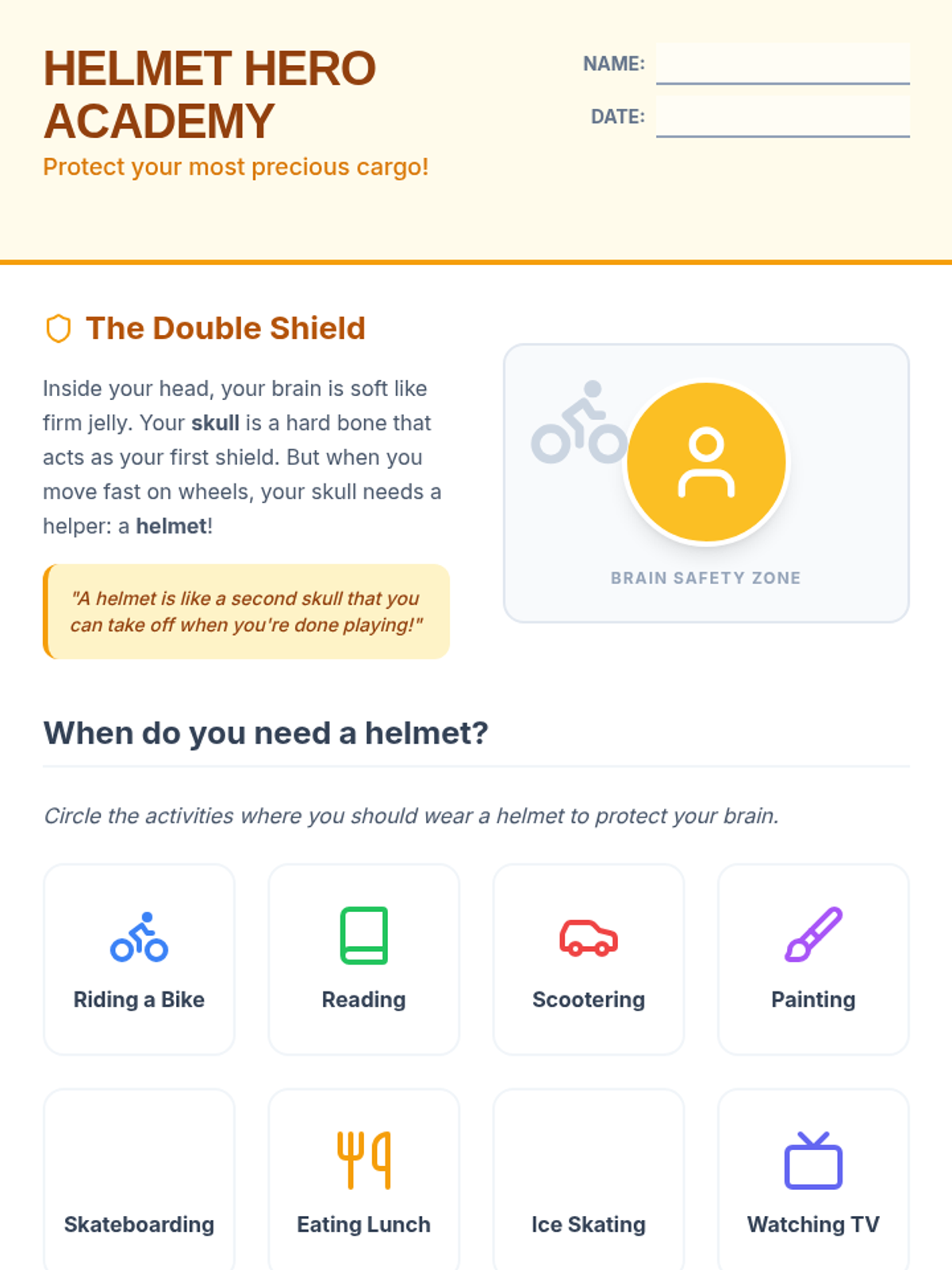
A series of interactive materials teaching elementary students about how their brain works, how to keep it healthy through nutrition and sleep, and how to protect it during physical activities.
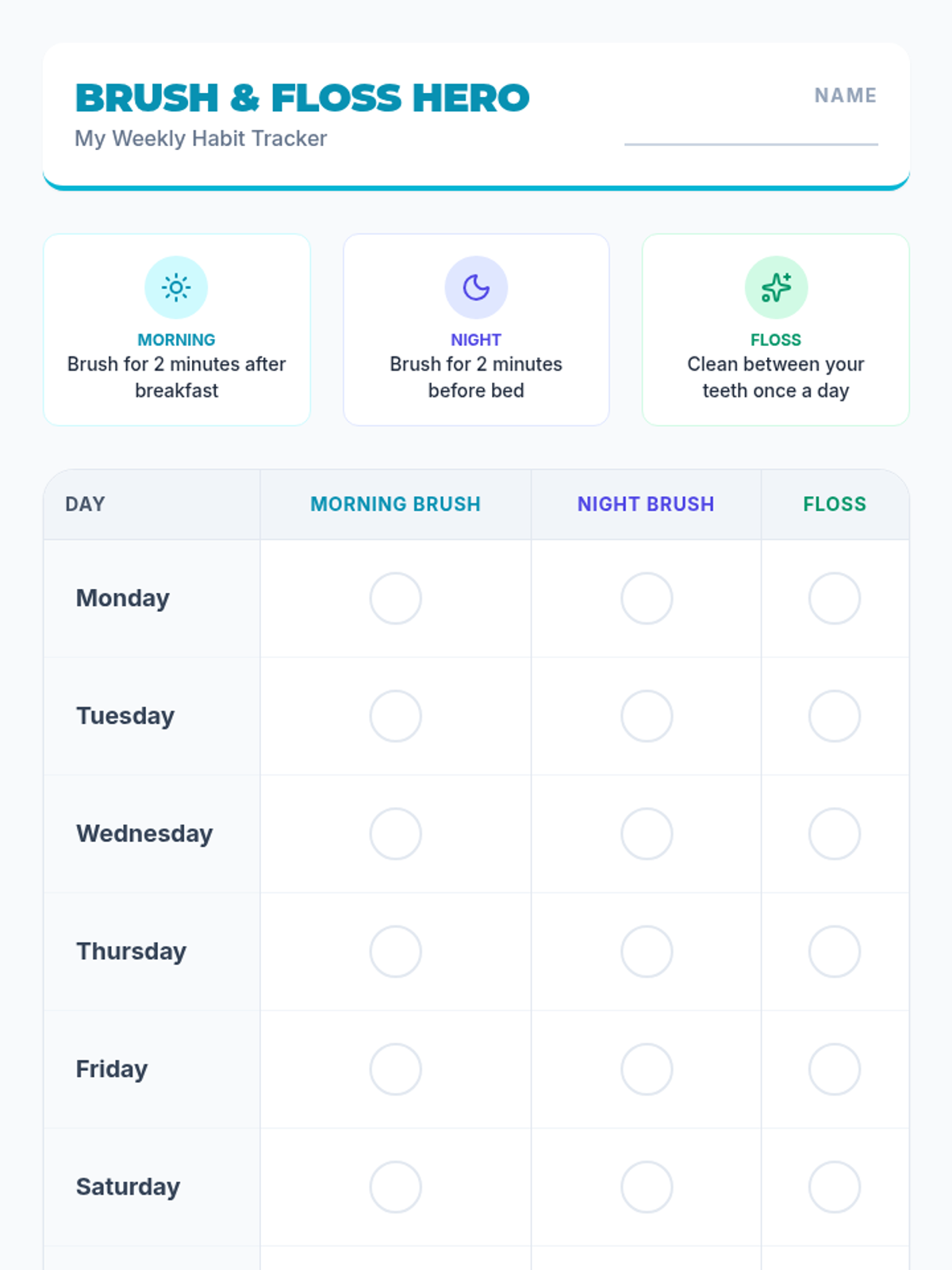
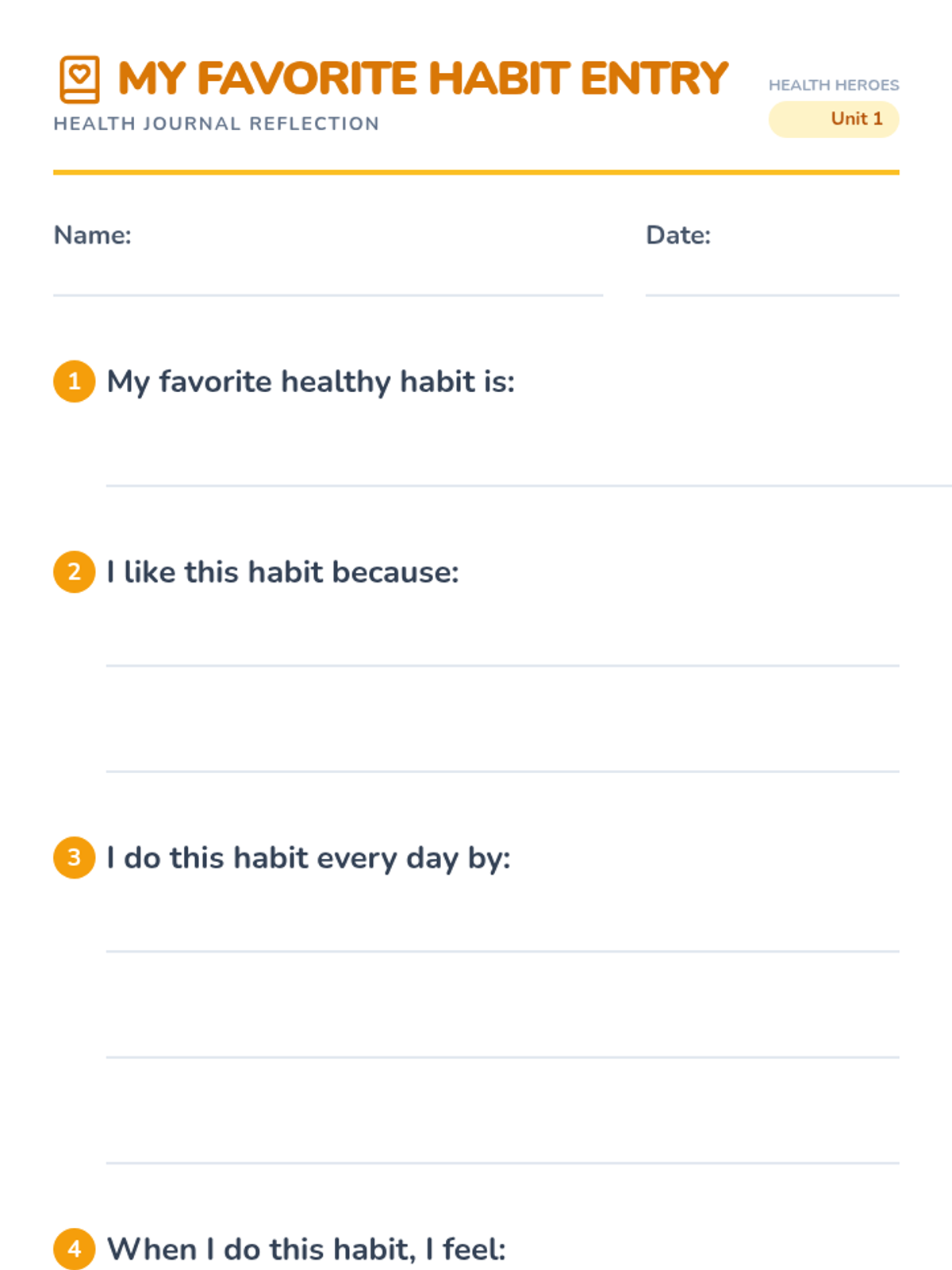
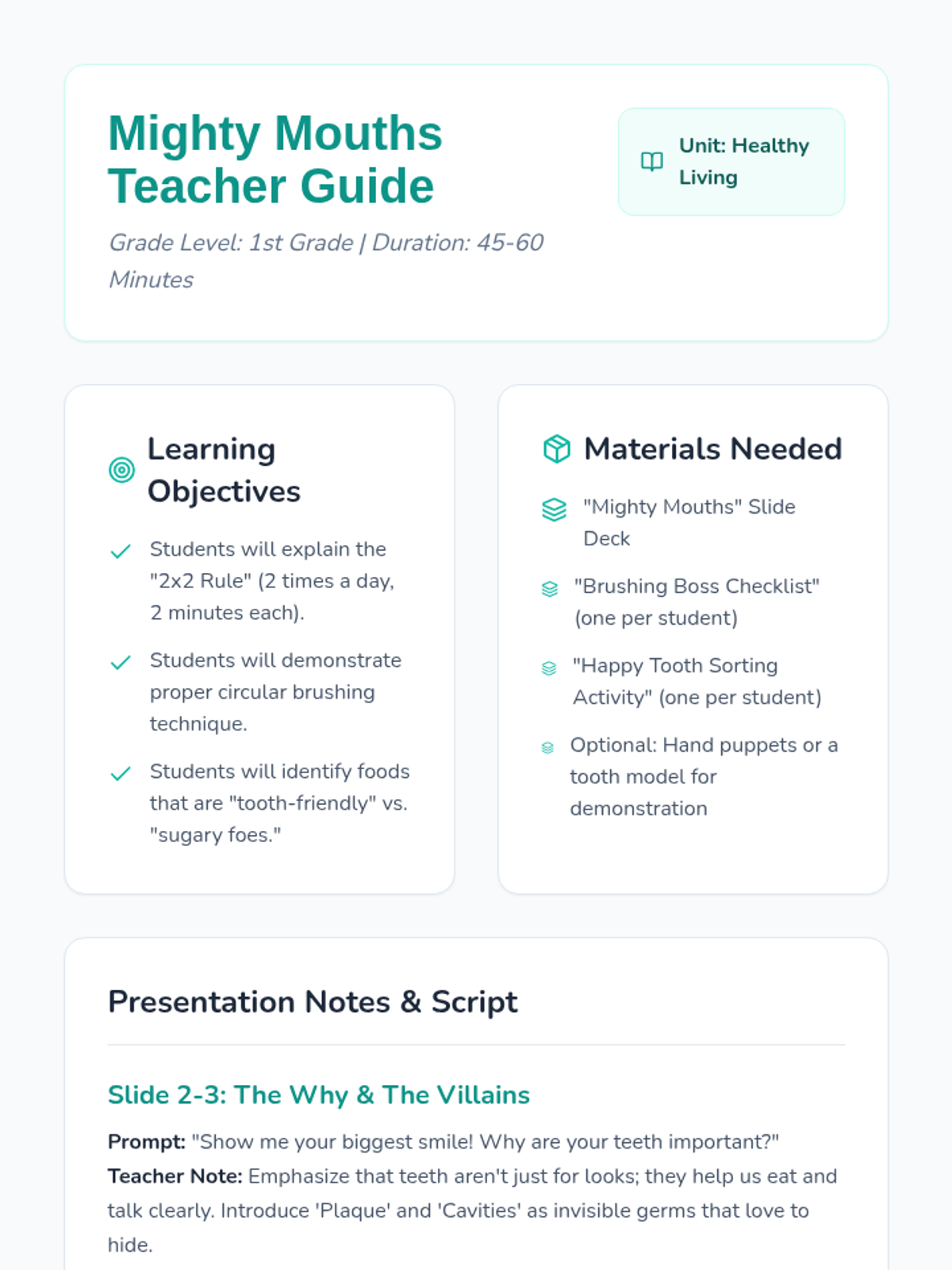
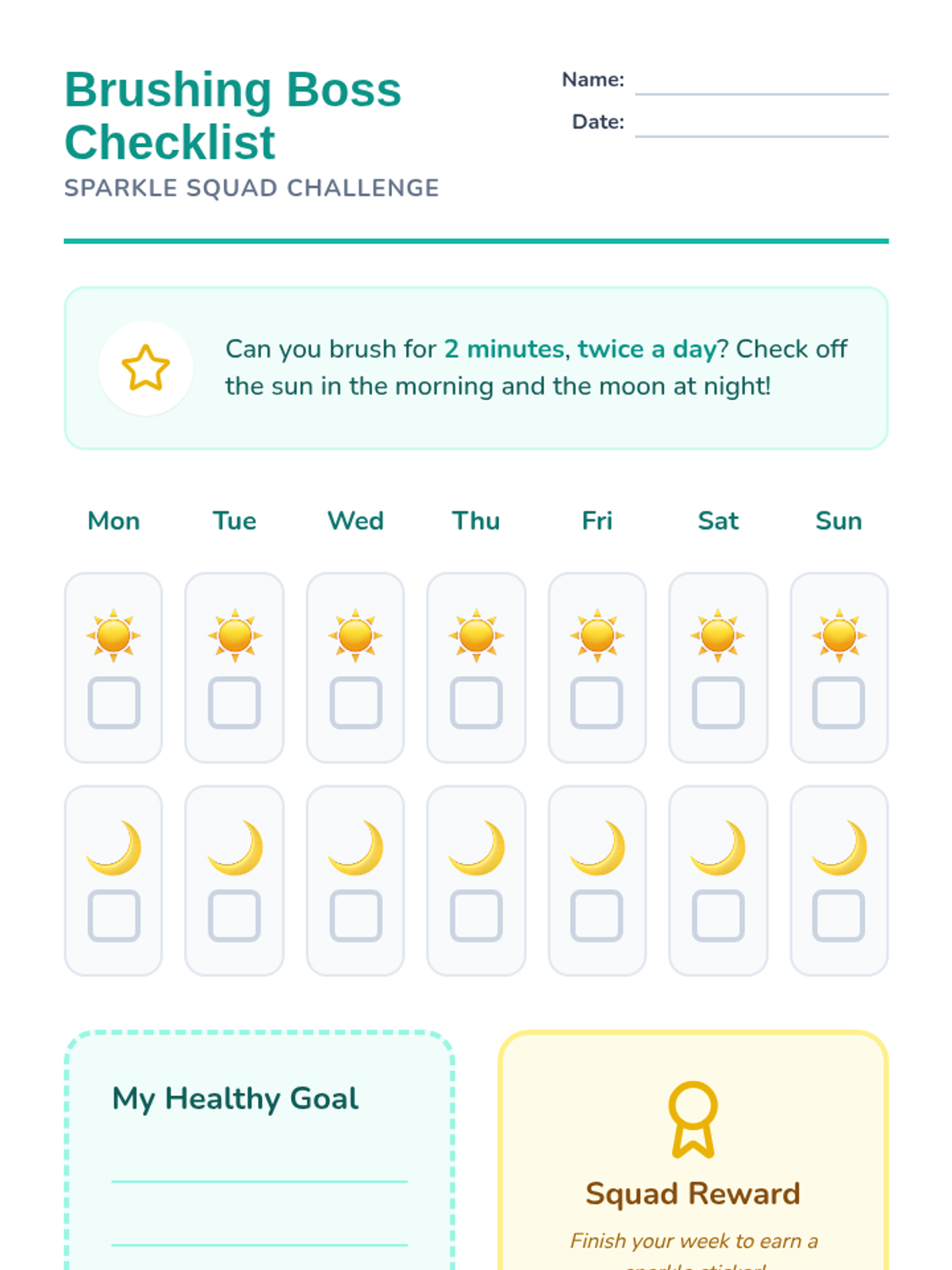
An interactive lesson designed to teach young students the essentials of oral health through visual presentations, hands-on practice, and habit-tracking activities.
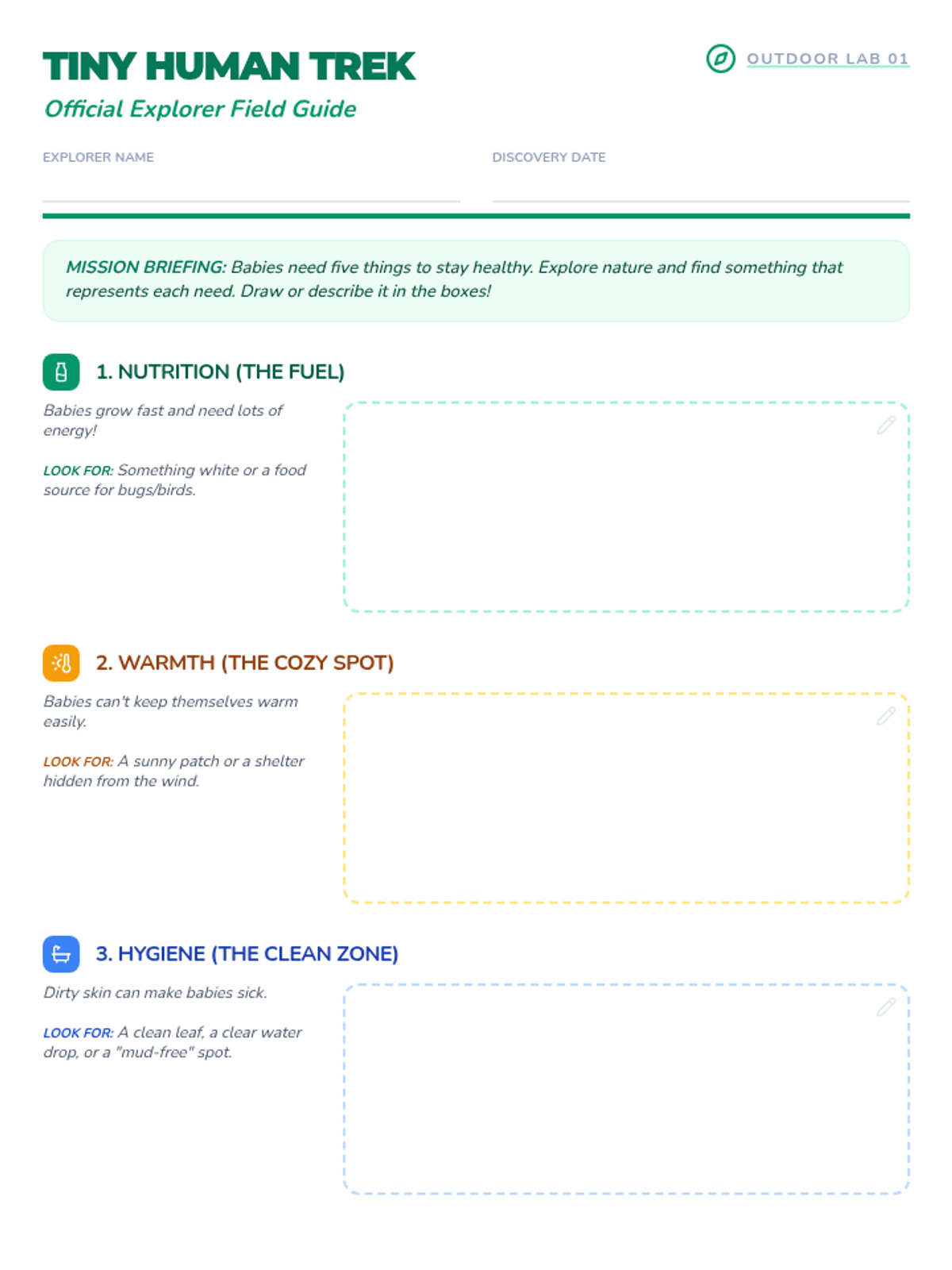
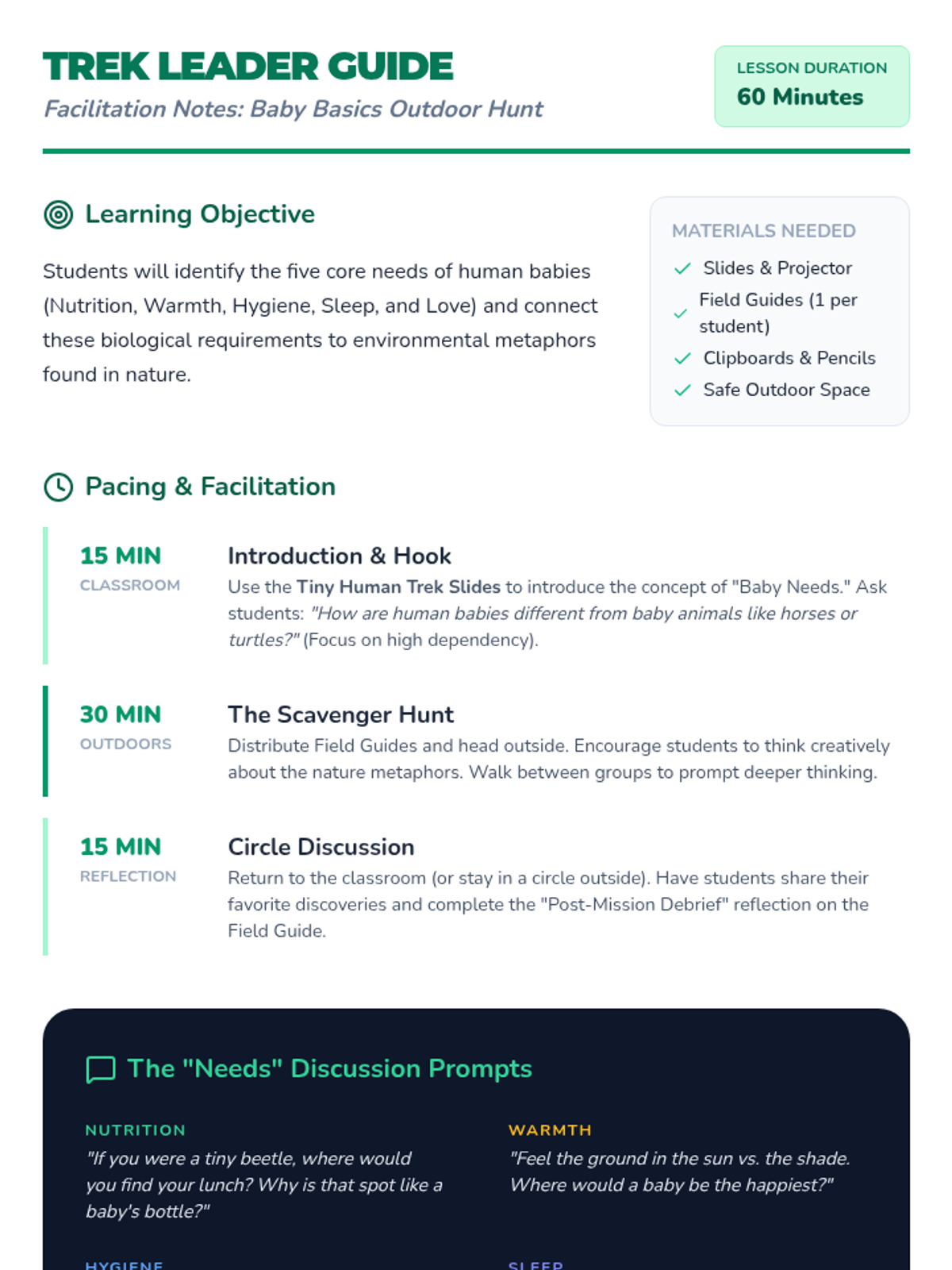
An outdoor exploration where students discover the essential needs of human babies through a nature-themed scavenger hunt, connecting biological needs to environmental metaphors.
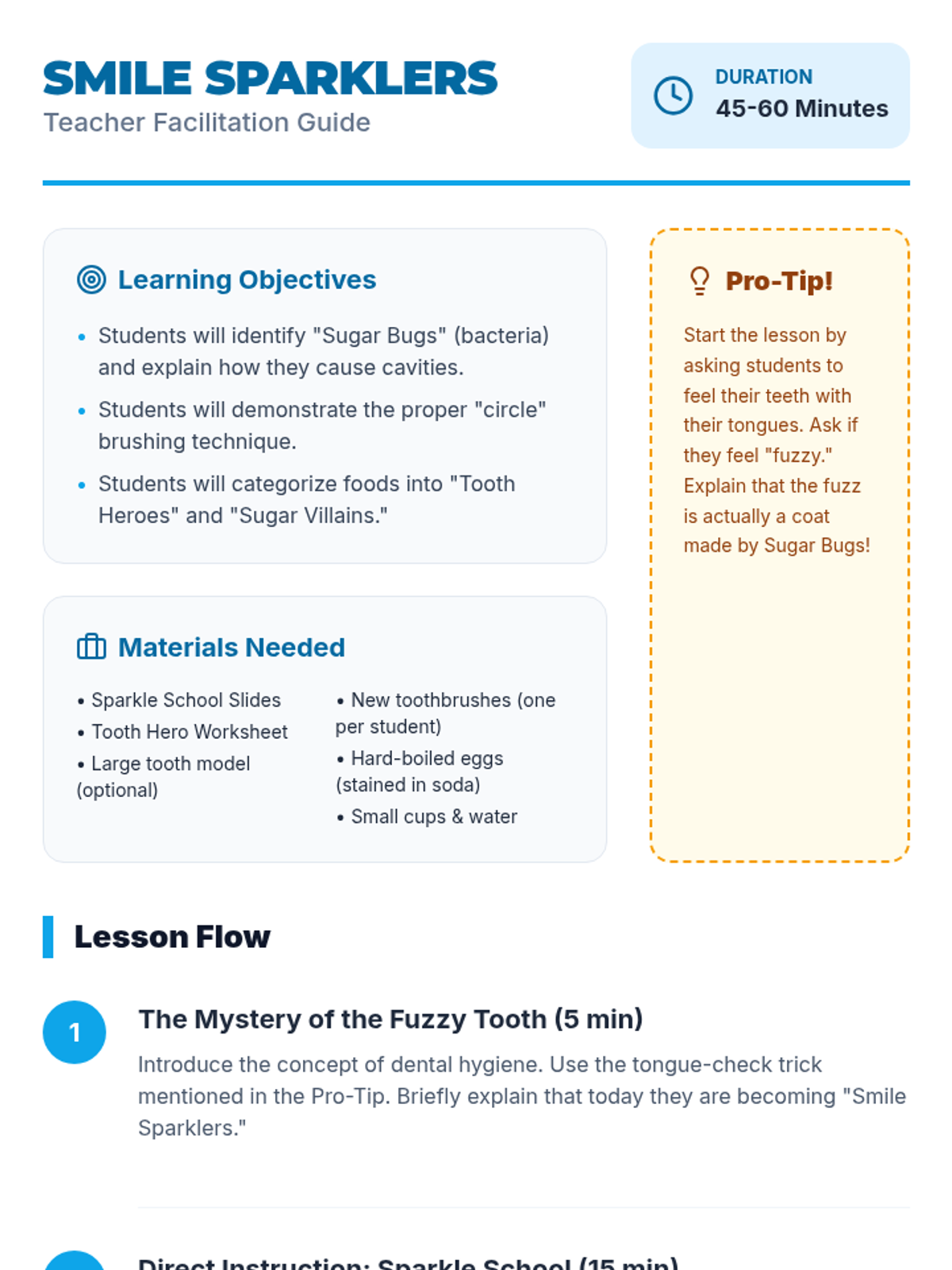
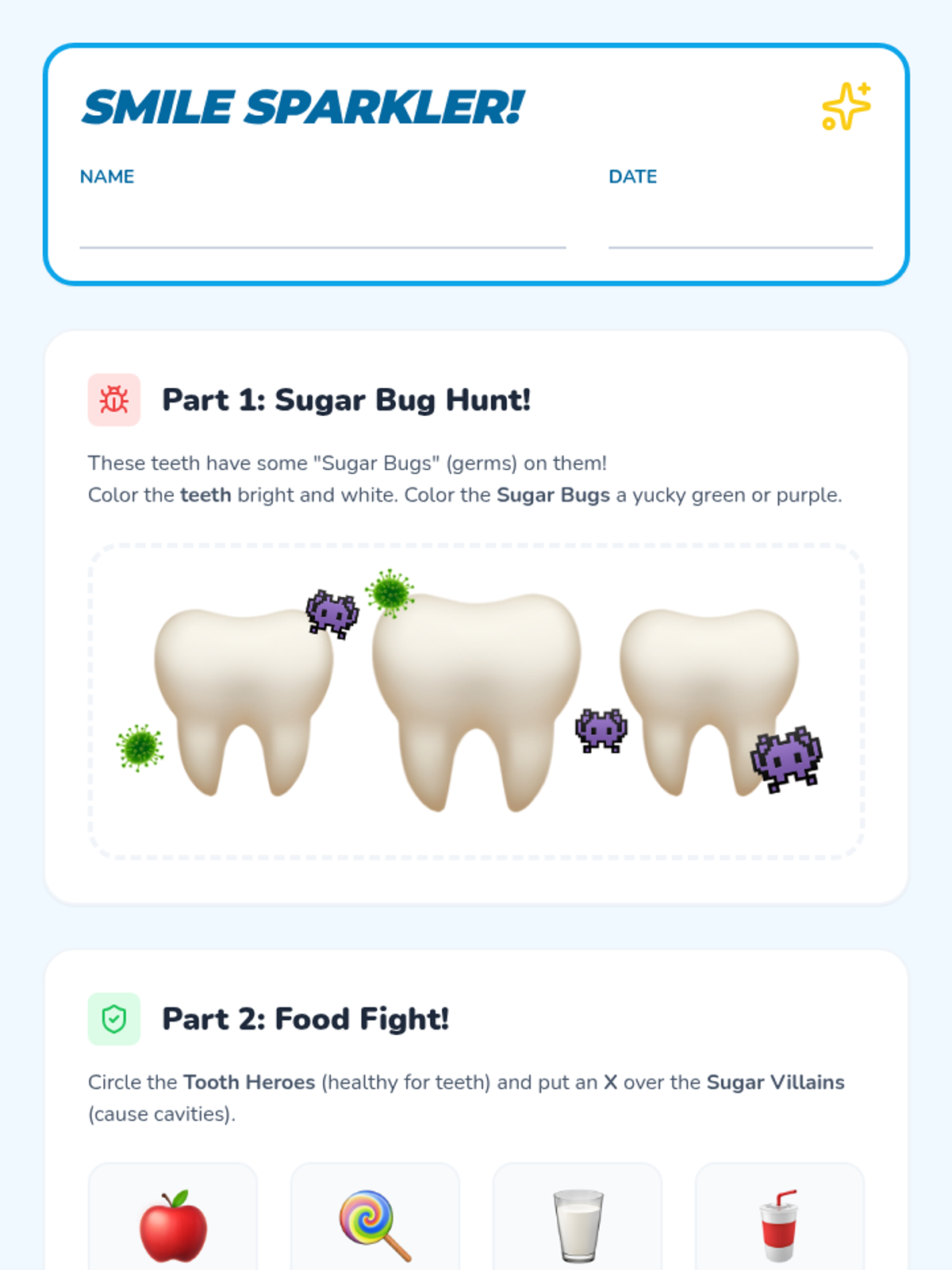
A fun, interactive lesson on dental hygiene covering proper brushing and flossing techniques, as well as understanding how germs cause cavities.