Fundamental techniques for soccer, volleyball, football, and basketball alongside strategic gameplay and communication skills. Emphasizes sportsmanship and collaborative tactics within a competitive team environment.
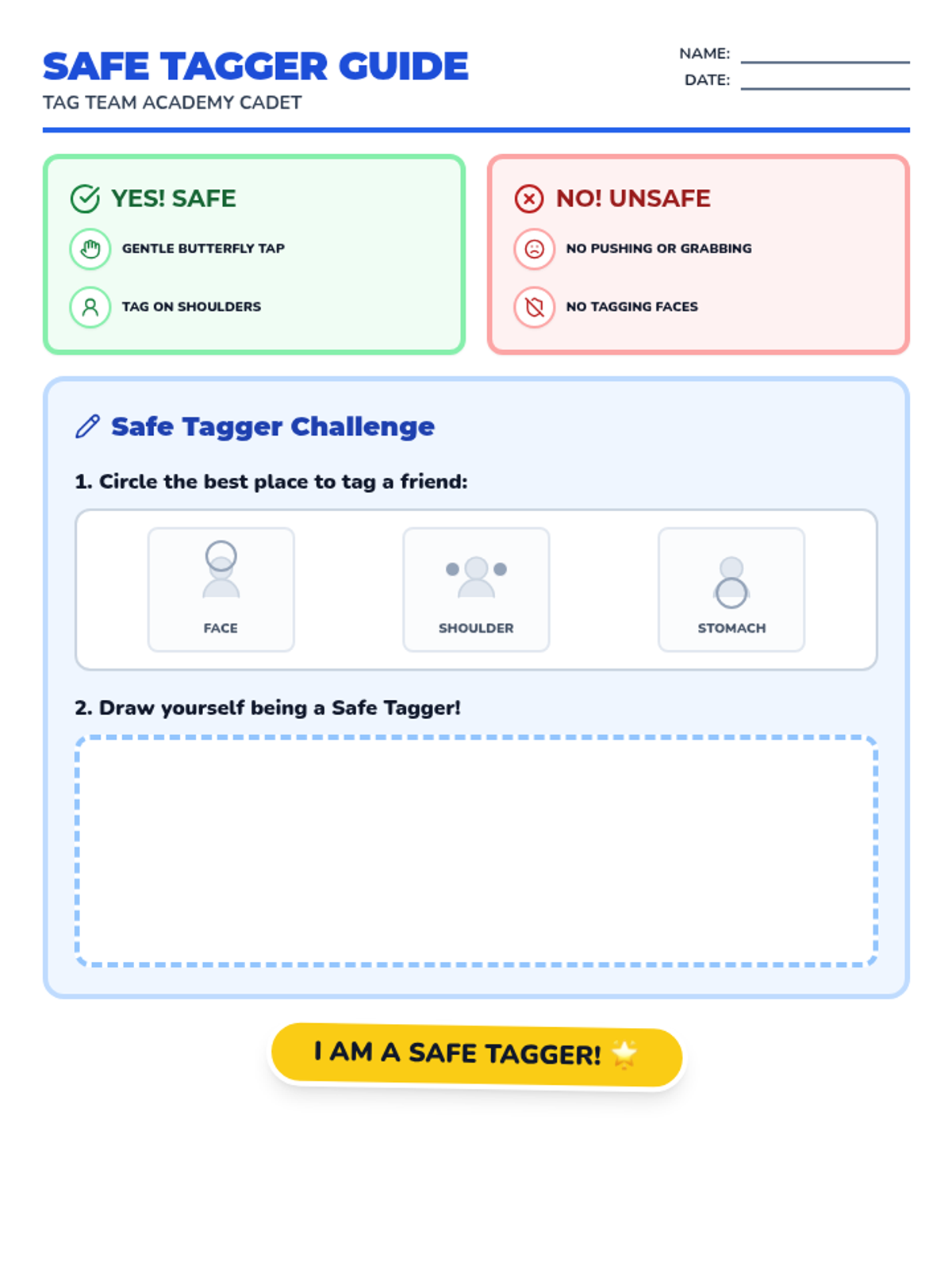
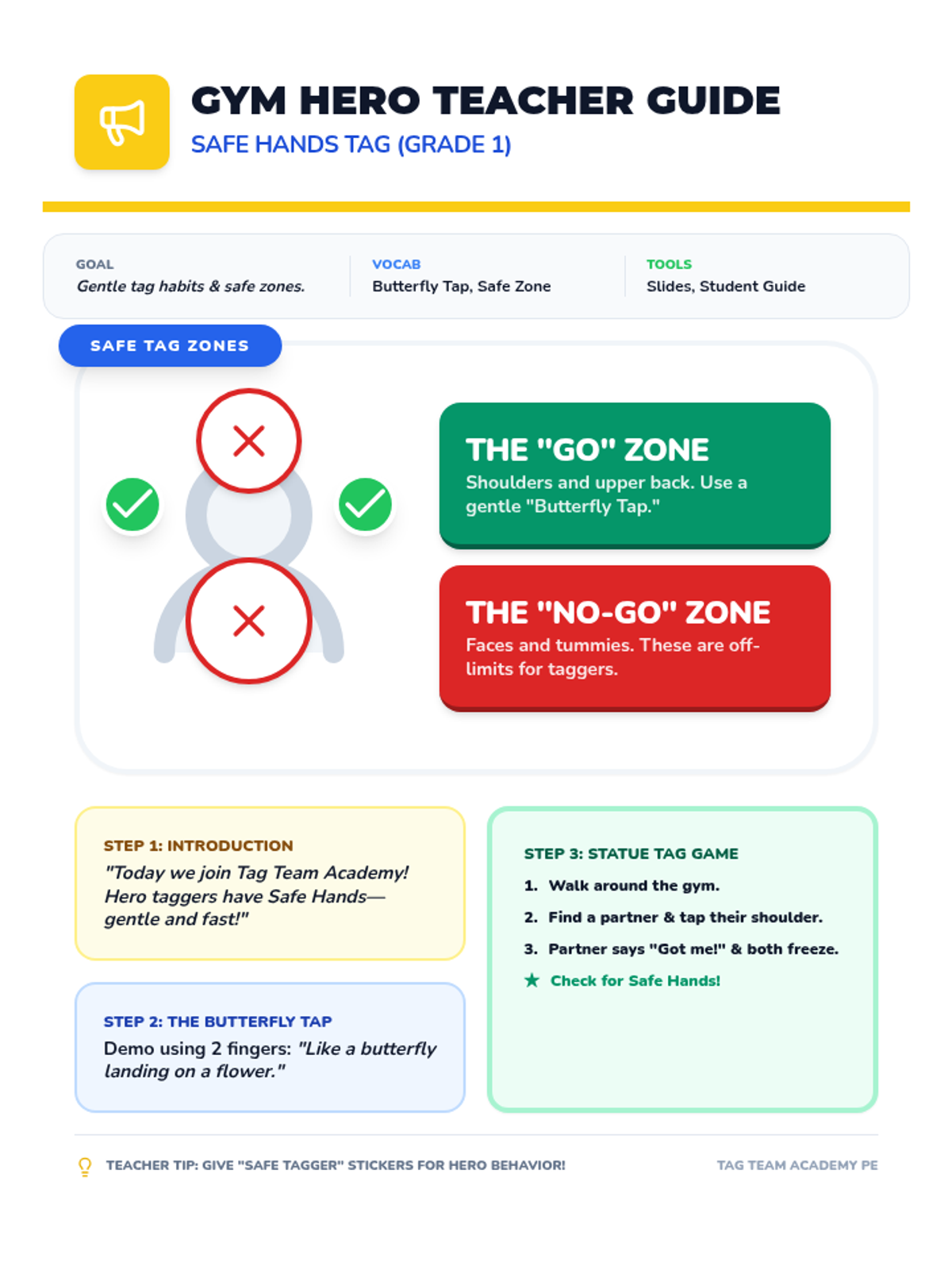
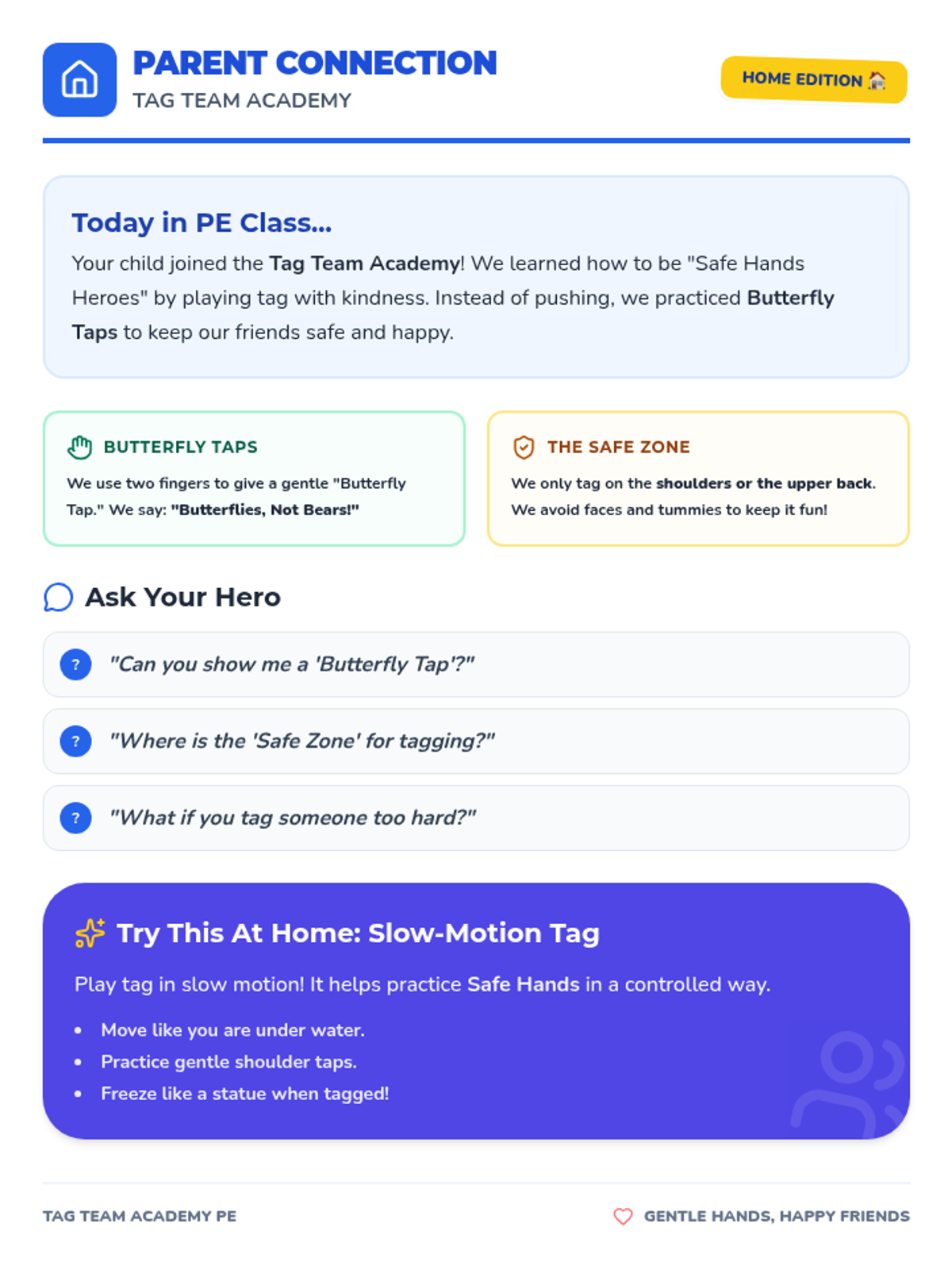
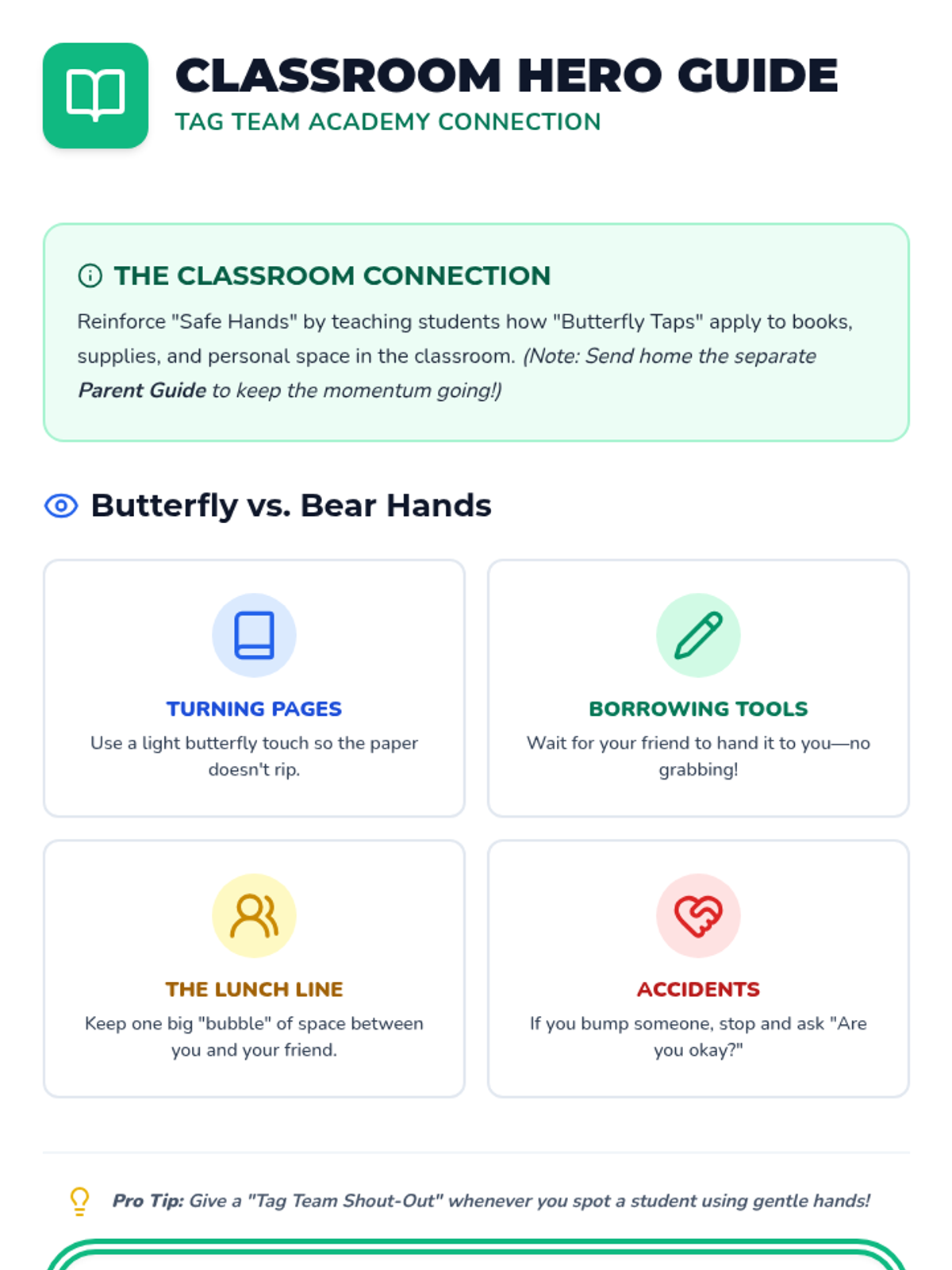
A lesson designed for 1st graders to learn the importance of 'safe hands' during tag games in PE. The lesson focuses on gentle touches, appropriate body parts for tagging, and the social-emotional aspect of keeping friends safe while playing.
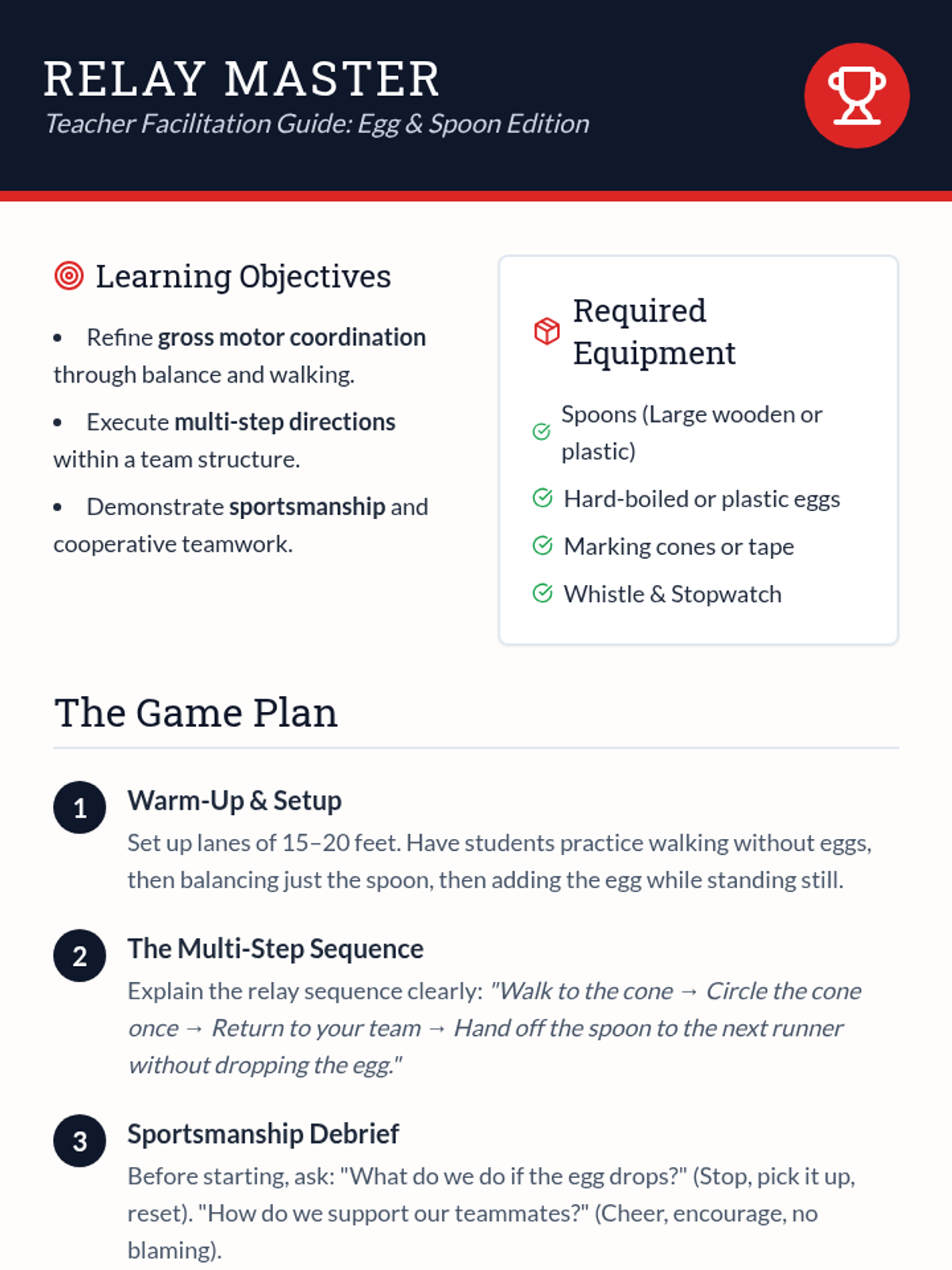
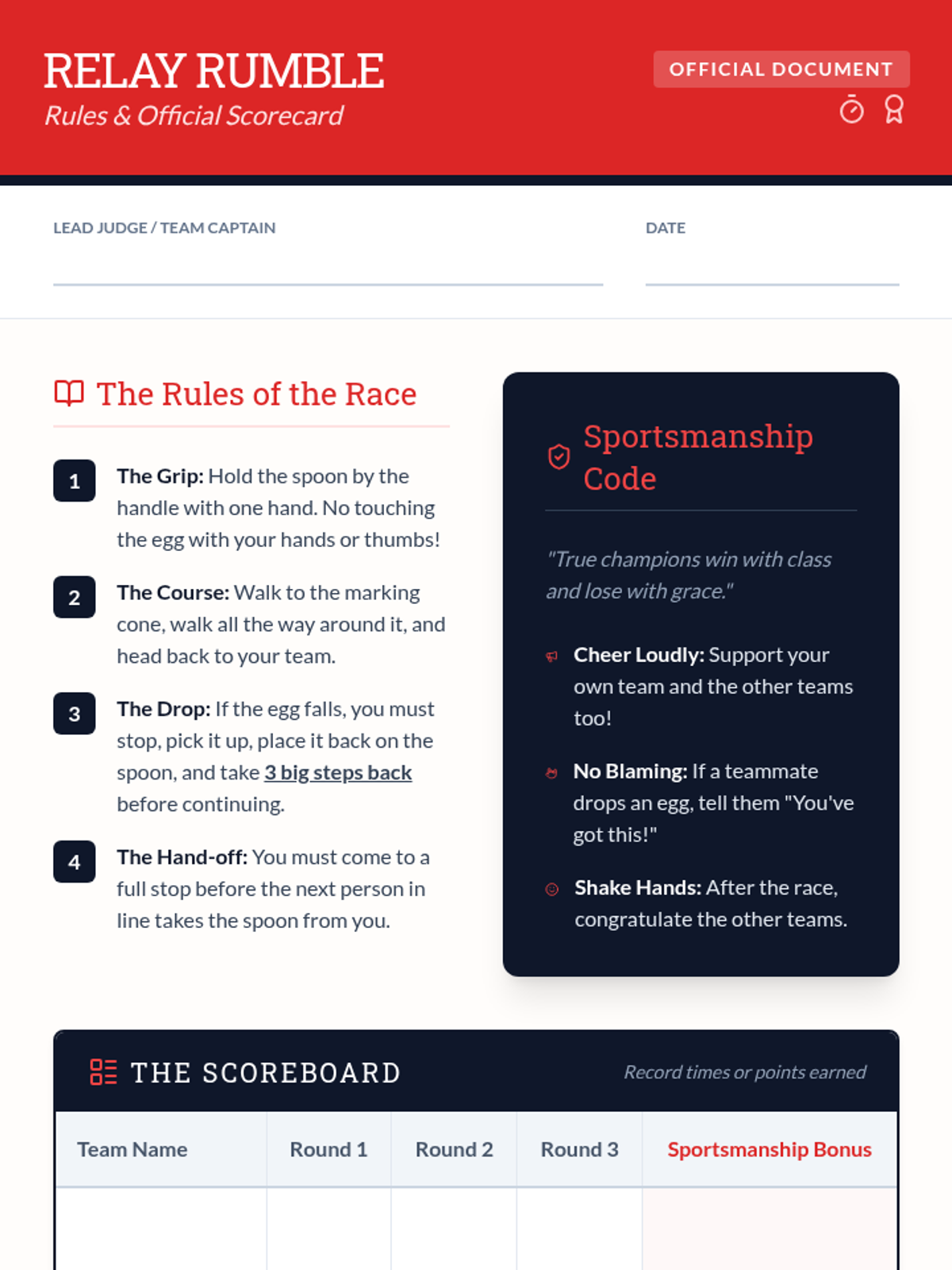
A high-energy lesson focused on gross motor skills, following complex directions, and practicing good sportsmanship through an egg and spoon relay race.
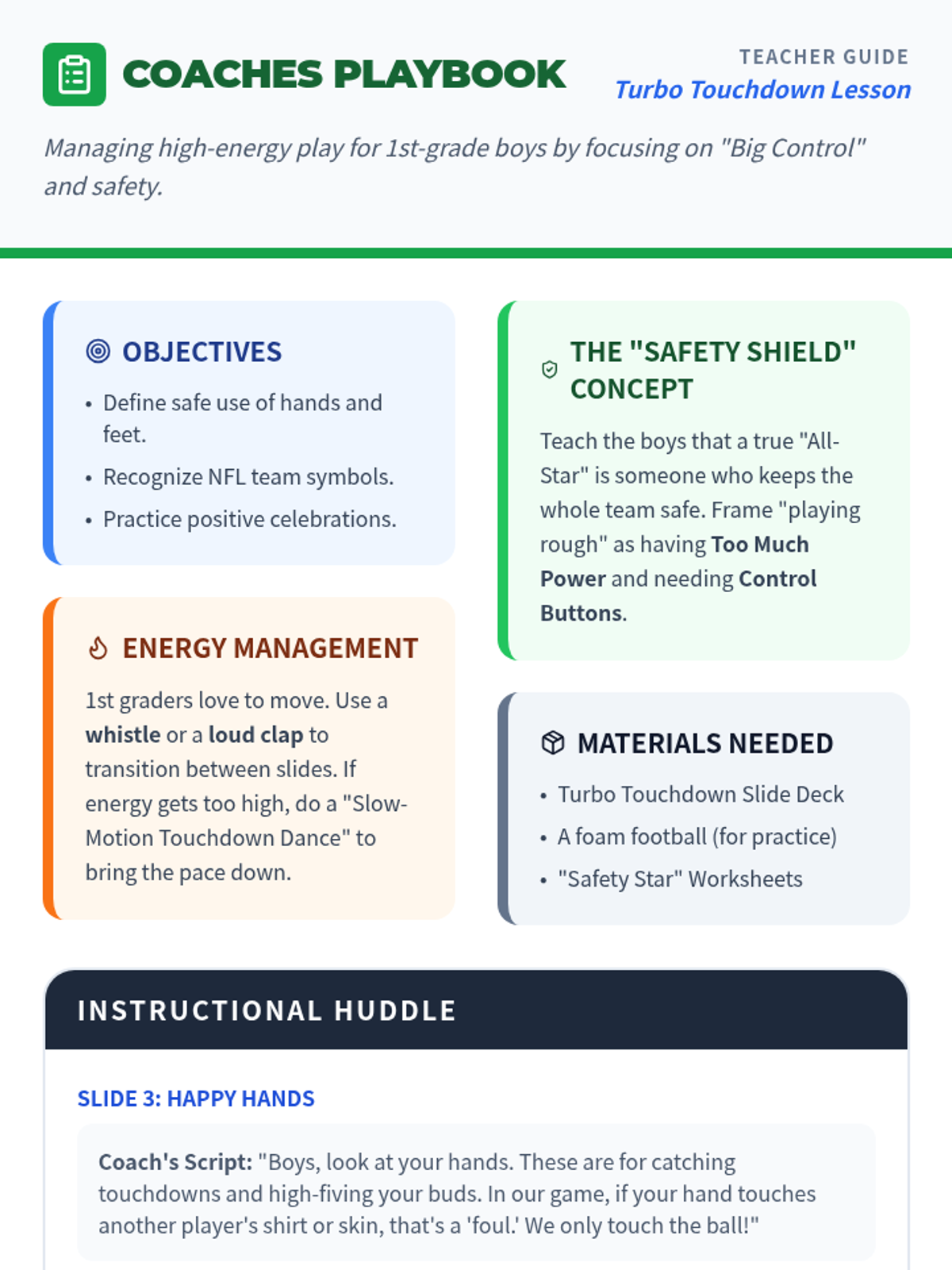
A high-energy lesson for 1st-grade boys focused on American football basics, safety, and sportsmanship. Includes an interactive logo guessing game and a 'Safety Pro' pledge to encourage positive play.
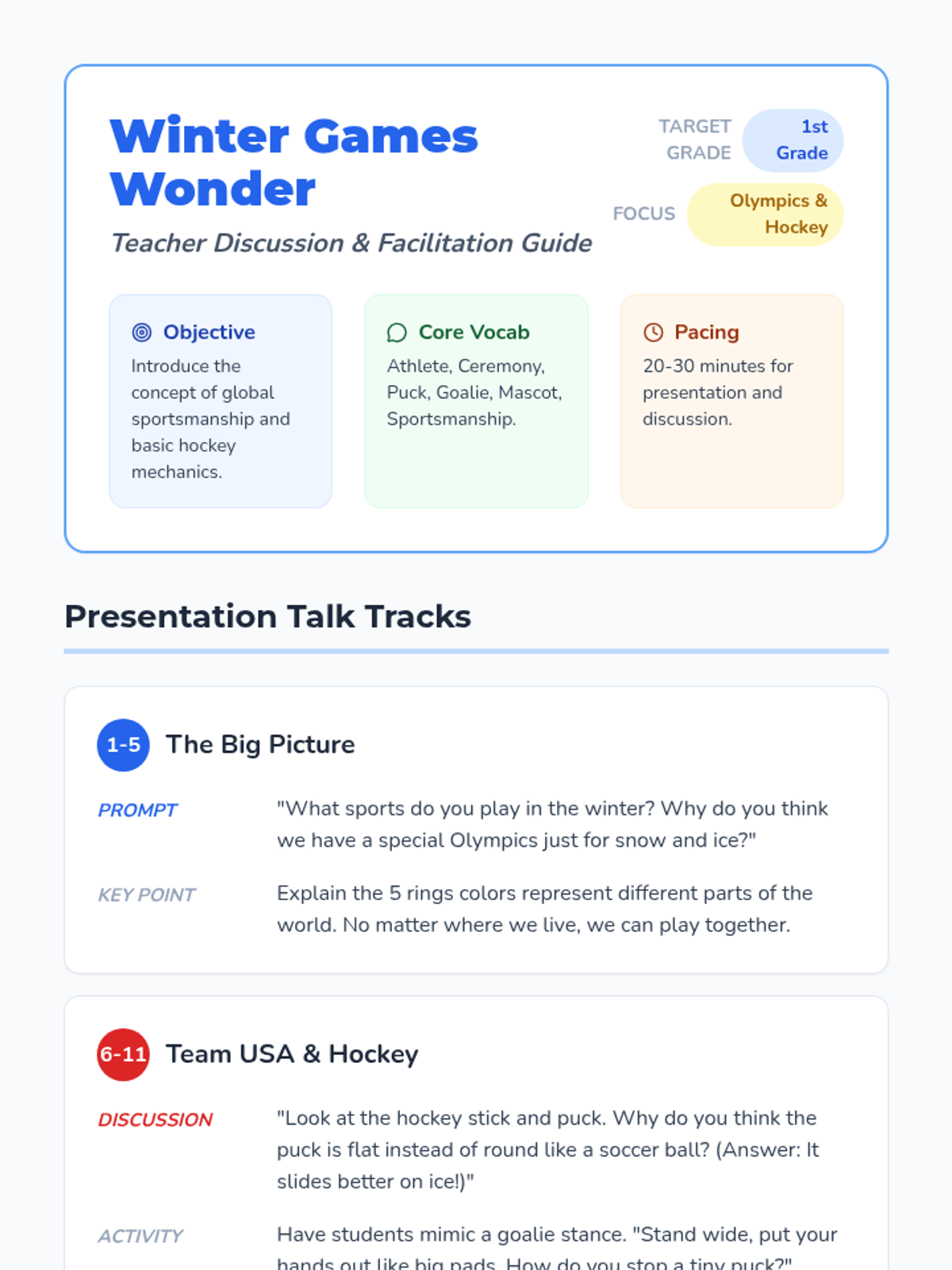
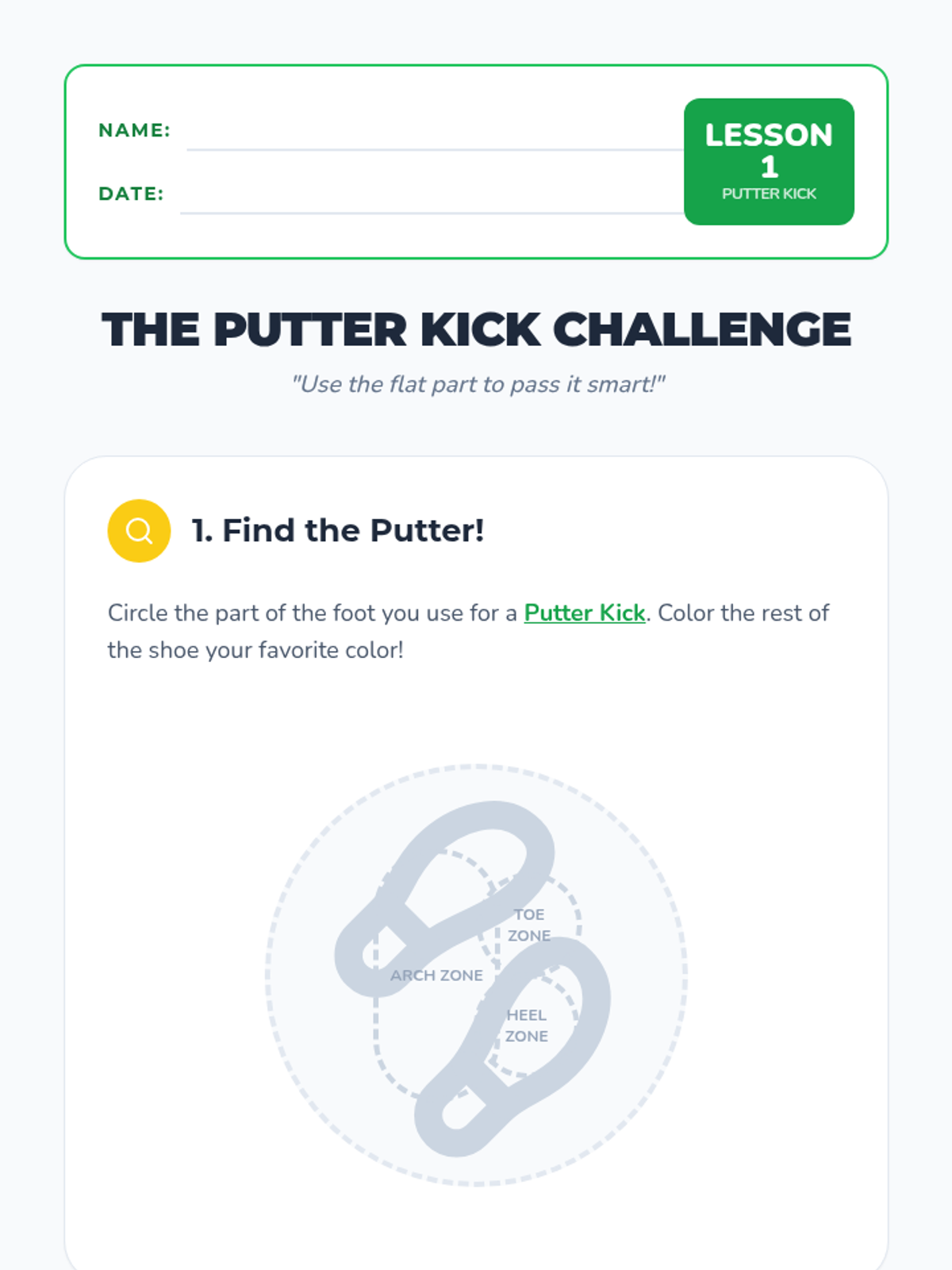
An introductory lesson for first graders about the Winter Olympics and the sport of hockey, featuring simplified rules and fun facts.
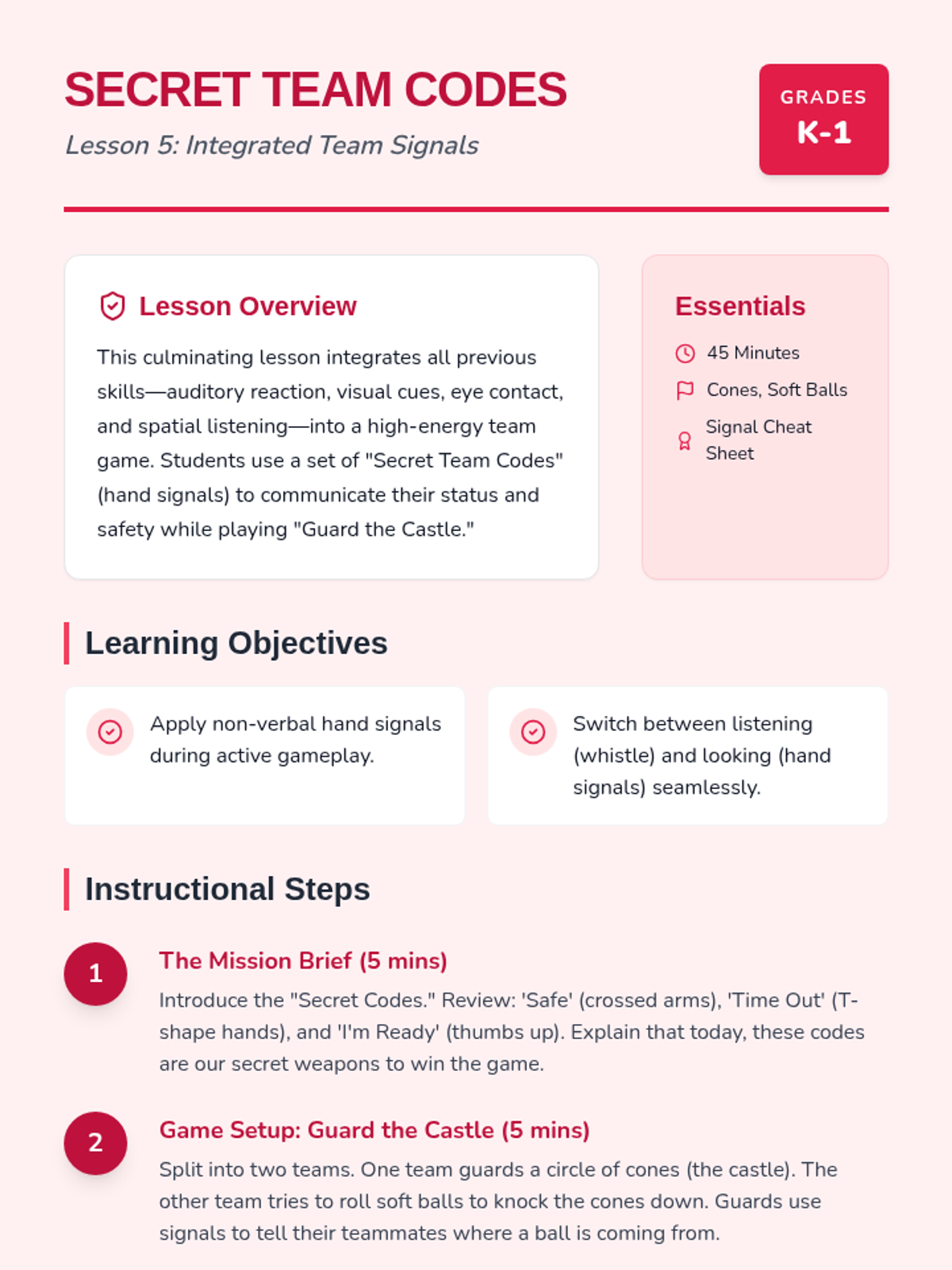
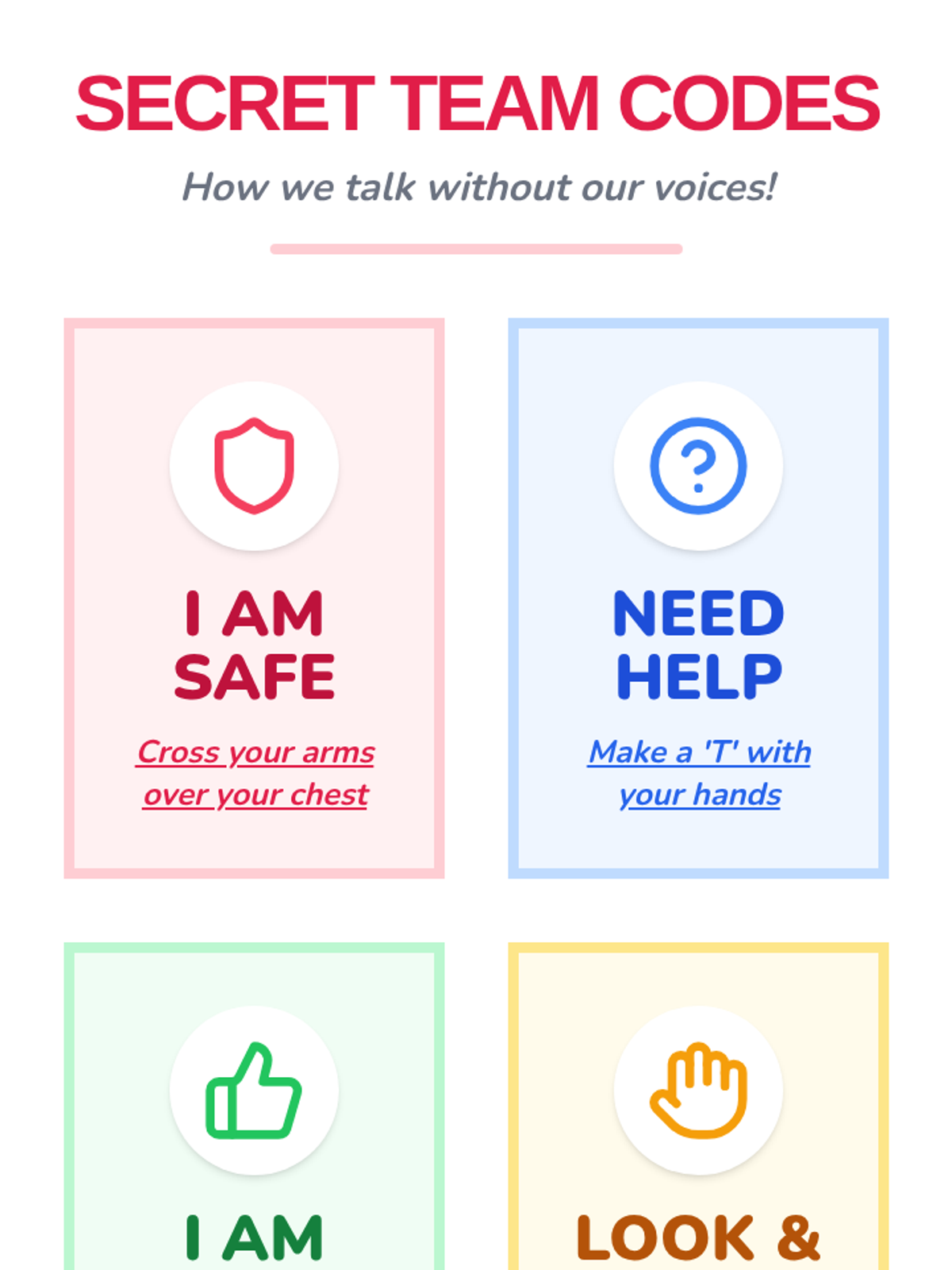
A culminating game where students apply hand signals and auditory cues in a fast-paced team environment.
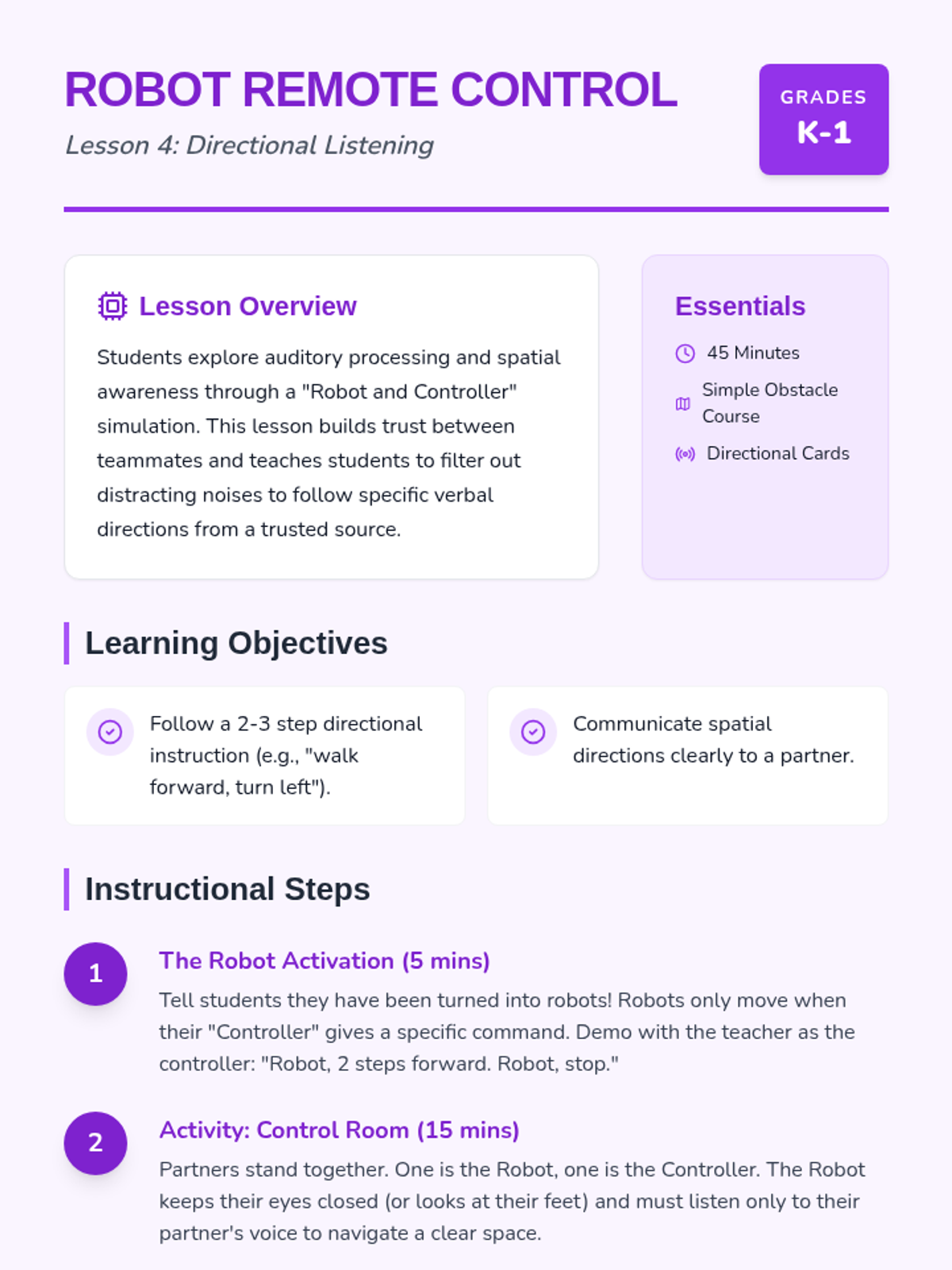
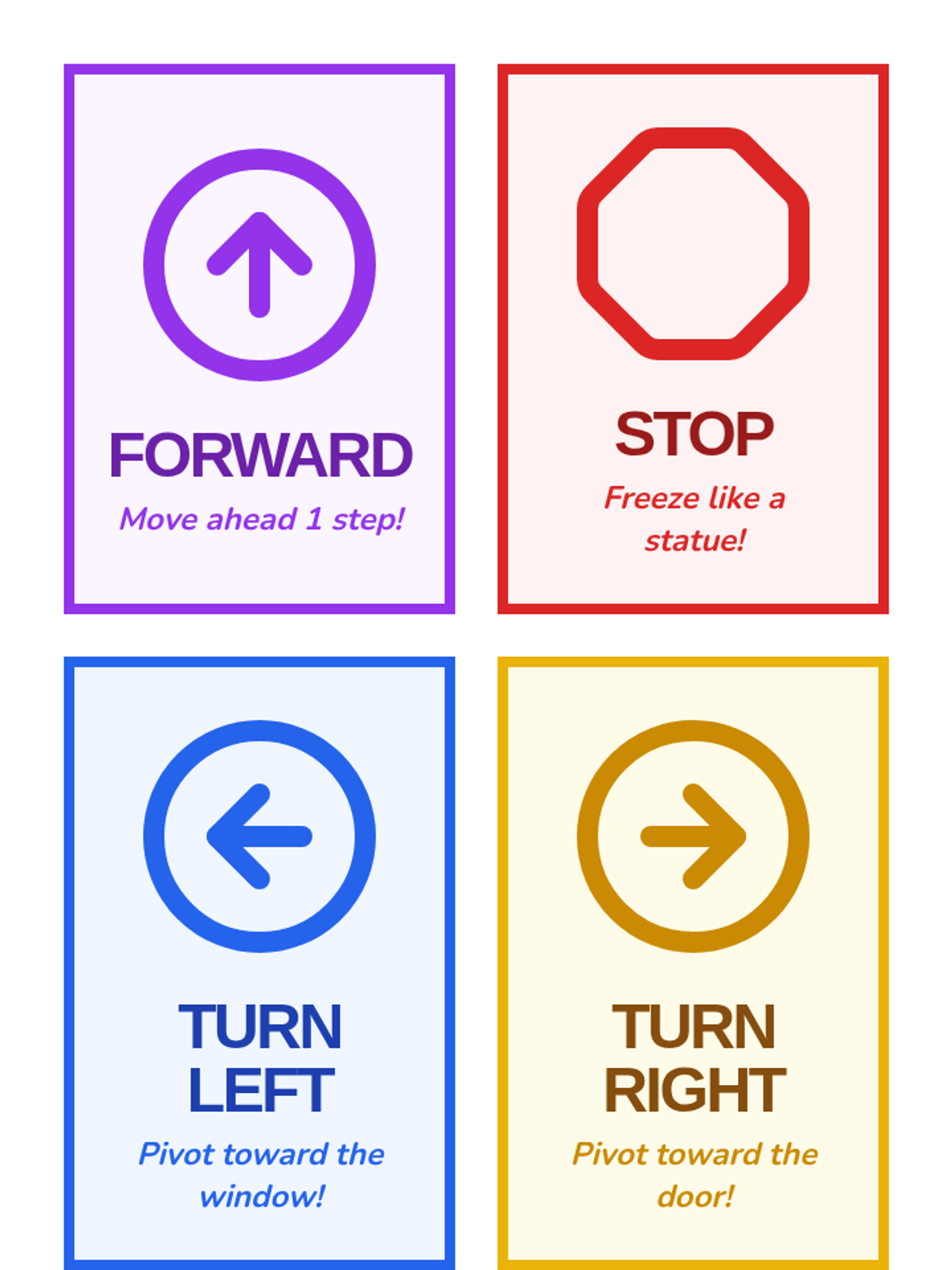
Students navigate spatial challenges by following verbal directions, building trust and focus in a noisy environment.
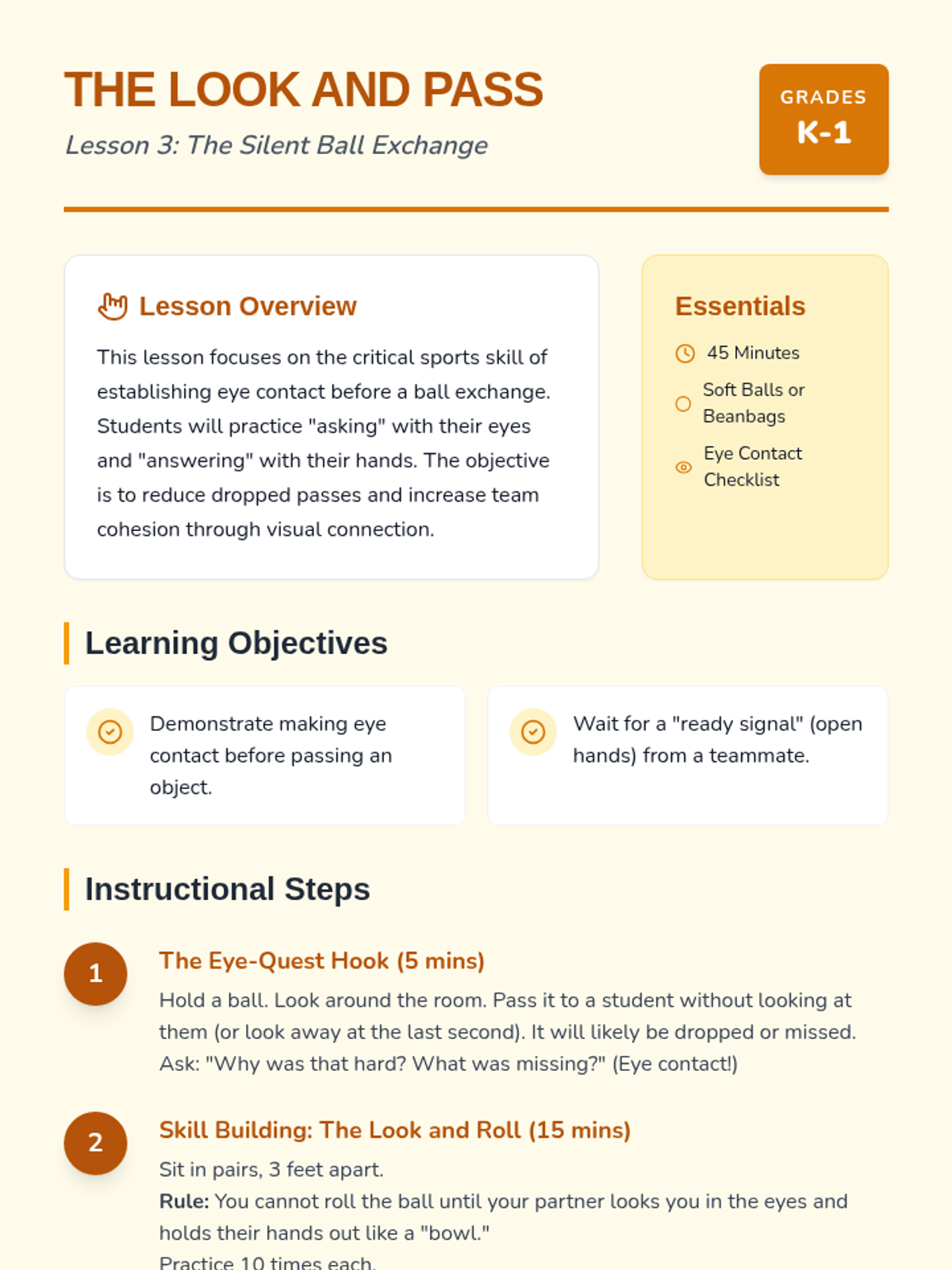
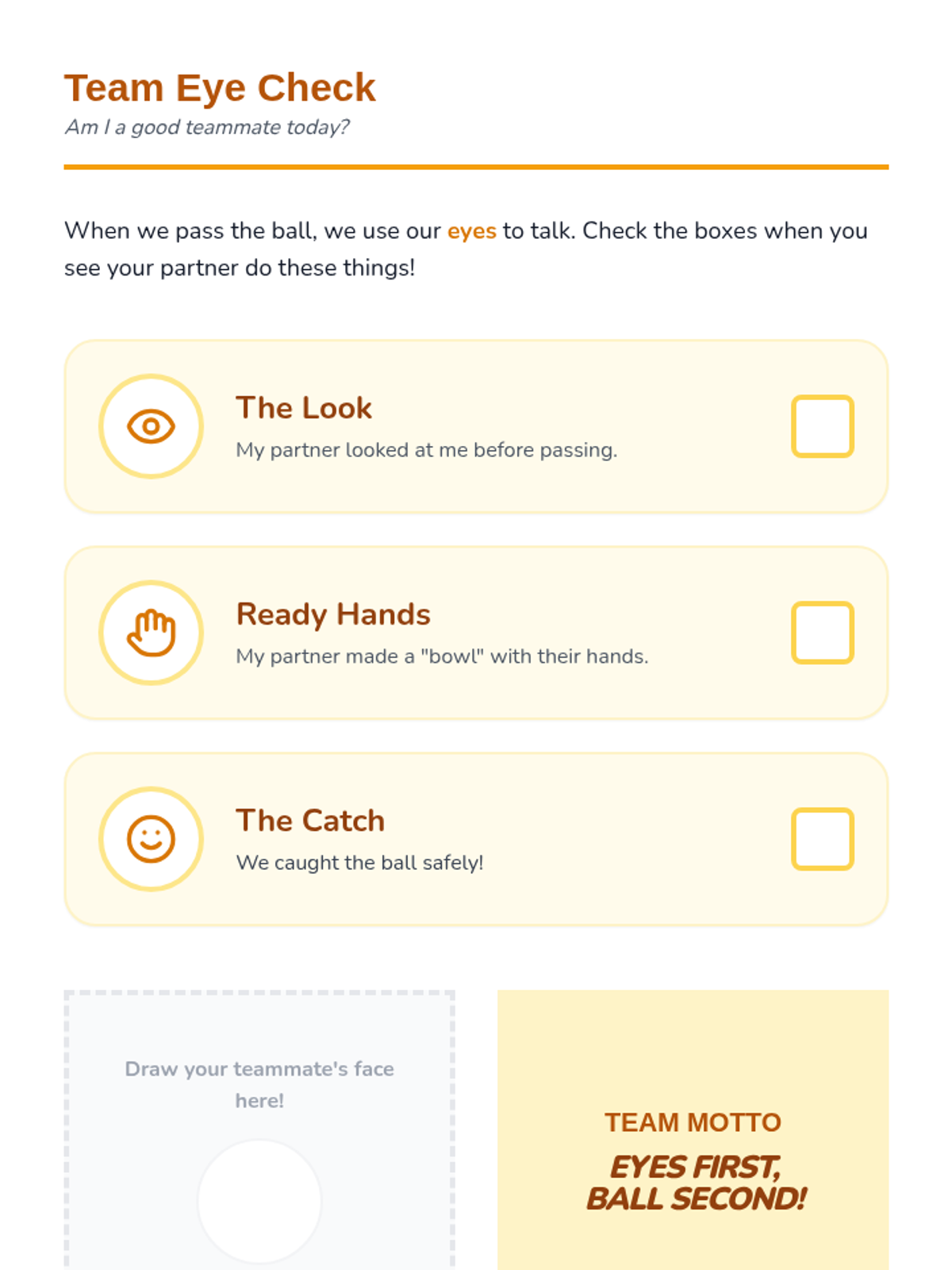
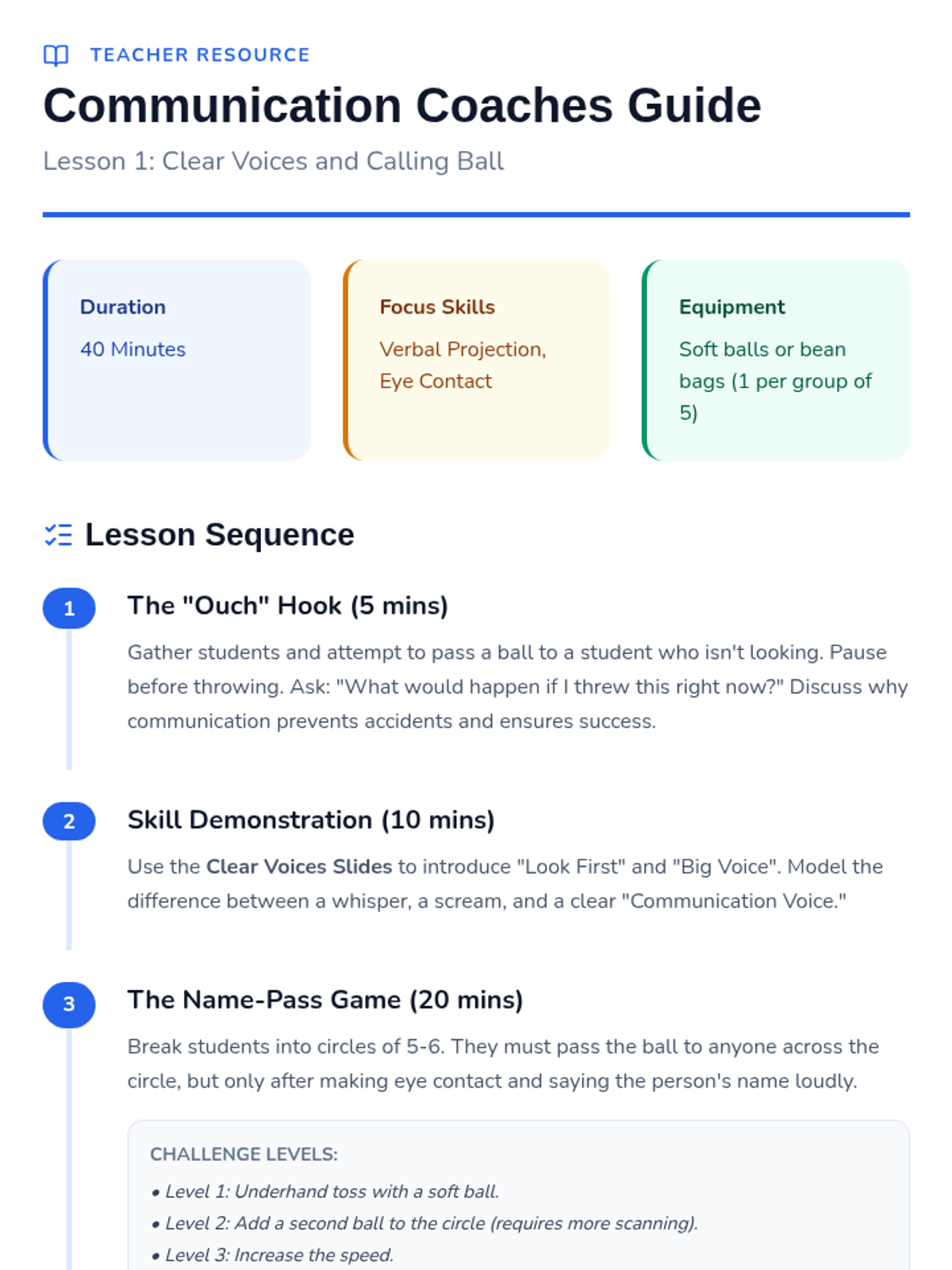
A cooperative passing activity where students must establish eye contact before engaging with teammates, reinforcing visual attention.
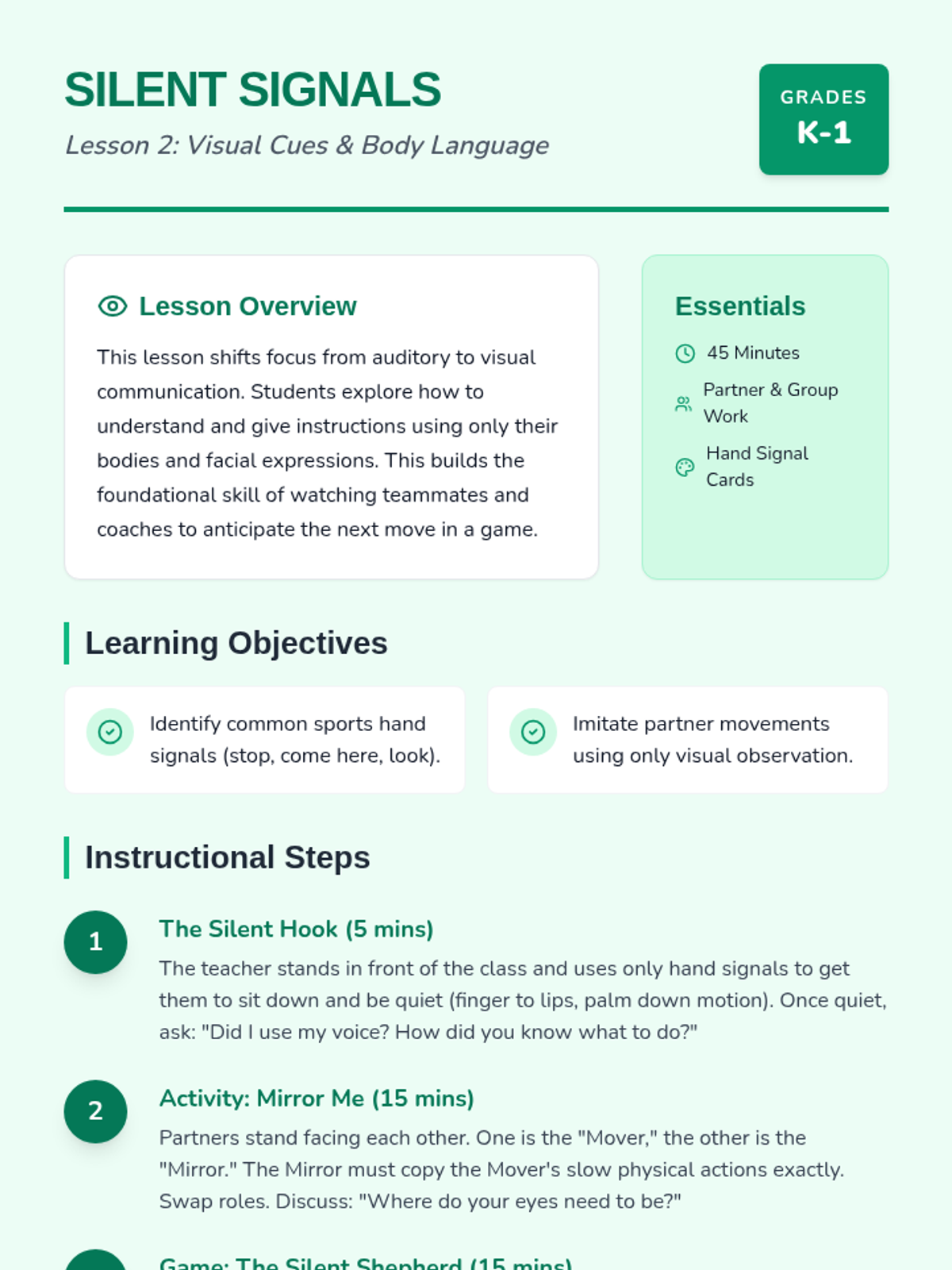
Students explore how to communicate without words, using observation and motor imitation to follow non-verbal instructions.
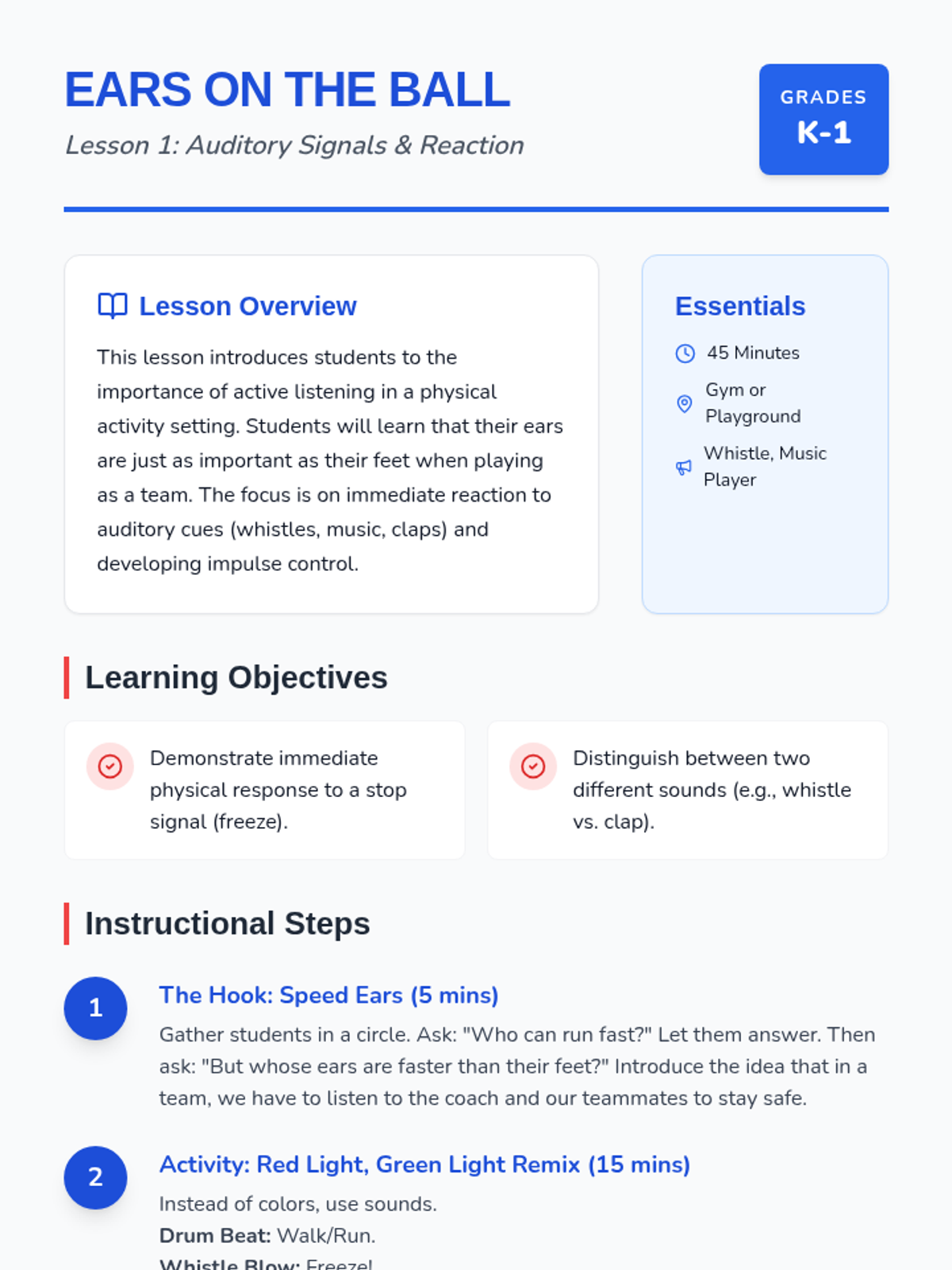
Students practice starting and stopping physical actions immediately based on auditory cues like whistles and music, focusing on safety and impulse control.
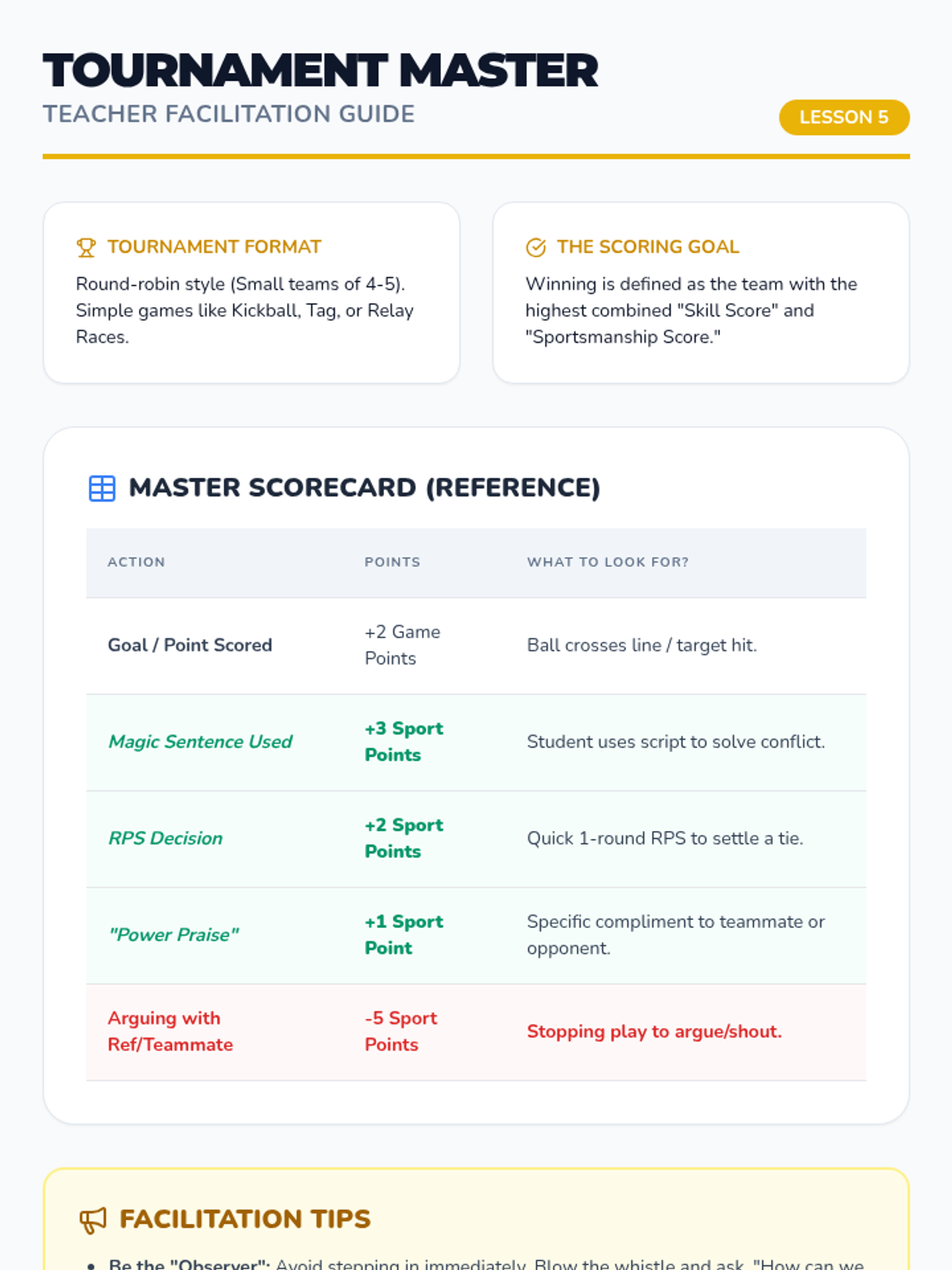
A culminating tournament where sportsmanship and conflict resolution are scored alongside game points.
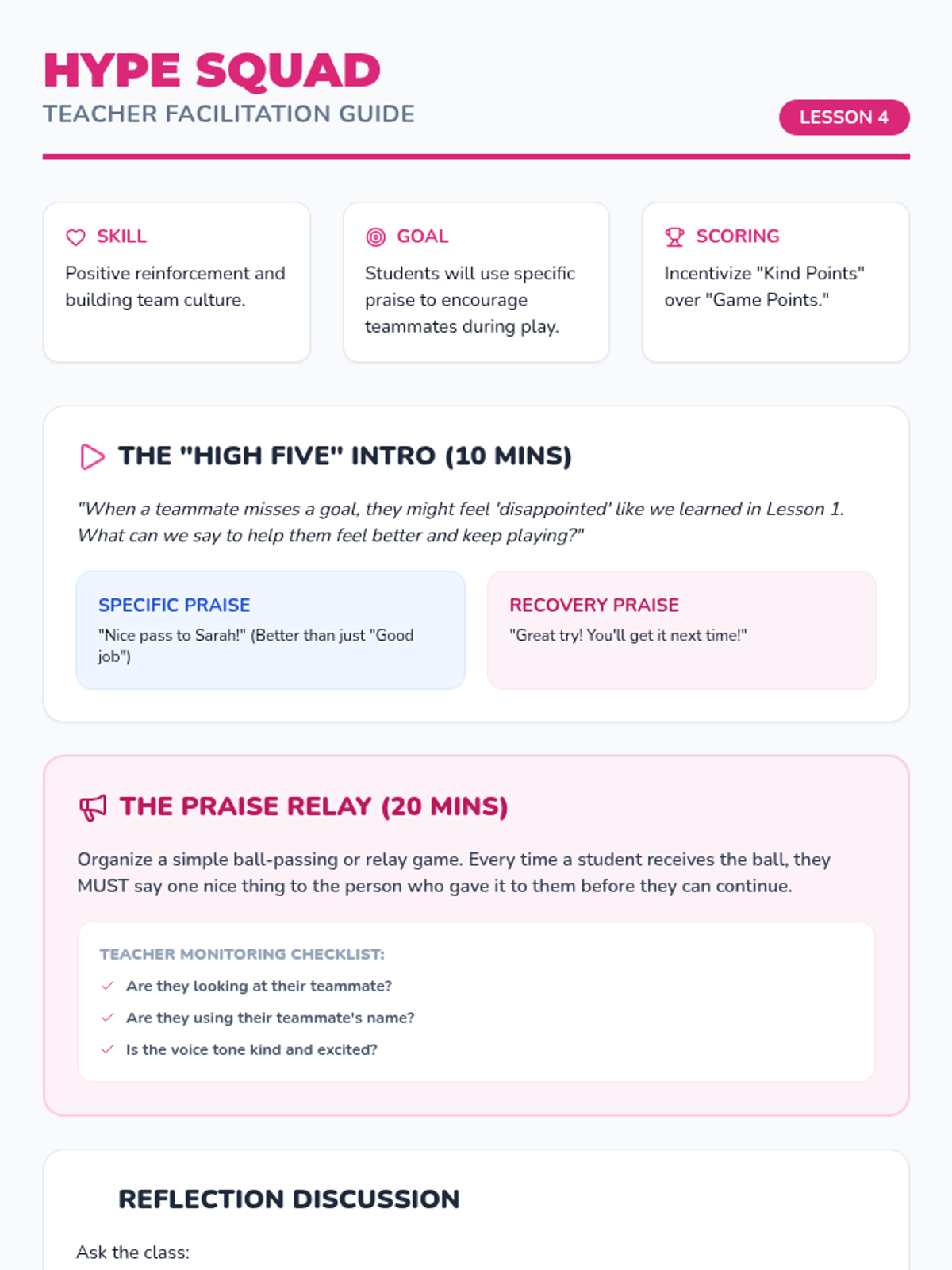
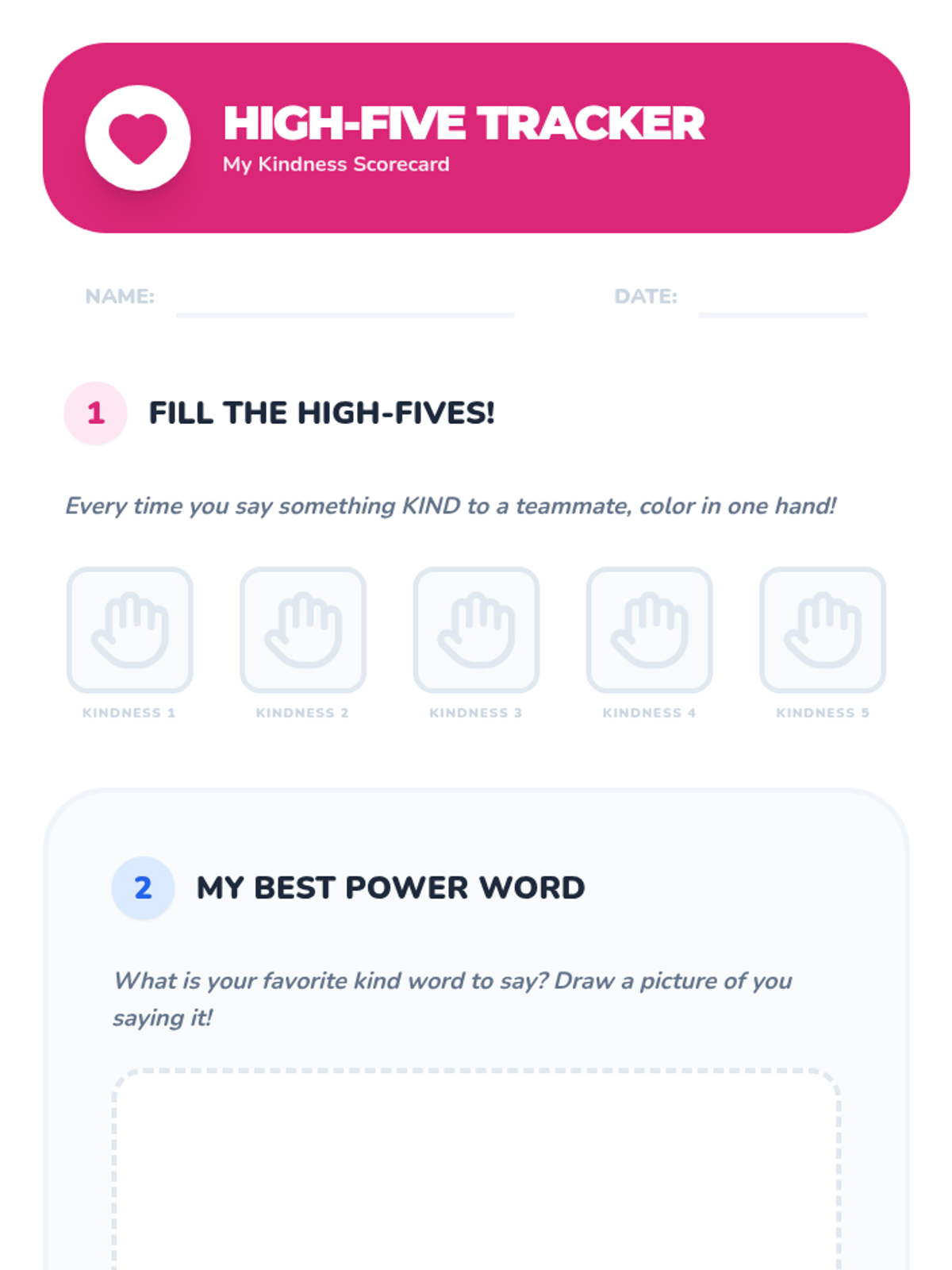
Focusing on building a positive team culture through specific compliments and encouragement.
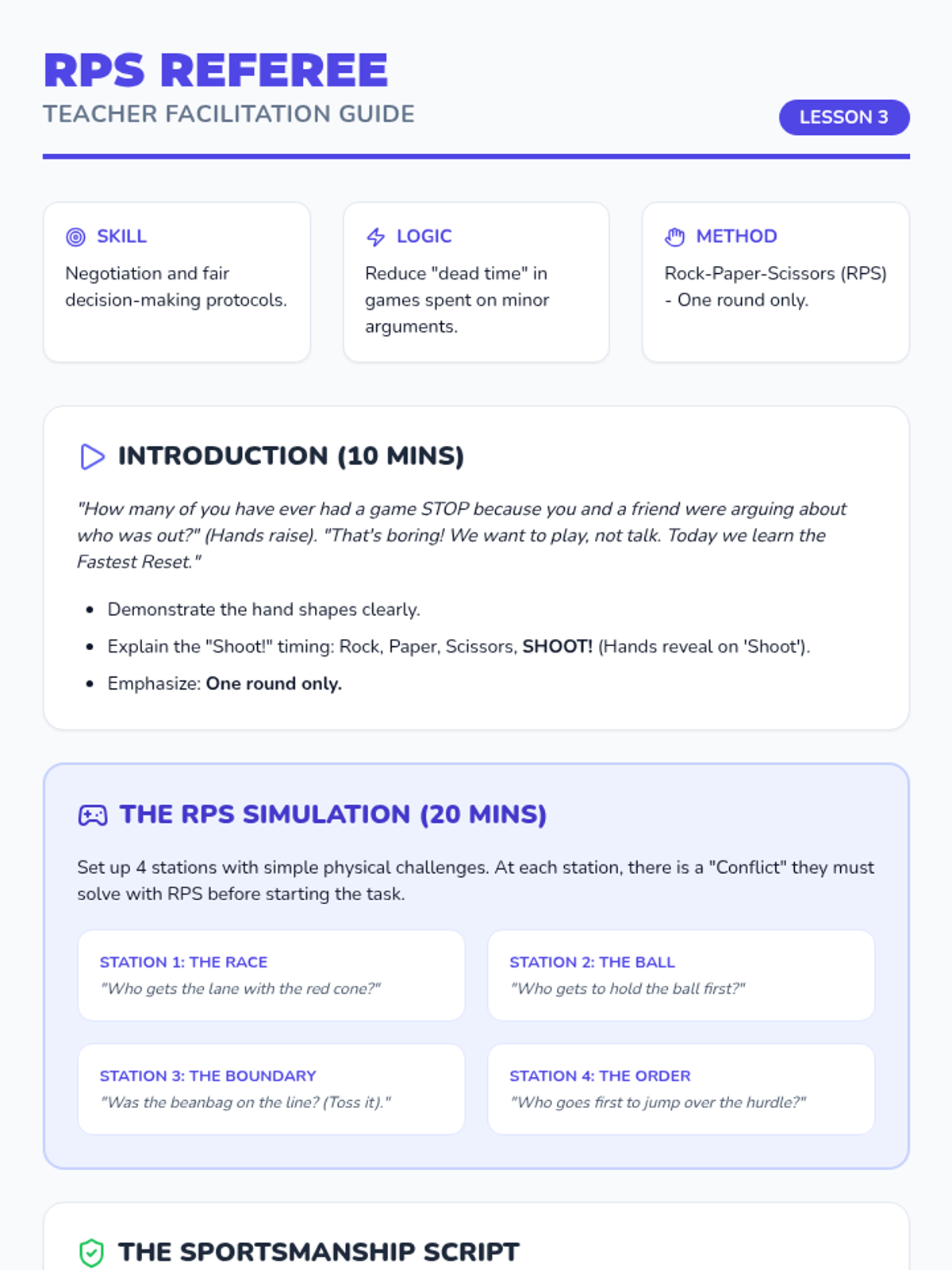
Introducing Rock-Paper-Scissors as a fair way to settle minor disputes and make quick decisions.
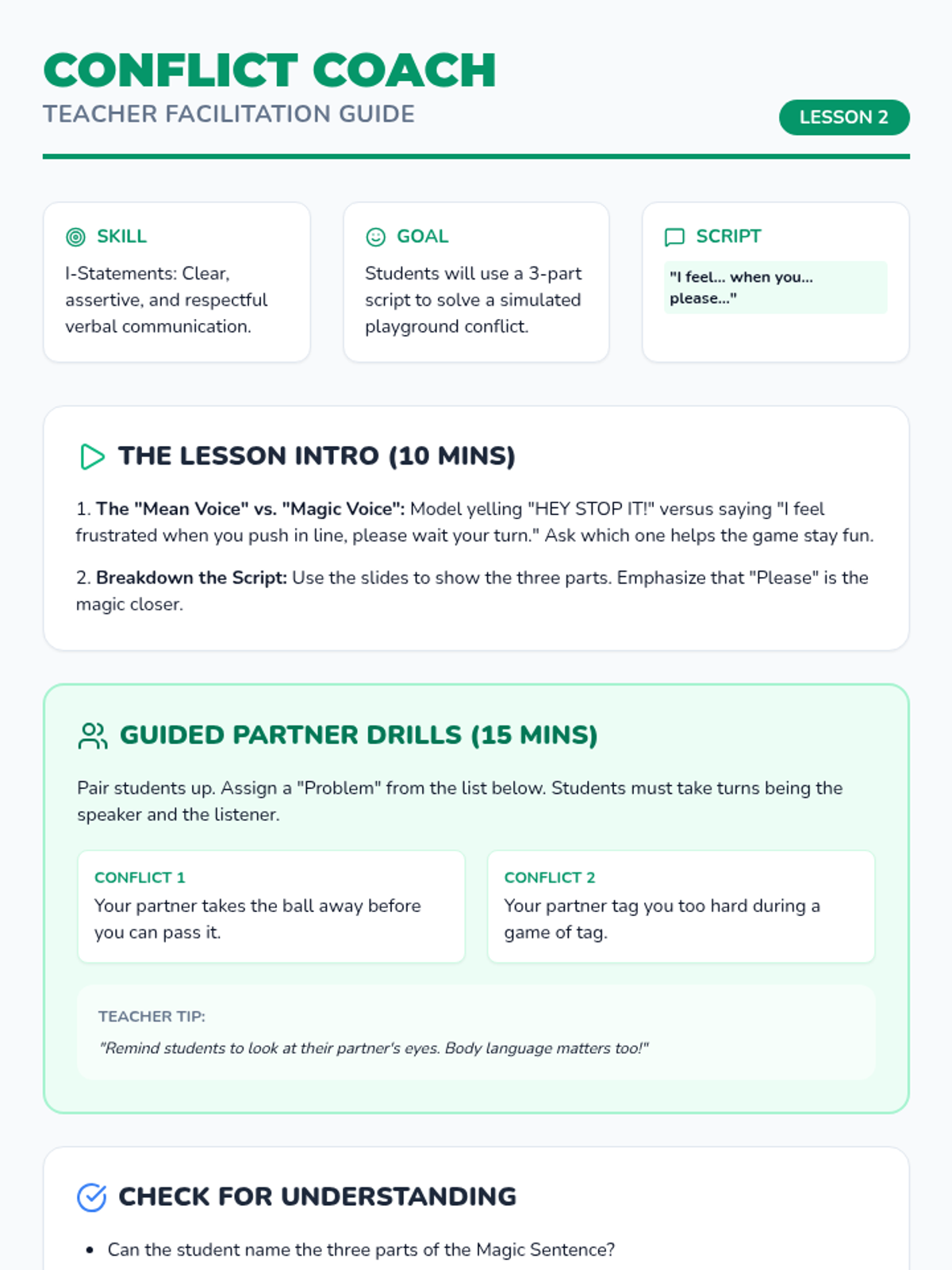
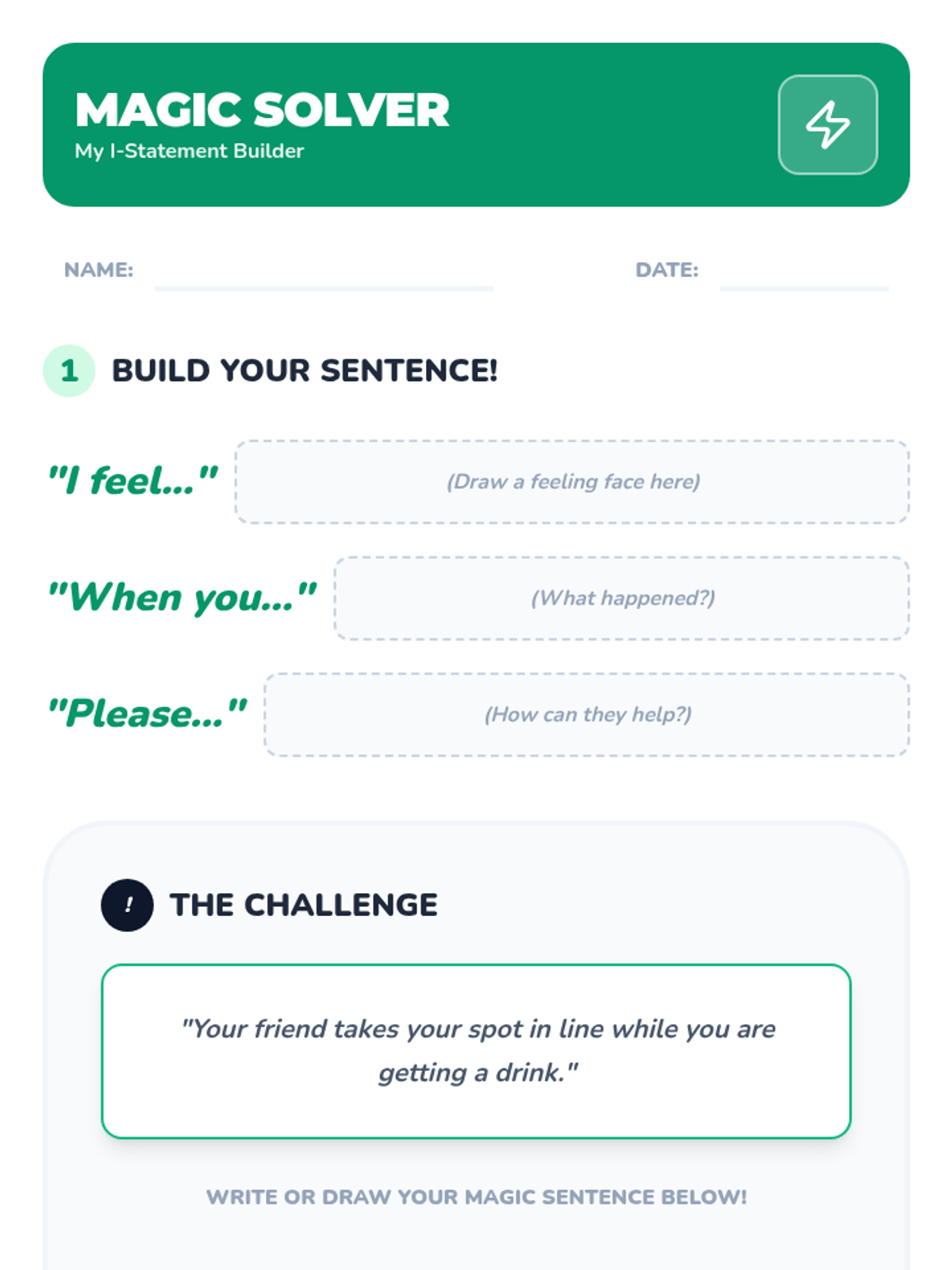
Students learn and practice using I-statements to resolve common playground conflicts respectfully.
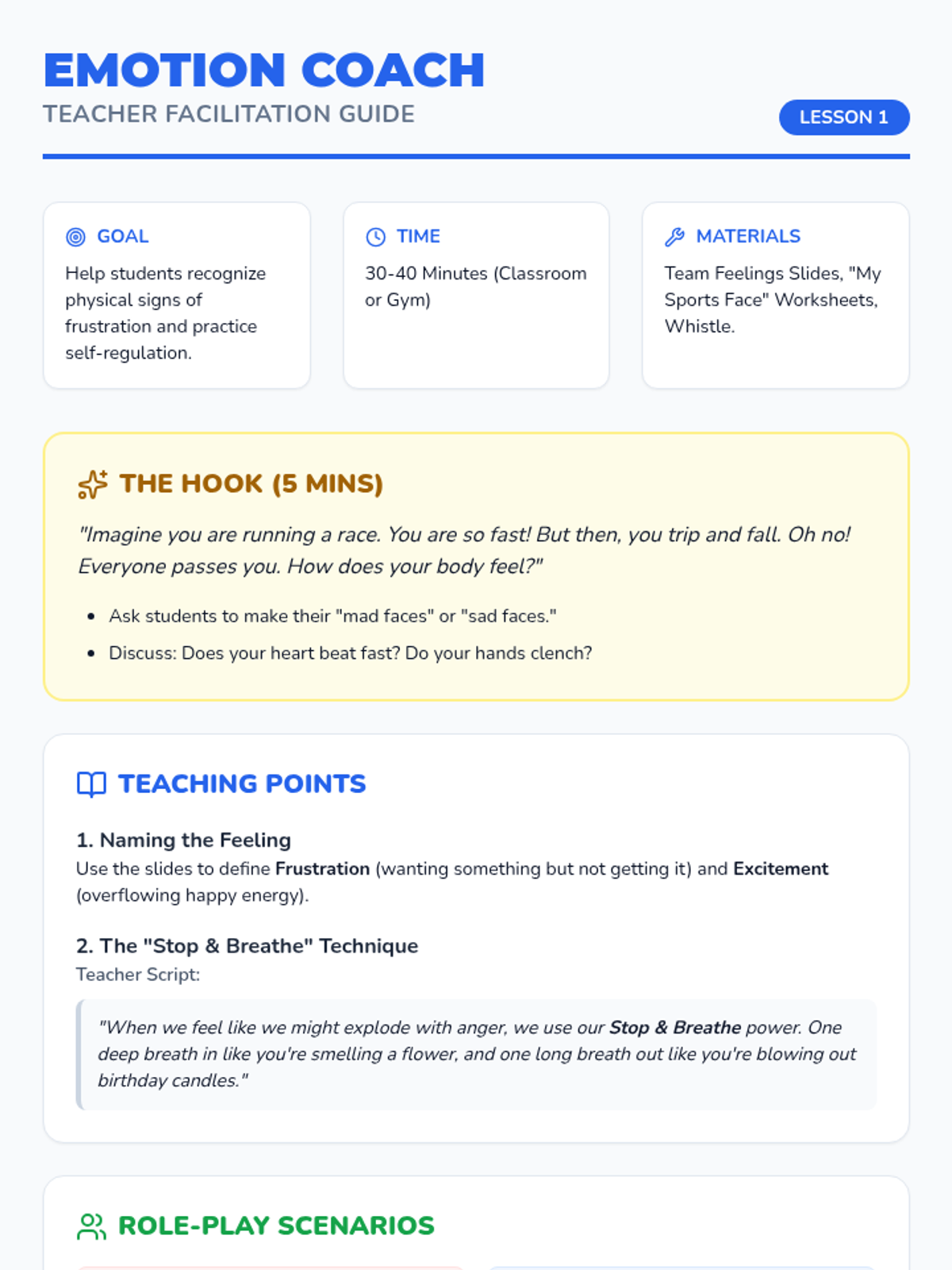
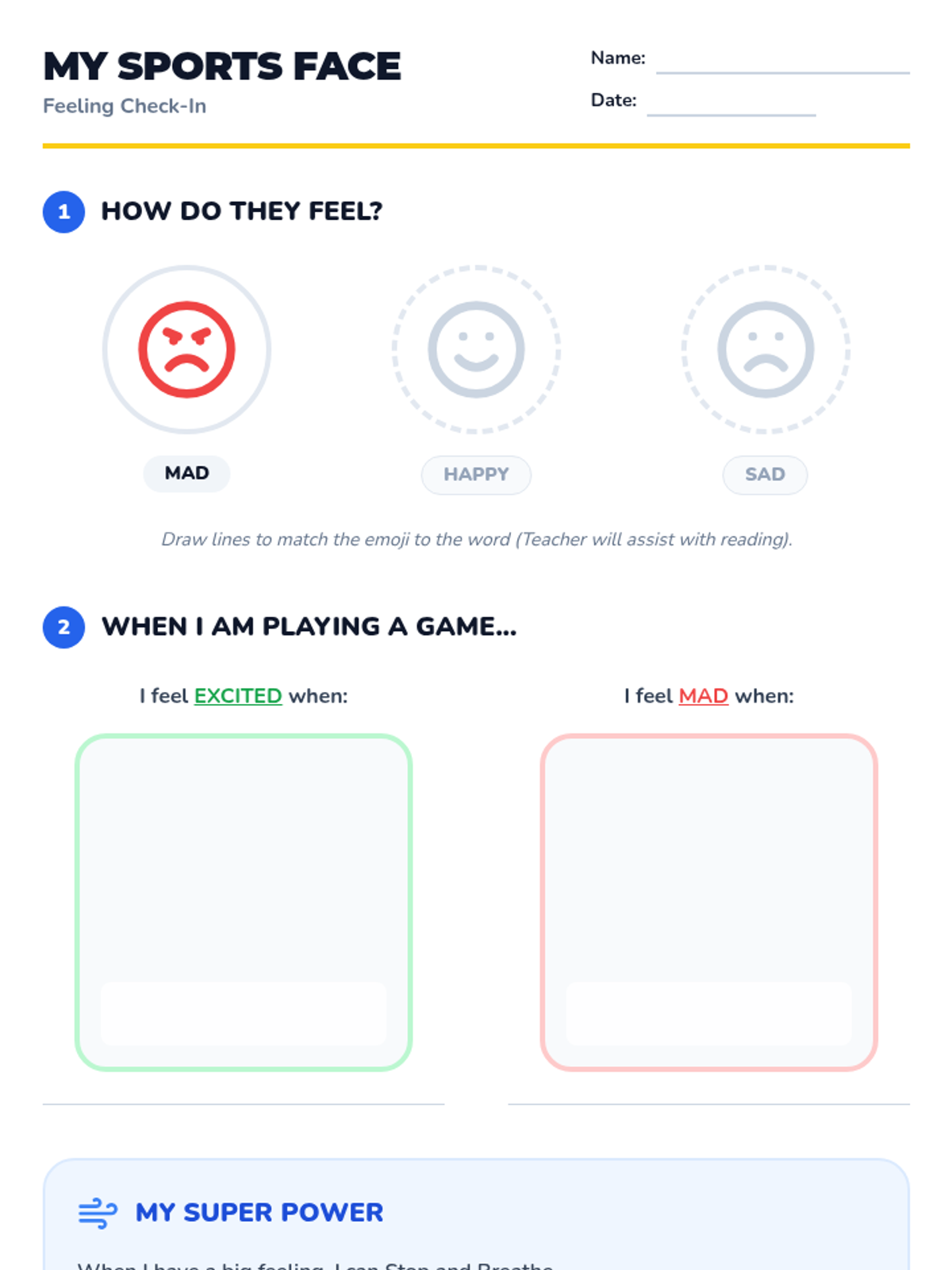
Students identify emotions like frustration and excitement in sports and practice calming techniques.
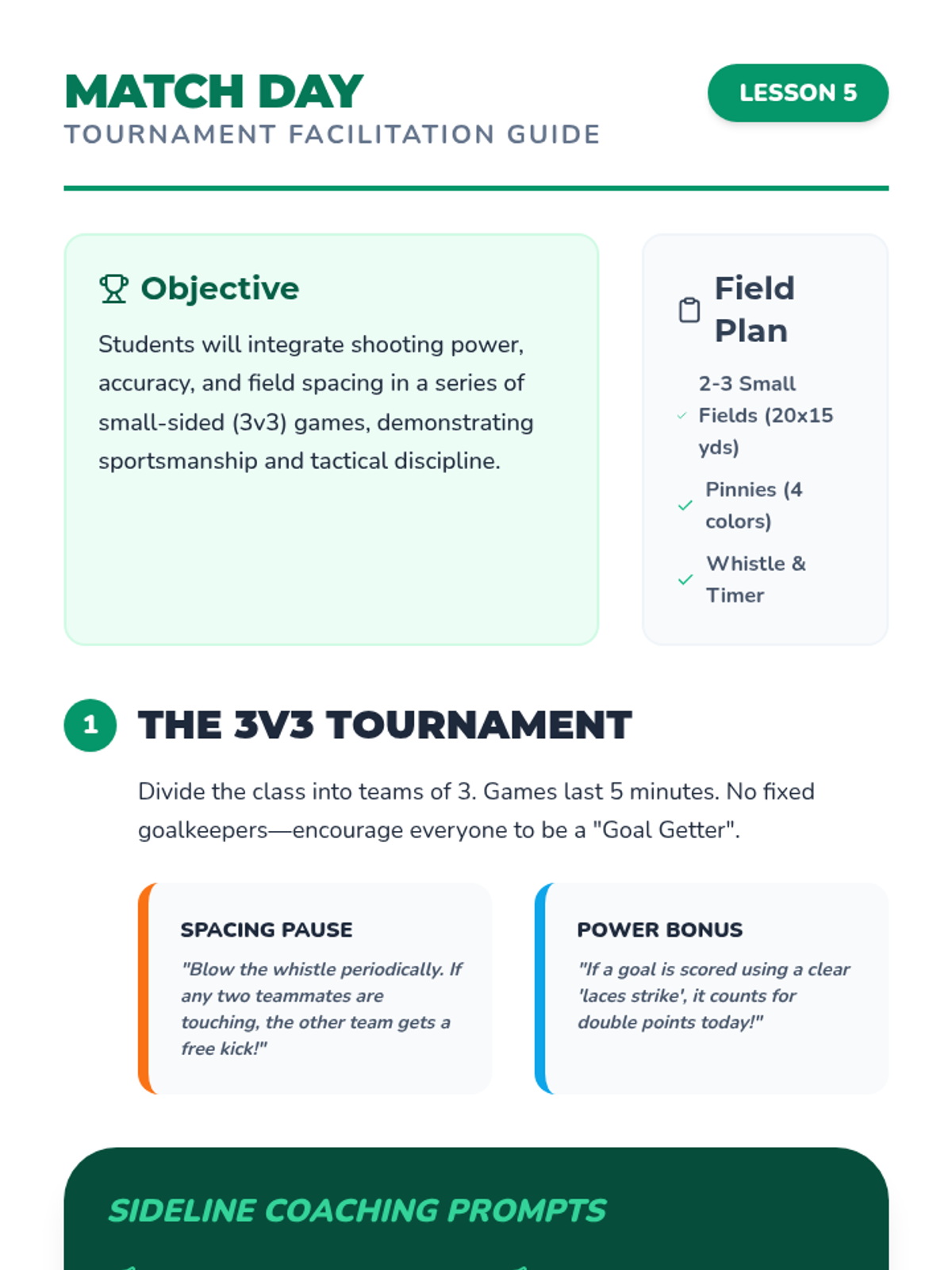
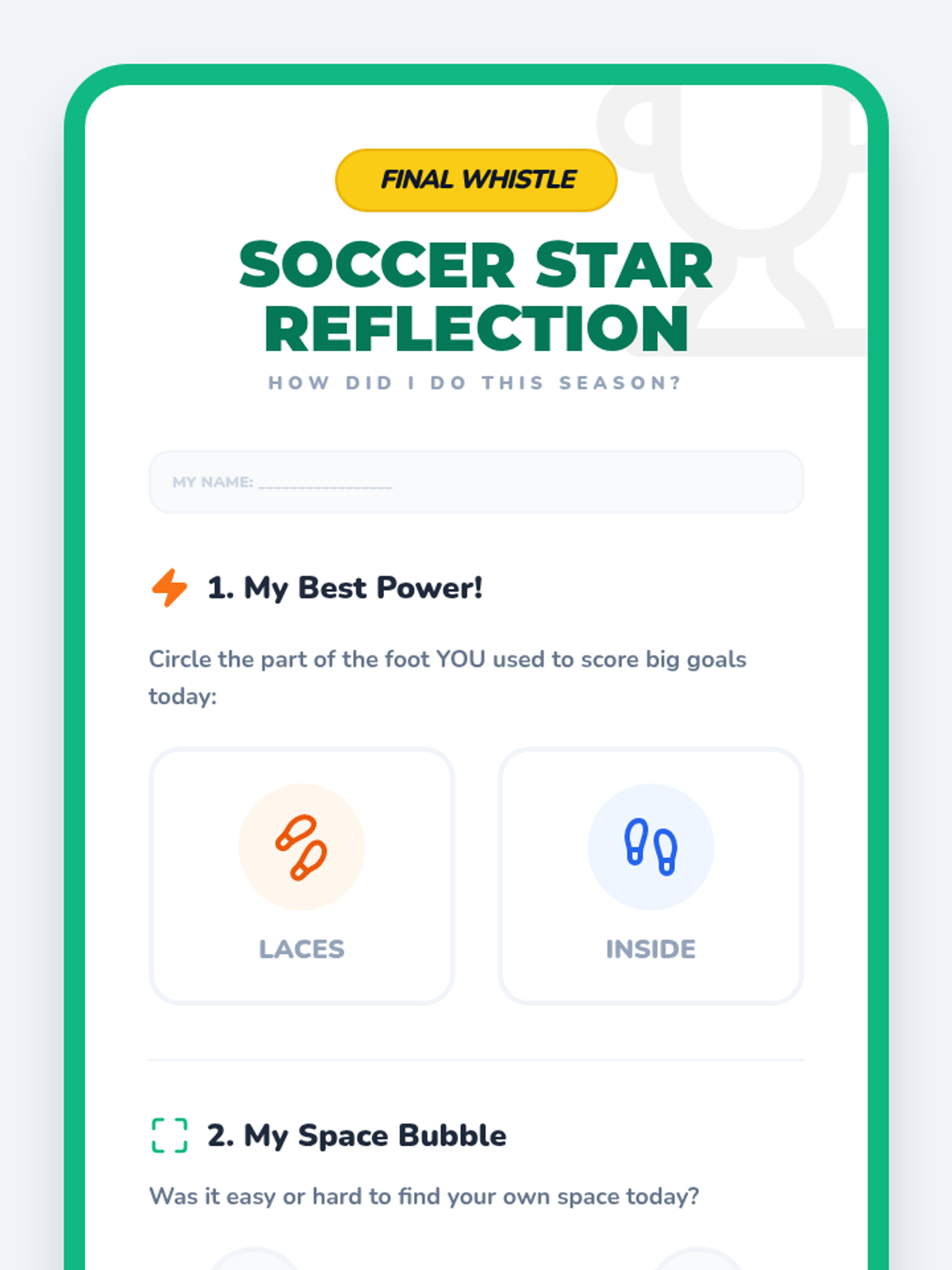
The sequence culminates in a 3v3 mini-game on a small field, focusing on applying shooting skills and maintaining the spacing rules learned in previous lessons.
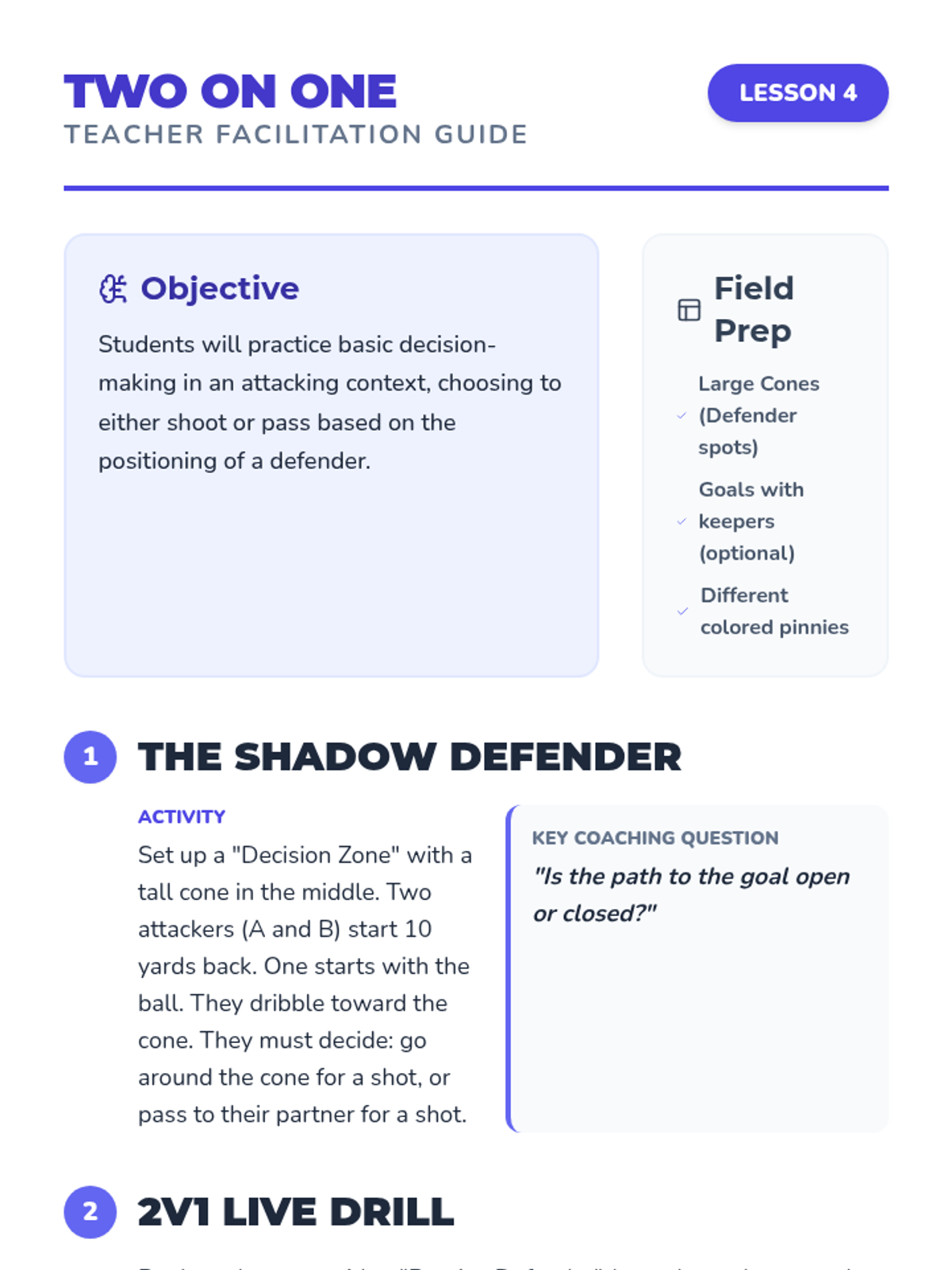
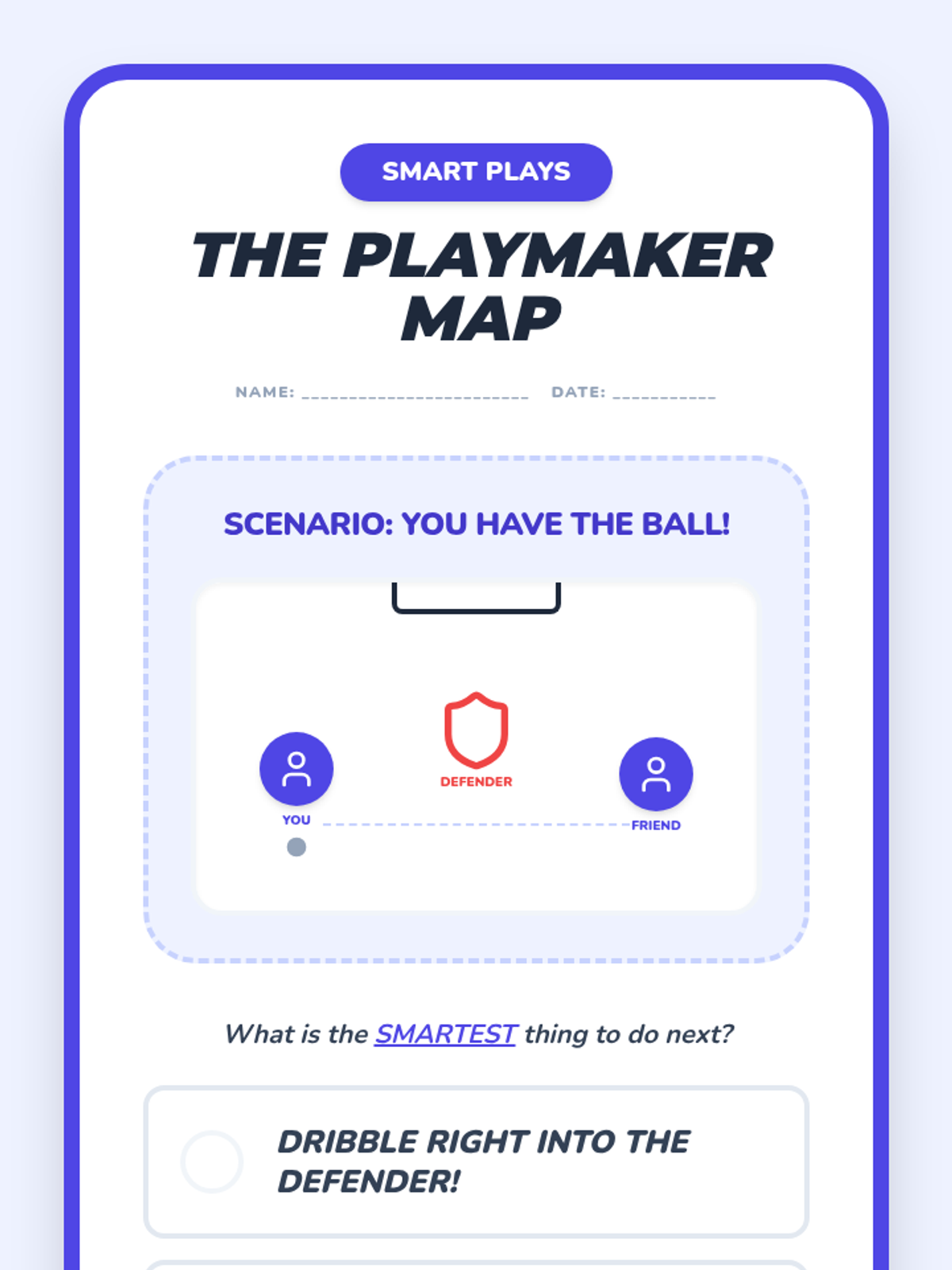
Students work in pairs against a single defender to decide whether to dribble and shoot or pass to a teammate, introducing basic decision-making in an attacking context.
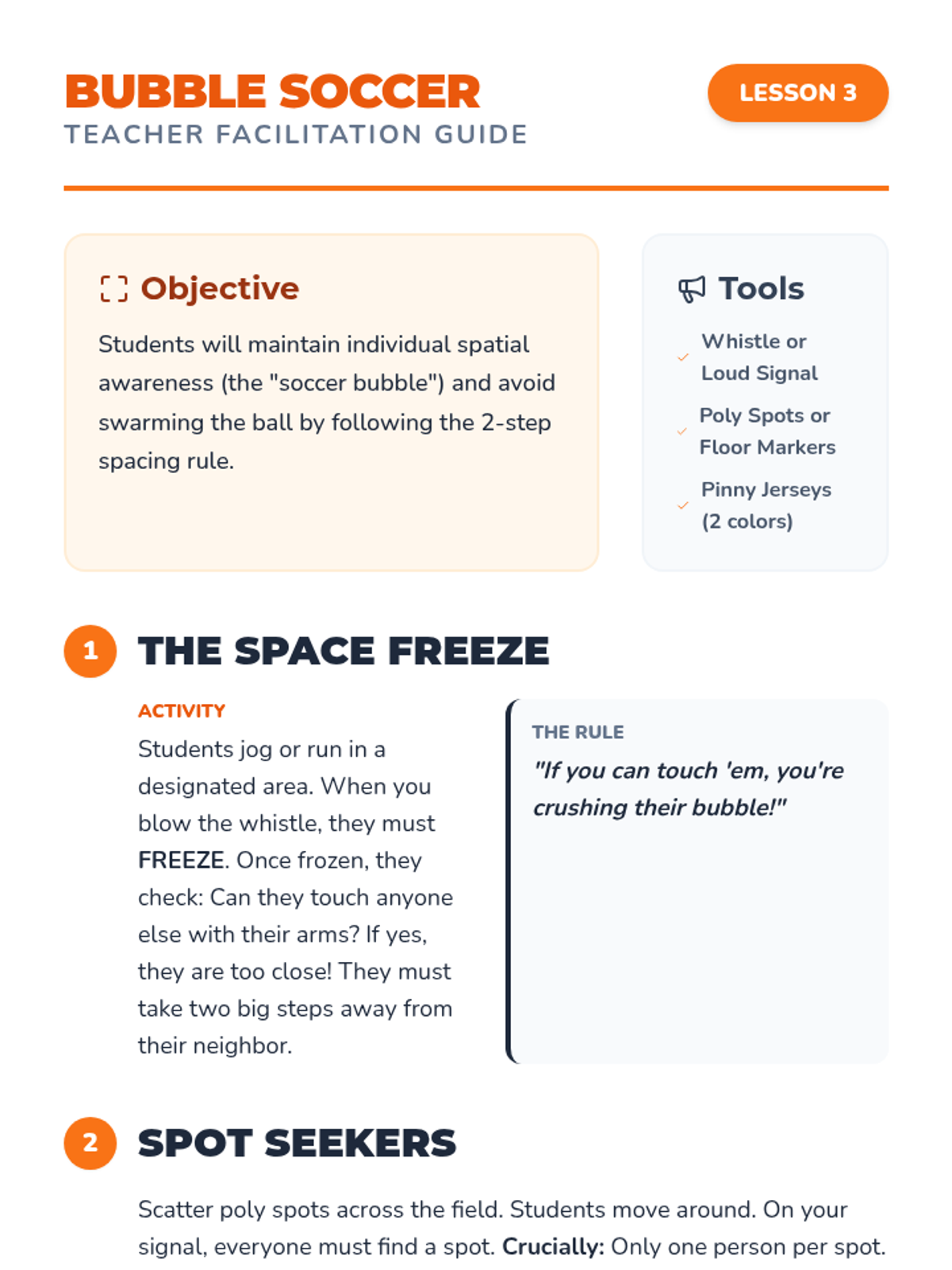
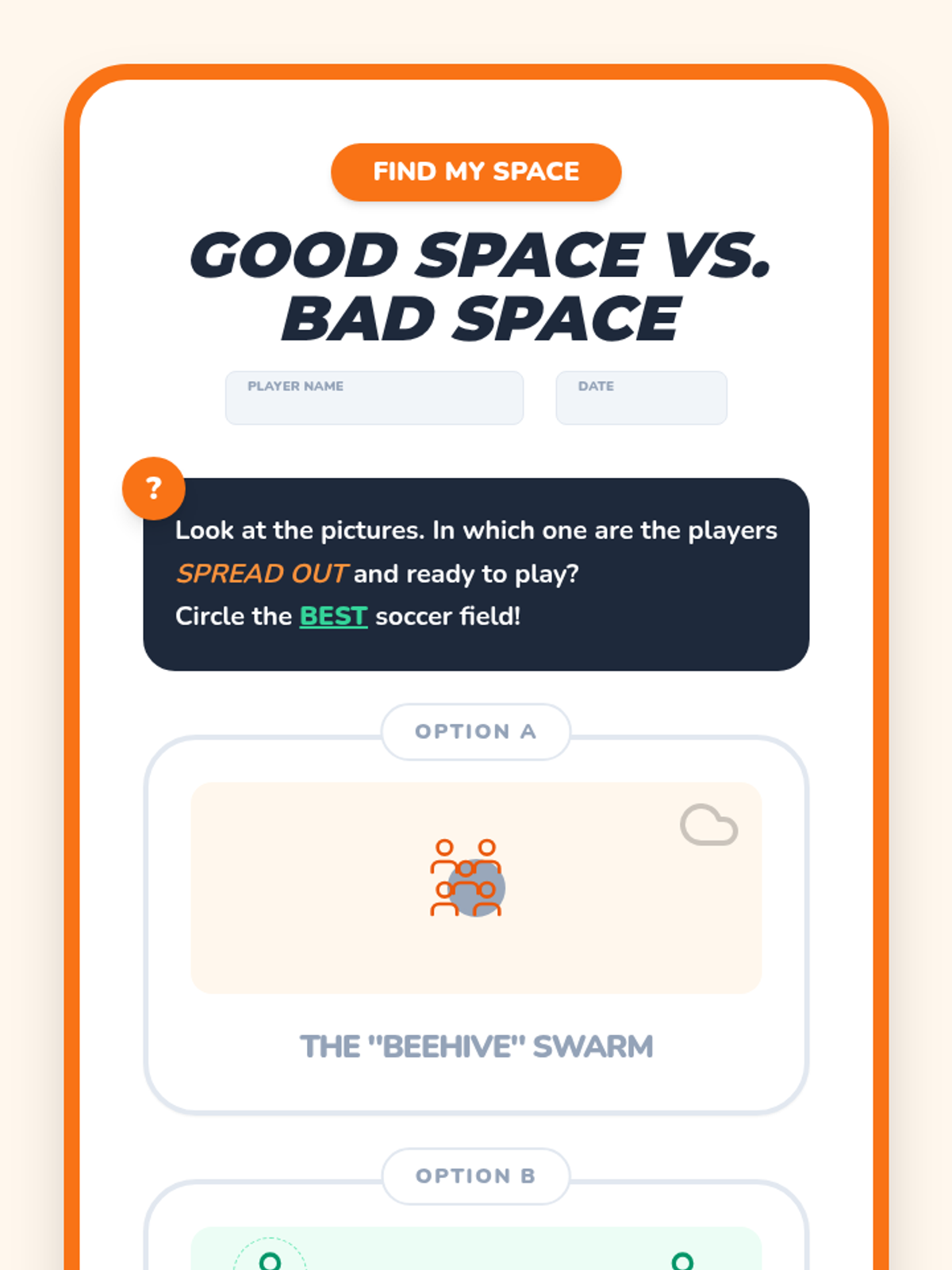
Students learn physical spacing through a 'Freeze' game to prevent swarming the ball, applying these concepts to maintain spatial awareness on the soccer field.
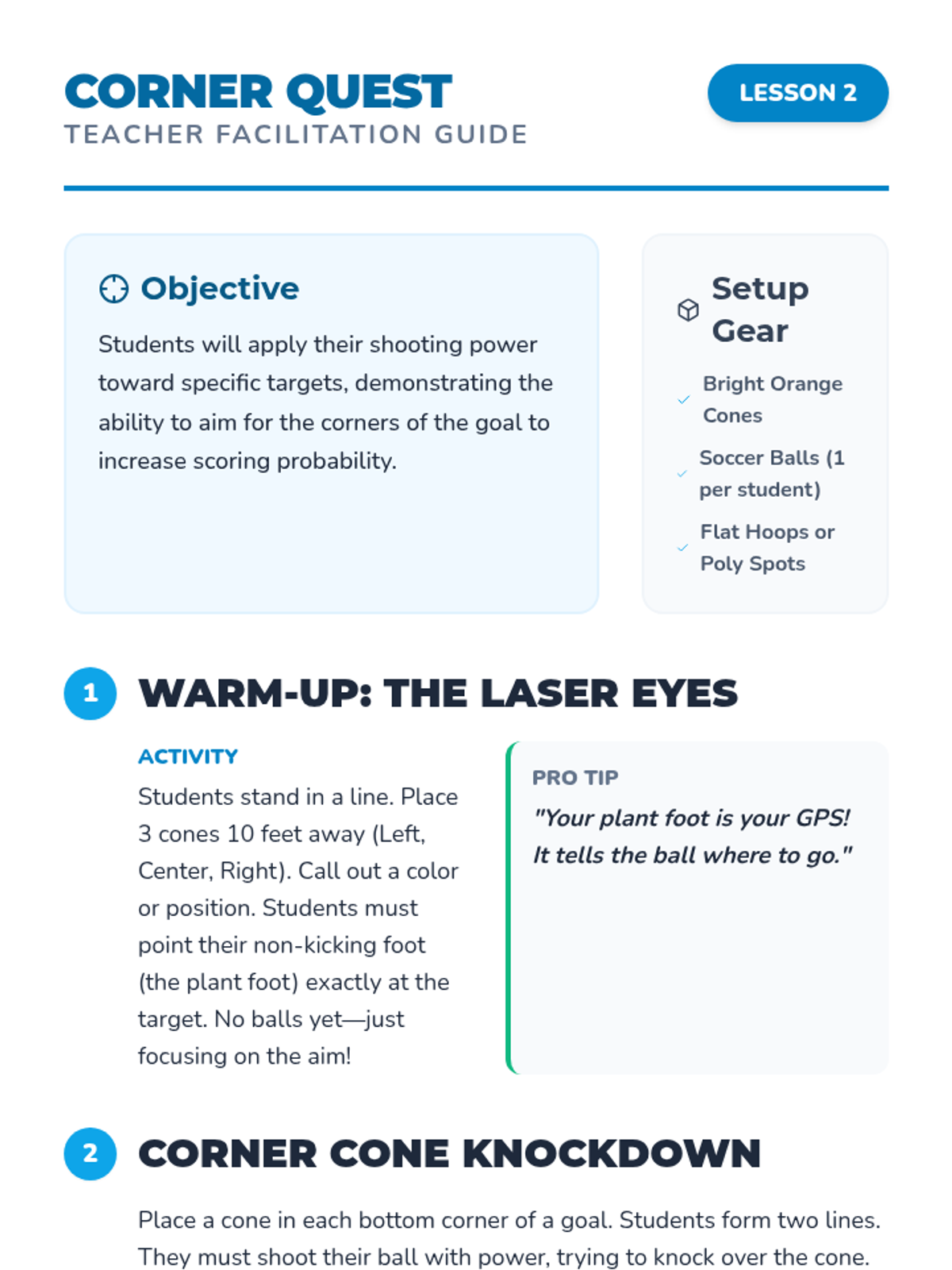
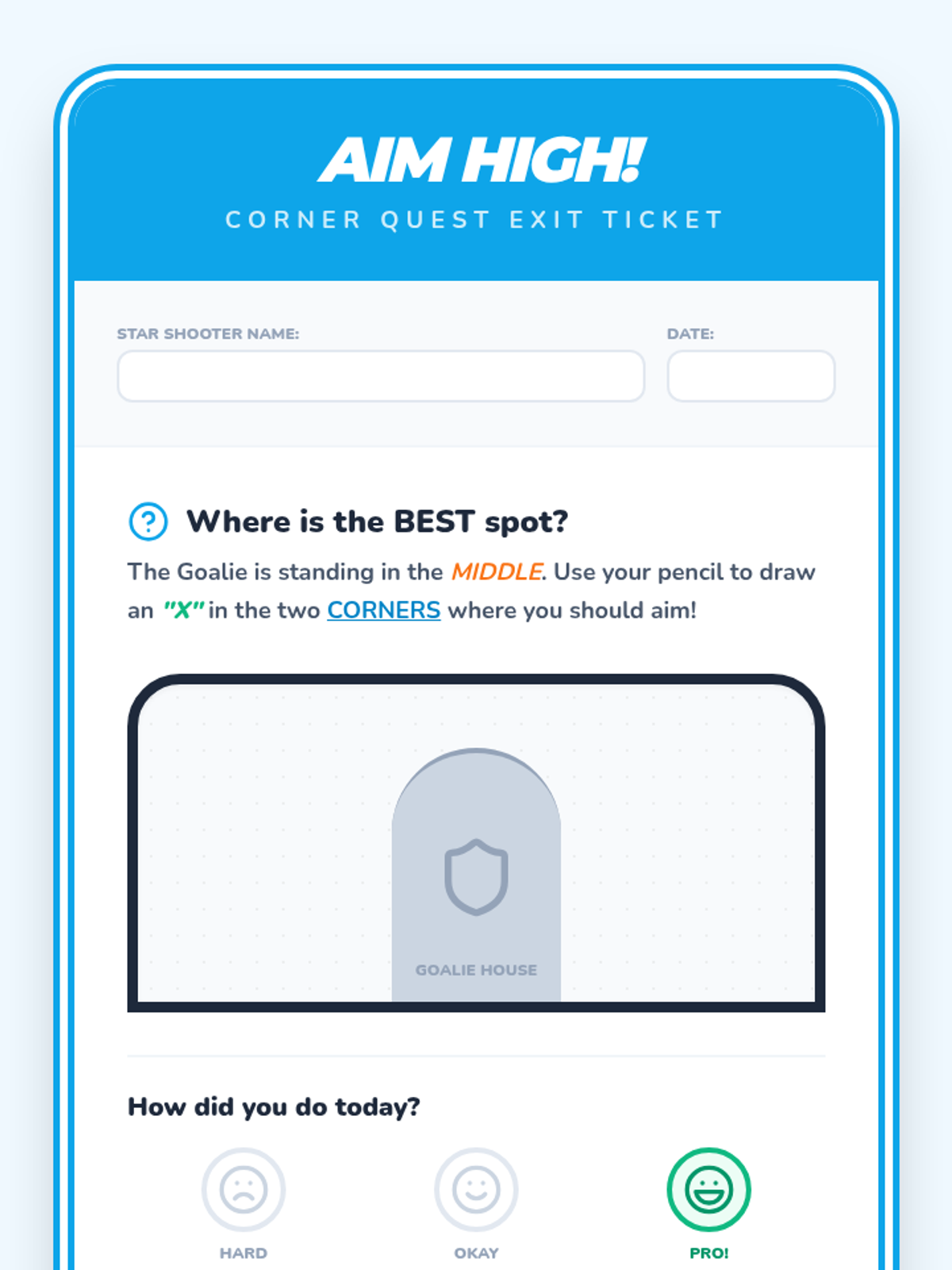
Students engage in target practice, aiming for cones placed in the corners of the goal rather than the center to learn placement over raw power.
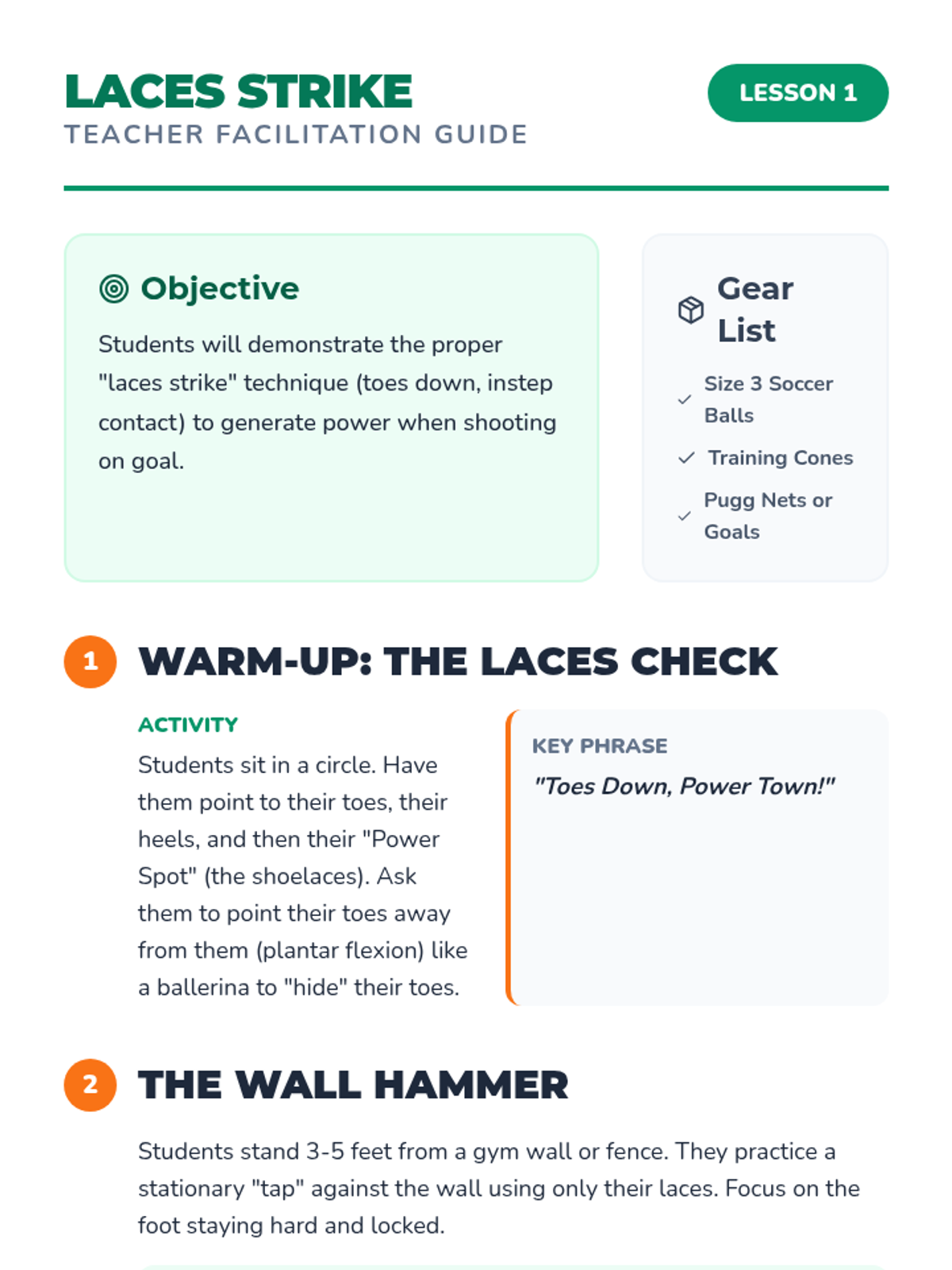
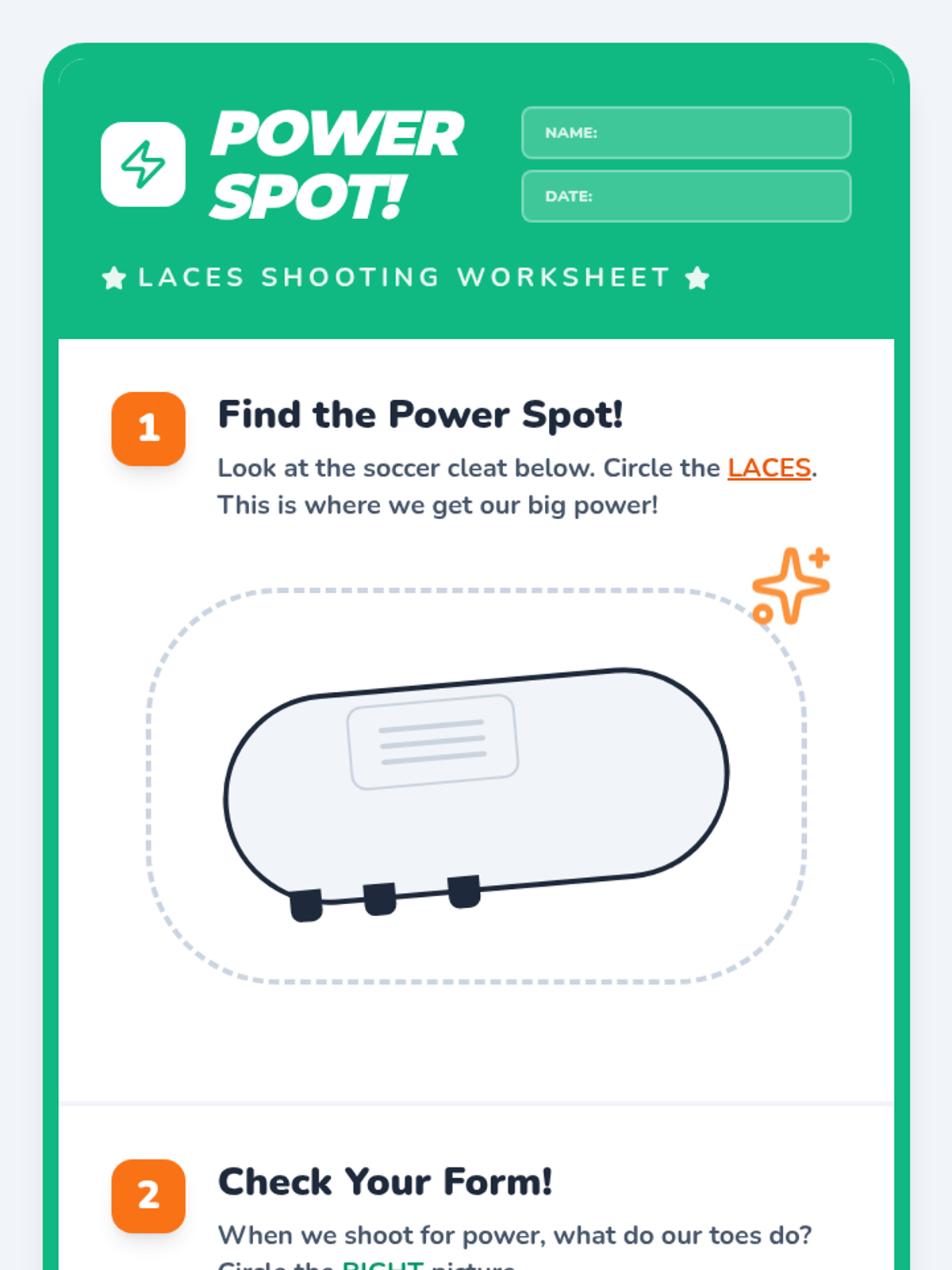
Students learn to strike the ball with their laces (instep) to generate power for shooting, distinguishing it from the push pass.
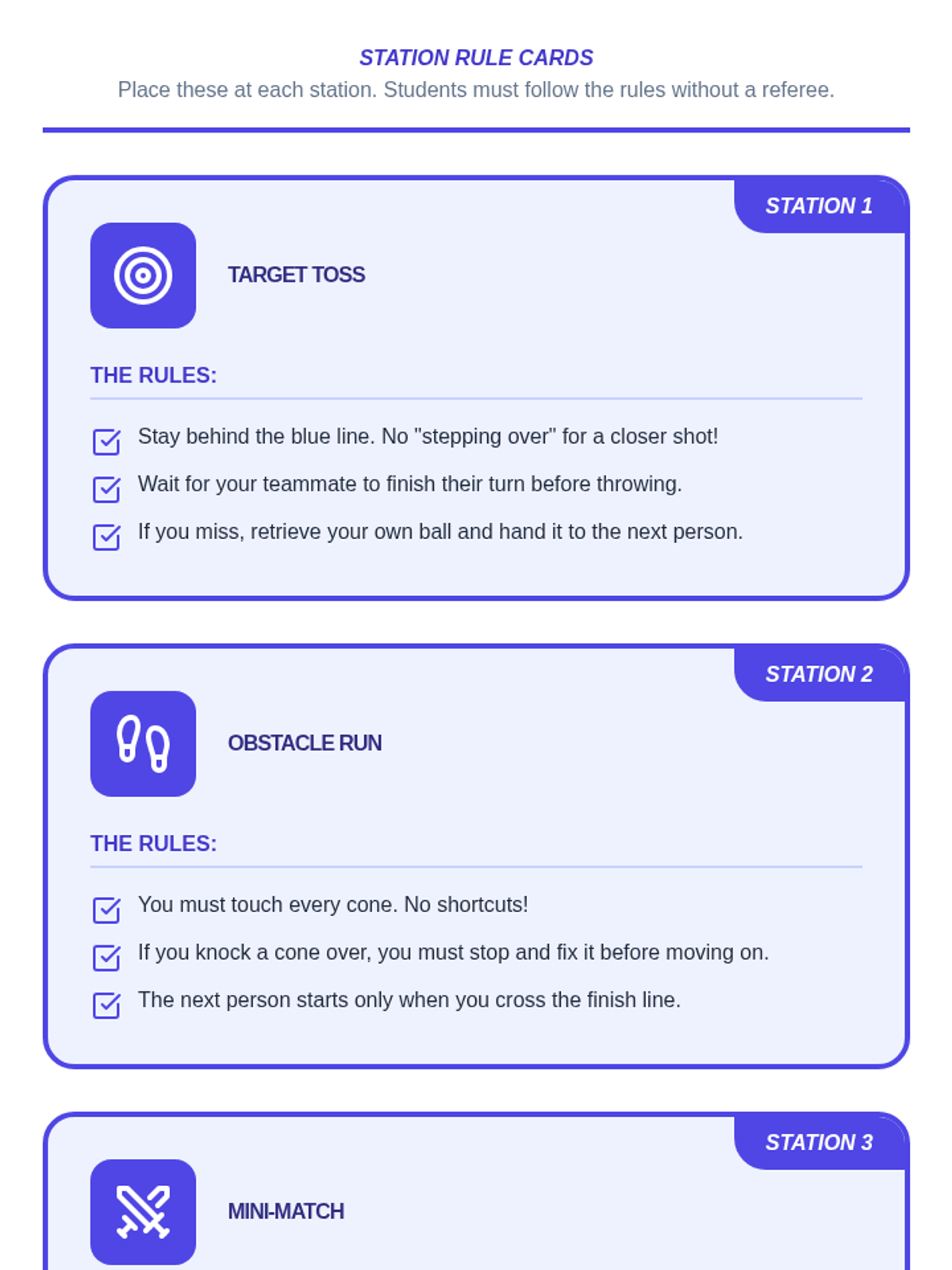
A capstone activity where students rotate through stations, following rules and self-officiating without direct teacher intervention.
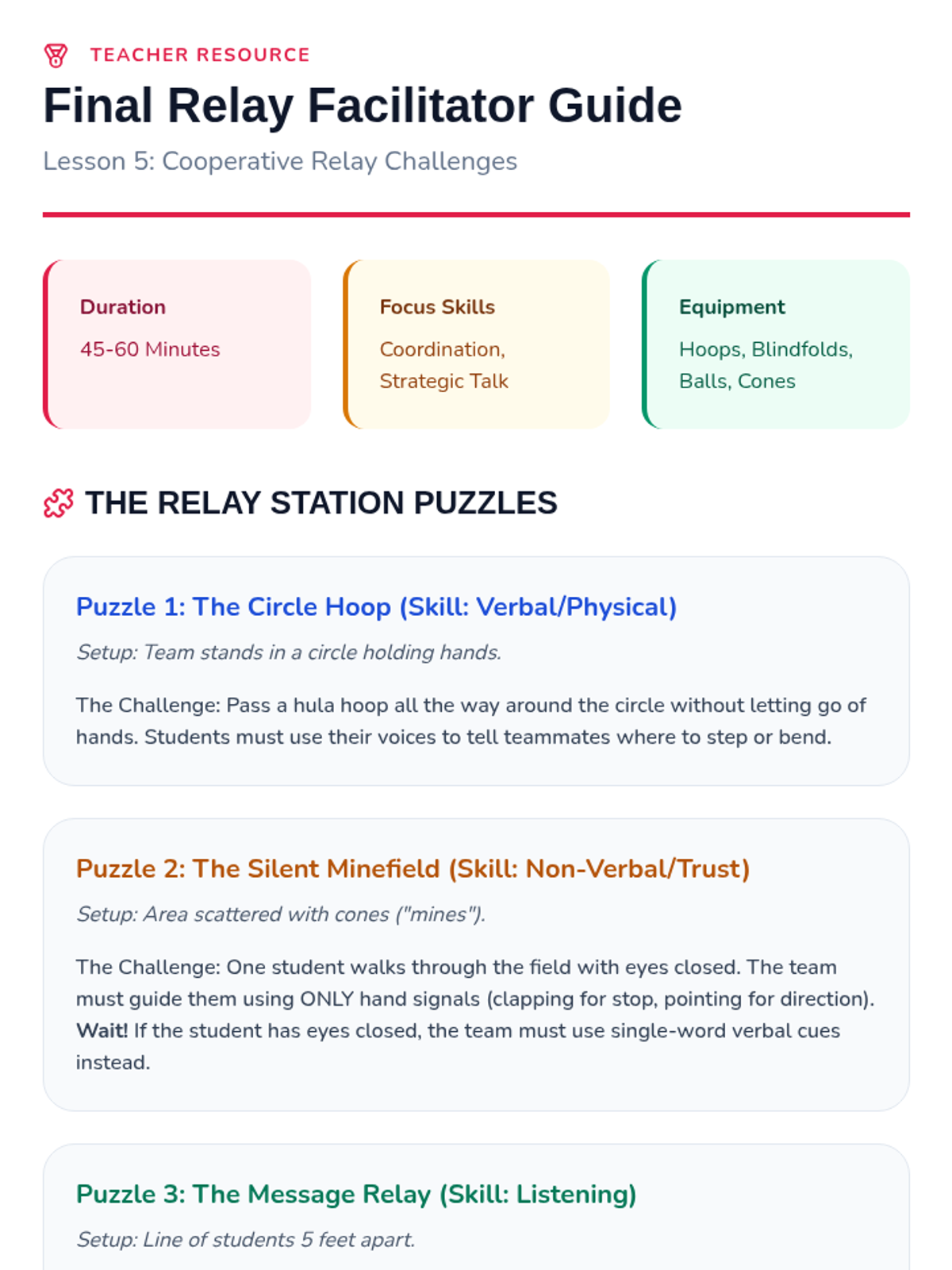
The culmination of the sequence where small groups solve physical relay puzzles using a combination of all communication skills.
Pairs work together as guides and receivers to navigate paths, building trust and using precise directional vocabulary.
Focuses on active listening skills during movement games like 'Red Light, Green Light' variations, emphasizing stopping and processing instructions.
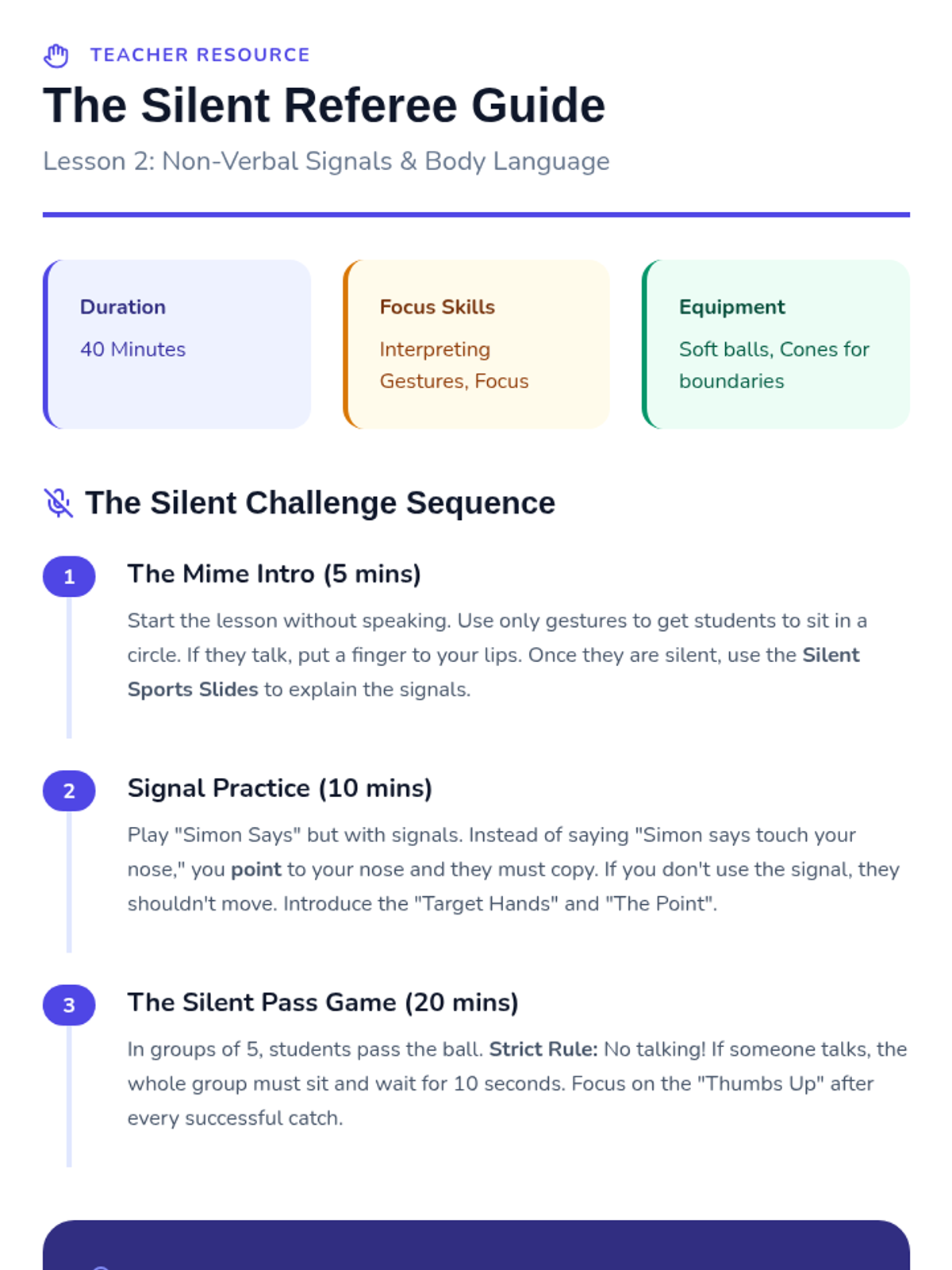
Students explore non-verbal communication through 'Silent Sports,' using hand signals and body language to coordinate movements.
Students learn to use clear, loud voices and eye contact when passing objects to teammates, ensuring the receiver is ready.
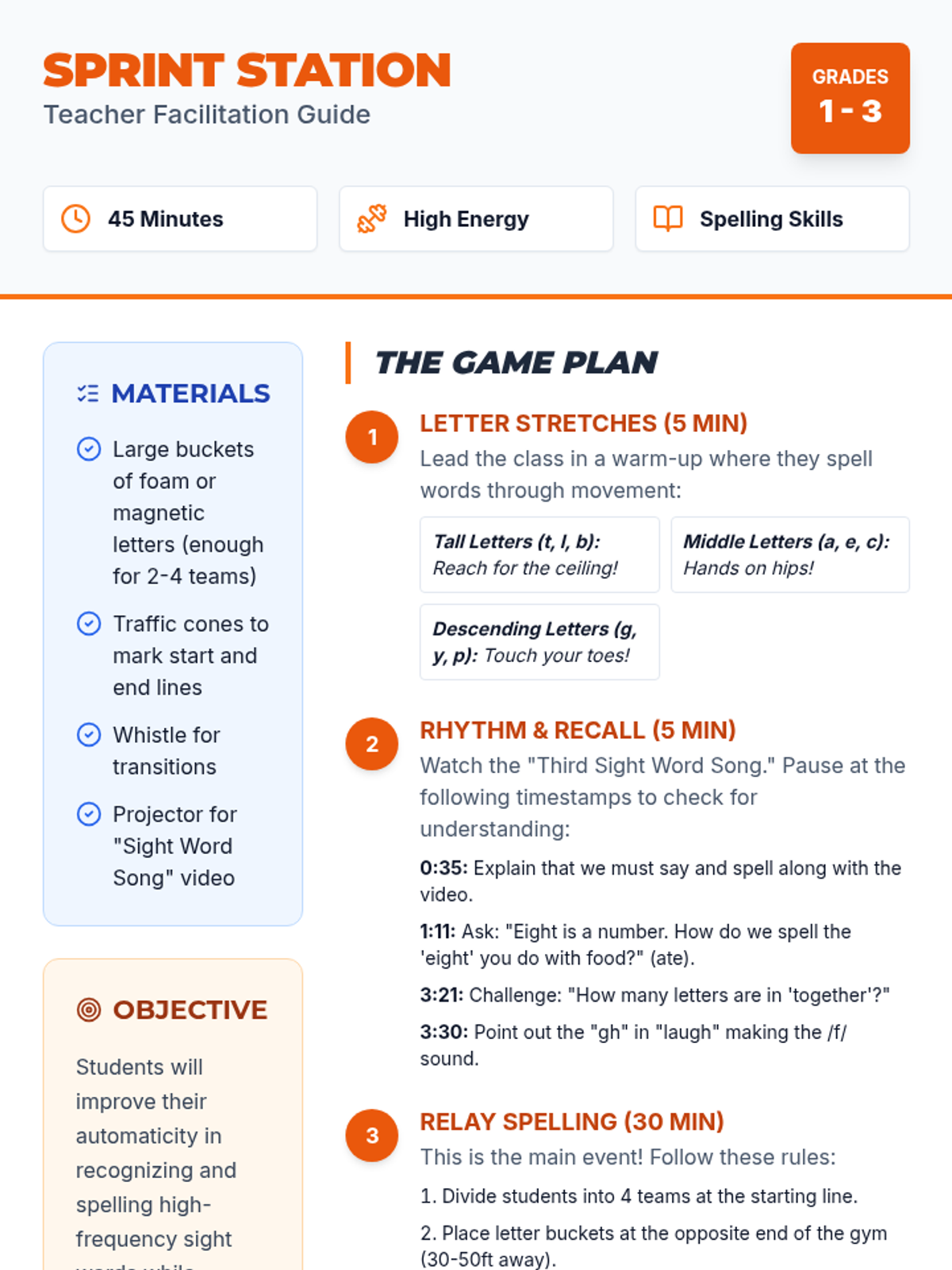
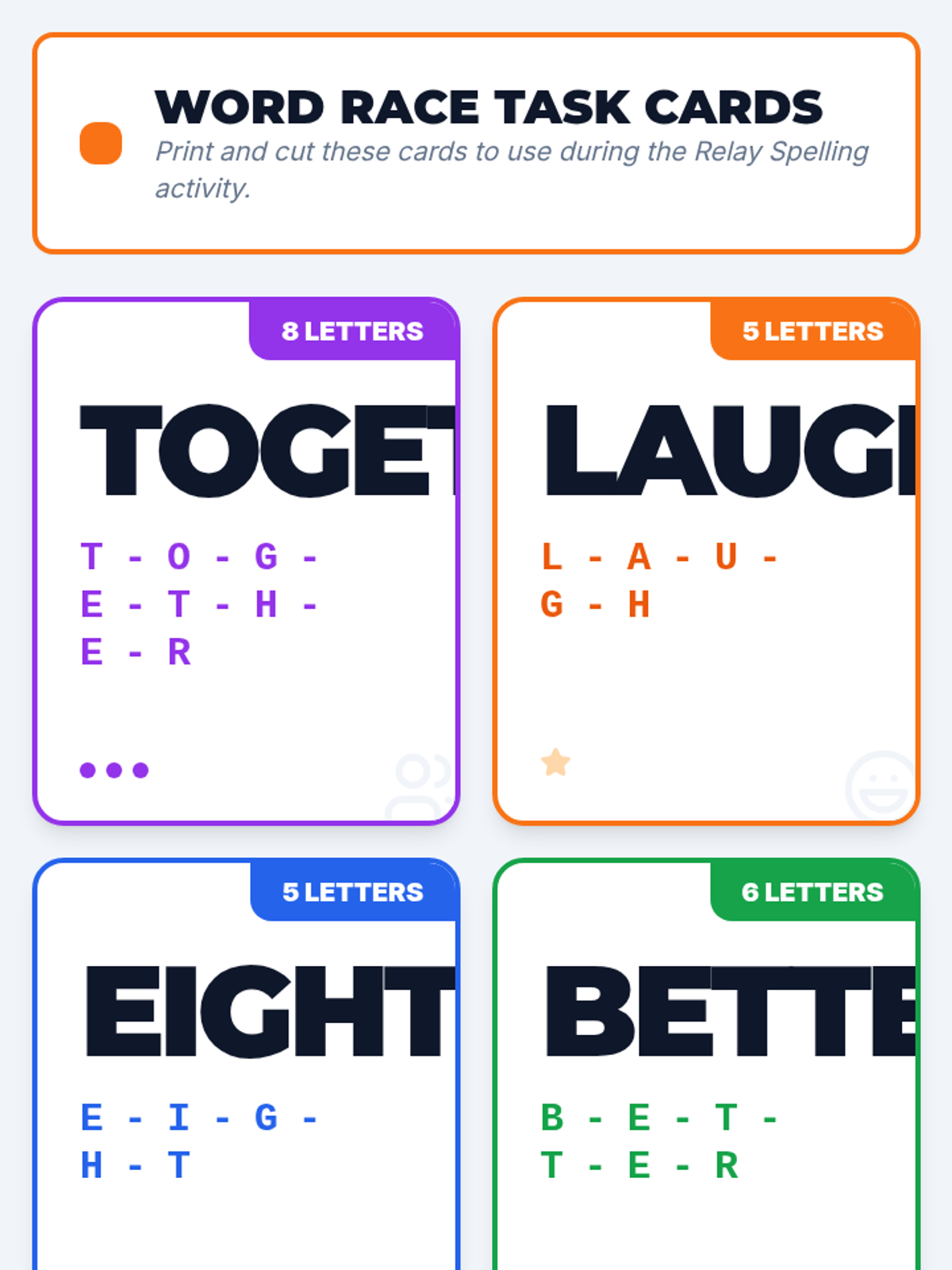
An energetic PE lesson that combines high-intensity relay races with sight word reinforcement for grades 1-3. Students stretch to spell, watch a rhythmic spelling video, and compete in team relays to build words from a bucket of letters.
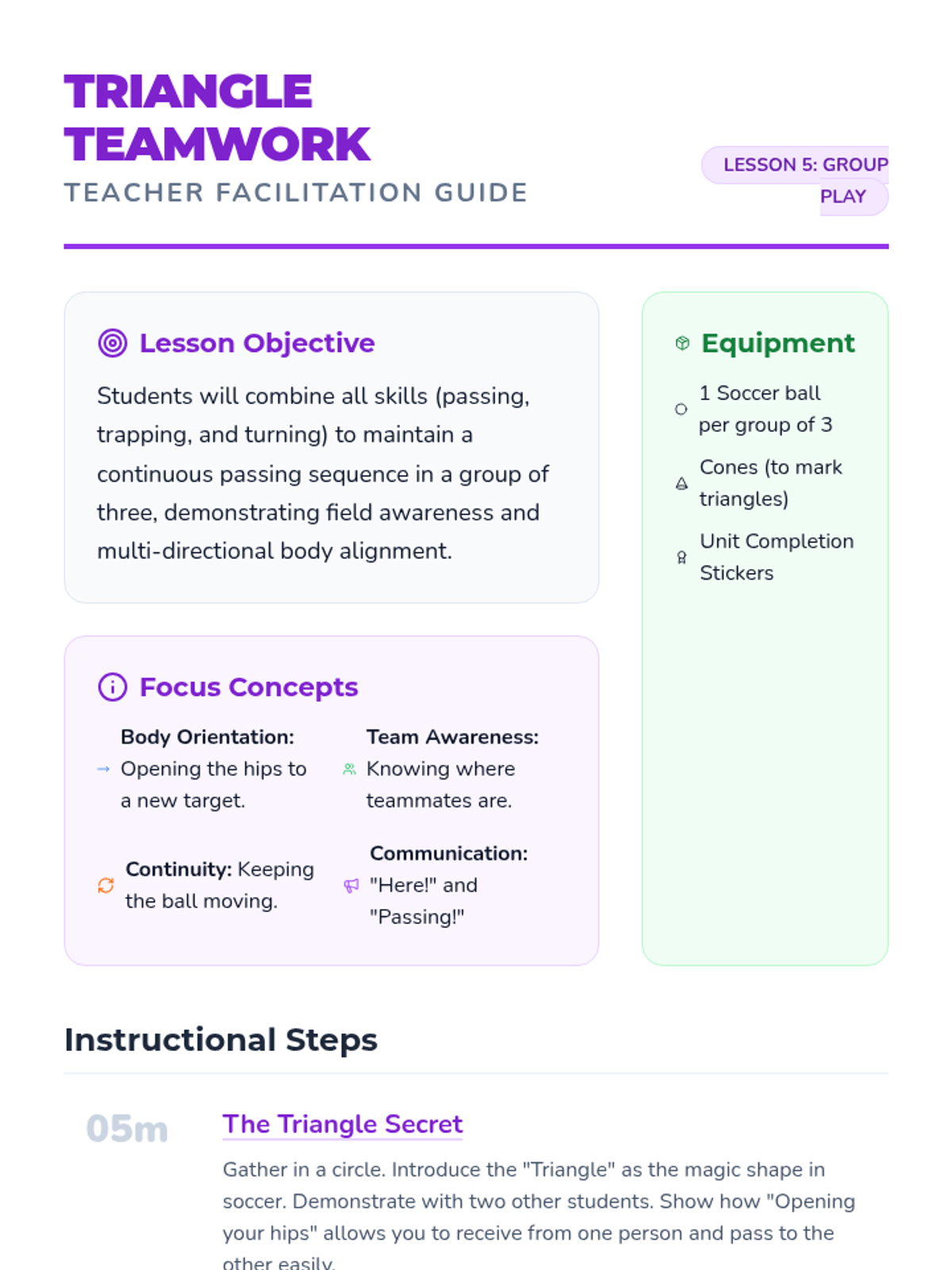
Small groups work in triangles to practice receiving from one direction and passing in another, promoting teamwork and field awareness.
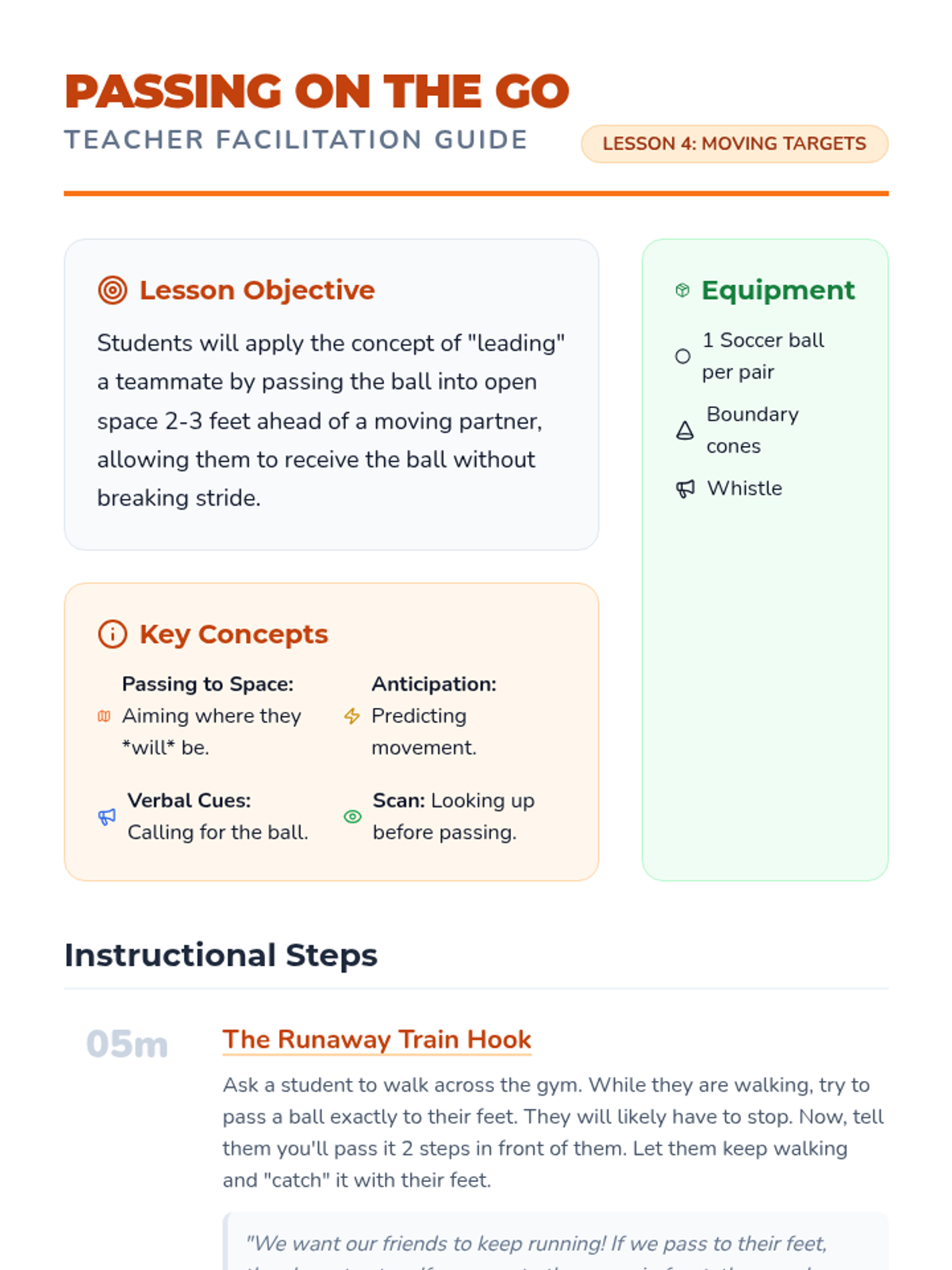
Students learn to pass the ball slightly ahead of a moving partner, introducing the concept of anticipation.
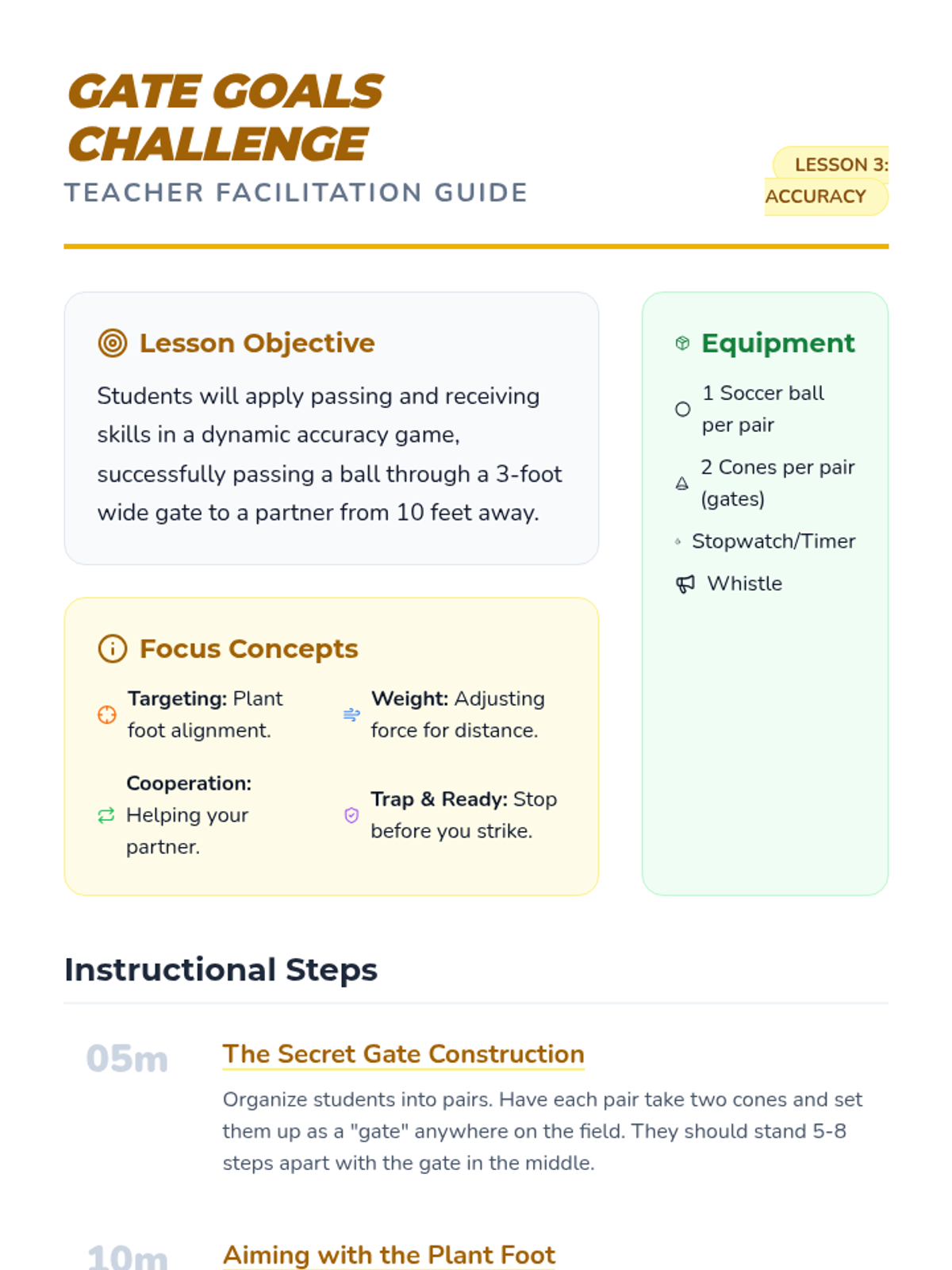
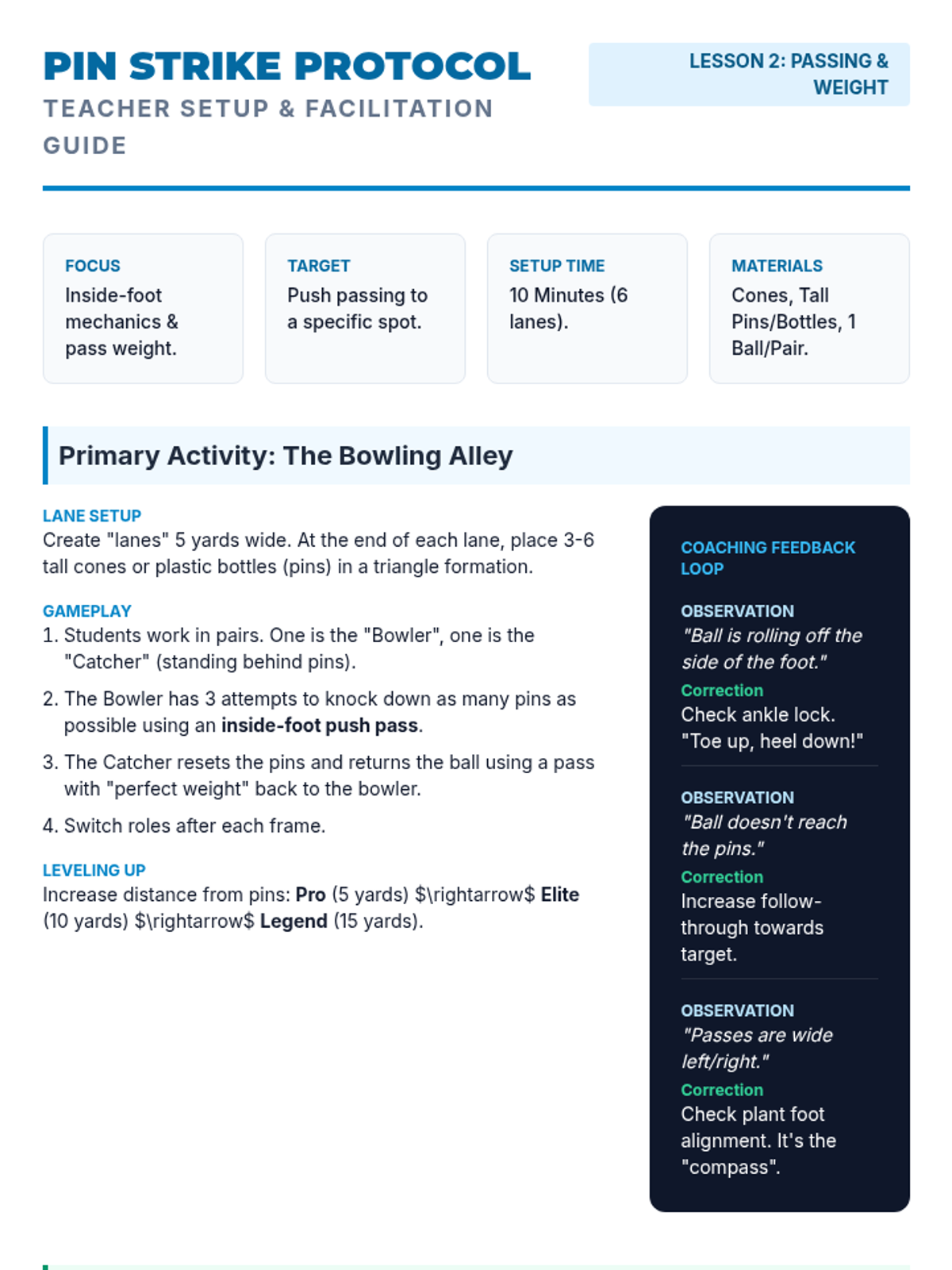
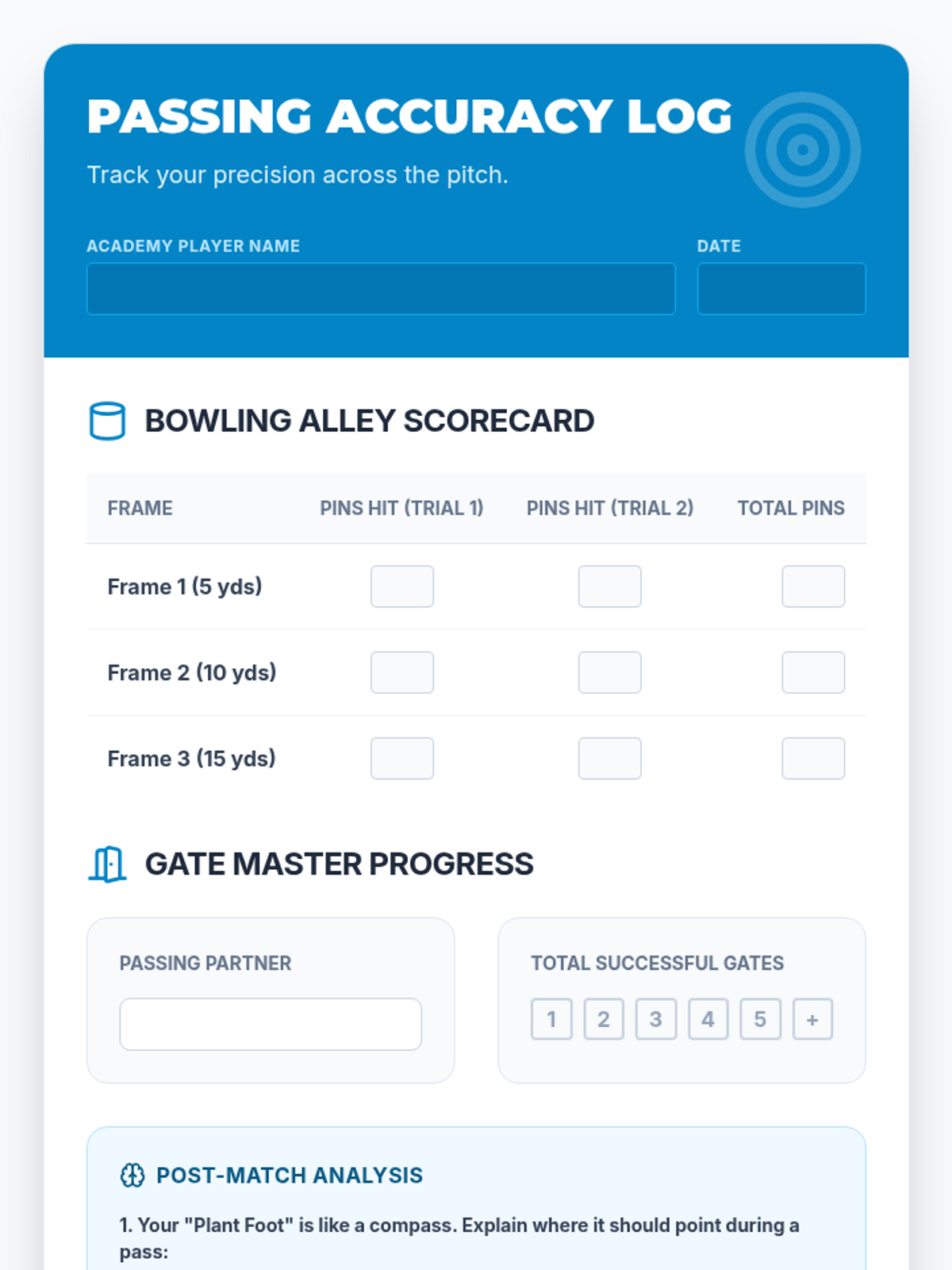
Pairs practice passing through cone gates to improve accuracy and control the force (weight) of their passes.
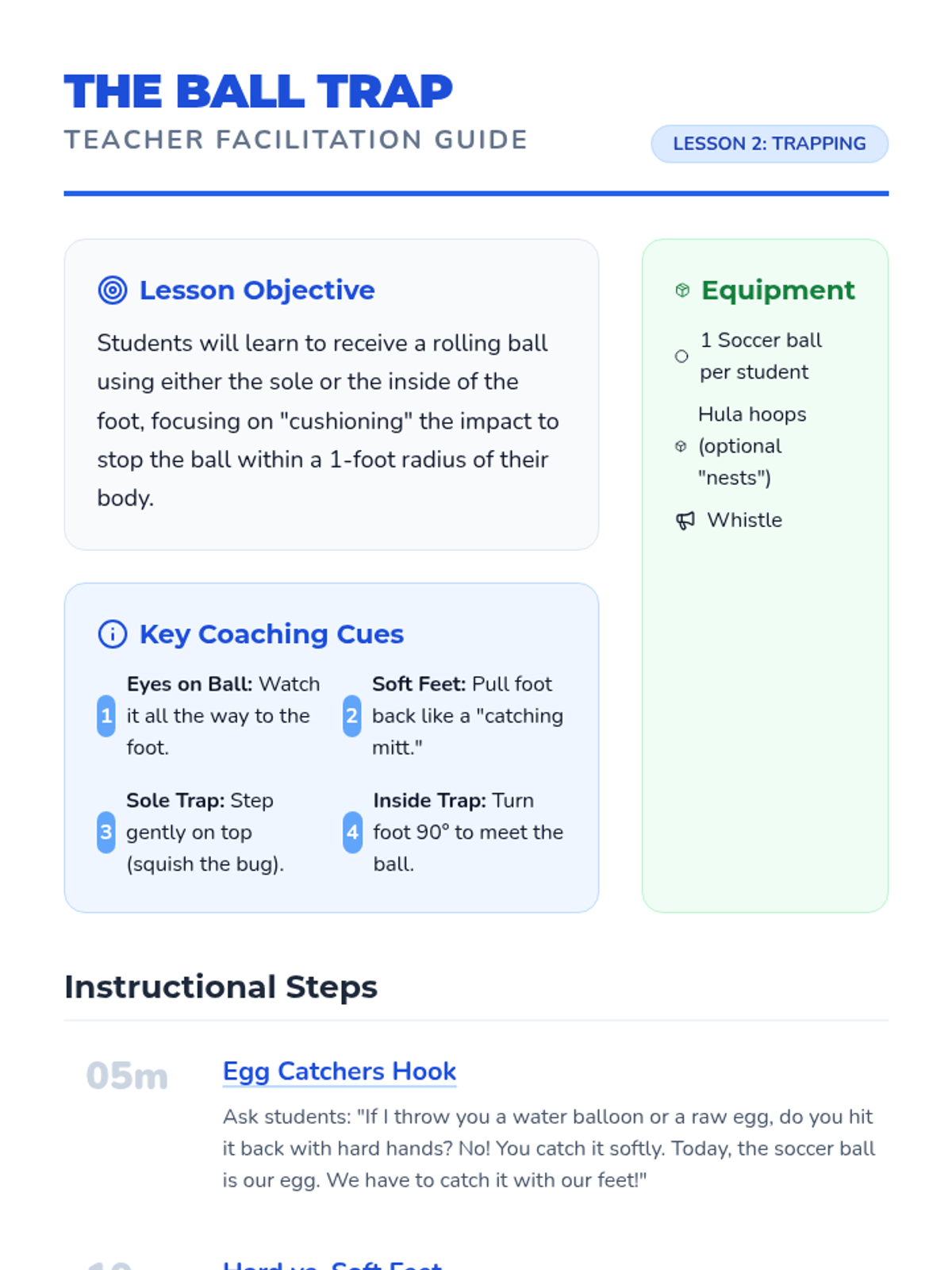
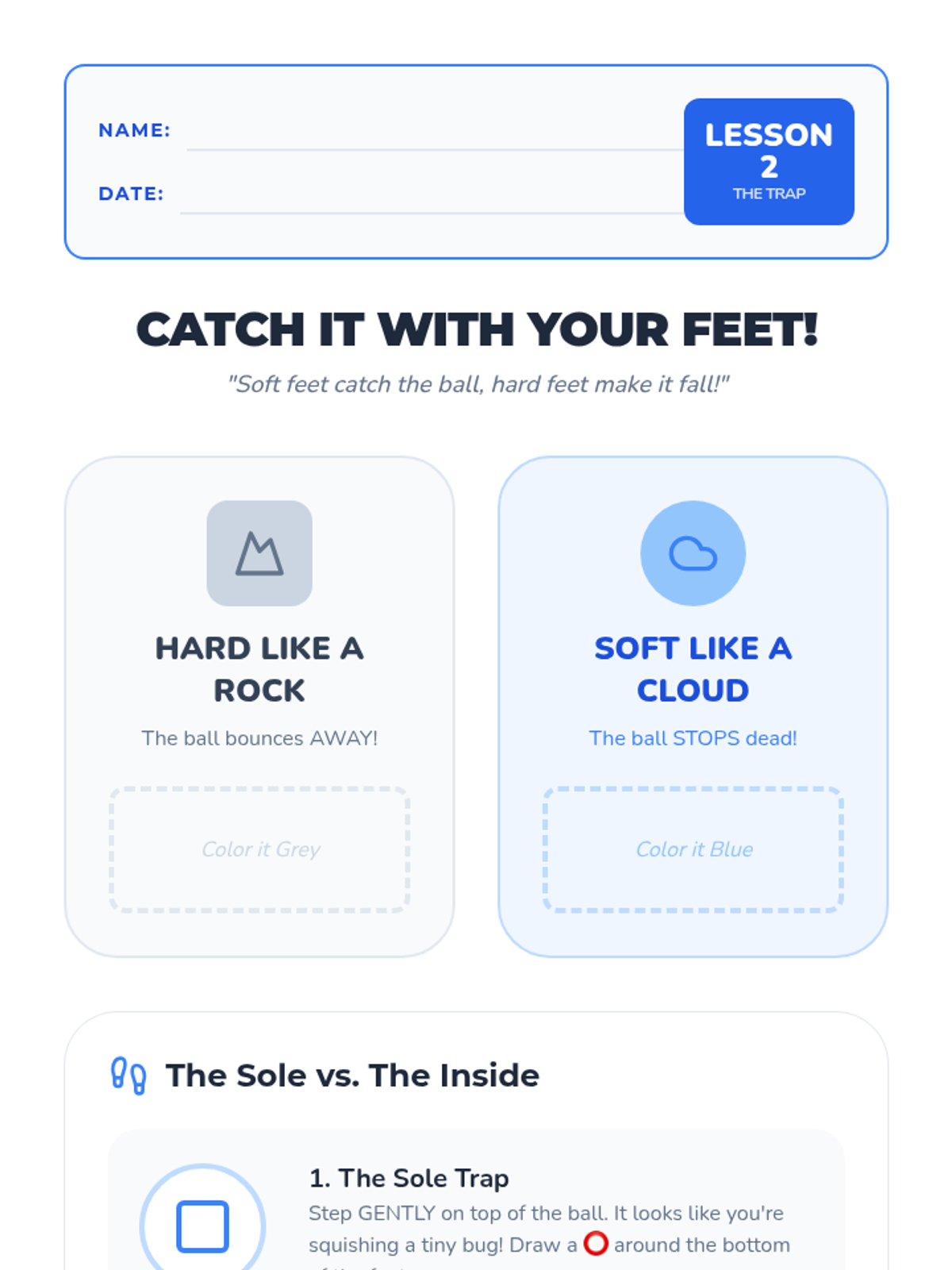
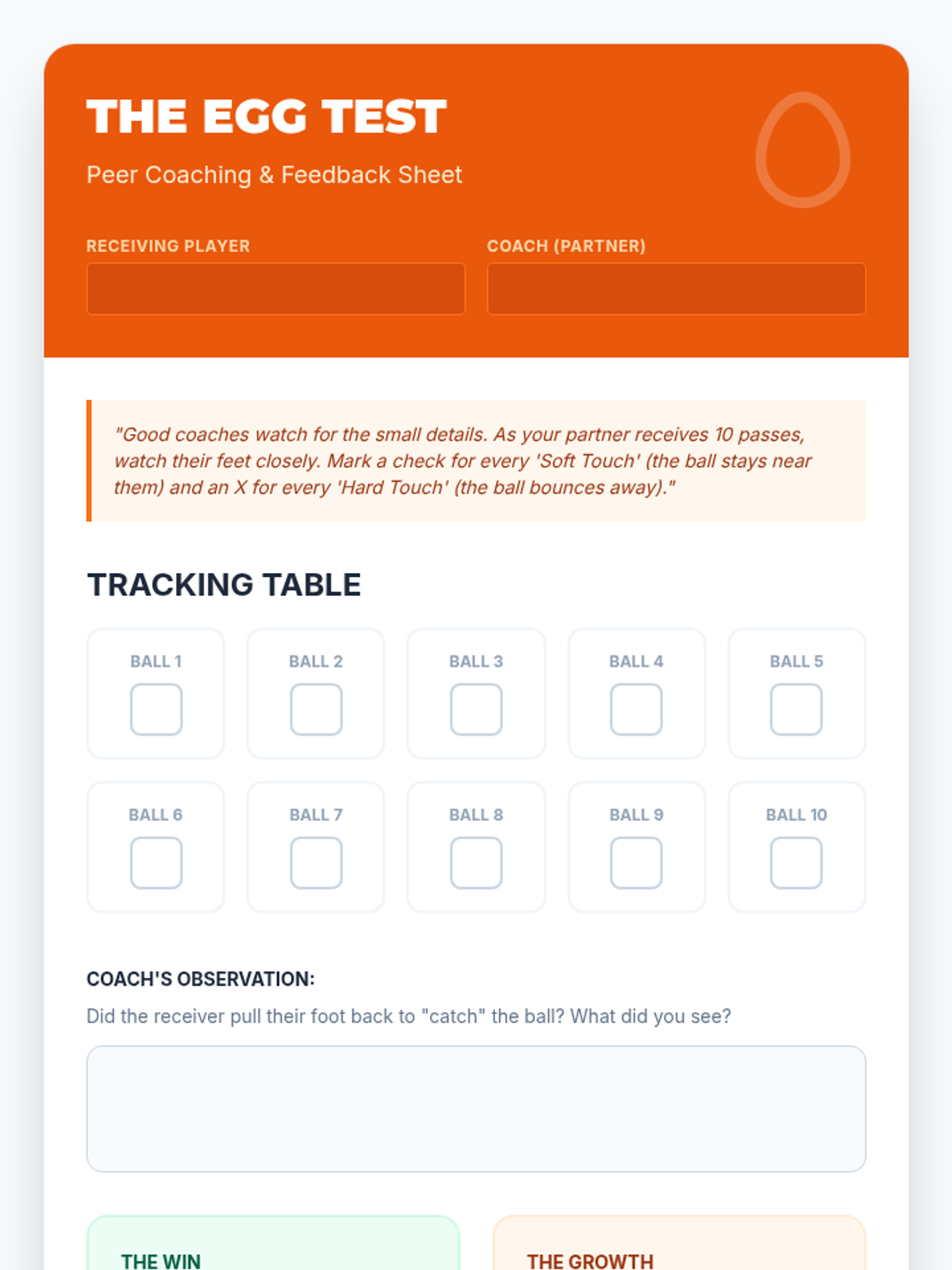
Students practice 'catching' the ball with their feet, using the sole or inside of the foot to cushion and stop the ball.
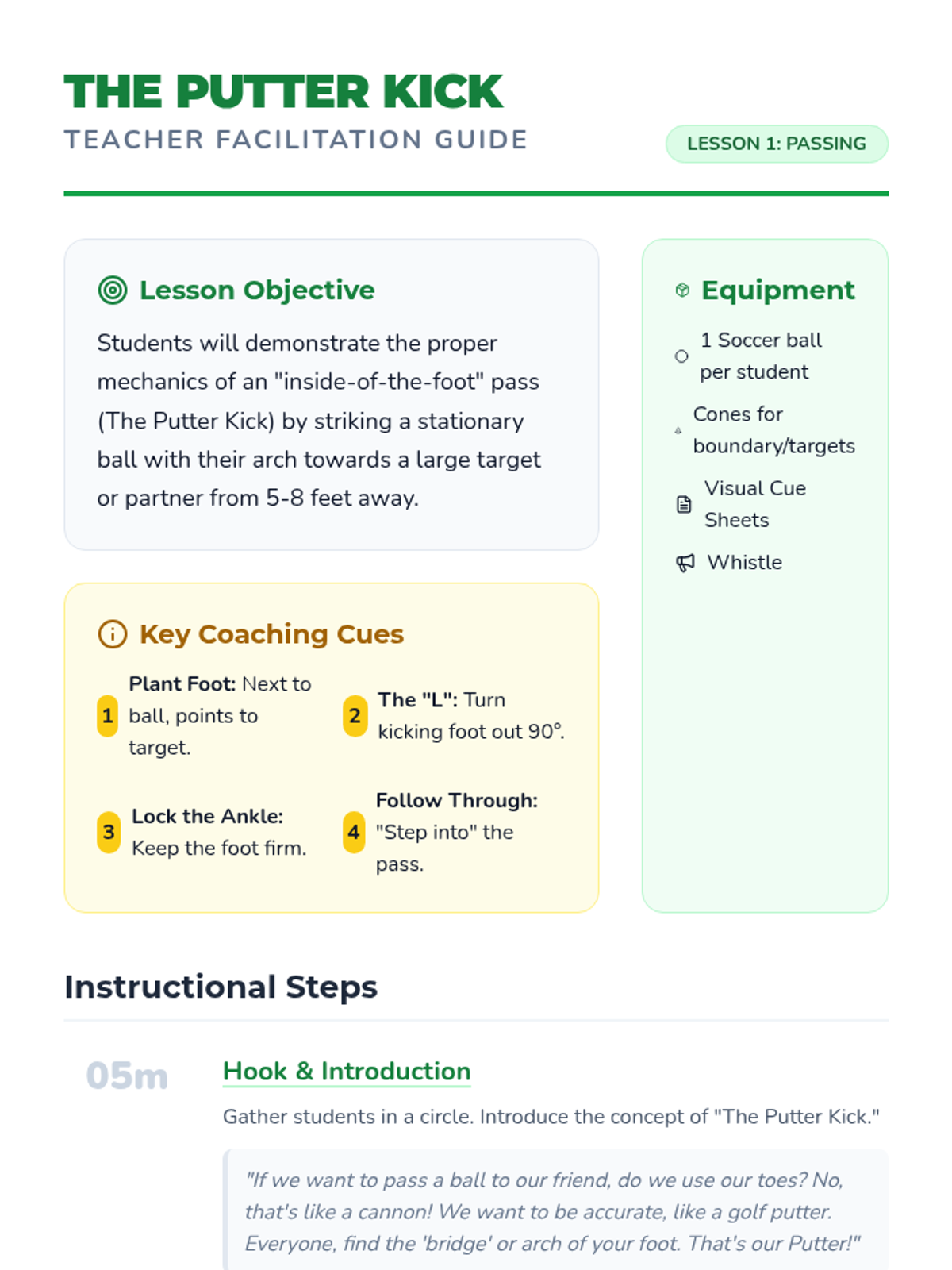
Students learn the 'push pass' technique using the inside arch of the foot, focusing on planting their non-kicking foot and striking through the center of the ball.
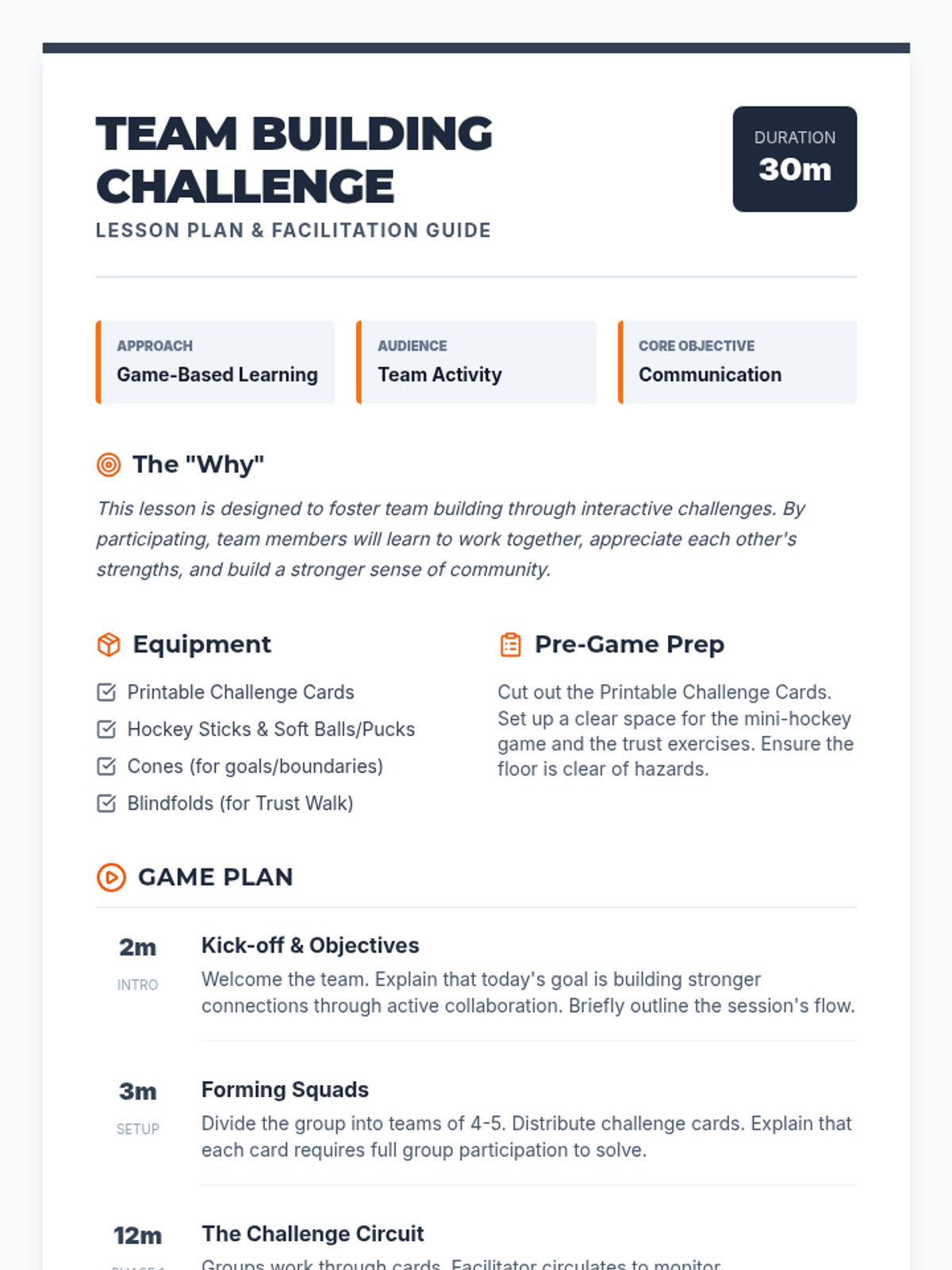
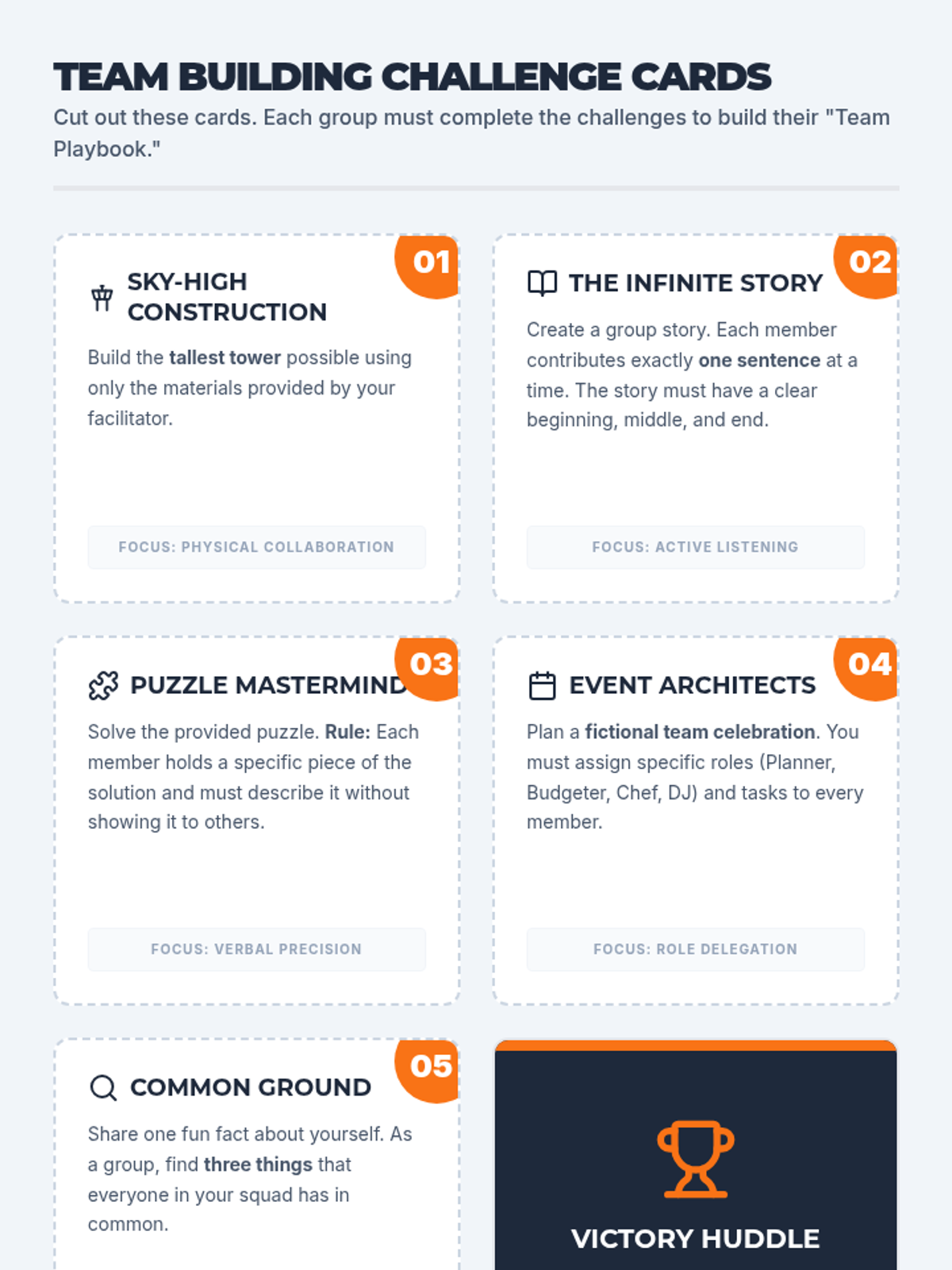
A high-energy team-building lesson focused on communication, trust, and collaboration through interactive challenges and a hockey-themed strategy game.
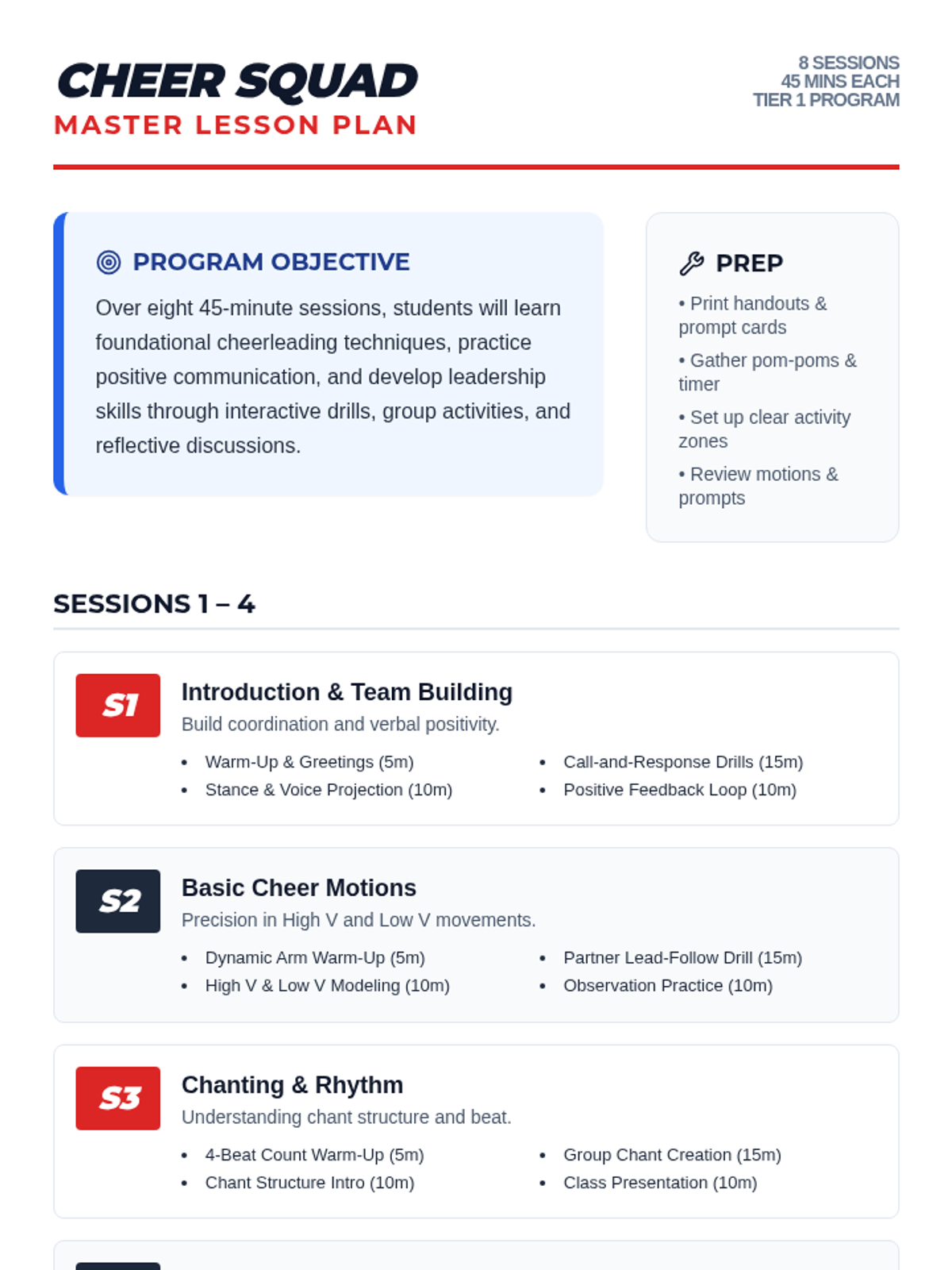
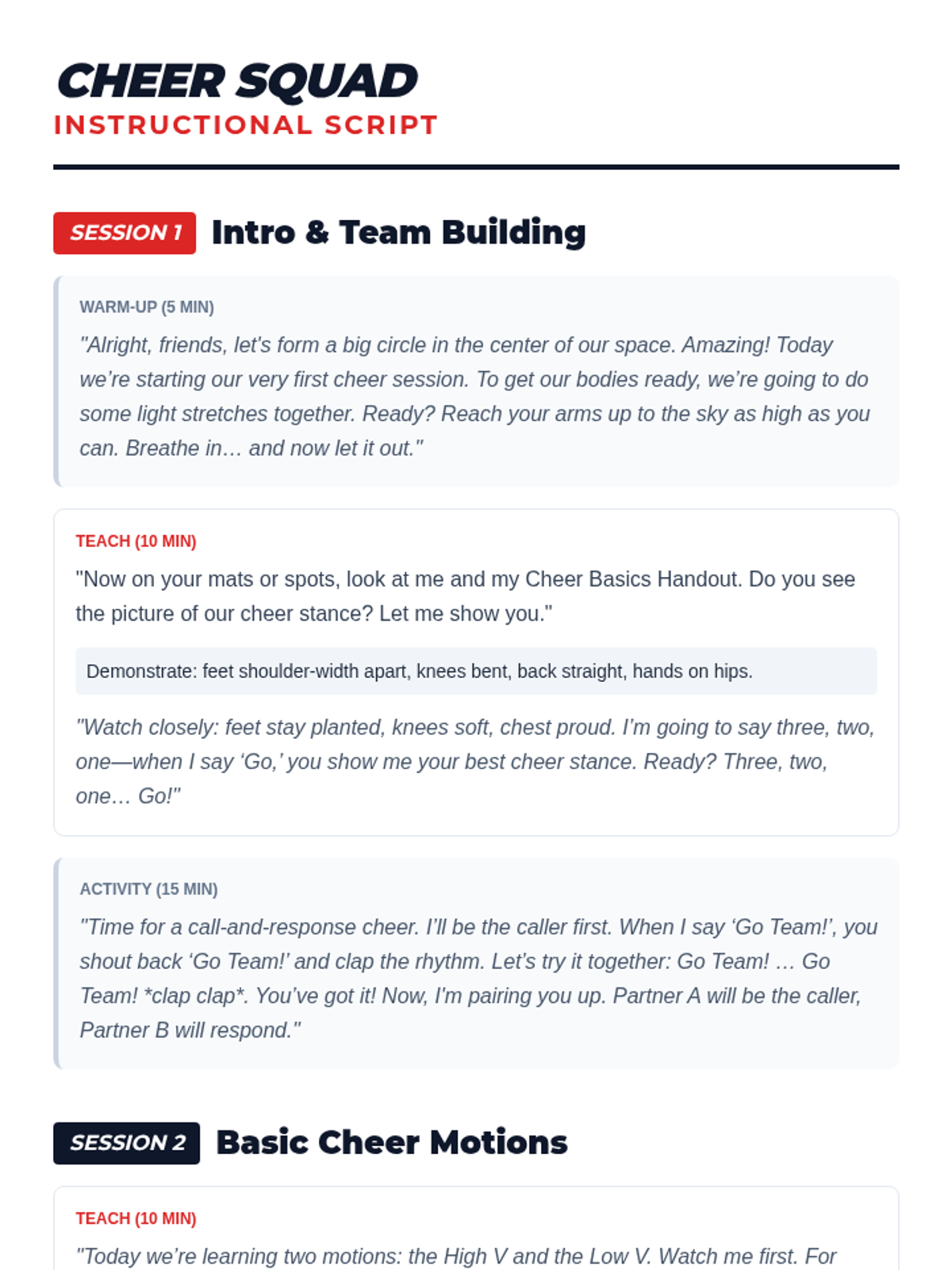
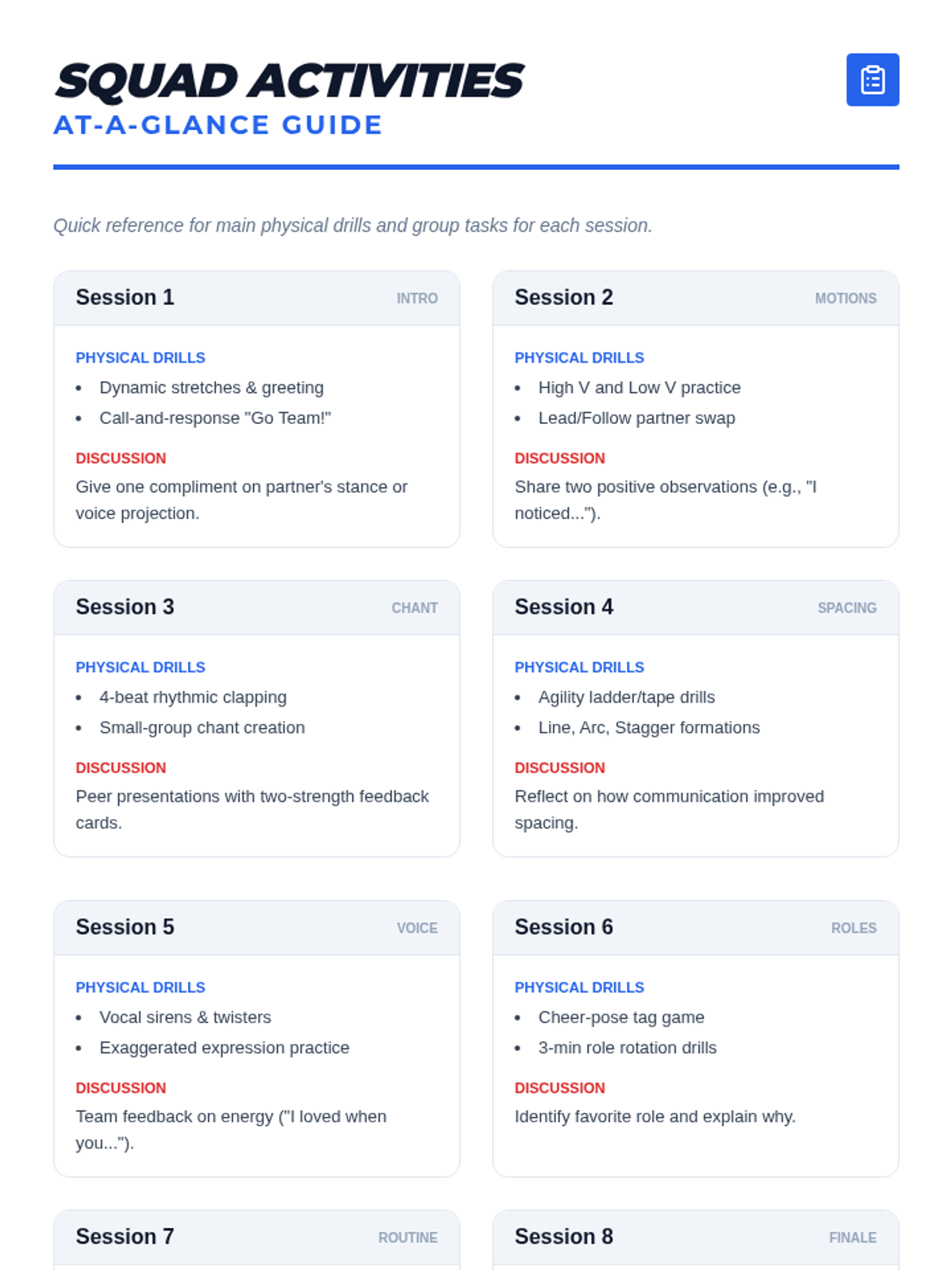
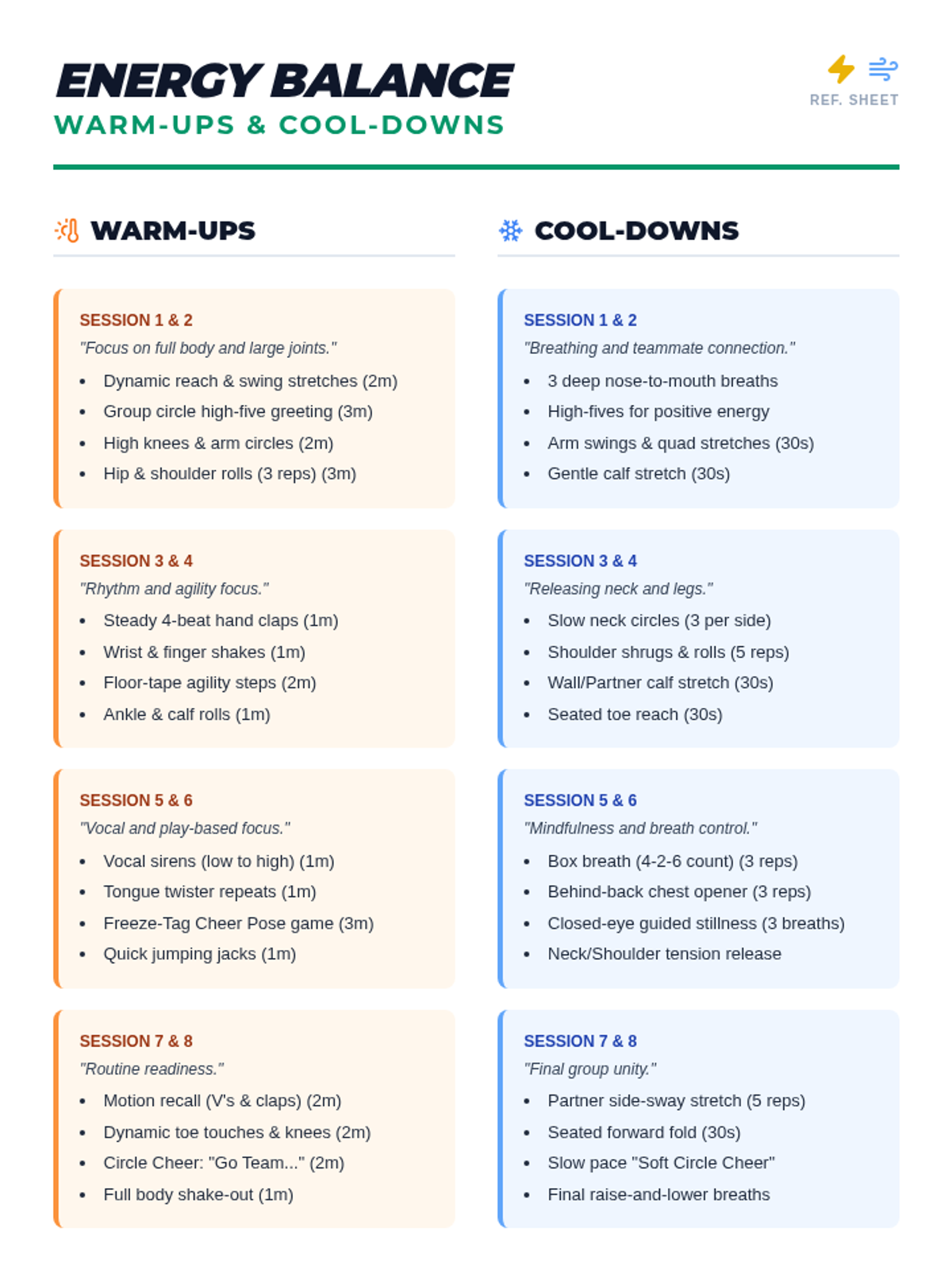
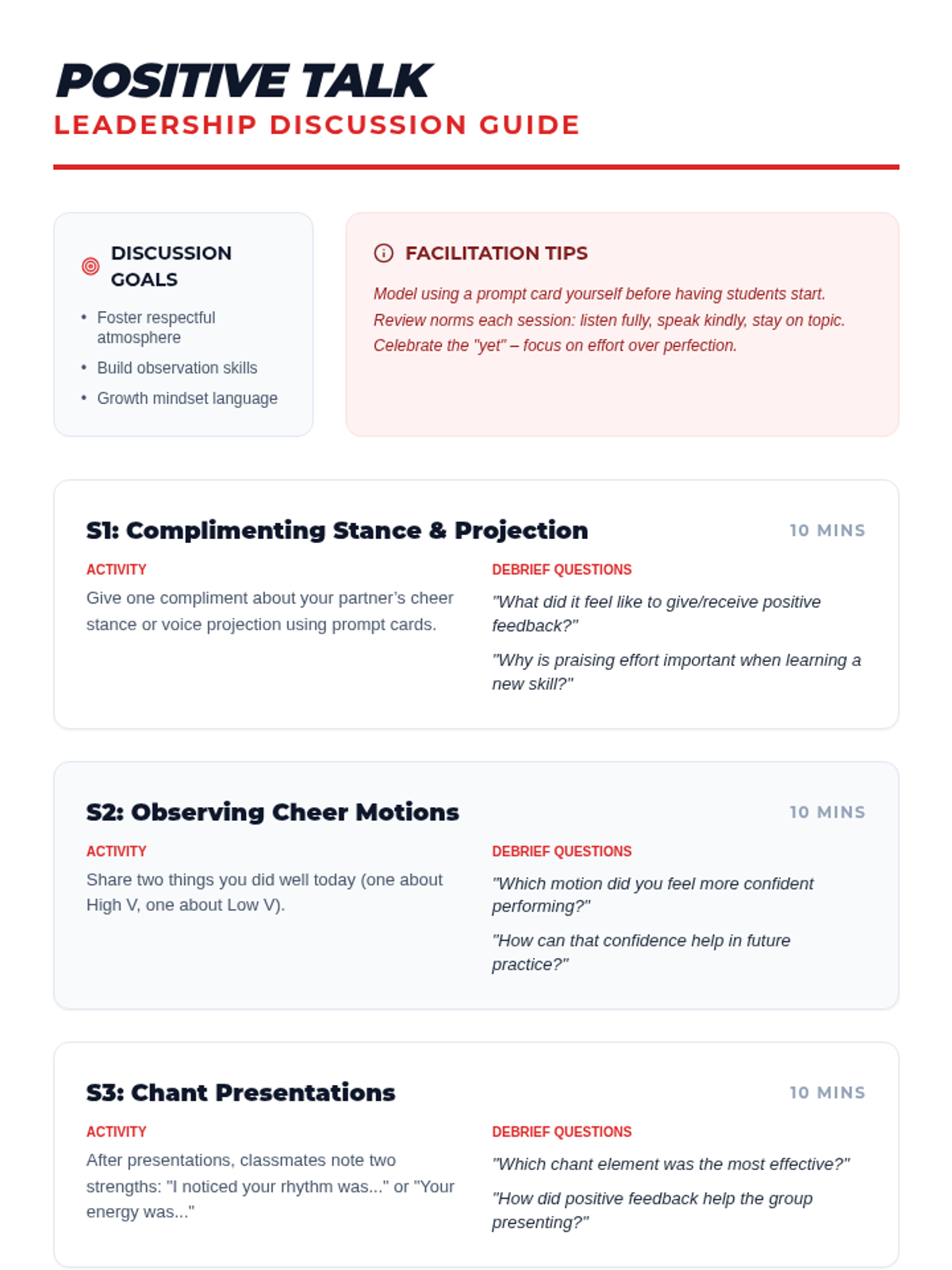
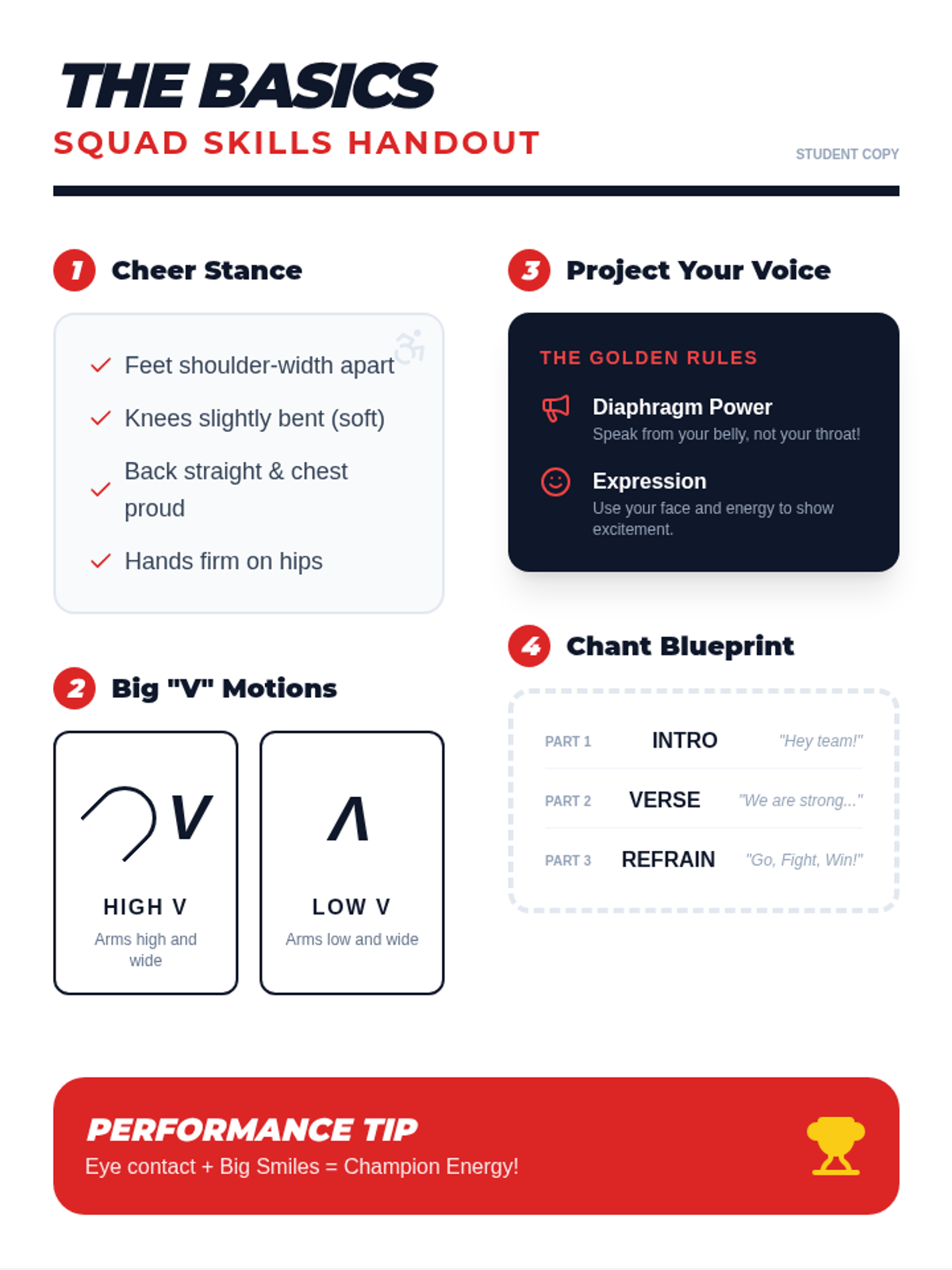
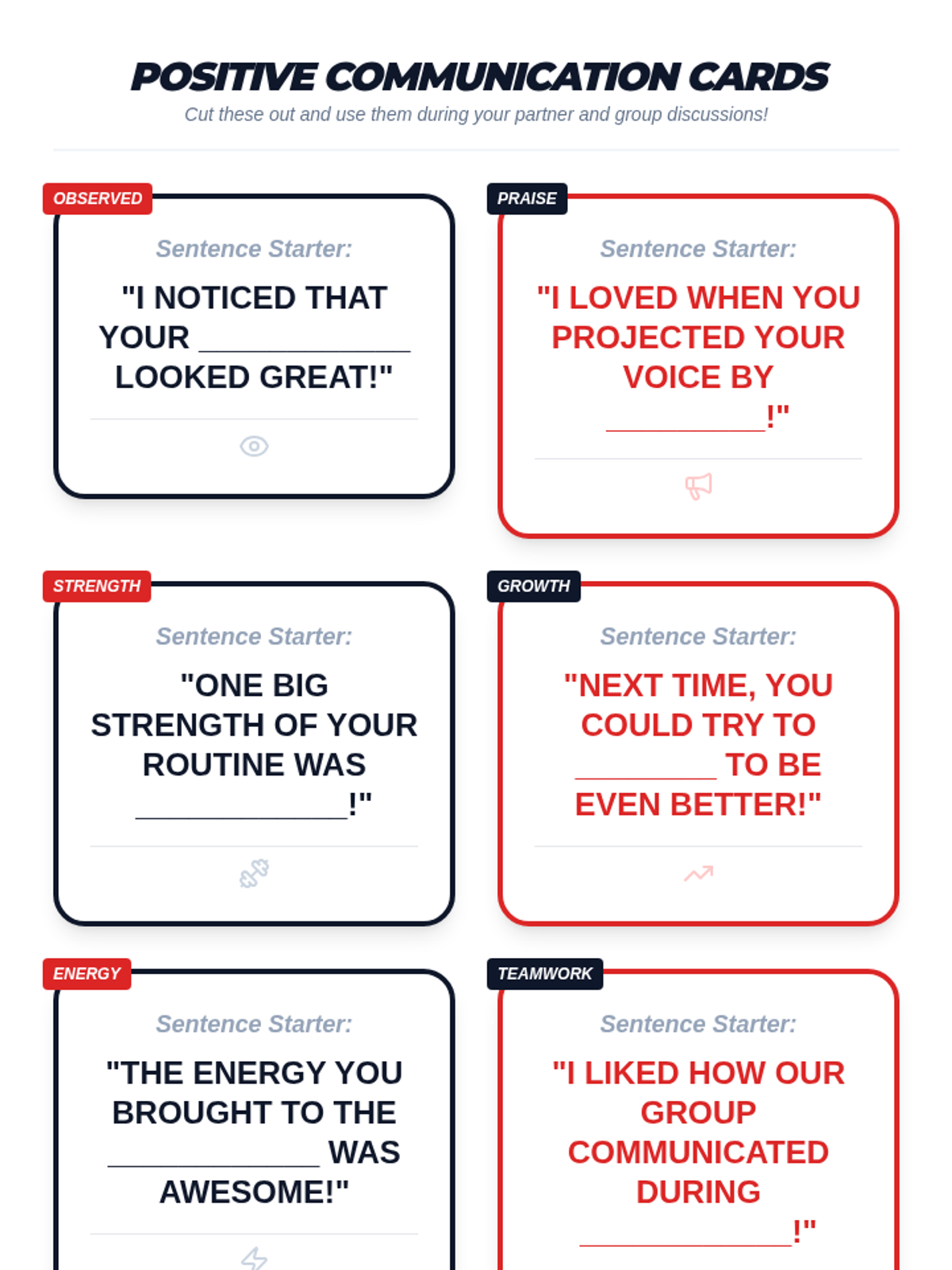
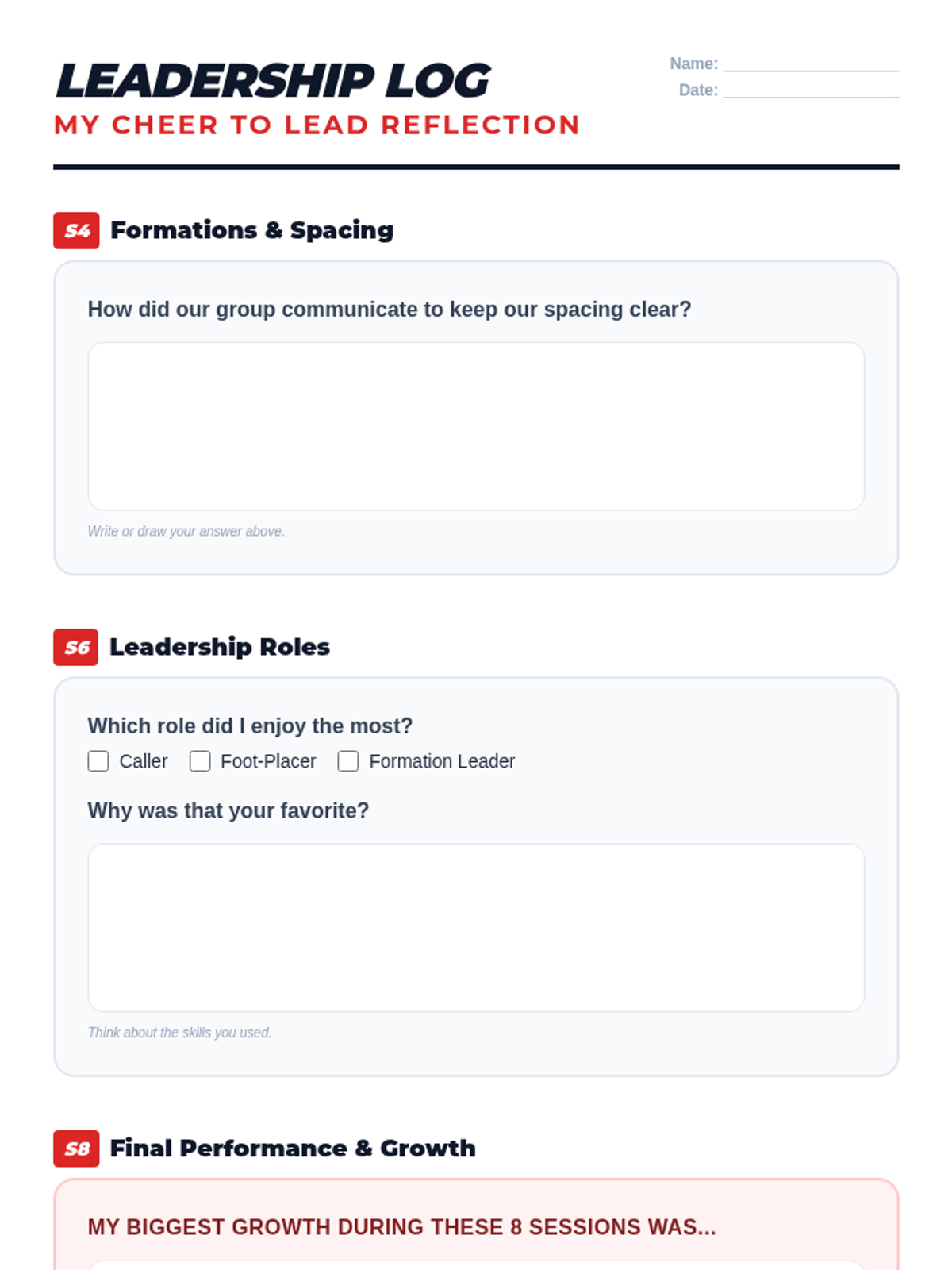
This 8-session program combines physical cheerleading skills with leadership challenges and positive communication training.
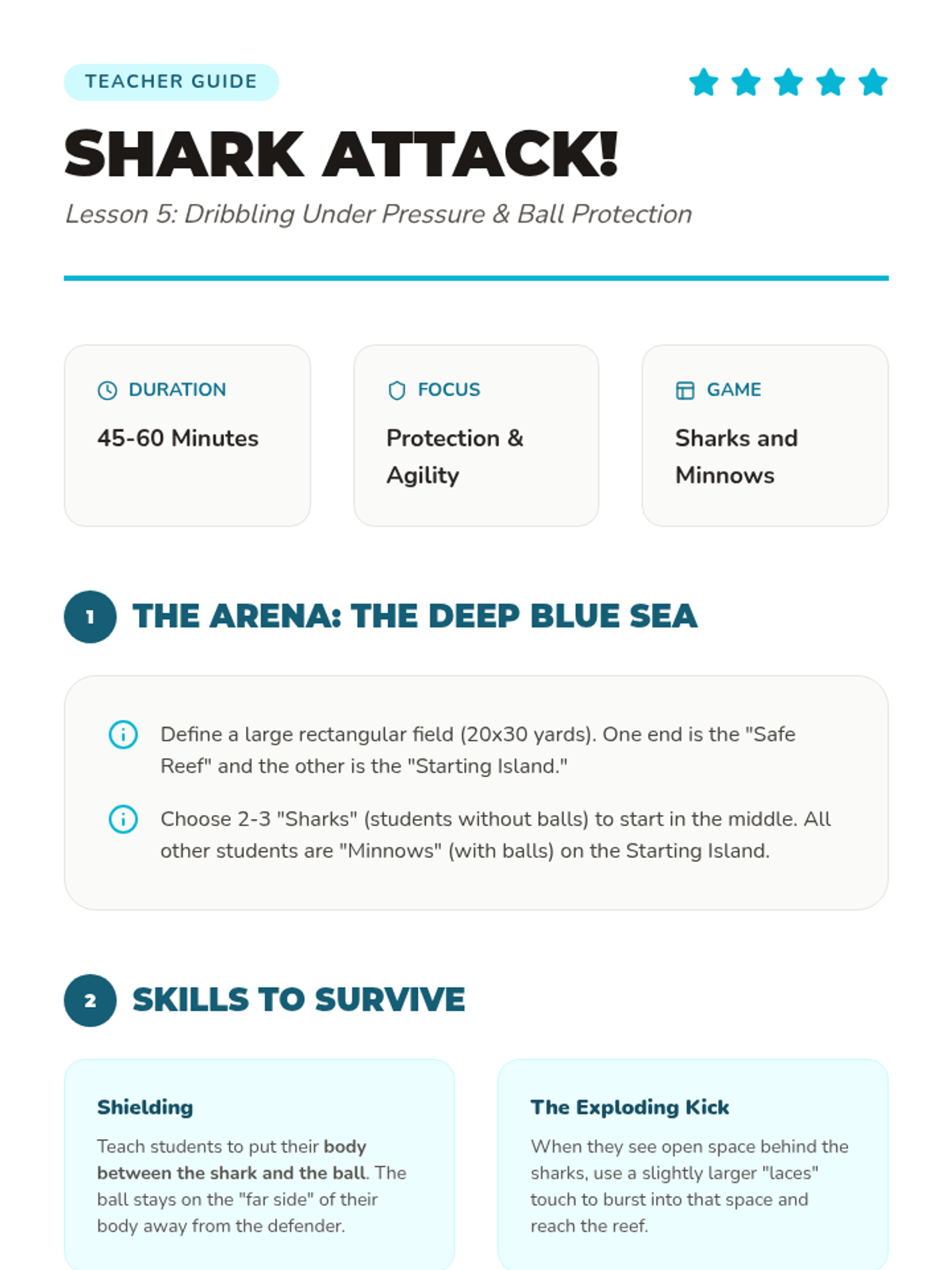
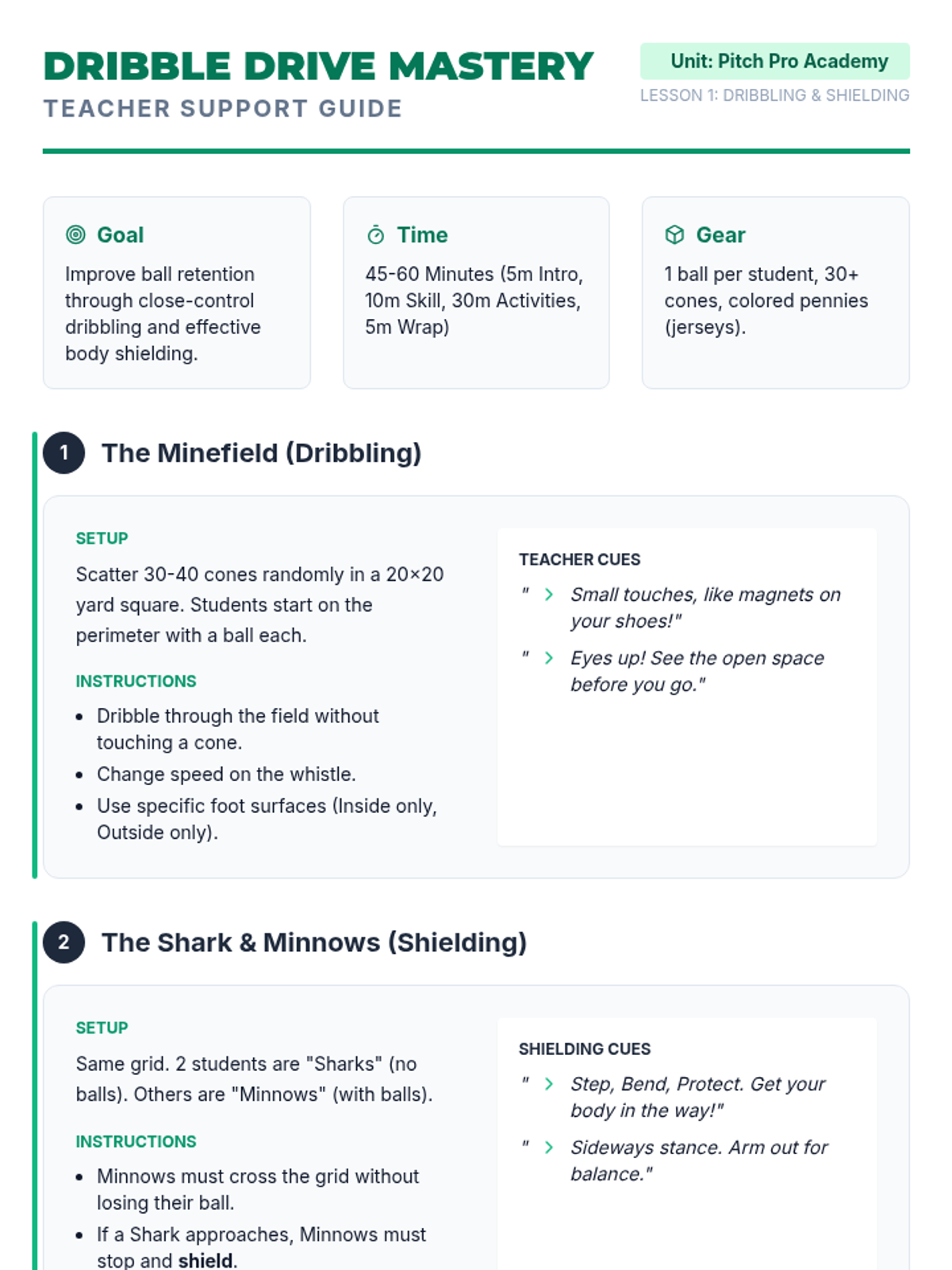
Students apply their dribbling skills in a large group game of 'Sharks and Minnows,' attempting to cross a field while protecting their ball from defenders. This culminates the sequence by testing control in a live, reactive environment.
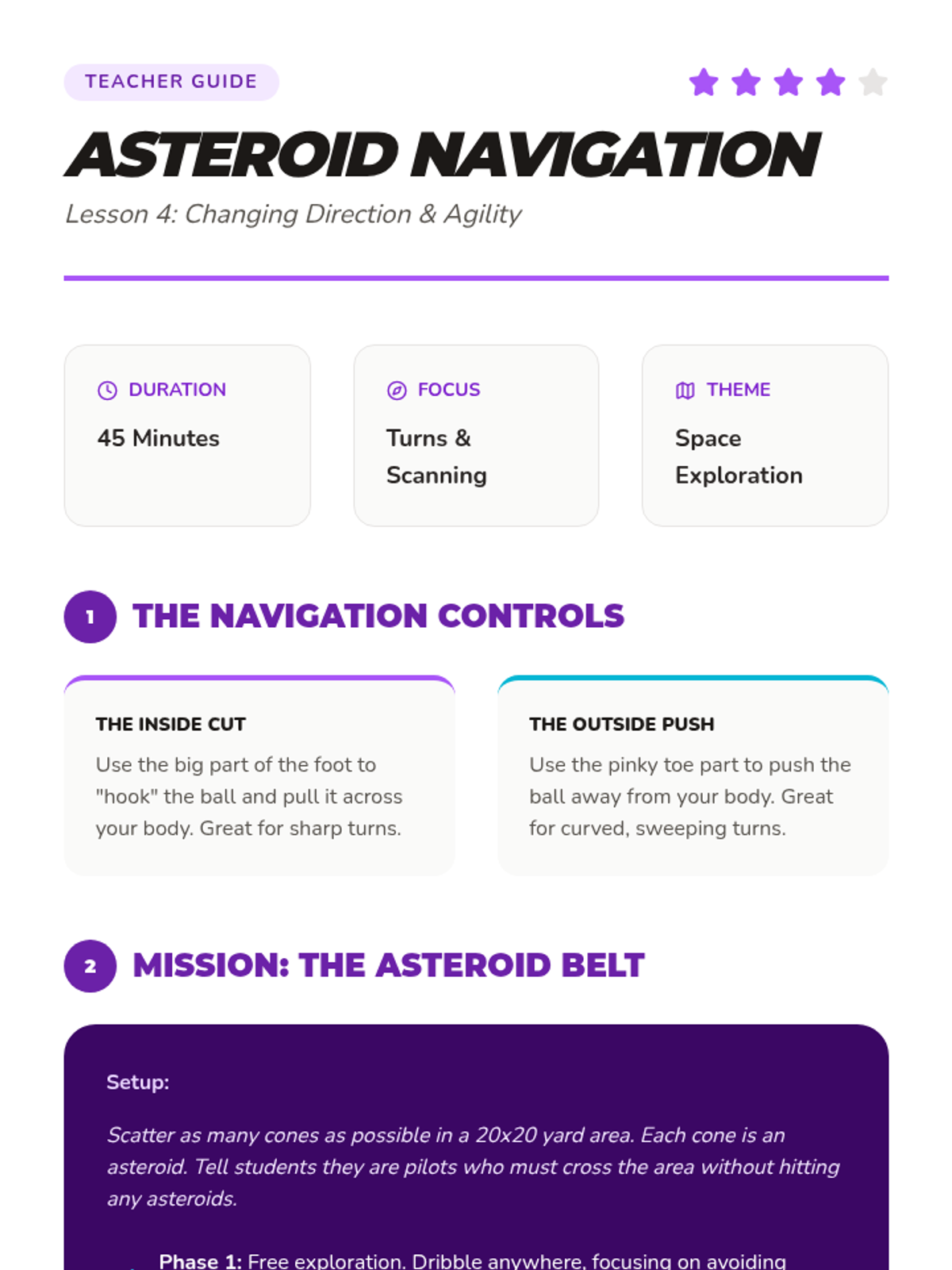
Students learn to turn the ball using the inside and outside of their feet to navigate around cones and obstacles. The lesson introduces the concept of looking up while dribbling to avoid collisions.
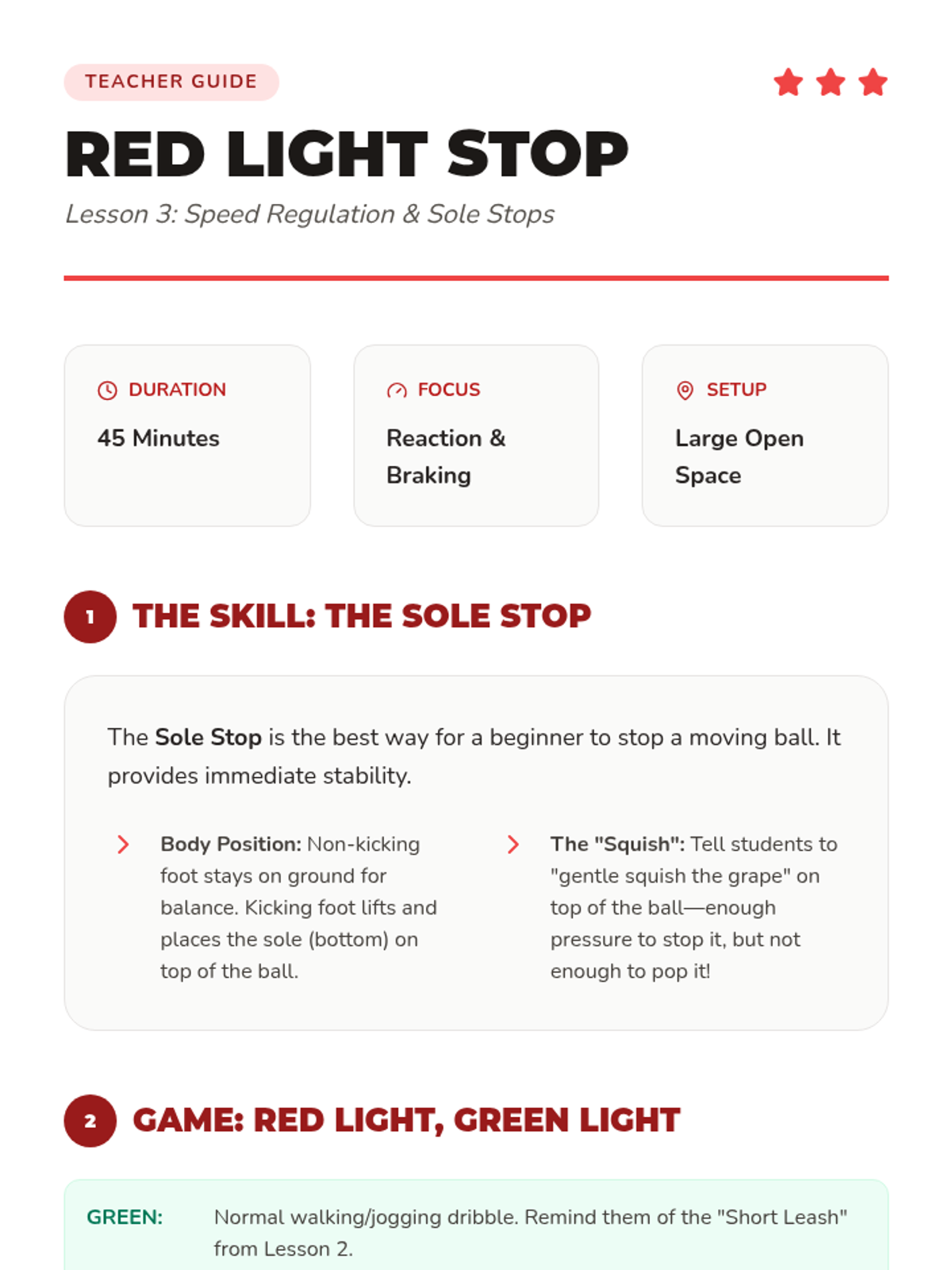
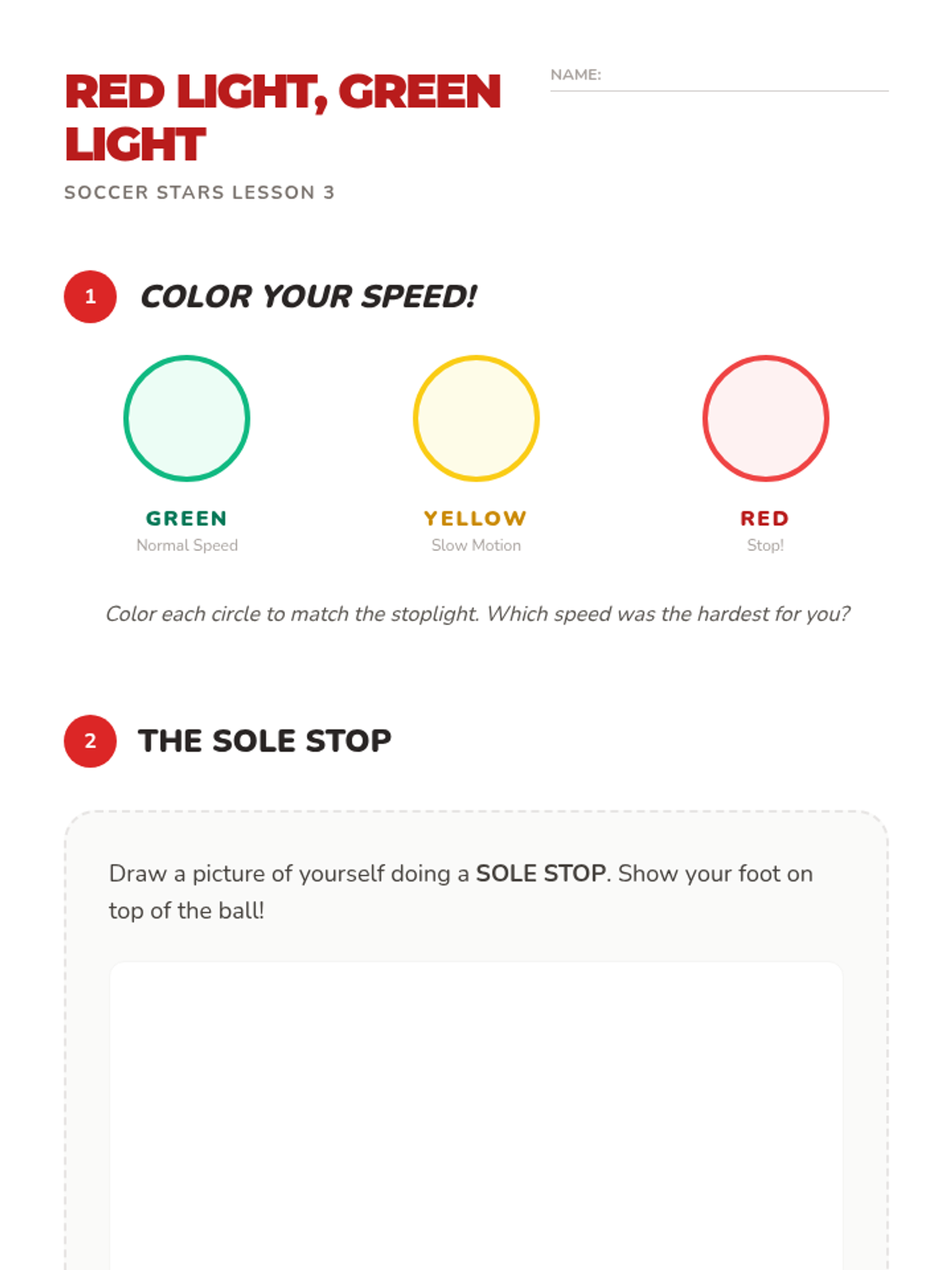
Using a 'Red Light, Green Light' format, students practice dribbling at varying speeds and stopping the ball immediately with the sole of their foot upon command. This reinforces the connection between movement and stopping control.
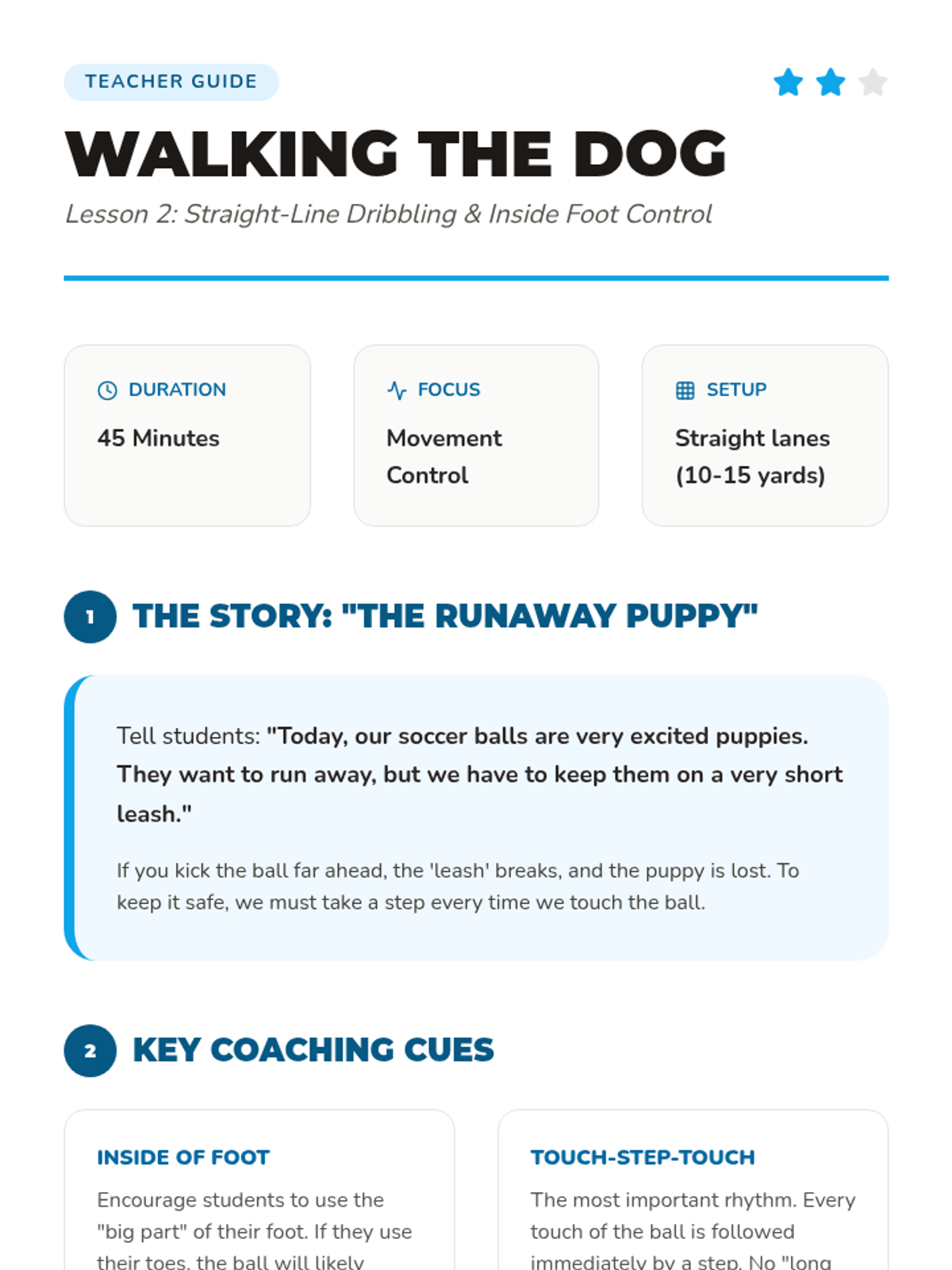
Students practice walking and slowly jogging while kicking the ball gently forward using the inside of their feet. Emphasis is placed on taking a step after every touch to maintain close control.
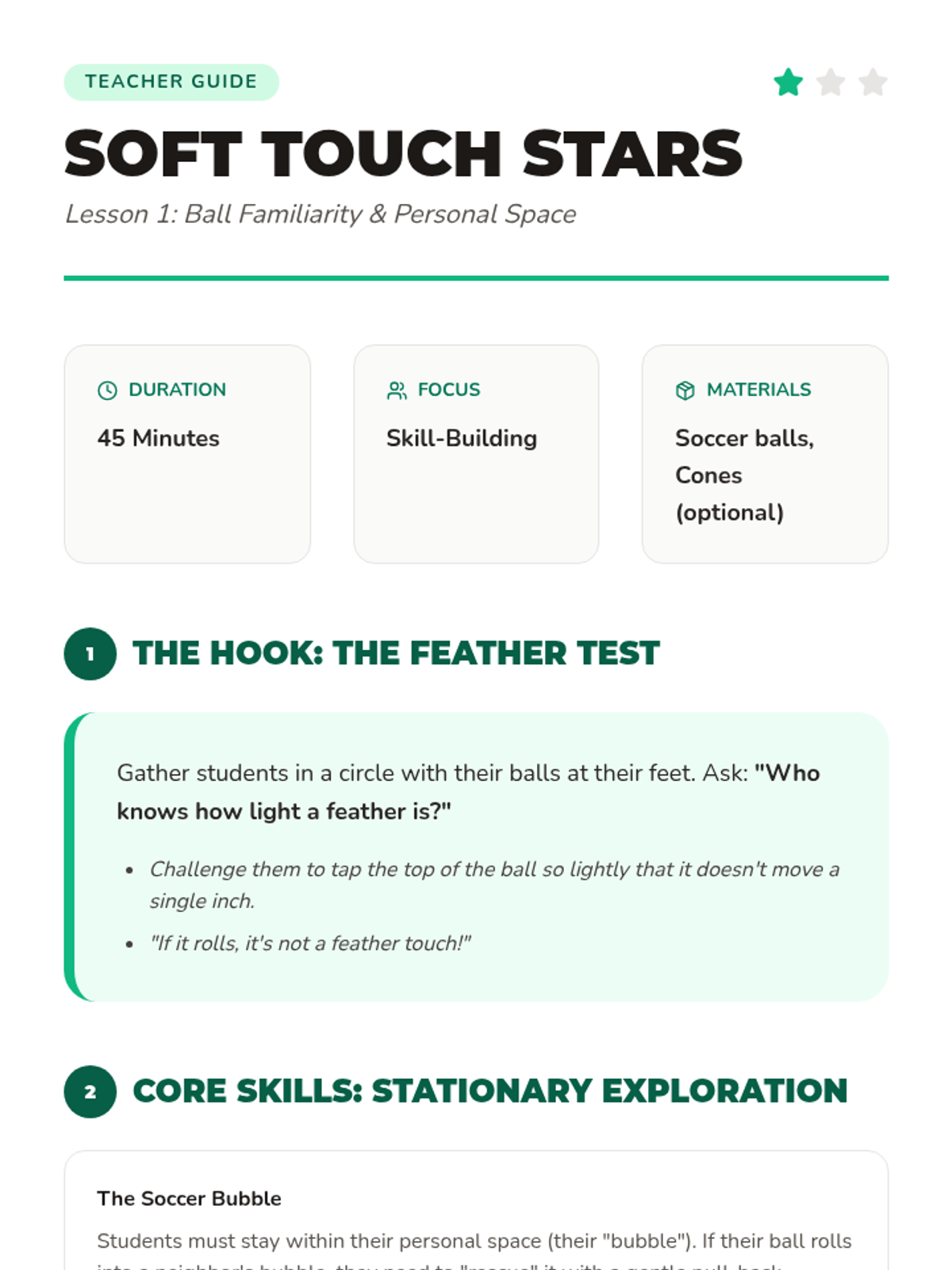
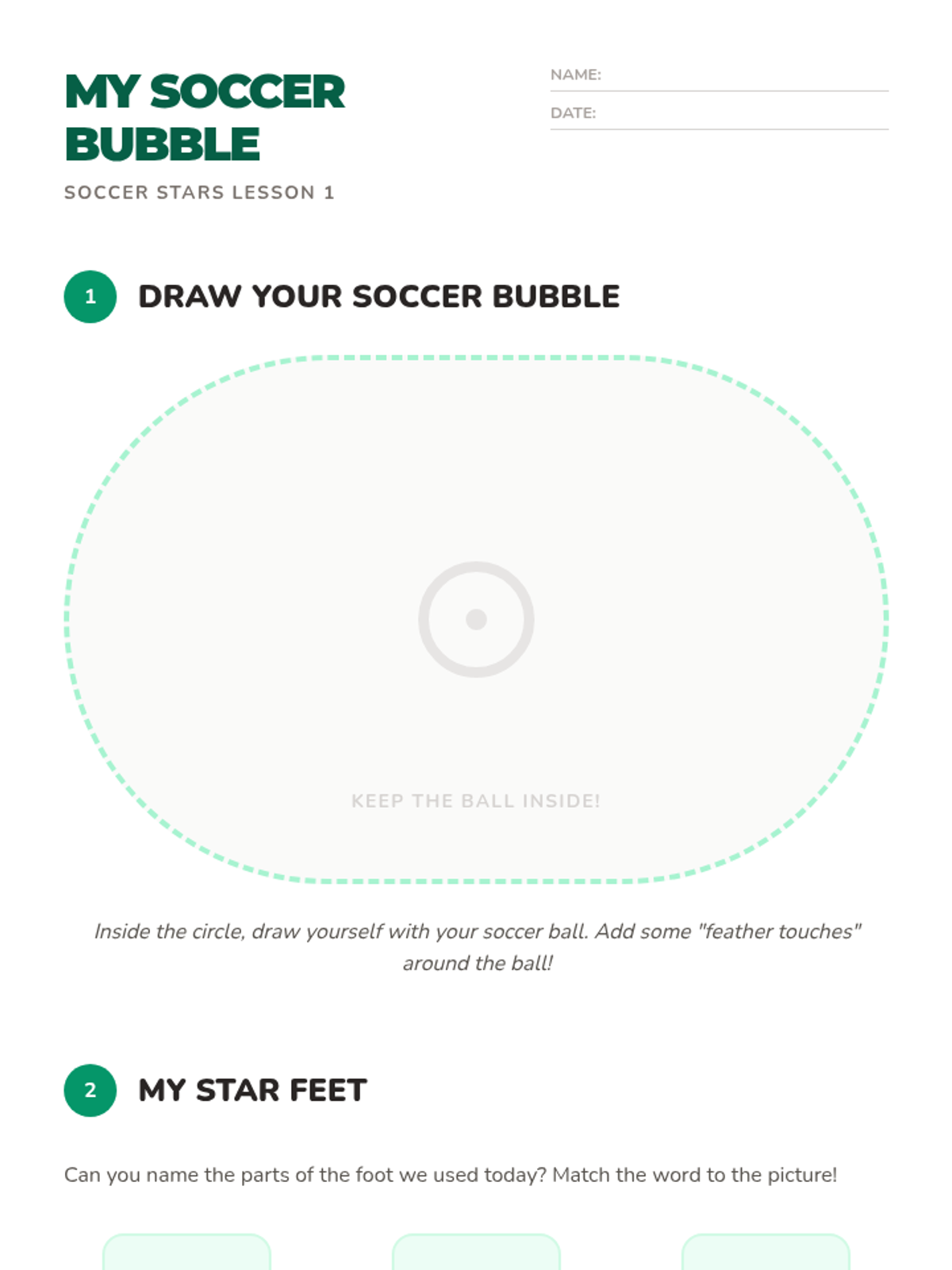
Students explore how the ball moves by using different parts of their feet to tap and roll the ball while remaining stationary. The lesson focuses on 'soft touches' to keep the ball within personal space.
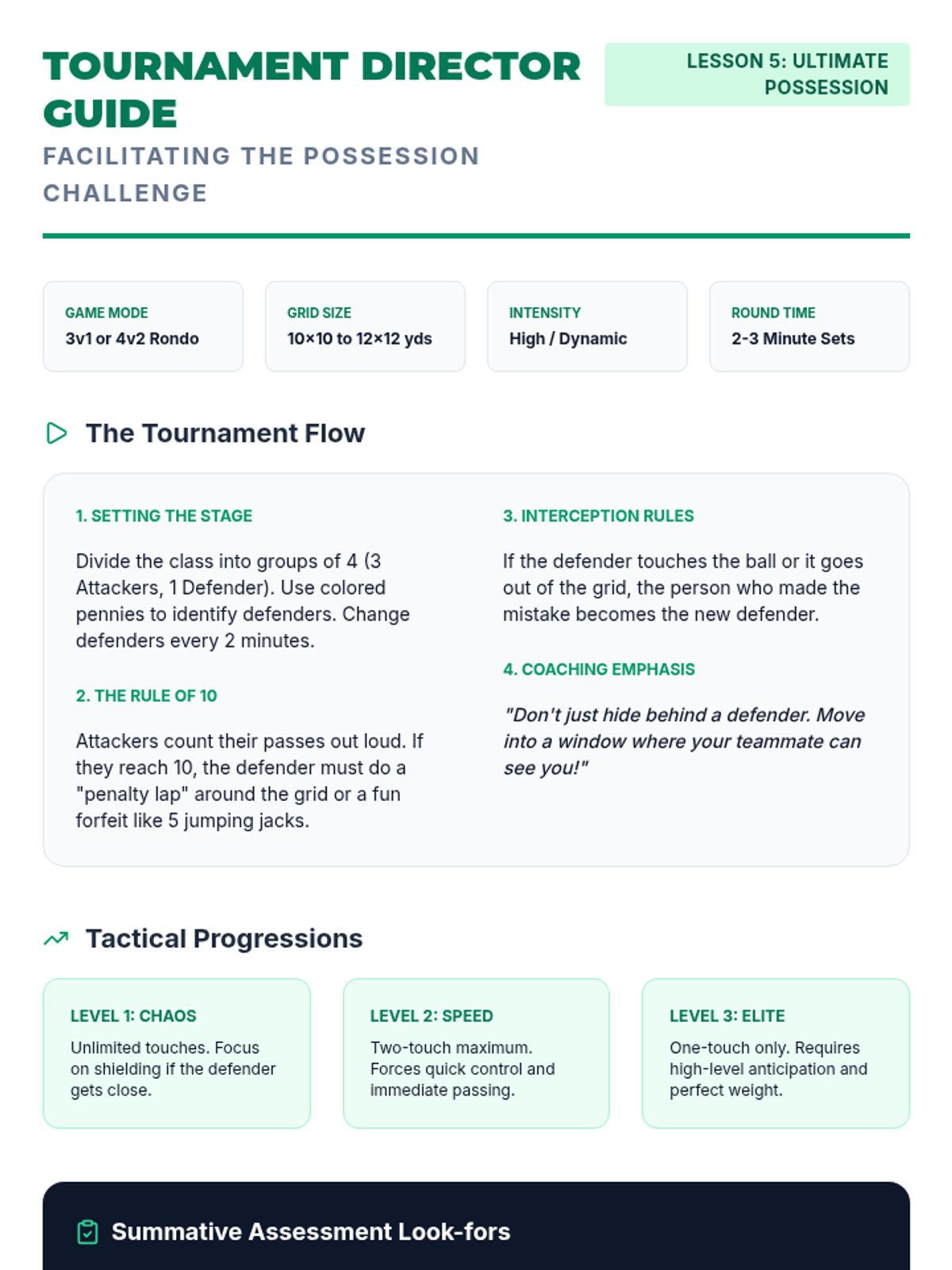
A culmination of skills applied in small-sided possession games focusing on decision-making.
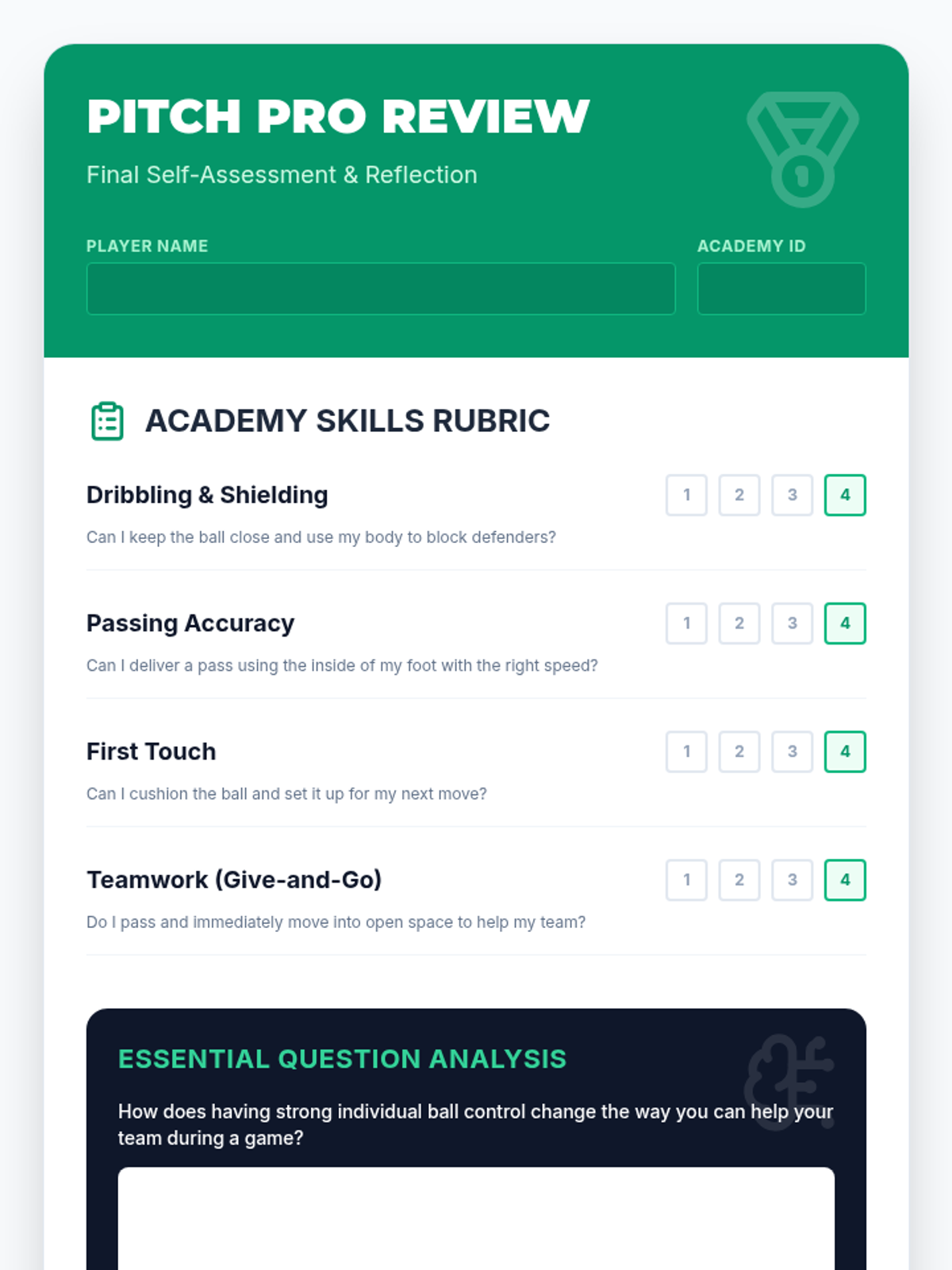
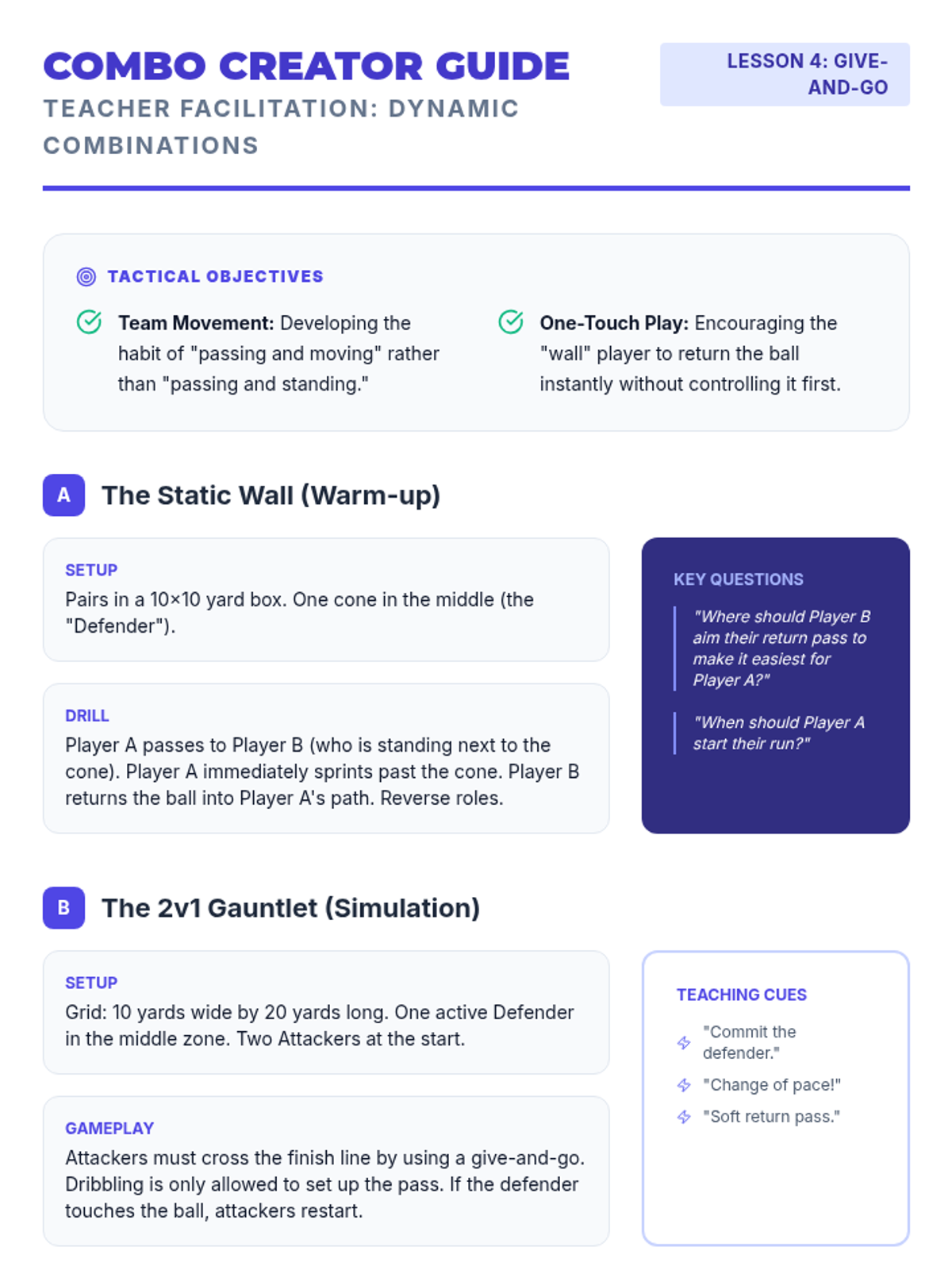
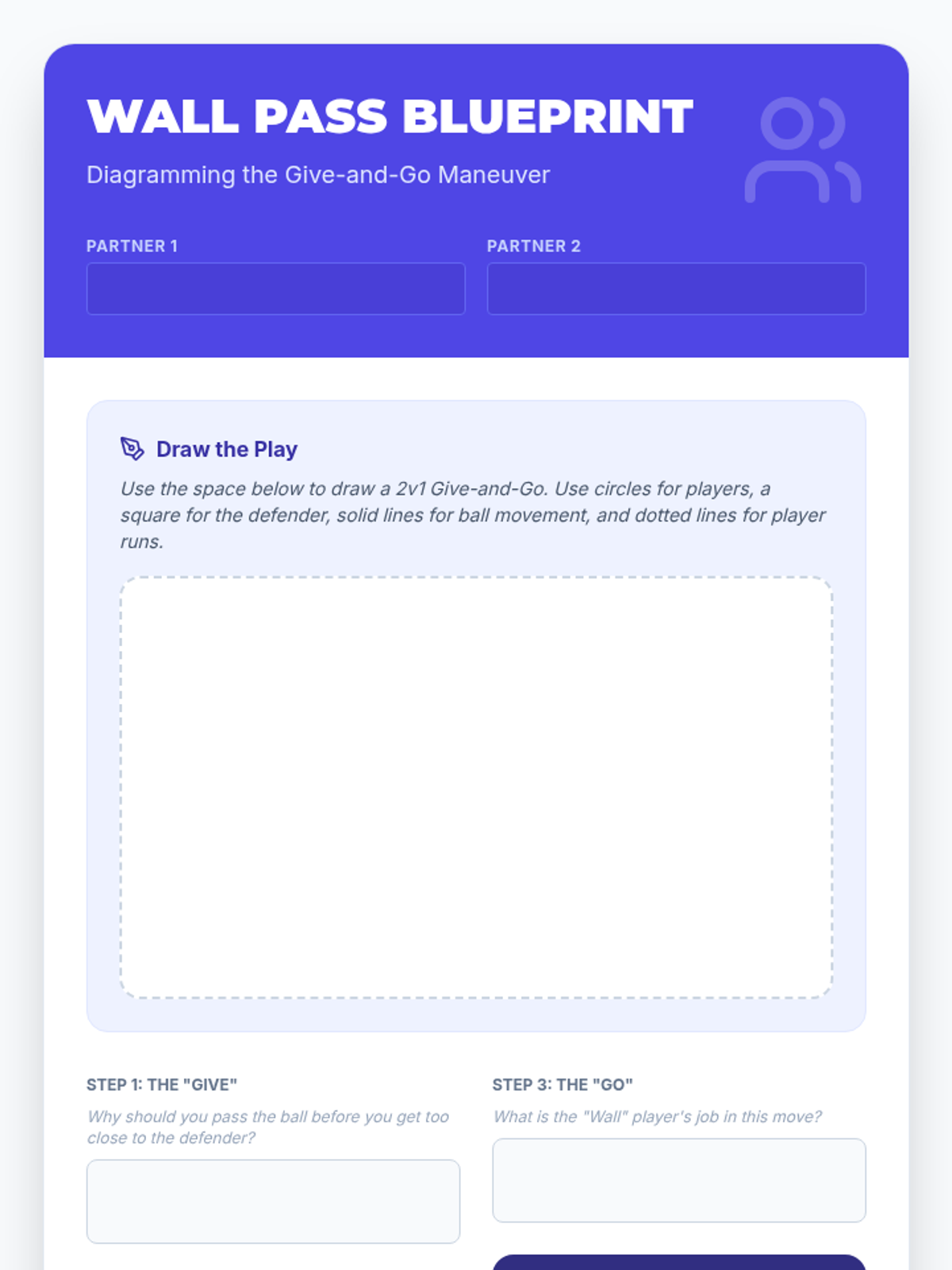
Introduces the wall pass or give-and-go as a way to bypass defenders through teamwork.
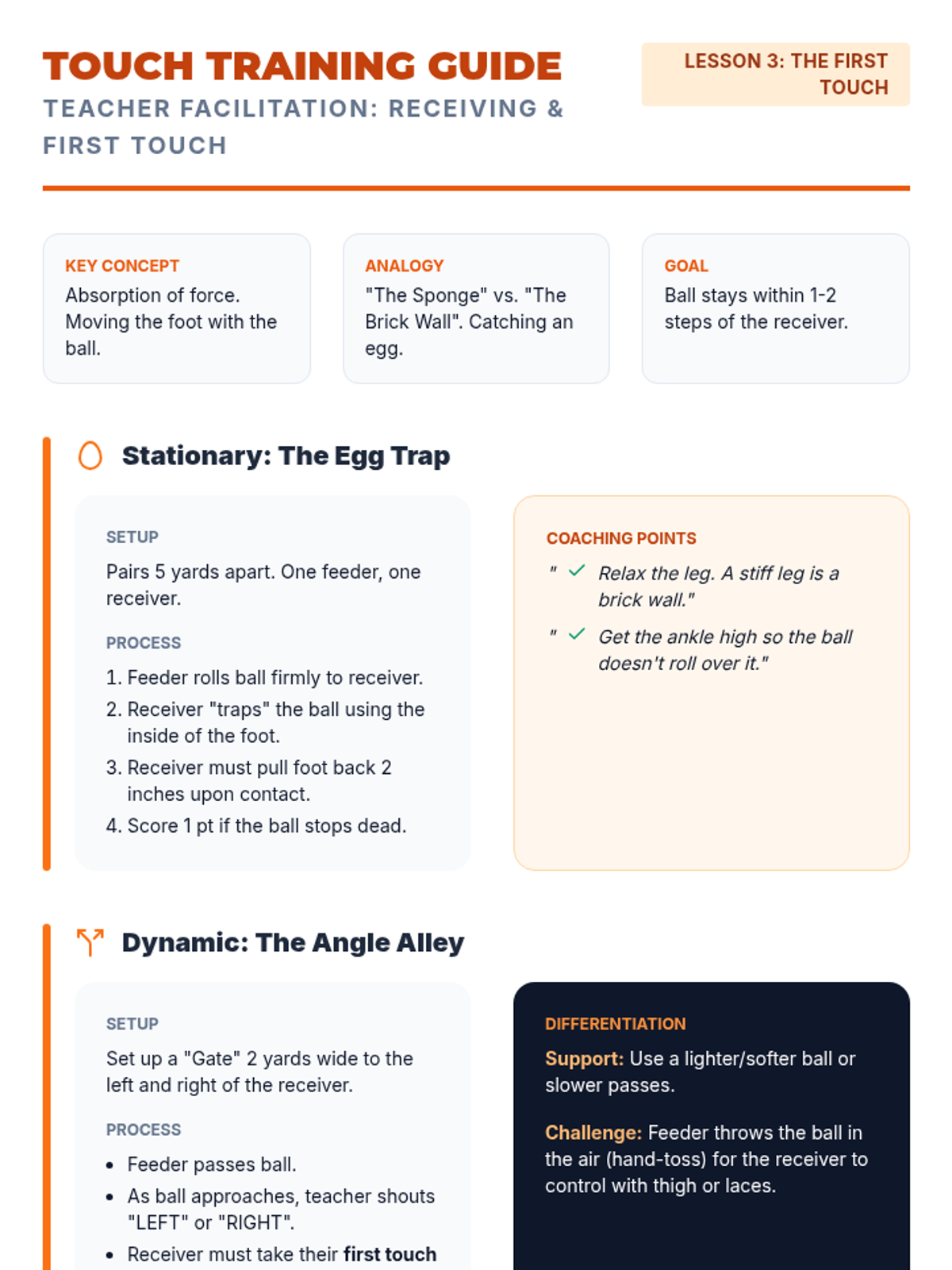
Teaches students how to cushion the ball's impact to maintain control during the first touch.
Focuses on the mechanics of the push pass for accuracy and the concept of 'weight' in passing.
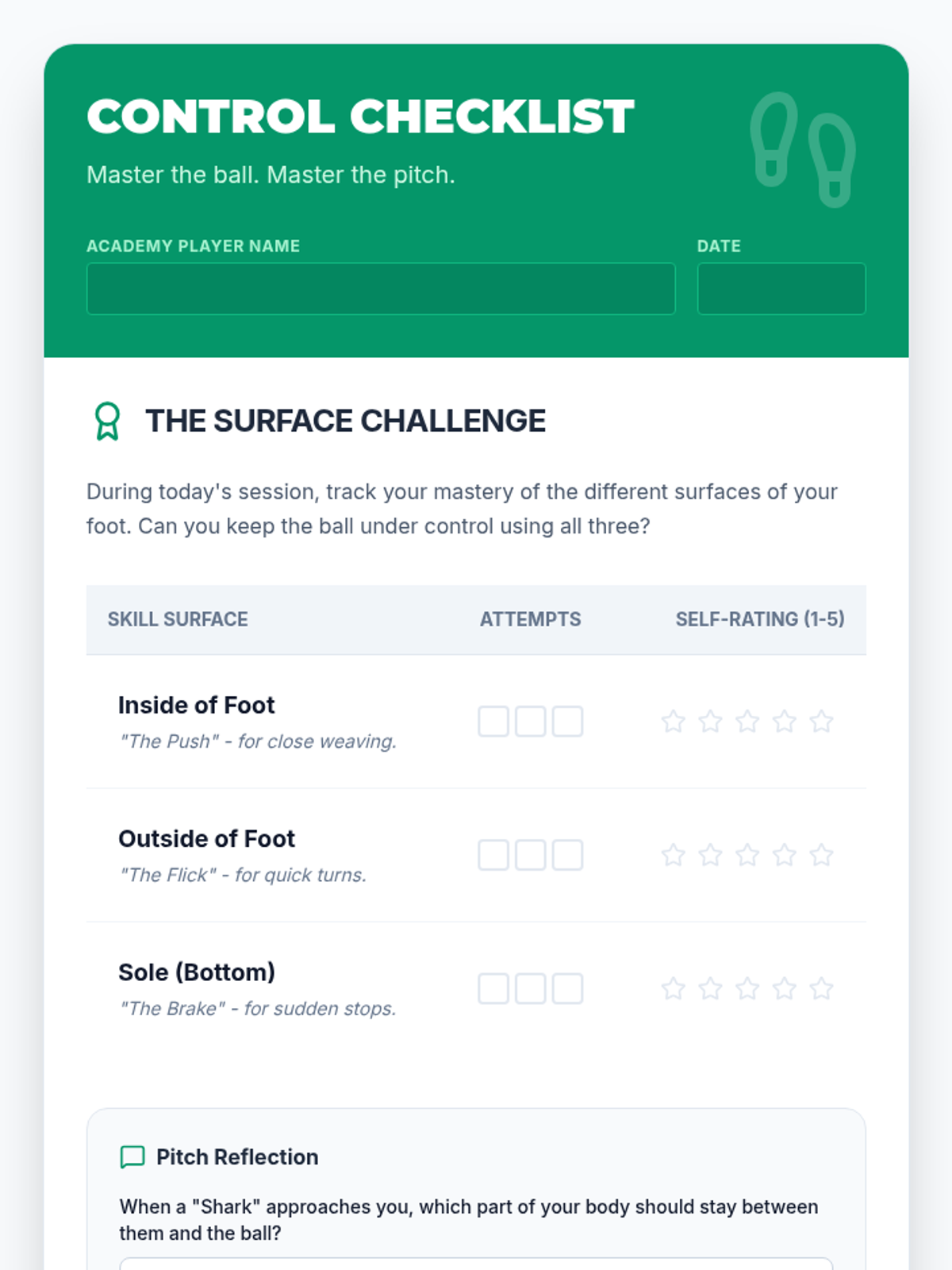
Students focus on keeping the ball close while moving and using their body to protect the ball from opponents.