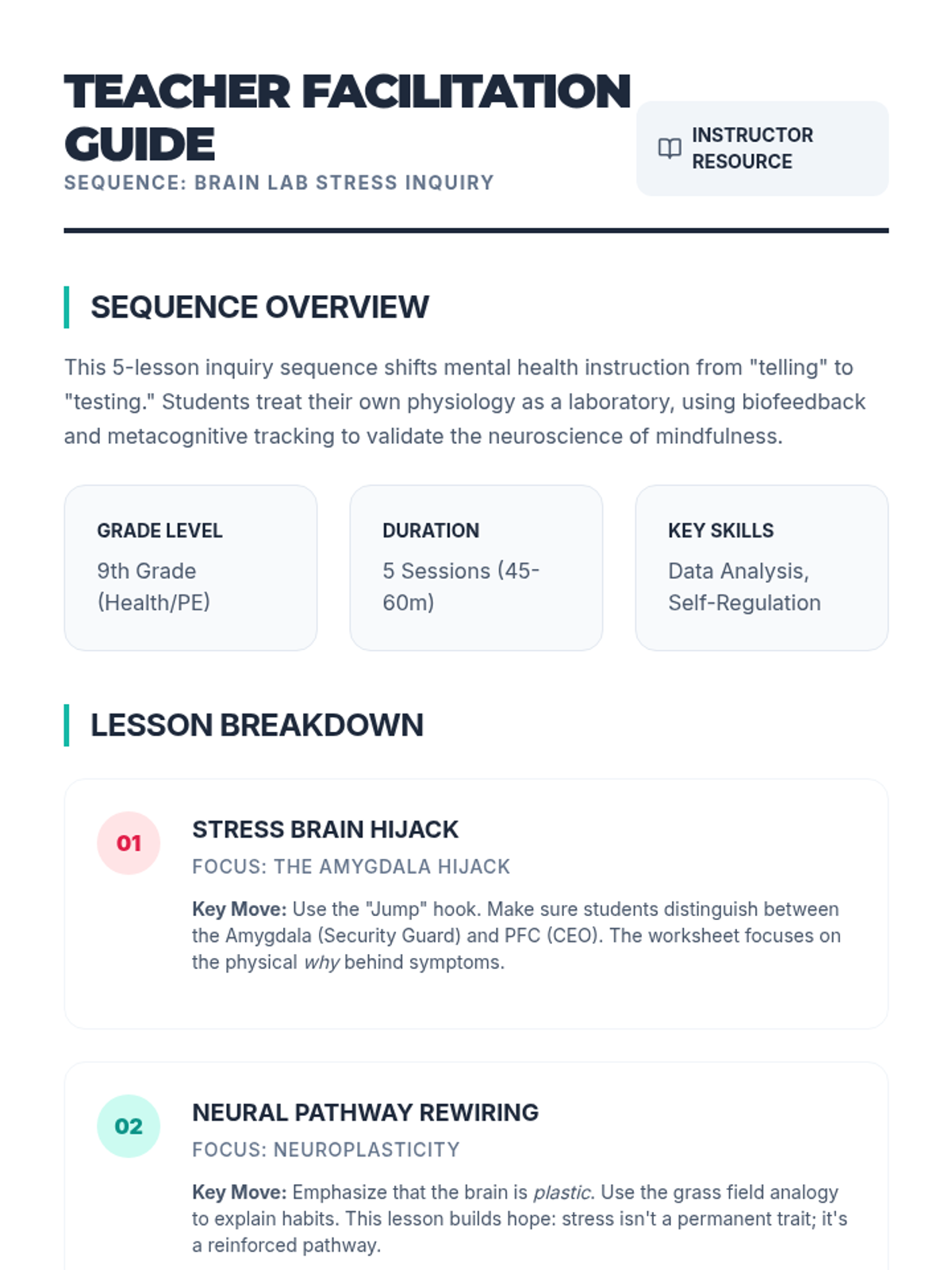
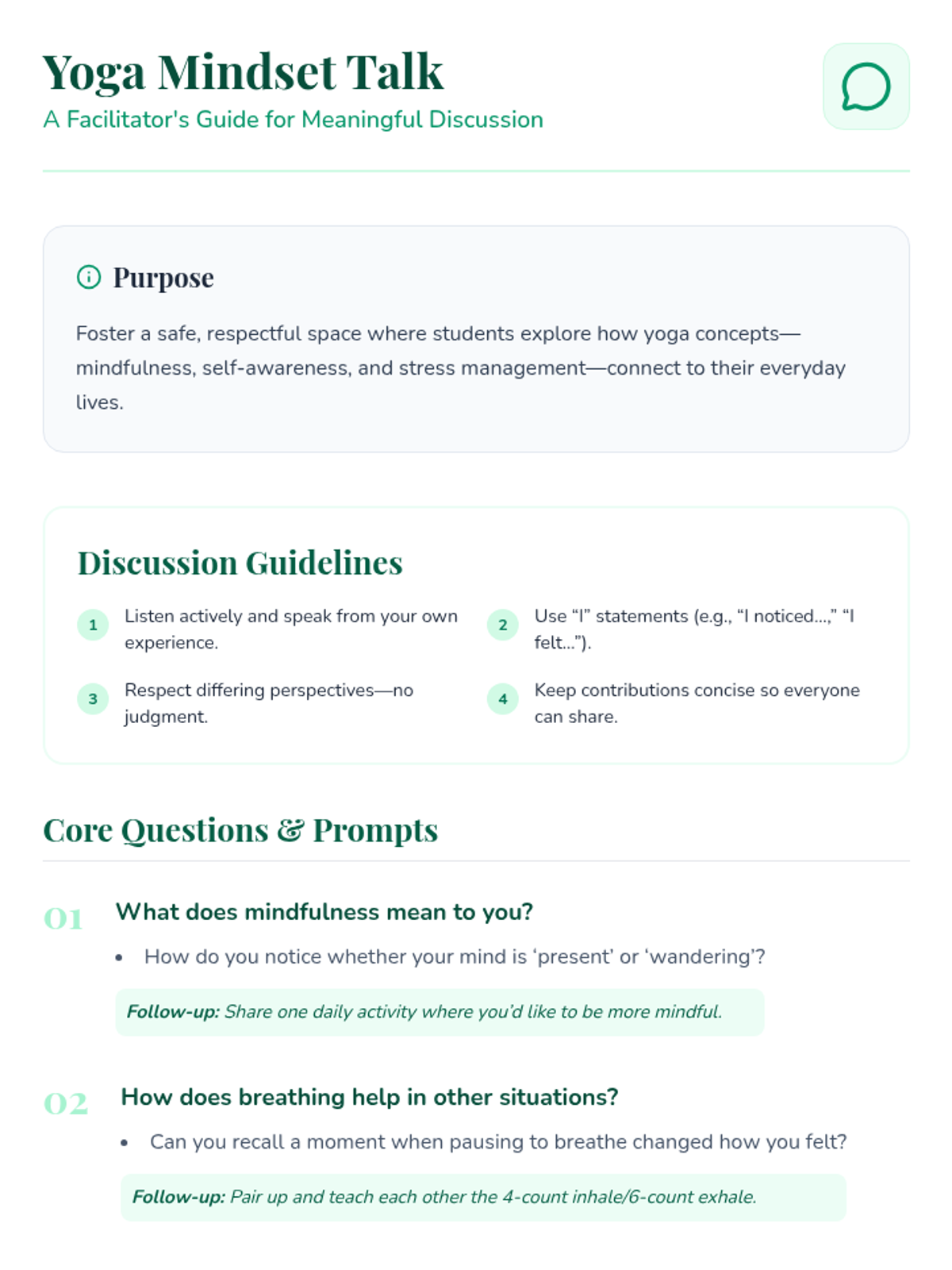
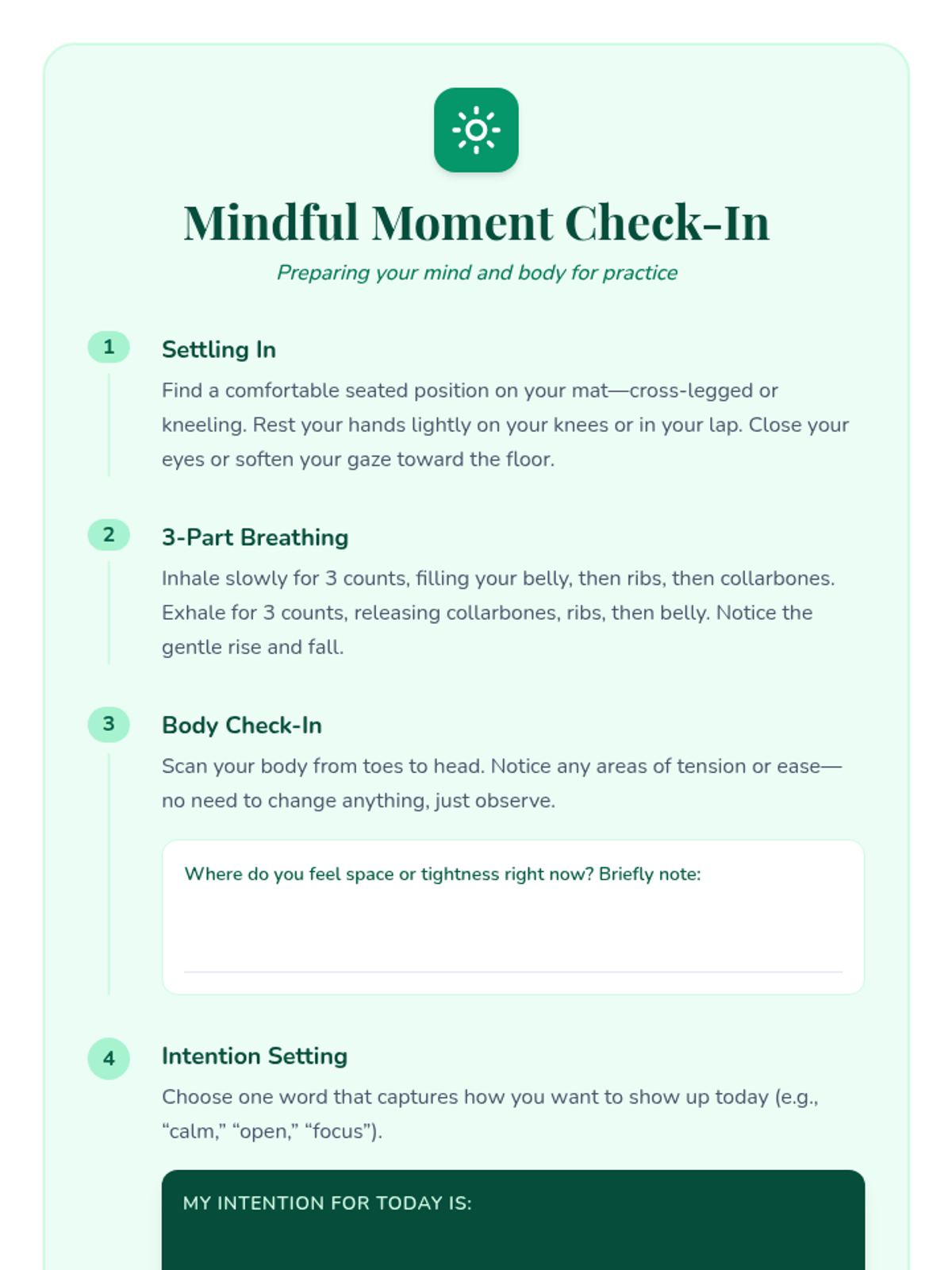
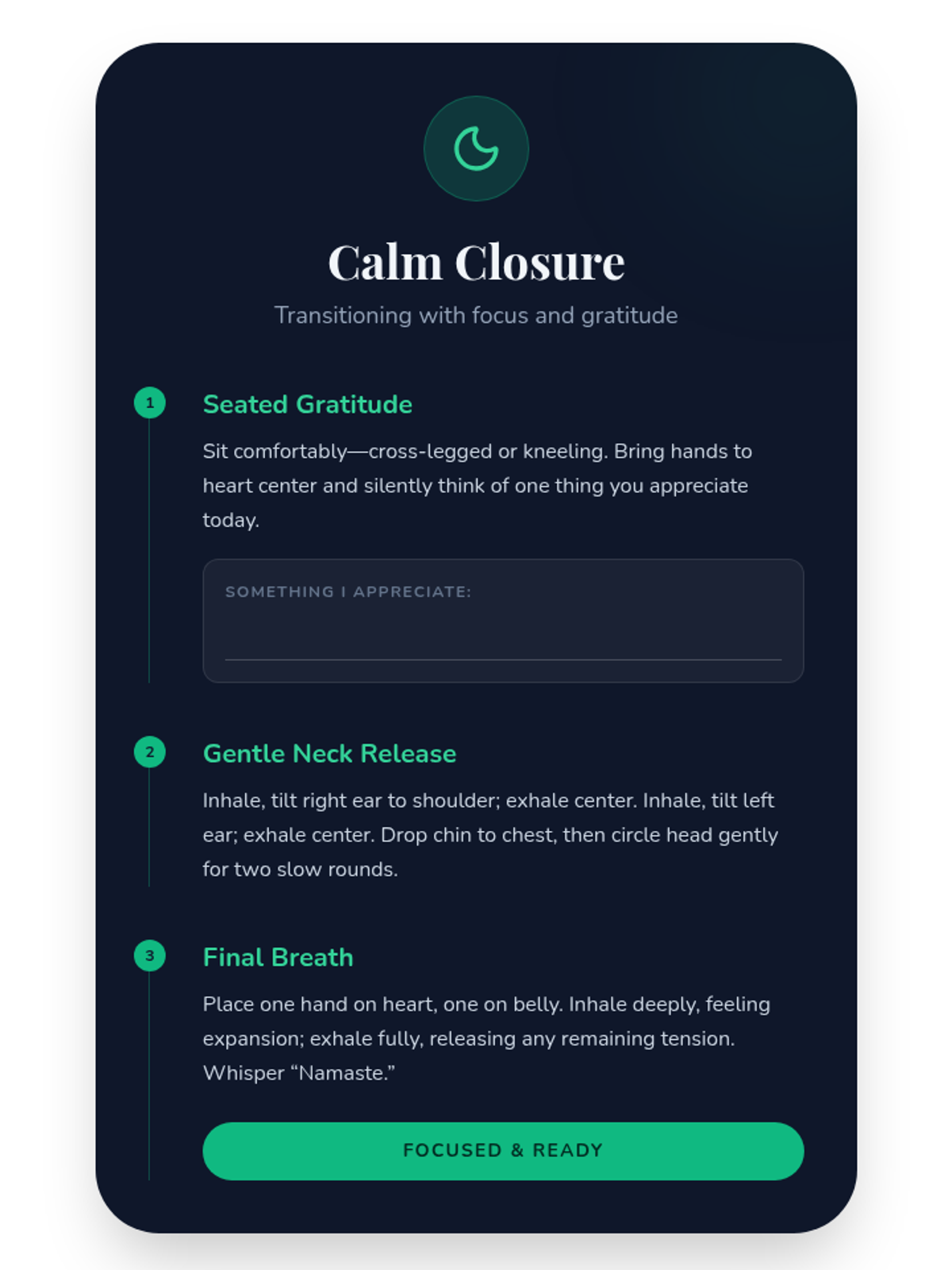
Fundamental concepts of emotional intelligence, stress reduction, and relaxation exercises. Develops skills for healthy relationships, digital balance, and resilience while establishing pathways for help-seeking and support systems.
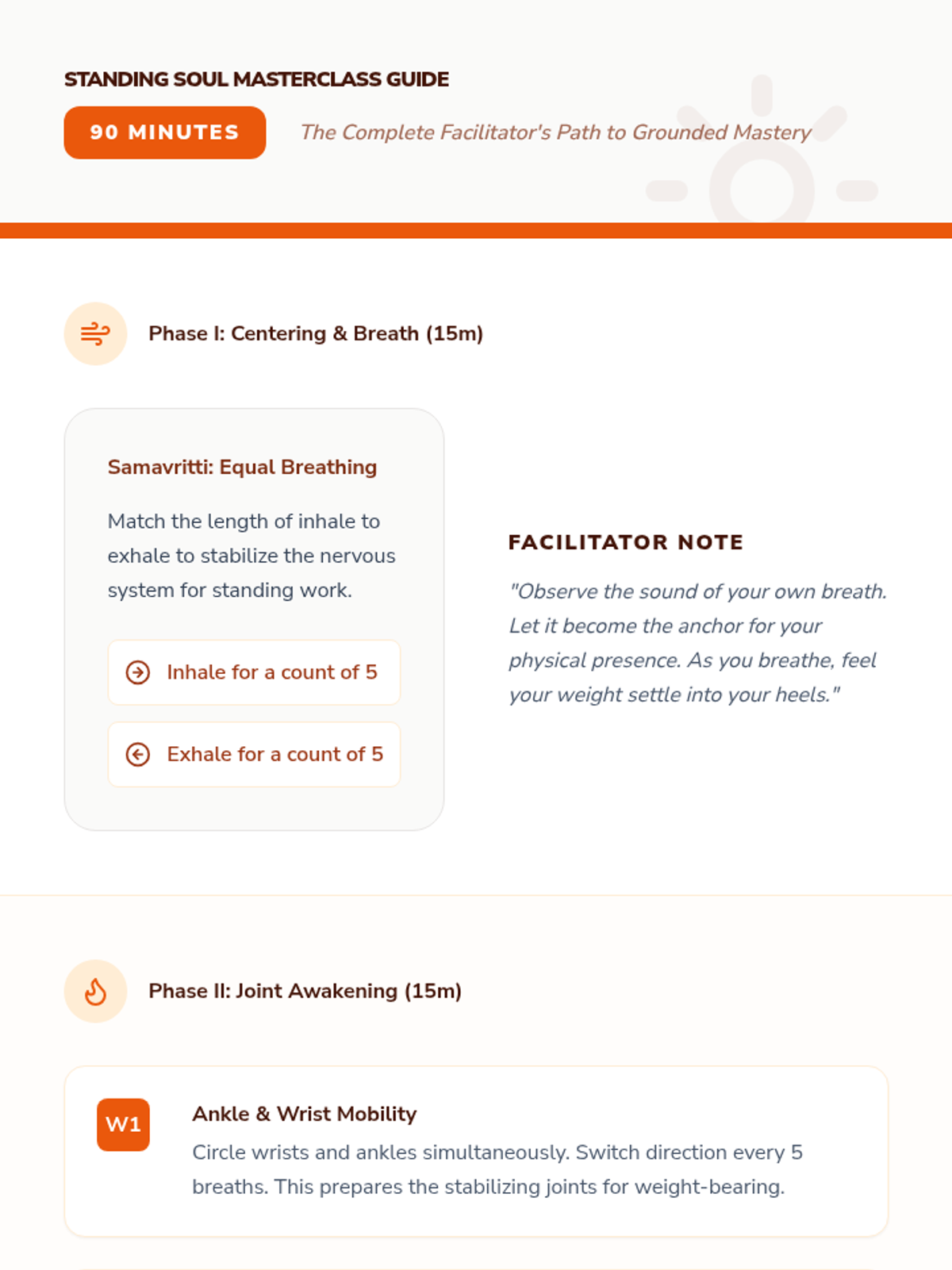
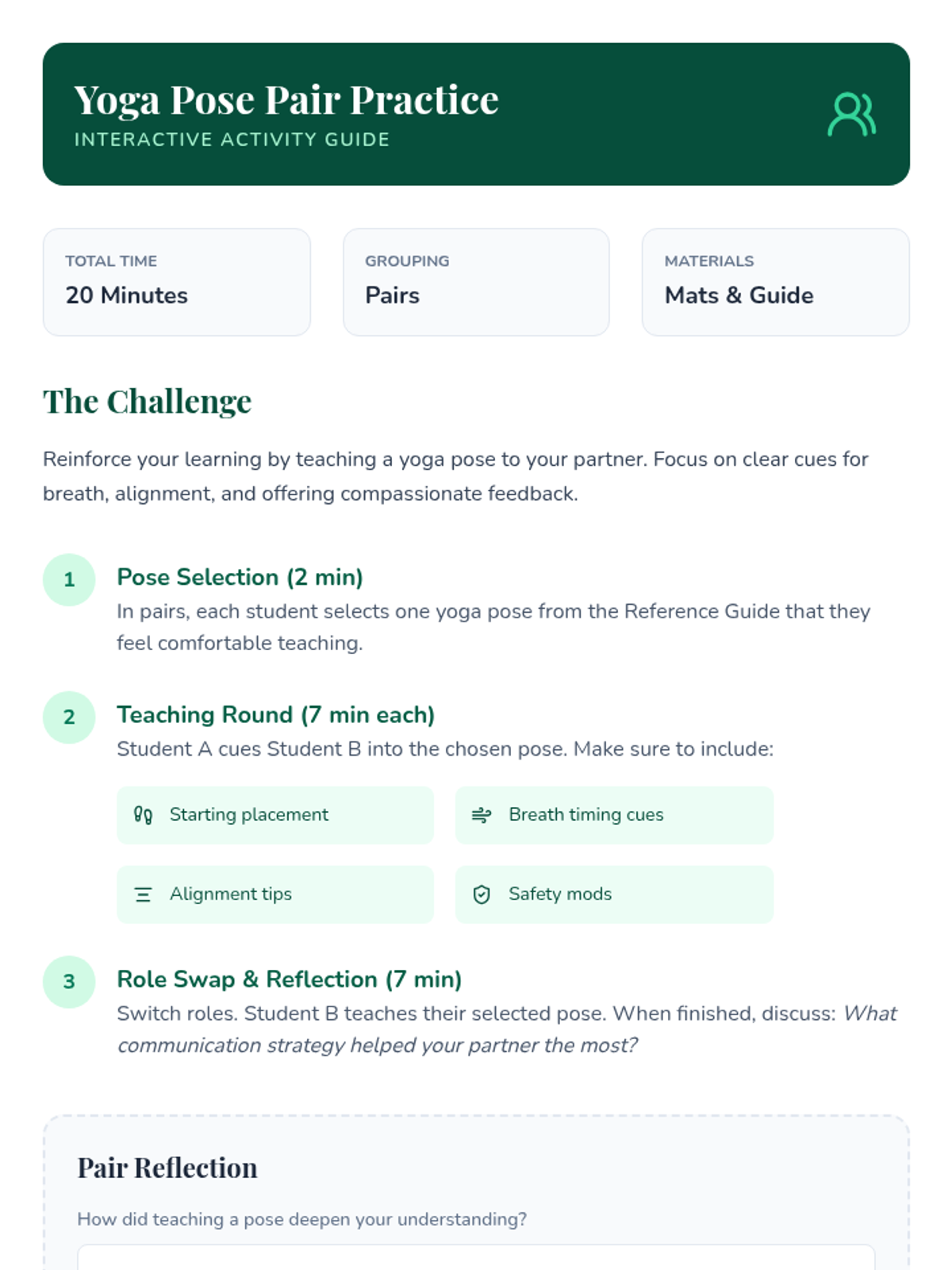
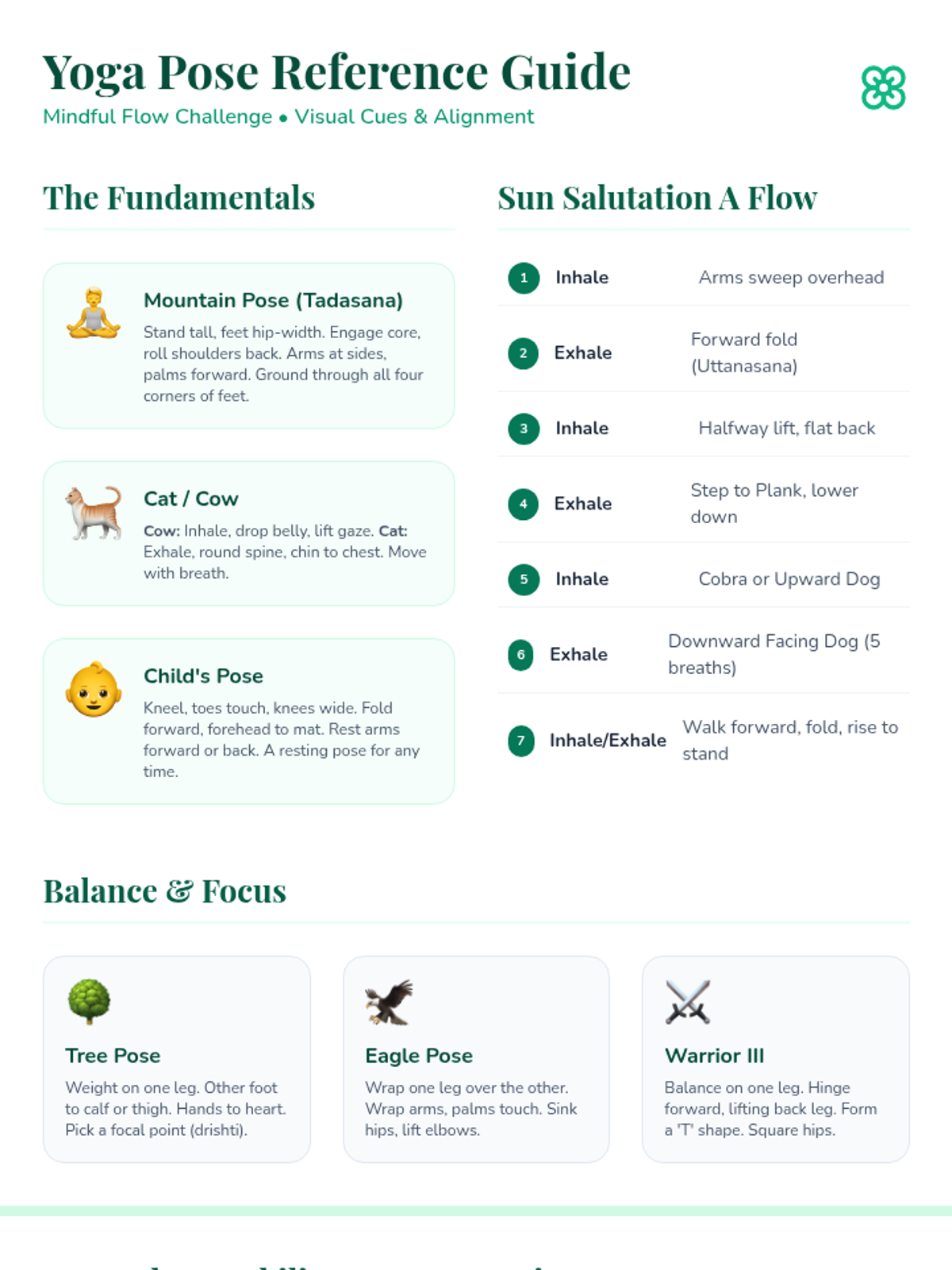
A beginner-friendly 90-minute standing yoga session focused on grounding, balance, and fundamental postures to transition from seated to standing practice.
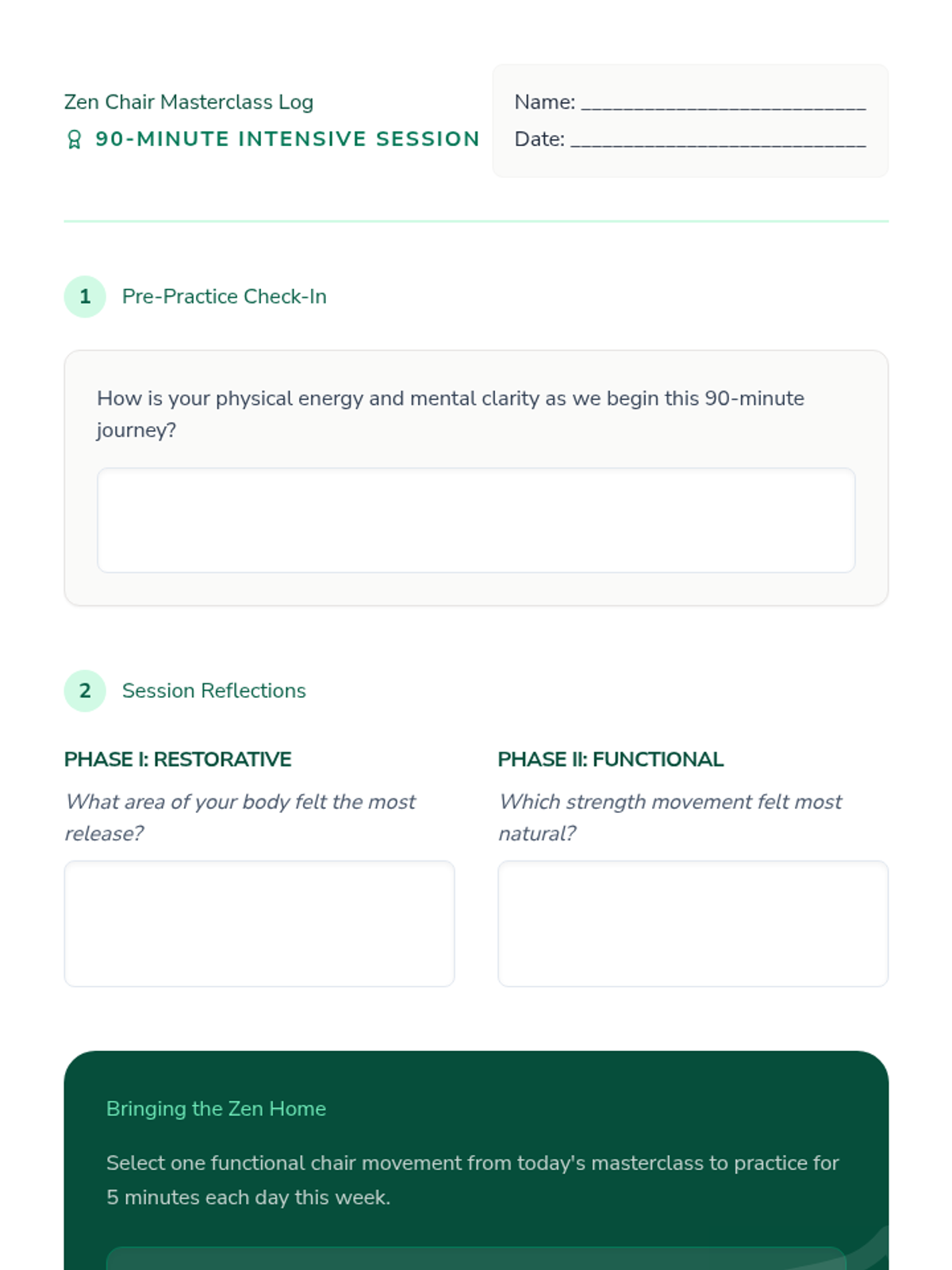
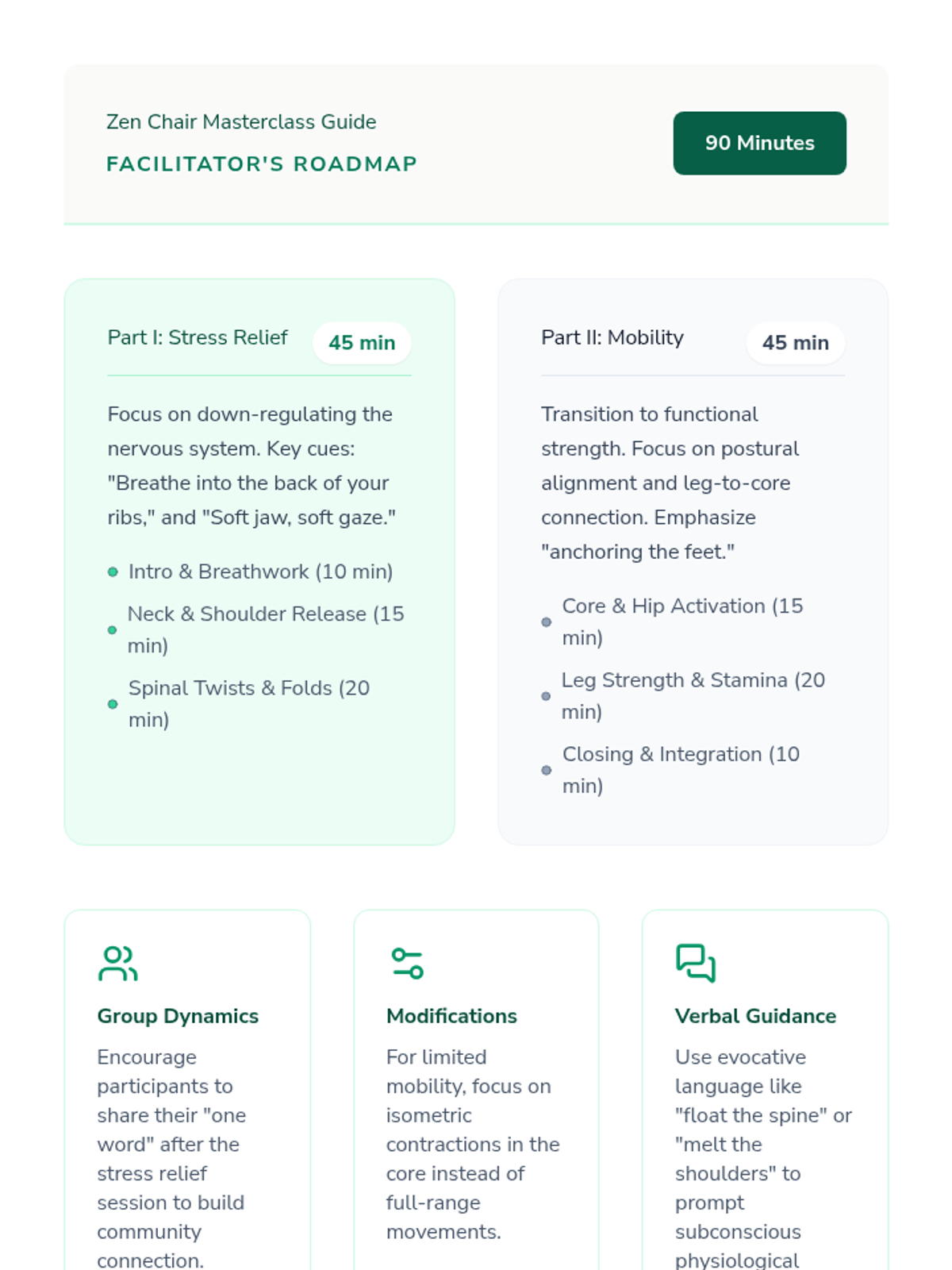
A deep-dive chair yoga experience combining stress relief and functional mobility, featuring two full-length guided practice videos. This 90-minute masterclass is designed to build both mental calm and physical strength.
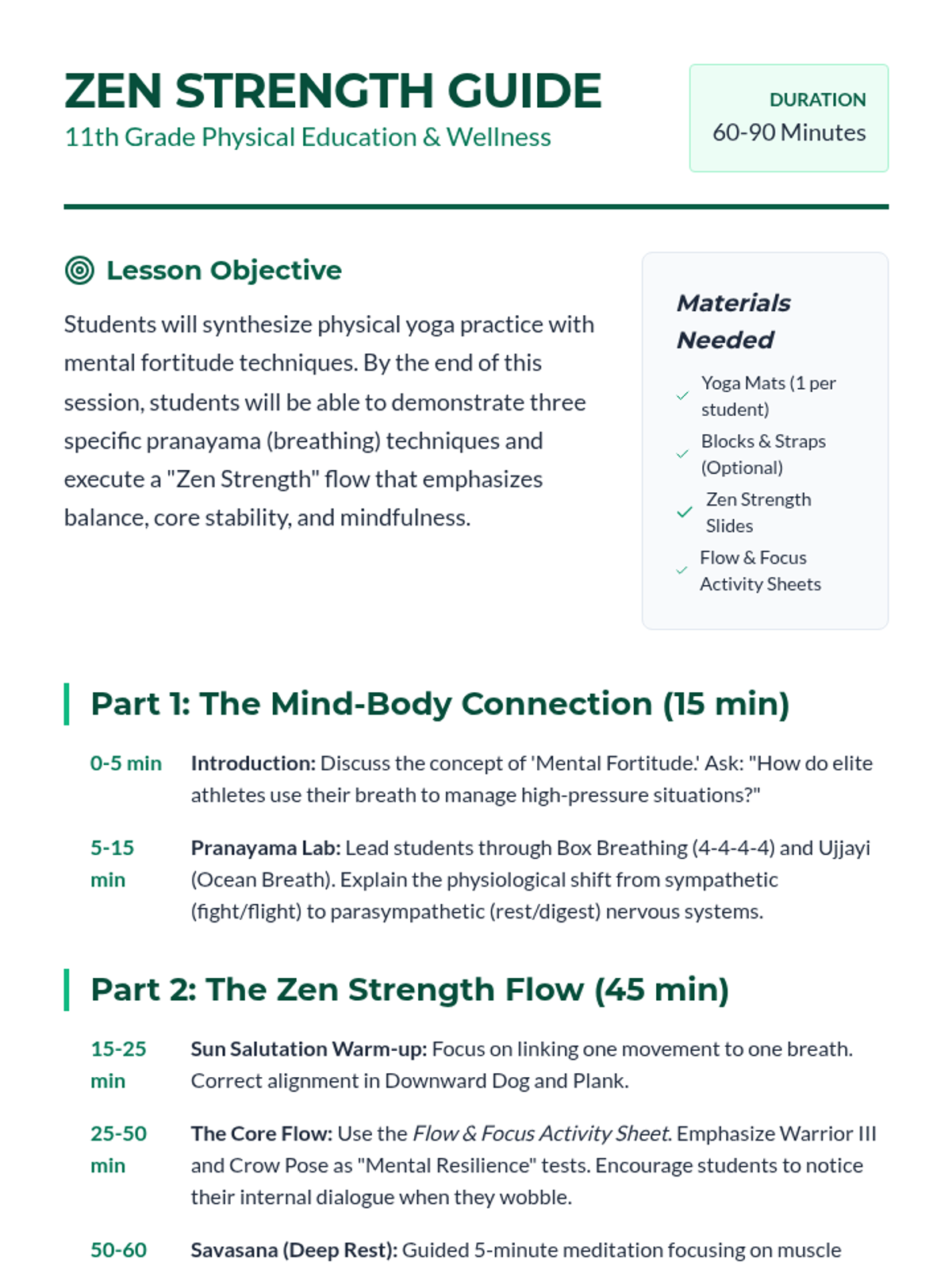
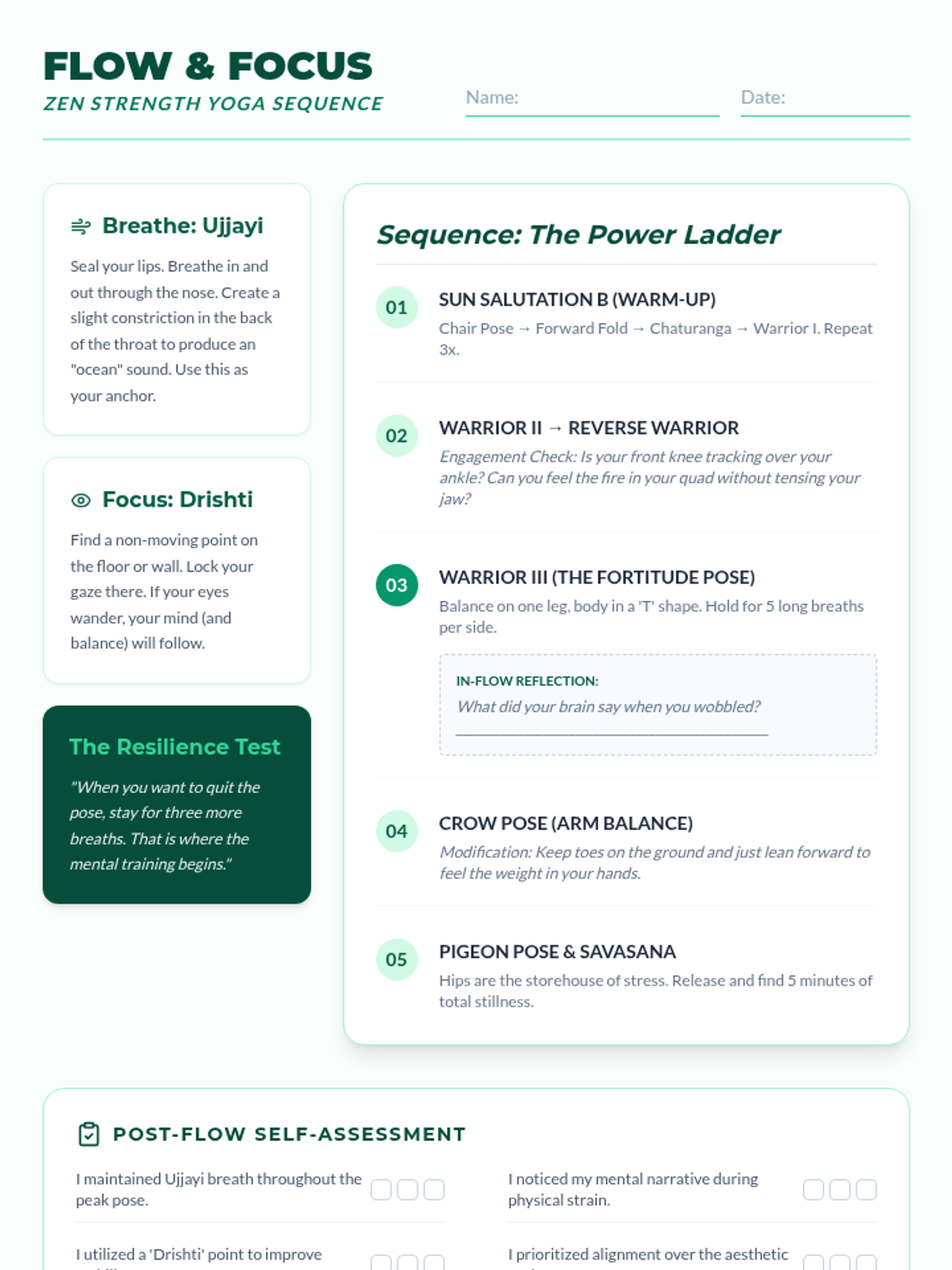
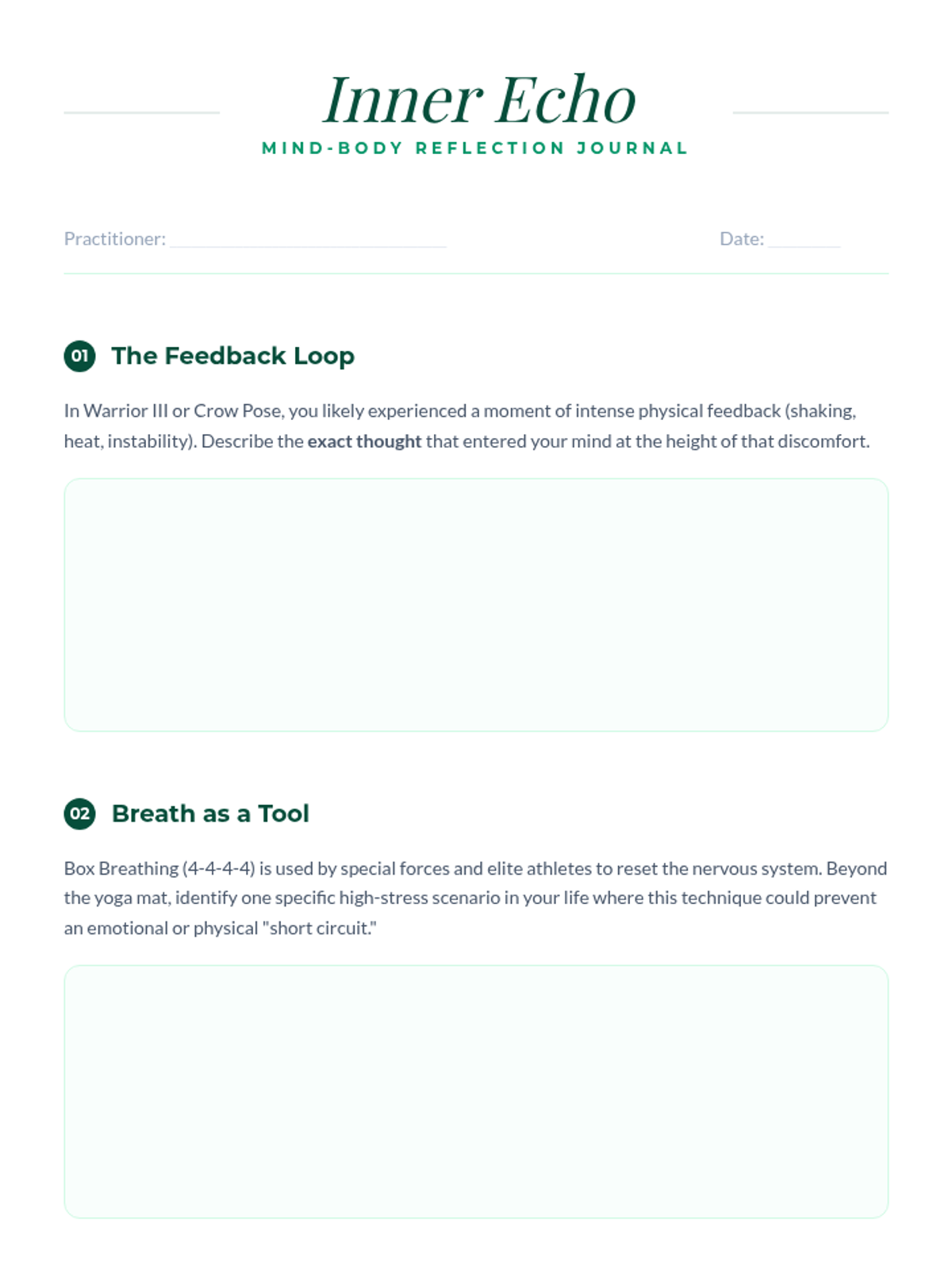
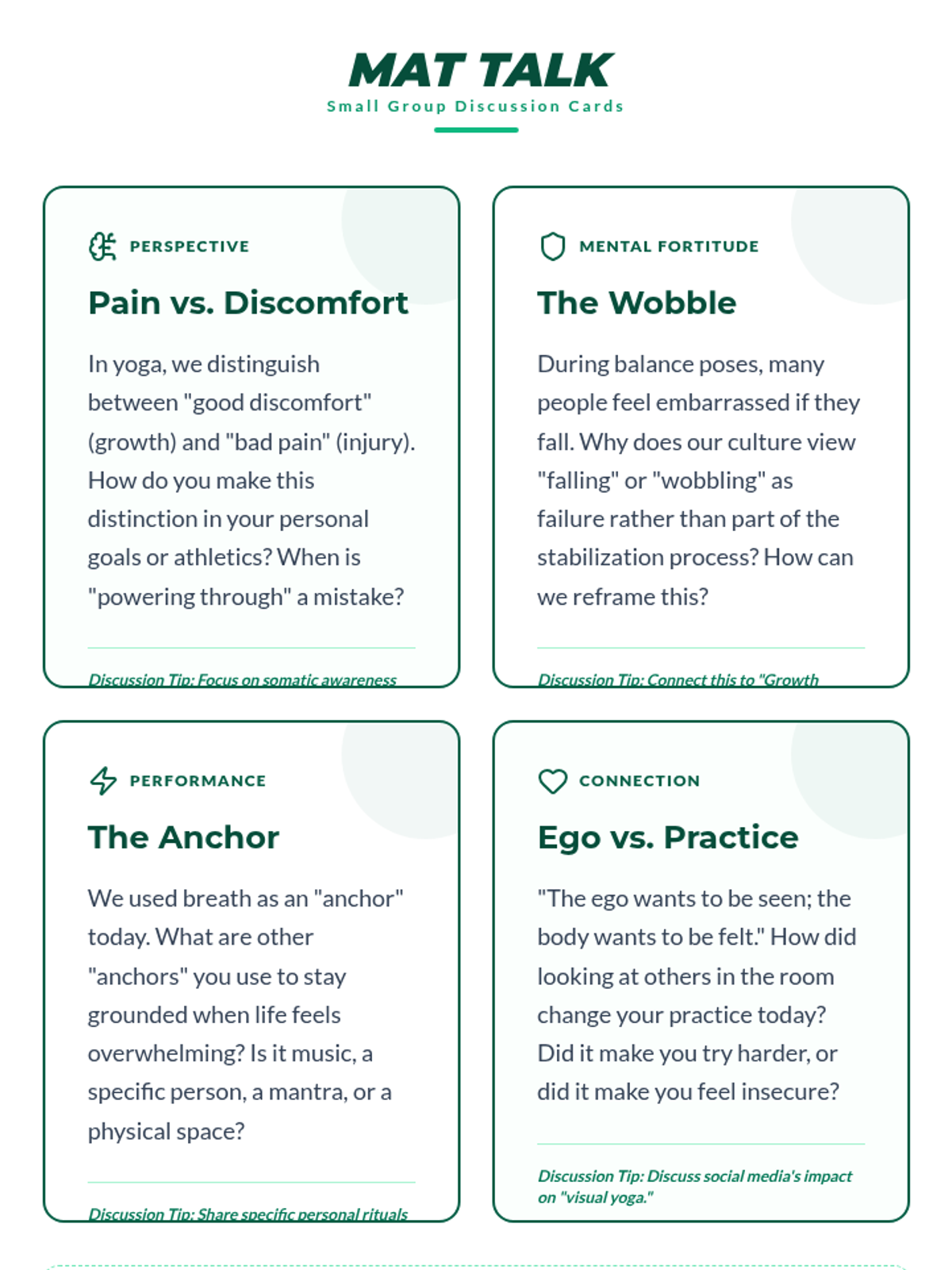
An advanced yoga lesson for 11th graders focusing on the intersection of physical posture and mental resilience. Students explore breathing techniques and a 'Zen Strength' flow designed to enhance athletic performance and stress management.
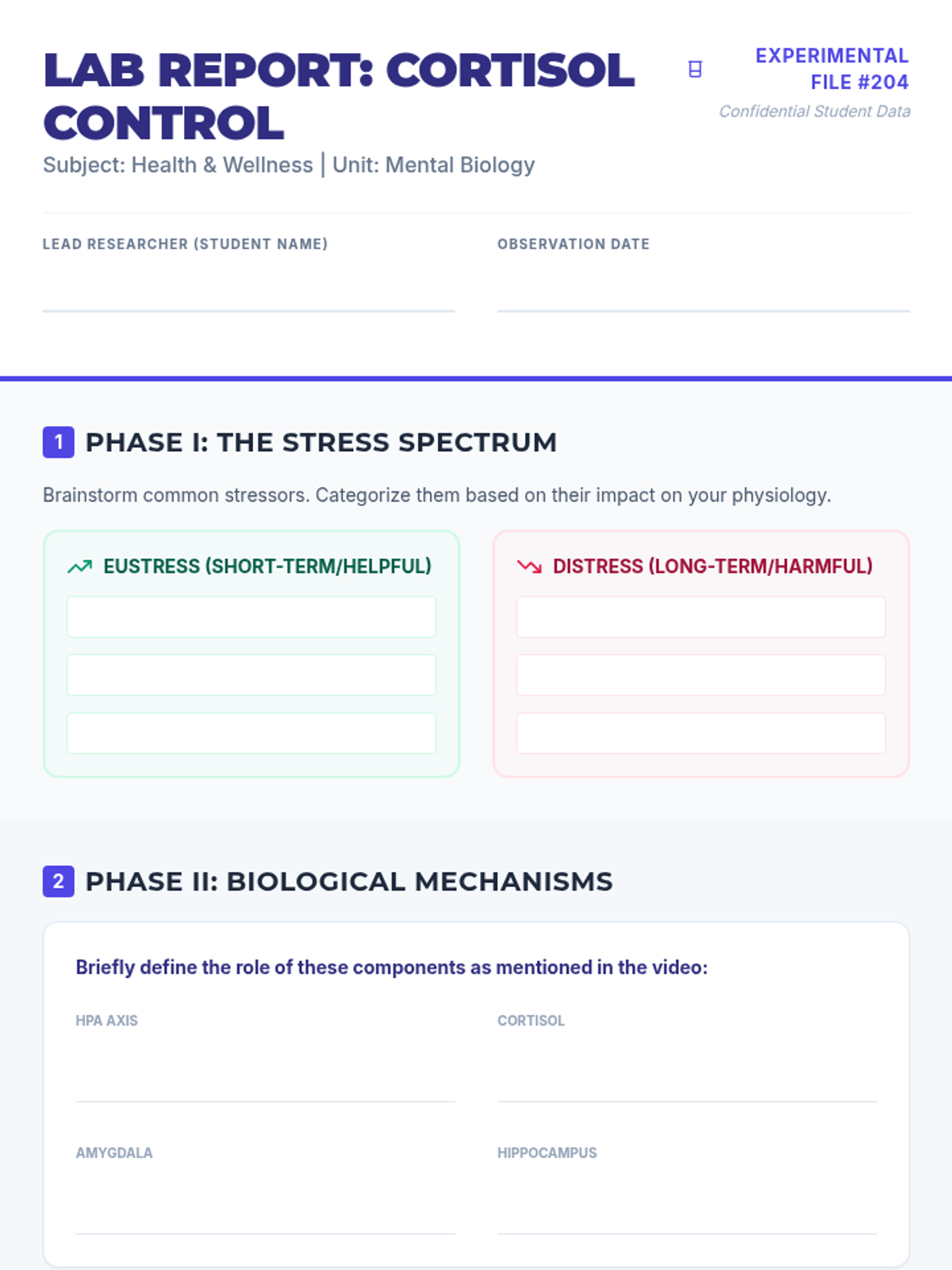
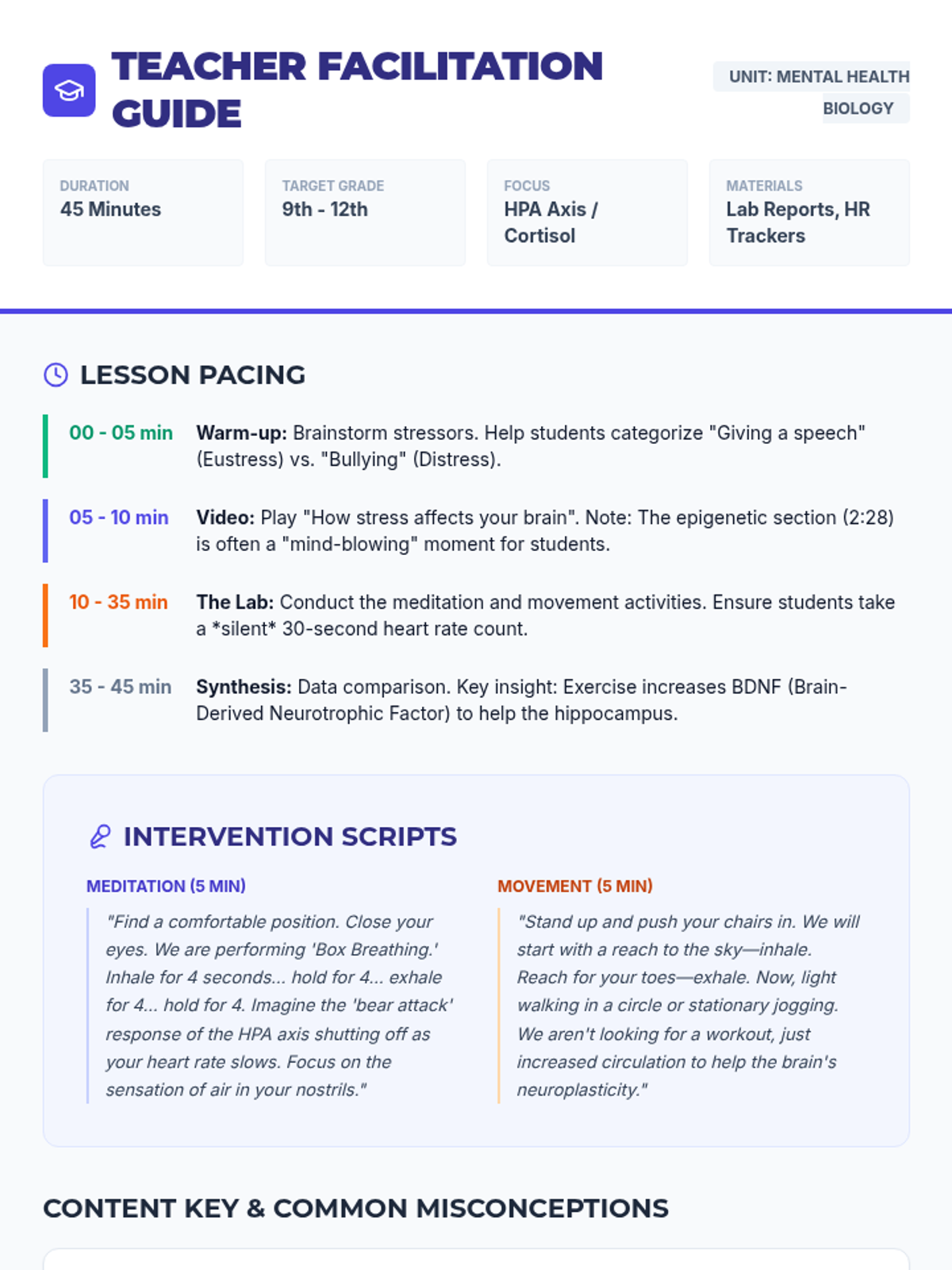
Students differentiate between eustress and distress, analyze the biological mechanism of the HPA axis through a video, and conduct a self-experiment ('Cortisol Control Lab') to test meditation and movement as stress-reduction strategies.
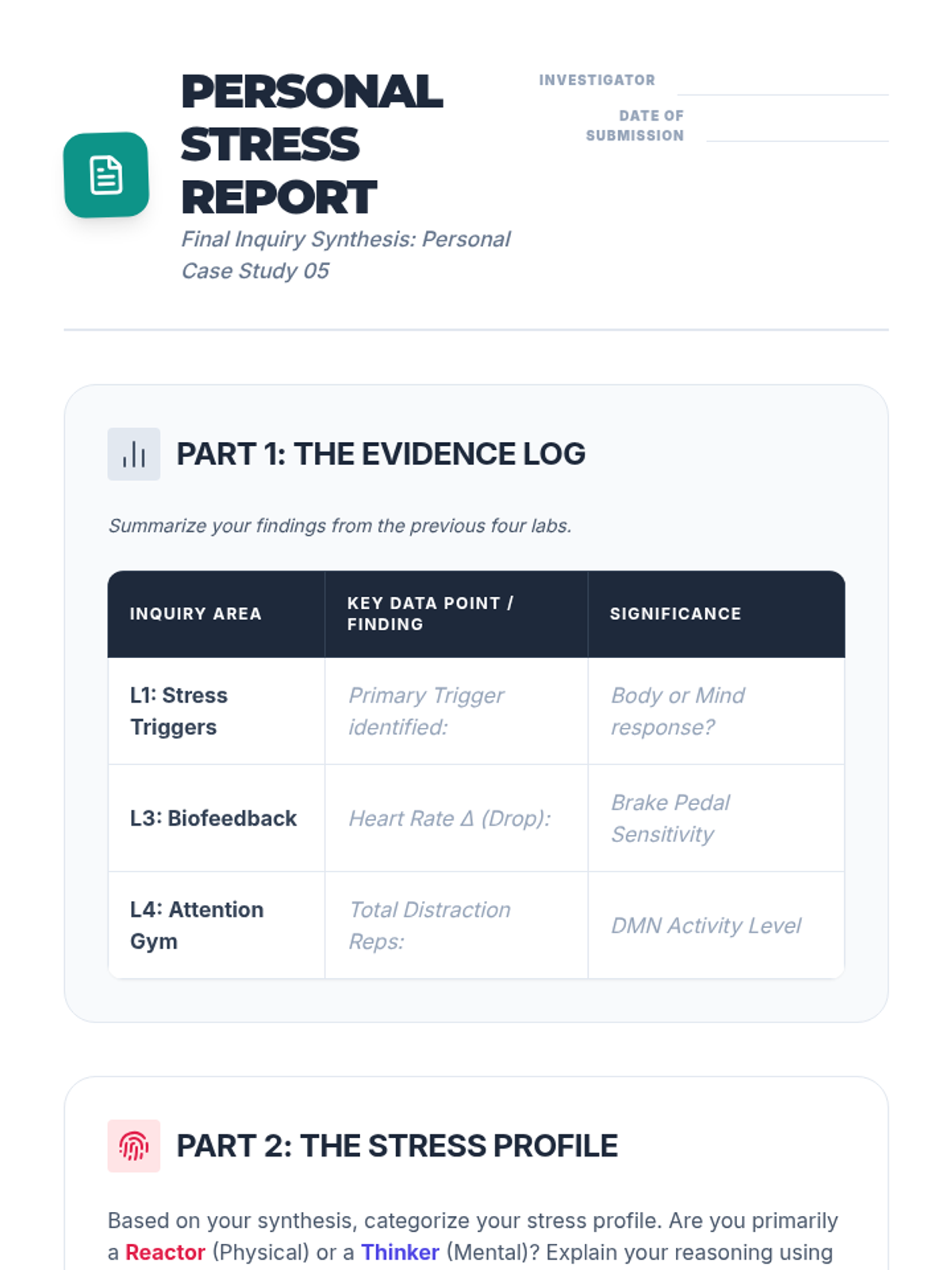
Students analyze their own data and stress profiles to determine the most effective mindfulness techniques for their physiology.
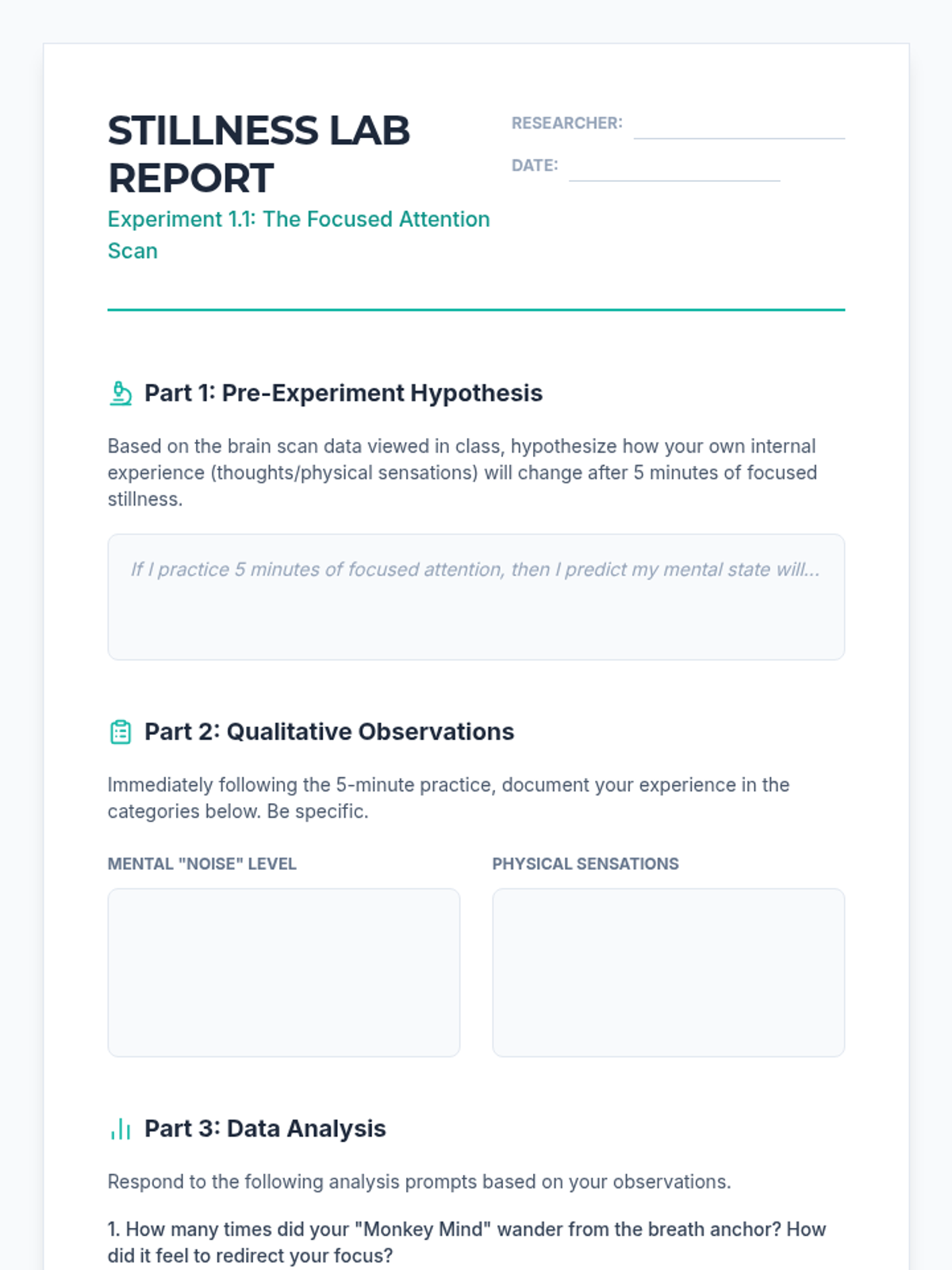
Exercises highlighting mind-wandering and the practice of non-judgmental returning of focus.
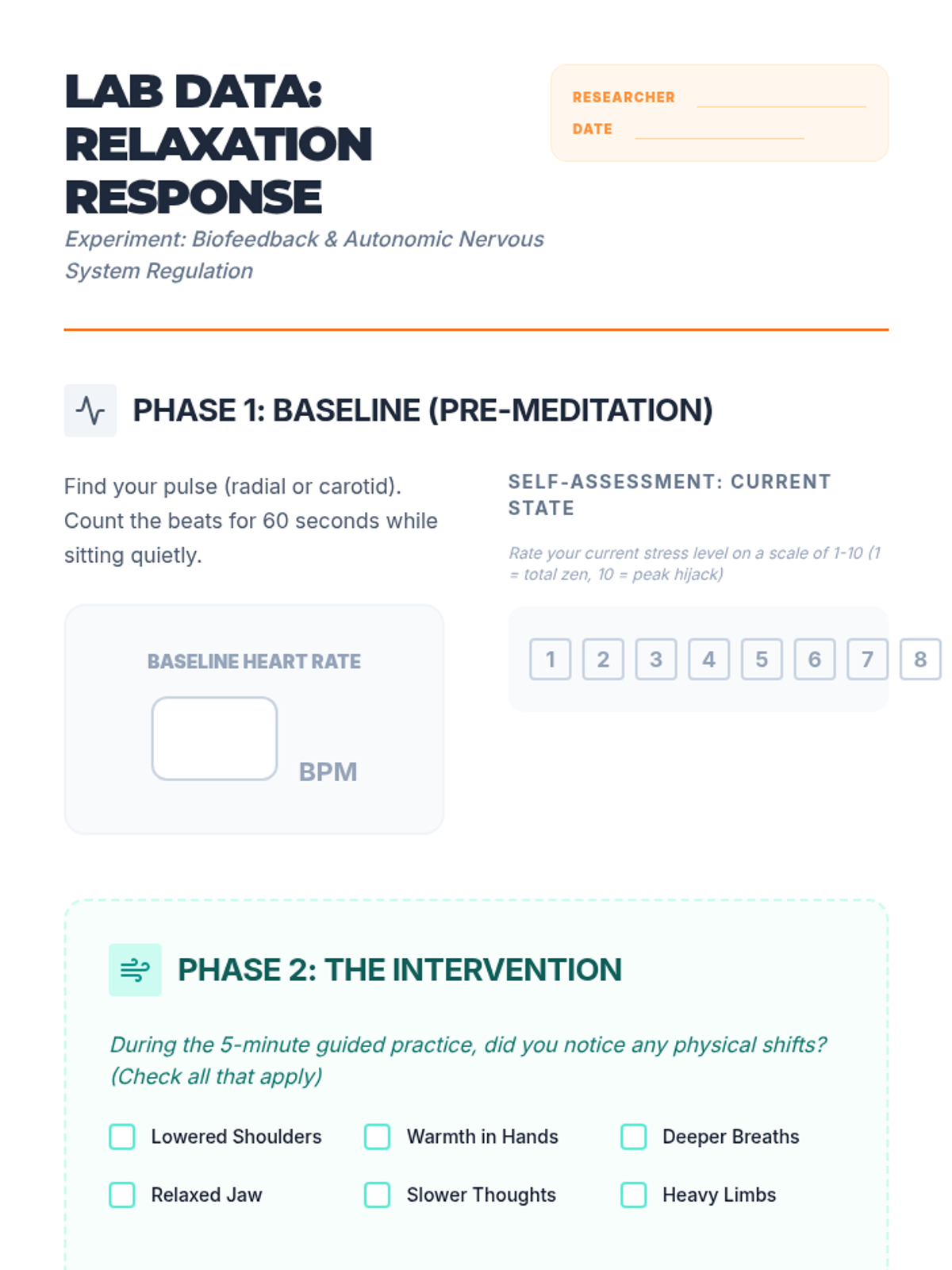
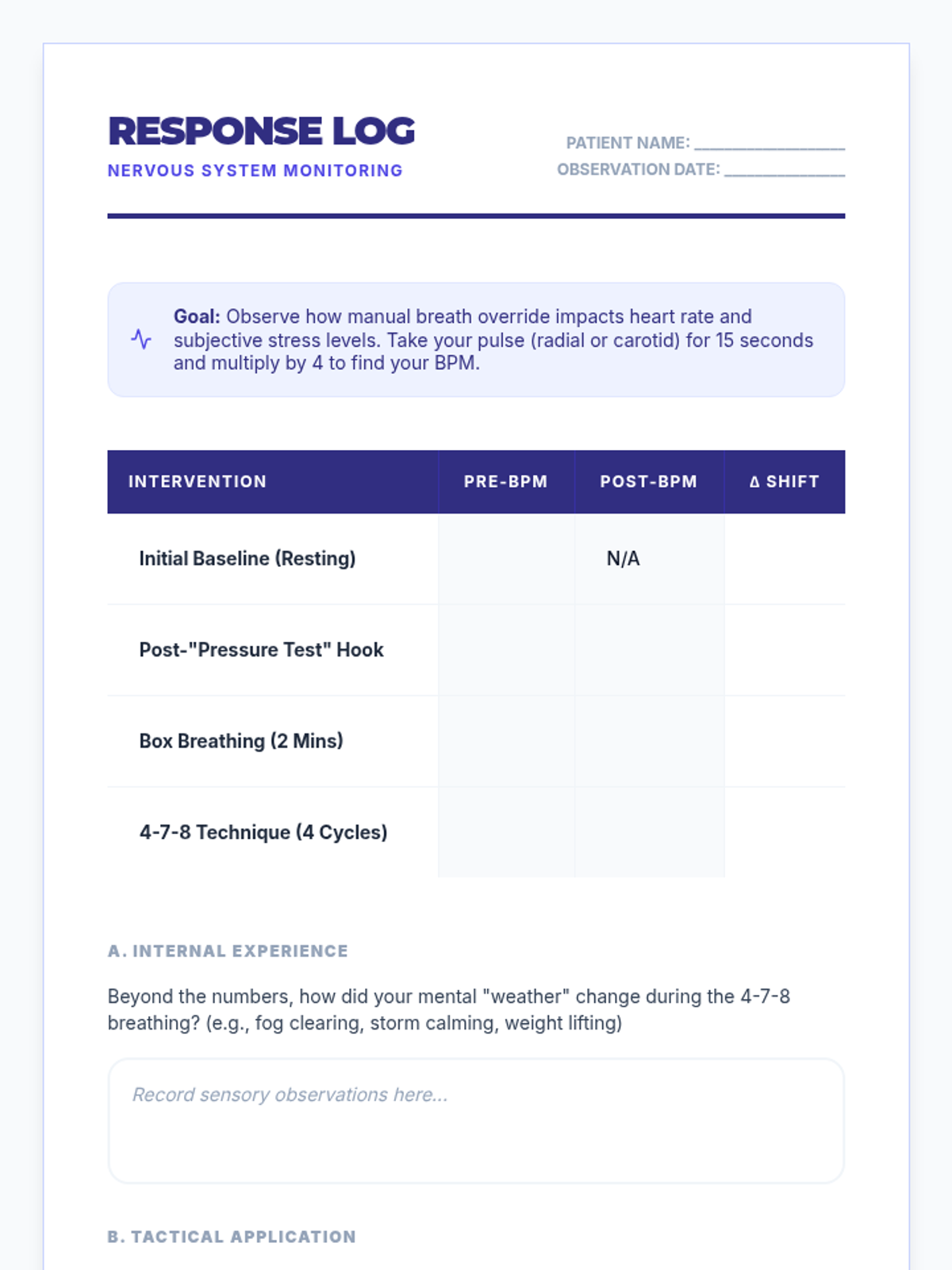
A biofeedback experiment where students measure heart rate changes before and after mindfulness practice.
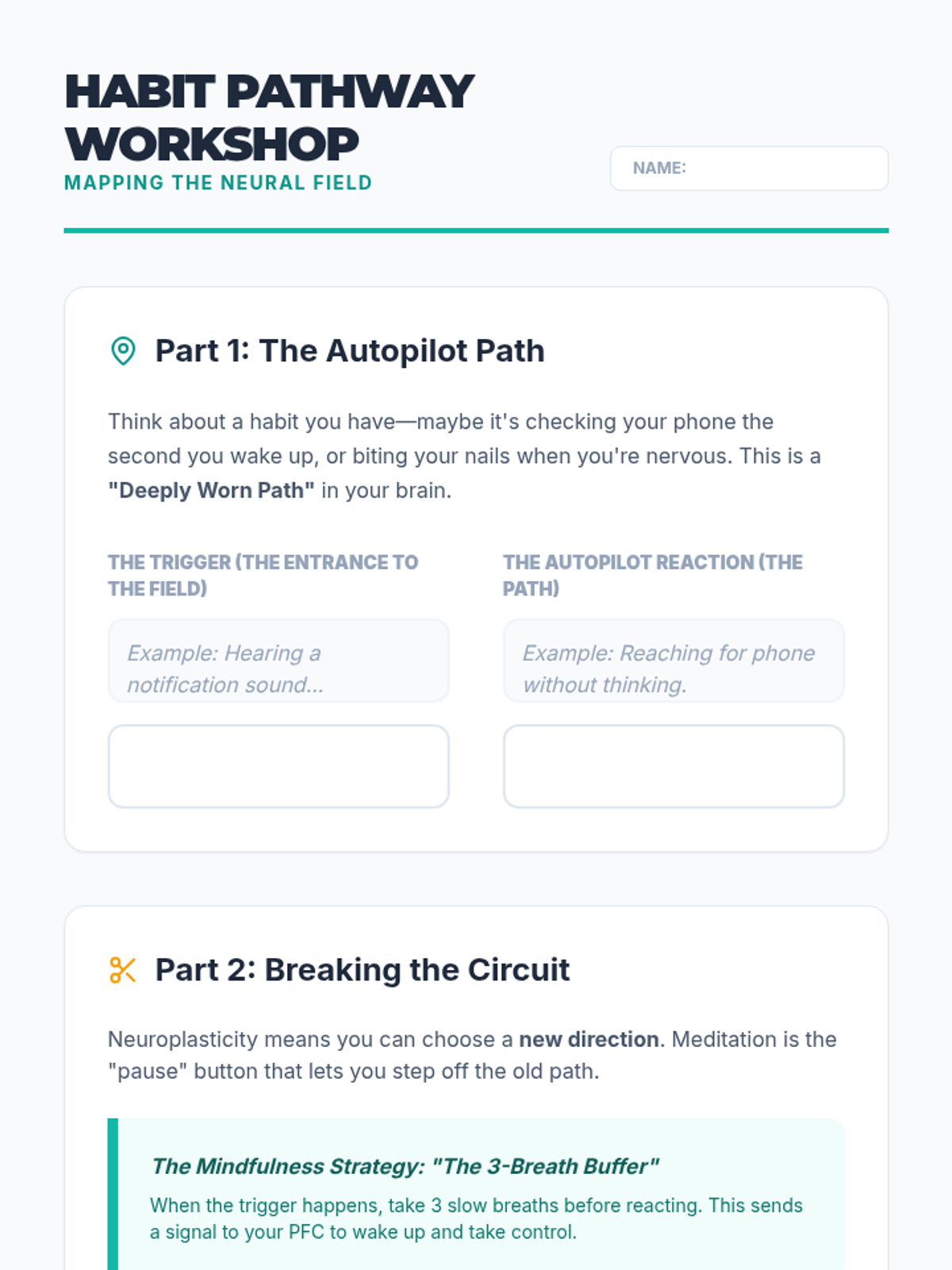
Students investigate neuroplasticity and how meditation builds new neural pathways to create healthier mental habits.
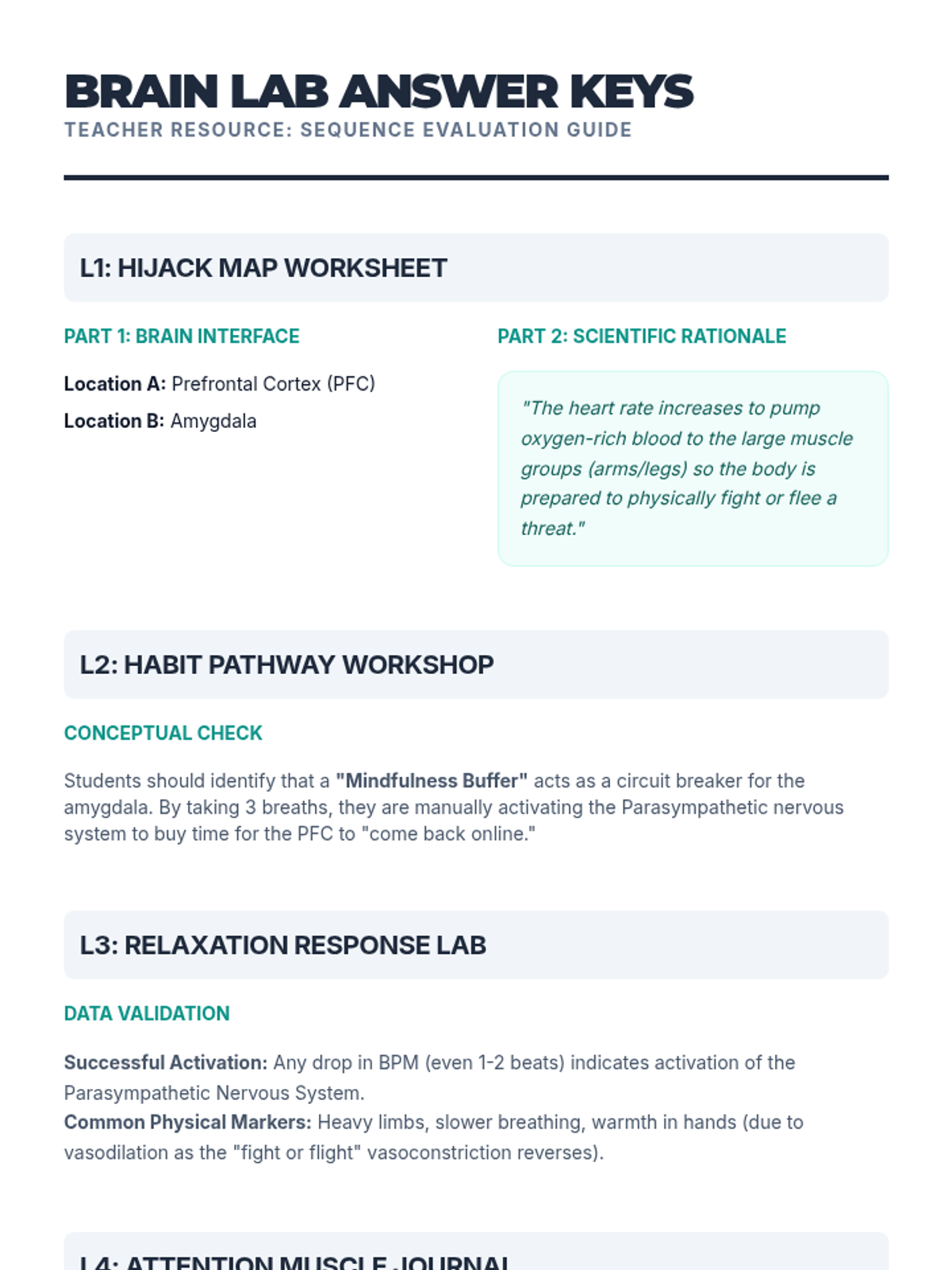
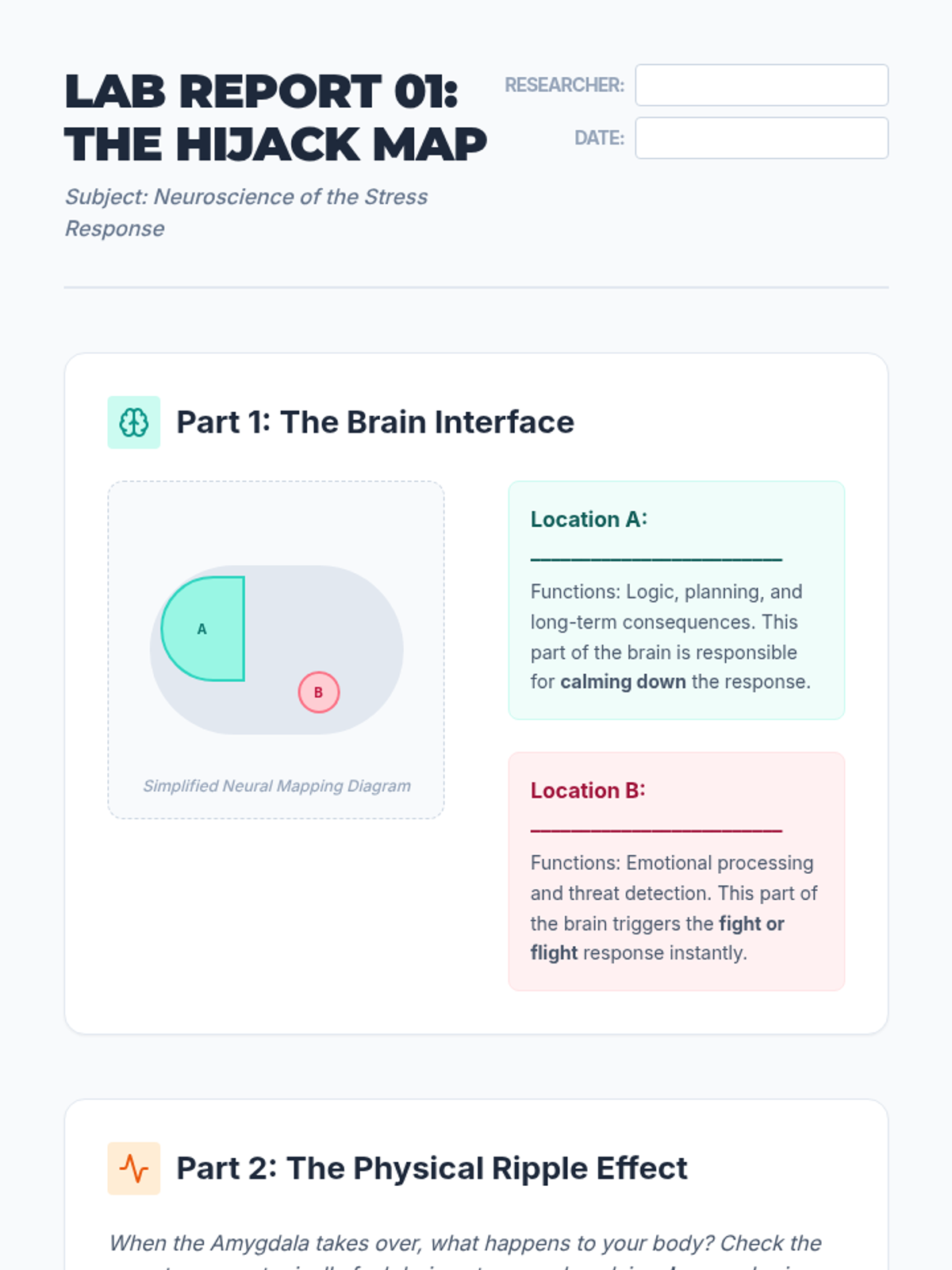
Students examine the roles of the amygdala and prefrontal cortex during stress, mapping the physiological 'fight or flight' response.
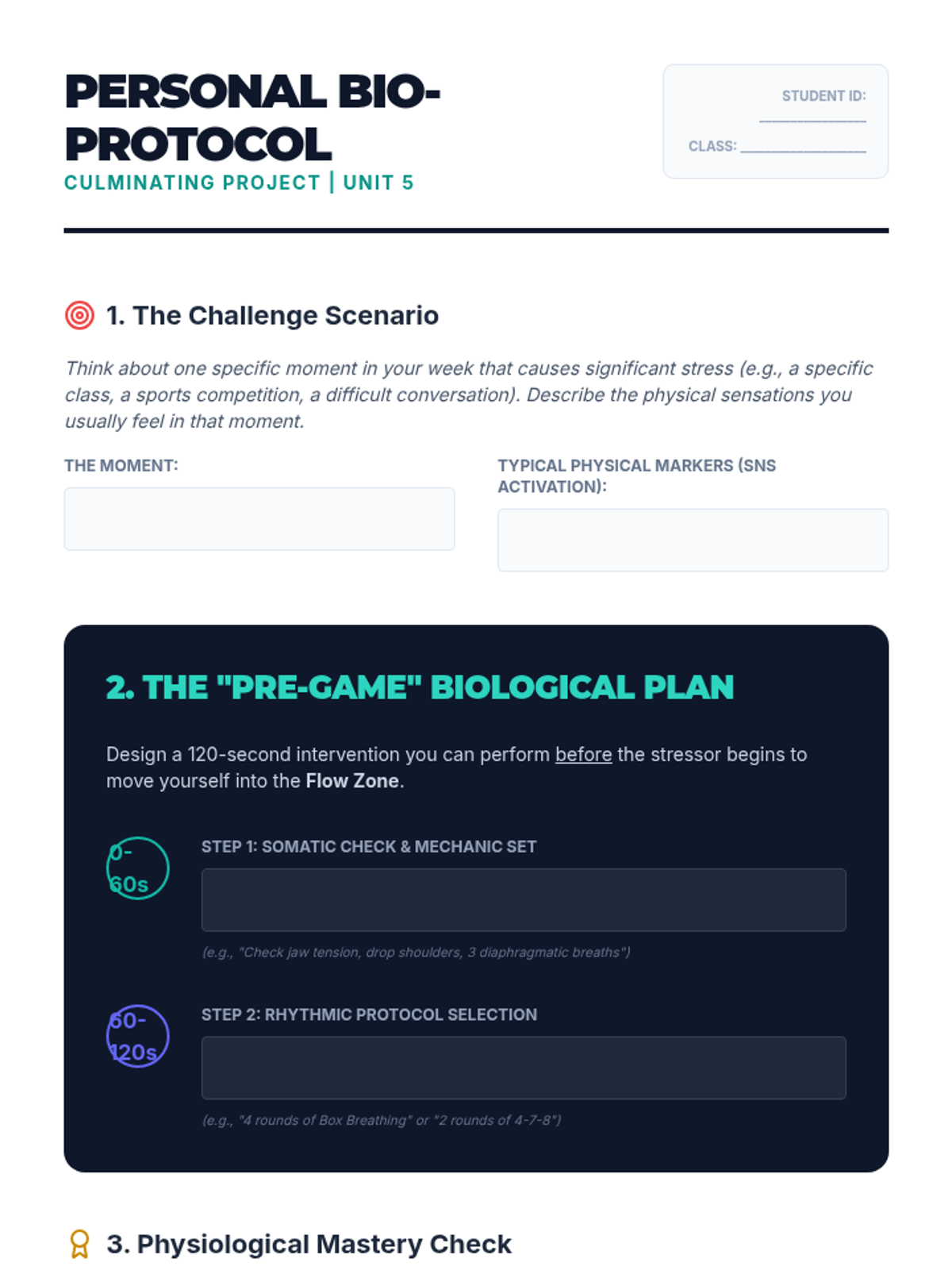
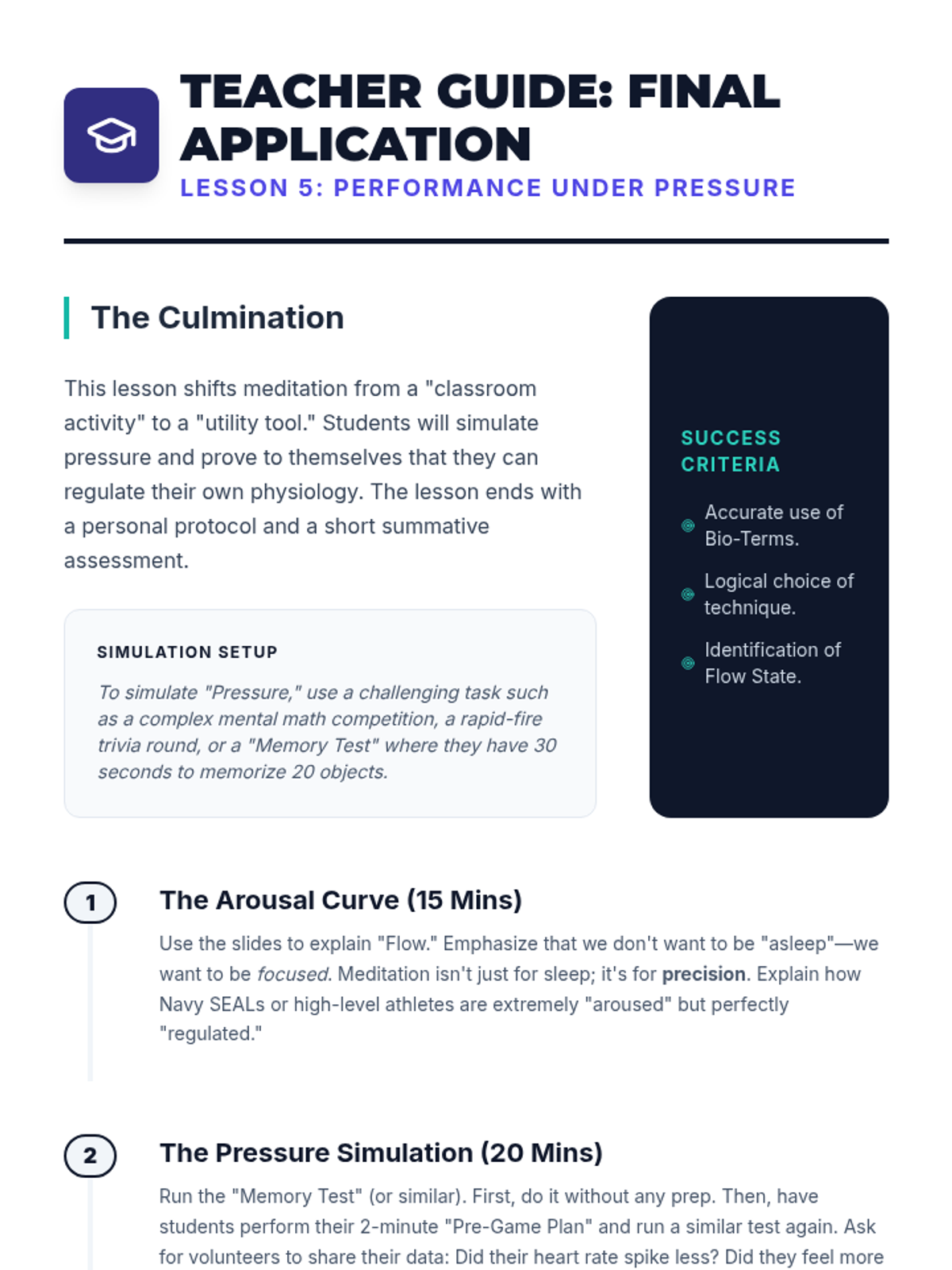
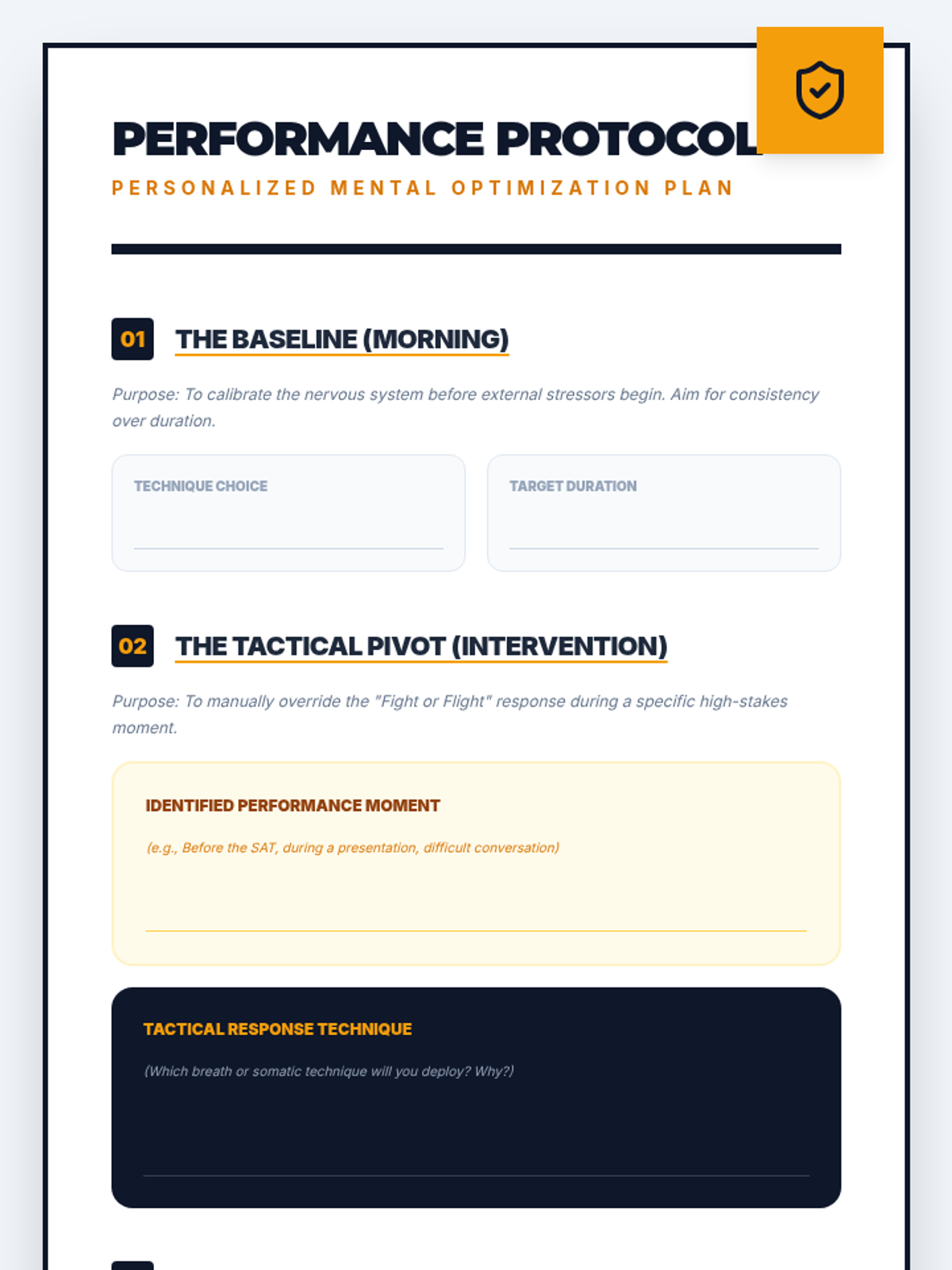
In this culminating lesson, students simulate high-pressure scenarios (mock test-taking or public speaking prep) and apply their breathing toolkit. They reflect on which techniques were most effective for their personal physiology.
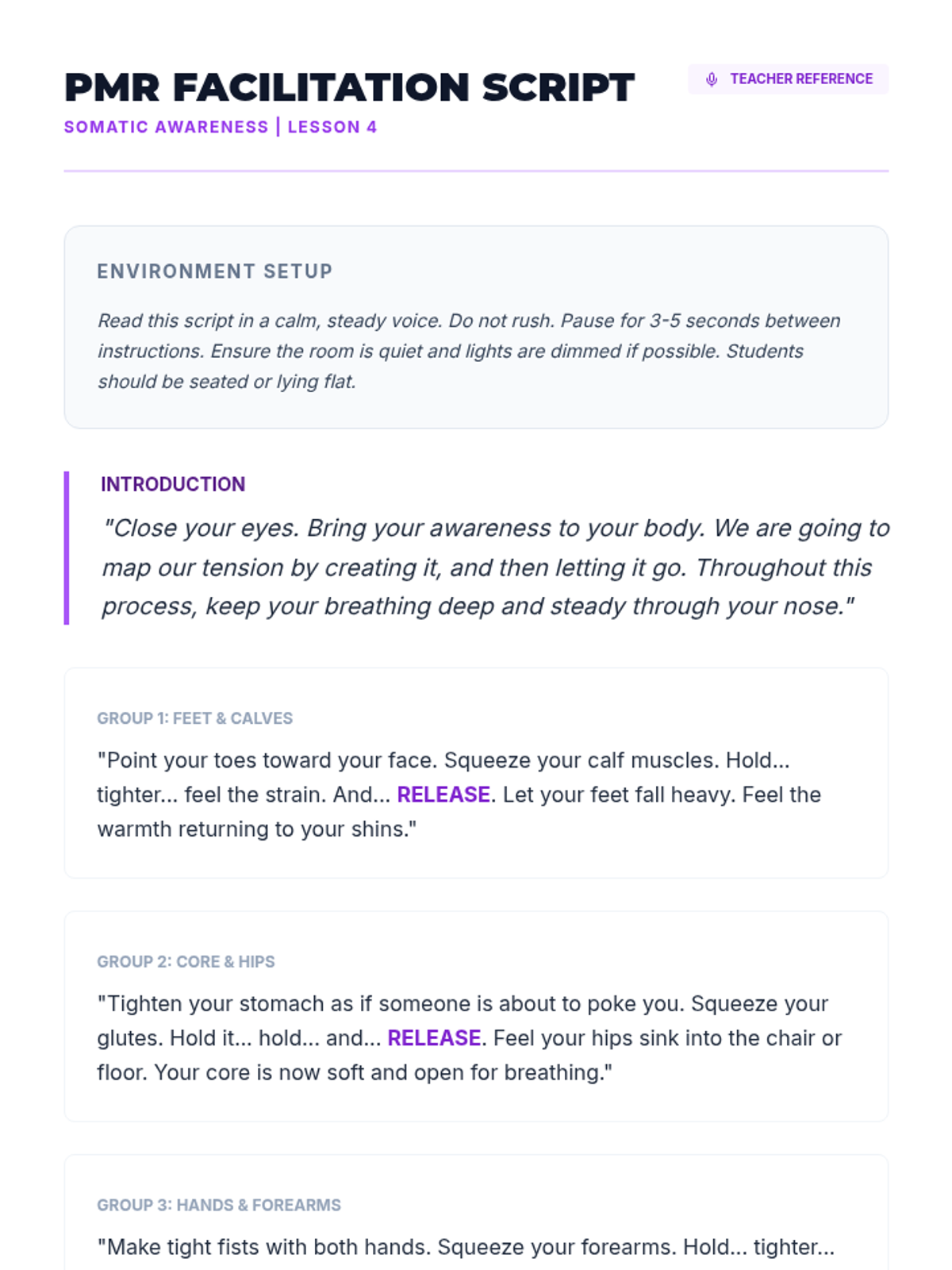
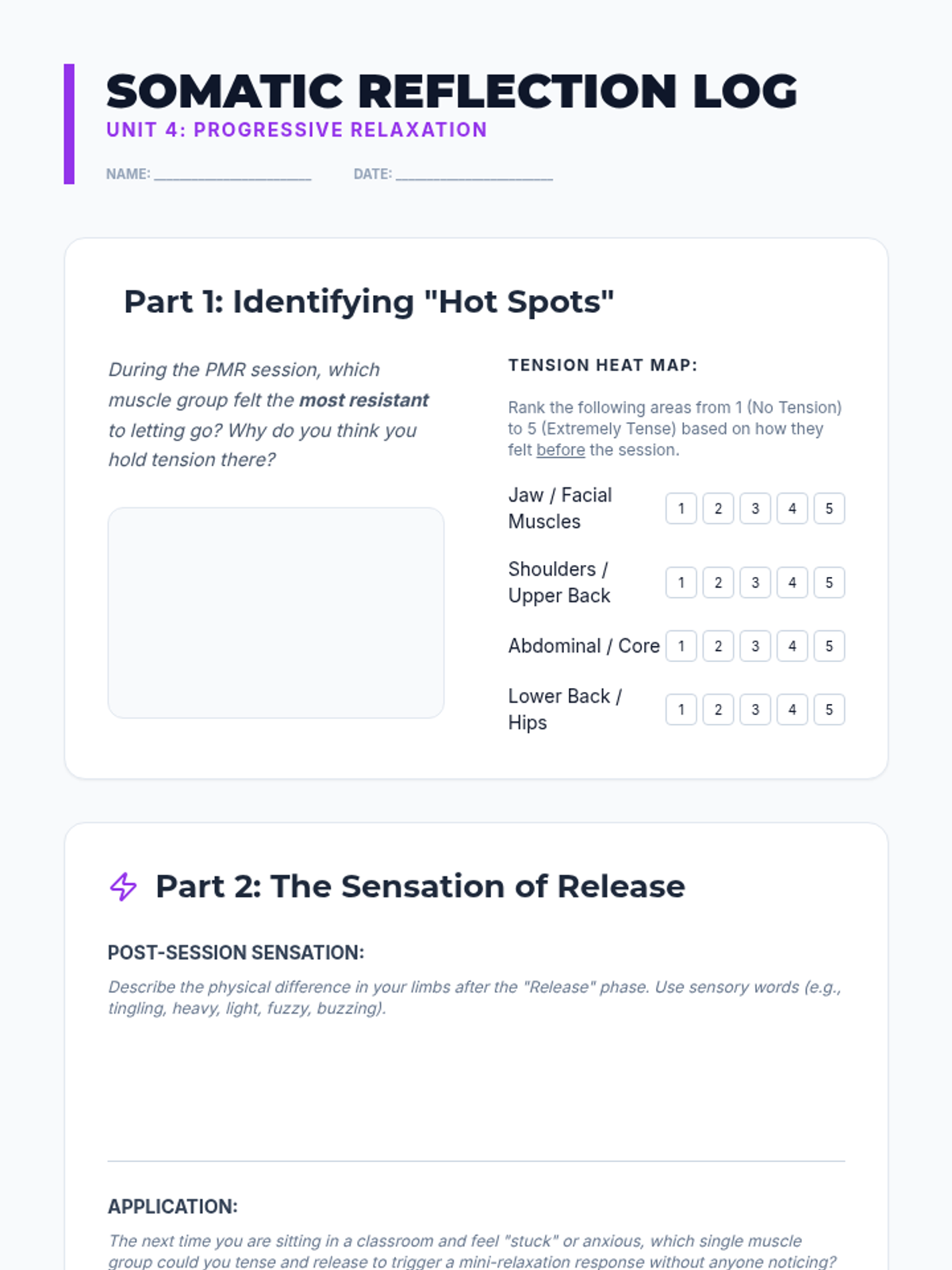
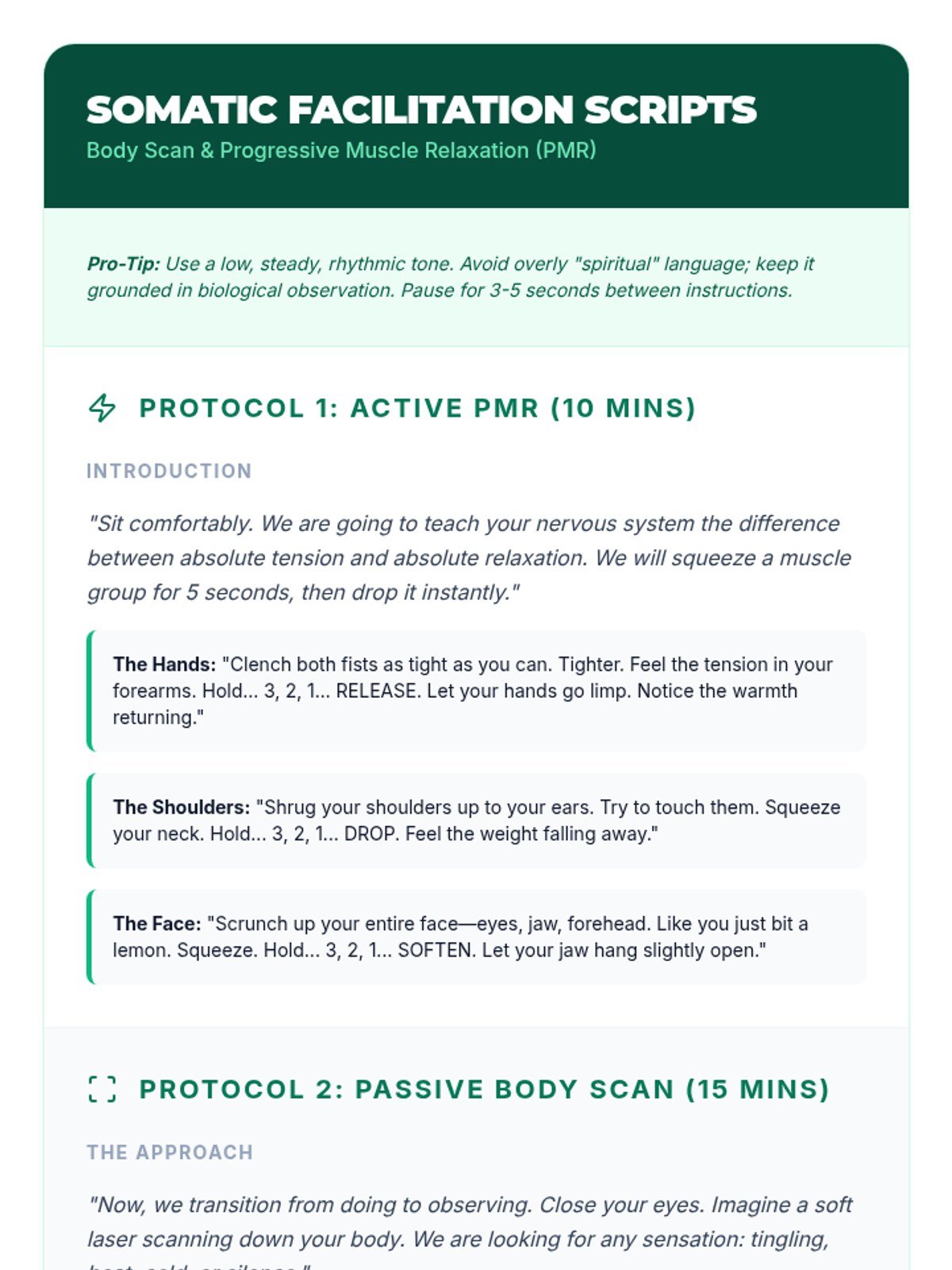
Moving from breath to body, students practice Progressive Muscle Relaxation (PMR) to identify and release physical tension. The lesson guides them through tensing and releasing muscle groups to heighten awareness of where they hold stress physically.
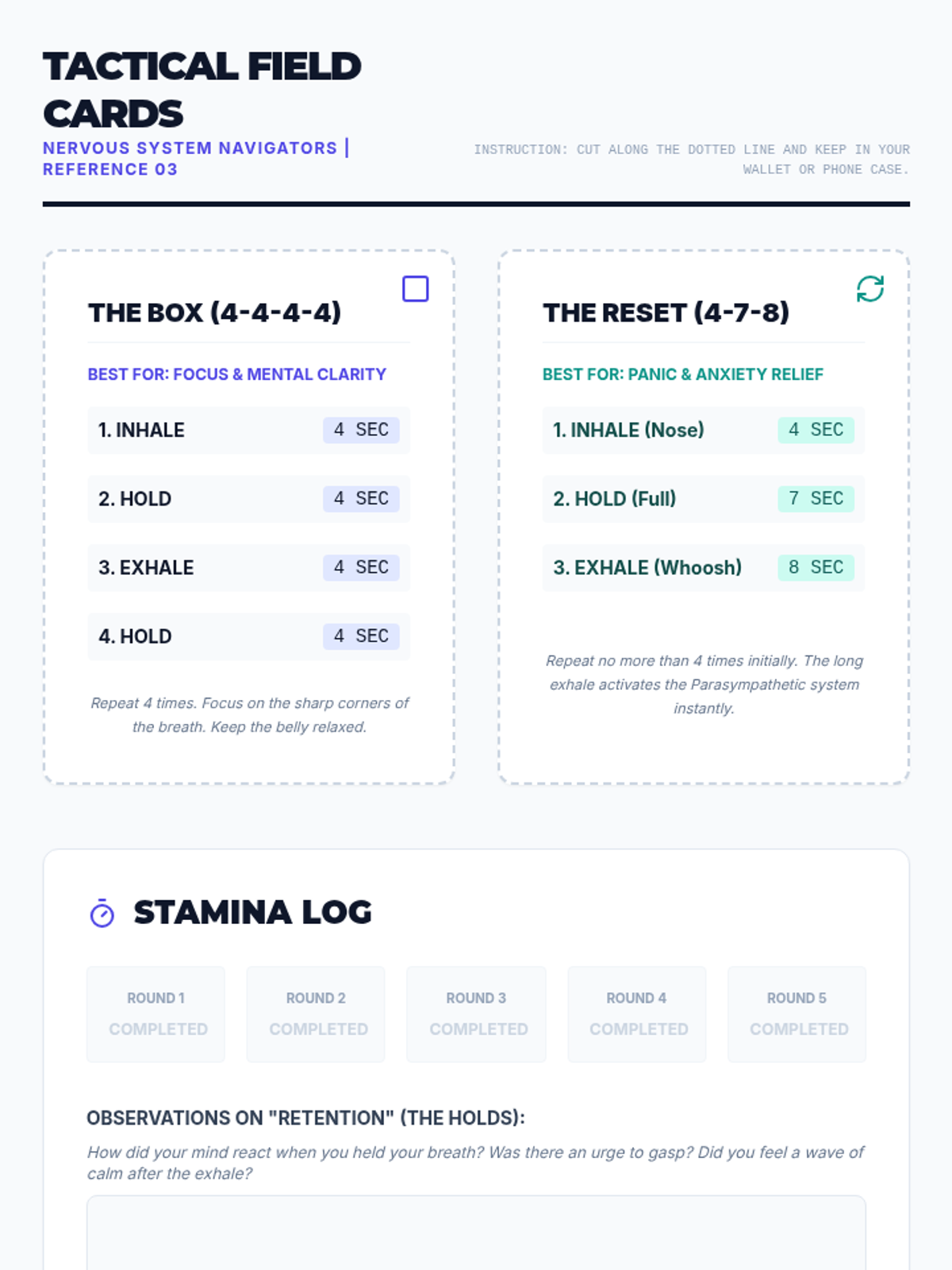
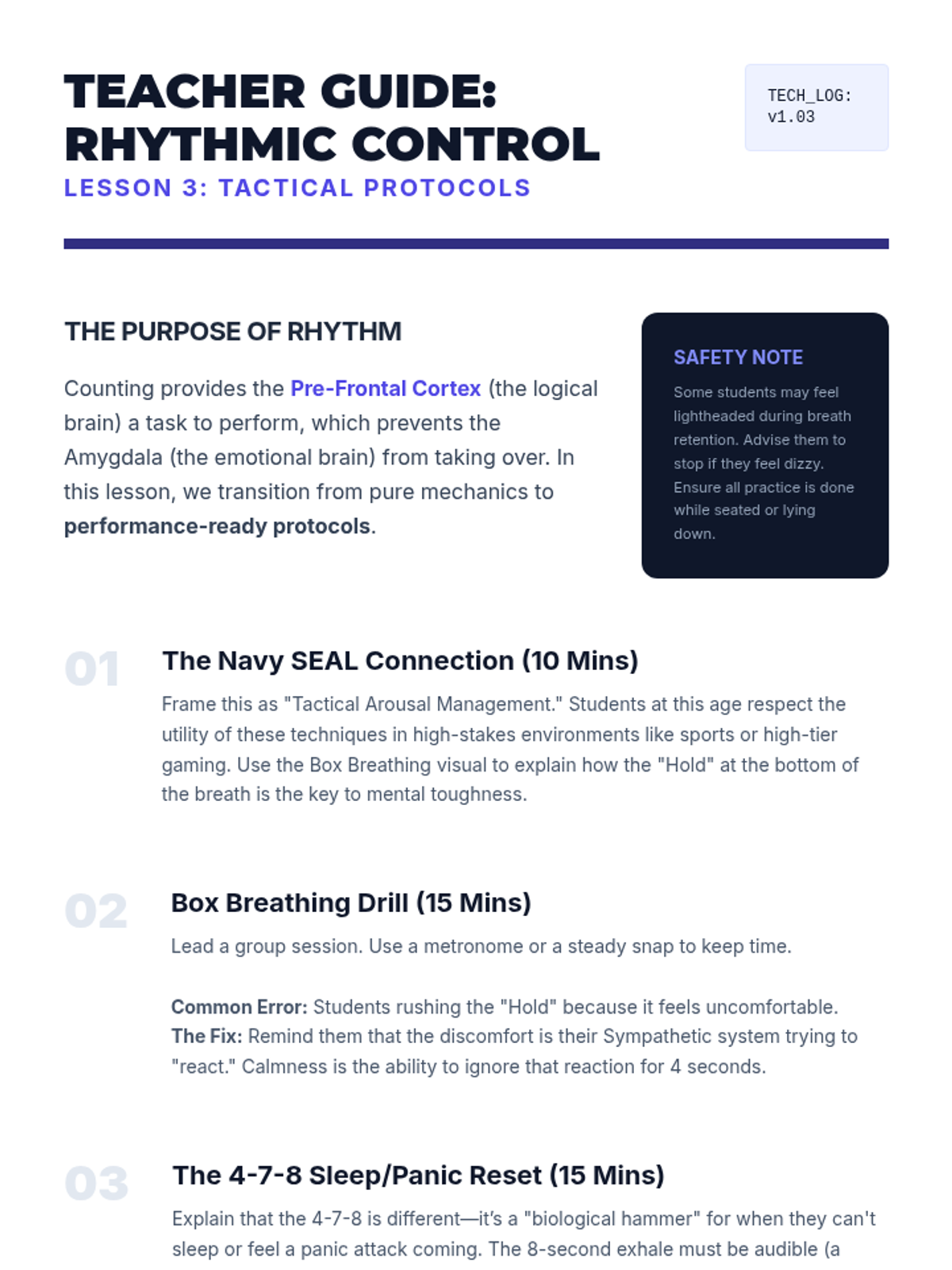
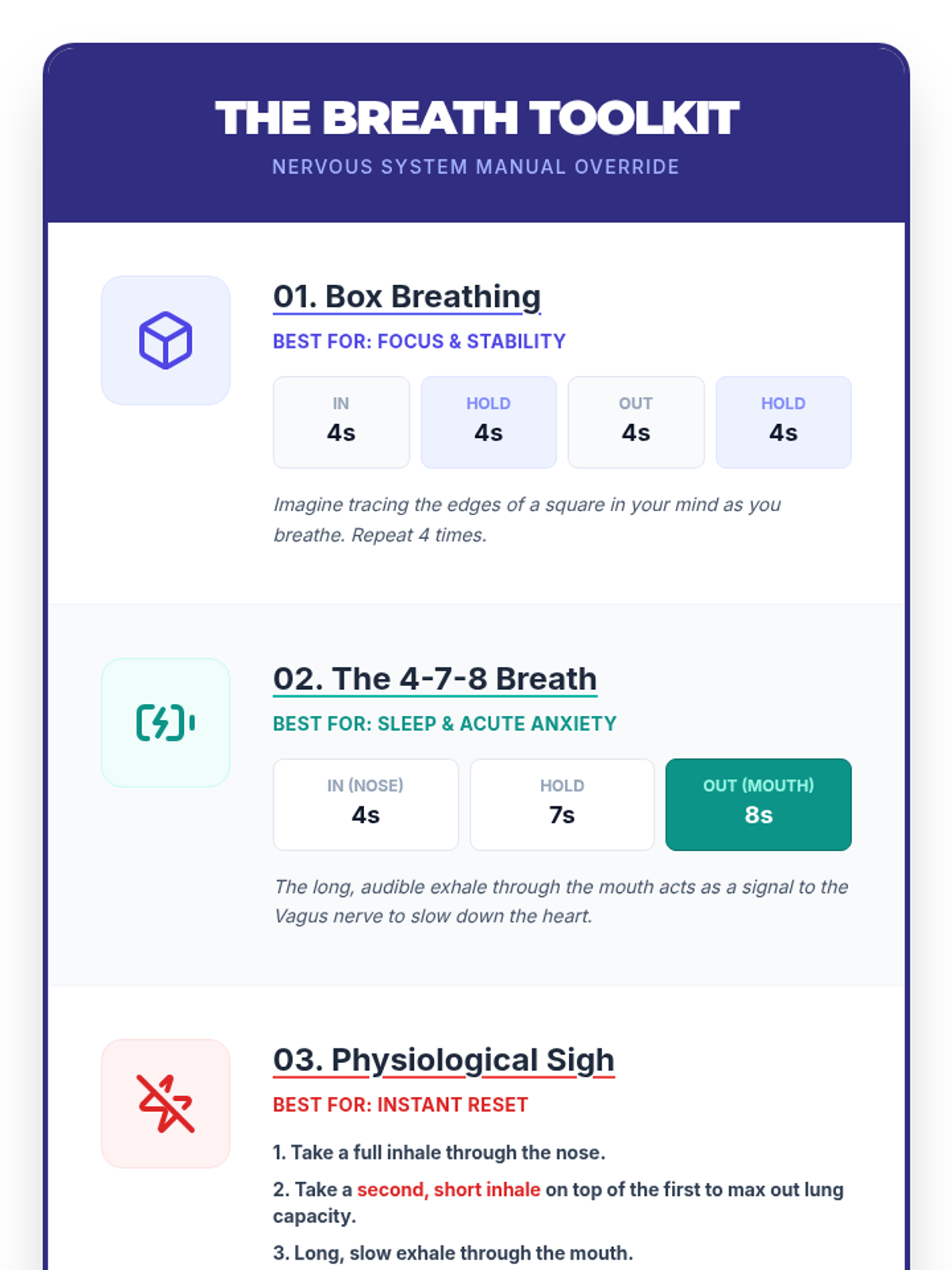
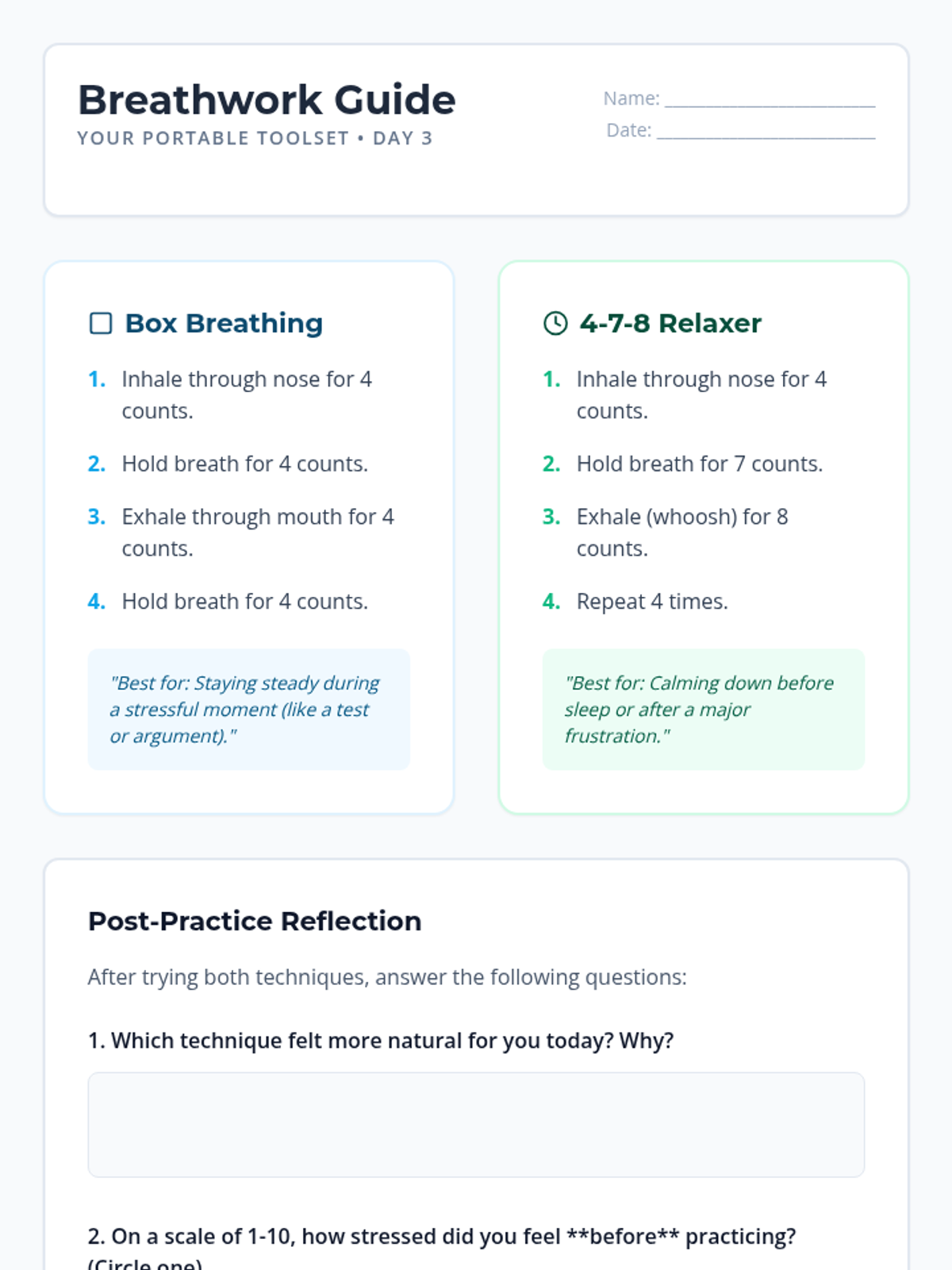
Students learn specific counting protocols, such as Box Breathing and the 4-7-8 technique, used by first responders and athletes to regain focus. They practice these techniques in timed intervals to build stamina and lung capacity.
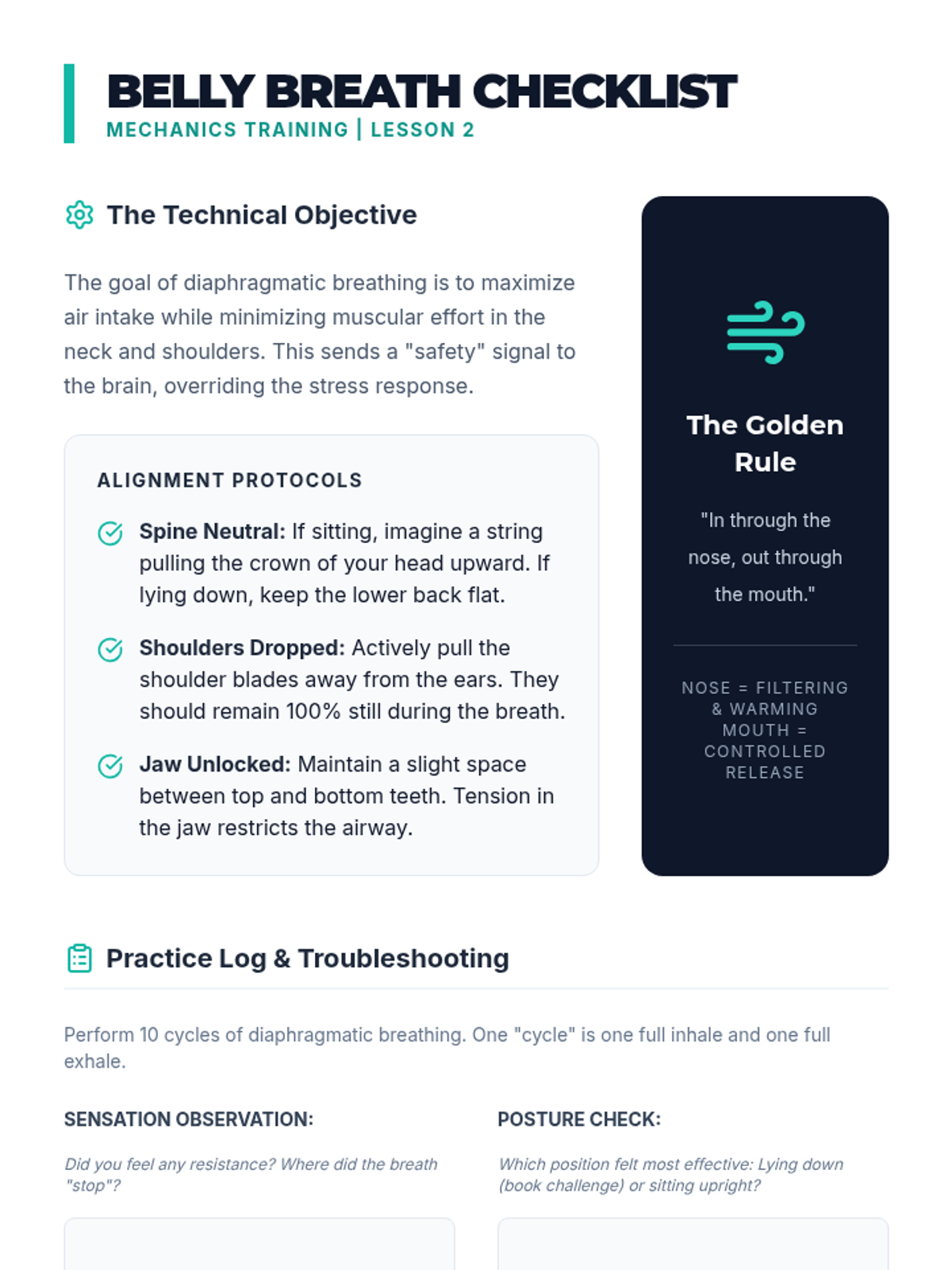
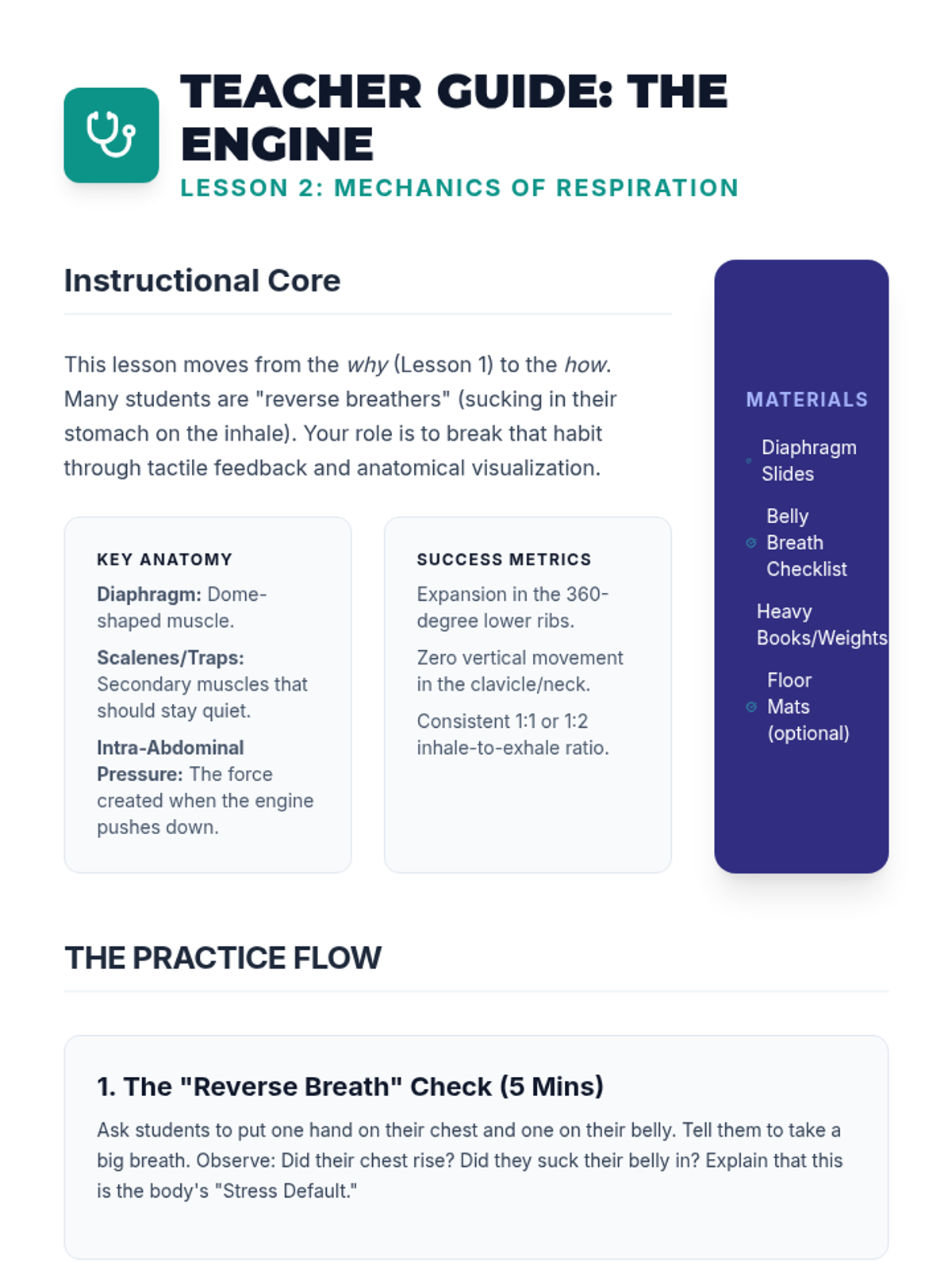
This lesson focuses on the physical mechanics of breathing, moving students away from shallow chest breathing toward deep diaphragmatic expansion. Students practice 'belly breathing' techniques and use tactile feedback to ensure proper muscle engagement.
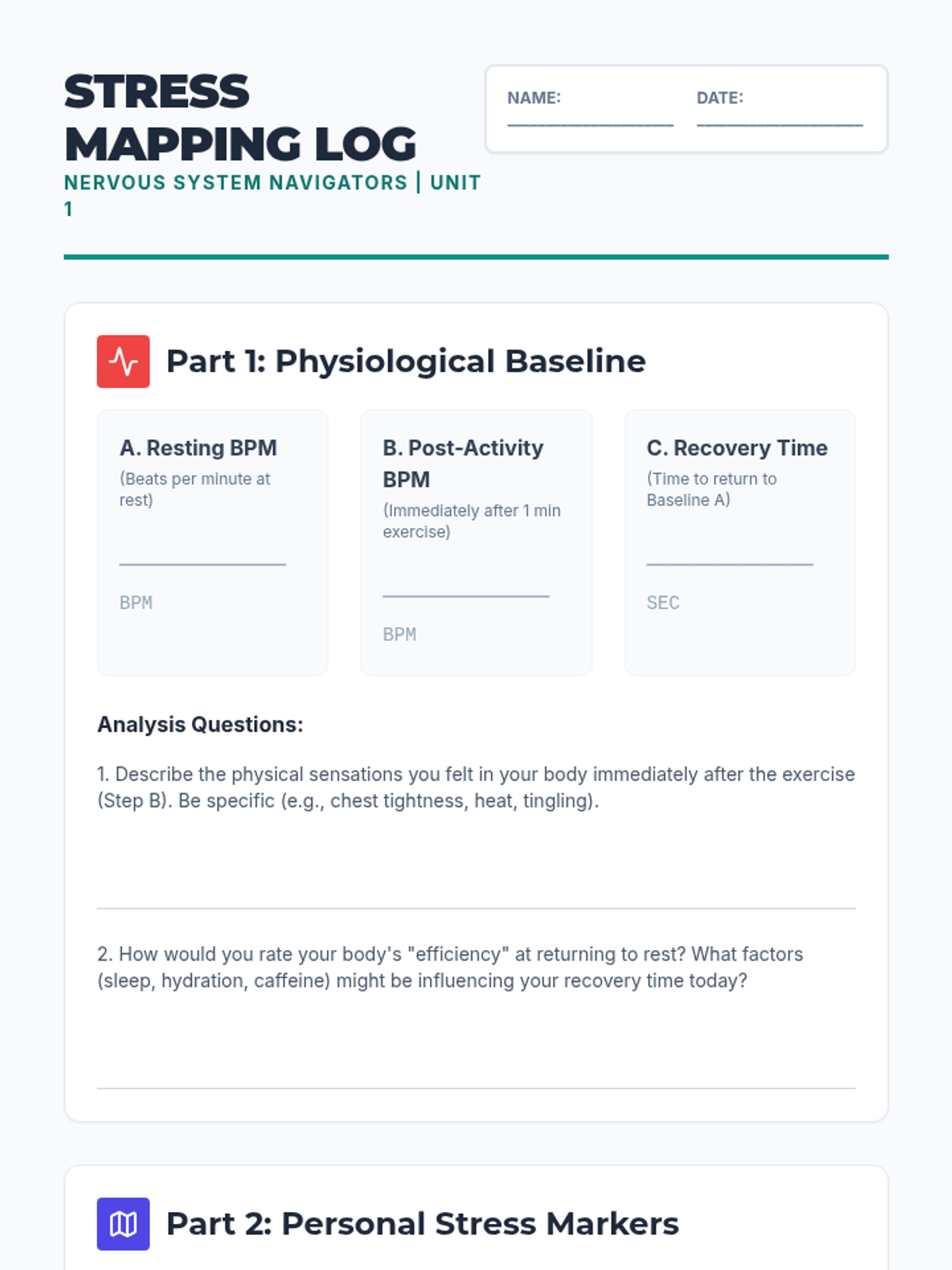
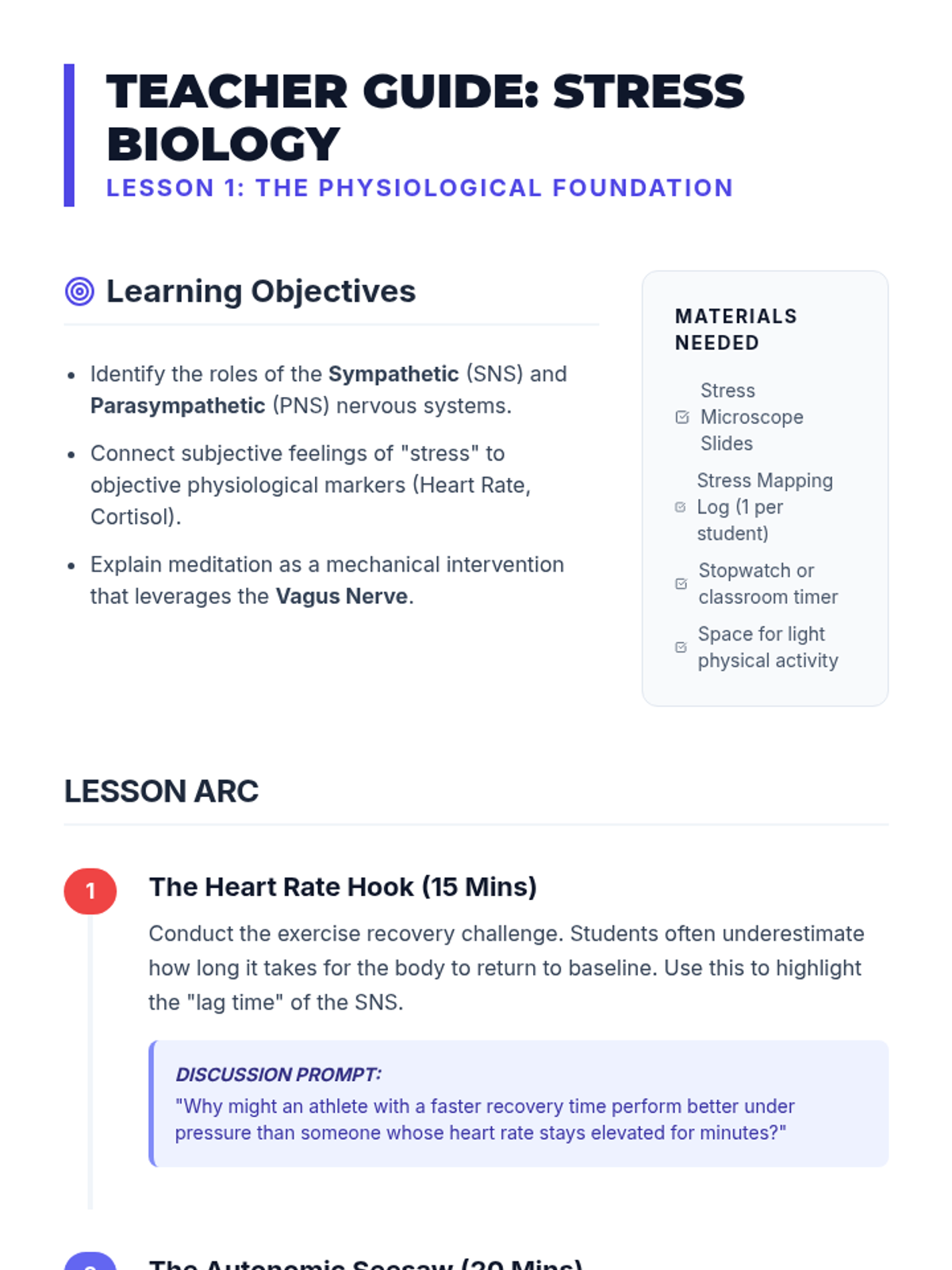
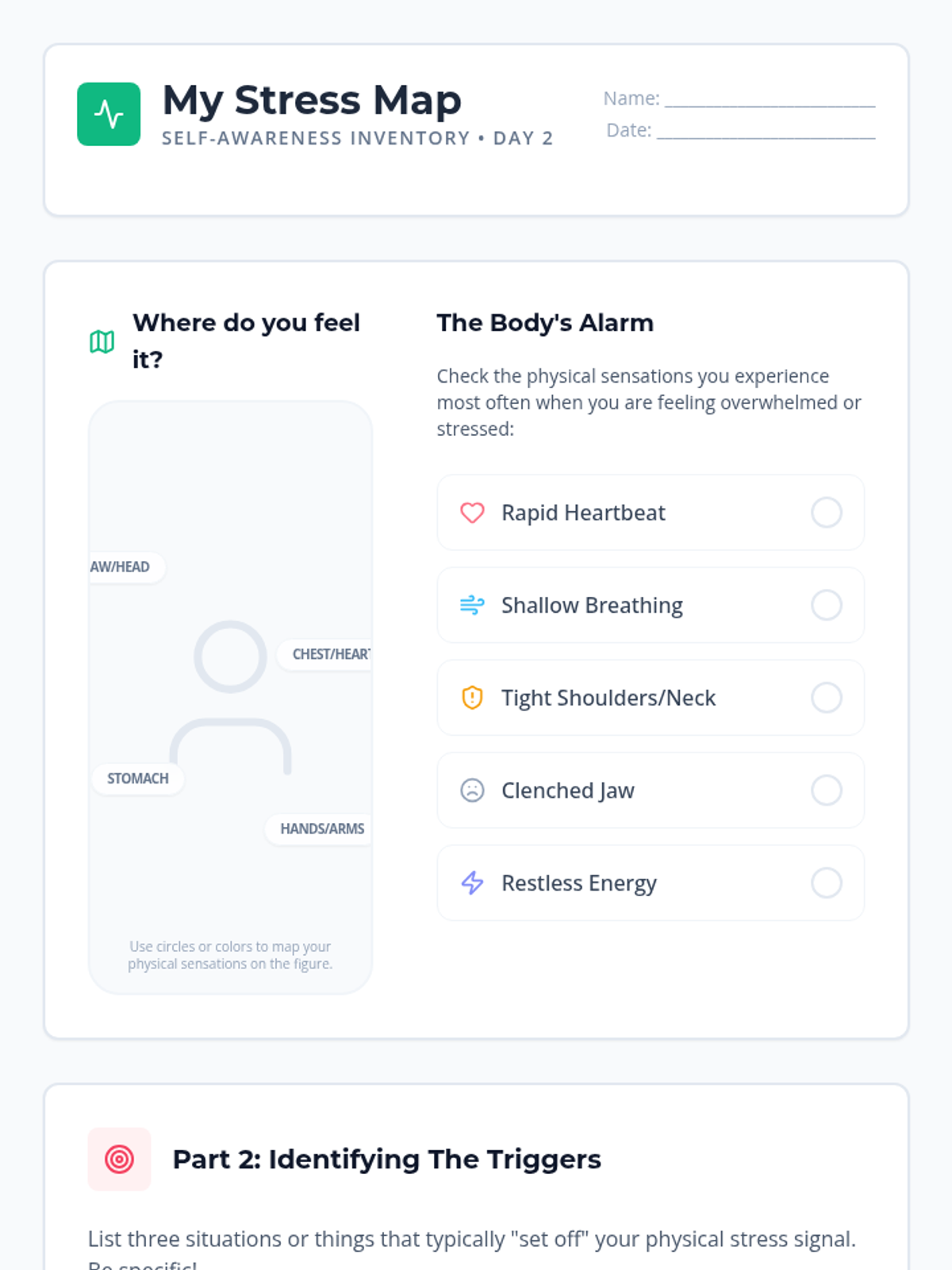
Students investigate the autonomic nervous system, specifically differentiating between sympathetic (fight or flight) and parasympathetic (rest and digest) responses. They map their own physical symptoms of stress and identify how meditation serves as a biological intervention.
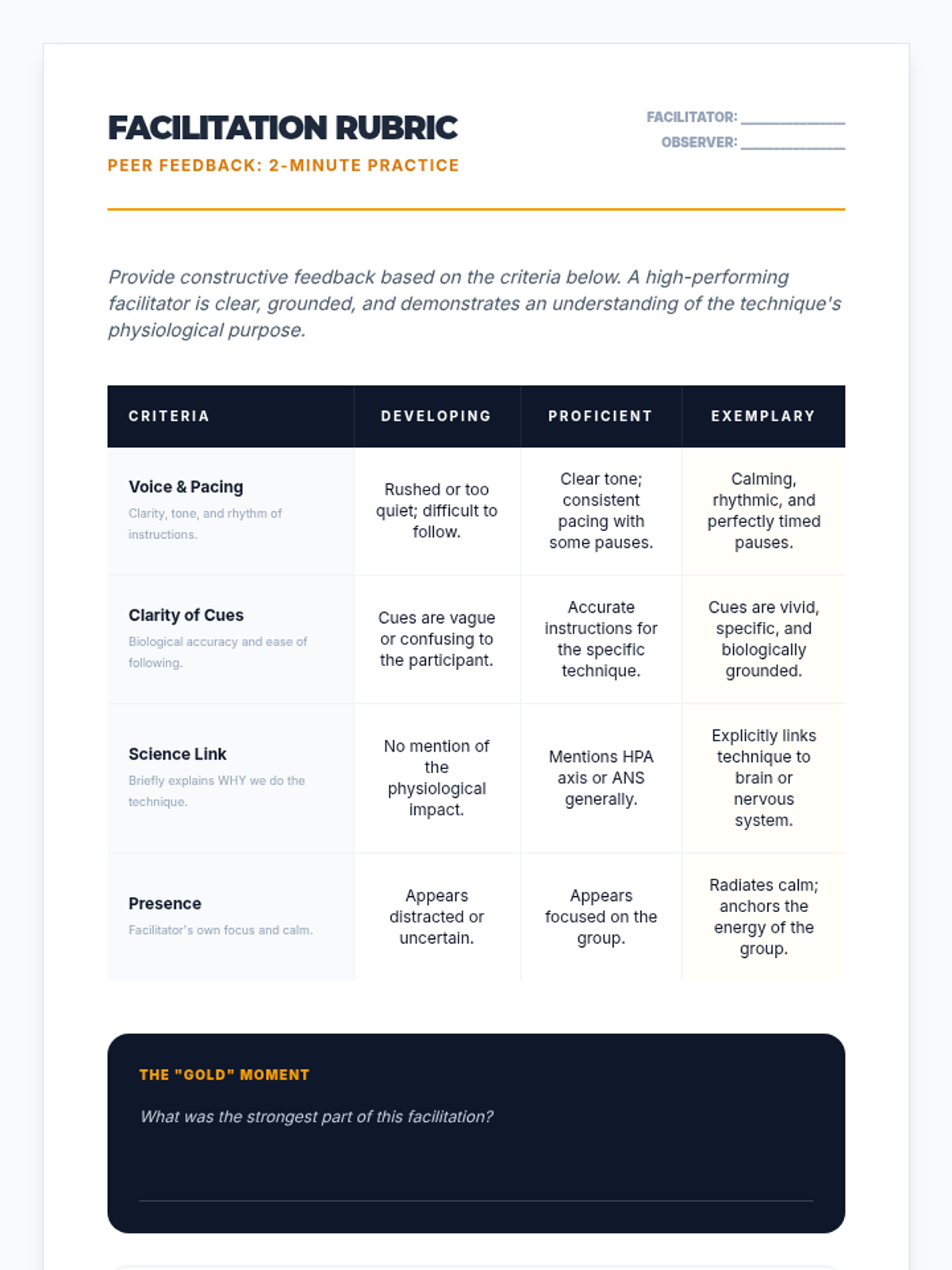
In this final lesson, students synthesize their learning to create a tailored mindfulness routine for specific high-stakes scenarios and lead their peers through guided practices.
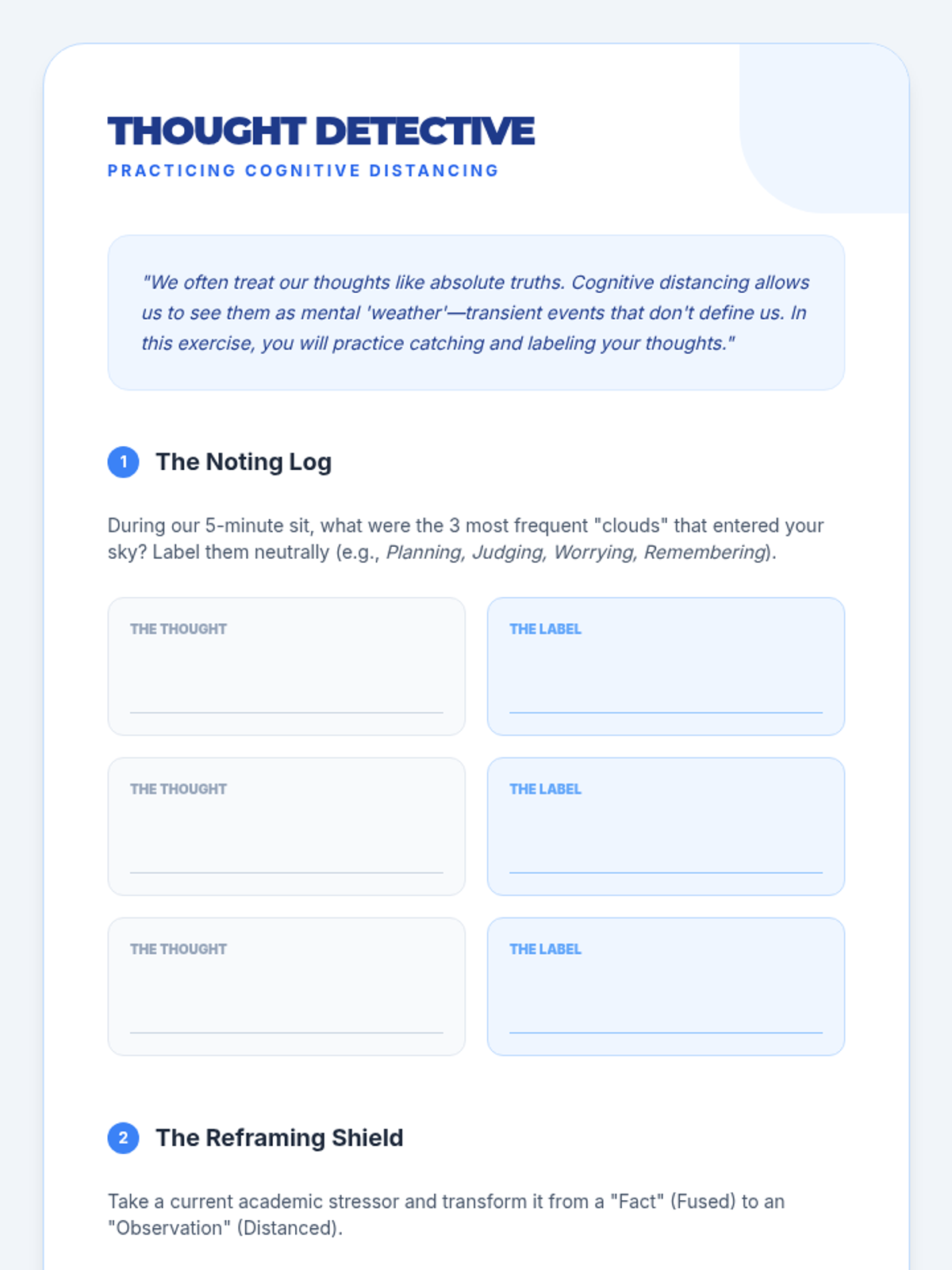
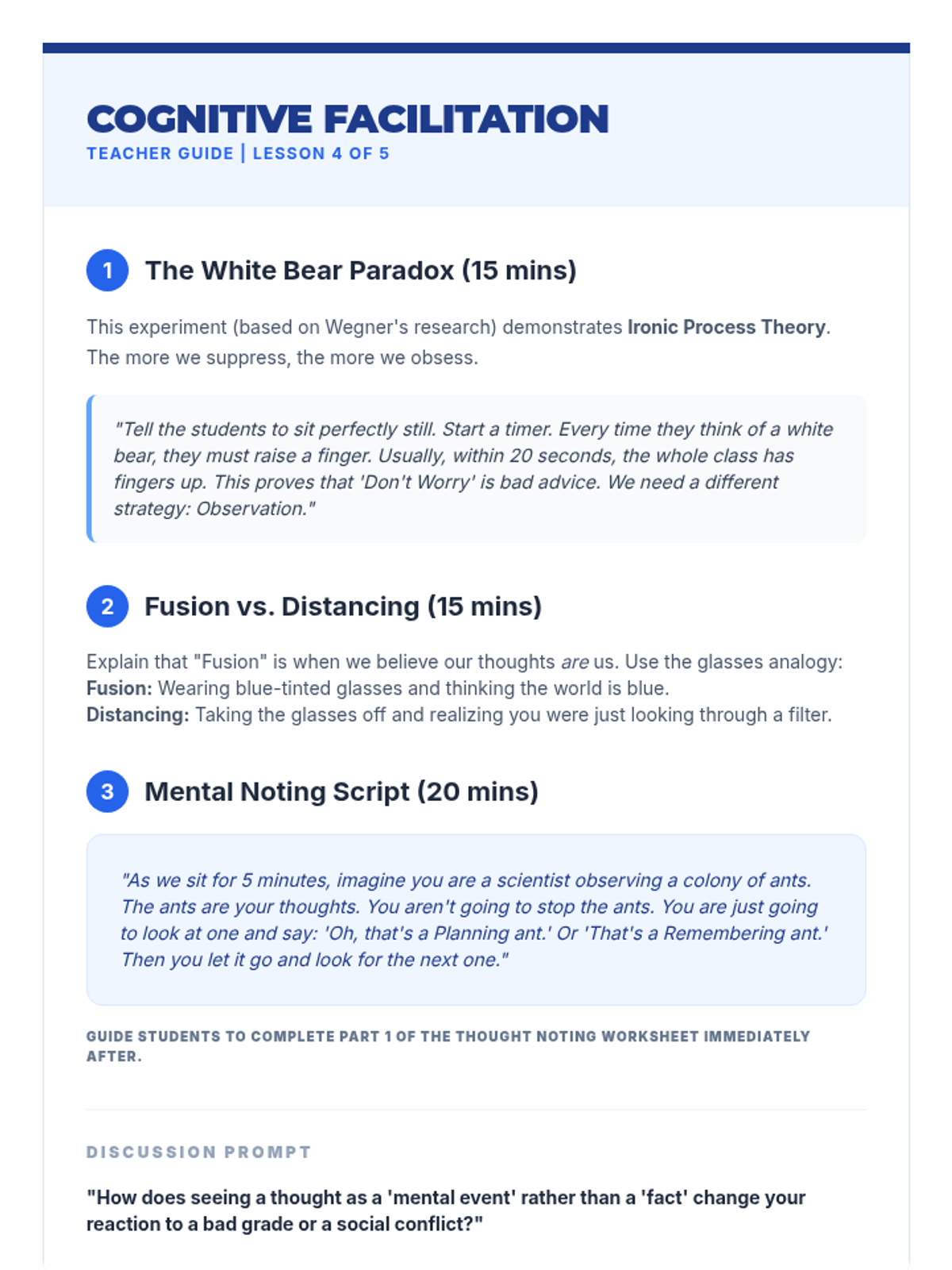
Students practice metacognitive techniques like 'noting' to observe thoughts without attachment, helping them separate their identity from transient mental events and reduce academic rumination.
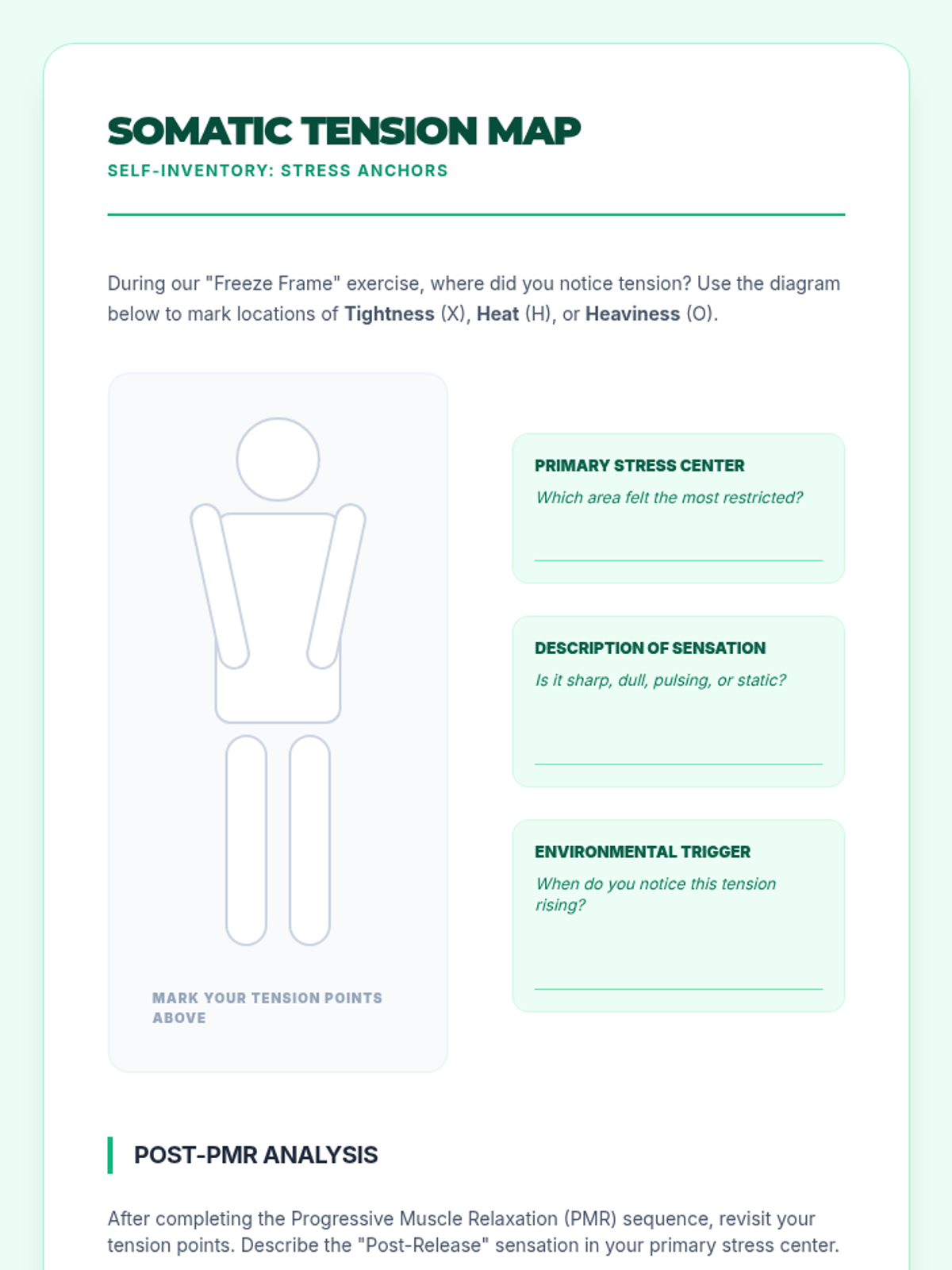
Students explore the mind-body connection through Progressive Muscle Relaxation and systematic body scans, learning to identify and release physical manifestations of psychological stress.
This workshop-style lesson teaches students how to use specific breathing patterns, such as Box Breathing and the 4-7-8 technique, to manually override the sympathetic nervous system and induce a state of calm.
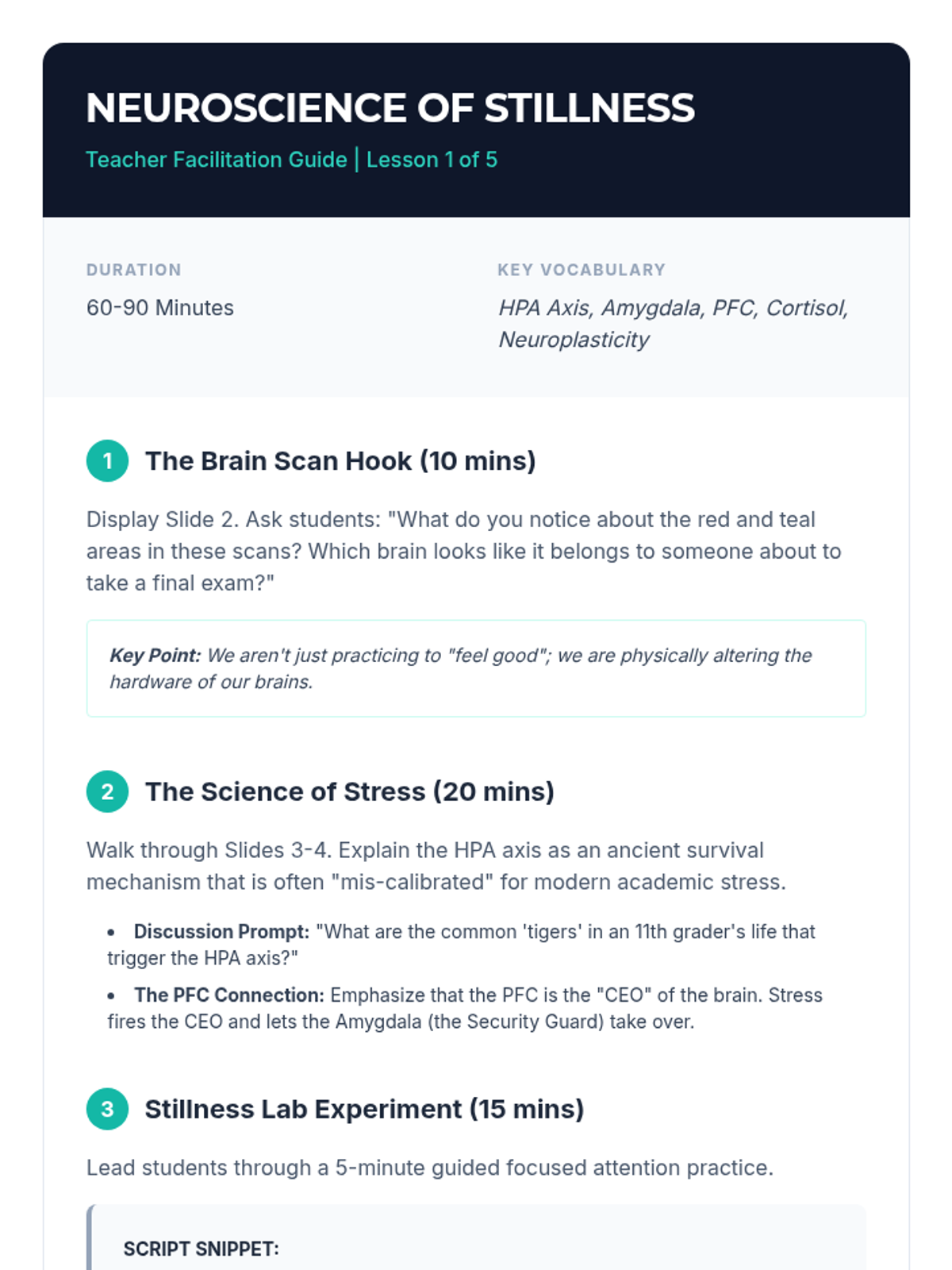
Students investigate the HPA axis and the biological mechanisms of stress, comparing fMRI data of meditators to understand how practice reshapes the brain's architecture for better focus and emotional control.
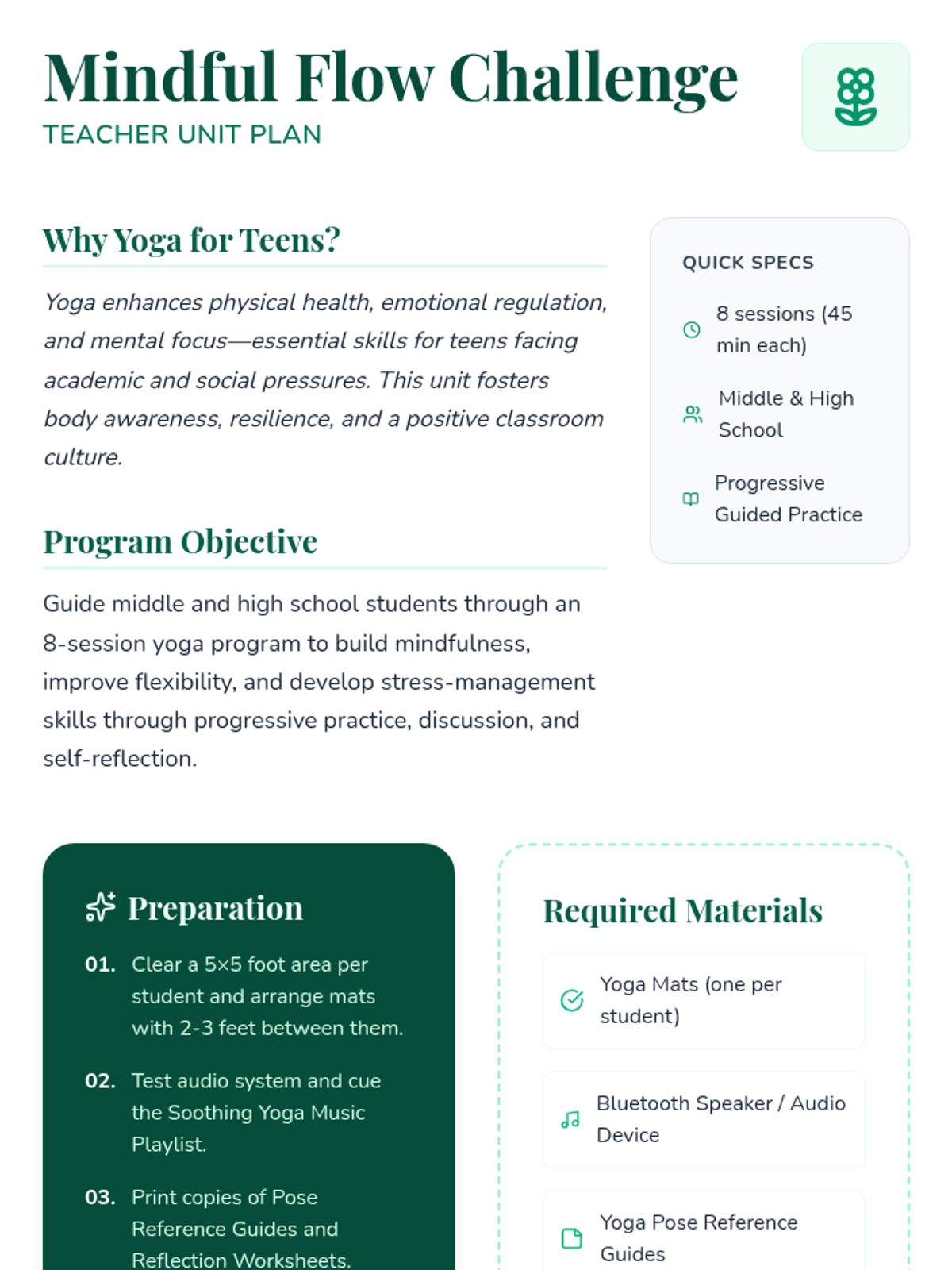
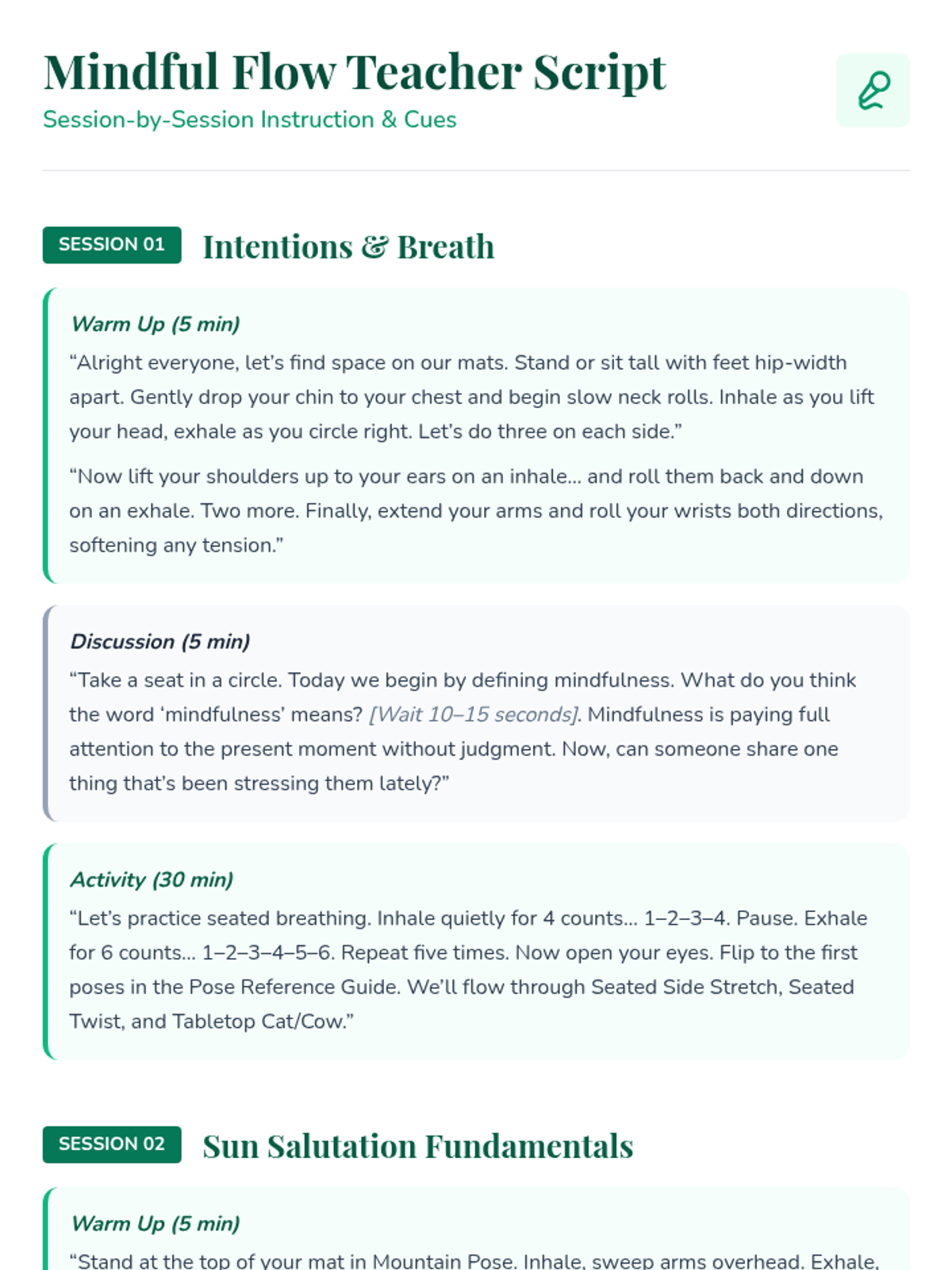
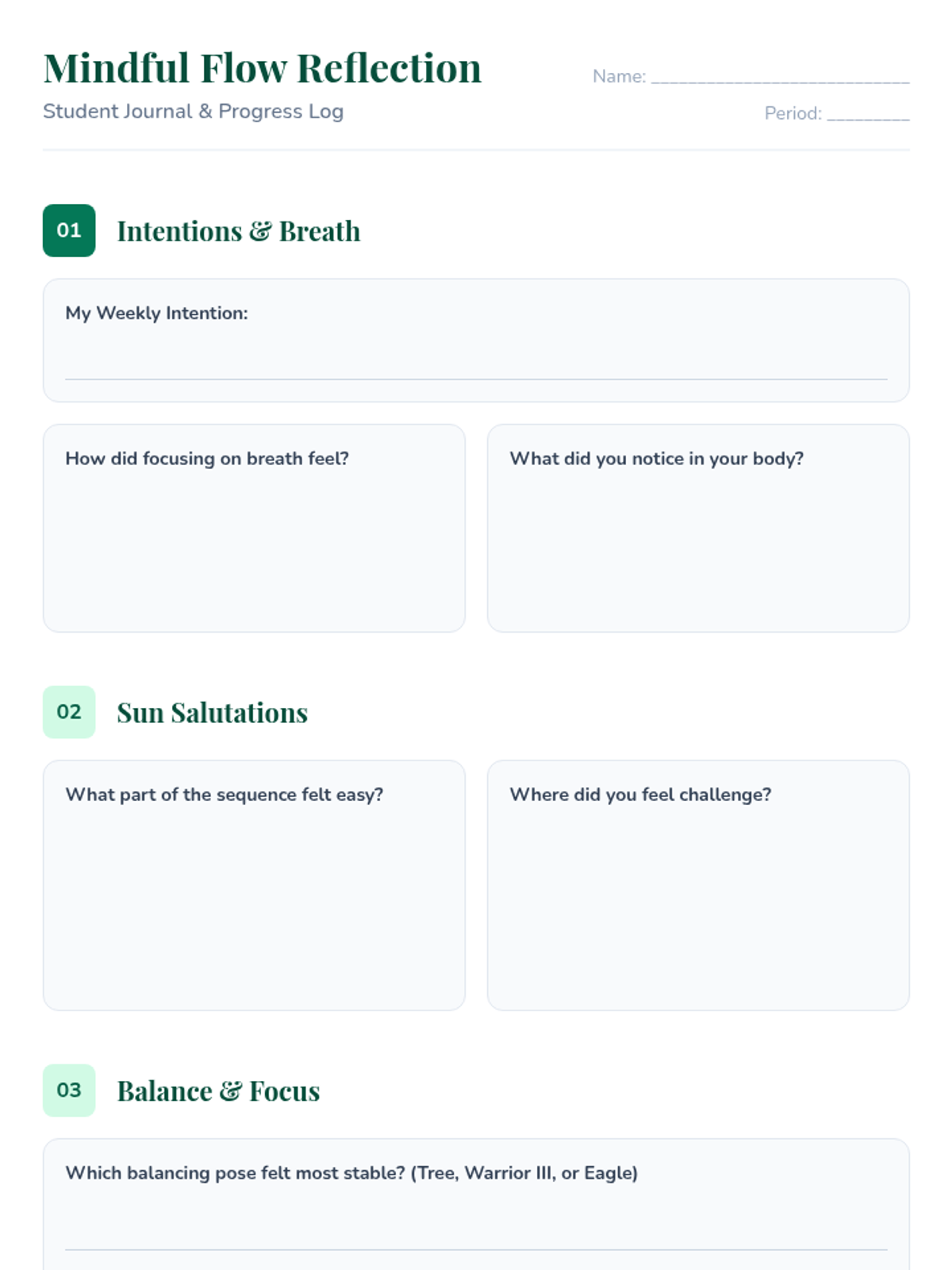
A comprehensive collection of instructional materials, scripts, and student resources for the 8-session Mindful Flow yoga program.
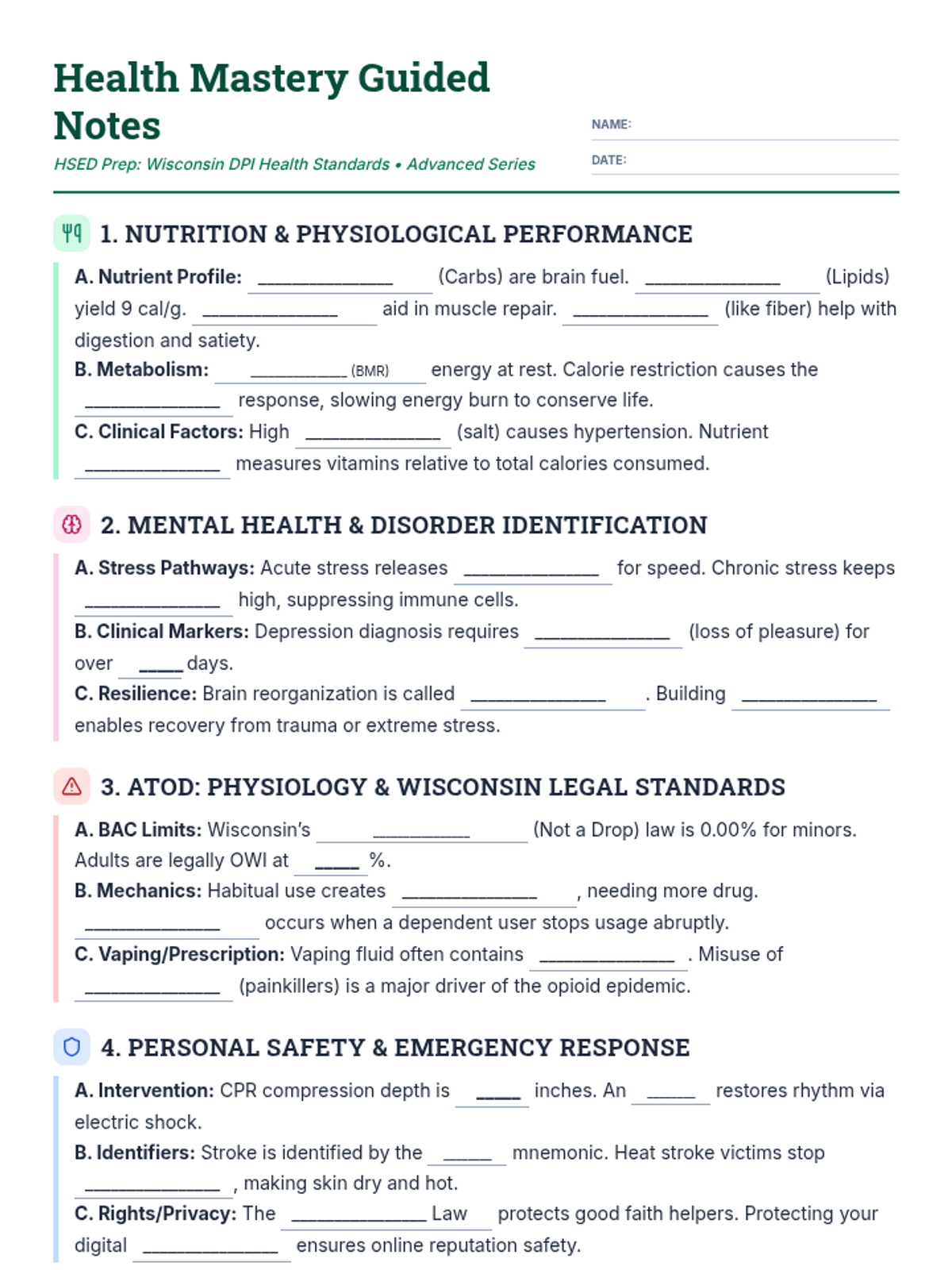
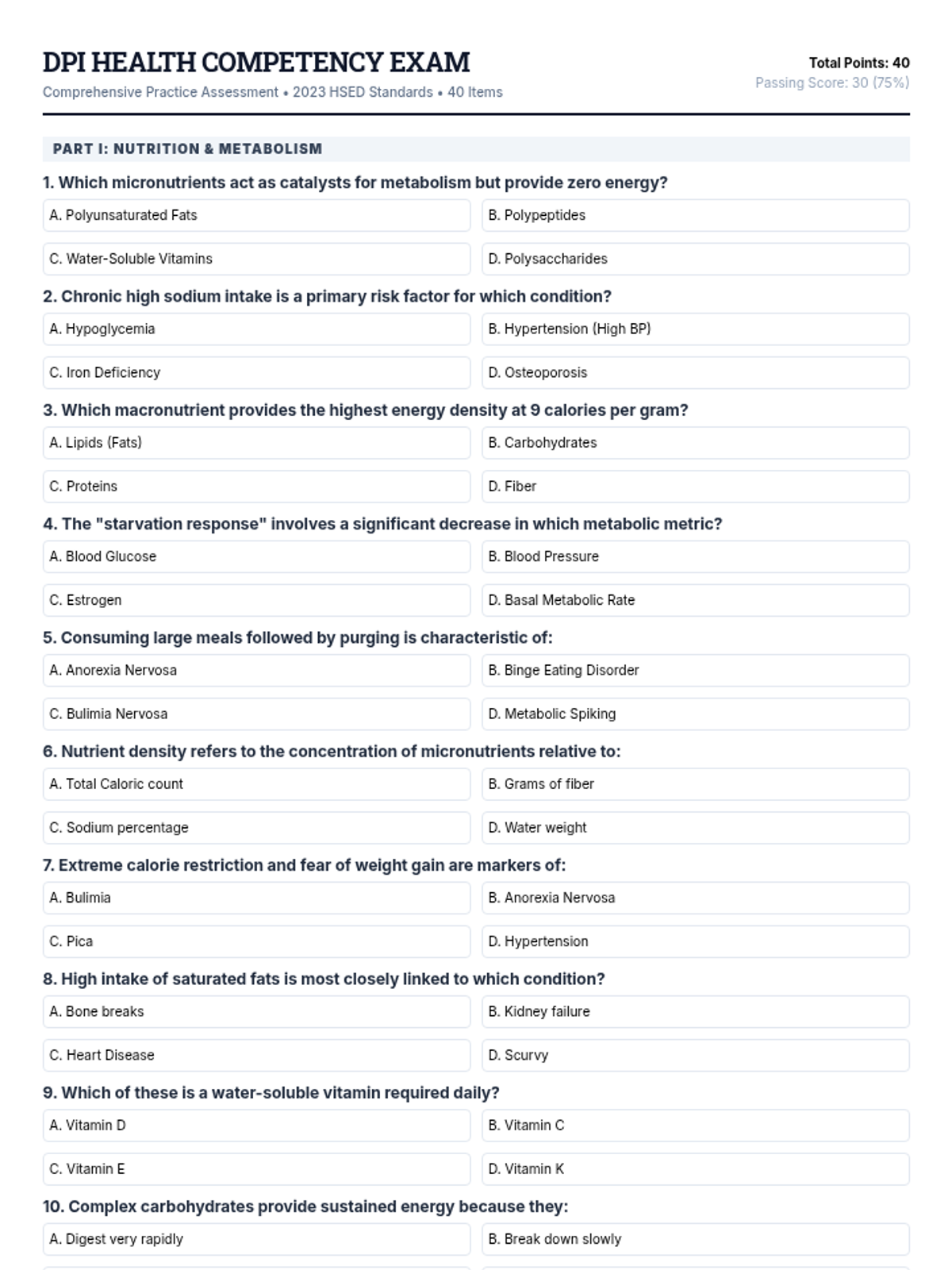
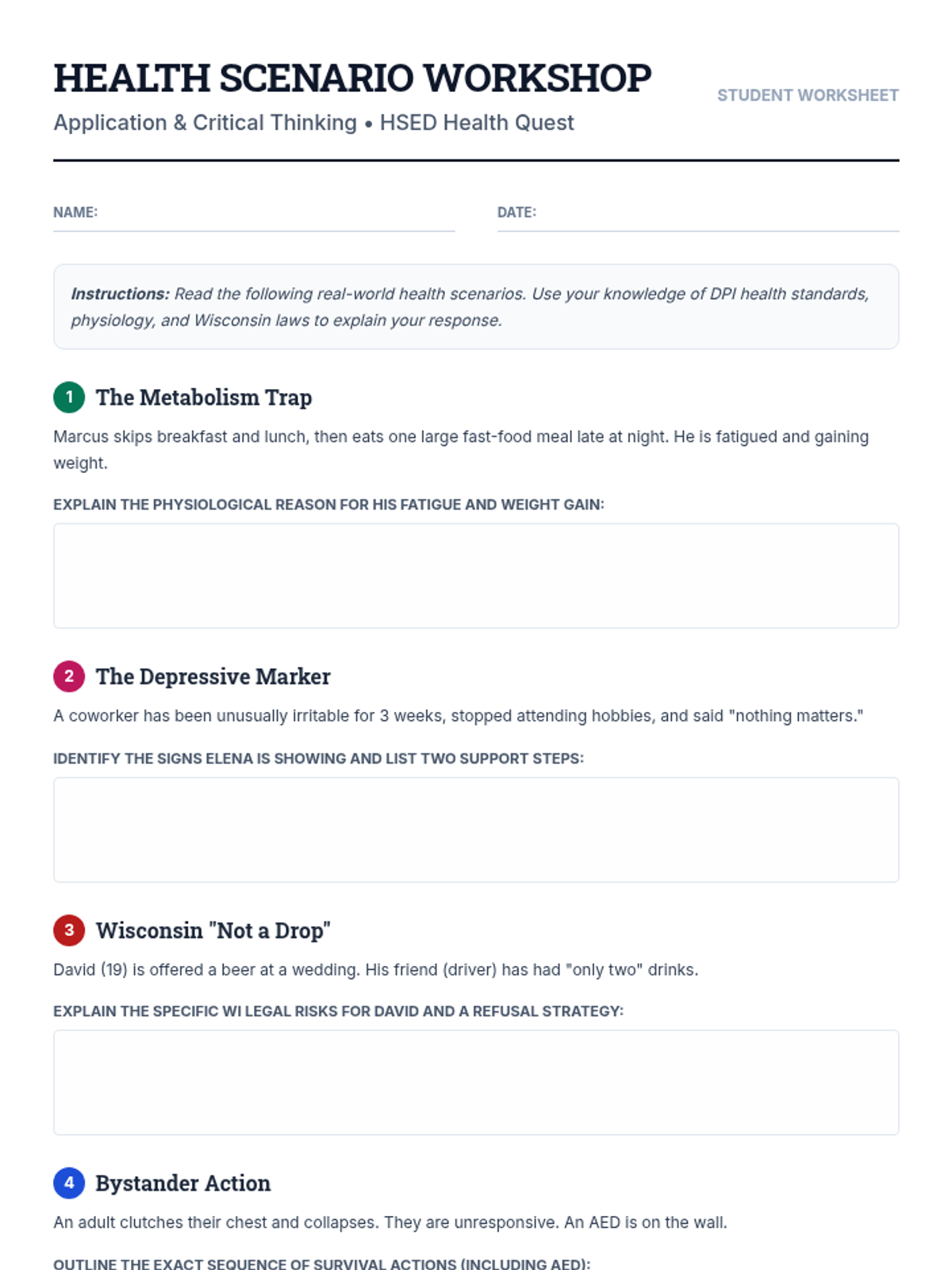
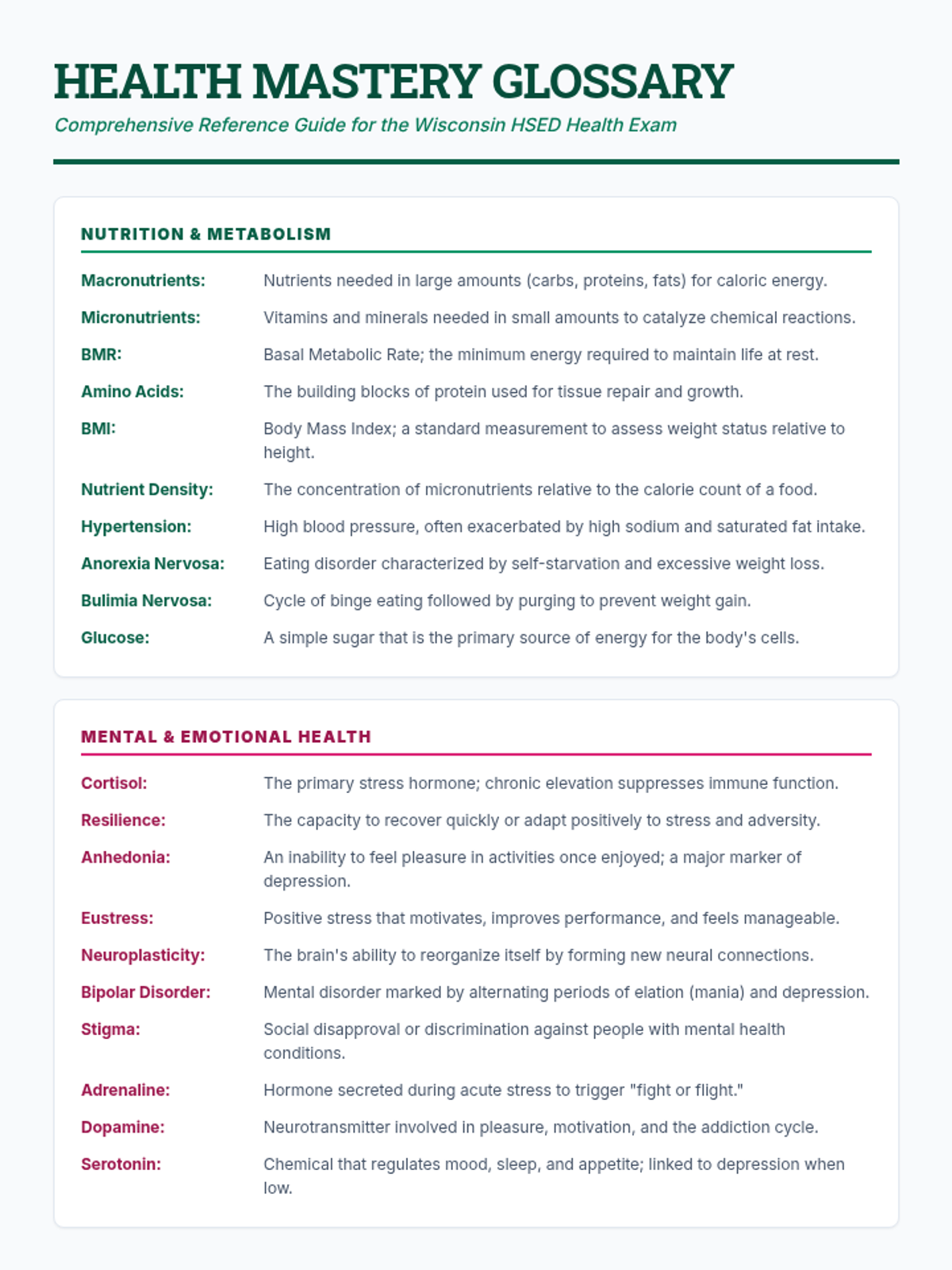
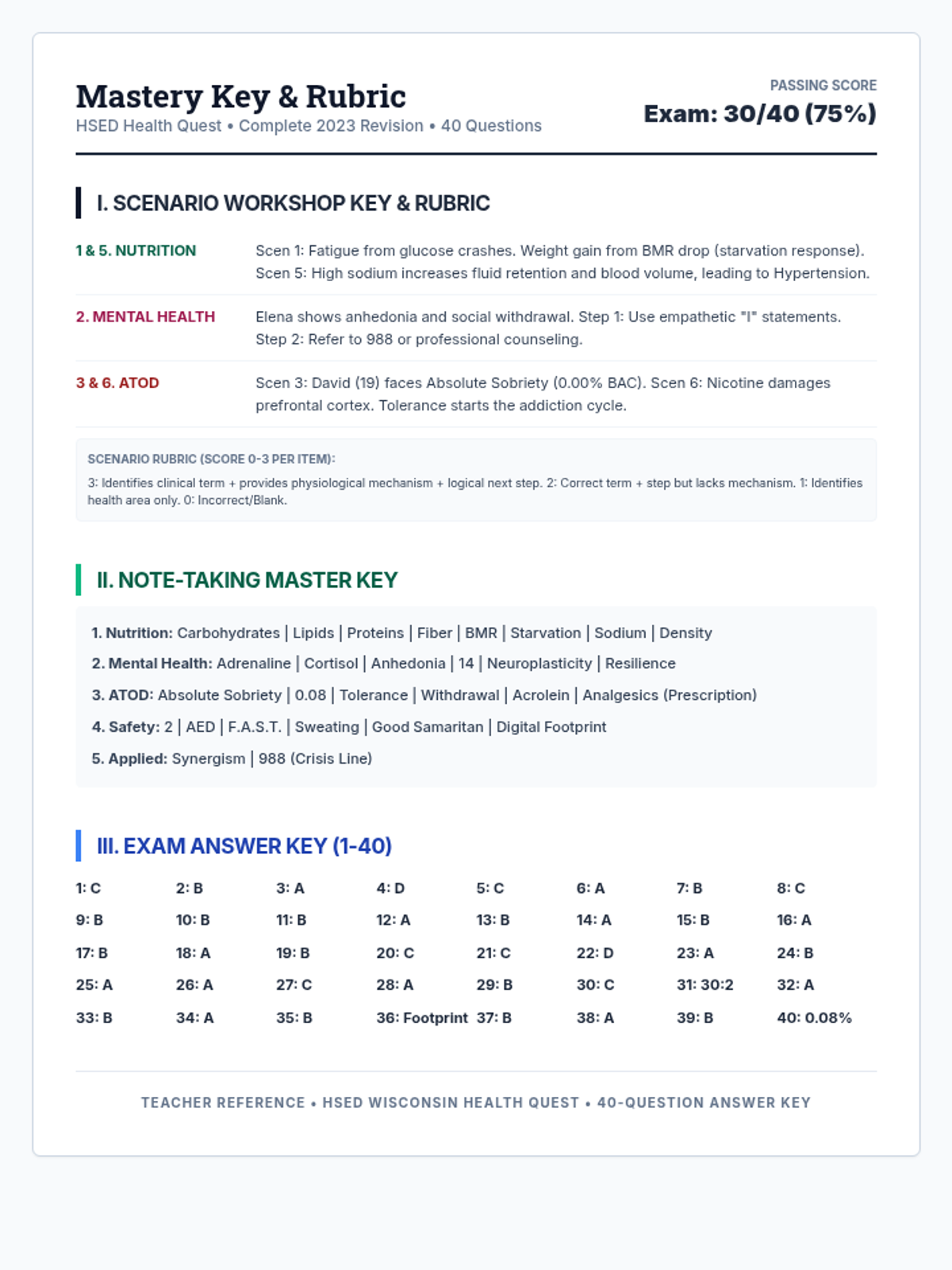
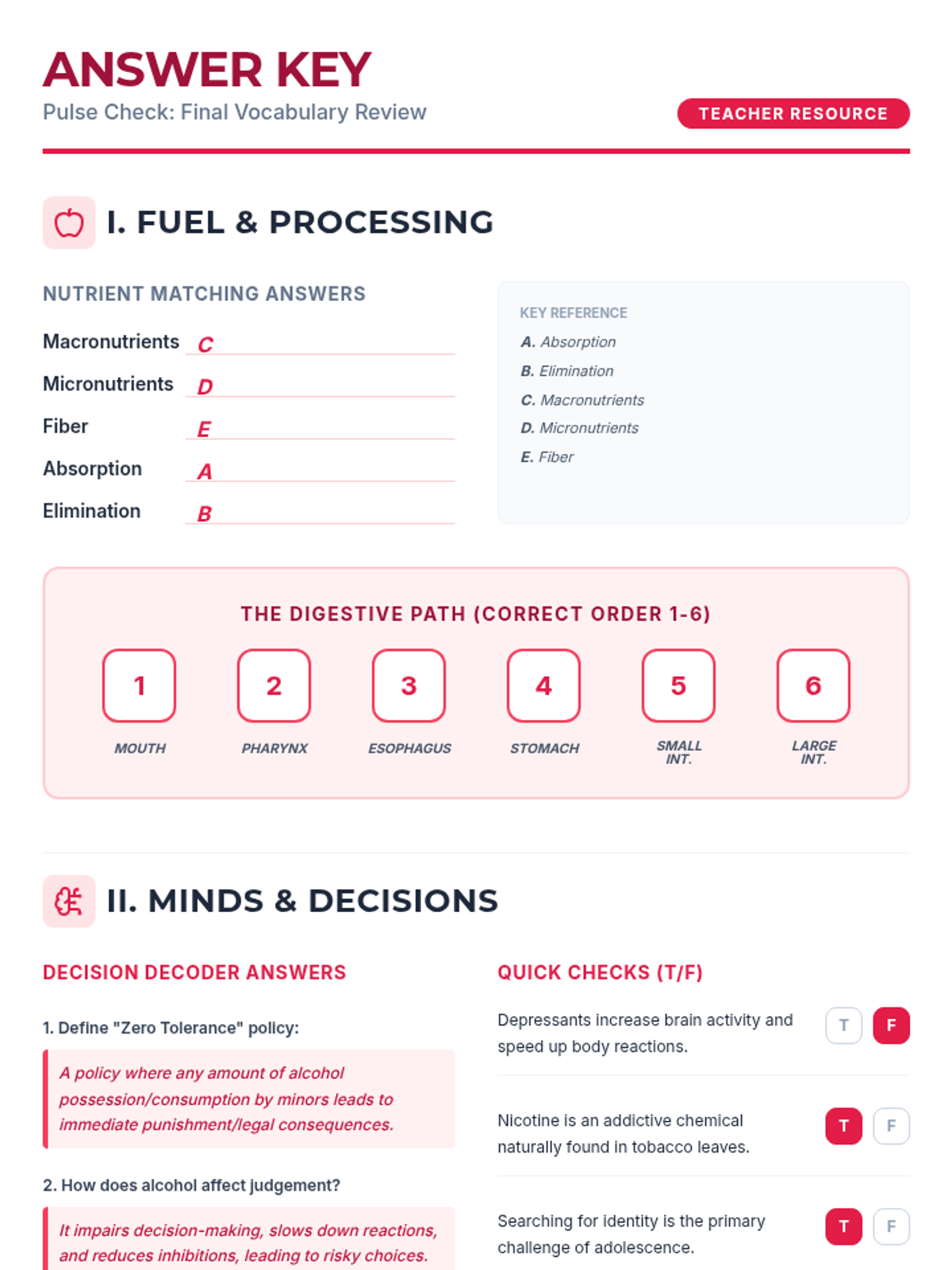
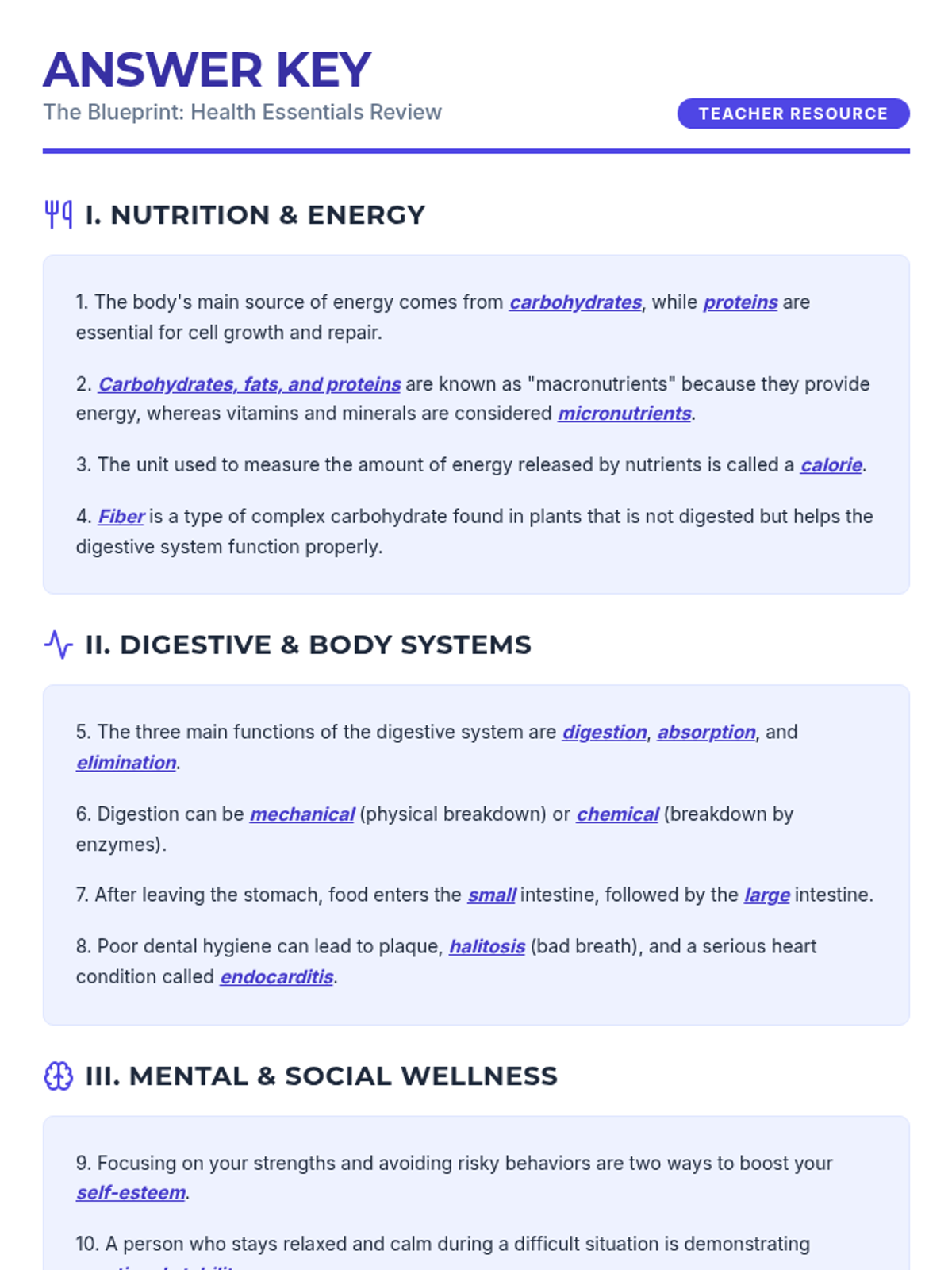
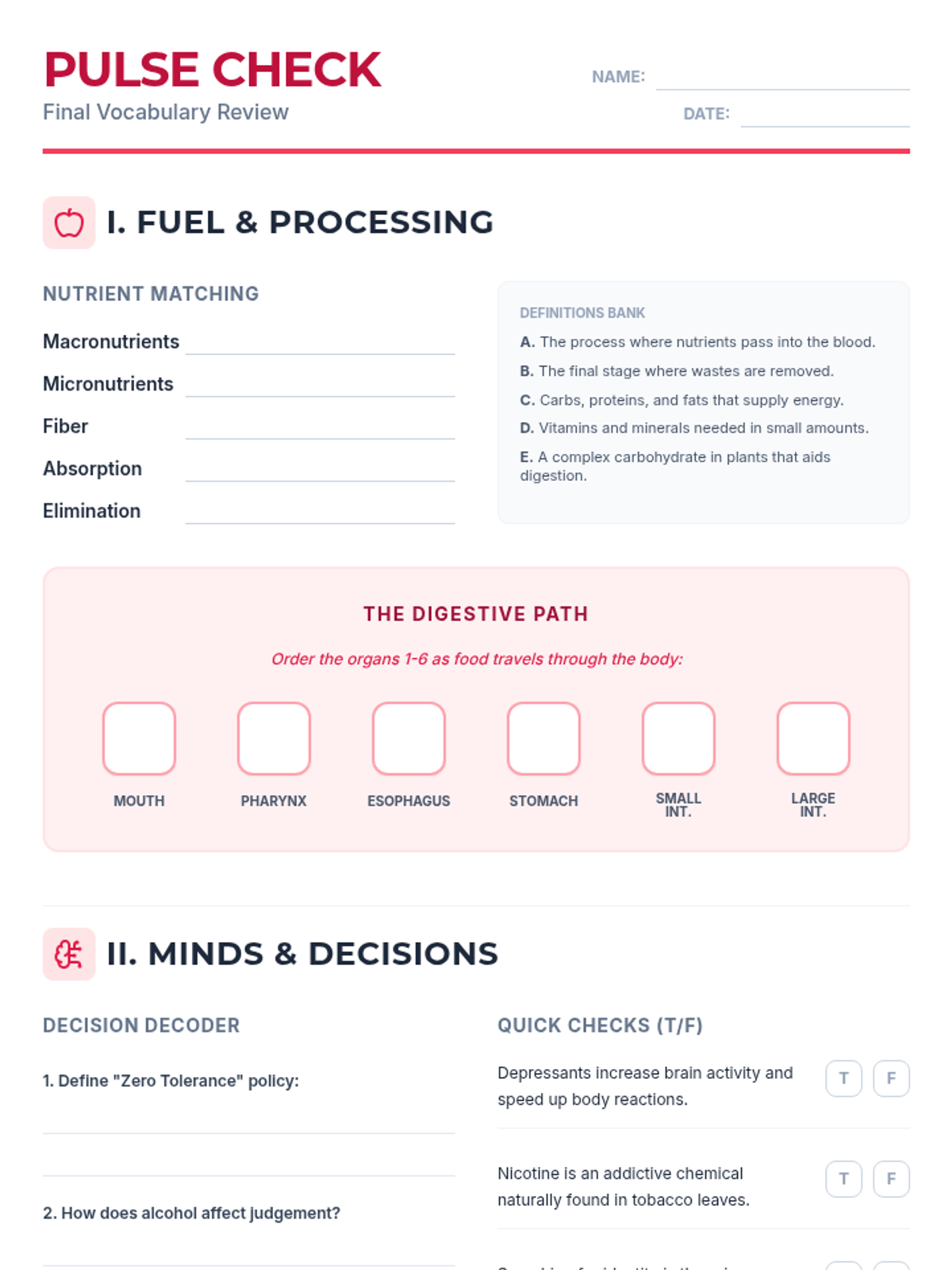
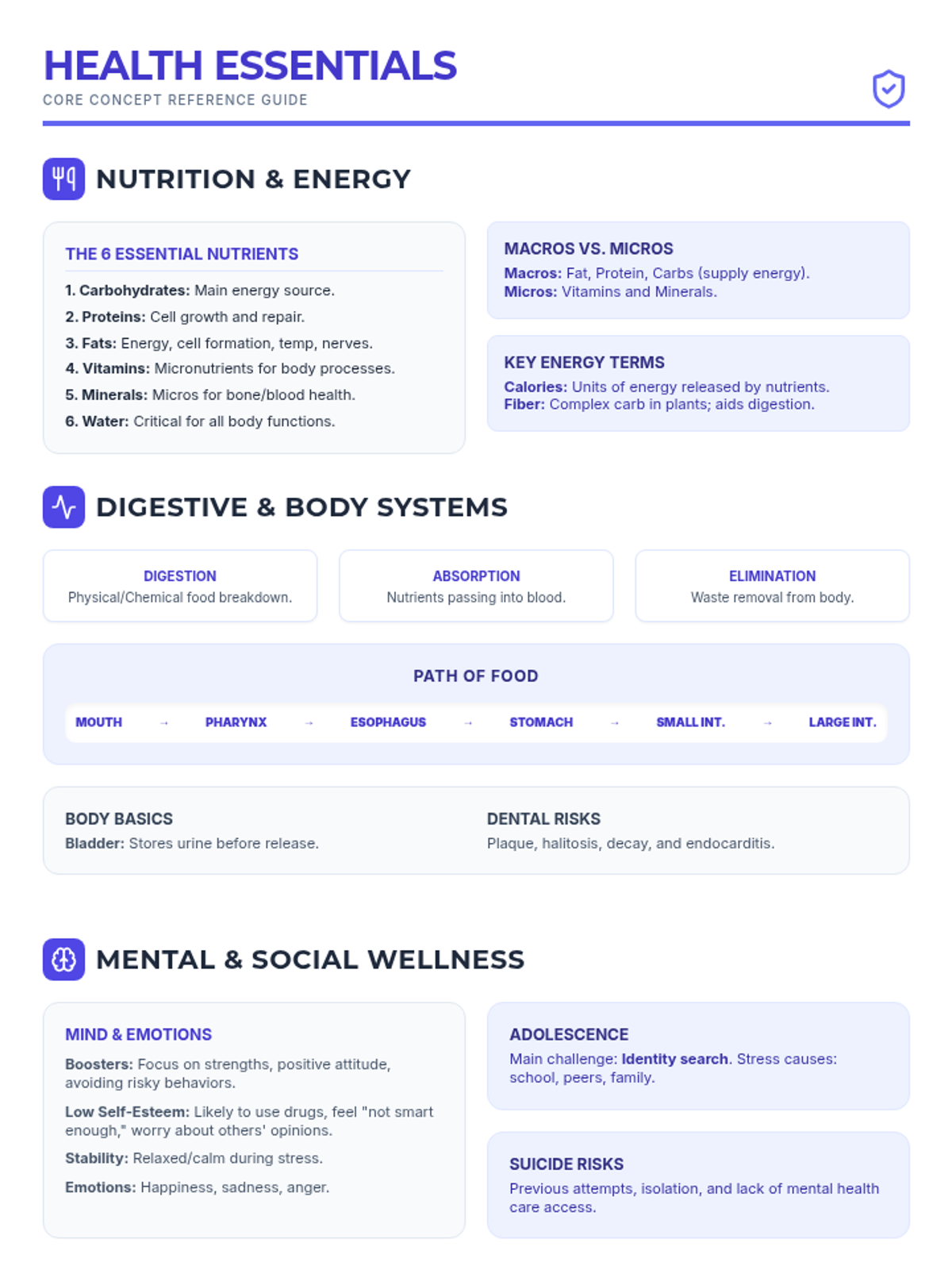
A comprehensive study guide package covering key health topics for the Wisconsin Health Exam, including Nutrition, ATOD, Mental Health, and Safety.
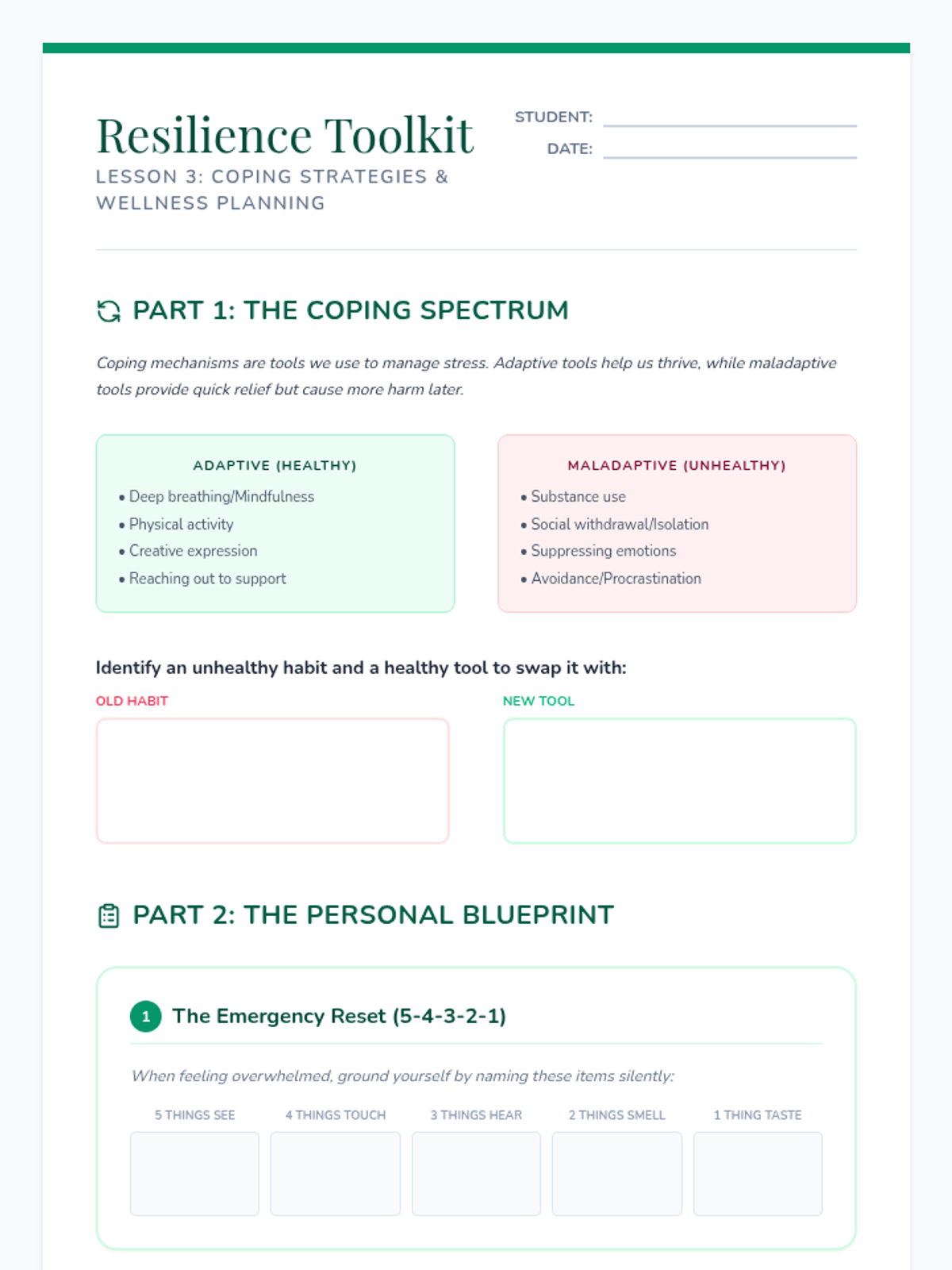
Focuses on developing healthy coping mechanisms, building emotional resilience, and creating personalized wellness plans for long-term mental health.
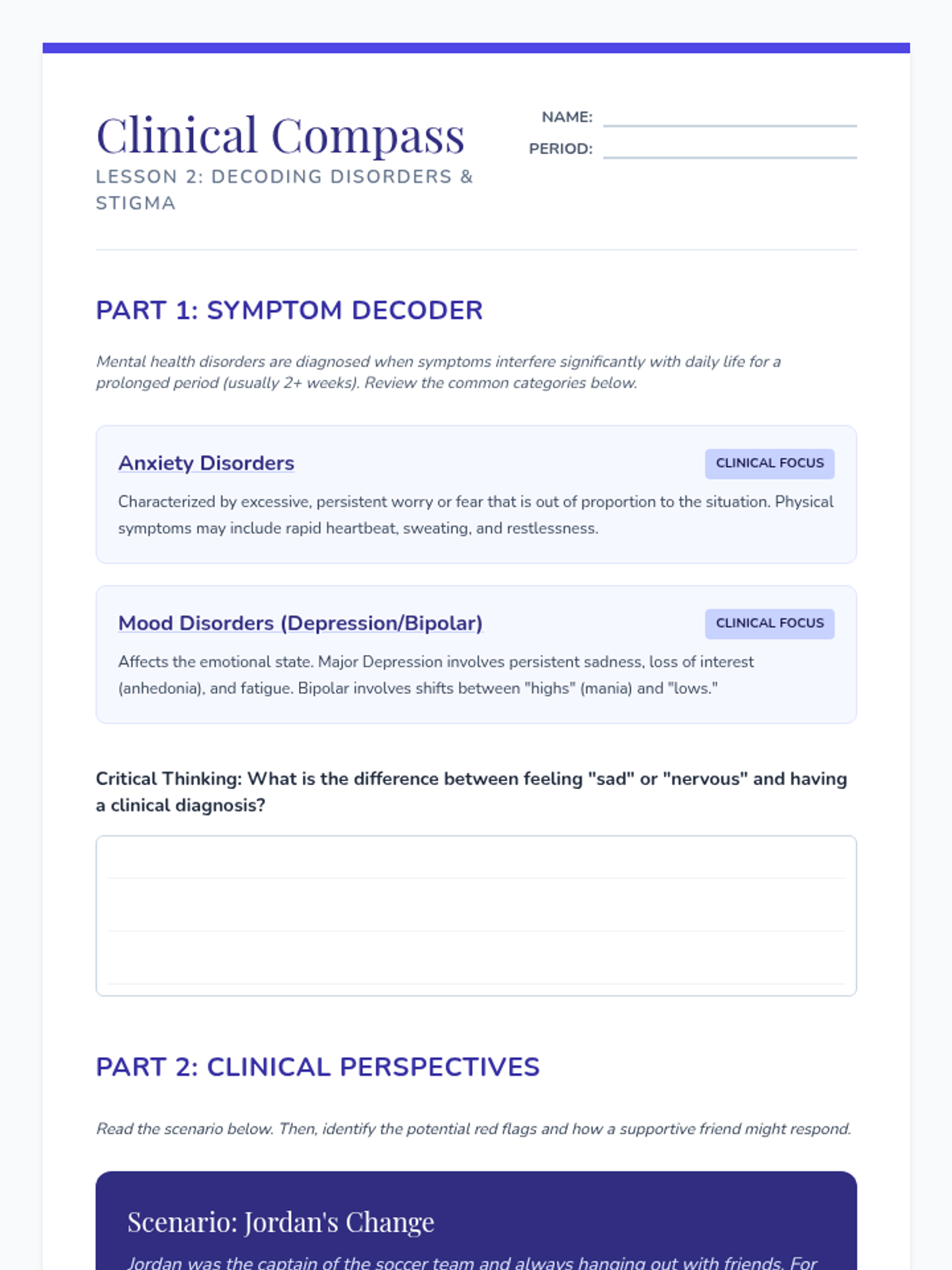
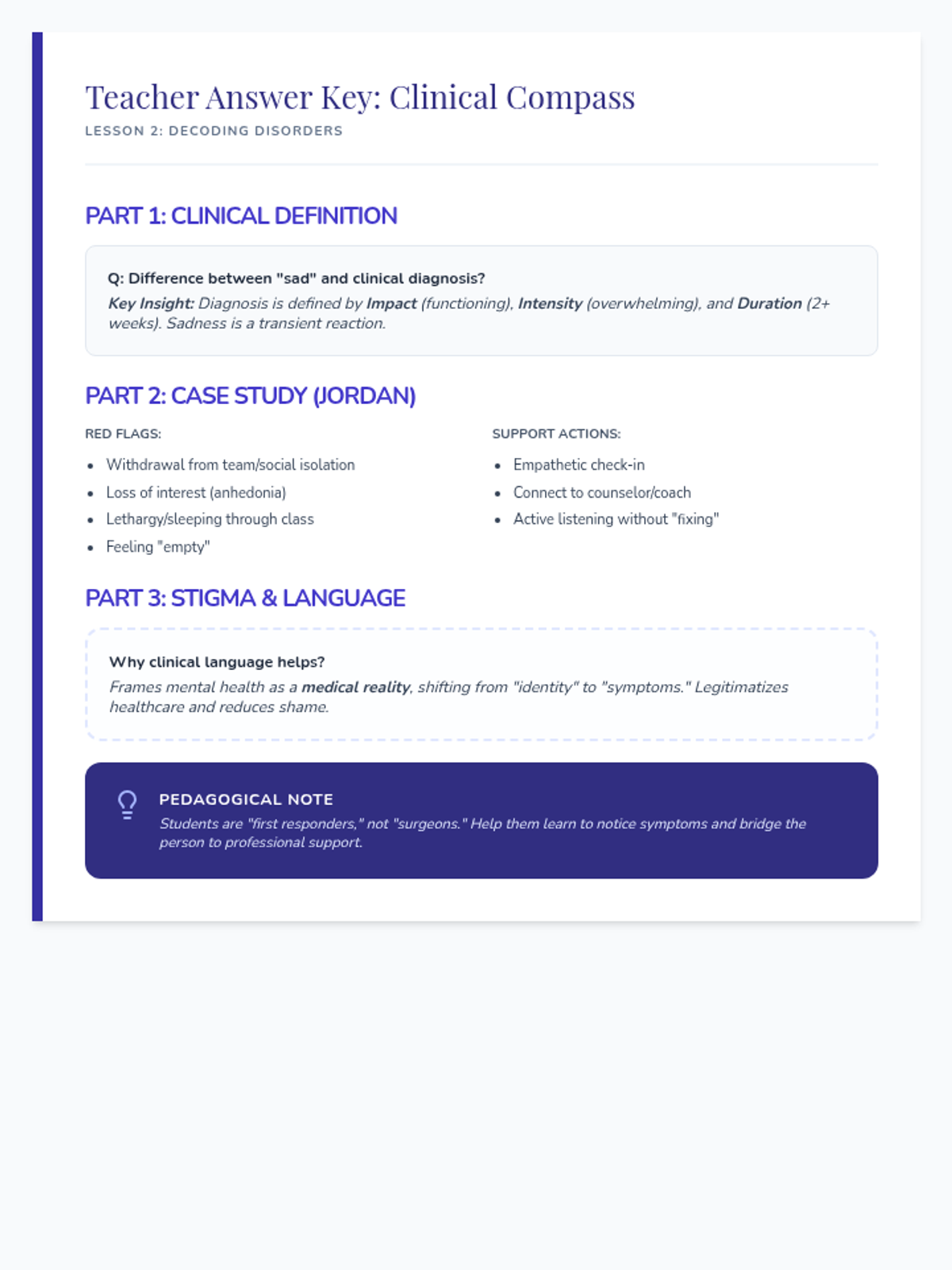
Provides a clinical overview of common mental health disorders, focusing on diagnostic criteria, symptom recognition, and destigmatizing mental illness.
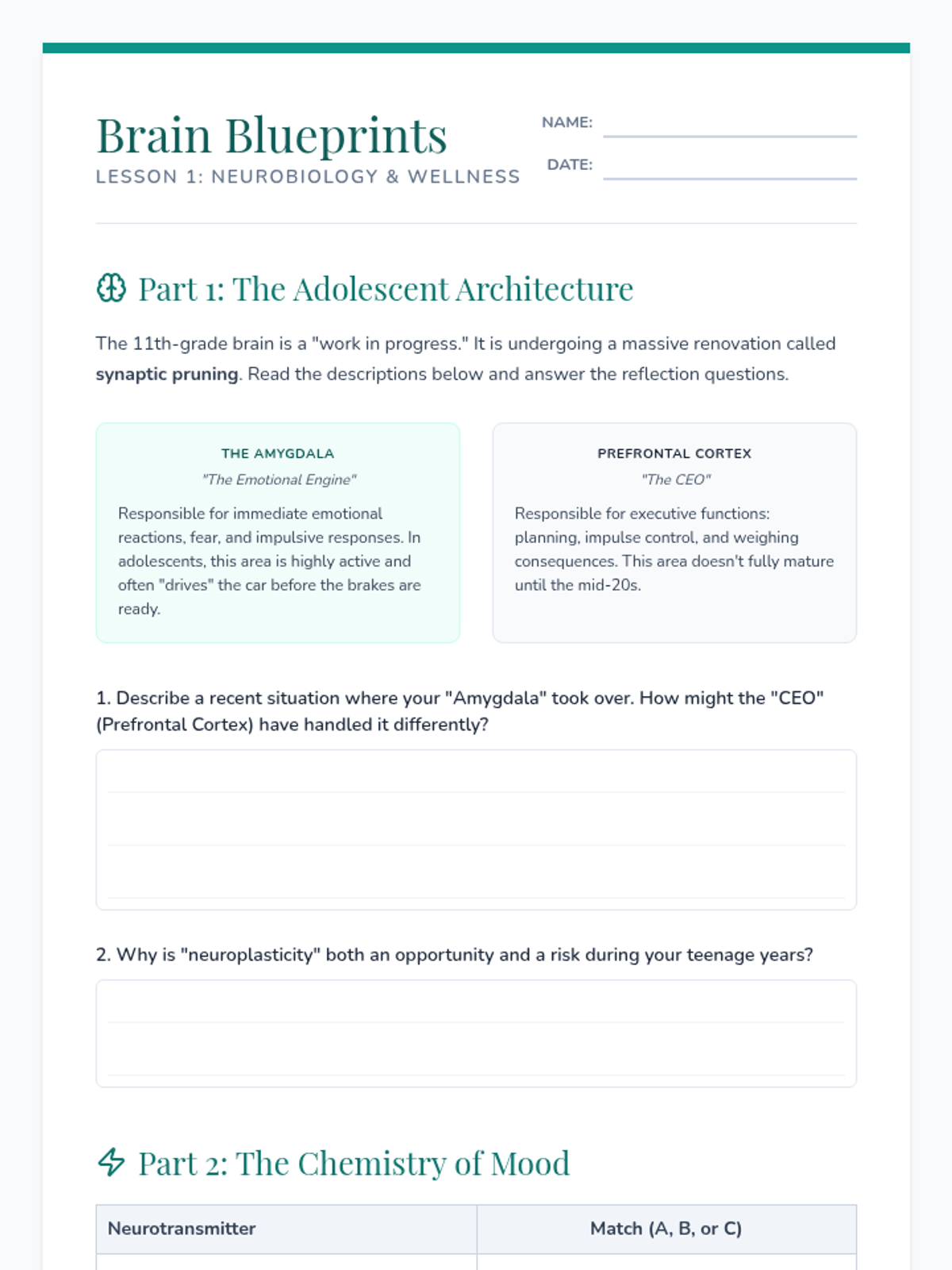
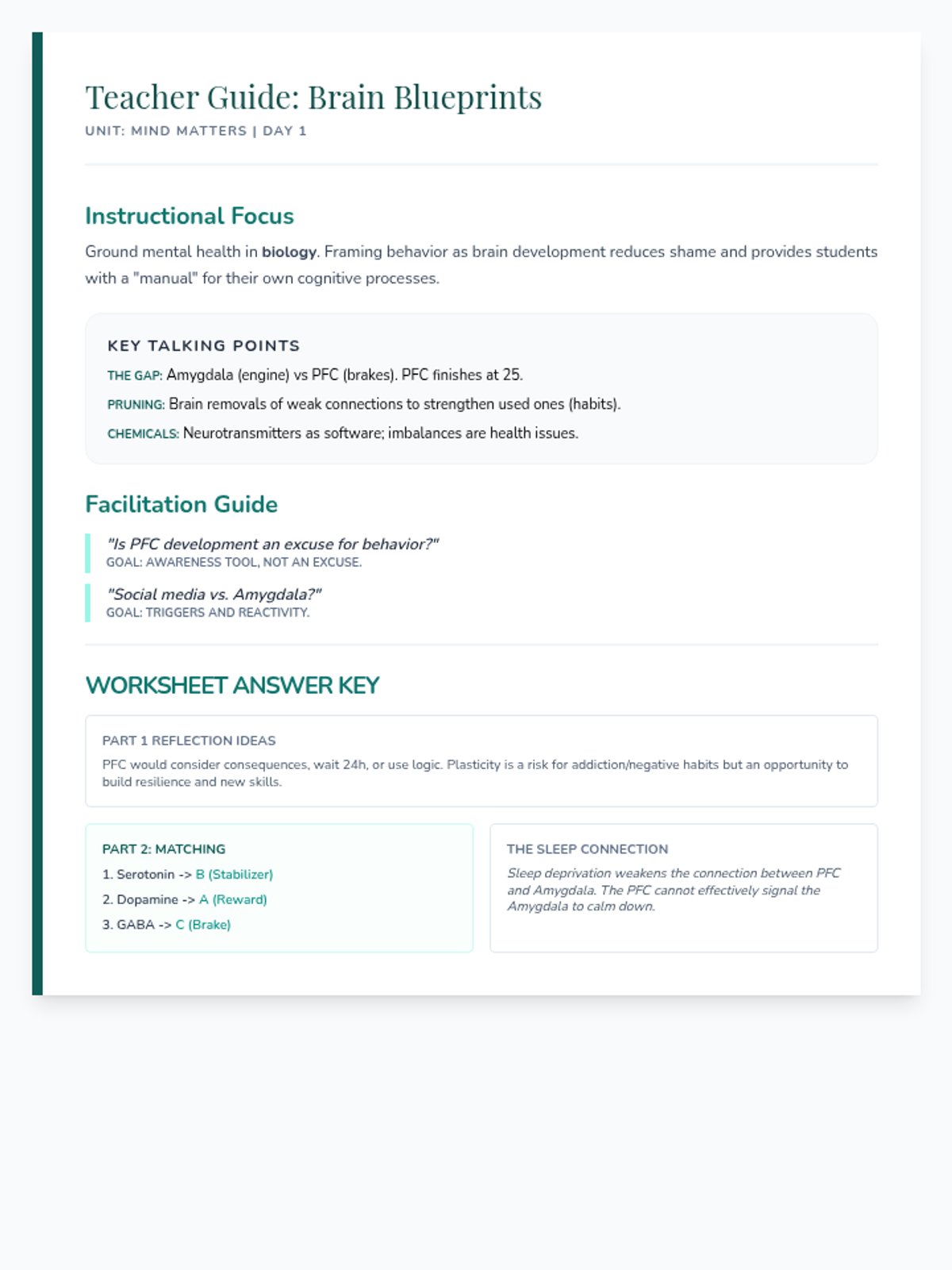
Explores the neurobiology of the adolescent brain, focusing on the development of the prefrontal cortex and the role of neuroplasticity in mental wellness.
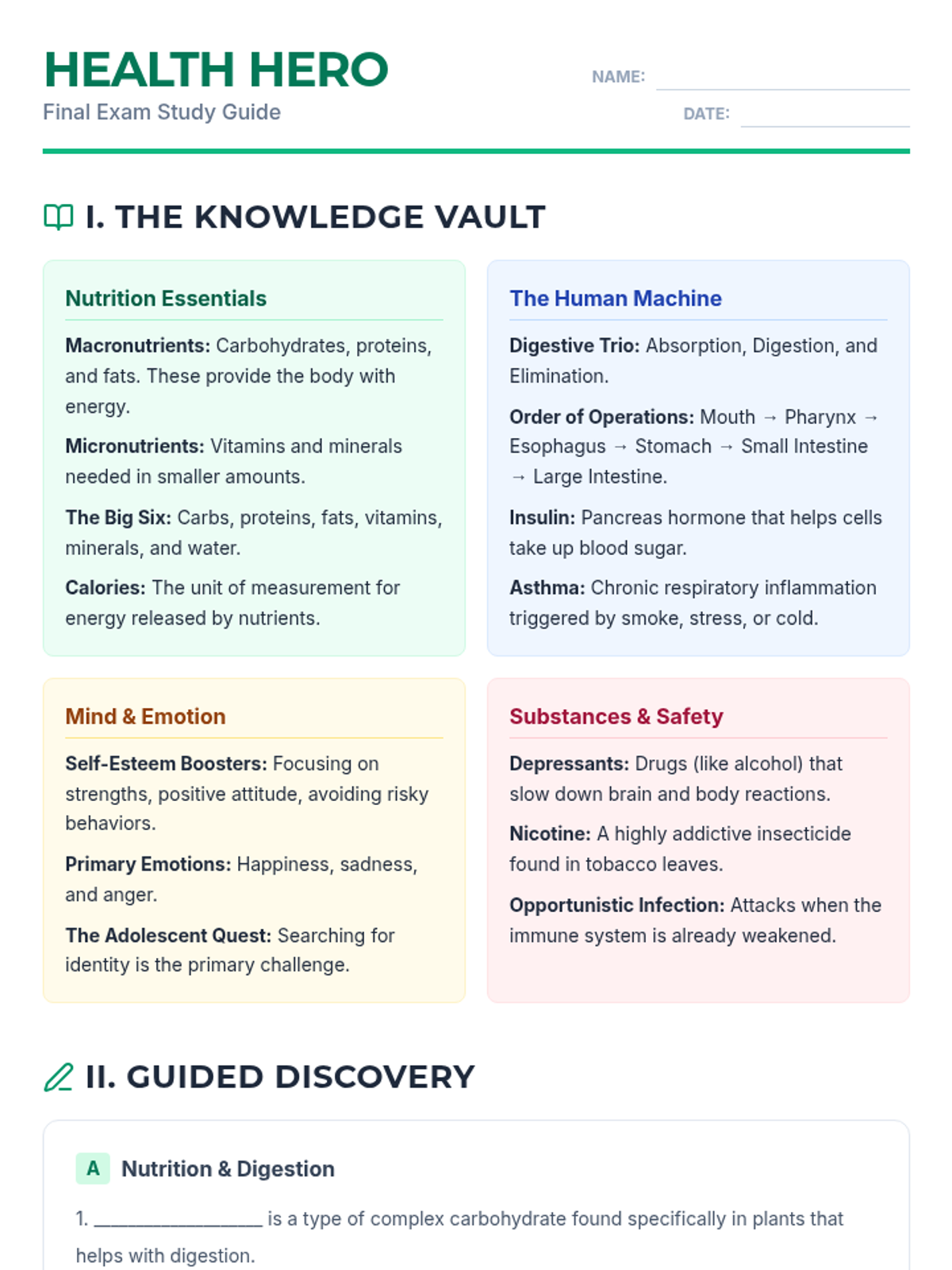
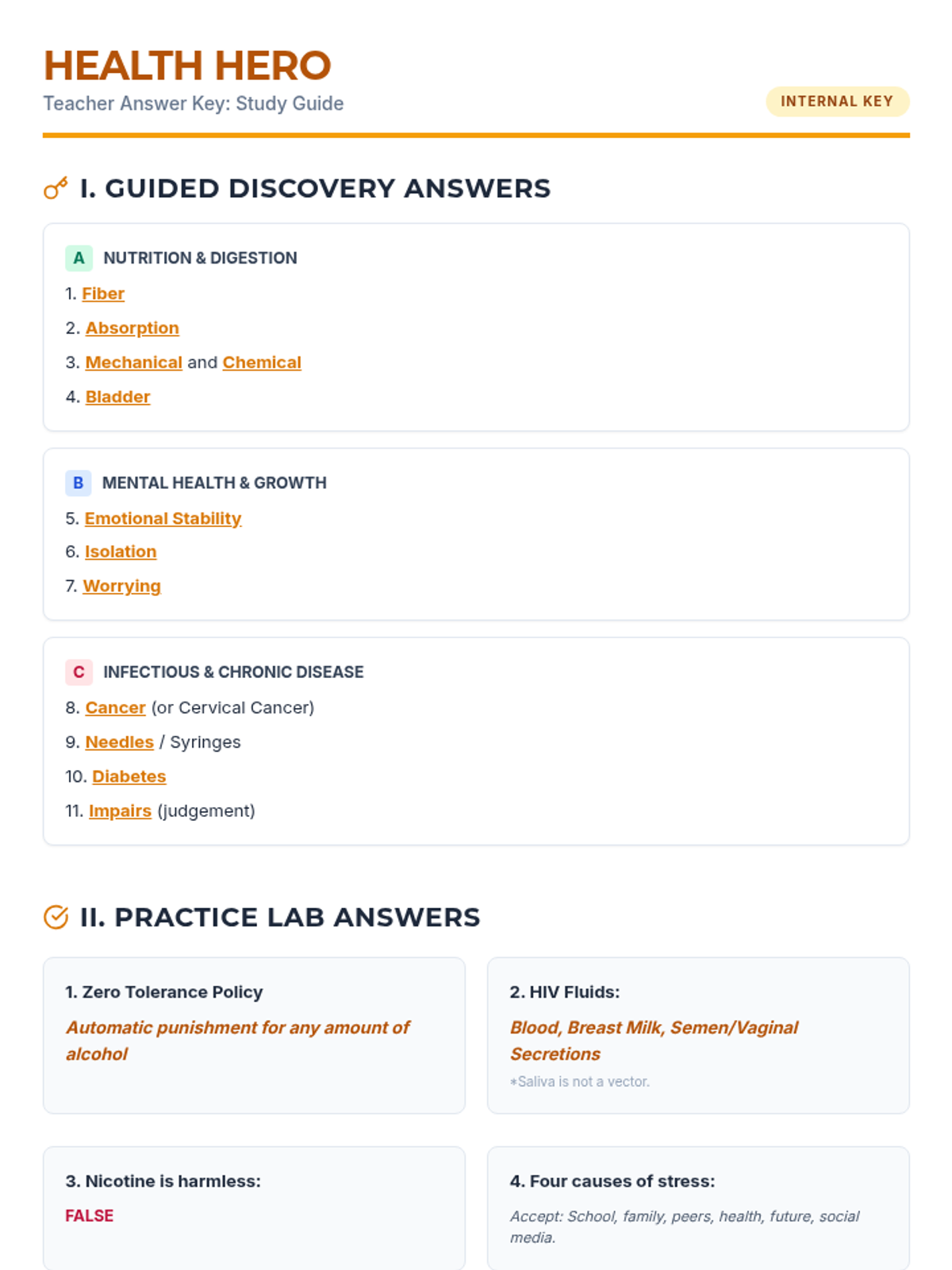
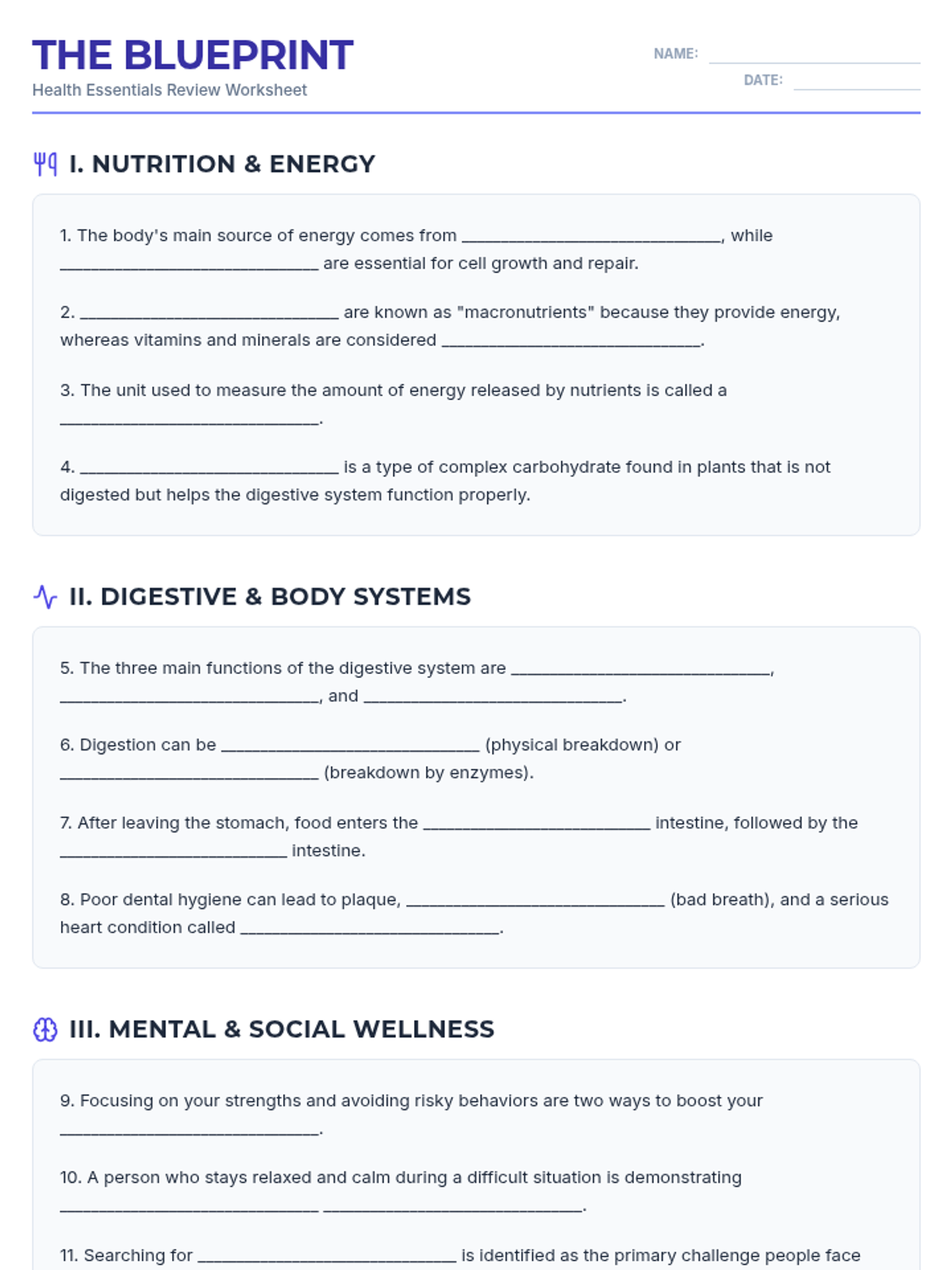
A comprehensive study guide covering nutrition, body systems, mental health, and disease prevention based on the Health Final Exam.
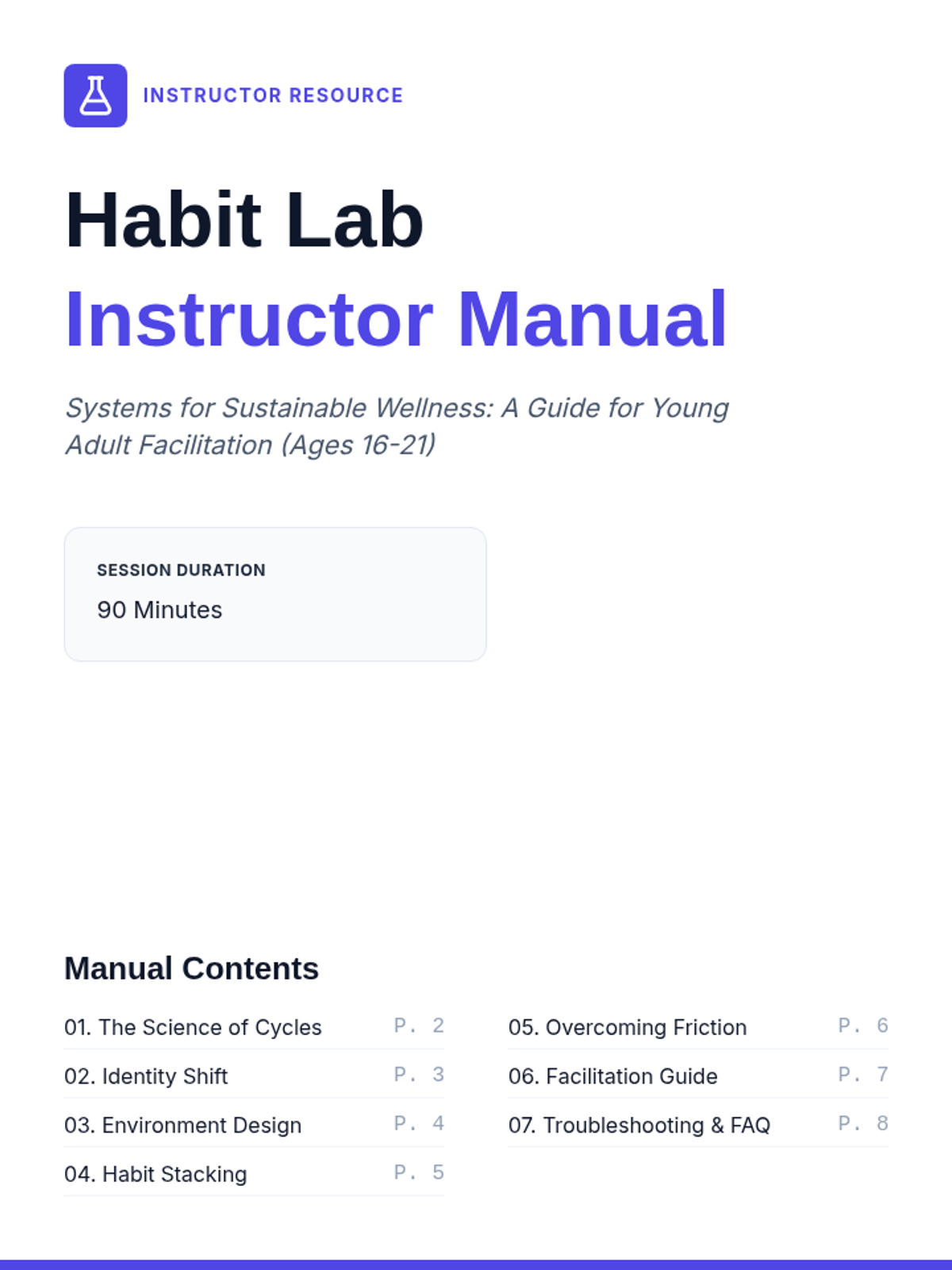
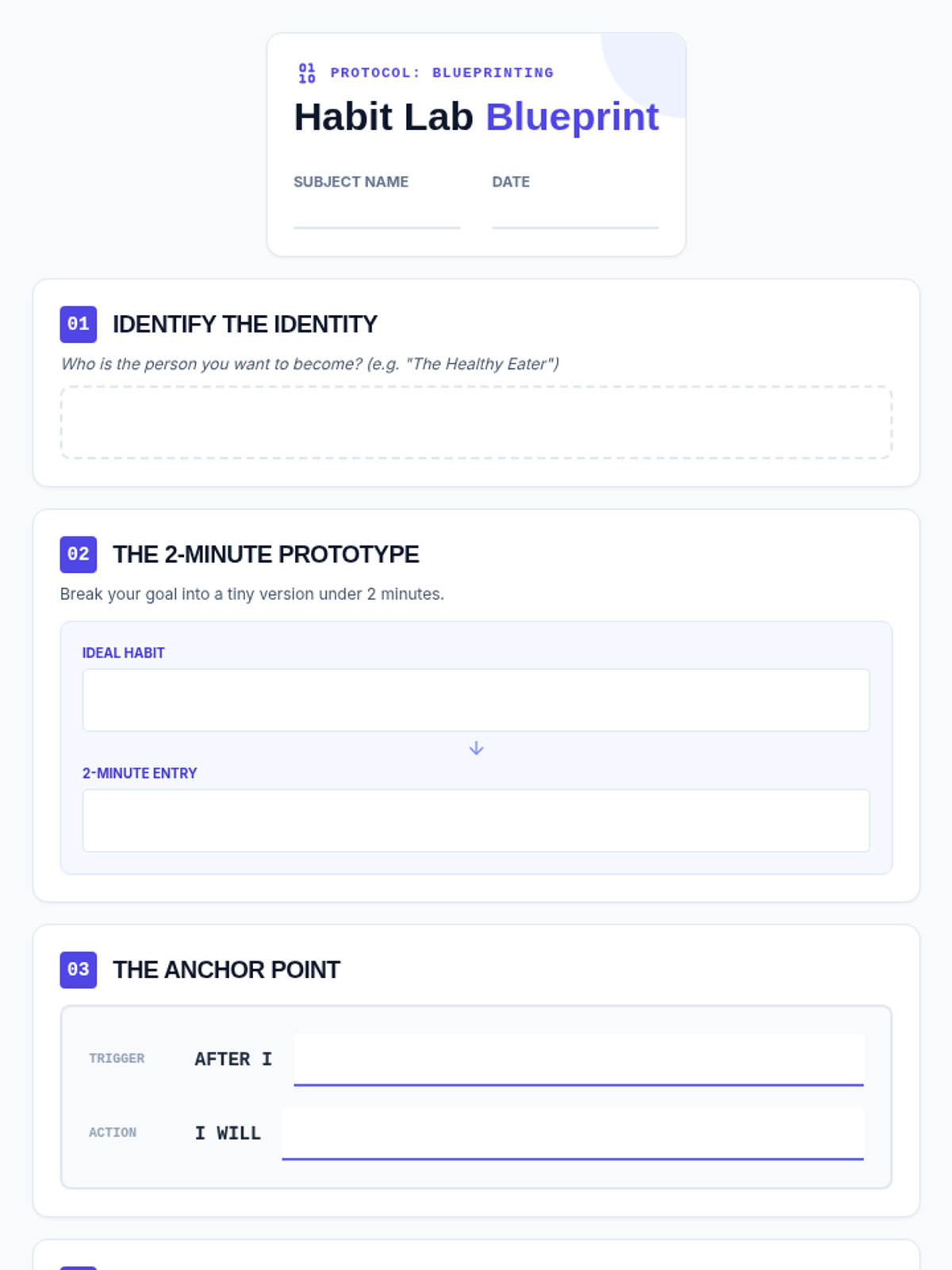
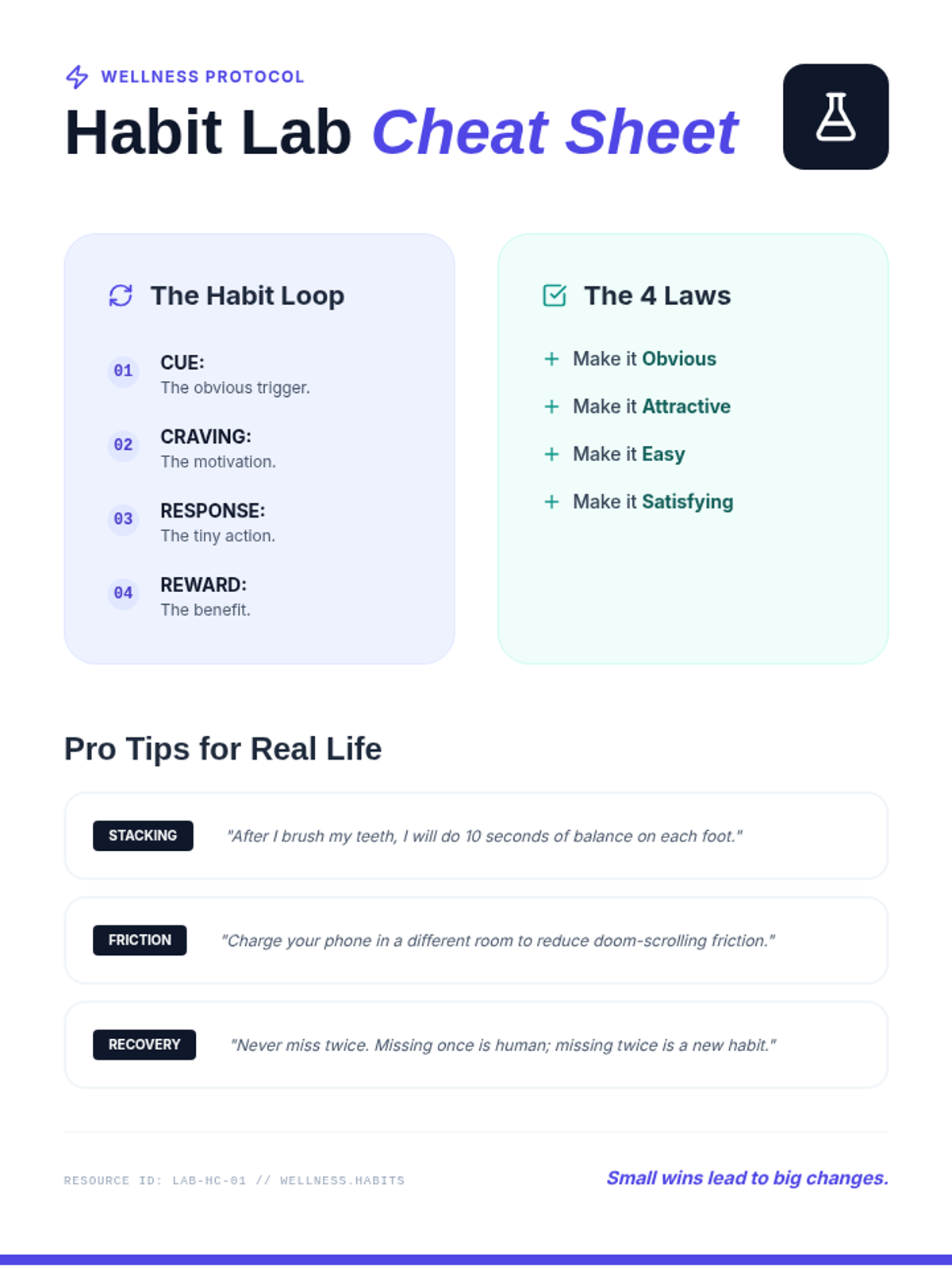
A comprehensive session for young adults on the science and practice of habit formation for long-term wellness. This lesson equips participants with practical tools to design systems that support their health, mental clarity, and productivity.
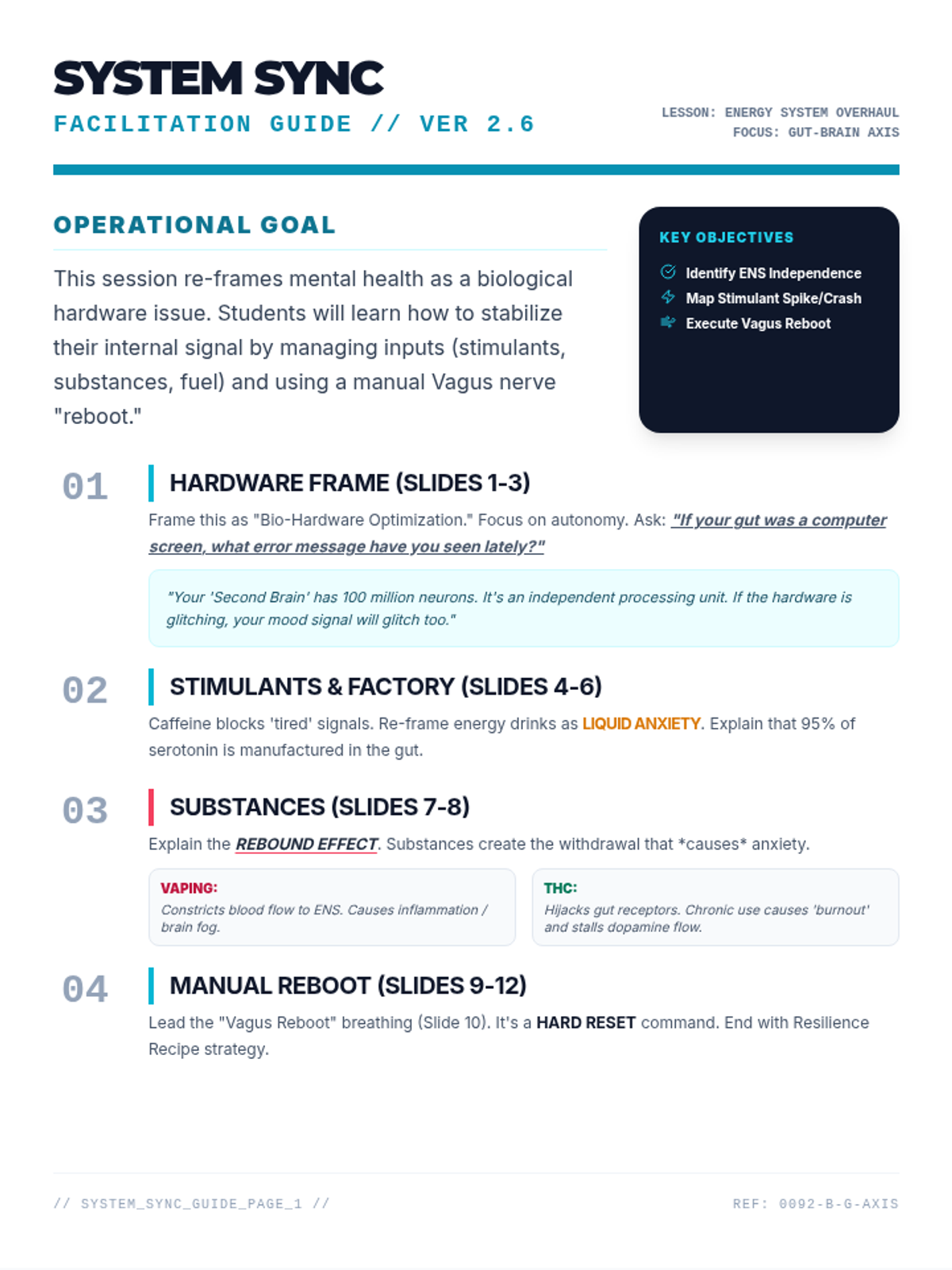
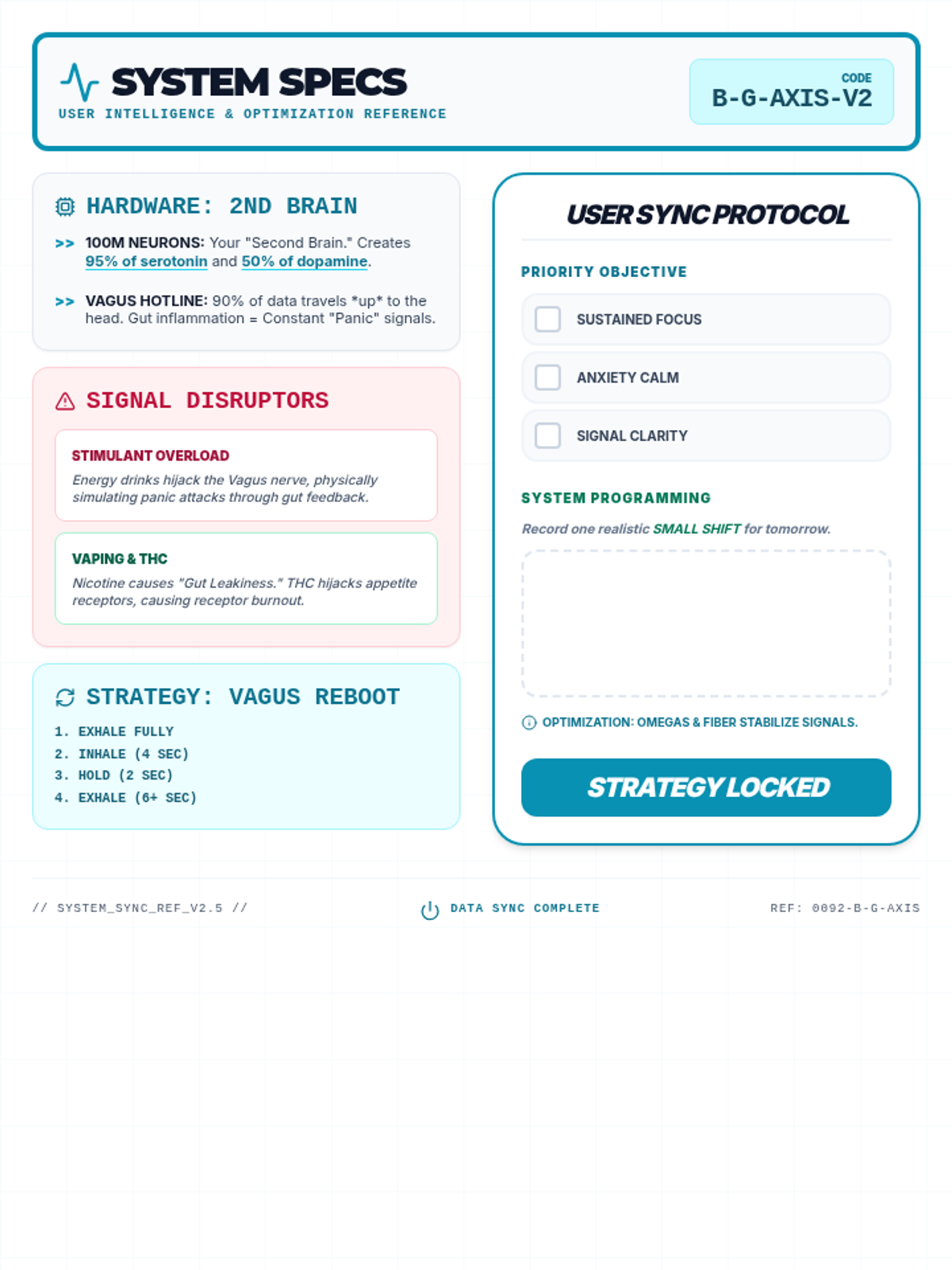
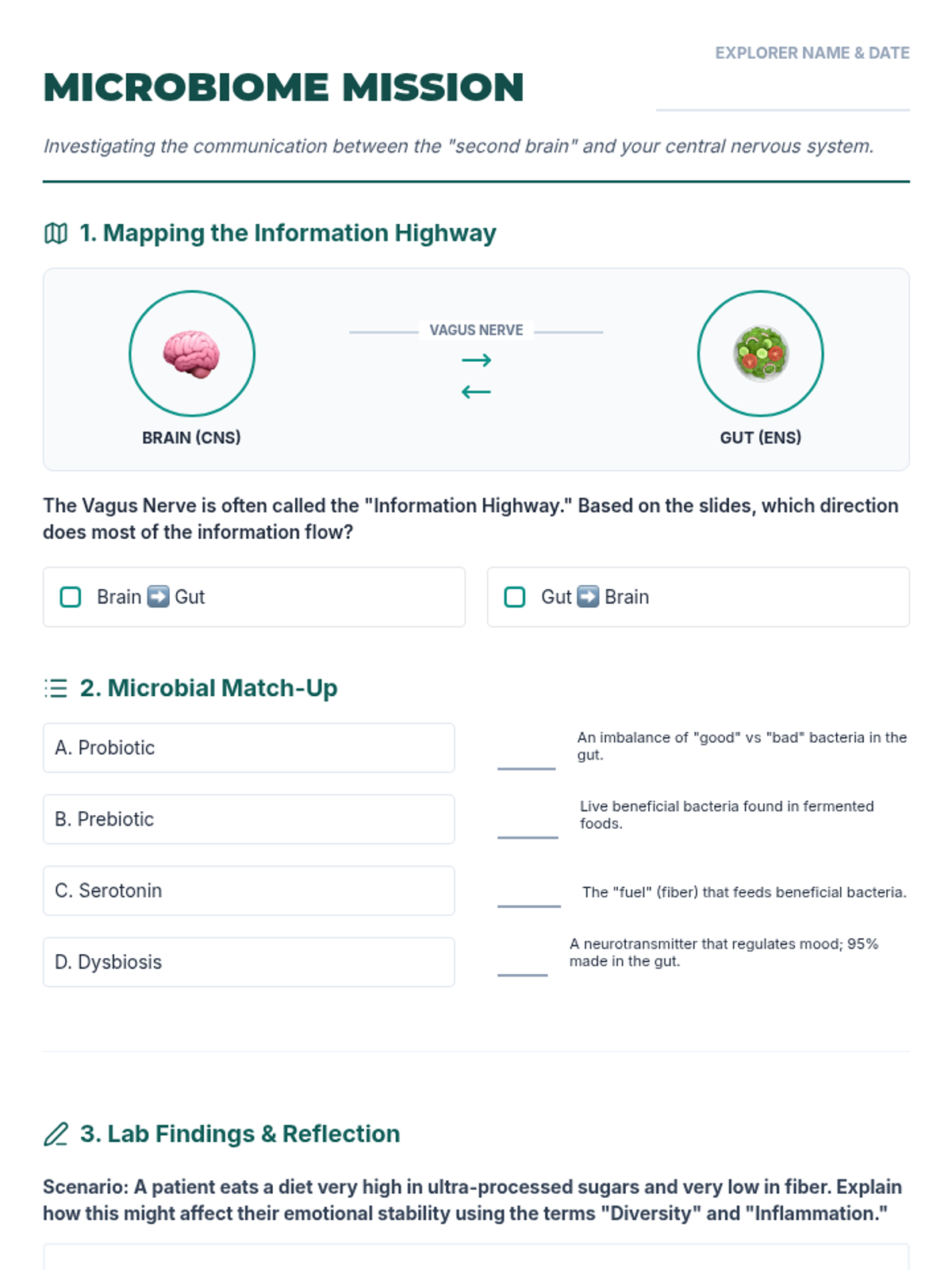
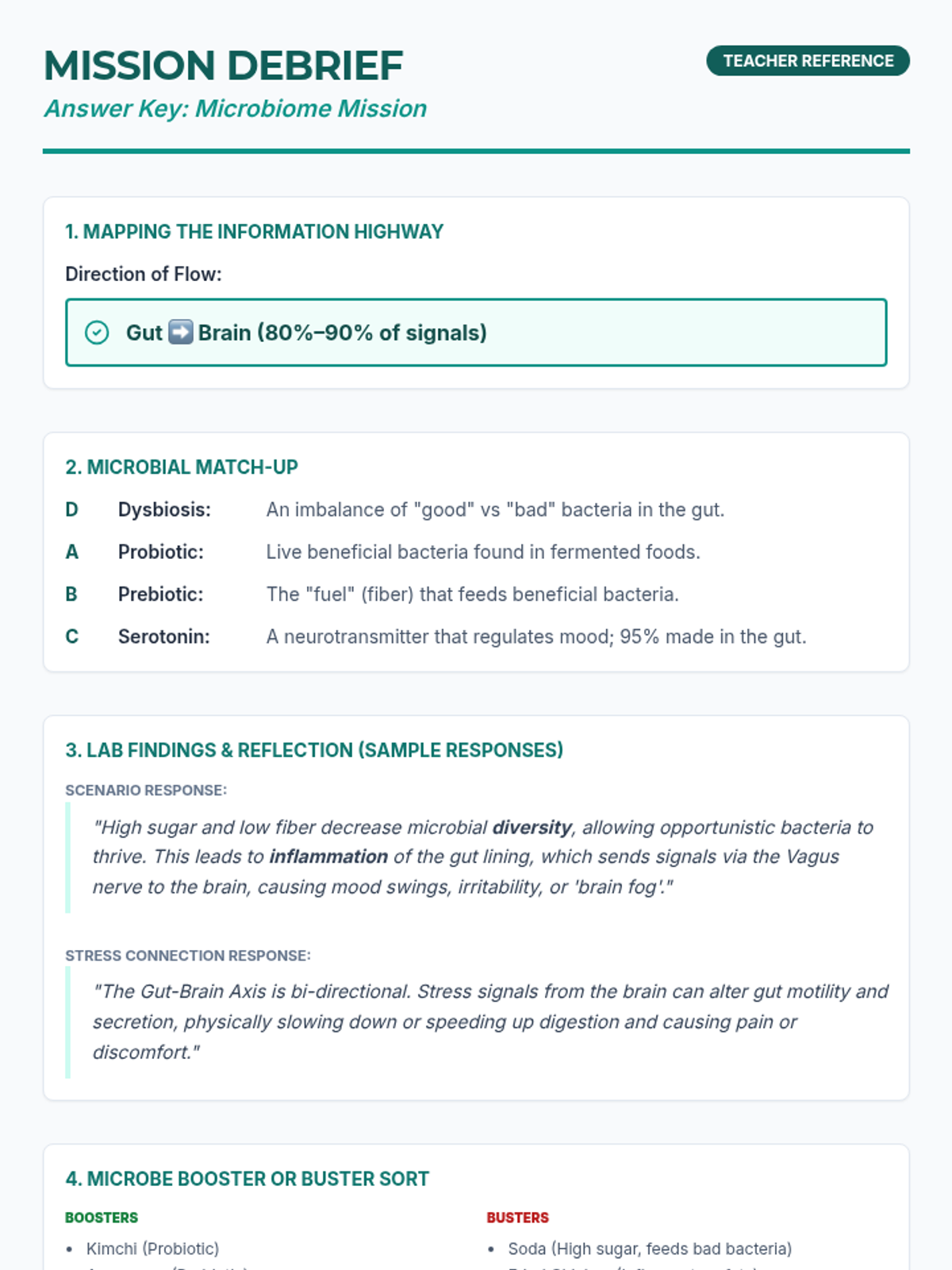
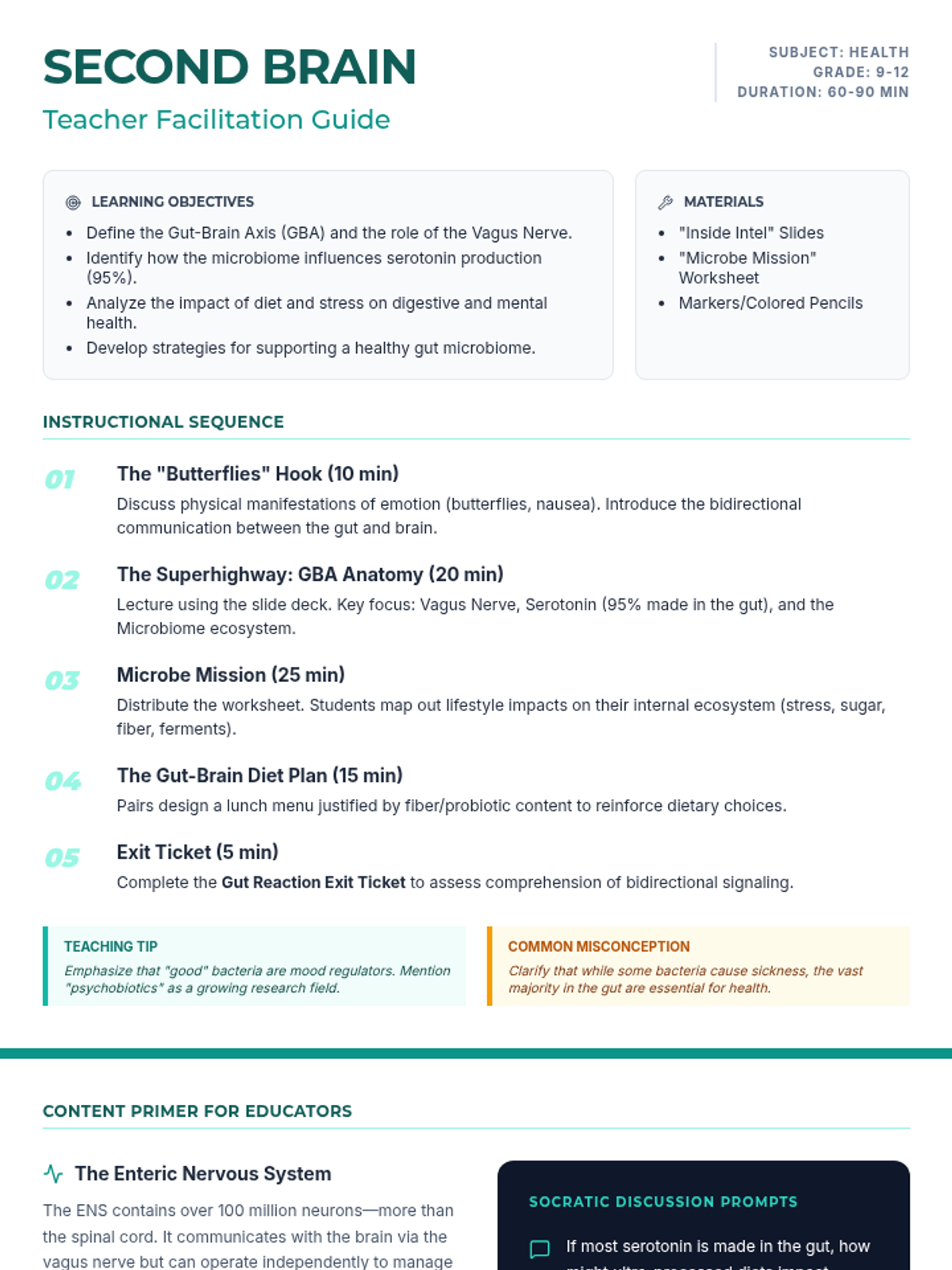
A comprehensive lesson exploring the bi-directional relationship between gut health and mental well-being, specifically tailored for high schoolers in therapeutic settings. The lesson covers the enteric nervous system, the impact of nutrition, hydration, and substances on mood, energy, and cognitive function.
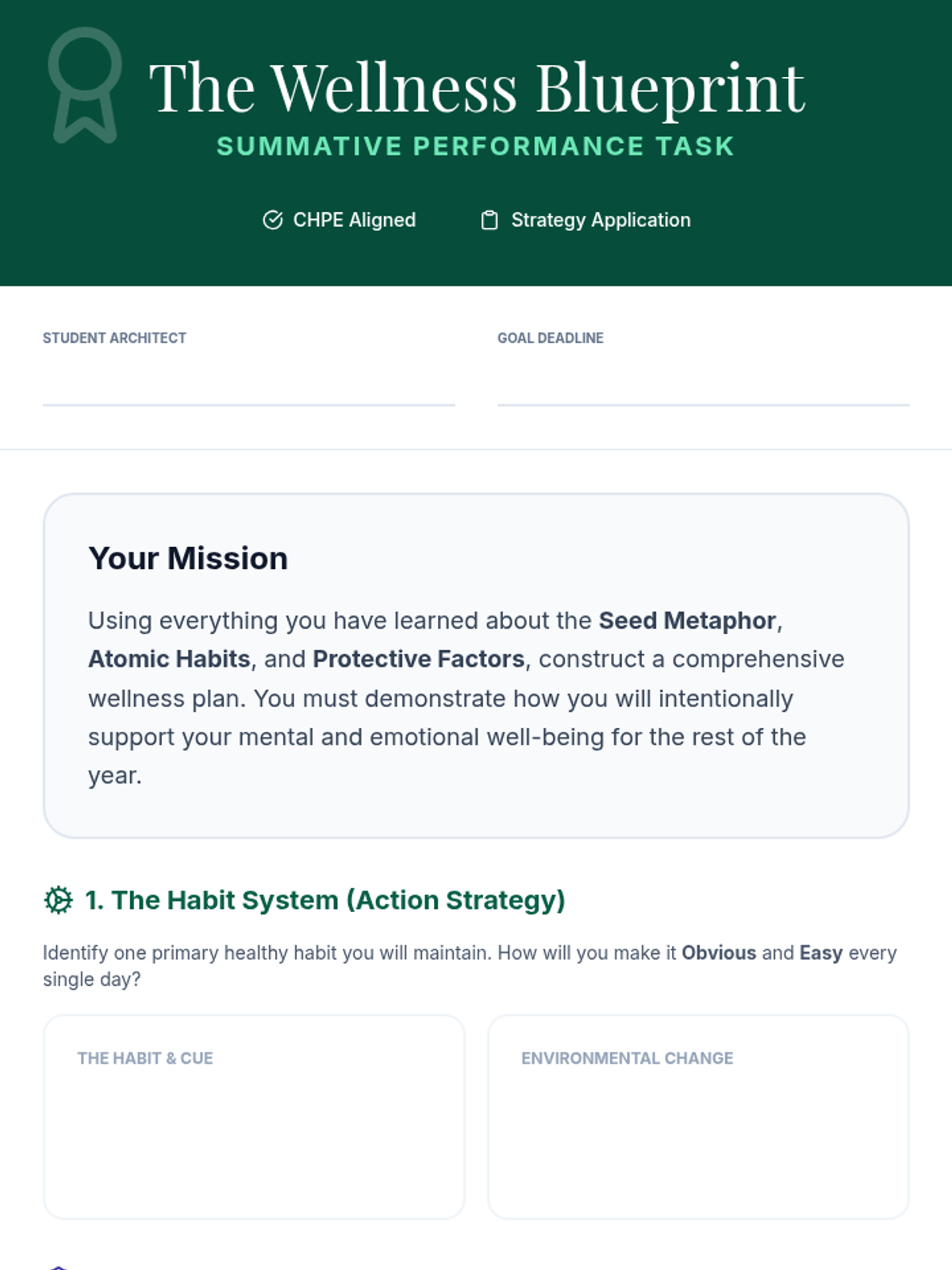
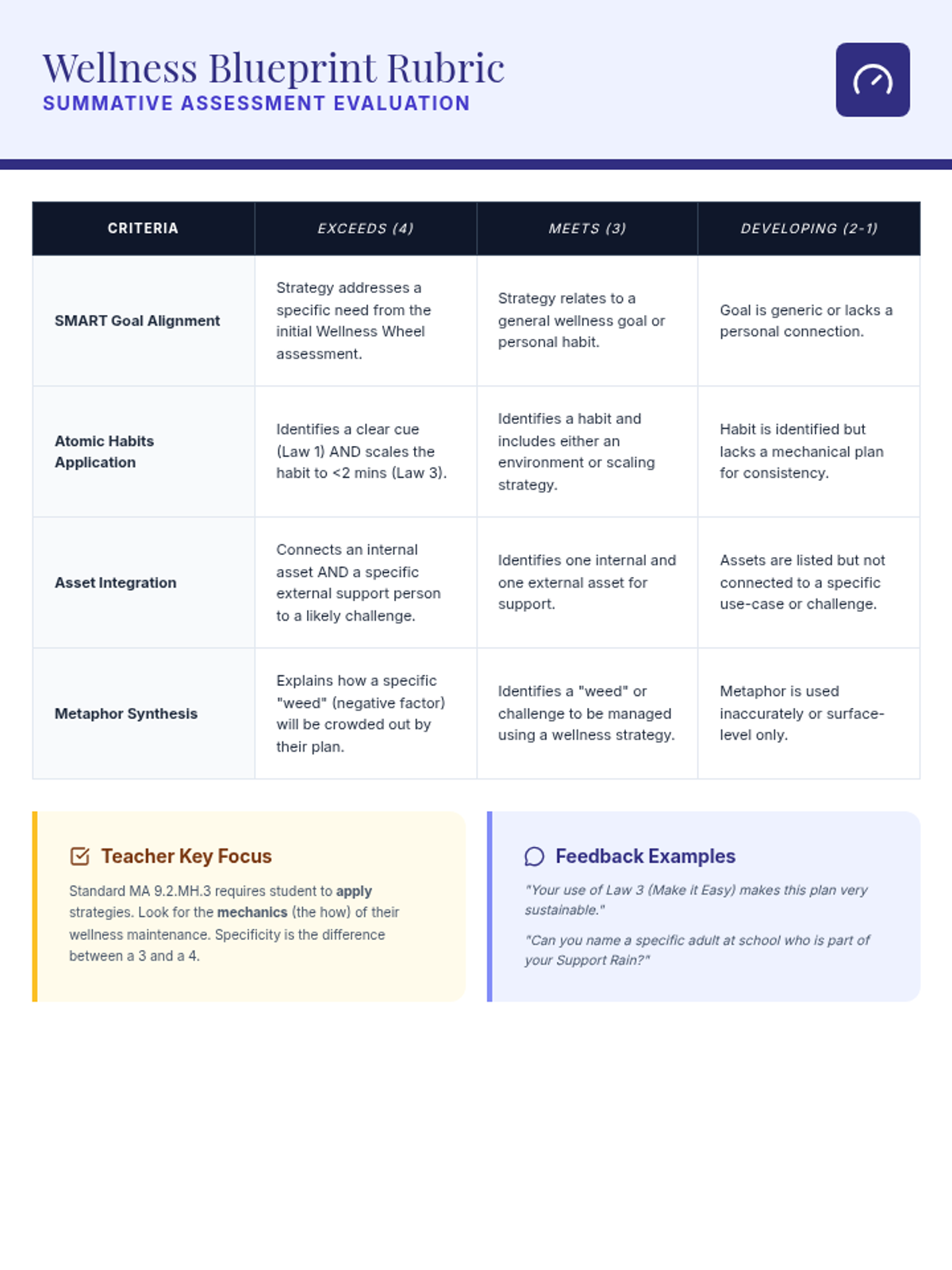
A summative assessment where students apply strategies and protective factors to create a comprehensive plan for positive mental and emotional well-being.
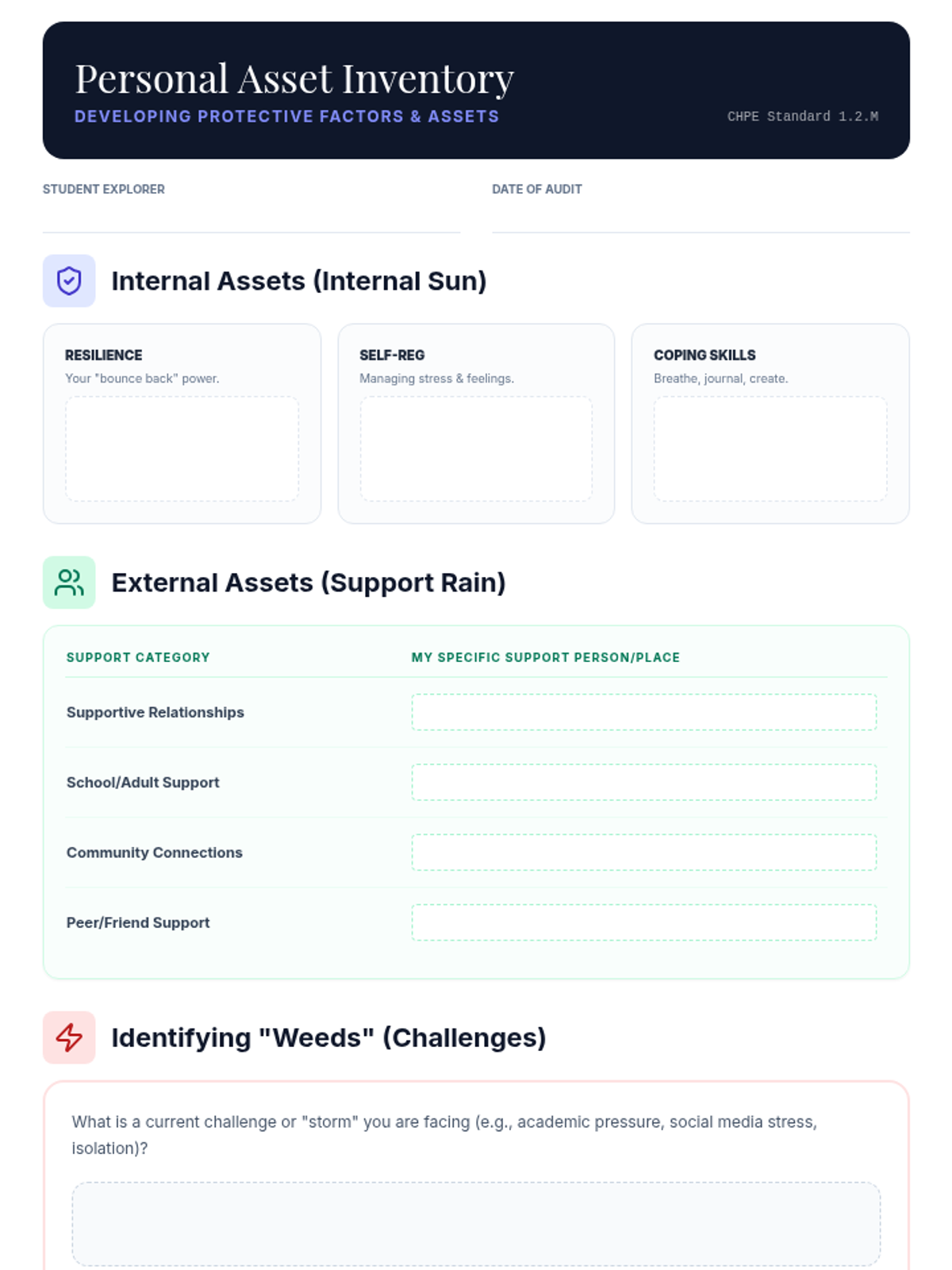
Identifying internal and external protective factors and personal assets that support mental well-being and resilience.
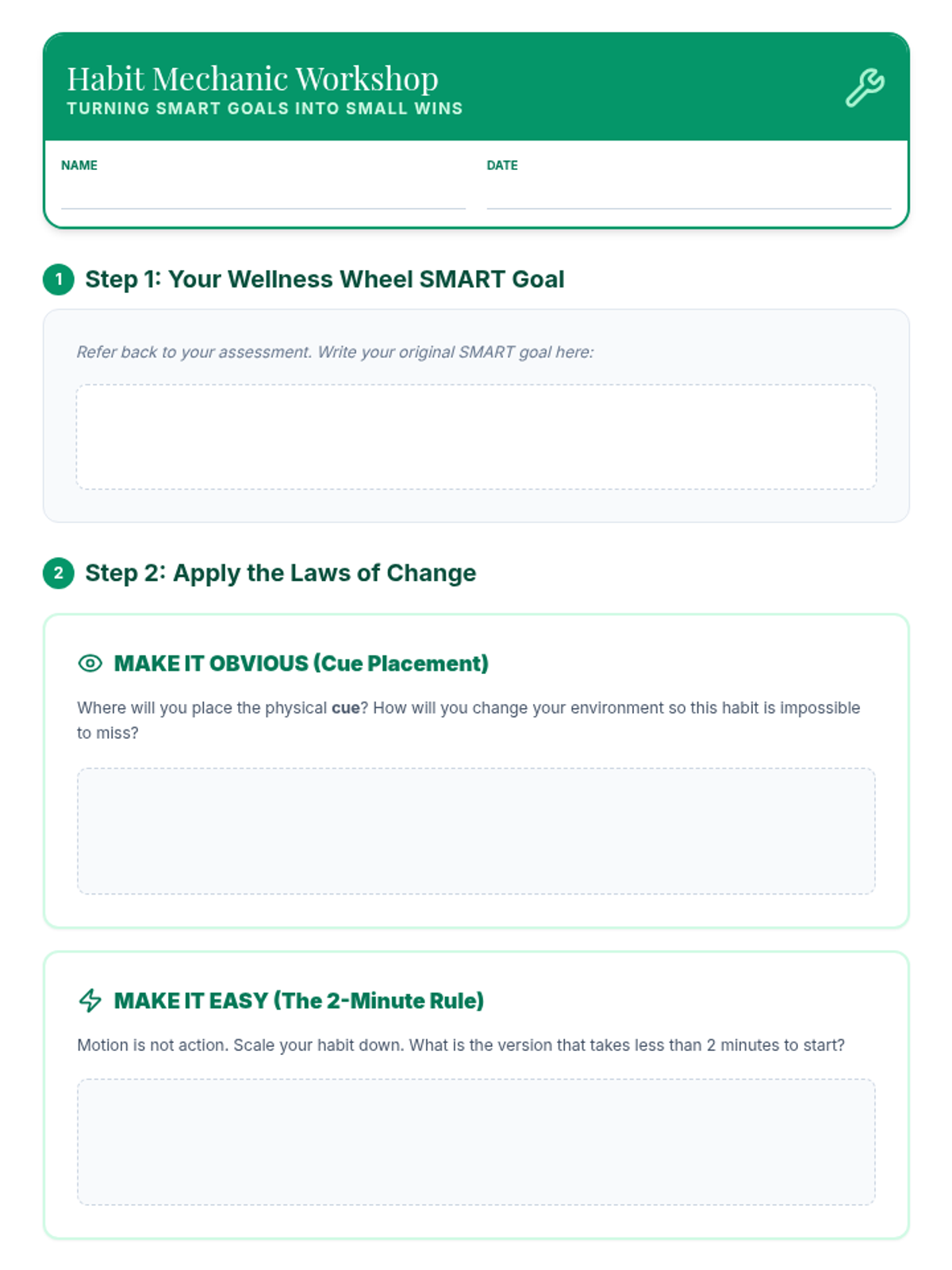
Applying the Laws of Habit Change from Atomic Habits to mental health goals, focusing on making healthy choices obvious and easy while crowding out negative behaviors.
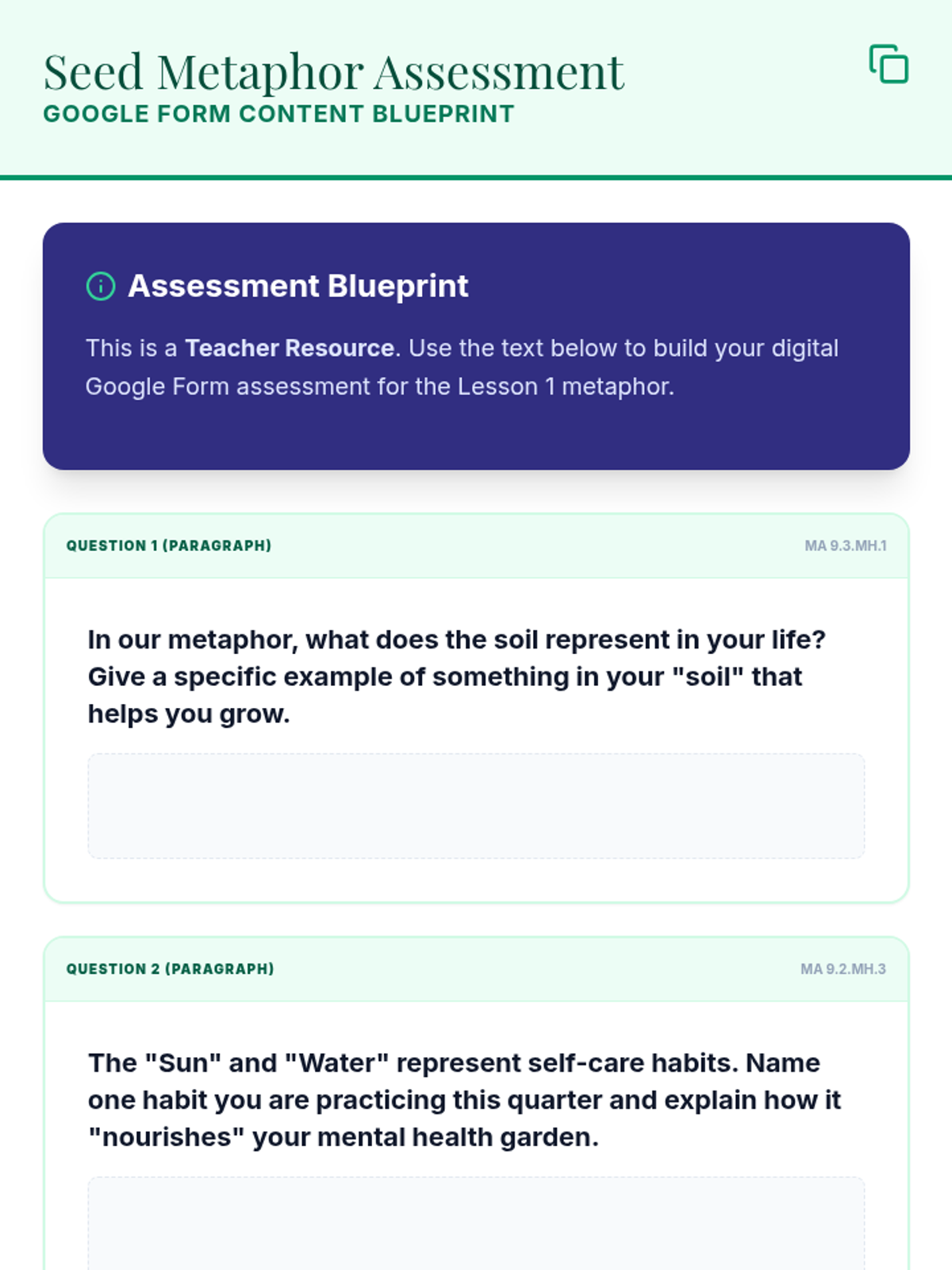
Students explore the seed metaphor for mental health by planting a physical seed and identifying how environmental factors and self-care mirror the needs of a growing plant.
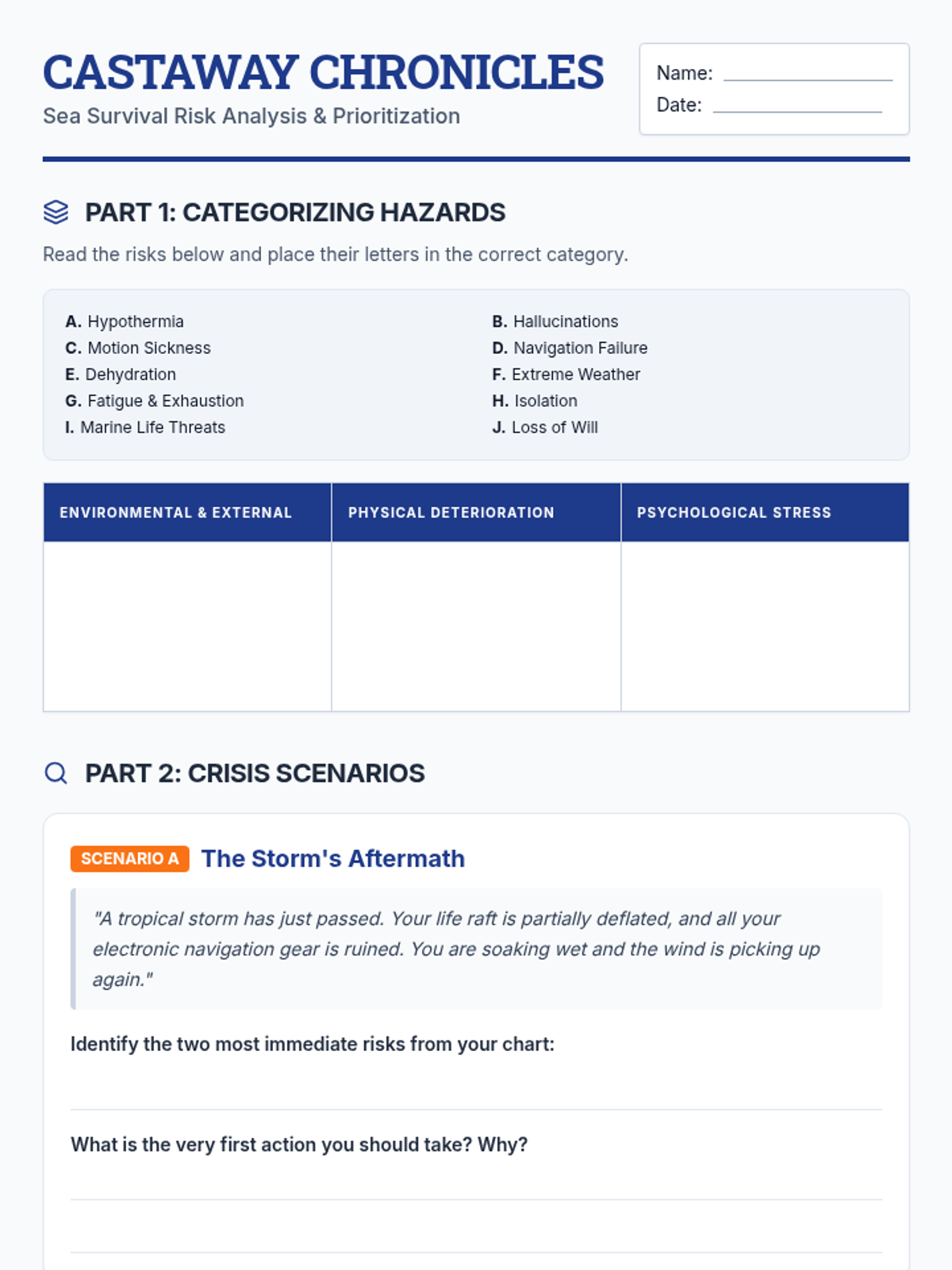
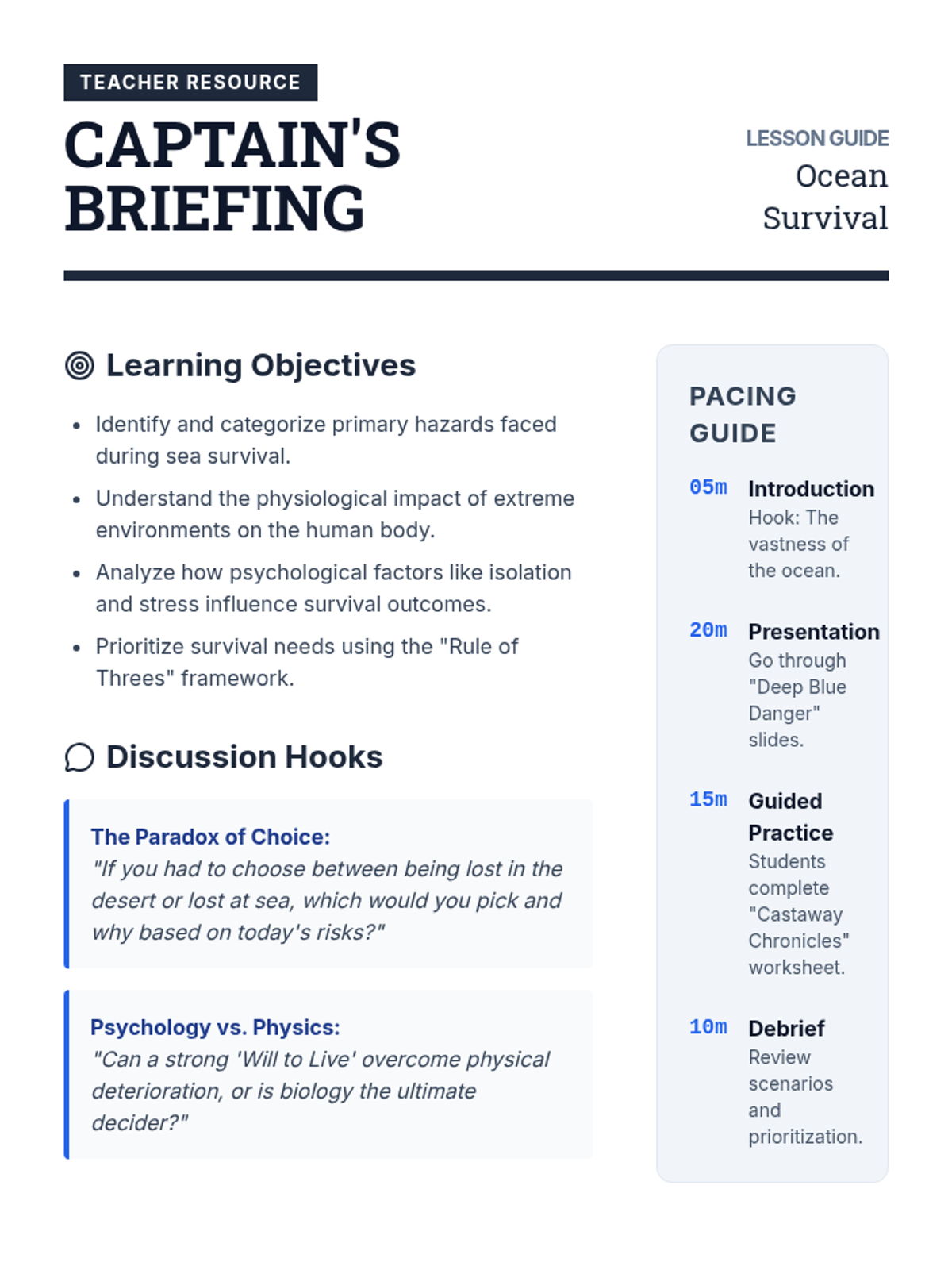
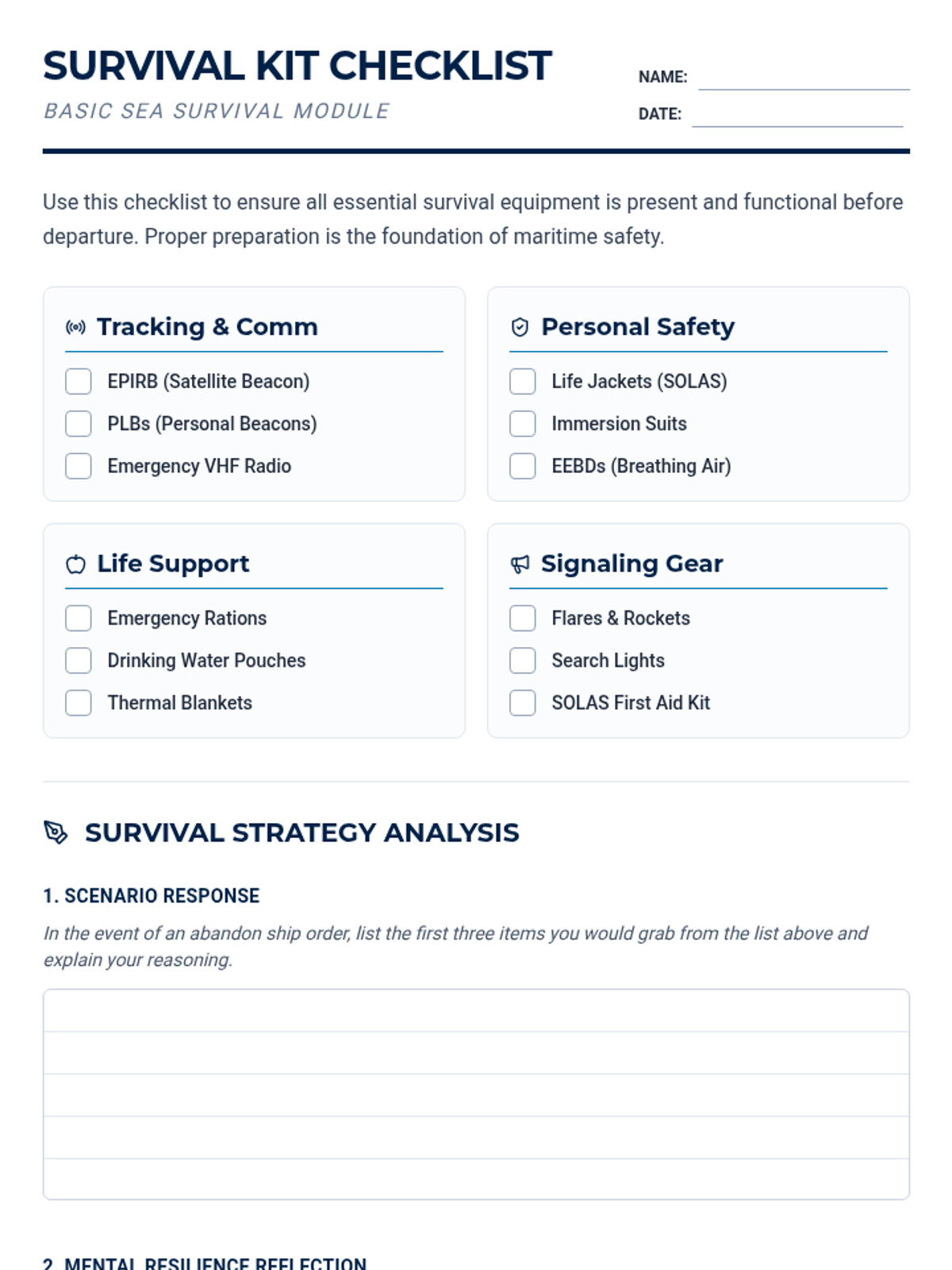
A comprehensive look at the physical, environmental, and psychological risks of being lost at sea, focusing on survival strategies and the human body's limits.
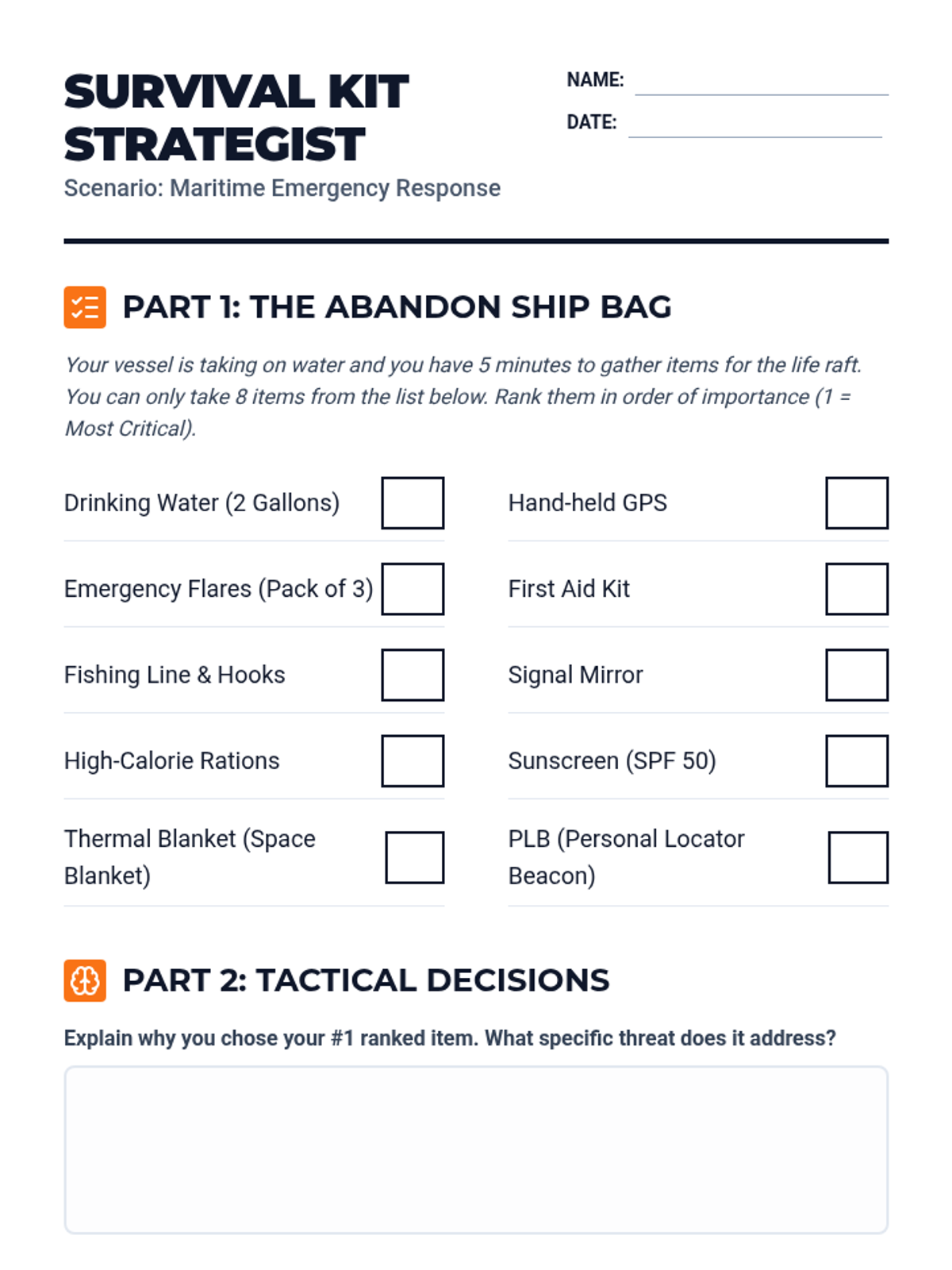
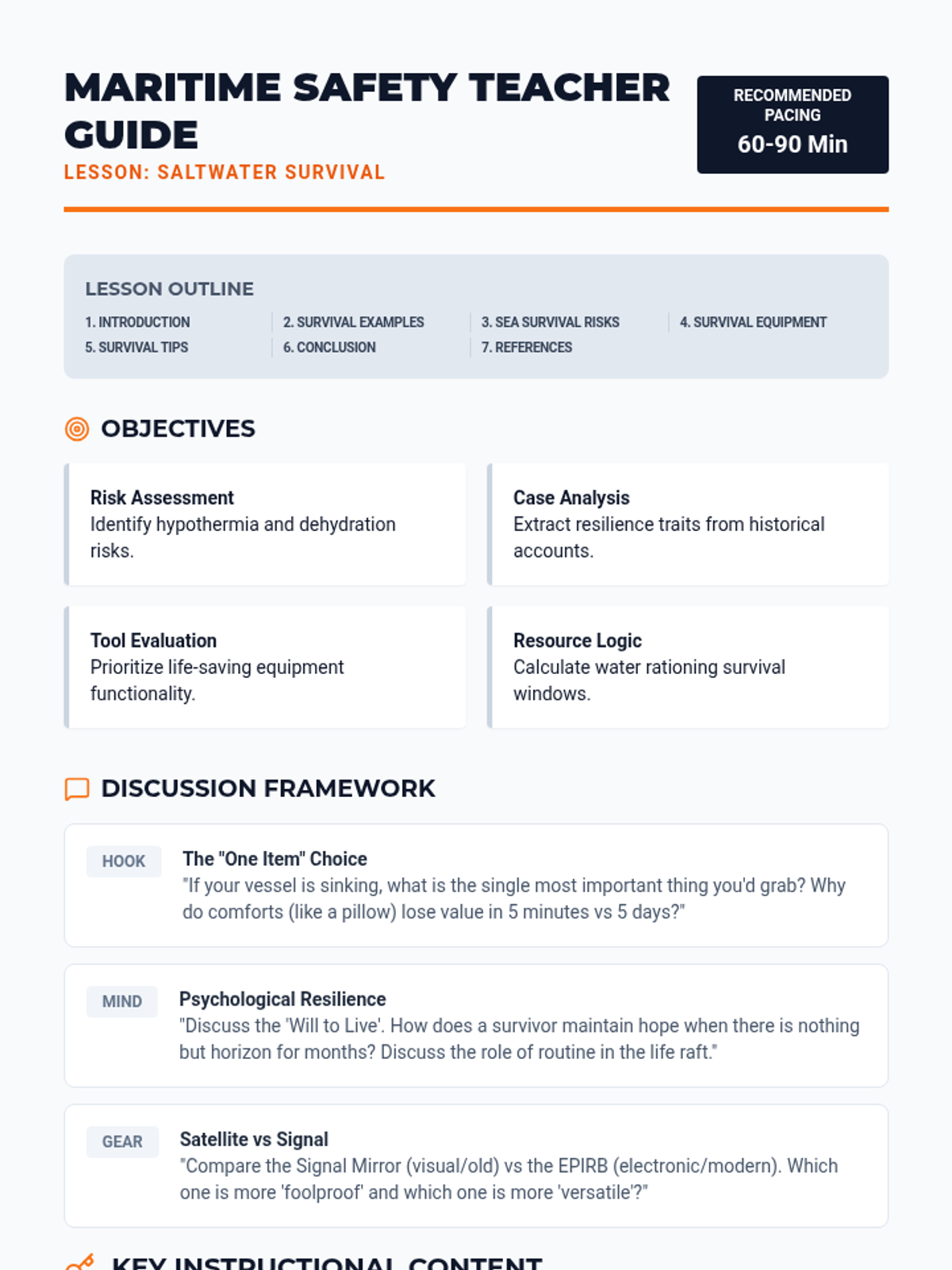
A comprehensive lesson on maritime survival strategies, real-life survival stories, and the essential equipment needed to survive at sea. Students will explore the physical and psychological challenges of being lost at sea and learn practical safety tips.
A comprehensive presentation on maritime survival, covering real-life examples, environmental risks, essential safety equipment, and practical survival protocols for extreme conditions at sea.
Students will learn the essential pillars of maritime survival, including risk management, technical equipment use, and survival protocols for extreme sea conditions.
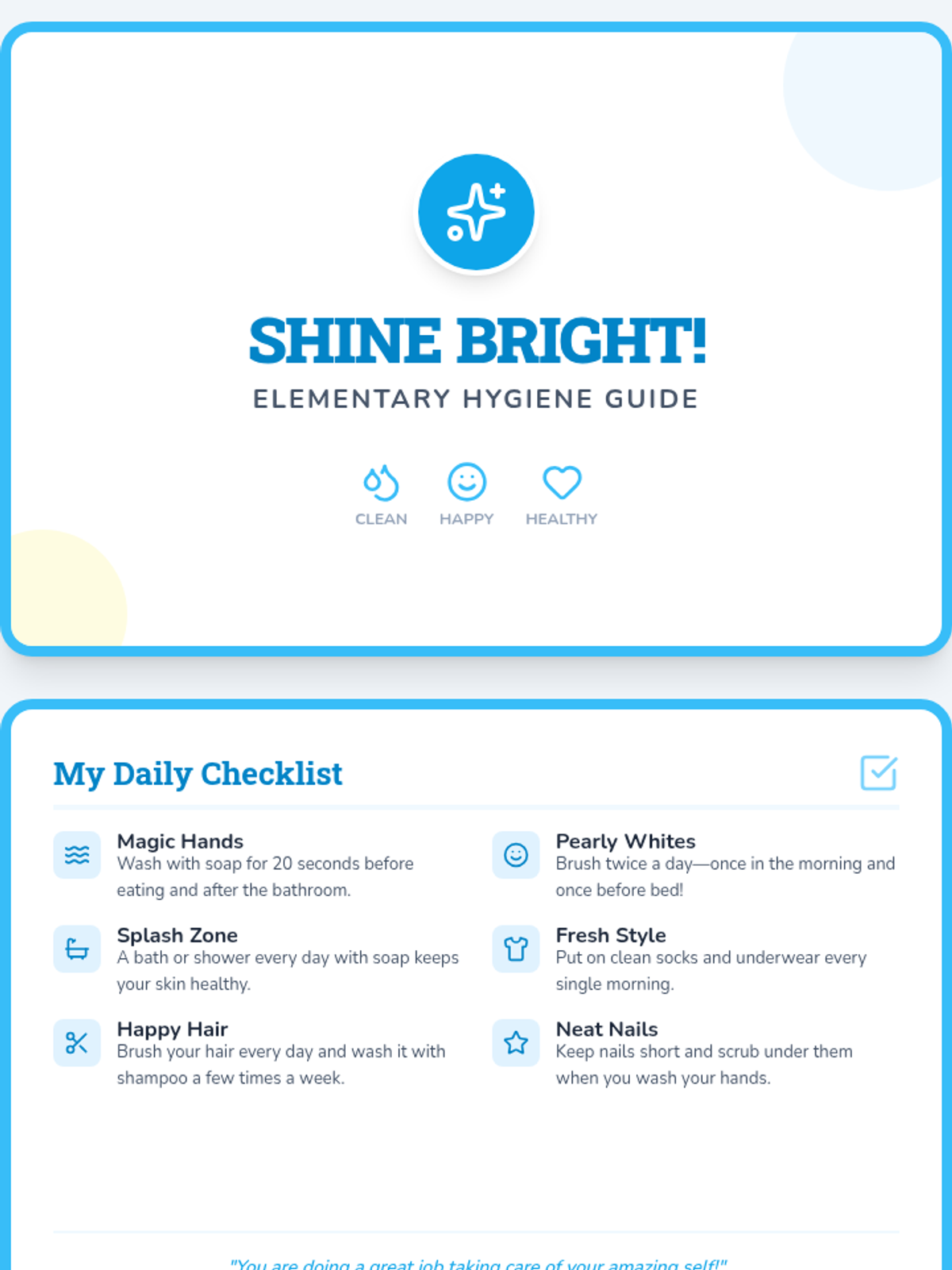
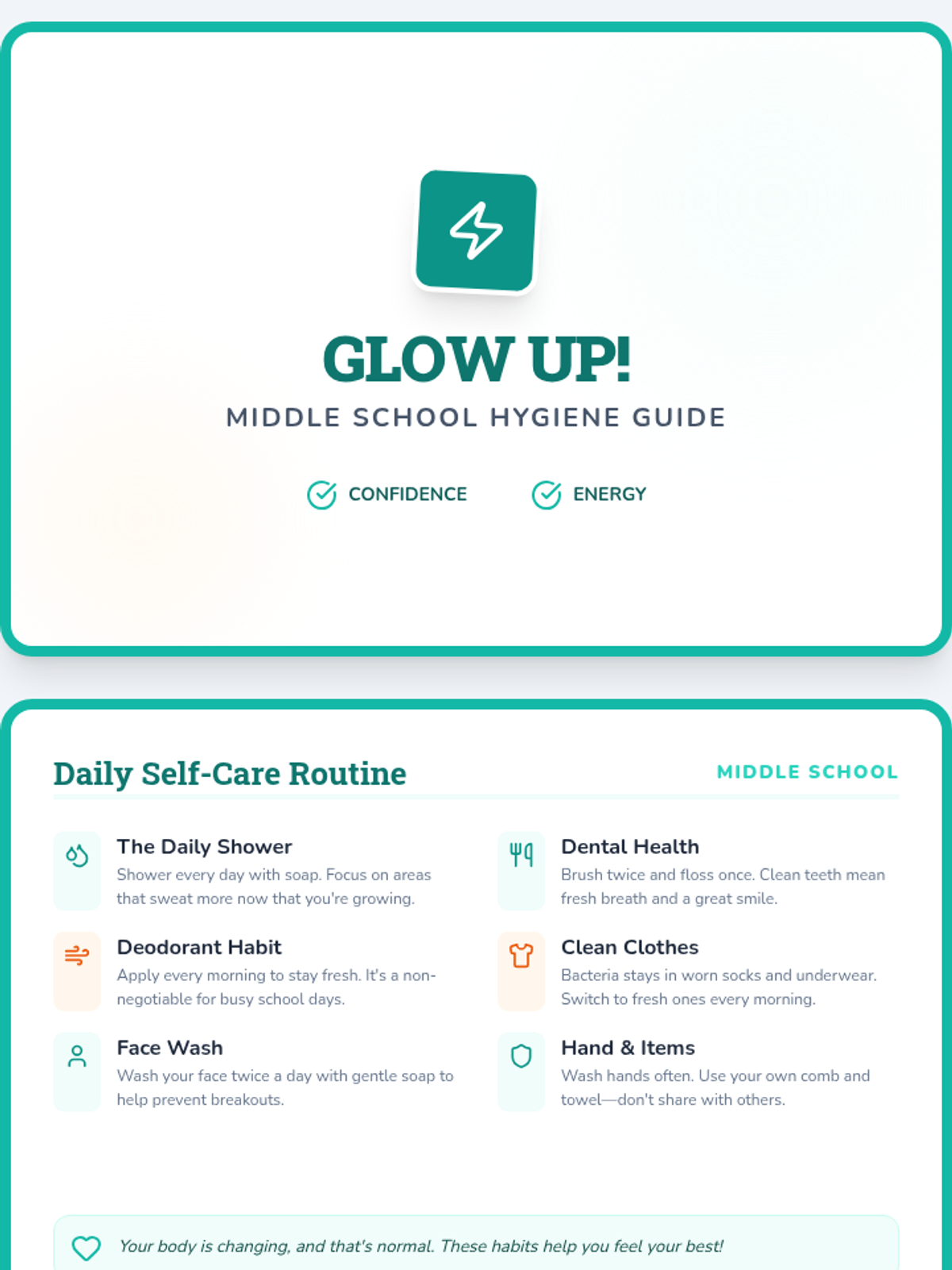
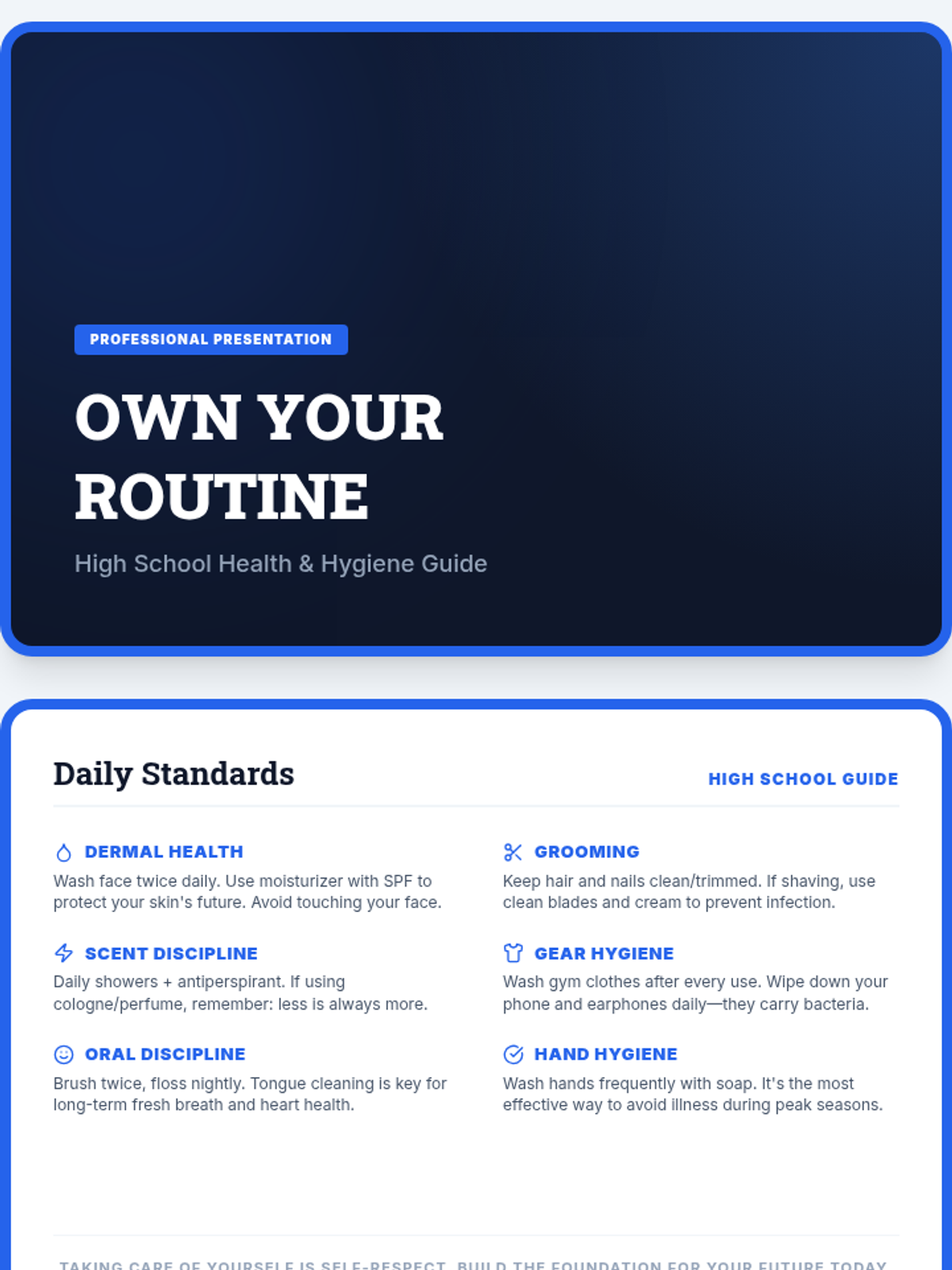
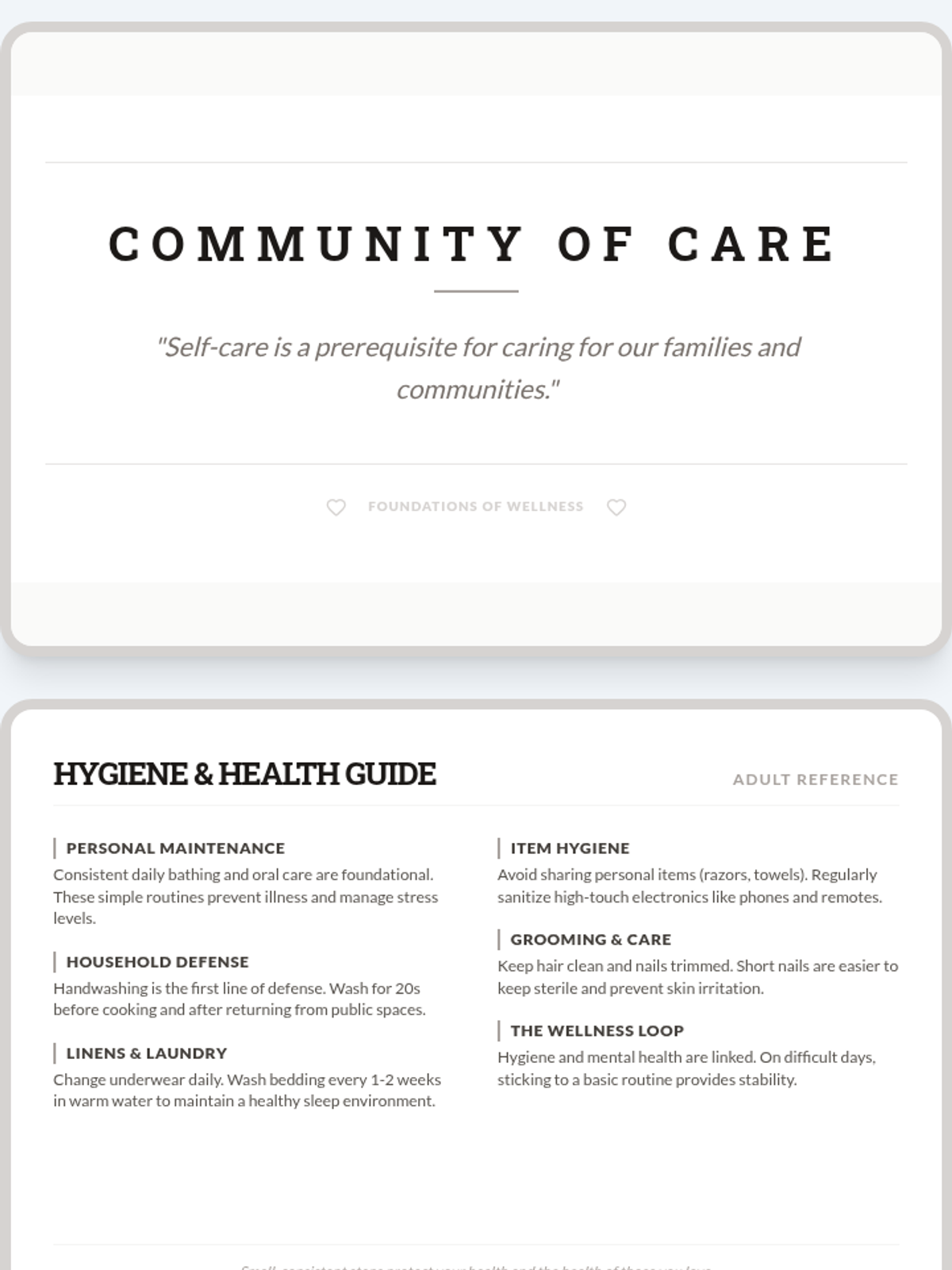
A collection of hygiene reference postcards tailored for elementary, middle school, high school, and adults. Each double-sided card provides empathetic, age-appropriate guidance on essential daily routines to support health and confidence.
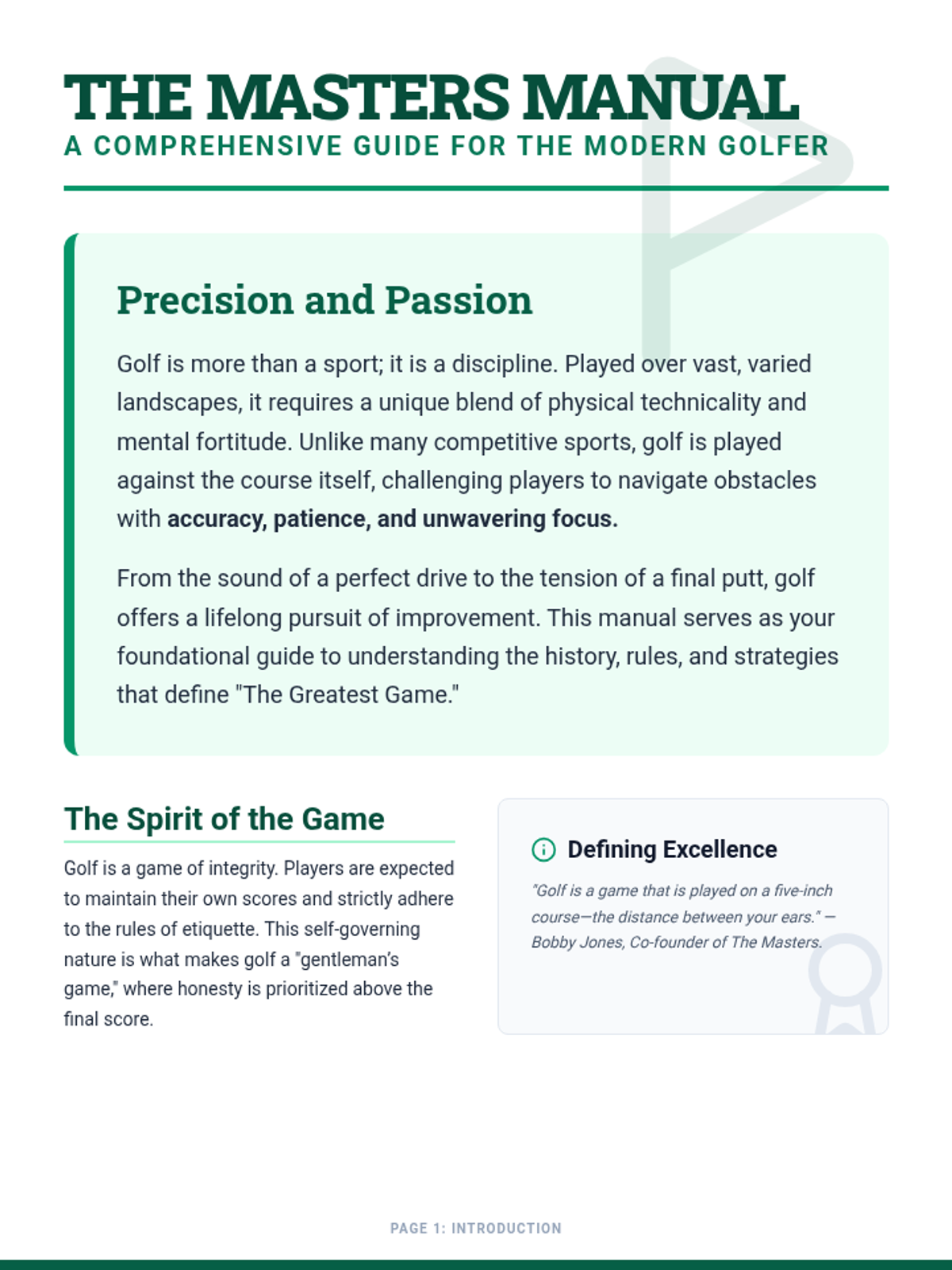
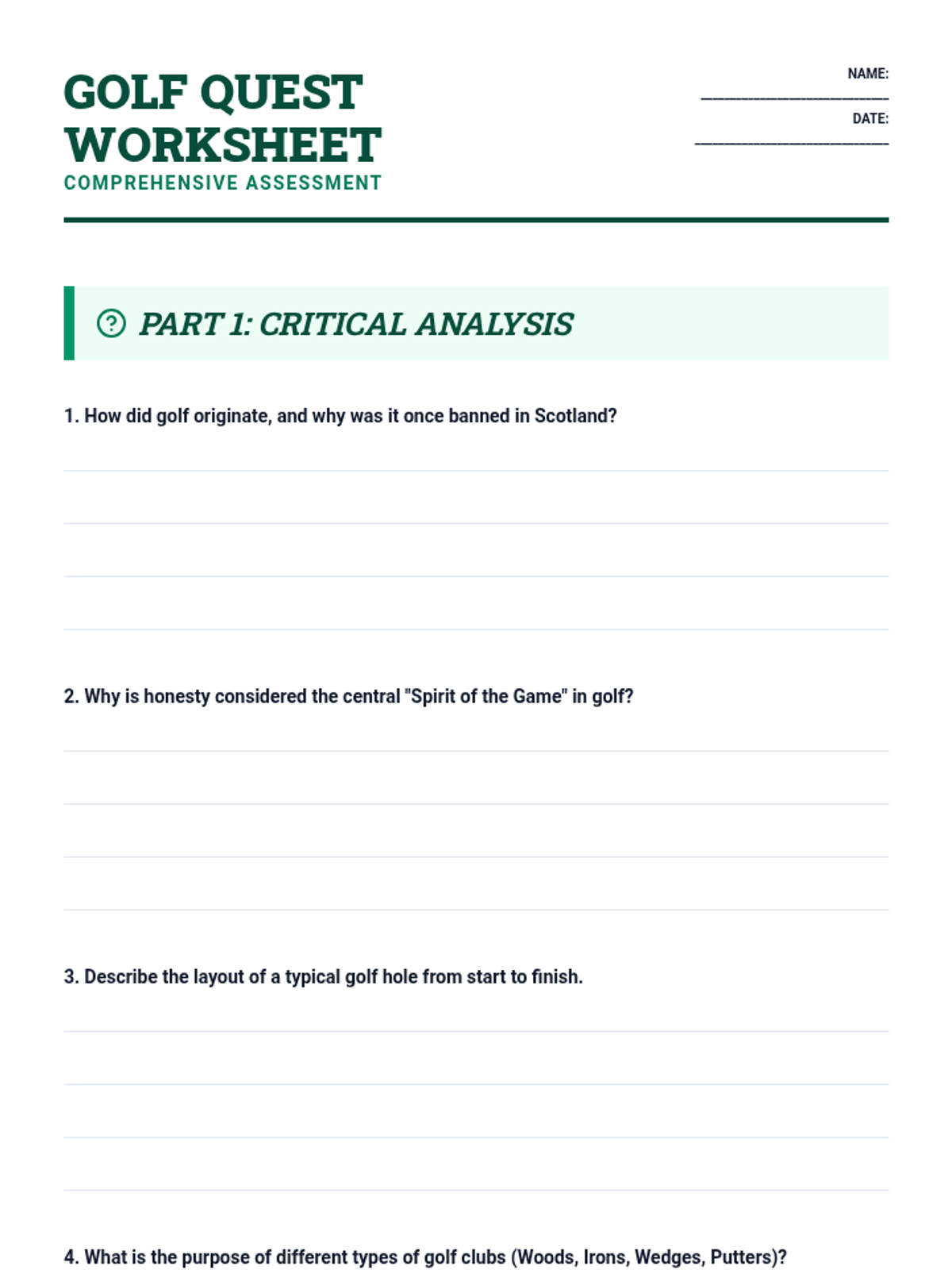
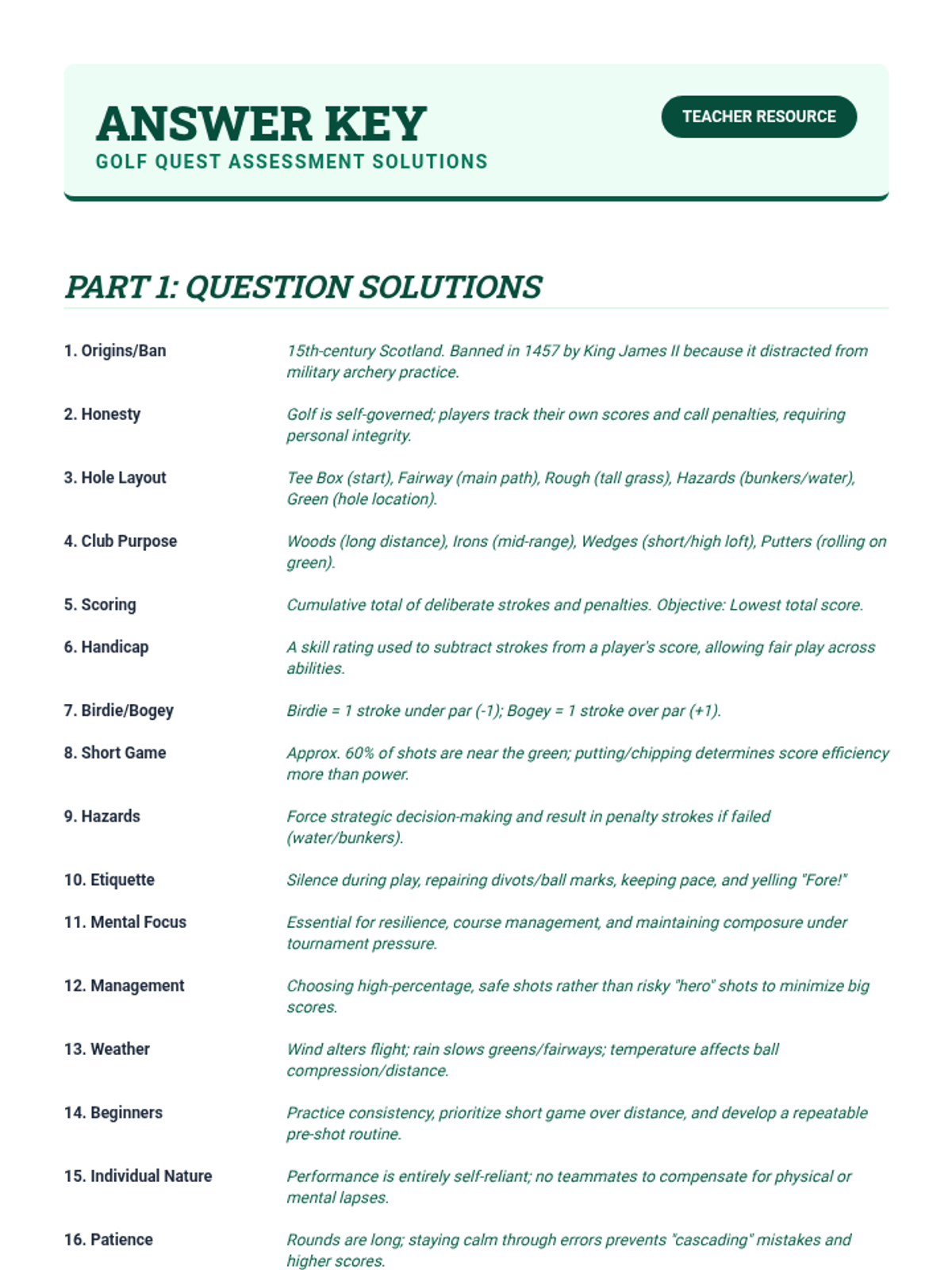
A comprehensive introduction to the game of golf, covering its historical roots in Scotland, the technical anatomy of a course, essential equipment, rules, and the mental strategies required for success.
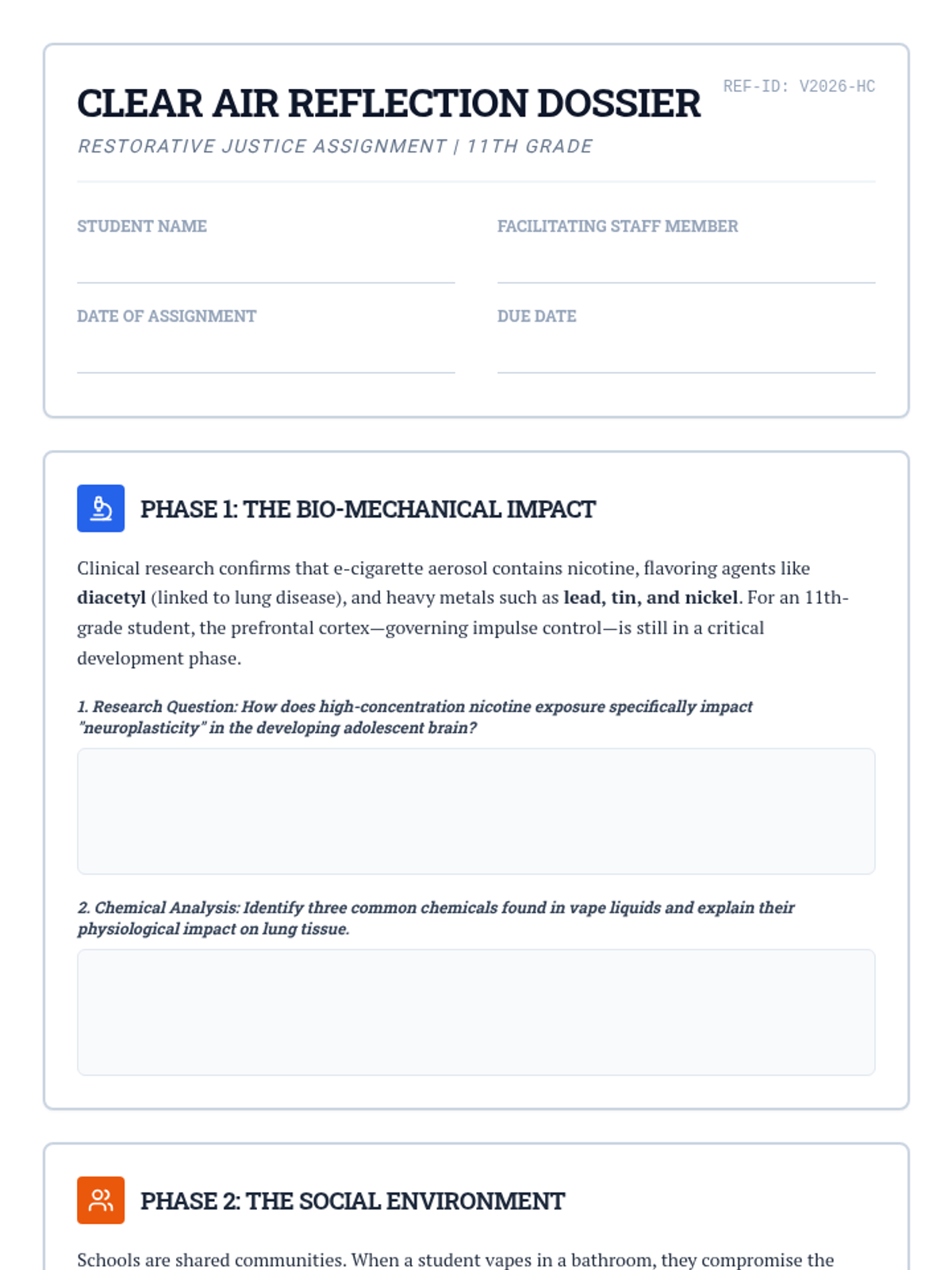
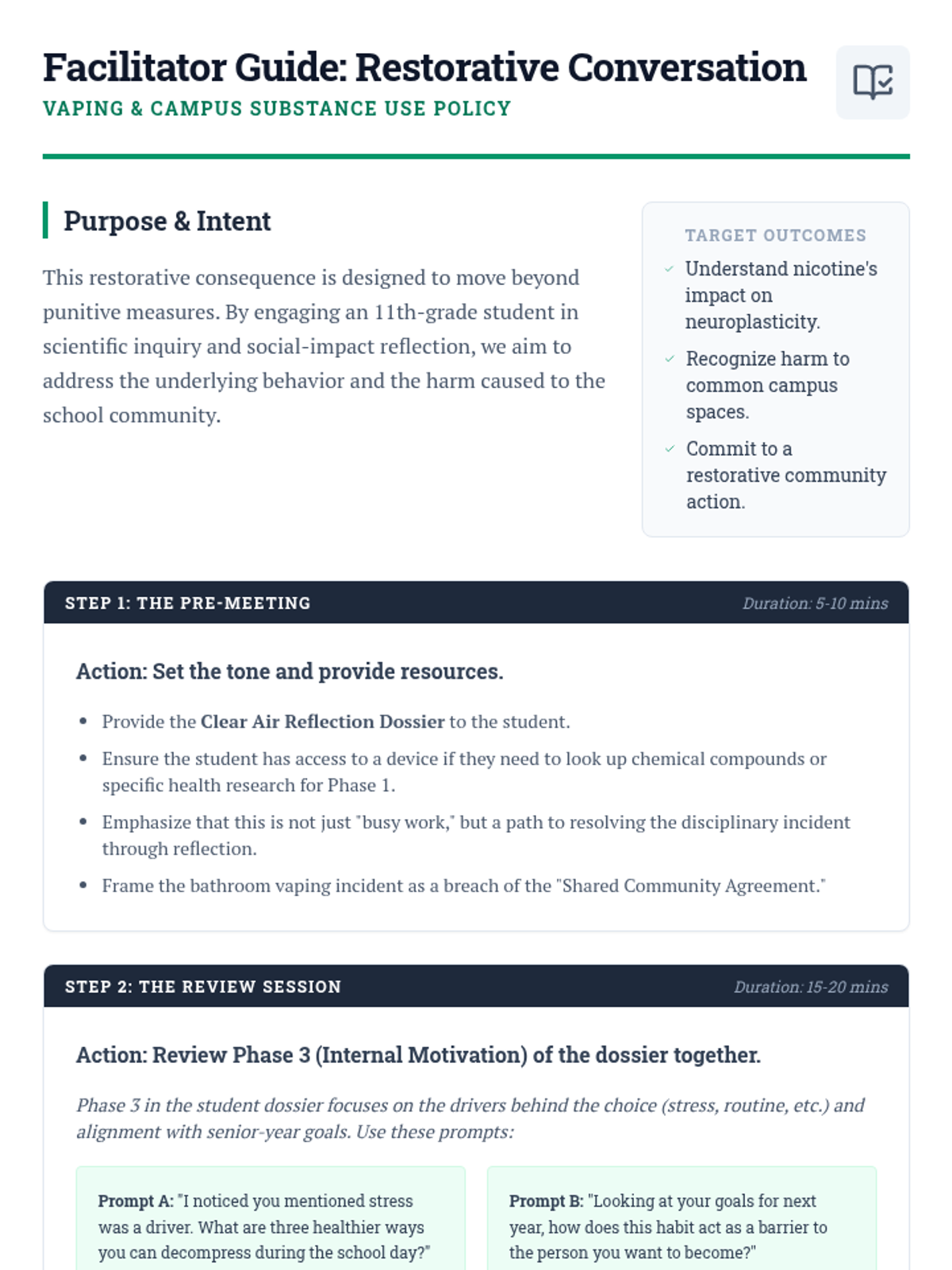
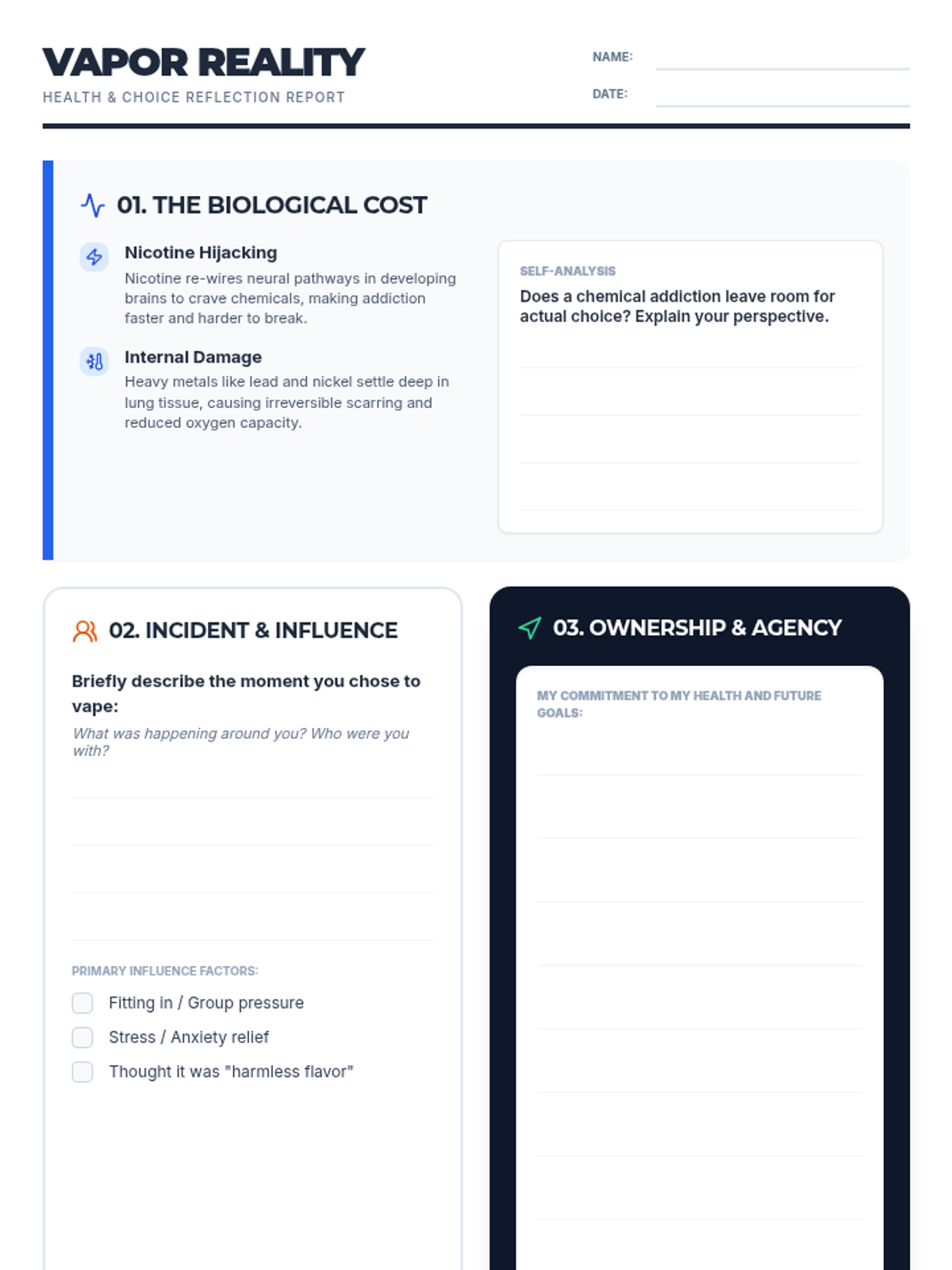
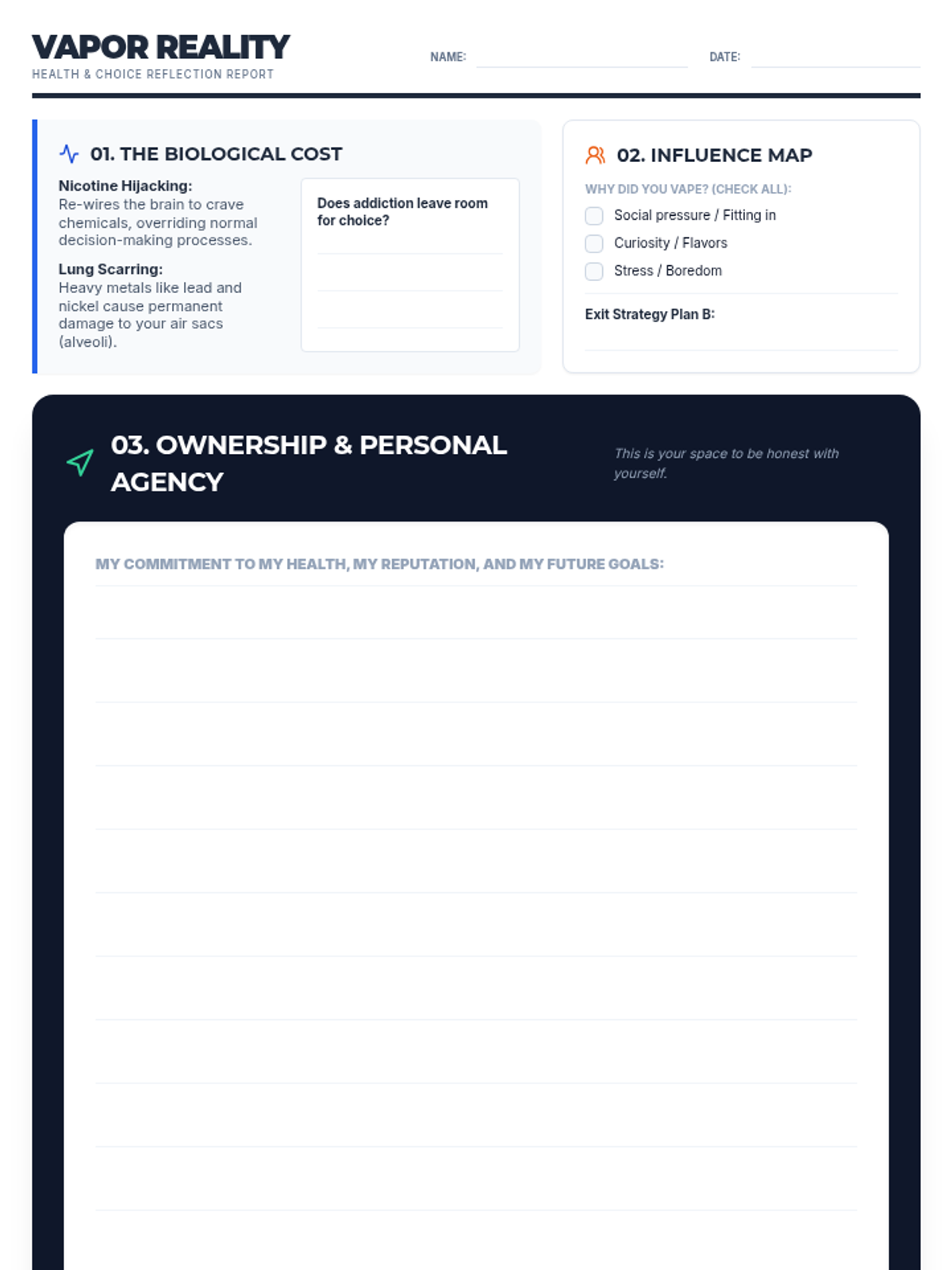
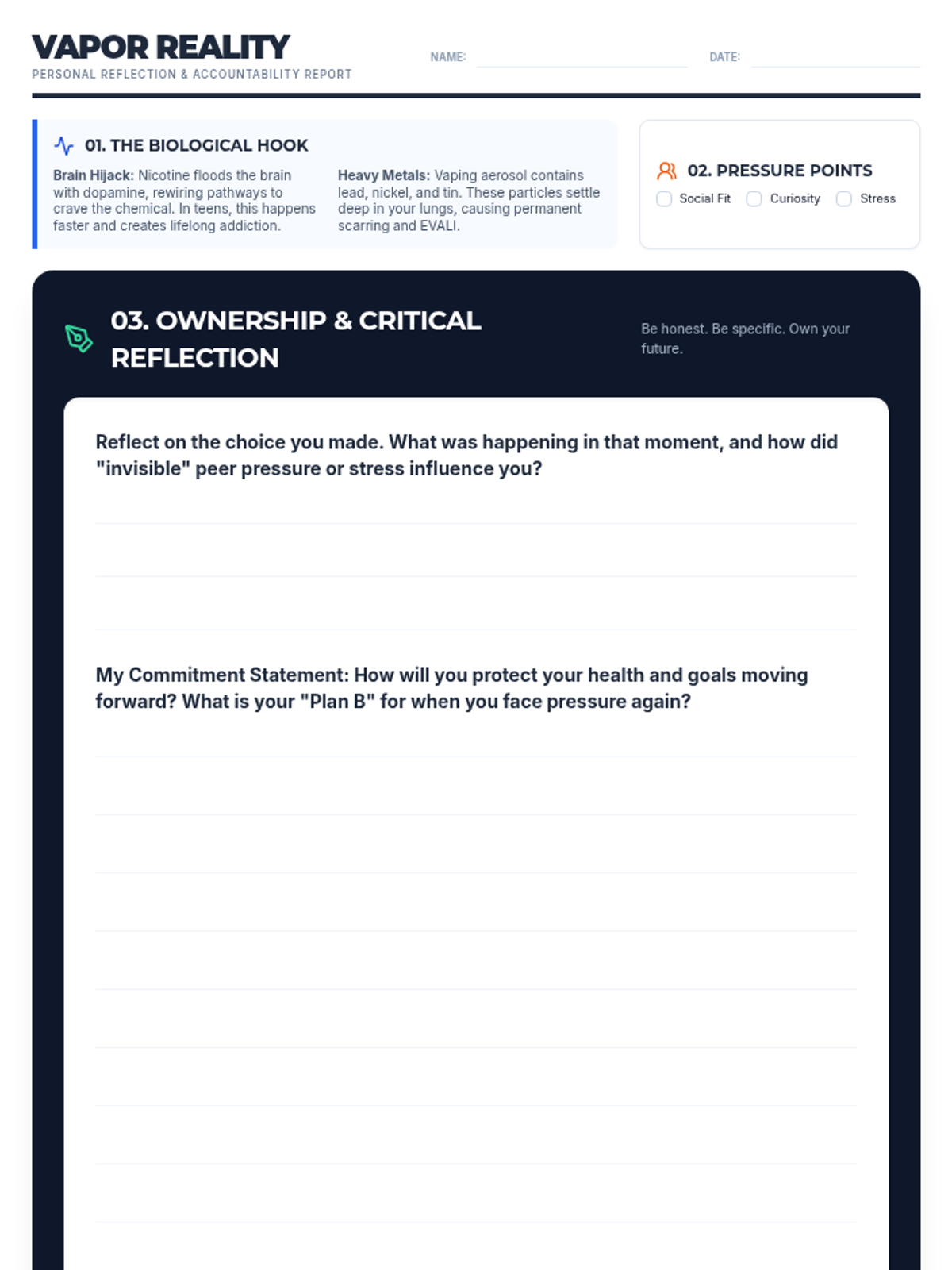
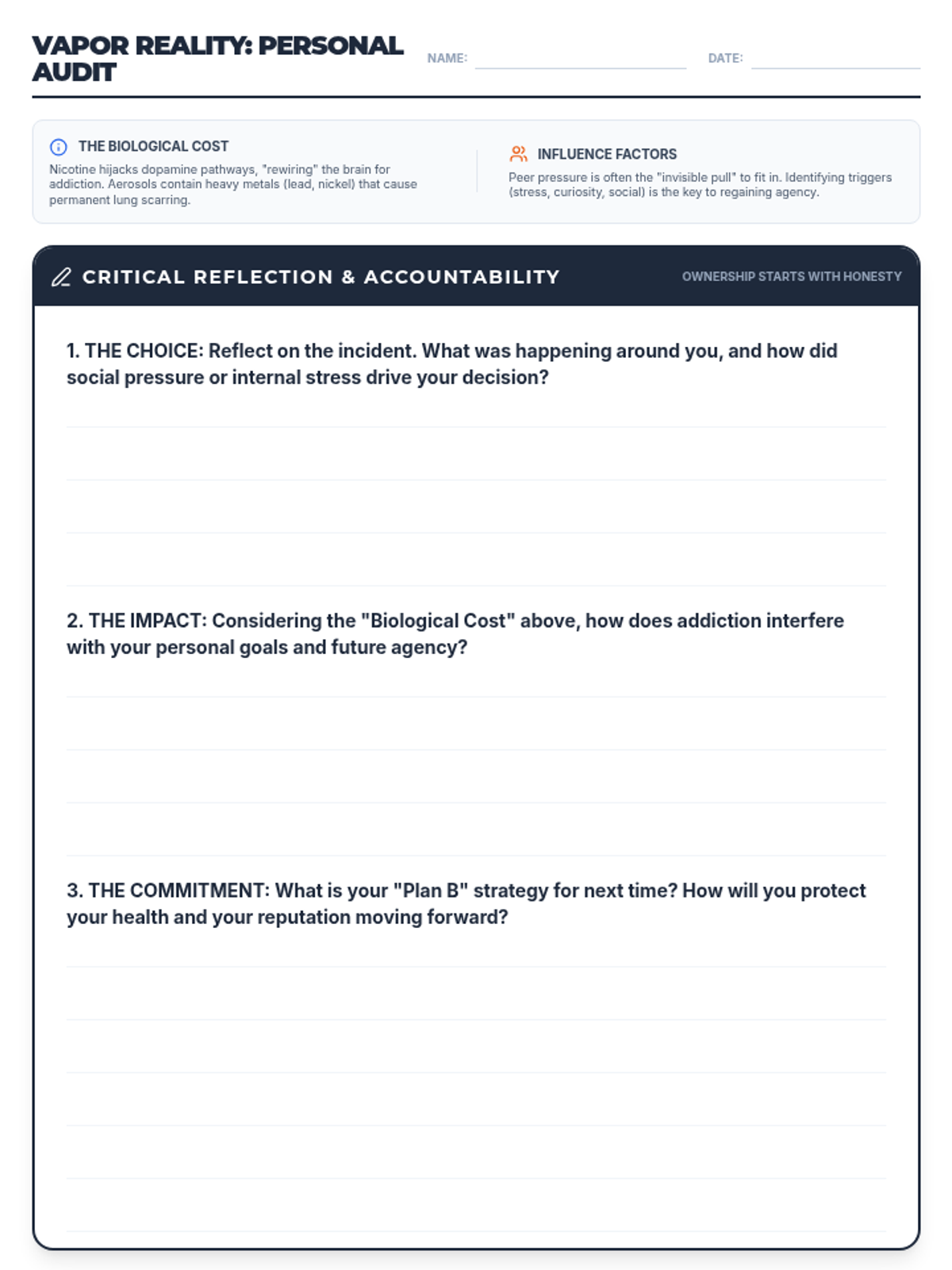
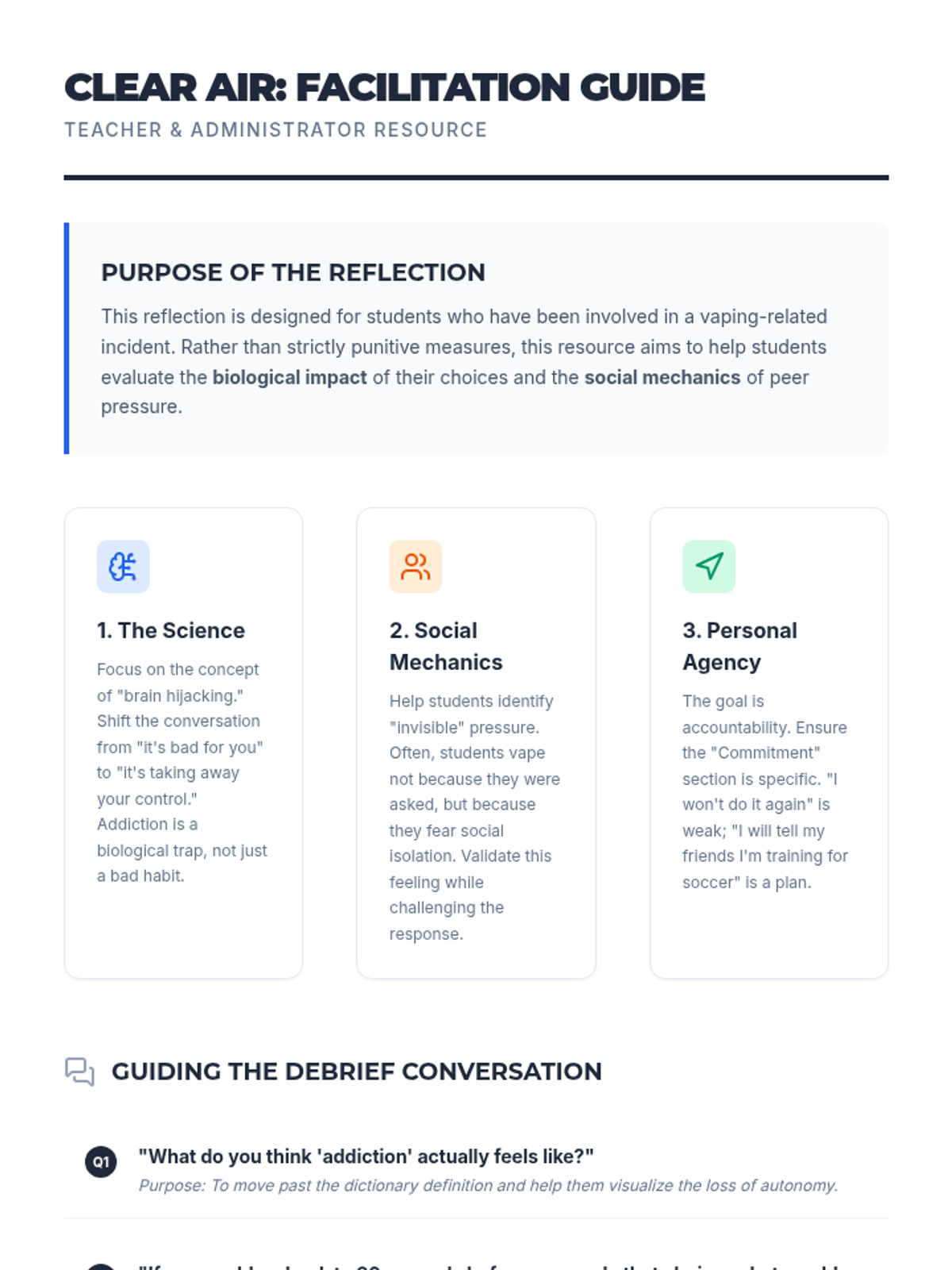
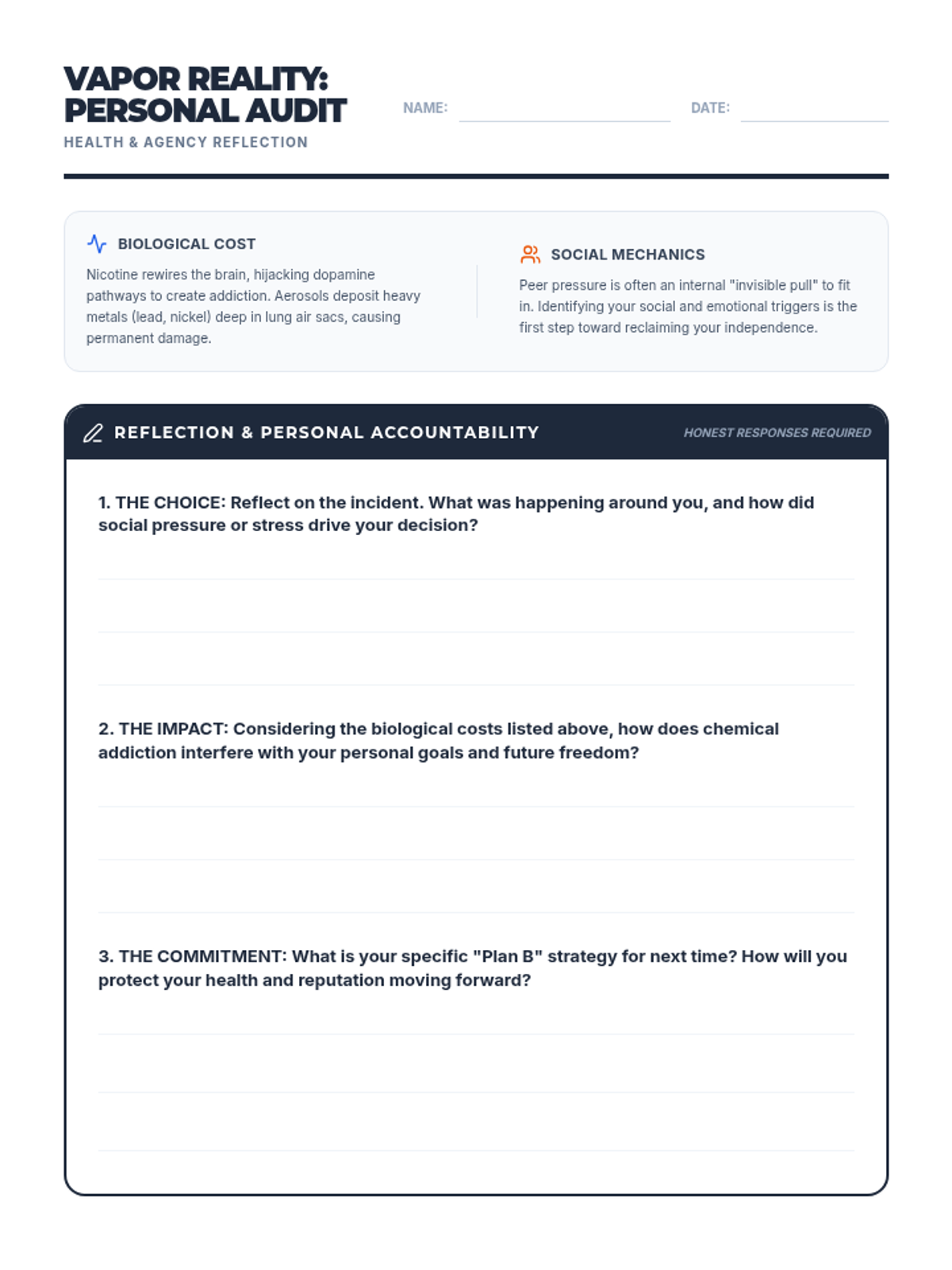
A restorative justice lesson designed for a high school student to reflect on the health impacts of vaping and the social consequences of using prohibited substances on campus.
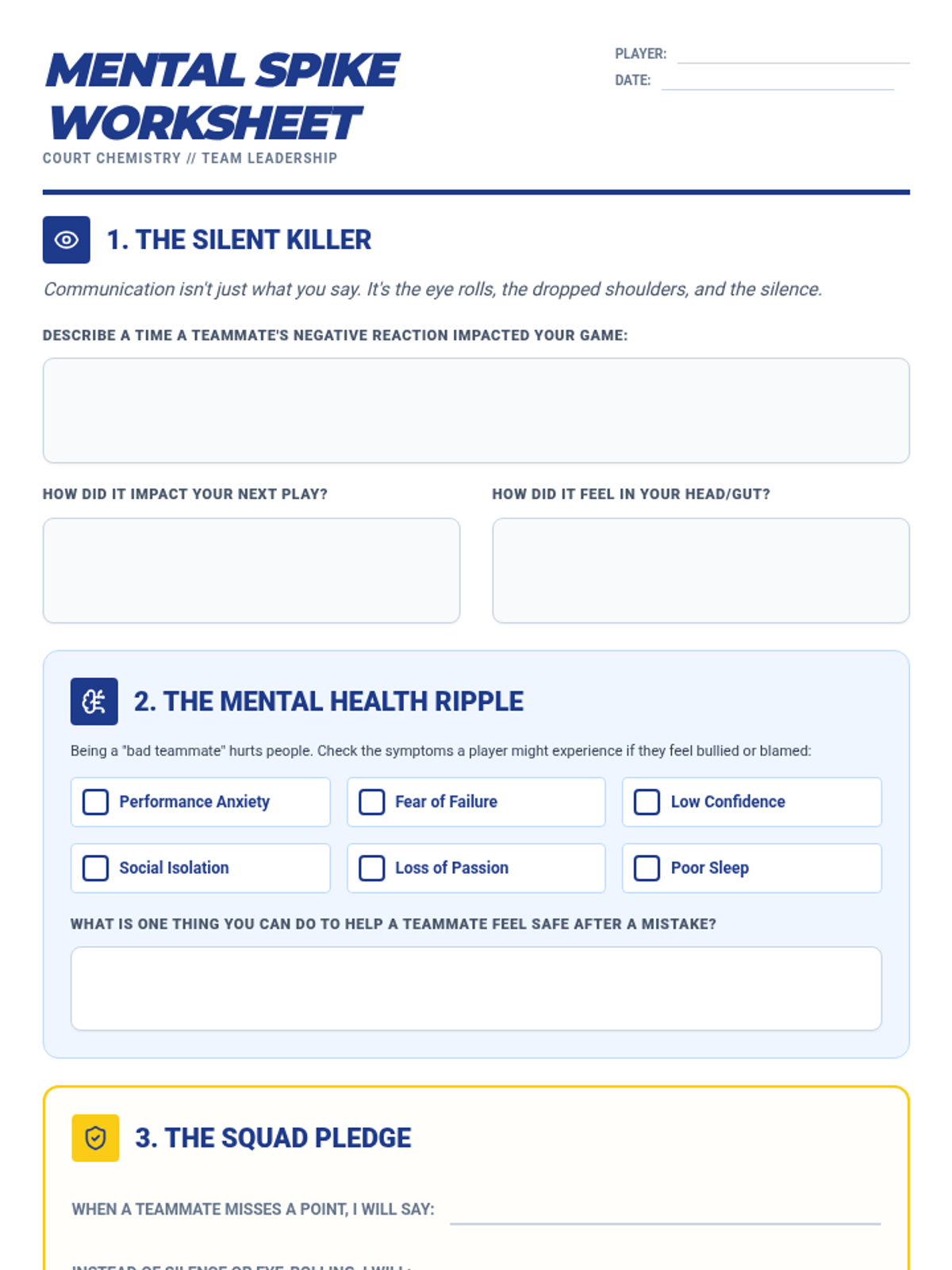
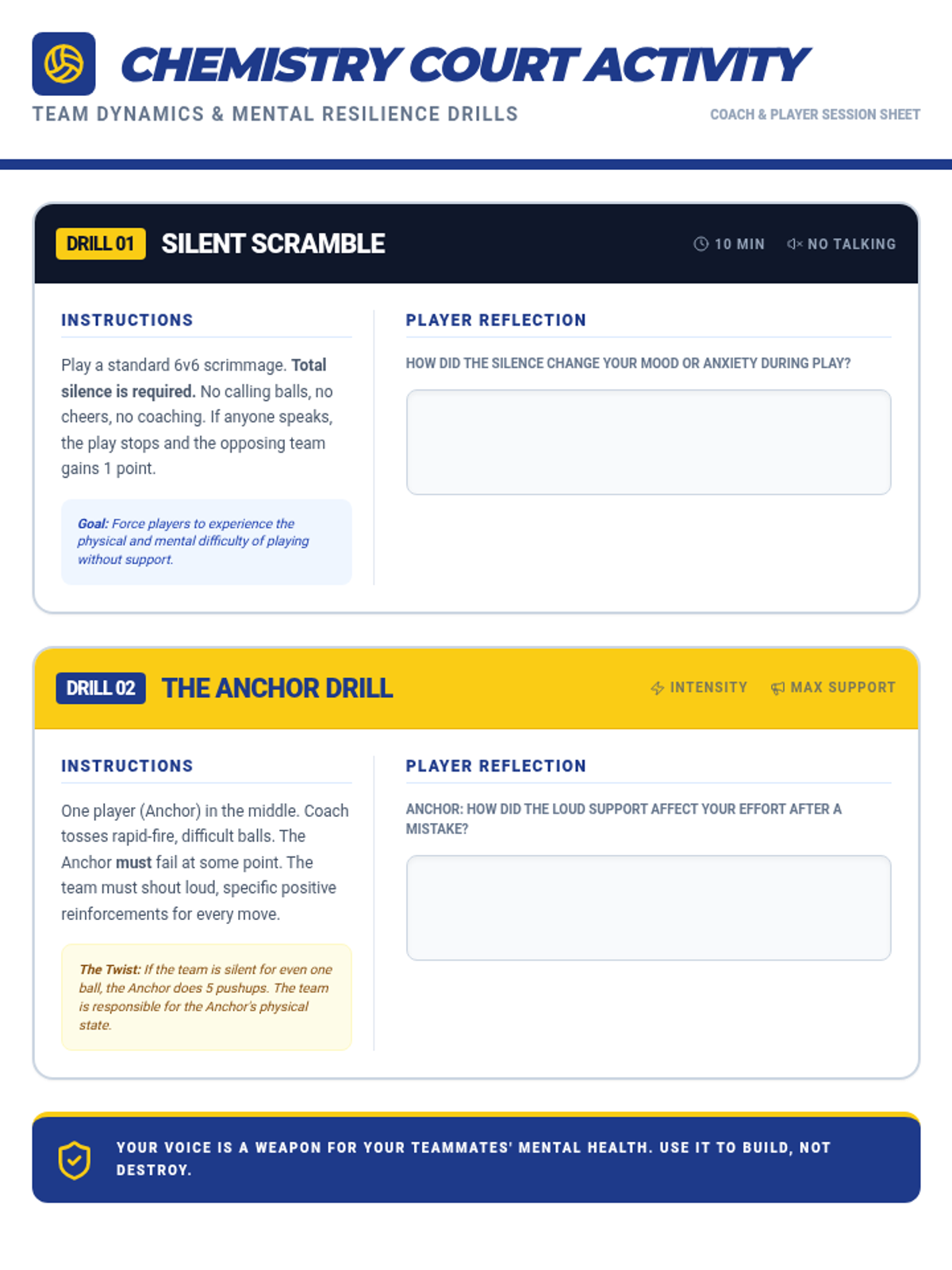
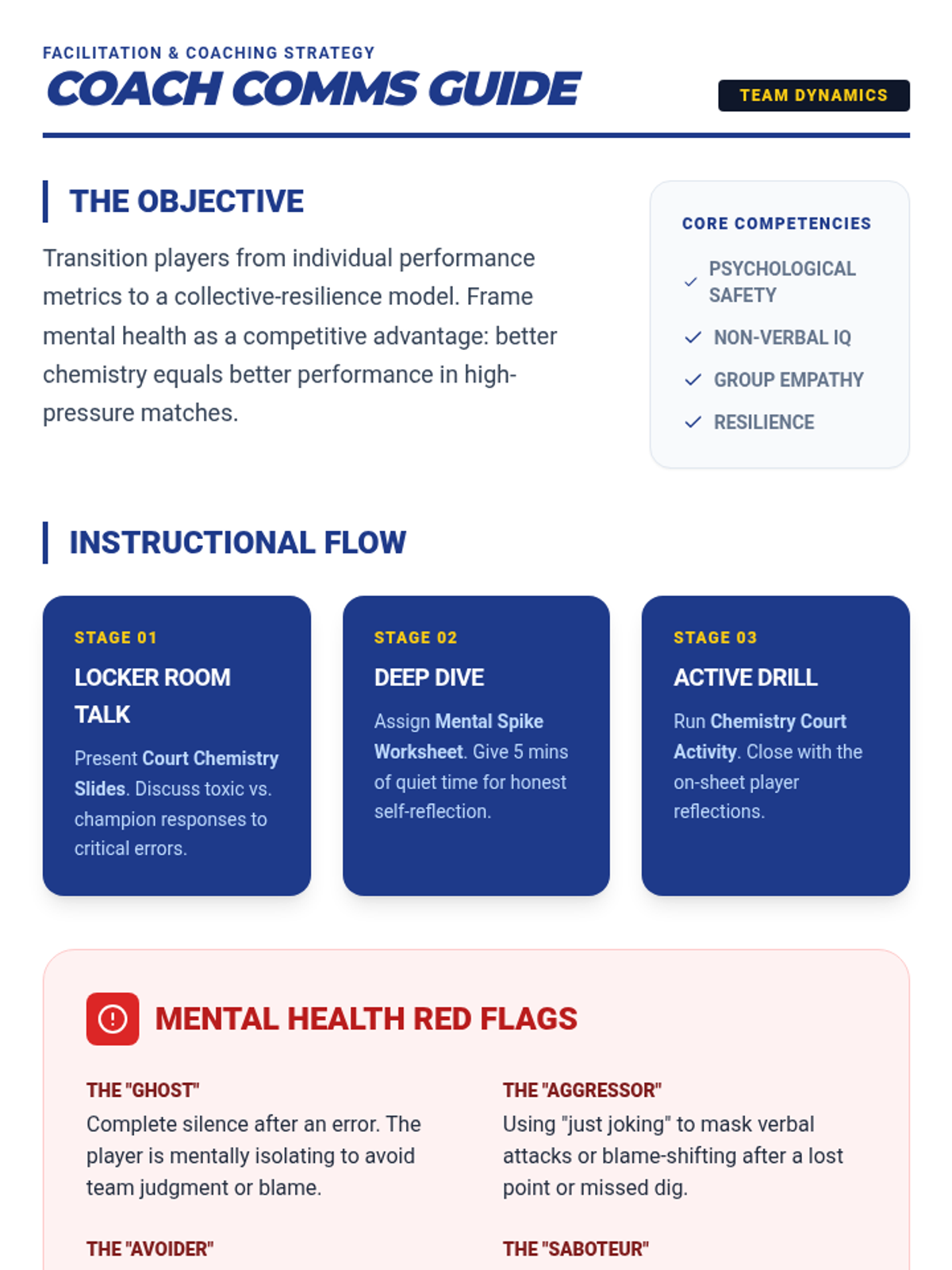
A lesson for boys' volleyball teams focused on building positive team dynamics, understanding the mental health impact of sportsmanship, and practicing supportive communication on the court.
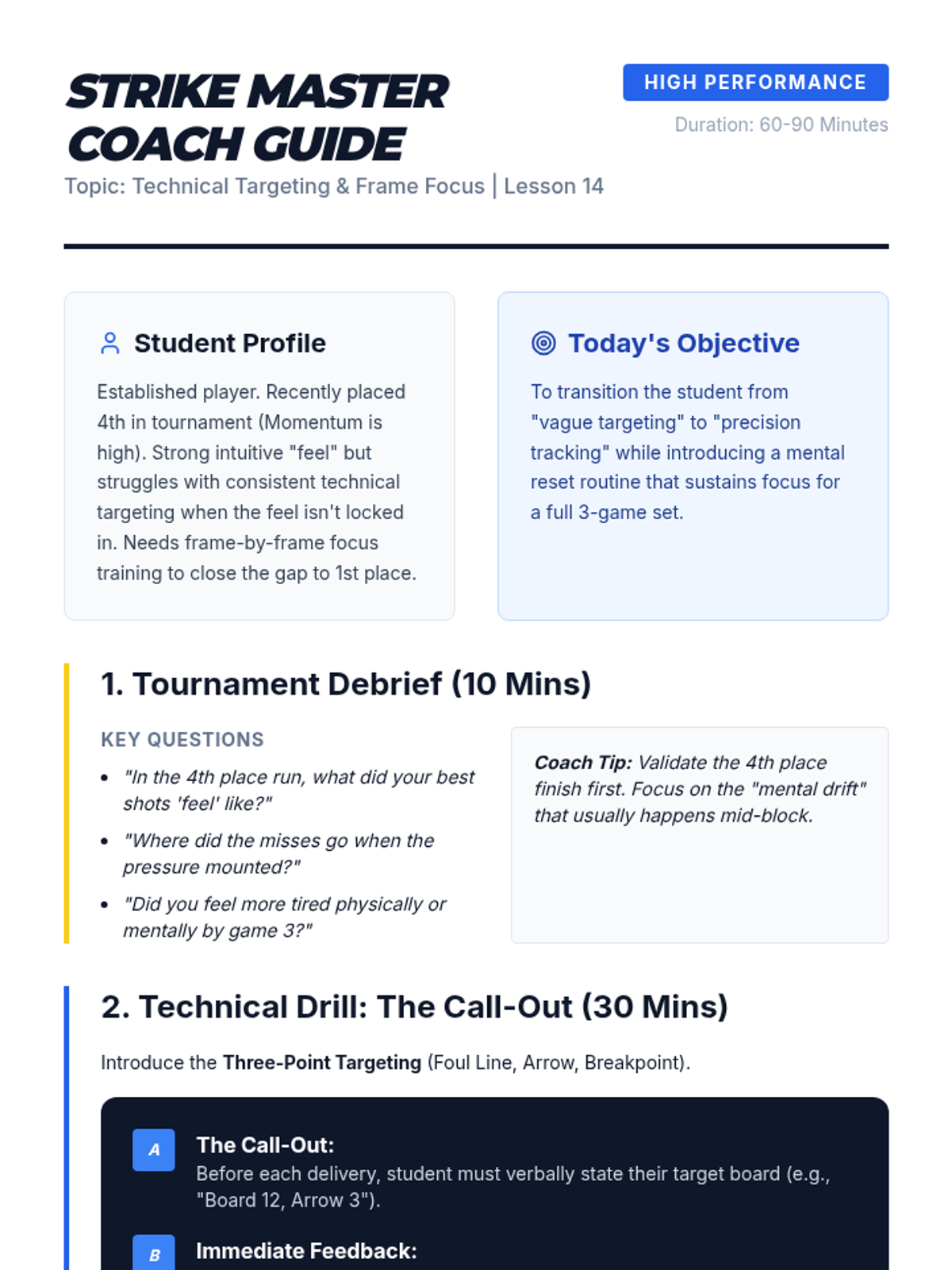
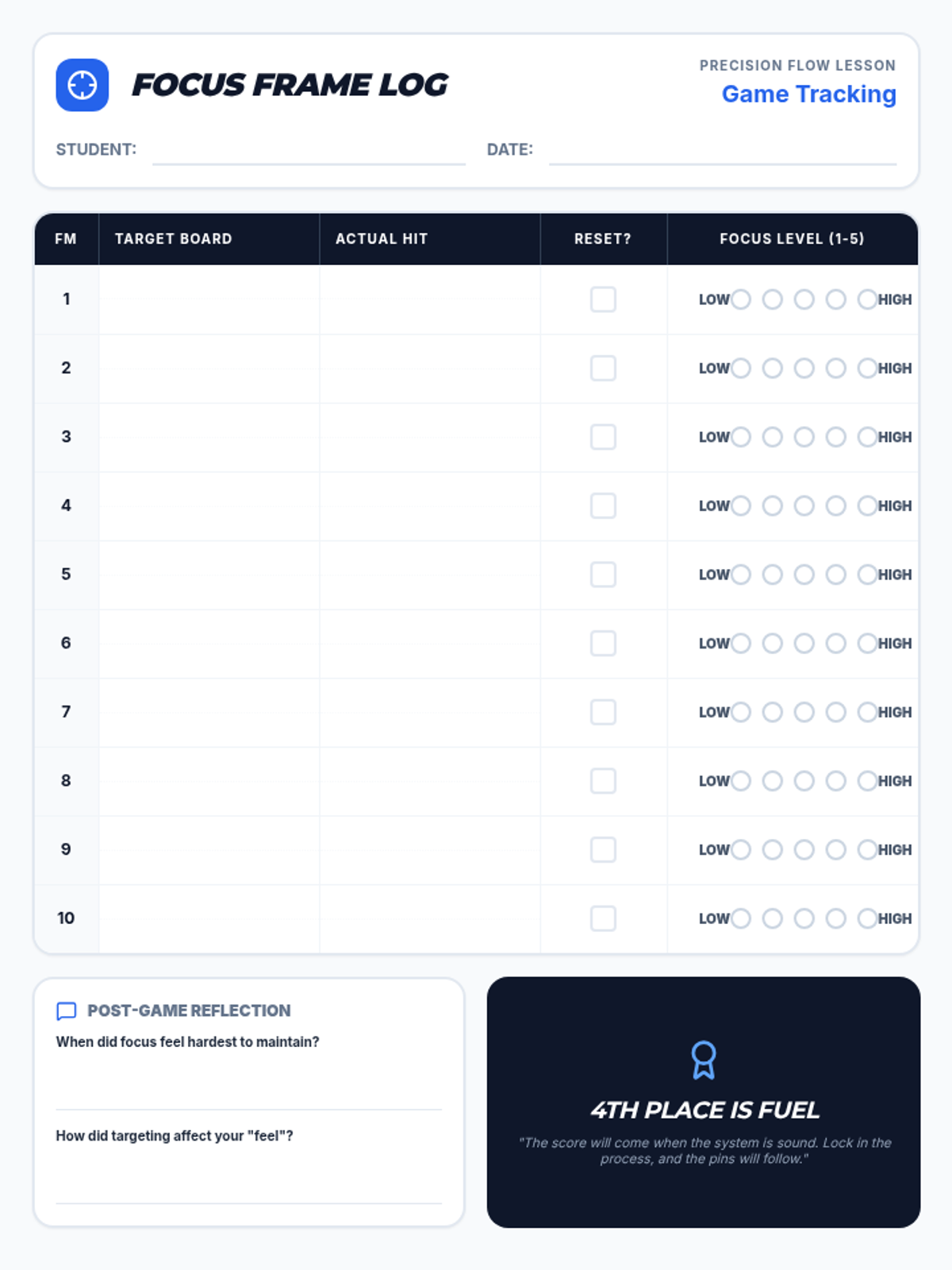
A high-performance bowling lesson designed to bridge the gap between intuitive 'feel' and technical precision targeting. Focused on maintaining mental stamina and frame-by-frame consistency for competitive athletes.
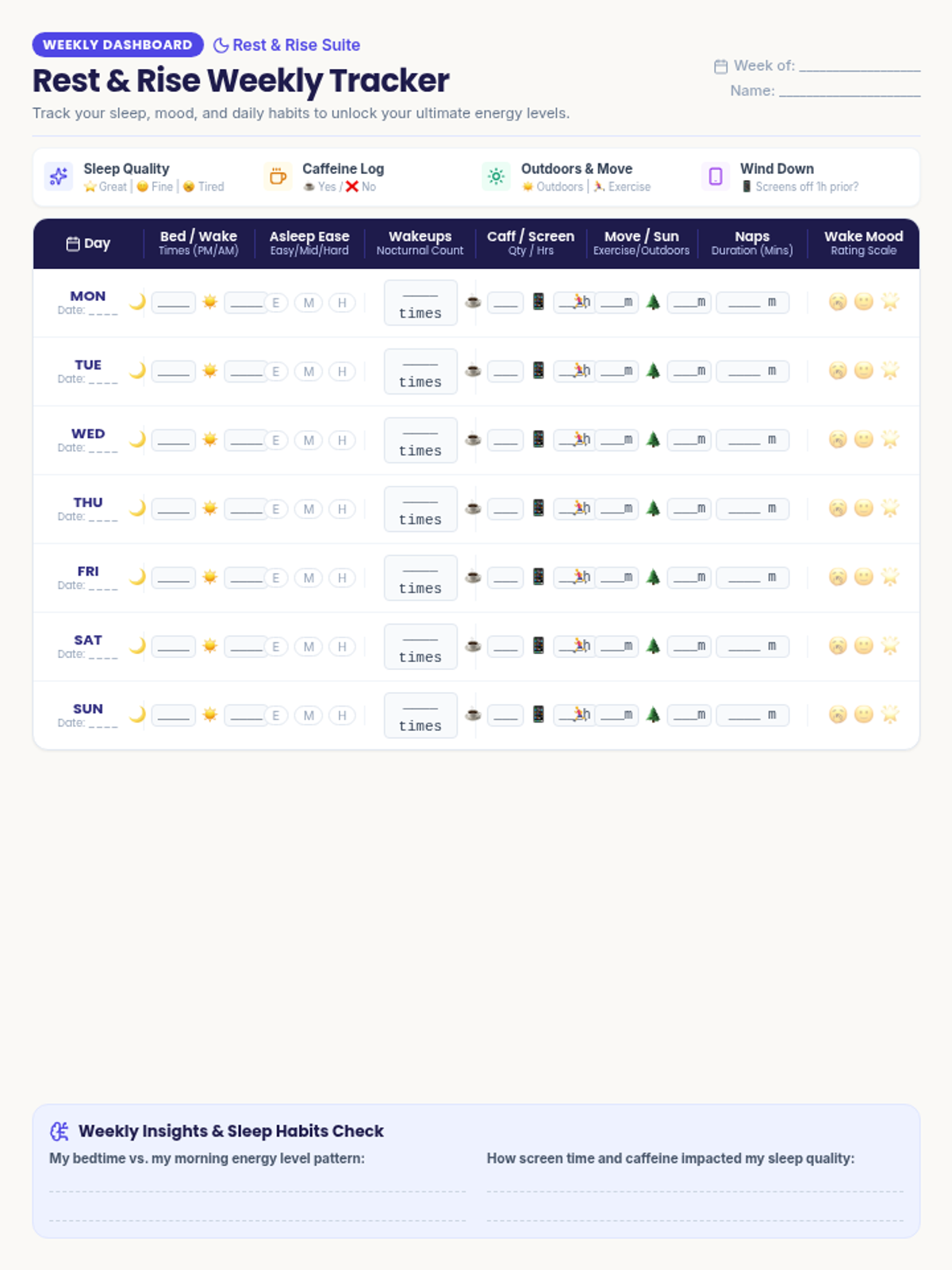
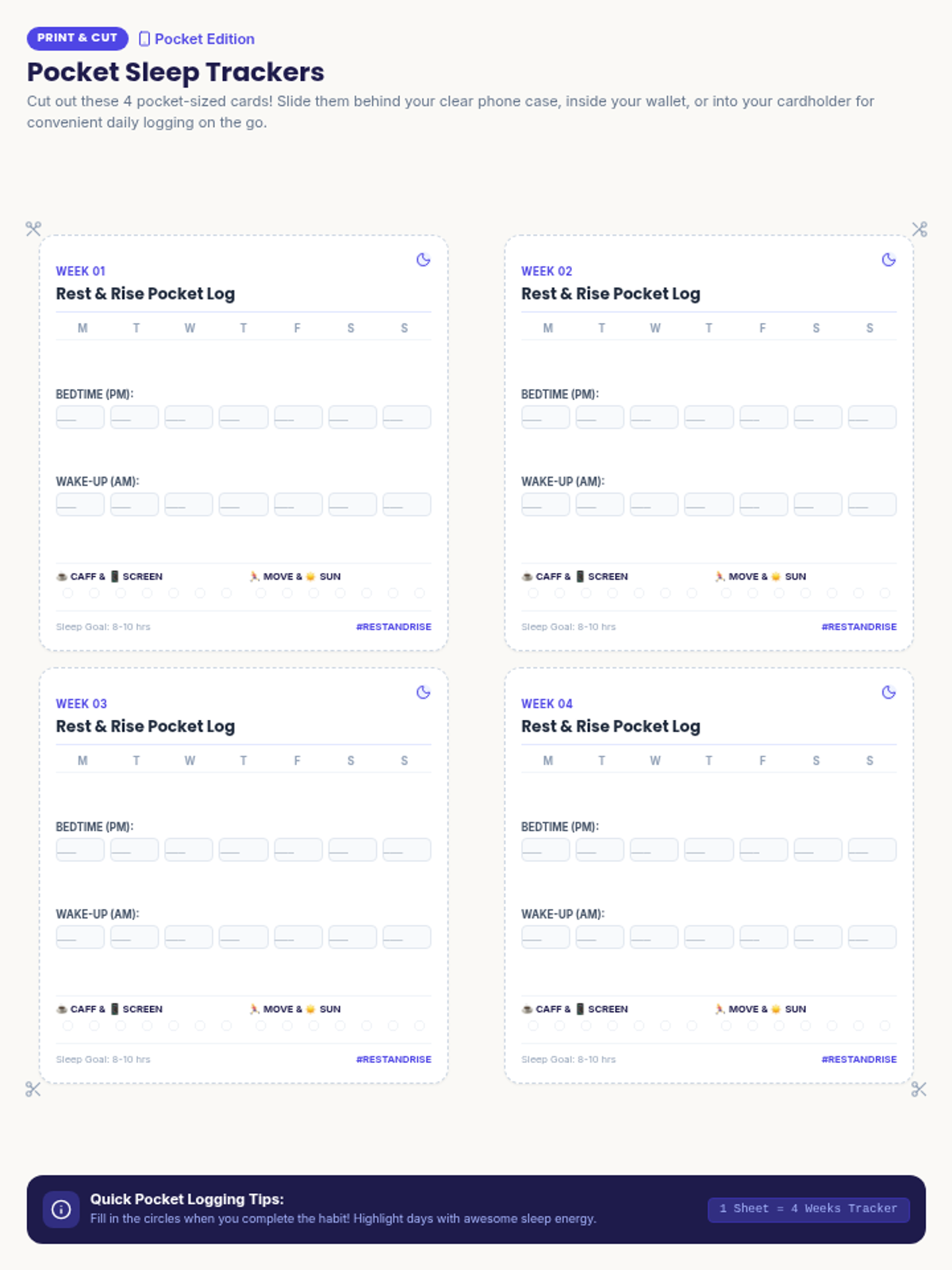
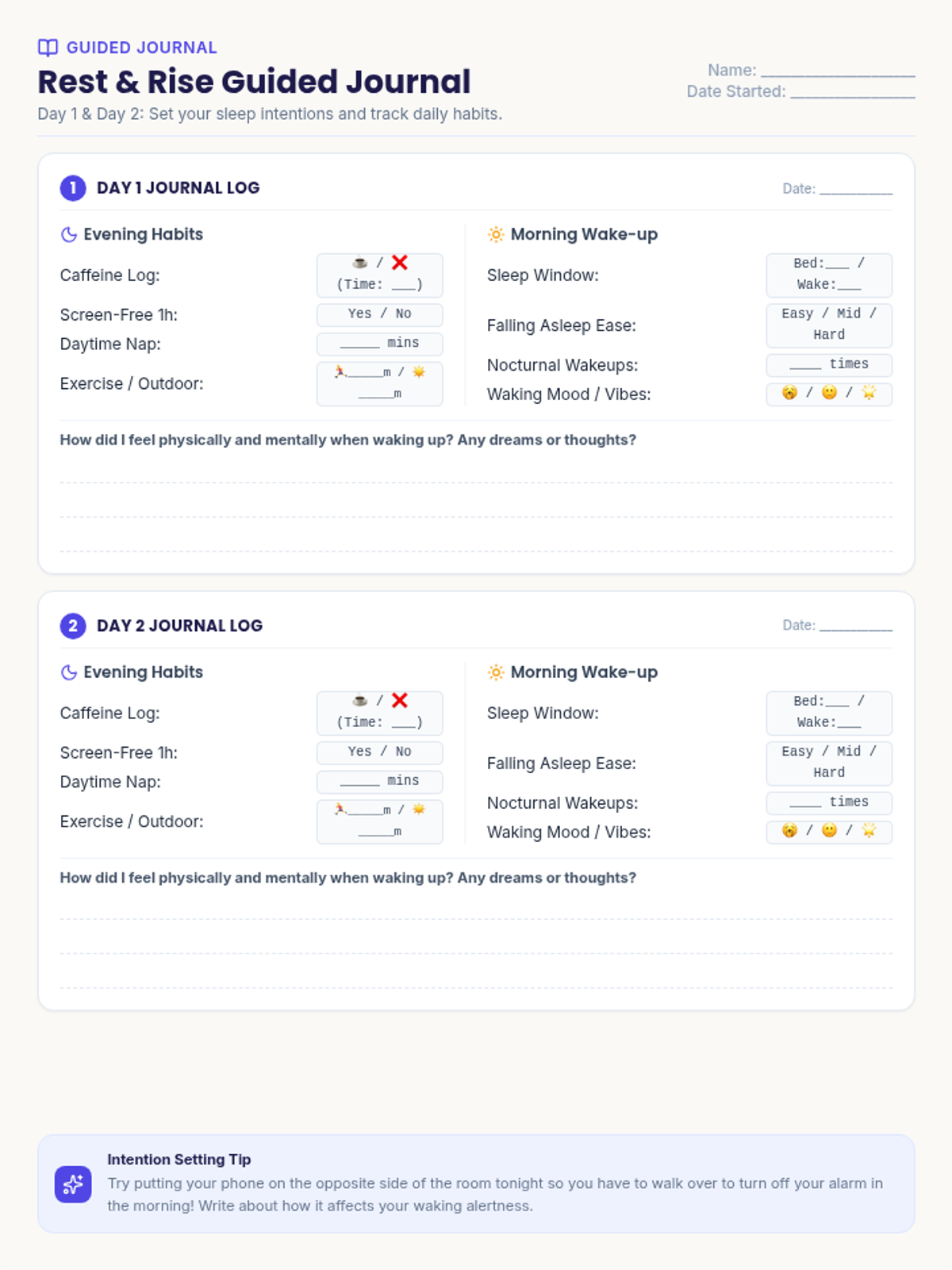
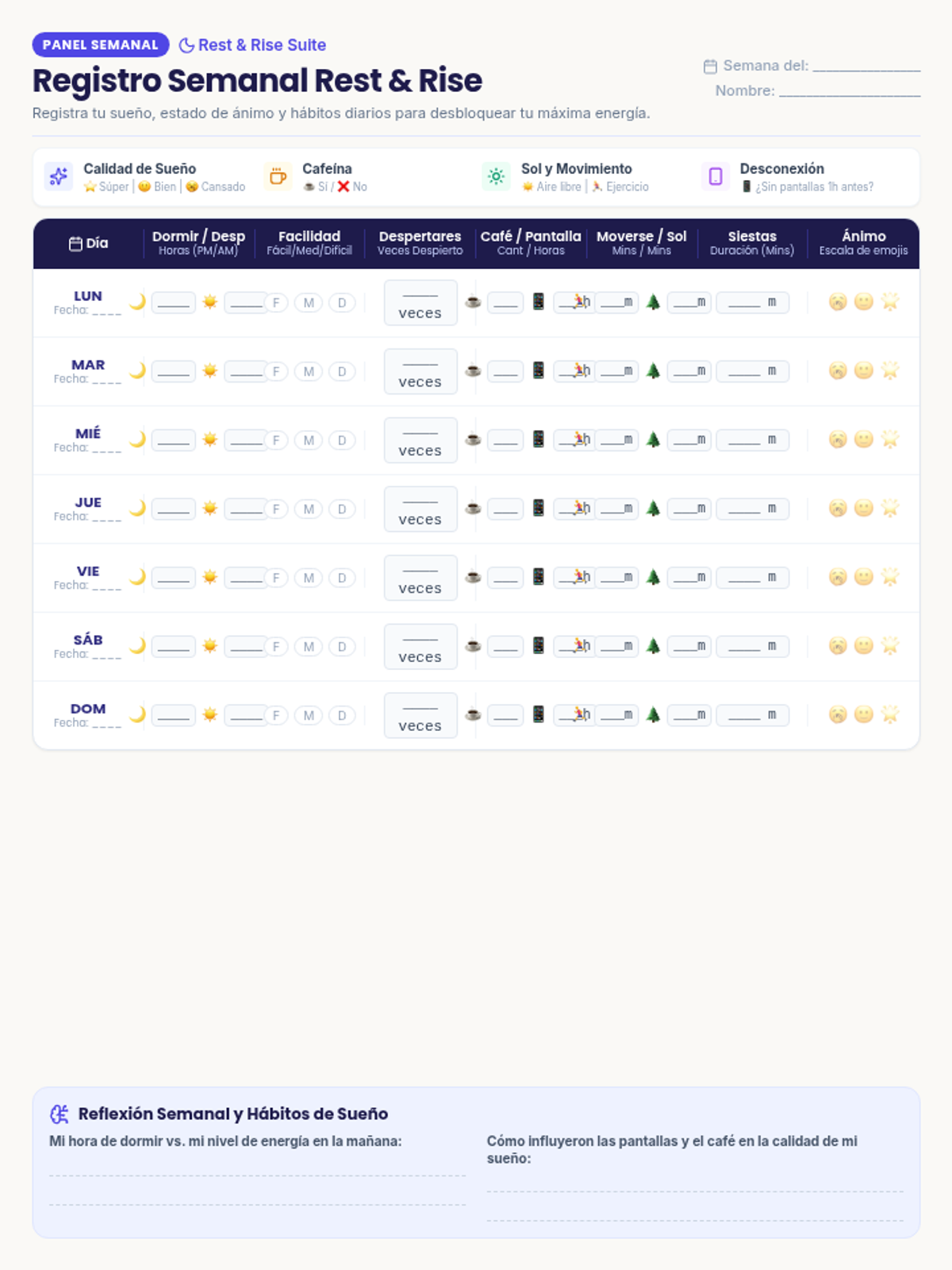
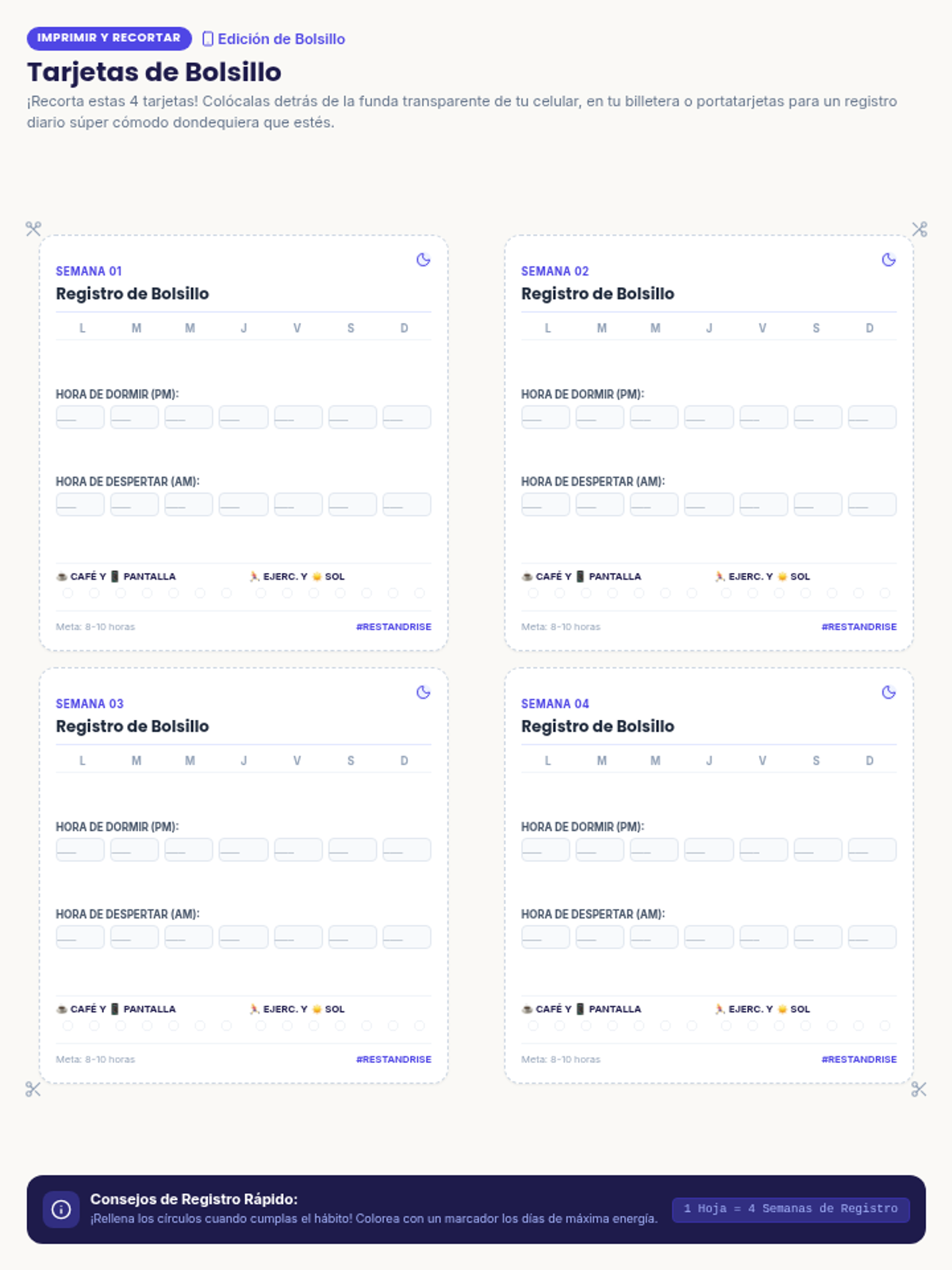
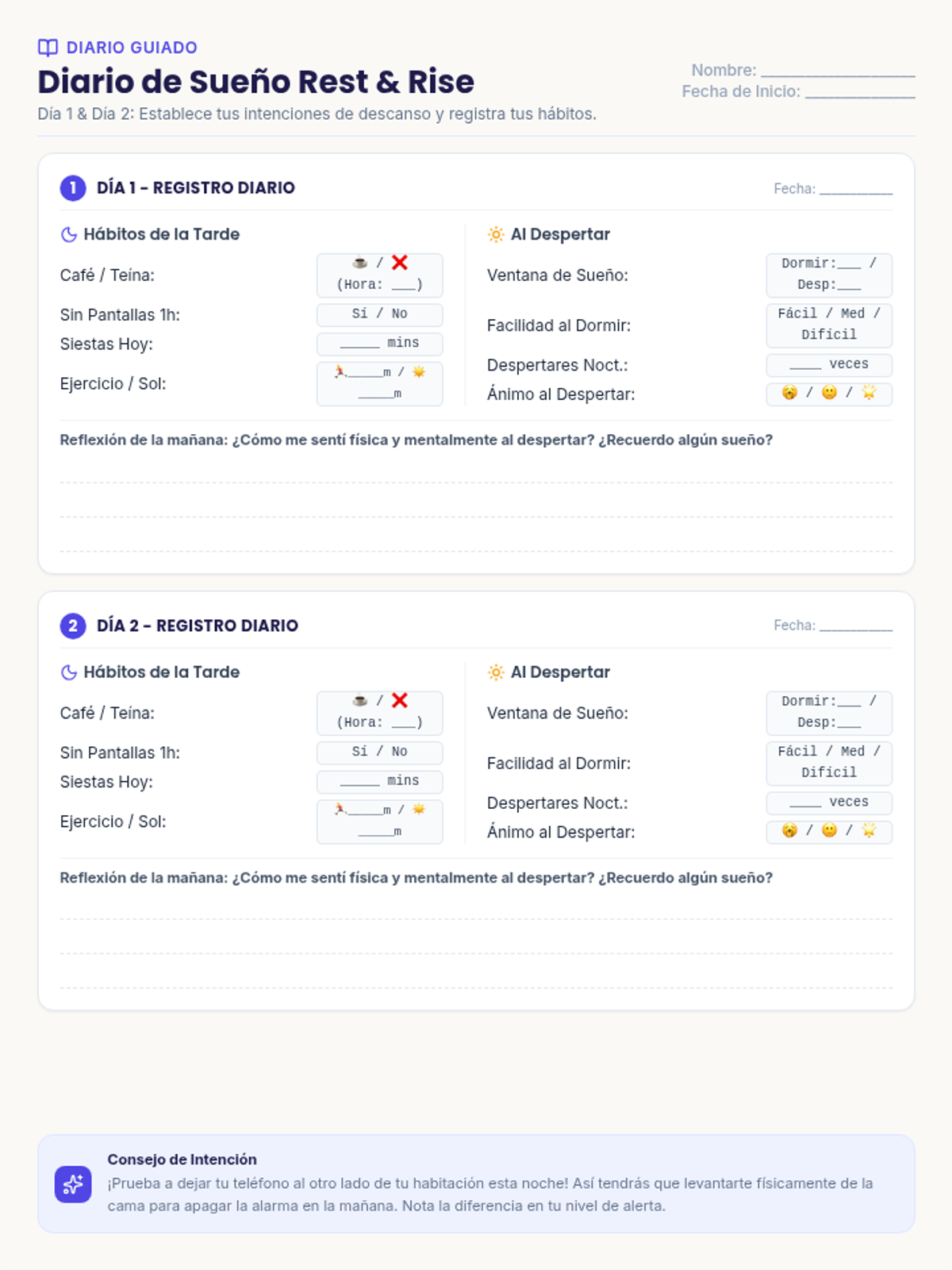
A teen-focused sleep and mood tracking suite that combines physical tracking with mindfulness. Includes a 1-Page Weekly Tracker, Pocket-Sized Mini Trackers for phone cases/wallets, and a 7-Day Guided Daily Journal with deep reflection prompts. Helps teens identify connections between screen time, caffeine, physical activity, and sleep quality.
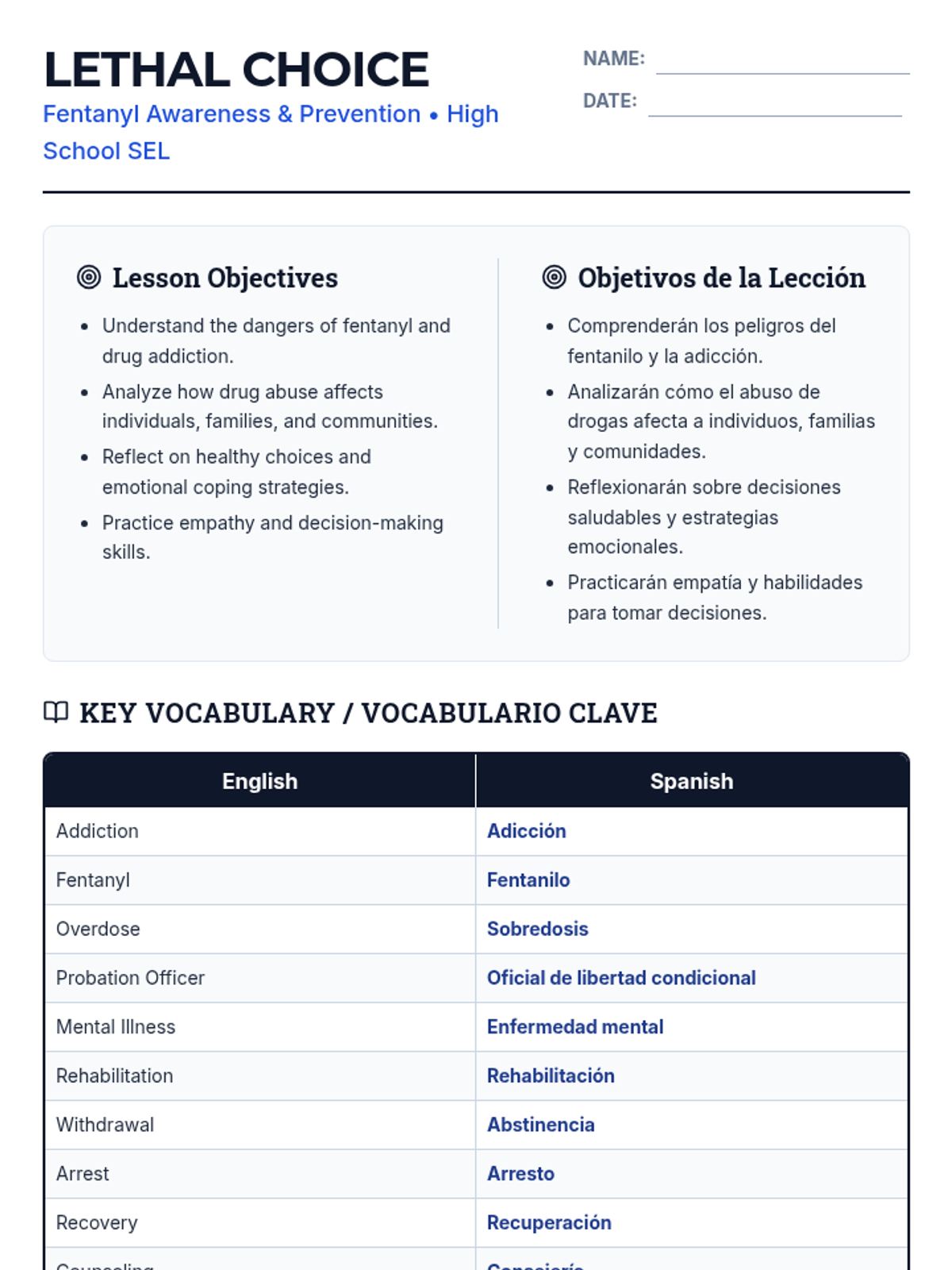
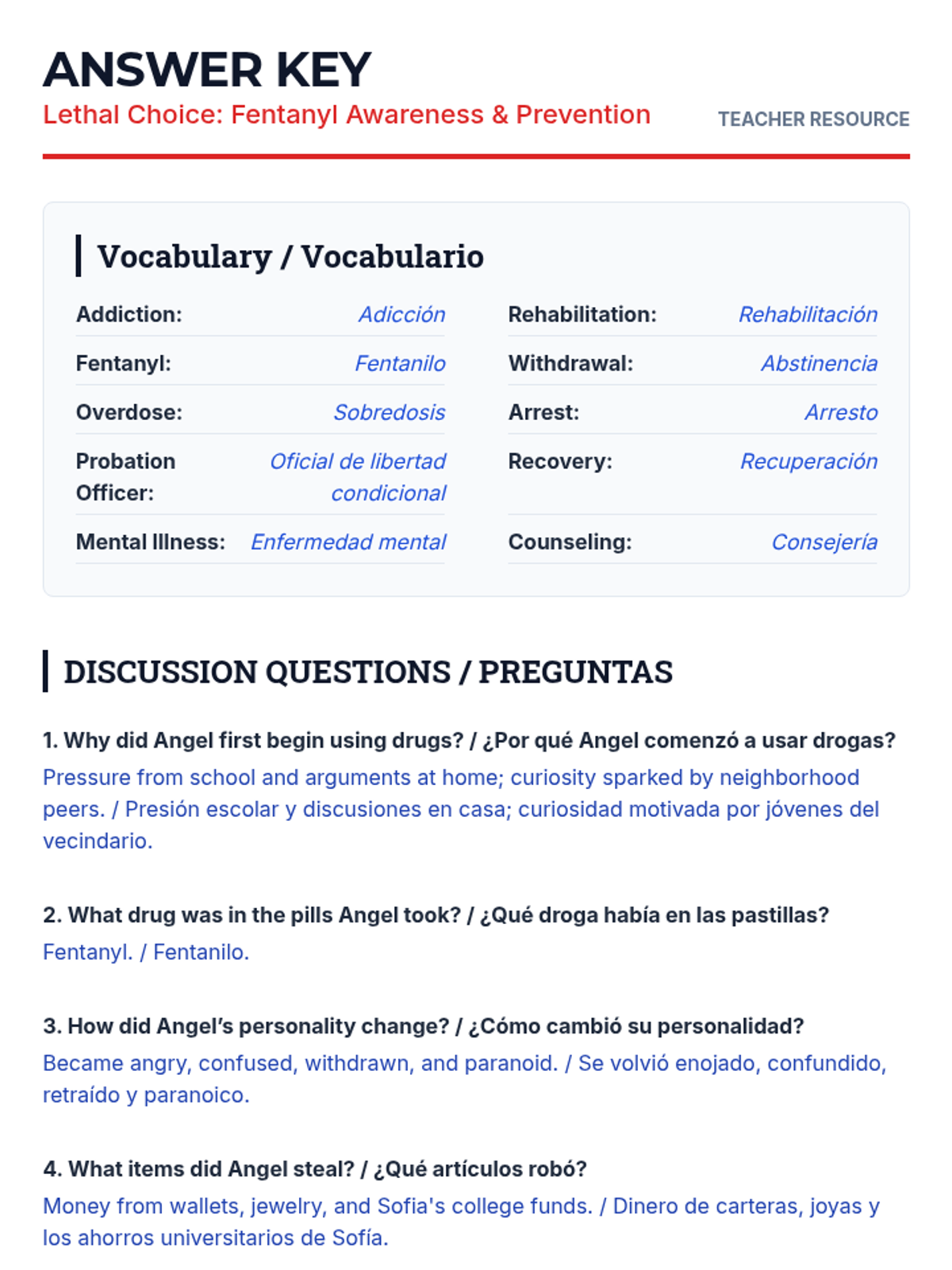
A high school SEL lesson focusing on fentanyl awareness, the consequences of addiction, and the path to recovery through a bilingual case study.
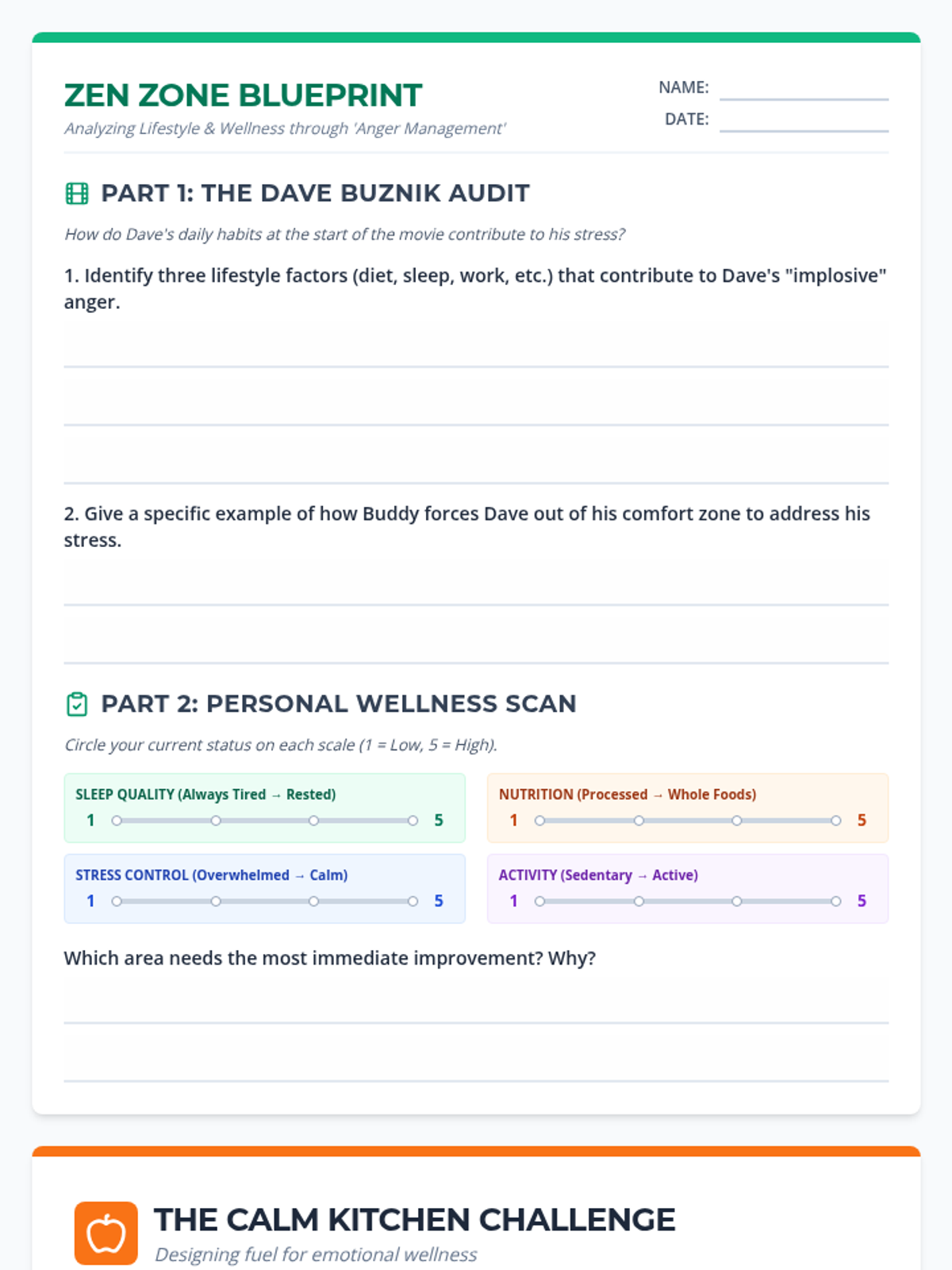
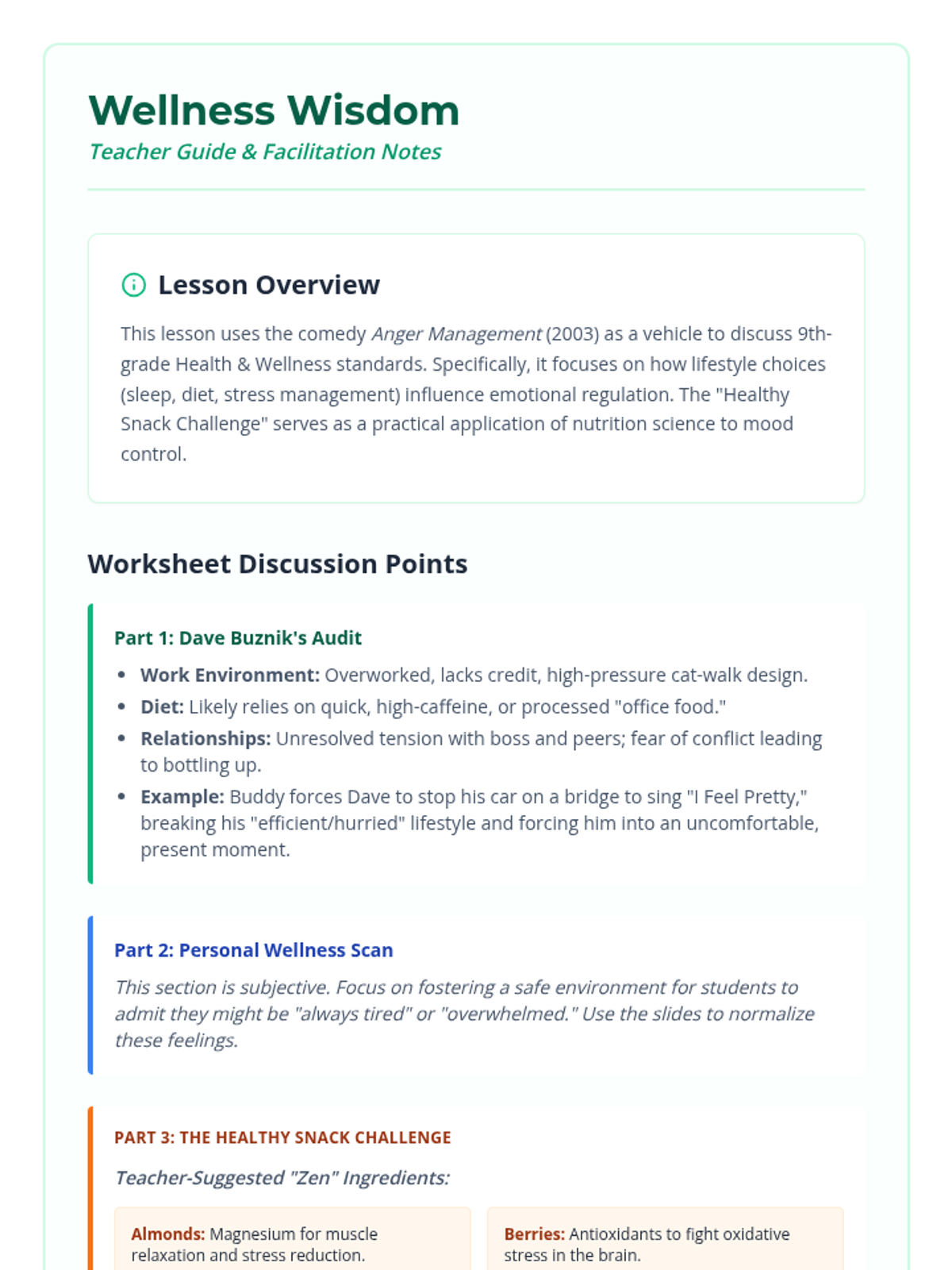
A lesson connecting the film Anger Management to personal health and wellness. Students analyze lifestyle factors that contribute to stress and design a healthy snack to support mood regulation.
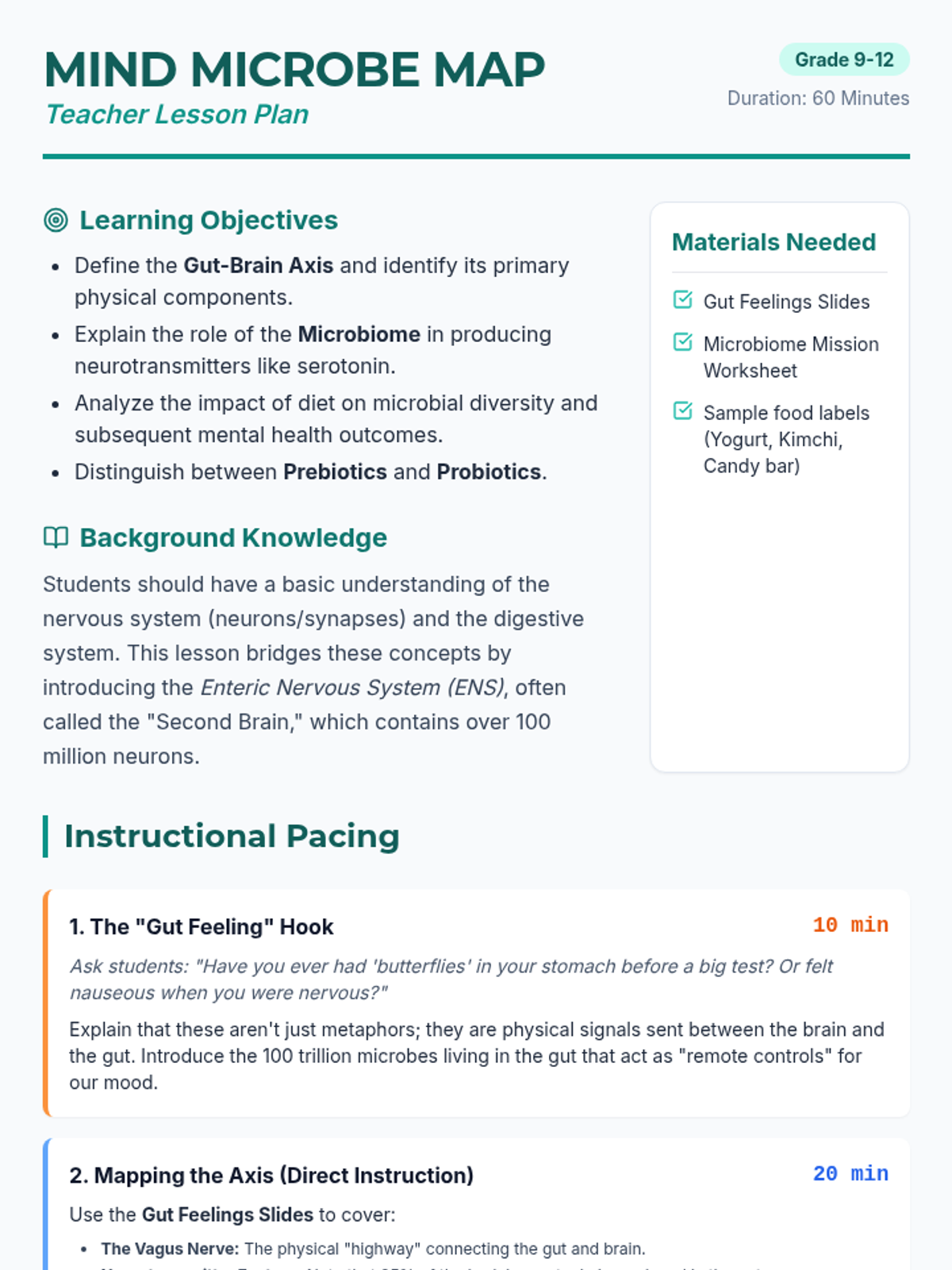
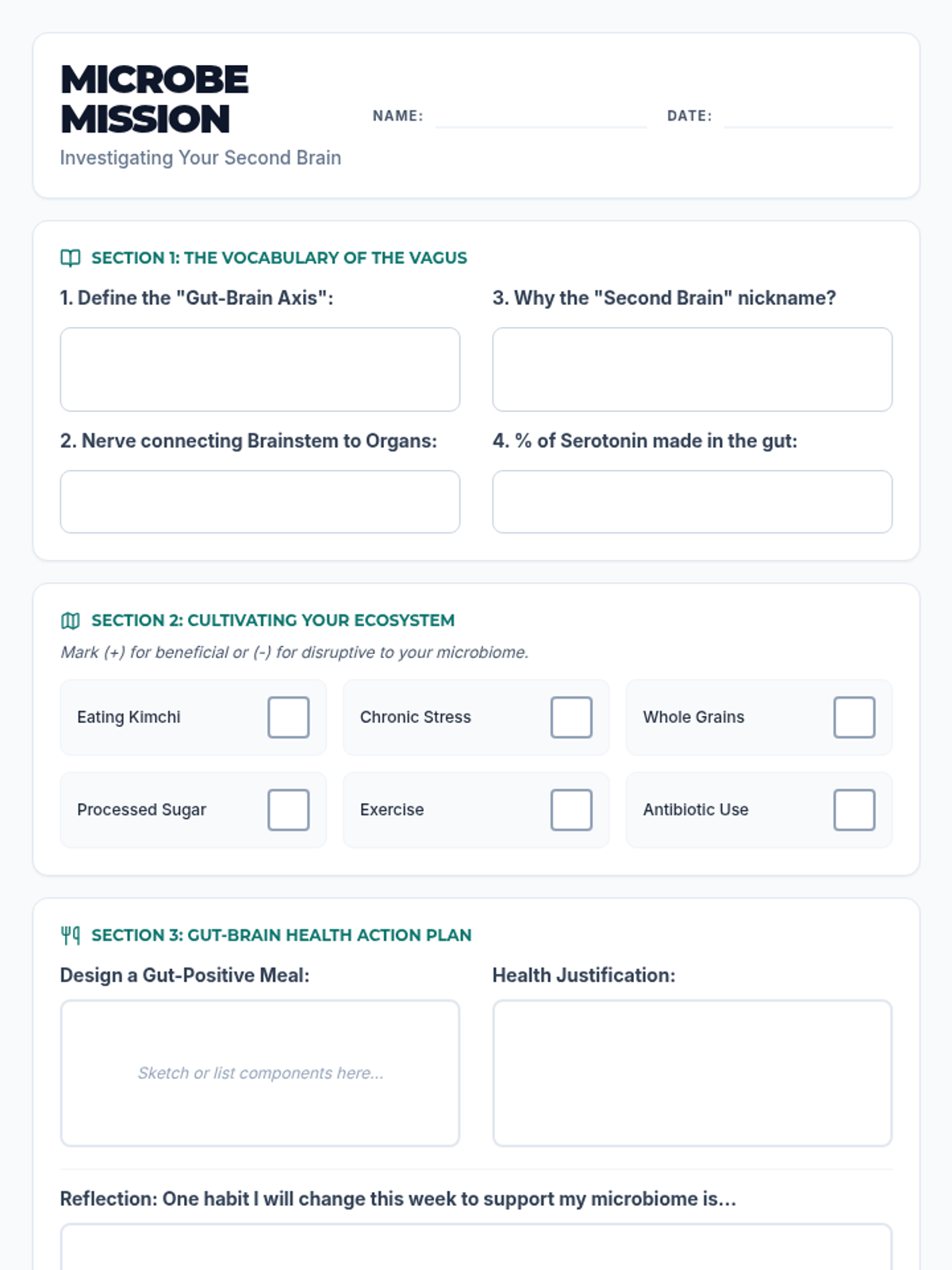
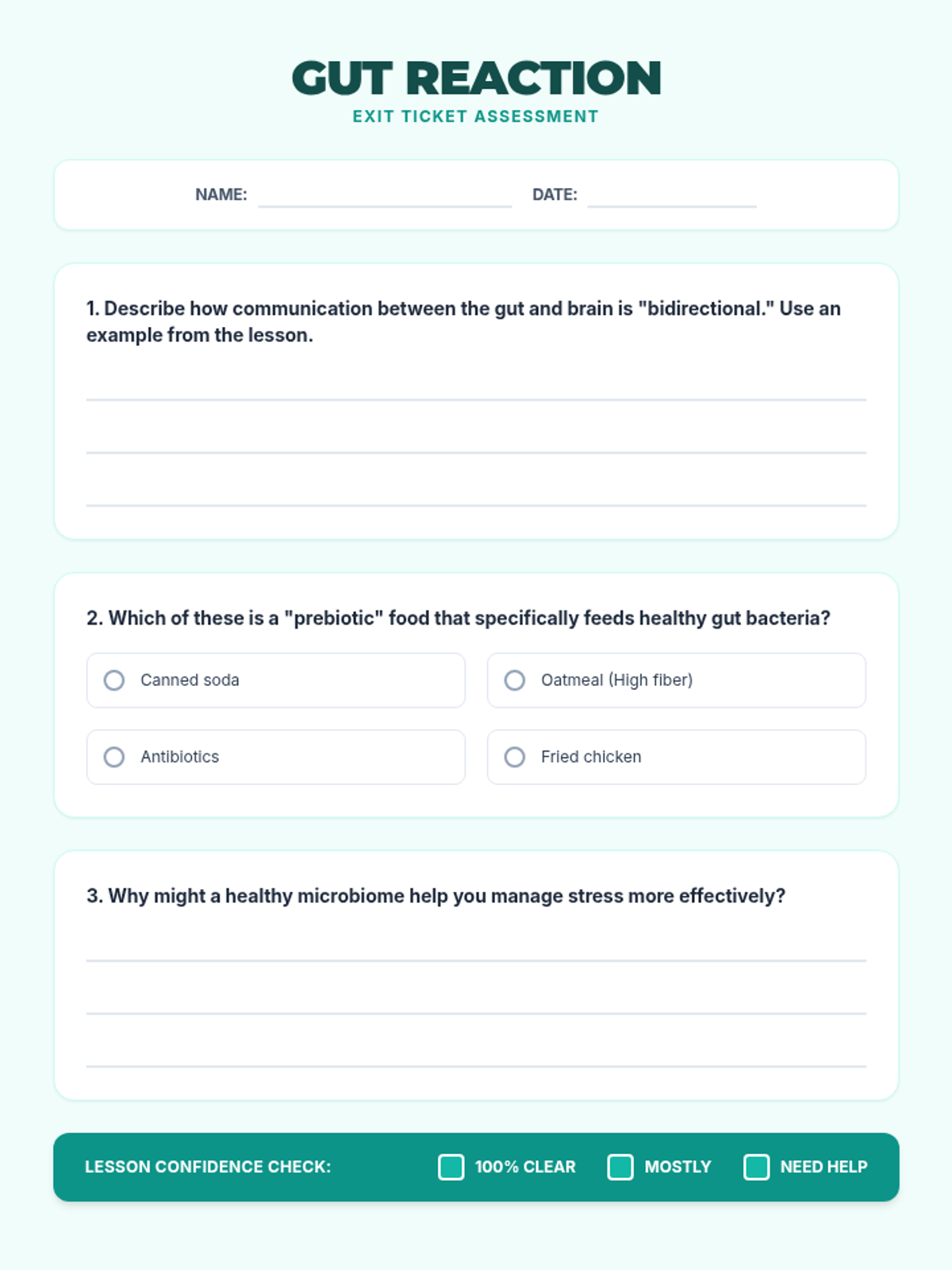
A comprehensive lesson exploring the gut-brain axis and how the microbiome influences mental health, neurotransmitter production, and emotional well-being.
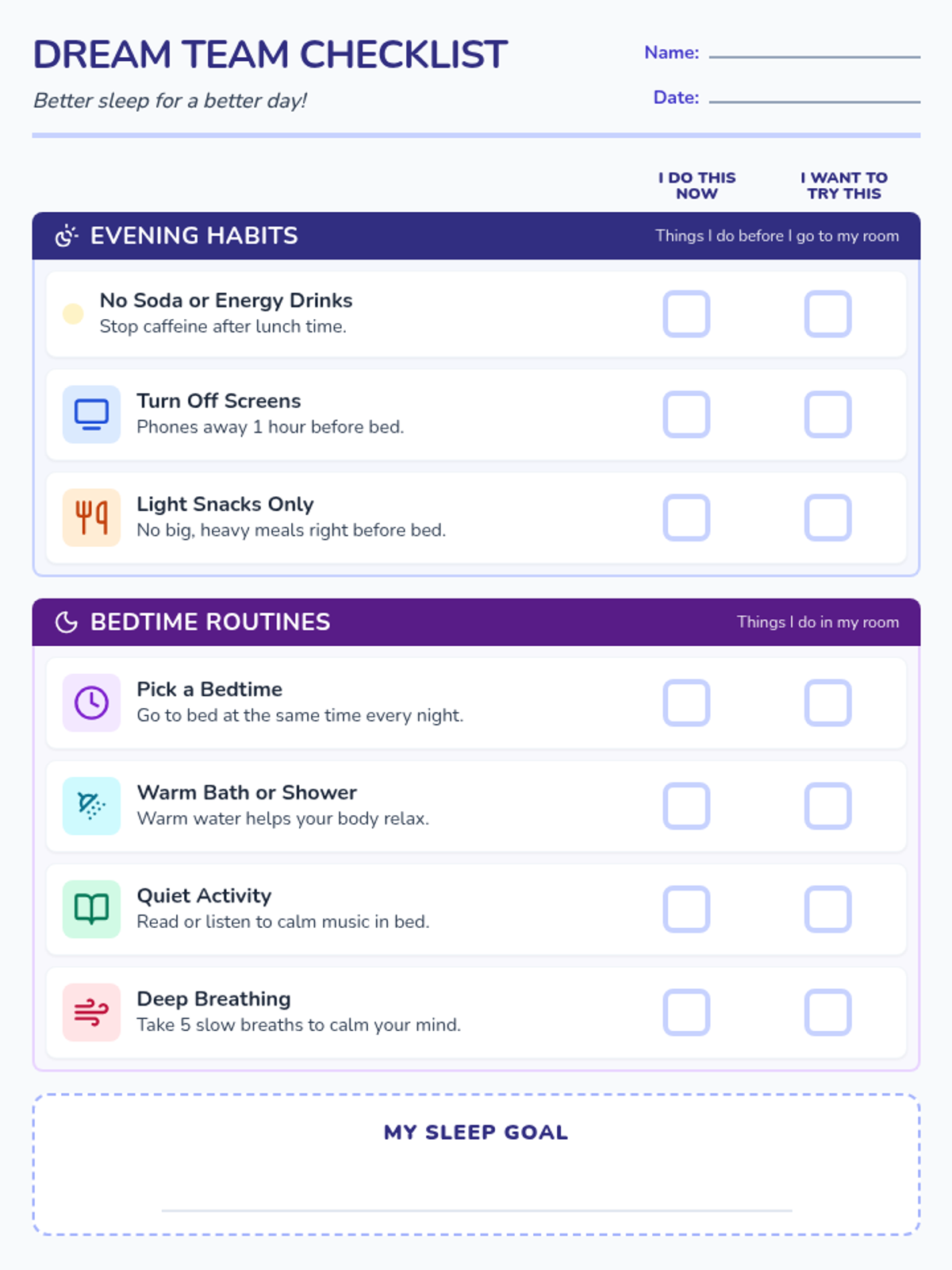
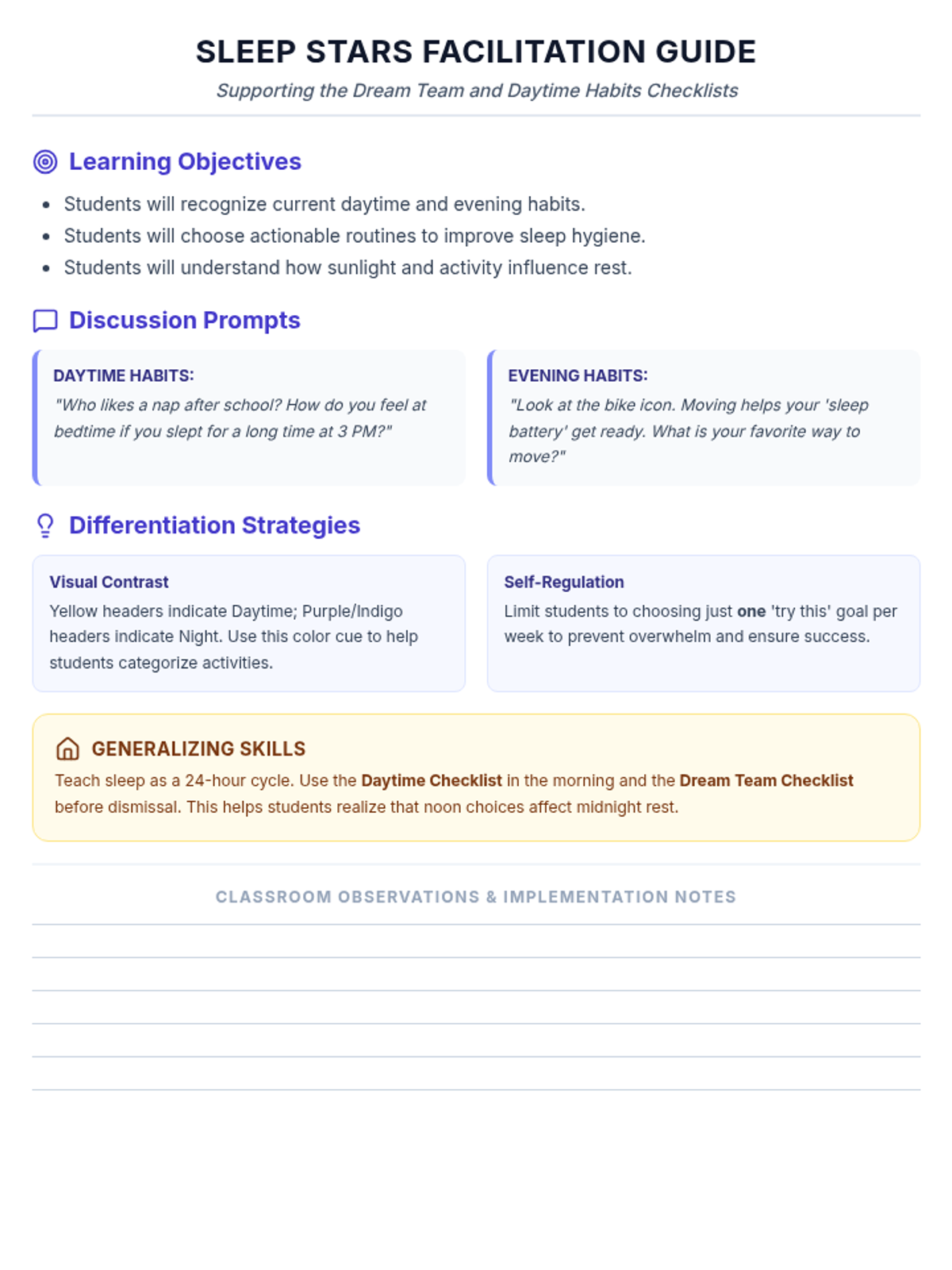
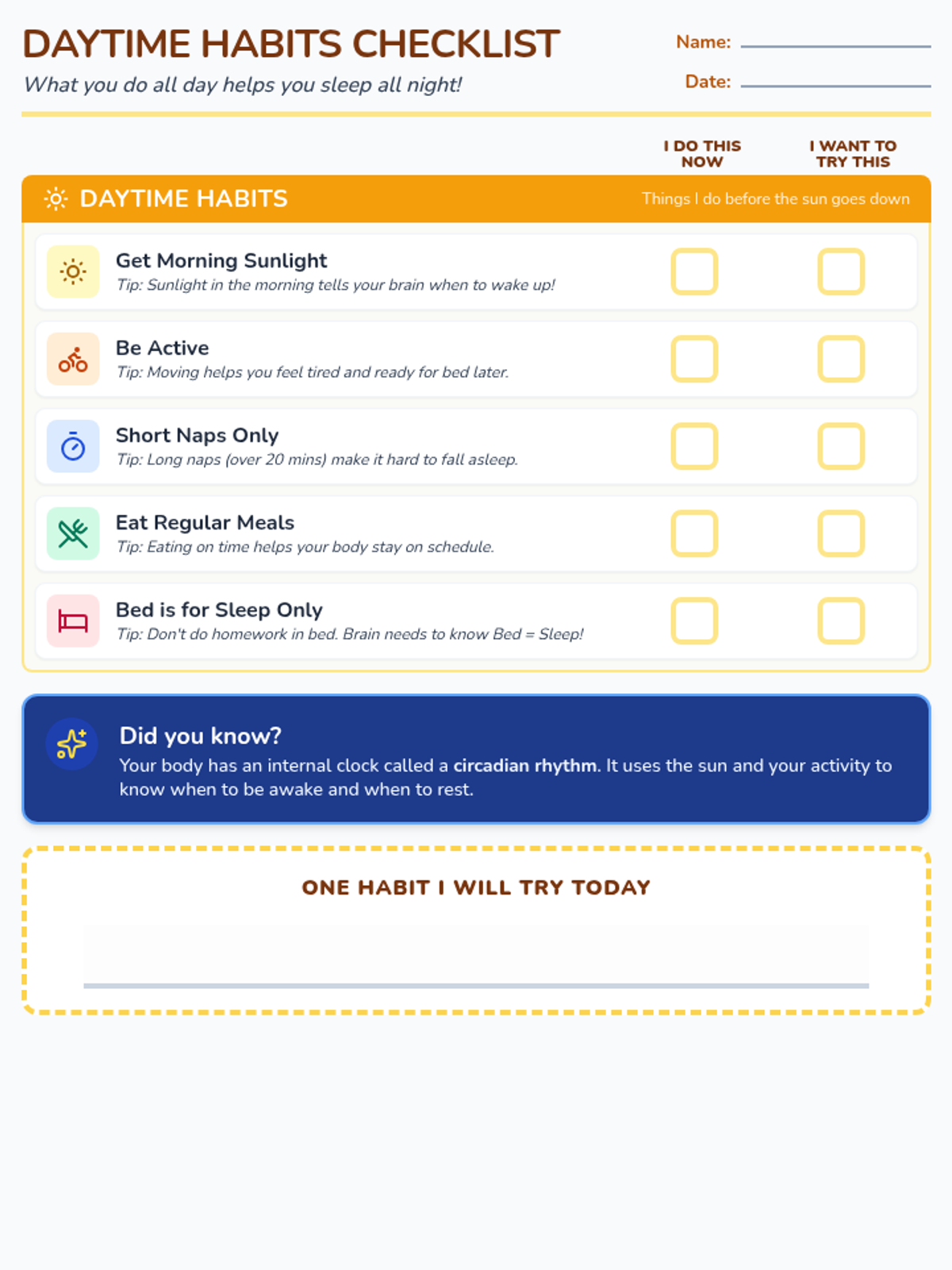
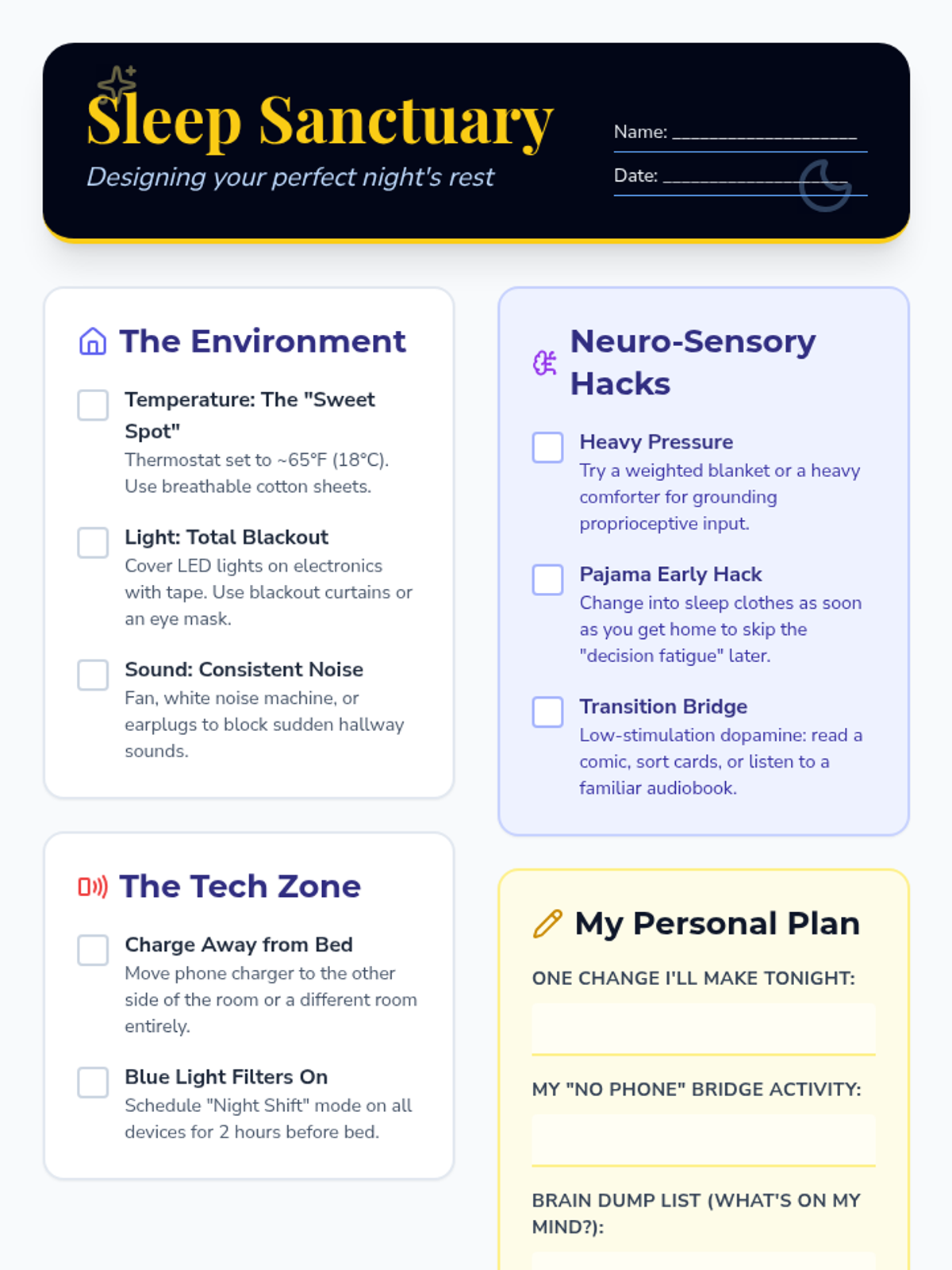
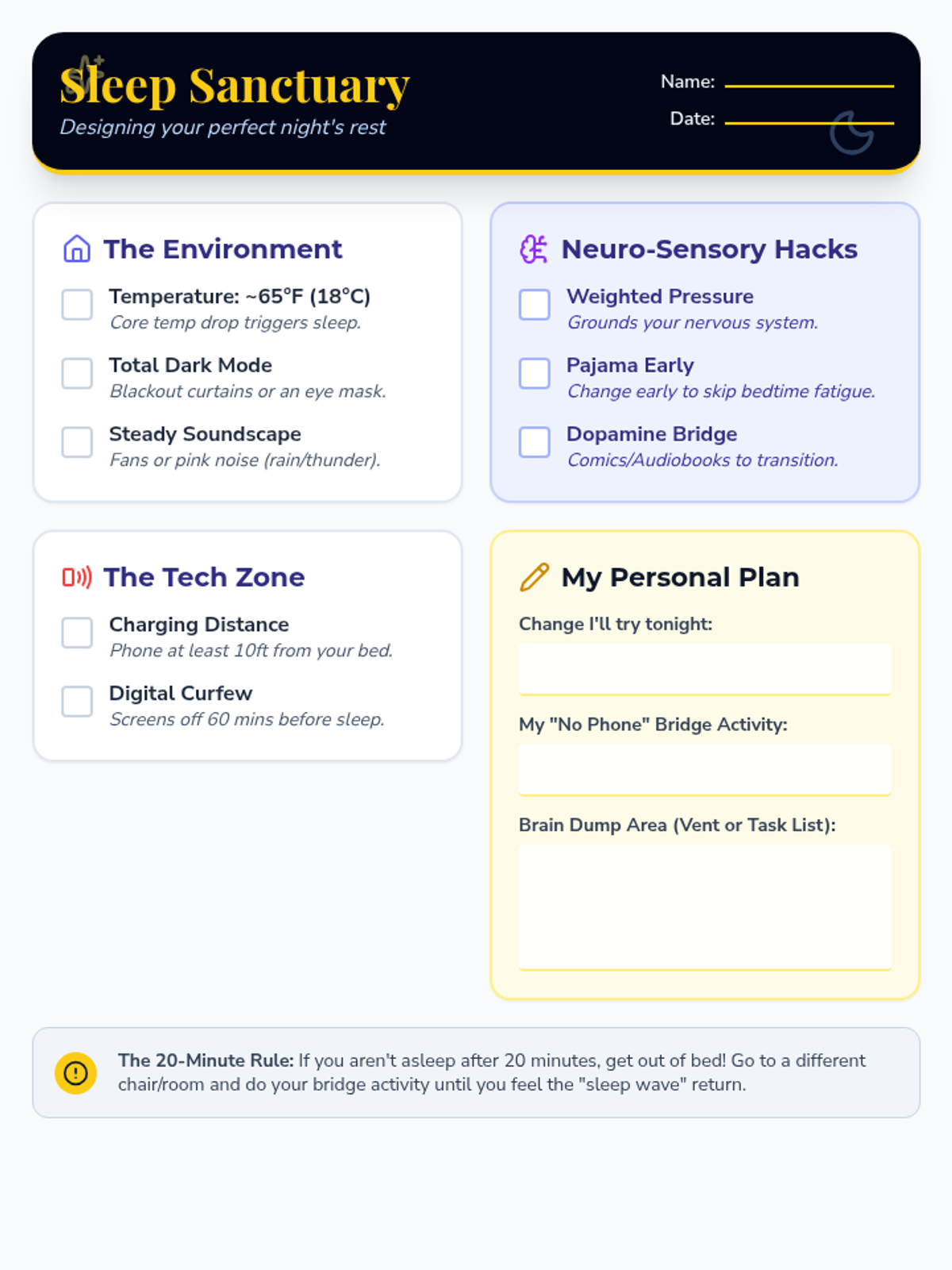
This lesson introduces students to healthy sleep hygiene habits through a personalized self-assessment checklist and teacher-led discussion. It focuses on concrete, actionable steps for improving evening and bedtime routines.
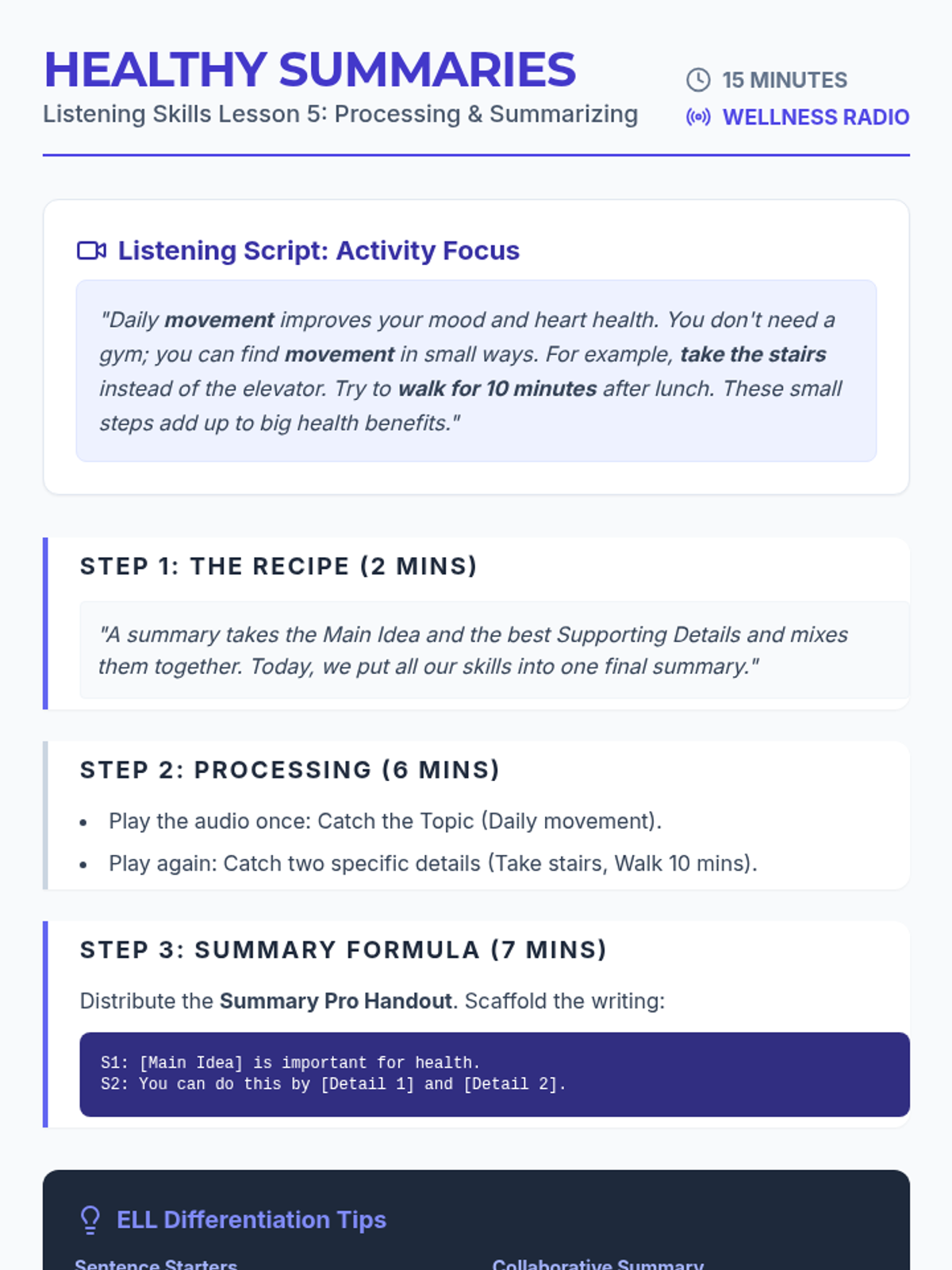
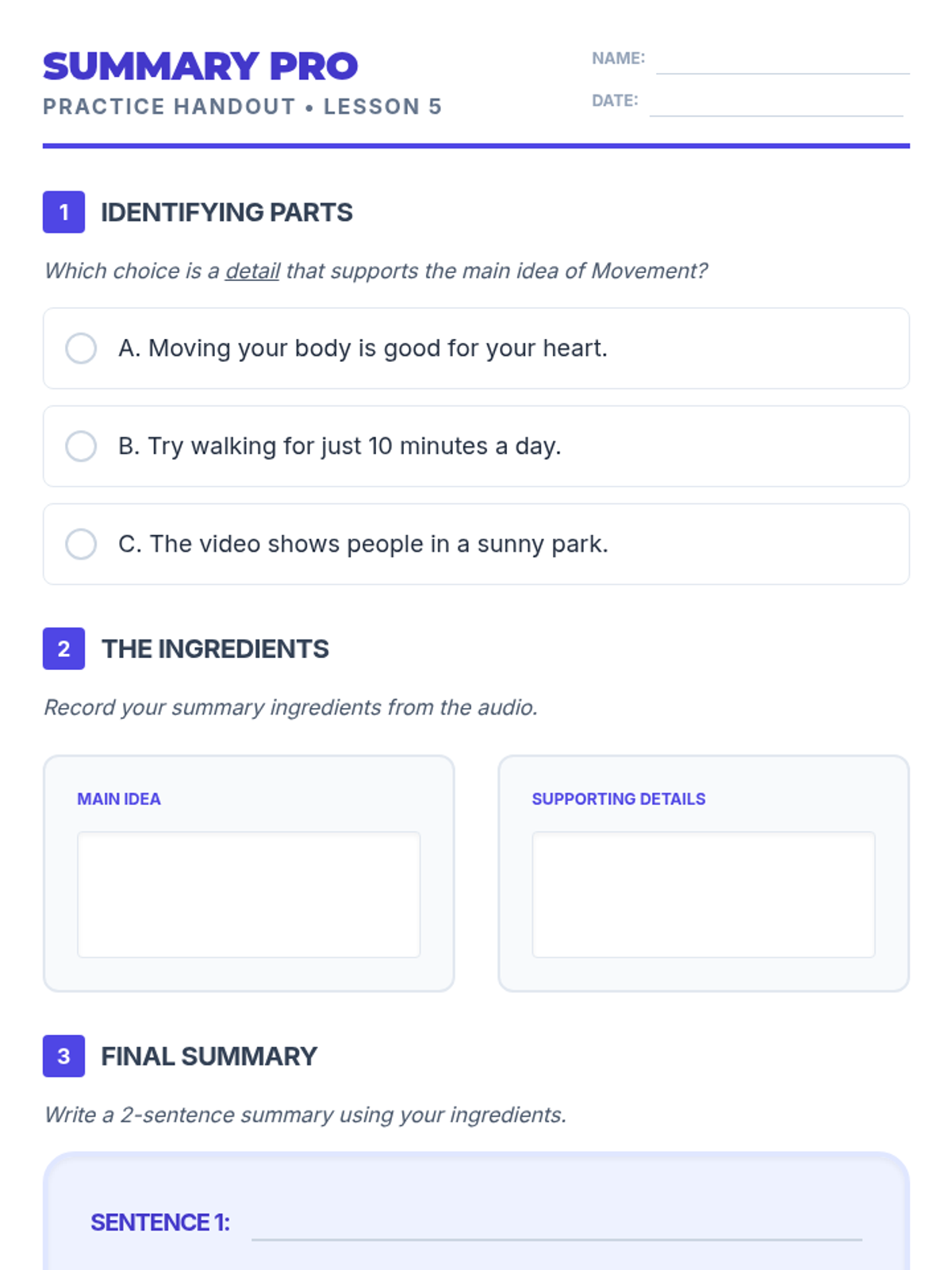
Students synthesize their listening skills to create a concise oral or written summary of a wellness tip about physical activity.
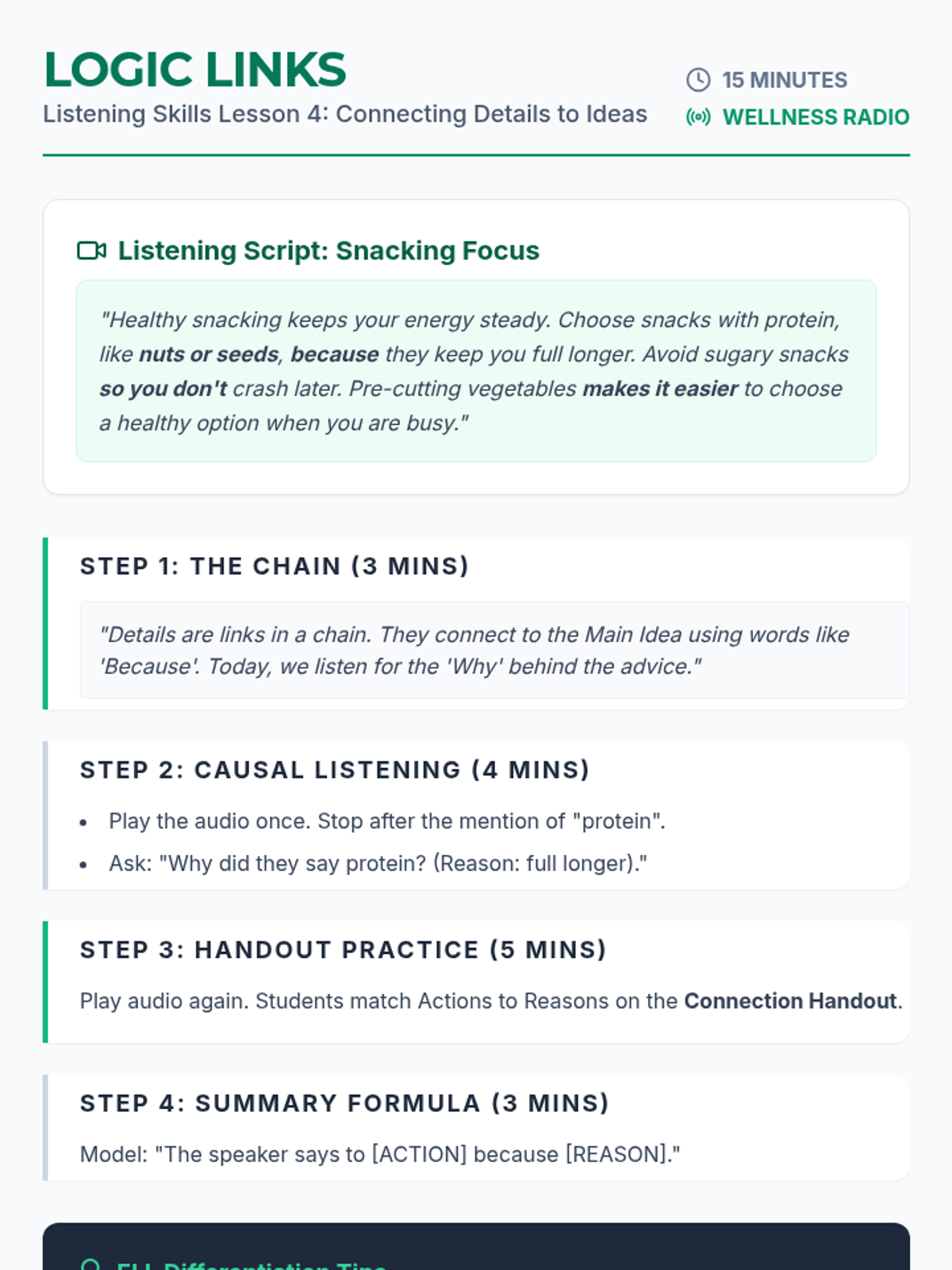
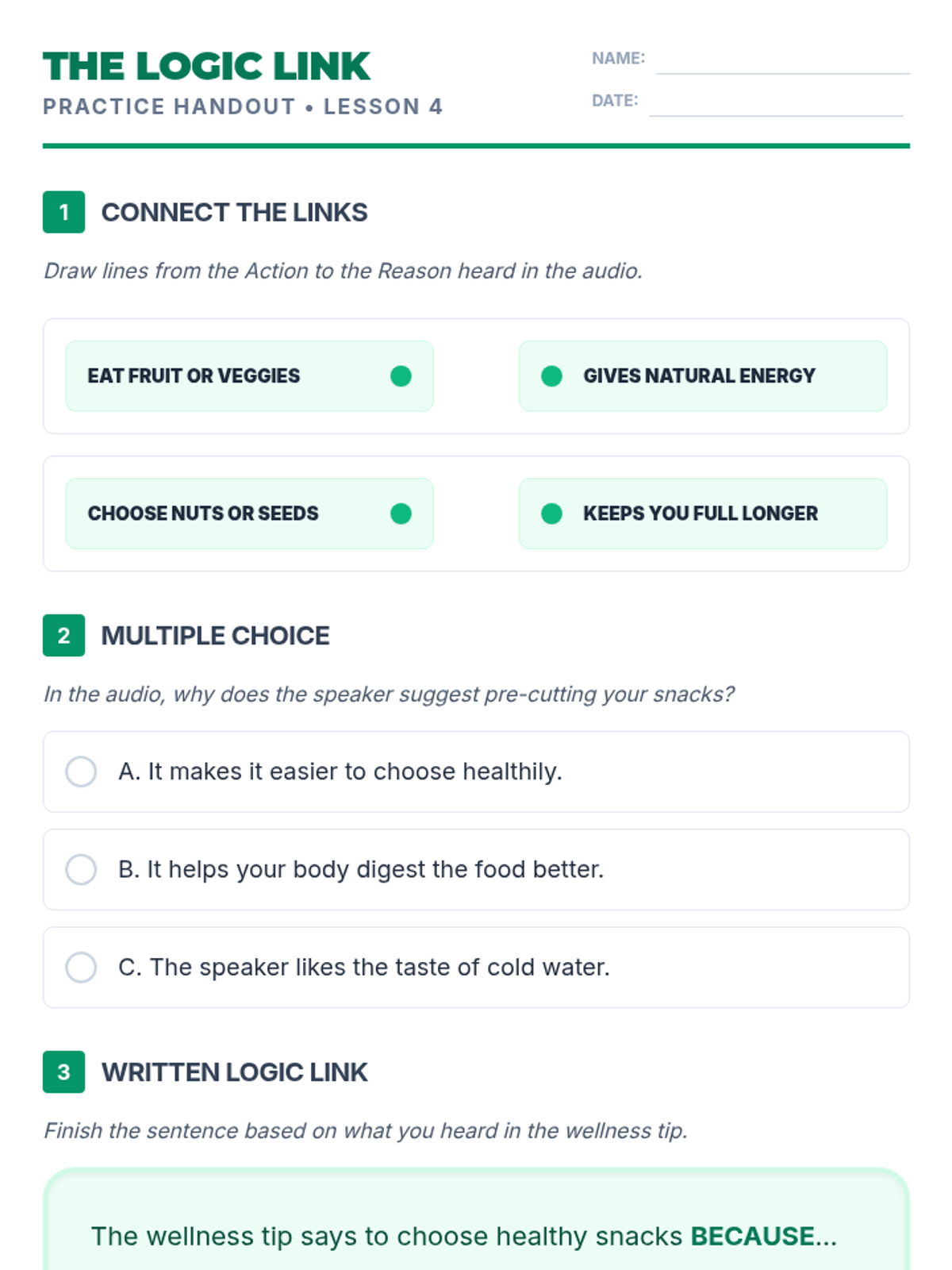
Students explore the logical connections between a health recommendation and its supporting evidence in a tip about healthy snacking.
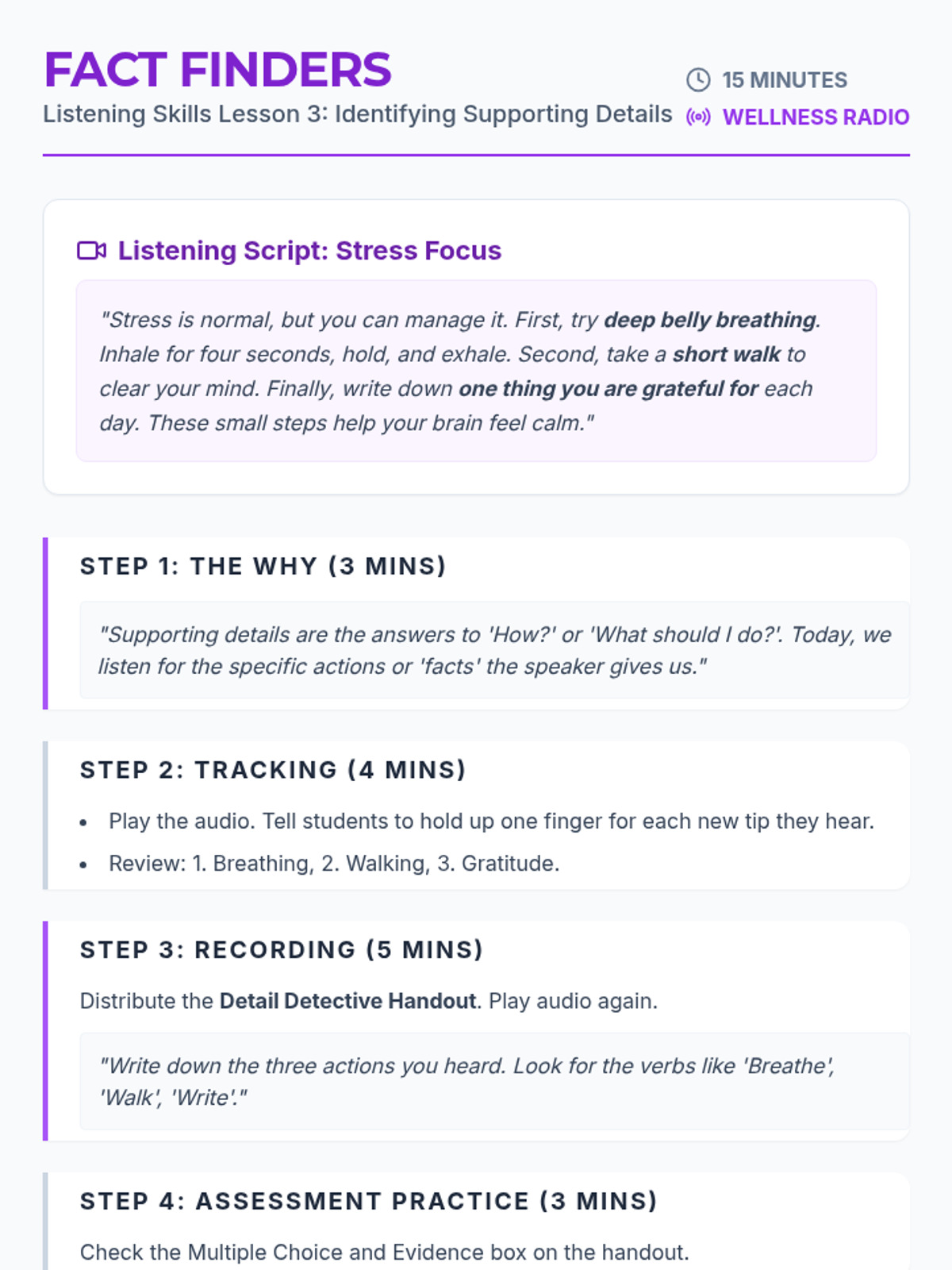
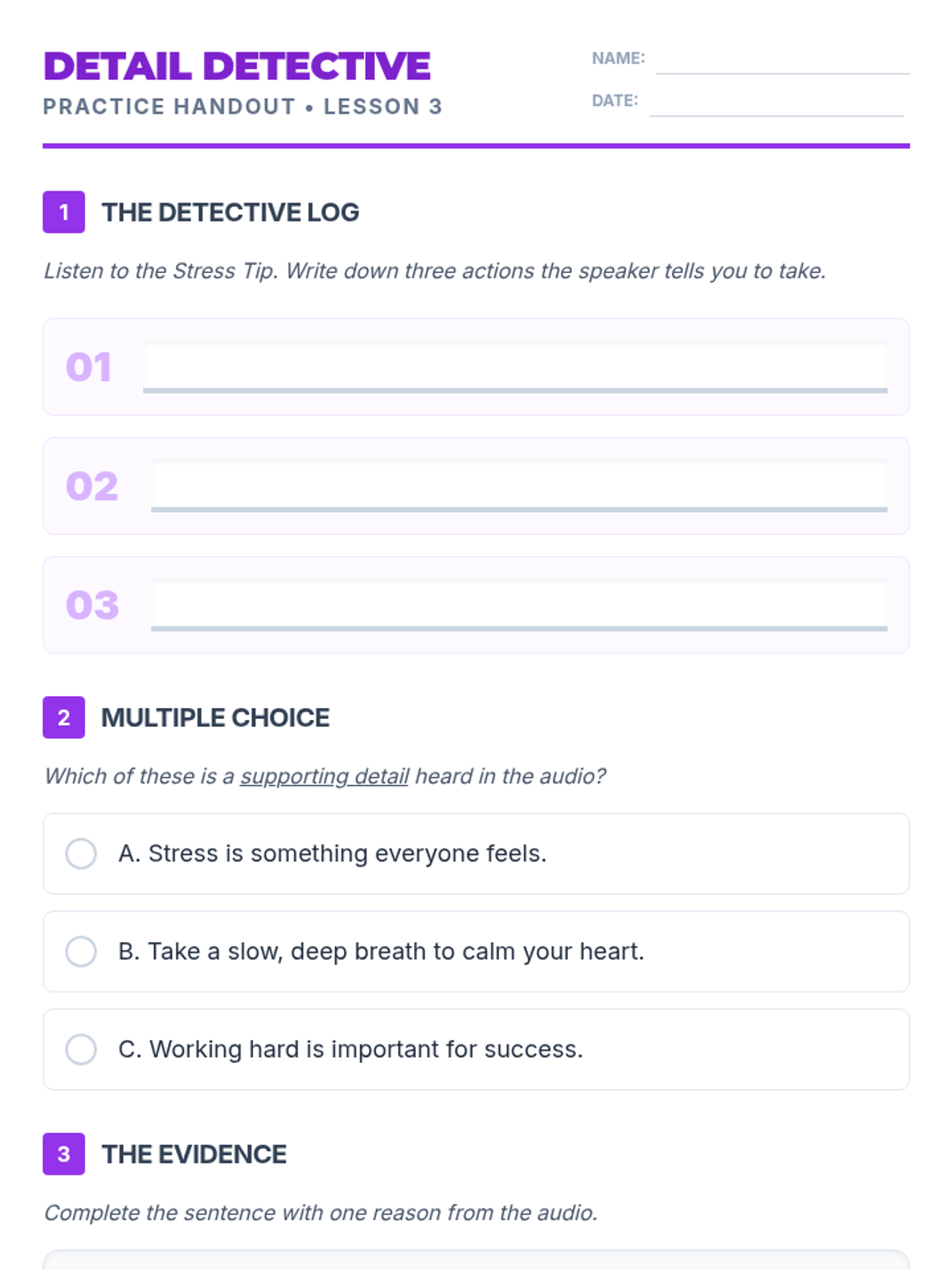
Students practice identifying multiple supporting details that answer 'how' or 'why' regarding stress management techniques.
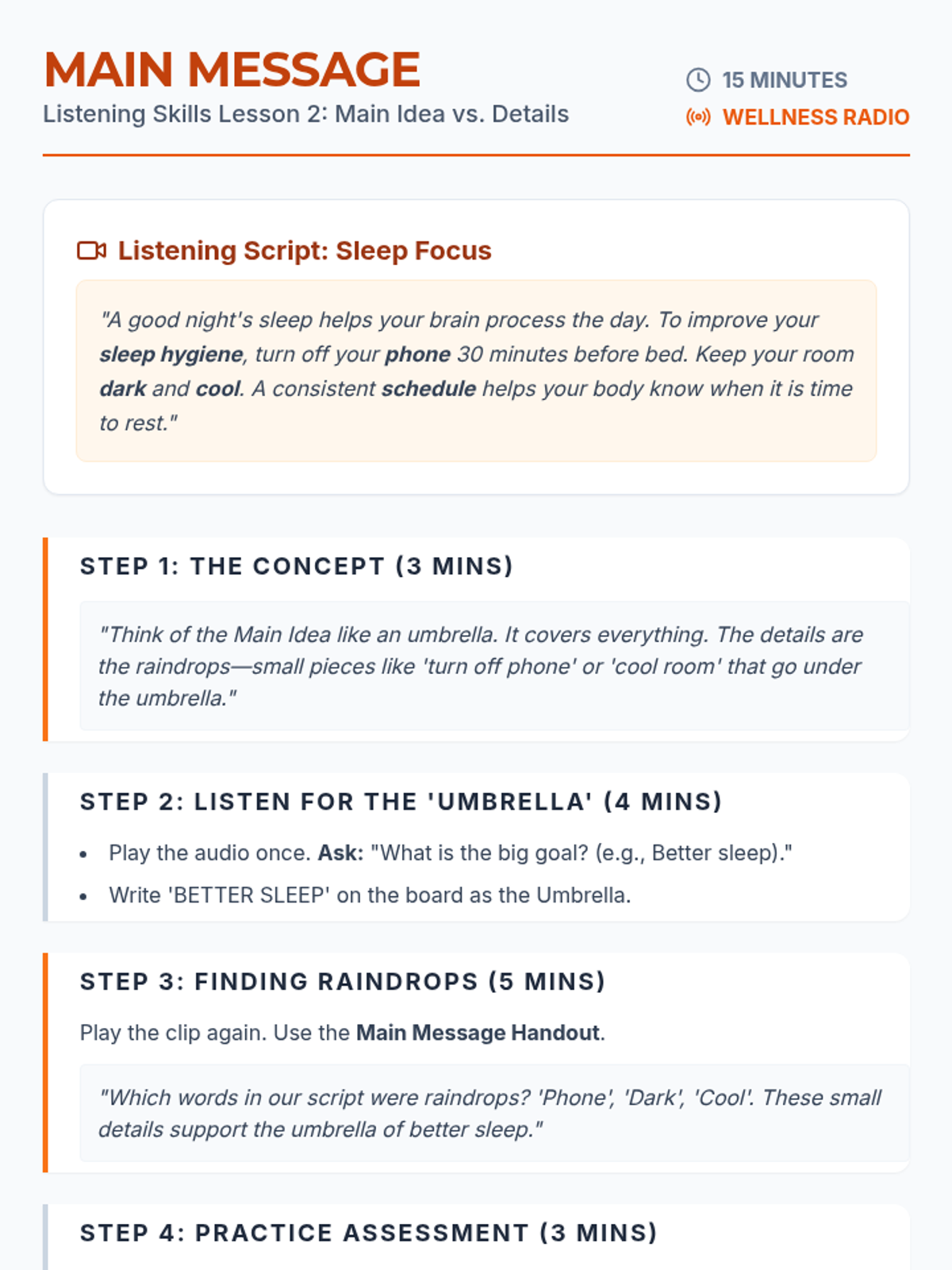
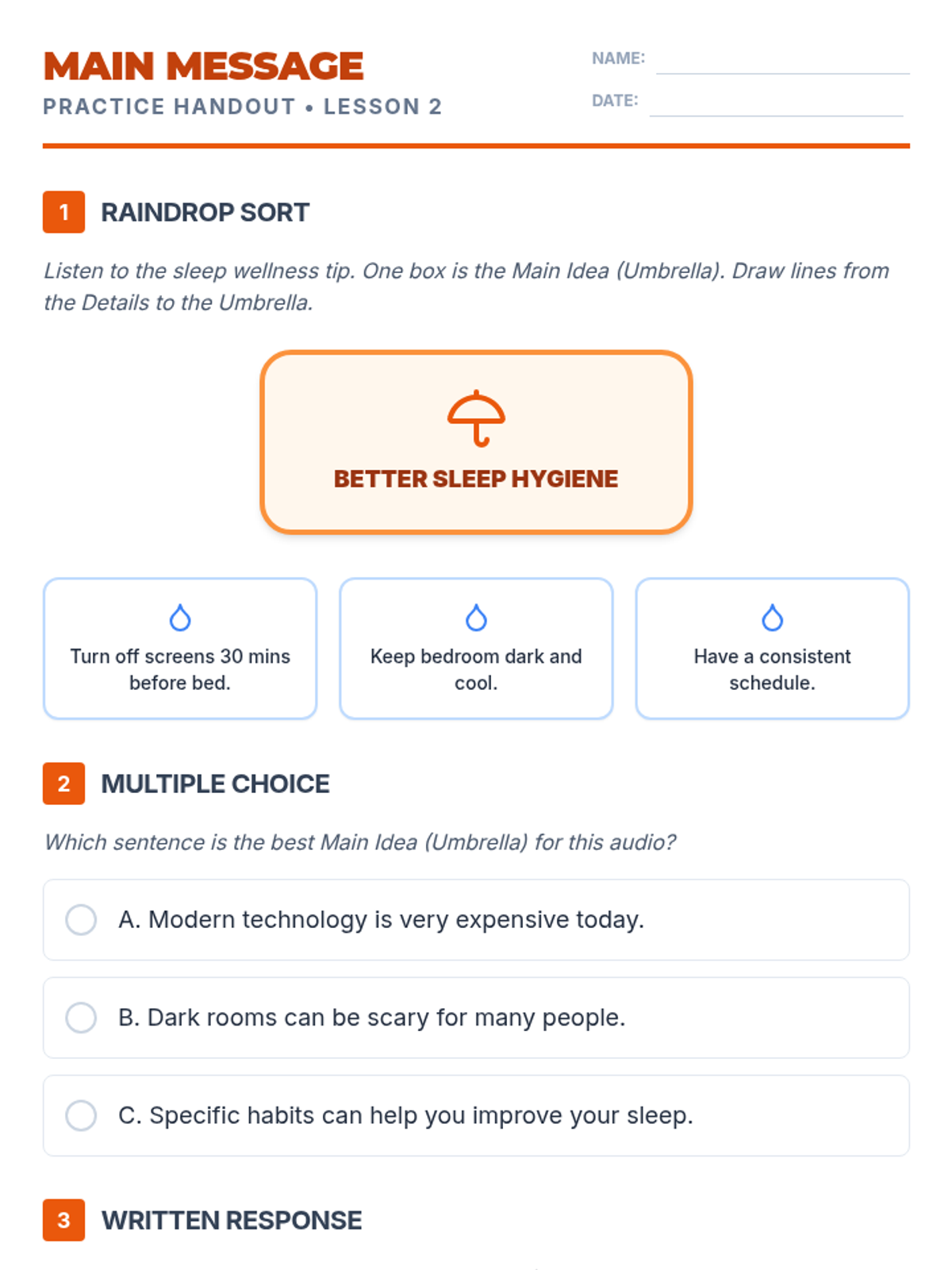
Students learn to differentiate between the overarching topic (Main Idea) and the specific examples (Details) in a tip about sleep hygiene.
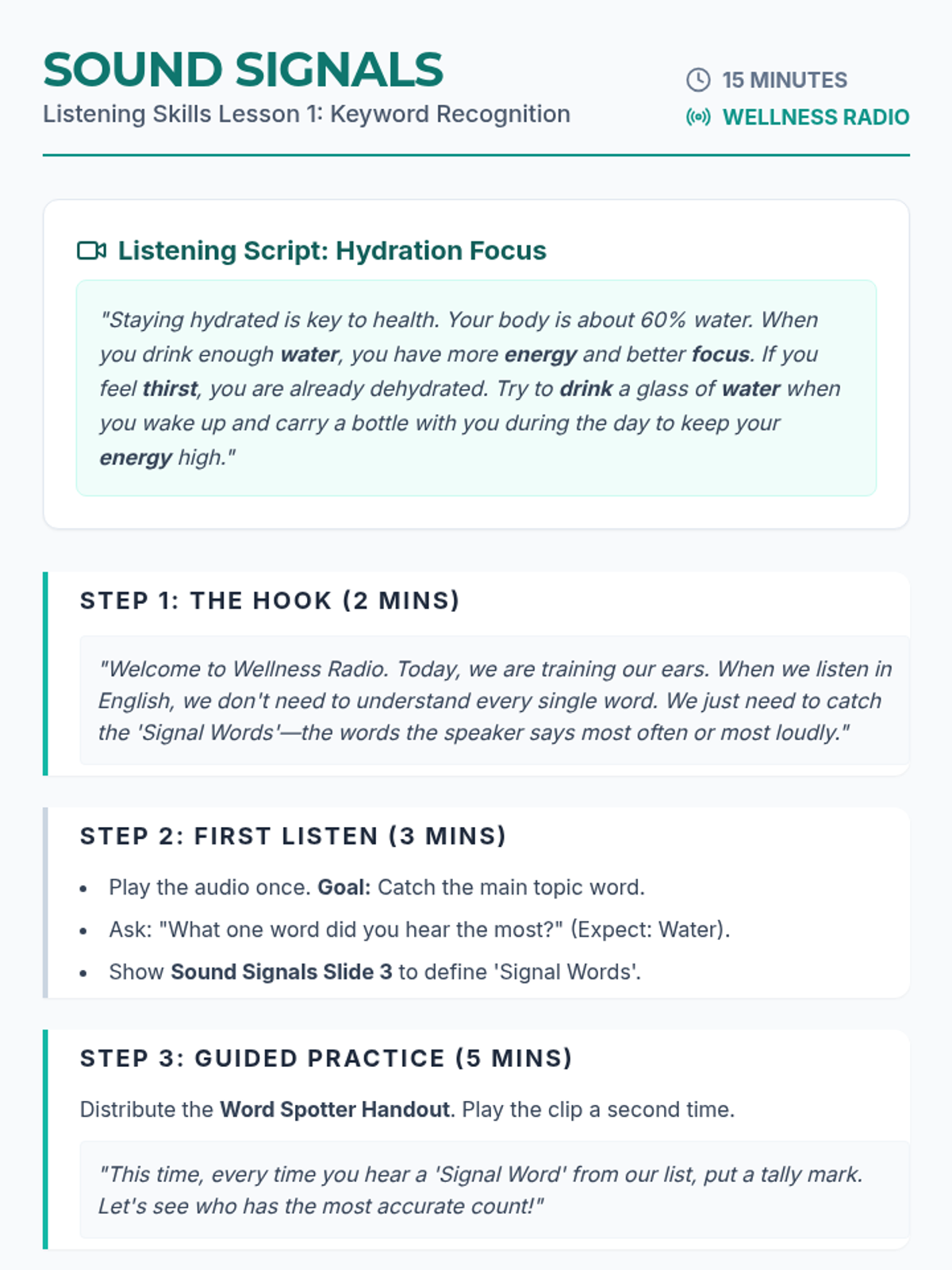
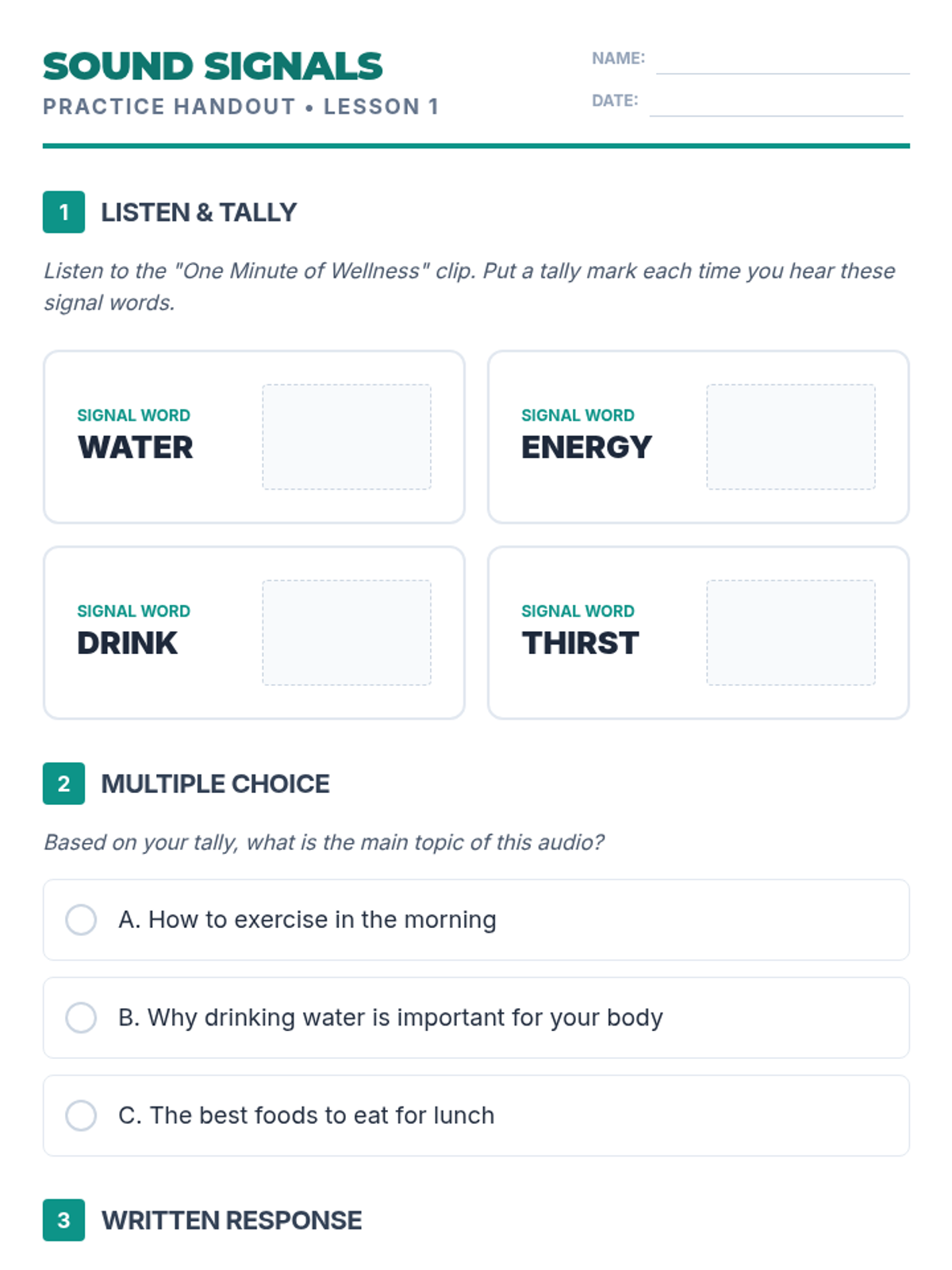
Students focus on 'listening for signals'—identifying specific keywords and vocabulary words in a 60-second wellness tip about hydration.
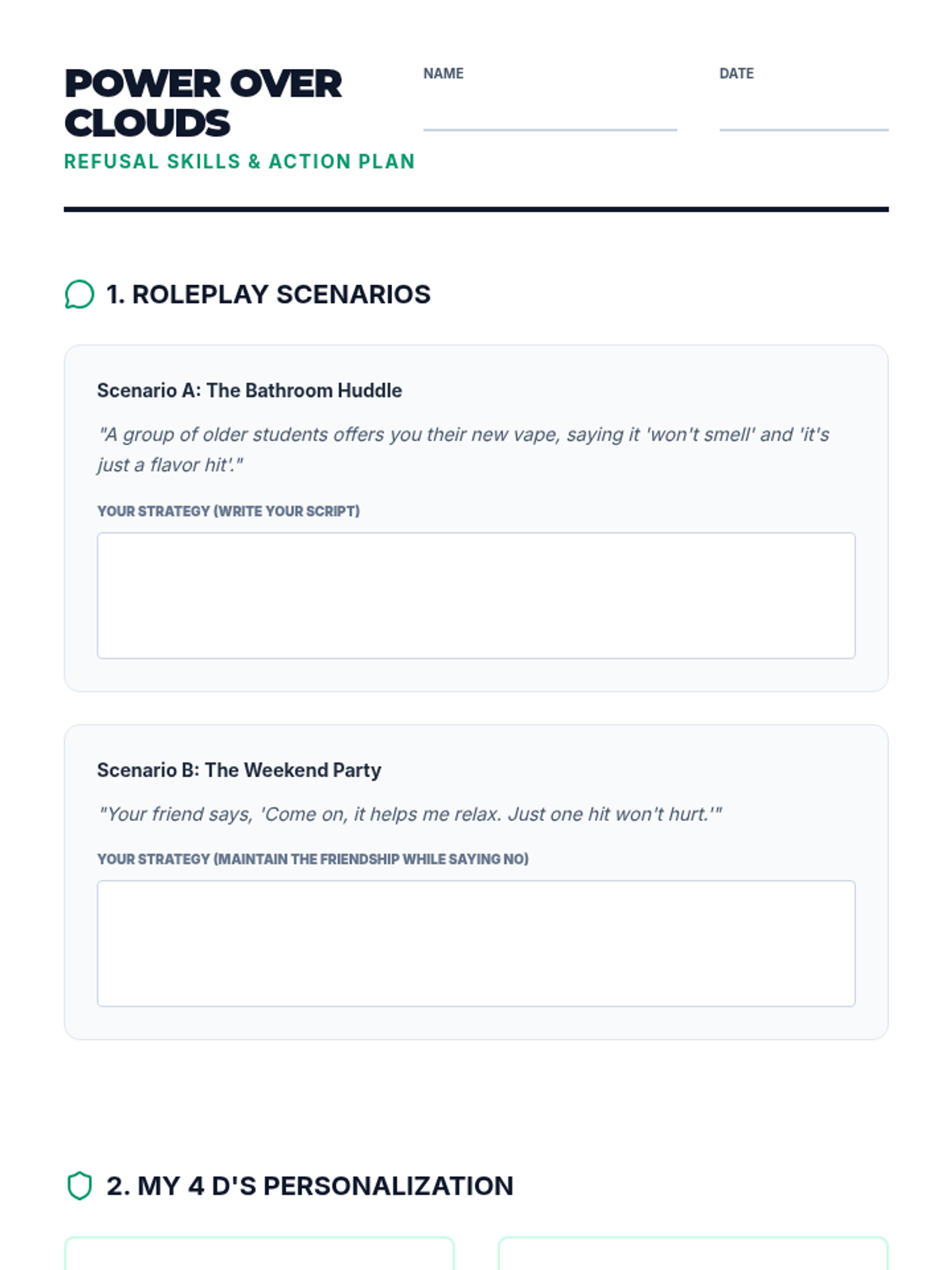
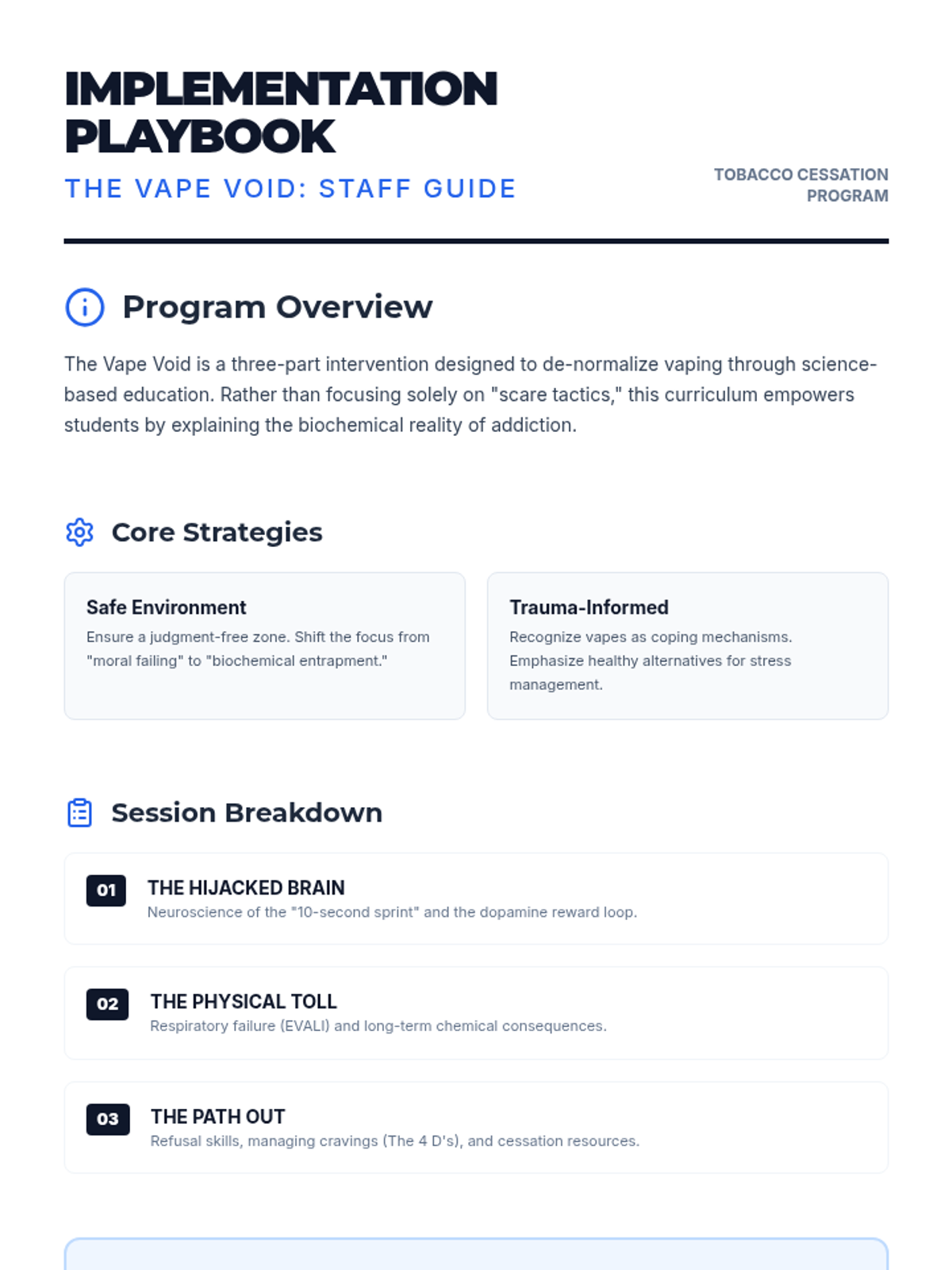
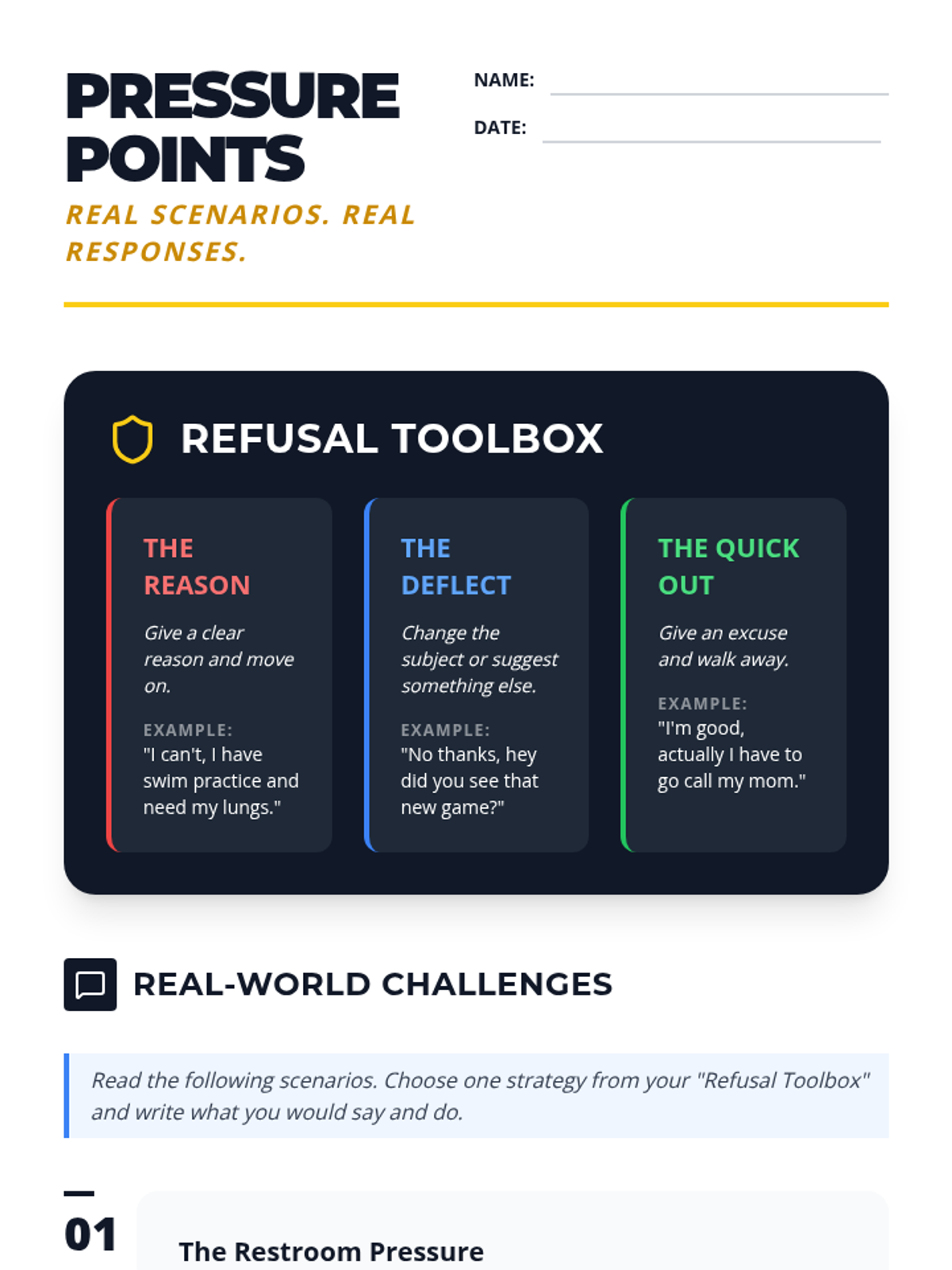
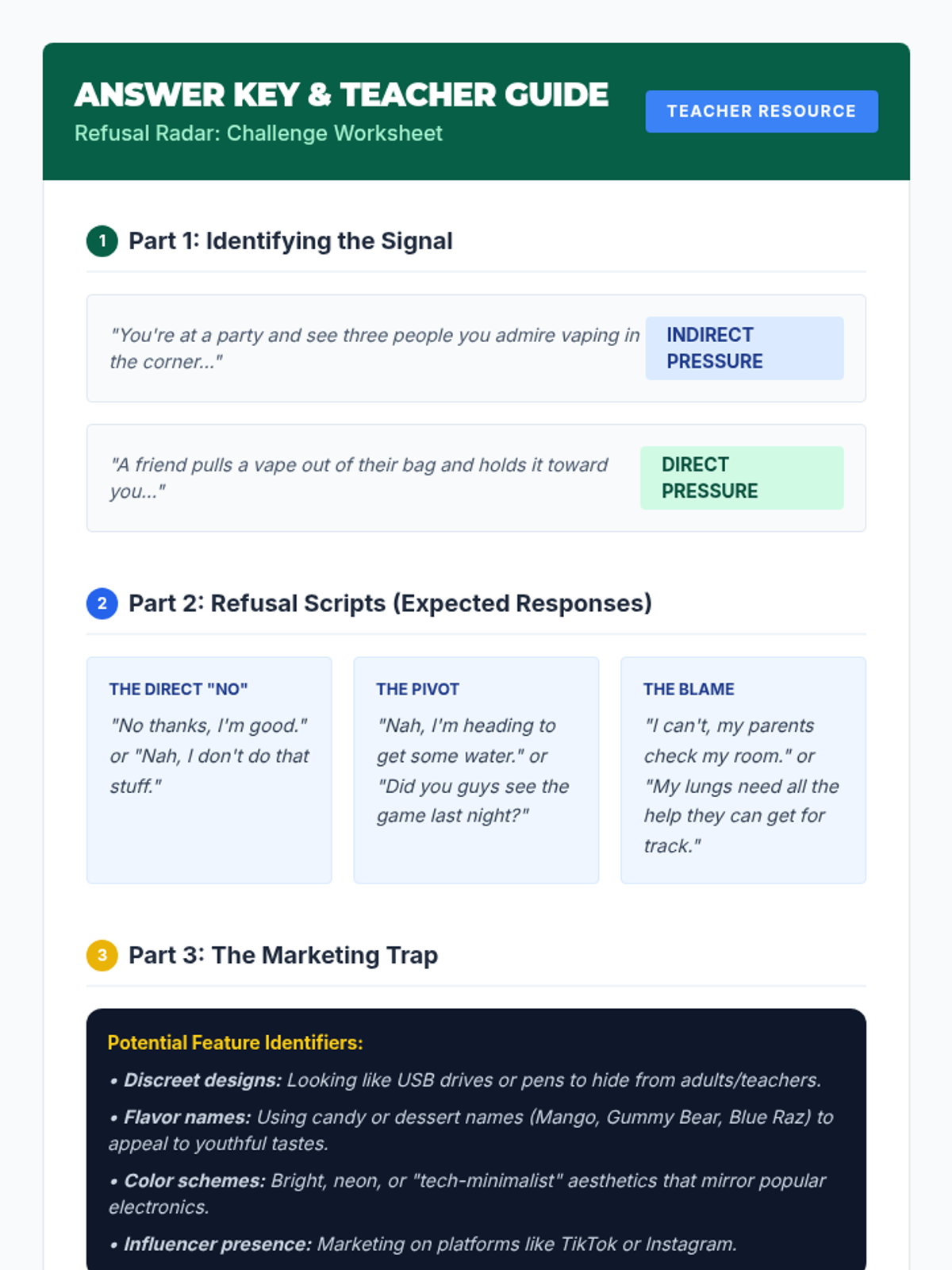
Equips students with refusal skills and provides a step-by-step framework for cessation and supporting peers.
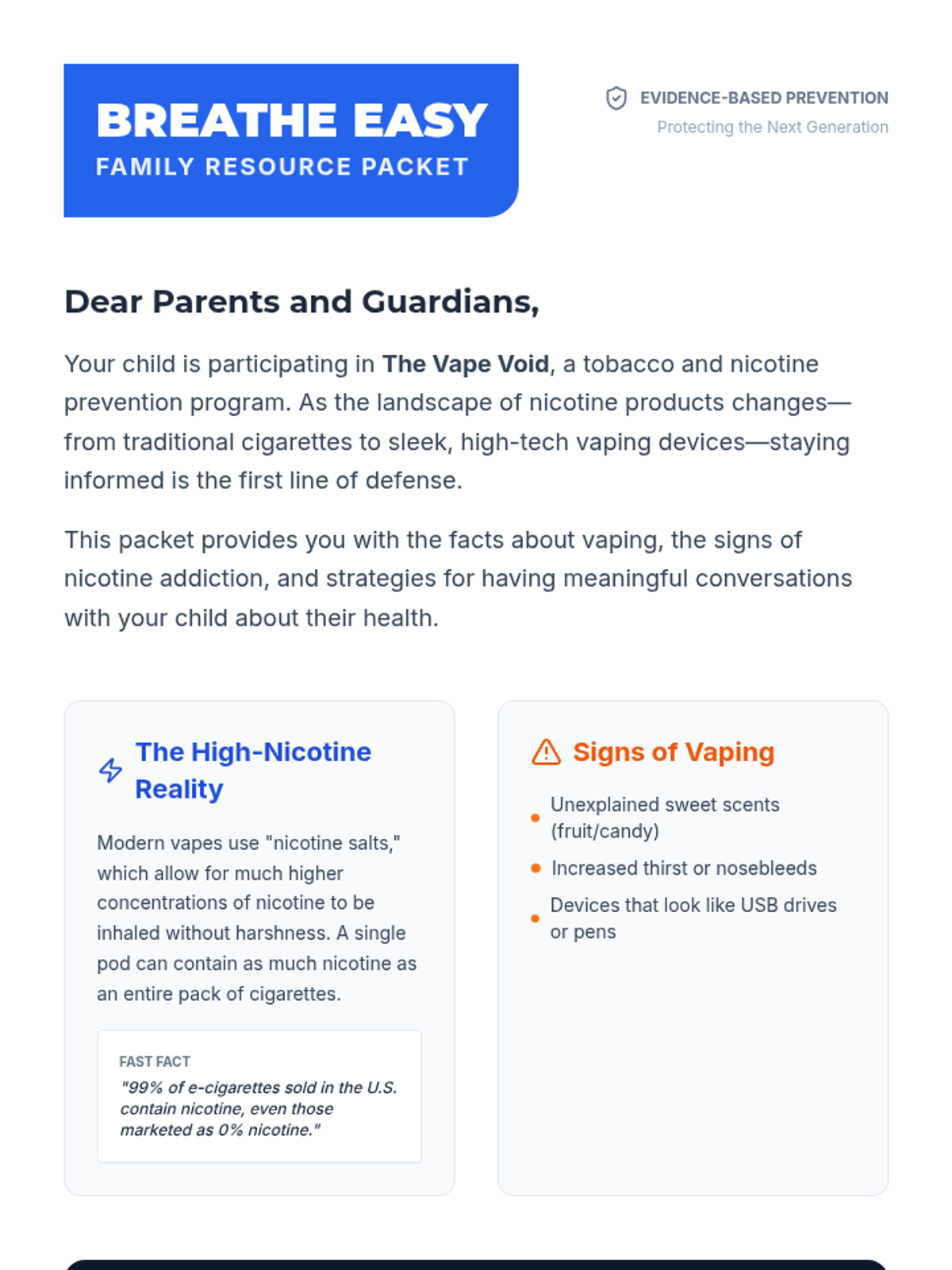
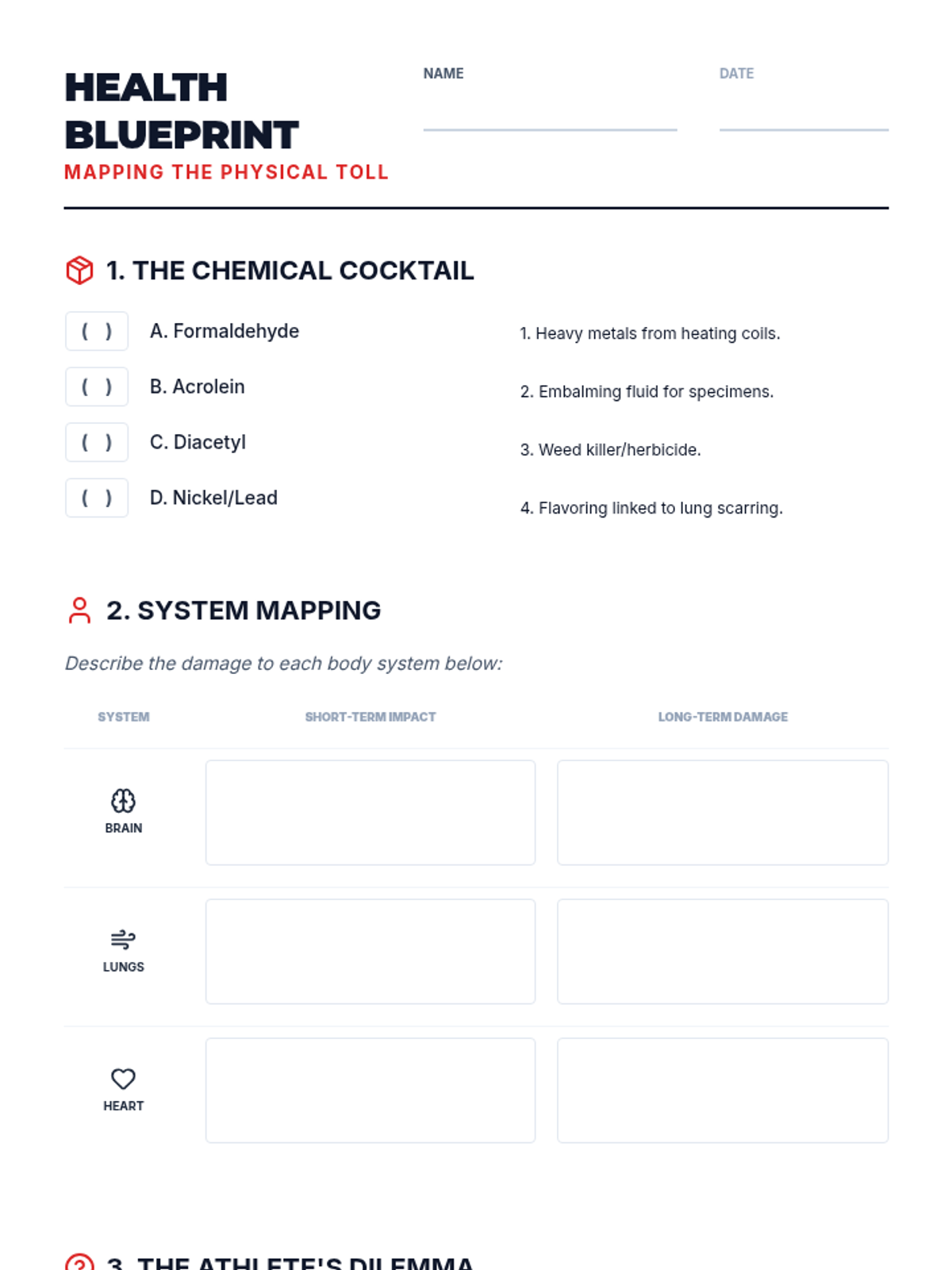
Examines the multi-system physical consequences of long-term vaping and tobacco use, from respiratory damage to cardiovascular risks.
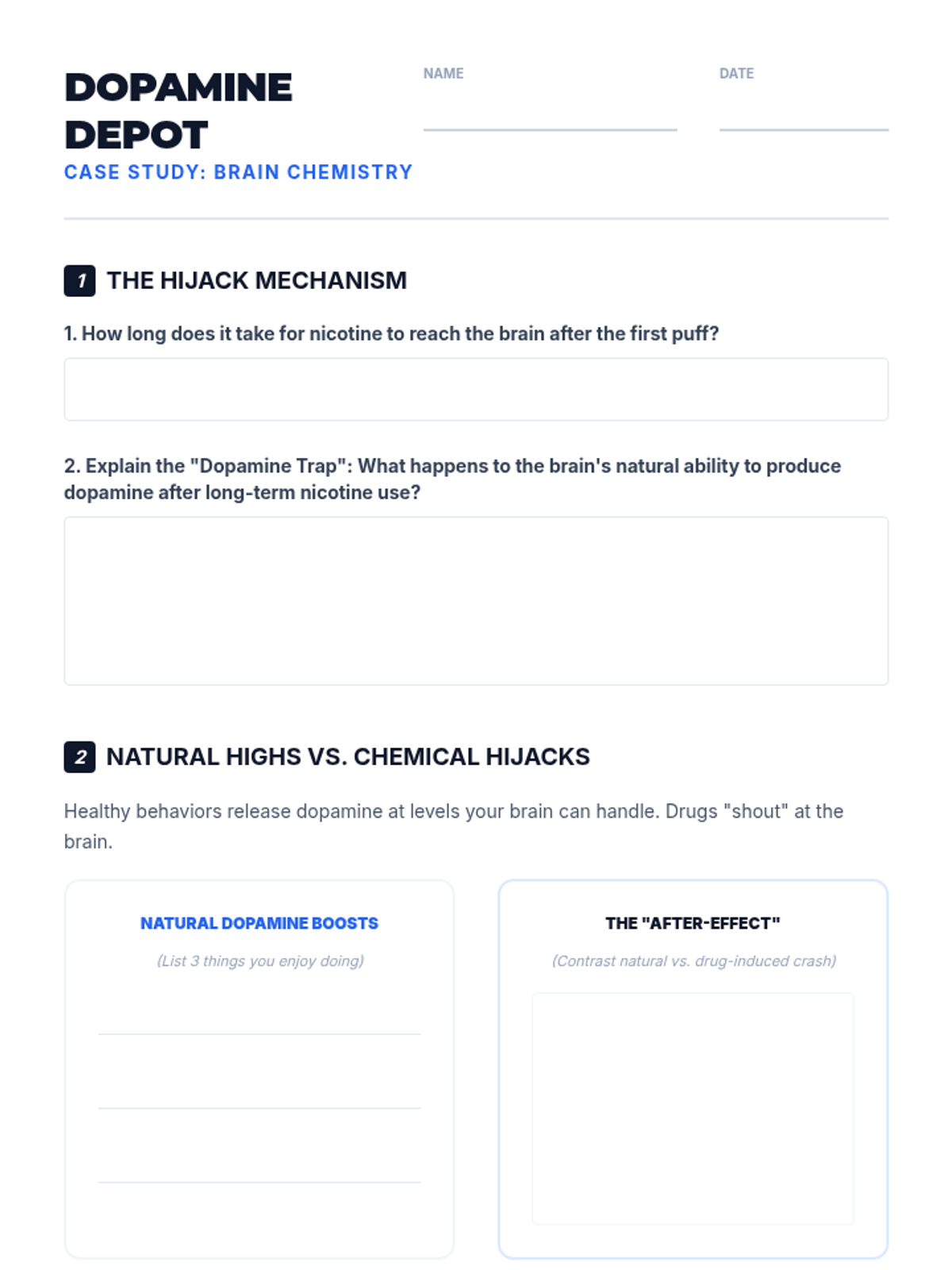
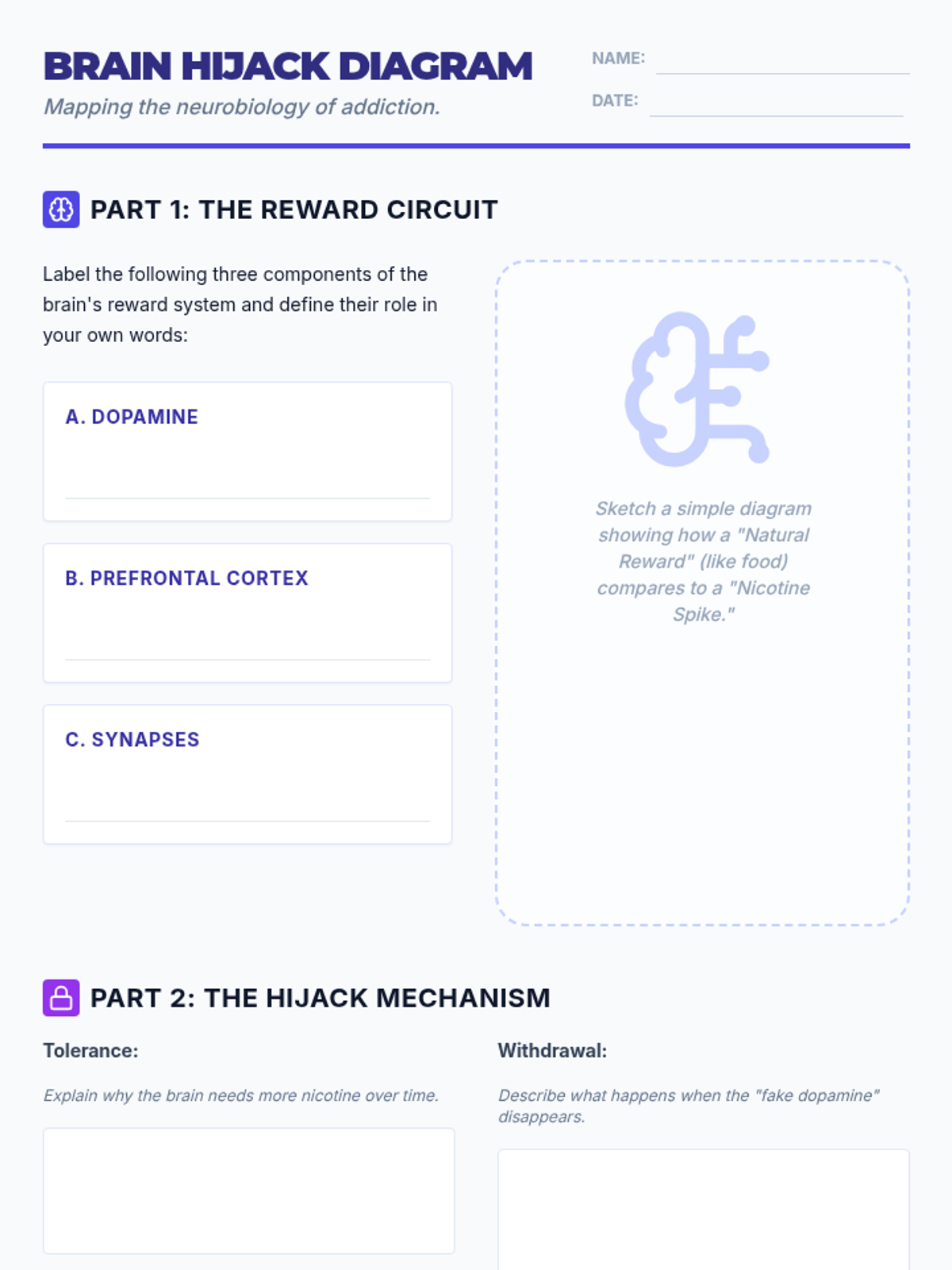
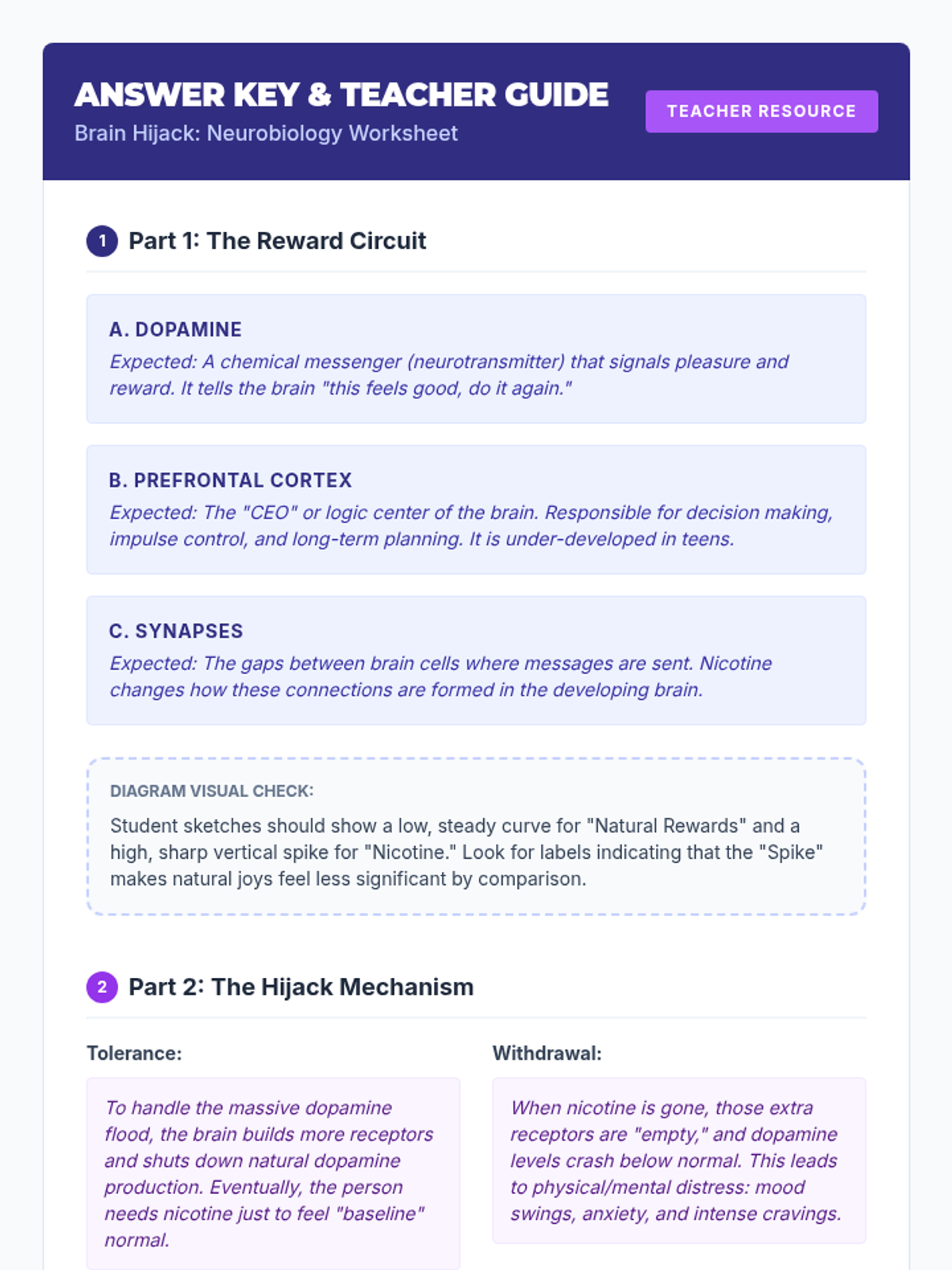
Explores the neuroscience of nicotine addiction, focusing on how vaping chemicals hijack the brain's reward system.
A lesson designed for high schoolers to understand the physiological and cognitive importance of sleep, along with practical sleep hygiene strategies.
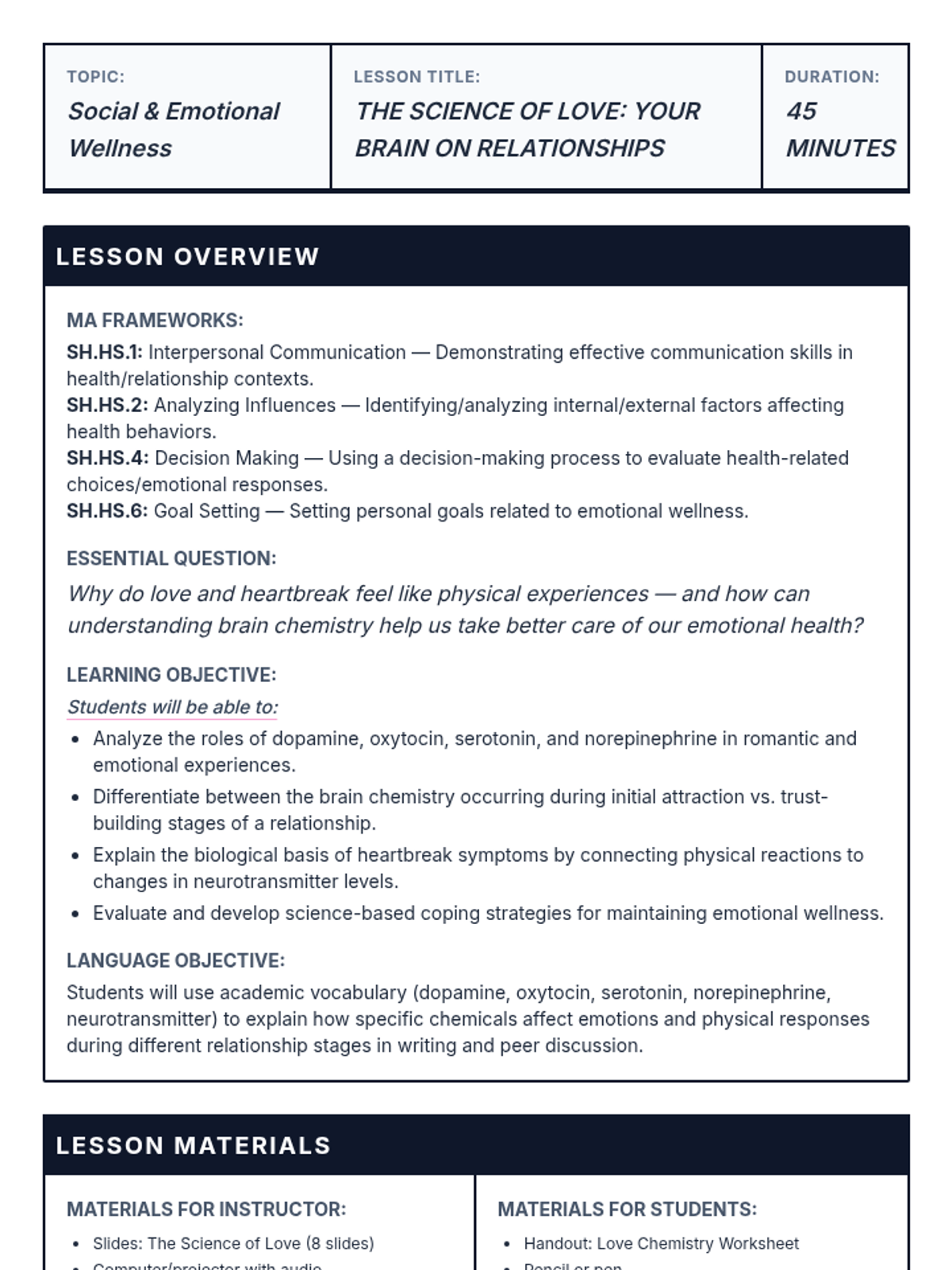
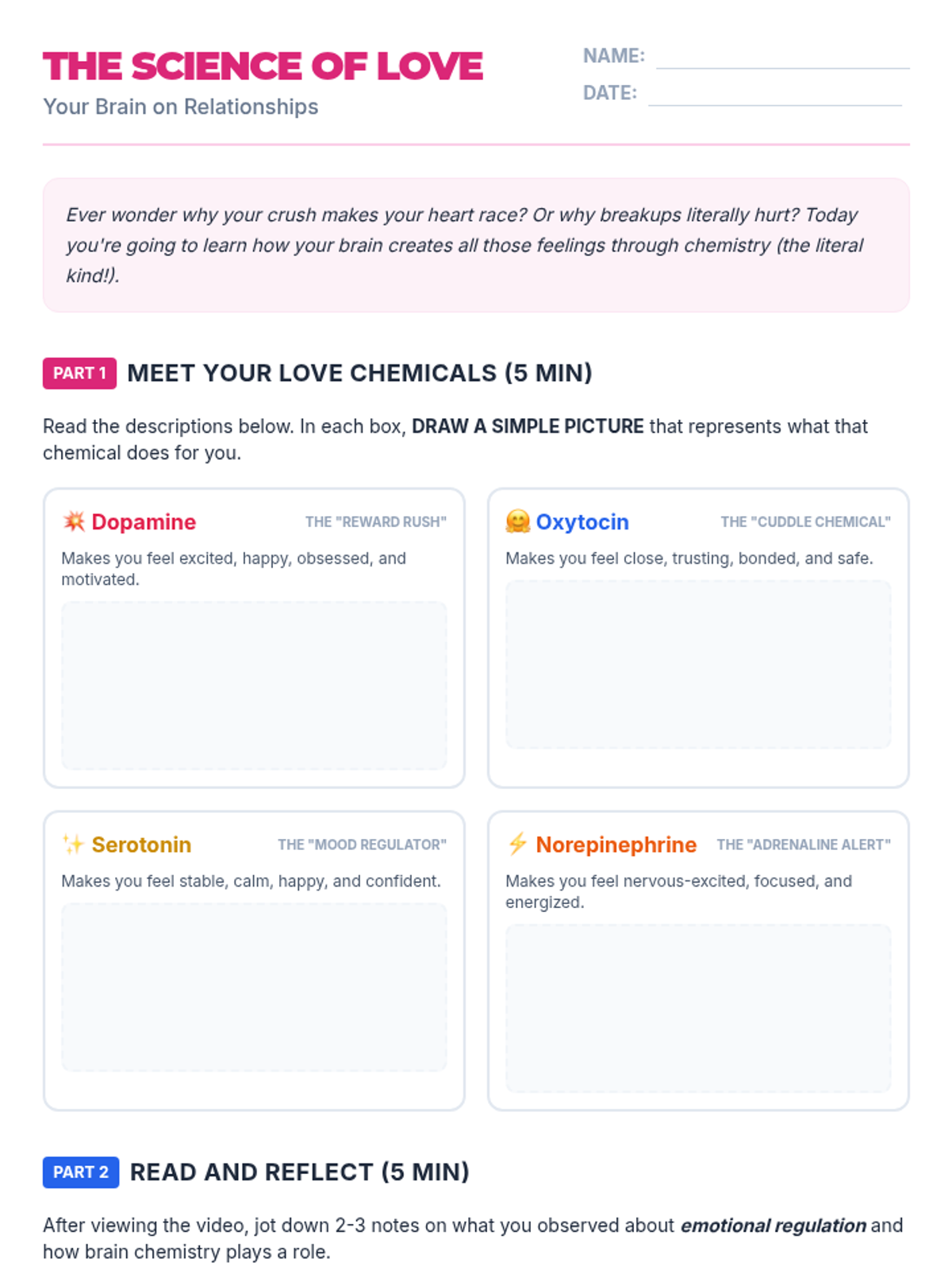
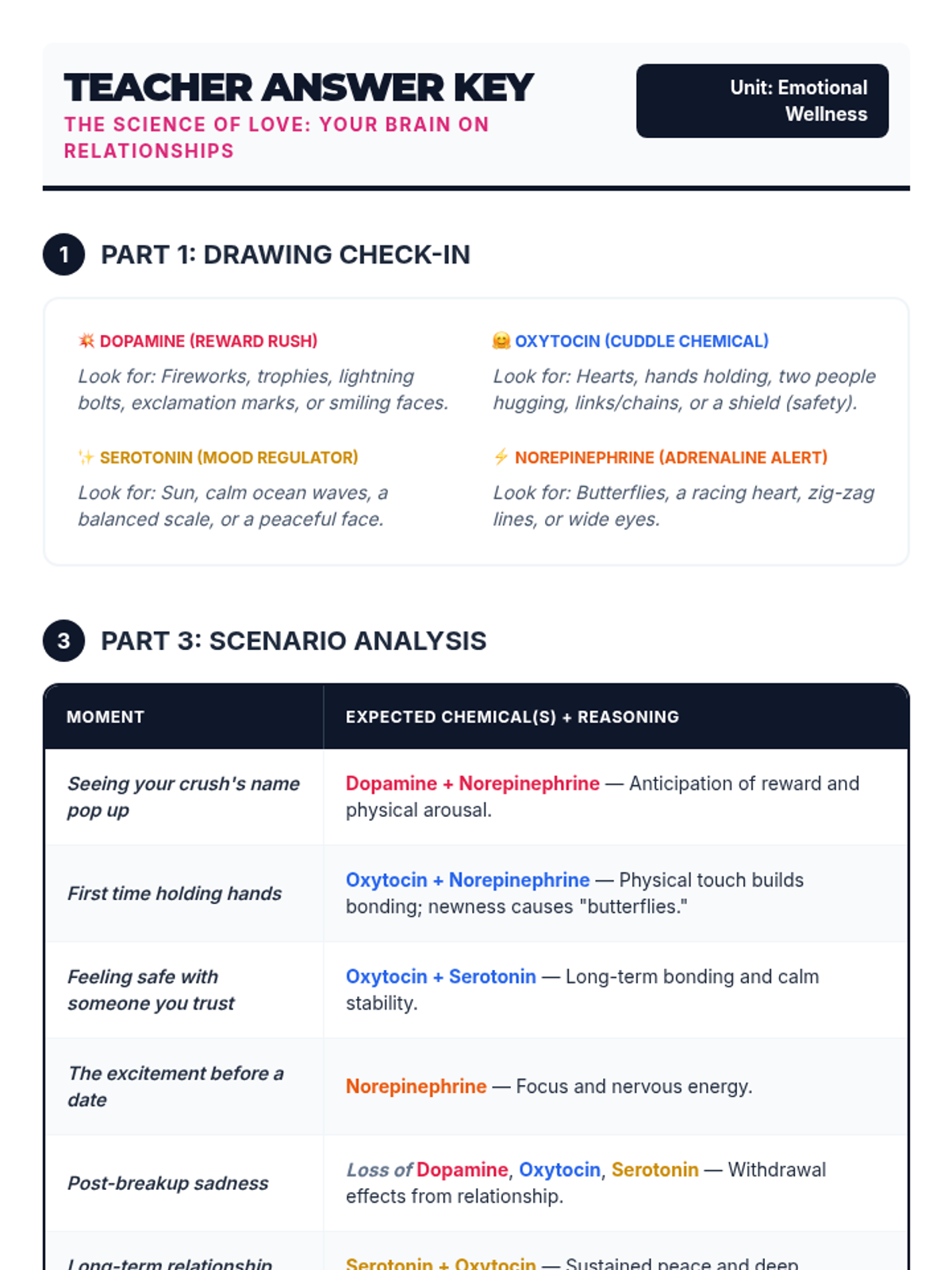
A 45-minute health and science lesson exploring the neurochemistry of romantic attraction, long-term bonding, and heartbreak. Students learn about dopamine, oxytocin, serotonin, and norepinephrine and apply this knowledge to create science-based coping strategies for emotional wellness.
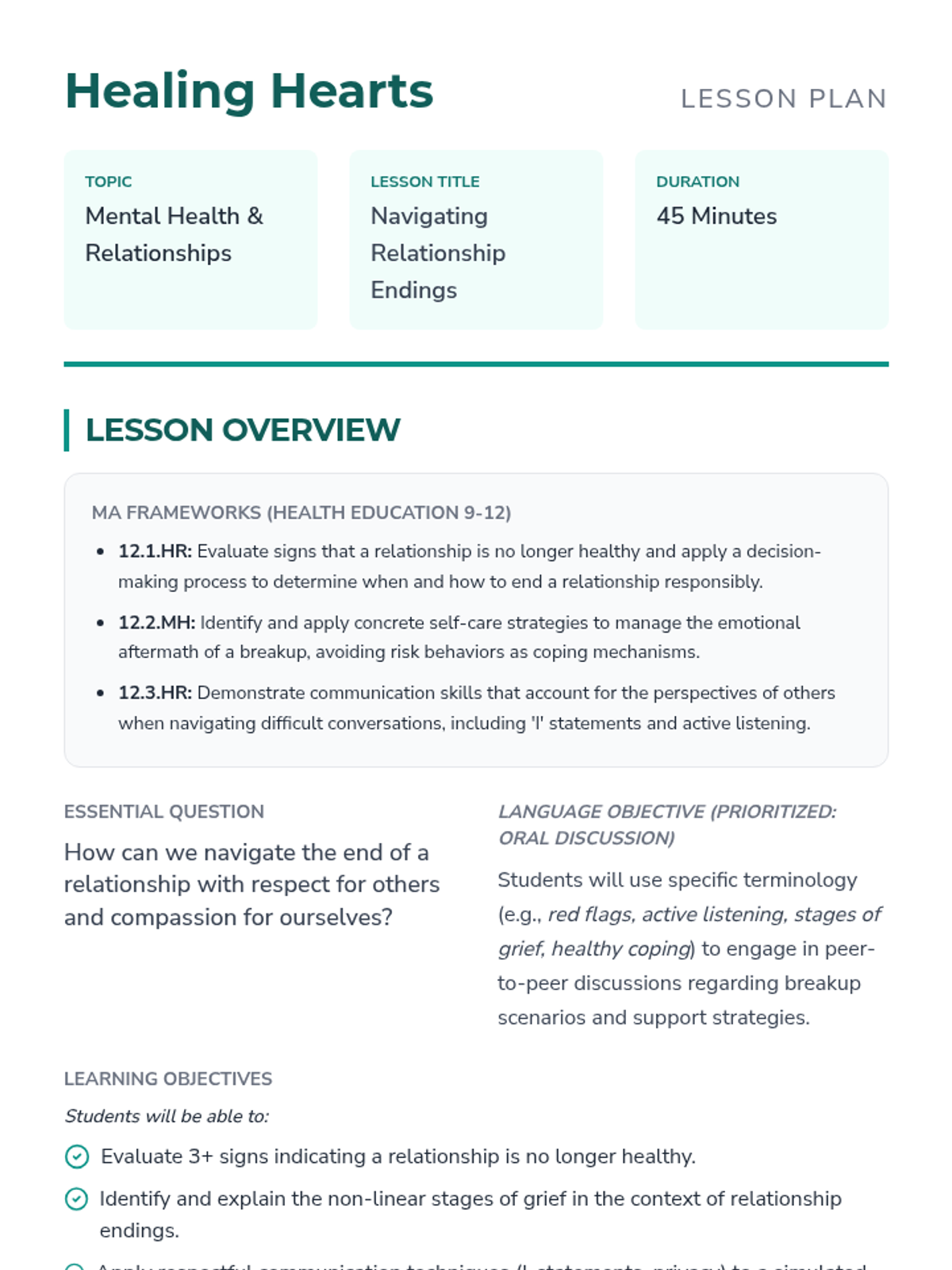
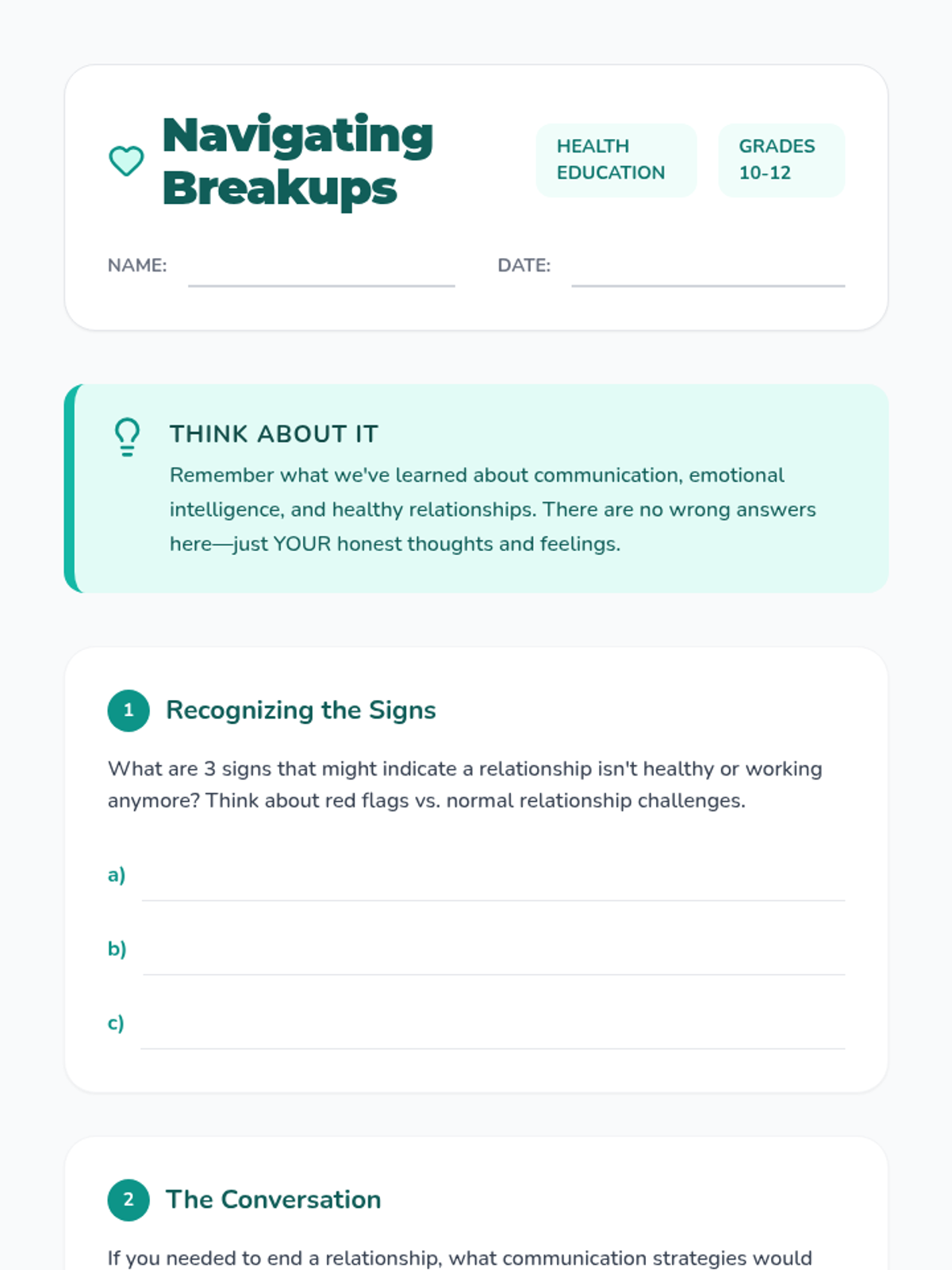
A comprehensive health education lesson for grades 10-12 focused on navigating the emotional complexities of breakups, understanding the grief process, and practicing respectful communication and self-care.
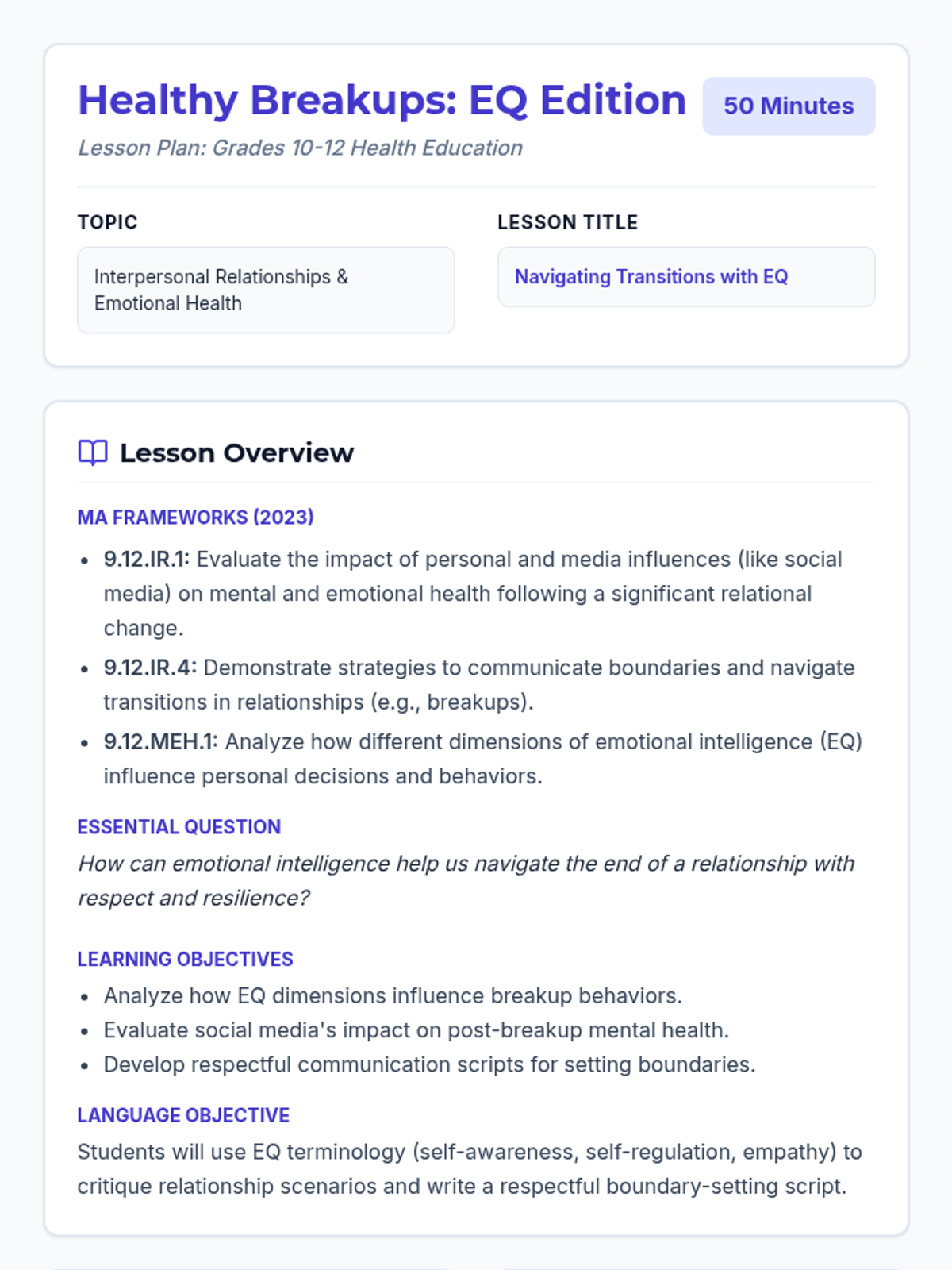
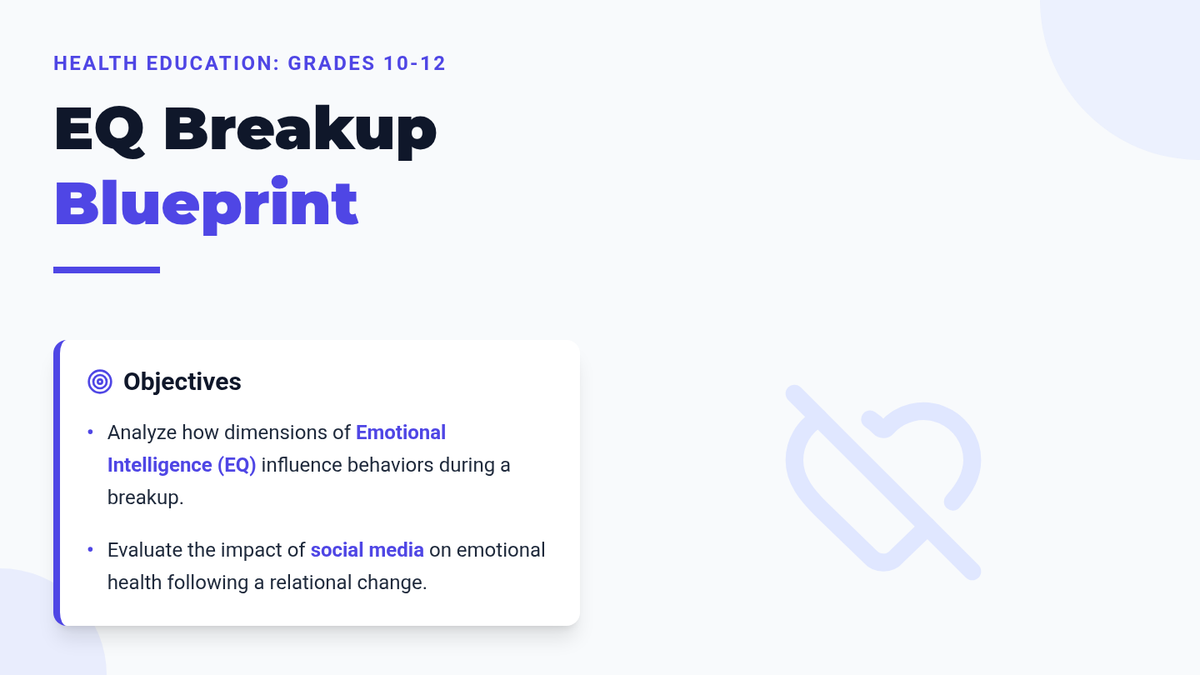
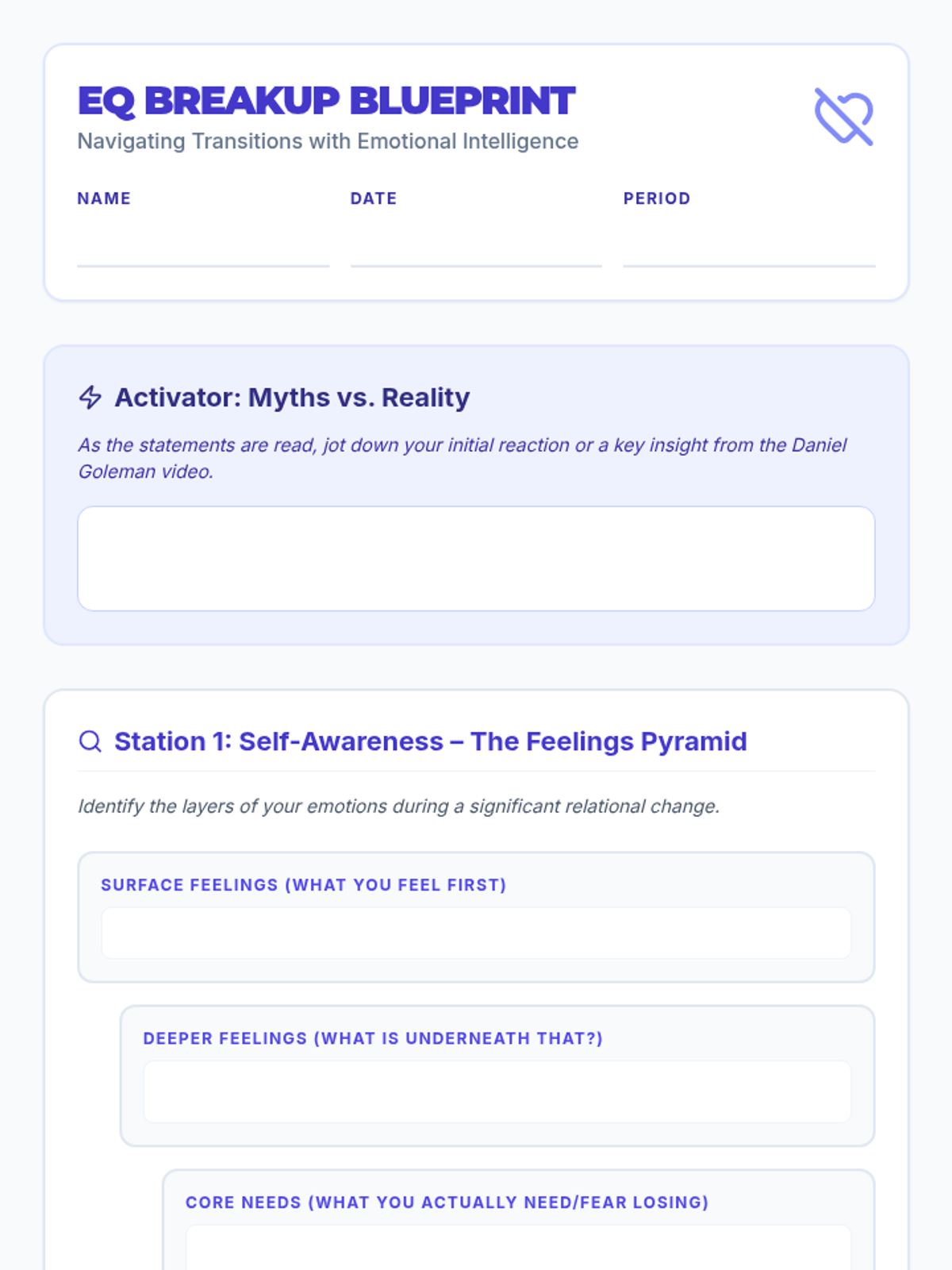
A comprehensive 50-minute health lesson for grades 10-12 focused on using emotional intelligence (EQ) to navigate relationship breakups and set healthy boundaries. Students analyze EQ dimensions, practice respectful communication, and evaluate the impact of social media on emotional recovery.
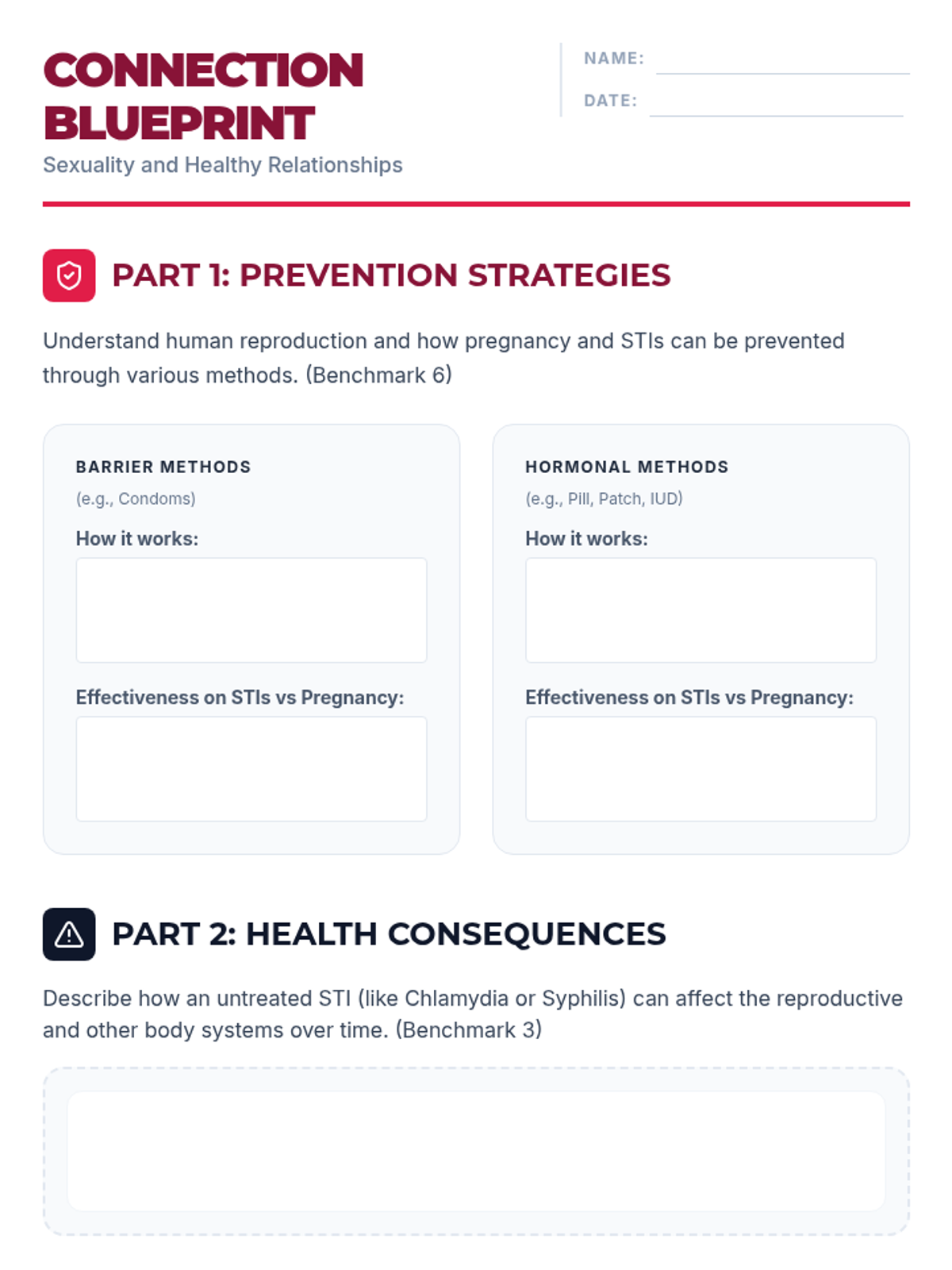
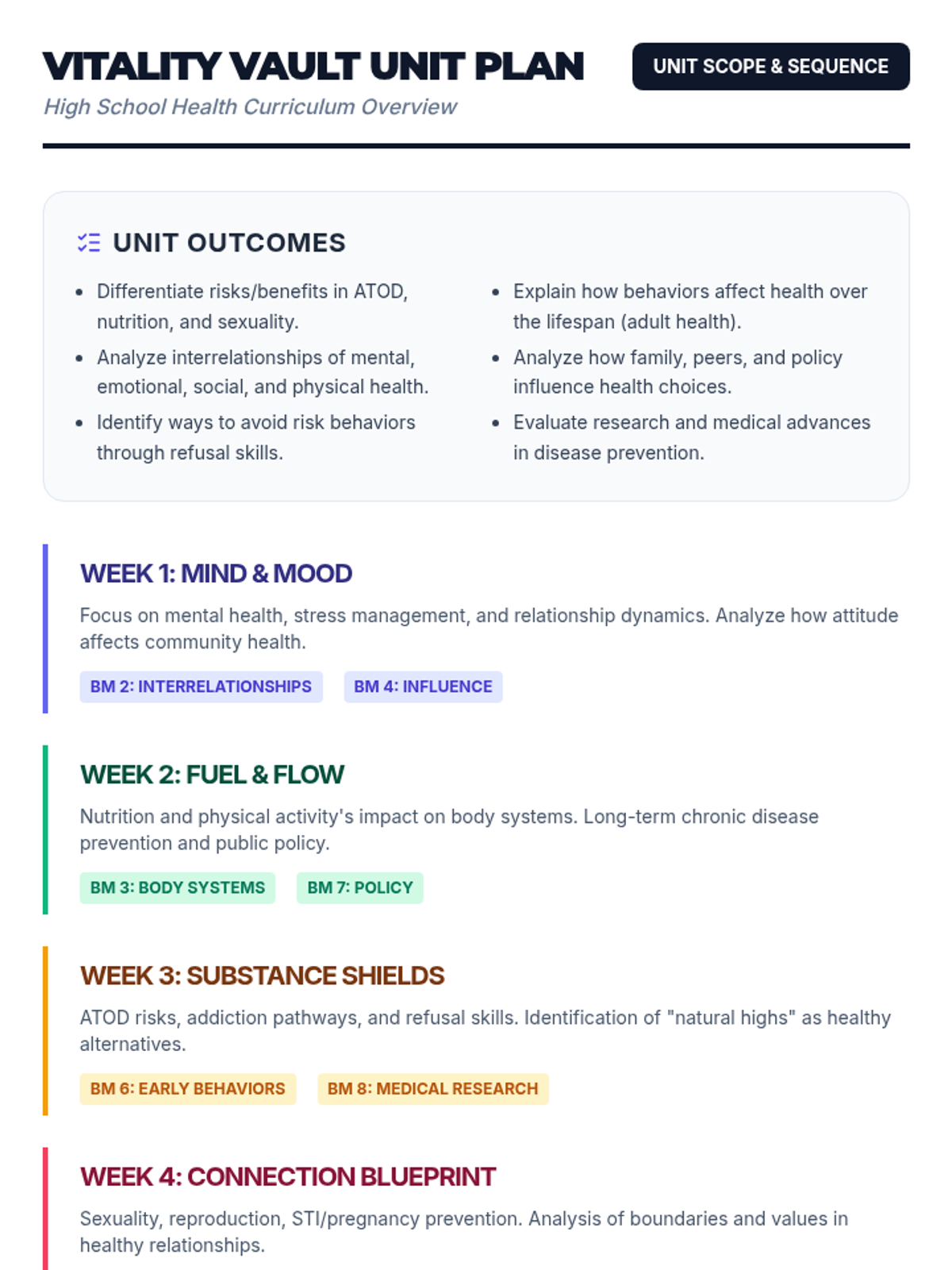
Covers human reproduction, pregnancy prevention, and STI awareness. Students analyze healthy boundaries, consent, and how early behaviors impact adult health outcomes.
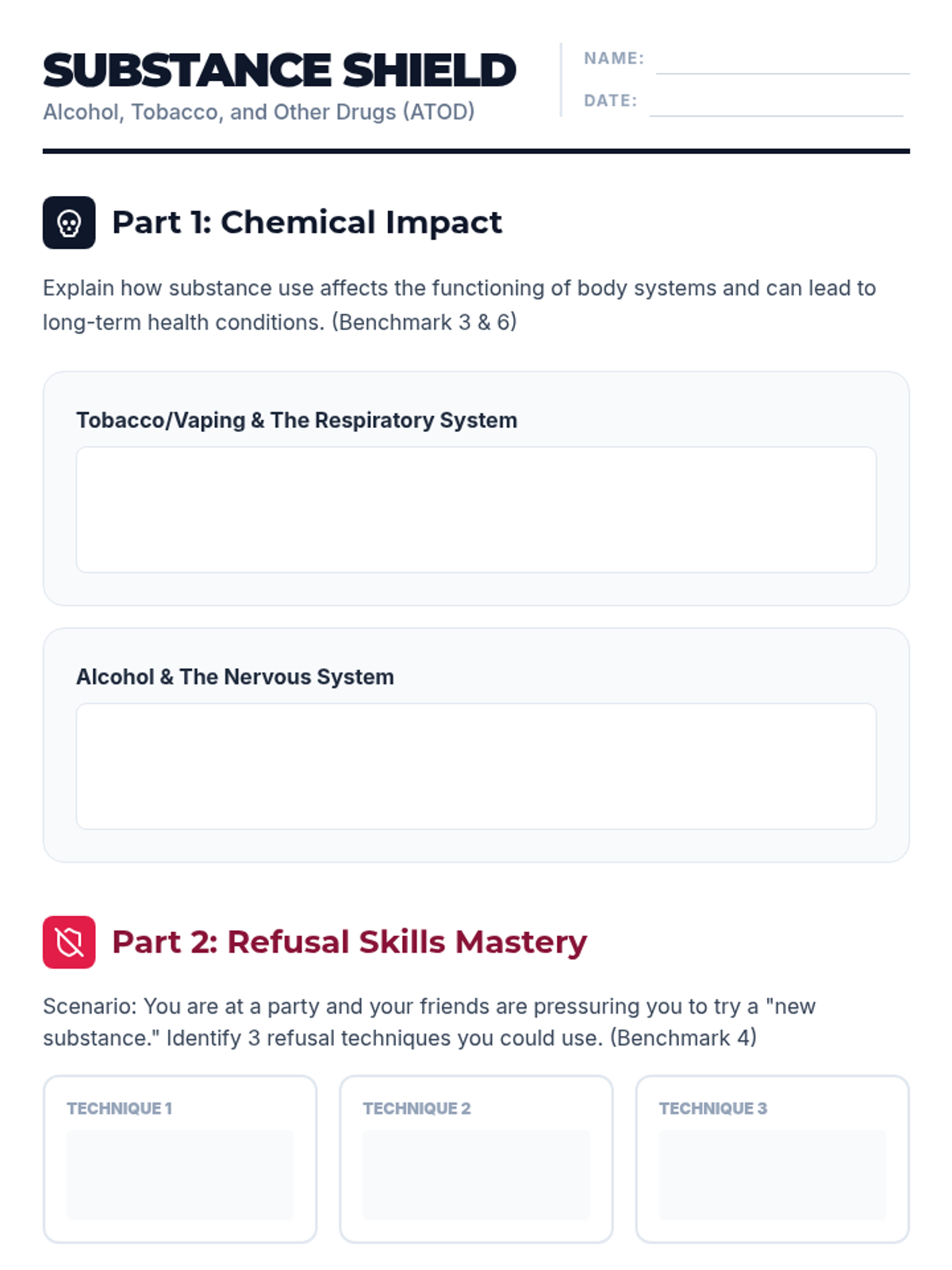
Examines the impact of alcohol, tobacco, and other drugs on the body and social health. Students develop refusal skills and analyze how public regulations and personal choices influence risk behaviors.
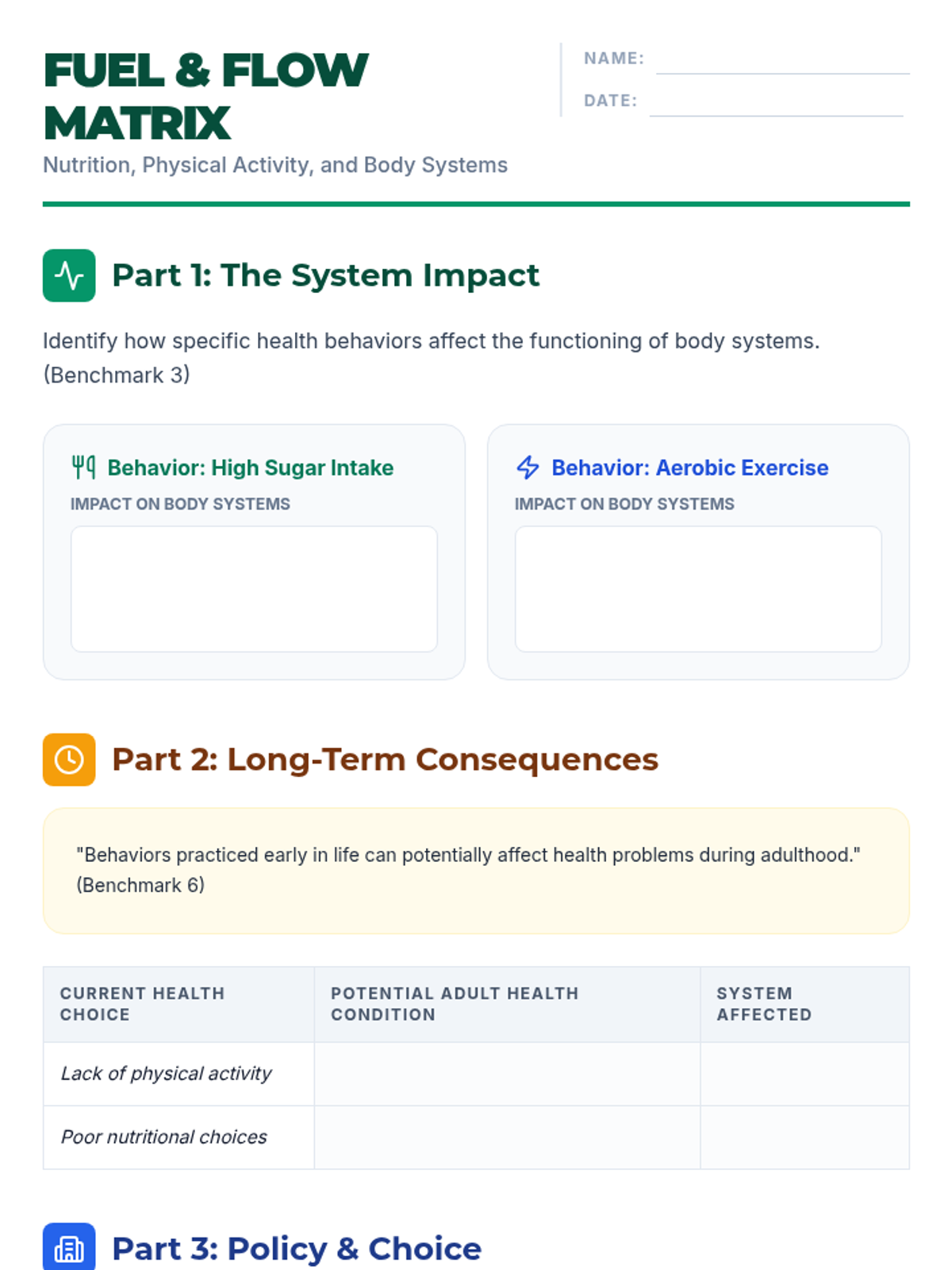
Explores how nutrition and physical activity impact body systems and long-term health. Students analyze public health policies and the role of research in promoting physical wellness.
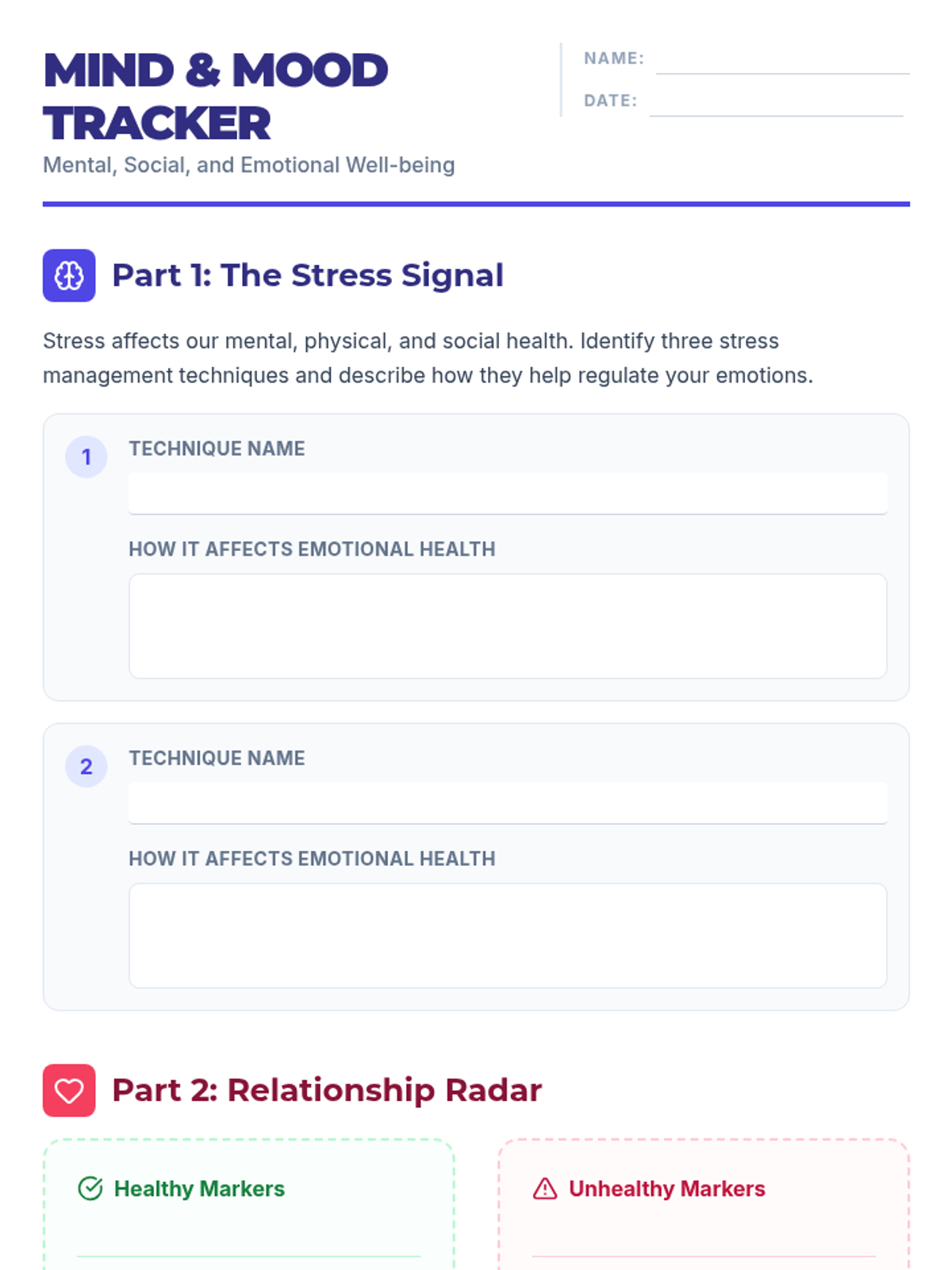
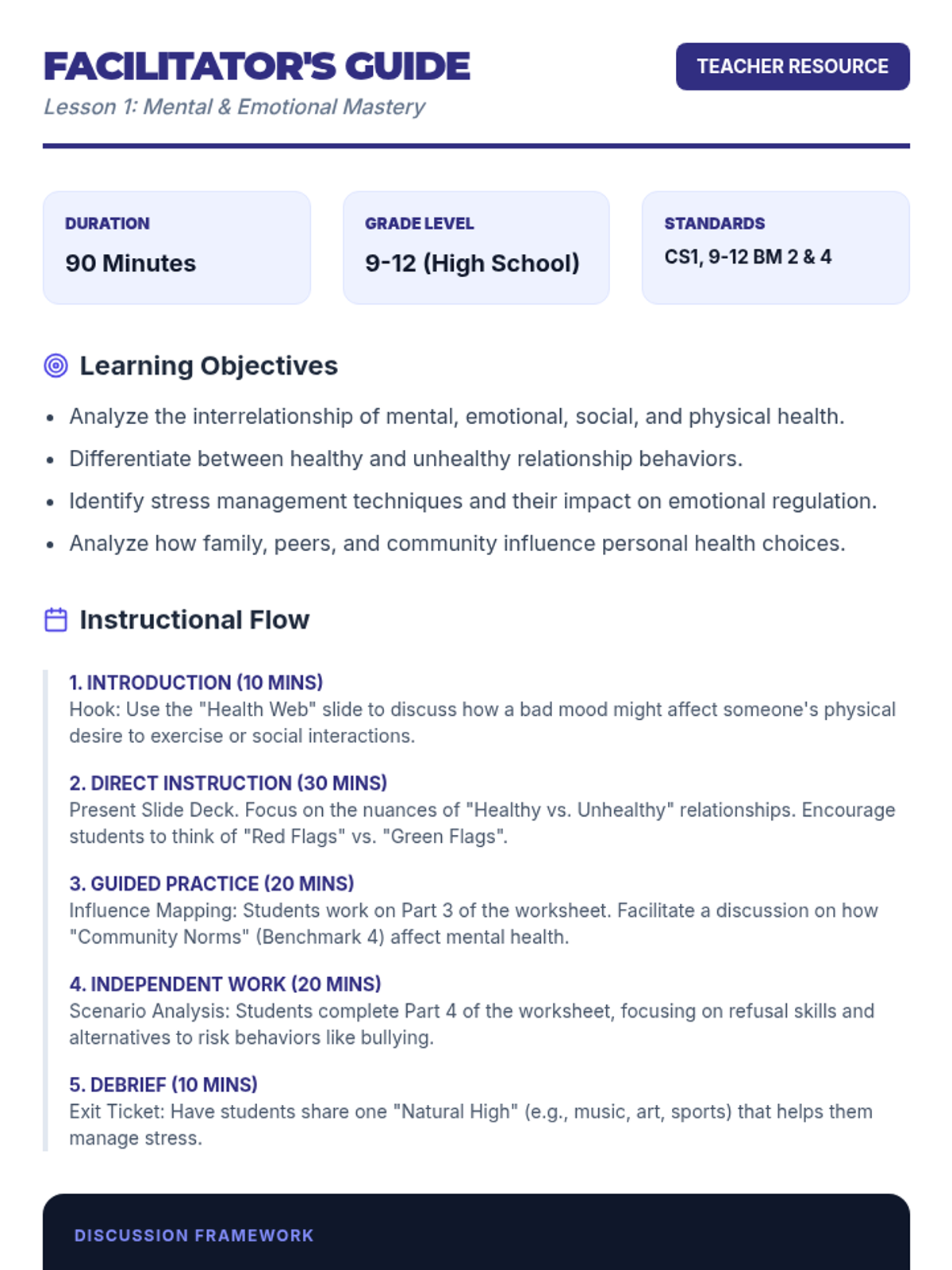
Focuses on stress management, relationship dynamics, and the interrelationship between mental, emotional, and social health. Students identify healthy vs. unhealthy relationship markers and analyze social influences on emotional well-being.
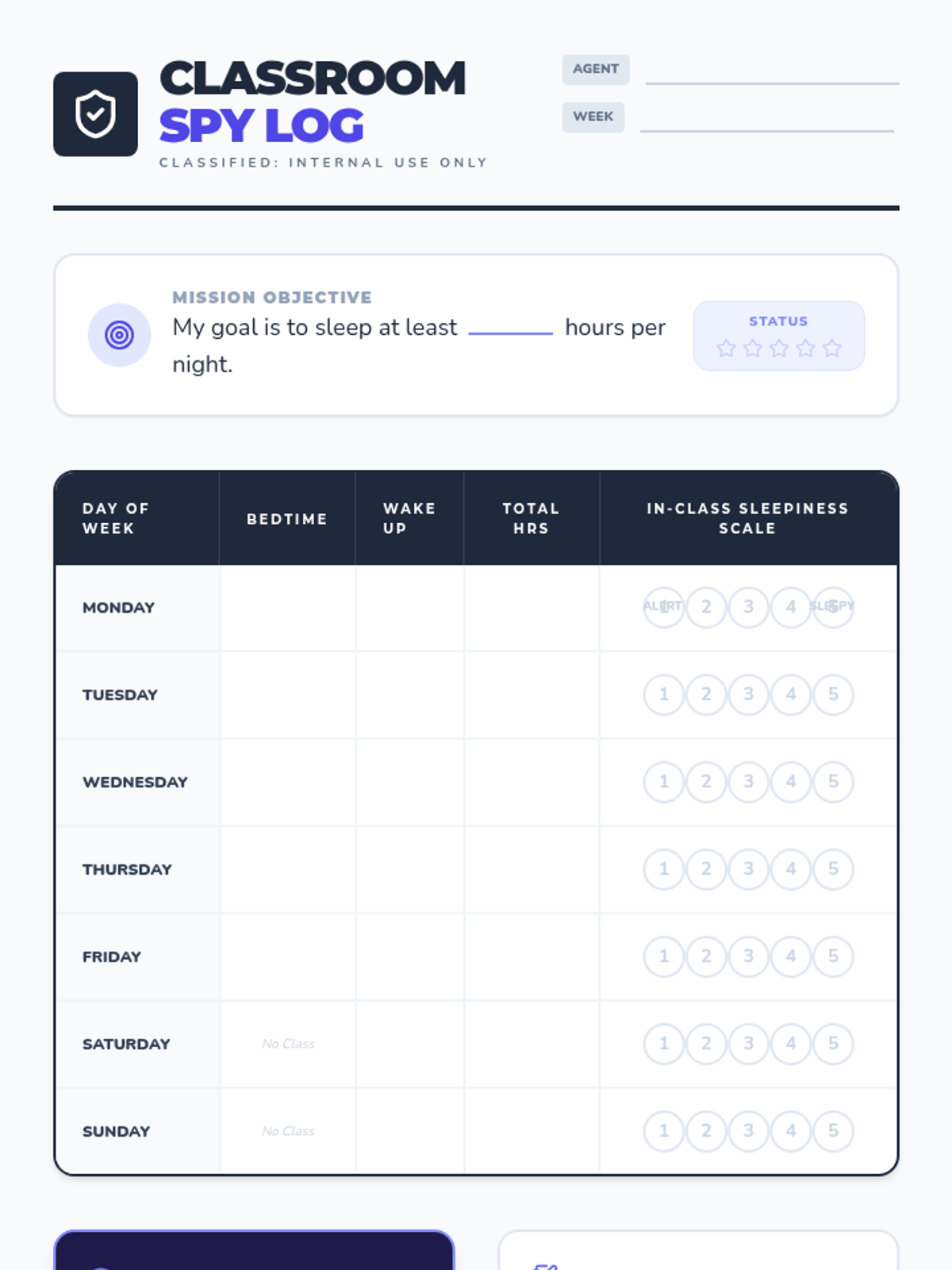
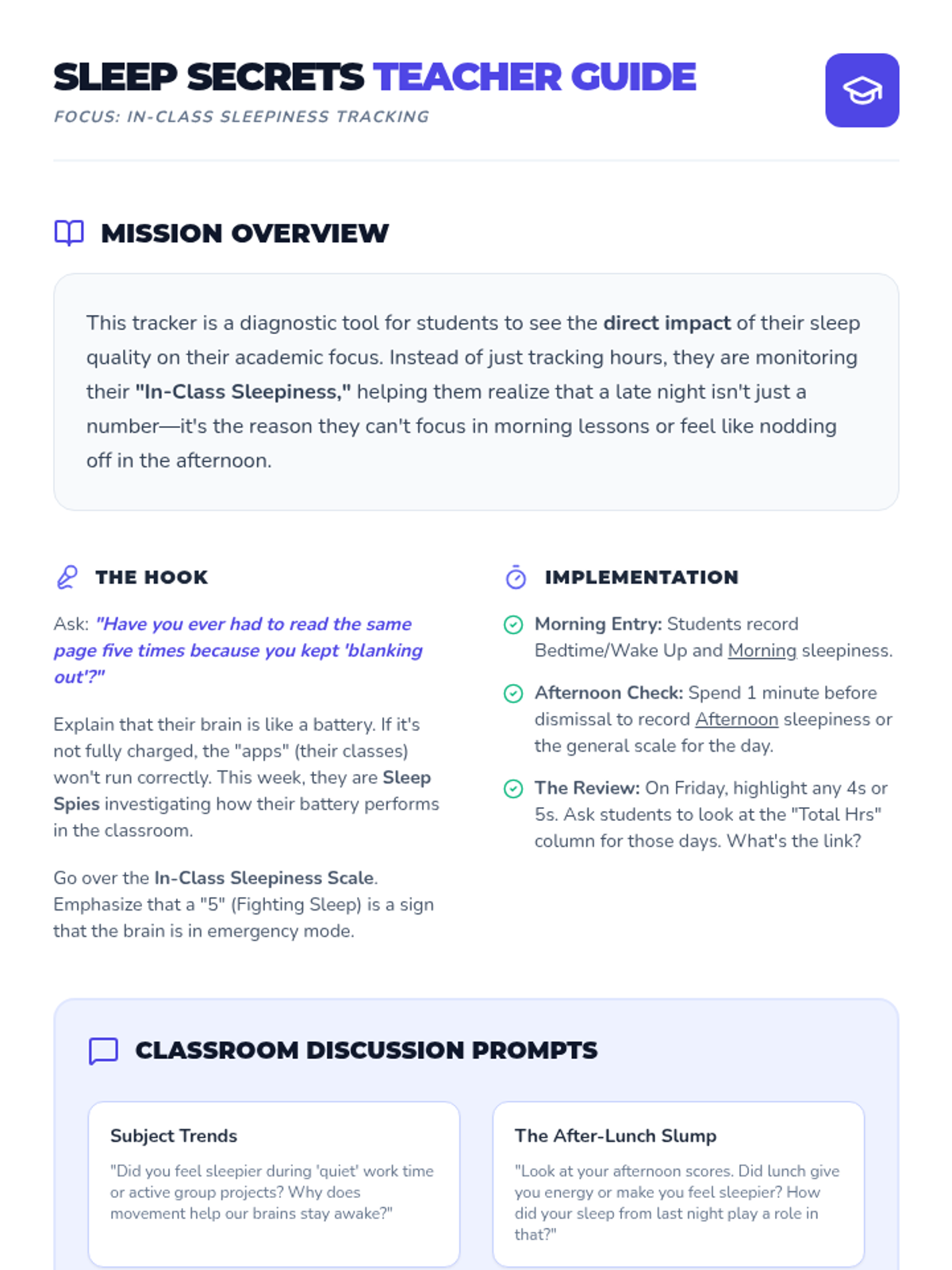
A lesson focused on helping students track and analyze their sleep patterns to understand the impact of rest on their daily energy and mood.
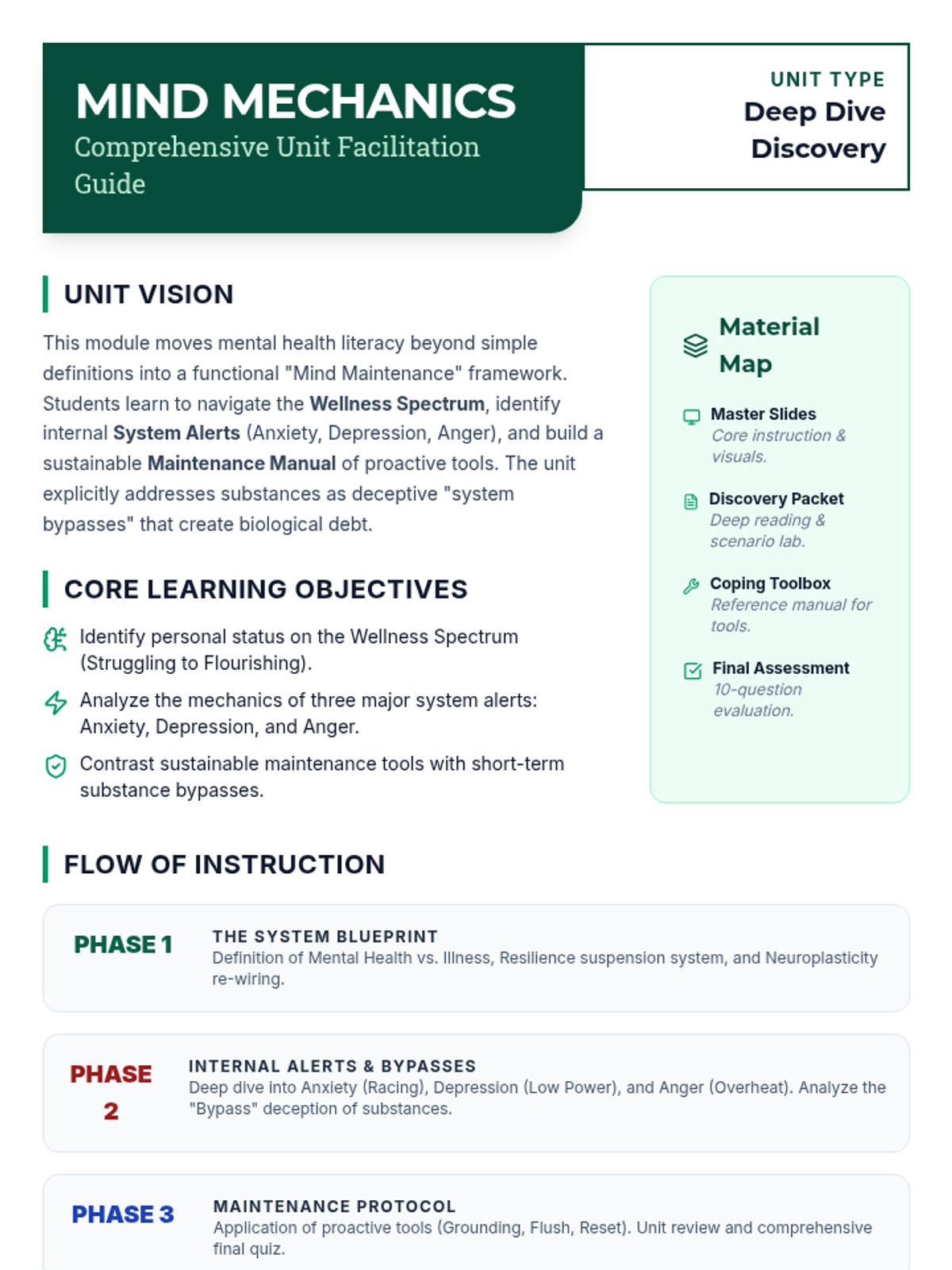
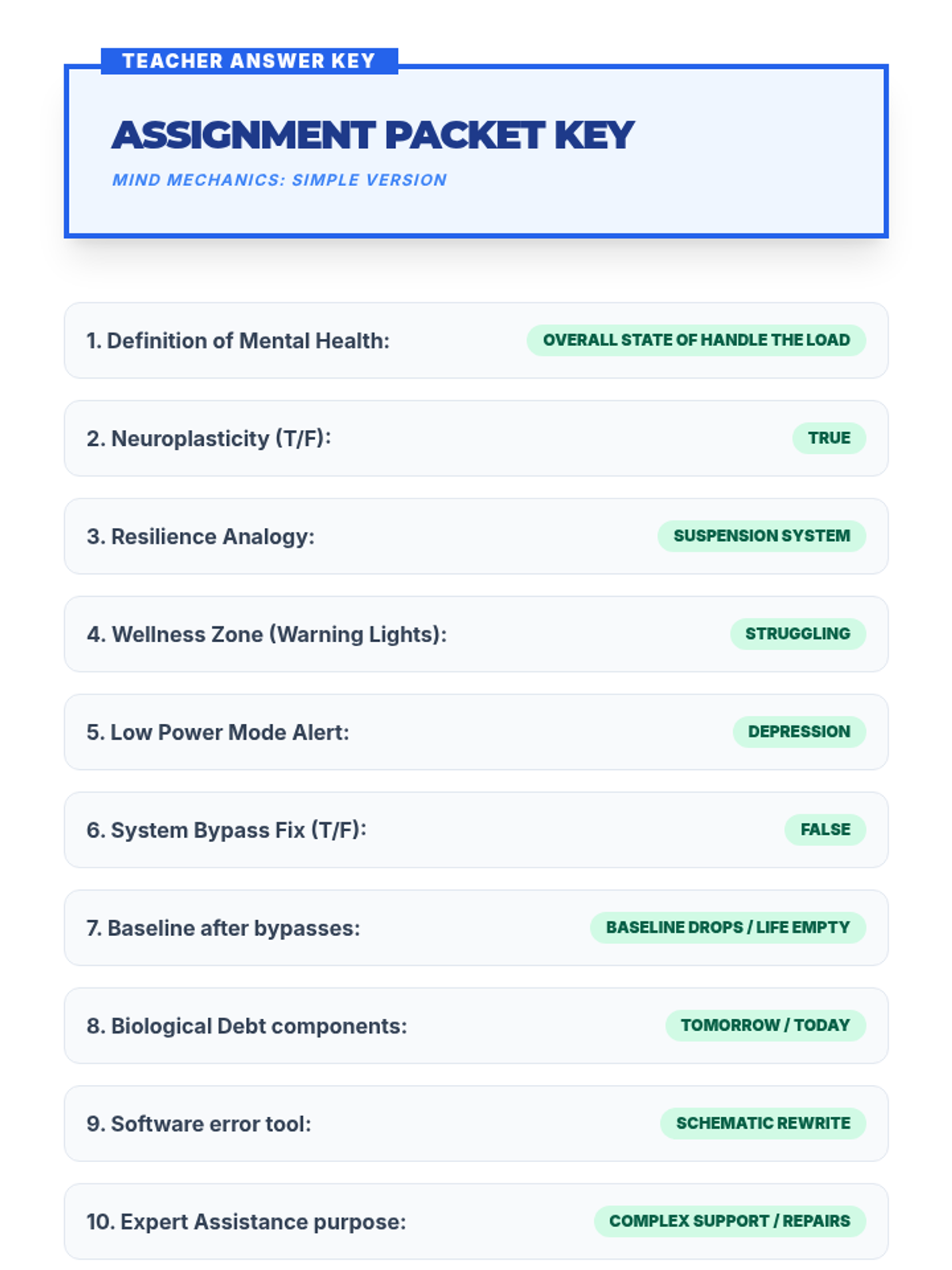
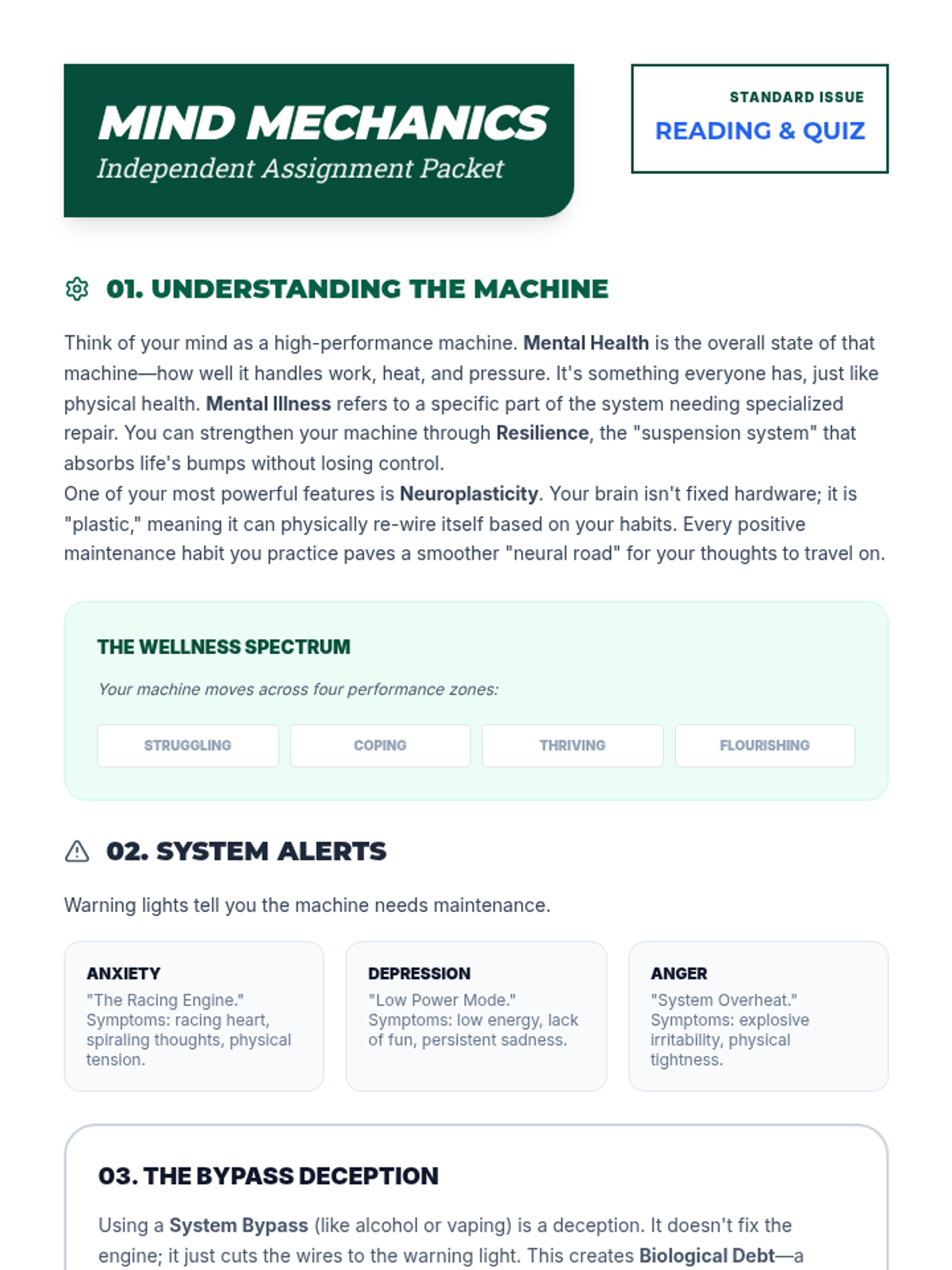
A comprehensive, in-depth unit on mental health literacy, identifying system alerts (Anxiety, Depression, Anger), and building a proactive coping toolkit. Includes detailed reading, scenario analysis, and a 10-question final assessment.
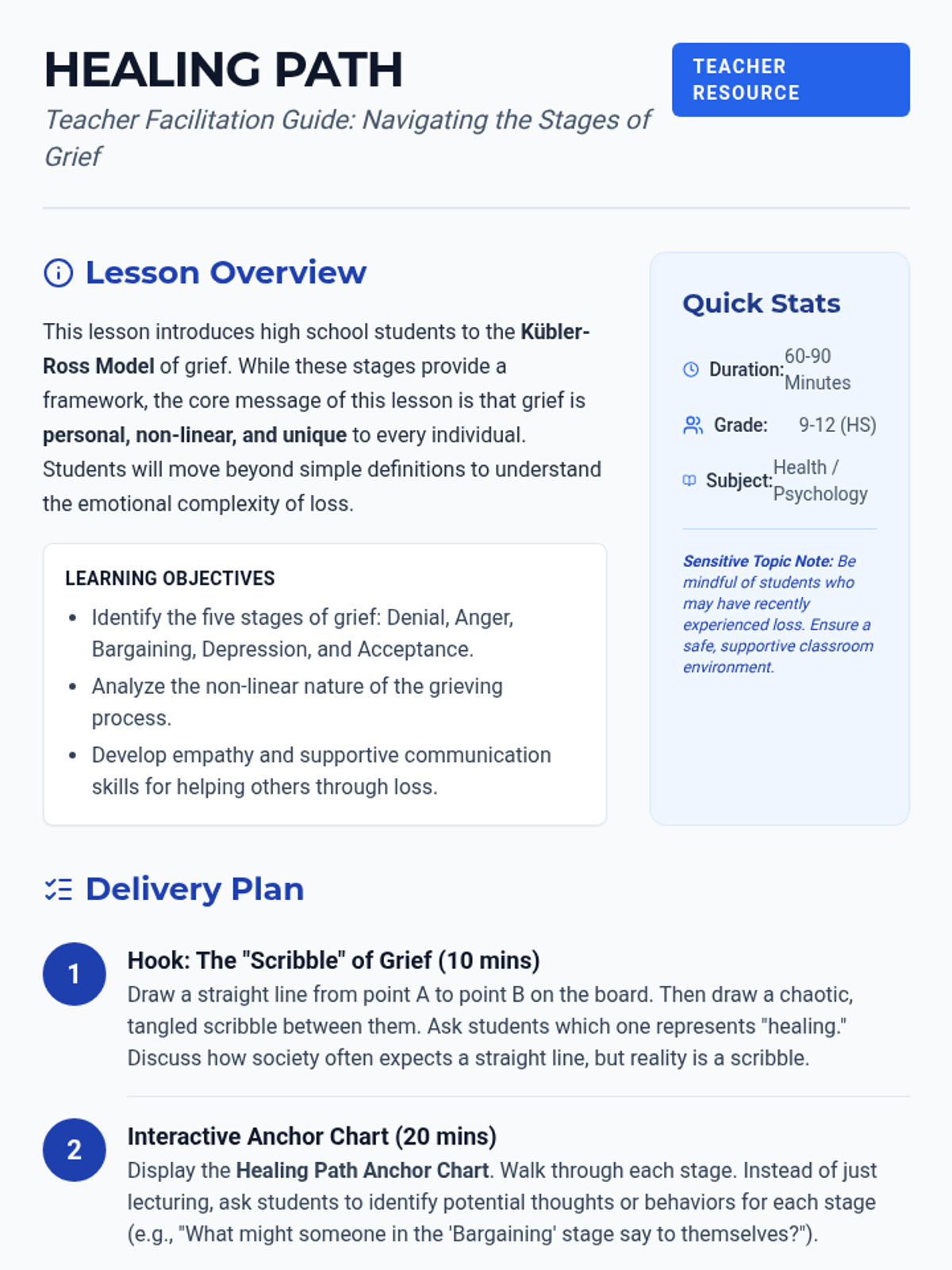
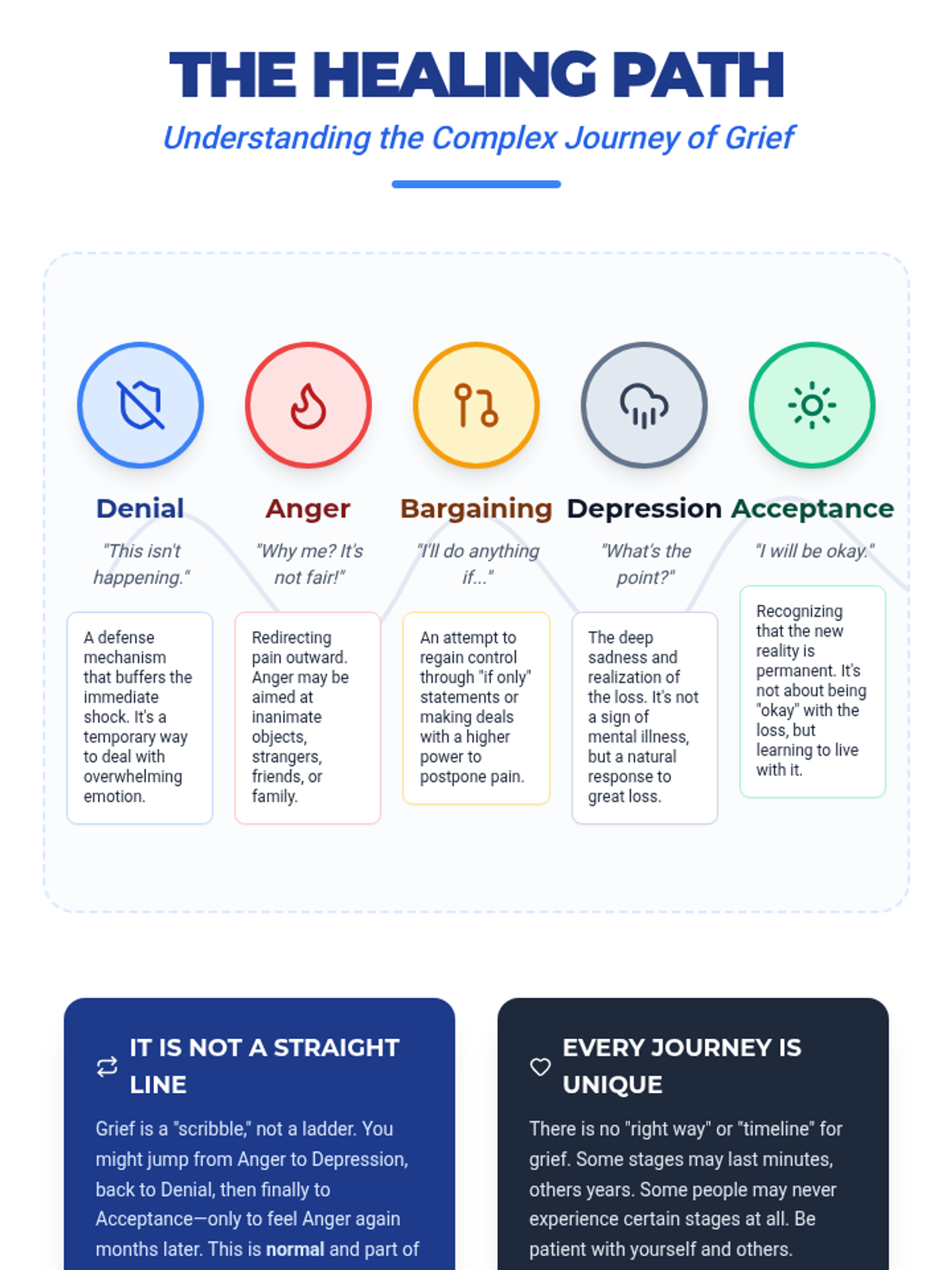
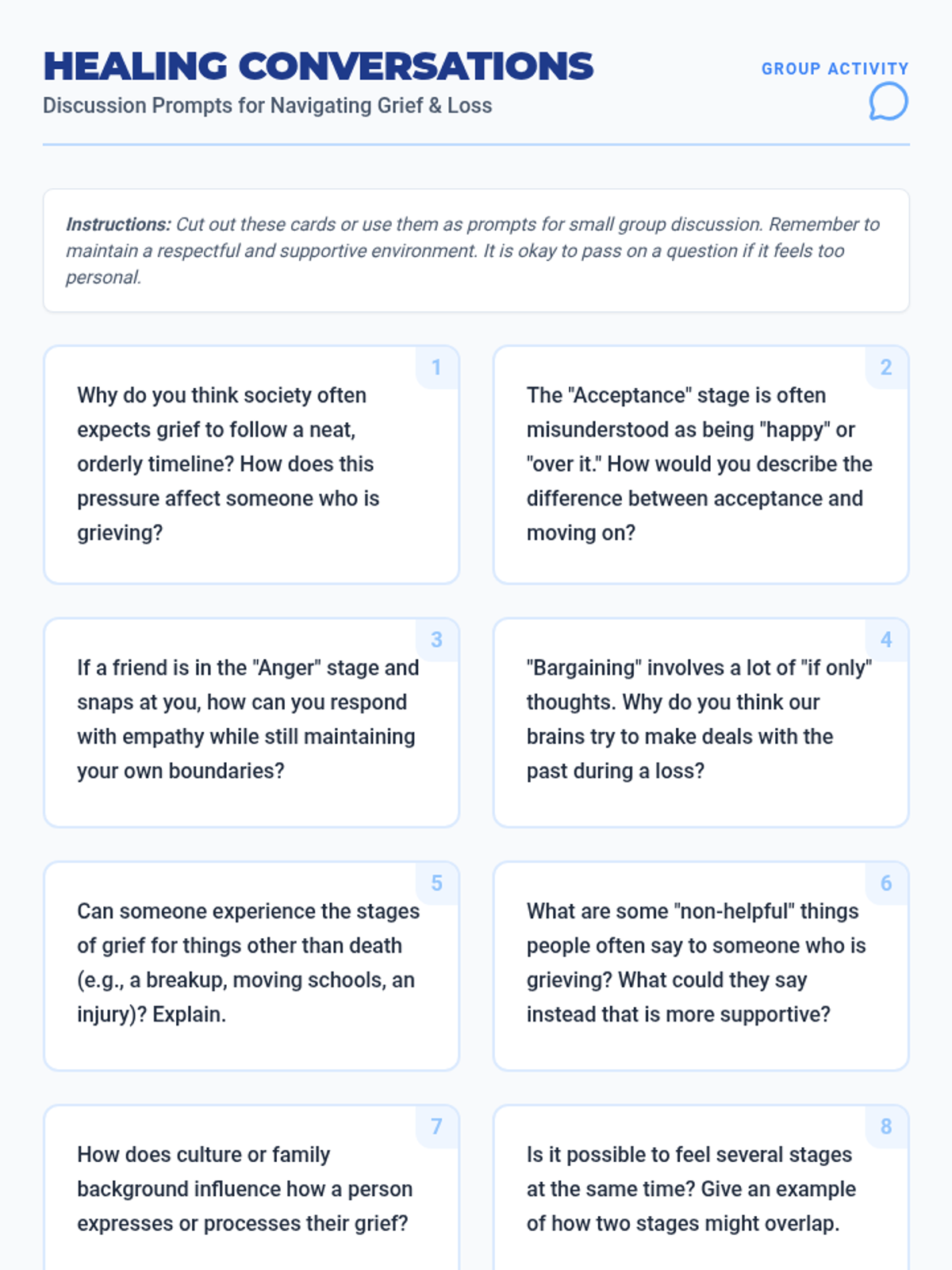
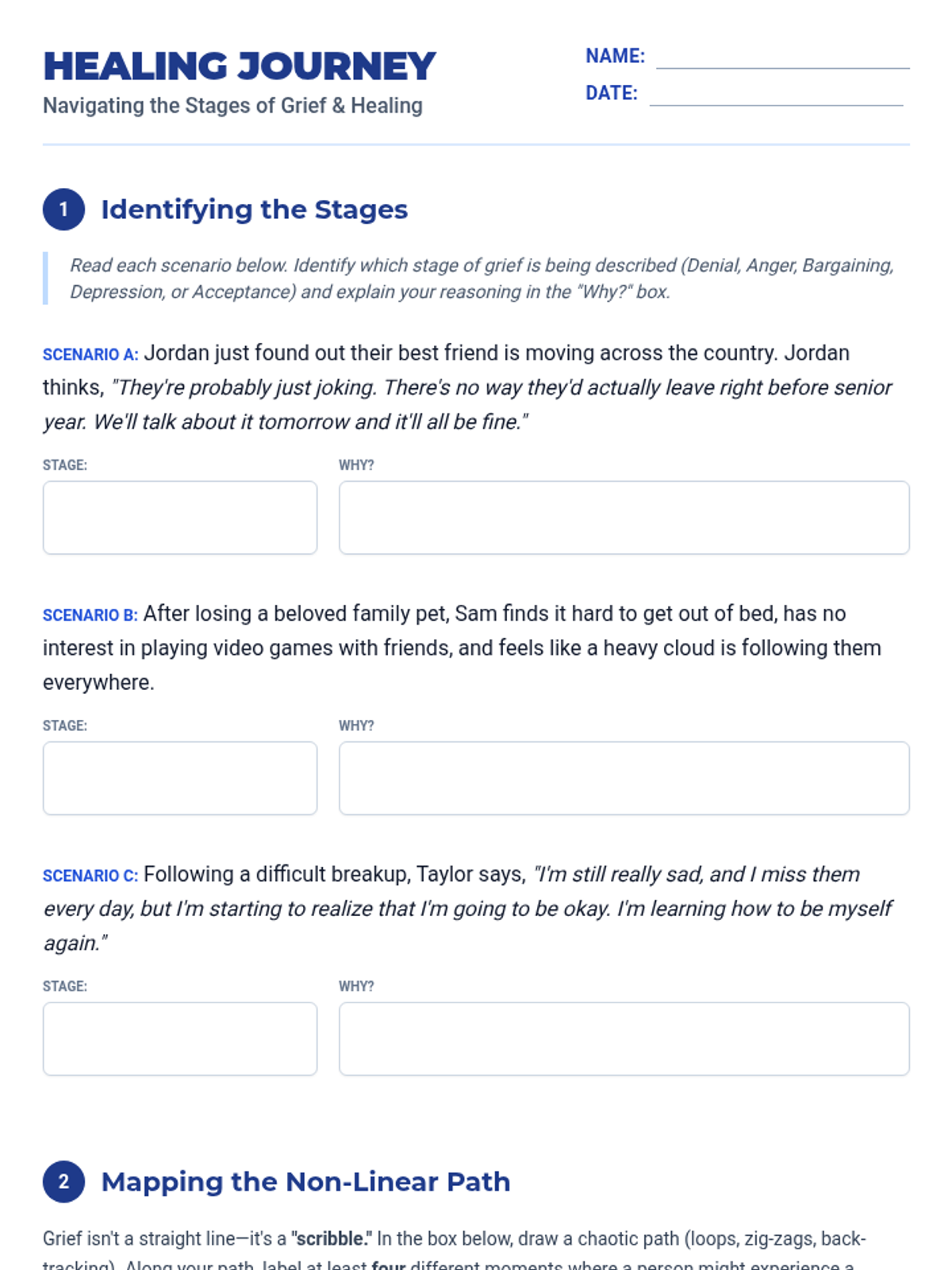
A comprehensive lesson for high school students exploring the Kübler-Ross stages of grief, emphasizing the non-linear nature of healing and providing tools for healthy processing.
A reflective lesson designed for students to evaluate the health risks of vaping and the social pressures that lead to it, focusing on long-term consequences and personal agency.
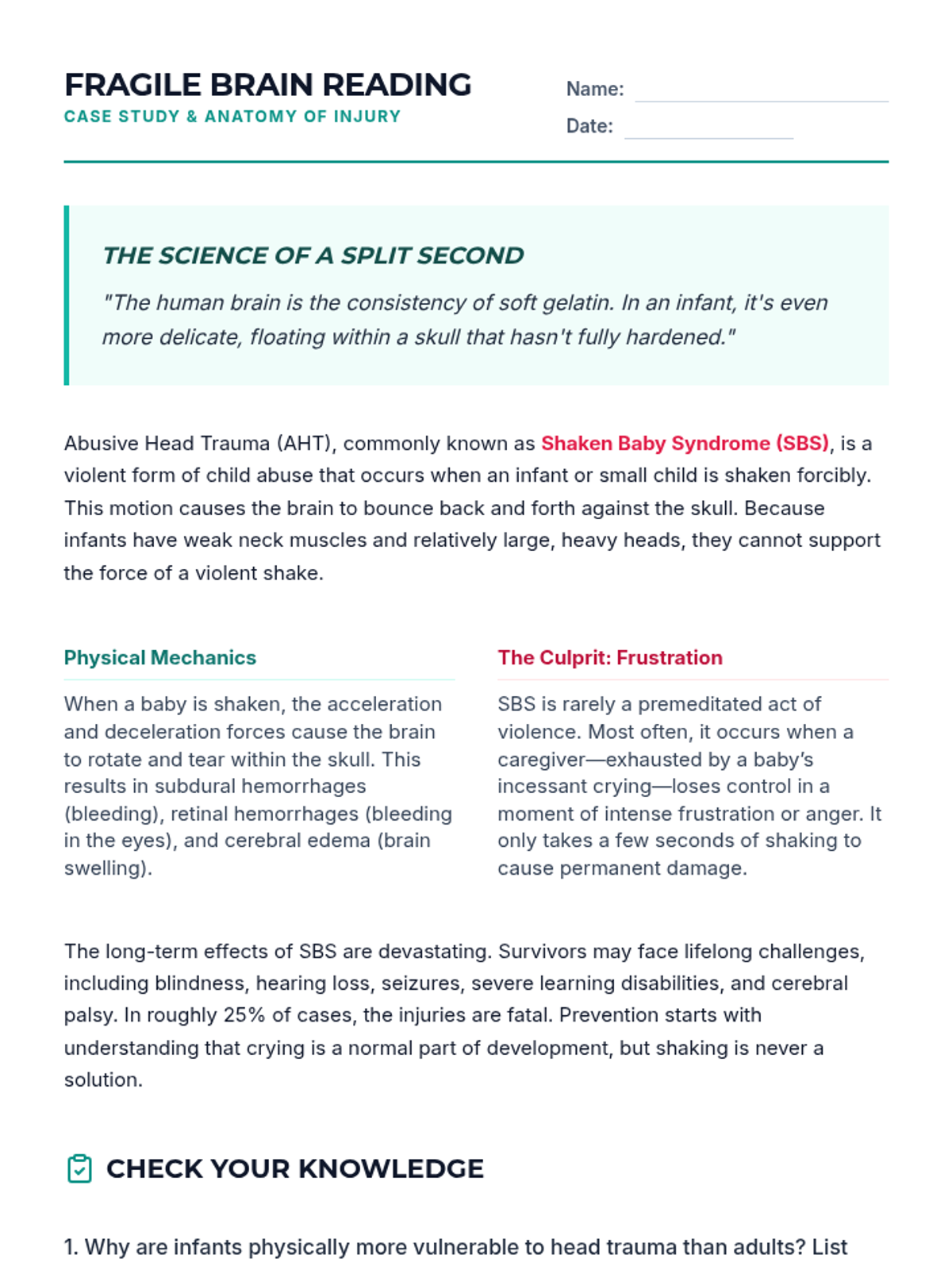
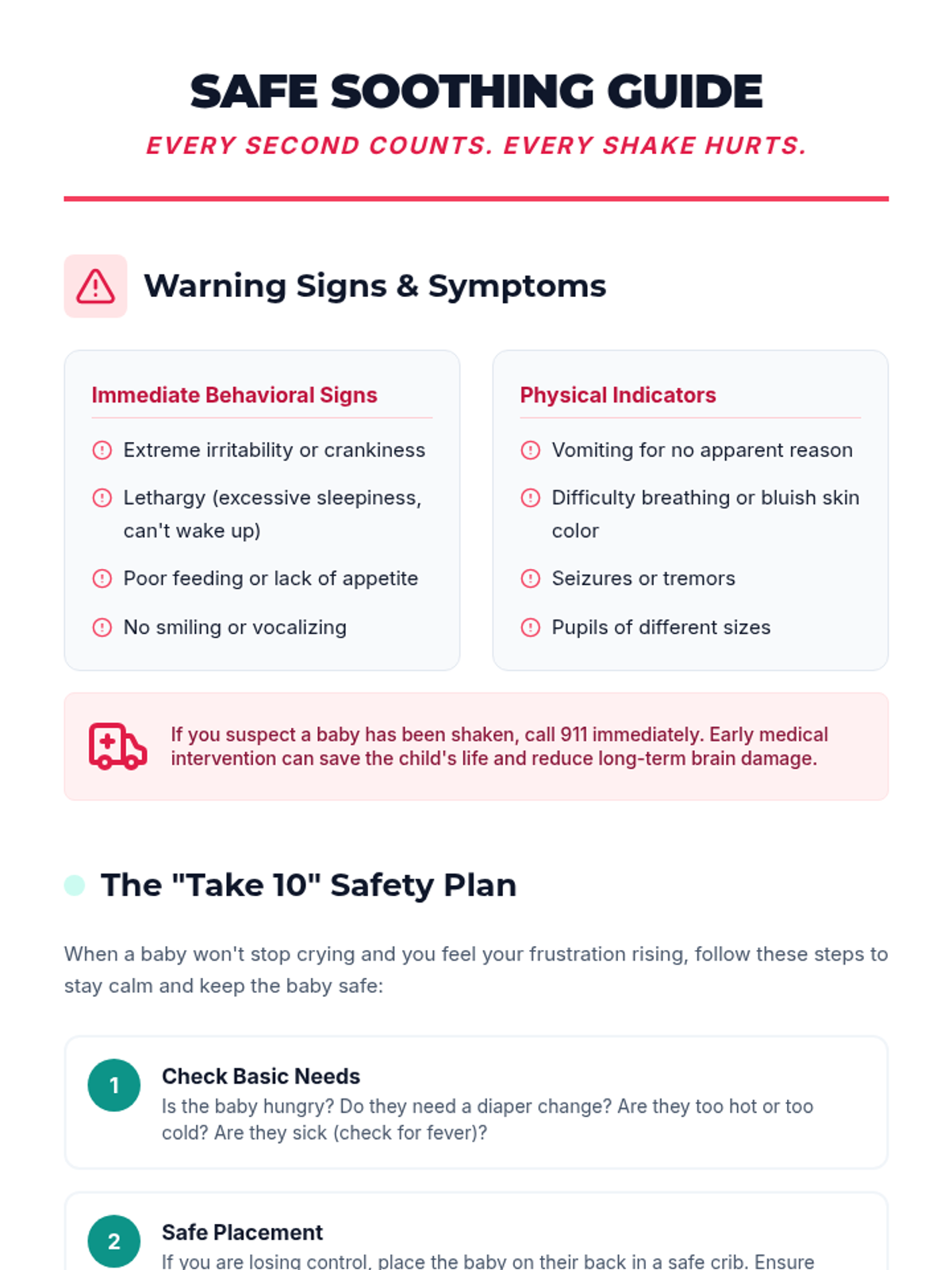
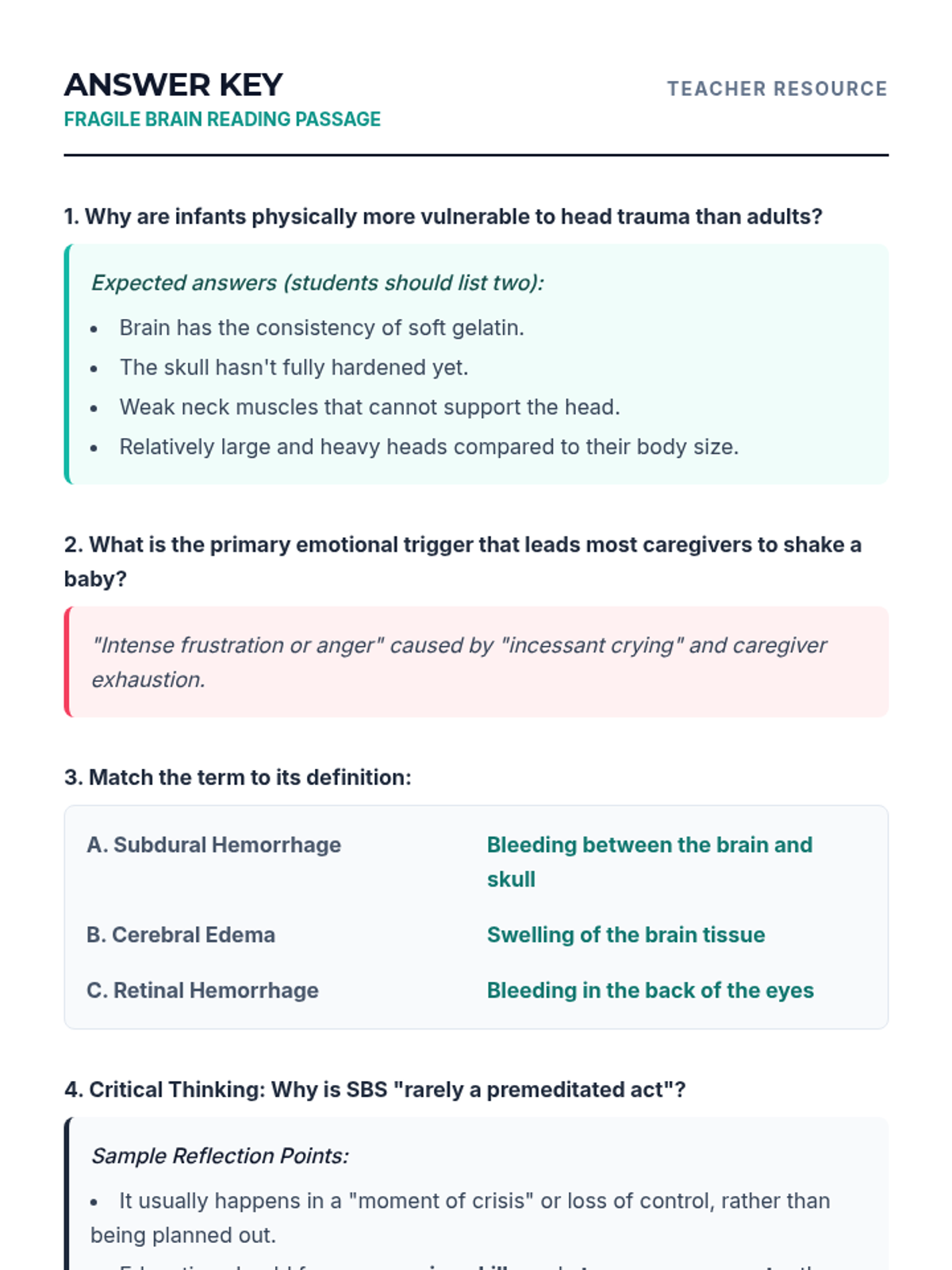
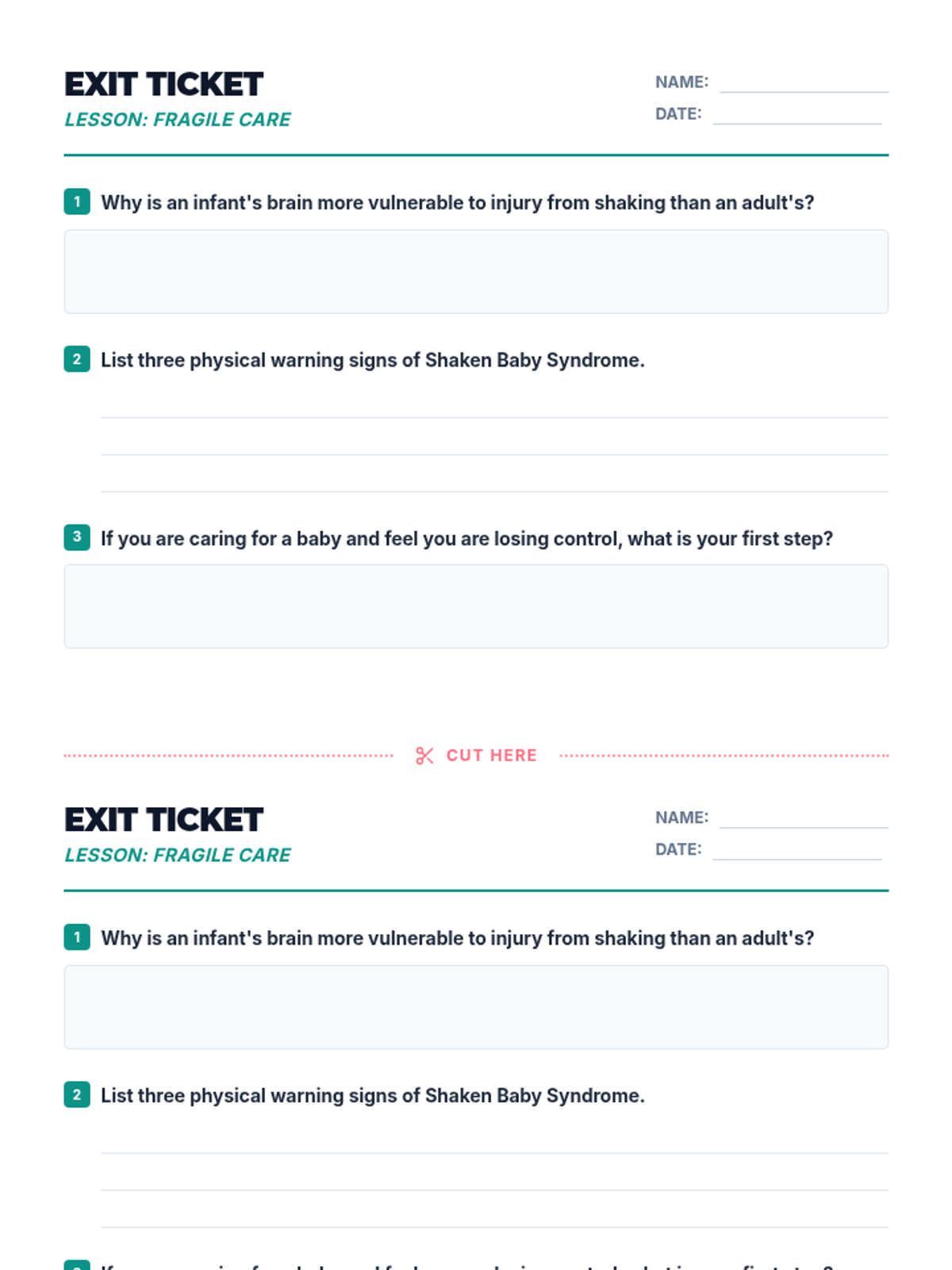
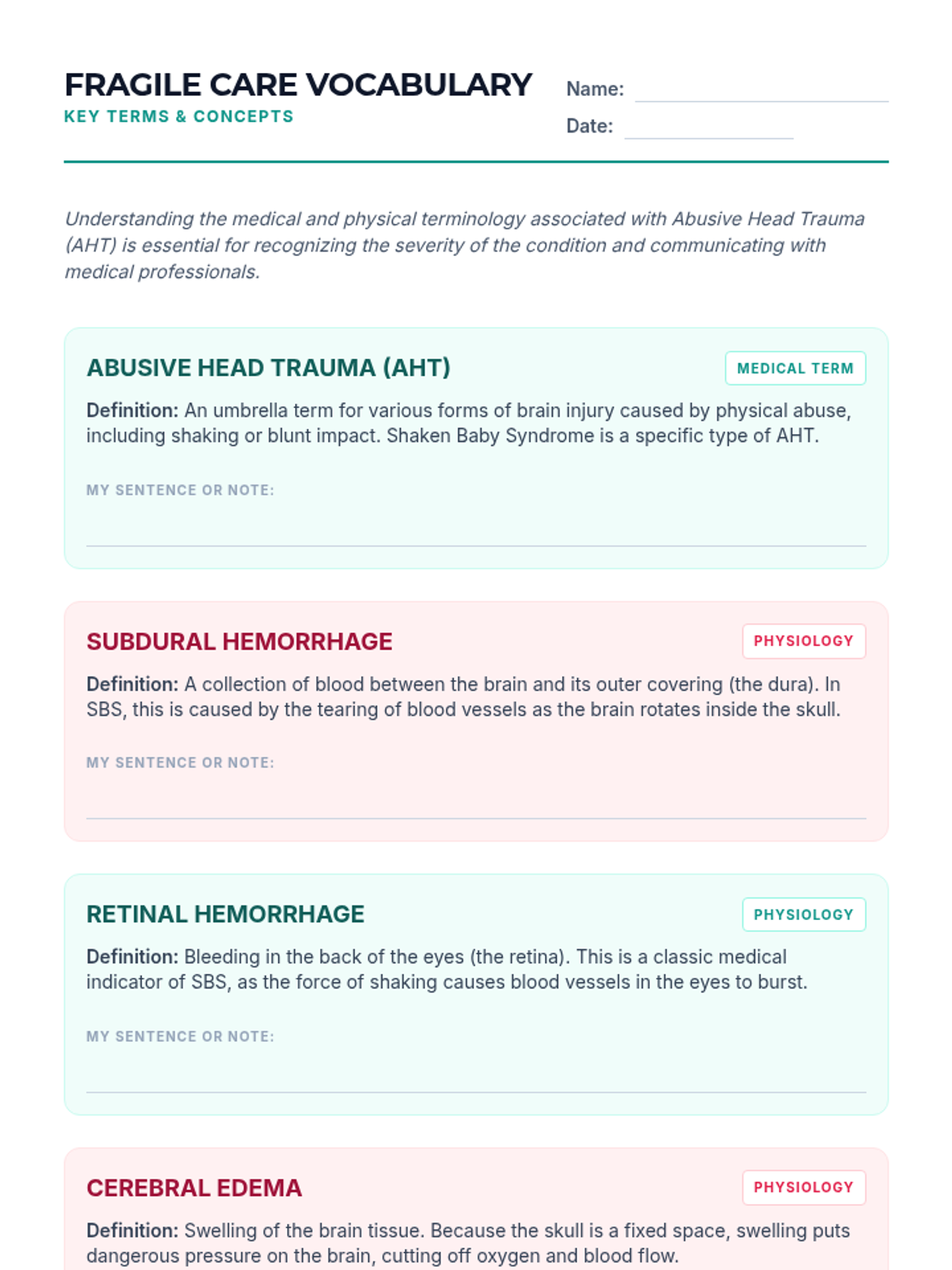
A mini-lesson designed for high school health or child development classes, covering the biological causes, physical warning signs, and prevention strategies for Shaken Baby Syndrome (SBS). Students will explore the physics of infant brain injury and learn practical coping mechanisms for caregiver stress.
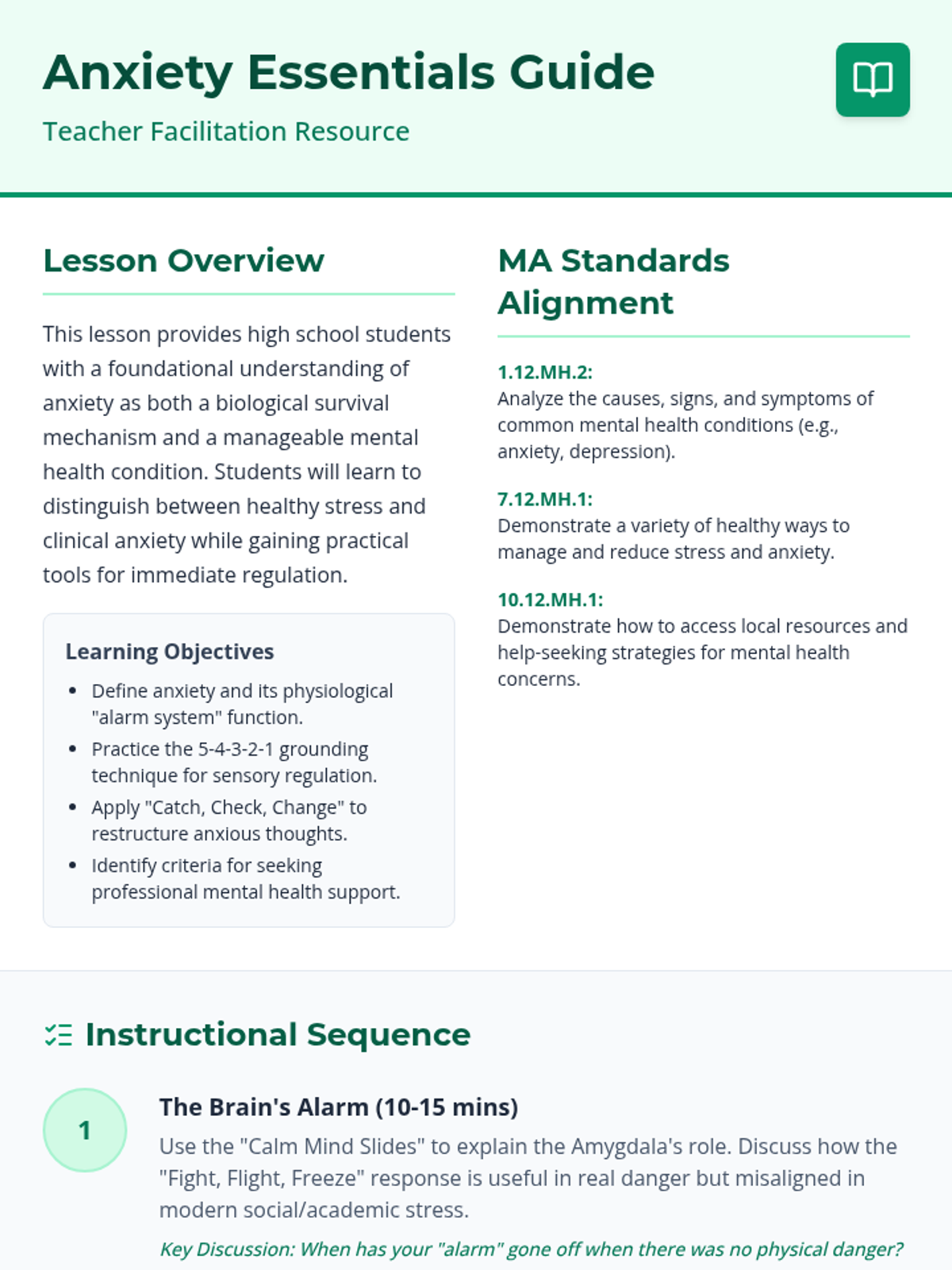
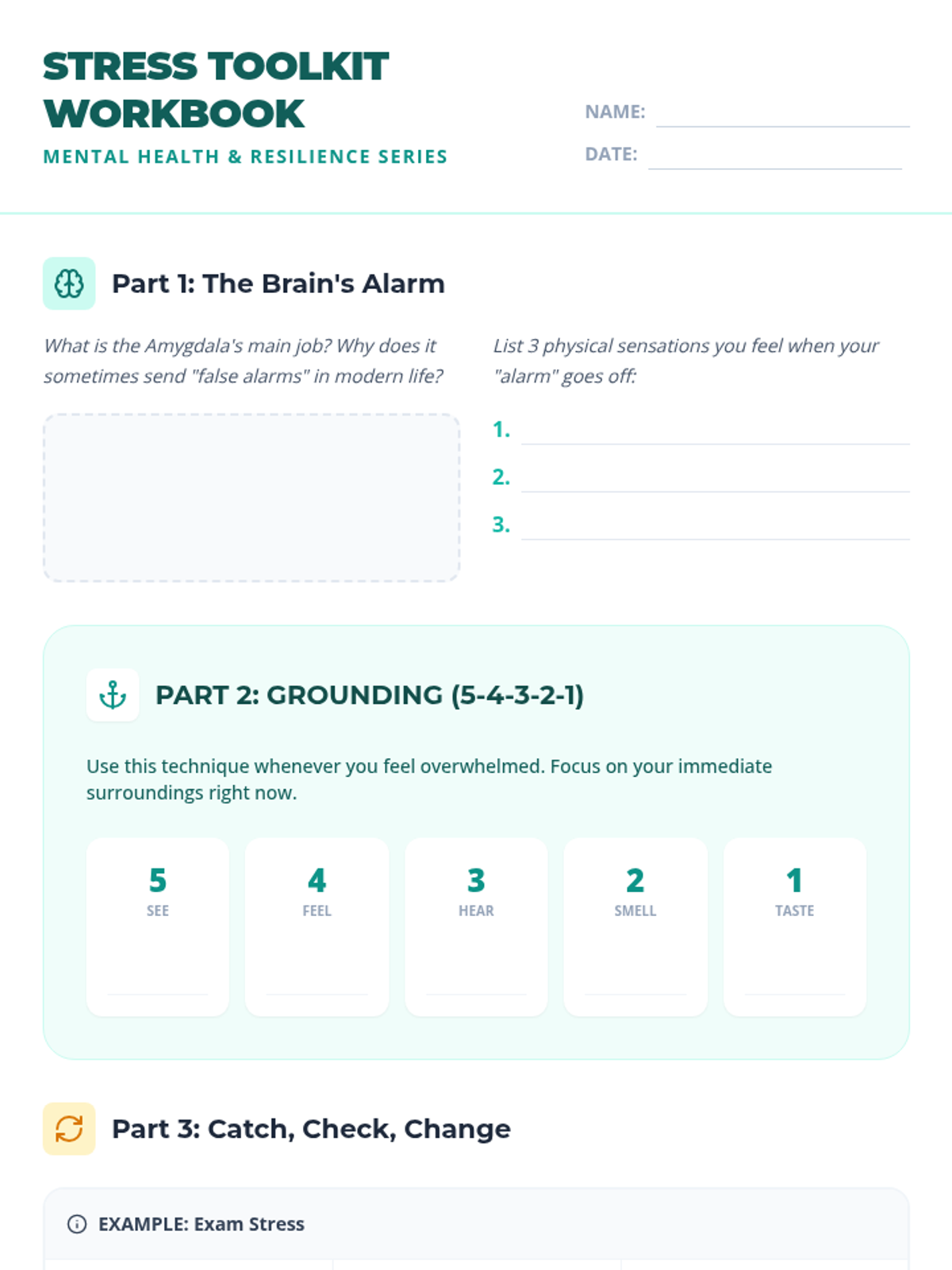
A high school health lesson focusing on understanding anxiety, practicing grounding techniques, and applying cognitive restructuring to manage stress effectively. Aligned with Massachusetts Mental Health standards.
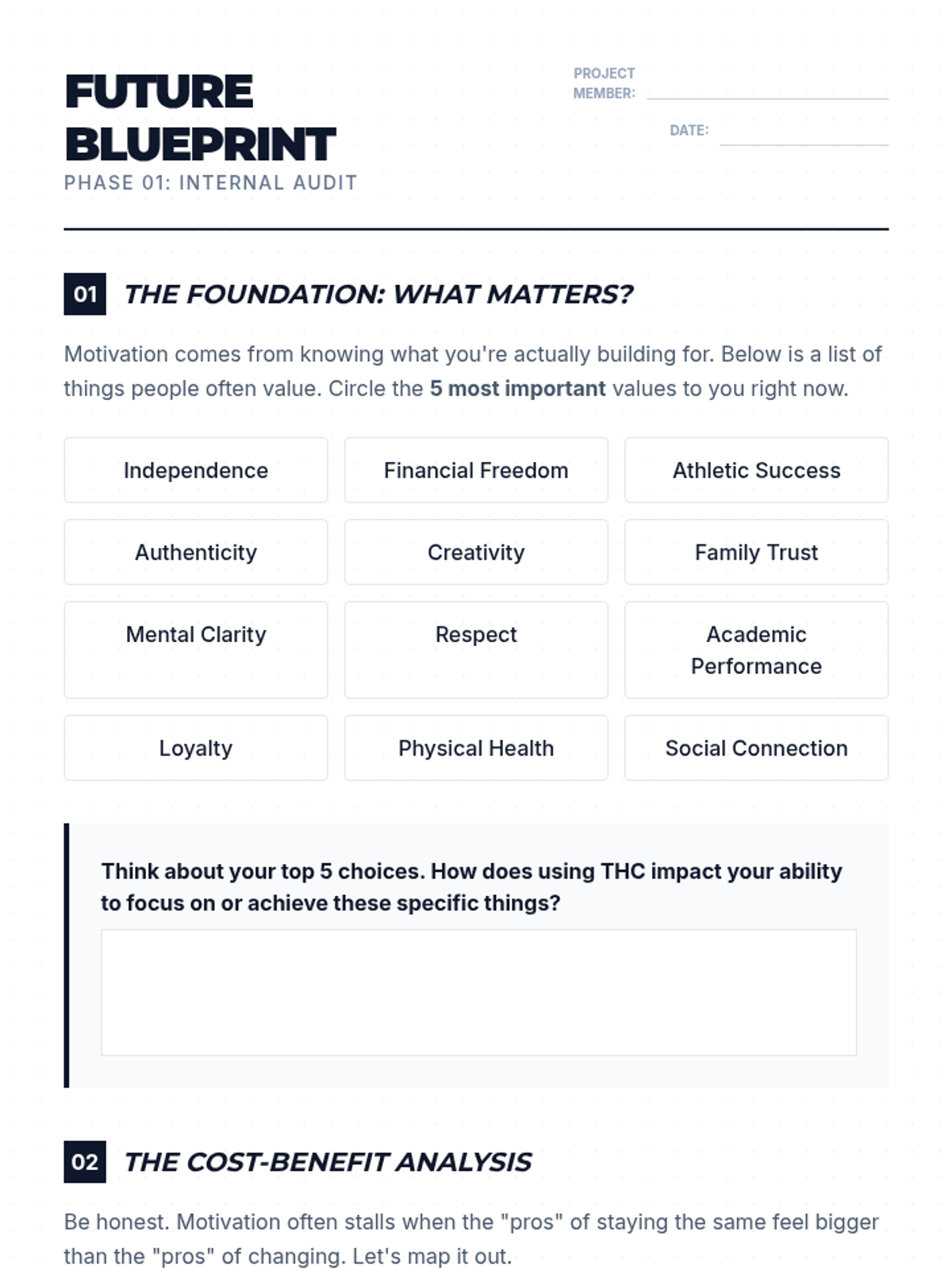
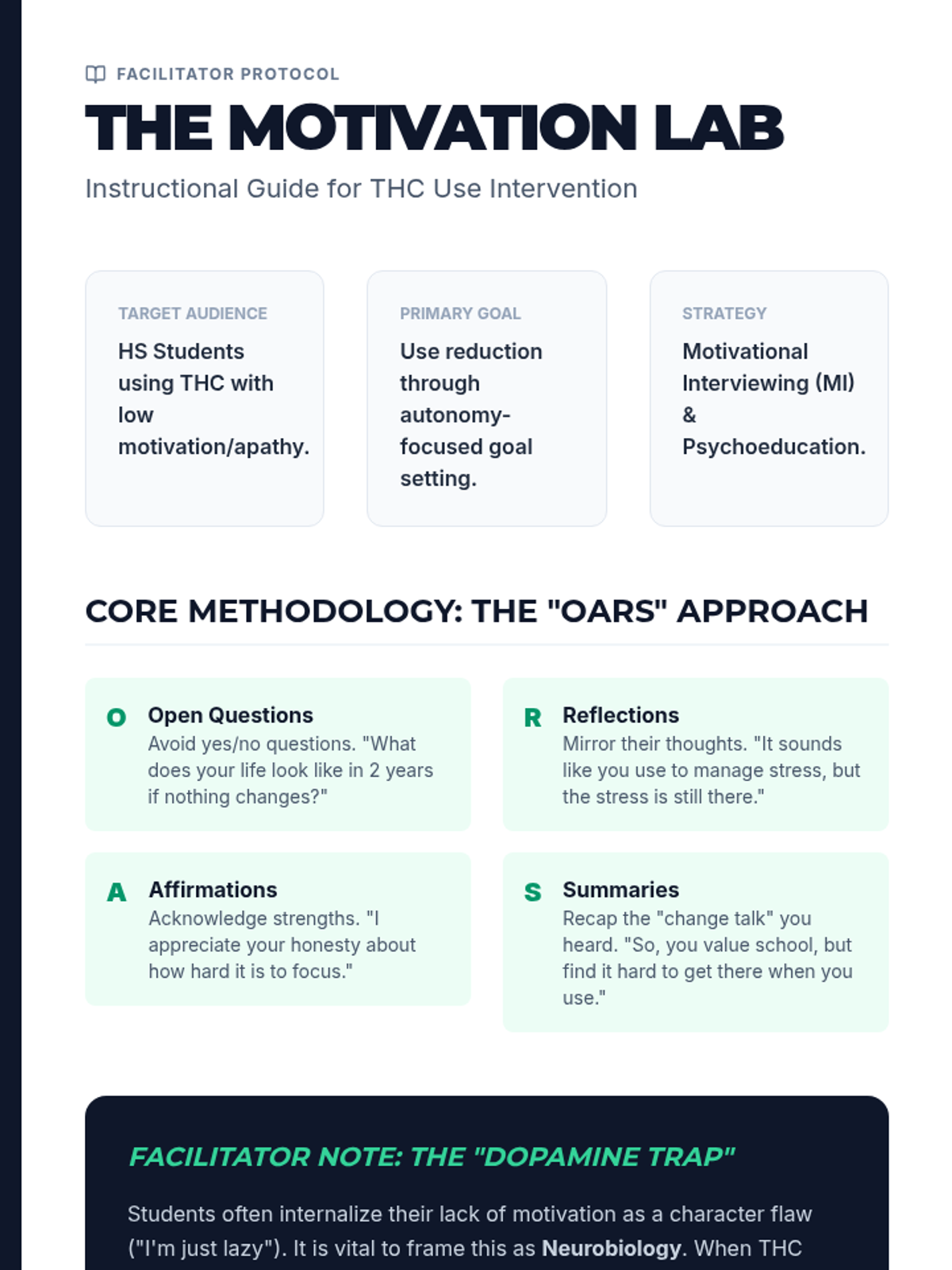
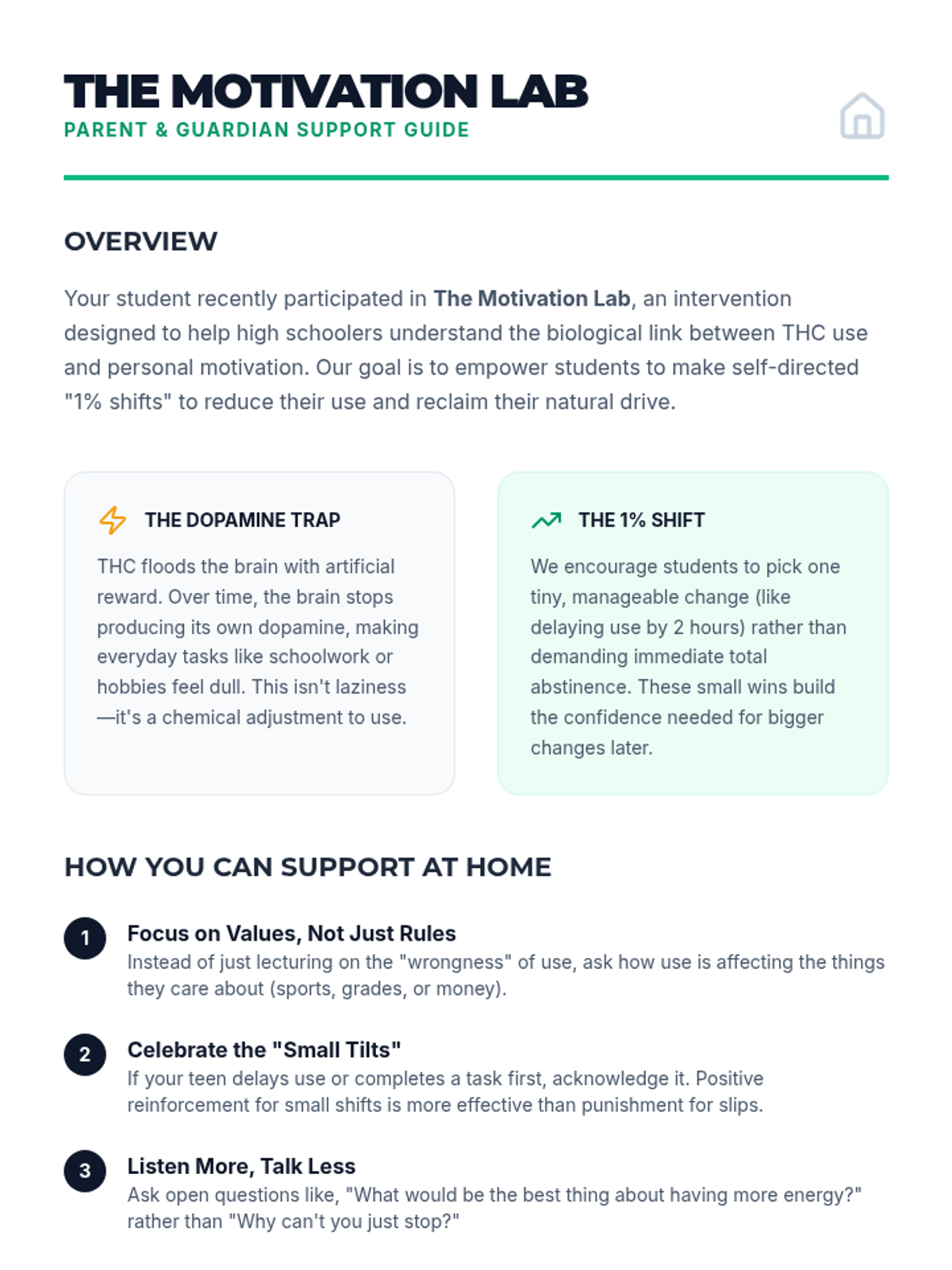
A substance intervention lesson designed for high school students to explore the relationship between THC use and personal motivation, utilizing Motivational Interviewing techniques to encourage use reduction.
A lesson focused on understanding and implementing stress management techniques to improve sleep quality and hygiene.
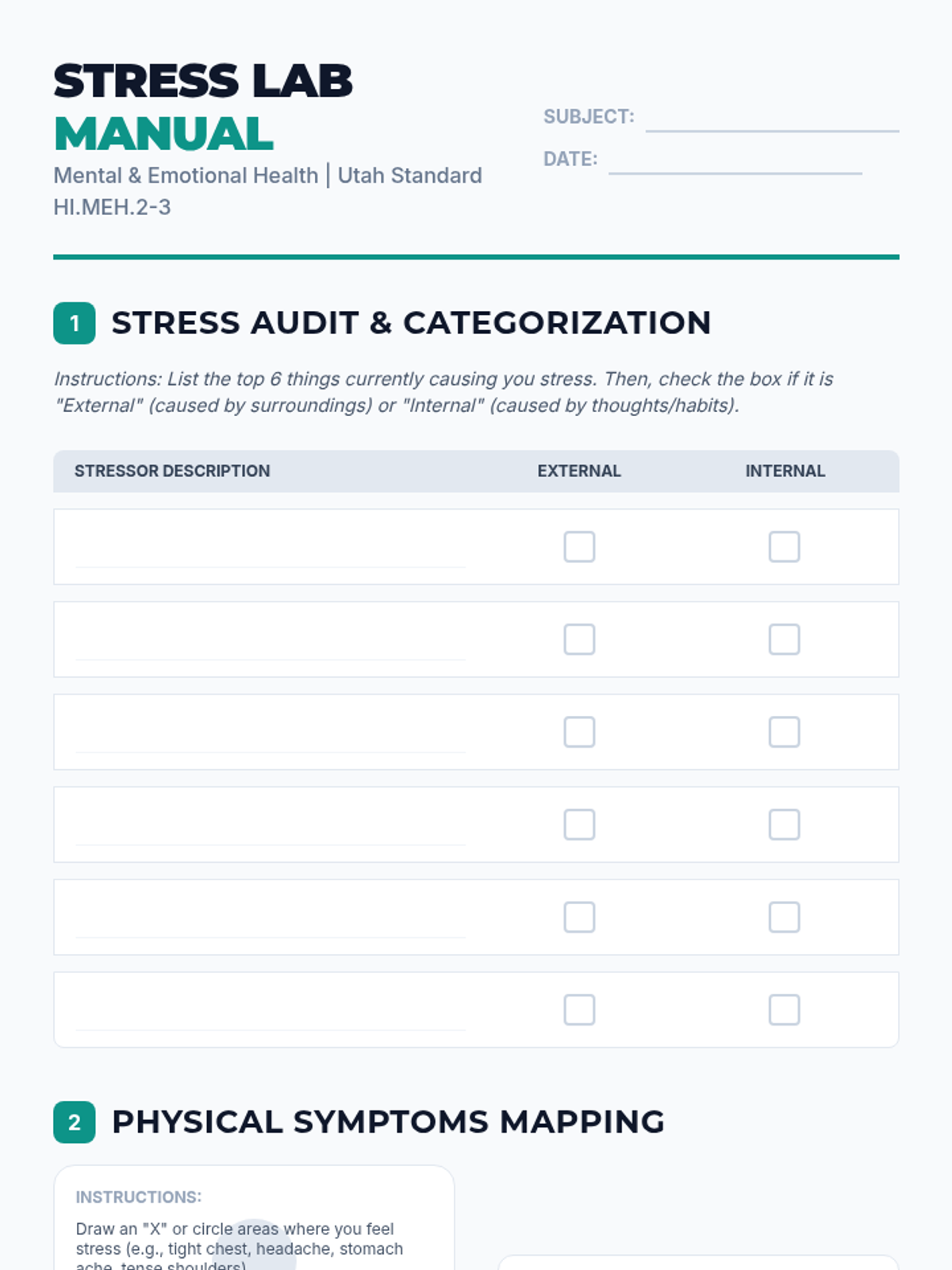
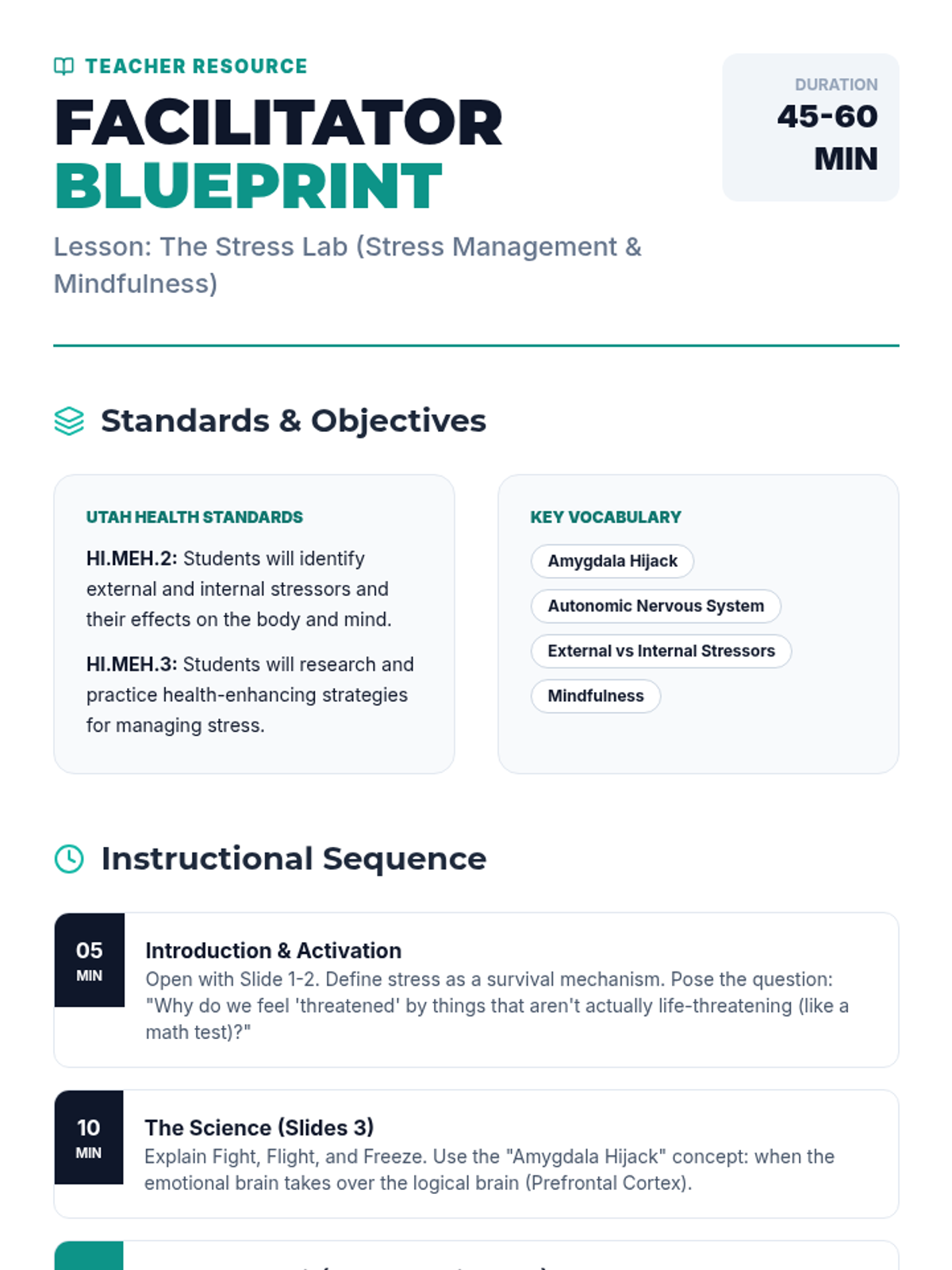
A high school mental health lesson focusing on identifying stressors and practicing mindfulness techniques, aligned with Utah Health Education Standards. Students will conduct a stress audit and learn specific breathing strategies.
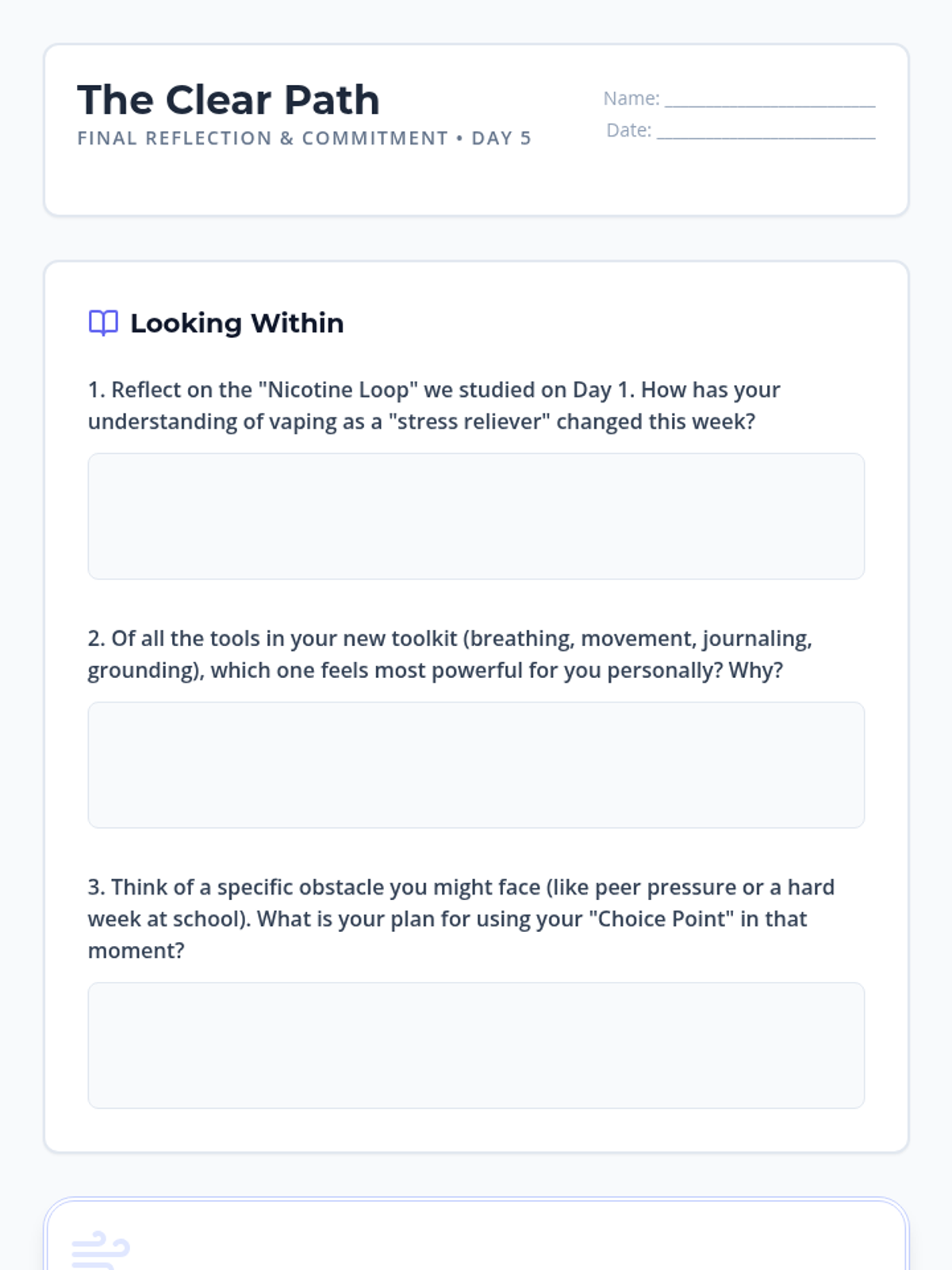
Synthesizing learning through reflection and the creation of a personal commitment plan.
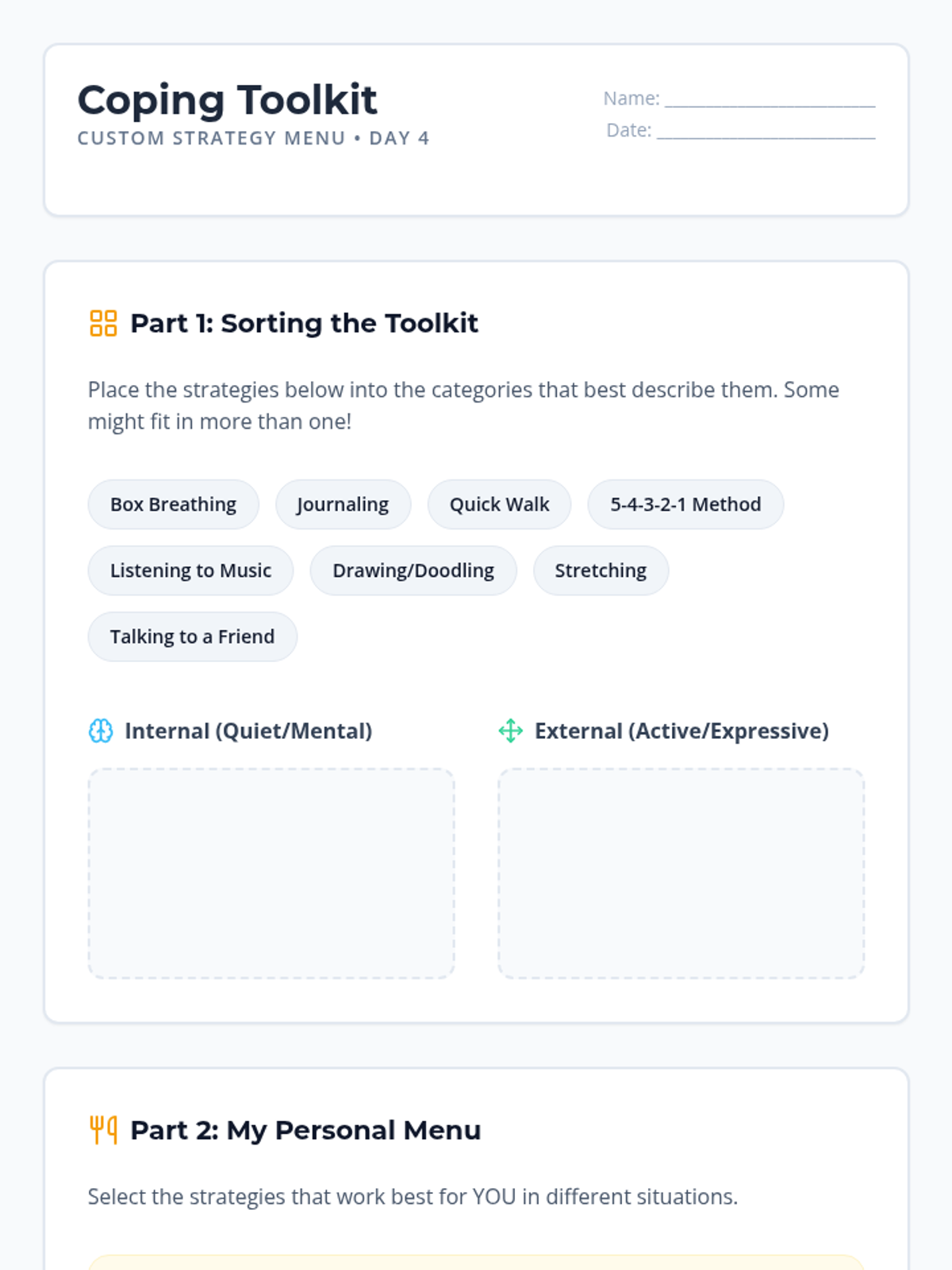
Expanding the toolkit to include journaling, physical movement, and creative outlets.
A deep dive into the science and practice of deep breathing as a primary physiological reset.
Identifying personal stress triggers and understanding the physical sensations of stress in the body.
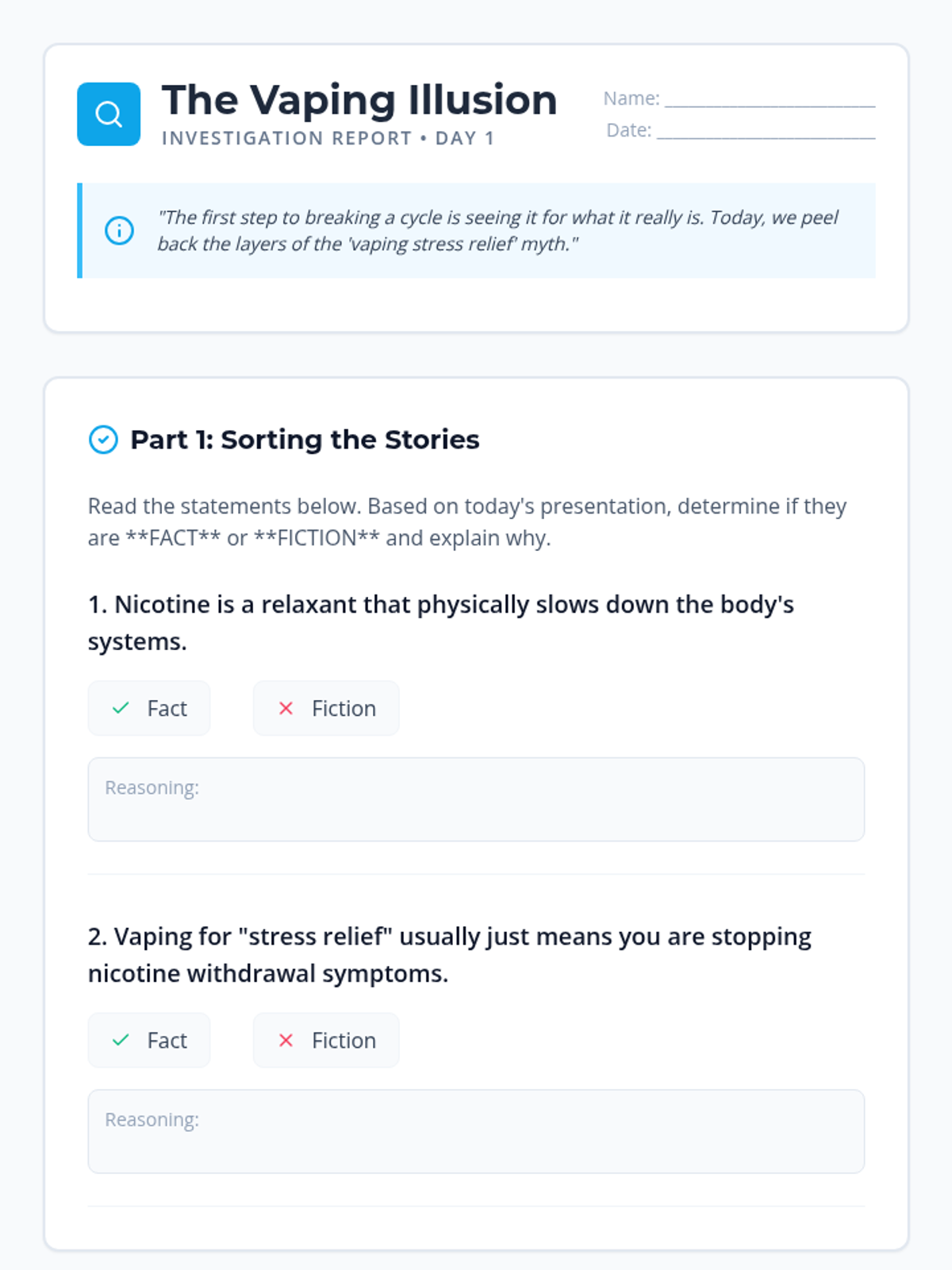
Students explore the chemical reality of nicotine and how it creates a cycle of stress rather than relieving it.
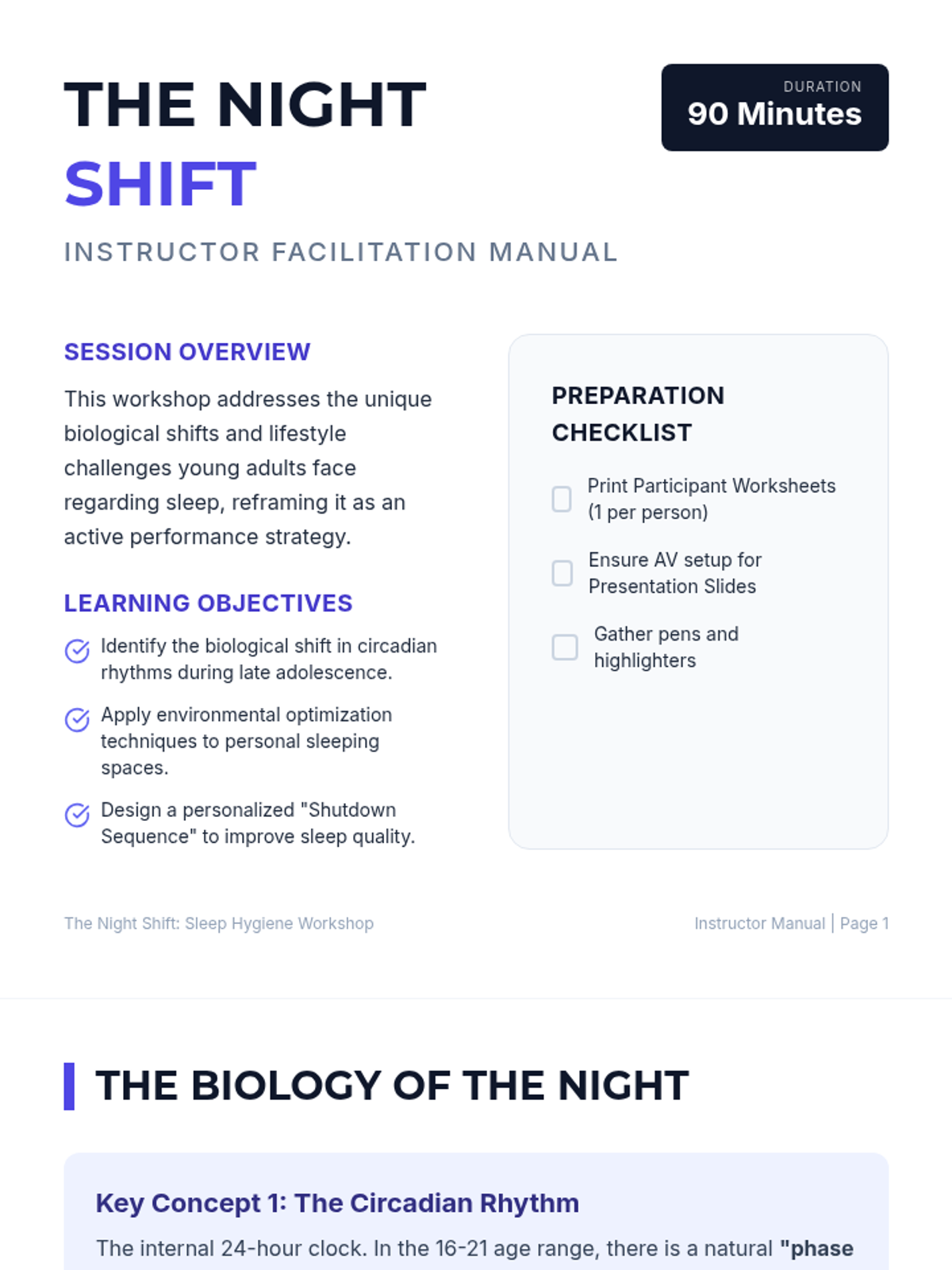
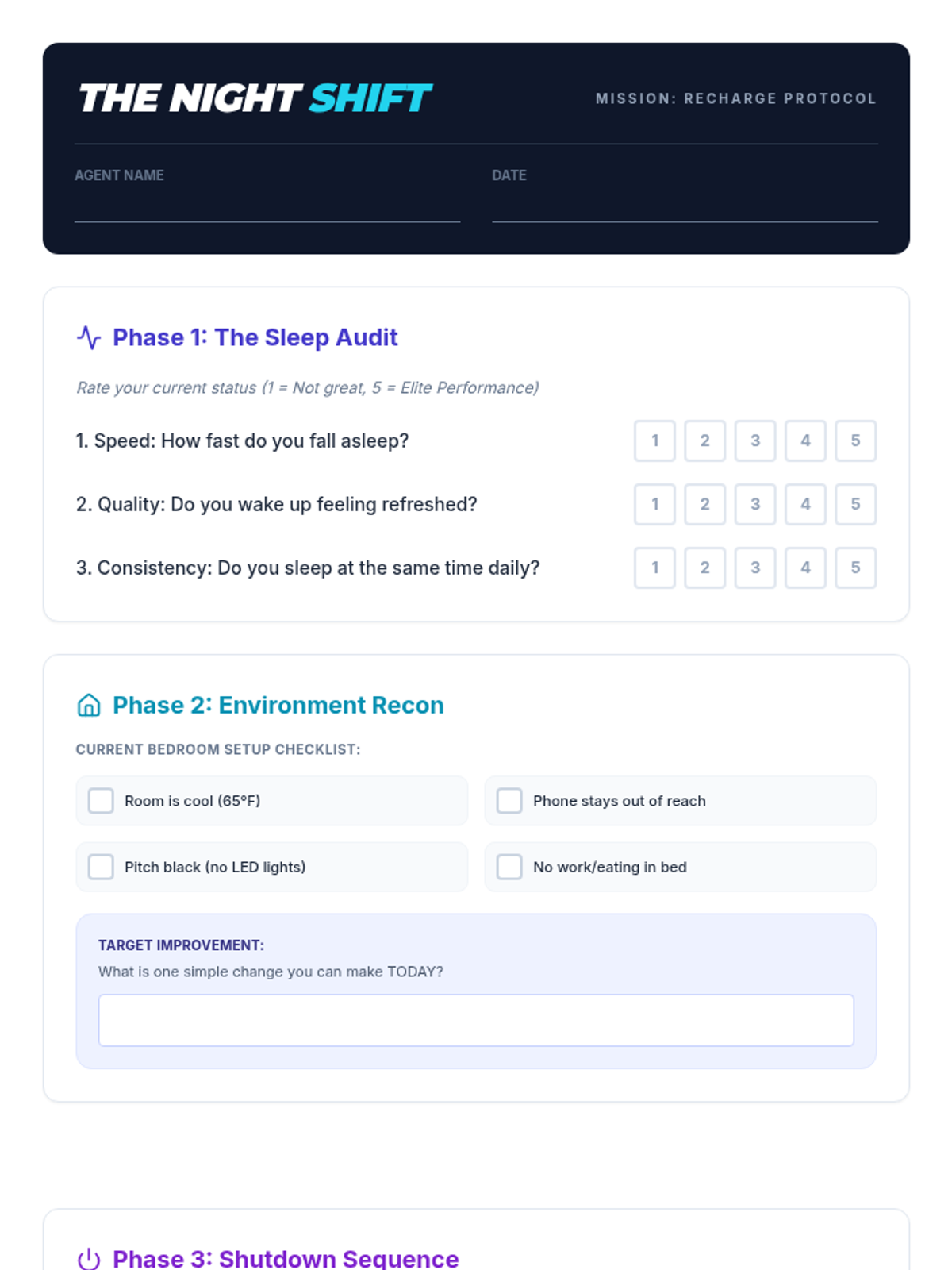
A comprehensive 90-minute workshop for young adults aged 16-21, focusing on the biological and behavioral aspects of sleep hygiene, environmental optimization, and mental relaxation strategies.
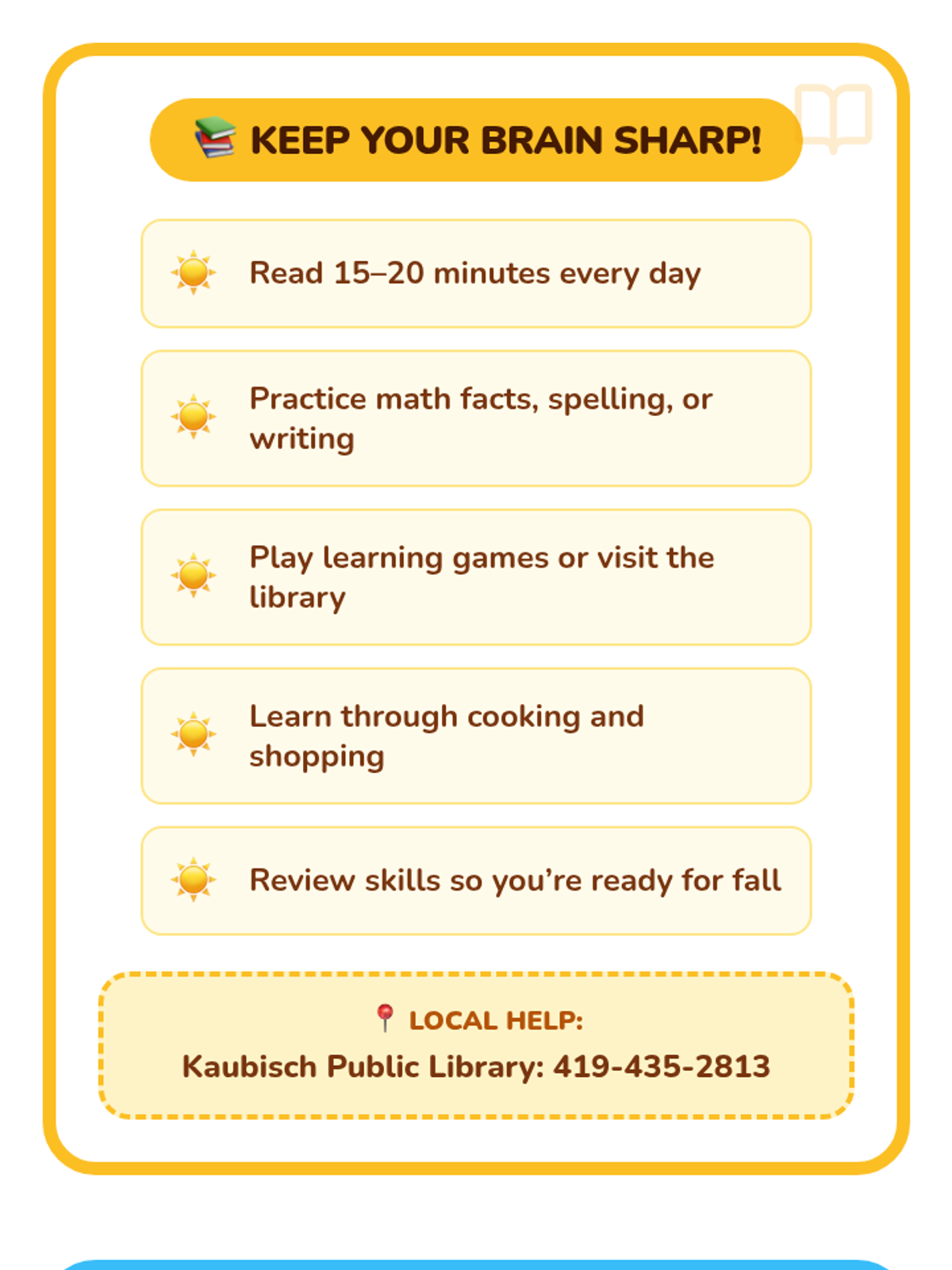
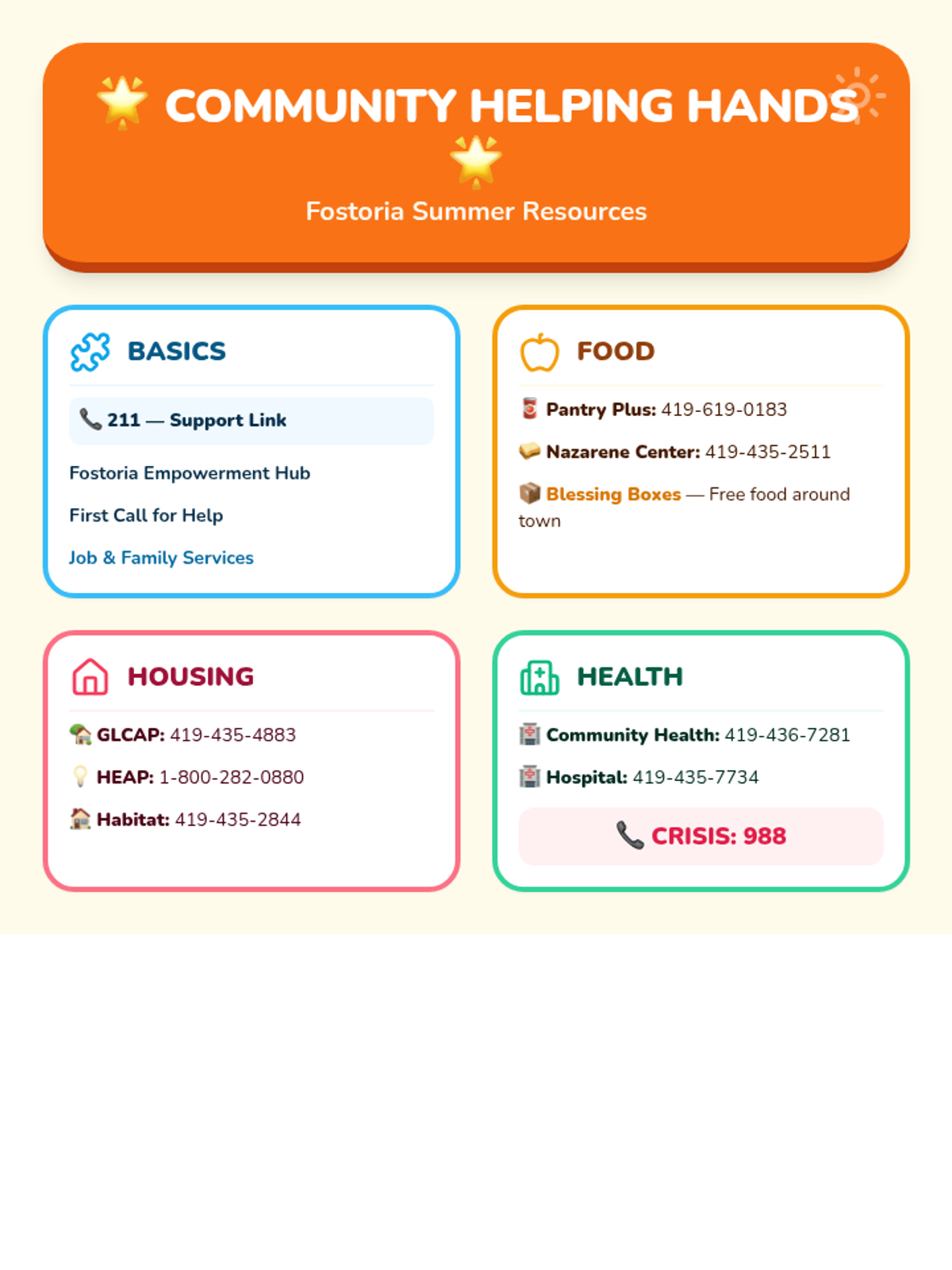
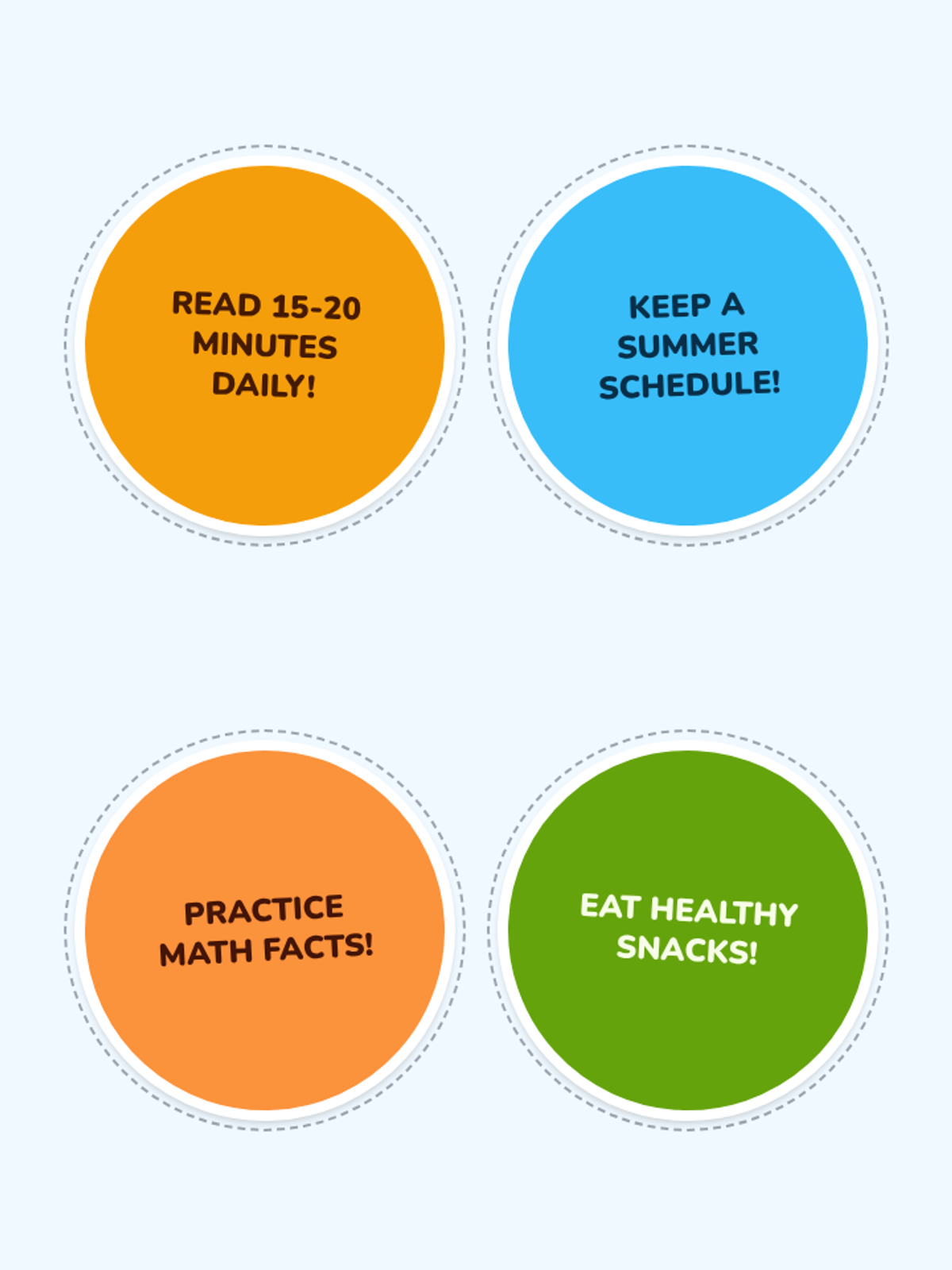
A complete set of vibrant, summer-themed bulletin board materials designed to provide students and families with healthy habits, learning tips, and community resources.
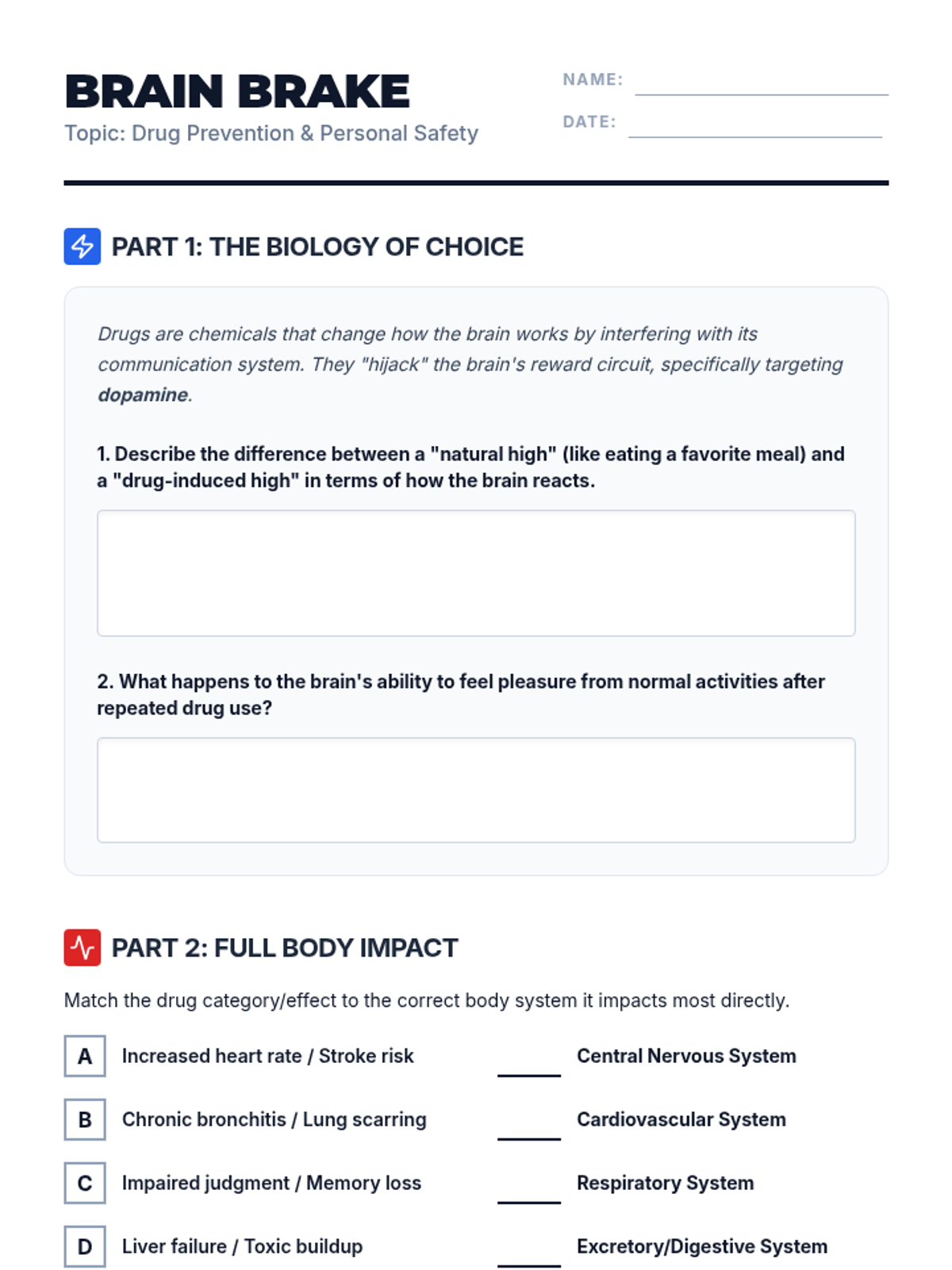
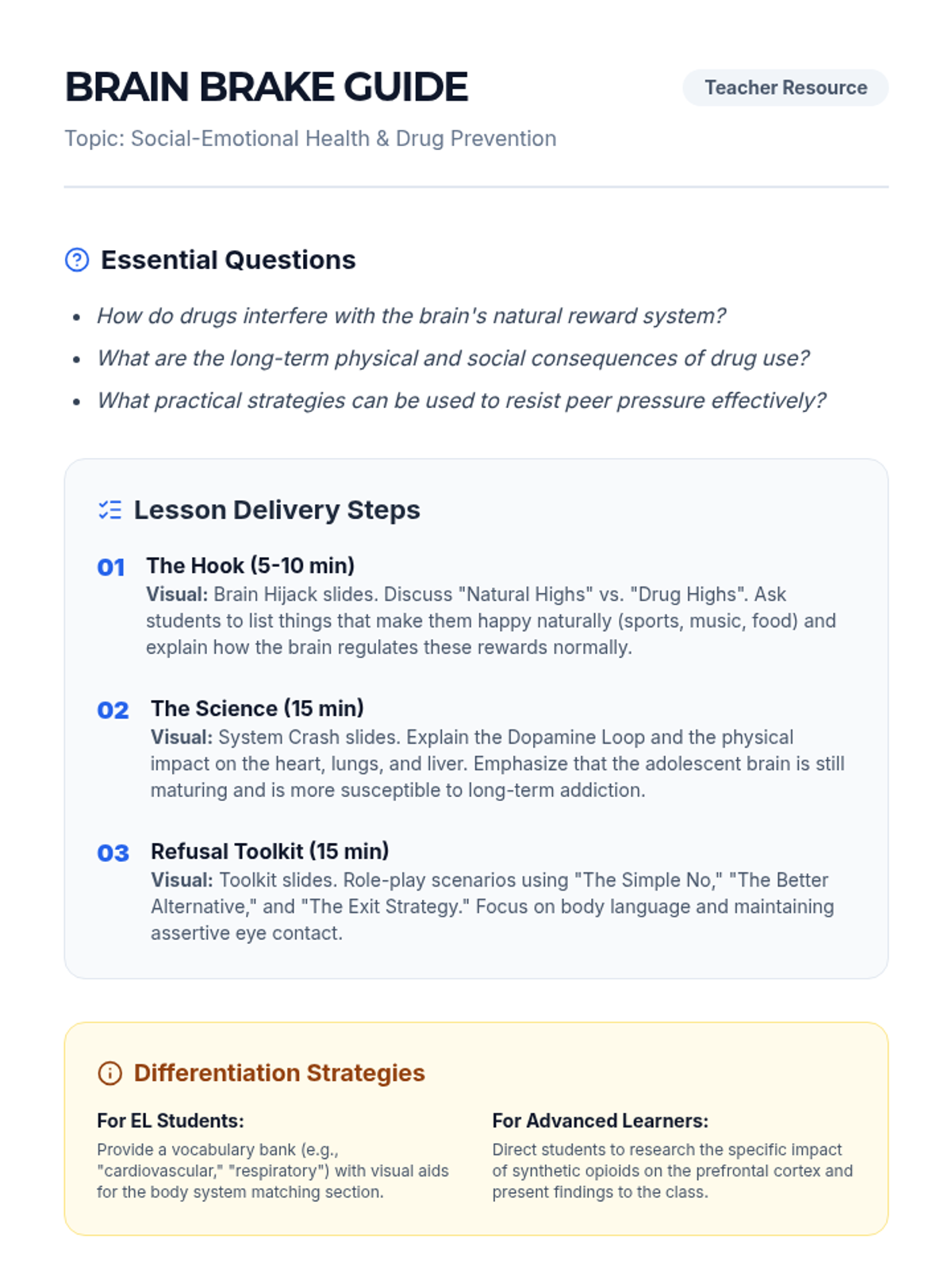
A comprehensive social-emotional learning lesson focusing on the neurological, physical, and social consequences of drug use, empowering students with refusal strategies and healthy coping mechanisms.
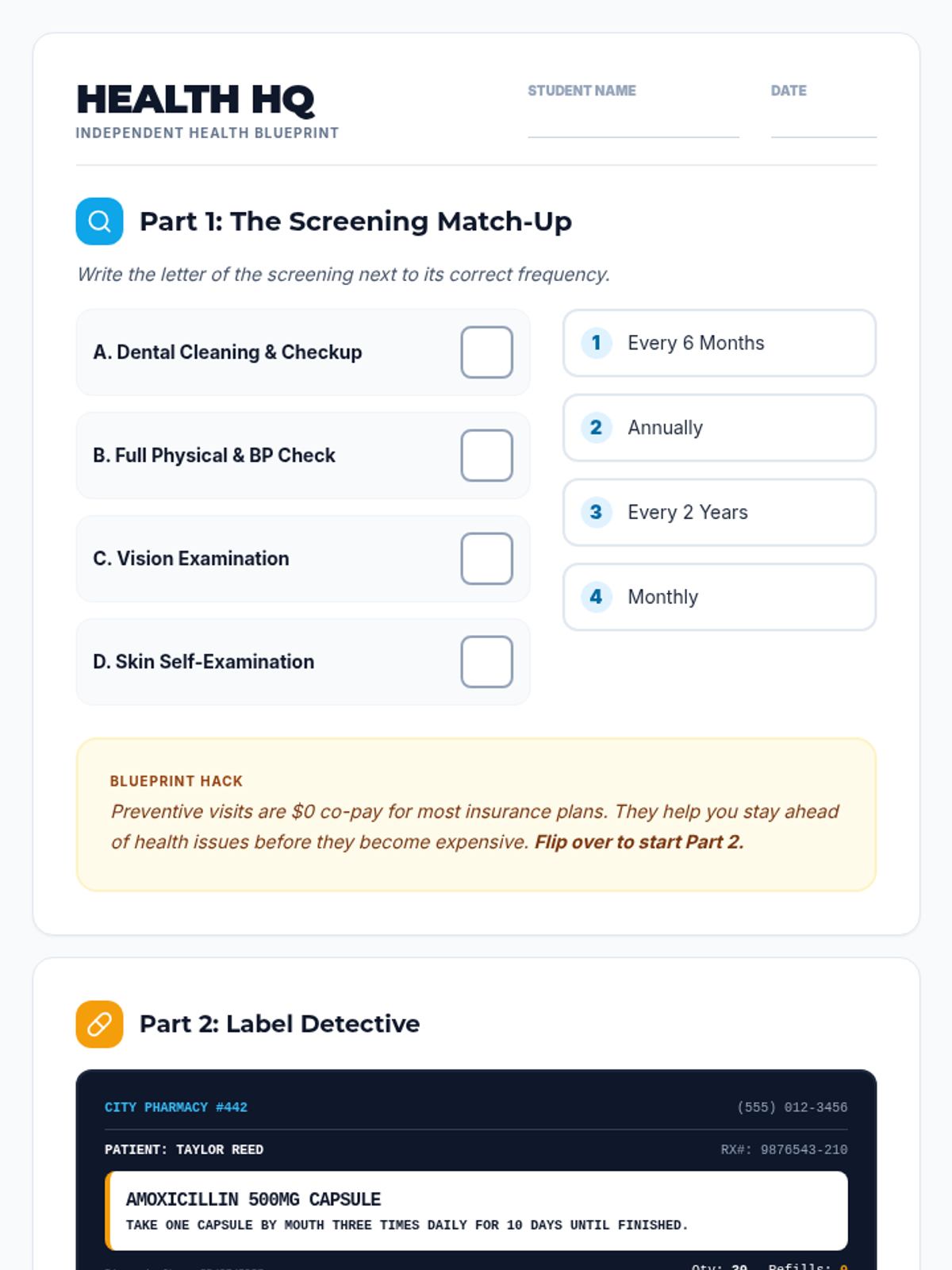
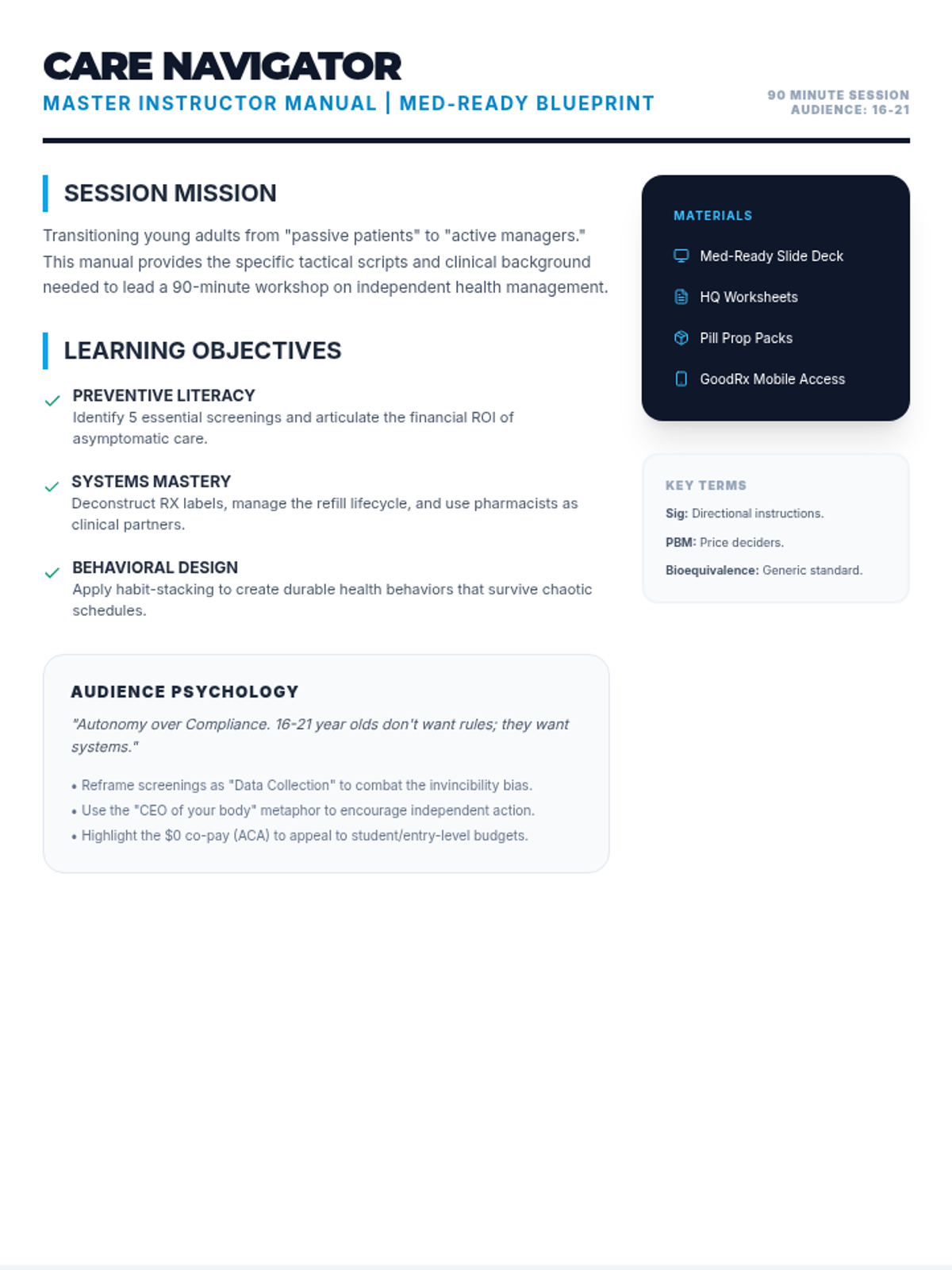
A comprehensive 90-minute session designed for young adults transitioning to independent health management, covering preventive screenings, vaccinations, pharmacy navigation, and medication adherence.
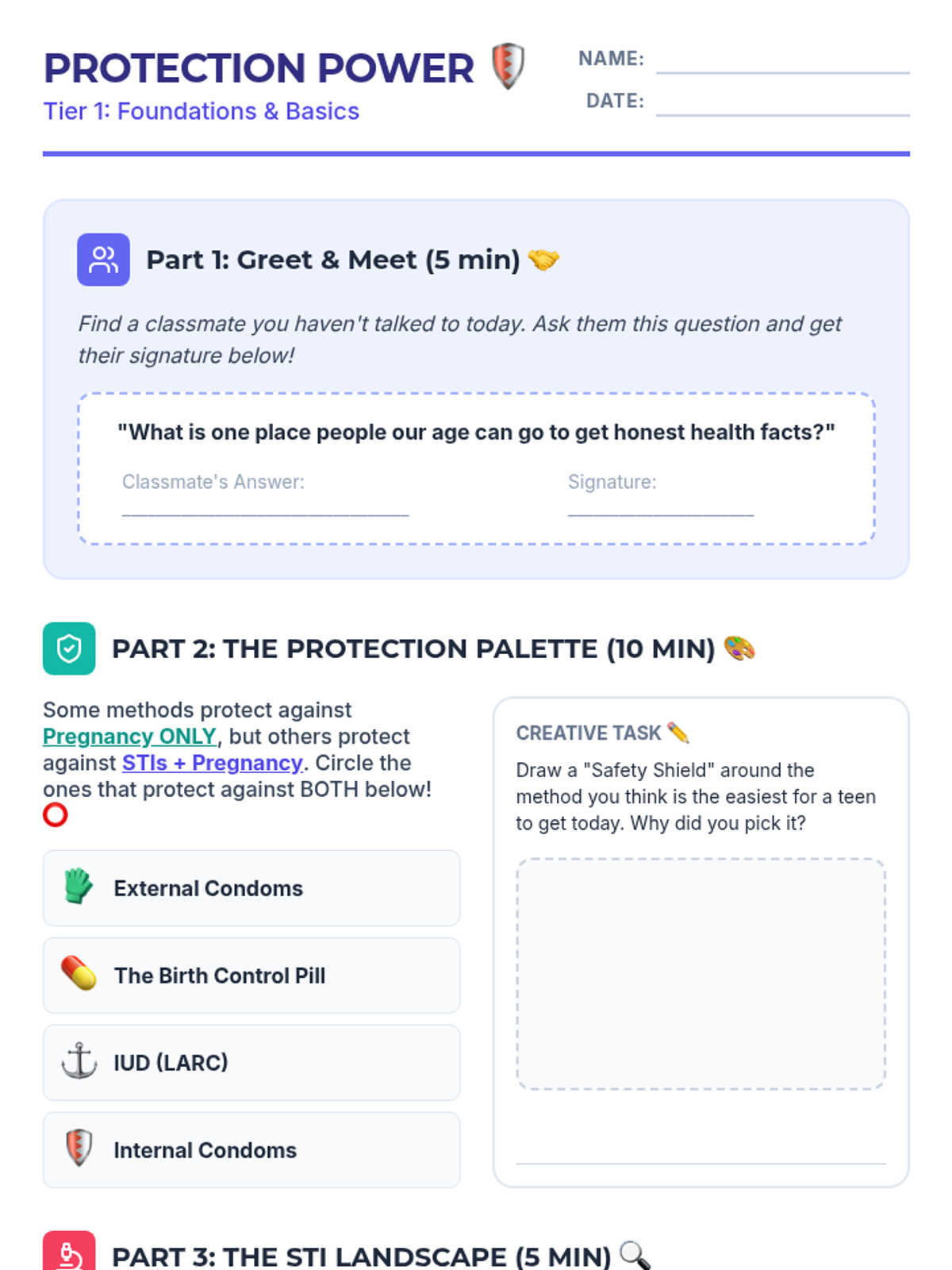
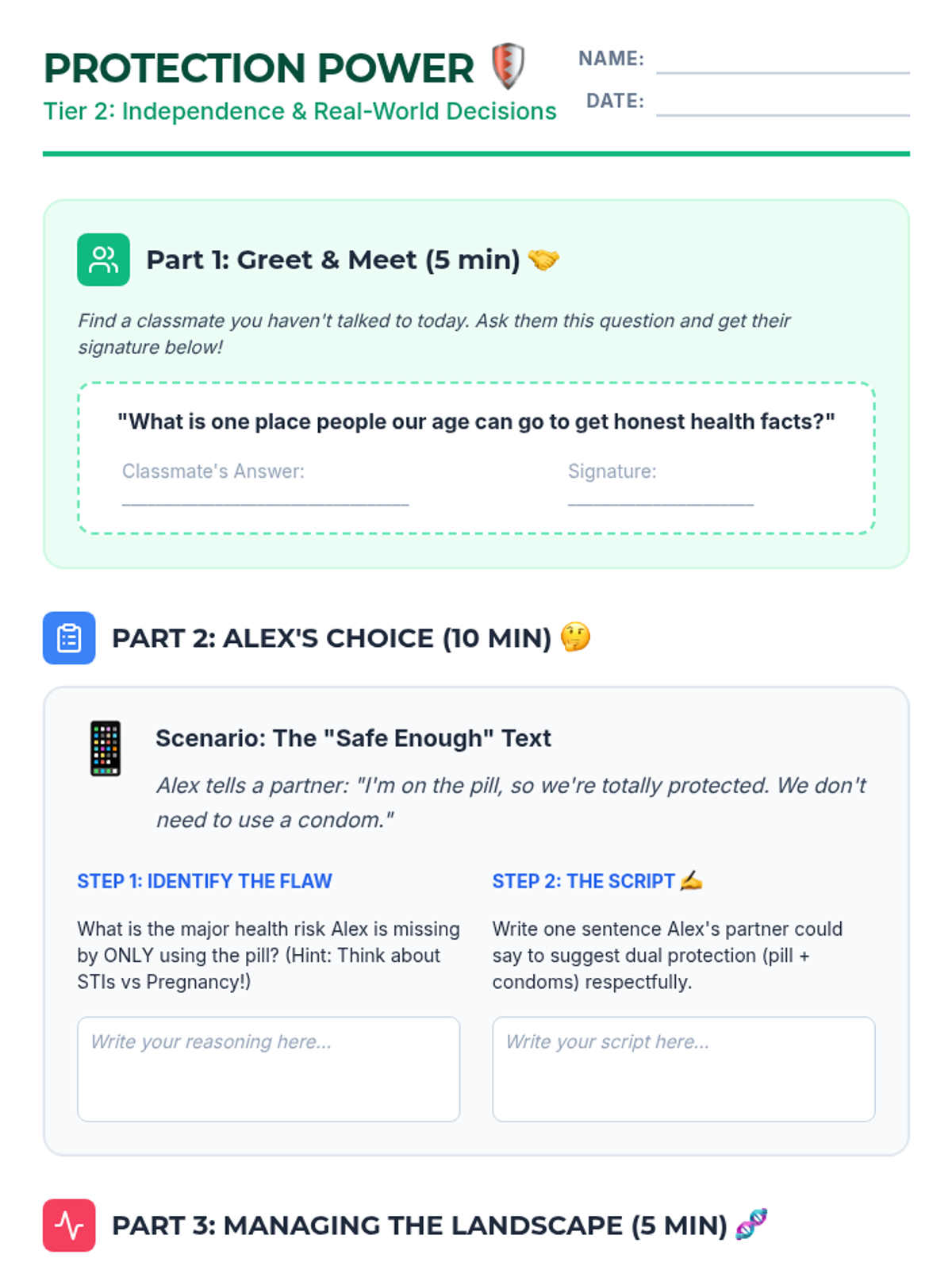
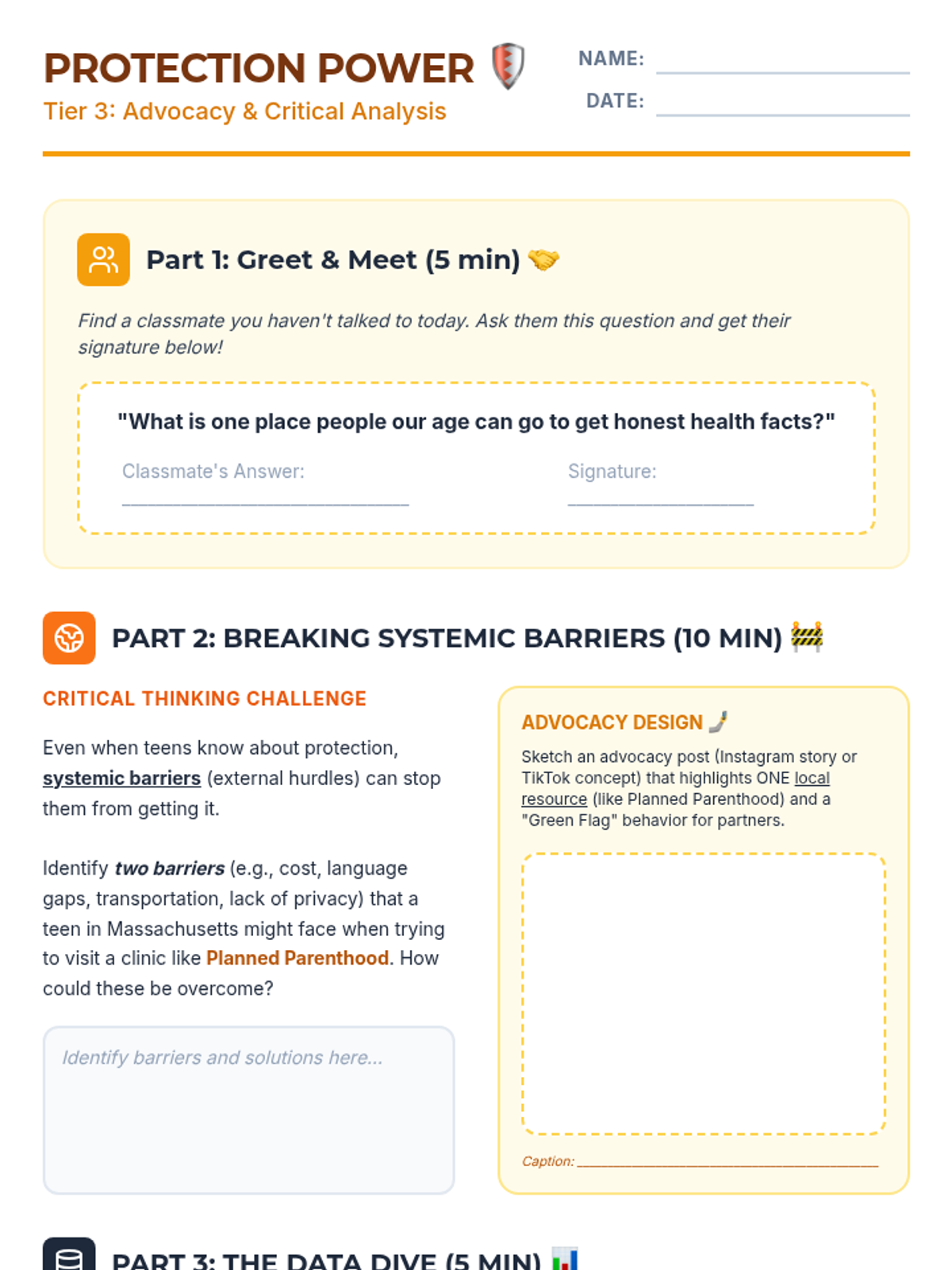
A three-tiered lesson on contraception and sexual health focused on decision-making, STI prevention, and communication skills, aligned with Massachusetts health standards.
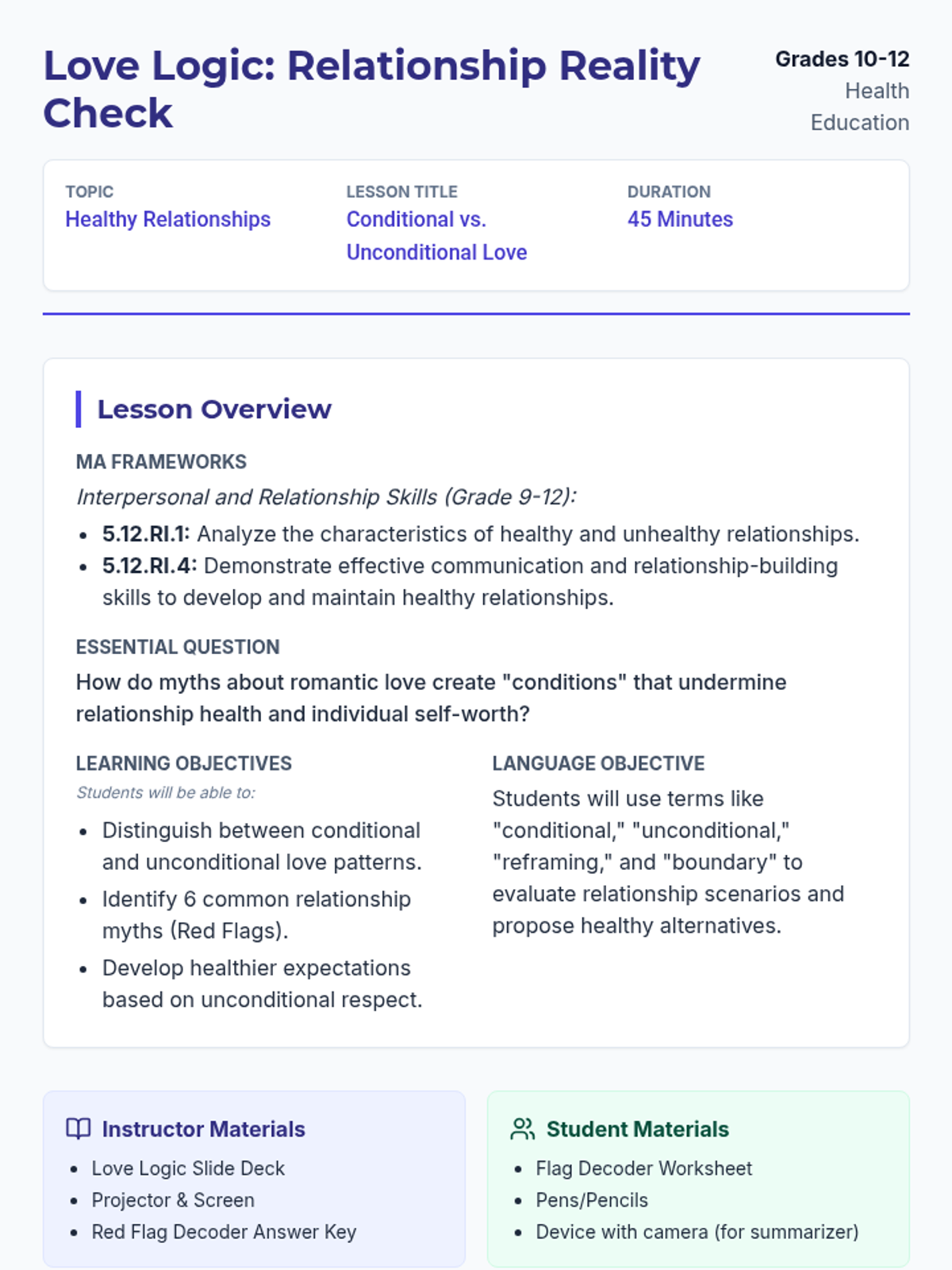
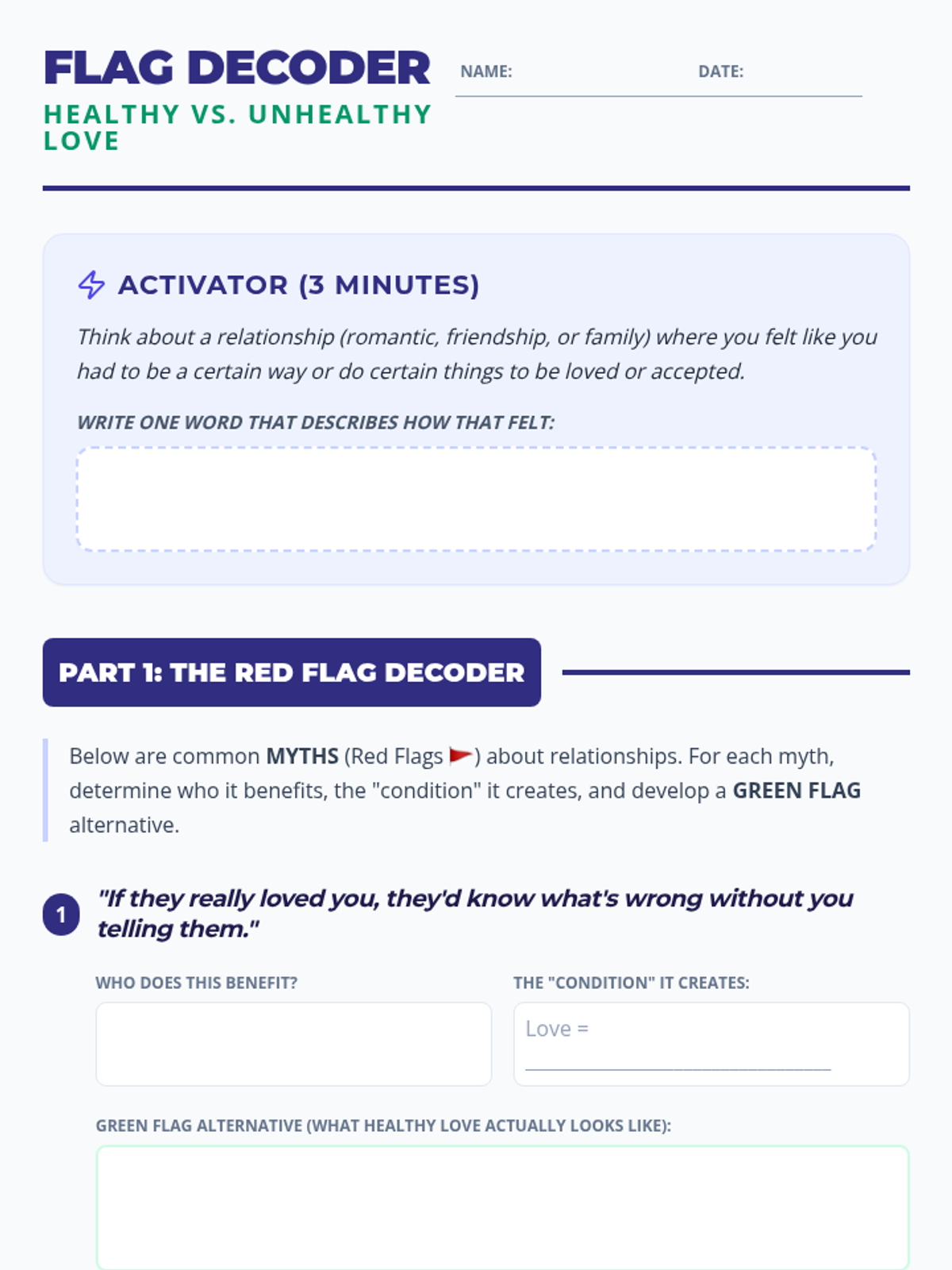
A 45-minute high school health lesson exploring the differences between conditional and unconditional love, identifying relationship myths, and practicing reframing unhealthy thoughts into healthy expectations.
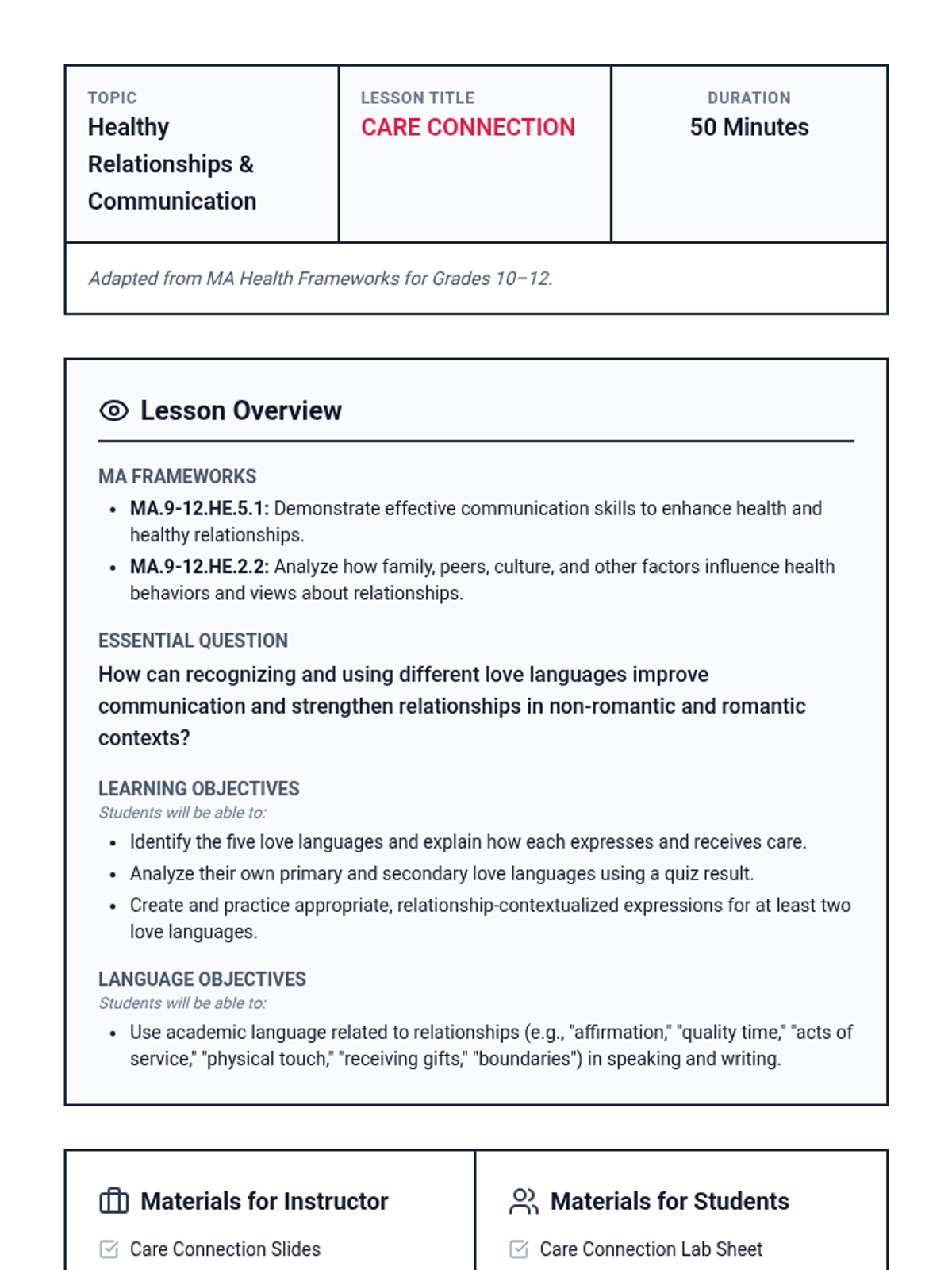
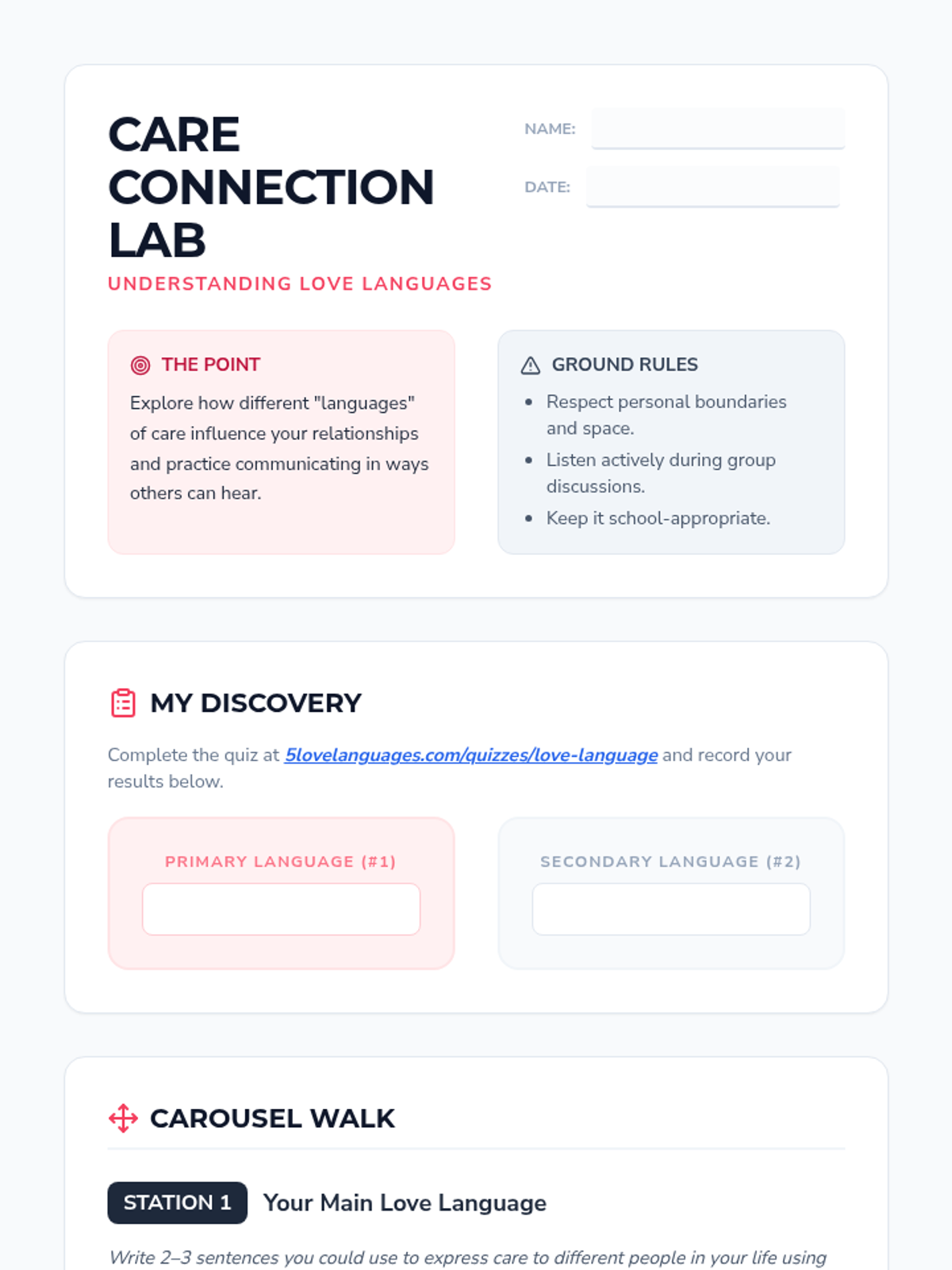
A lesson exploring the five love languages to improve communication and strengthen relationships across various contexts (friends, family, and romantic). Students will identify their own languages, practice context-appropriate expressions, and discuss strategies for navigating differing communication styles.
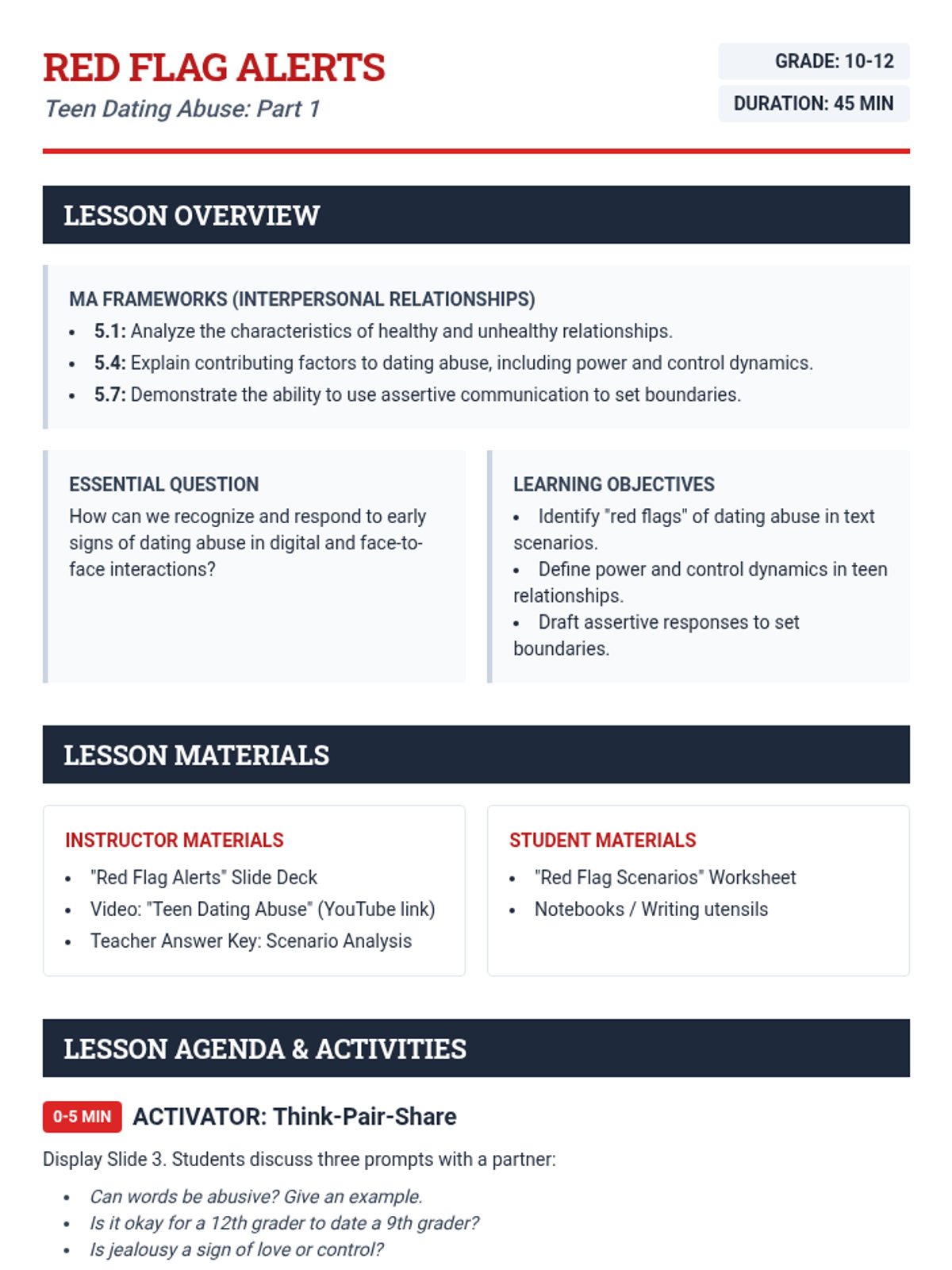
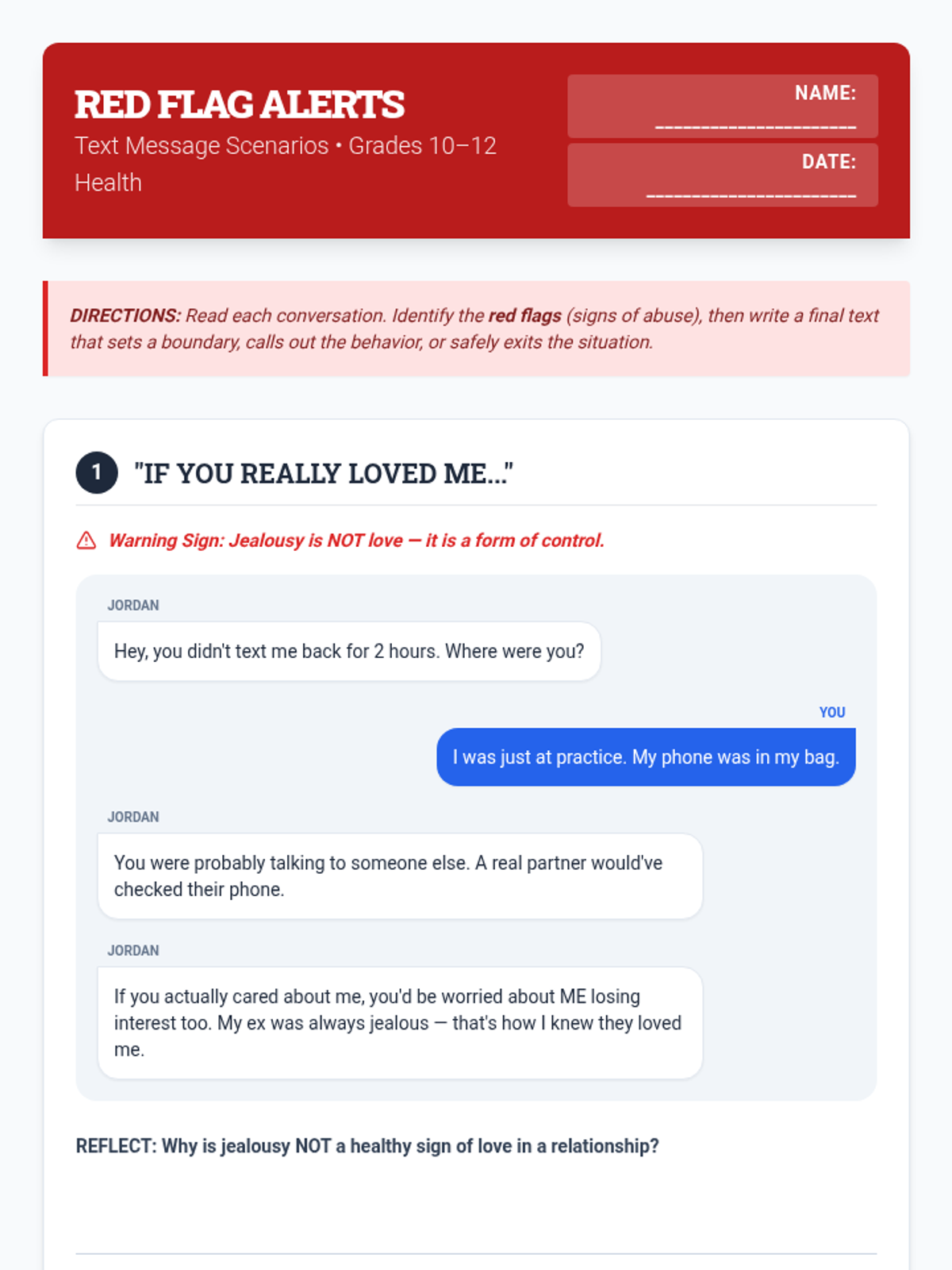
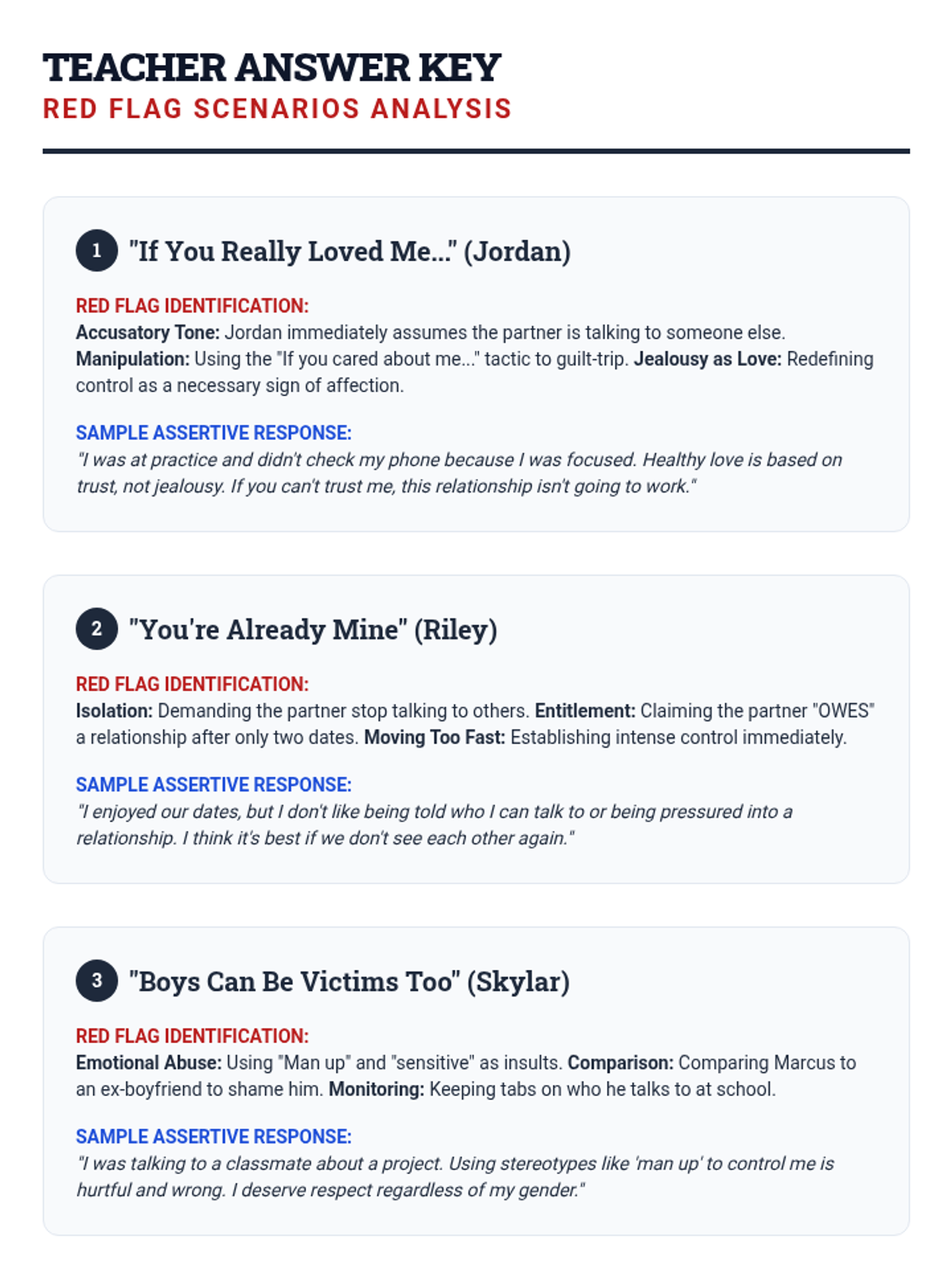
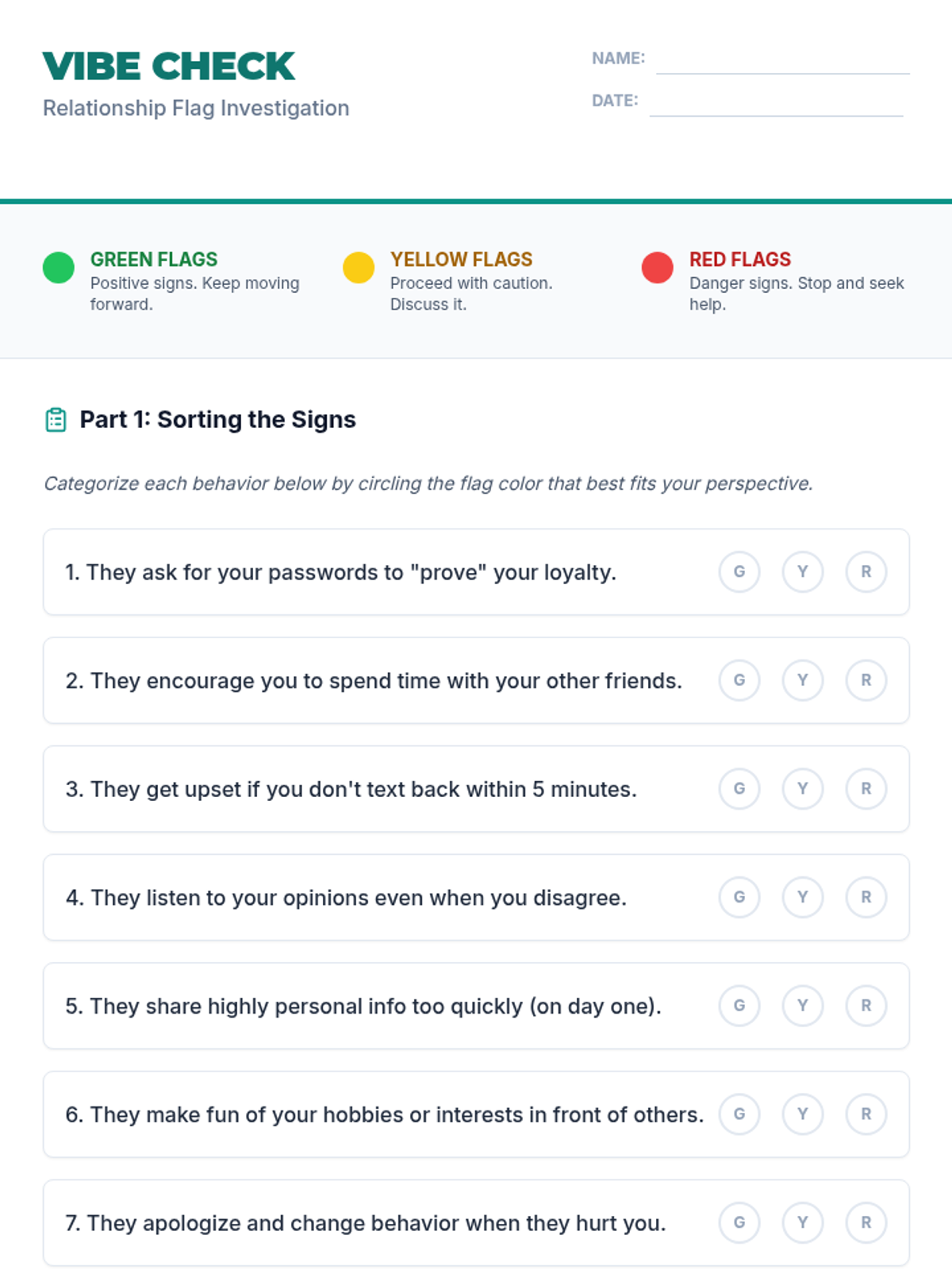
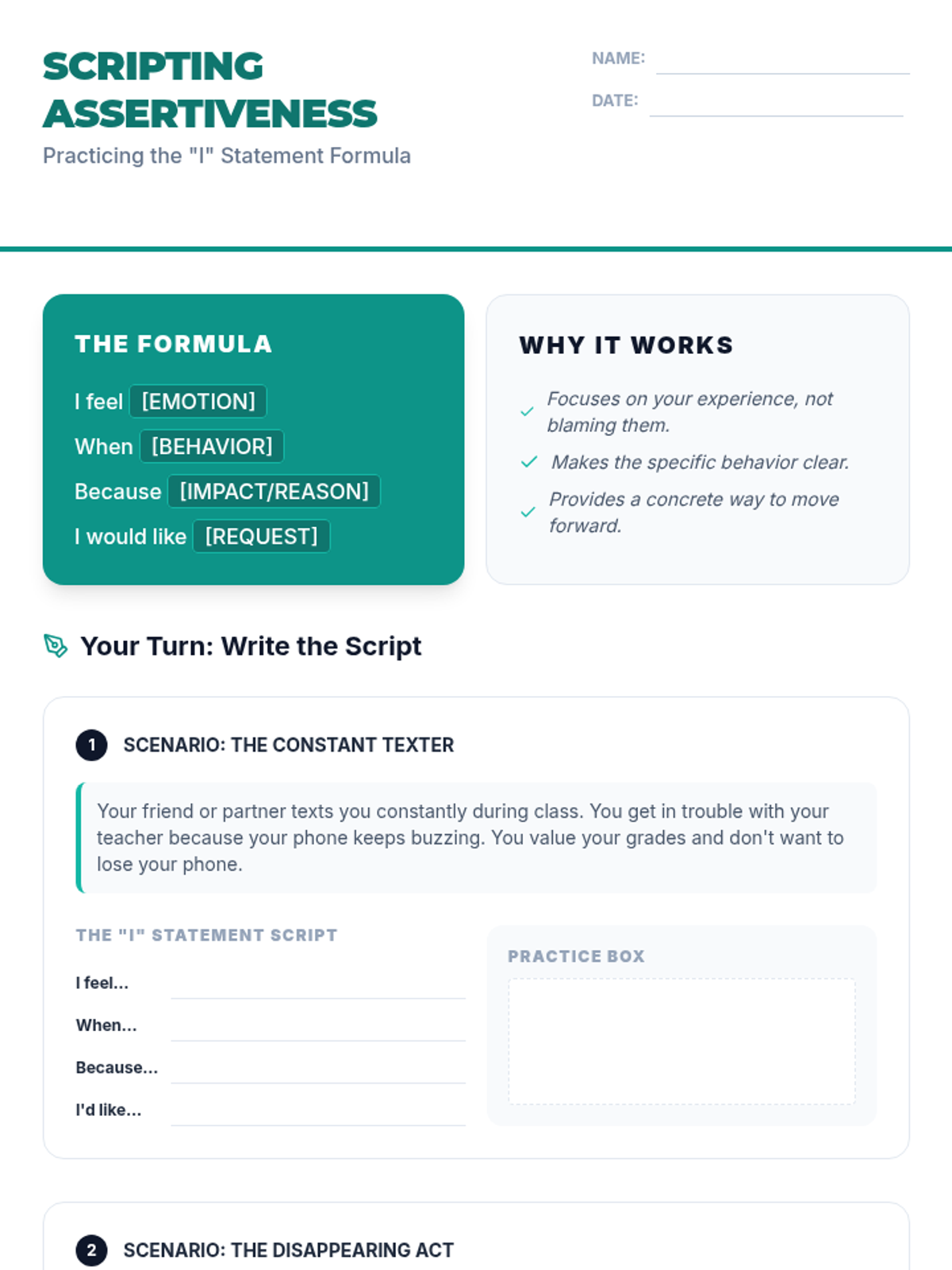
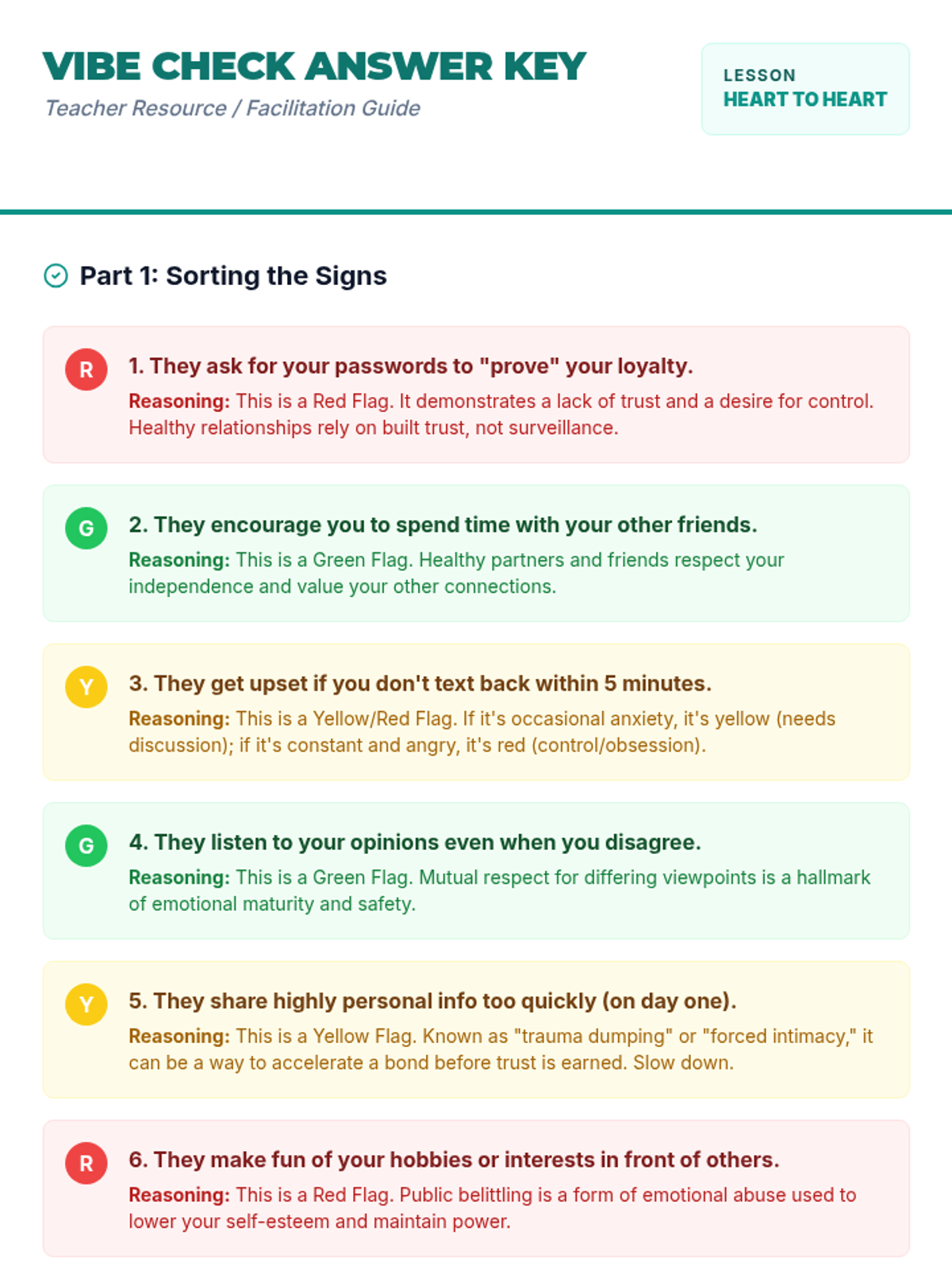
A comprehensive 45-minute lesson for high school health education focused on recognizing red flags in dating relationships through text message scenarios and assertive communication.
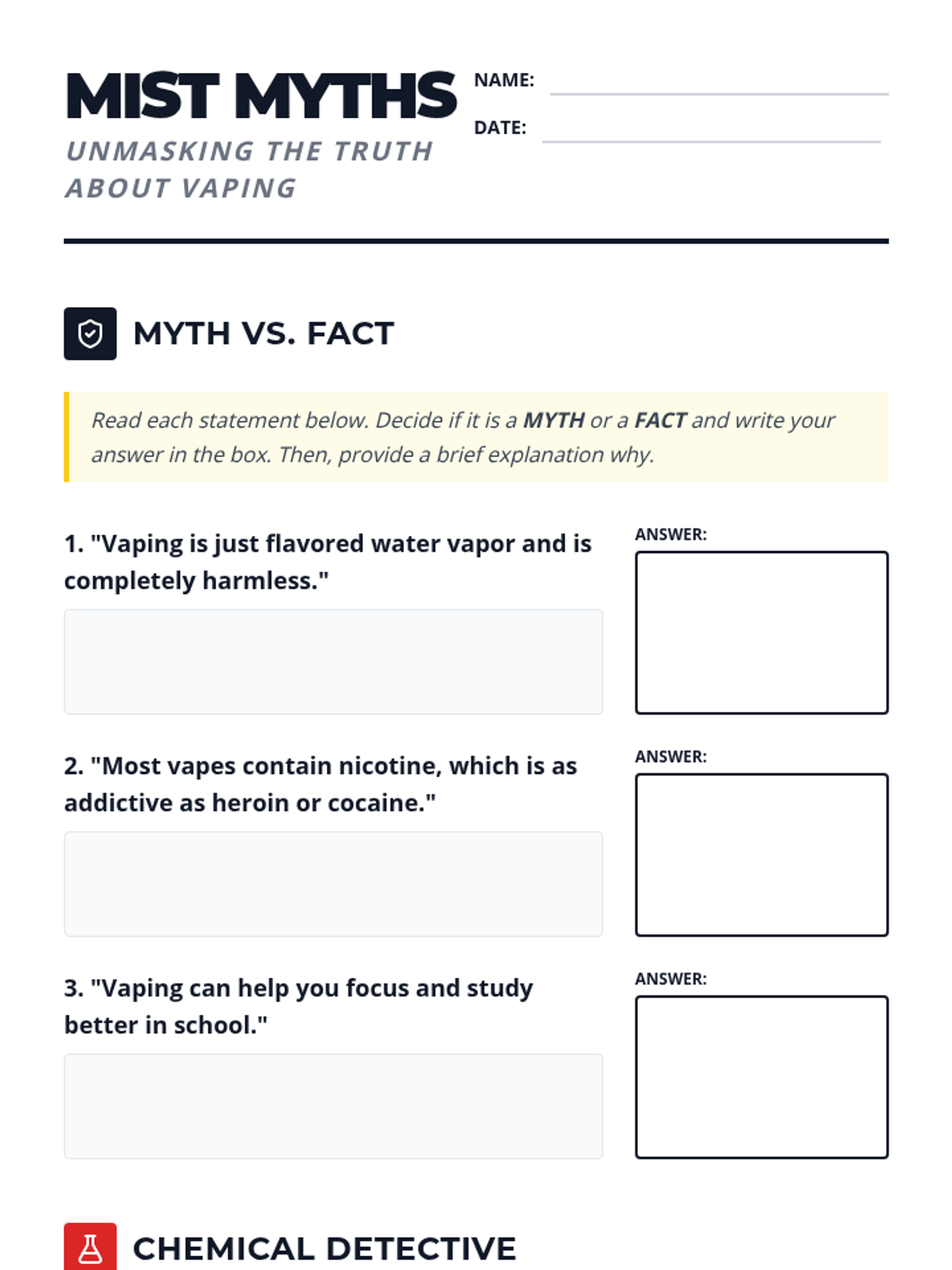
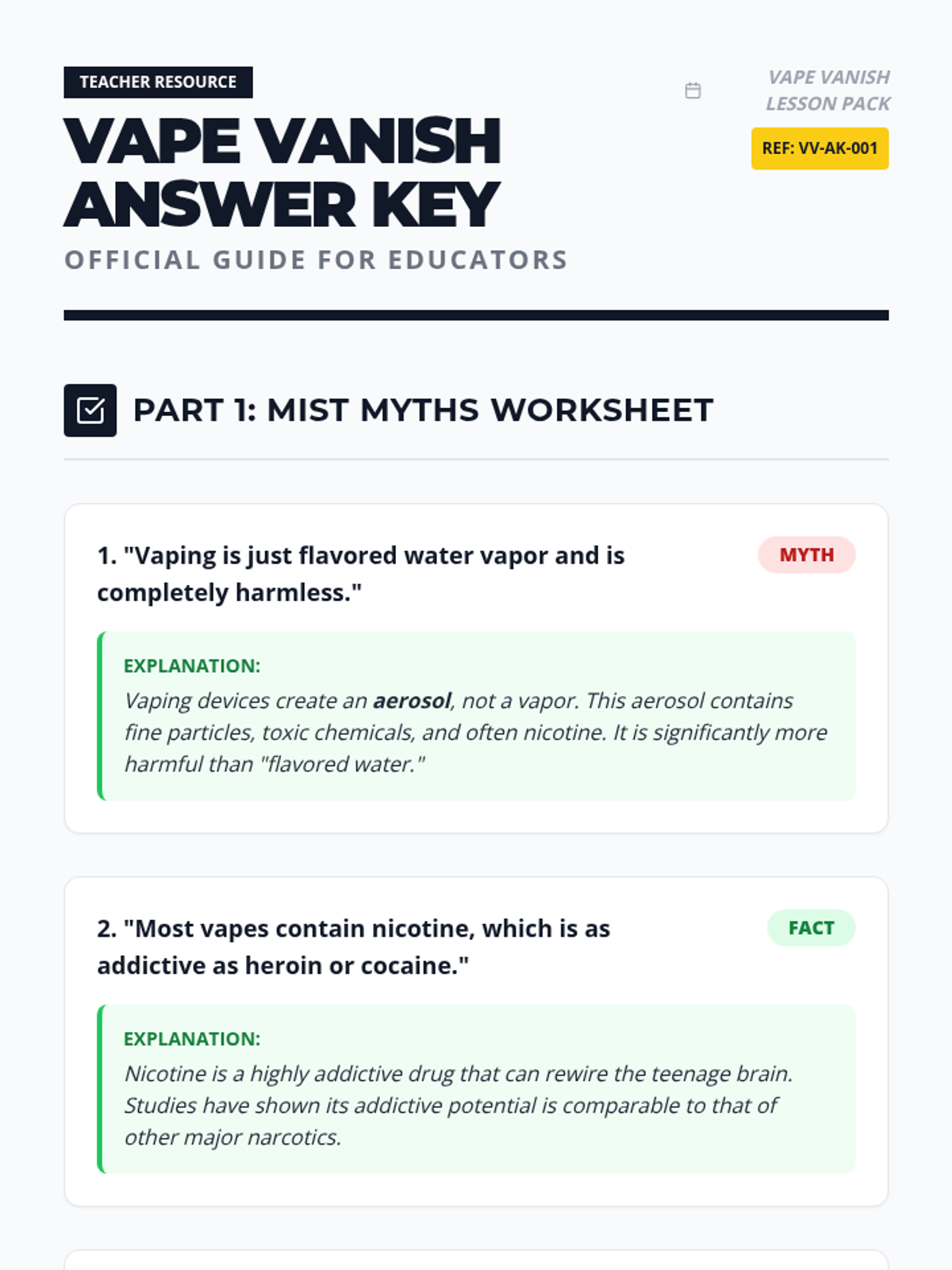
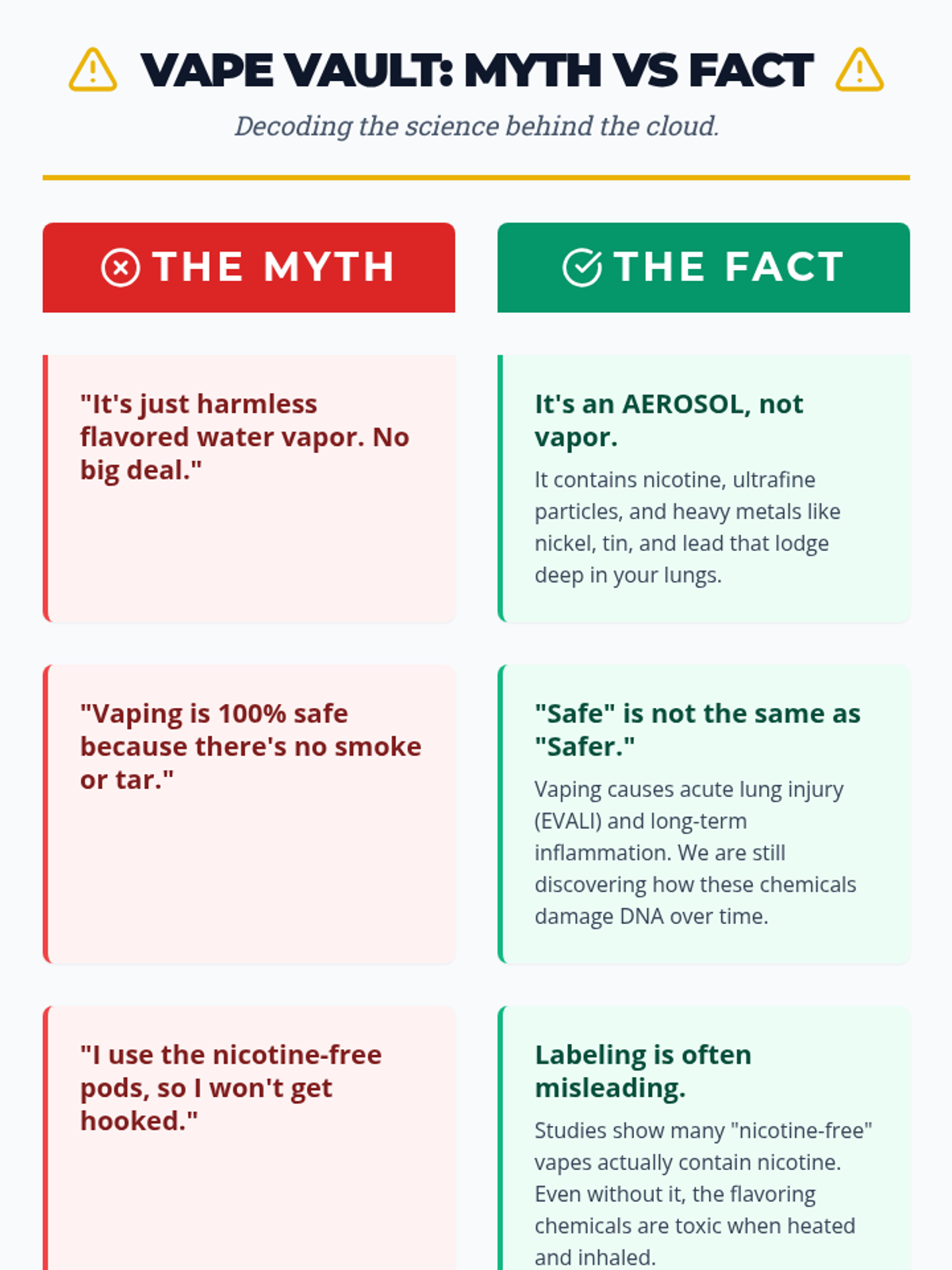
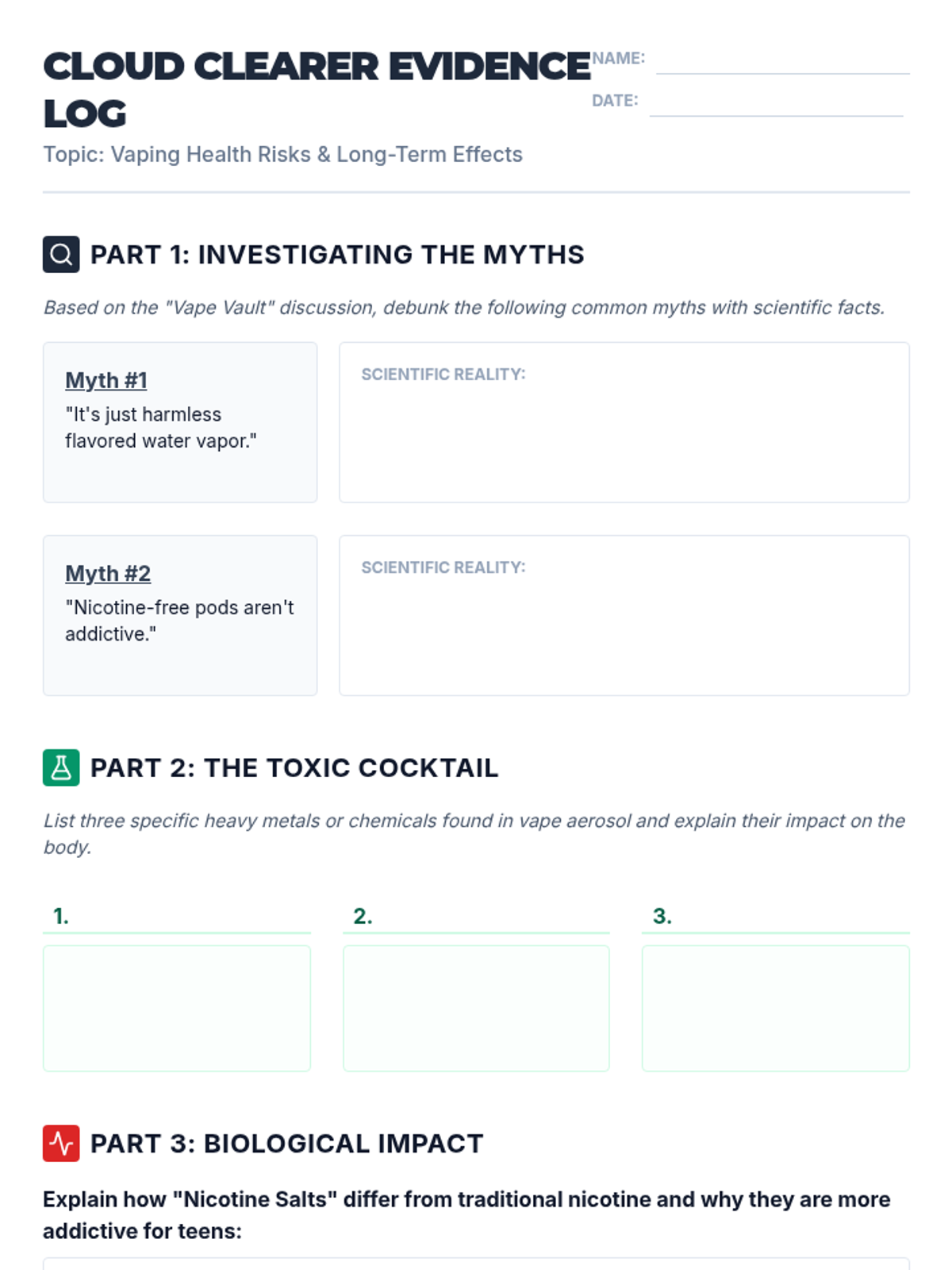
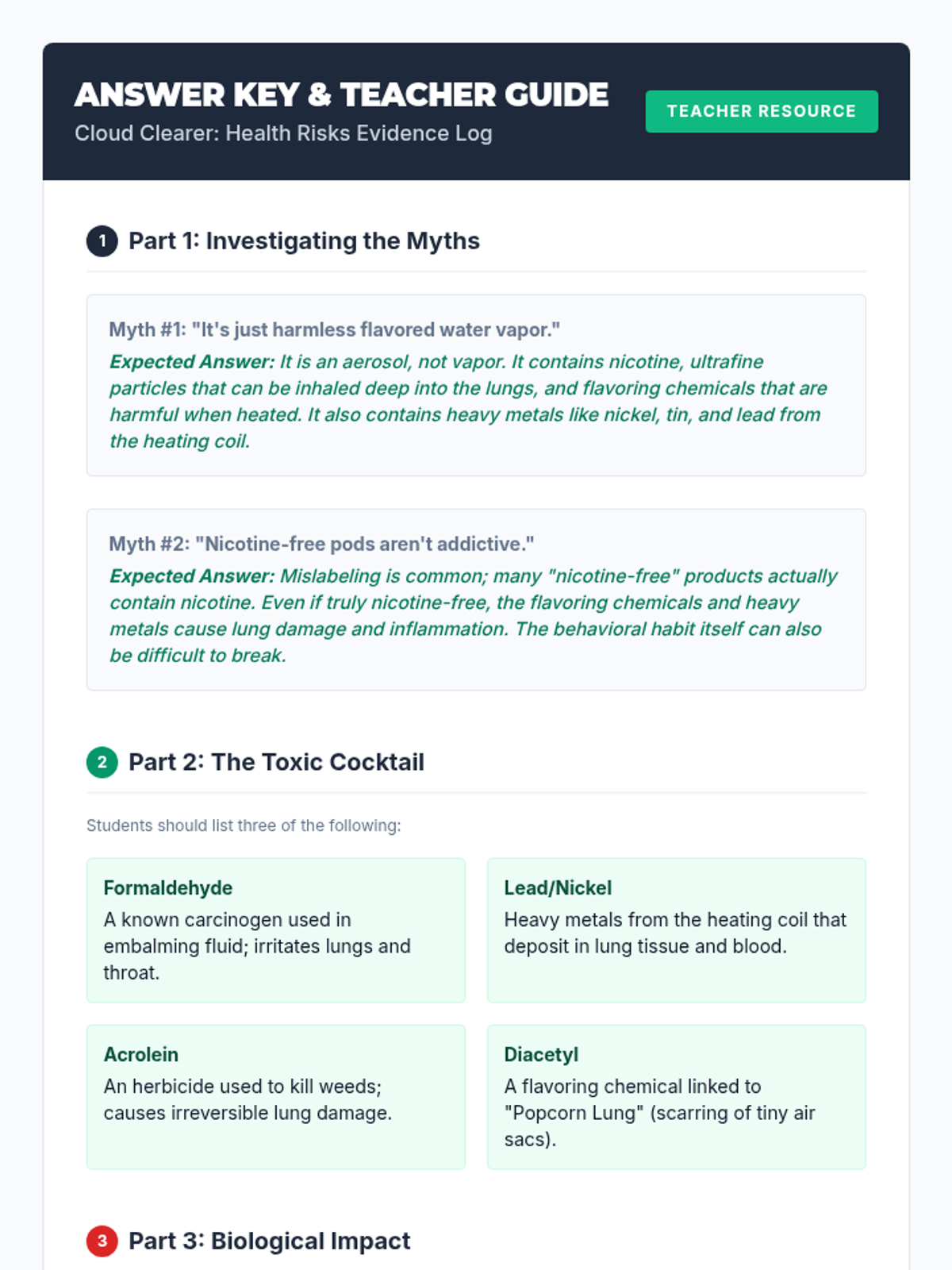
A comprehensive lesson exploring the health risks of vaping, debunking common myths, and practicing refusal skills through real-world scenarios.
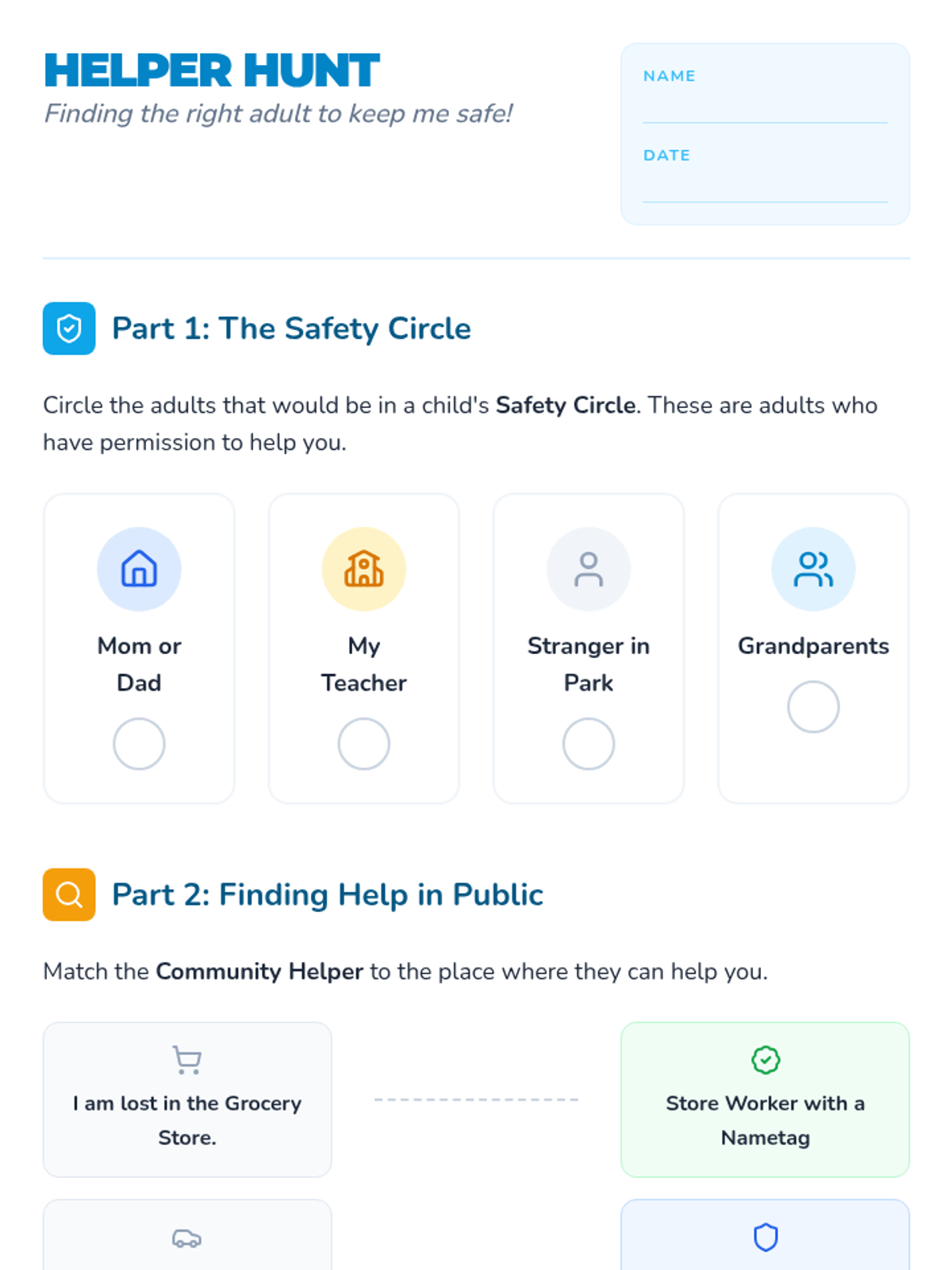
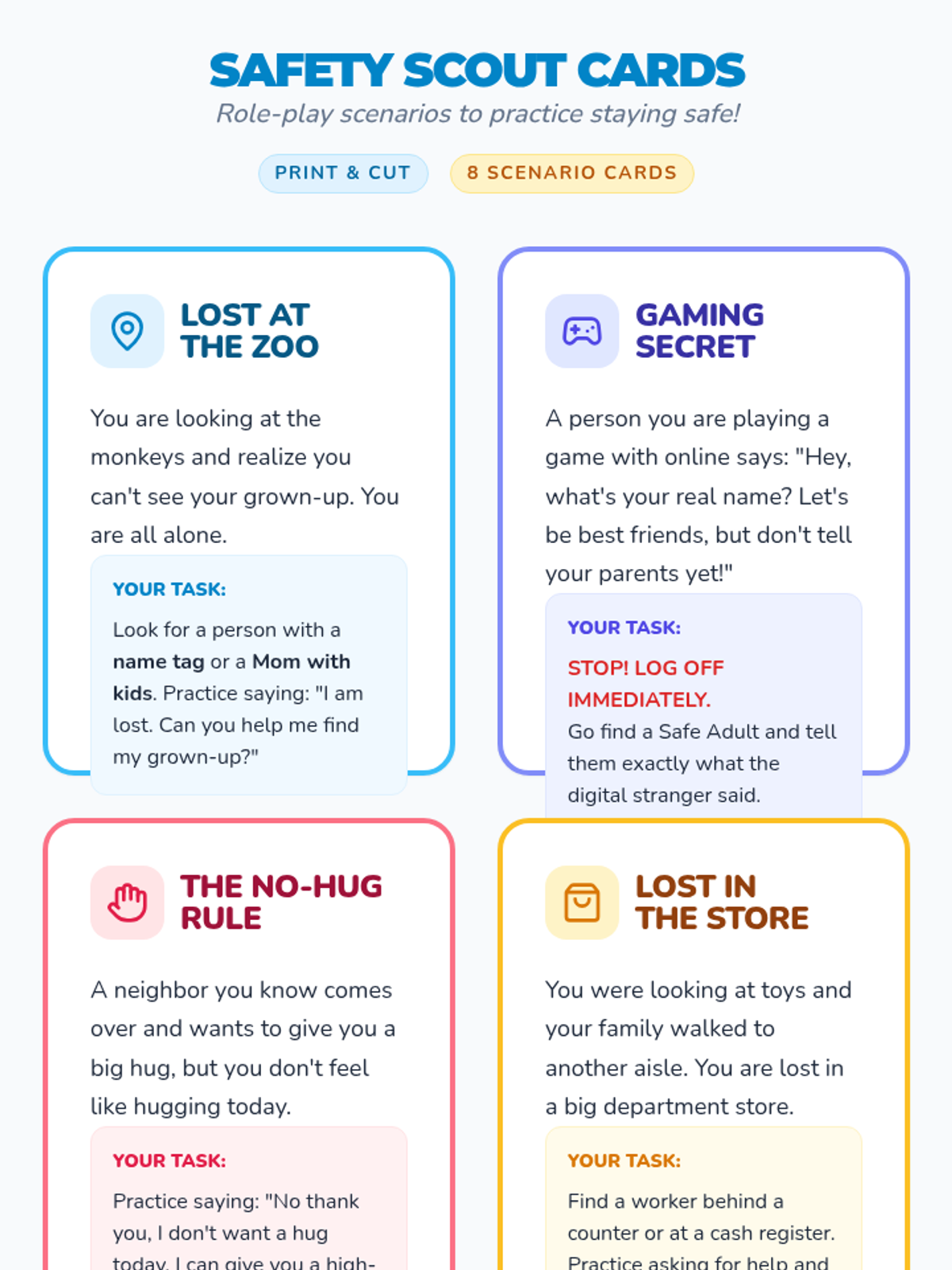
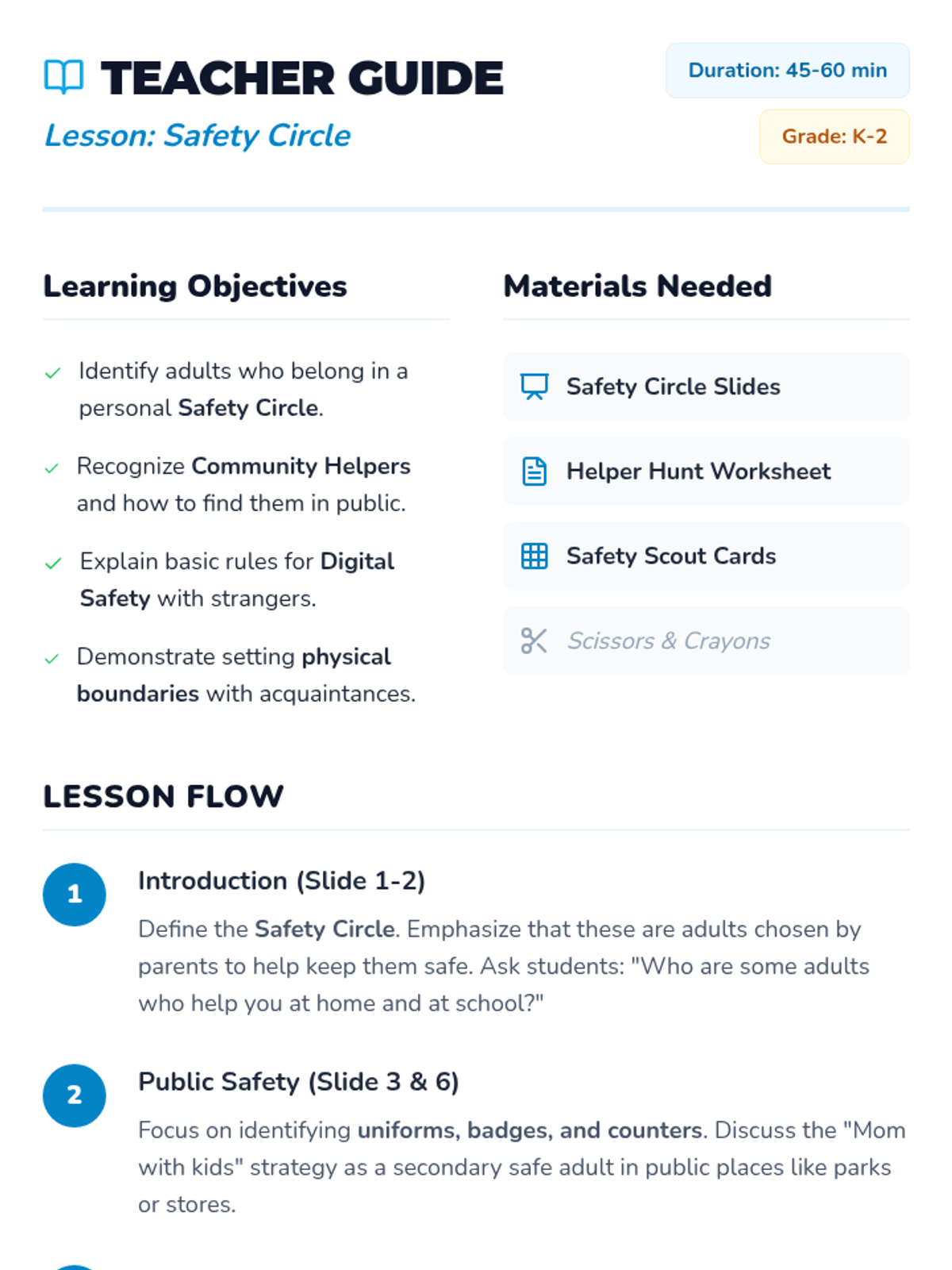
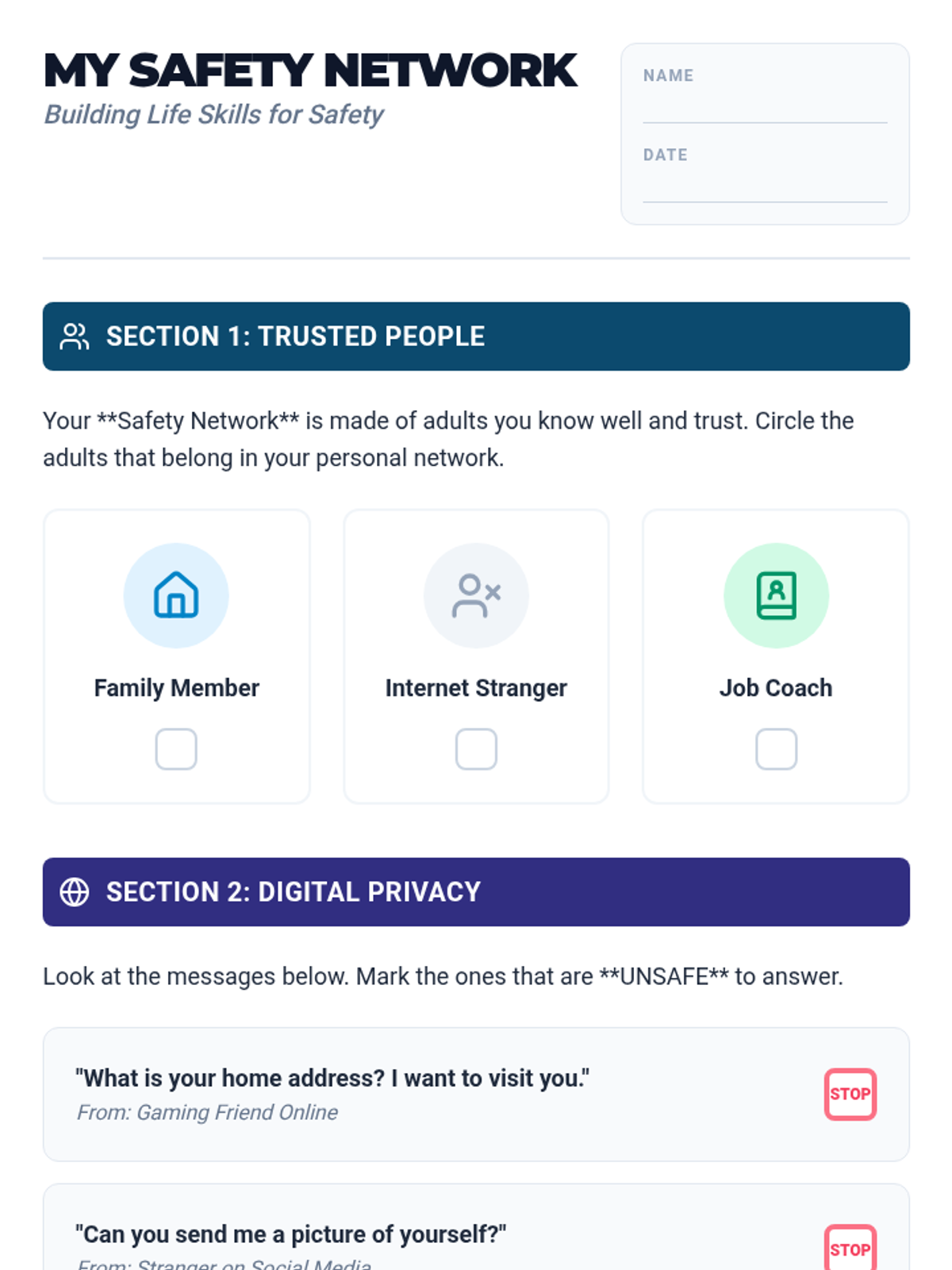
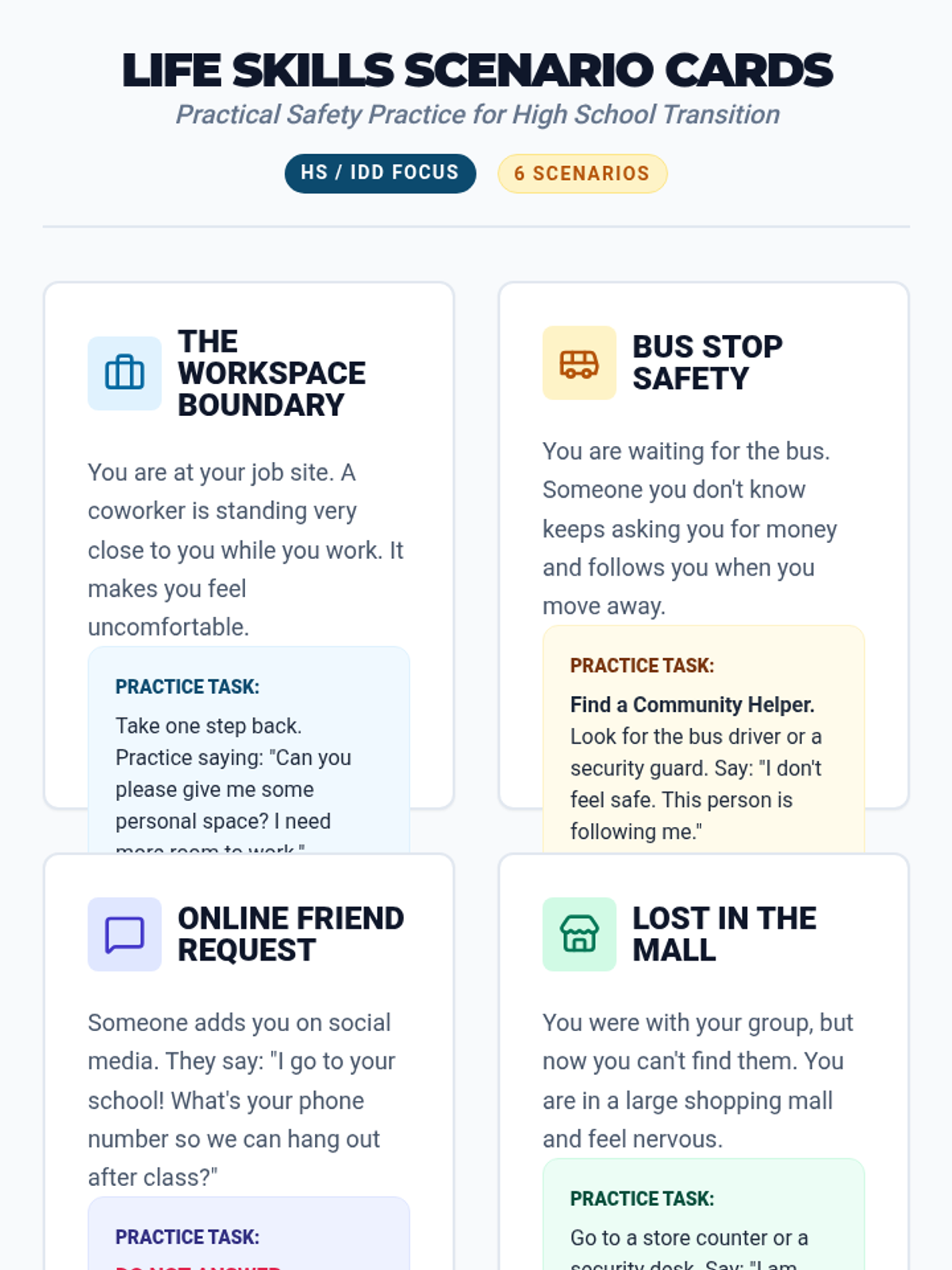
A comprehensive lesson teaching students how to identify safe adults, navigate digital interactions, ask for help in public, and maintain healthy boundaries with acquaintances.
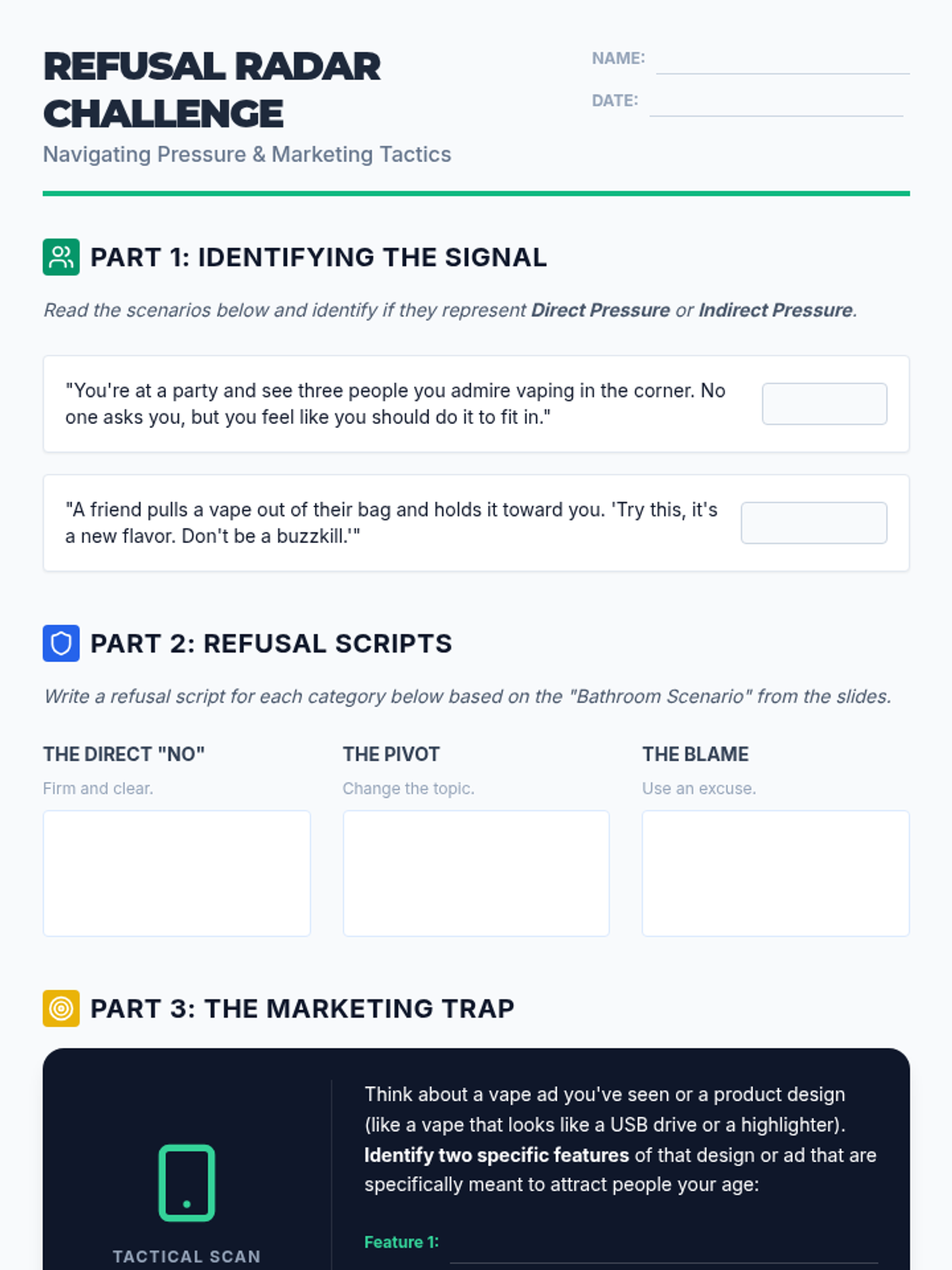
Students identify social pressures and marketing tactics, practicing assertive refusal strategies to navigate real-world situations involving vaping.
Students explore the neurobiology of nicotine addiction, learning how it 'hijacks' the brain's reward system and affects adolescent development.
Students investigate the truth behind common vaping myths and explore the long-term health risks associated with e-cigarette use.
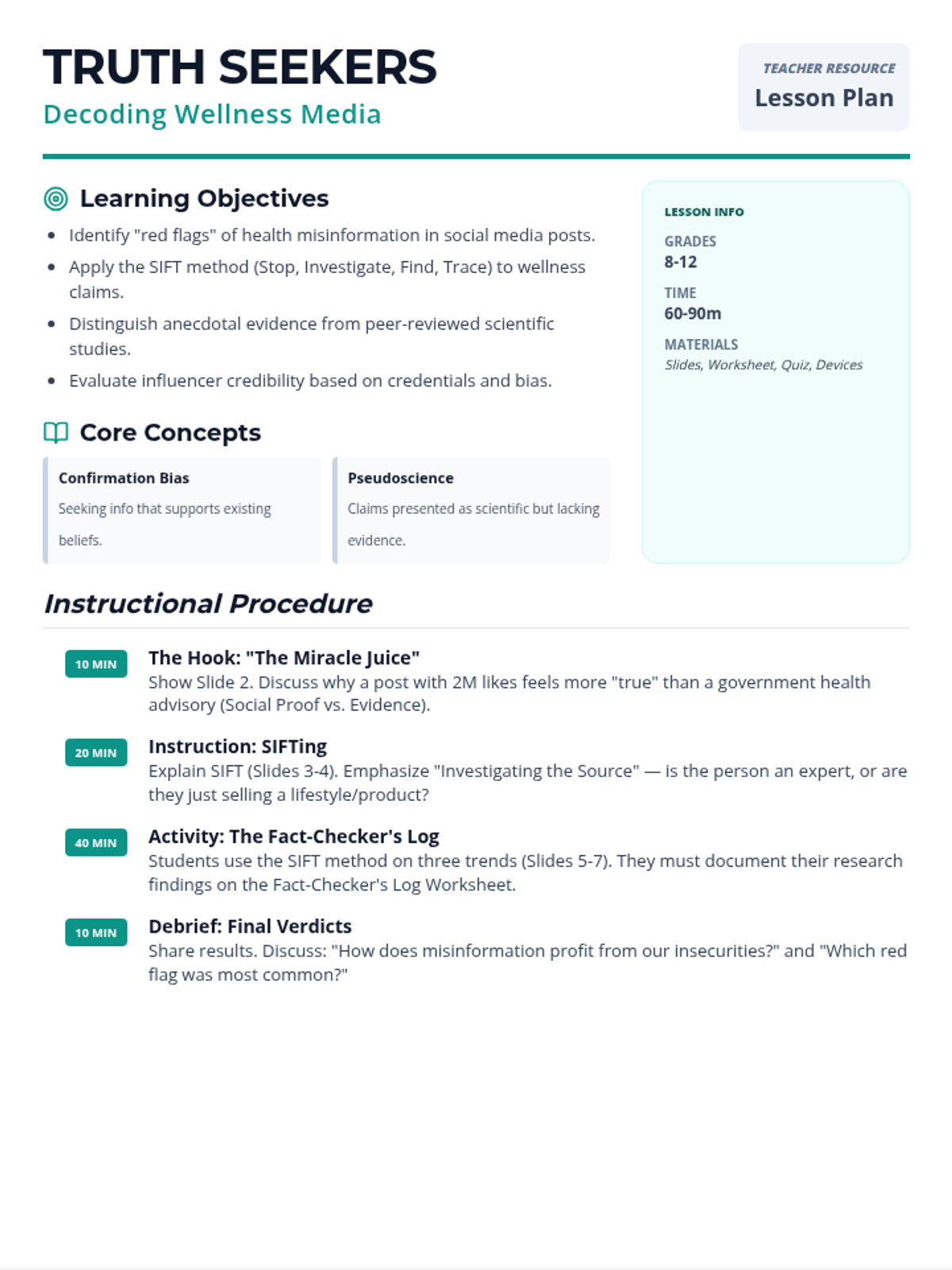
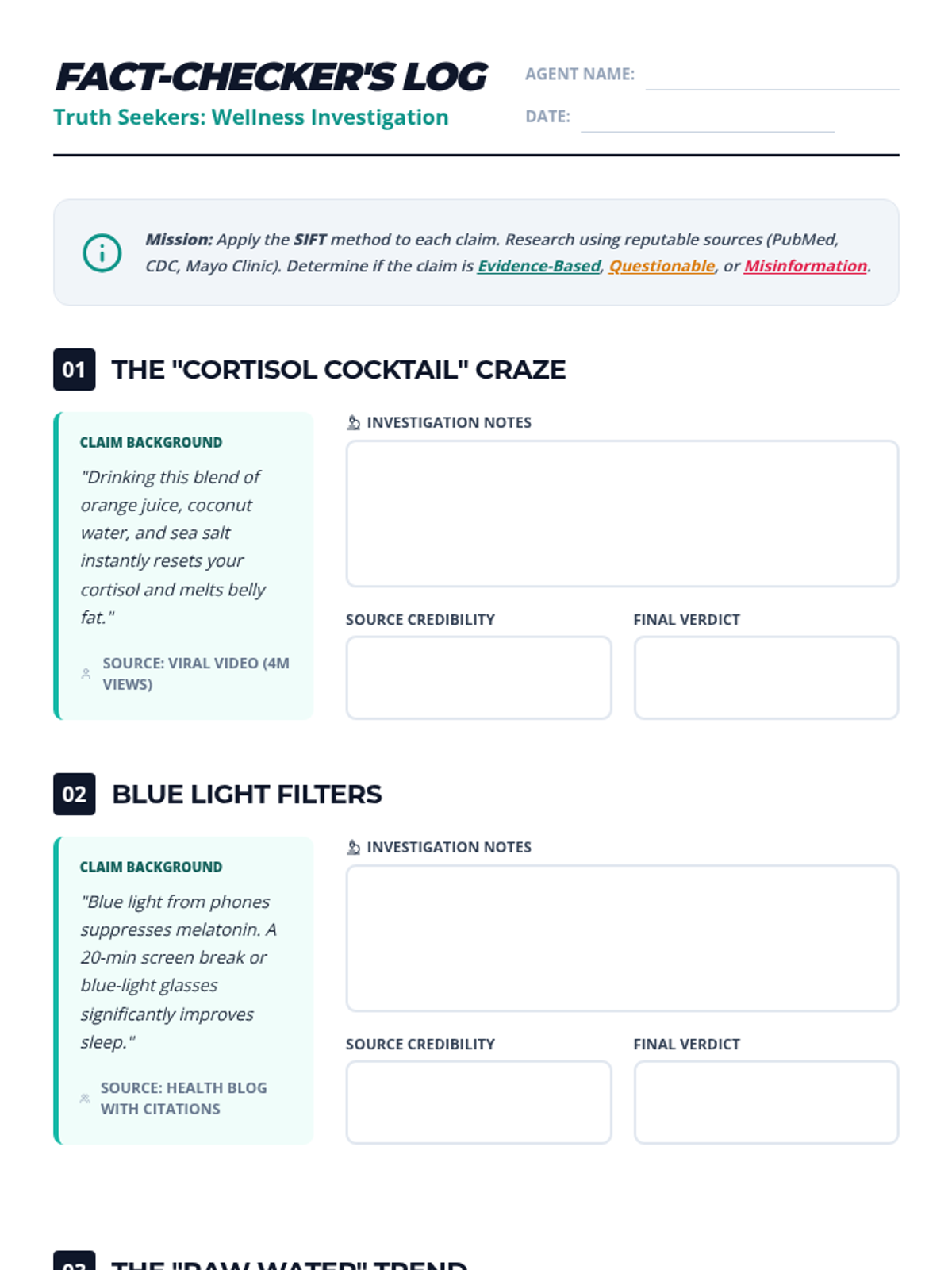
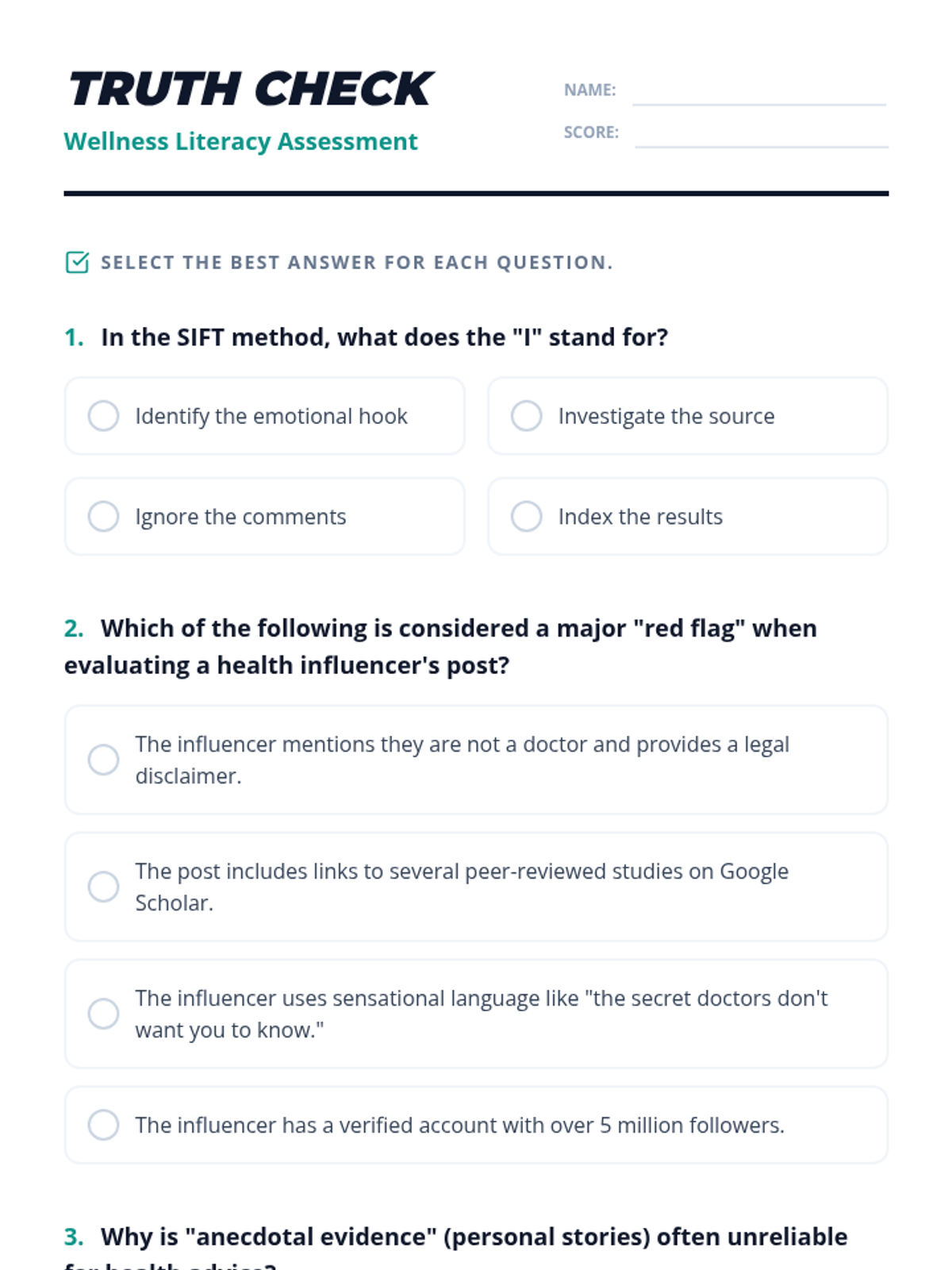
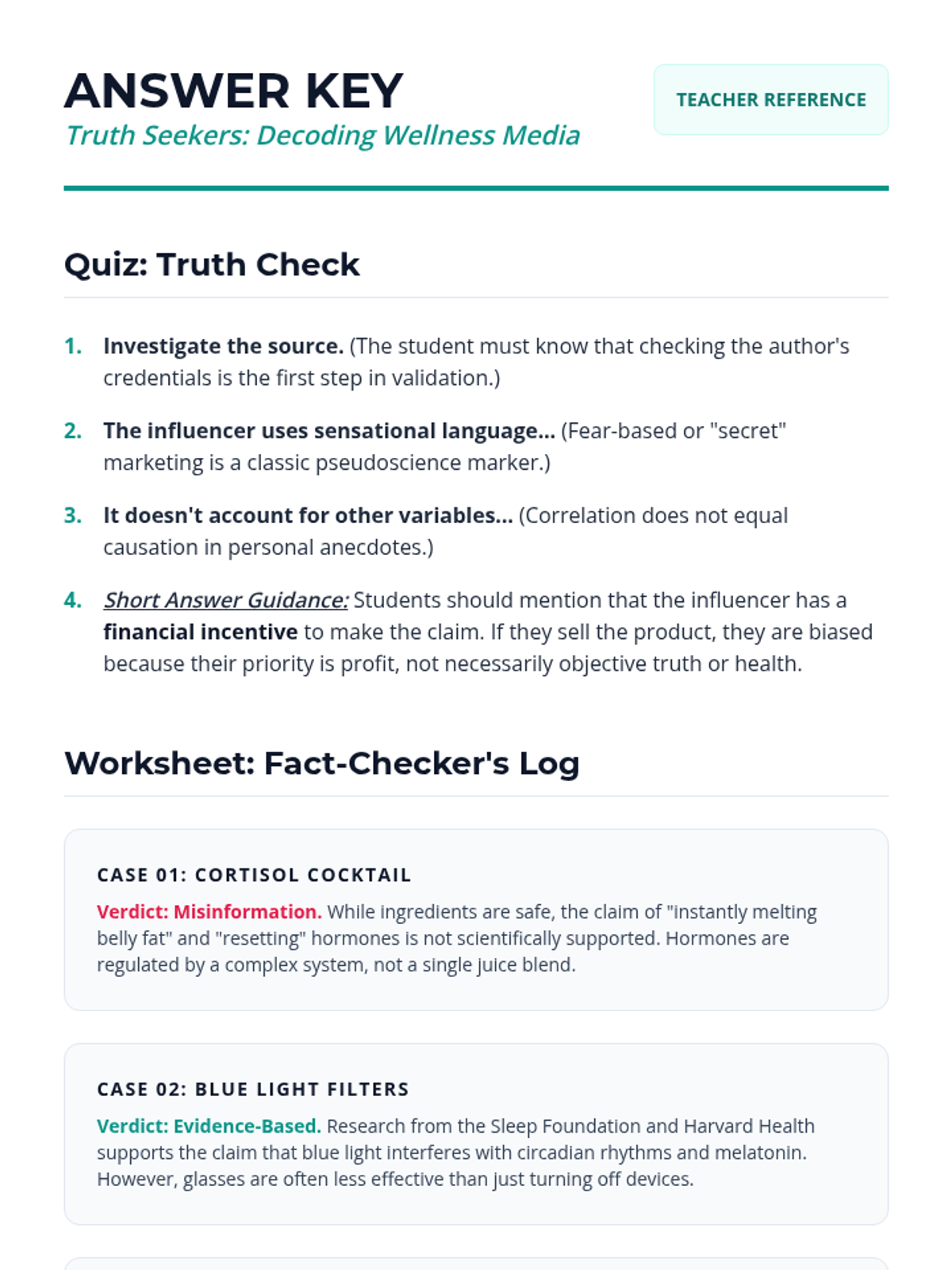
A high school media literacy lesson focused on evaluating health and wellness claims on social media. Students learn to apply the SIFT method to distinguish between scientific evidence and viral misinformation.
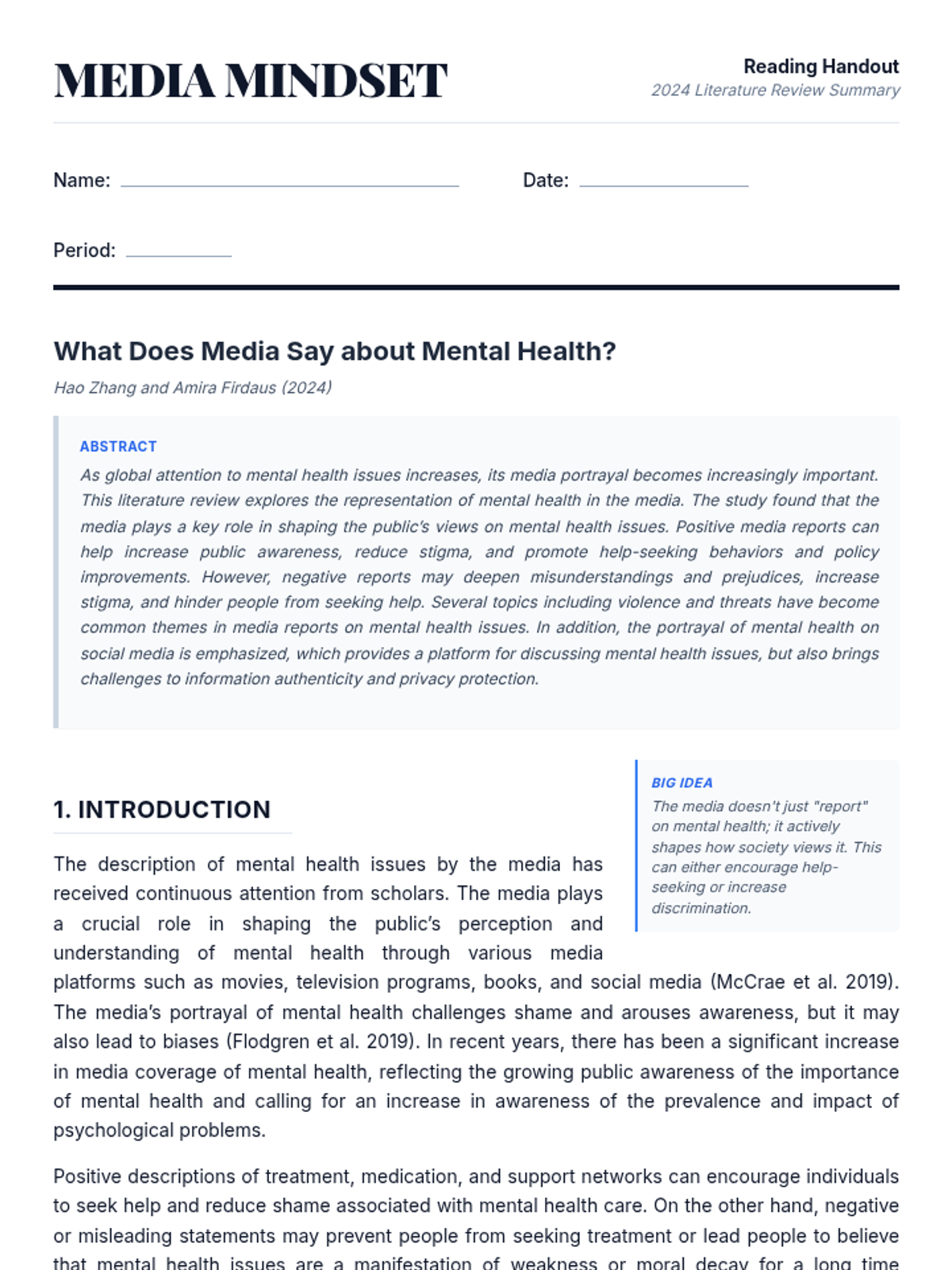
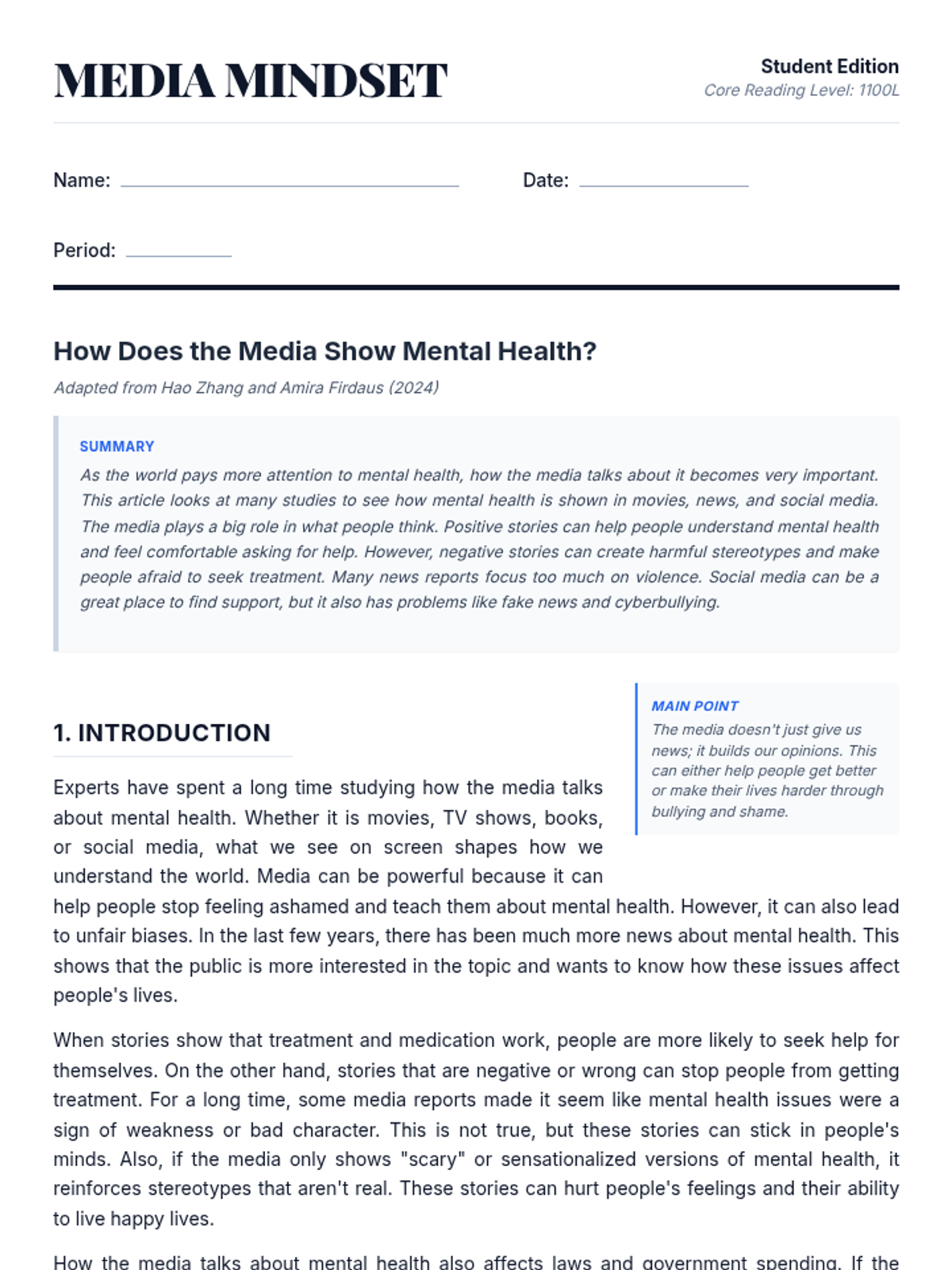
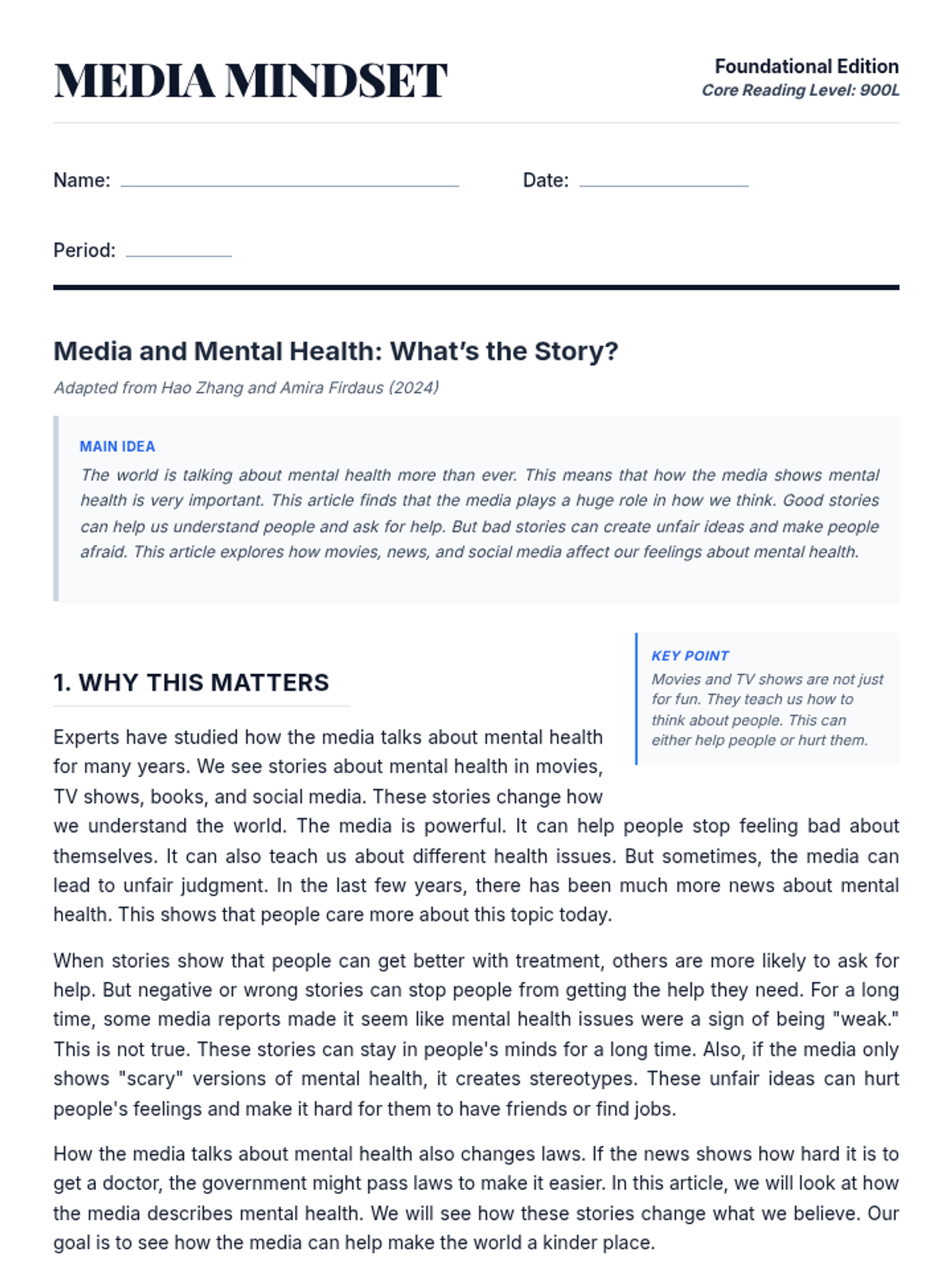
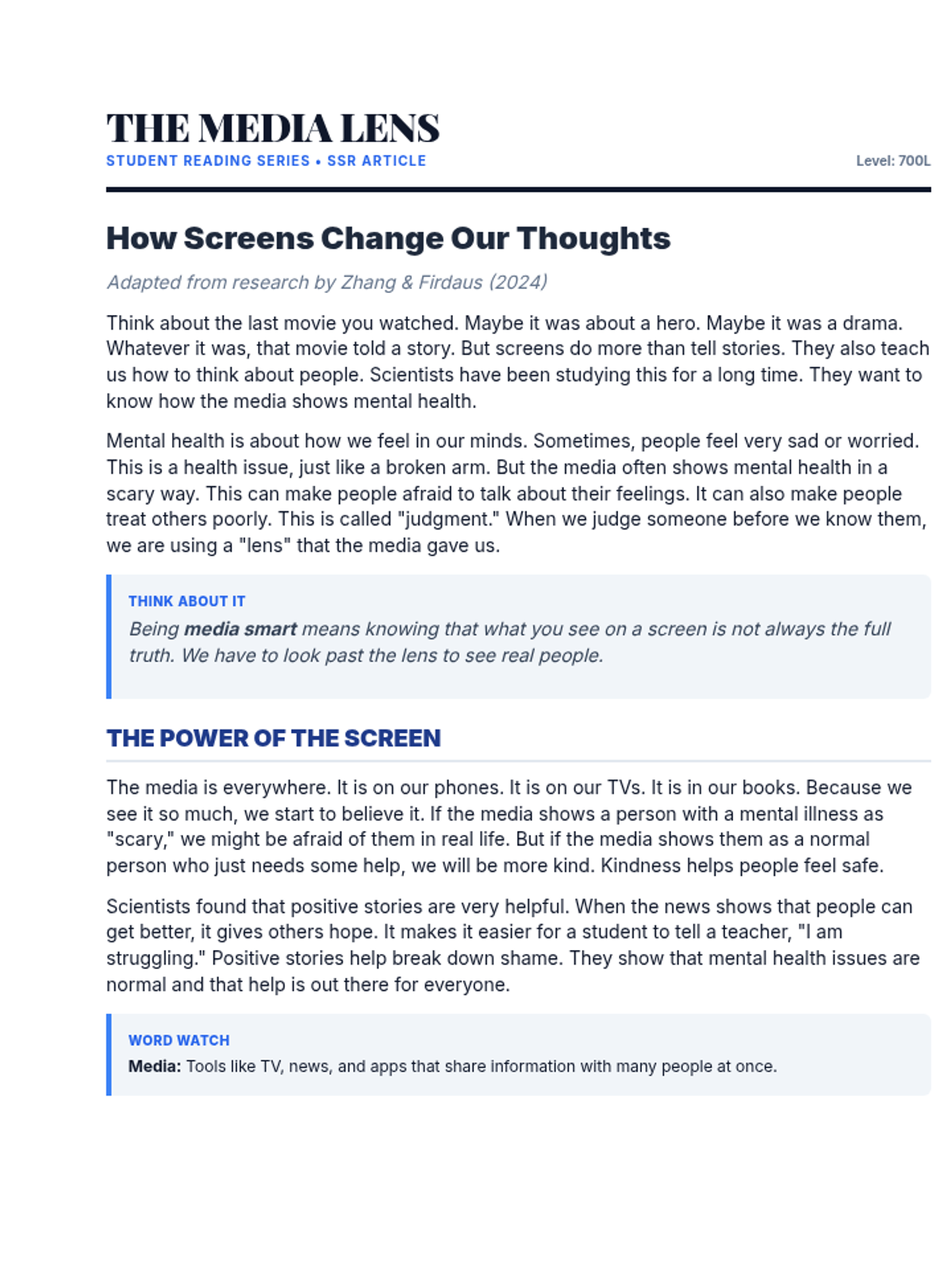
This lesson explores how various media platforms shape public perception of mental health, focusing on a 2024 literature review. Students will analyze the impact of media portrayals on stigma, policy, and help-seeking behaviors across news and social media.
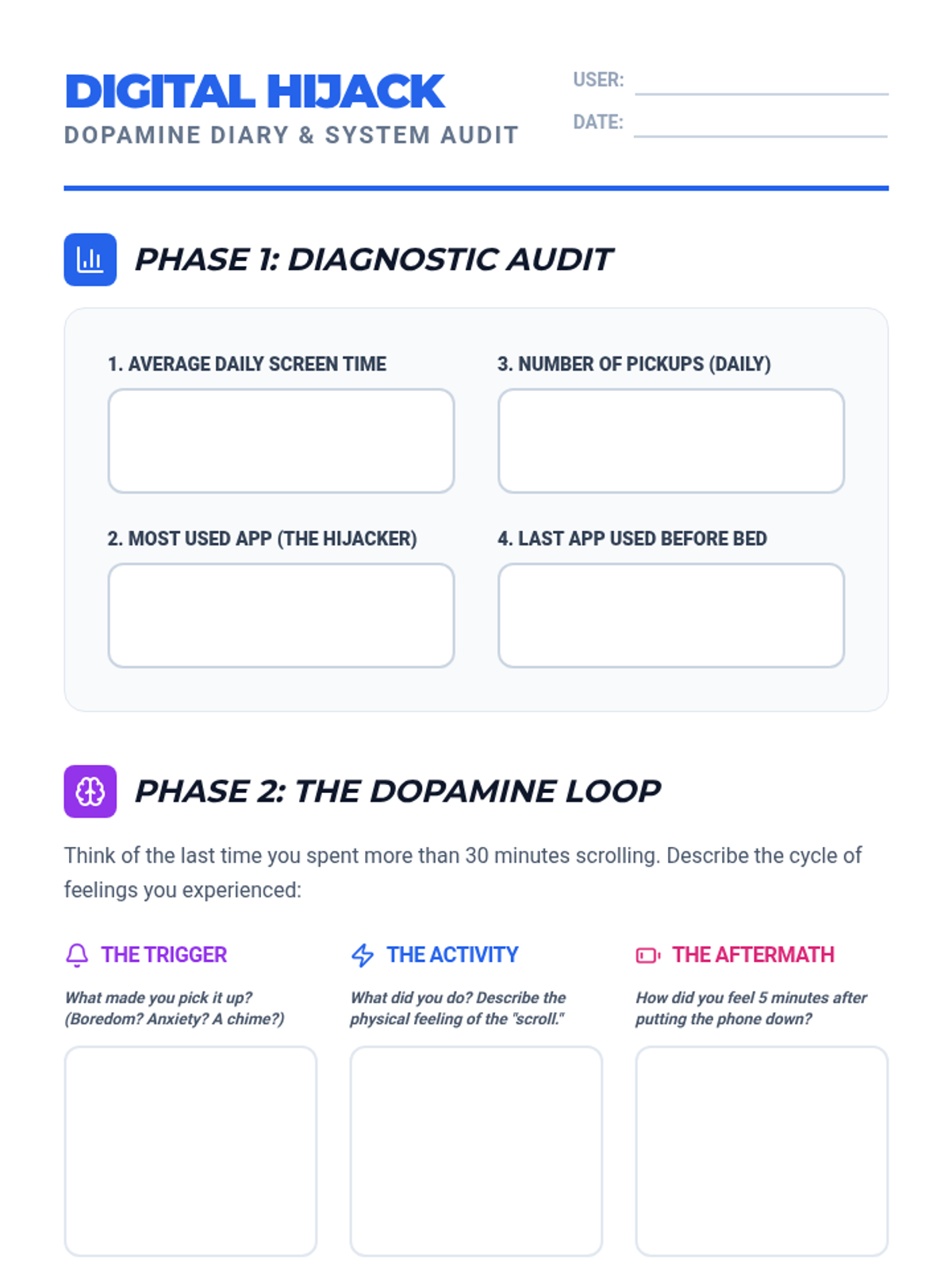
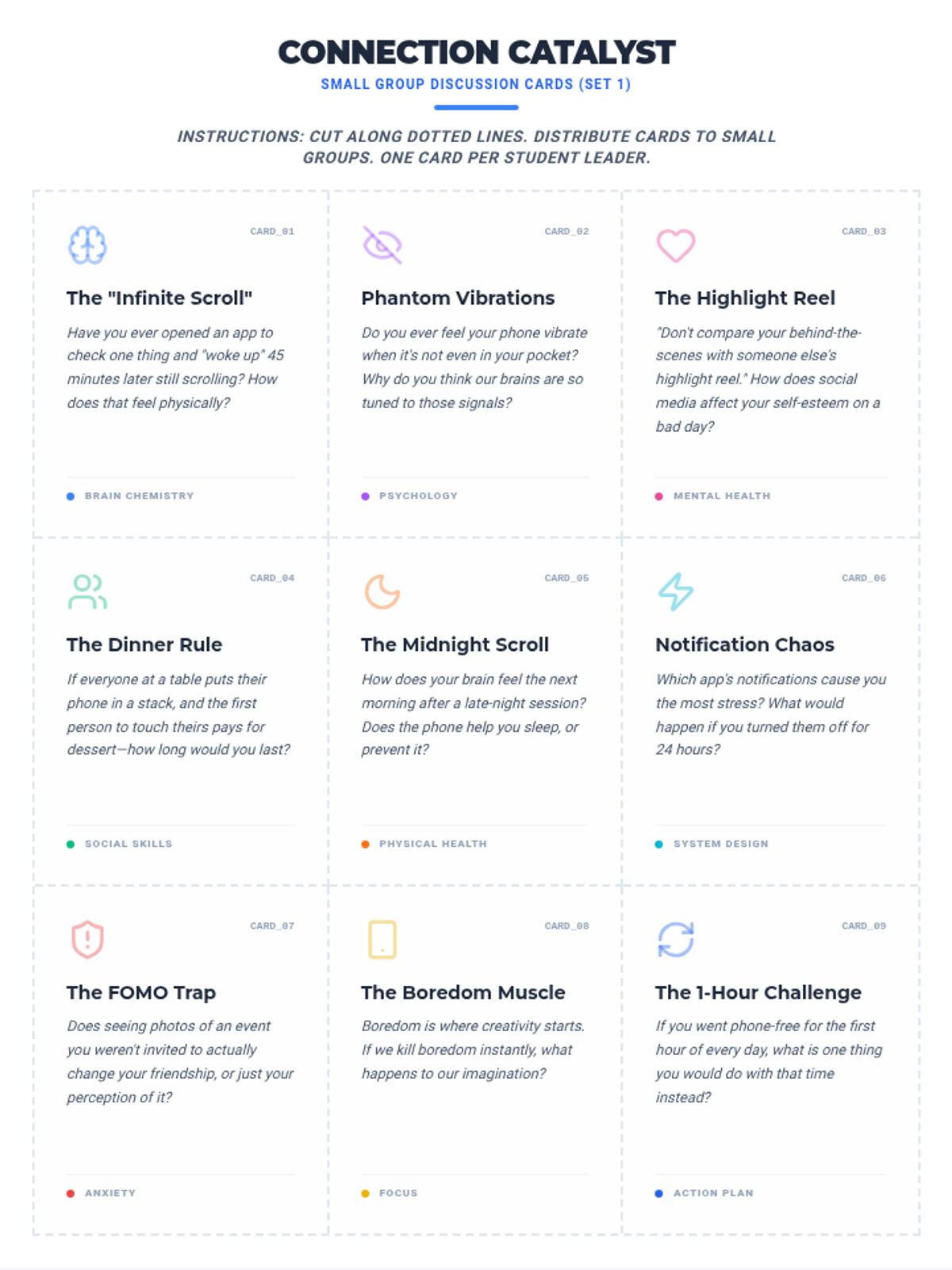
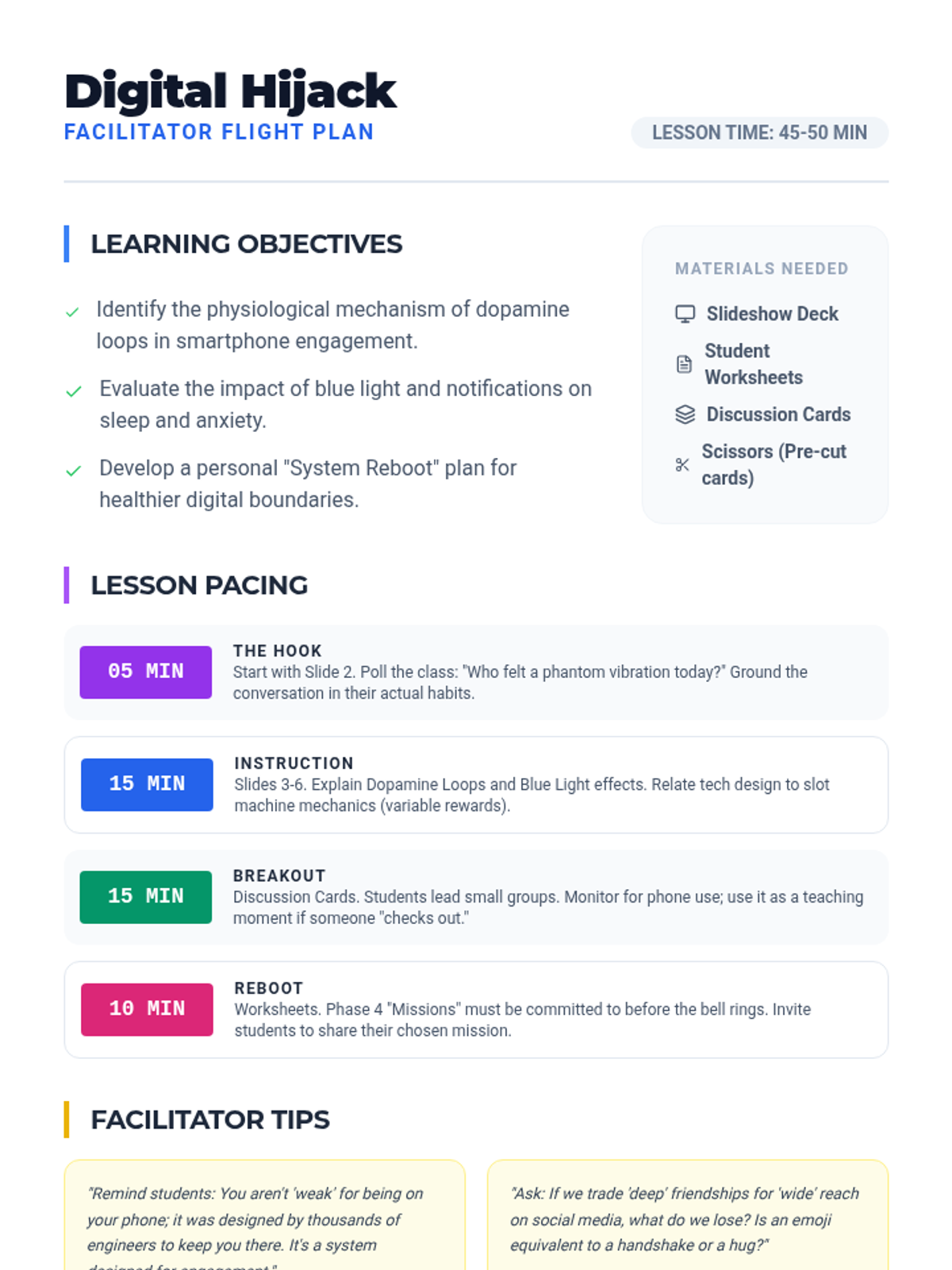
A comprehensive lesson for teenagers exploring the physiological and psychological impacts of smartphone addiction, covering dopamine loops, sleep disruption, anxiety, and social isolation.
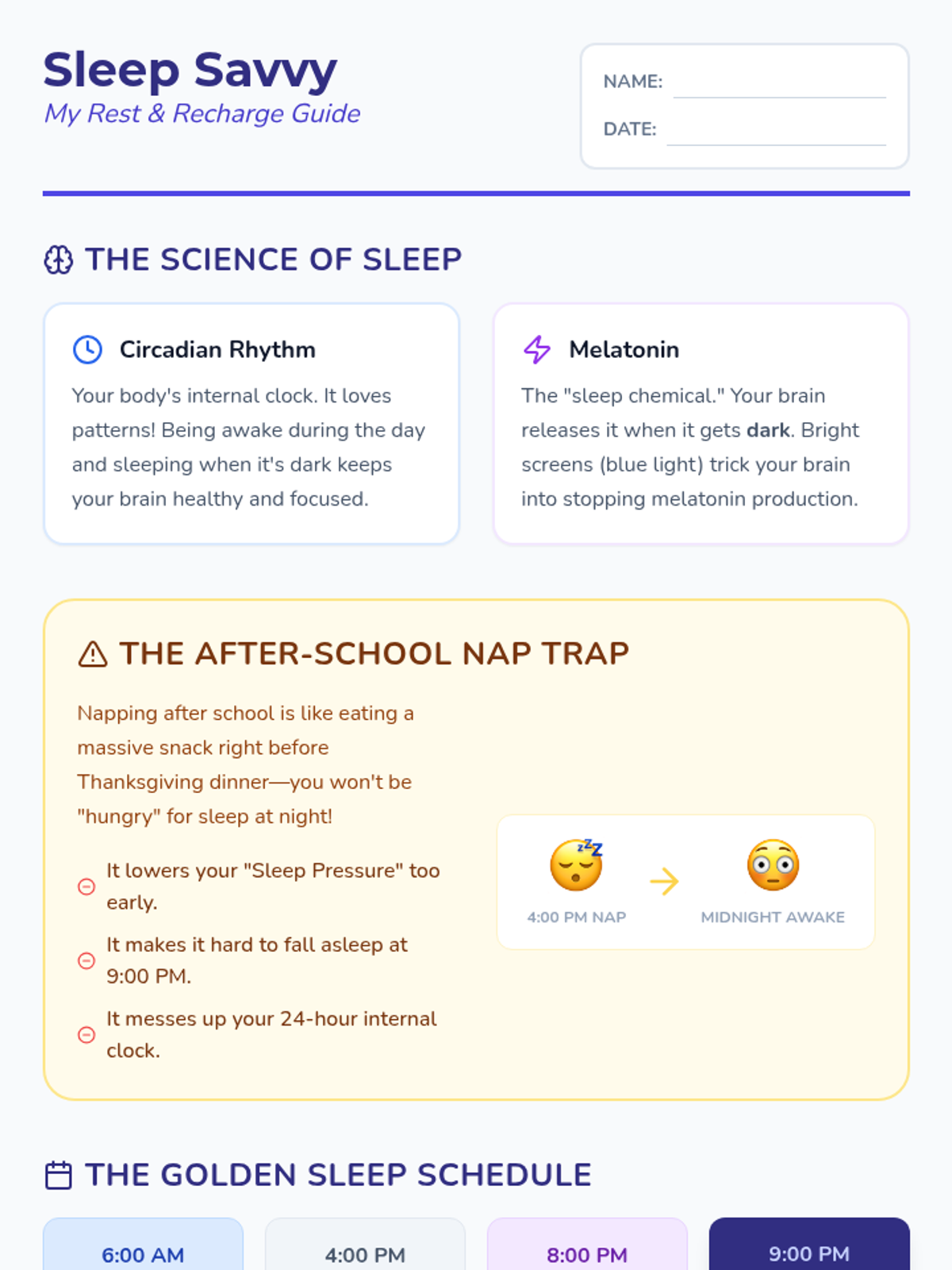
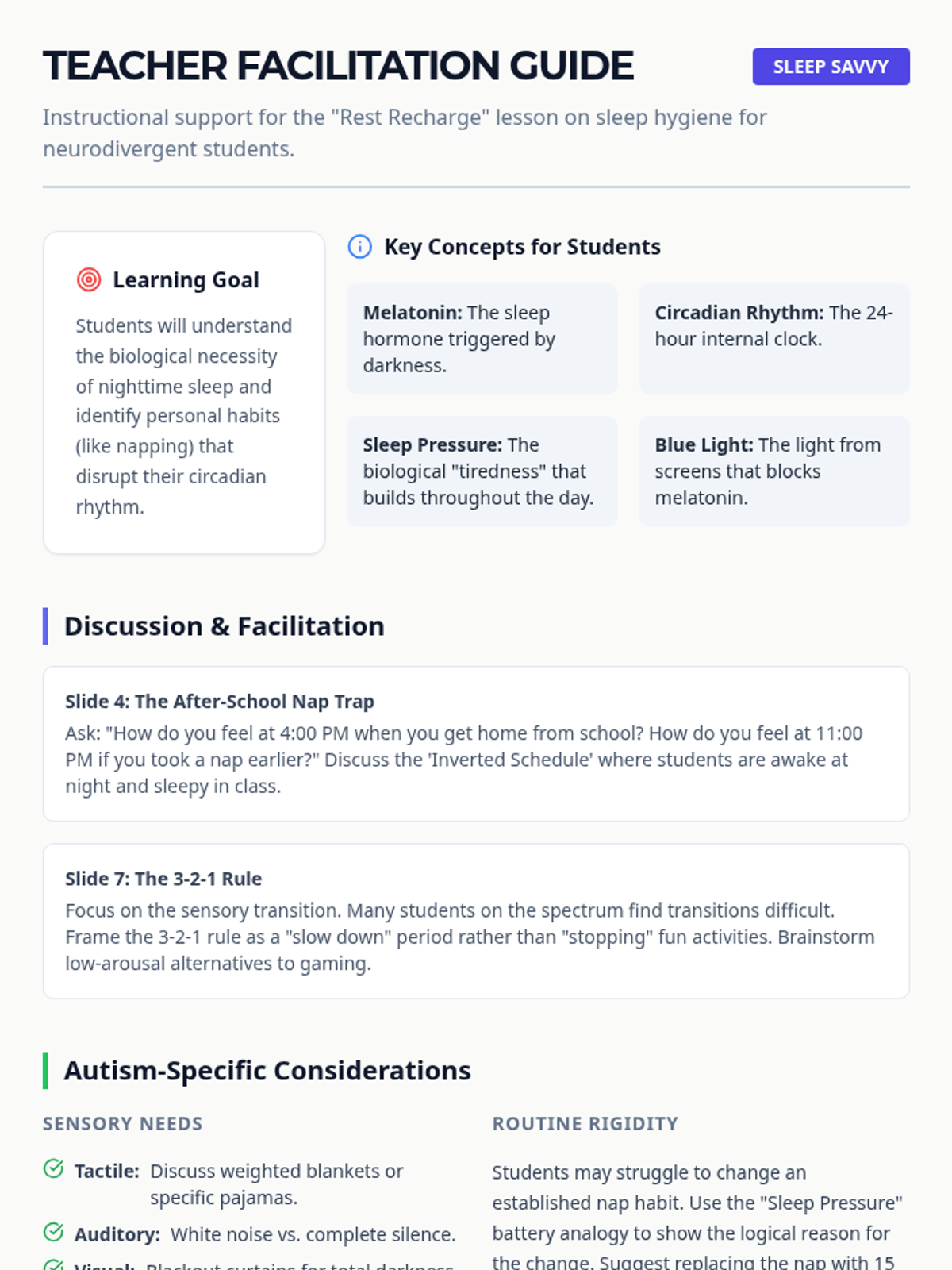
A comprehensive guide for teenagers on the autism spectrum to understand the science of sleep hygiene, the importance of circadian rhythms, and how to maintain a consistent nighttime schedule.
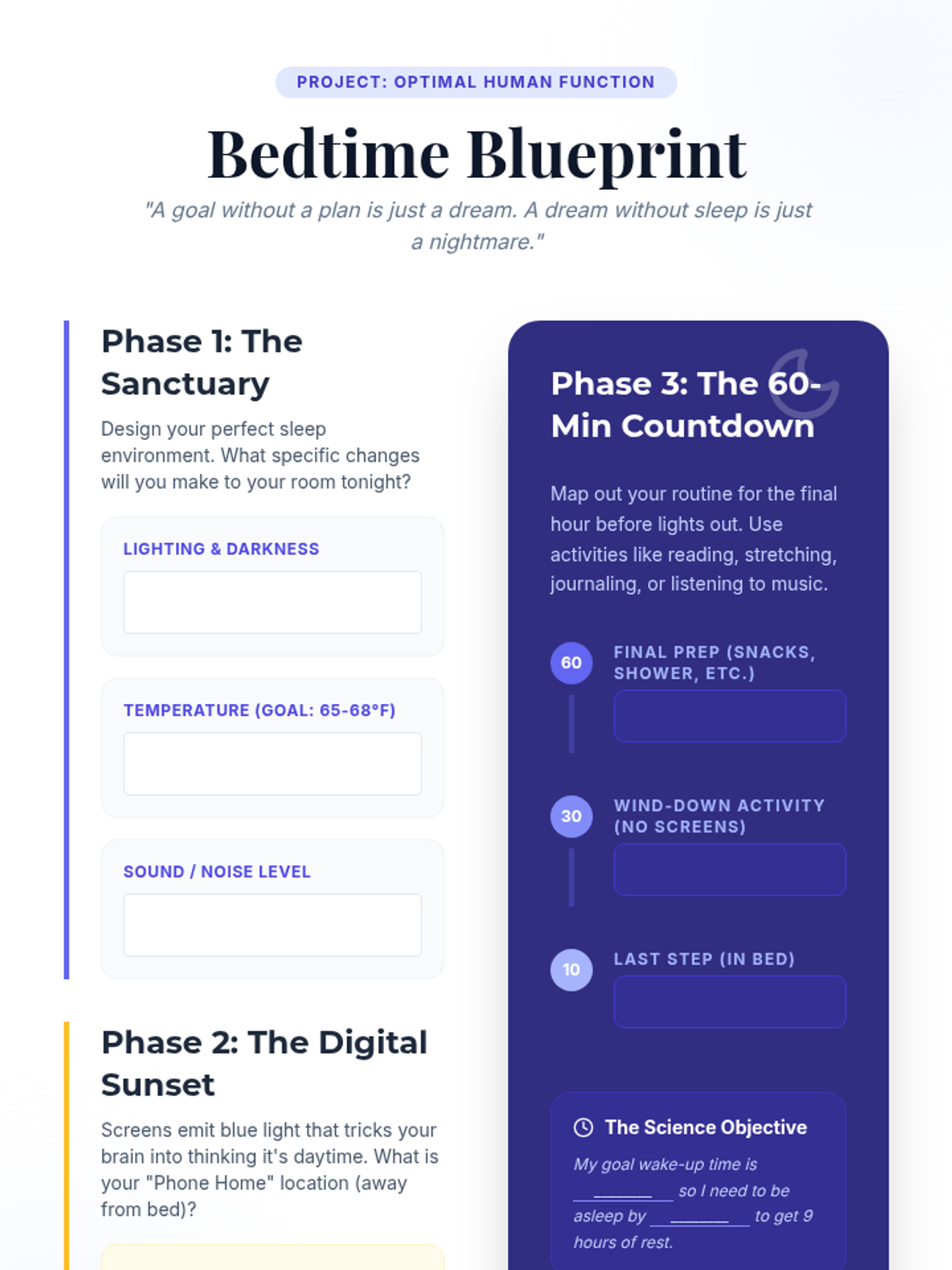
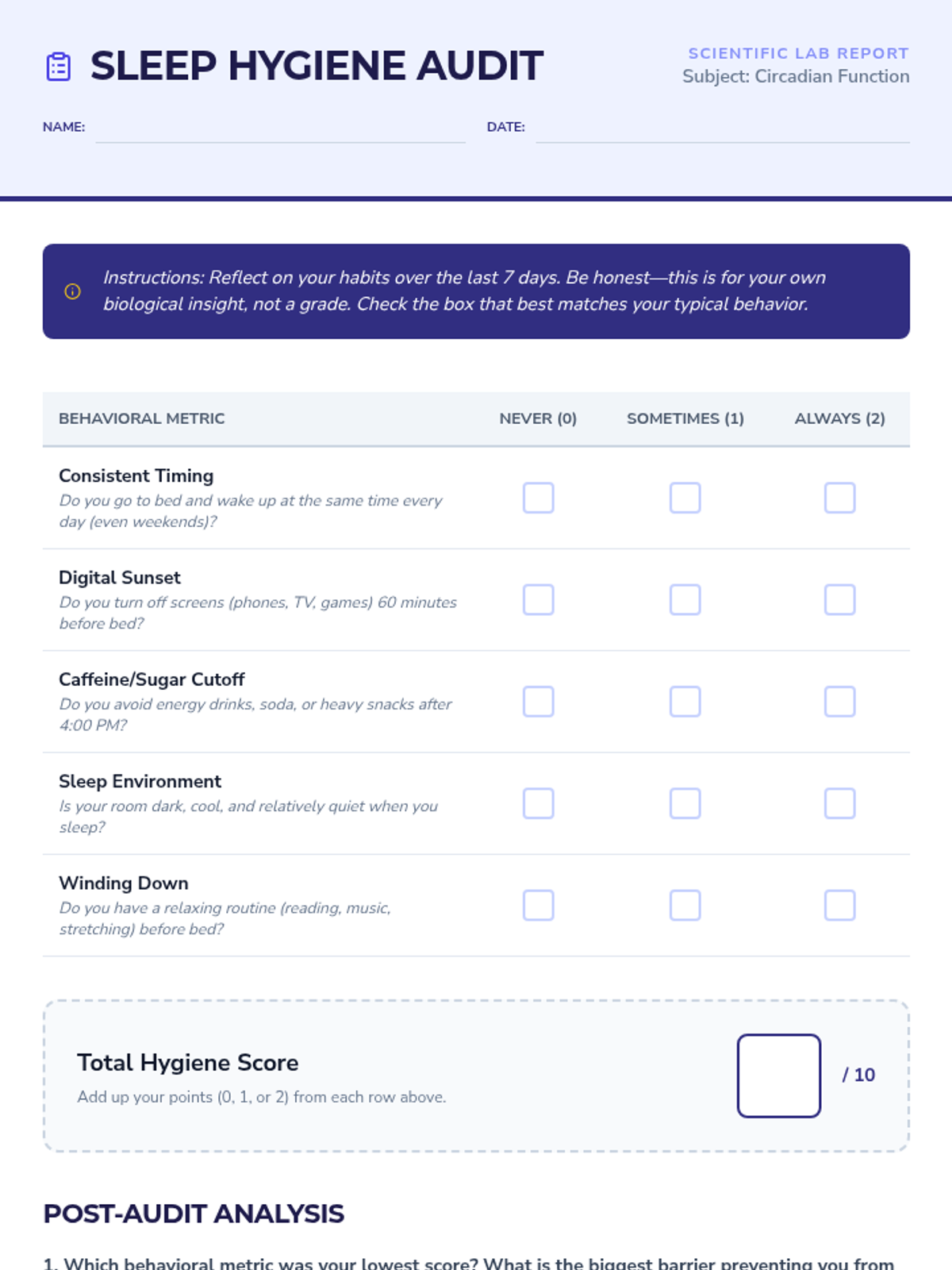
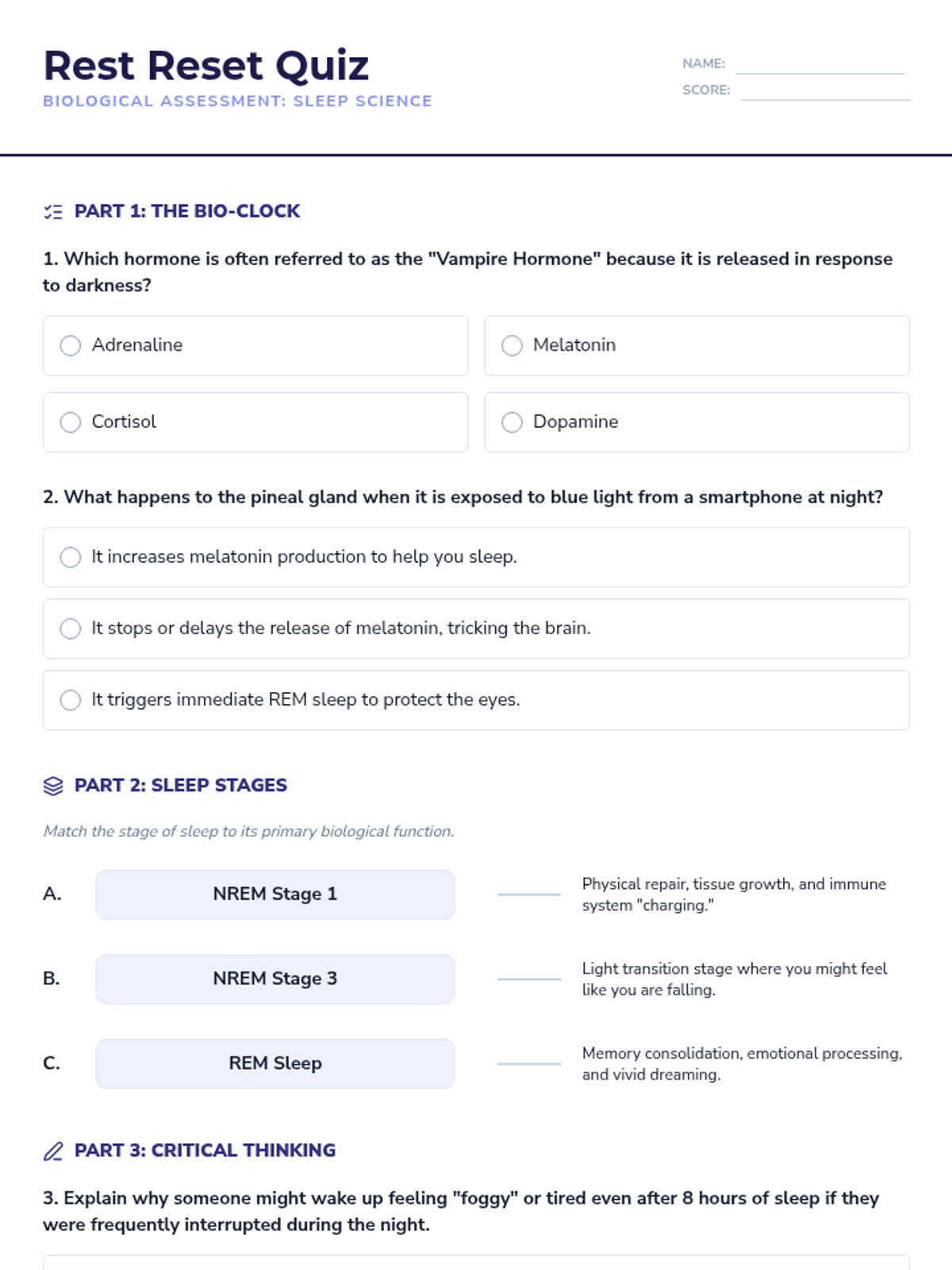
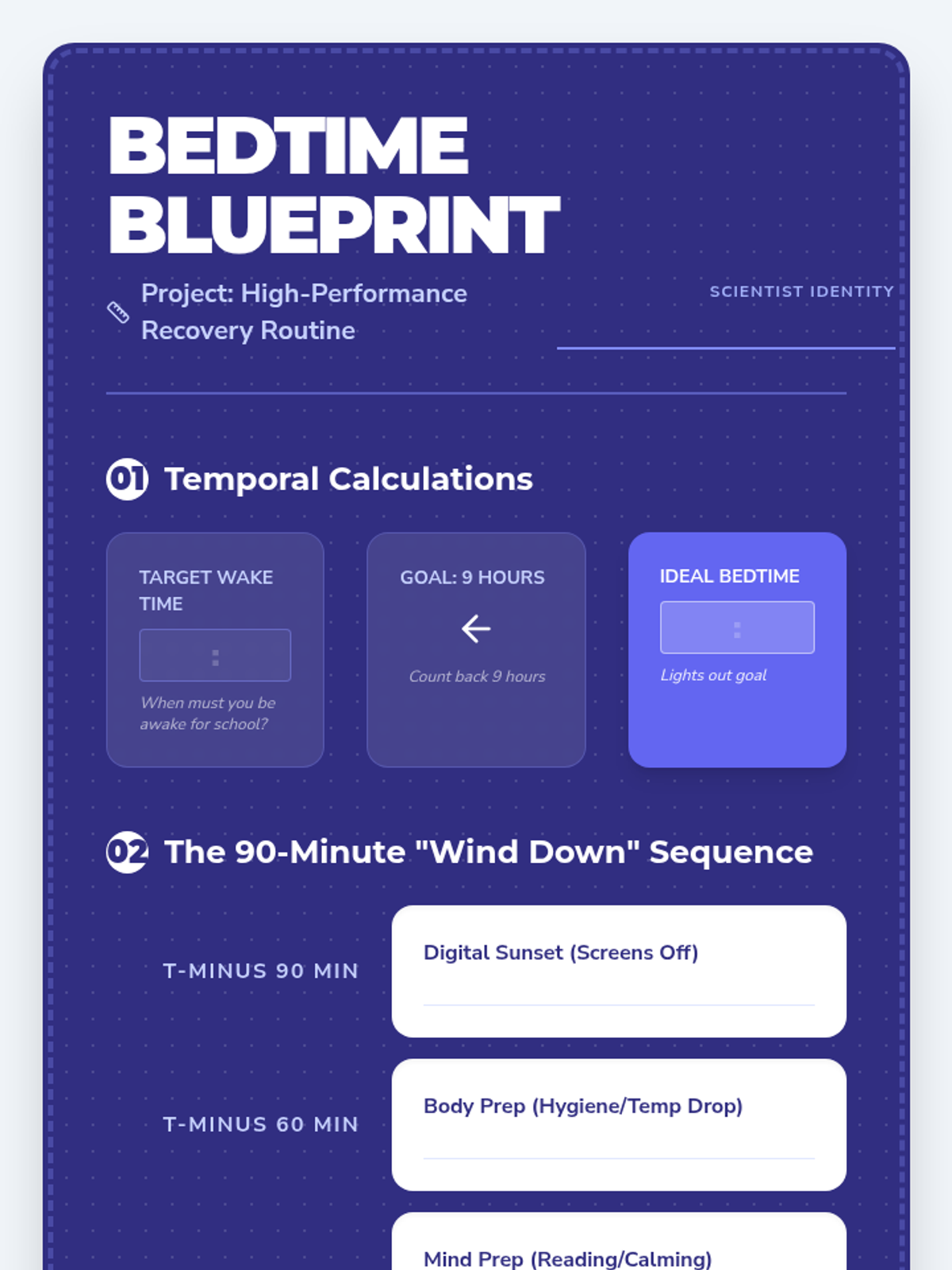
This lesson explores the biological necessity of sleep, the stages of the sleep cycle, and how rest impacts cognitive function and emotional regulation. Students will analyze their own sleep hygiene and develop a 'bedtime blueprint' to improve their quality of rest.
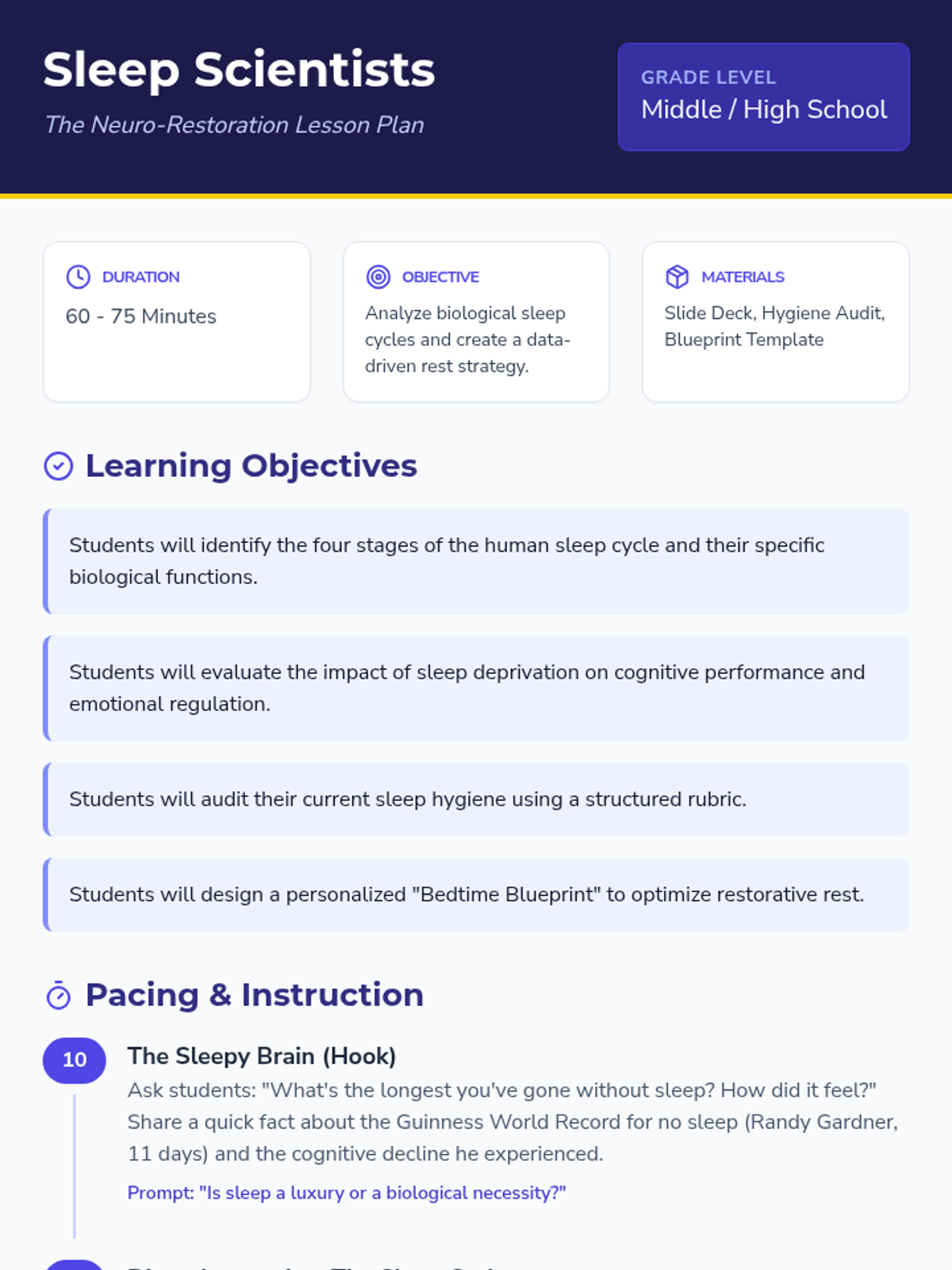
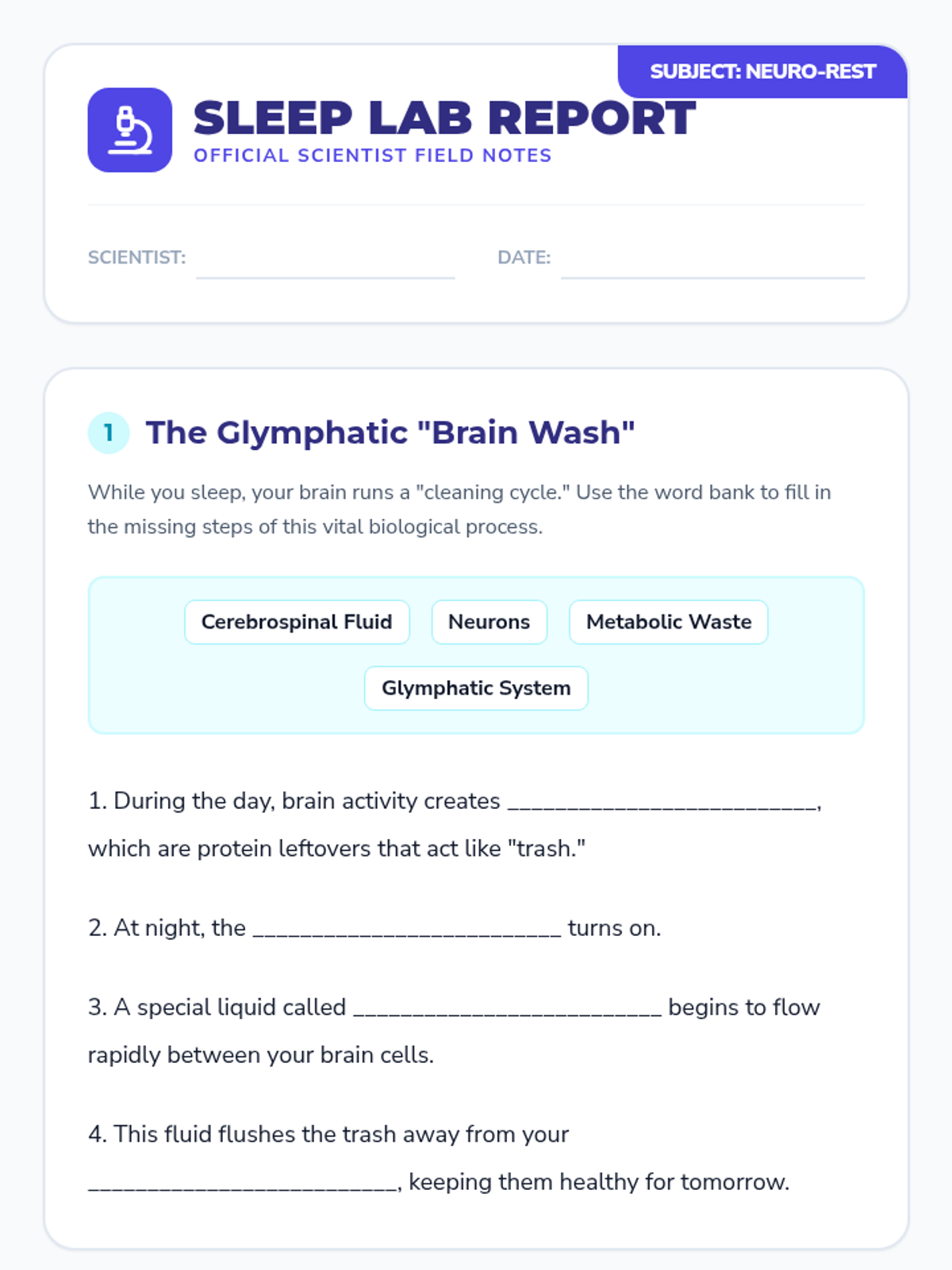
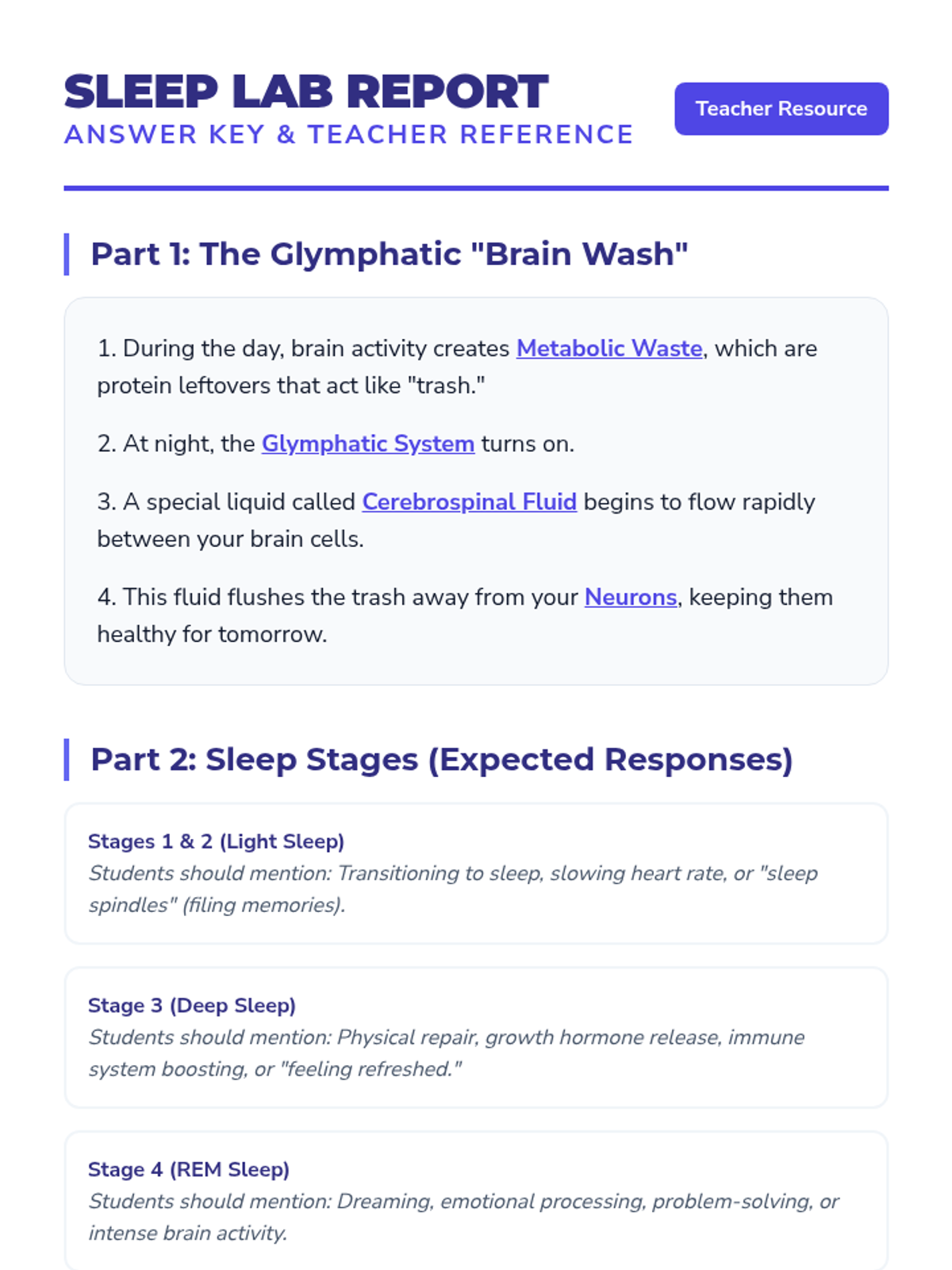
This lesson transforms students into Sleep Scientists to explore the biological necessity of rest. Students will learn about the four stages of sleep, the brain's "cleaning" process during the night, and the direct link between sleep hygiene and emotional/cognitive performance. The lesson culminates in students designing a personalized 'Bedtime Blueprint' to optimize their own recovery.
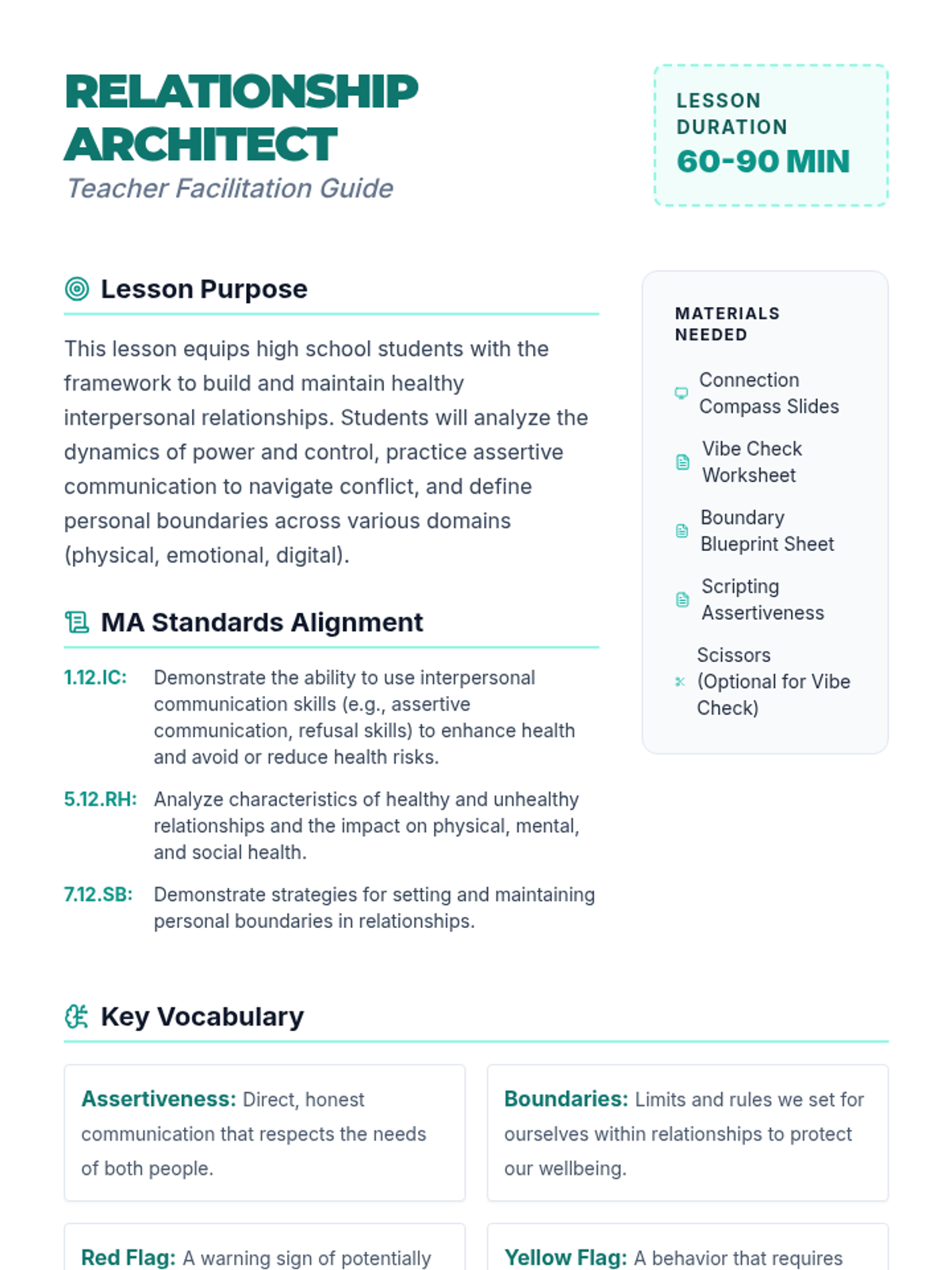
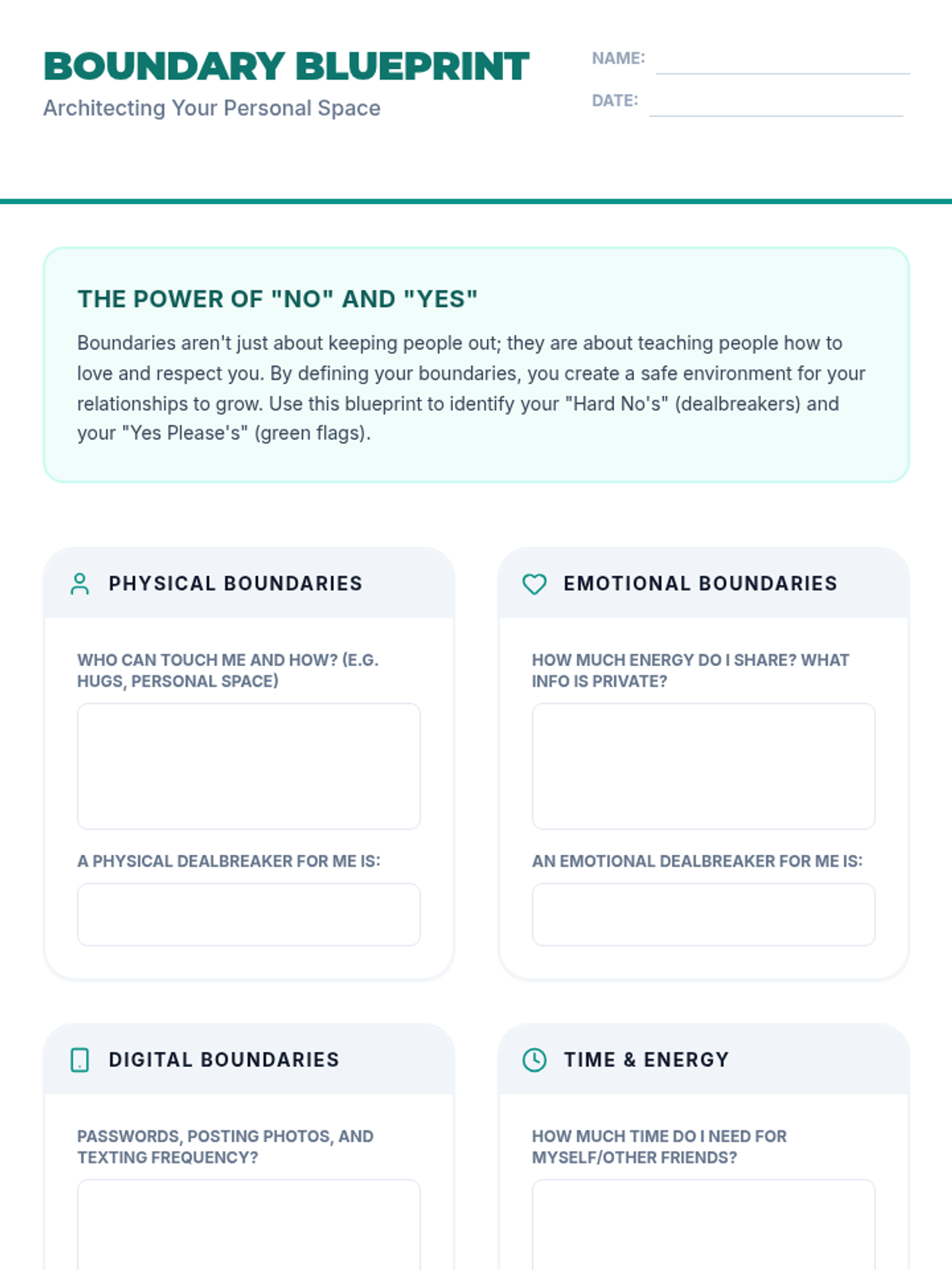
A comprehensive high school lesson focused on developing the skills needed for healthy interpersonal relationships, including boundary setting, assertive communication, and identifying relationship warning signs. Aligned with Massachusetts Health Education standards for interpersonal communication and relationship health.
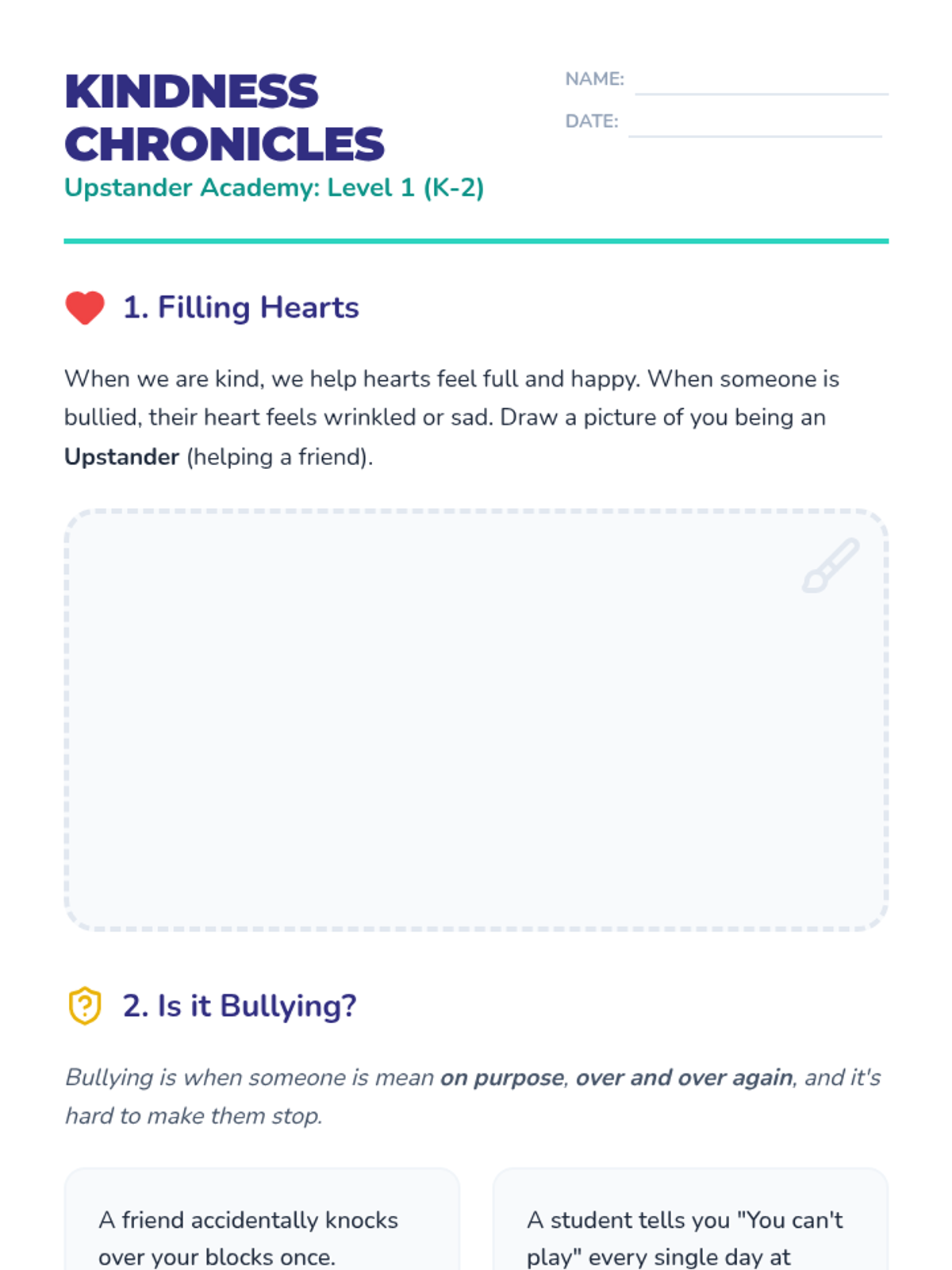
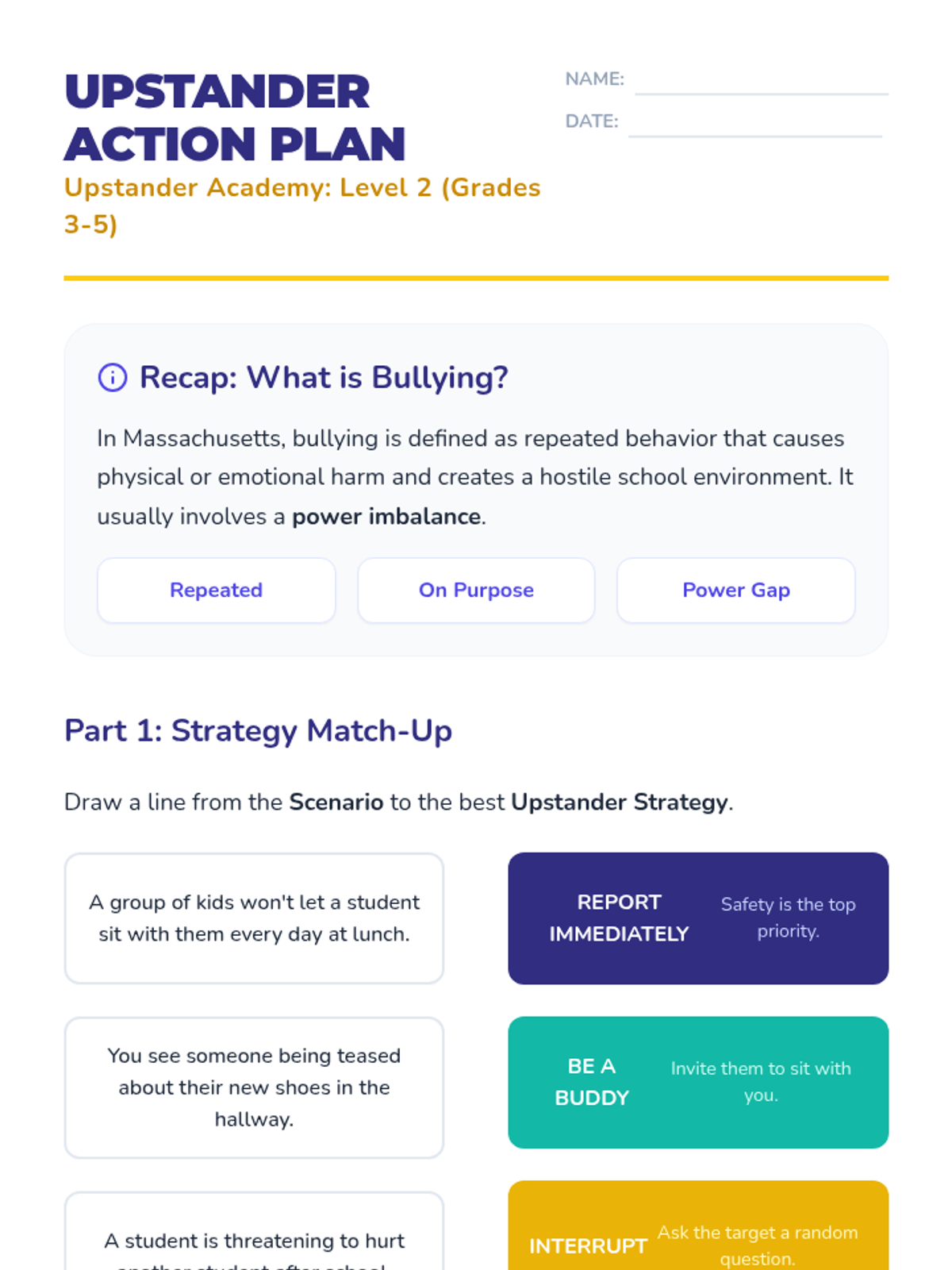
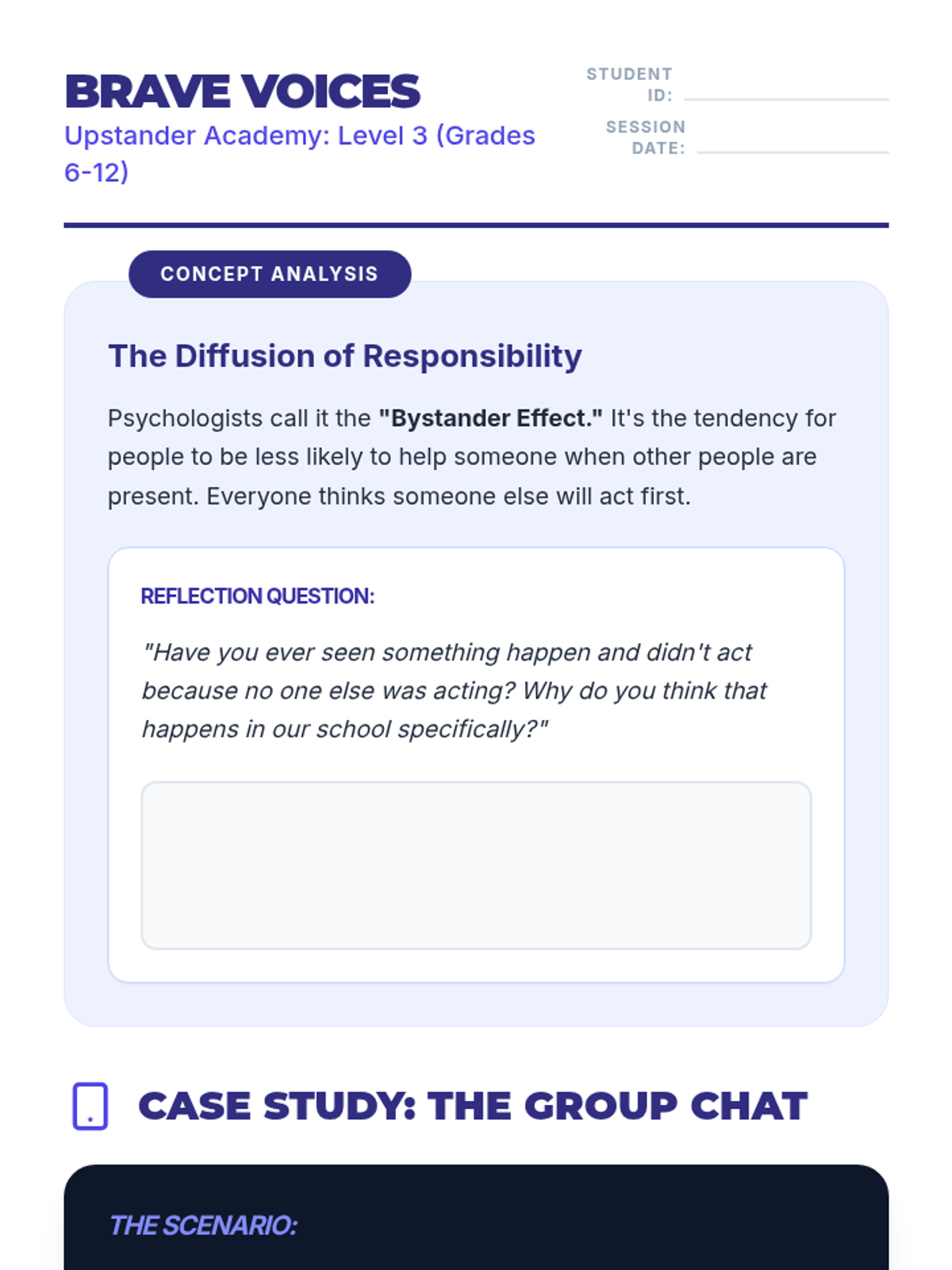
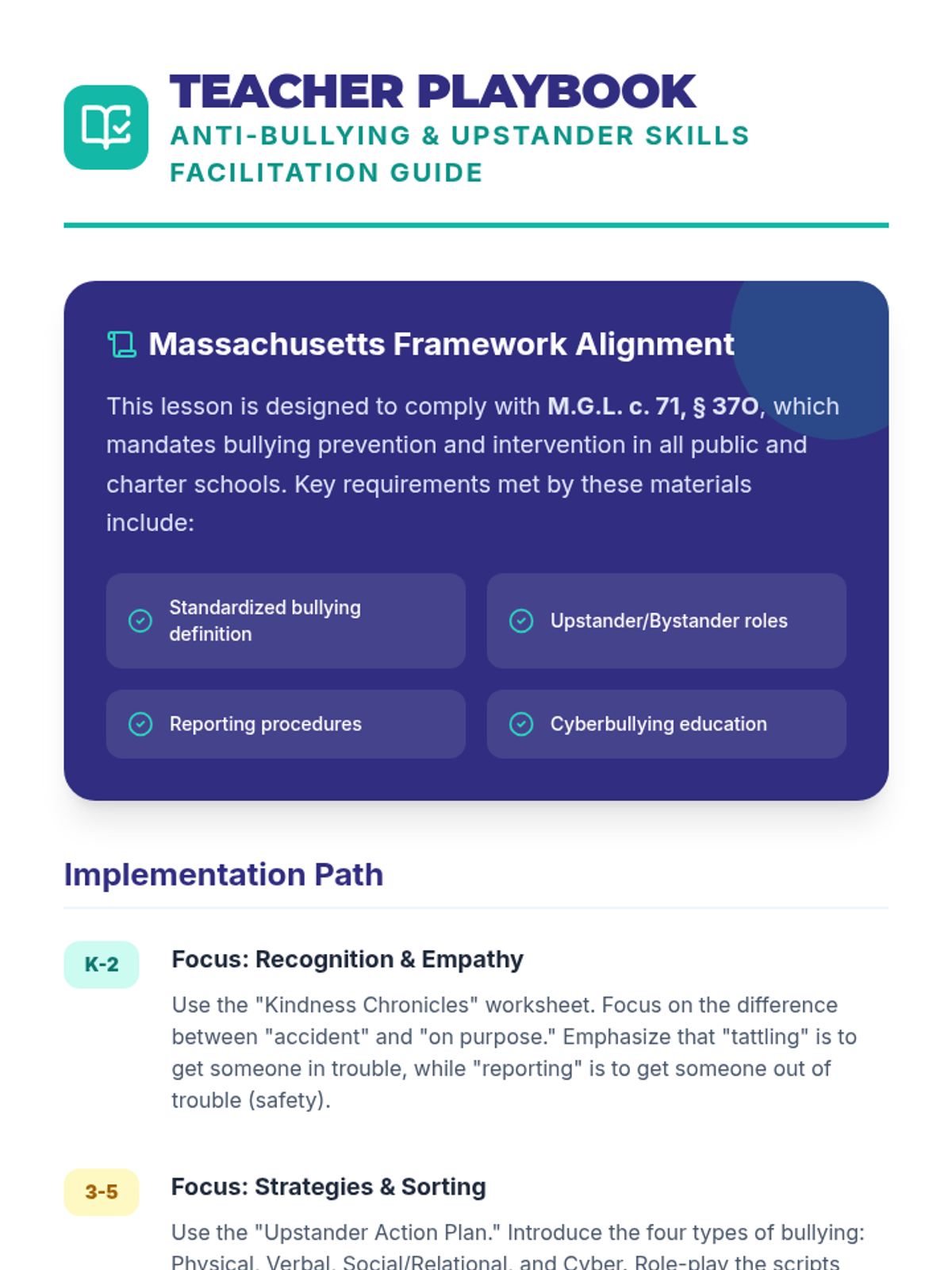
A comprehensive anti-bullying and upstander skills lesson designed for K-12 students. It focuses on identifying bullying, developing empathy, and providing concrete reporting strategies aligned with Massachusetts state frameworks.
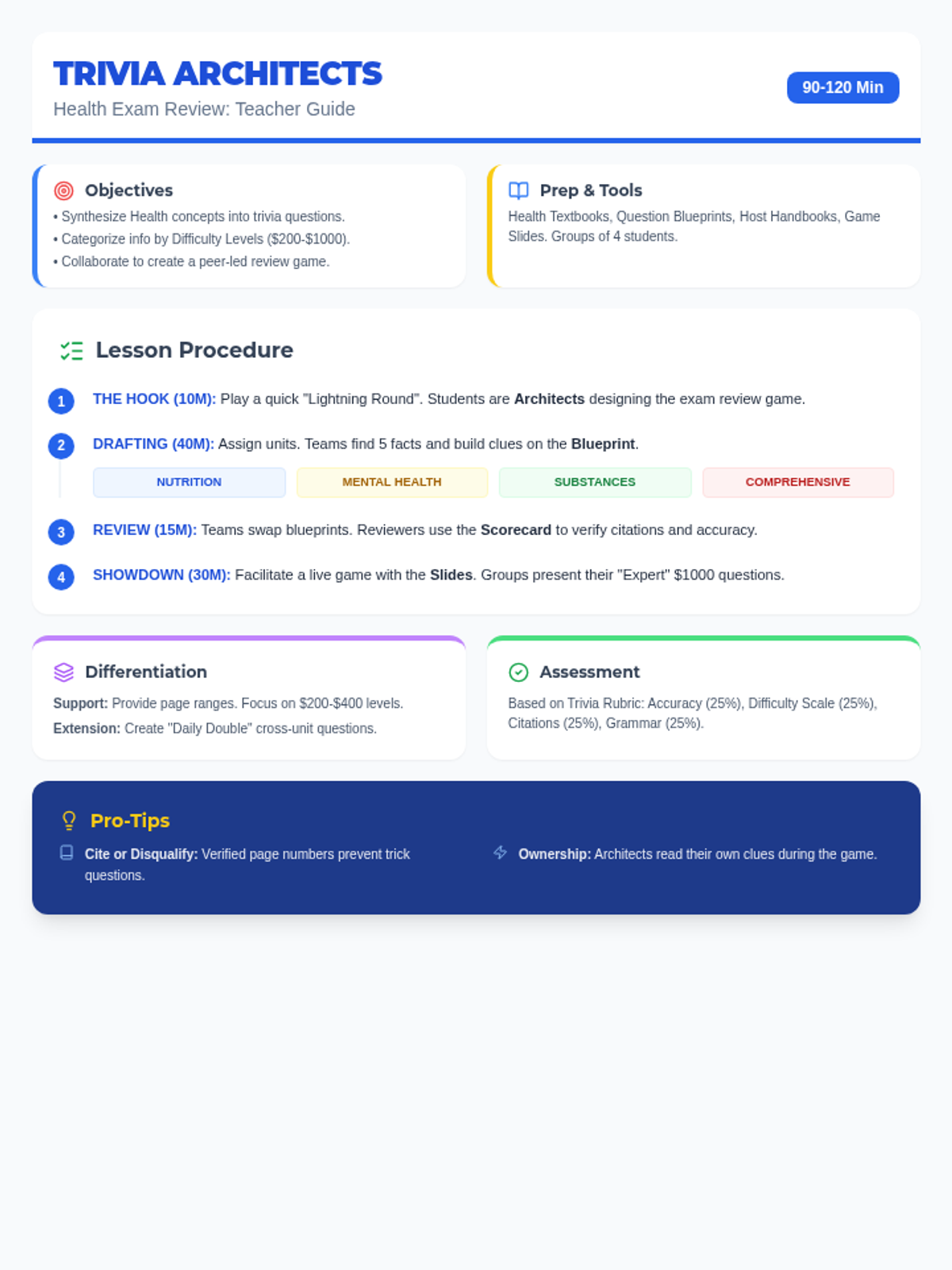
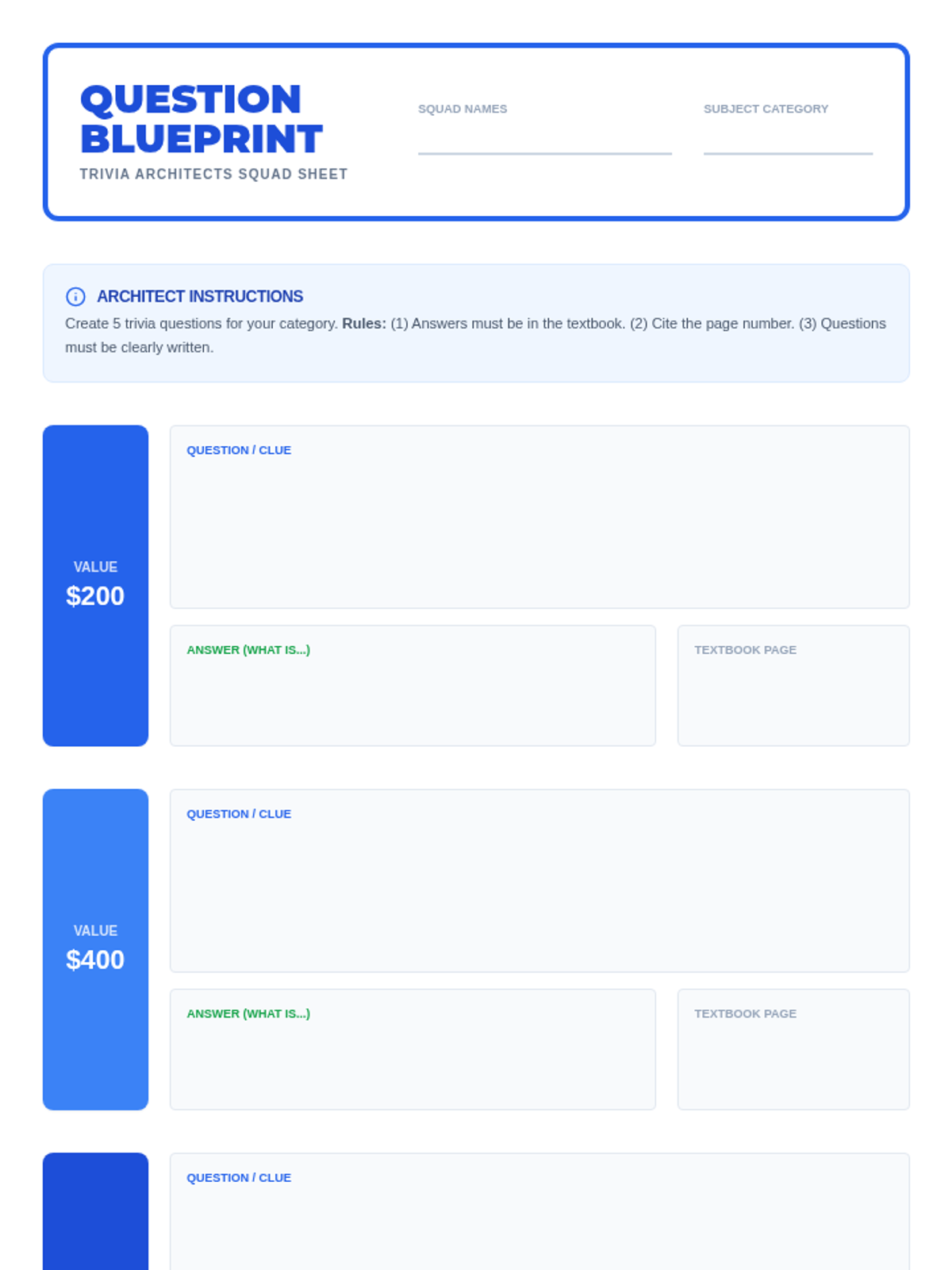
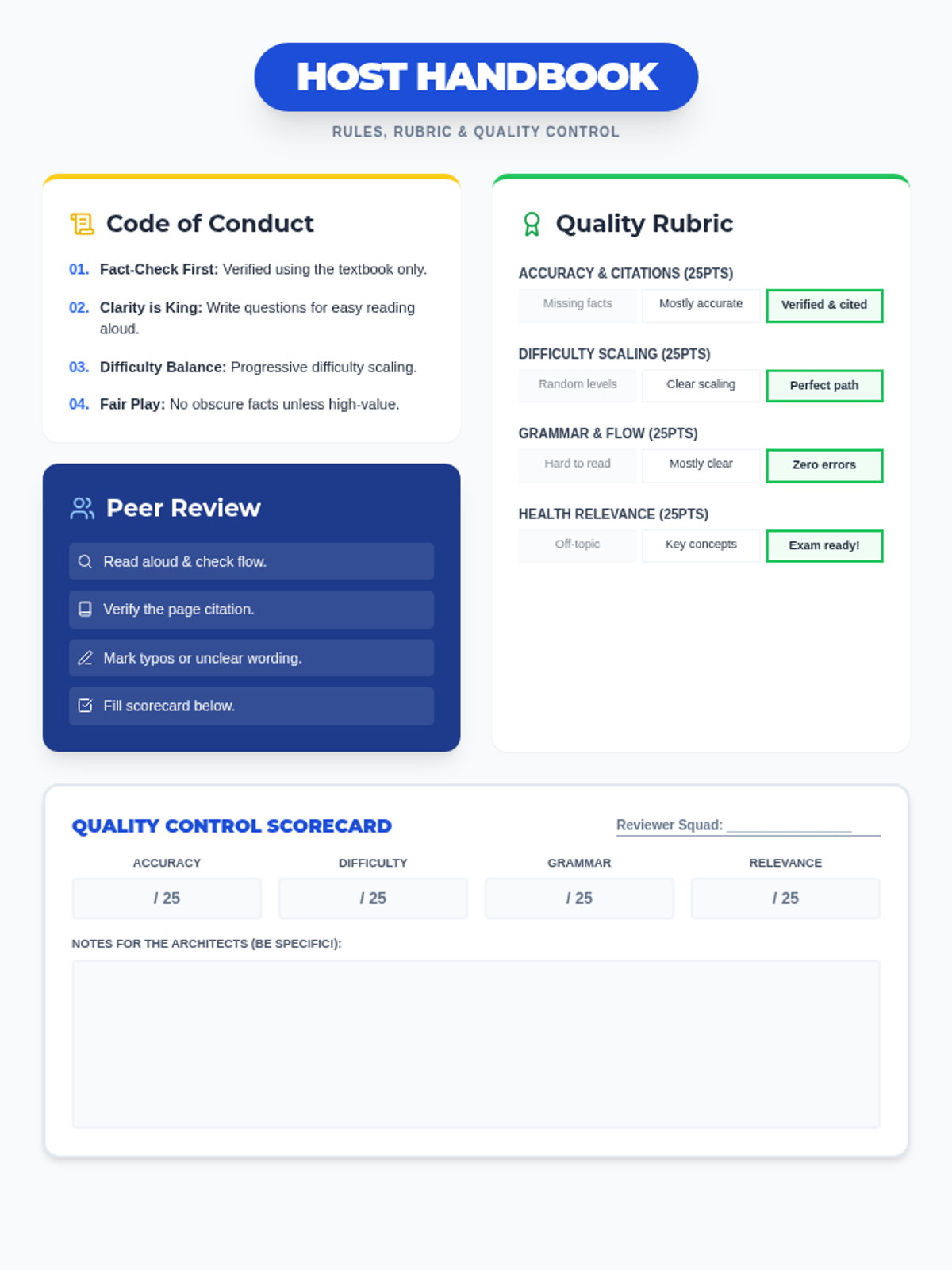
A collaborative lesson where students transform their health textbook chapters into a Jeopardy-style review game to prepare for final exams.
An in-depth exploration of the enteric nervous system and the bidirectional communication between the gut and the brain, focusing on mental health, nutrition, and the microbiome.
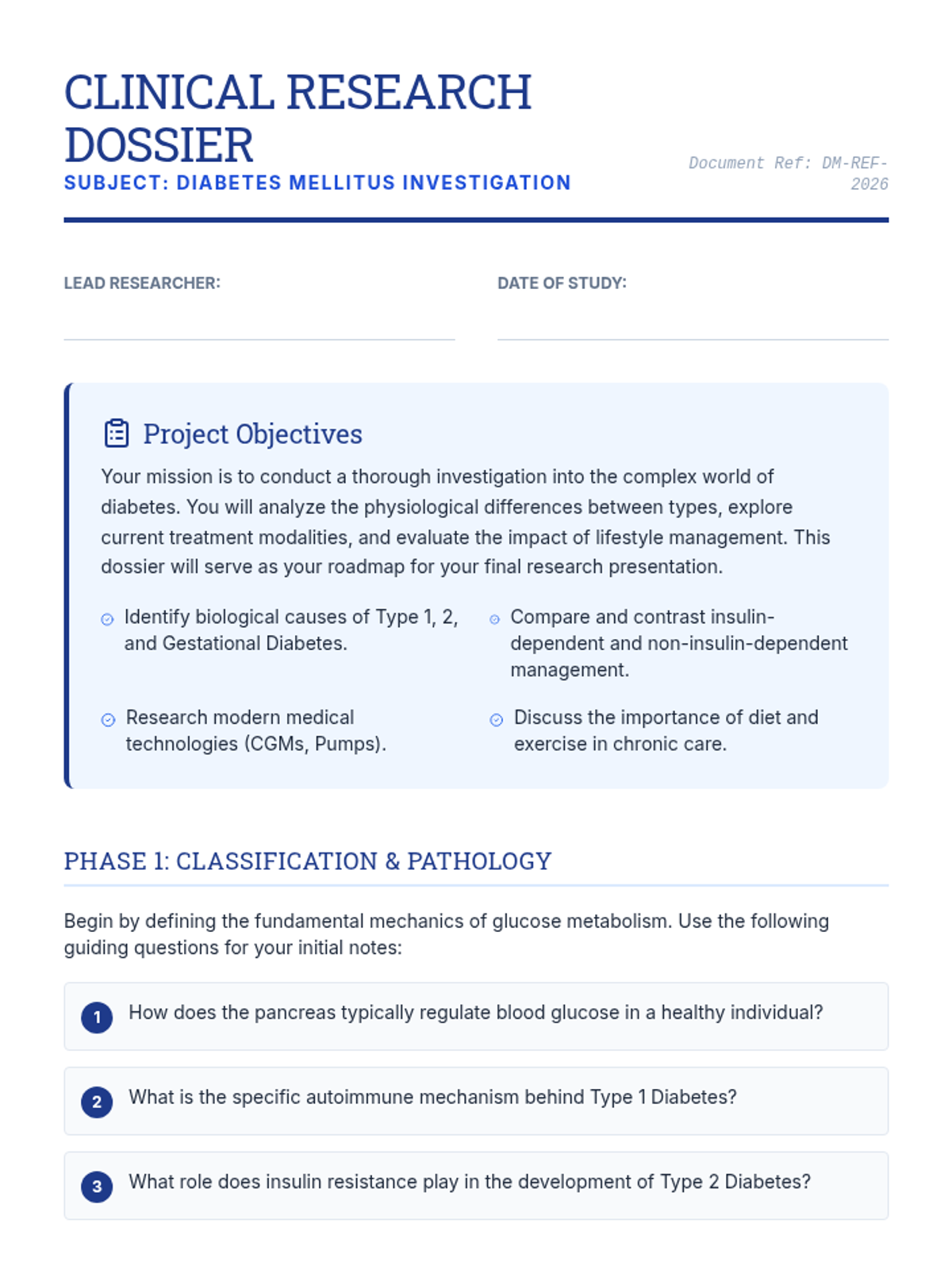
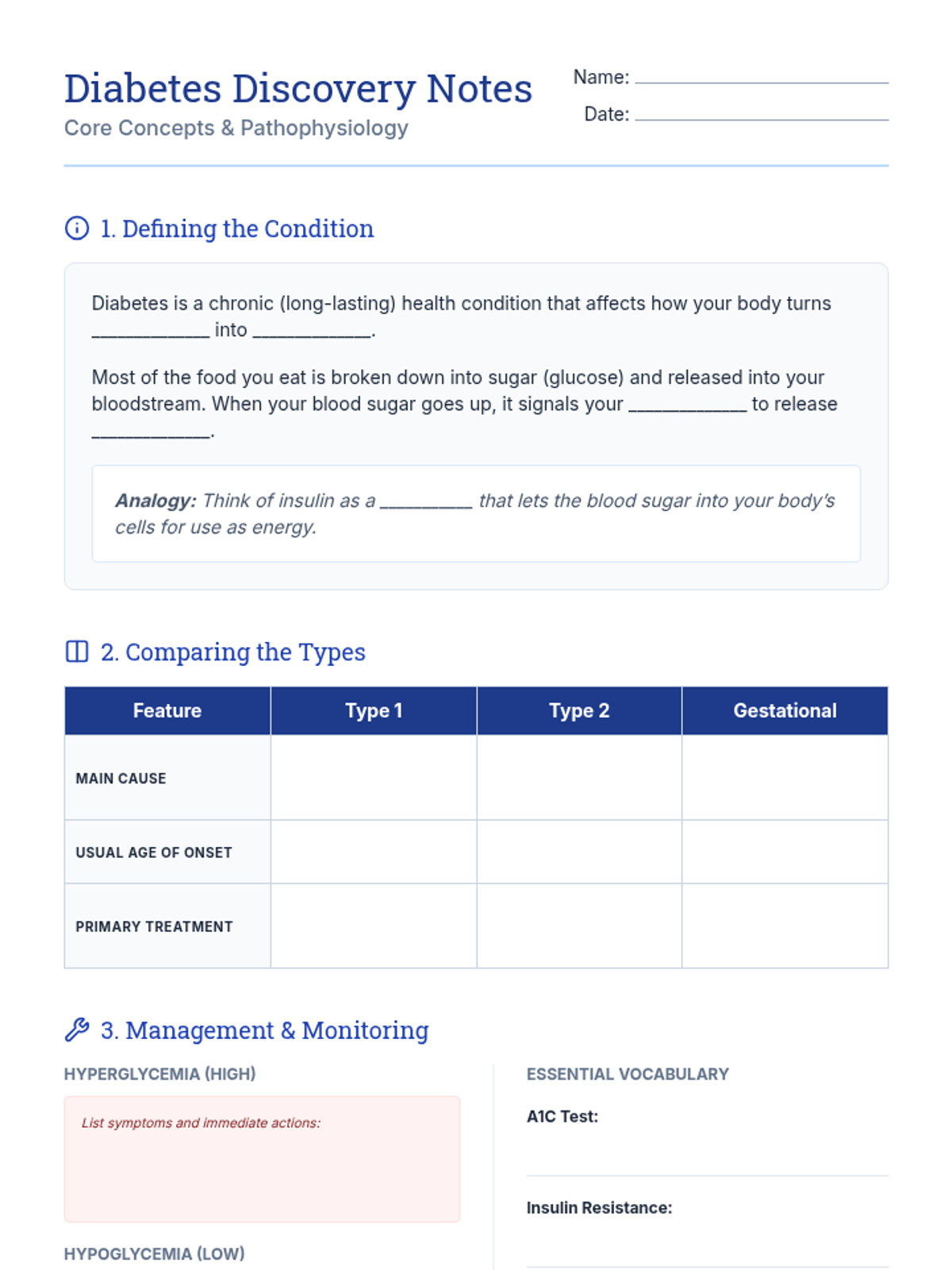
A comprehensive research unit where students investigate the biological mechanisms, classifications, and modern management strategies for diabetes.
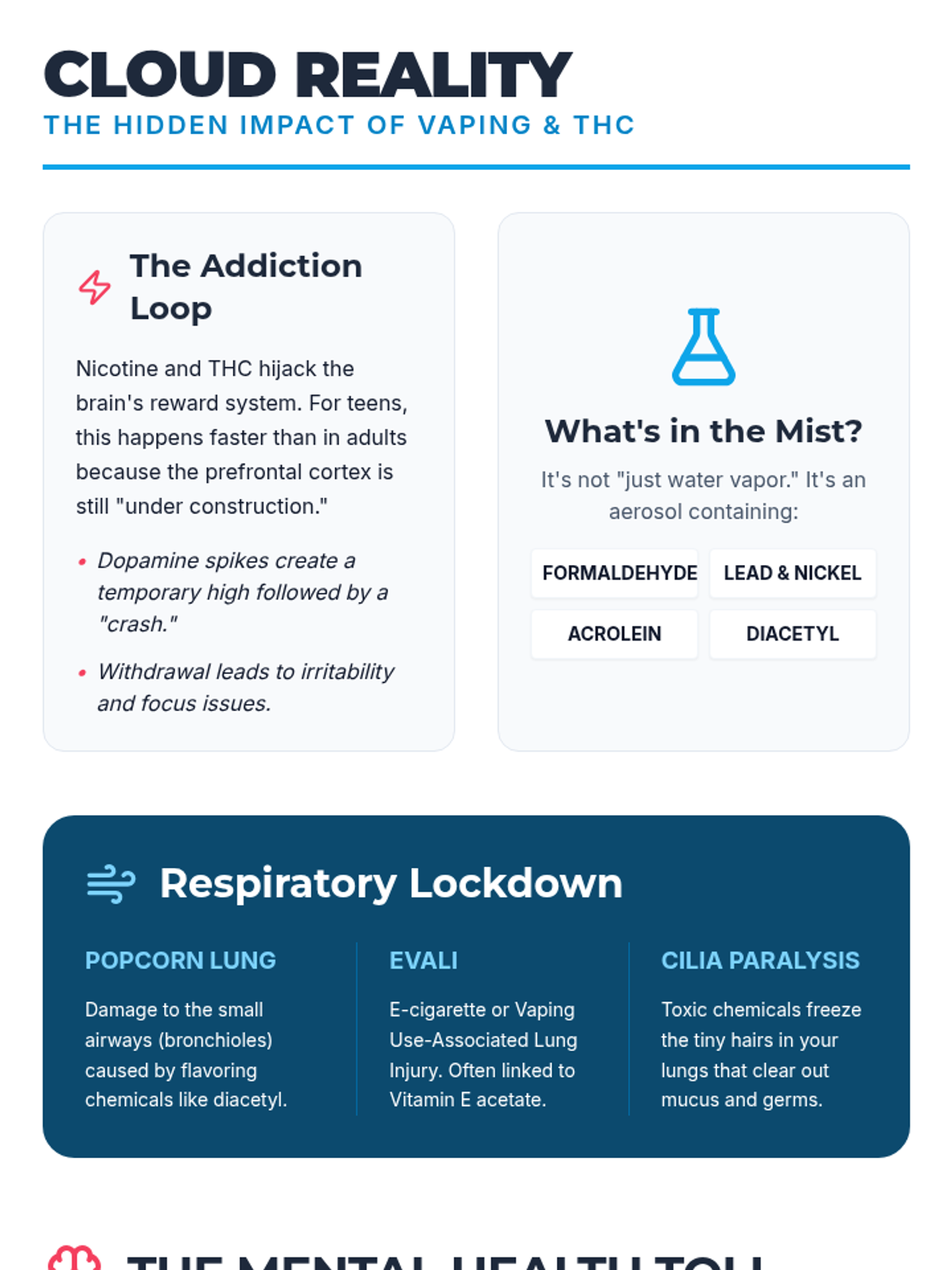
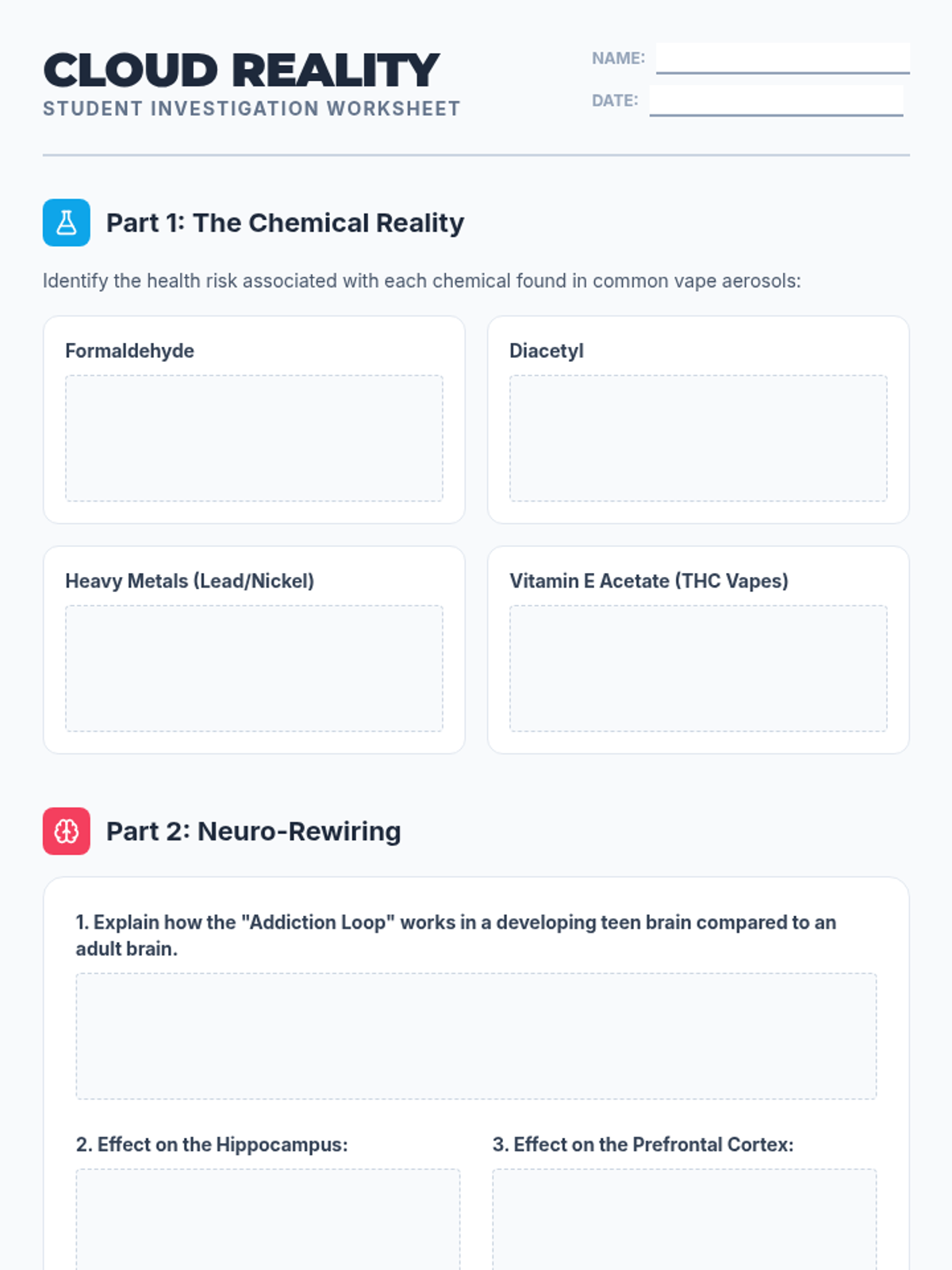
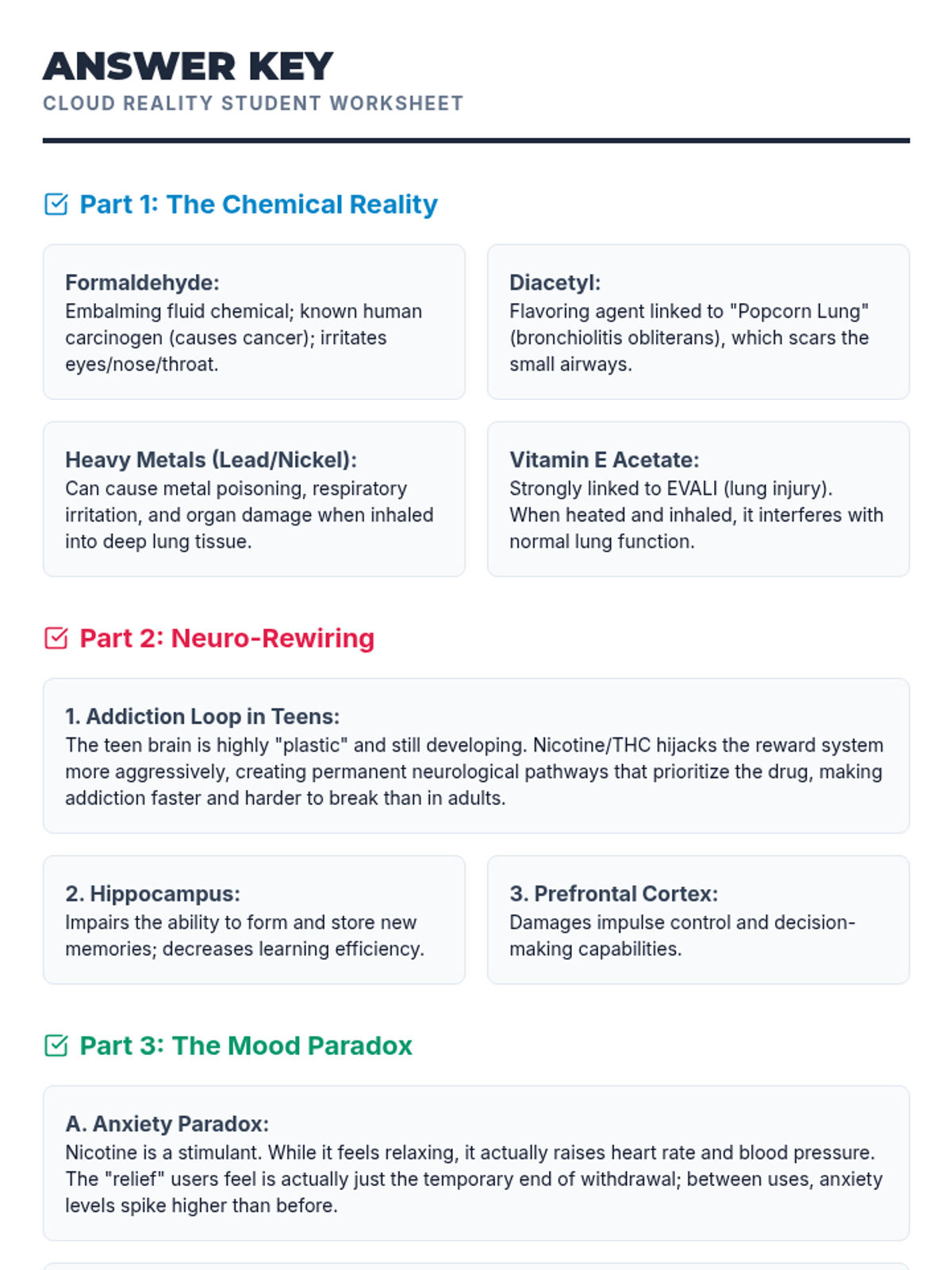
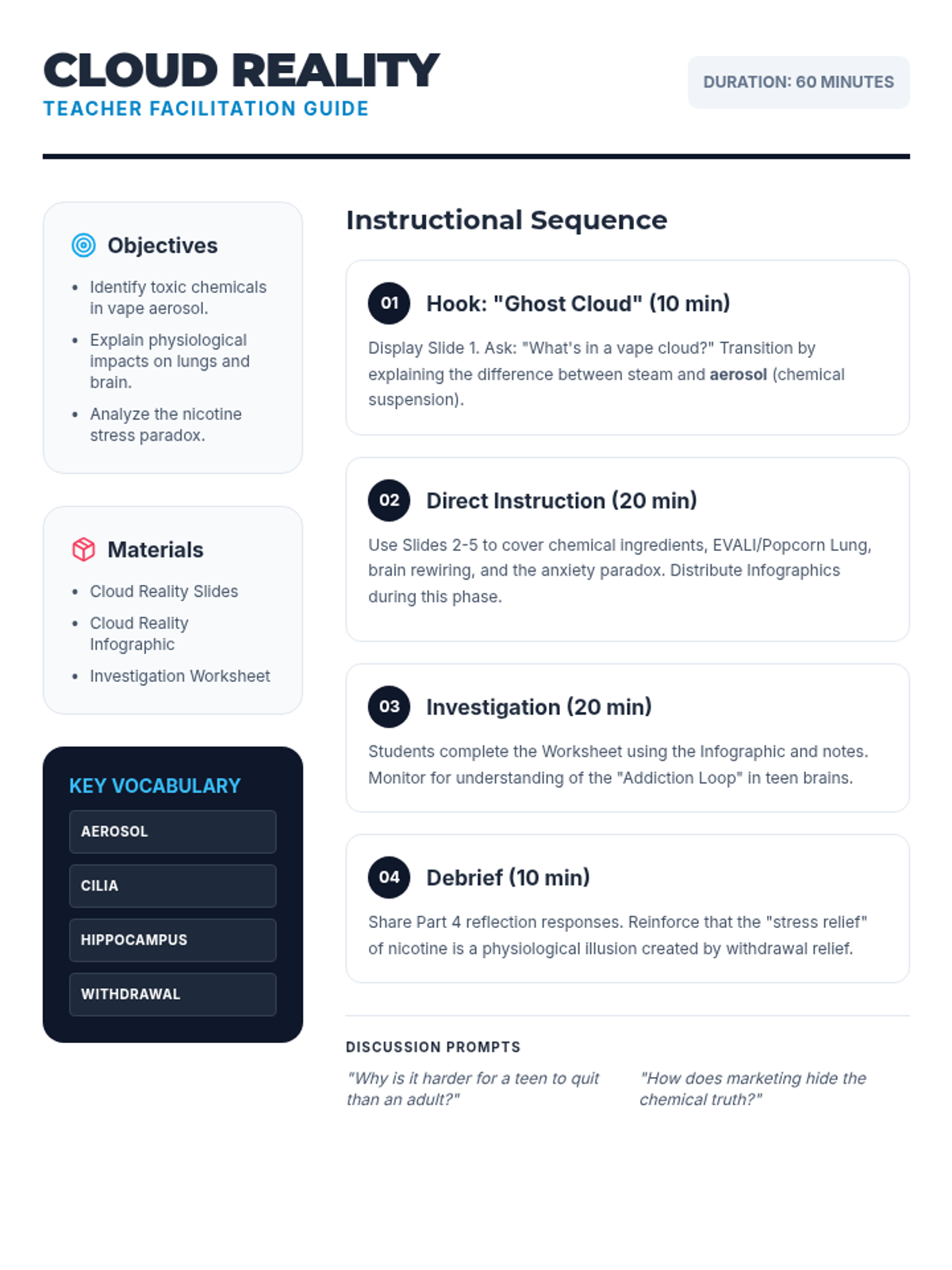
An exploration of the physical and mental health impacts of vaping and THC, focusing on respiratory health, brain development, and the cycle of addiction.
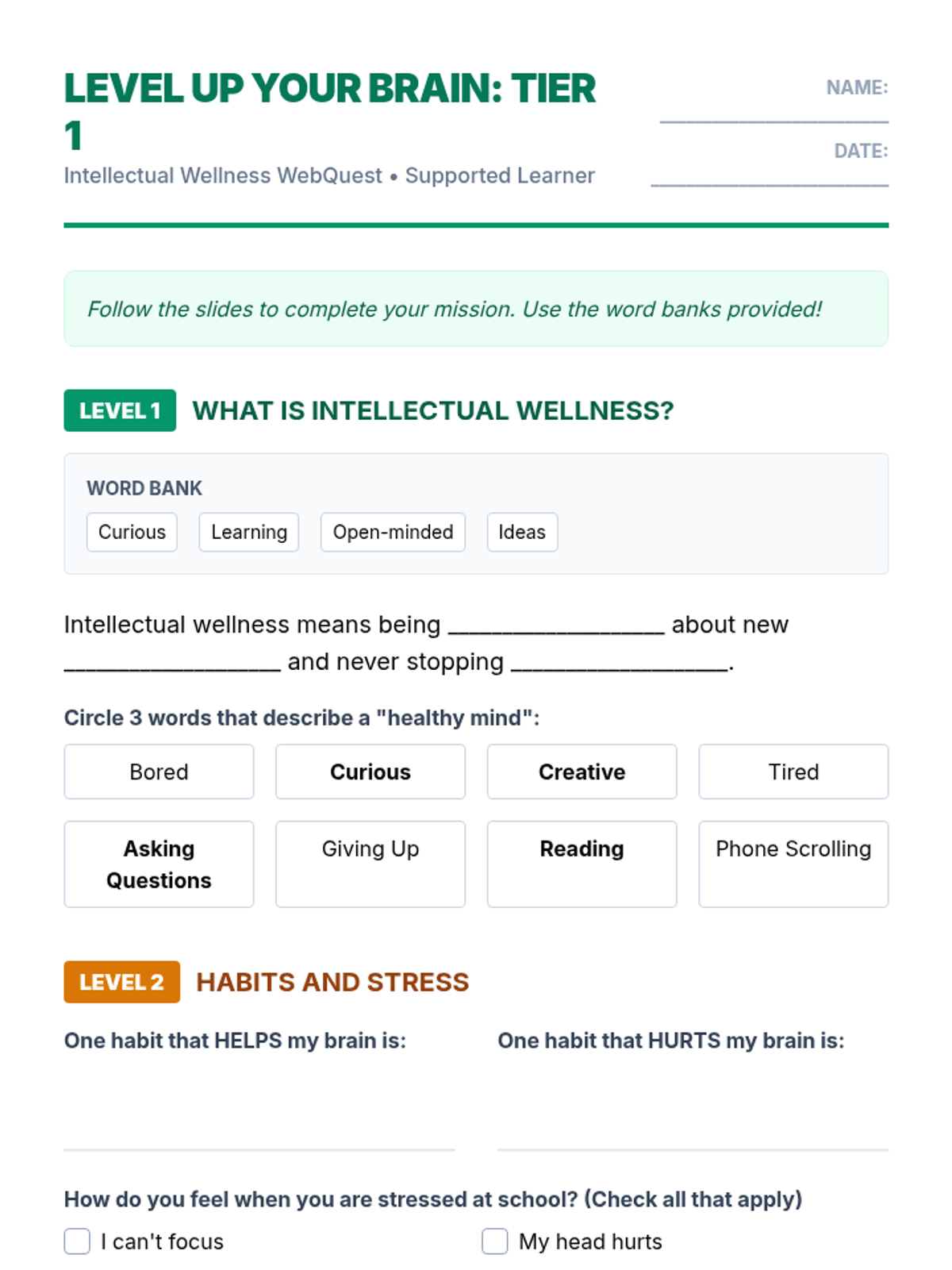
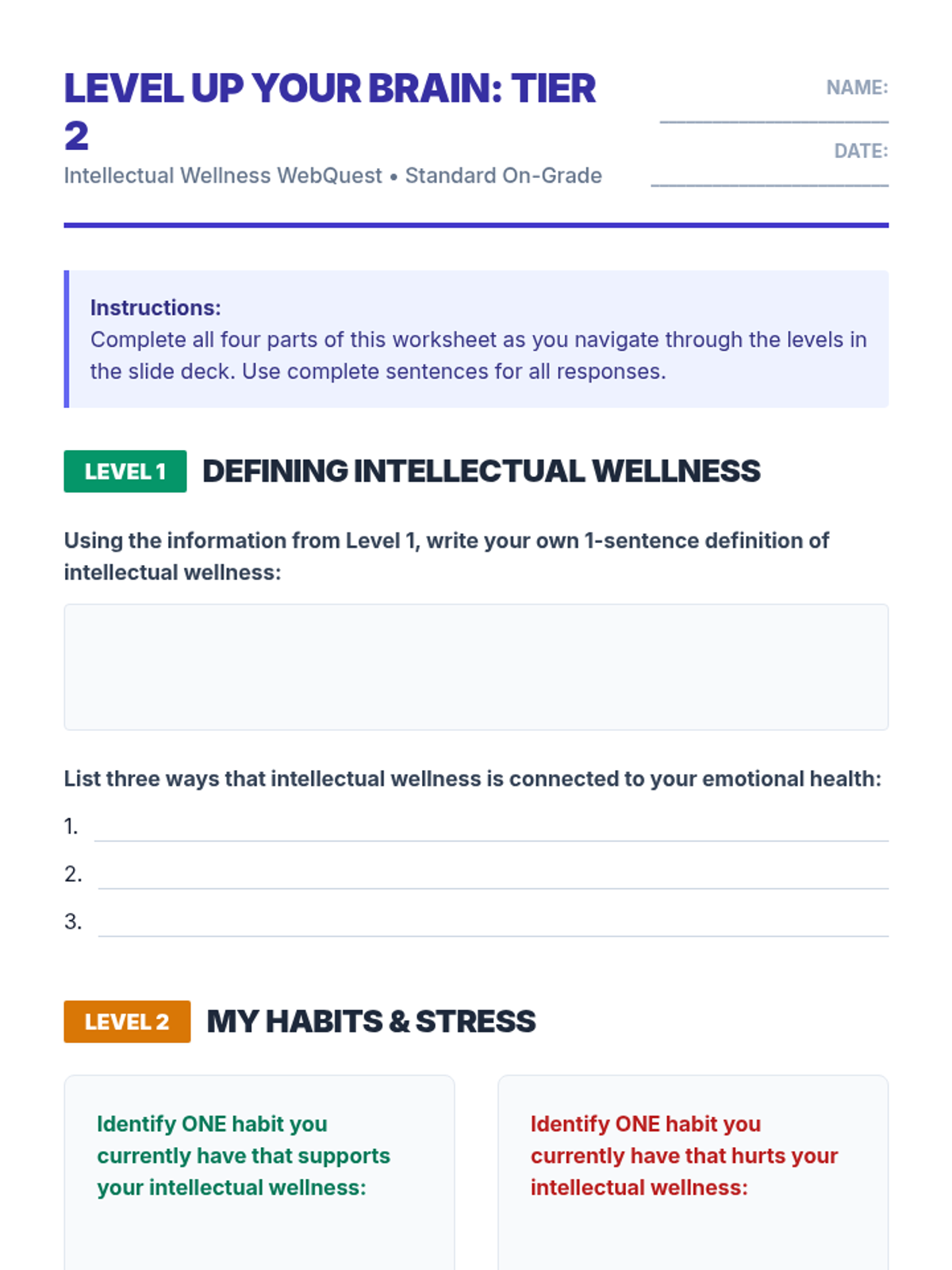
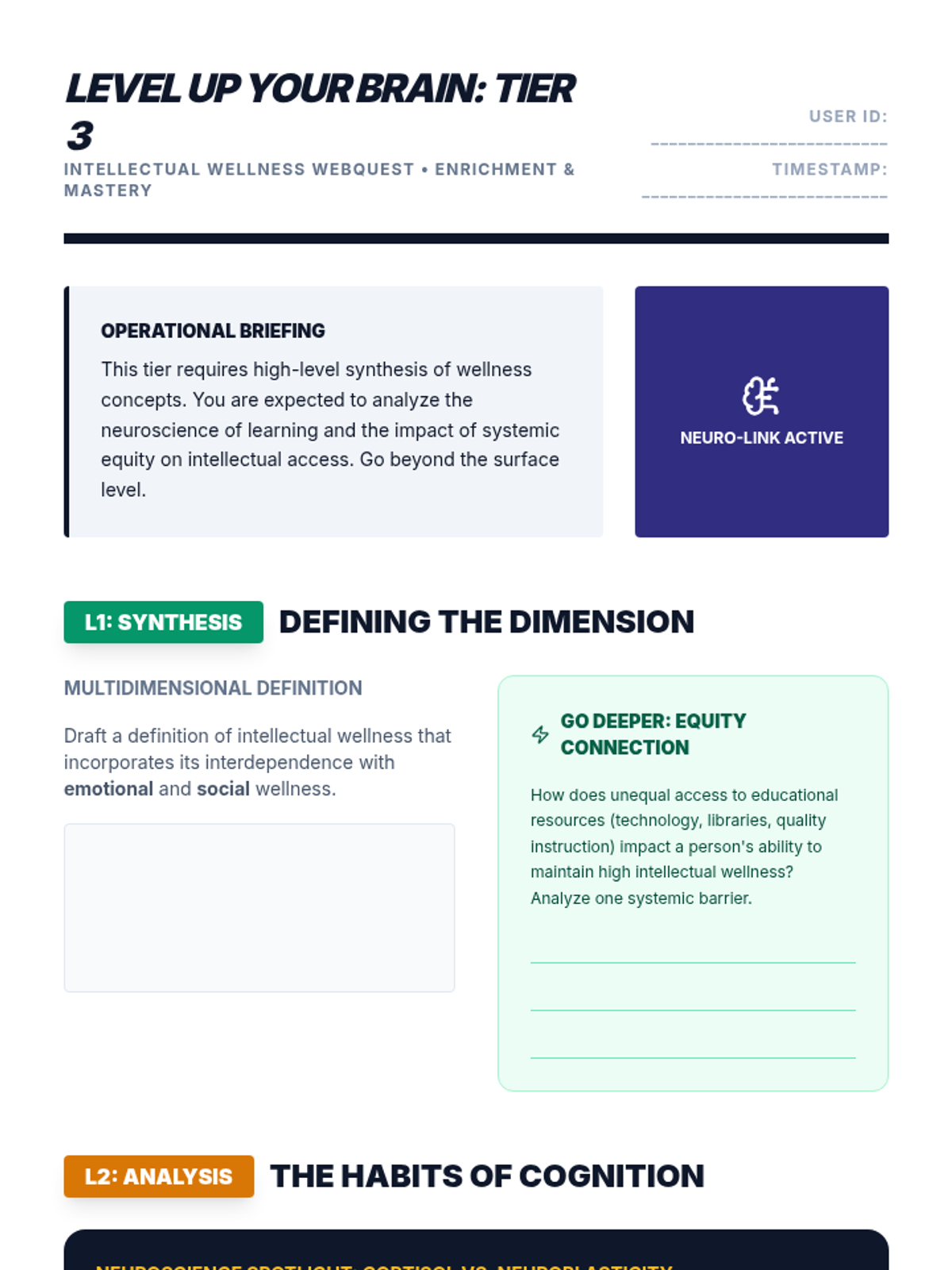
An interactive webquest where students 'level up' their intellectual wellness through four challenge levels, focusing on mindset, habits, and goal-setting. Includes differentiated worksheets to support varied learning needs.