Fundamental concepts of emotional intelligence, stress reduction, and relaxation exercises. Develops skills for healthy relationships, digital balance, and resilience while establishing pathways for help-seeking and support systems.
A masterclass slide deck for the Zen Chair Masterclass updated with two new practice videos and optimized font sizes (minimum 24px) for accessibility. Includes restorative and functional mobility components.
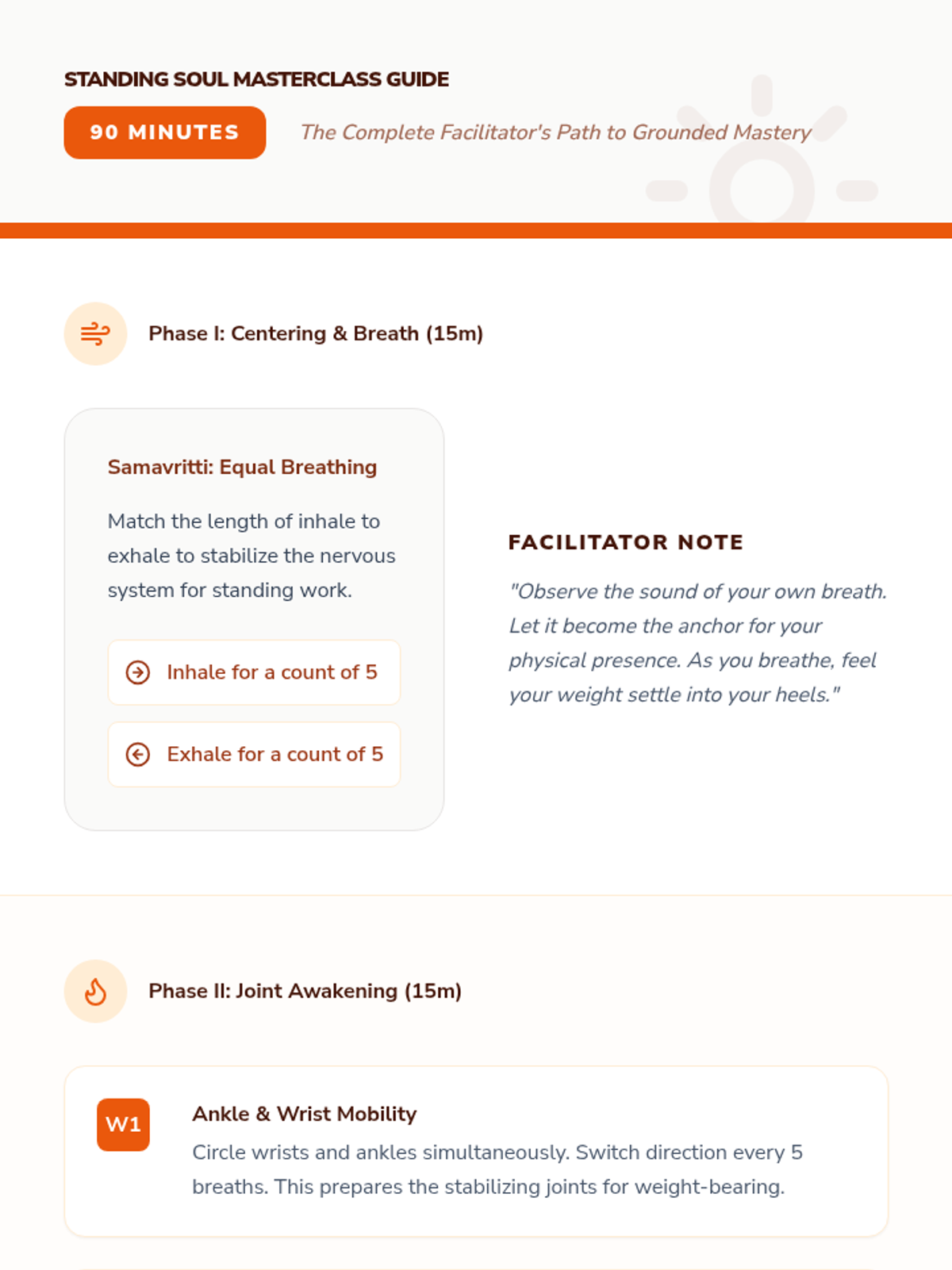
A comprehensive 90-minute facilitator's manual for the Standing Soul Masterclass. Includes pranayama, joint warm-ups, step-by-step postural alignment for key standing poses, and a restorative cool-down phase.
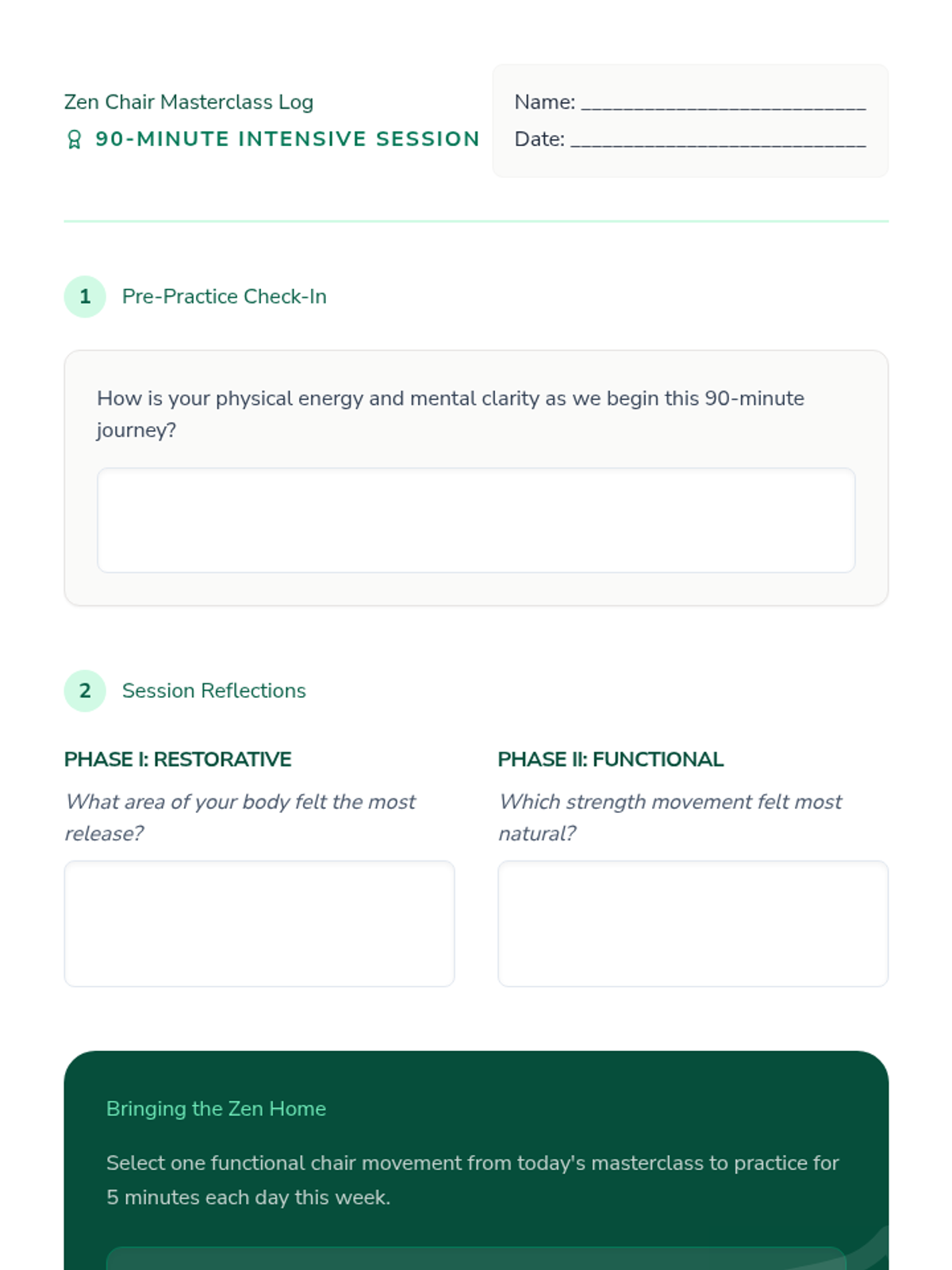
A student reflection log for the combined Zen Chair Masterclass session. Updated for the 90-minute intensive format with phase-specific reflection areas.
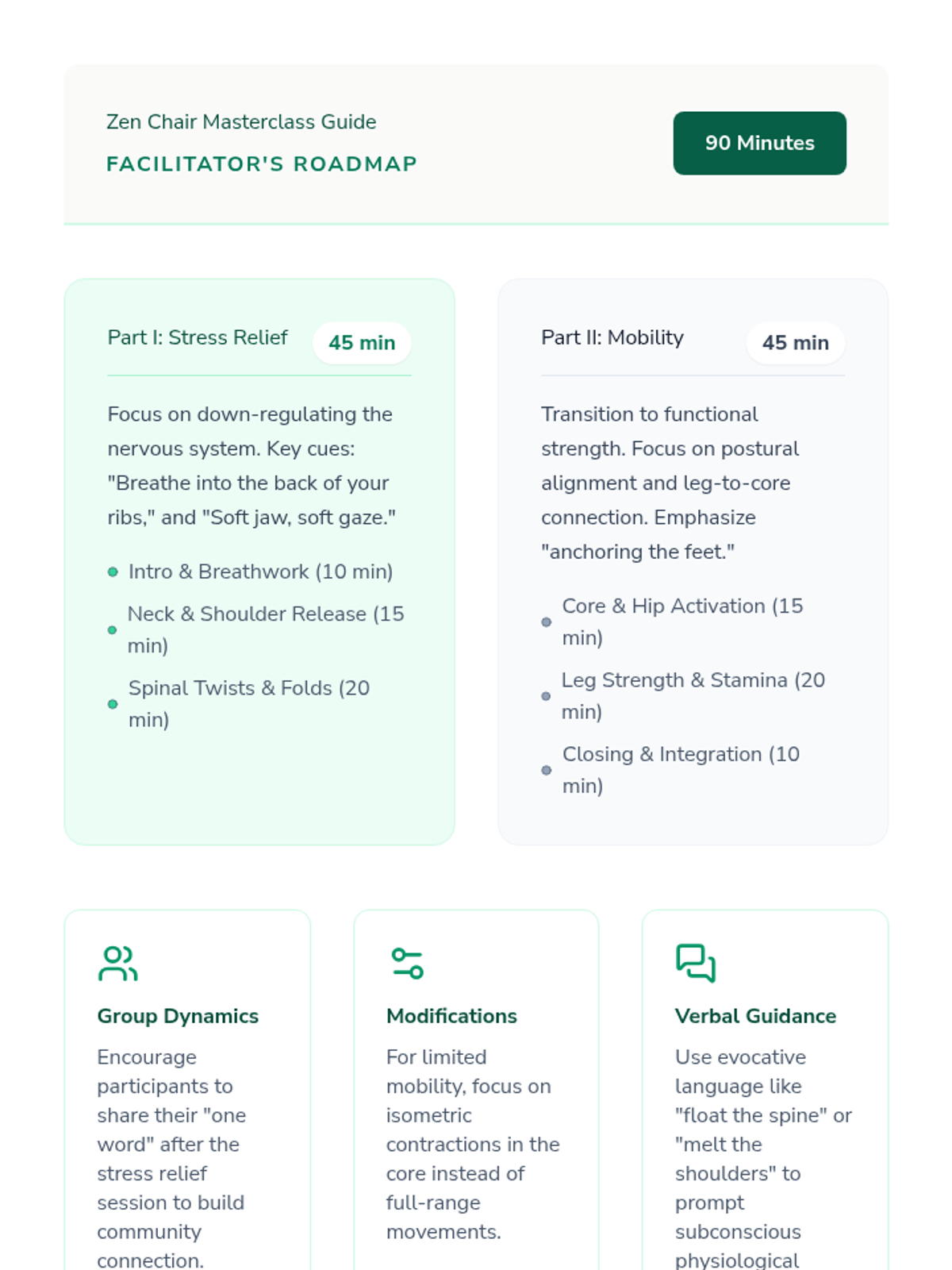
A 90-minute facilitator's guide for the Zen Chair Masterclass, featuring a split-session roadmap for stress relief and functional mobility with detailed pacing and instructional tips.
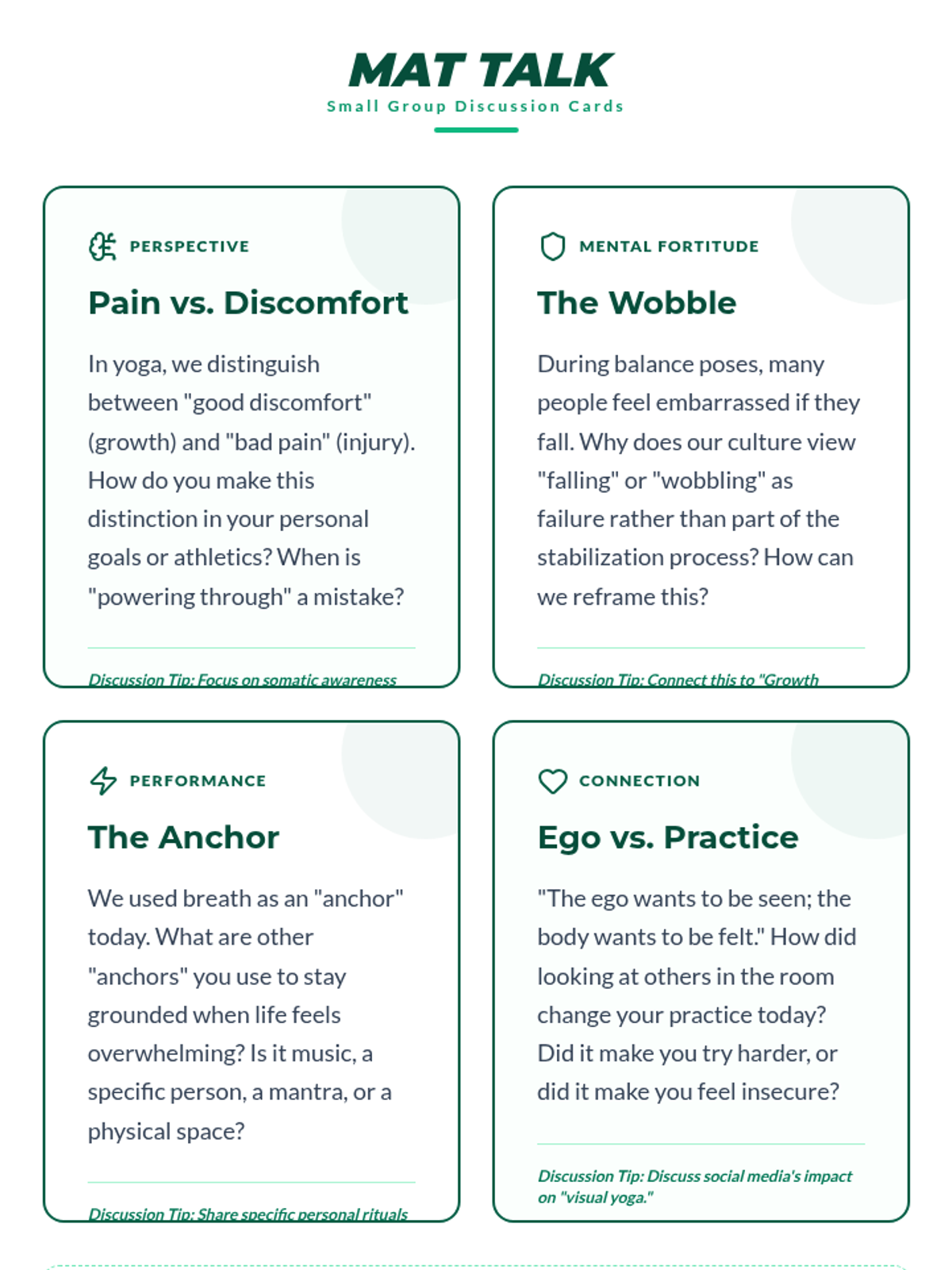
A set of four thought-provoking discussion cards designed for small group reflection, focusing on topics like physical discomfort vs. pain, the role of ego, and mental anchors.
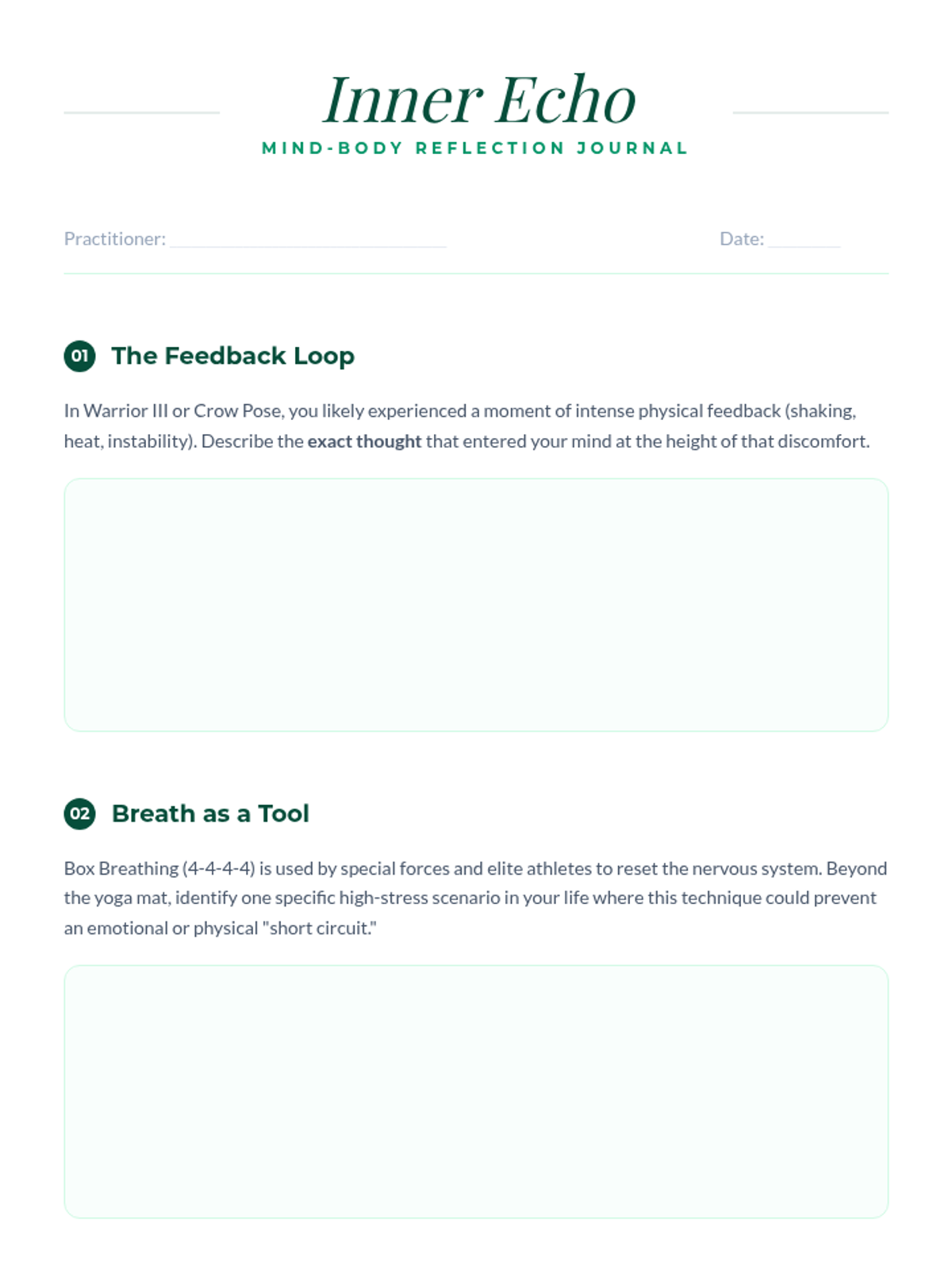
A beautifully designed reflection journal for students to process the mental and physical challenges of their yoga practice, featuring structured prompts on self-talk and stress management.
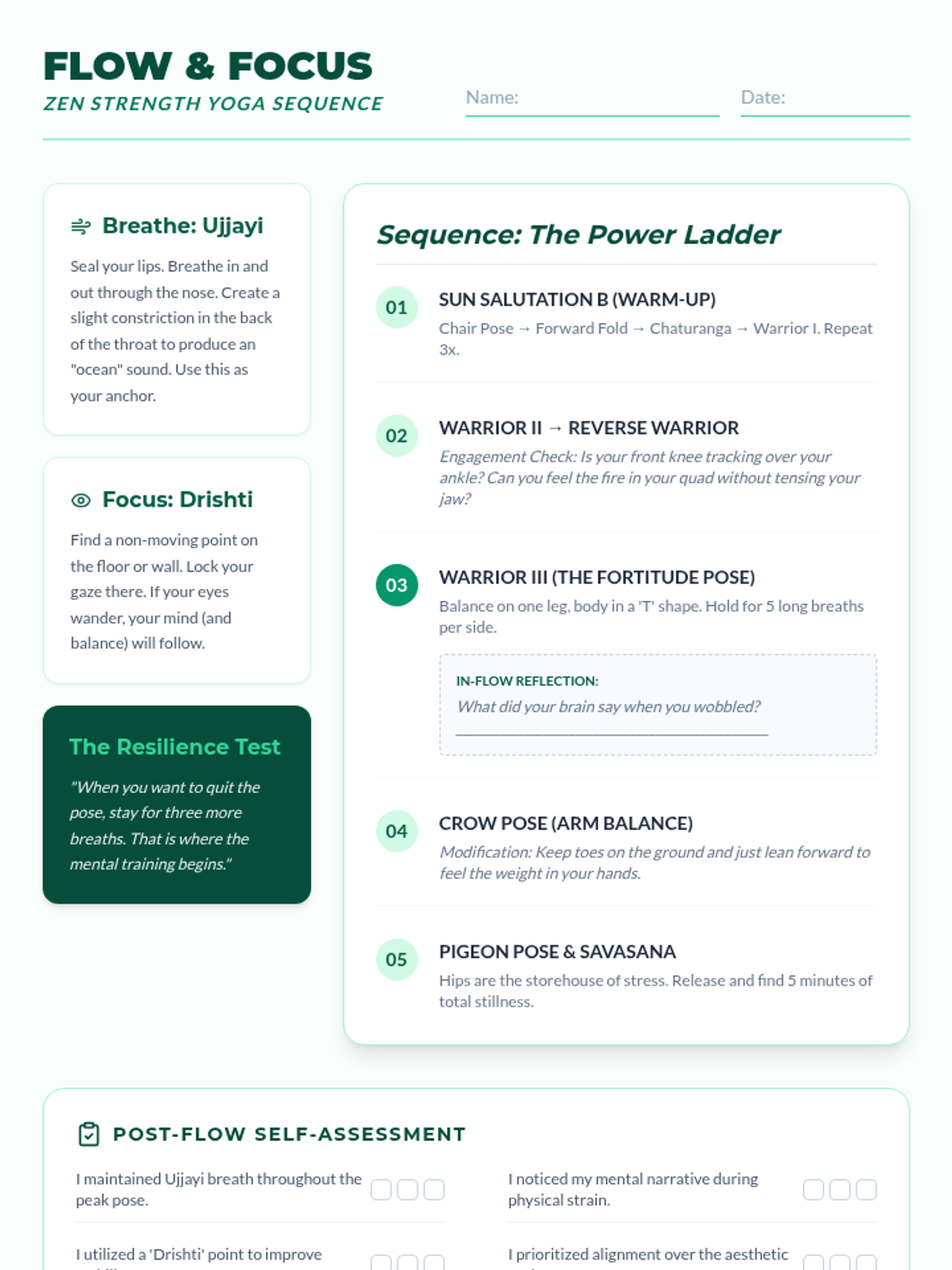
A detailed yoga sequence handout for students featuring a step-by-step 'Power Ladder' flow, breathwork instructions, and a post-flow self-assessment checklist.
A high-impact slide deck for 11th-grade students introducing the science of breathwork, mental fortitude in athletics, and specific yoga intentions.
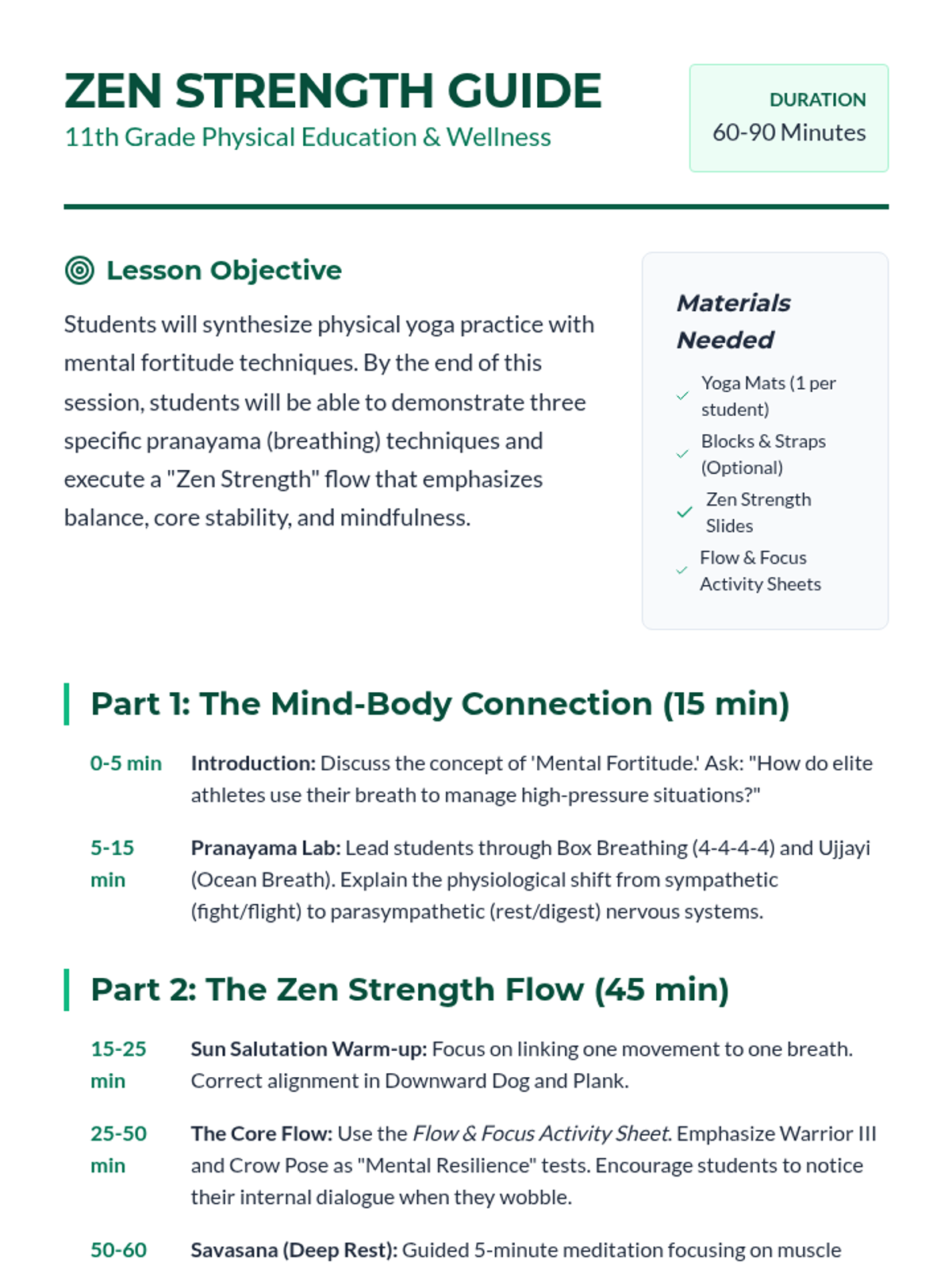
A comprehensive facilitation guide for teachers leading the Zen Strength yoga lesson, including detailed timing, instructional steps, and differentiation strategies.
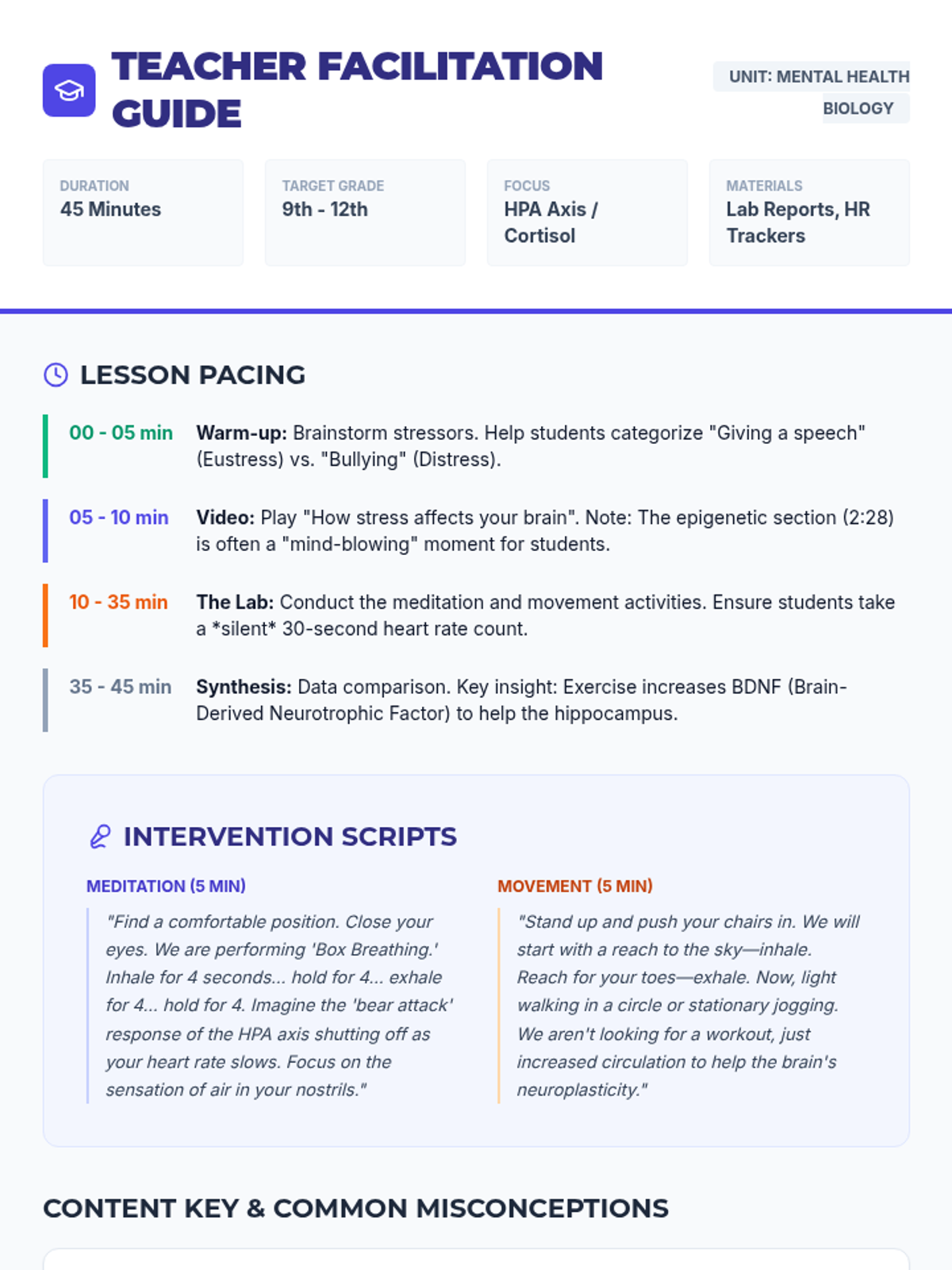
A comprehensive teacher's guide providing lesson pacing, meditation scripts, movement instructions, answer keys for video content, and strategies for addressing common student misconceptions about stress and exercise.
A modern, cinematic slide deck for instruction, including the YouTube video embed, lab procedures for meditation and movement, and data comparison prompts. Designed with high-contrast visuals to maintain student engagement.
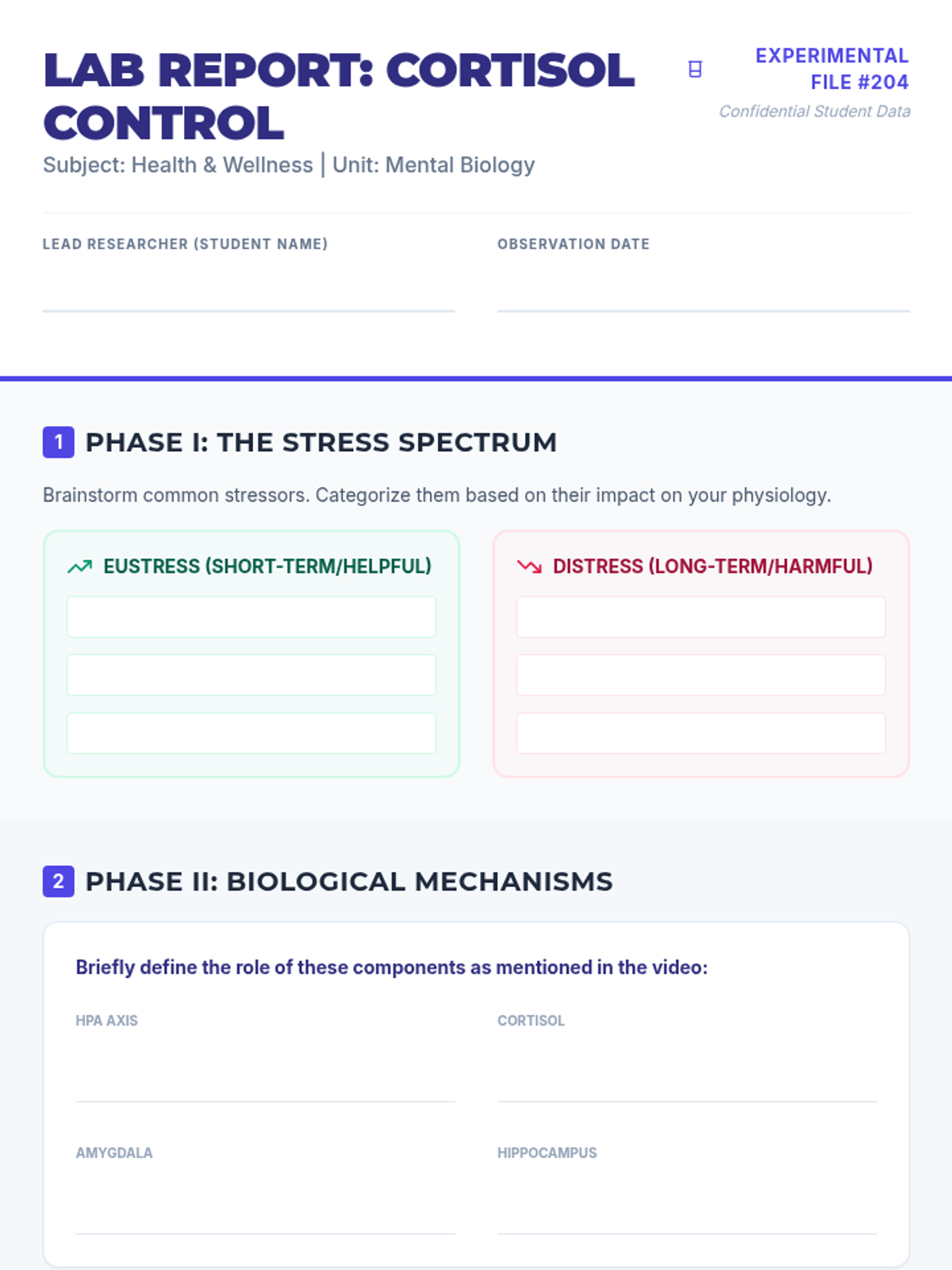
A professional lab-style worksheet for students to record stress data, categorize stressors, and analyze the biological effects of cortisol as discussed in class. Includes sections for heart rate tracking and subjective stress level measurement.
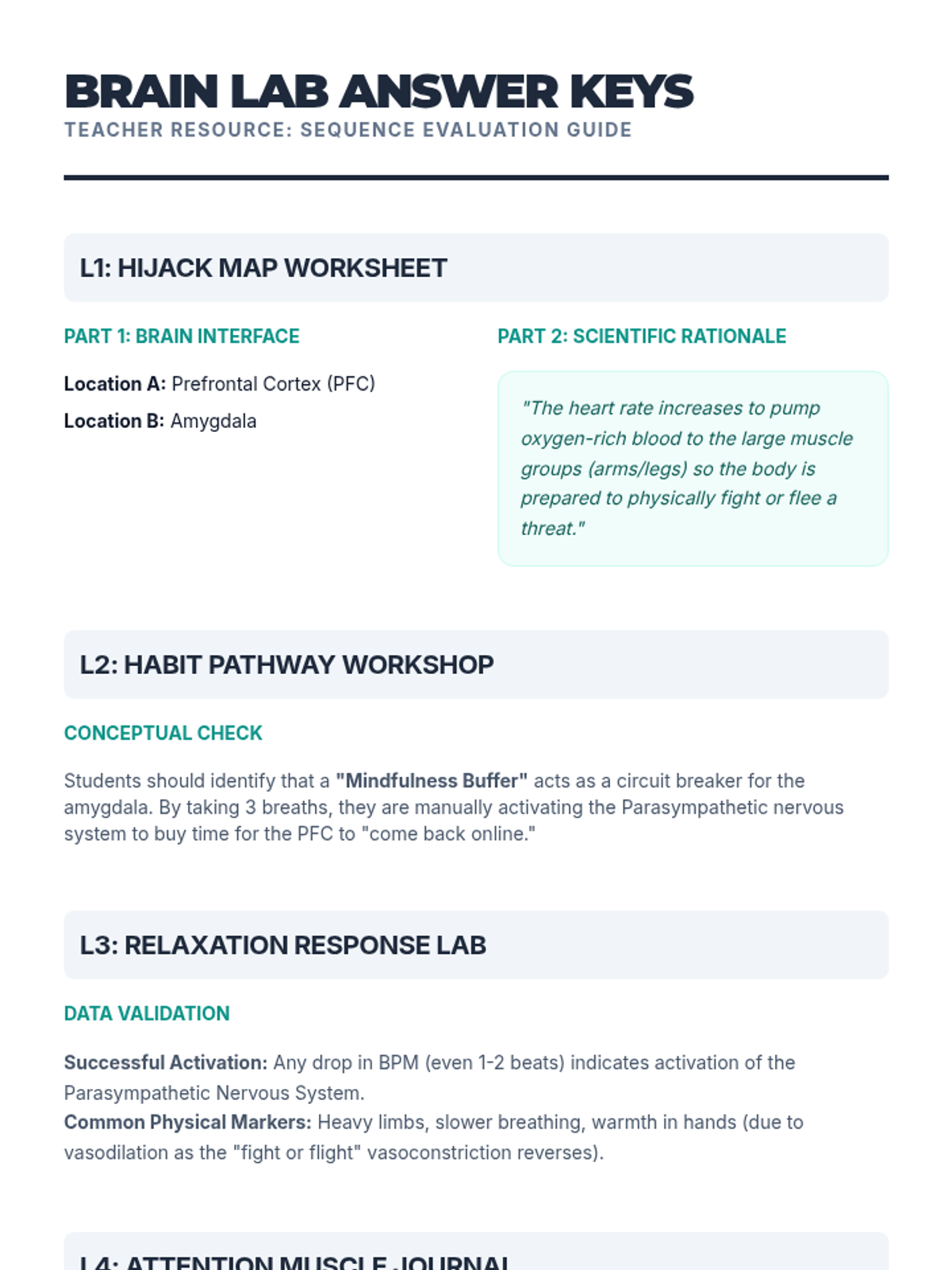
An answer key and grading rubric for the Brain Lab sequence, providing specific anatomical terms, conceptual checks, and a synthesis rubric for the final report.
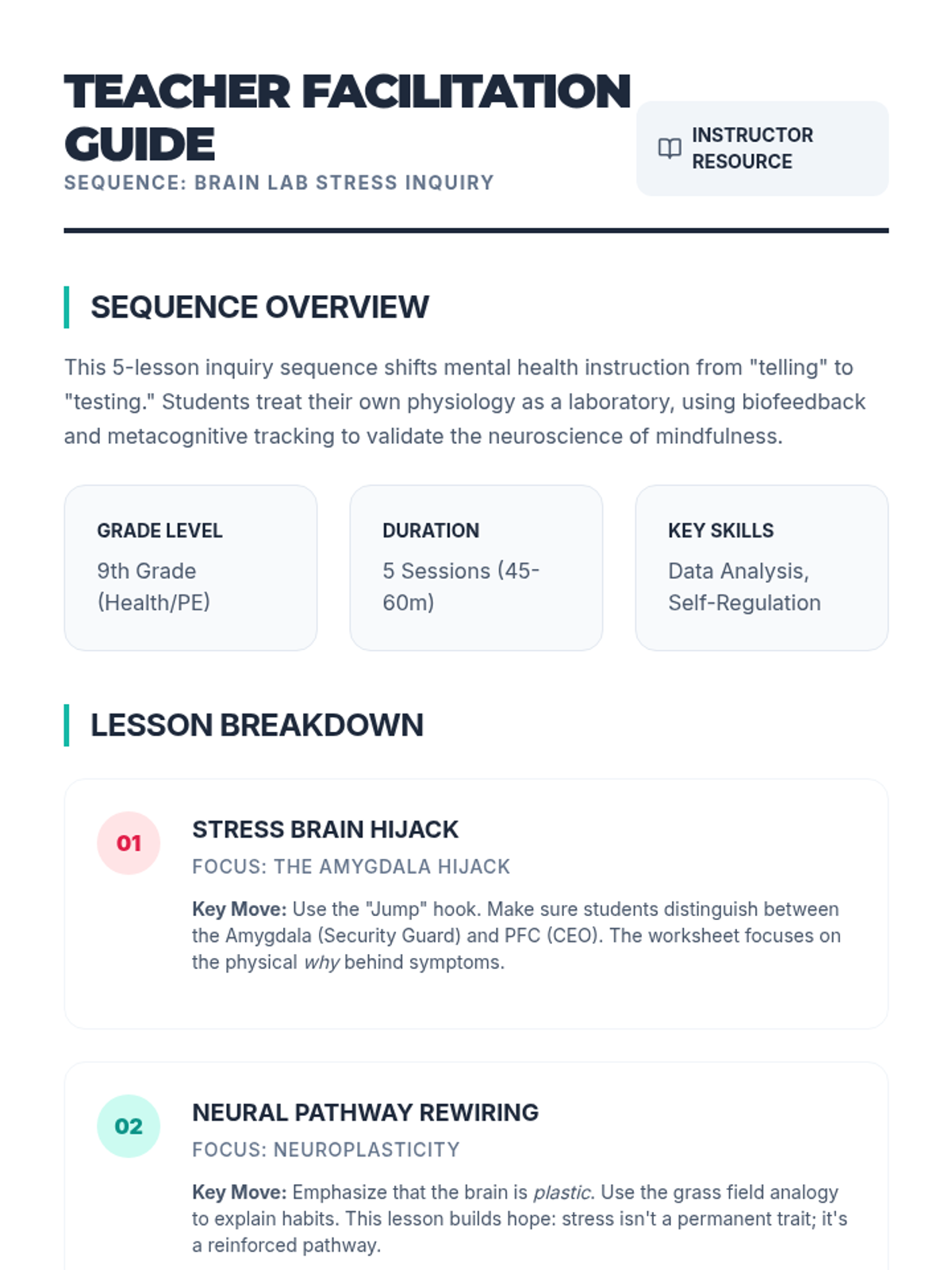
A comprehensive teacher guide for the 'Brain Lab' sequence, including lesson pacing, key instructional moves, and technical management tips for the biofeedback and attention labs.
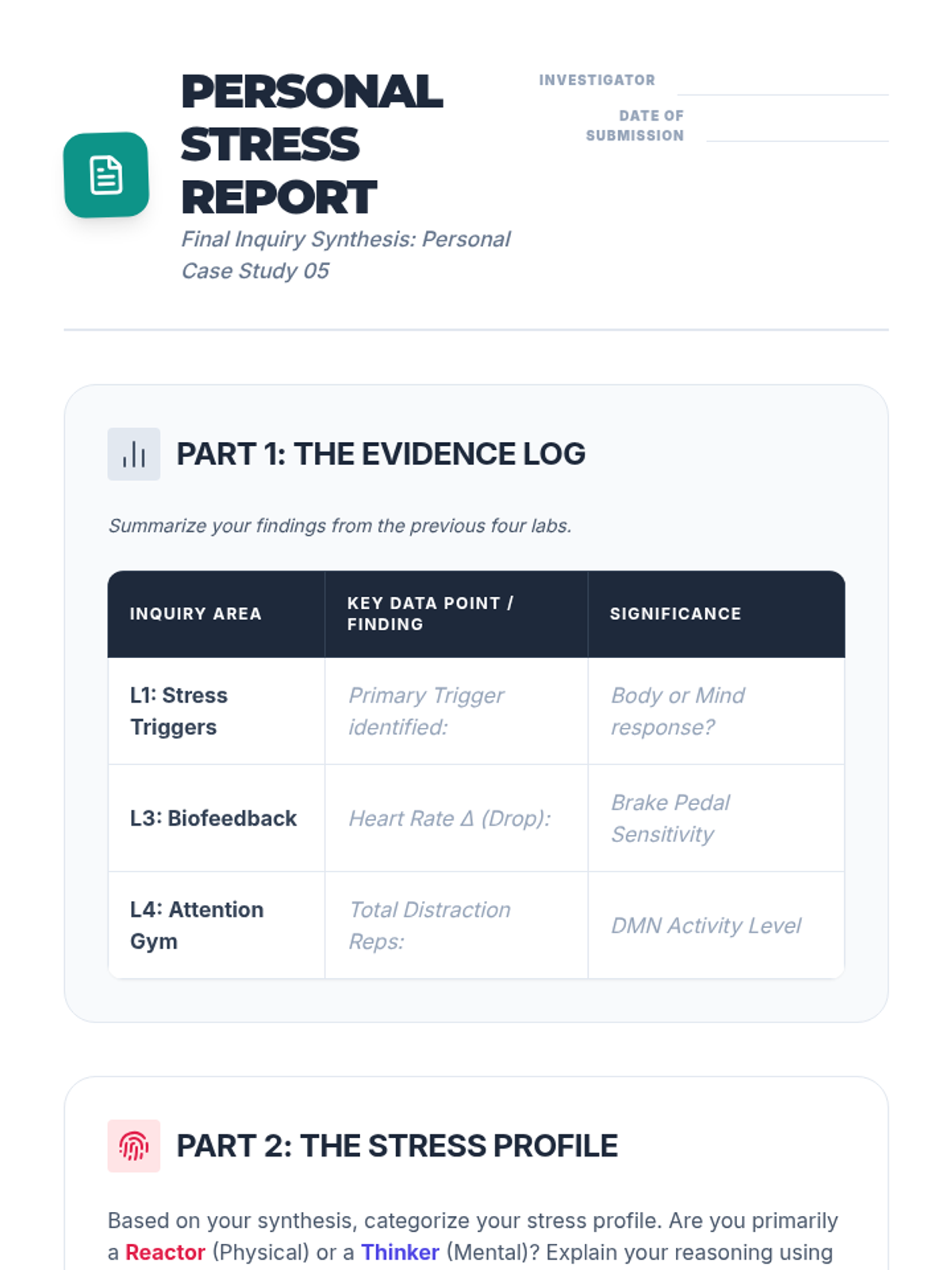
A final student synthesis document for Lesson 5 where students analyze their cumulative data from the week to identify their stress profile and prescribe a personal mindfulness antidote.
A visual presentation for Lesson 5 that guides students through analyzing their data (heart rate, distraction tallies, trigger audits) to create a personal 'Stress Profile.'
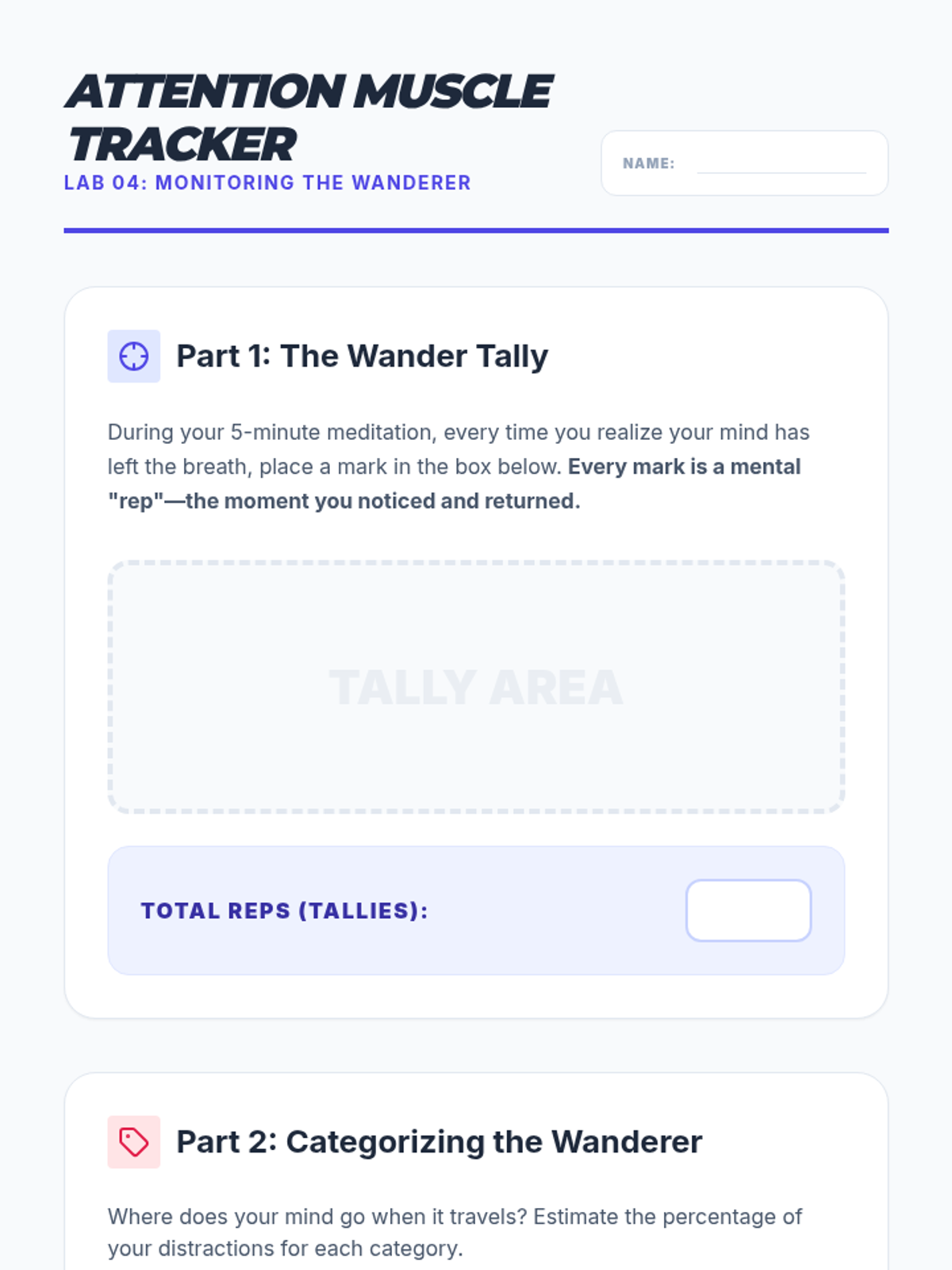
A student mind-wandering tracker for Lesson 4 to tally distractions and categorize the nature of thoughts during a meditation exercise.
A visual presentation for Lesson 4 exploring the neuroscience of mind-wandering (Default Mode Network vs. Task Positive Network) and the "mental rep" of returning focus.
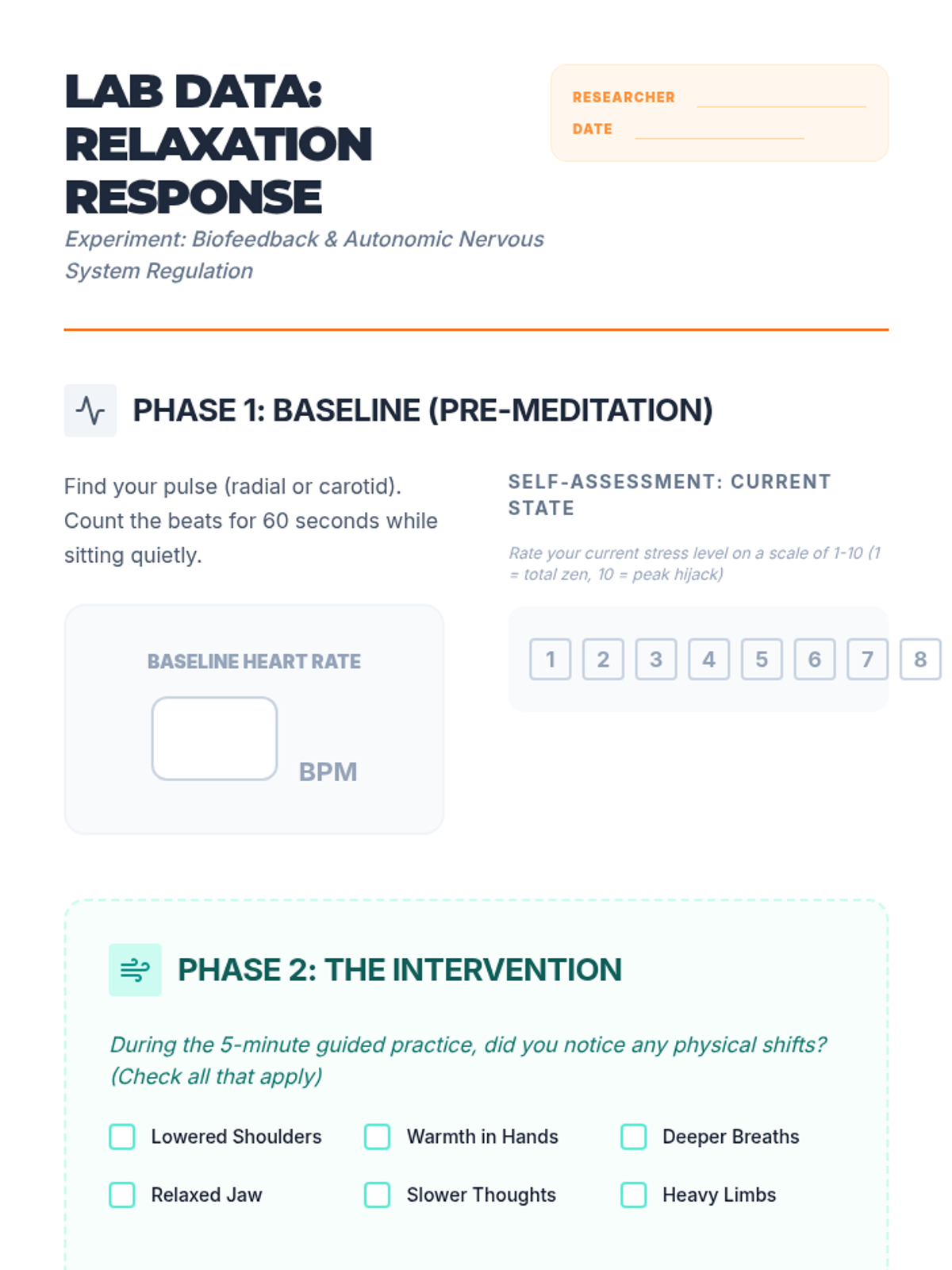
A student lab report for Lesson 3 to record heart rate data before and after mindfulness practice, providing evidence for the activation of the relaxation response.
A visual presentation for Lesson 3 introducing the biofeedback experiment, explaining the sympathetic vs. parasympathetic nervous systems, and outlining the lab protocol.
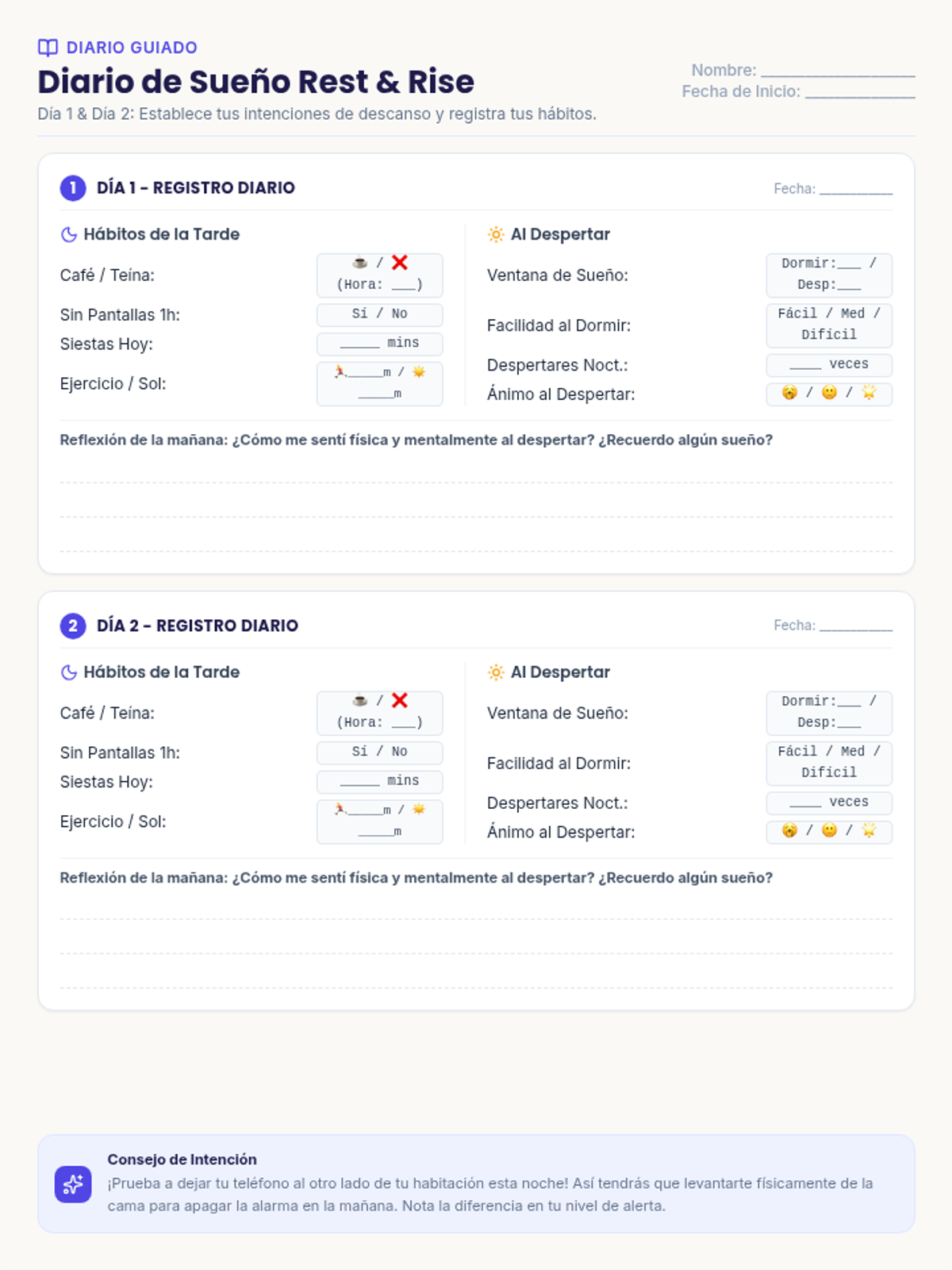
A 4-page detailed printable journal for tracking sleep and mood across 7 days translated into Spanish. Each page contains highly structured evening and morning trackers, dedicated sections for caffeine, screens, naps, exercise, outdoor sunshine, nocturnal wakeups, falling sleep quality, waking mood, morning thoughts, and a complete weekly synthesis review.
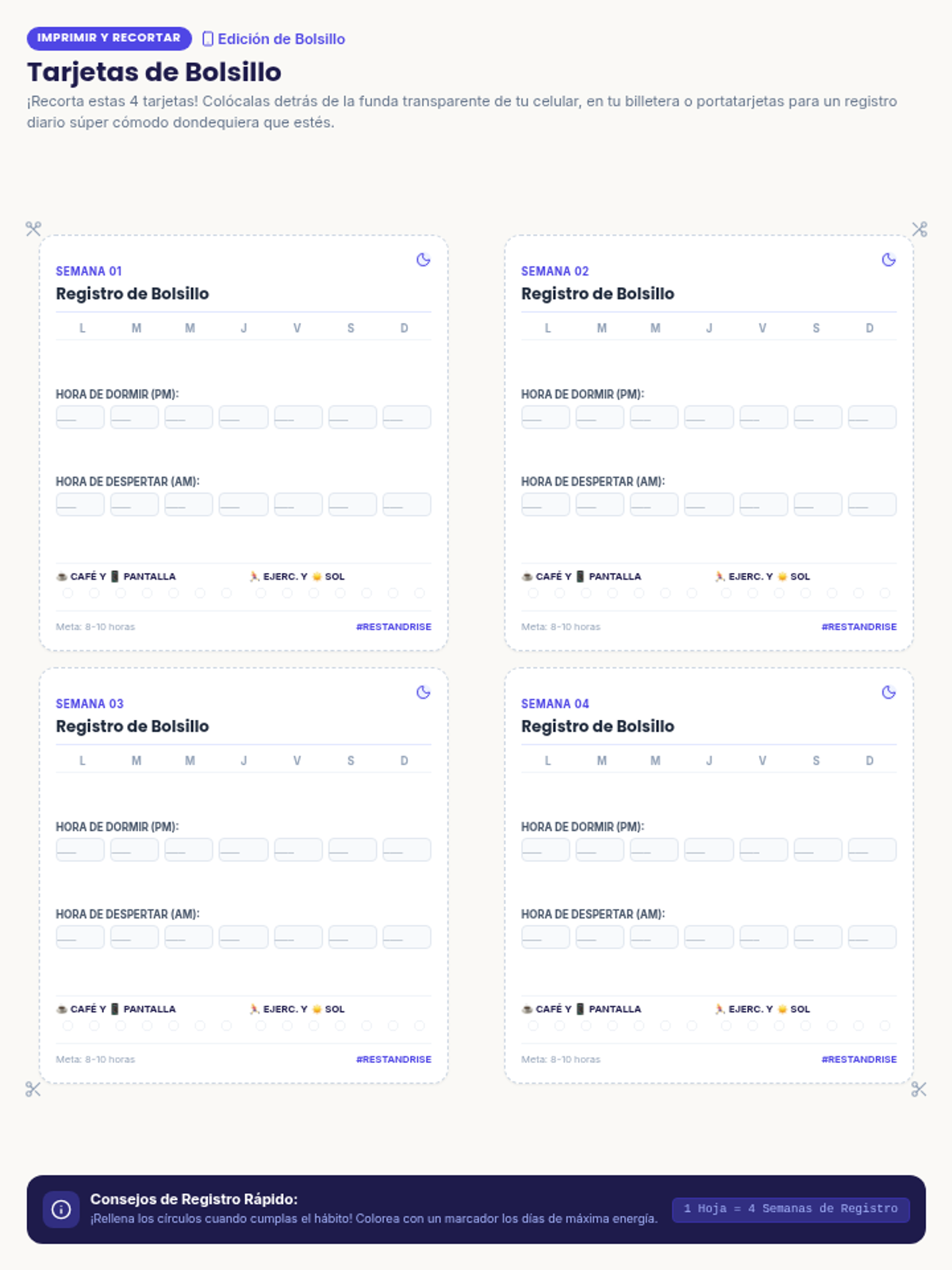
A 1-page printable document containing 4 pocket-sized sleep and mood tracking cards translated into Spanish. Features weekly grids for easy logging of bedtimes, wake times, caffeine logs, screens, and movement.
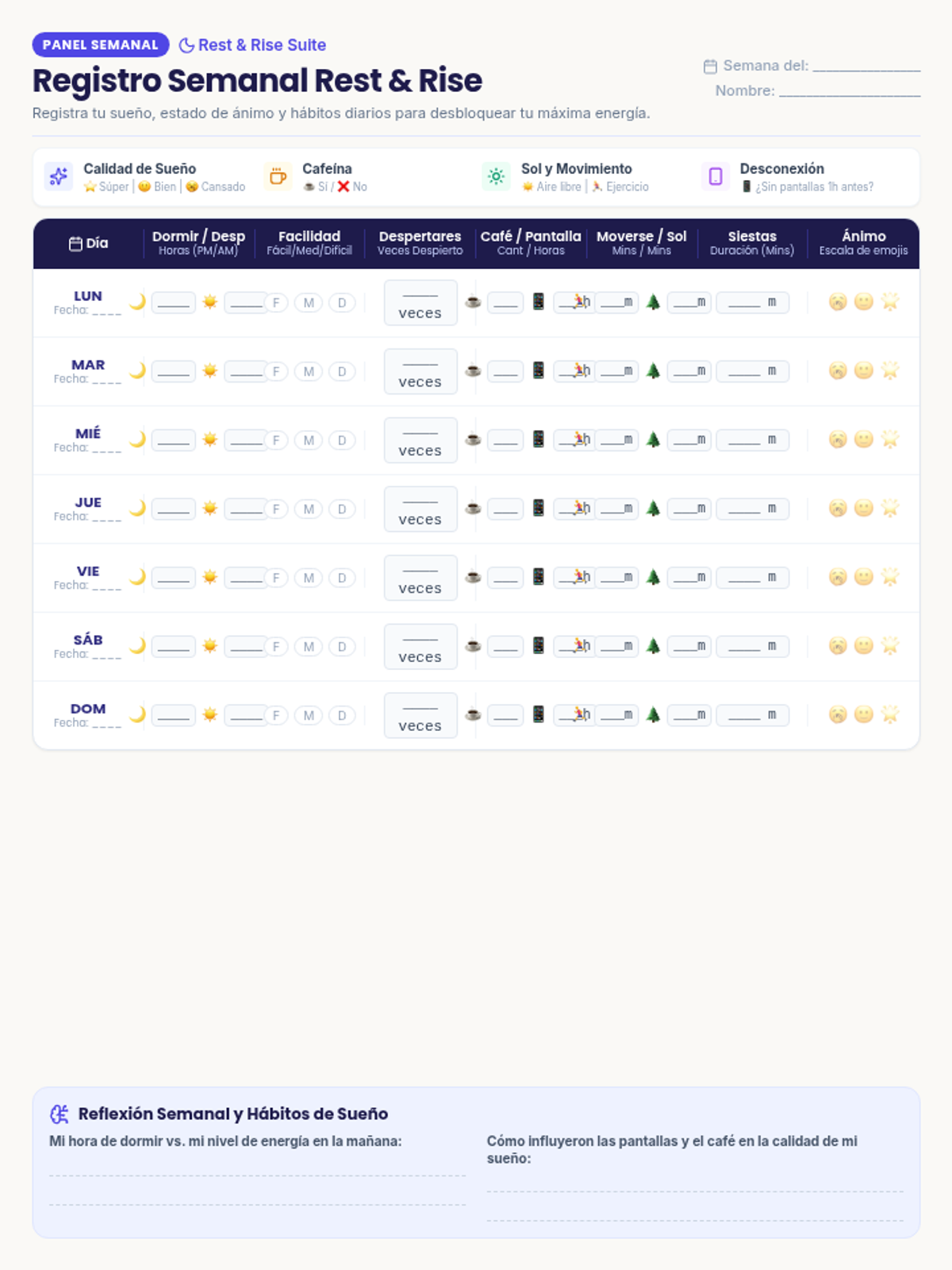
A clean, highly visual 1-page weekly tracker translated into Spanish. Features rows for each day of the week to log bed/wake times, ease of falling asleep, nocturnal wakeups, caffeine, screen time, exercise, sunshine, naps, and waking mood. Includes a custom weekly pattern synthesis reflection panel.
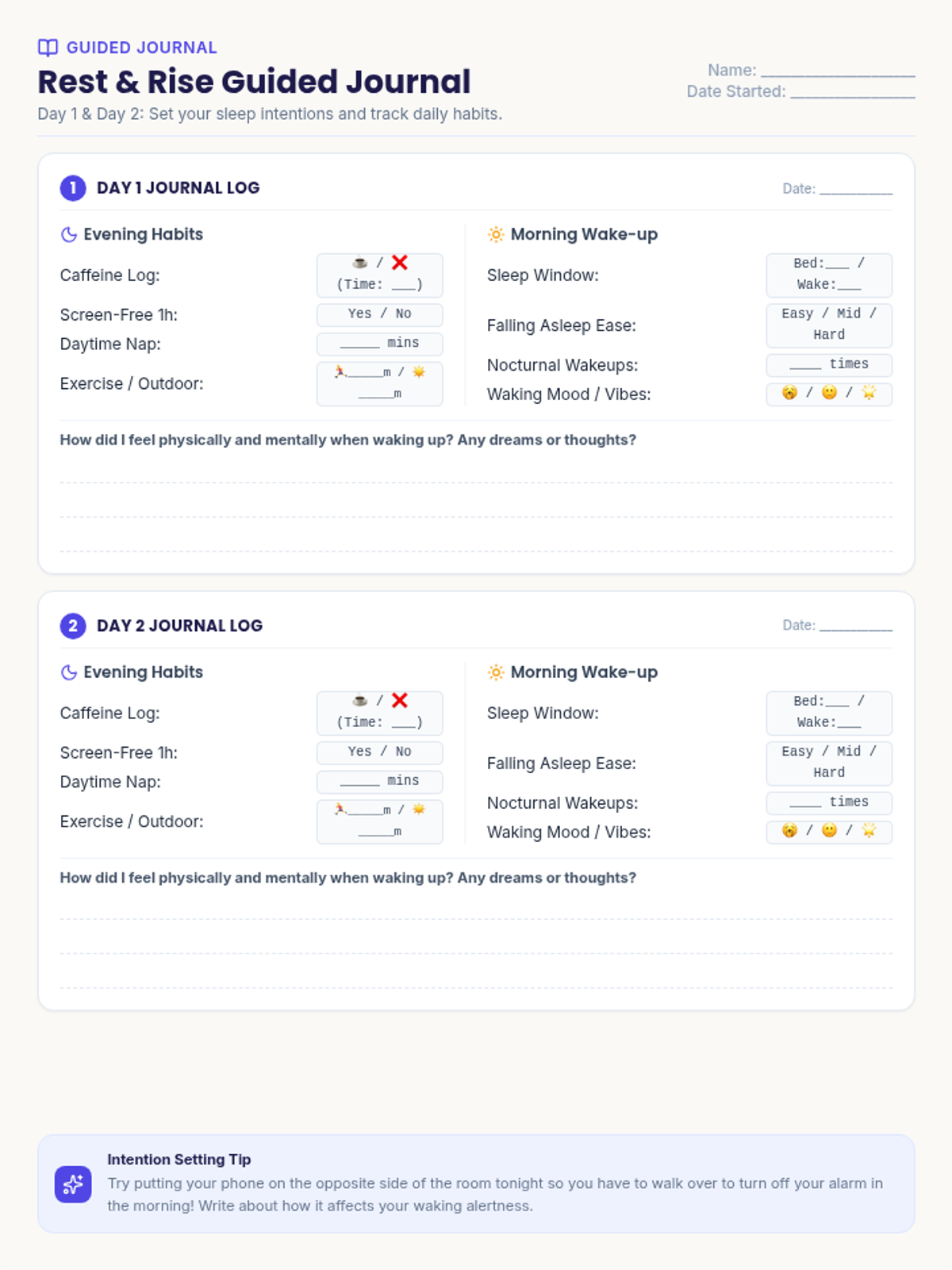
A 4-page detailed printable journal for tracking sleep and mood across 7 days. Each page contains highly structured evening and morning trackers, dedicated sections for caffeine, screens, naps, exercise, outdoor sunshine, nocturnal wakeups, falling sleep quality, waking mood, morning thoughts, and a complete weekly synthesis review.
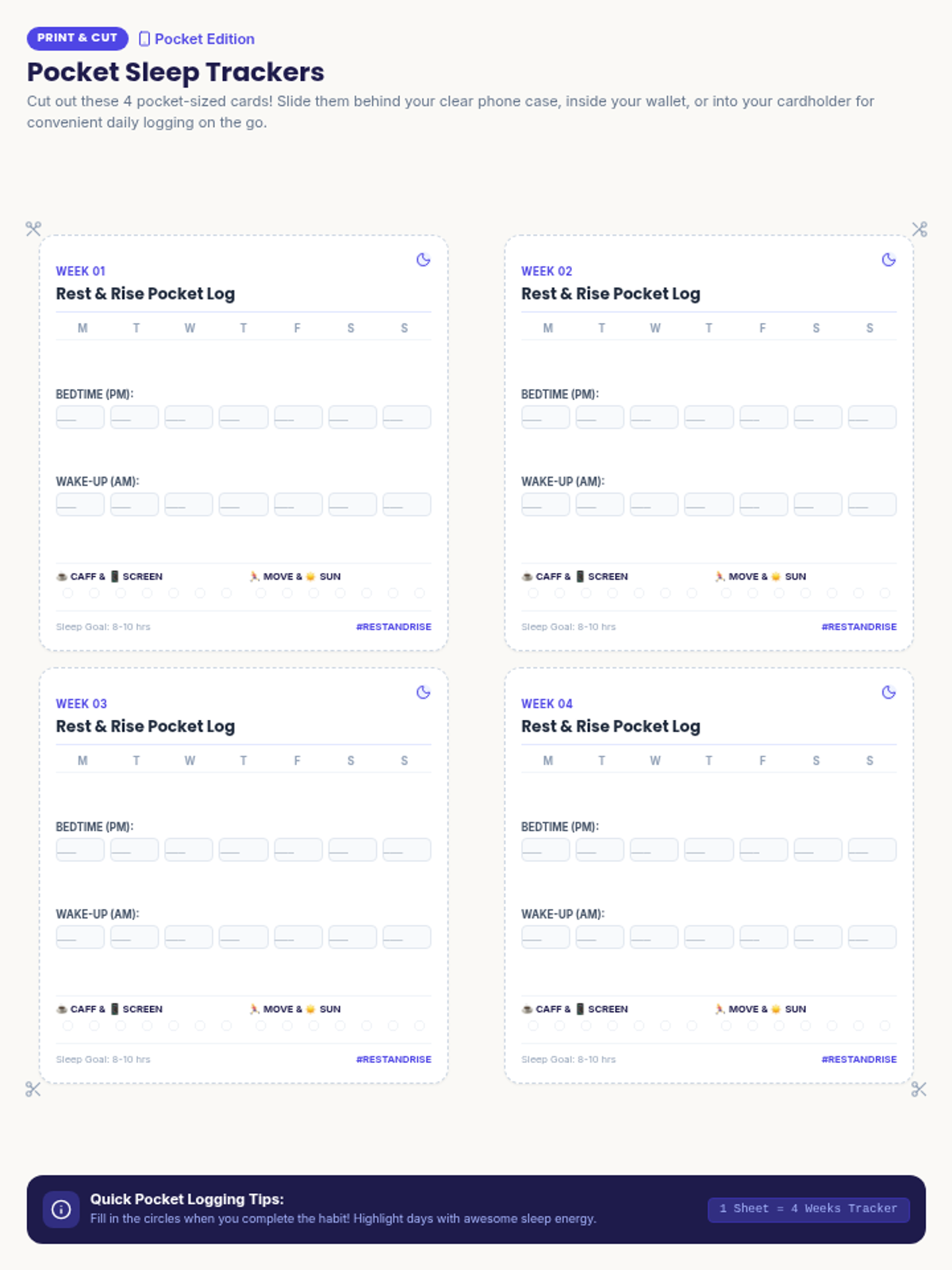
A 1-page printable document containing 4 pocket-sized sleep and mood tracking cards designed to fit perfectly inside phone cases or wallets. Includes weekly grids for easy logging of bedtime, wake time, caffeine/screen checks, and active hours.
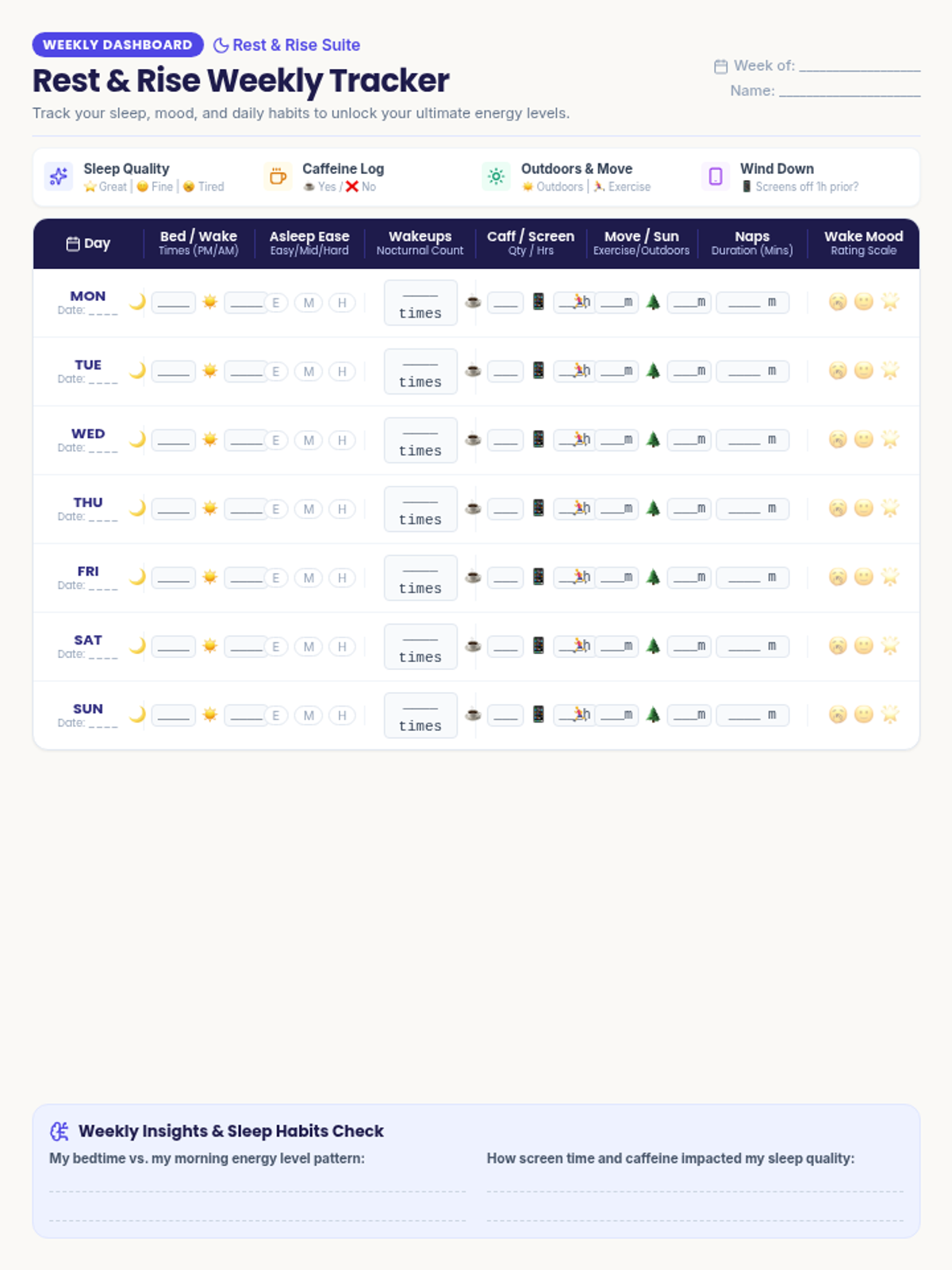
A clean, highly visual 1-page weekly tracker designed specifically for teens. Features rows for each day of the week to log bed/wake times, ease of falling asleep, nocturnal wakeups, caffeine, screen time, exercise, sunshine, naps, and waking mood. Includes a custom weekly pattern synthesis reflection panel.
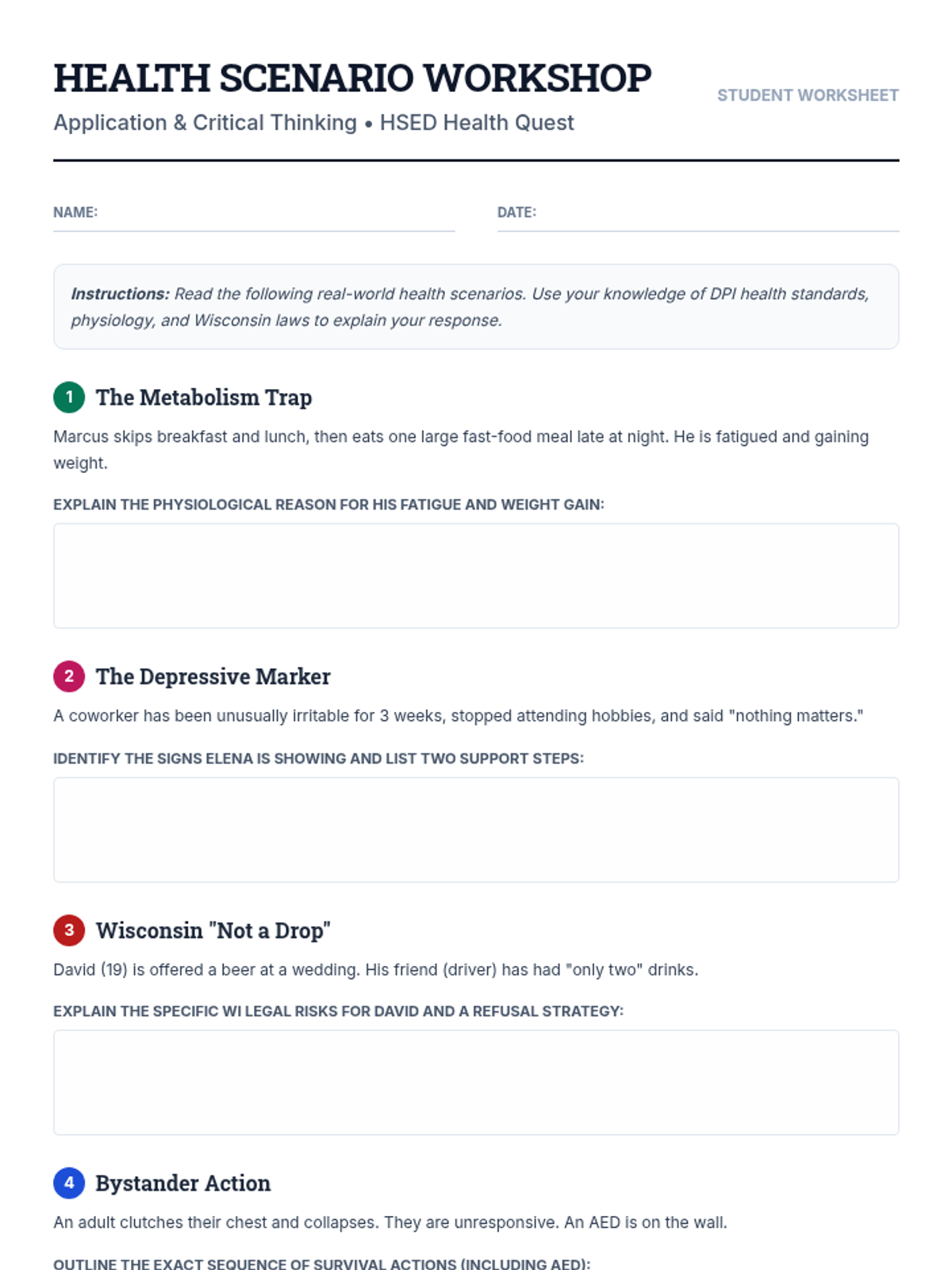
A scenario-based worksheet for HSED students that requires applying health knowledge to complex real-world situations involving nutrition, mental health, substance use, and emergency response. Expanded to 6 scenarios.
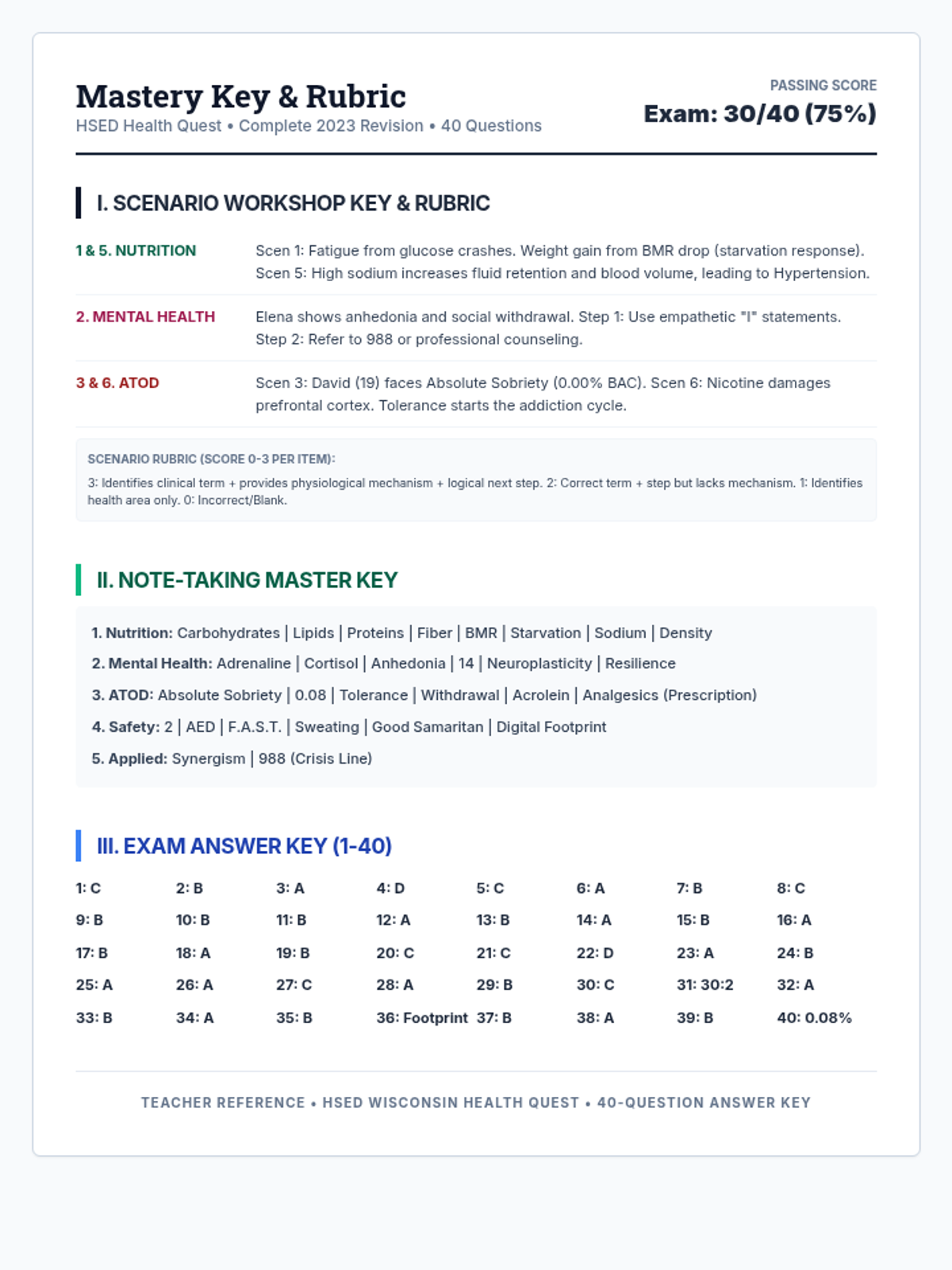
Diversified comprehensive answer key with validated solutions for all assessments, including the new 40-question competency exam. Optimized for HSED teacher reference. Diversified answers across A, B, C, D. Includes Rubric.
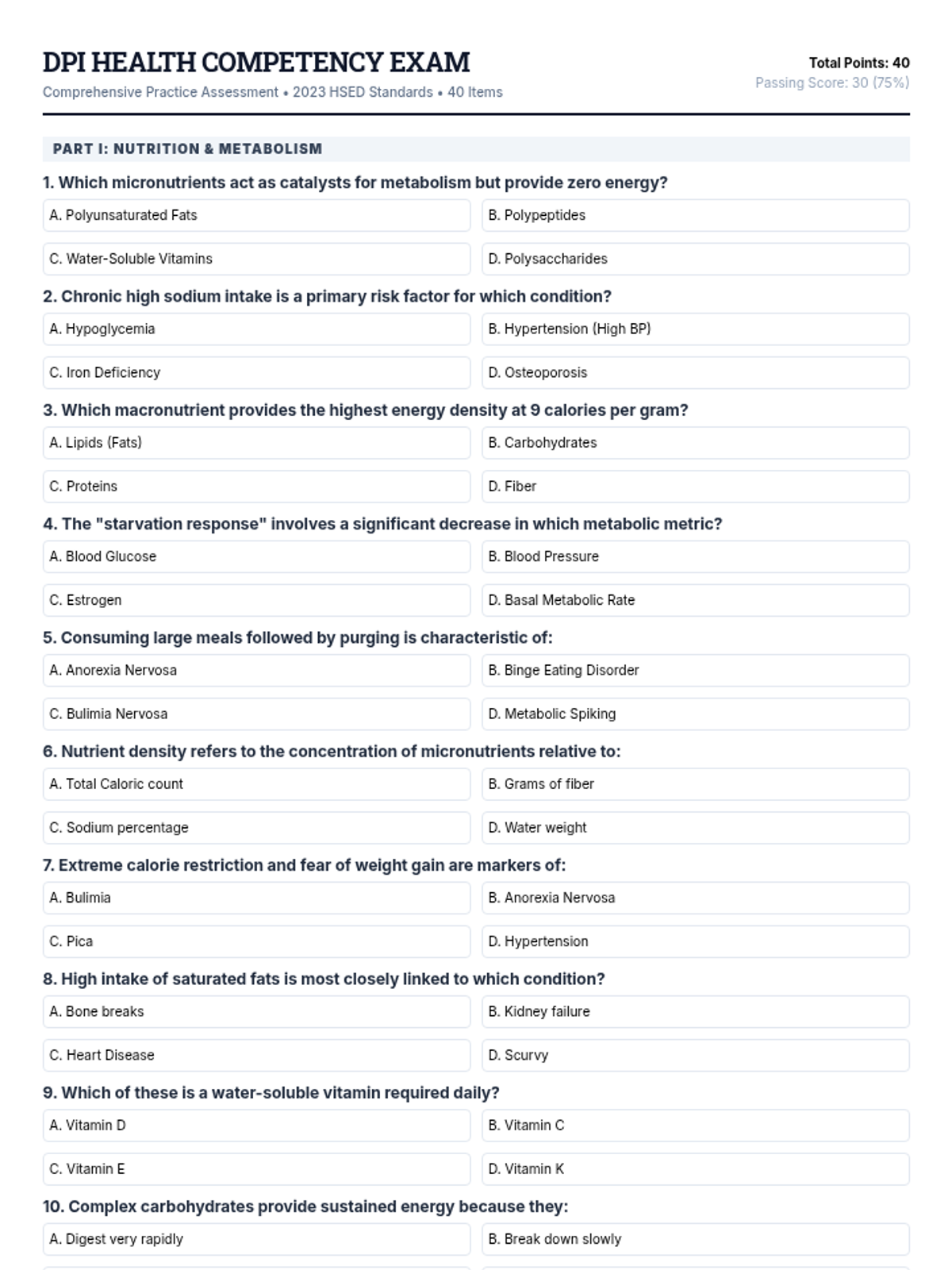
A rigorous 40-question health competency exam for HSED students, featuring high-level vocabulary, scenario-based problems, and Wisconsin-specific legal standards. Optimized for a compact four-page print. Revised with diversified answer choices and scenario questions. Added actual fill-in-the-blank items.
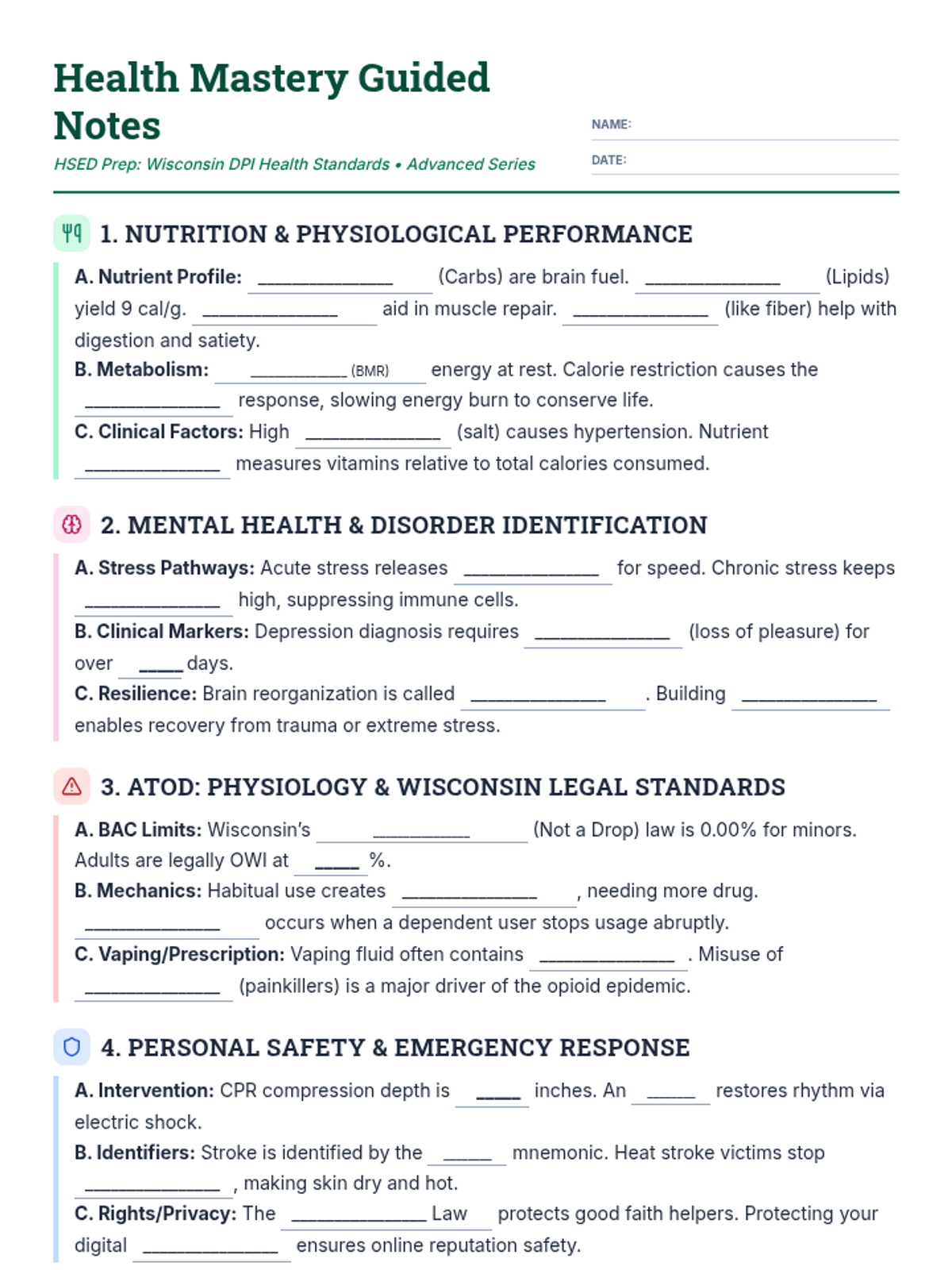
Advanced guided notes for HSED students covering DPI health standards with technical terminology. Optimized with break-inside-avoid to prevent orphaned headers and standardized blanks. Expanded content with more fill-in-the-blank items and applied scenarios.
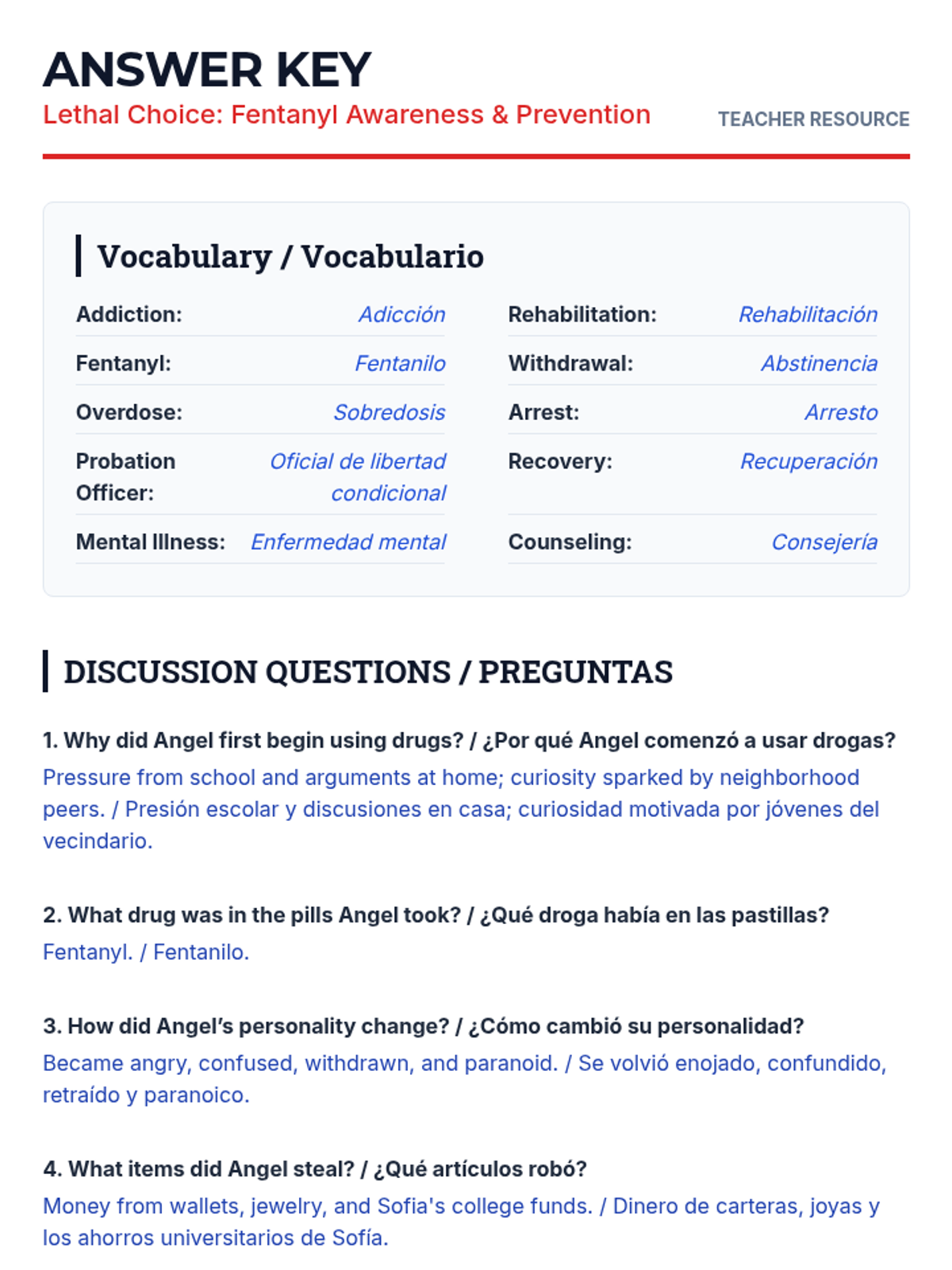
A detailed bilingual answer key for the Lethal Choice worksheet, providing teachers with correct answers and facilitation guidance in both English and Spanish.
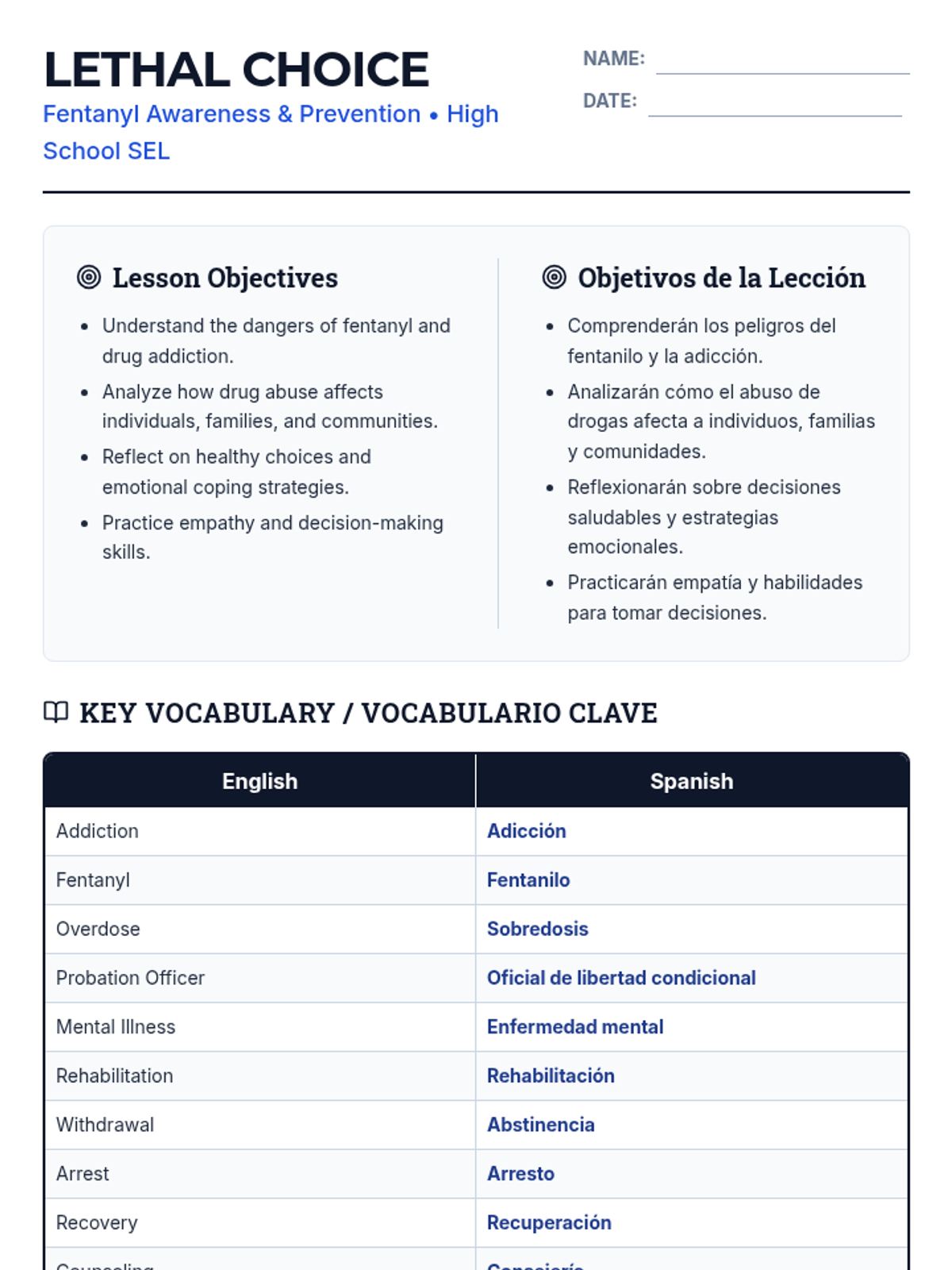
A revised bilingual (English/Spanish) worksheet about the dangers of fentanyl, featuring improved spacing for answers, a consolidated matching activity, and a clear story presentation.
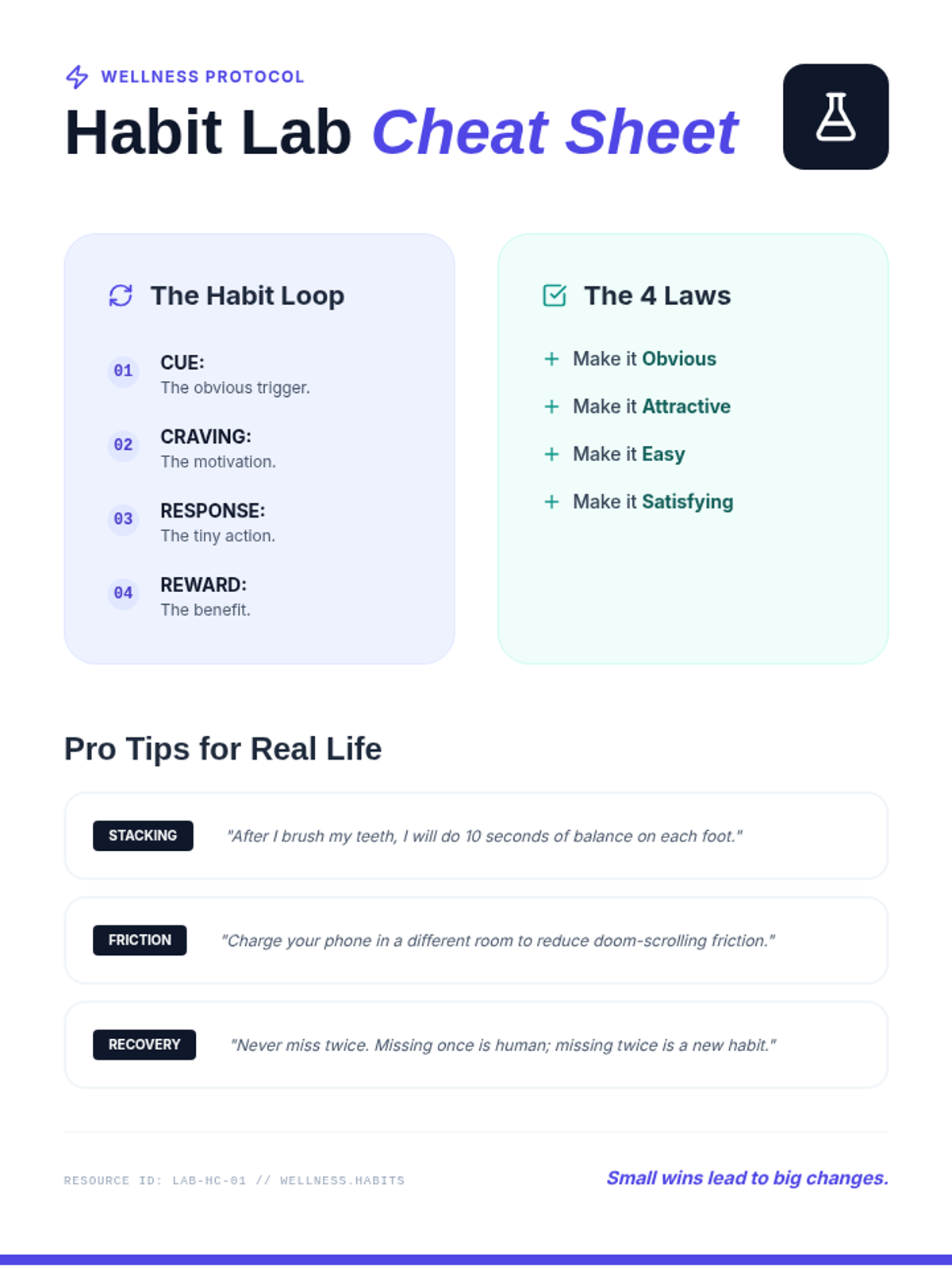
A concise one-page reference handout for participants, summarizing the habit loop, the four laws of behavior change, and practical strategies like habit stacking and environment design.
A high-impact visual presentation covering the core concepts of habit formation: the habit loop, identity-based habits, the 2-minute rule, temptation bundling, and habit stacking. Designed for 16-21 year olds.
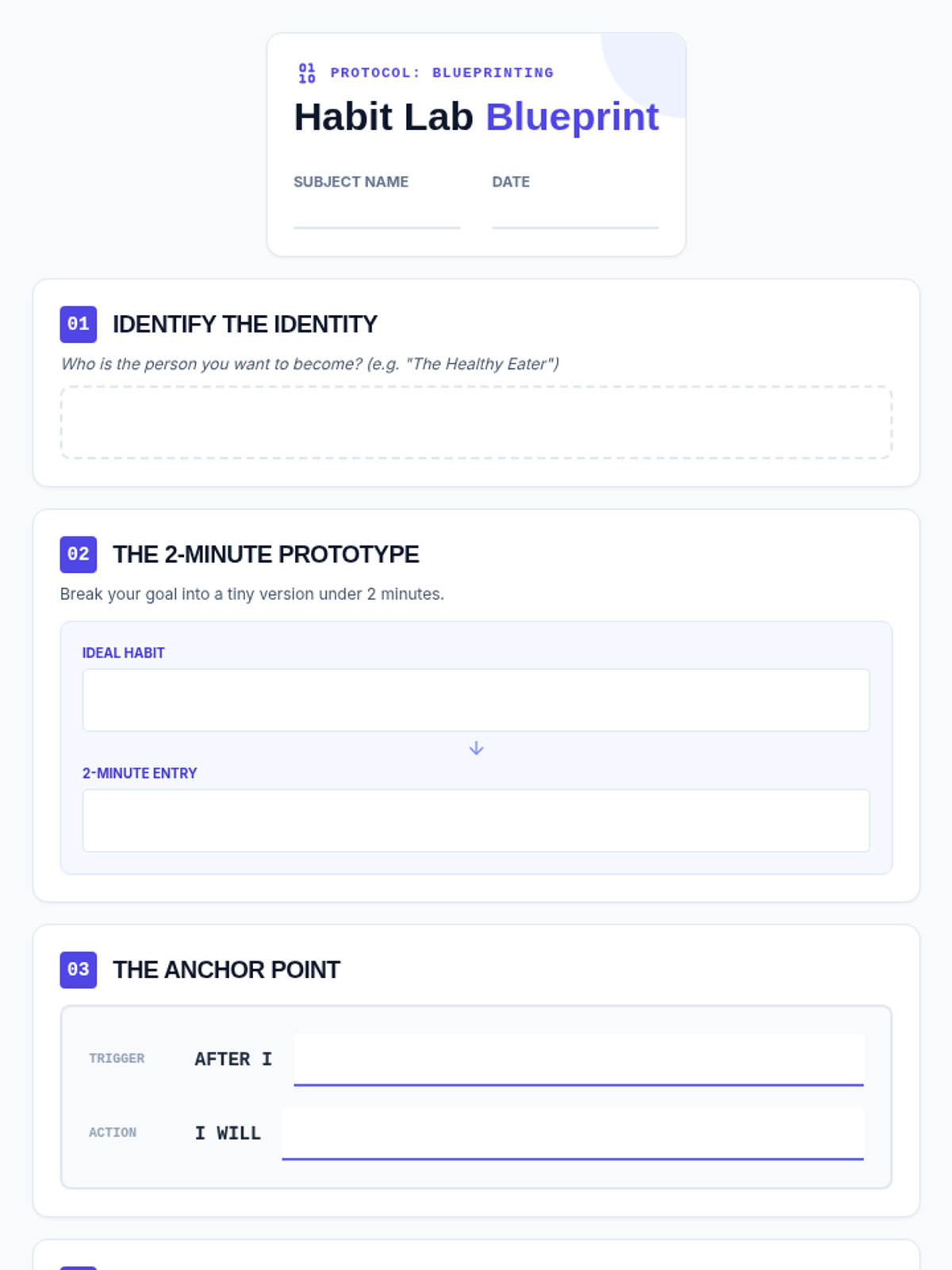
An expanded 5-page workshop workbook for habit formation. Includes identity mapping, habit loop analysis, 2-minute prototyping, habit stacking practice, environment audits, backup planning, reward menus, habit trackers, and long-term vision contracts. Designed for a 90-minute high-engagement session.
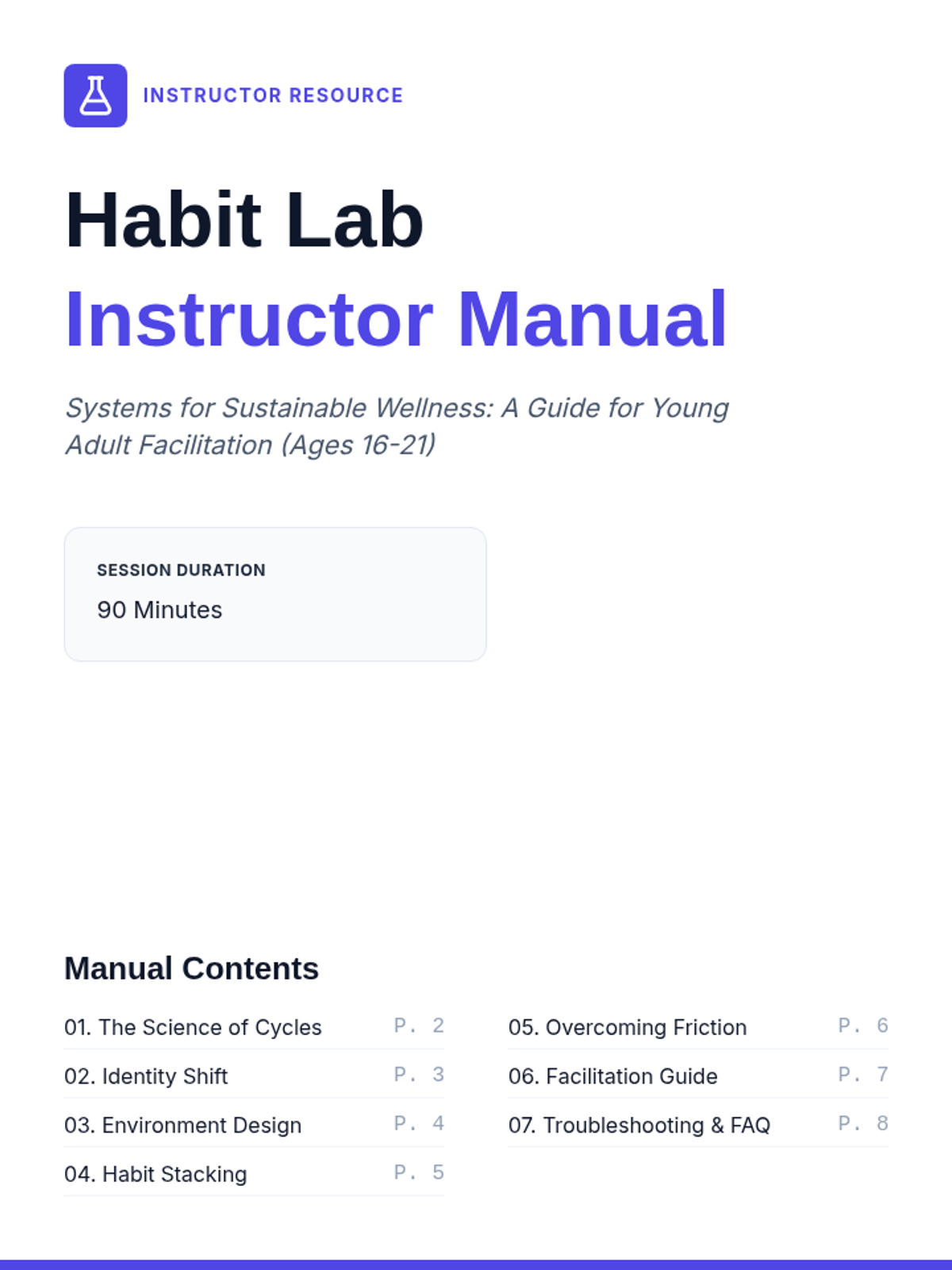
A comprehensive 8-page instructor manual updated with specific facilitation times for a 90-minute session. Includes guidance for new workbook activities such as Loop Mapping, Reward Menus, and the 2-Minute Prototype brainstorm.
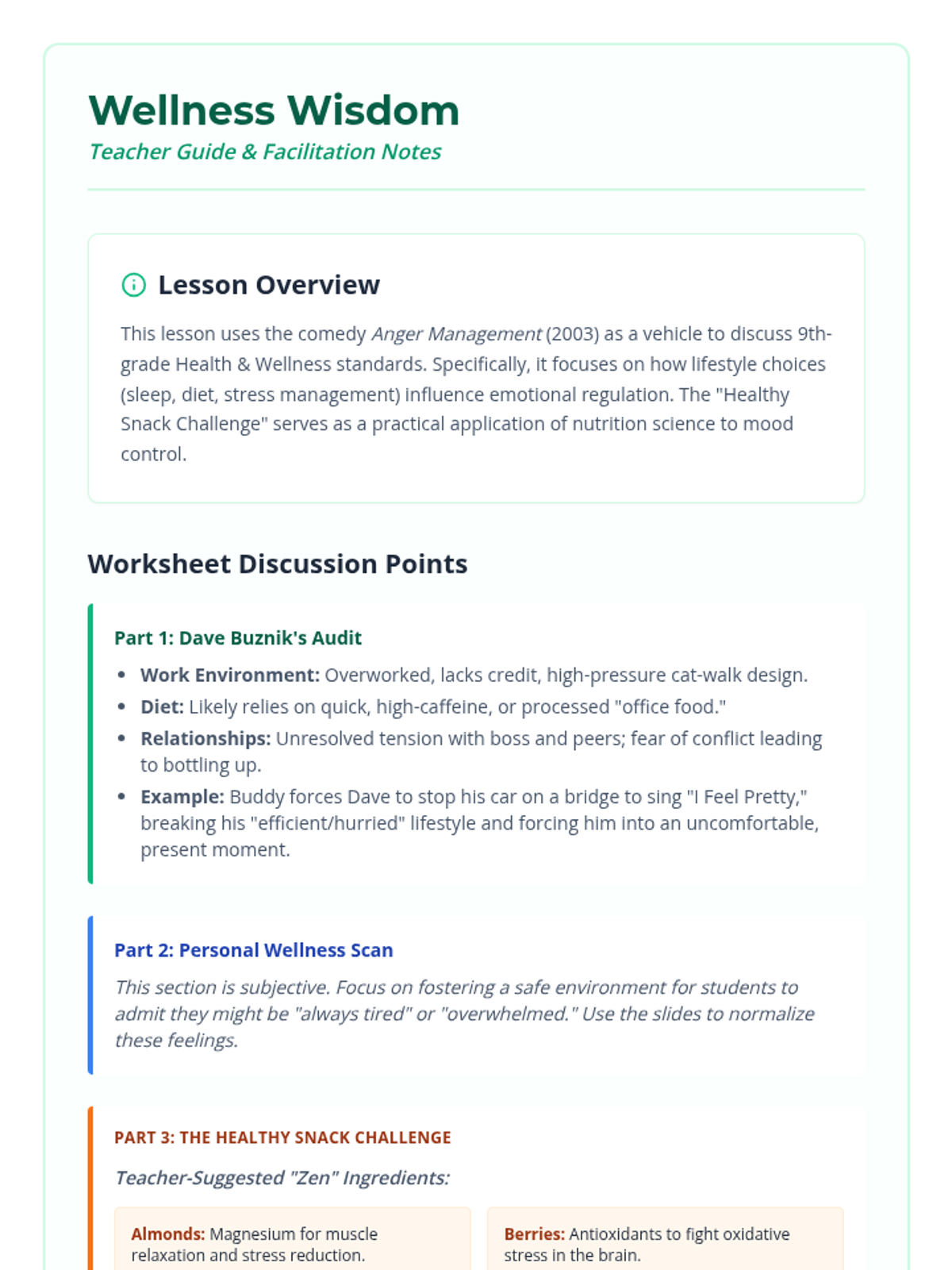
A comprehensive facilitator's guide containing answer keys, discussion prompts, and classroom pacing tips for the Zen Zone lesson. Updated with fixed spelling and improved layout.
Instructional slides that bridge the character analysis of 'Anger Management' with practical wellness education and nutritional science for mood regulation. Updated with improved quote context.
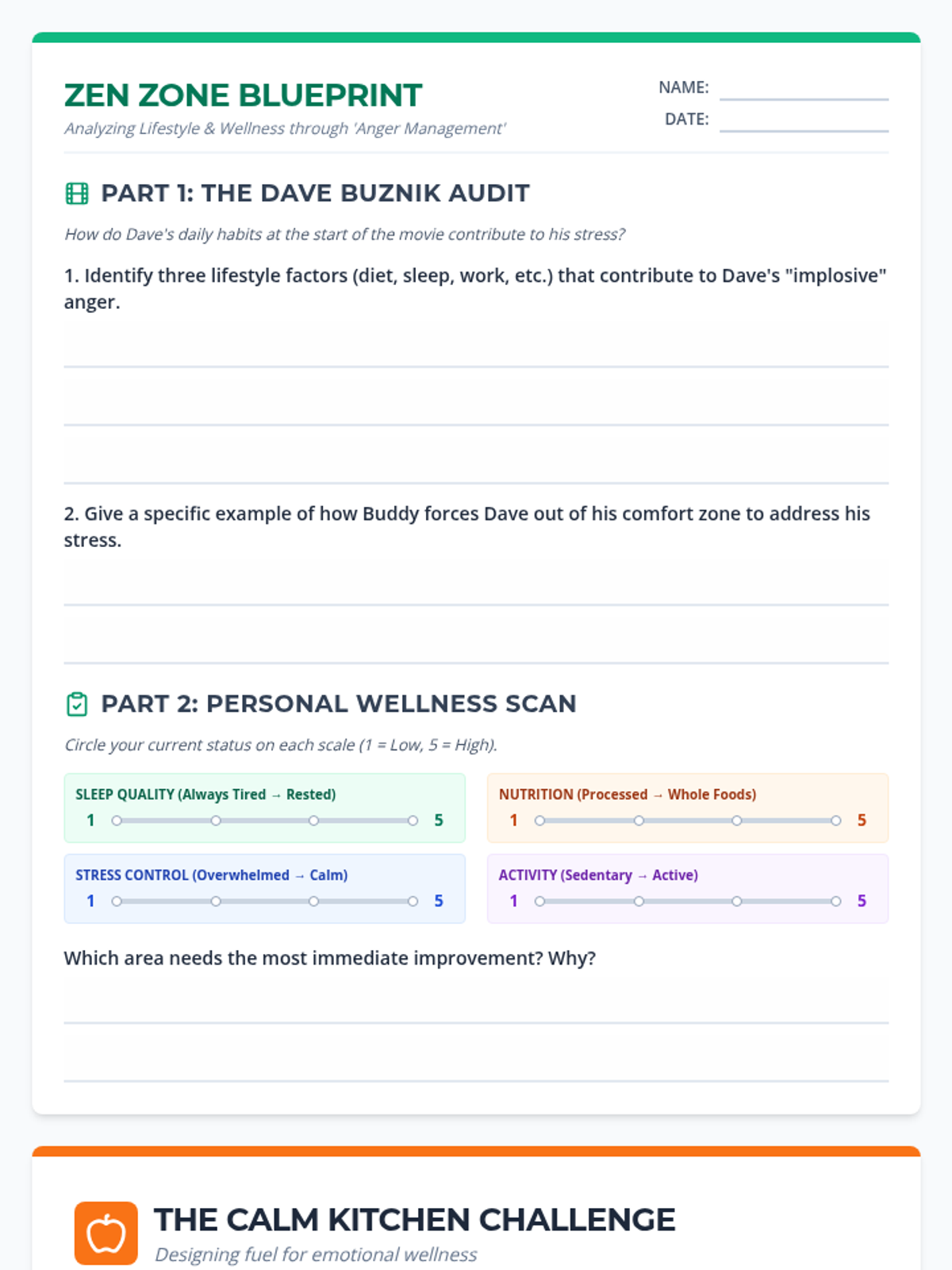
A two-page worksheet where students analyze lifestyle stressors from the movie 'Anger Management', conduct a personal wellness audit, and design a healthy snack to promote emotional balance. Revised for better page breaks and writing space.
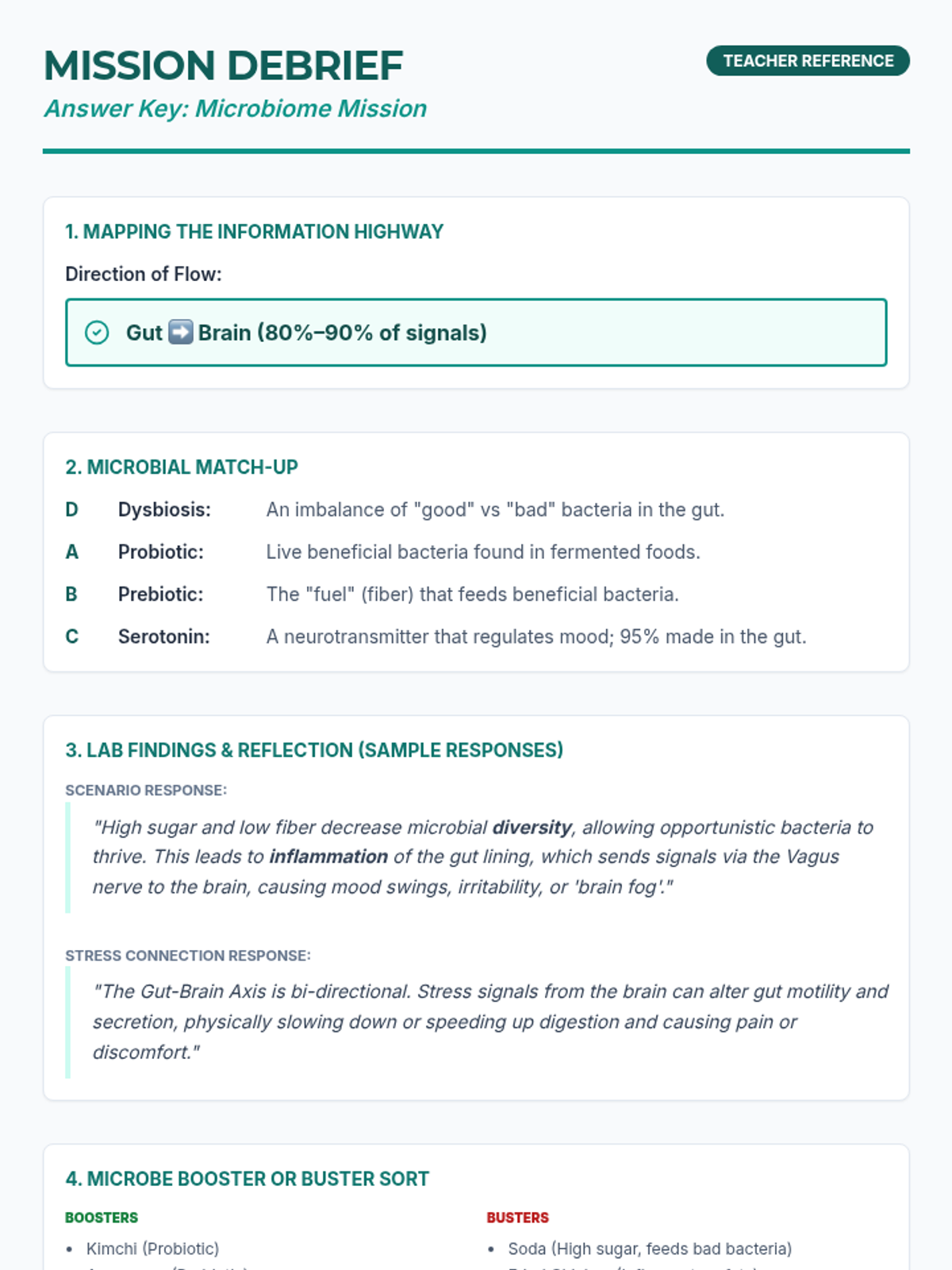
An answer key for the Microbiome Mission worksheet, providing correct answers and sample student responses.
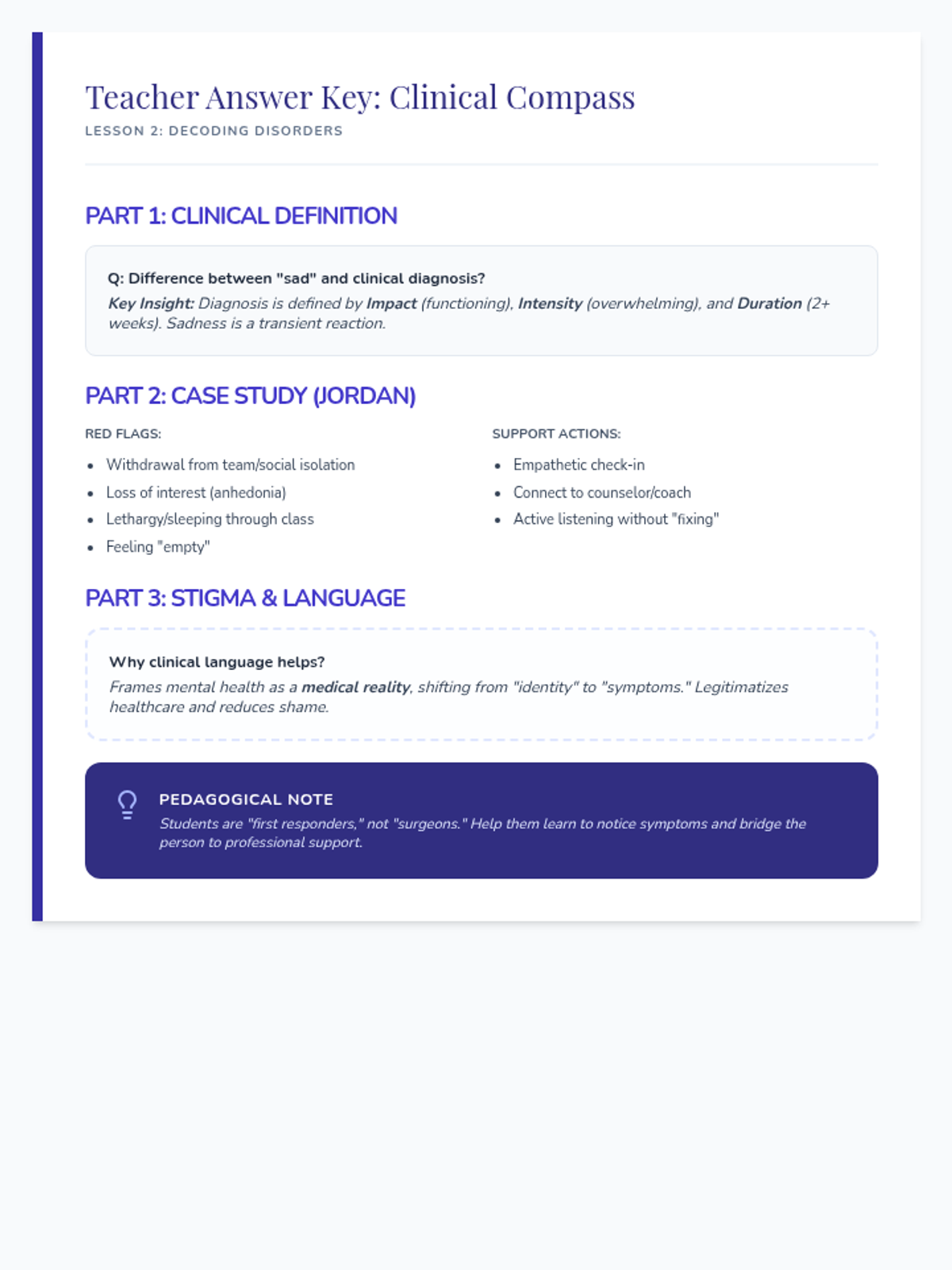
Teacher-facing answer key and facilitation guide for Lesson 2 (Clinical Compass). Updated for single-page print reliability and improved font hierarchy.
Slide presentation for Day 3, teaching students about resilience, the difference between adaptive and maladaptive coping, and the 5-4-3-2-1 grounding technique.
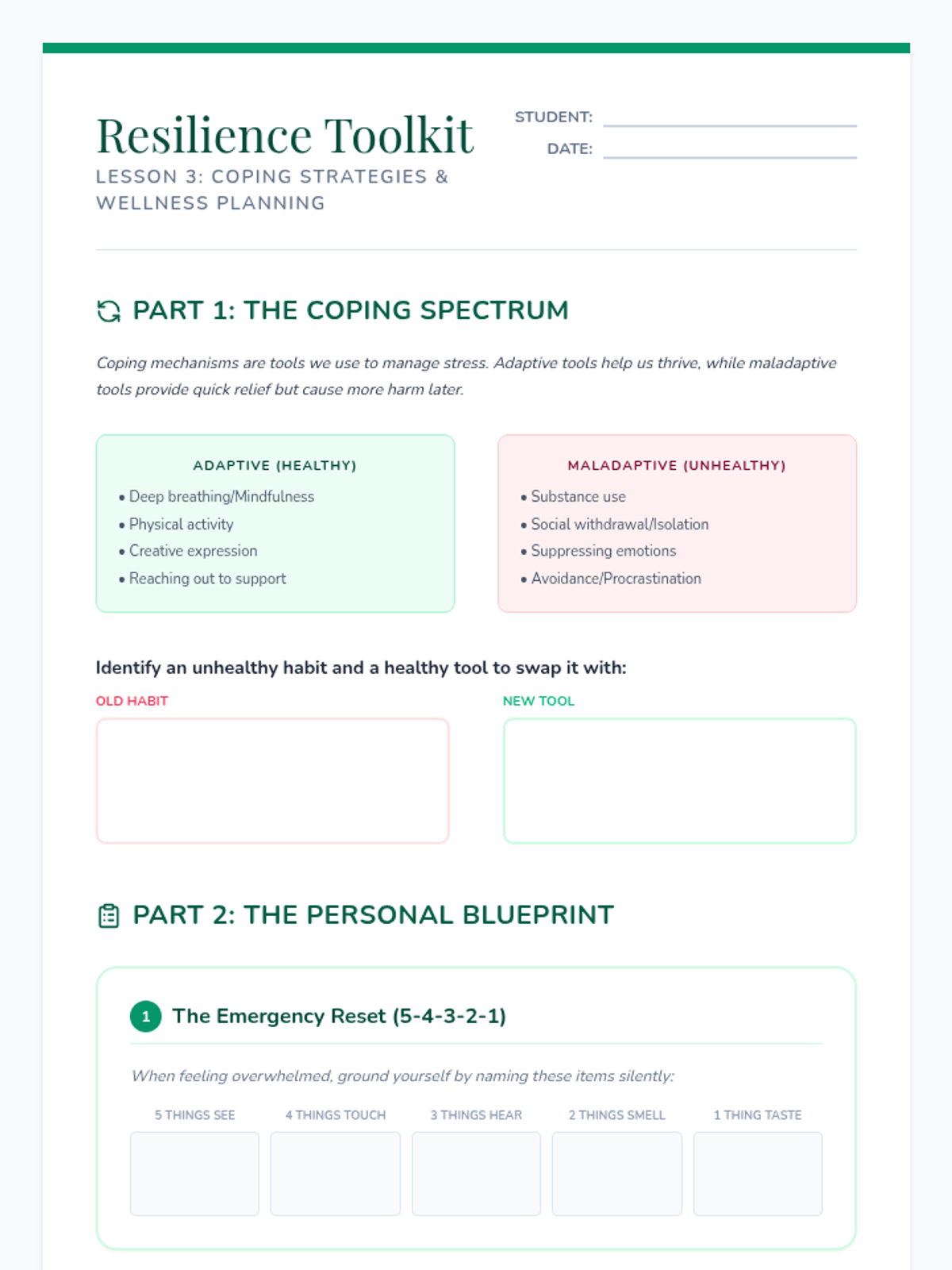
A practical, reflective worksheet for students to build their "Resilience Toolkit." Updated with improved page flow for exercises, lighter backgrounds for legibility, and larger response boxes.
Slide deck for Day 2 focusing on defining clinical disorders, identifying common types of mental health challenges, and discussing the impact of stigma.
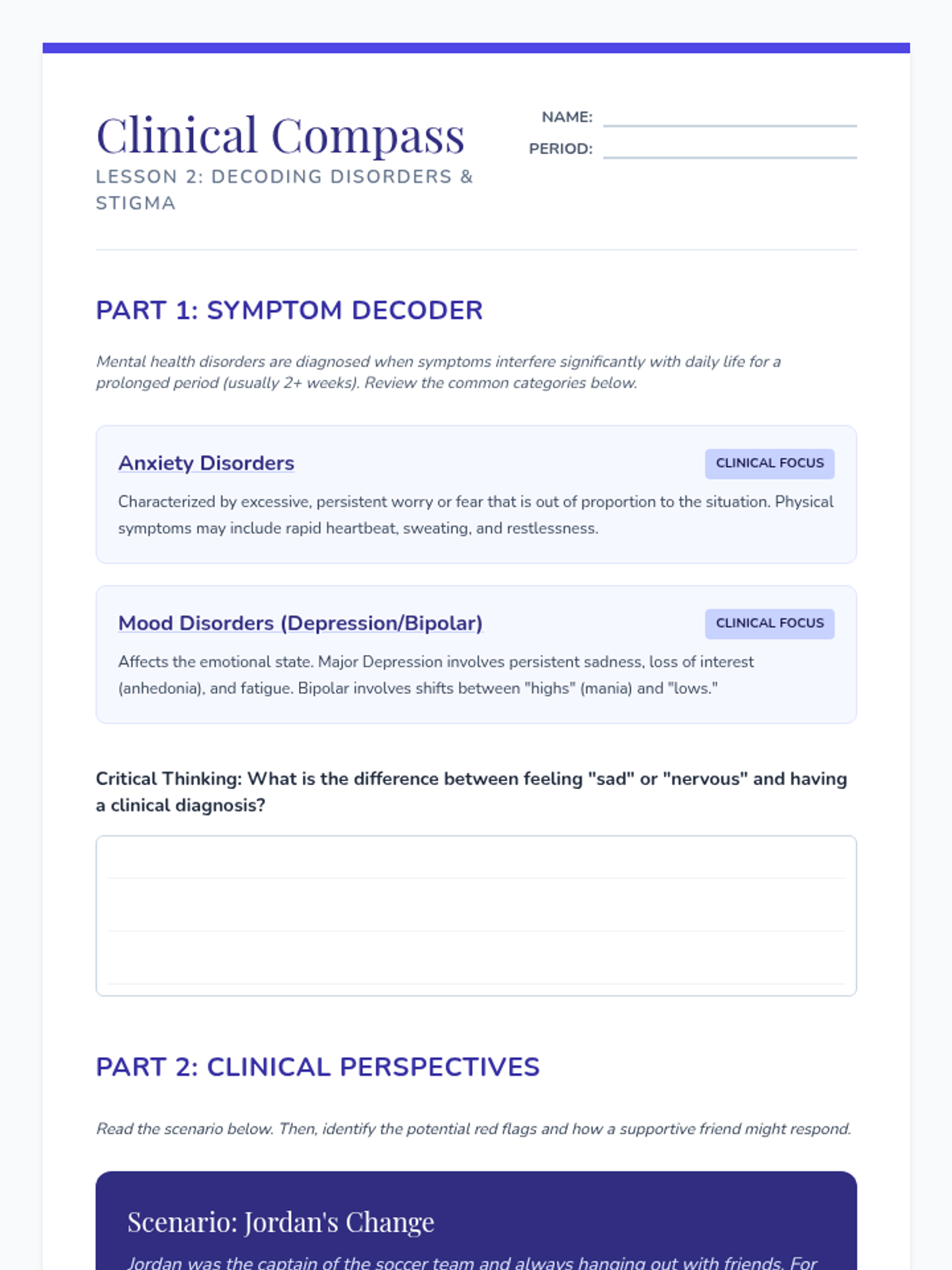
A student-facing worksheet for Lesson 2 that helps students decode clinical symptoms of mental health disorders. Updated with improved page flow, higher contrast headers, and lined response areas.
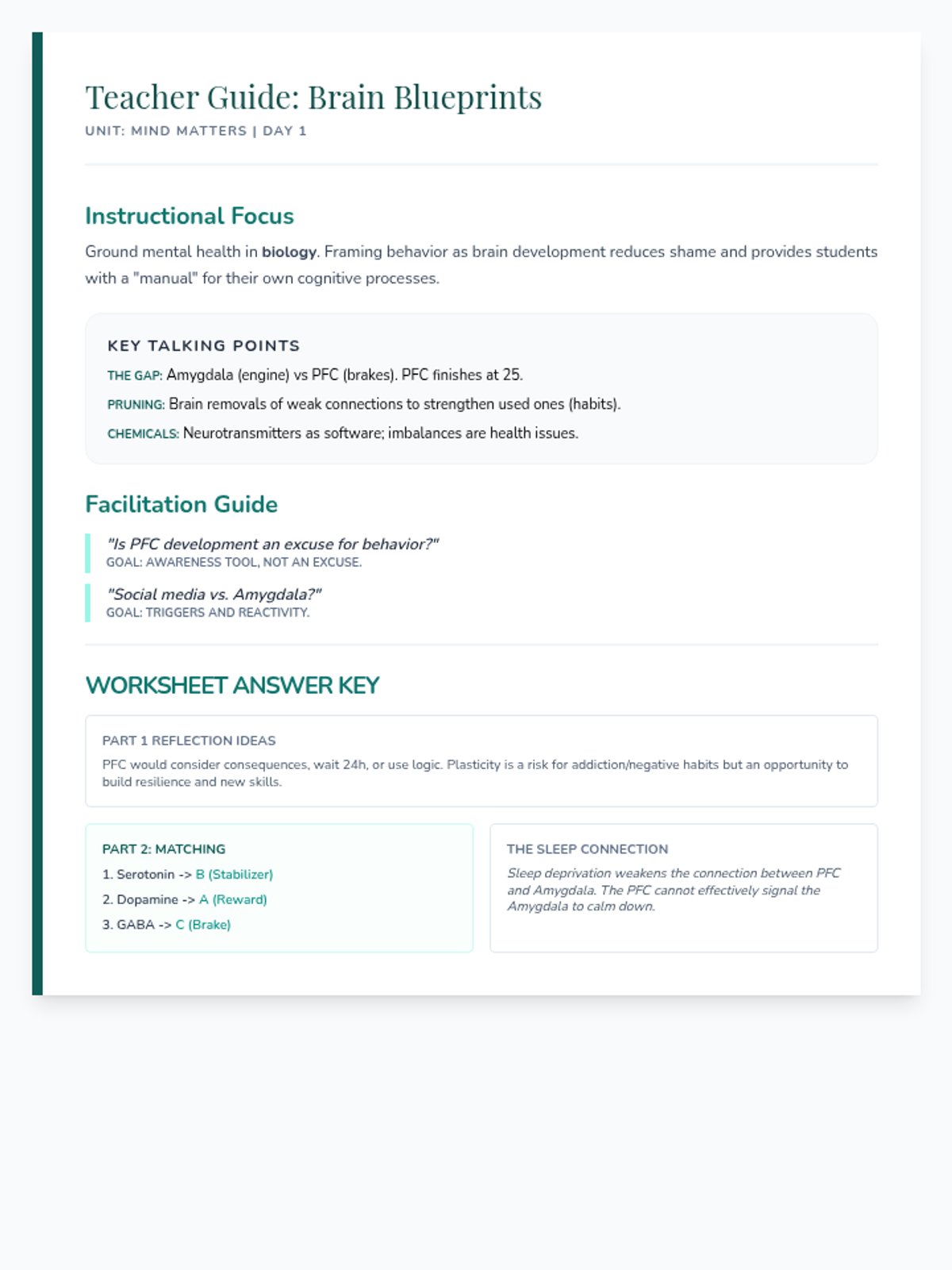
A teacher facilitation guide for Lesson 1, providing talking points, discussion prompts, and an answer key for the Brain Blueprints worksheet. Updated for single-page print reliability and clarity.
A slide presentation for the first day of the mental health unit, covering adolescent brain development, the PFC/Amygdala dynamic, and neuroplasticity. Updated for better visual balance and worksheet alignment.
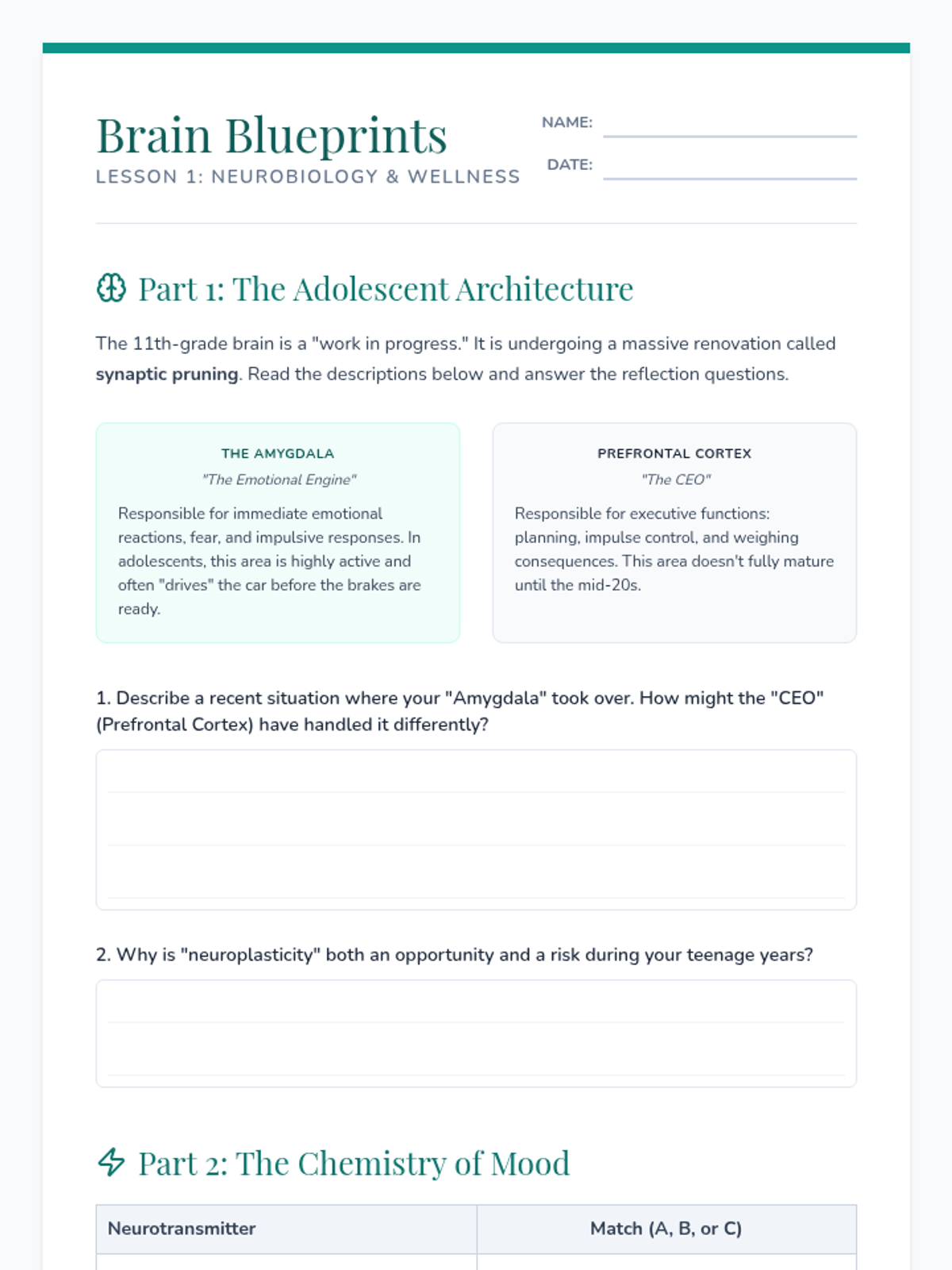
A student worksheet focusing on the neurobiology of the adolescent brain, covering the roles of the prefrontal cortex and amygdala, as well as key neurotransmitters. Updated with lined work areas and improved page layout.
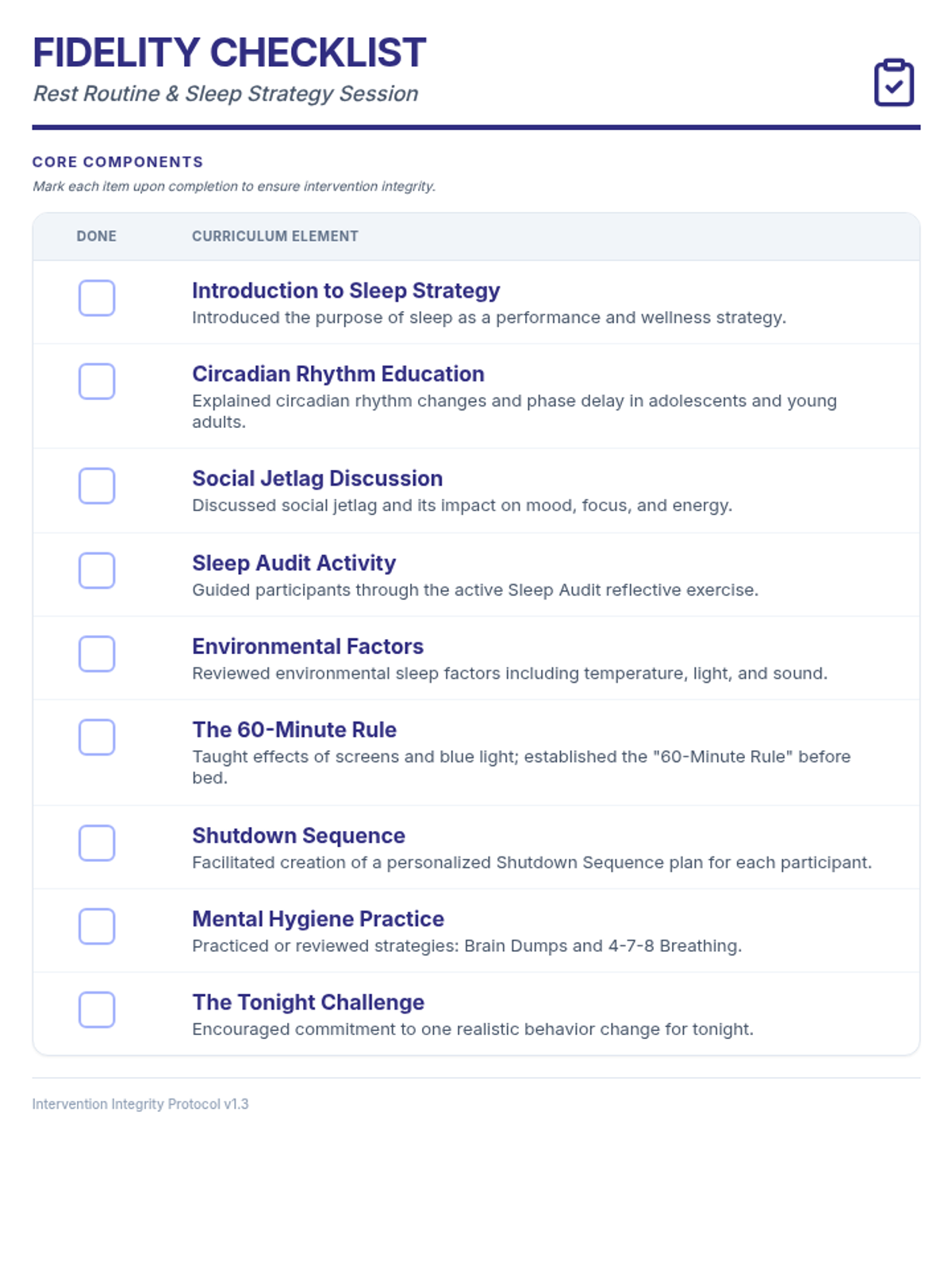
A final streamlined version of the fidelity checklist focusing solely on core components. Removed session metadata, observation sections, and the signature line for a clean, simple verification tool.
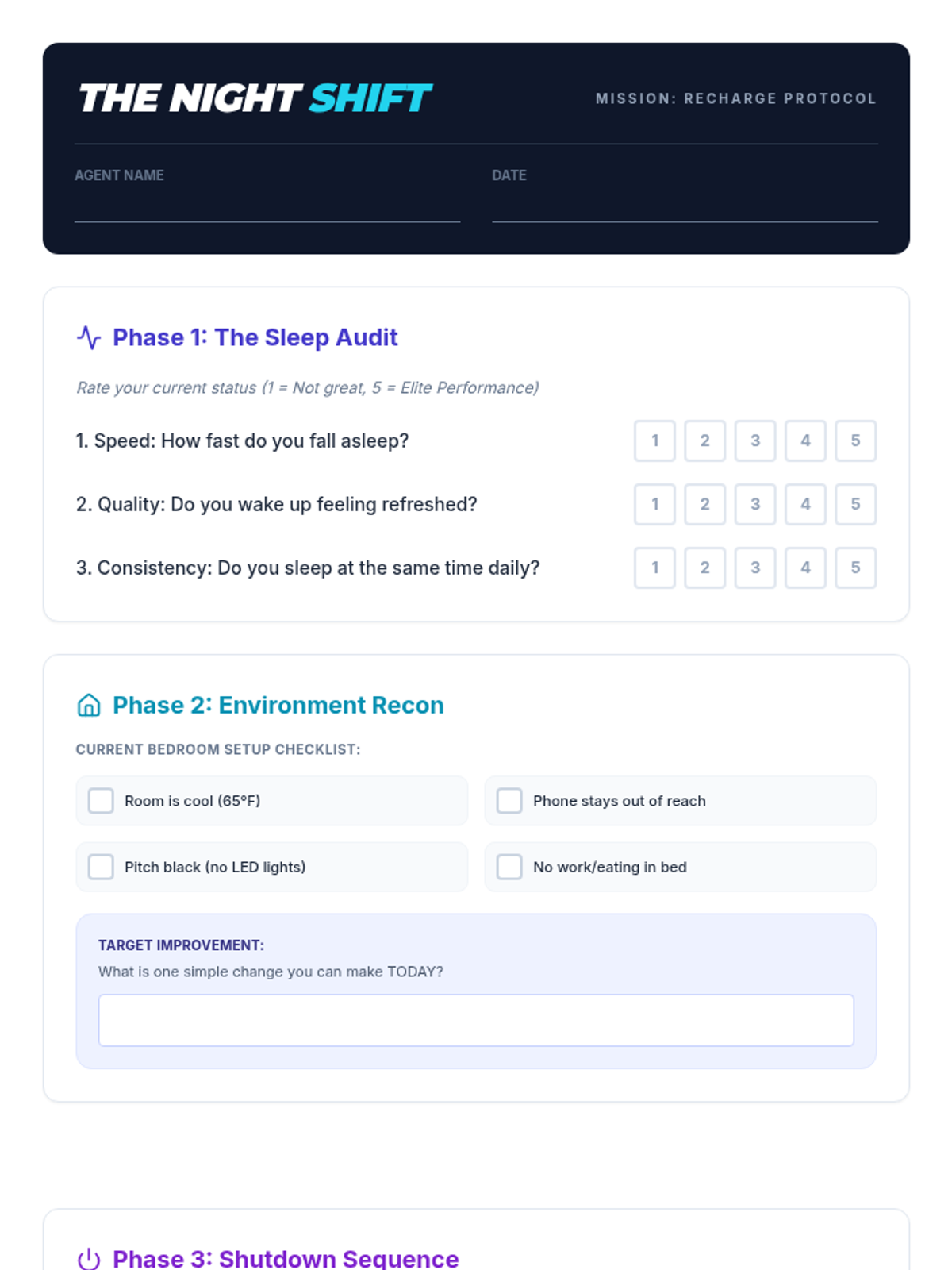
A 2-page participant worksheet for "The Night Shift" workshop, featuring a Sleep Audit, Environment Checklist, Shutdown Sequence planner, and Brain Dump area. Designed for clarity and student engagement.
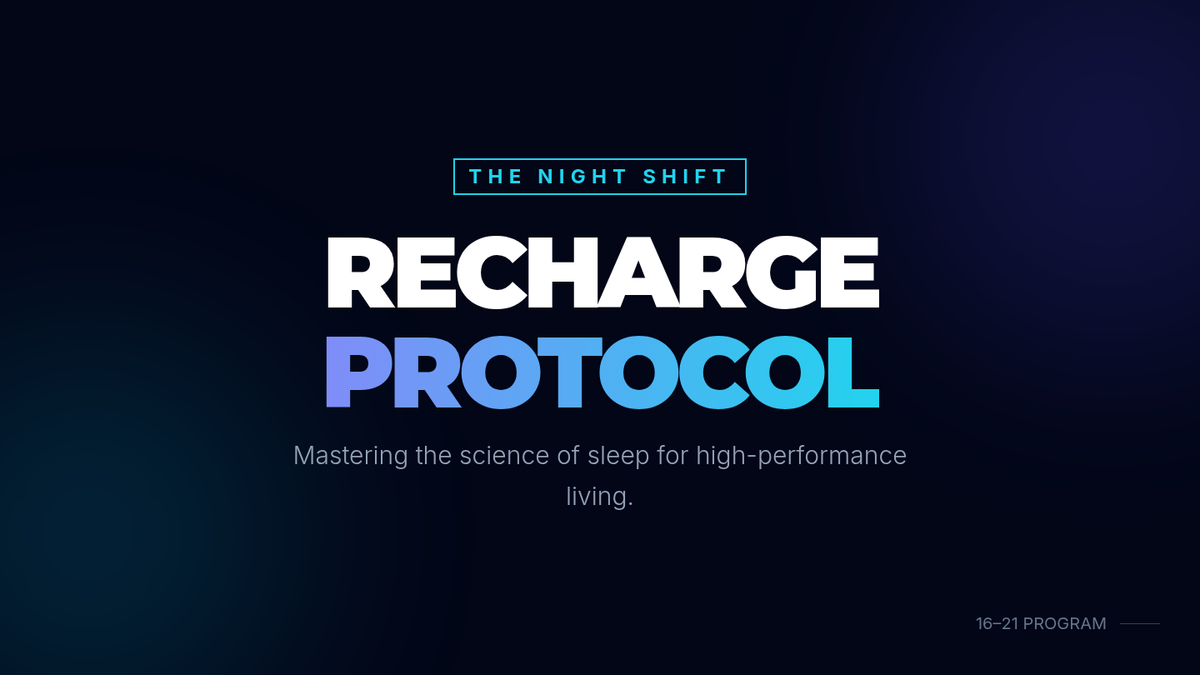
A high-impact, visual slide presentation for "The Night Shift" workshop, designed with a modern "dark mode" aesthetic for 16-21 year olds. Focuses on the "Recharge Protocol" and practical sleep hacks.
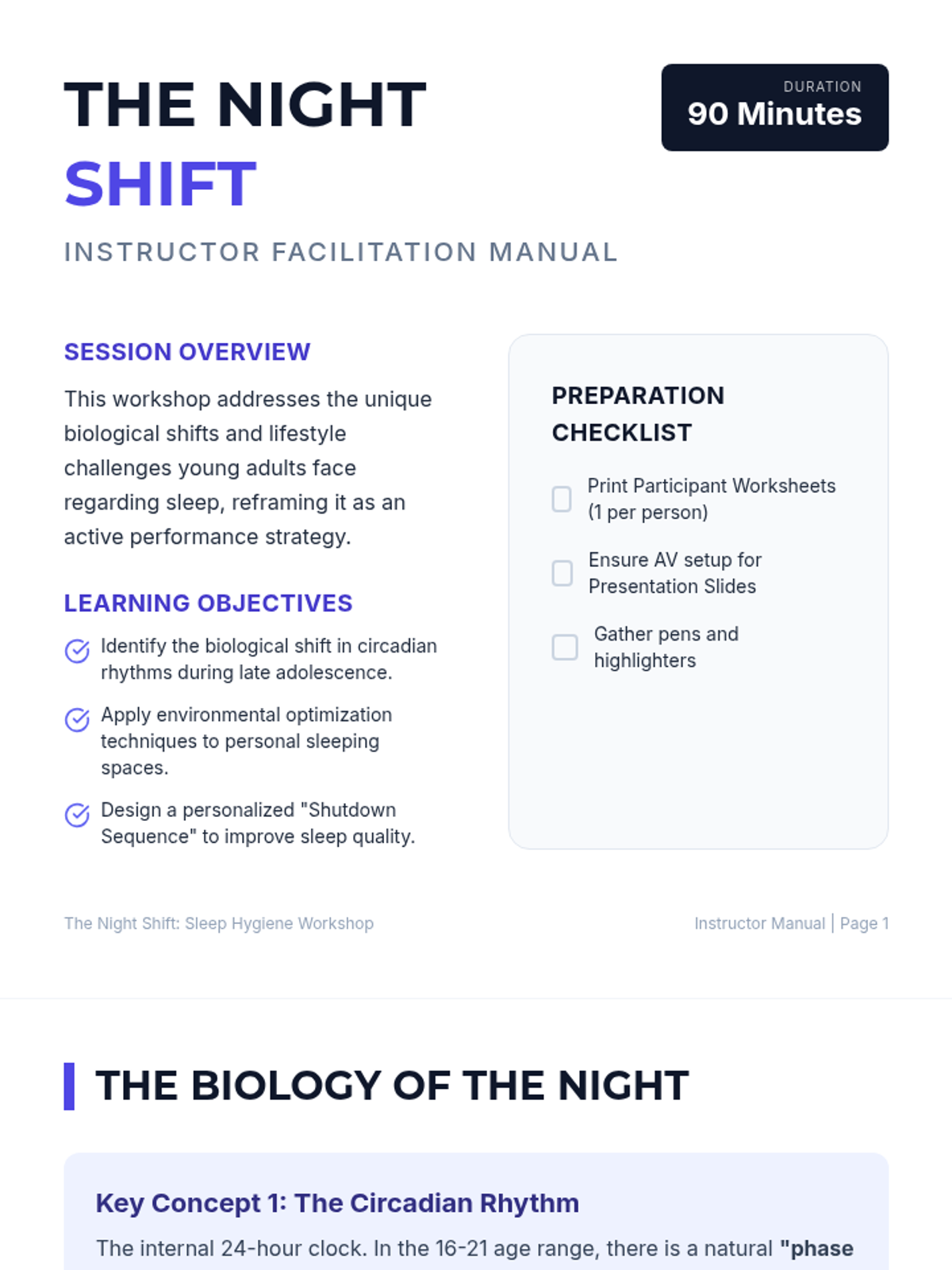
A detailed 8-page instructor facilitation guide for "The Night Shift" workshop, covering sleep biology, environmental optimization, behavioral routines, and mental hygiene strategies tailored for 16-21 year olds.
Large decorative tip bubbles and graphic cutouts (suns, ice cream, bikes) to fill space and add visual interest to the bulletin board.
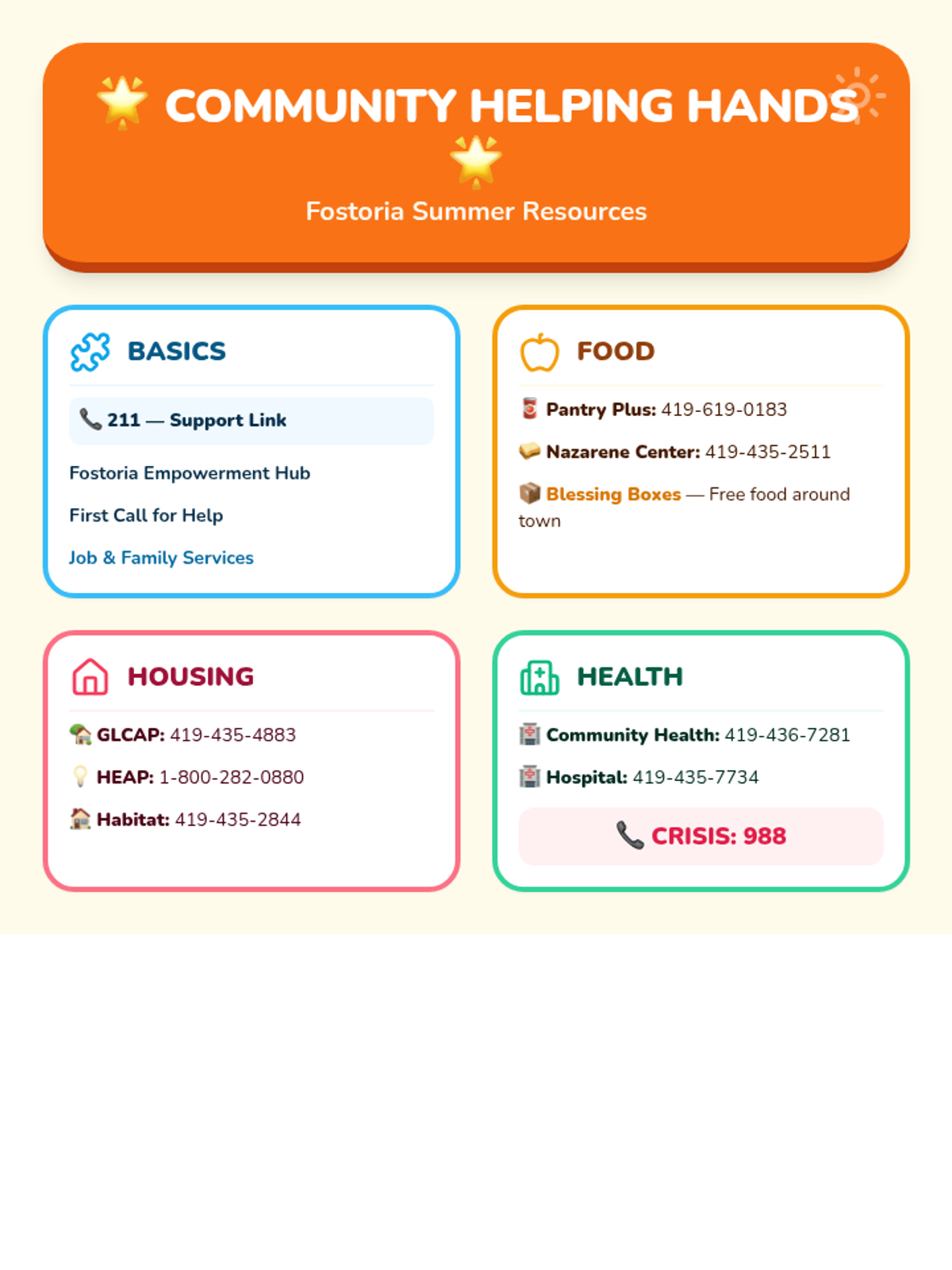
Organized, easy-to-read cards for local Fostoria community resources including food support, housing, utilities, and health services.
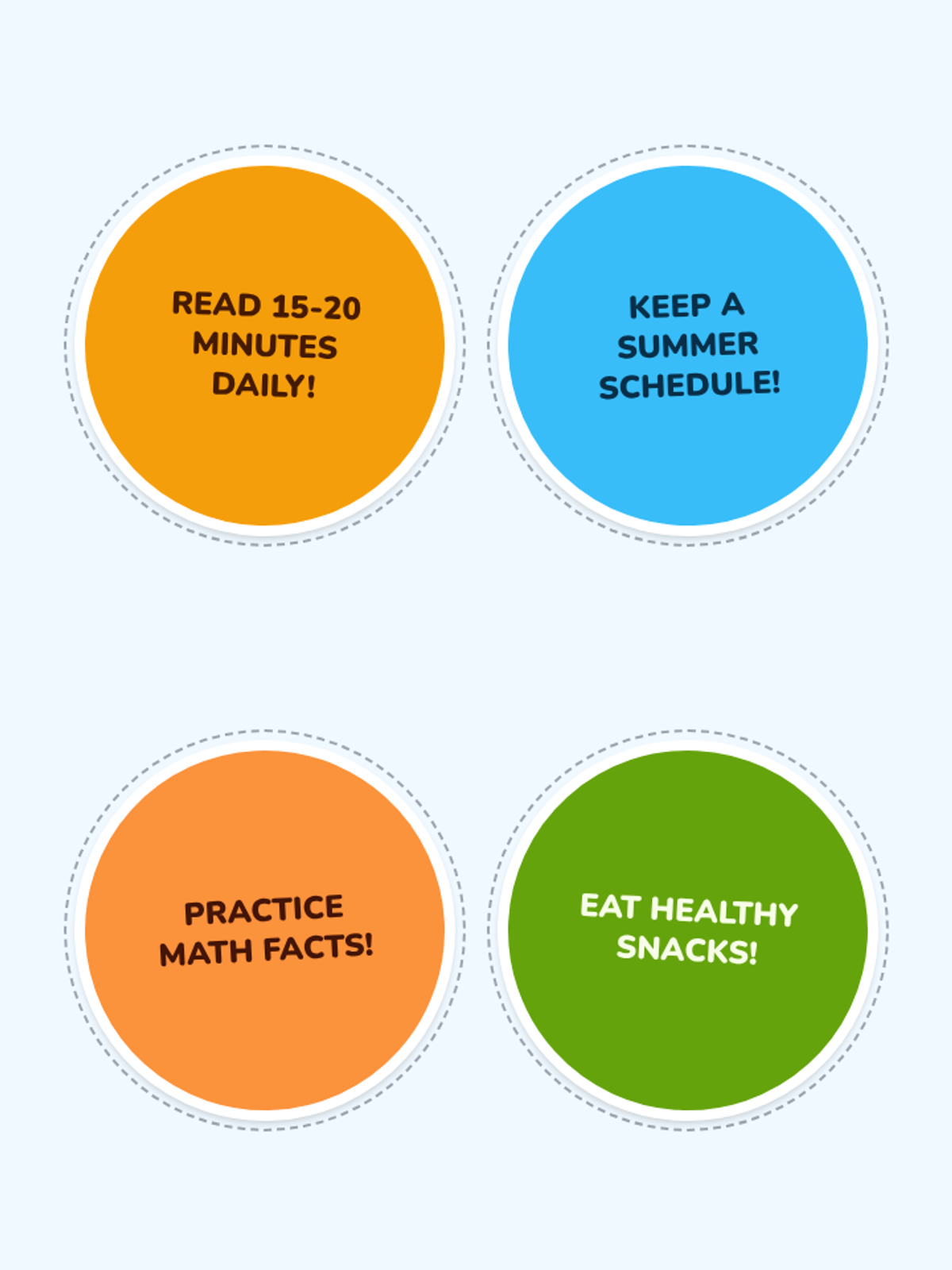
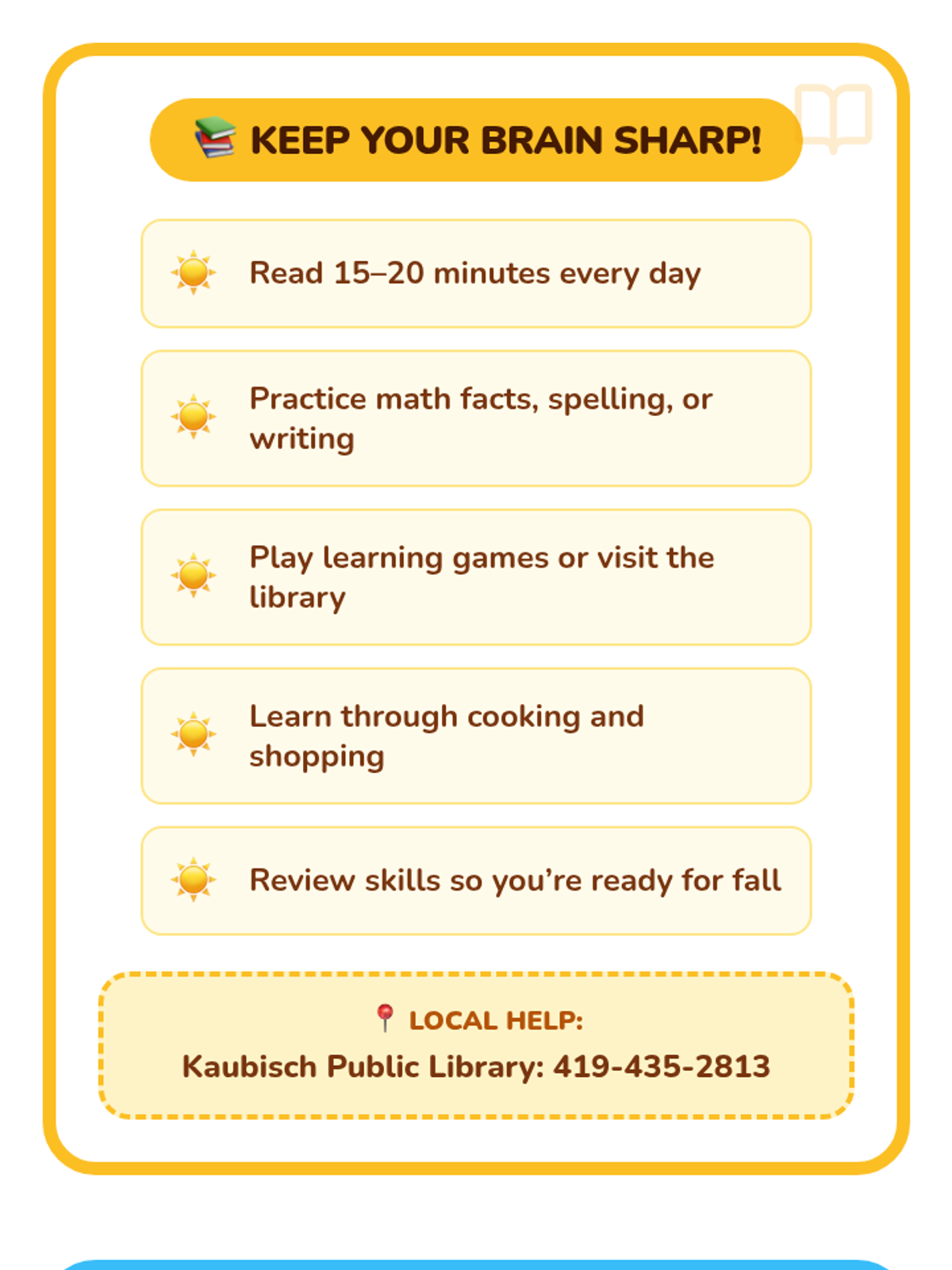
Full-page posters for each summer category: Brain Sharp, Summer Routine, Take Care of Feelings, Healthy Habits, and Stay Active. Design is bold, bright, and easy to read from a distance.
Large, high-impact header letters and graphics for the bulletin board title, designed in two sections for maximum size.
A visual presentation deck for teaching healthy sleep habits, featuring one slide per habit with large icons and clear, accessible text designed for students with intellectual disabilities. This version follows the evening routines with daytime/morning habits.
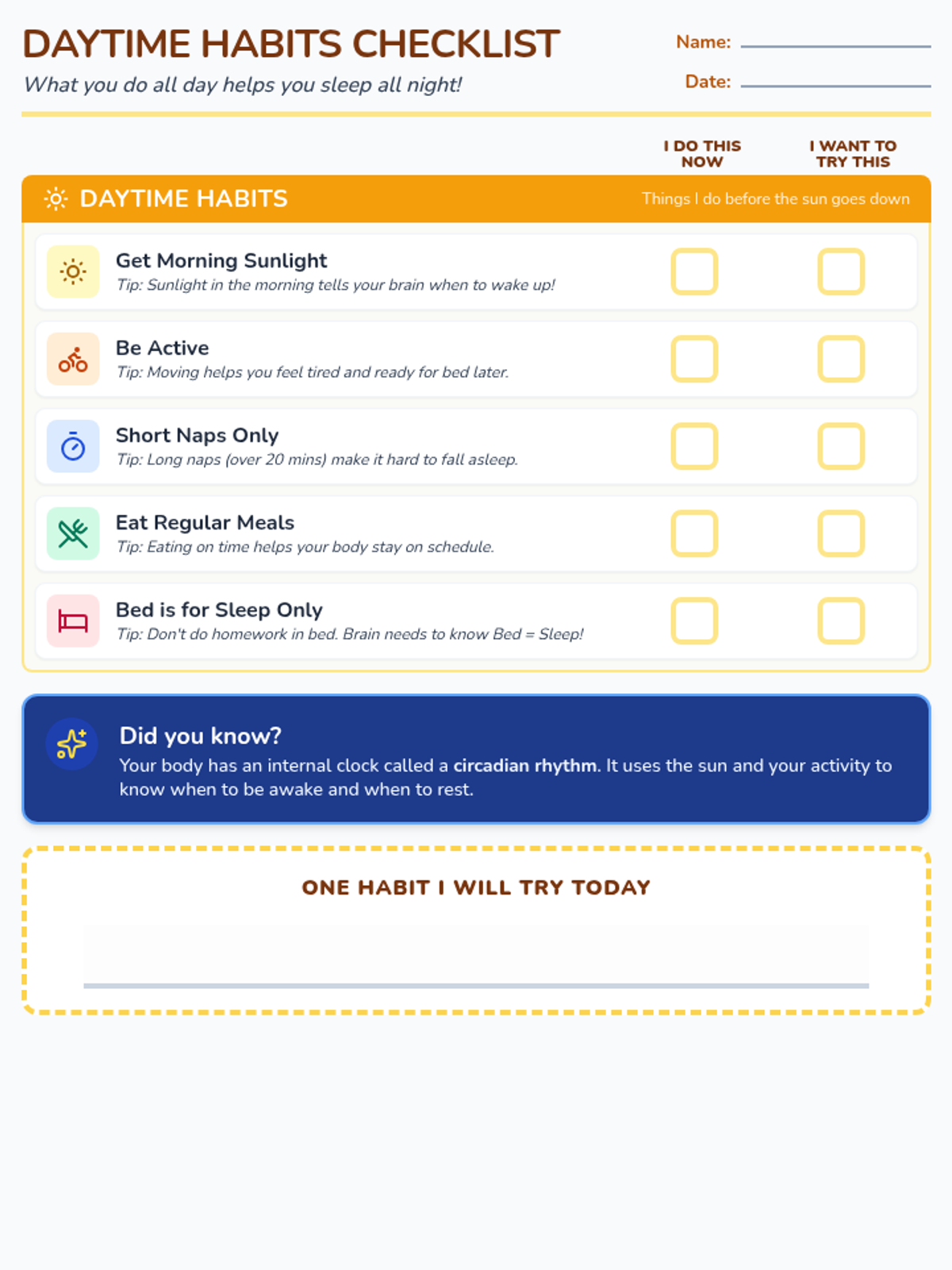
A student-friendly checklist for tracking daytime habits that influence sleep quality. Includes clear icons, two-column self-assessment, and educational tips explaining the 'why' behind each habit.
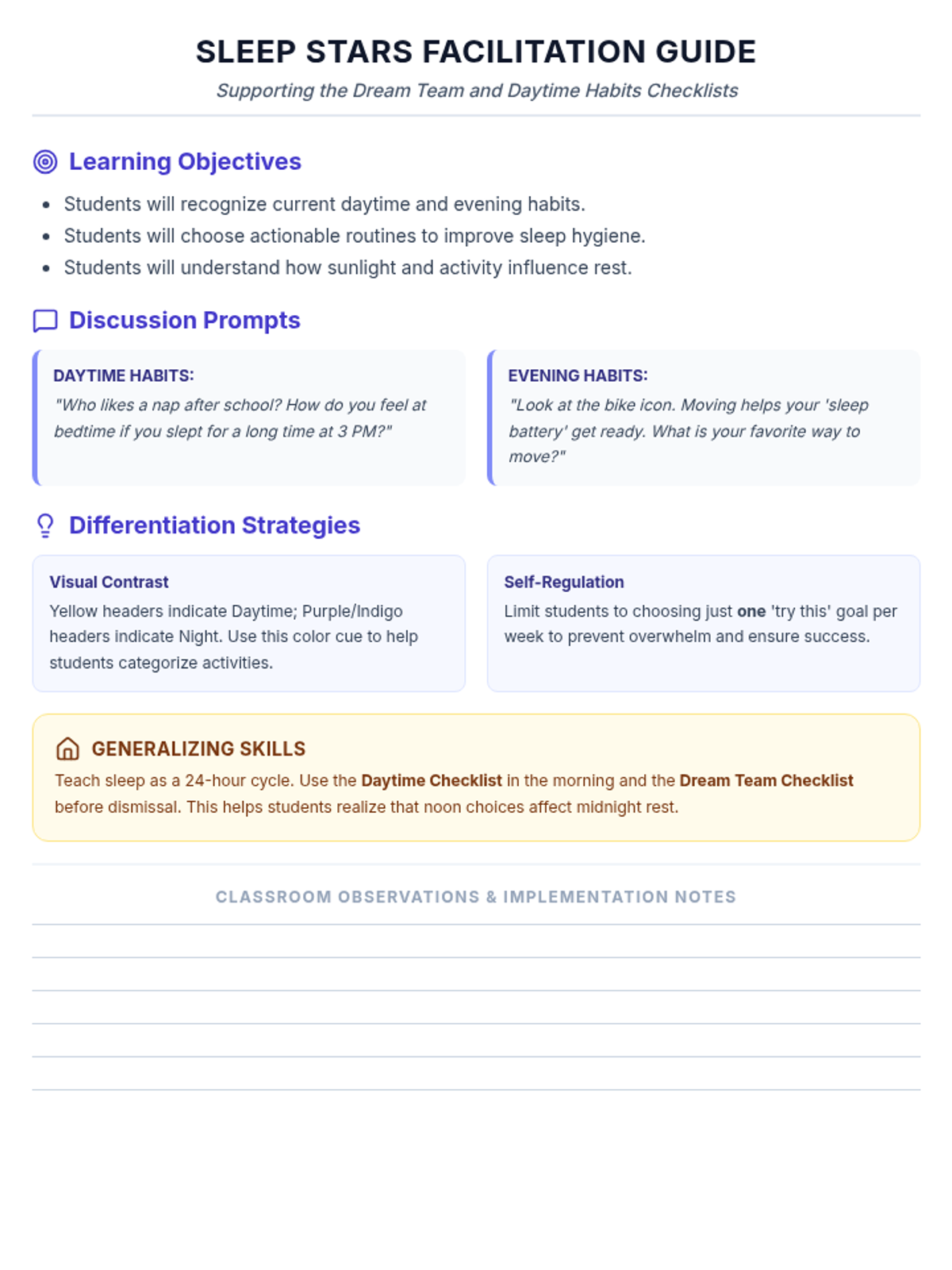
A teacher-facing guide providing instruction on how to facilitate the sleep habits lesson for students with intellectual disabilities, including discussion prompts and differentiation tips.
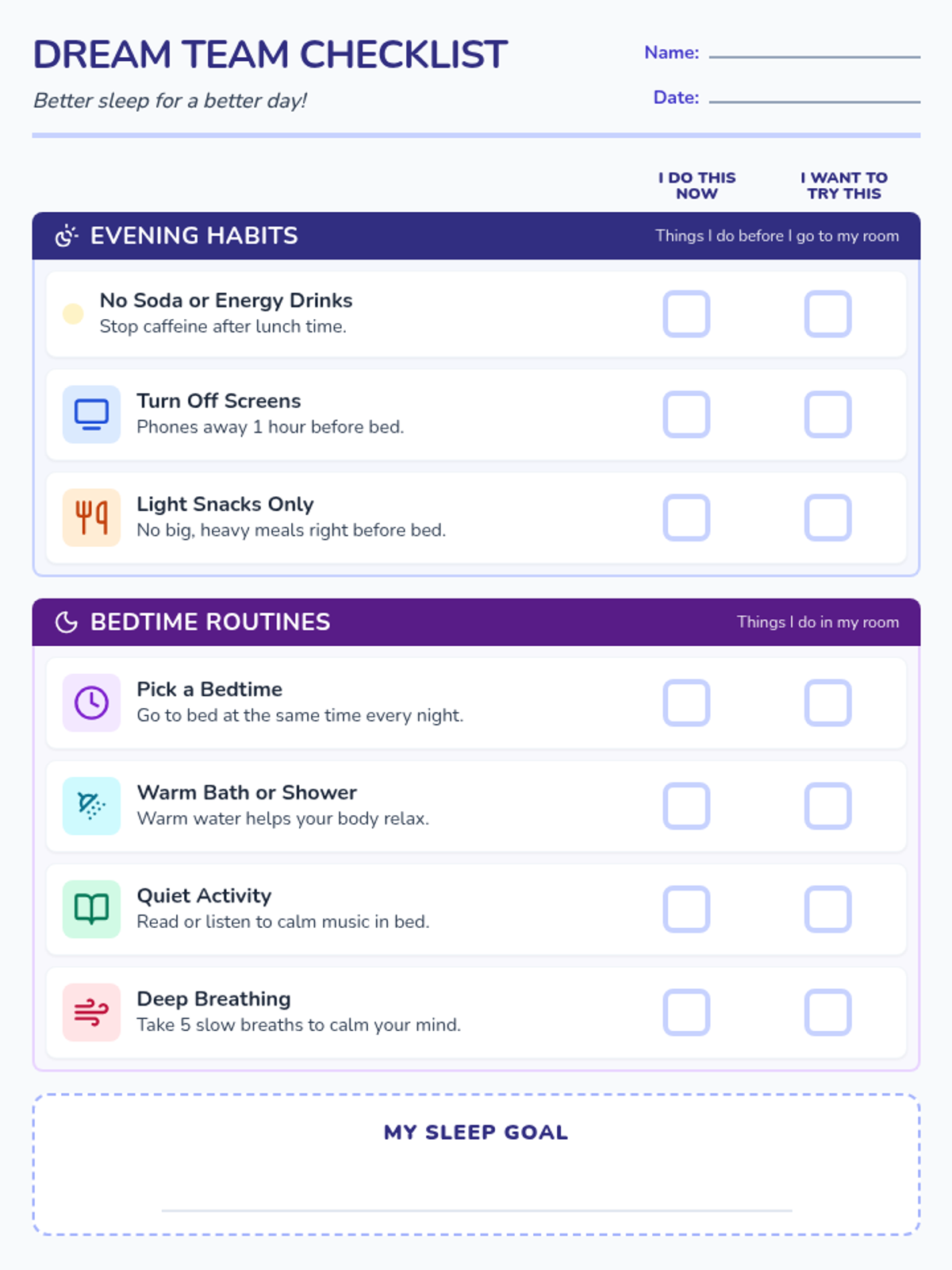
A student-friendly checklist for tracking evening habits and bedtime routines, designed for high school students with intellectual disabilities. Features large icons and clear text to support independence.
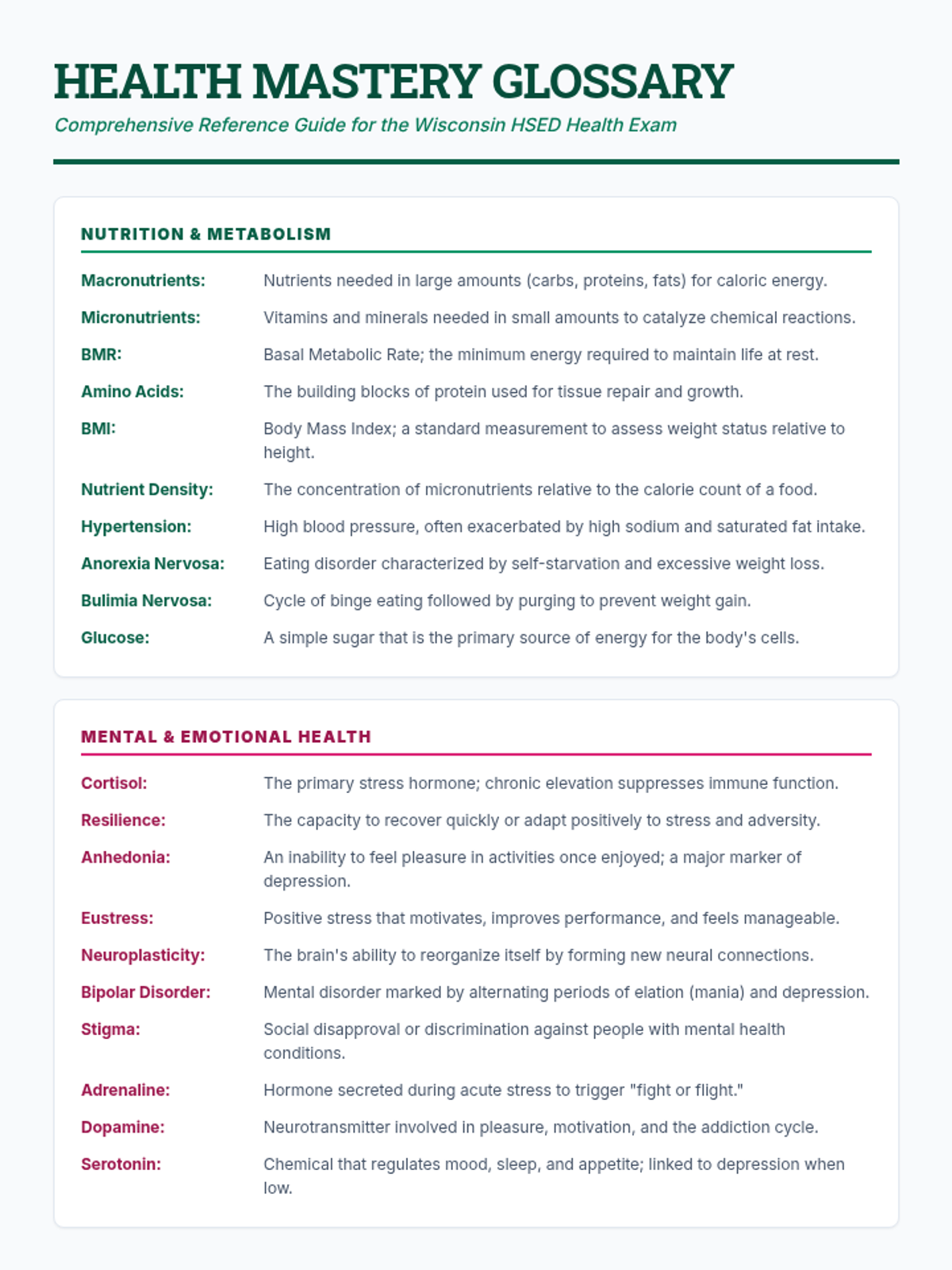
A comprehensive glossary of health-related terminology for HSED students, covering metabolism, mental health, substances, and safety standards. Expanded to 40 terms with high-level definitions and standardized section styling.
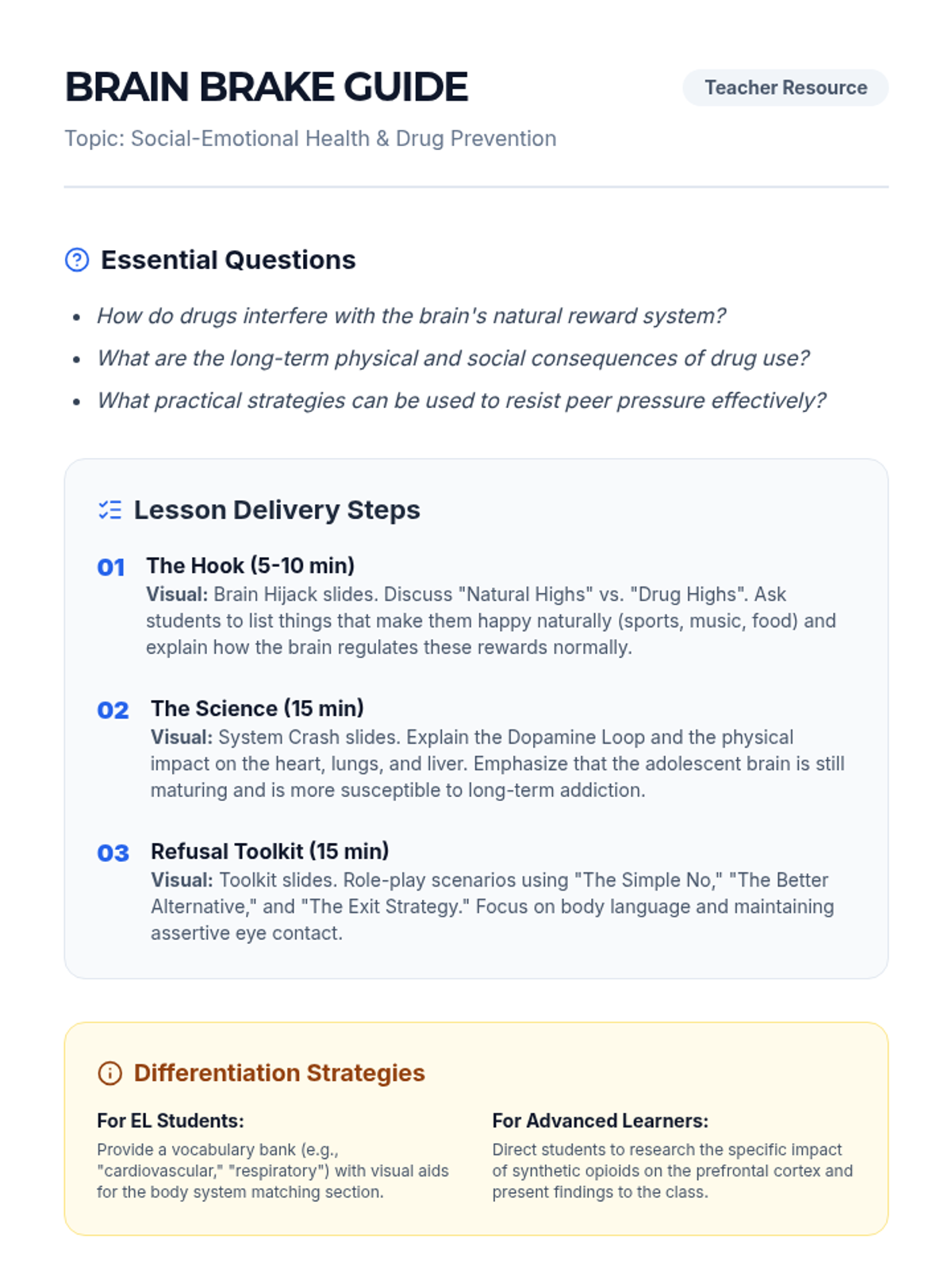
A facilitator's guide for the Brain Brake lesson, providing essential questions, a structured lesson flow, answer keys, and differentiation strategies for teachers.
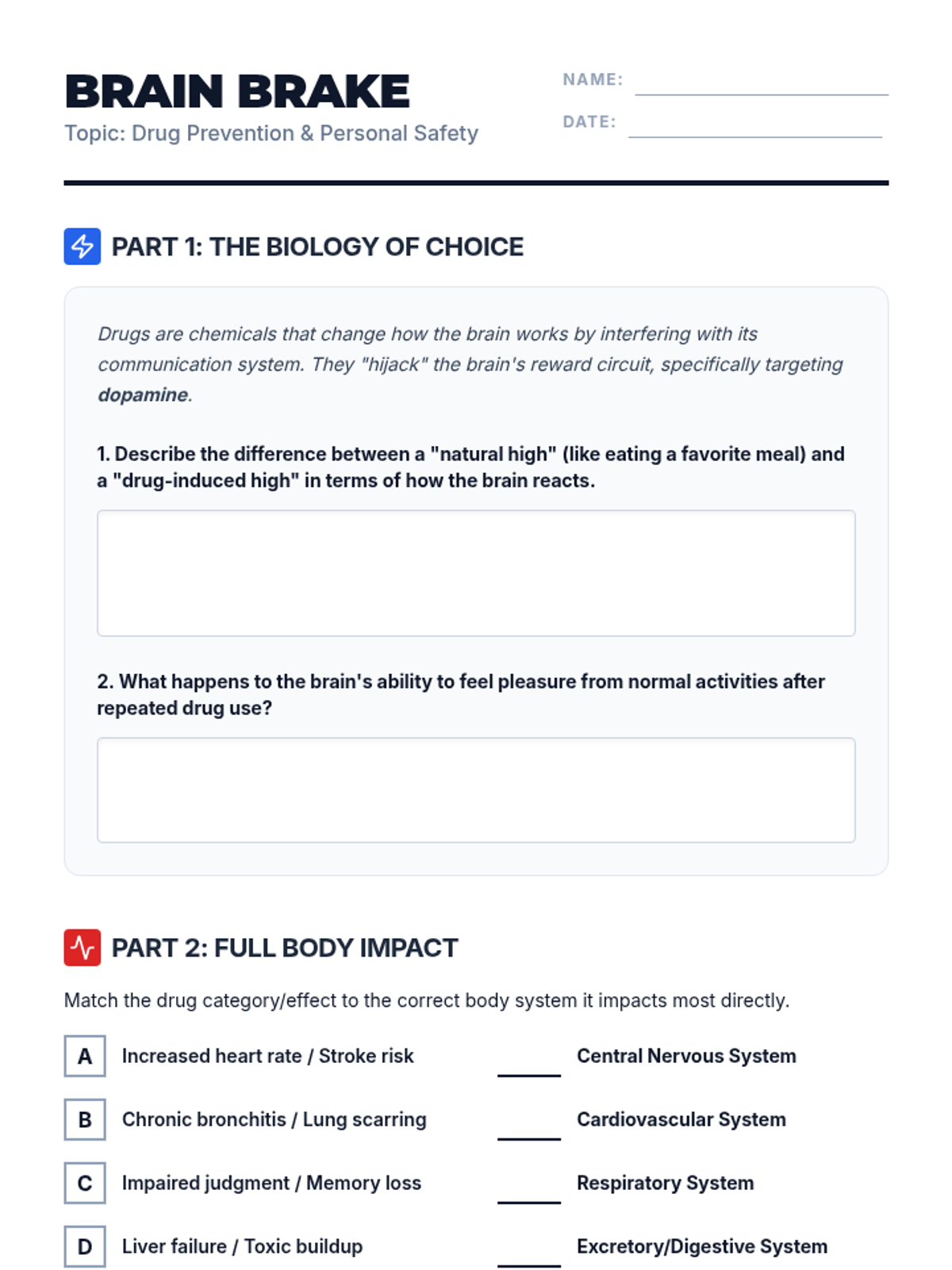
A comprehensive student worksheet exploring the biological effects of drugs on the brain, physical health consequences, and practical refusal skills practice.
A visually striking slide deck for a social-emotional lesson on drug prevention, covering brain chemistry, physical health impacts, social consequences, and refusal strategies.
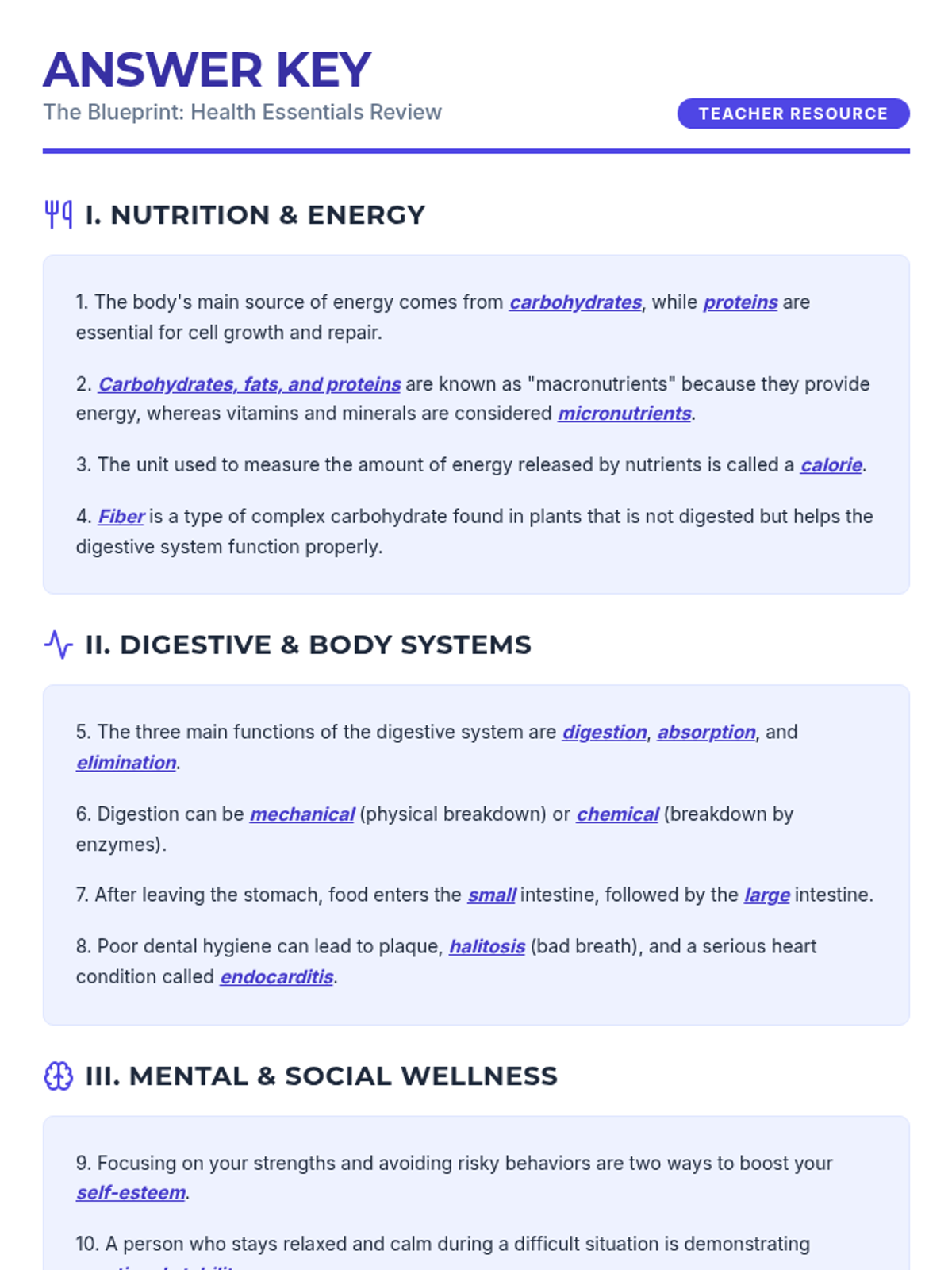
Teacher answer key for The Blueprint Health Essentials worksheet, providing correct fill-in-the-blank responses for nutrition, body systems, mental health, and disease prevention.
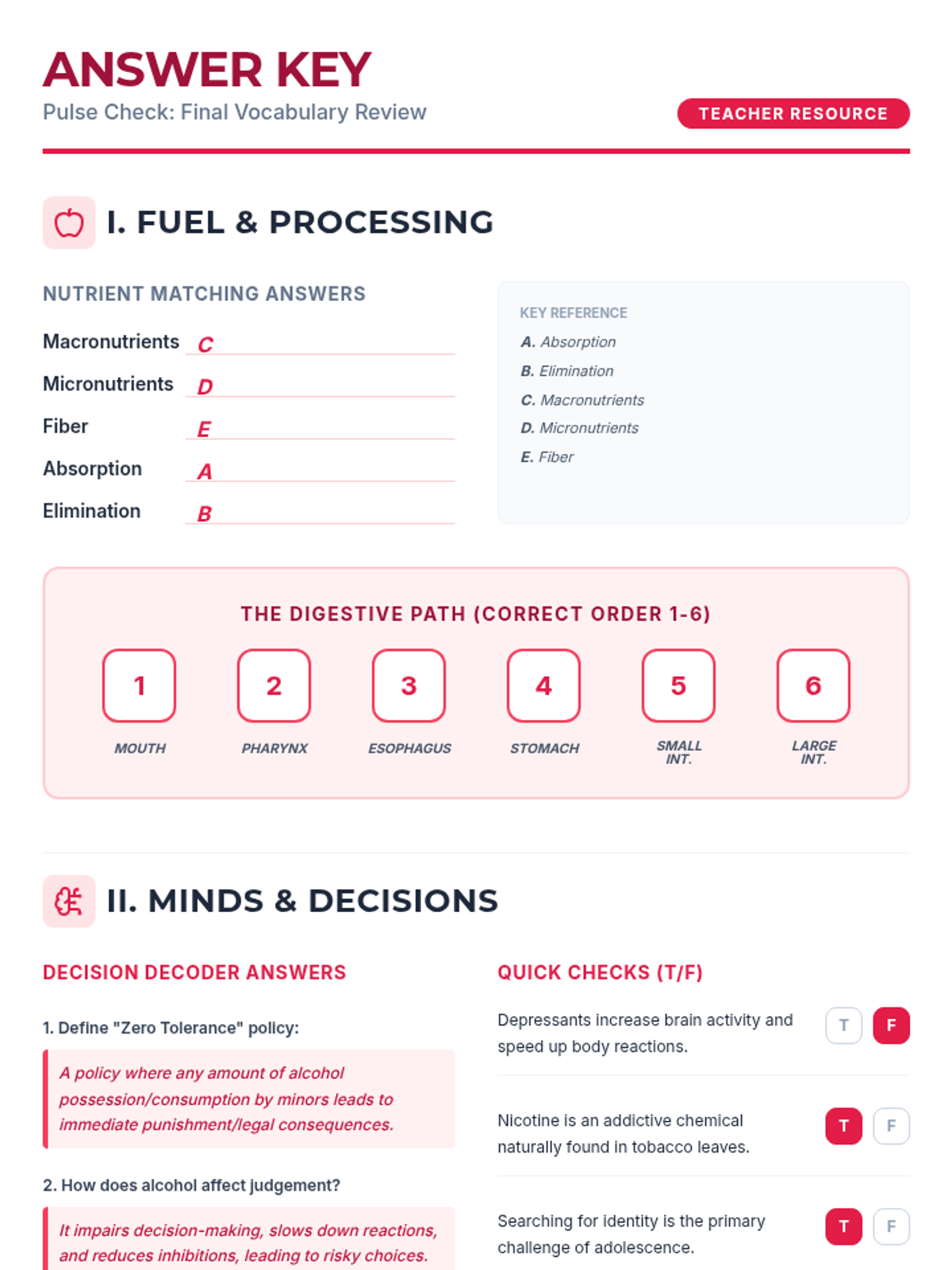
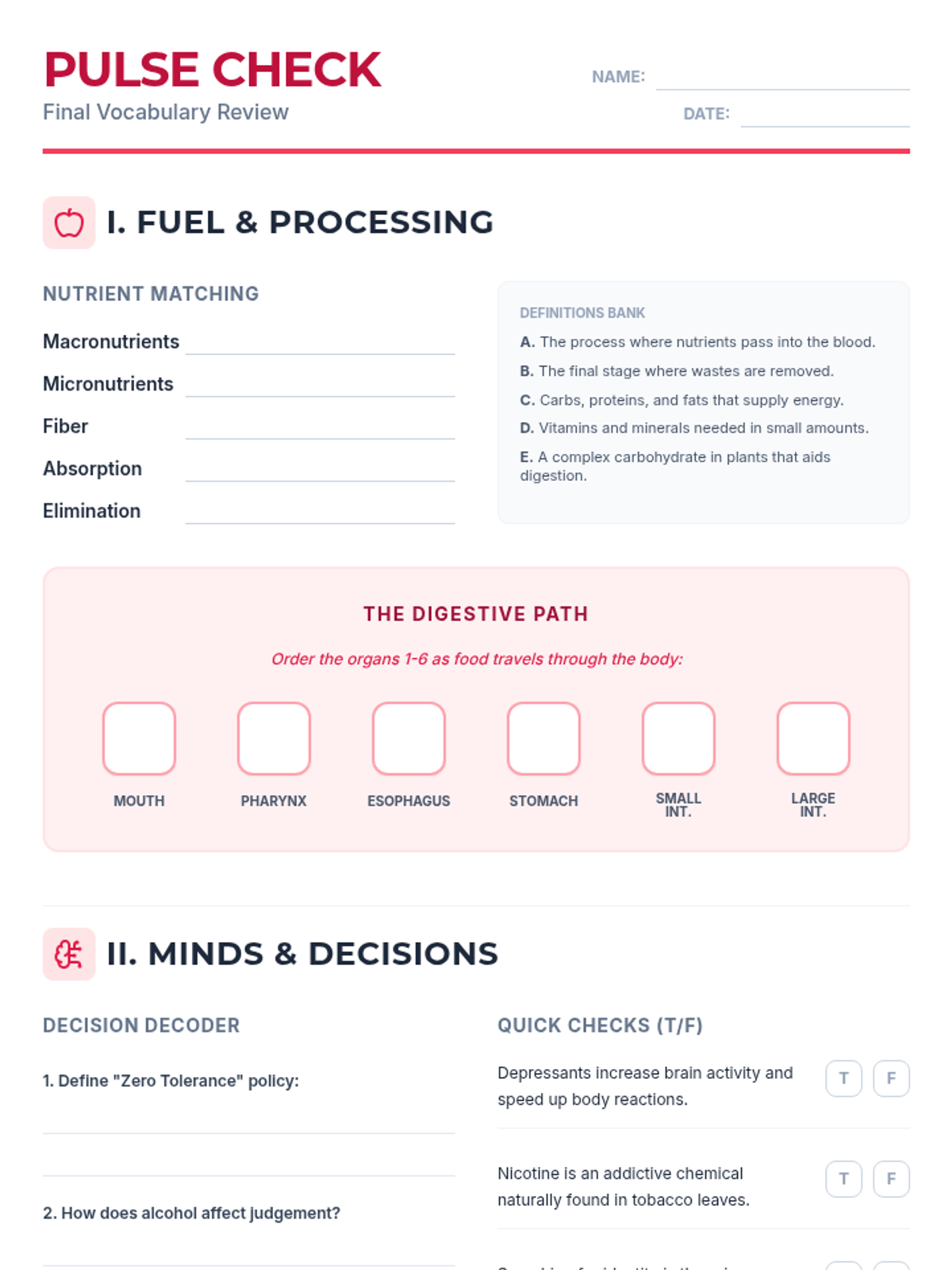
Teacher answer key for the Pulse Check Final Vocabulary Review worksheet, containing correct matching pairs, digestion order, short answer definitions, and true/false responses.
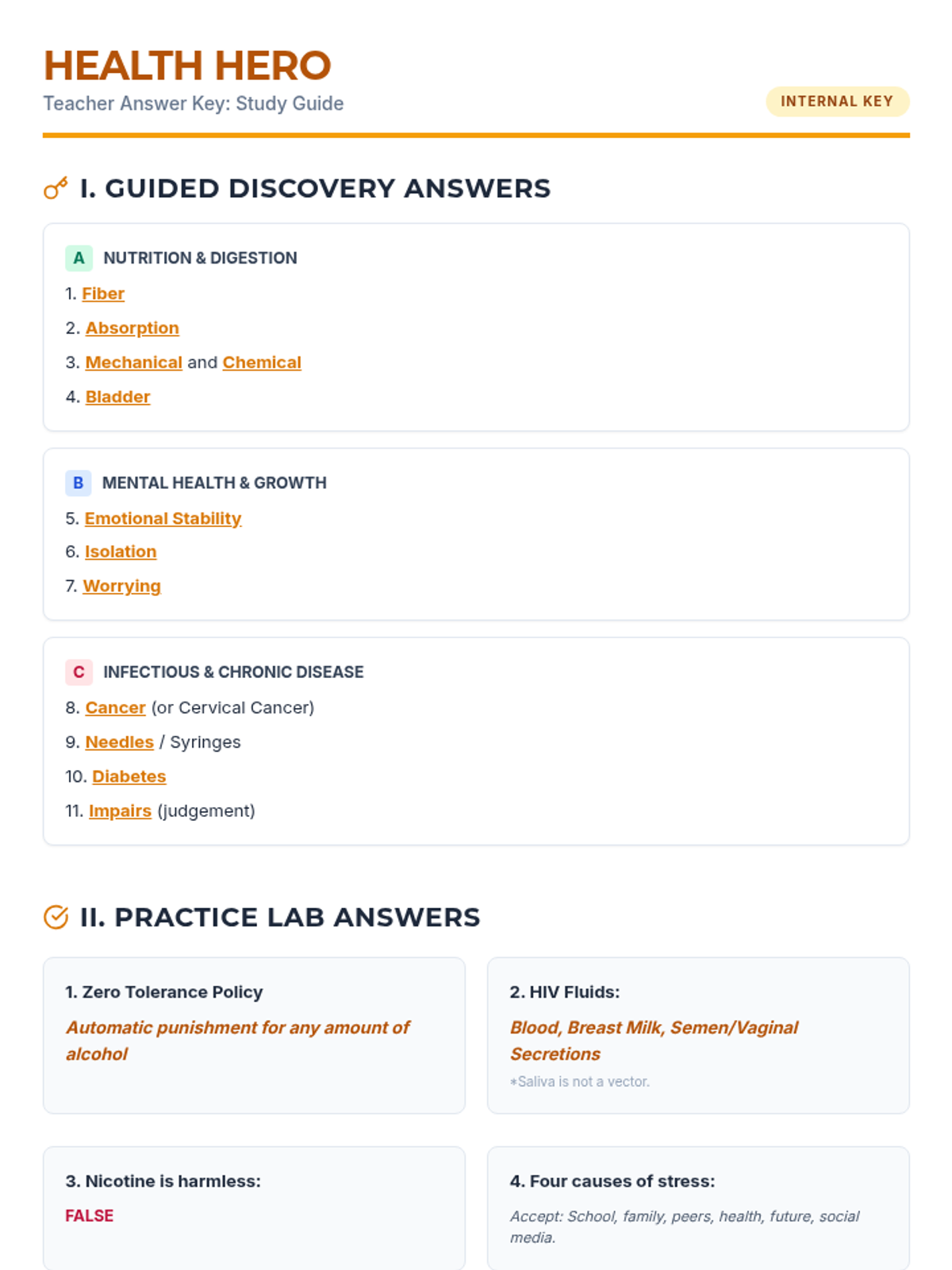
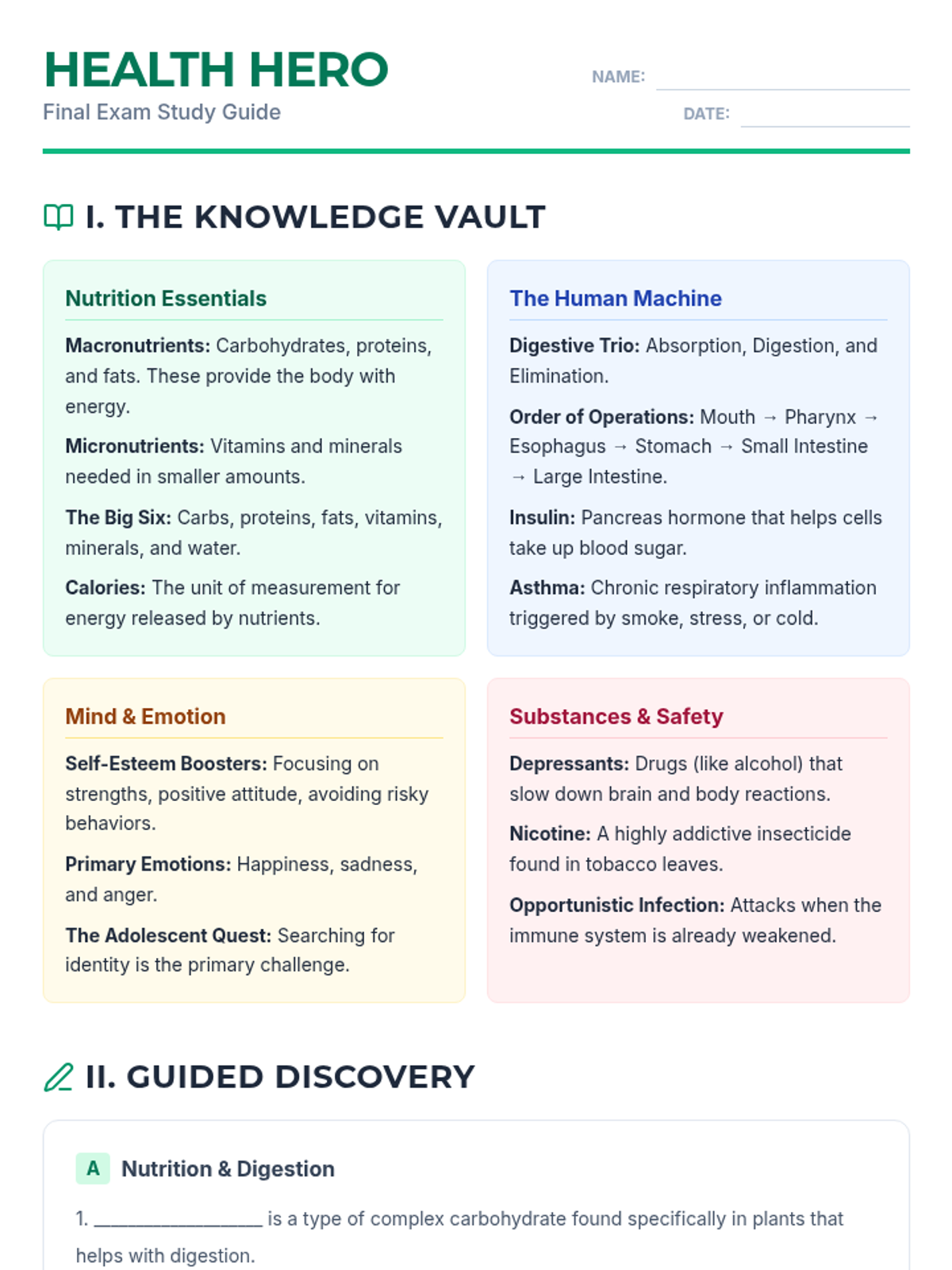
A teacher answer key for the Health Hero Study Guide, providing correct responses for the guided notes, practice lab questions, and short answer explanations. Condensed for efficiency.
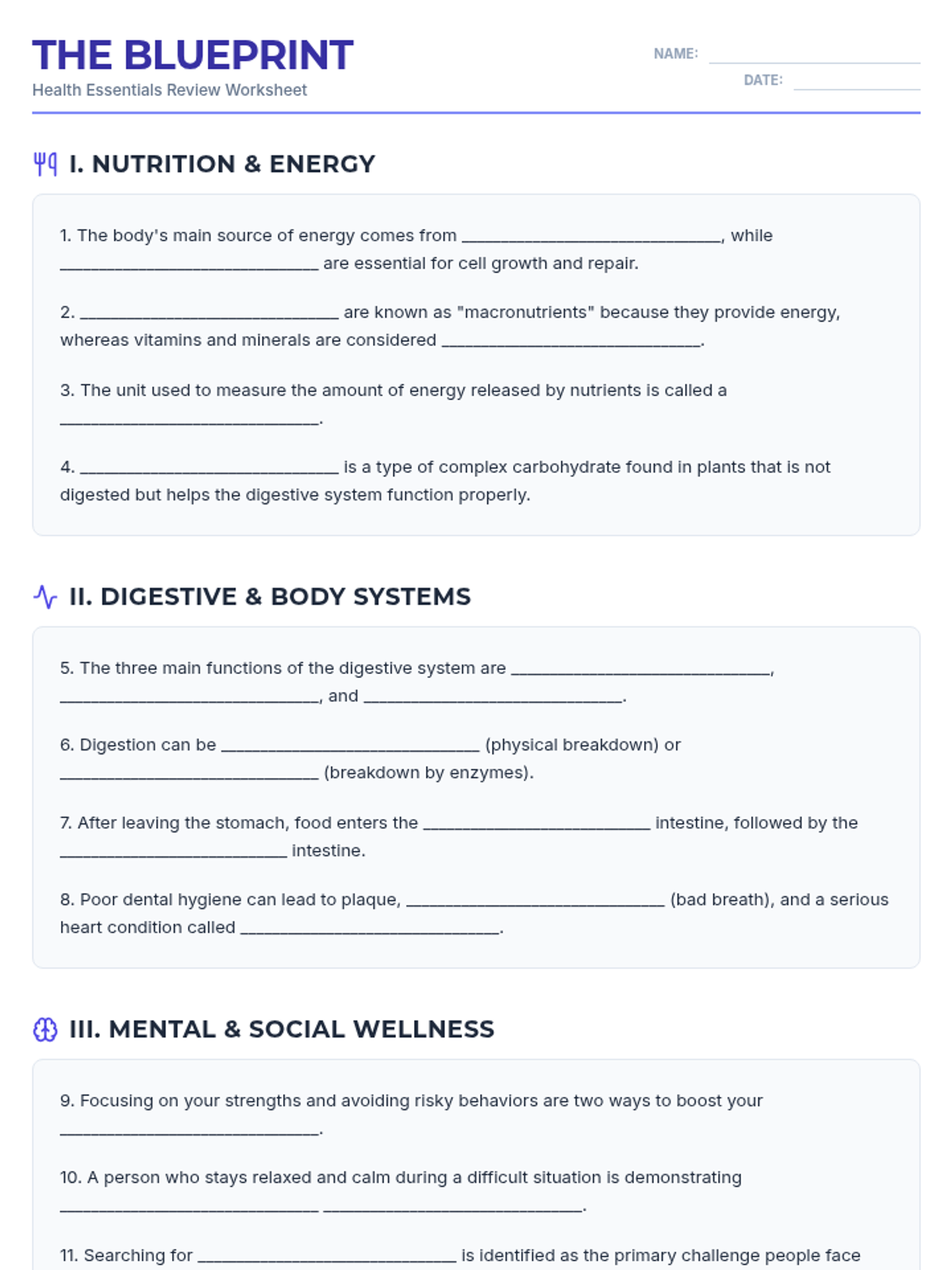
A fill-in-the-blanks worksheet based on the Health Essentials Summary Handout, covering nutrition, digestion, mental health, and disease prevention. Revised for strict page flow and header grouping.
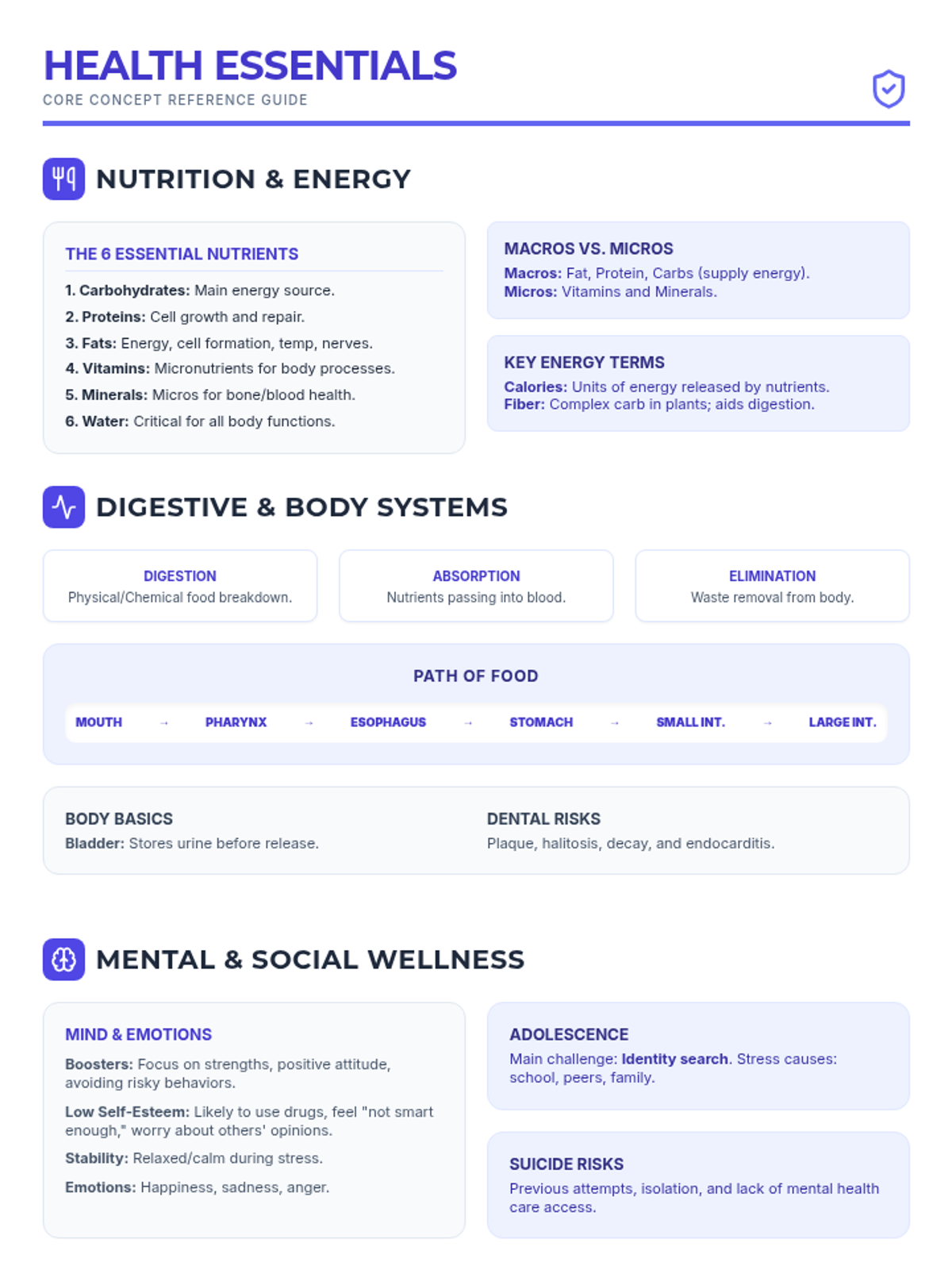
A concise 2-page summary guide condensing all information from the Health Final Exam into a high-density reference sheet for nutrition, body systems, mental health, and disease. Revised for strict 2-page length and improved formatting.
A comprehensive vocabulary review worksheet covering all key terms from the Health Final Exam. Revised to optimize page space, eliminate orphaned headers, and provide larger student work areas. Final polish pass for layout and student work space.
A comprehensive Health Final Exam study guide featuring key terms, guided notes with fill-in-the-blanks, and exam-style practice questions. Revised for better page flow and layout.
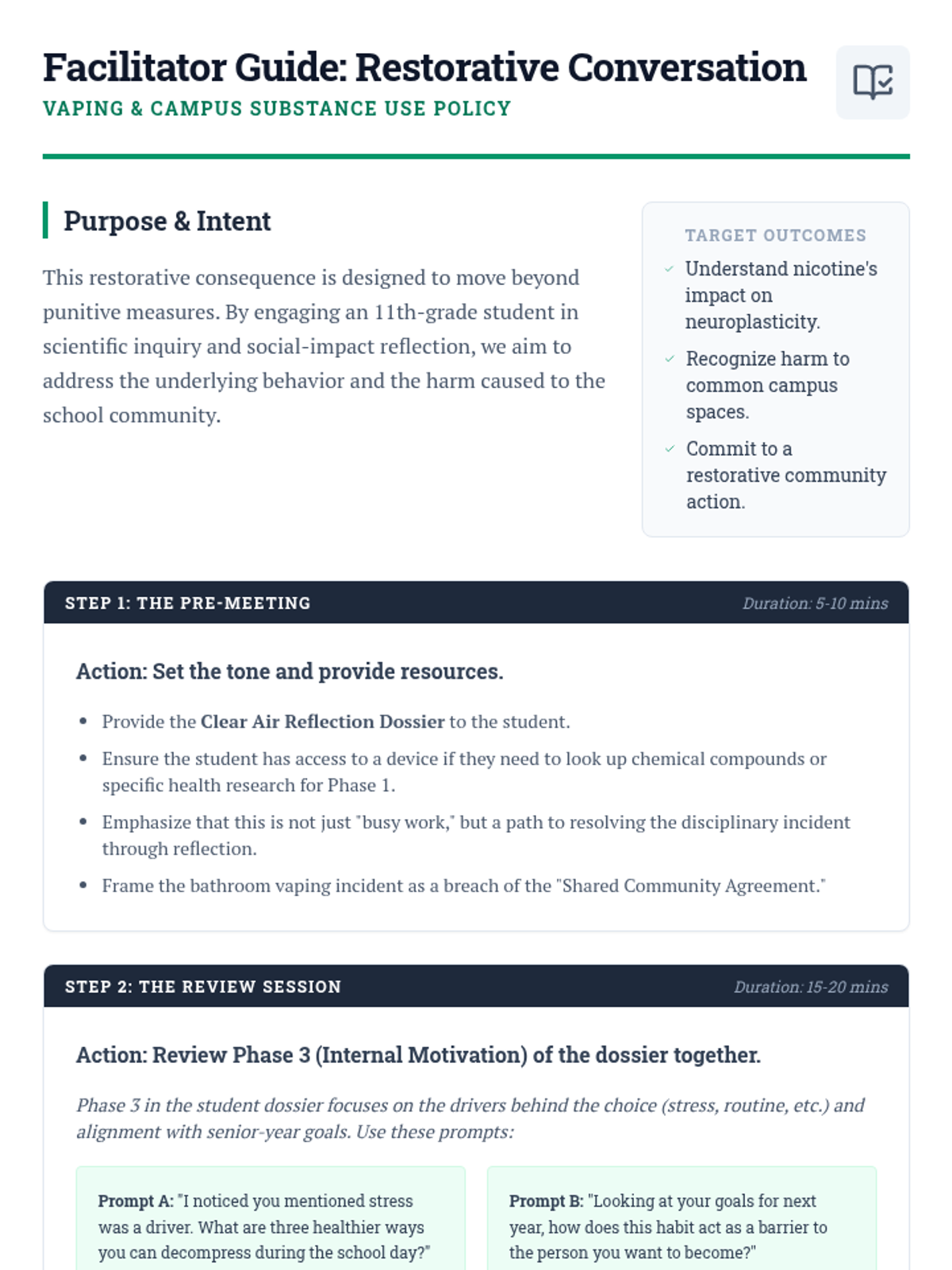
A facilitator's guide for school staff to manage the restorative conversation and follow-up for a student caught vaping.
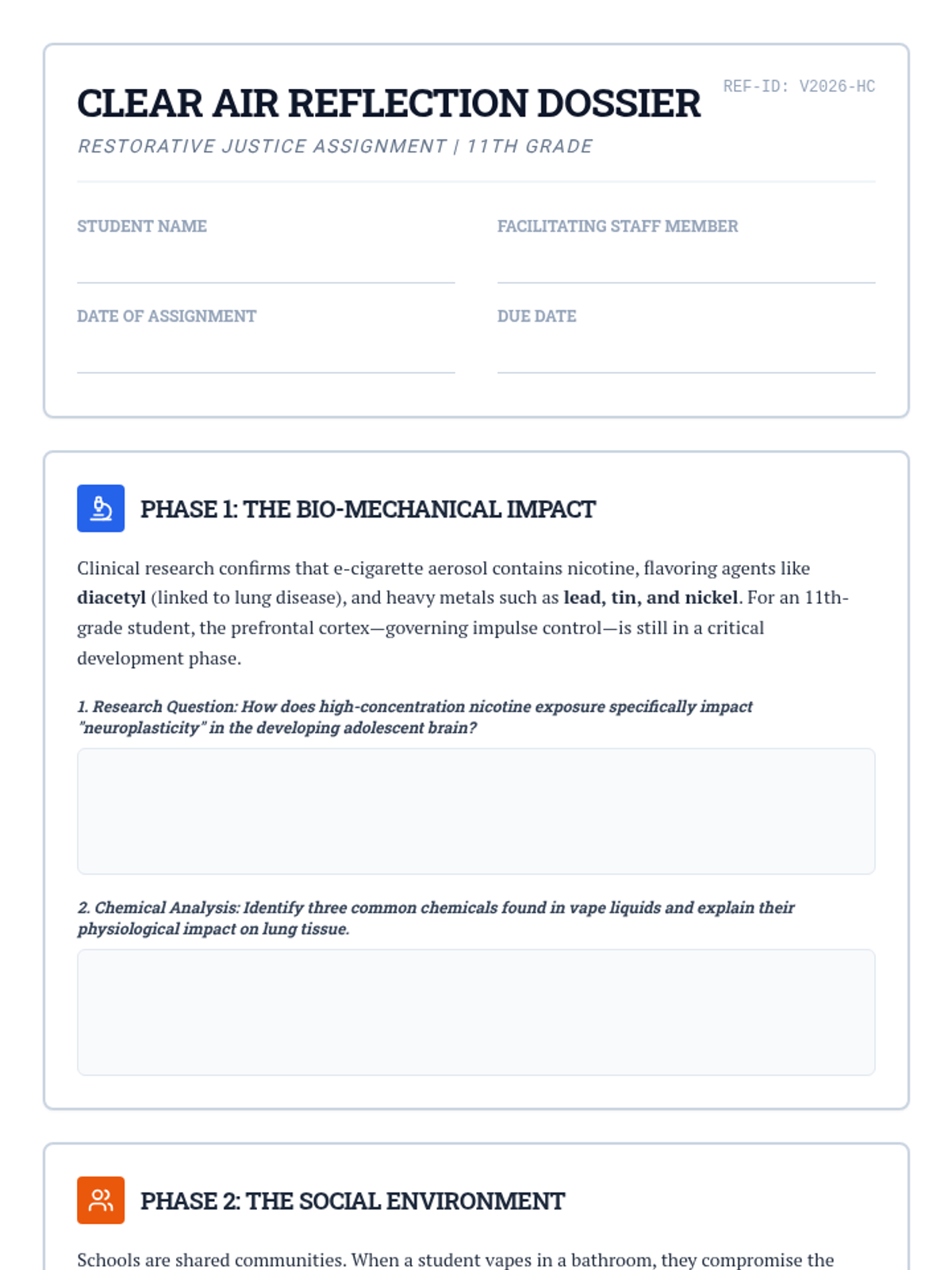
A reflective restorative justice assignment for a high school student caught vaping, focusing on health science, community impact, and personal growth.
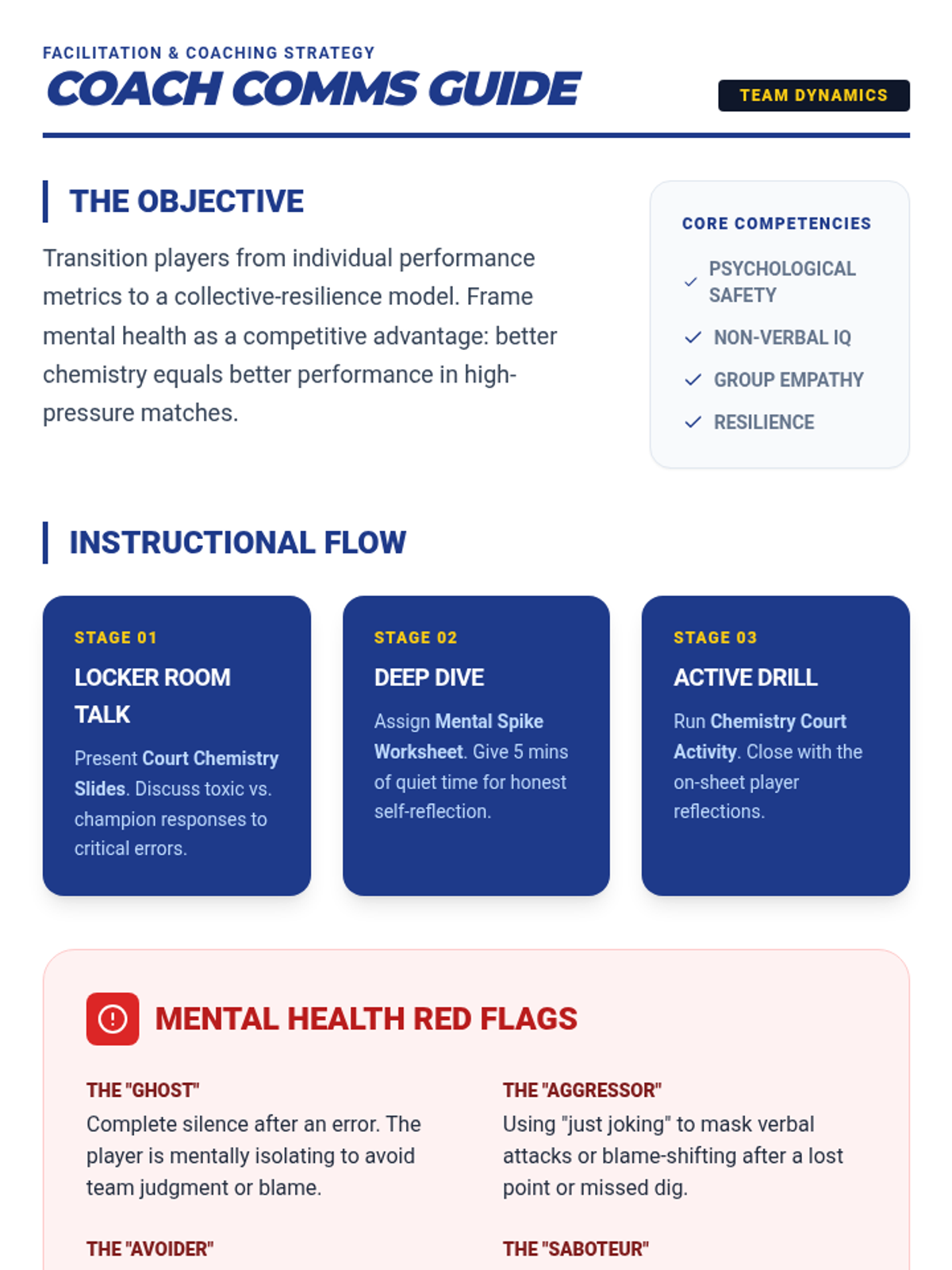
A facilitation guide for coaches that provides a lesson flow, vocabulary, mental health red flags to monitor, and professional tips for managing team dynamics.
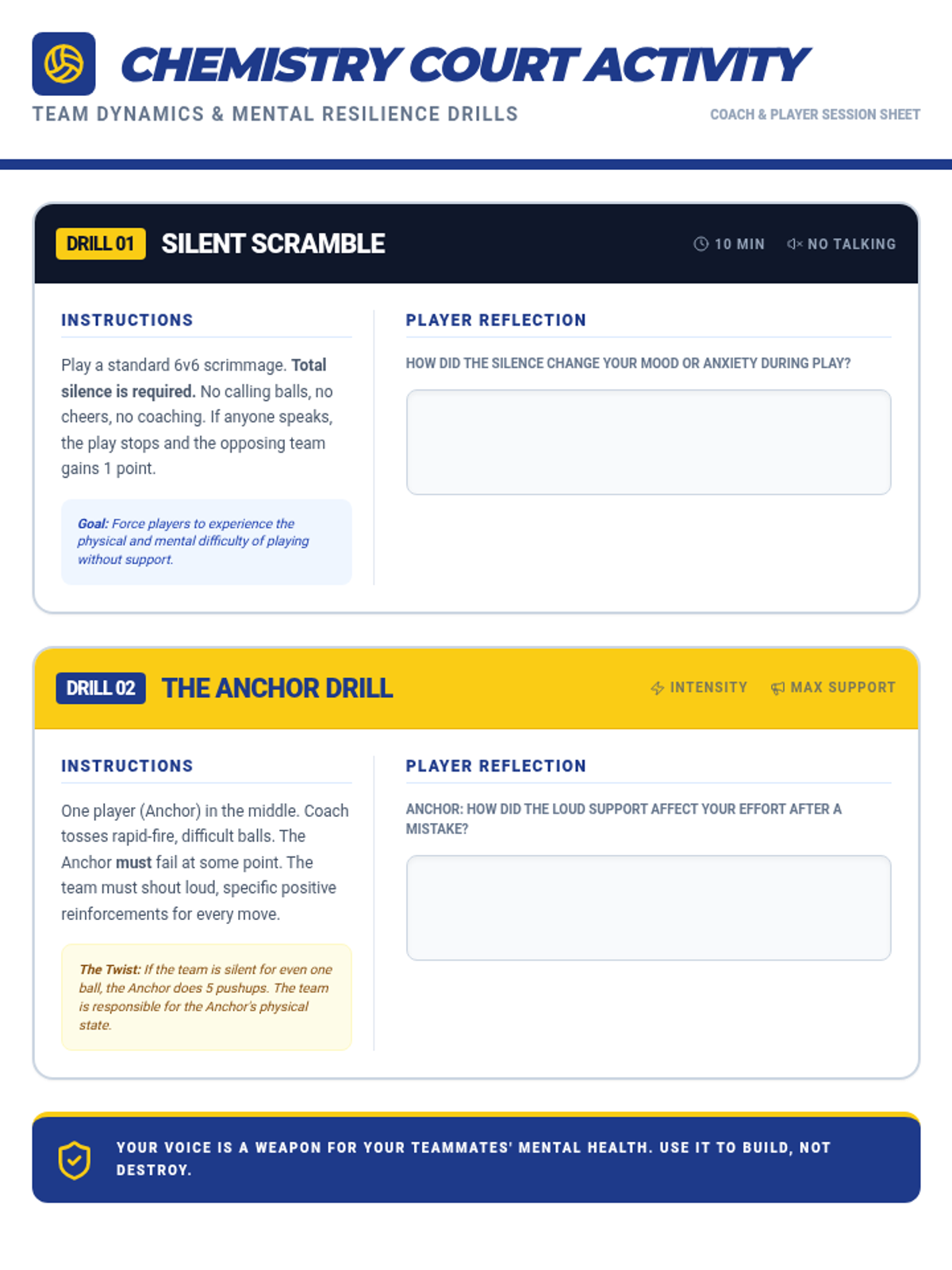
A physical activity guide for volleyball coaches featuring two specialized drills designed to build empathy, communication, and a supportive team environment.
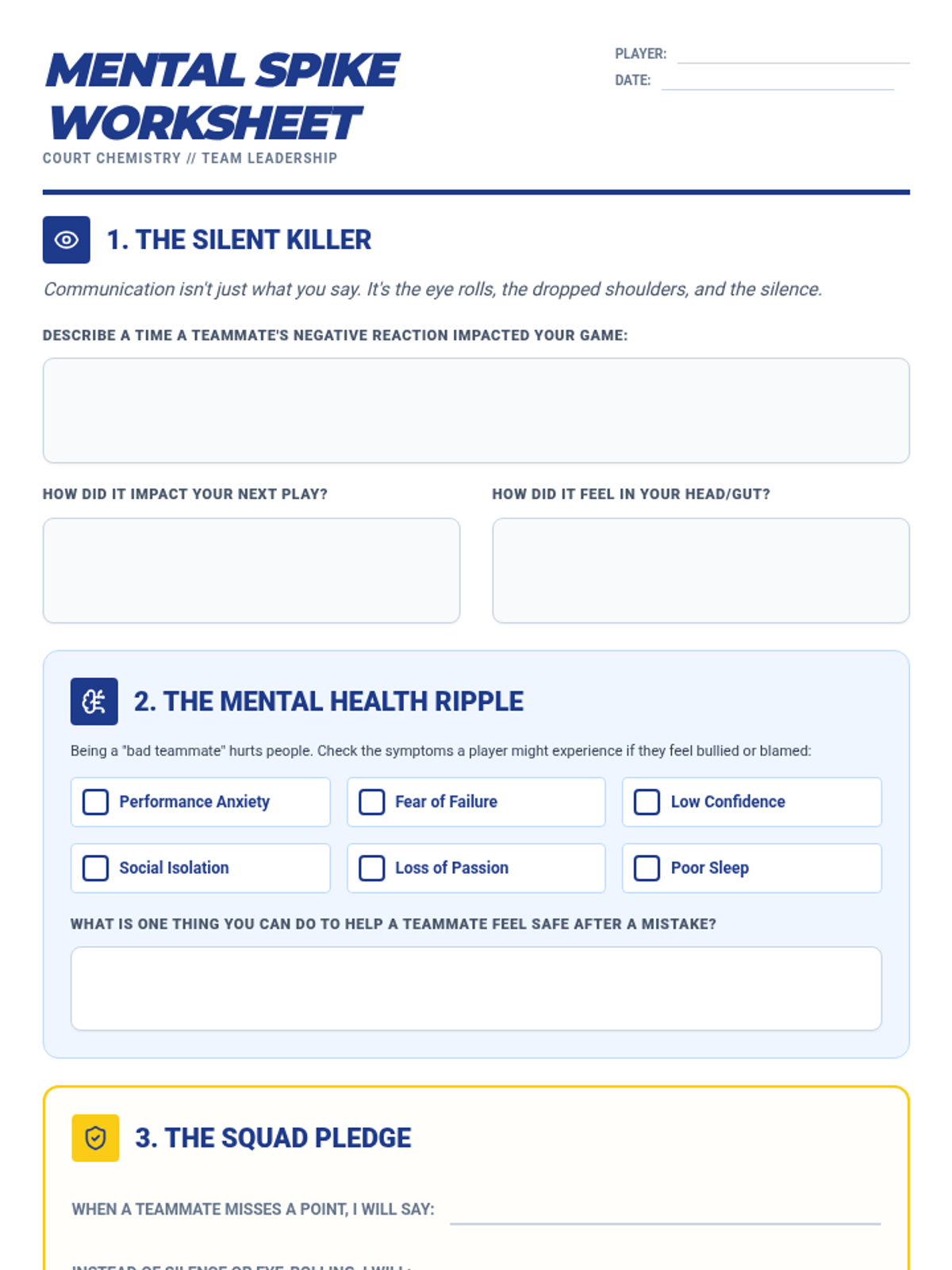
A self-reflection worksheet for players to explore the emotional impact of teammate behavior, identify symptoms of sports-related mental health struggles, and commit to positive communication.
A visual slide deck for coaches to introduce the concept of "Court Chemistry," focusing on the mental health impact of teammate interactions and sportsmanship in volleyball.
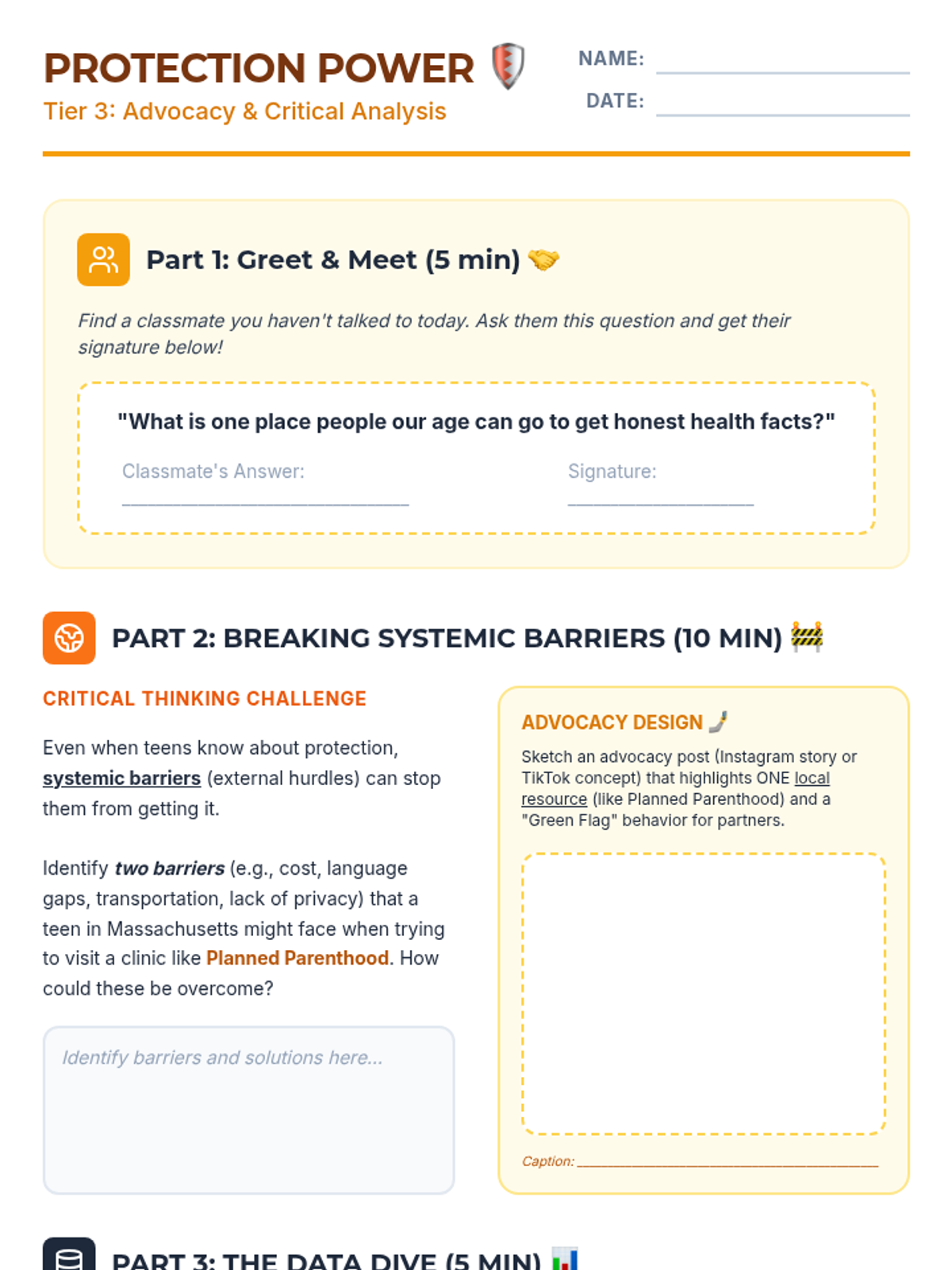
A tiered (Tier 3) student worksheet focusing on systemic barriers, advocacy design, and complex values-based debates regarding sexual health and contraceptive access.
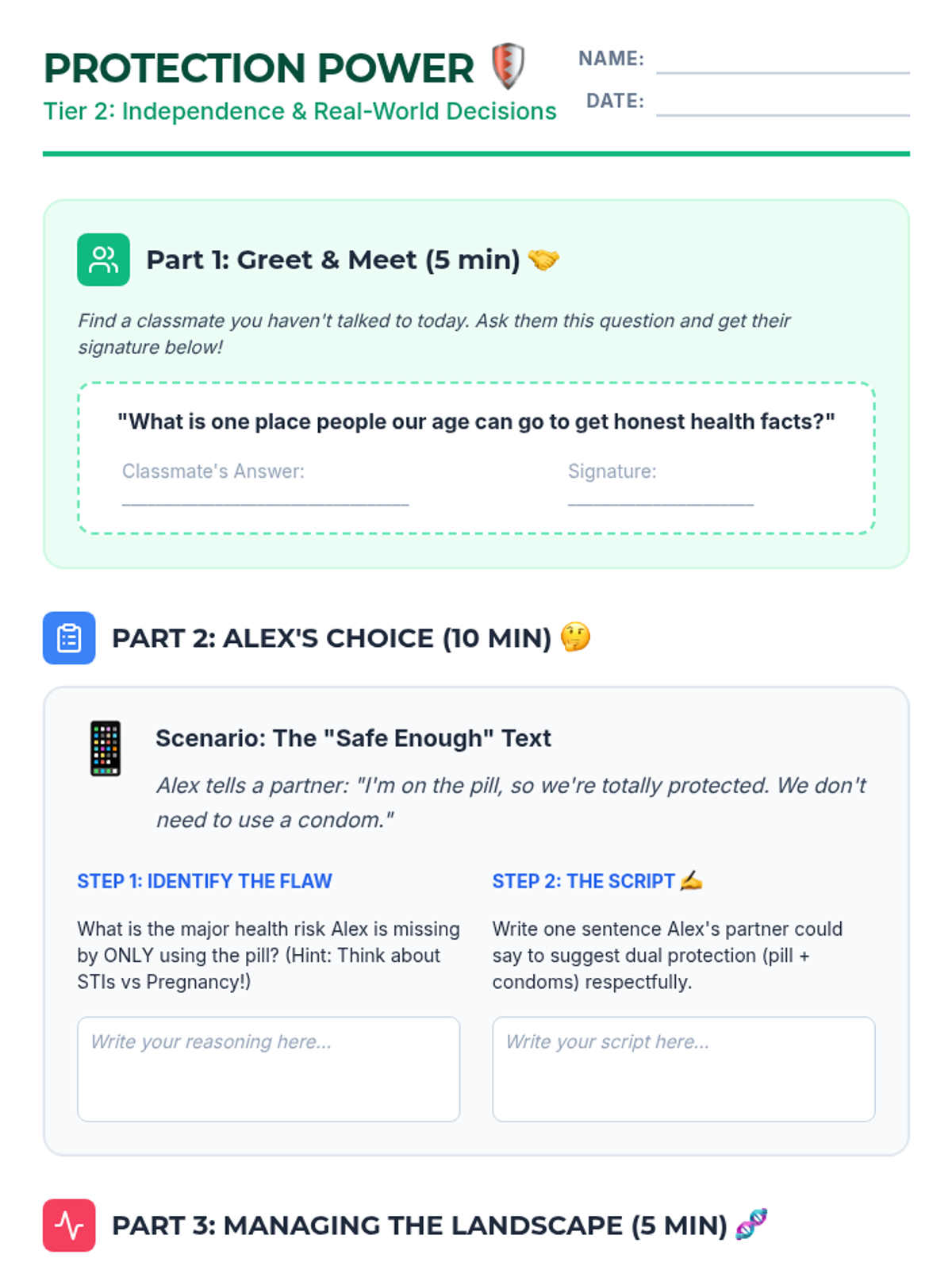
A tiered (Tier 2) student worksheet focusing on scenario analysis (Alex's choice), STI management, and role-playing communication skills for dual protection.
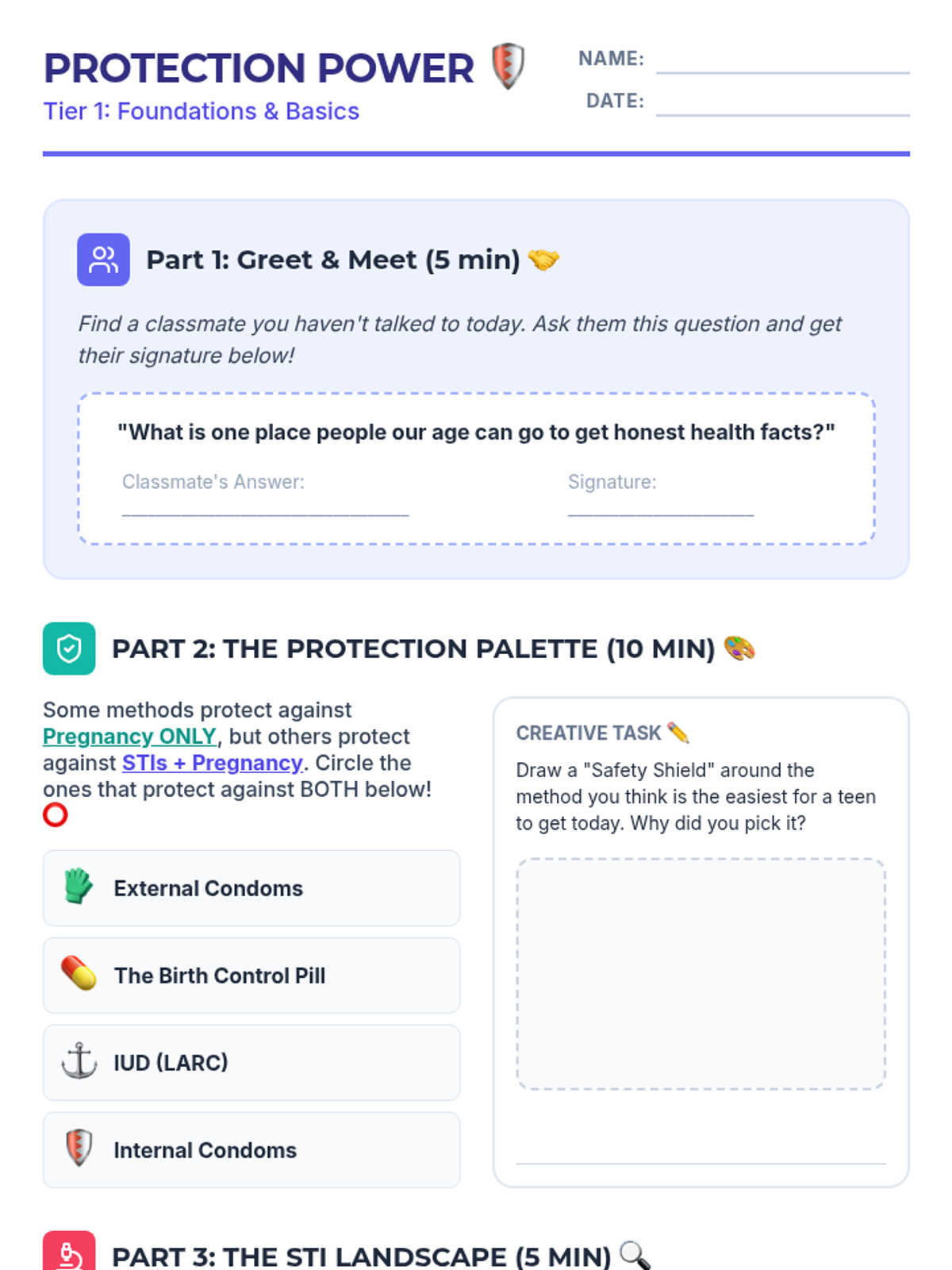
A tiered (Tier 1) student worksheet focused on foundational contraception concepts, STI categorization, and basic communication skills, featuring visual tasks and guided peer interaction.
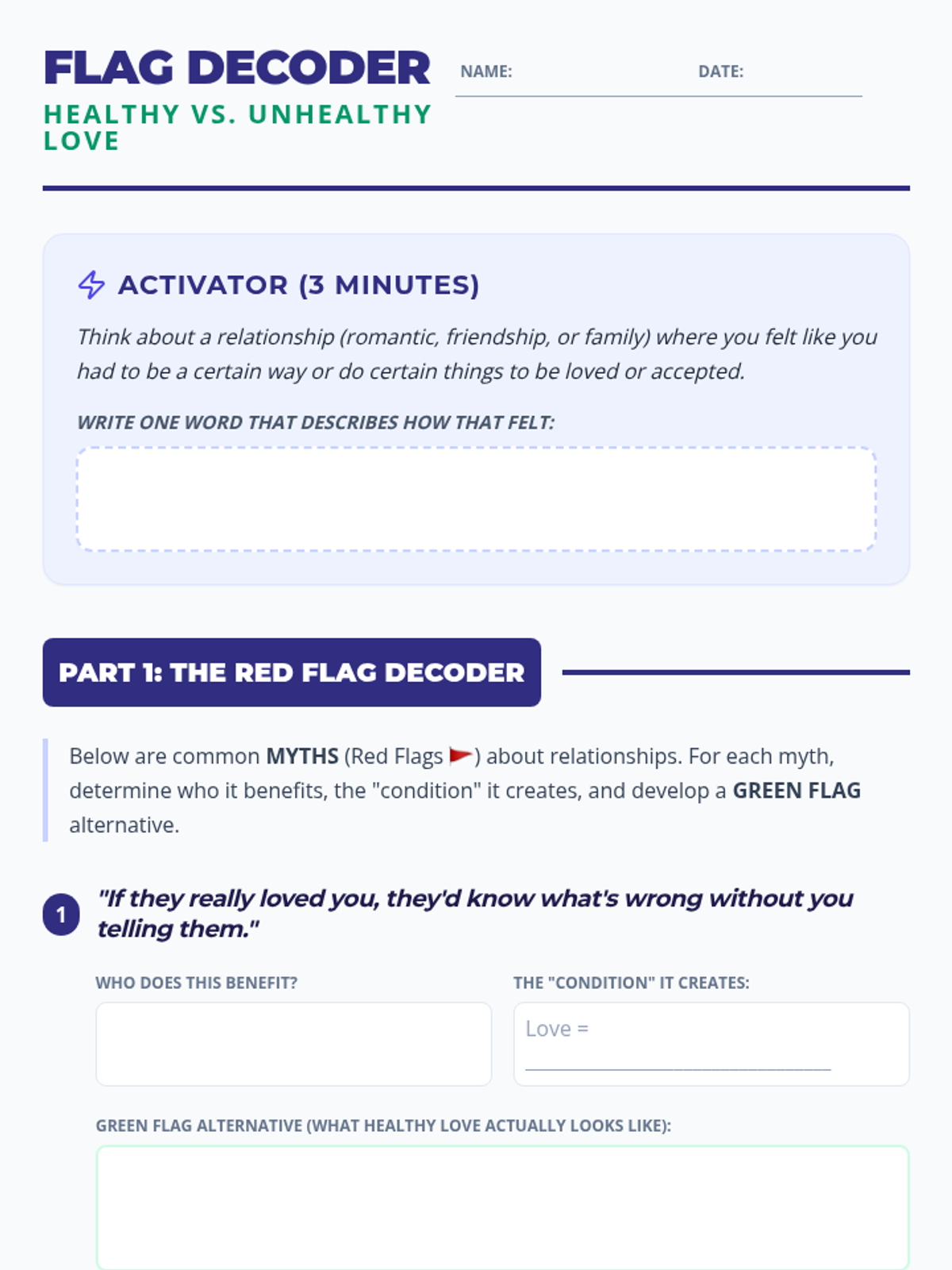
A student-facing worksheet for identifying relationship myths (Red Flags) and reframing them into healthy expectations (Green Flags), featuring increased writing space and legible student work areas.
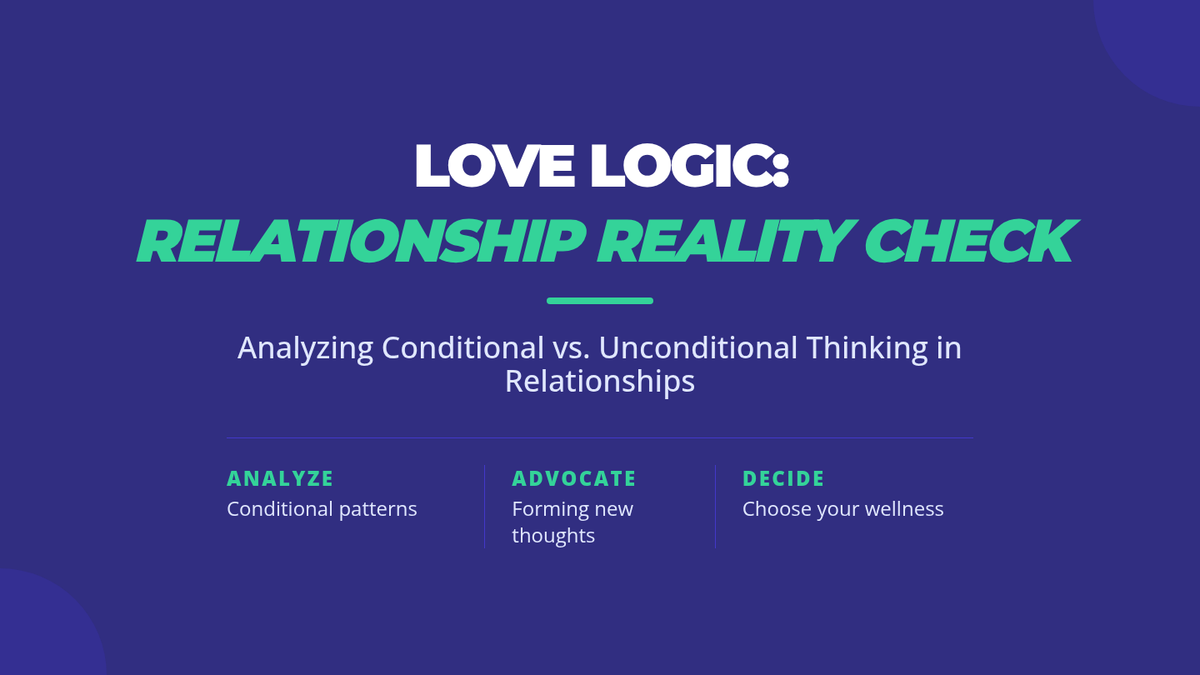
An 8-slide presentation for high school health class on conditional vs. unconditional love, featuring modern design and clear instructional steps for reframing unhealthy thoughts.
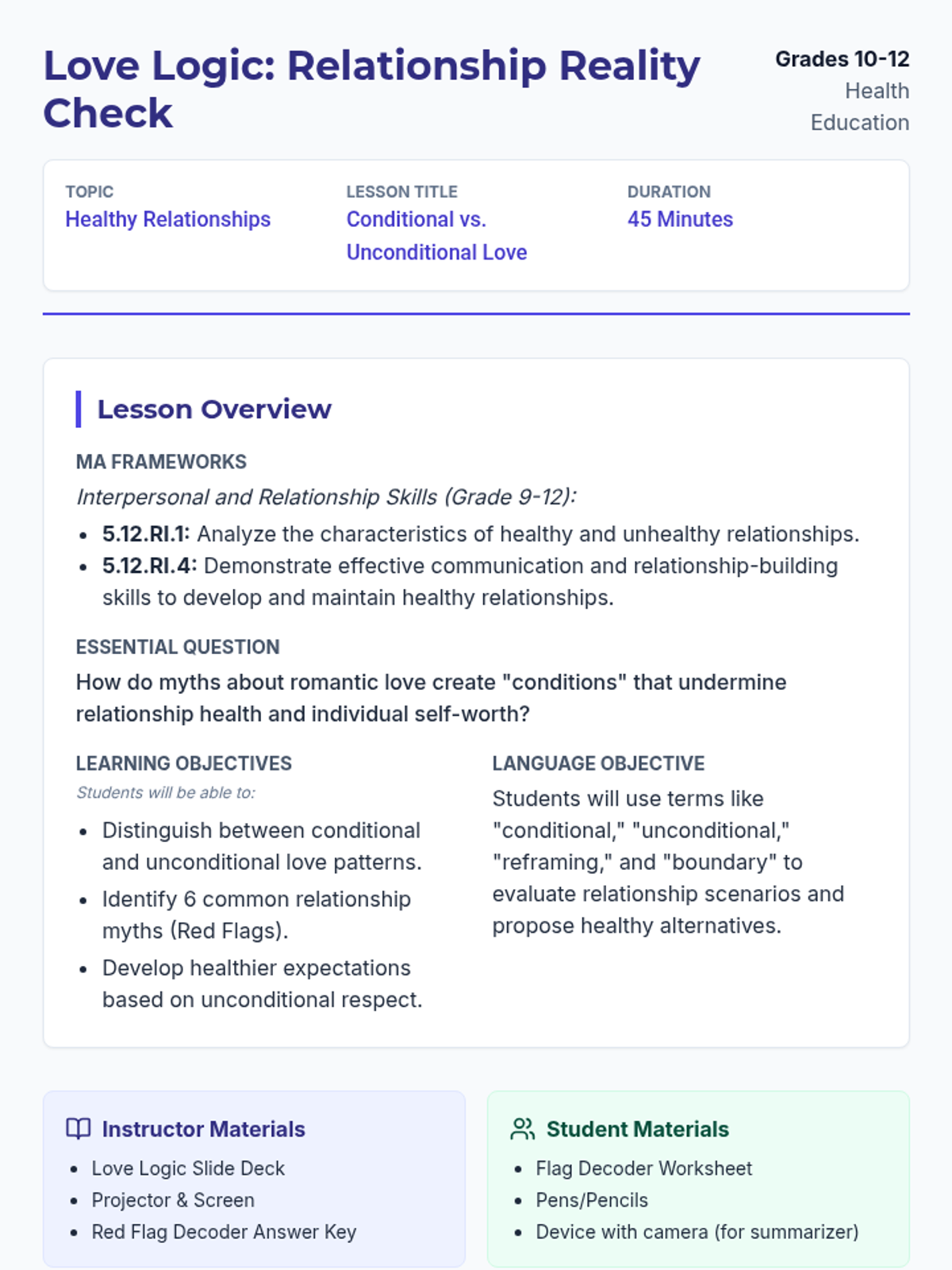
A comprehensive lesson plan for high school health education, outlining a 45-minute lesson on conditional vs. unconditional love based on Massachusetts standards.
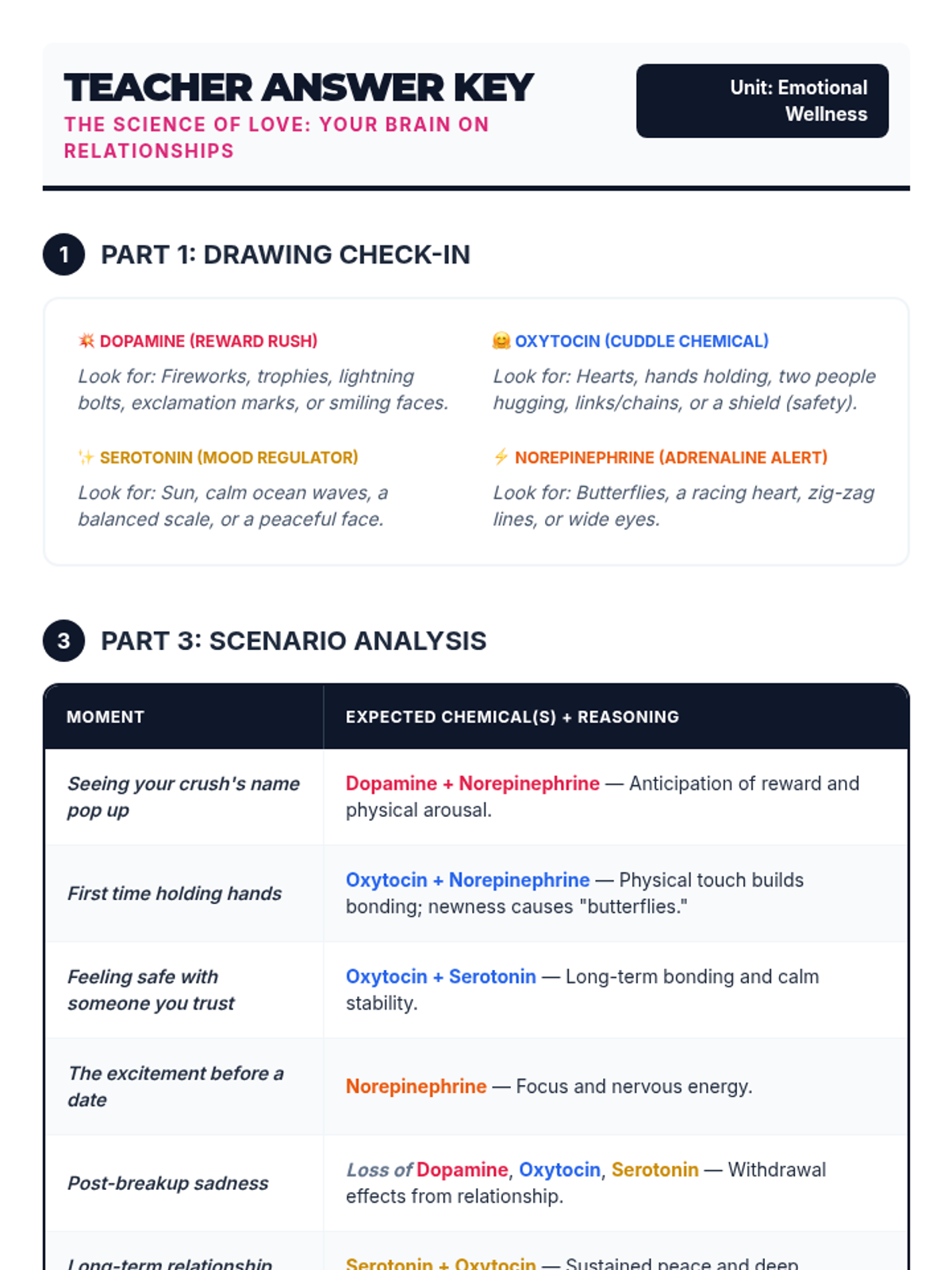
A detailed teacher's answer key for the Love Chemistry Student Worksheet. It provides grading criteria for the neurotransmitter drawings, correct chemical identifications for the relationship moments table, science-based reasoning for care package items, and expectations for the exit ticket.
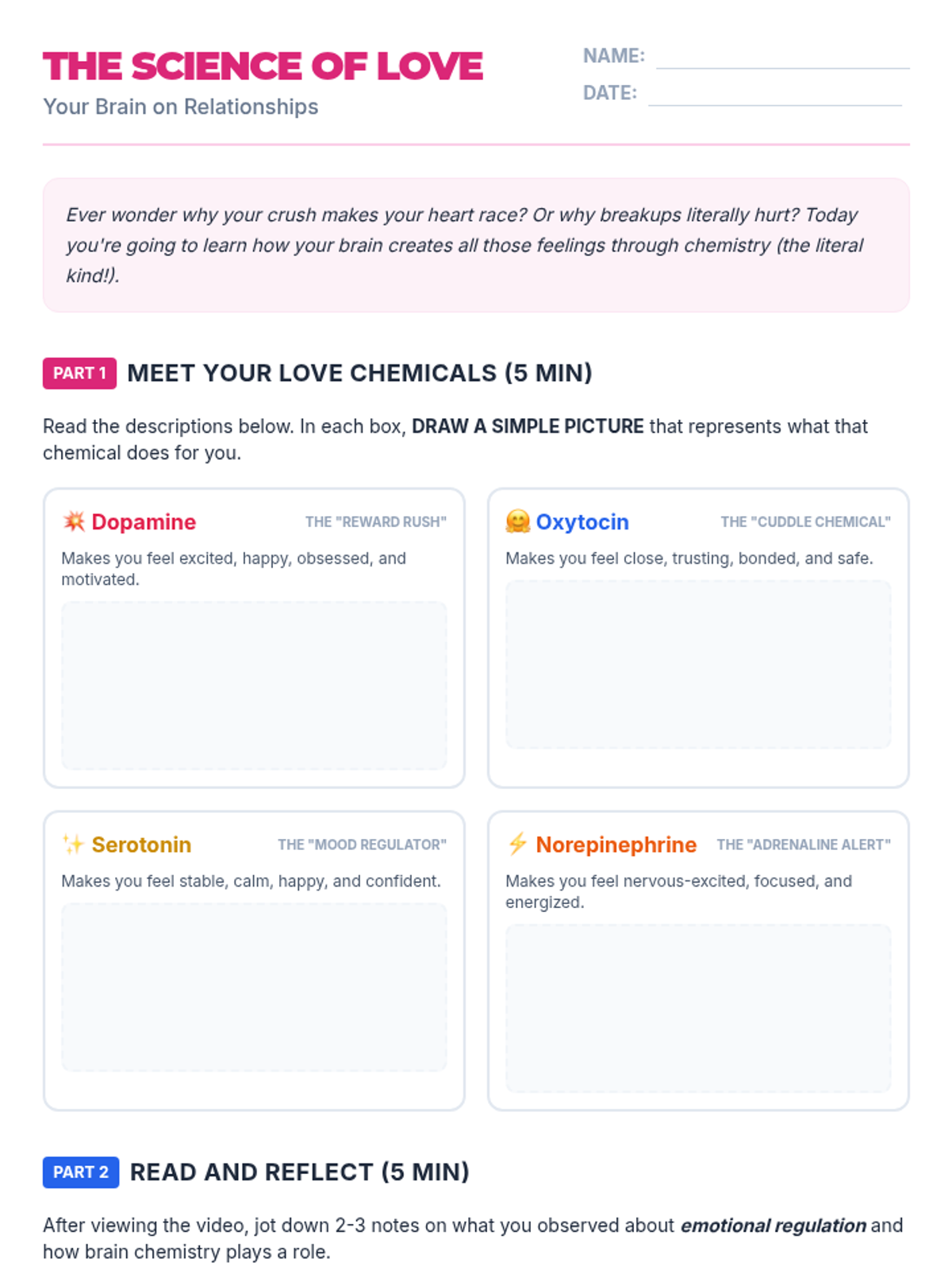
A student worksheet for the Science of Love lesson. It includes drawing activities for neurotransmitters, a reflection section for the video, a scenario-based chemical identification table, a creative care package design task, and an exit ticket.
A visually engaging 8-slide presentation for the 'Science of Love' lesson. It covers the neurochemistry of relationships, the stages of attraction versus bonding, the biological impact of heartbreak, and science-based coping strategies, all designed with a 16:9 aspect ratio and large, readable text.
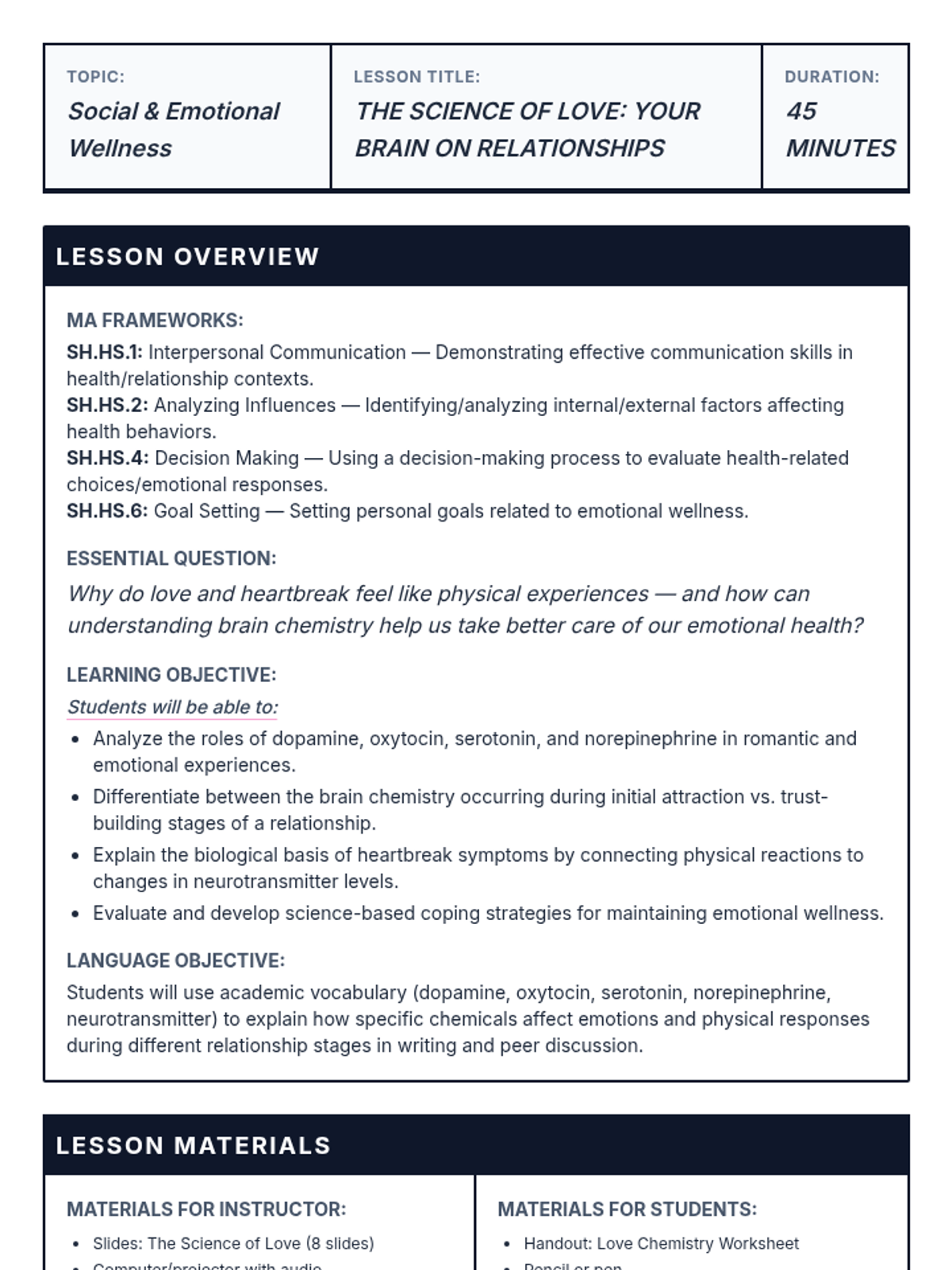
A comprehensive 45-minute lesson plan for high school health education using the requested template. It covers the neurochemistry of relationships, including MA DESE CHPE standards, objectives, and a detailed timed agenda.
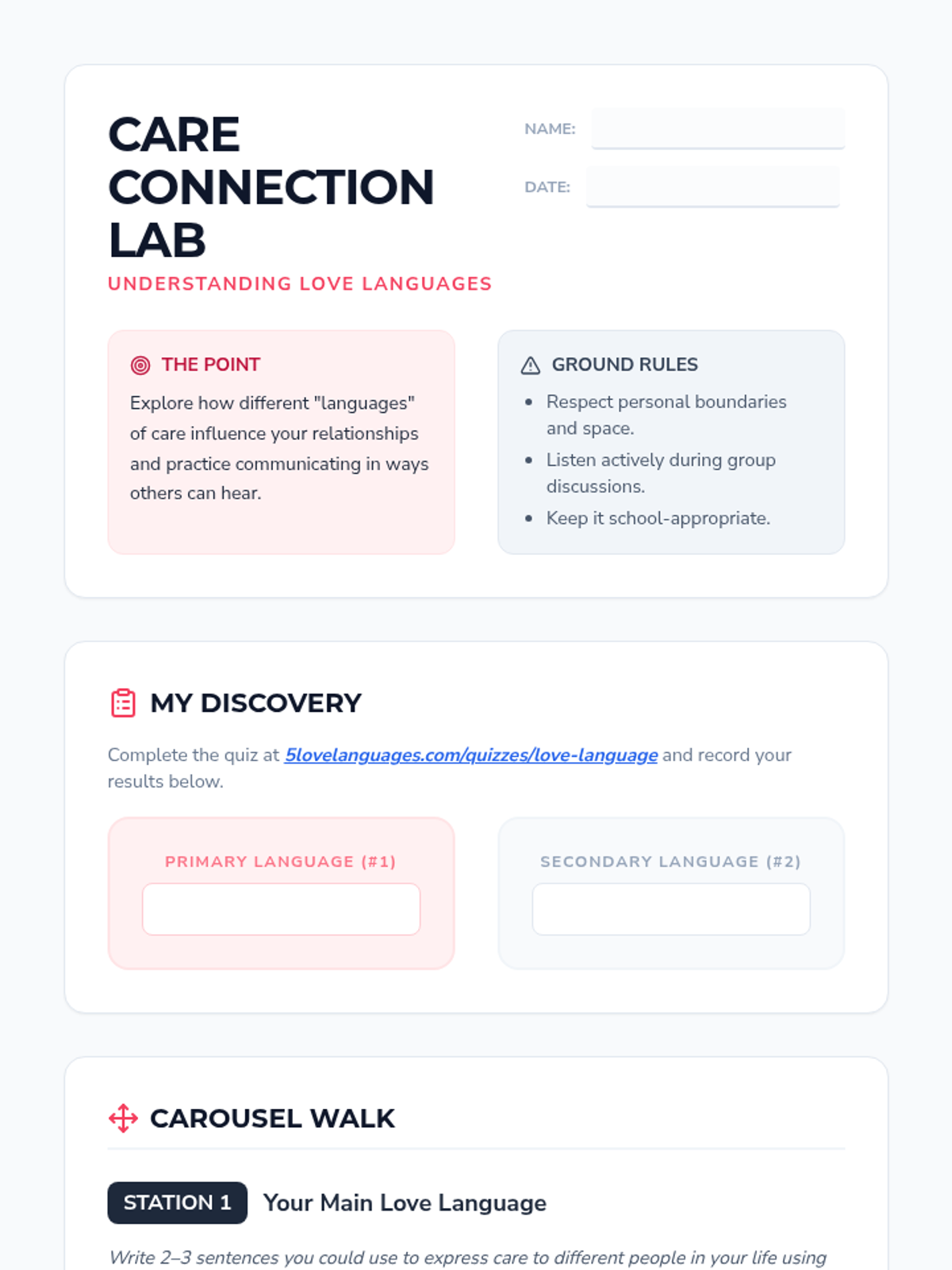
A student-facing activity sheet for the love languages lesson. It includes space for recording quiz results, writing context-specific expressions for stations 1 and 2, identifying peers with similar styles in station 3, and documenting group strategies in station 4.
A comprehensive visual presentation for instruction on love languages. It features high-quality definitions, context-specific examples, a YouTube video embed, and step-by-step instructions for a classroom carousel activity.
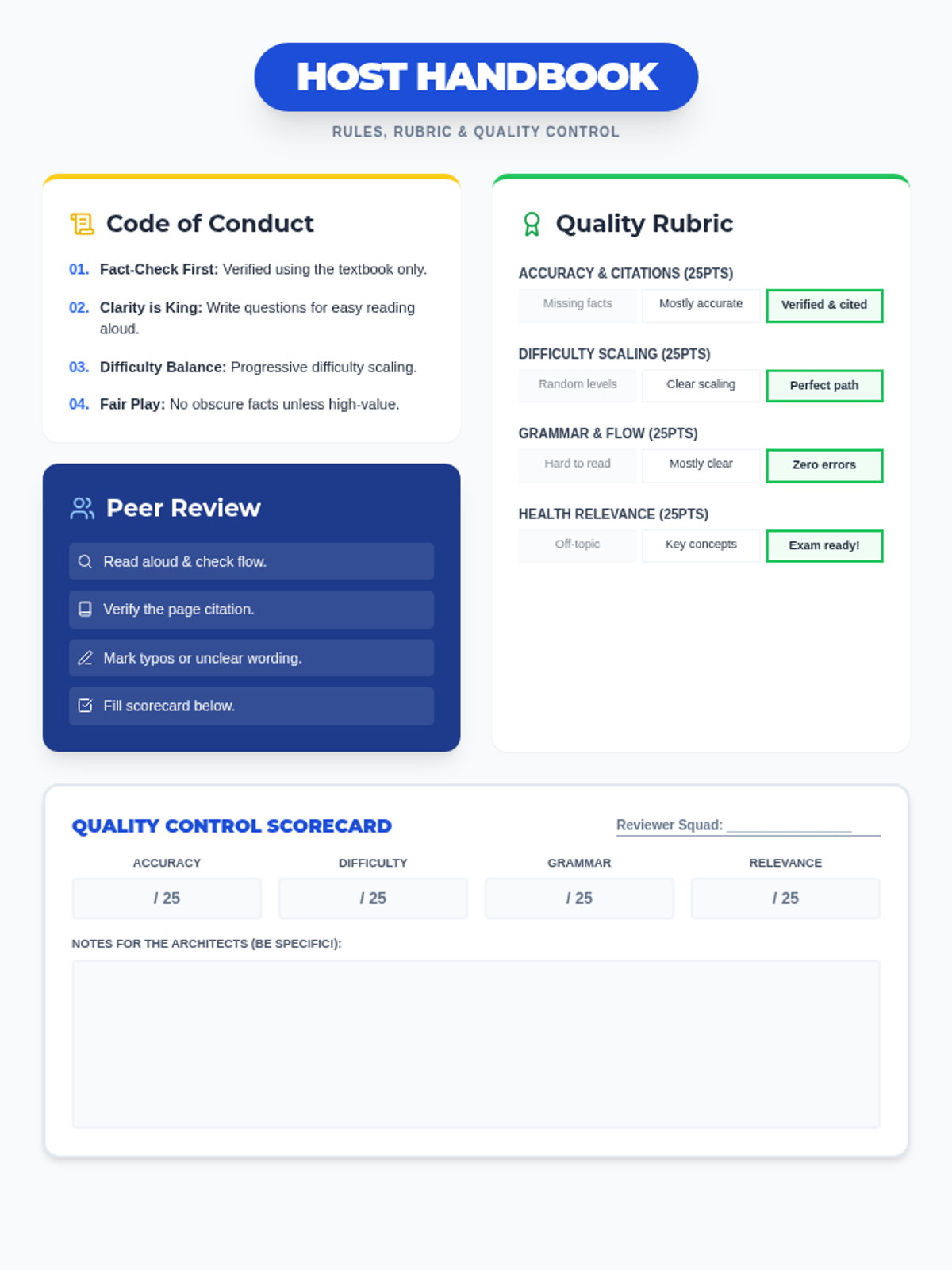
A handbook for students acting as hosts and reviewers, featuring guidelines for question quality and a peer-assessment rubric.
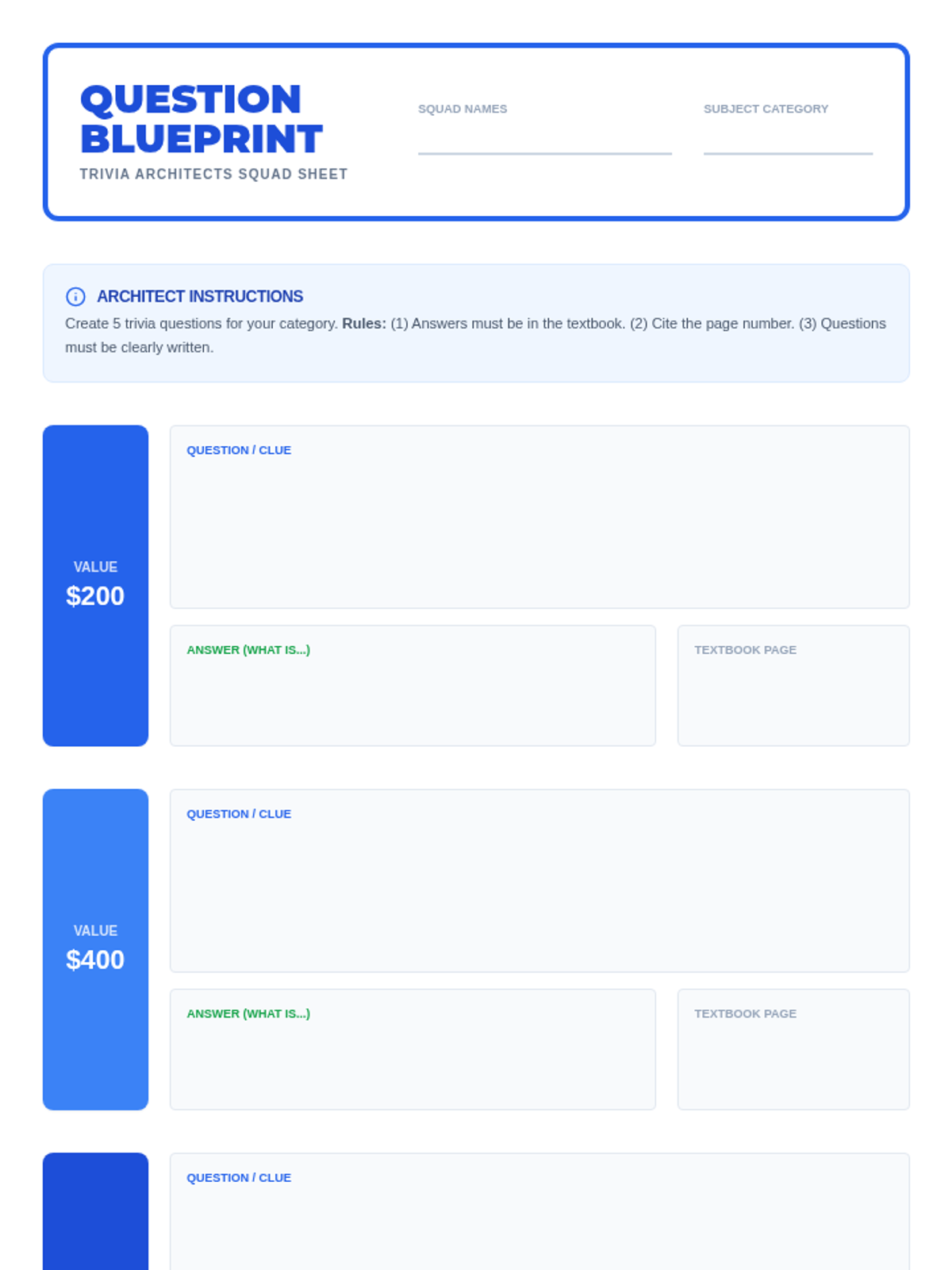
A structured worksheet for students to draft their trivia questions, answers, and textbook citations, organized by difficulty level.
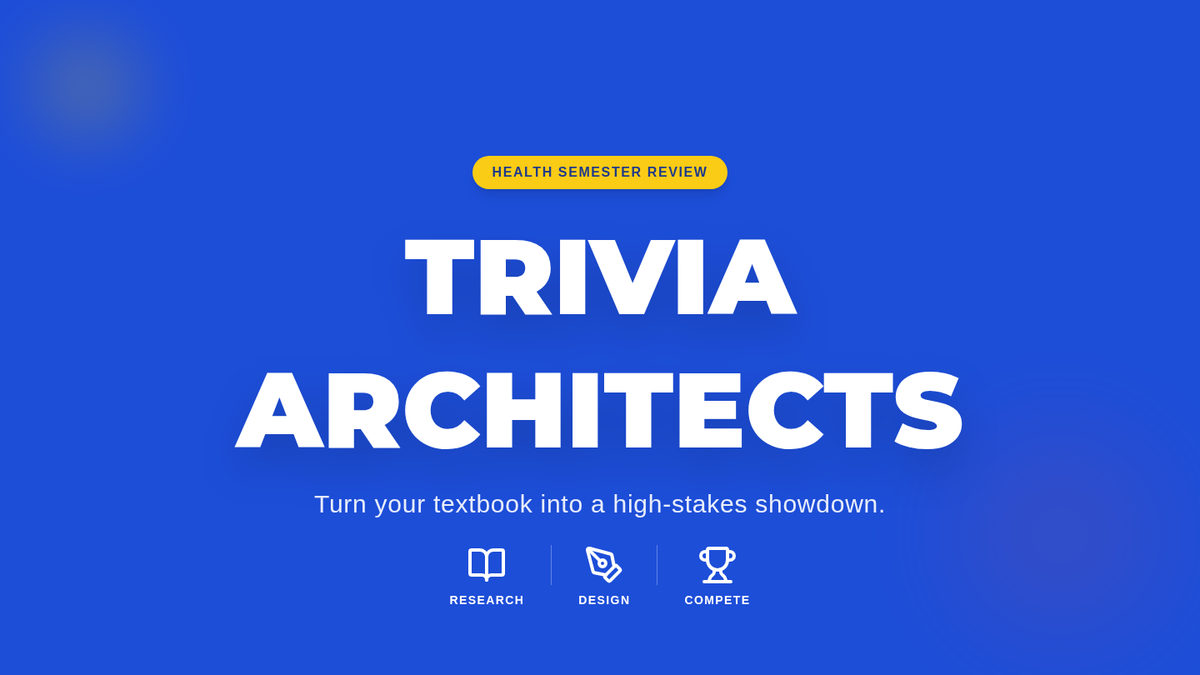
A high-energy visual presentation to guide students through the process of creating a Jeopardy-style review game.
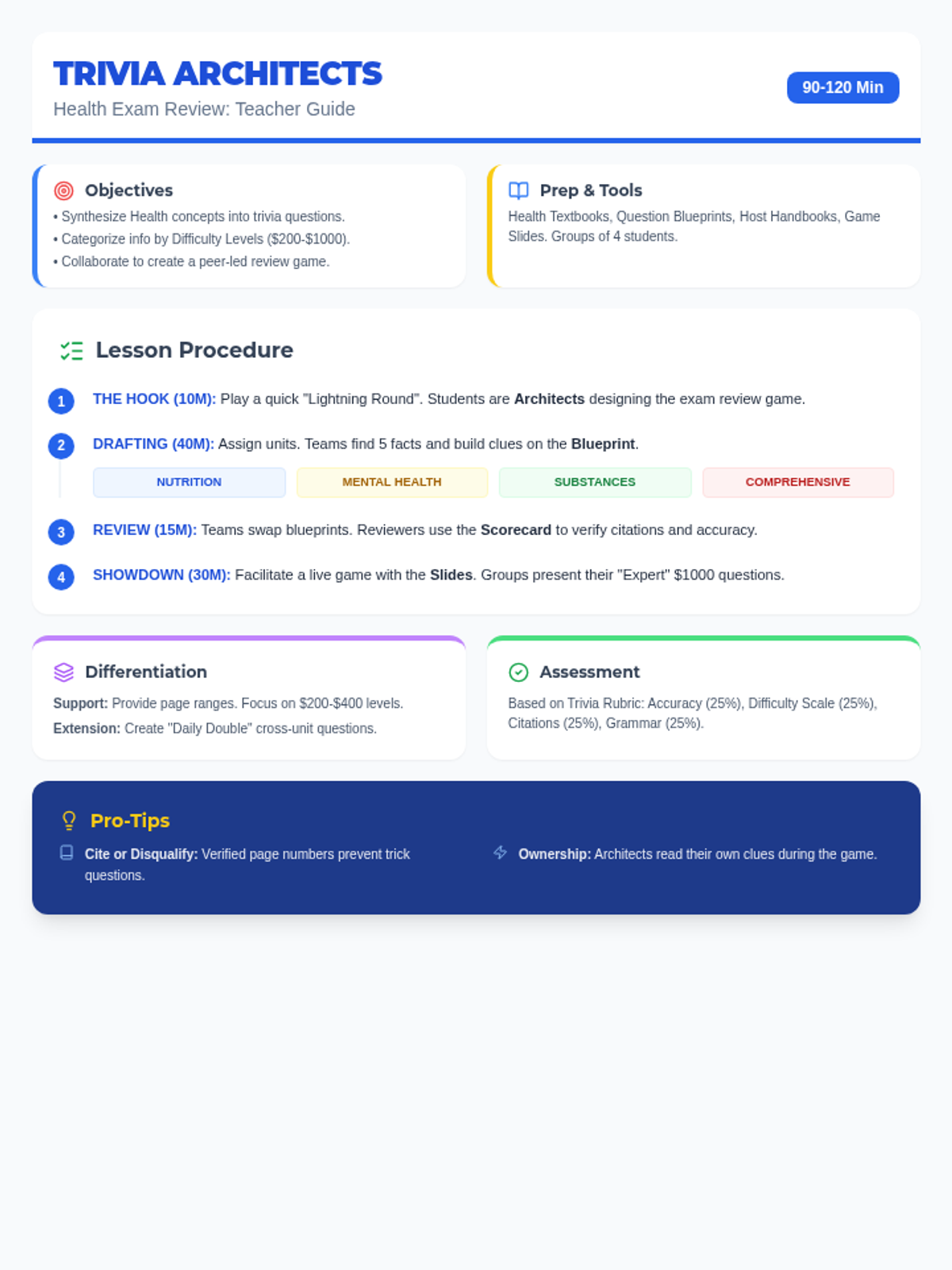
A comprehensive teacher guide for leading the 'Trivia Architects' lesson, including learning objectives, procedural steps, and differentiation strategies.
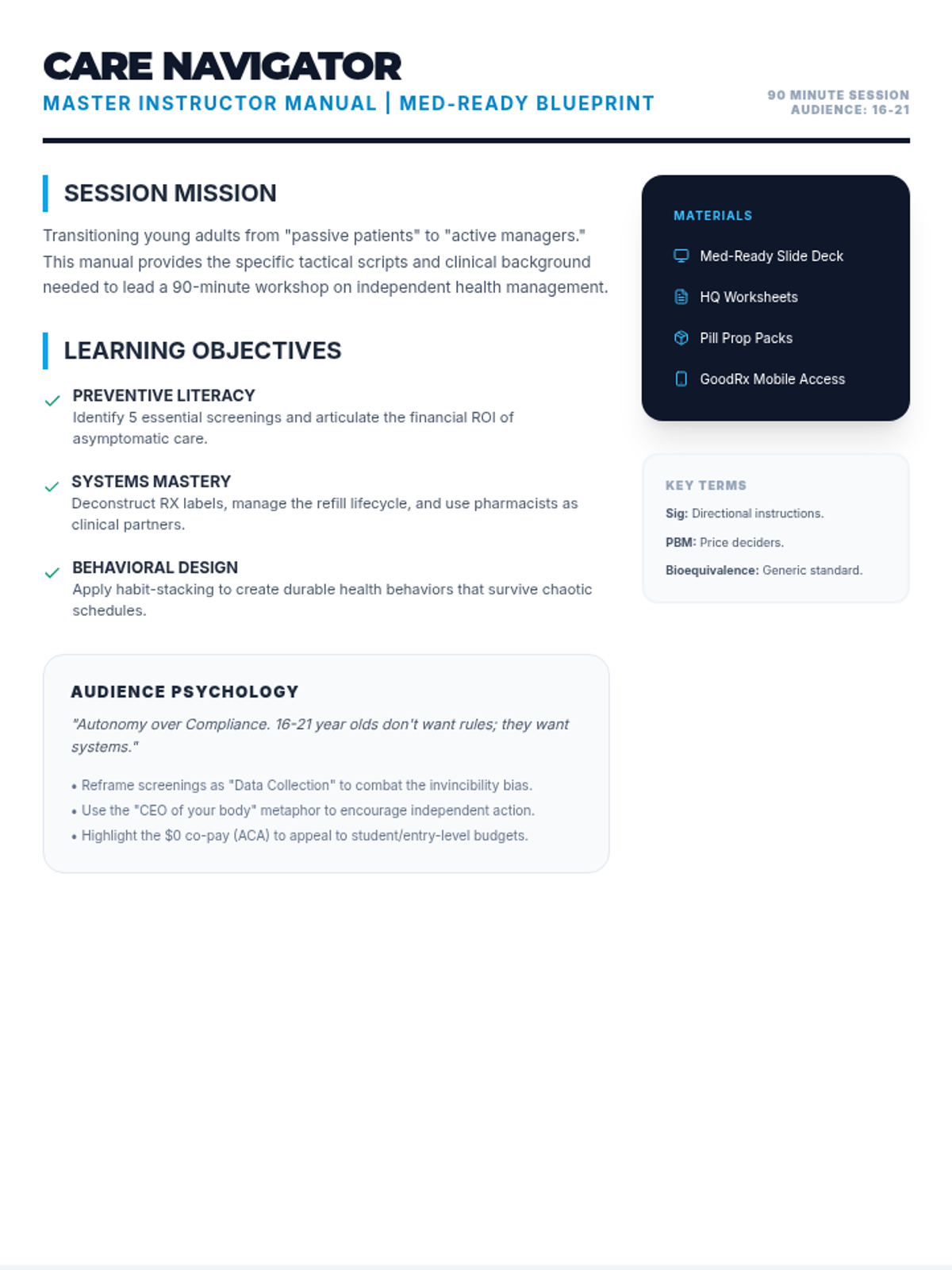
A comprehensive 8-page instructor guide for a 90-minute session on preventive care and medications, including pacing, scripts, and answer keys.
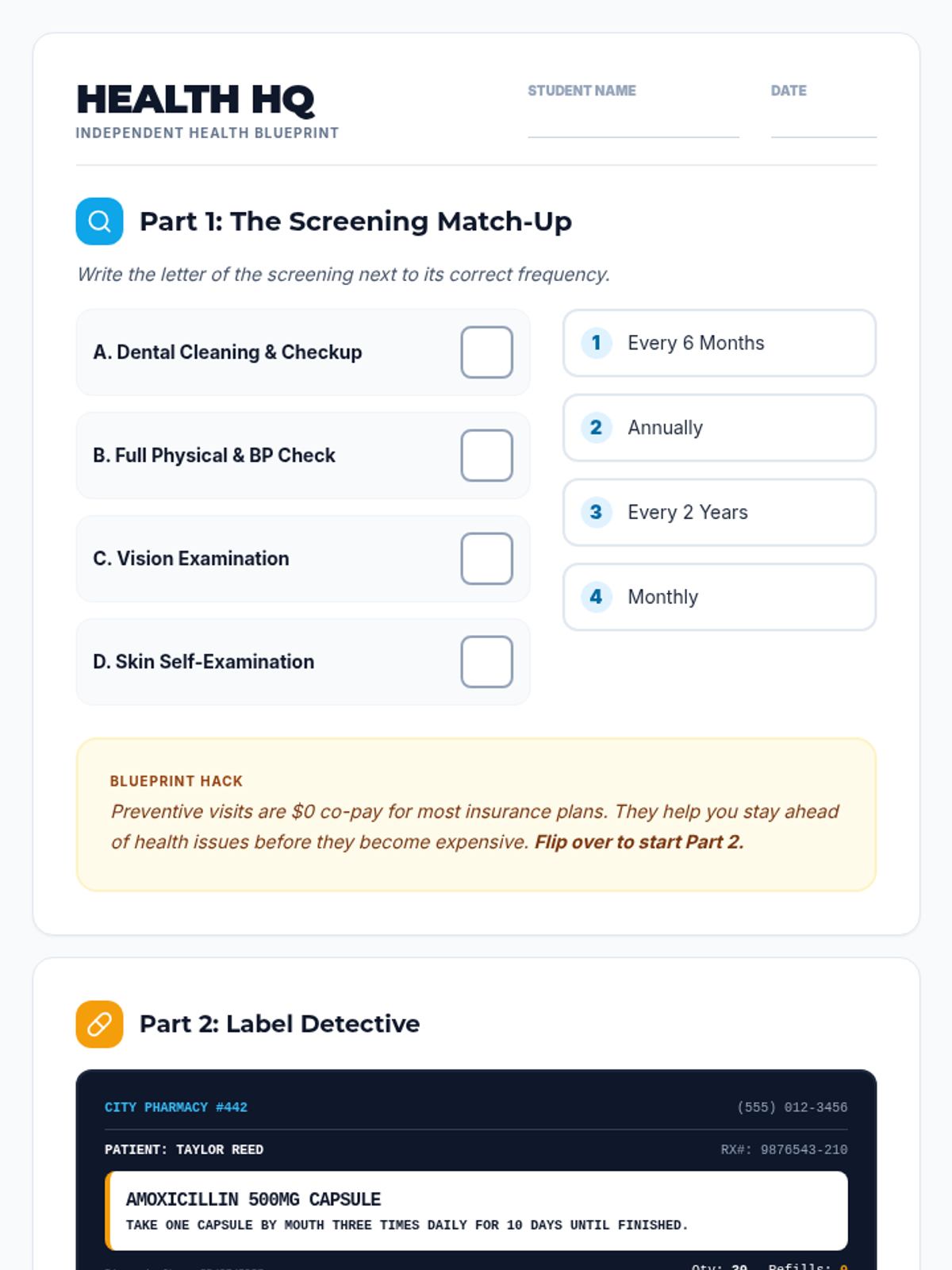
A two-page interactive worksheet for students to practice screening schedules, analyze pharmacy labels, and develop personal medication adherence strategies.
A 16:9 slide deck for young adults covering preventive care essentials, screening timelines, pharmacy basics, and medication adherence strategies.
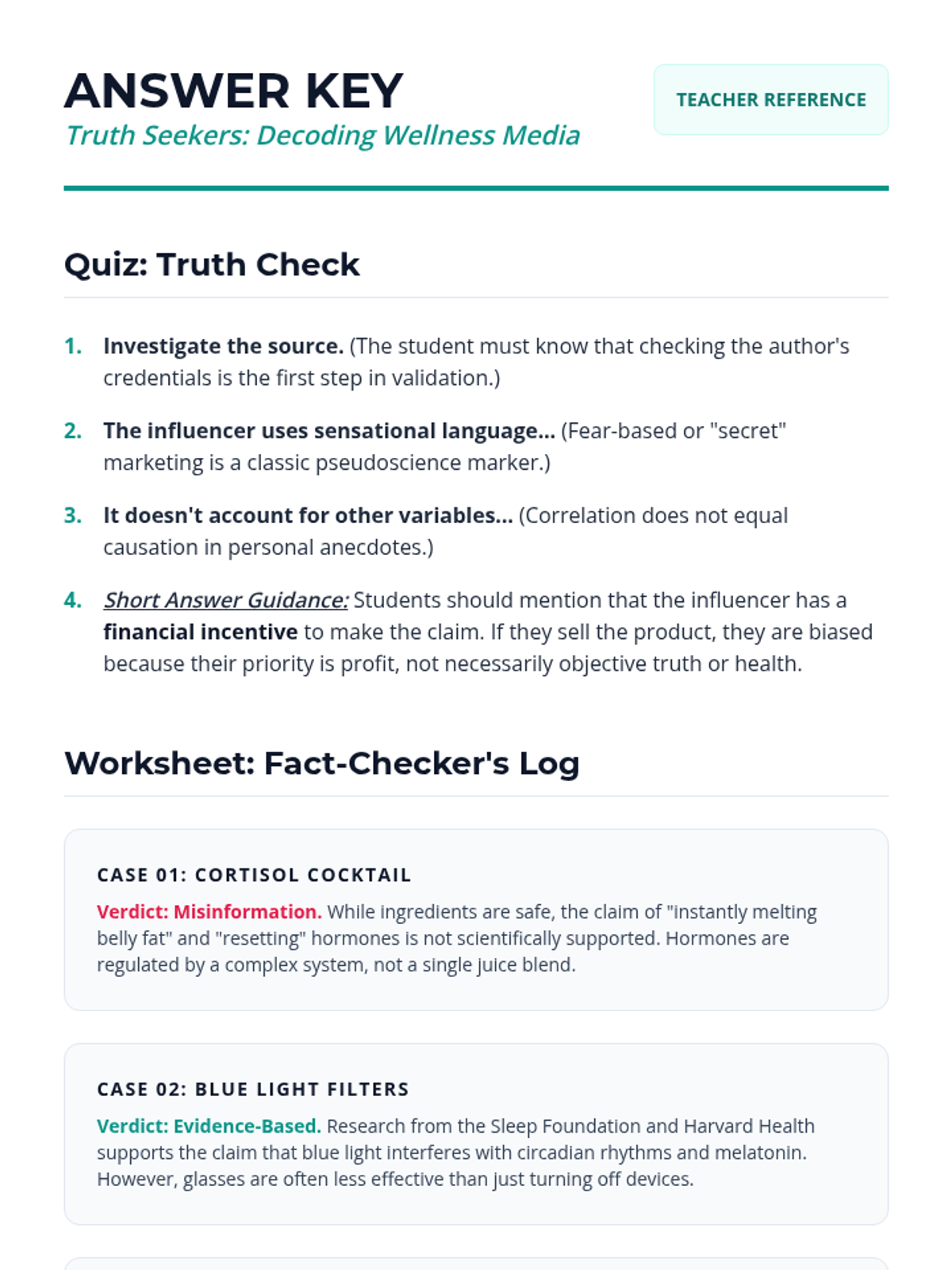
An answer key providing correct responses for the Truth Check Quiz and typical research findings for the Fact-Checker's Log worksheet. Includes grading guidance for teachers.
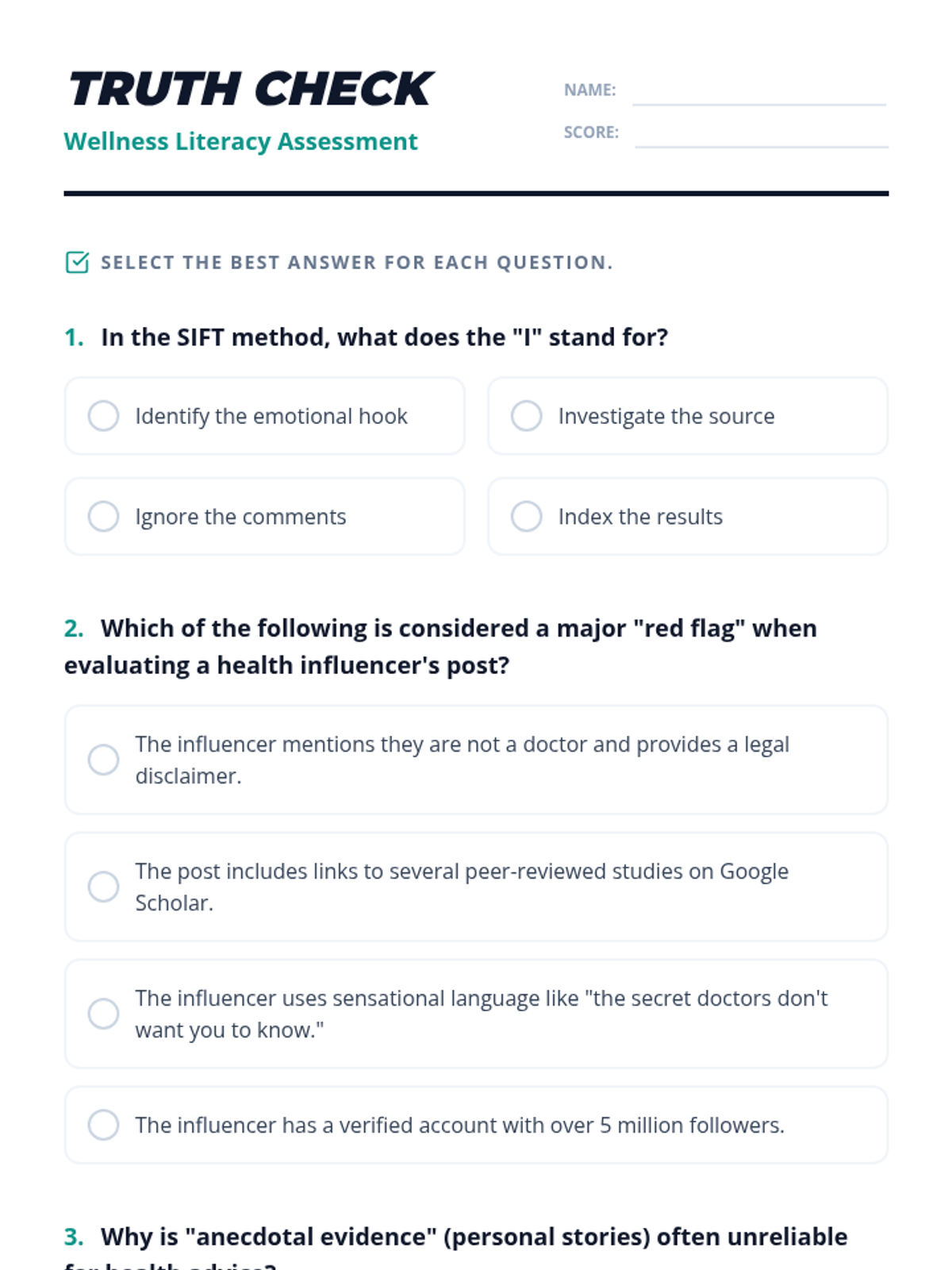
A 4-question assessment covering the SIFT method, red flags of health misinformation, the nature of anecdotal evidence, and conflicts of interest. Includes multiple choice and short answer.
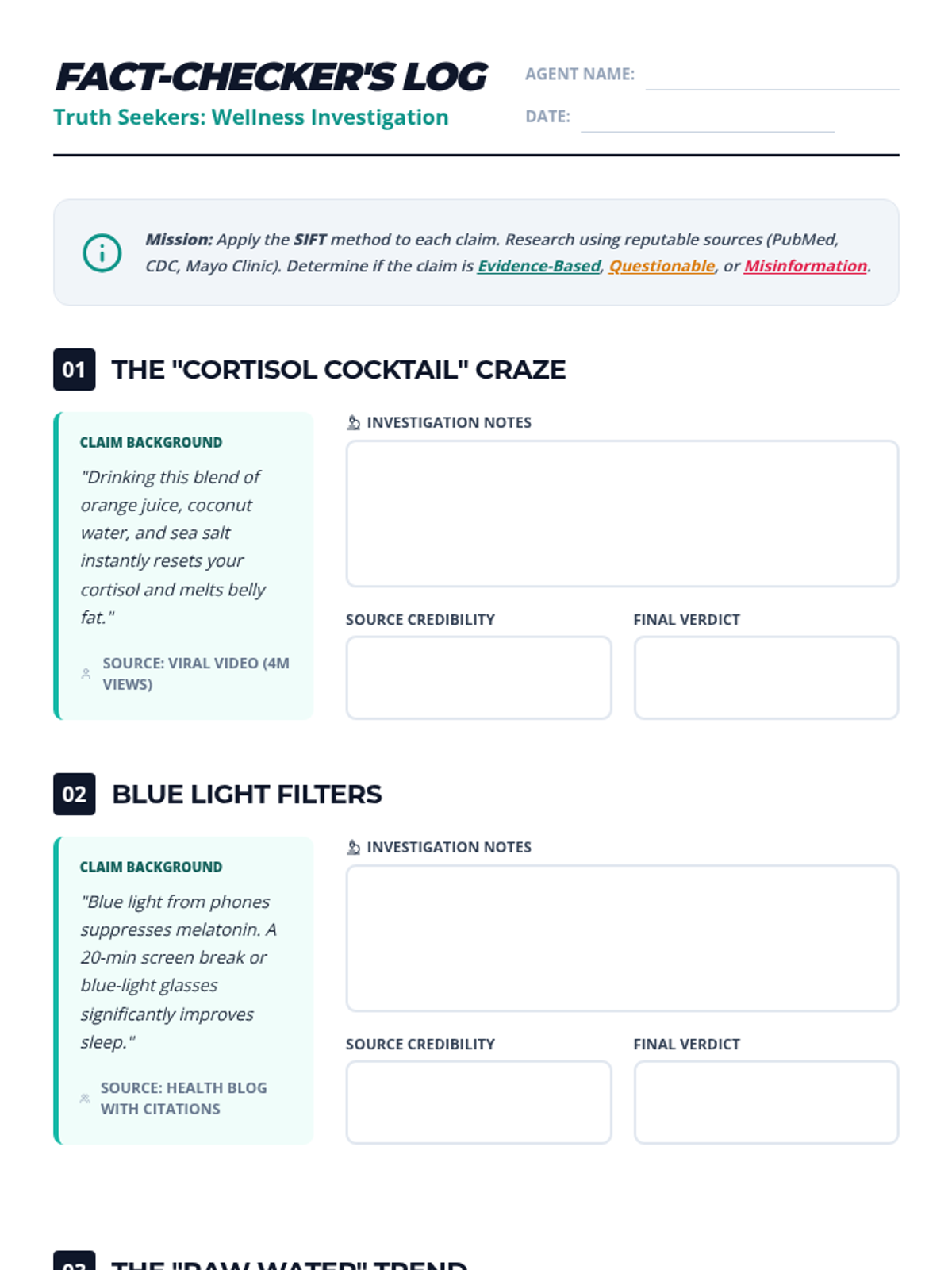
A student worksheet for investigating three specific health trends (cortisol cocktails, blue light, and raw water) using the SIFT method. Includes space for research notes and final verdicts.
A visual presentation for teaching media literacy skills in the context of wellness. Covers the SIFT method, red flags of misinformation, and discussion prompts.
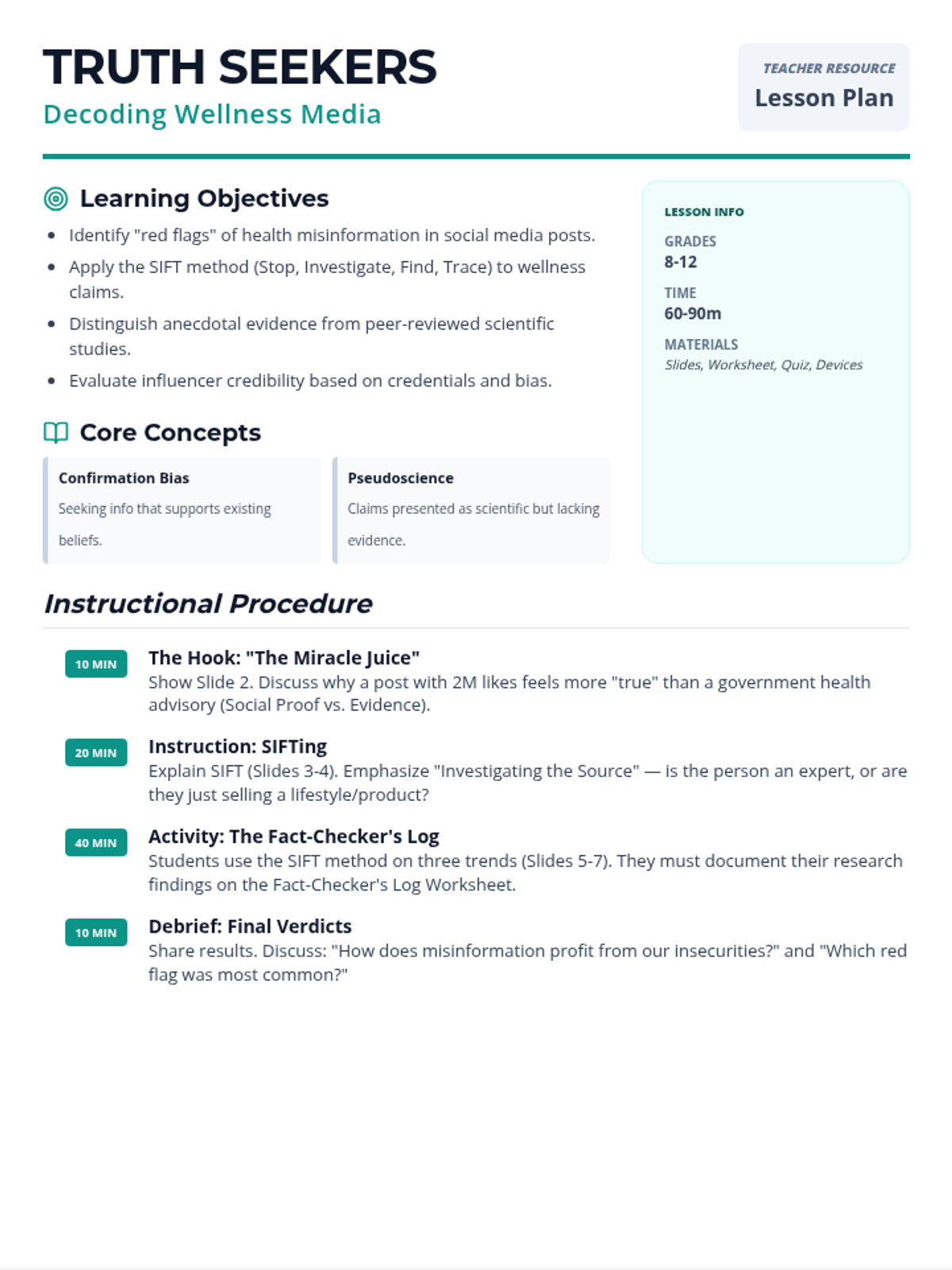
A comprehensive teacher lesson plan for grades 8-12 focused on media literacy in health and wellness. It includes learning objectives, instructional procedures, differentiation strategies, and discussion prompts.
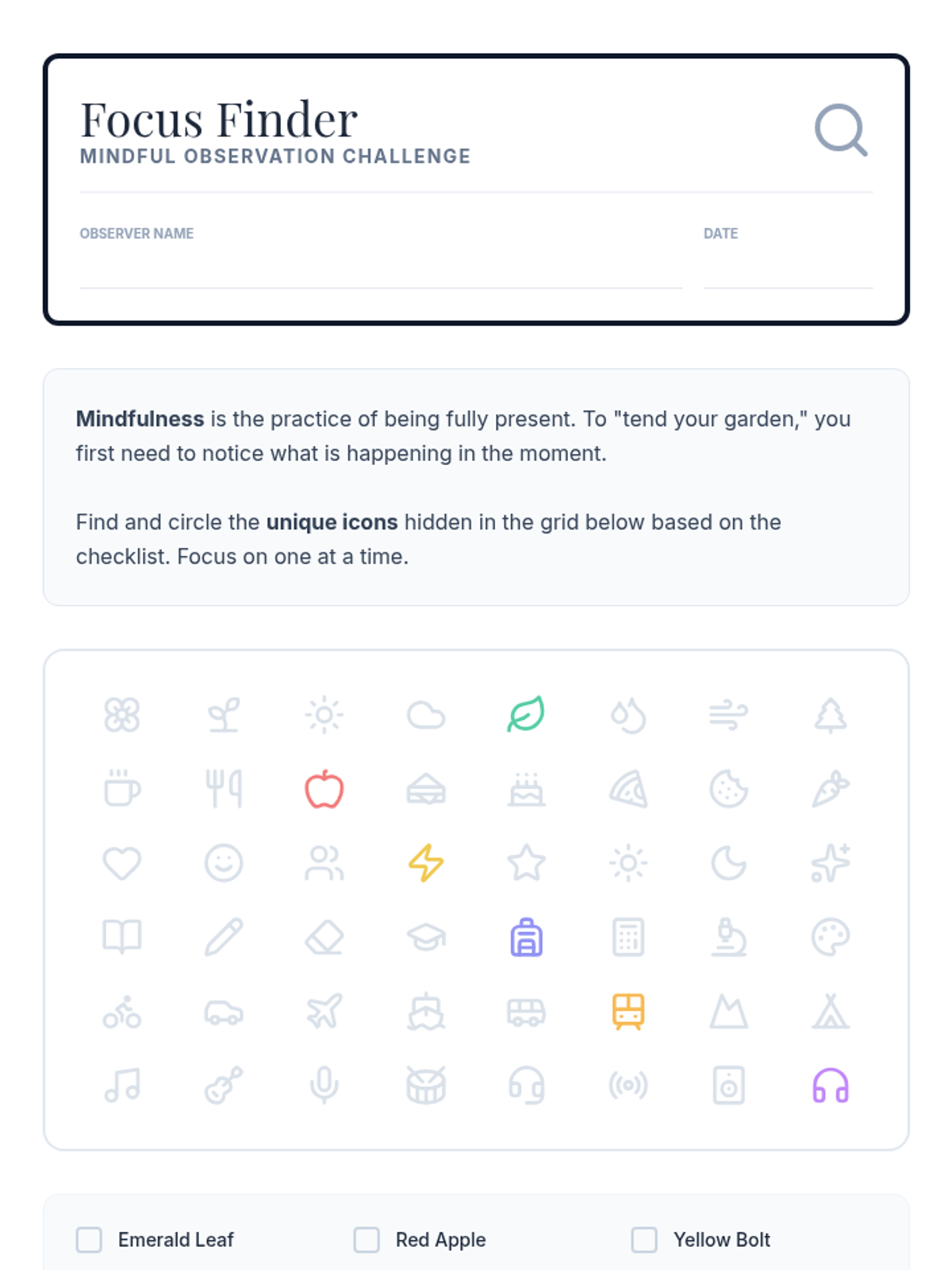
A mindful observation worksheet based on the "Hidden Objects" activity. It serves as a focus-building warmup for the mental health unit, encouraging students to practice present-moment awareness.
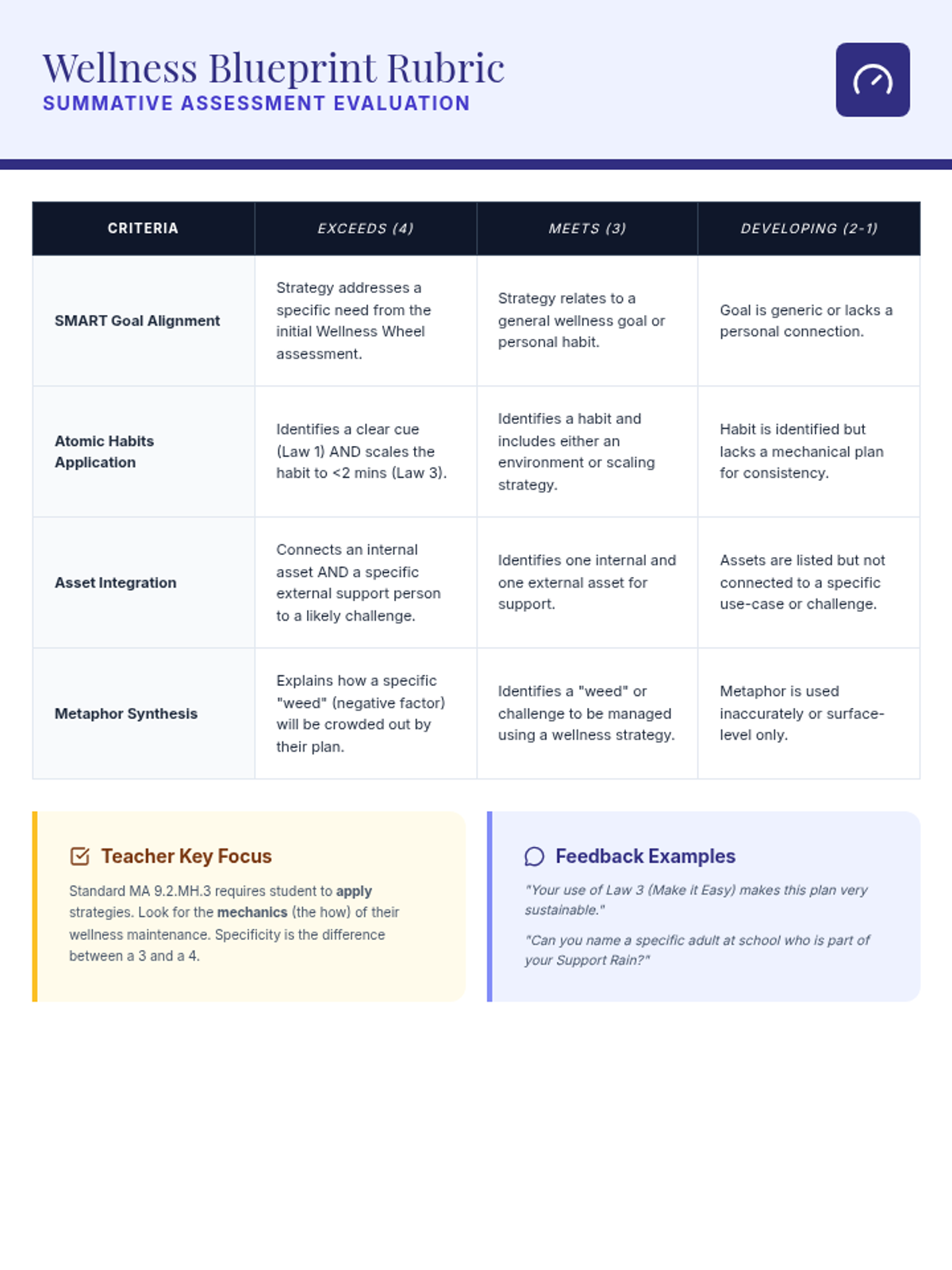
A teacher rubric for the Wellness Blueprint, now optimized for a single-page layout and updated with the "Metaphor Synthesis" and "Asset Integration" criteria from the mental wellness PDF.
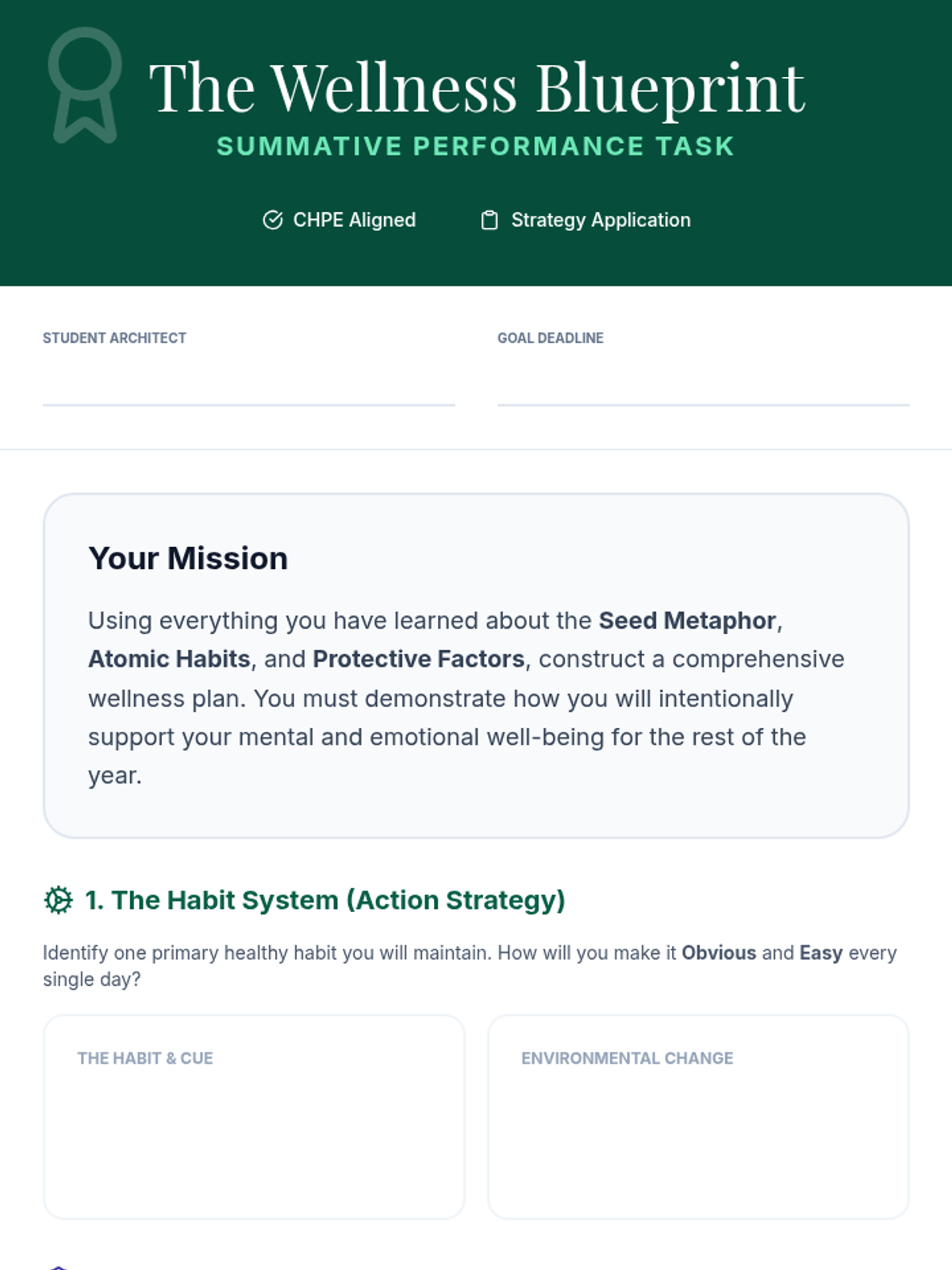
The summative assessment for the mental health unit. This blueprint requires students to synthesize the seed metaphor, habit change strategies, and protective factors into a personalized wellness plan. Aligned with CHPE standards.
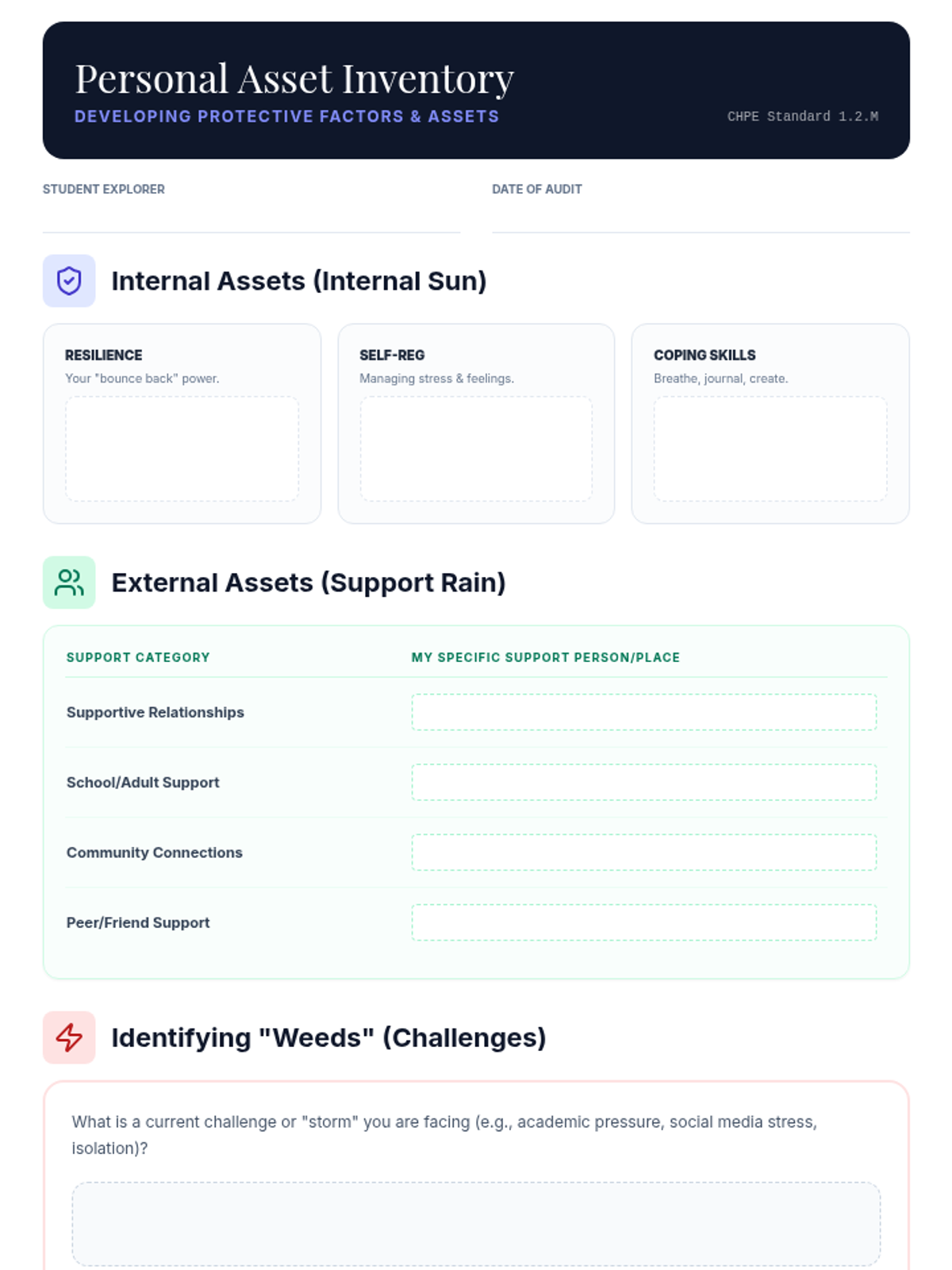
A structured student worksheet for identifying protective factors and internal assets. It now includes a dedicated section for identifying "Weeds" (challenges) based on the mental wellness PDF.
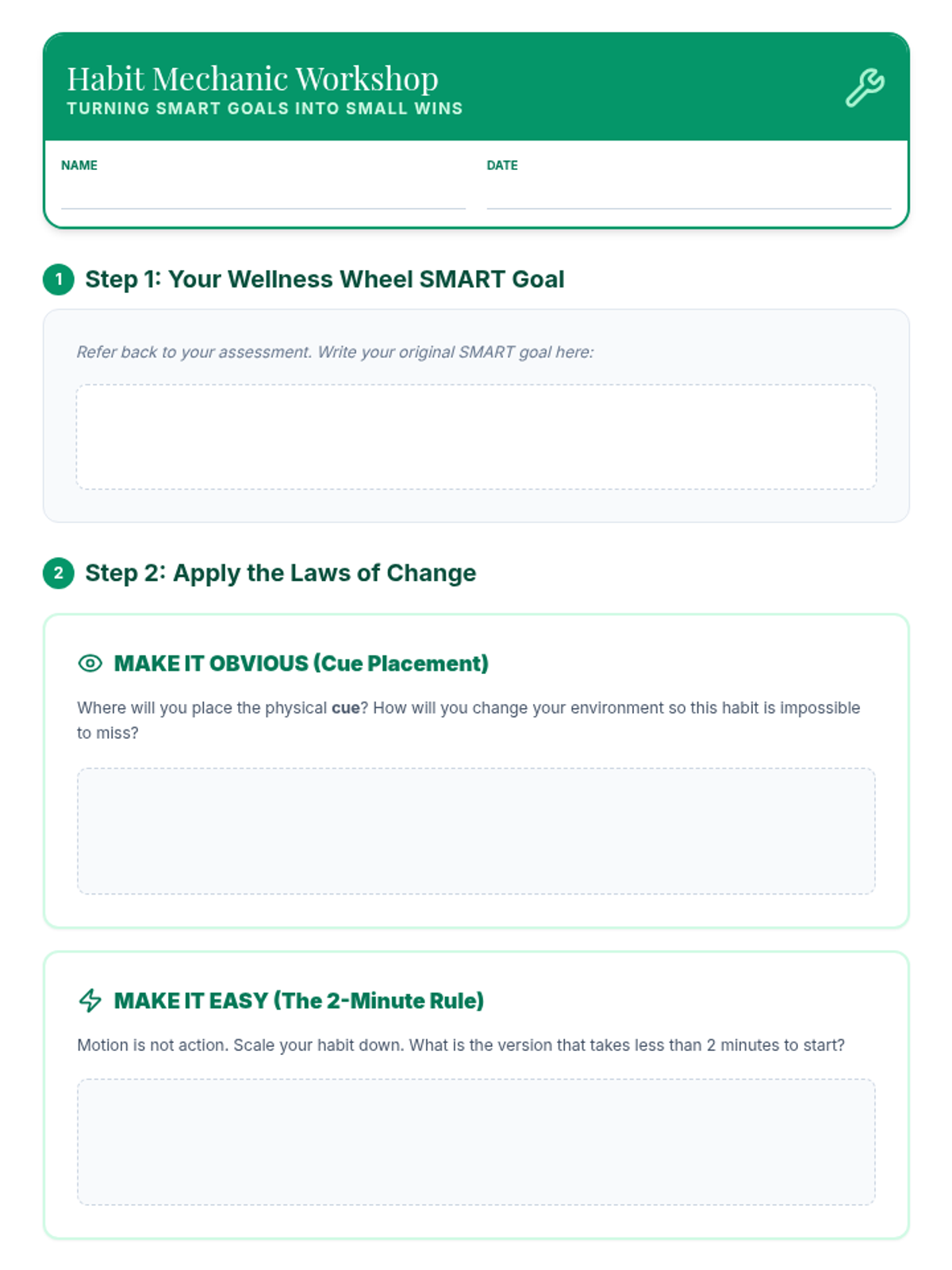
A hands-on workshop document that guides students in breaking down their Wellness Wheel SMART goals into actionable Atomic Habits. It includes sections for identifying environmental cues, applying the 2-minute rule, and planning how to "crowd out" negative habits.
A high-impact slide deck for teaching the Atomic Habits framework, now incorporating specific habit categories (Sleep, Social Media Management, Movement) from the Thriving Minds PDF and refined visual prompts.
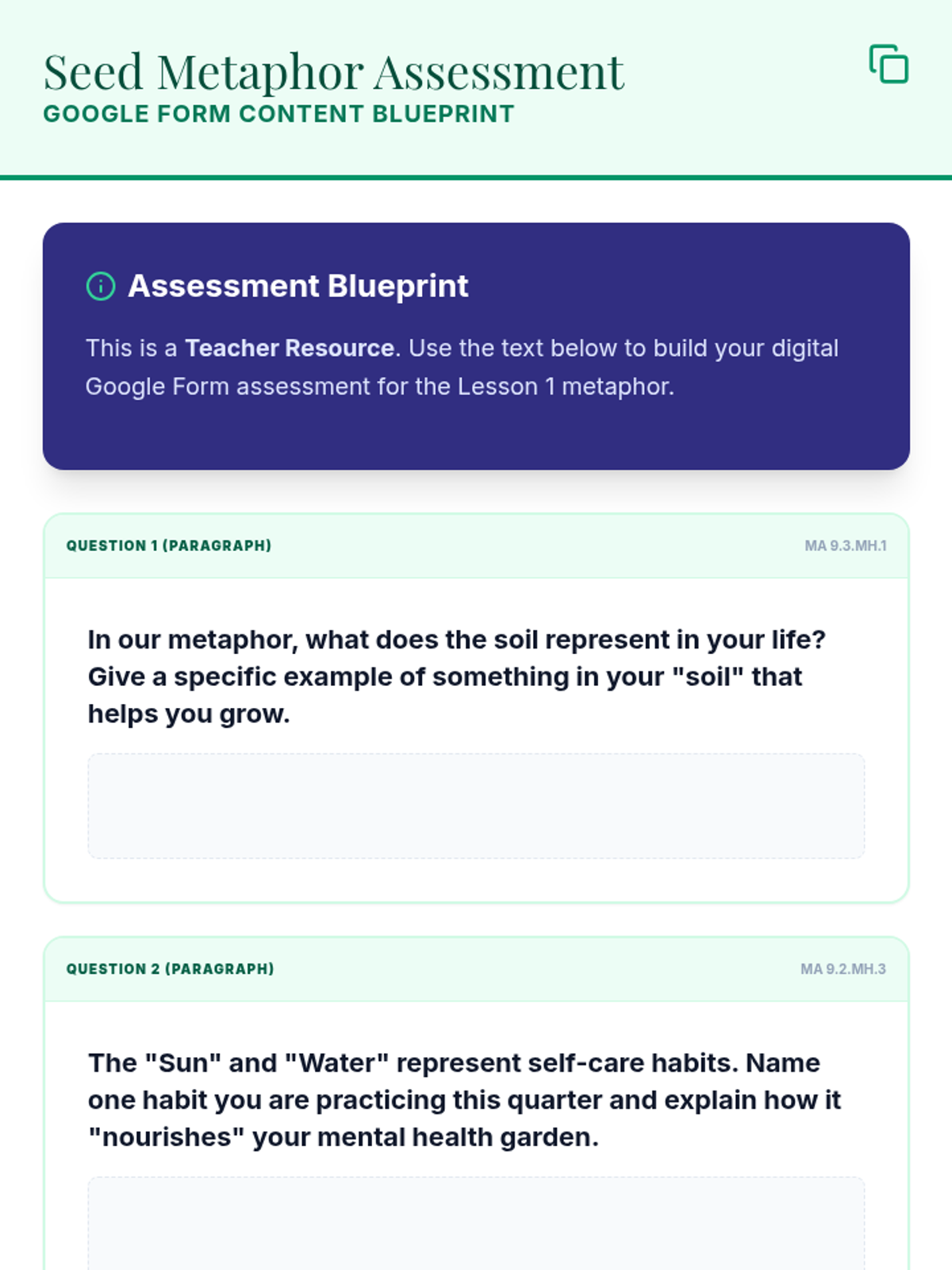
An updated teacher-facing Google Form blueprint incorporating "The Weeds" (stressors) and "The Gardener" concepts from the Thriving Minds PDF.
A visually calming slide deck introducing the expanded seed metaphor for mental health, incorporating "The Weeds" (stressors) and "The Gardener" (individual agency) from the mental health wellness PDF.
A slide deck for high schoolers exploring the importance of sleep, the circadian rhythm, sleep hygiene tips, and strategies for falling asleep, featuring a night sky theme and specific strategies for neurodivergent students. Revised for better visibility and rendering.