Daily hygiene, hydration, and sleep routines paired with strategies for disease and injury prevention. Builds skills in health decision-making, body awareness, and self-advocacy to support lifelong well-being.
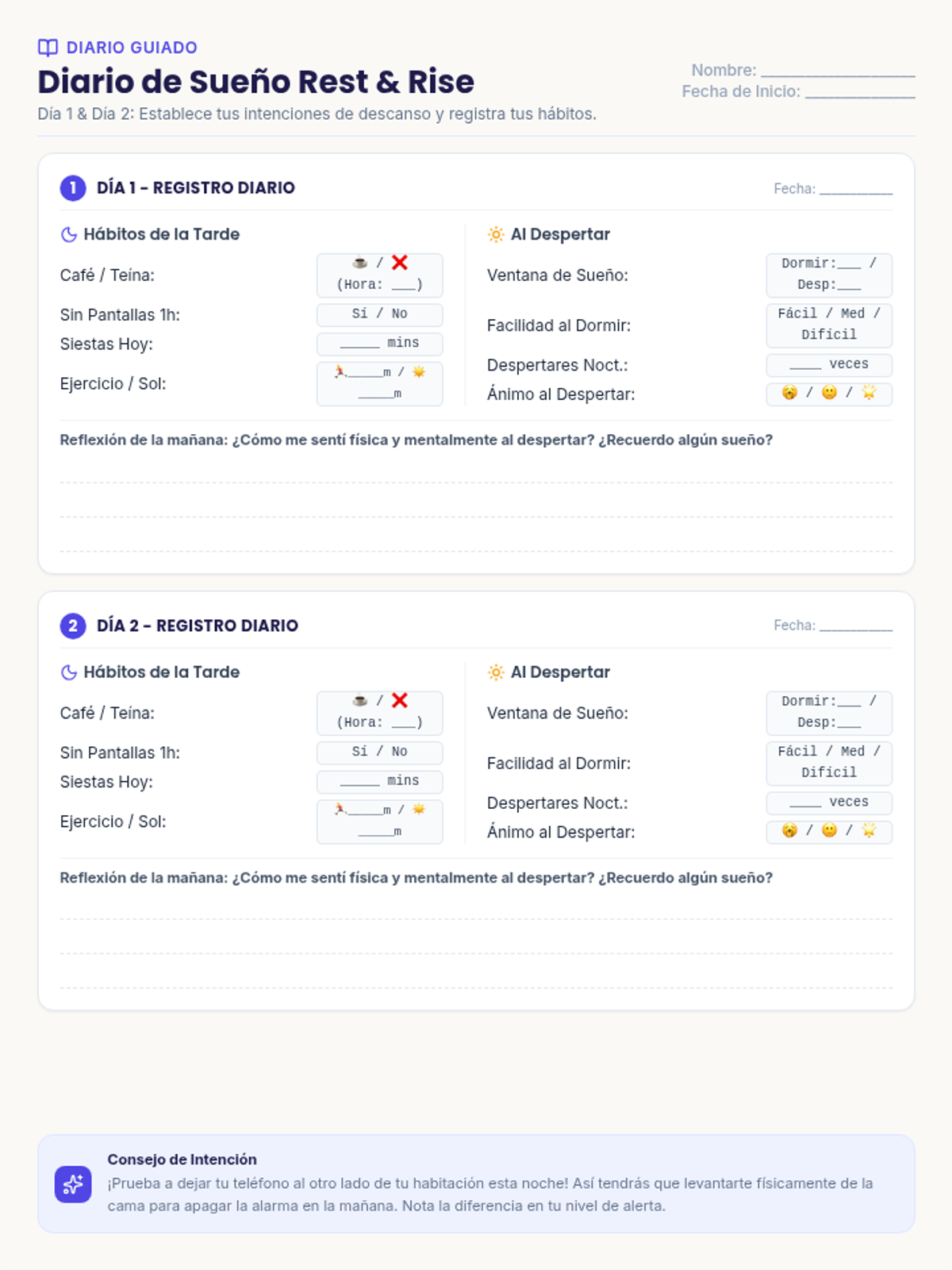
A 4-page detailed printable journal for tracking sleep and mood across 7 days translated into Spanish. Each page contains highly structured evening and morning trackers, dedicated sections for caffeine, screens, naps, exercise, outdoor sunshine, nocturnal wakeups, falling sleep quality, waking mood, morning thoughts, and a complete weekly synthesis review.
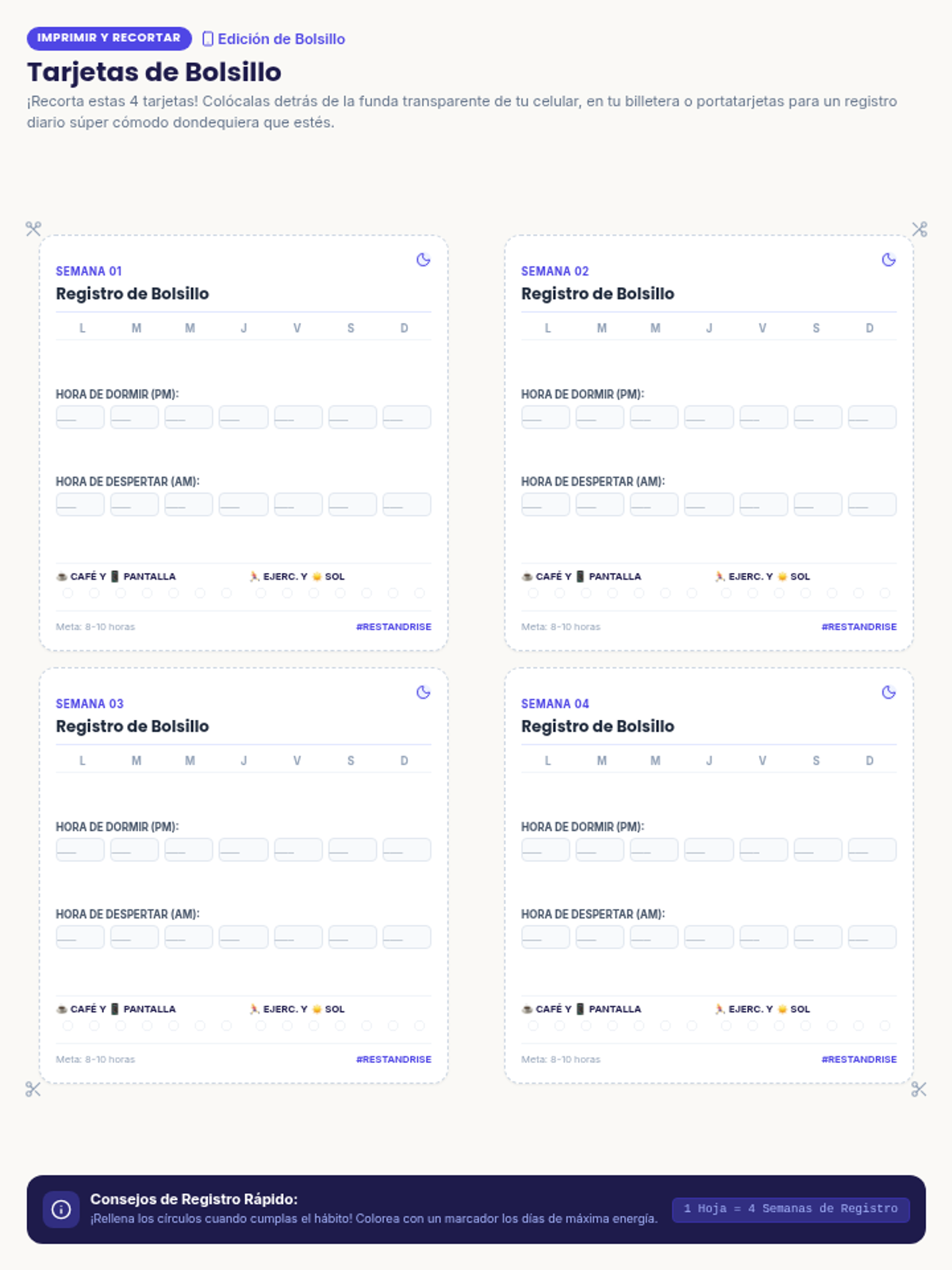
A 1-page printable document containing 4 pocket-sized sleep and mood tracking cards translated into Spanish. Features weekly grids for easy logging of bedtimes, wake times, caffeine logs, screens, and movement.
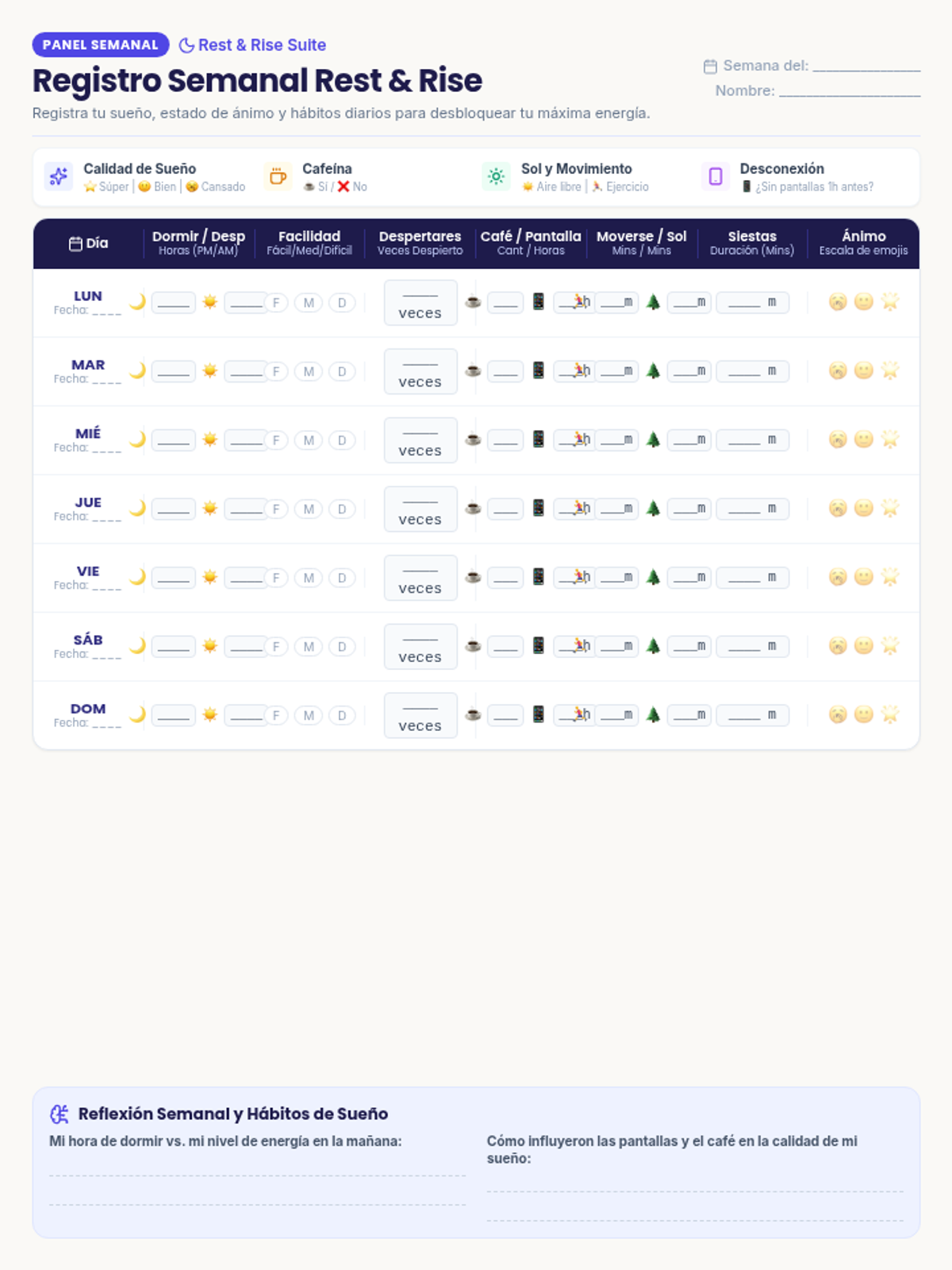
A clean, highly visual 1-page weekly tracker translated into Spanish. Features rows for each day of the week to log bed/wake times, ease of falling asleep, nocturnal wakeups, caffeine, screen time, exercise, sunshine, naps, and waking mood. Includes a custom weekly pattern synthesis reflection panel.
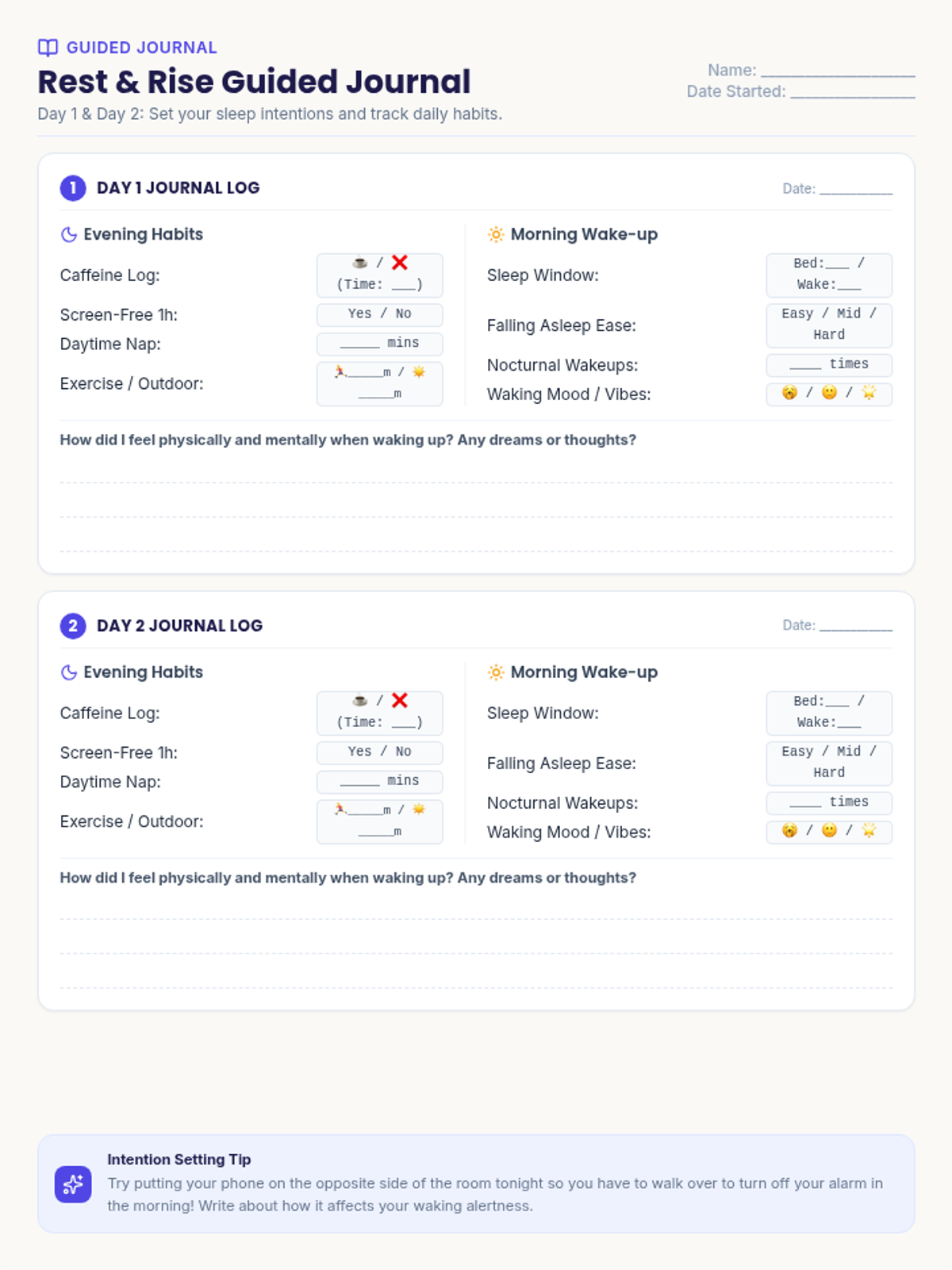
A 4-page detailed printable journal for tracking sleep and mood across 7 days. Each page contains highly structured evening and morning trackers, dedicated sections for caffeine, screens, naps, exercise, outdoor sunshine, nocturnal wakeups, falling sleep quality, waking mood, morning thoughts, and a complete weekly synthesis review.
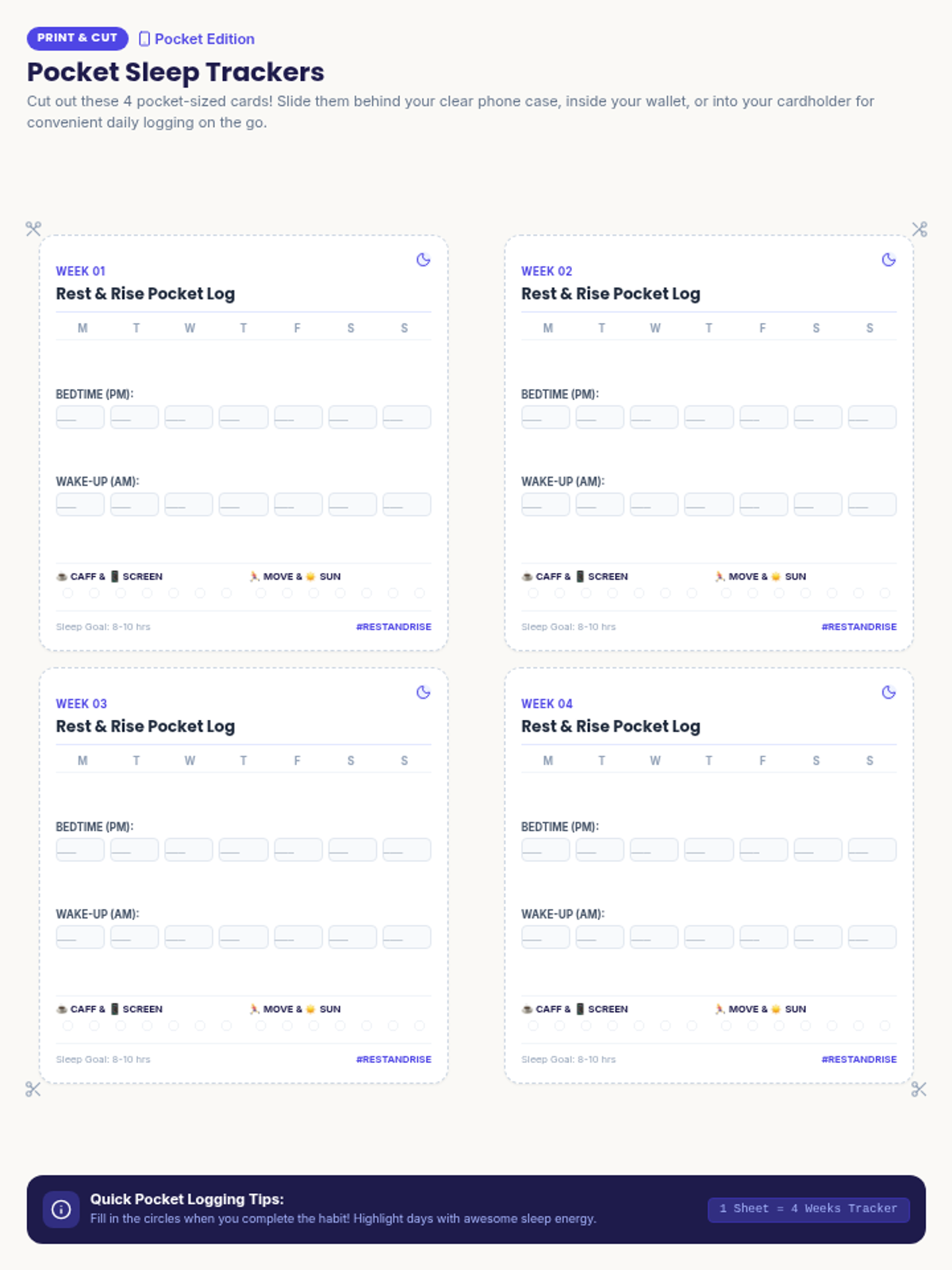
A 1-page printable document containing 4 pocket-sized sleep and mood tracking cards designed to fit perfectly inside phone cases or wallets. Includes weekly grids for easy logging of bedtime, wake time, caffeine/screen checks, and active hours.
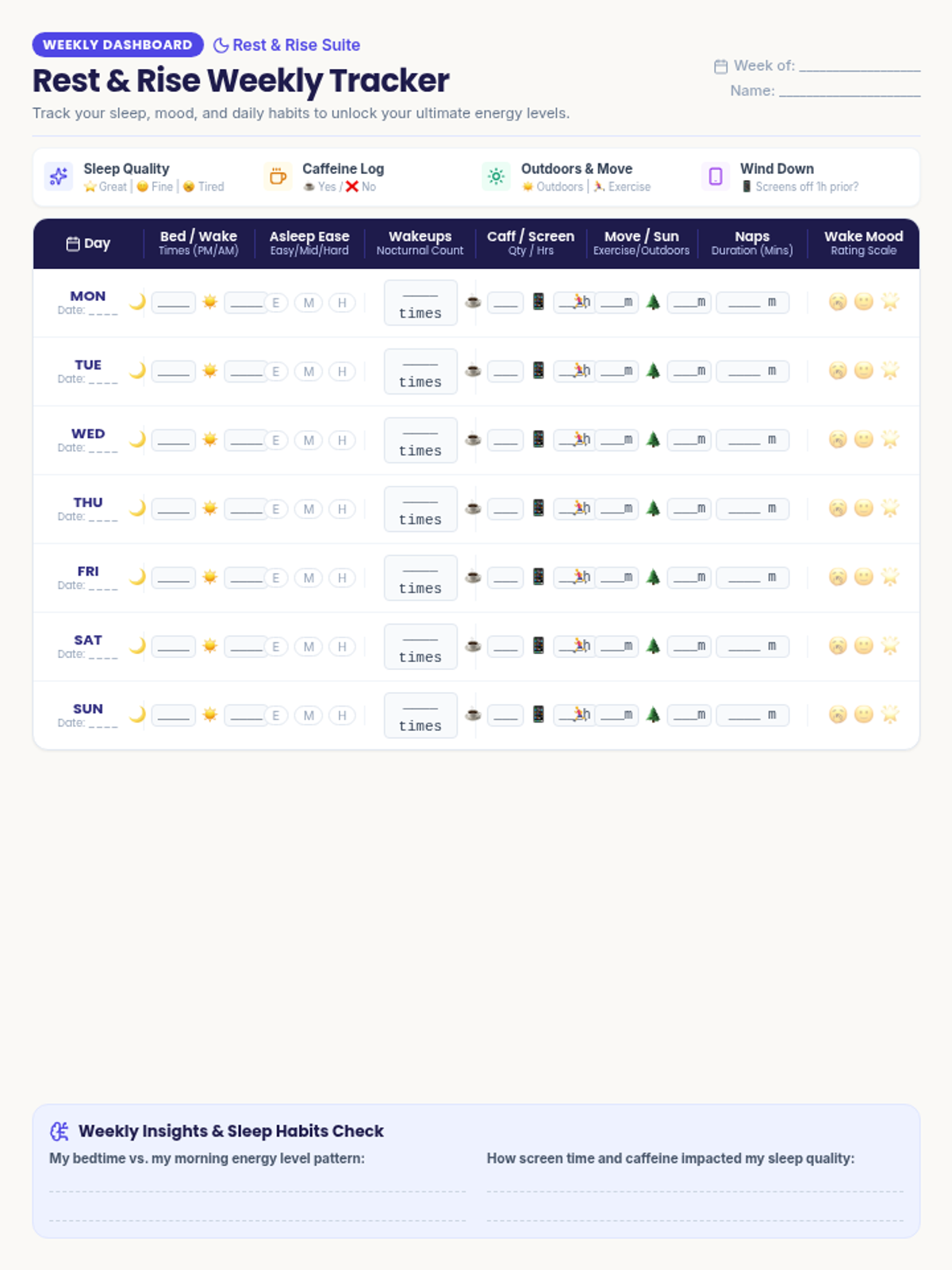
A clean, highly visual 1-page weekly tracker designed specifically for teens. Features rows for each day of the week to log bed/wake times, ease of falling asleep, nocturnal wakeups, caffeine, screen time, exercise, sunshine, naps, and waking mood. Includes a custom weekly pattern synthesis reflection panel.
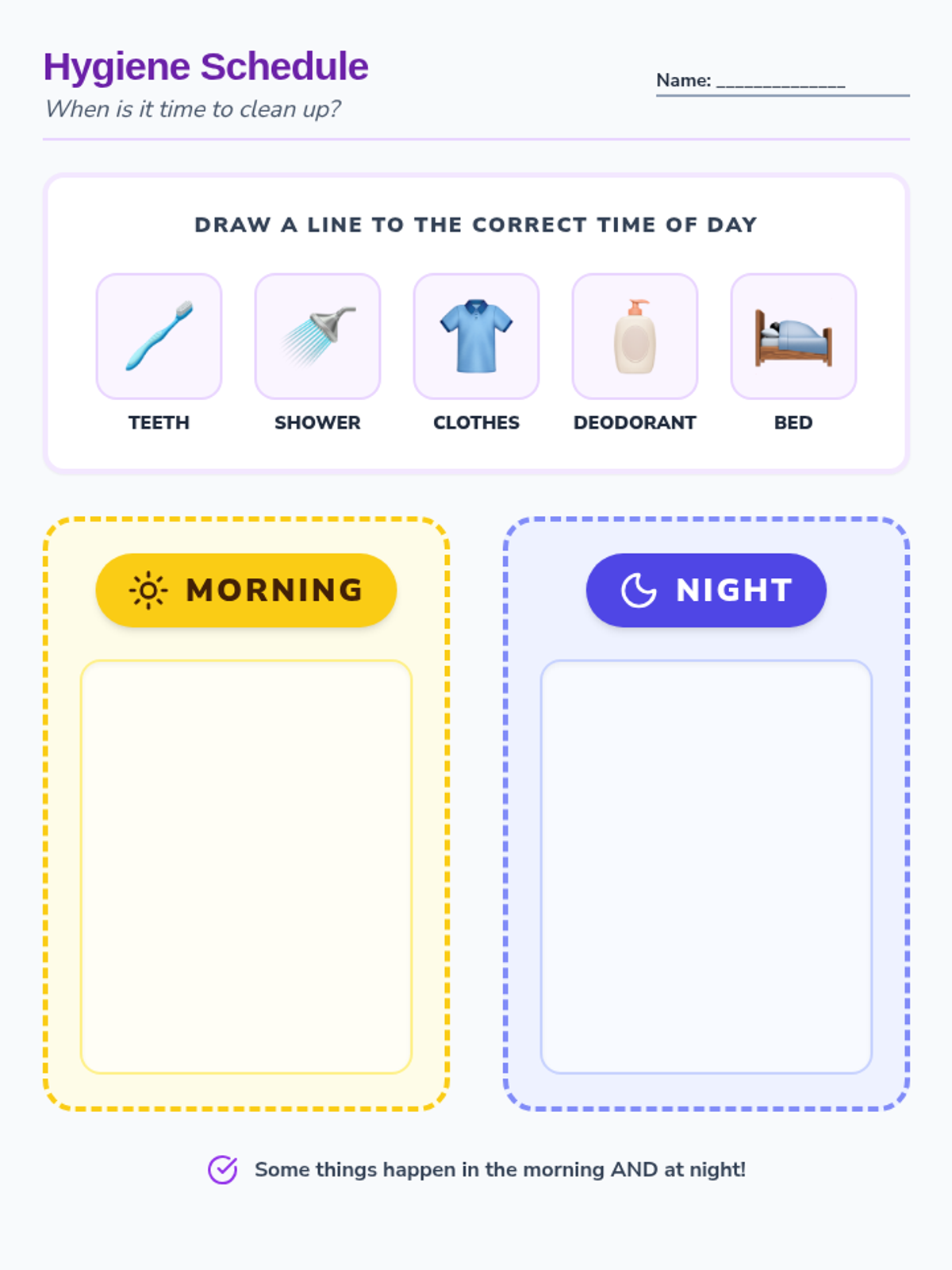
A sorting worksheet for morning and night hygiene routines. Text contrast improved and layout adjusted to fit a single page. High-contrast labels for readability.
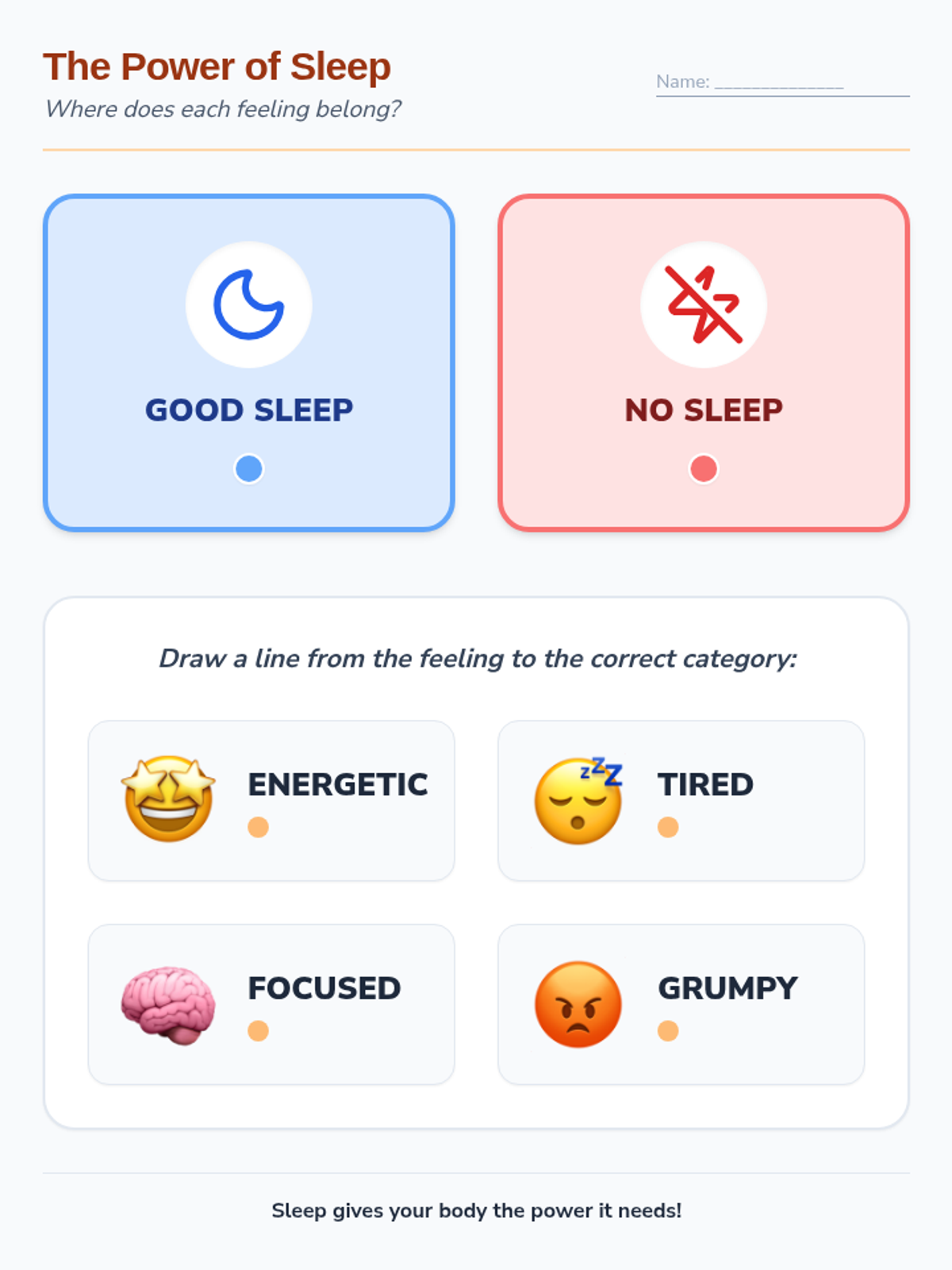
A sorting worksheet comparing feelings (energetic, tired, focused, grumpy) to 'Good Sleep' vs 'No Sleep' categories. Clear visual anchors for drawing lines. fits on a single page.
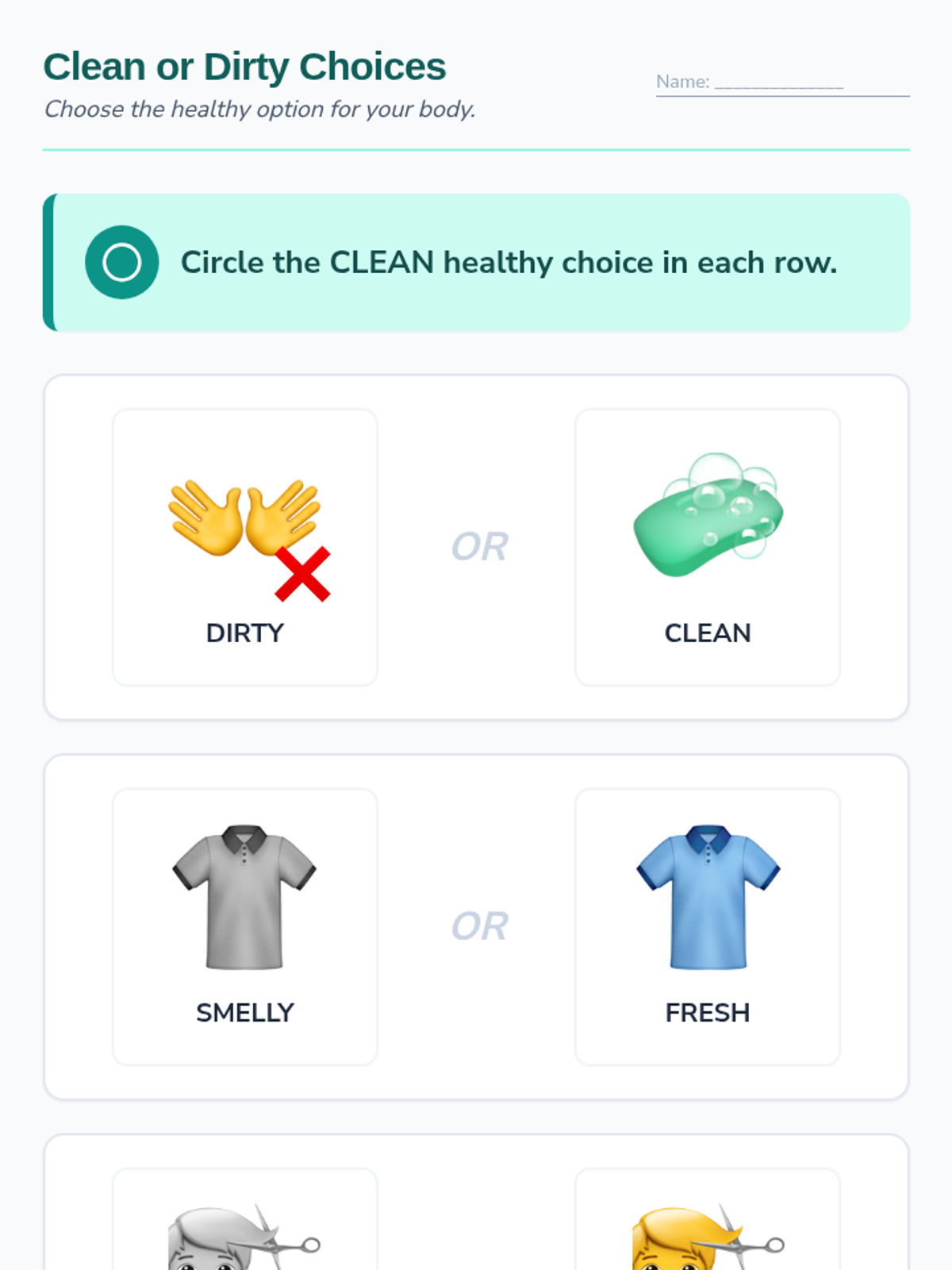
A visual choice-based worksheet. Answer choices are styled uniformly to ensure objective assessment. Clear visual differences between clean and dirty options. fits on a single page.
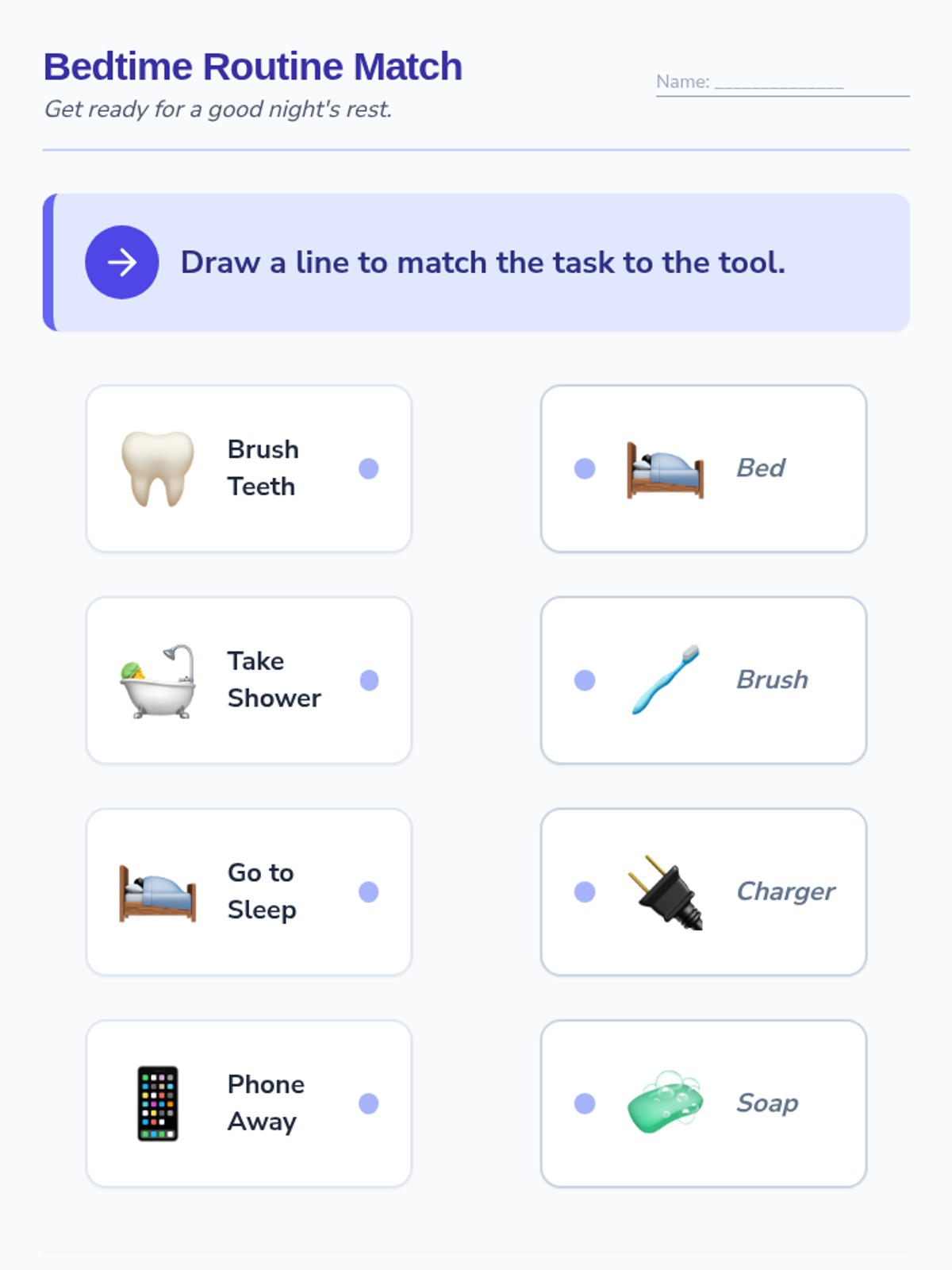
A visual matching worksheet where students connect bedtime routine tasks to the correct tools. Fixed logic and added anchor points for clarity. fits on a single page.
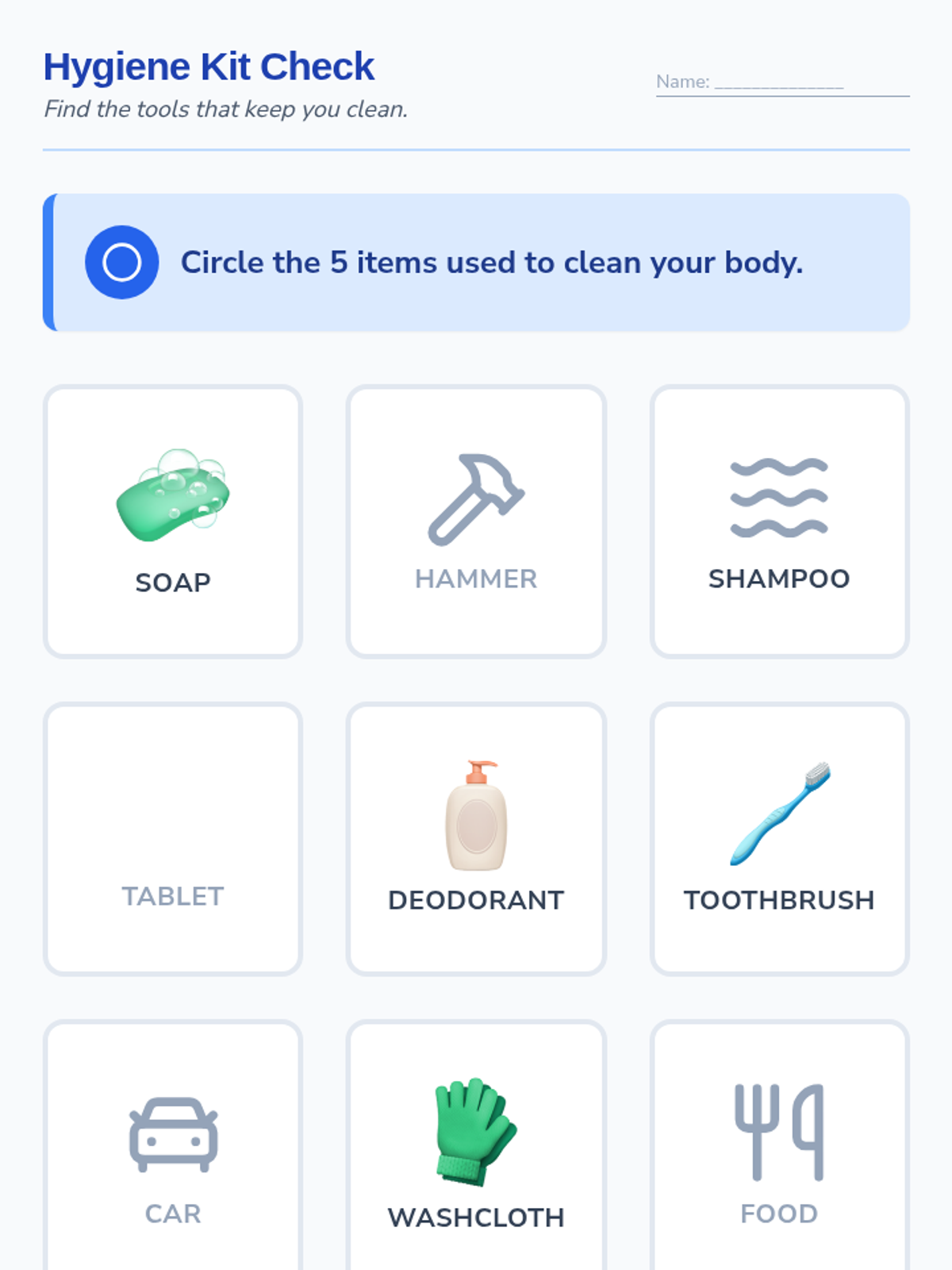
A visual circling activity where students identify hygiene tools from a mixed grid of items. Icons and emojis are balanced for clarity. fits on a single page.
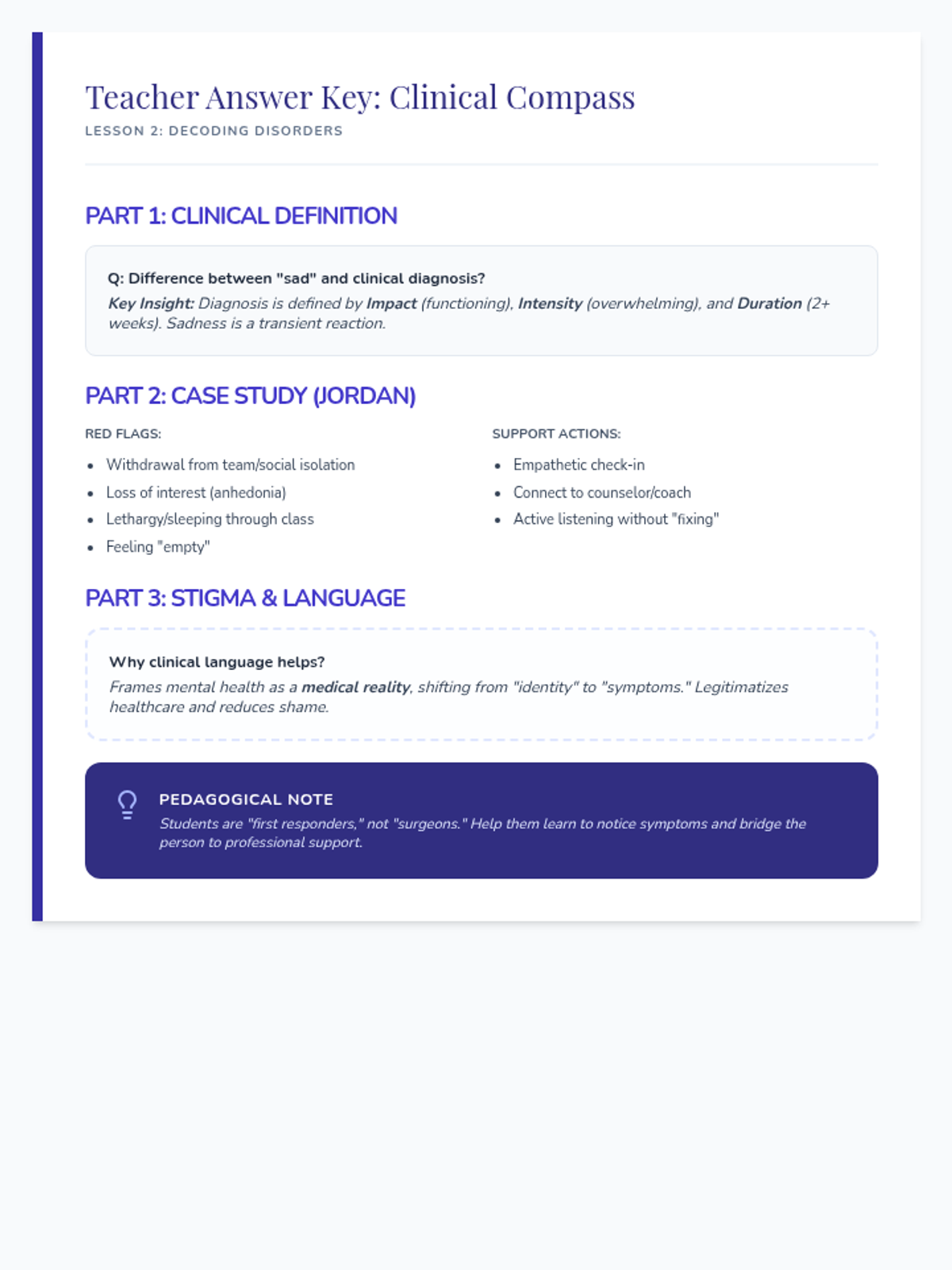
Teacher-facing answer key and facilitation guide for Lesson 2 (Clinical Compass). Updated for single-page print reliability and improved font hierarchy.
Slide presentation for Day 3, teaching students about resilience, the difference between adaptive and maladaptive coping, and the 5-4-3-2-1 grounding technique.
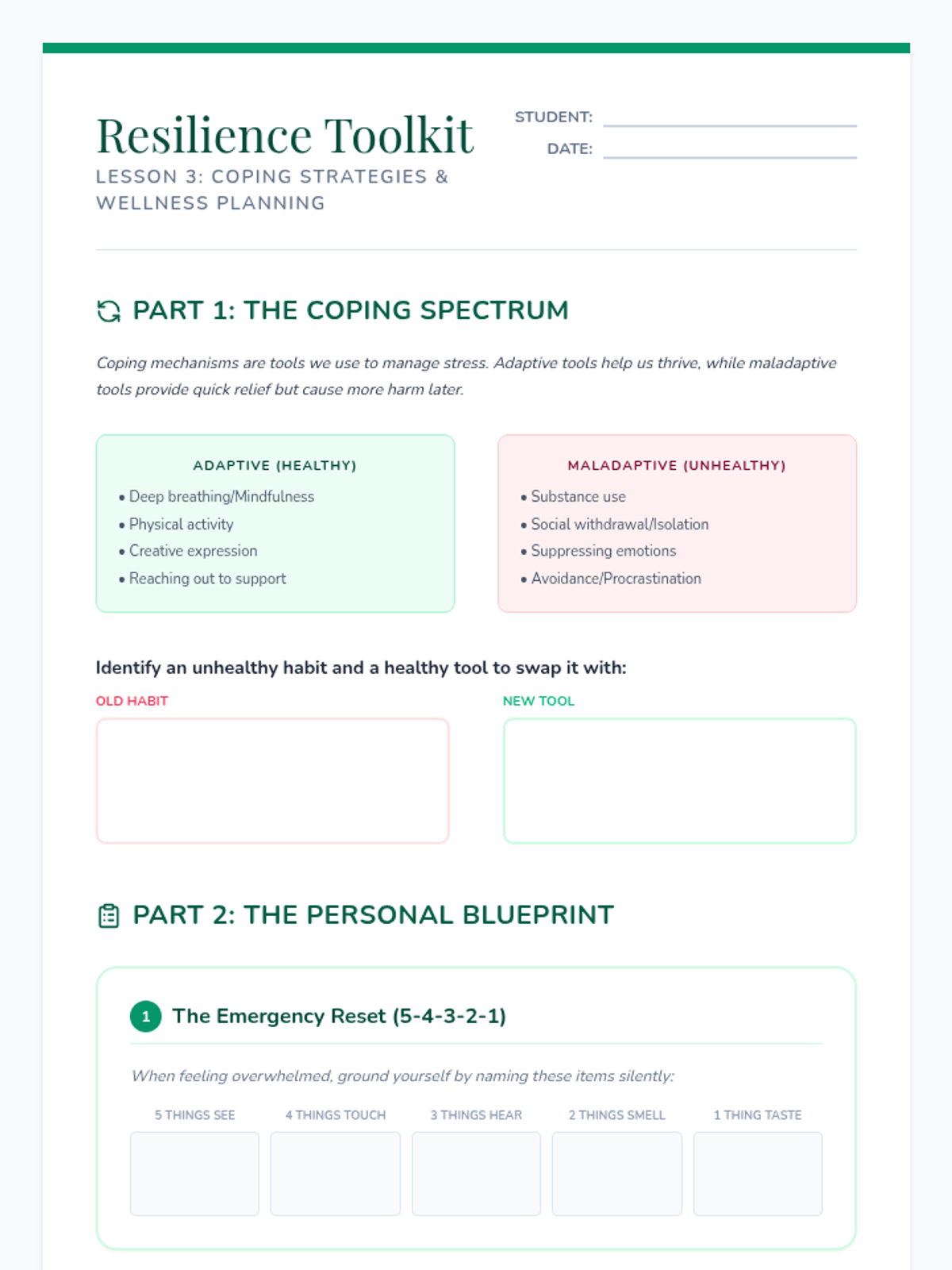
A practical, reflective worksheet for students to build their "Resilience Toolkit." Updated with improved page flow for exercises, lighter backgrounds for legibility, and larger response boxes.
Slide deck for Day 2 focusing on defining clinical disorders, identifying common types of mental health challenges, and discussing the impact of stigma.
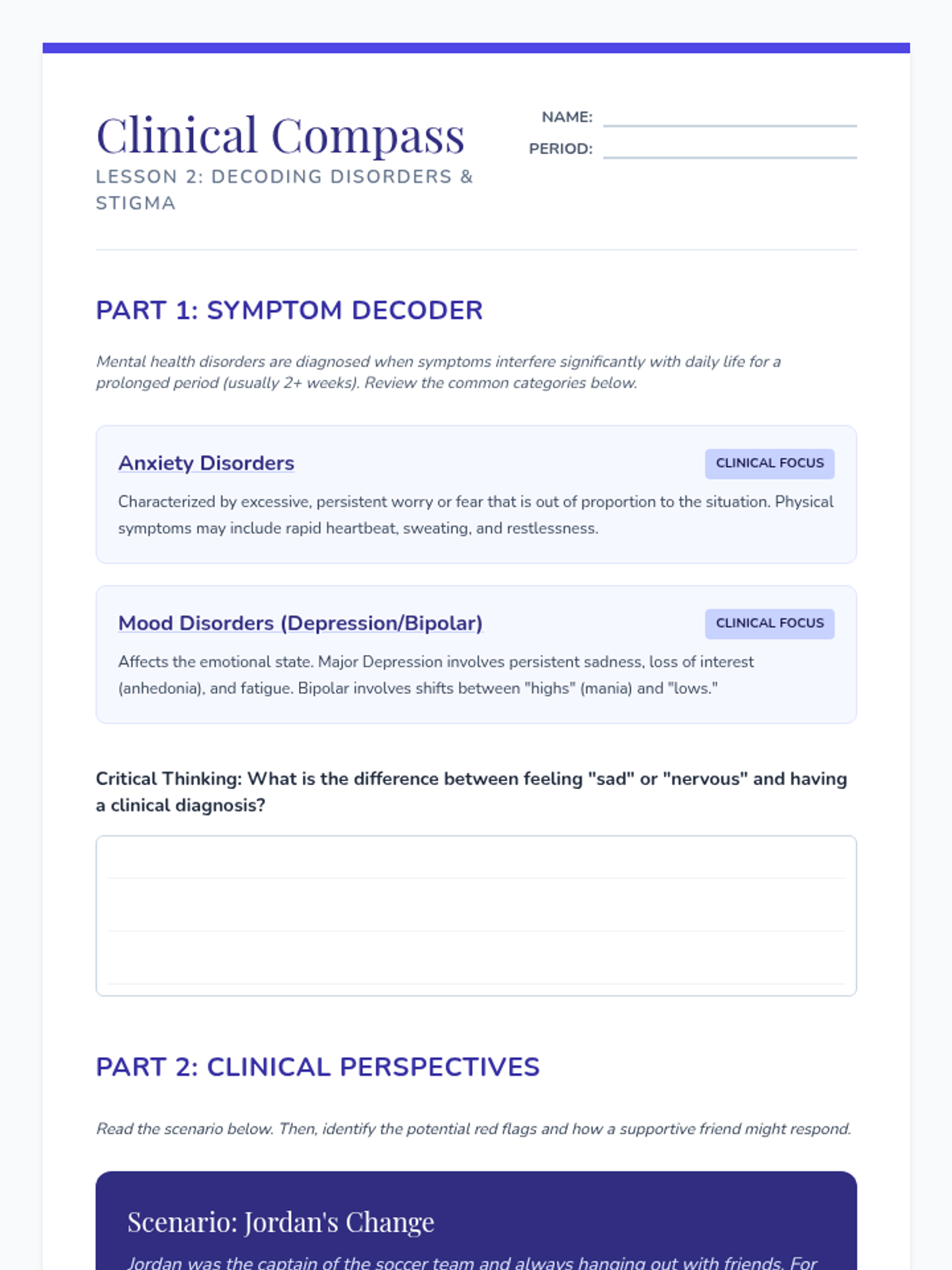
A student-facing worksheet for Lesson 2 that helps students decode clinical symptoms of mental health disorders. Updated with improved page flow, higher contrast headers, and lined response areas.
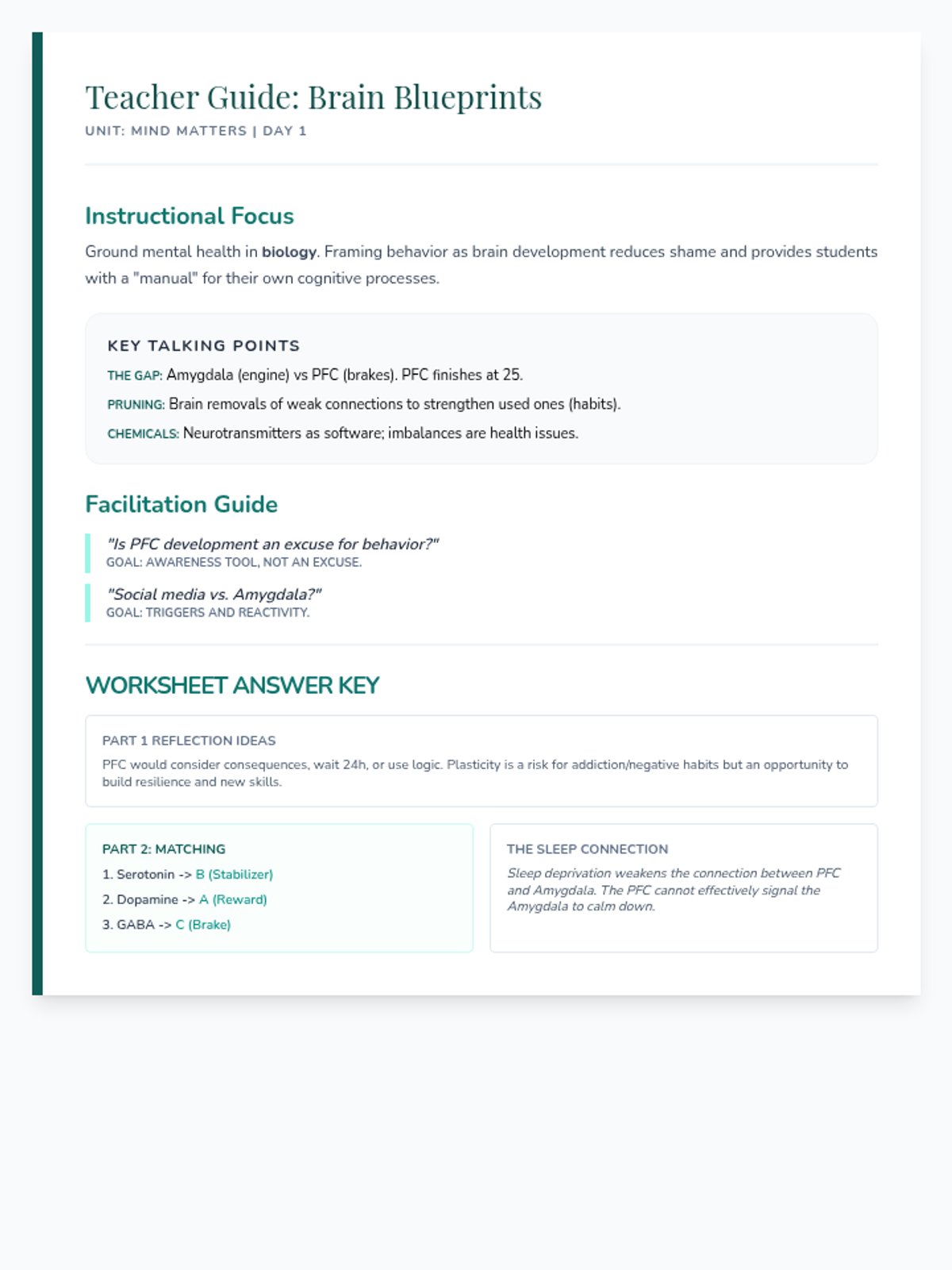
A teacher facilitation guide for Lesson 1, providing talking points, discussion prompts, and an answer key for the Brain Blueprints worksheet. Updated for single-page print reliability and clarity.
A slide presentation for the first day of the mental health unit, covering adolescent brain development, the PFC/Amygdala dynamic, and neuroplasticity. Updated for better visual balance and worksheet alignment.
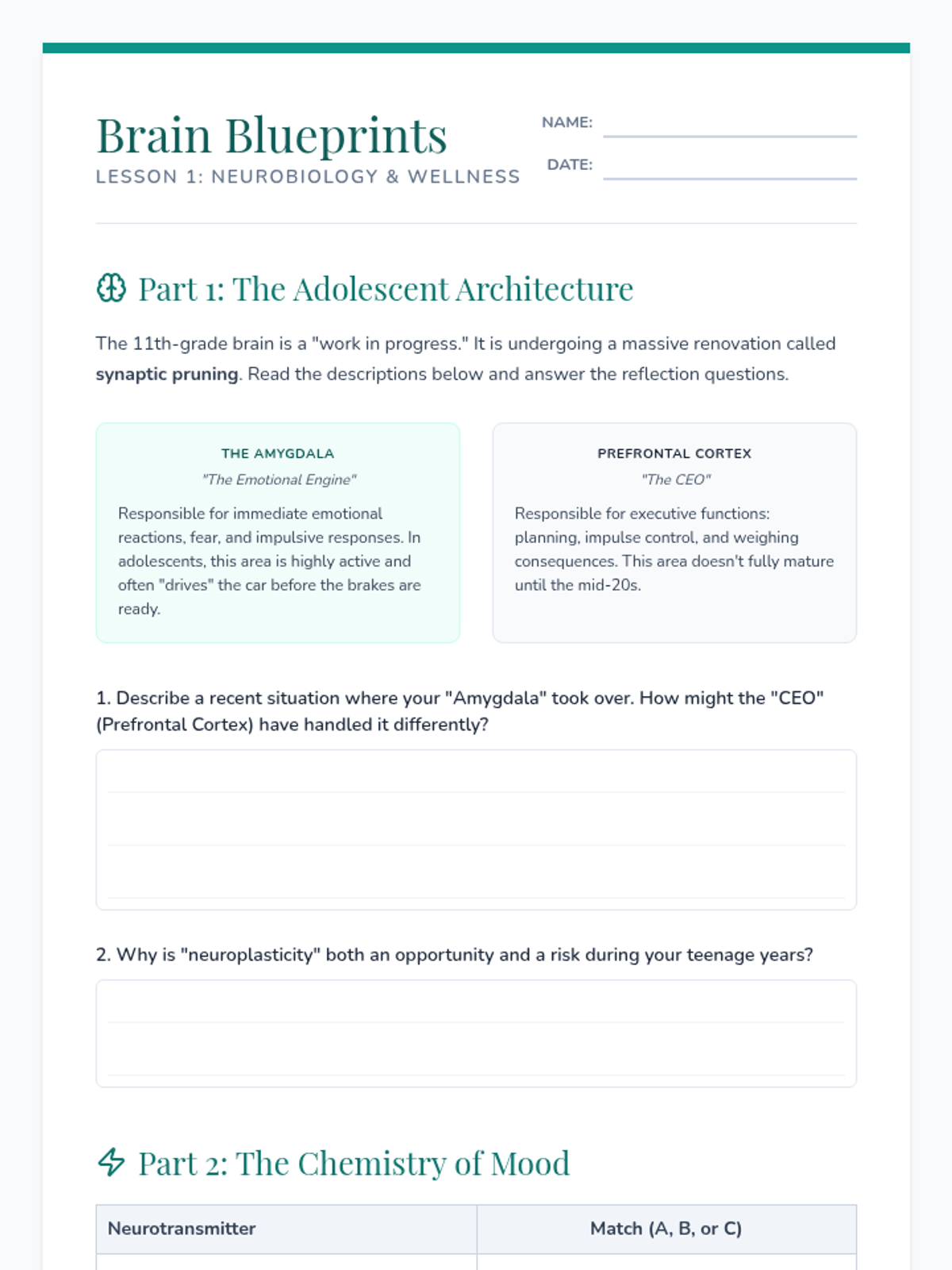
A student worksheet focusing on the neurobiology of the adolescent brain, covering the roles of the prefrontal cortex and amygdala, as well as key neurotransmitters. Updated with lined work areas and improved page layout.
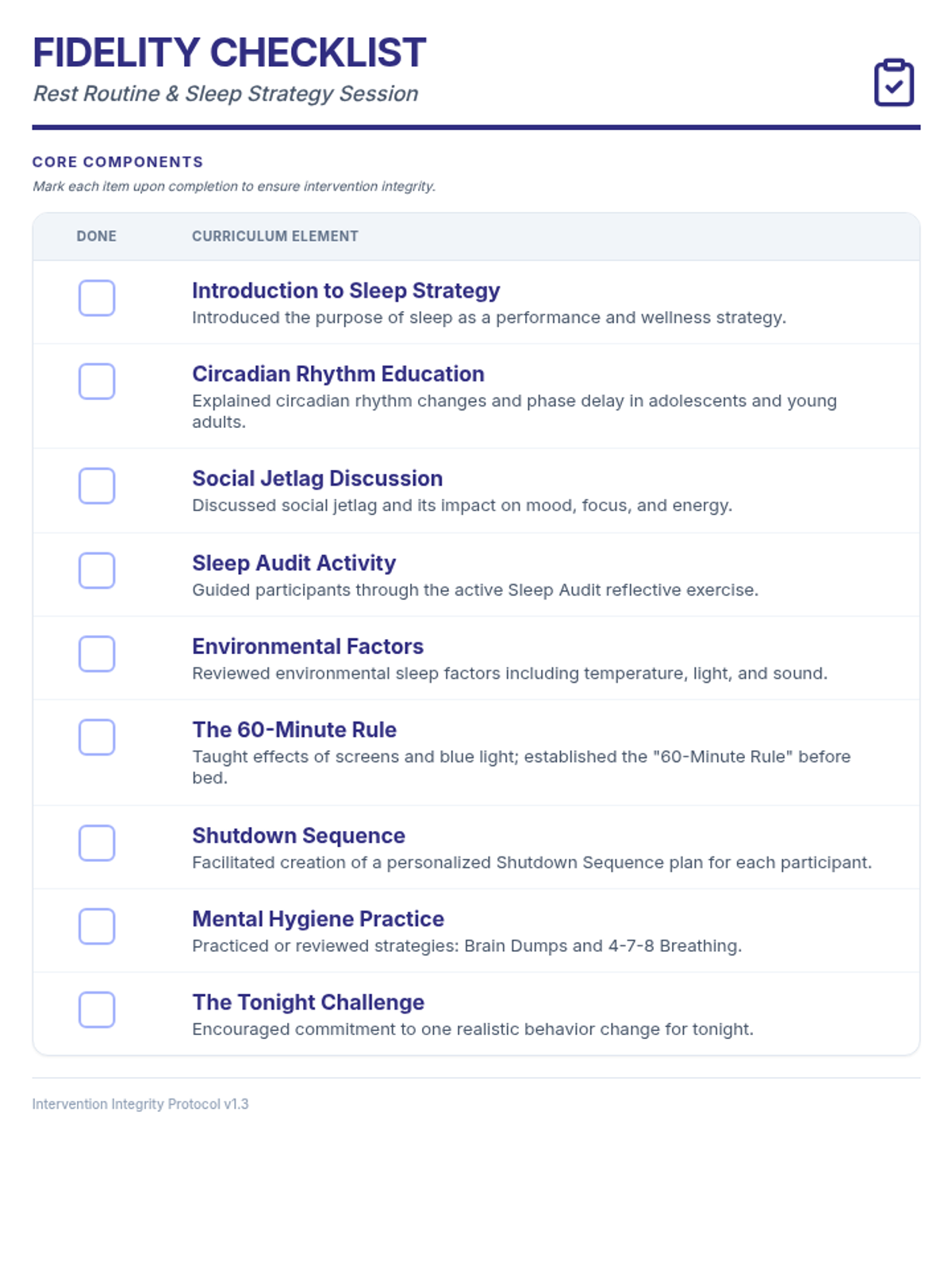
A final streamlined version of the fidelity checklist focusing solely on core components. Removed session metadata, observation sections, and the signature line for a clean, simple verification tool.
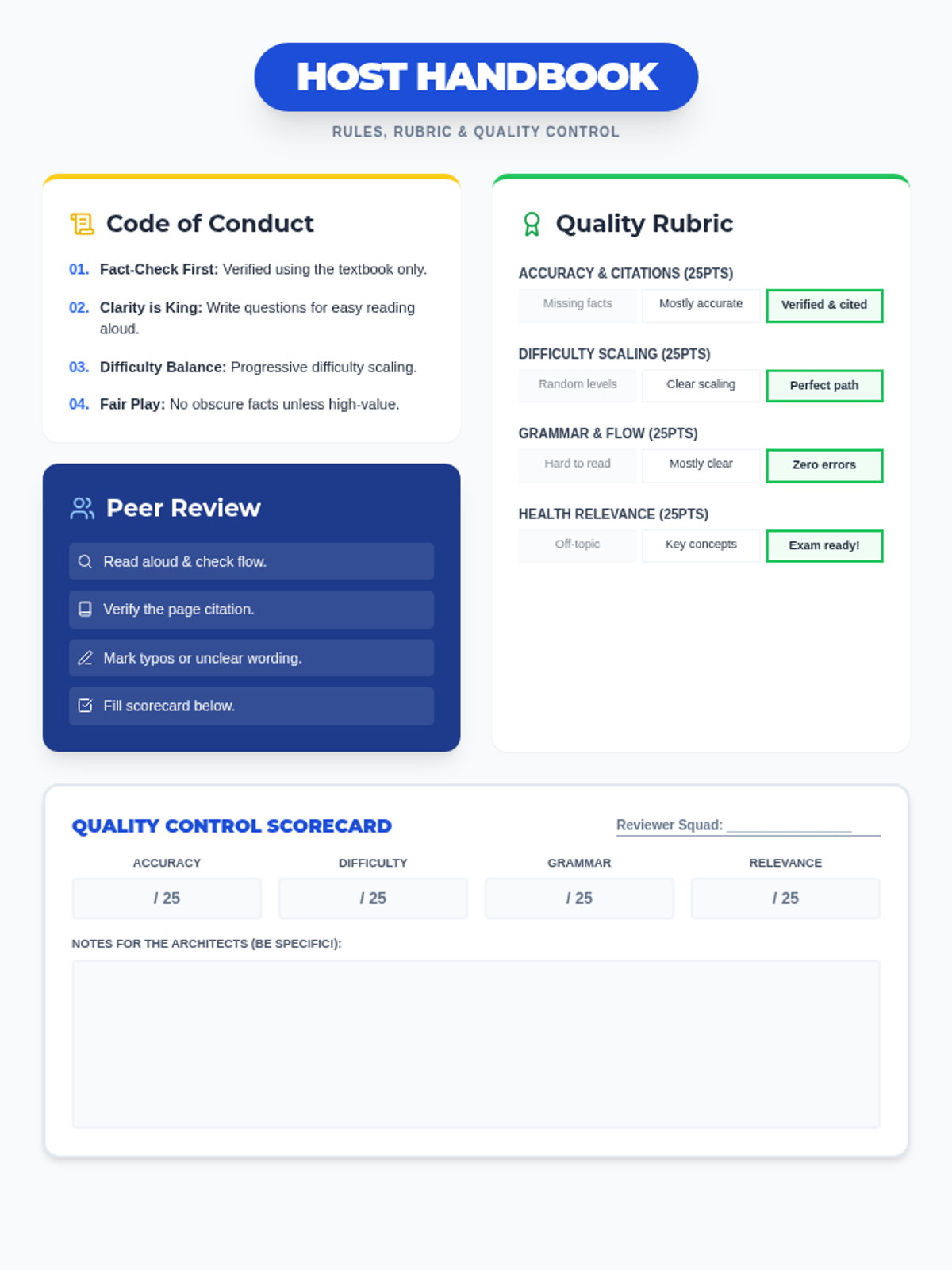
A handbook for students acting as hosts and reviewers, featuring guidelines for question quality and a peer-assessment rubric.
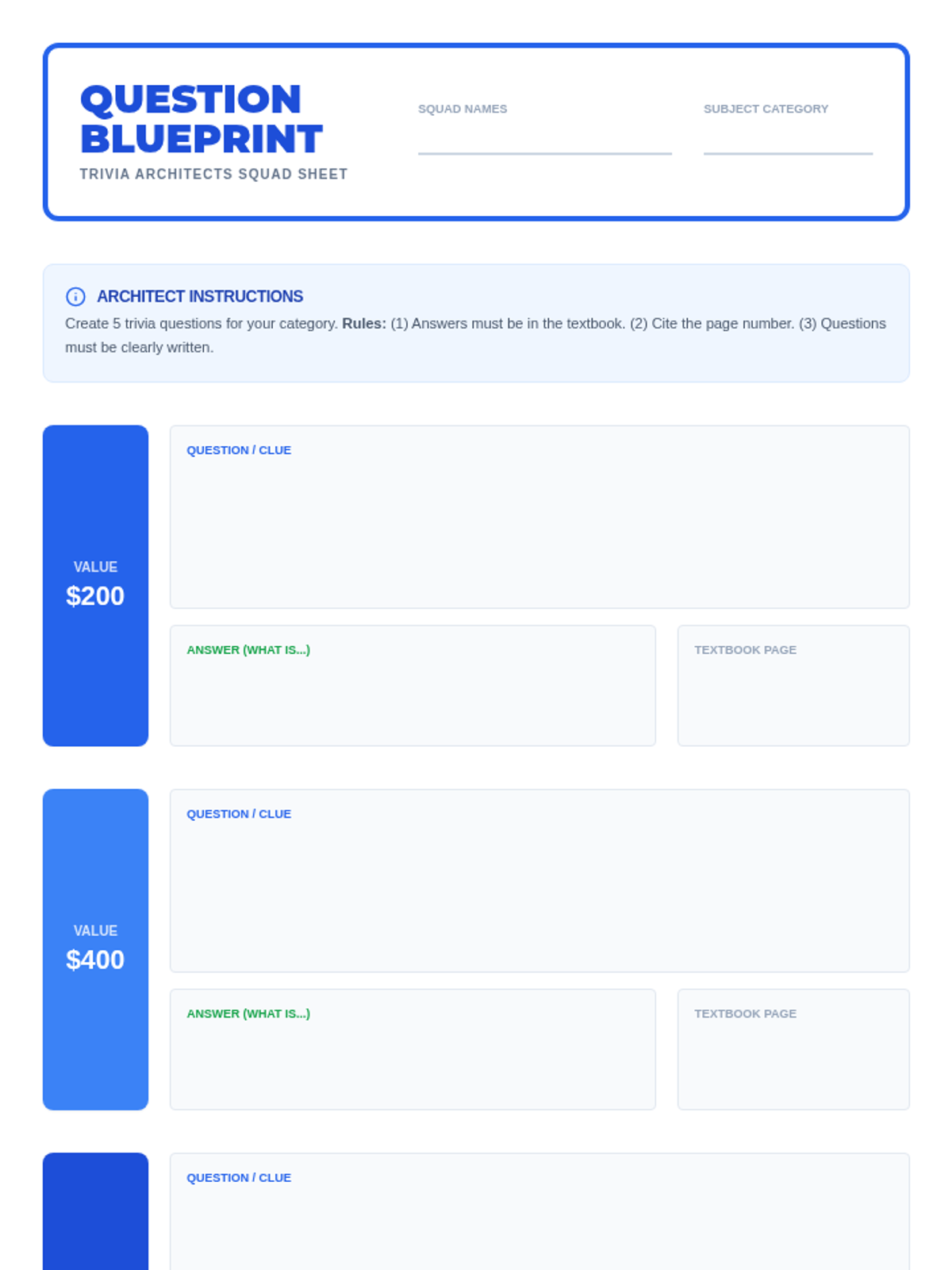
A structured worksheet for students to draft their trivia questions, answers, and textbook citations, organized by difficulty level.
A high-energy visual presentation to guide students through the process of creating a Jeopardy-style review game.
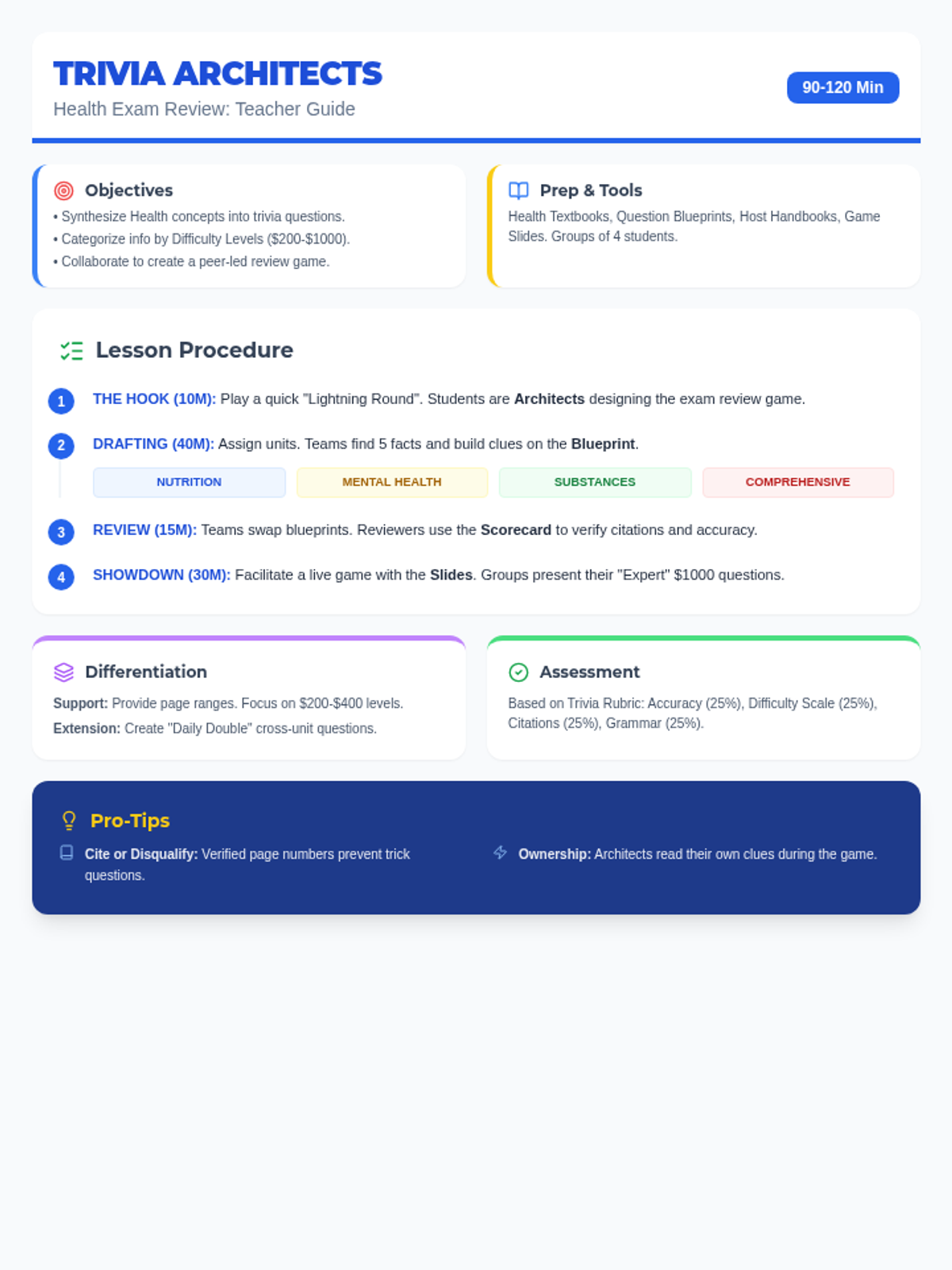
A comprehensive teacher guide for leading the 'Trivia Architects' lesson, including learning objectives, procedural steps, and differentiation strategies.
A high-impact 5-slide presentation for a 90-minute workshop on nutrition and movement. Revised for better contrast and icon clarity.
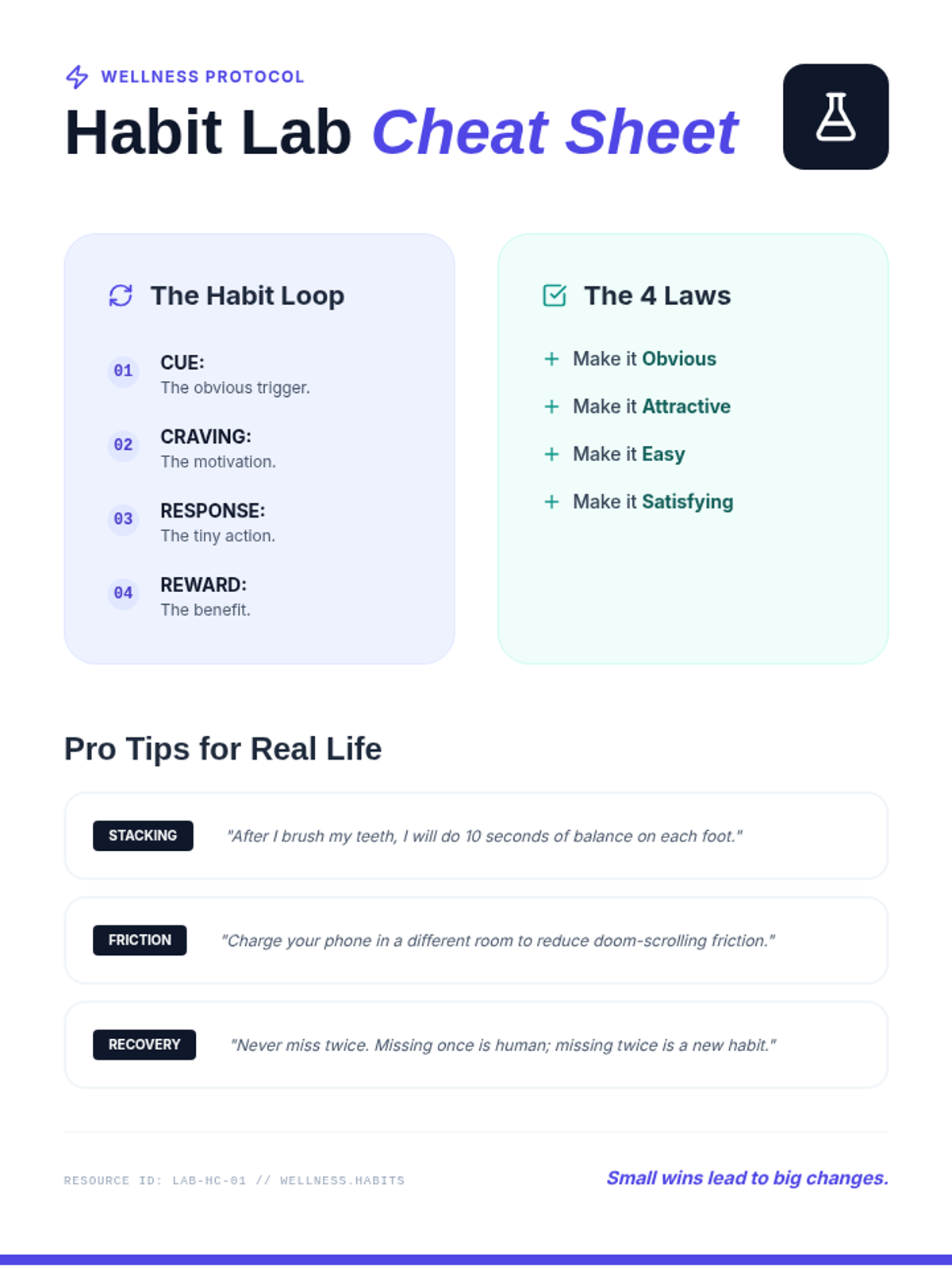
A concise one-page reference handout for participants, summarizing the habit loop, the four laws of behavior change, and practical strategies like habit stacking and environment design.
A high-impact visual presentation covering the core concepts of habit formation: the habit loop, identity-based habits, the 2-minute rule, temptation bundling, and habit stacking. Designed for 16-21 year olds.
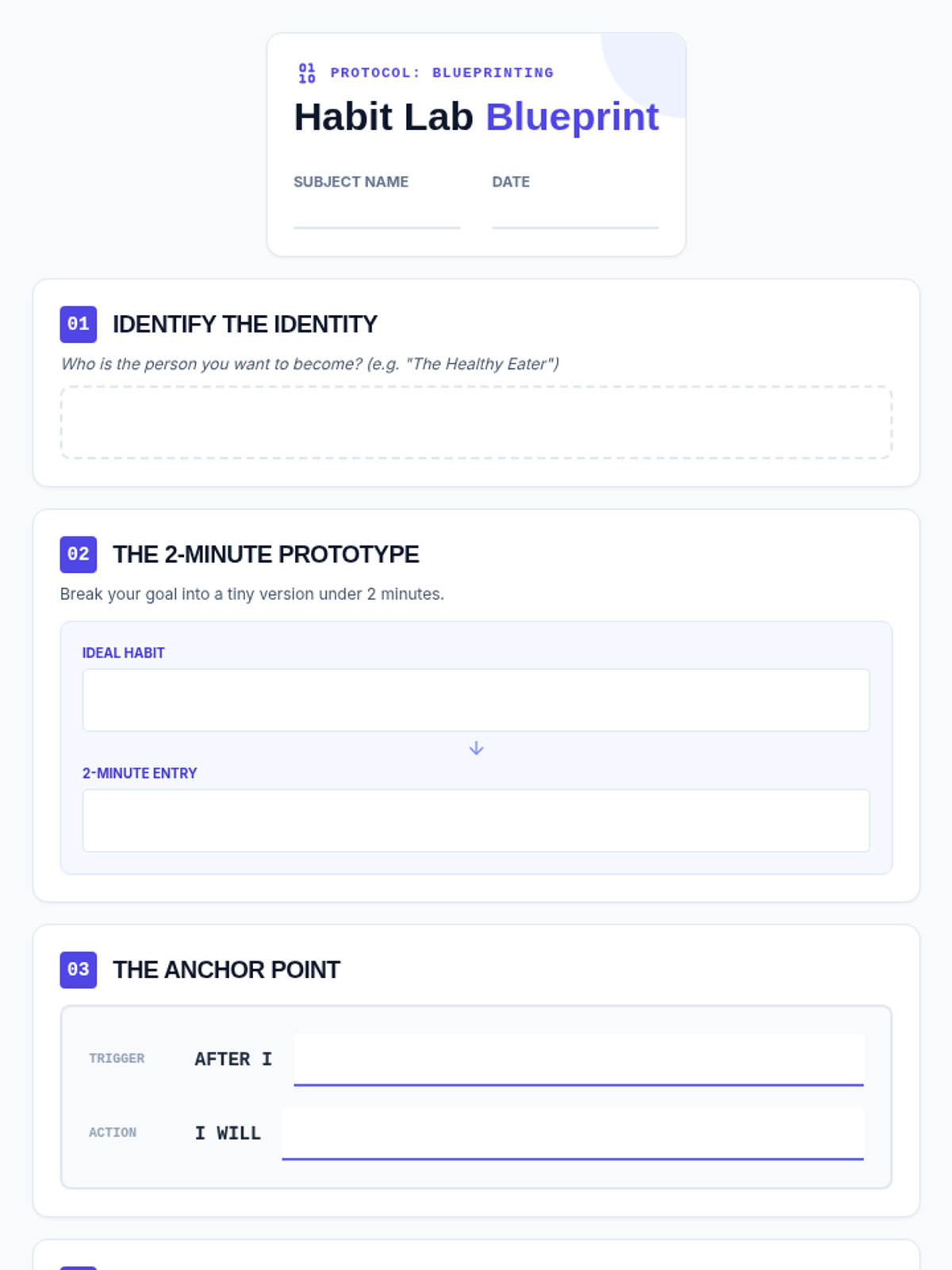
An expanded 5-page workshop workbook for habit formation. Includes identity mapping, habit loop analysis, 2-minute prototyping, habit stacking practice, environment audits, backup planning, reward menus, habit trackers, and long-term vision contracts. Designed for a 90-minute high-engagement session.
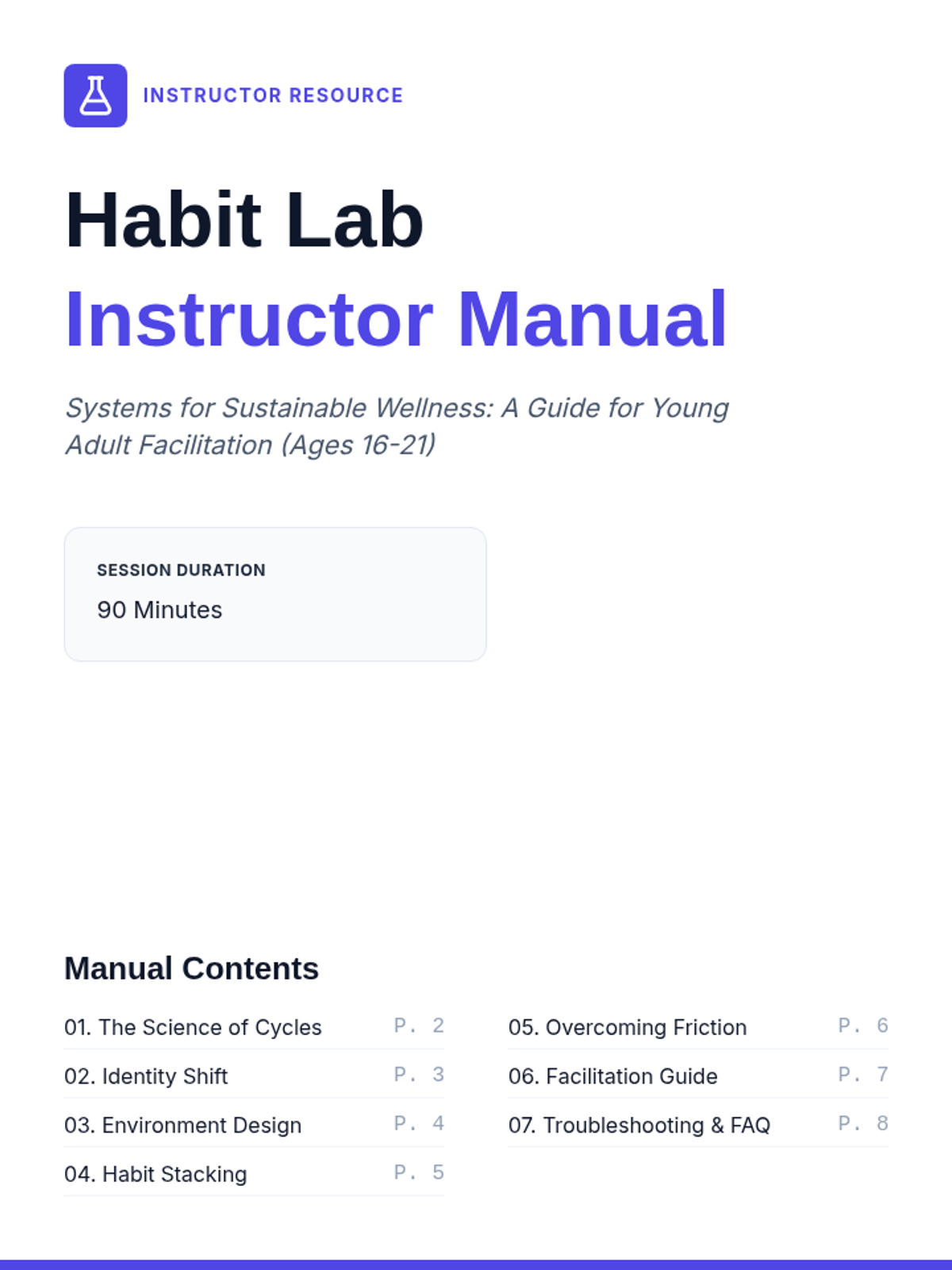
A comprehensive 8-page instructor manual updated with specific facilitation times for a 90-minute session. Includes guidance for new workbook activities such as Loop Mapping, Reward Menus, and the 2-Minute Prototype brainstorm.
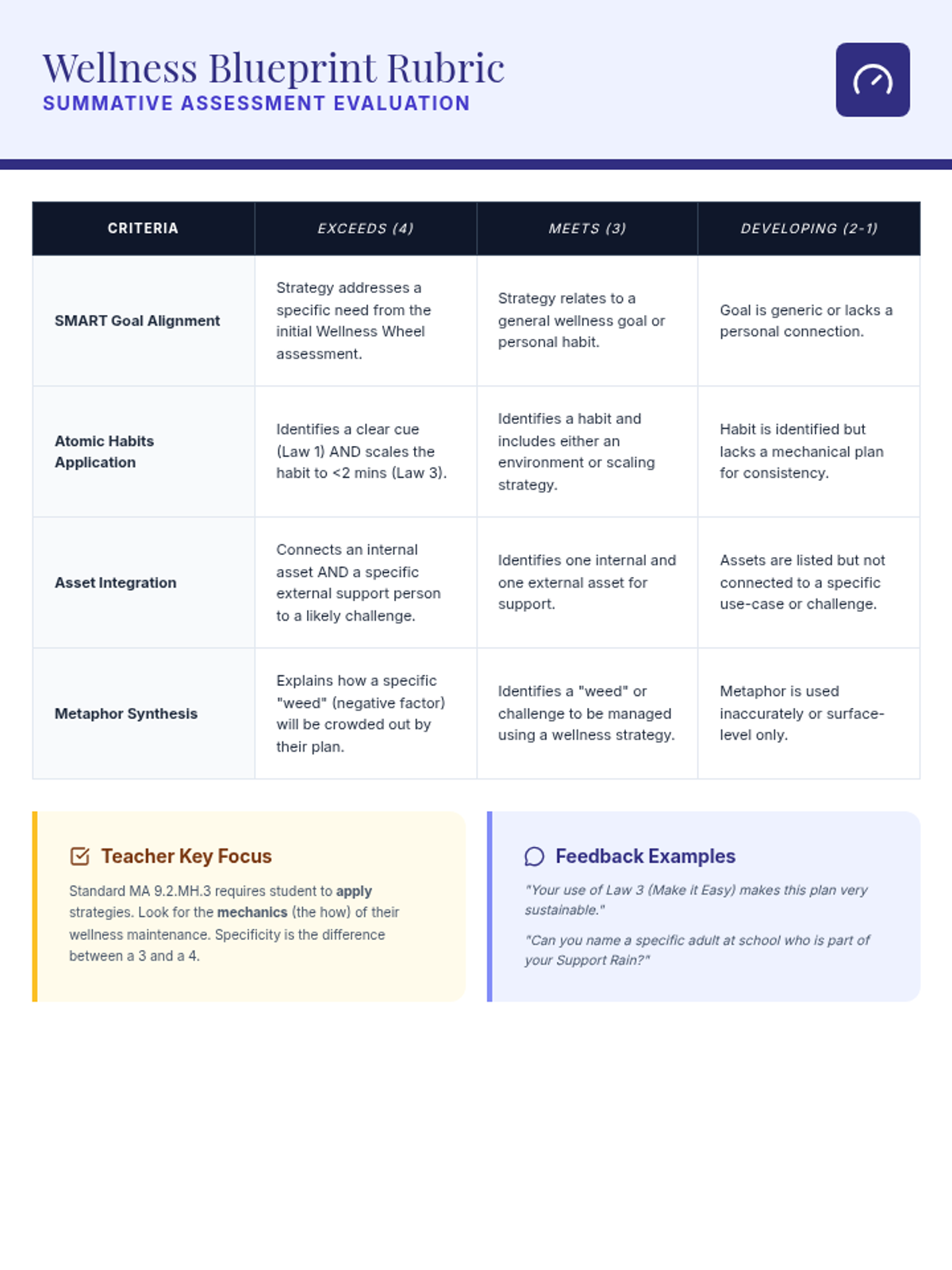
A teacher rubric for the Wellness Blueprint, now optimized for a single-page layout and updated with the "Metaphor Synthesis" and "Asset Integration" criteria from the mental wellness PDF.
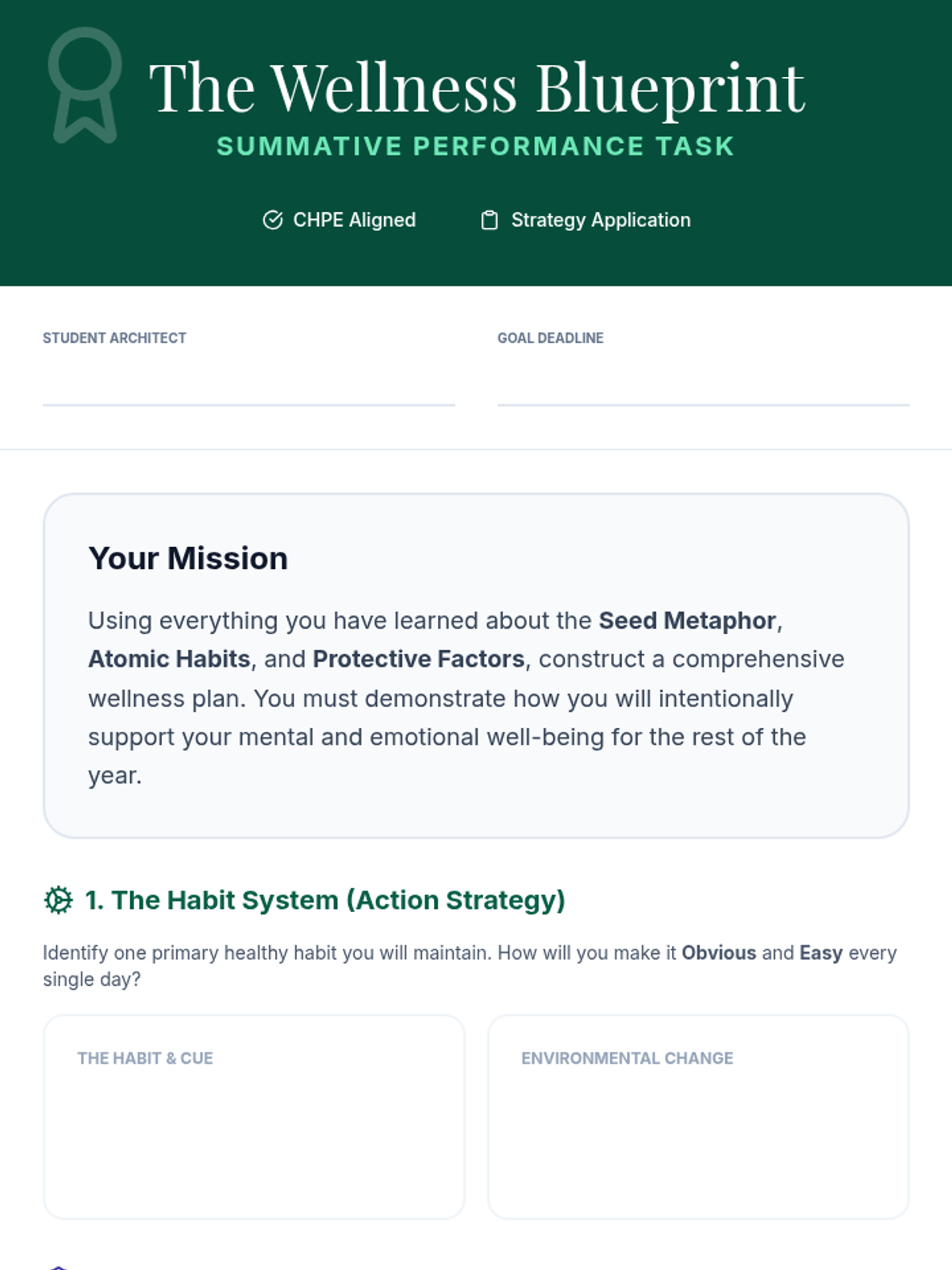
The summative assessment for the mental health unit. This blueprint requires students to synthesize the seed metaphor, habit change strategies, and protective factors into a personalized wellness plan. Aligned with CHPE standards.
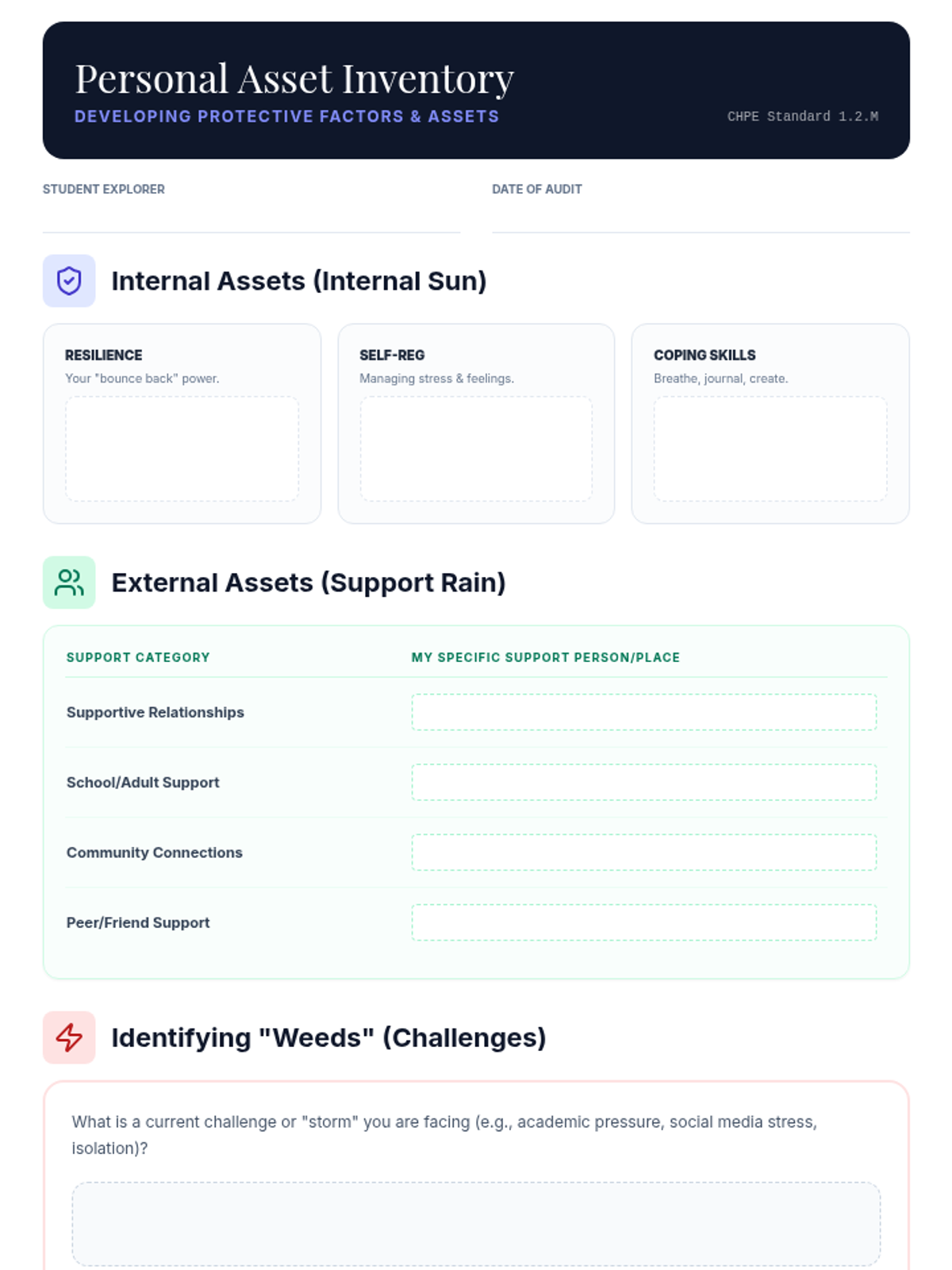
A structured student worksheet for identifying protective factors and internal assets. It now includes a dedicated section for identifying "Weeds" (challenges) based on the mental wellness PDF.
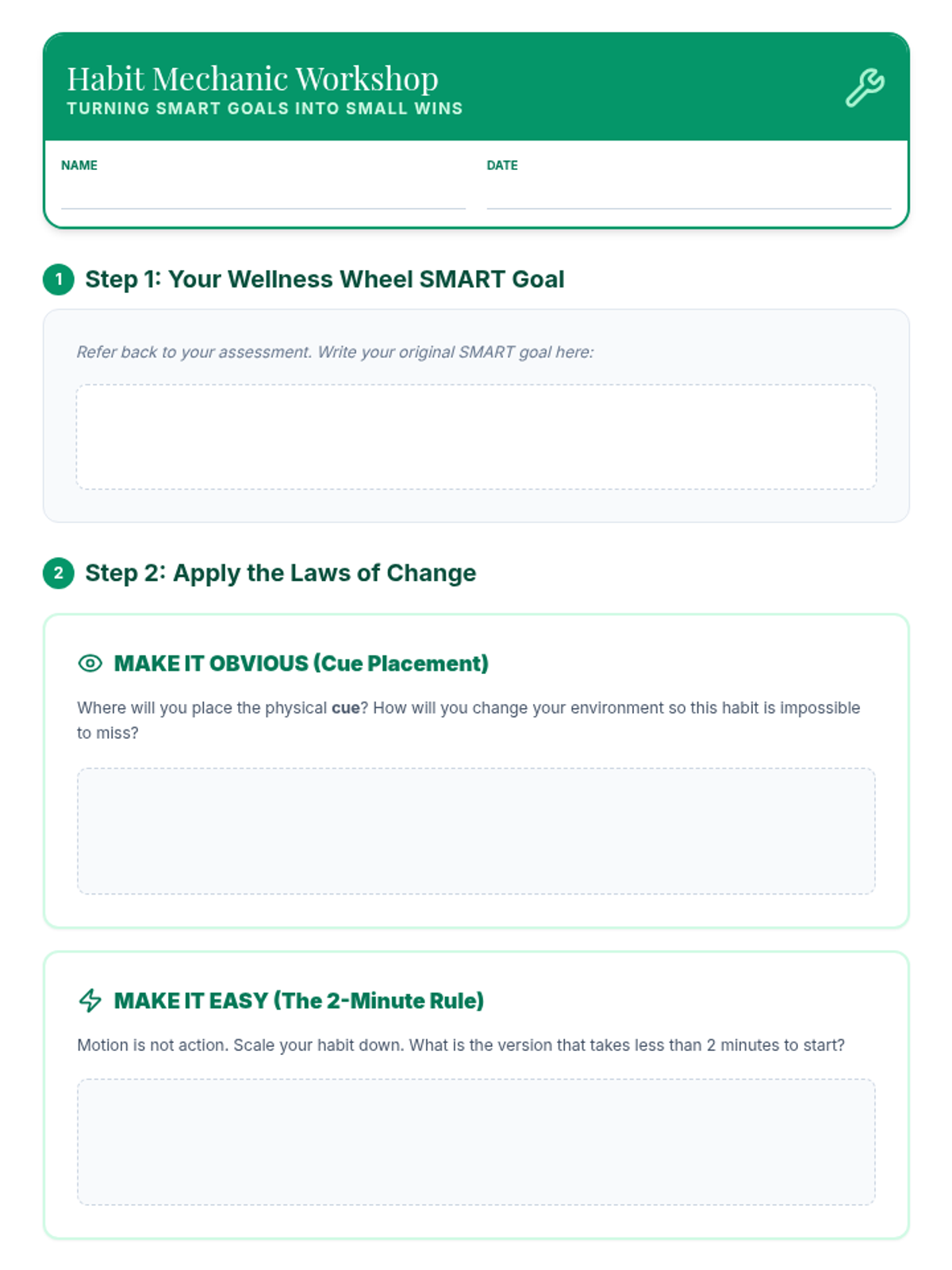
A hands-on workshop document that guides students in breaking down their Wellness Wheel SMART goals into actionable Atomic Habits. It includes sections for identifying environmental cues, applying the 2-minute rule, and planning how to "crowd out" negative habits.
A high-impact slide deck for teaching the Atomic Habits framework, now incorporating specific habit categories (Sleep, Social Media Management, Movement) from the Thriving Minds PDF and refined visual prompts.
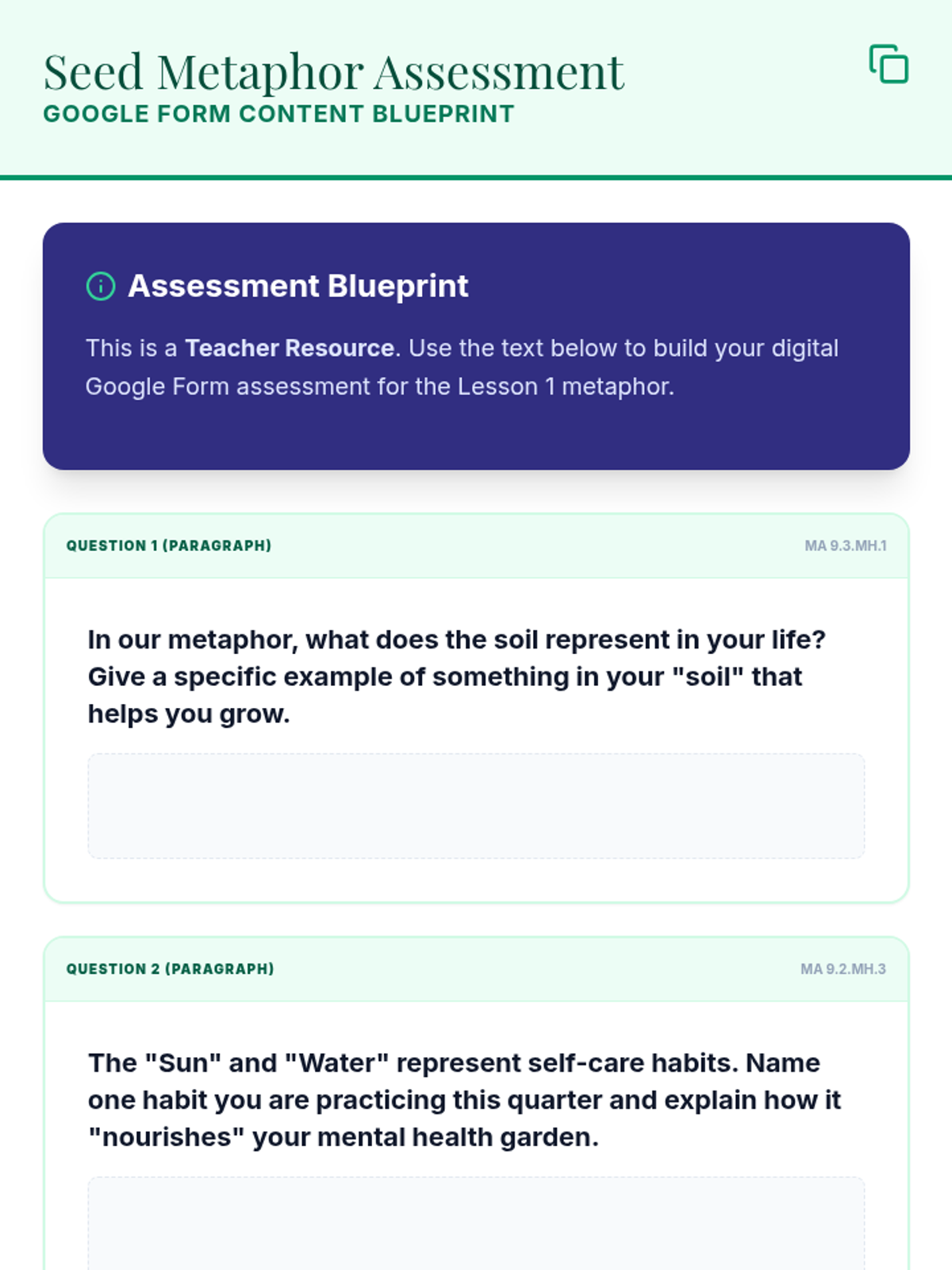
An updated teacher-facing Google Form blueprint incorporating "The Weeds" (stressors) and "The Gardener" concepts from the Thriving Minds PDF.
A visually calming slide deck introducing the expanded seed metaphor for mental health, incorporating "The Weeds" (stressors) and "The Gardener" (individual agency) from the mental health wellness PDF.
Large decorative tip bubbles and graphic cutouts (suns, ice cream, bikes) to fill space and add visual interest to the bulletin board.
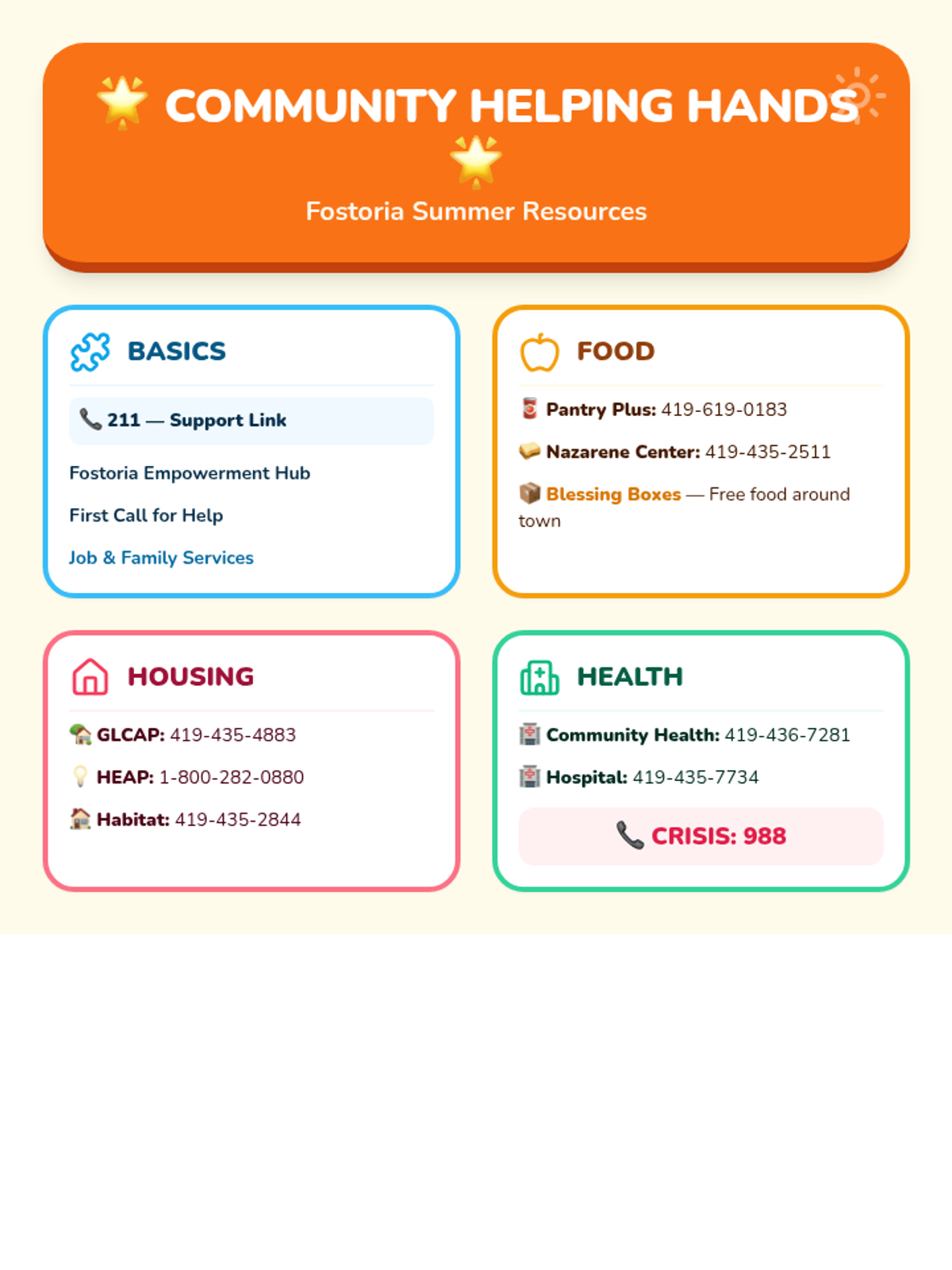
Organized, easy-to-read cards for local Fostoria community resources including food support, housing, utilities, and health services.
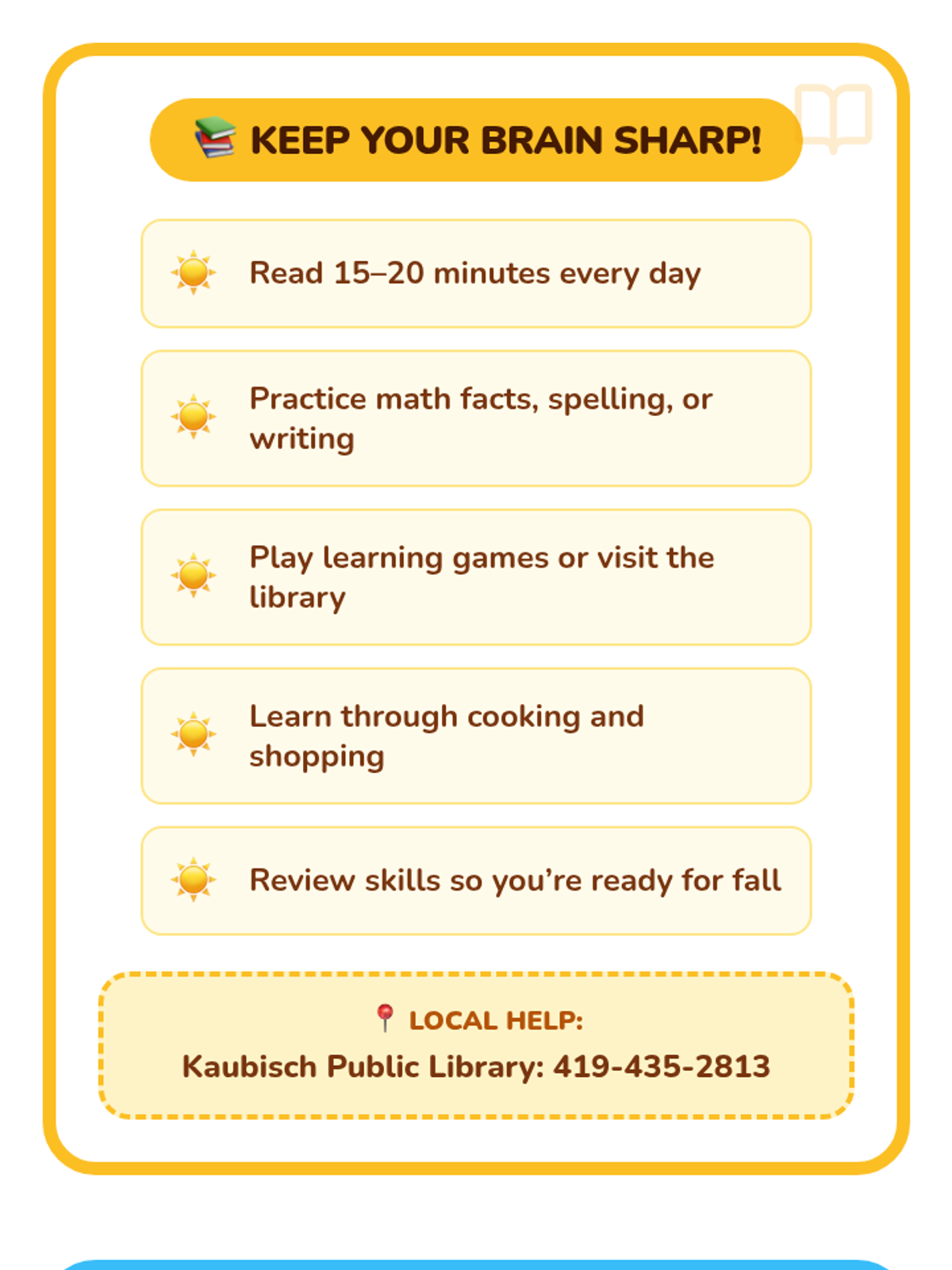
Full-page posters for each summer category: Brain Sharp, Summer Routine, Take Care of Feelings, Healthy Habits, and Stay Active. Design is bold, bright, and easy to read from a distance.
Large, high-impact header letters and graphics for the bulletin board title, designed in two sections for maximum size.
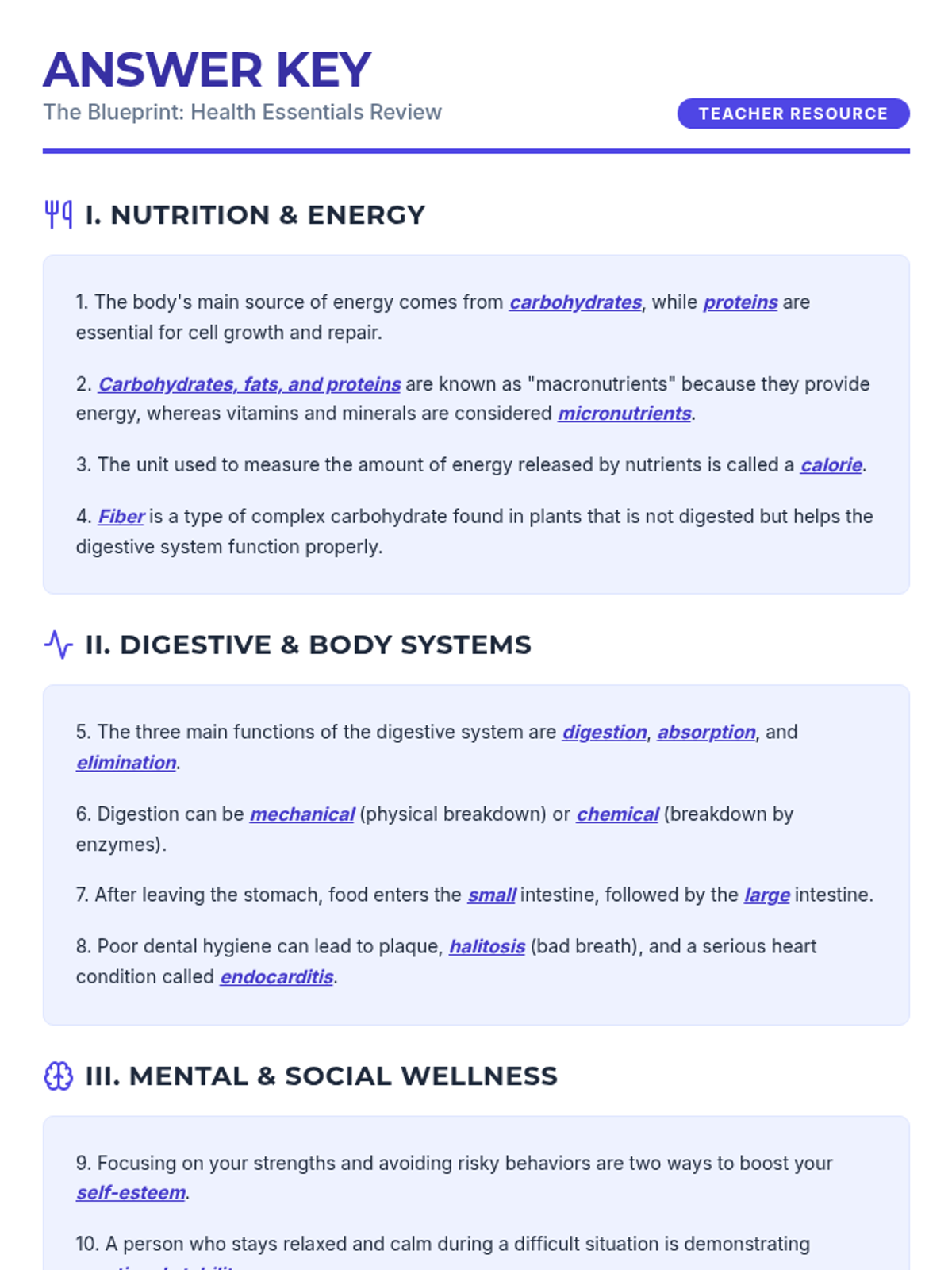
Teacher answer key for The Blueprint Health Essentials worksheet, providing correct fill-in-the-blank responses for nutrition, body systems, mental health, and disease prevention.
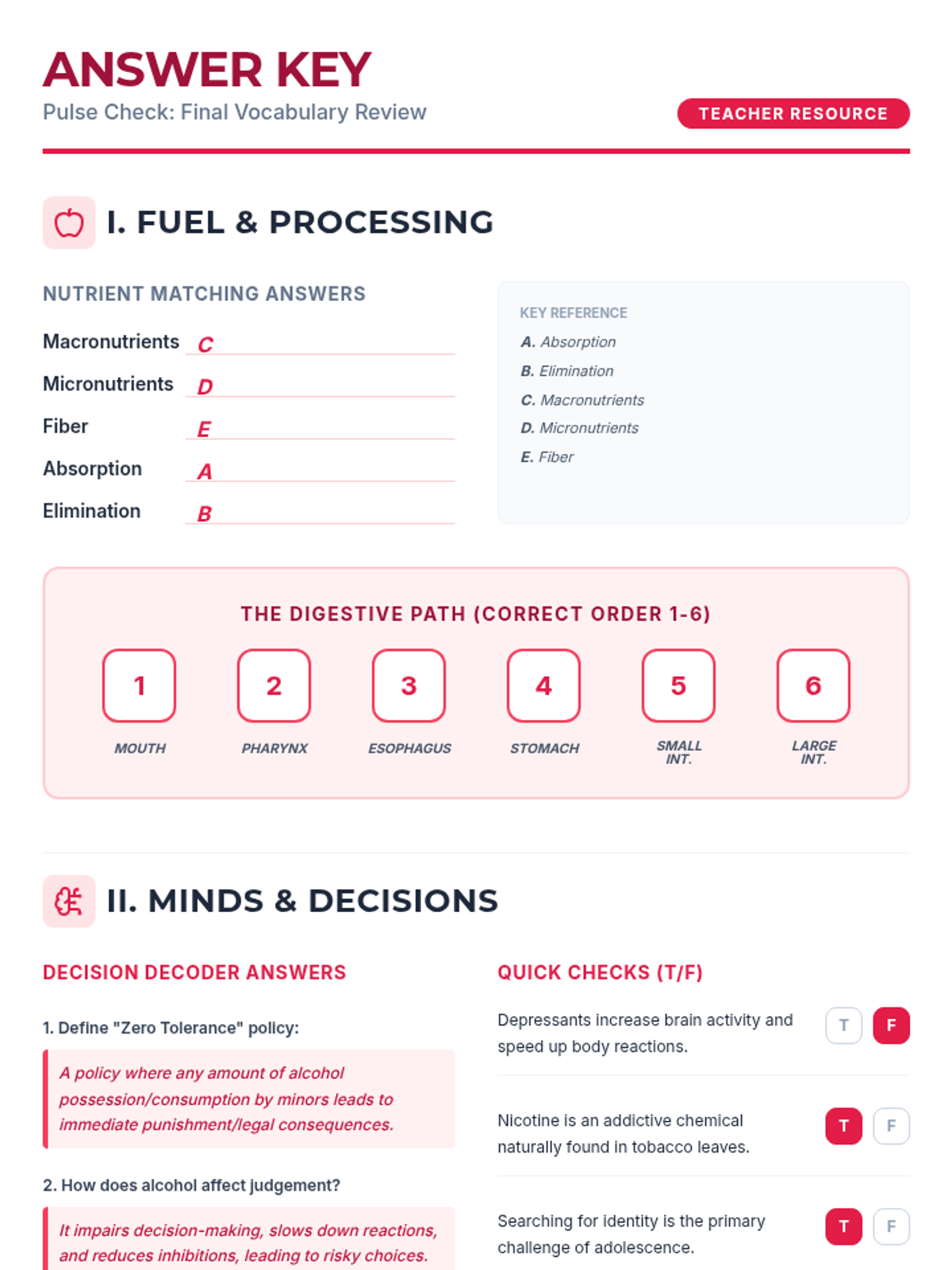
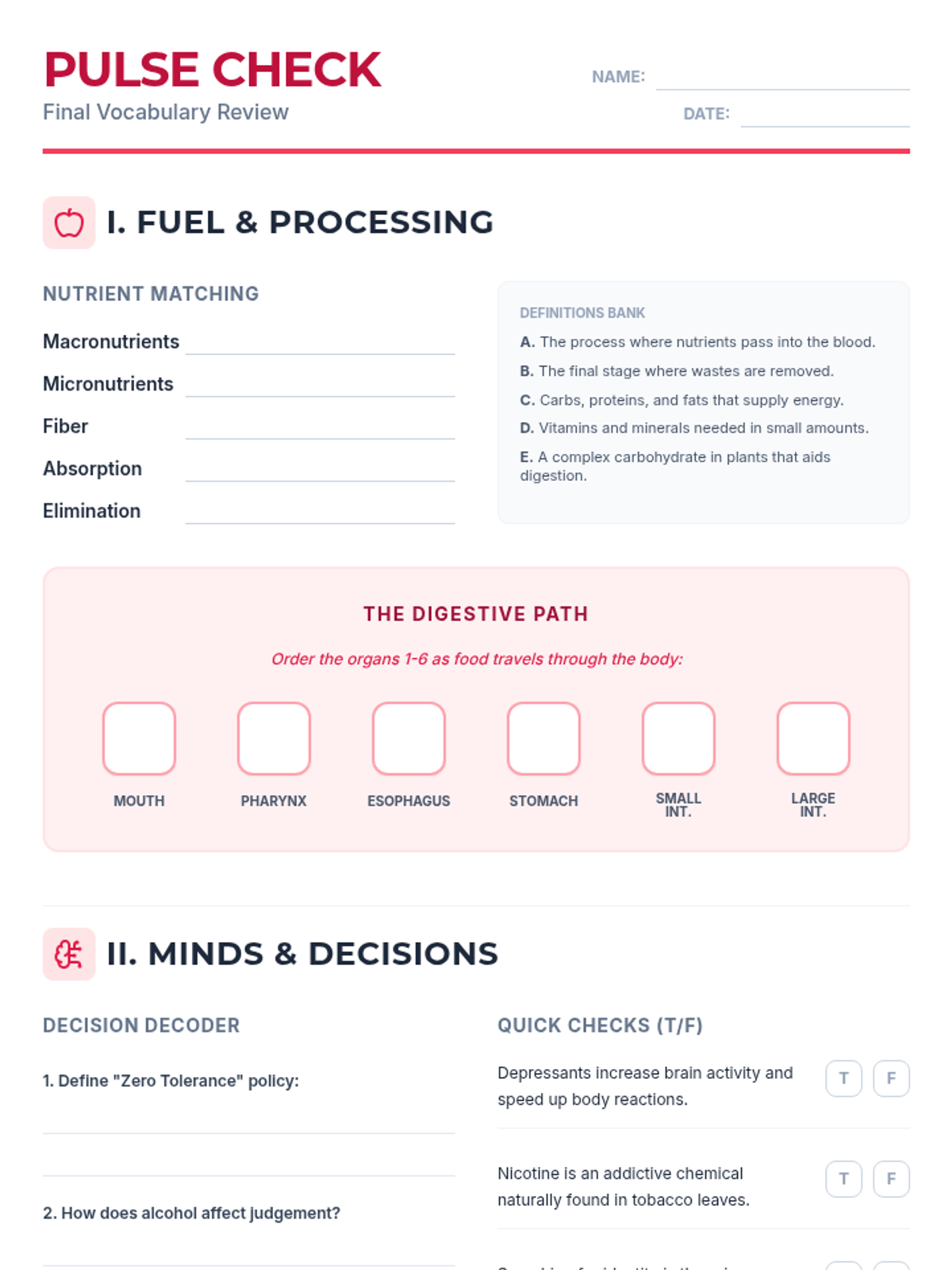
Teacher answer key for the Pulse Check Final Vocabulary Review worksheet, containing correct matching pairs, digestion order, short answer definitions, and true/false responses.
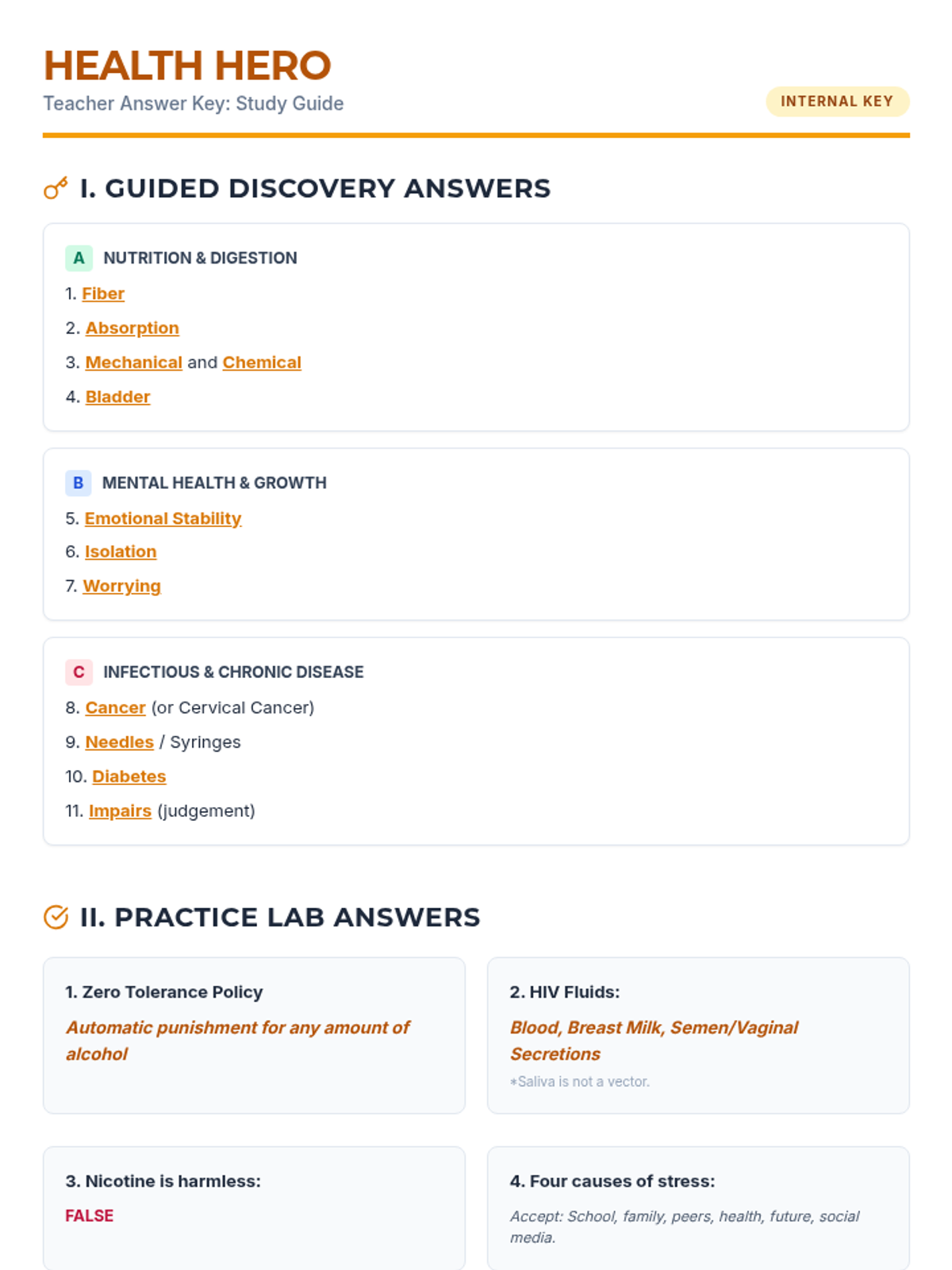
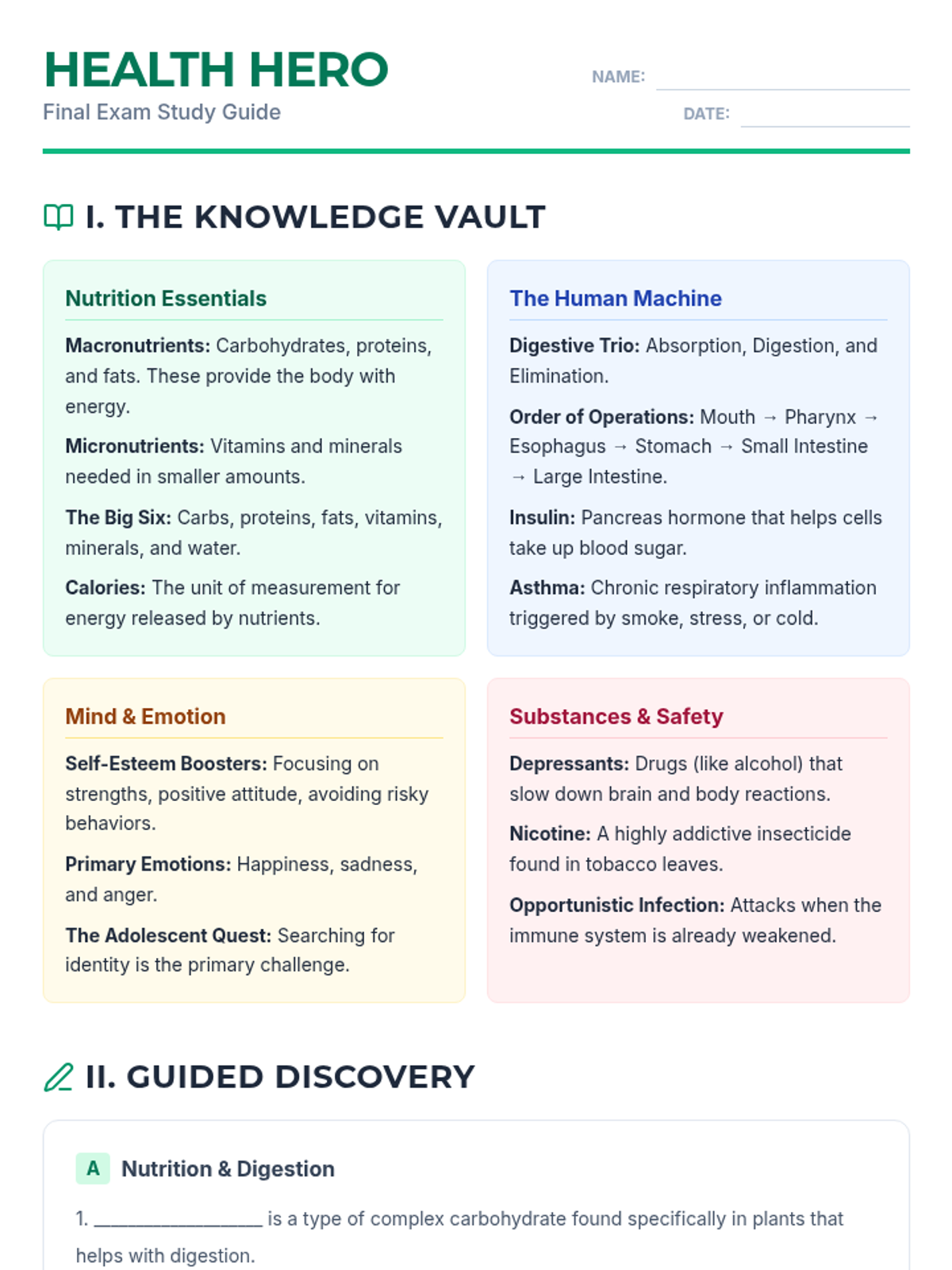
A teacher answer key for the Health Hero Study Guide, providing correct responses for the guided notes, practice lab questions, and short answer explanations. Condensed for efficiency.
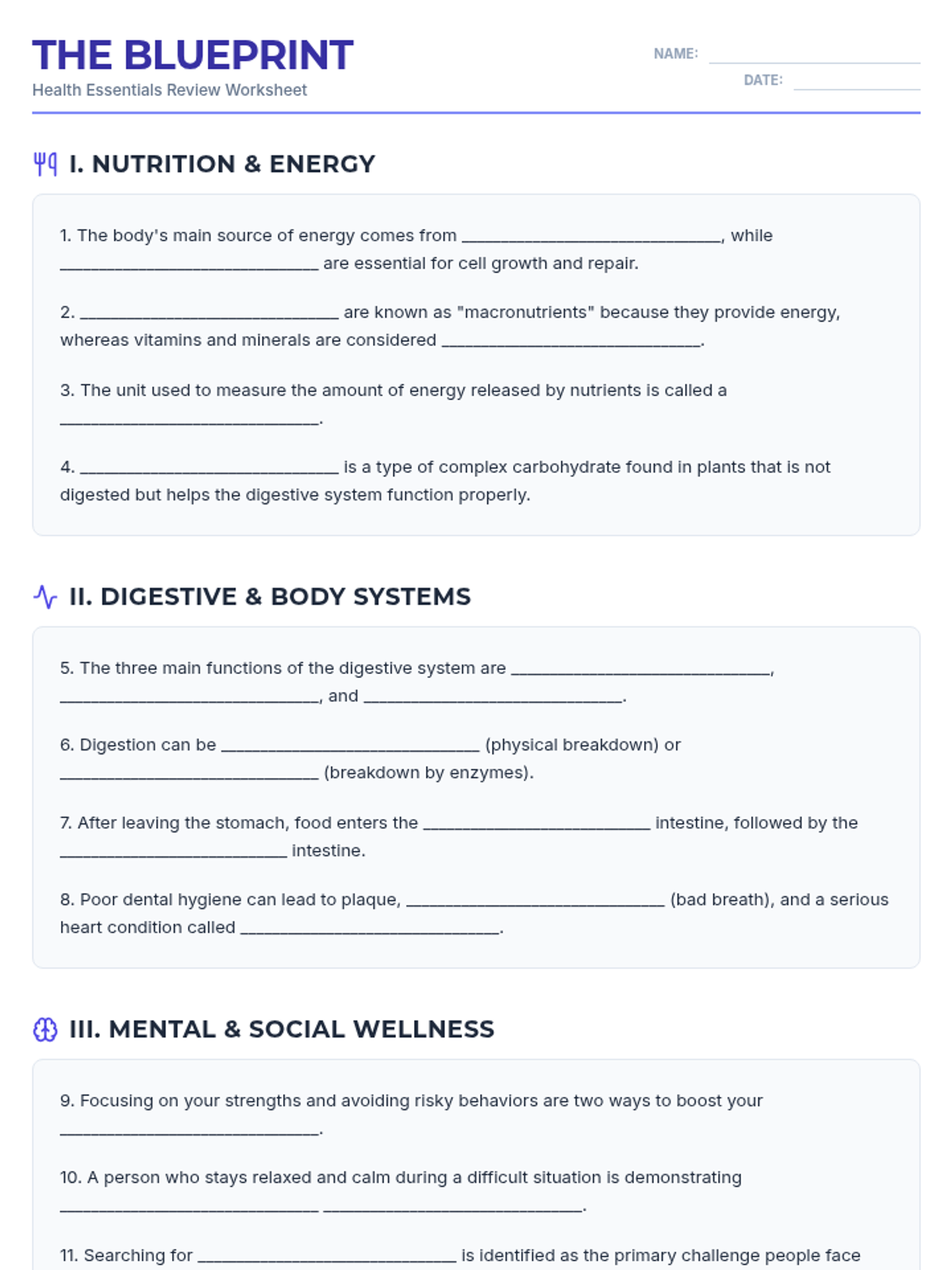
A fill-in-the-blanks worksheet based on the Health Essentials Summary Handout, covering nutrition, digestion, mental health, and disease prevention. Revised for strict page flow and header grouping.
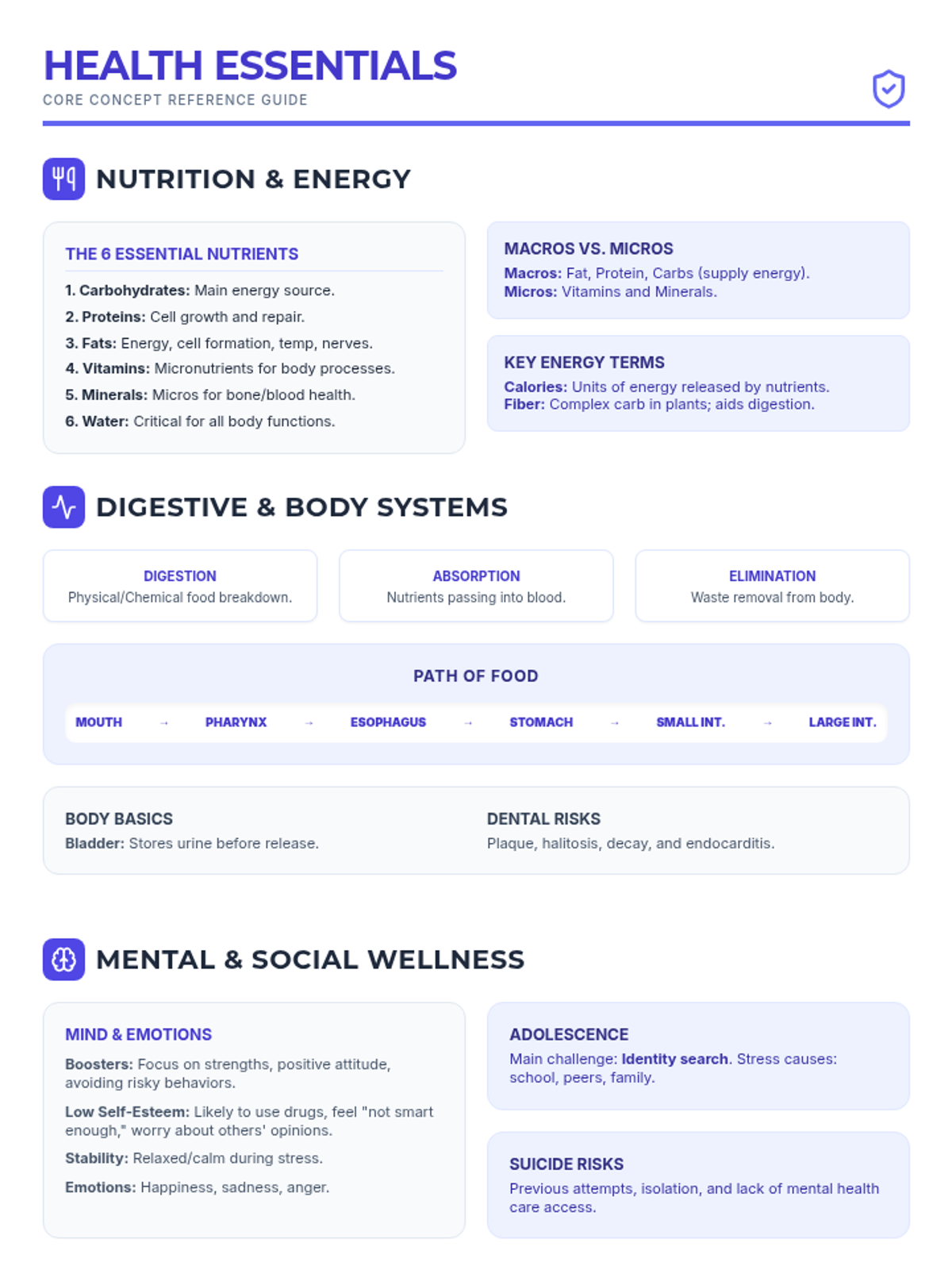
A concise 2-page summary guide condensing all information from the Health Final Exam into a high-density reference sheet for nutrition, body systems, mental health, and disease. Revised for strict 2-page length and improved formatting.
A comprehensive vocabulary review worksheet covering all key terms from the Health Final Exam. Revised to optimize page space, eliminate orphaned headers, and provide larger student work areas. Final polish pass for layout and student work space.
A comprehensive Health Final Exam study guide featuring key terms, guided notes with fill-in-the-blanks, and exam-style practice questions. Revised for better page flow and layout.
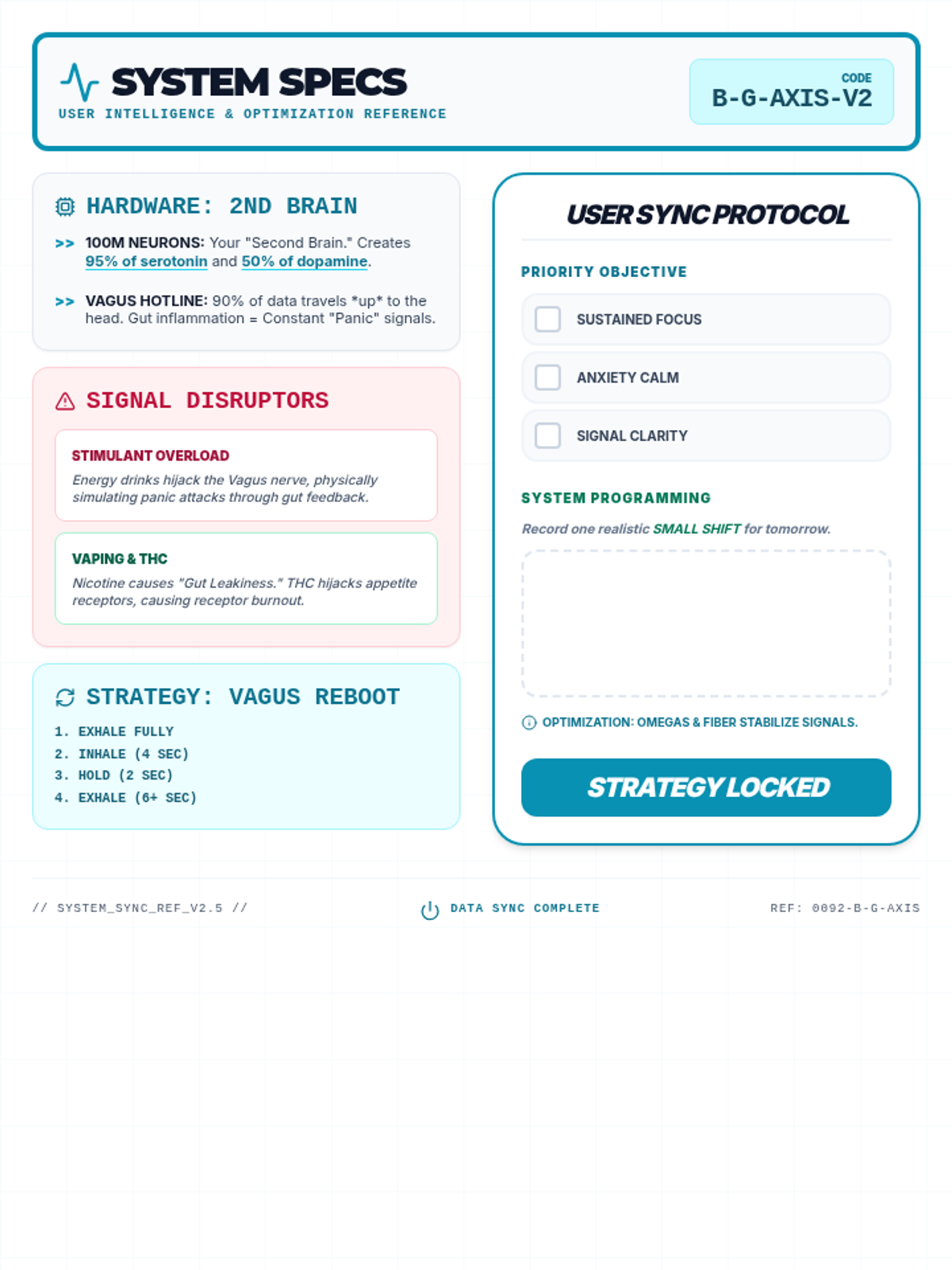
A 'System Specs' reference sheet for students that complements the 12-slide deck. Revised to be print-friendly with high contrast, white backgrounds for student work areas, and improved layout to fit on a single page. Includes the Vagus Reboot strategy and a personal 'User Sync Protocol' work area. Revised for 1-page fit and clarity.
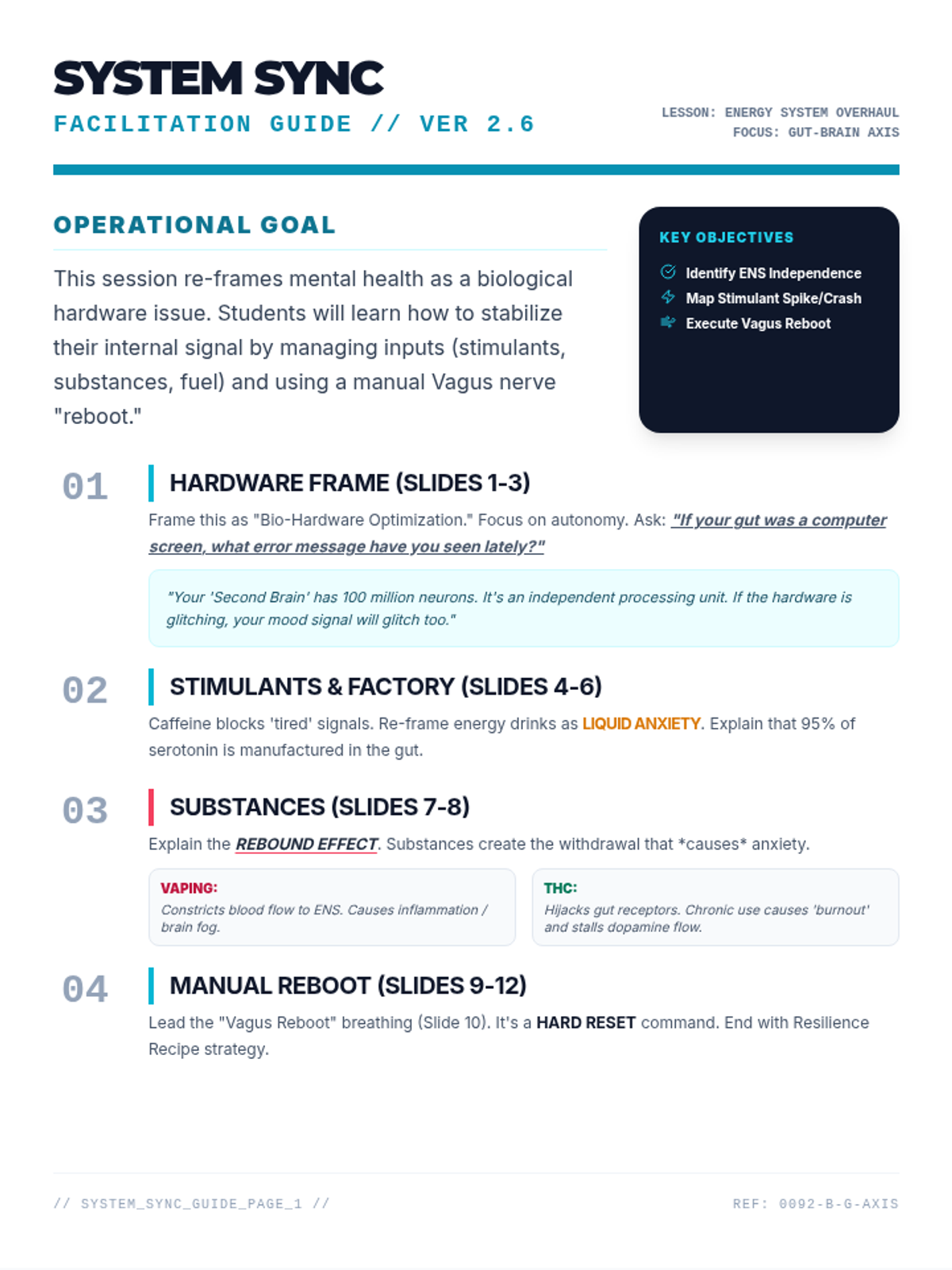
A facilitation guide for the 12-slide 'Energy System' lesson. Provides technical scripts for explaining the ENS, stimulant cycles, and the rebound effects of vaping and THC. Consolidated into a professional 2-page layout with expanded facilitation notes and clinical integration strategies. Revised for page-break efficiency and content density.
A high-energy, 12-slide presentation themed as a technical 'Energy System' overhaul. Covers the 2nd brain (ENS), chemical factory (serotonin/dopamine), stimulant impacts (energy drinks), and detailed biological effects of vaping/THC. Includes multiple interactive digital check-ins and a Vagus Nerve strategy slide. Revised for layout consistency and contrast.
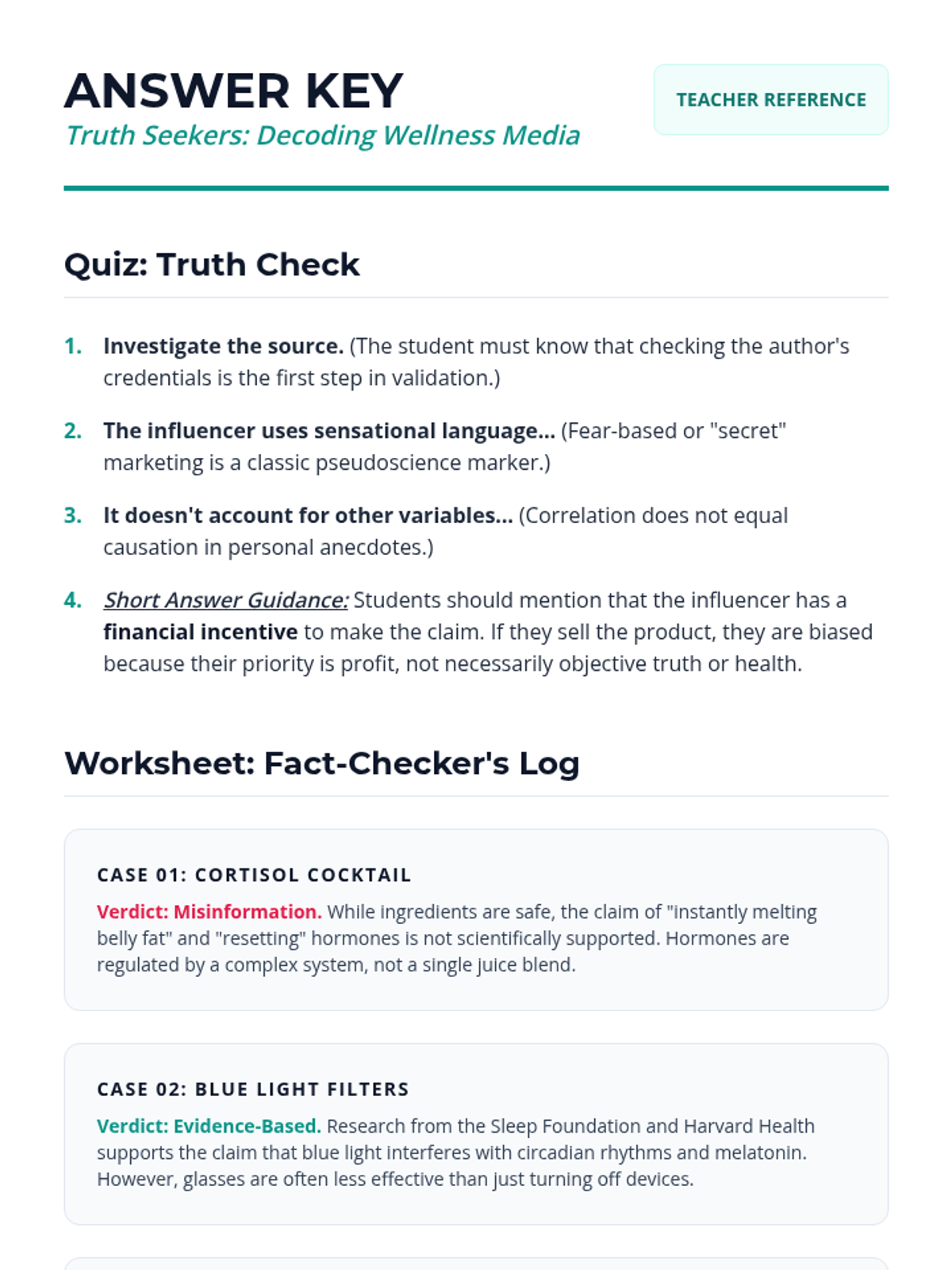
An answer key providing correct responses for the Truth Check Quiz and typical research findings for the Fact-Checker's Log worksheet. Includes grading guidance for teachers.
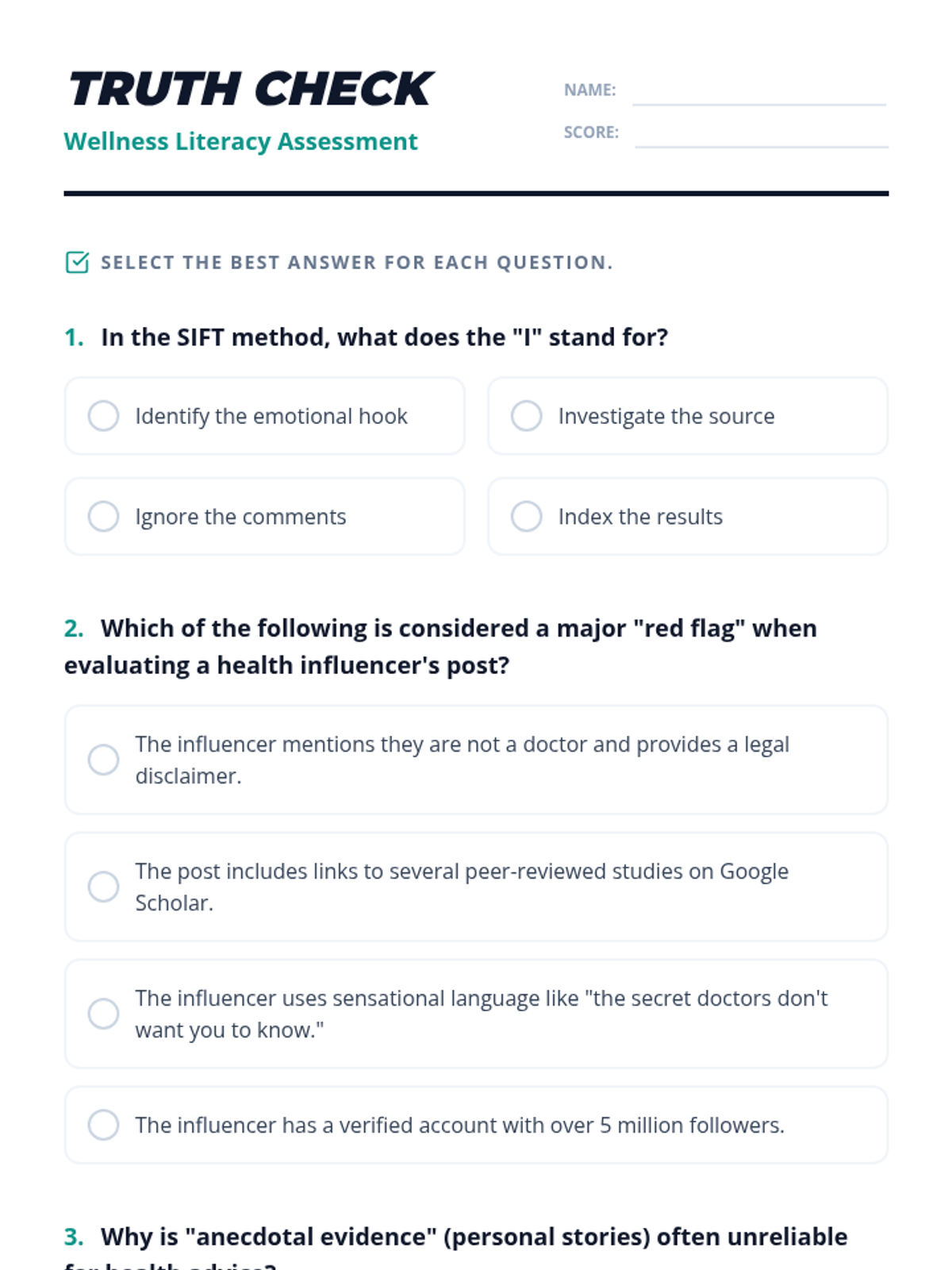
A 4-question assessment covering the SIFT method, red flags of health misinformation, the nature of anecdotal evidence, and conflicts of interest. Includes multiple choice and short answer.
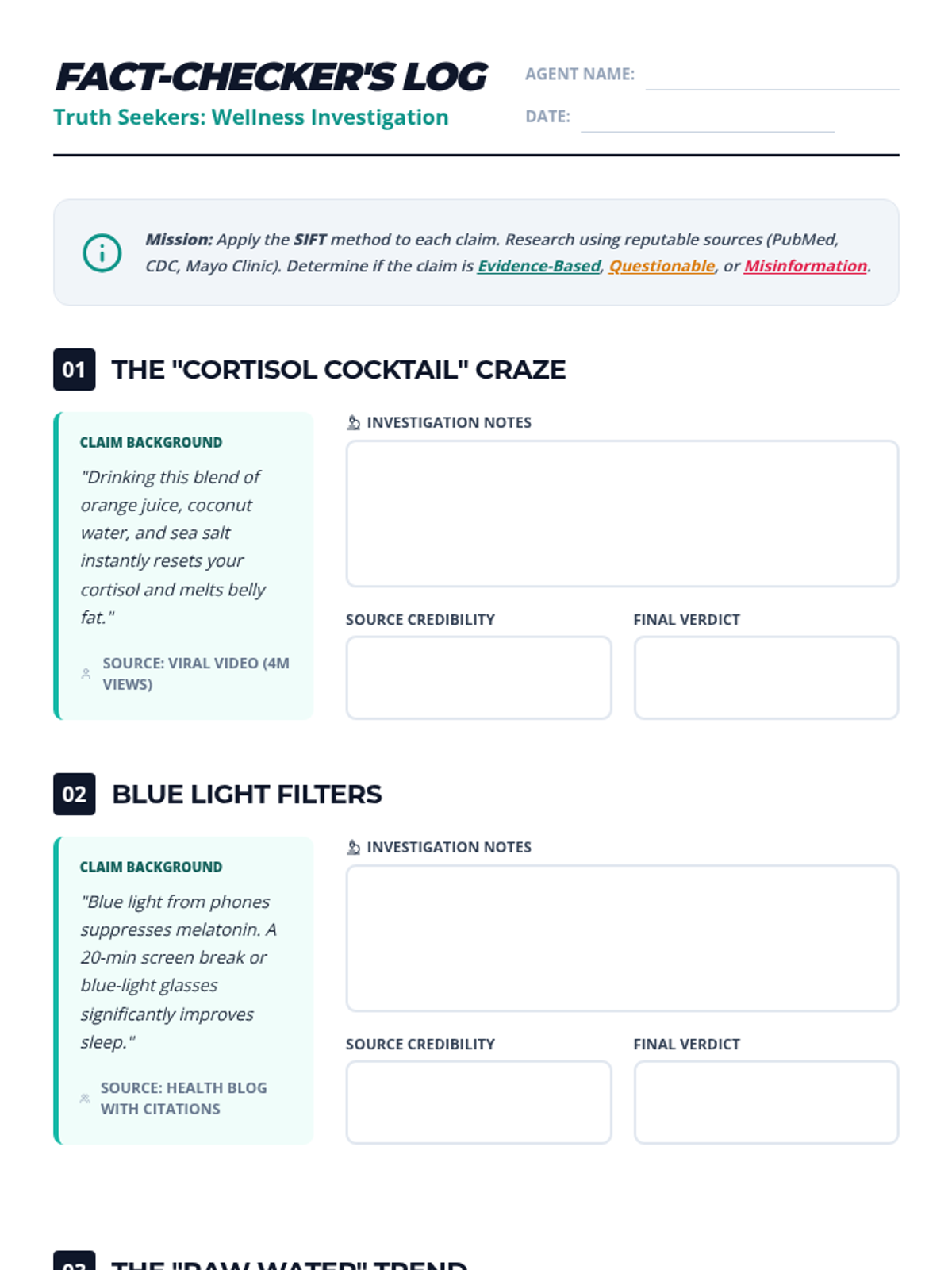
A student worksheet for investigating three specific health trends (cortisol cocktails, blue light, and raw water) using the SIFT method. Includes space for research notes and final verdicts.
A visual presentation for teaching media literacy skills in the context of wellness. Covers the SIFT method, red flags of misinformation, and discussion prompts.
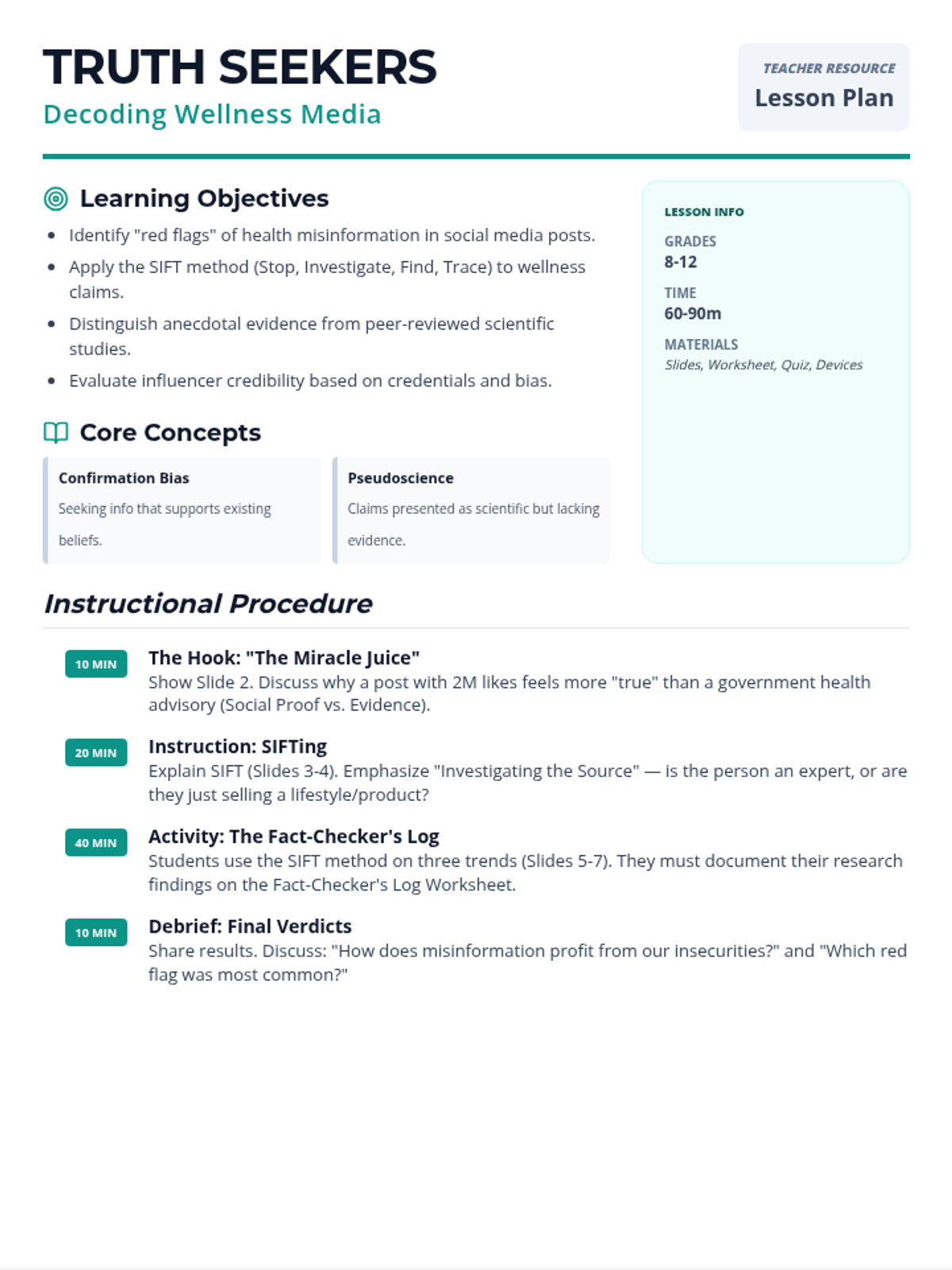
A comprehensive teacher lesson plan for grades 8-12 focused on media literacy in health and wellness. It includes learning objectives, instructional procedures, differentiation strategies, and discussion prompts.
A high-impact, visual slide presentation on hydration safety featuring vibrant graphics, key biological facts, body check cues, integrated YouTube videos, and an interactive trivia section to test knowledge.
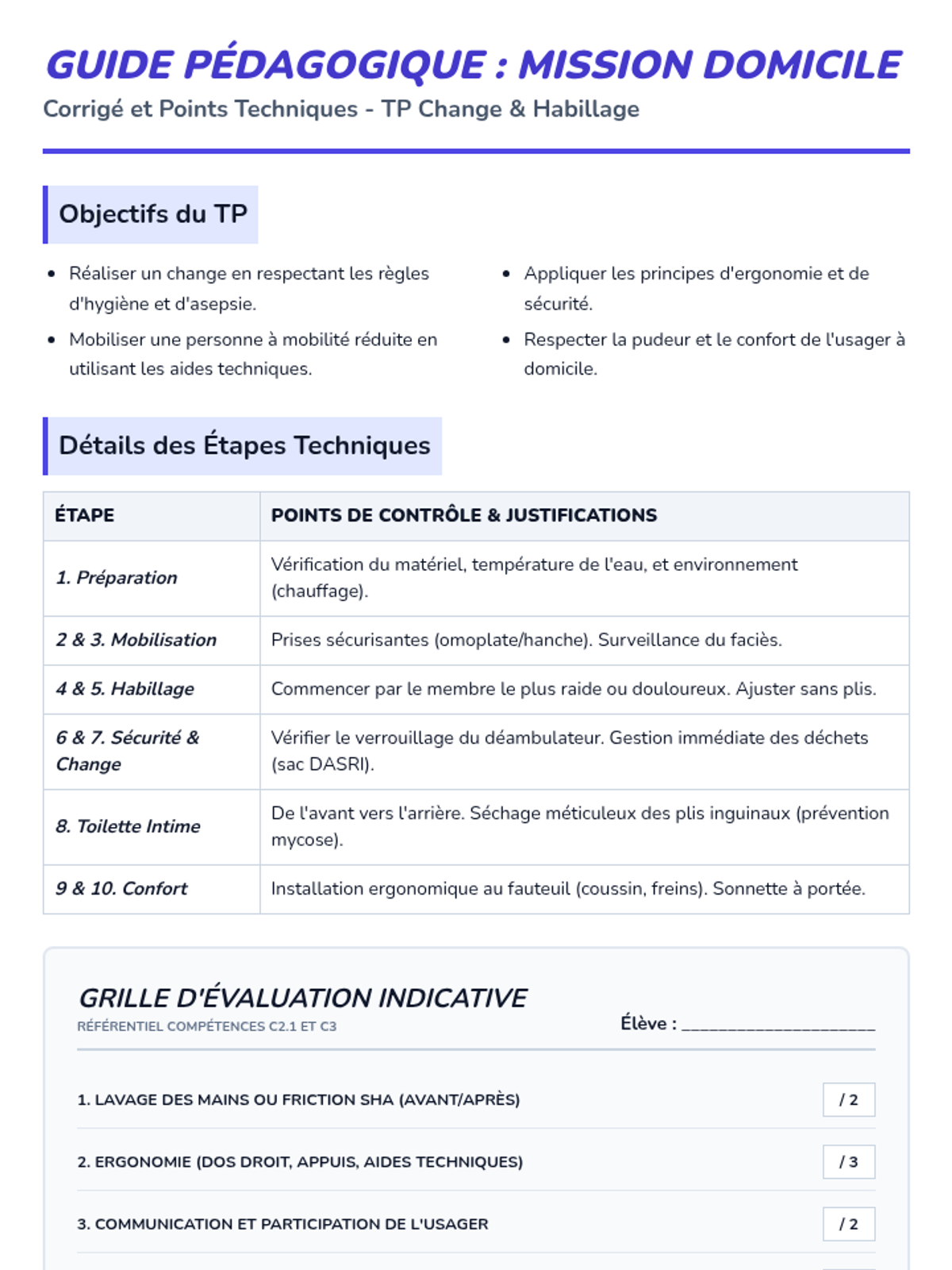
Ce guide d'accompagnement pour l'enseignant fournit le corrigé technique et les points de vigilance pédagogiques liés à la séance de TP sur le change et l'habillage. Il inclut une grille d'évaluation simplifiée basée sur le référentiel Bac Pro ASSP, avec une mise en page optimisée.
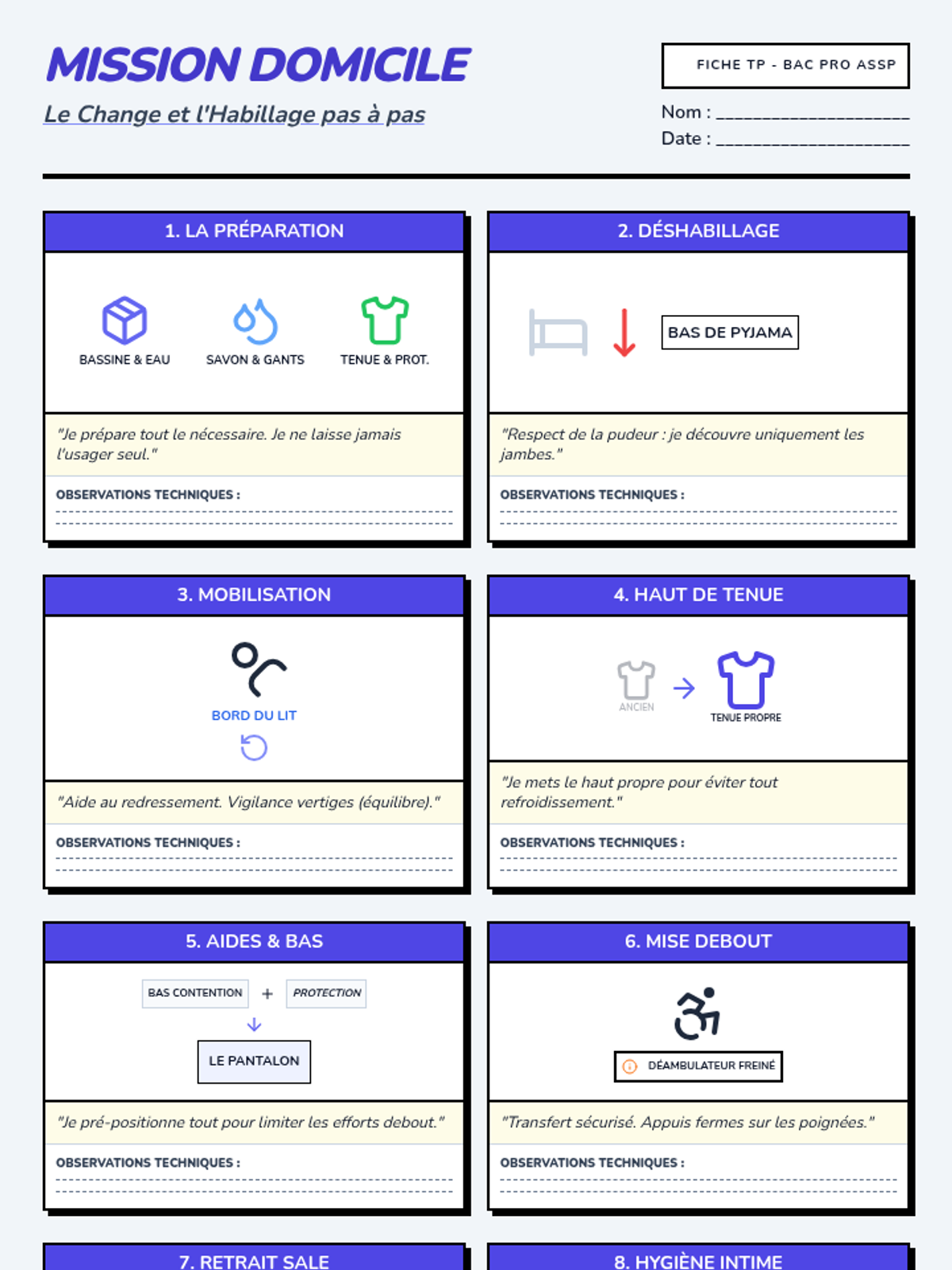
Cette planche de bande dessinée pédagogique détaille les 10 étapes clés du change et de l'habillage d'une personne âgée à domicile. Conçue pour les élèves de Bac Pro ASSP, elle utilise un style graphique dynamique pour illustrer les gestes techniques, l'ergonomie et l'hygiène. Elle inclut désormais des zones d'observations renforcées pour les élèves.
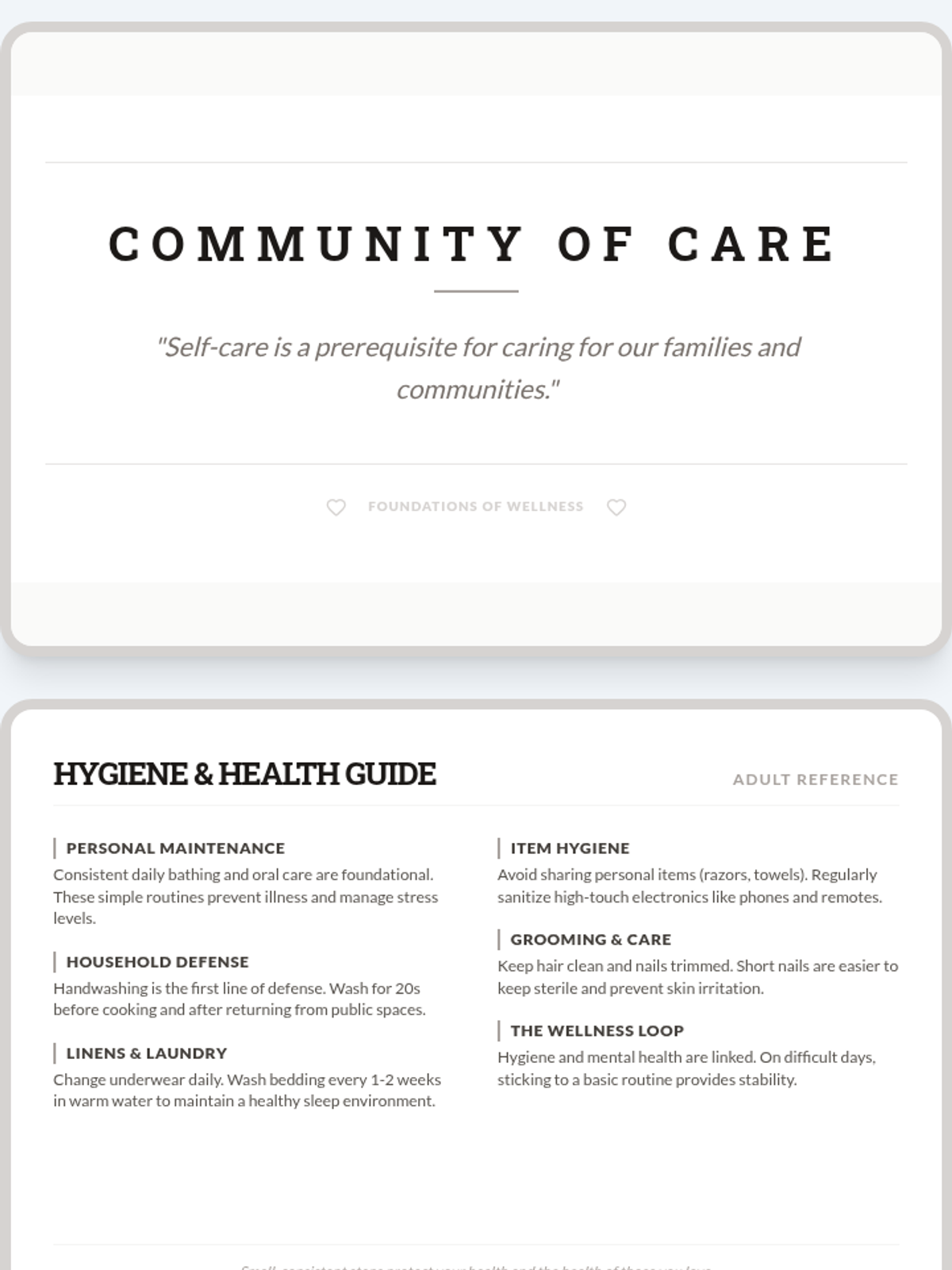
A respectful and practical hygiene postcard for adults, focusing on family health, prevention, and the psychological benefits of routine.
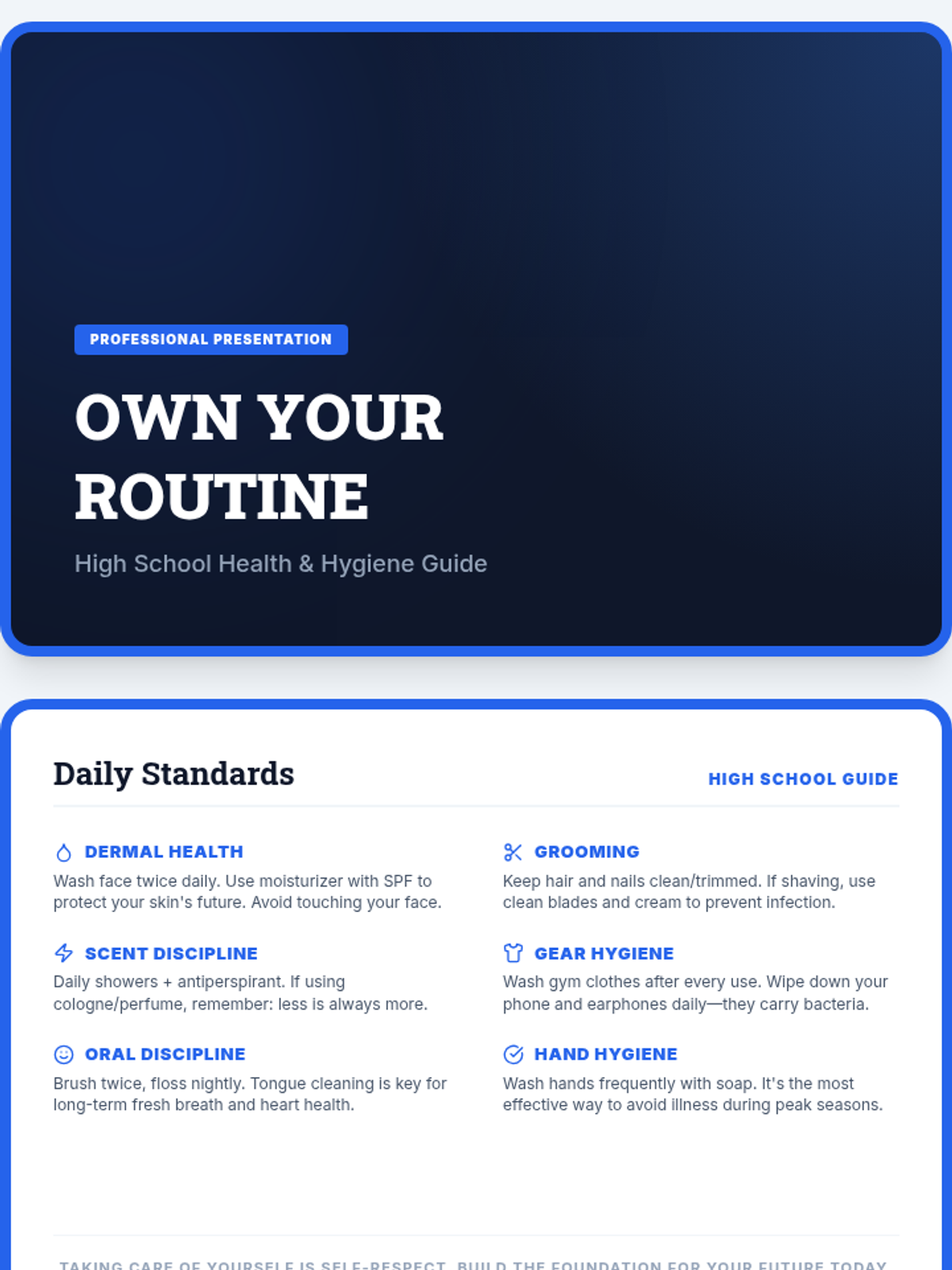
A sophisticated hygiene postcard for high schoolers, emphasizing self-respect, professional grooming, and gear maintenance.
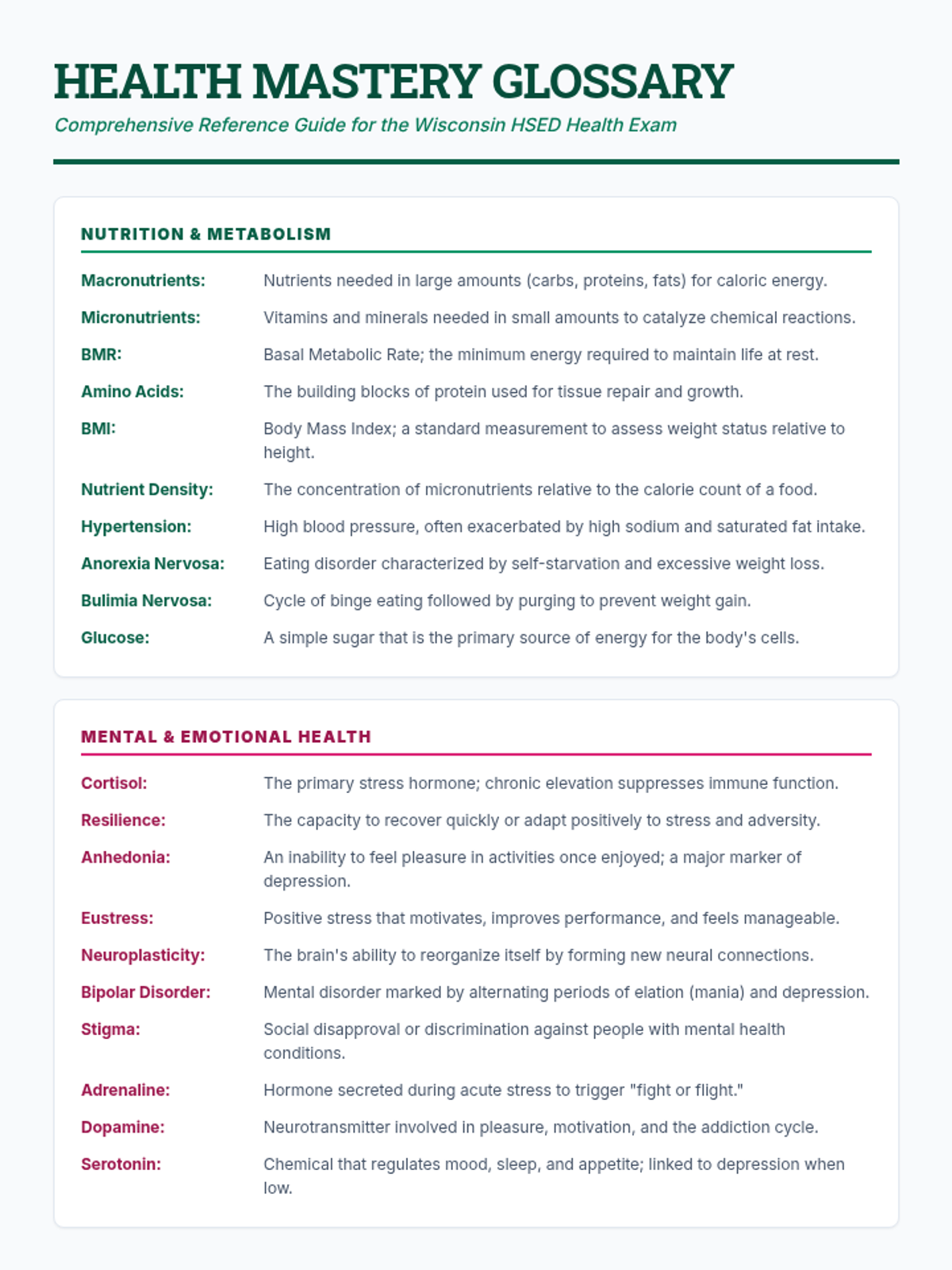
A comprehensive glossary of health-related terminology for HSED students, covering metabolism, mental health, substances, and safety standards. Expanded to 40 terms with high-level definitions and standardized section styling.
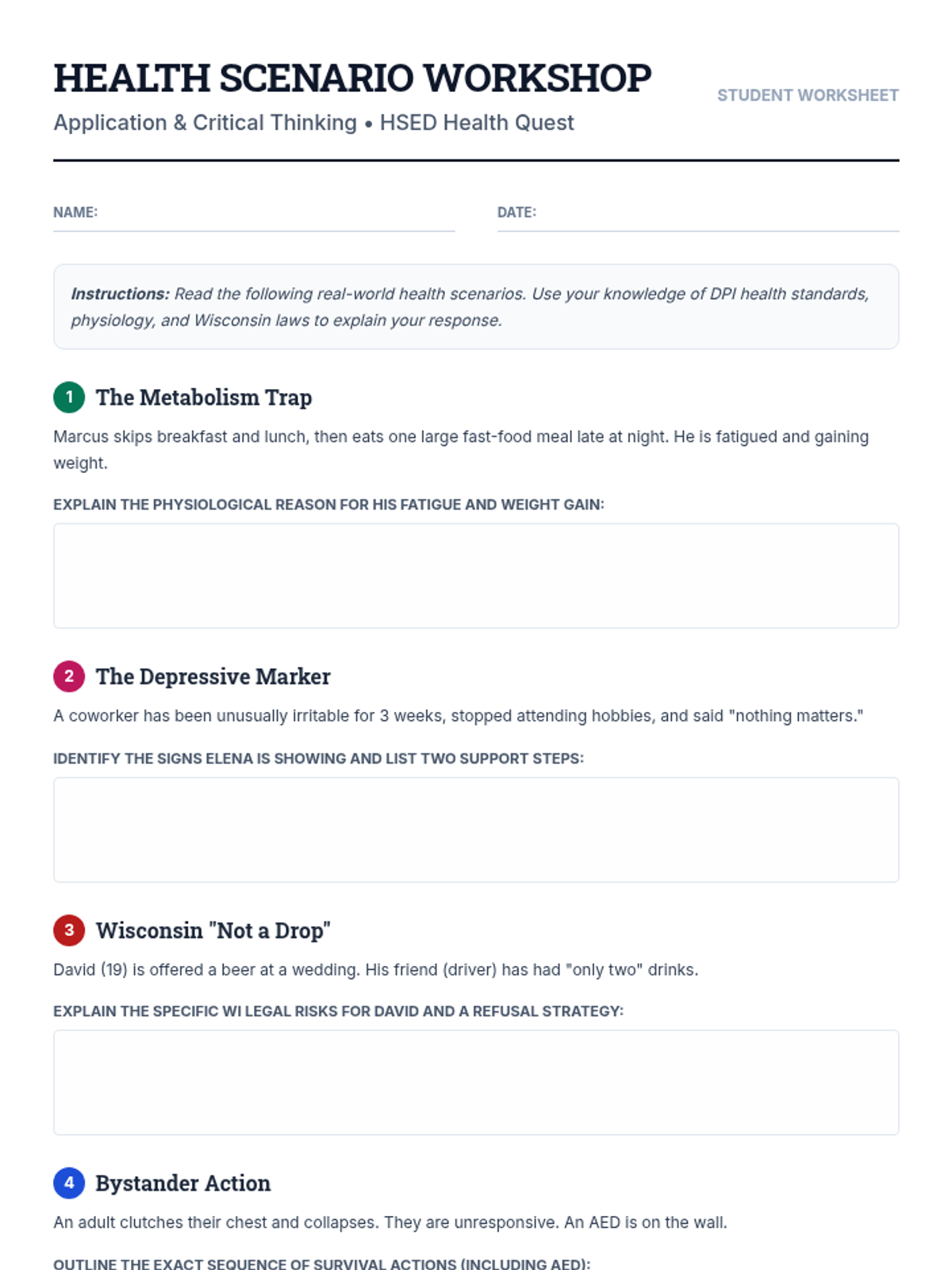
A scenario-based worksheet for HSED students that requires applying health knowledge to complex real-world situations involving nutrition, mental health, substance use, and emergency response. Expanded to 6 scenarios.
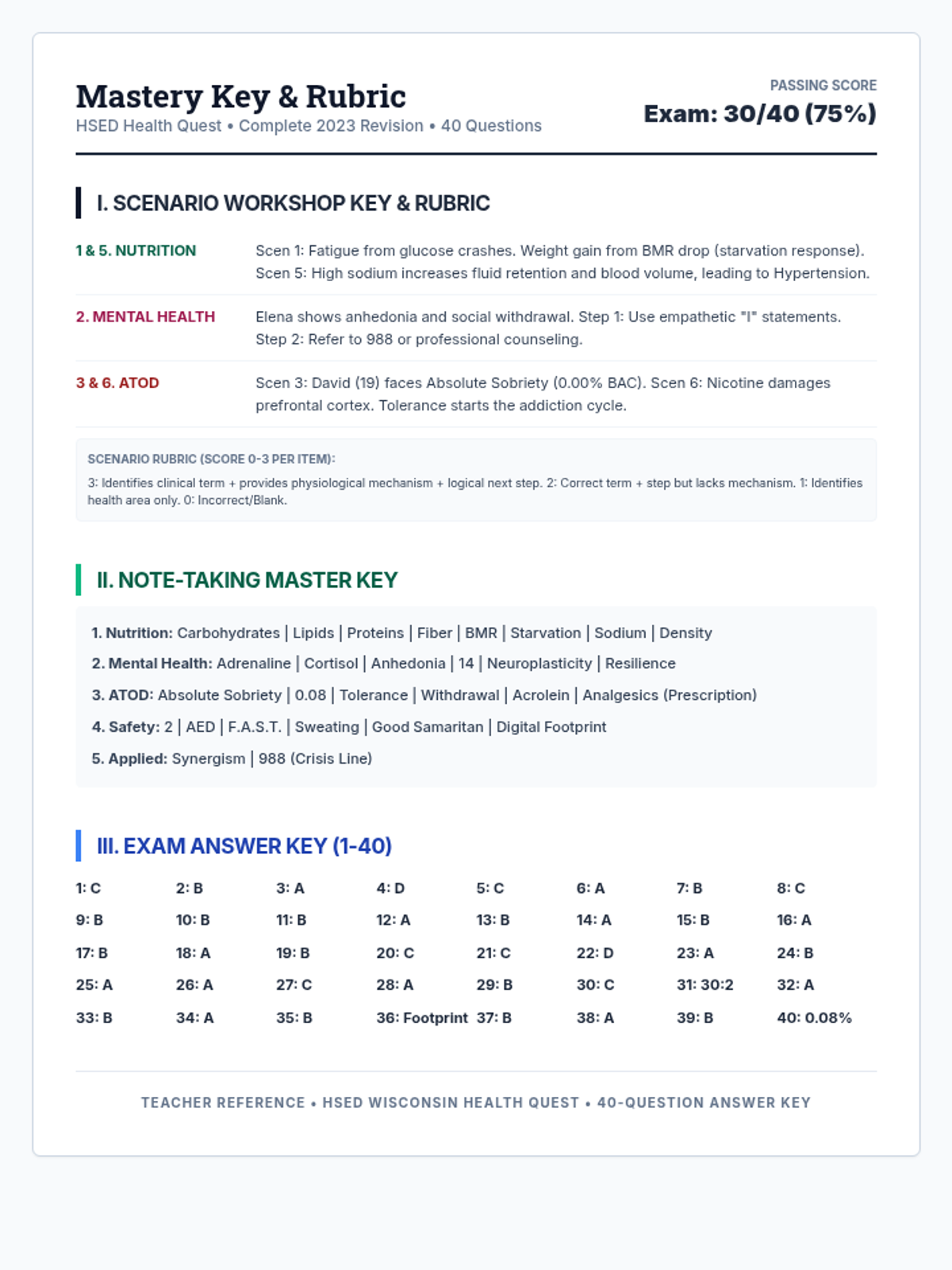
Diversified comprehensive answer key with validated solutions for all assessments, including the new 40-question competency exam. Optimized for HSED teacher reference. Diversified answers across A, B, C, D. Includes Rubric.
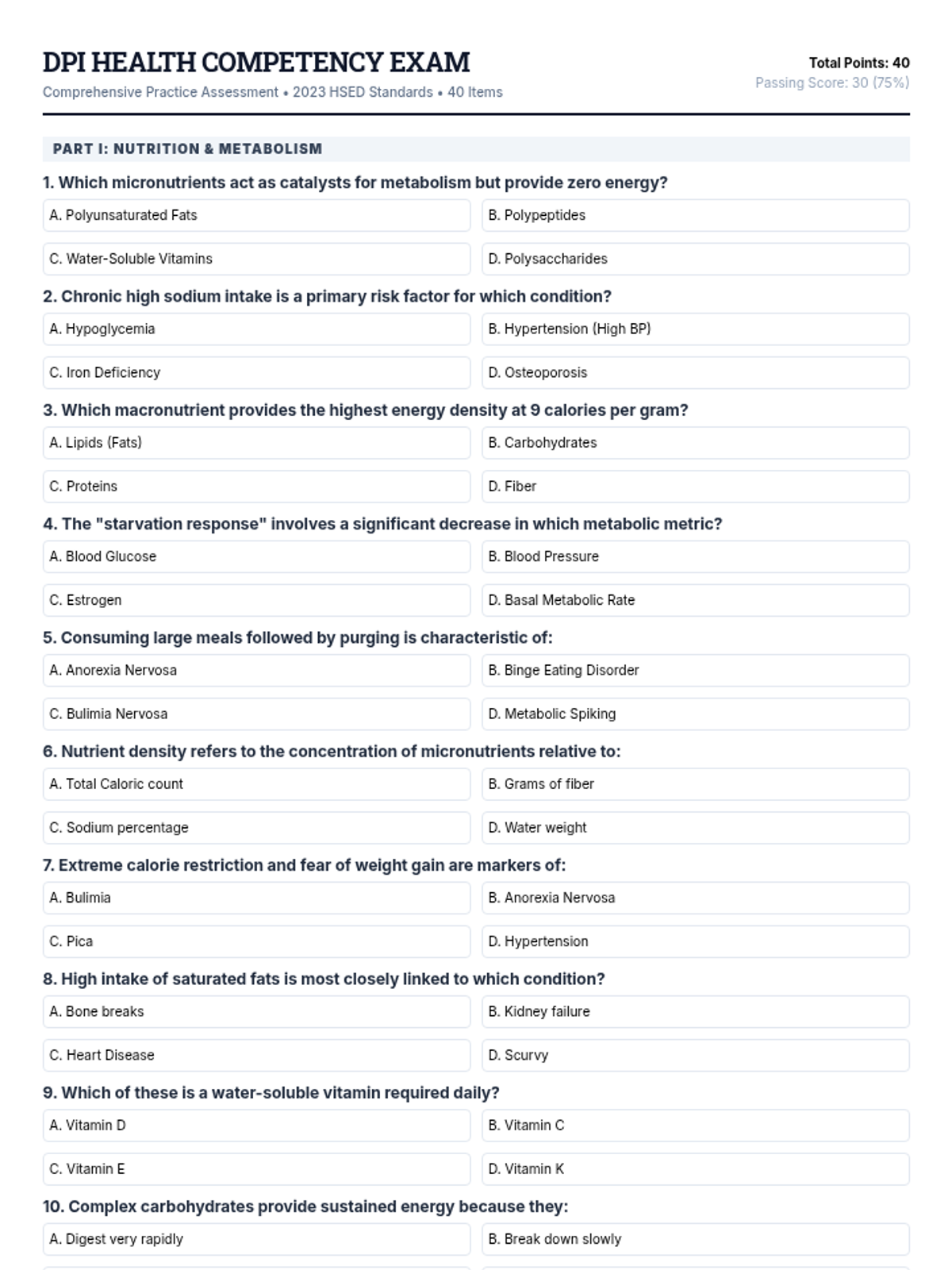
A rigorous 40-question health competency exam for HSED students, featuring high-level vocabulary, scenario-based problems, and Wisconsin-specific legal standards. Optimized for a compact four-page print. Revised with diversified answer choices and scenario questions. Added actual fill-in-the-blank items.
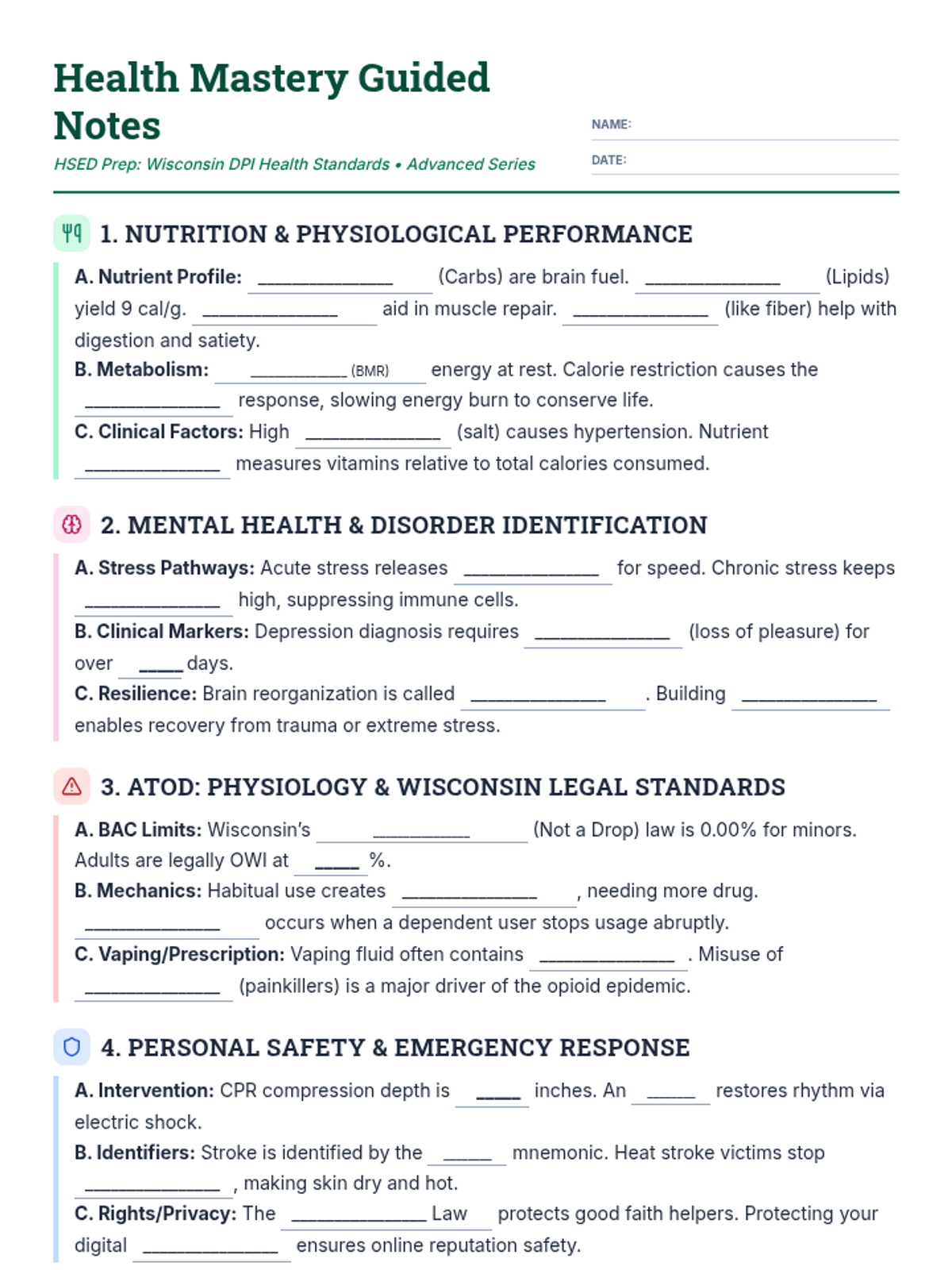
Advanced guided notes for HSED students covering DPI health standards with technical terminology. Optimized with break-inside-avoid to prevent orphaned headers and standardized blanks. Expanded content with more fill-in-the-blank items and applied scenarios.
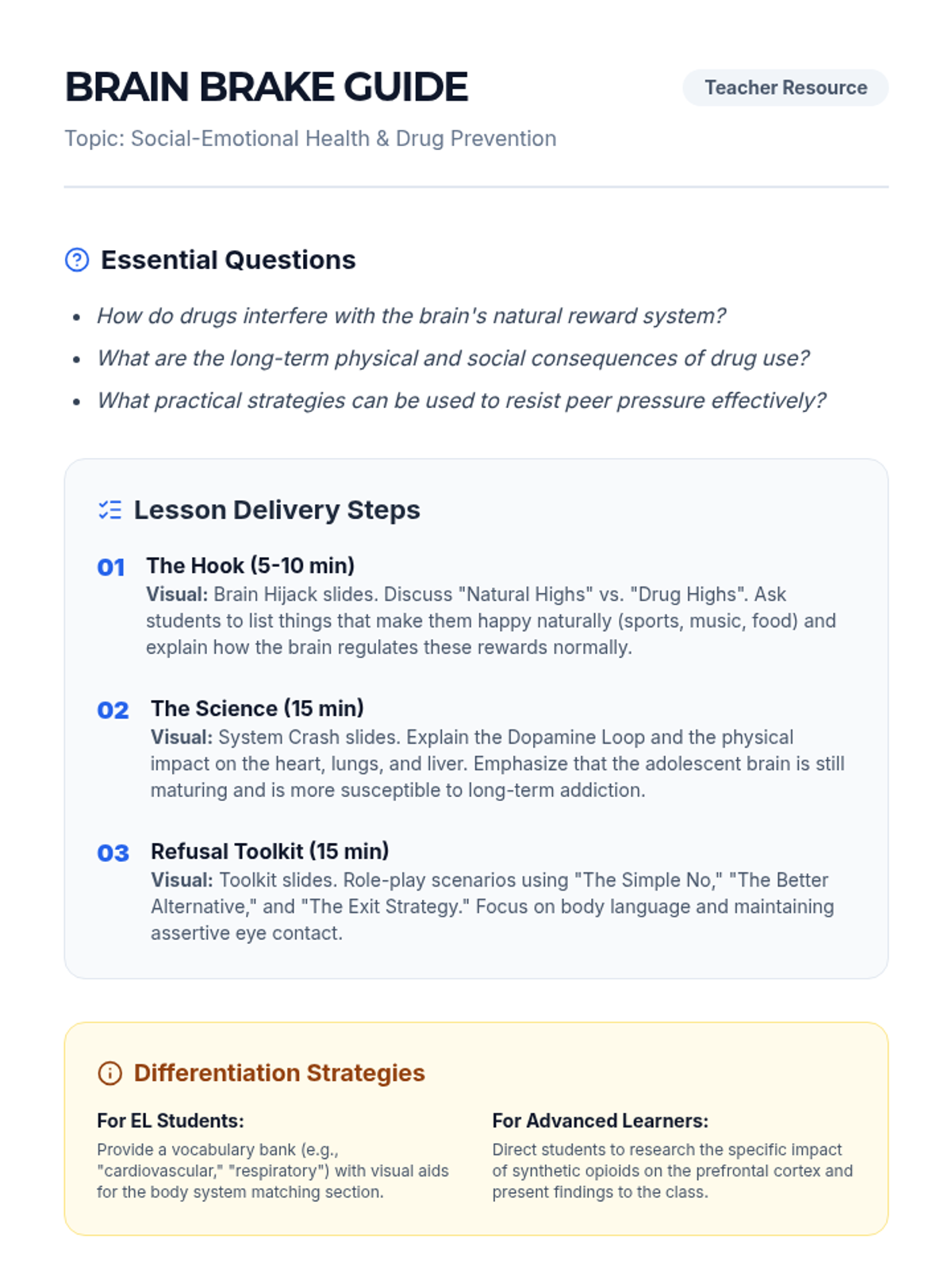
A facilitator's guide for the Brain Brake lesson, providing essential questions, a structured lesson flow, answer keys, and differentiation strategies for teachers.
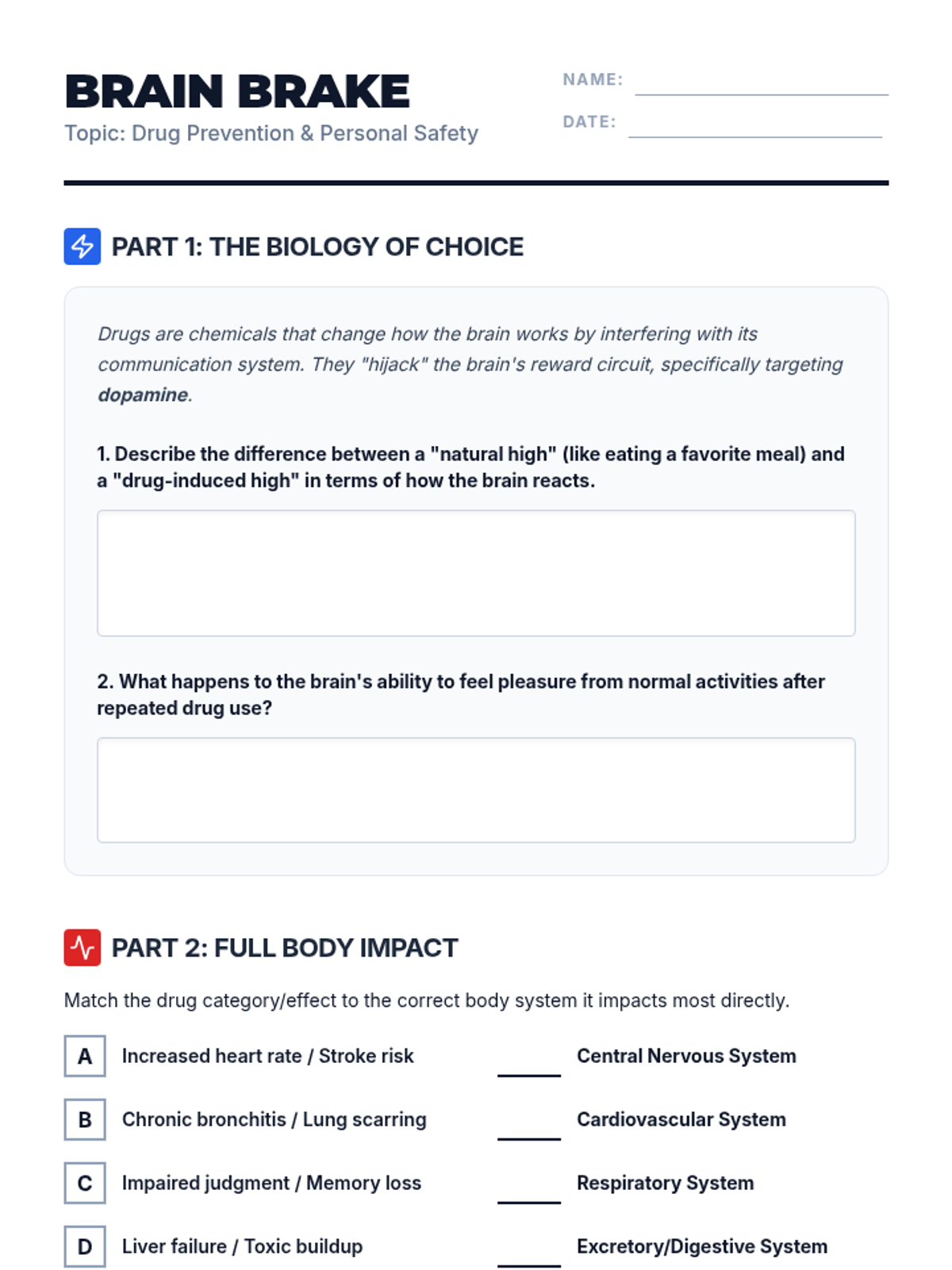
A comprehensive student worksheet exploring the biological effects of drugs on the brain, physical health consequences, and practical refusal skills practice.
A visually striking slide deck for a social-emotional lesson on drug prevention, covering brain chemistry, physical health impacts, social consequences, and refusal strategies.
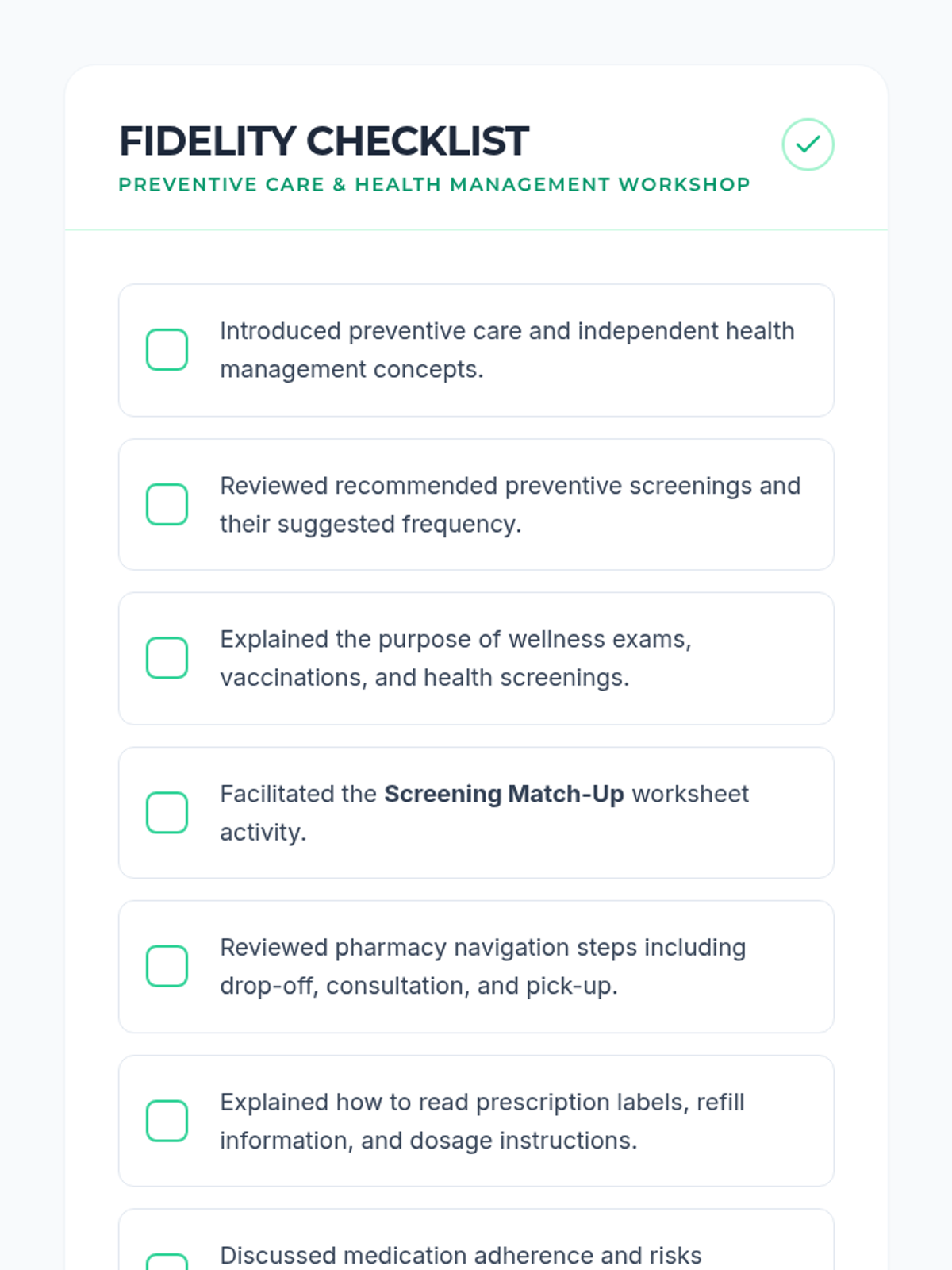
A professional fidelity checklist for a preventive care and health management workshop, featuring a clean layout with checkboxes for tracking instructional milestones.
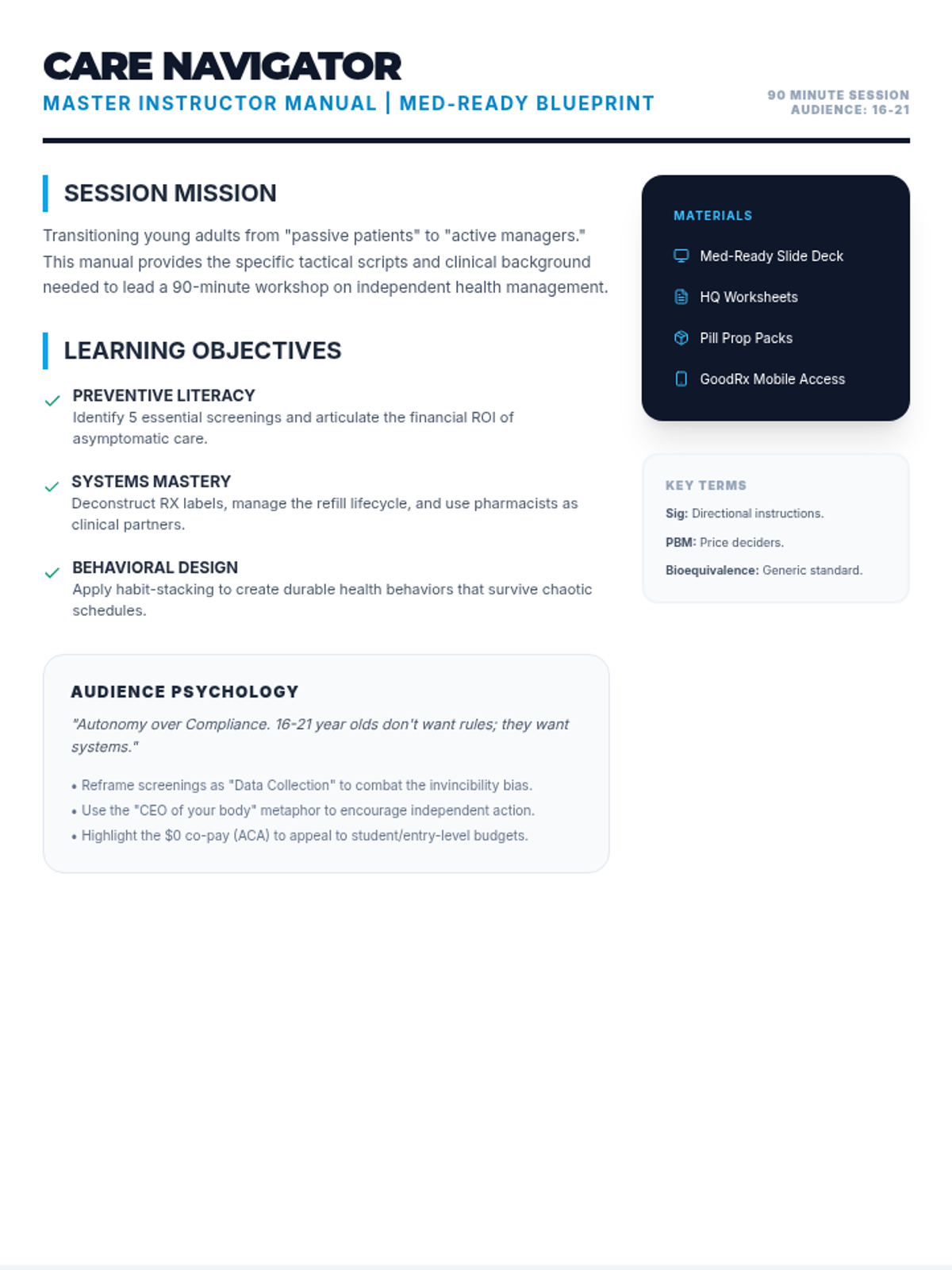
A comprehensive 8-page instructor guide for a 90-minute session on preventive care and medications, including pacing, scripts, and answer keys.
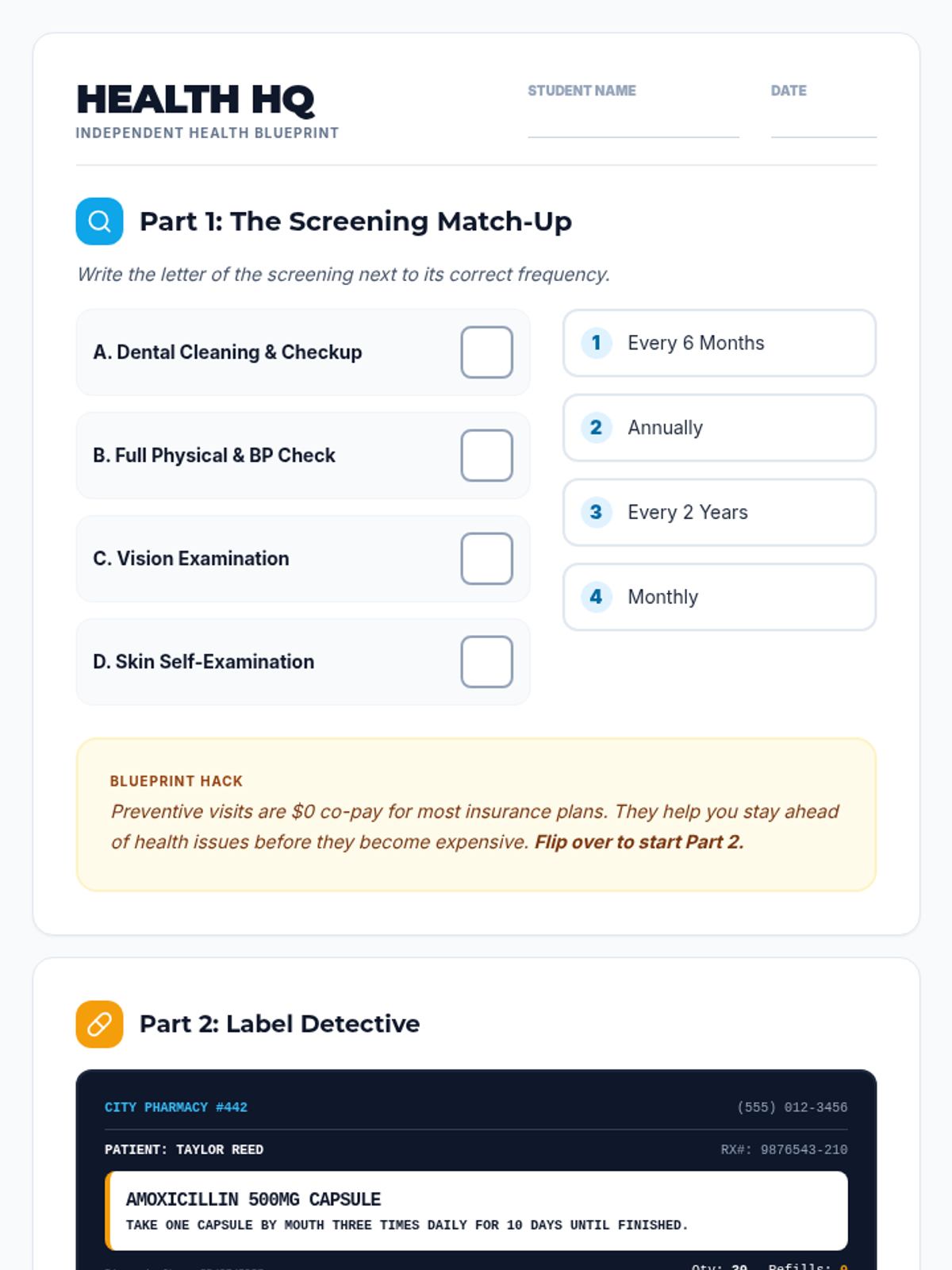
A two-page interactive worksheet for students to practice screening schedules, analyze pharmacy labels, and develop personal medication adherence strategies.
A 16:9 slide deck for young adults covering preventive care essentials, screening timelines, pharmacy basics, and medication adherence strategies.
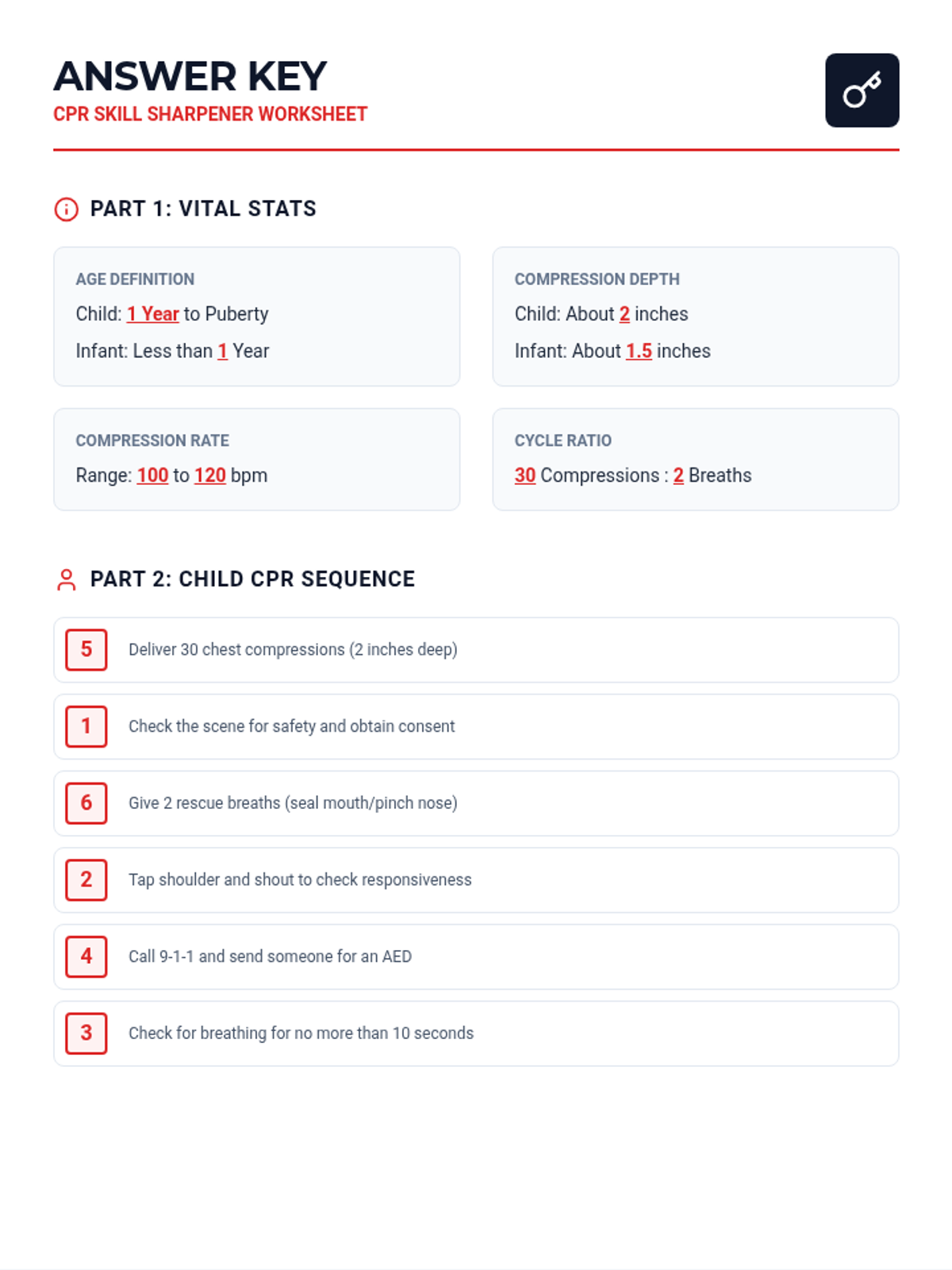
A teacher-facing answer key for the CPR Skill Sharpener Worksheet, providing correct responses for vital stats, sequence ordering, infant techniques, and critical thinking scenarios.
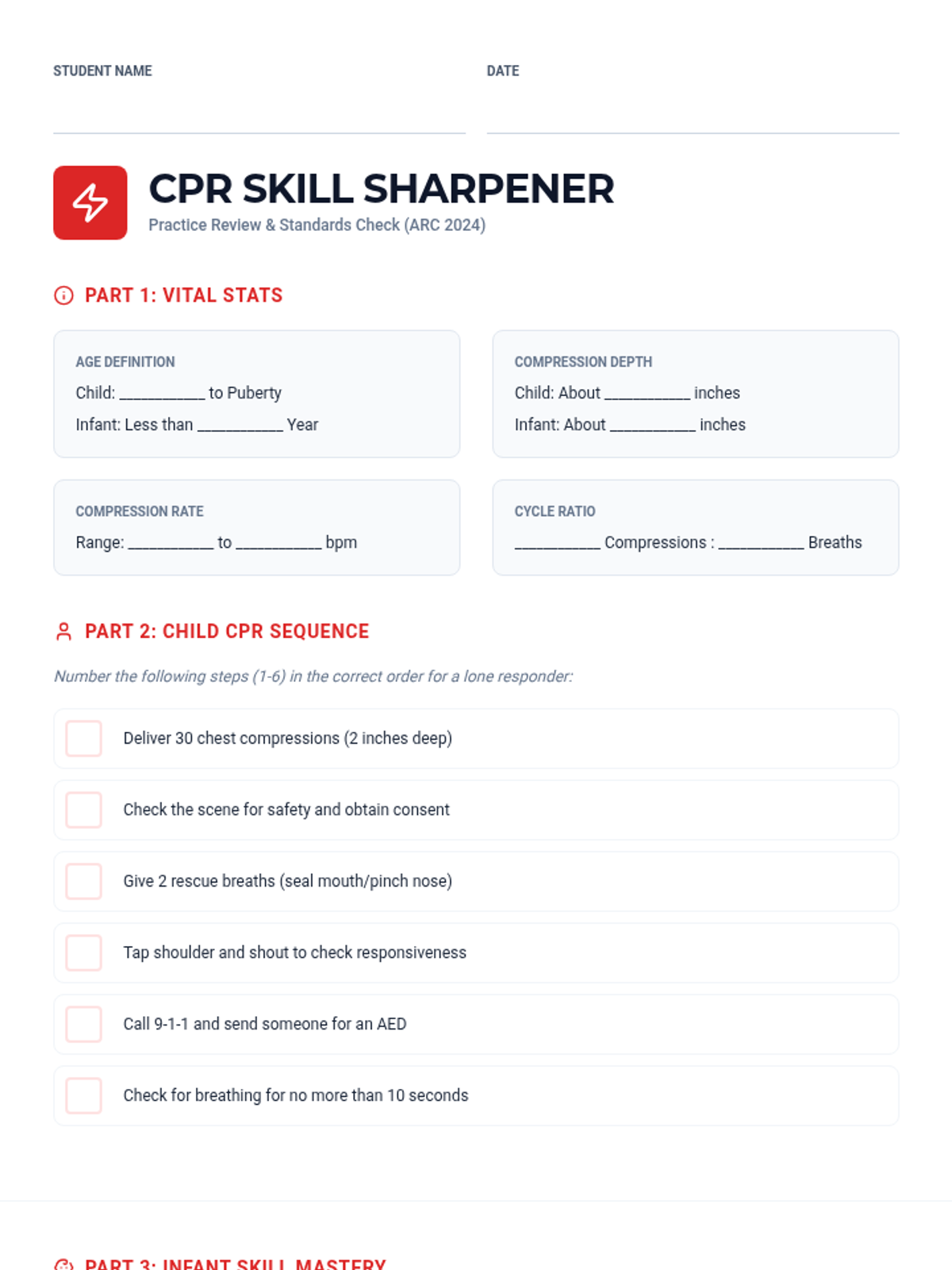
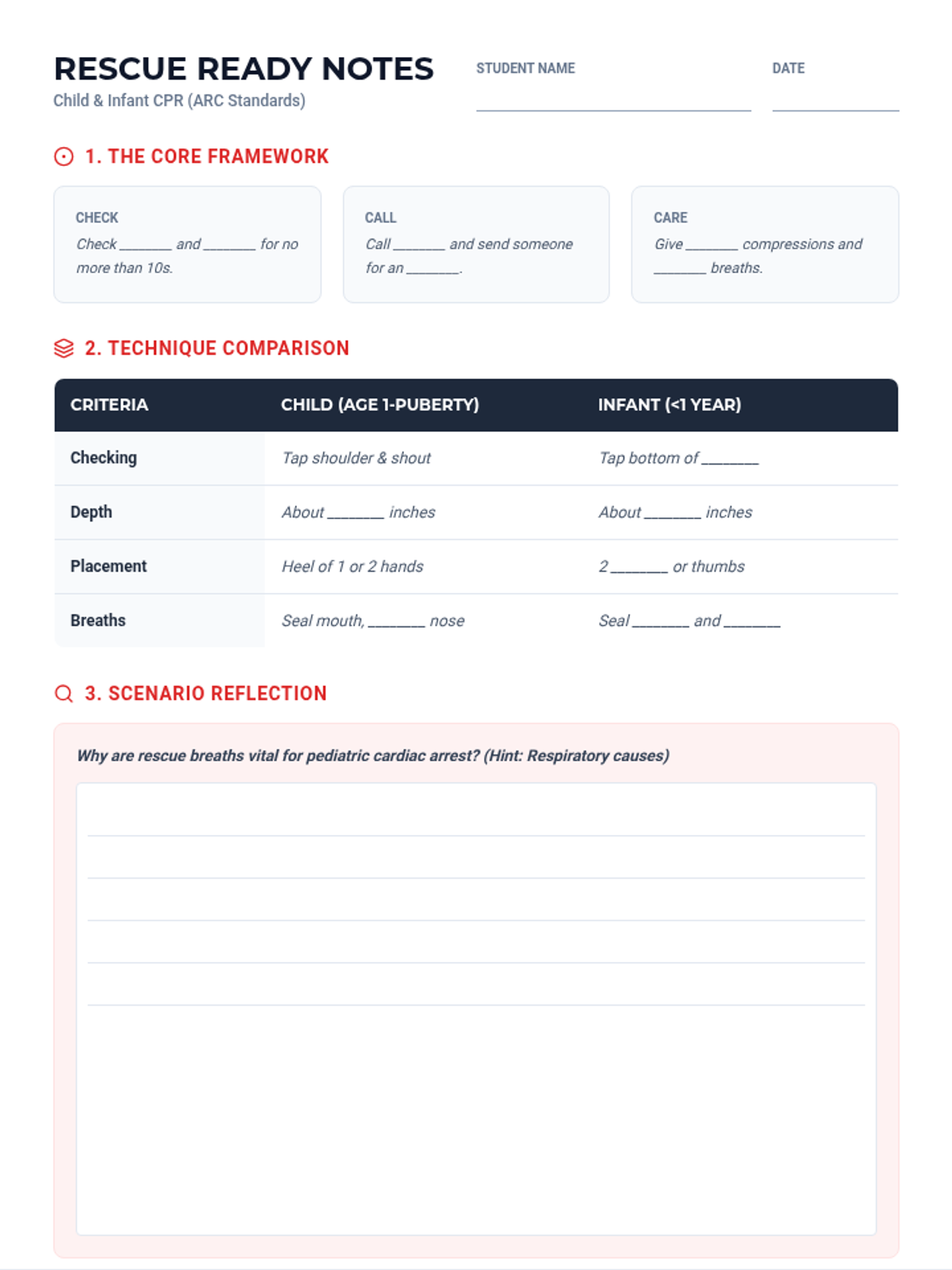
A review worksheet covering the essential skills and standards for Child and Infant CPR. Includes standard comparisons, sequencing exercises, and critical thinking scenarios based on ARC protocols.
A comprehensive student document featuring guided notes for CPR instruction and a detailed skills assessment rubric for evaluating Child and Infant CPR proficiency according to ARC standards.
Visual slide presentation covering Child and Infant CPR steps, American Red Cross standards, and interactive emergency scenario analysis case studies.
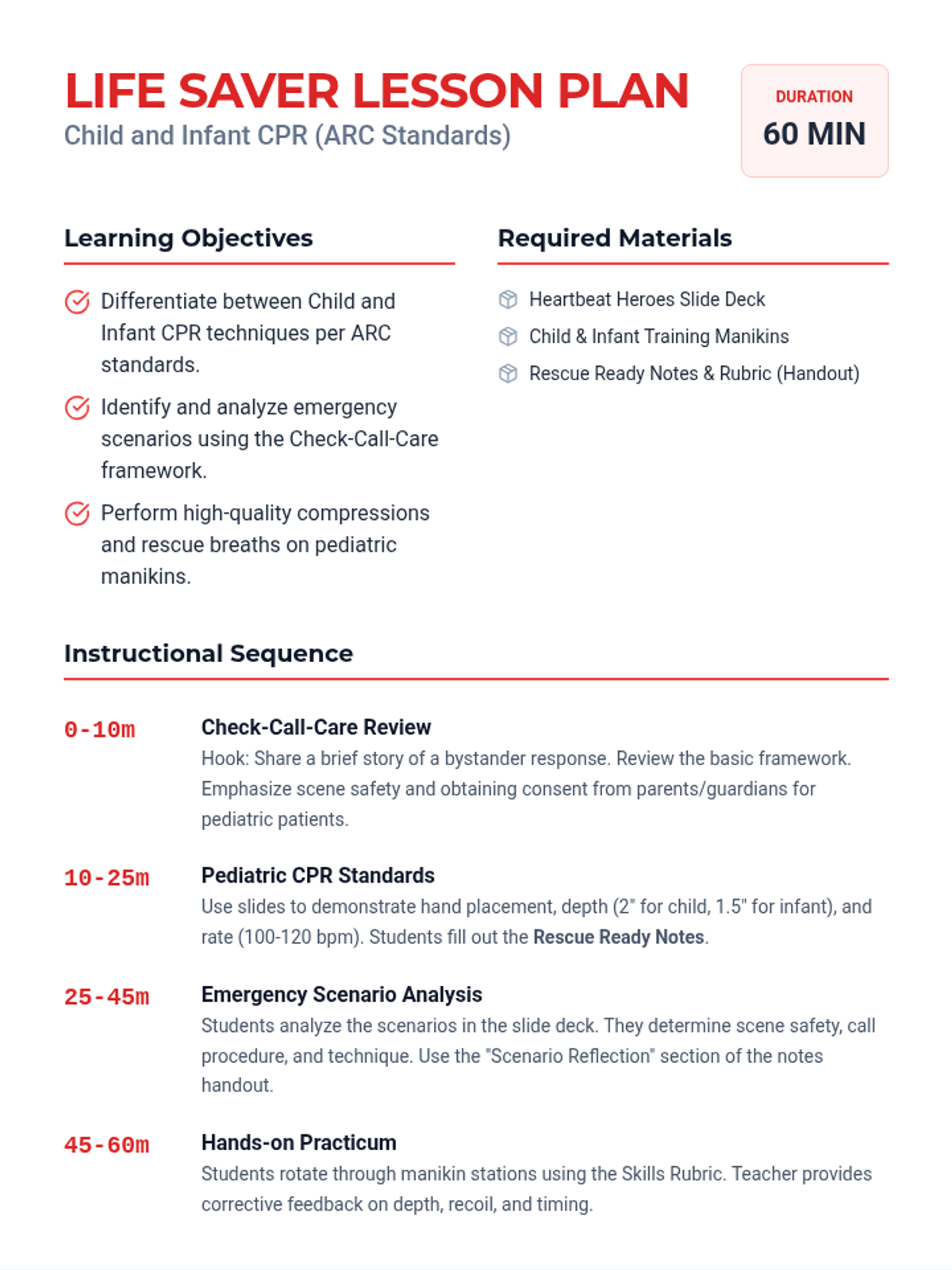
A detailed 60-minute lesson plan for teaching Child and Infant CPR following American Red Cross standards. Includes instructional timelines, teaching tips, scenario analysis keys, and differentiation strategies.
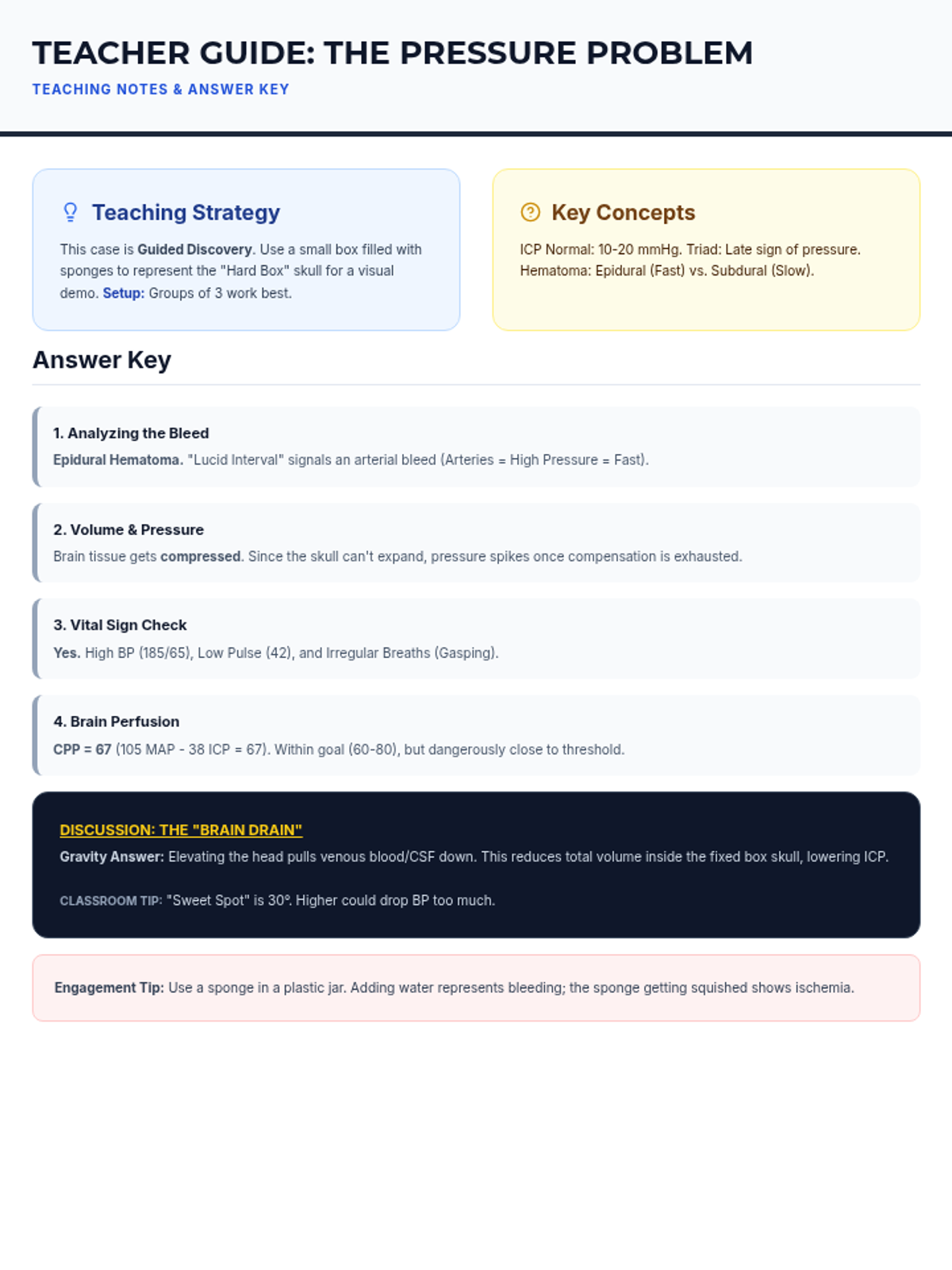
Simplified teacher guide tailored for pre-college instruction. Includes classroom engagement tips, simplified explanations, and a strategy for case-based discovery learning. Now fits answer key on one page.
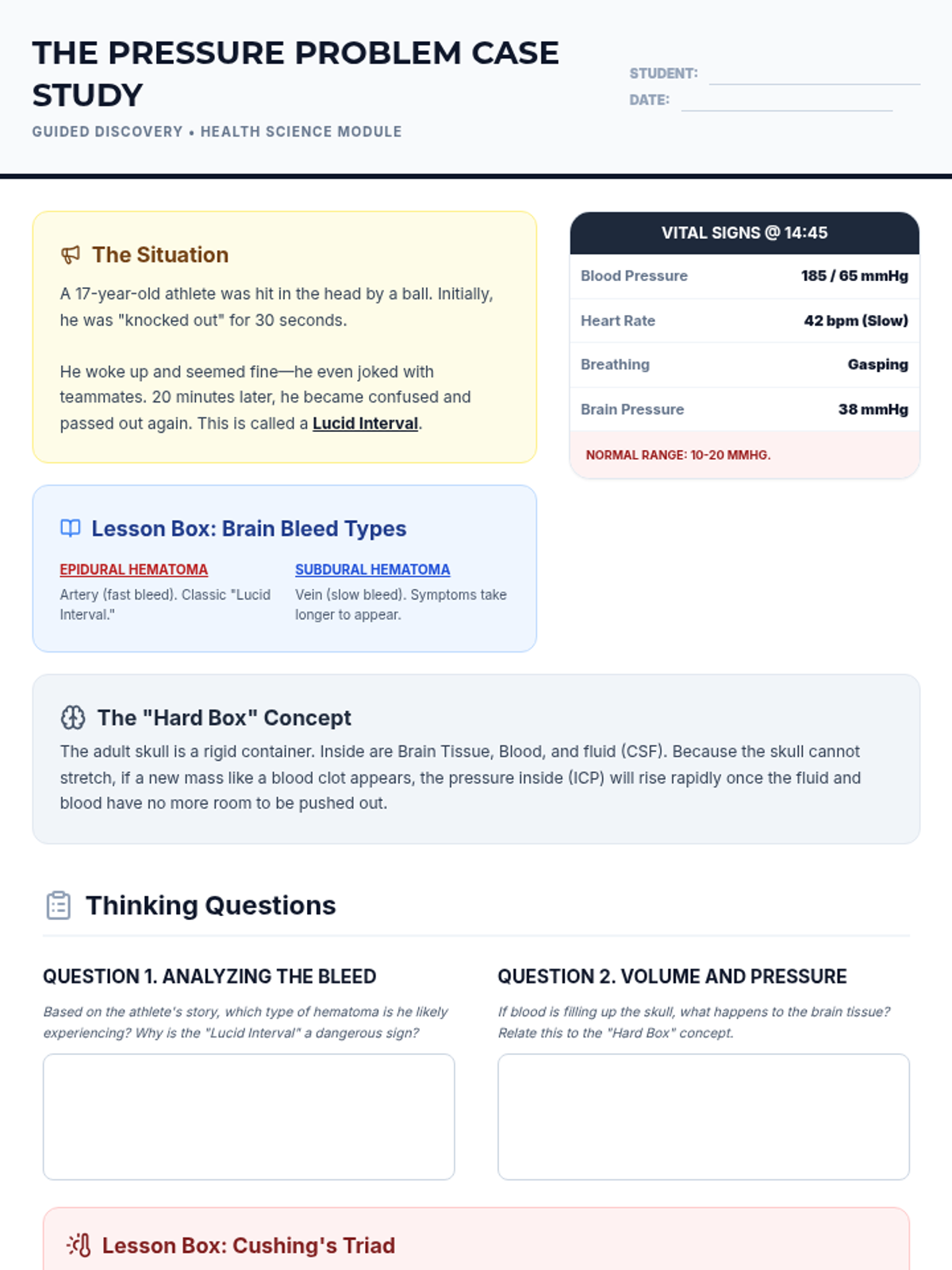
A self-contained, guided inquiry case study for pre-college students. Includes "Lesson Boxes" within the document so students can learn the concepts and immediately apply them to the clinical scenario. Now with optimized 2-page layout.
Engaging, high-impact slides designed for pre-college health science students. Explains ICP, Monro-Kellie doctrine, and hematoma differentiation using accessible language and clear visuals. Now includes a 2-part application scenario.
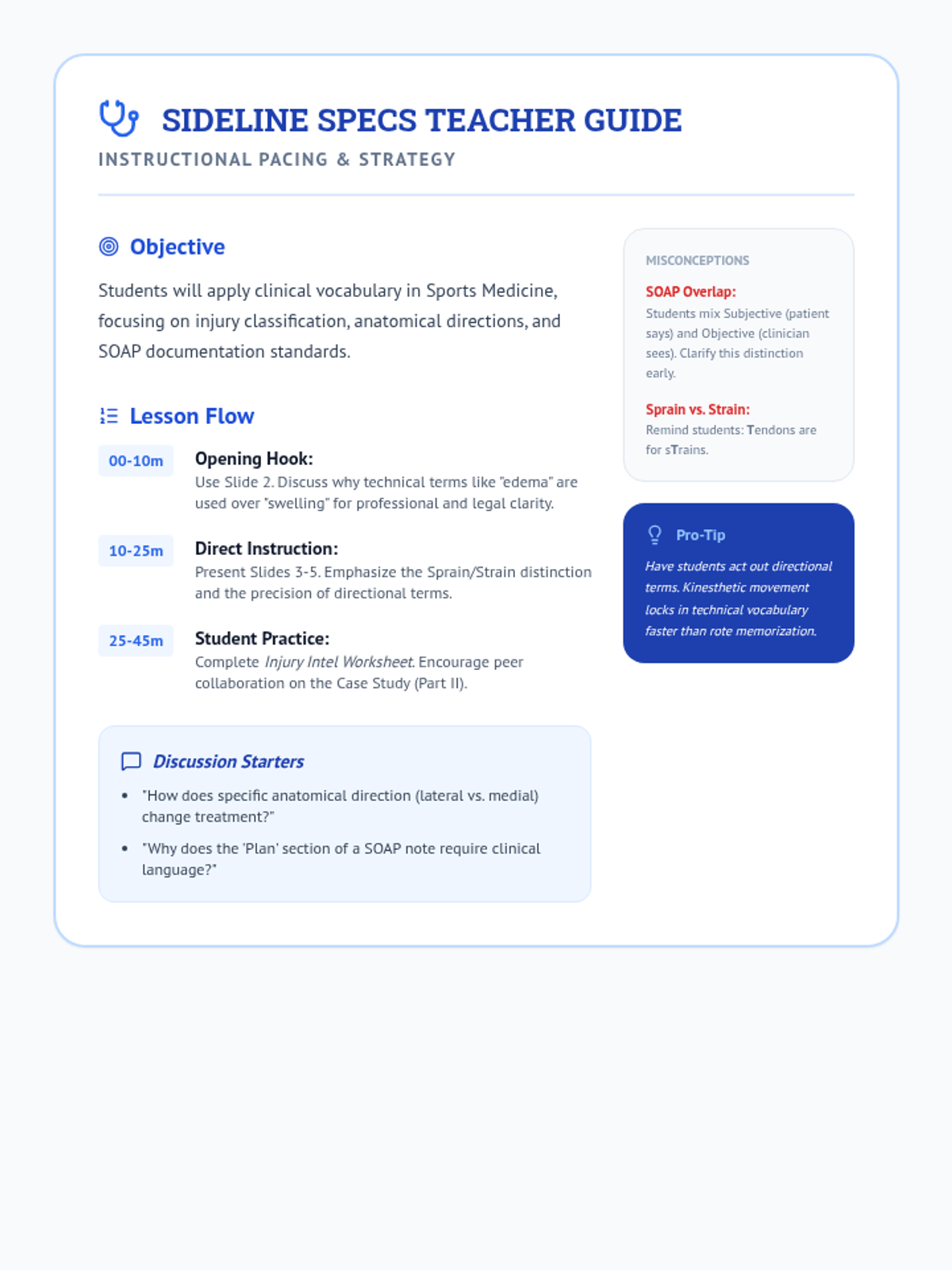
A facilitation guide for teachers to deliver the Sideline Specs lesson, including pacing, discussion questions, and tips for addressing common student misconceptions in Sports Medicine vocabulary.
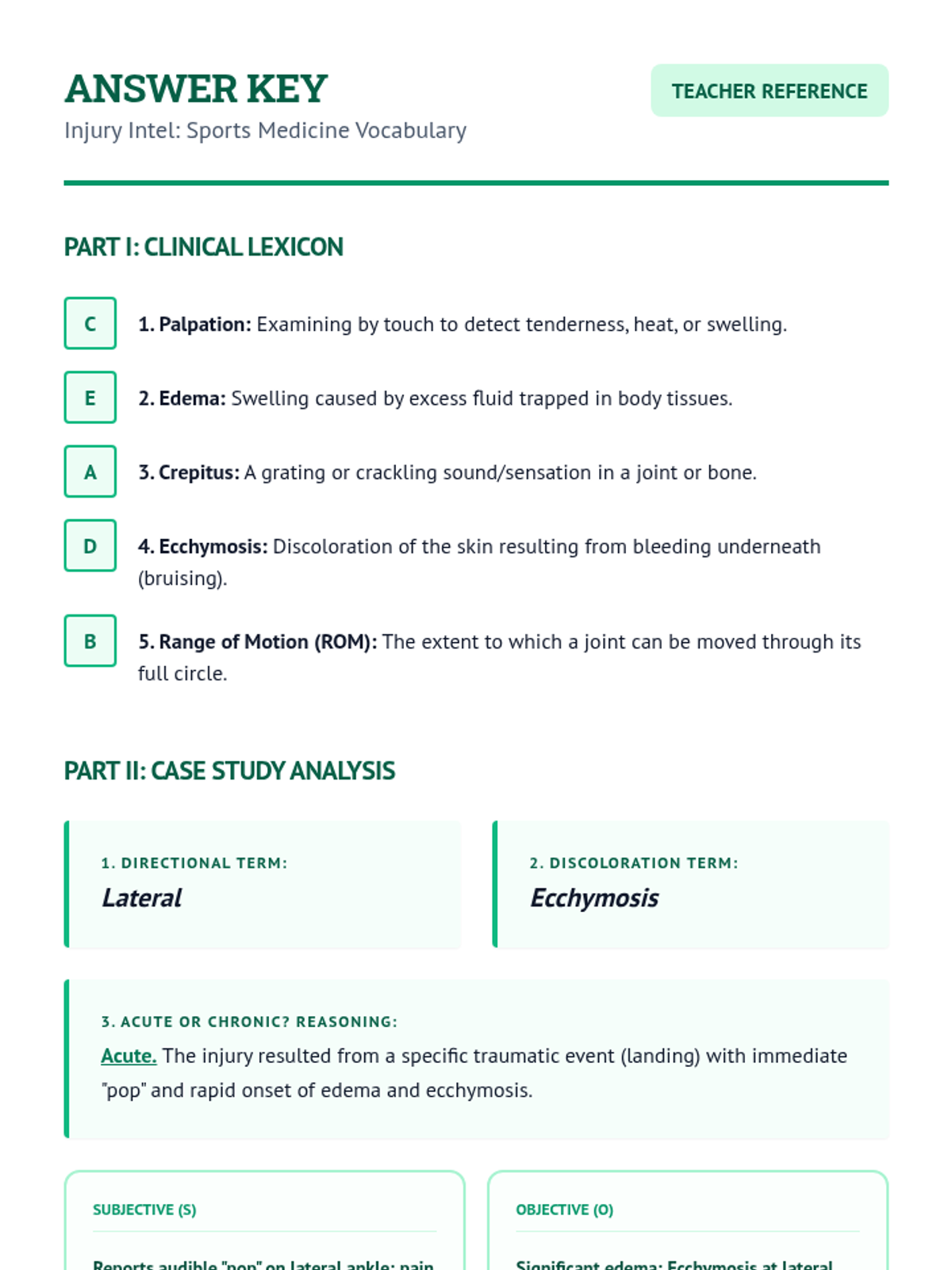
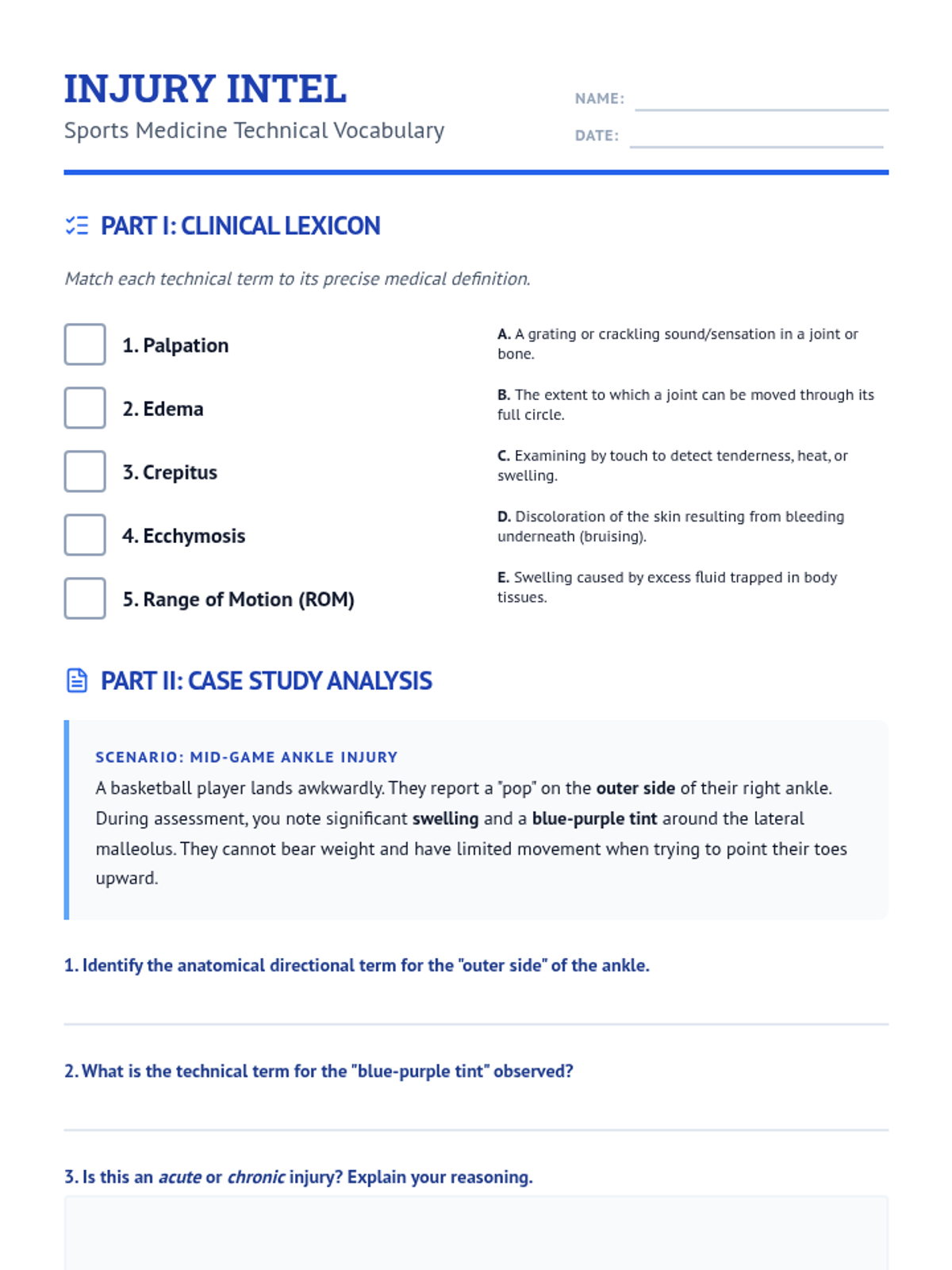
The official answer key for the Injury Intel Worksheet, providing clinical definitions, case study solutions, and technical translations.
A comprehensive student worksheet focusing on technical vocabulary in Sports Medicine. Includes matching, case study analysis, SOAP note categorization, and translation from common to clinical terms.
A professional slide deck introducing technical vocabulary in Sports Medicine, covering injury classification, SOAP note documentation, and anatomical directional terms.
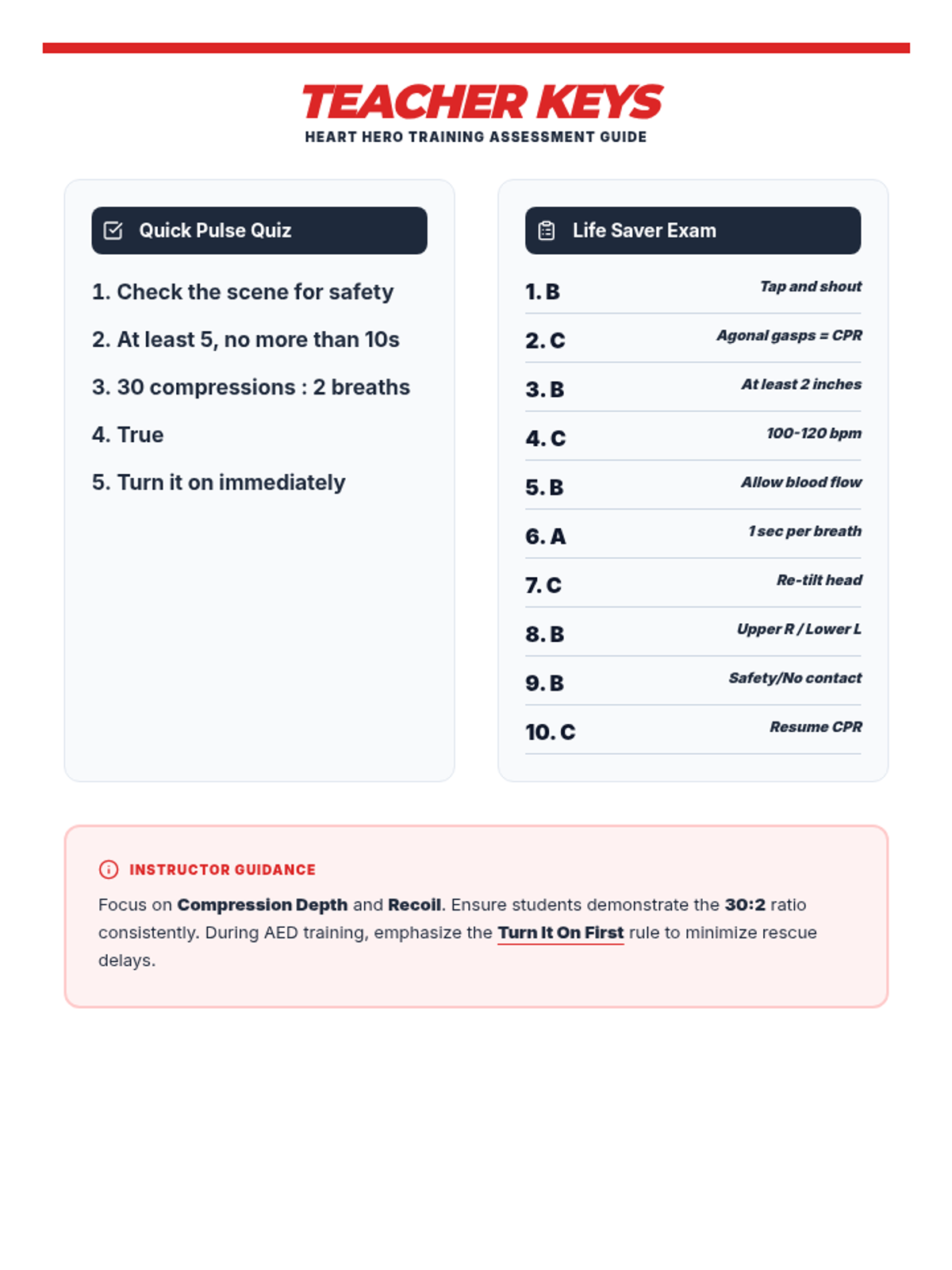
Teacher's answer key for both the Quick Pulse Quiz and the Life Saver Exam.
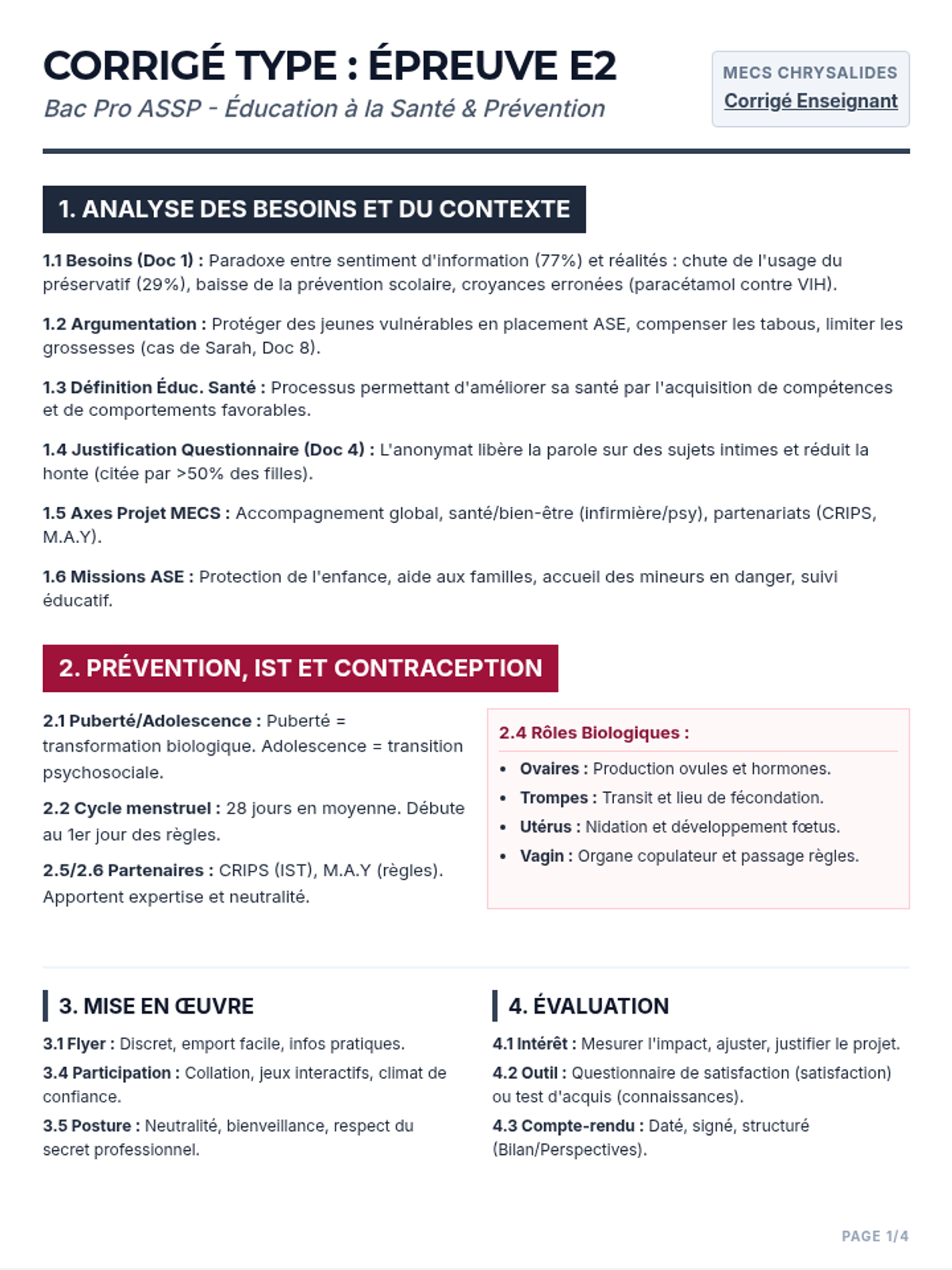
A complete teacher-facing answer key for a Bac Pro ASSP exam (E2 type) covering health education, prevention, and anatomy. Includes a detailed correction guide, a labeled anatomical diagram, a health education action sheet, and a visual poster mock-up for STI prevention.