Fundamental techniques for racket sports, track and field, and gymnastics maneuvers. Develops physical literacy through martial arts disciplines and self-defense strategies.
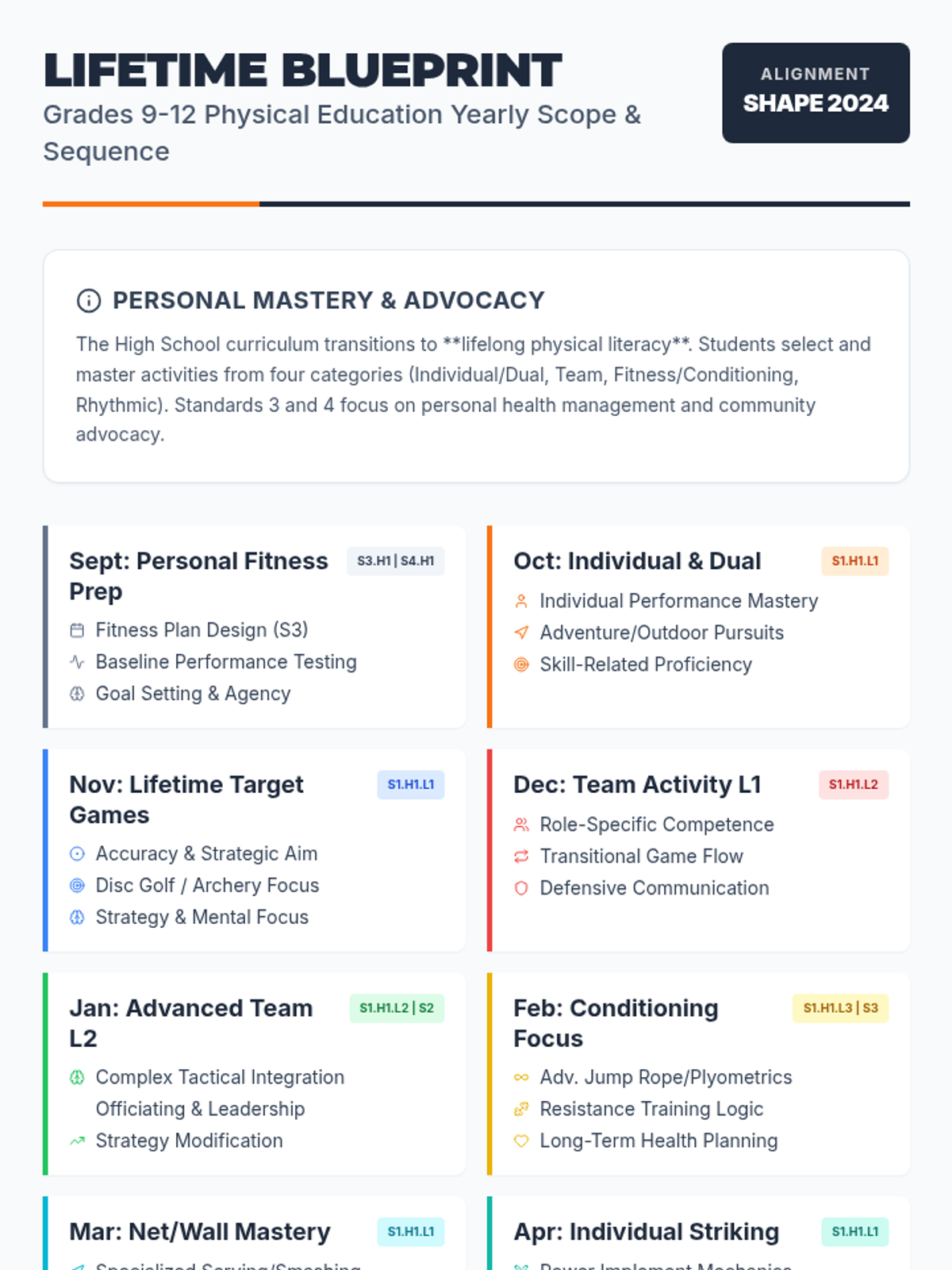
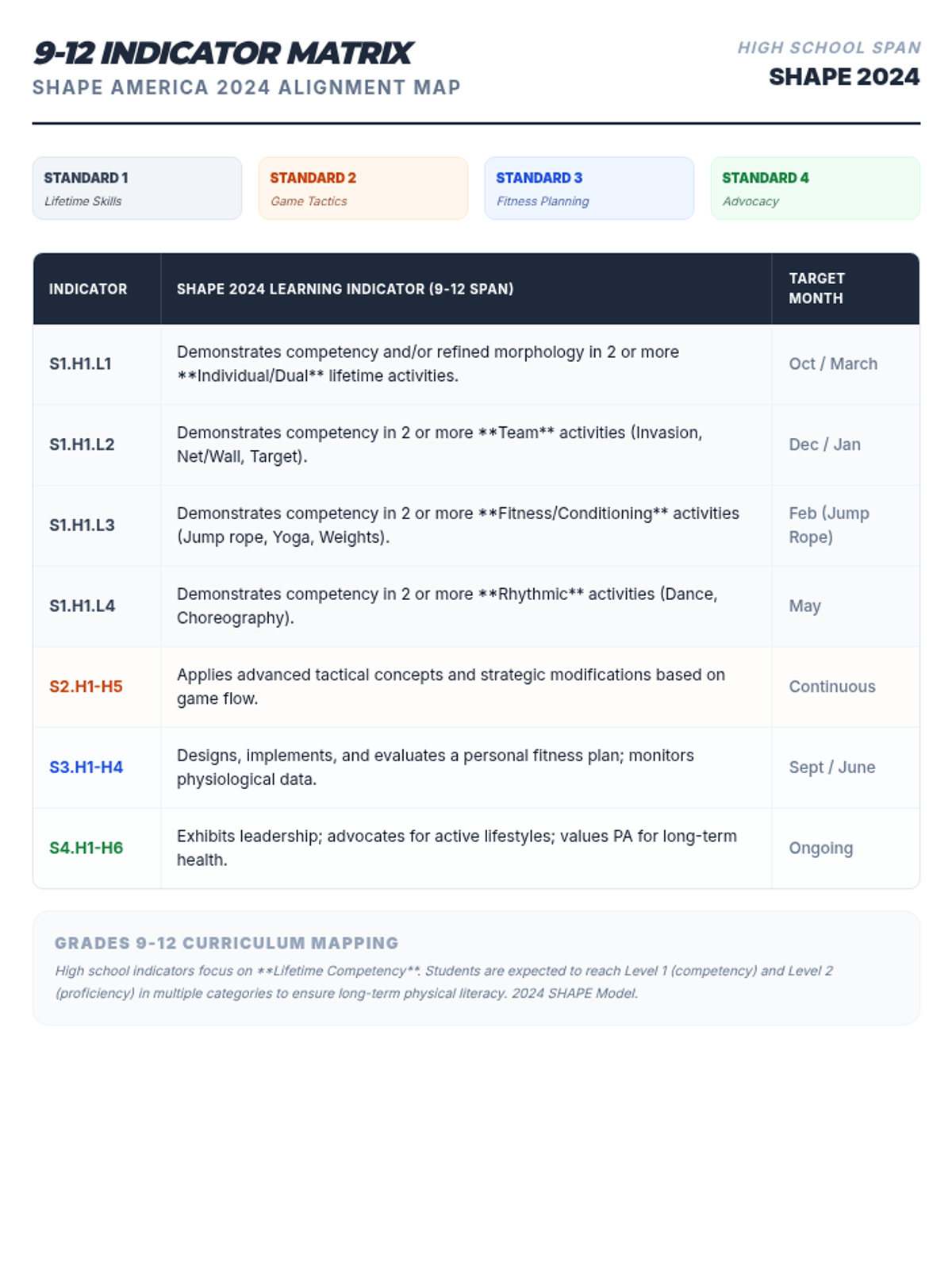
Designing and implementing personal fitness plans and mastering lifetime activities for Grades 9-12.
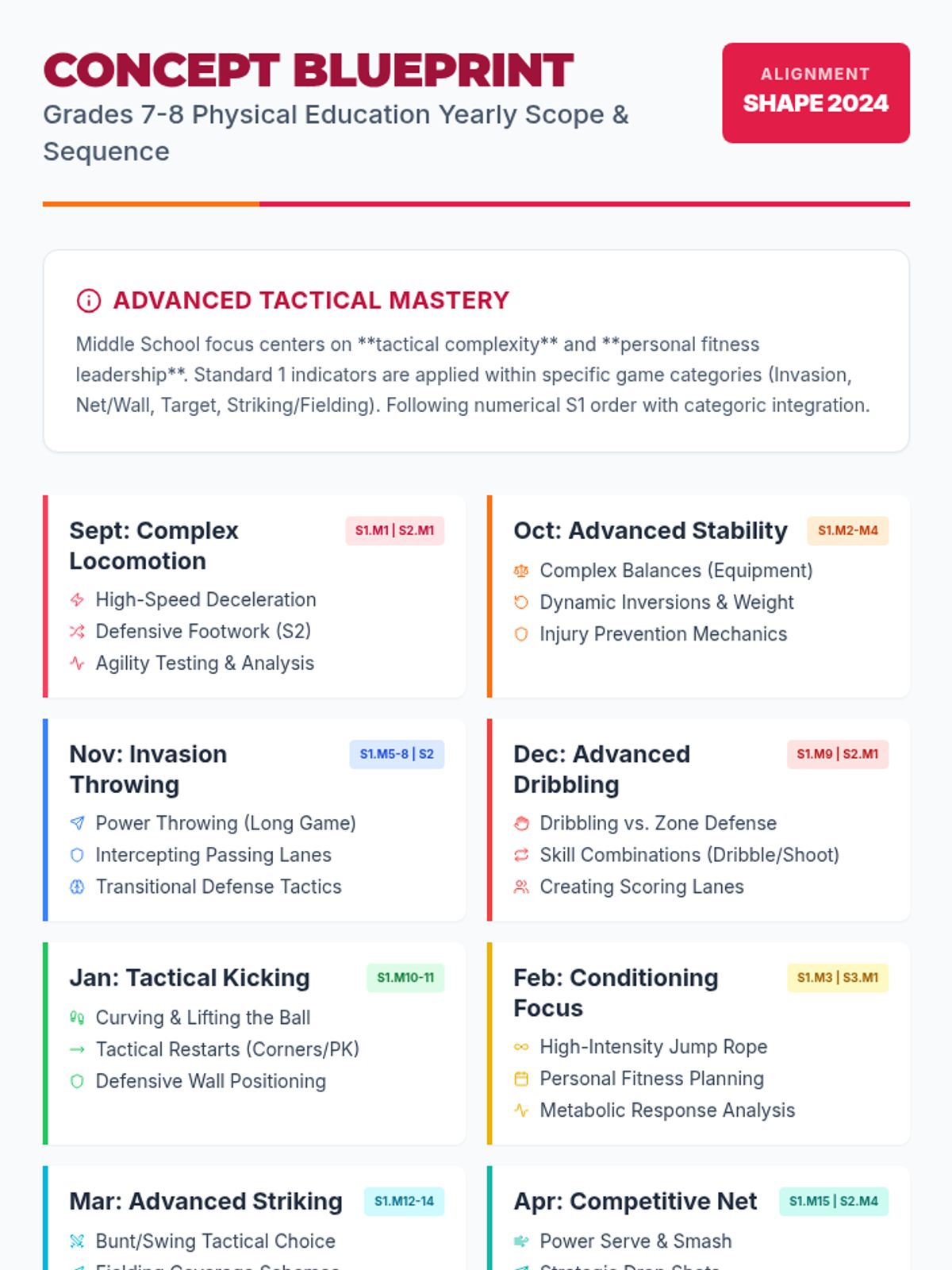
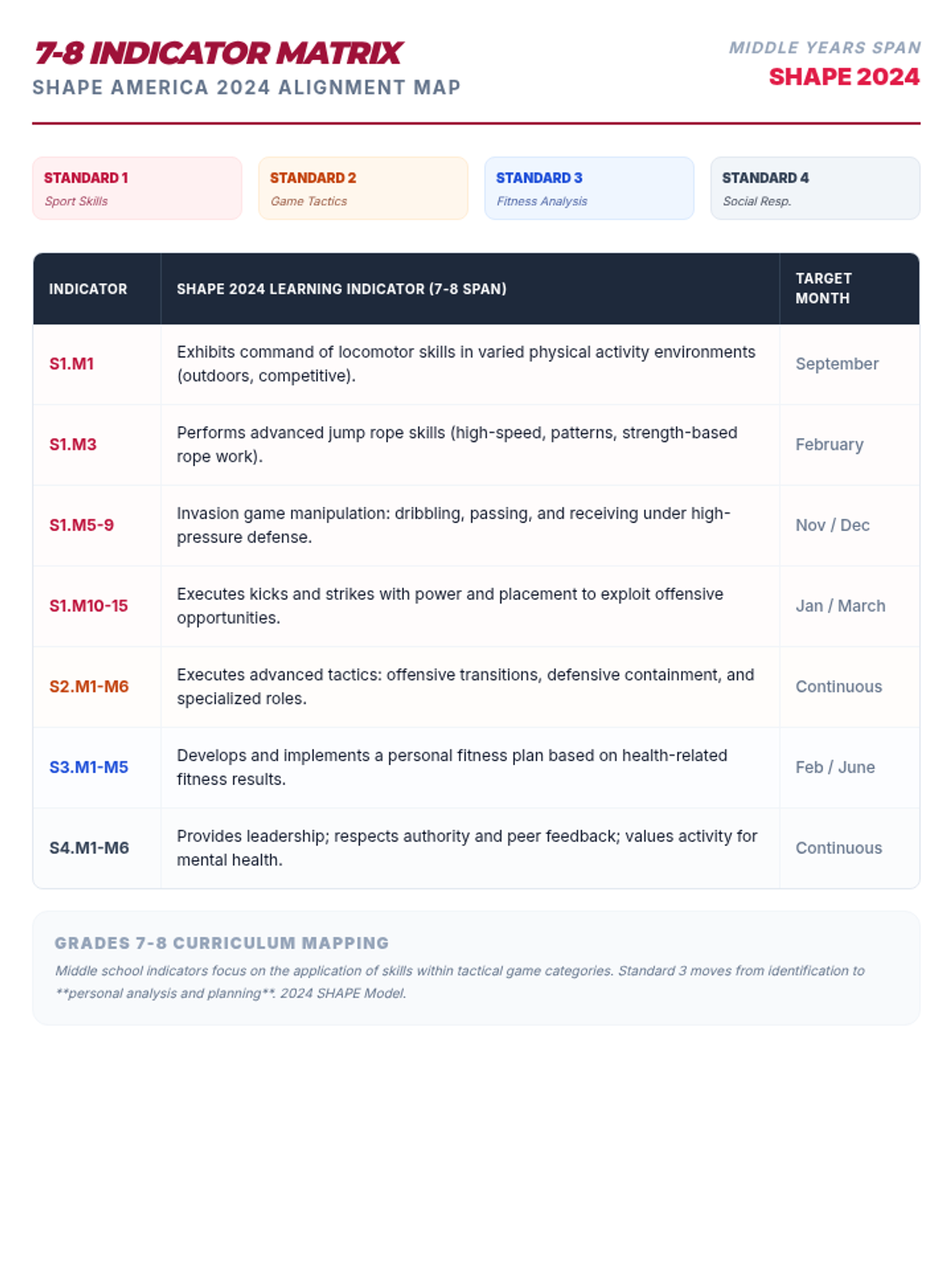
Applying advanced tactical principles and health-related fitness analysis for Grades 7-8.
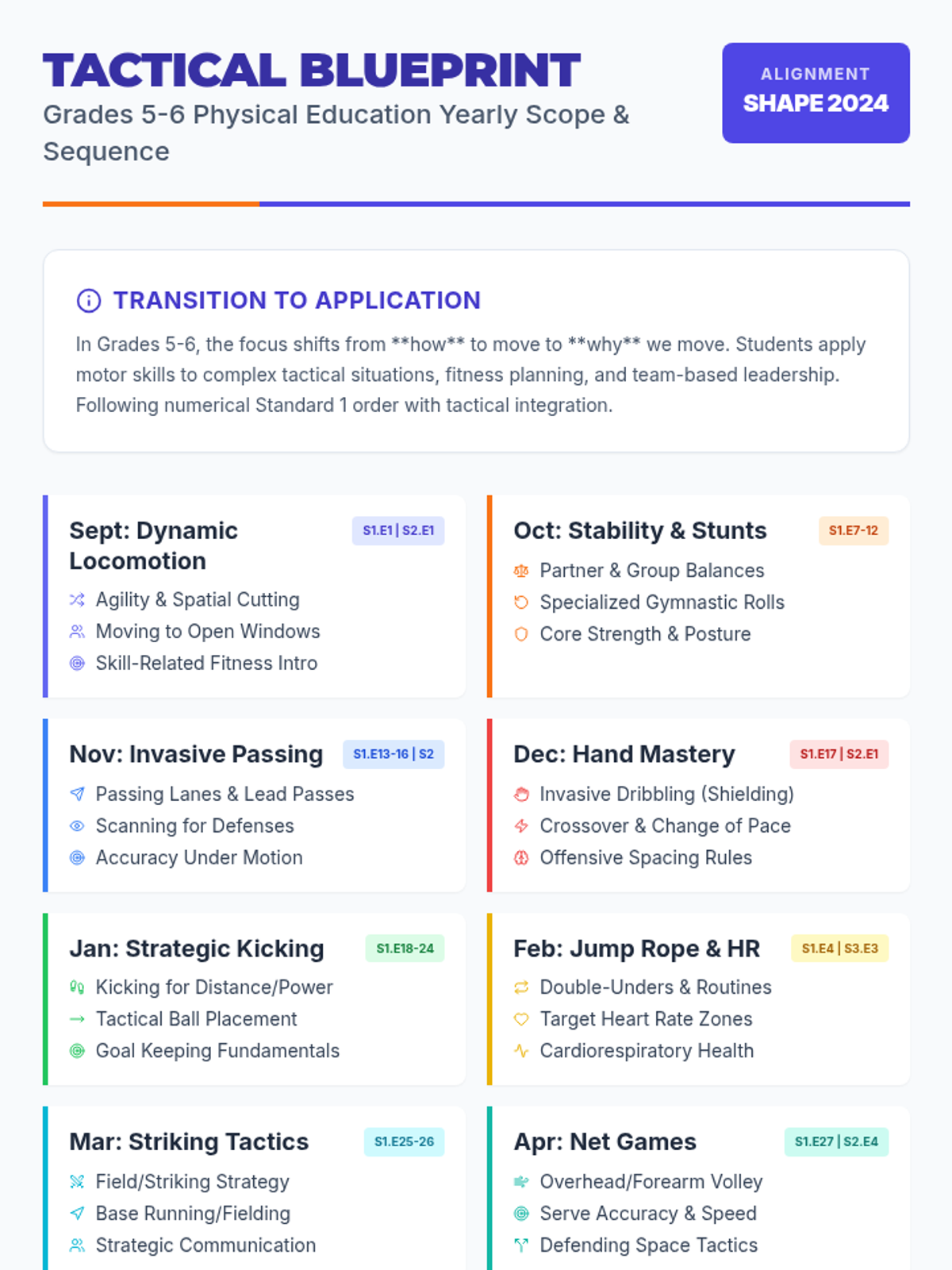
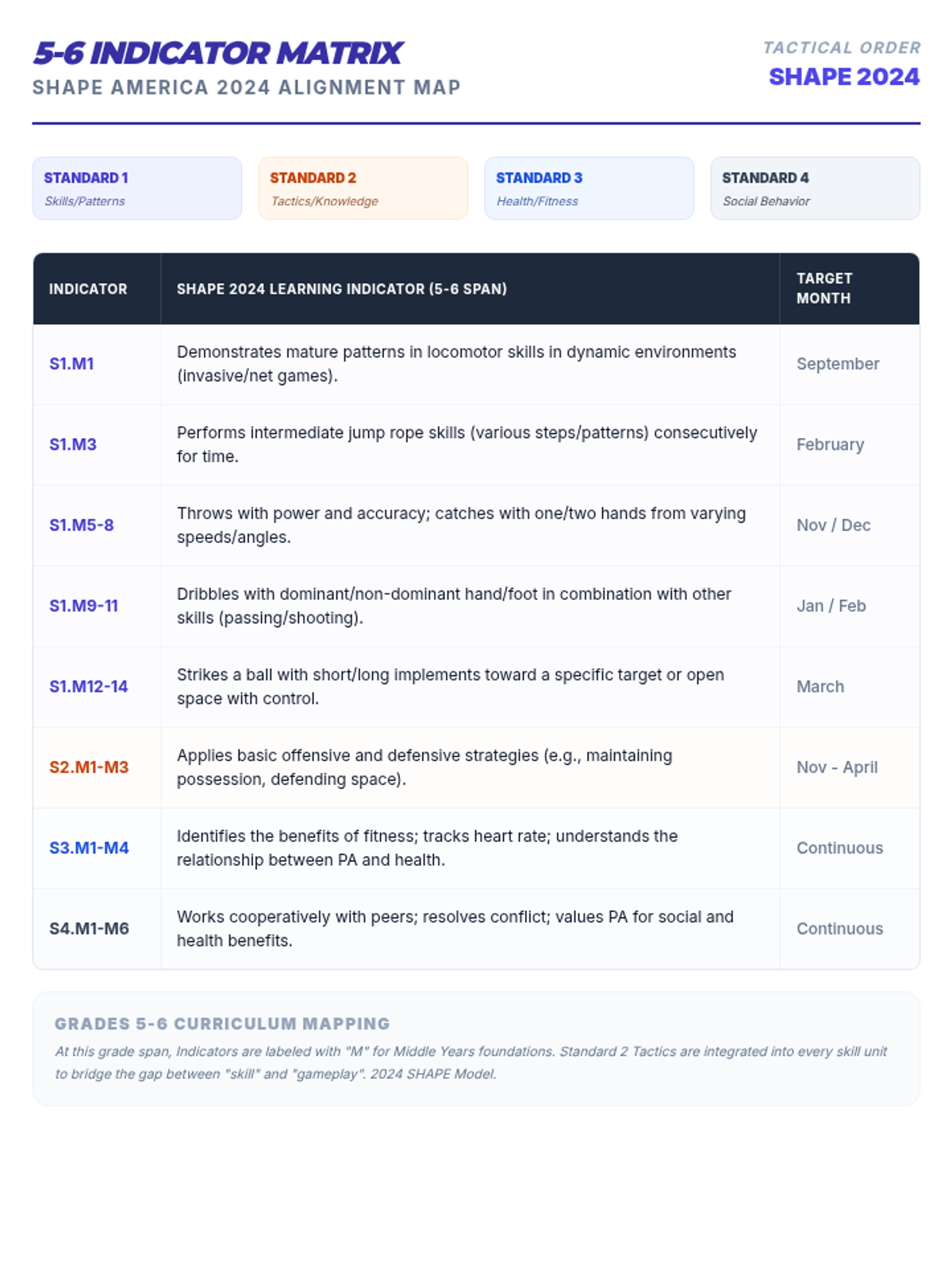
Transitioning from skill mastery to tactical application and fitness planning for Grades 5-6.
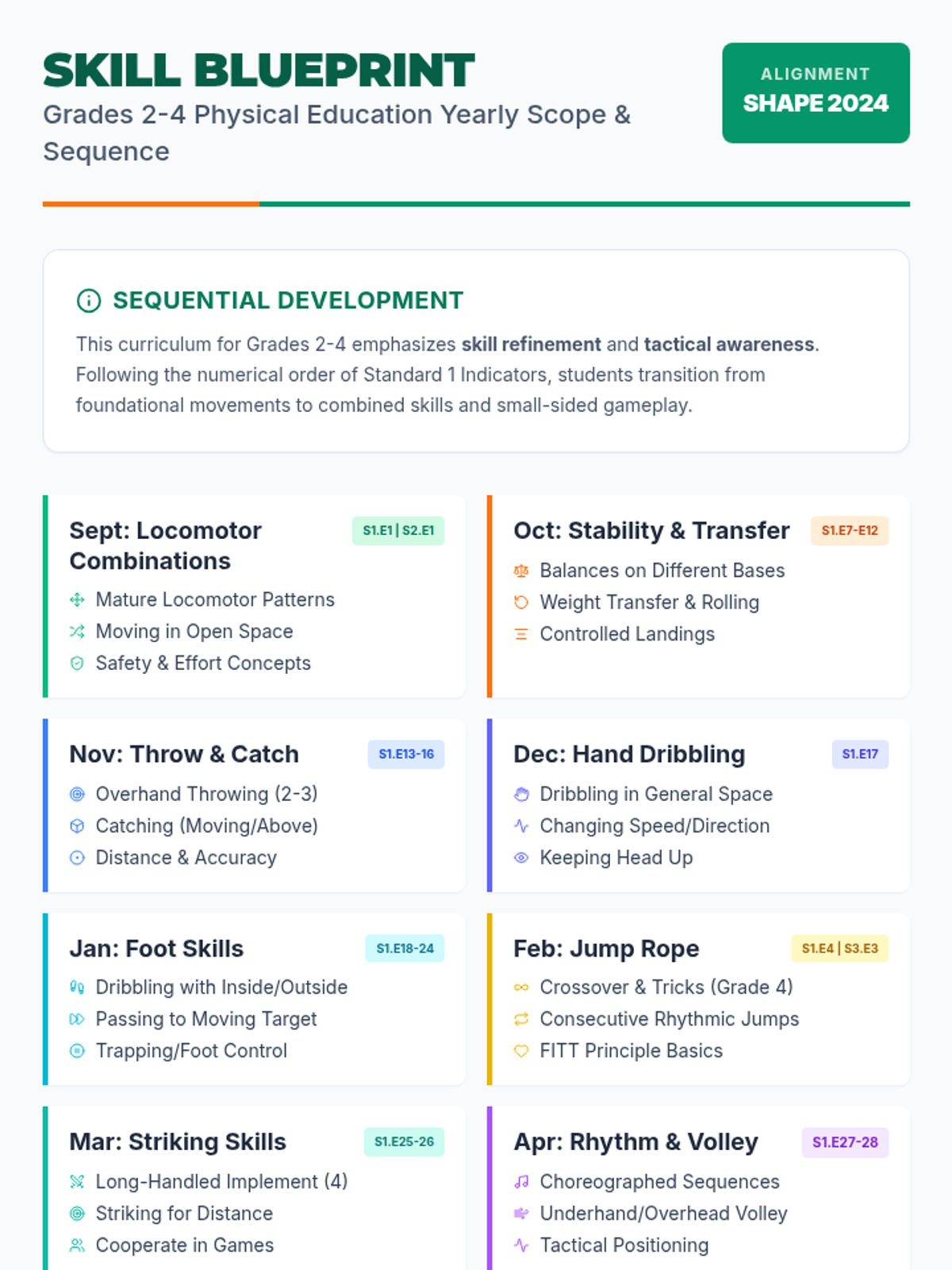
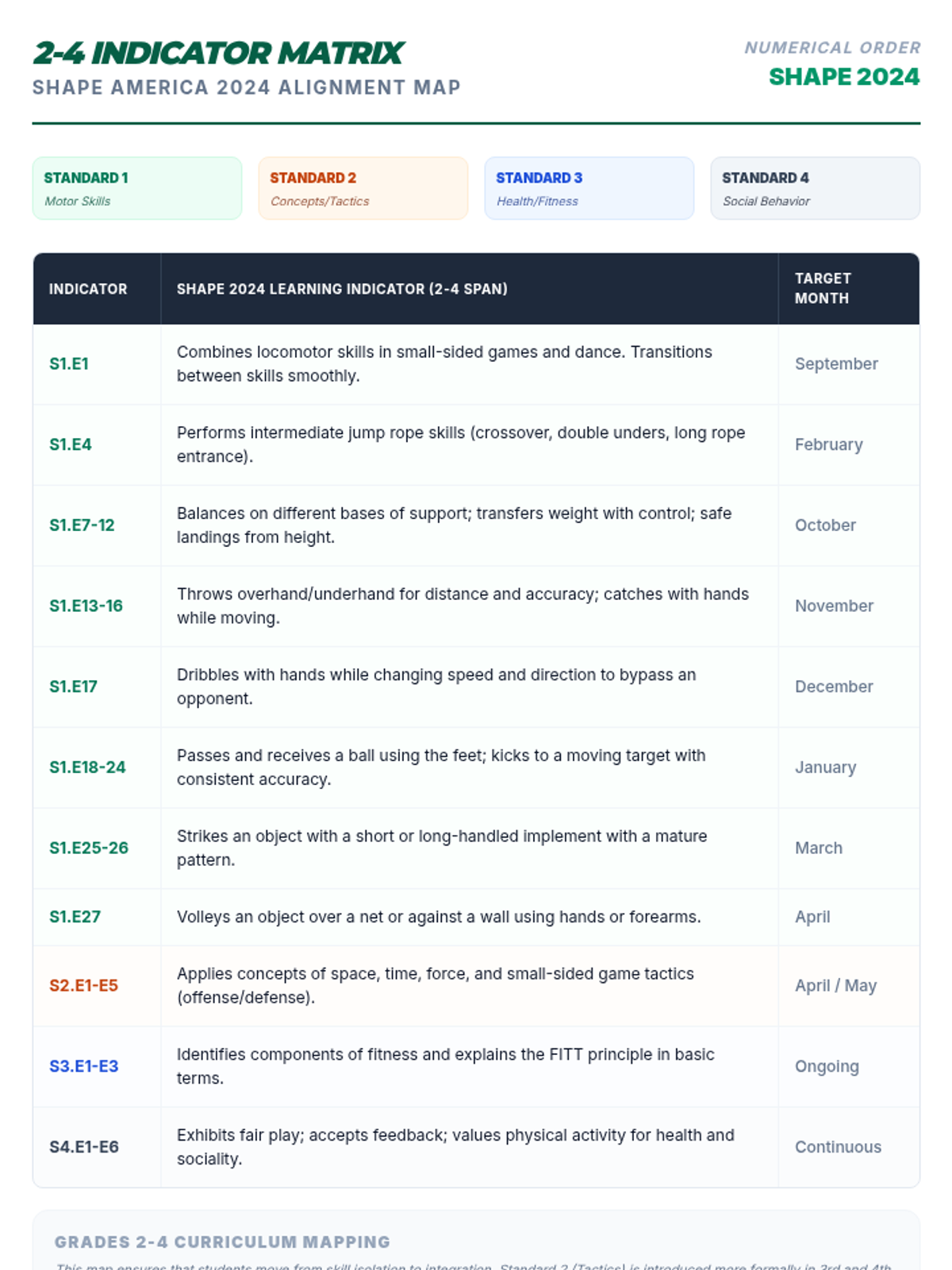
Curriculum planning and pacing for Grades 2-4, focusing on skill refinement and introductory strategies.
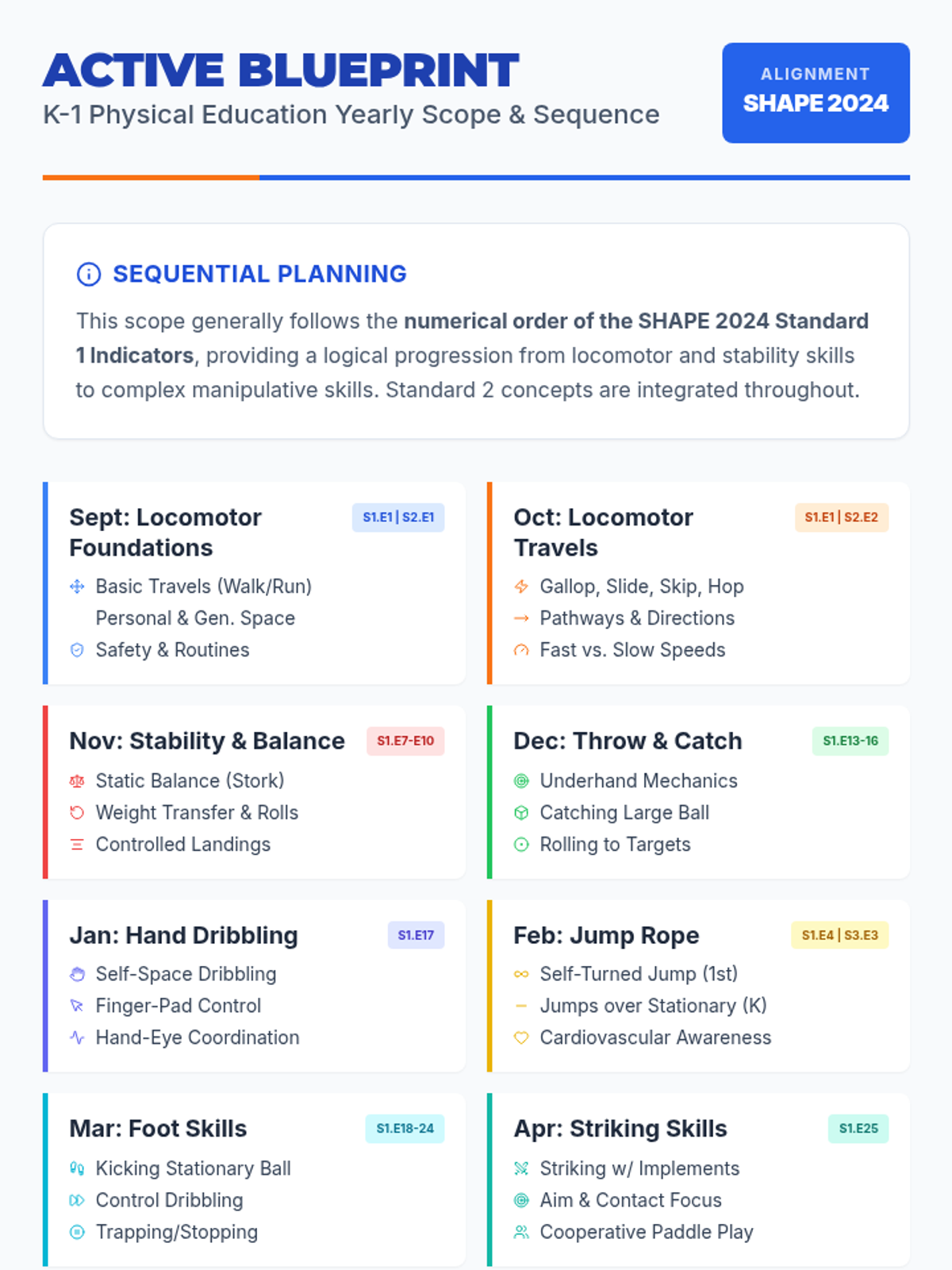
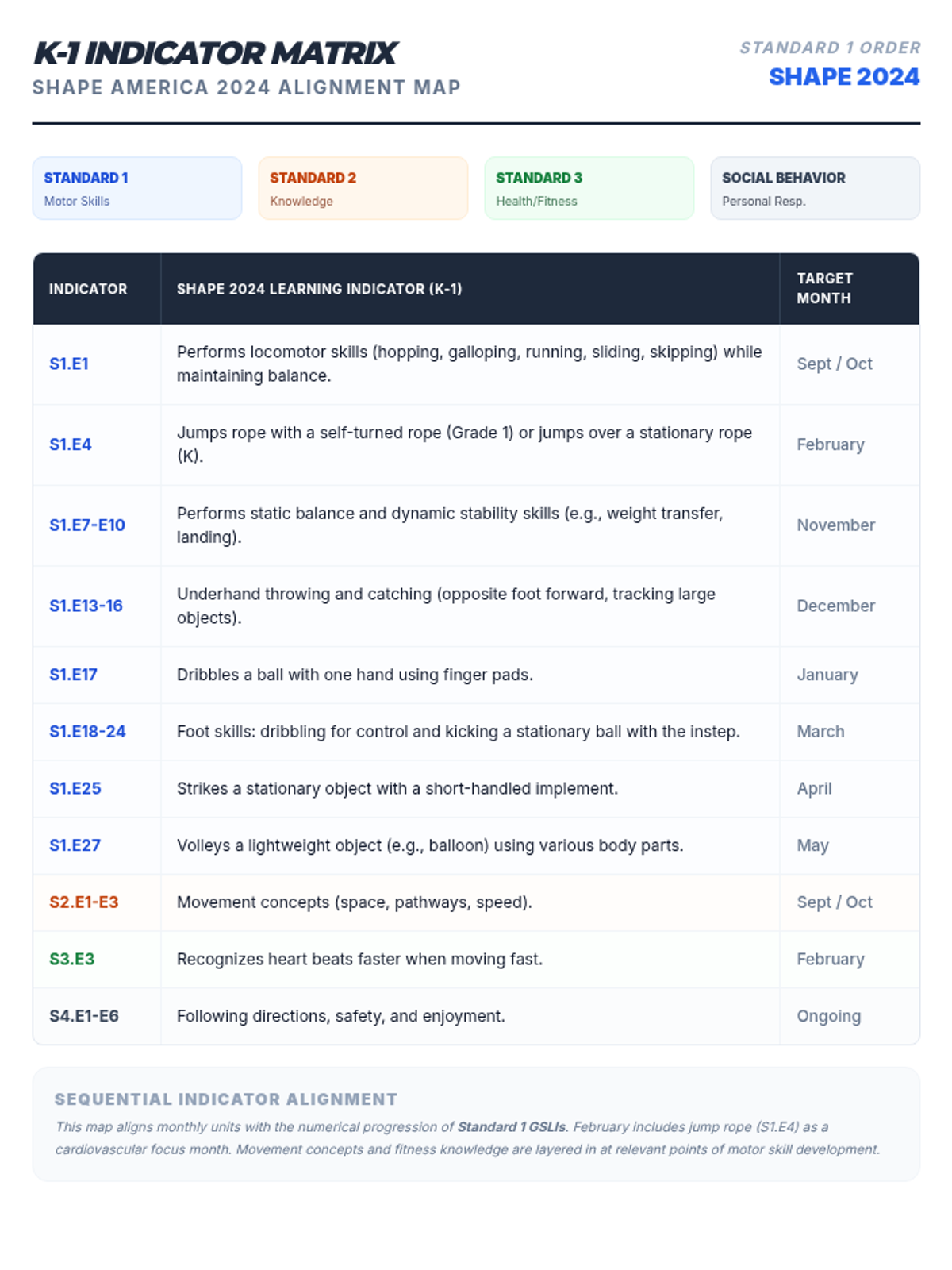
Foundational planning documents and visual guides for the K-1 PE school year.
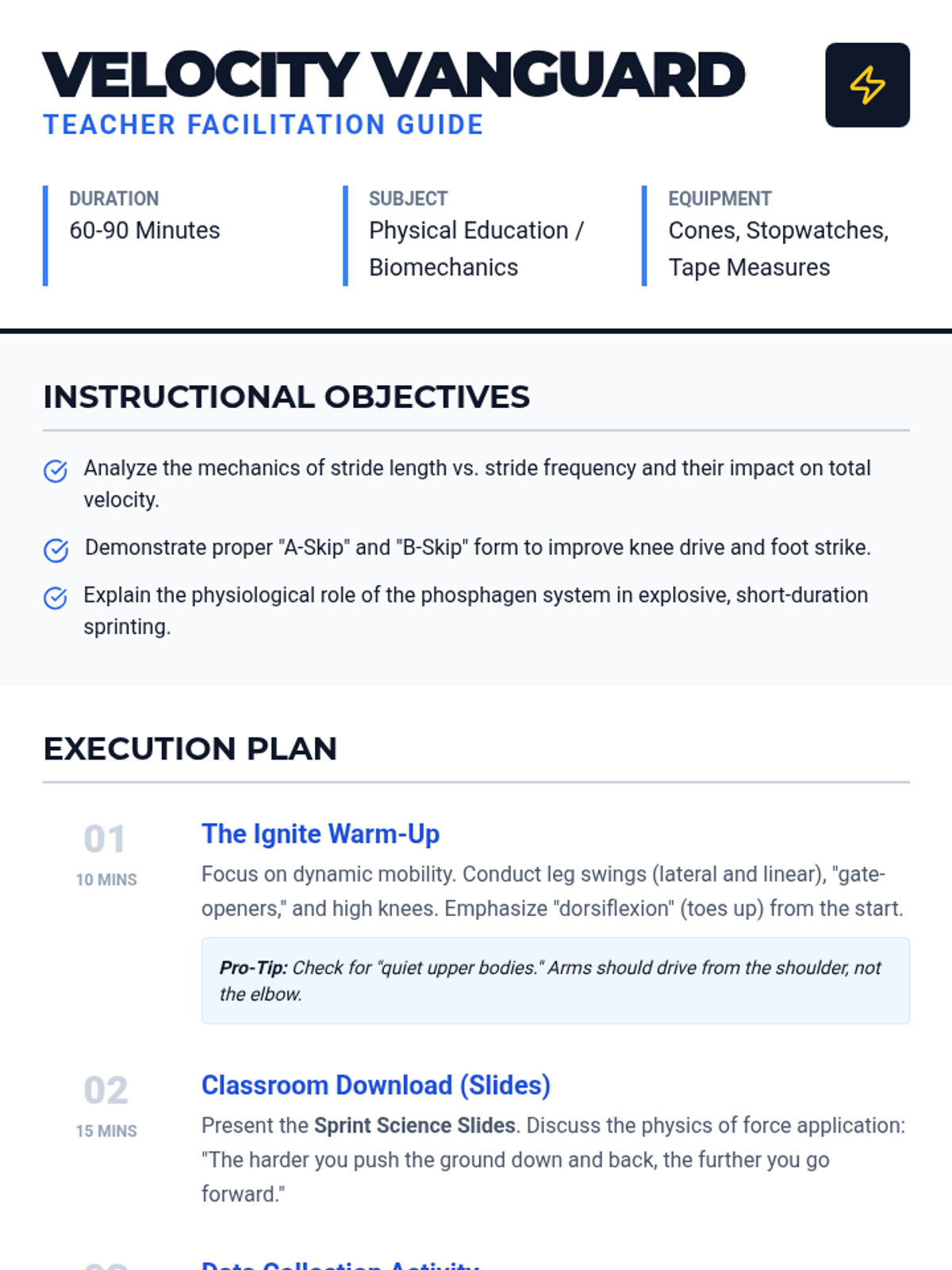
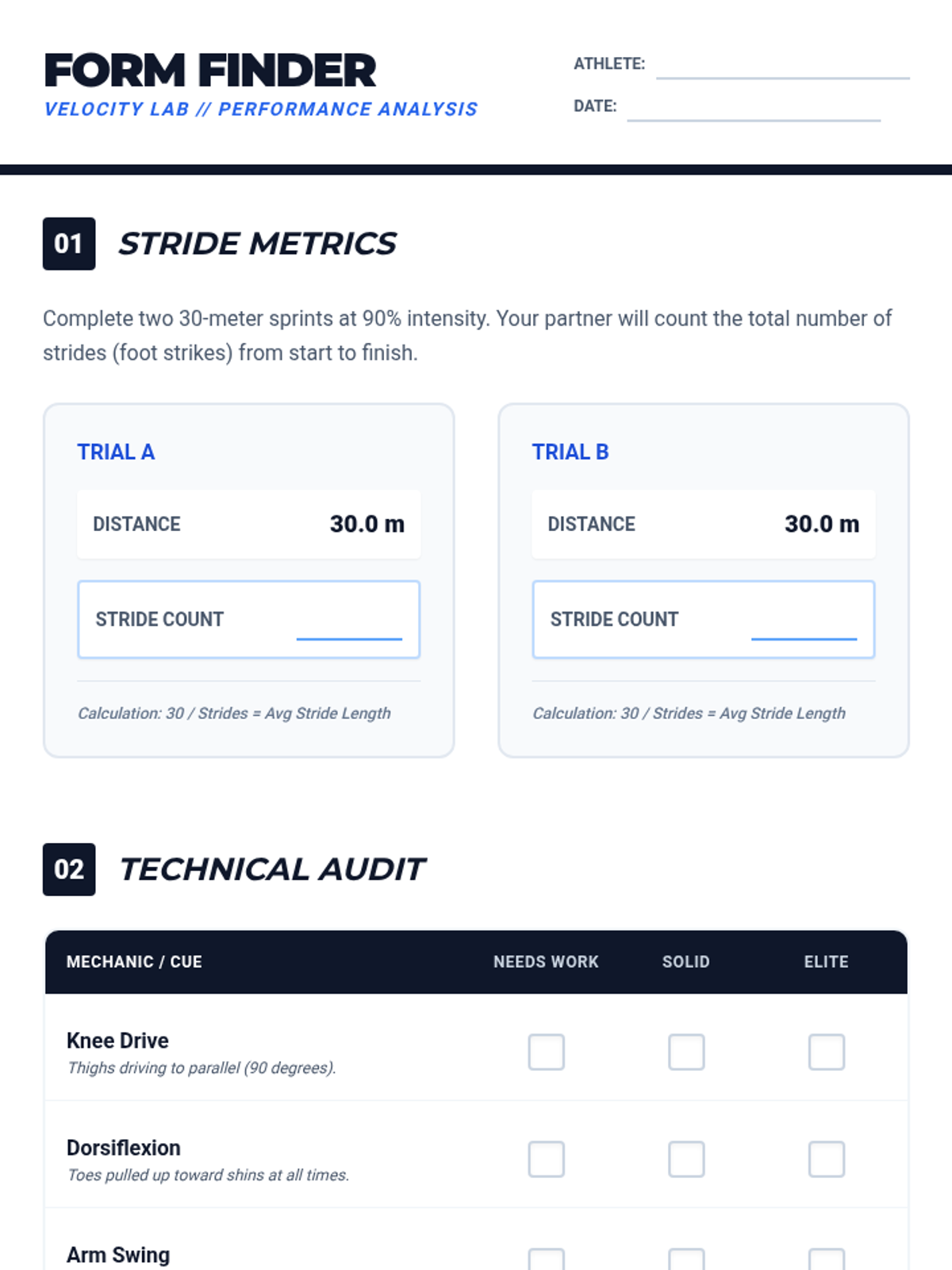
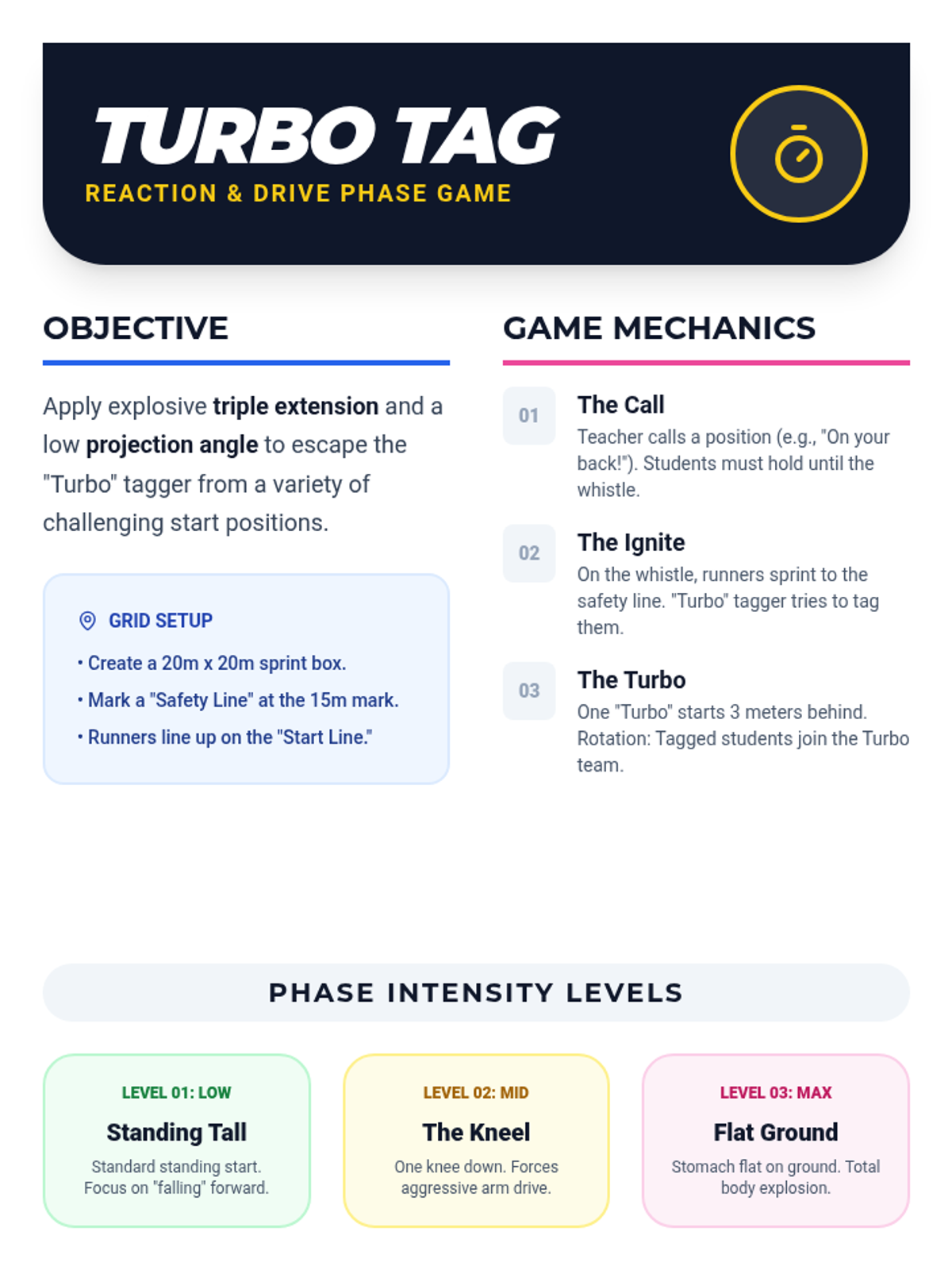
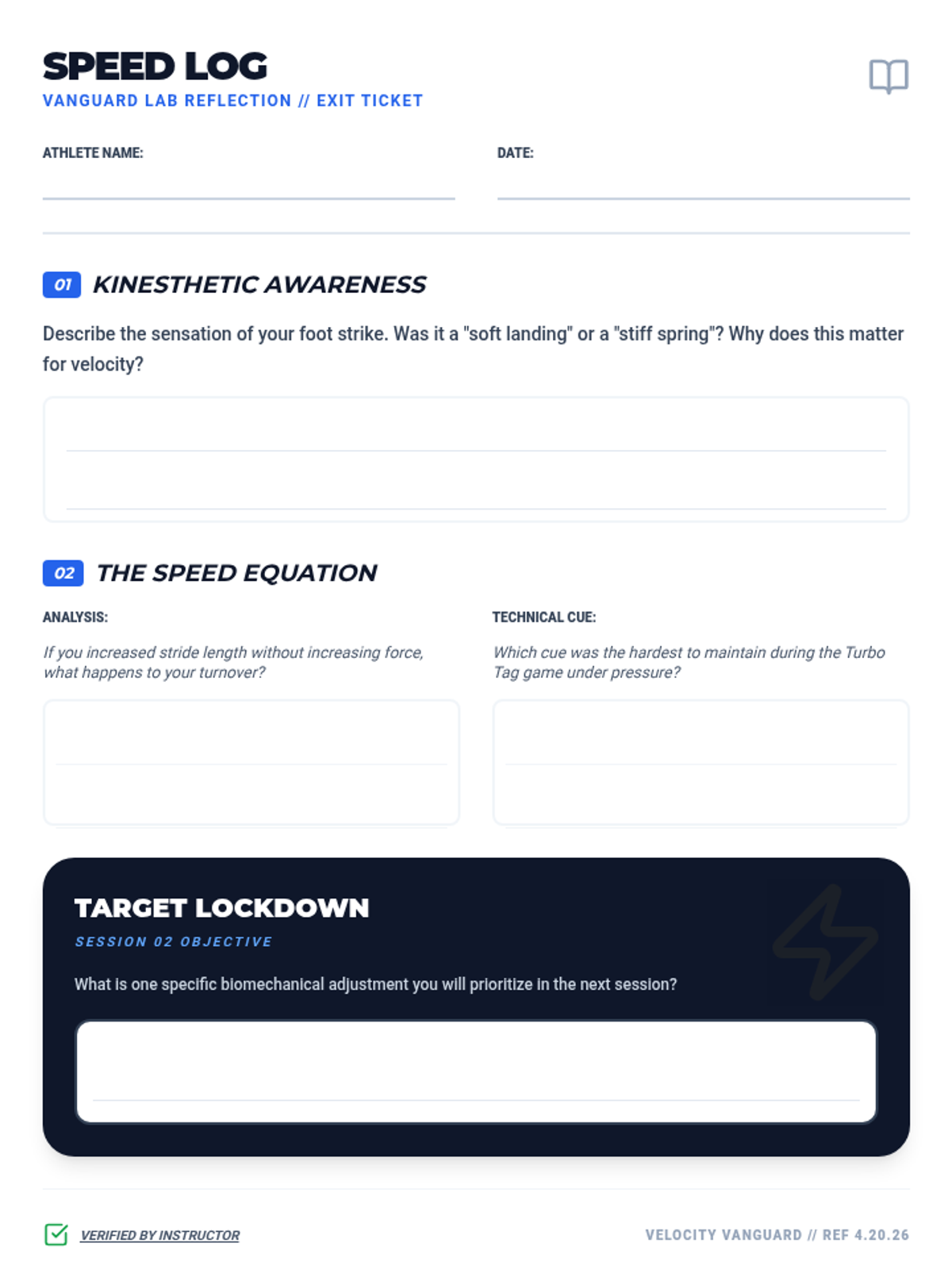
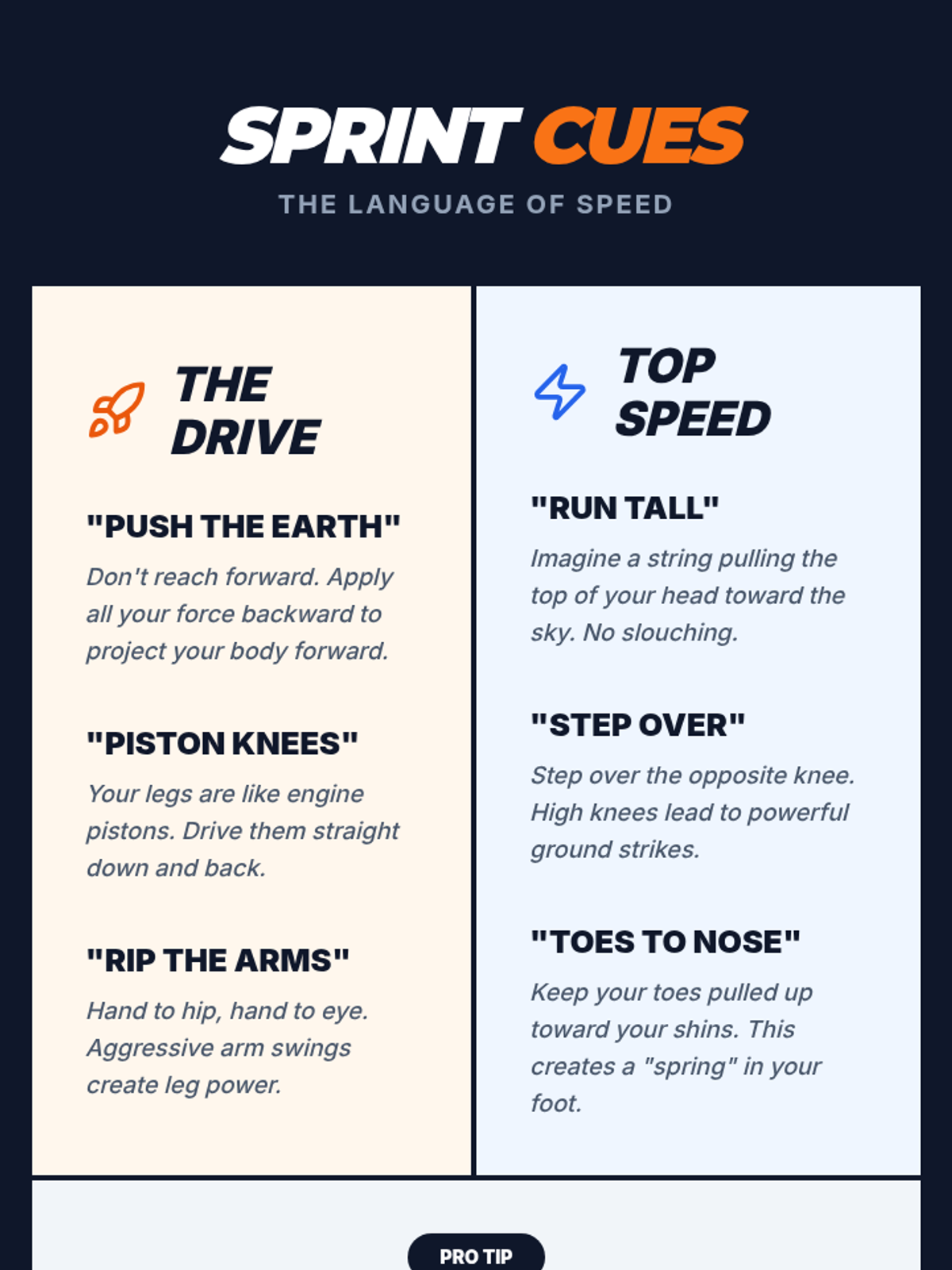
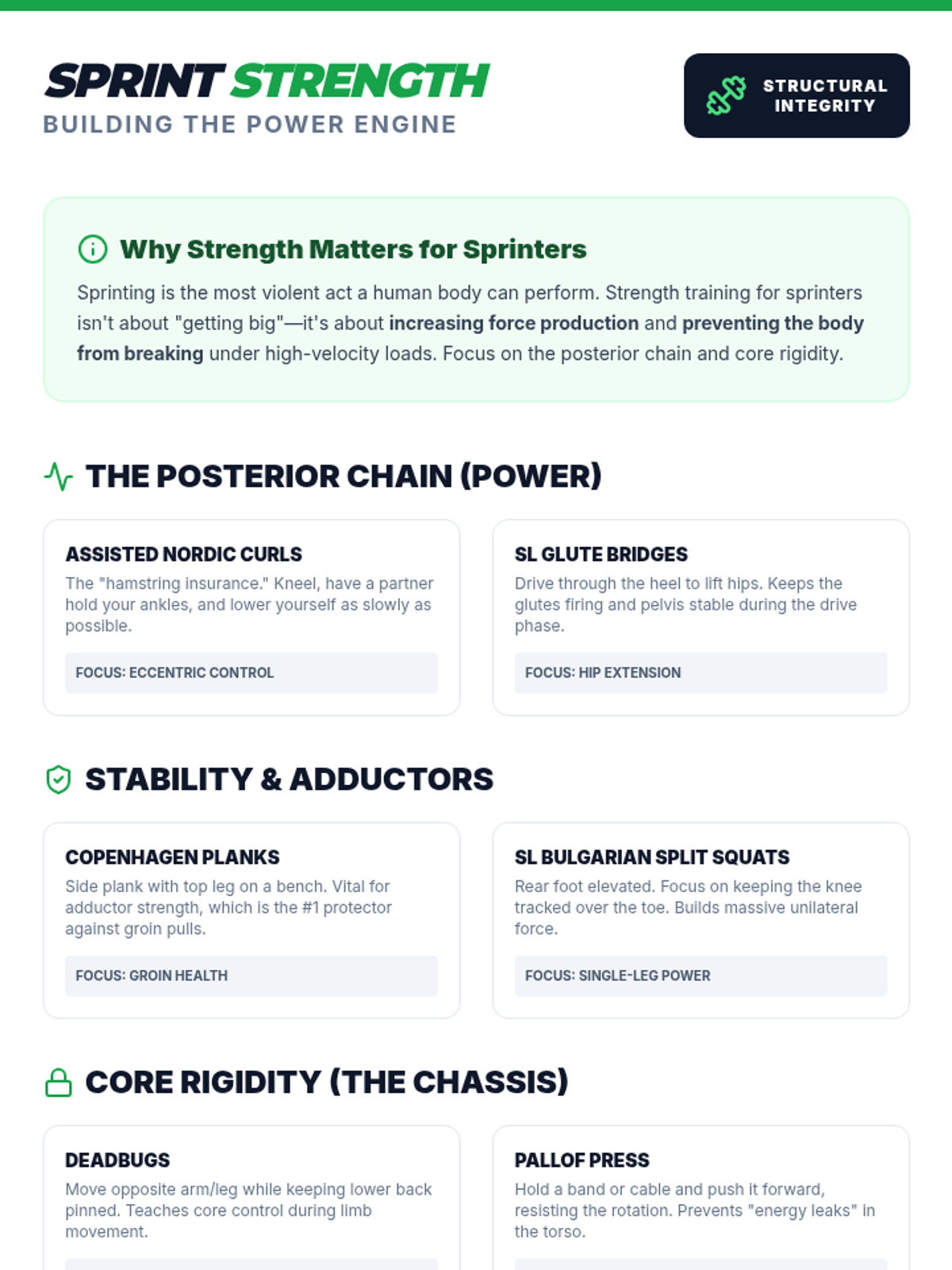
A high-energy lesson focused on sprinting biomechanics, explosive power, and form analysis for track and field. Students learn the science of speed and apply it through drills, data collection, and competitive games.
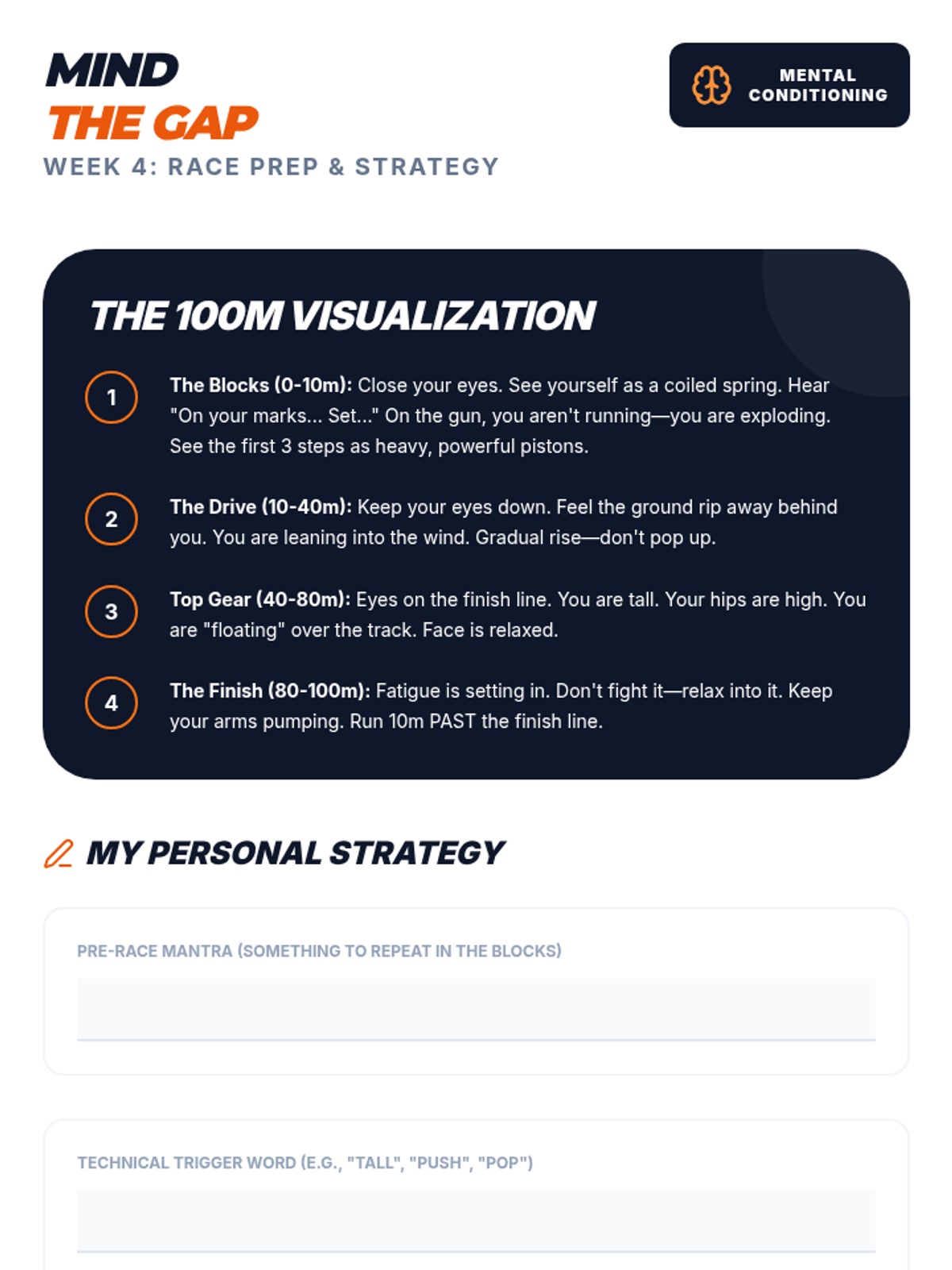
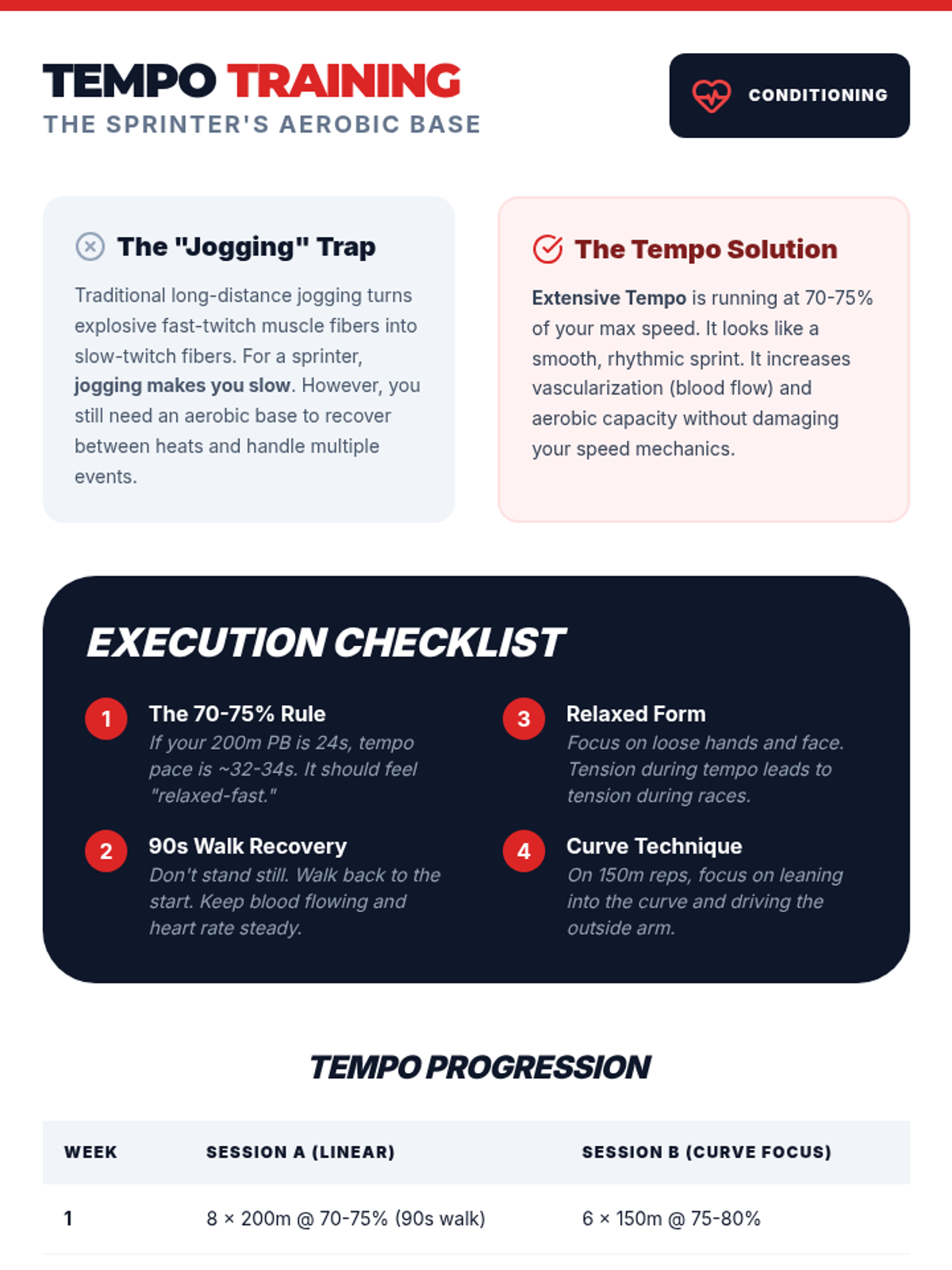
Fine-tuning starts, speed endurance intervals, and preparing for competition-style sprinting.
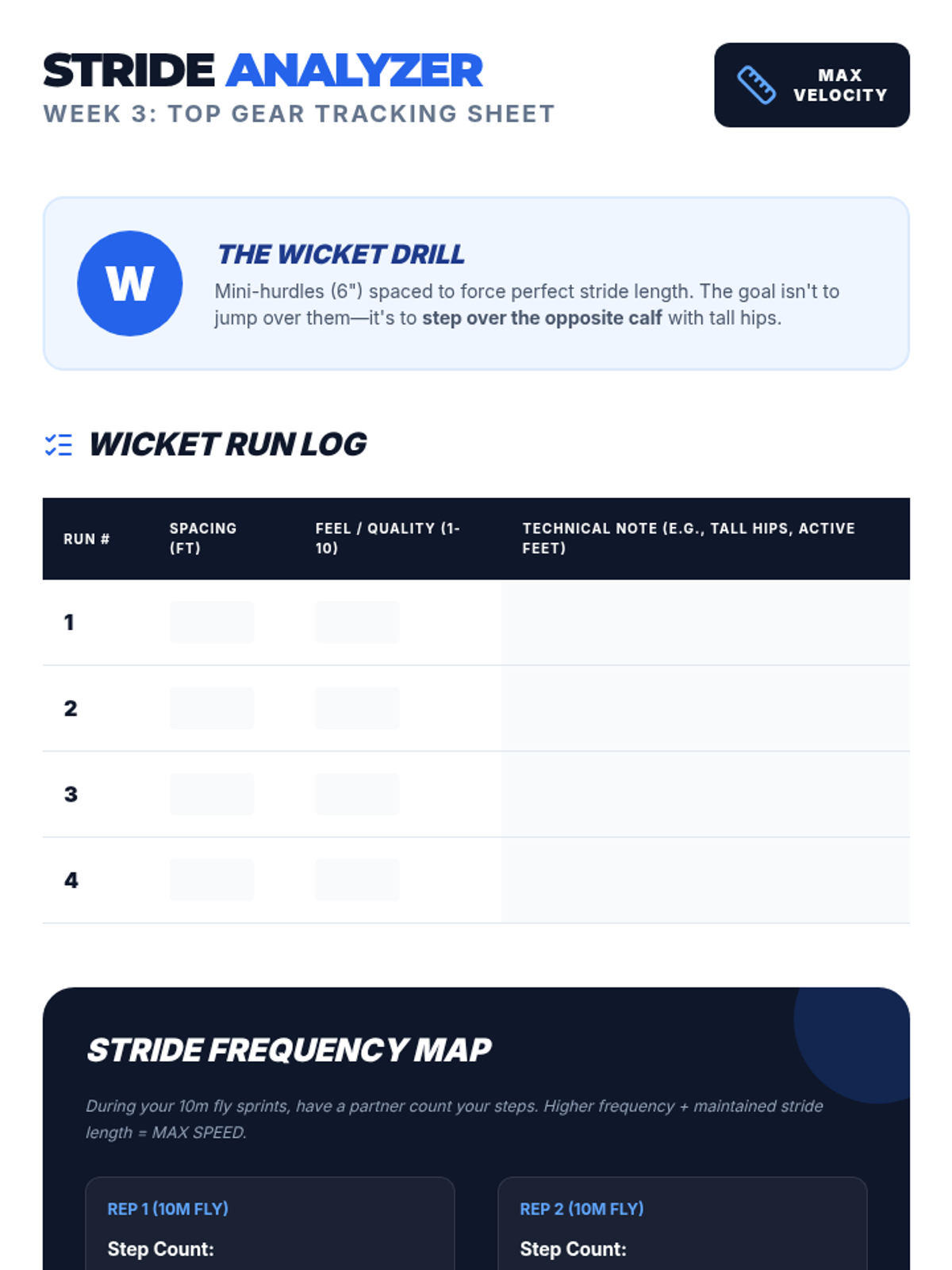
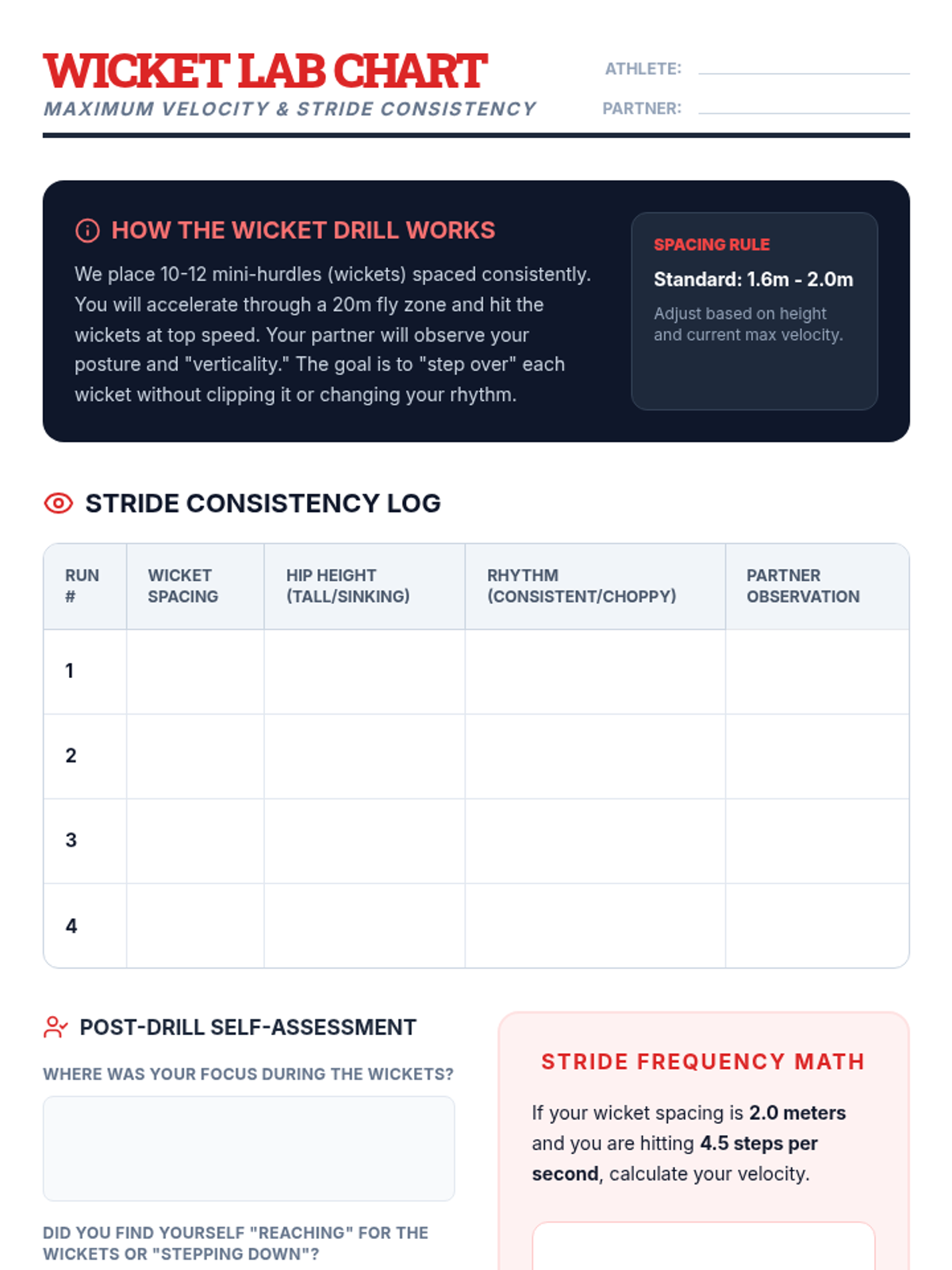
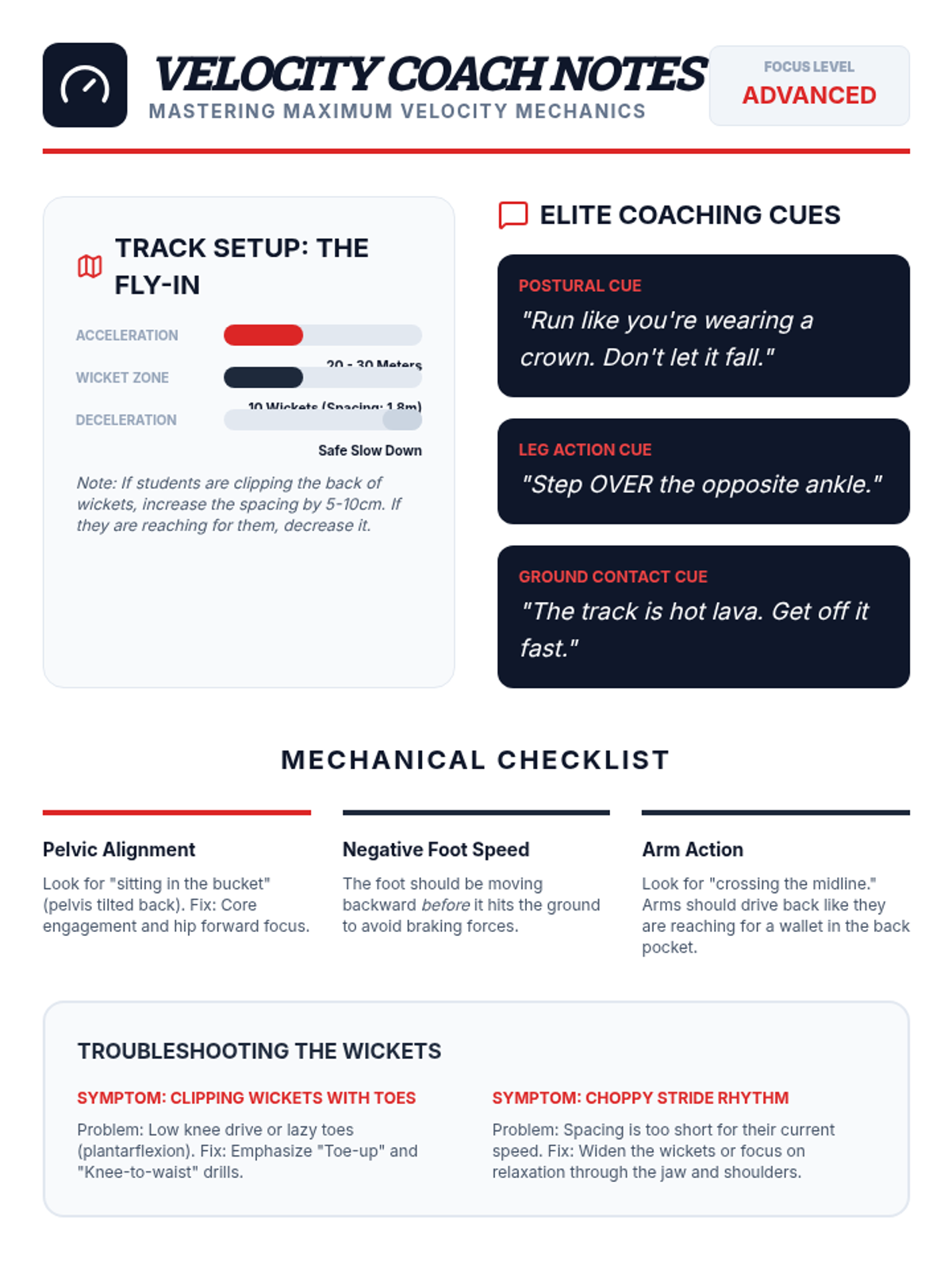
Training upright sprinting mechanics, stride frequency through wicket drills, and maximum velocity maintenance.
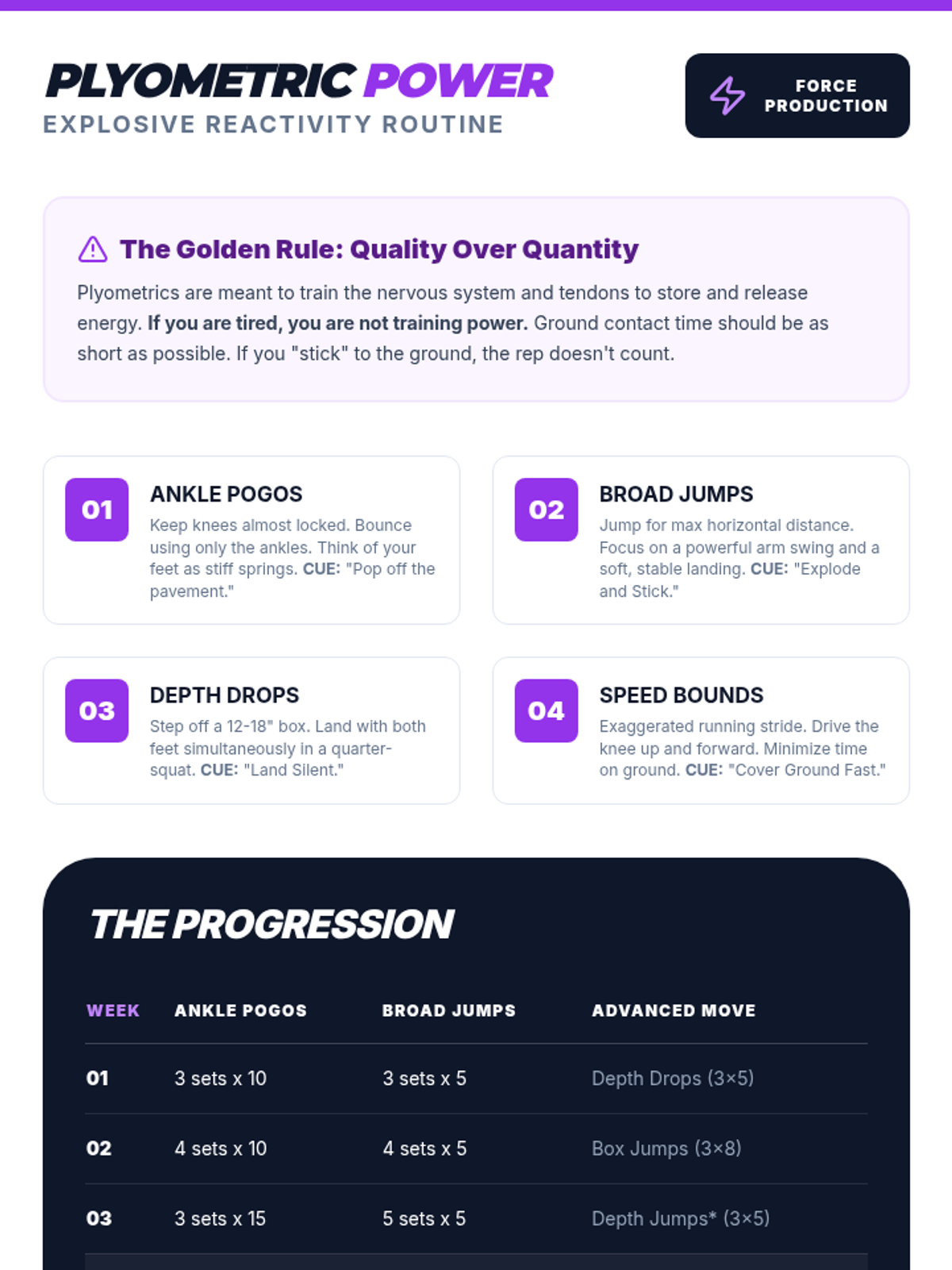
Introducing the drive phase, explosive wall drills, and higher-intensity plyometrics to build raw power.
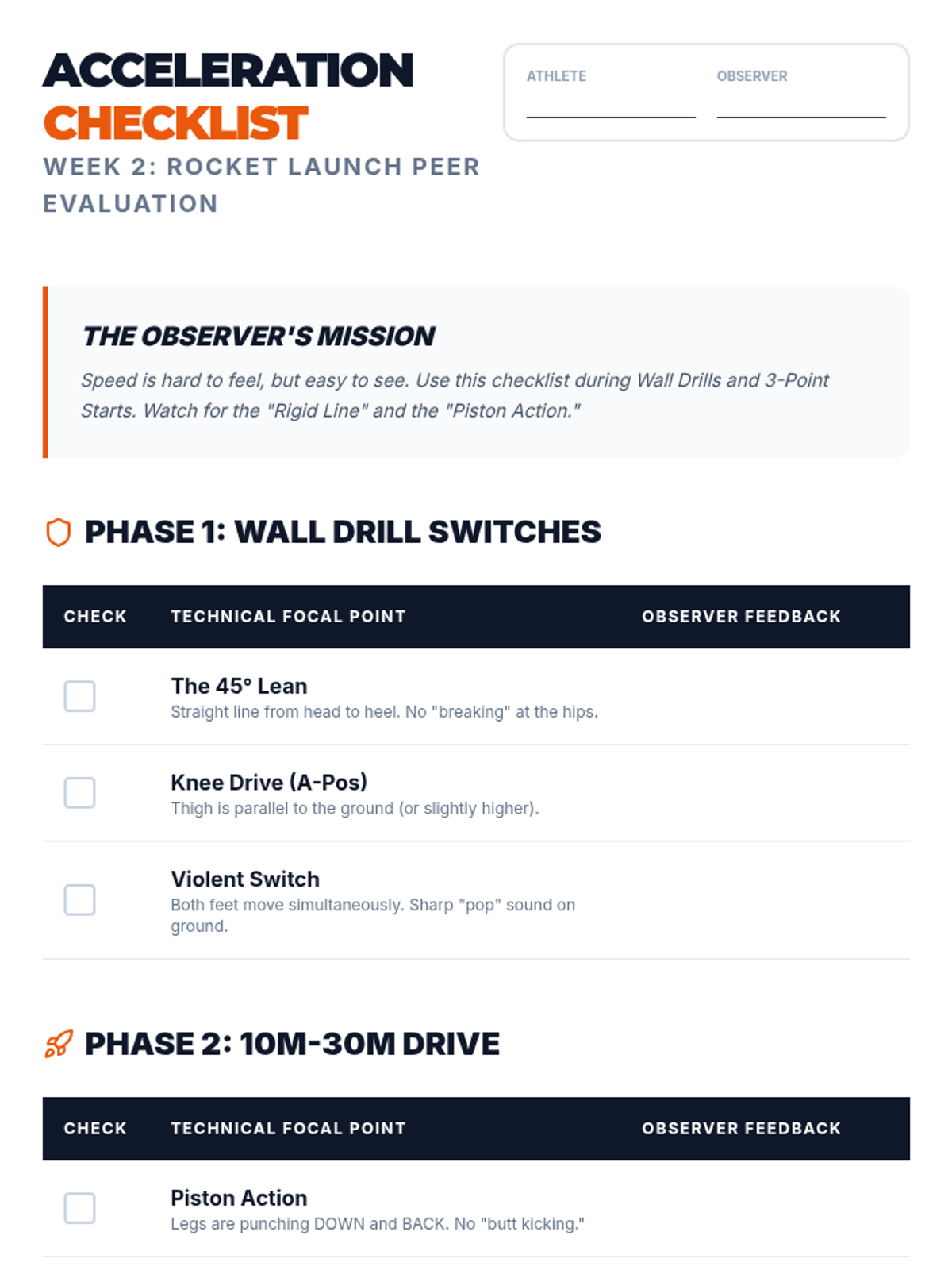
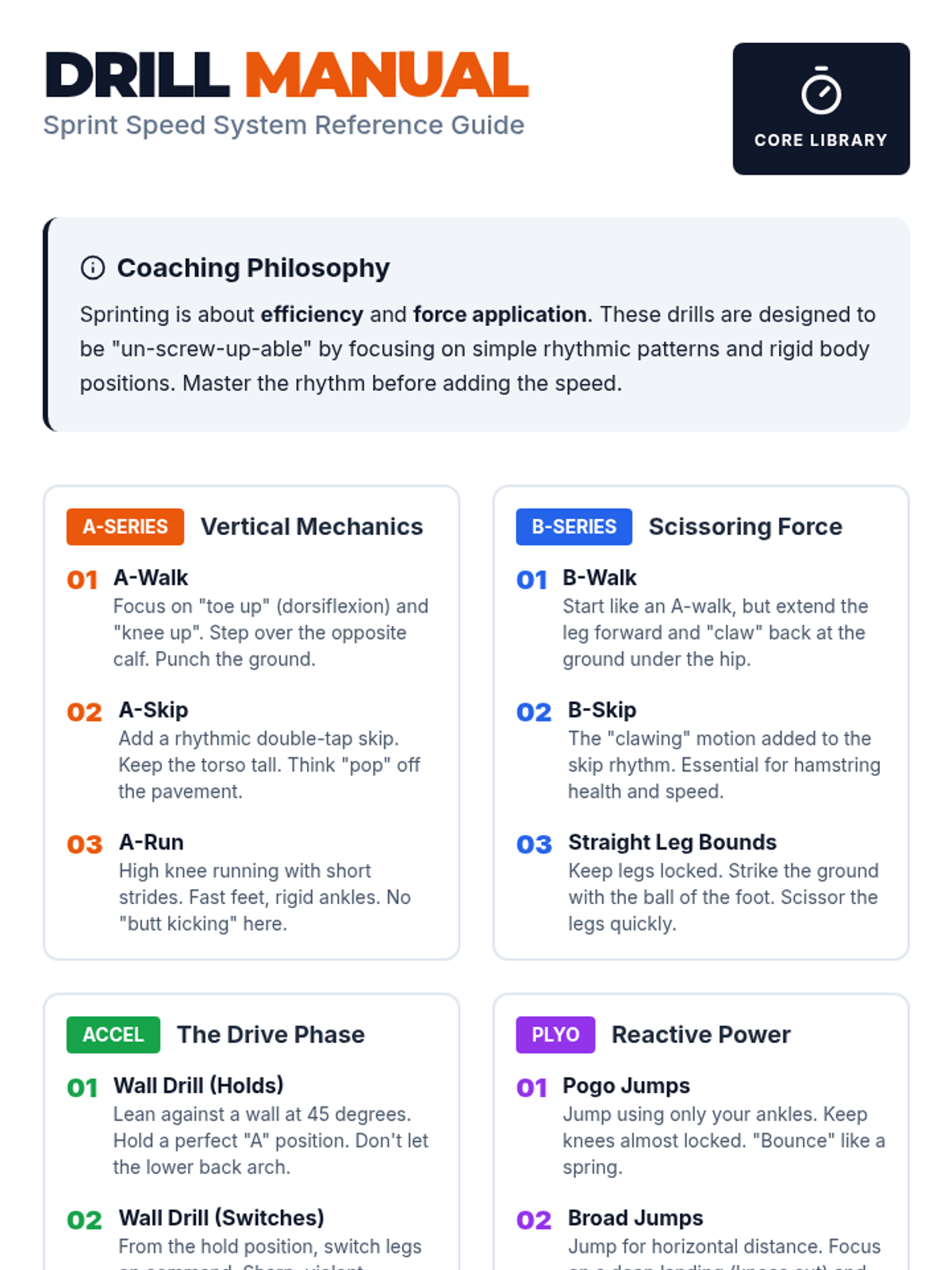
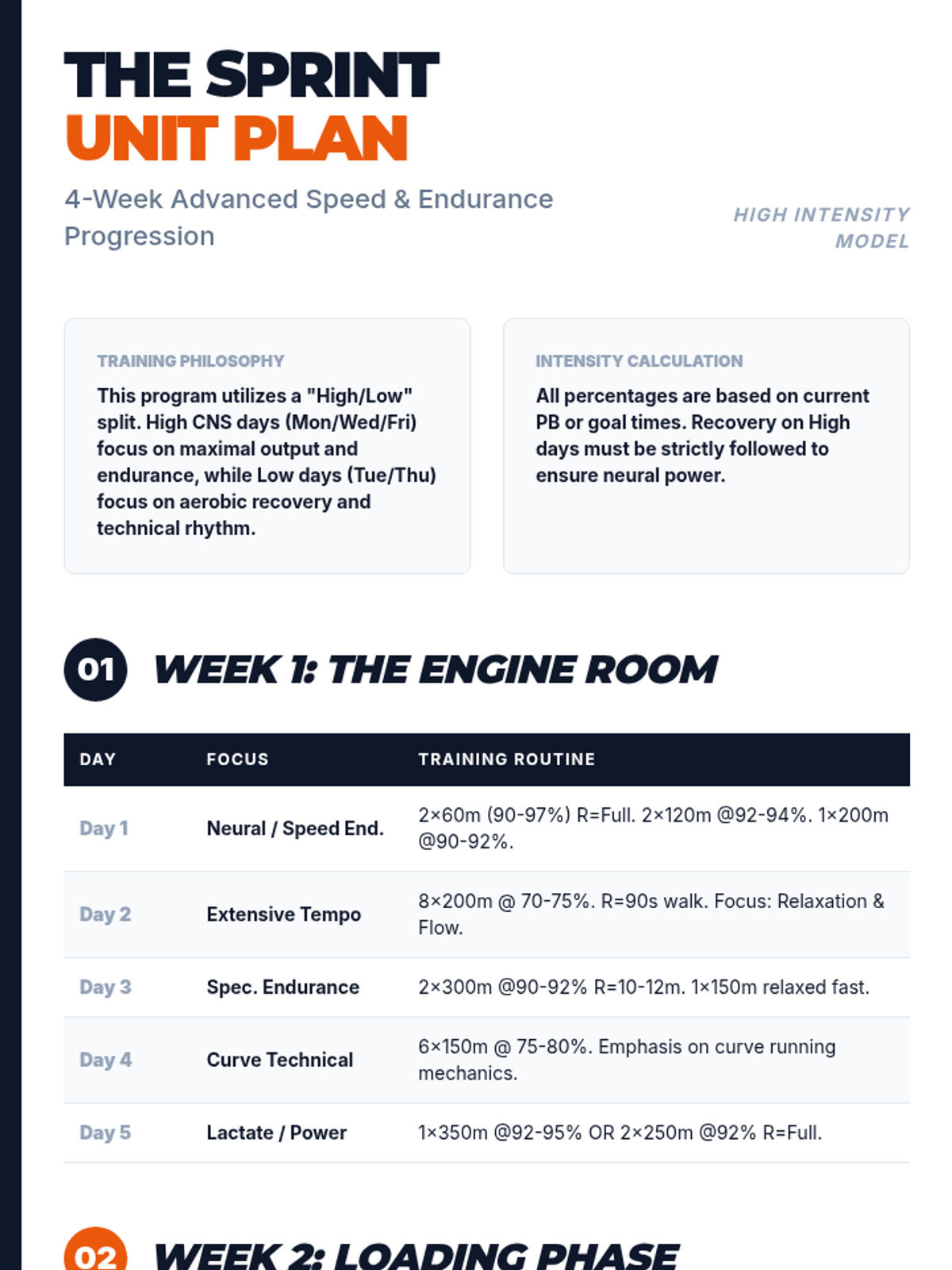
Focus on establishing proper sprint posture, rhythmic drills (A-skips), and basic core strength to prevent injury.
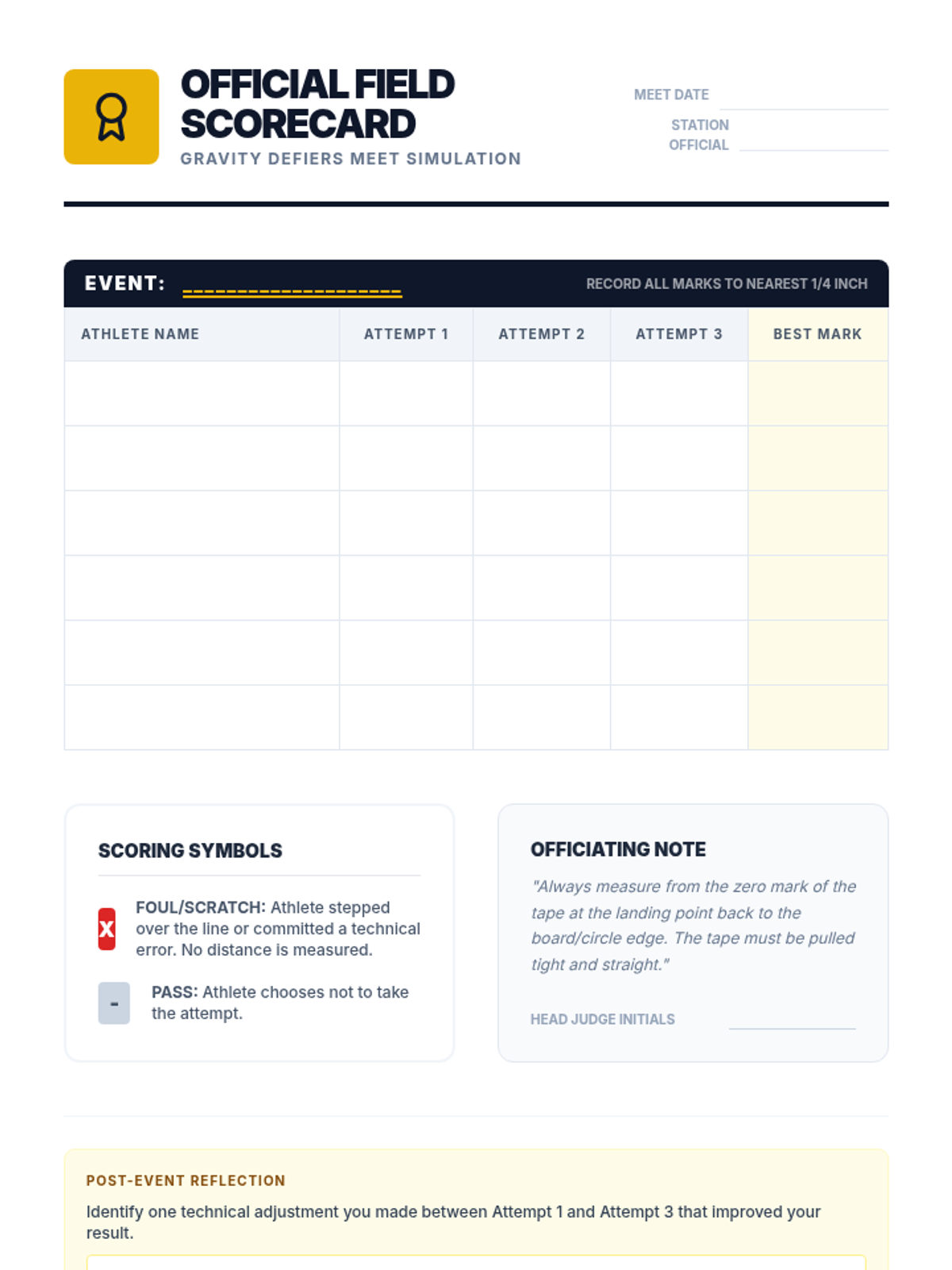
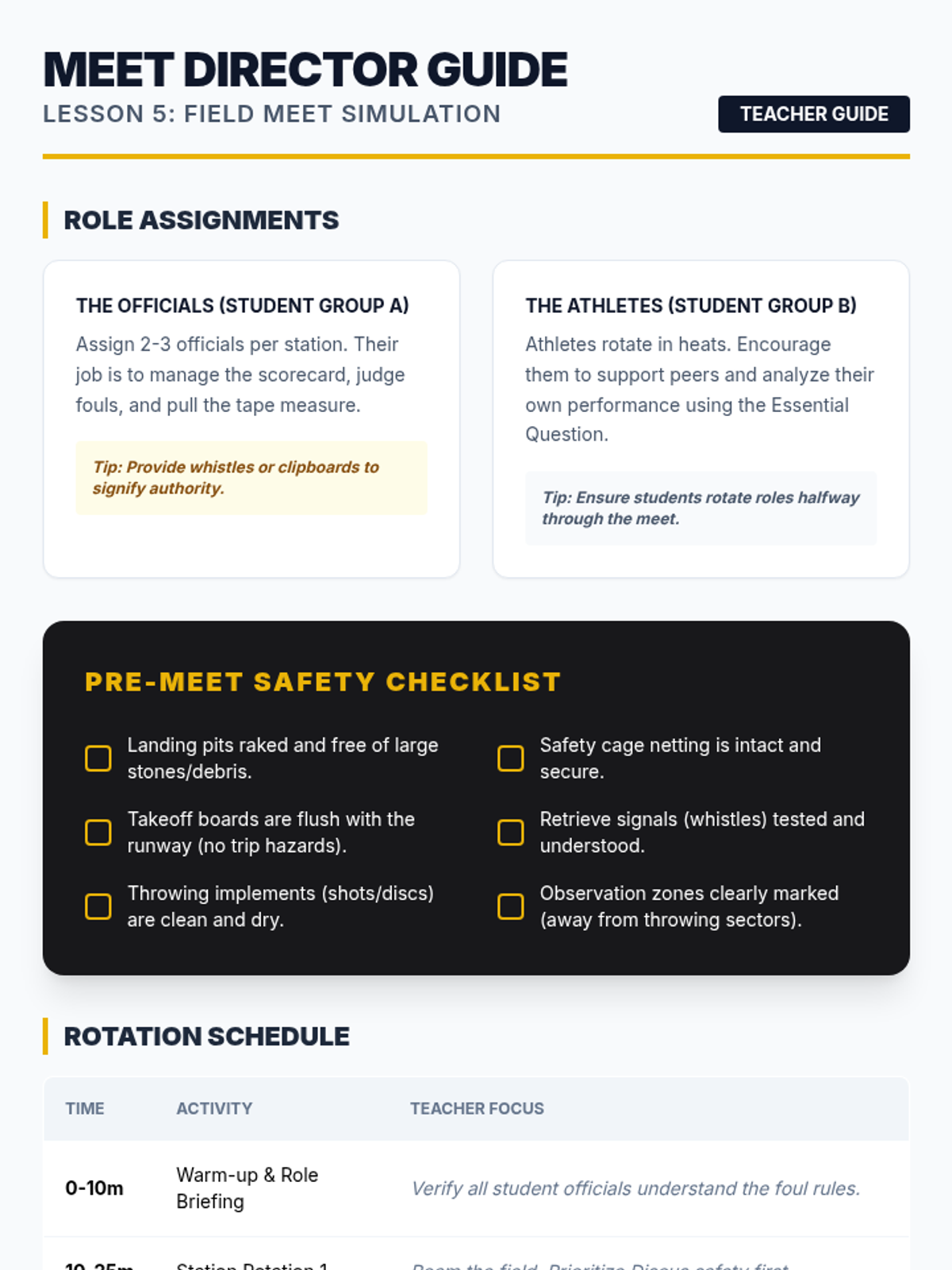
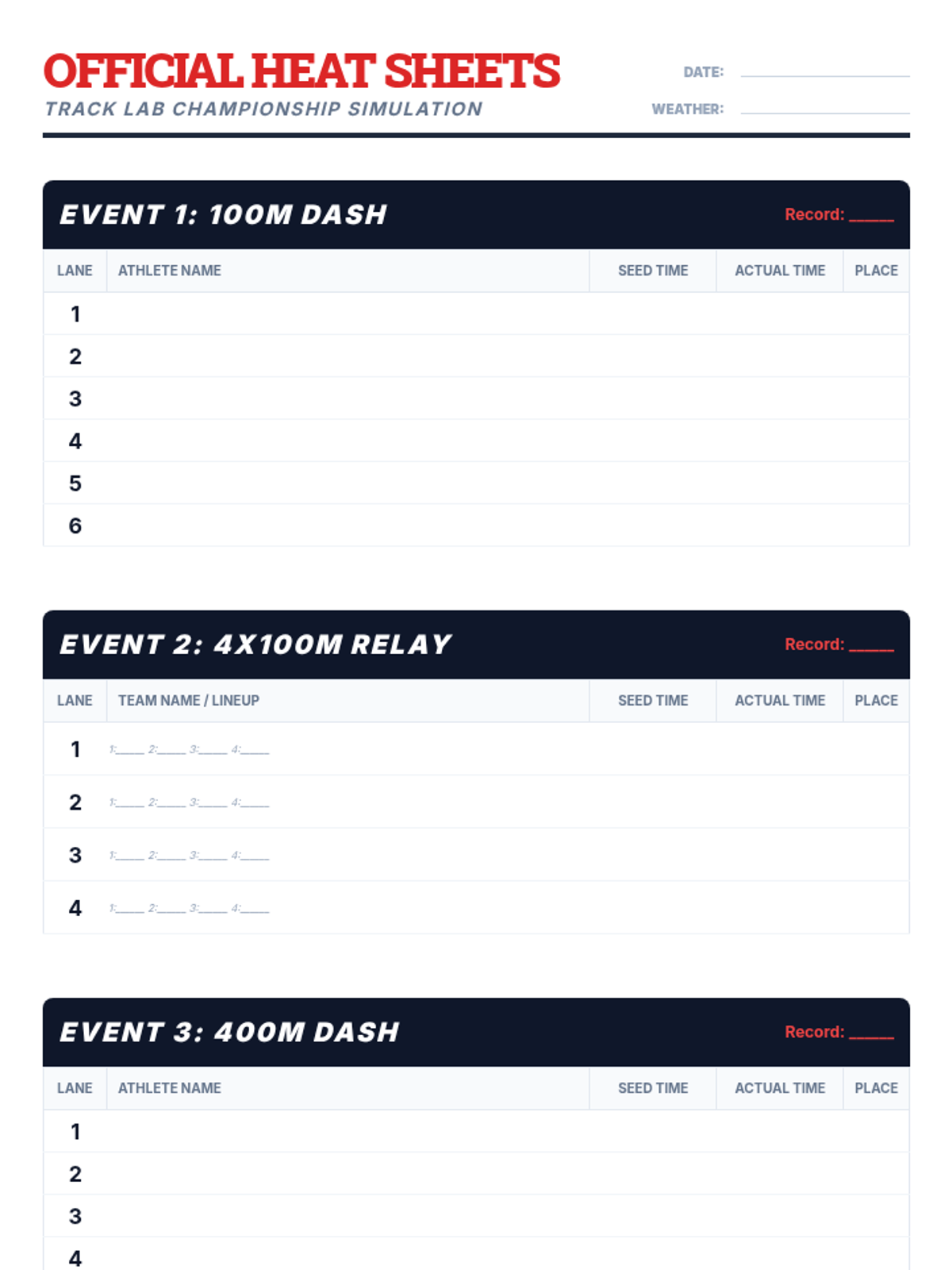
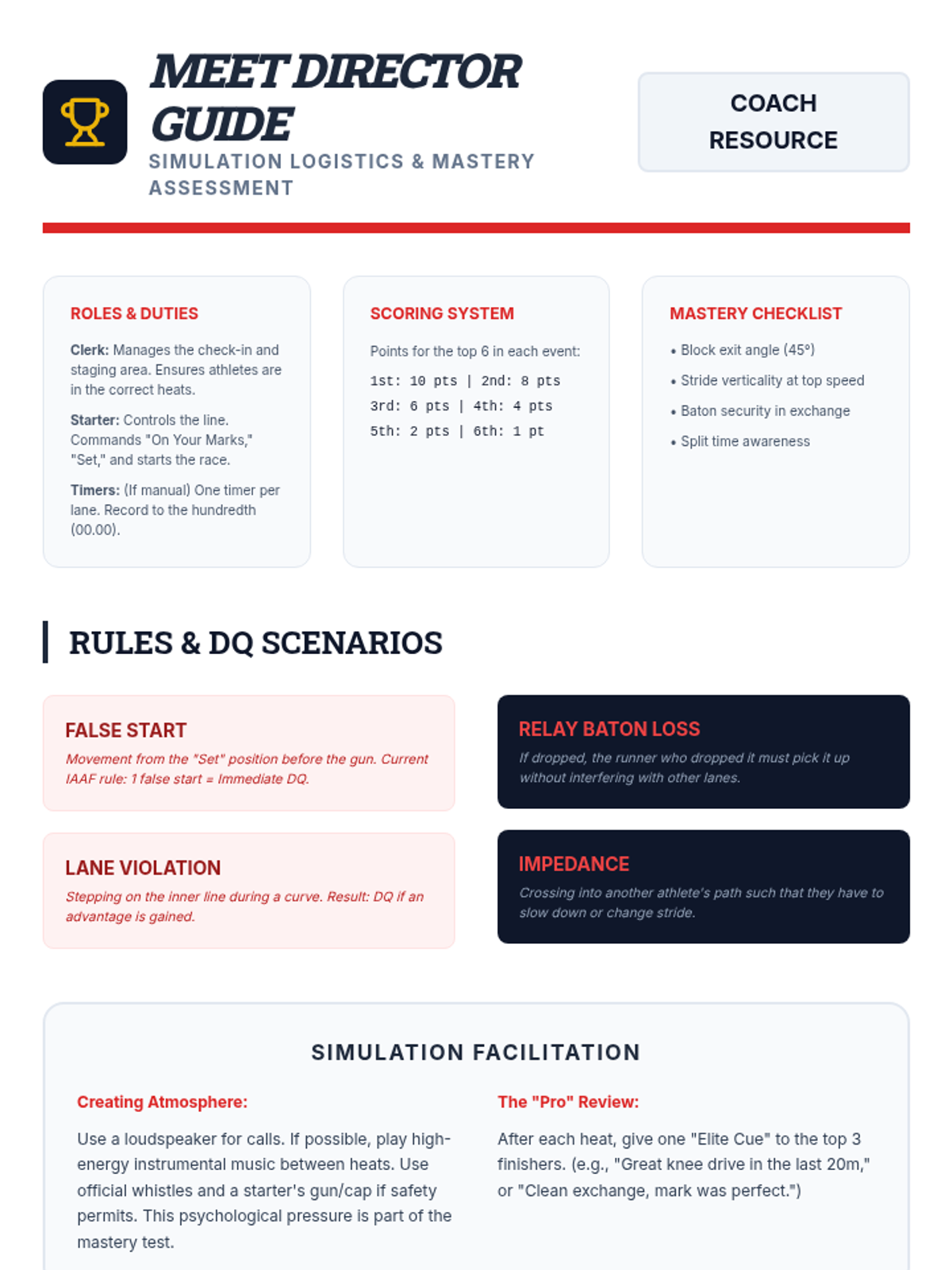
A culminating simulated track meet where students apply their technical skills as both athletes and officials, managing measurement and safety.
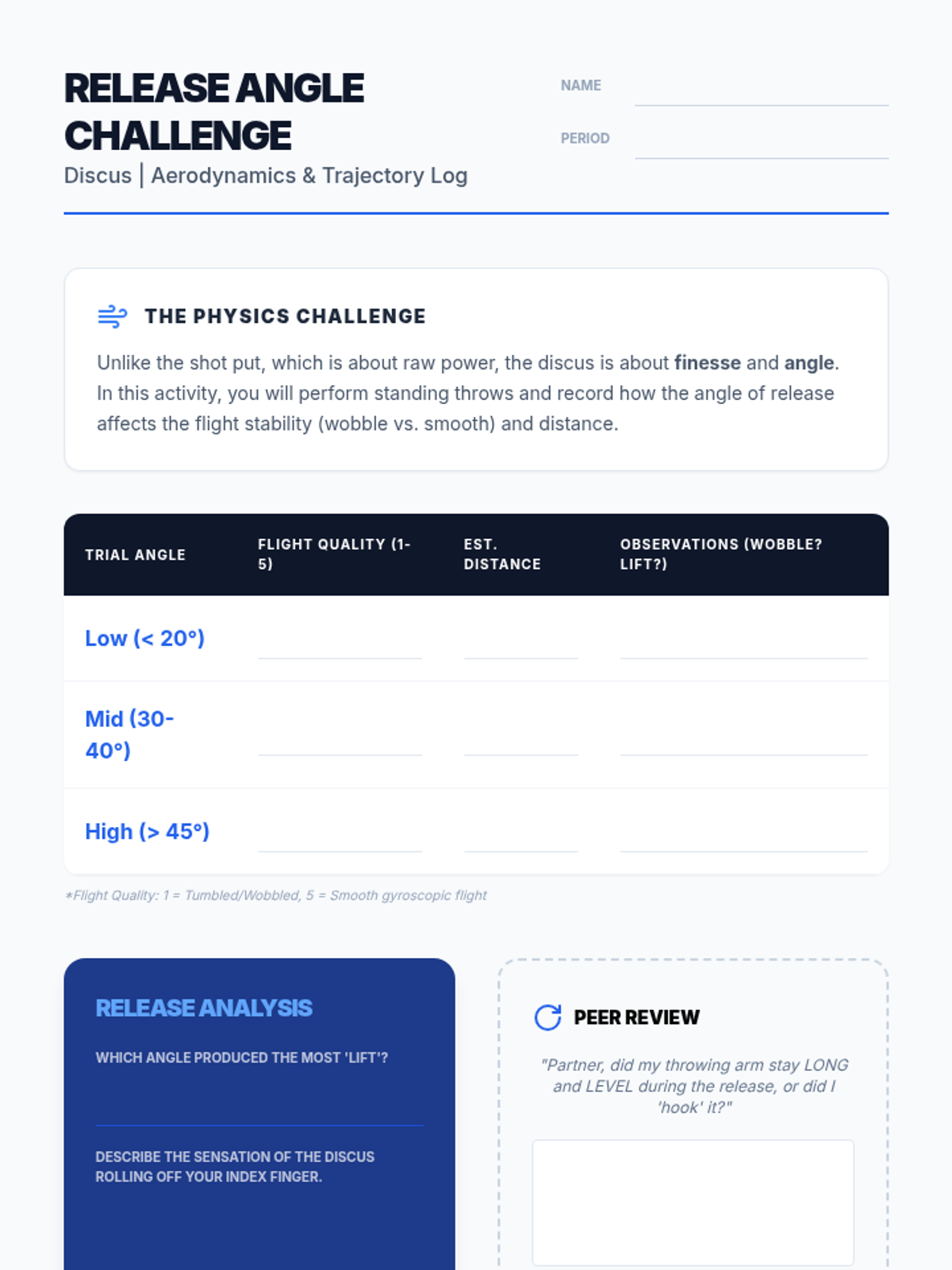
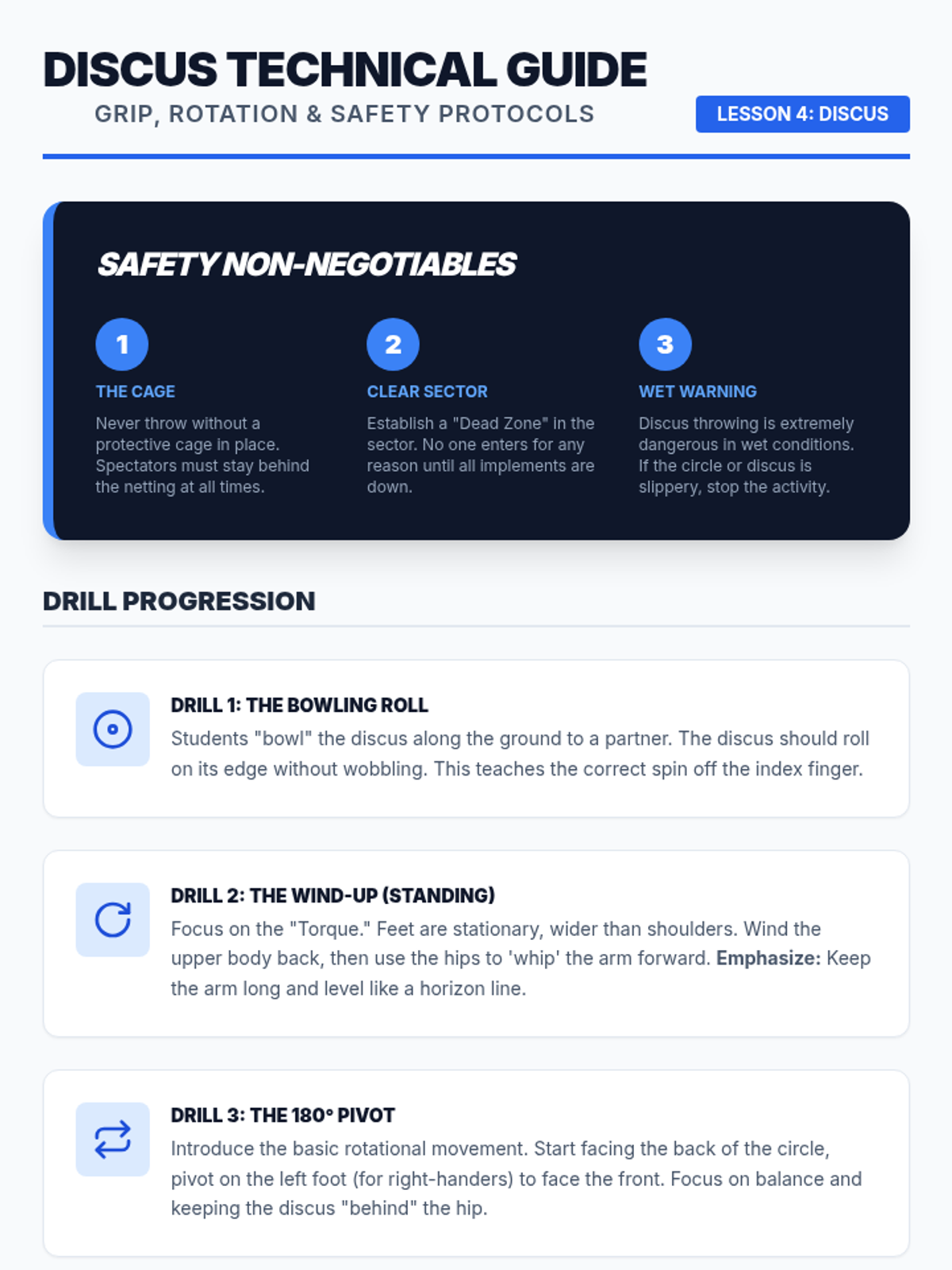
Introduces discus grip and rotational mechanics, teaching students how to harness centrifugal force for maximum distance and flight stability.
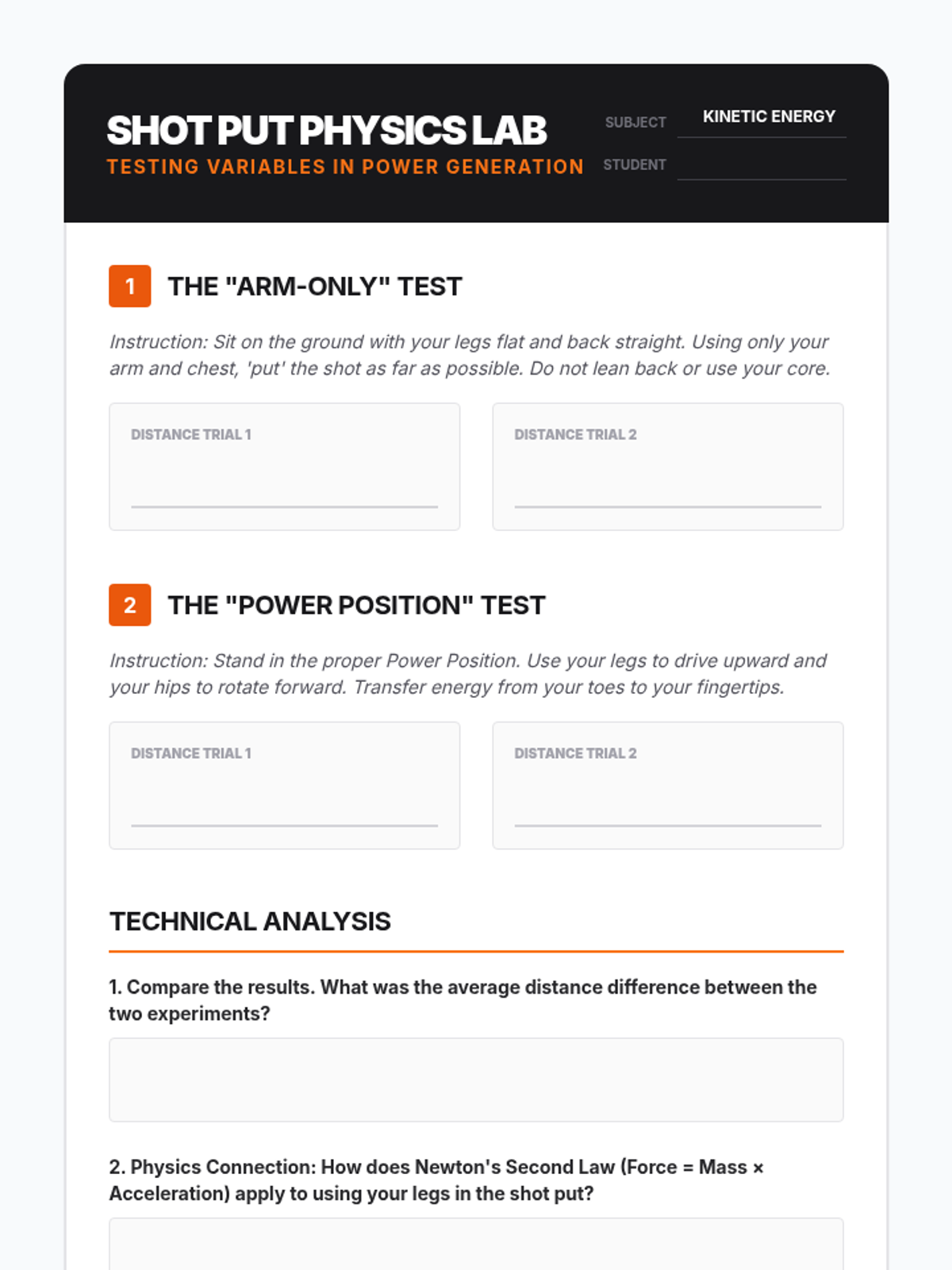
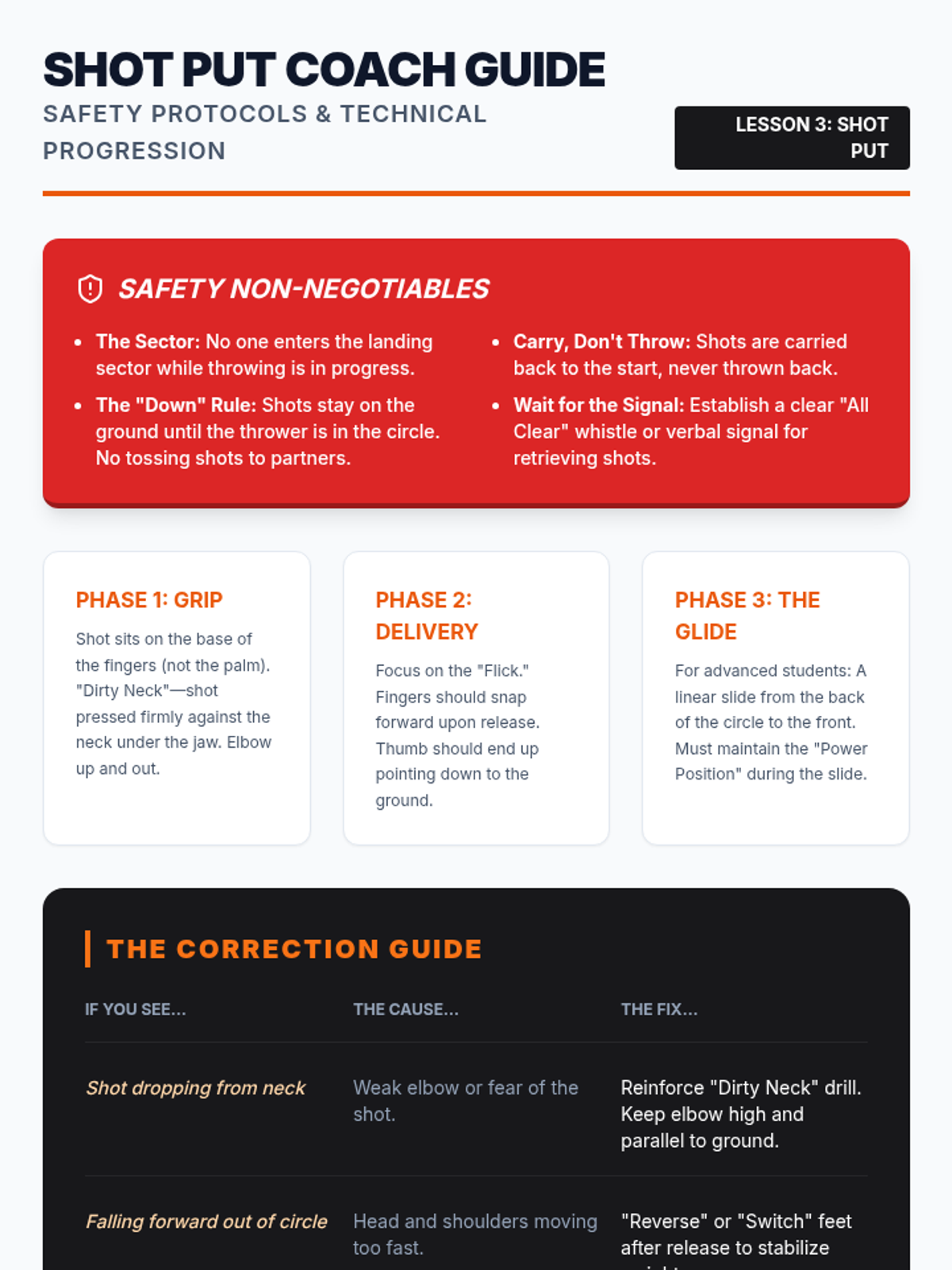
Focuses on the shot put 'power position' and glide technique, highlighting safety and the use of the lower body to generate explosive force.
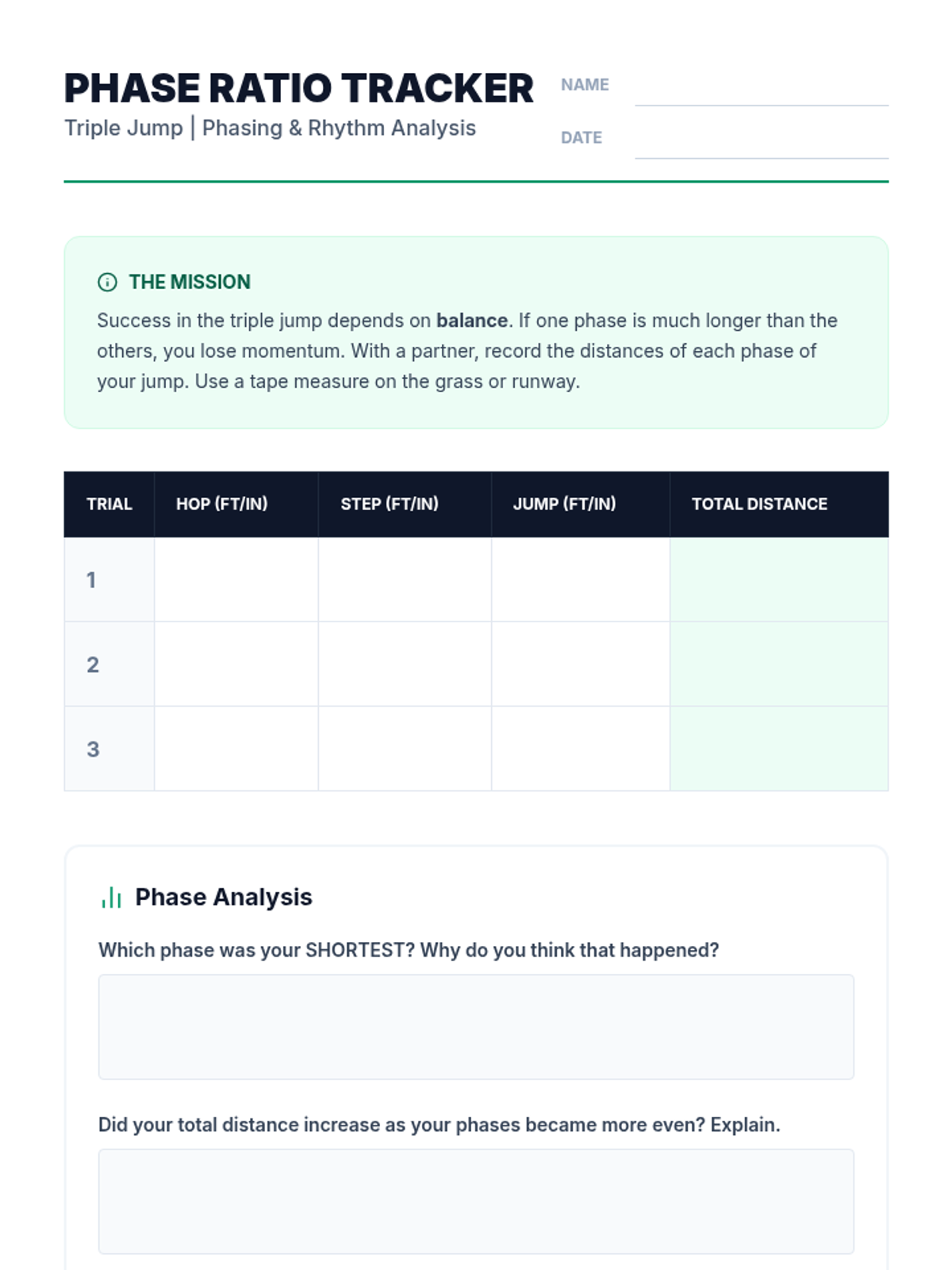
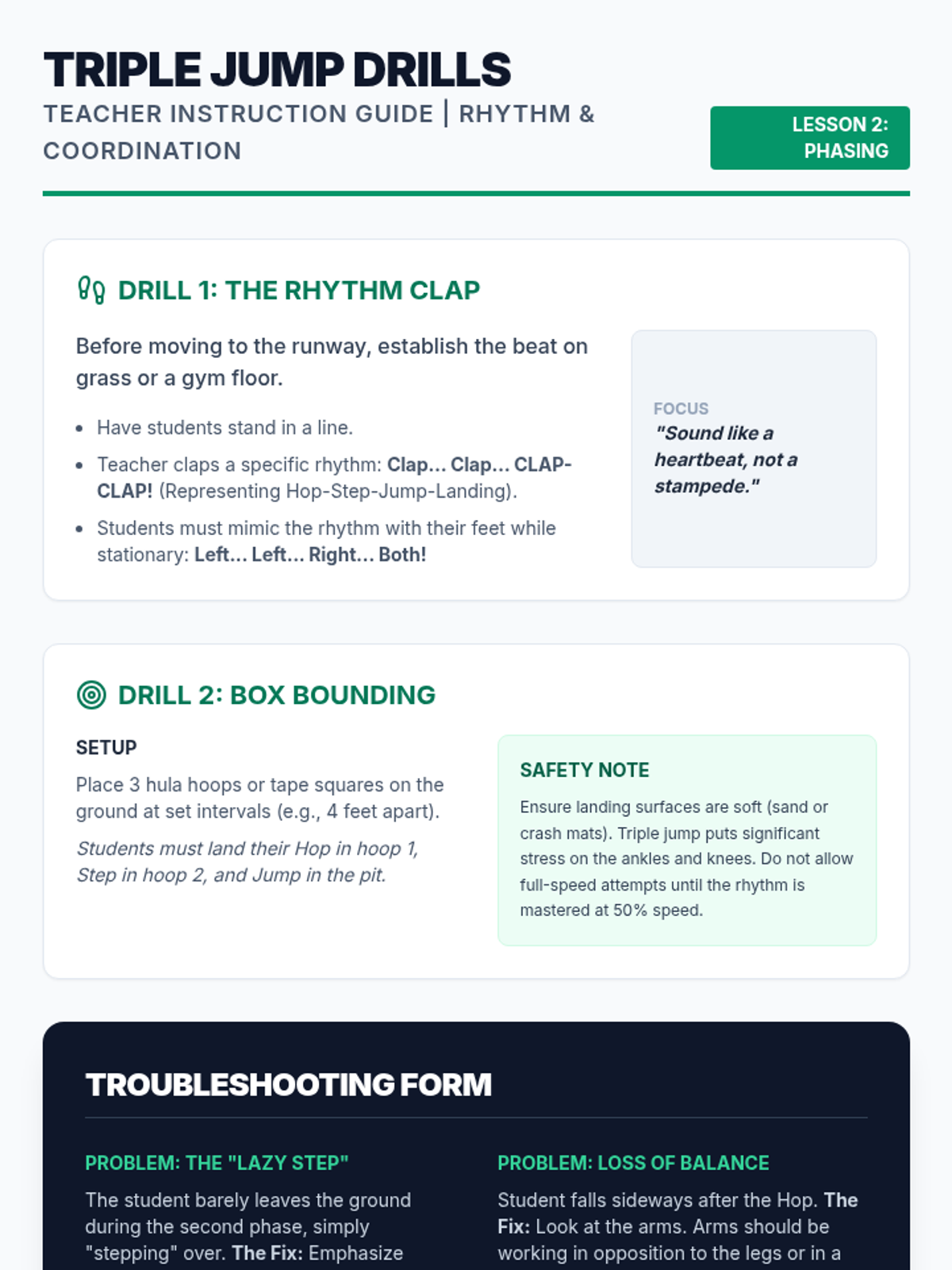
An exploration of the hop-step-jump sequence, emphasizing the rhythmic coordination and maintenance of momentum across all three phases.
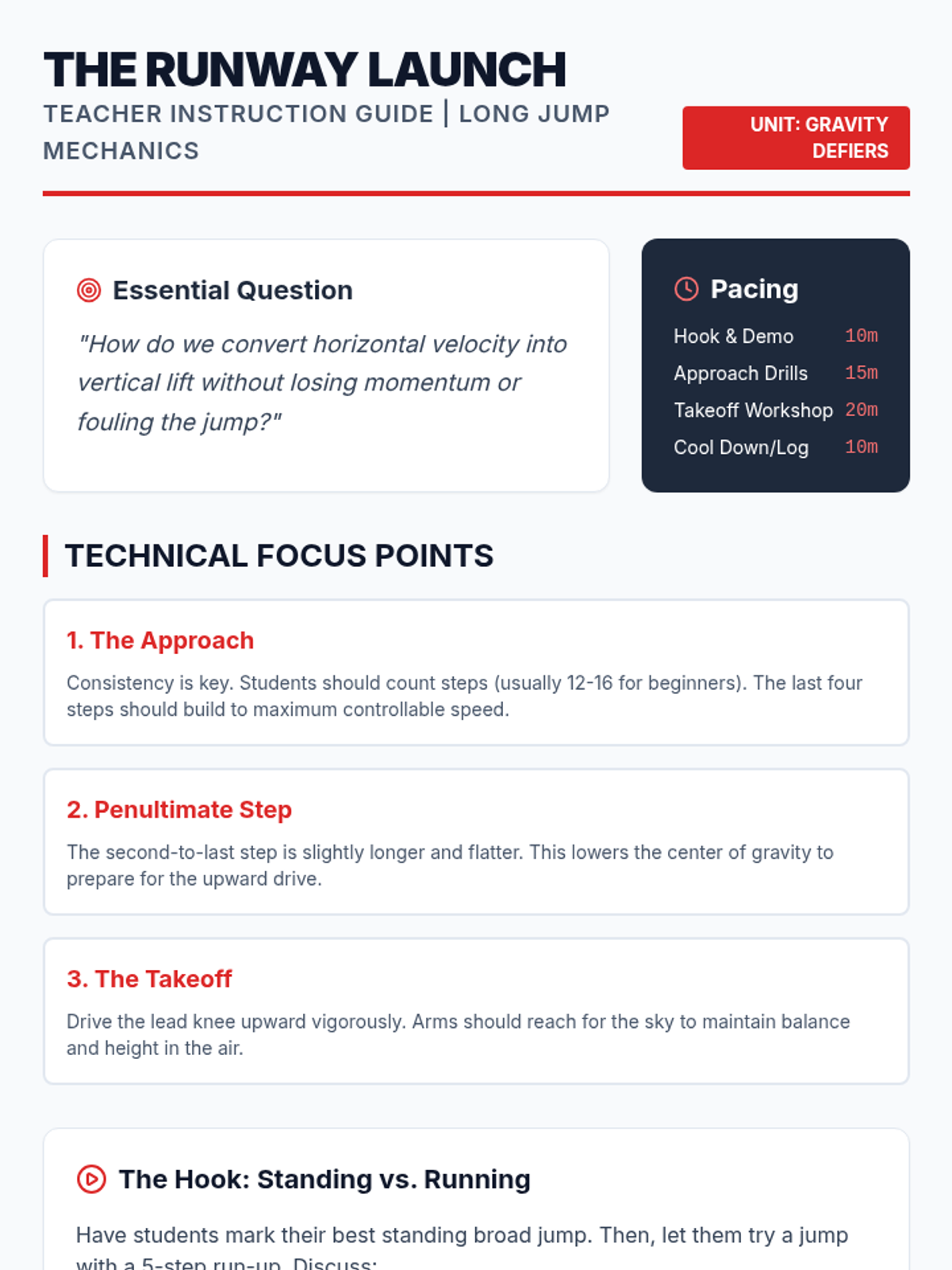
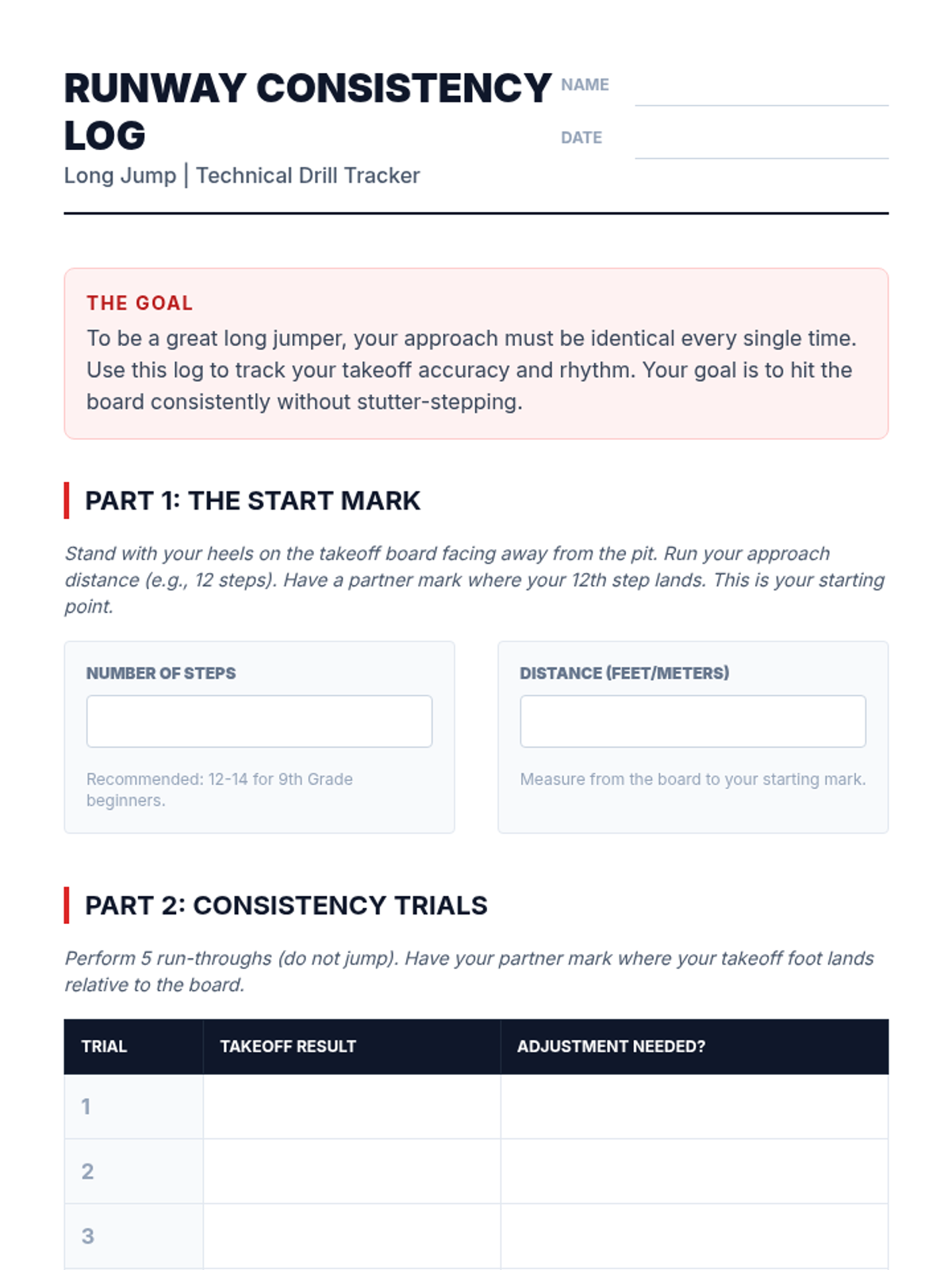
Students master the three phases of the long jump: the approach, the penultimate step, and the takeoff, focusing on runway consistency and vertical lift.
A culminating track meet simulation where students apply their training in a competitive environment with official procedures.
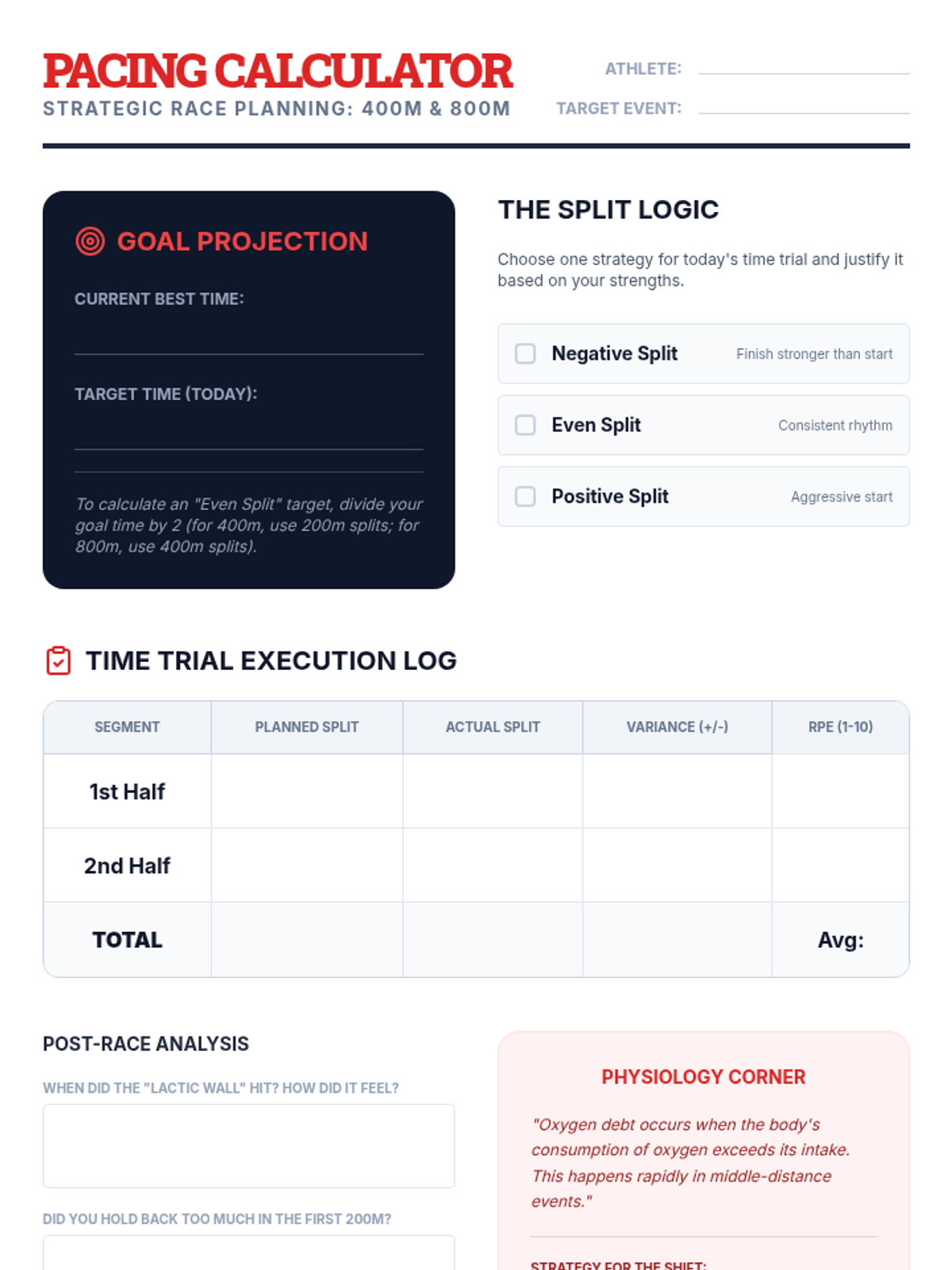
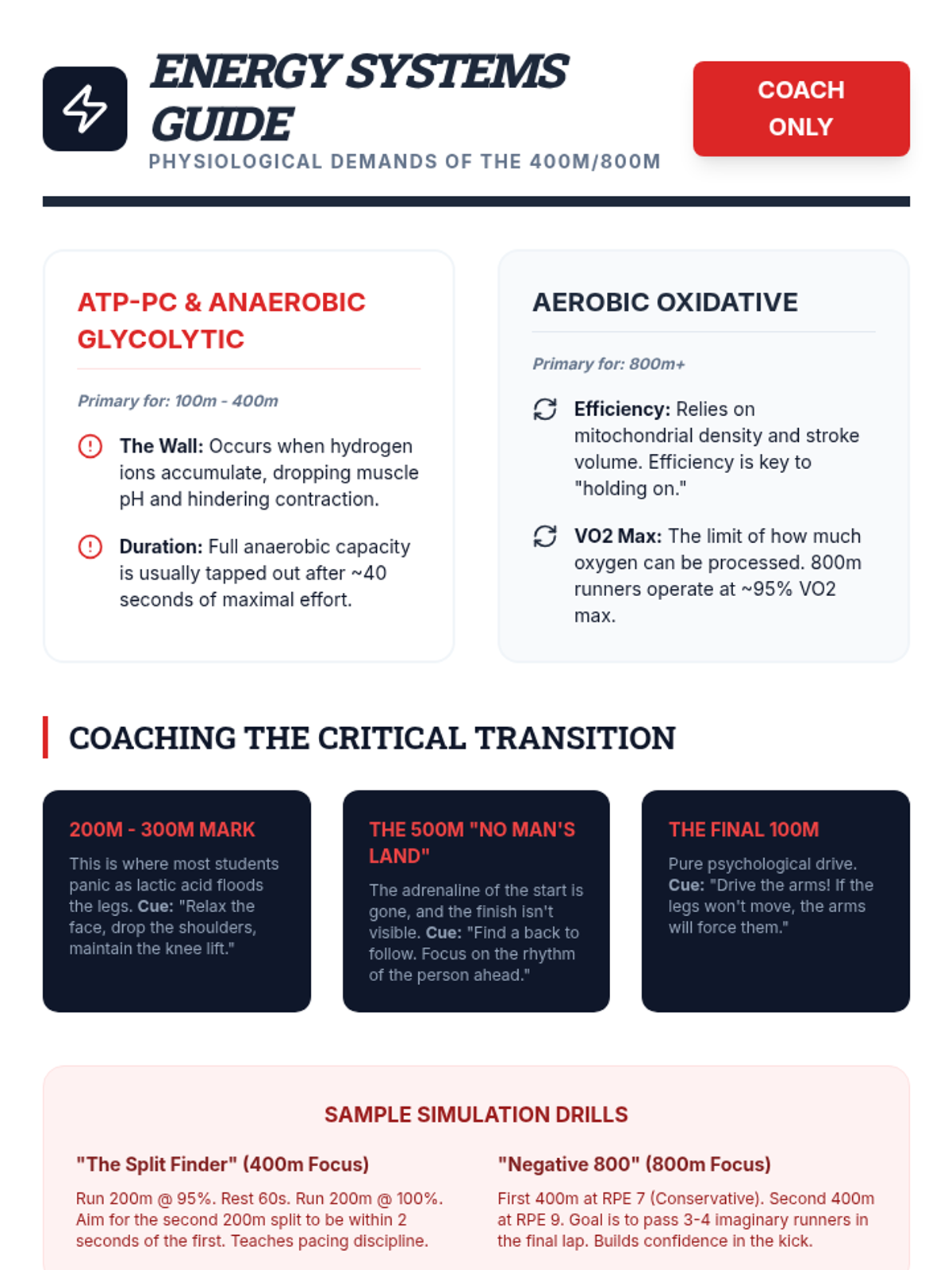
Explores the shift between energy systems and teaches students how to use split times and negative splitting for middle-distance success.
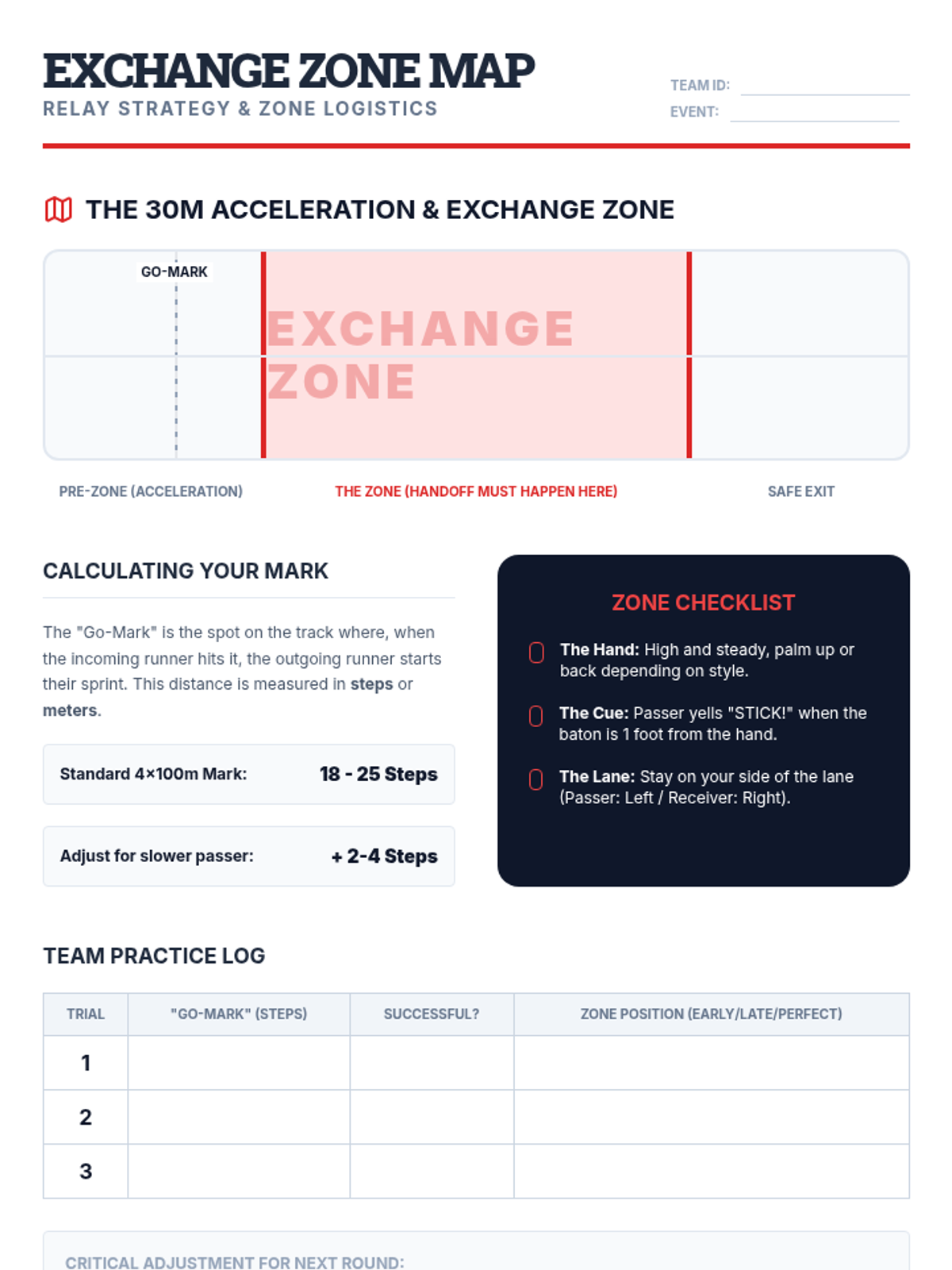
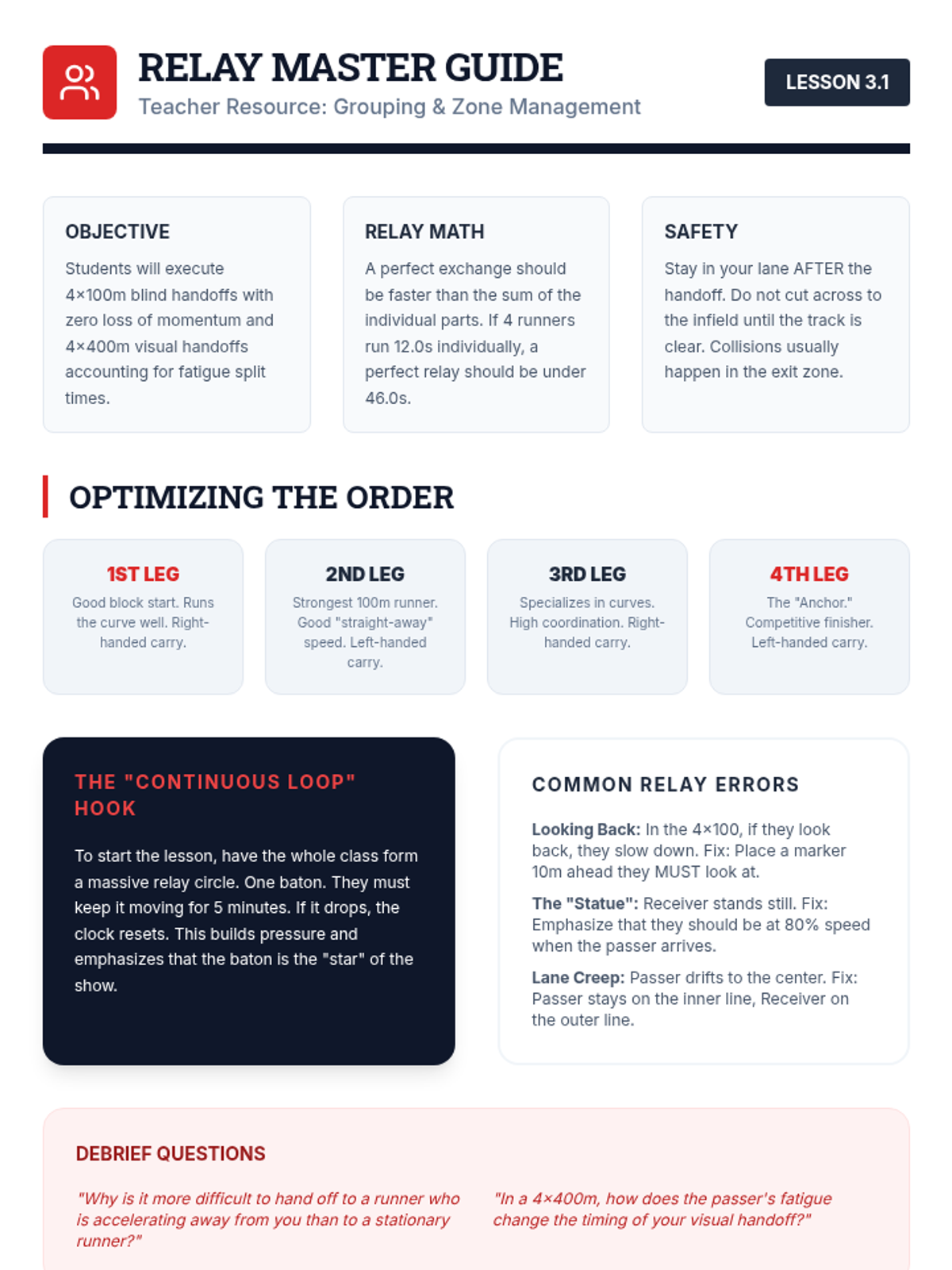
Covers the technical execution of blind and visual handoffs, focusing on acceleration zones and team timing.
Analyzes upright sprinting mechanics, emphasizing the balance between stride length and frequency through wicket drills and posture analysis.
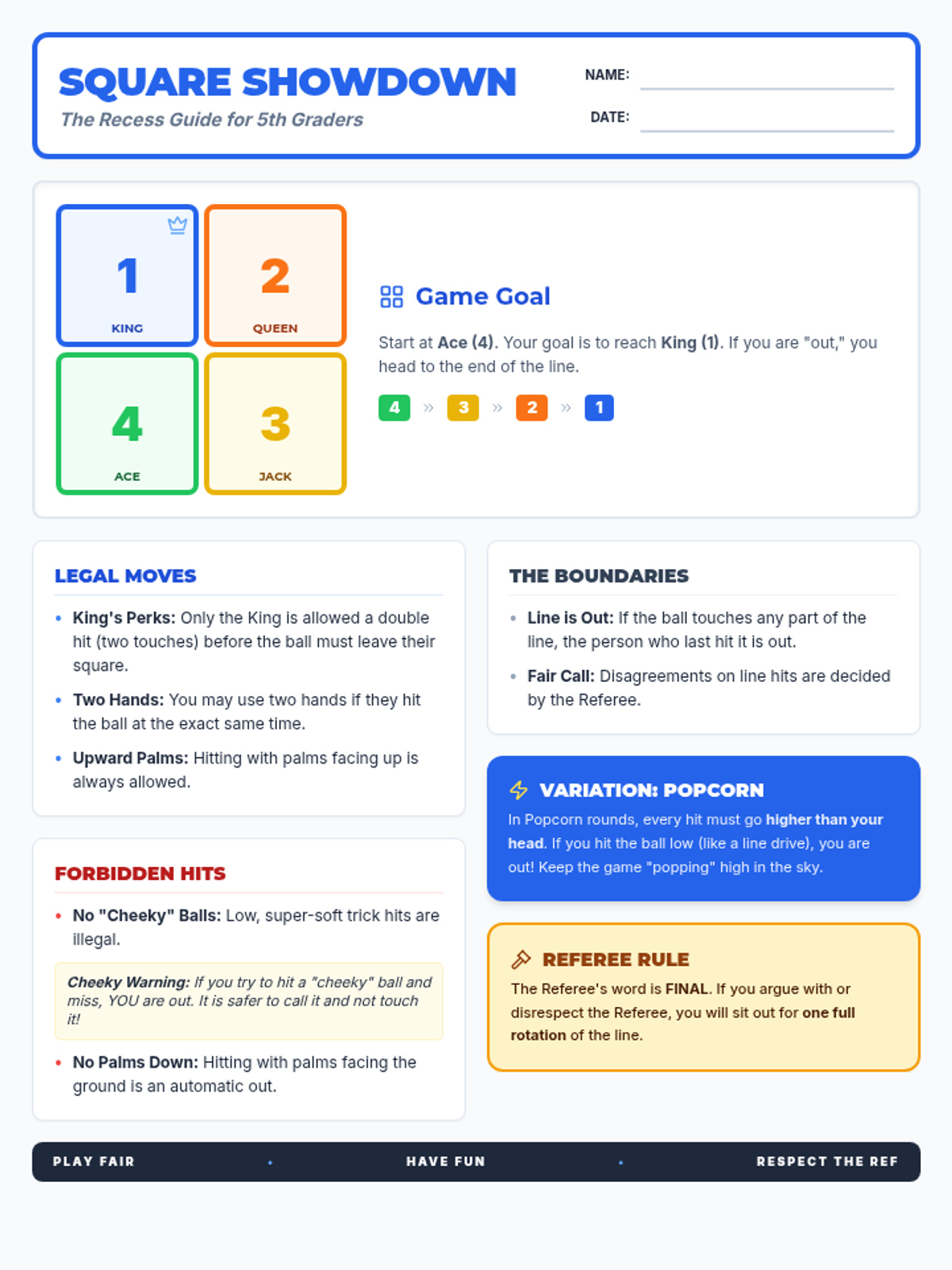
A guide to the rules, etiquette, and court layout of Four Square, focusing on specific house rules and sportsmanship.
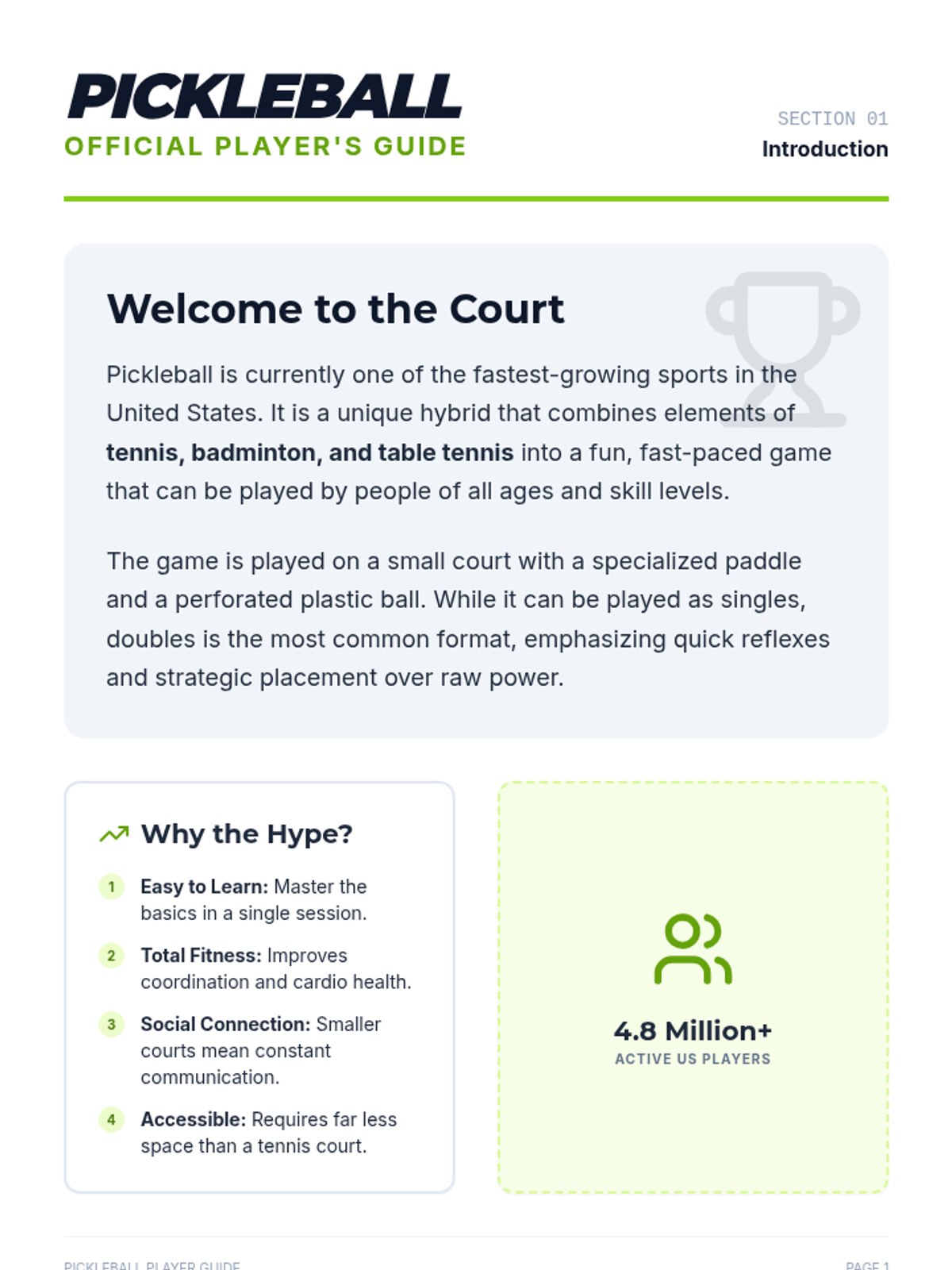
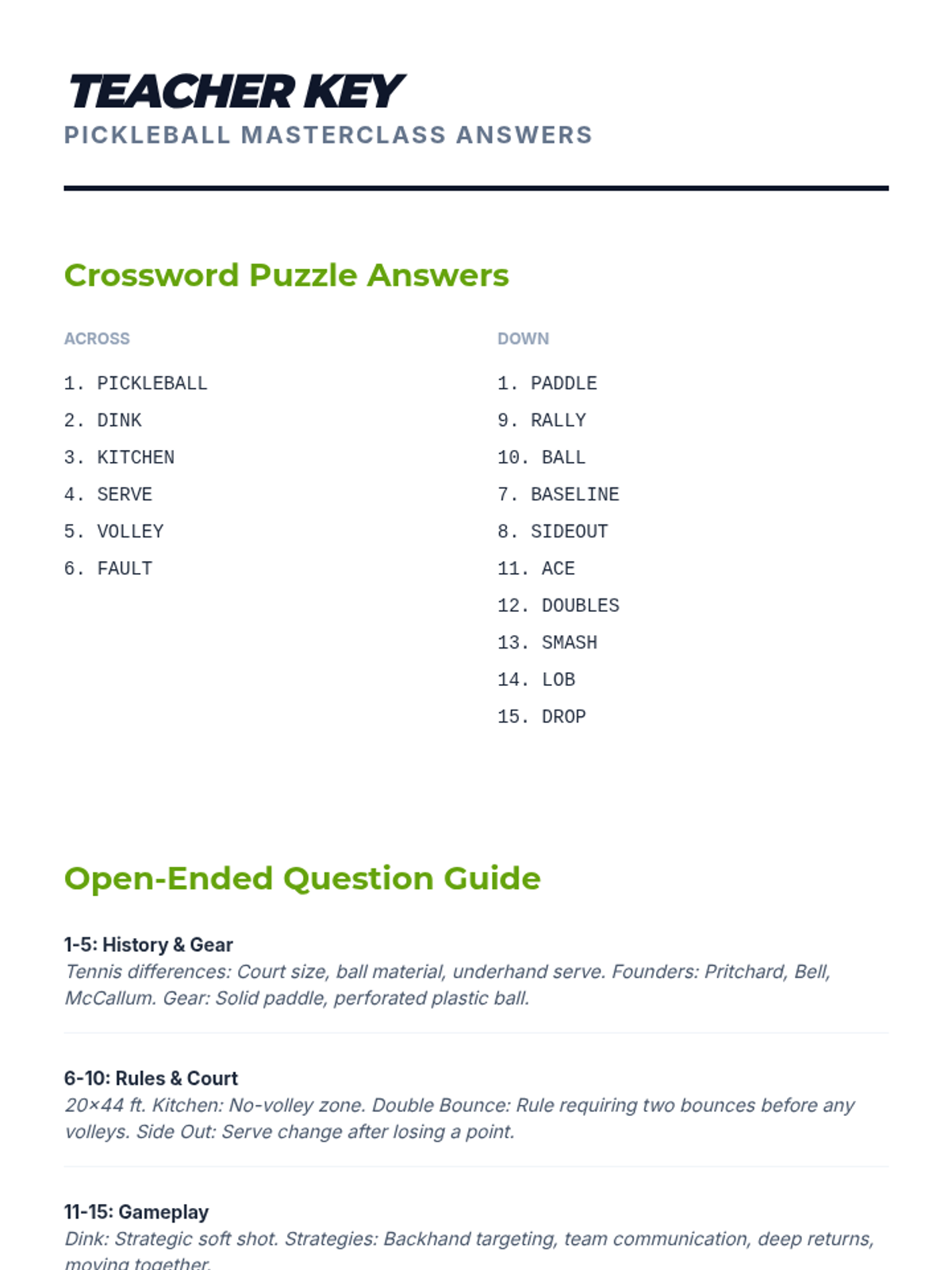
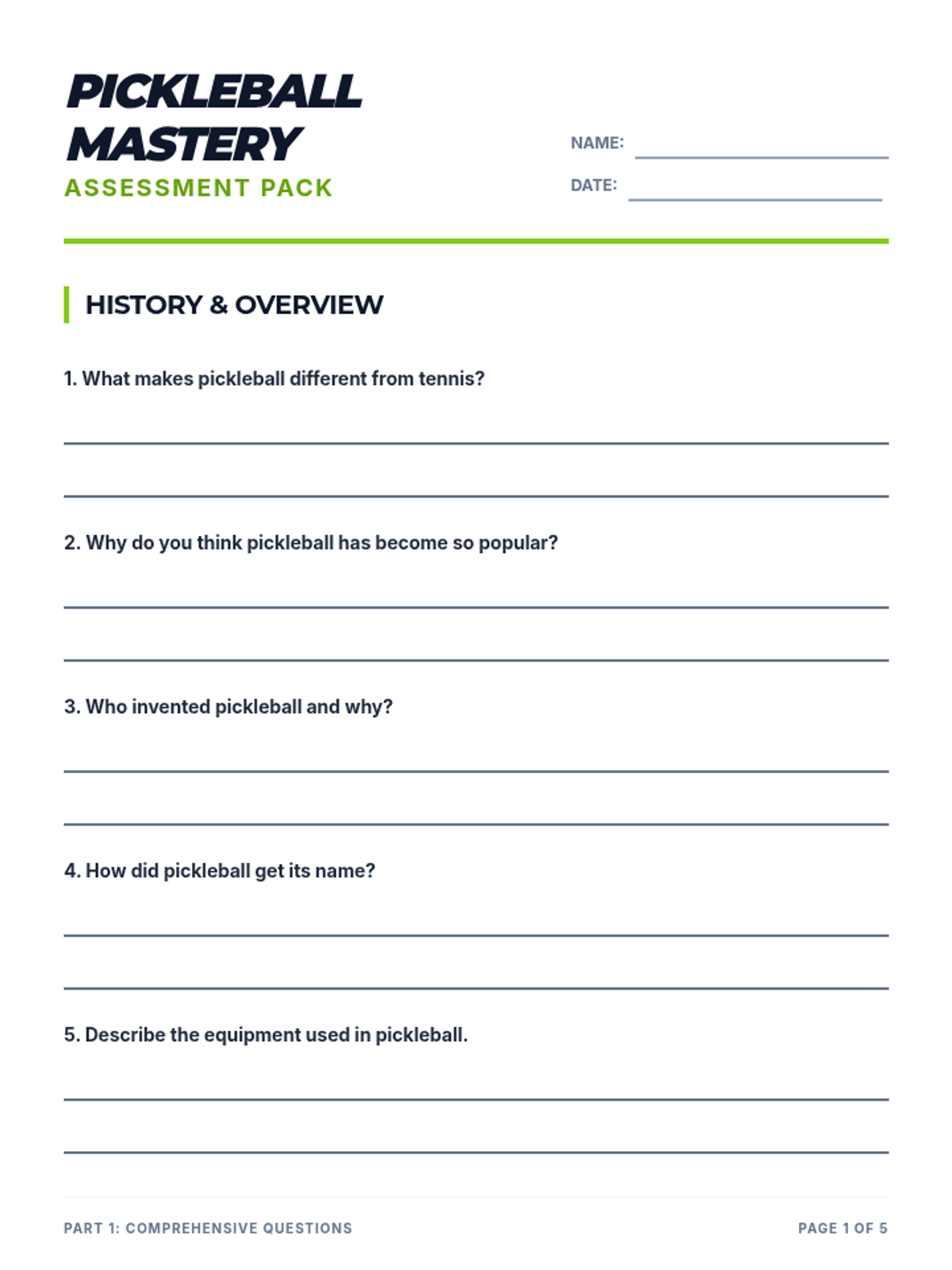
A comprehensive guide to the sport of pickleball, covering its history, rules, equipment, and strategies through an informational packet and interactive assessments.
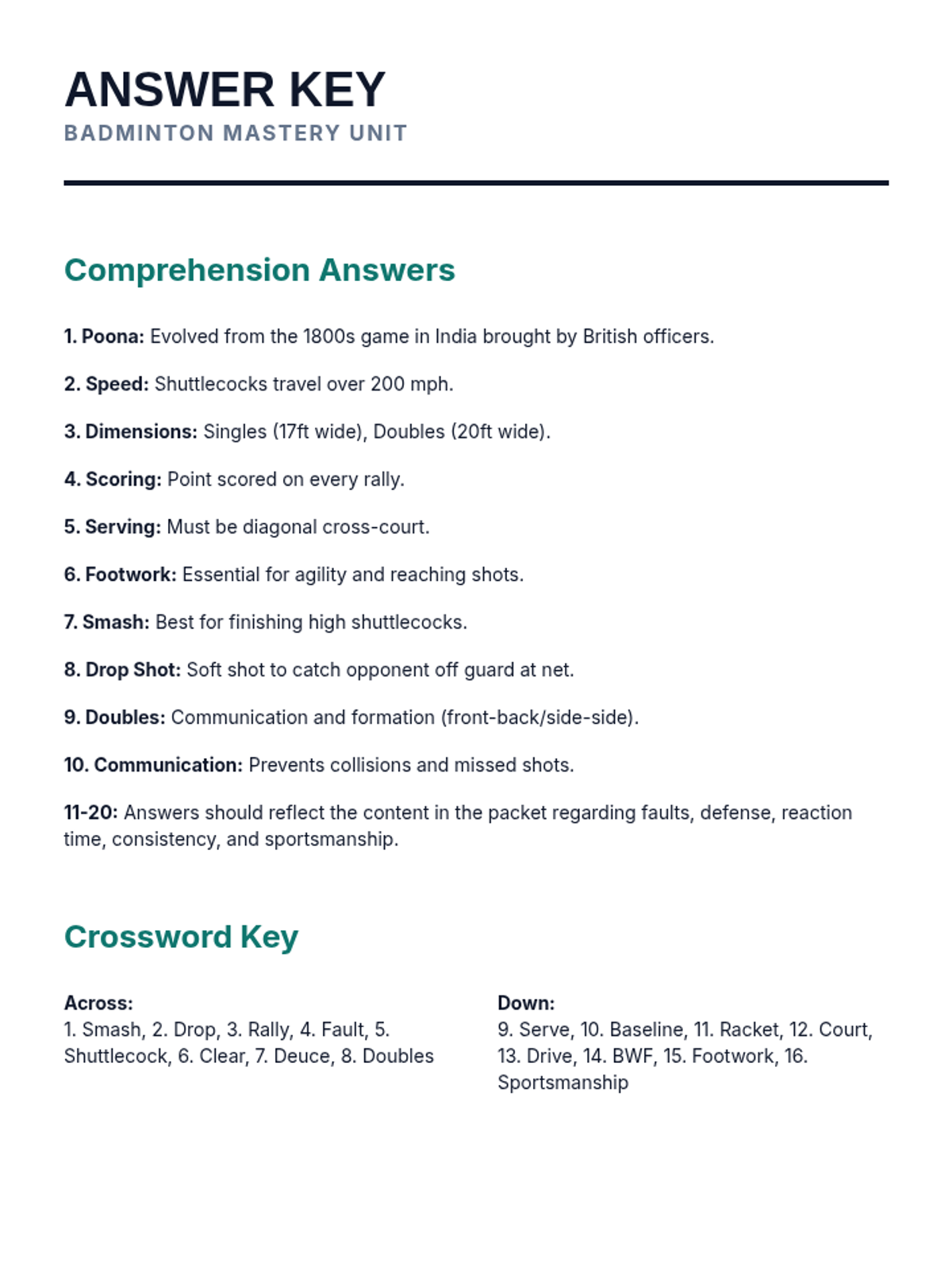
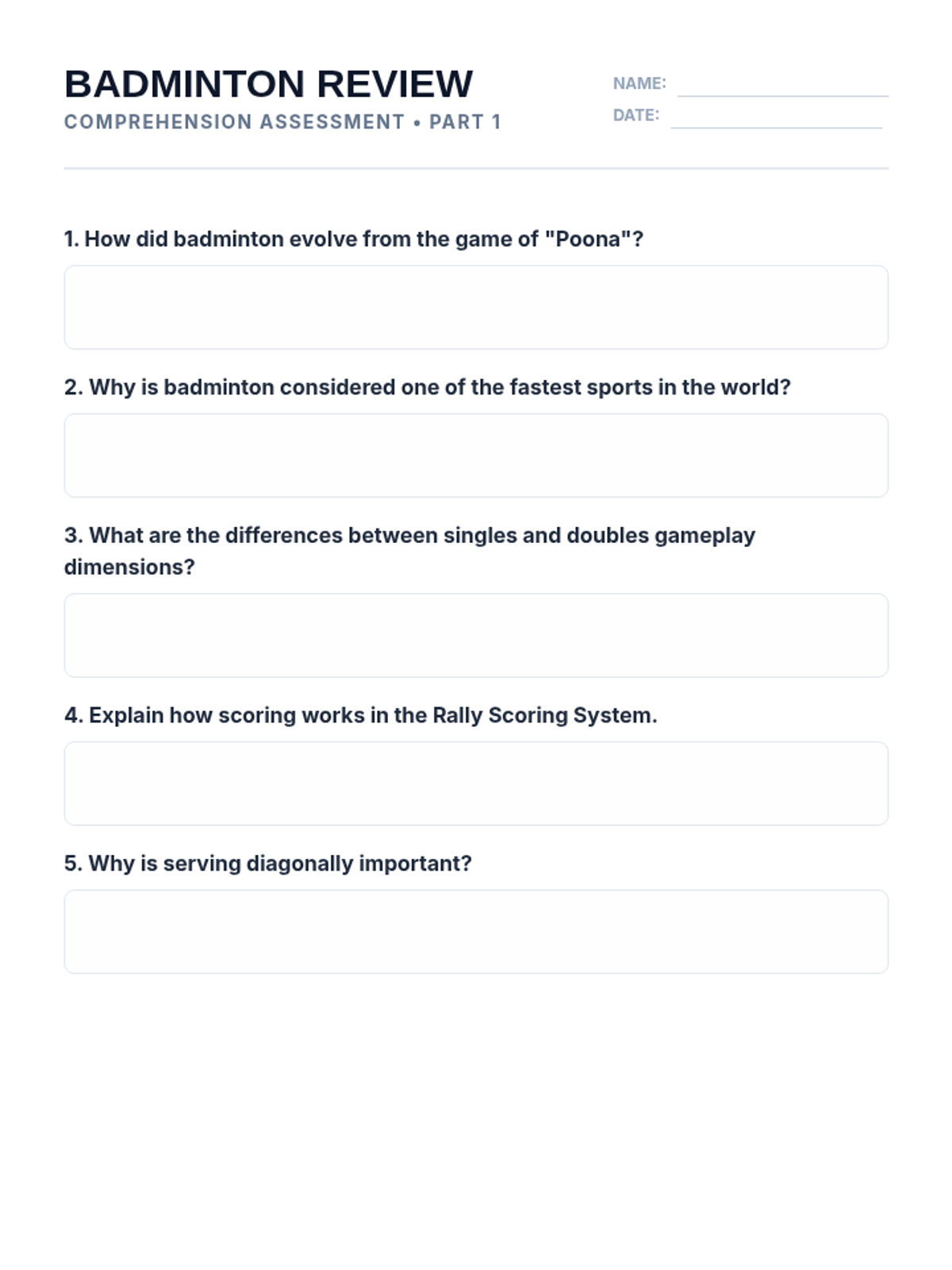
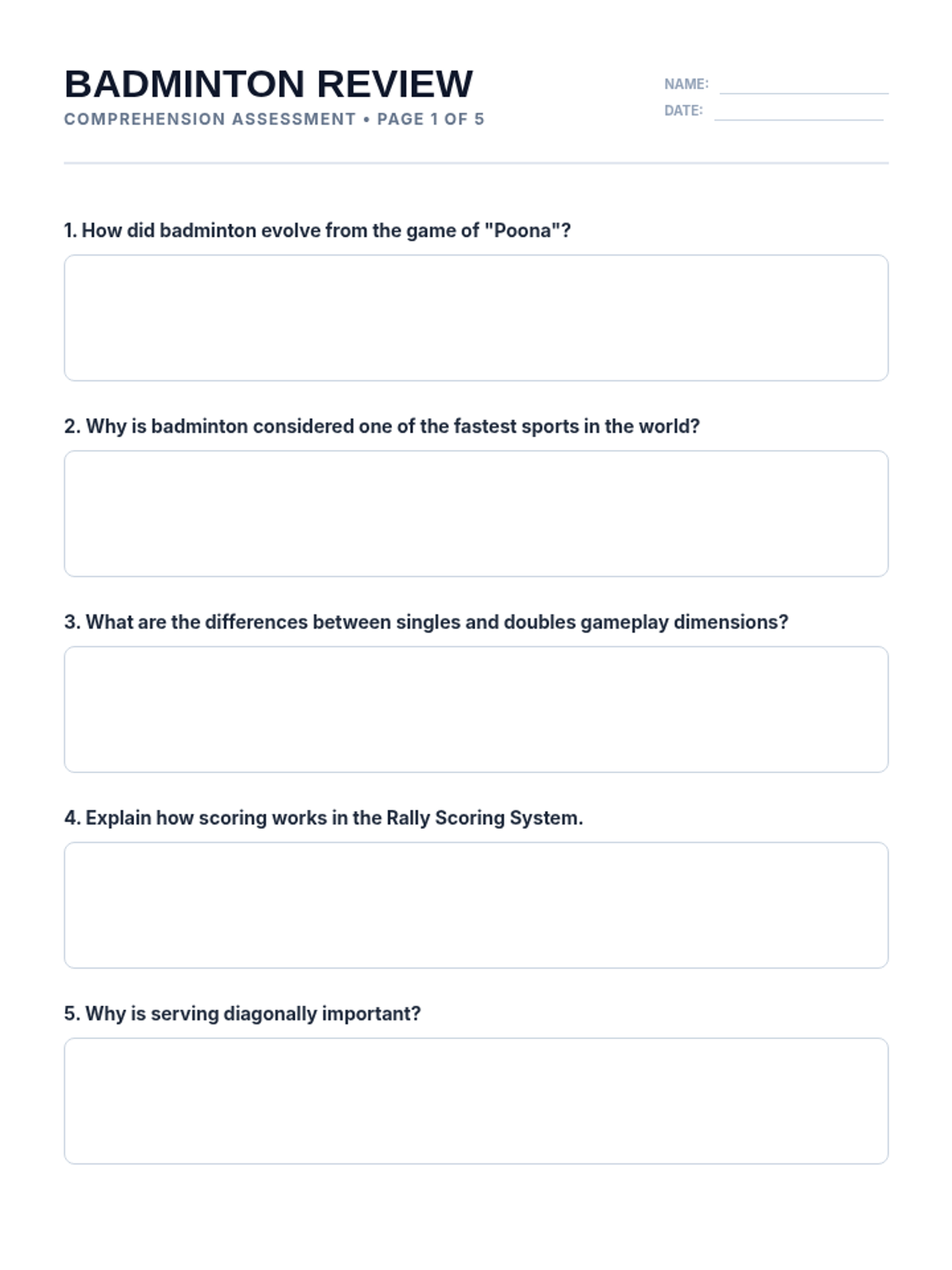
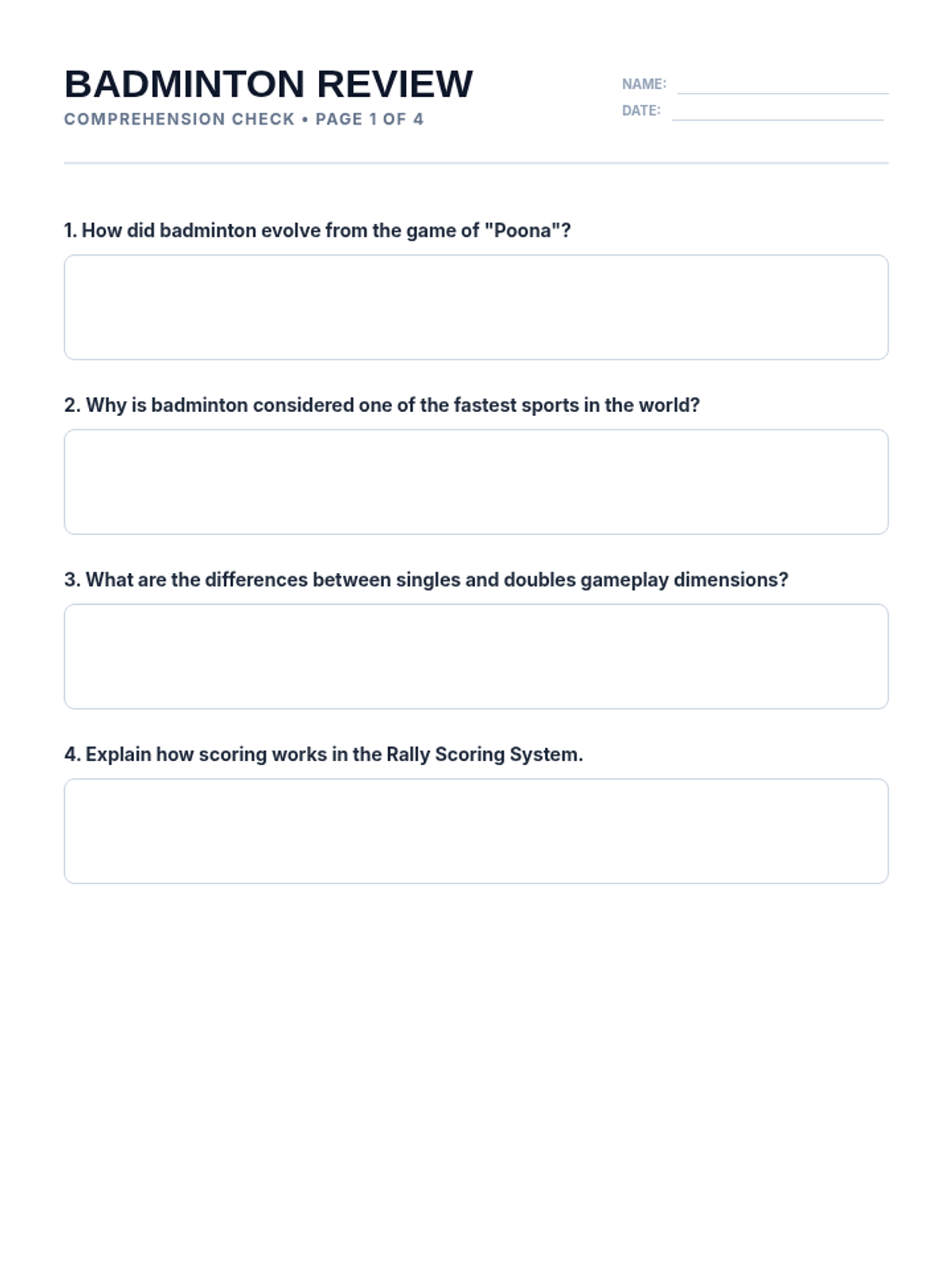
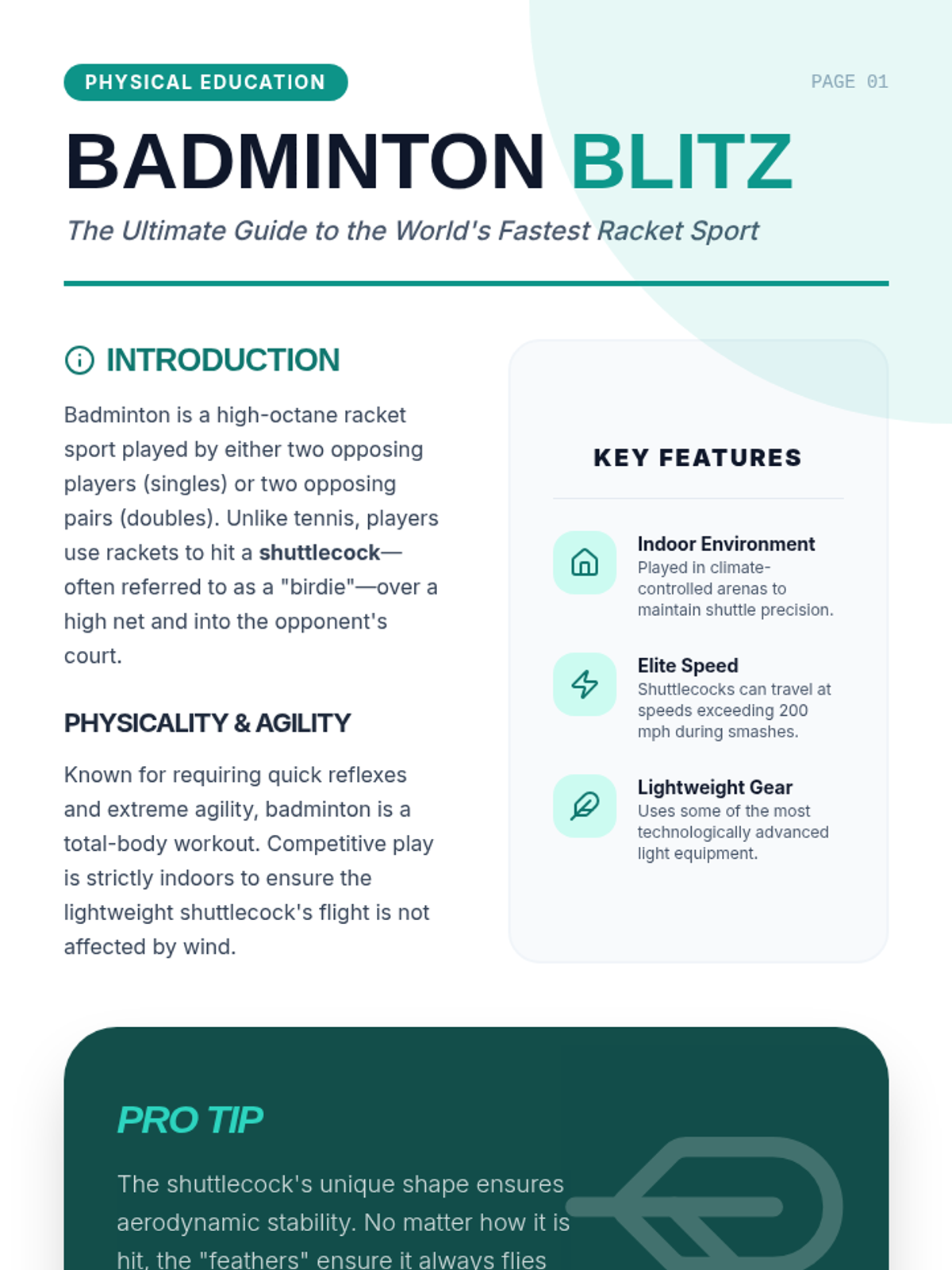
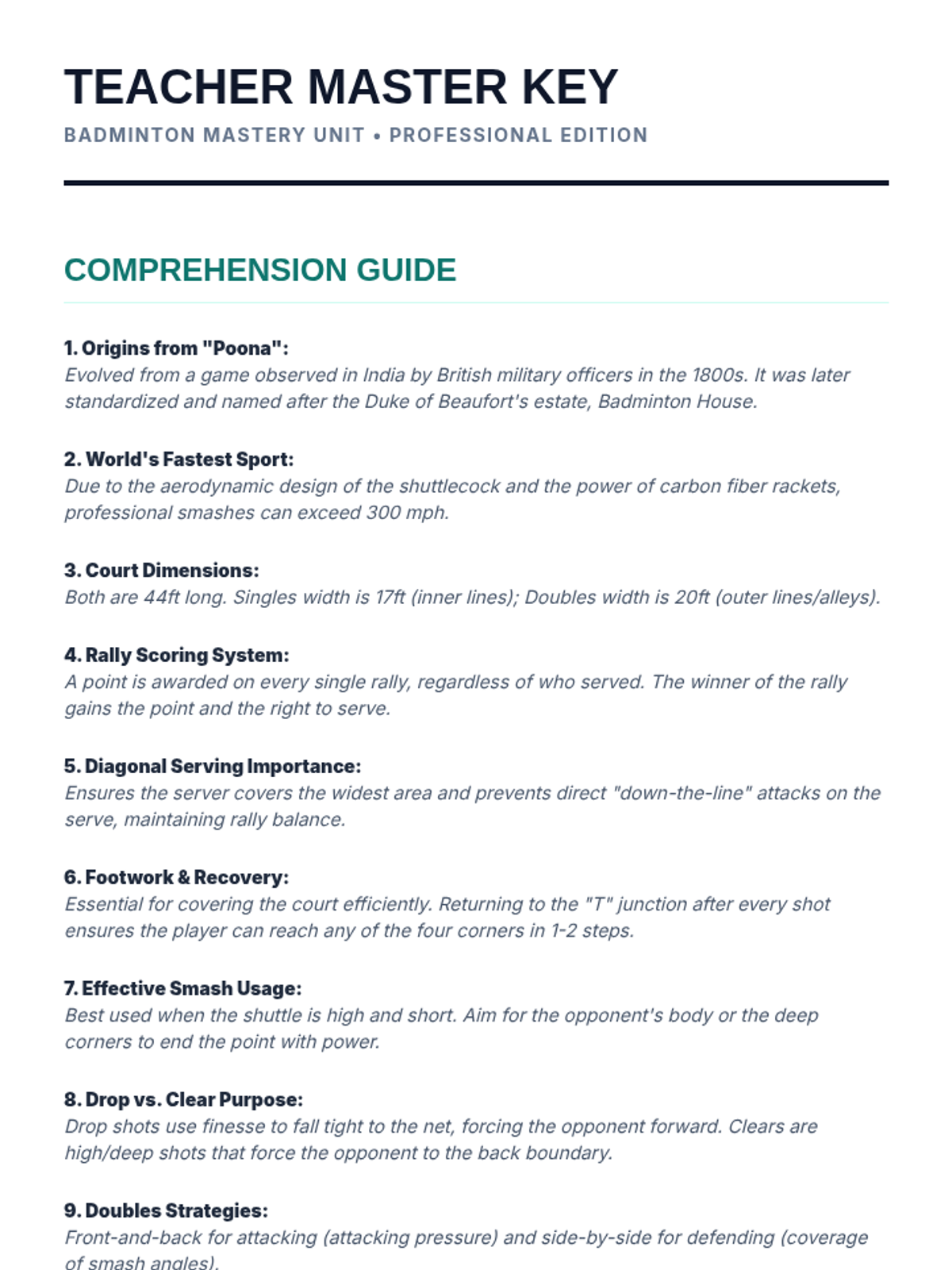
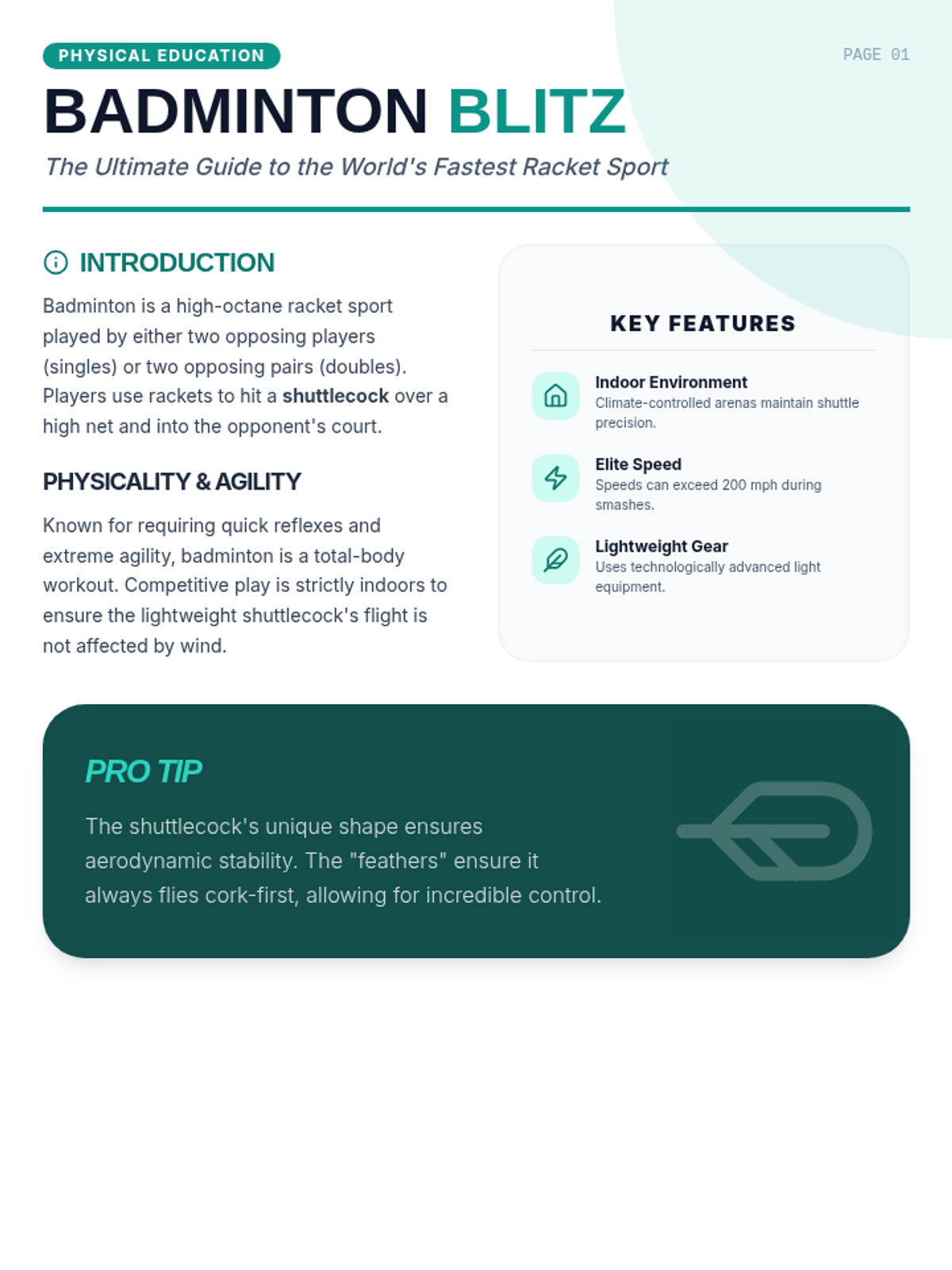
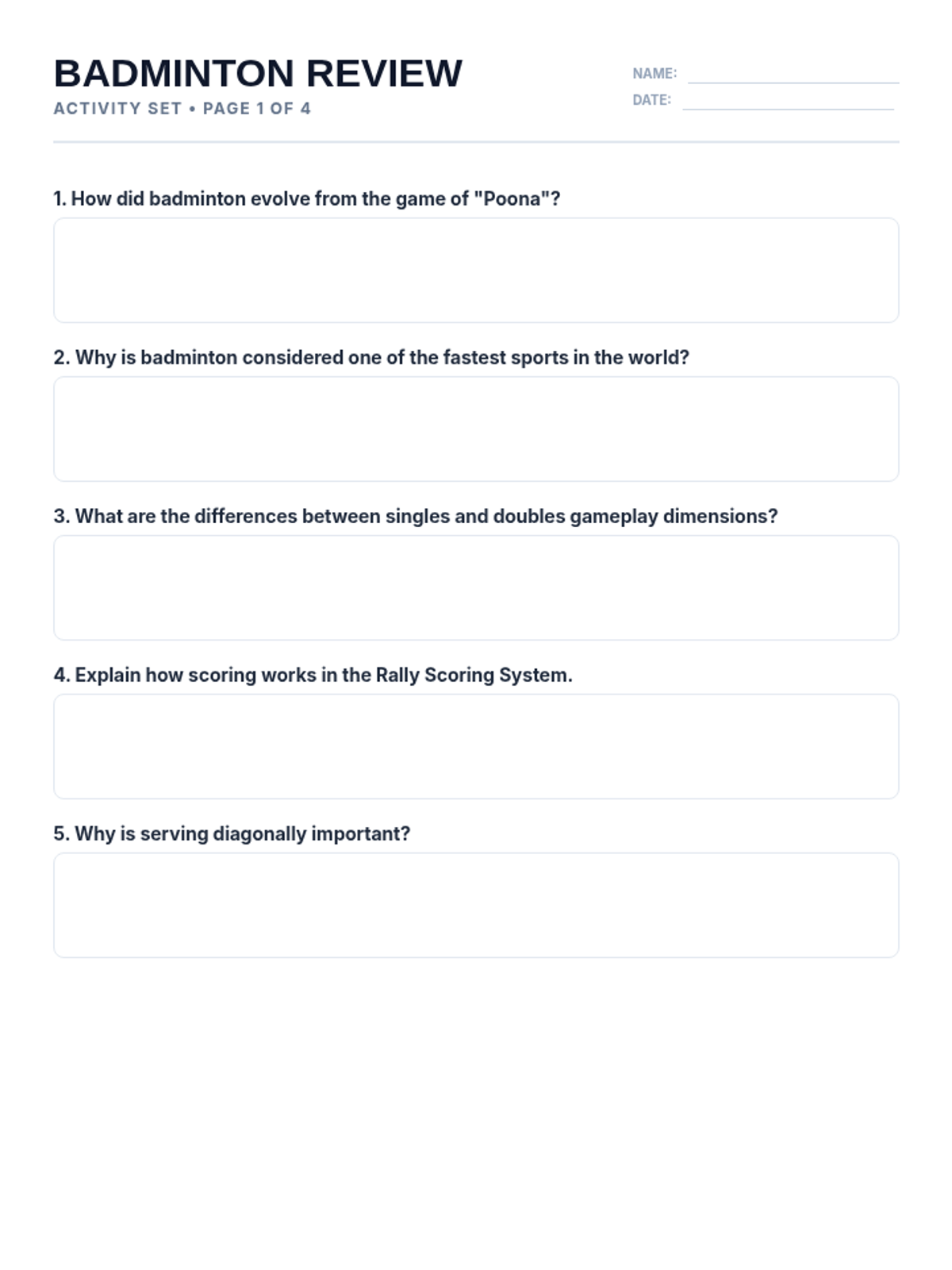
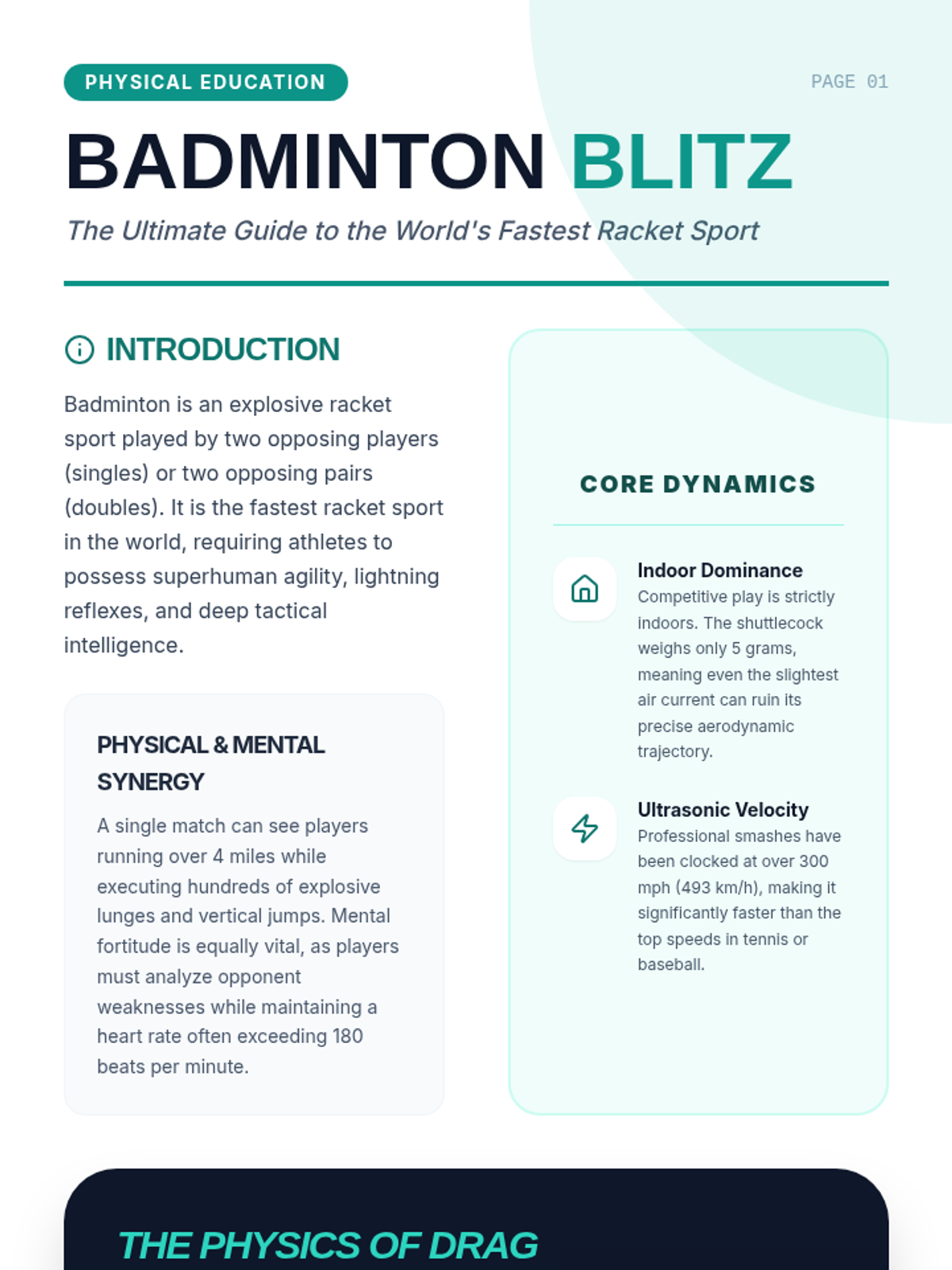
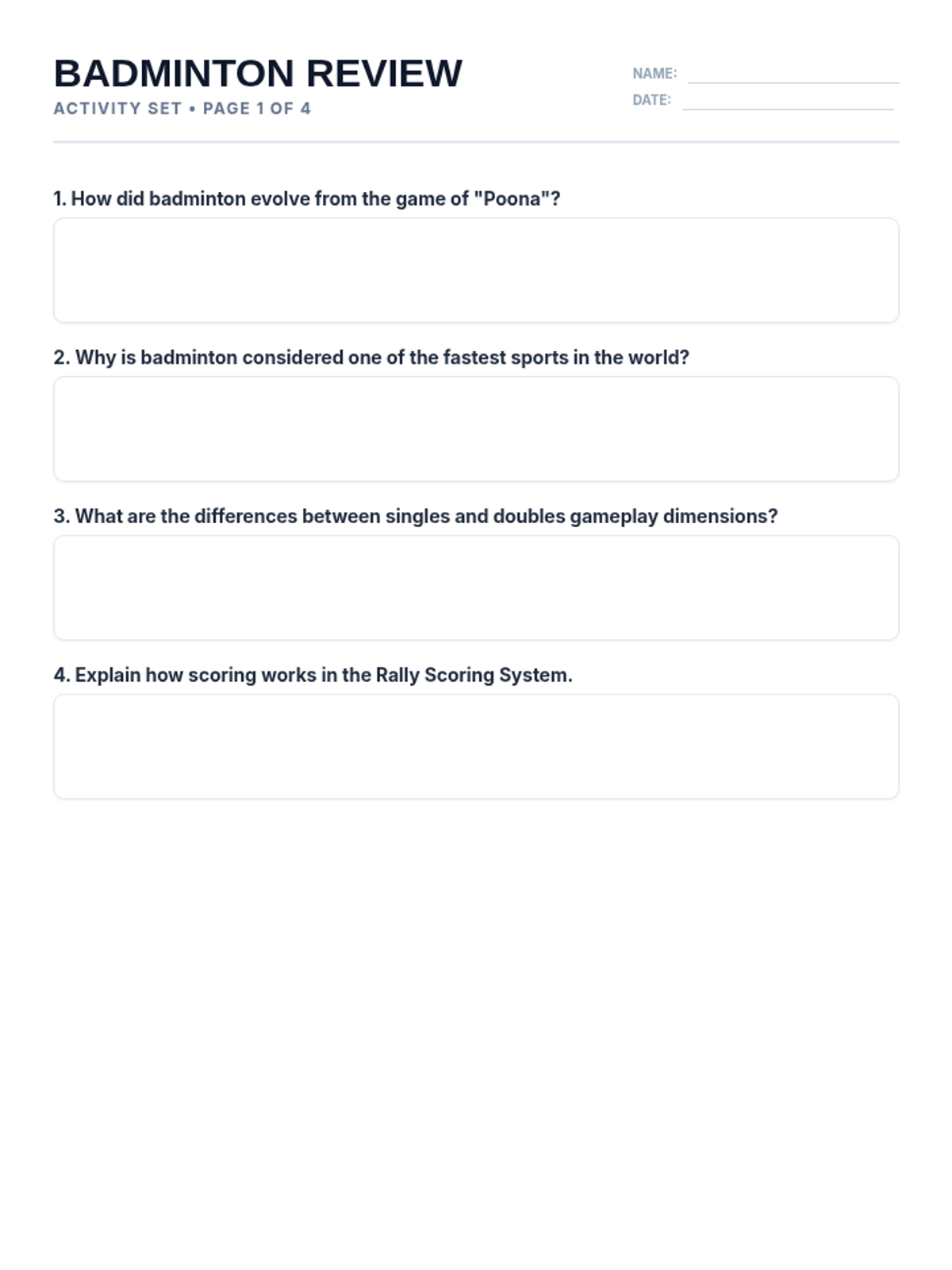
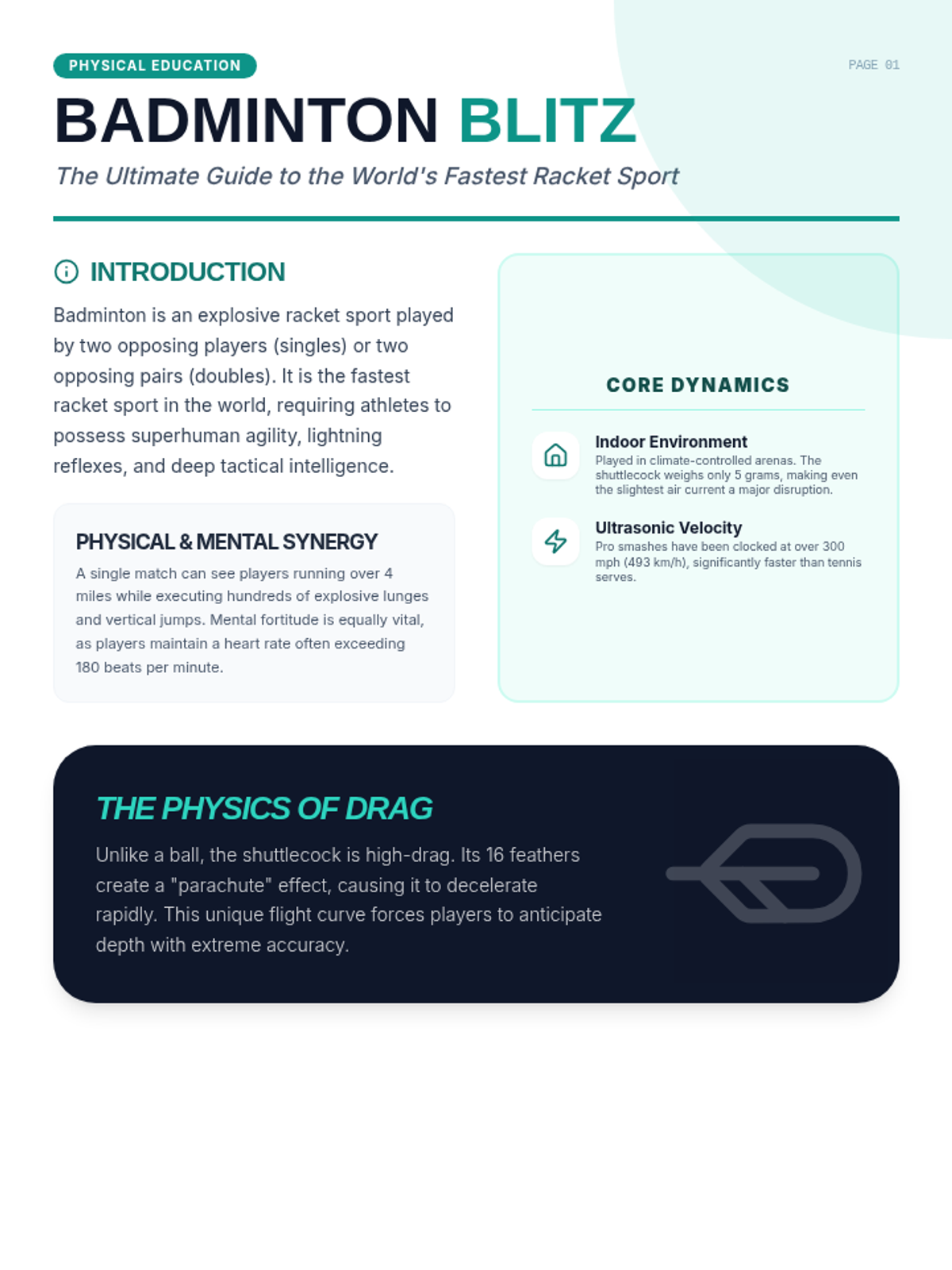
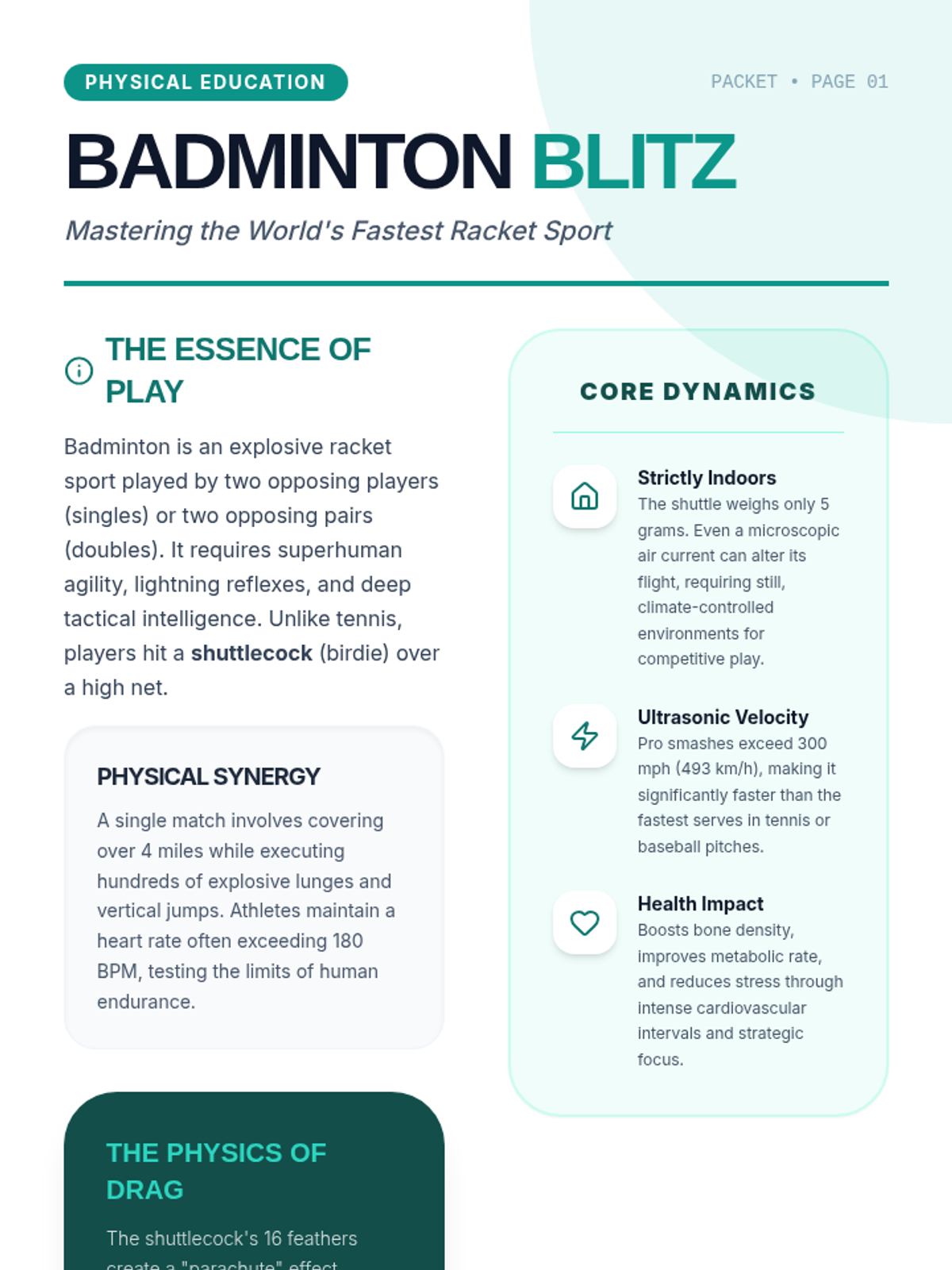
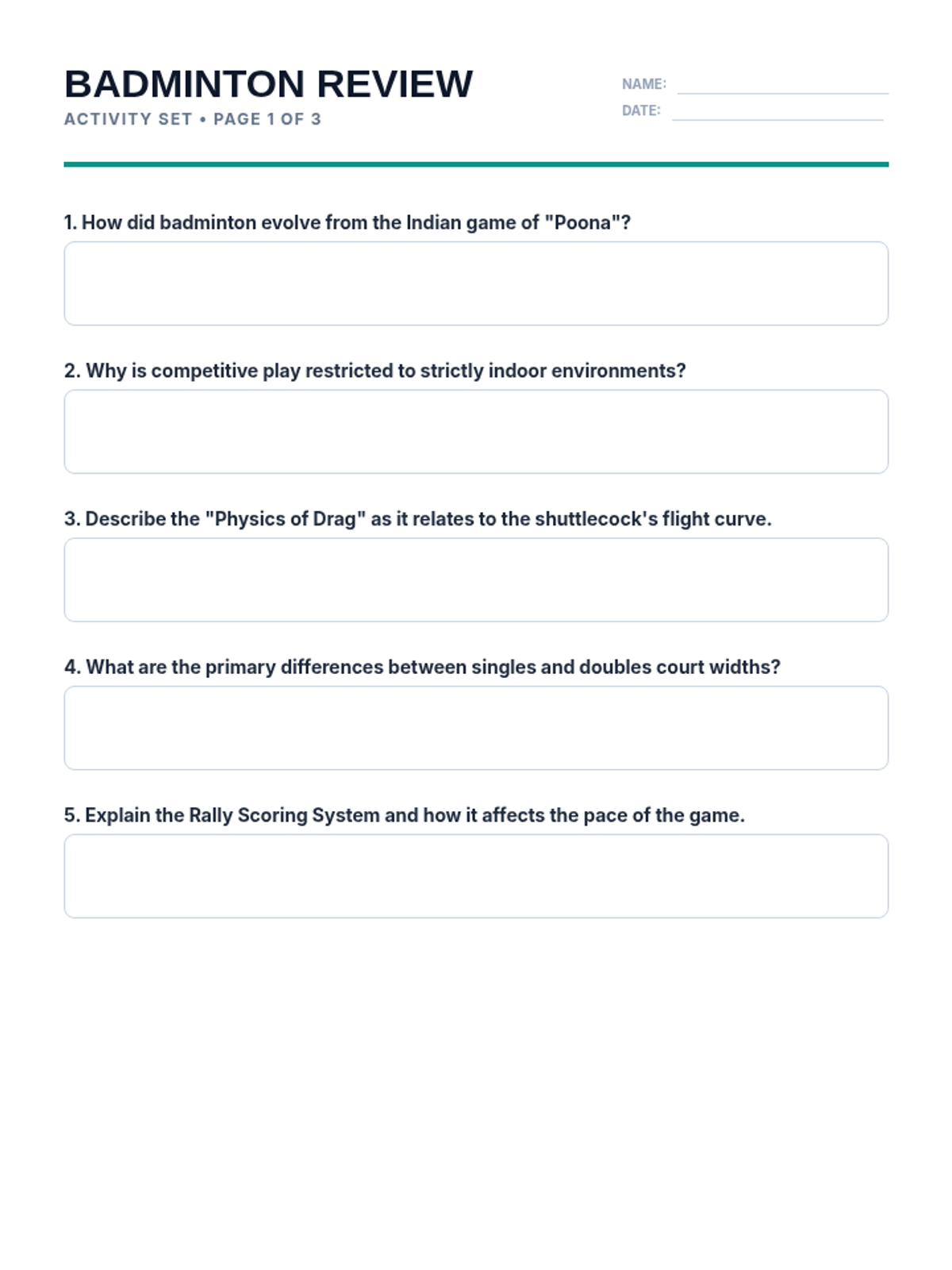
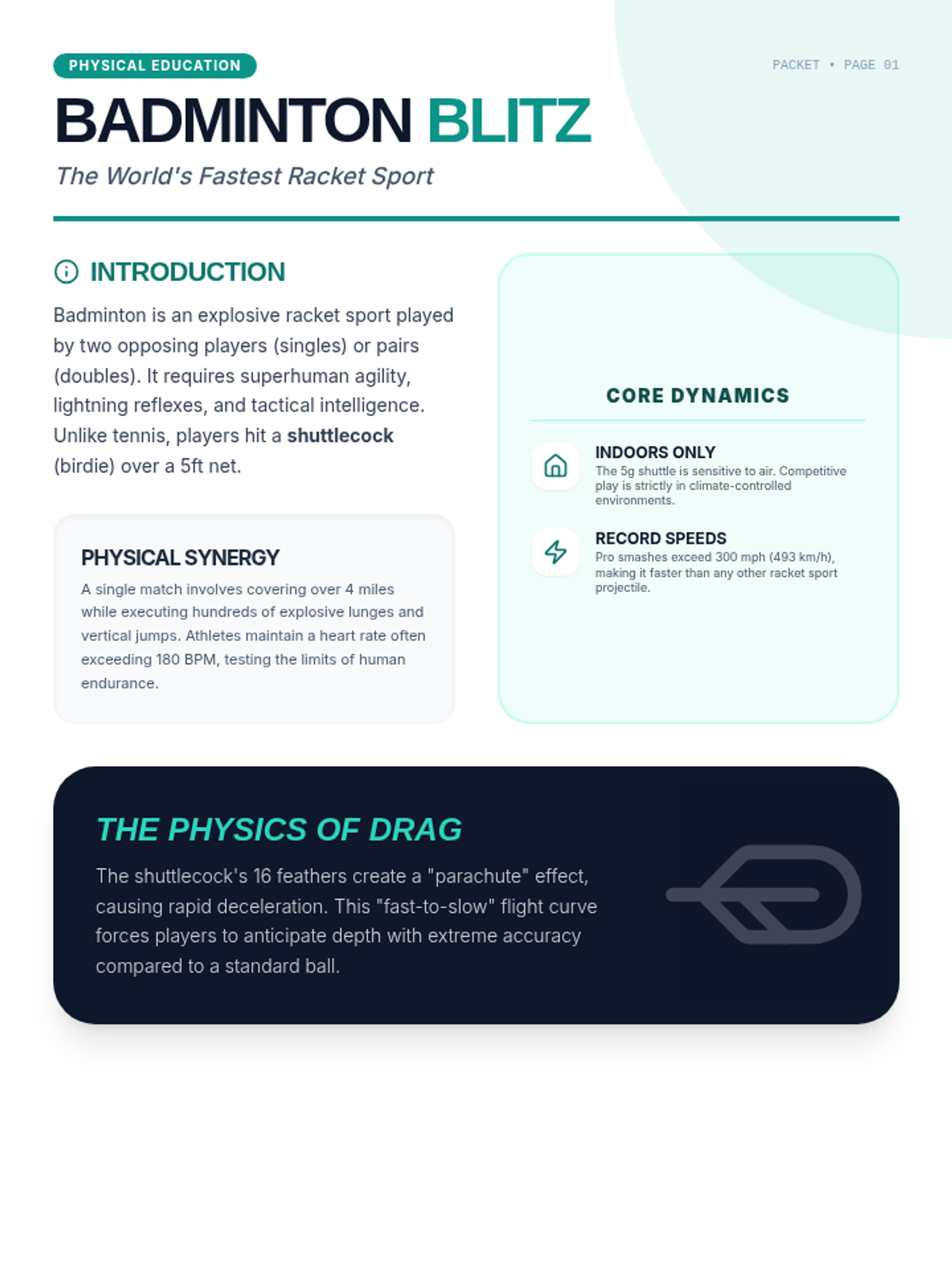
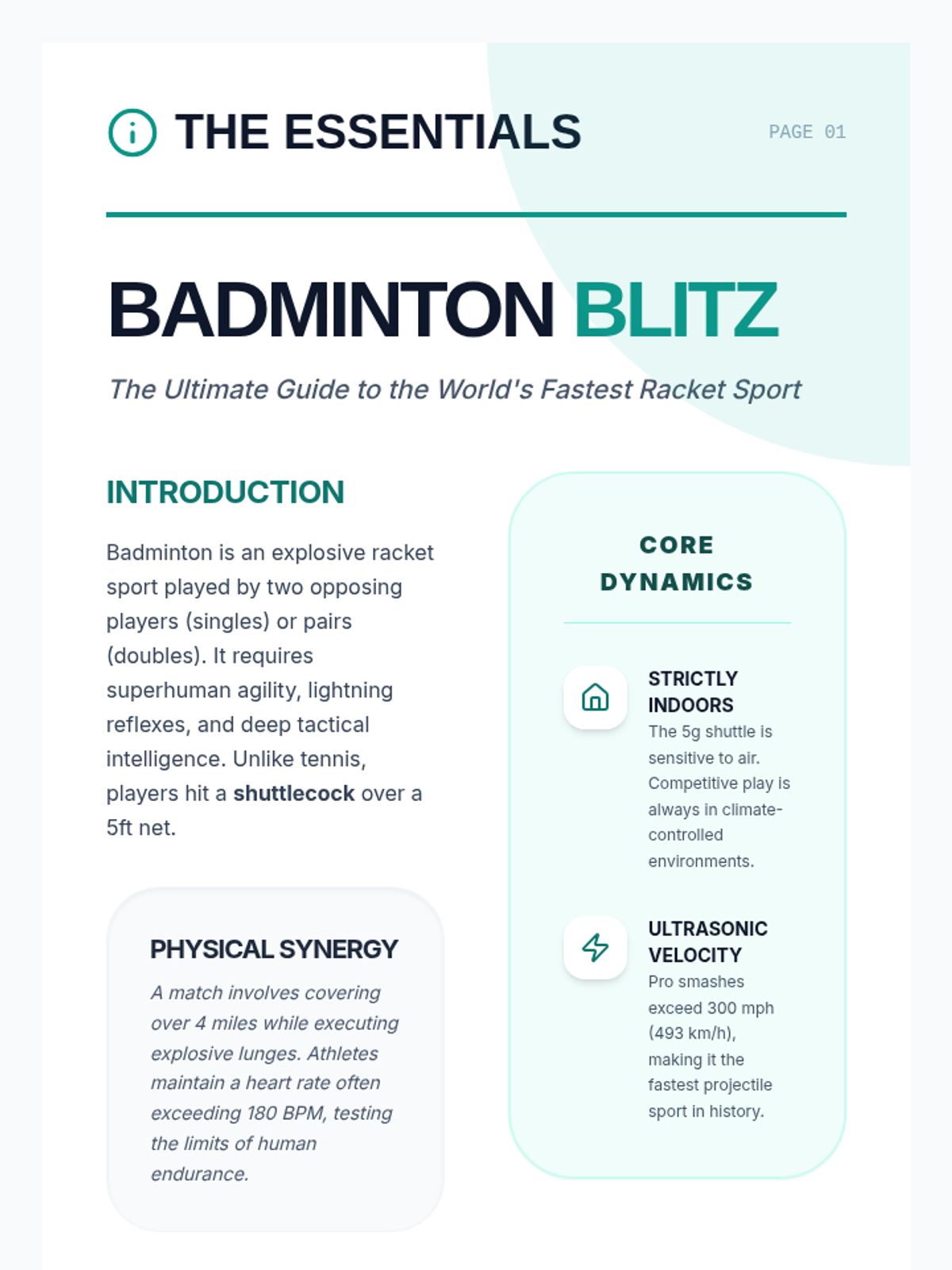
A comprehensive unit on badminton covering its history, official rules, terminology, and advanced strategies through an informational packet, comprehension exercises, and interactive puzzles.
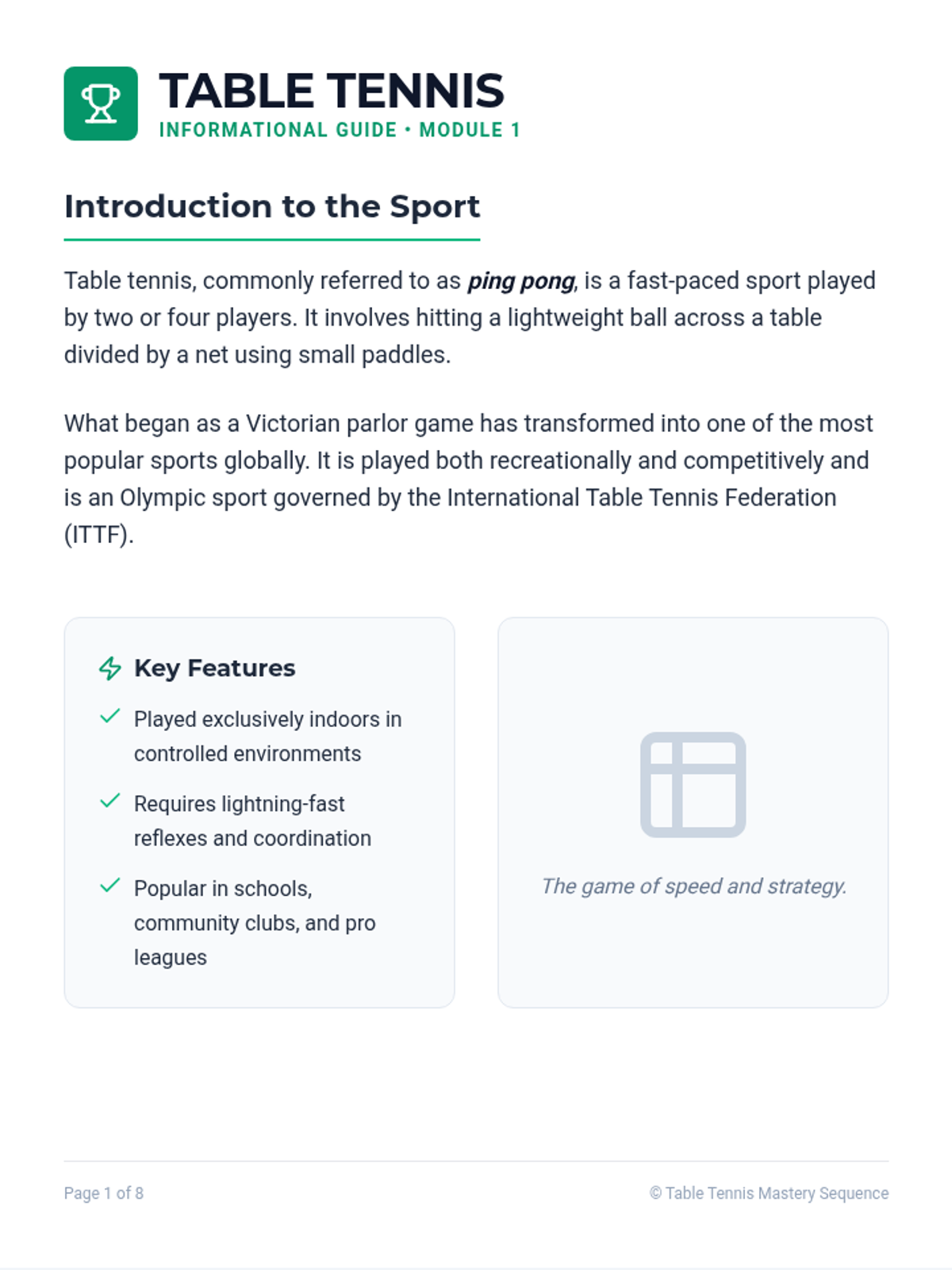
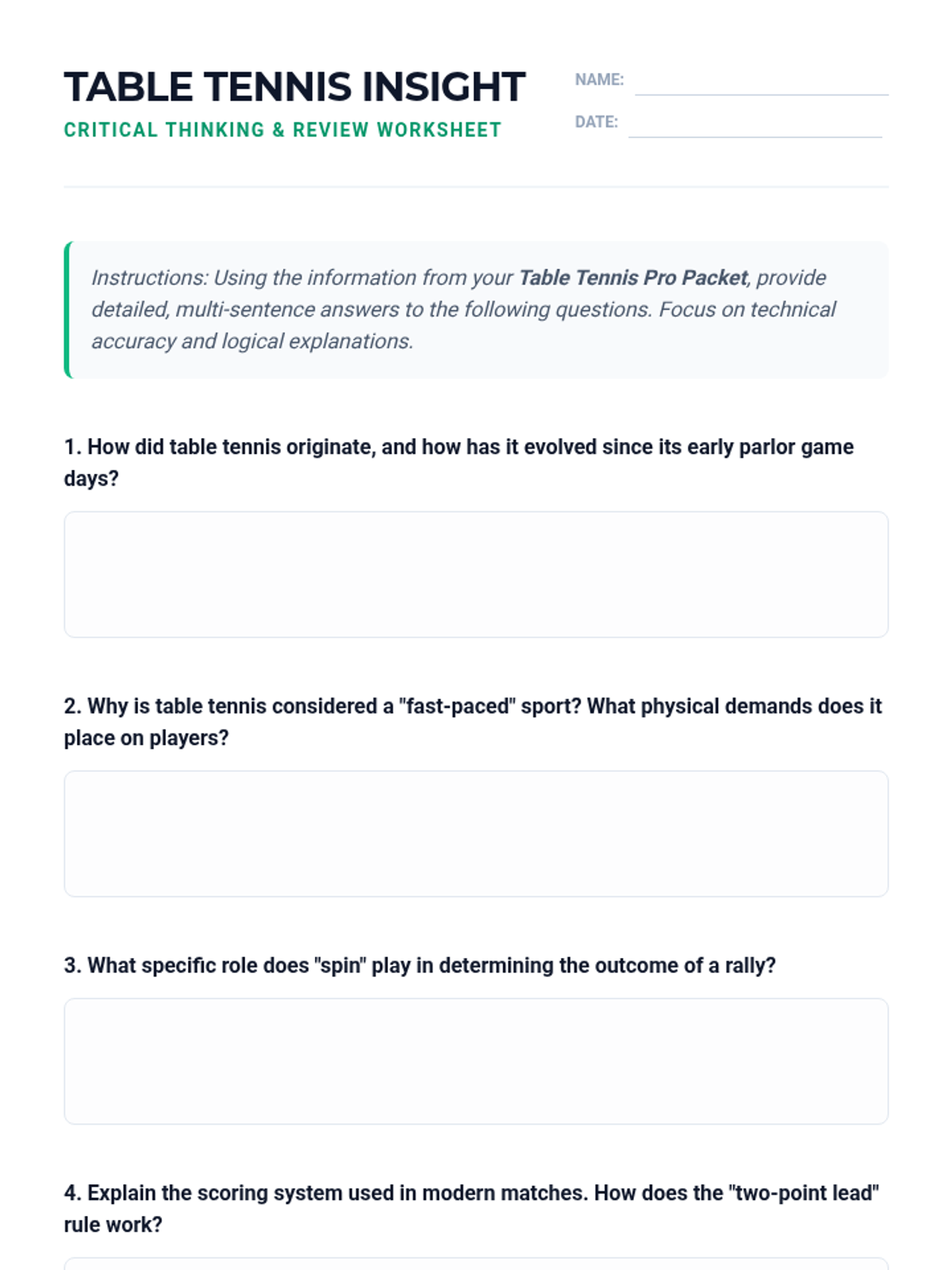
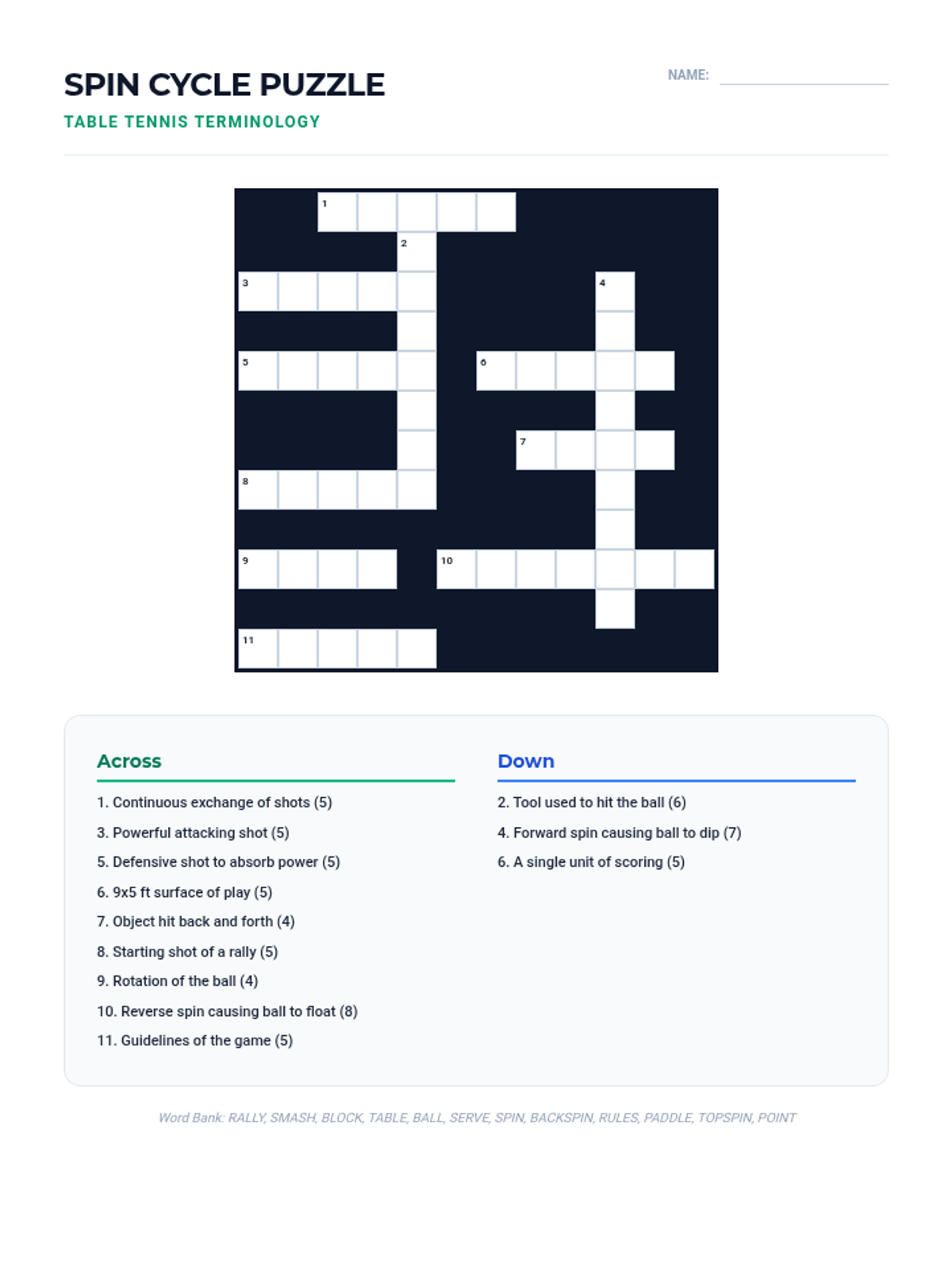
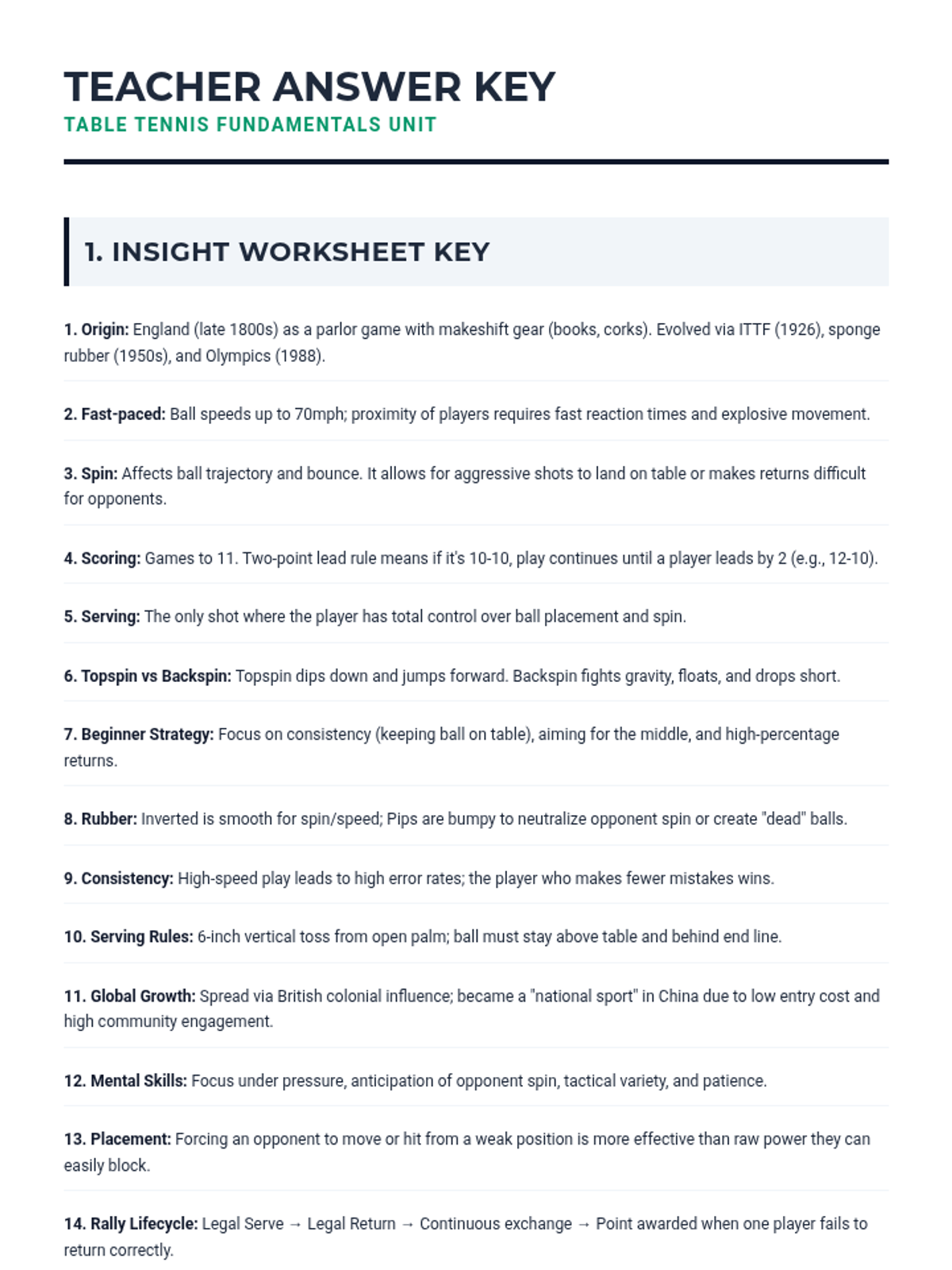
A deep dive into the sport of table tennis, covering its origins, technical equipment, competitive rules, and advanced strategies through a detailed packet and assessments.
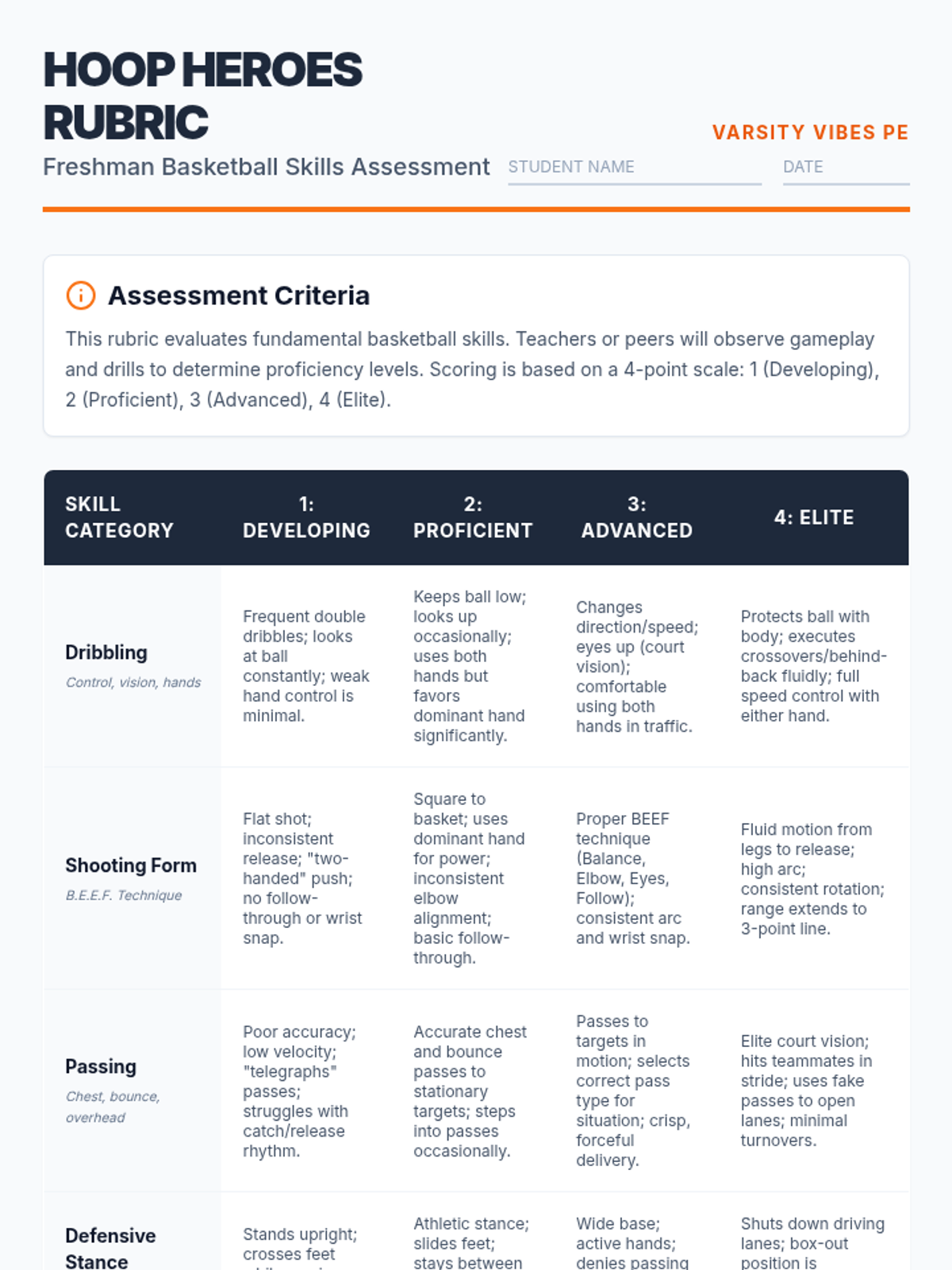
Assessment tools for mastering basketball fundamentals including shooting, dribbling, and defensive positioning.
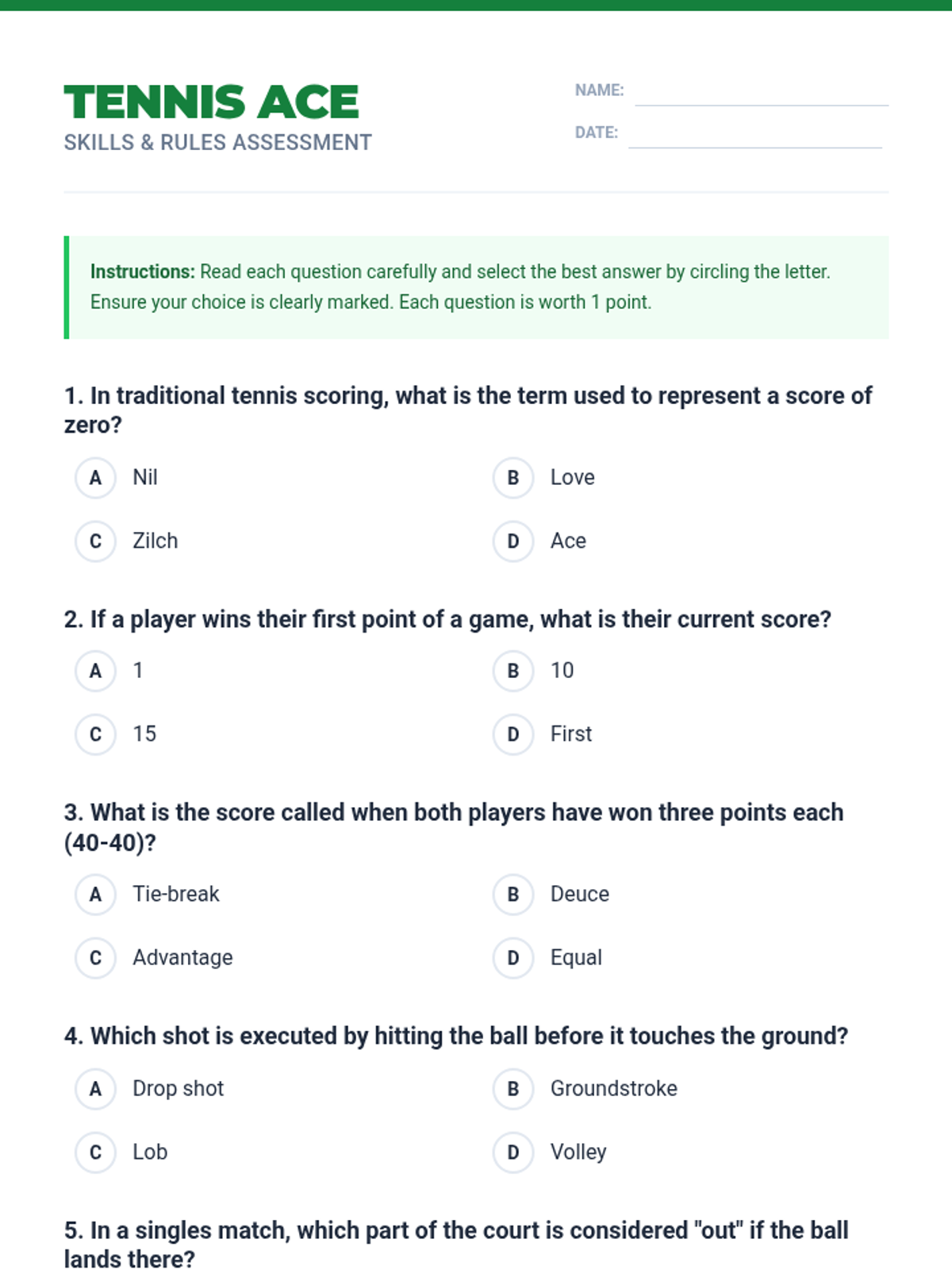
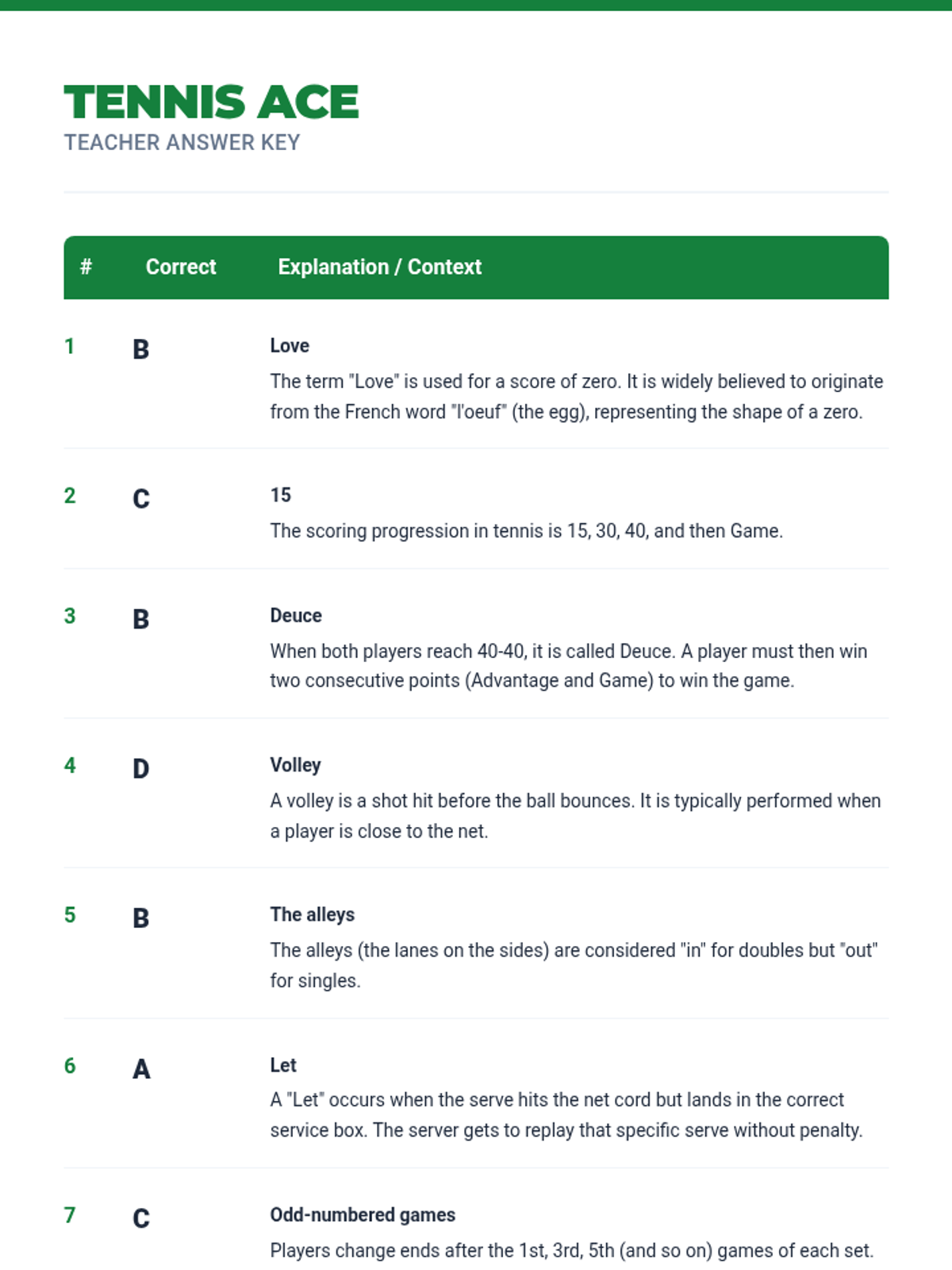
A foundational lesson covering tennis rules, scoring, strokes, and court positioning, designed to prepare students for gameplay and officiating.
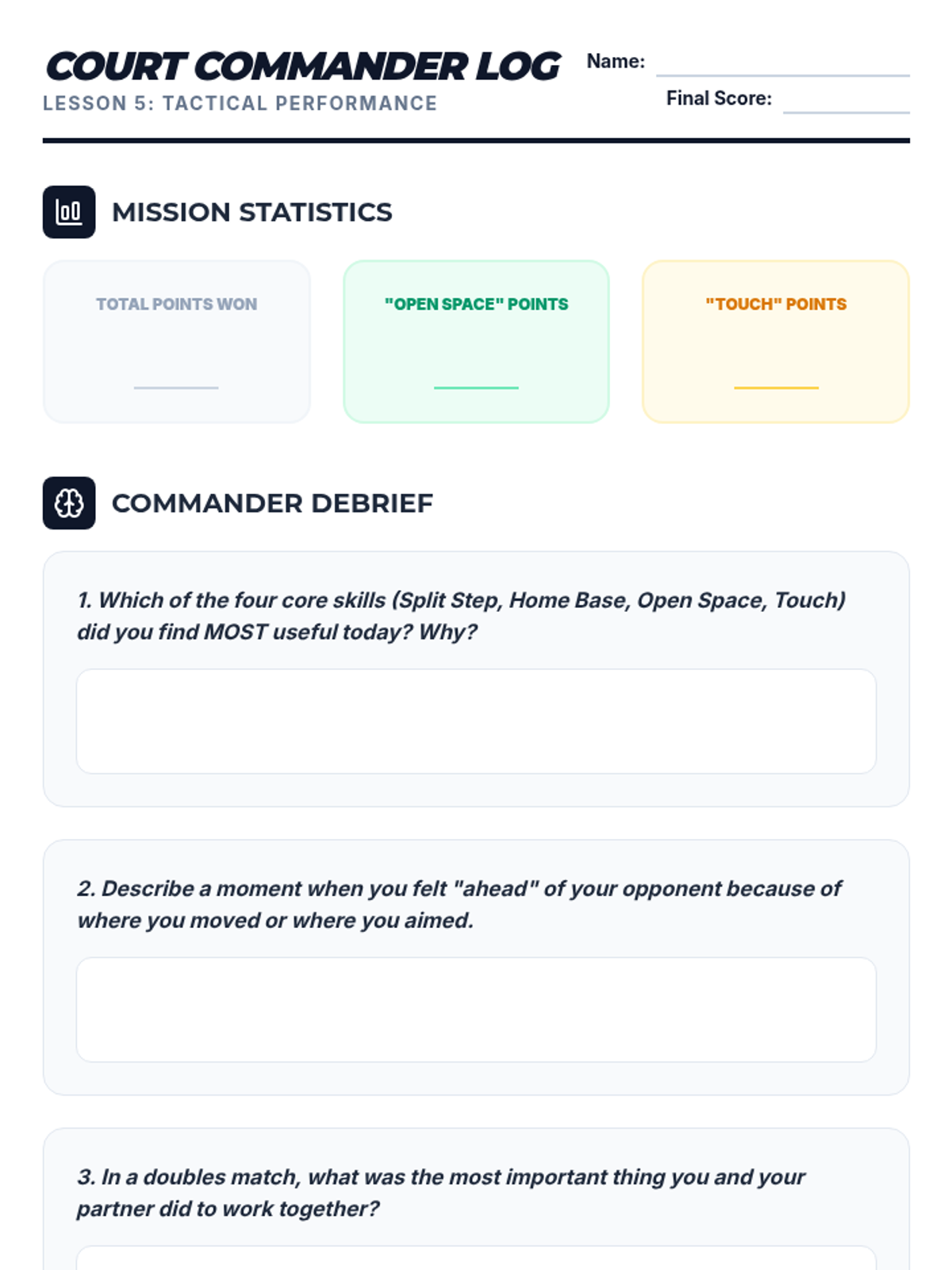
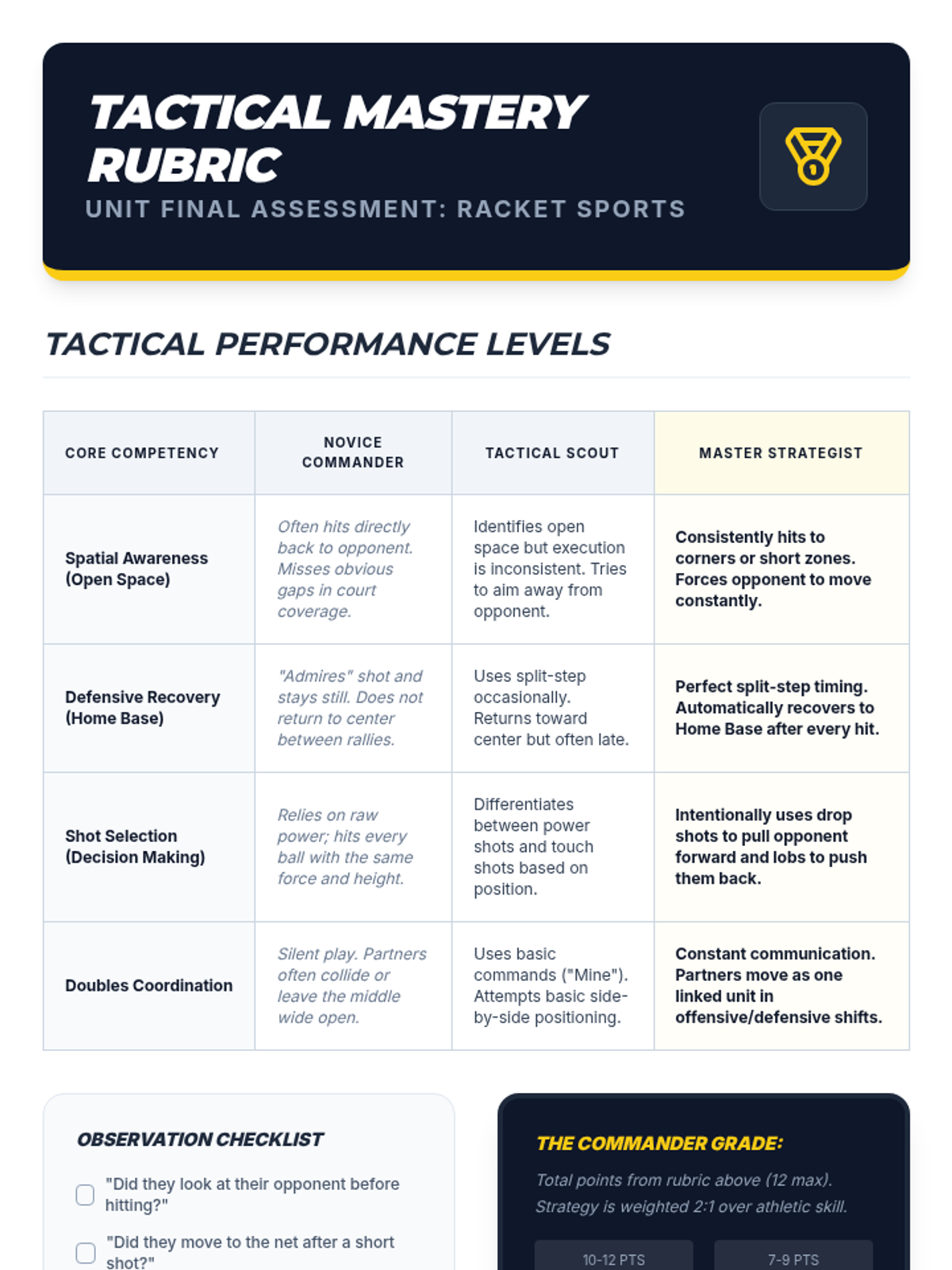
Students participate in modified gameplay, applying all learned tactics and reflecting on shot selection.
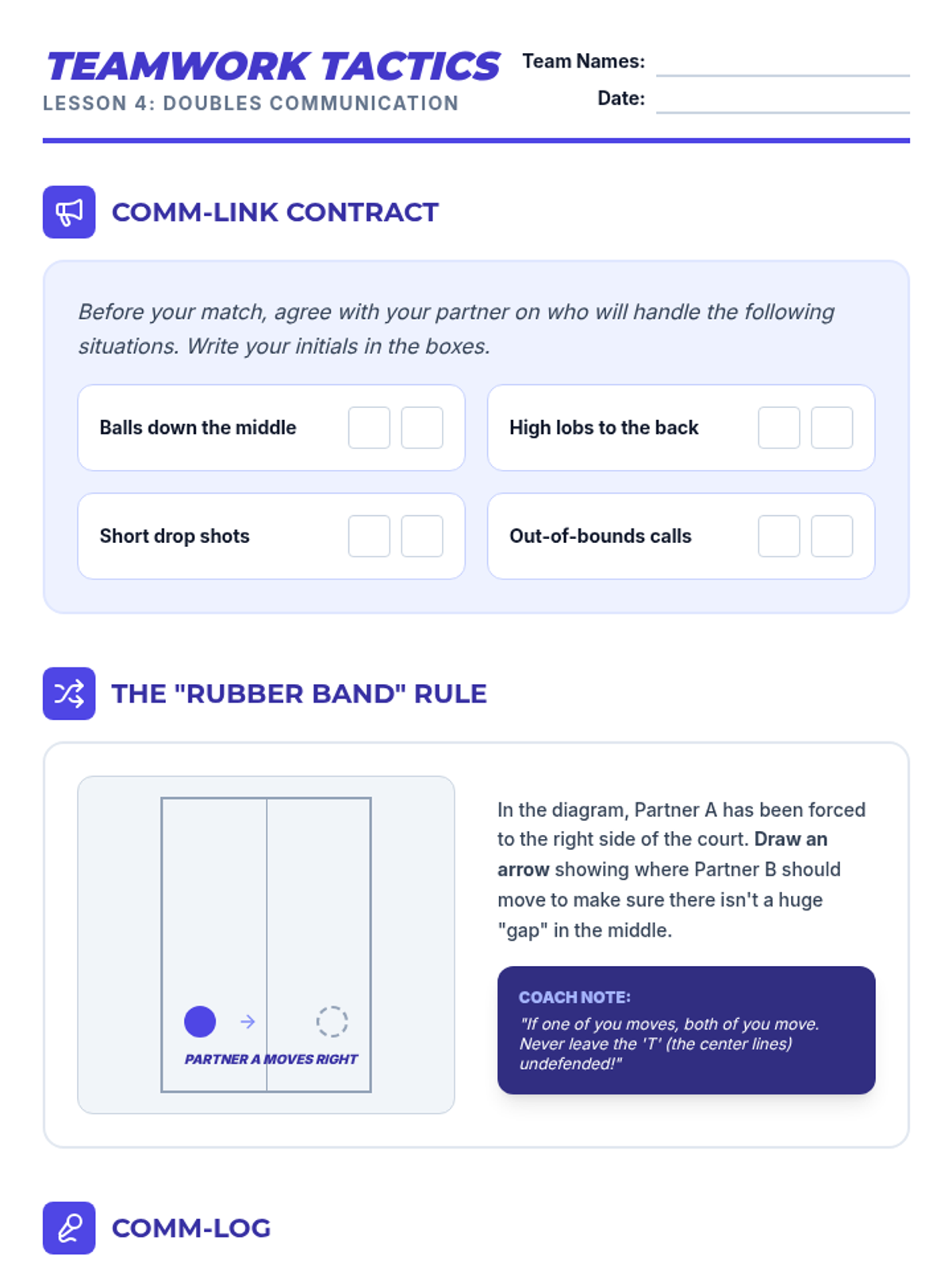
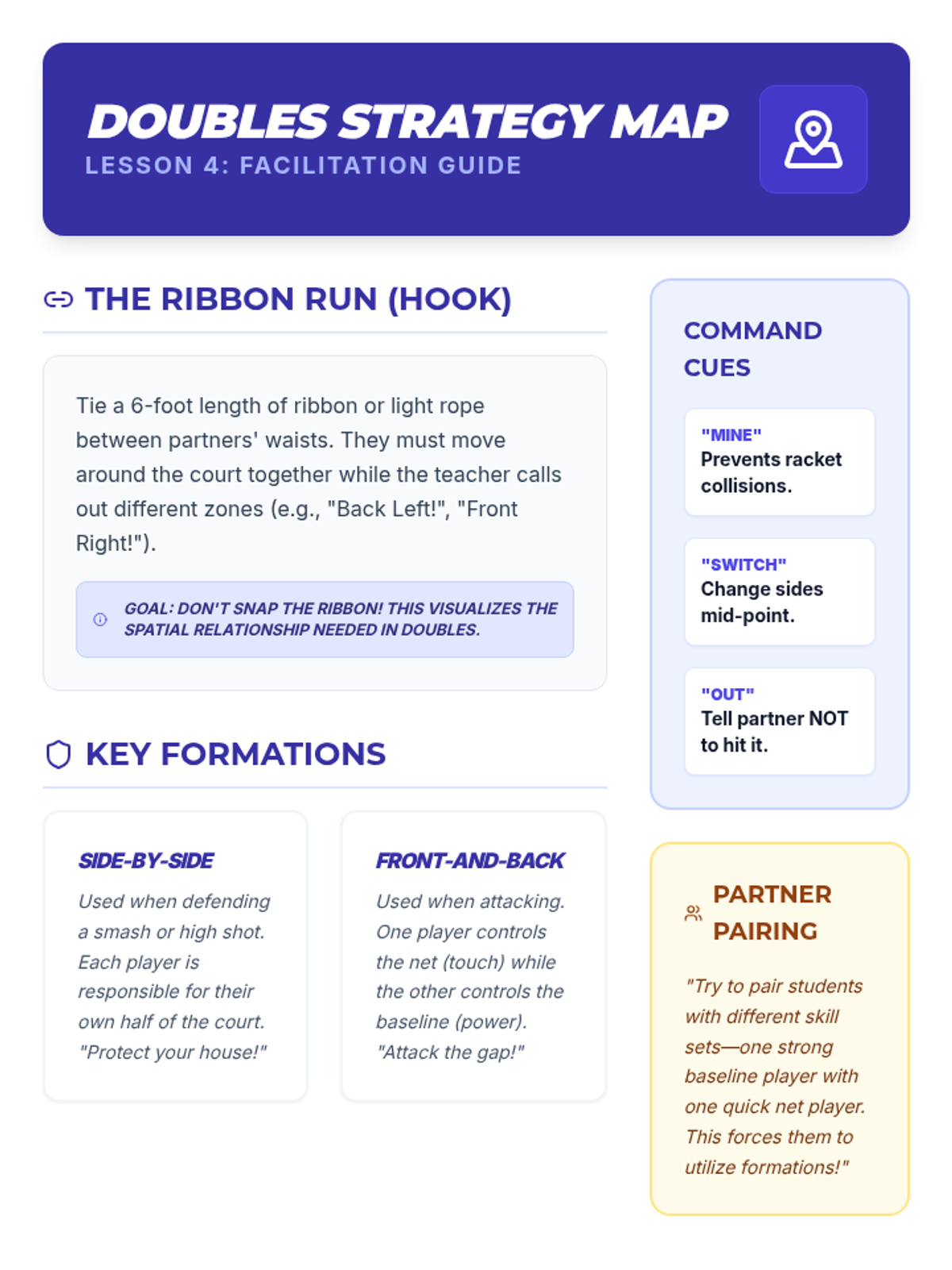
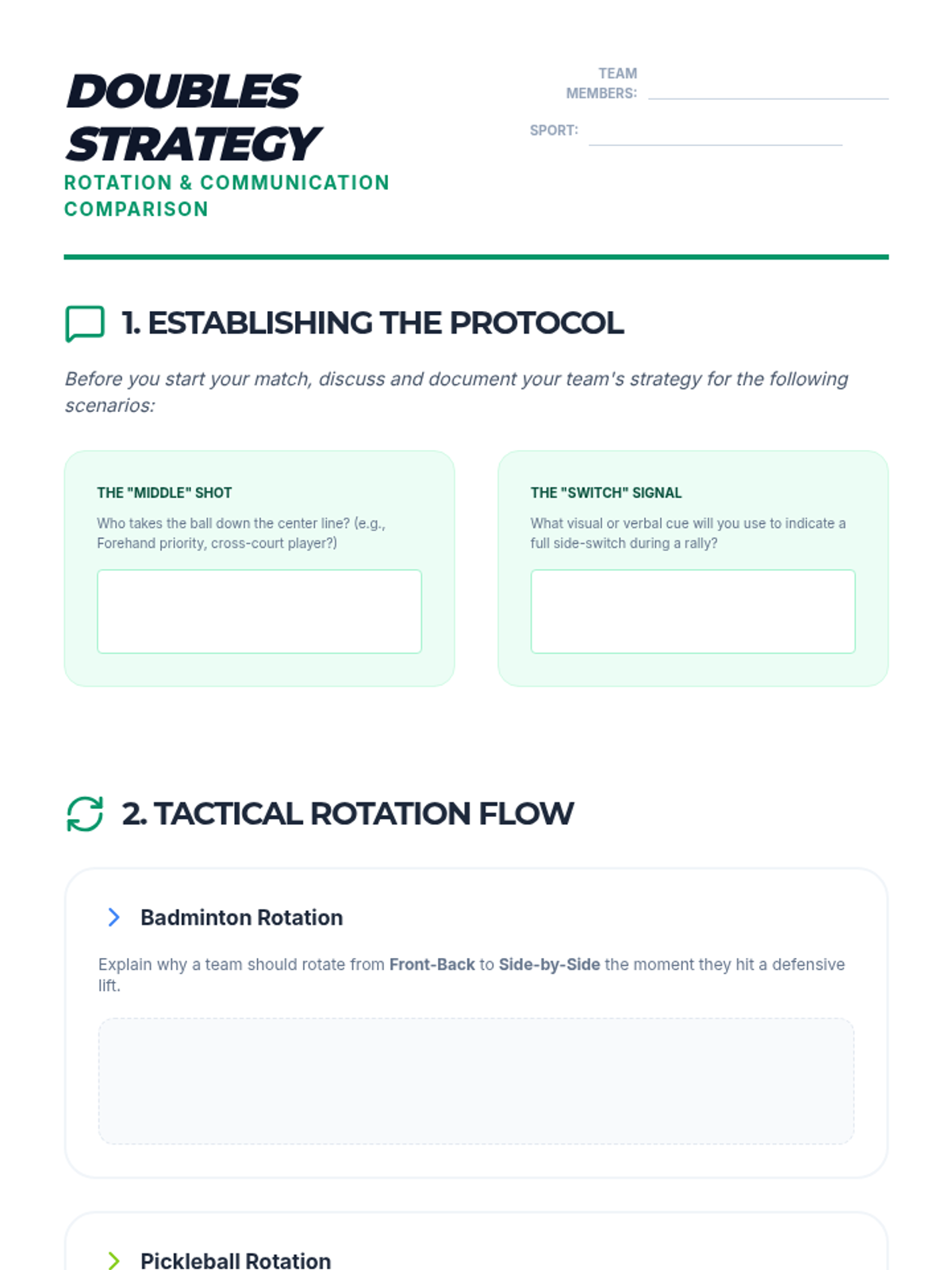
Students learn doubles strategies like side-by-side and front-back positioning with an emphasis on verbal communication.
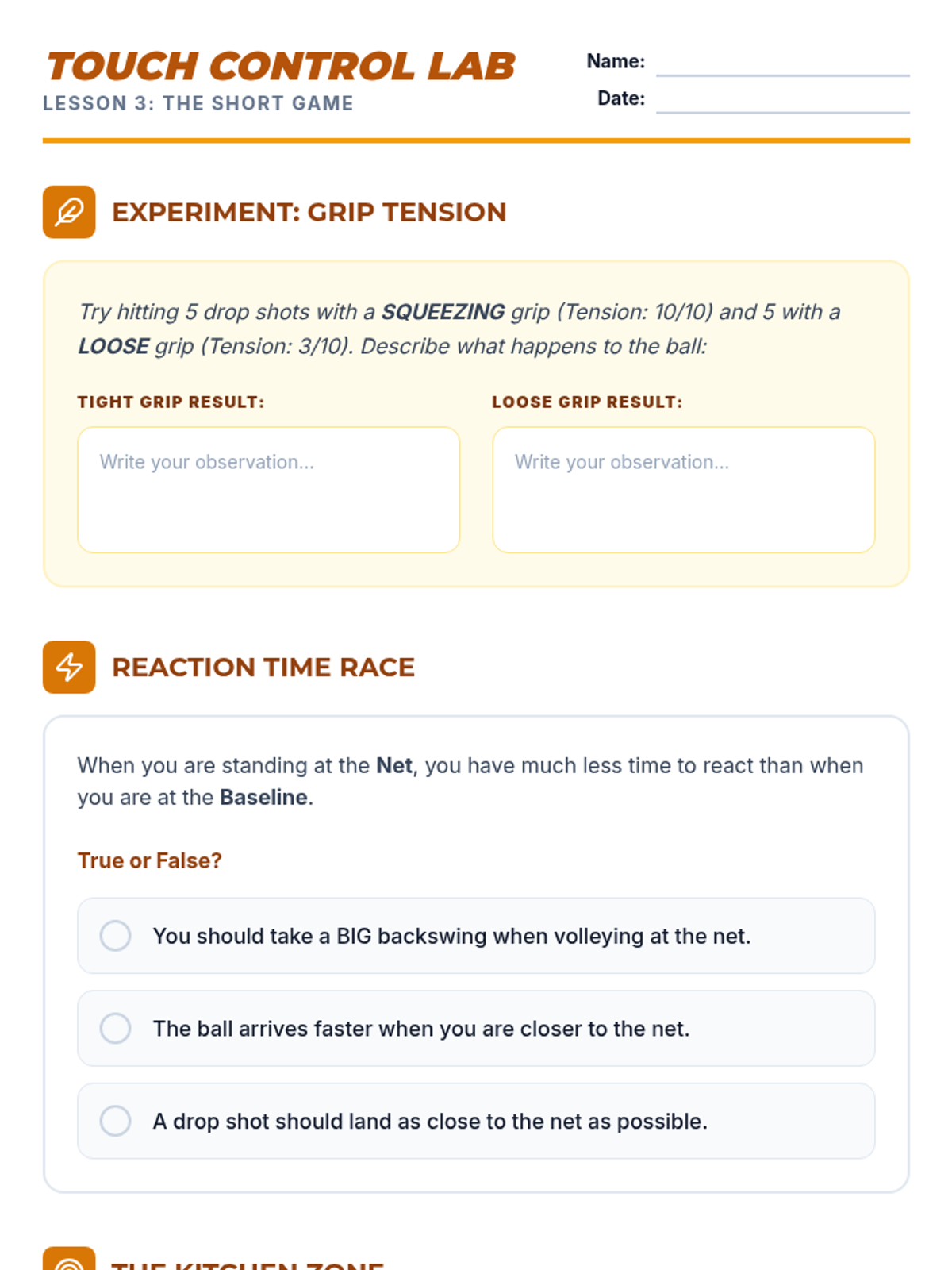
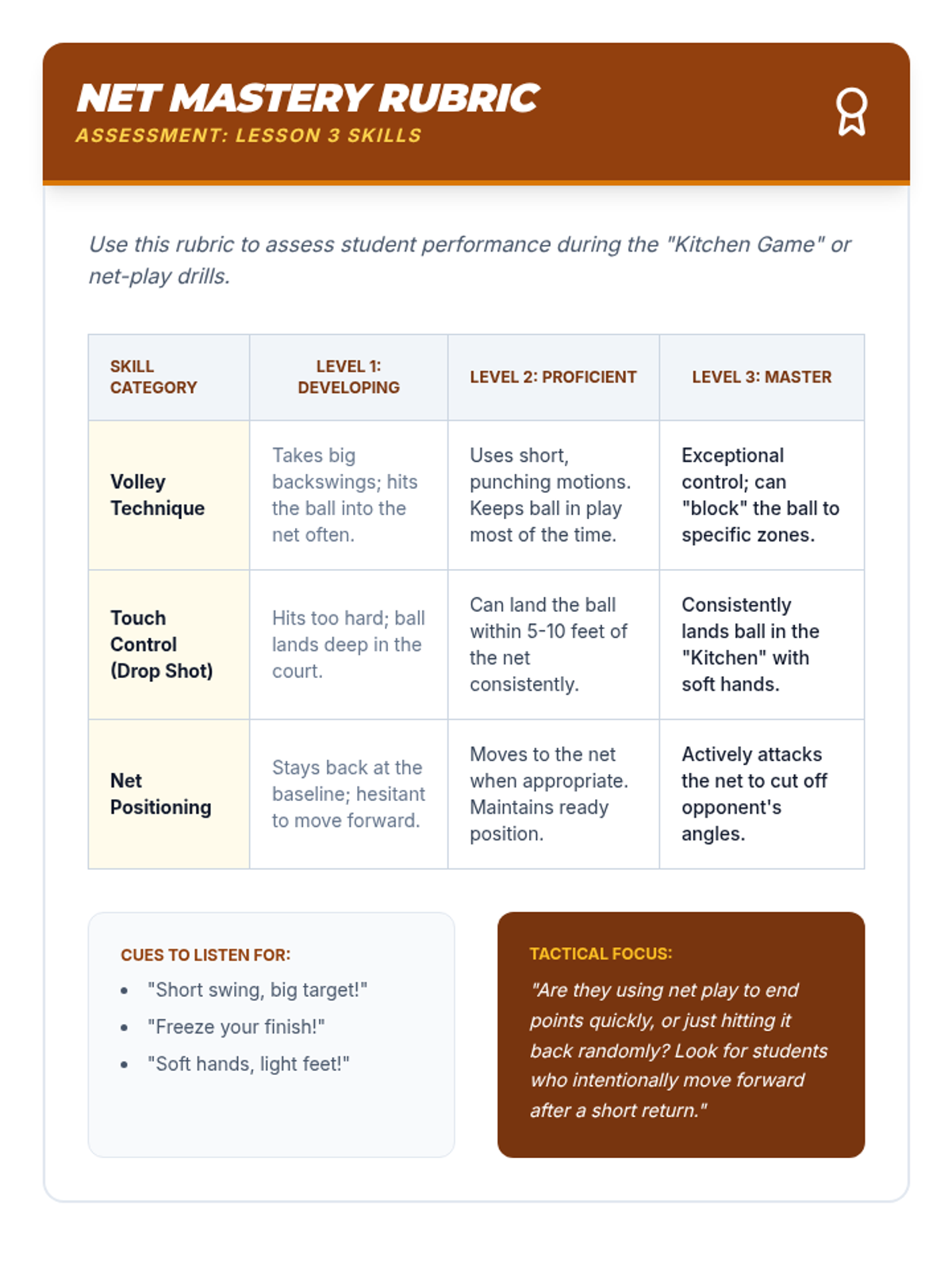
This lesson focuses on volleys and drop shots near the net, teaching students when to attack and how to use touch control.
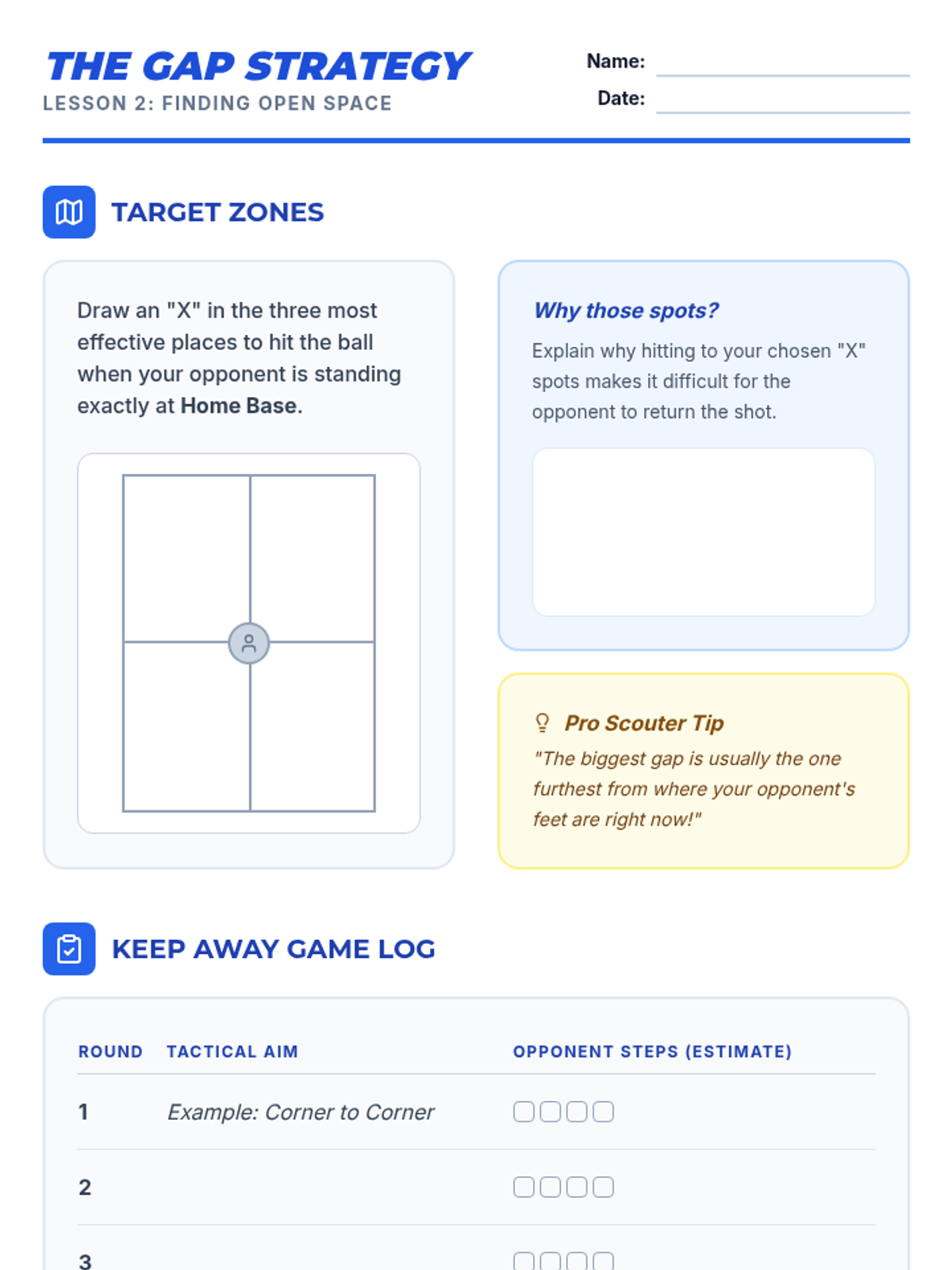
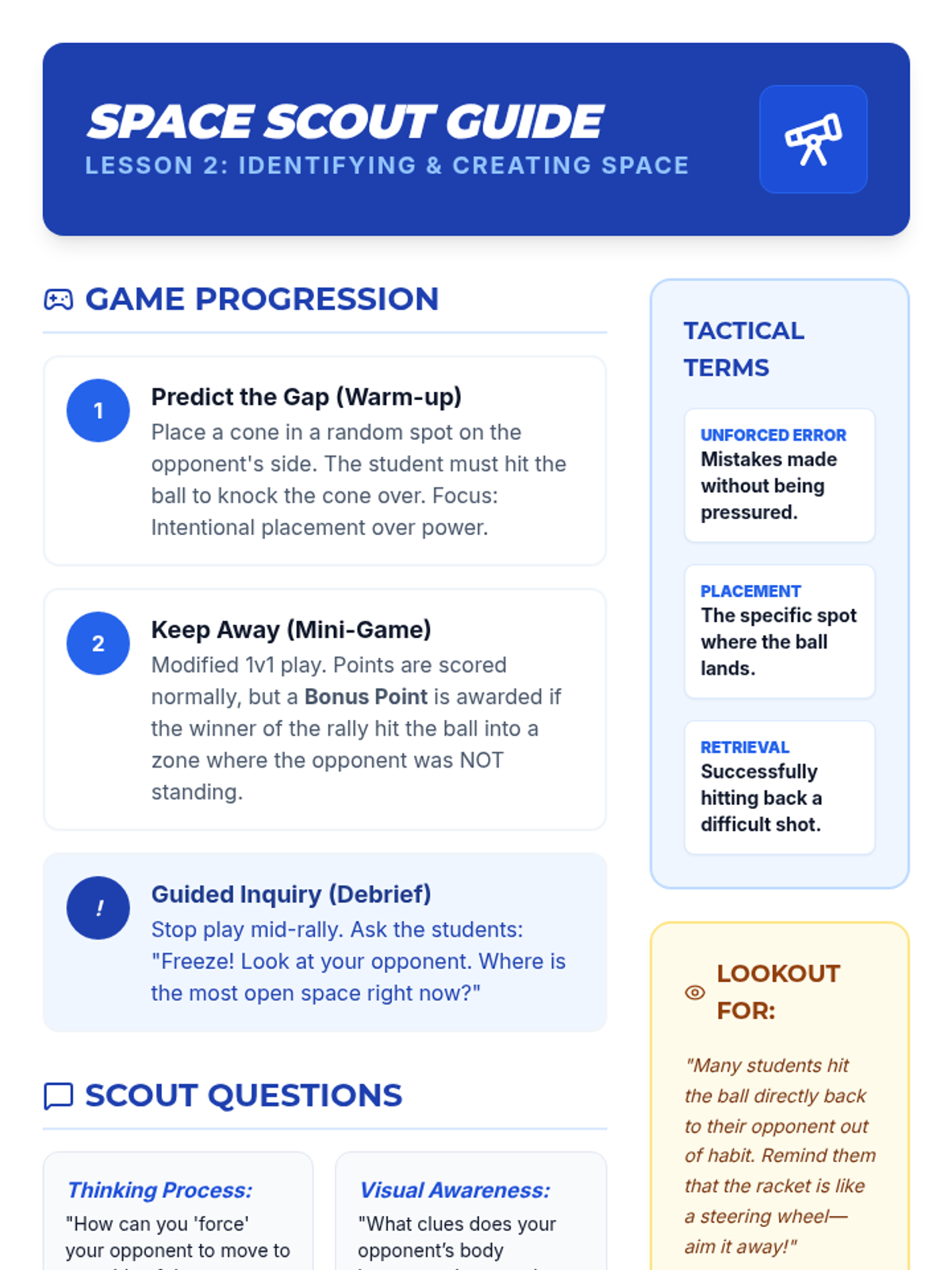
Learners analyze the court to identify undefended areas and practice hitting 'away' from the opponent to force movement.
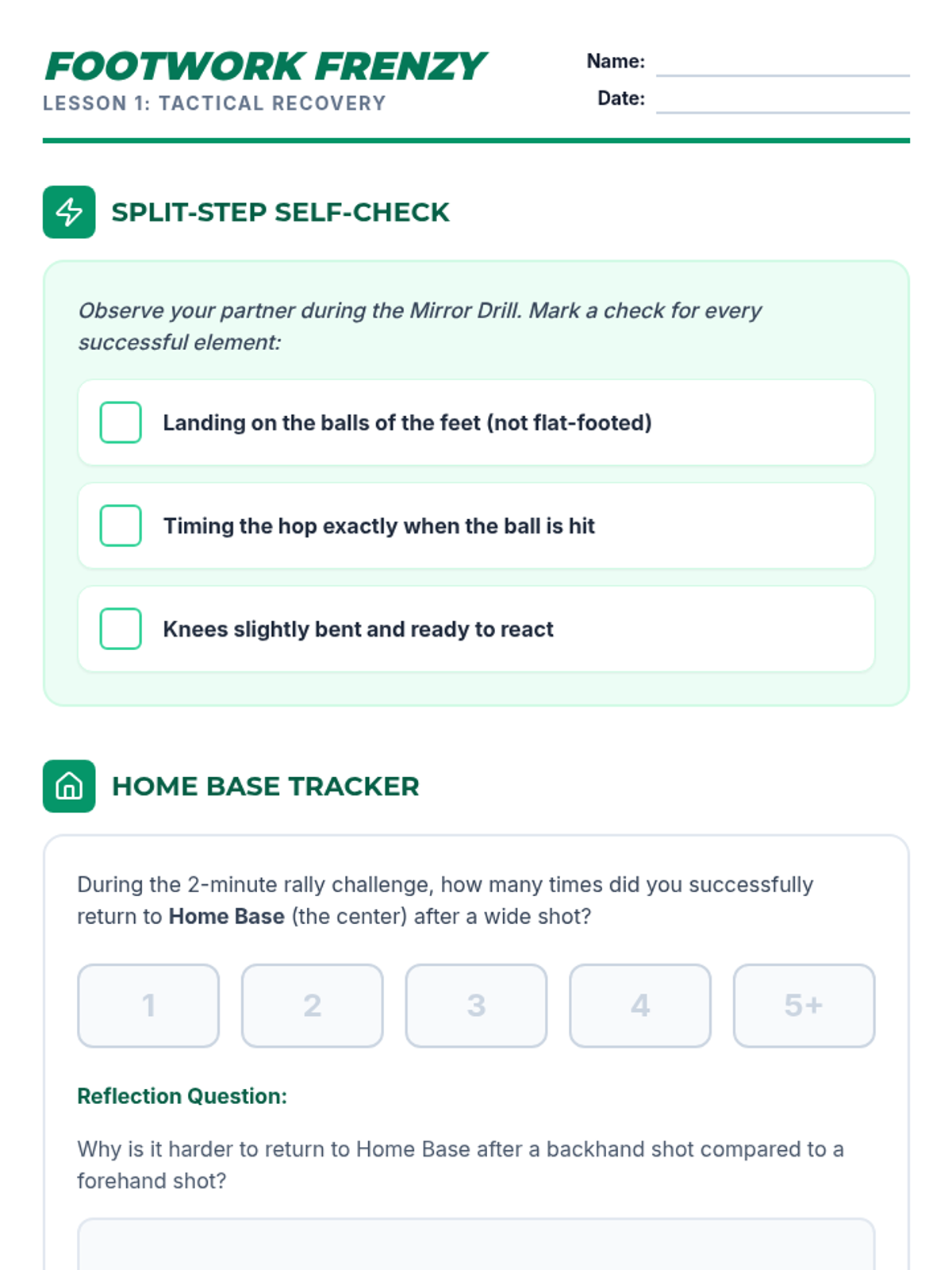
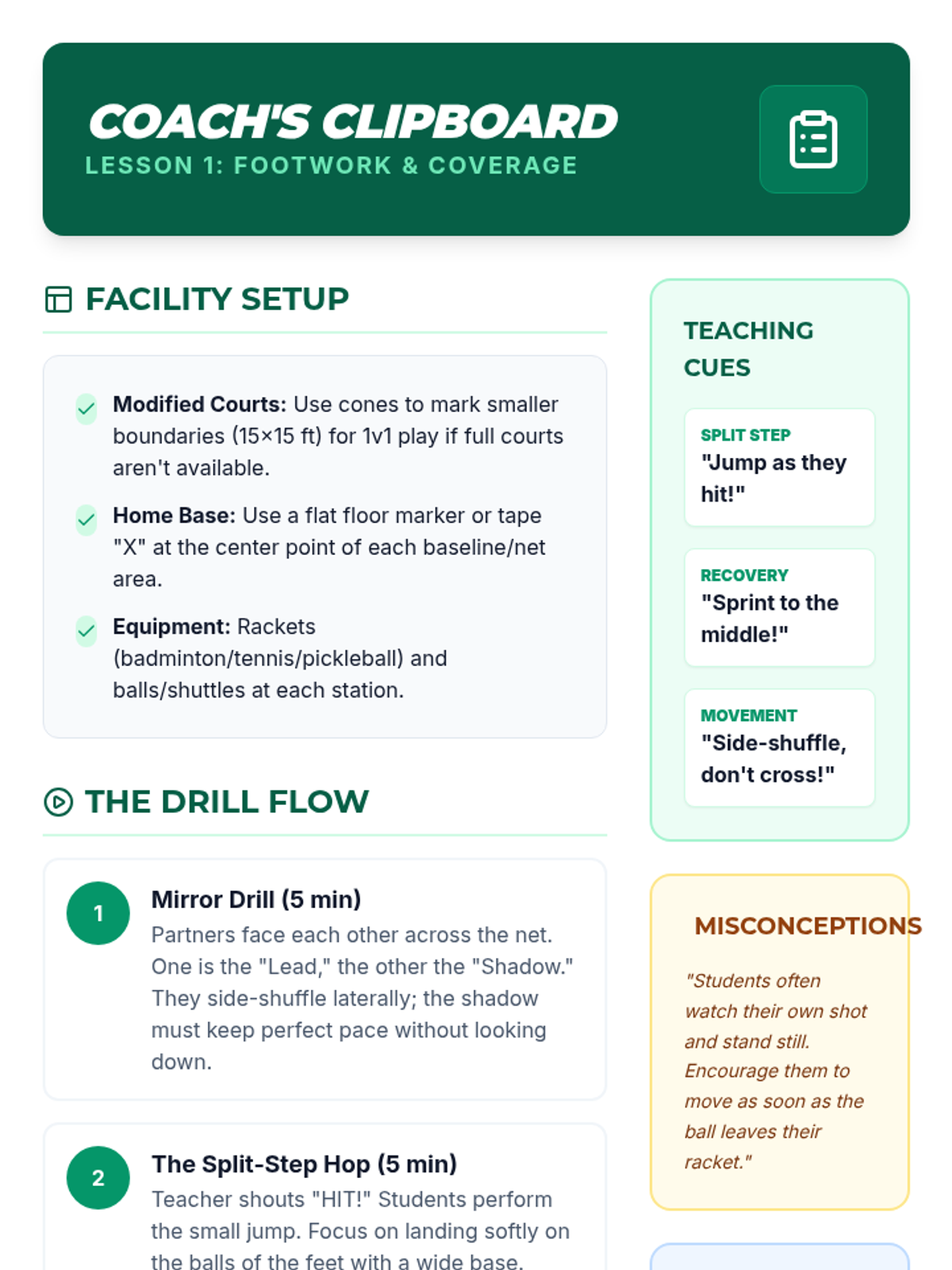
Students practice specific footwork techniques including the split-step and side-shuffle, focusing on returning to 'home base' after every shot.
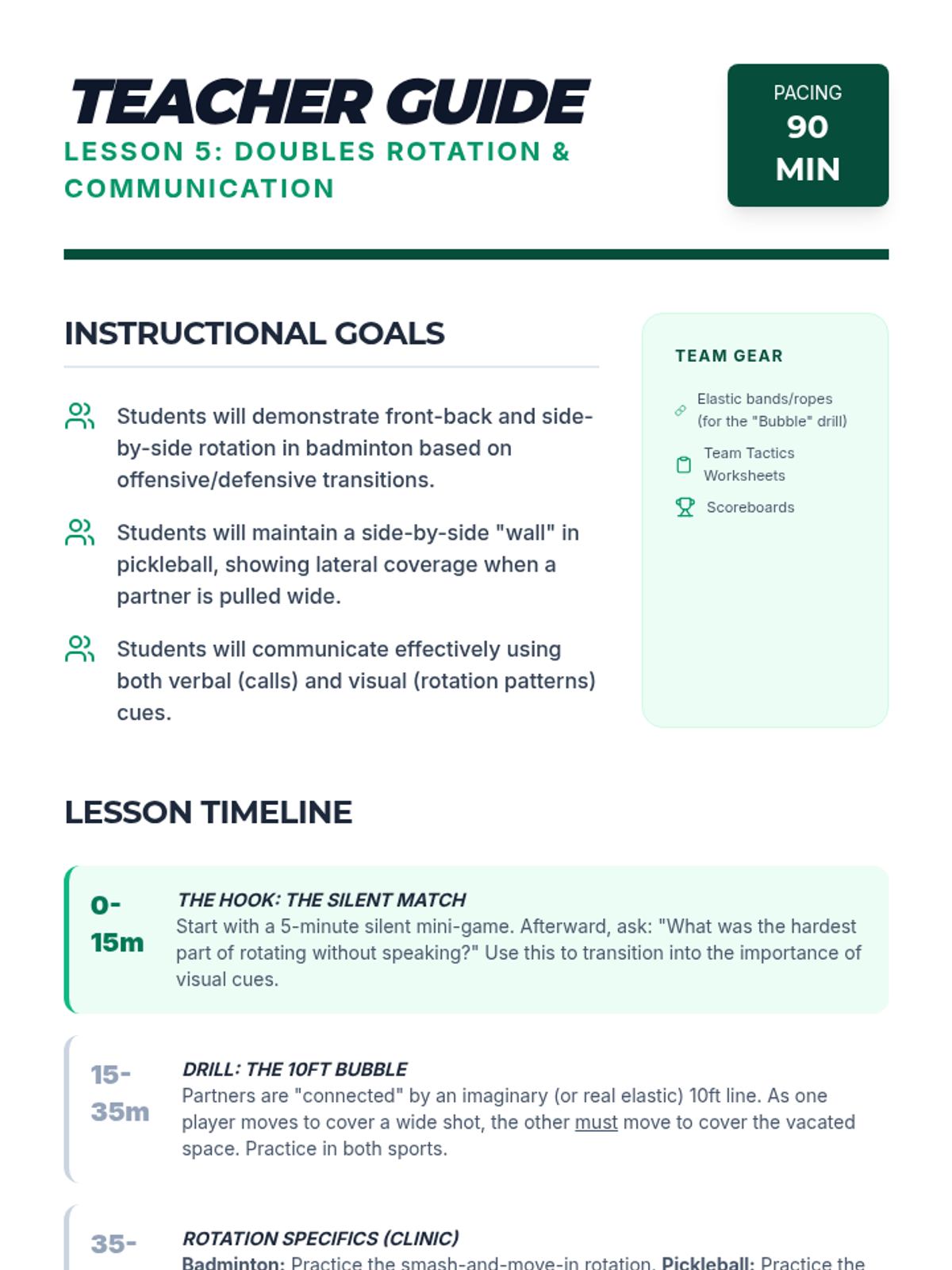
The sequence concludes with advanced doubles tactics, contrasting the front-back formation often used in badminton attacks with the side-by-side wall of pickleball. Students practice communicating switches and coverage areas in live play.
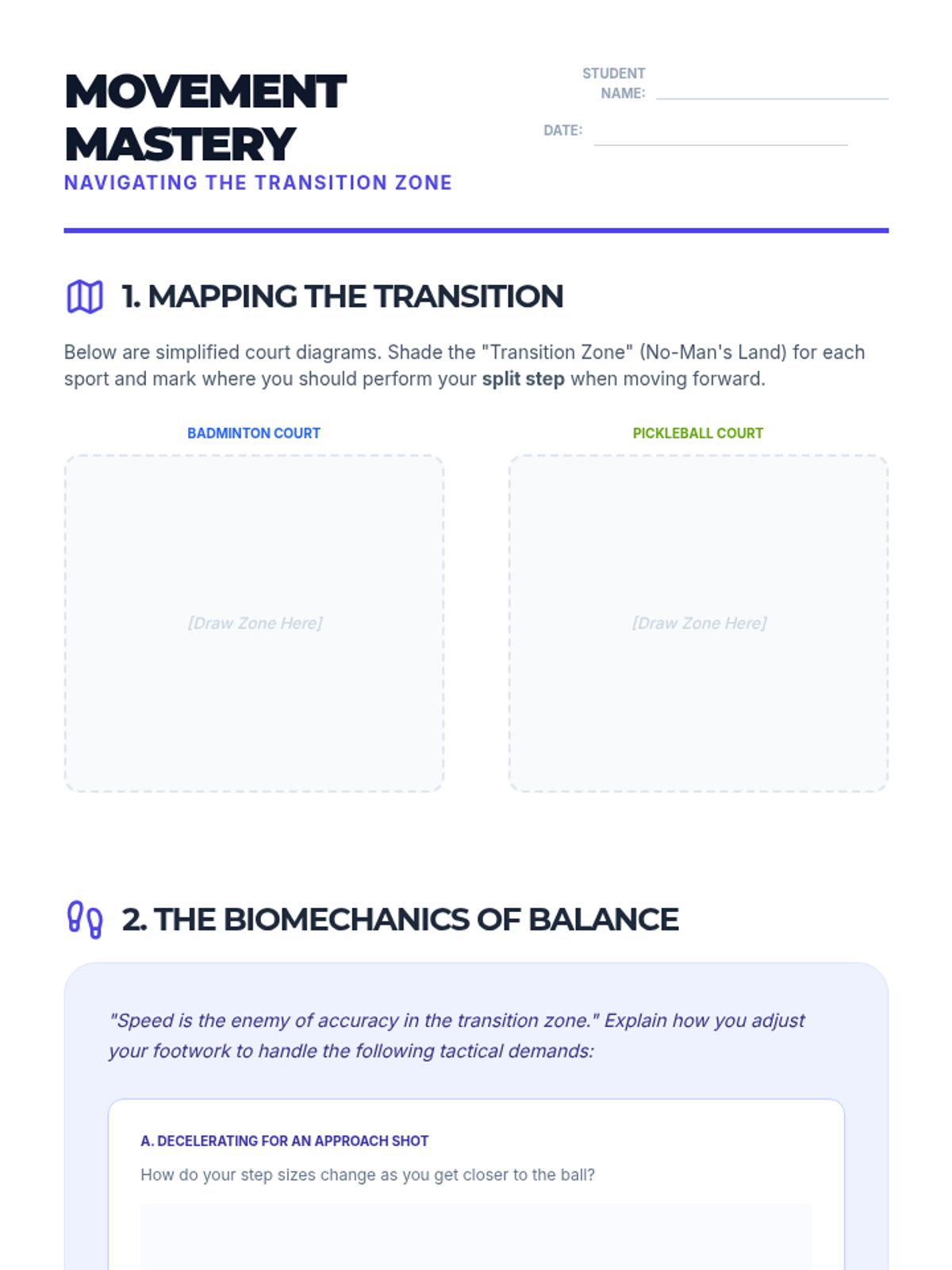
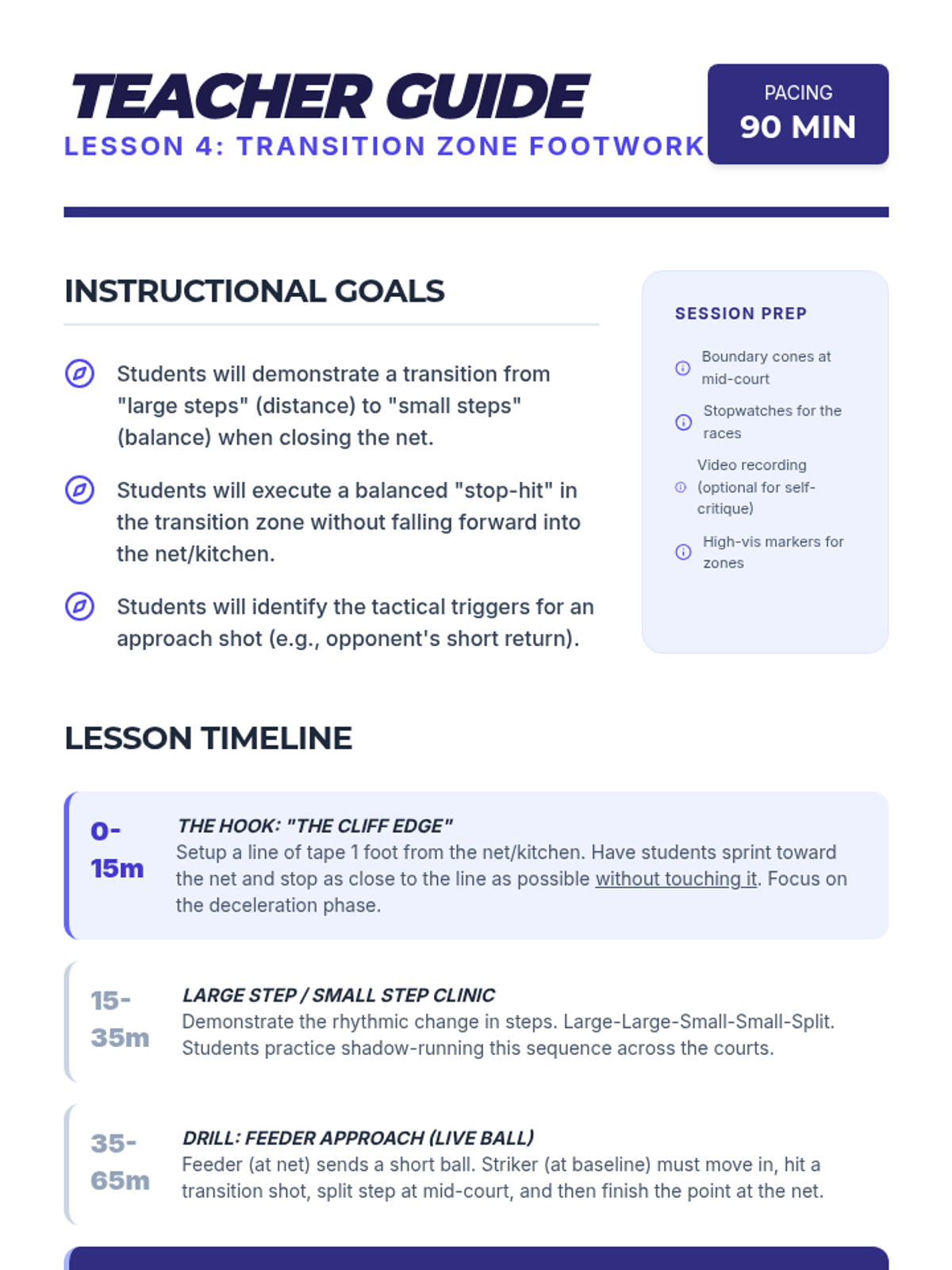
Students analyze the 'no-man's land' in both sports, learning how to move safely from the baseline to the net. The lesson breaks down approach shots and the specific footwork needed to close the gap without being lobbed or passed.
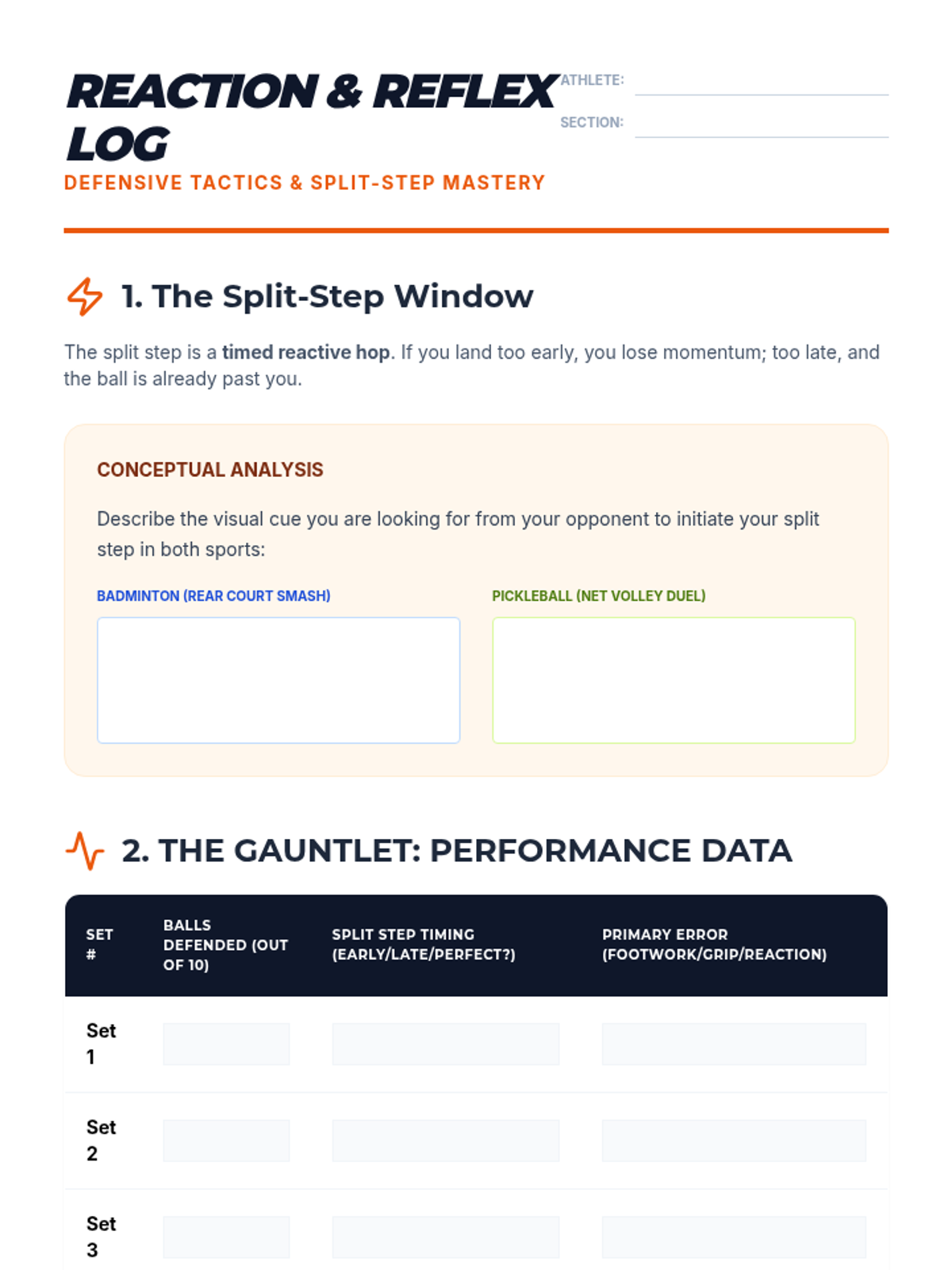
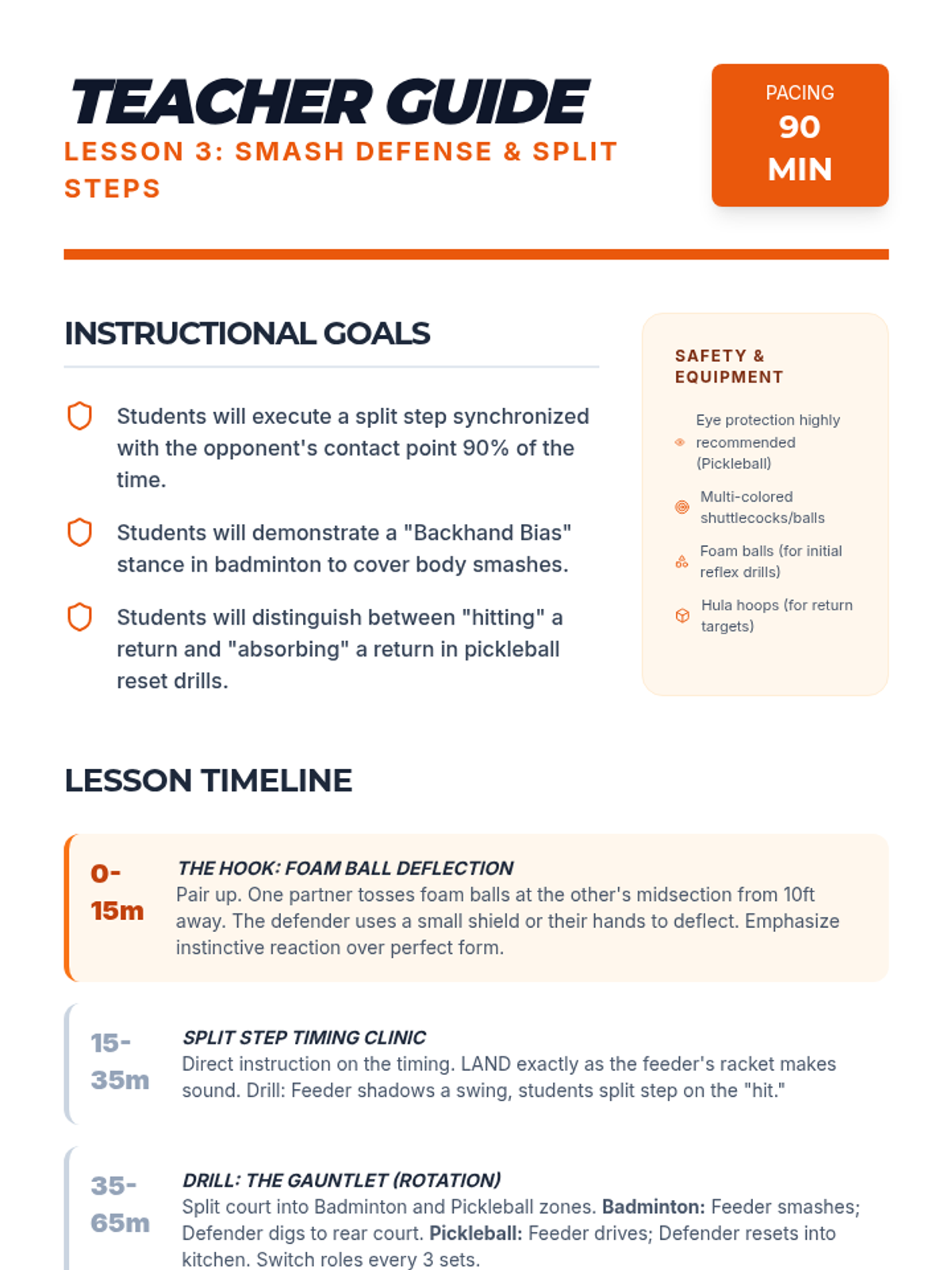
This lesson focuses on defensive transitions, specifically the split step required right before an opponent contacts the ball. Drills cover digging smashes in badminton and resetting hard volleys in pickleball.
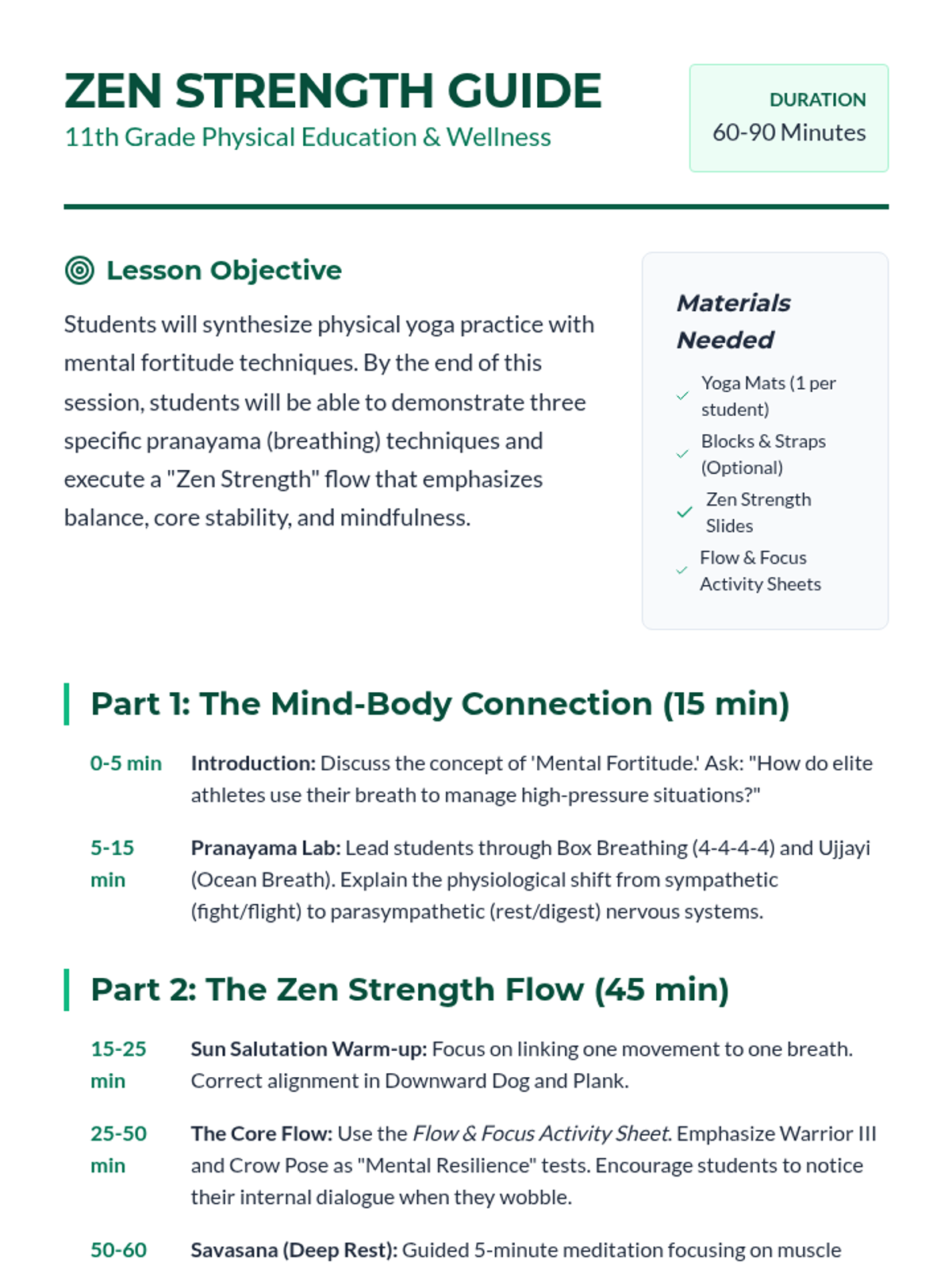
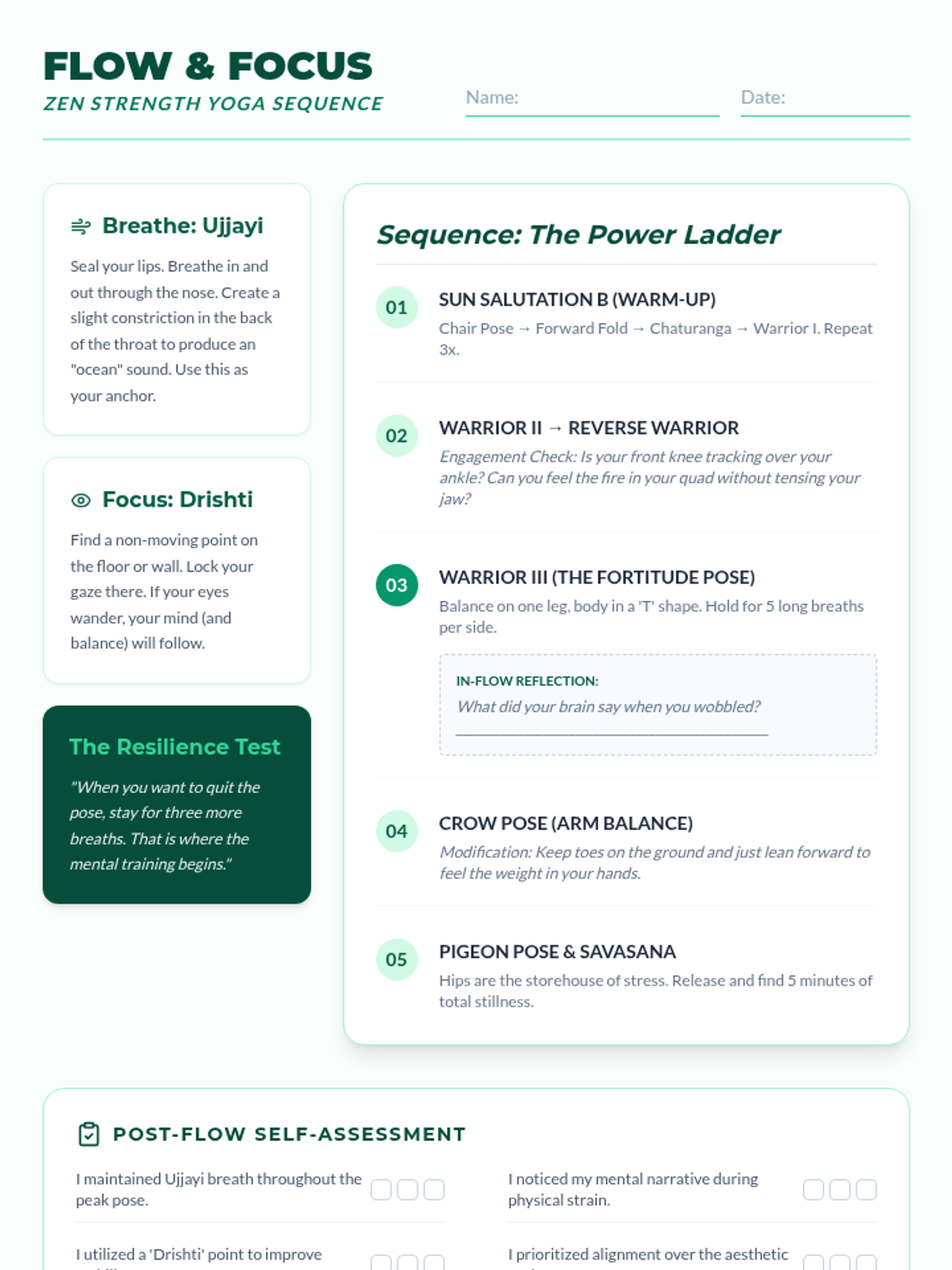
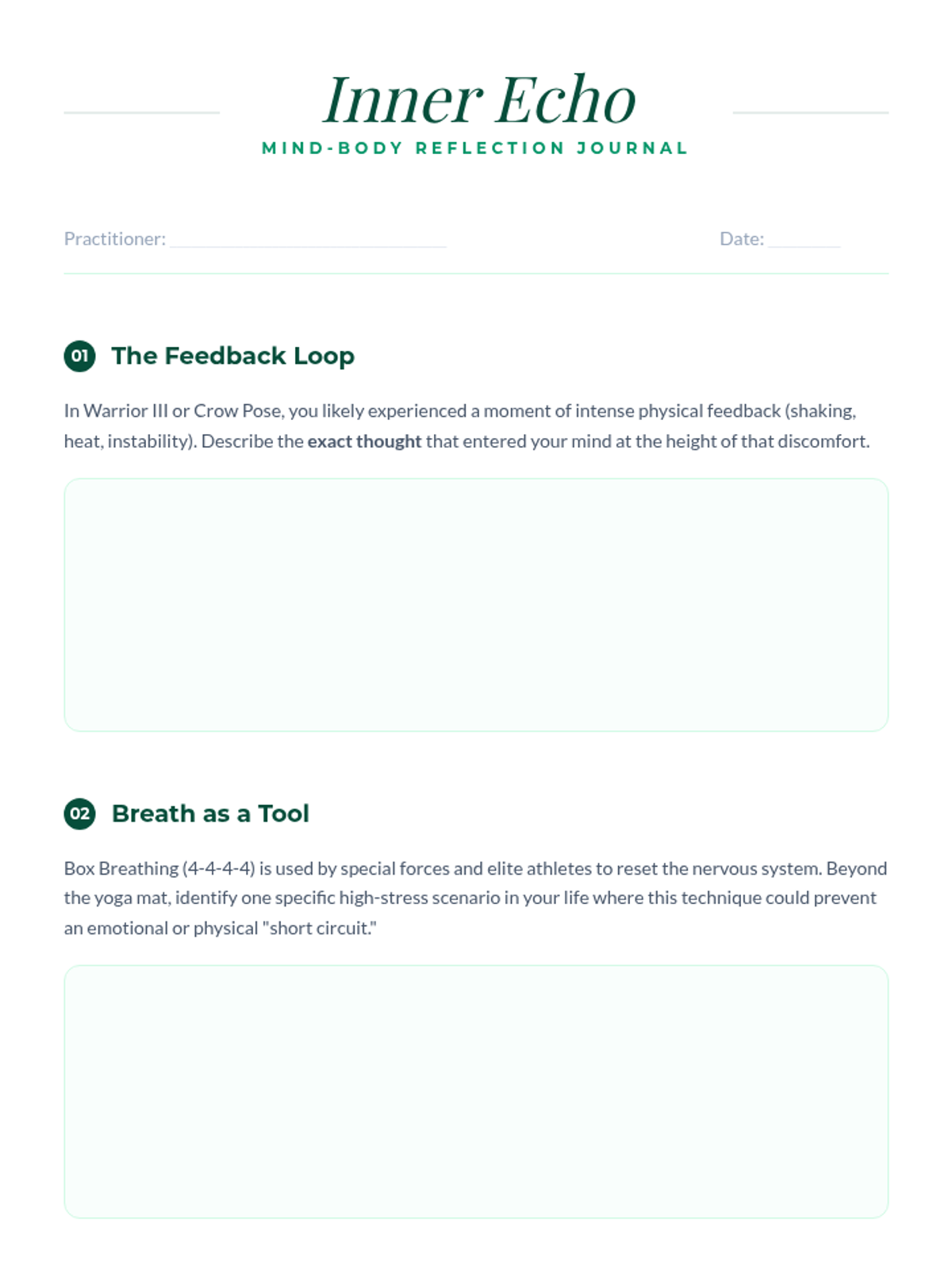
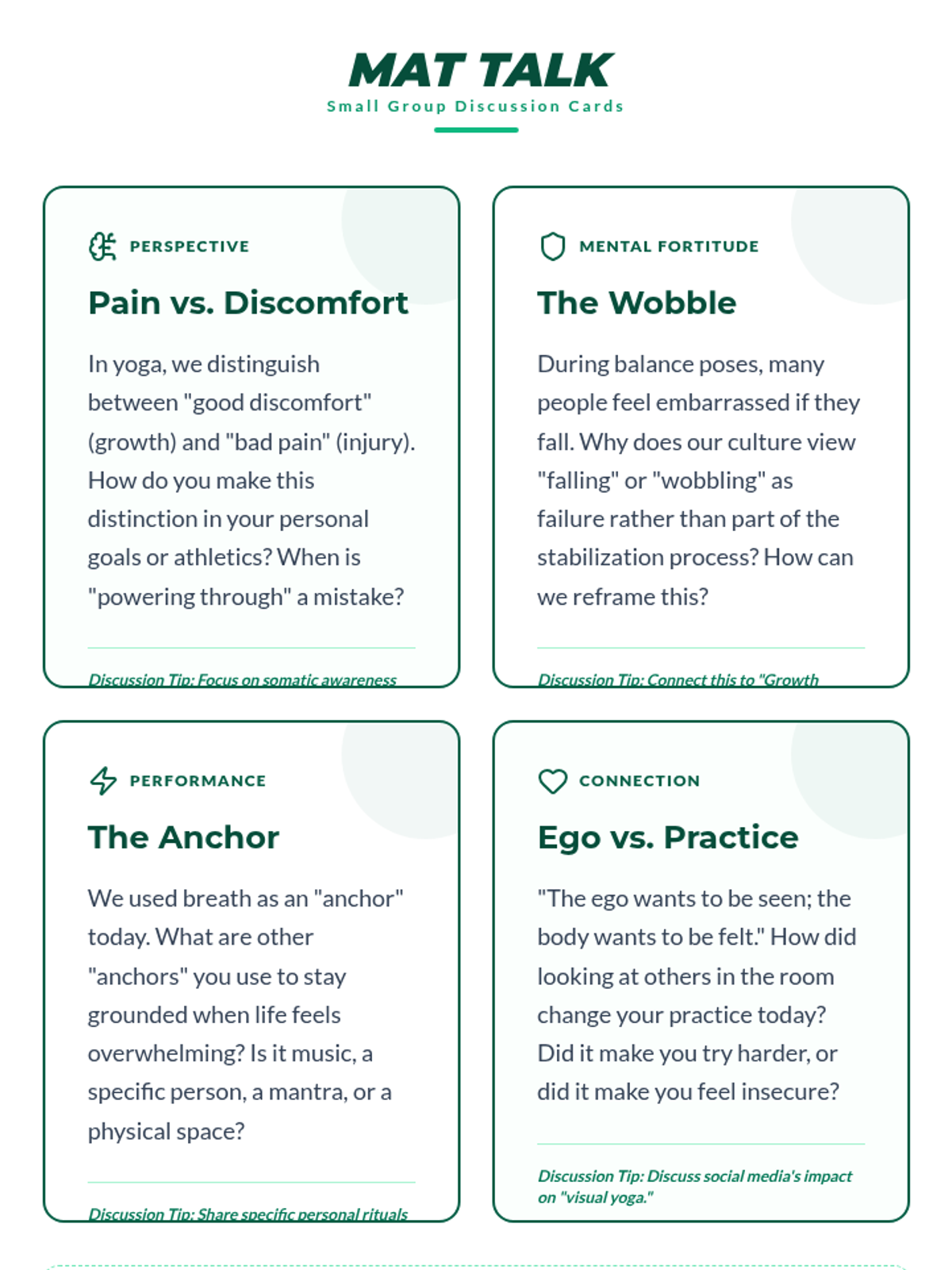
An advanced yoga lesson for 11th graders focusing on the intersection of physical posture and mental resilience. Students explore breathing techniques and a 'Zen Strength' flow designed to enhance athletic performance and stress management.
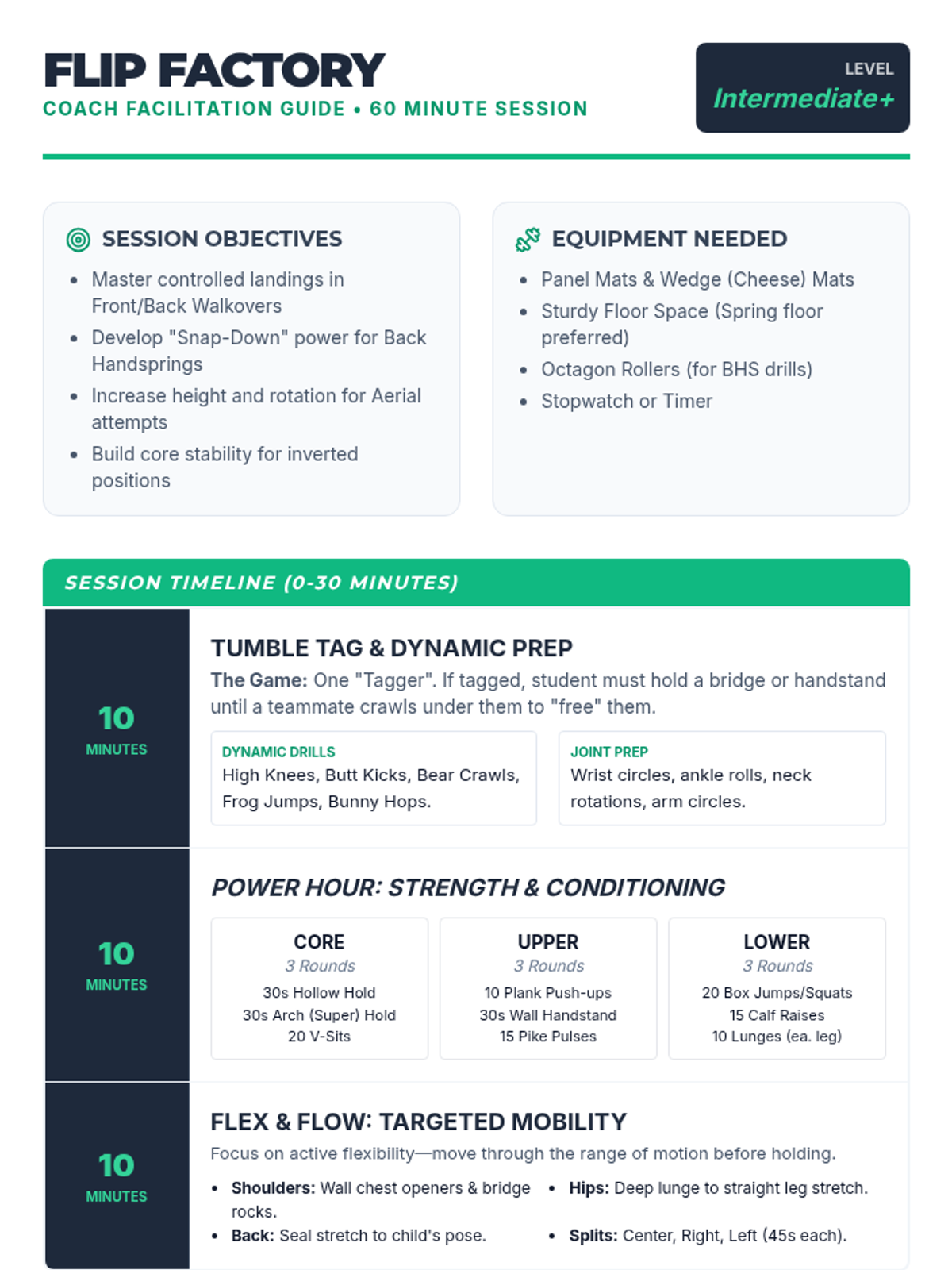
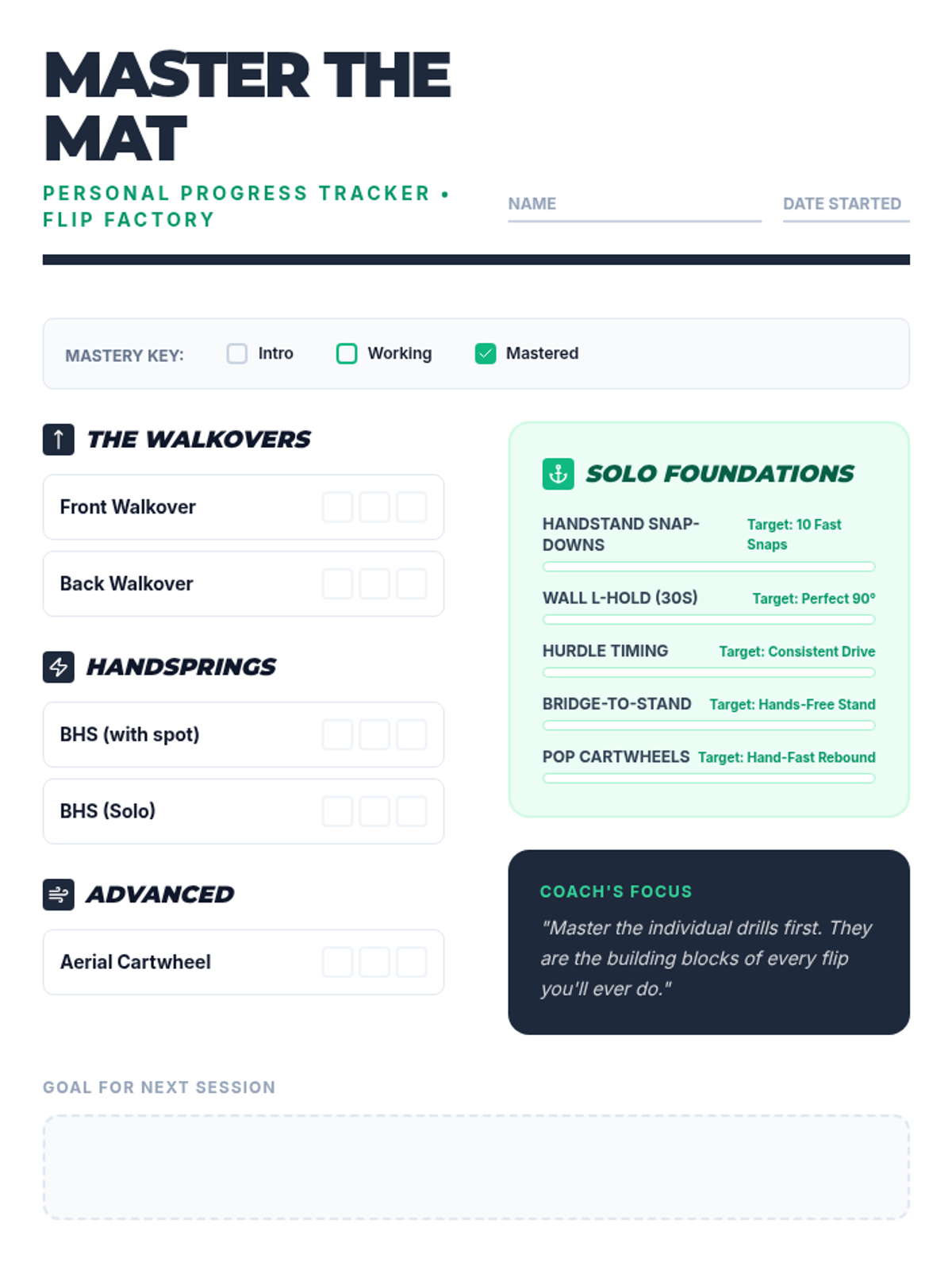
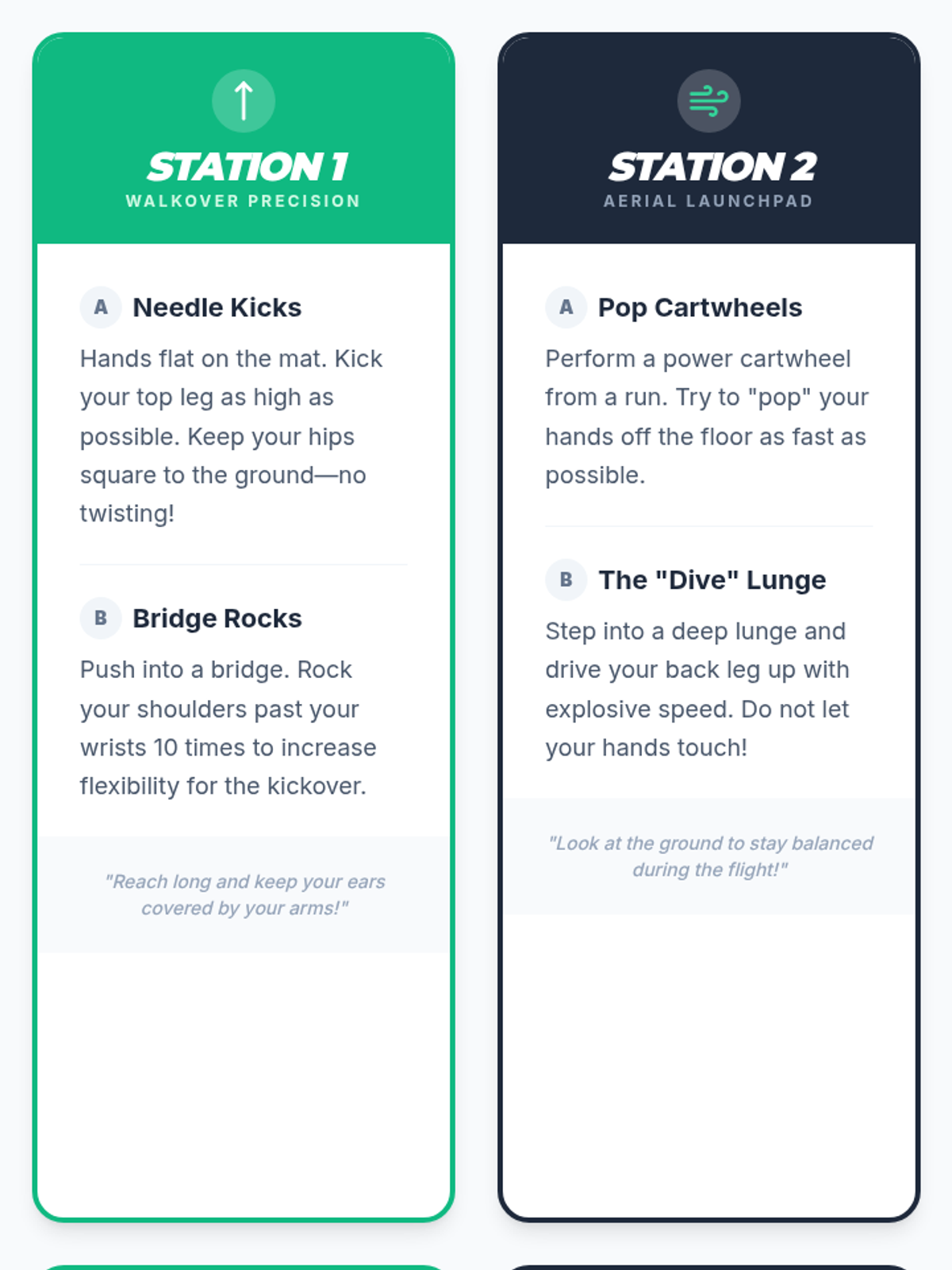
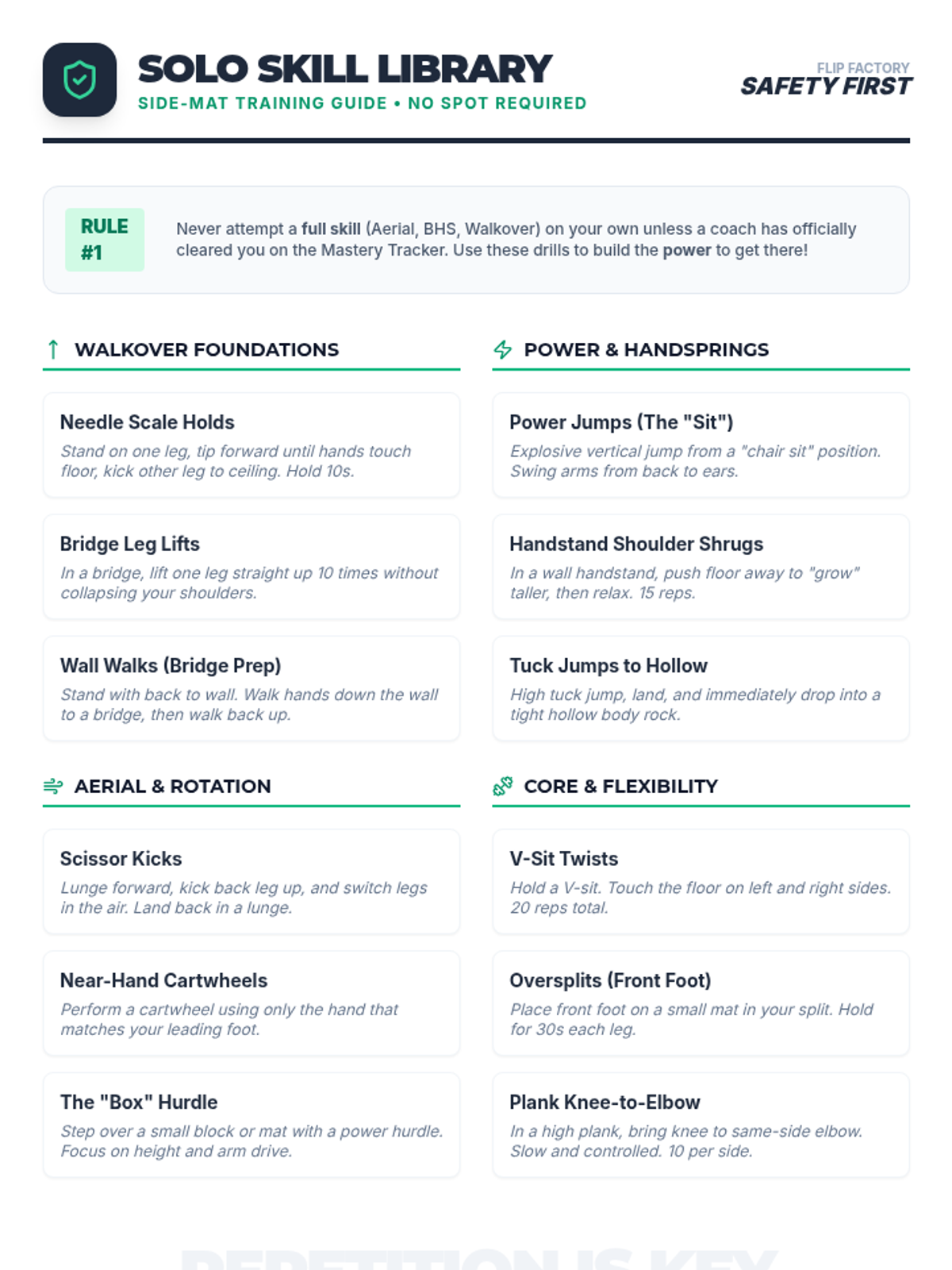
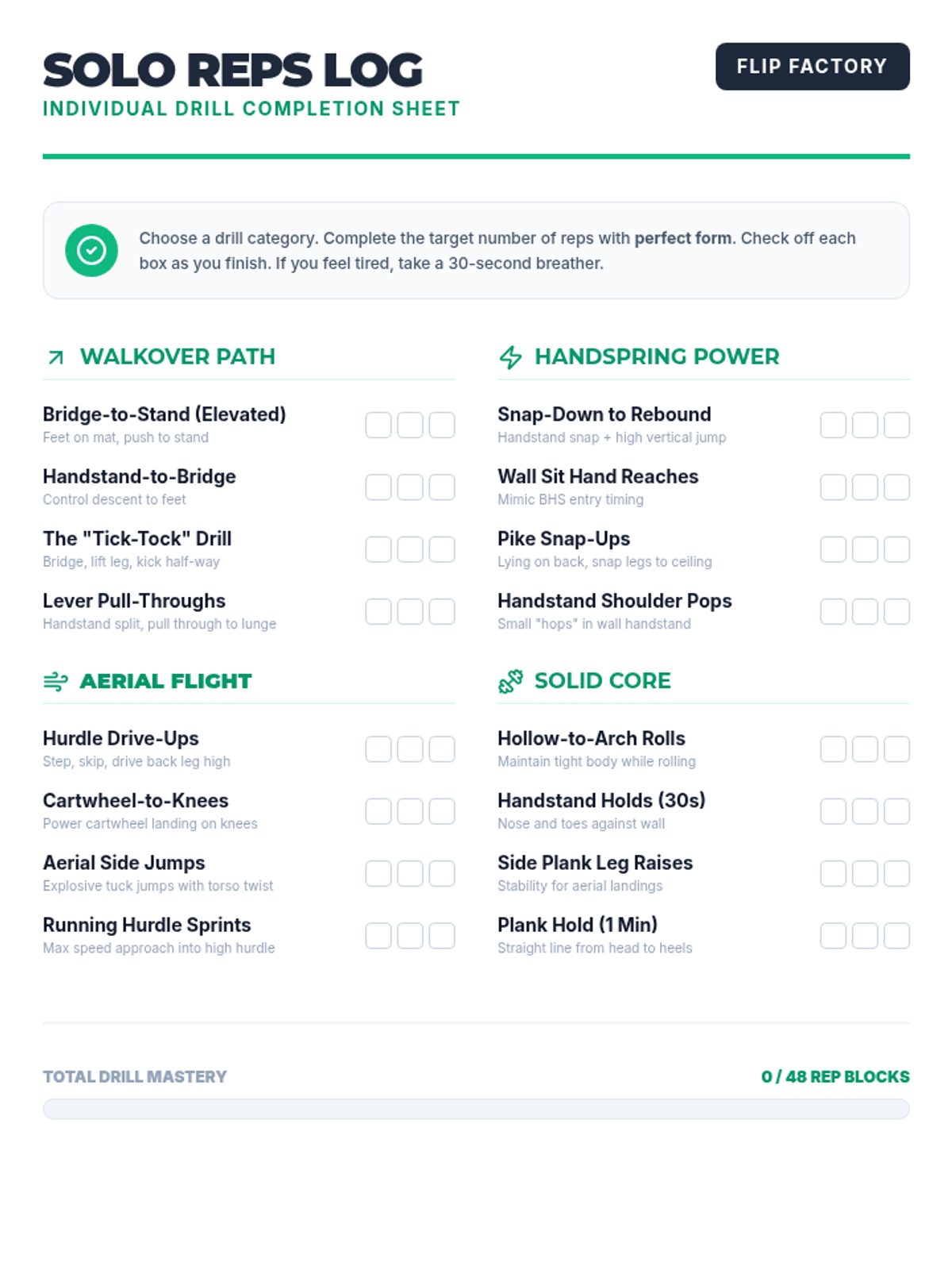
A high-energy 60-minute tumbling lesson focused on intermediate to advanced floor skills including walkovers, handsprings, and aerials. Includes a comprehensive coach guide, visual drills, and a student progress tracker.
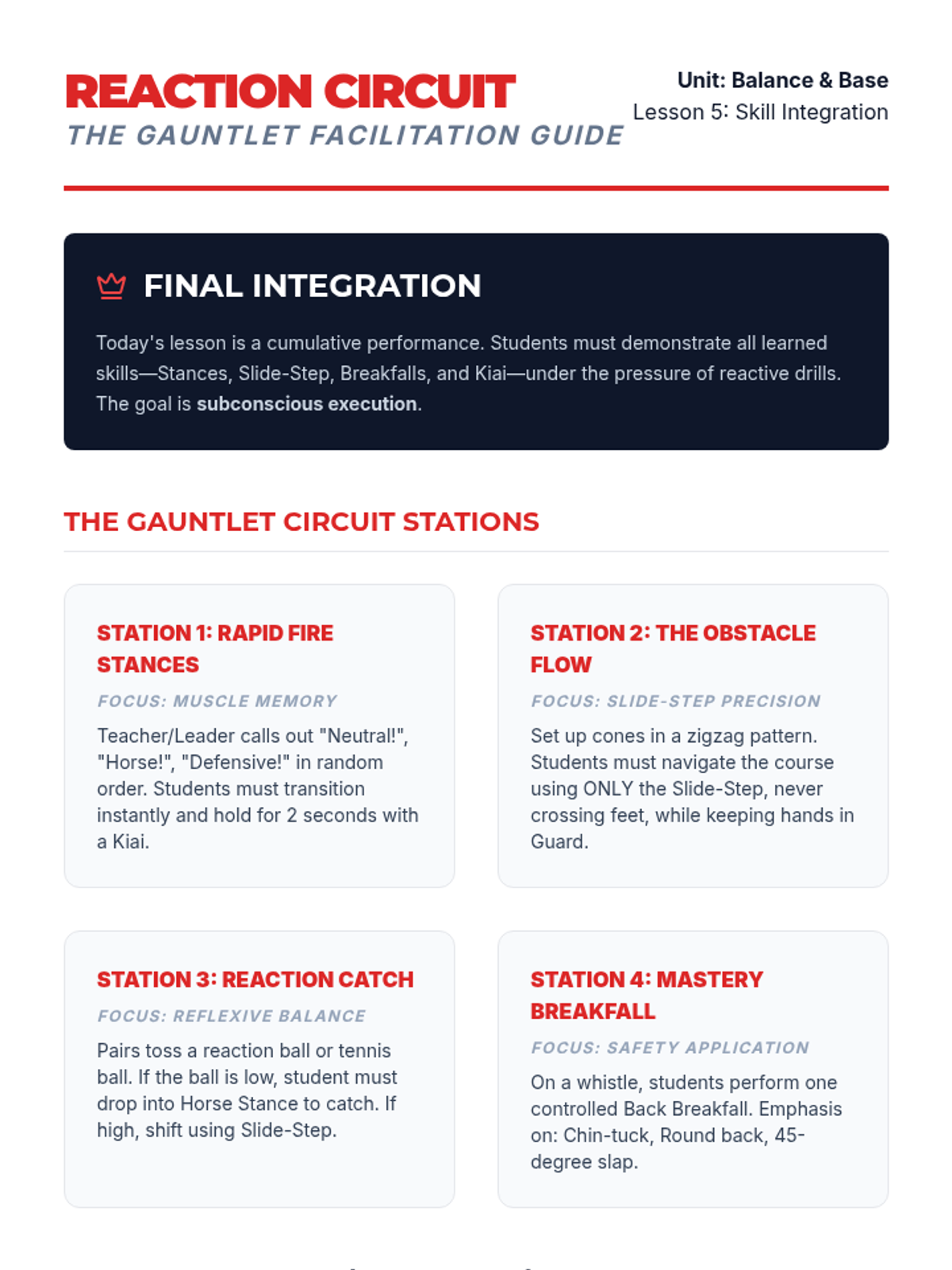
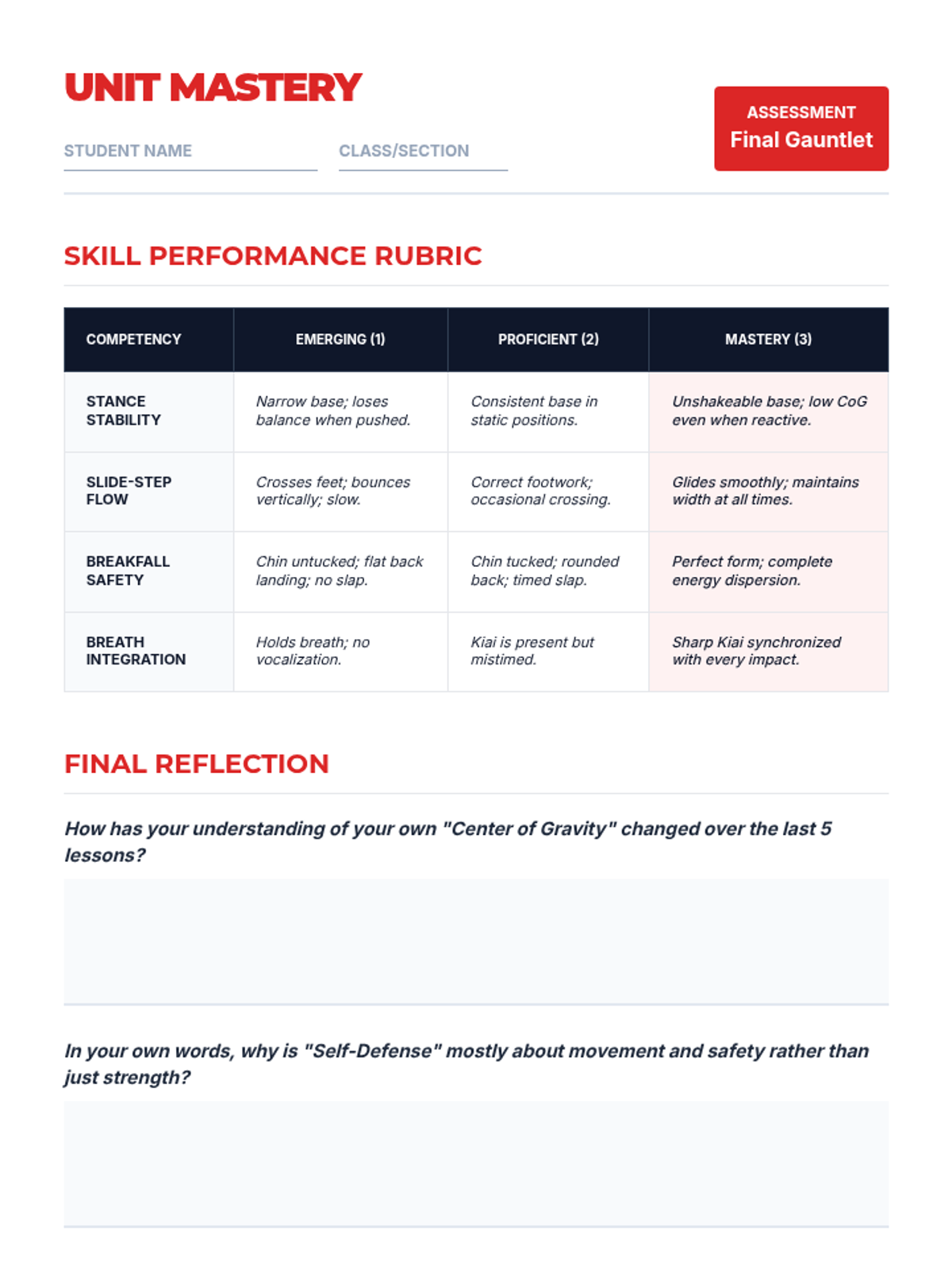
A high-energy culmination of the unit where students combine stances, footwork, and breath in reaction-based drills and agility circuits to improve motor recall.
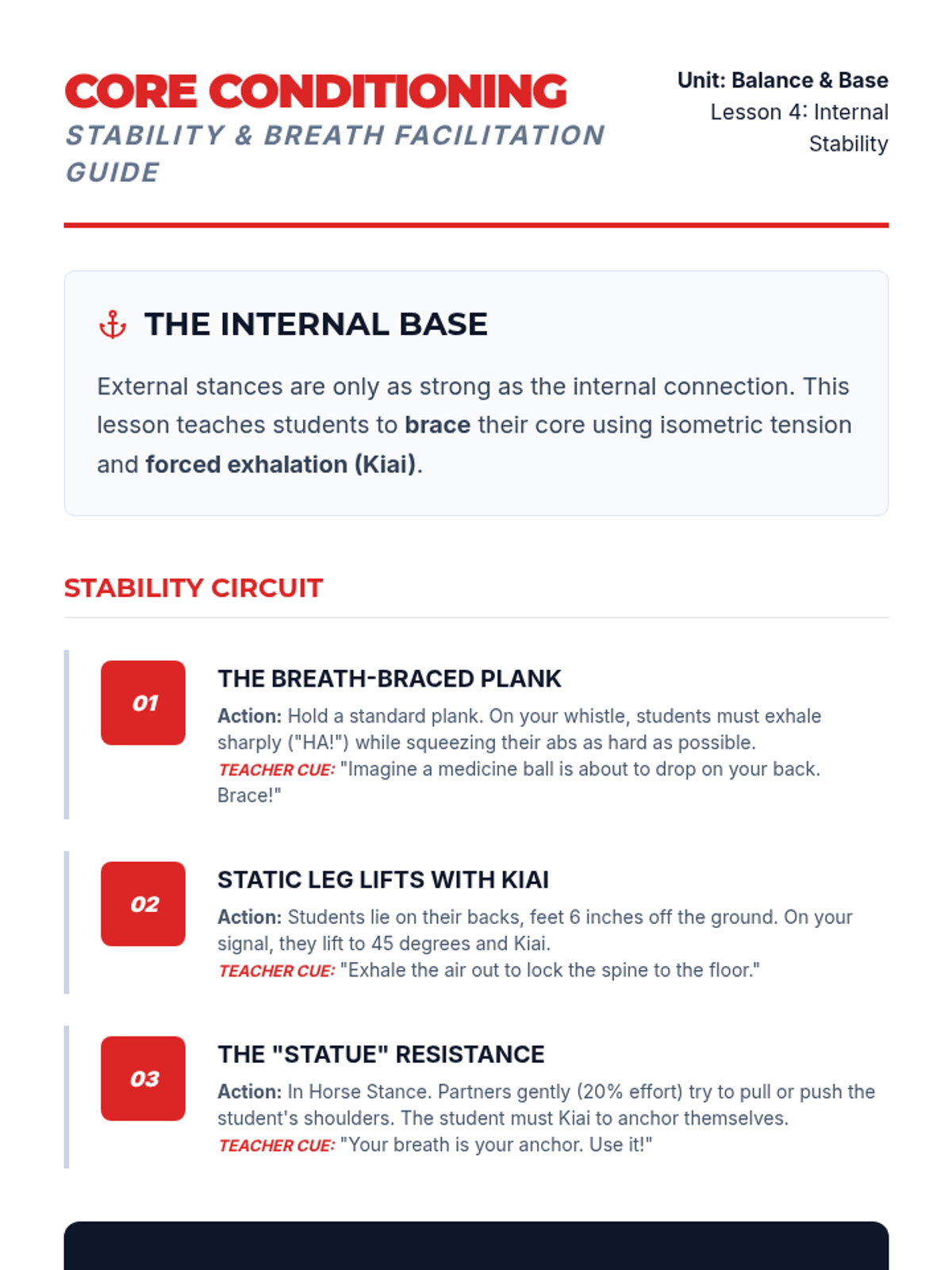
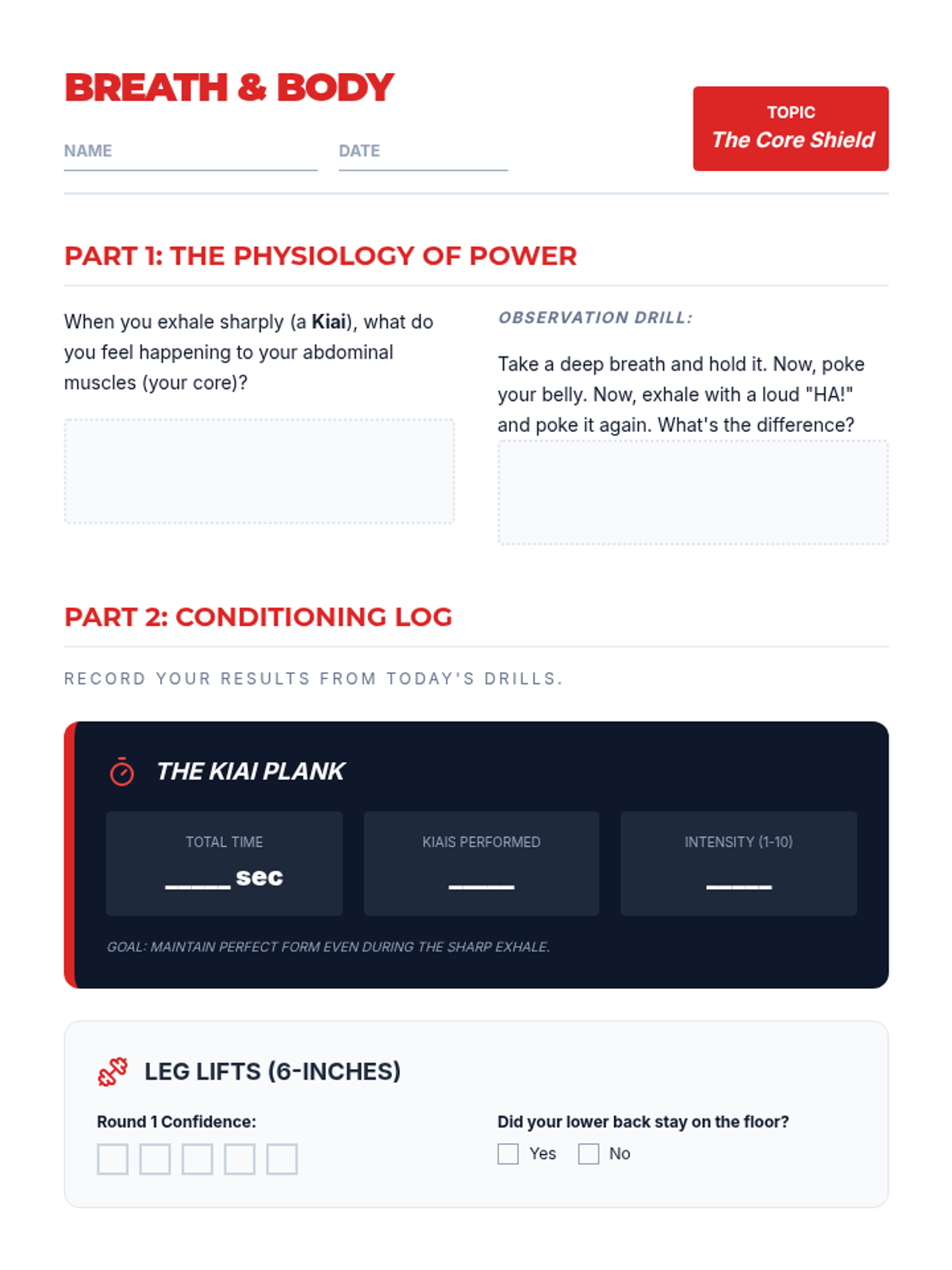
This lesson integrates isometric exercises and kiai breathing techniques to tighten the core during exertion, synchronizing breath with muscular contraction for stability.
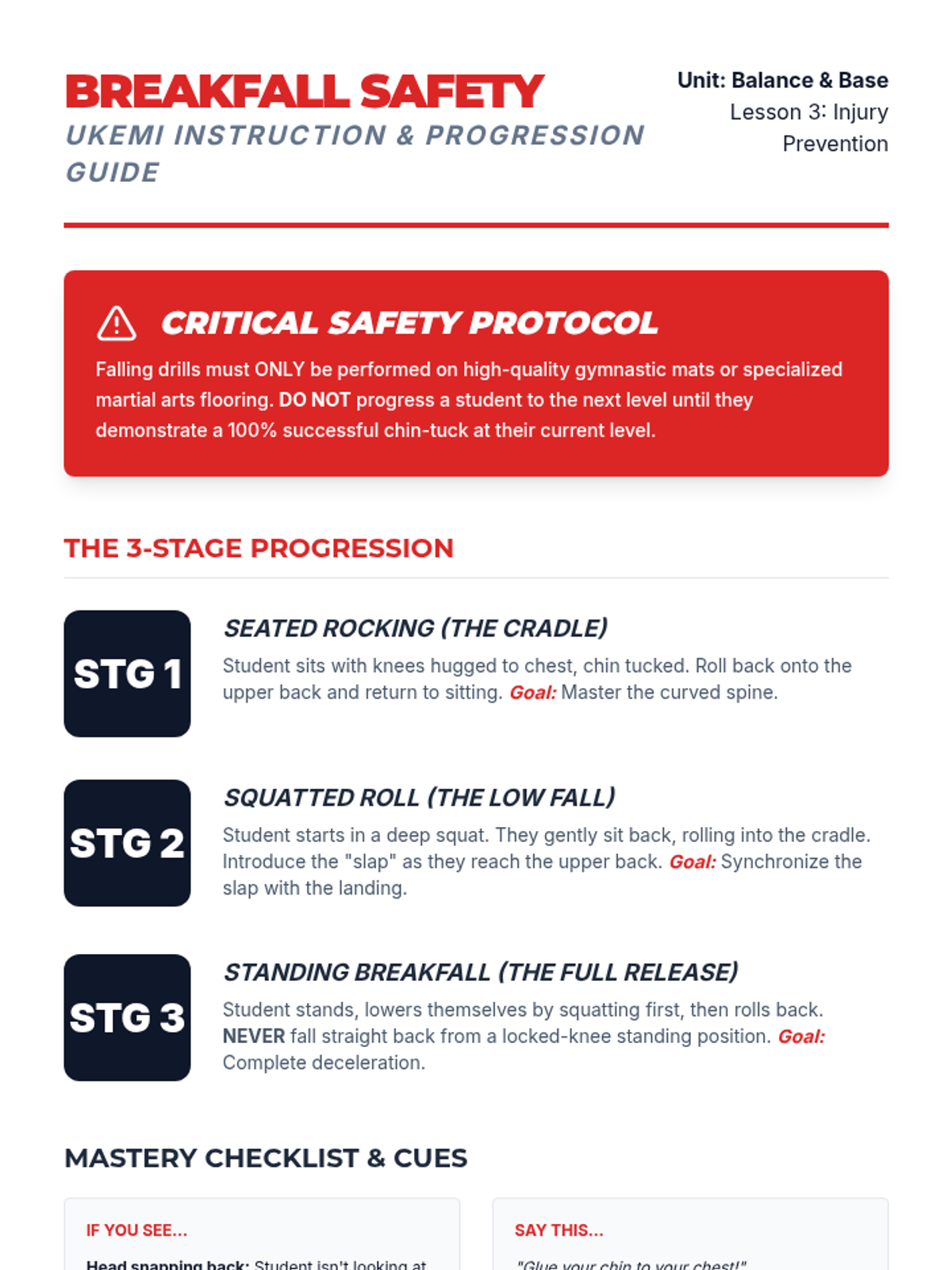
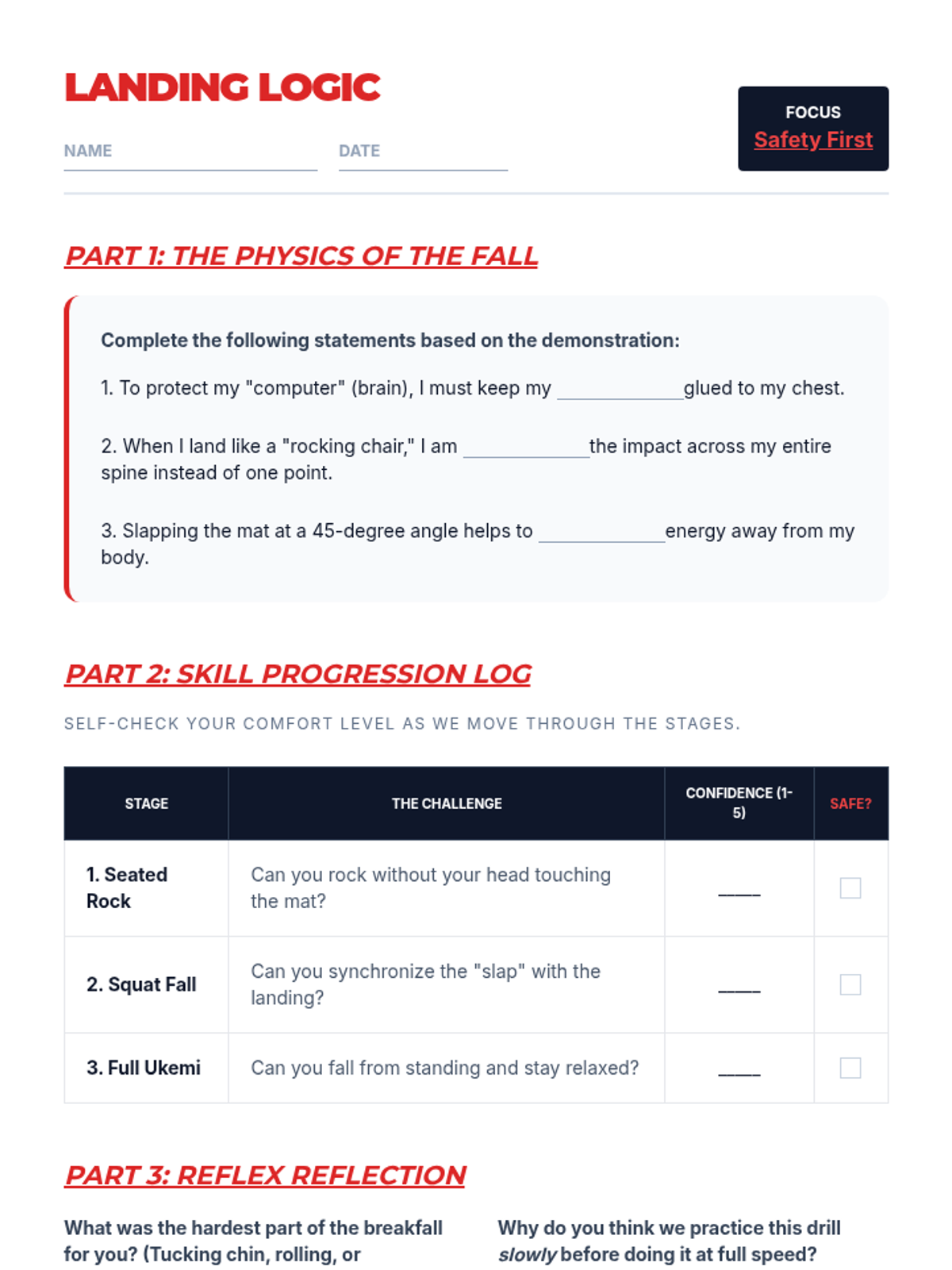
Students learn the mechanics of dispersing impact when falling (Ukemi), focusing on tucking the chin, rounding the back, and using 'slaps' to absorb shock safely.
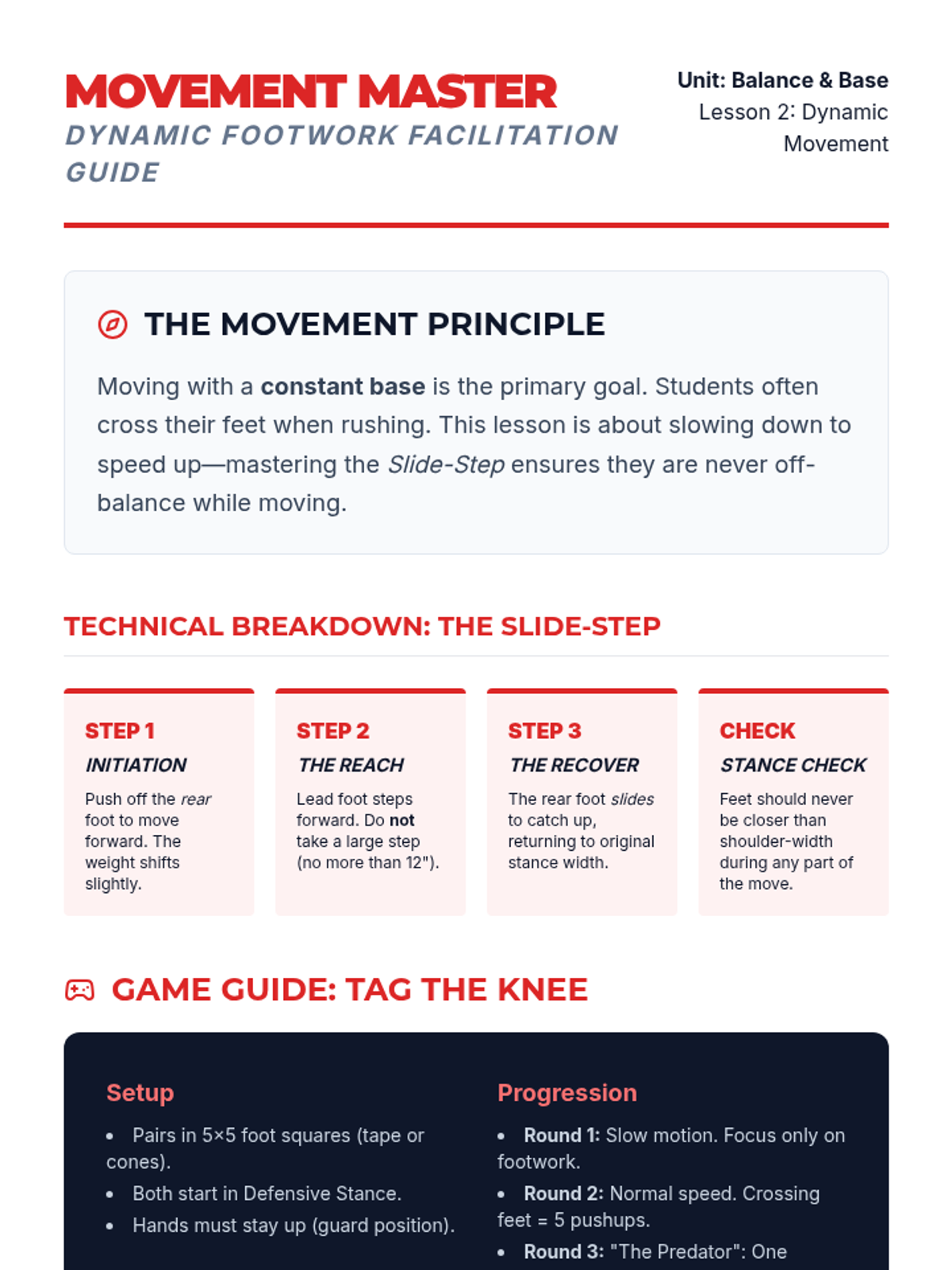
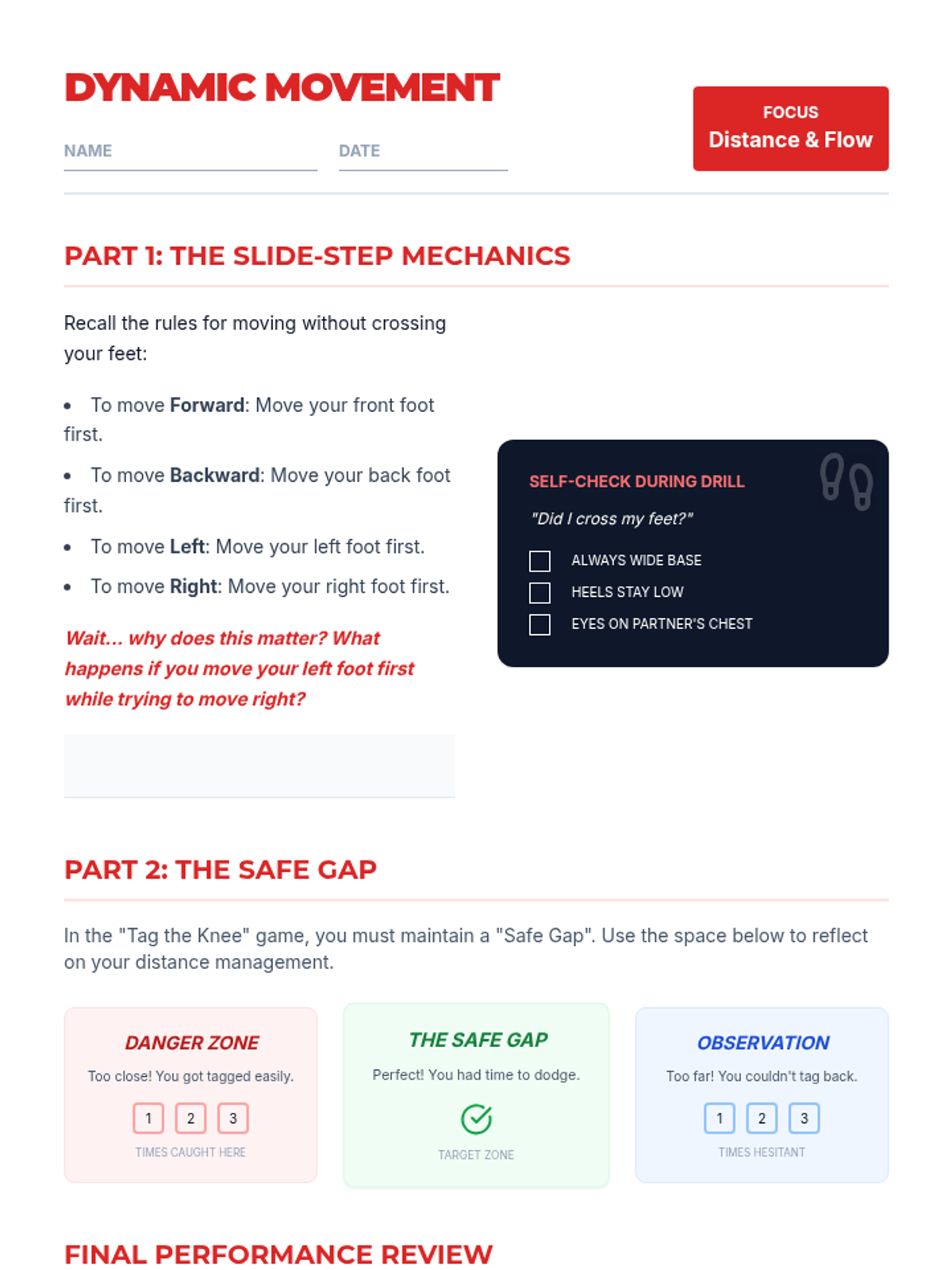
Focusing on the 'slide-step' and pivot, students practice moving without crossing their feet to maintain readiness and manage distance from potential threats.
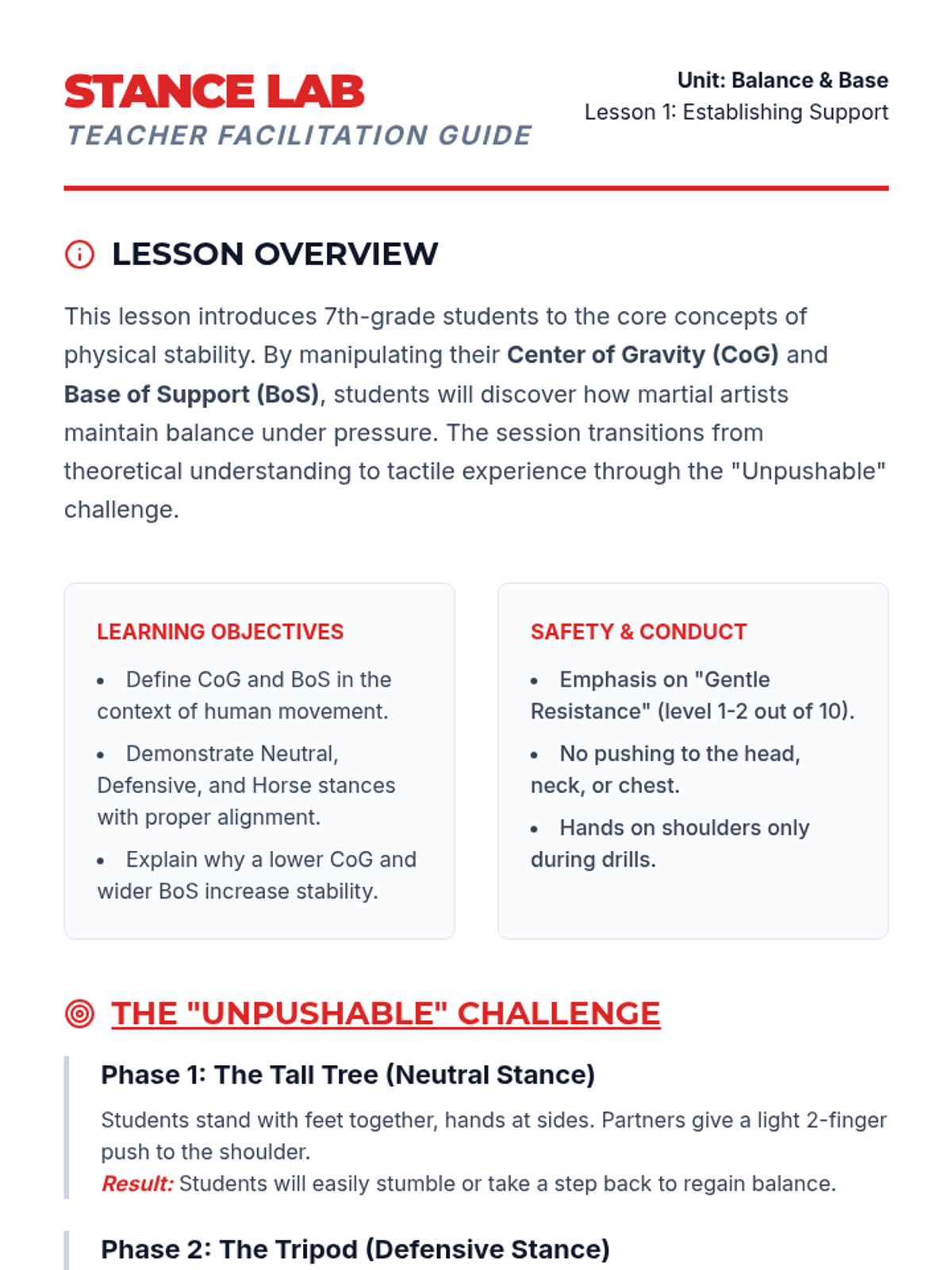
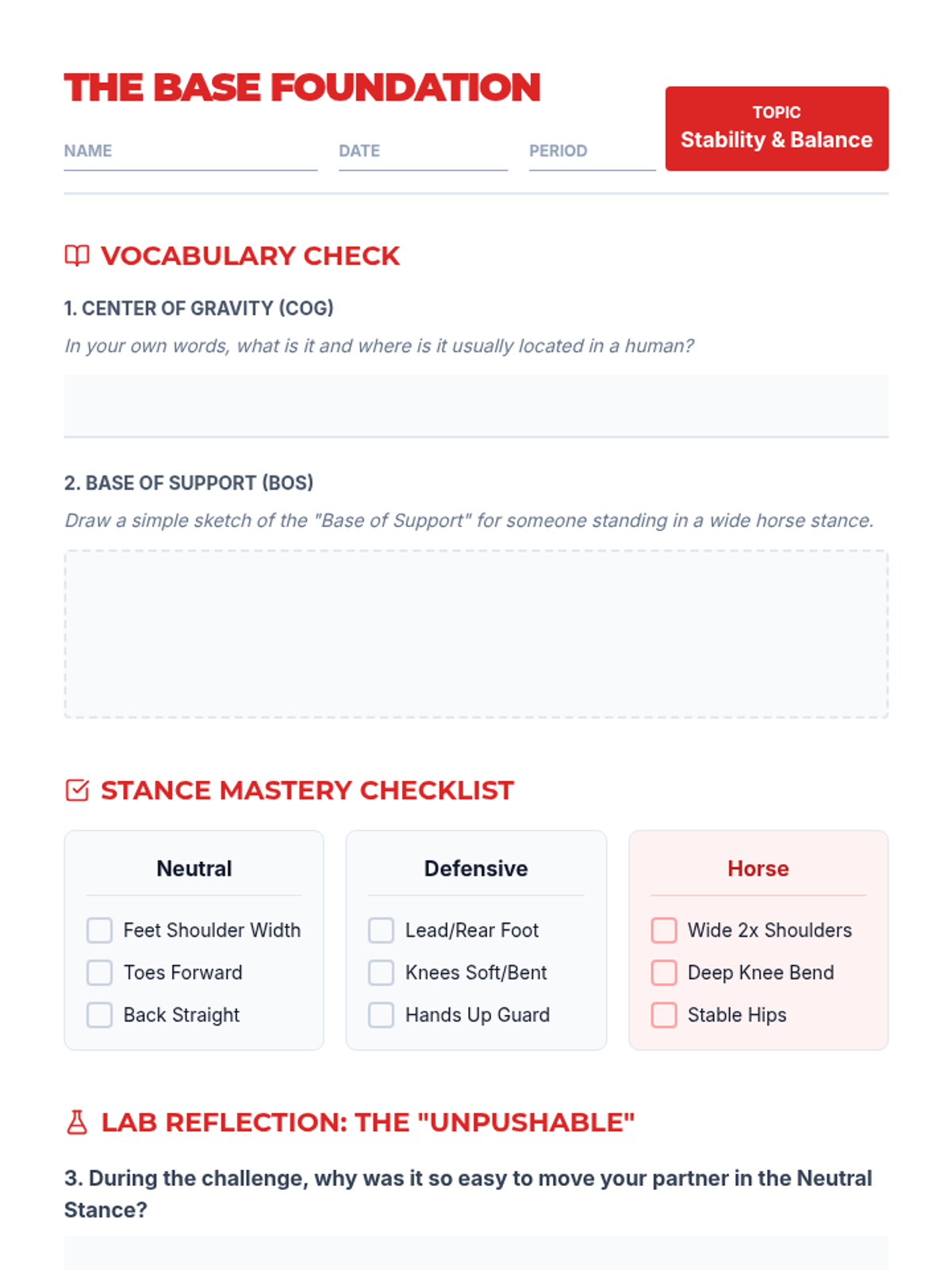
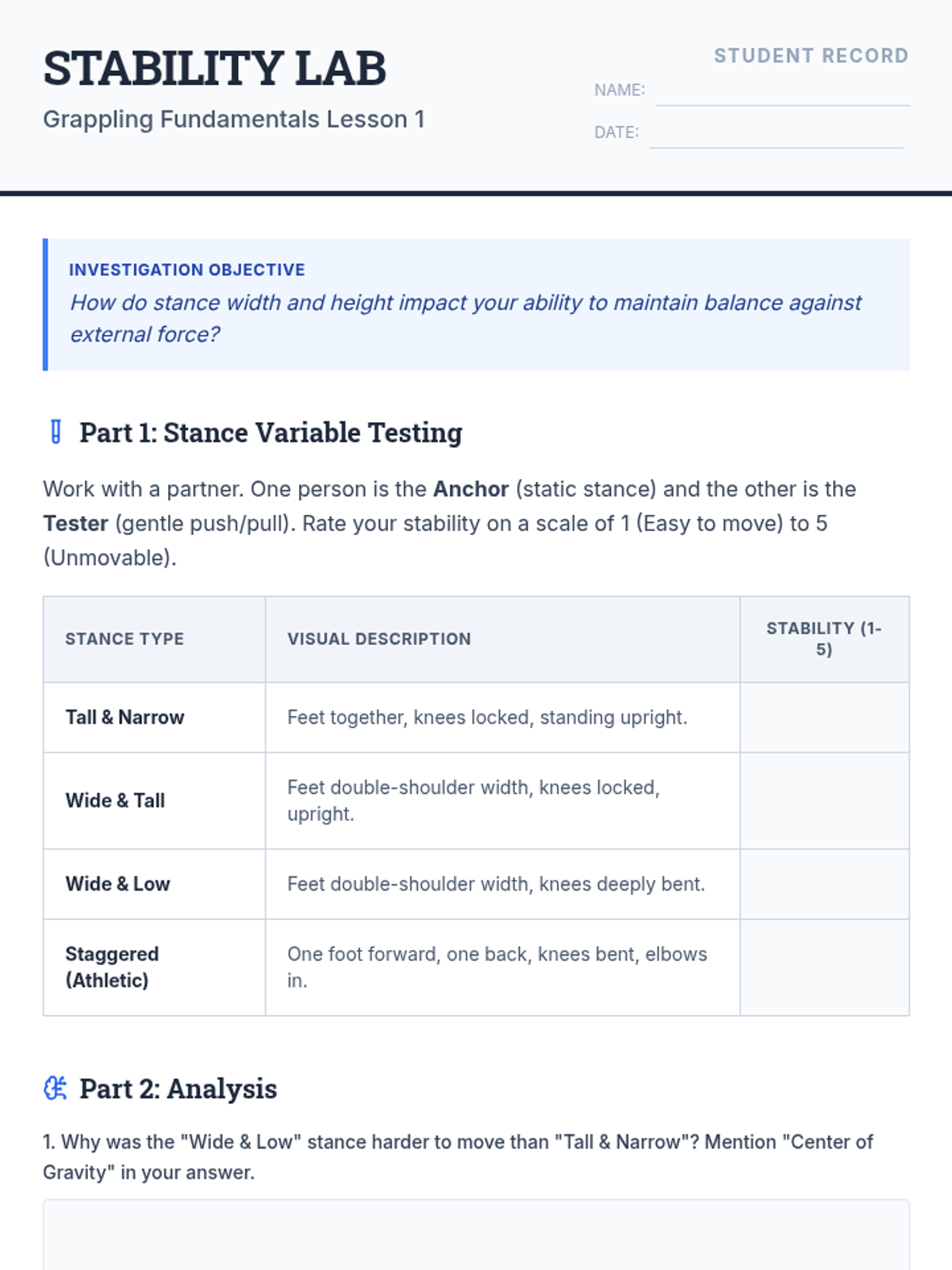
Students explore stability and center of gravity by mastering three fundamental stances: neutral, defensive, and horse stance, learning how a wide base and low center prevent being knocked off balance.
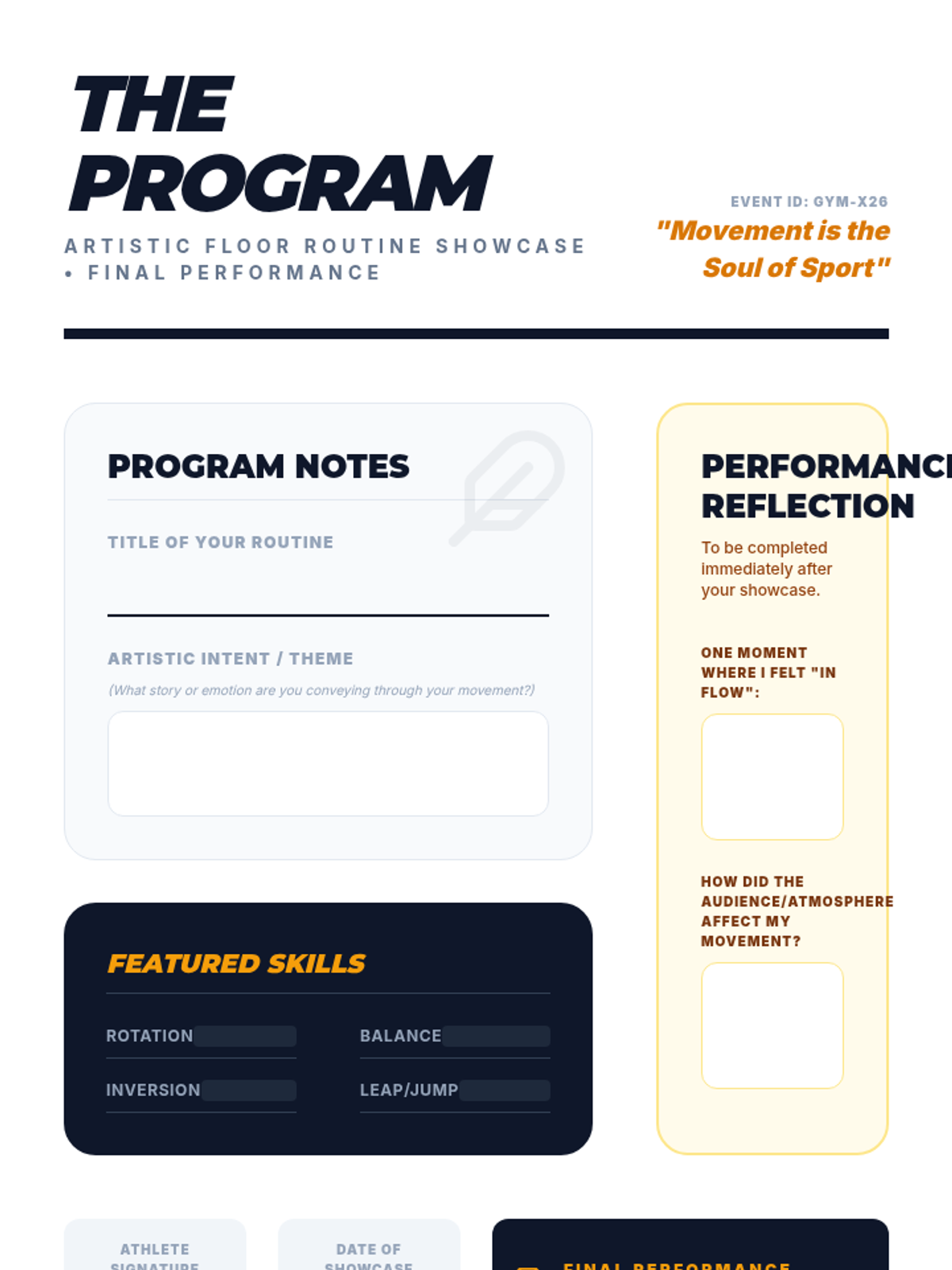
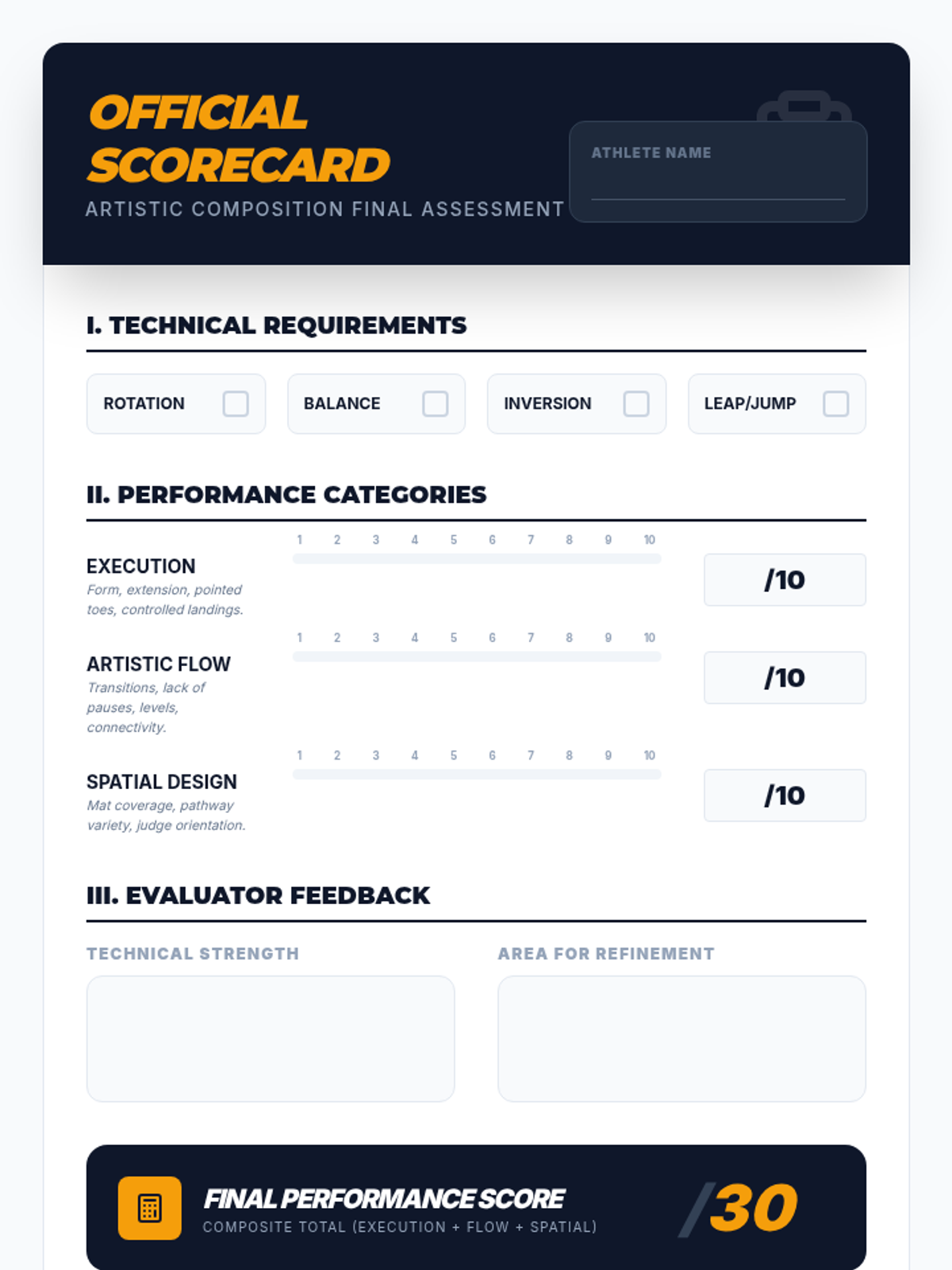
The culminating performance where students showcase their final floor routines for assessment and peer celebration.
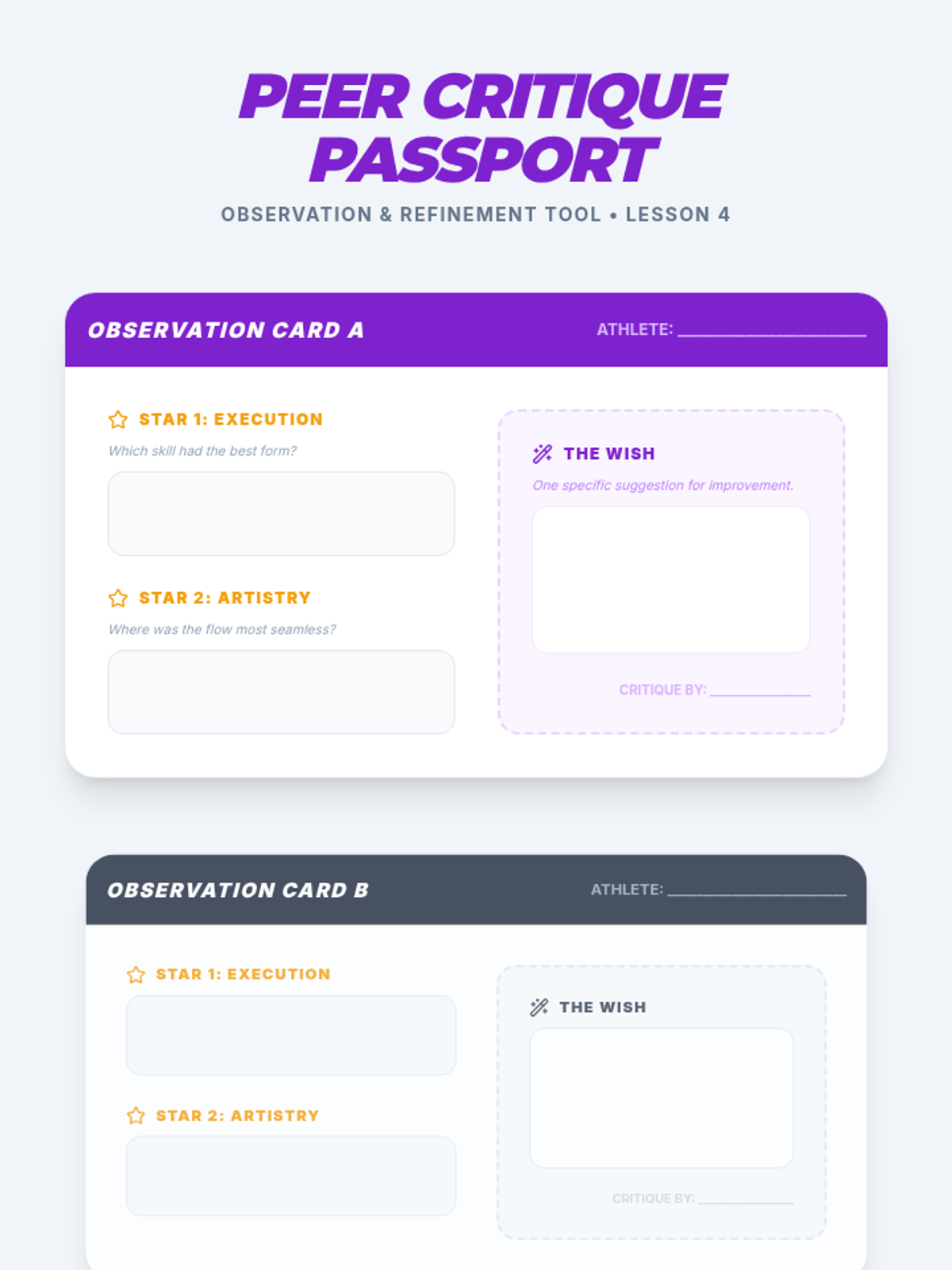
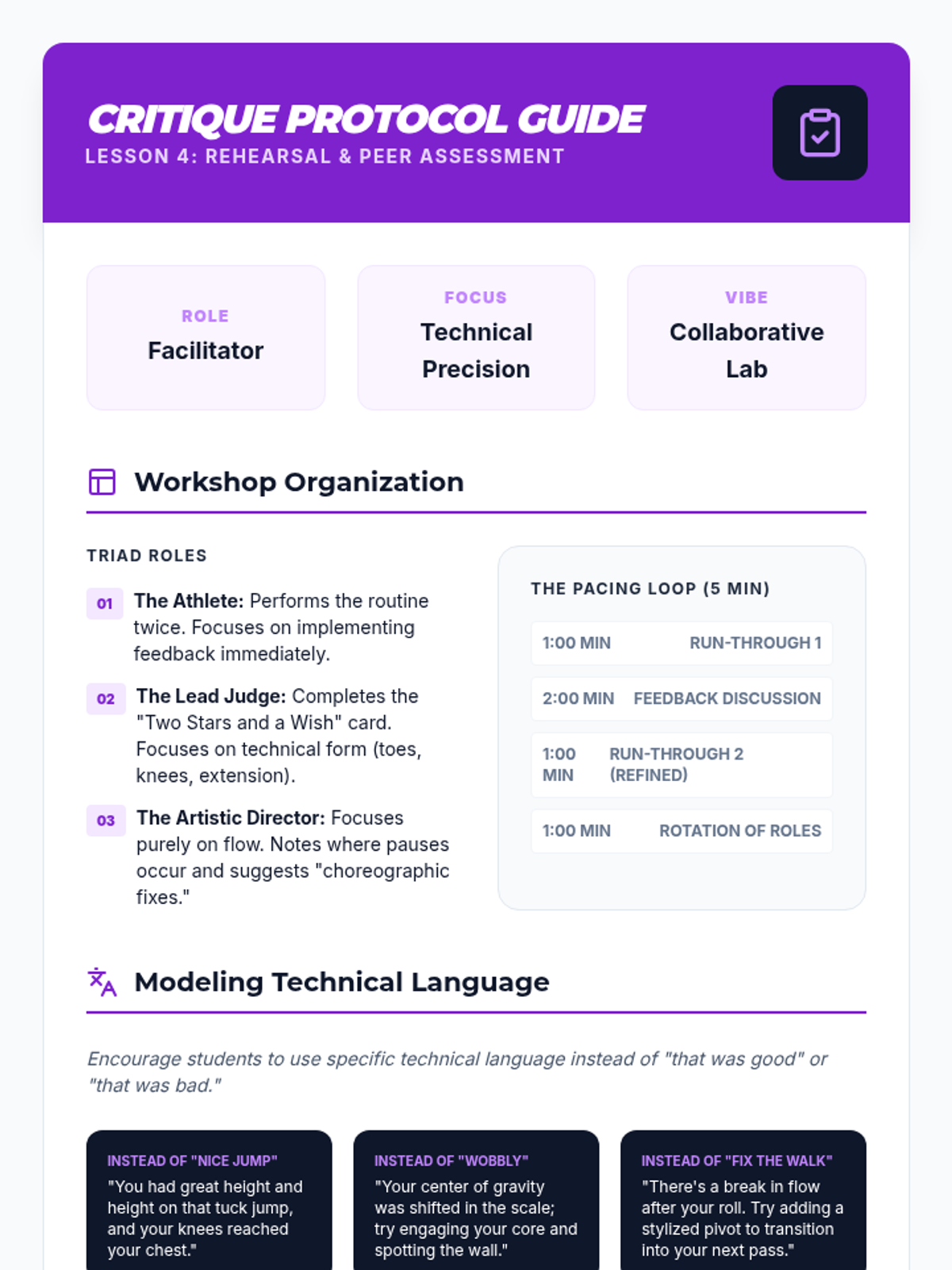
A peer-feedback focused session where students rehearse their routines and receive technical and artistic critiques.
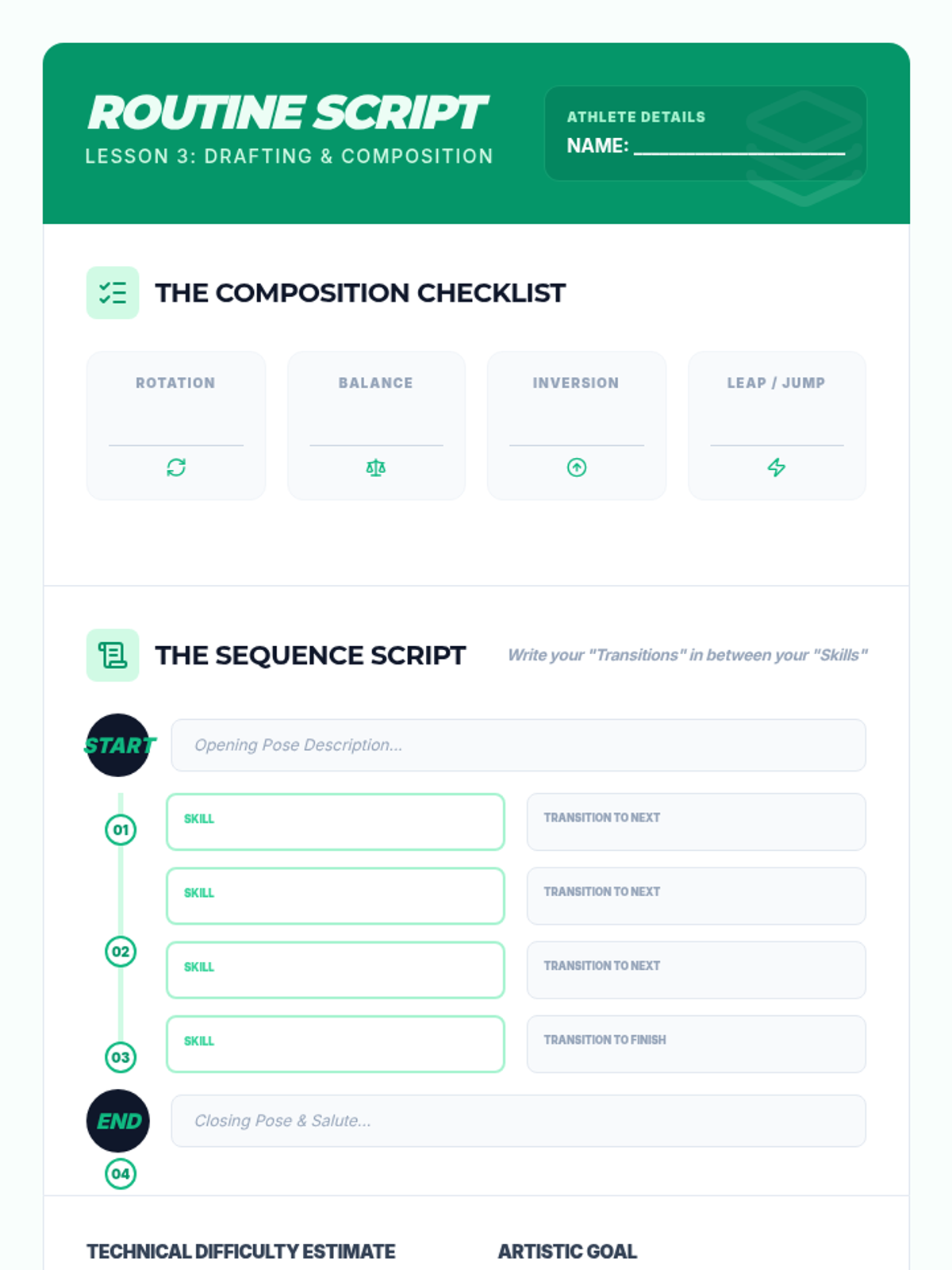
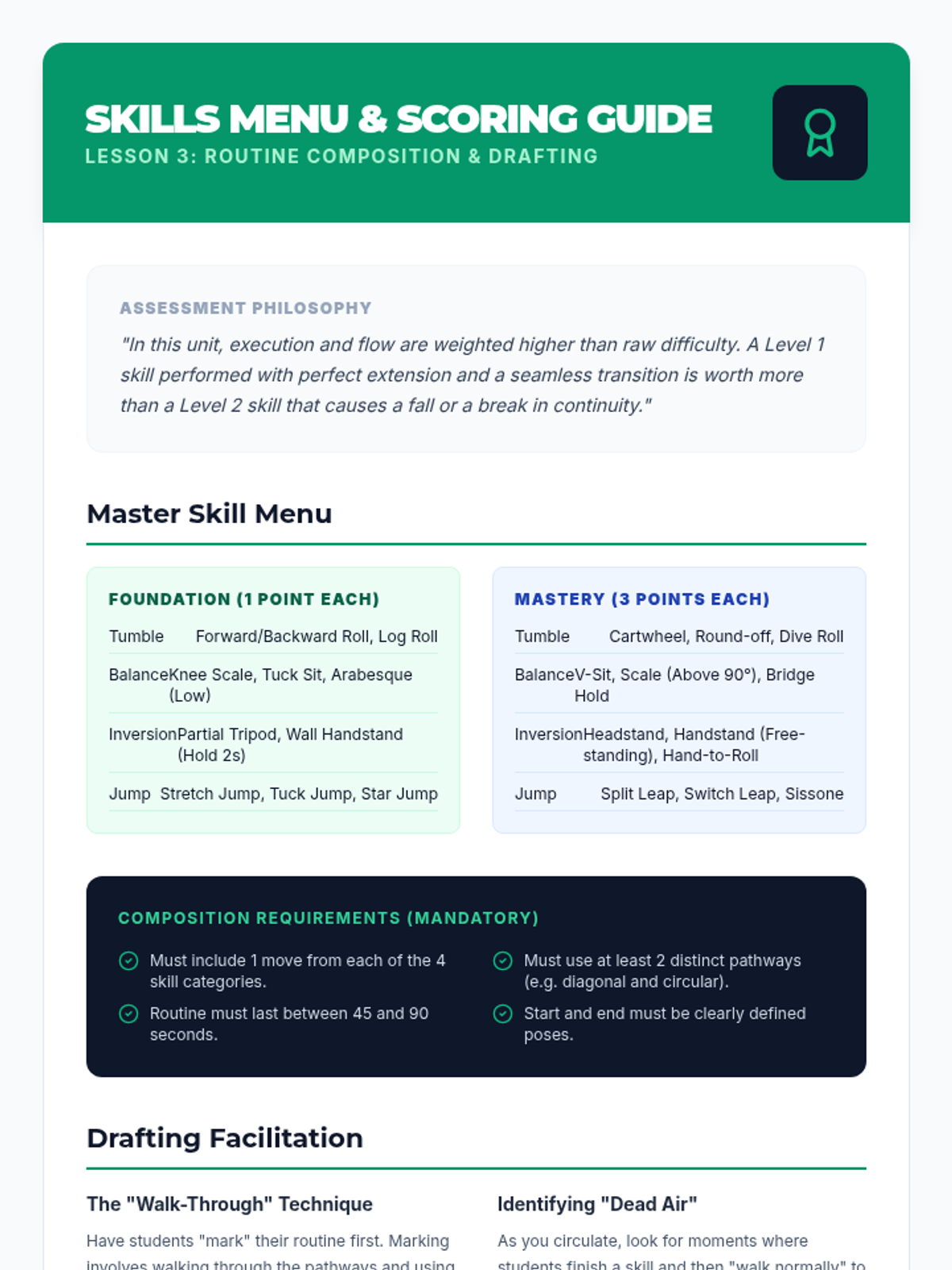
Students select skills and draft their formal routine composition, ensuring all technical requirements are met.
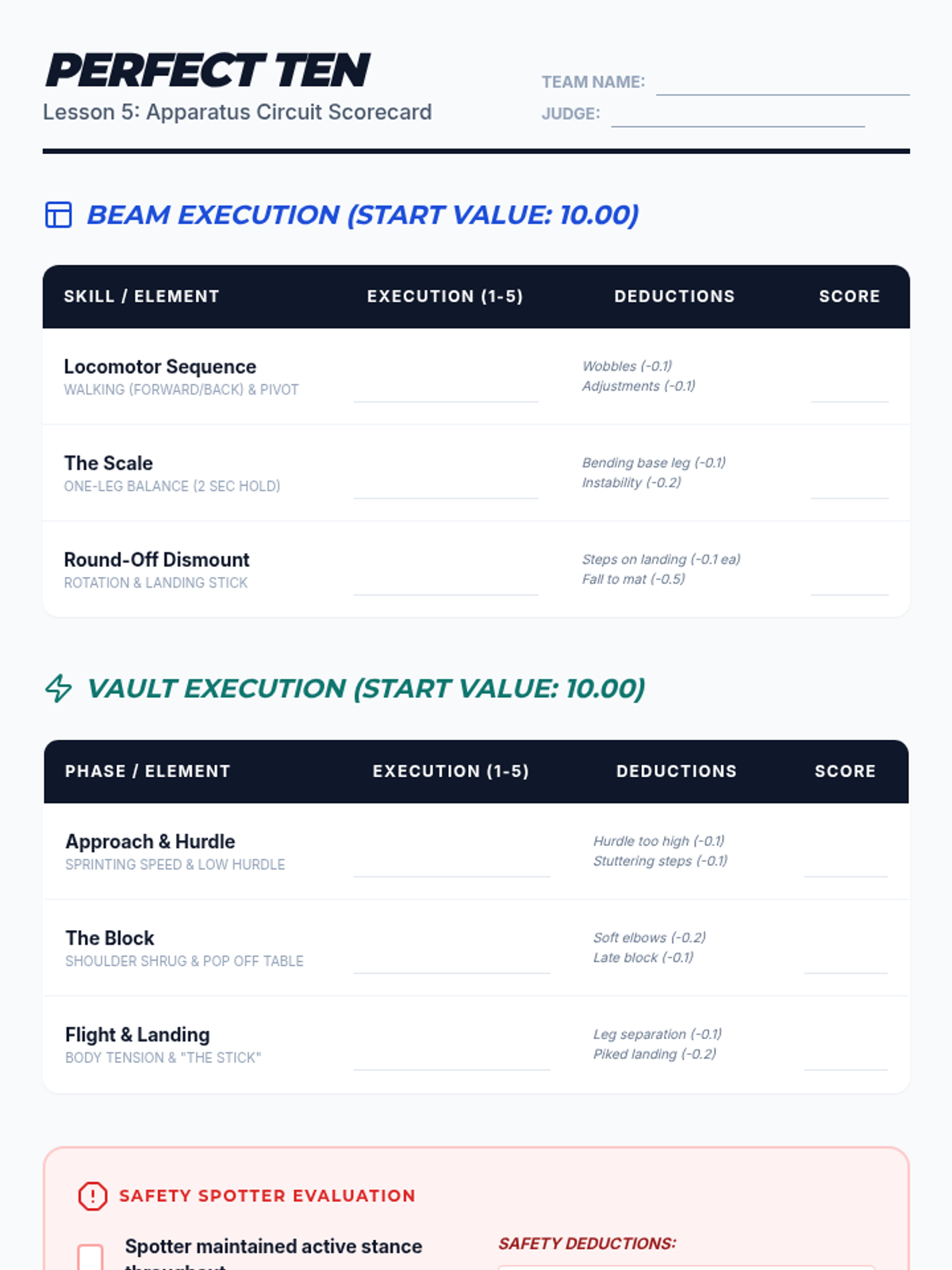
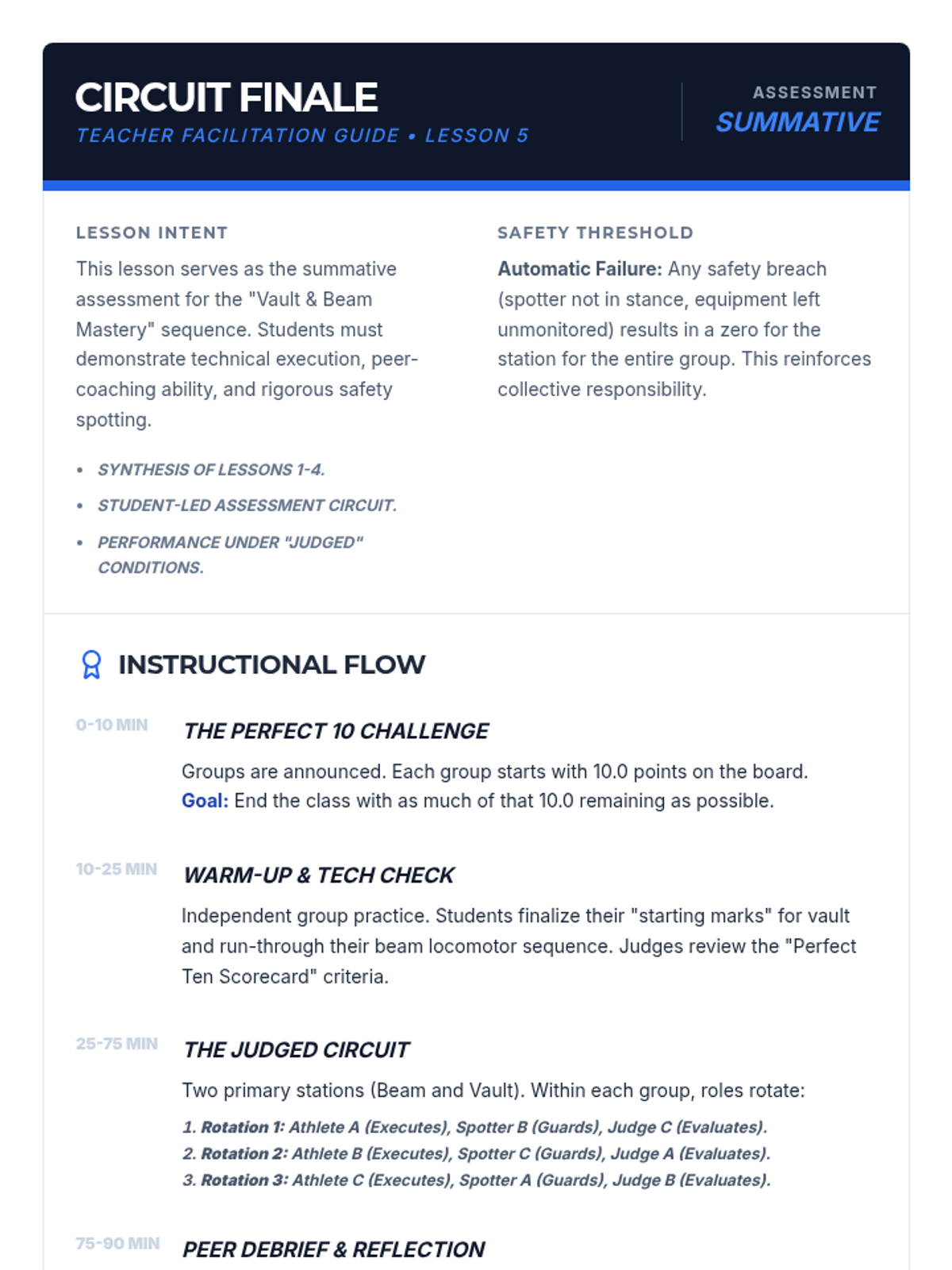
A culminating circuit where students demonstrate proficiency in beam and vault while performing peer evaluations.
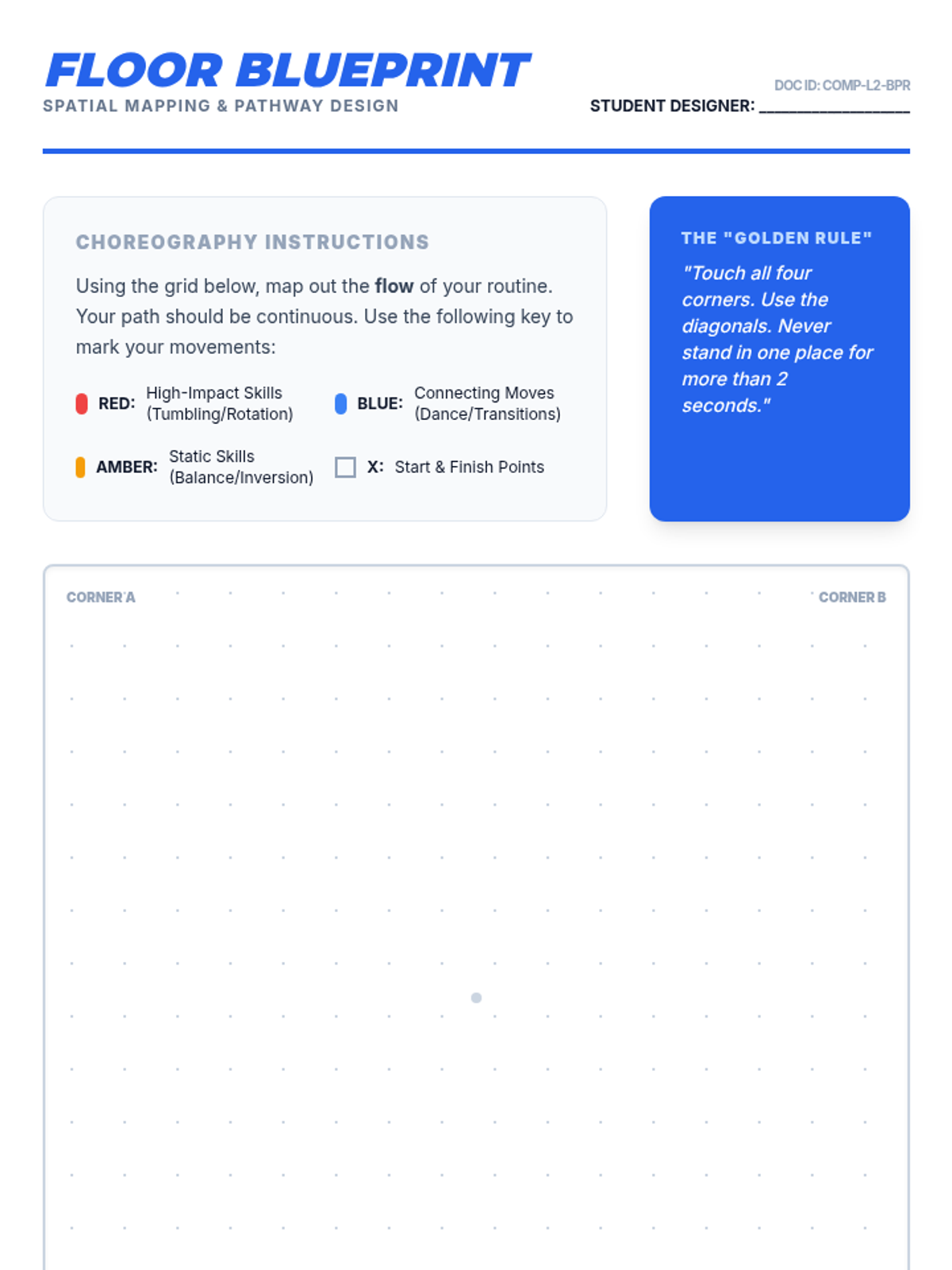
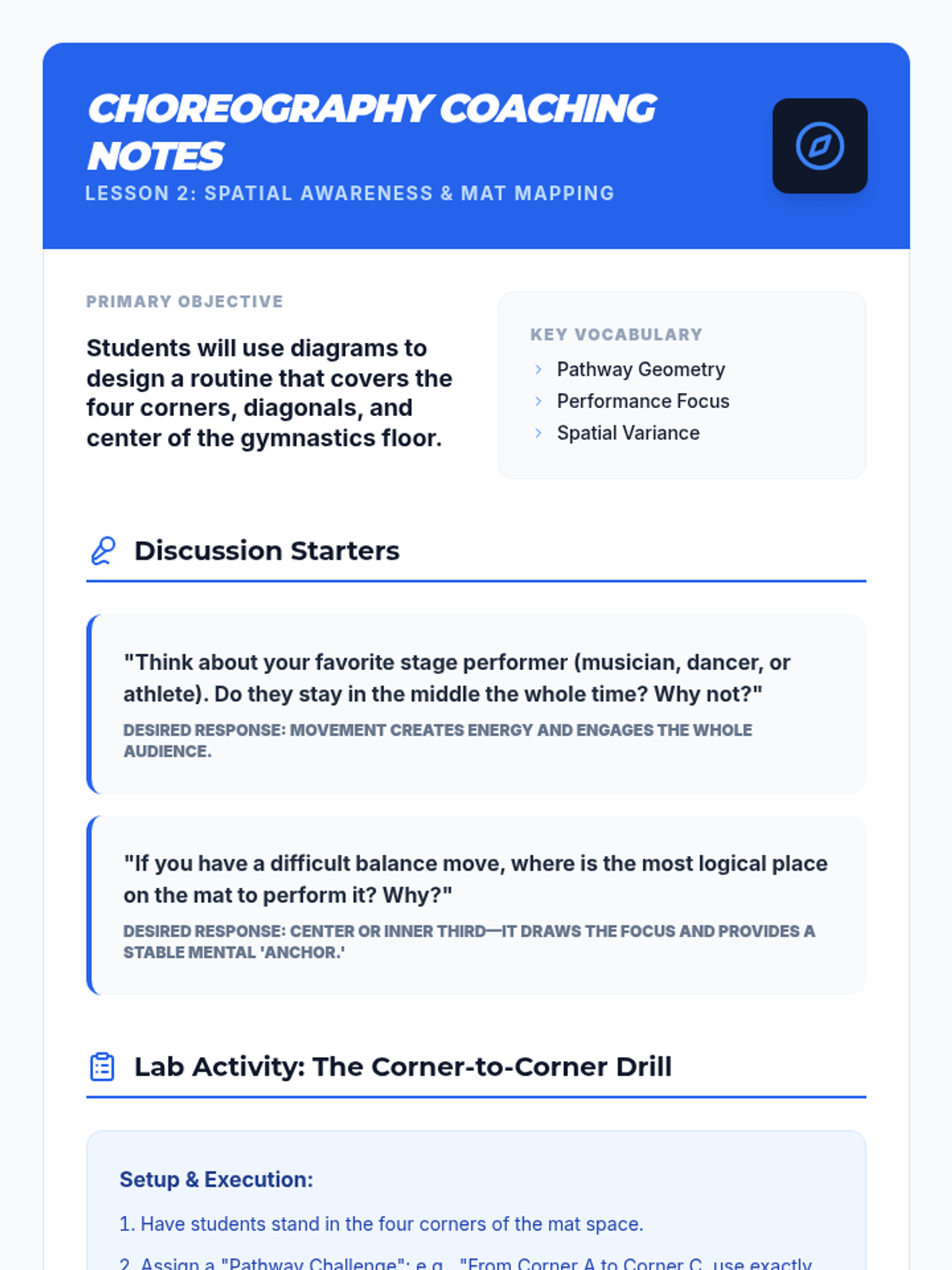
Teaches students how to utilize the entire floor space effectively through strategic pathway design and spatial awareness.
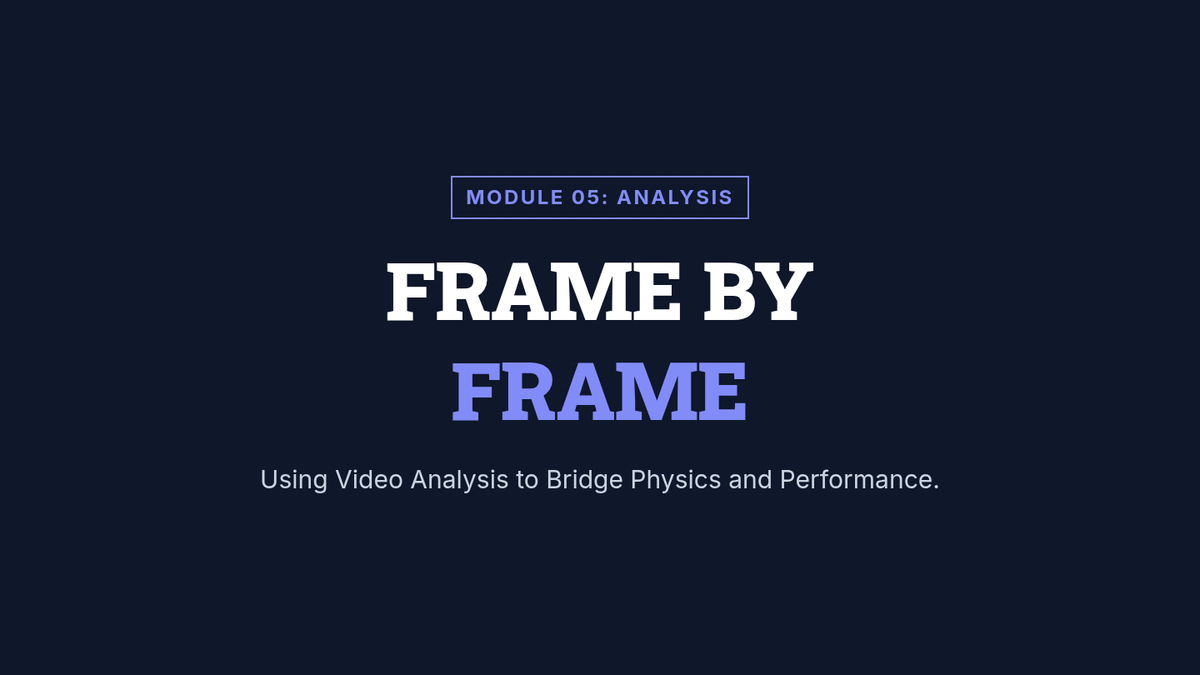
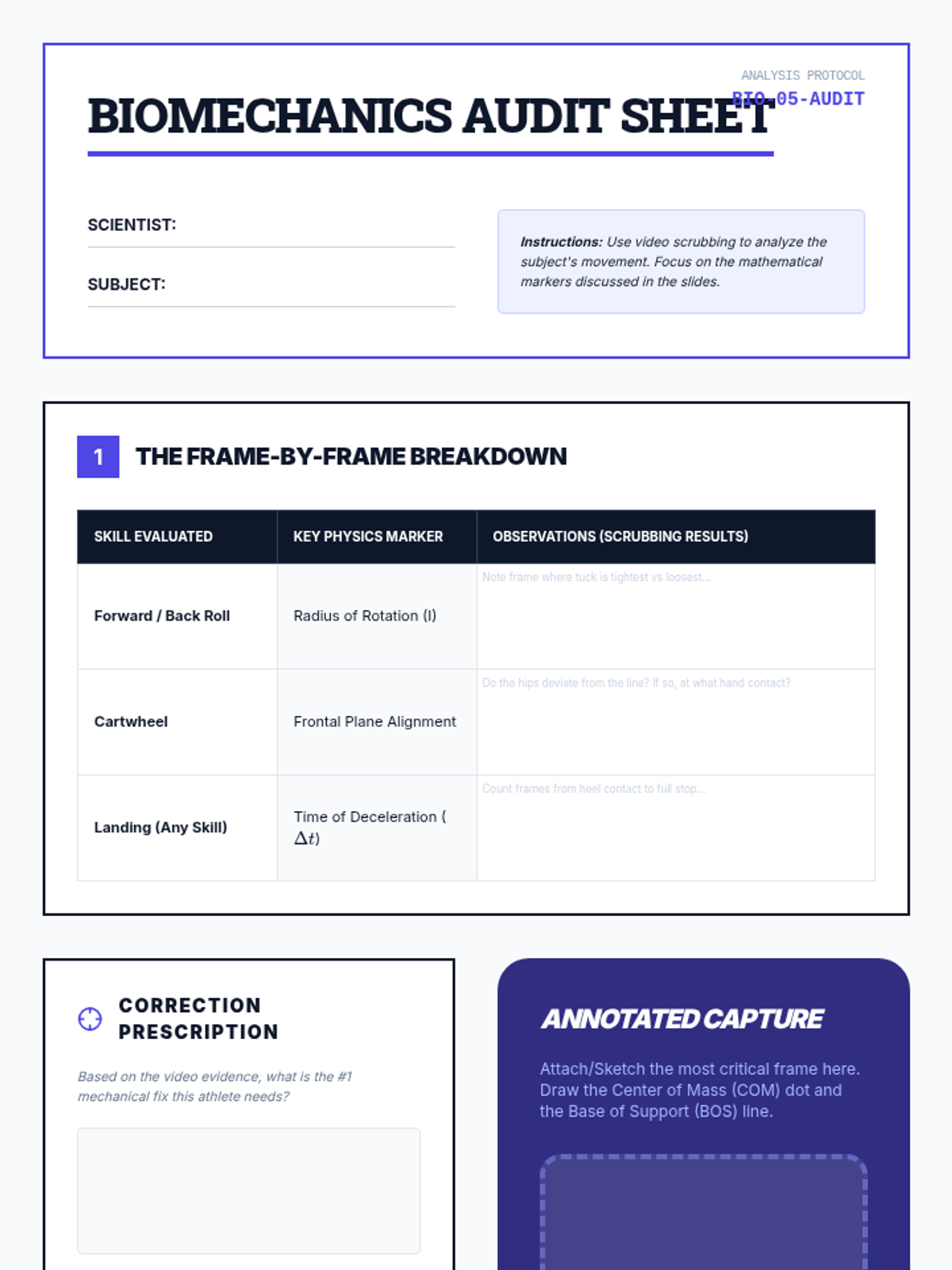
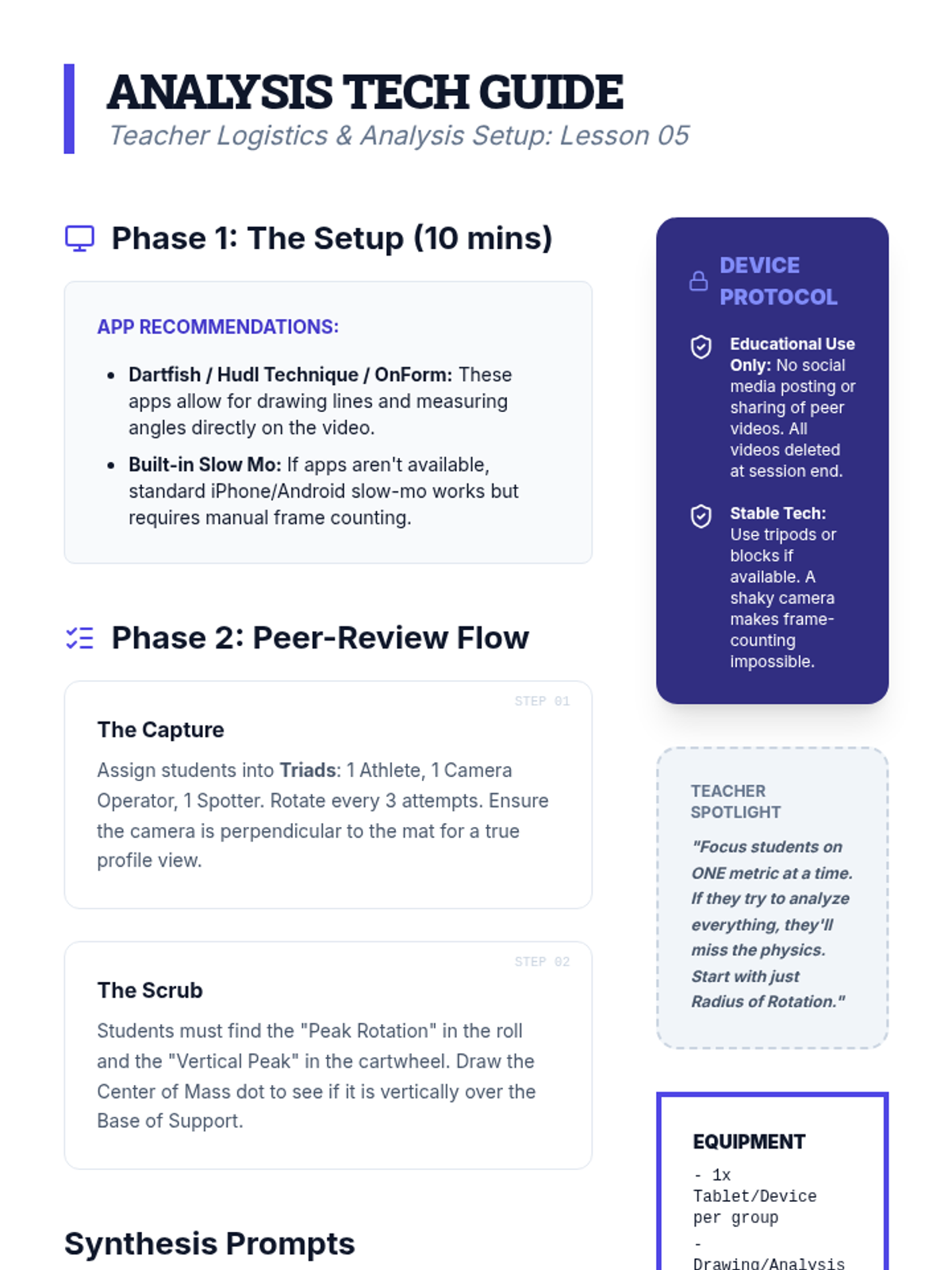
Using tablets, students record their tumbling skills and use slow-motion playback to identify deviations from ideal biomechanical models. They set specific goals for correction based on their findings.
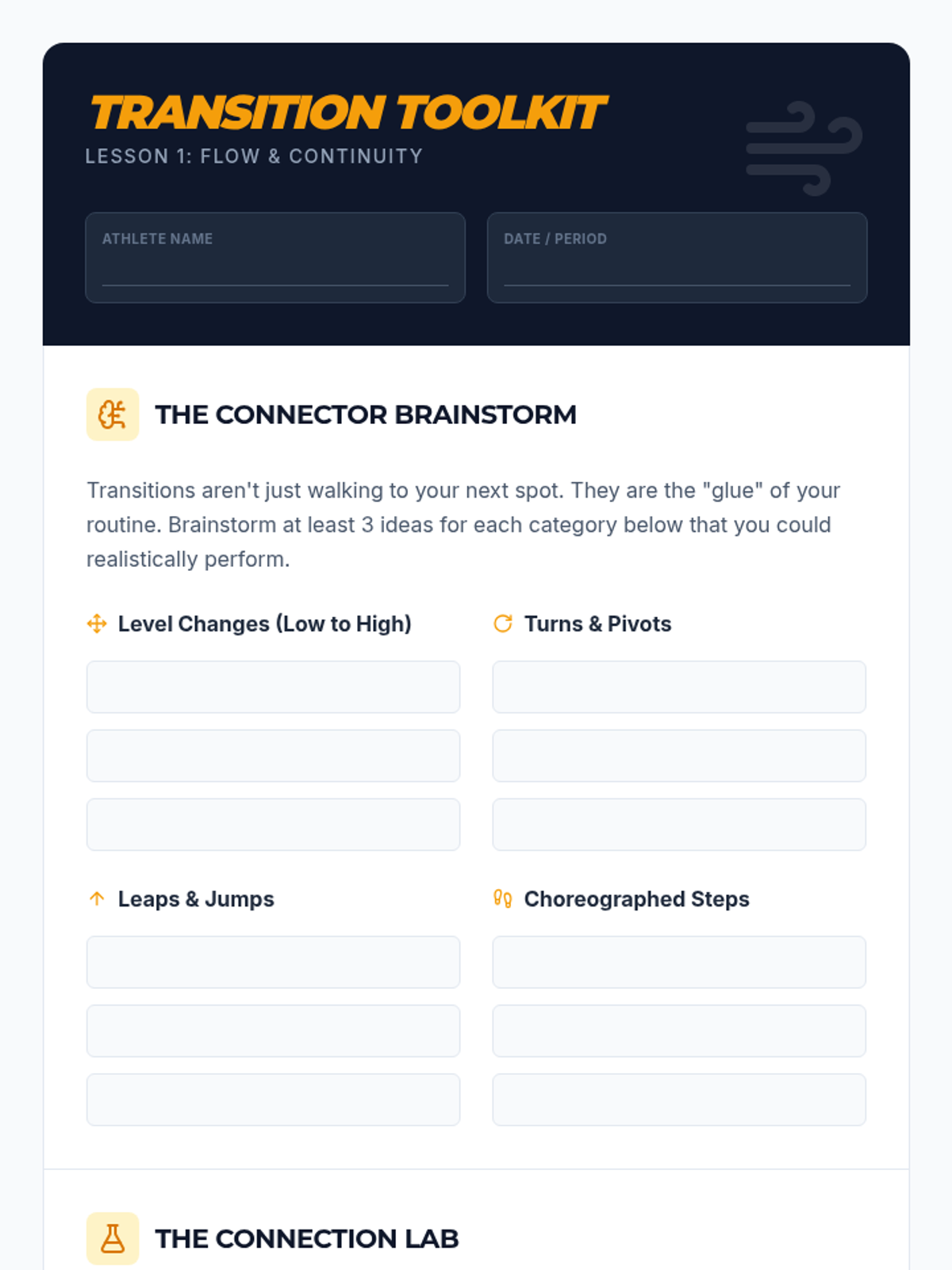
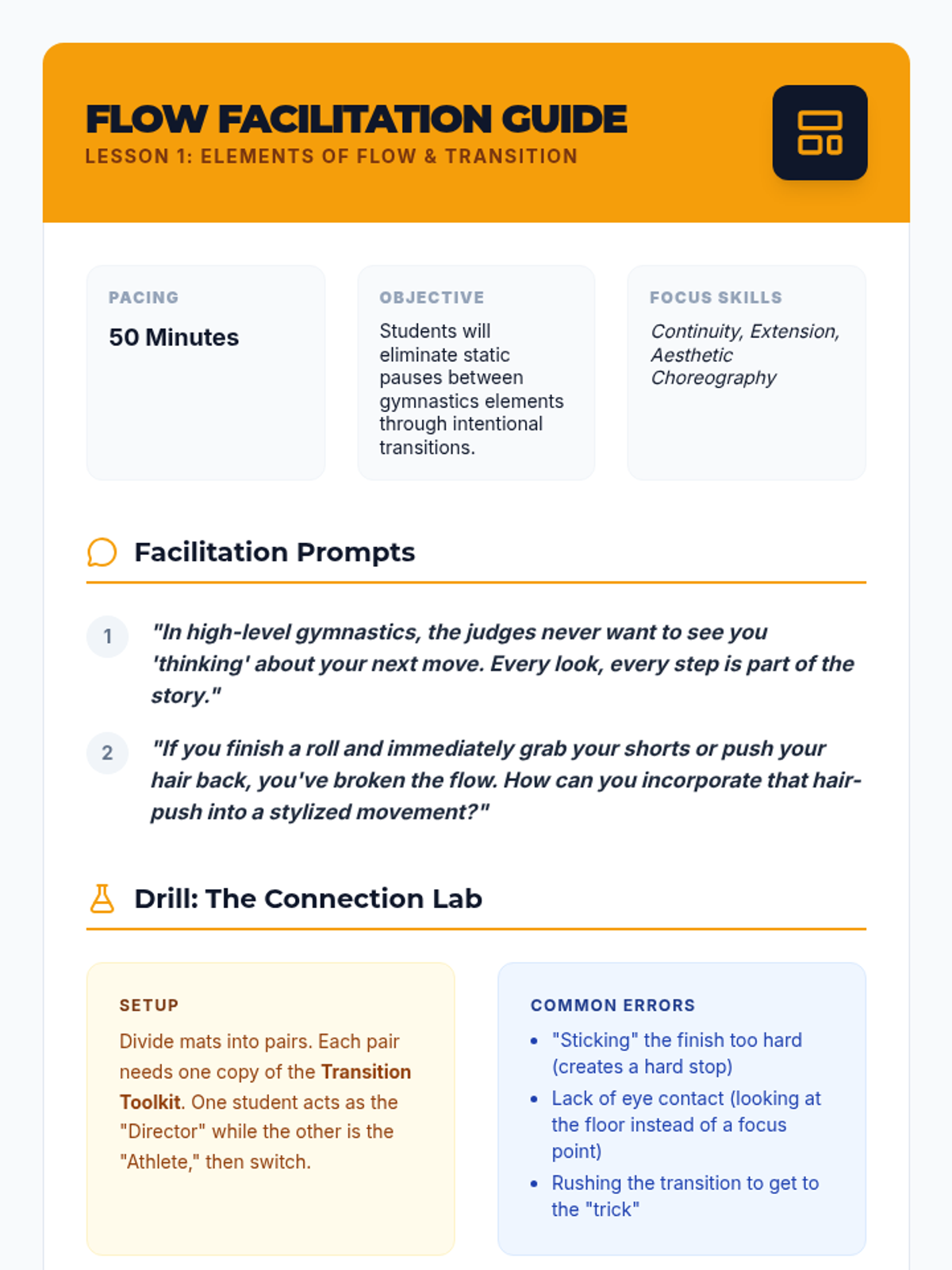
Focuses on identifying and practicing non-tumble connecting moves to create continuous movement and flow between skills.
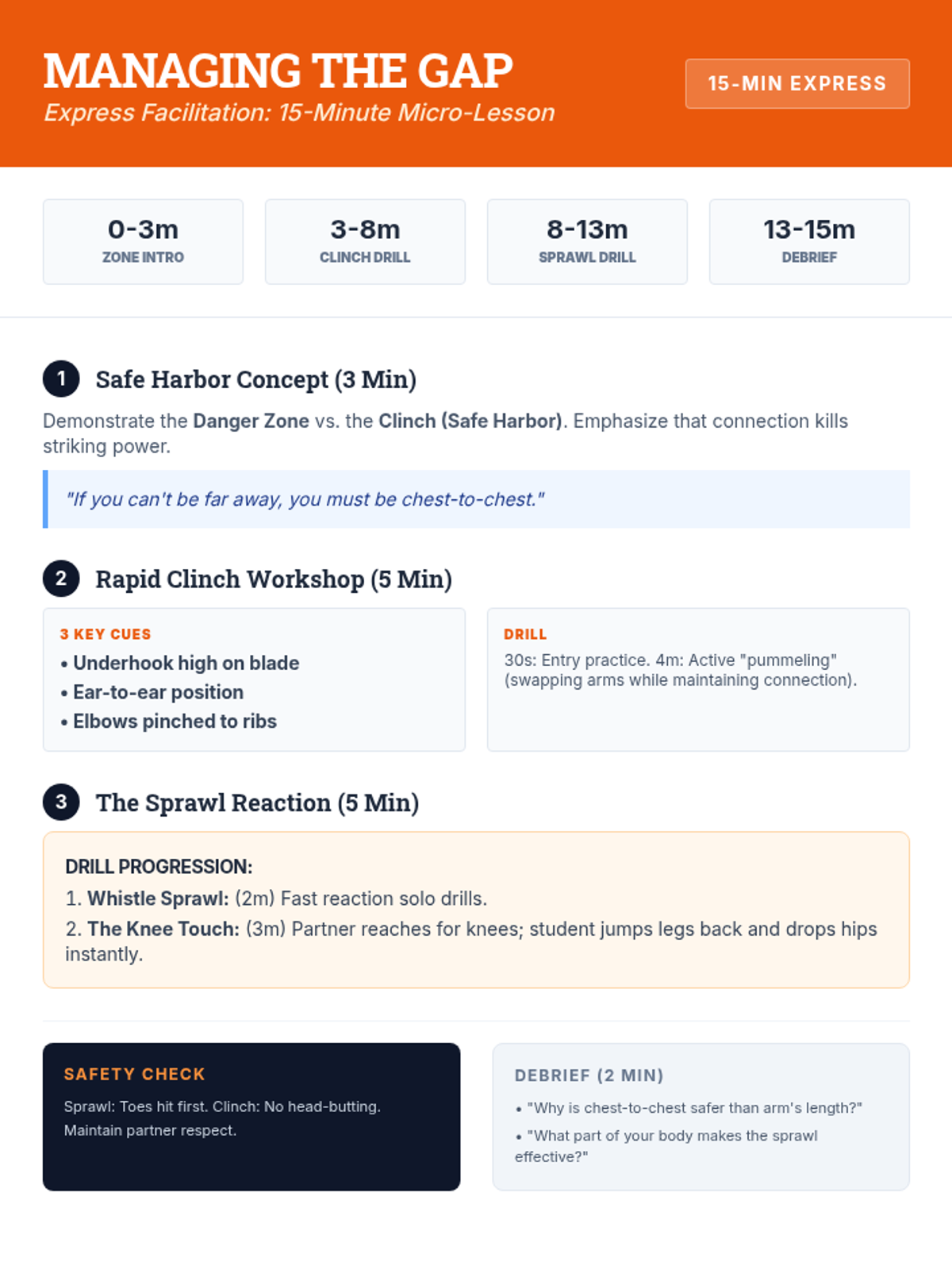
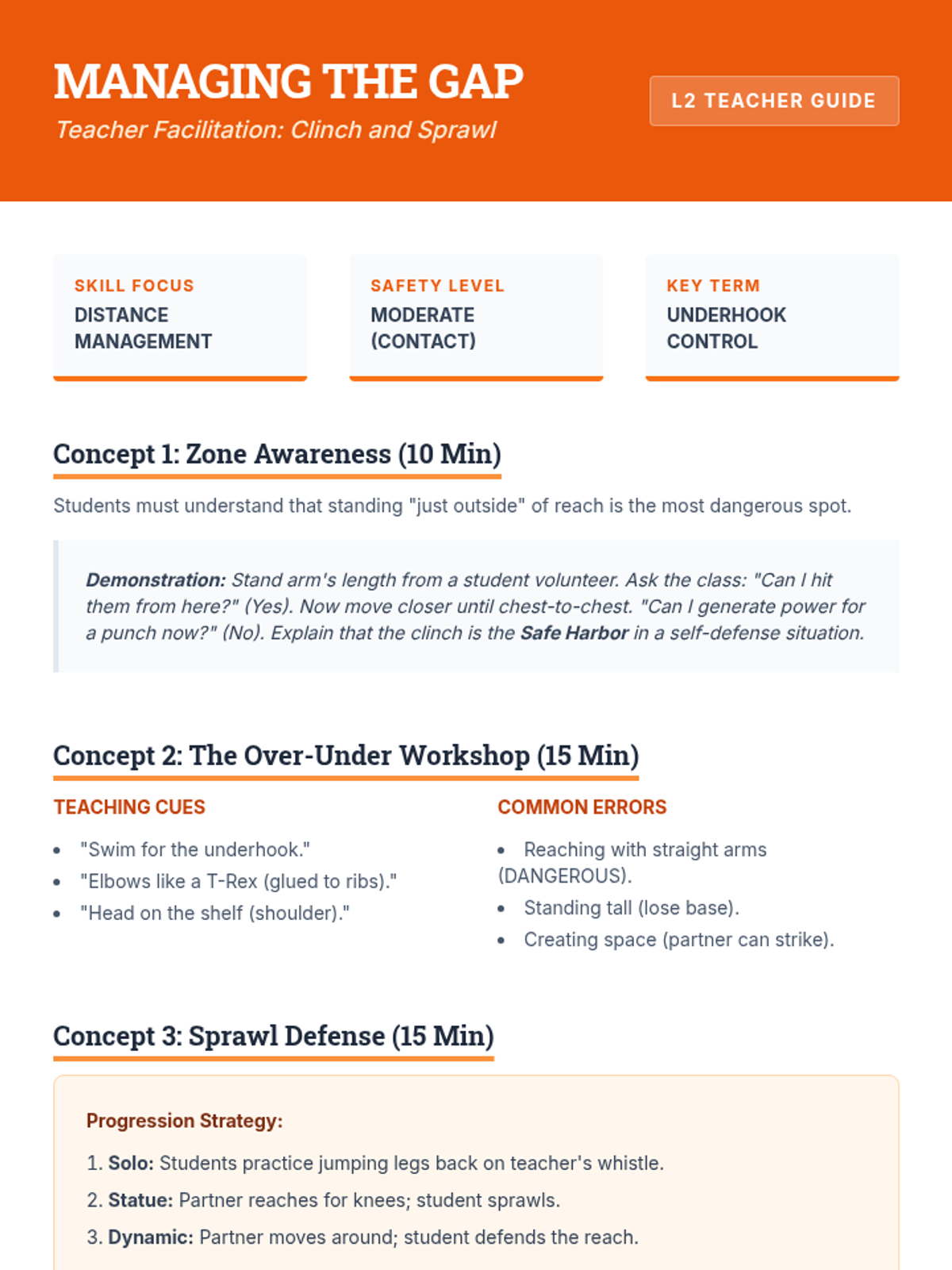
An intensive 15-minute 'Express' session focused on the core mechanics of the clinch and sprawl. Students learn to close the distance safely and defend against leg tackles with maximum efficiency.
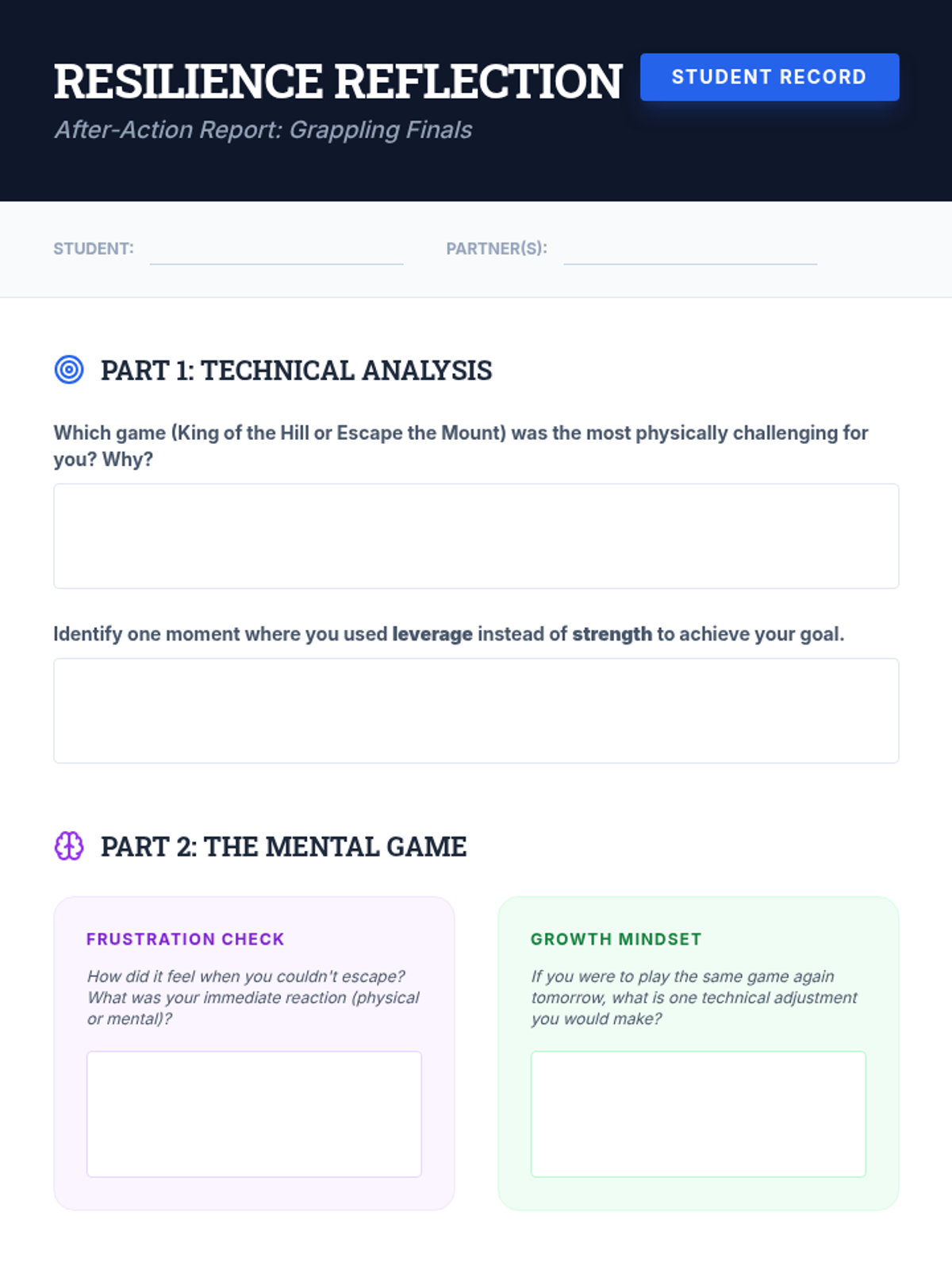
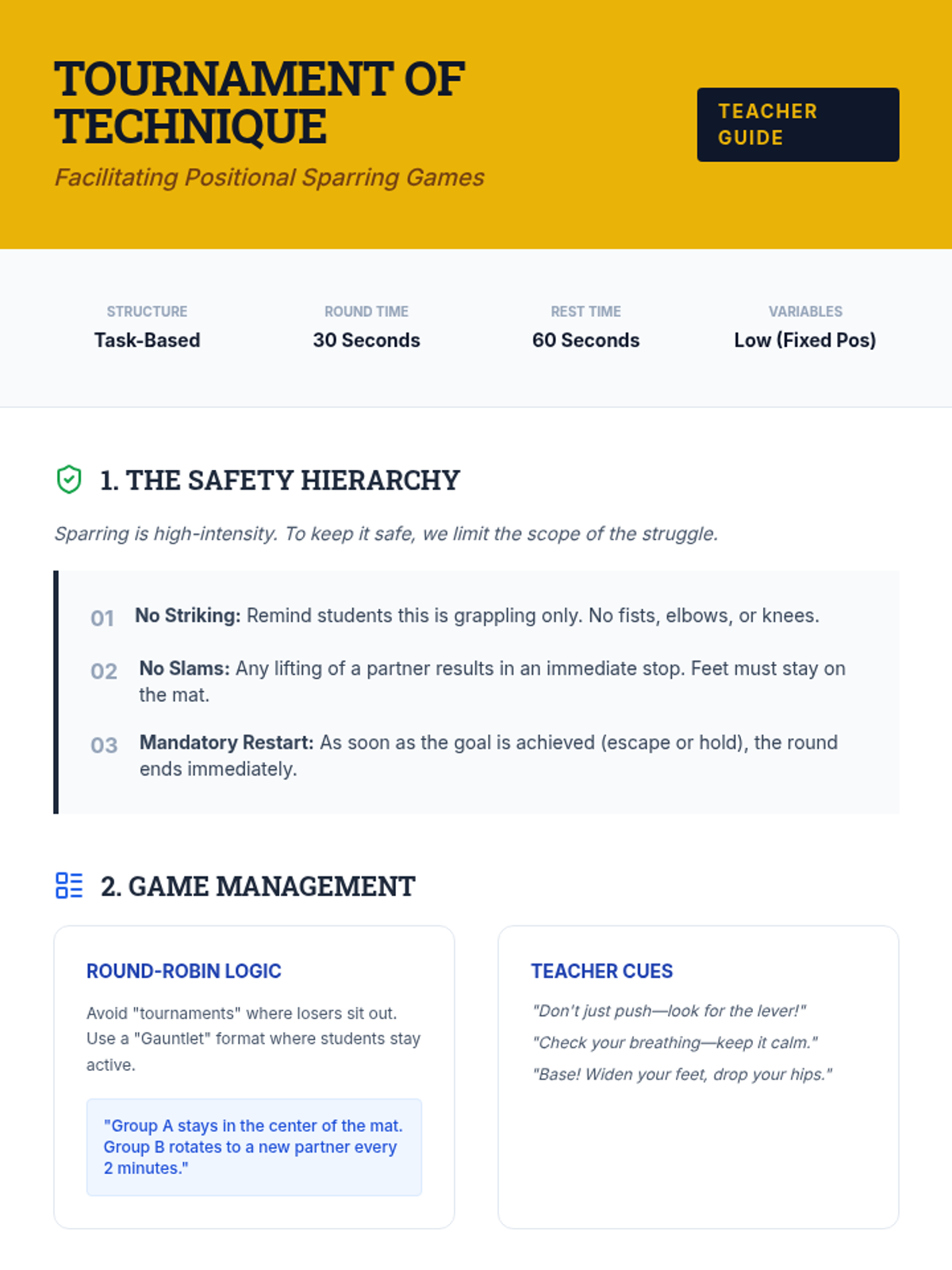
Students engage in specific task-based grappling games, such as 'King of the Hill' or 'Escape the Mount.' They start in a specific position with a clear goal (e.g., hold the position for 10 seconds or escape). This allows for full-effort practice with limited variables for safety.
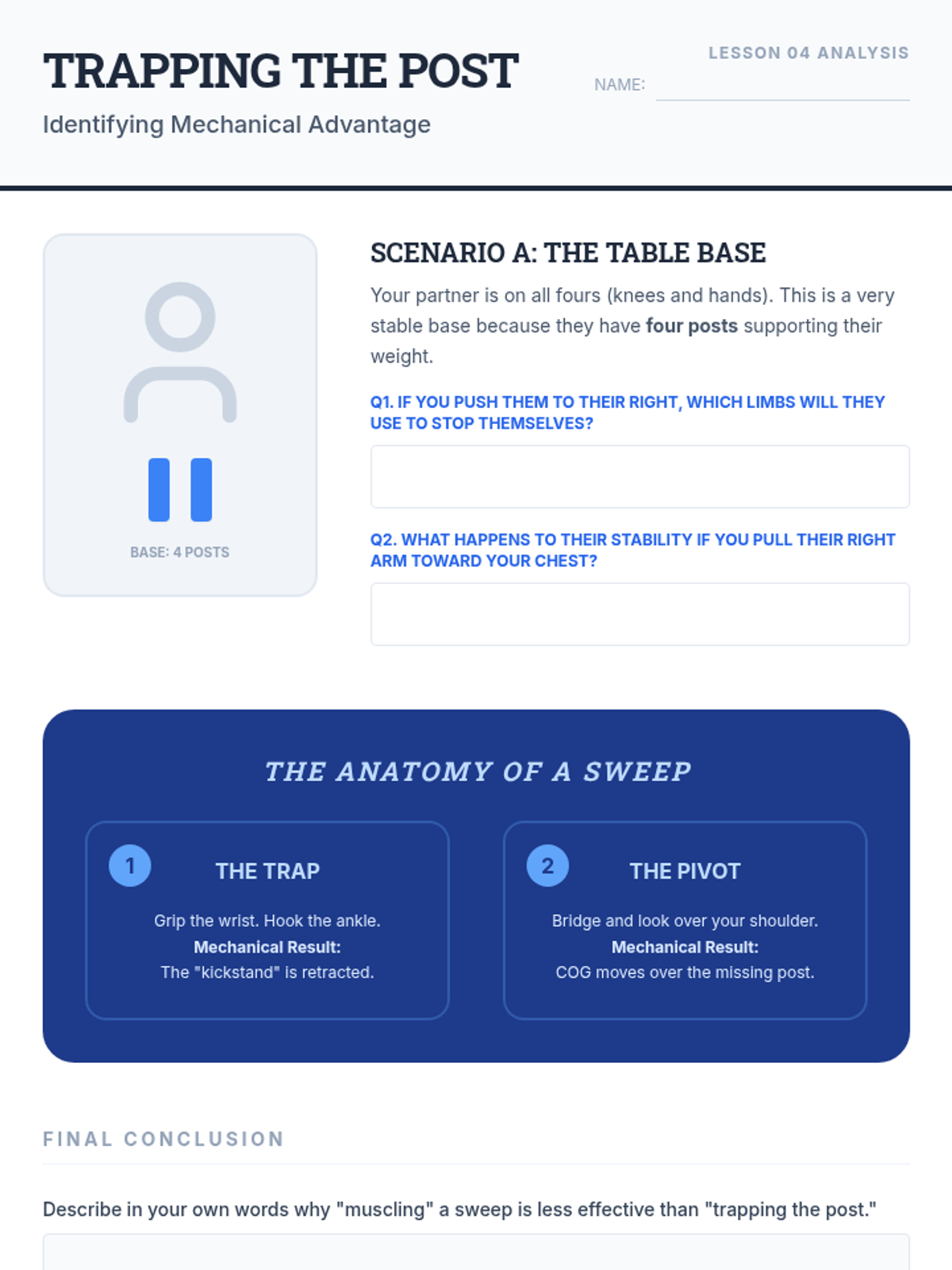
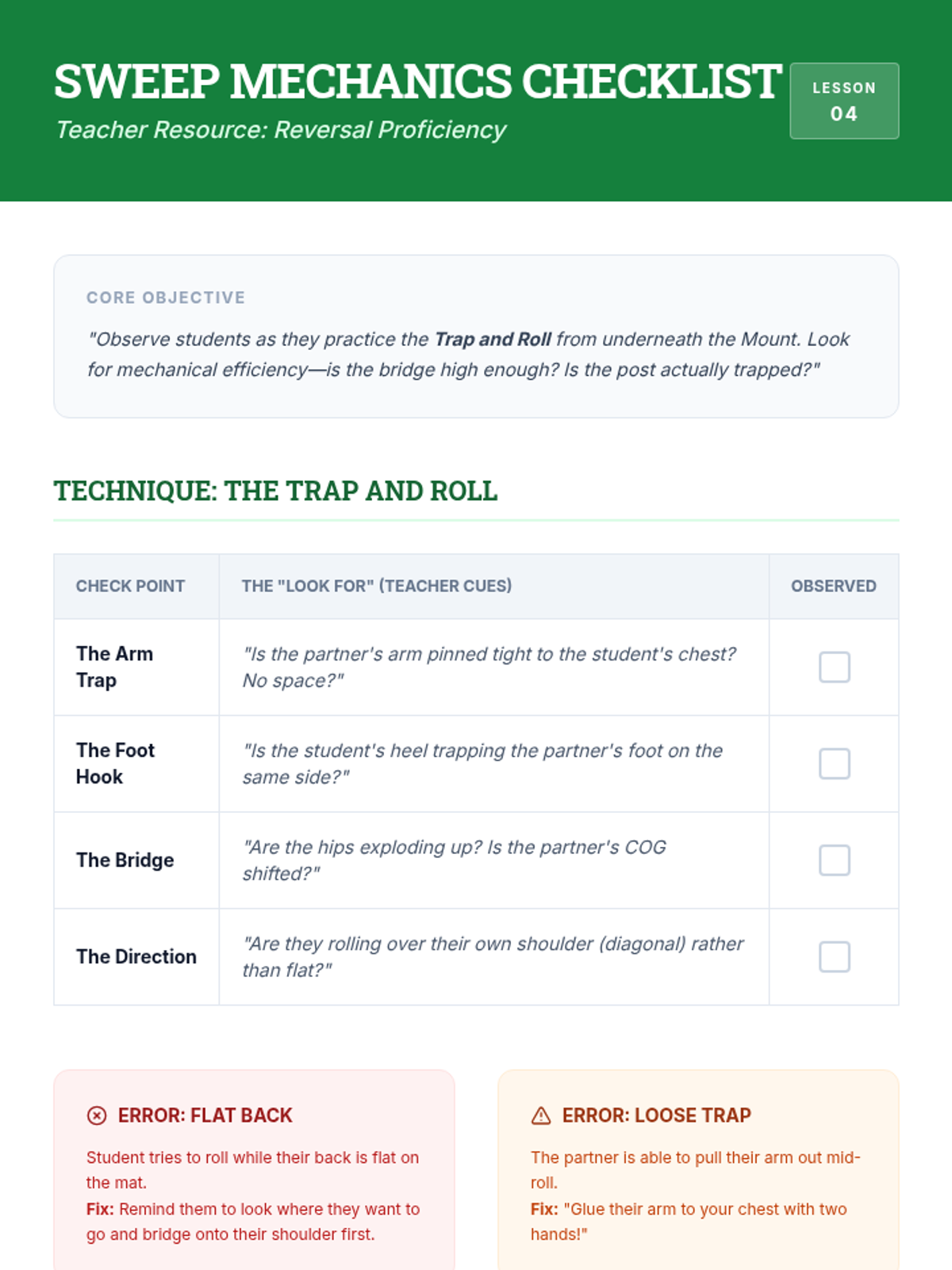
Students explore how to reverse a position from the bottom using bridges and rolls. They apply the concept of 'trapping' a post (arm or leg) to flip a partner over. This lesson highlights the use of leverage over strength.
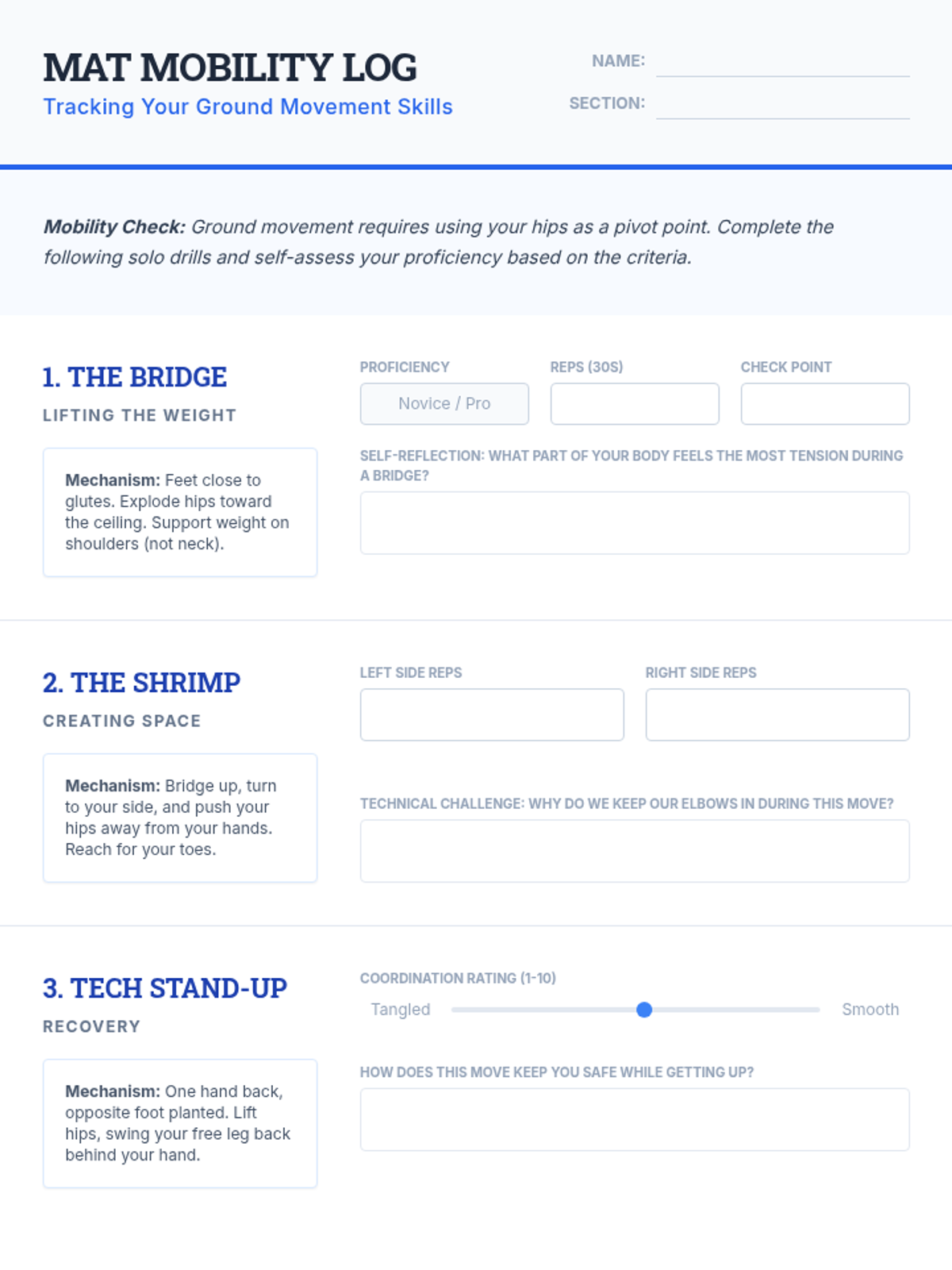
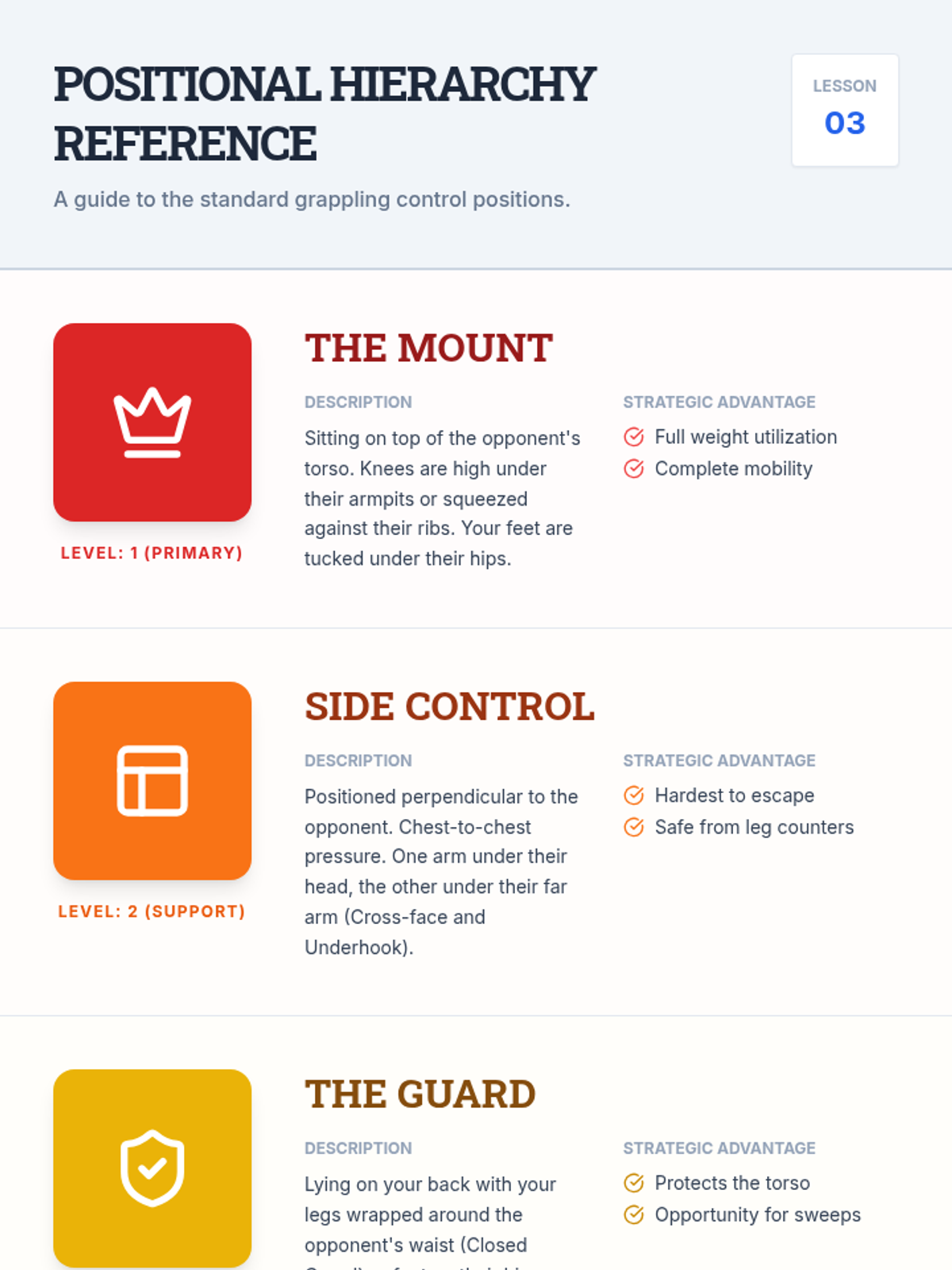
This lesson introduces standard grappling positions: Mount, Side Control, and Guard. Students learn the hierarchy of these positions based on mobility and safety. Solo drills on the mats help students understand hip movement (shrimping/bridging) required for ground movement.
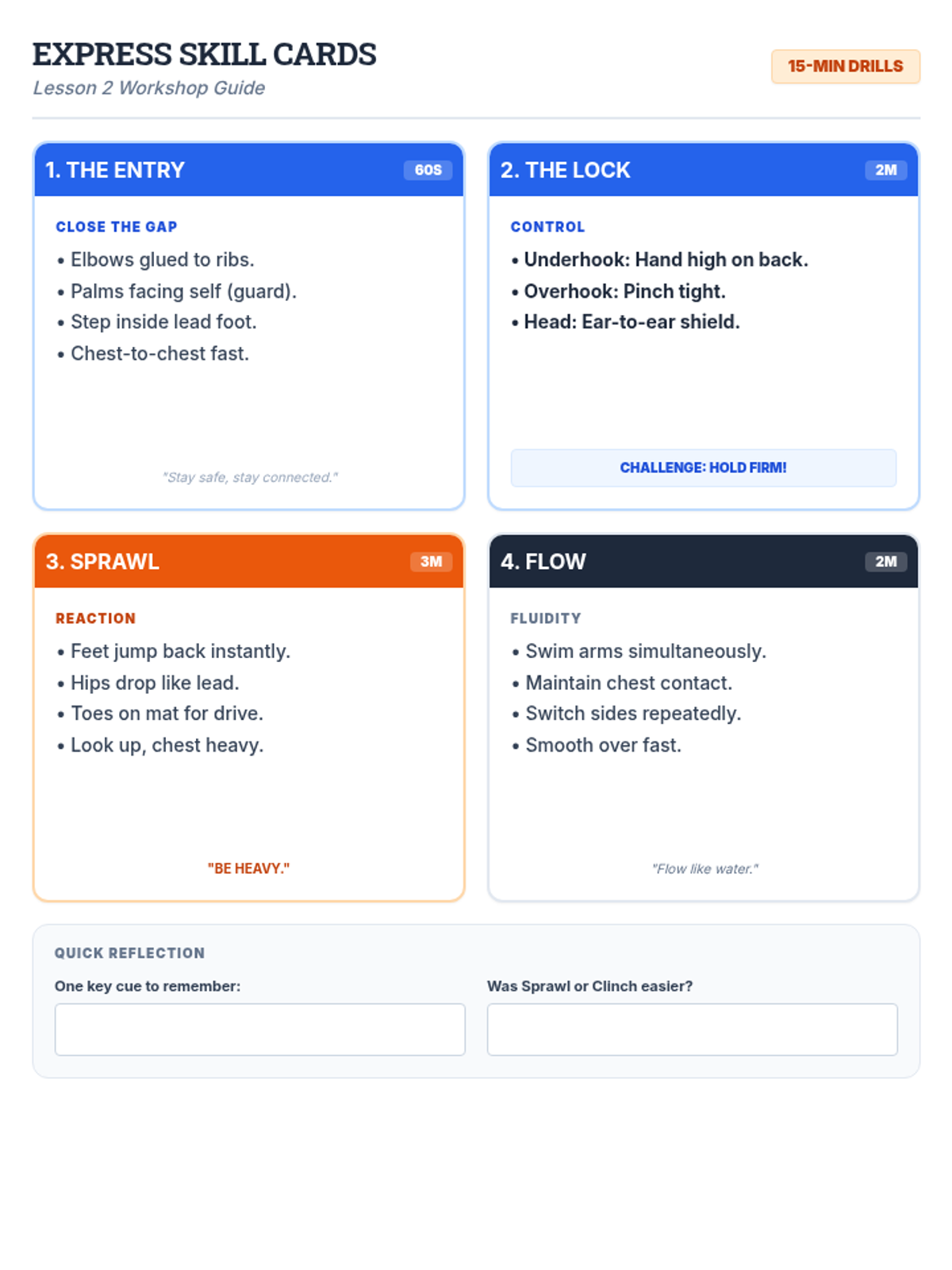
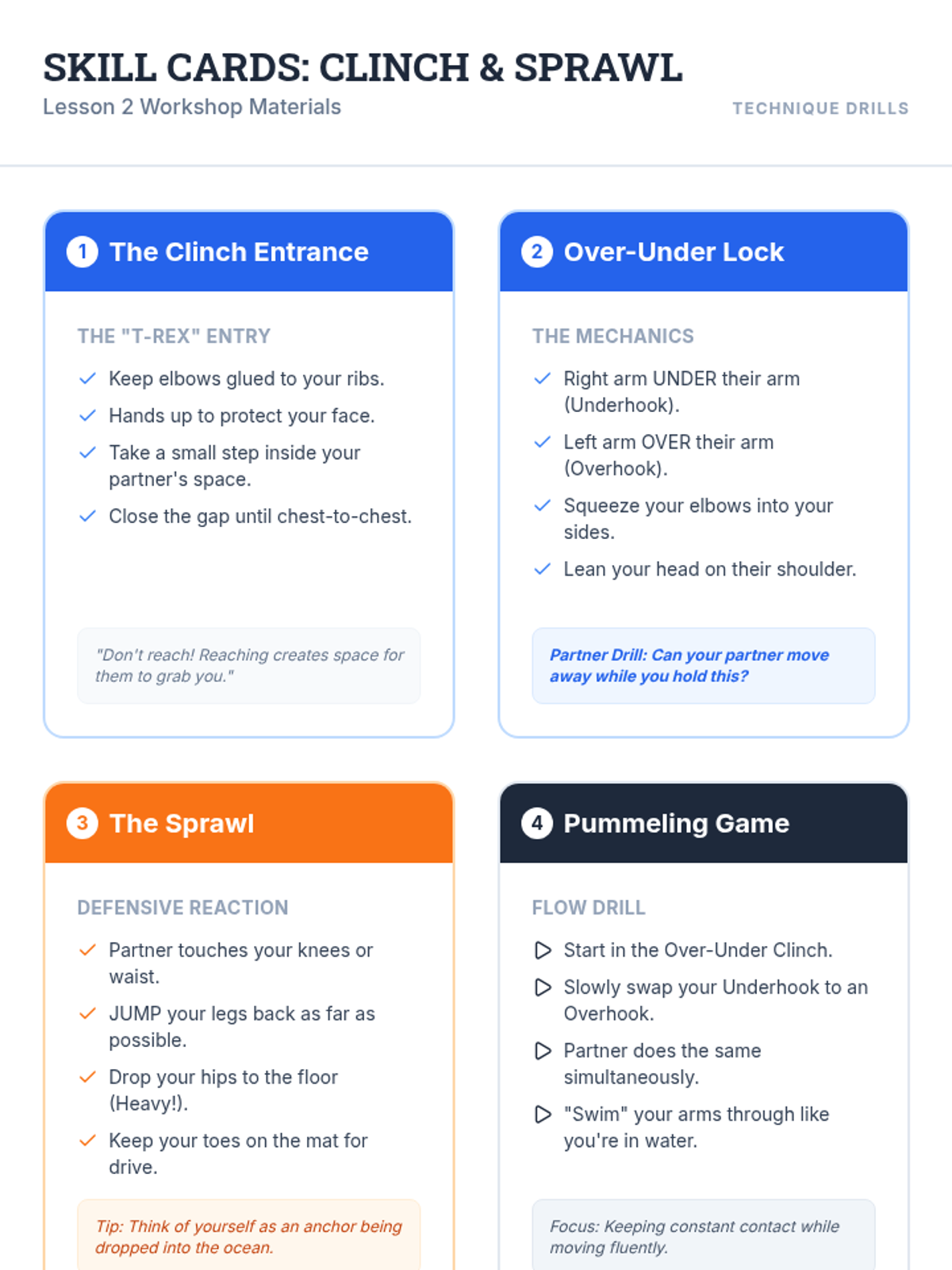
Students learn how to safely close the distance and establish a clinch position to control an opponent's upper body. They practice 'sprawling' to defend against leg tackles, focusing on driving hips down and legs back. The lesson emphasizes control over aggression.
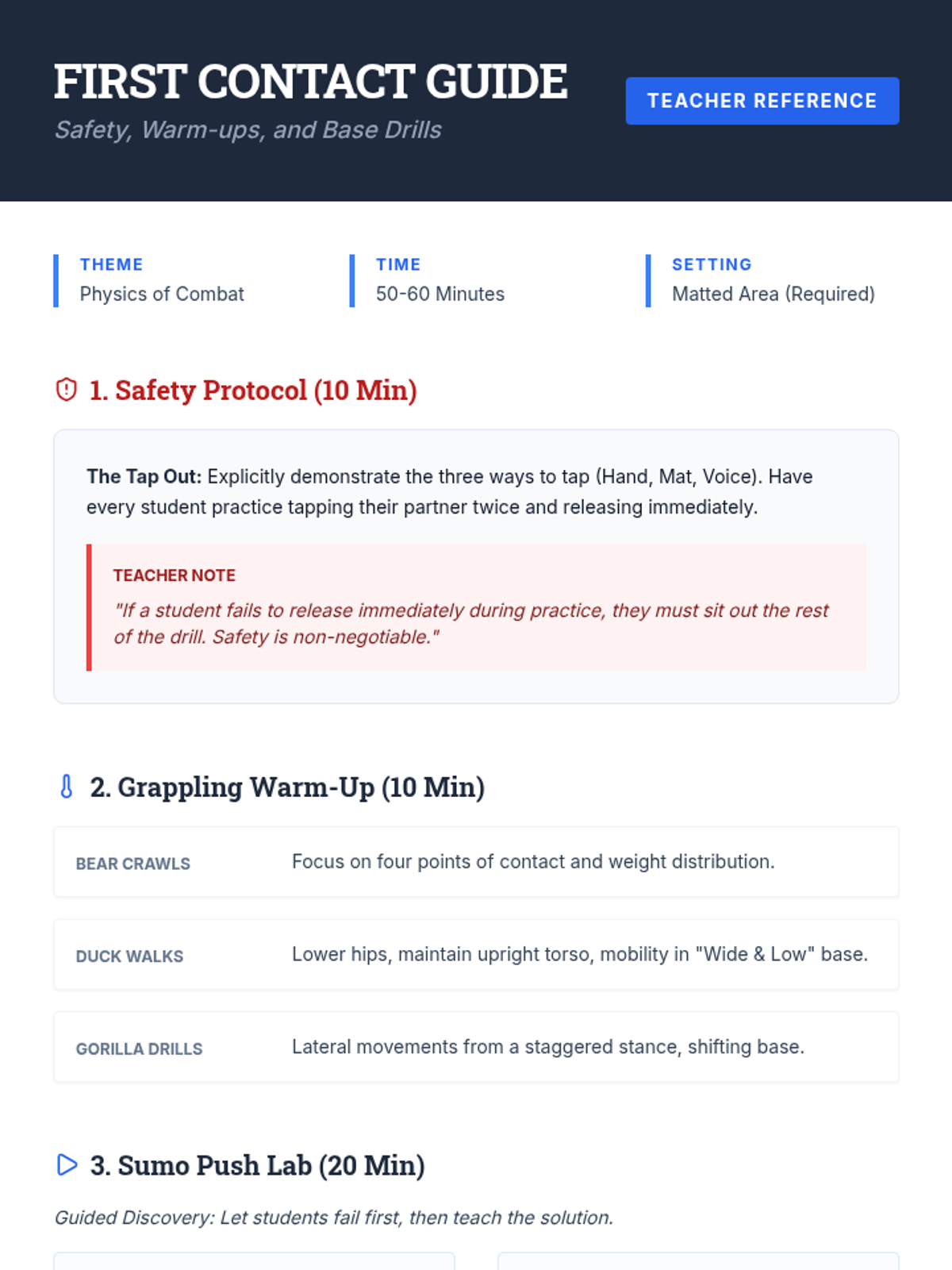
Students investigate the concept of 'base' through push-pull games, learning how stance width and knee bend affect stability. They practice recovering their balance when disrupted by a partner. The lesson establishes the rules of safe contact and tapping out.
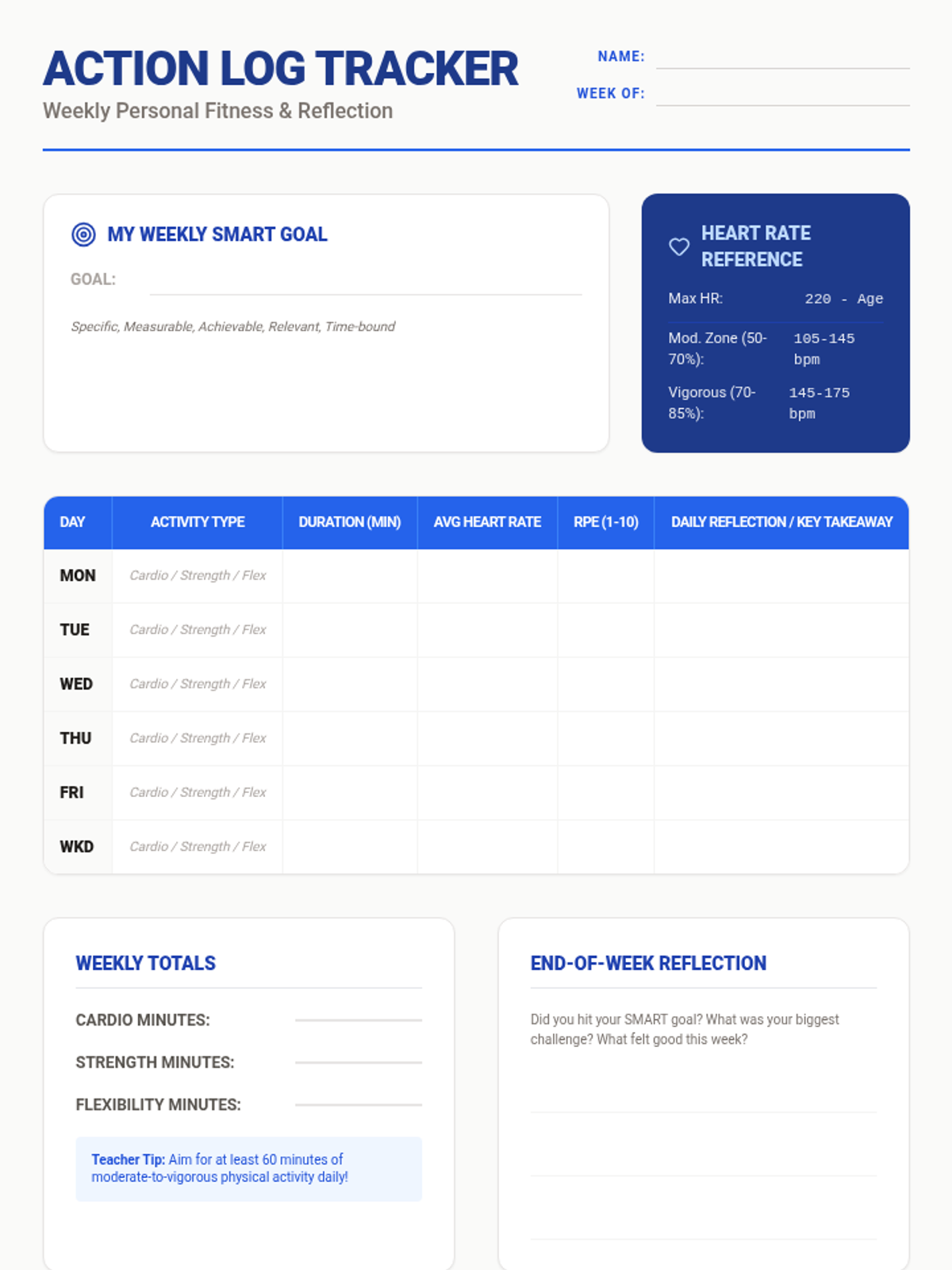
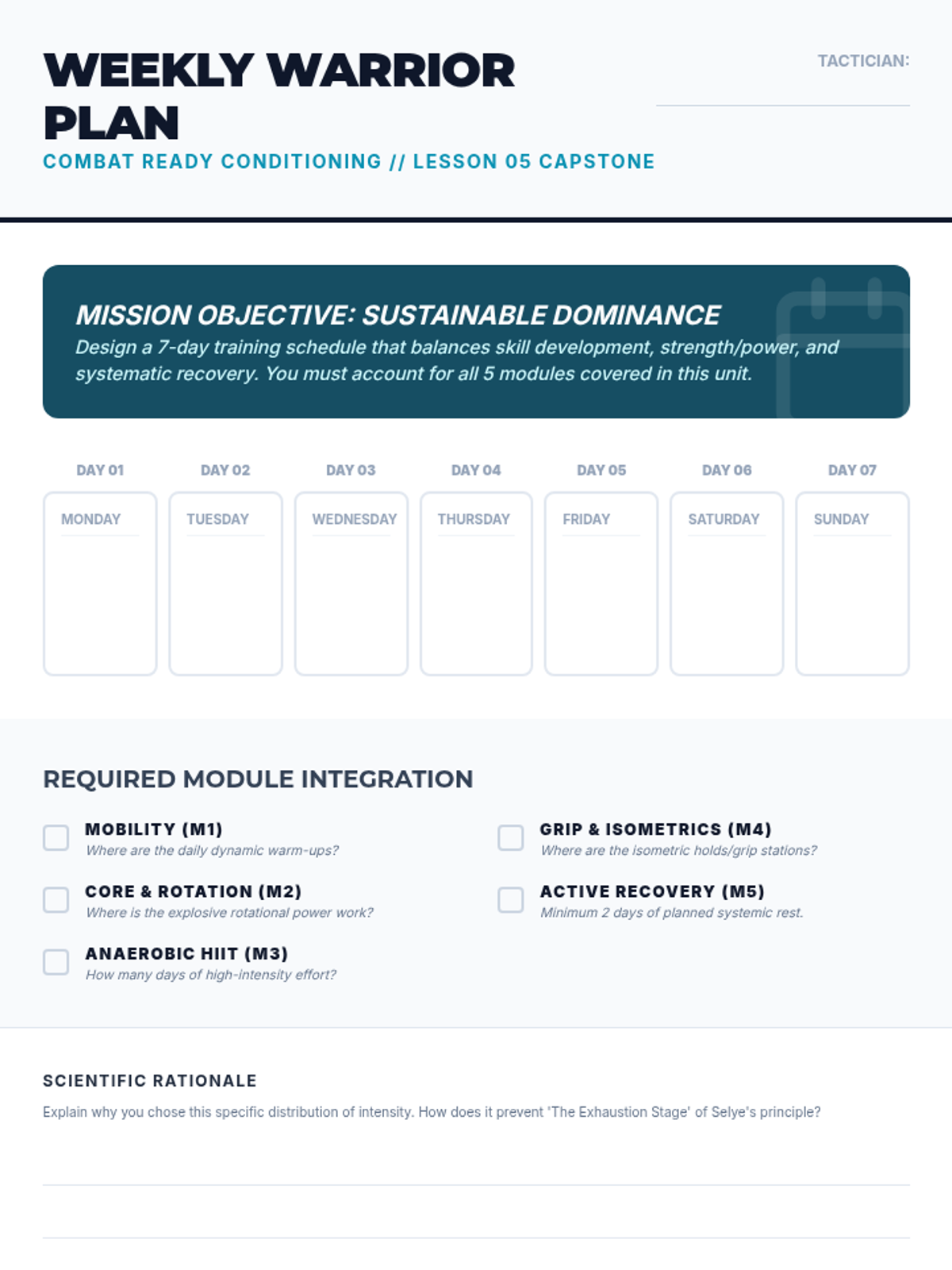
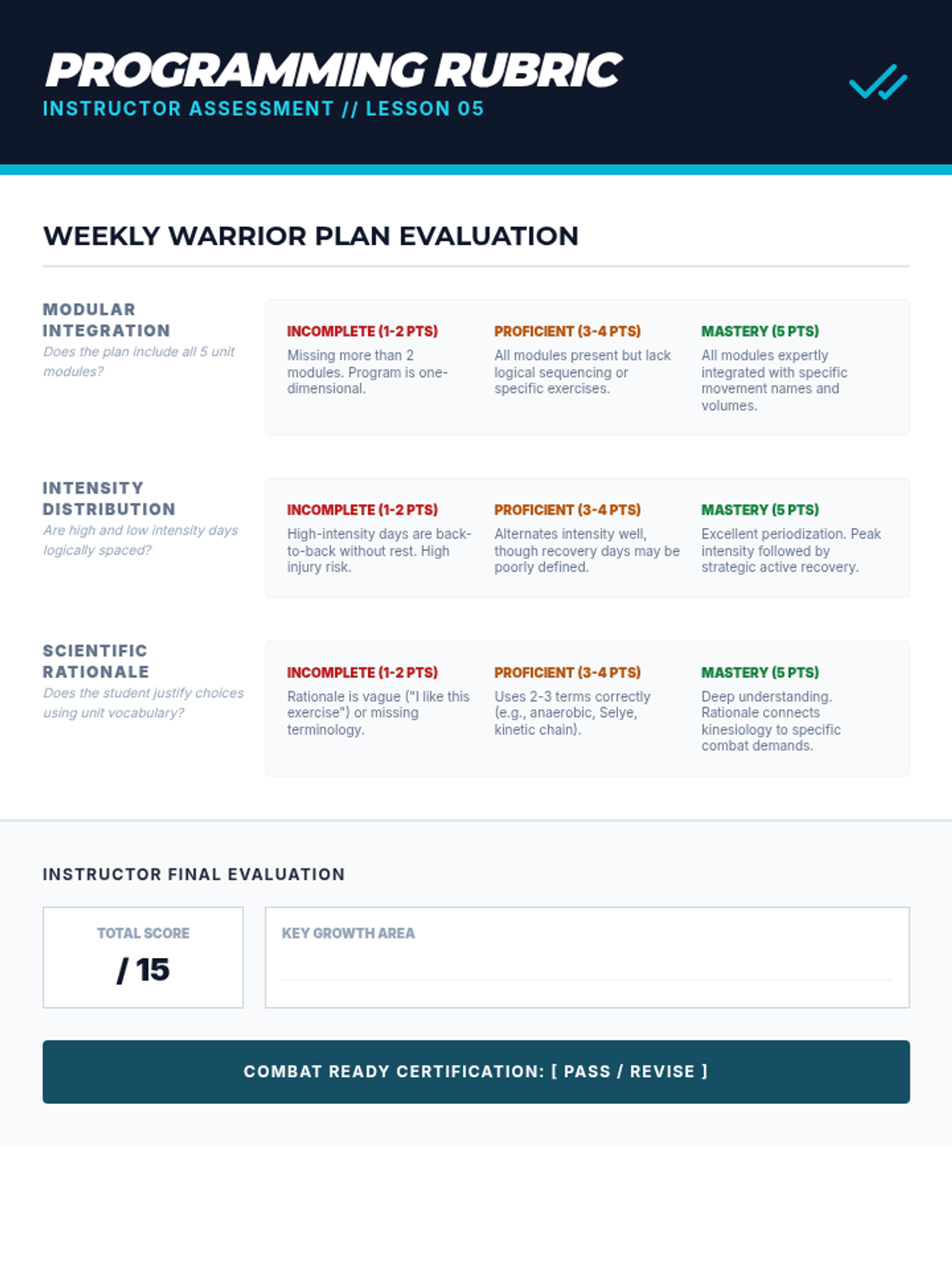
Covers the science of recovery and program design, culminating in students creating a sustainable weekly training protocol.
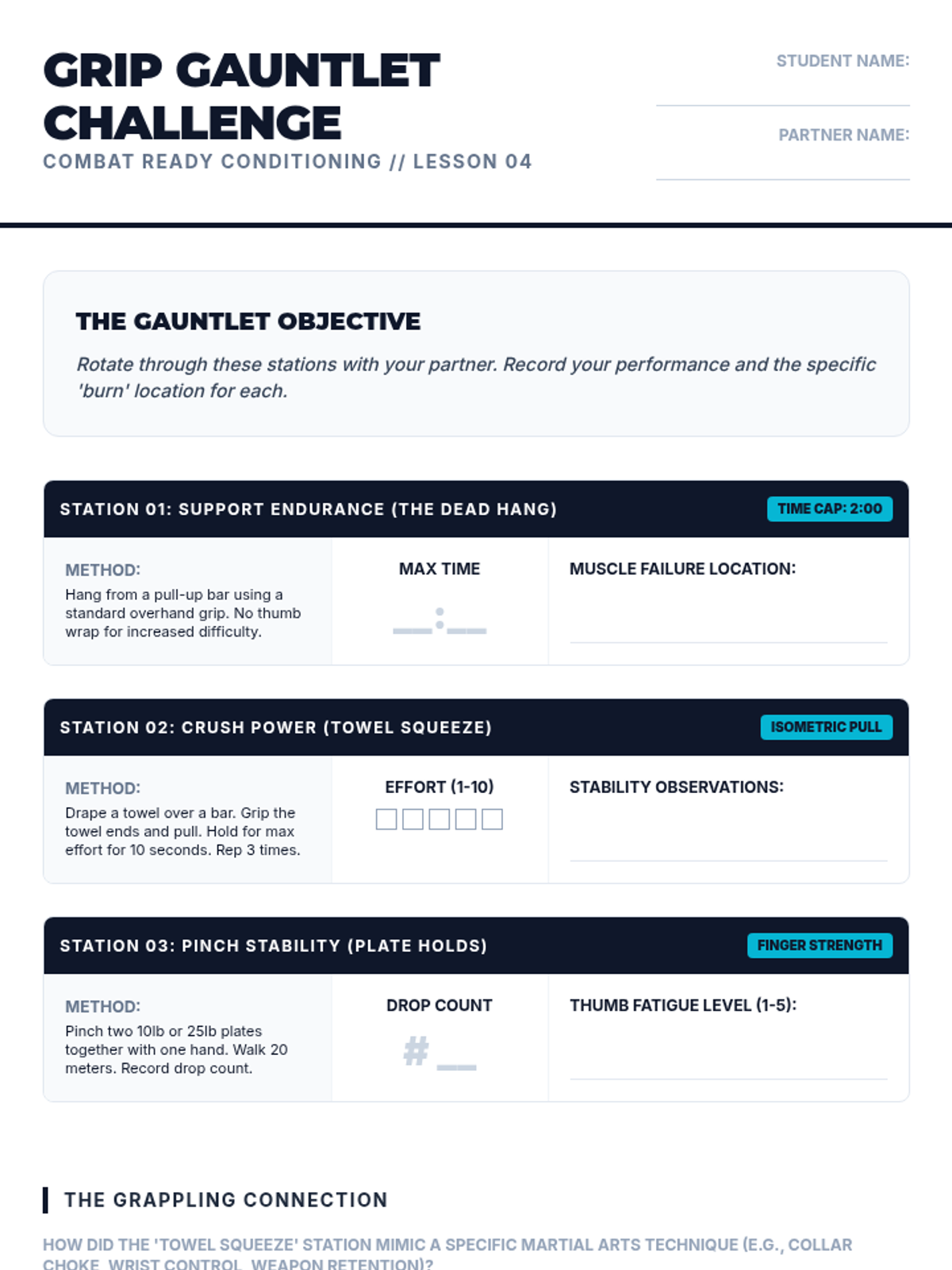
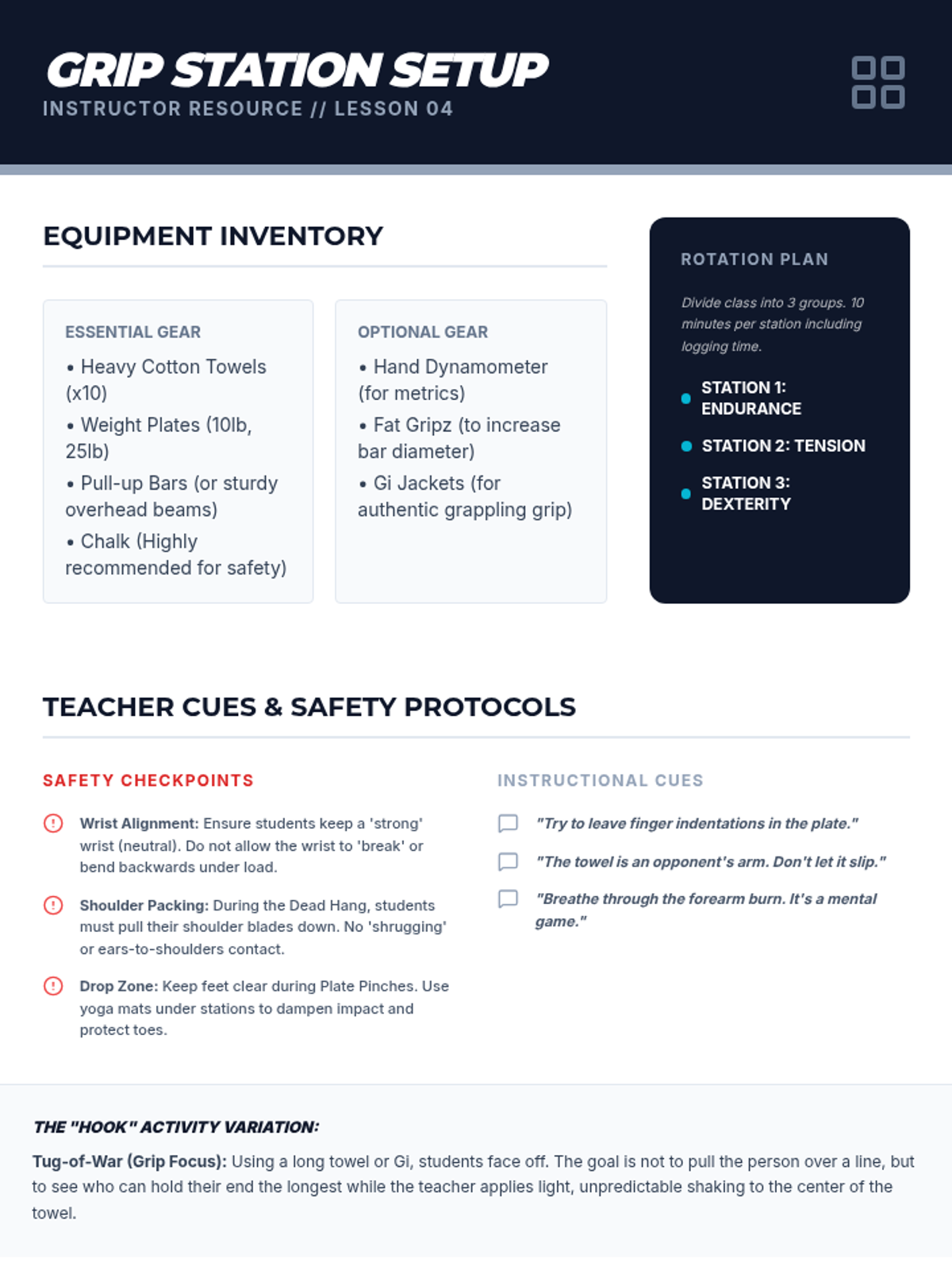
Explores the mechanics of grip and isometric tension, vital for grappling and weapon retention in martial arts.
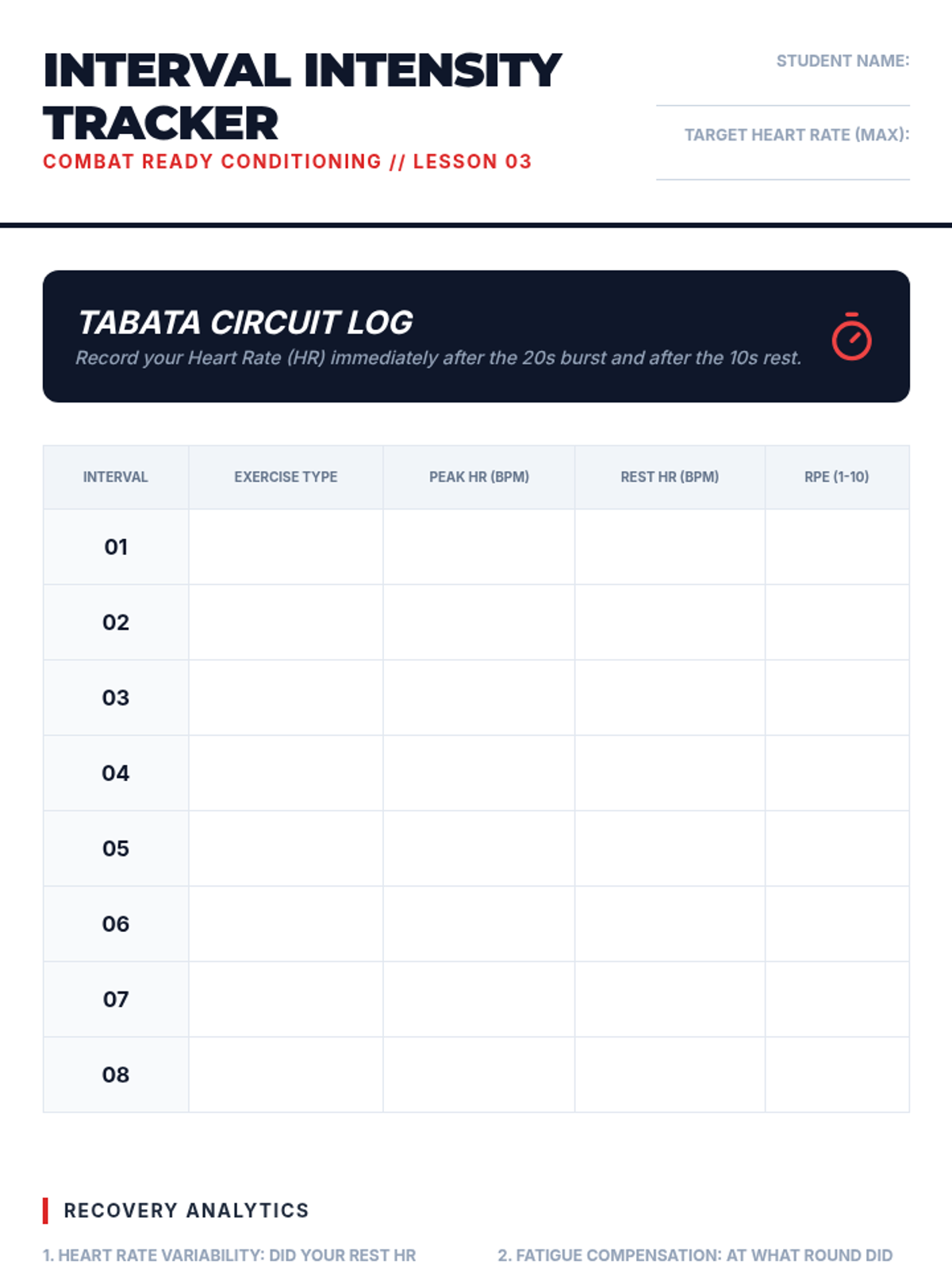
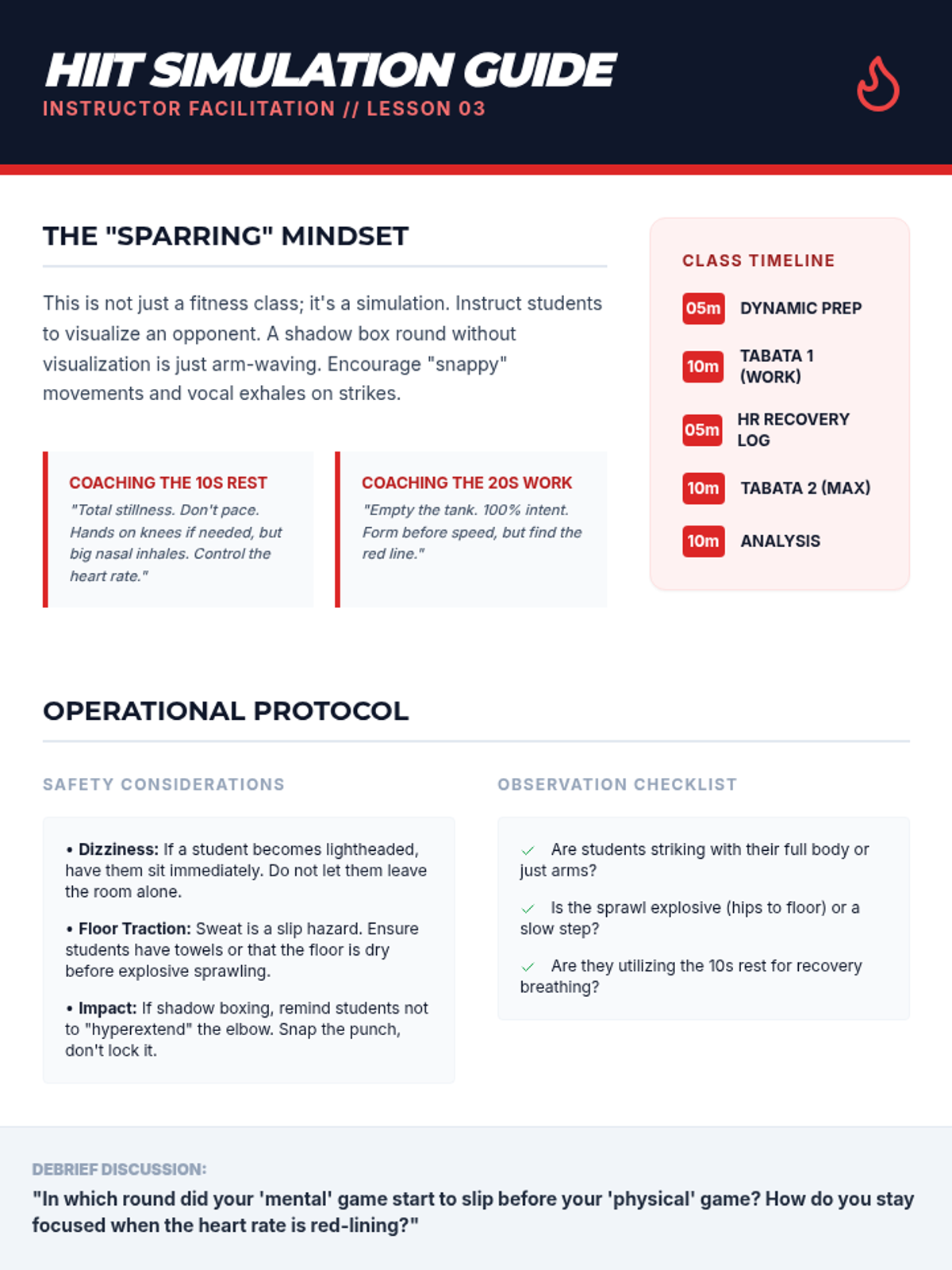
Simulates the high-intensity energy demands of combat through HIIT, focusing on anaerobic capacity and rapid recovery.
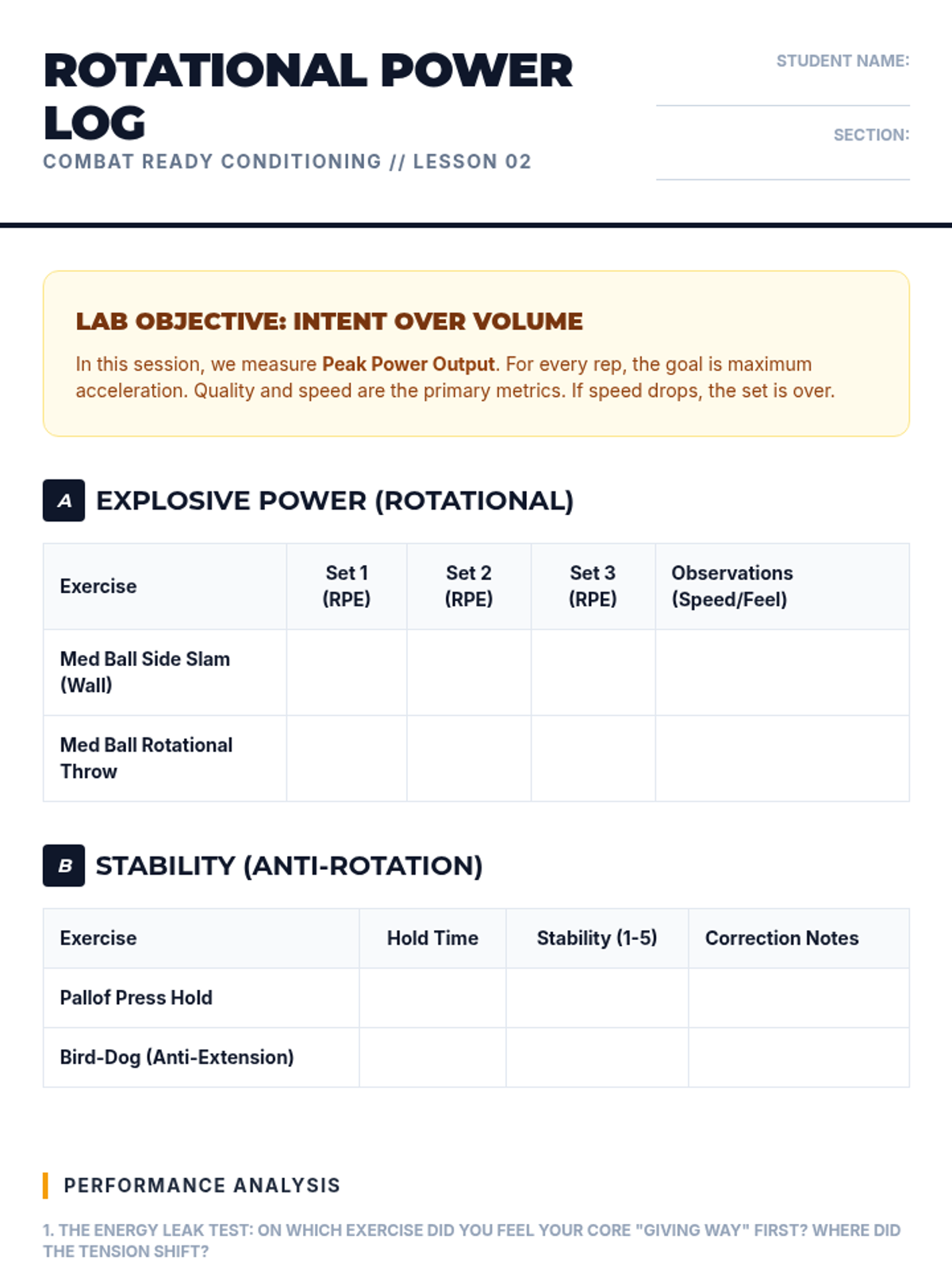
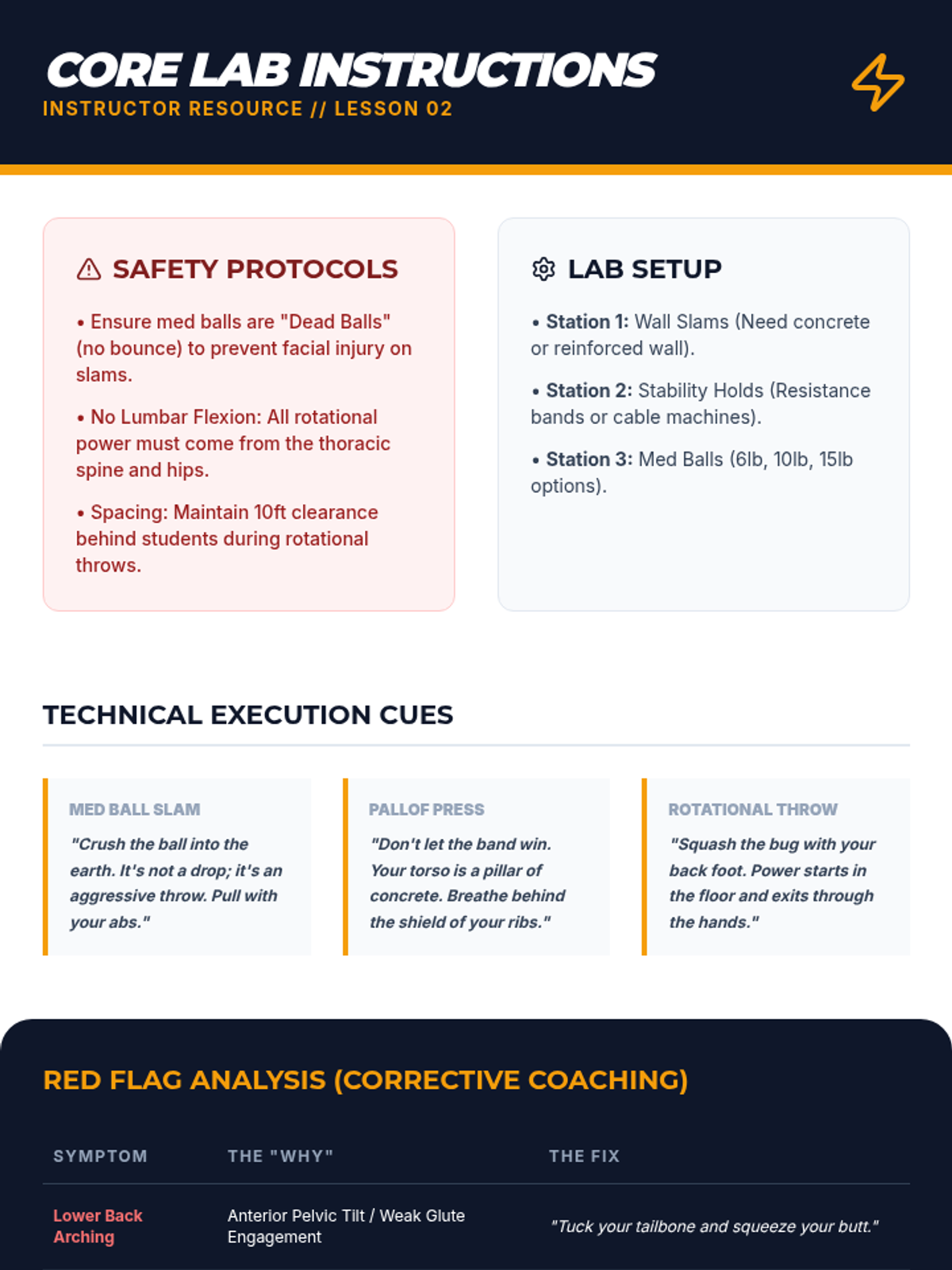
Focuses on the core's role as a power transmitter, teaching students how to generate rotational force and maintain spinal stability.
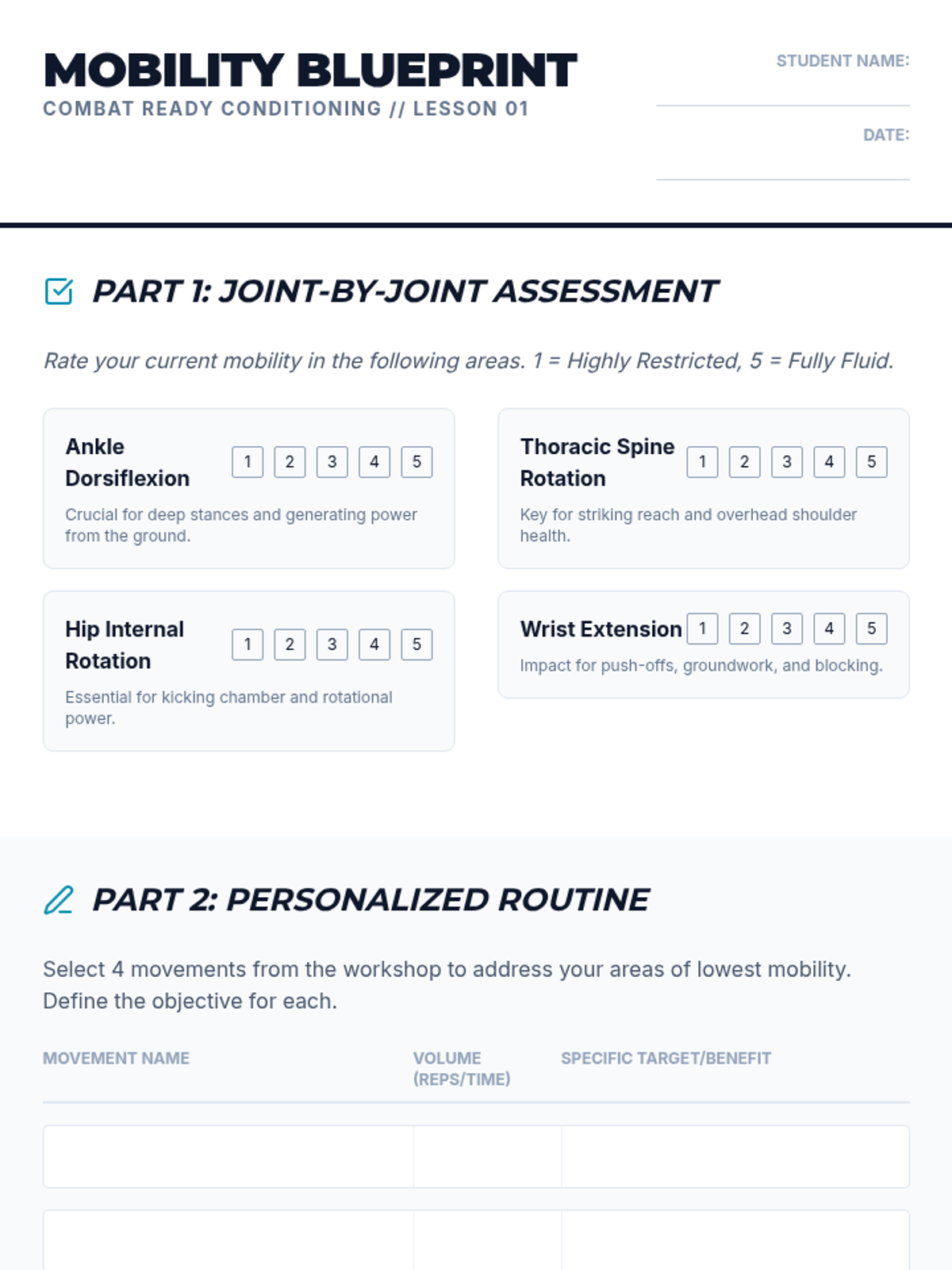
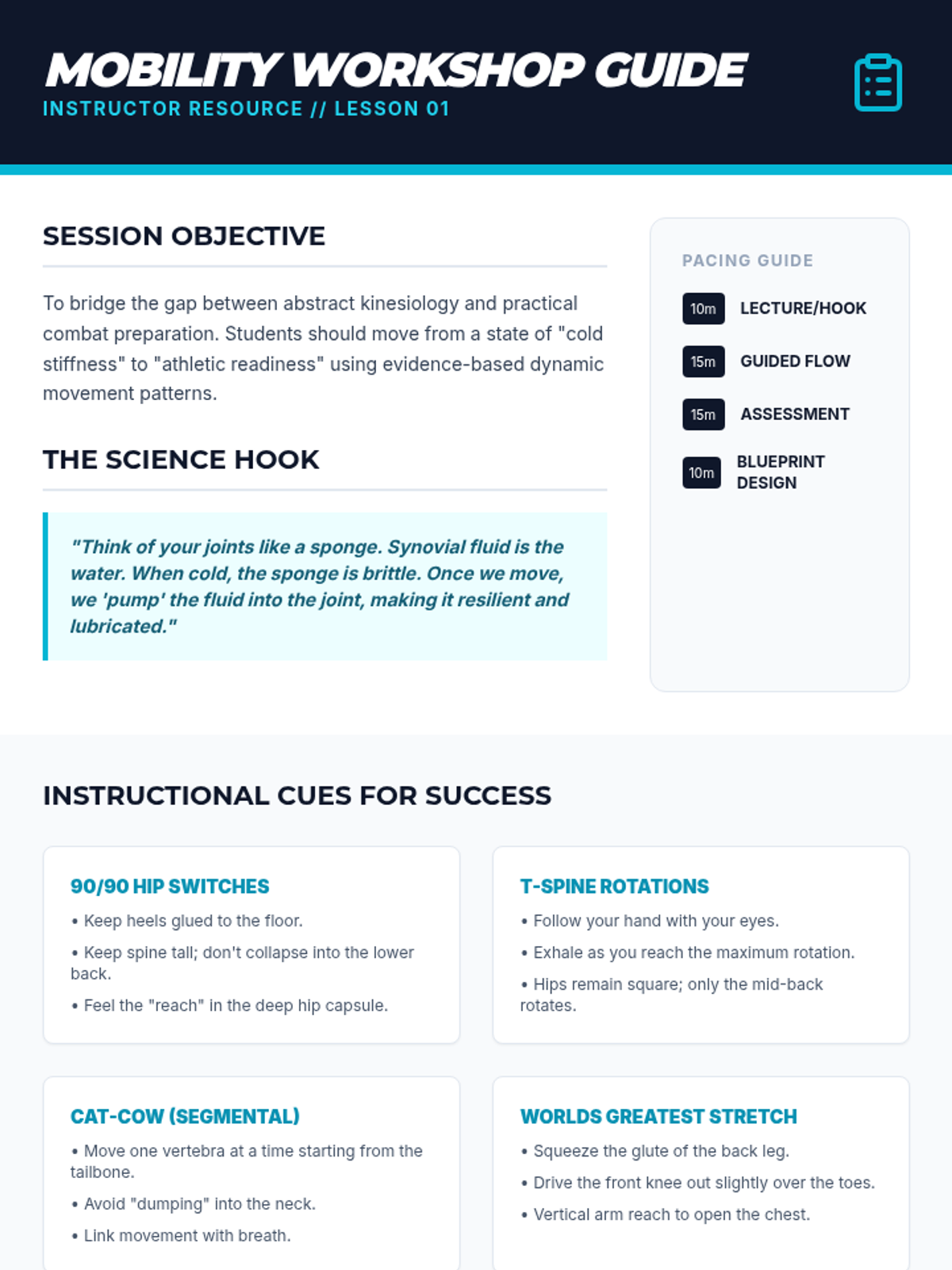
Students explore the science of mobility, learning dynamic routines to prepare the body for the high-impact demands of striking and grappling.
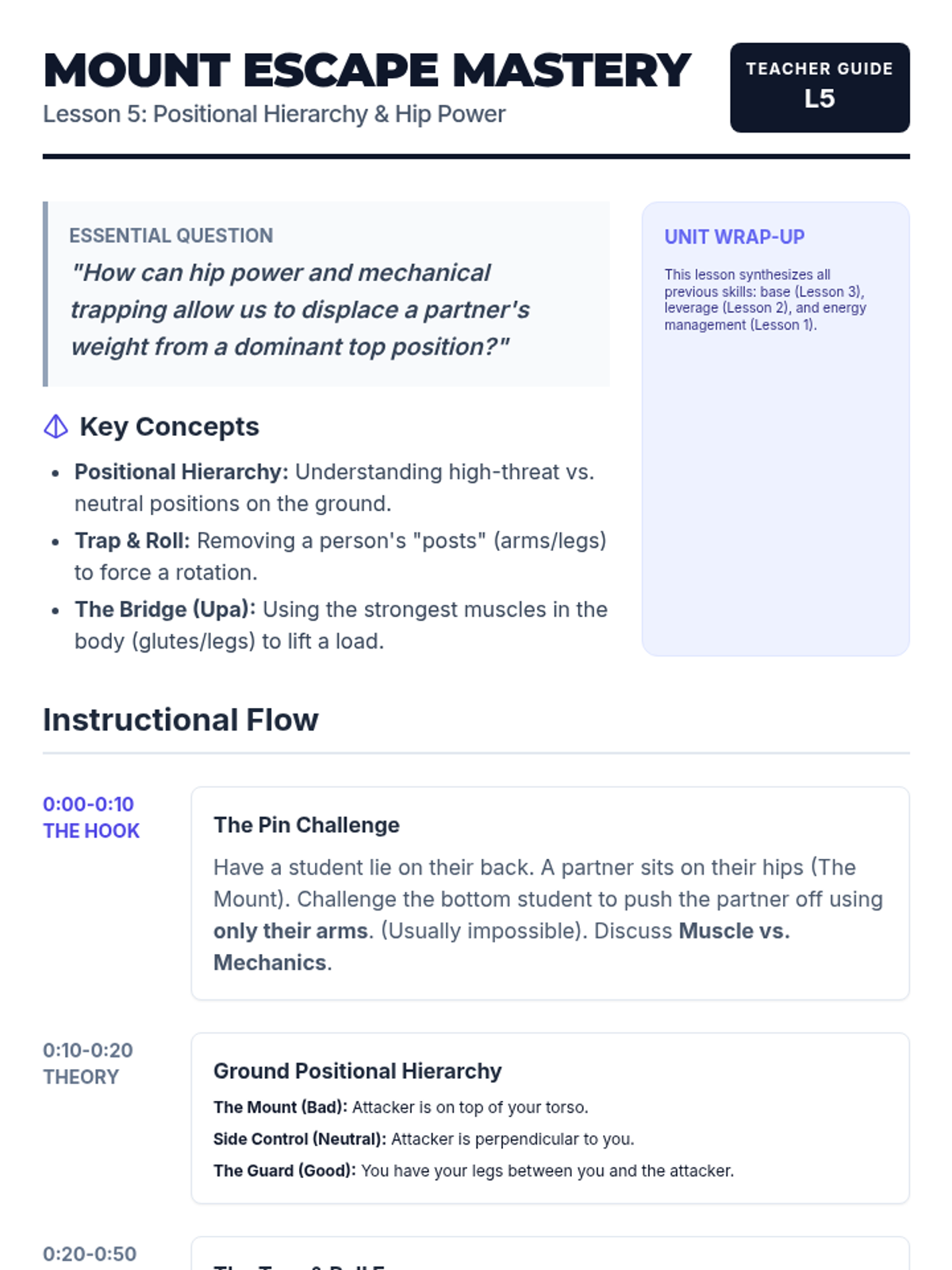
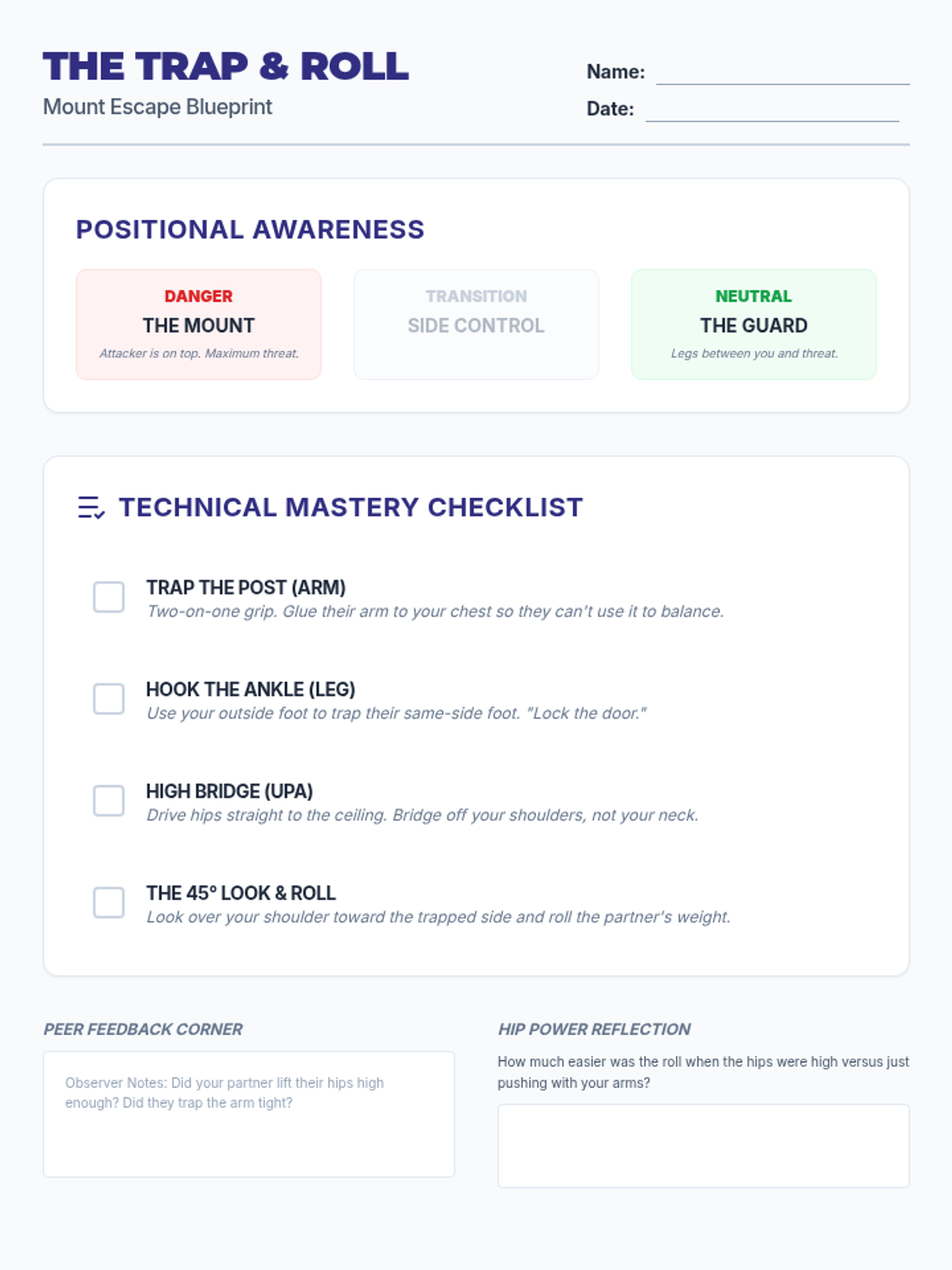
An introduction to positional hierarchy on the ground, focusing on the 'Trap and Roll' escape from the mount. Students learn to use hip bridging and leverage rather than arm strength to displace weight.
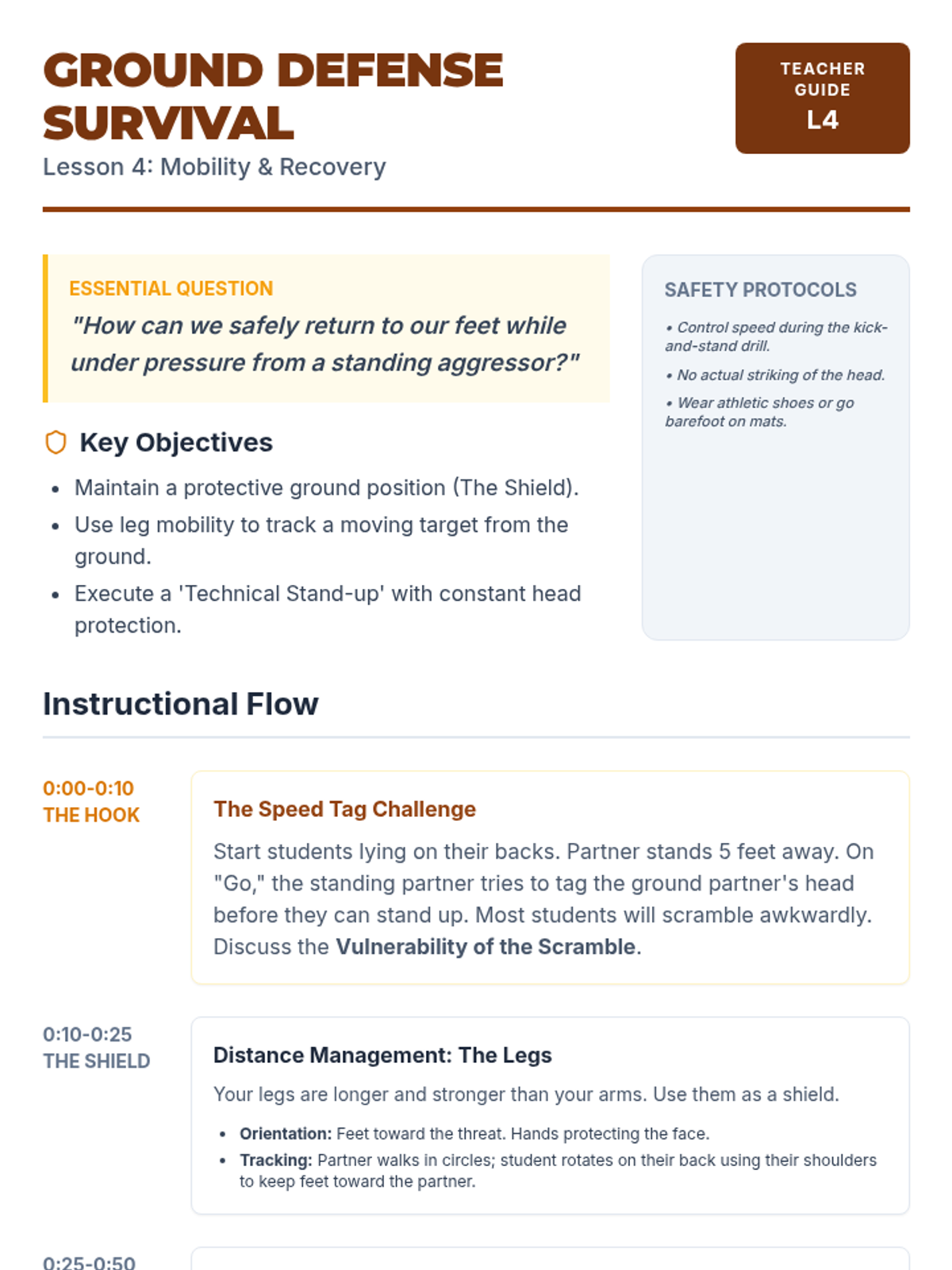
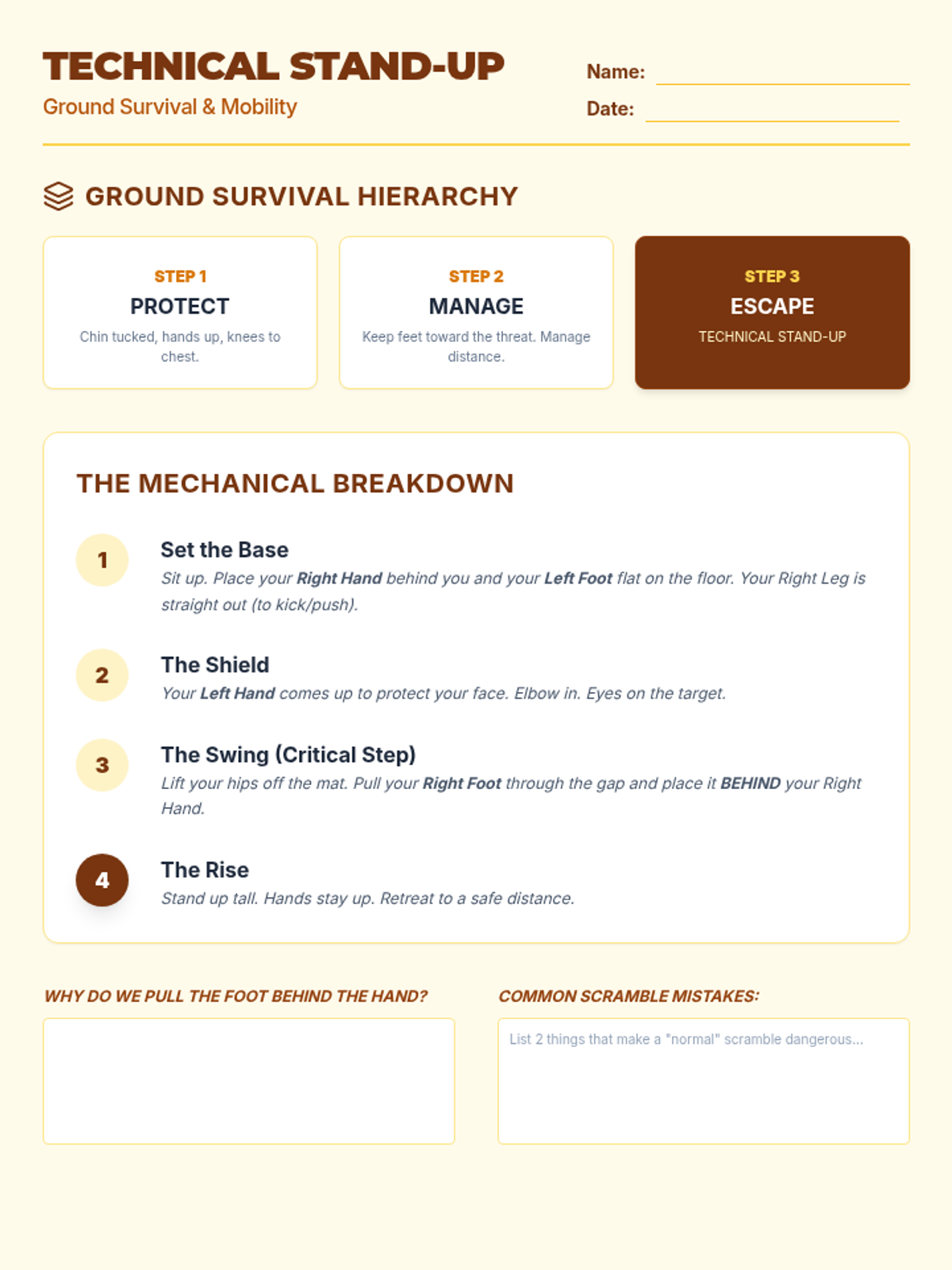
Addressing ground survival, students learn to manage distance with their legs and execute a technical stand-up to return to their feet safely while protecting their head from a standing aggressor.
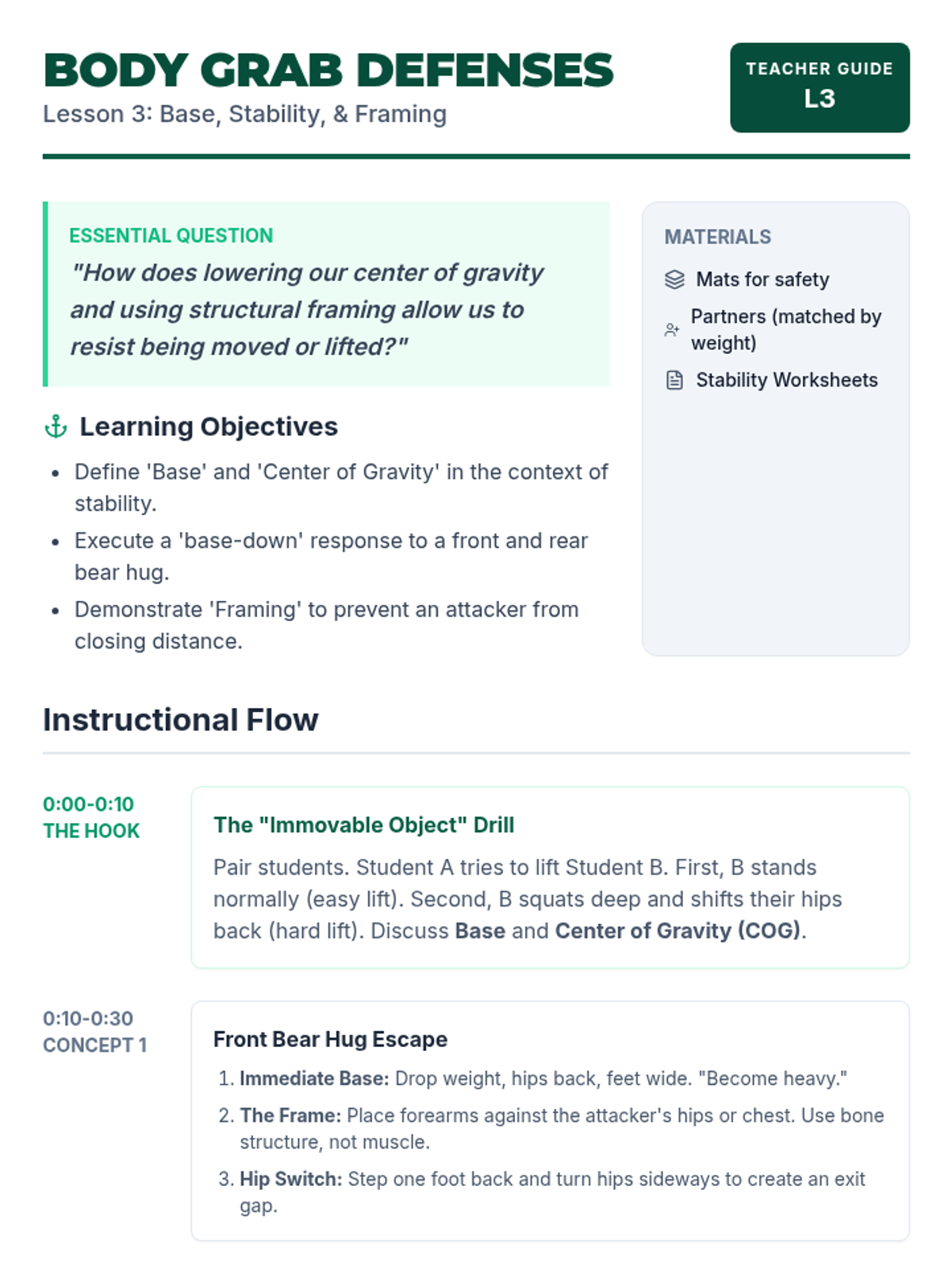
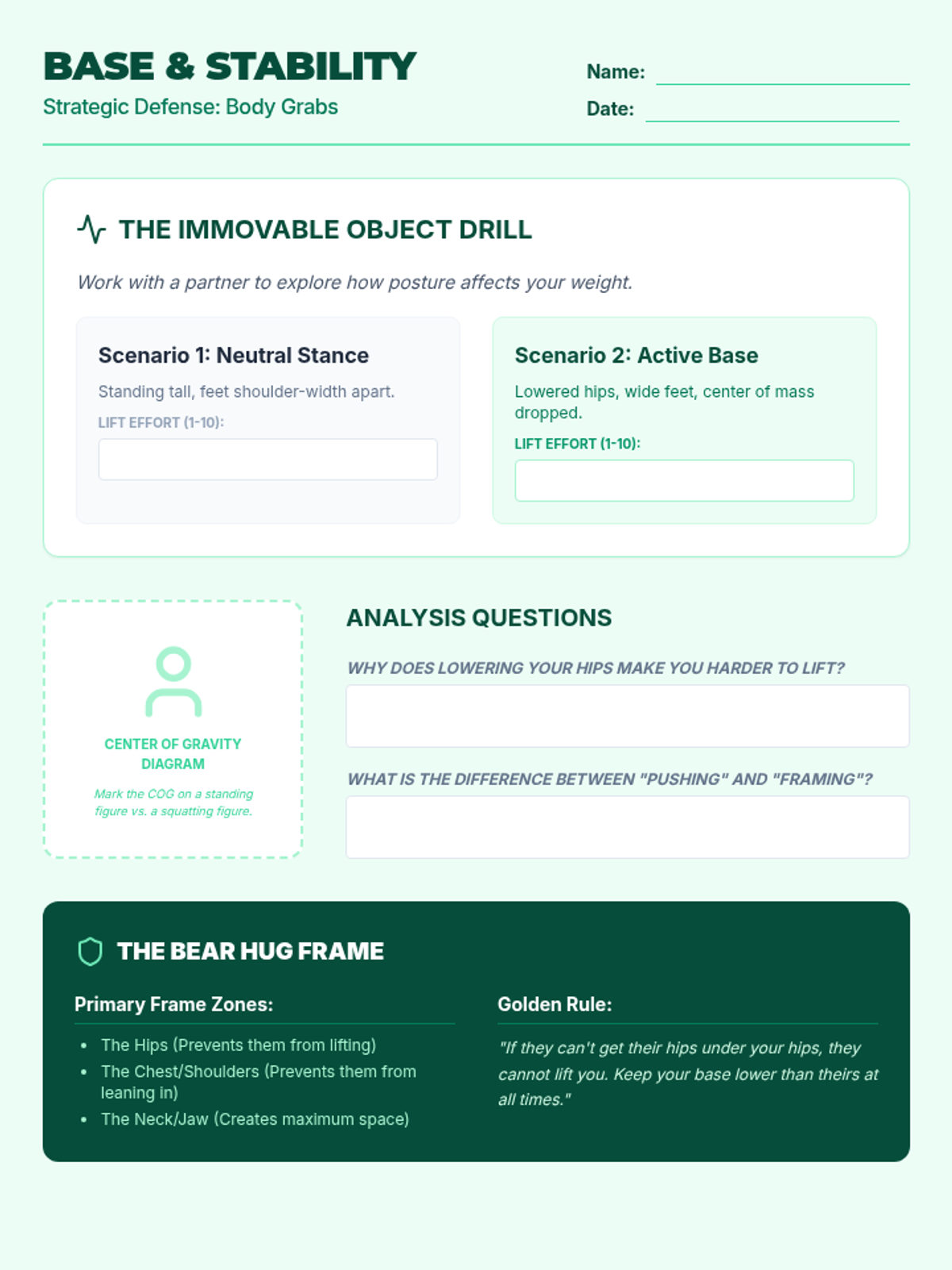
Students focus on maintaining a strong base and using framing to escape body grabs like bear hugs and headlocks. The lesson emphasizes lowering the center of gravity to prevent being lifted or moved.
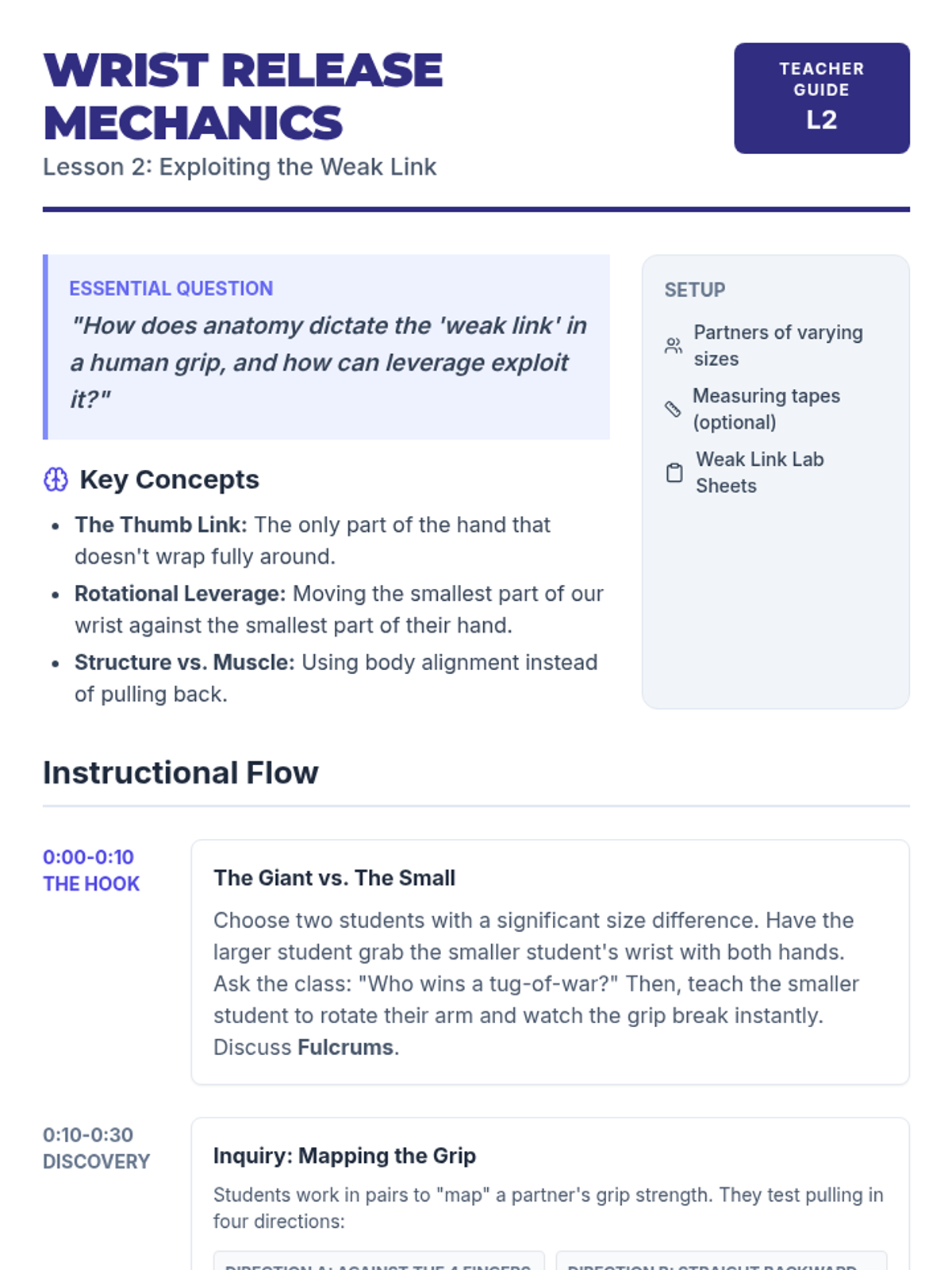
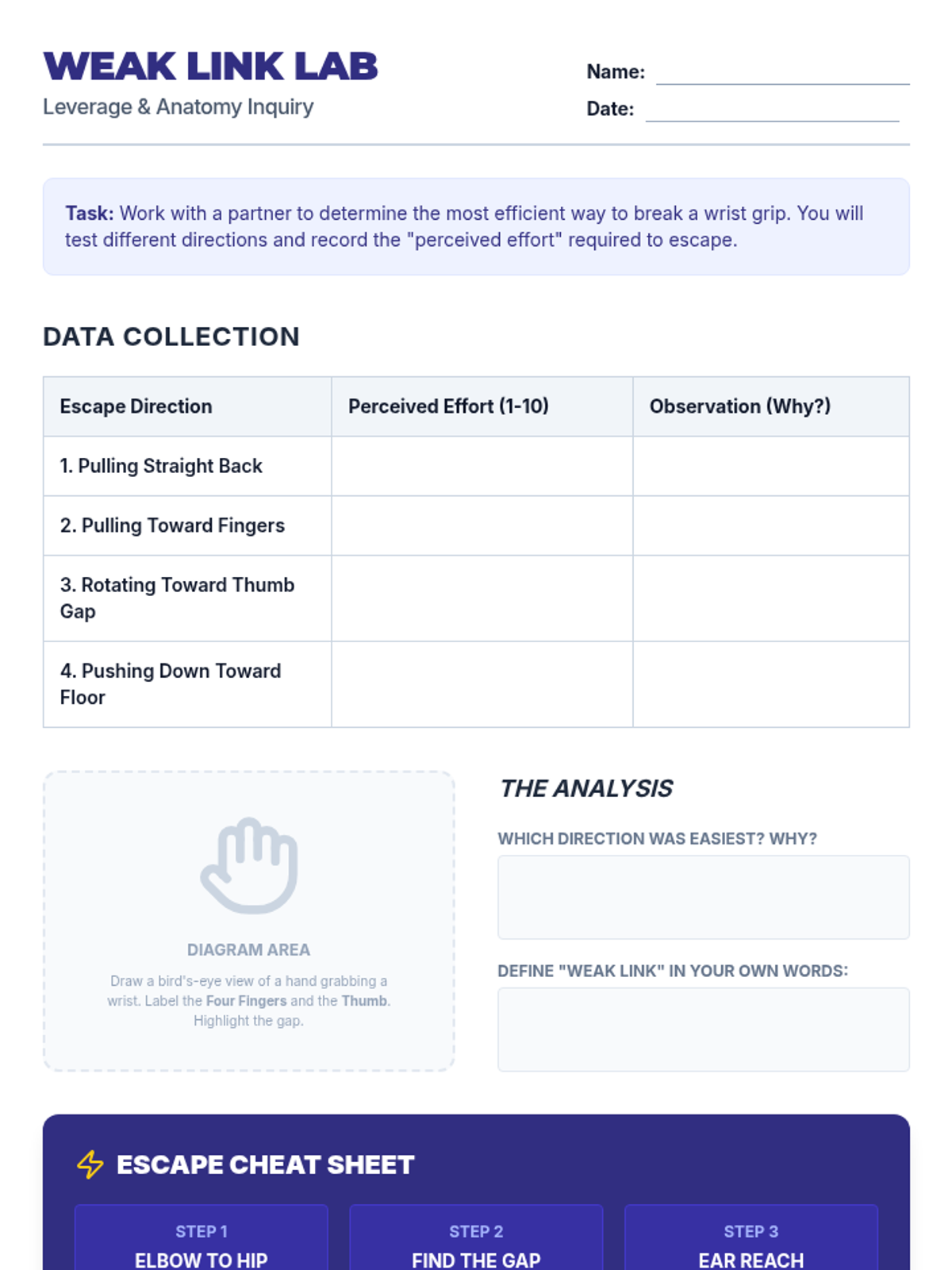
This lesson explores the anatomy of the hand and the physics of leverage to escape wrist and arm grabs. Students practice identifying the 'weak link' in a grip and rotating against the thumb.