Essential food groups, nutrient functions, and balanced meal planning. Develops skills for interpreting nutrition labels and adopting lifelong healthy eating patterns.
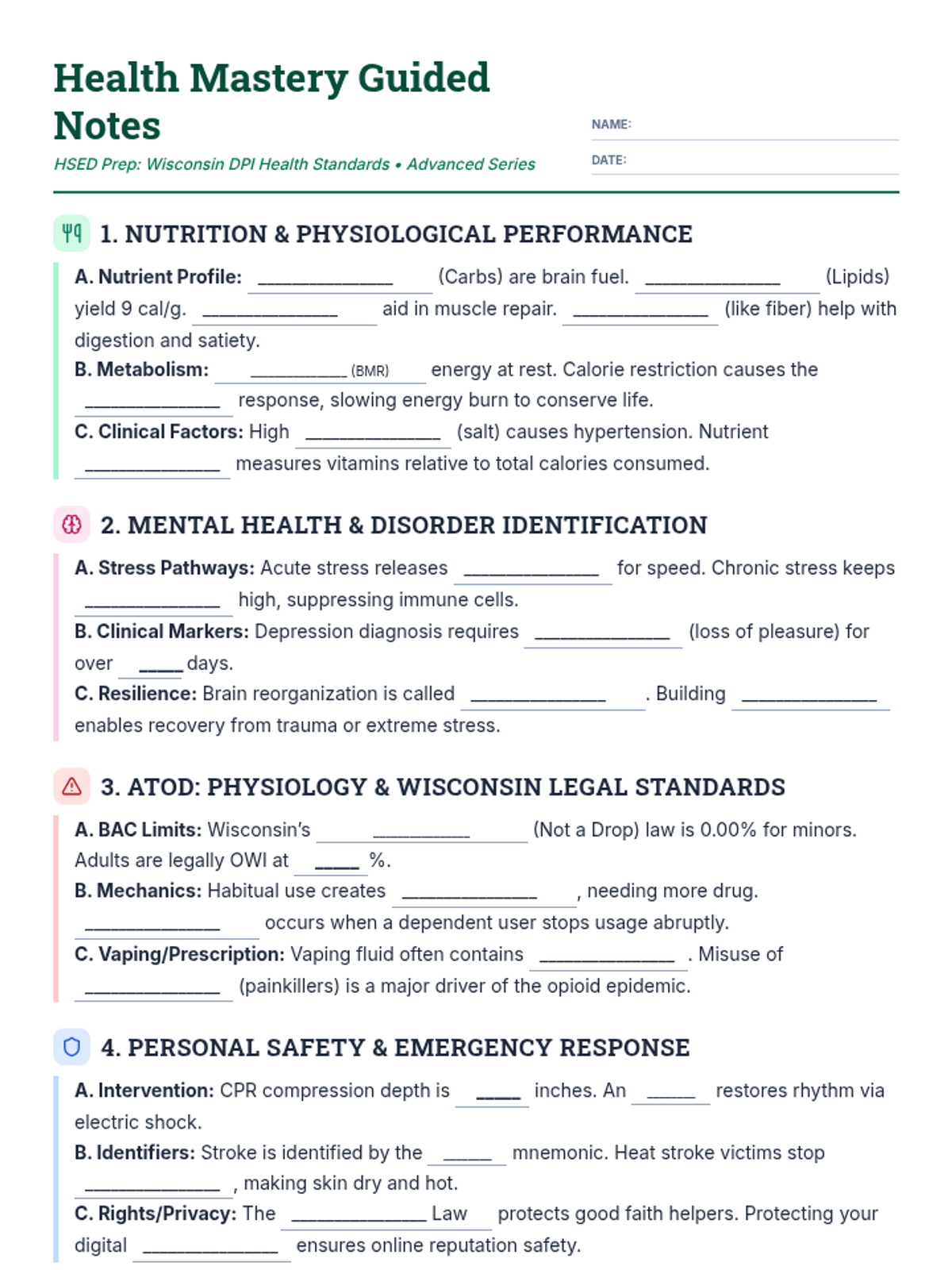
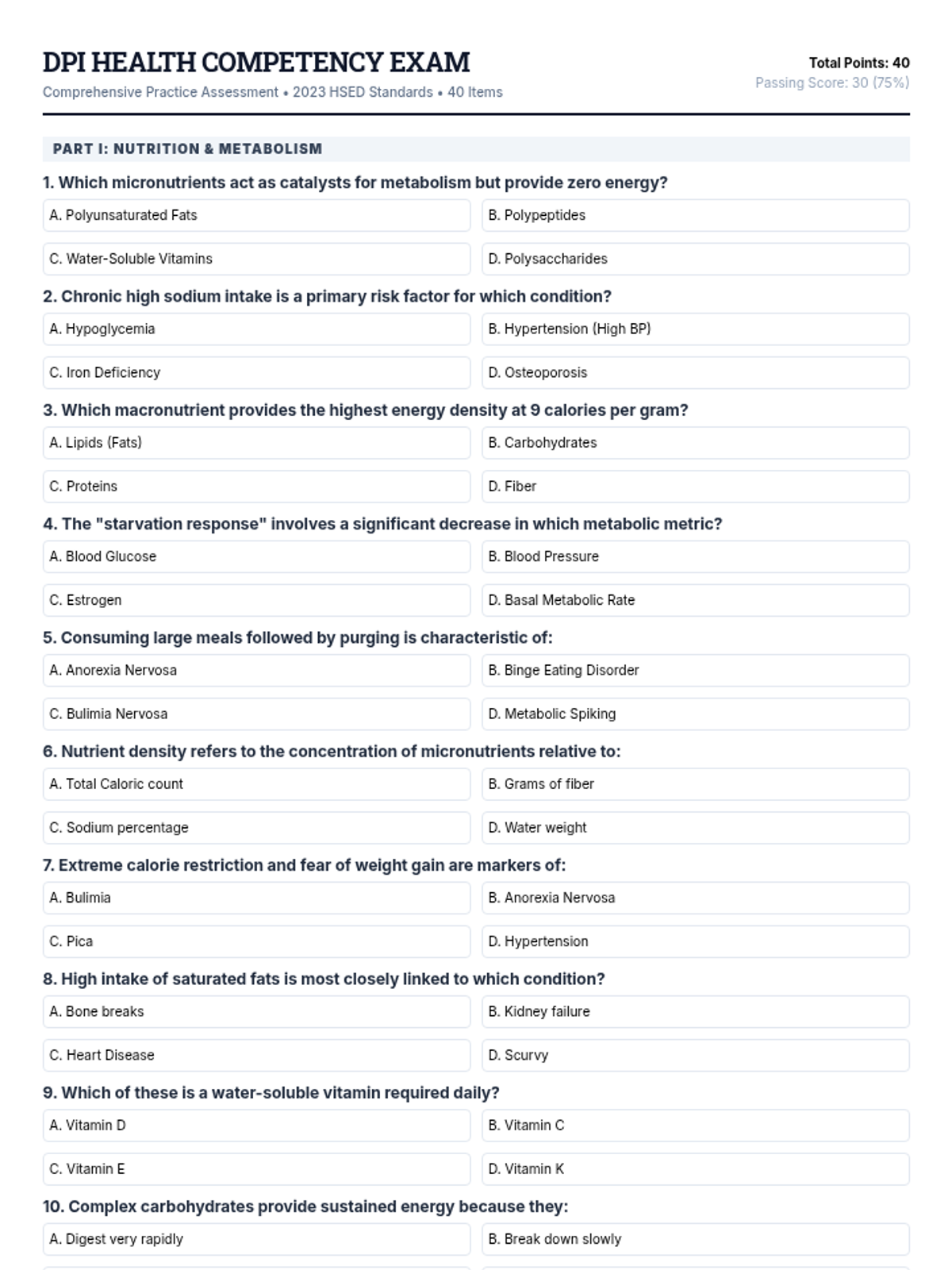
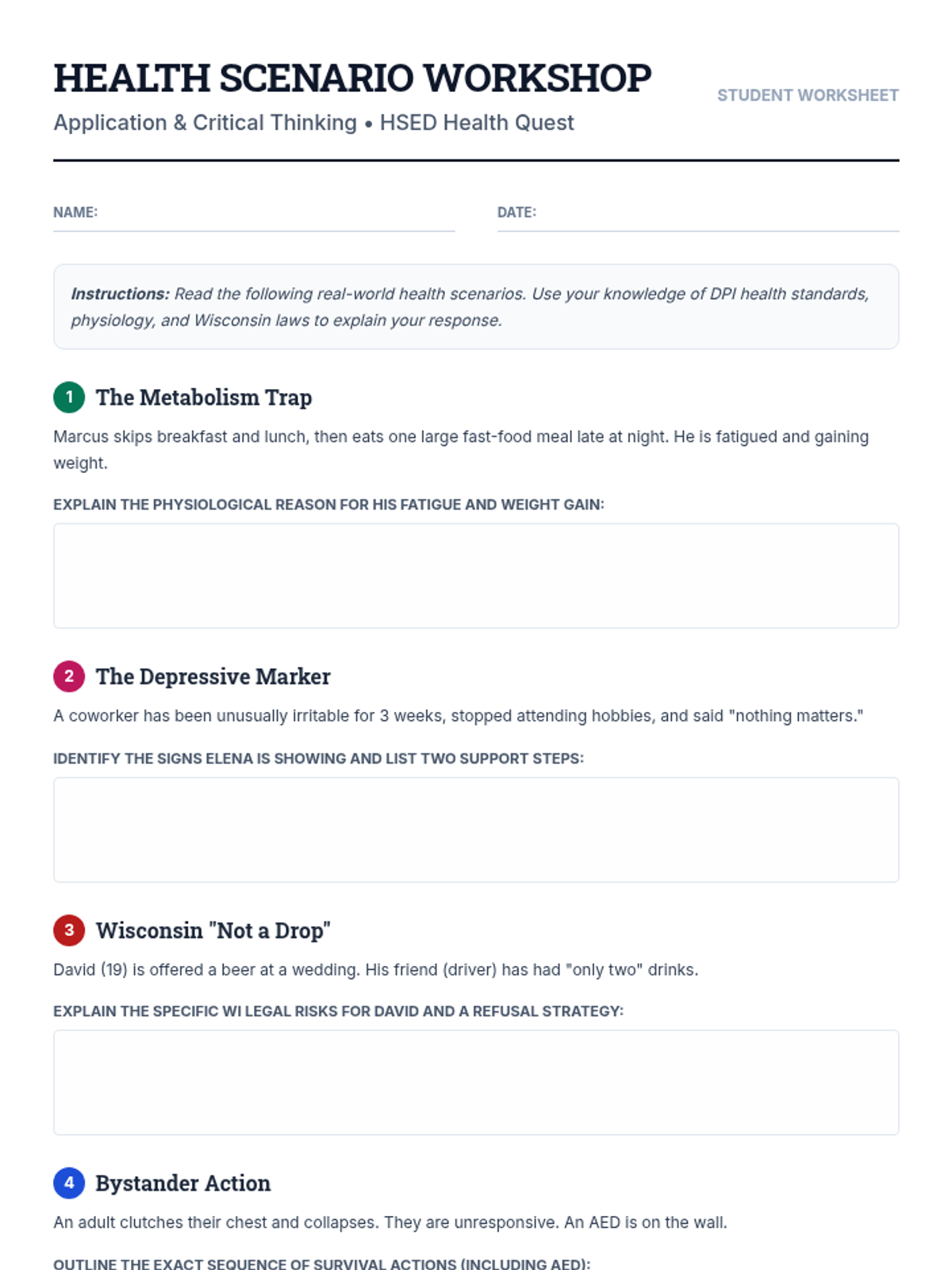
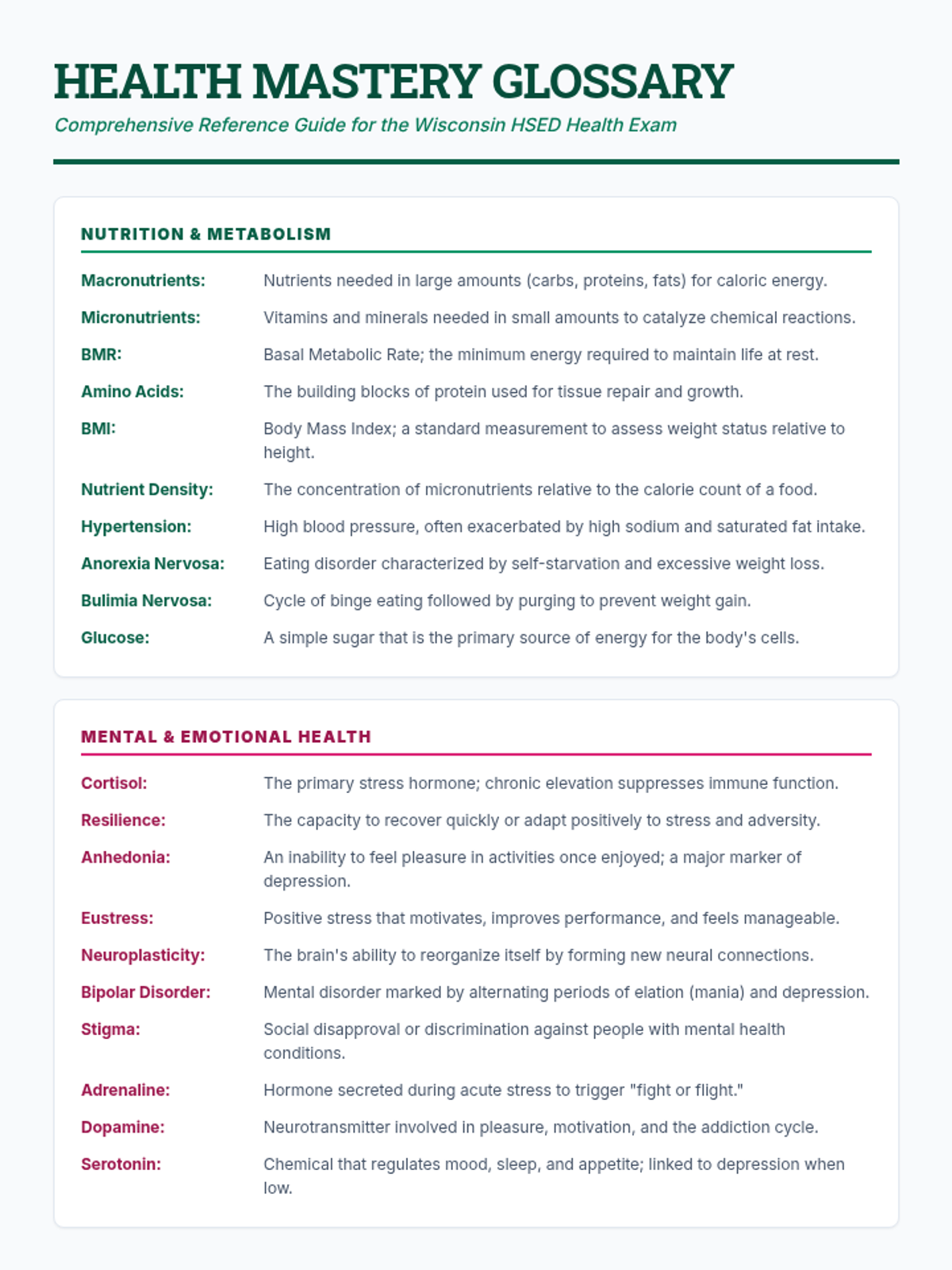
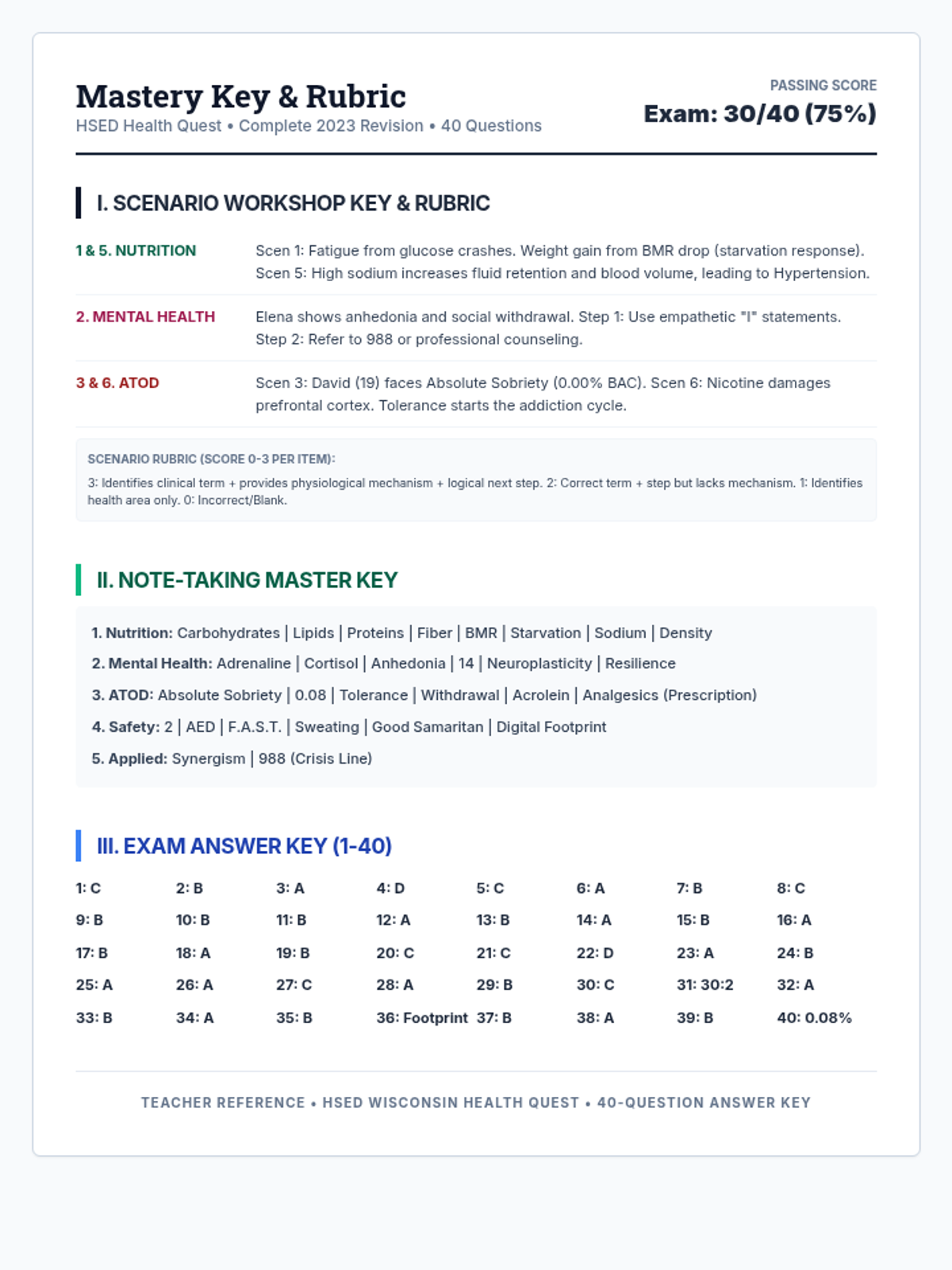
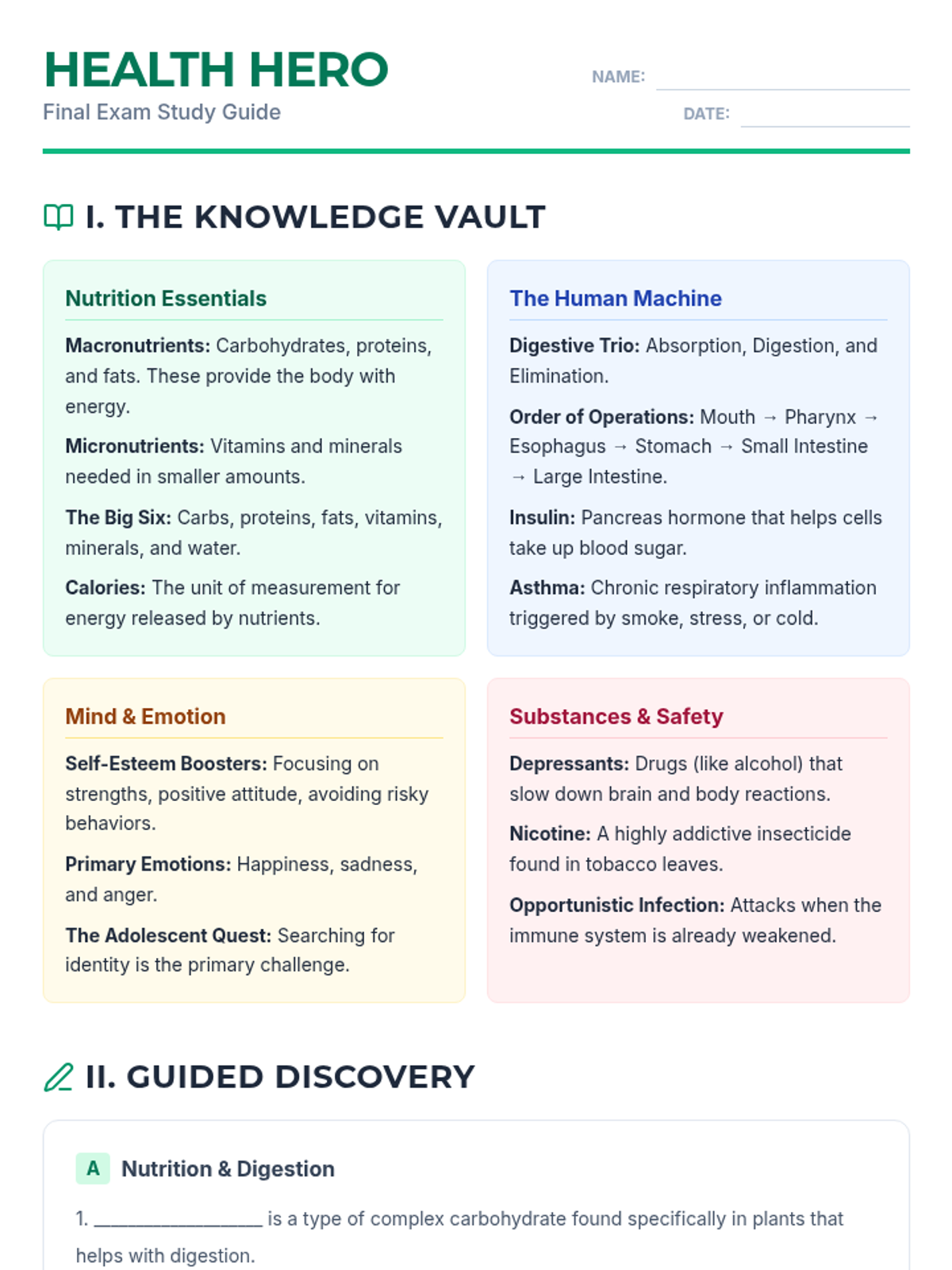
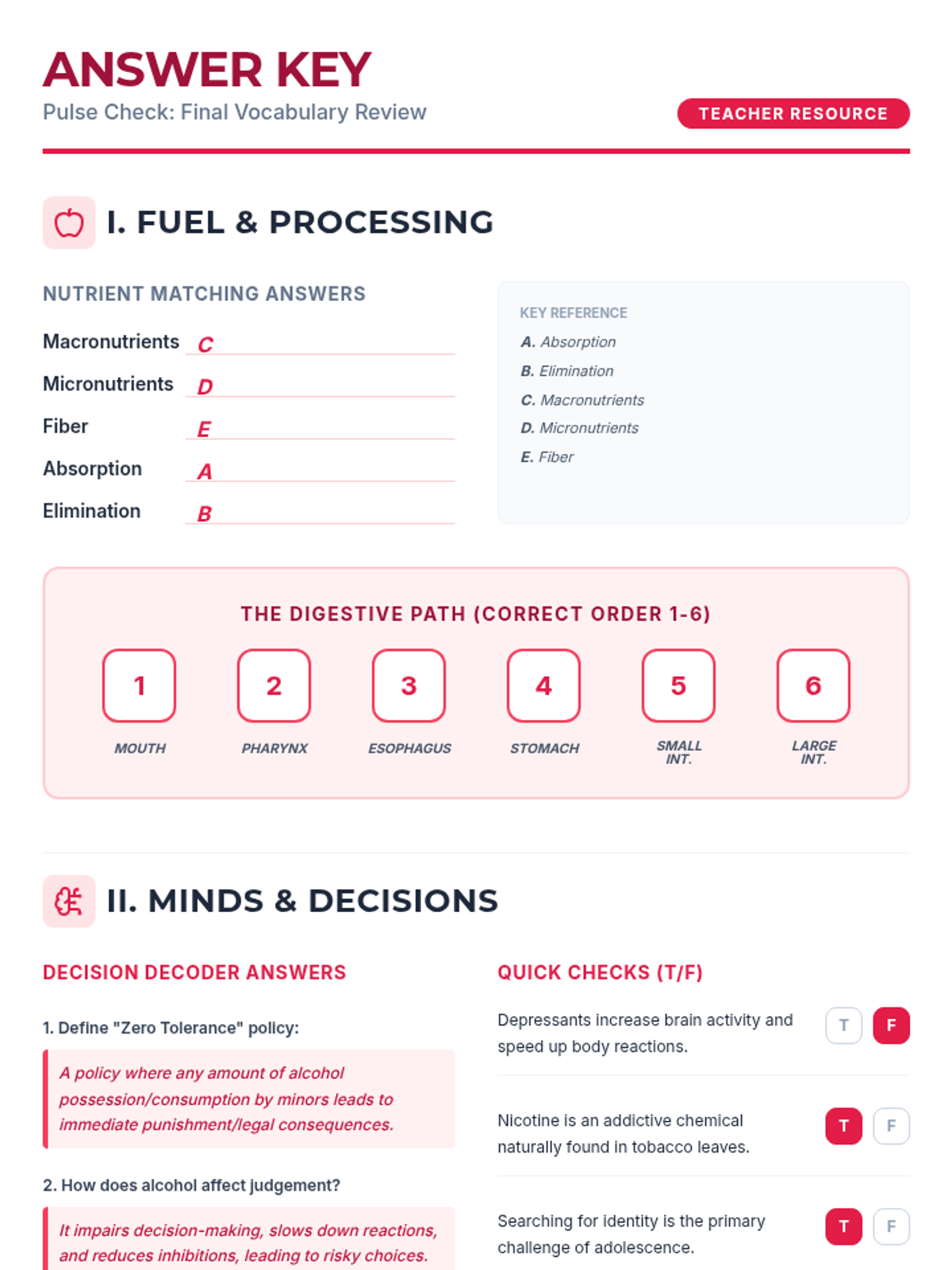
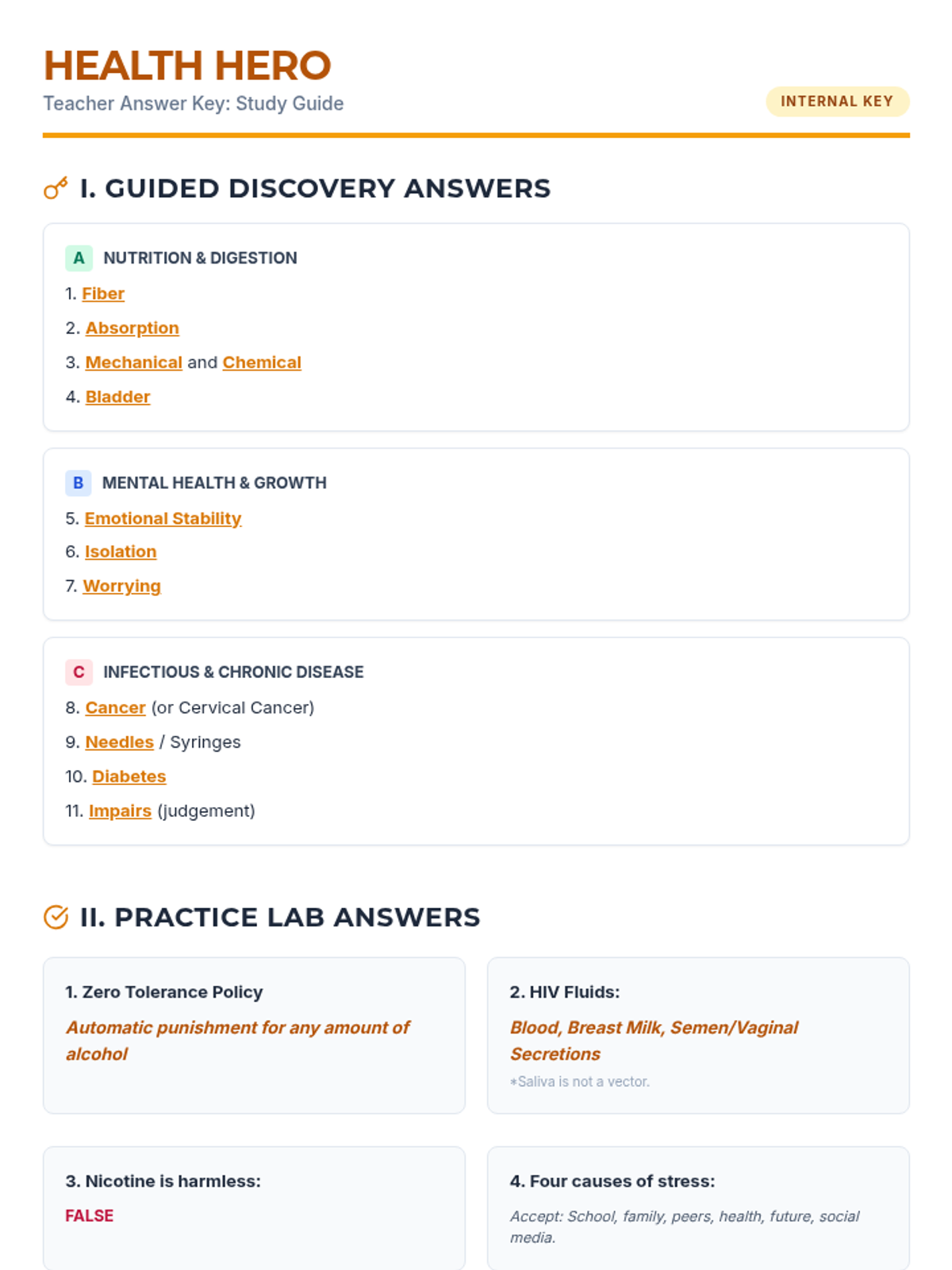
A comprehensive study guide package covering key health topics for the Wisconsin Health Exam, including Nutrition, ATOD, Mental Health, and Safety.
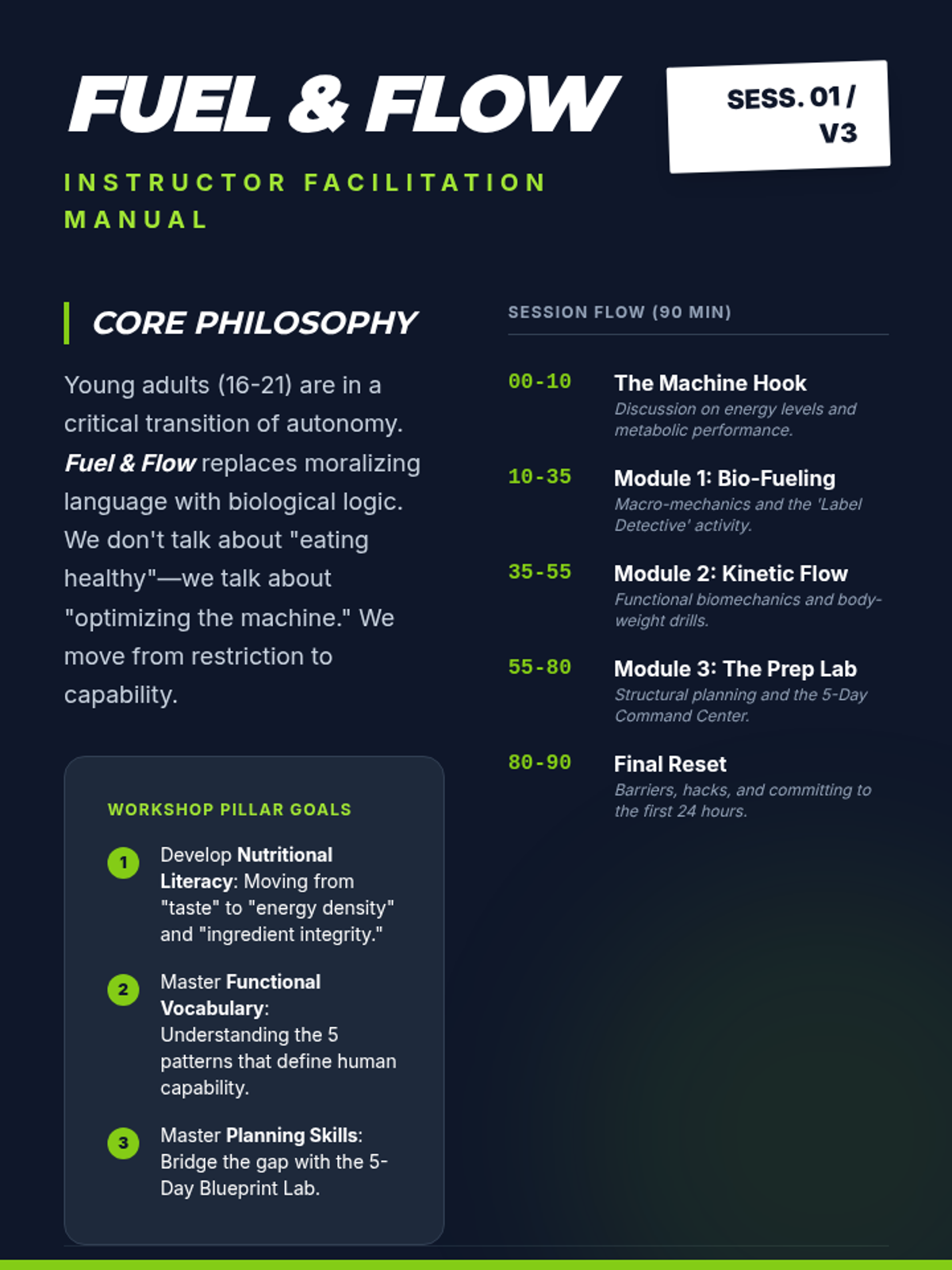
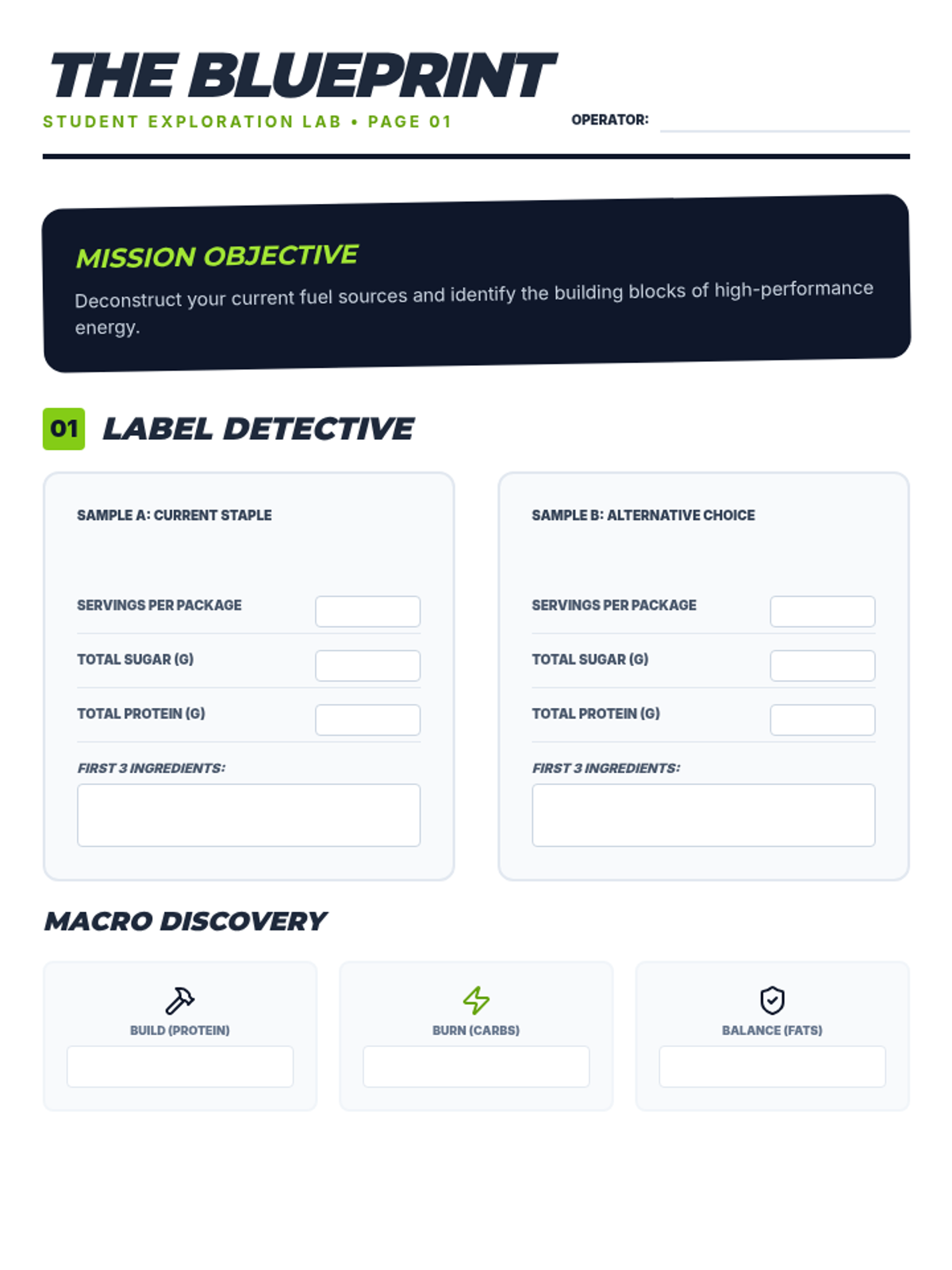
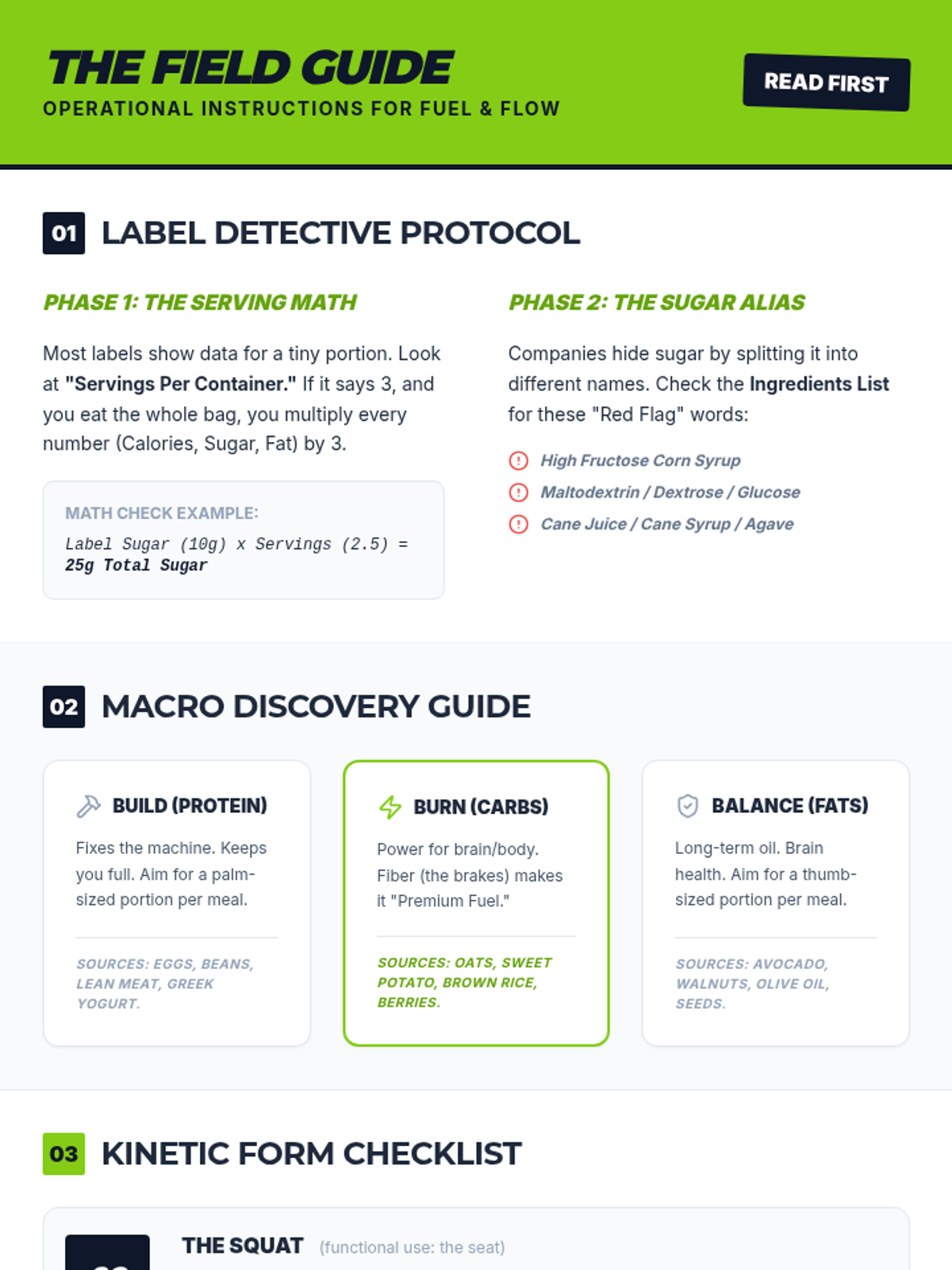
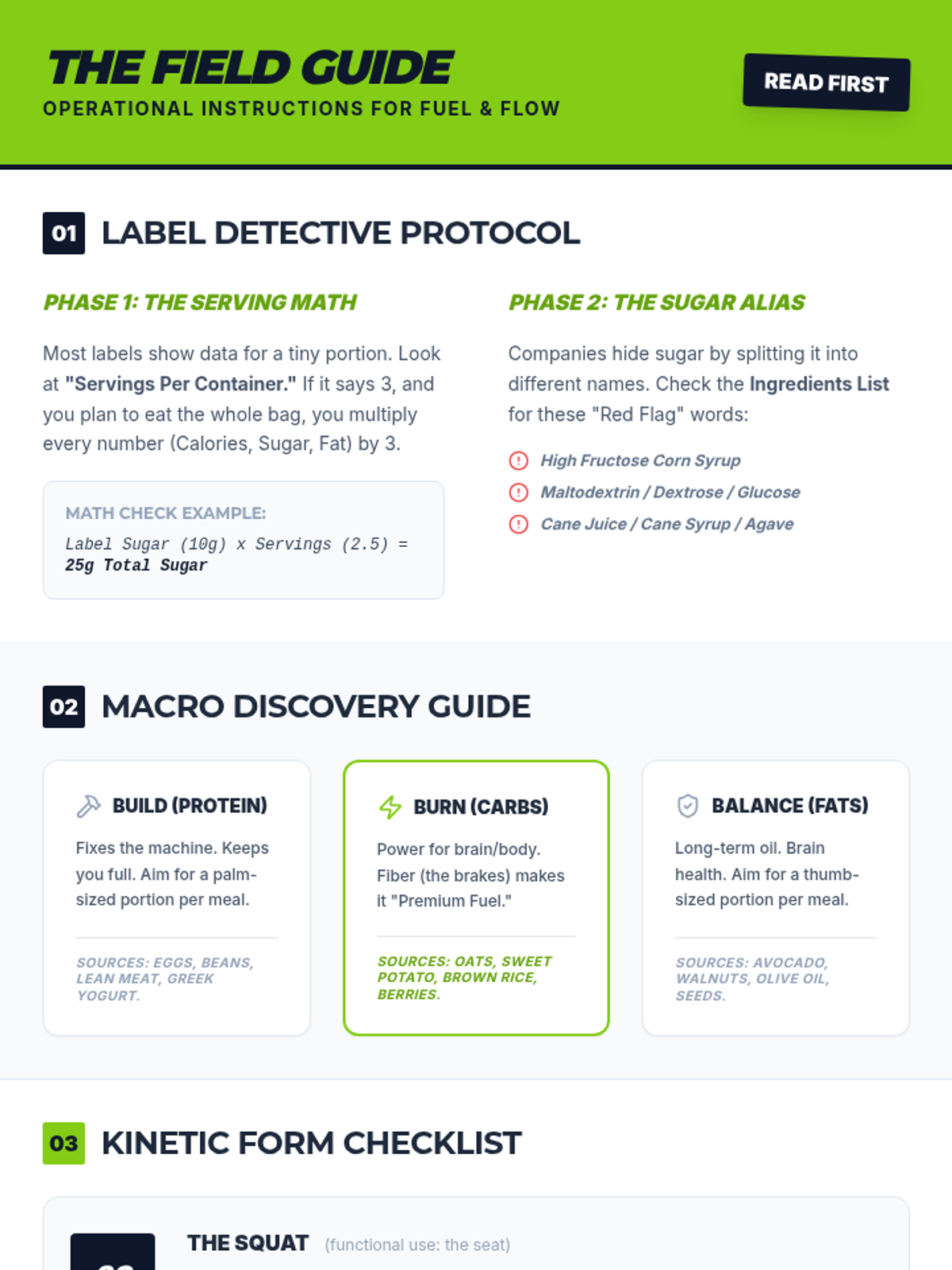
A 90-minute intensive session for young adults (16-21) focused on the intersection of nutrition and functional movement. Students learn to read labels, plan balanced meals, and understand the foundational movement patterns needed for a healthy, active life.
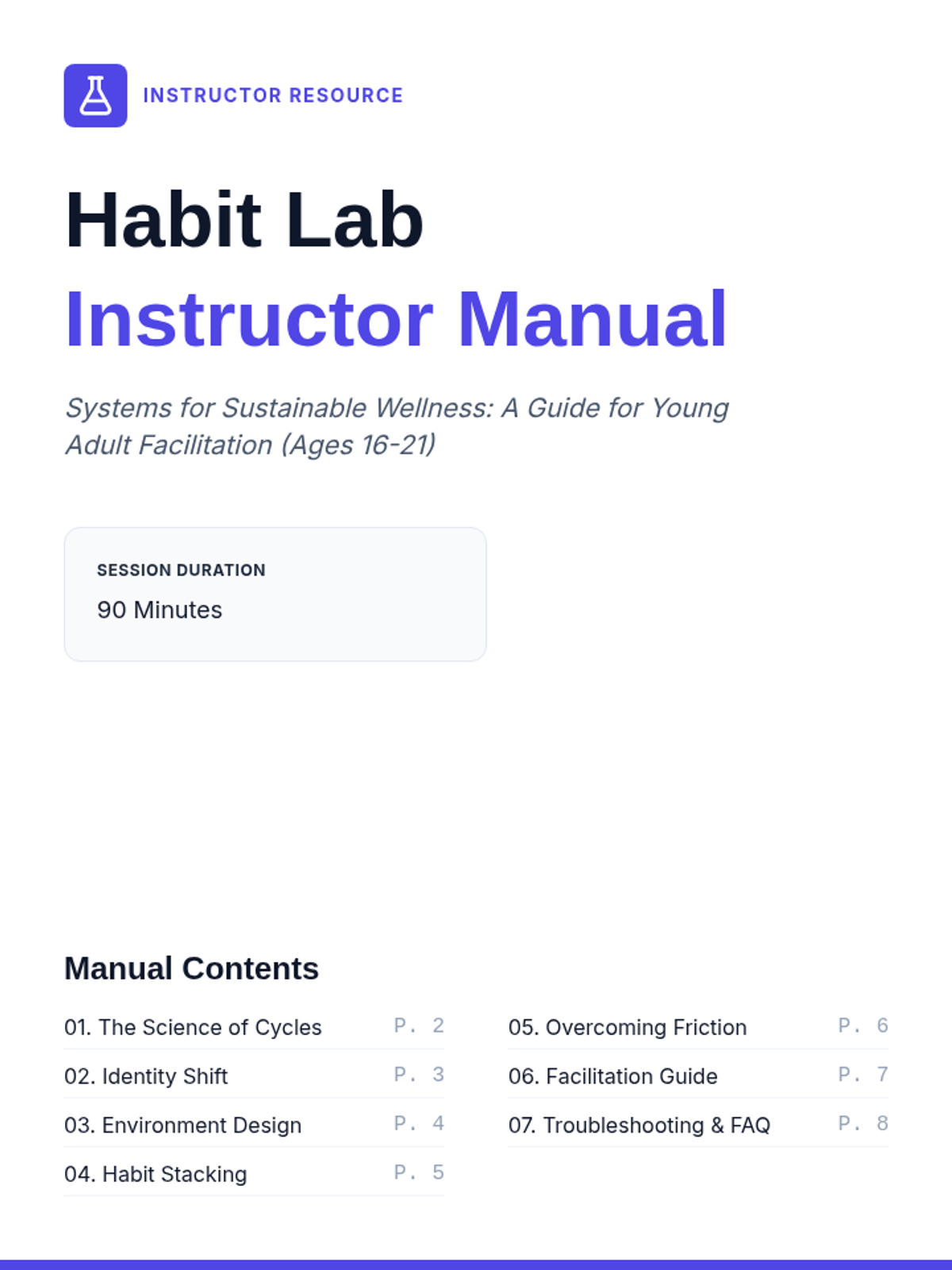
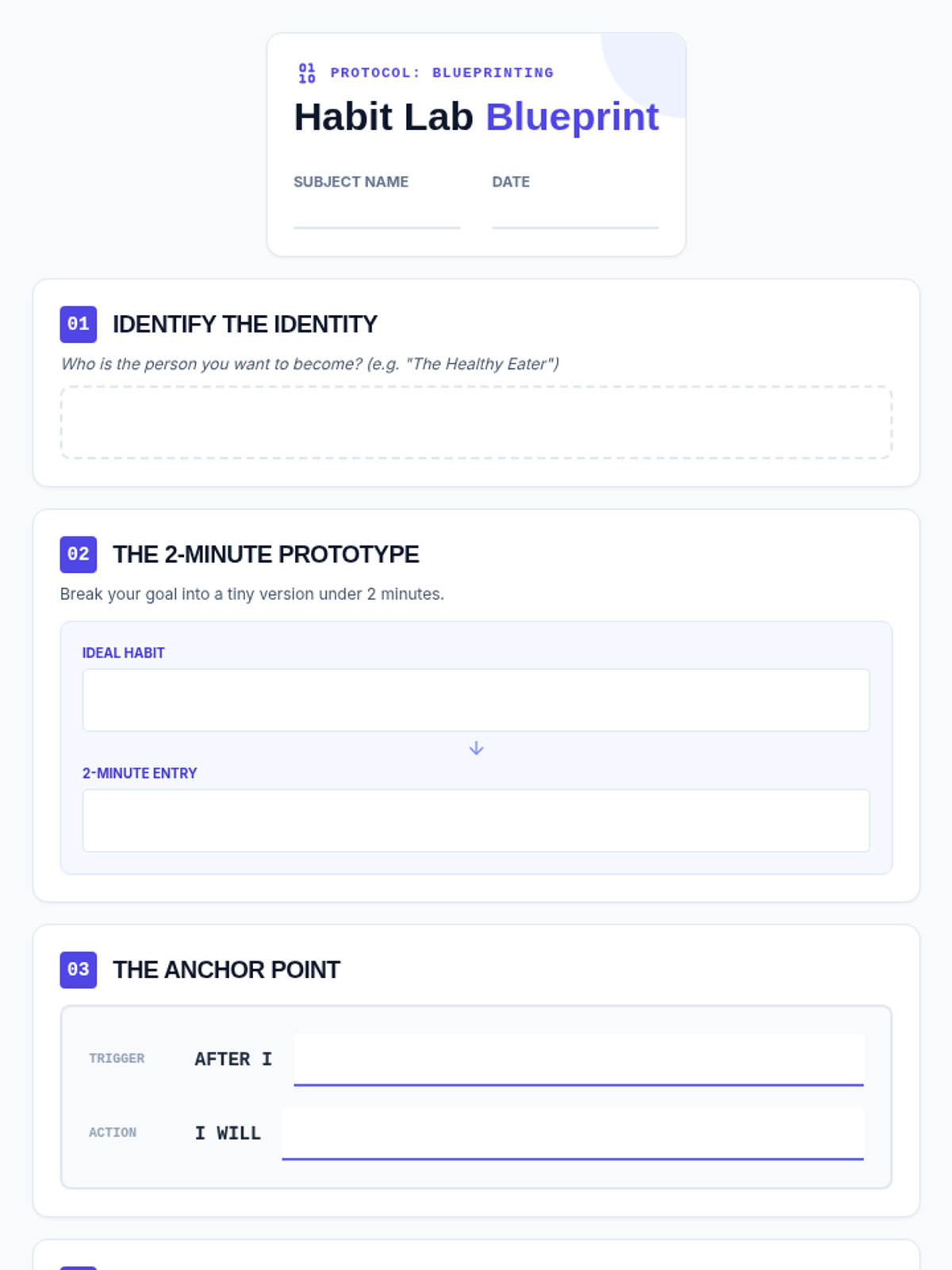
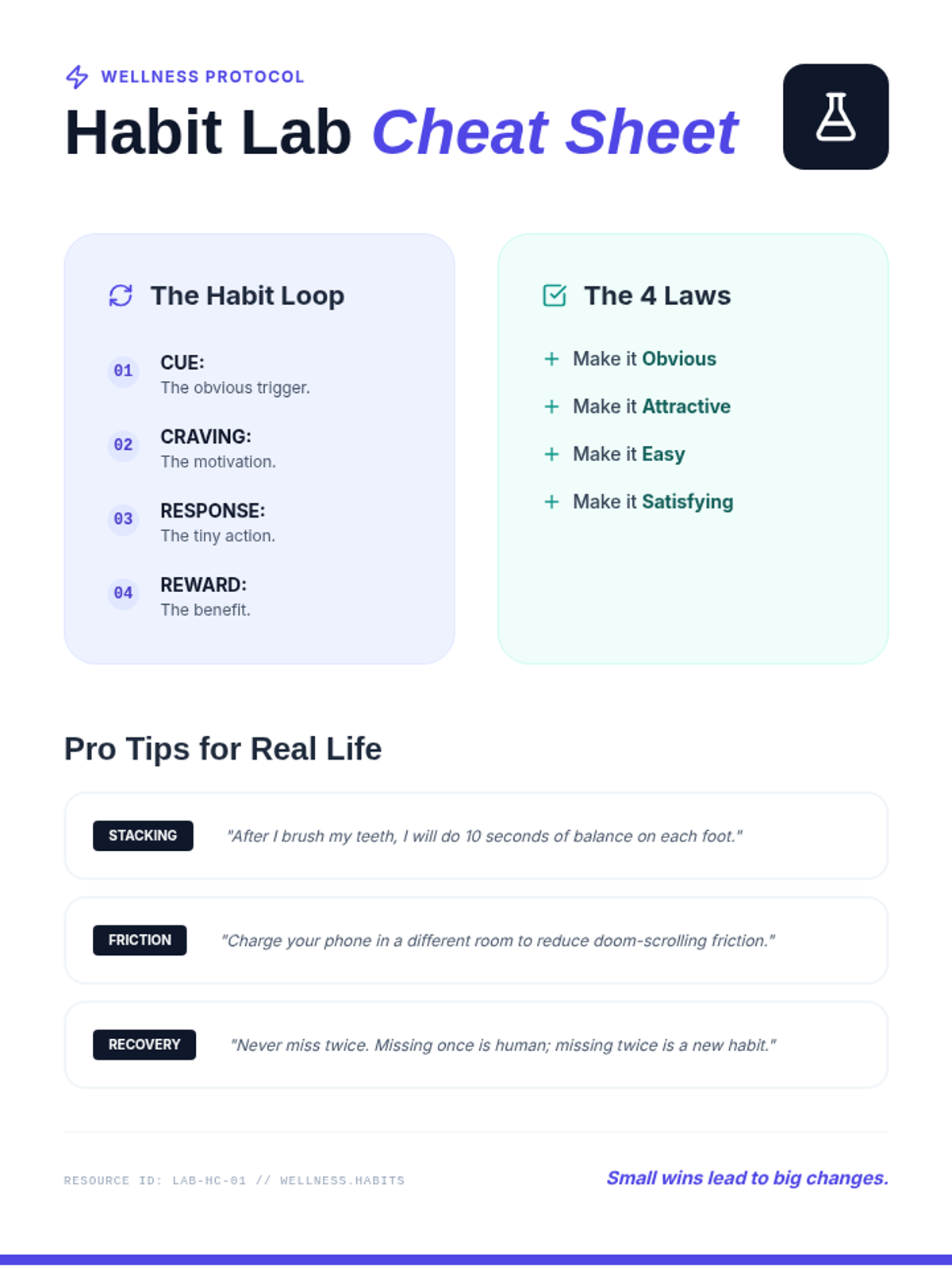
A comprehensive session for young adults on the science and practice of habit formation for long-term wellness. This lesson equips participants with practical tools to design systems that support their health, mental clarity, and productivity.
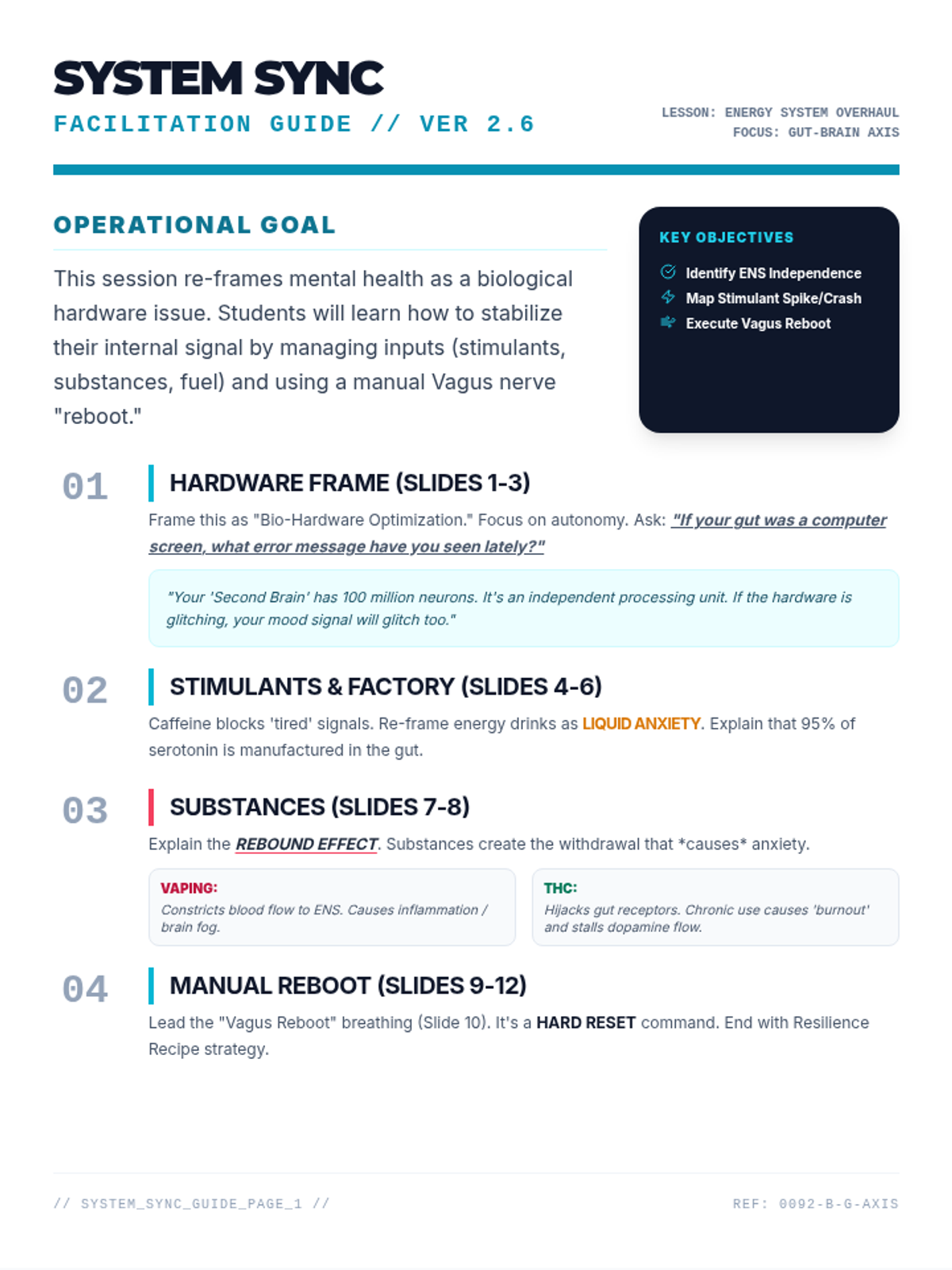
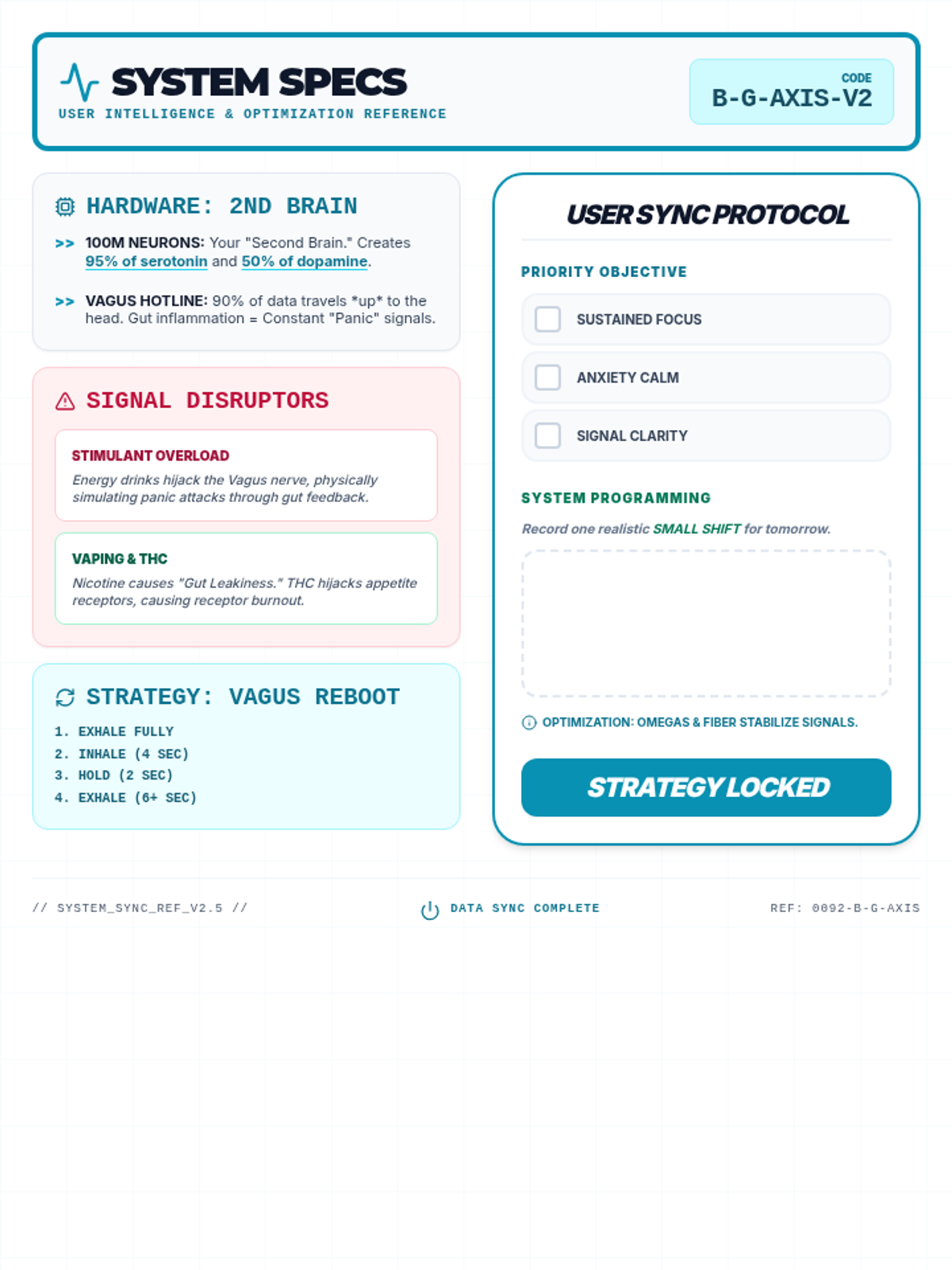
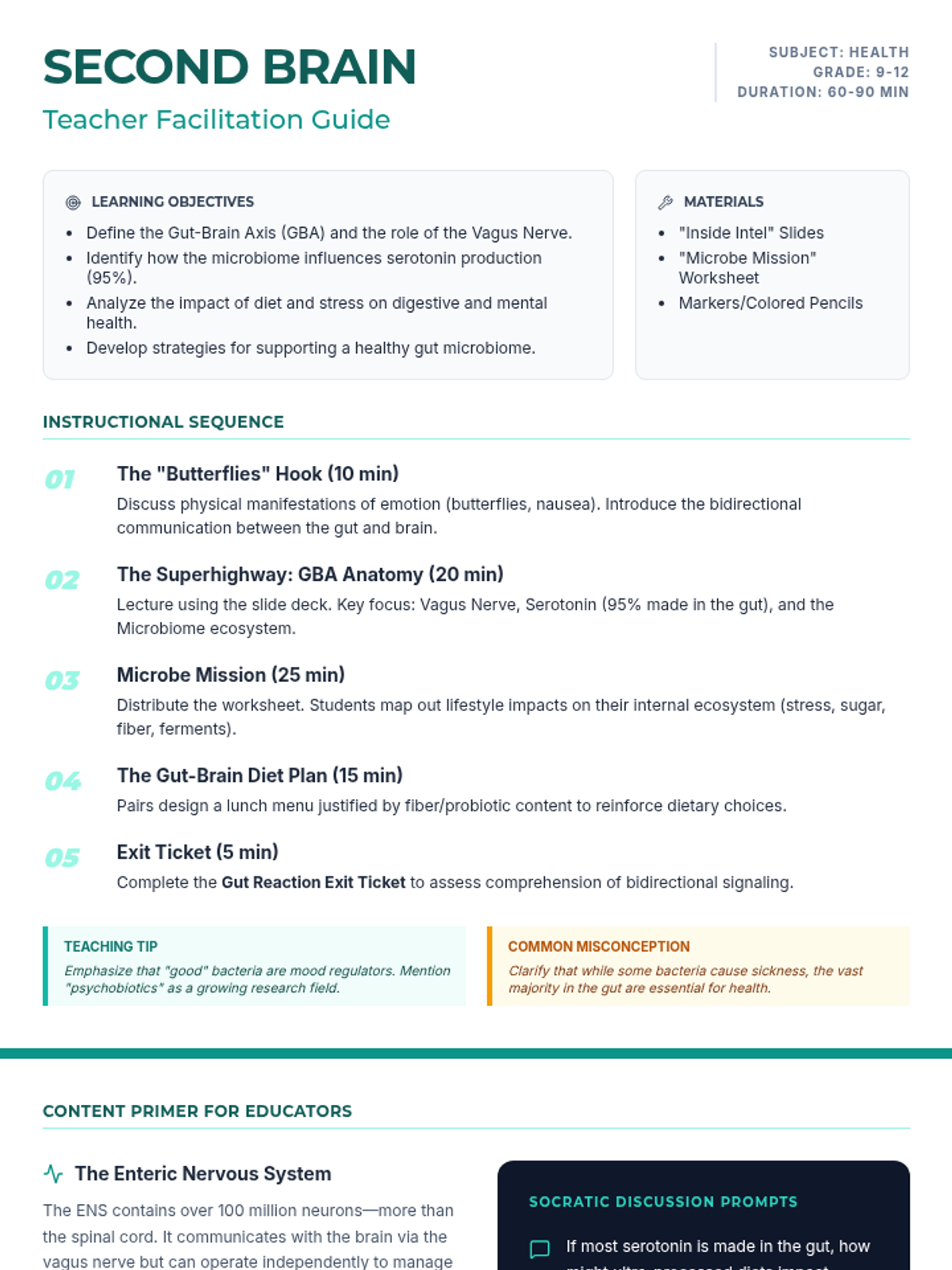
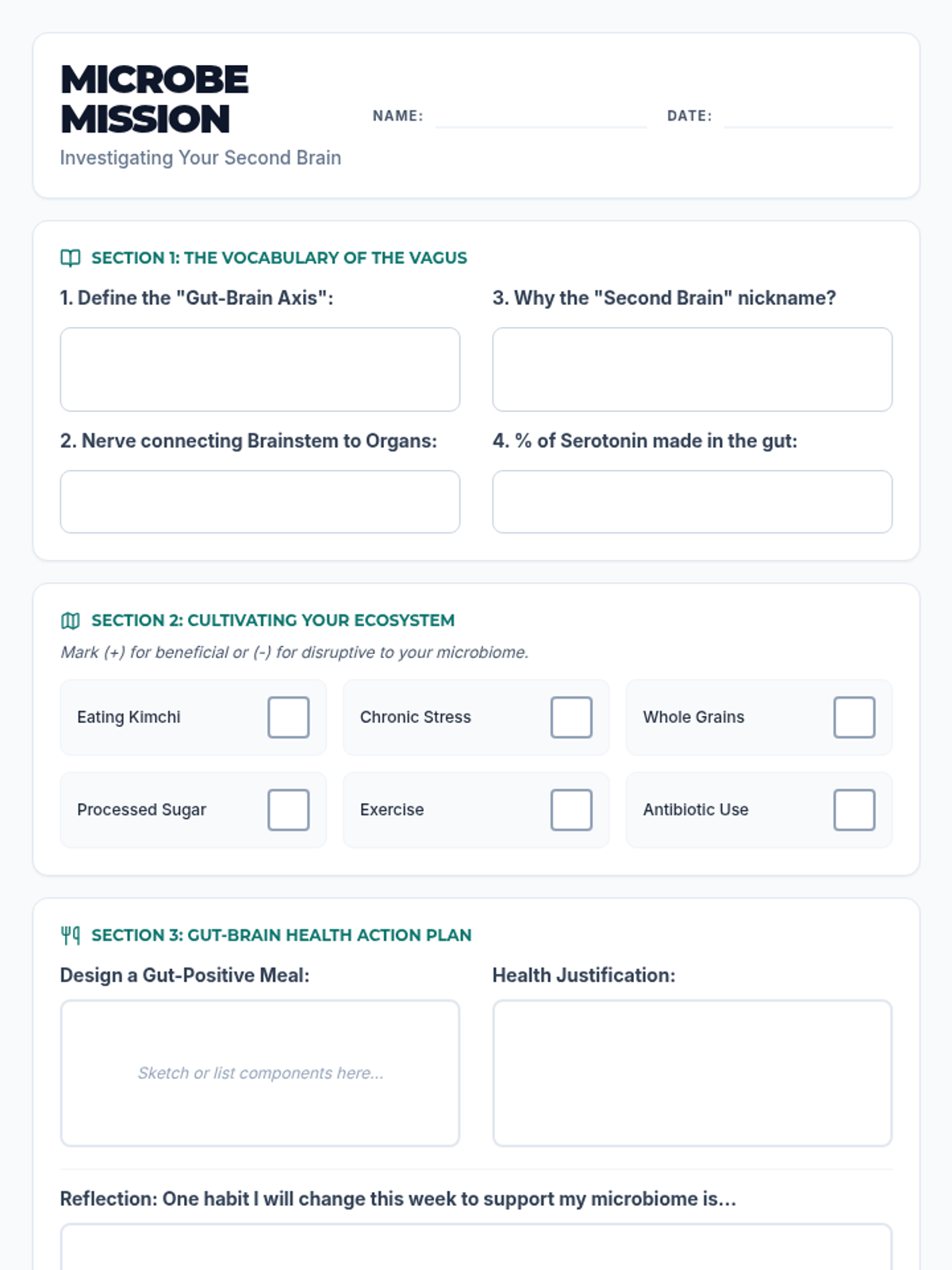
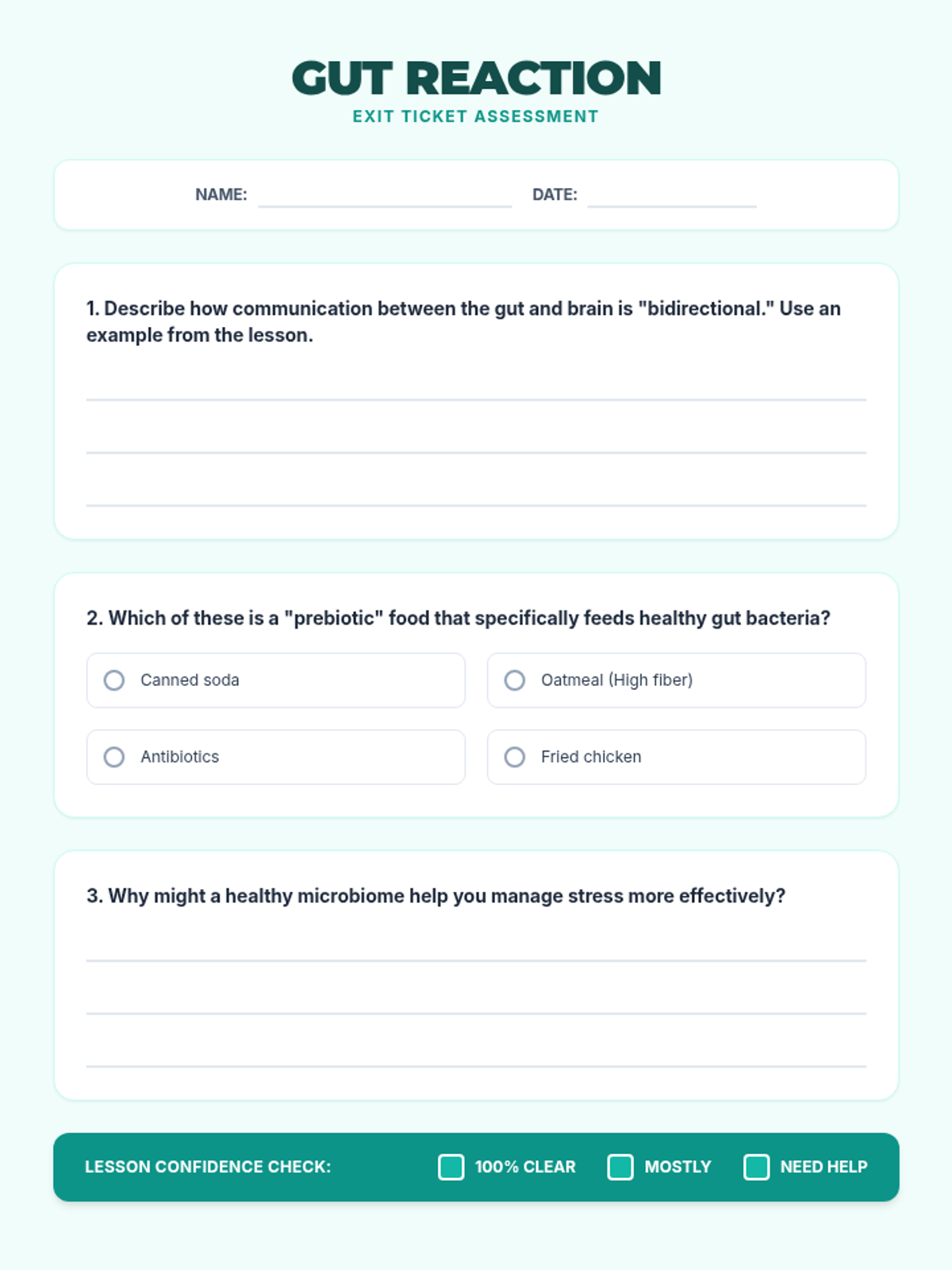
A comprehensive lesson exploring the bi-directional relationship between gut health and mental well-being, specifically tailored for high schoolers in therapeutic settings. The lesson covers the enteric nervous system, the impact of nutrition, hydration, and substances on mood, energy, and cognitive function.
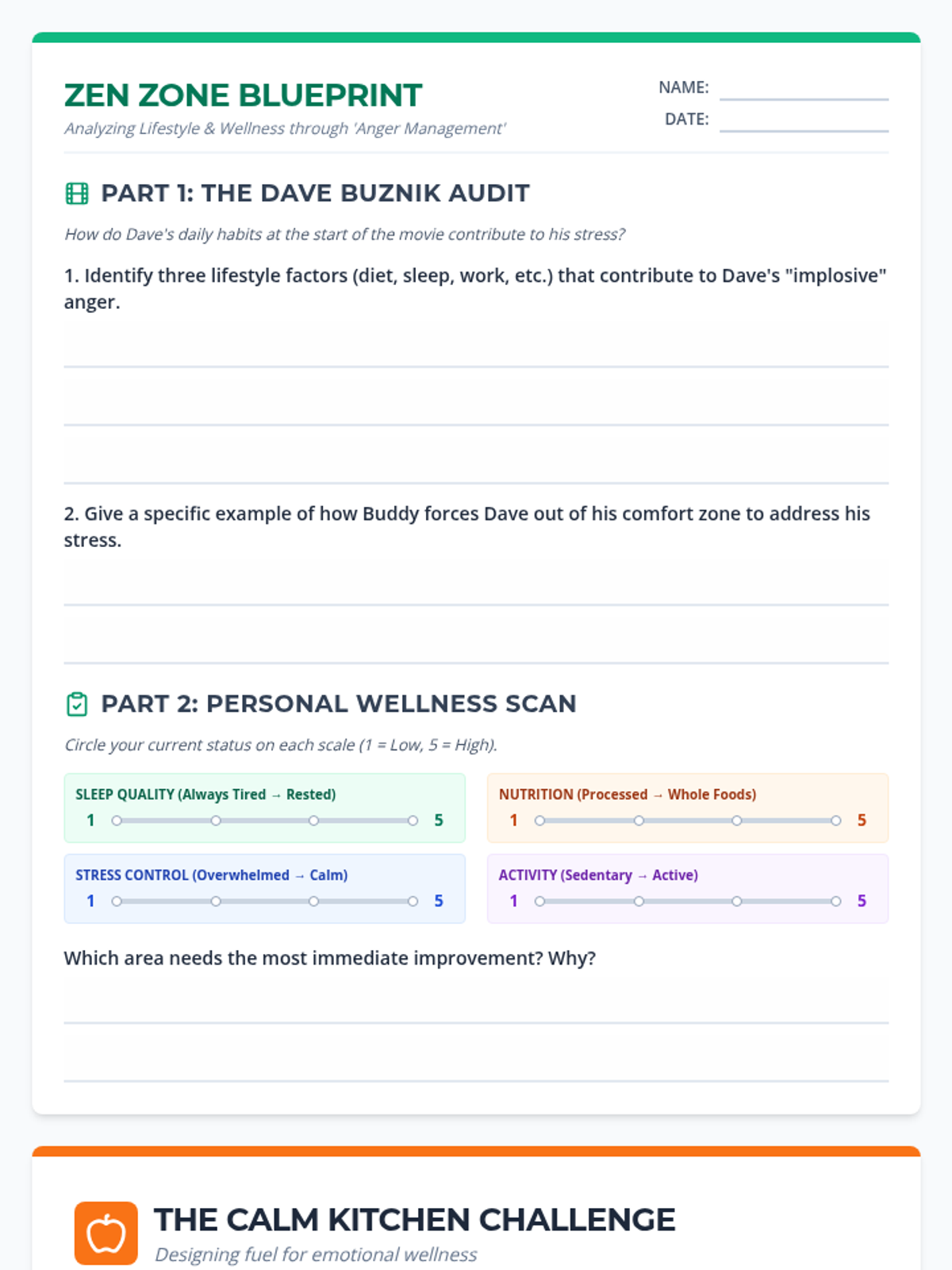
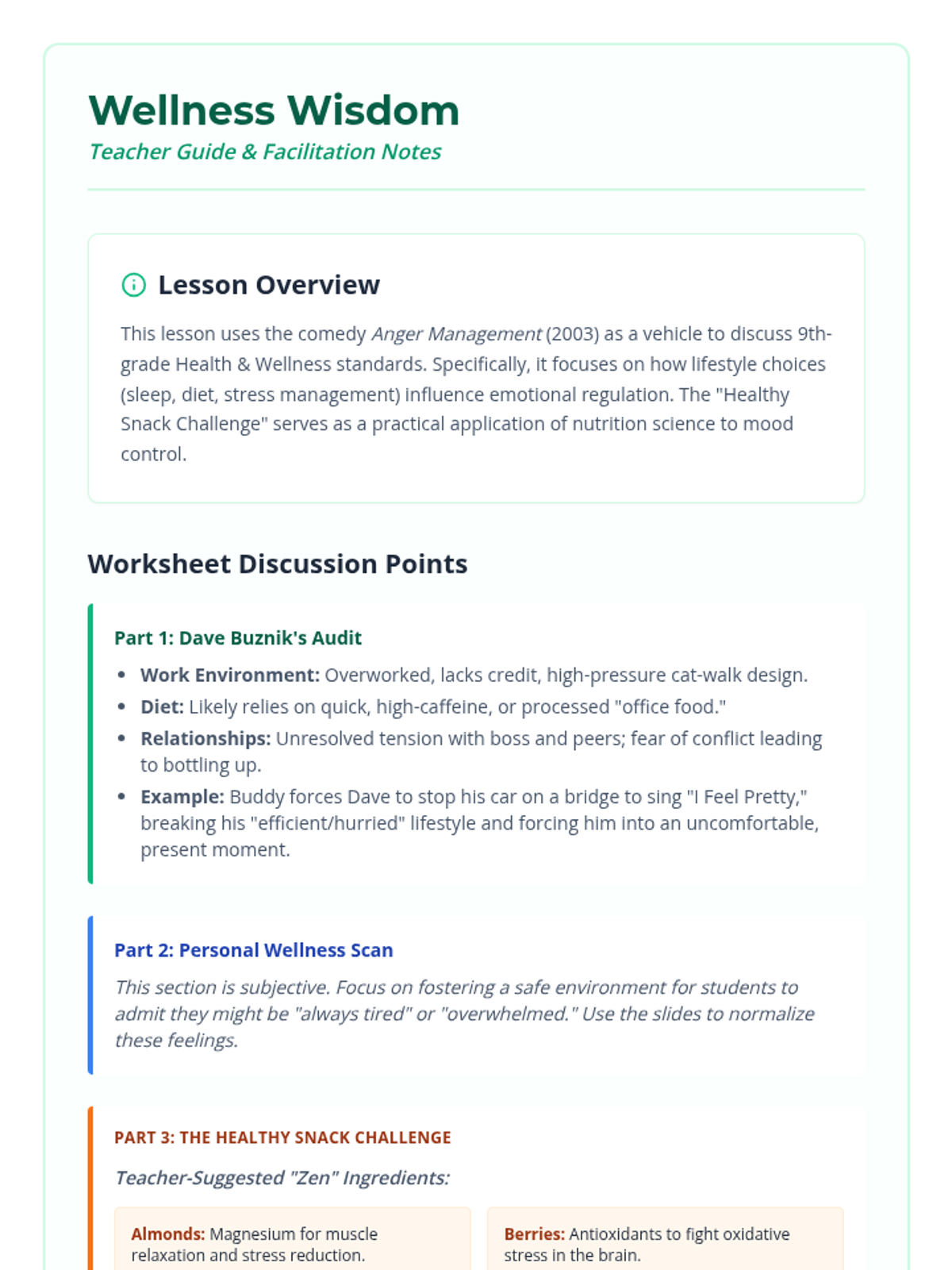
A lesson connecting the film Anger Management to personal health and wellness. Students analyze lifestyle factors that contribute to stress and design a healthy snack to support mood regulation.
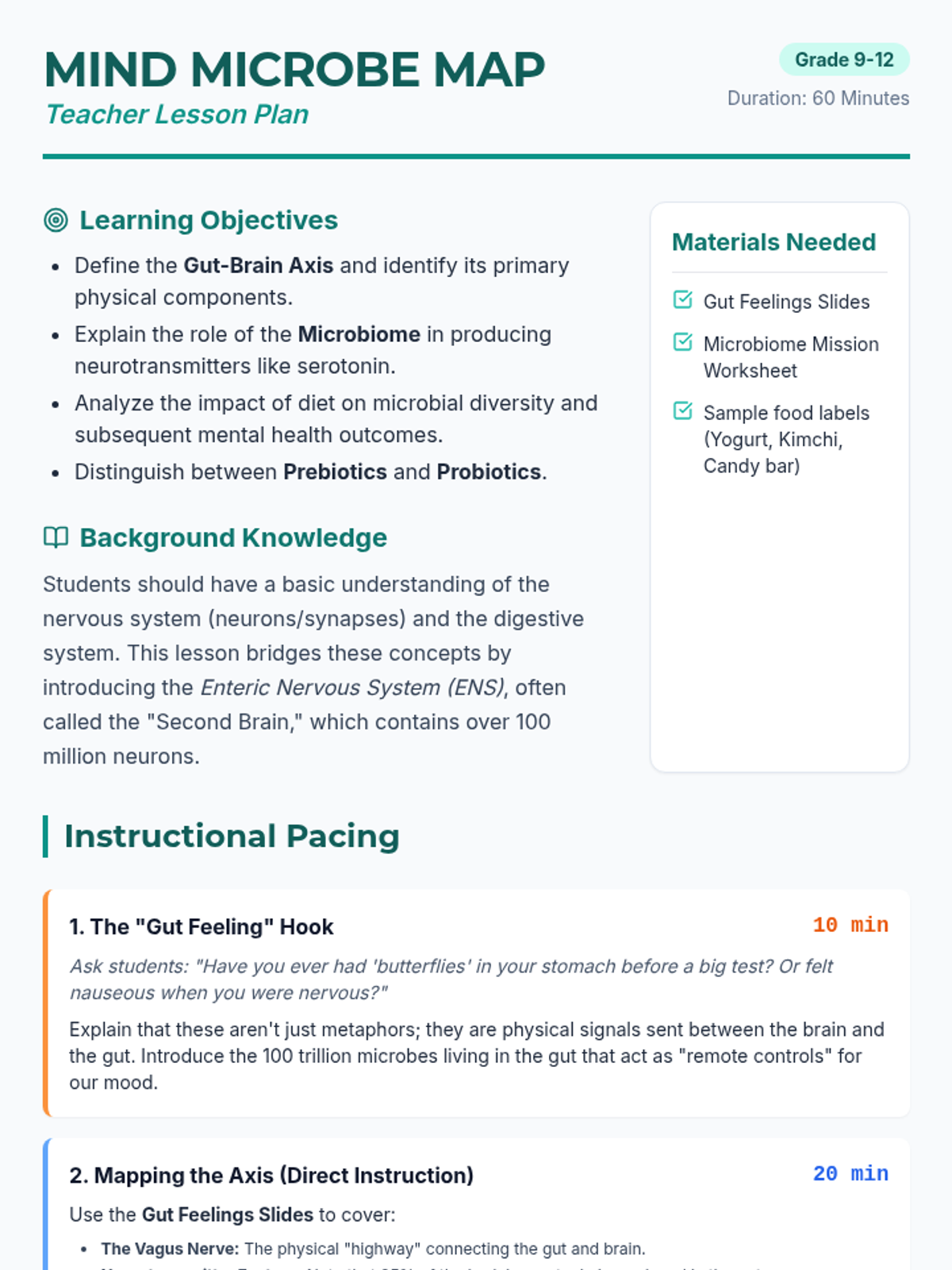
A comprehensive lesson exploring the gut-brain axis and how the microbiome influences mental health, neurotransmitter production, and emotional well-being.
An in-depth exploration of the enteric nervous system and the bidirectional communication between the gut and the brain, focusing on mental health, nutrition, and the microbiome.
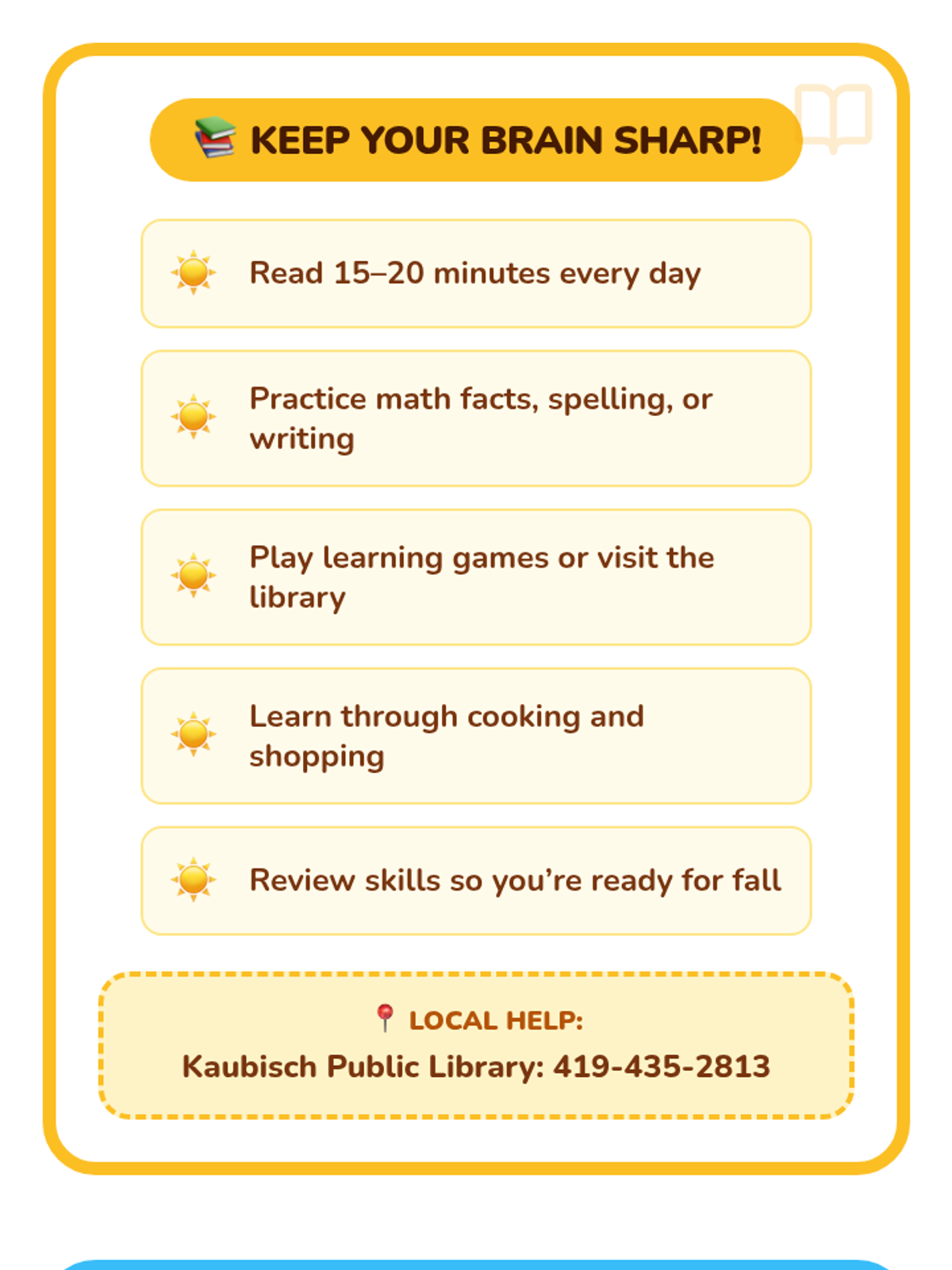
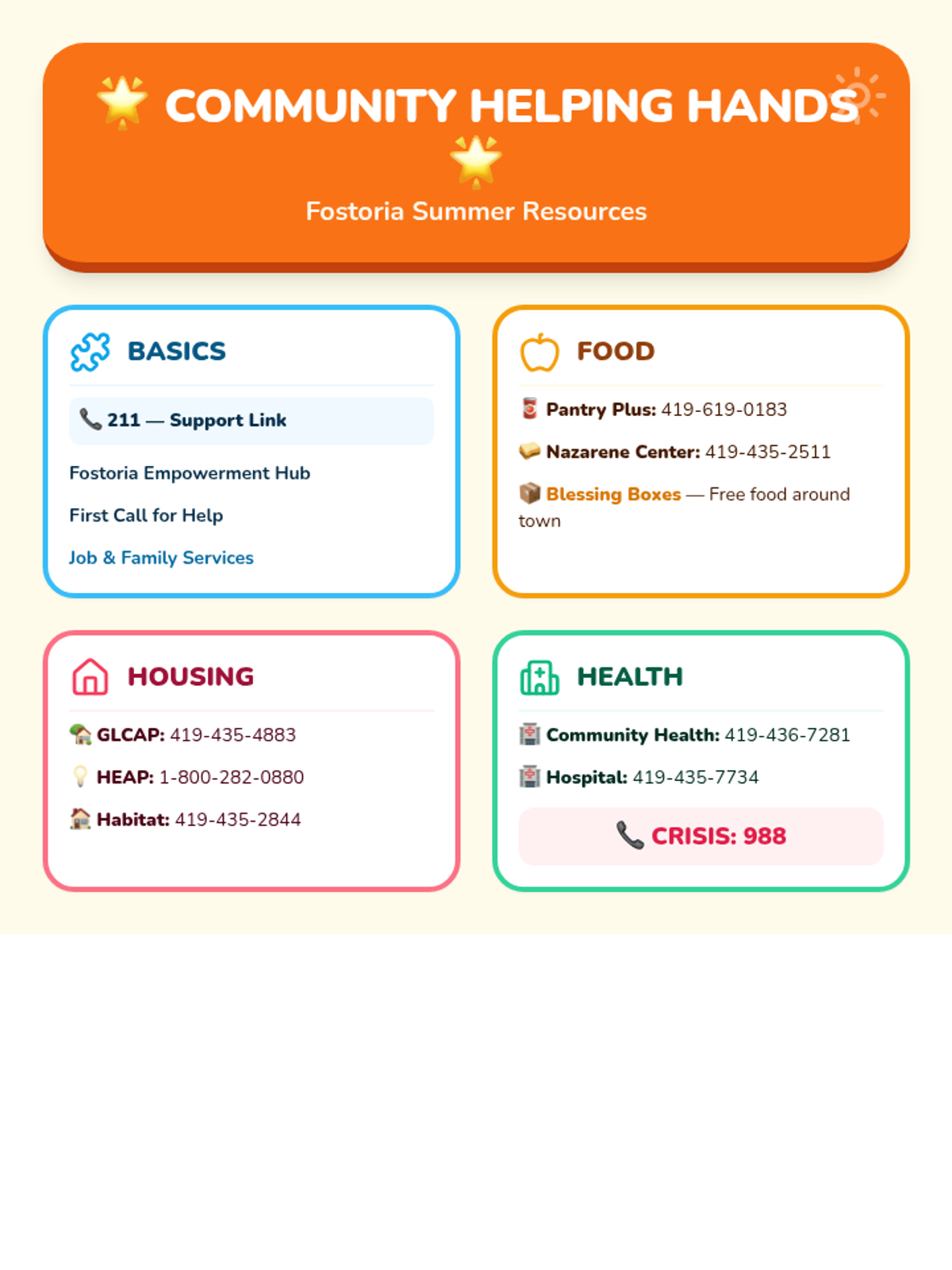
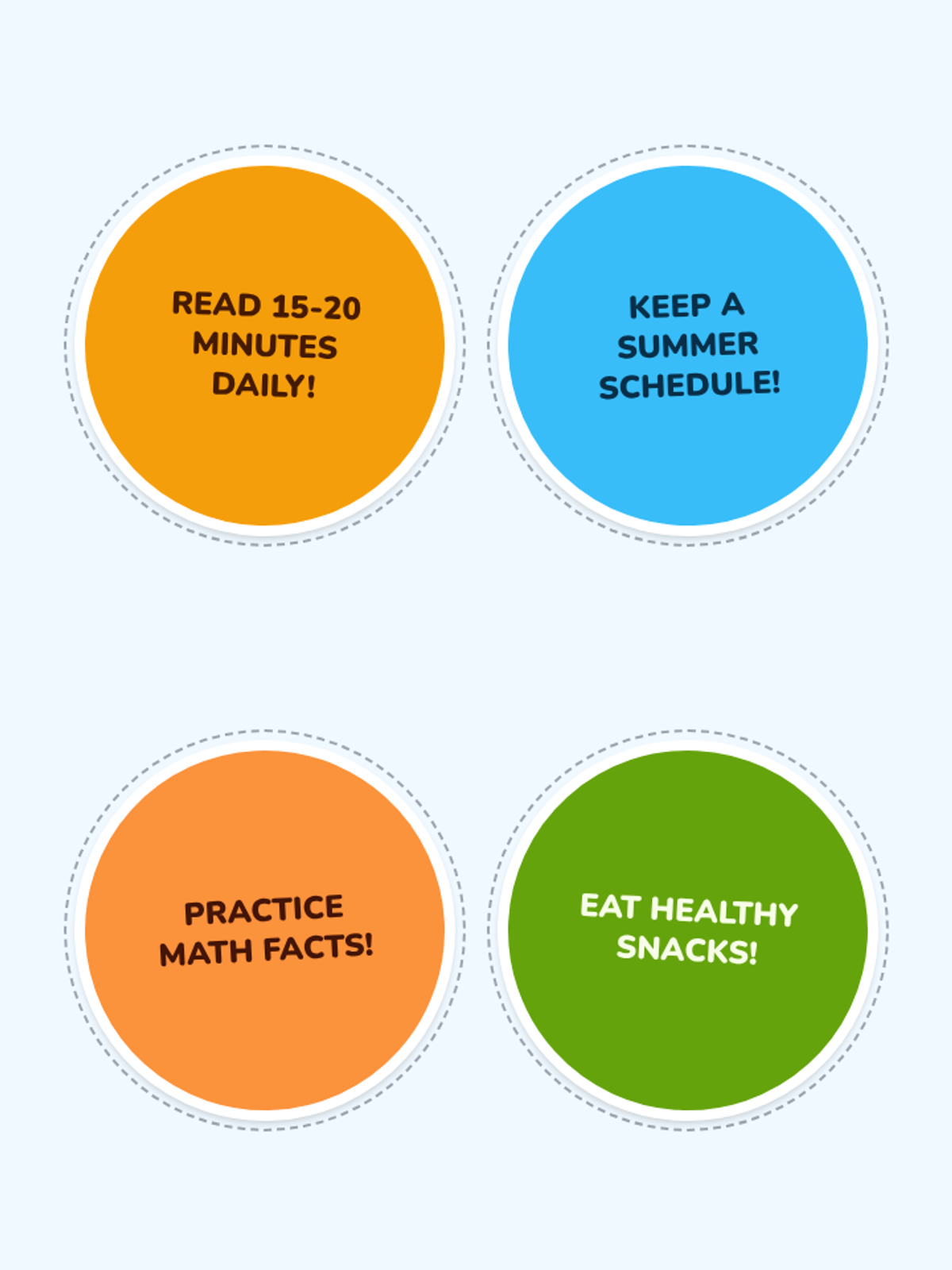
A complete set of vibrant, summer-themed bulletin board materials designed to provide students and families with healthy habits, learning tips, and community resources.
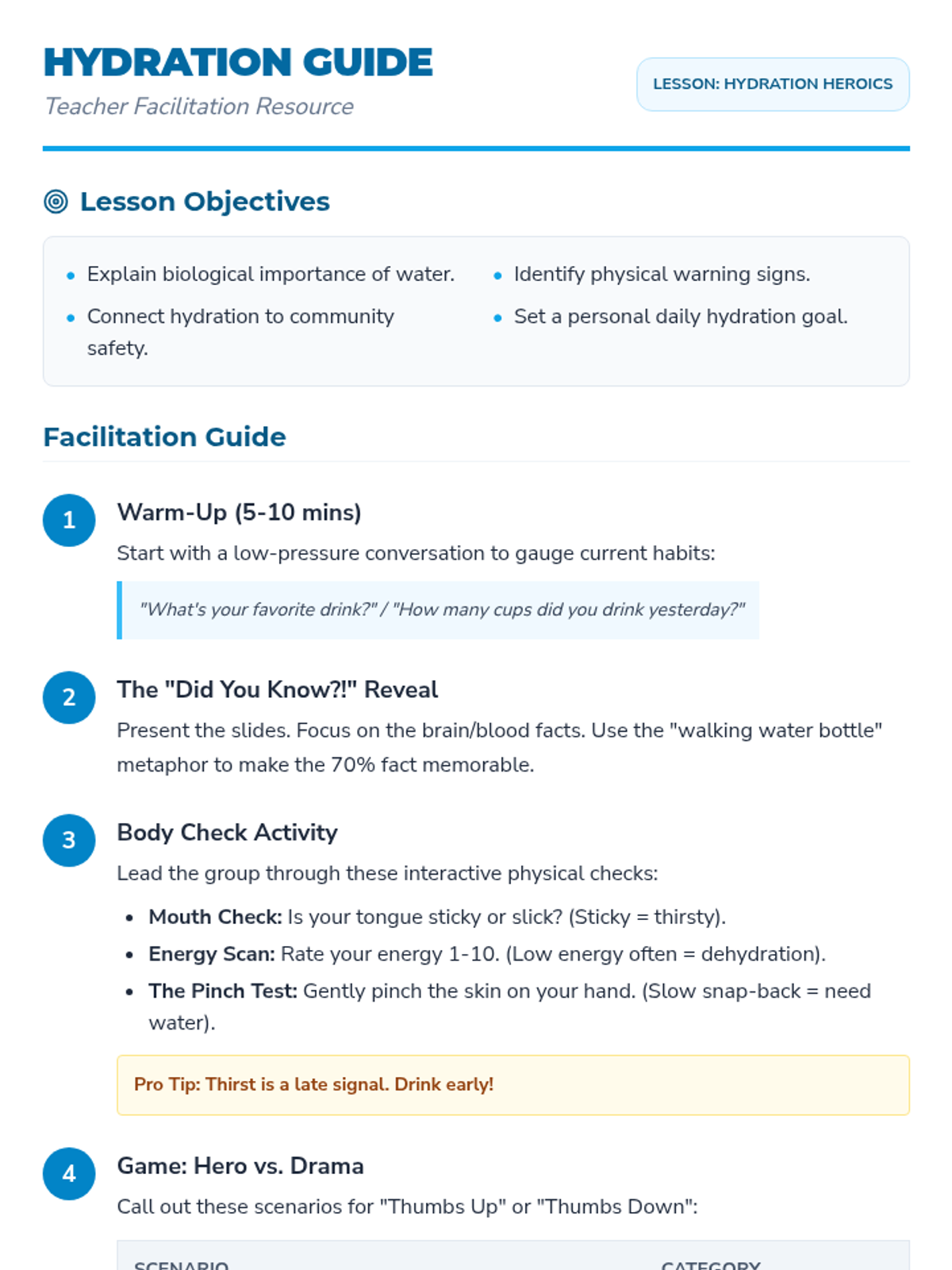
A comprehensive lesson on hydration safety and awareness, featuring fun facts, body awareness activities, and practical tips for staying hydrated in daily life.
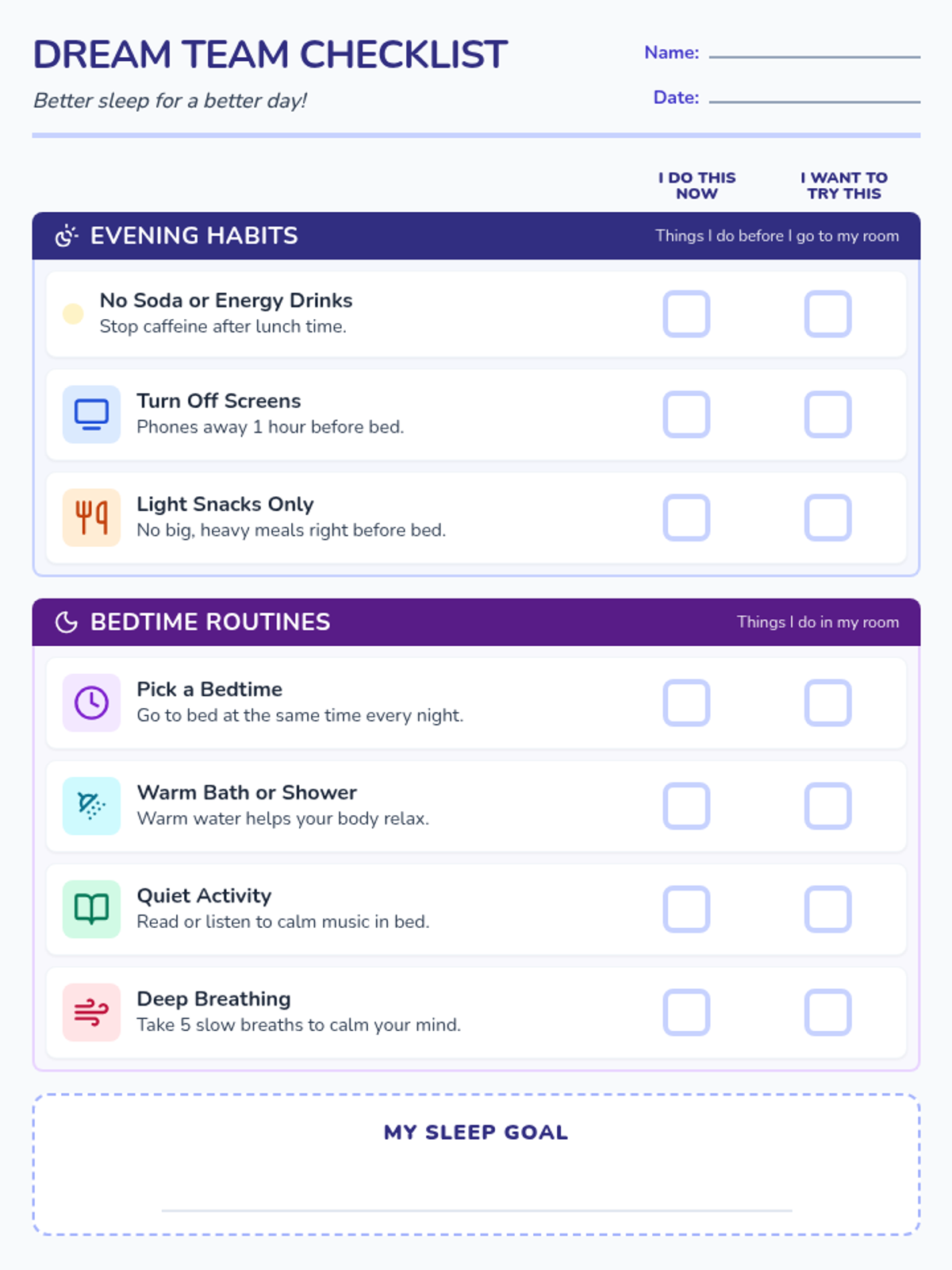
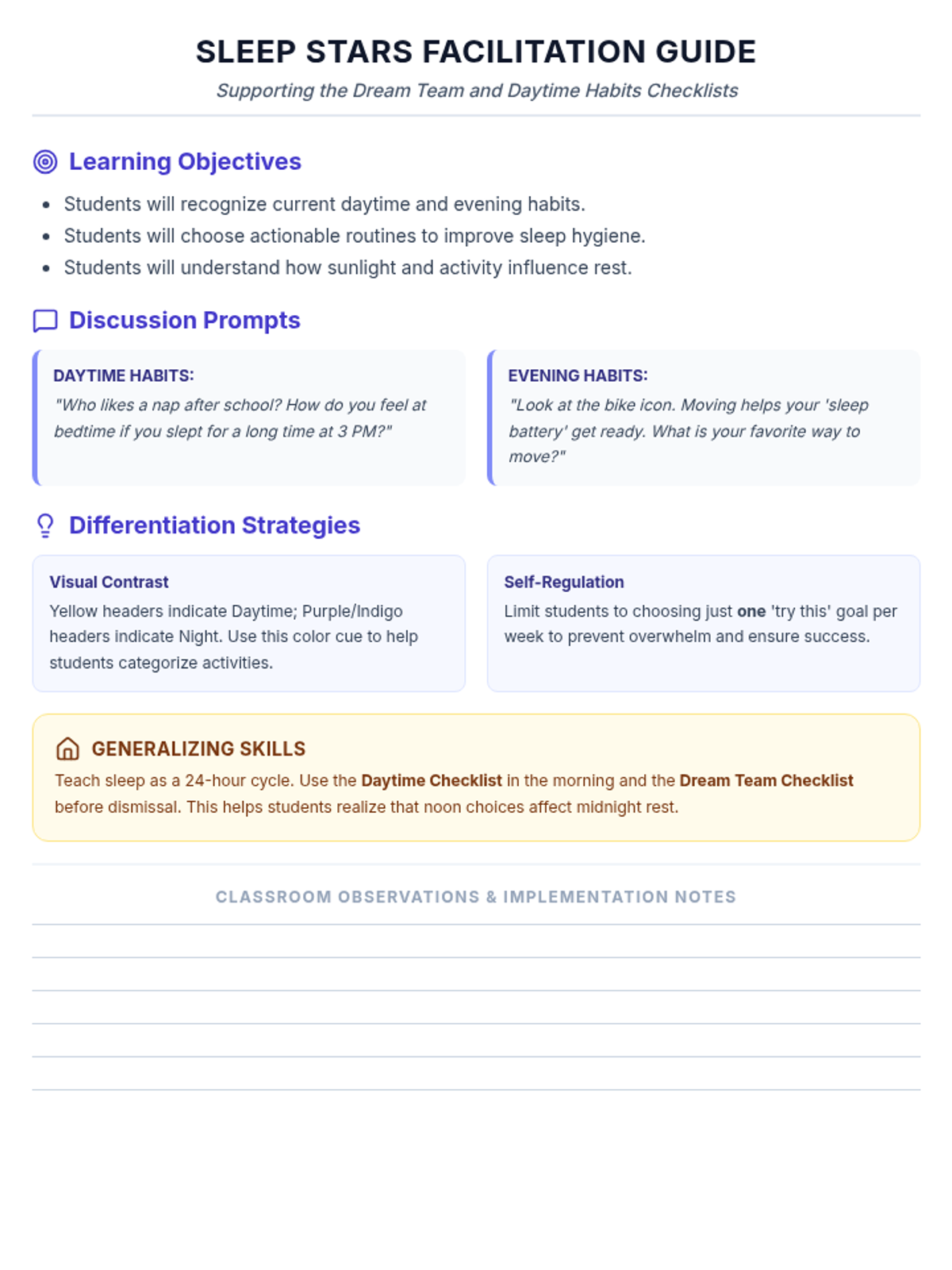
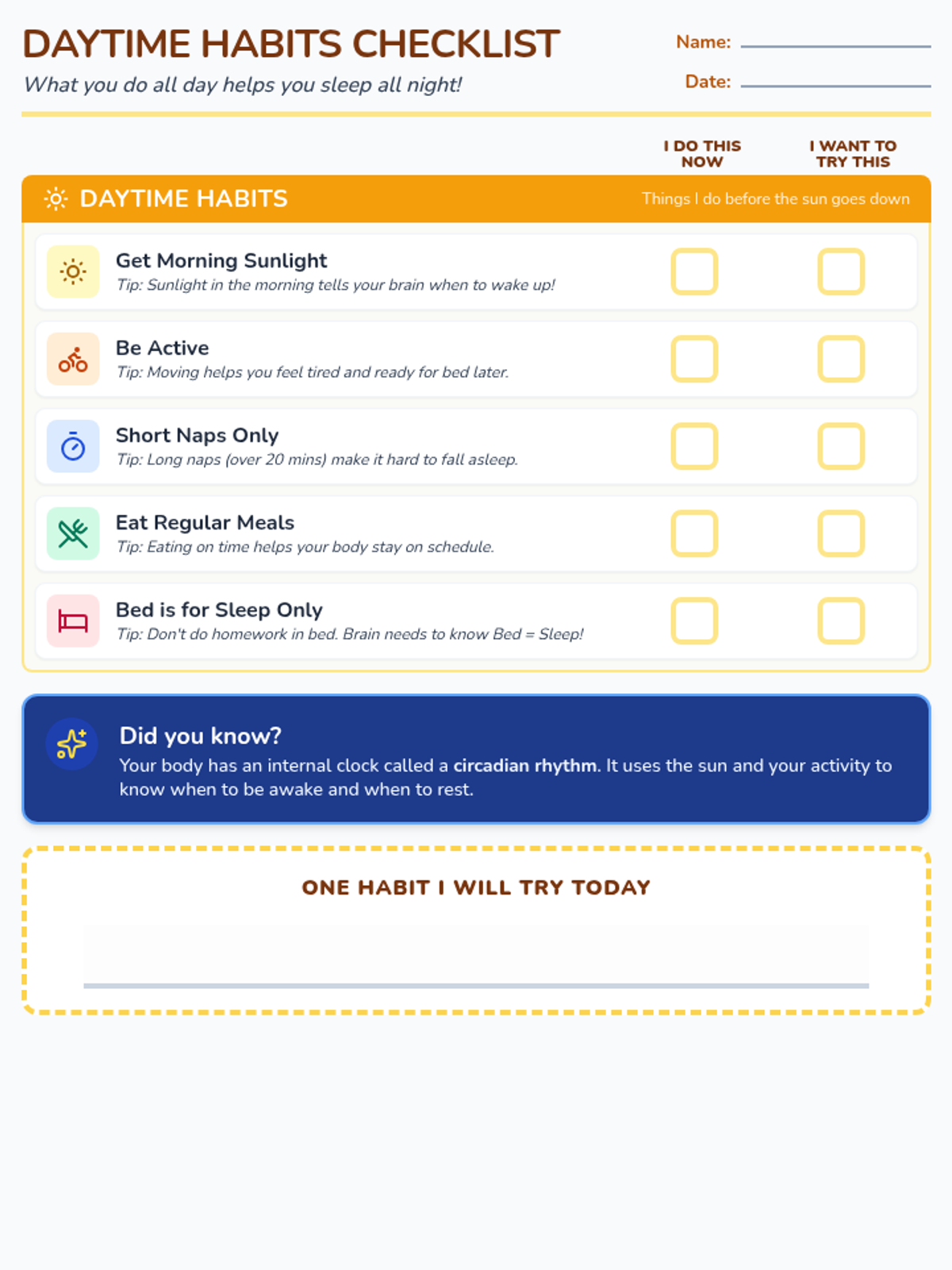
This lesson introduces students to healthy sleep hygiene habits through a personalized self-assessment checklist and teacher-led discussion. It focuses on concrete, actionable steps for improving evening and bedtime routines.
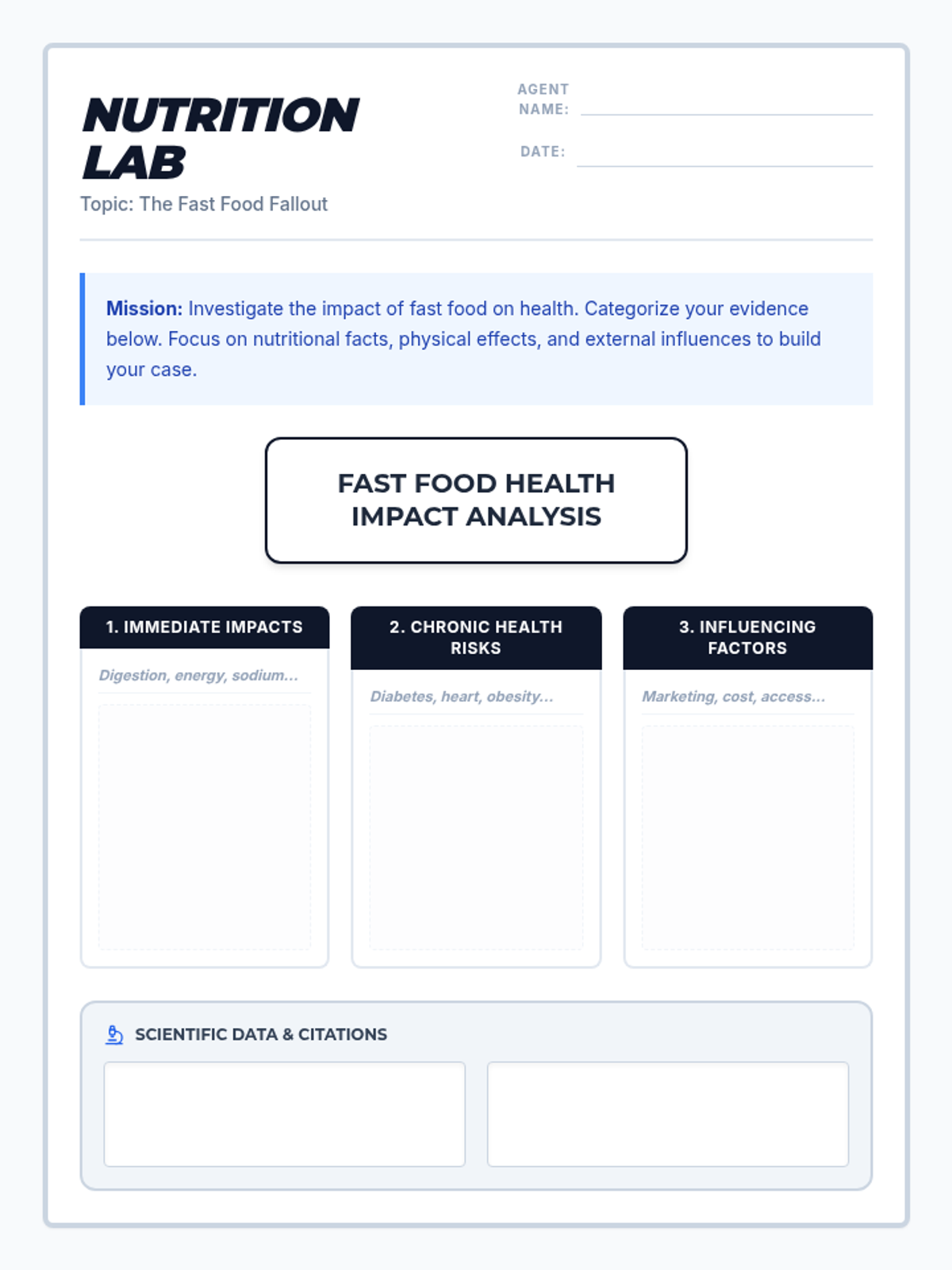
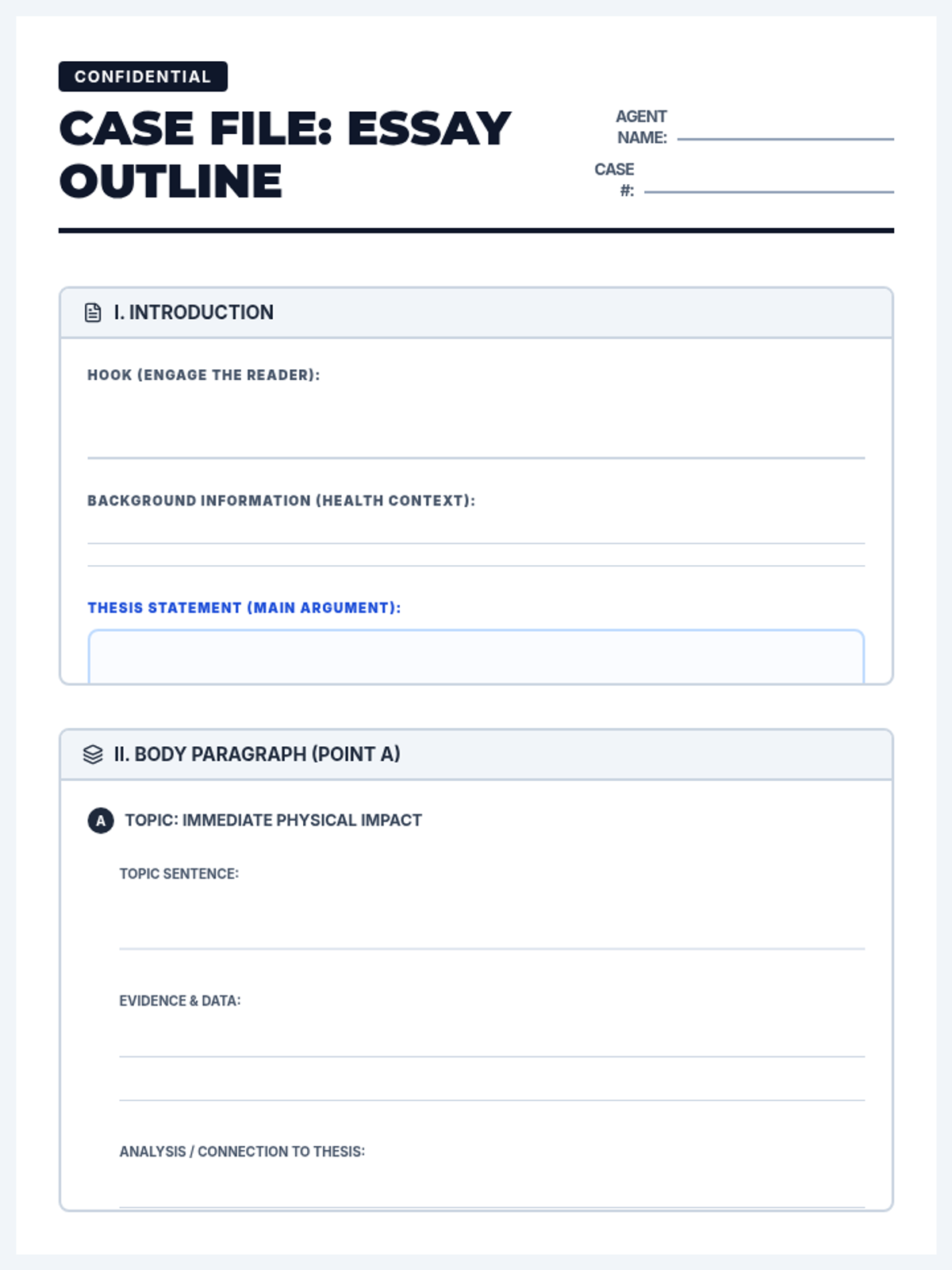
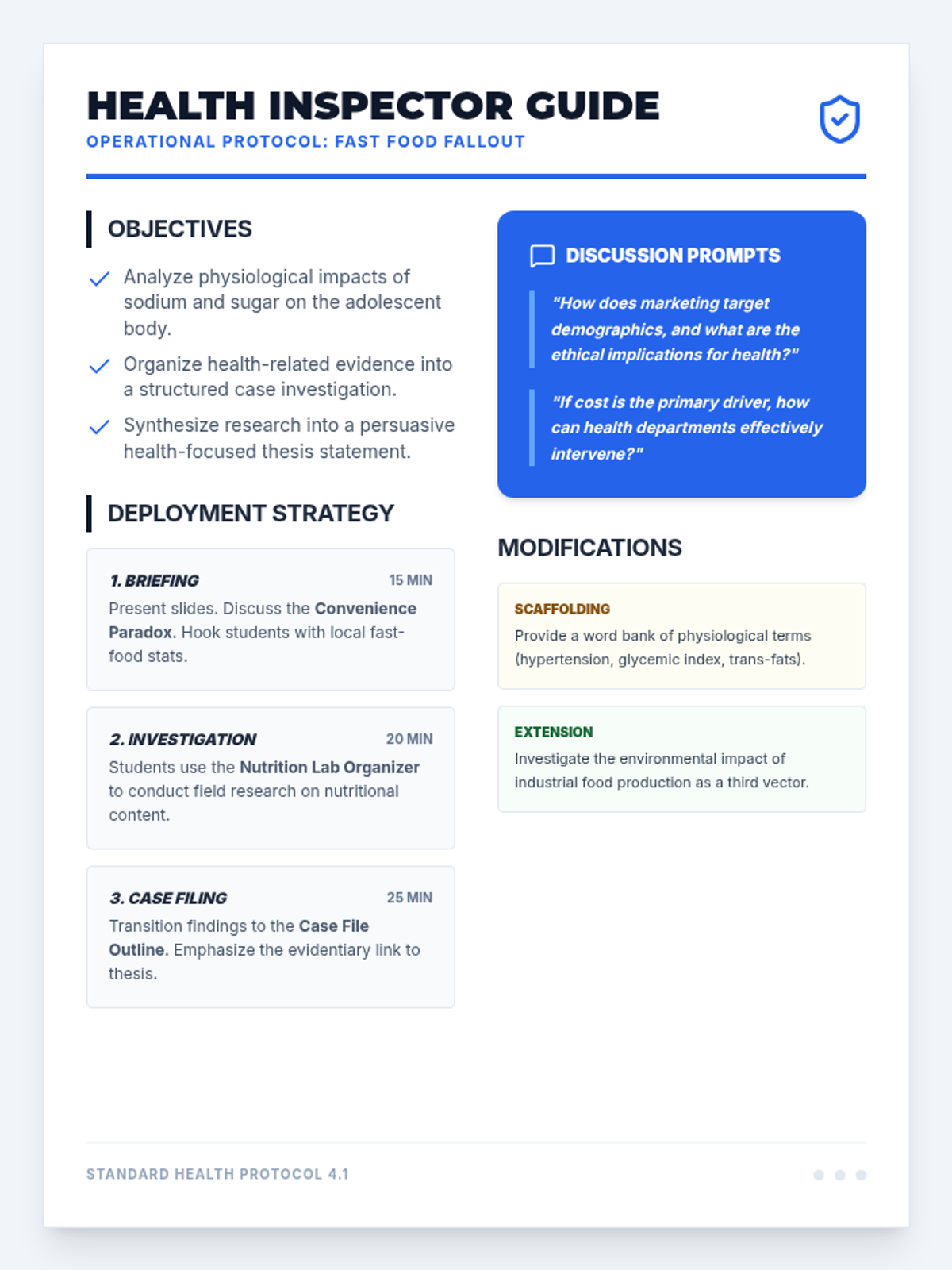
A comprehensive guide to planning a health-focused essay on the impact of fast food, including brainstorming tools and structural outlines.
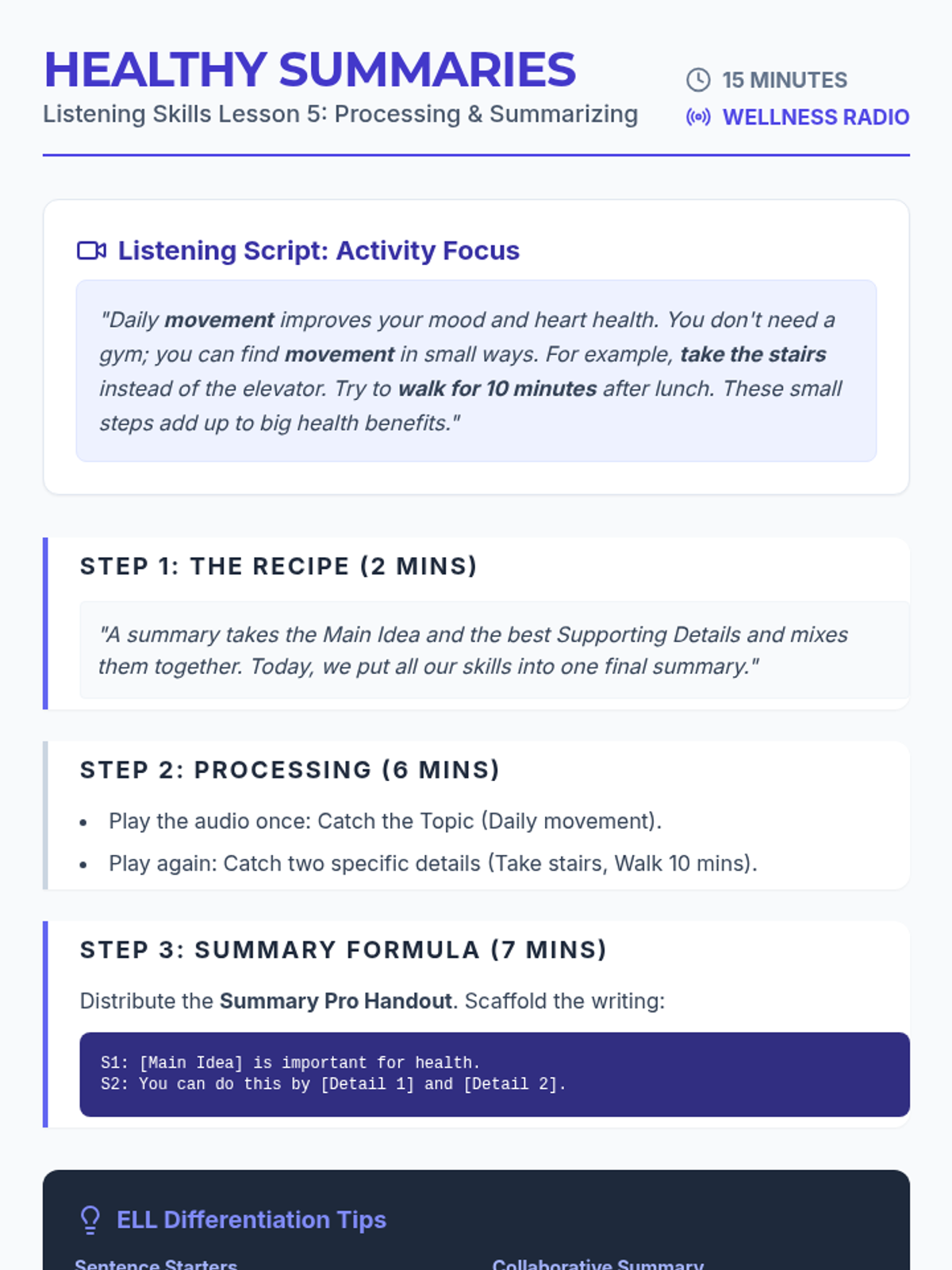
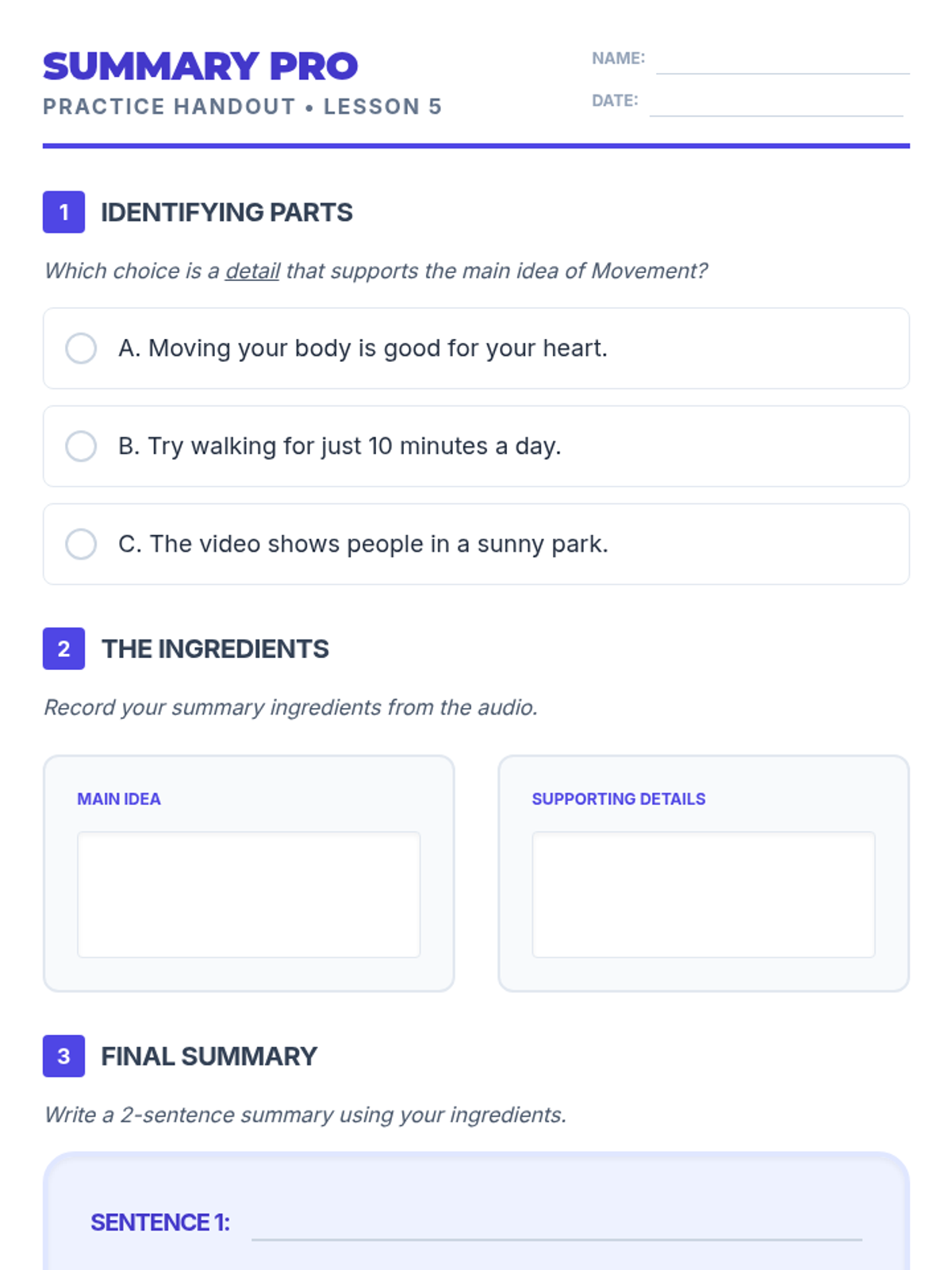
Students synthesize their listening skills to create a concise oral or written summary of a wellness tip about physical activity.
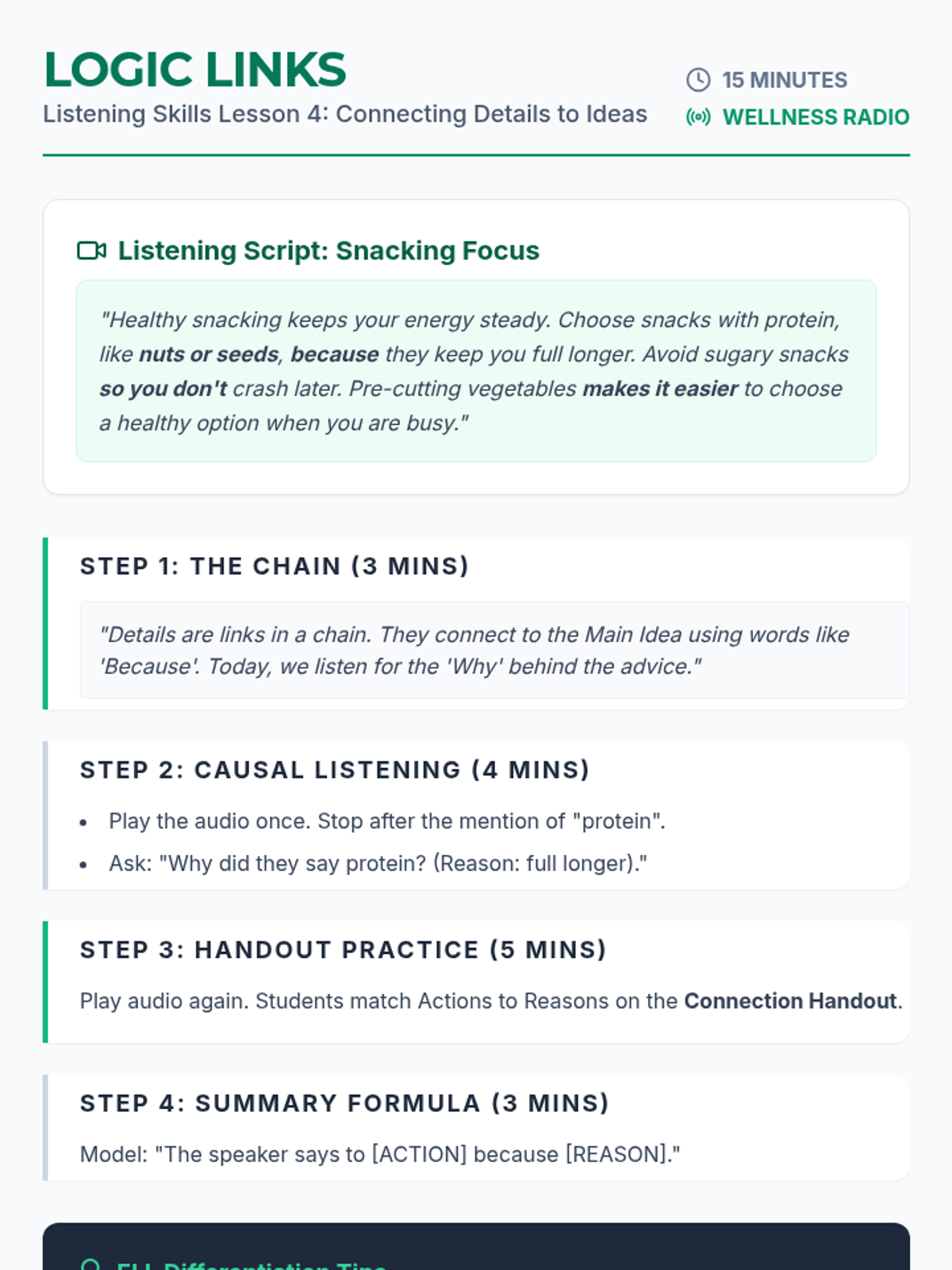
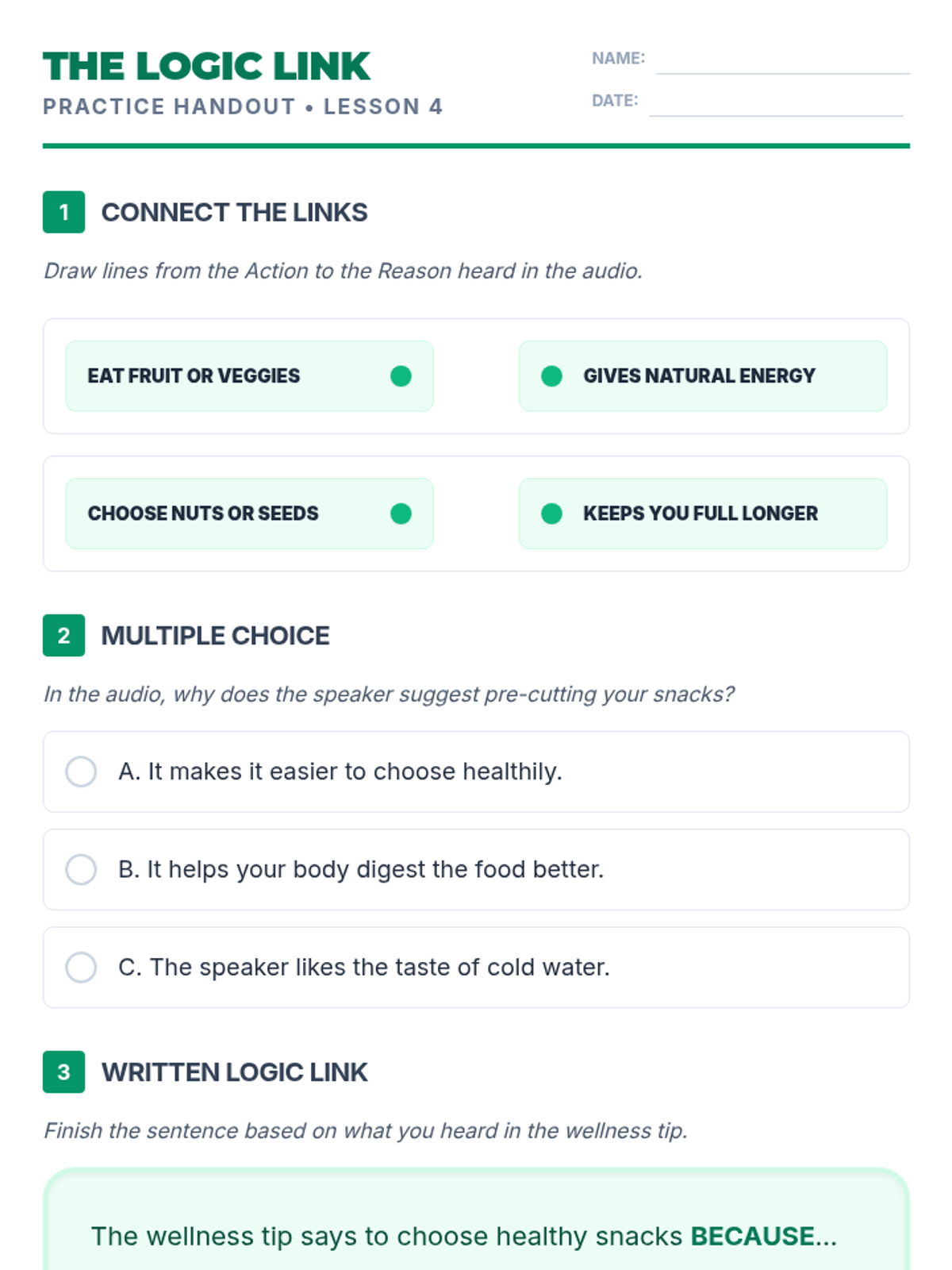
Students explore the logical connections between a health recommendation and its supporting evidence in a tip about healthy snacking.
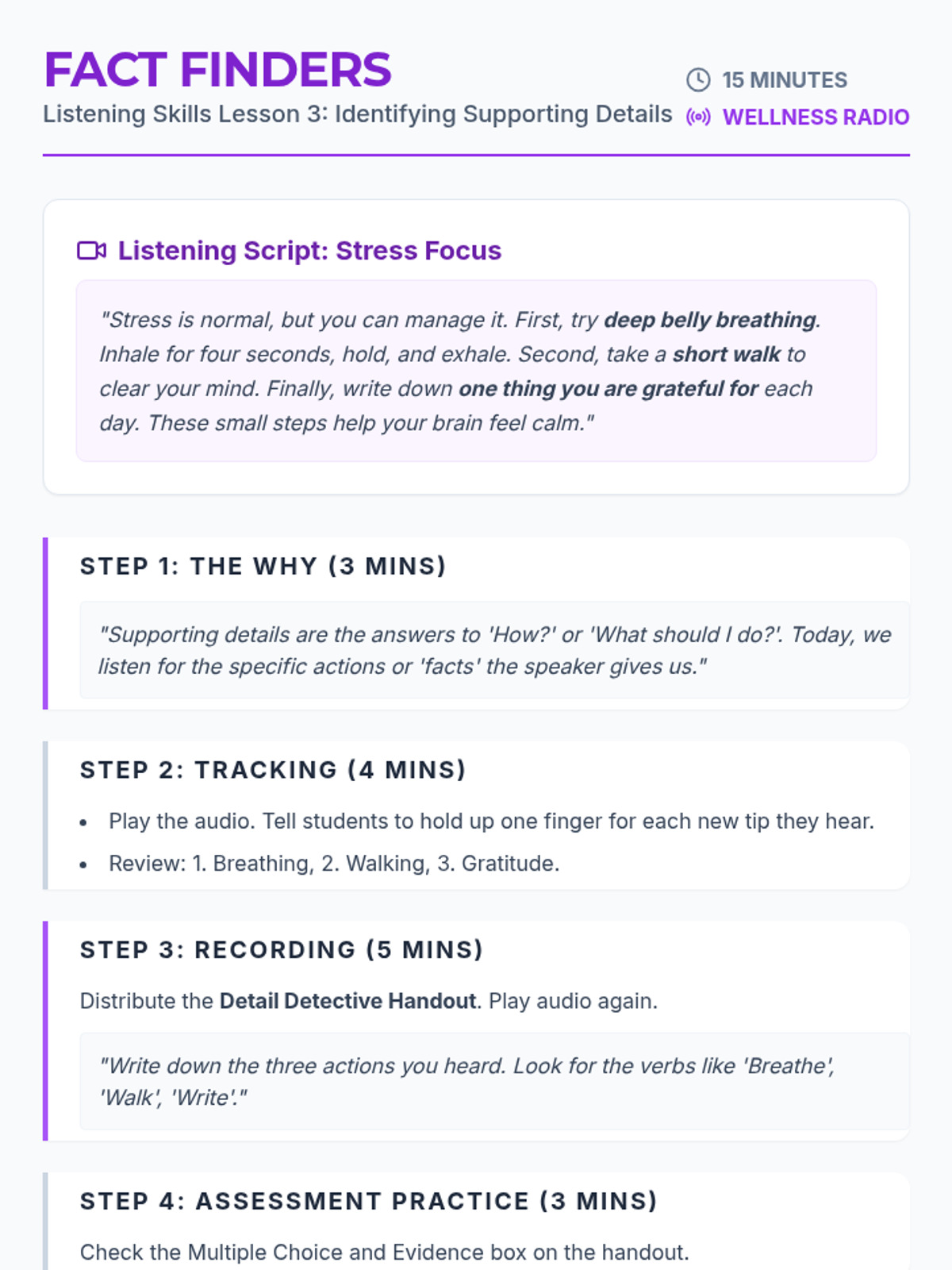
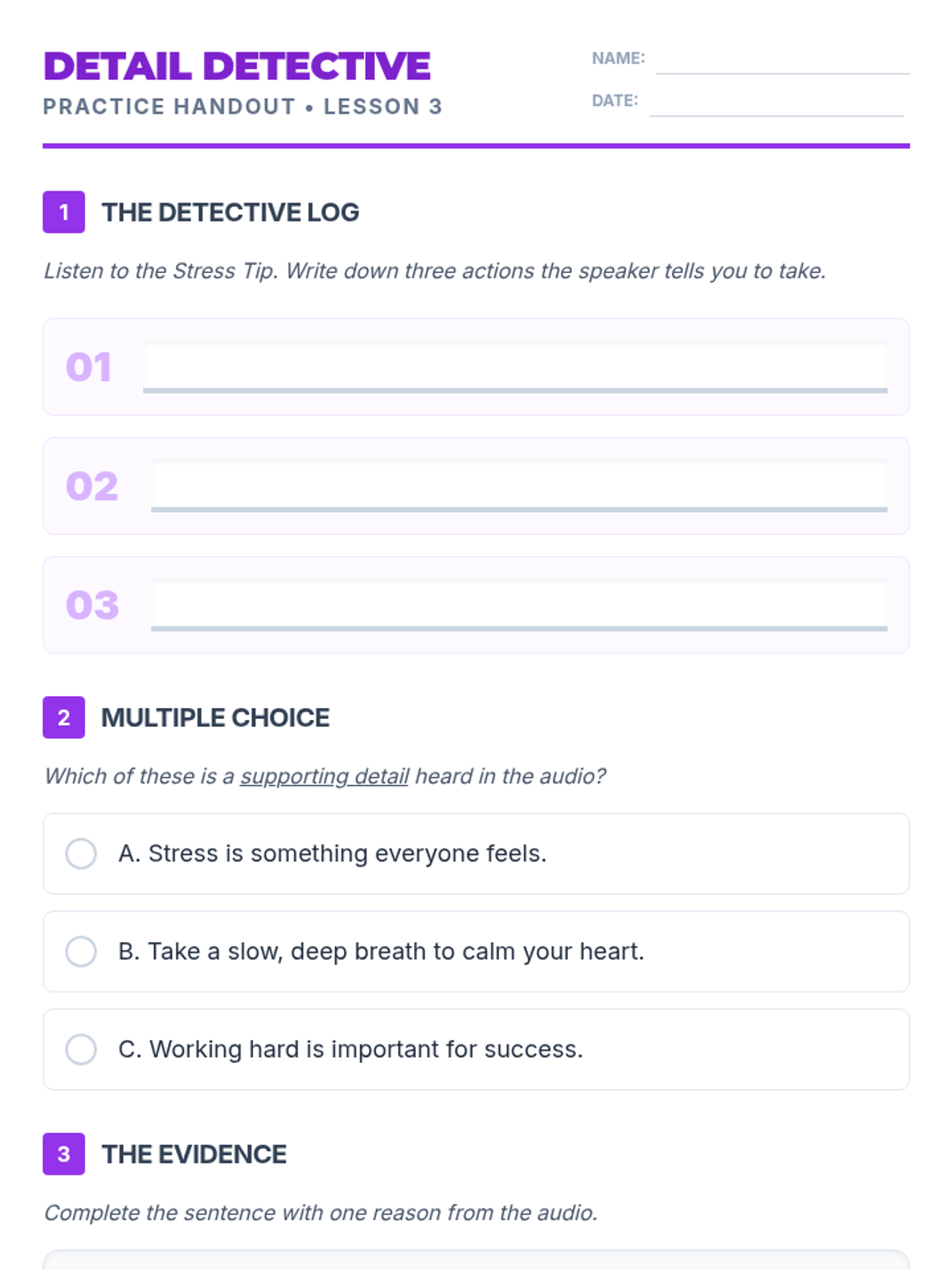
Students practice identifying multiple supporting details that answer 'how' or 'why' regarding stress management techniques.
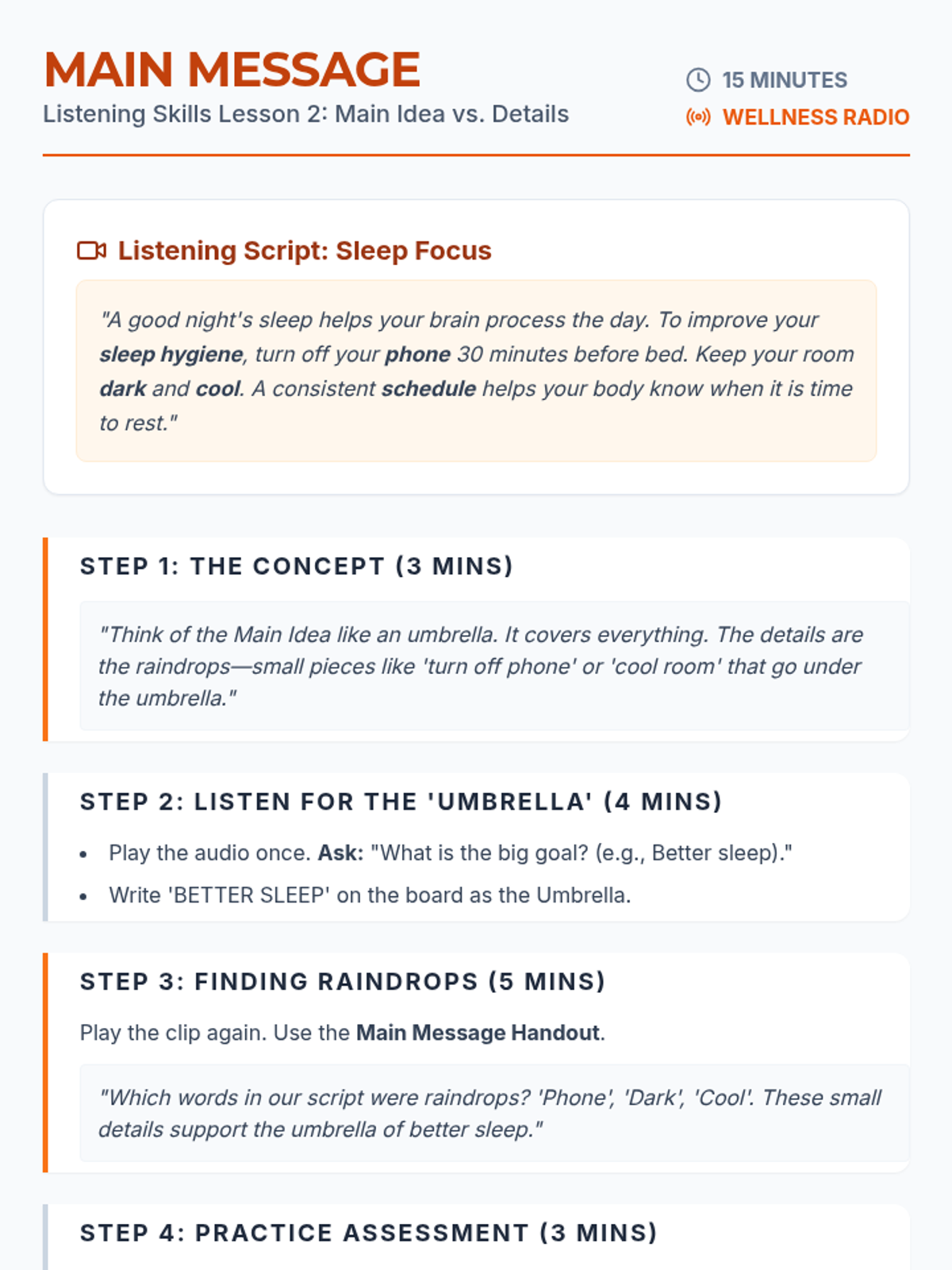
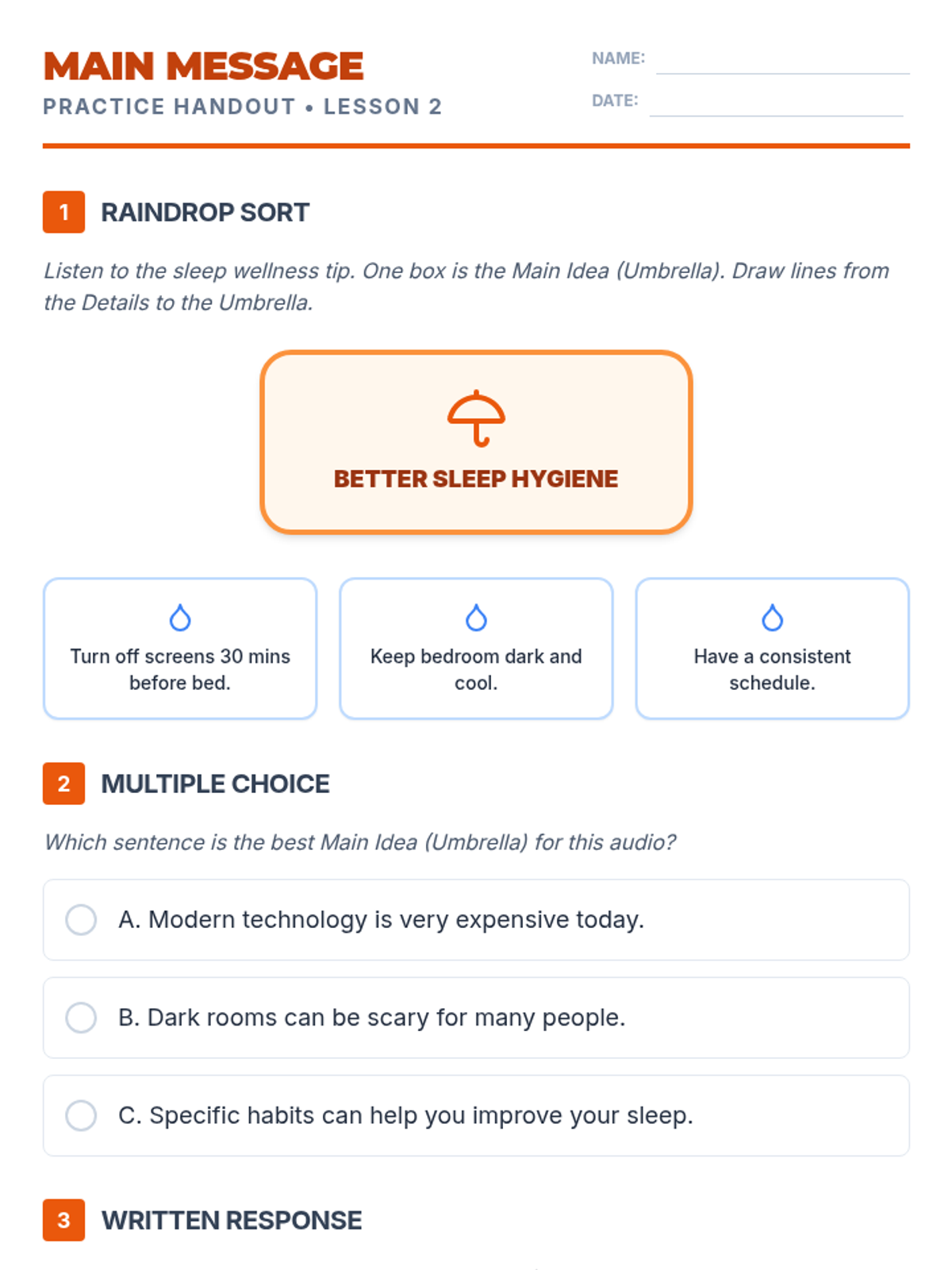
Students learn to differentiate between the overarching topic (Main Idea) and the specific examples (Details) in a tip about sleep hygiene.
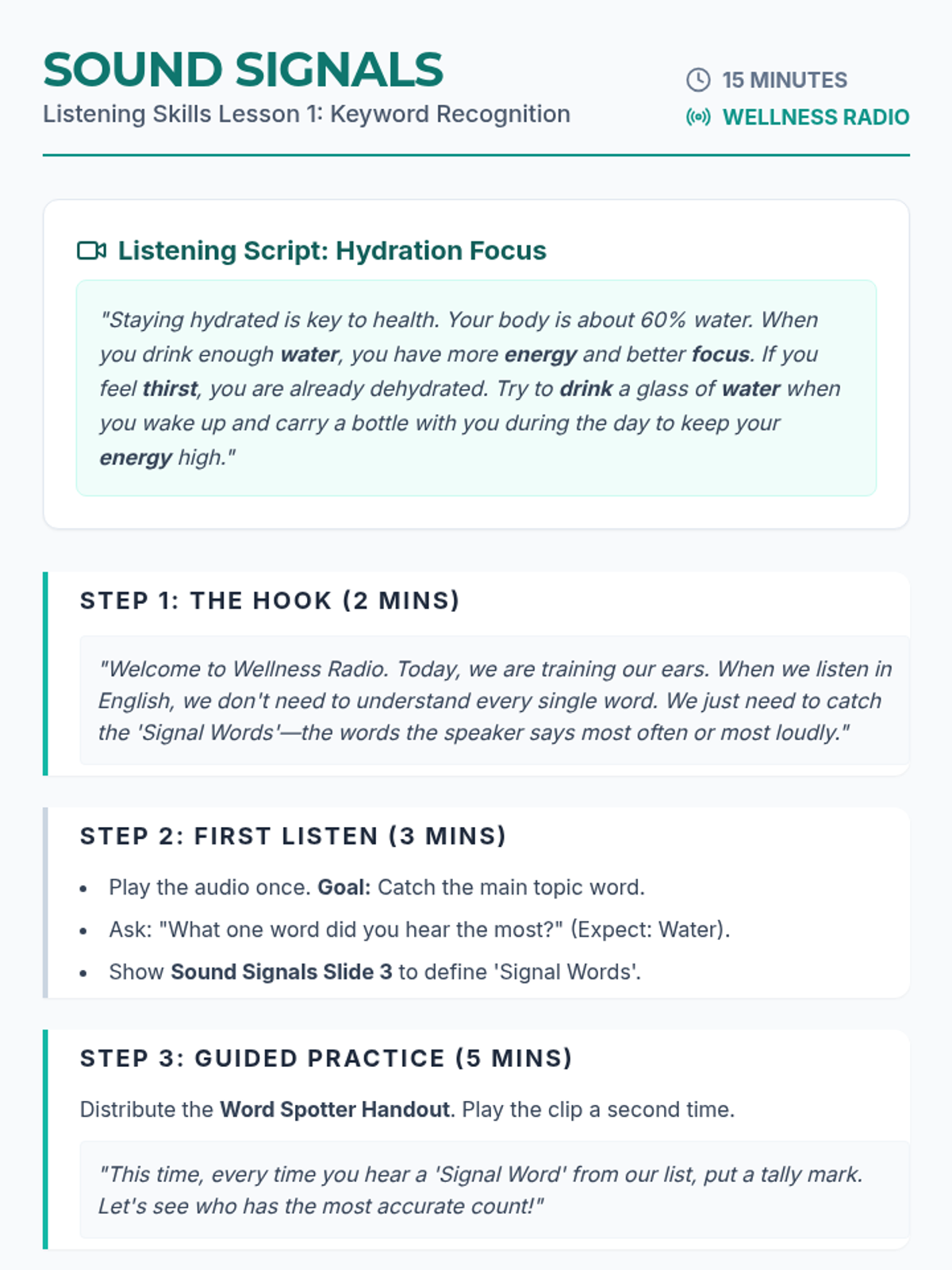
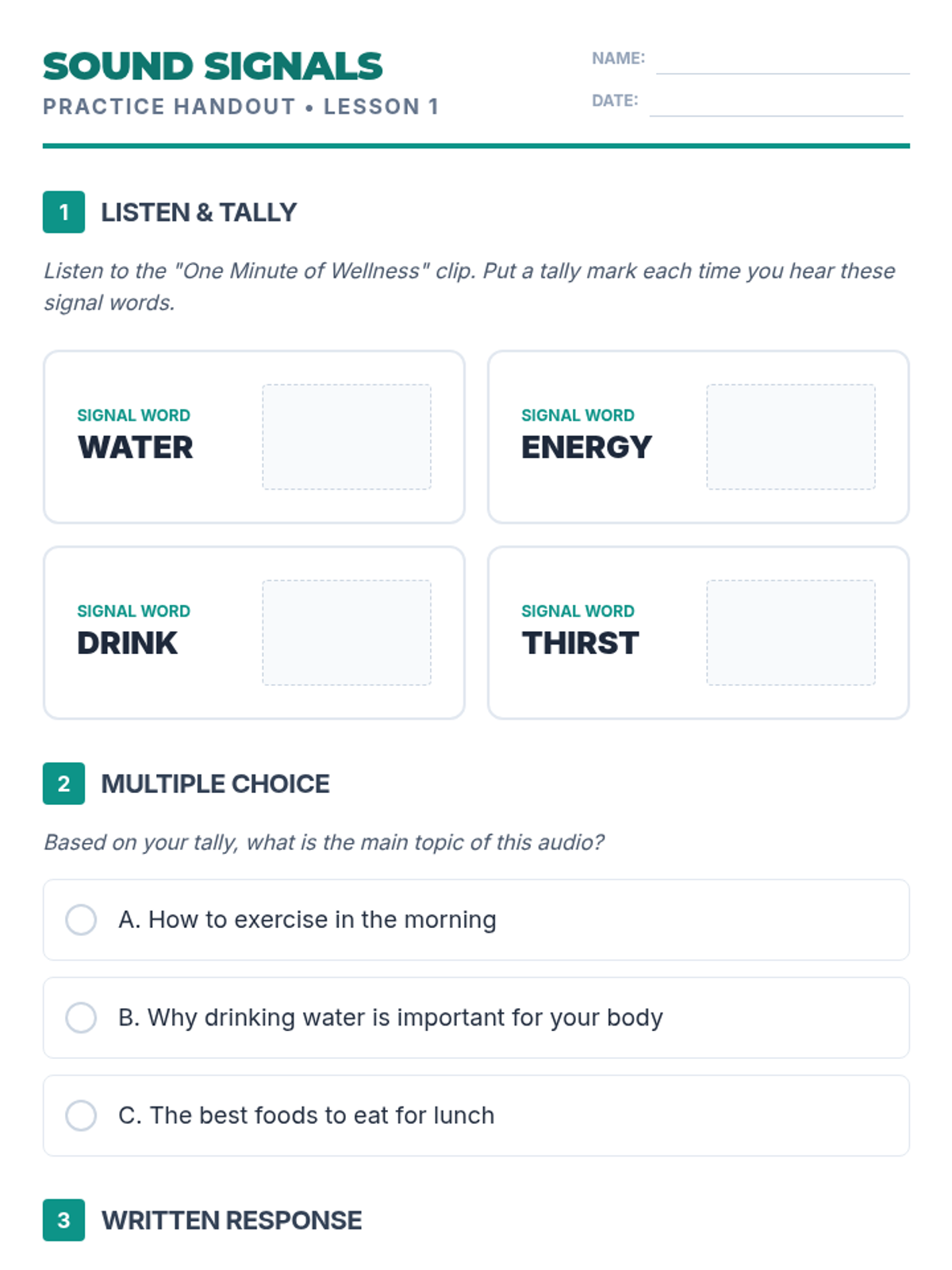
Students focus on 'listening for signals'—identifying specific keywords and vocabulary words in a 60-second wellness tip about hydration.
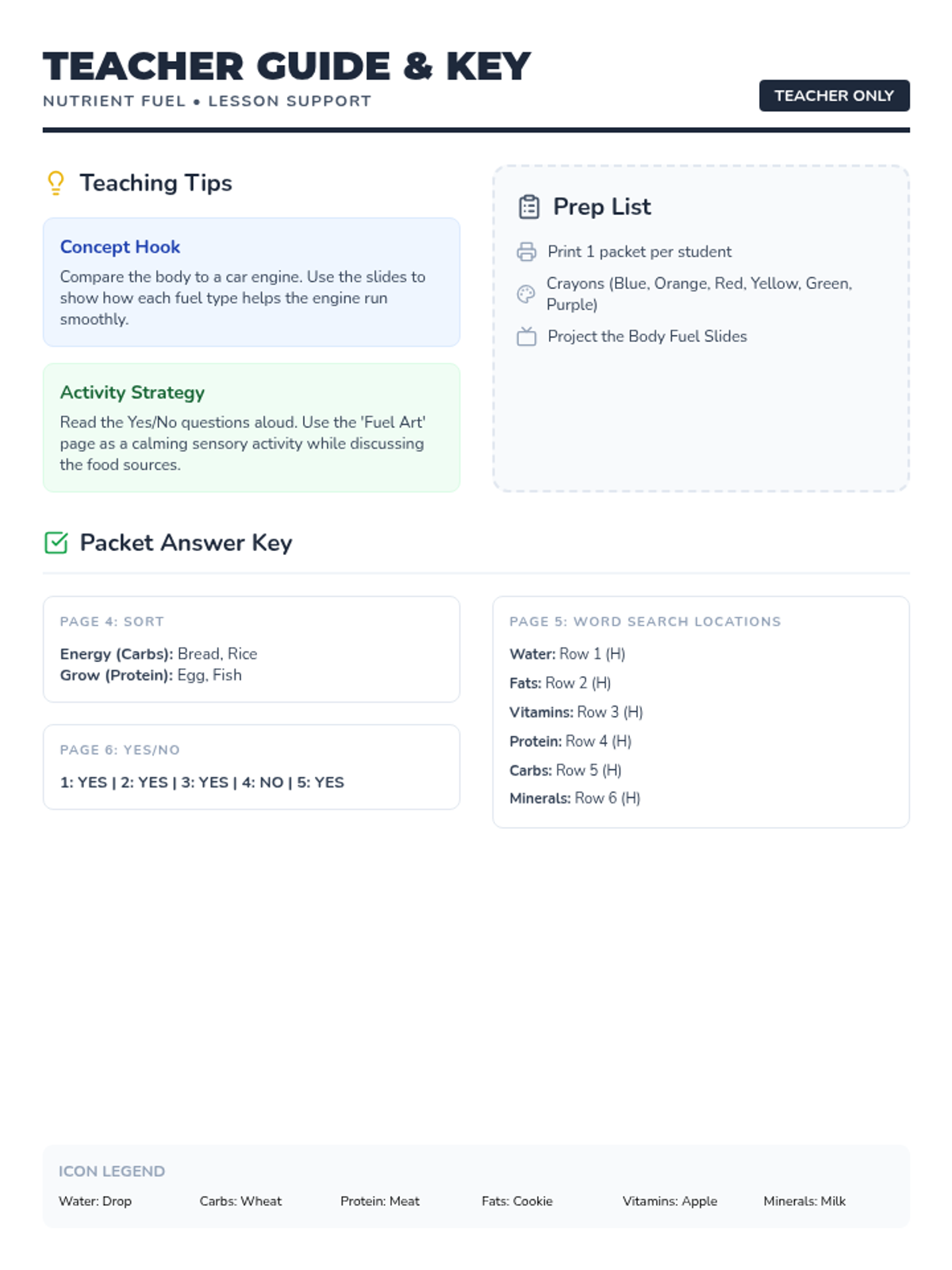
A simple introduction to the 6 essential nutrients designed for high school SPED students reading at a 2nd-grade level, focusing on the concept of 'fueling' the body engine.
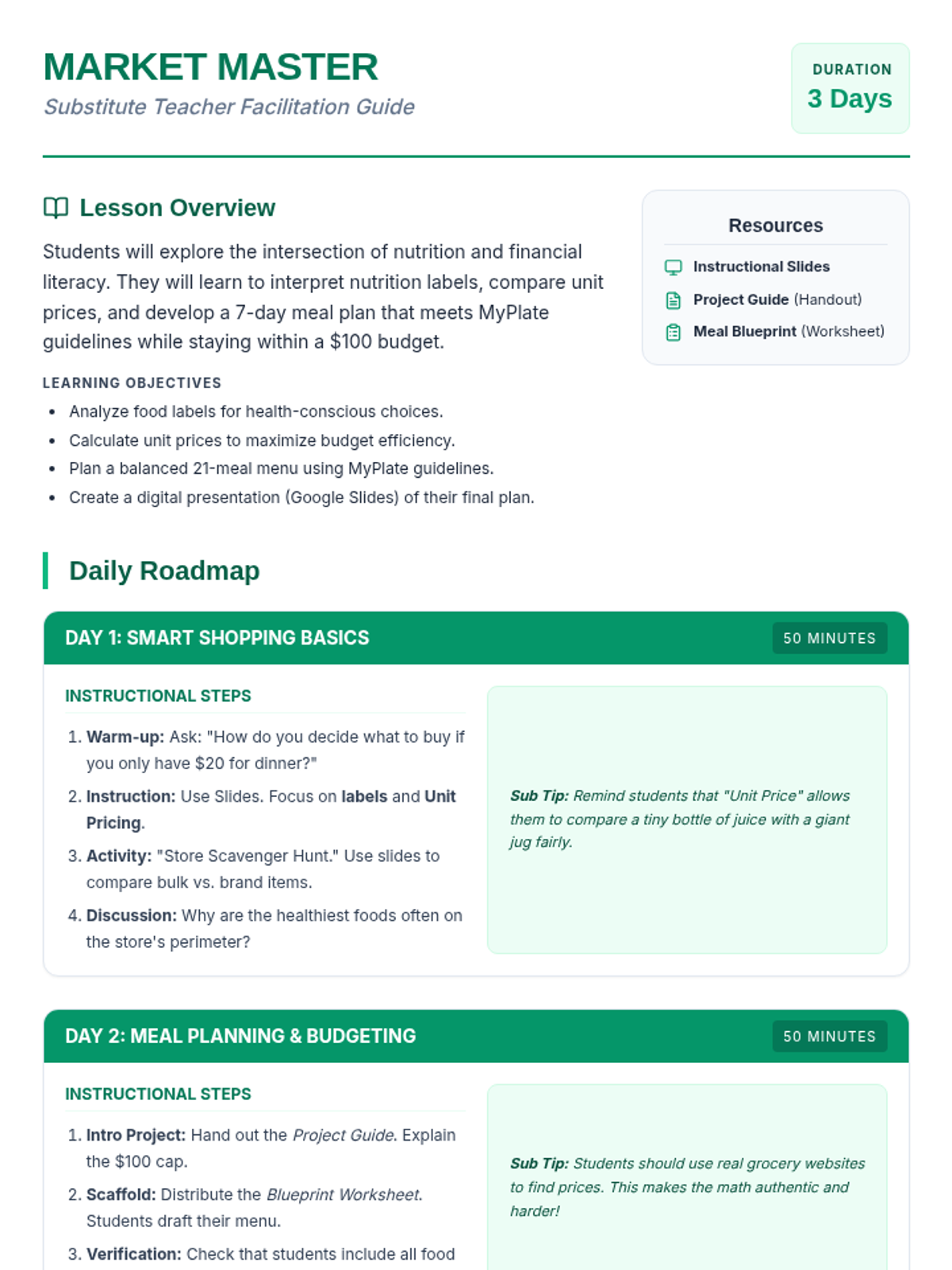
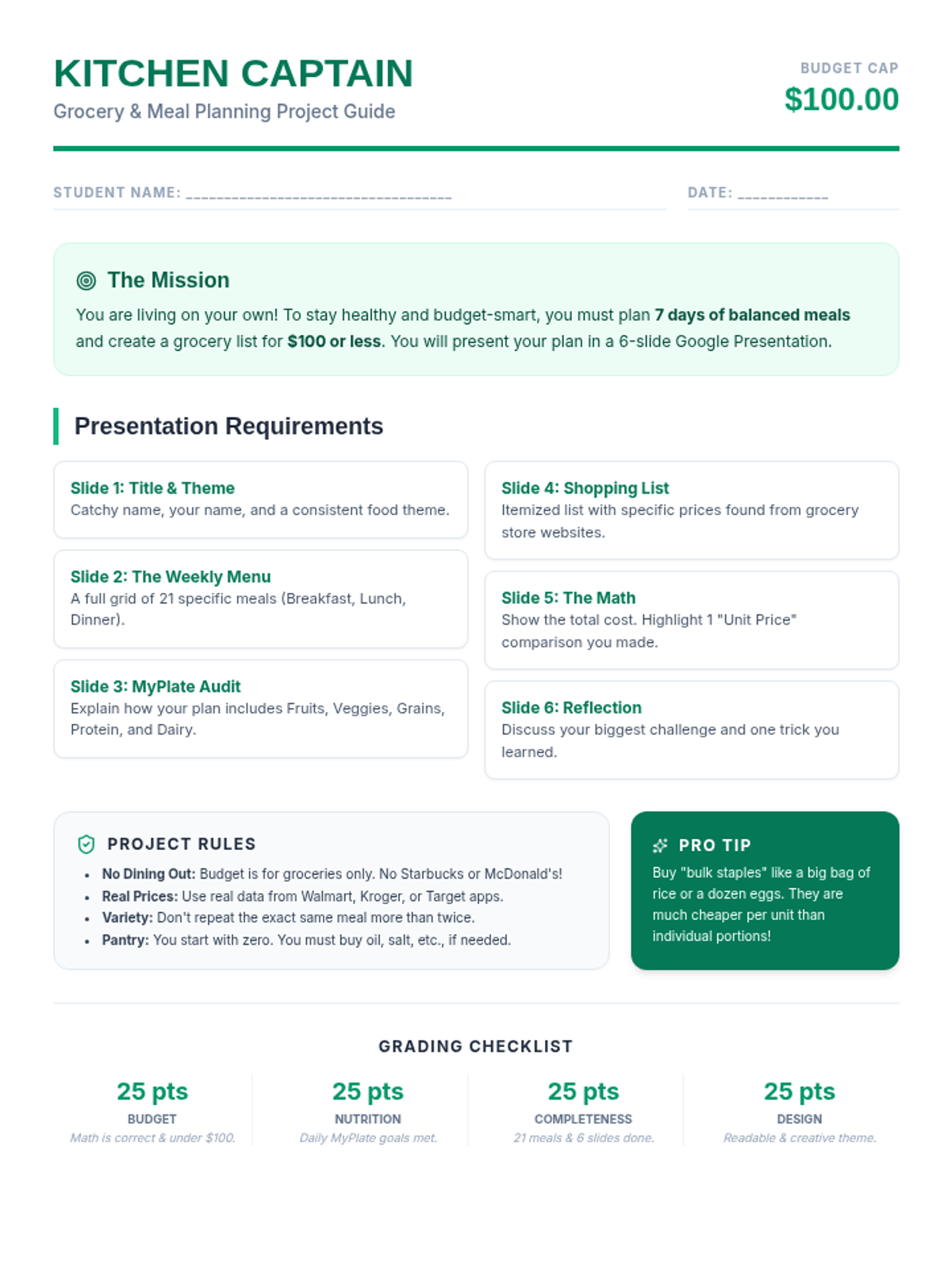
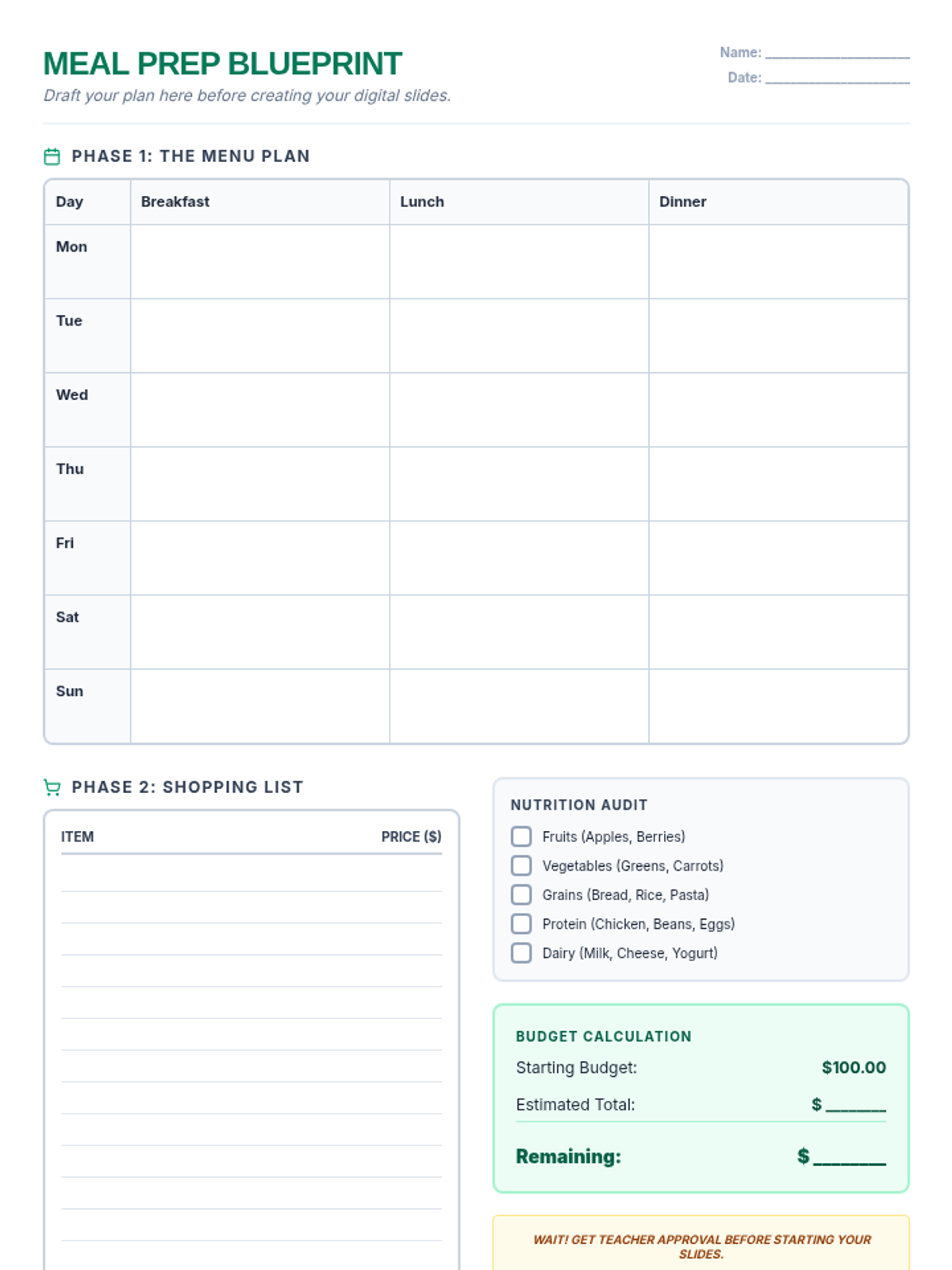
A comprehensive 3-day health lesson teaching students how to balance nutritional needs with a budget through meal planning and smart grocery shopping.
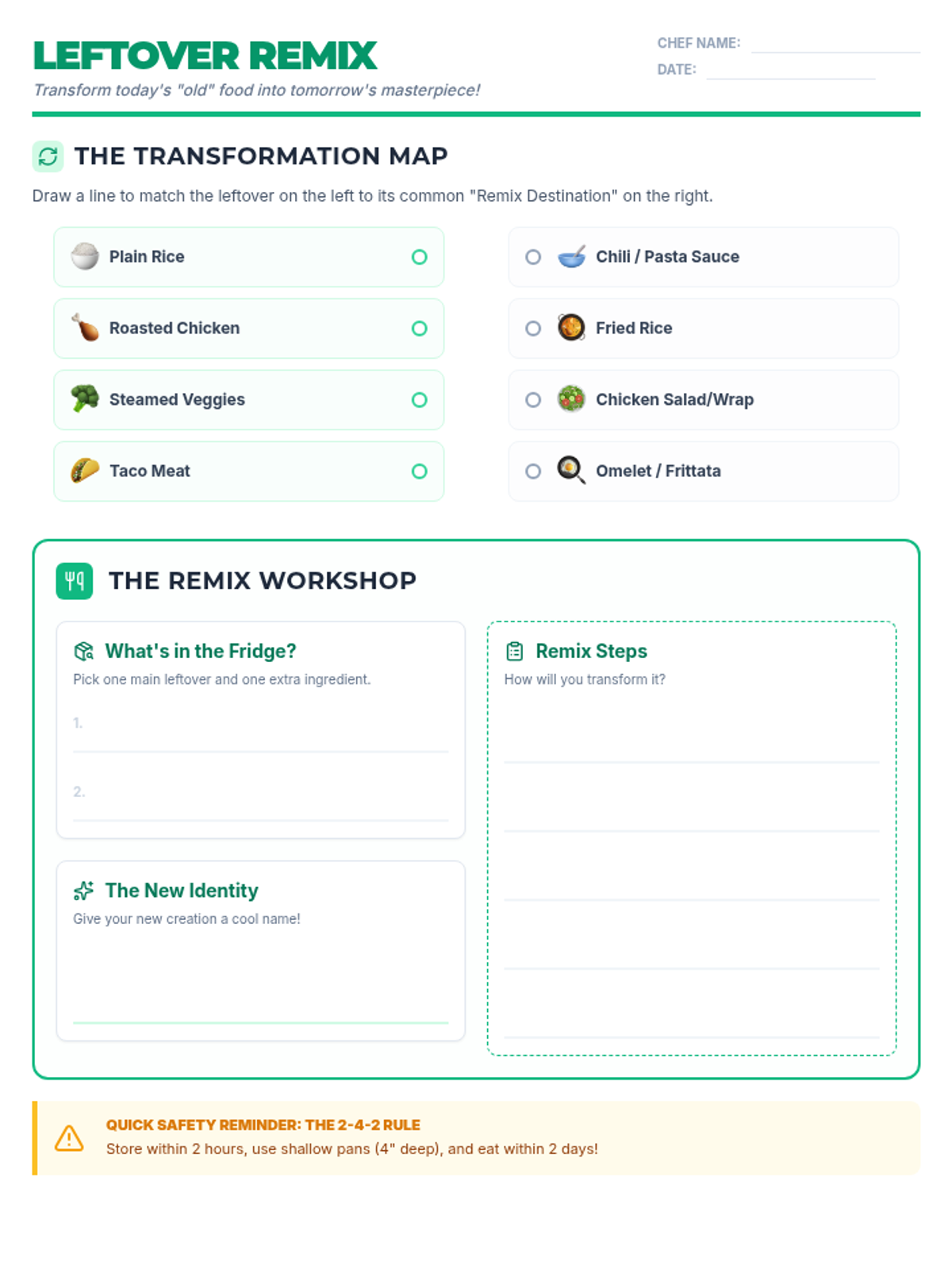
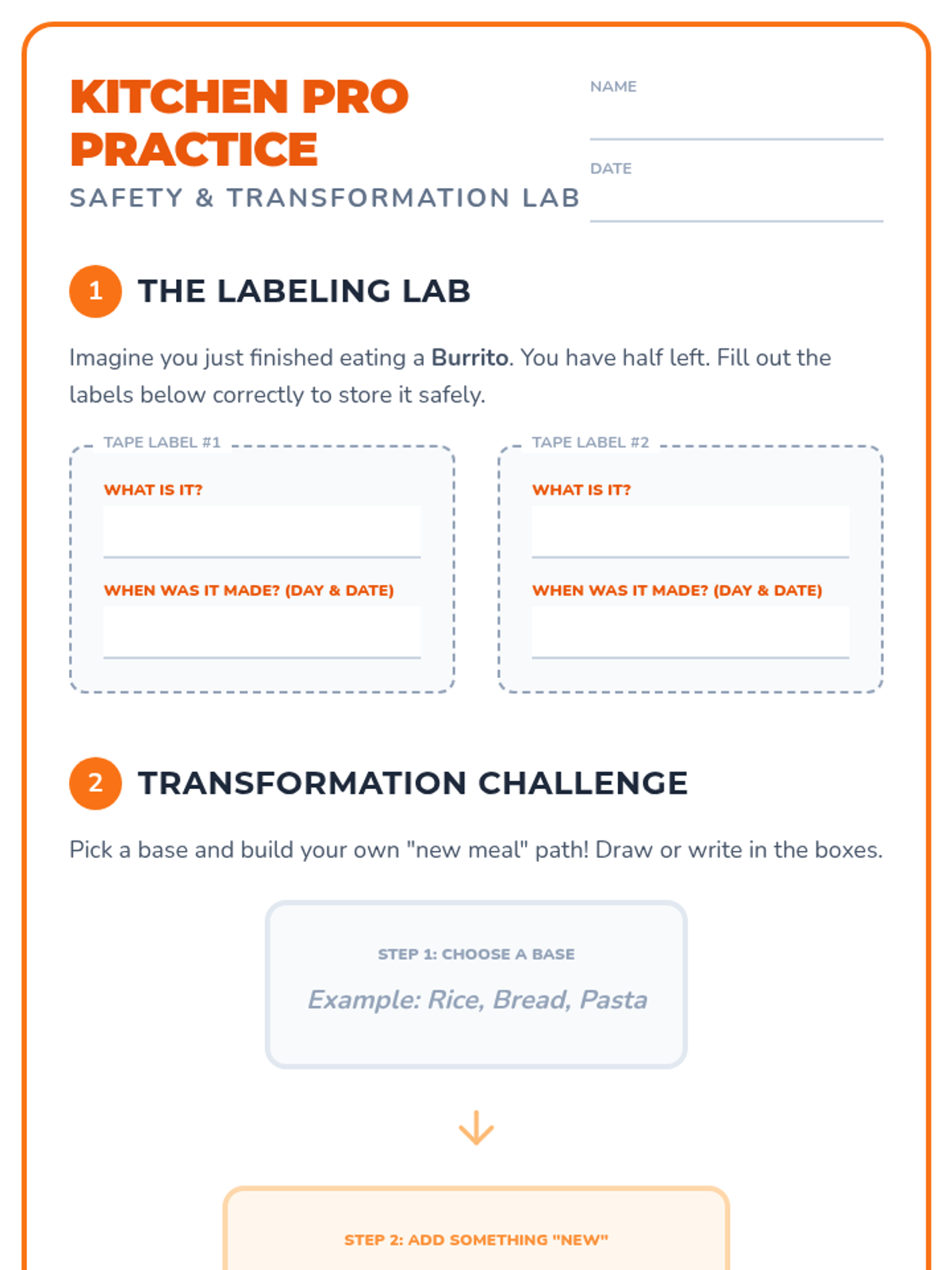
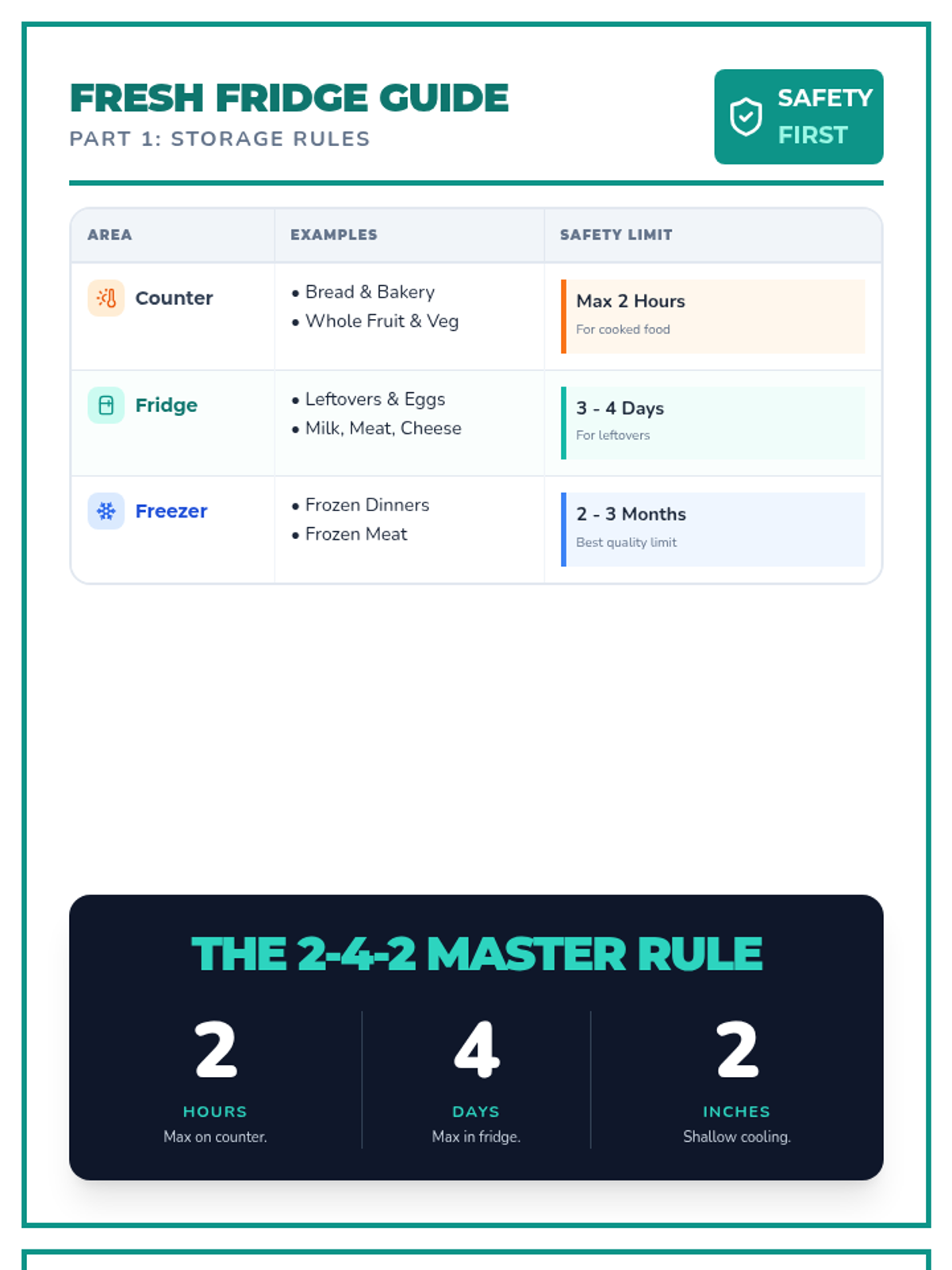
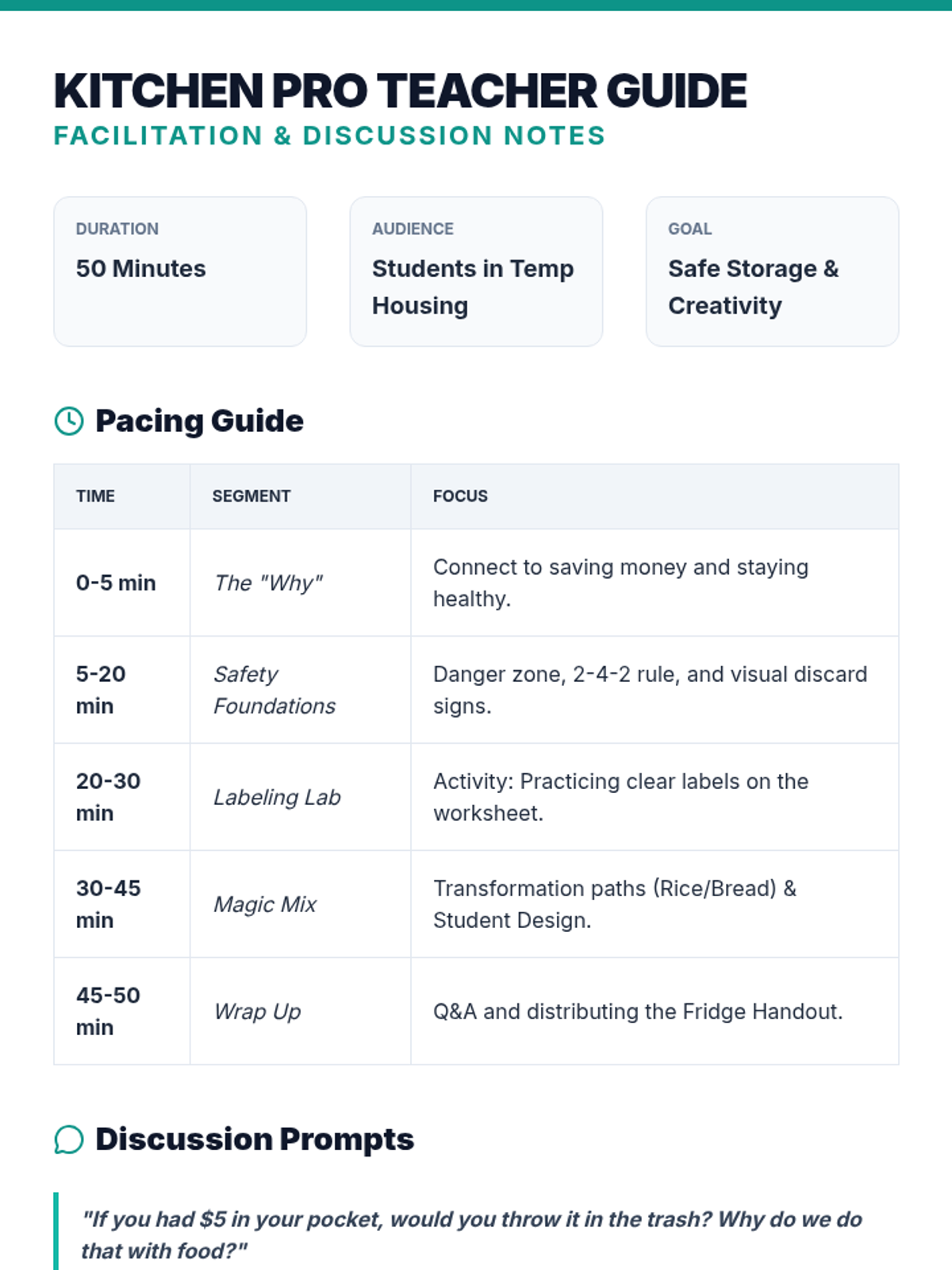
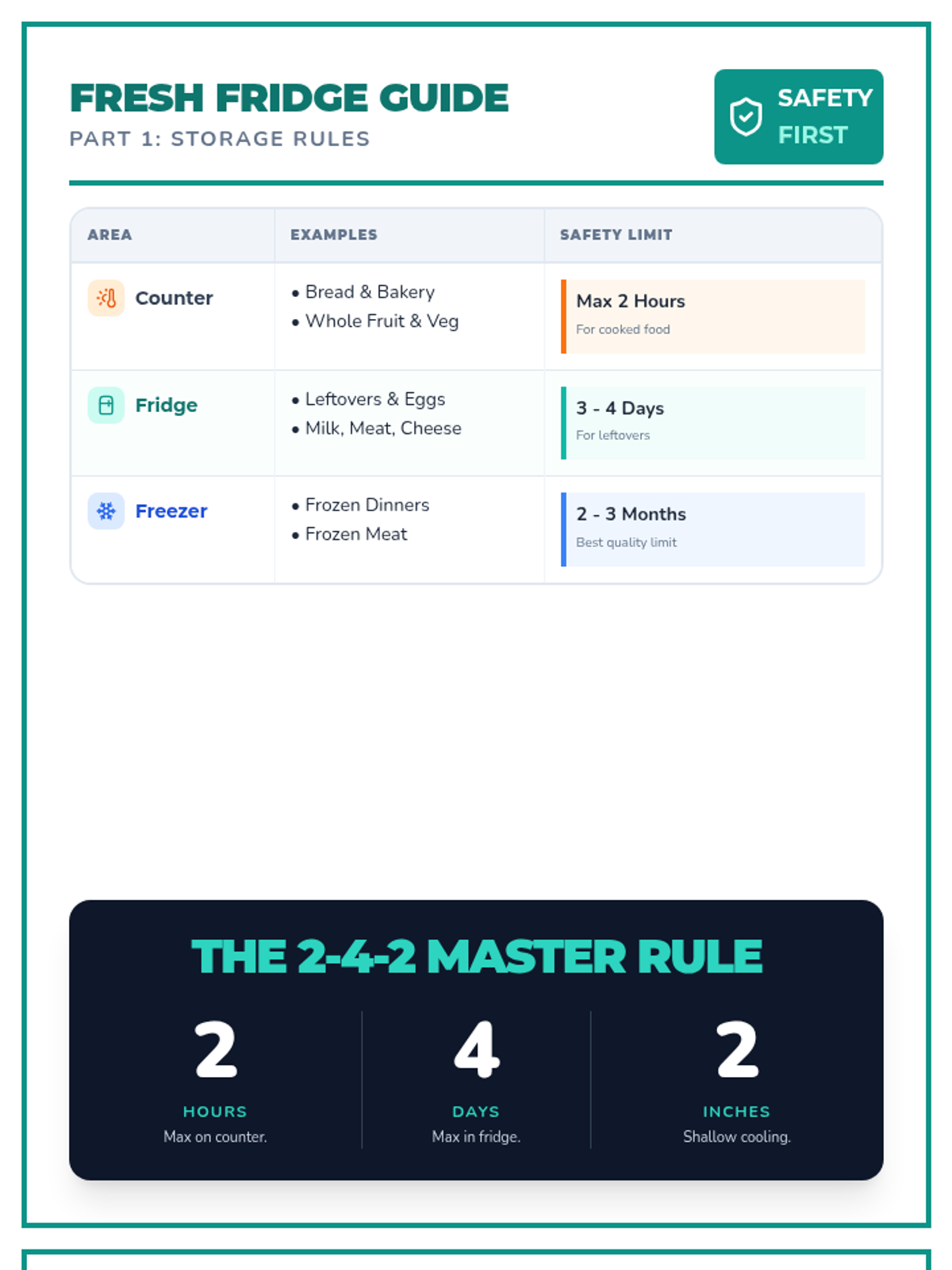
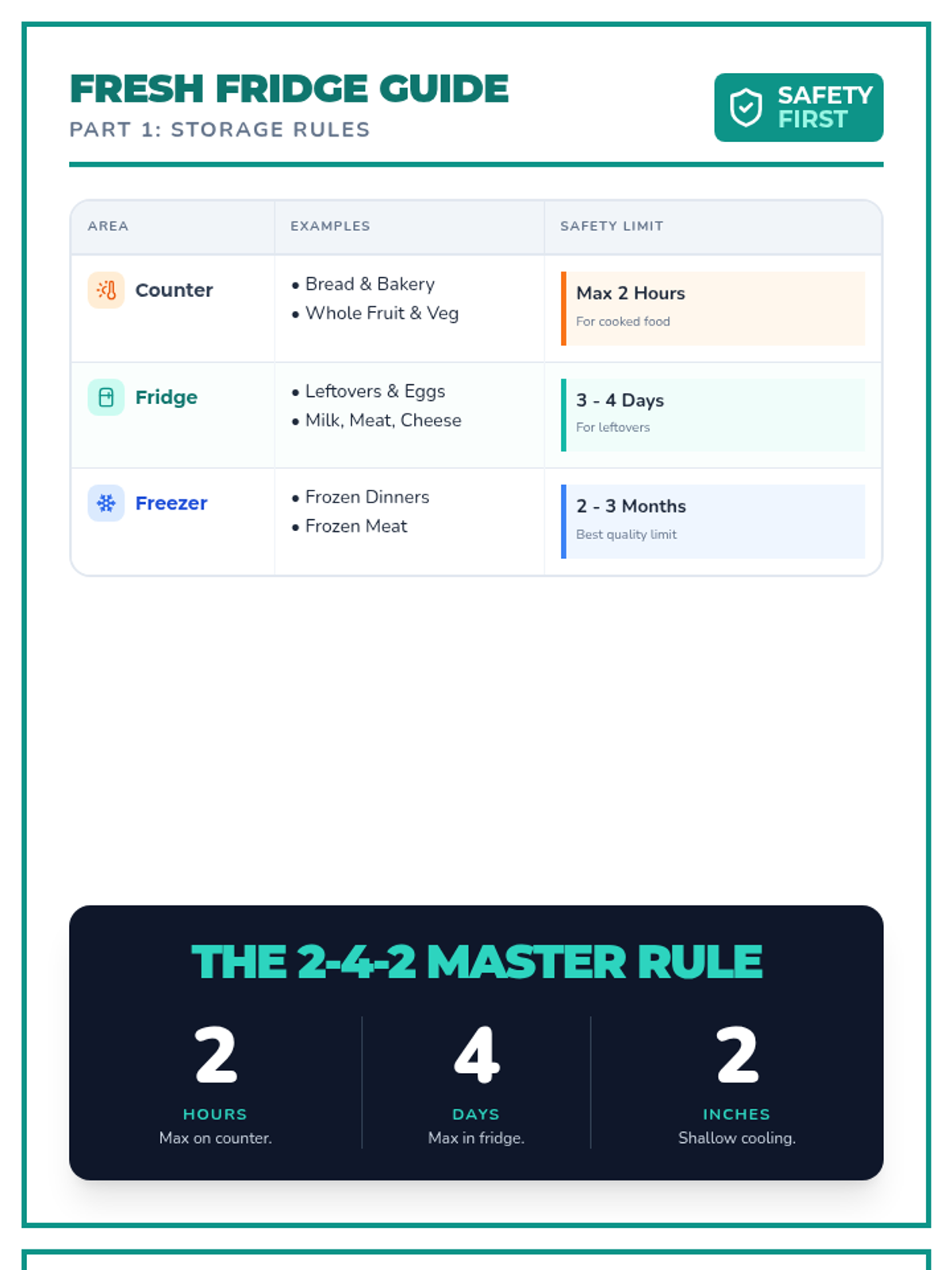
A 50-minute instructional session for students in temporary housing, focusing on safe food storage and creative leftover use through visual guides and sequence flowcharts.
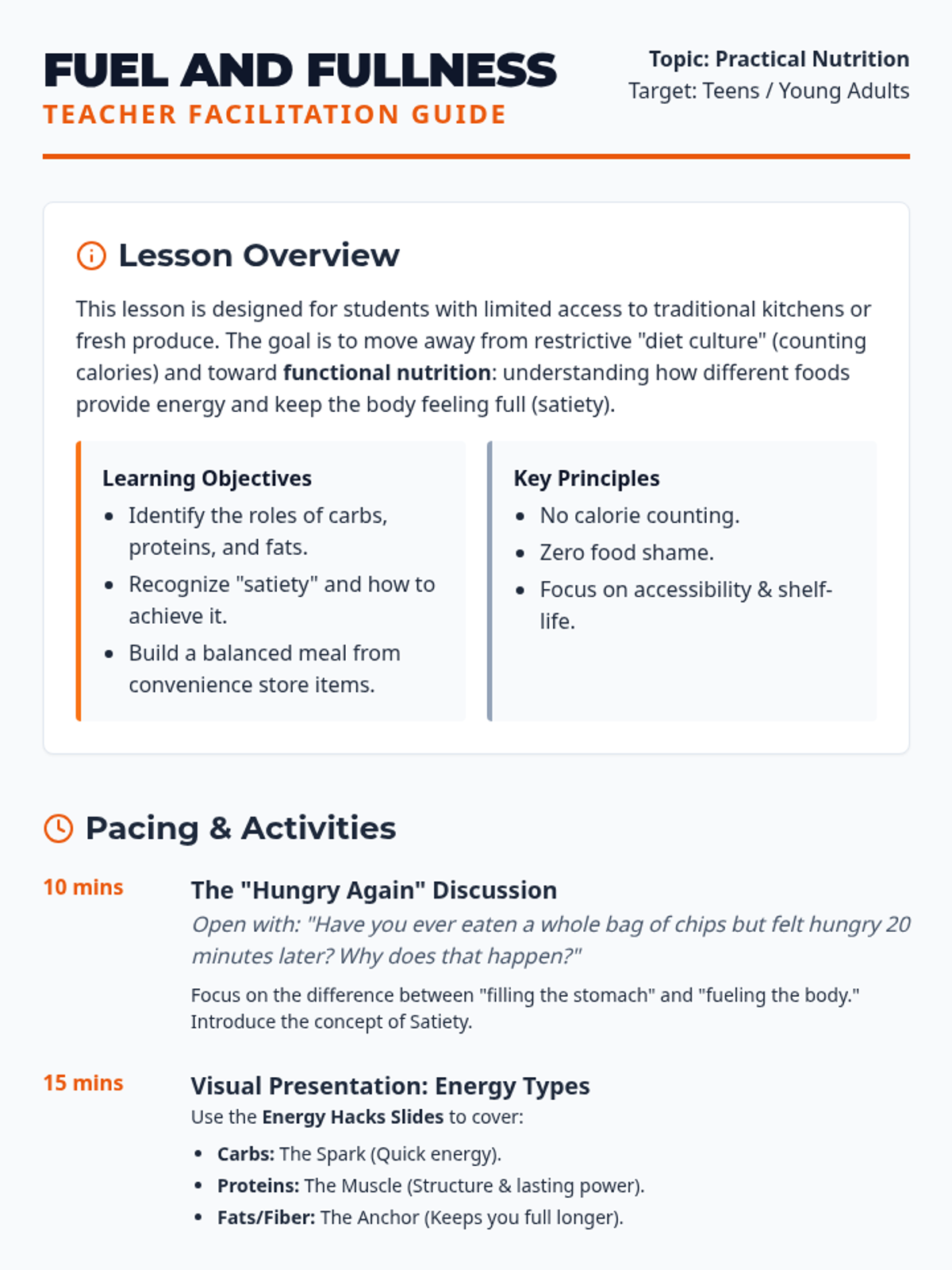
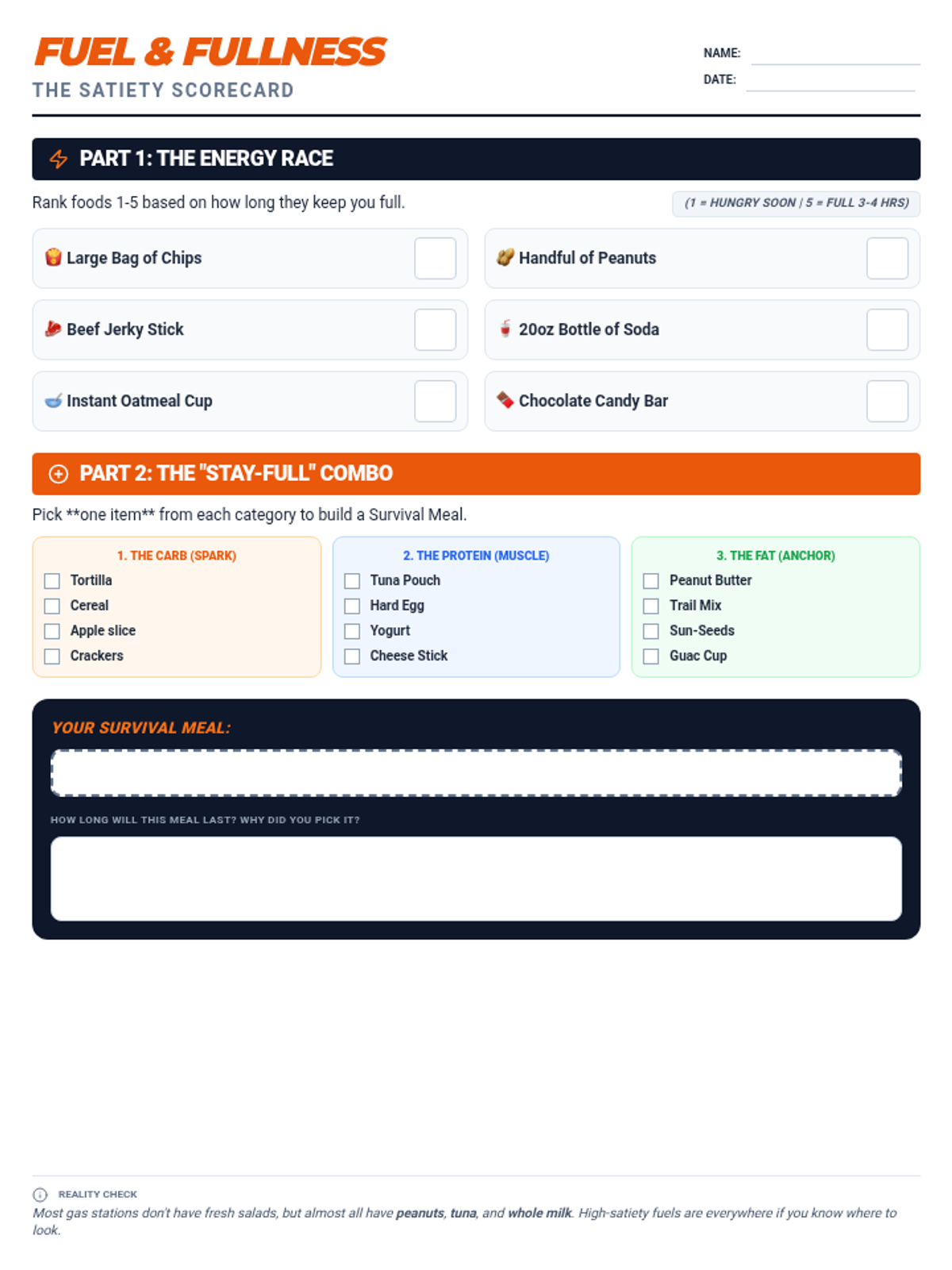
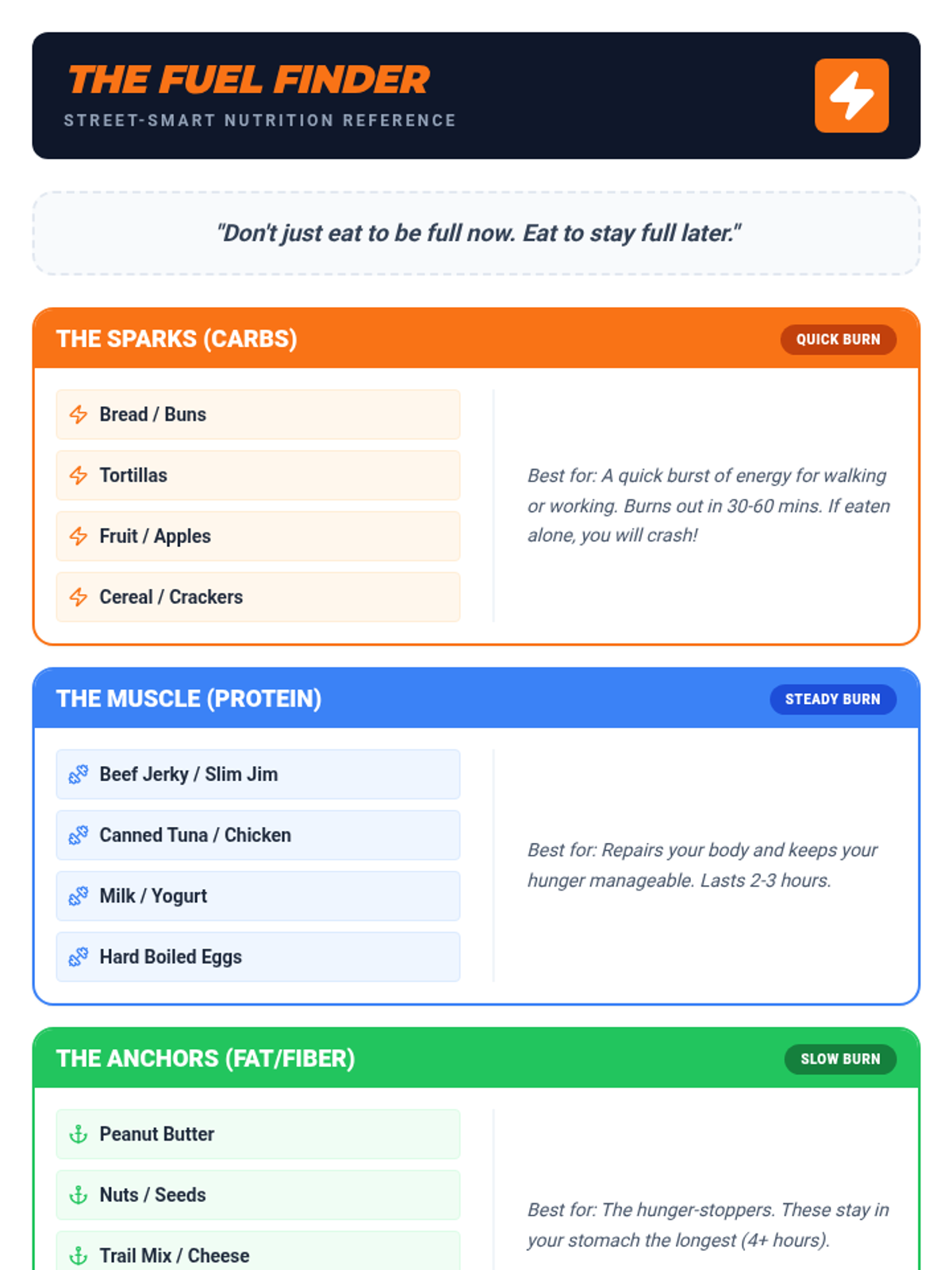
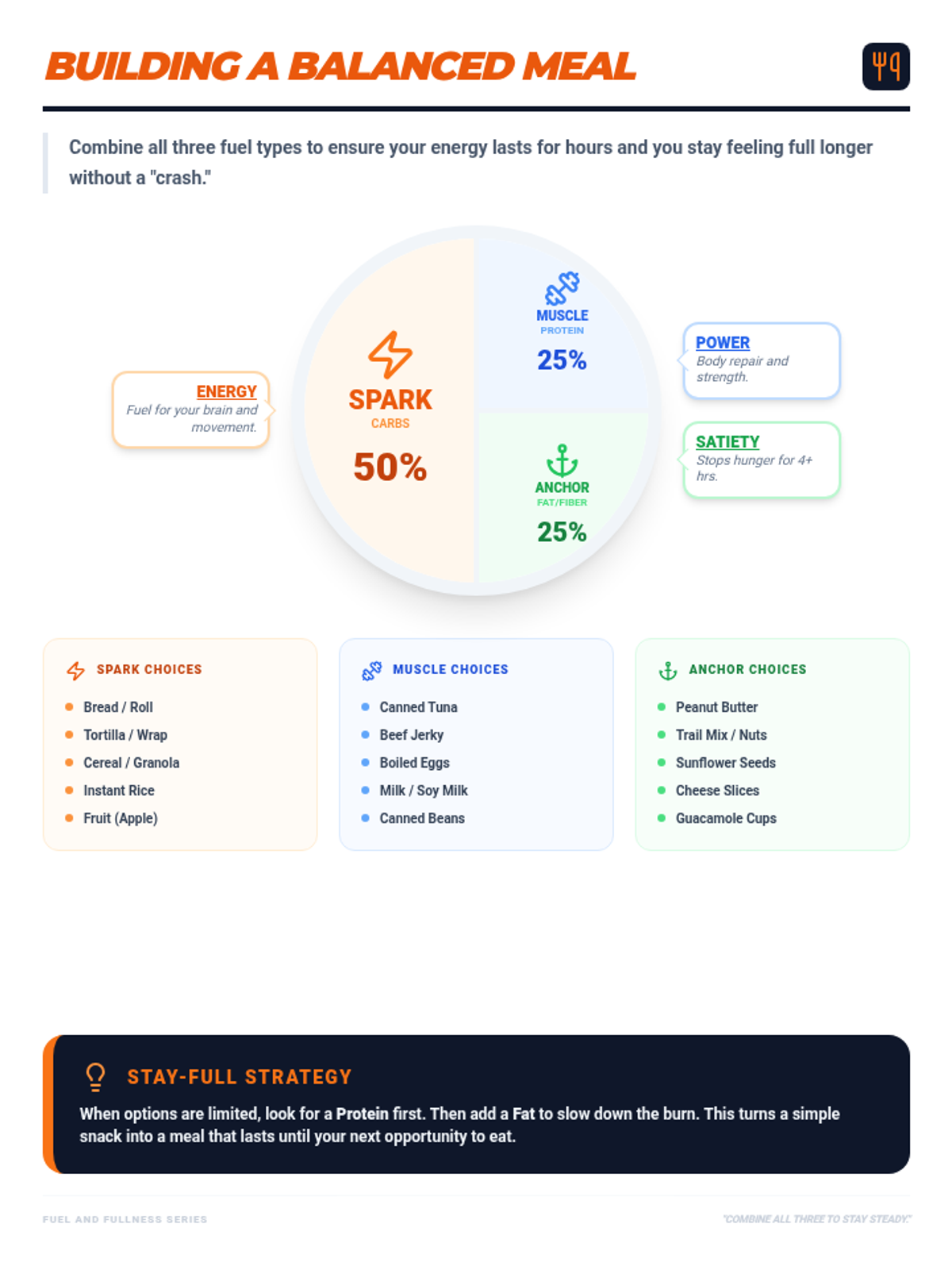
A practical nutrition lesson for teenagers facing housing instability, focusing on maximizing energy and satiety using accessible, shelf-stable foods without the use of calorie counting.
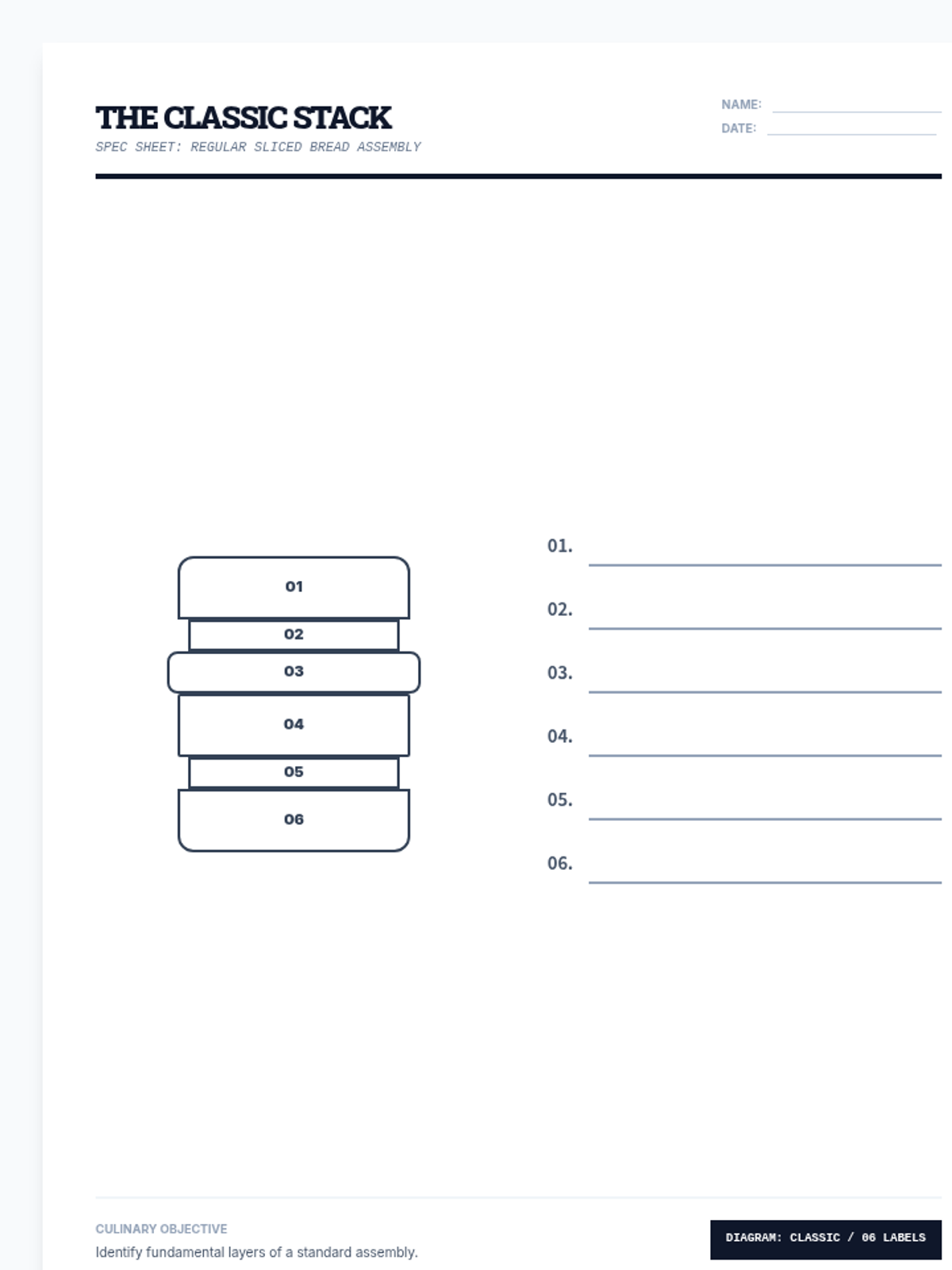
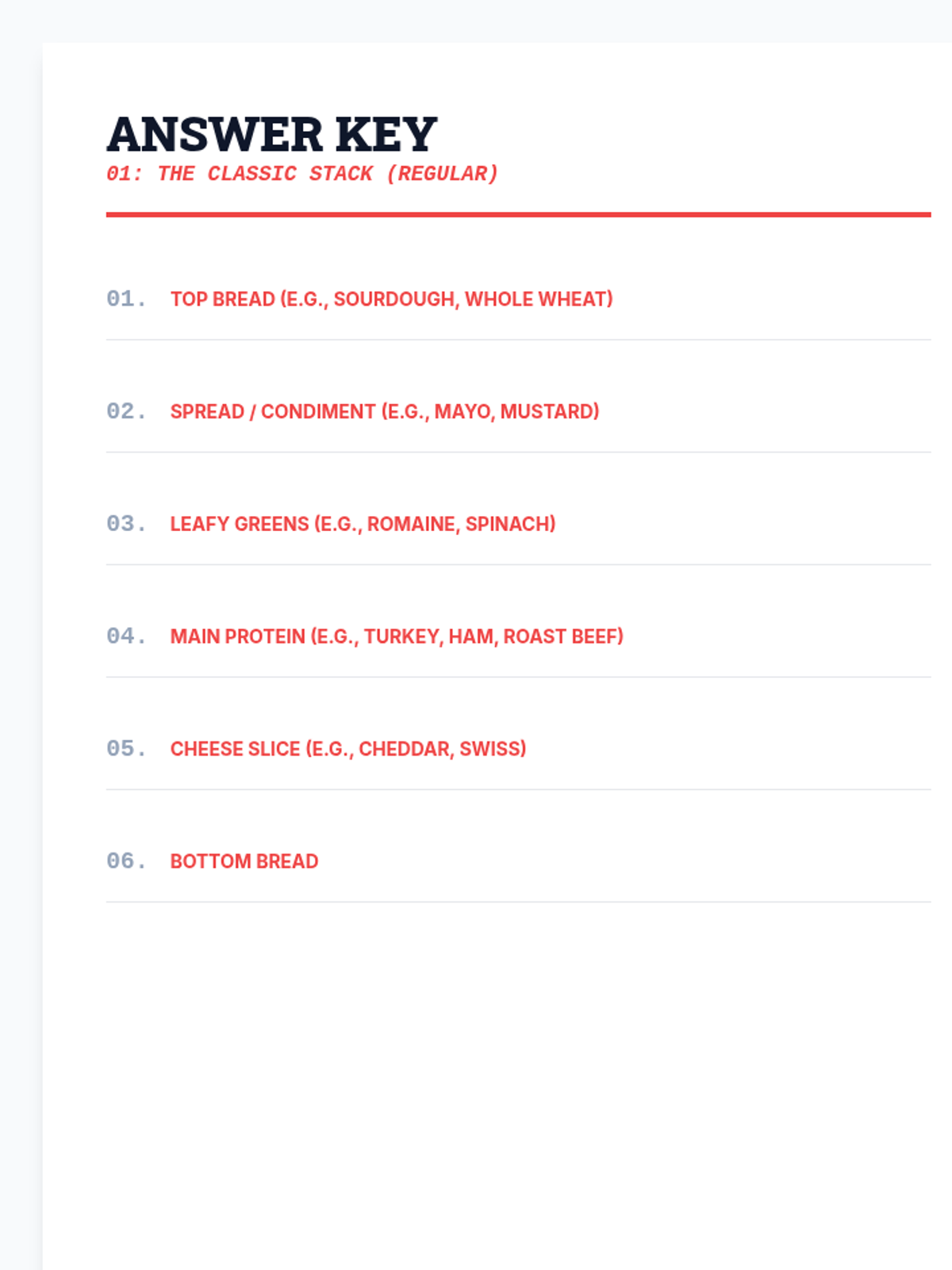
A comprehensive lesson on the structural assembly of various sandwich types, focusing on culinary terminology and layering techniques through anatomical diagrams.
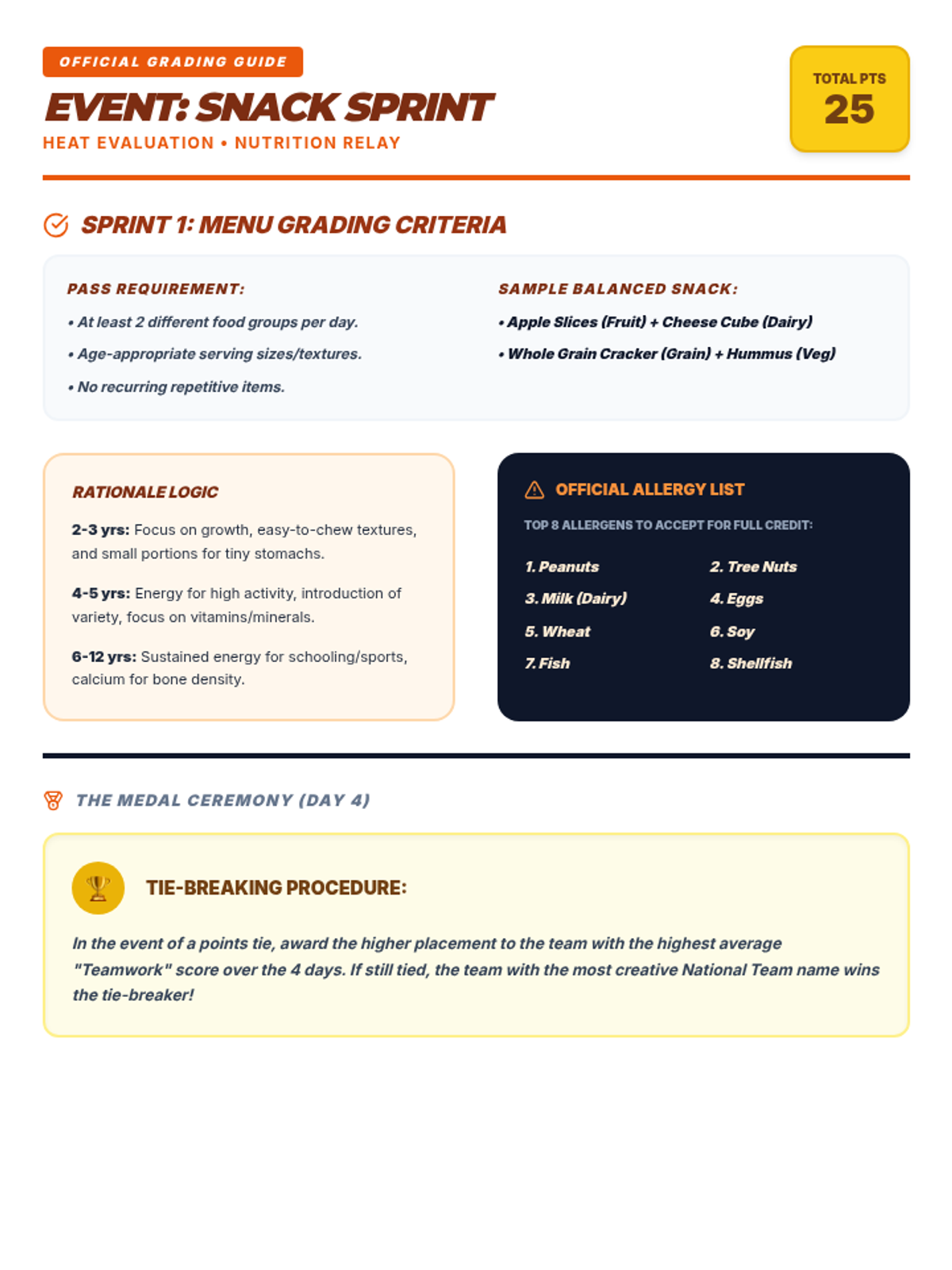
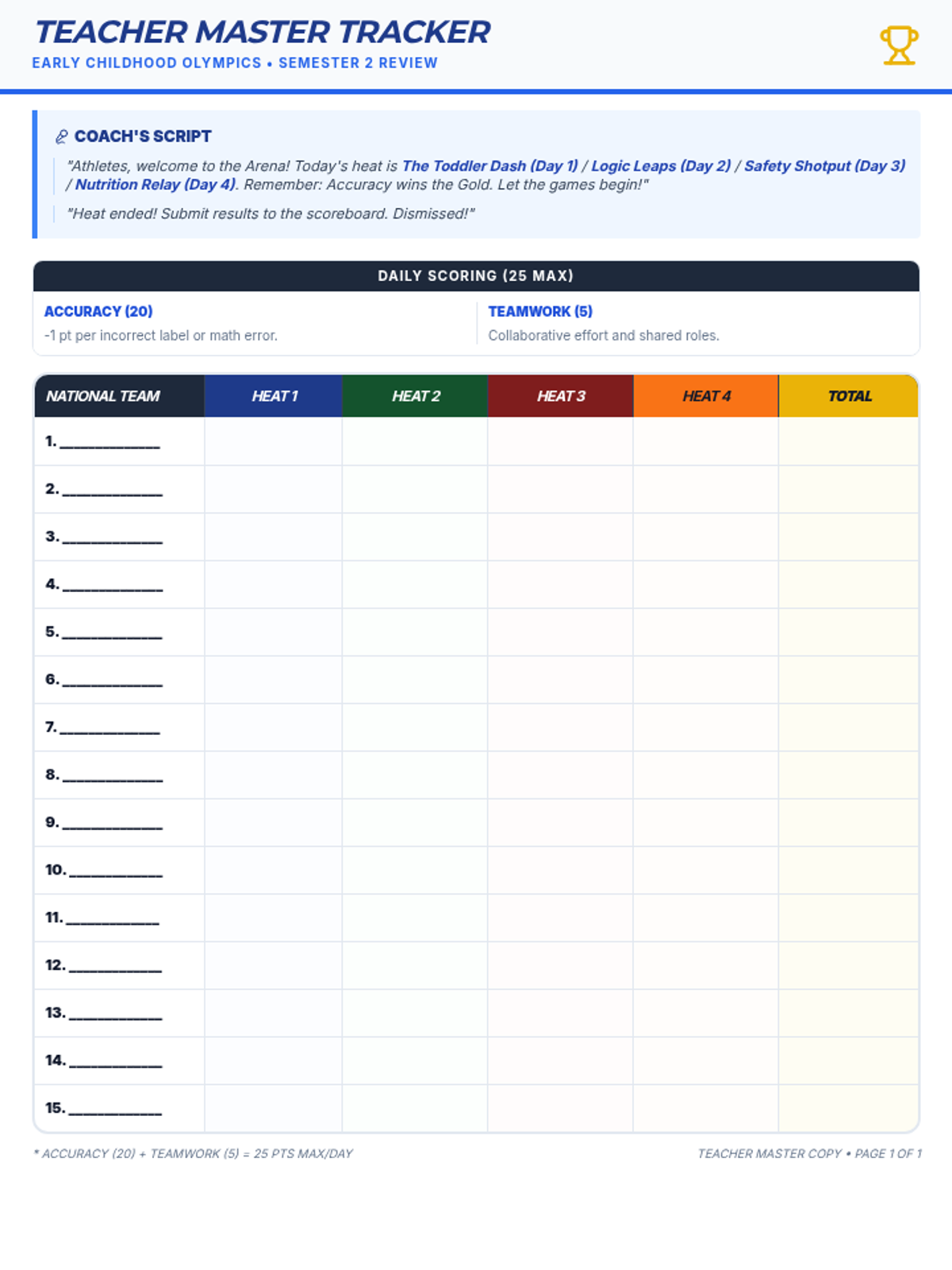
The final day covers nutrition and meal planning, followed by the grand tallying of points and the medal ceremony to conclude the semester.
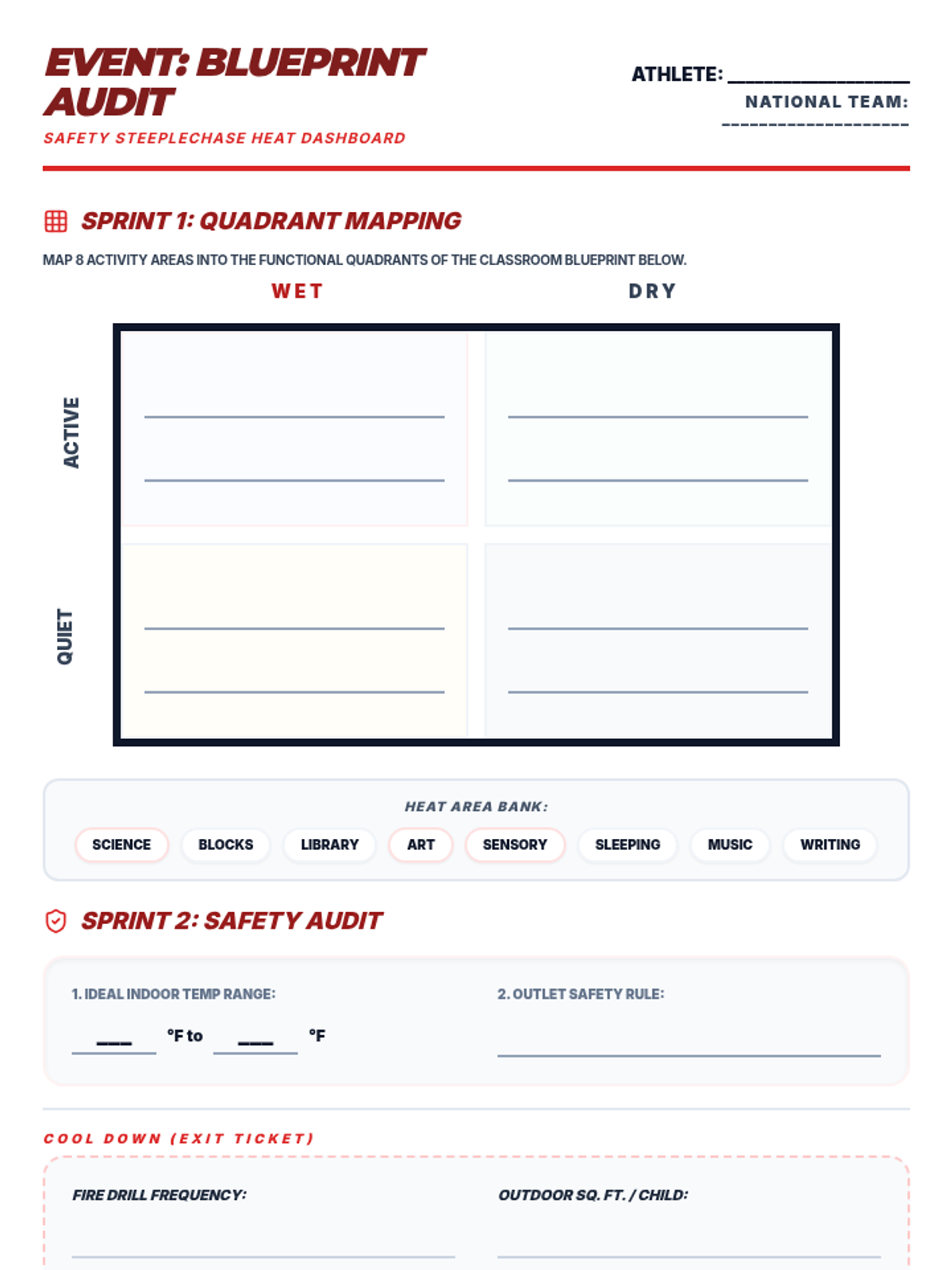
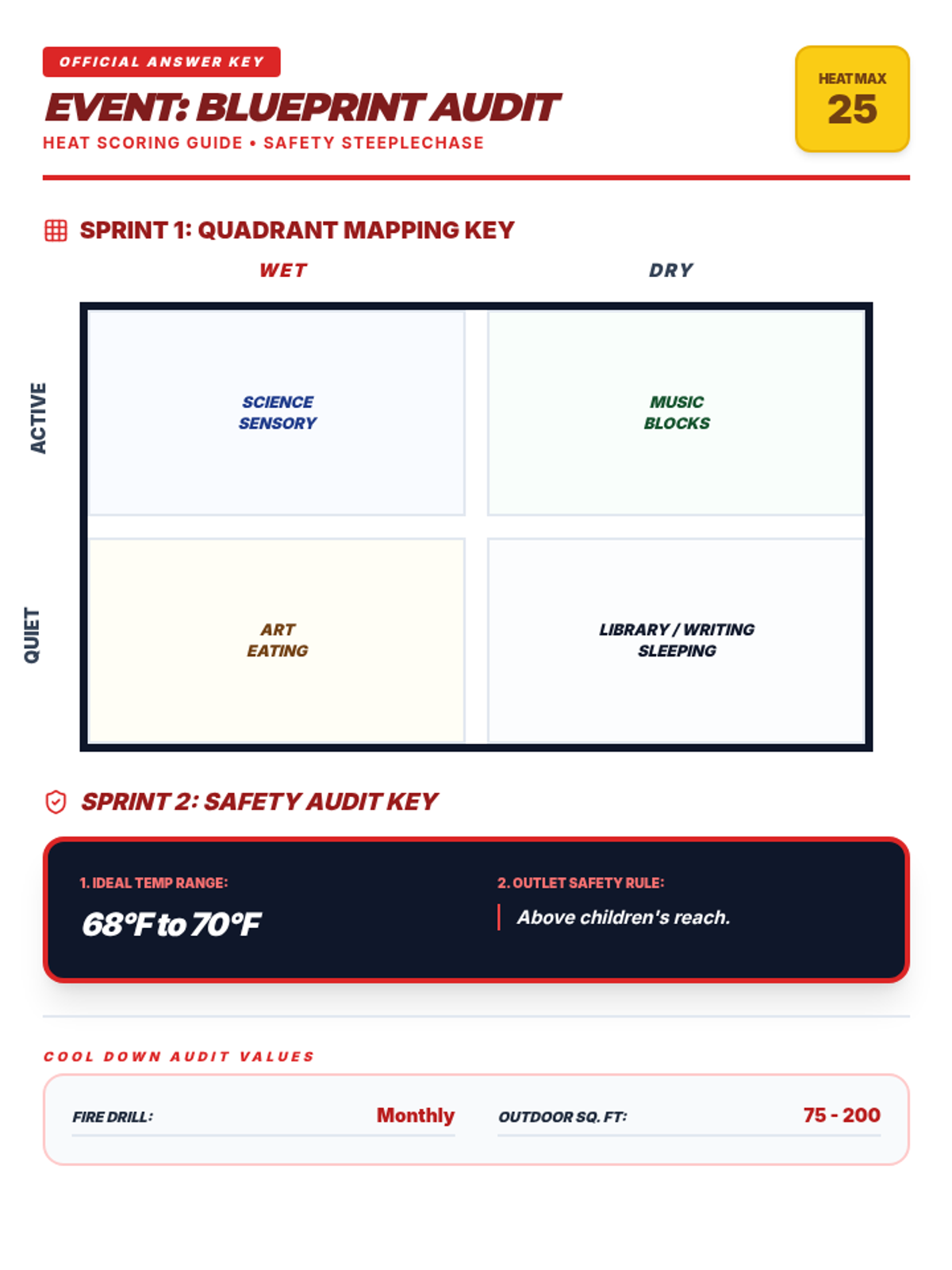
Day 3 focuses on environmental preparation and safety promotion, requiring students to apply knowledge of classroom layout and safety regulations to score points.
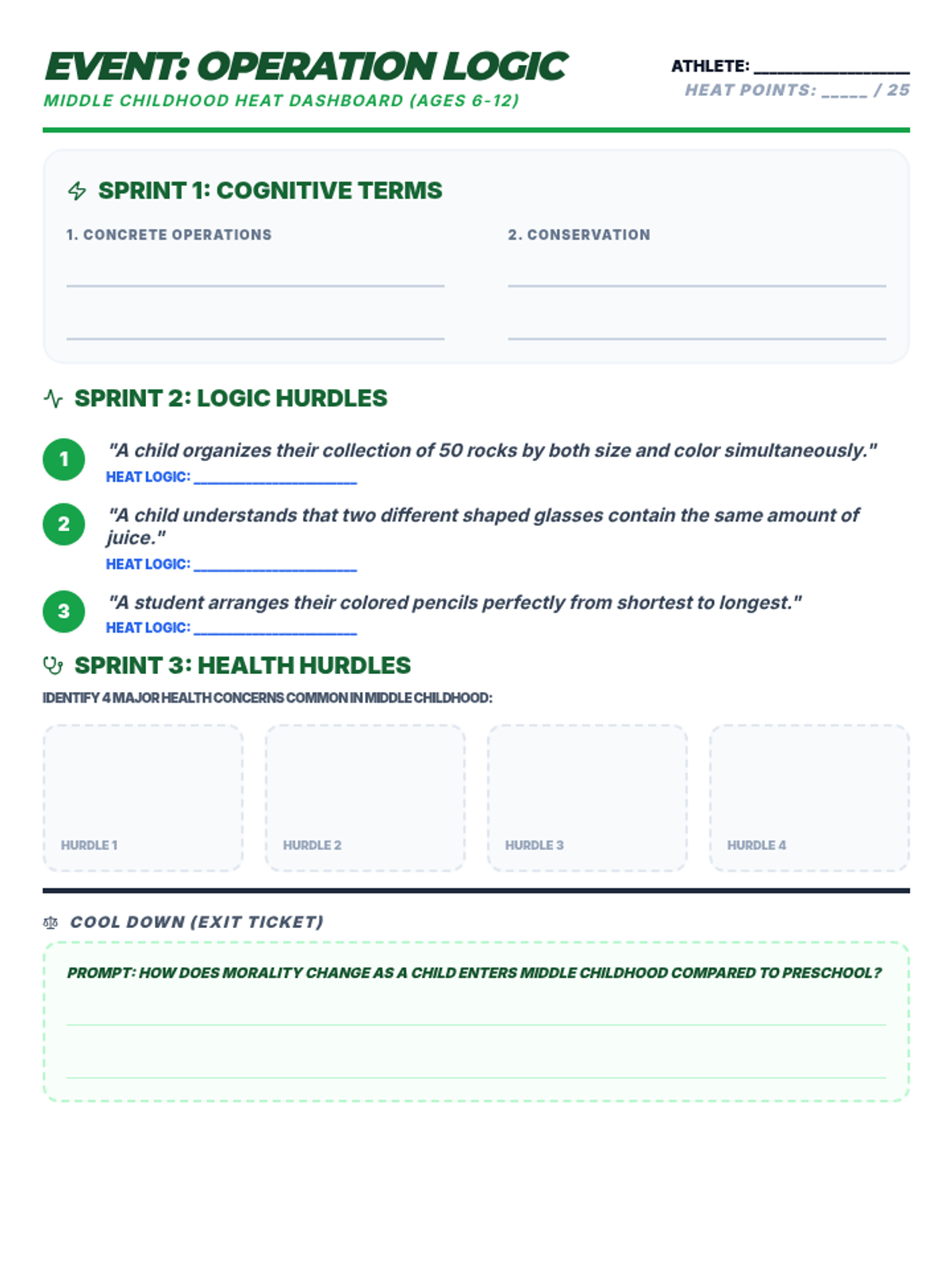
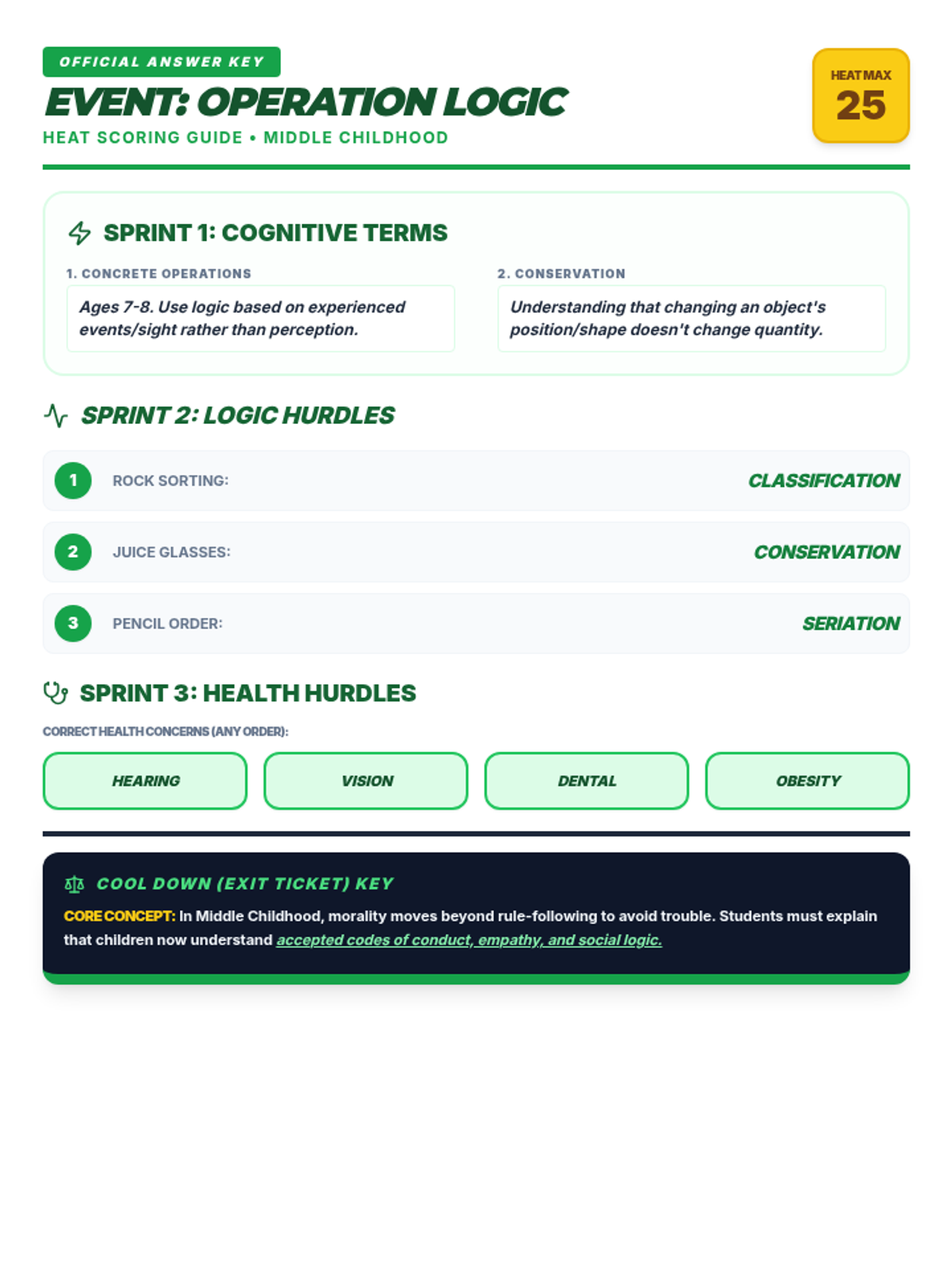
Day 2 explores middle childhood (ages 6-12), focusing on logical thinking, moral development, and the complexities of school-age social relationships.
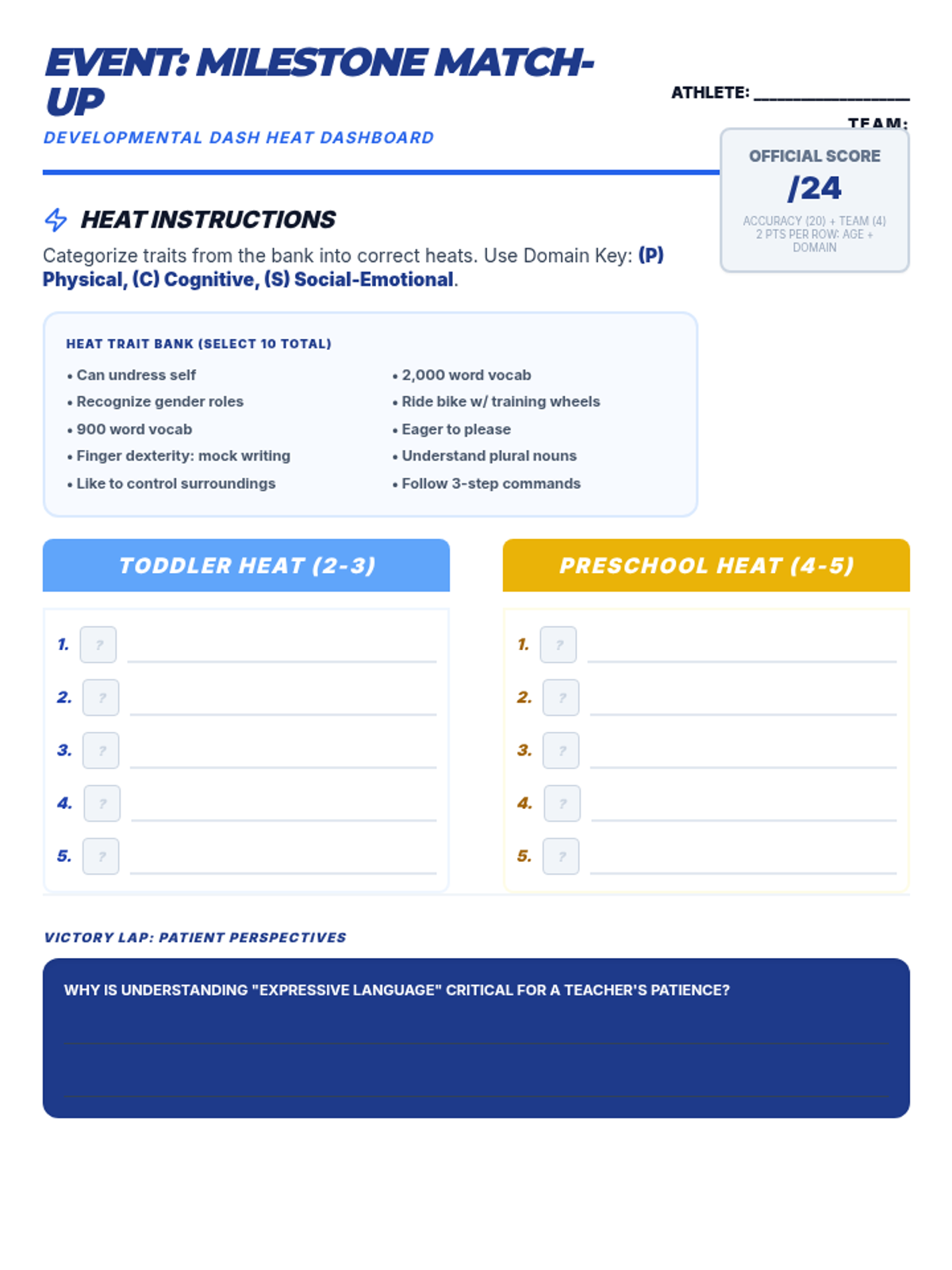
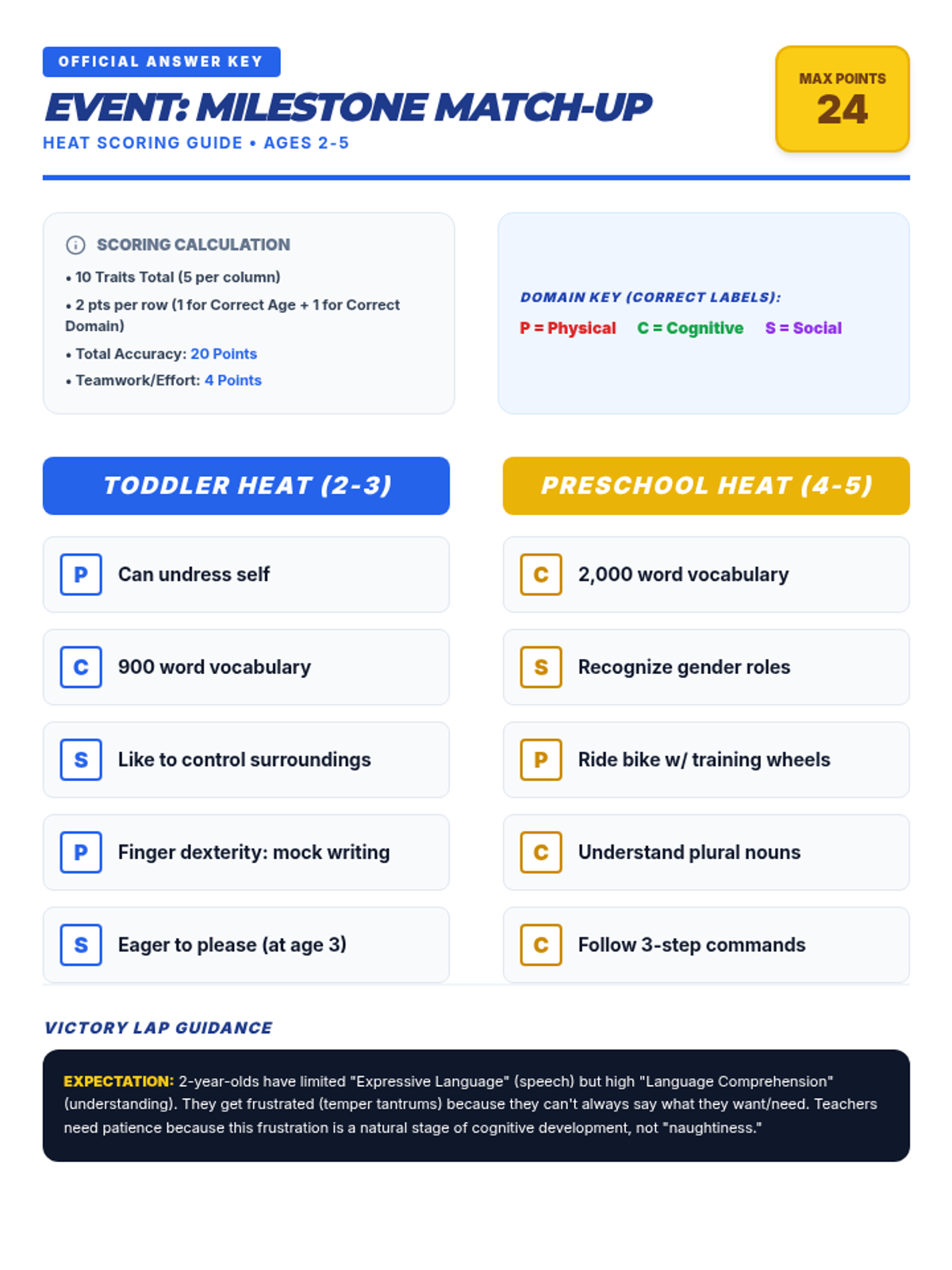
Day 1 of the Olympics focuses on the rapid development of children aged two through five, challenging students to accurately categorize physical, cognitive, and social milestones.
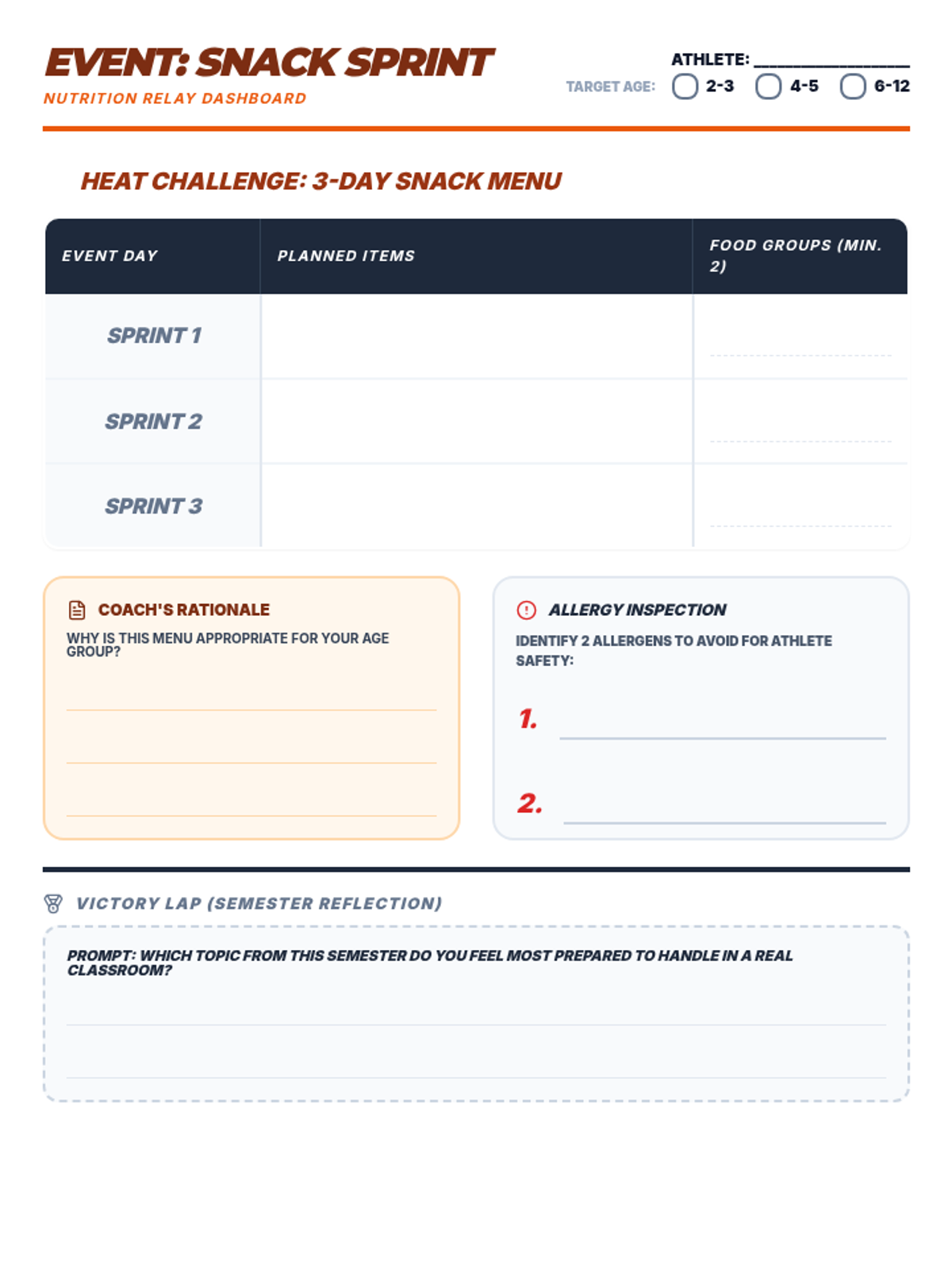
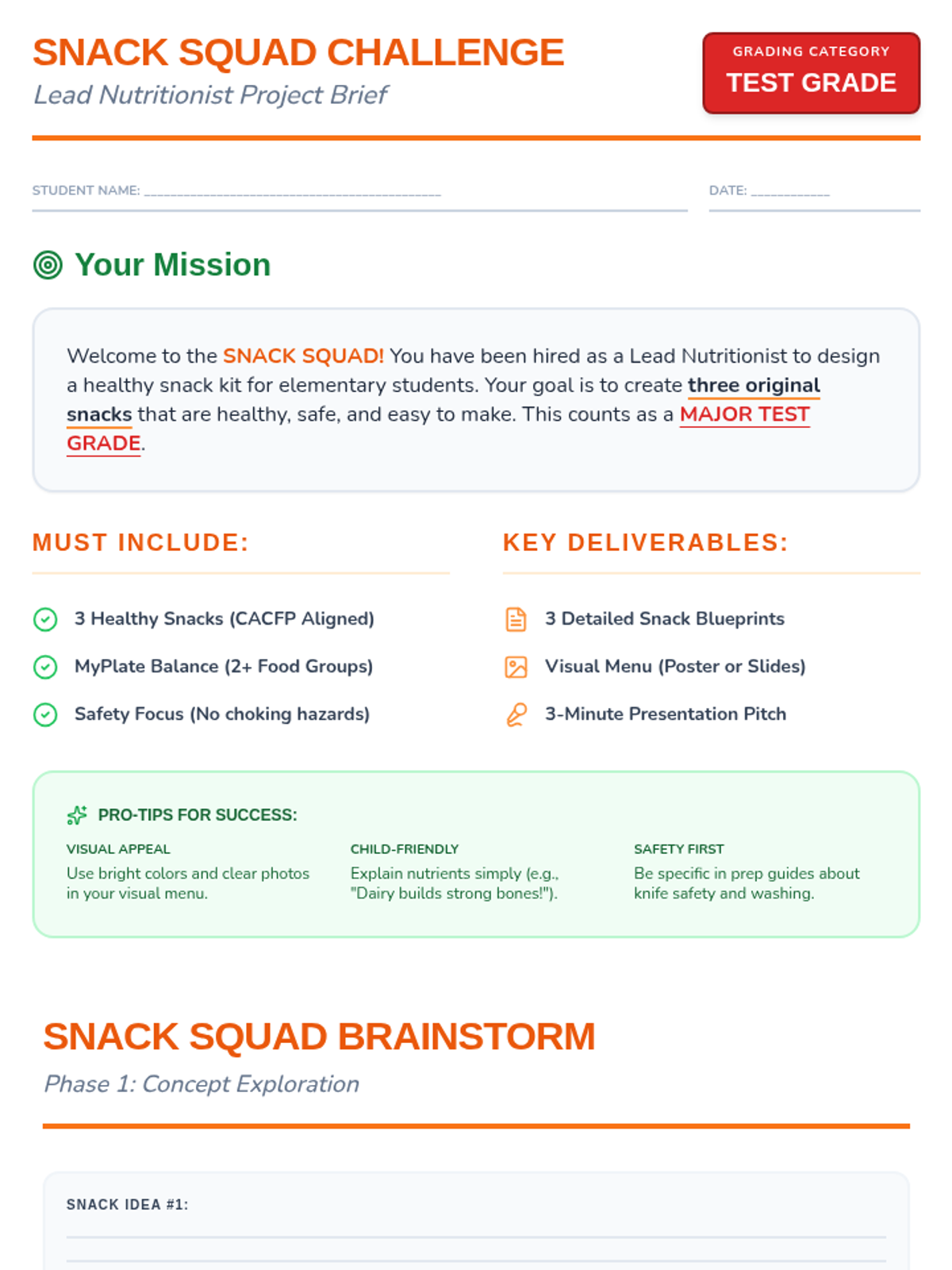
In this project, students take on the role of culinary nutritionists to design a three-snack menu for elementary students, focusing on MyPlate balance, safety, and detailed preparation steps.
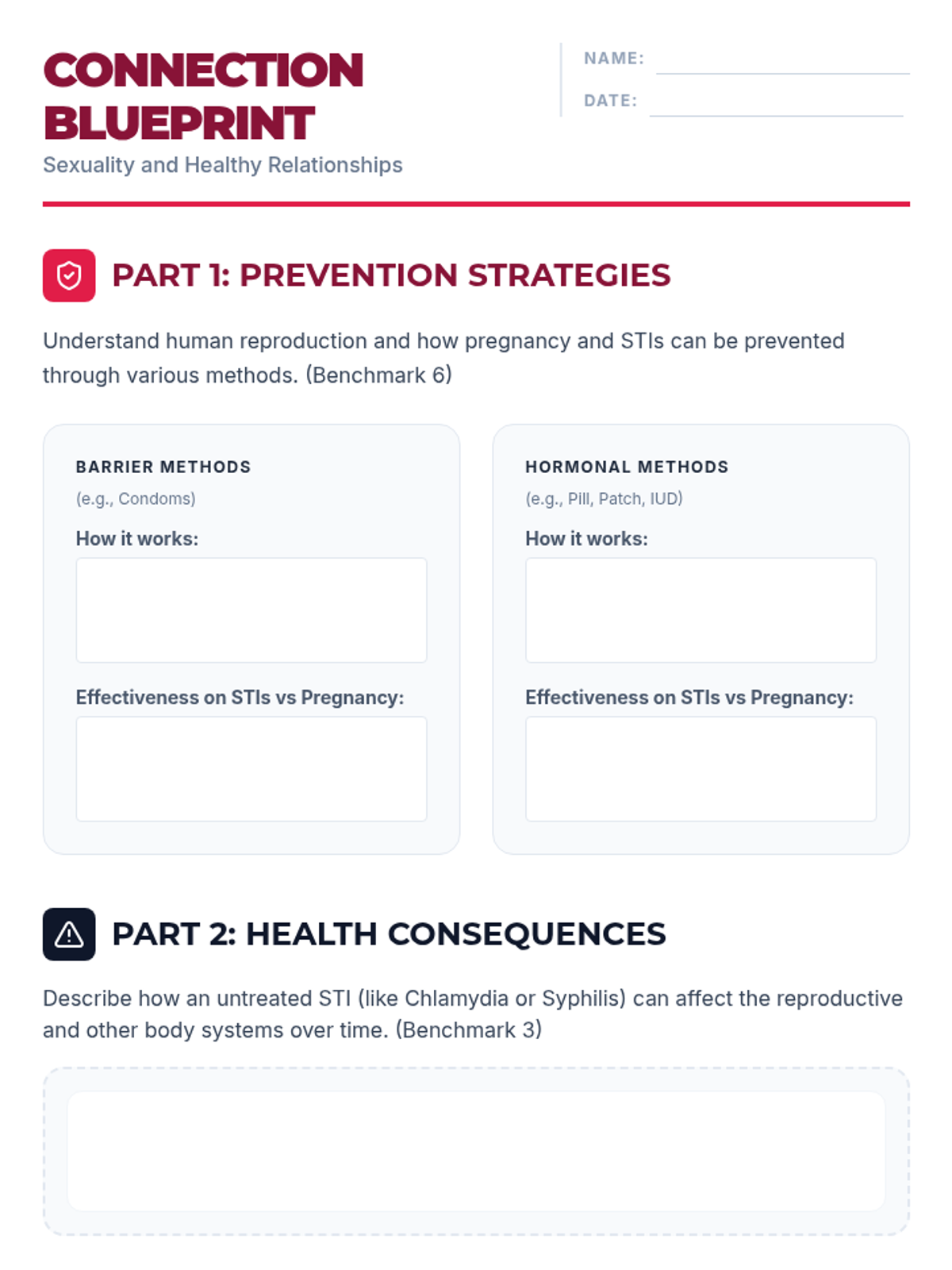
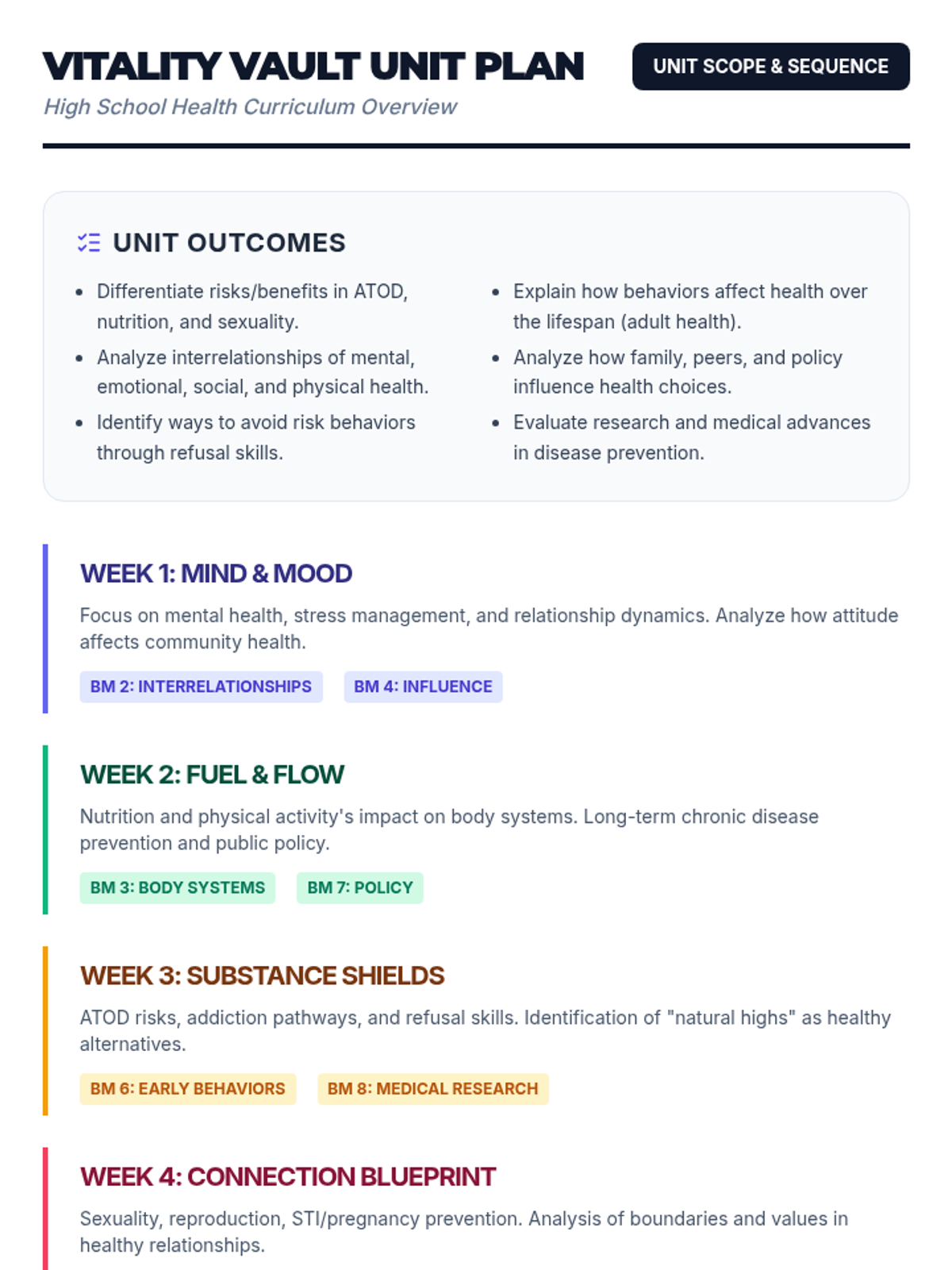
Covers human reproduction, pregnancy prevention, and STI awareness. Students analyze healthy boundaries, consent, and how early behaviors impact adult health outcomes.
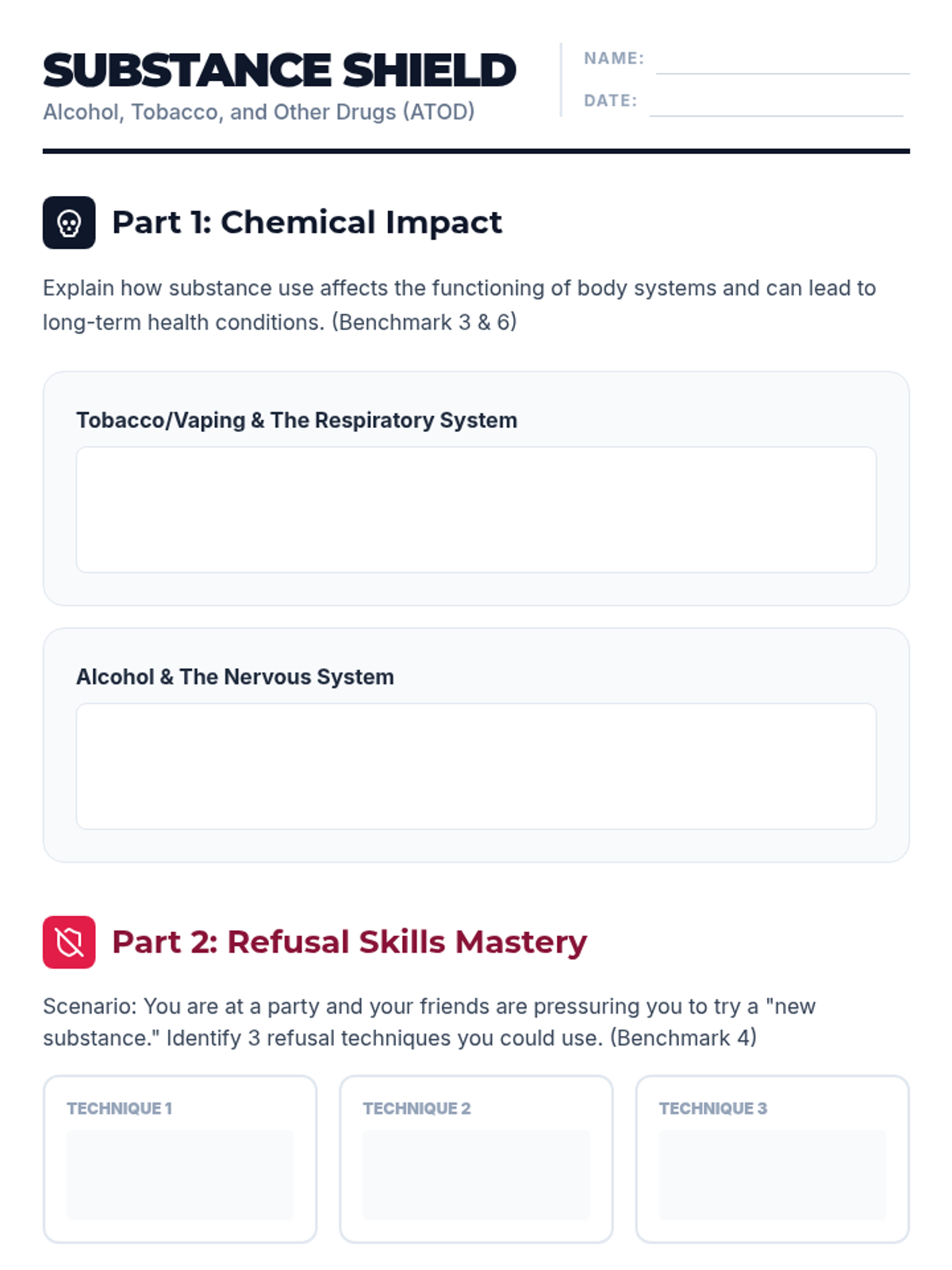
Examines the impact of alcohol, tobacco, and other drugs on the body and social health. Students develop refusal skills and analyze how public regulations and personal choices influence risk behaviors.
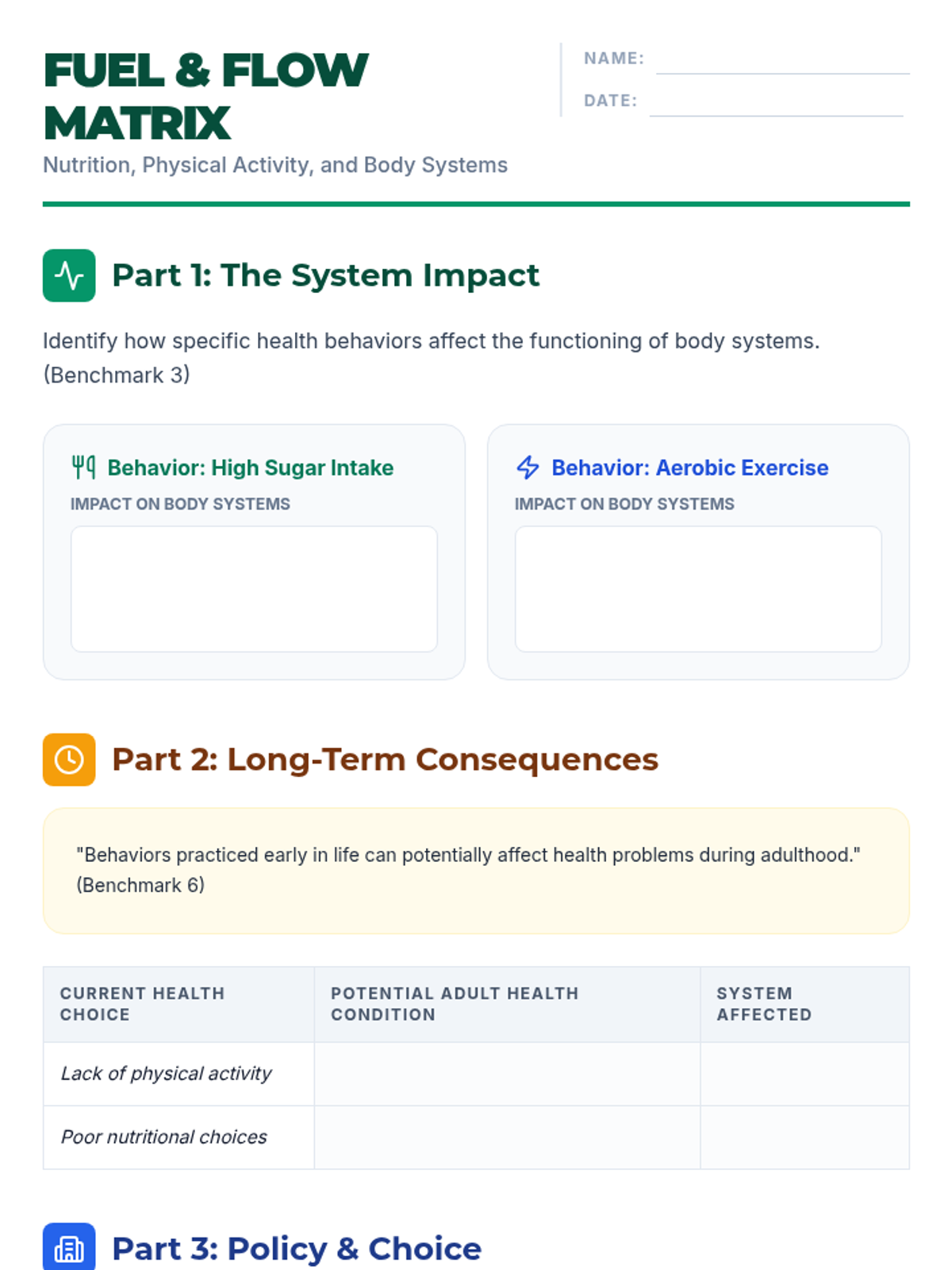
Explores how nutrition and physical activity impact body systems and long-term health. Students analyze public health policies and the role of research in promoting physical wellness.
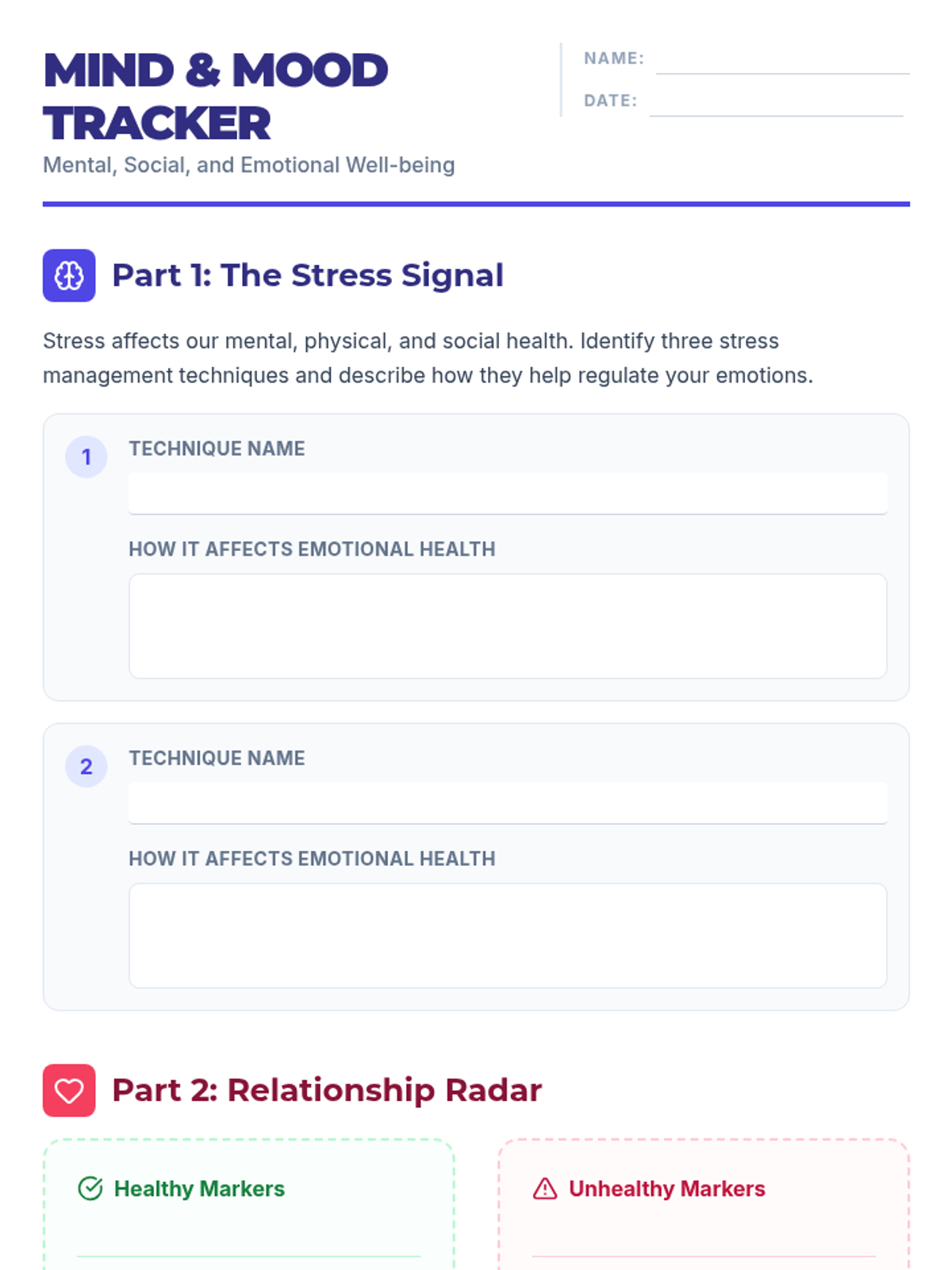
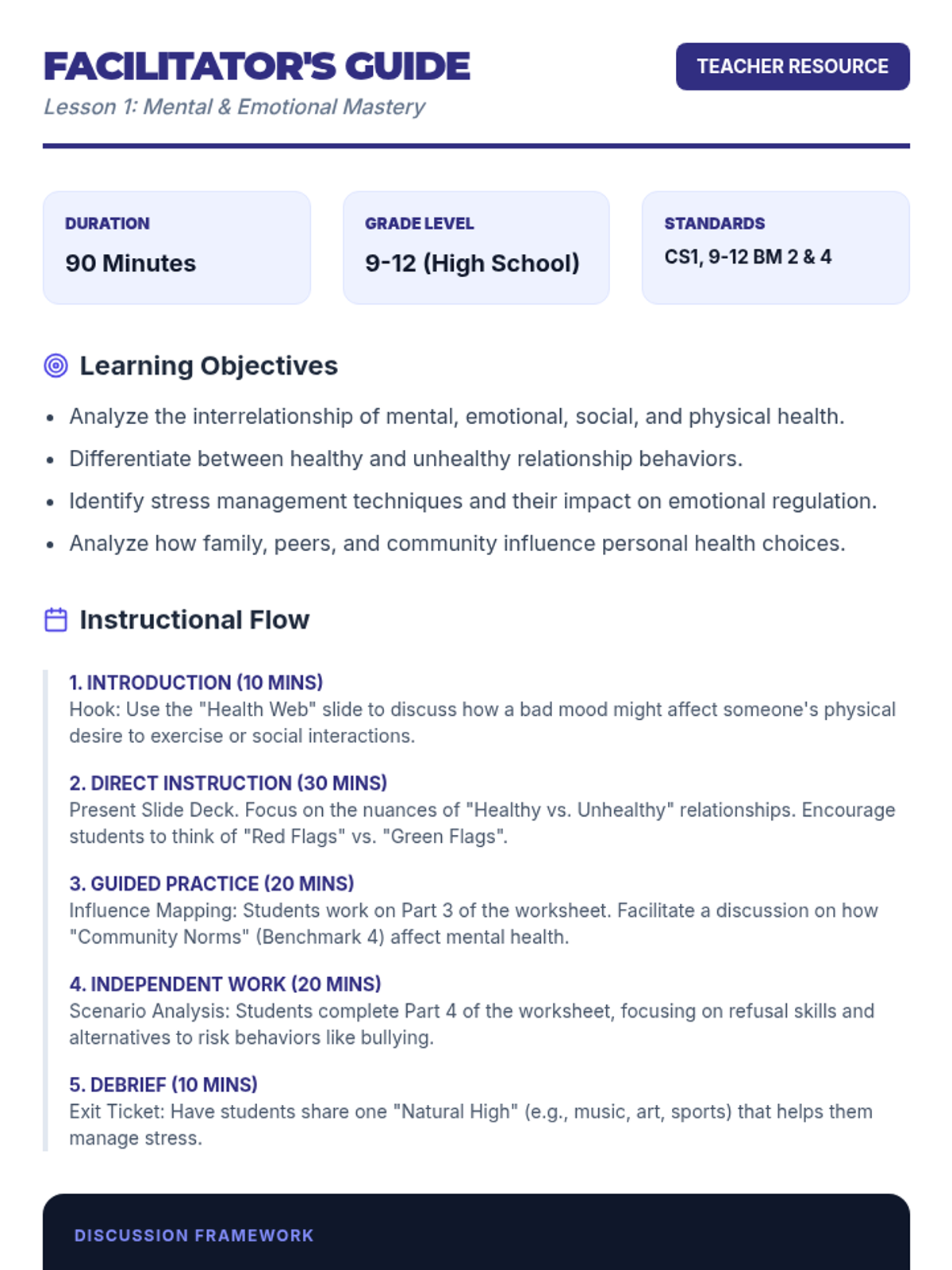
Focuses on stress management, relationship dynamics, and the interrelationship between mental, emotional, and social health. Students identify healthy vs. unhealthy relationship markers and analyze social influences on emotional well-being.
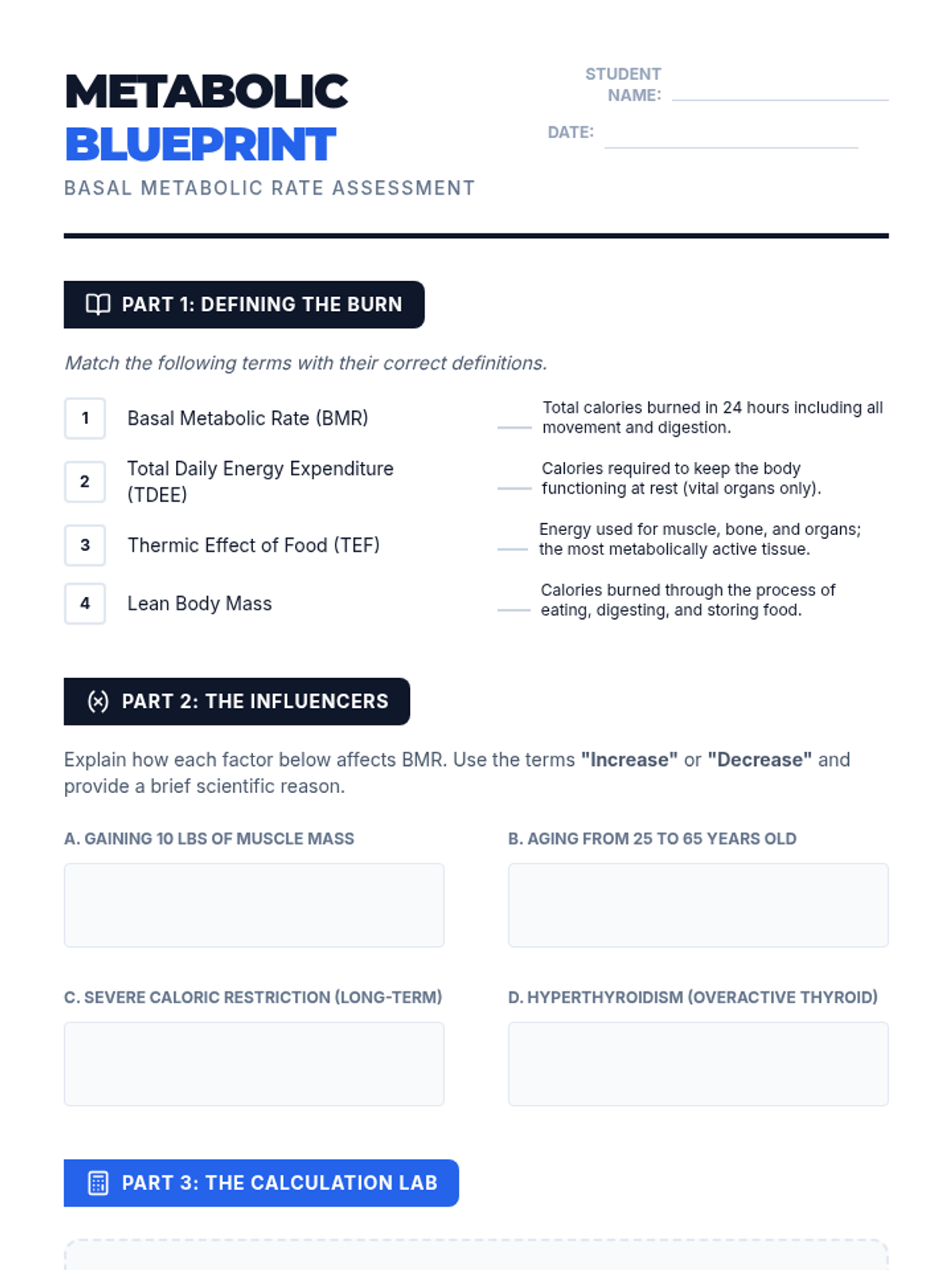
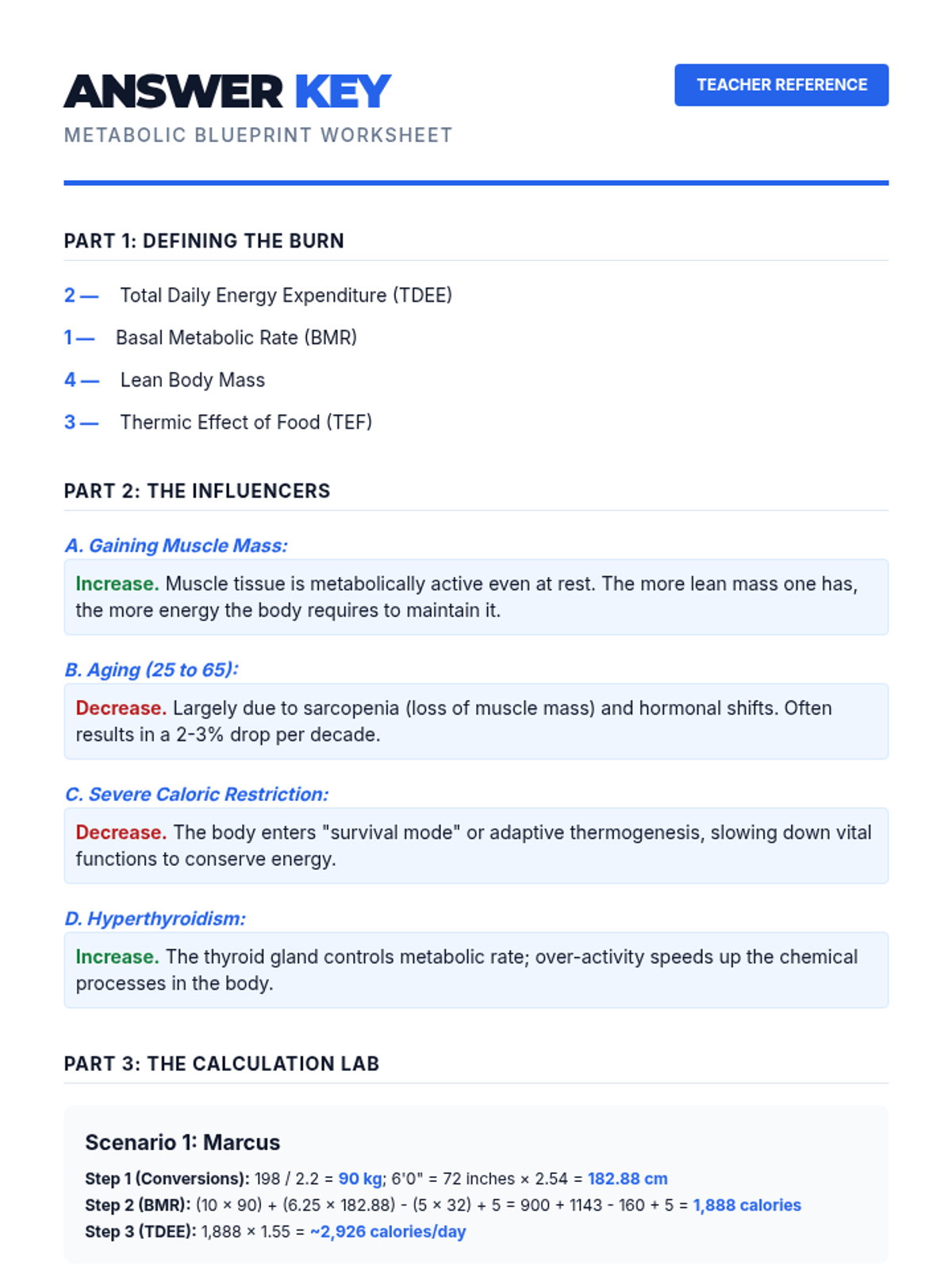
A high school nutrition lesson focused on understanding Basal Metabolic Rate (BMR), the factors that influence it, and how to calculate personal energy needs for health and performance.
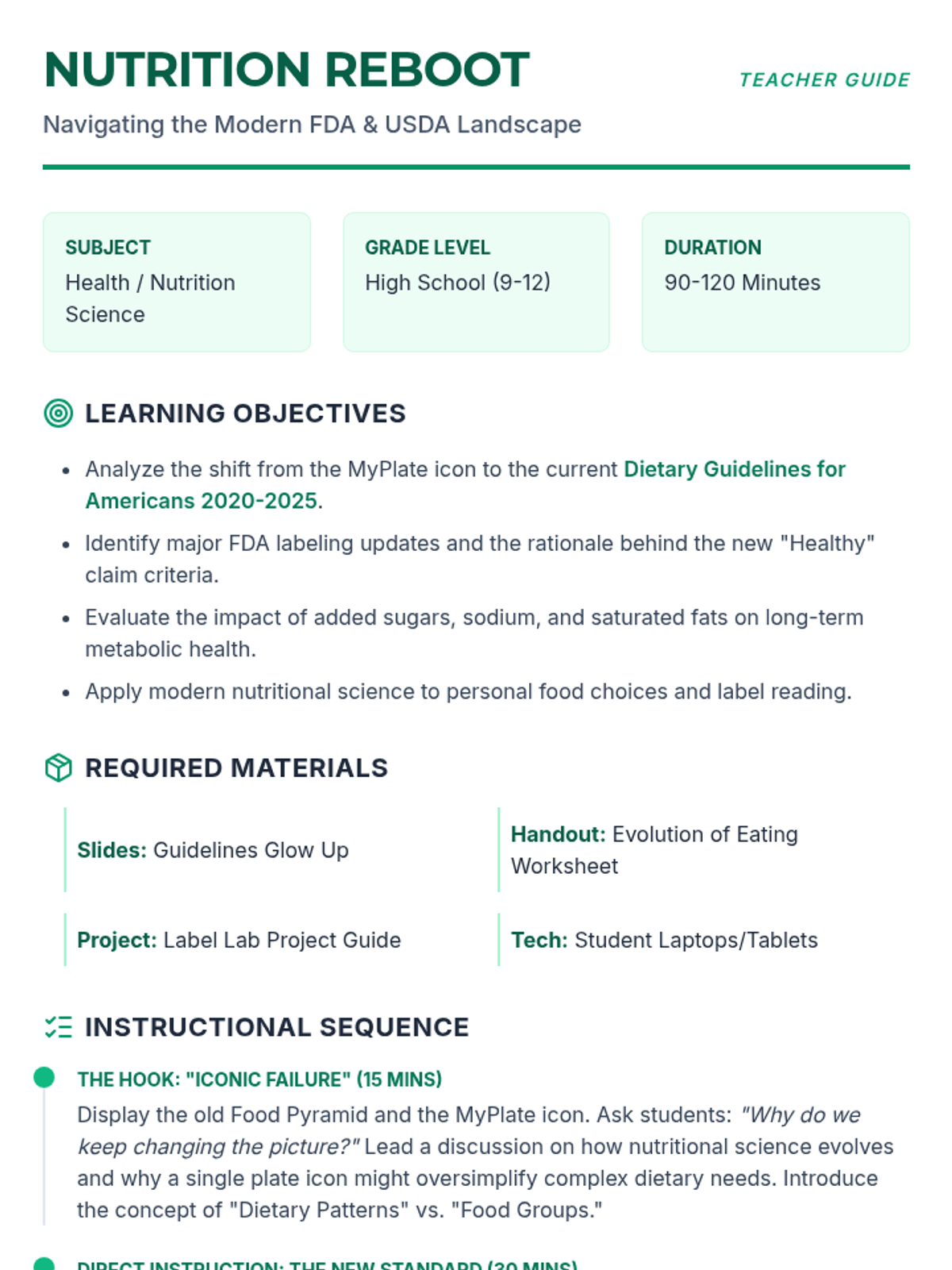
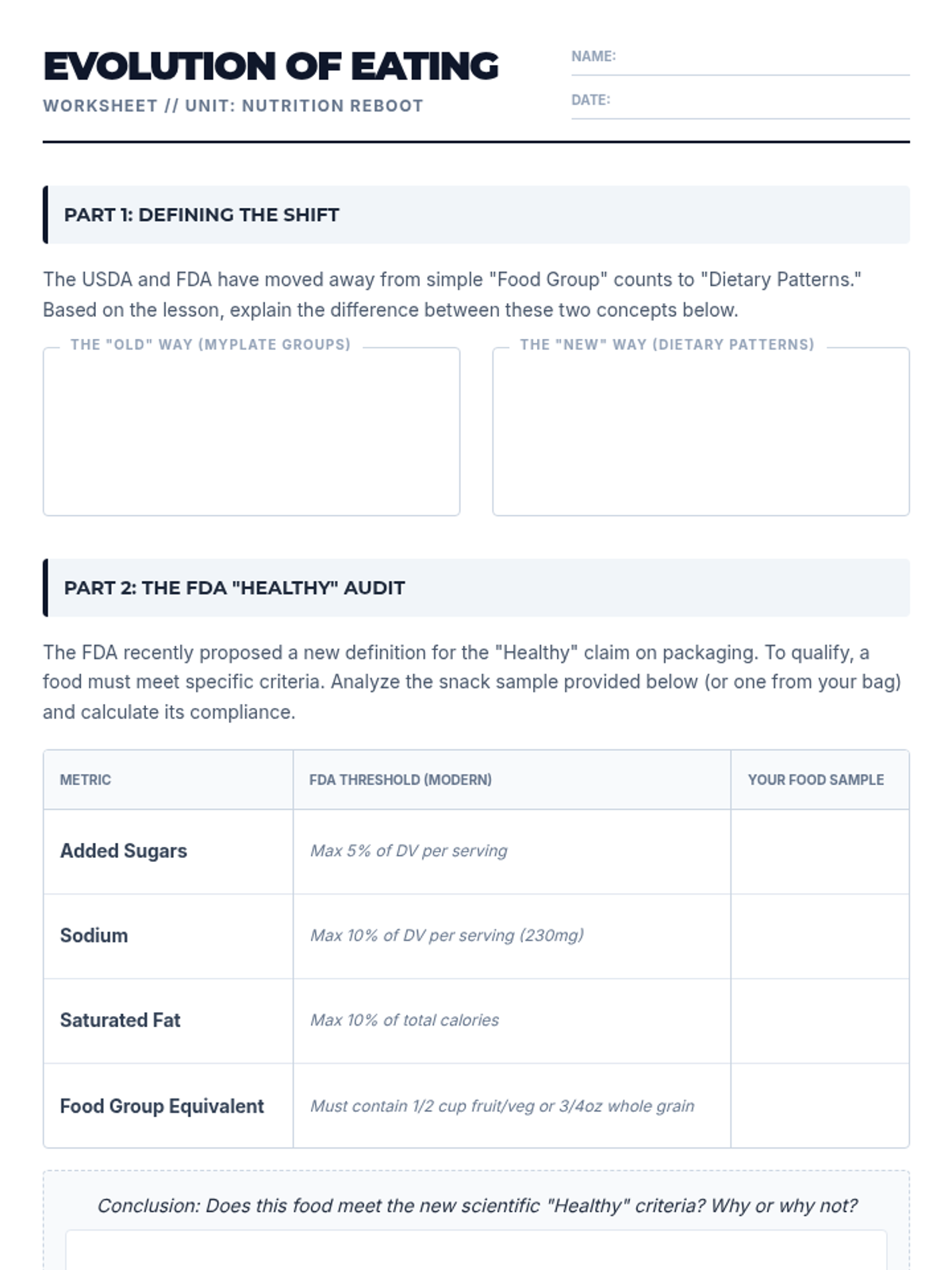
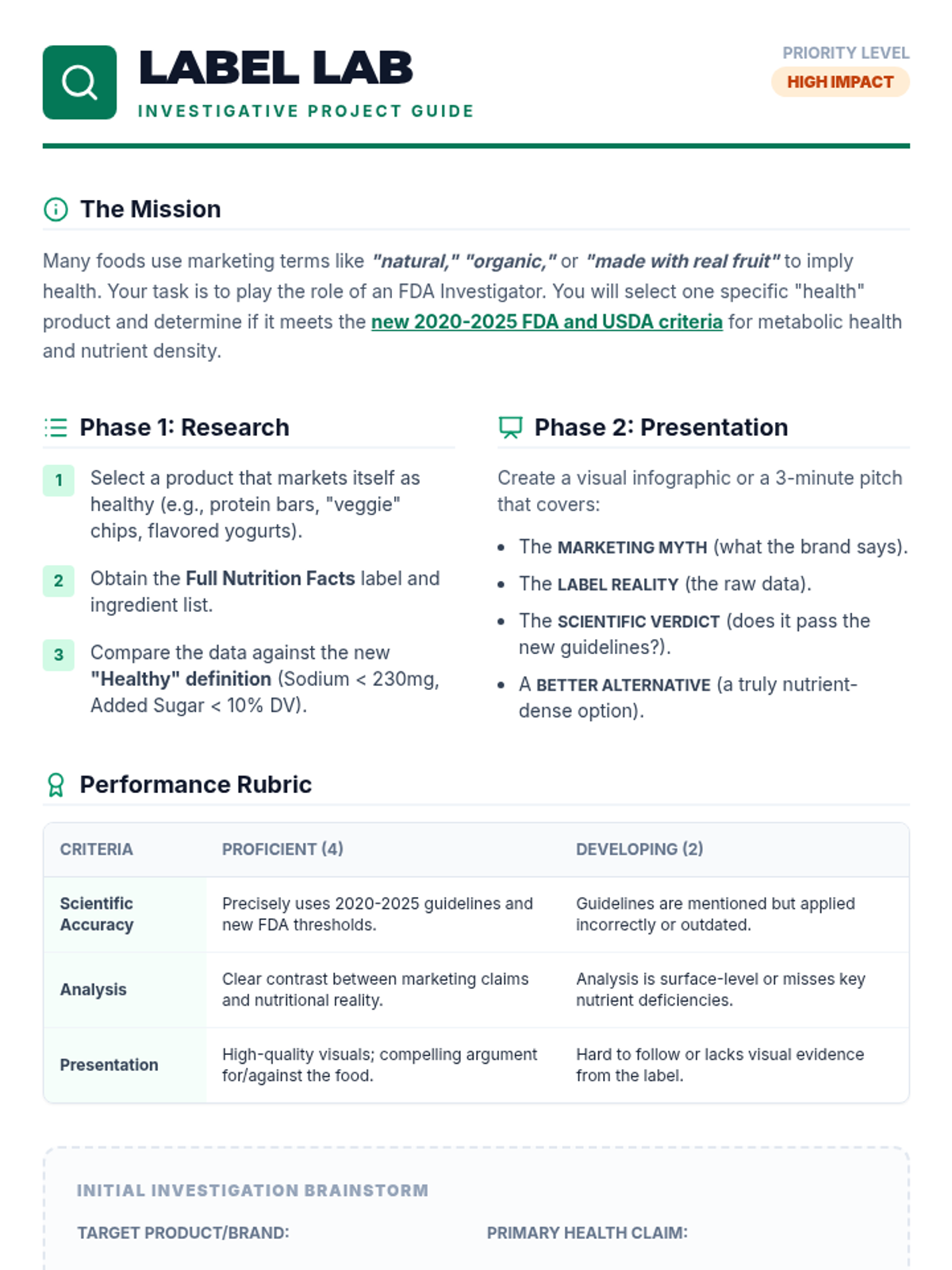
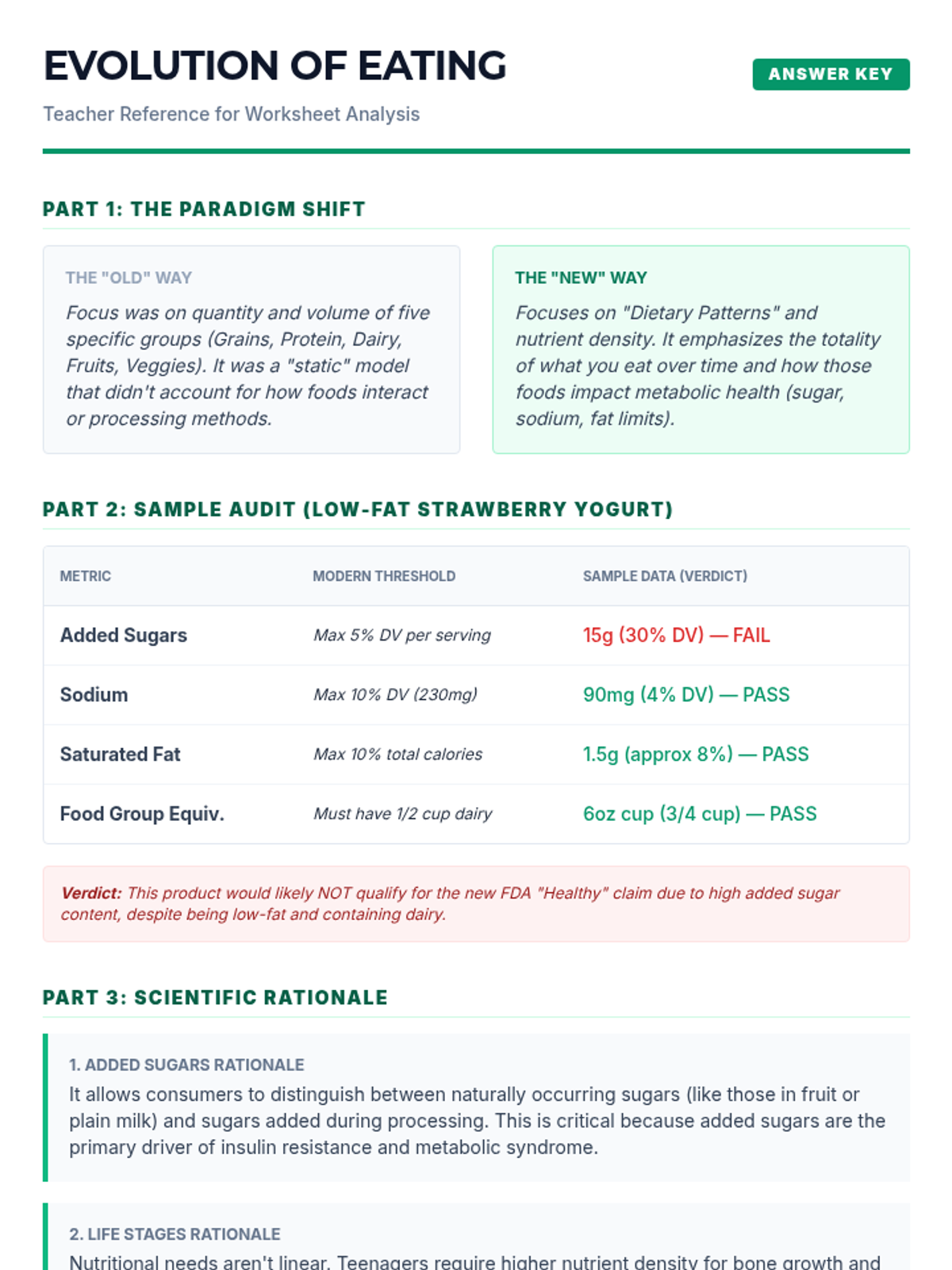
A high school lesson exploring the latest FDA and USDA nutrition guidelines, focusing on the shift toward nutrient density, updated labeling requirements, and the scientific rationale behind modern dietary recommendations.
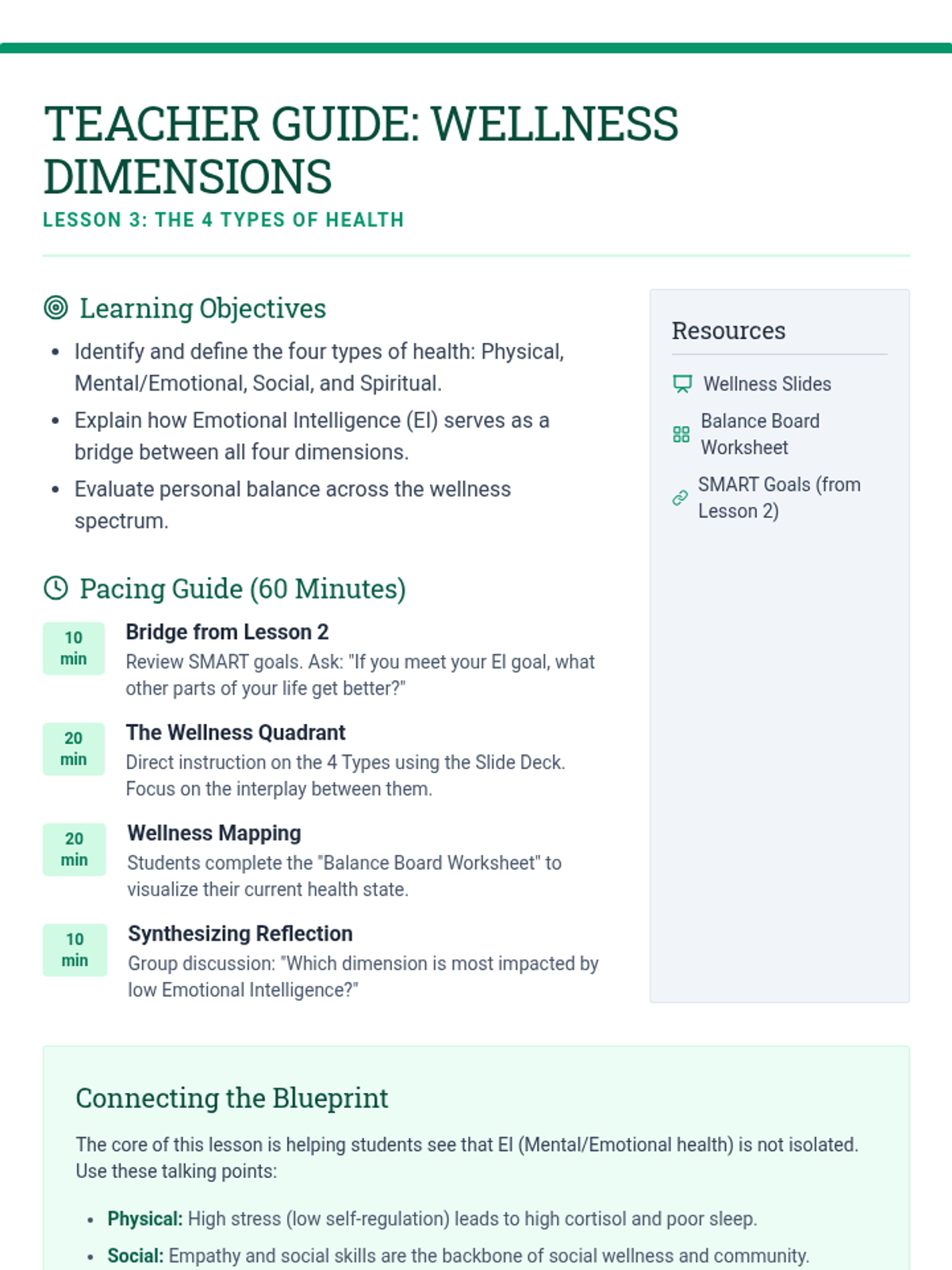
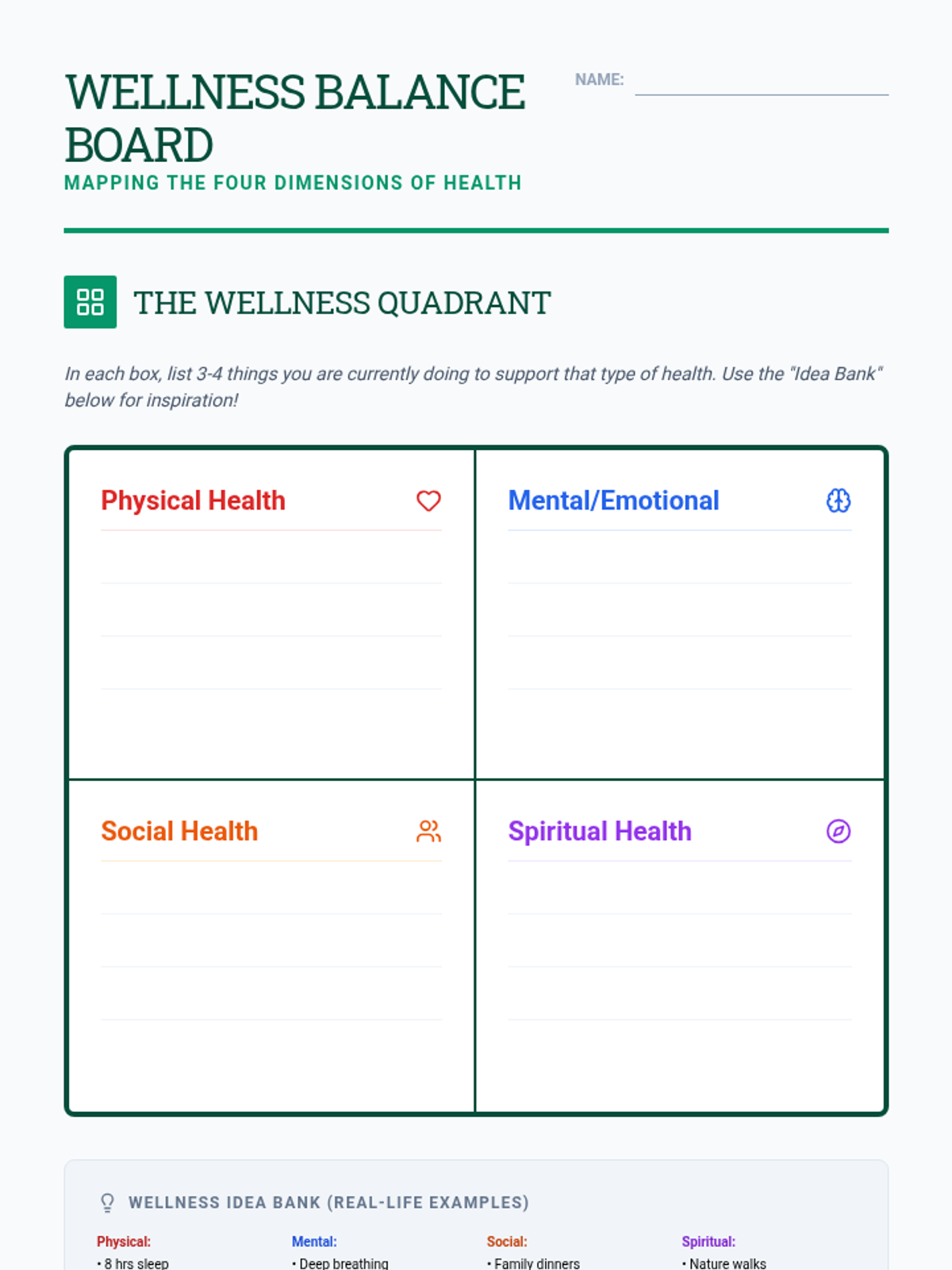
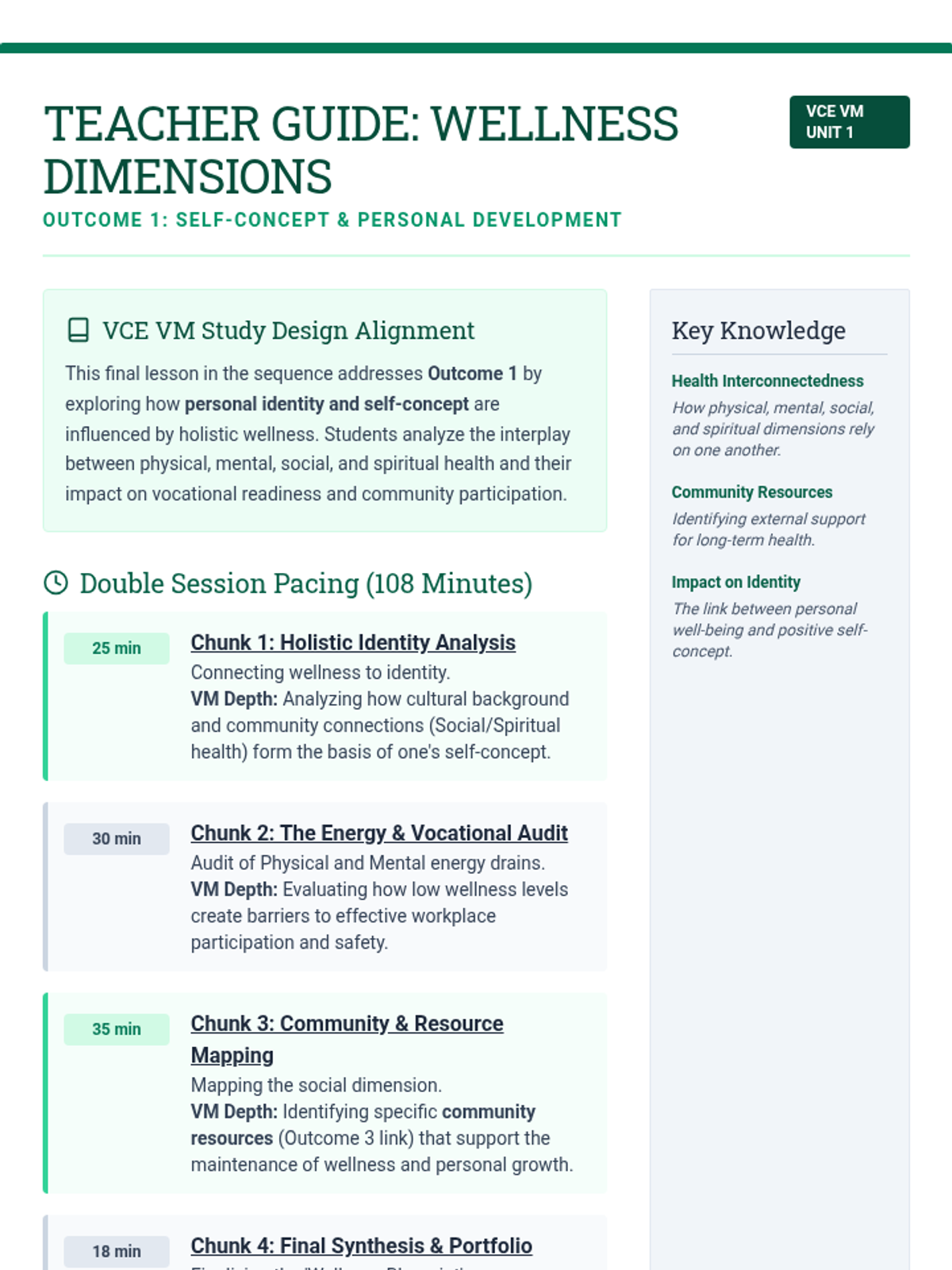
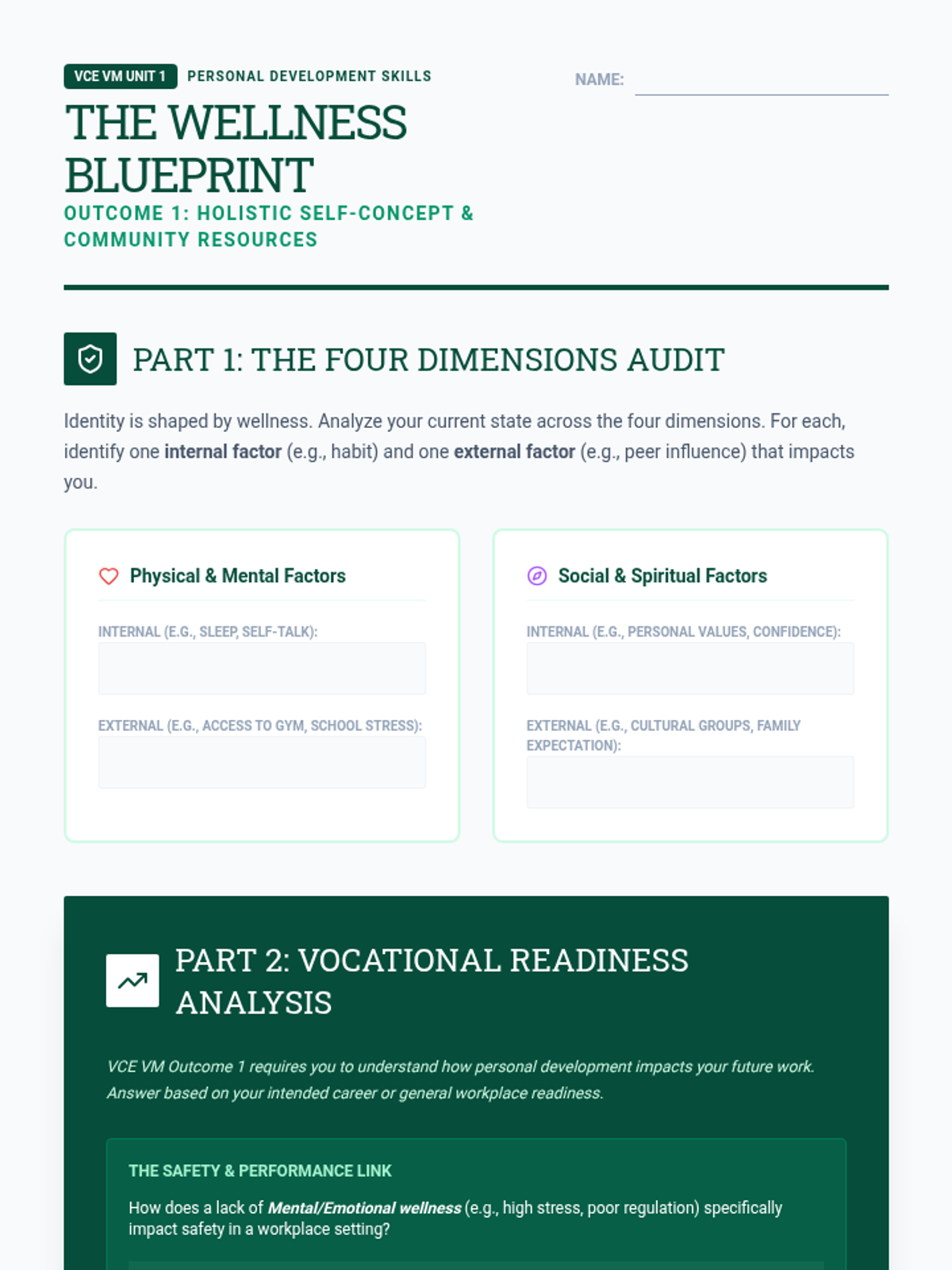
An exploration of holistic health through the four dimensions of well-being. Students analyze how their emotional intelligence goals support their overall health and balance.
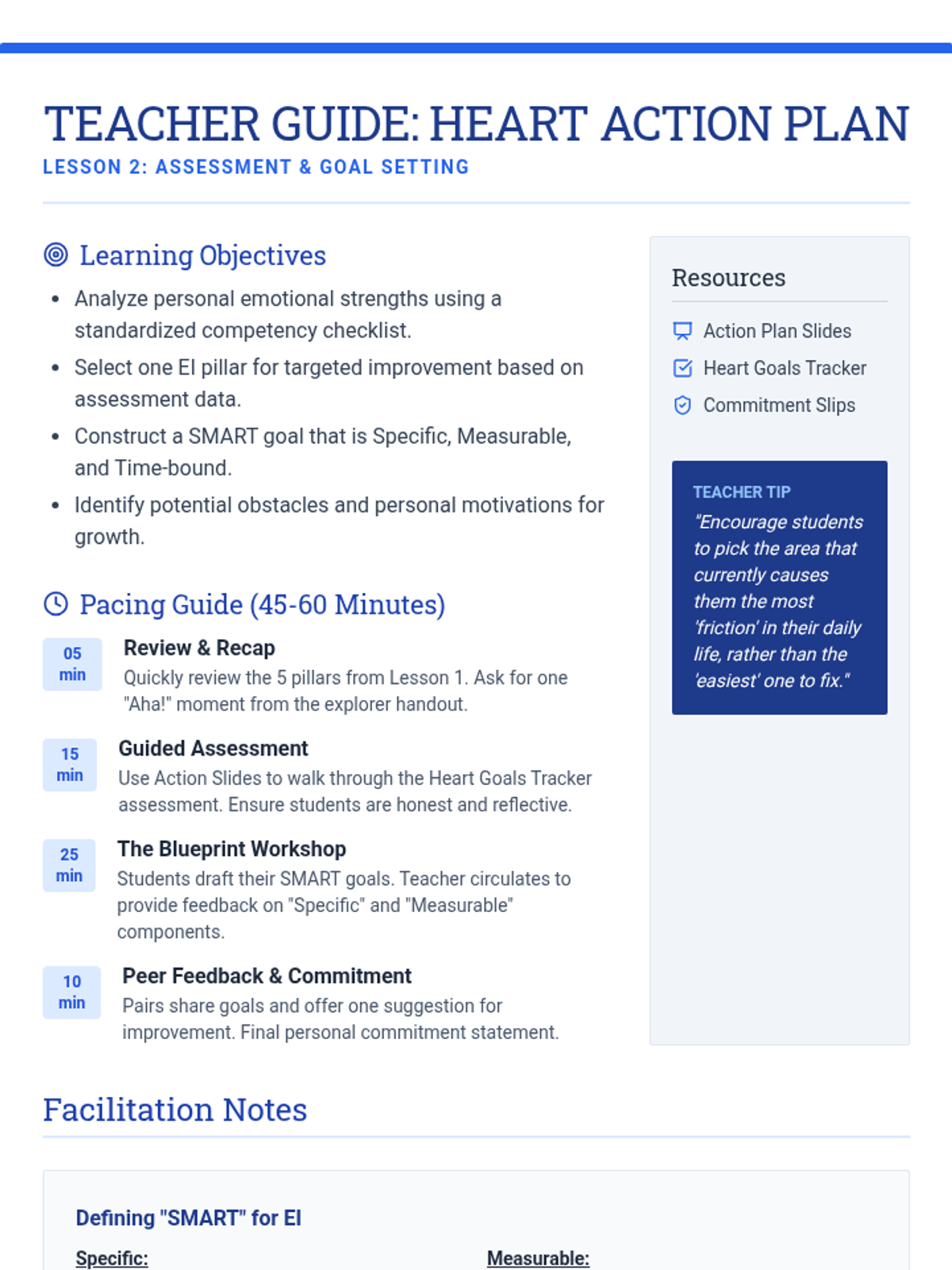
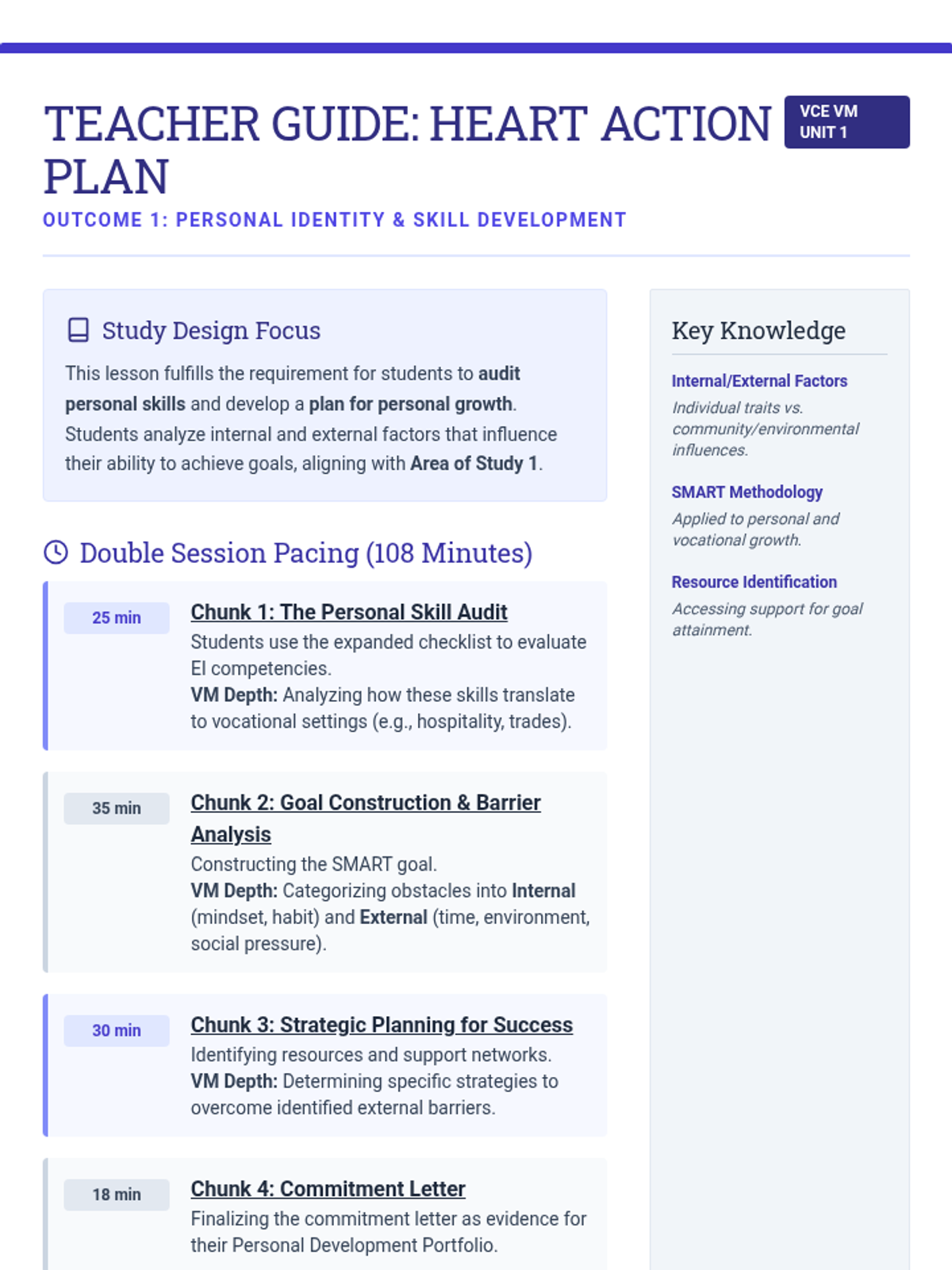
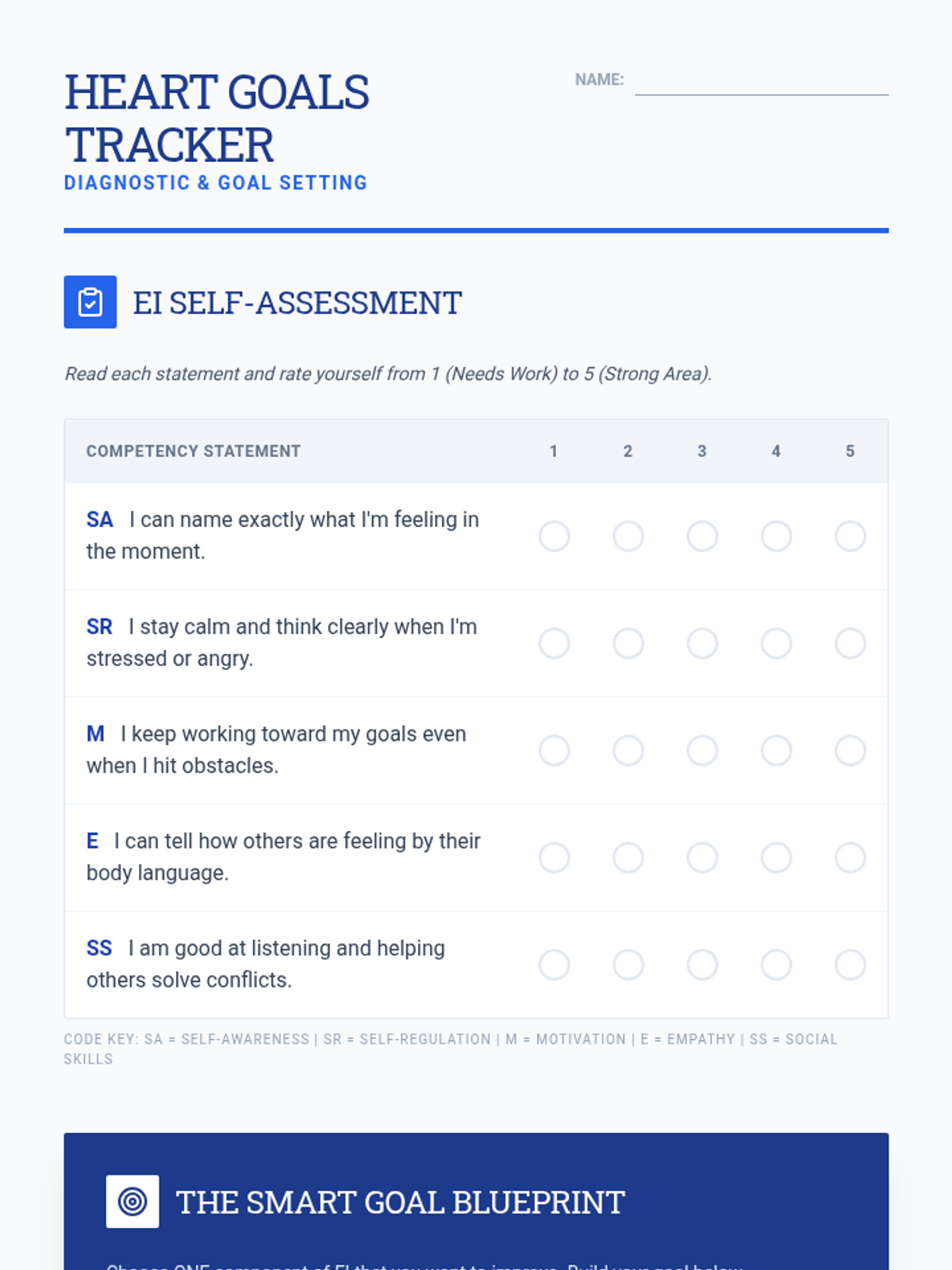
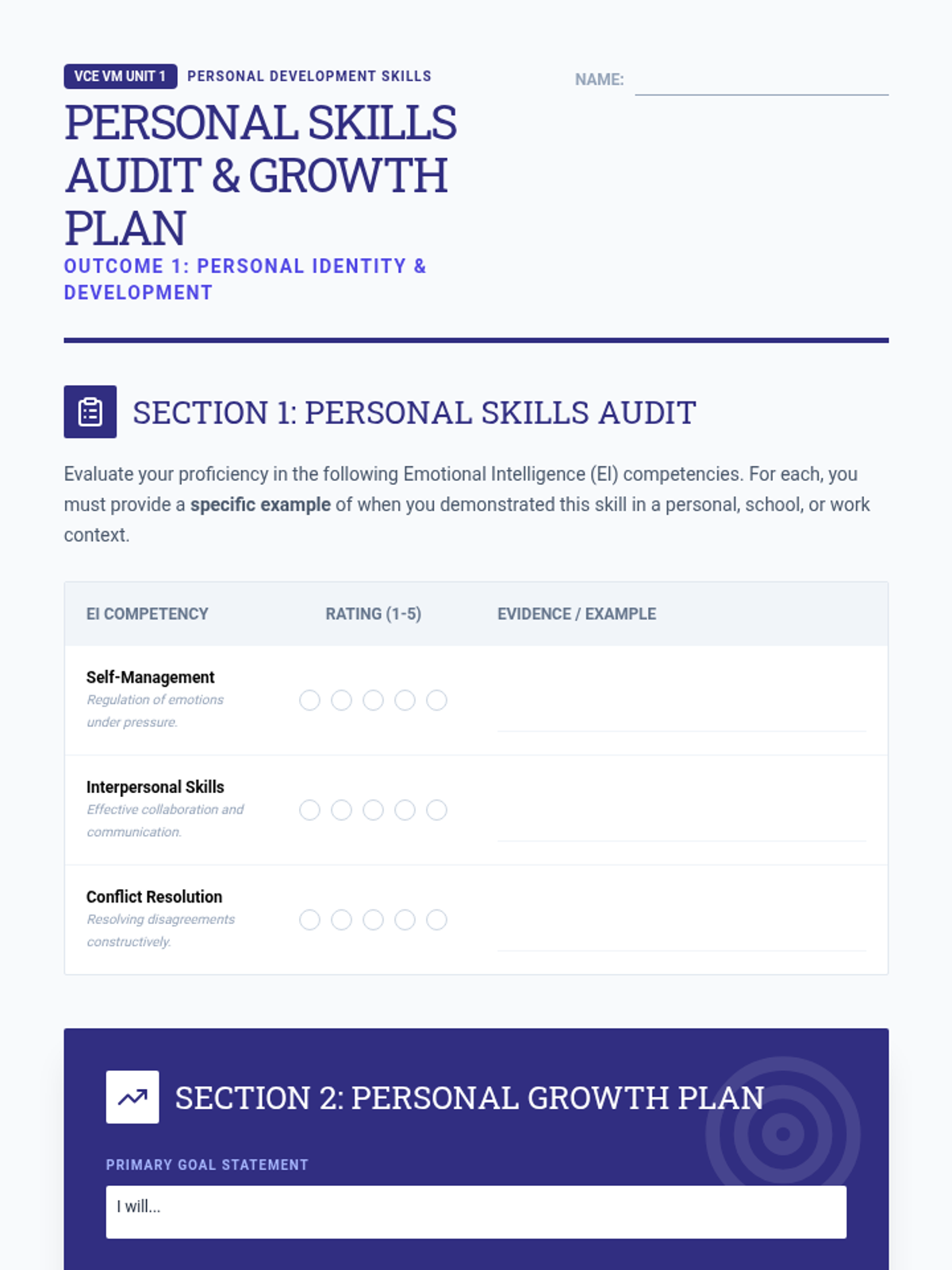
A follow-up workshop focused on personal application. Students perform a deep-dive self-assessment and construct a formal SMART goal plan for their emotional development.
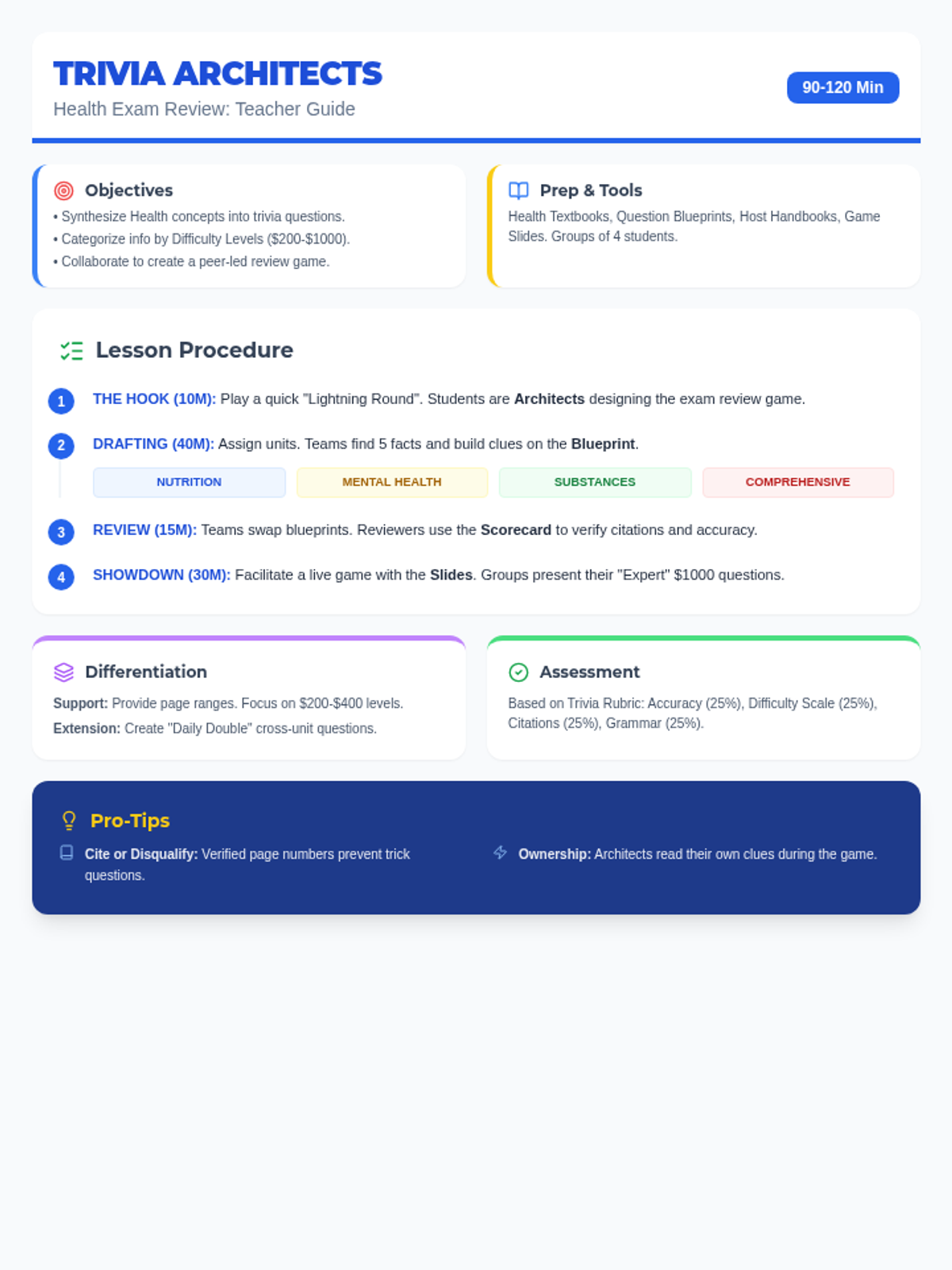
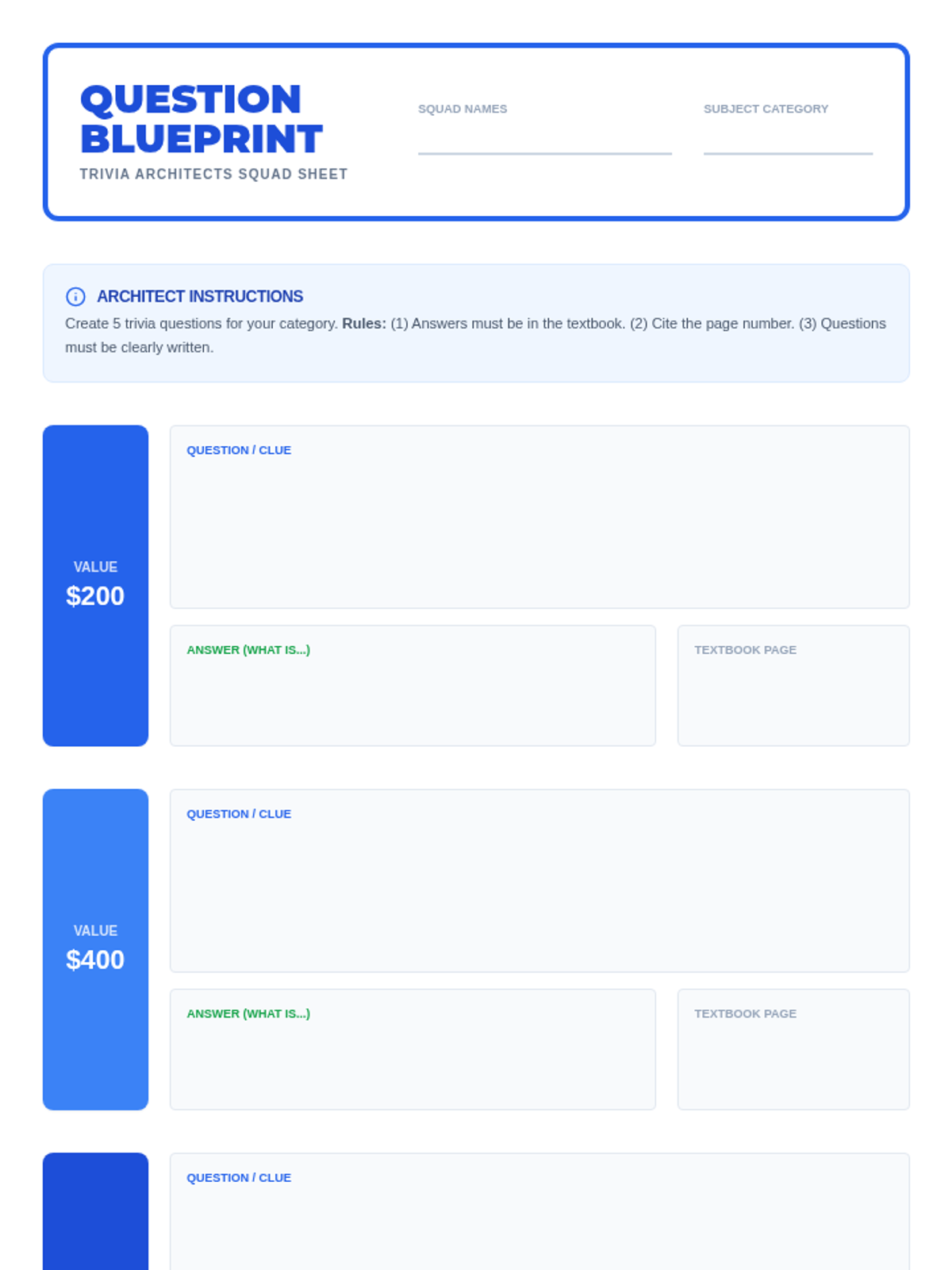
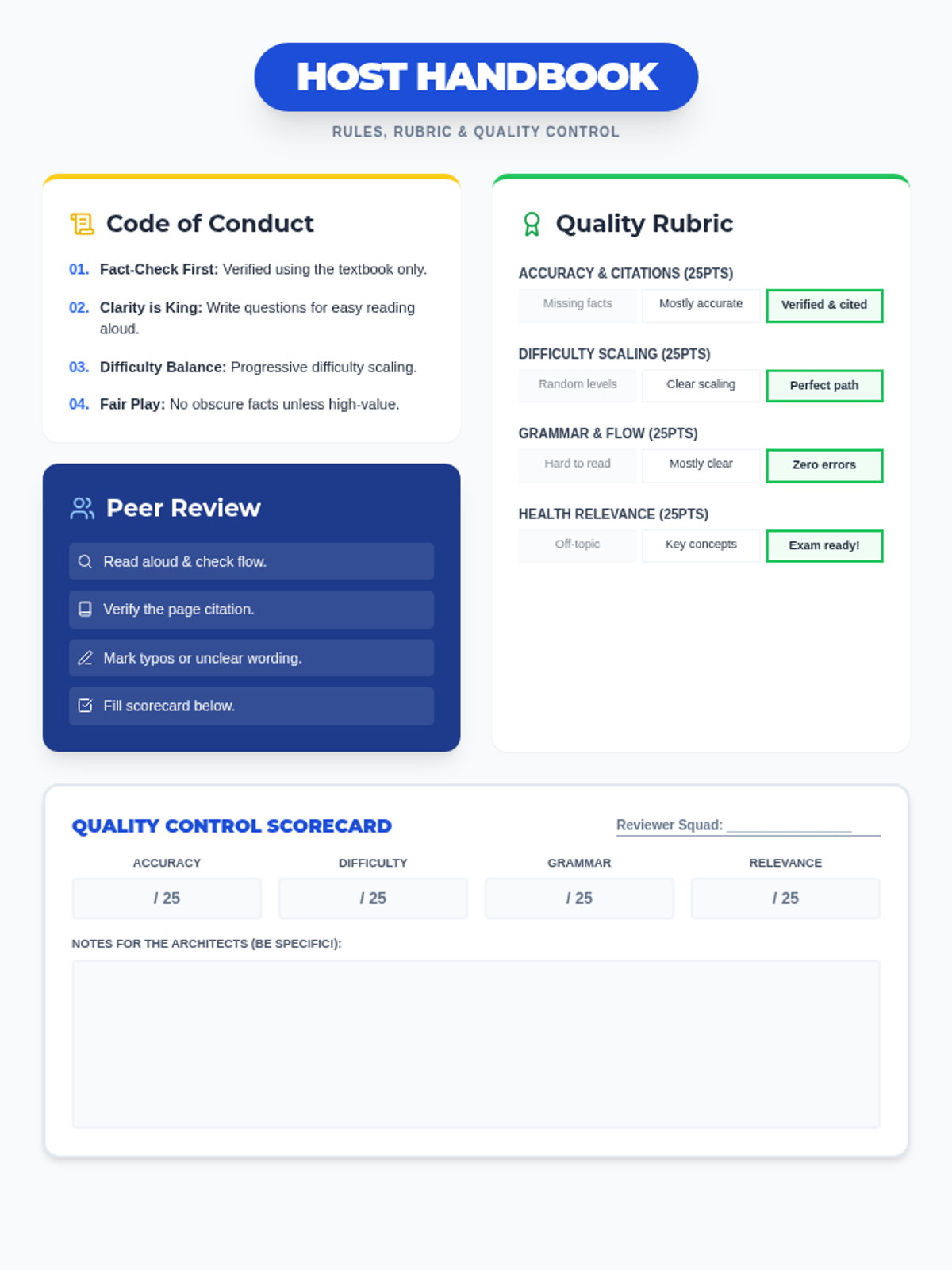
A collaborative lesson where students transform their health textbook chapters into a Jeopardy-style review game to prepare for final exams.
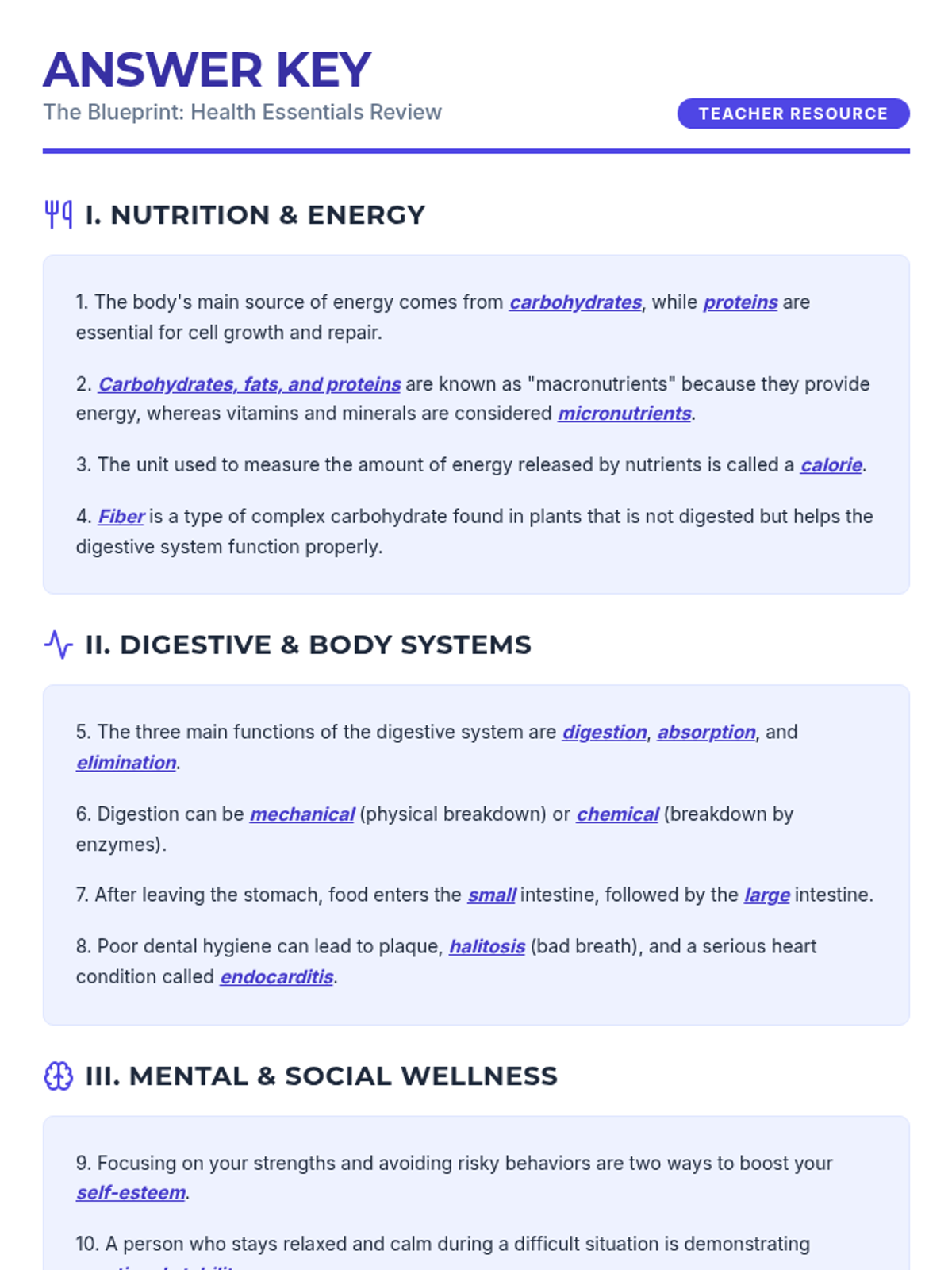
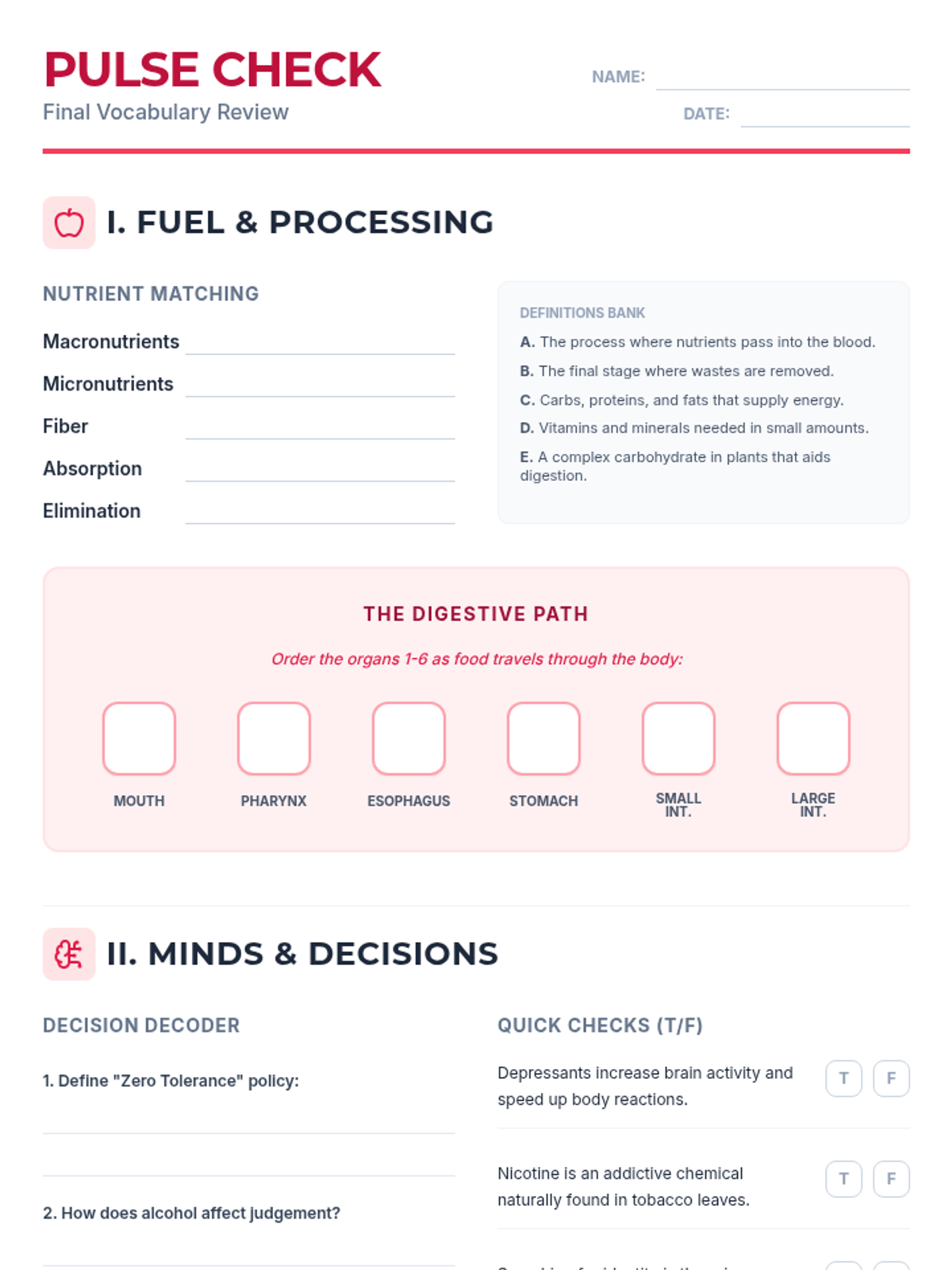
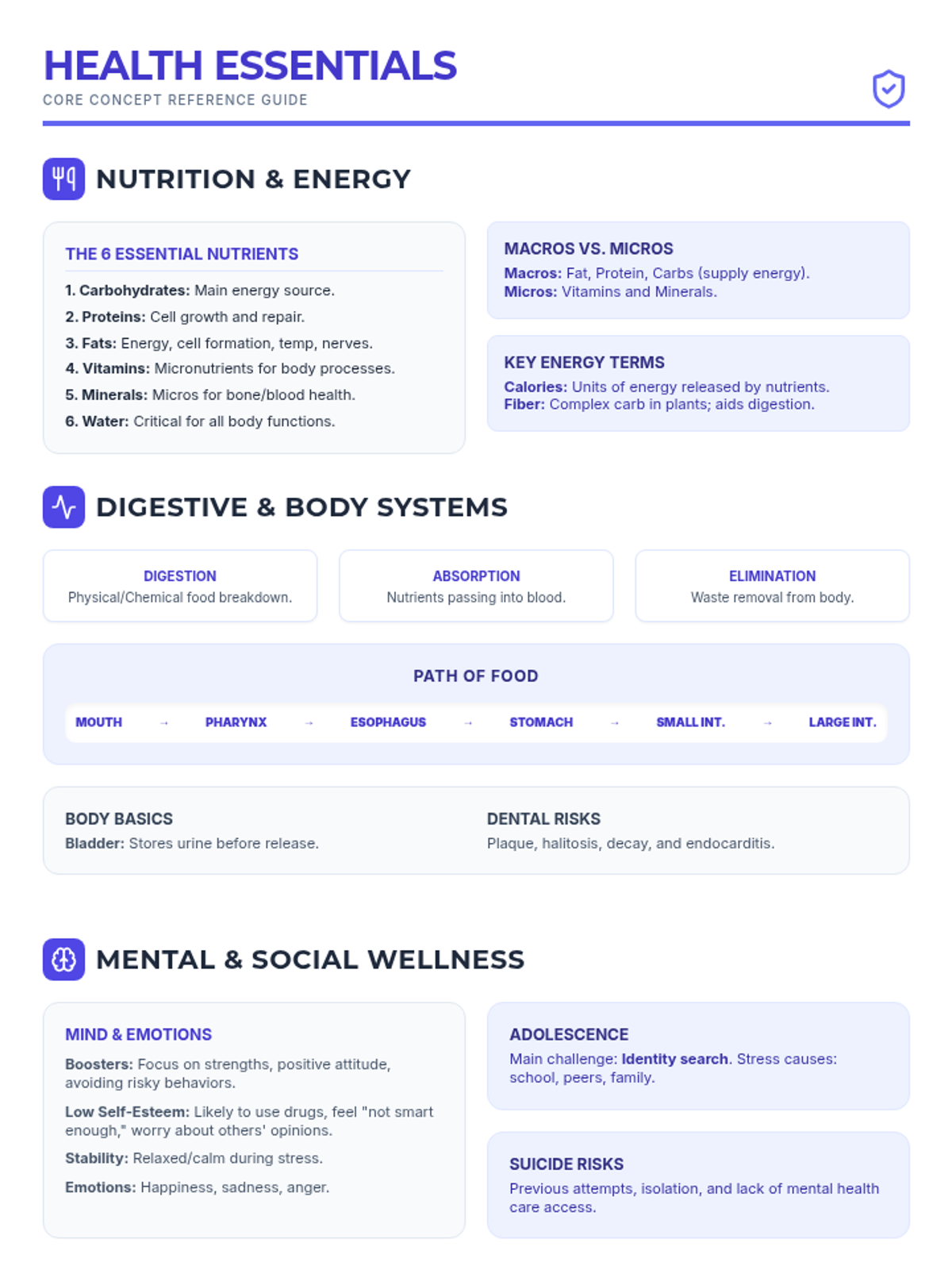
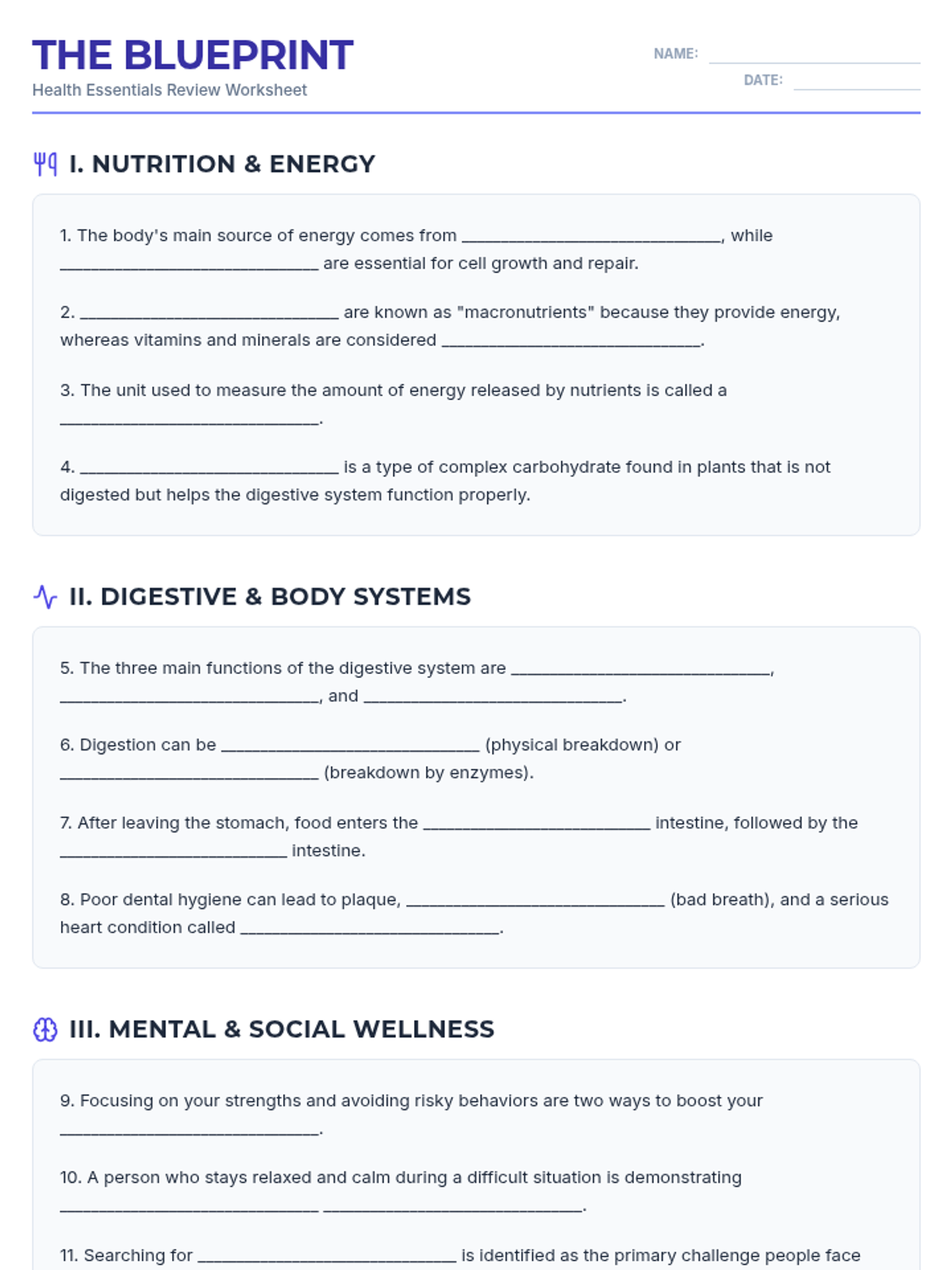
A comprehensive study guide covering nutrition, body systems, mental health, and disease prevention based on the Health Final Exam.
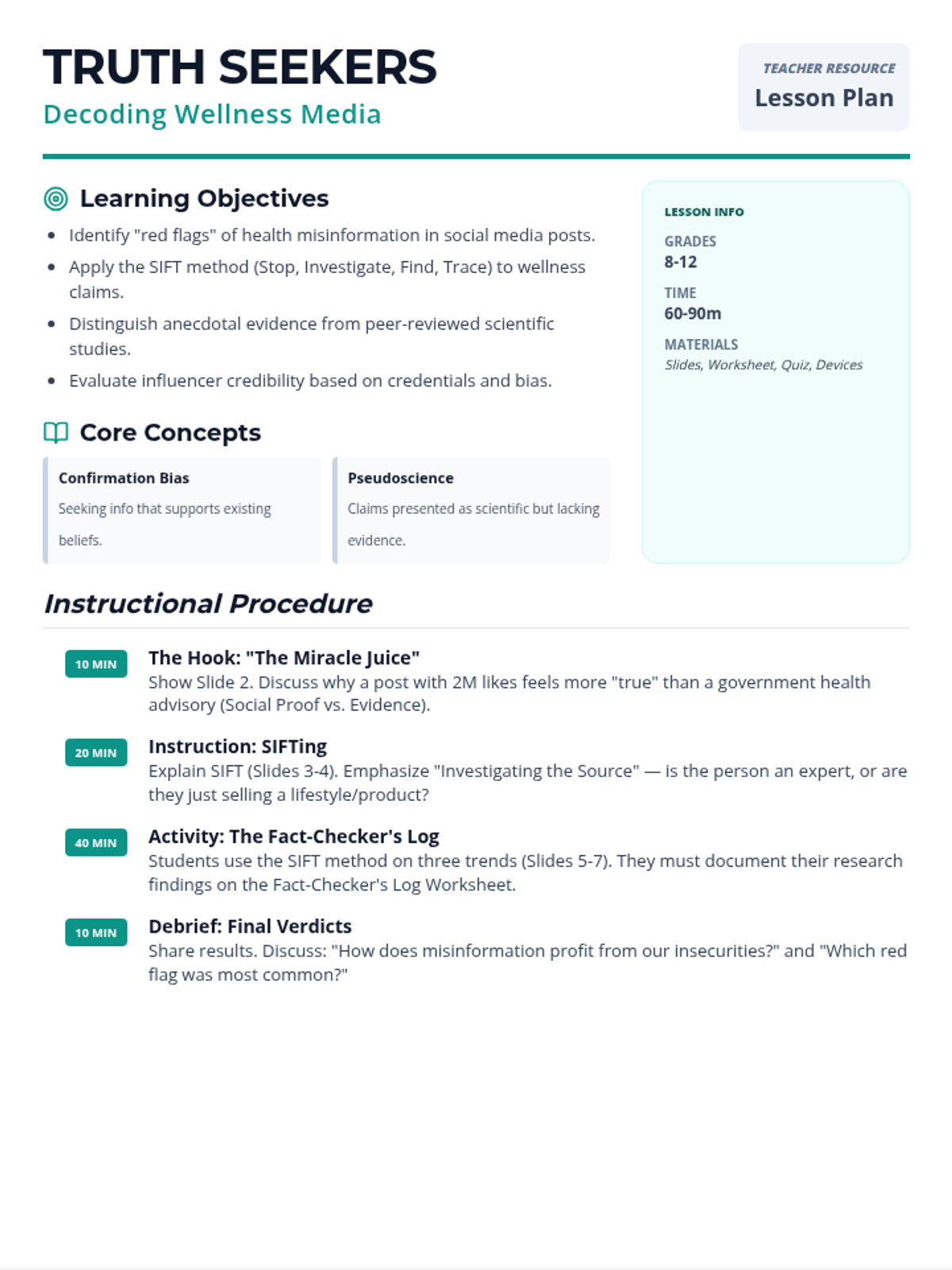
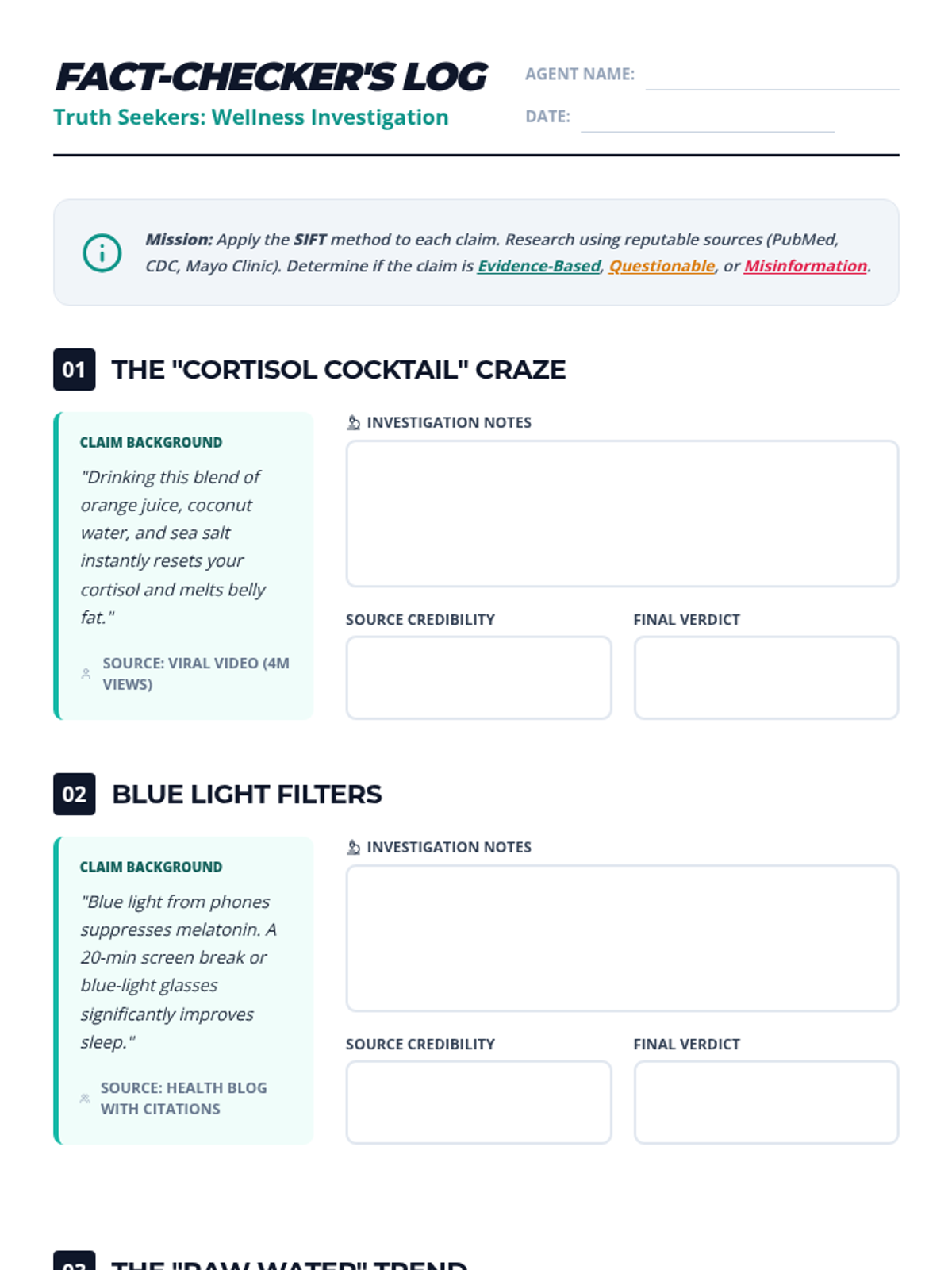
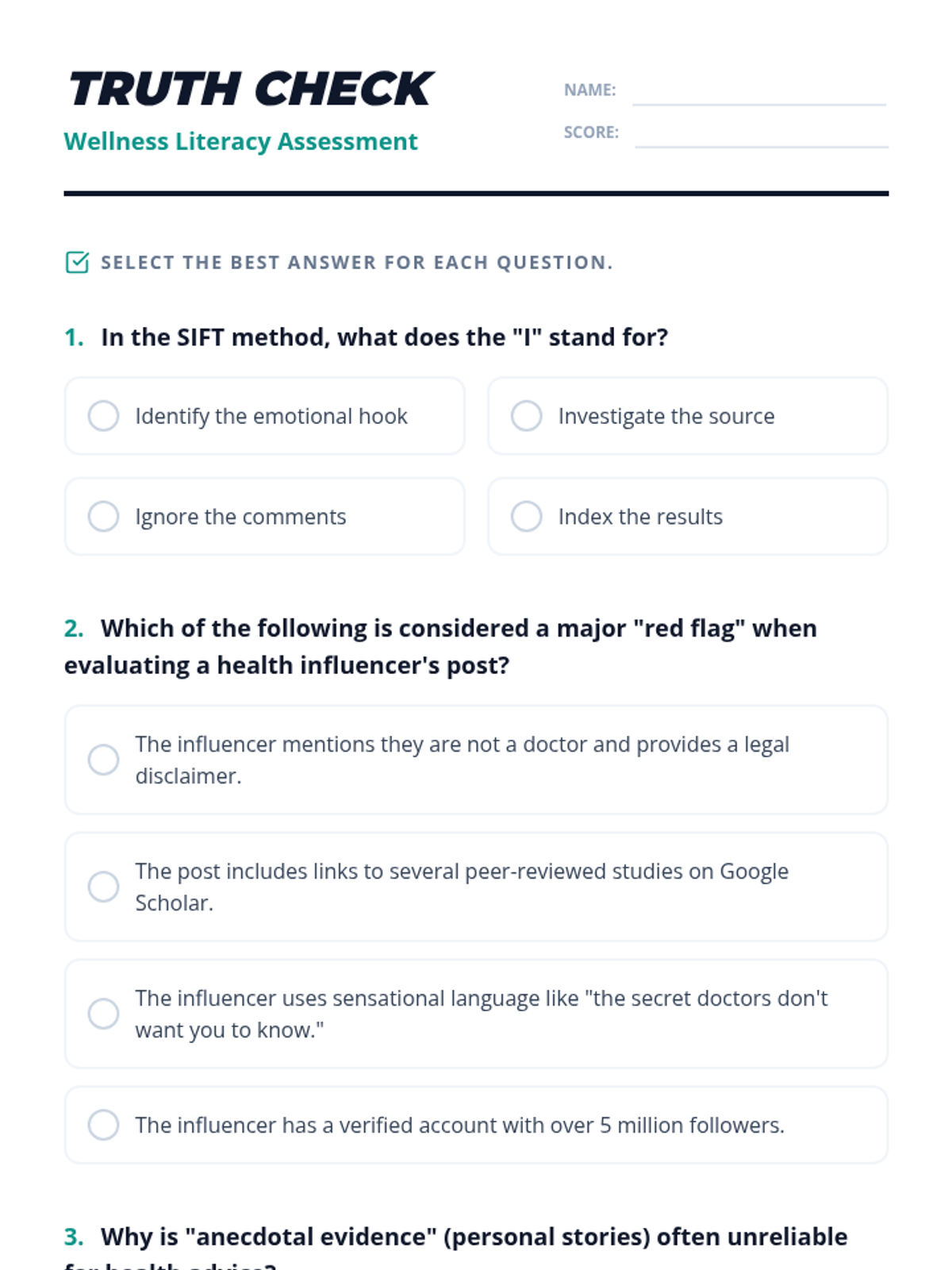
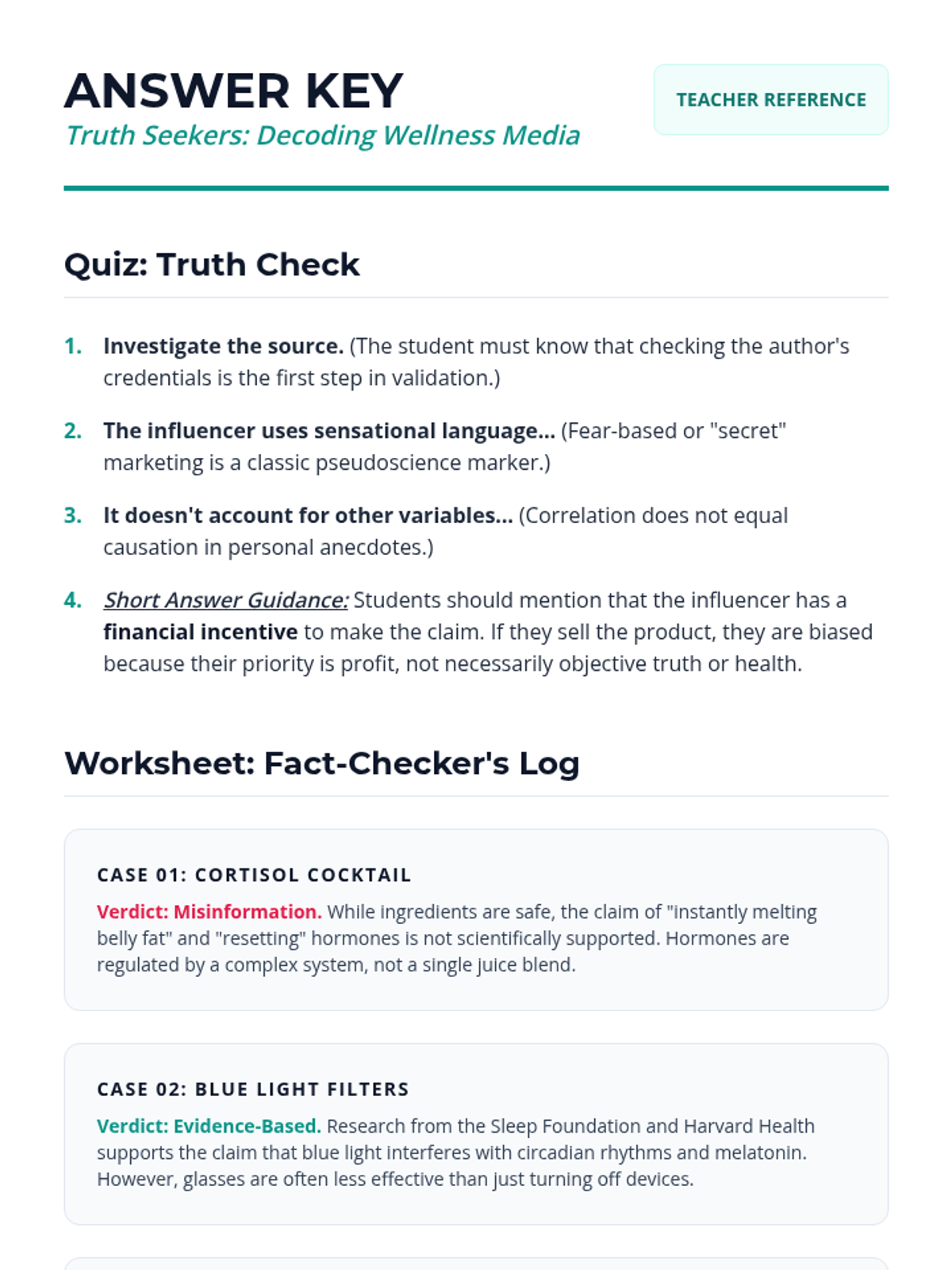
A high school media literacy lesson focused on evaluating health and wellness claims on social media. Students learn to apply the SIFT method to distinguish between scientific evidence and viral misinformation.
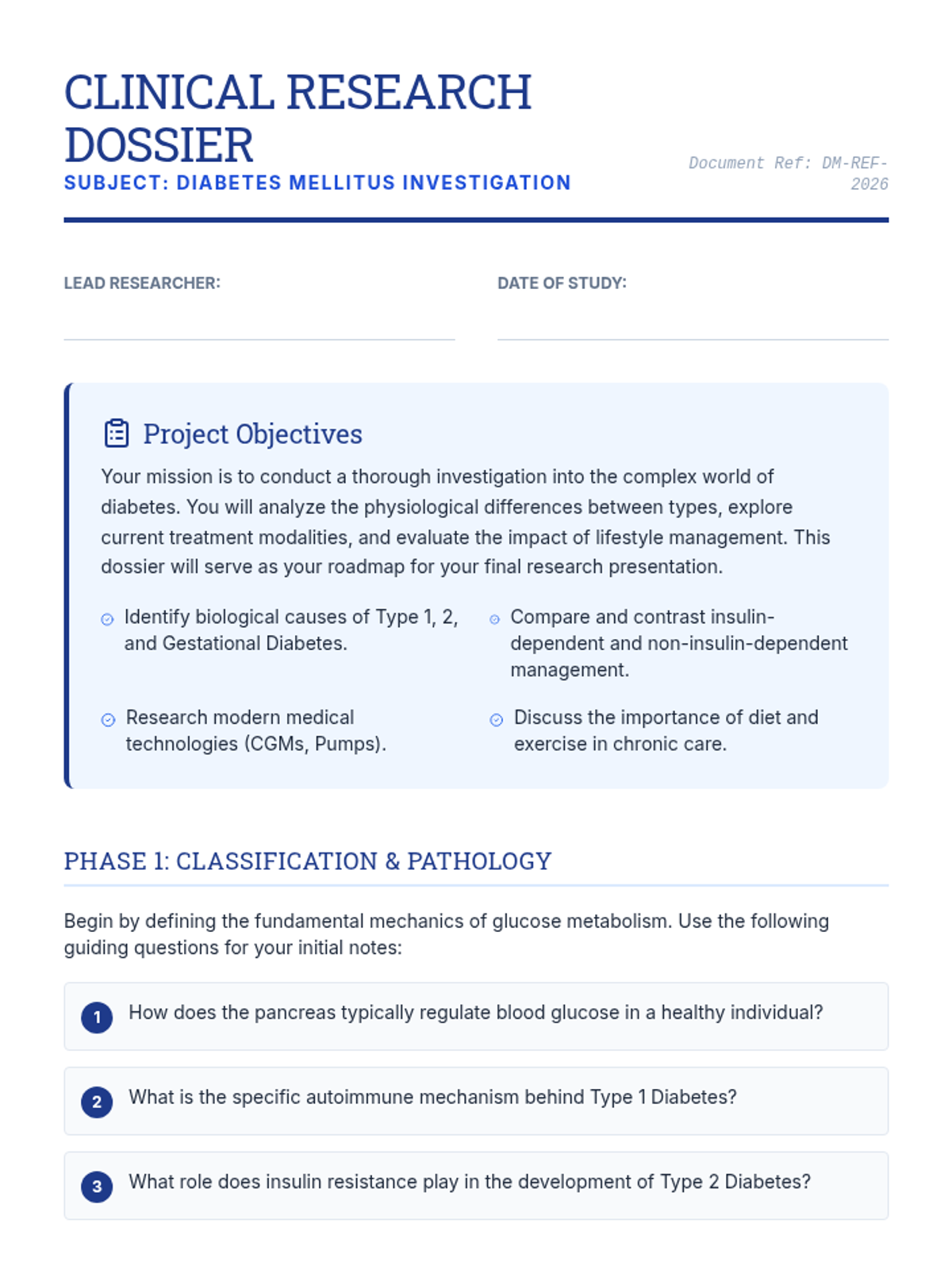
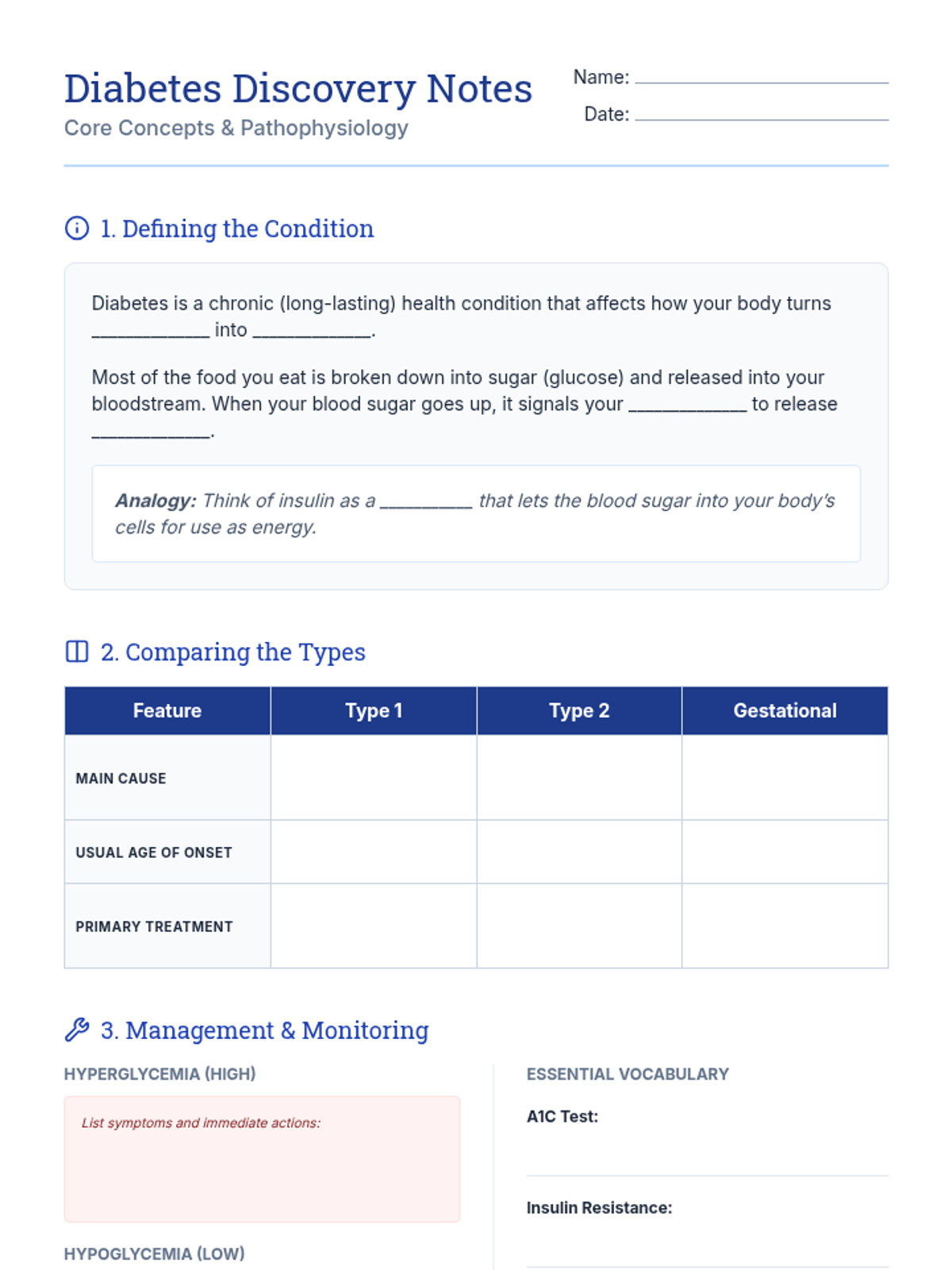
A comprehensive research unit where students investigate the biological mechanisms, classifications, and modern management strategies for diabetes.
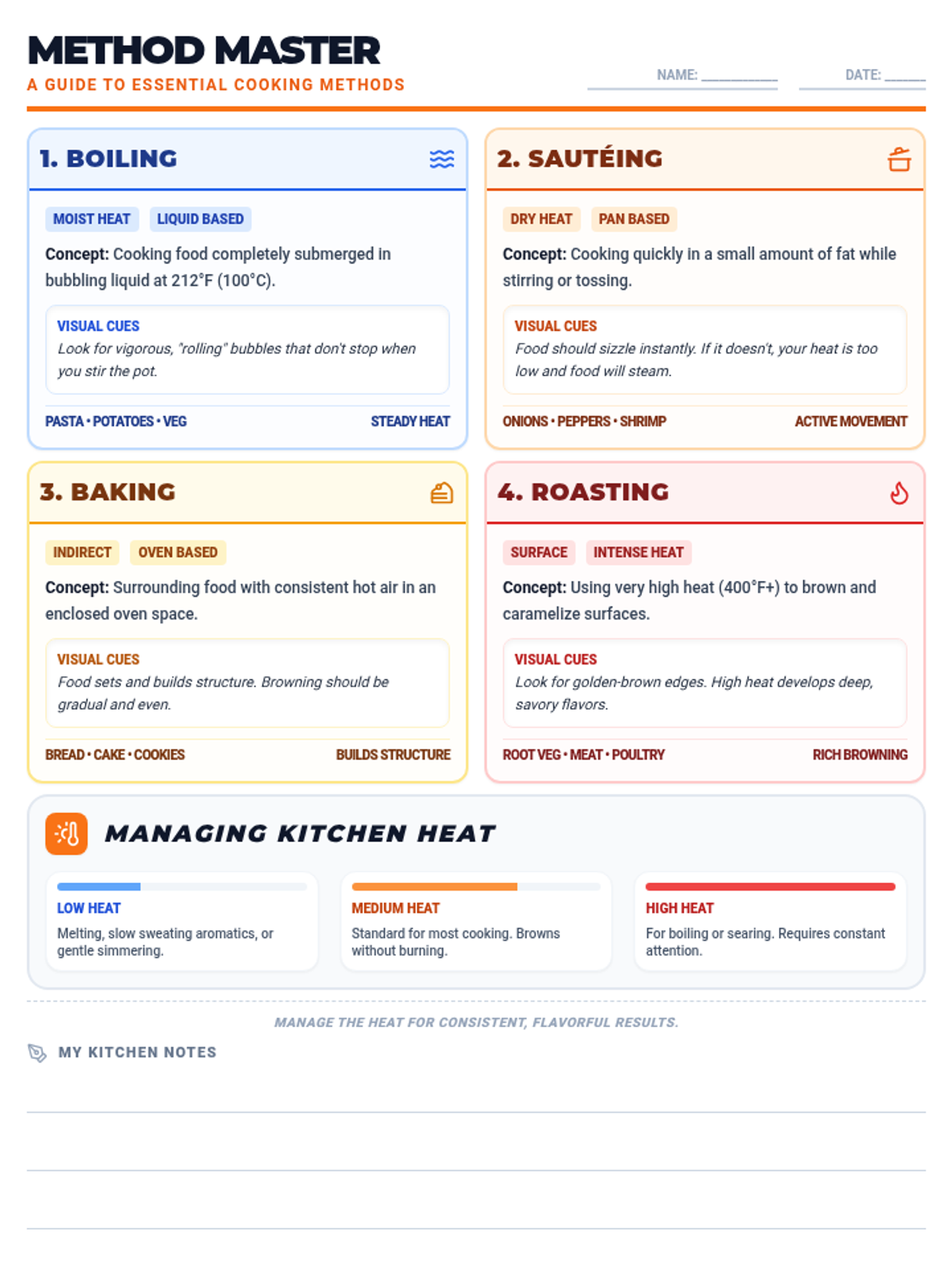
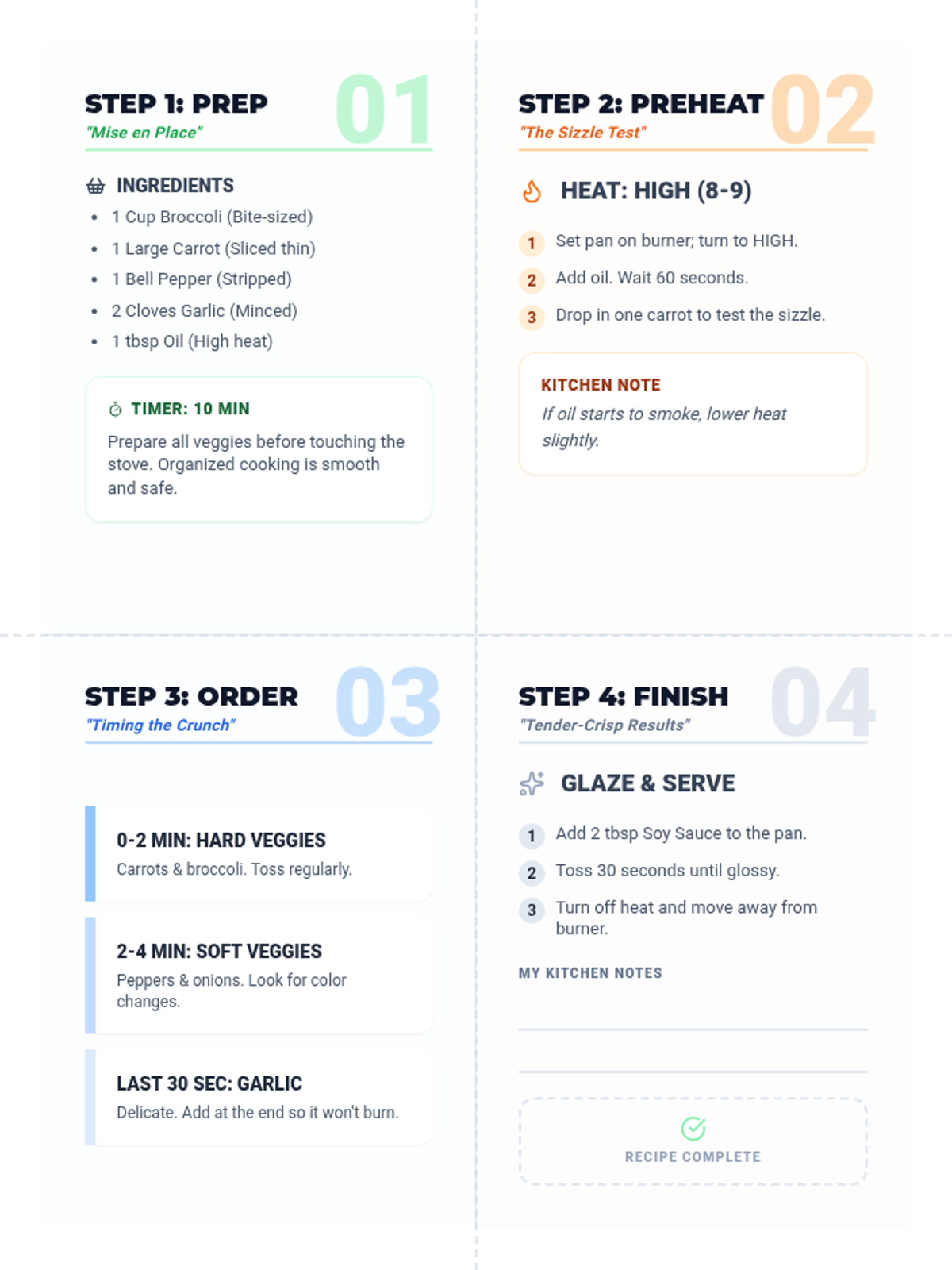
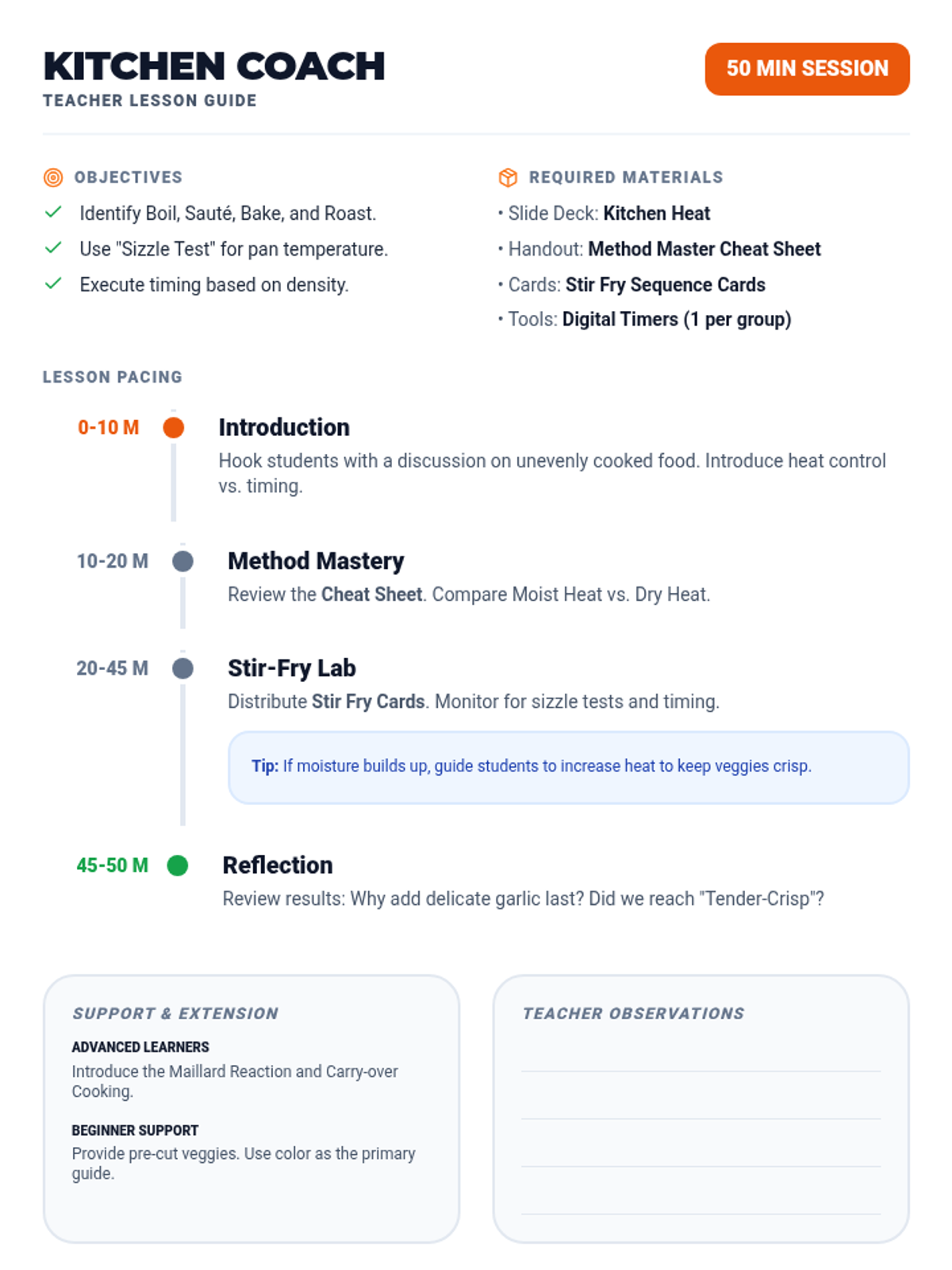
A 50-minute introduction to fundamental cooking techniques, focusing on heat management and timing through the lens of a vegetable stir-fry.
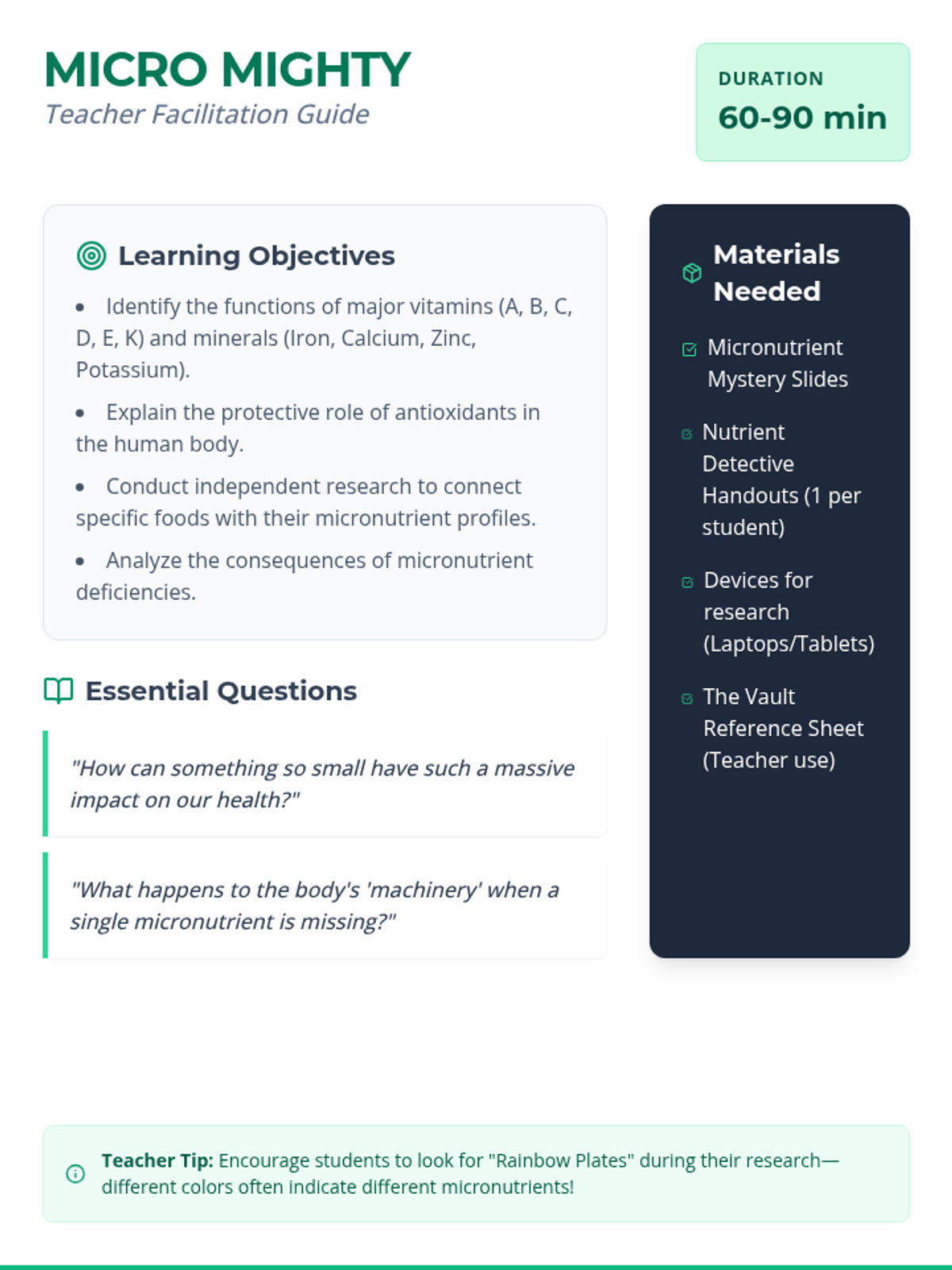
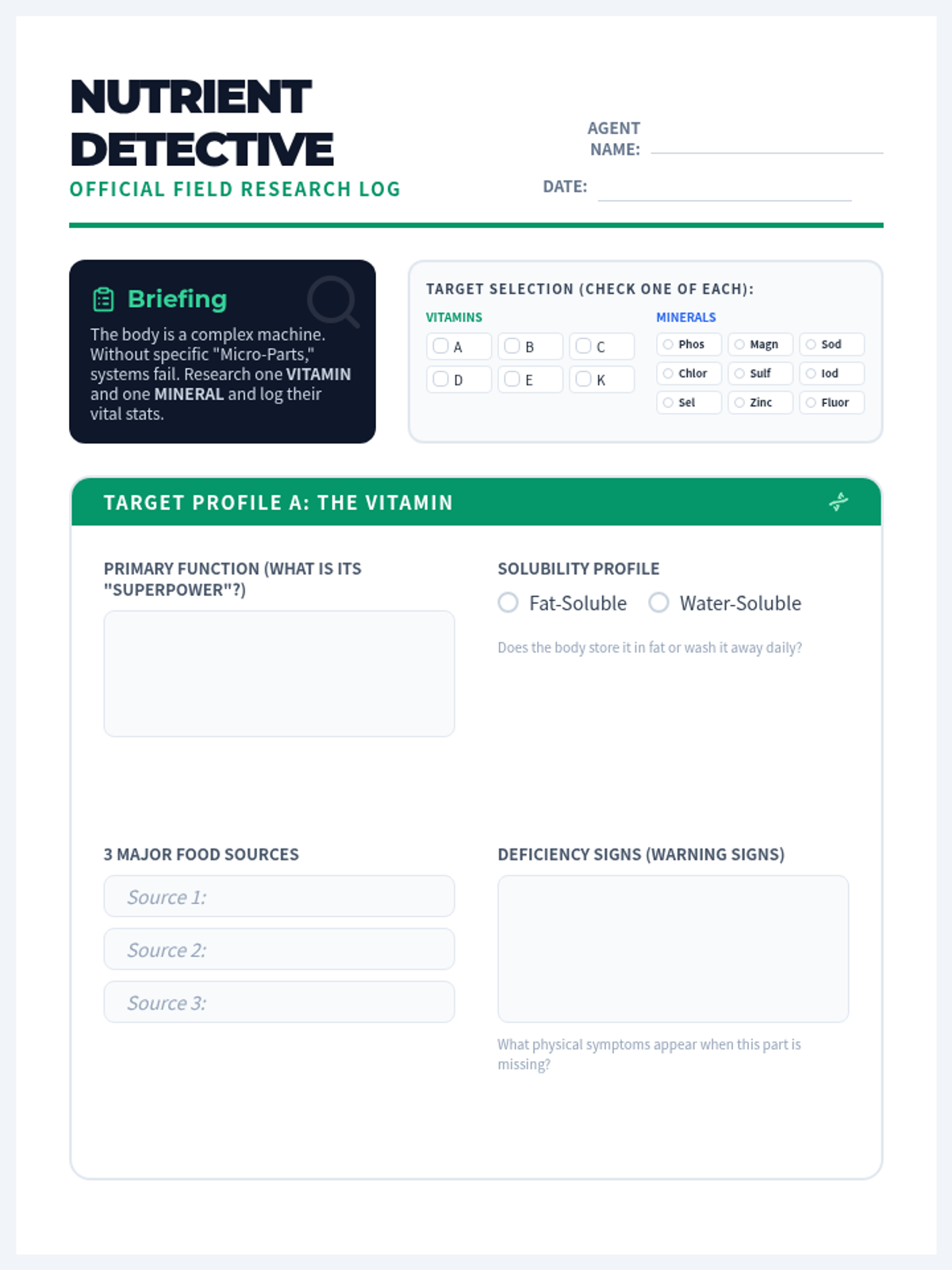
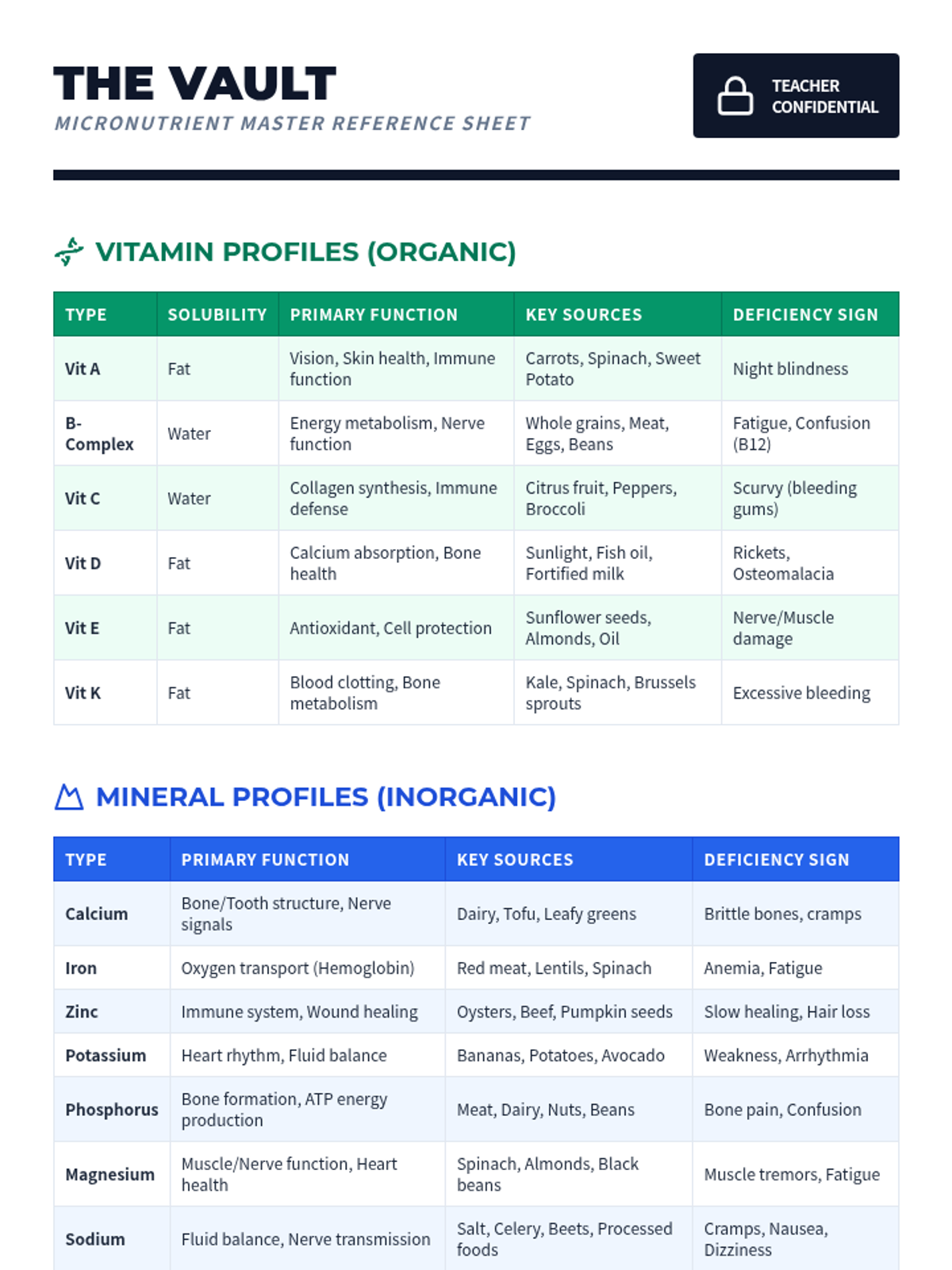
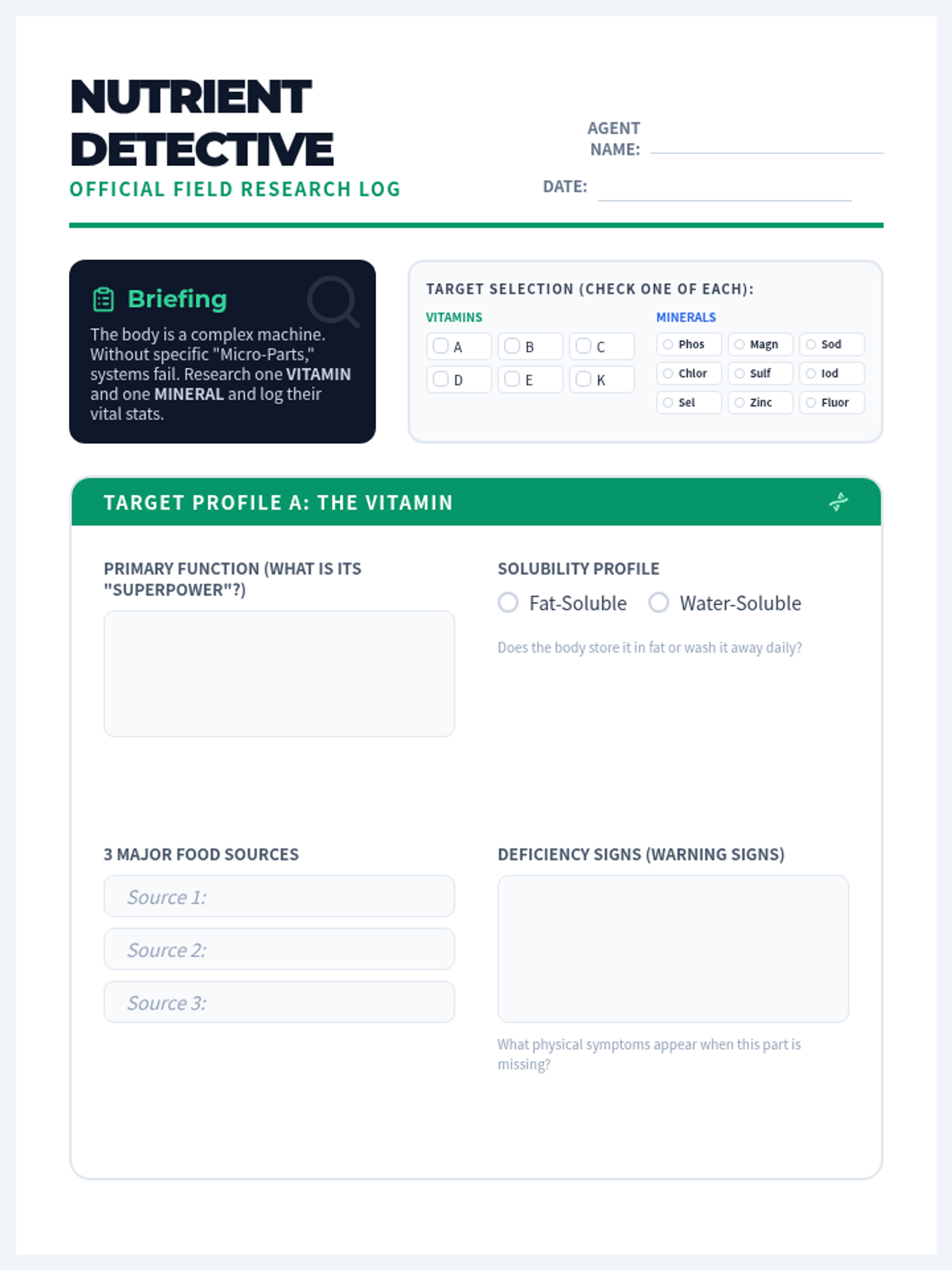
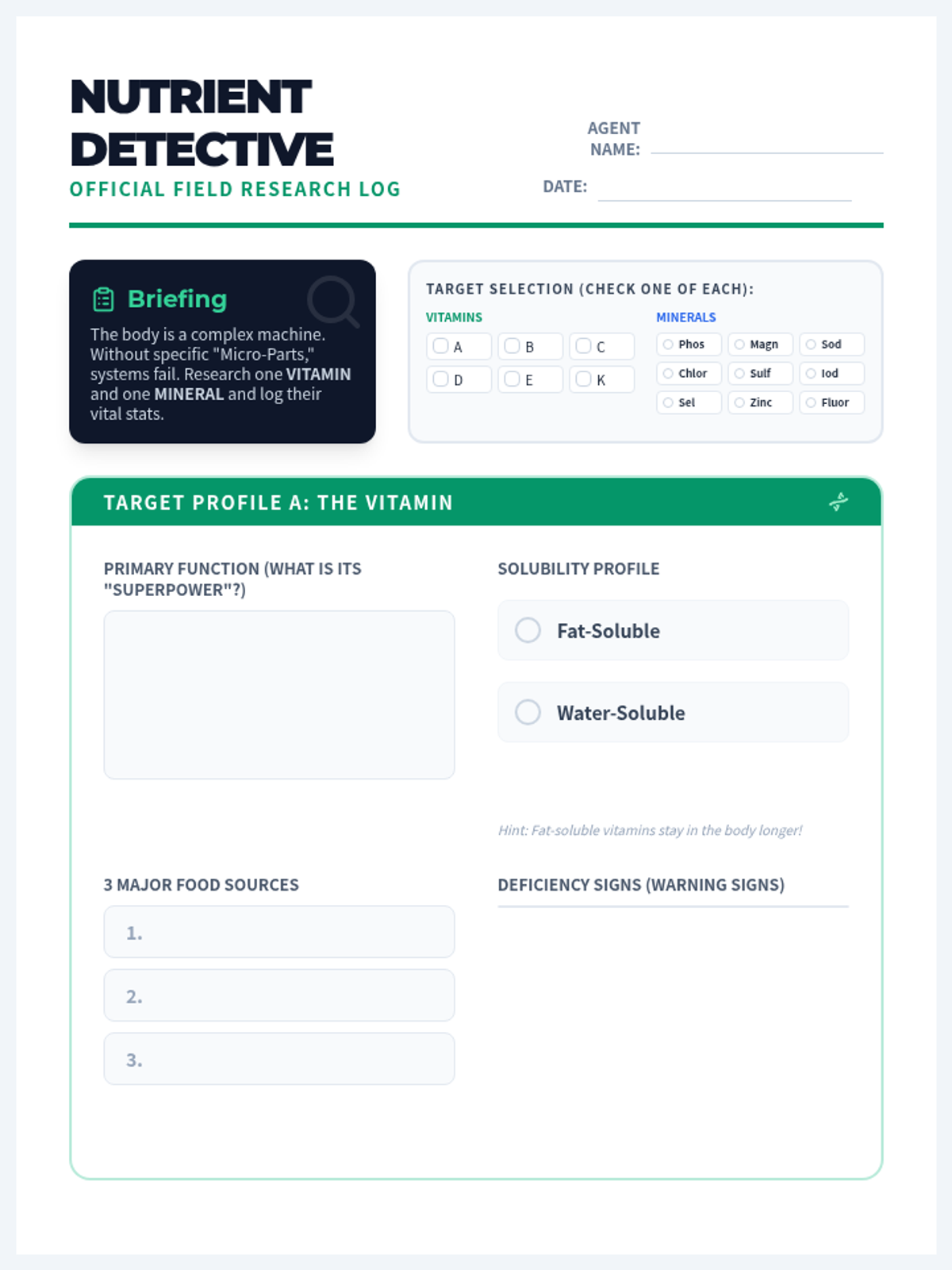
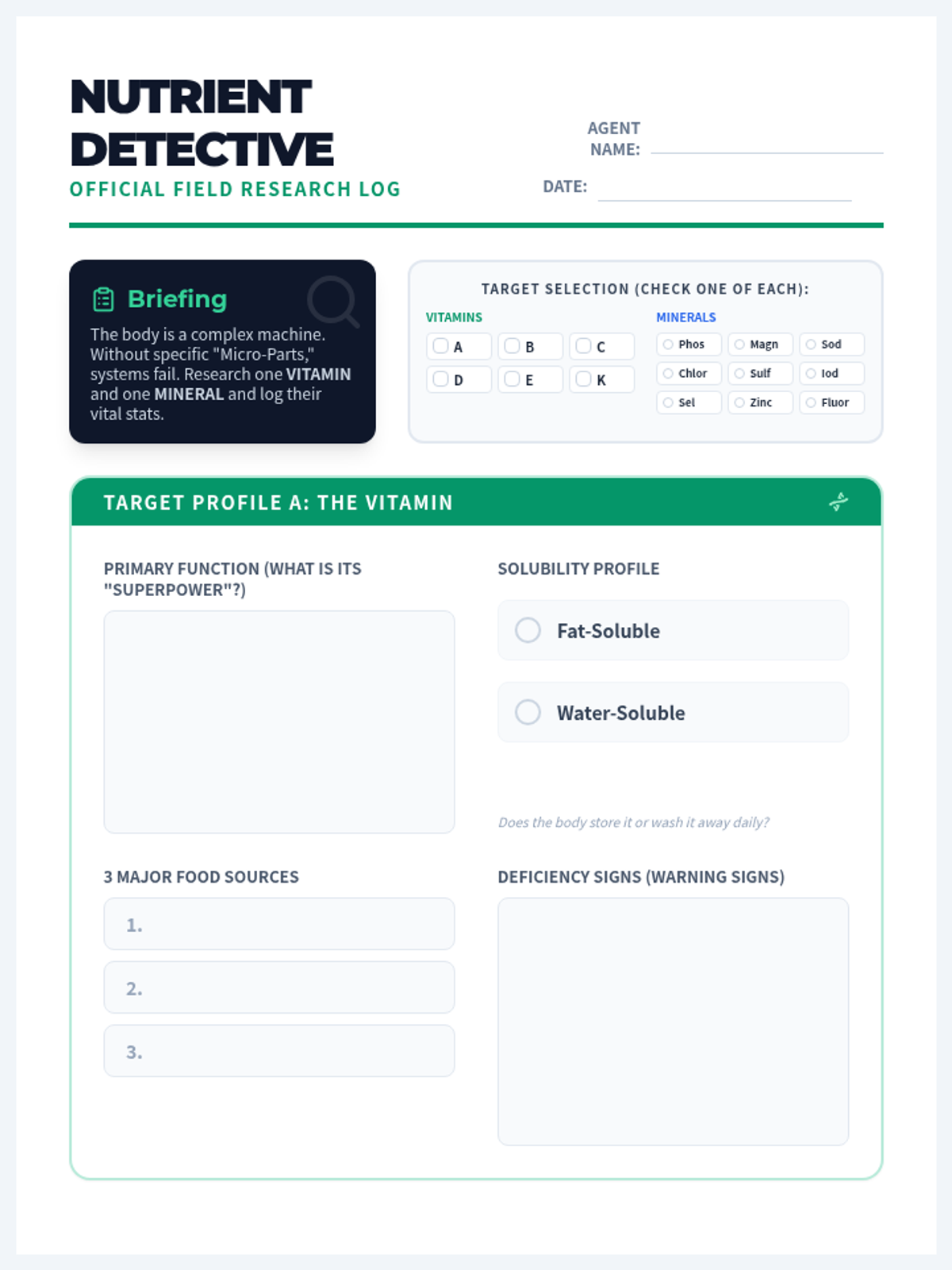
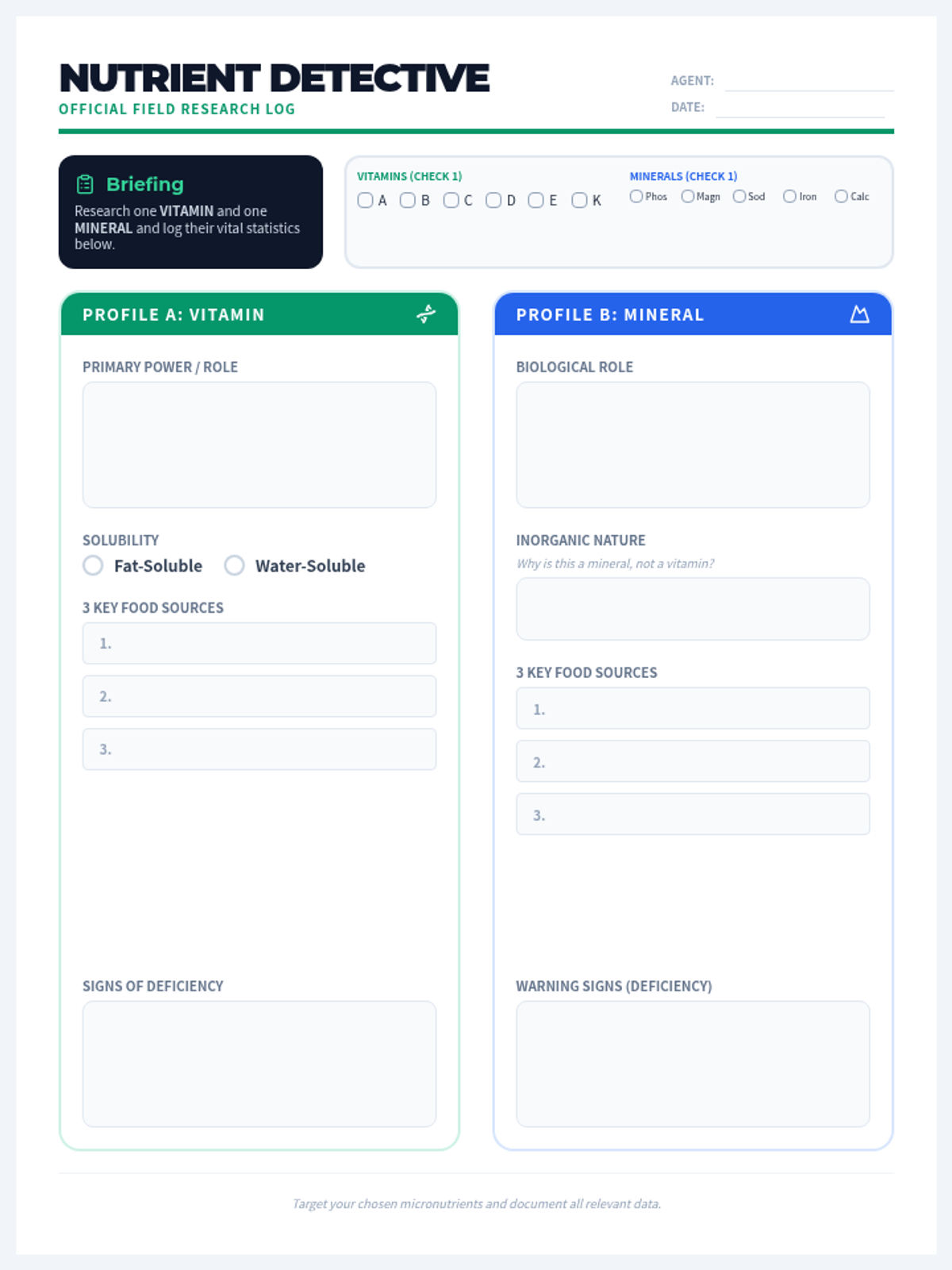
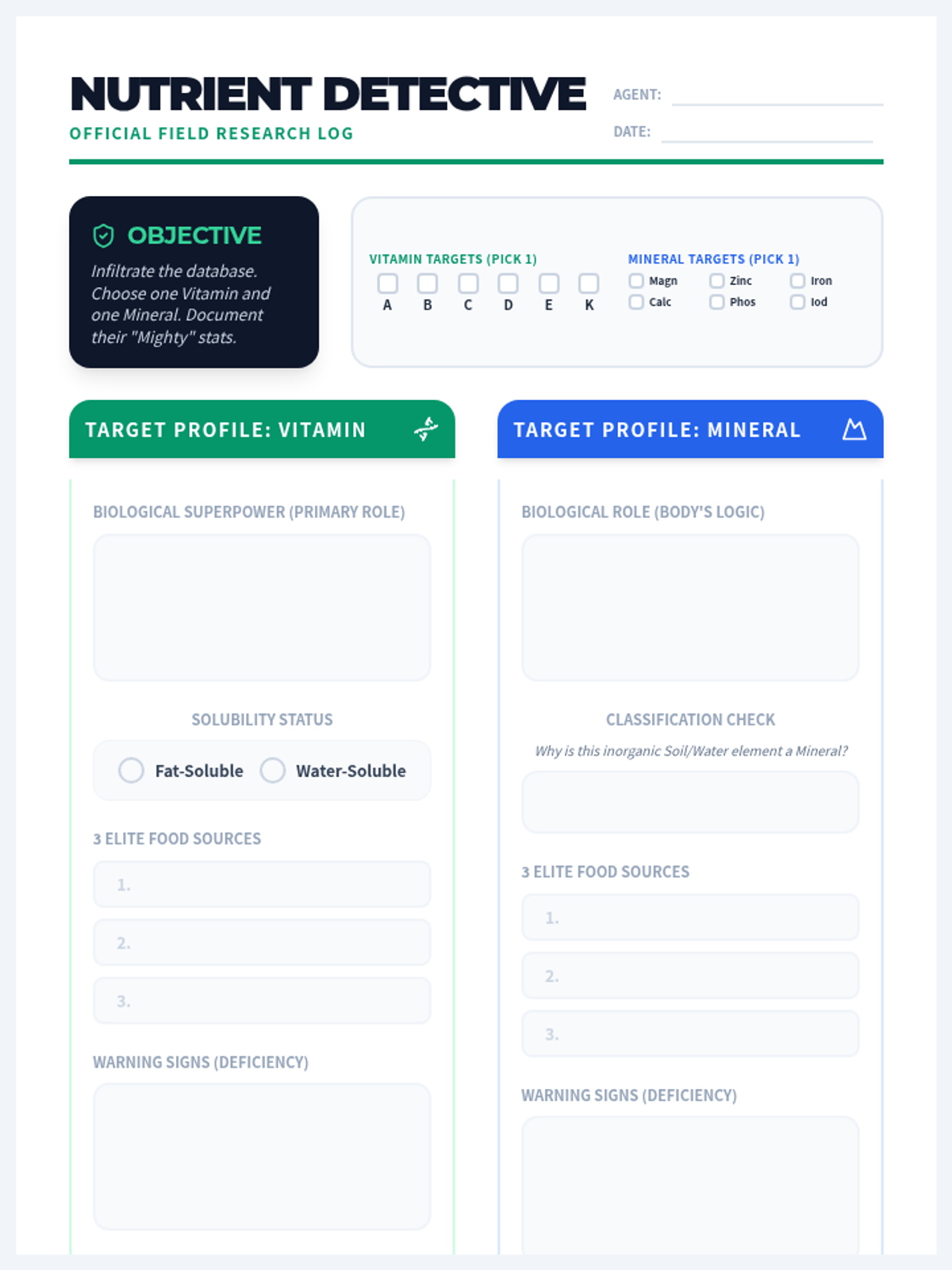
A comprehensive lesson exploring the essential roles of vitamins, minerals, and antioxidants in human health, featuring a guided research activity.
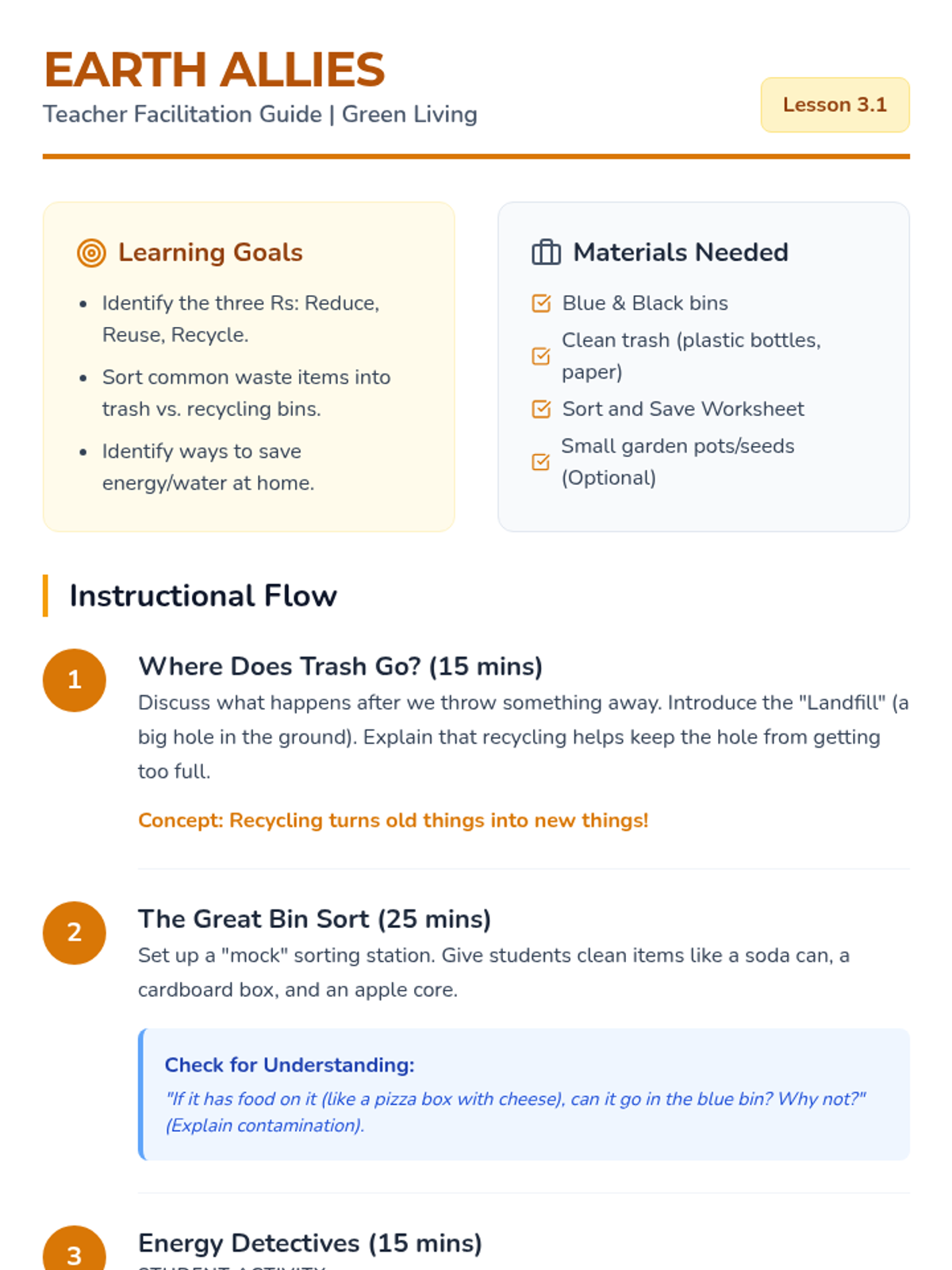
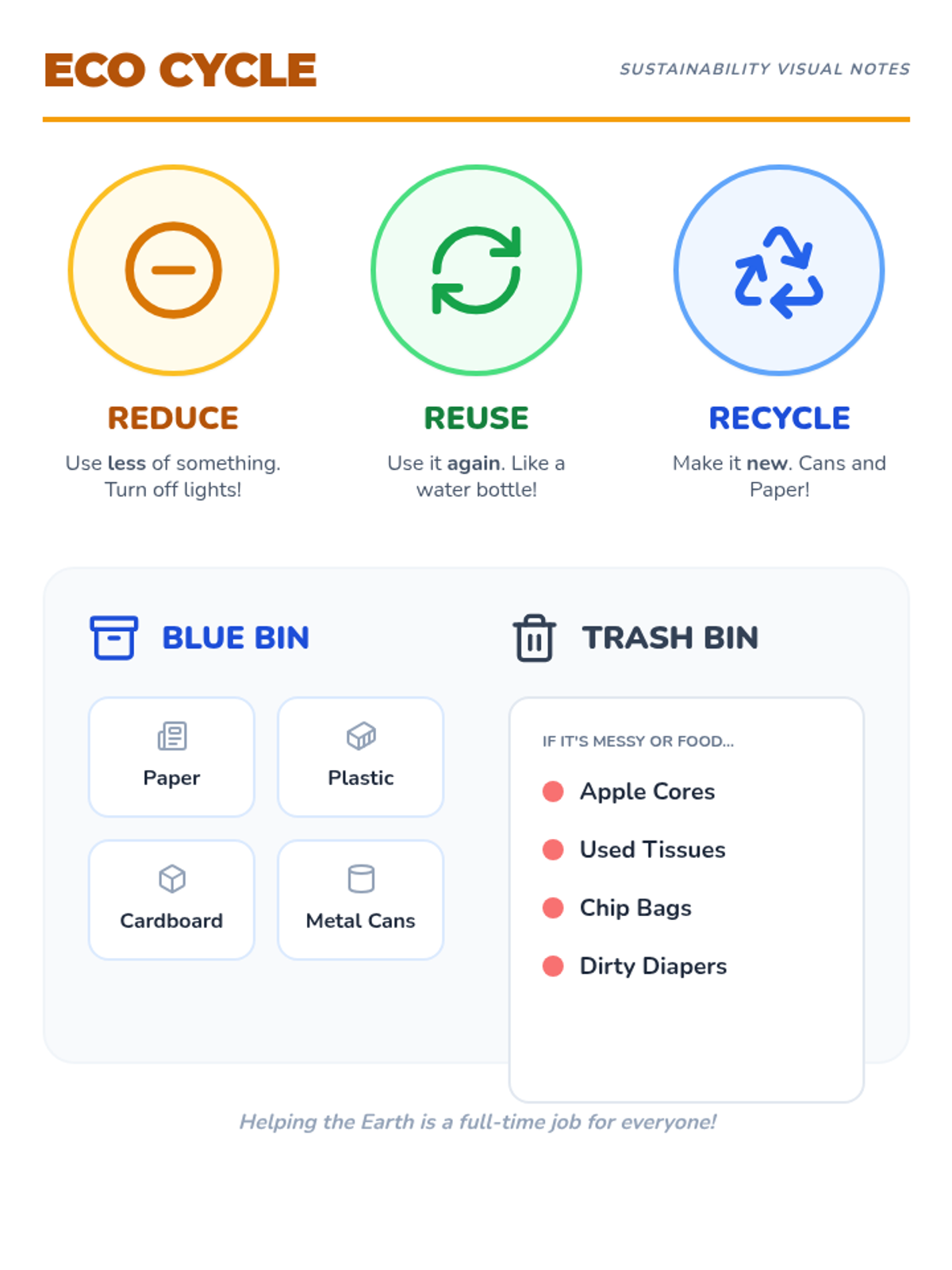
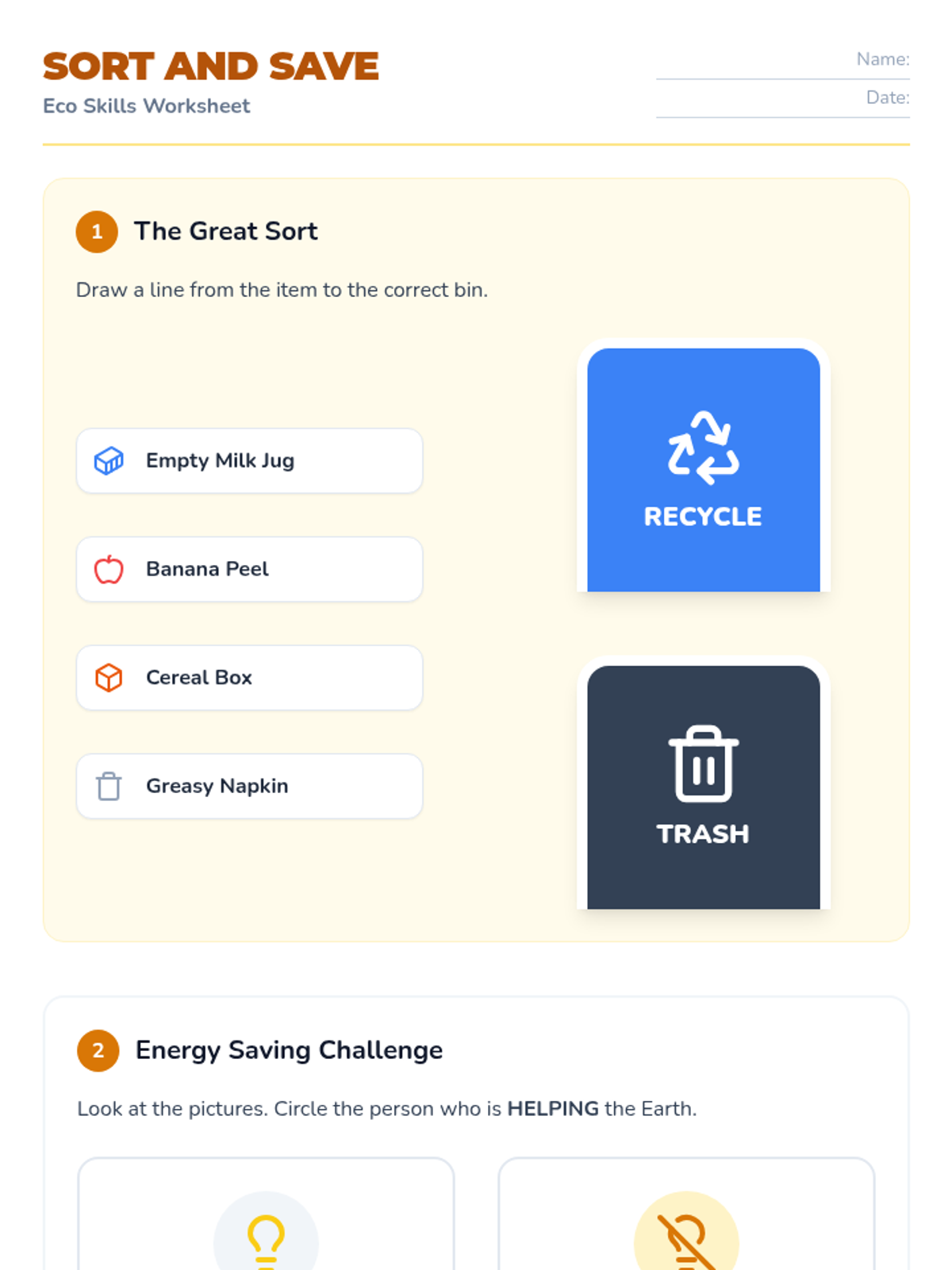
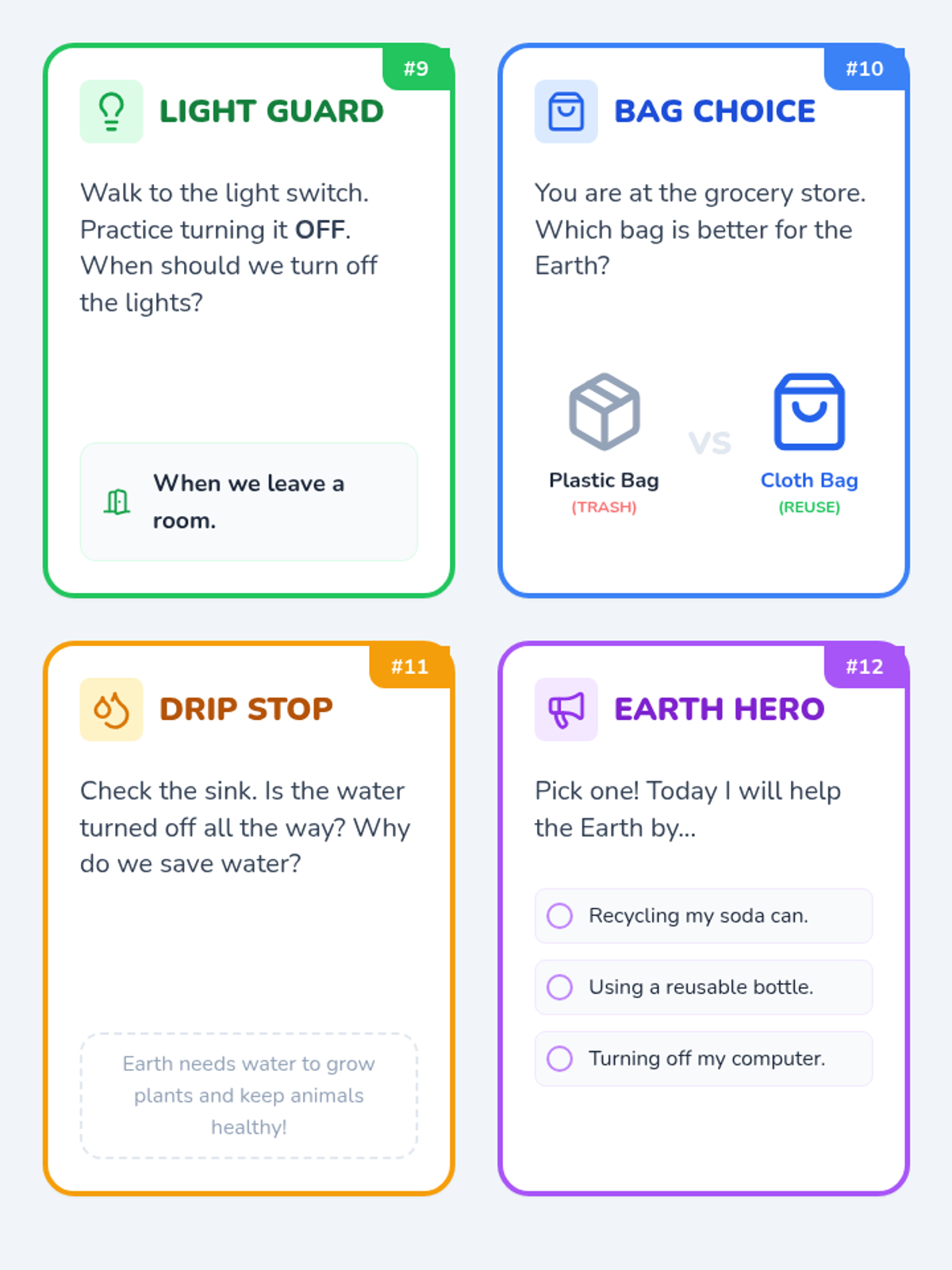
Introduces sustainability through waste reduction, recycling, and understanding how personal choices impact the local environment.
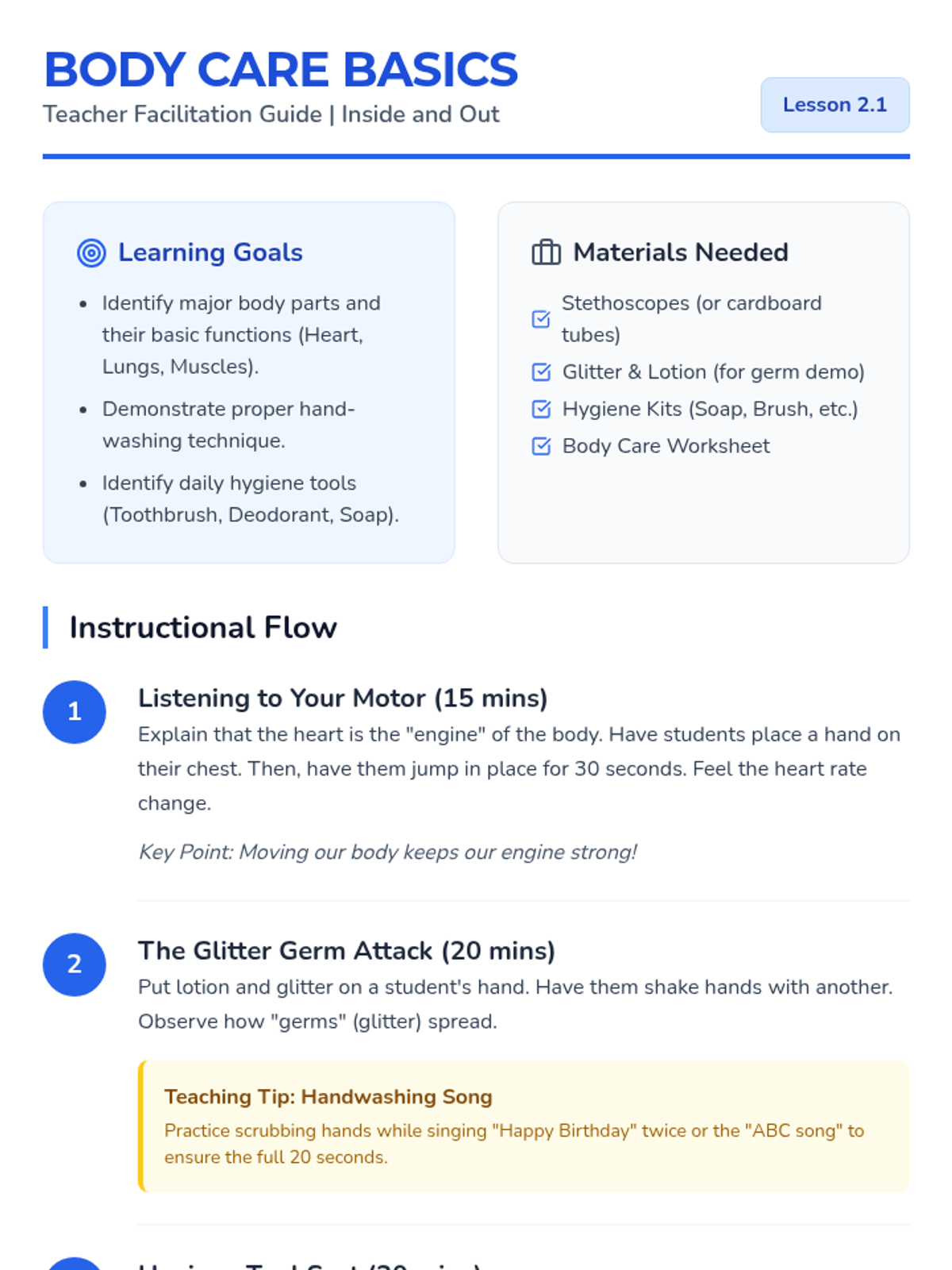
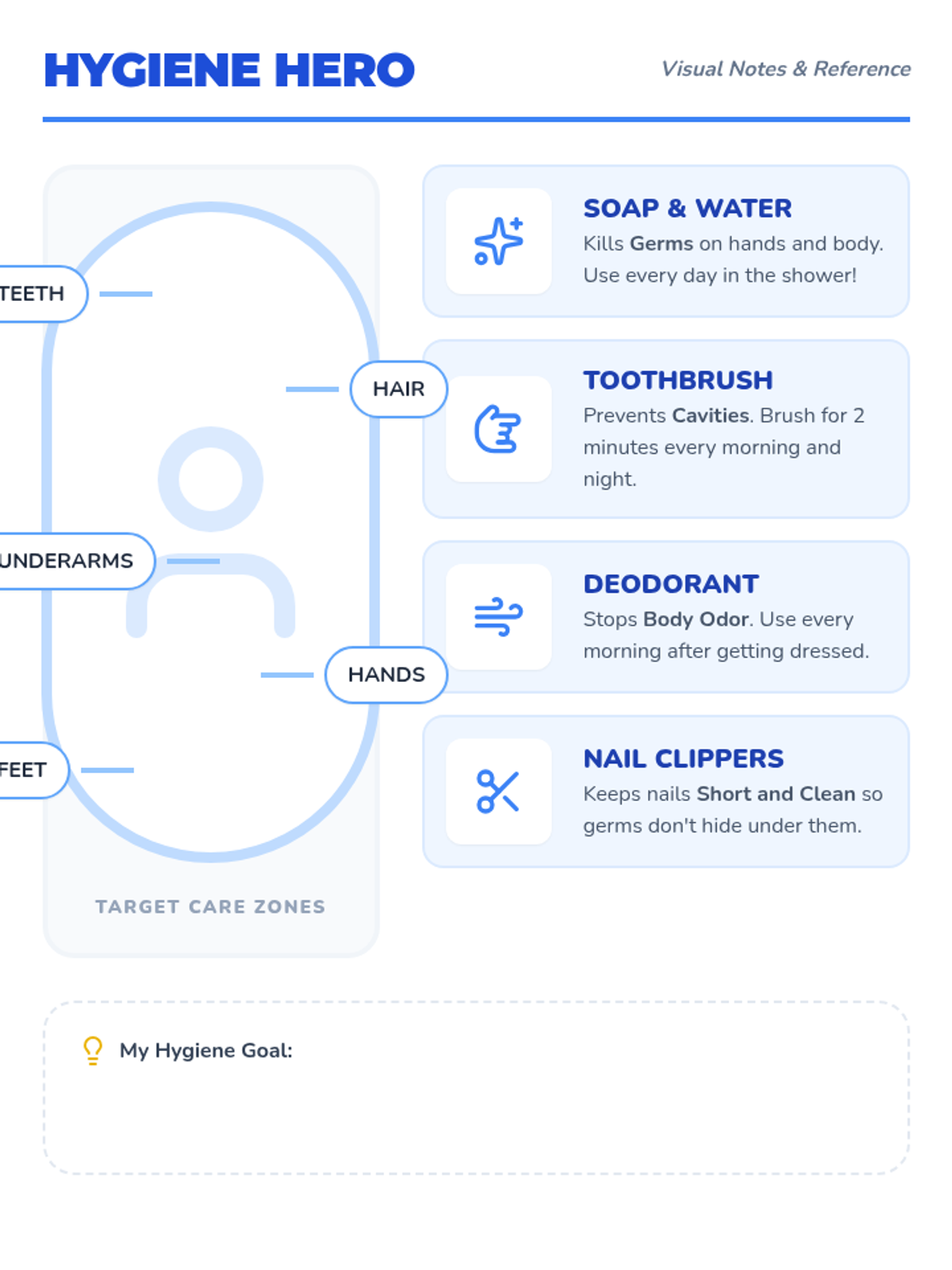
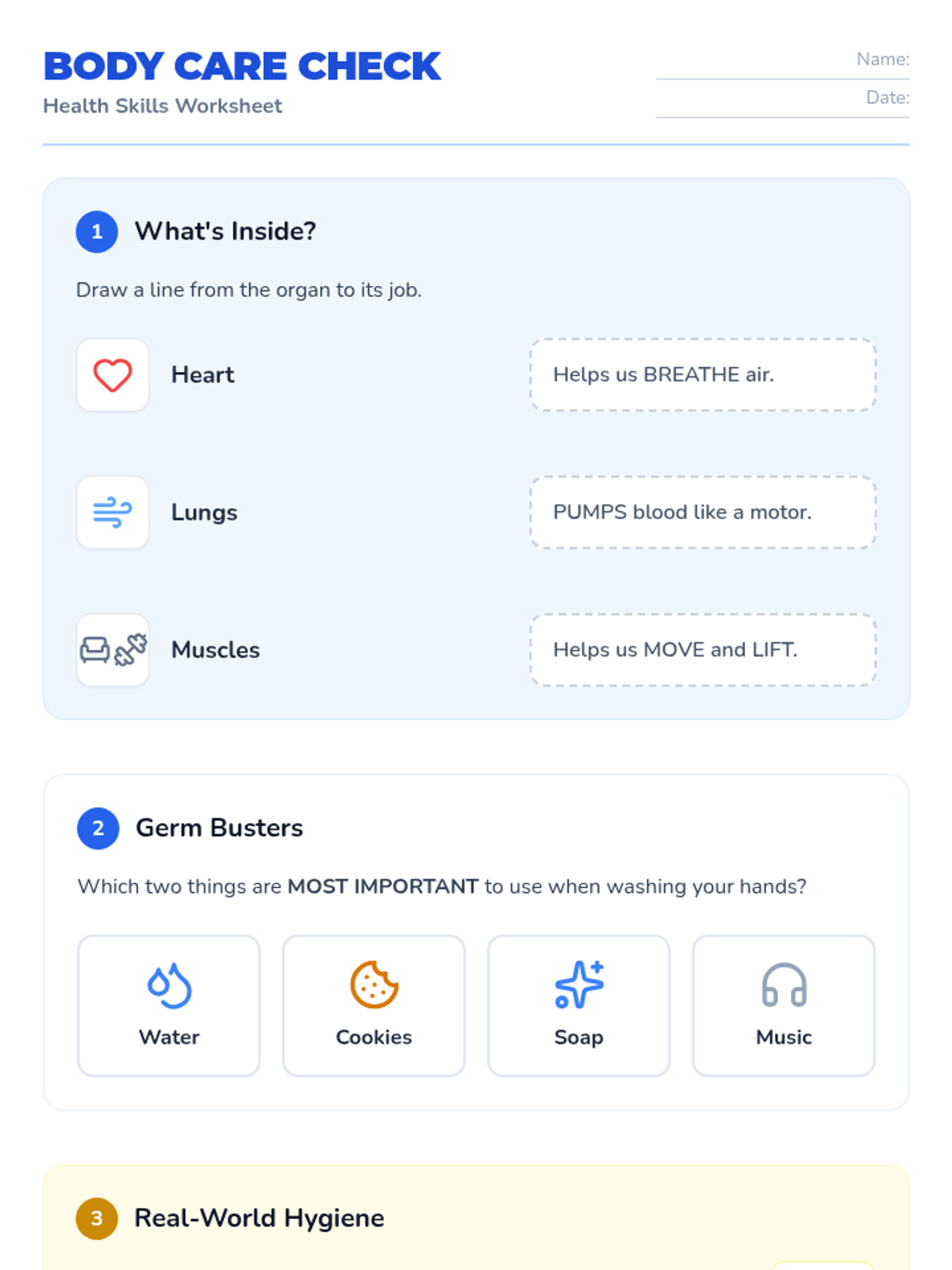
Covers basic human anatomy related to movement and health, alongside essential personal hygiene routines for daily living.
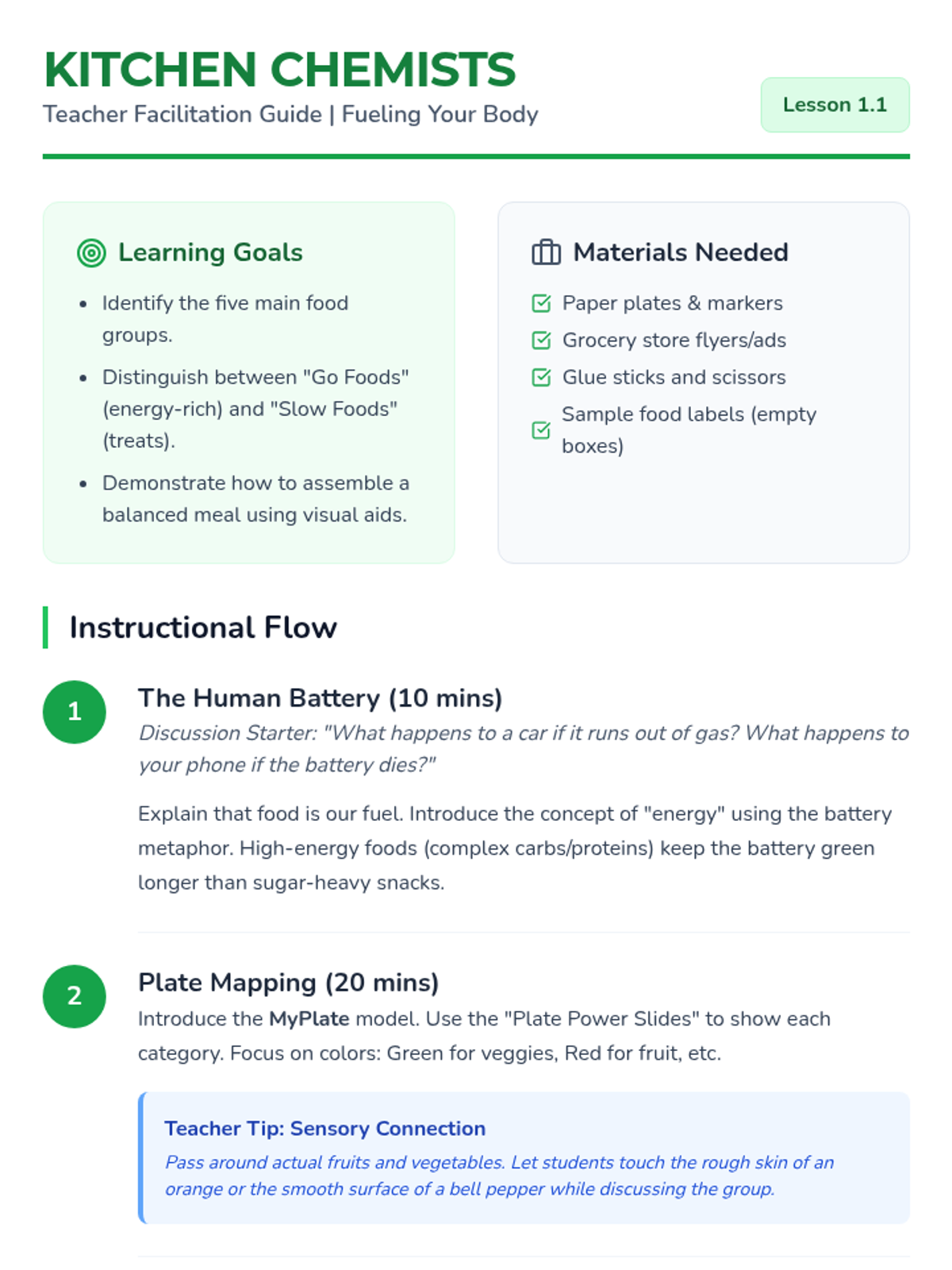
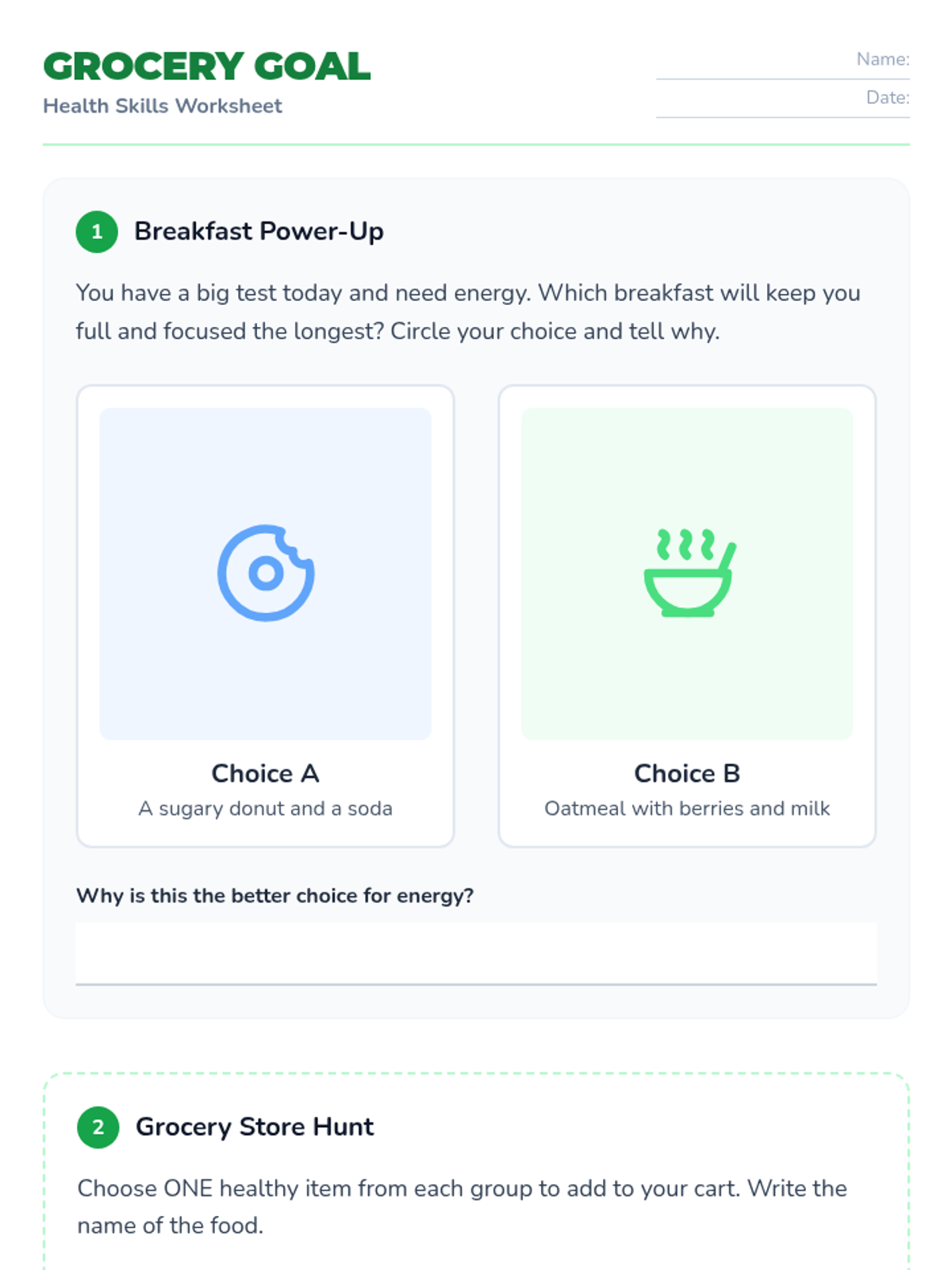
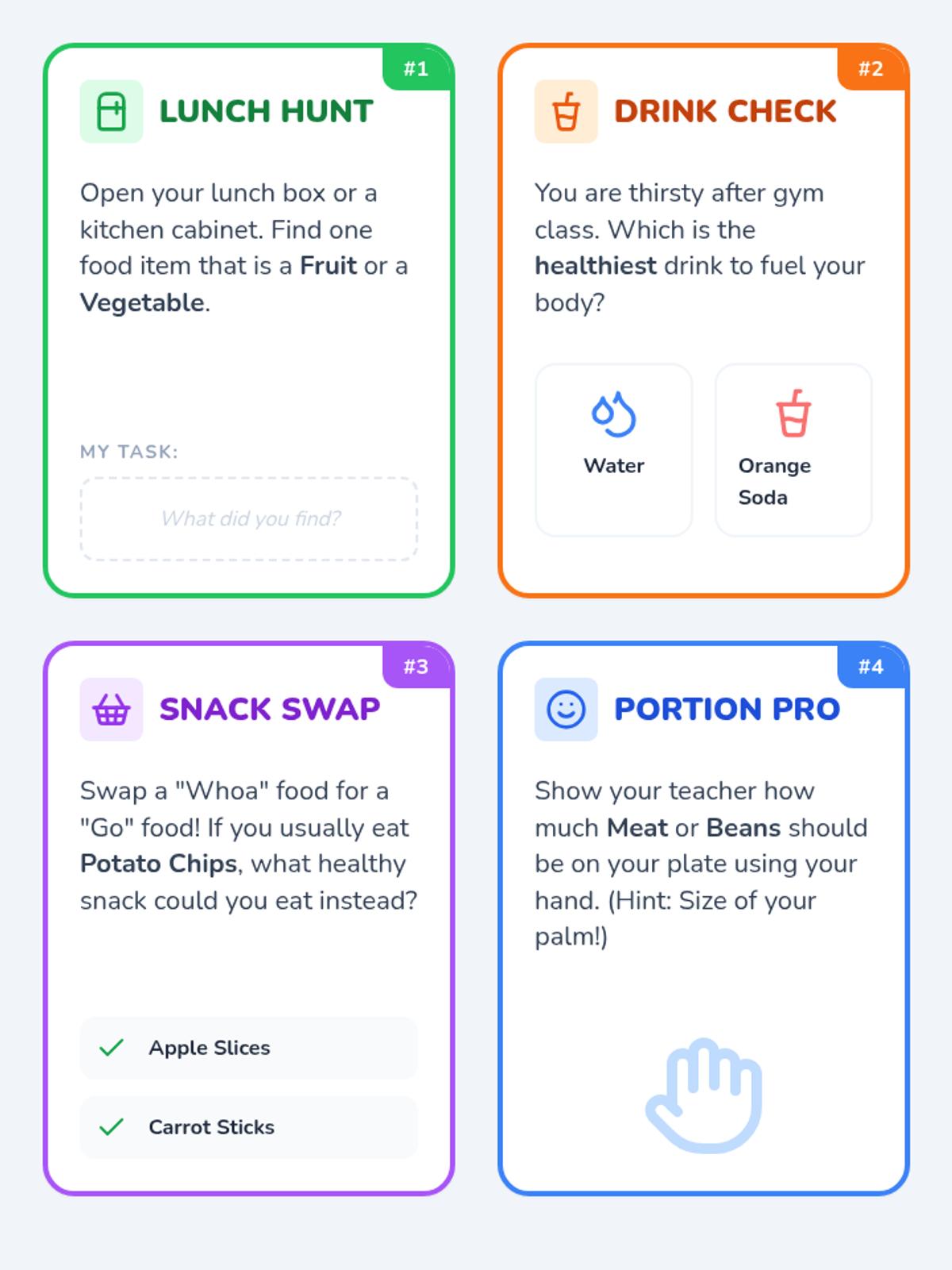
Focuses on identifying healthy food groups, reading simple food labels, and making informed nutritional choices for daily energy.
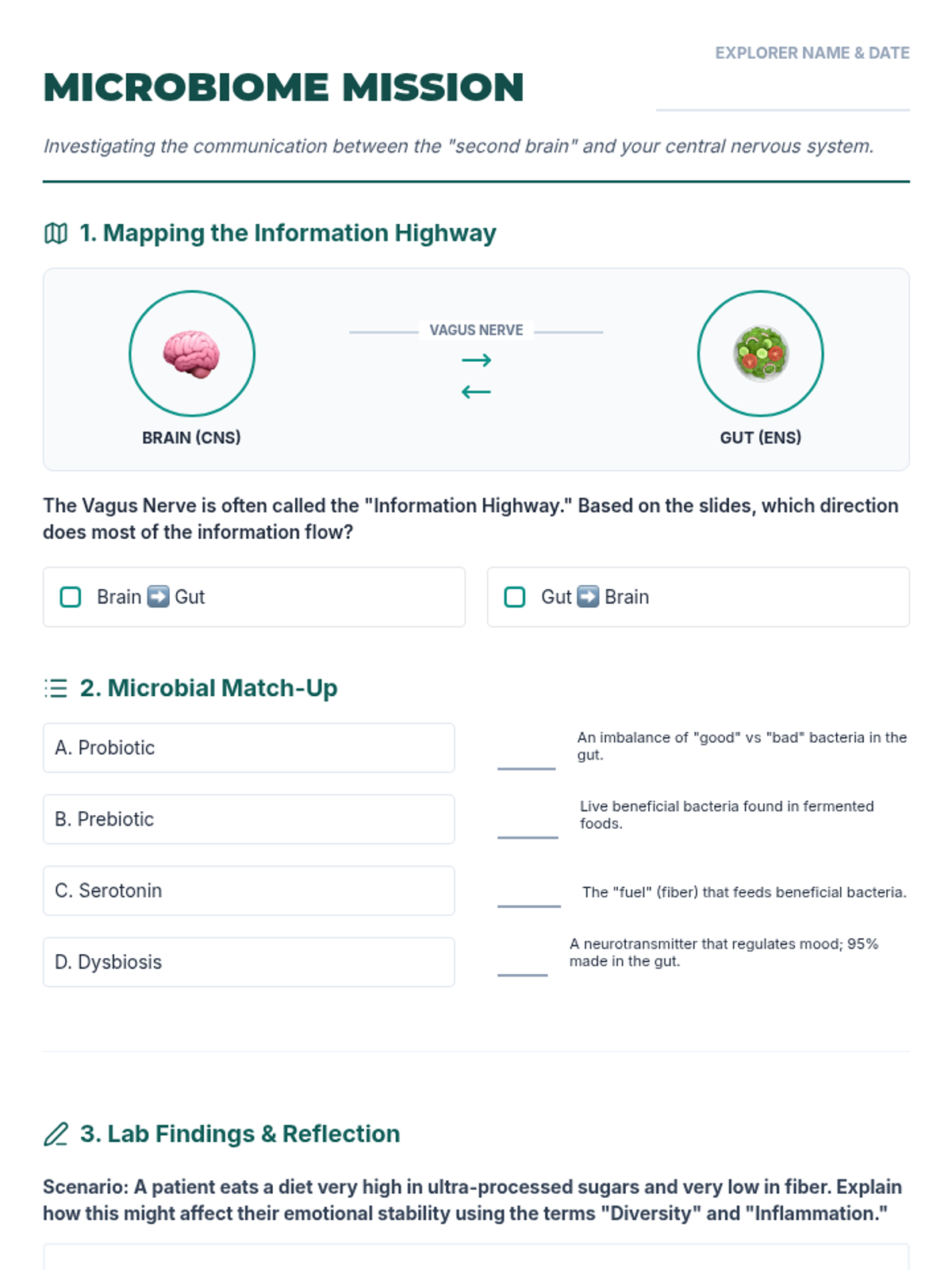
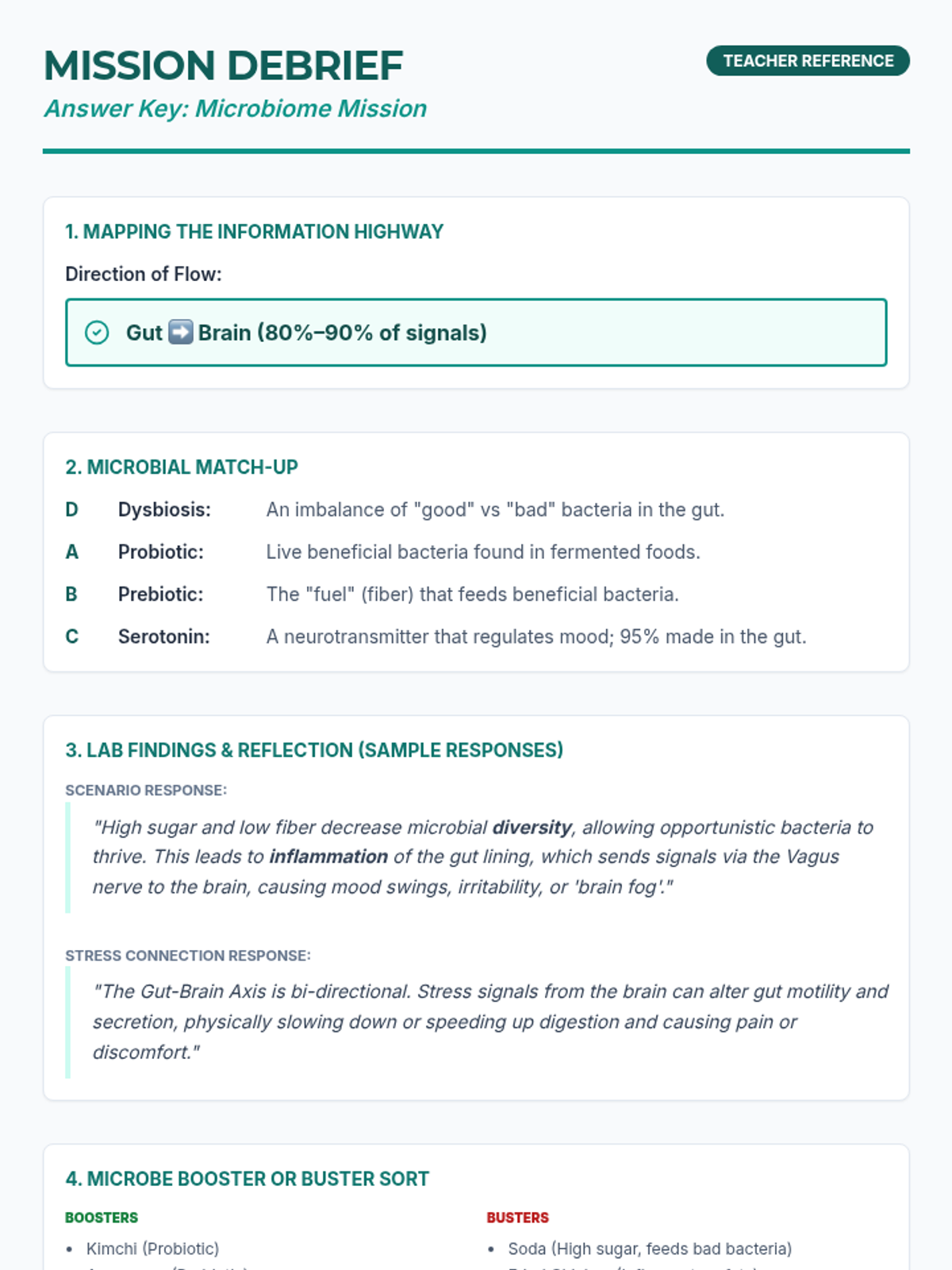
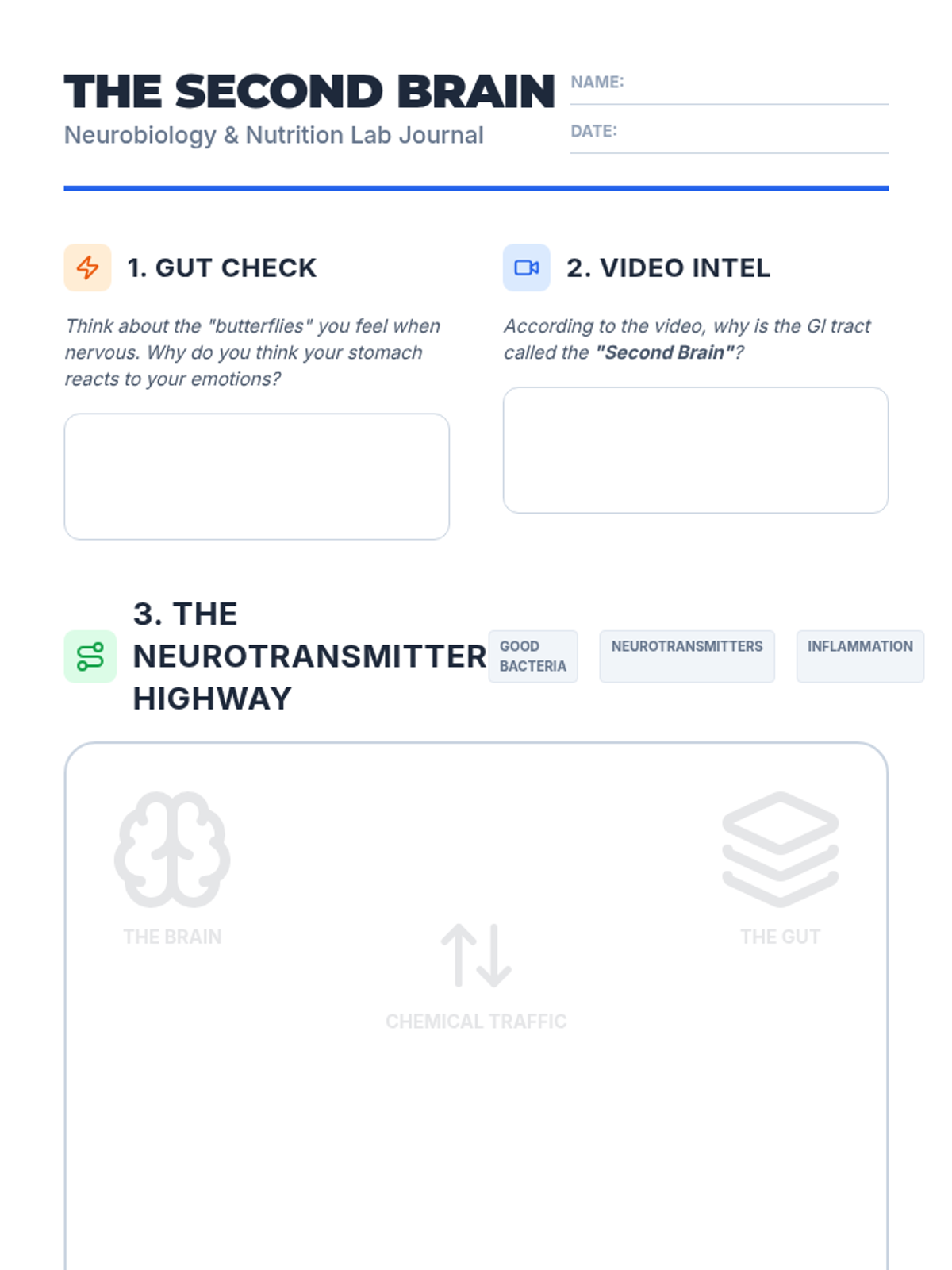
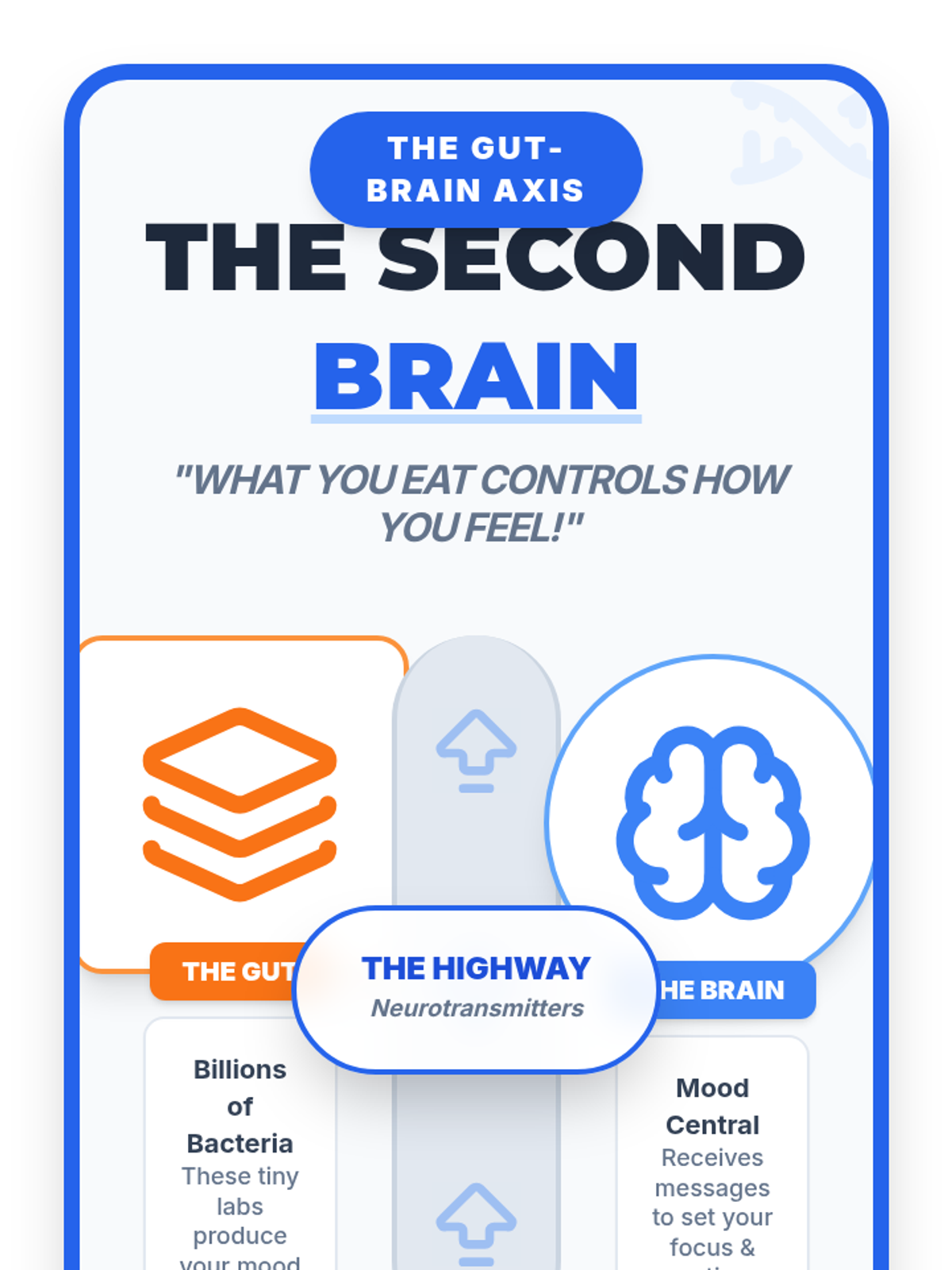
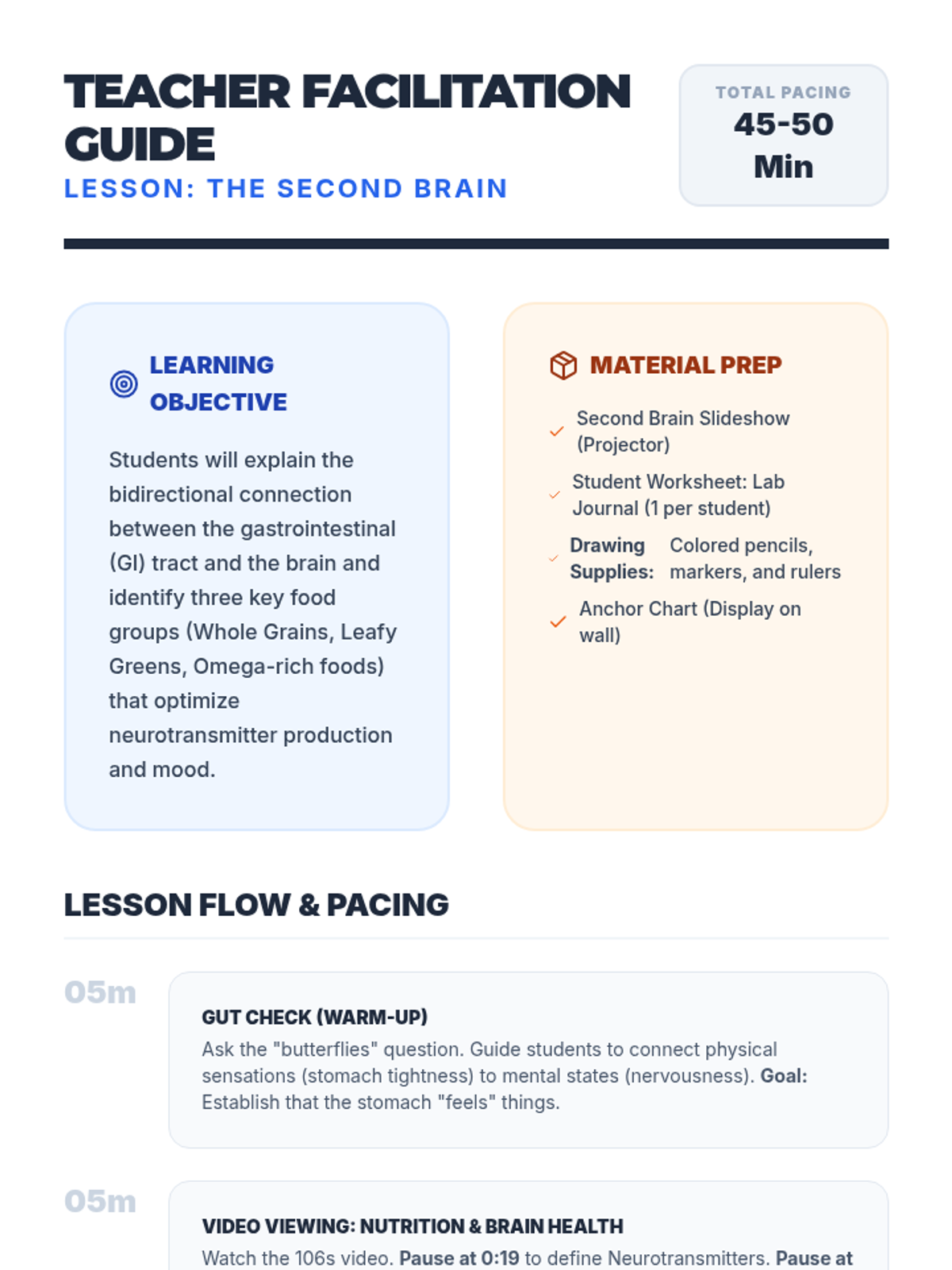
A comprehensive lesson exploring the bidirectional communication between the gut and the brain, focusing on how diet influences neurotransmitter production and mood. Students will visualize the biological 'highway' and identify key food groups that optimize brain function.
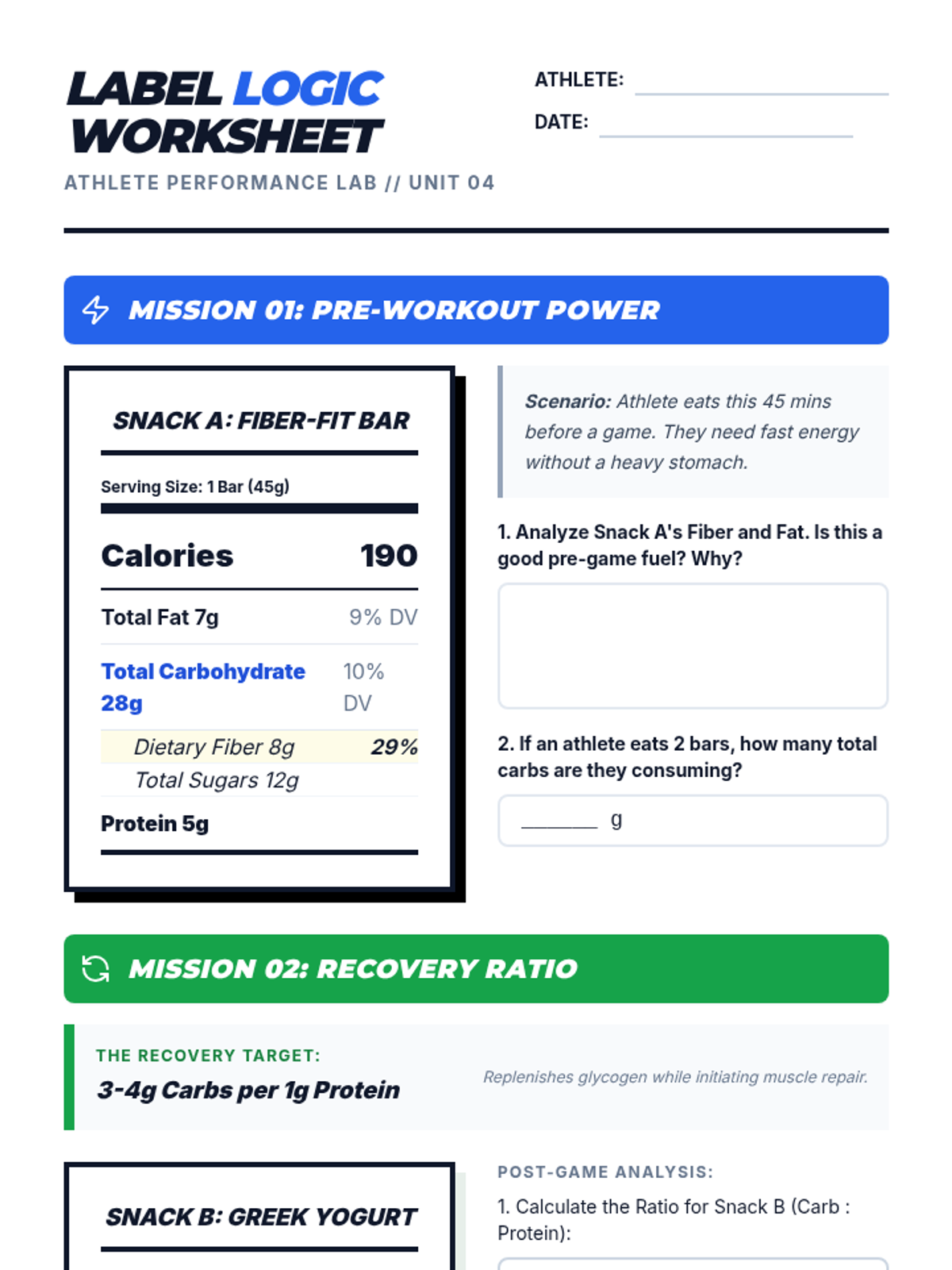
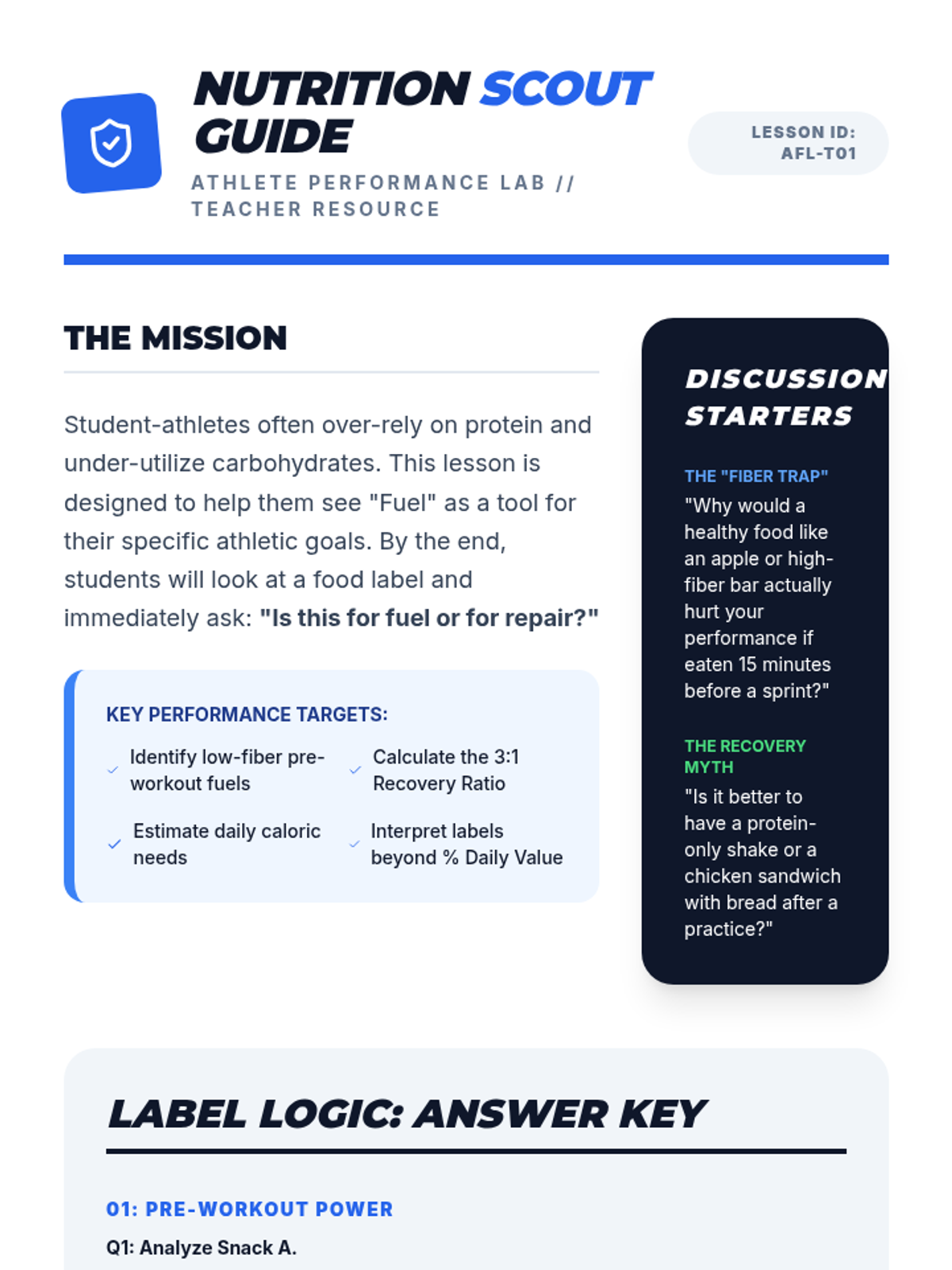
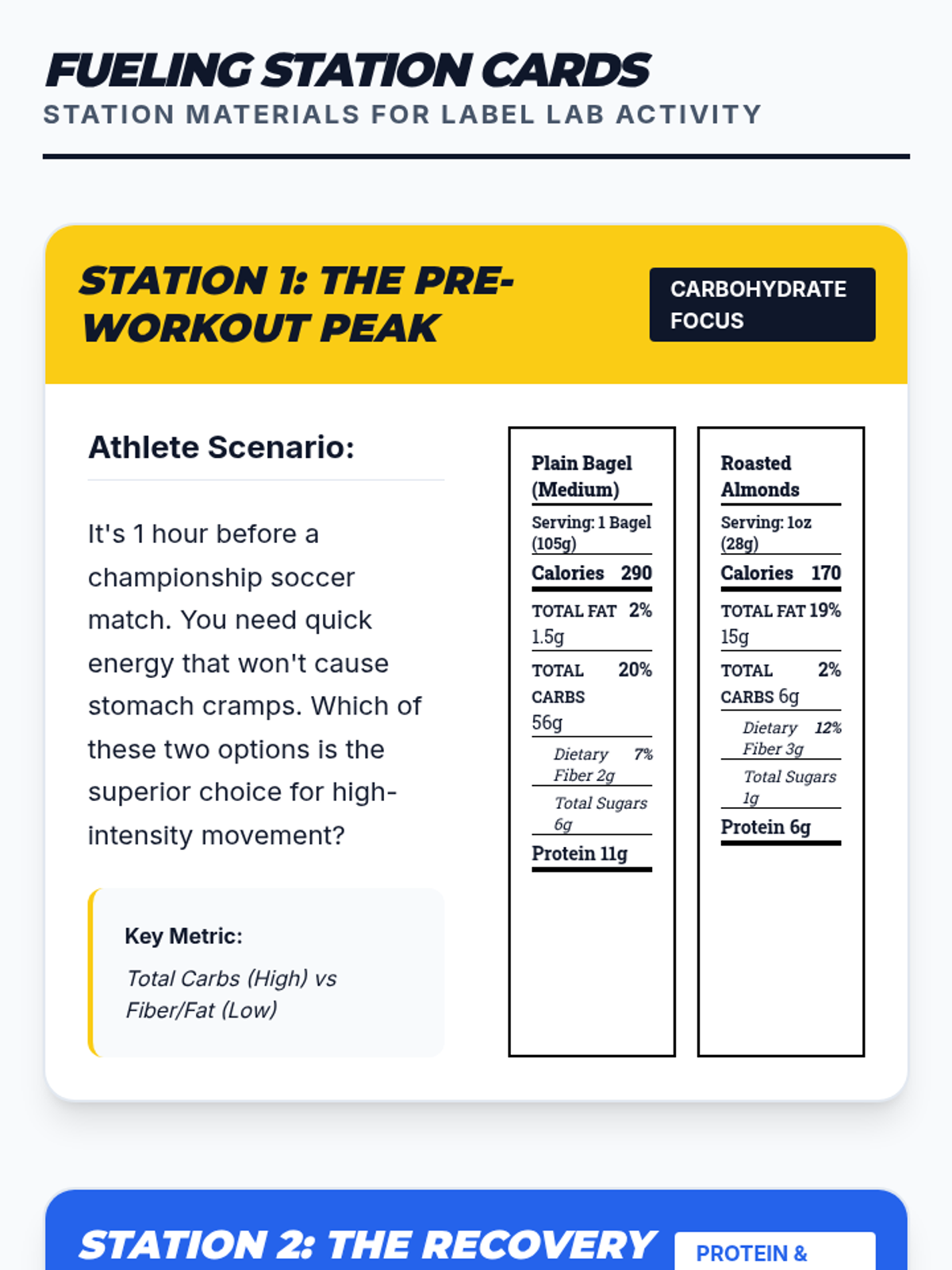
A high-performance lesson on deciphering food labels to optimize pre-workout energy and post-workout recovery for high school athletes. Students learn to identify ideal macronutrient ratios for different training phases and calculate basic caloric needs.
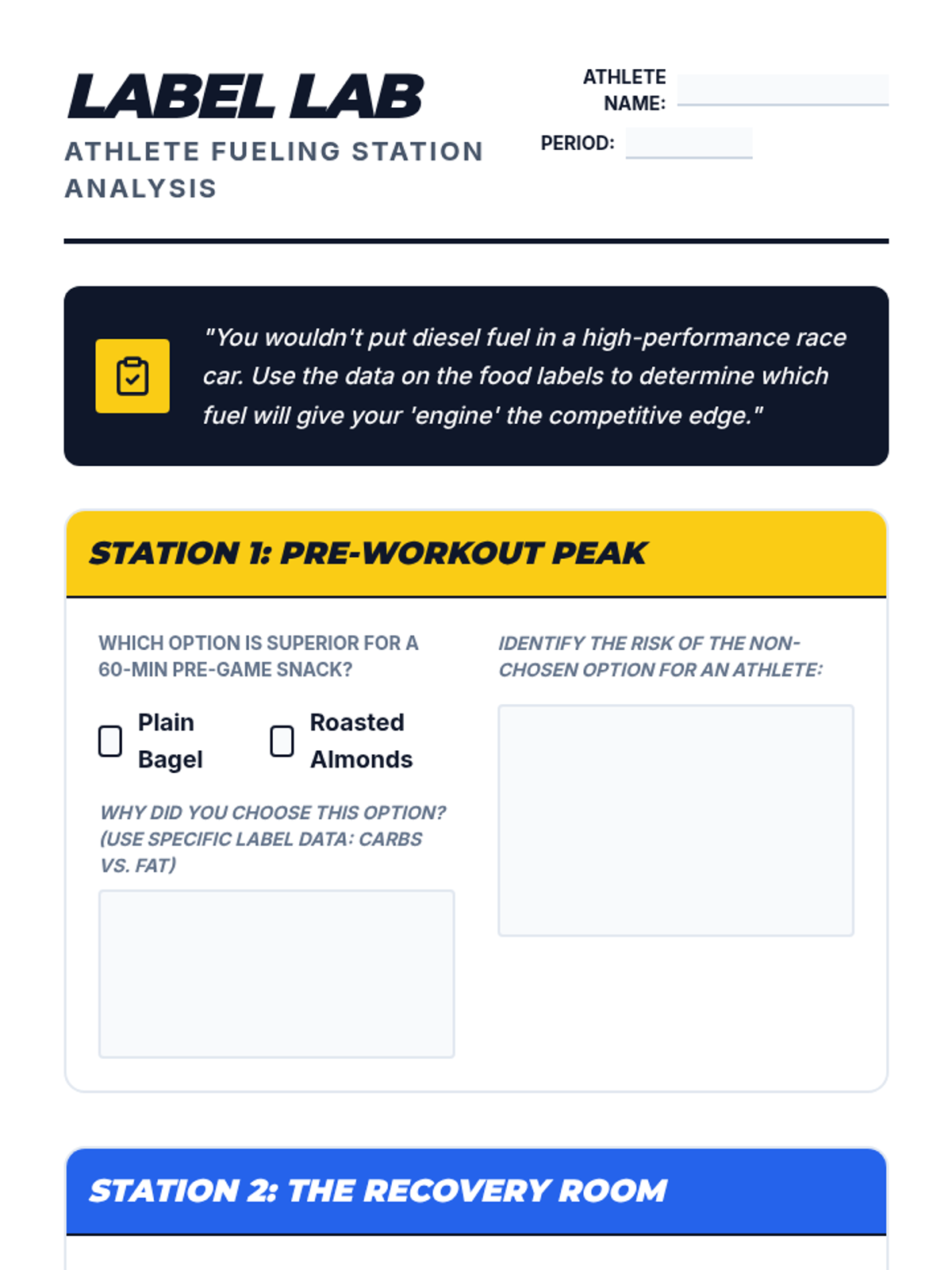
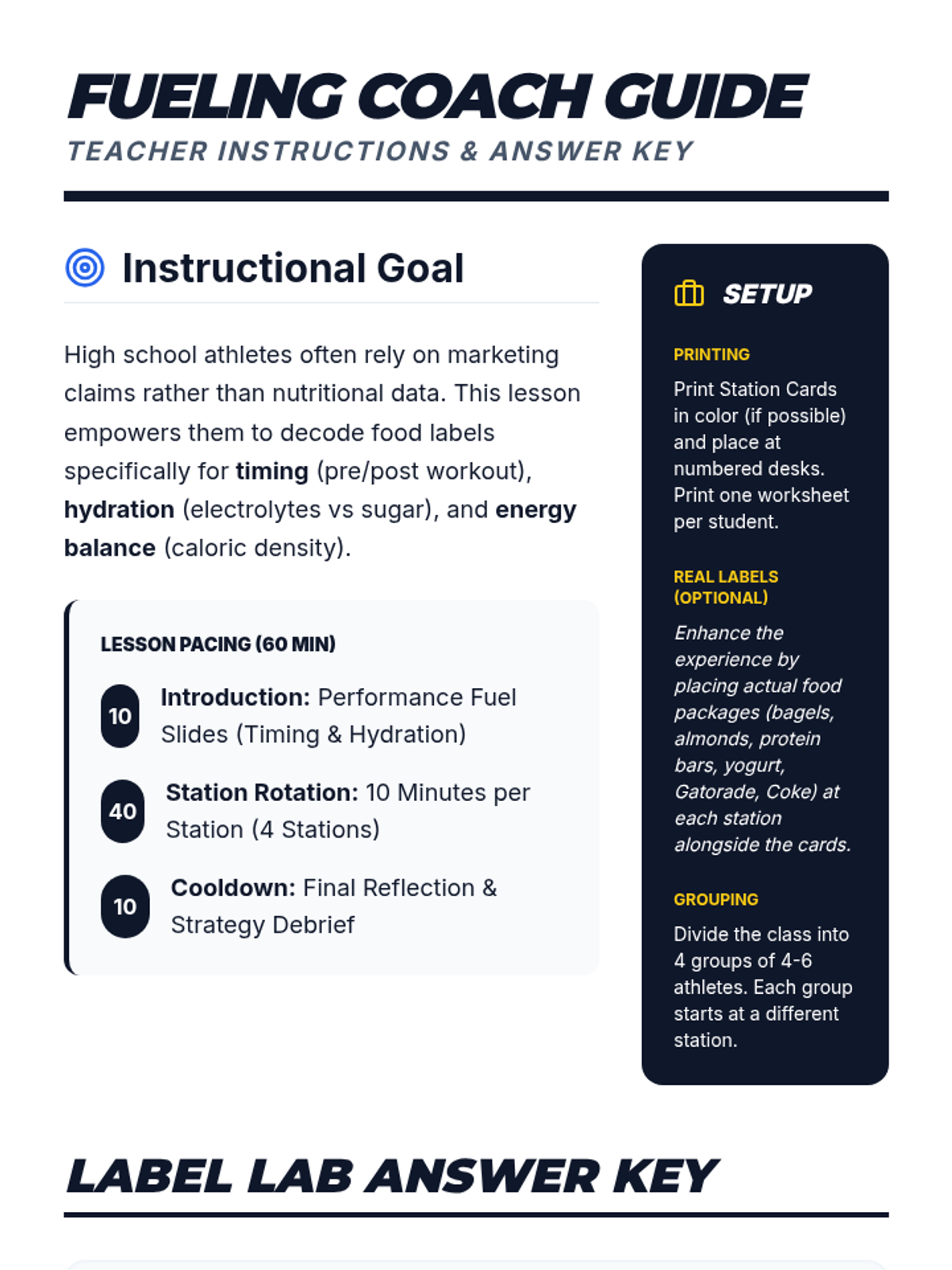
A station-based lesson for high school athletes to master reading food labels for optimal performance, recovery, and hydration. Students will analyze macronutrient timing, identify hidden sugars, and calculate energy needs based on nutritional data.
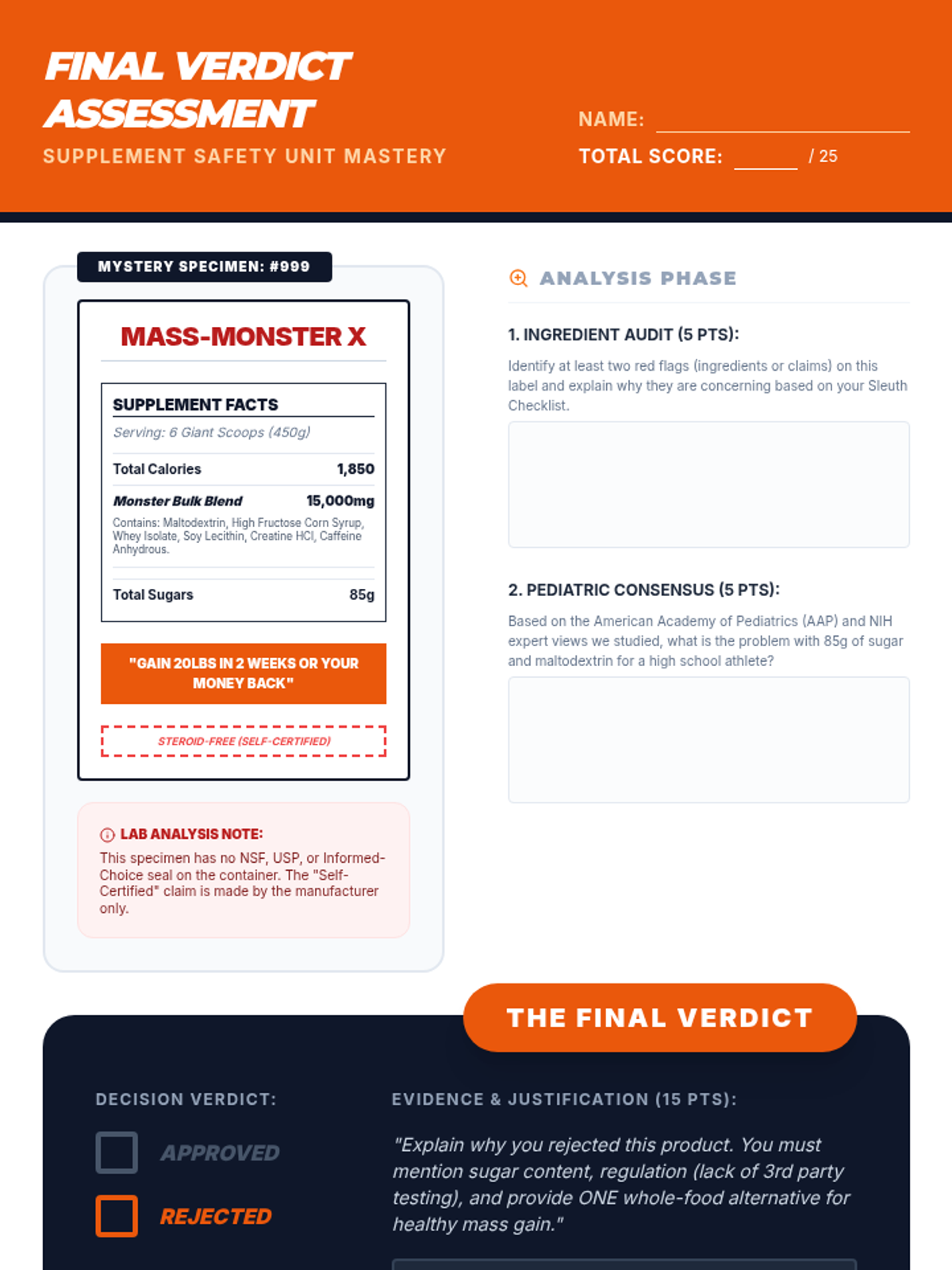
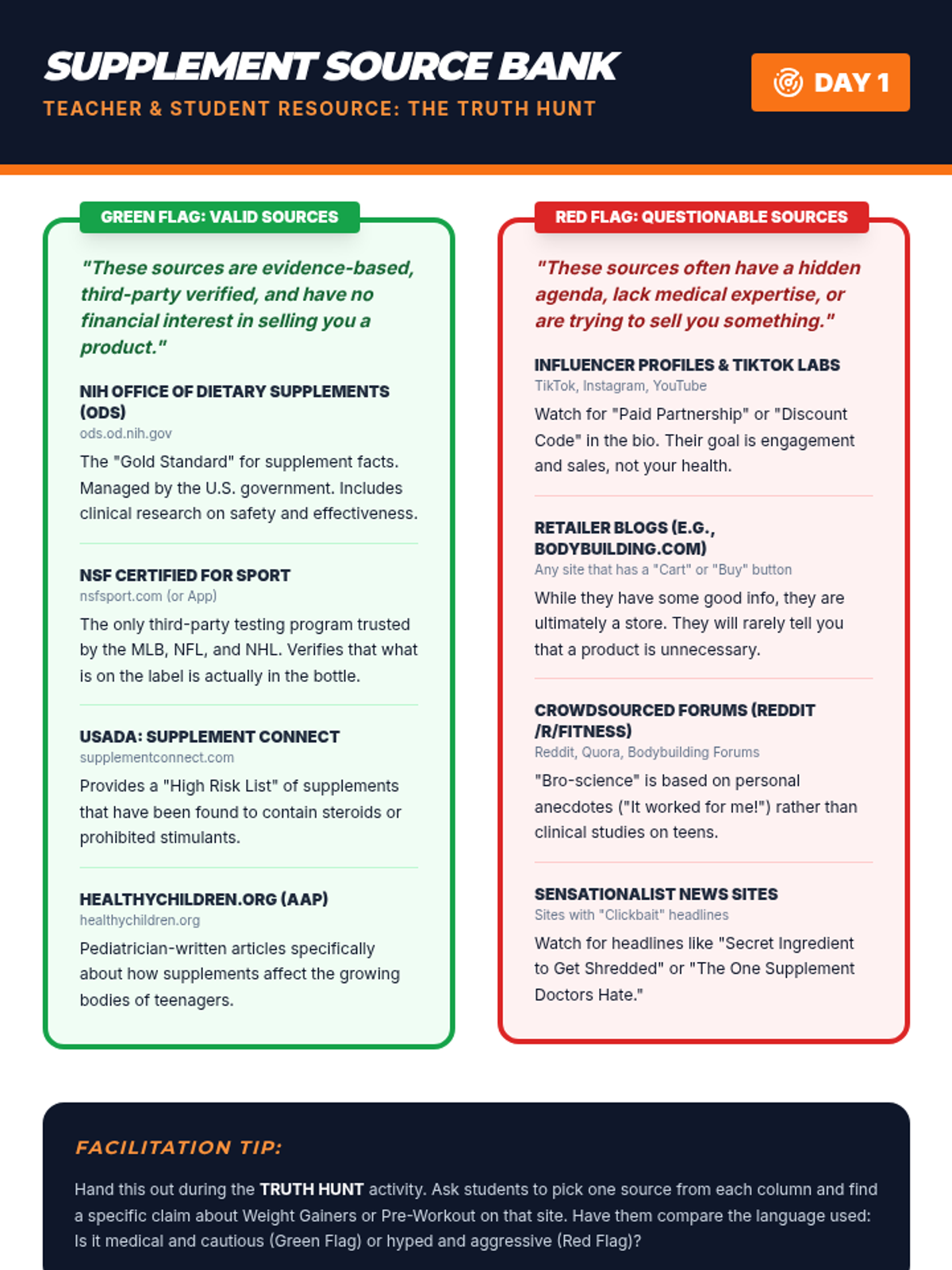
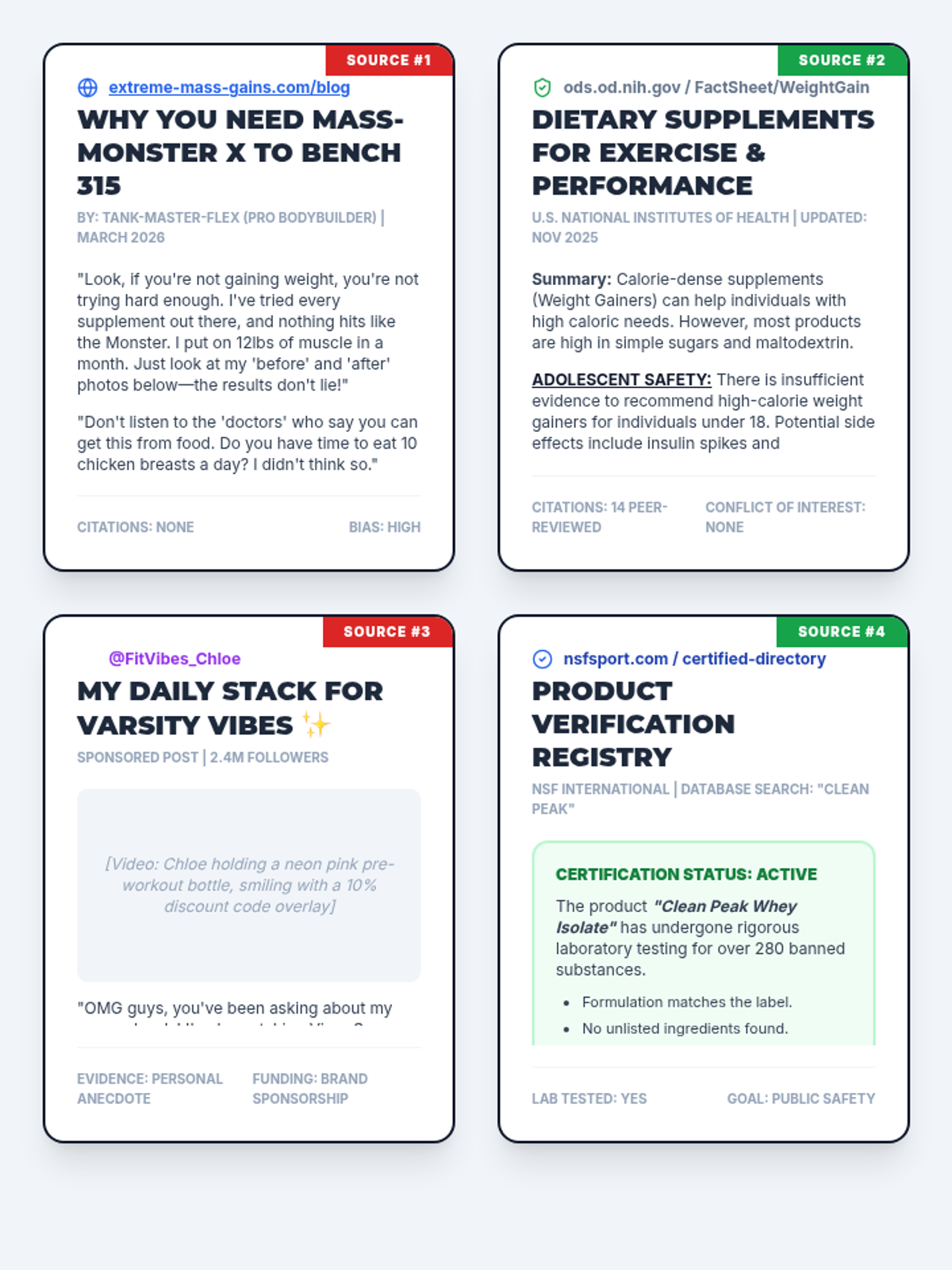
The unit final where students apply their analytical skills to a "mystery specimen" and provide a research-backed verdict for a teen athlete.
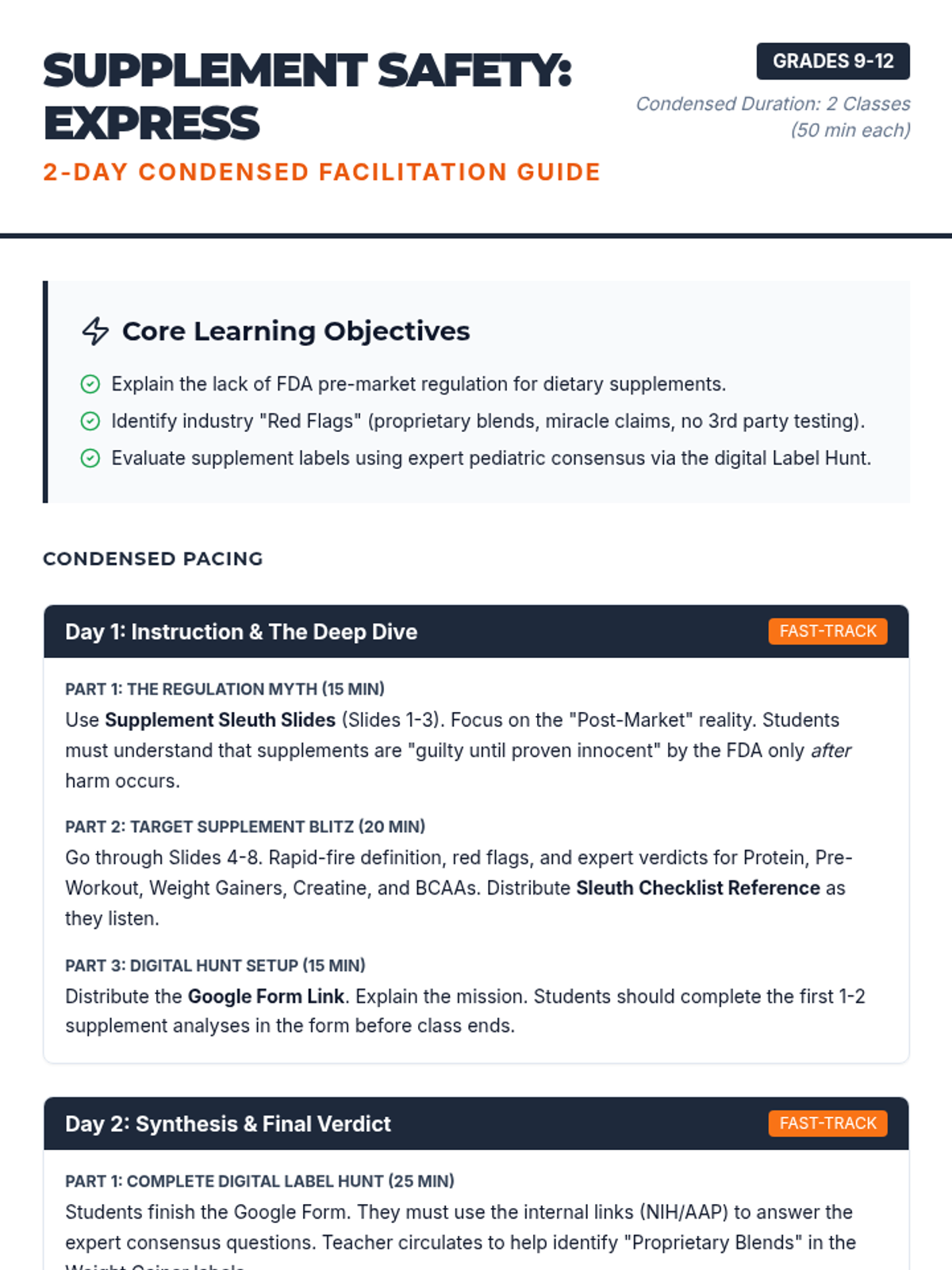
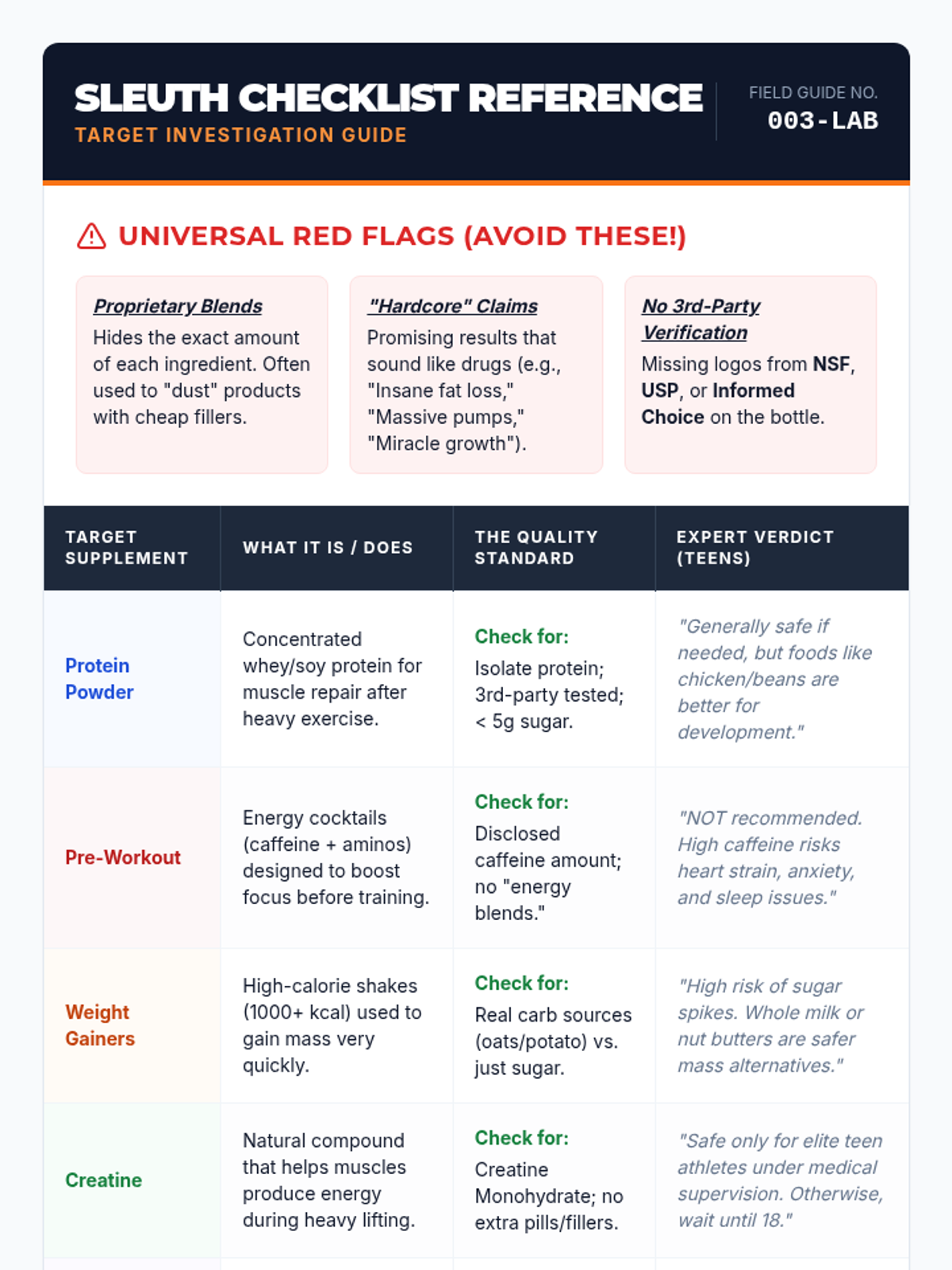
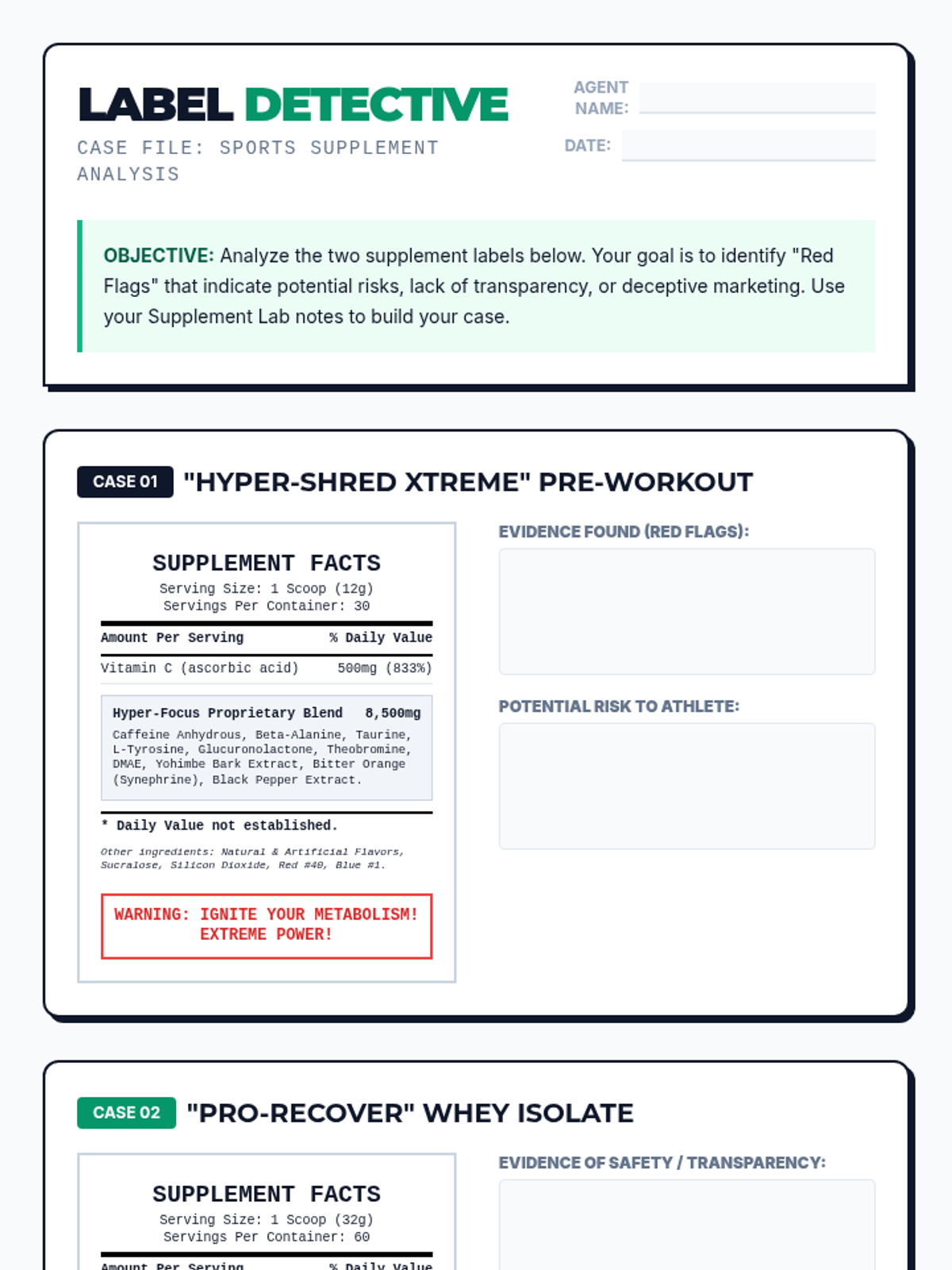
A fast-paced introduction where students explore the unregulated world of fitness supplements and use a "red flag" checklist to hunt for industry truths on digital specimens.
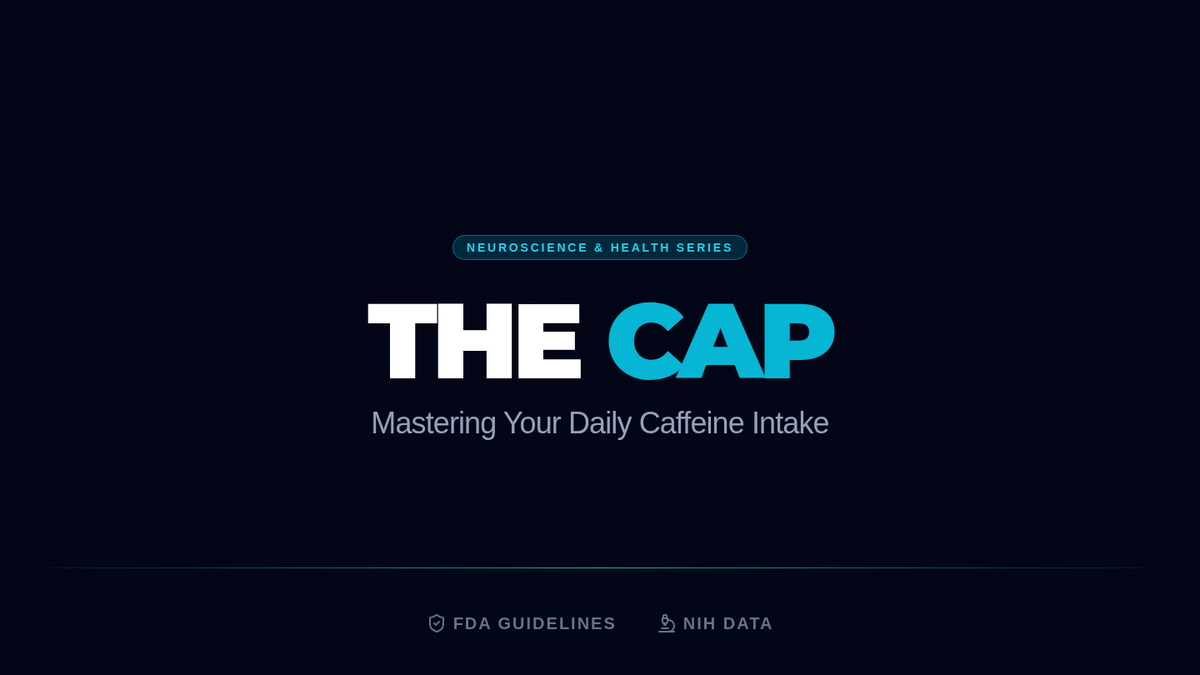
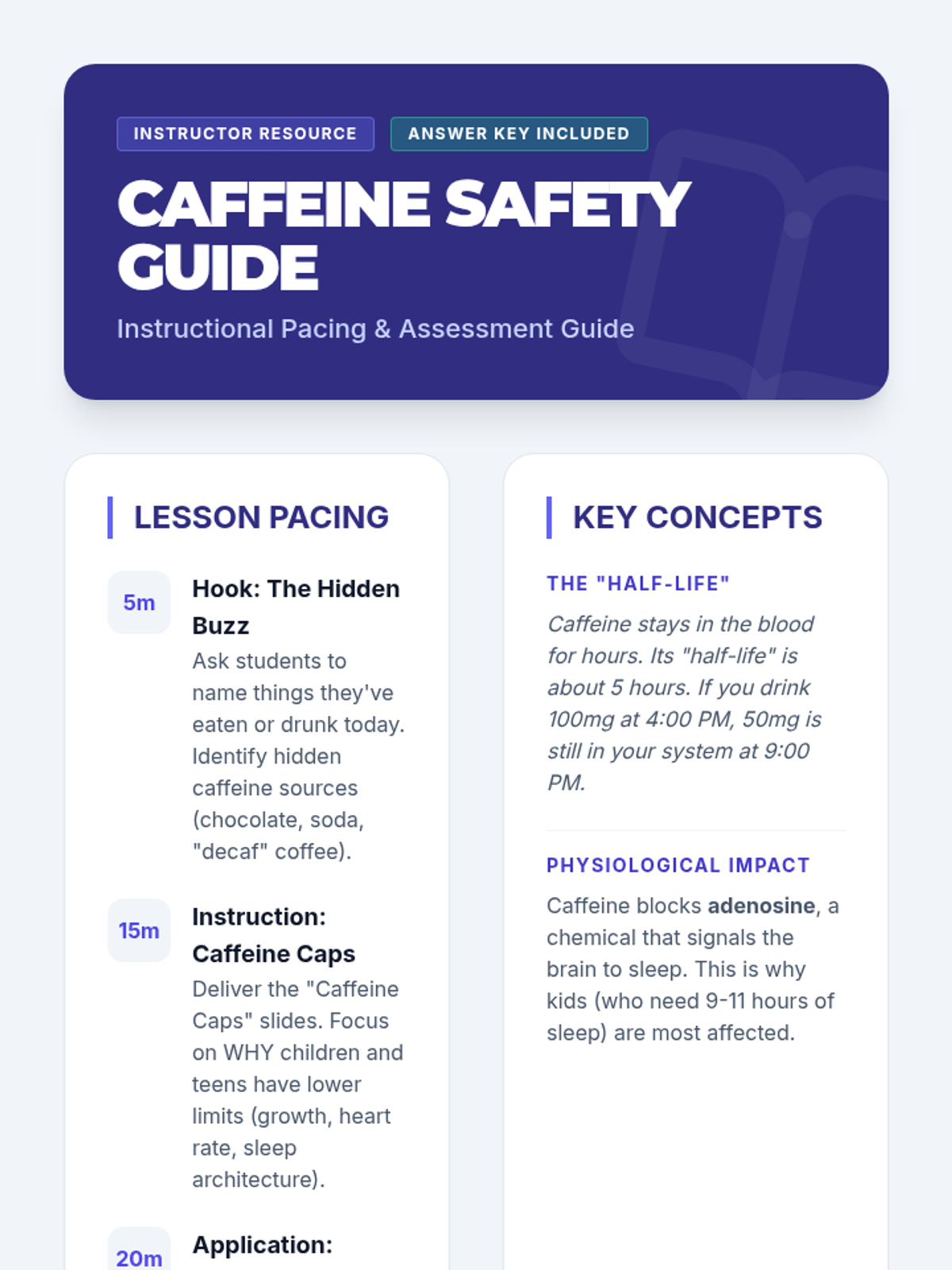
This lesson covers the physiological effects of caffeine on the body and provides clear, evidence-based guidelines for safe consumption across different age groups based on FDA and NIH standards.
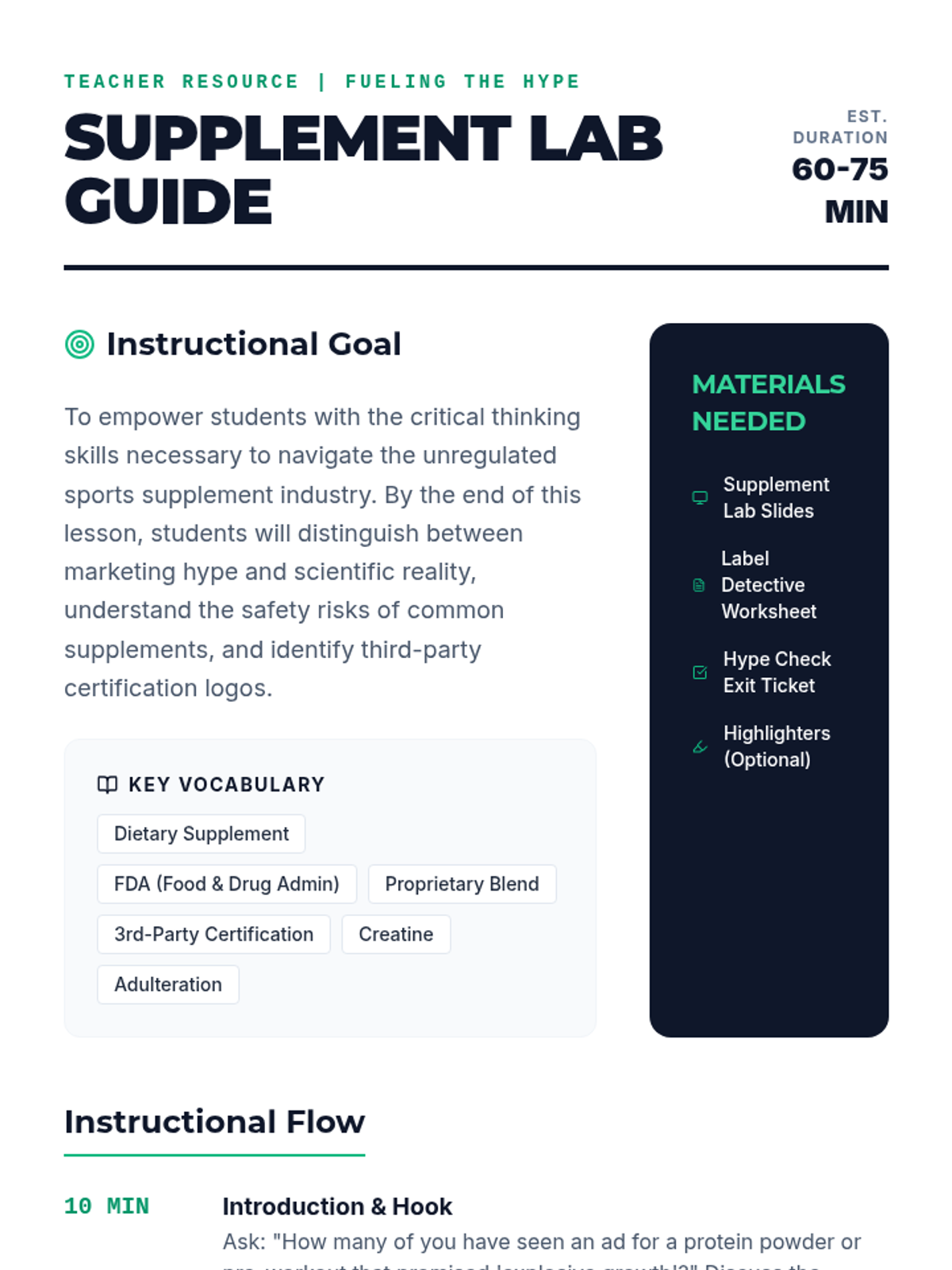
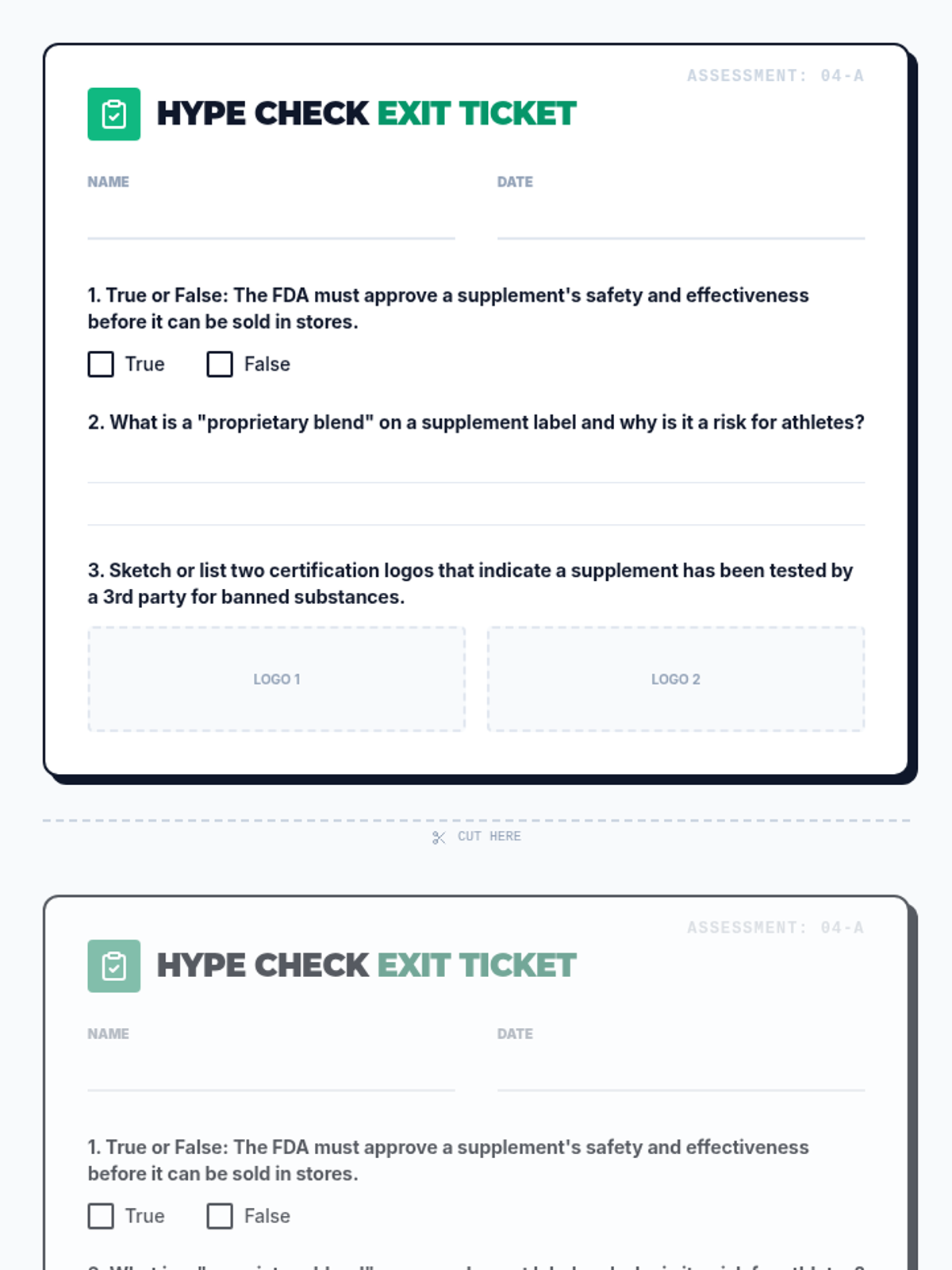
A comprehensive lesson exploring the world of sports supplements, focusing on their purported benefits, potential health risks, and the reality of industry regulation. Students will learn to critically analyze labels and marketing claims.
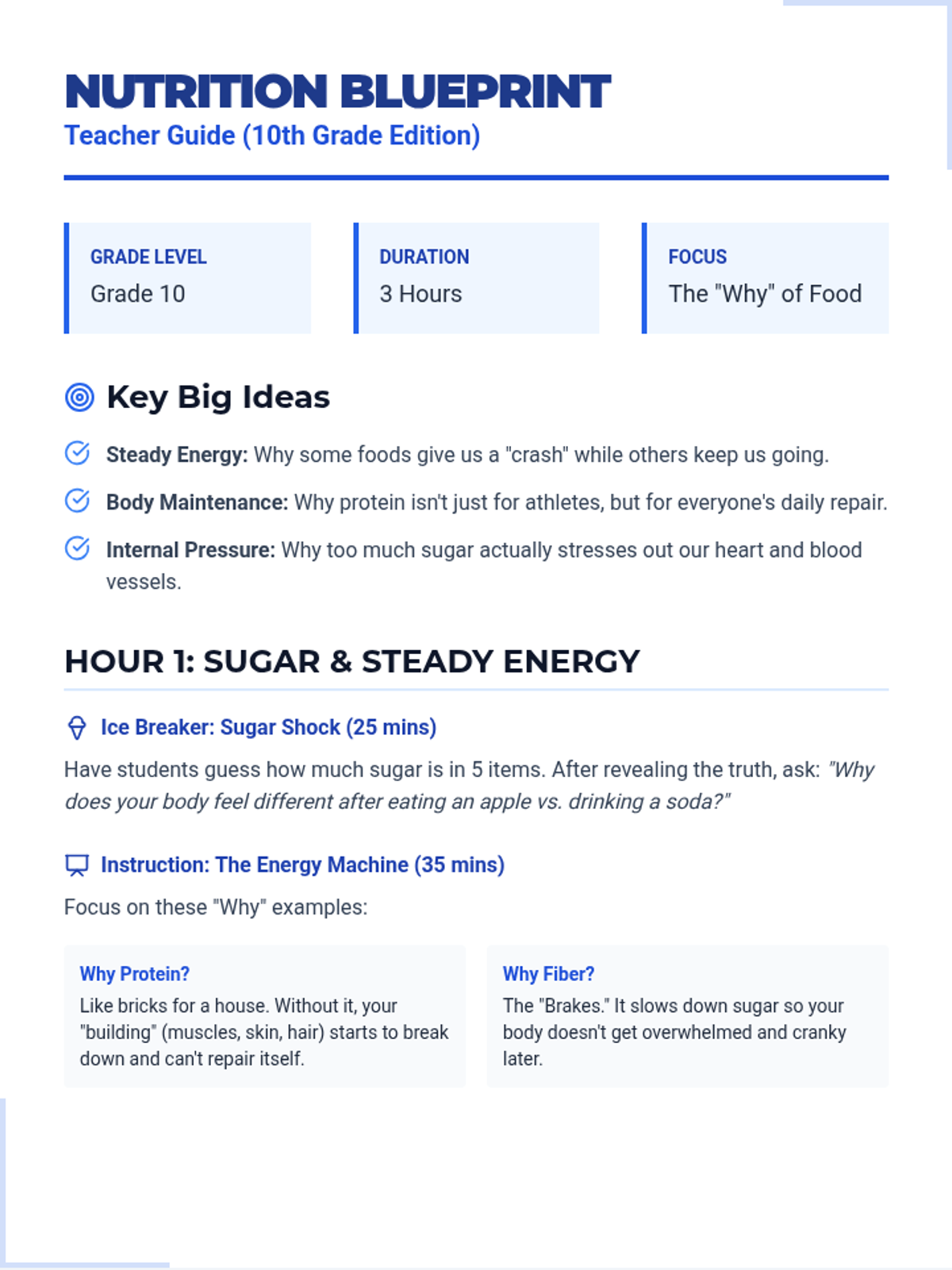
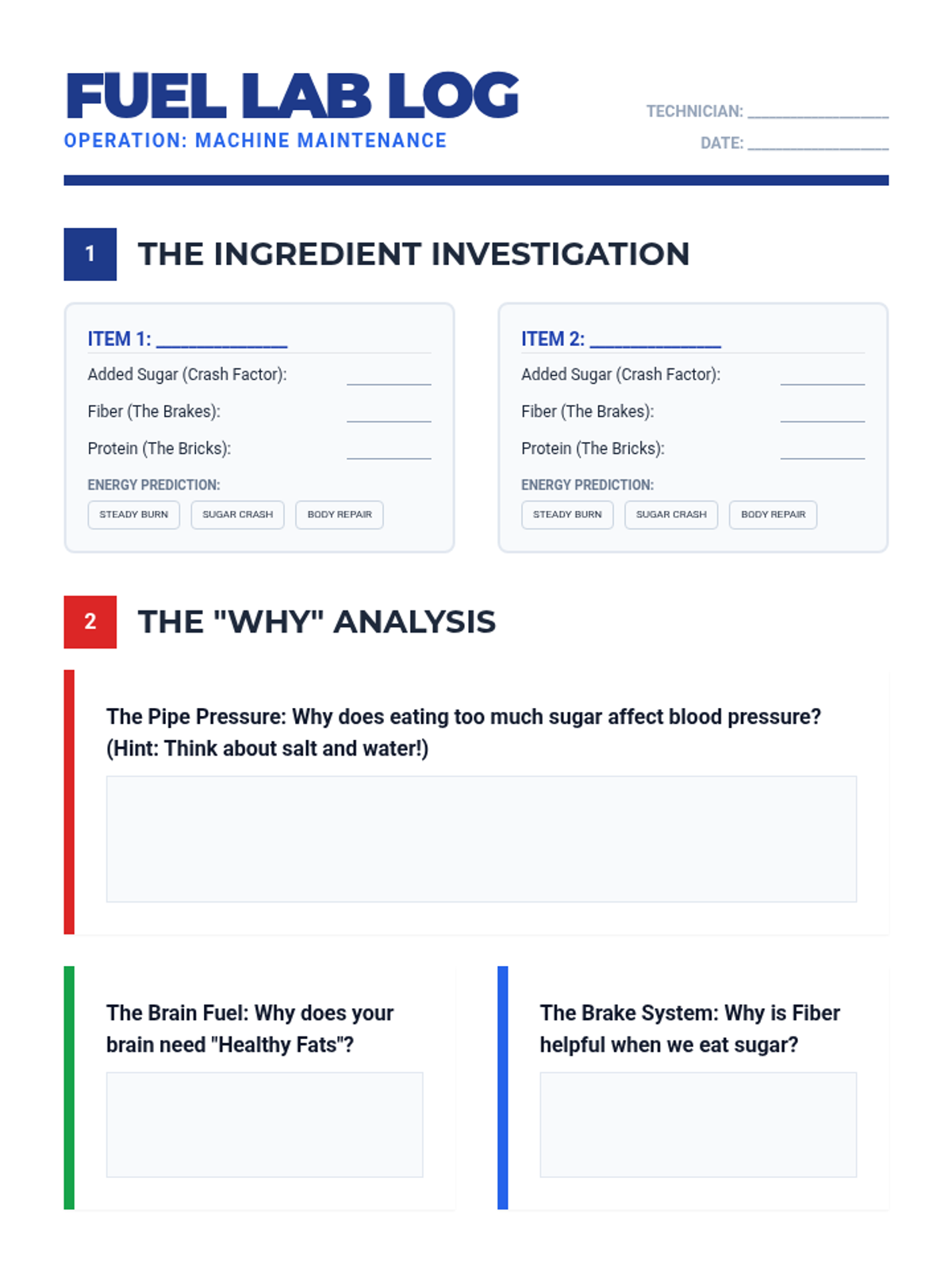
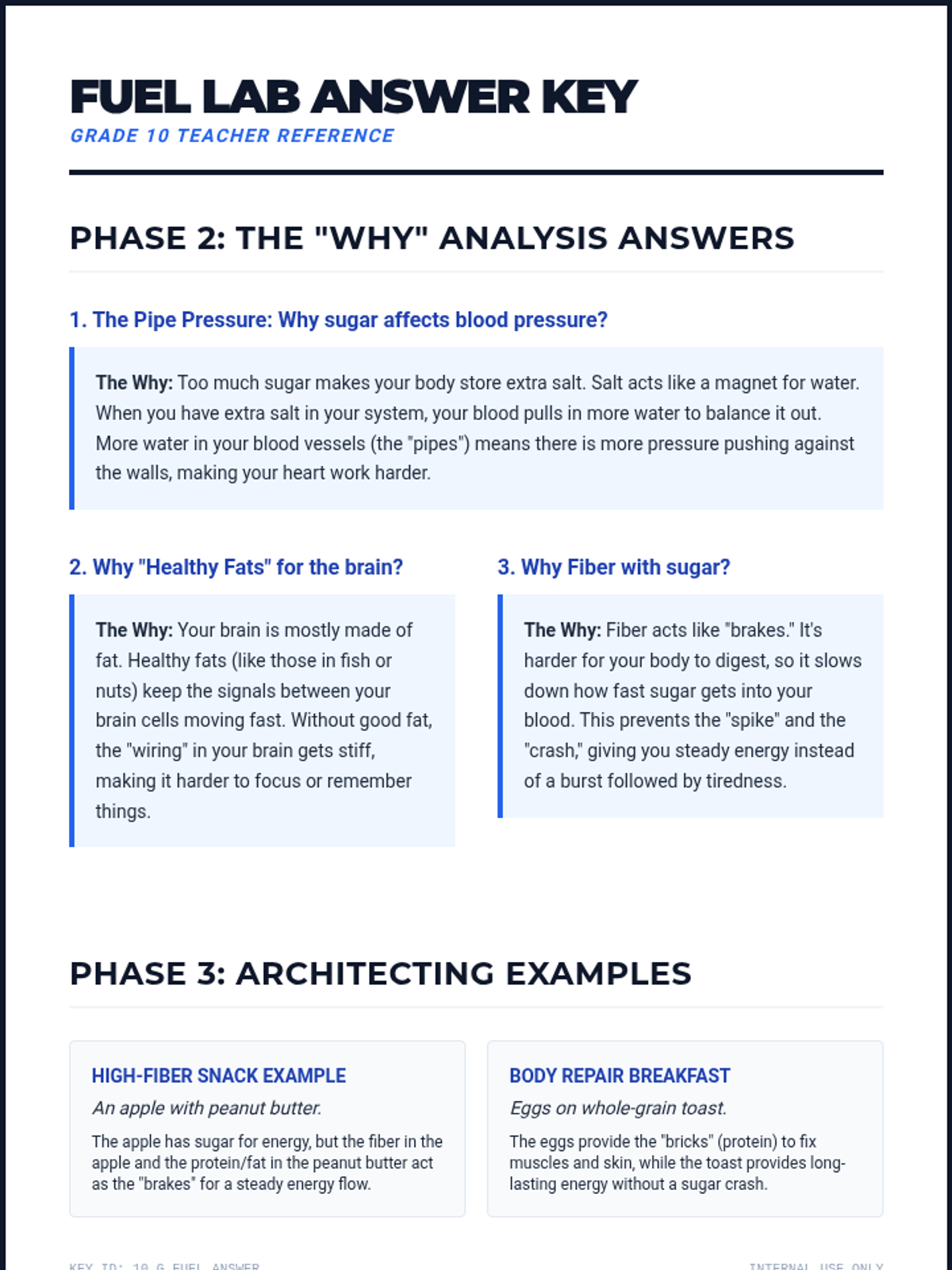
A 3-hour lesson for 10th graders focusing on nutrition as "fuel for the body machine." Uses relatable analogies and simplified terms to explain how sugar, protein, and fats affect energy, mood, and health.
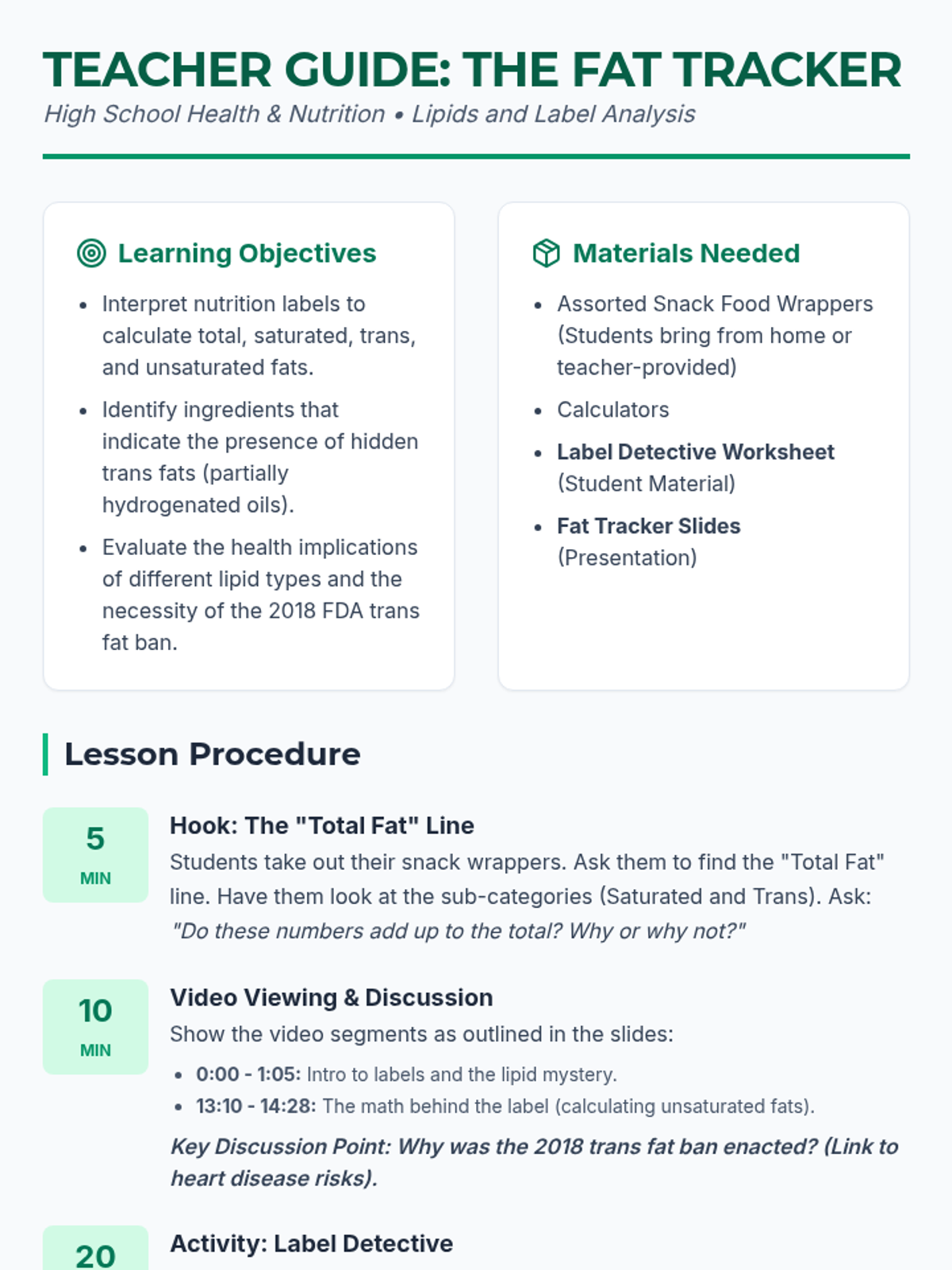
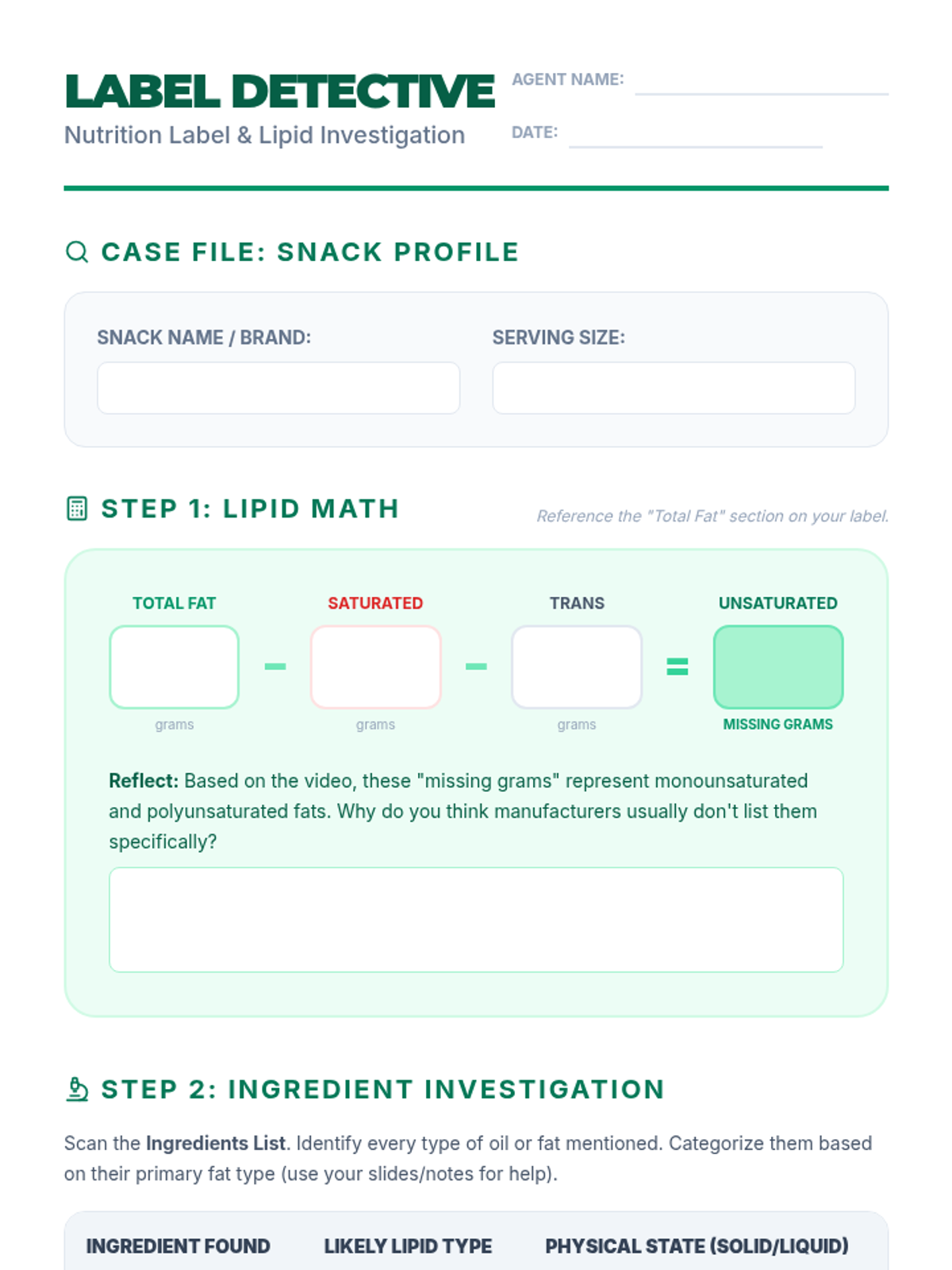
Students will investigate the types of lipids found in common snack foods by analyzing nutrition labels and ingredient lists. They will perform 'label math' to identify hidden unsaturated fats and evaluate the health impact of trans fats and the 2018 FDA ban.
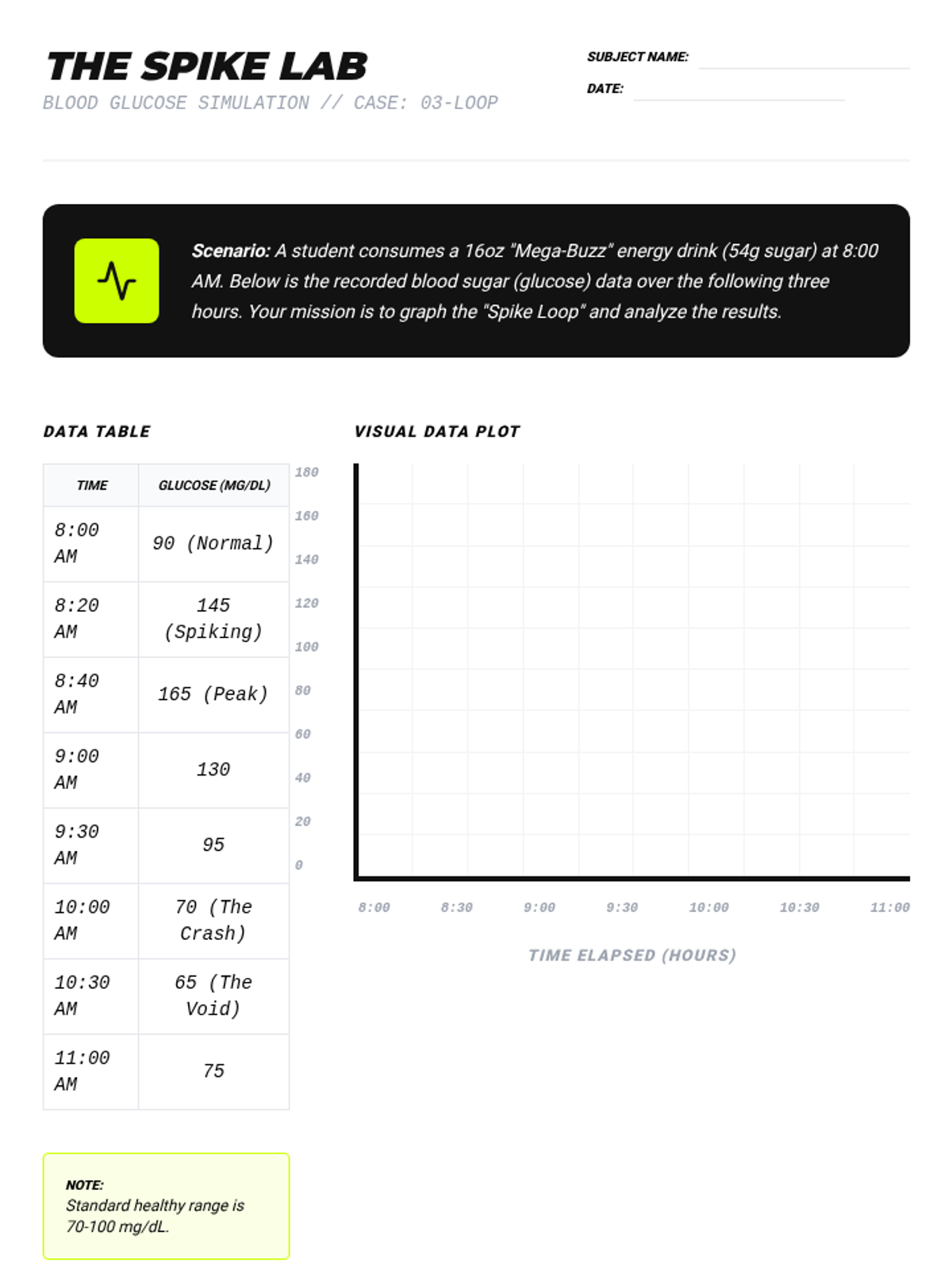
An examination of the combined effects of sugar and caffeine on the body, including blood sugar spikes, crashes, and impacts on school performance.
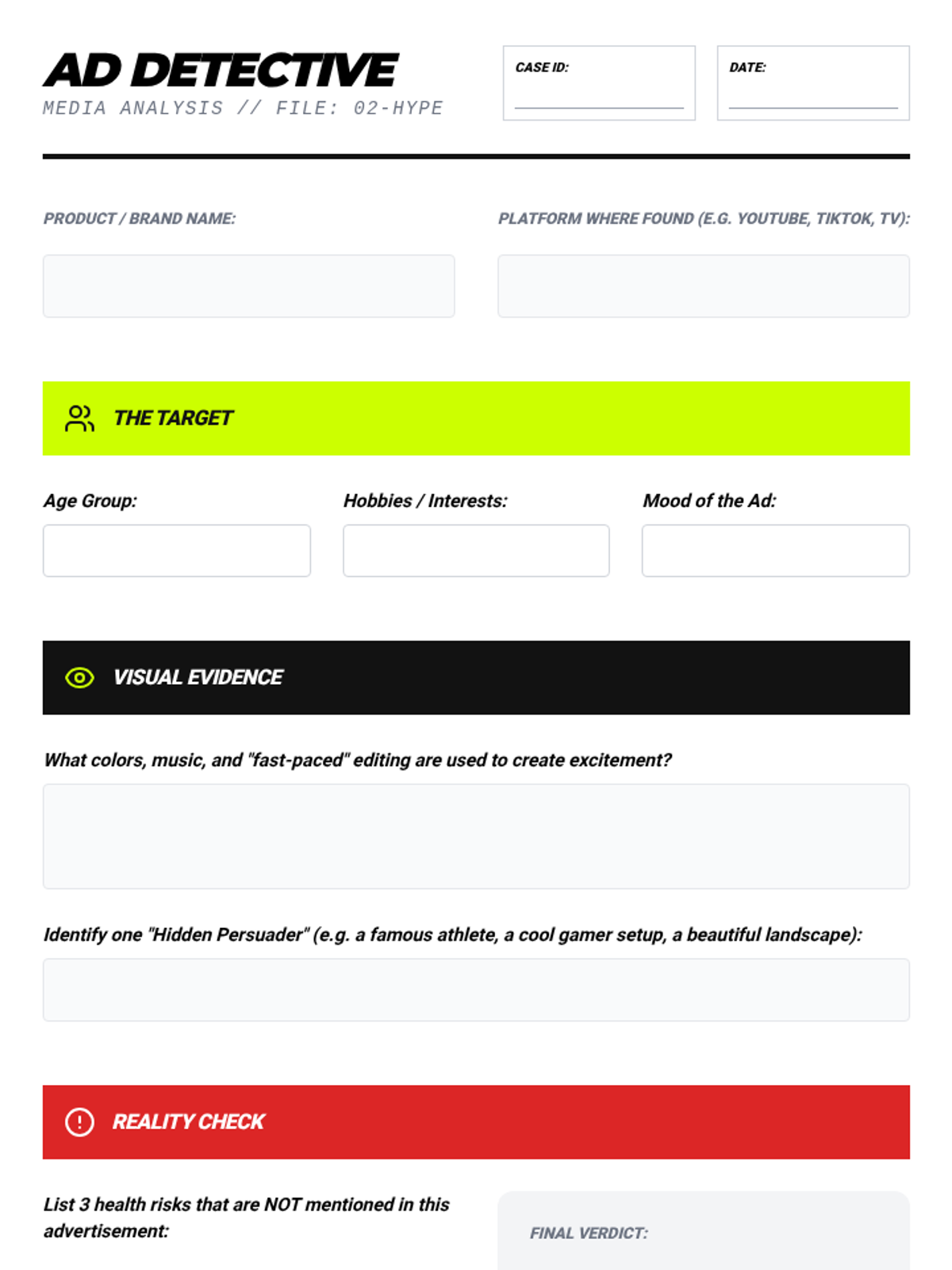
Students analyze marketing tactics used by energy drink companies to target teens and discuss how these strategies distract from health risks.
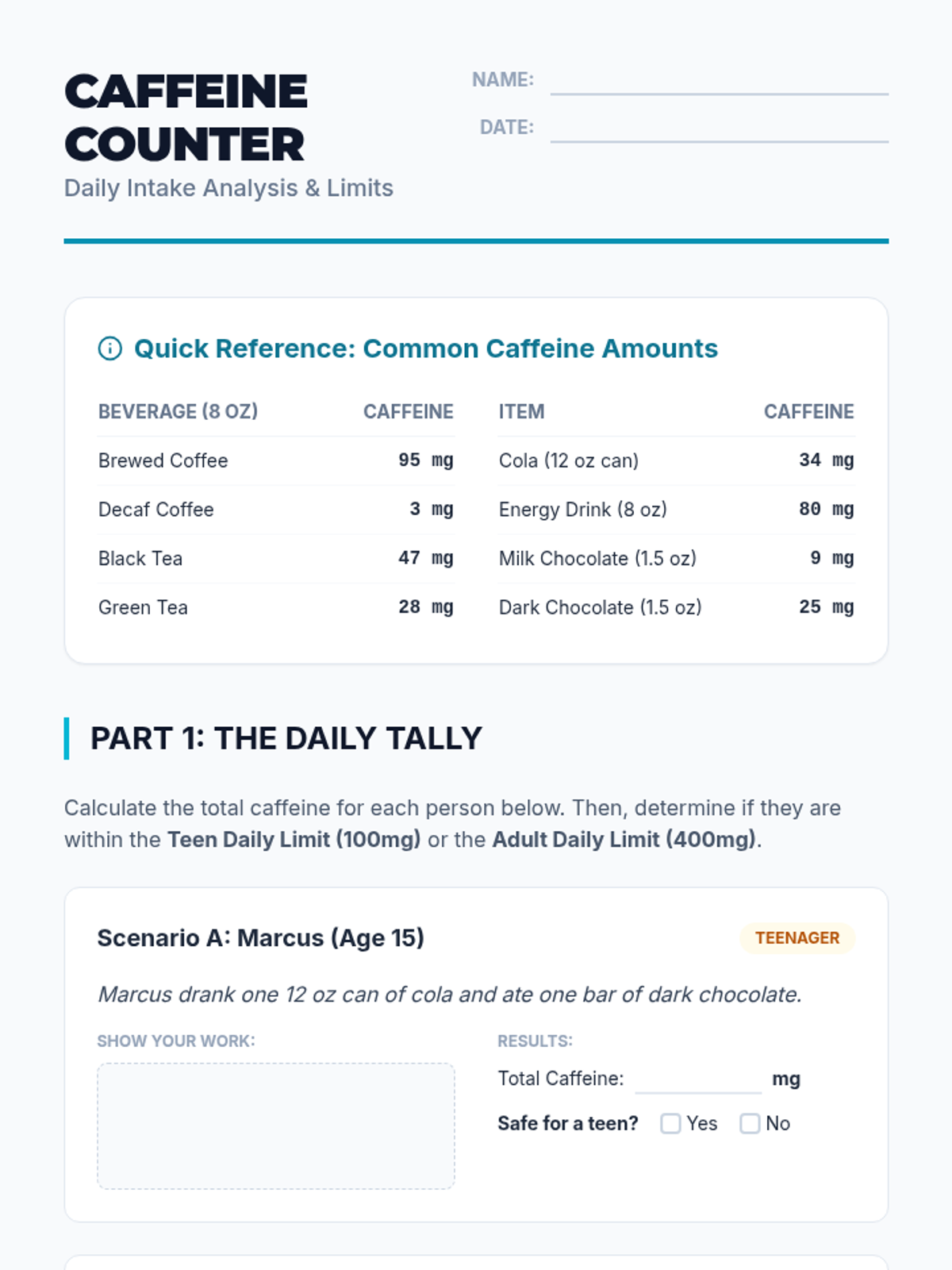
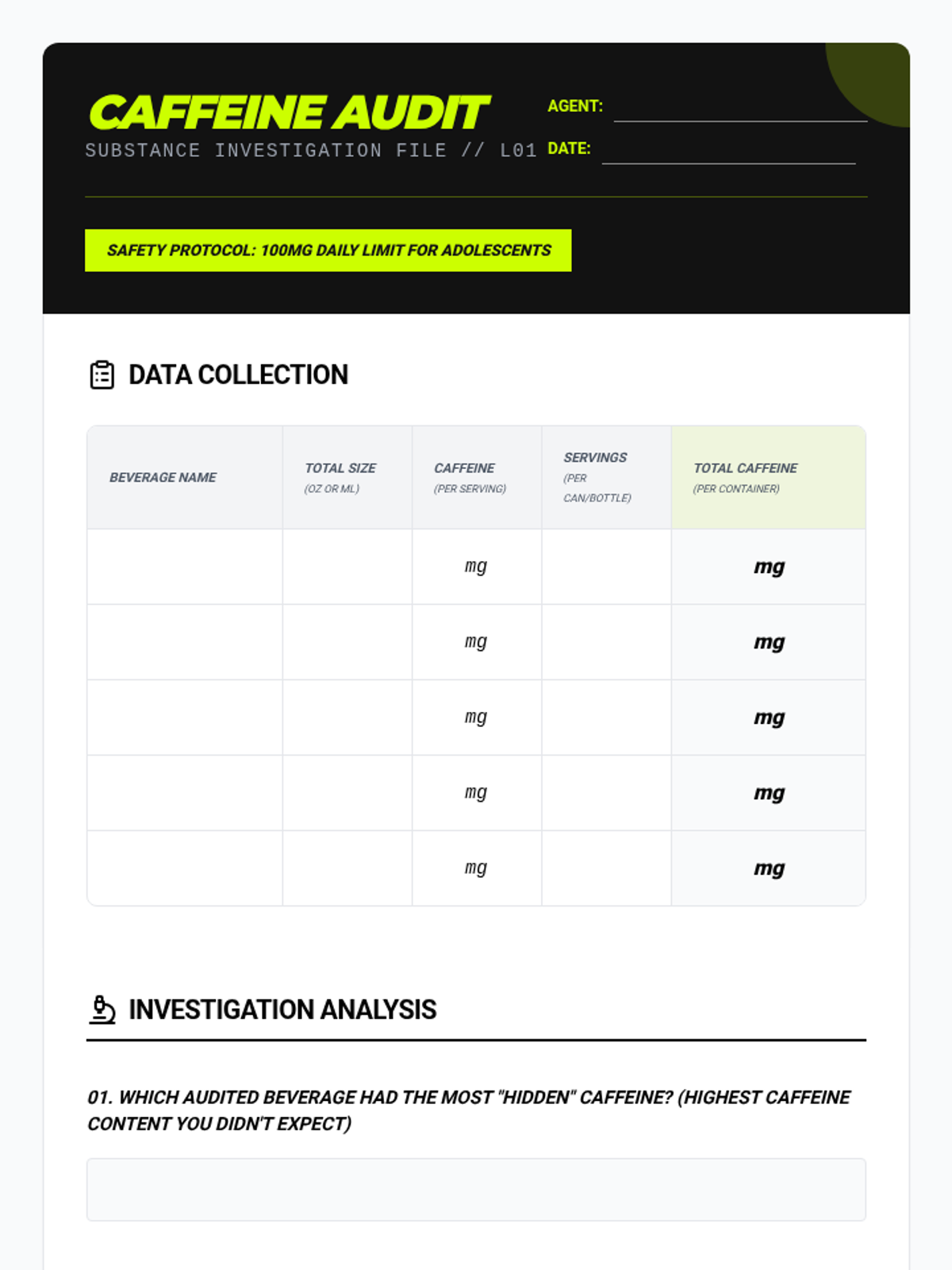
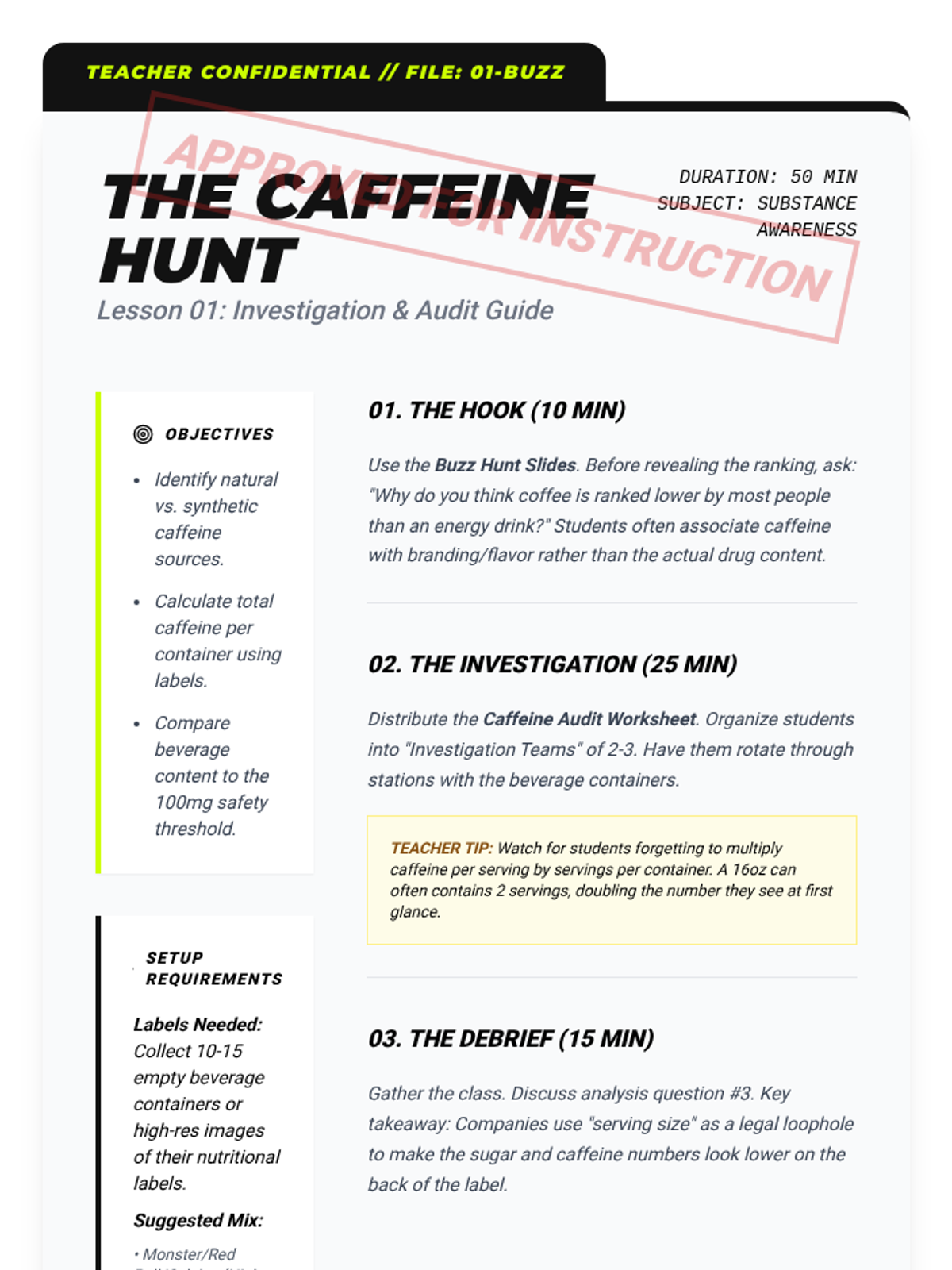
Students identify various sources of caffeine and compare their content to recommended daily limits for adolescents through an audit of popular beverages.