A 2-nd grade lesson focusing on the 'Ones First' rule and the importance of zero as a placeholder in subtraction without regrouping. Students use role-play to master the procedural steps of the subtraction algorithm.
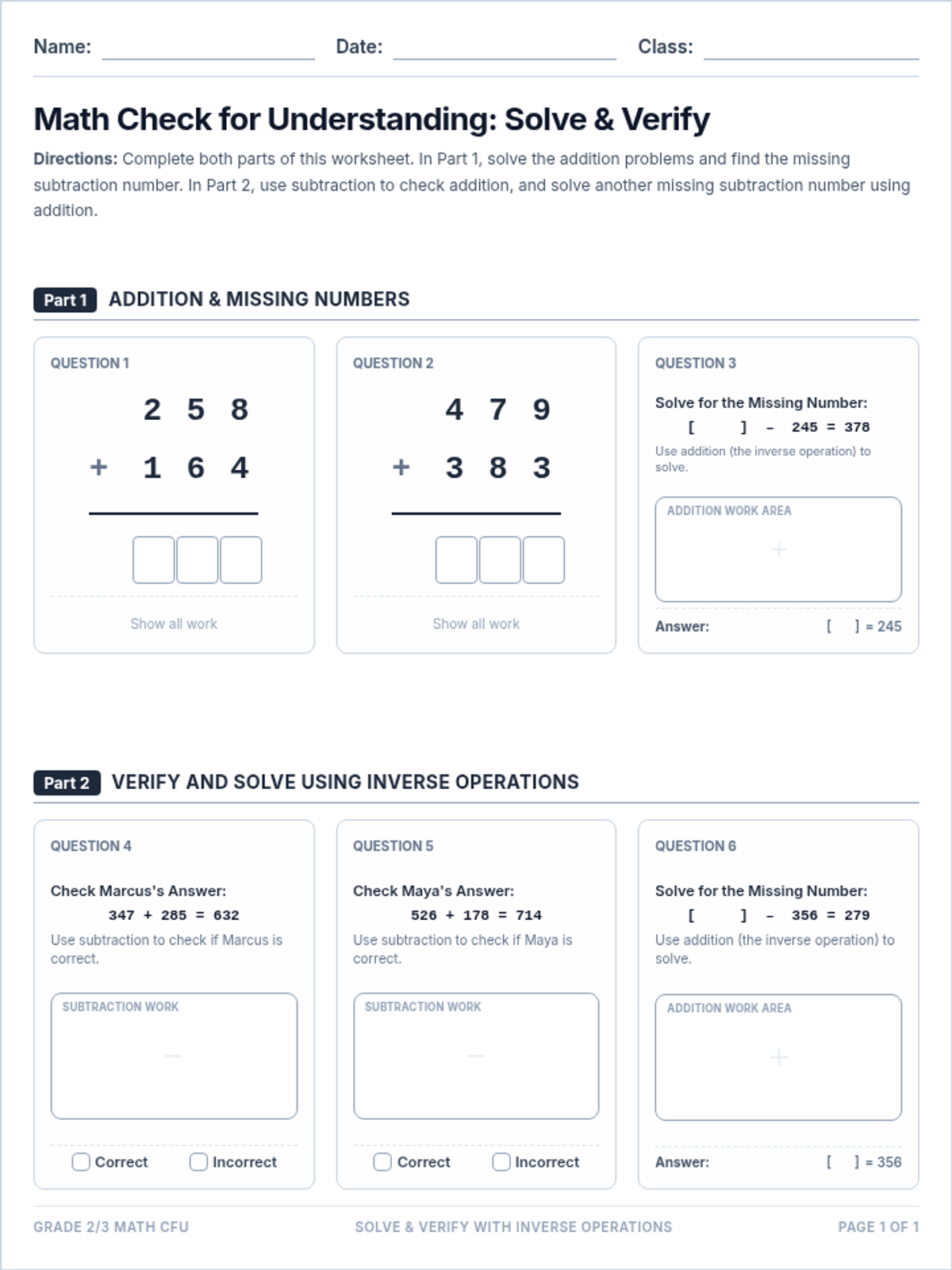
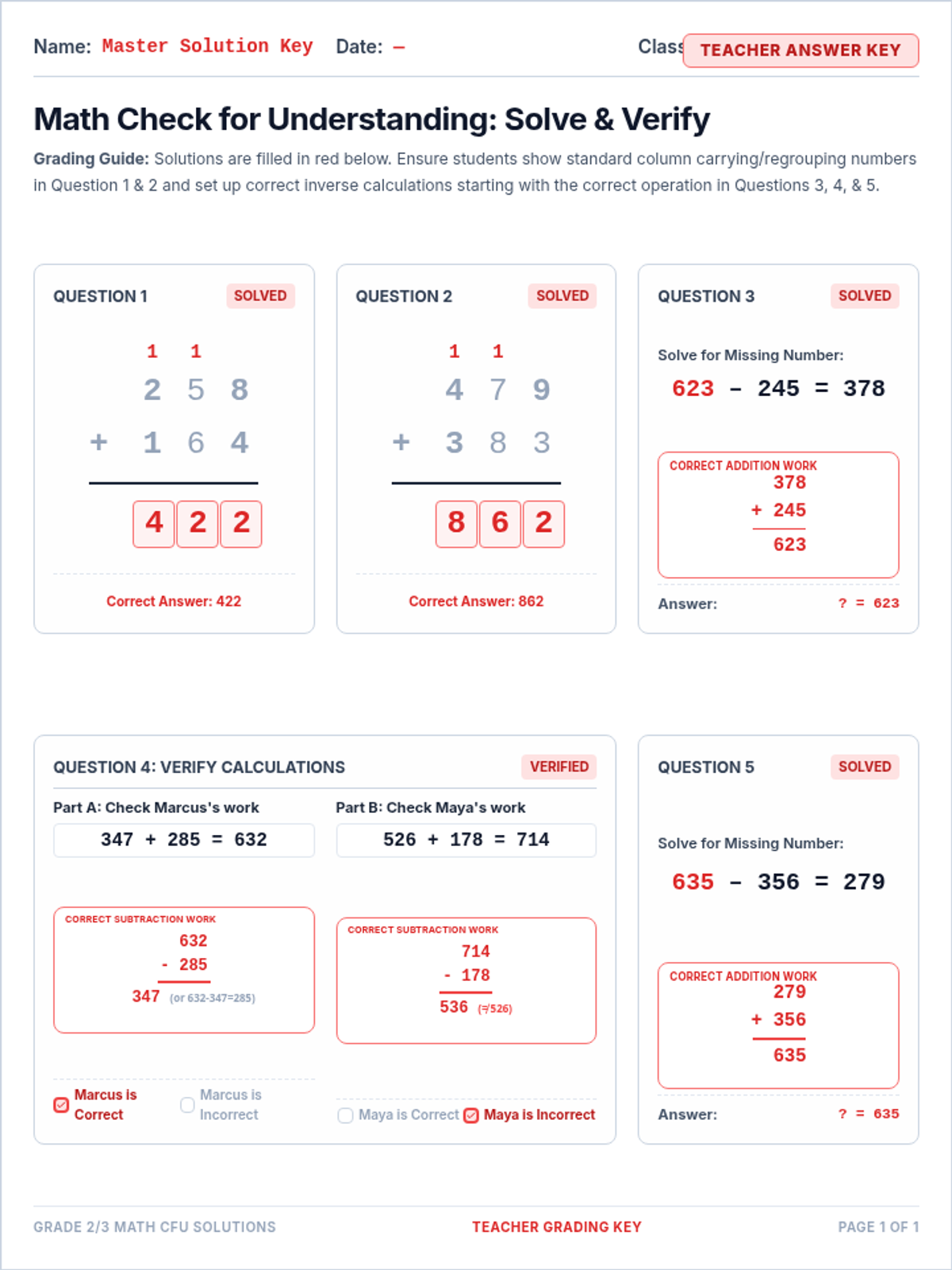
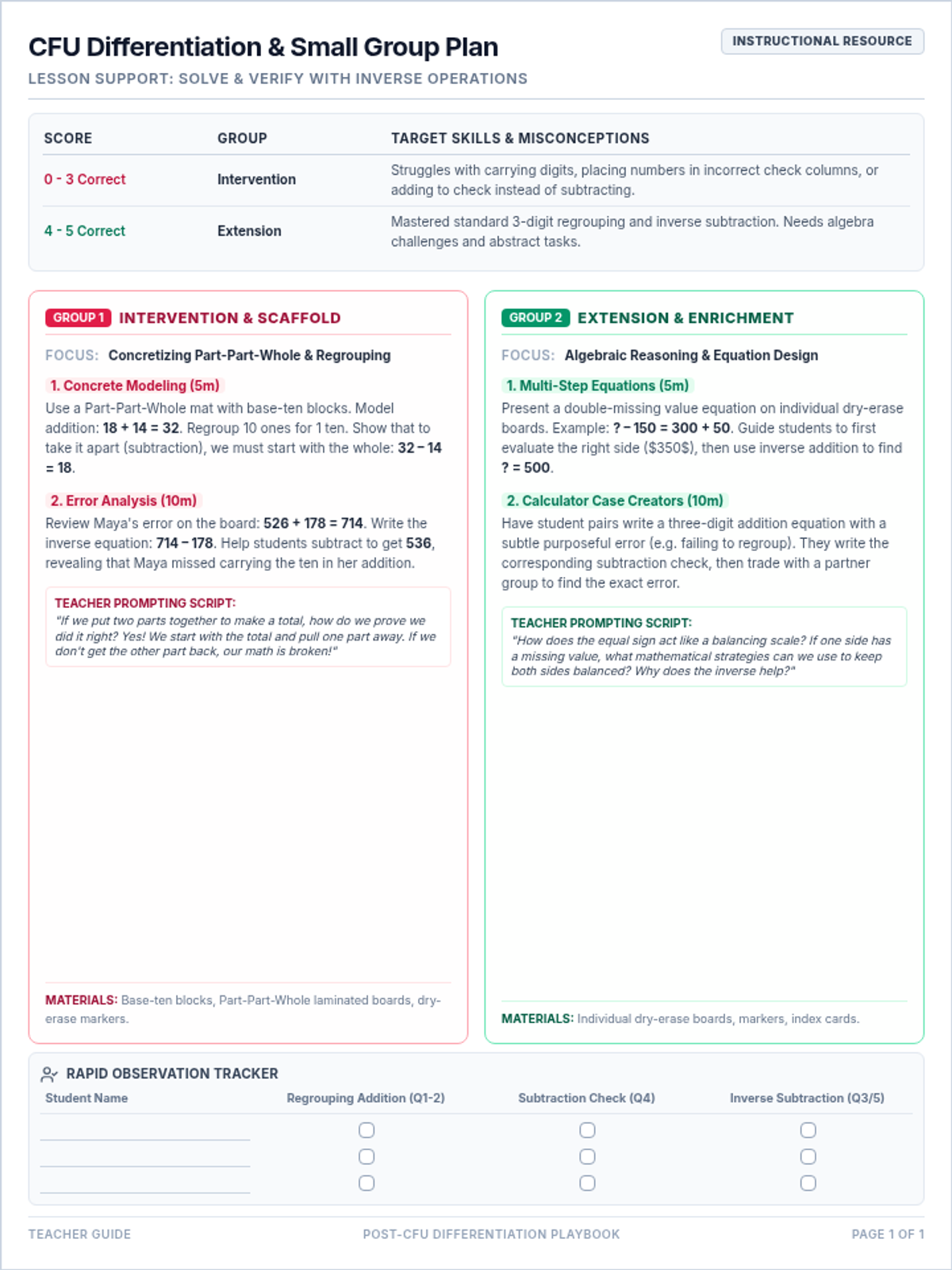
An engaging math lesson where students act as detectives to solve addition problems with regrouping and verify calculations using inverse operations.
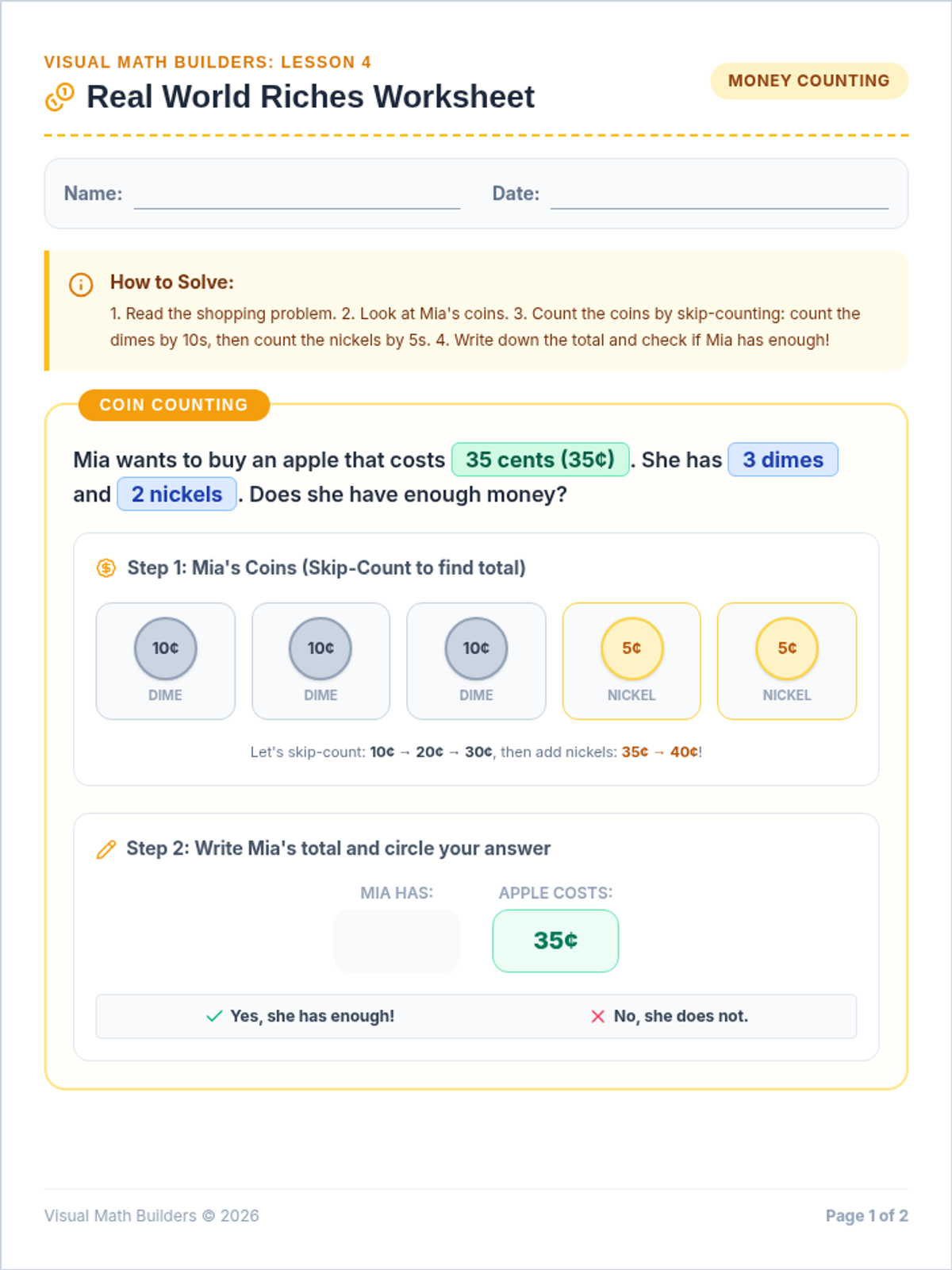
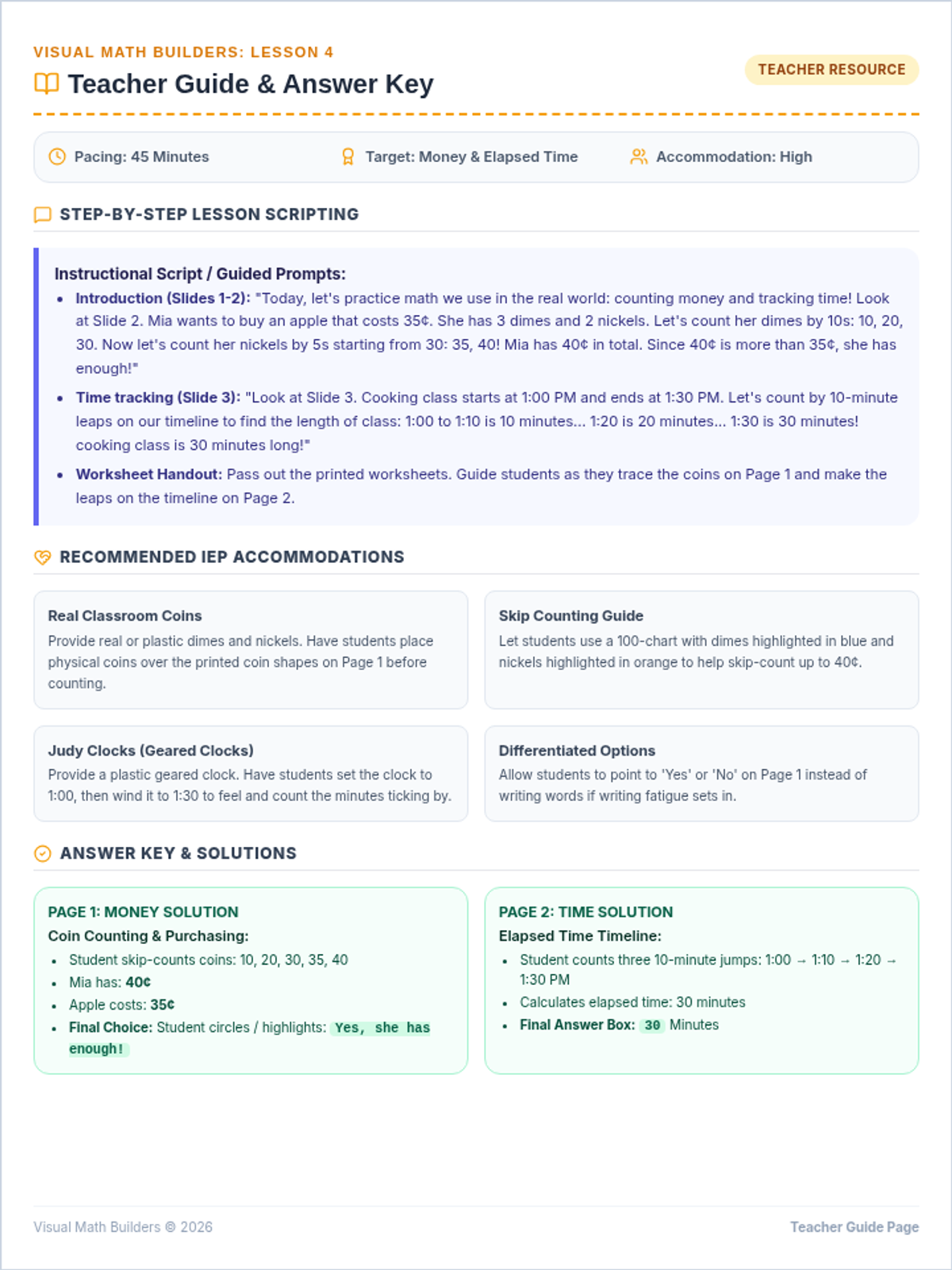
Targets practical, real-world application of math with highly visual scaffolding for coin counting, purchasing decisions, and elapsed time scenarios.
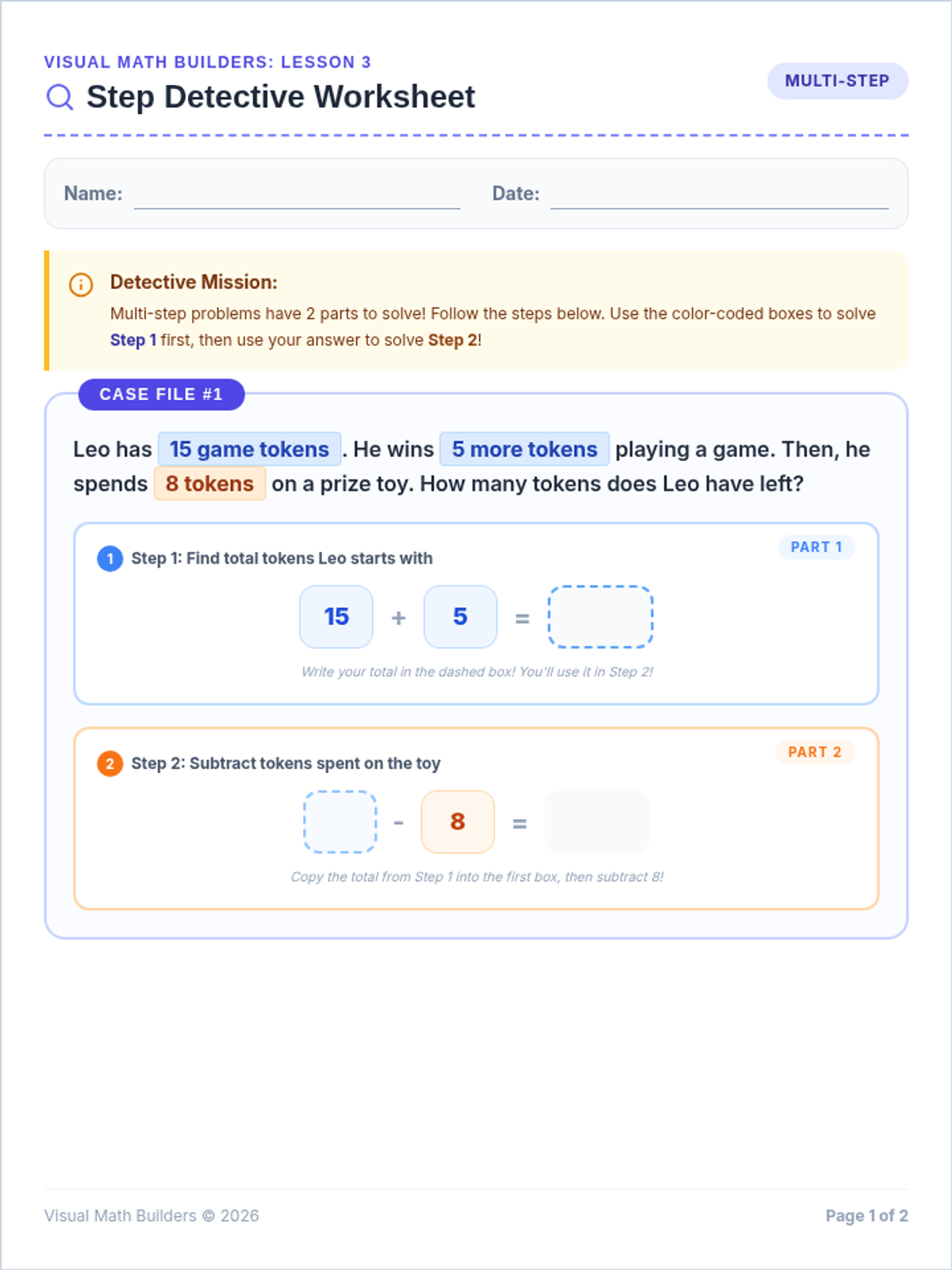
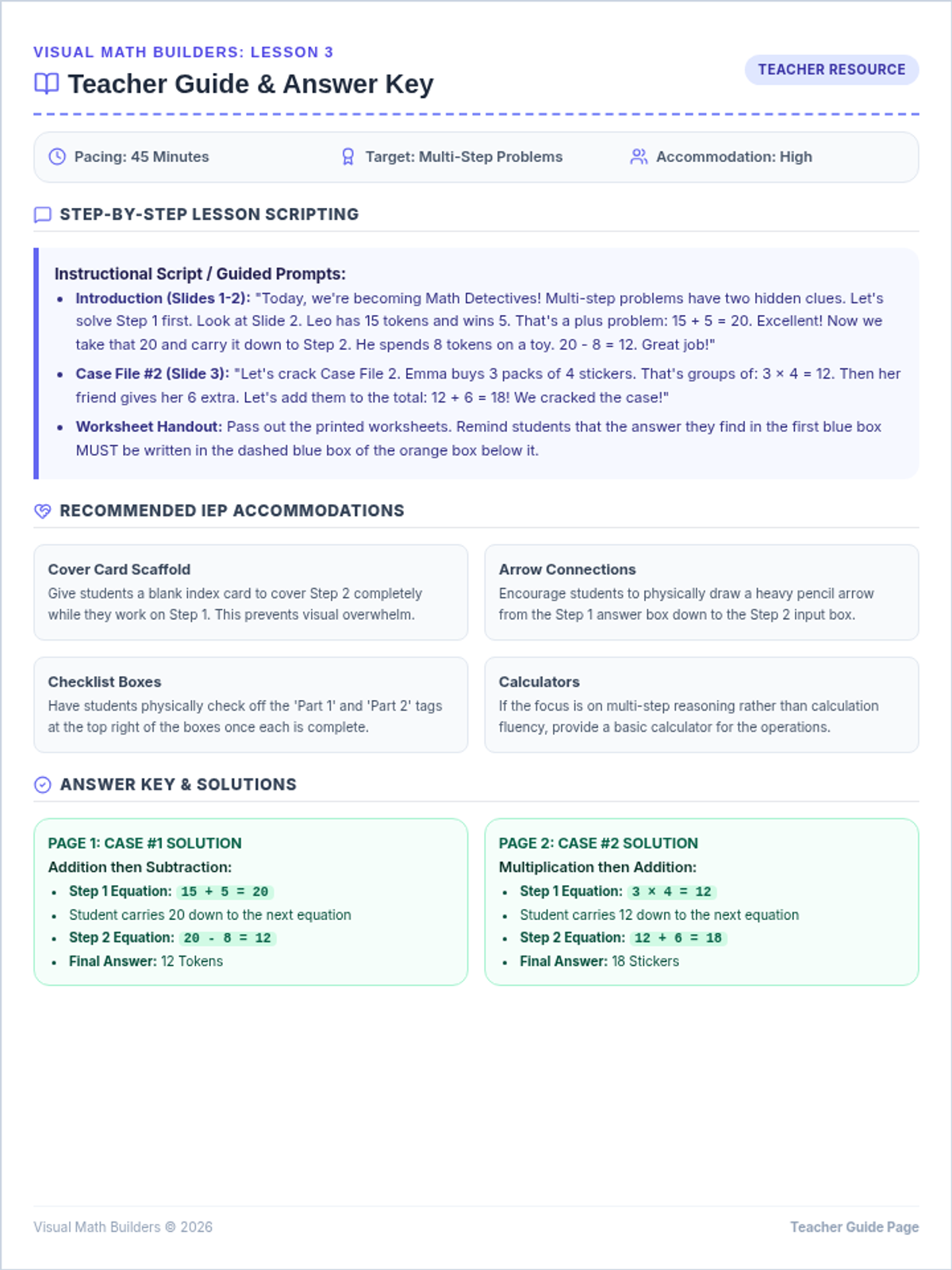
Breaks down multi-step math word problems into bite-sized, color-coded, sequentially numbered parts, helping students systematically parse and solve equations without visual overload.
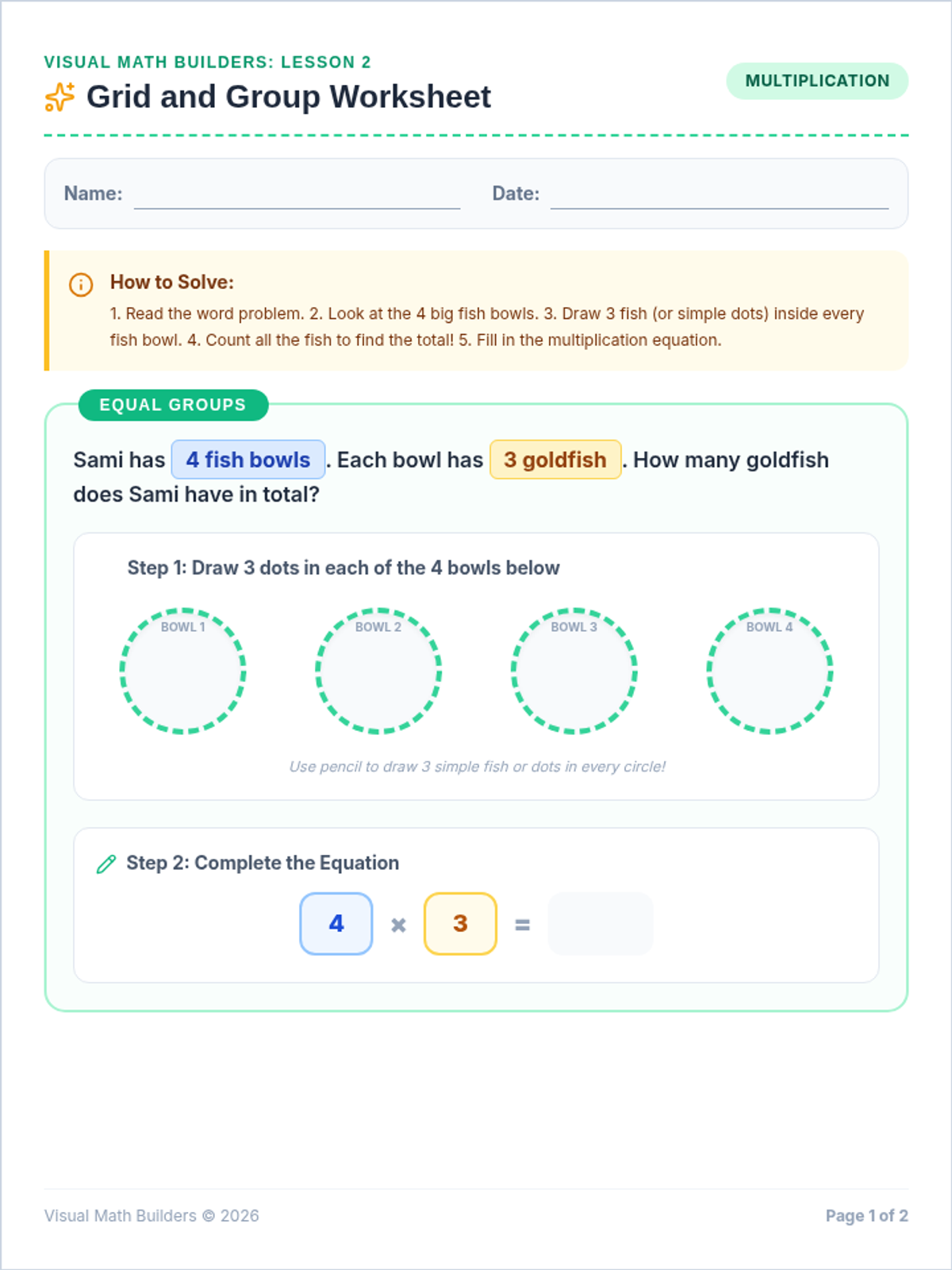
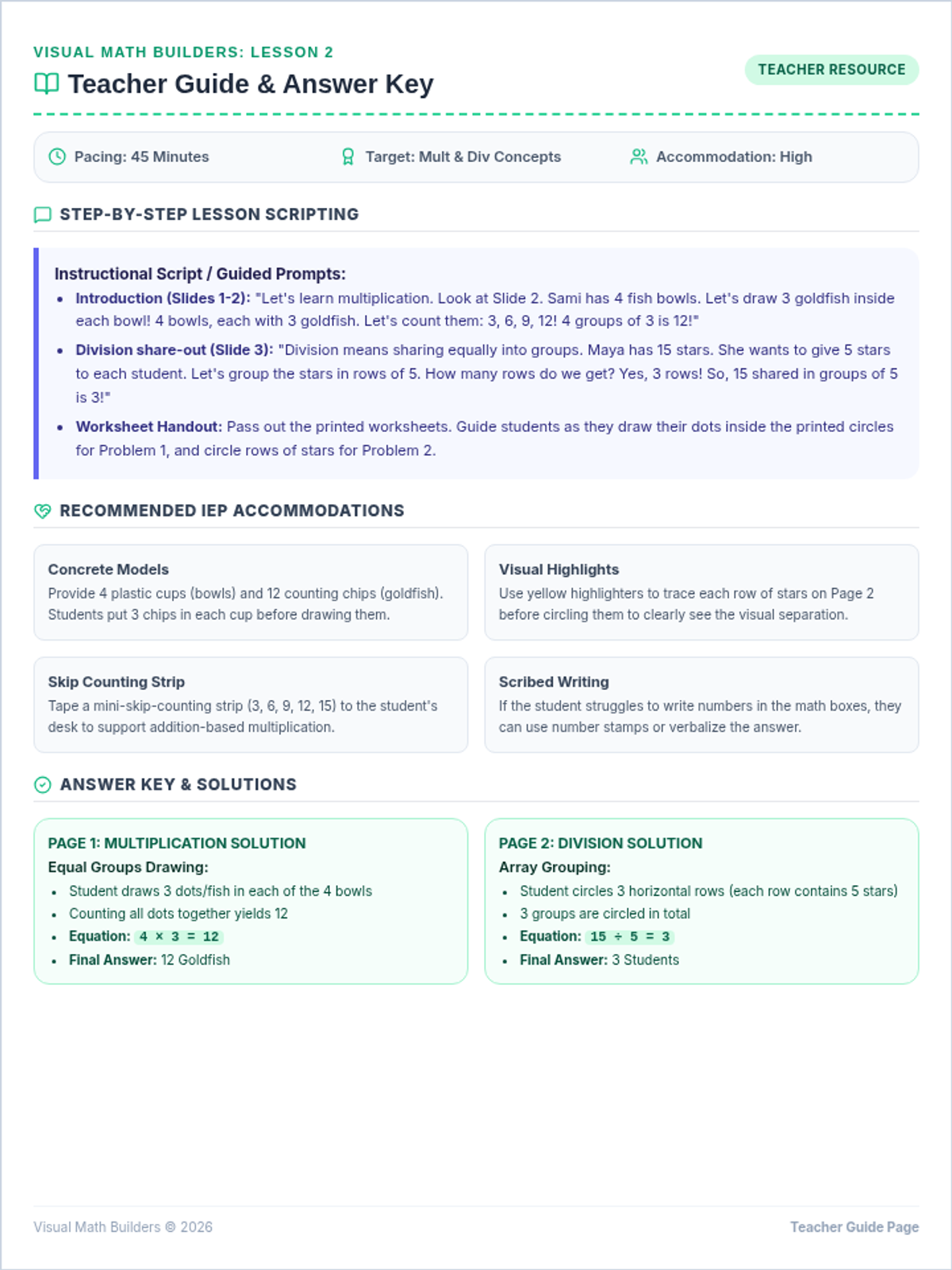
Covers multiplication and division word problems utilizing visual aids such as equal group drawings, array grids, and visual modeling templates to scaffold core concepts.
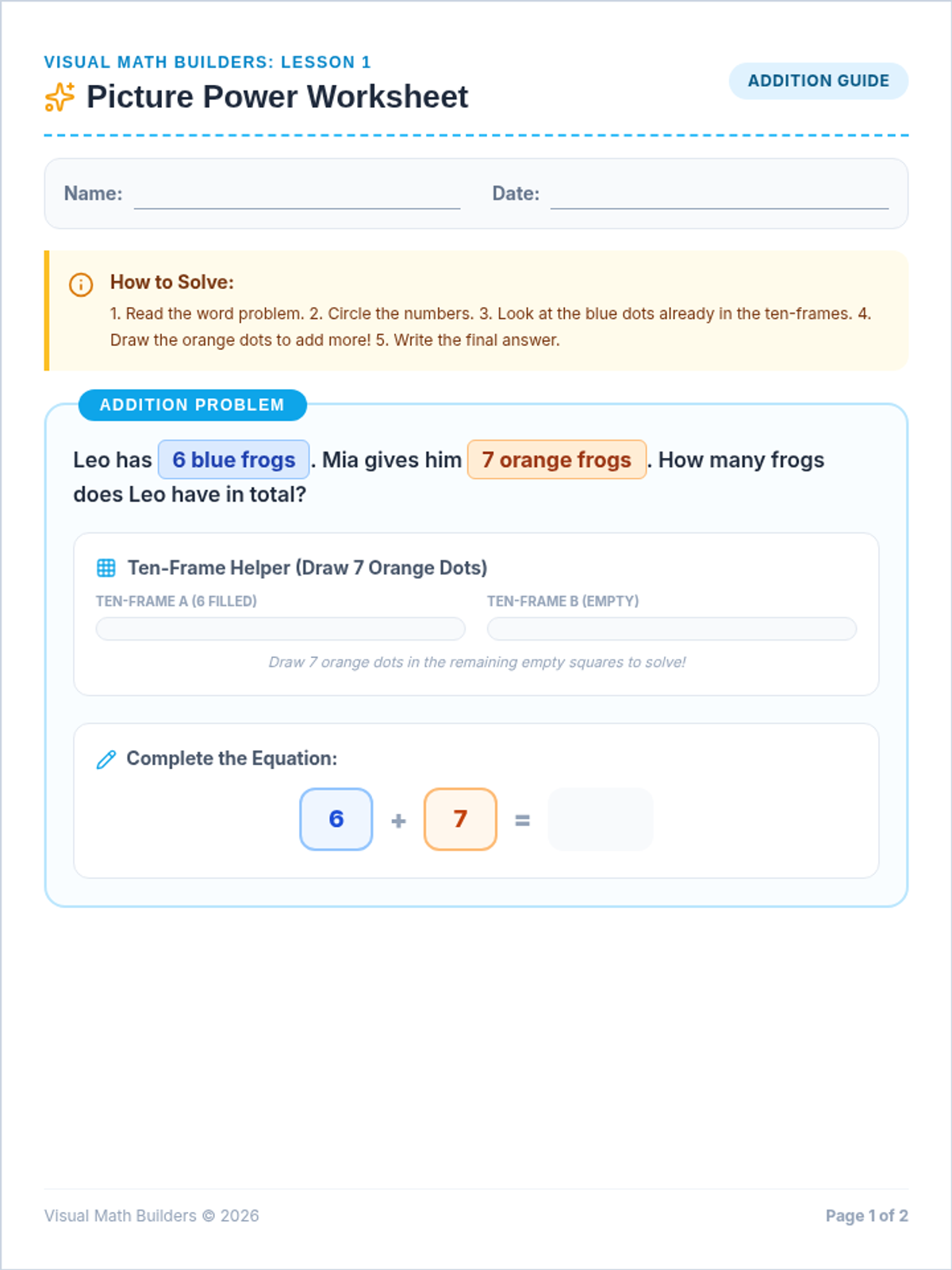
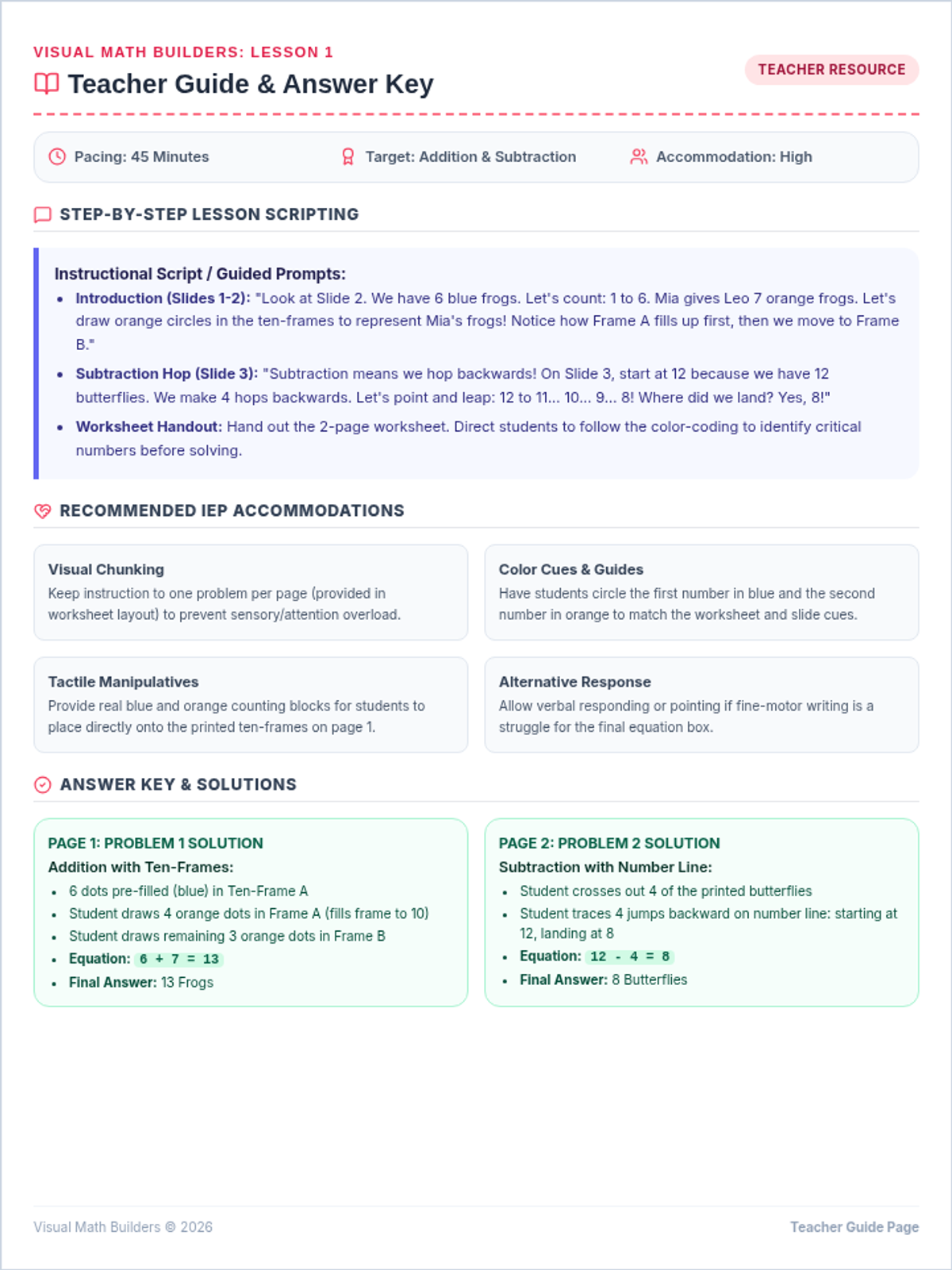
Focuses on addition and subtraction word problems with visual aids including built-in picture representations, ten-frames, and number lines to support student conceptual understanding.
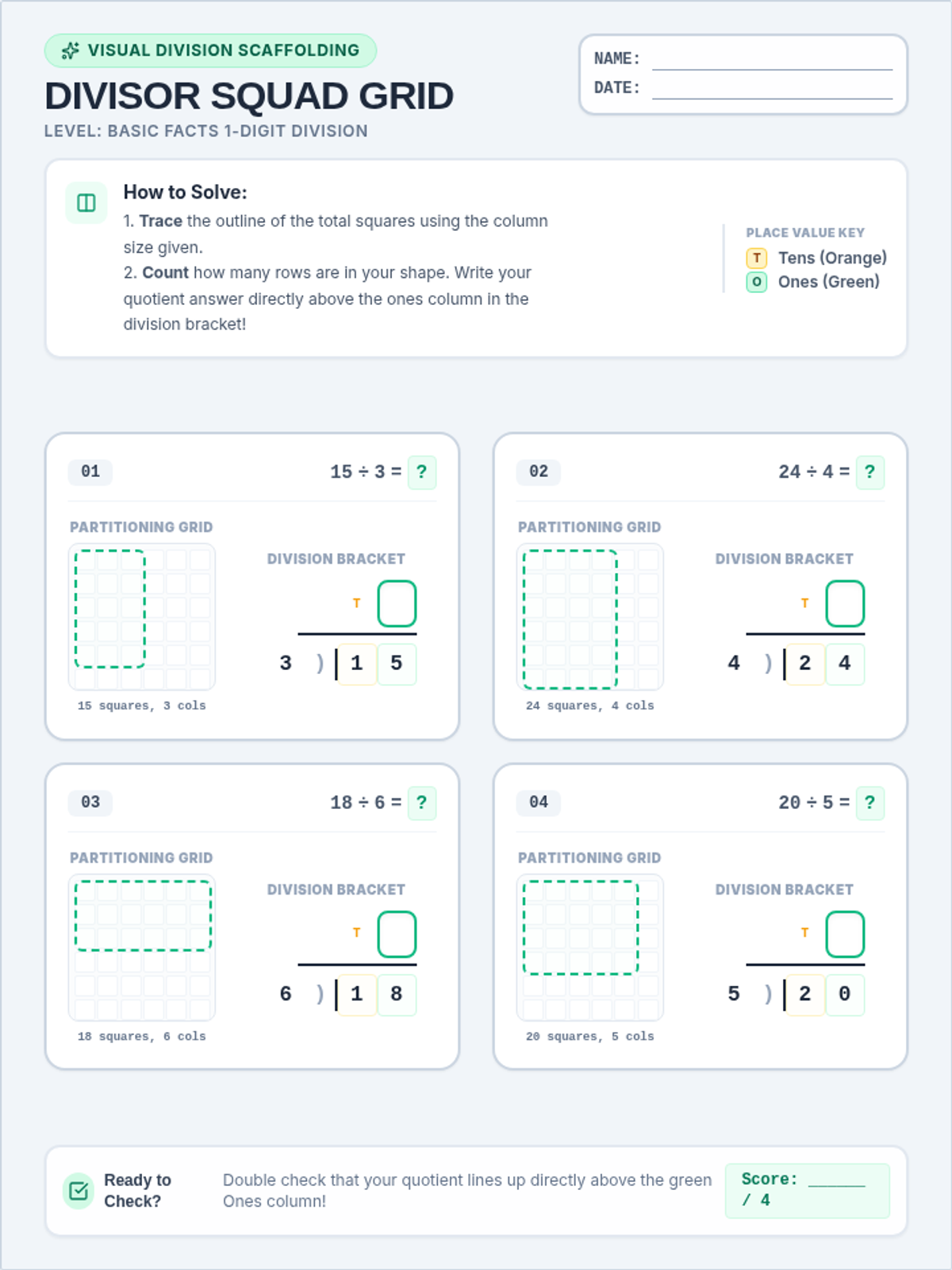
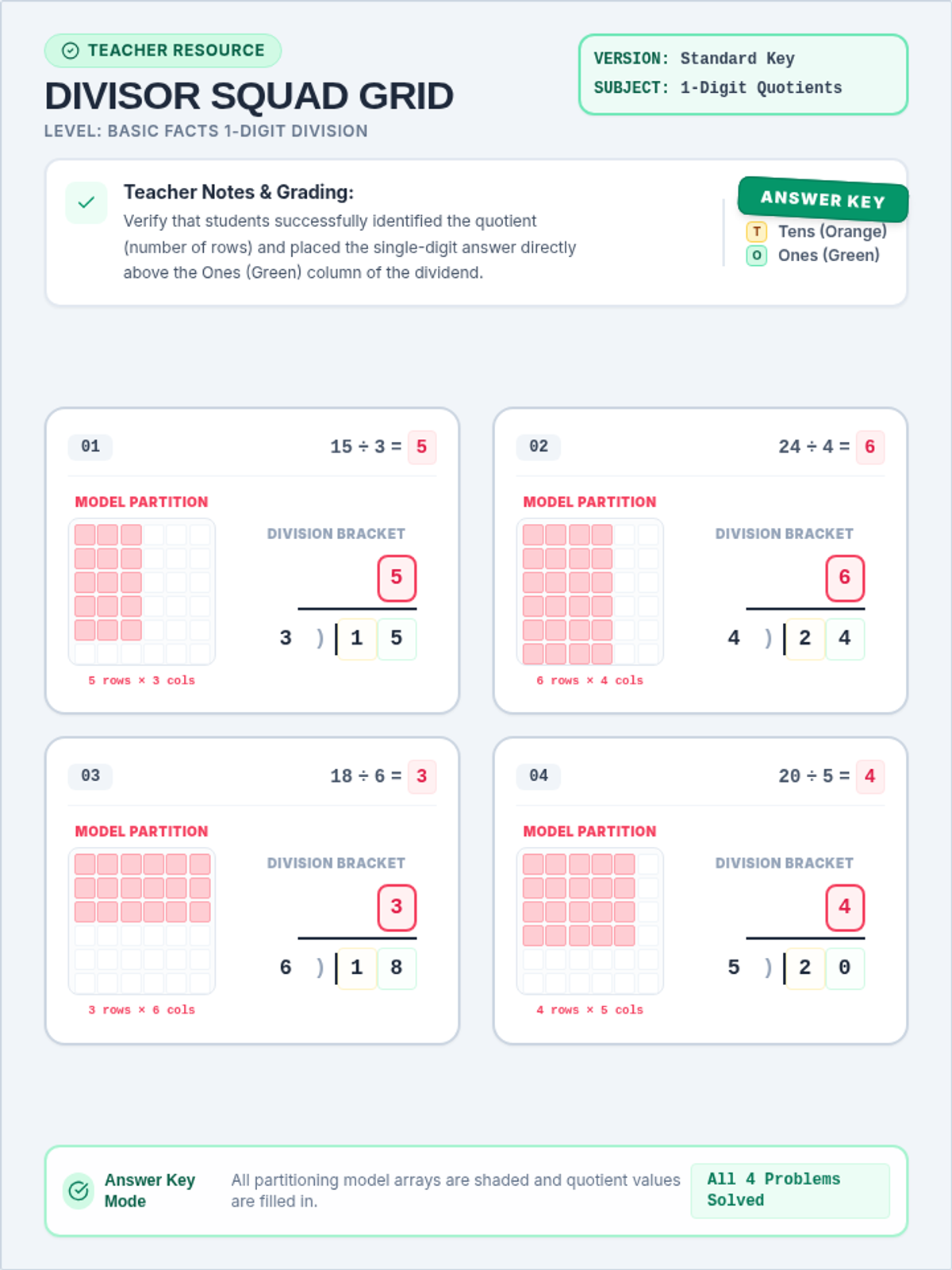
A basic division lesson focused on partitioning total values into equal rows and columns using visual grids. Students trace arrays to solve 1-digit quotient division facts with confidence.
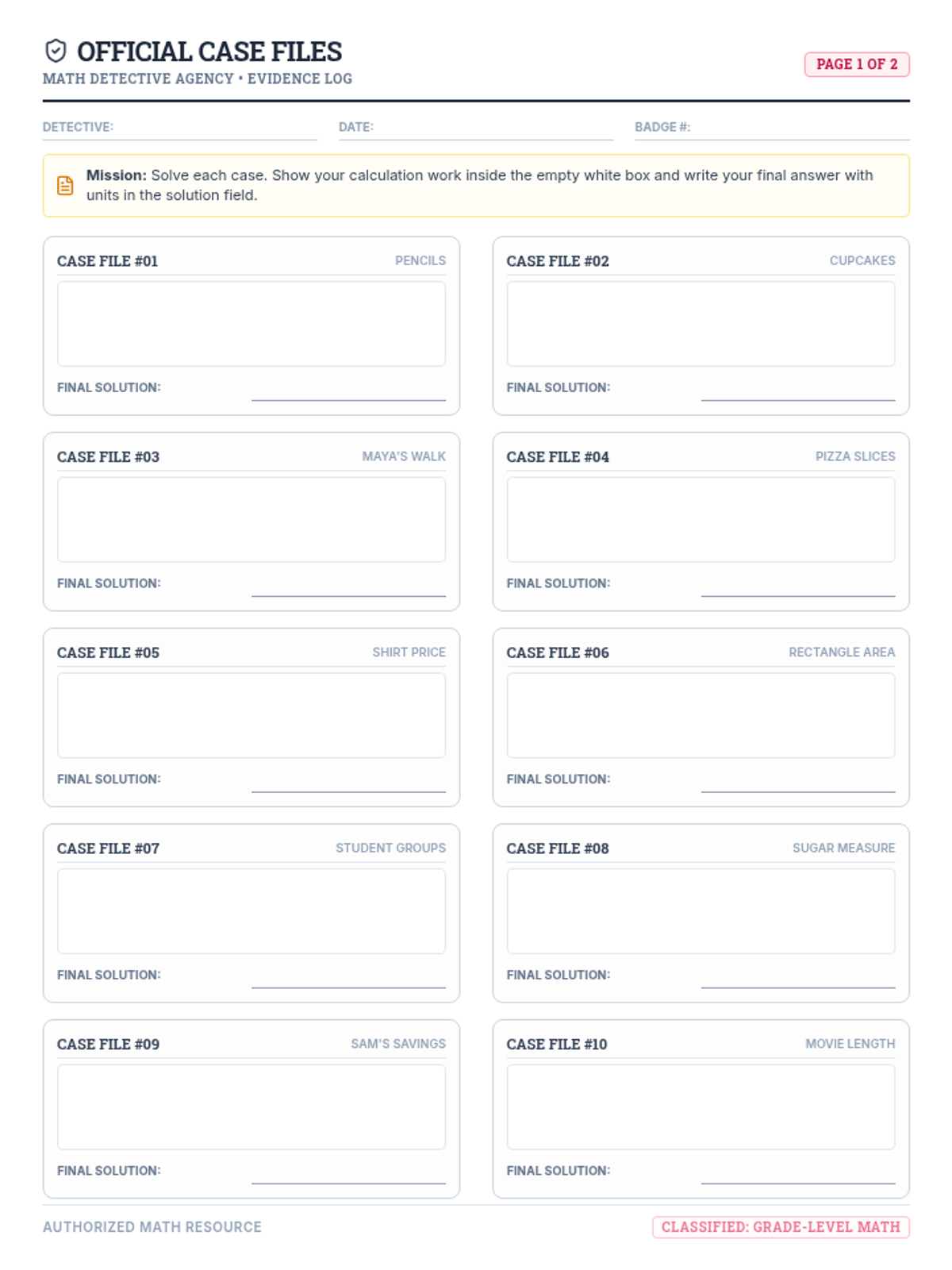
A high-engagement math activity set where students solve 20 distinct word problems structured as 'Case Files'. Perfect for independent practice, centers, or cooperative learning stations.
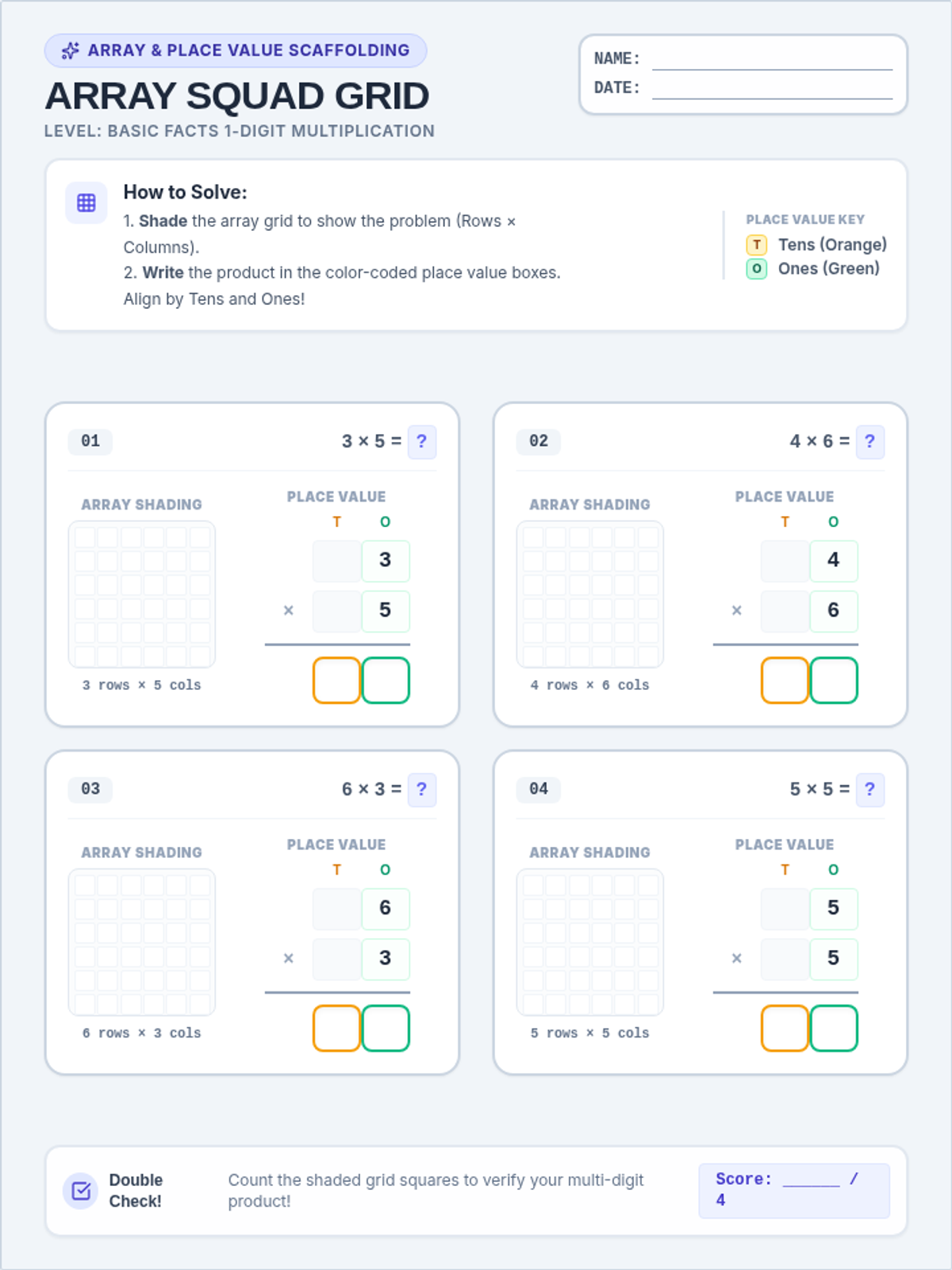
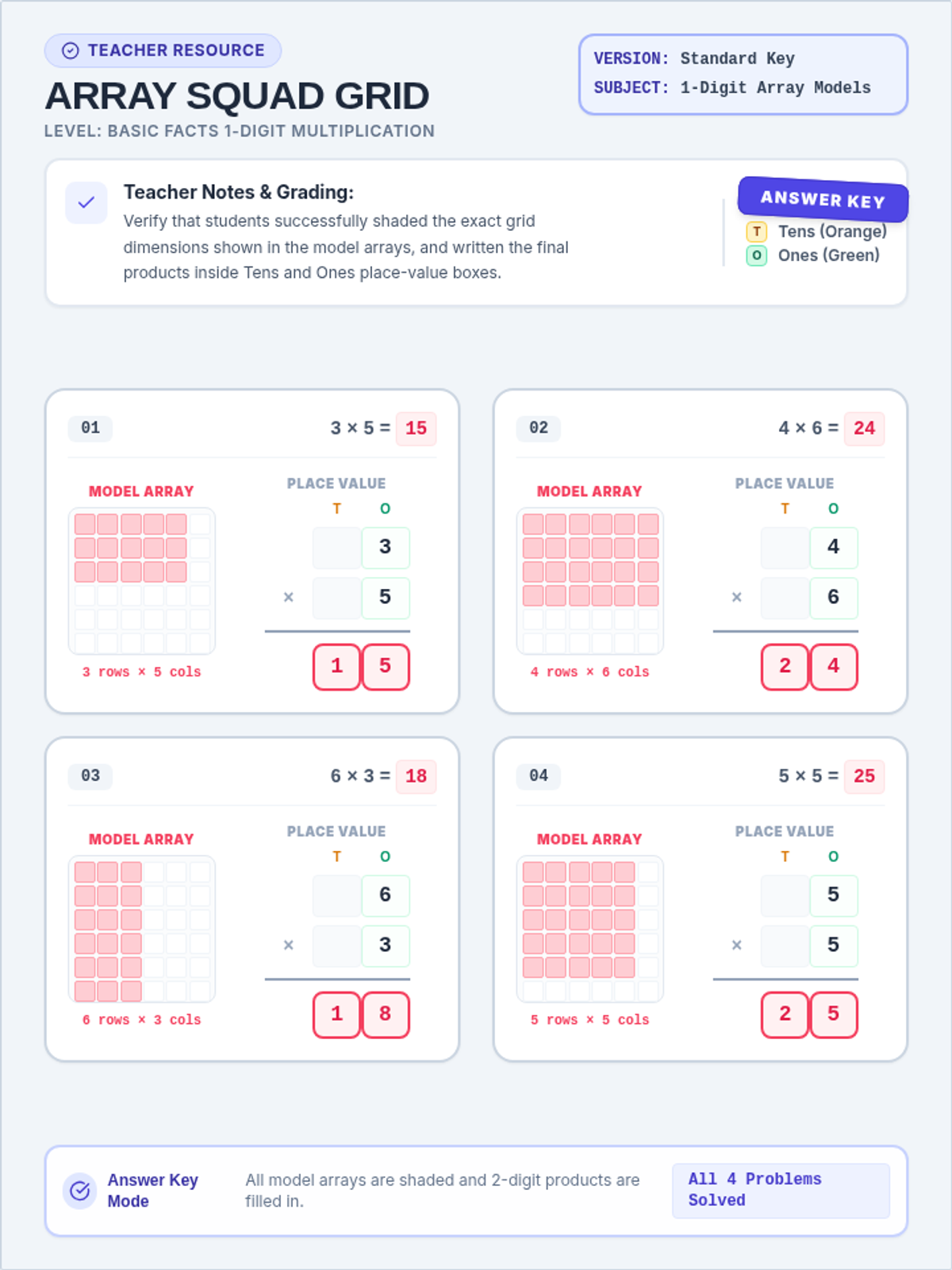
A basic multiplication facts lesson focused on 1-digit by 1-digit operations. Students utilize visual array grids and factor alignment boxes to connect concrete array representations with abstract products.
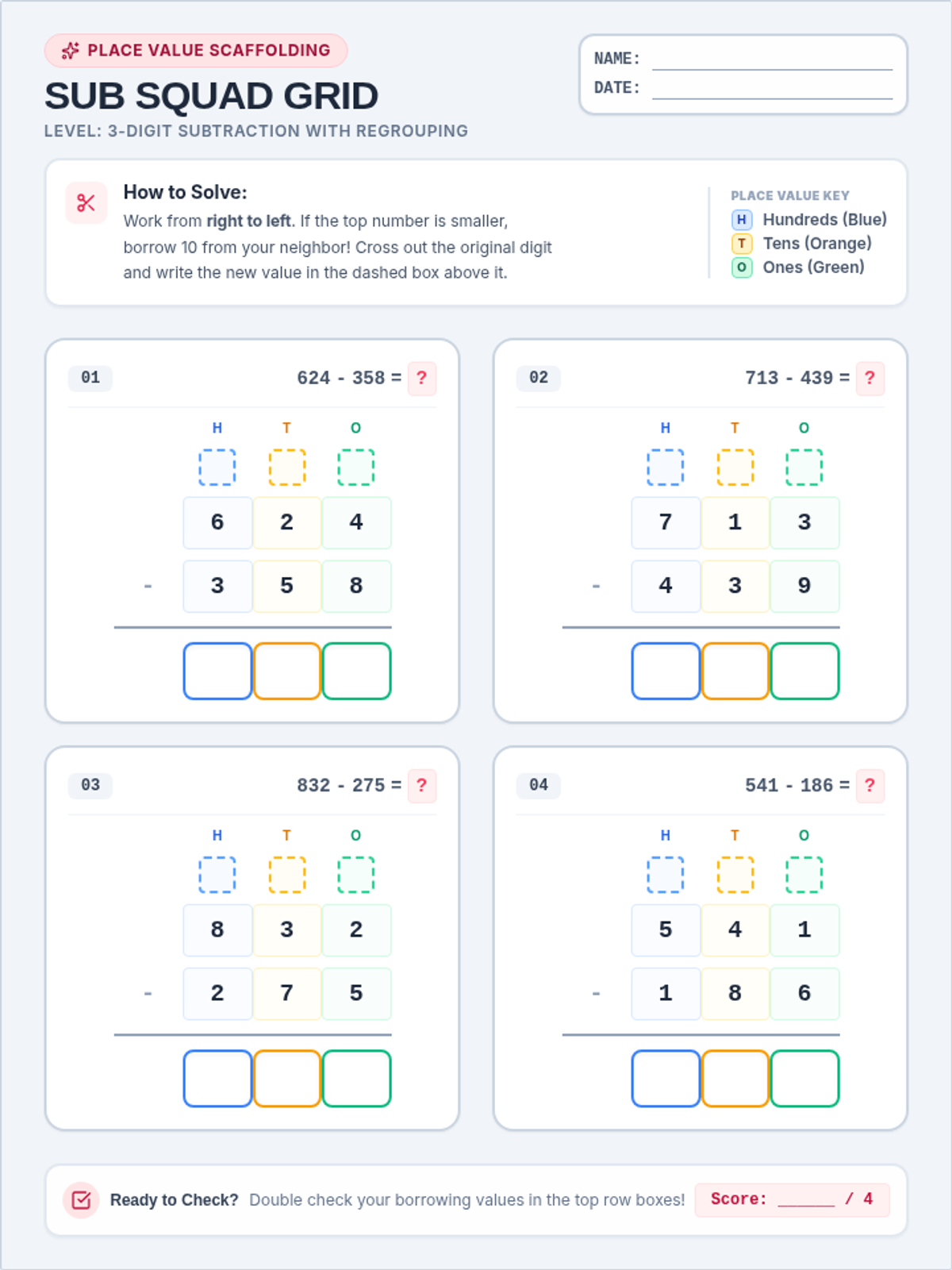
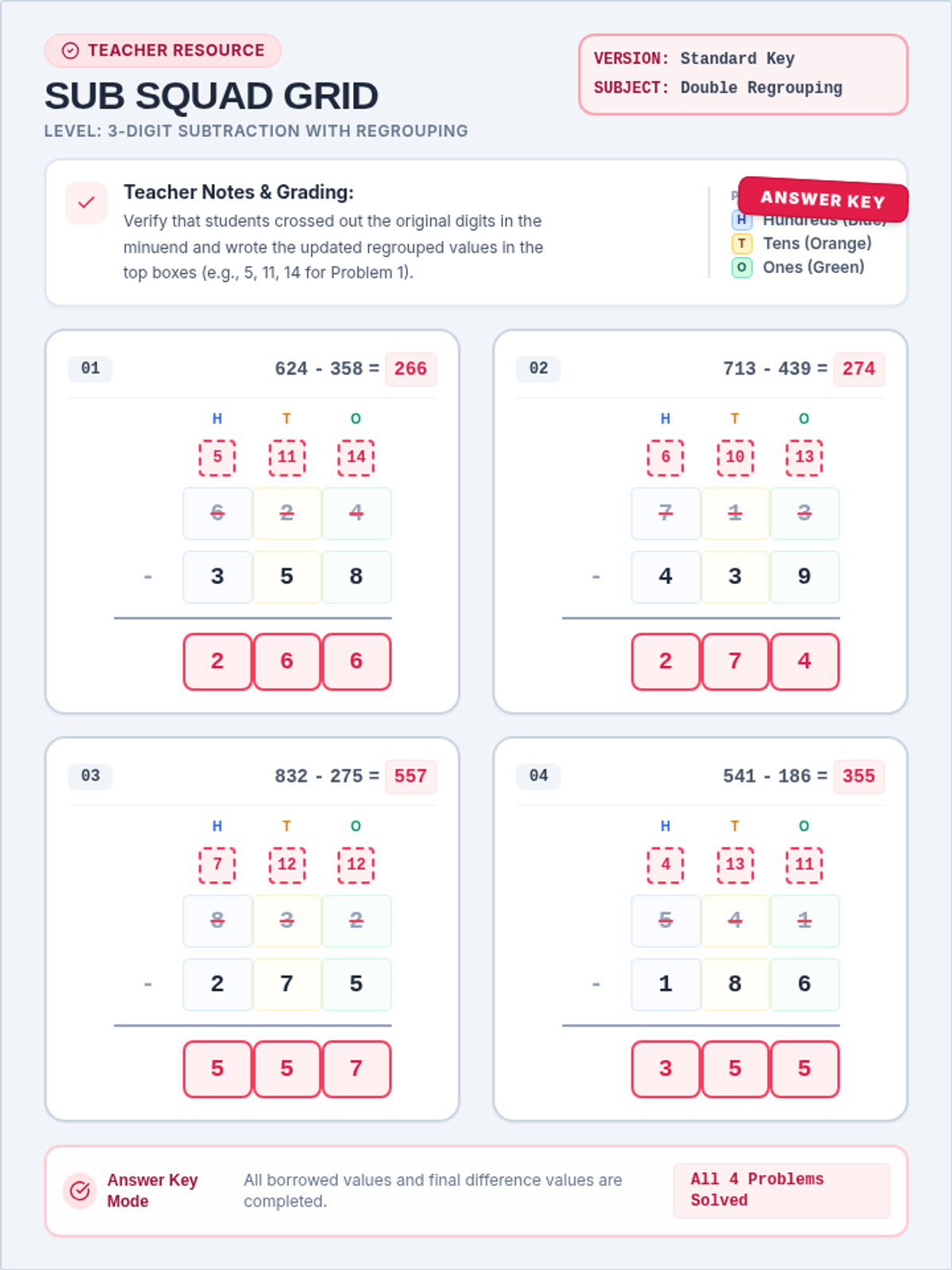
A math scaffolding lesson focused on 3-digit subtraction with regrouping. Students utilize color-coded grid columns and dedicated borrowing boxes to organize and solve subtraction problems.
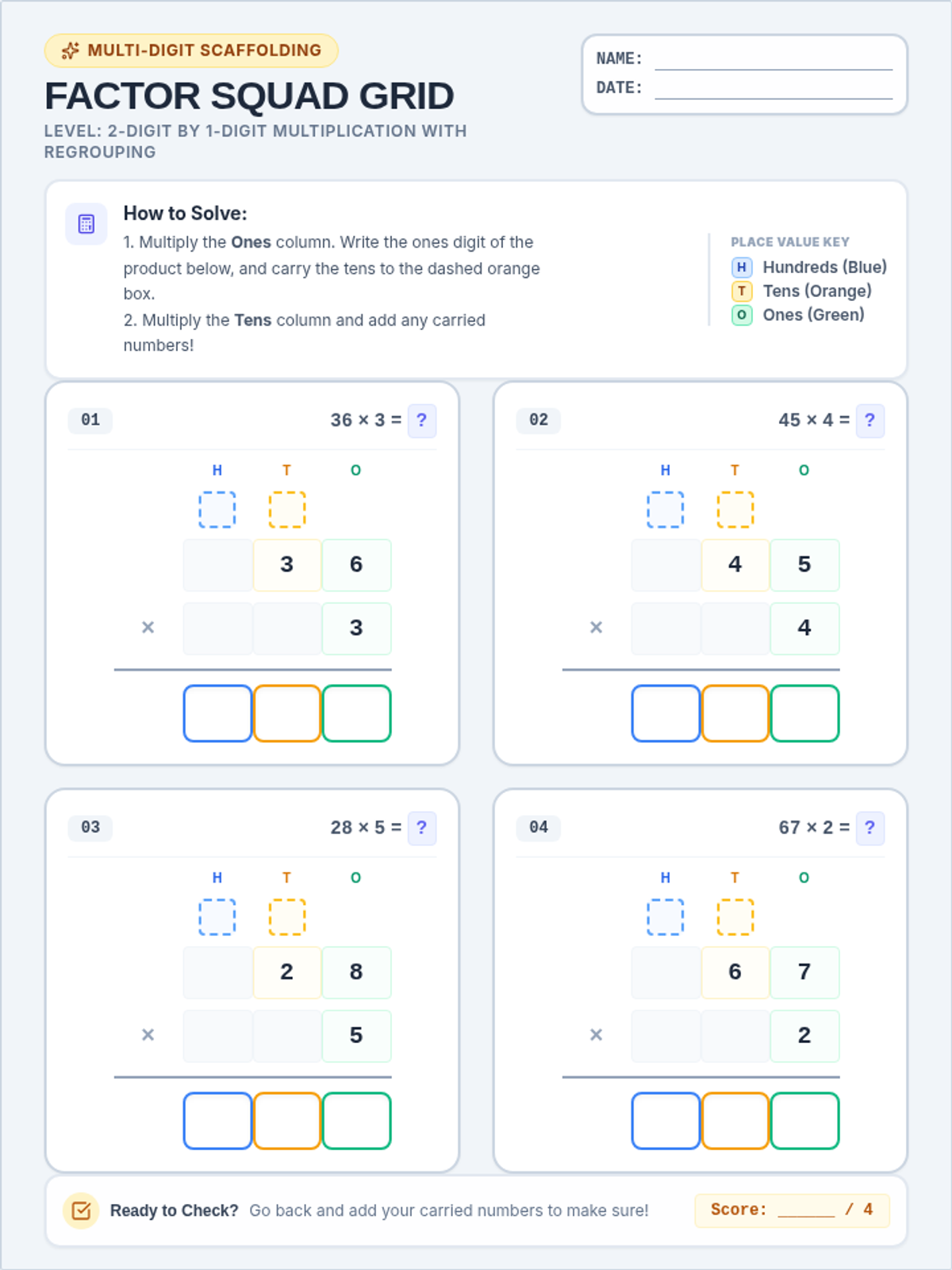
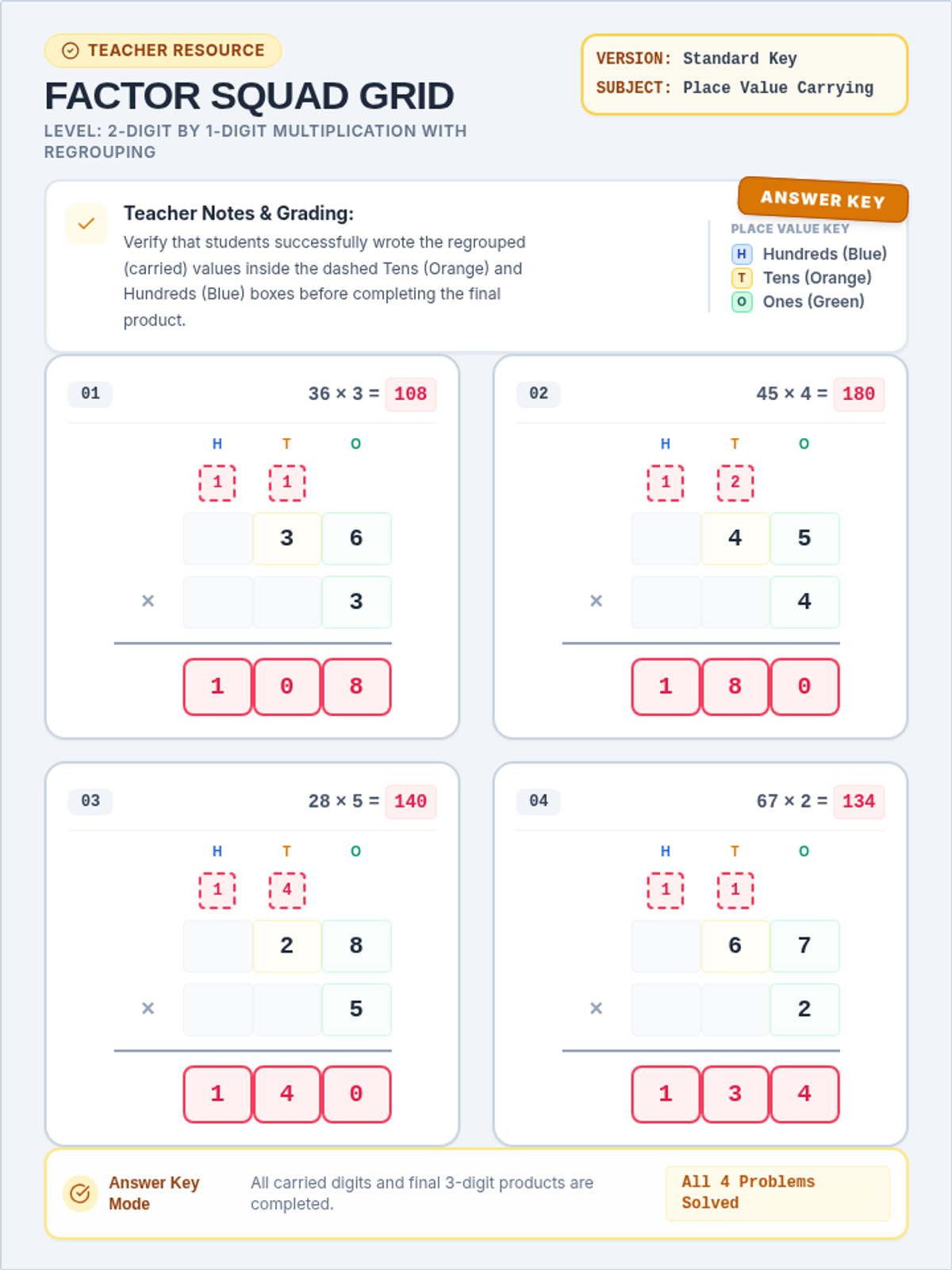
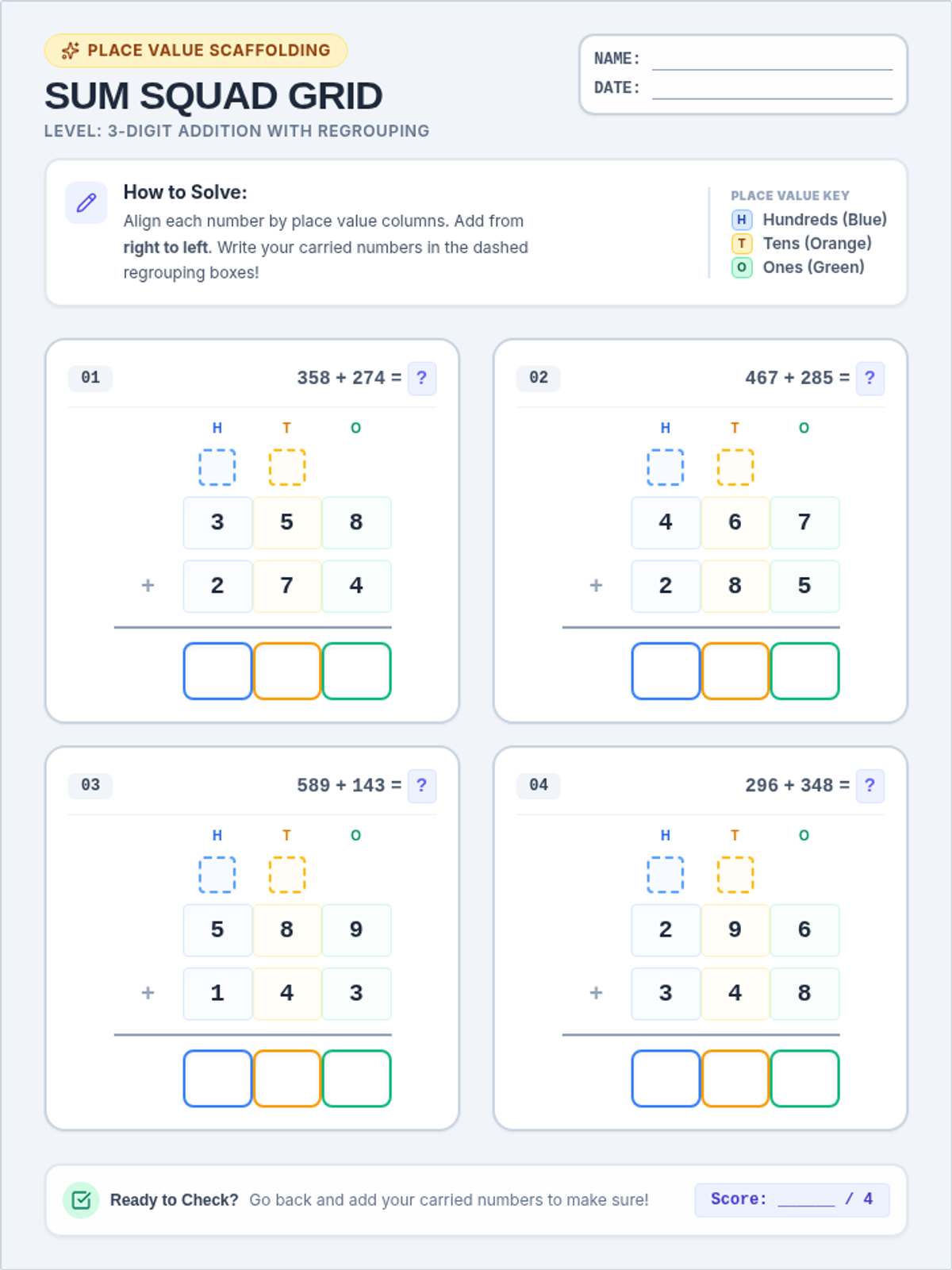
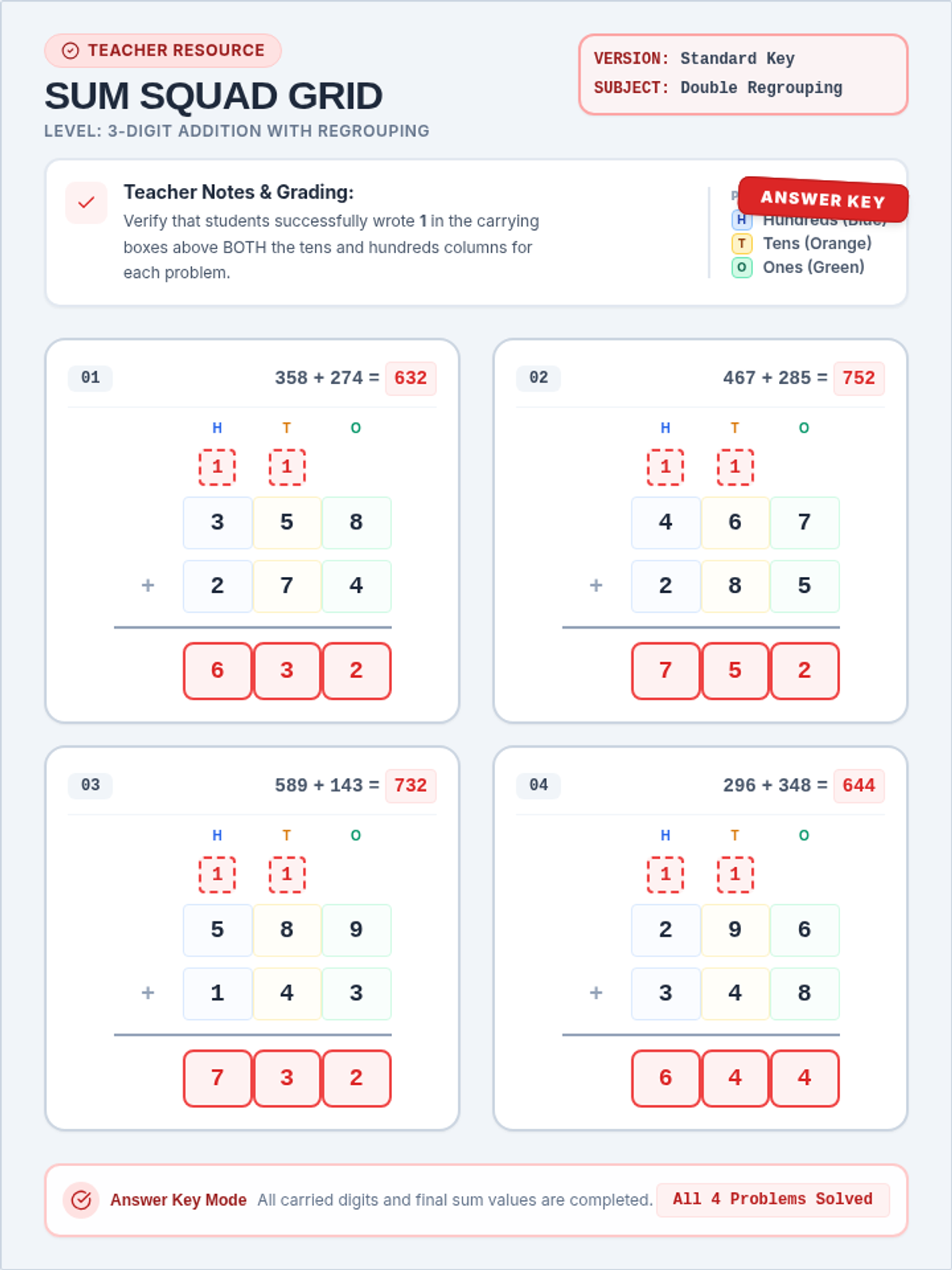
A math scaffolding lesson focused on 3-digit addition with double regrouping. Students utilize color-coded grid columns and dedicated carryover boxes to align and solve addition problems with confidence.
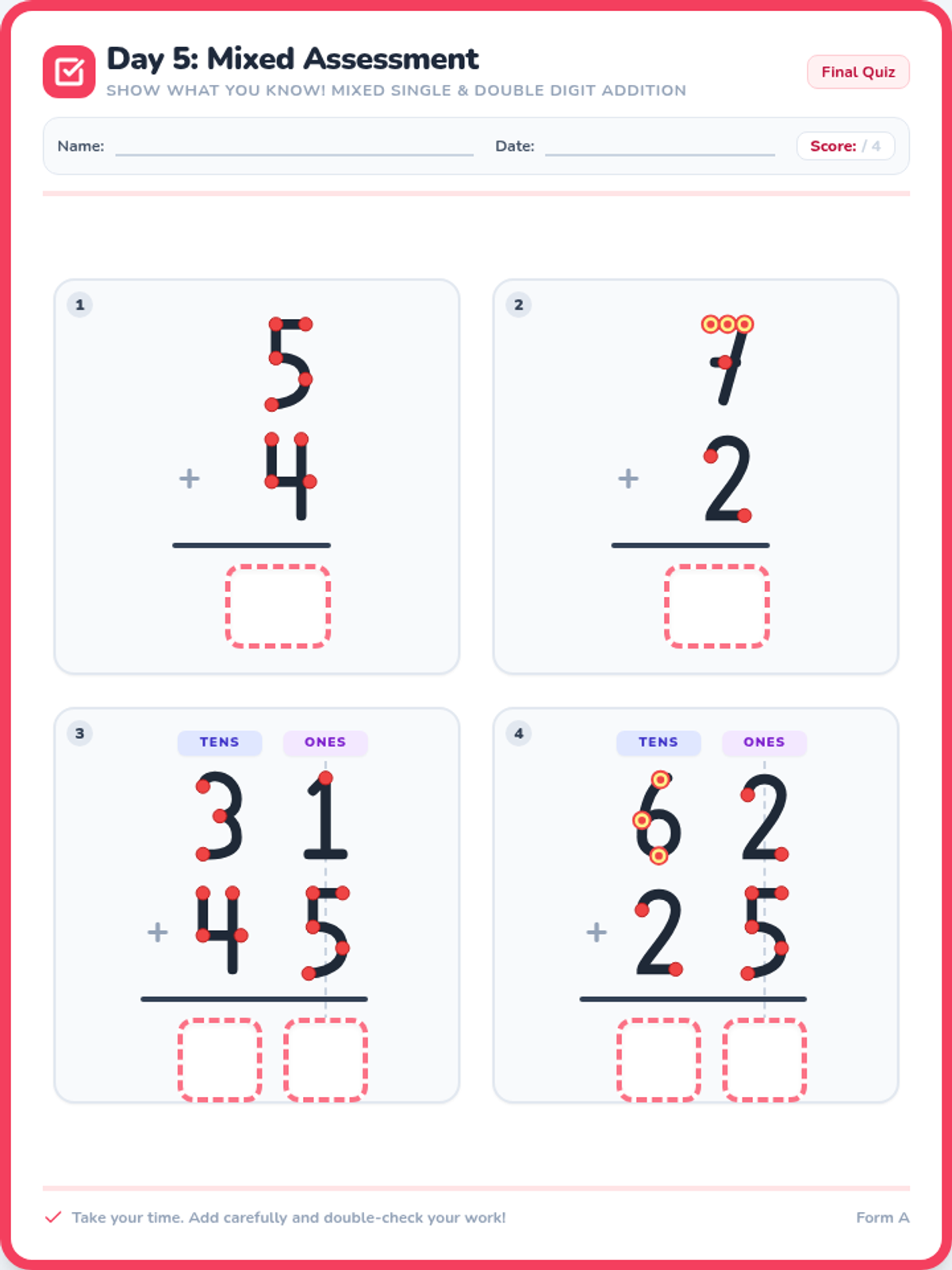
A final day of mixed practice and a structured assessment to measure mastery of single-digit and double-digit touchpoint addition.
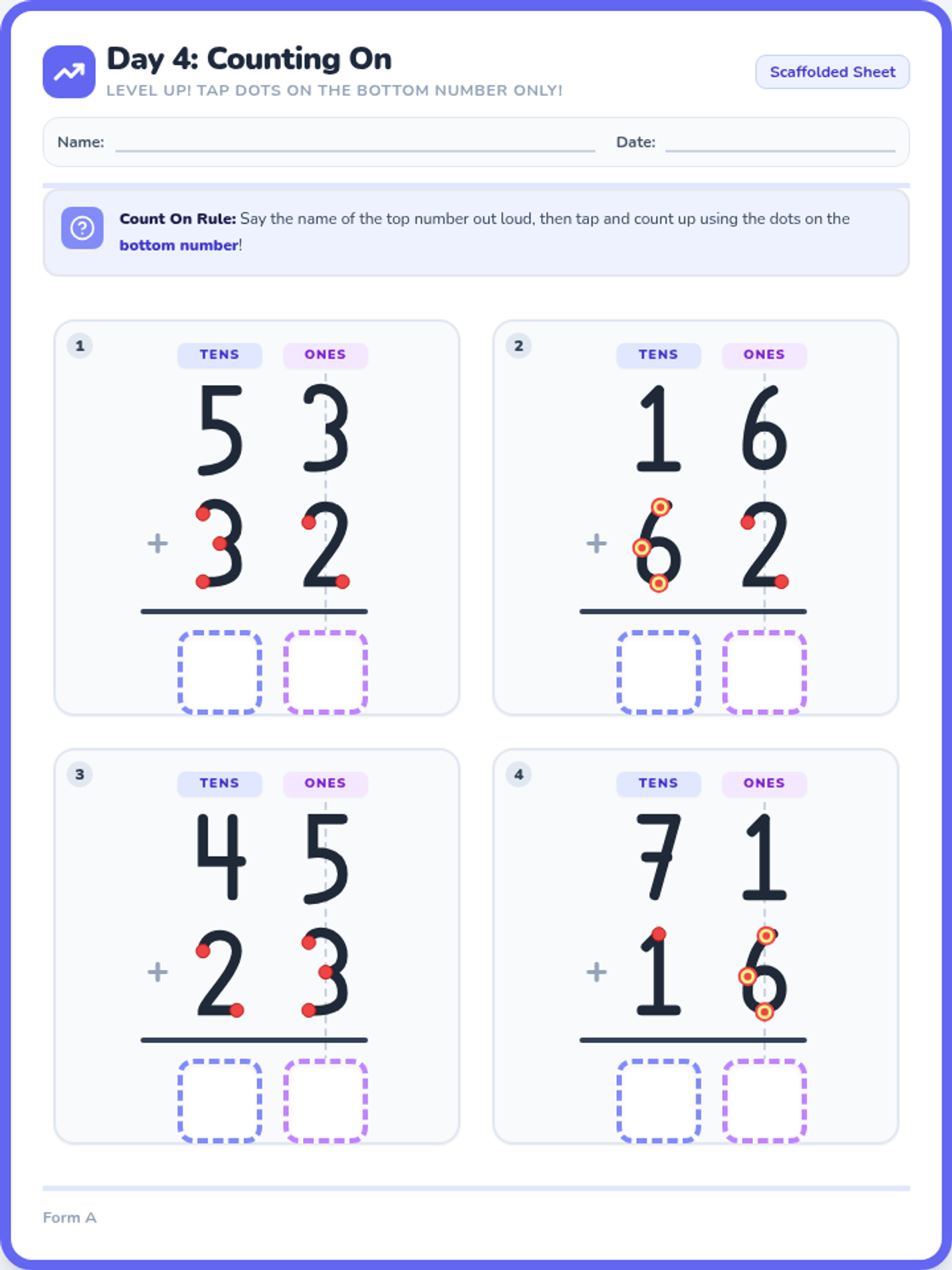
Reinforcing double-digit addition using scaffolded materials where grid lines and touchpoints are gradually faded to foster mental math and fluency.
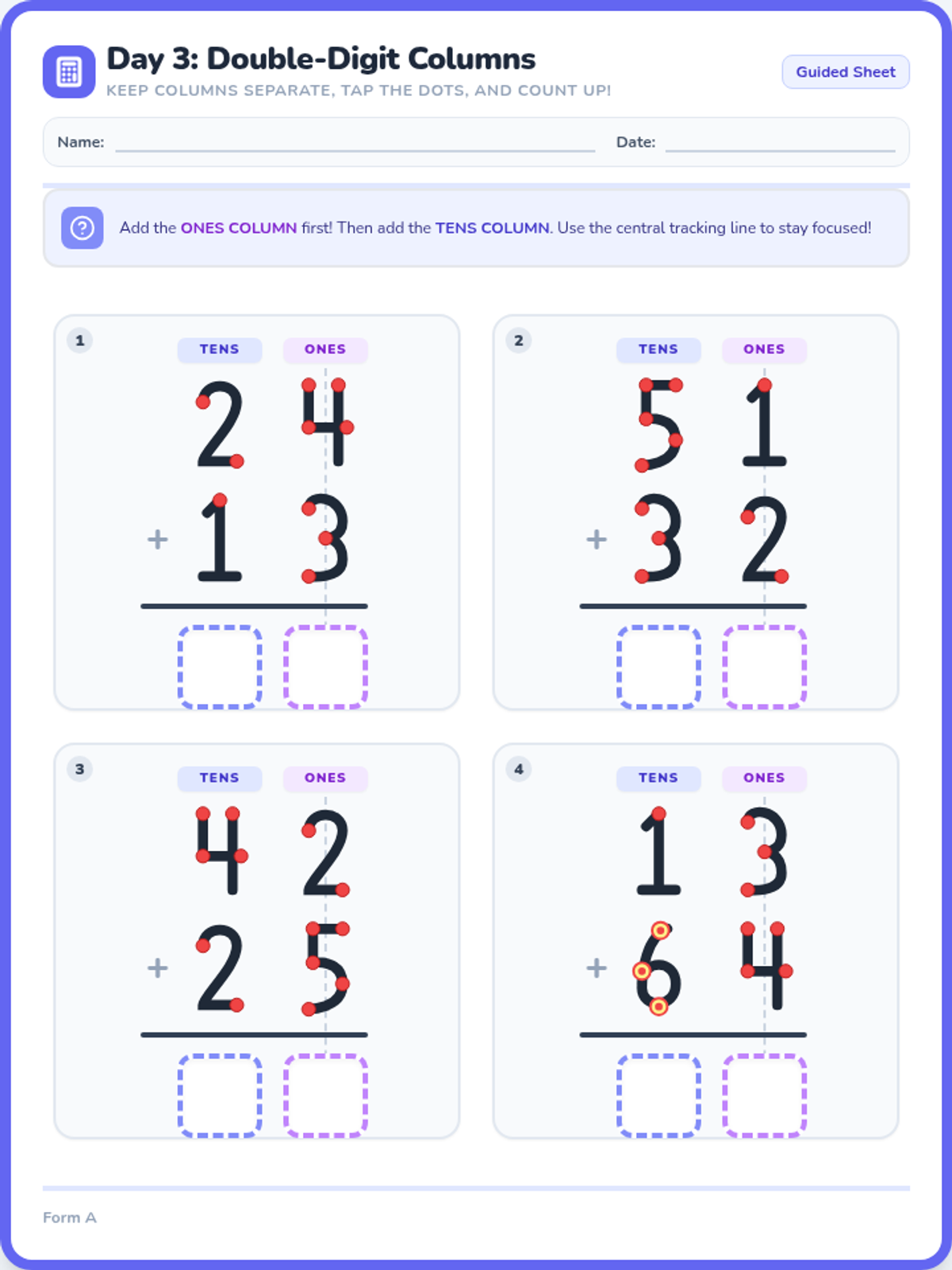
Transitioning to double-digit addition without regrouping, with high-contrast vertical dividers and large columns to support tracking.