A lesson focusing on the unique wildlife of the Rocky Mountains, identifying adaptations and ecological roles of various species through a matching activity and creative writing.
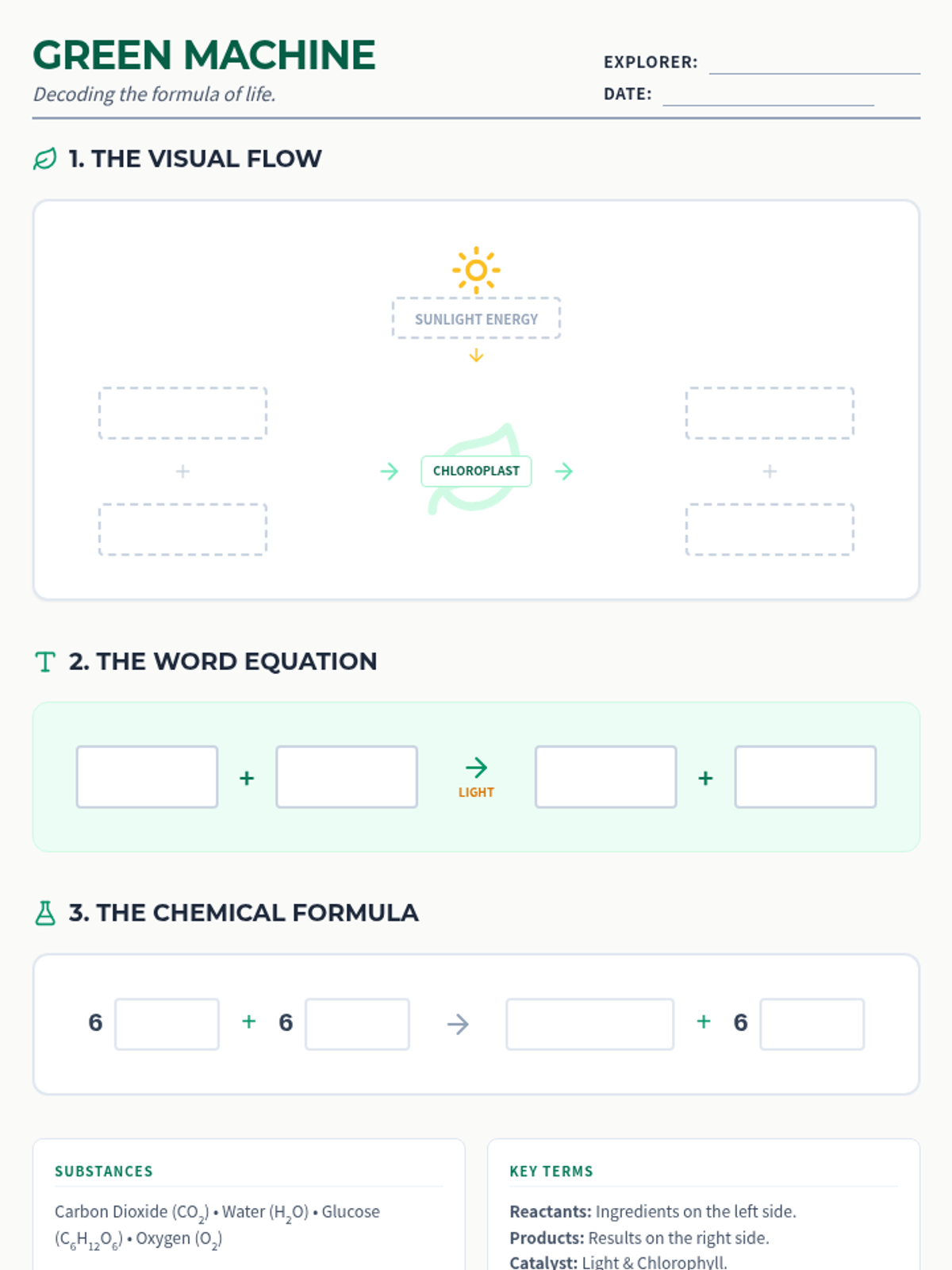
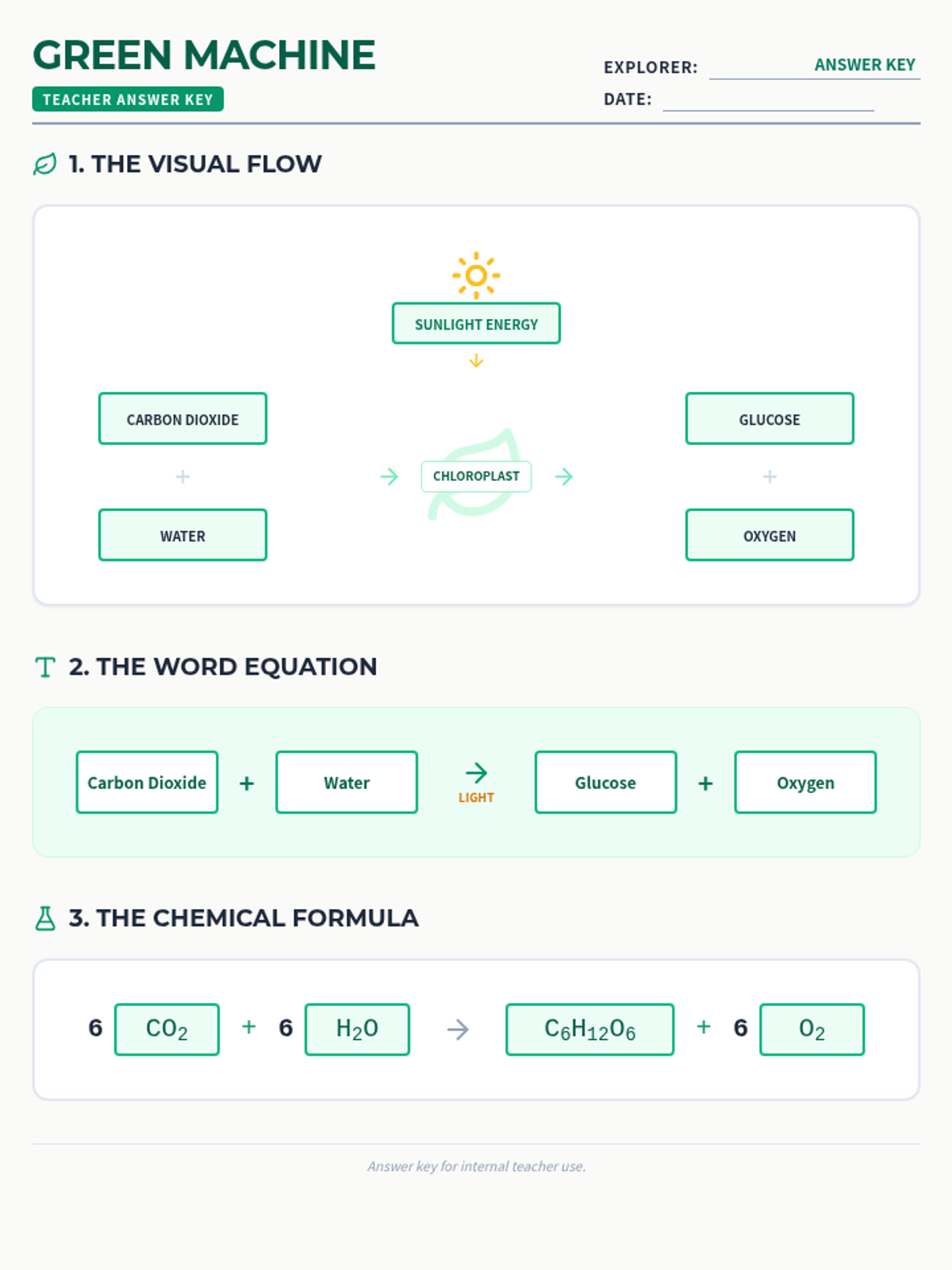
A focused exploration of the photosynthesis equation, helping students identify the reactants and products through diagrams and formula practice.
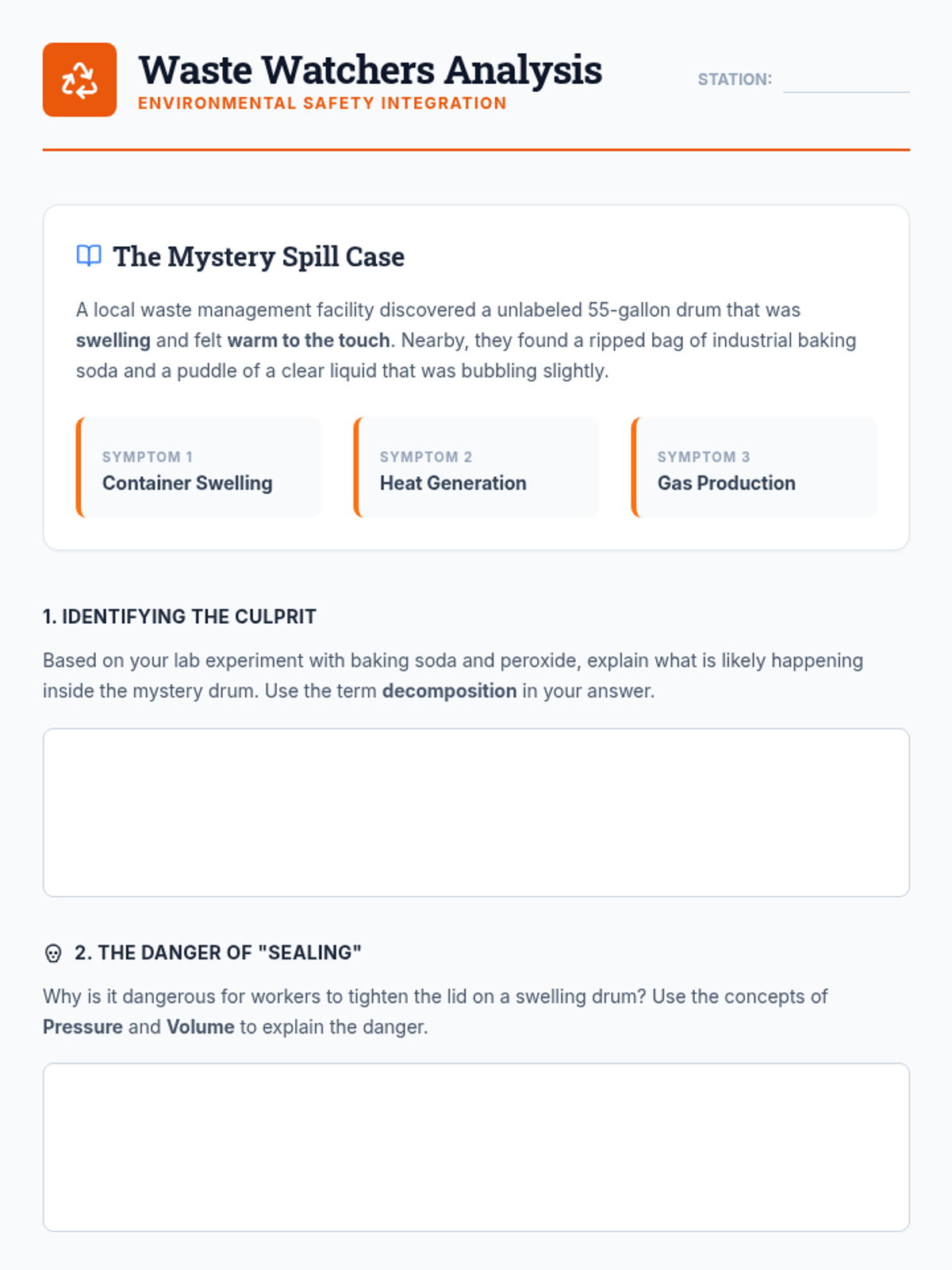
Students analyze their lab results and connect the findings to hazardous waste management and the importance of chemical safety protocols.
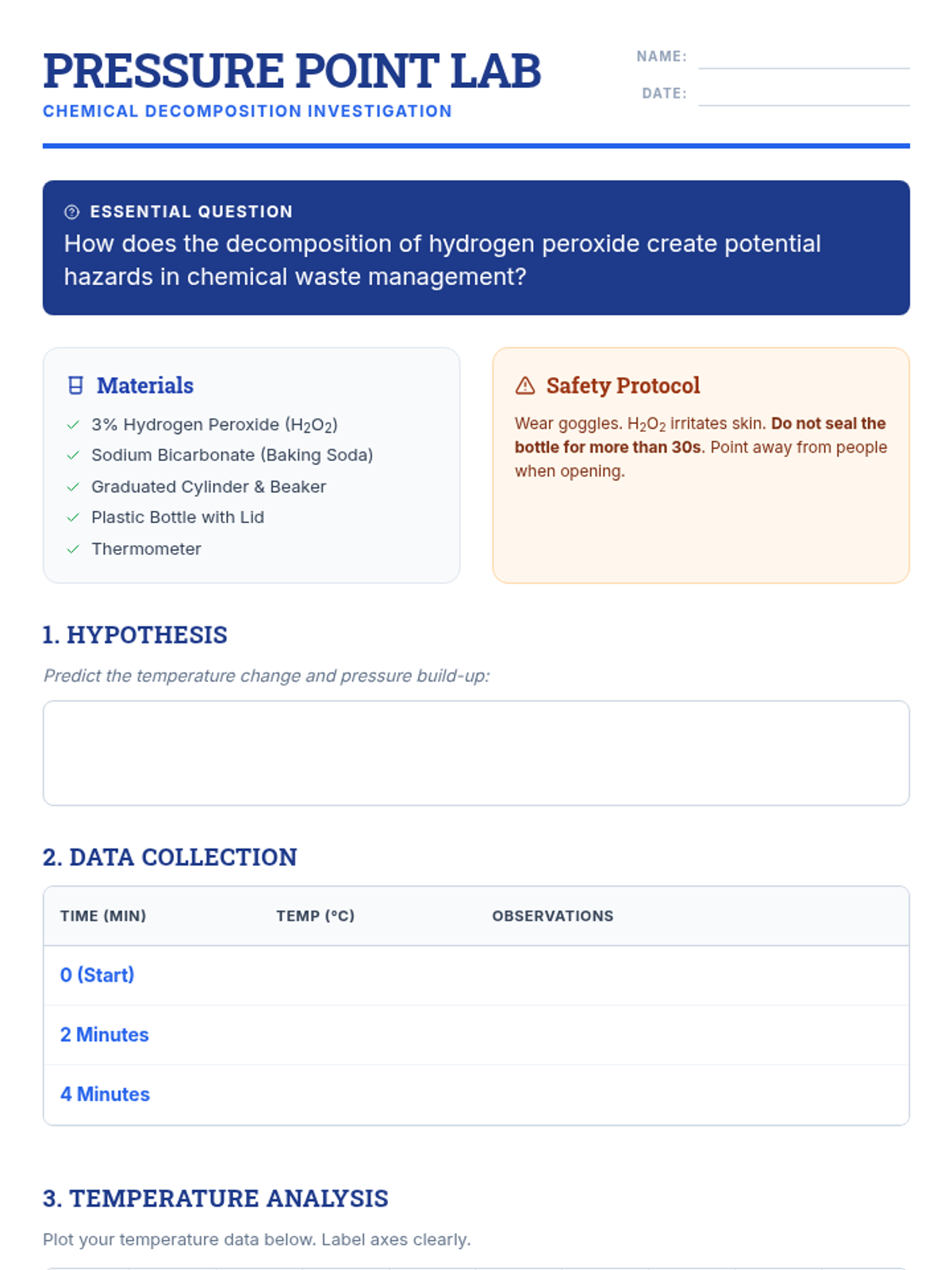
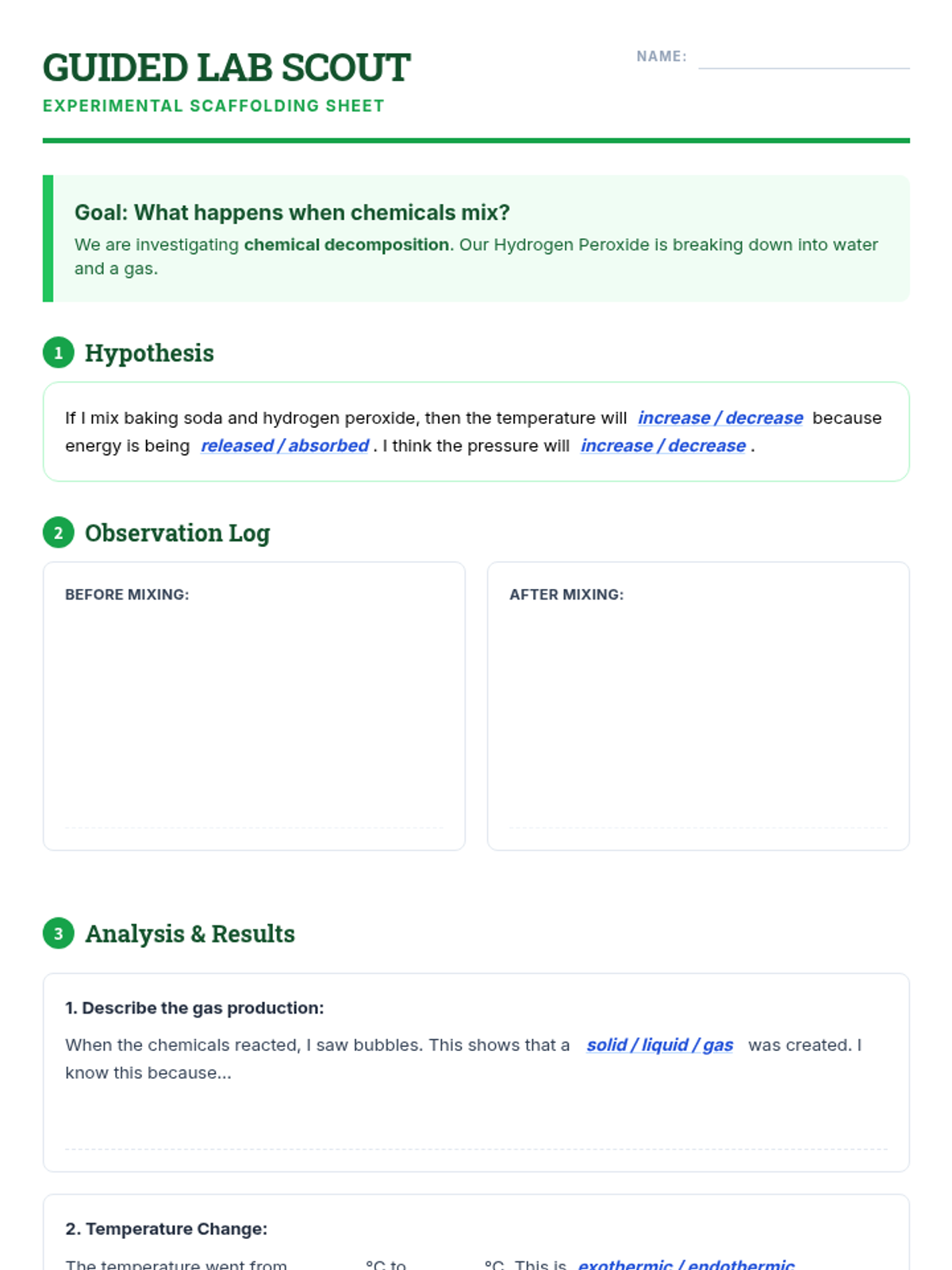
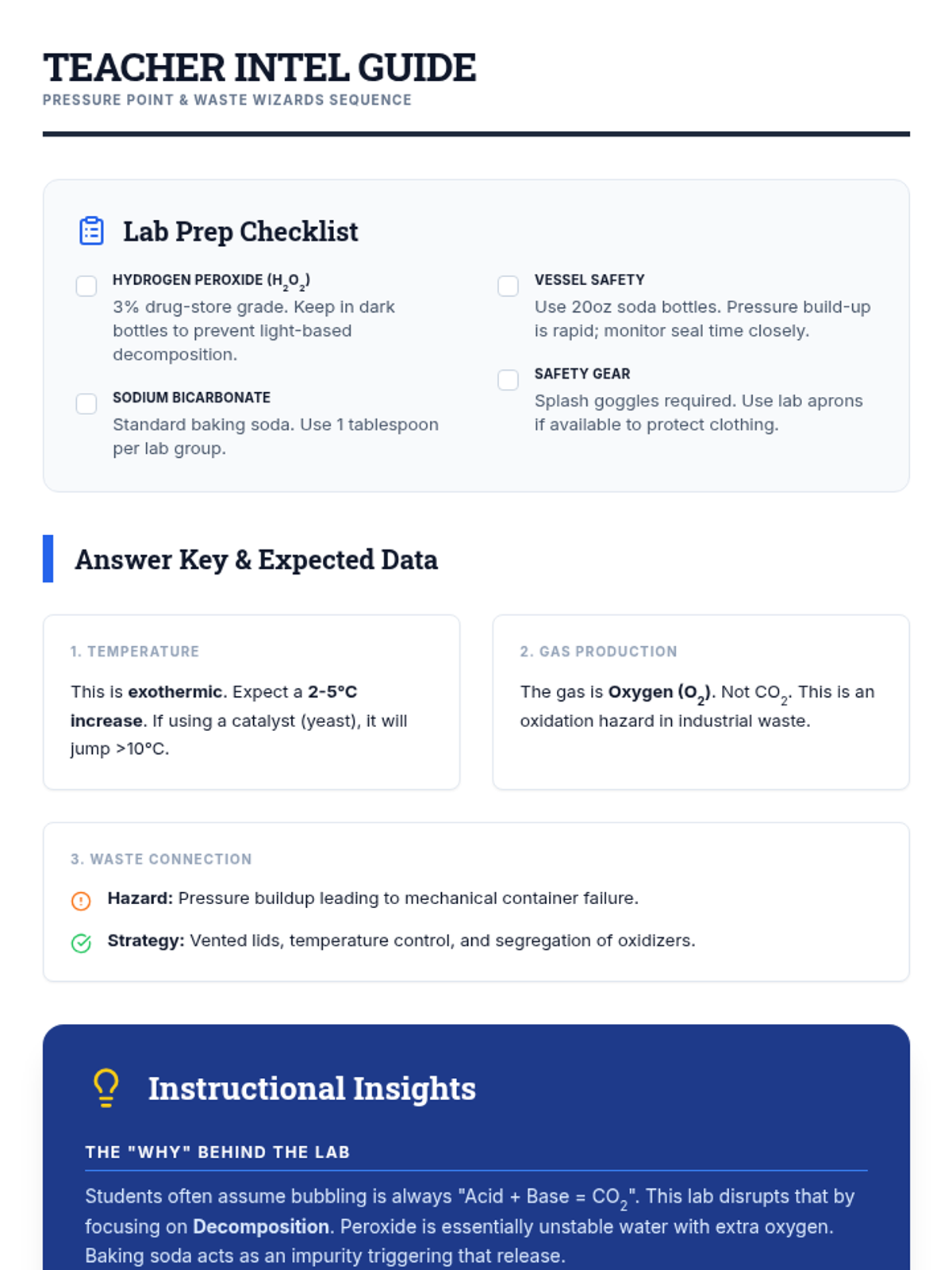
Students conduct an experiment mixing hydrogen peroxide and baking soda to observe chemical reactions and gas production, simulating pressure buildup in waste containers.
An investigation of Le Chatelier's Principle. Students apply external stresses—concentration and temperature changes—to the Iron(III) thiocyanate equilibrium system to observe, predict, and explain how a system at balance responds to change.
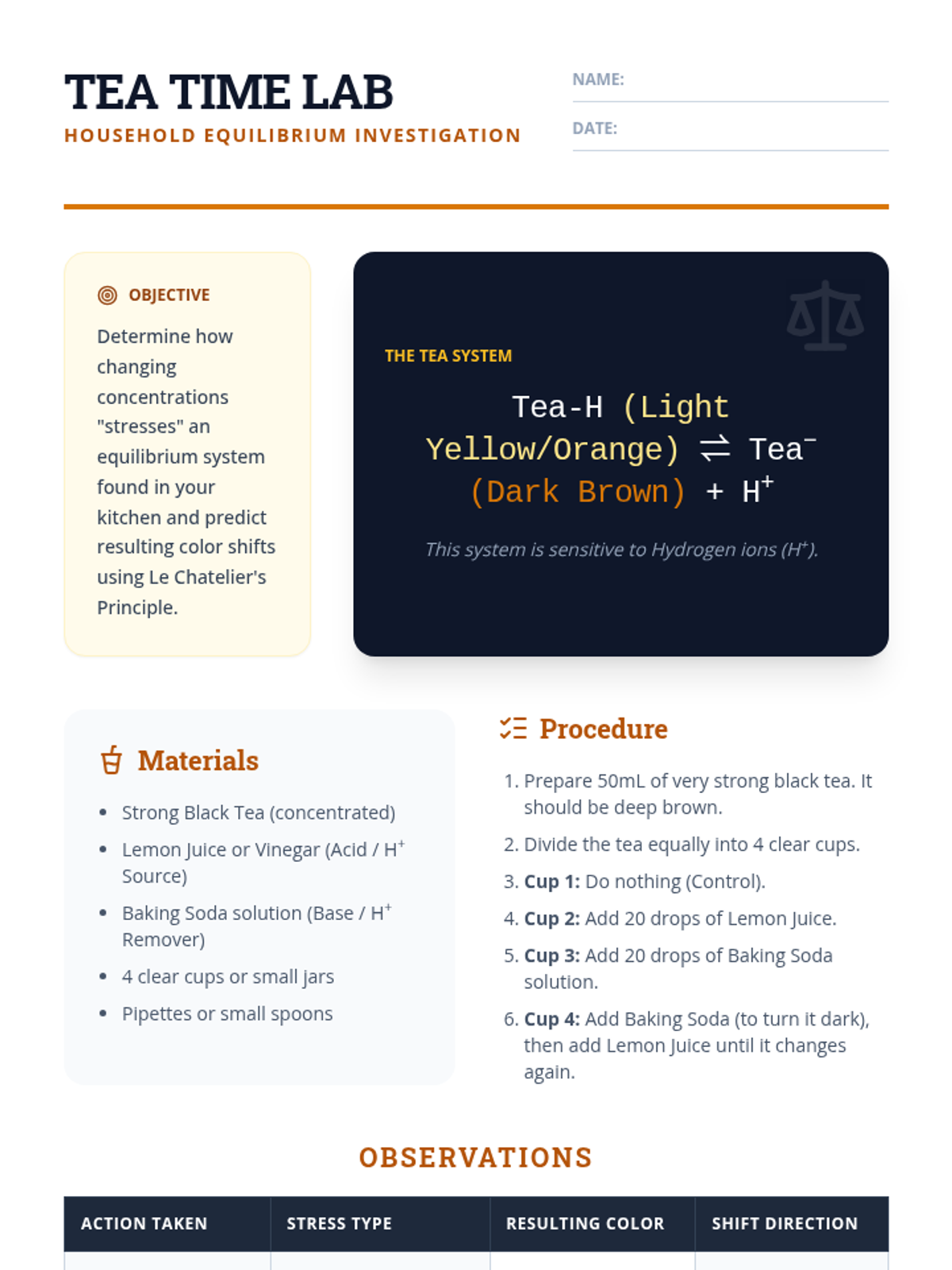
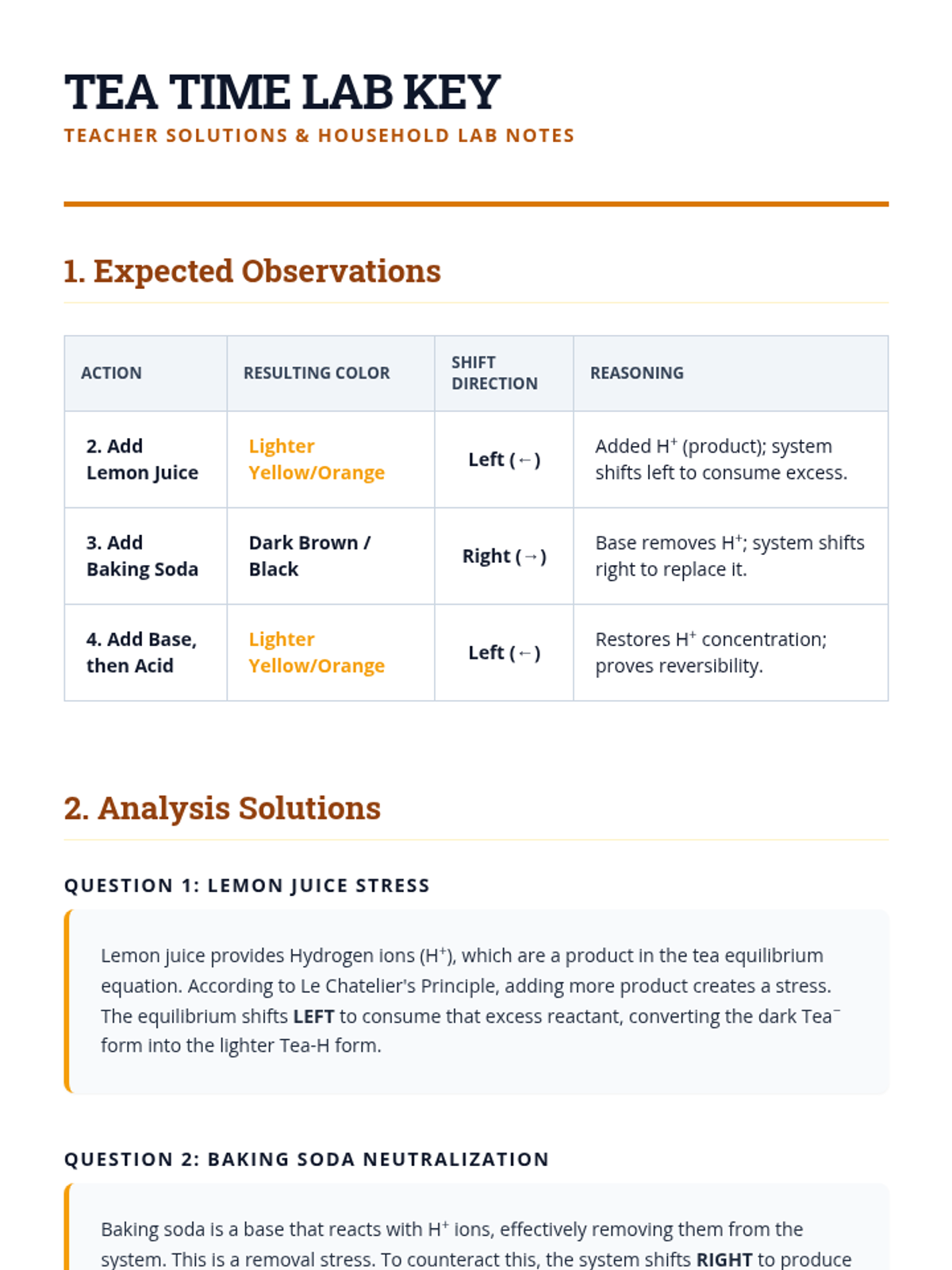
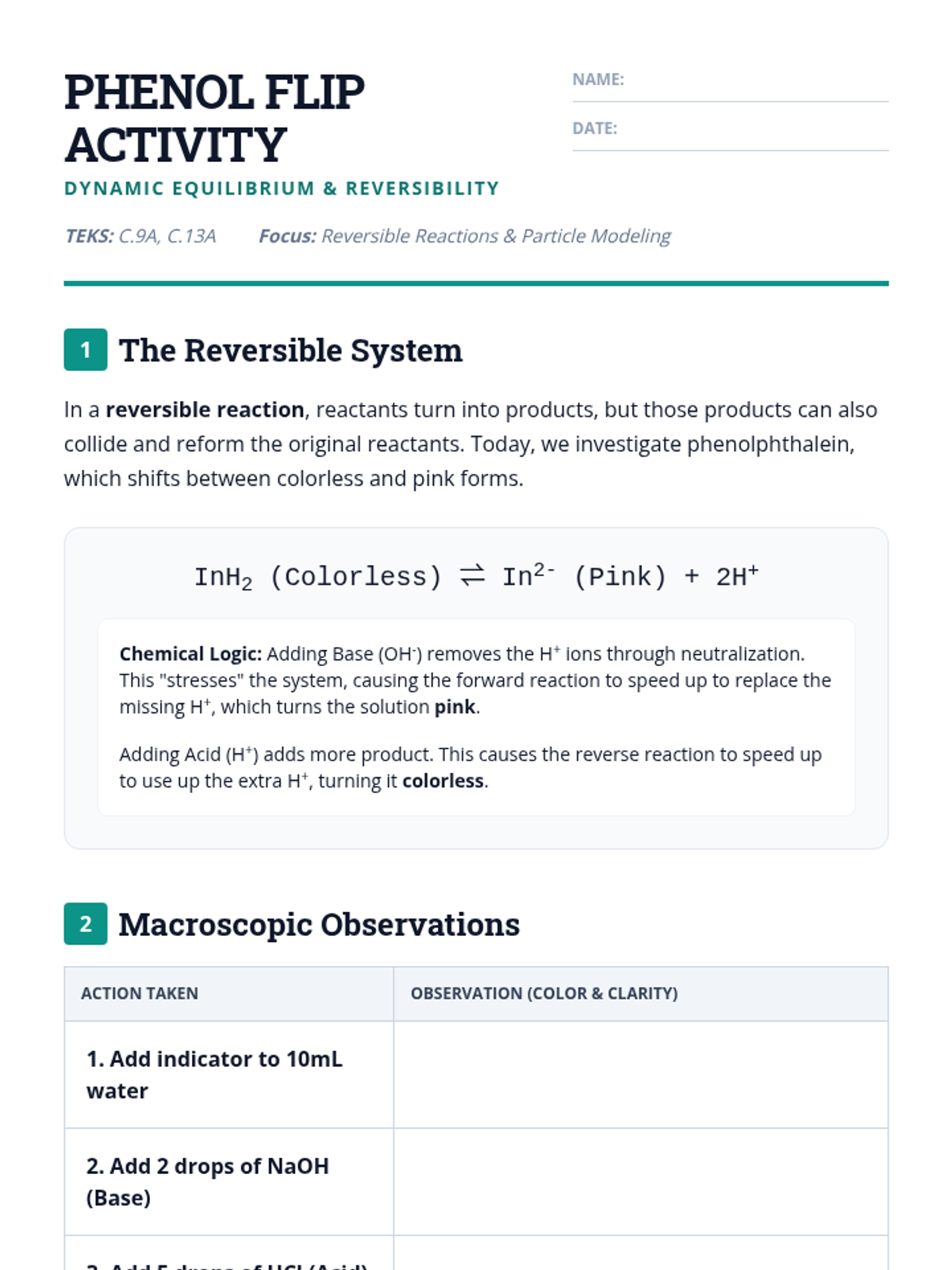
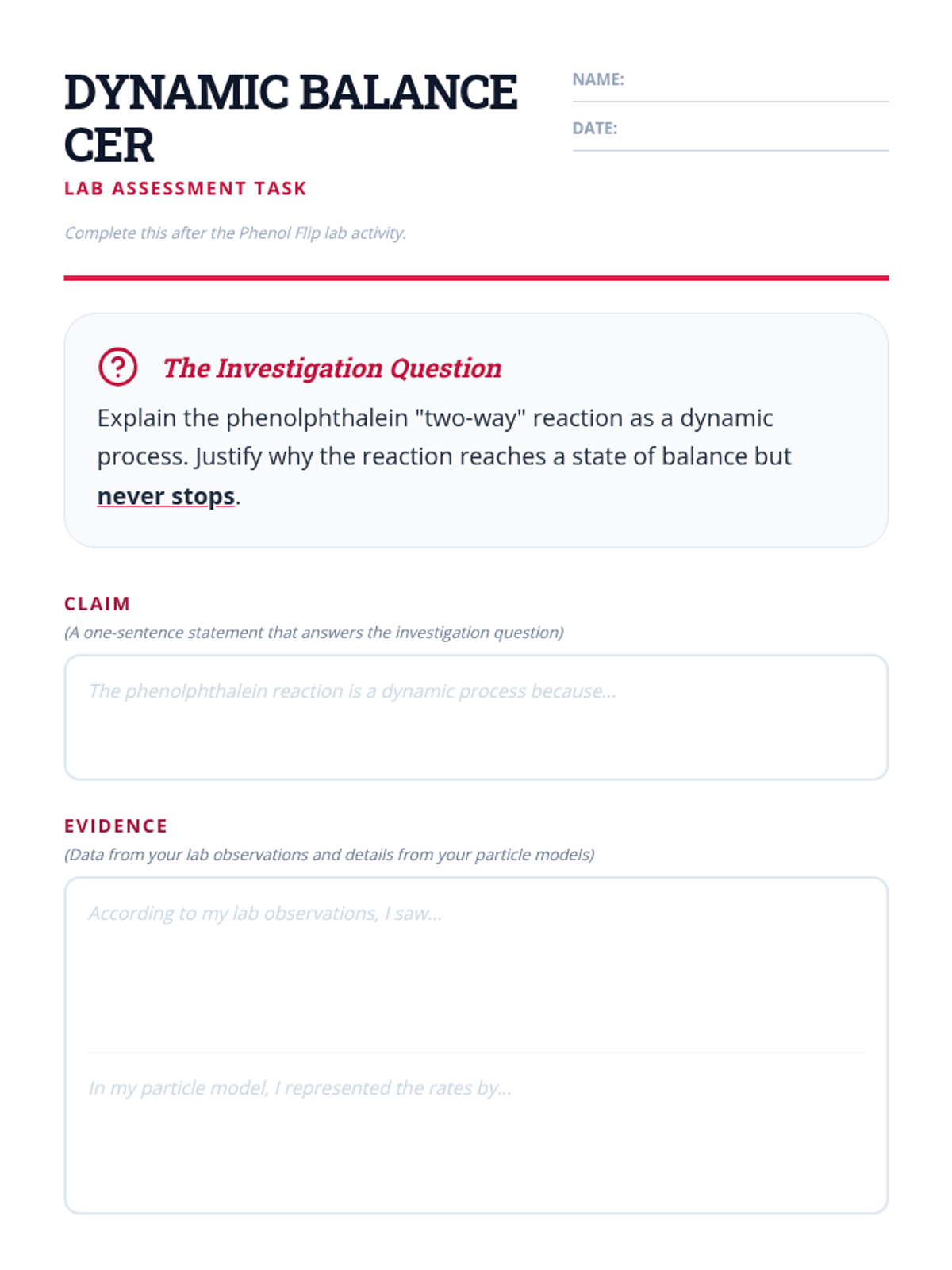
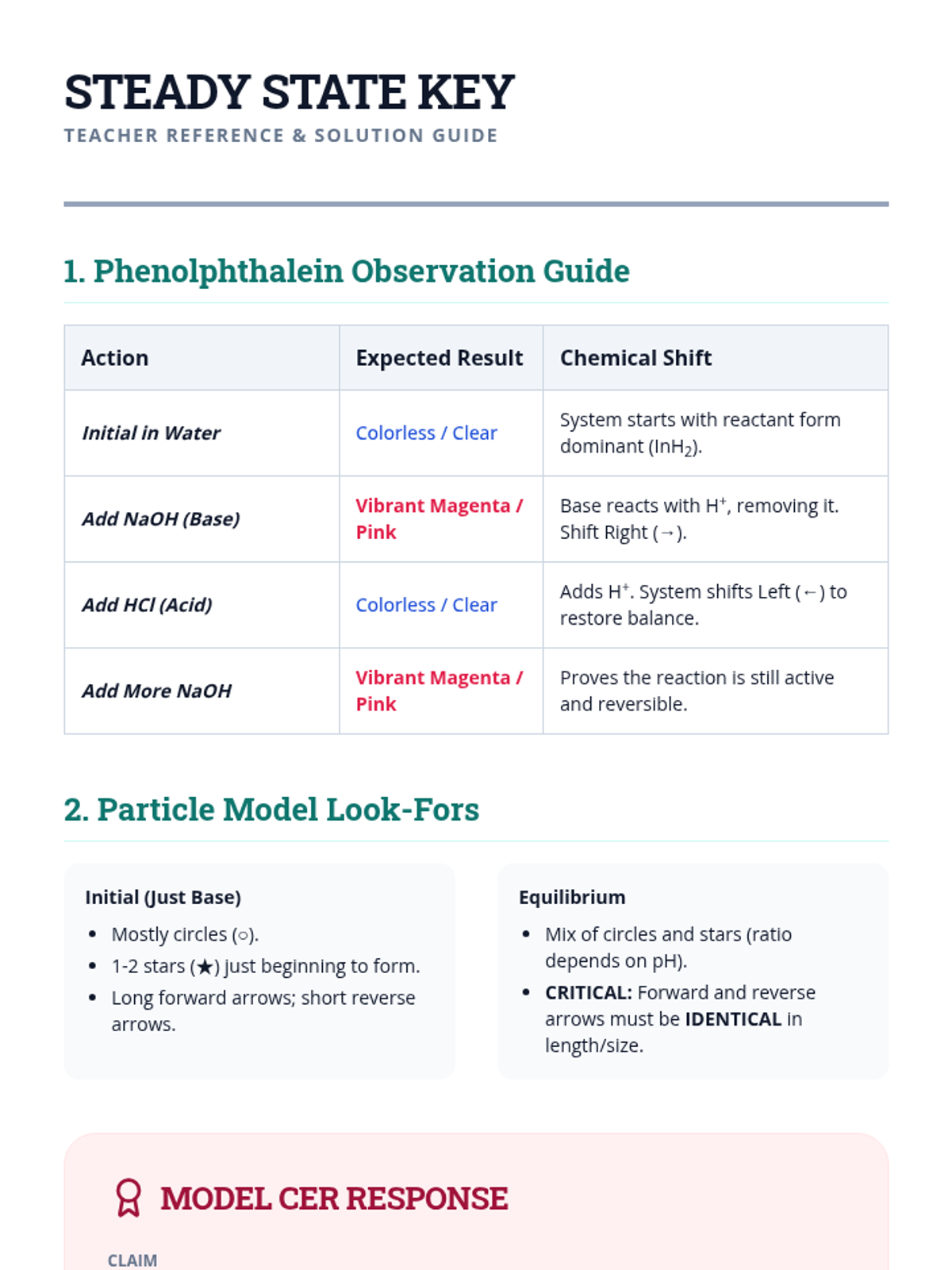
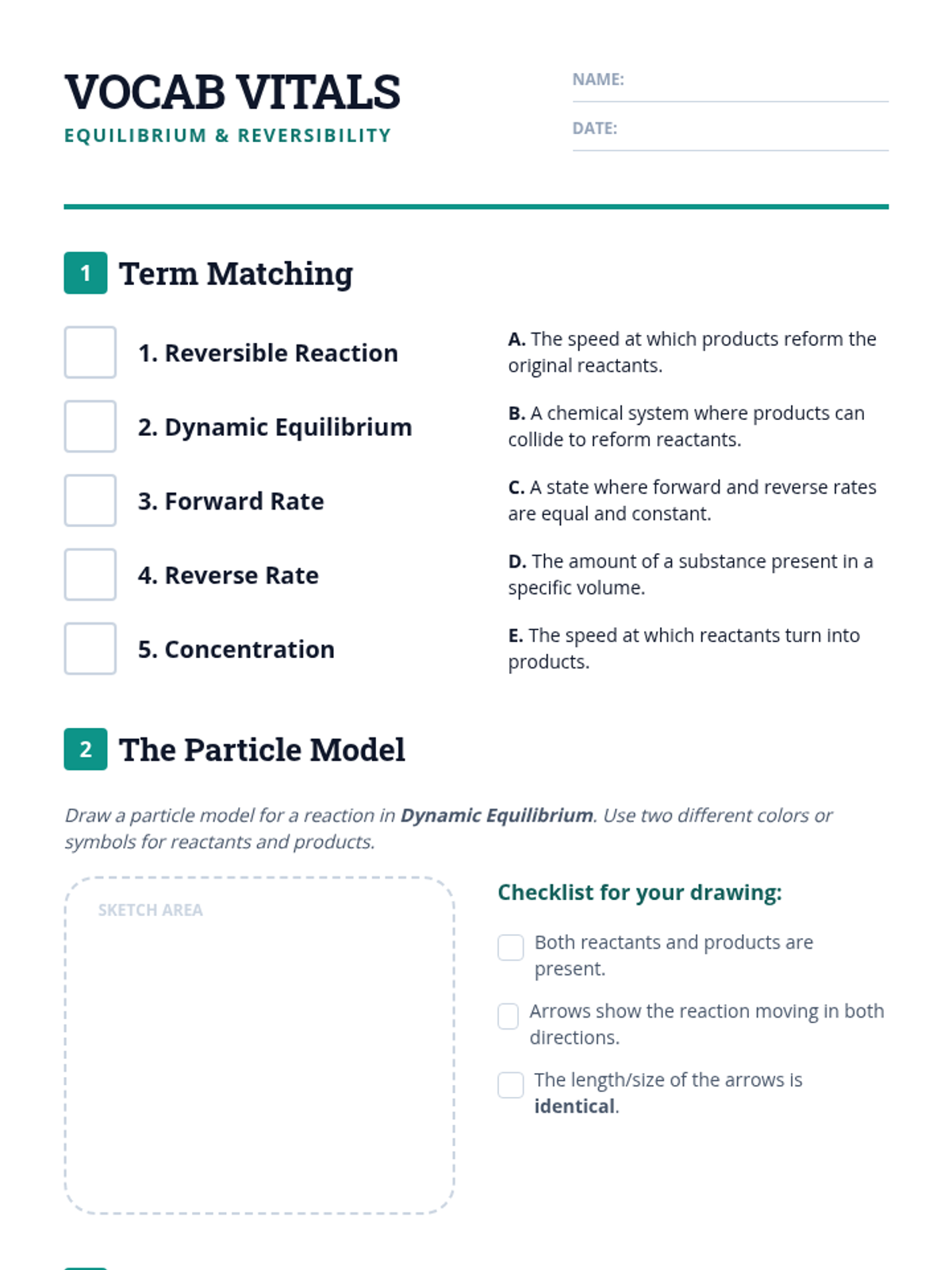
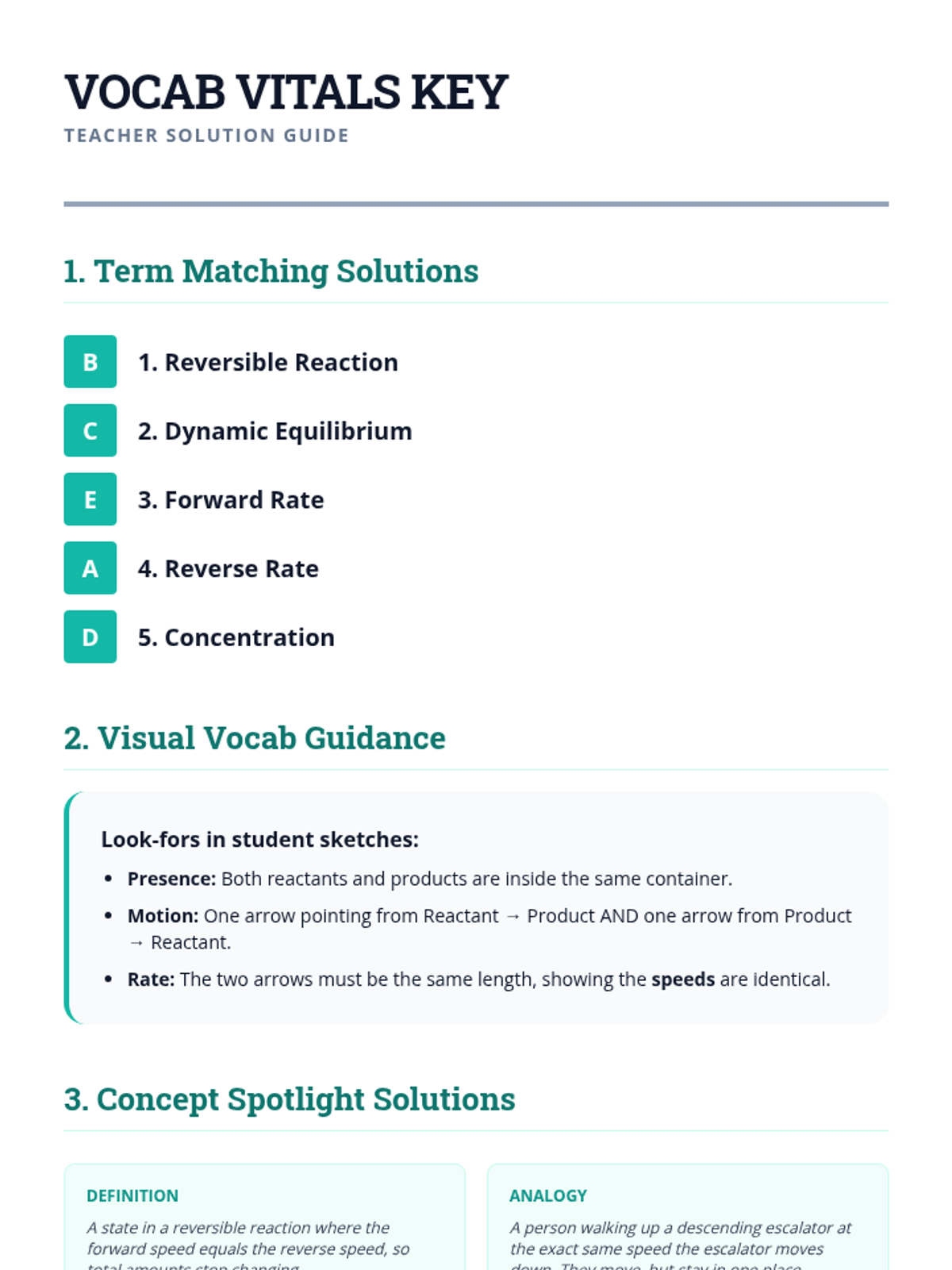
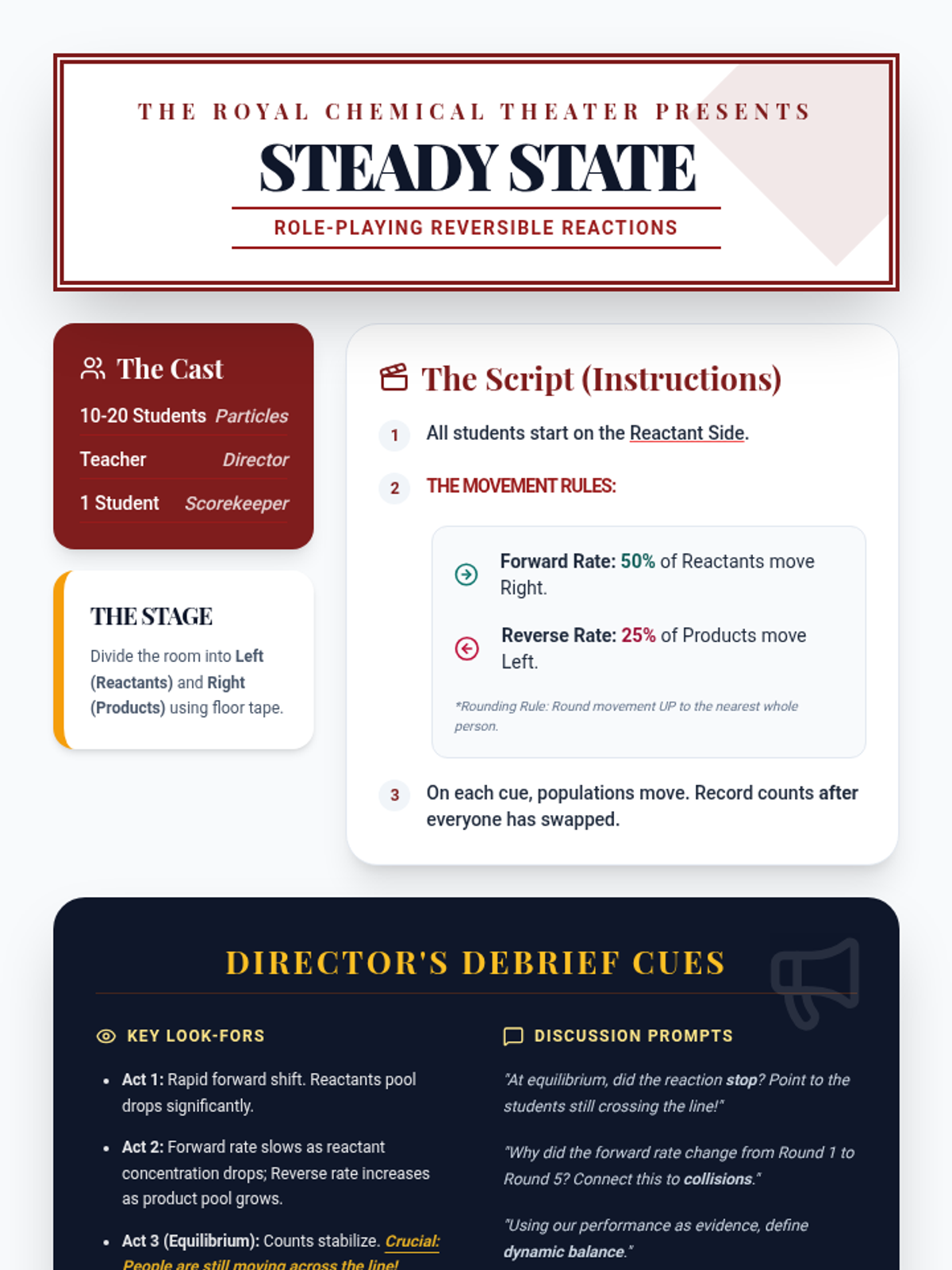
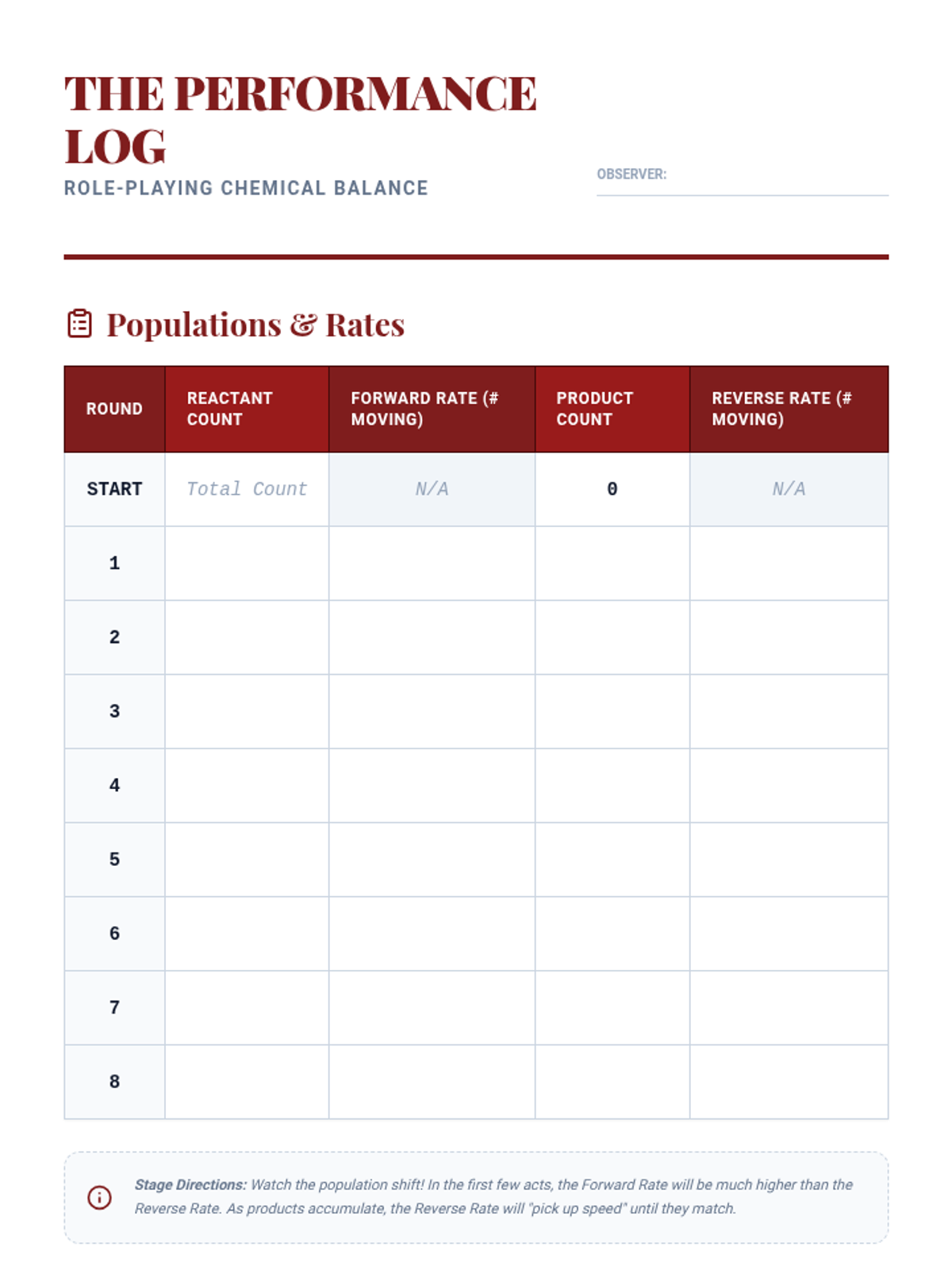
An introduction to reversible reactions and chemical equilibrium. Students use particle models and a pH-sensitive chemical indicator to visualize how reactions can occur in both directions and reach a point where forward and reverse rates are equal.
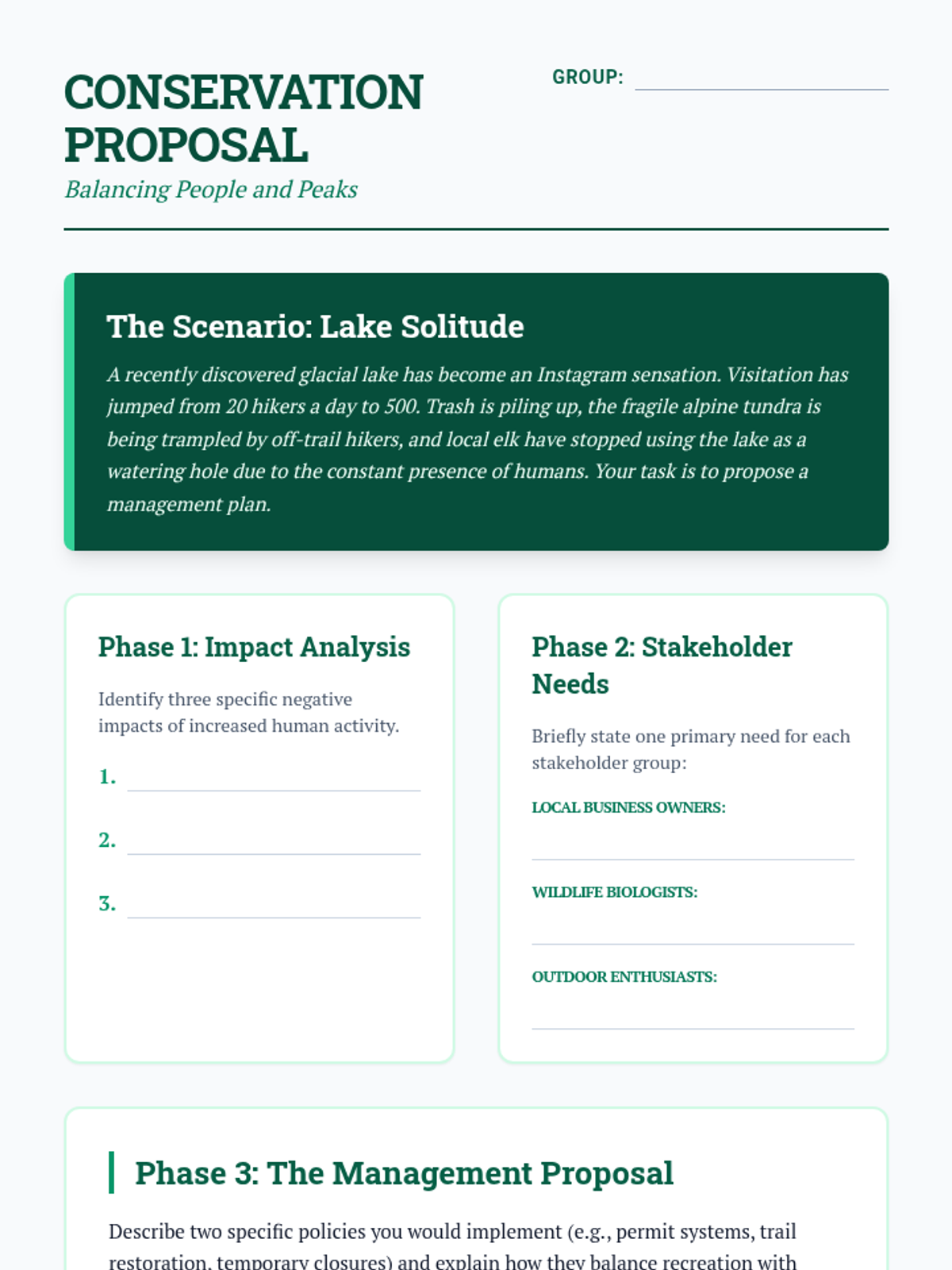
A lesson on the history and importance of conservation in Colorado, culminating in a simulation where students propose solutions to balance recreation and environmental protection.
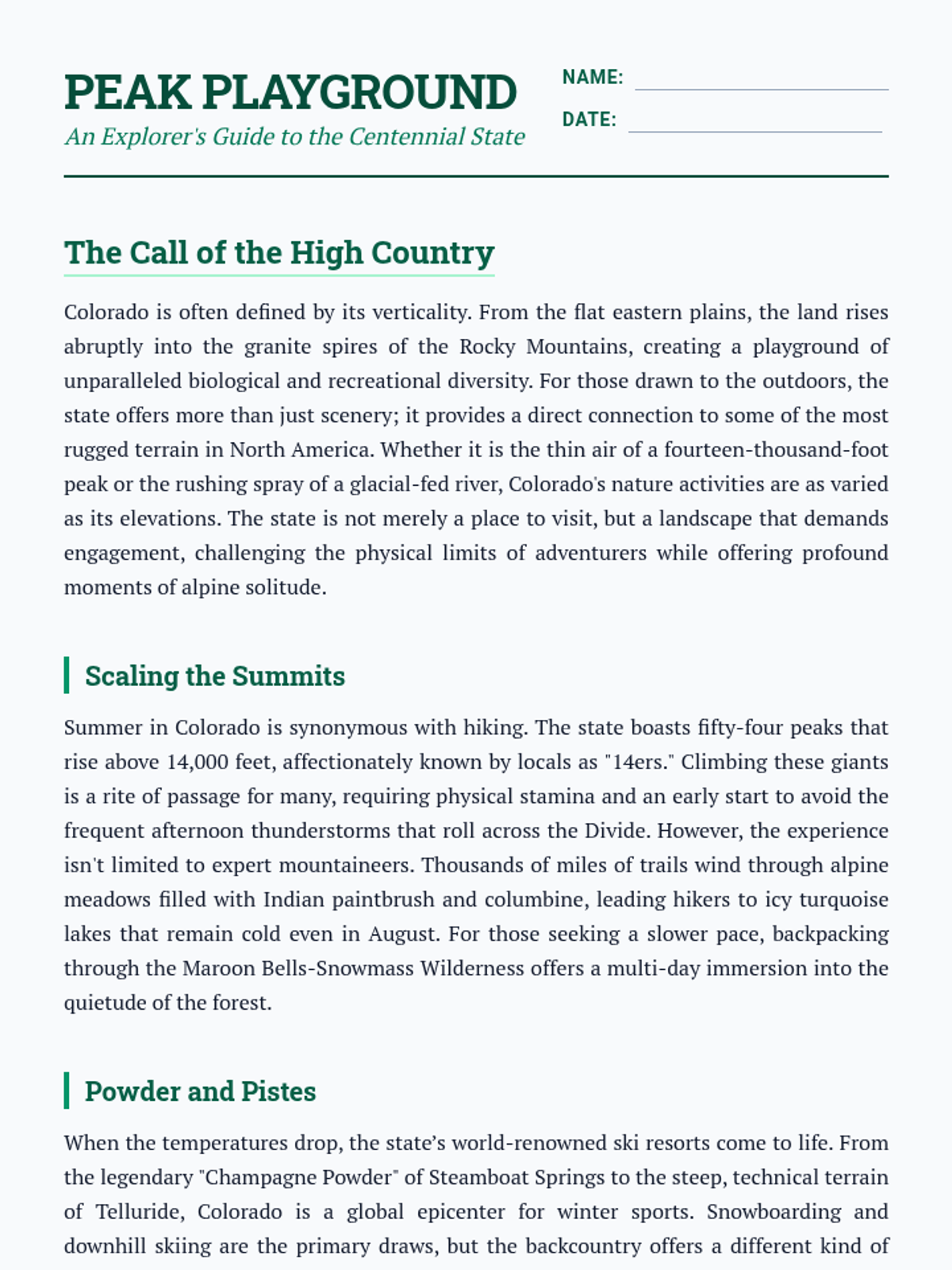
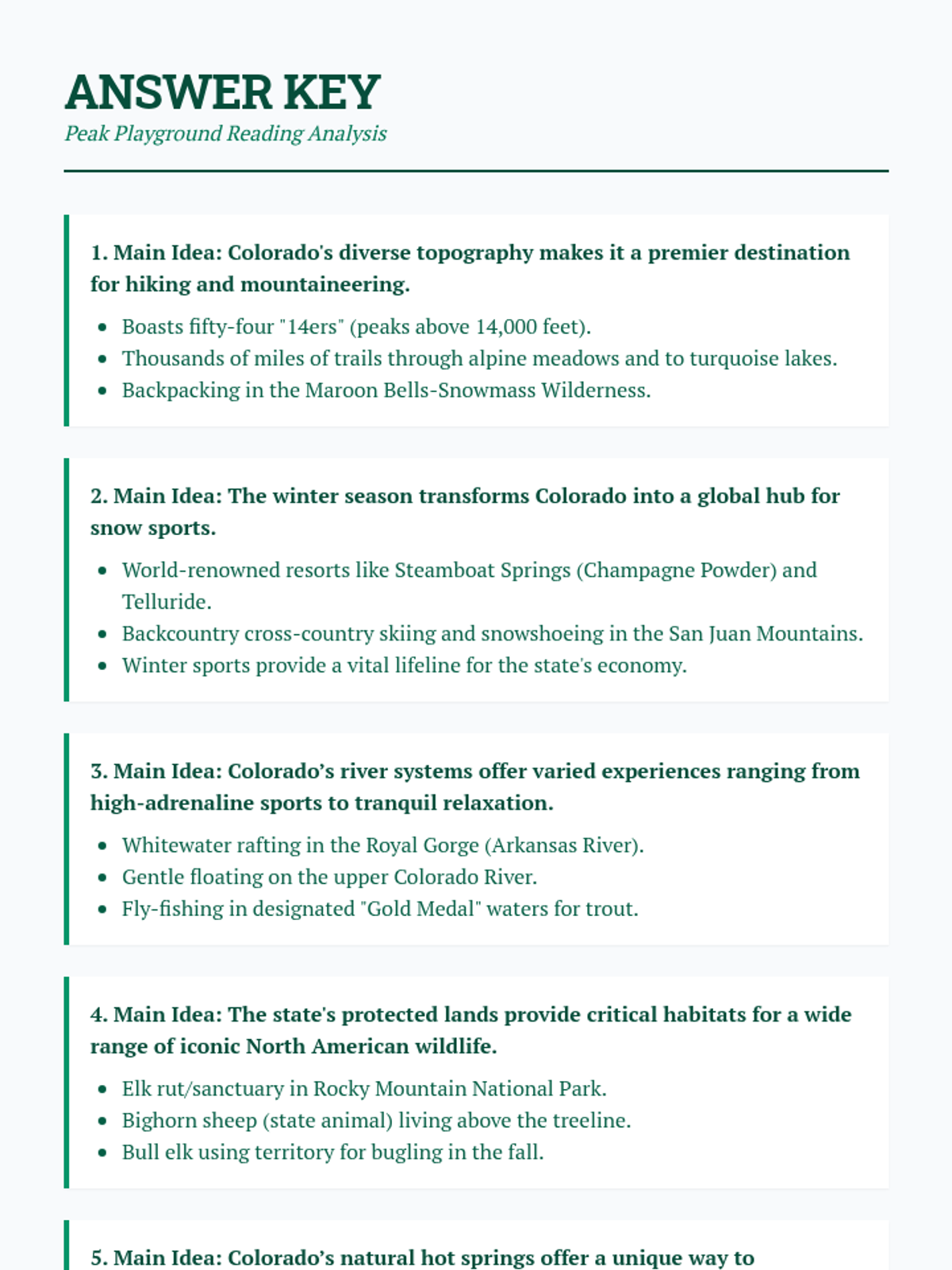
A lesson exploring the variety of nature activities in Colorado, focusing on reading comprehension and evidence-based writing. Students will identify supporting details for key main ideas within a complex informational text.
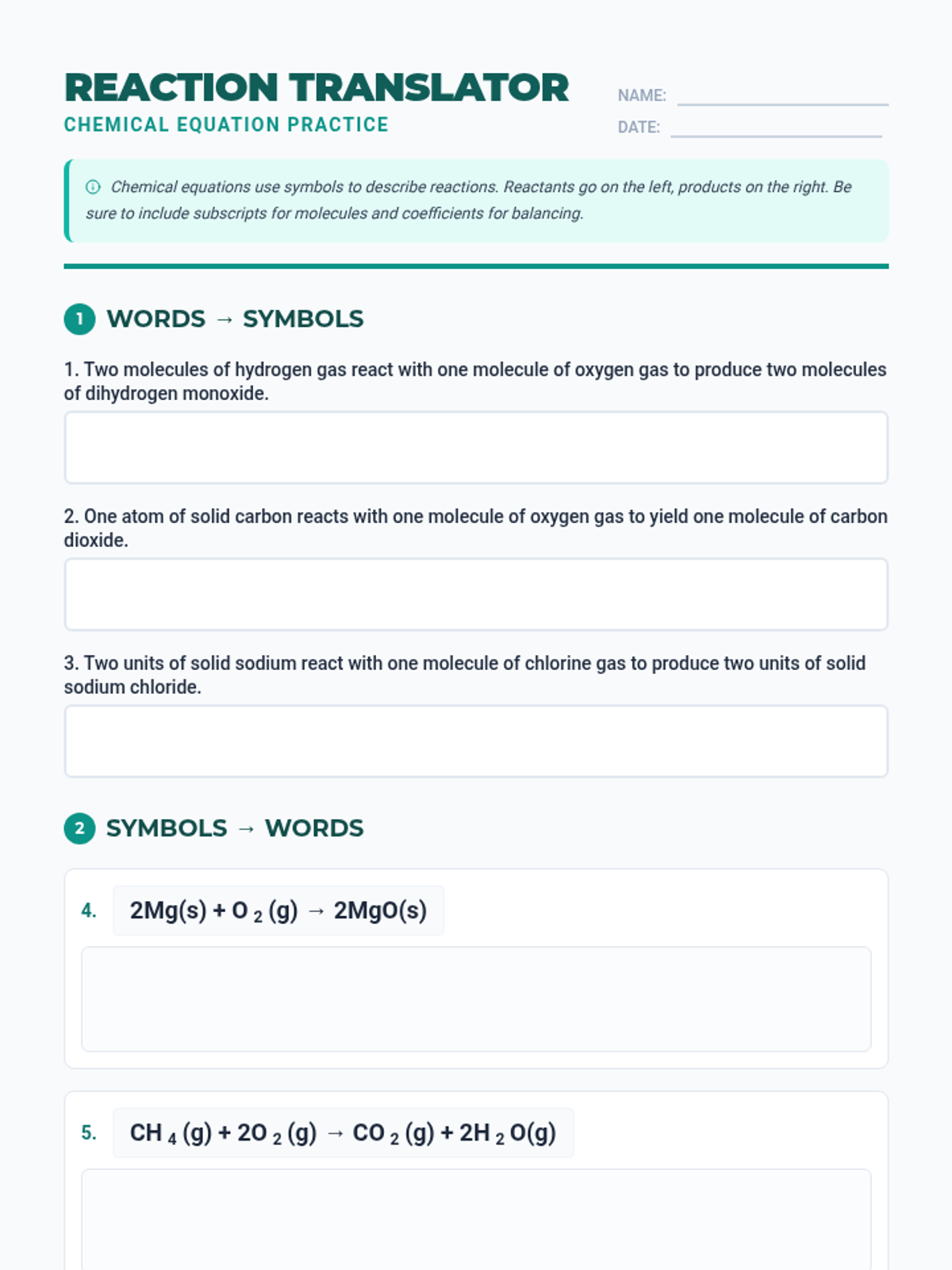
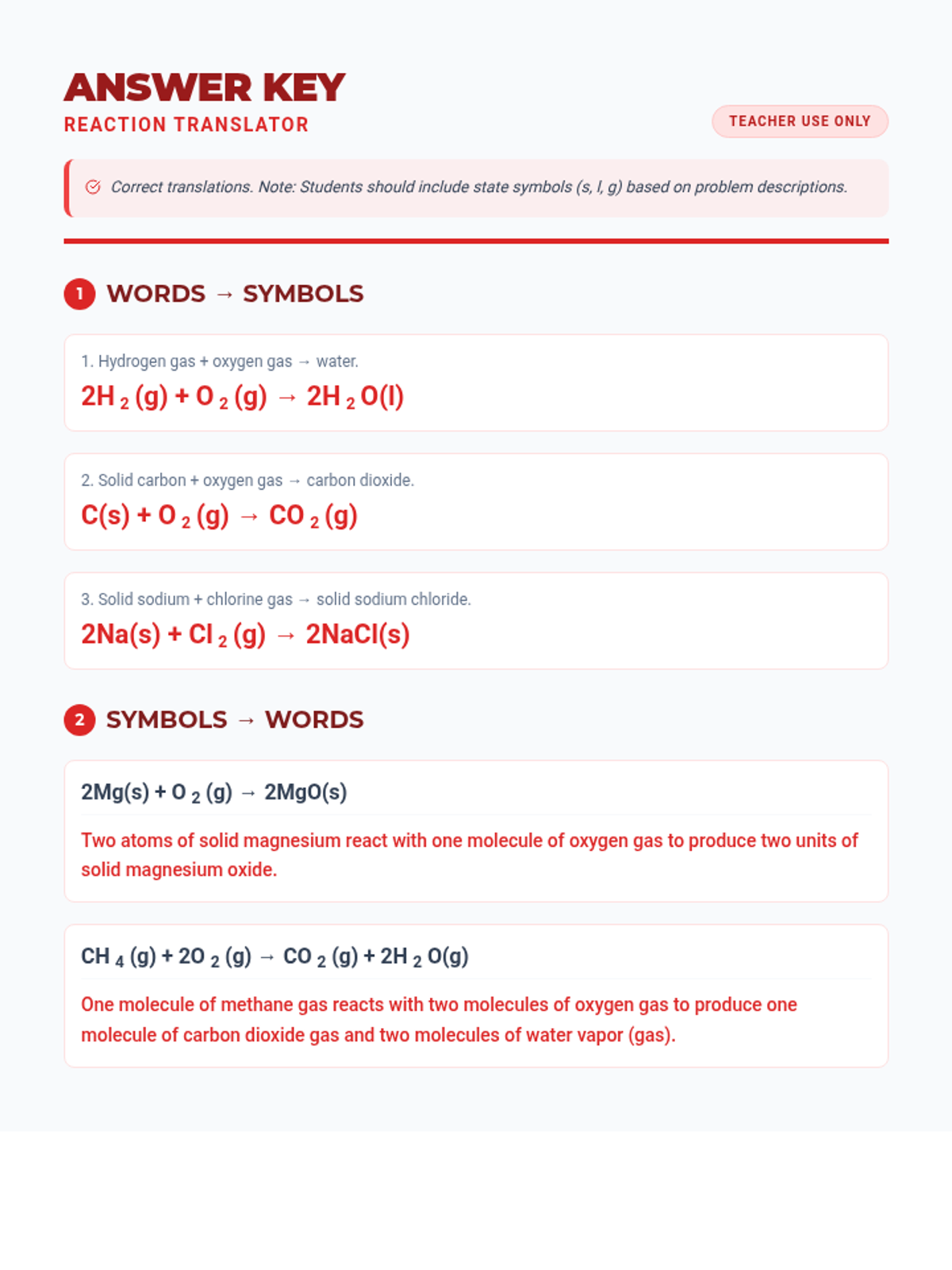
A focused practice session on translating chemical reactions between word descriptions and symbolic equations, covering key concepts of reactants, products, and stoichiometry.
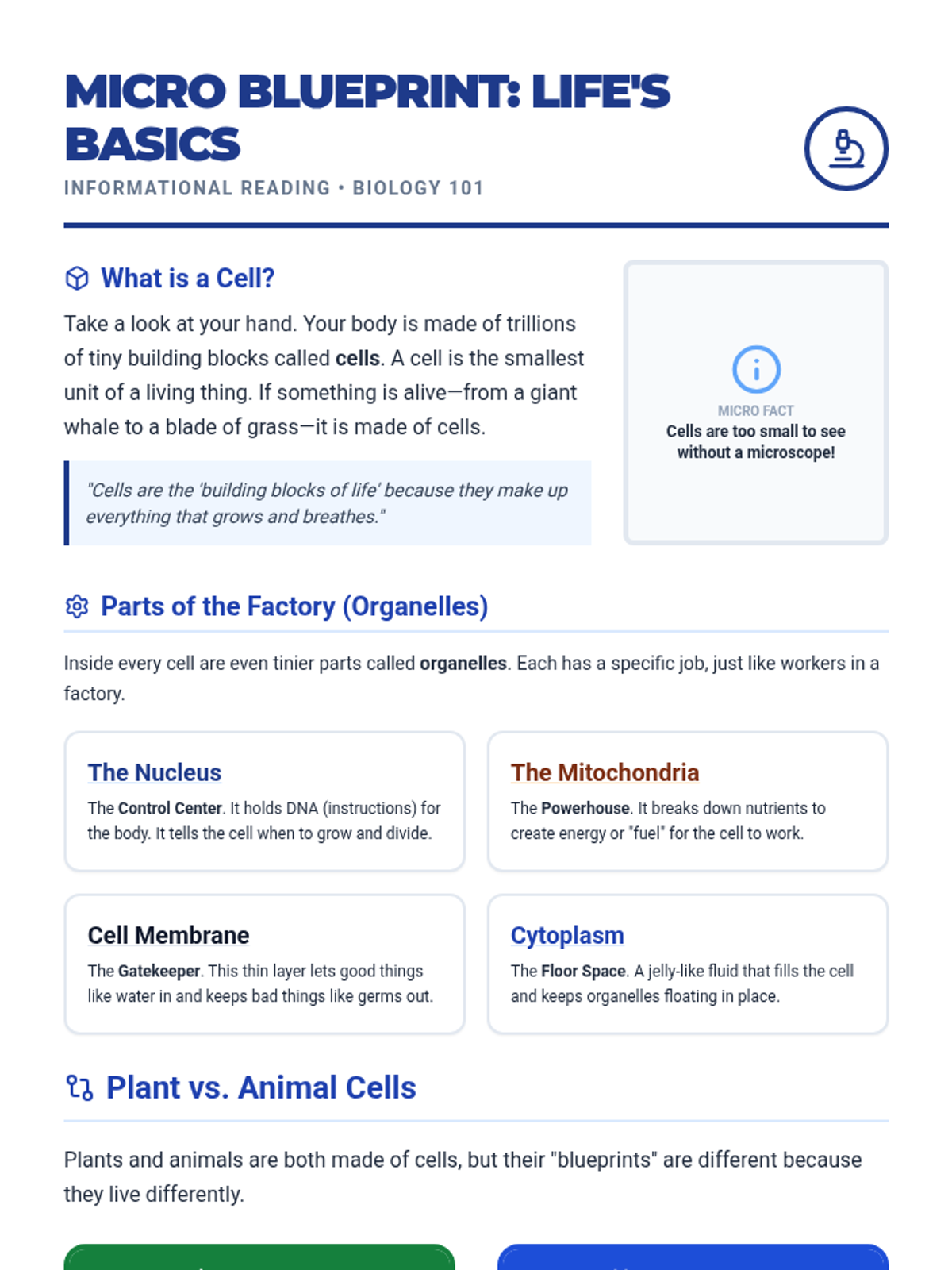
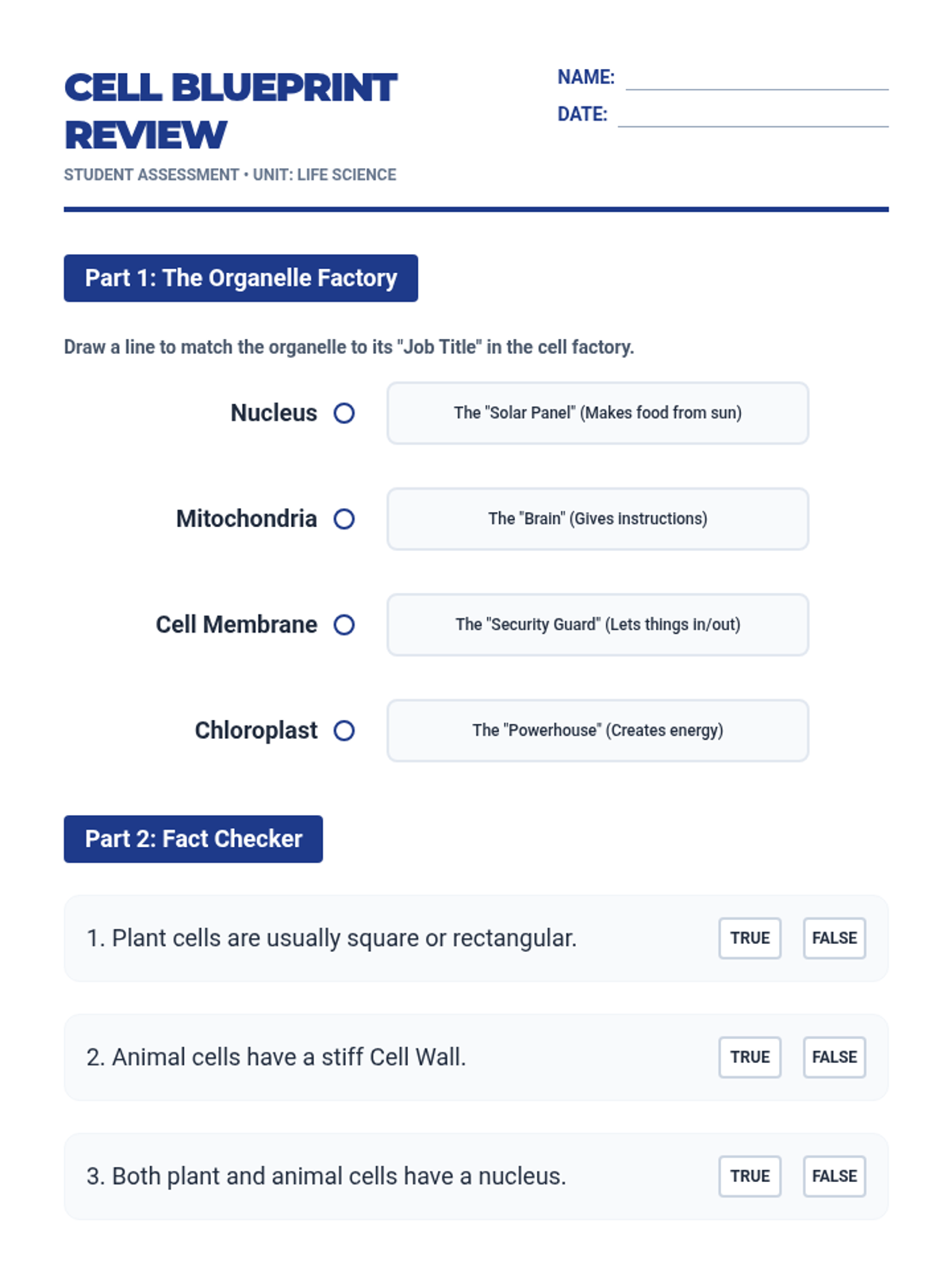
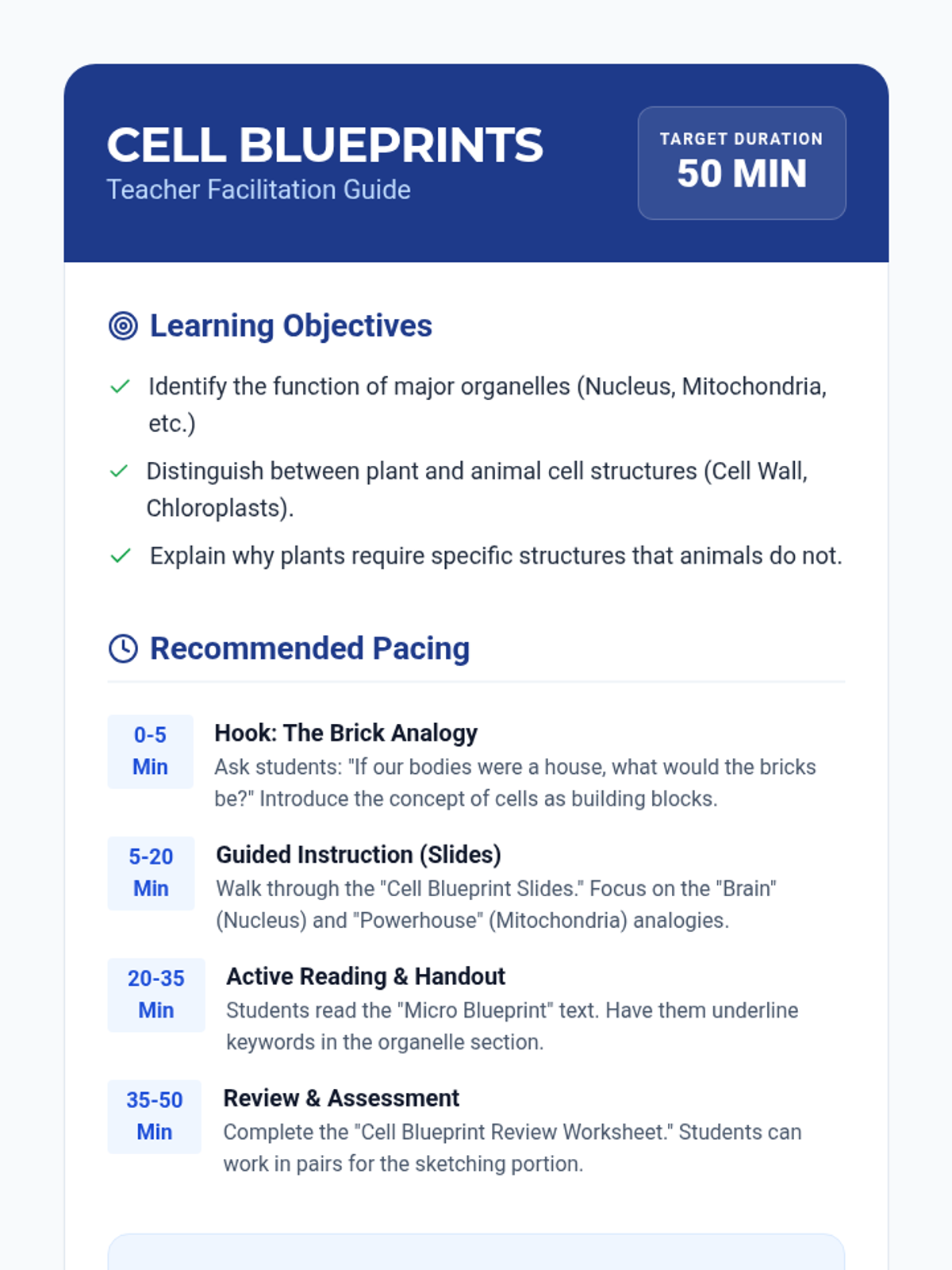
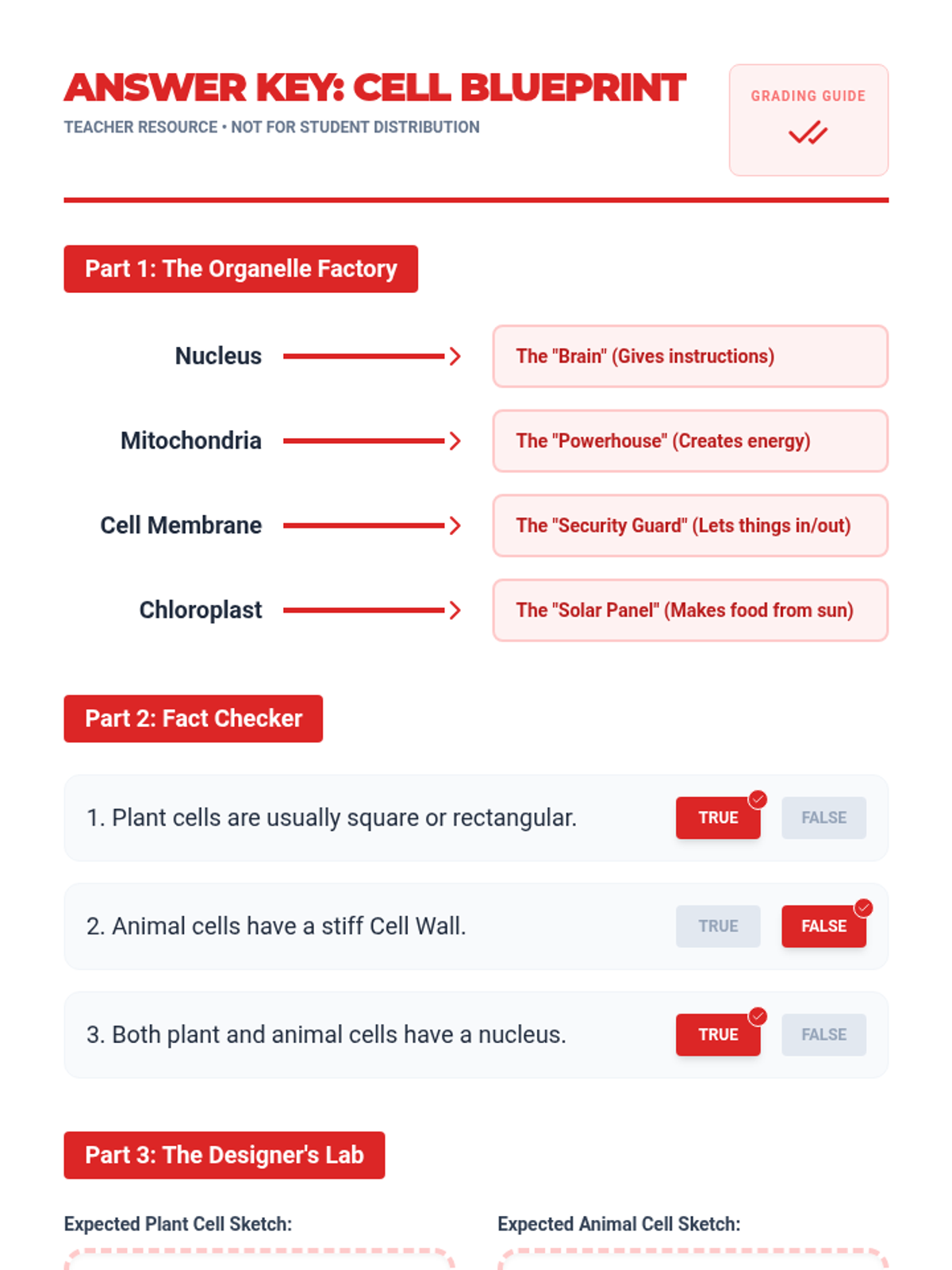
A 50-minute introductory lesson on plant and animal cells designed for 9-10th grade self-contained science. Students will explore cell organelles, compare structures, and understand how these 'building blocks of life' function like a factory or city.
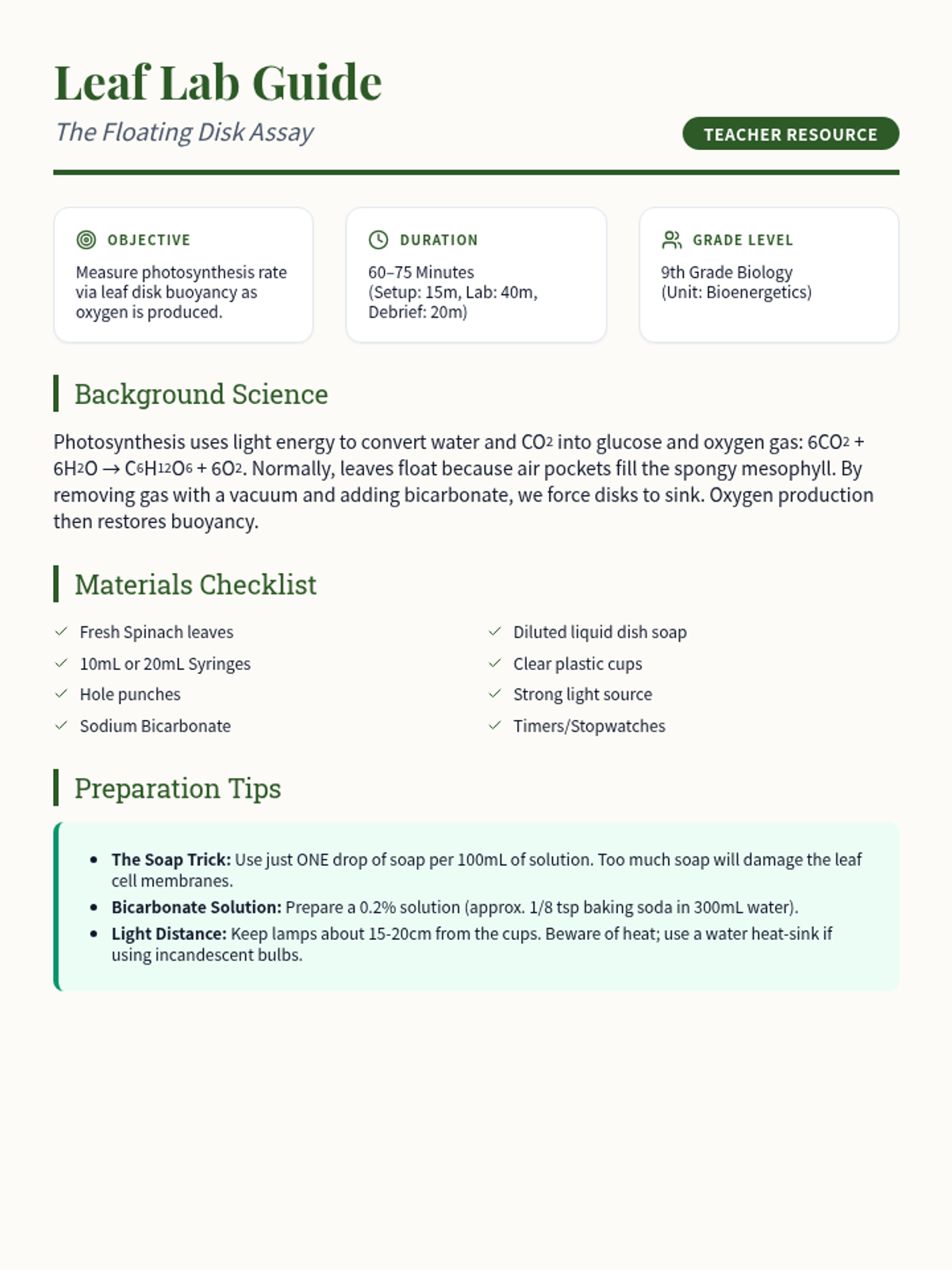
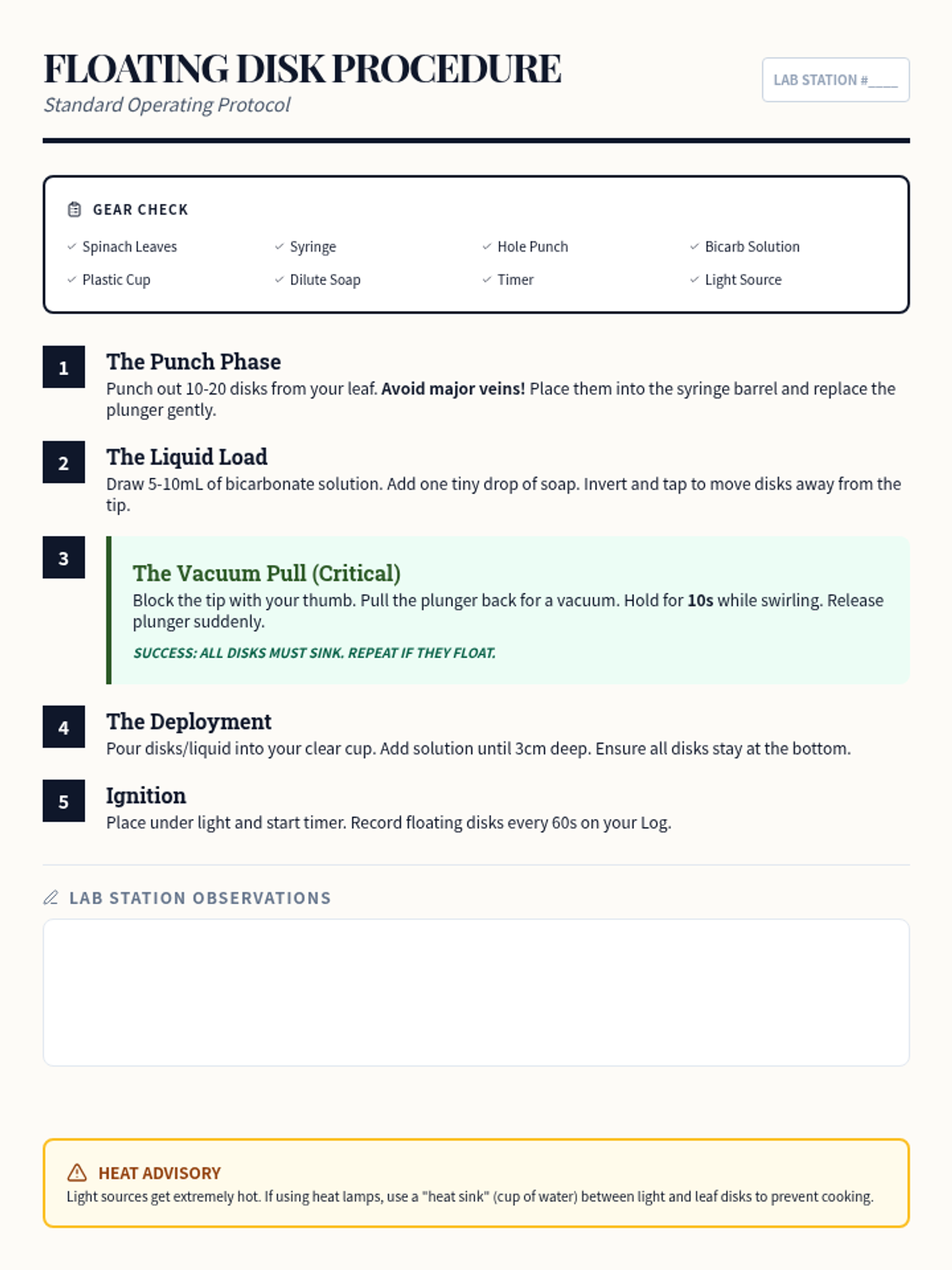
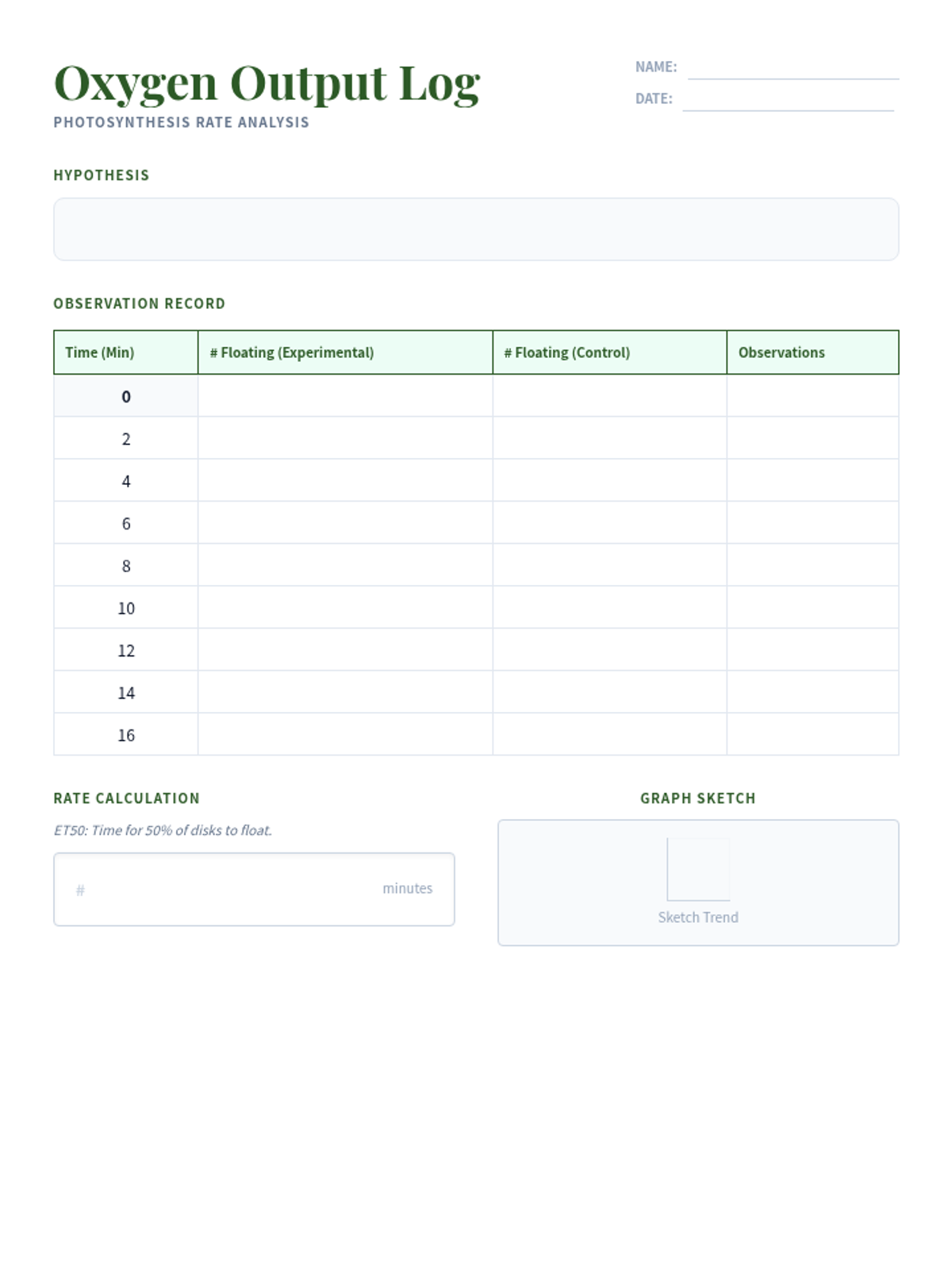
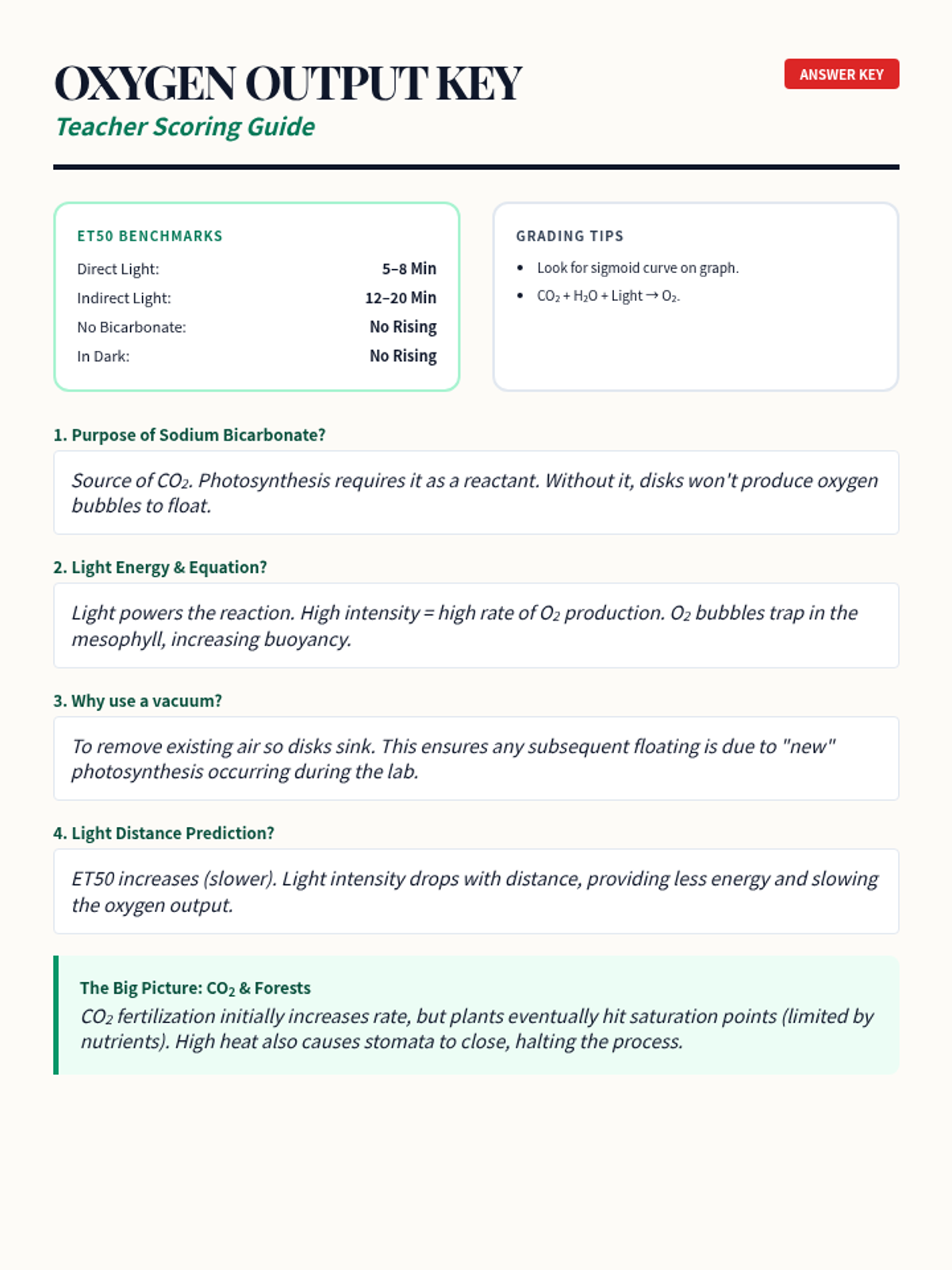
In this hands-on lab, students use the floating leaf disk assay to visualize and measure the rate of photosynthesis. They explore how light intensity and CO2 availability act as variables in oxygen production.
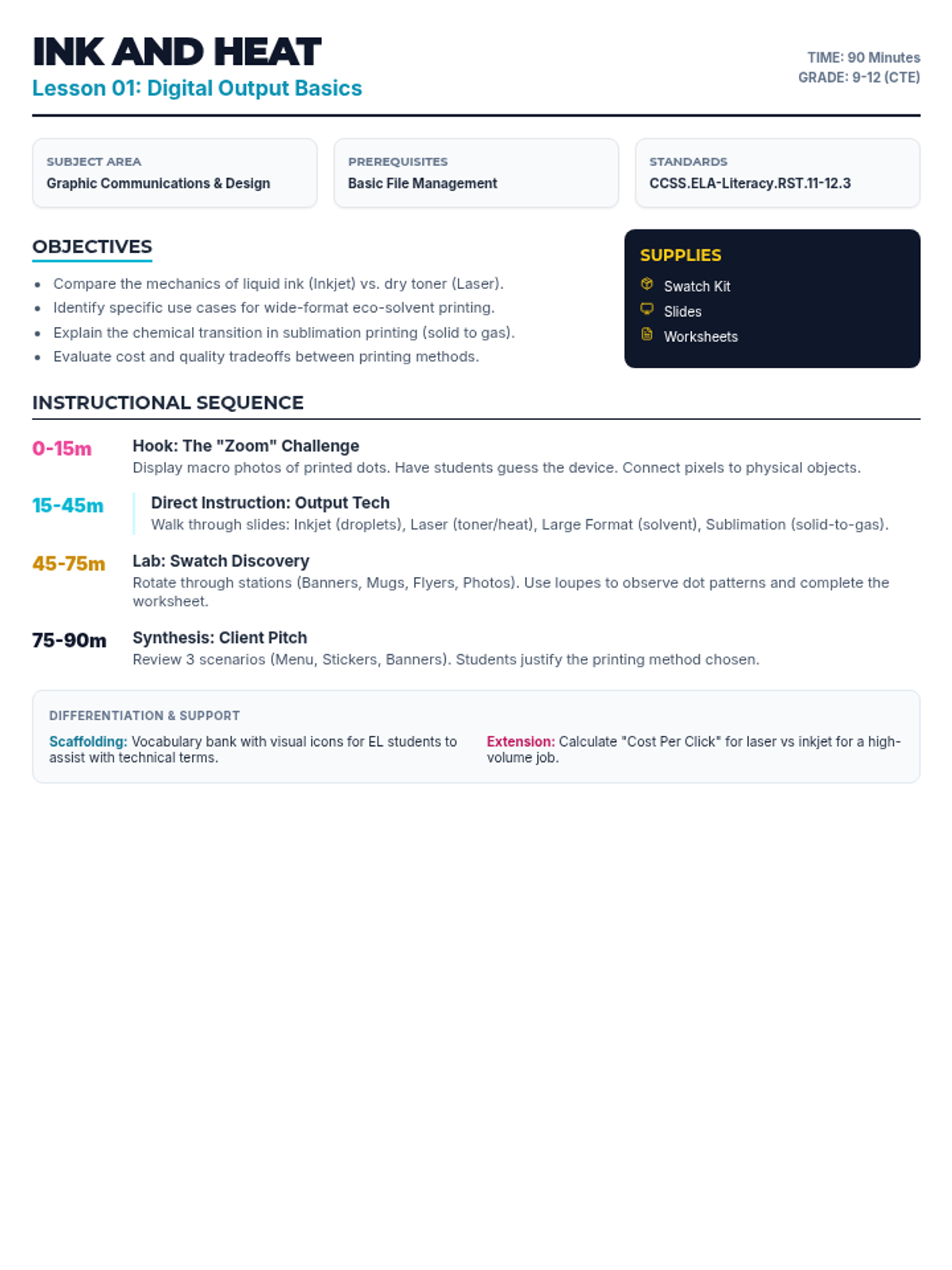
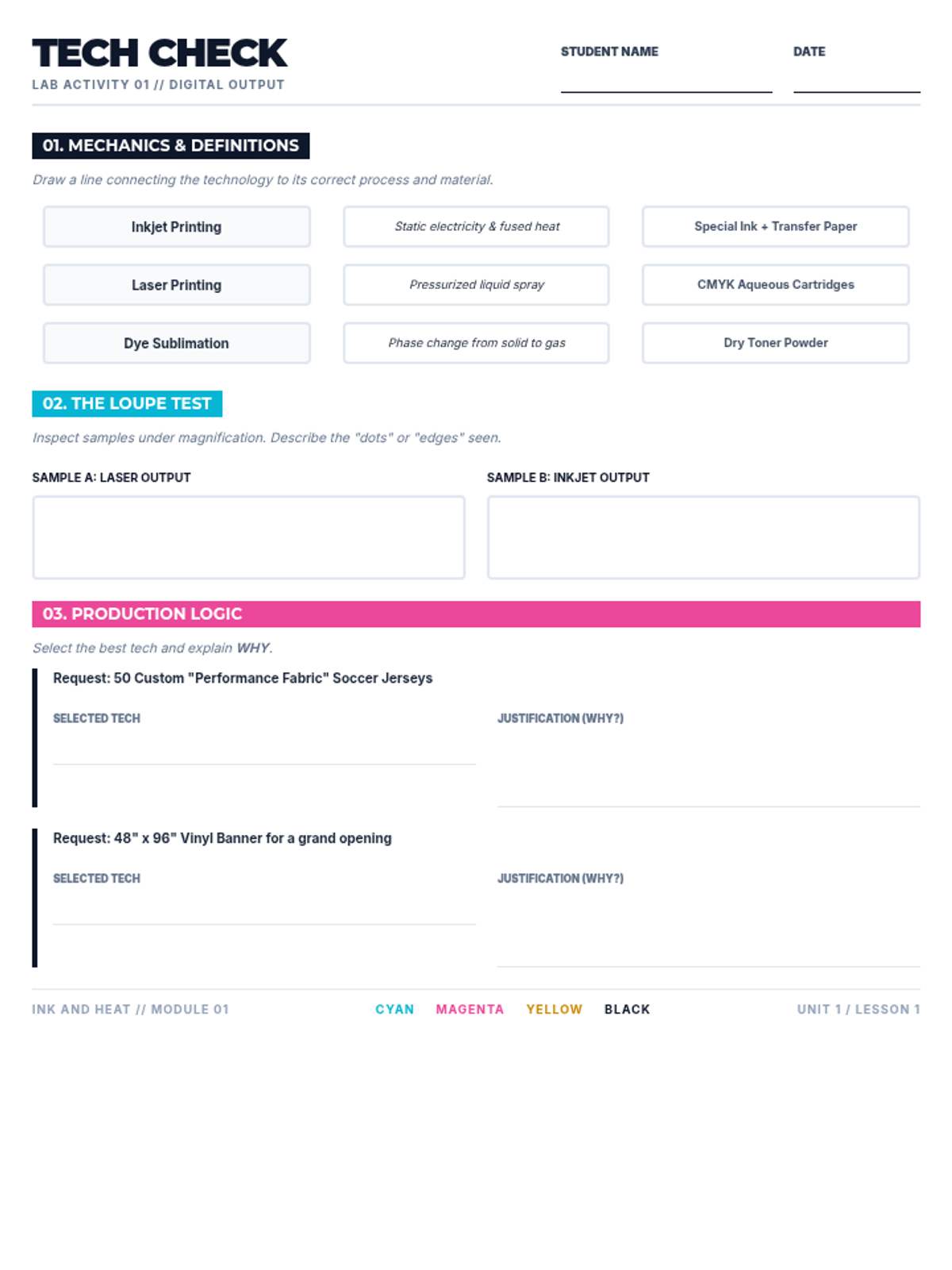
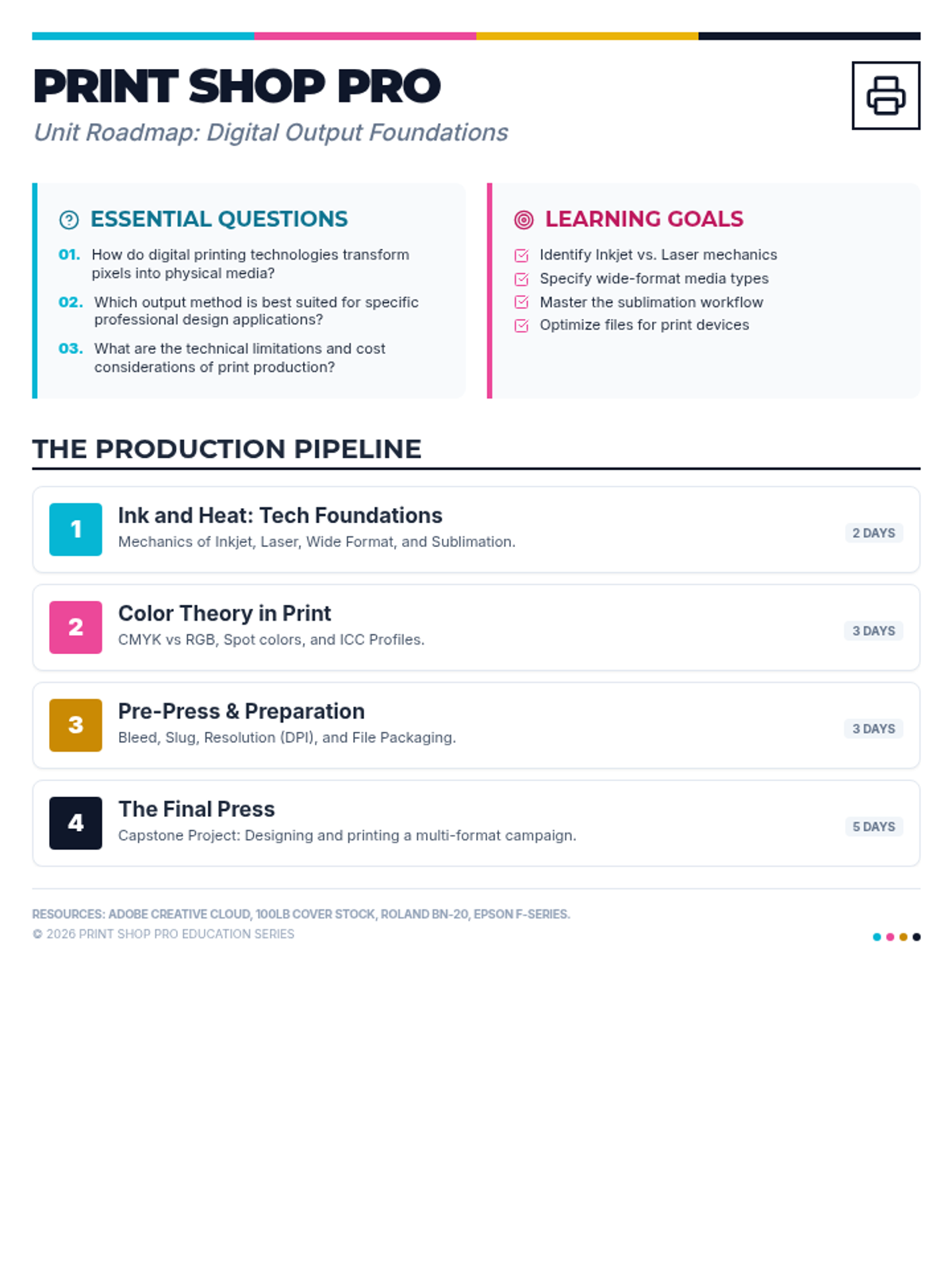
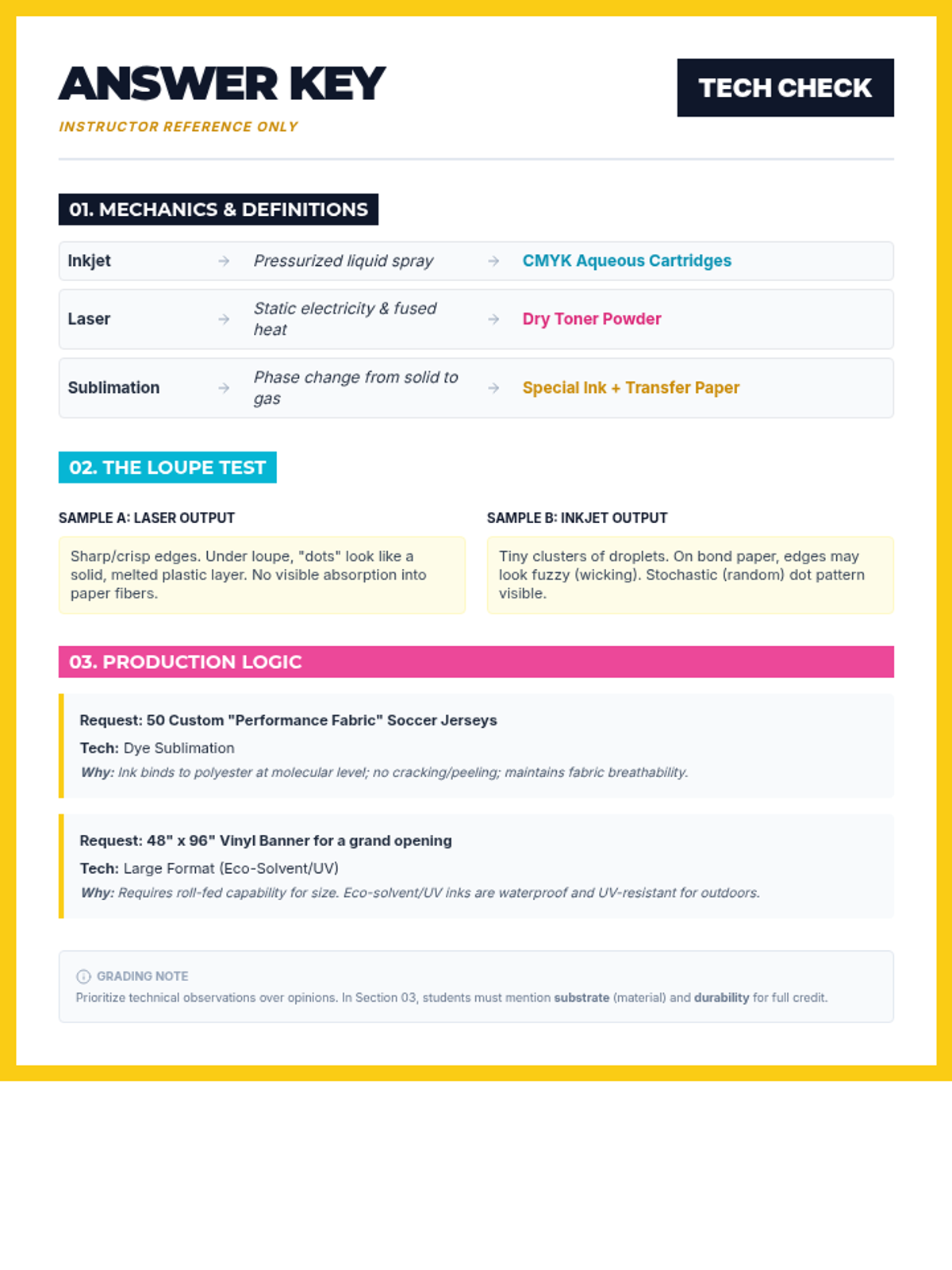
An introductory lesson on digital printing technologies, covering the mechanics of inkjet, laser, large format, and sublimation printing. Students will learn the pros, cons, and specific use cases for each method.
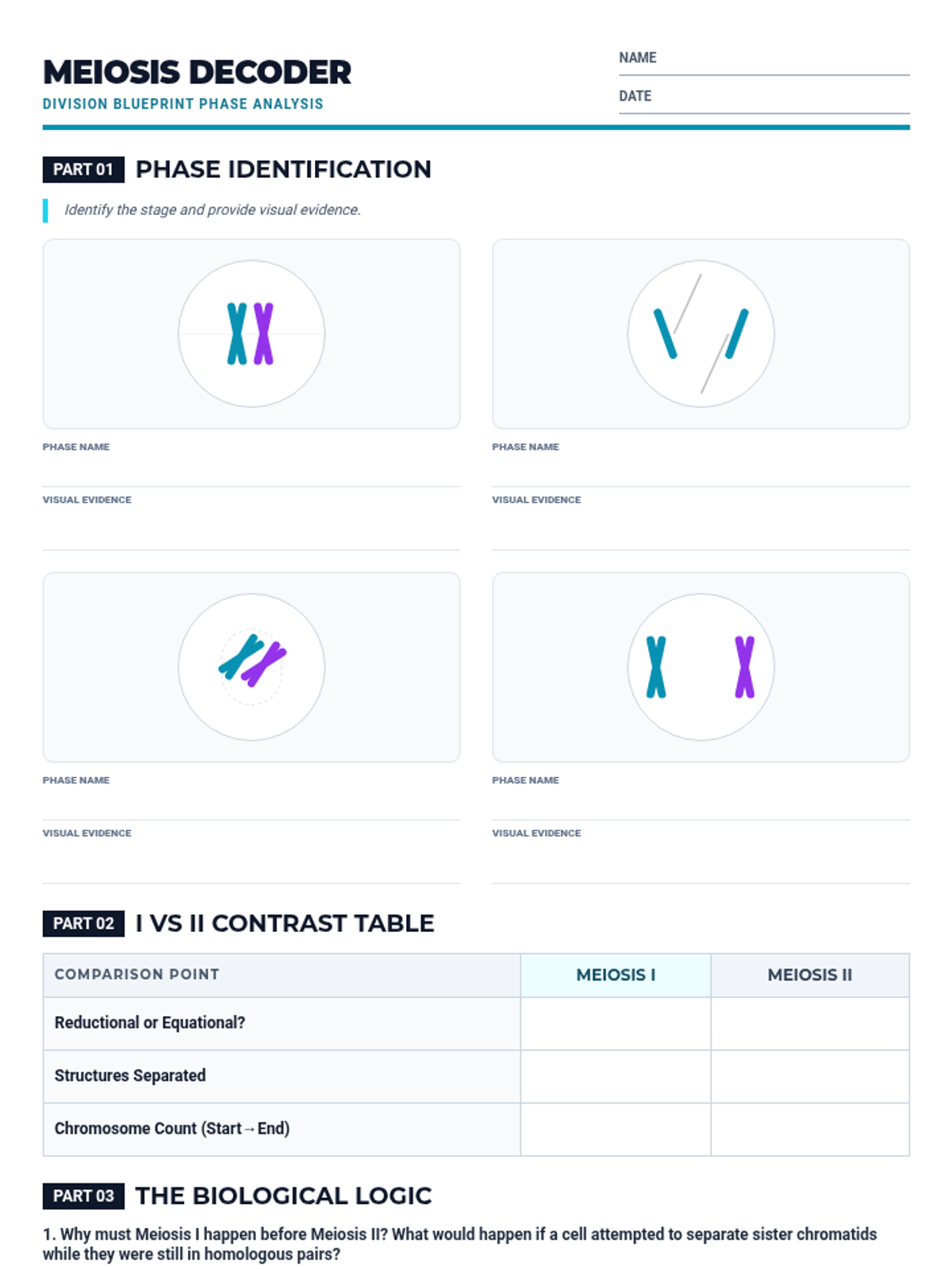
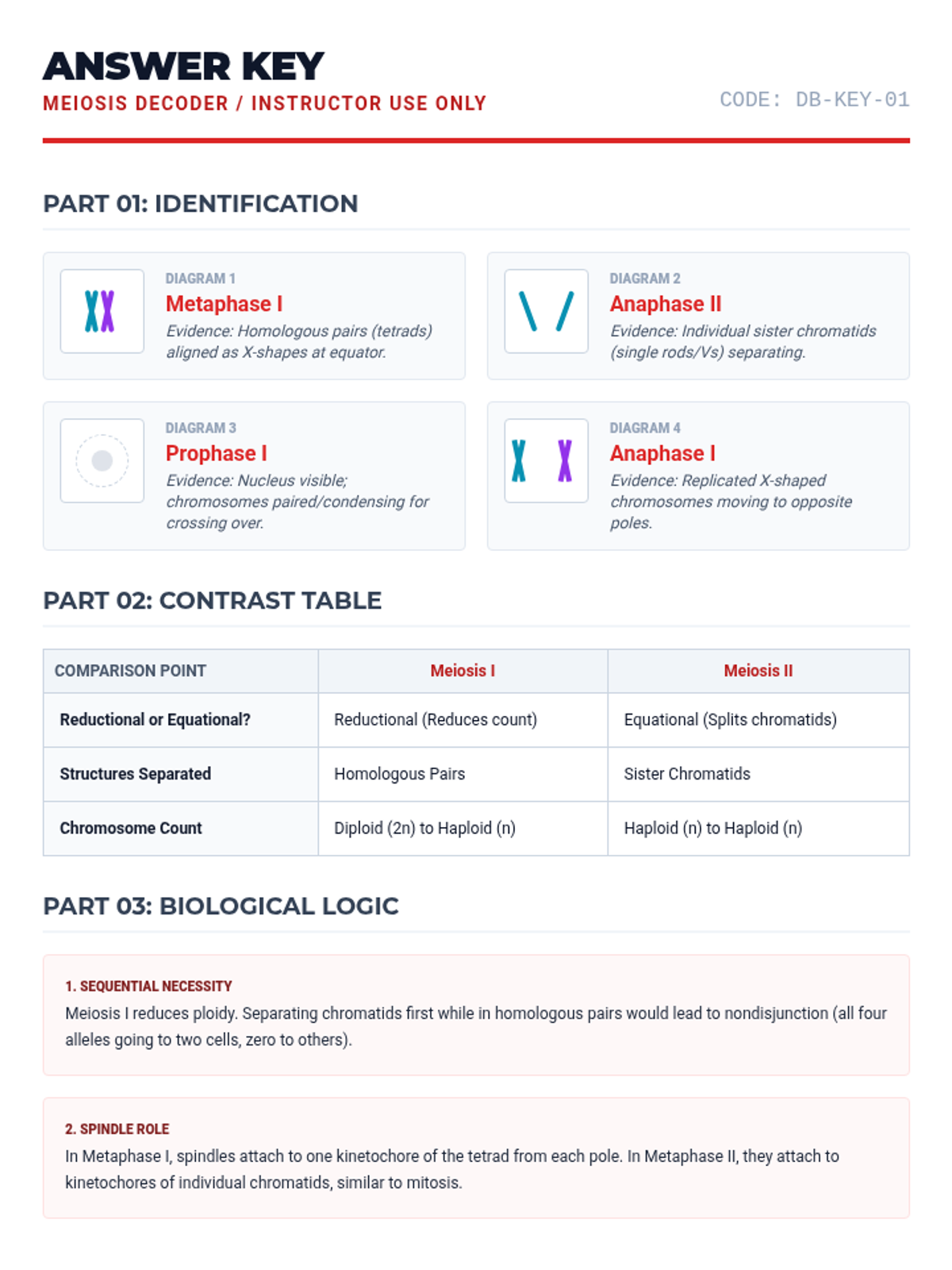
A comprehensive guide to meiosis, focusing on the structural and functional differences between Meiosis I and Meiosis II through visual identification and comparative analysis.
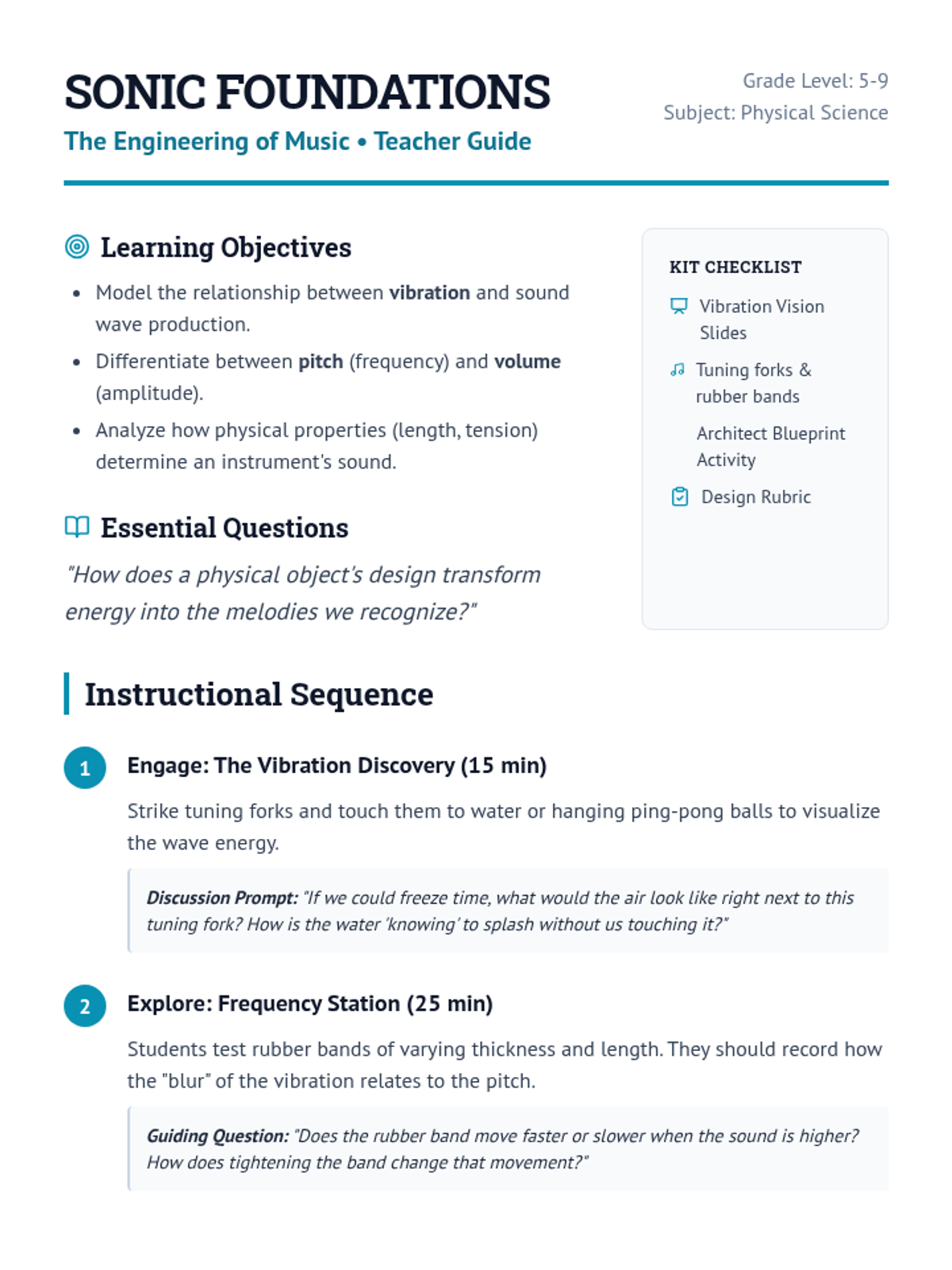
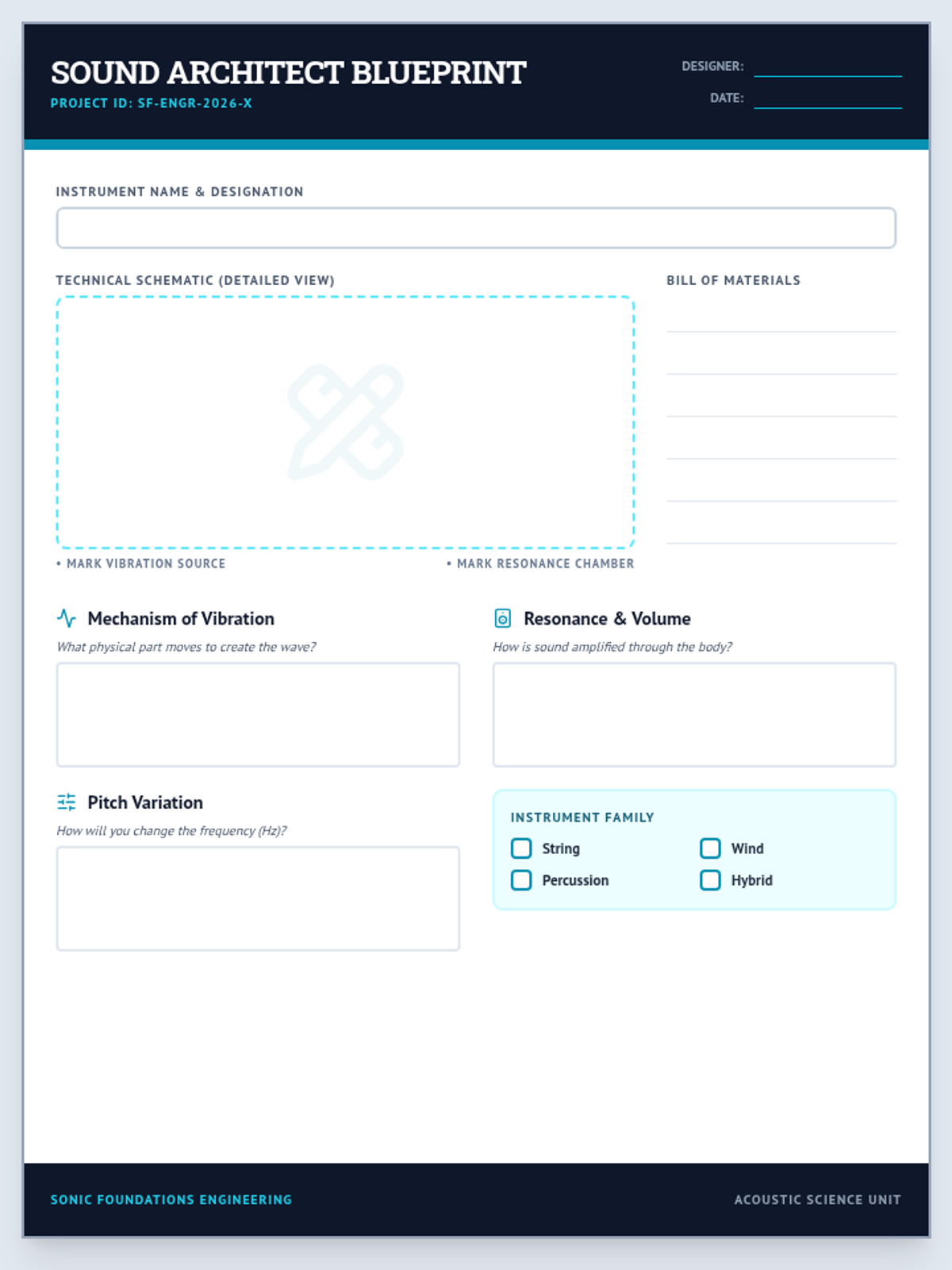
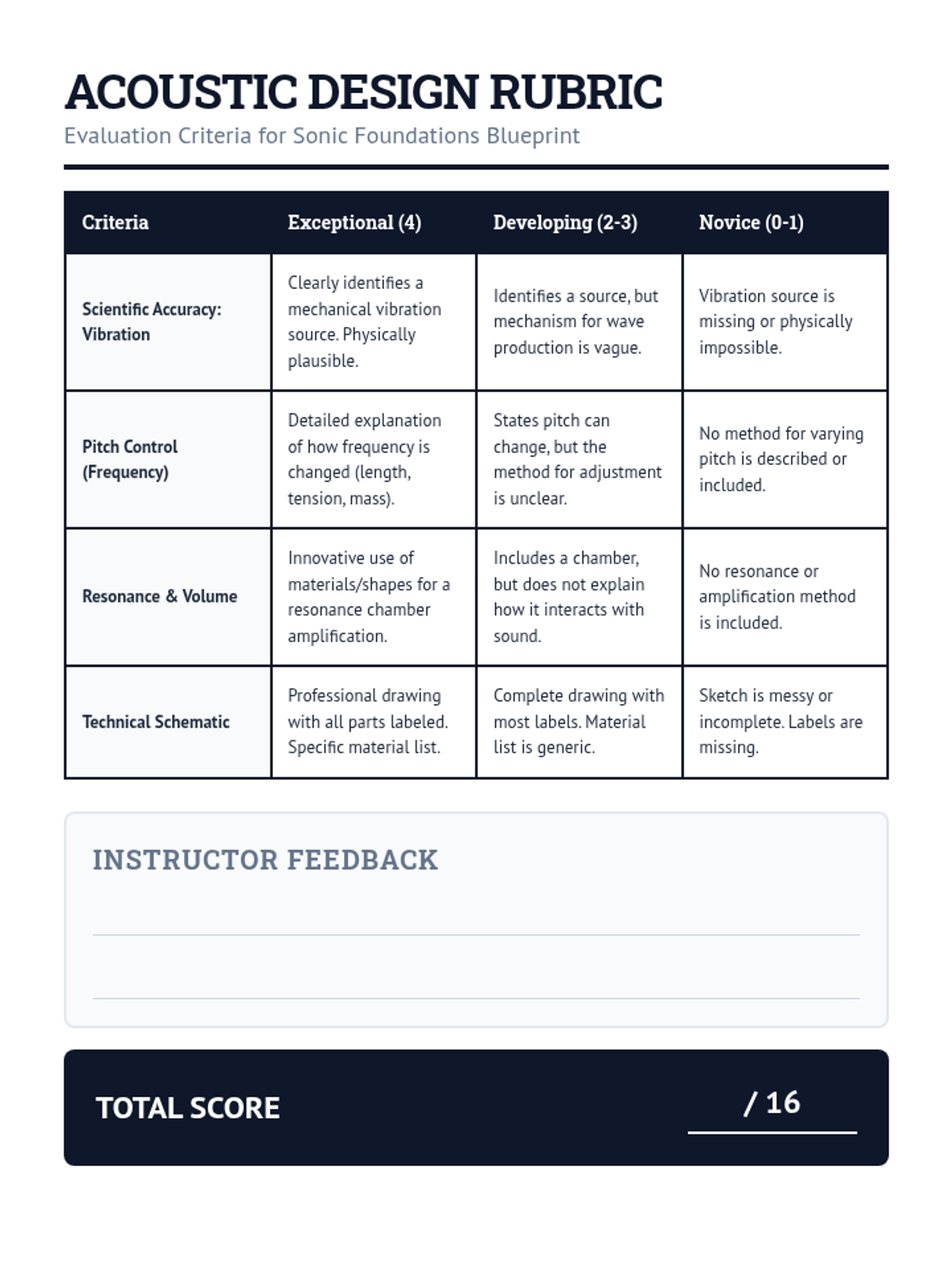
A physical science and music integration lesson exploring how vibration and frequency create sound, culminating in an acoustic instrument design project. Students analyze the mechanics of pitch and resonance across different instrument families.
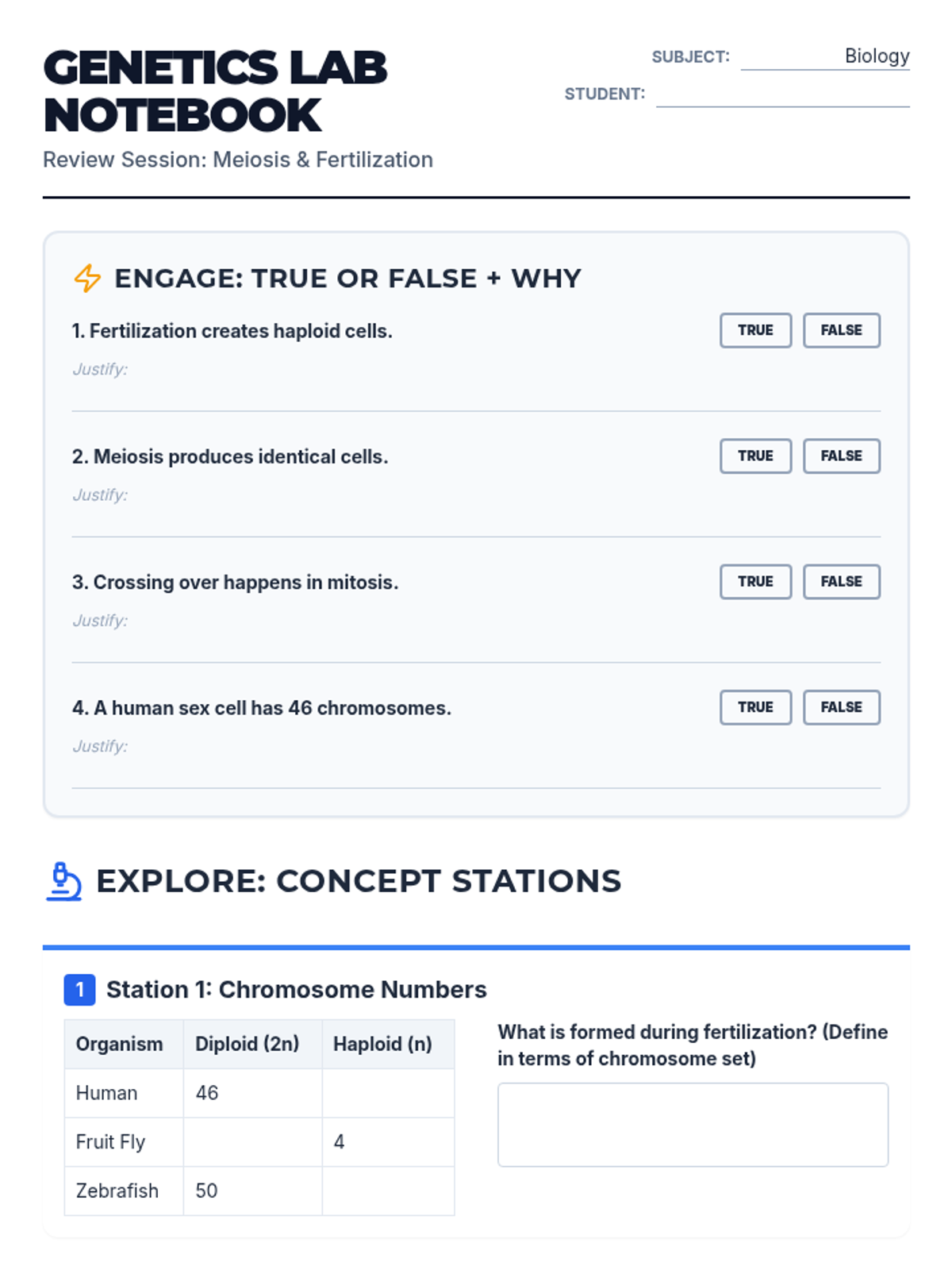
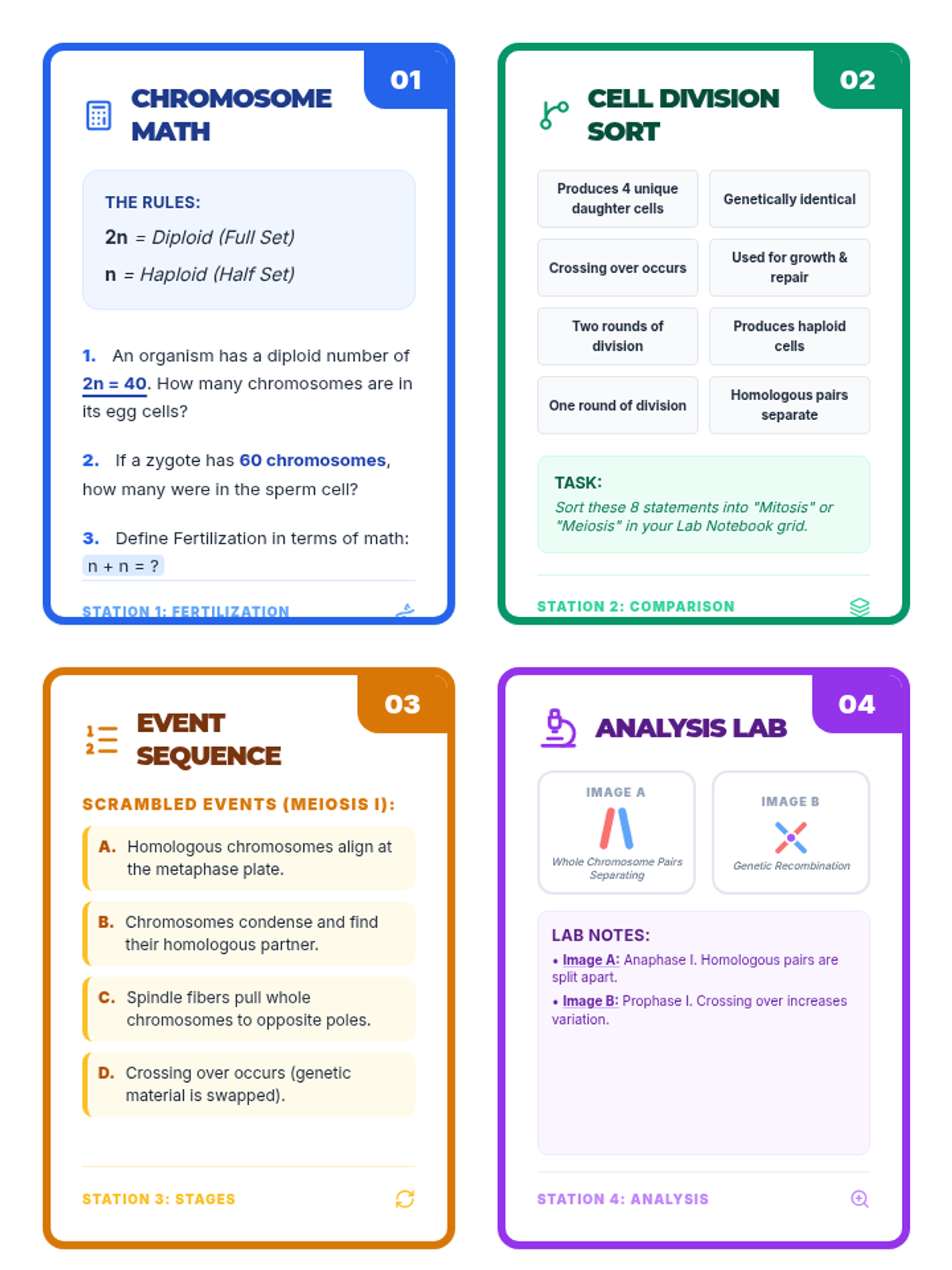
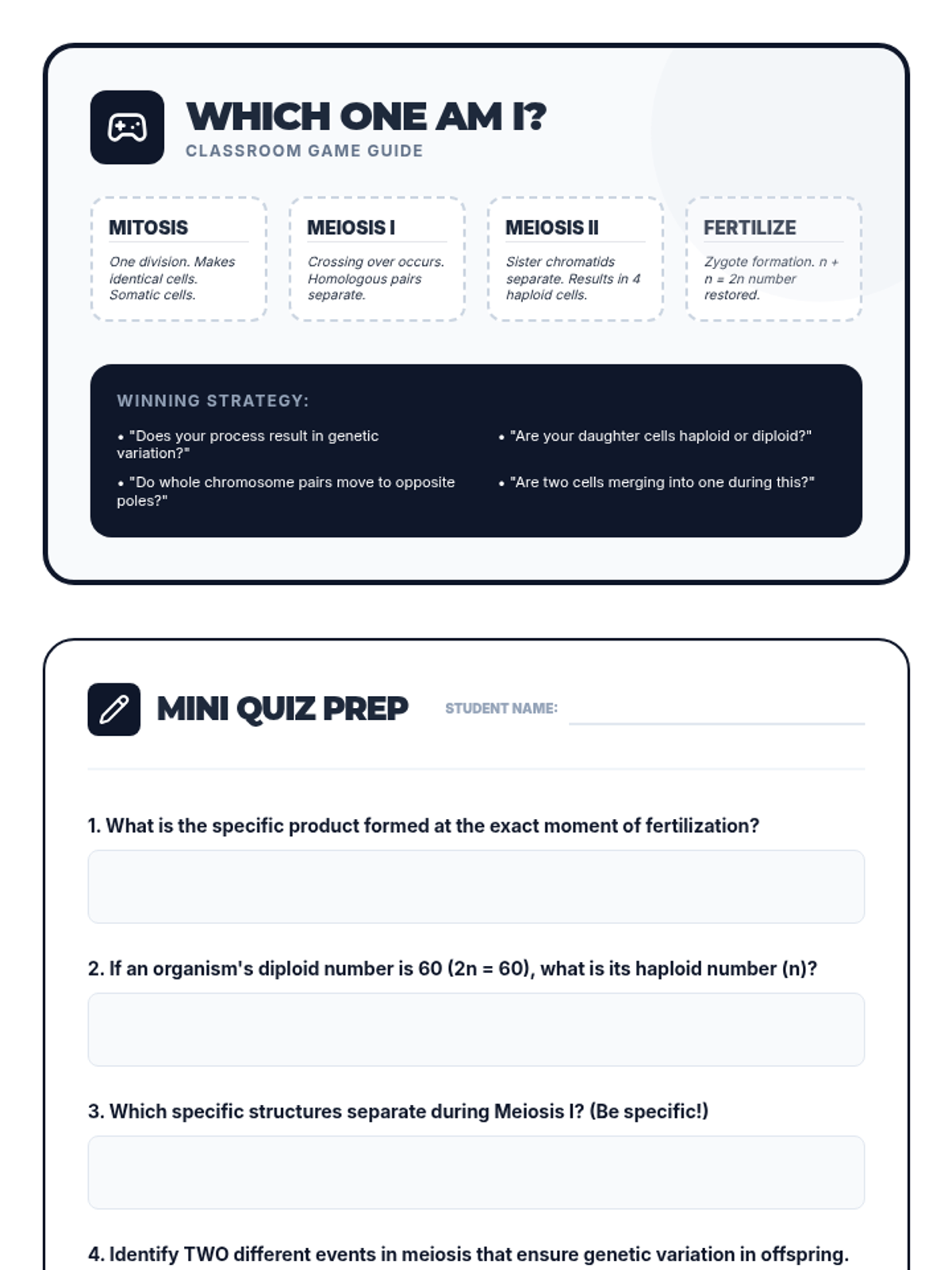
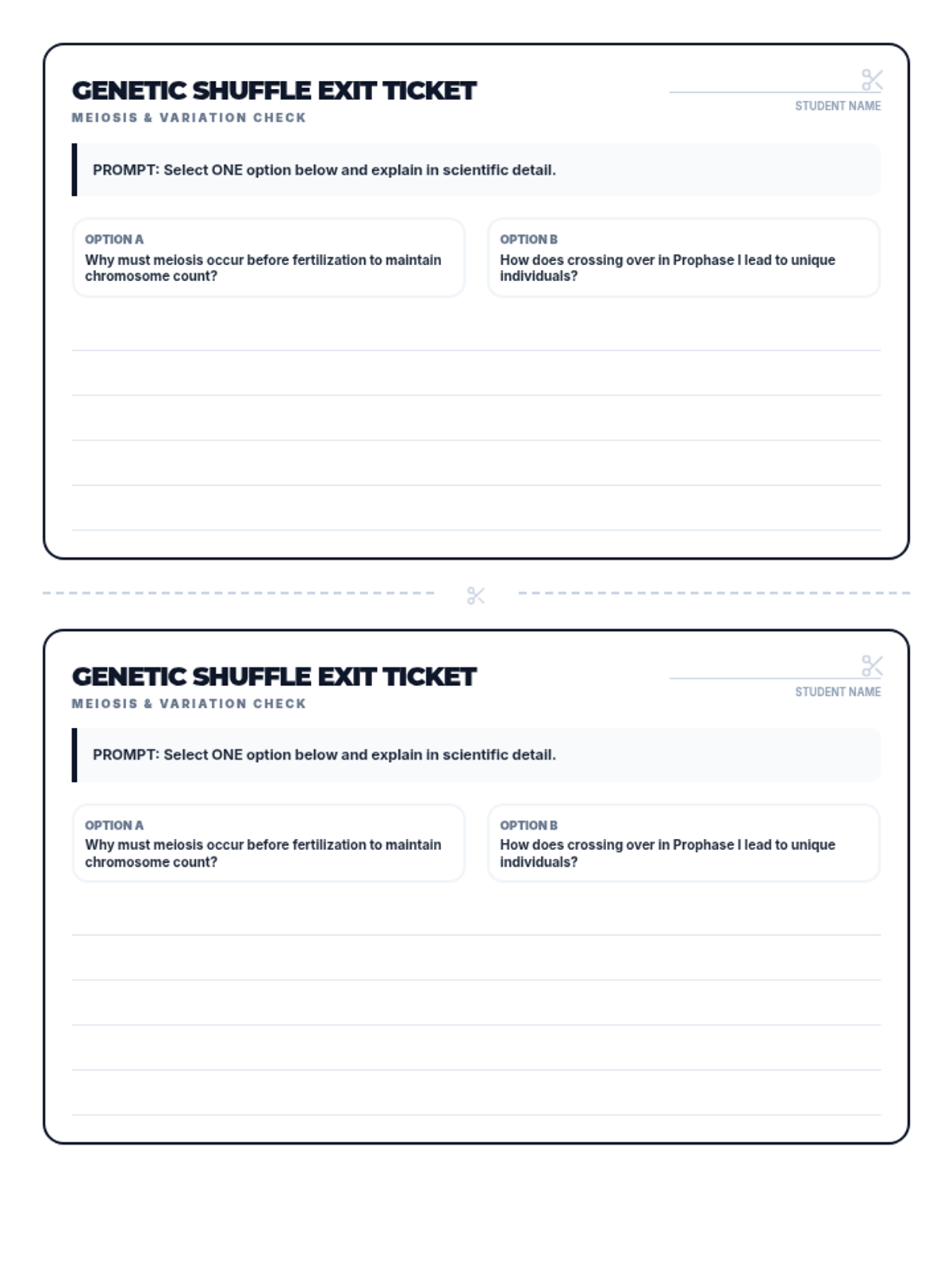
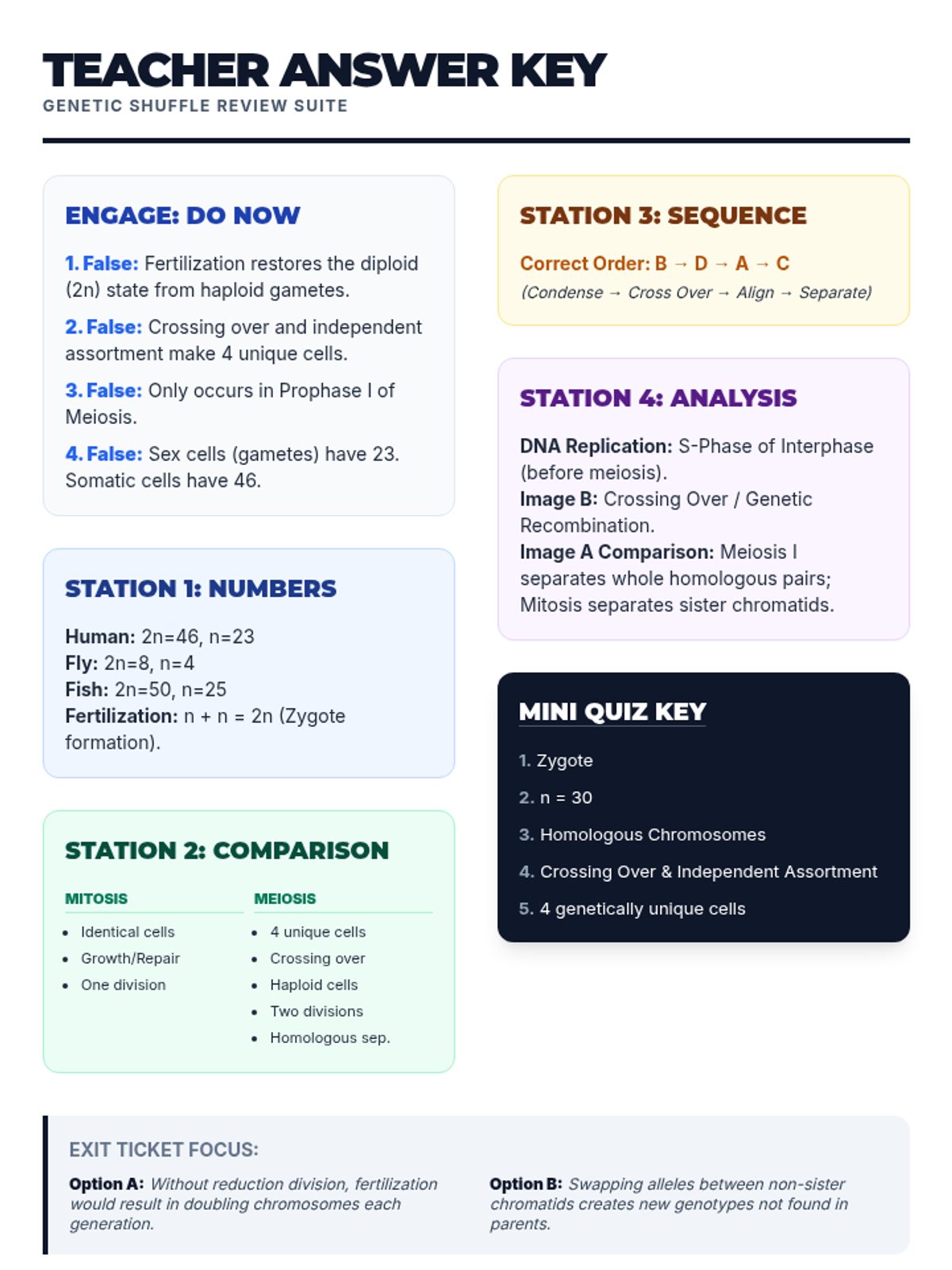
A high-school level review lesson covering meiosis, mitosis, fertilization, and genetic variation. Students rotate through concept stations to master chromosome math and cellular division sequences.