A comprehensive biology lesson focusing on TEKS 4A, covering viral structure, reproduction cycles (lytic/lysogenic), and comparisons between viruses and living cells. Includes a station-based rotation and a hands-on modeling lab.
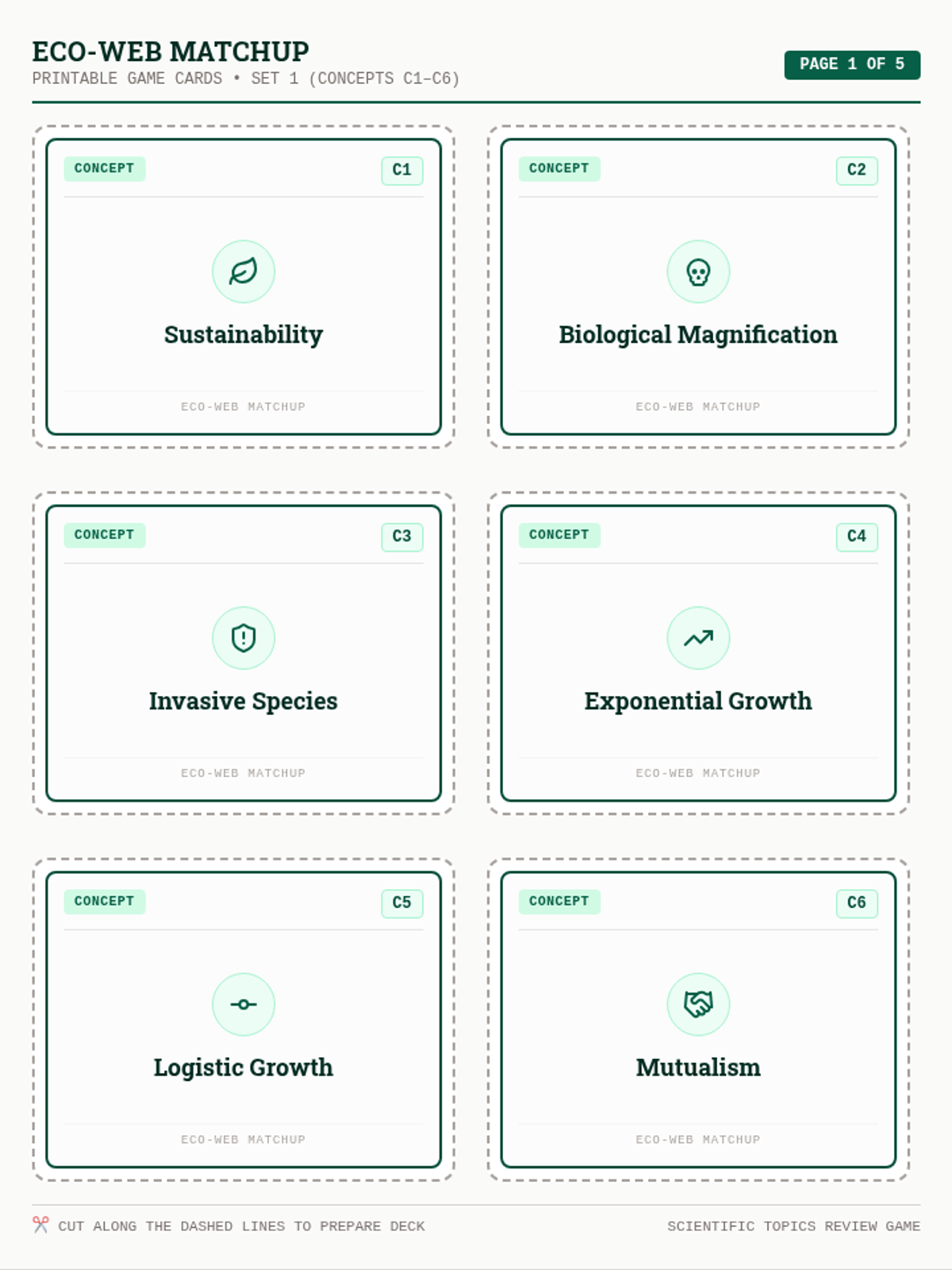
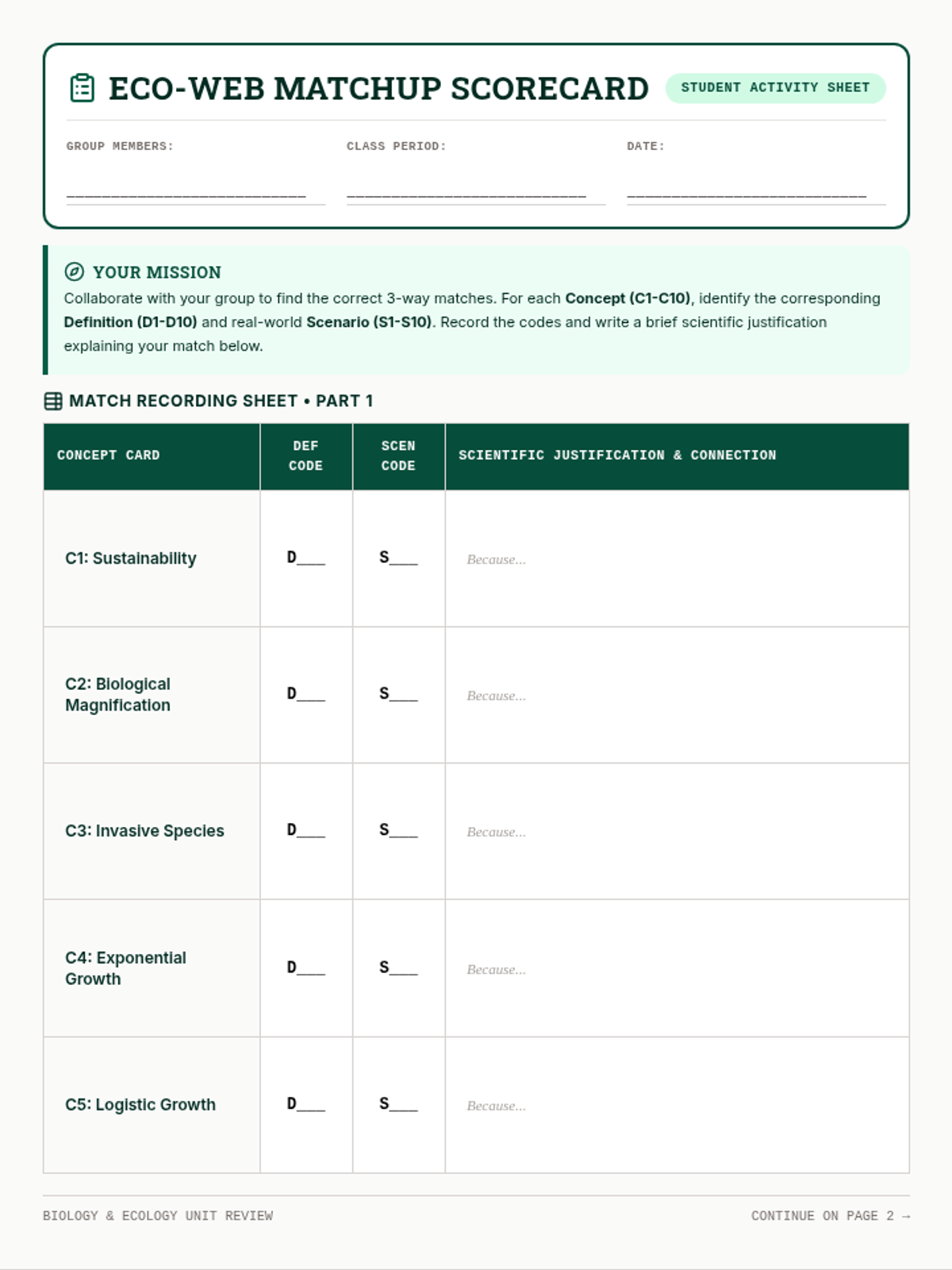
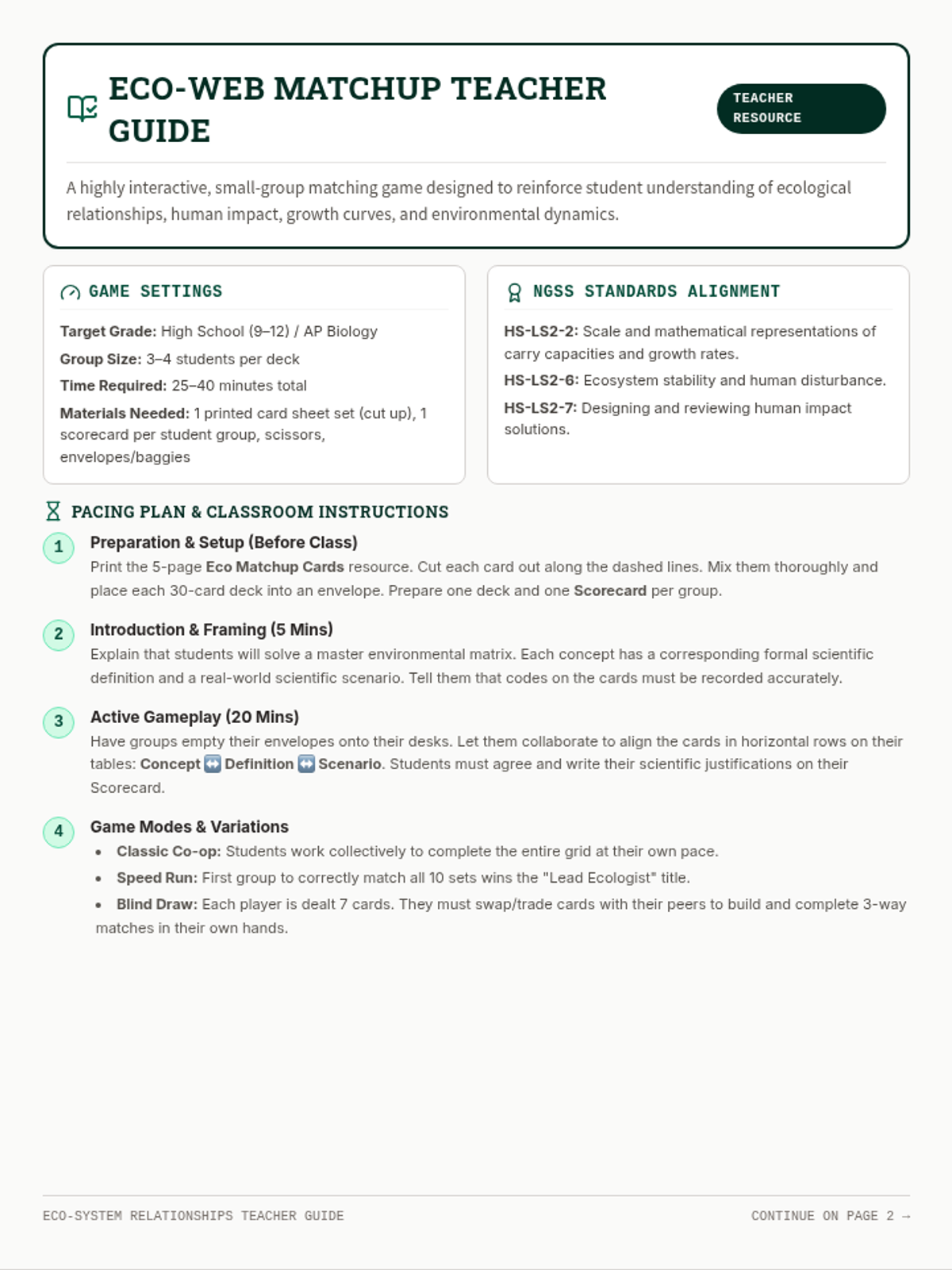
A highly engaging, collaborative card-matching game covering sustainability, human impact, population ecology, symbiosis, and conservation. Students work in small groups to match key concepts, definitions, and real-world ecological scenarios.
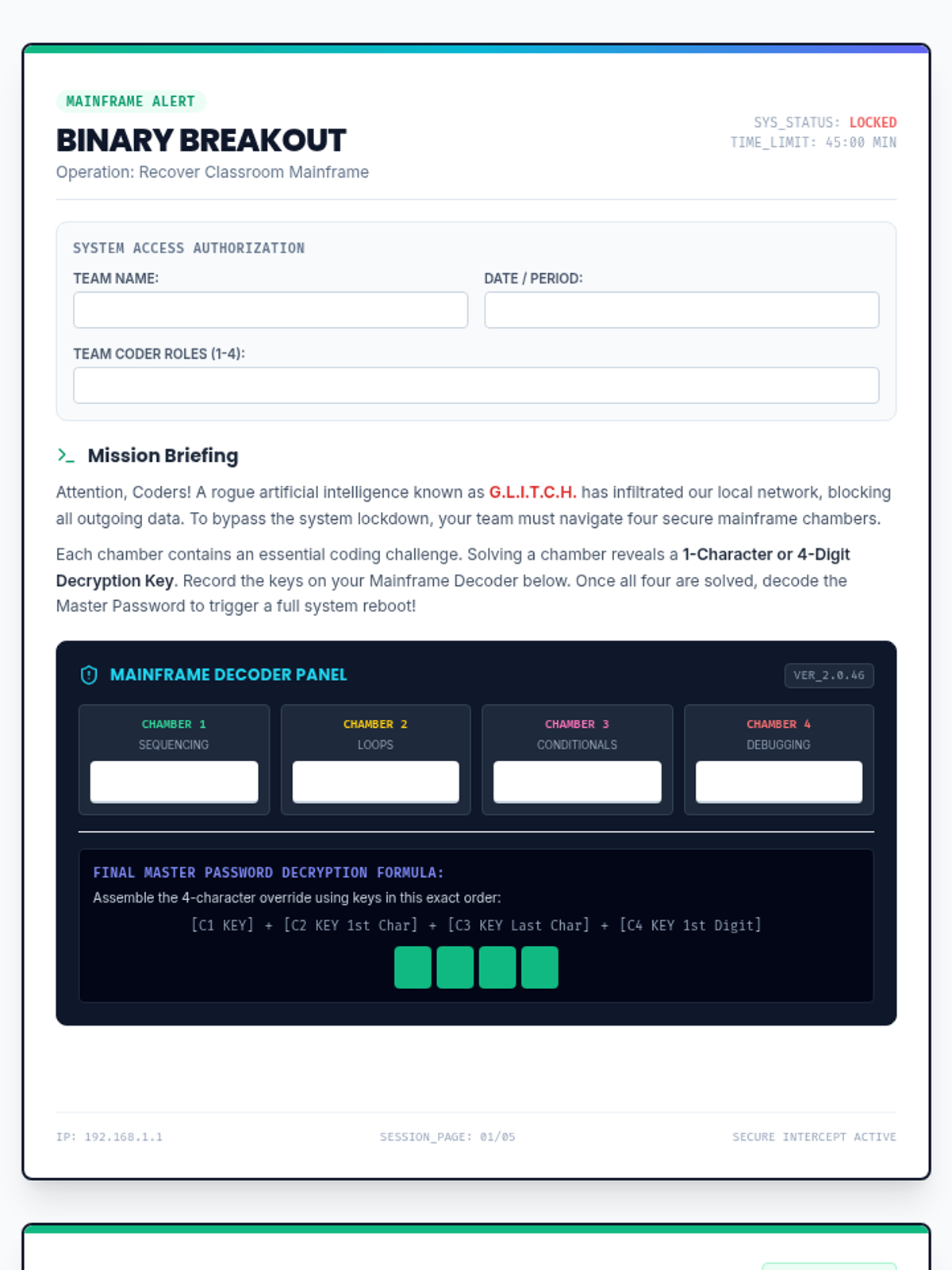
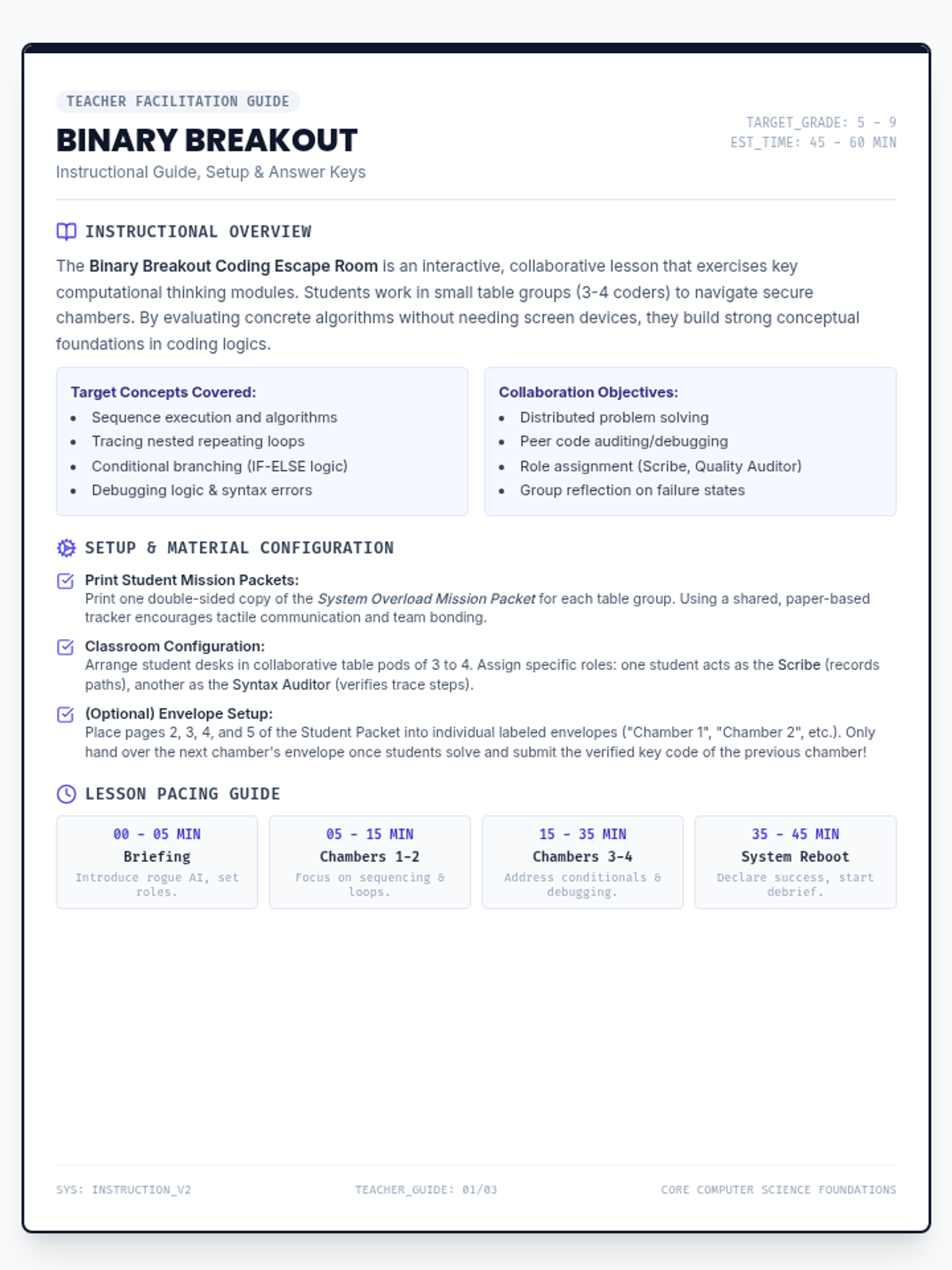
An immersive, puzzle-driven coding escape room where students work in table groups to defeat a rogue AI. By solving four distinct chambers focusing on sequencing, loops, conditionals, and debugging, students demonstrate core computational thinking skills.
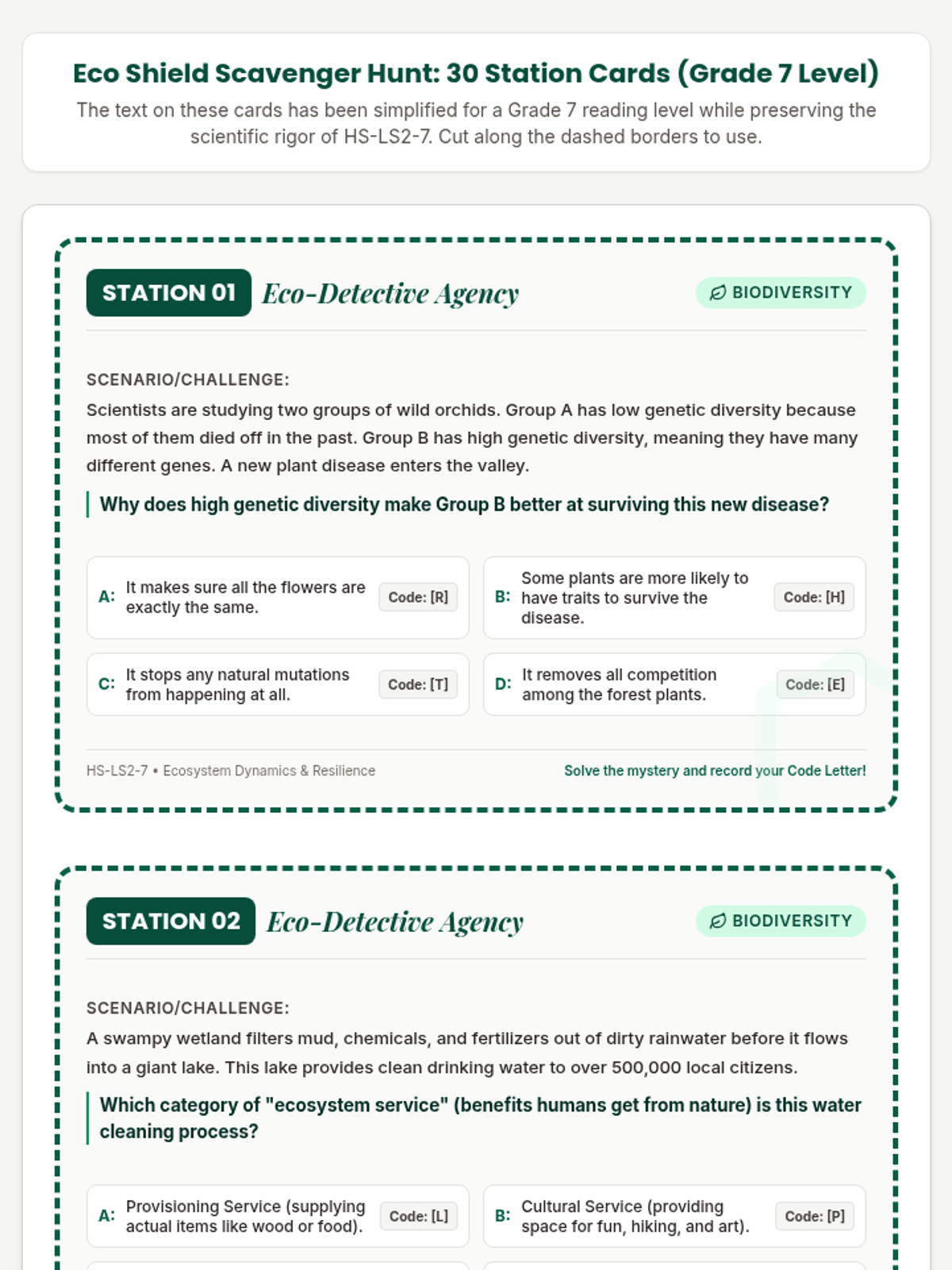
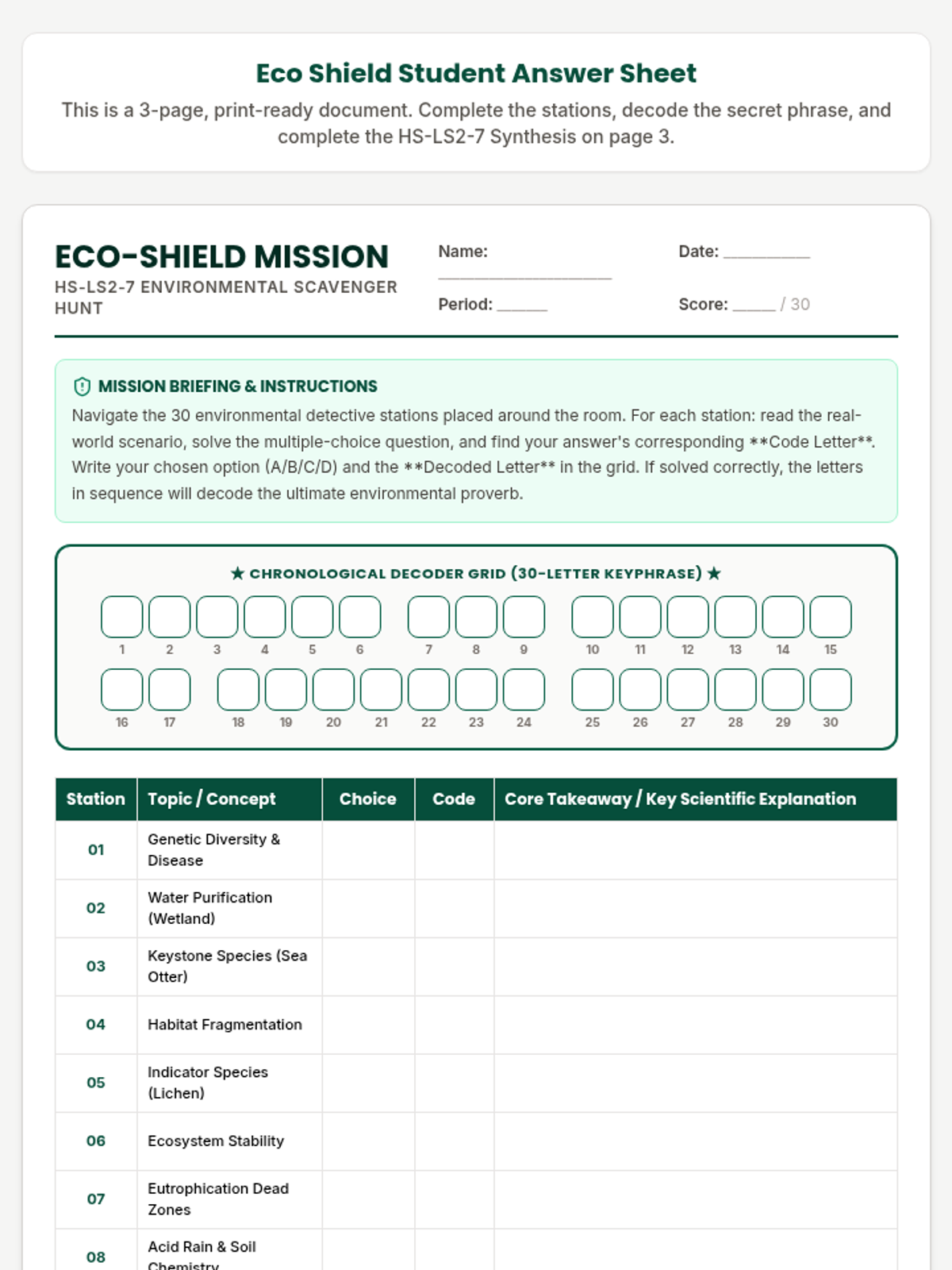
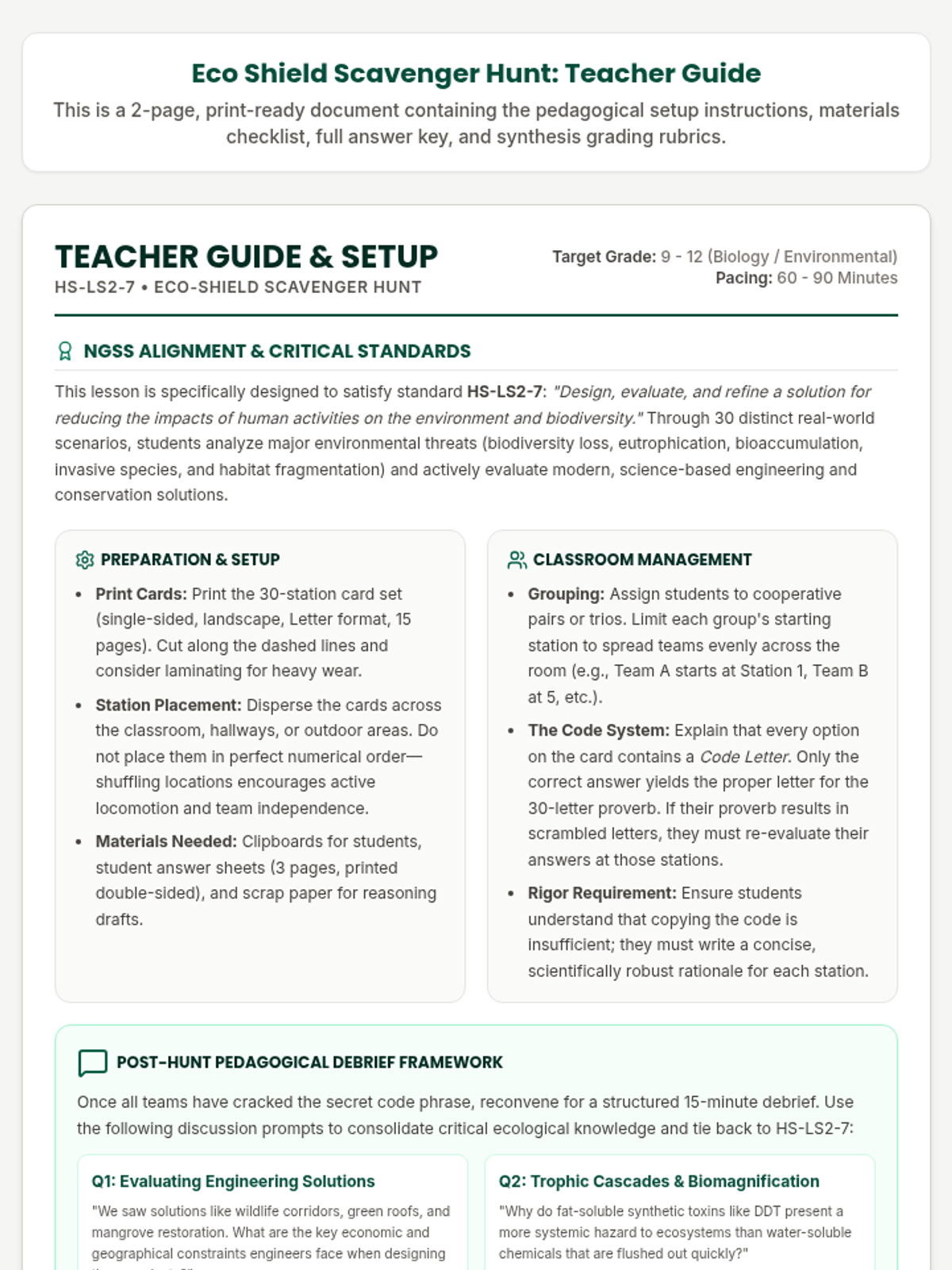
An active, movement-based scavenger hunt game for high school students to master human impact, biodiversity, sustainability, biological magnification, and invasive species (aligned to HS-LS2-7). Includes 30 custom-designed Station Cards, an interactive Student Answer Sheet, and a comprehensive Teacher Guide with Answer Key.
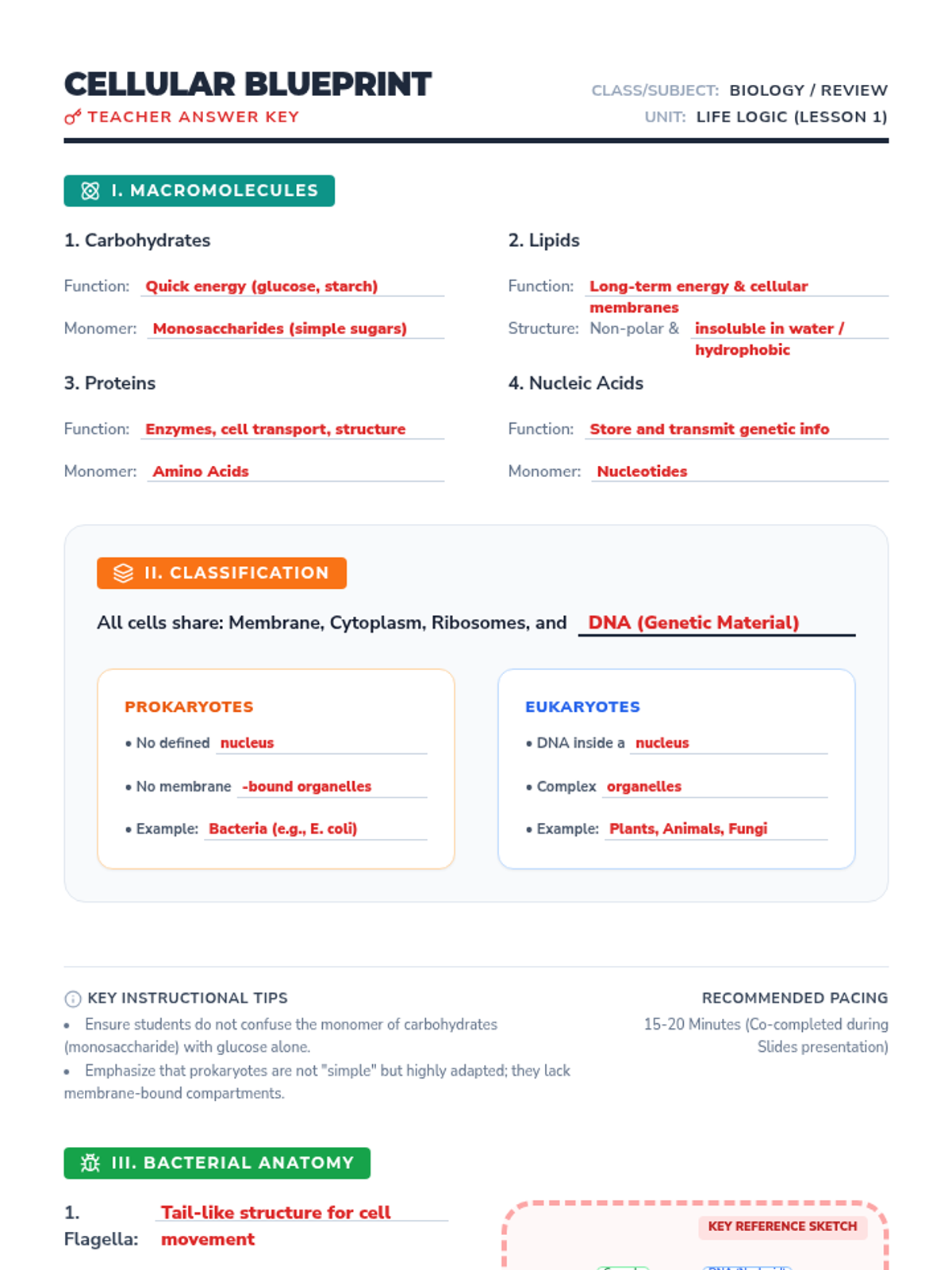
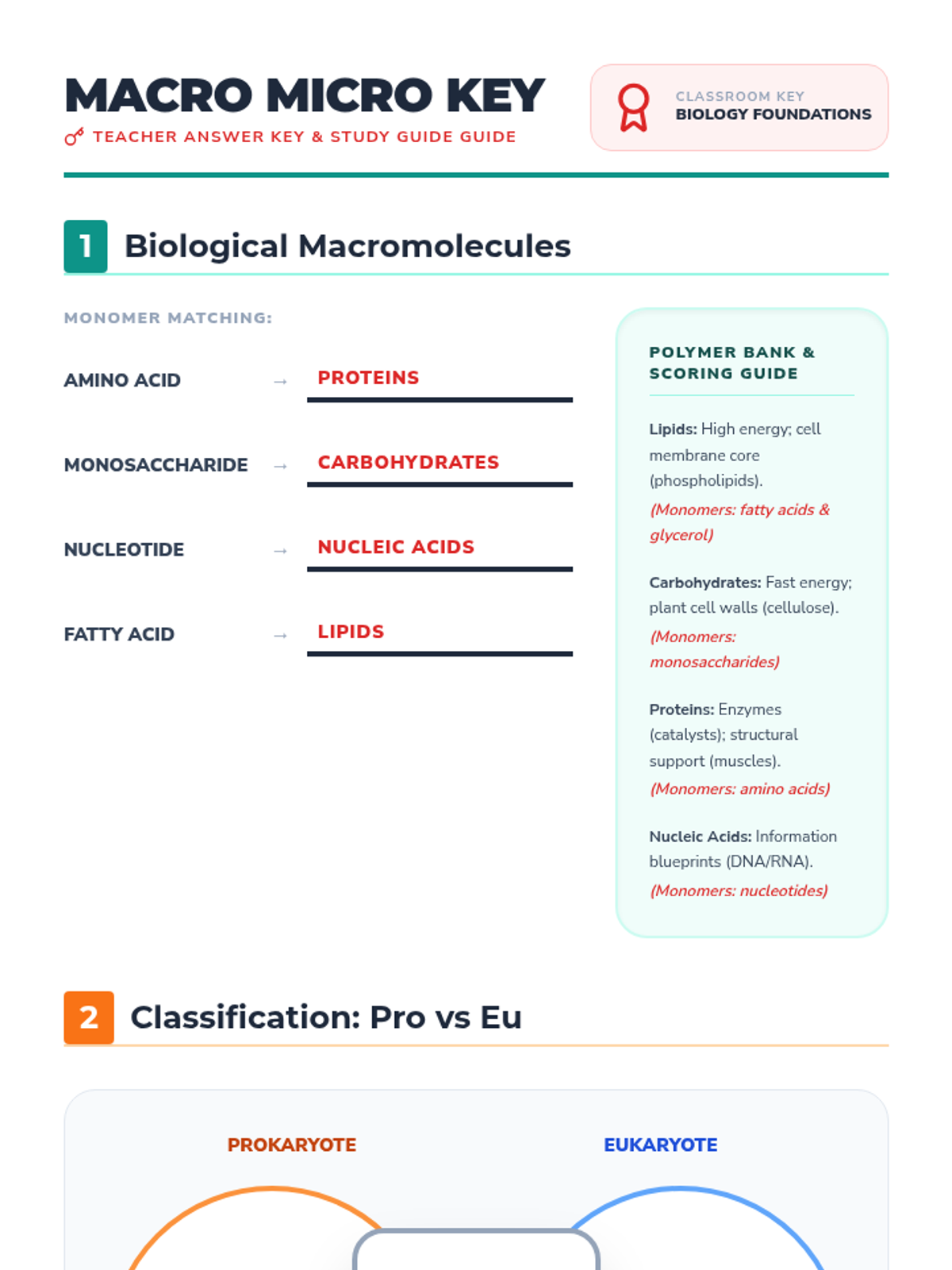
A review-focused lesson that synthesizes knowledge of macromolecules, bacterial structure, and the differences between plant and animal cells.
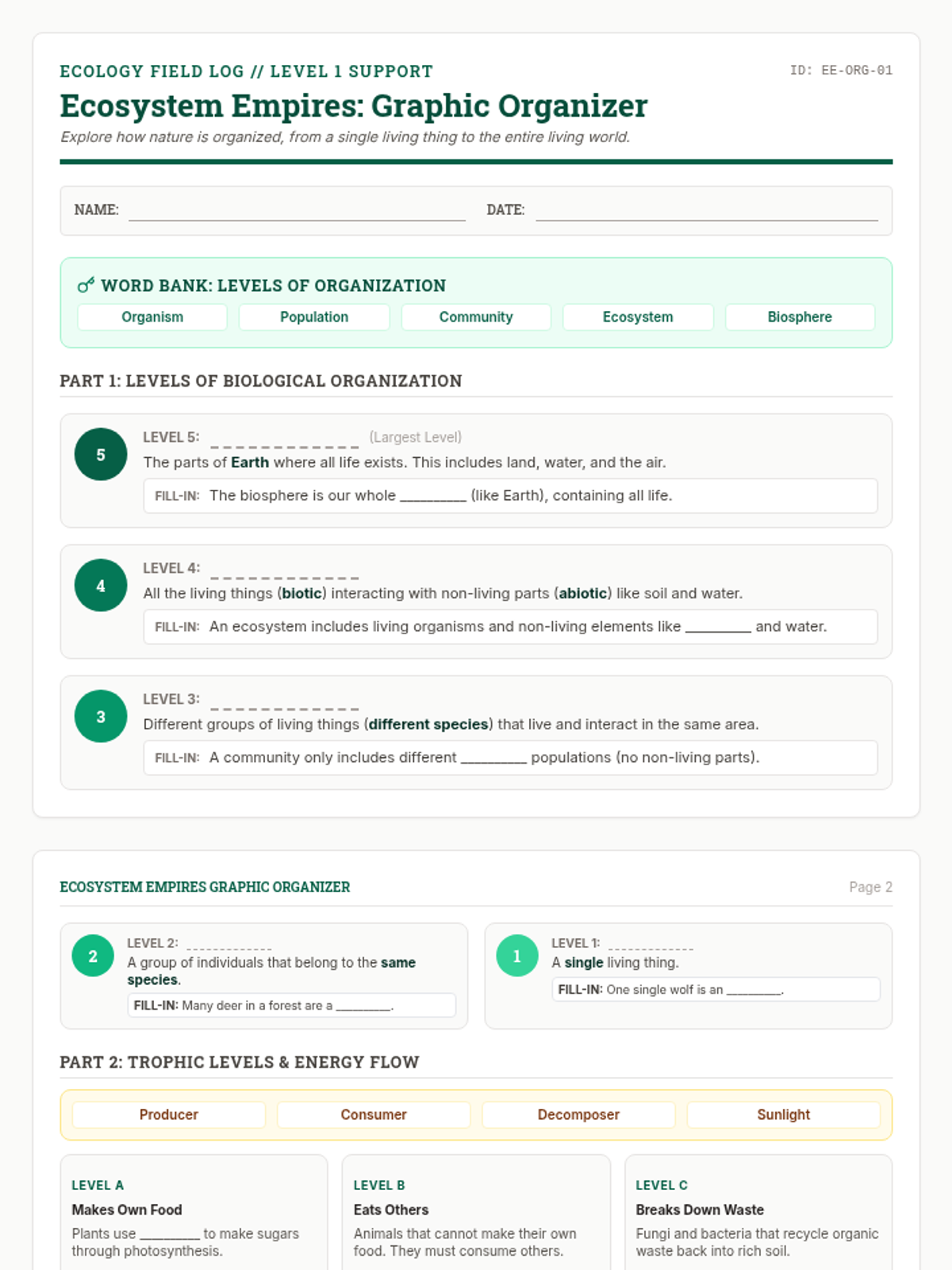
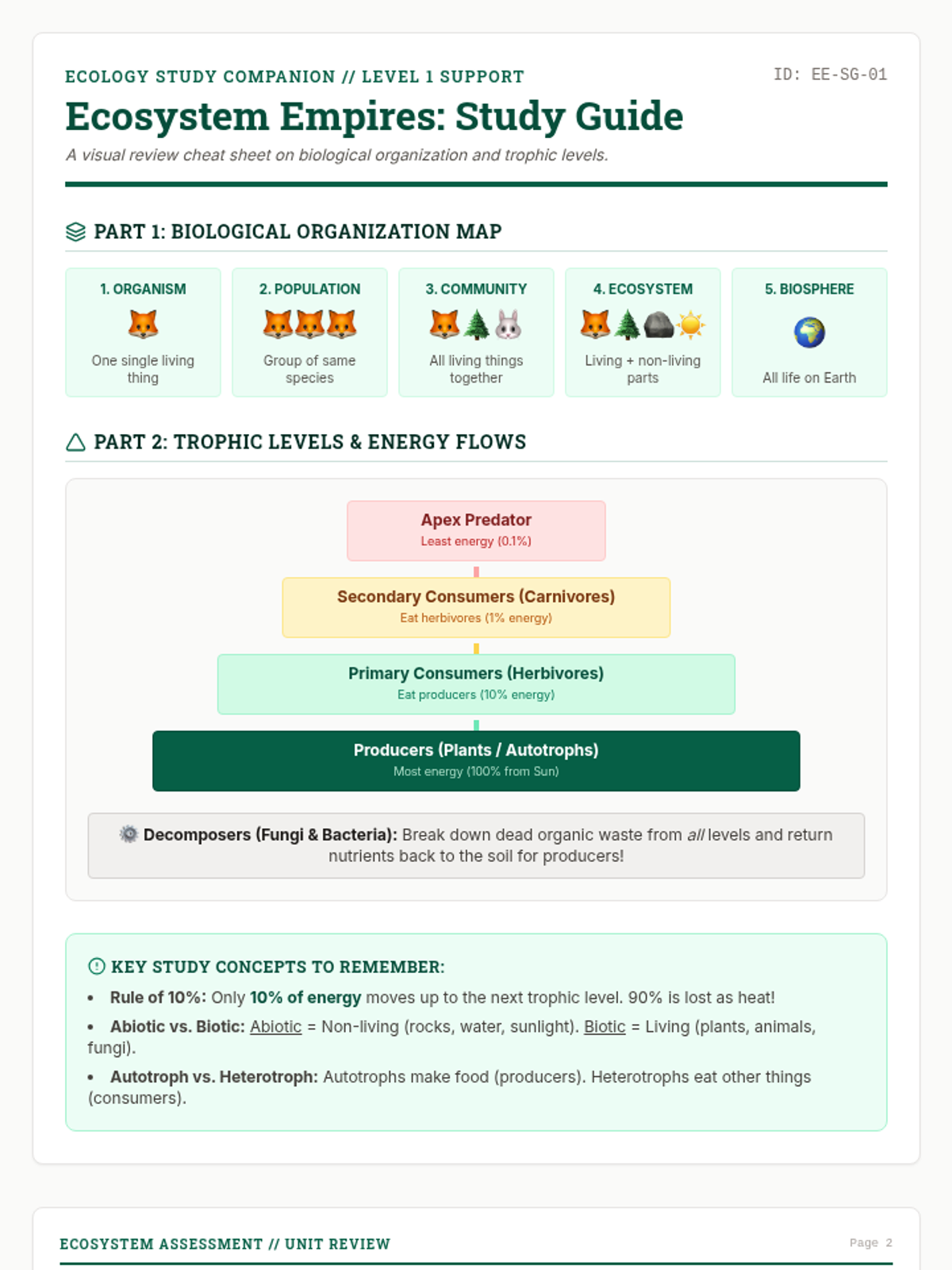
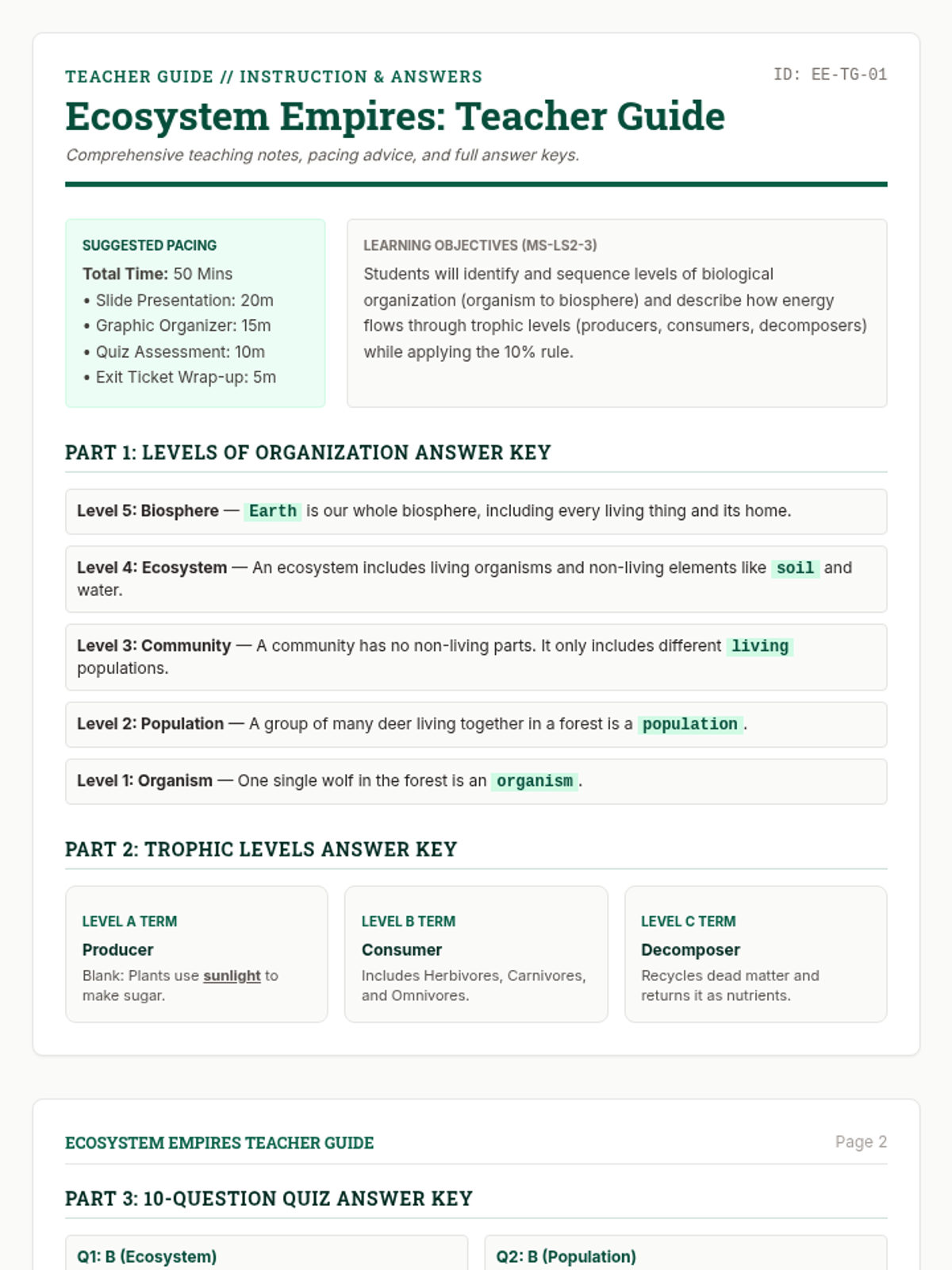
A comprehensive ecology review lesson focused on the levels of biological organization (organism to biosphere) and trophic levels (energy flow, producers, consumers, decomposers). Designed with scaffolded, modified text and guided fill-in-the-blanks for accessible learning.
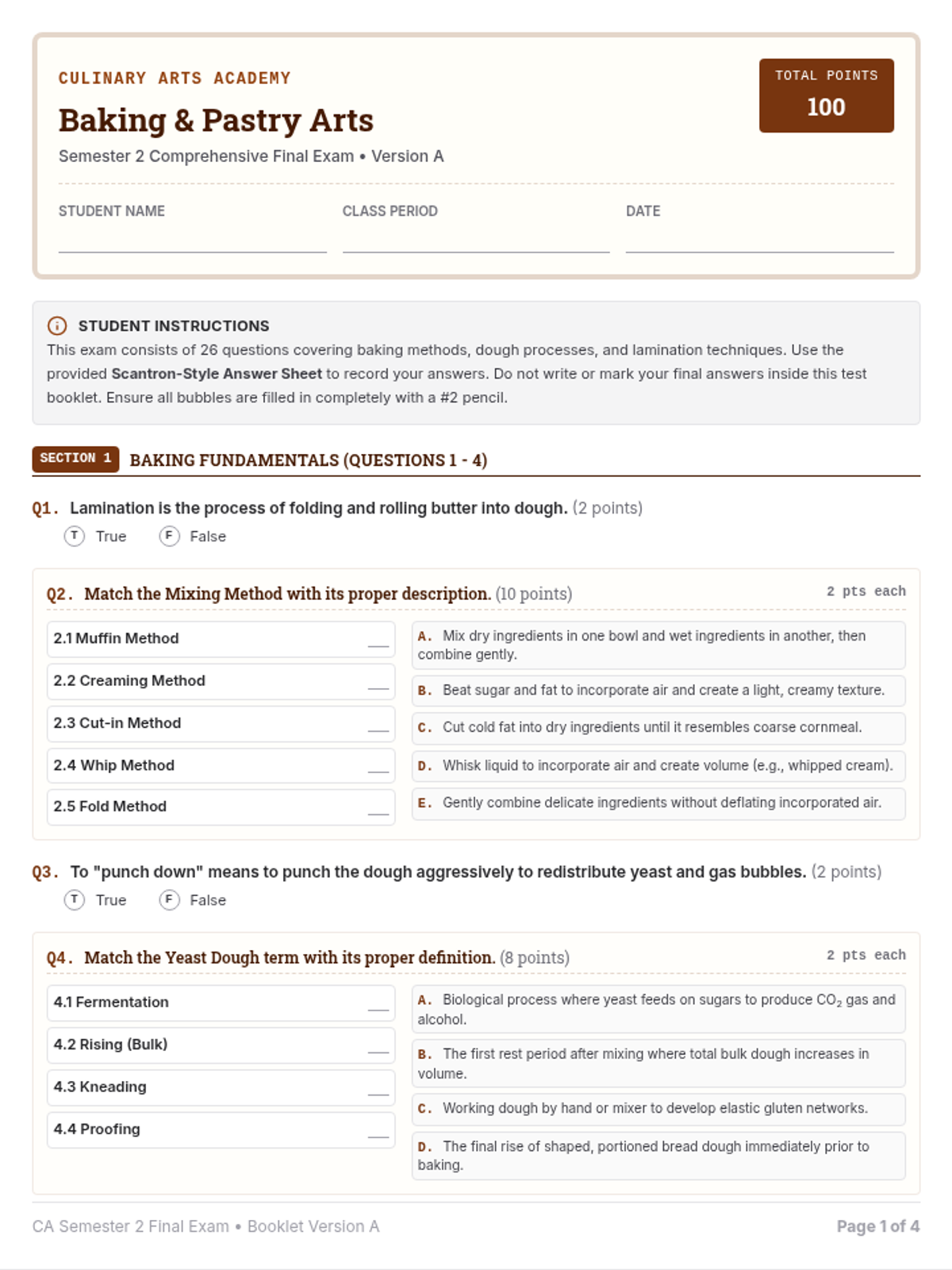
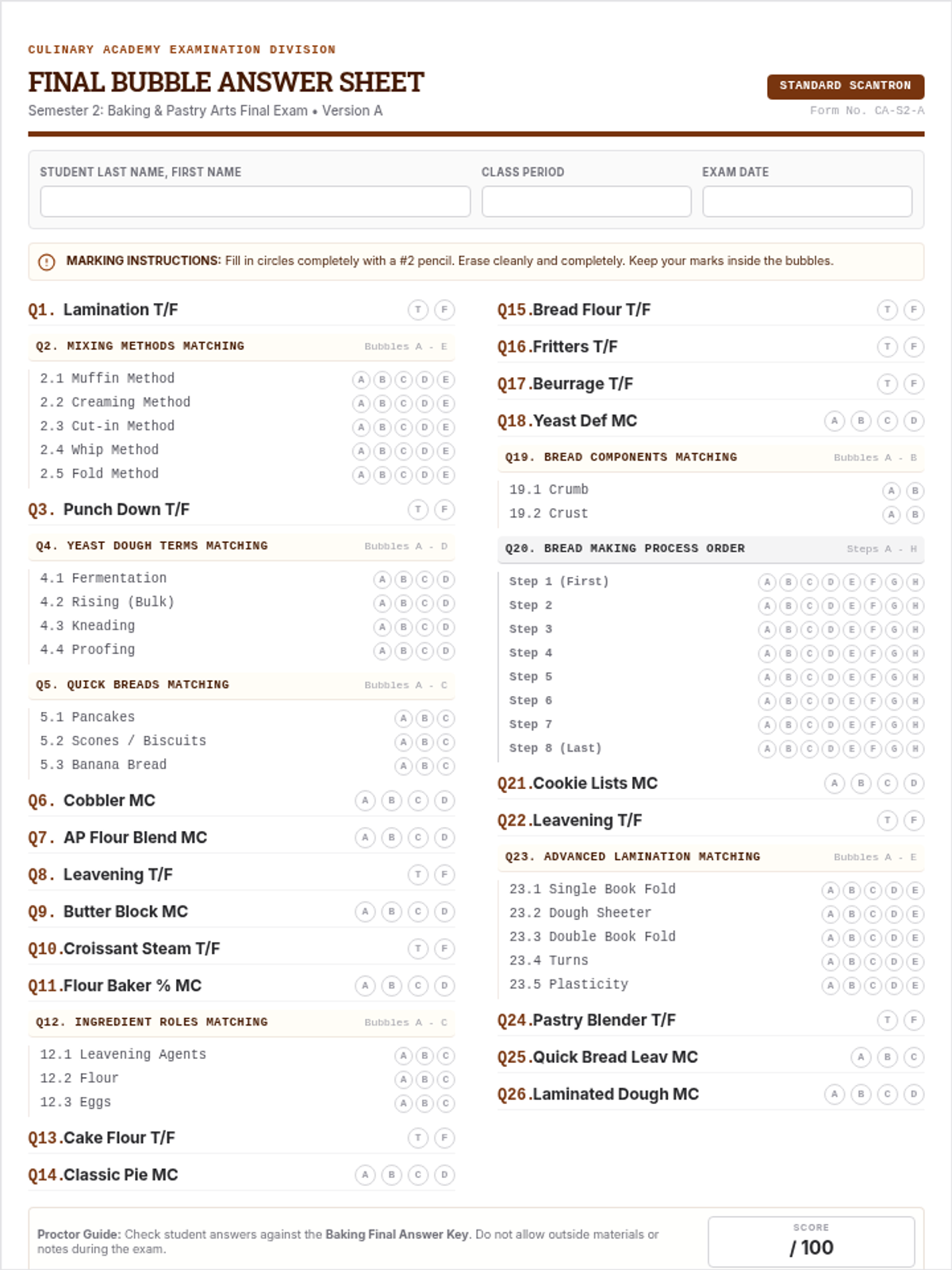
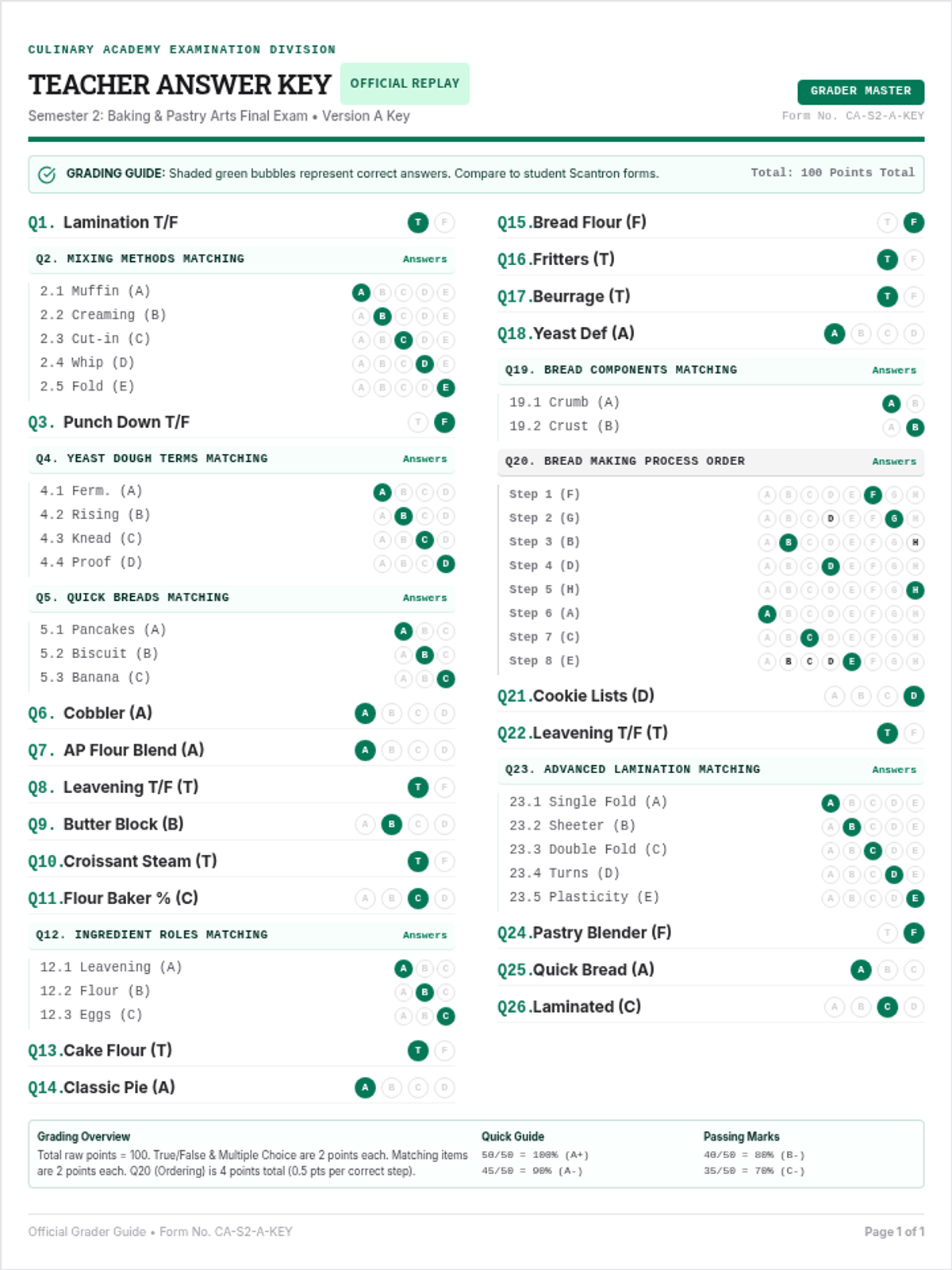
A comprehensive final exam assessment bundle for Culinary Arts Semester 2. Includes a highly polished, printable final exam test booklet, a student-facing scantron-style bubble answer sheet, and a complete teacher answer key and grading guide.
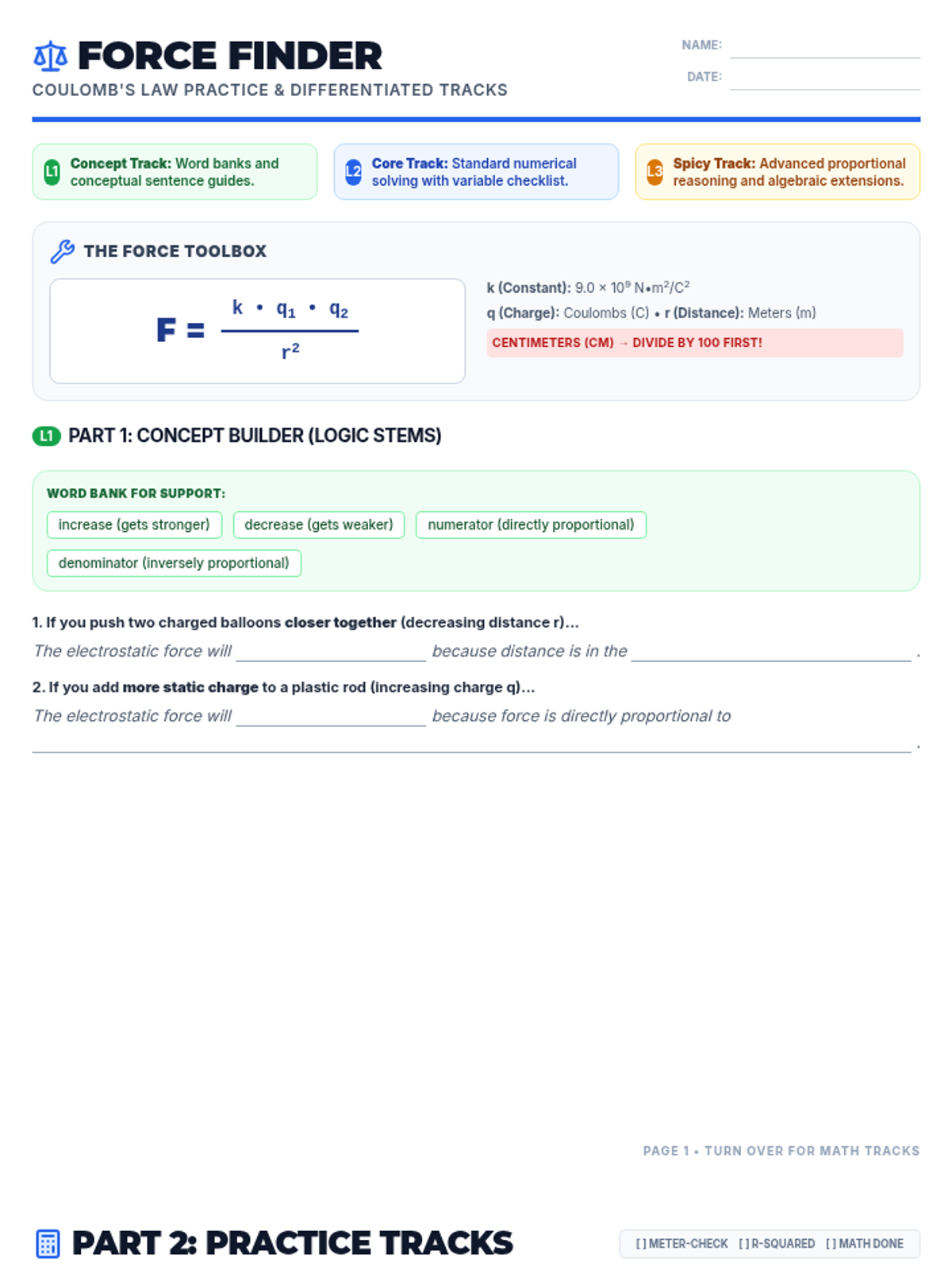
A comprehensive lesson on Coulomb's Law designed for diverse learners, featuring visual formula supports, step-by-step checklists, and real-world static electricity scenarios.
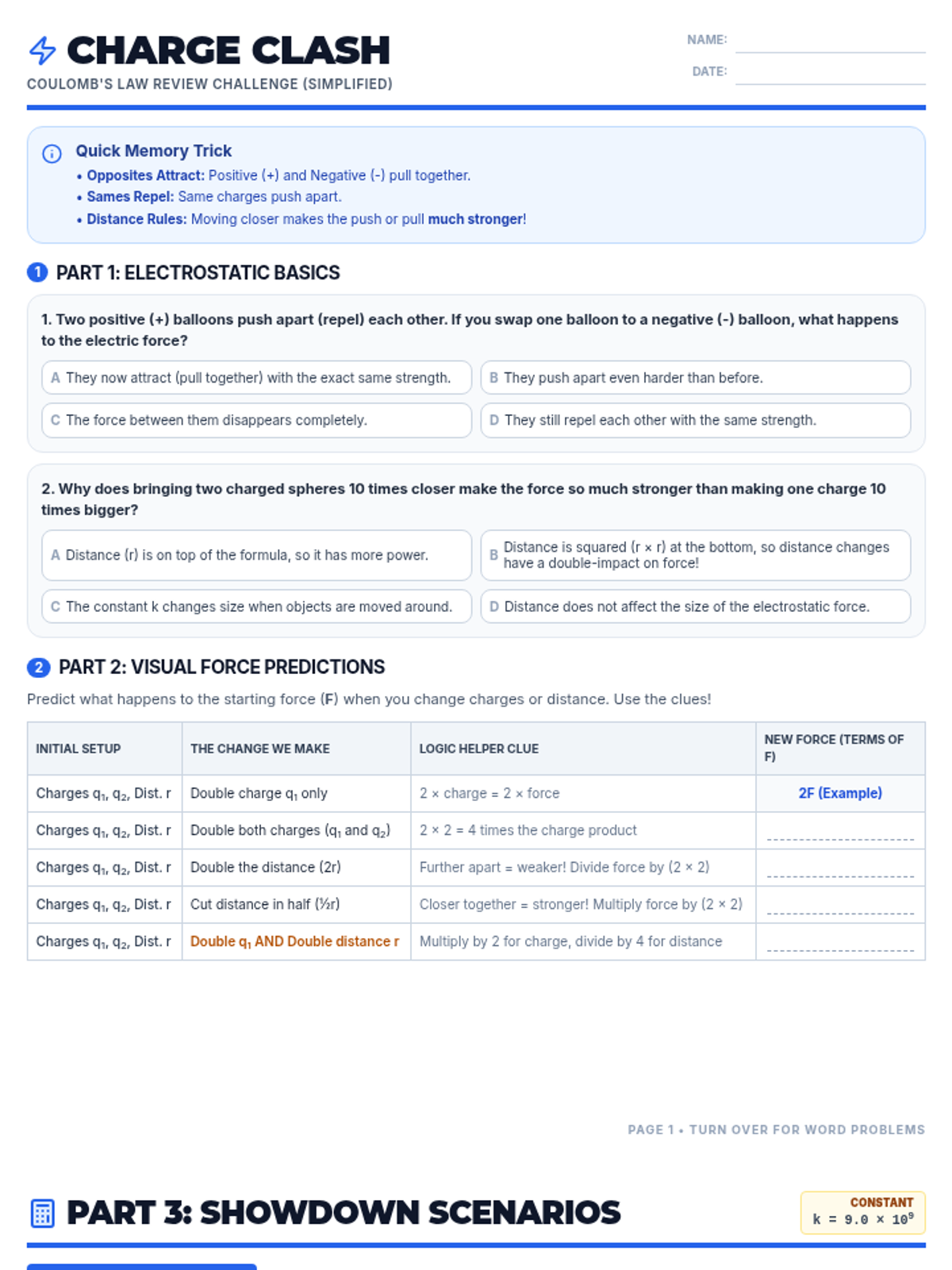
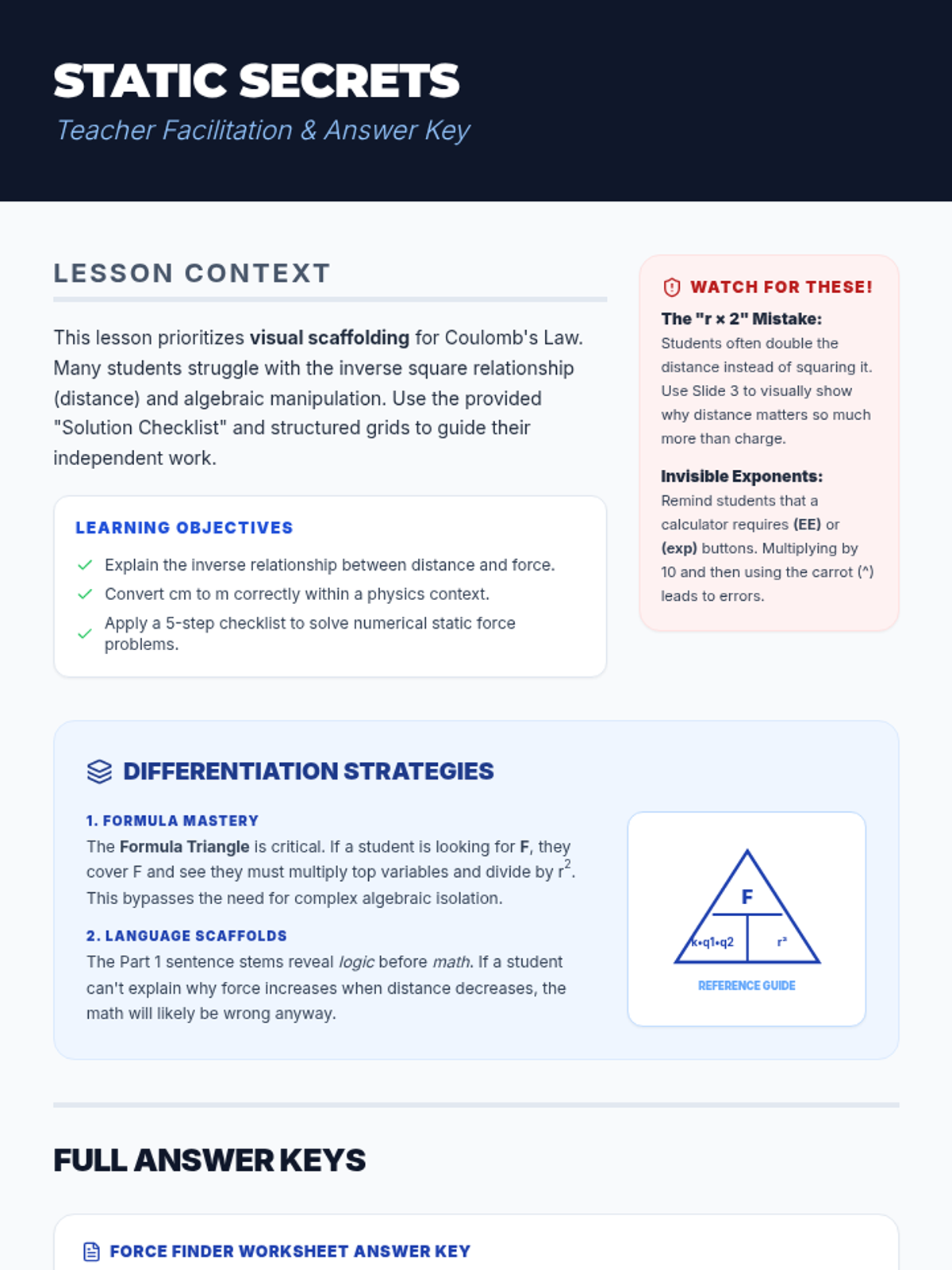
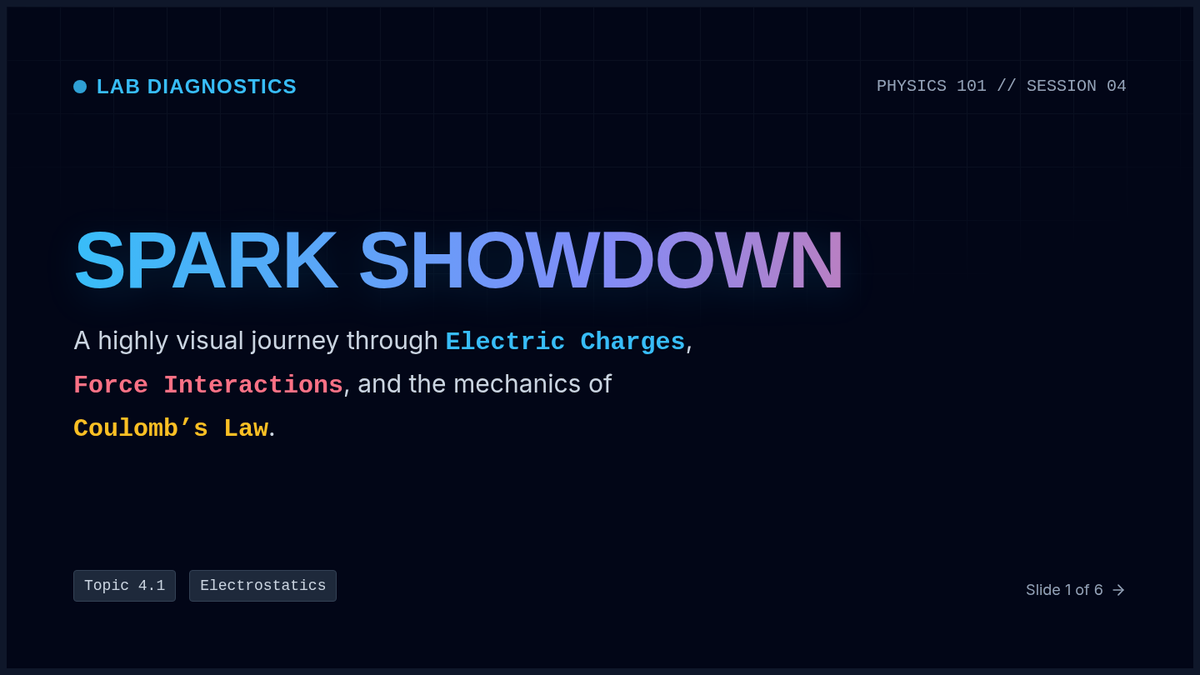
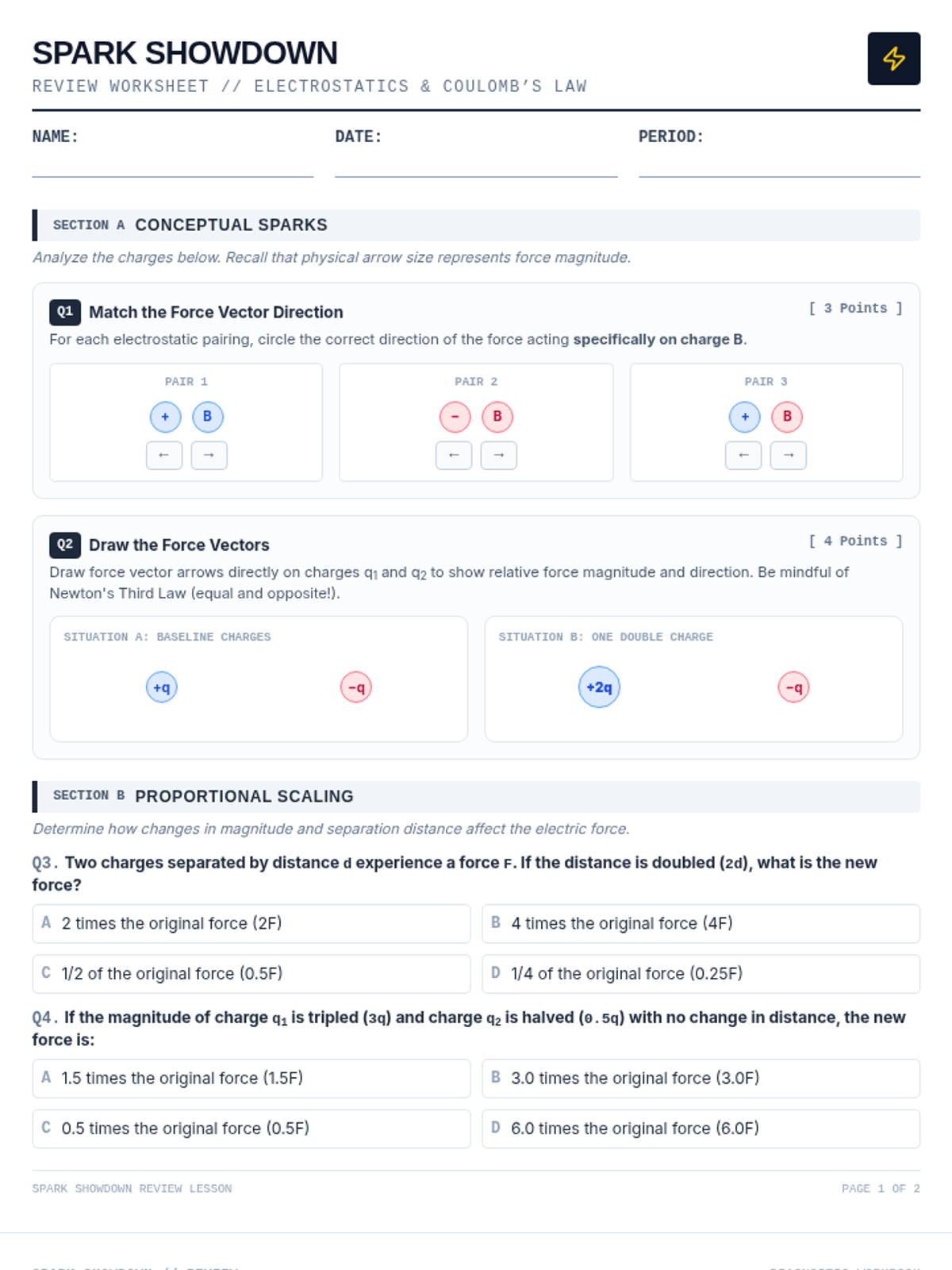
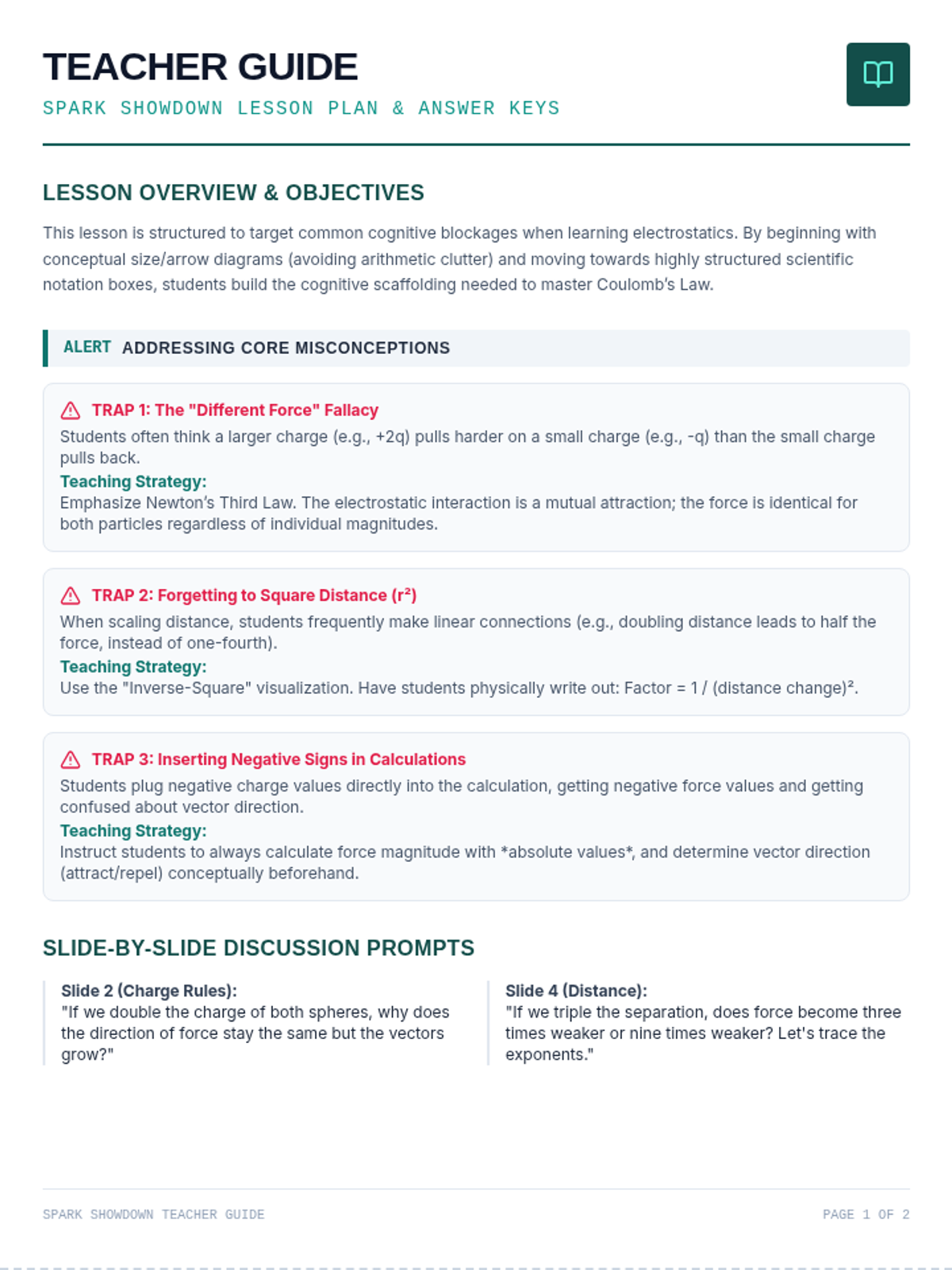
A highly visual and scaffolded review lesson covering electrostatic charge interactions and Coulomb's Law. Includes a concept-heavy visual slide deck, a scaffolded student worksheet with pre-formatted scientific notation grids, and a comprehensive teacher guide with common misconceptions and a complete answer key.
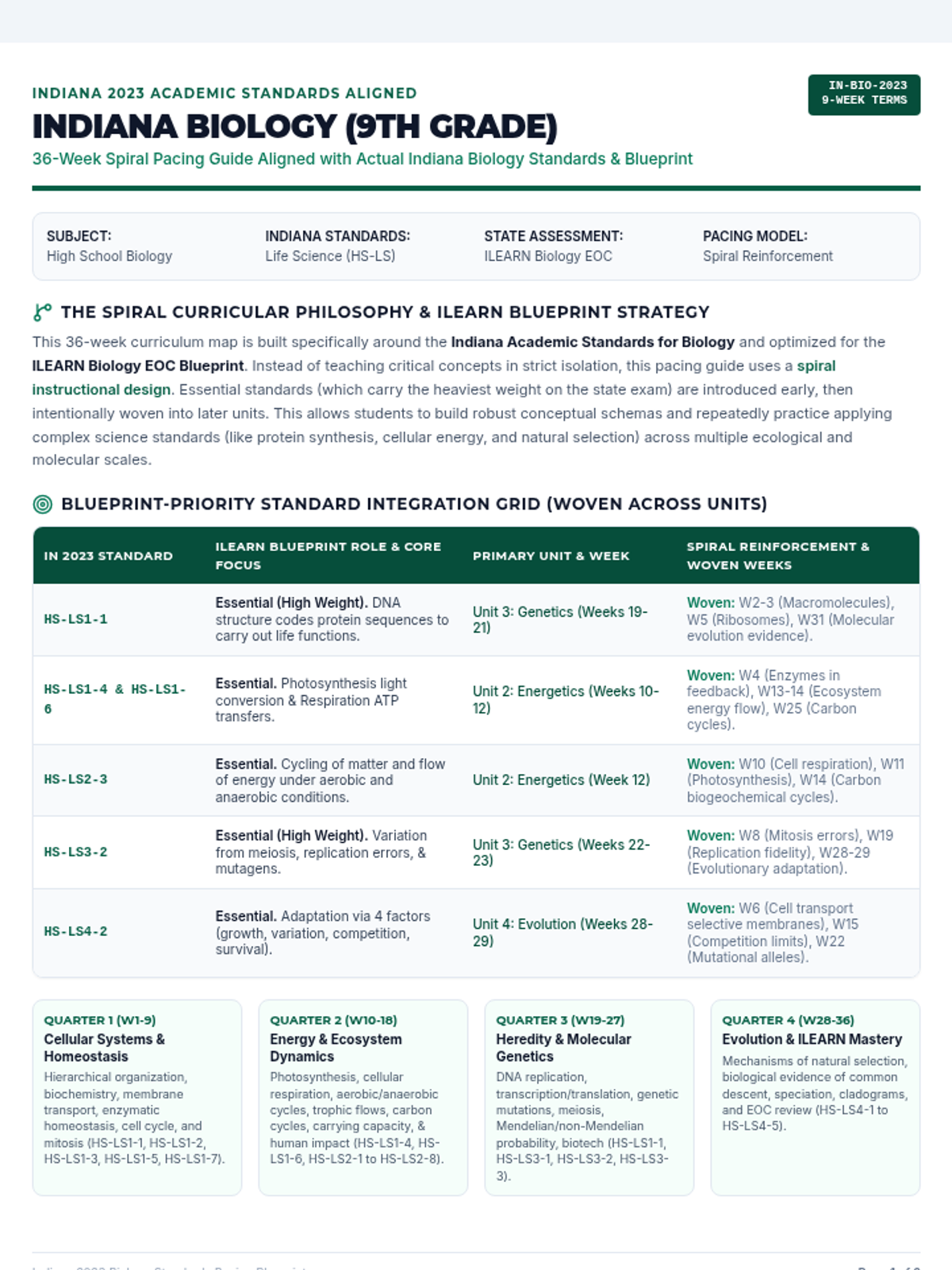
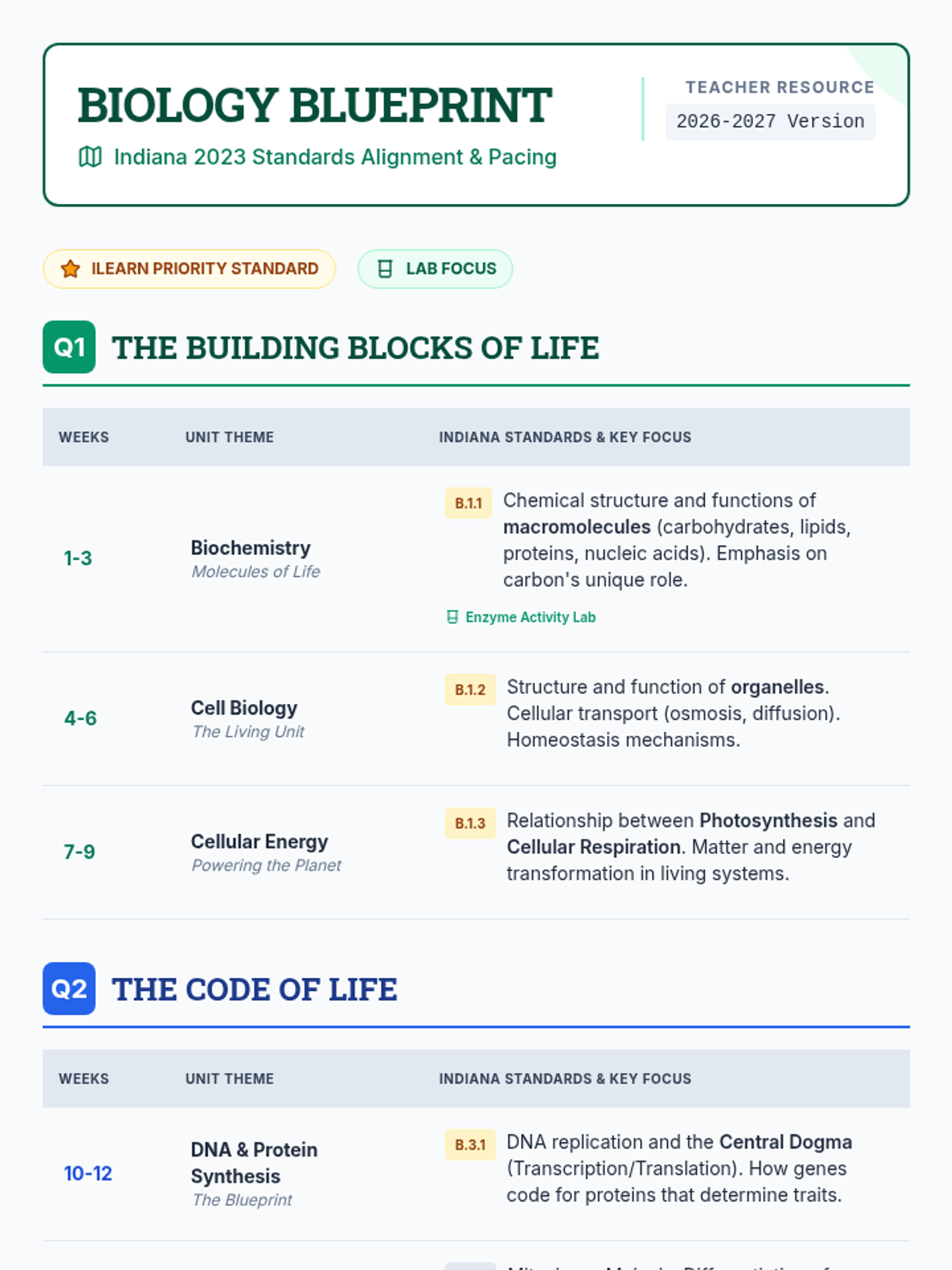
High school biology curriculum planning and pacing resources aligned to Indiana 2023 Academic Standards.
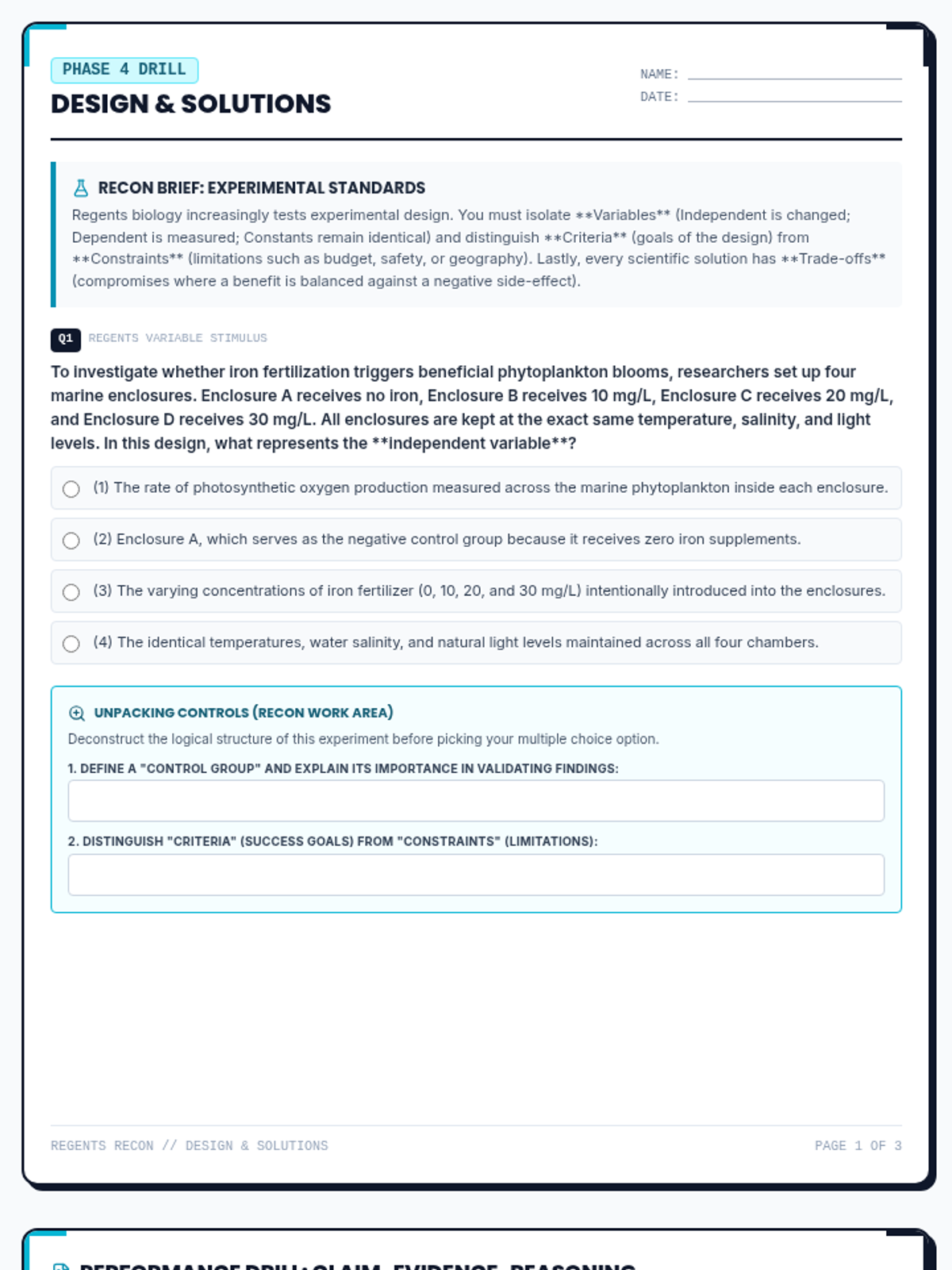
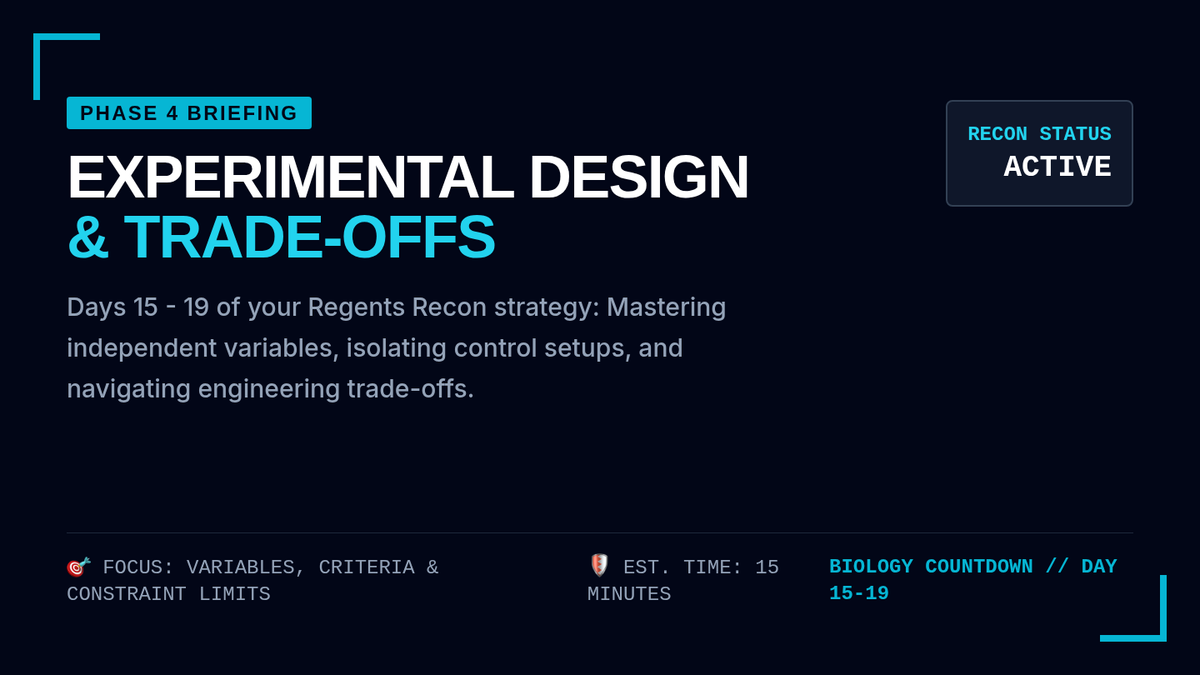
Days 15 to 19 of Regents preparation. Breaks down Regents experimental design standards, distinguishing criteria from constraints, identifying variables, and evaluating biological trade-offs.
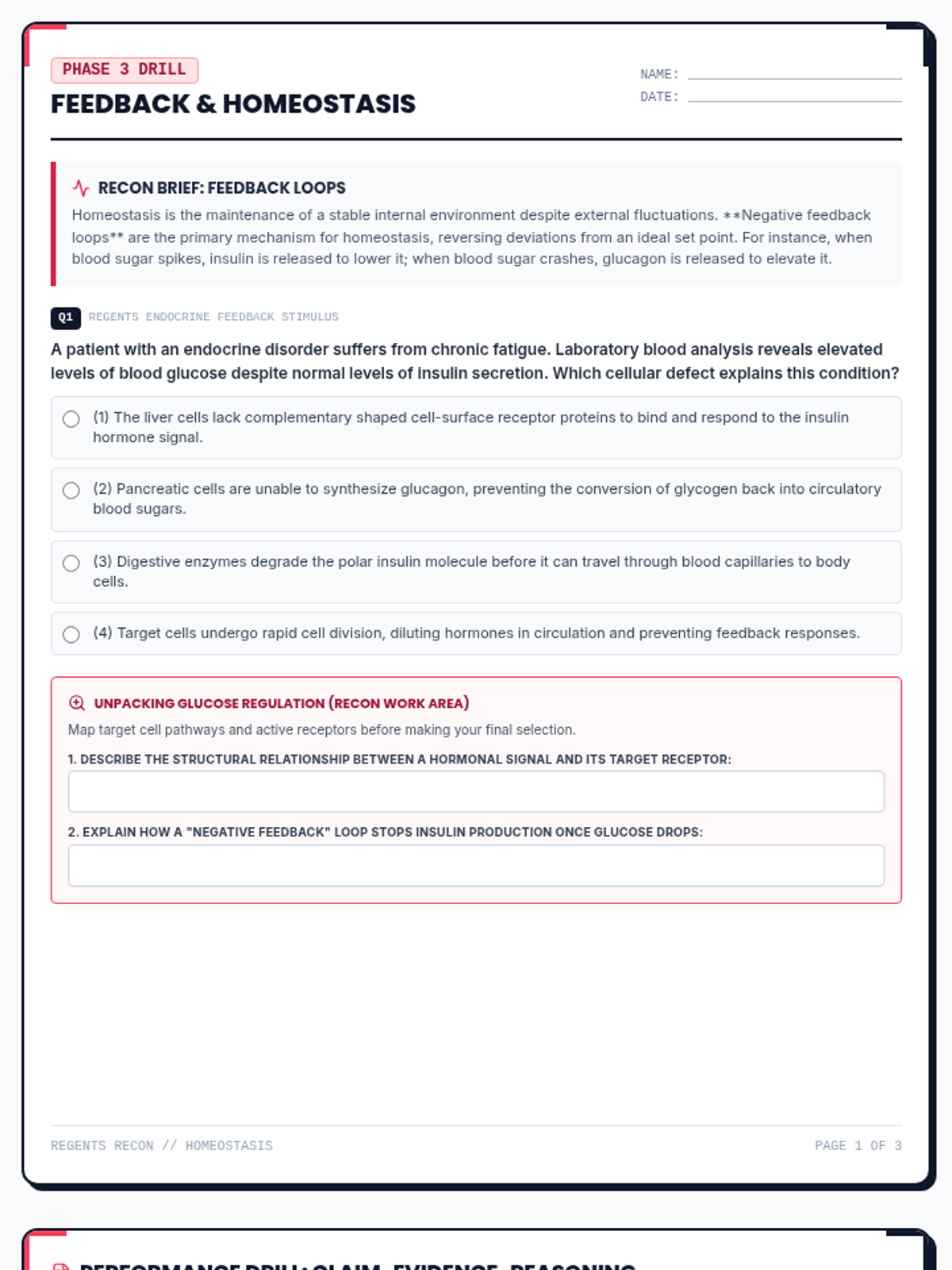
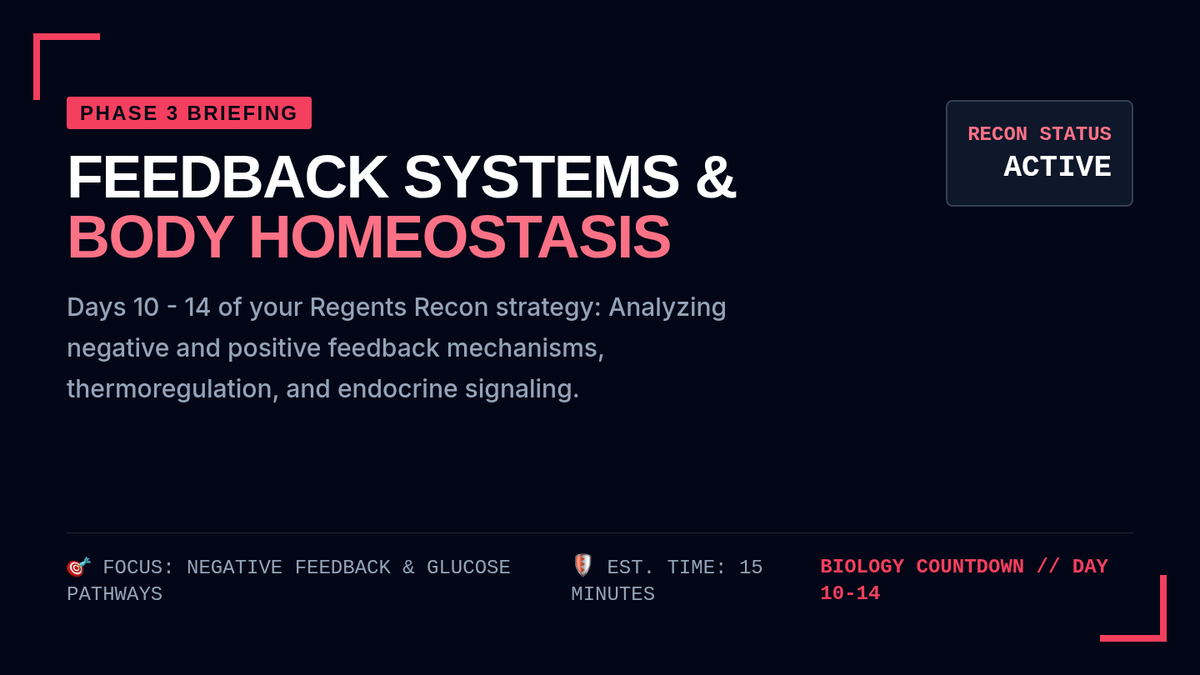
Days 10 to 14 of Regents preparation. Analyzes negative and positive feedback mechanisms, thermoregulation, blood glucose maintenance, and nervous/endocrine system integration.
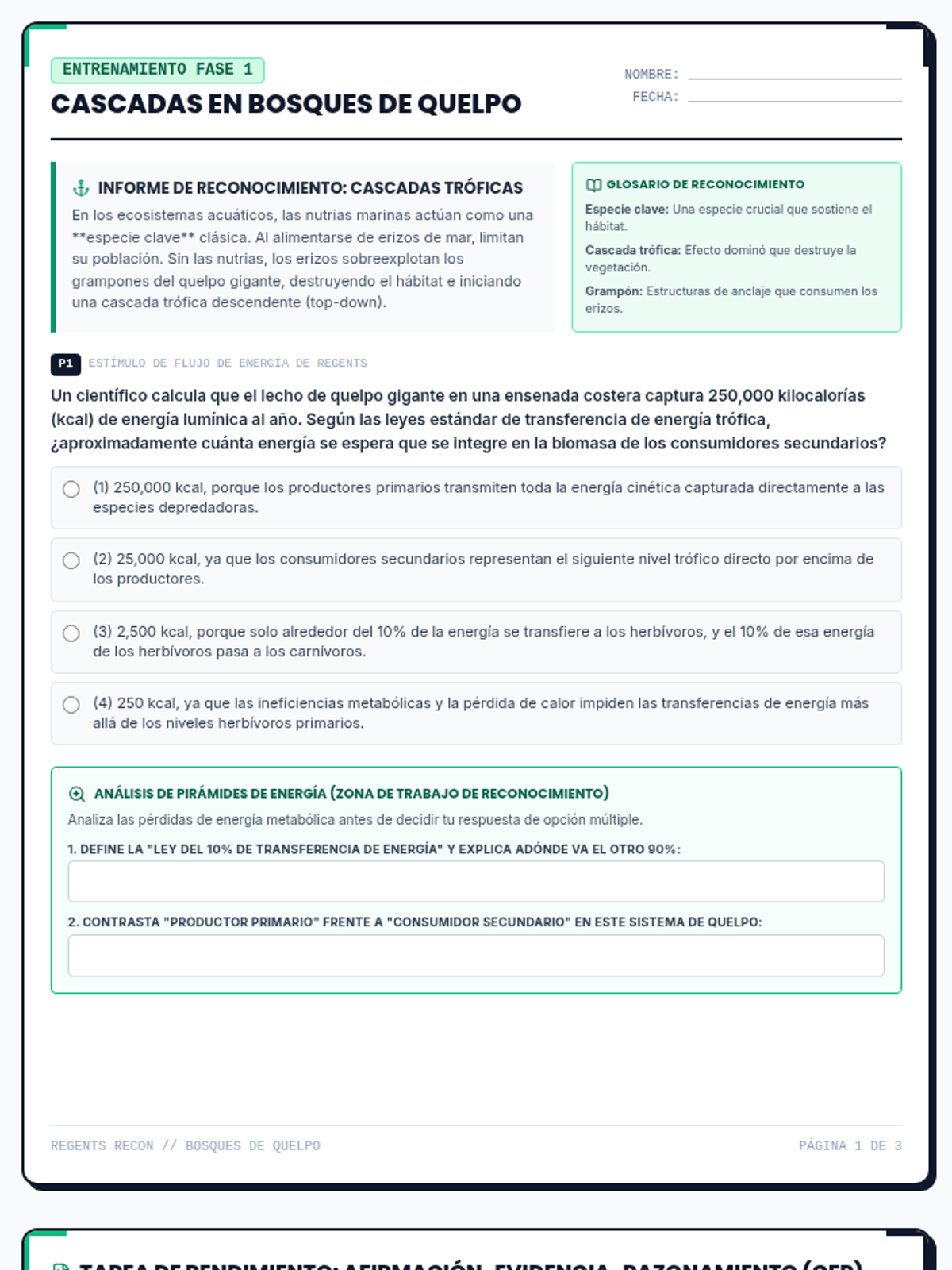
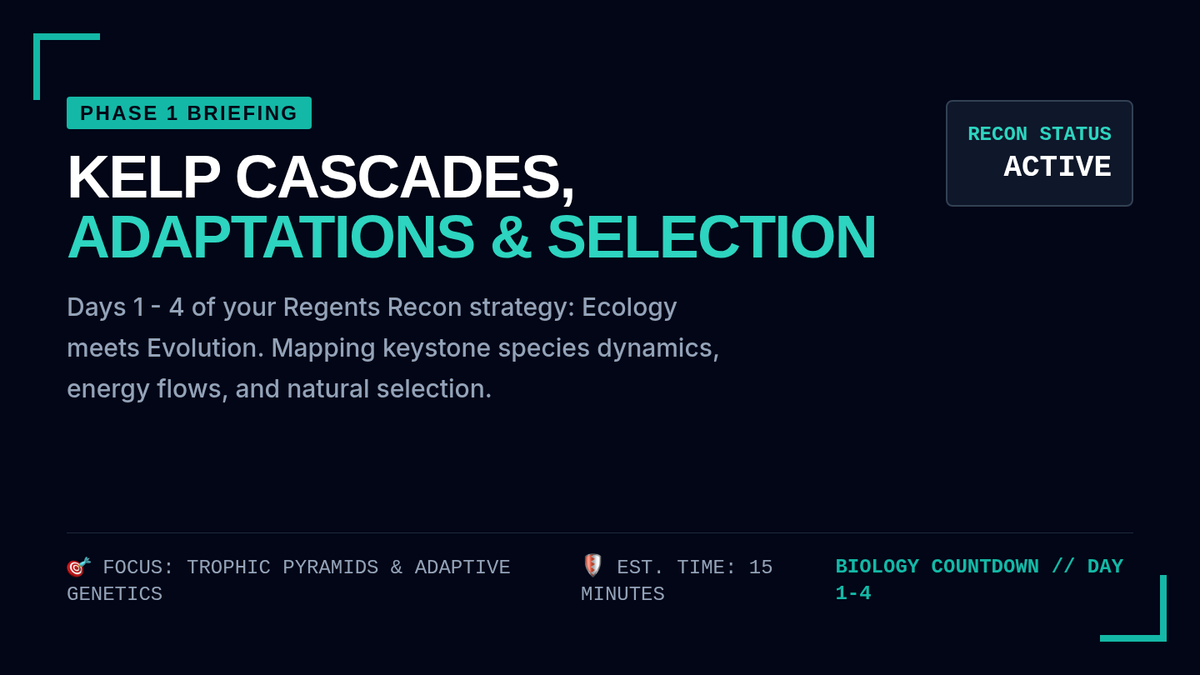
Days 1 to 4 of Regents preparation. Investigates trophic levels, carrying capacity, energy flow, adaptations, and the keystone role of sea otters in maintaining kelp forest homeostasis.
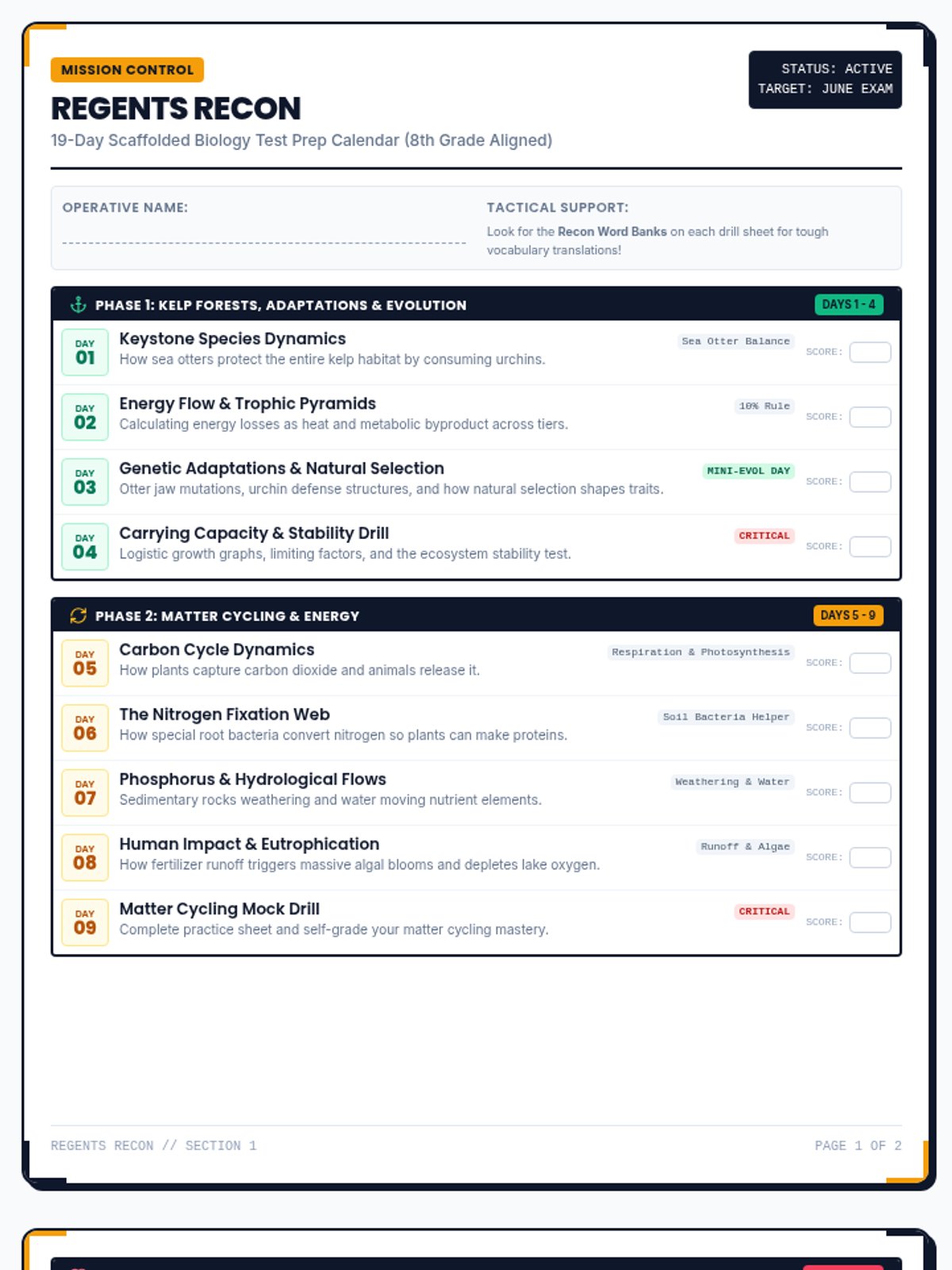
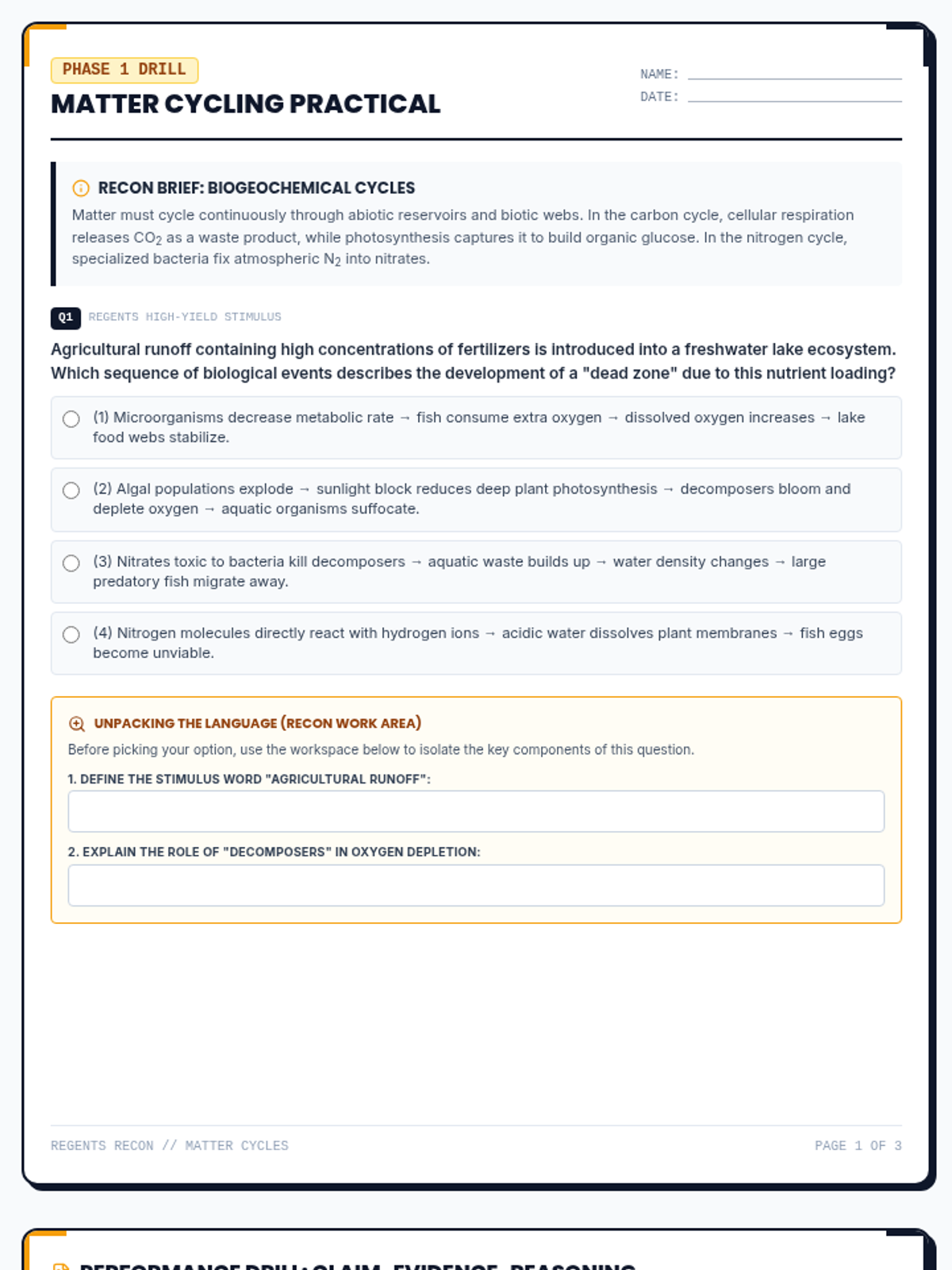
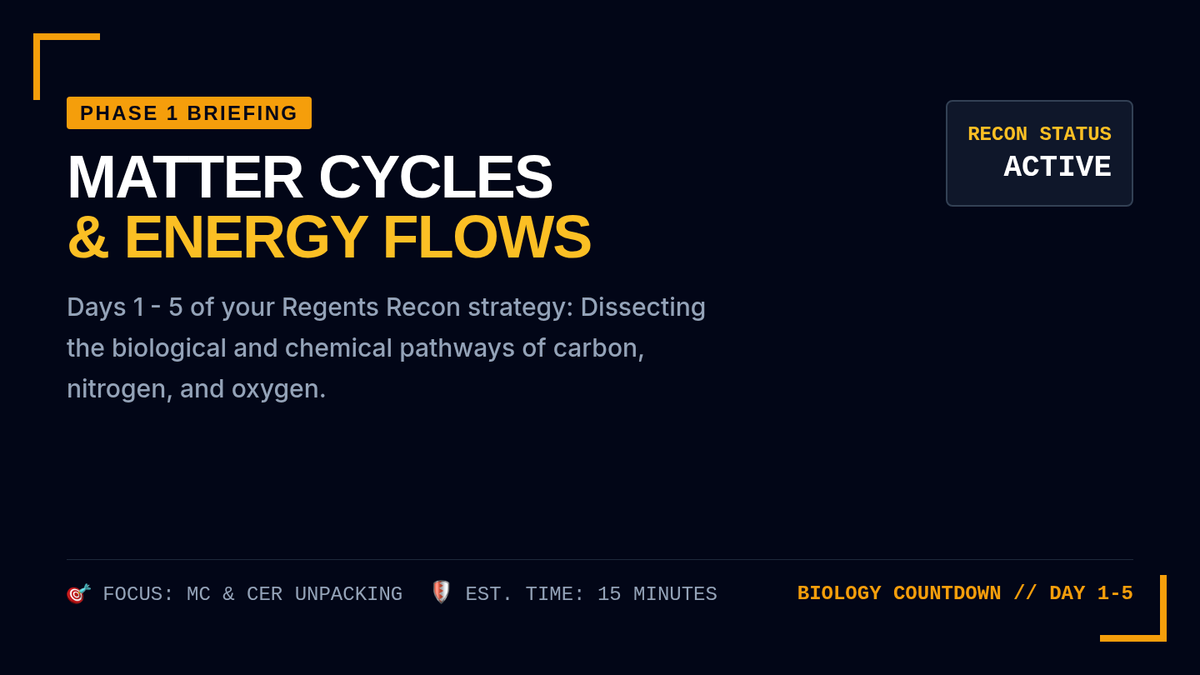
Days 5 to 9 of Regents preparation. Focuses on the biogeochemical cycling of carbon, nitrogen, water, and phosphorus, including cellular respiration and photosynthesis connections.
Curriculum planning resources for the entire academic year, including standard alignment, pacing, and priority focus areas.