A math lesson where students learn to read analog electric and water meters, calculate monthly consumption, and determine the total cost based on unit rates. Includes a video-based instruction segment and a mock utility bill audit activity.
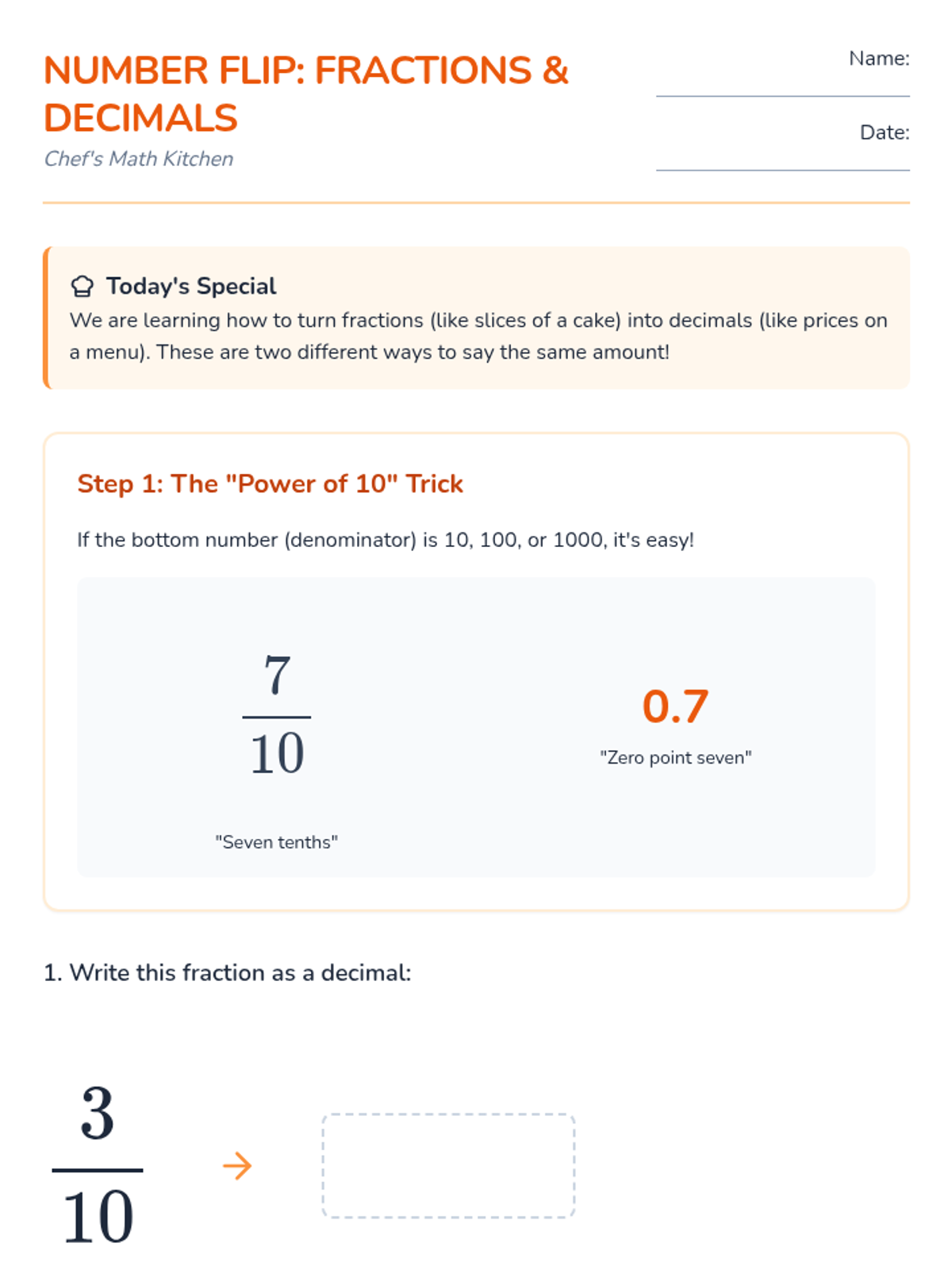
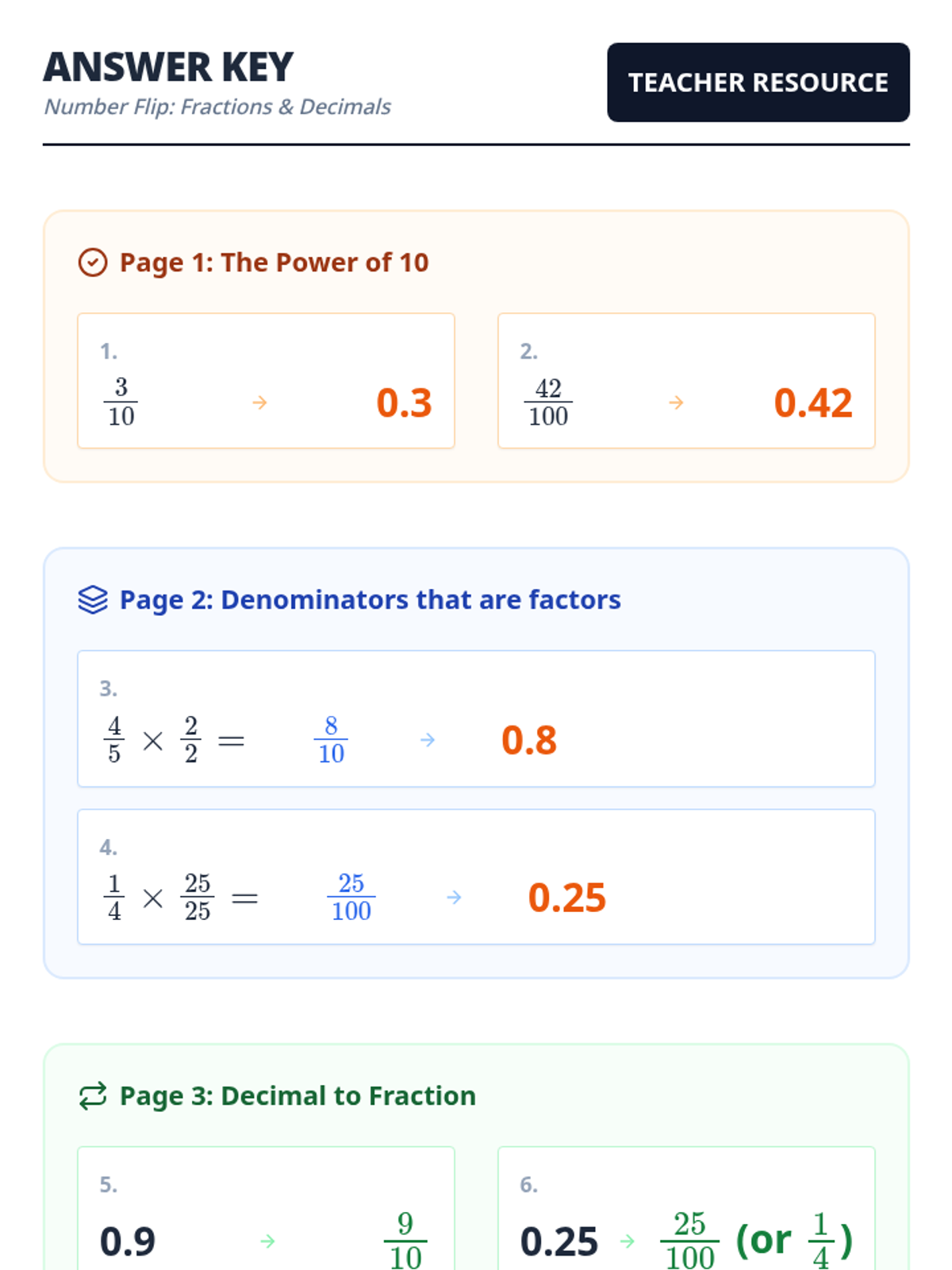
A comprehensive lesson on converting fractions to terminating decimals using long division and equivalent fractions with denominators of 10, 100, or 1,000. Students will act as 'Decimal Architects' to rebuild fractions into their decimal equivalents.
A culminating challenge where students use all their 'architect' skills to solve a mixed set of equation and inequality problems.
Students write inequalities to represent real-life limits like speed, budget, and capacity, connecting math to everyday constraints.
Students learn to represent inequalities on number lines, understanding the meaning of open vs. closed circles and 'infinitely many' solutions.
Introduces inequality symbols and the concept of constraints, helping students recognize that some problems have a range of solutions.
Students apply their equation-solving skills to complex multi-step real-world scenarios, selecting the appropriate operation to build their solution.
Explores division equations as finding the total when the size of parts is known, using visual models to bridge to the algebraic solution.
Students represent and solve px = q equations using tape diagrams, focusing on the relationship between multiplication and equal groups.
Students solve subtraction equations by 'undoing' the removal of a value, using number lines and balance models to justify their steps.
Focuses on solving equations of the form x + p = q using visual bar models and the concept of inverse operations to maintain balance.
Students learn to translate real-world scenarios into algebraic expressions, identifying the variable as the unknown architect of the problem.
Students use substitution to determine which values from a given set make an equation true, shifting from 'calculating' to 'verifying' solutions.
Students explore the concept of equality using a balance scale model to understand that an equation is a statement of balance between two expressions.