A comparative look at South Korea's high-tech 'Smart Cities' and the sinking infrastructure of Jakarta. Students propose adaptive urban planning strategies to address land subsidence and climate change.
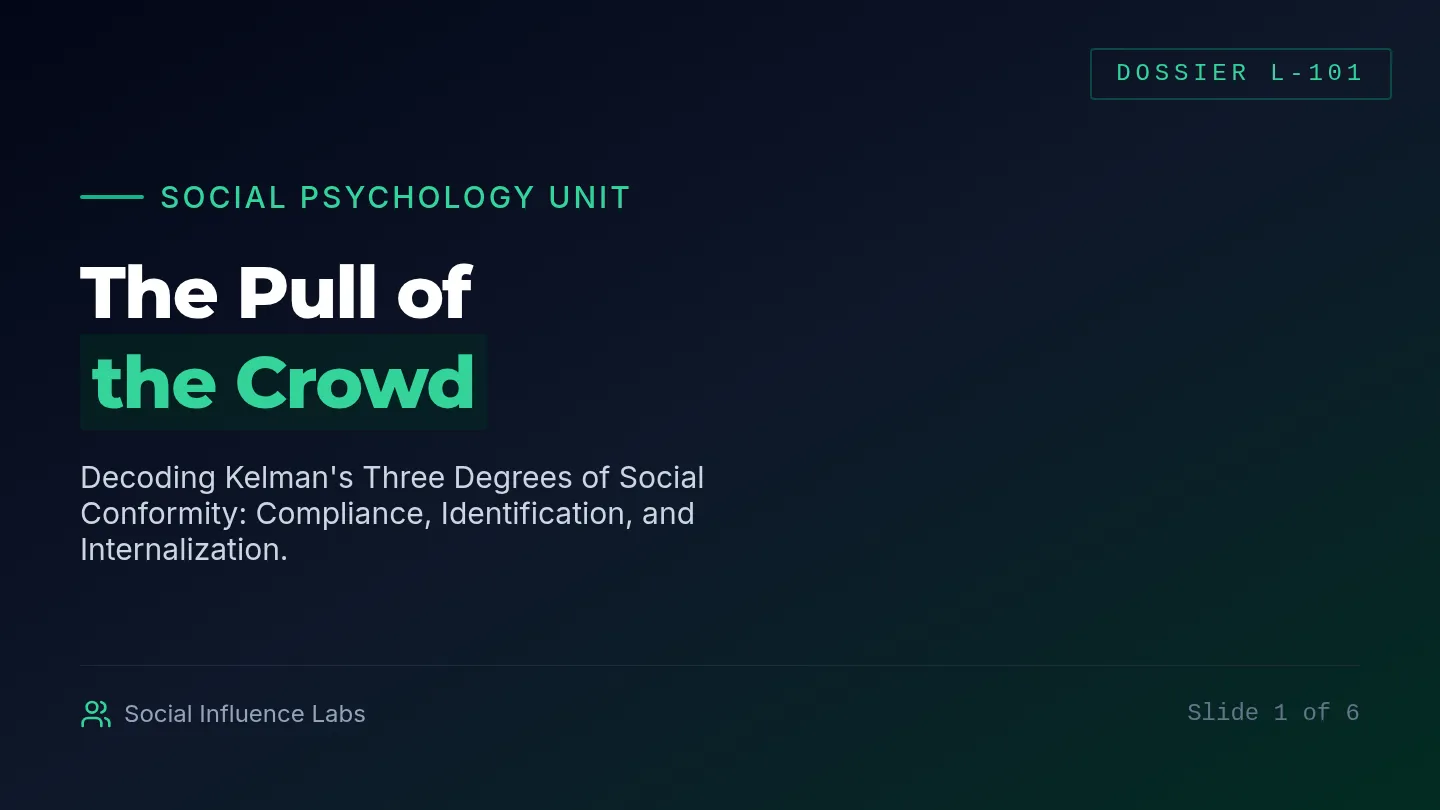
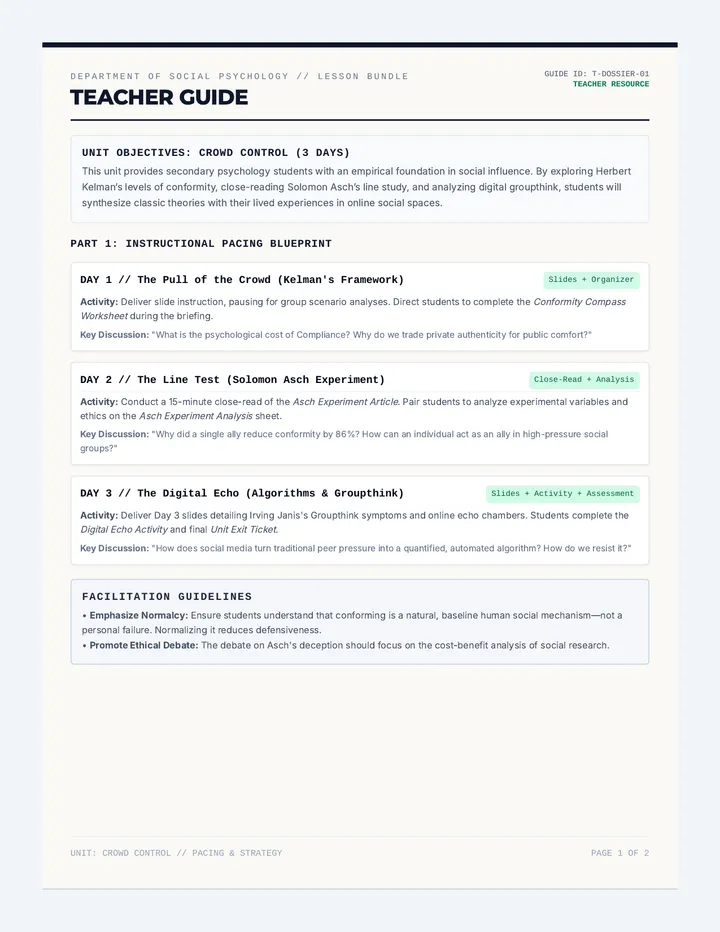
A three-day social psychology sequence exploring conformity, groupthink, and social influence. Students analyze foundational experiments, compare compliance versus internalization, and dissect modern digital peer pressure and media dynamics.
A comprehensive AP U.S. History study of the internal conflicts of the Confederacy, the legal boundaries of Reconstruction, and the long struggle for civil rights in Mississippi, structured around the historical events depicted in the film Free State of Jones.
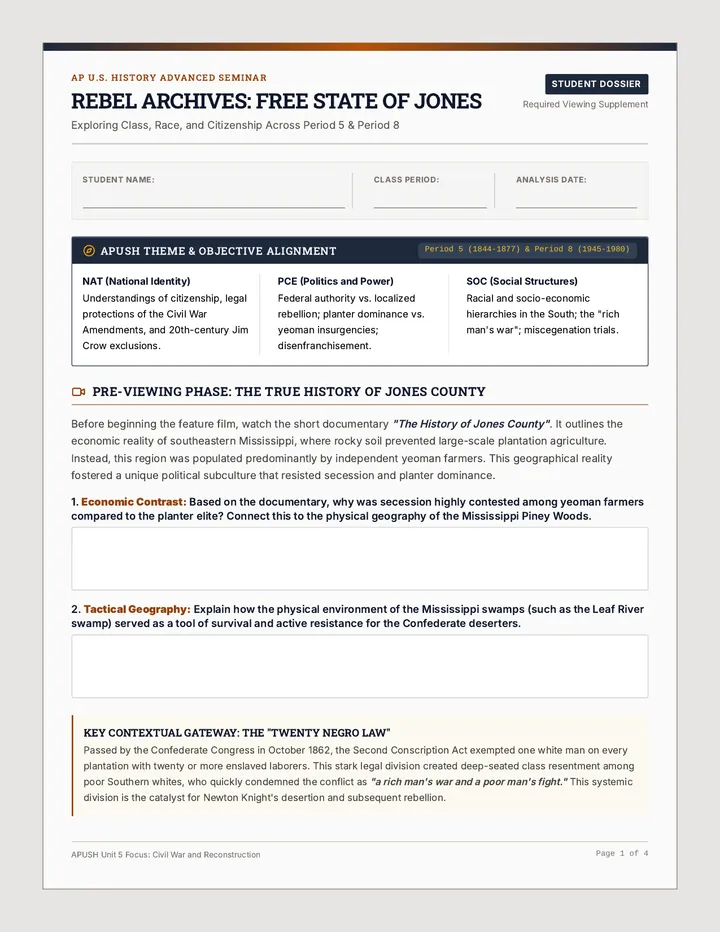
A highly structured, four-page AP U.S. History film study viewing guide and historical analysis packet for the movie 'Free State of Jones'. It connects Period 5 Civil War/Reconstruction themes with Period 8 20th-century Civil Rights contexts, focusing on Southern class dynamics, Unionism, and racial classification continuities.
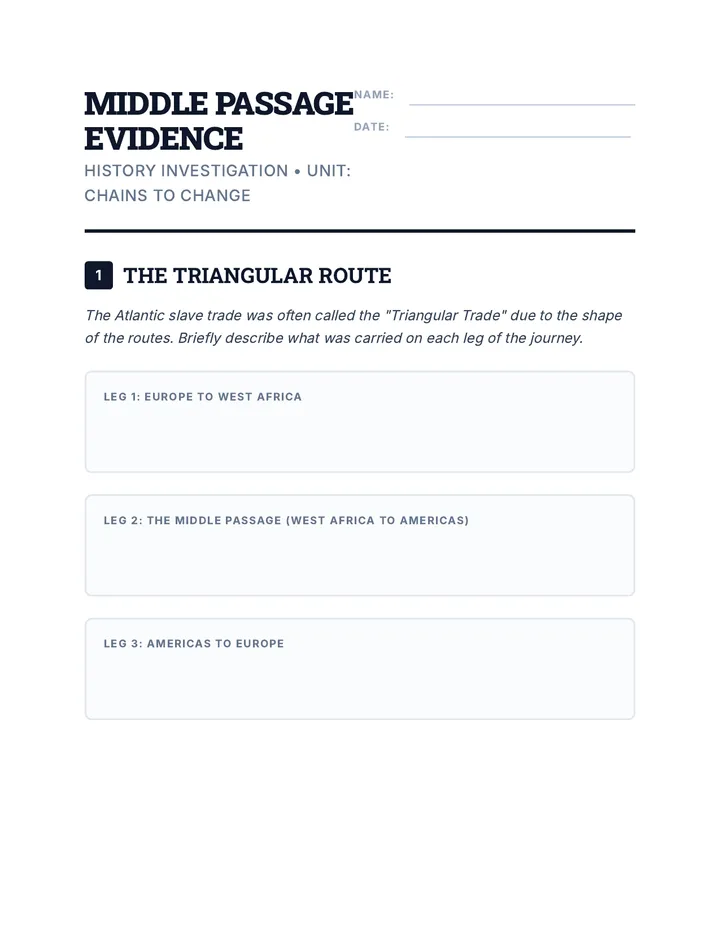
A comprehensive study of the Atlantic slave trade, the plantation economy, forms of resistance, and the eventual path to emancipation.
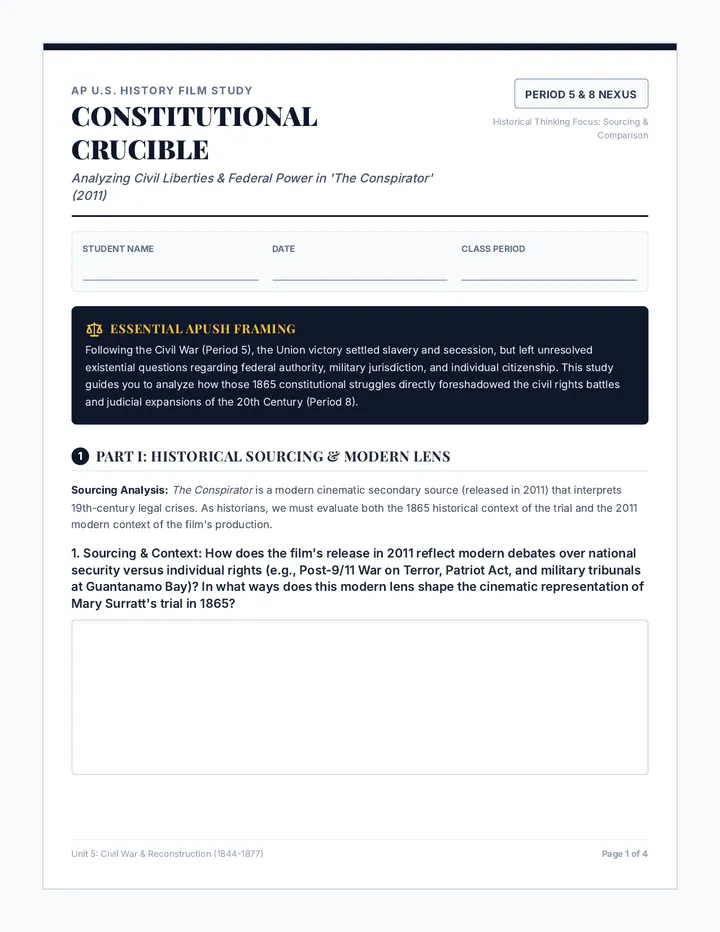
An AP U.S. History film study and constitutional analysis of 'The Conspirator'. Students explore Period 5 legal precedents, executive authority, and civil liberties, while tracing long-term continuities in civil rights into the 20th century.
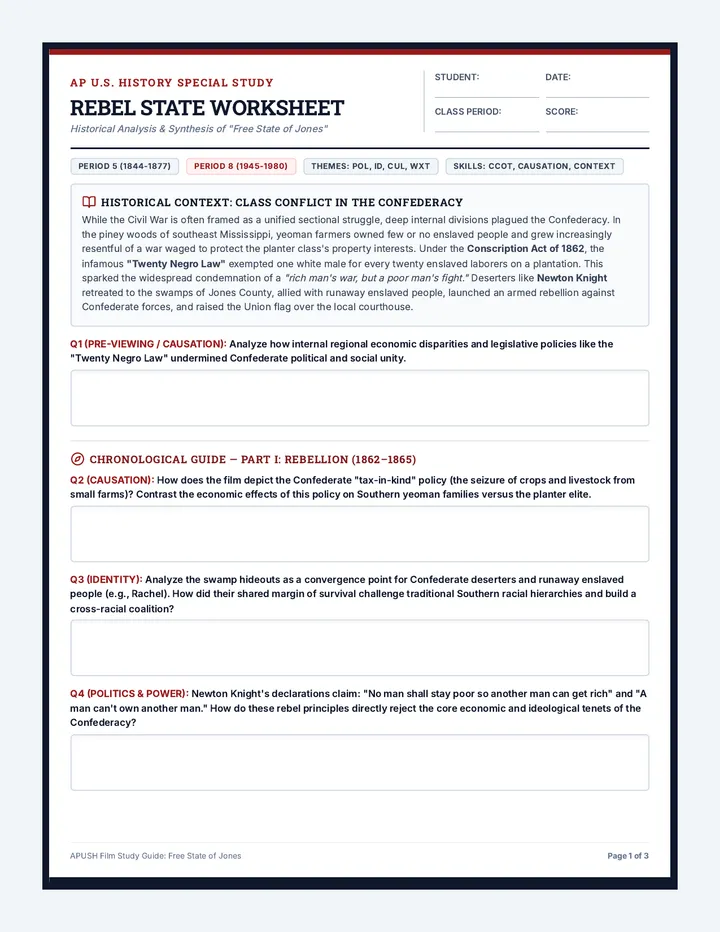
A highly analytical AP U.S. History film study worksheet for 'Free State of Jones'. It bridges Period 5 Reconstruction issues with Period 8 civil rights struggles through the film's 1948 trial flash-forwards, structured with pre-viewing context, a chronological guide, a thematic comparison grid, and an LEQ essay outline.
A comprehensive multi-day review sequence for psychology units on emotion, motivation, memory, and forgetting, featuring structured study aids, interactive challenges, and practice assessments.
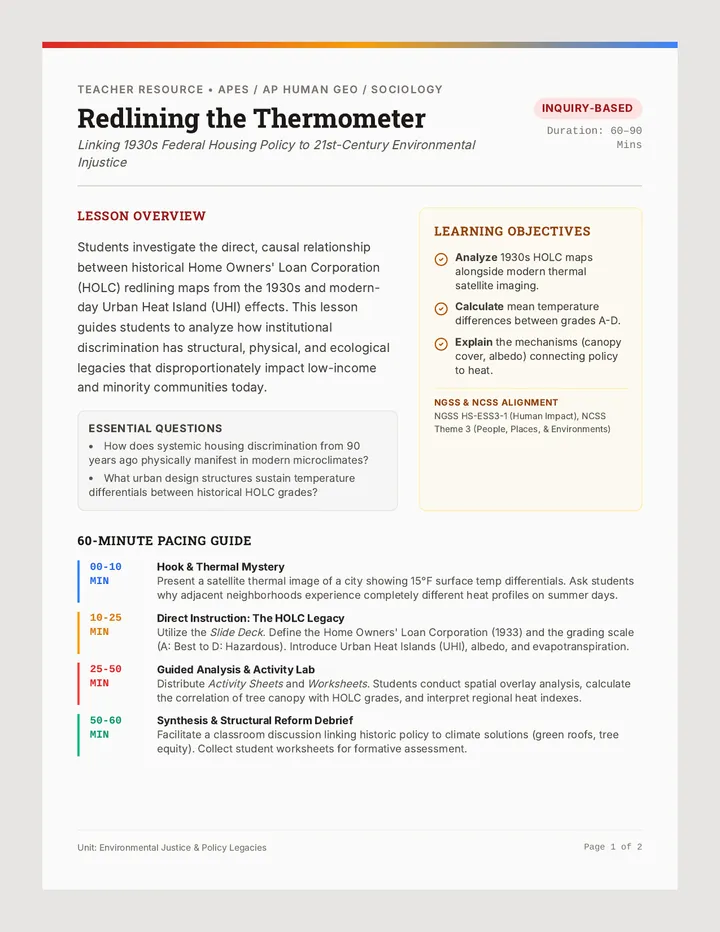
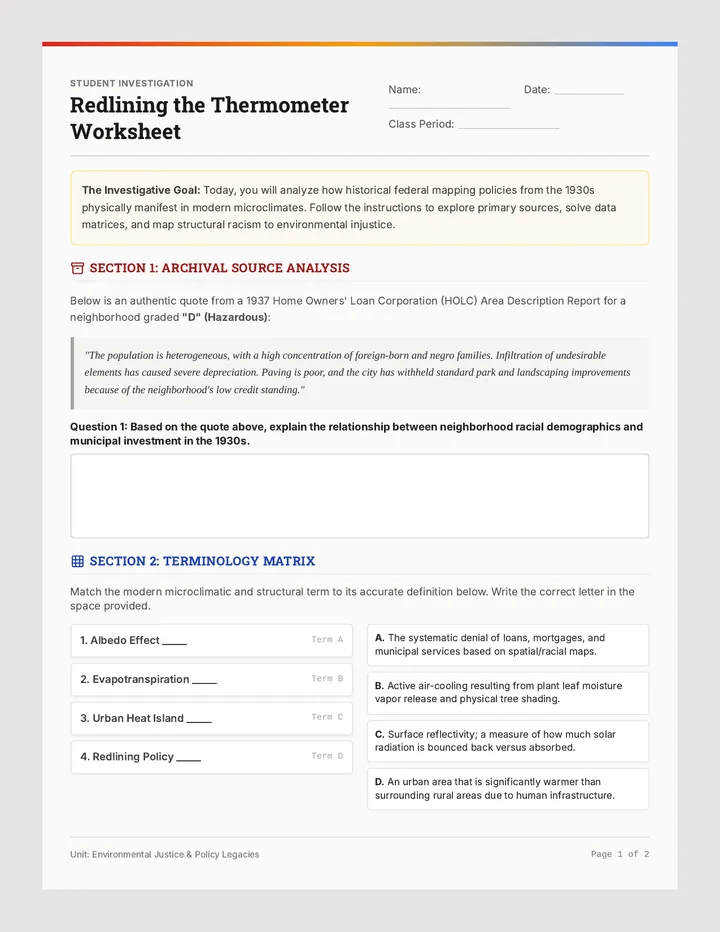
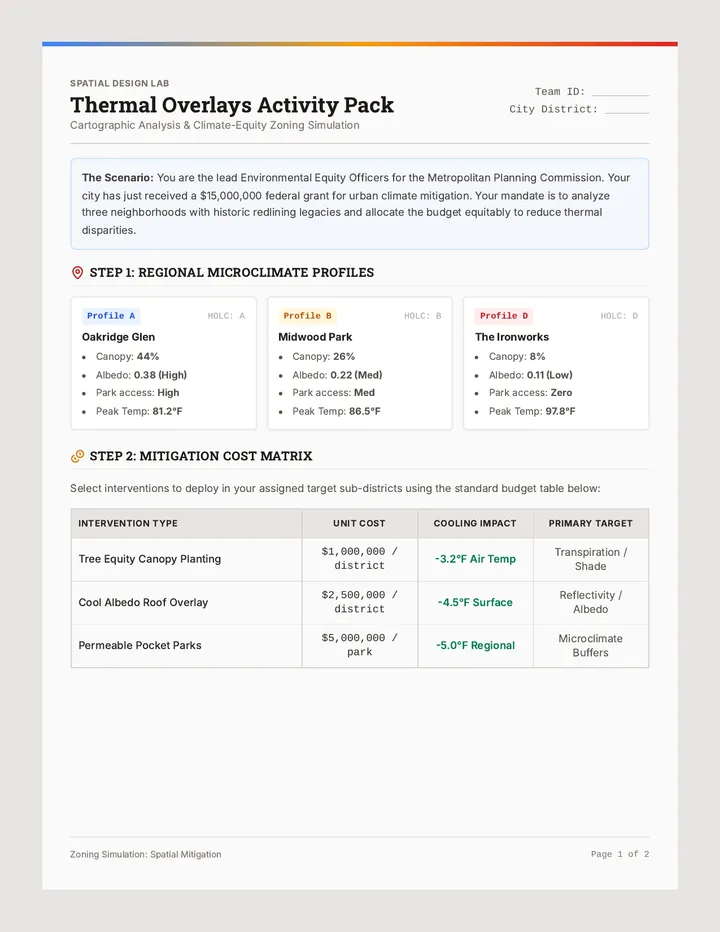
An advanced, interdisciplinary lesson for high school and undergraduate students exploring the causal relationship between 1930s Home Owners' Loan Corporation (HOLC) redlining maps and modern-day urban heat island (UHI) effects, analyzing systemic racism and environmental injustice.
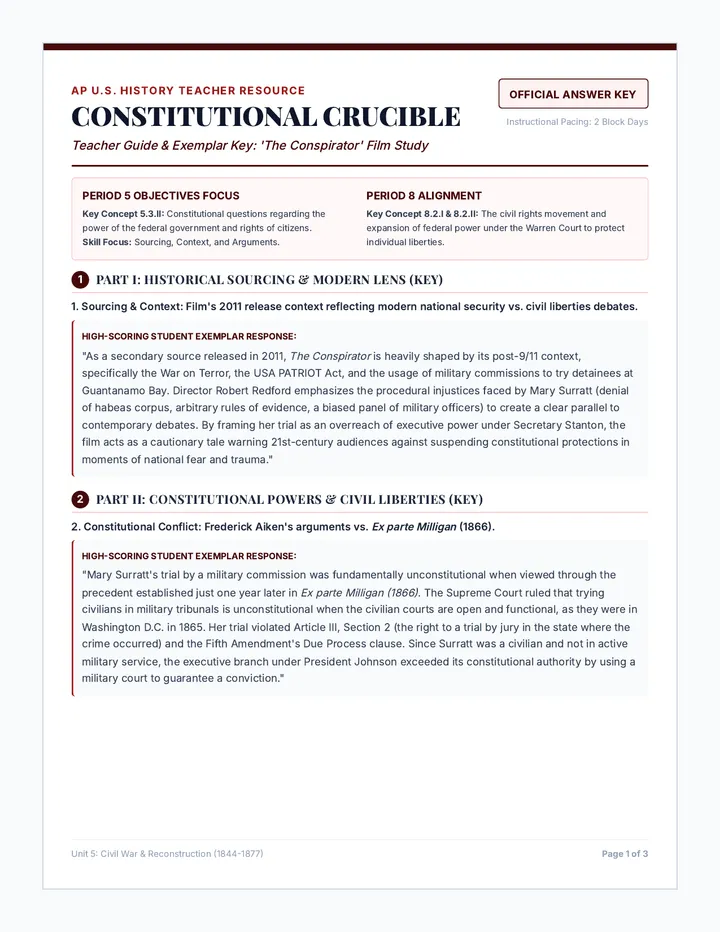
An AP U.S. History teacher guide and answer key for the 'Constitutional Crucible Worksheet'. Includes primary source alignments, exemplar student responses, historical background, and an AP-aligned grading rubric.
A comprehensive look at economic systems, competition, and the role of government in regulating markets using the cell phone industry as a primary case study.
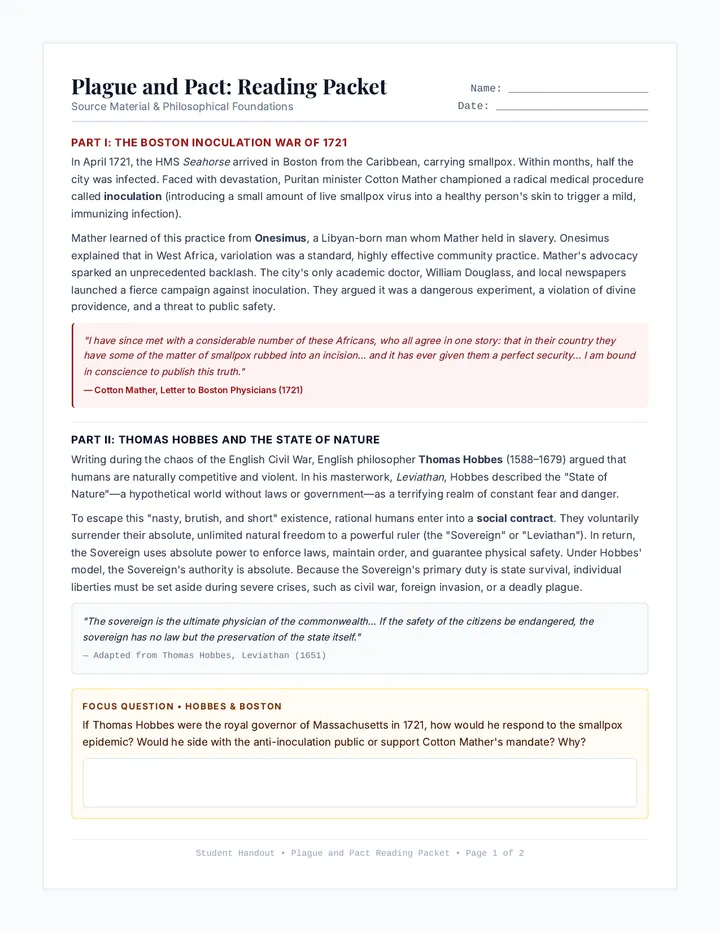
An inquiry-based lesson exploring how historical epidemics (from the Black Death to Smallpox inoculation) tested and reshaped the social contract between citizens and states, forcing a reckoning between personal liberty and public safety.
An AP U.S. History film study worksheet for 'The Conspirator', guiding students through Period 5 legal battles, civil liberties under crisis, and critical comparisons to Period 8 civil rights and federal power.