Students explore the metaphor of a topic sentence as an 'umbrella' covering the evidence in a paragraph. They critique paragraphs where sentences 'get wet' (fall outside the scope of the topic sentence).
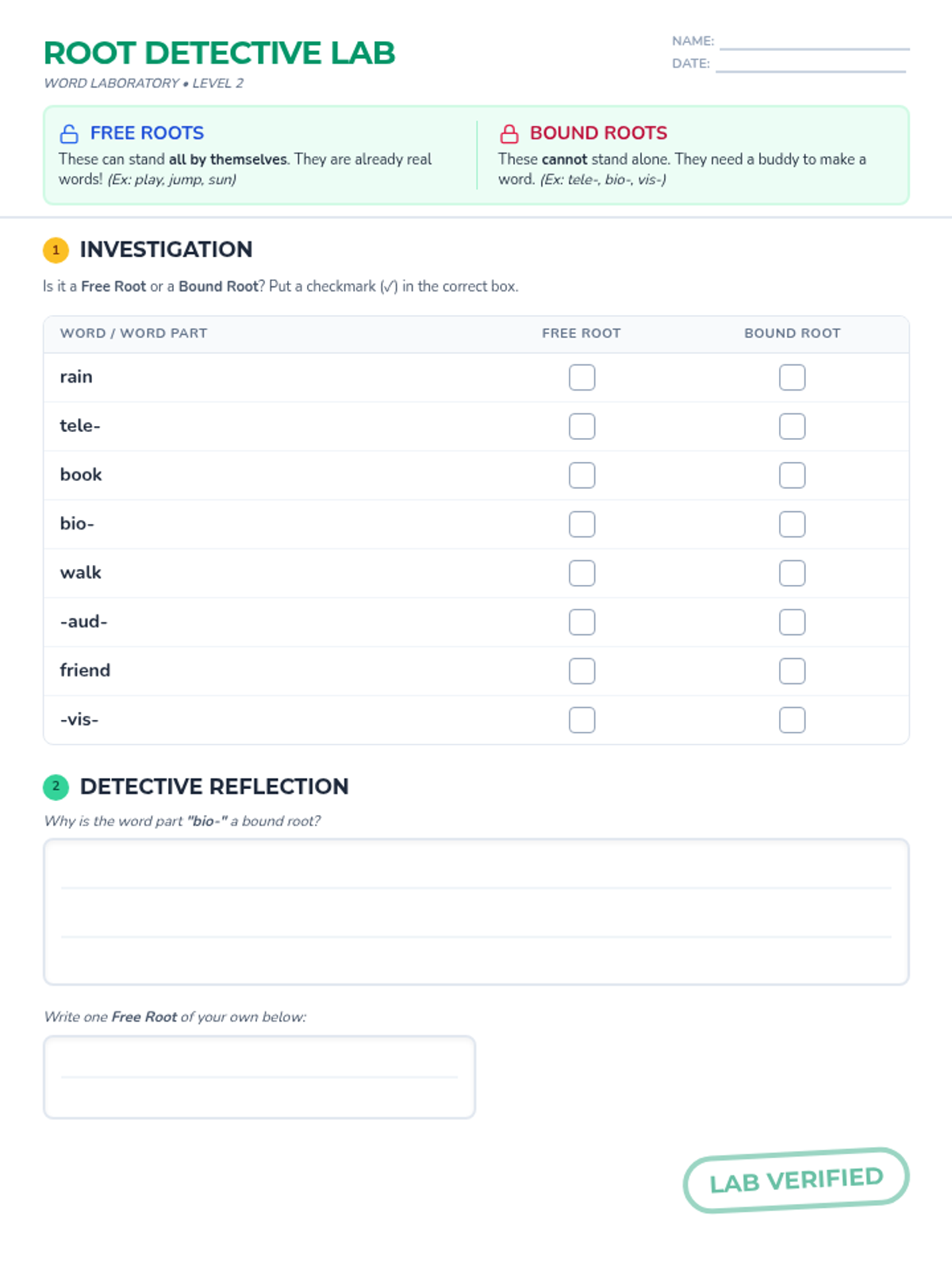
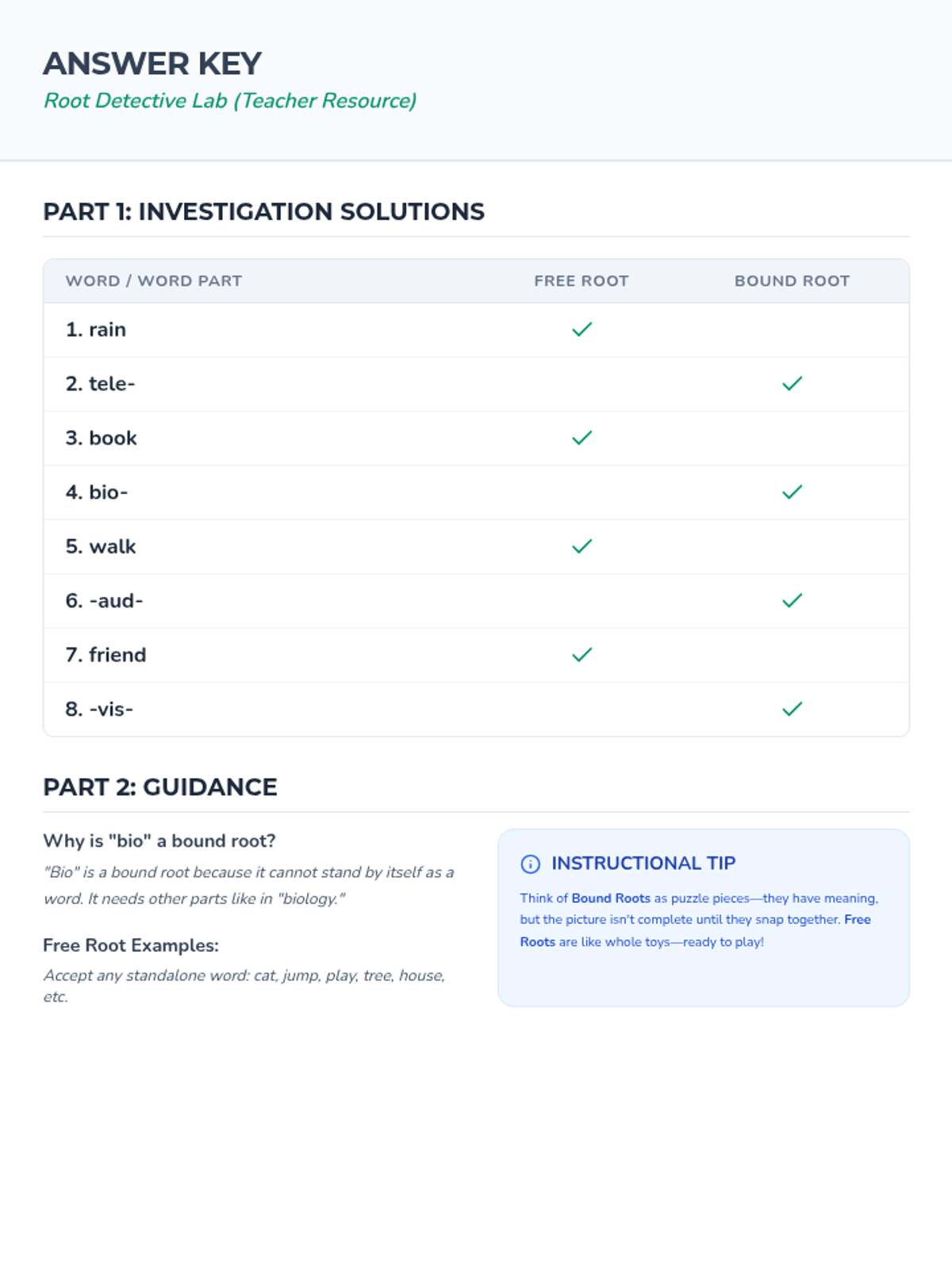
An introduction to the building blocks of language, teaching second graders the difference between words that can stand alone (free roots) and those that need a 'buddy' (bound roots).
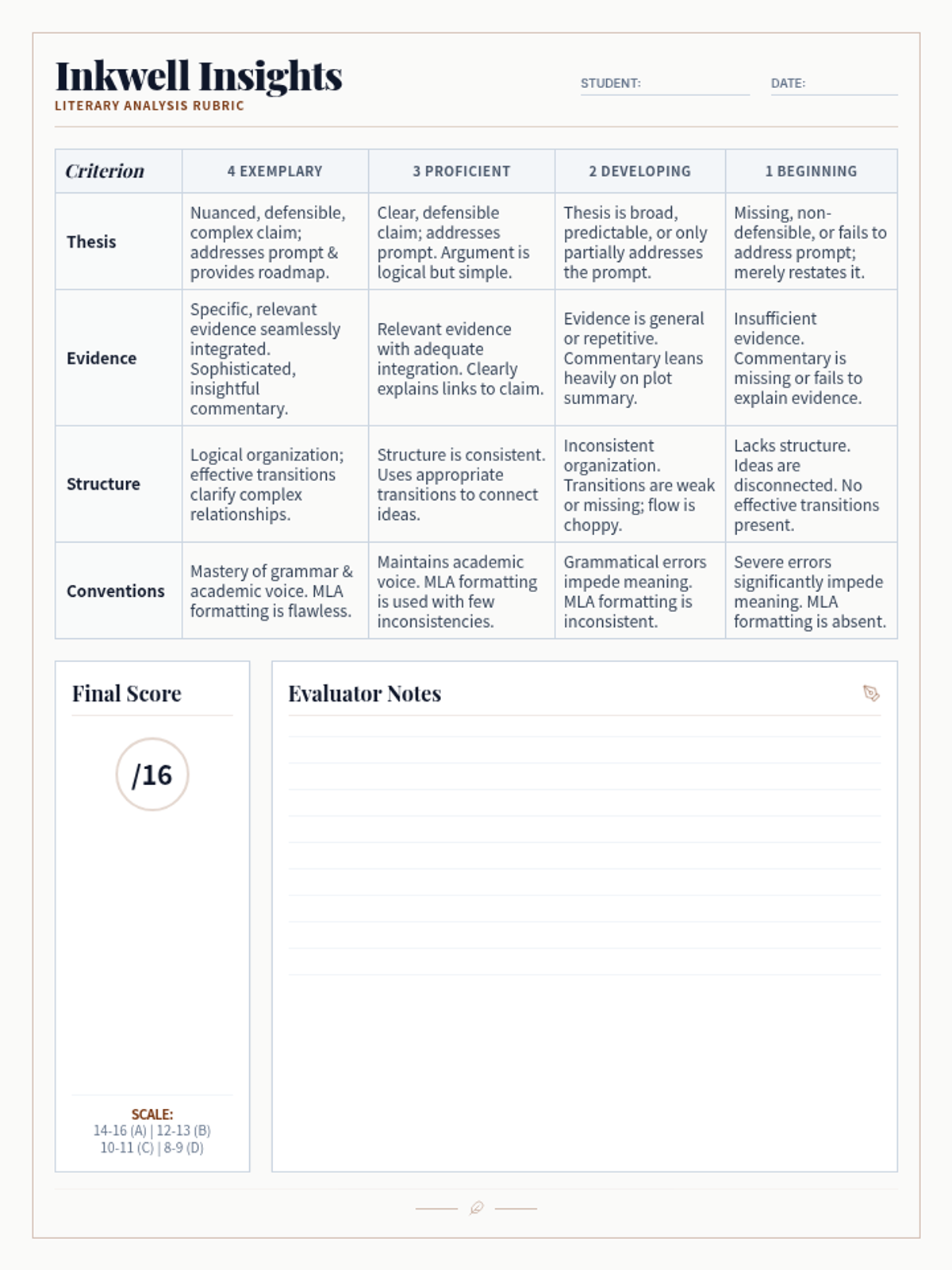
A lesson centered on the standards and expectations of high school literary analysis, using a standardized rubric to guide writing and revision.
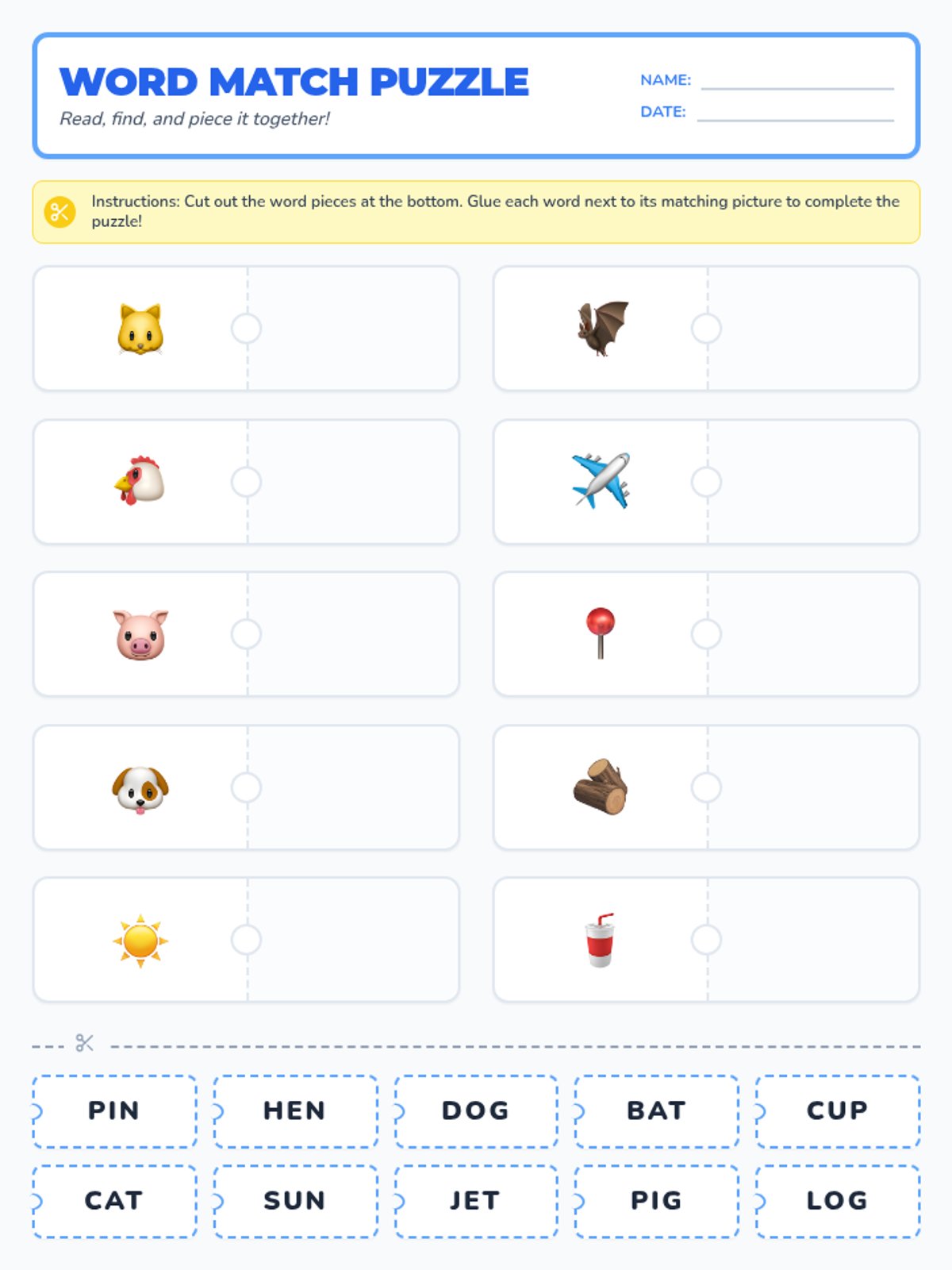
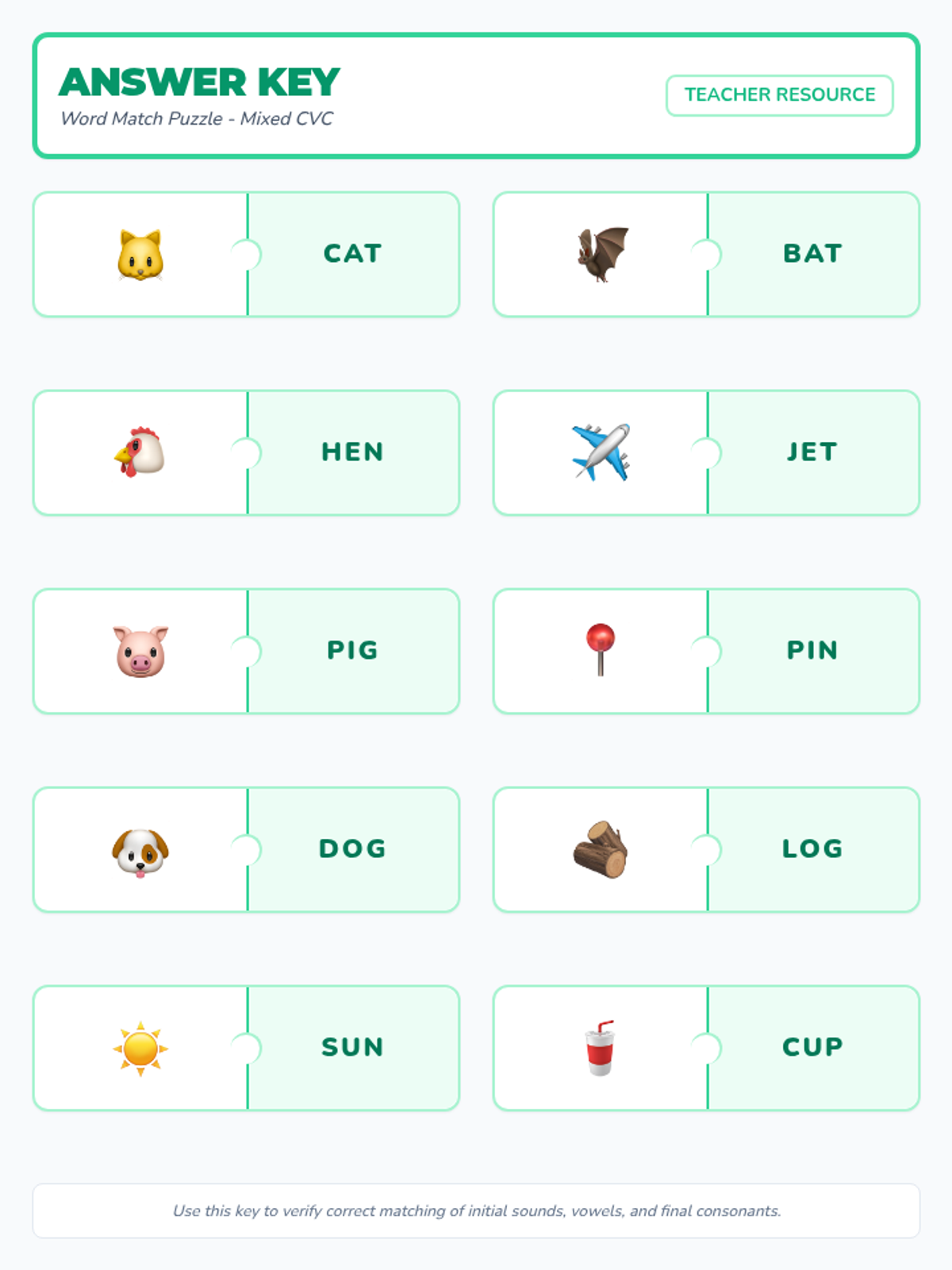
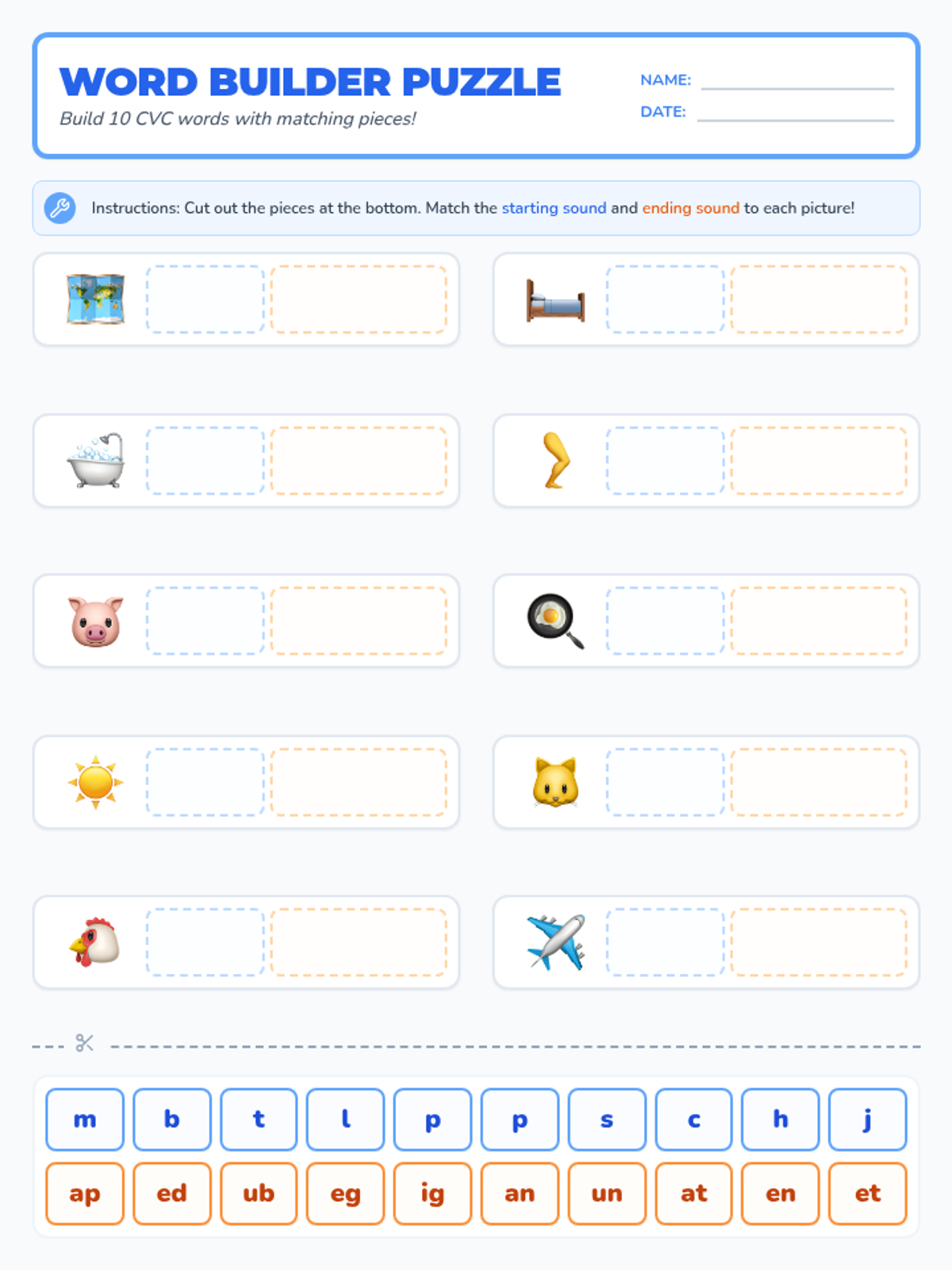
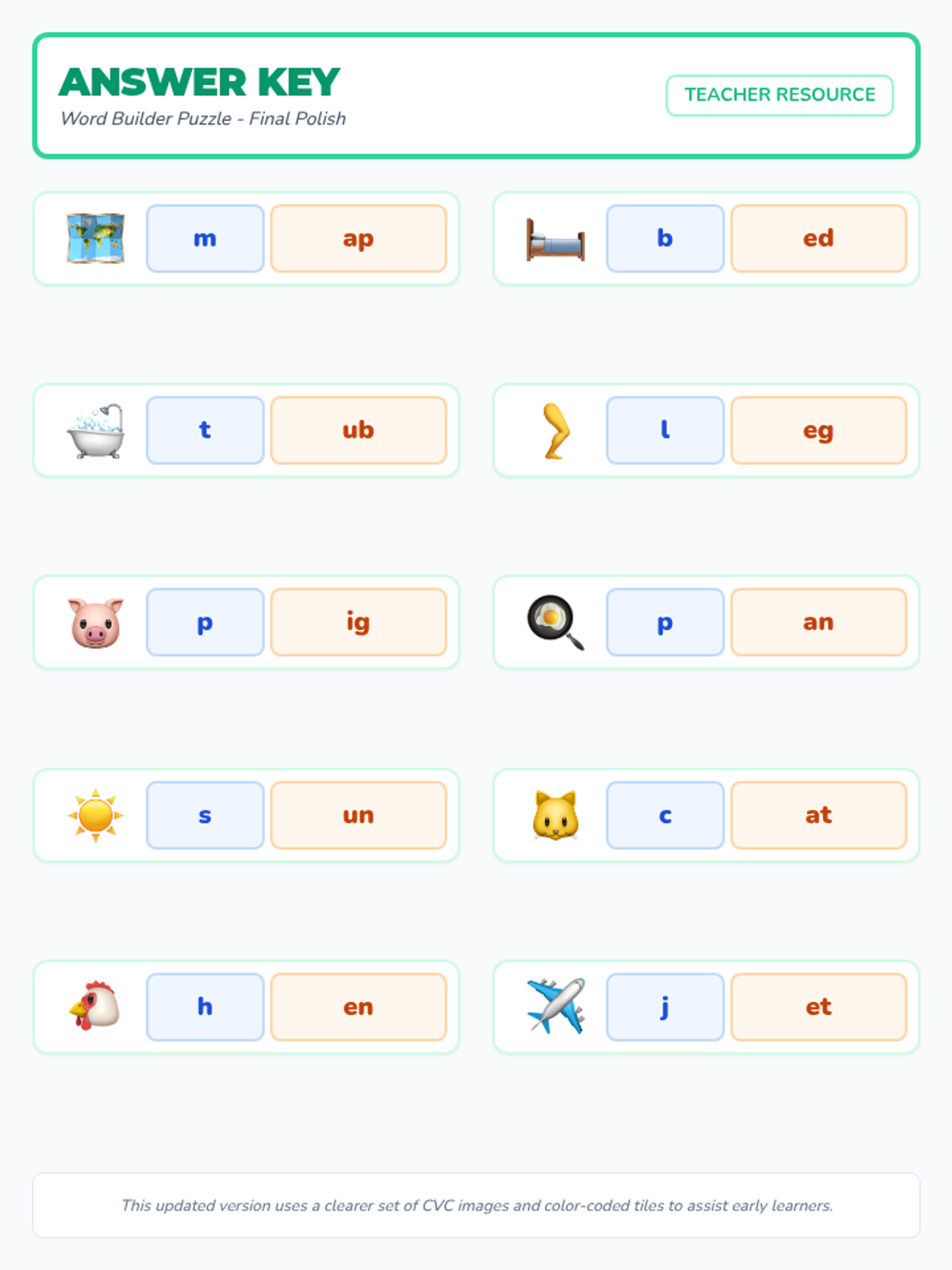
Students practice identifying and matching CVC words to pictures through an engaging cut-and-paste puzzle activity.
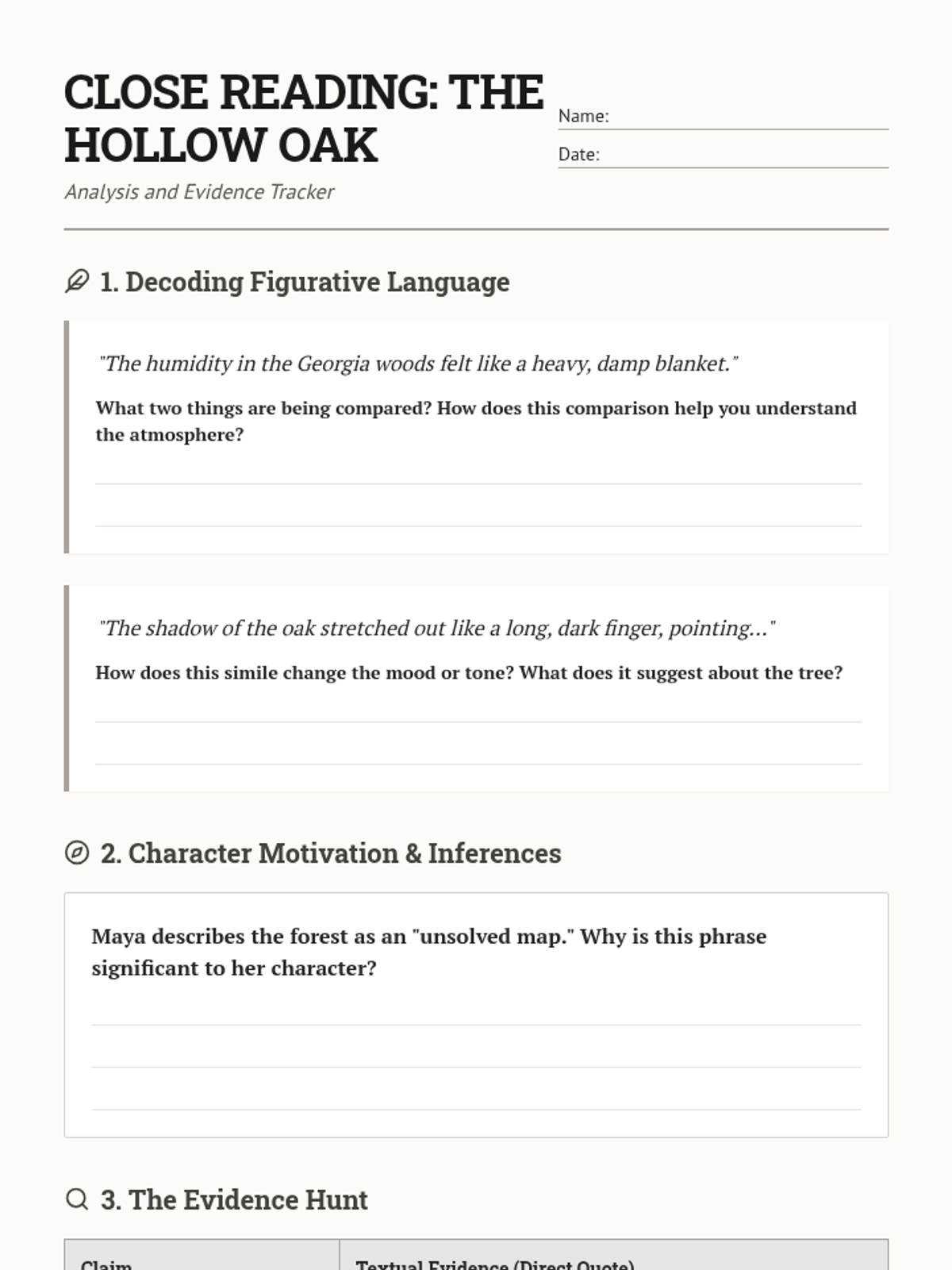
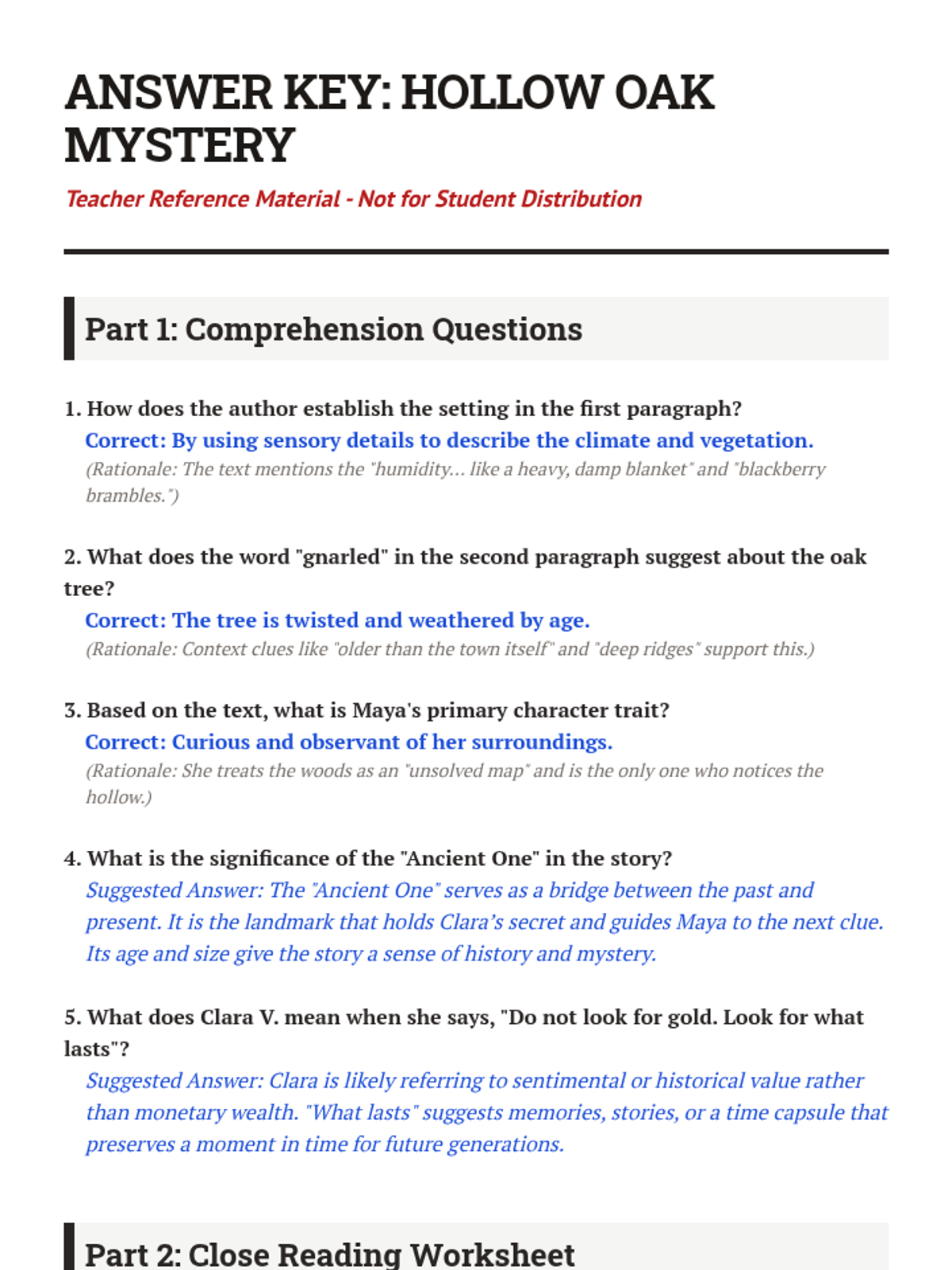
A 7th-grade narrative reading unit focused on 'The Secret of the Hollow Oak,' featuring a passage with comprehension questions and a close reading activity to build analysis skills.
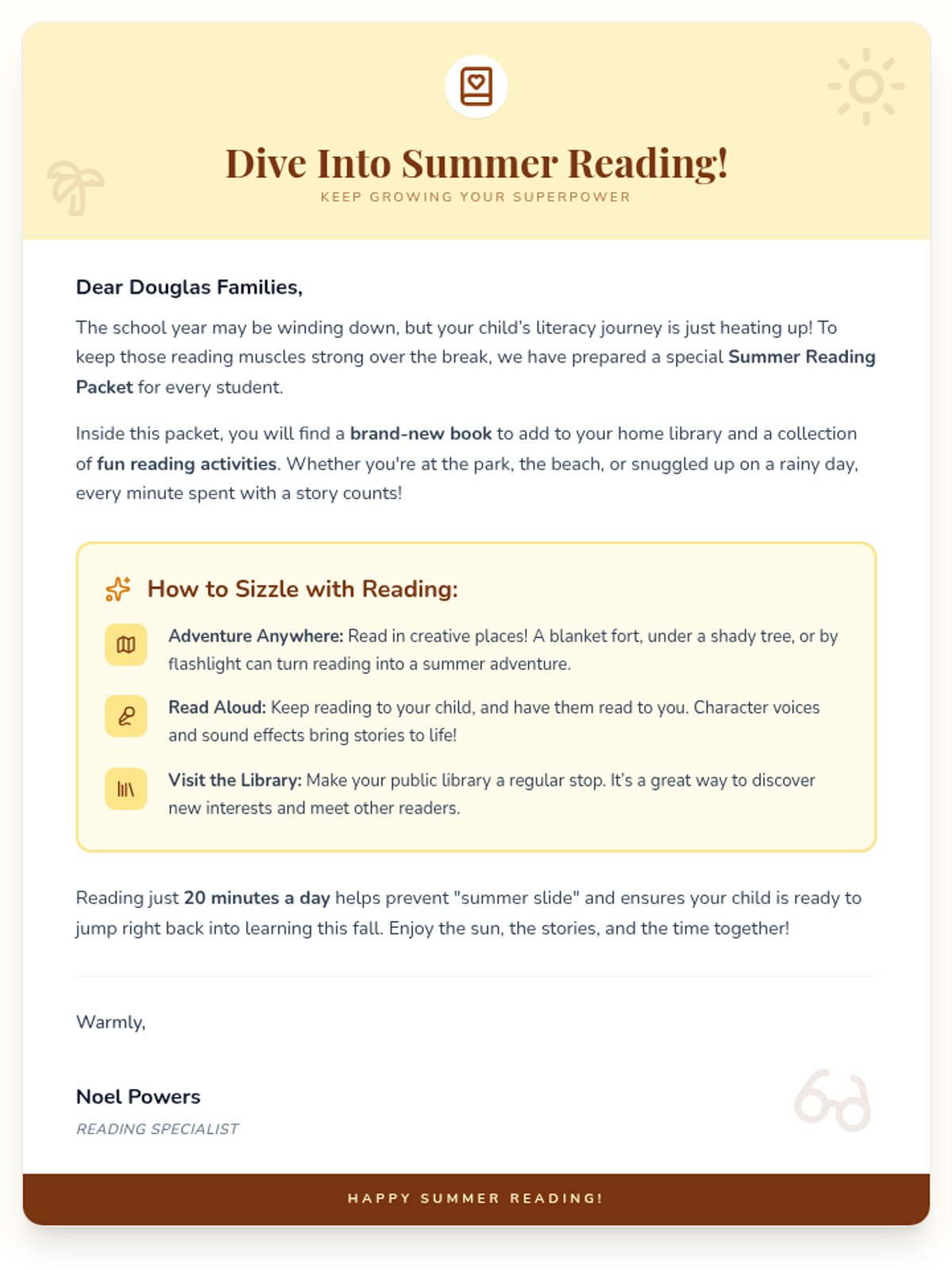
A collection of resources to encourage and track reading progress over the summer break for K-3 students, including a parent letter and activity suggestions.
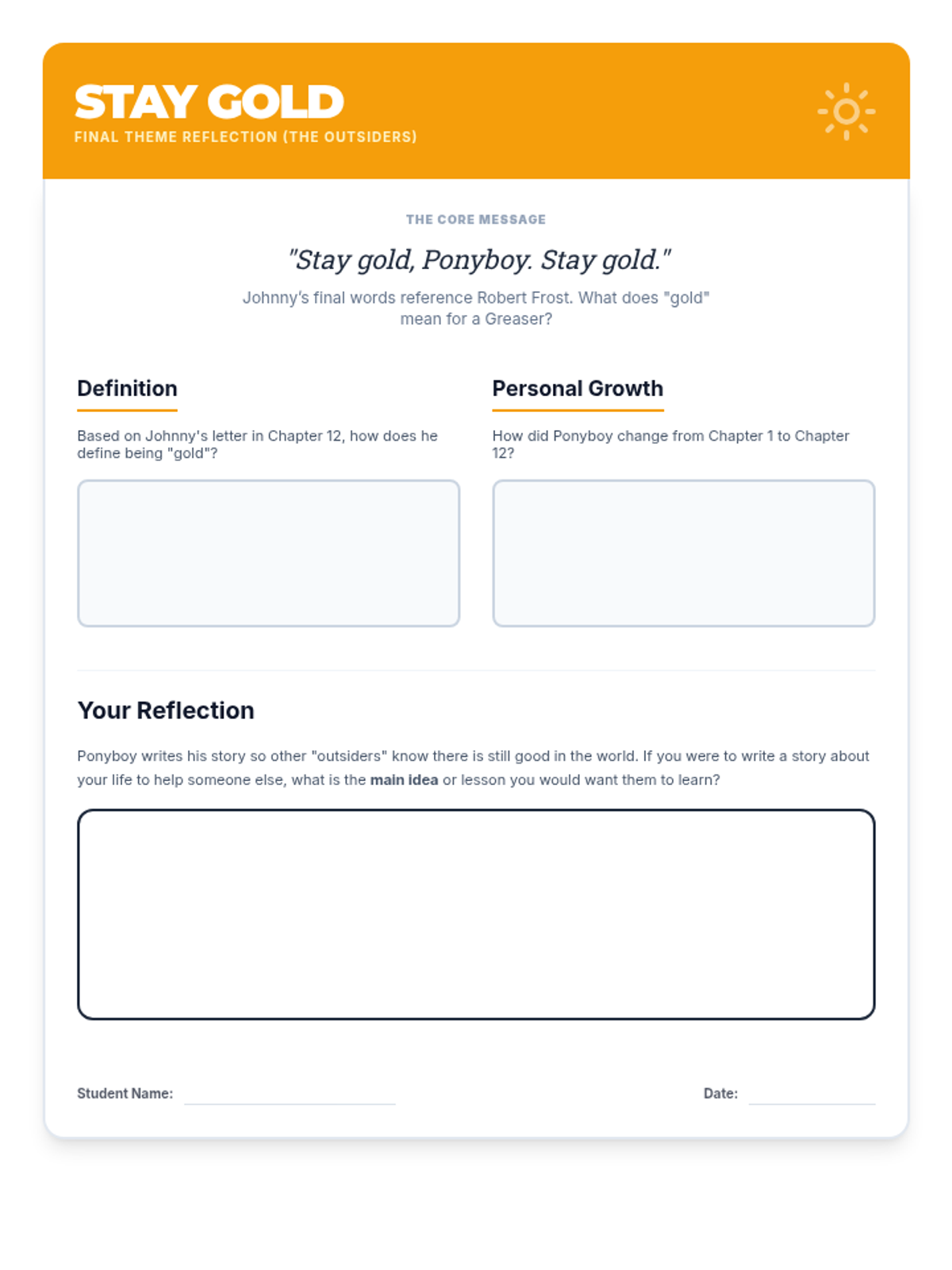
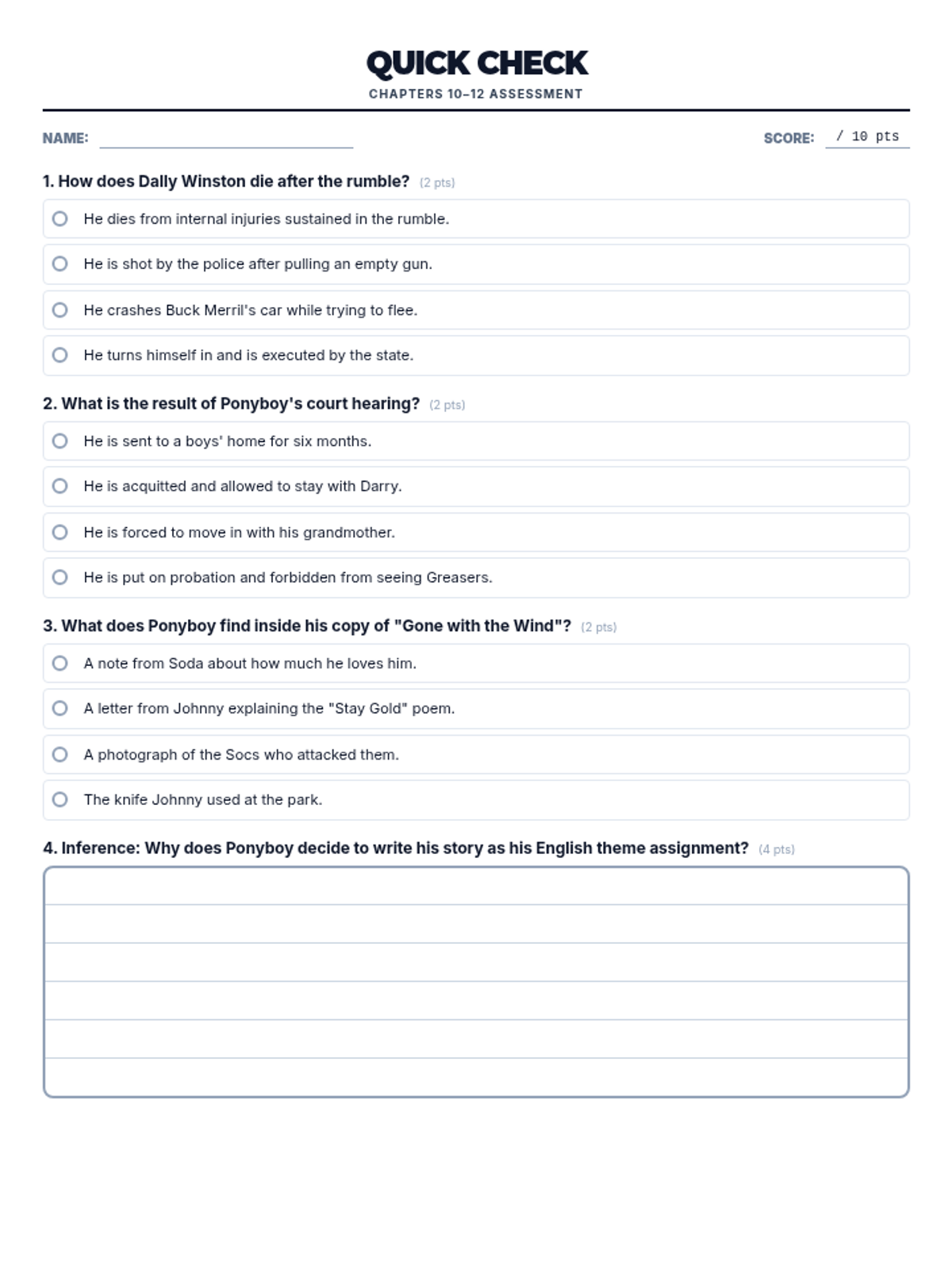
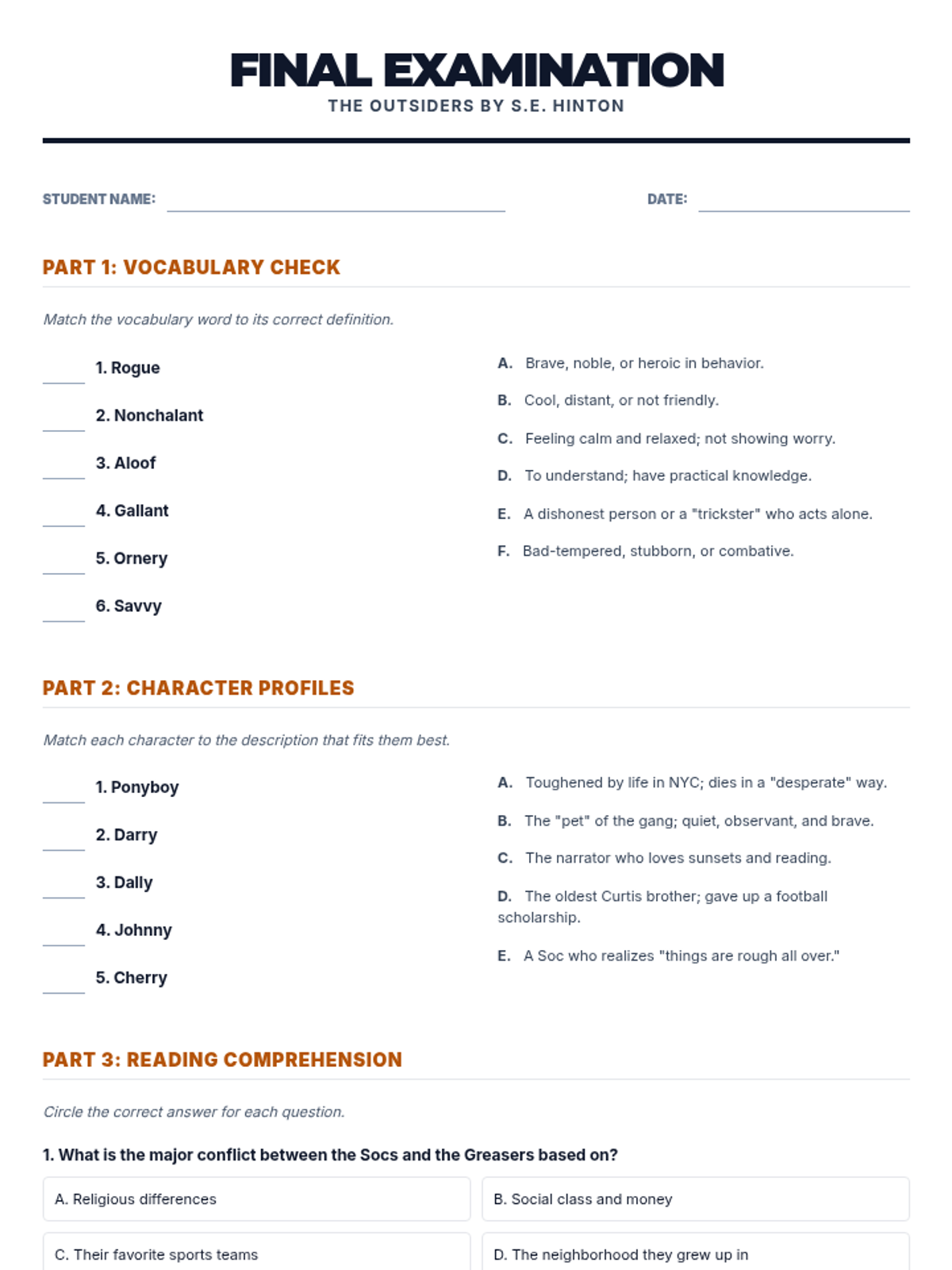
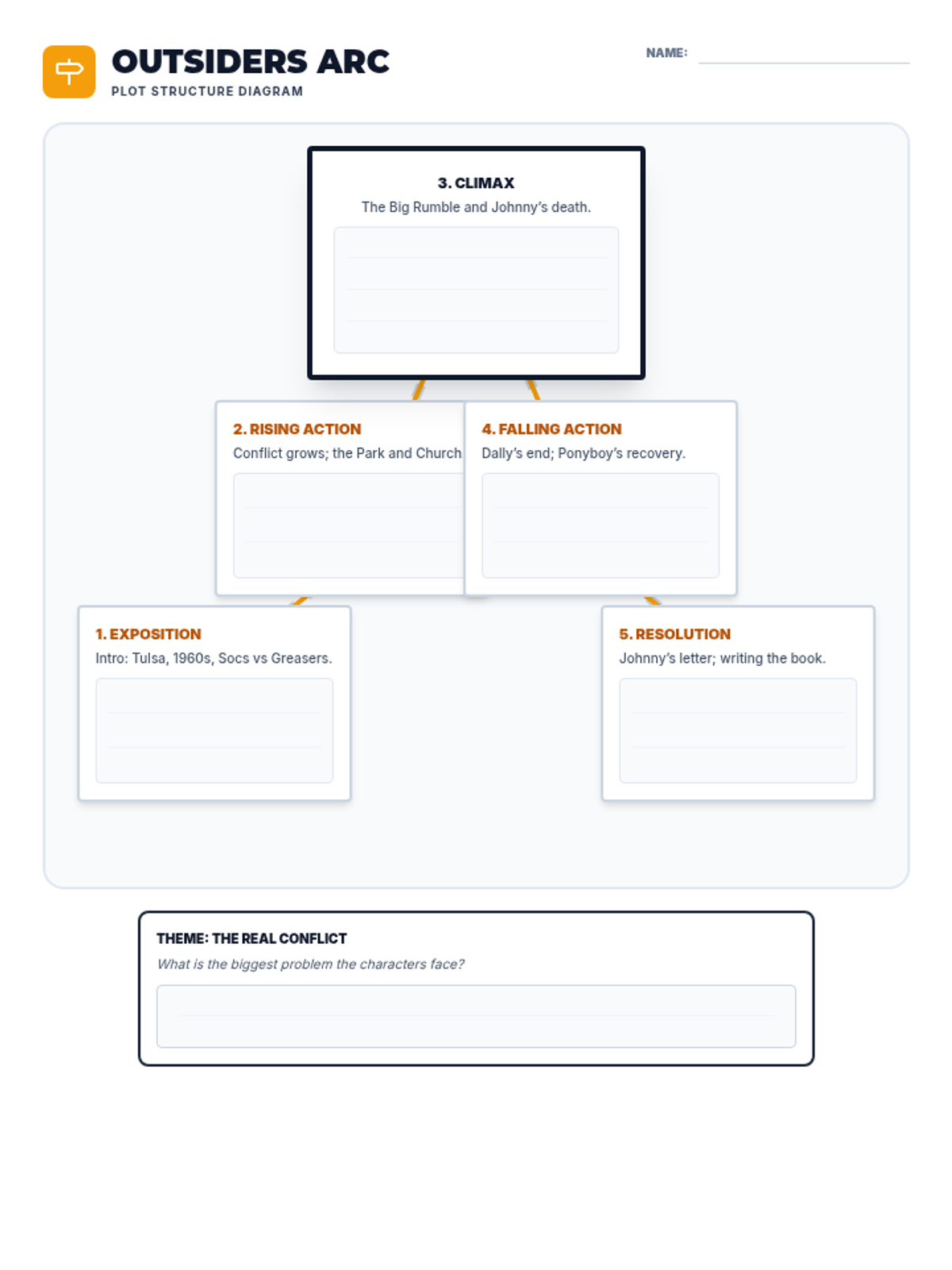
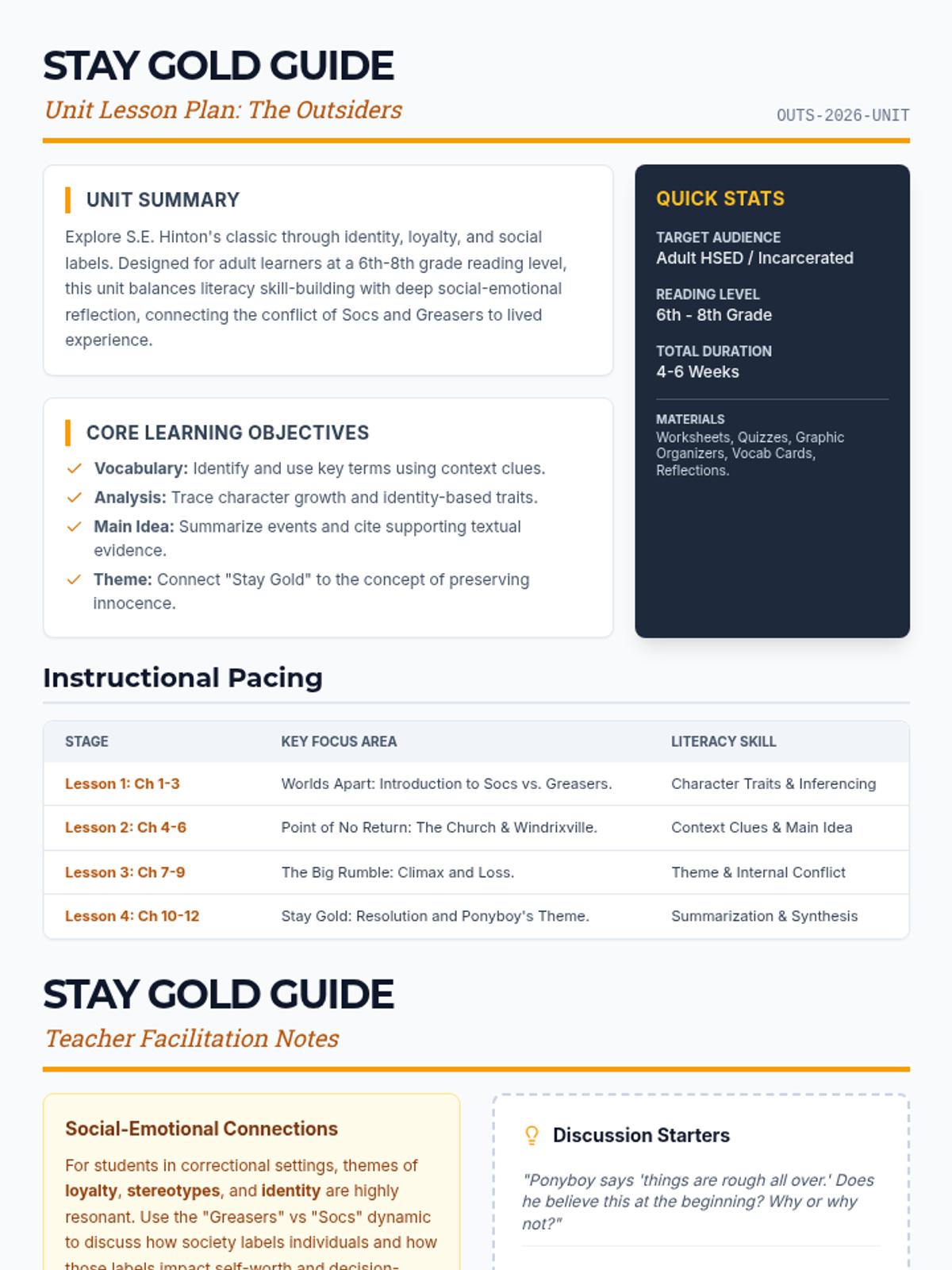
Concludes the novel with Ponyboy's recovery and the realization behind his English theme. Students synthesize themes of identity and 'staying gold' through final reflections.
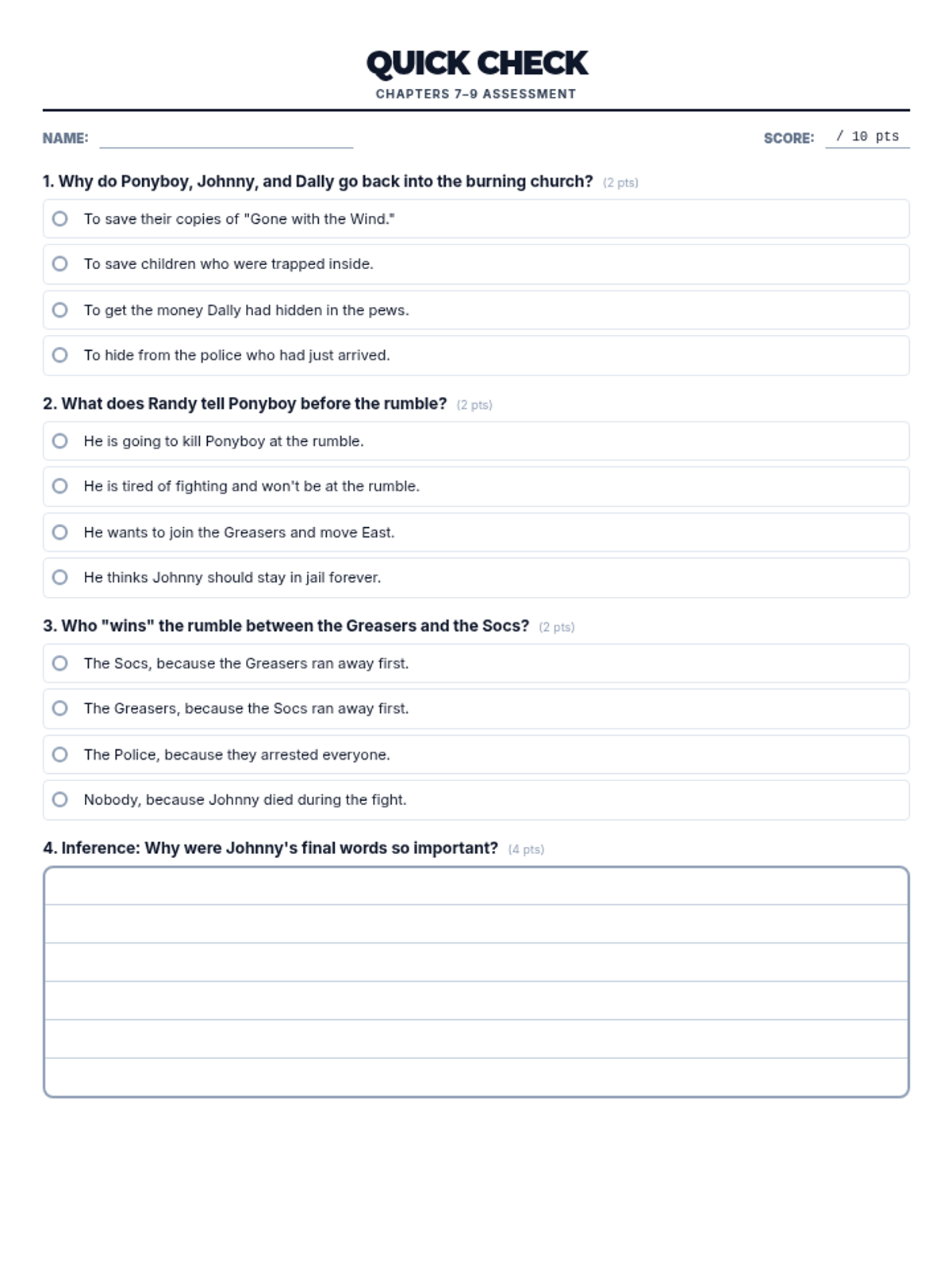
Focuses on the aftermath of the fire, the big rumble, and the deaths of Johnny and Dally. Students analyze theme, loss, and the cycle of violence.
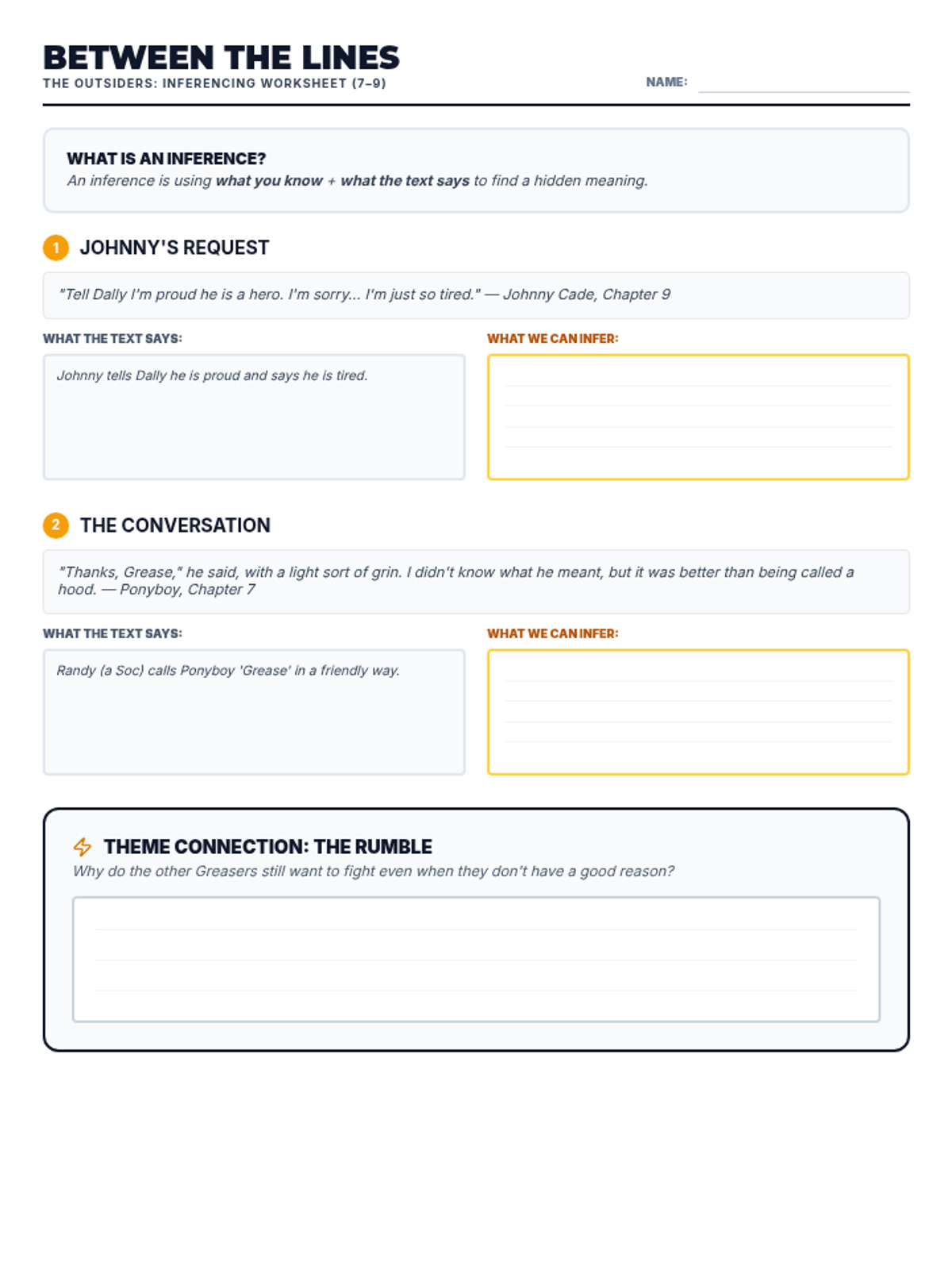
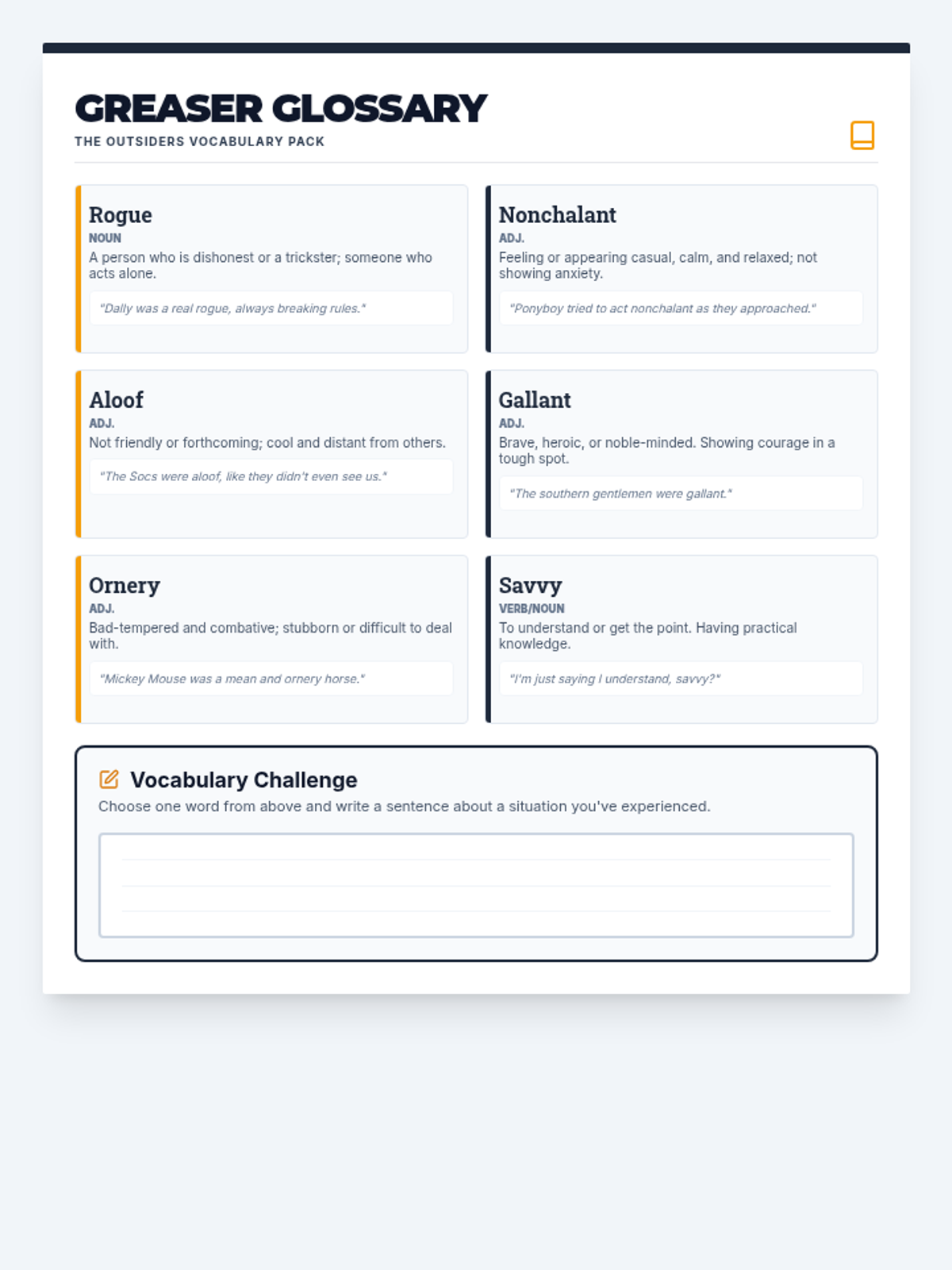
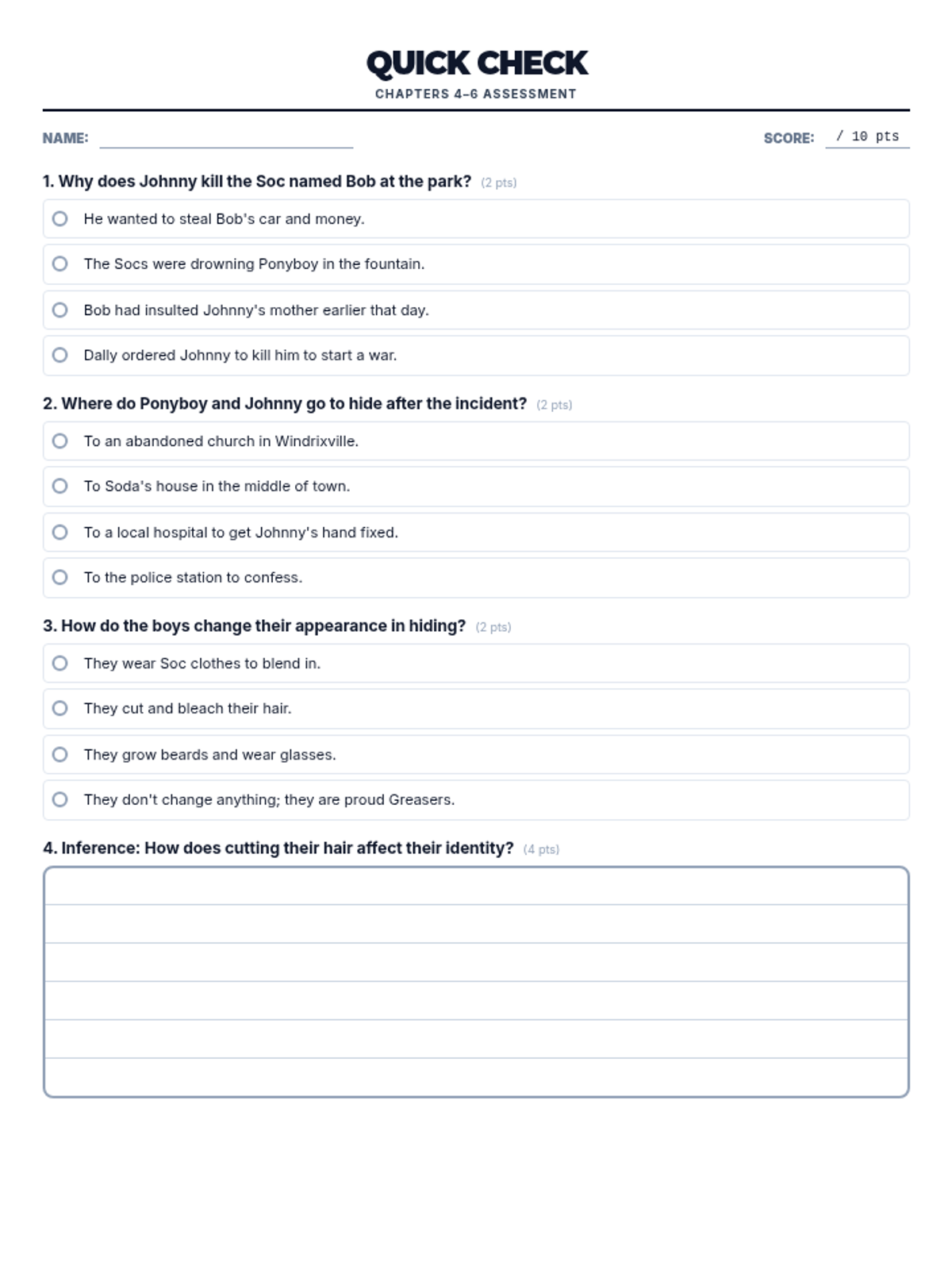
Covers the turning point at the park and the boys' flight to Windrixville. Focuses on context clues, citing evidence for character decisions, and plot progression.
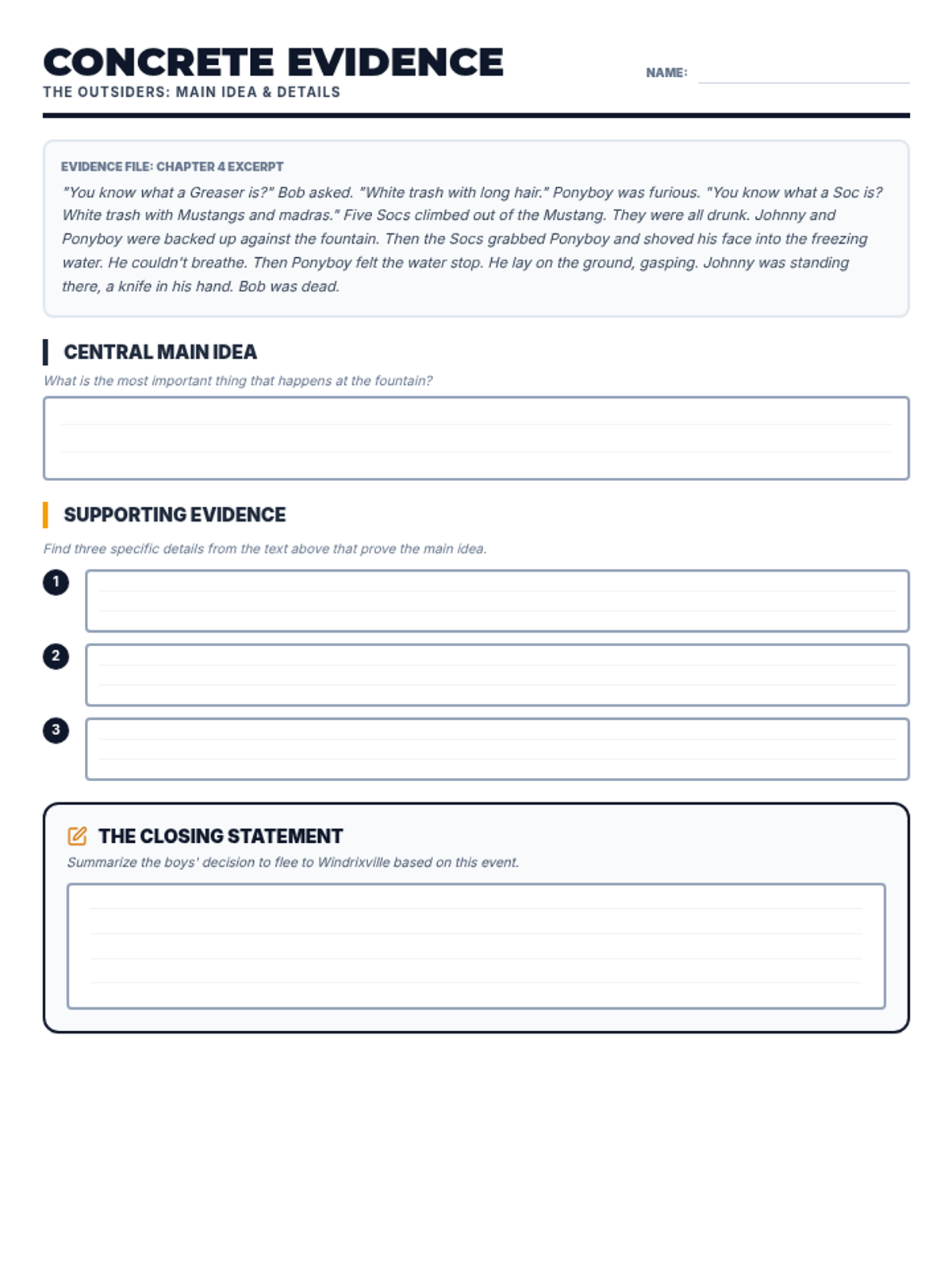
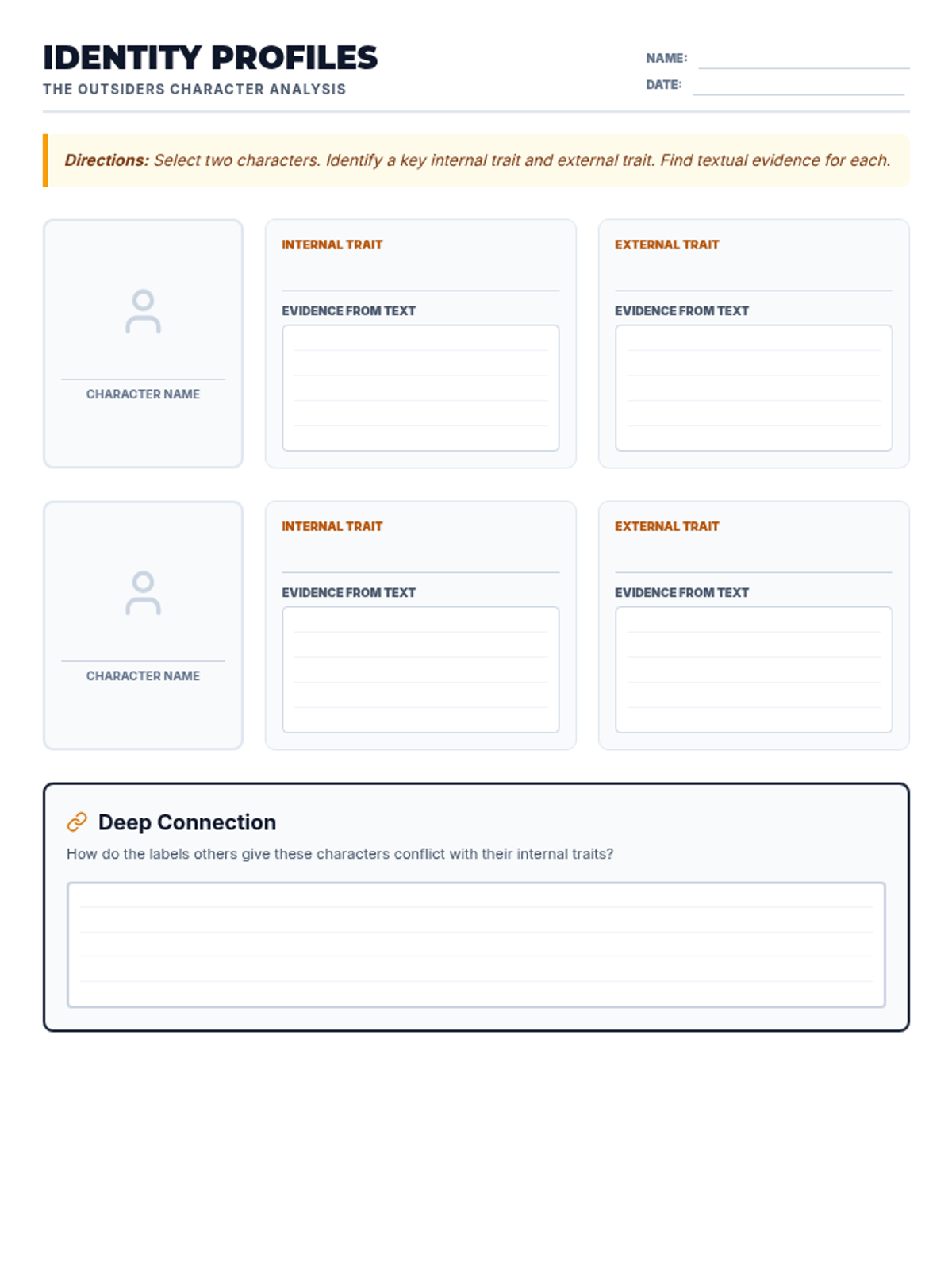
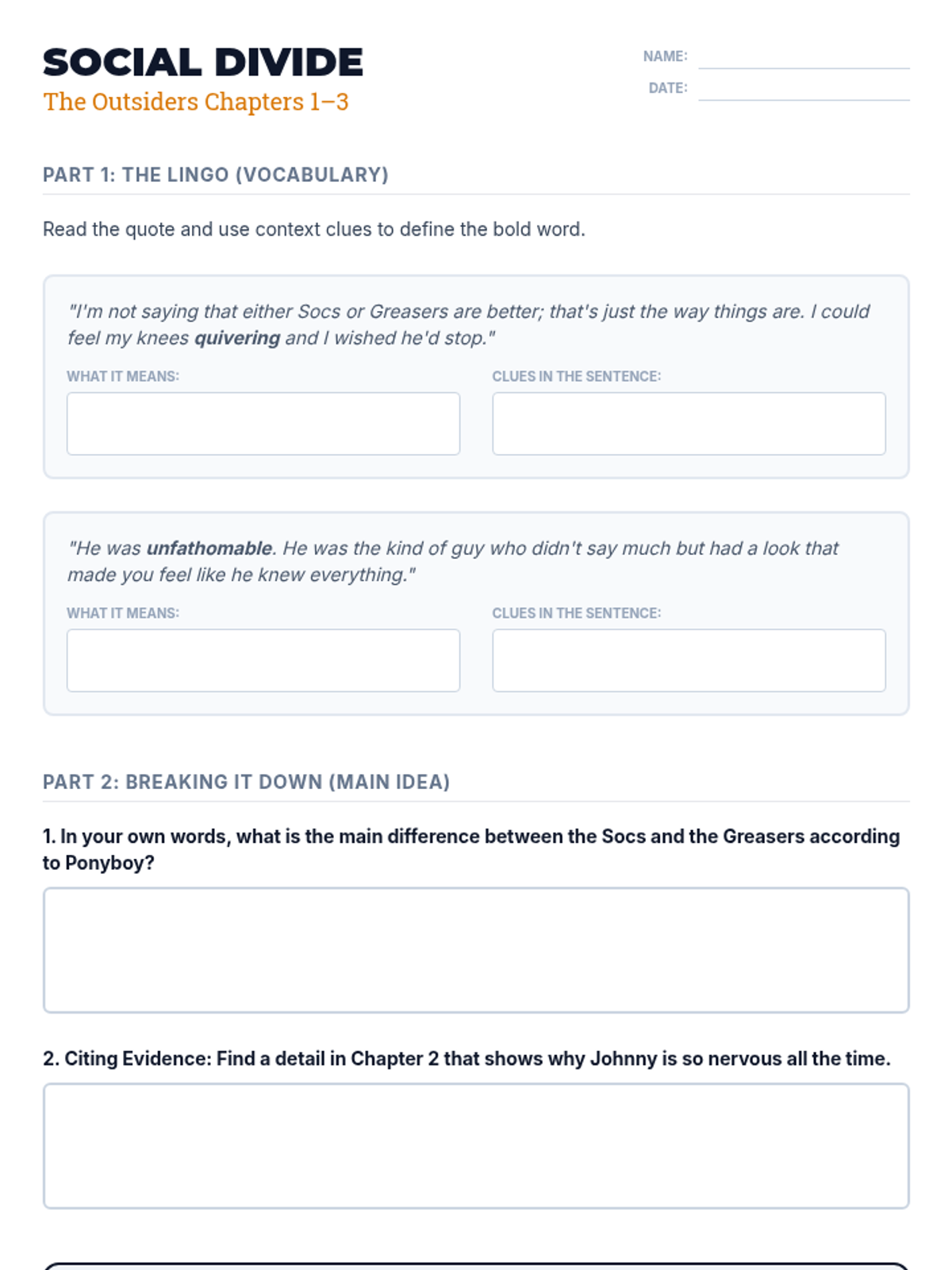
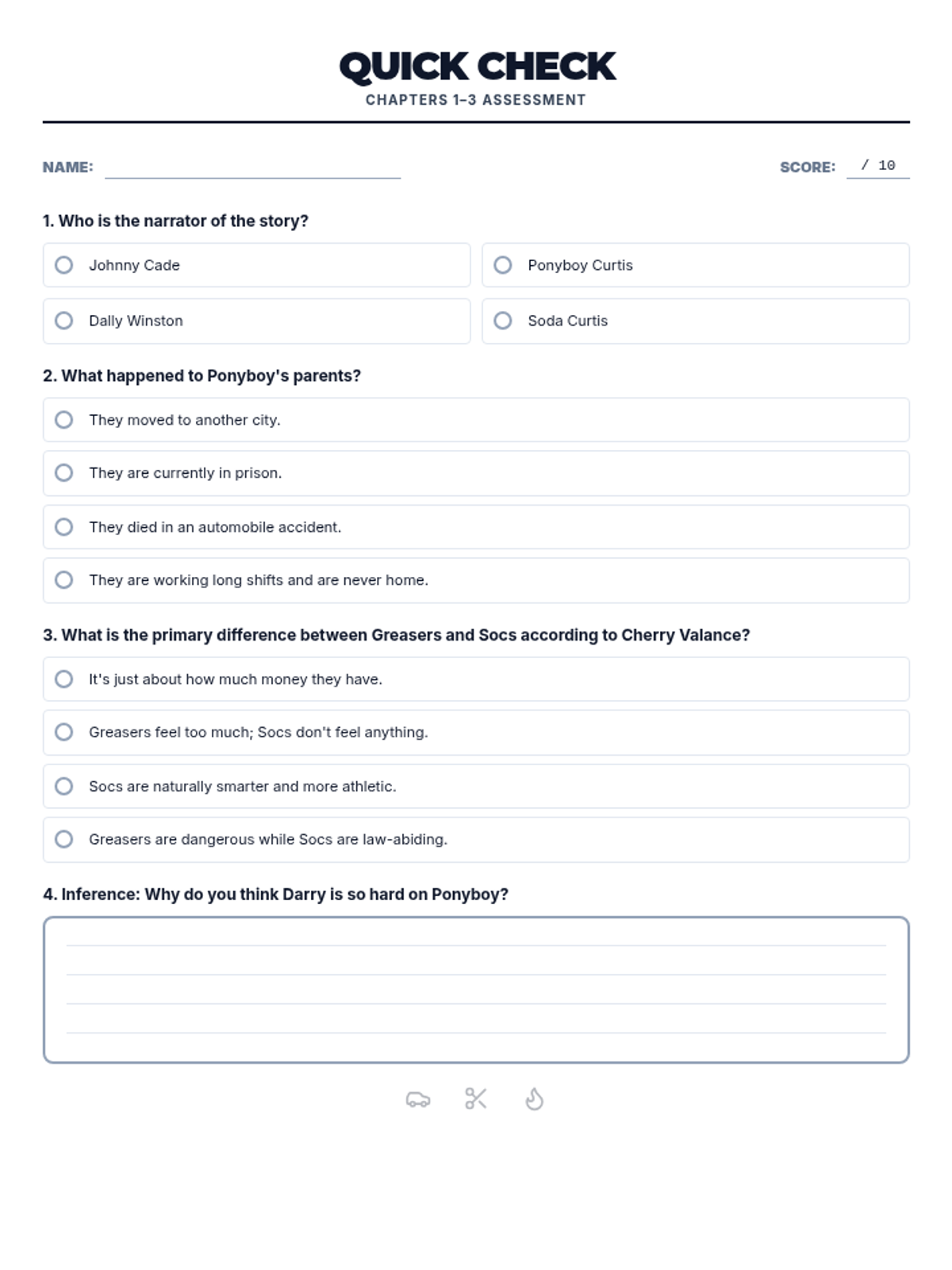
Introduces the social divide between Greasers and Socs, character archetypes, and the setting of 1960s Tulsa. Students focus on identifying main ideas and making initial character inferences.
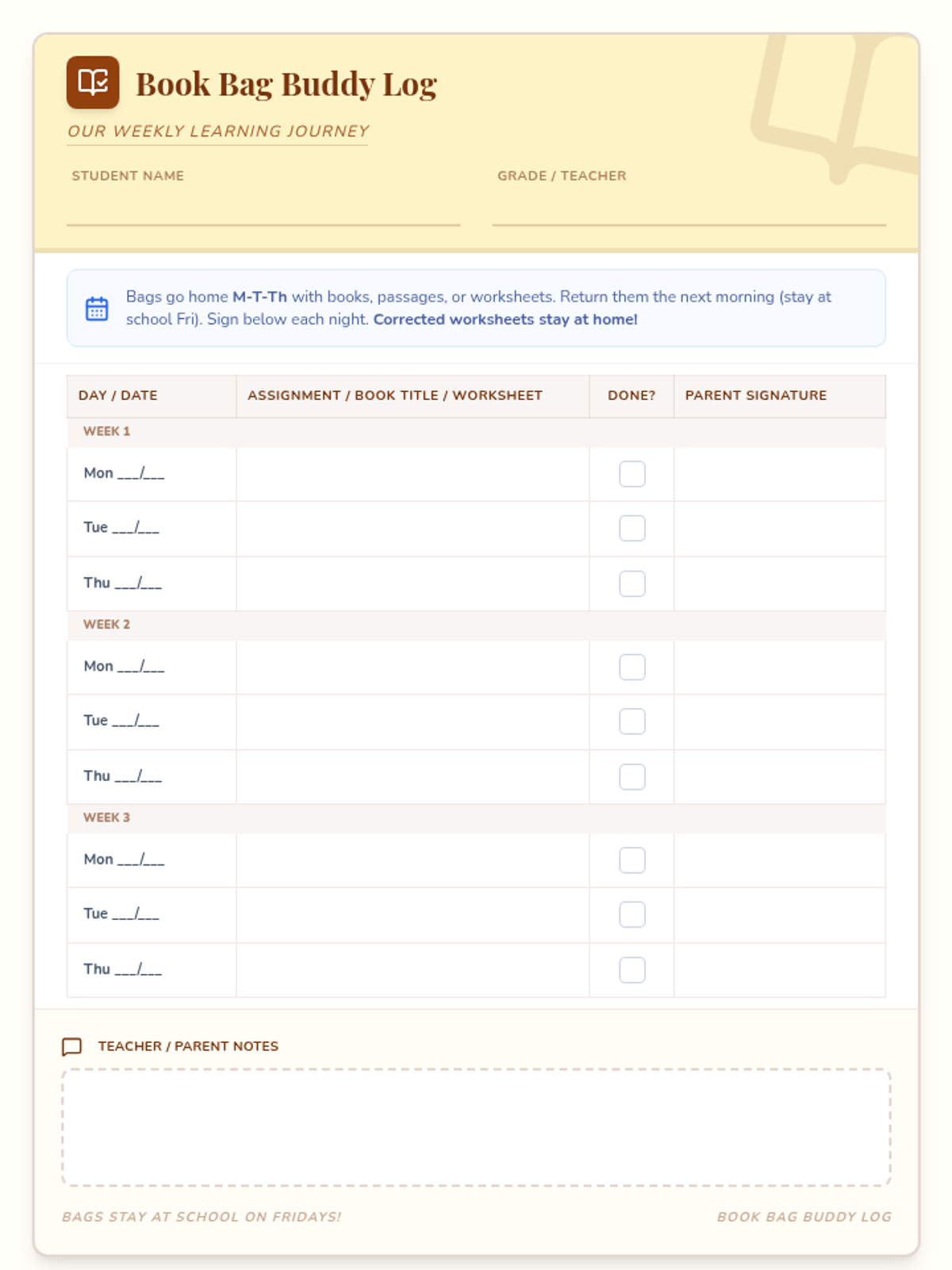
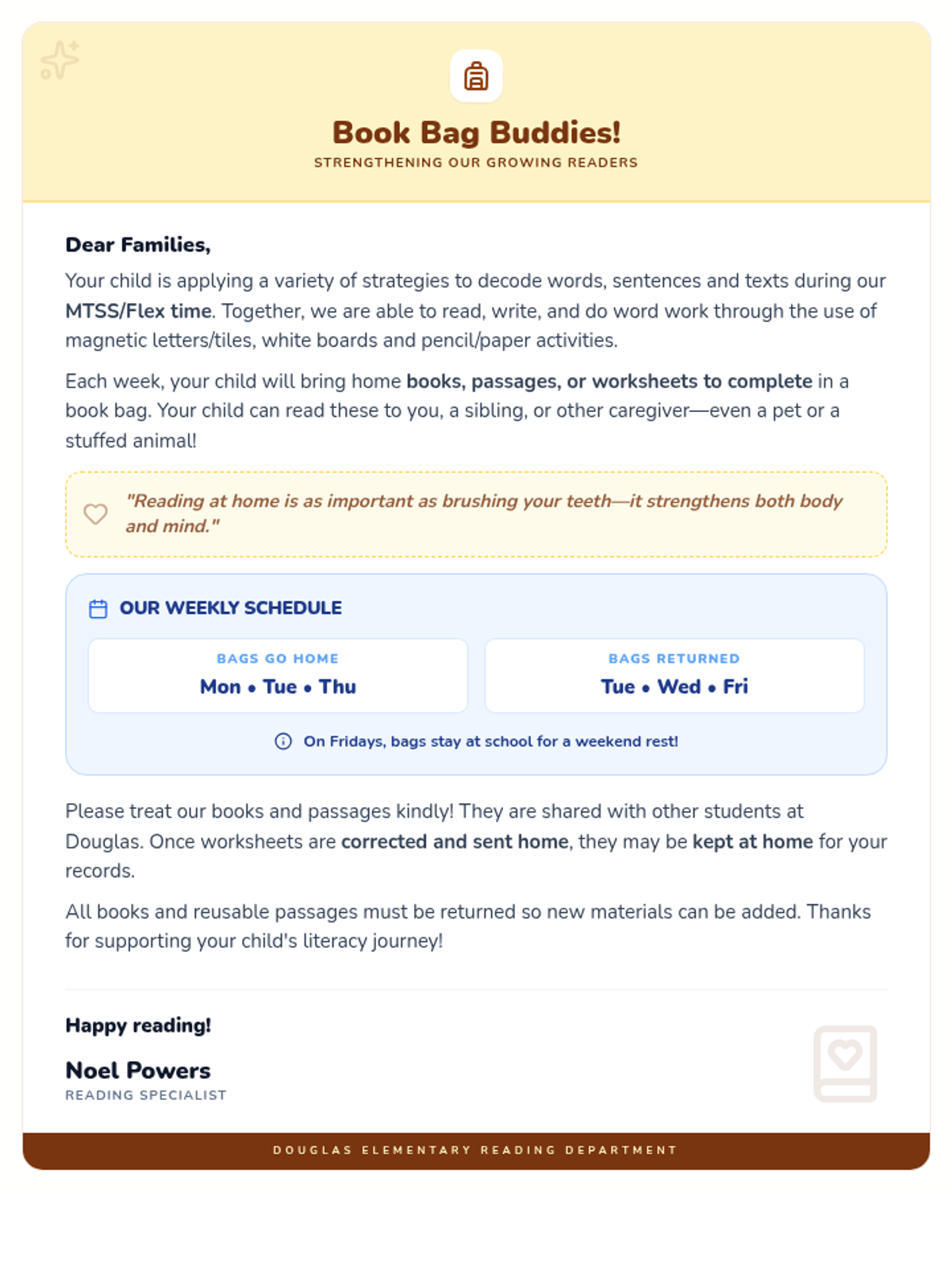
A home-school communication system for K-3 students featuring a homework bag log and an introductory letter for parents, detailing a Monday-Tuesday-Thursday homework schedule.
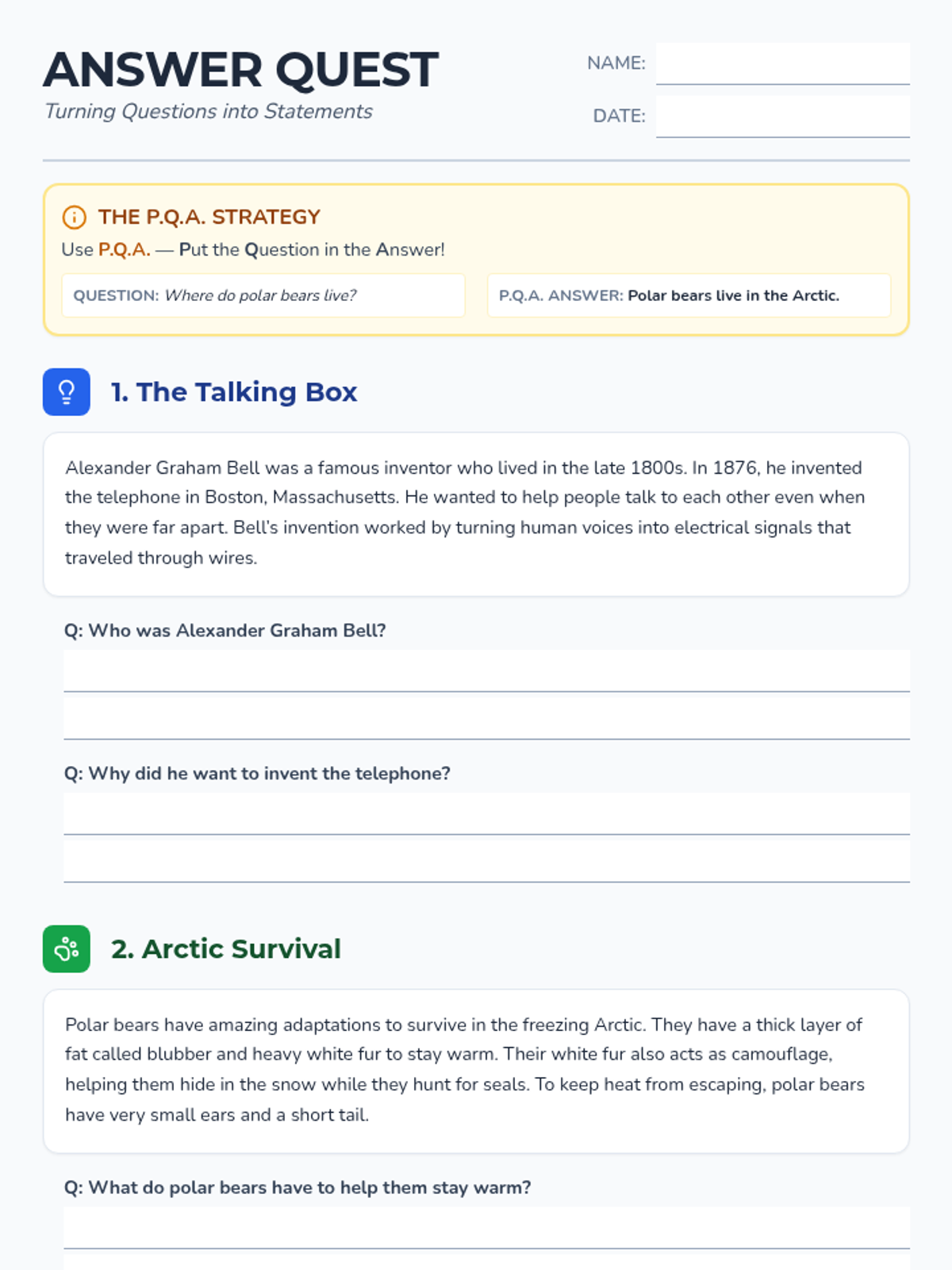
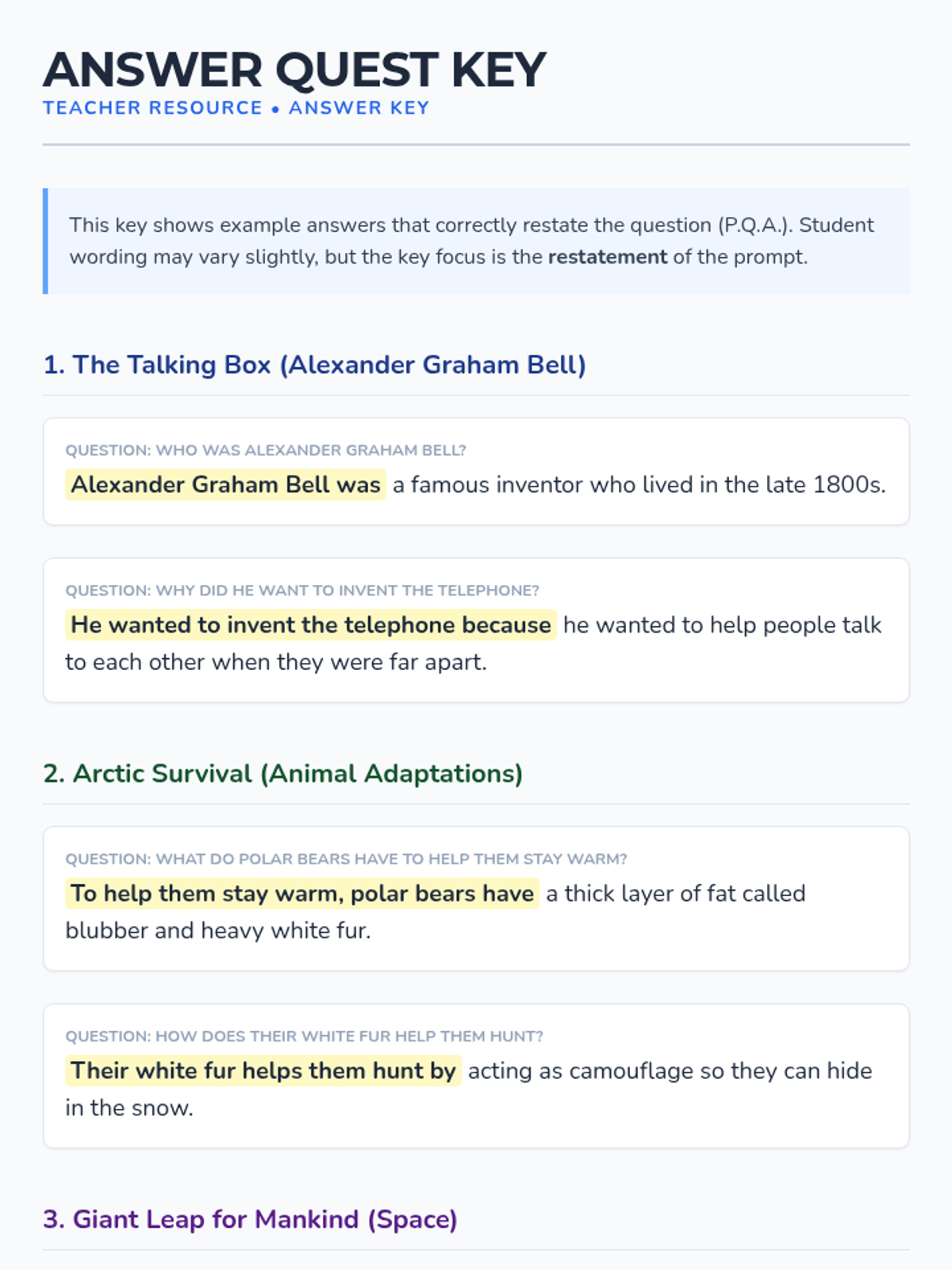
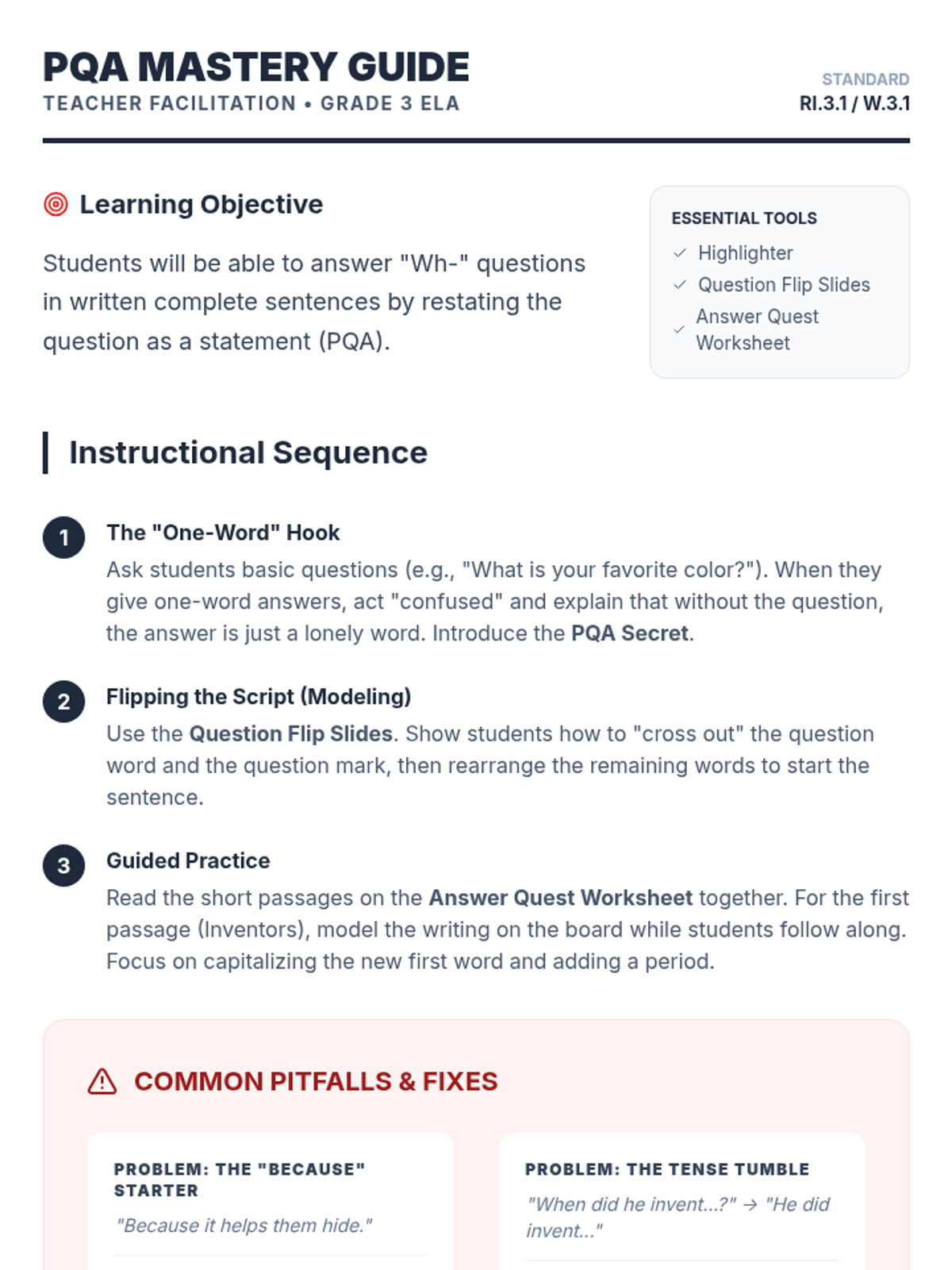
A lesson focused on teaching third-grade students how to answer 'Wh-' questions in complete sentences by restating the question as a statement. Students will practice this skill using texts about inventors, animal adaptations, and space.
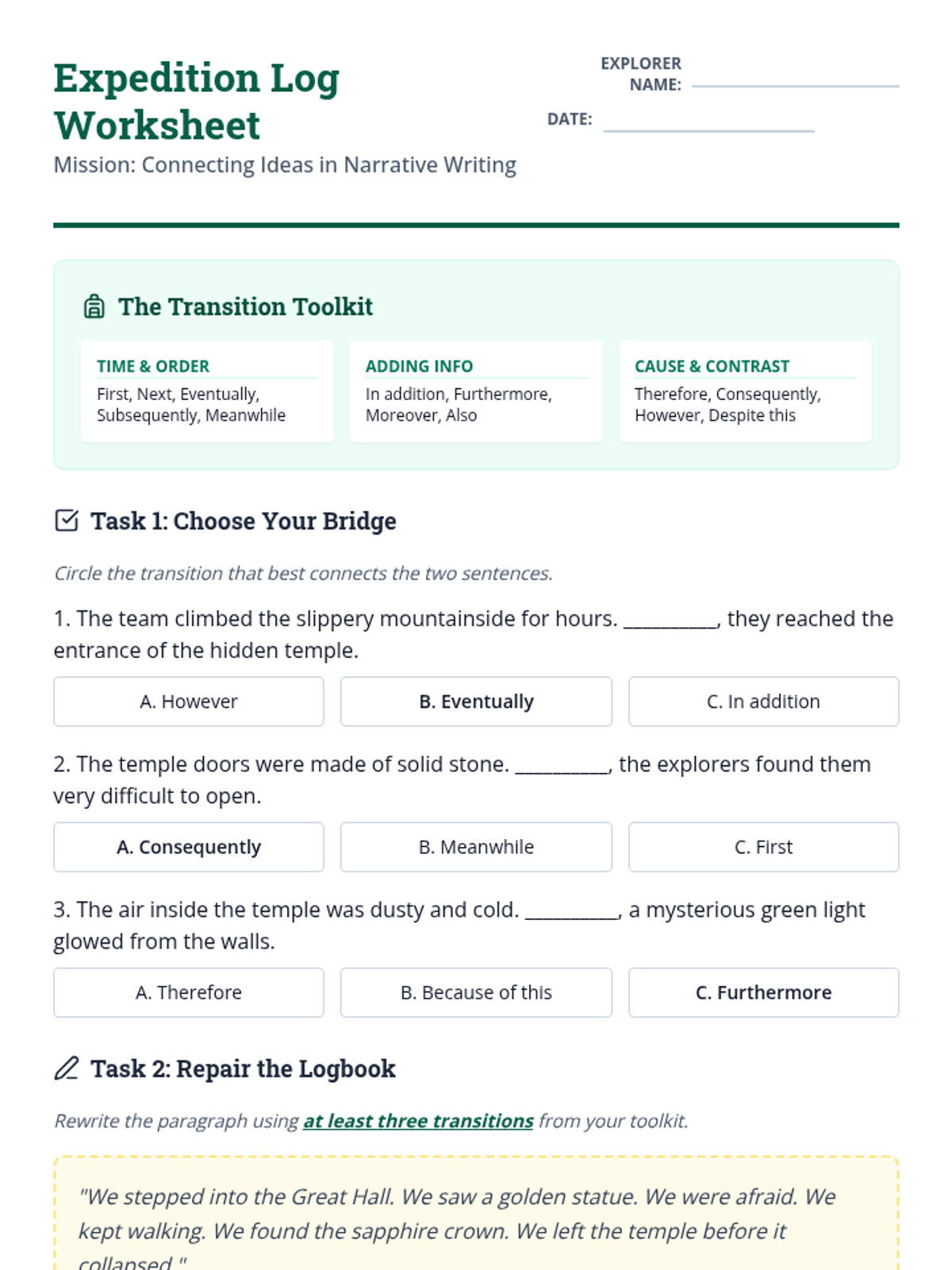
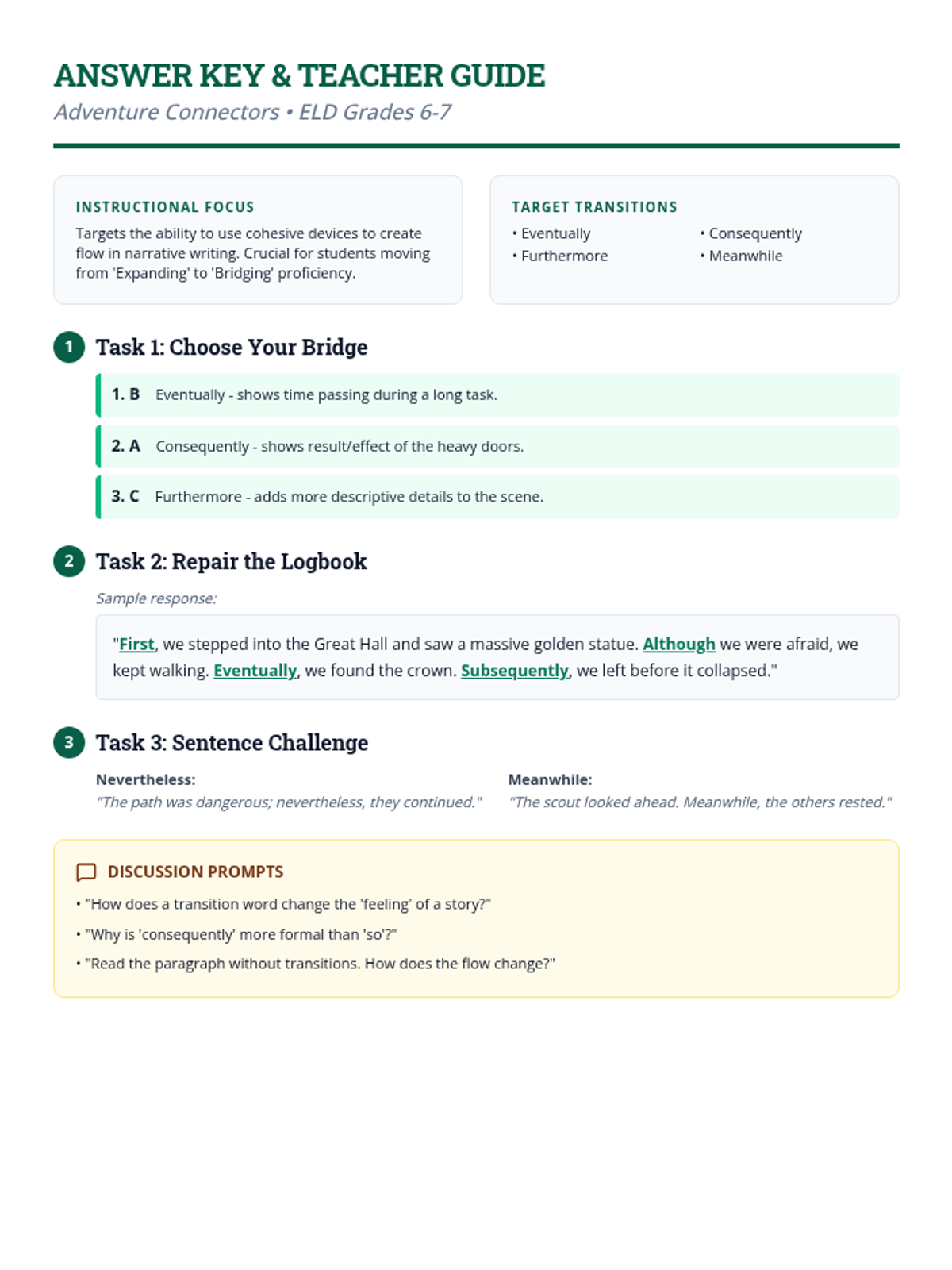
In this lesson, students learn to use transitional phrases (e.g., 'subsequently', 'nevertheless', 'consequently') to connect ideas in a narrative about exploring a hidden temple.
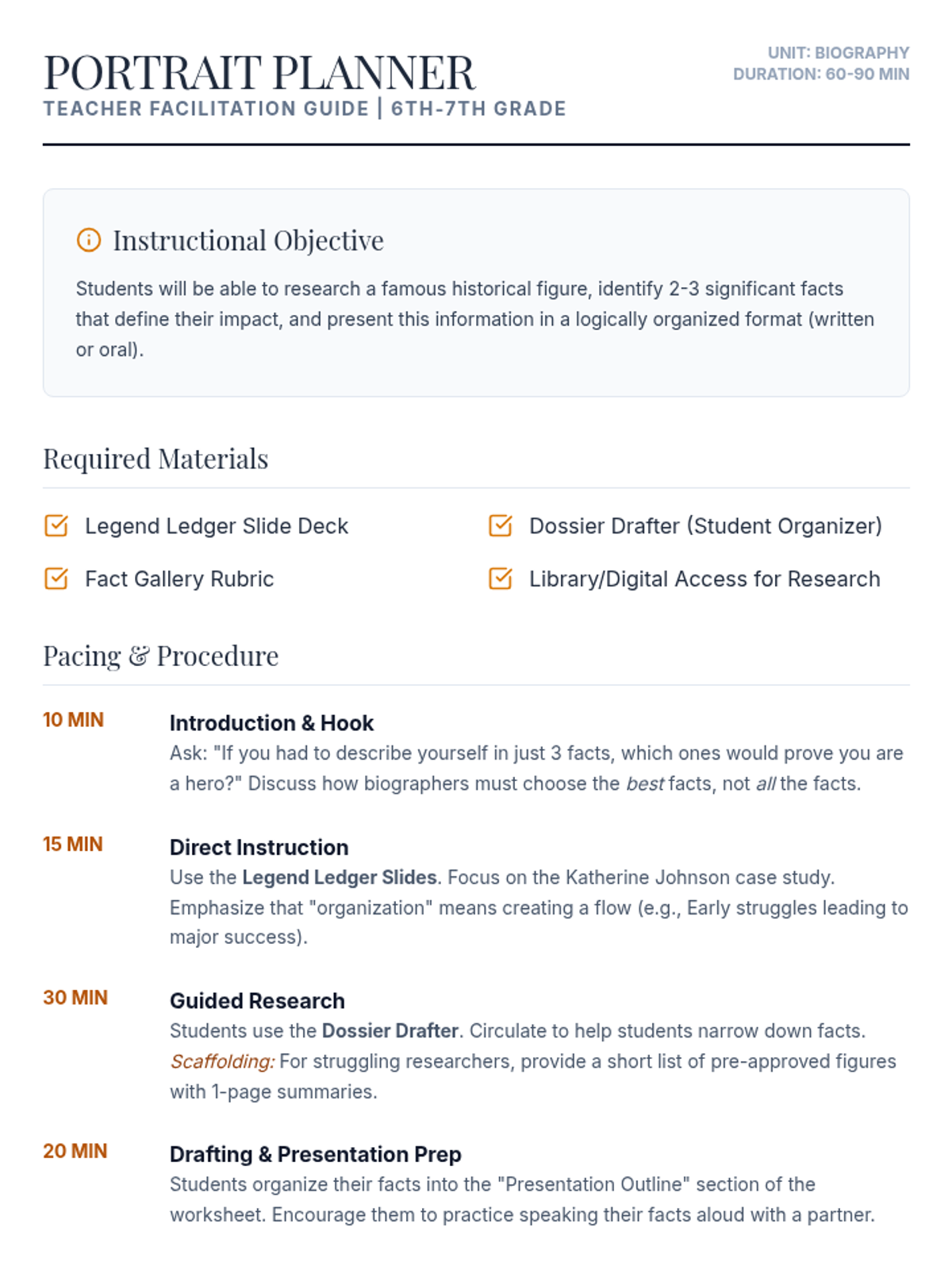
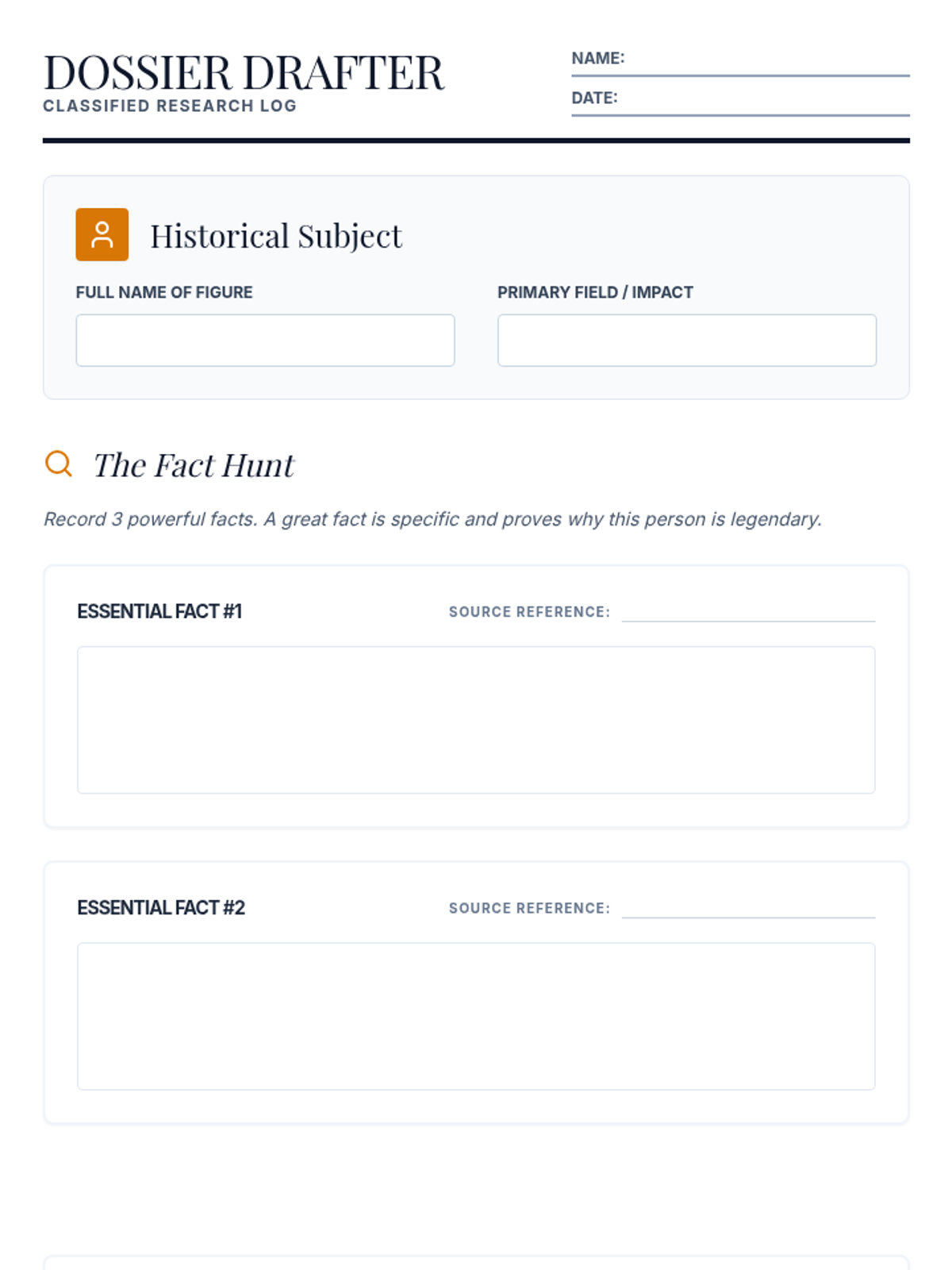
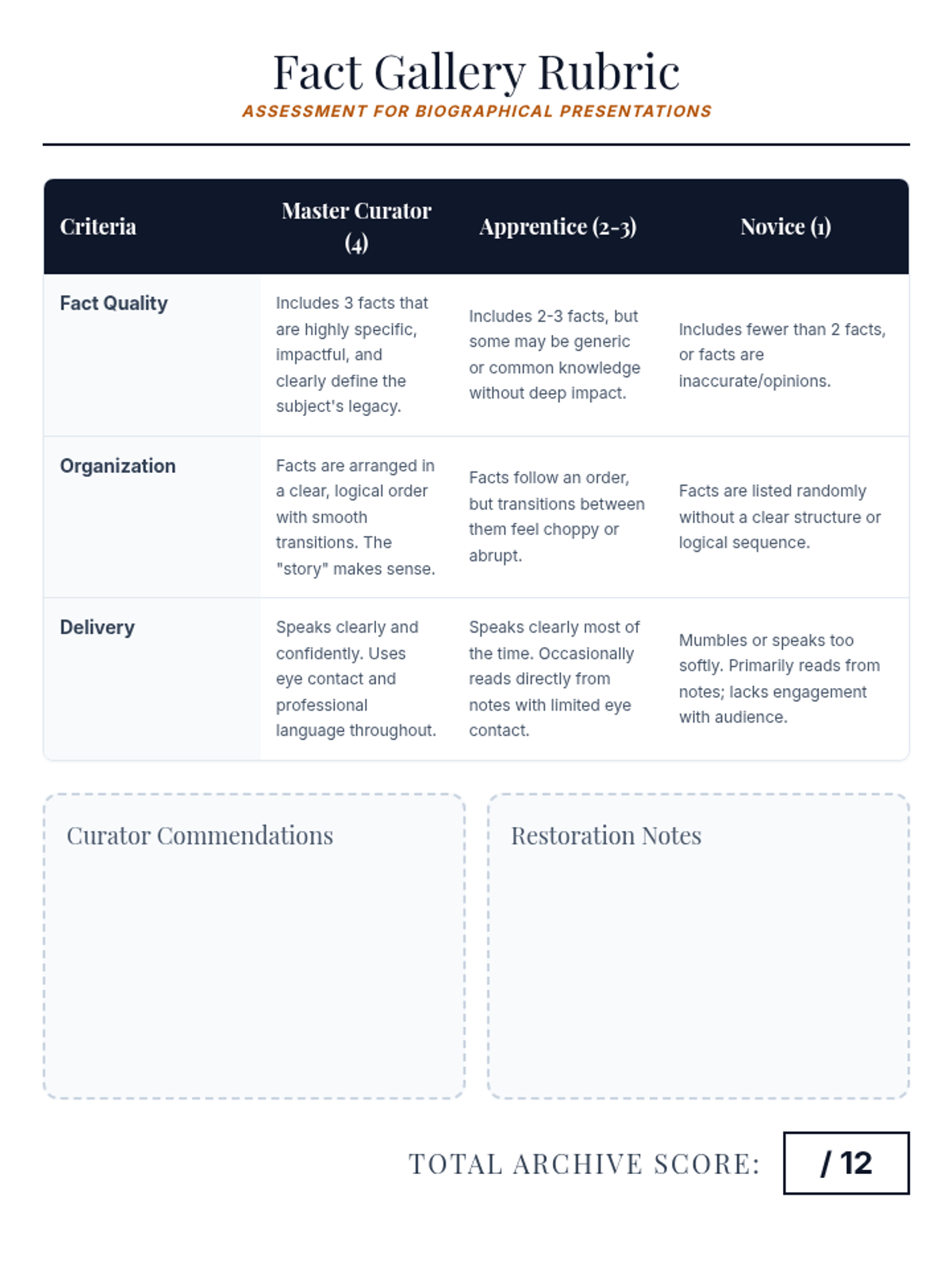
A lesson focused on researching and organizing key facts about historical figures to create a compelling biographical presentation. Students learn to select impactful information and structure it logically for an audience.