A lesson focused on mastering 3-digit subtraction with regrouping through detective-themed problems and conceptual explanations. Students will learn to explain why regrouping works using place value.
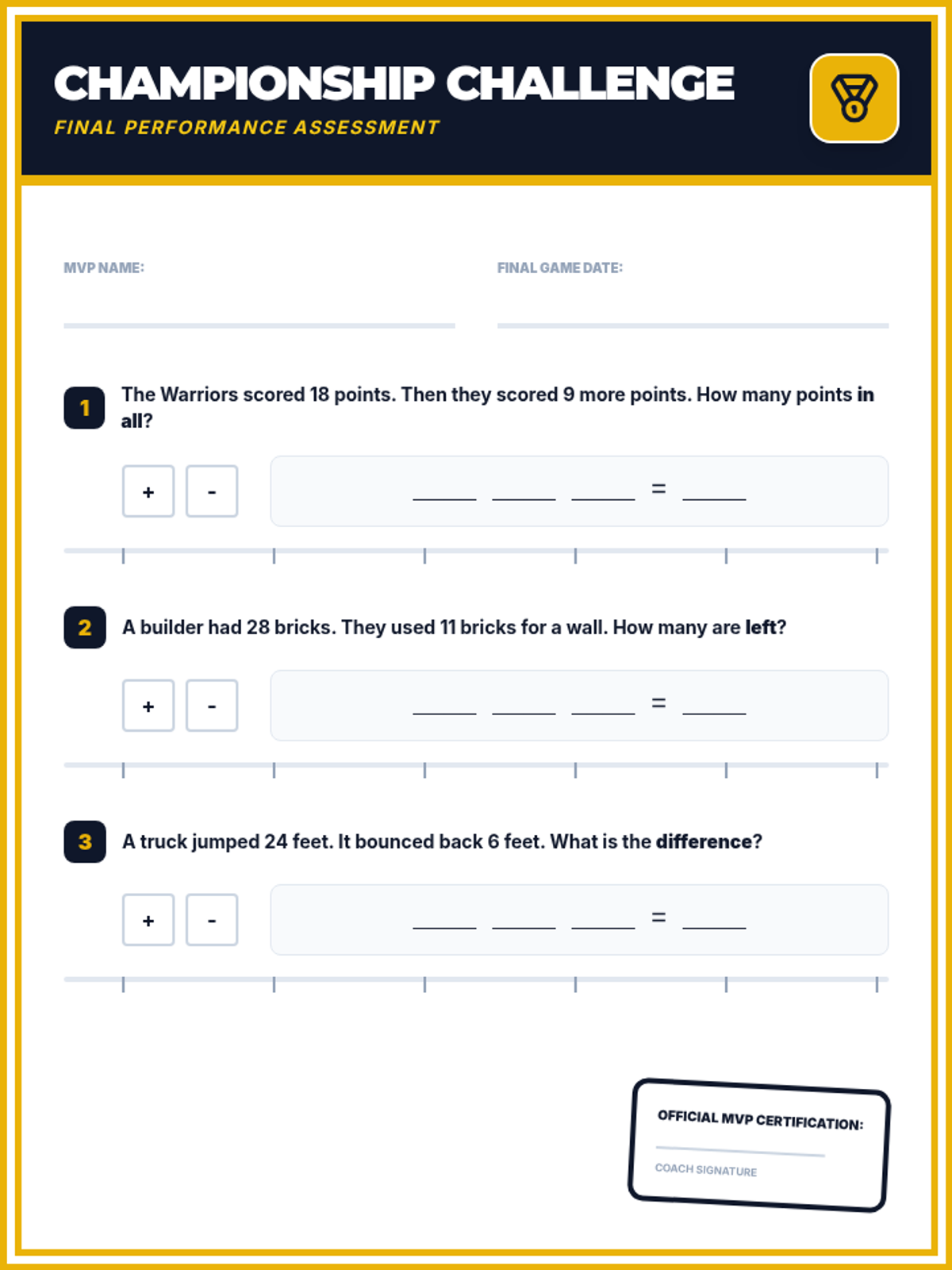
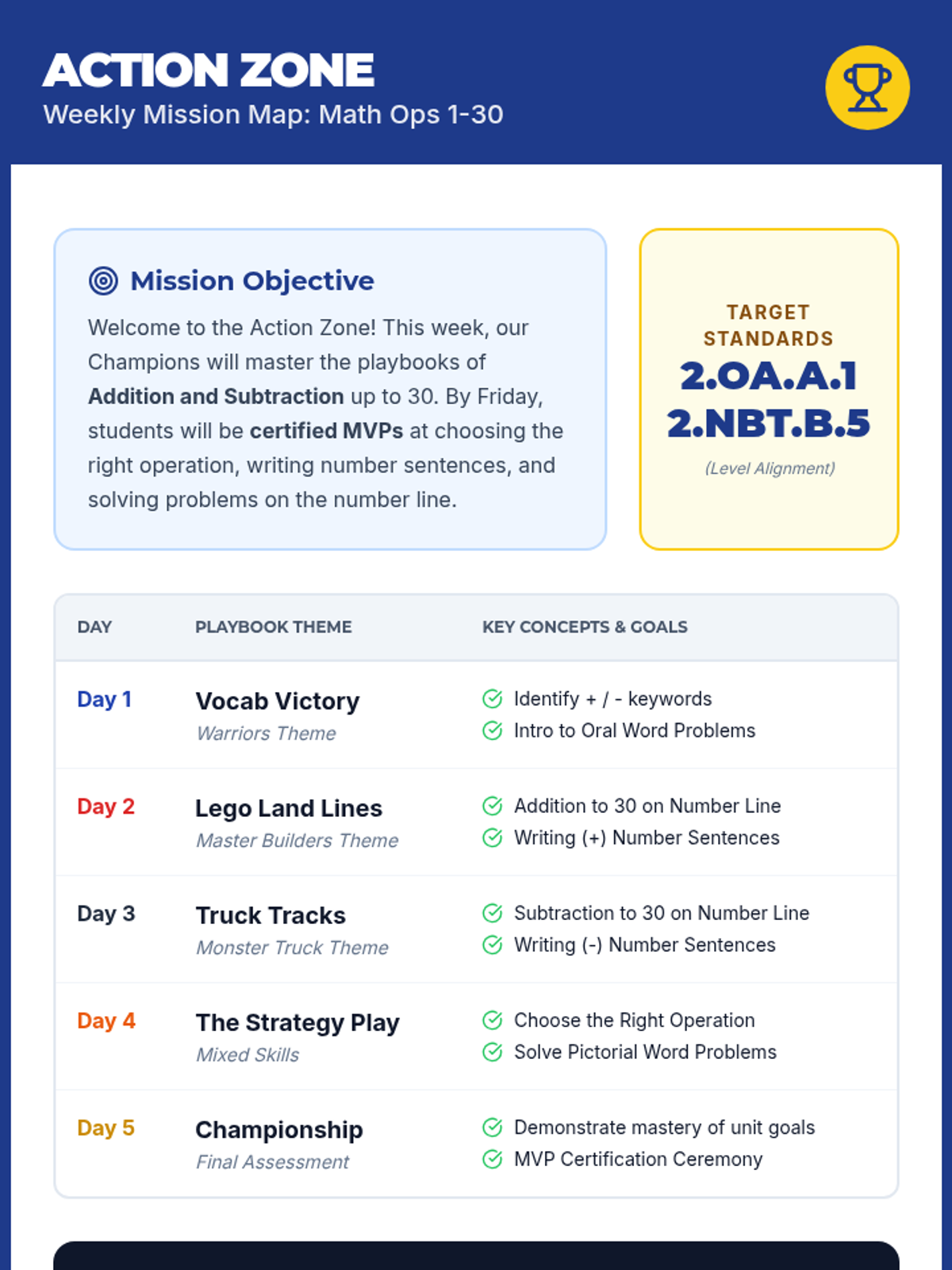
A cumulative review and performance assessment where students solve 5 oral or pictorial problems to 30, demonstrating mastery of the unit's goals.
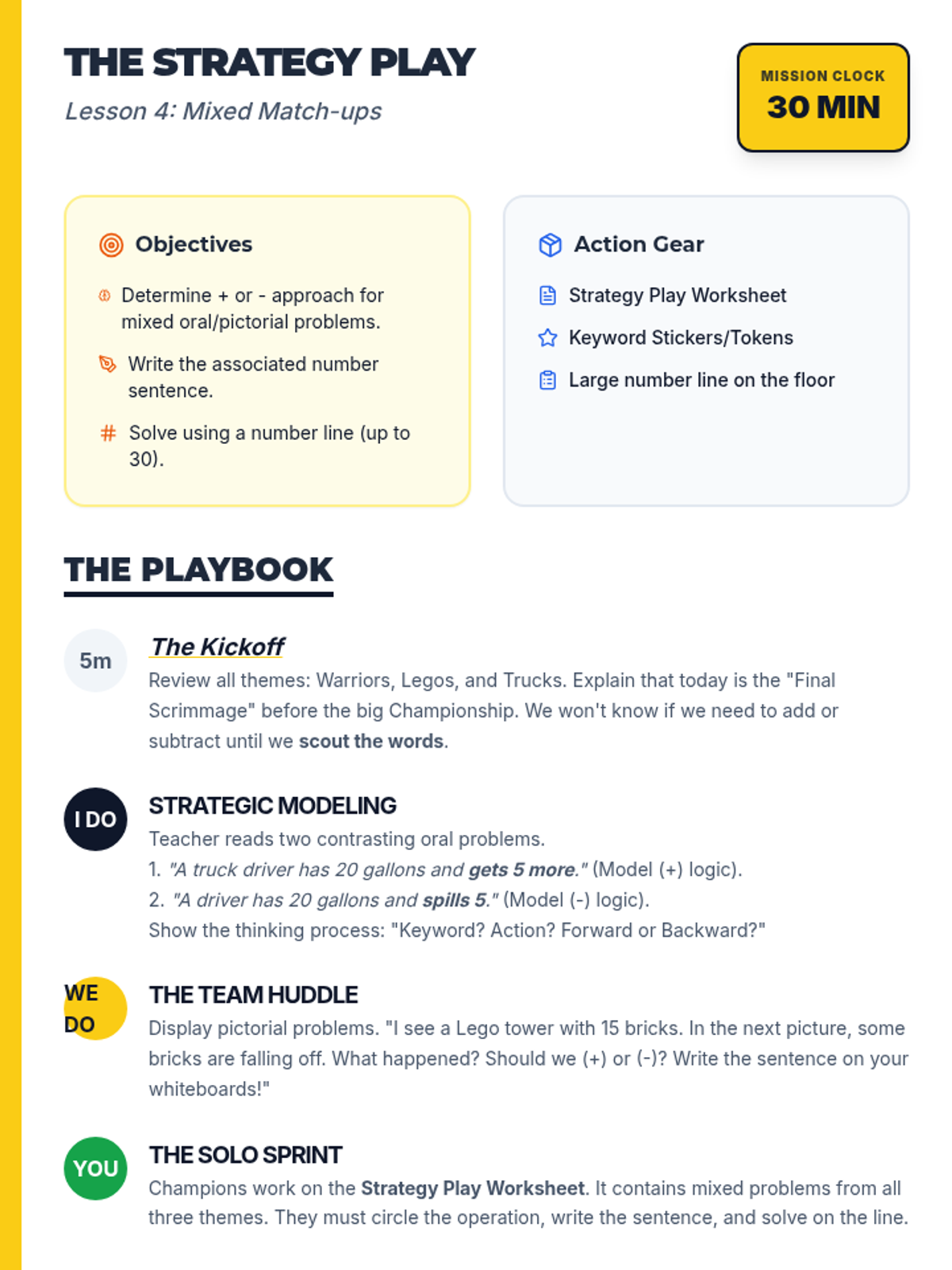
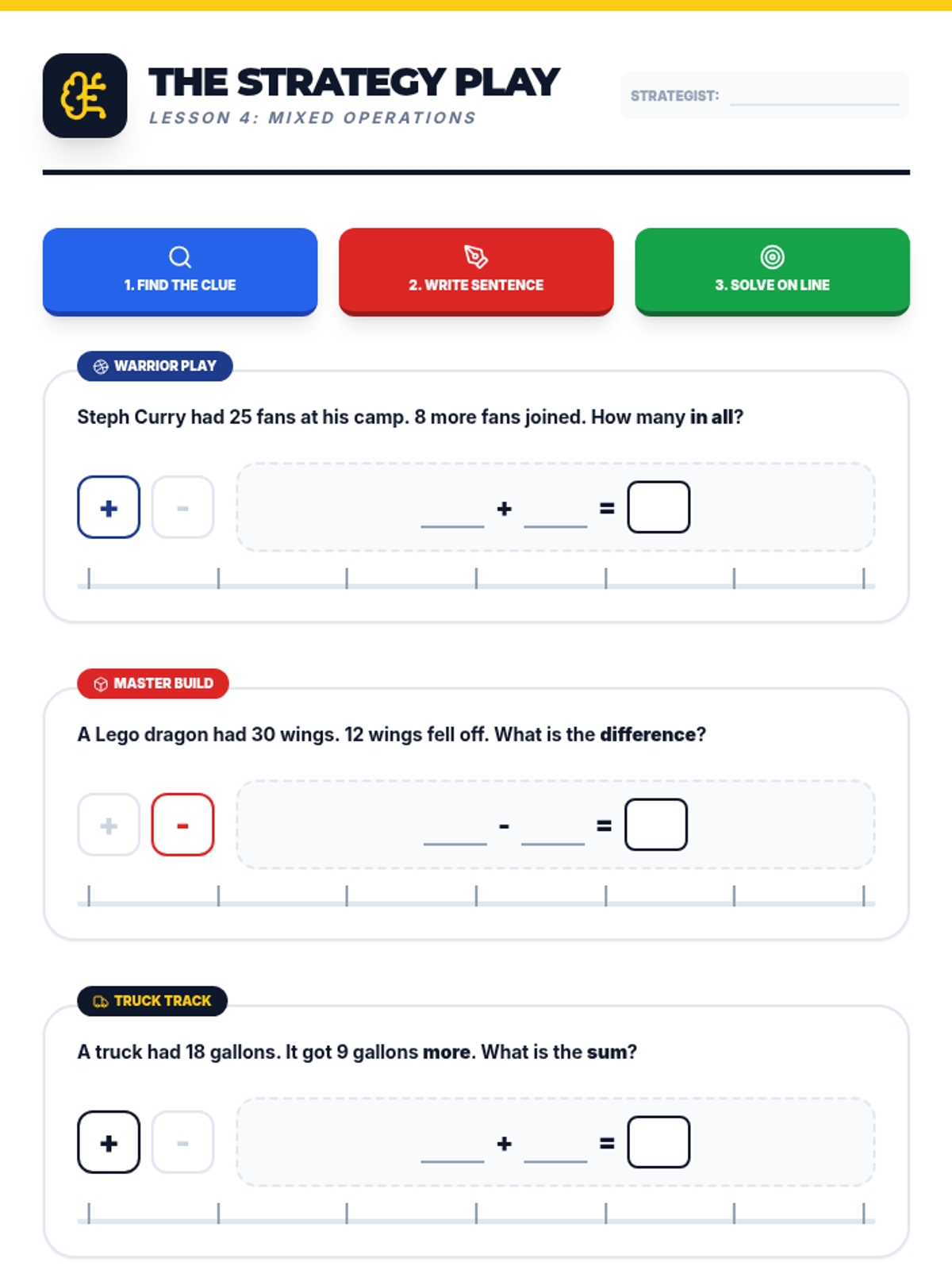
Combining skills to determine the correct operation (+/-) for oral and pictorial problems, writing the number sentence, and solving using a number line.
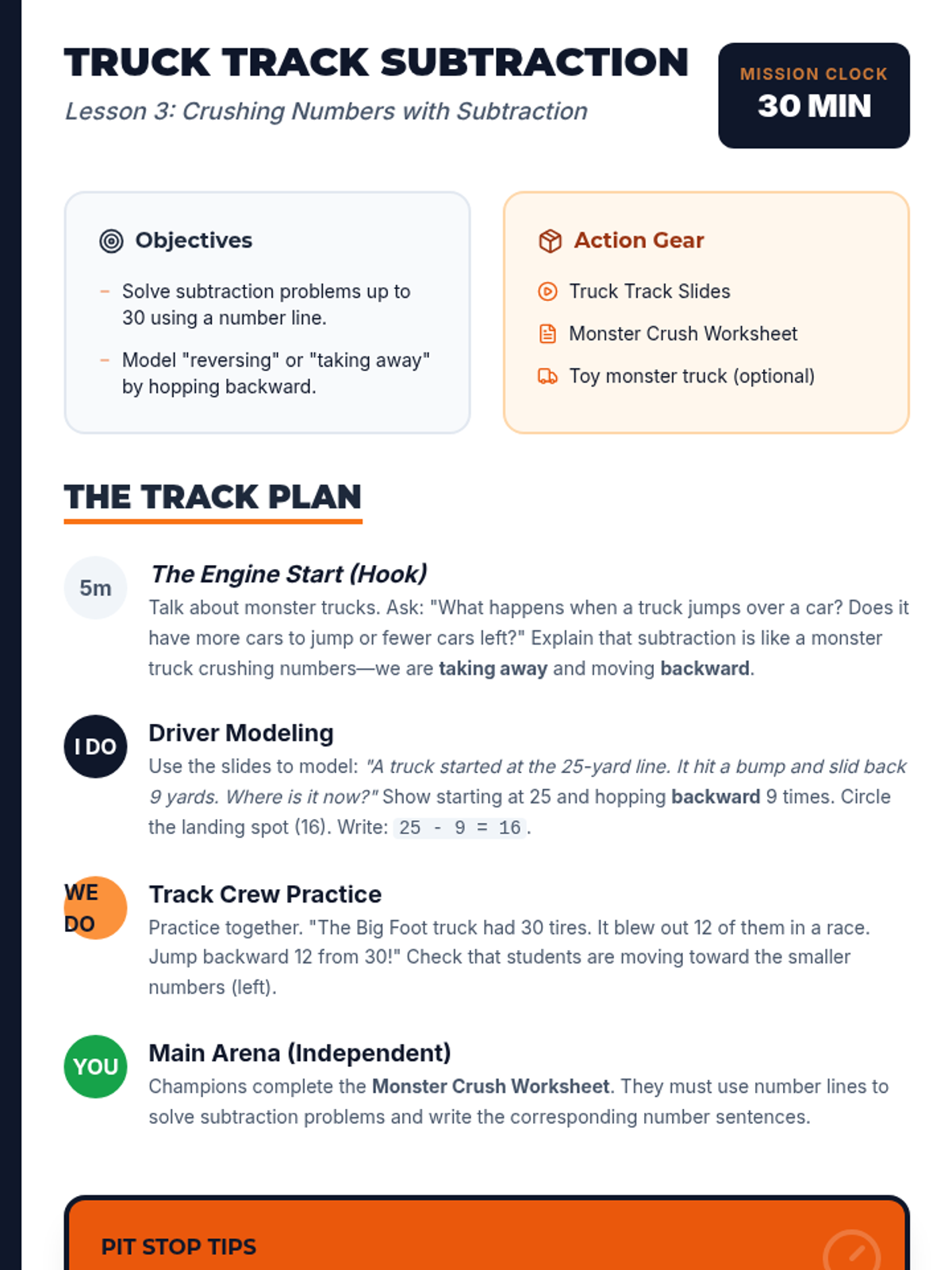
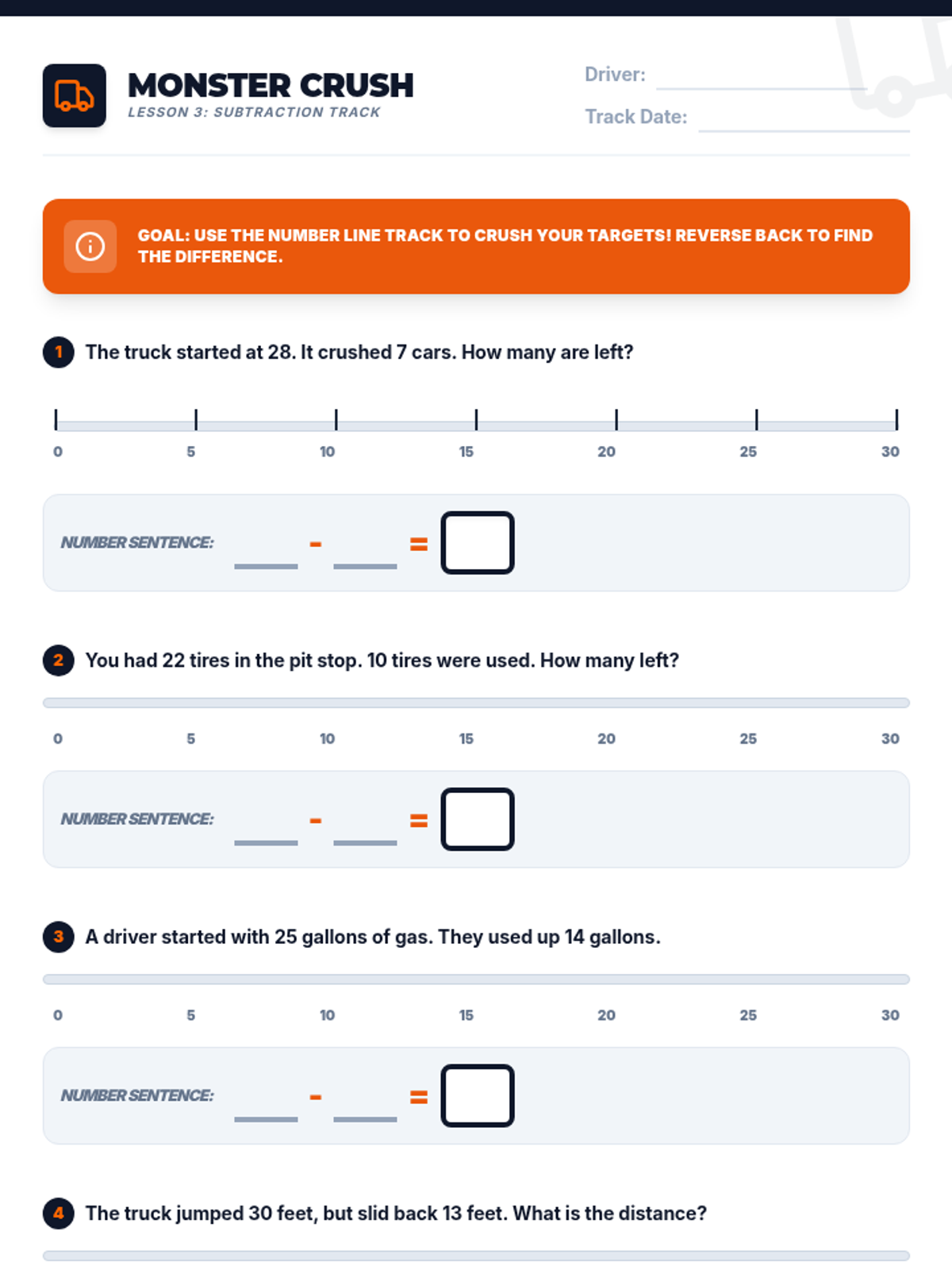
Focusing on subtraction within 30 using number lines and a monster truck theme. Students will practice 'reversing' or 'crushing' numbers by moving backward on the number line.
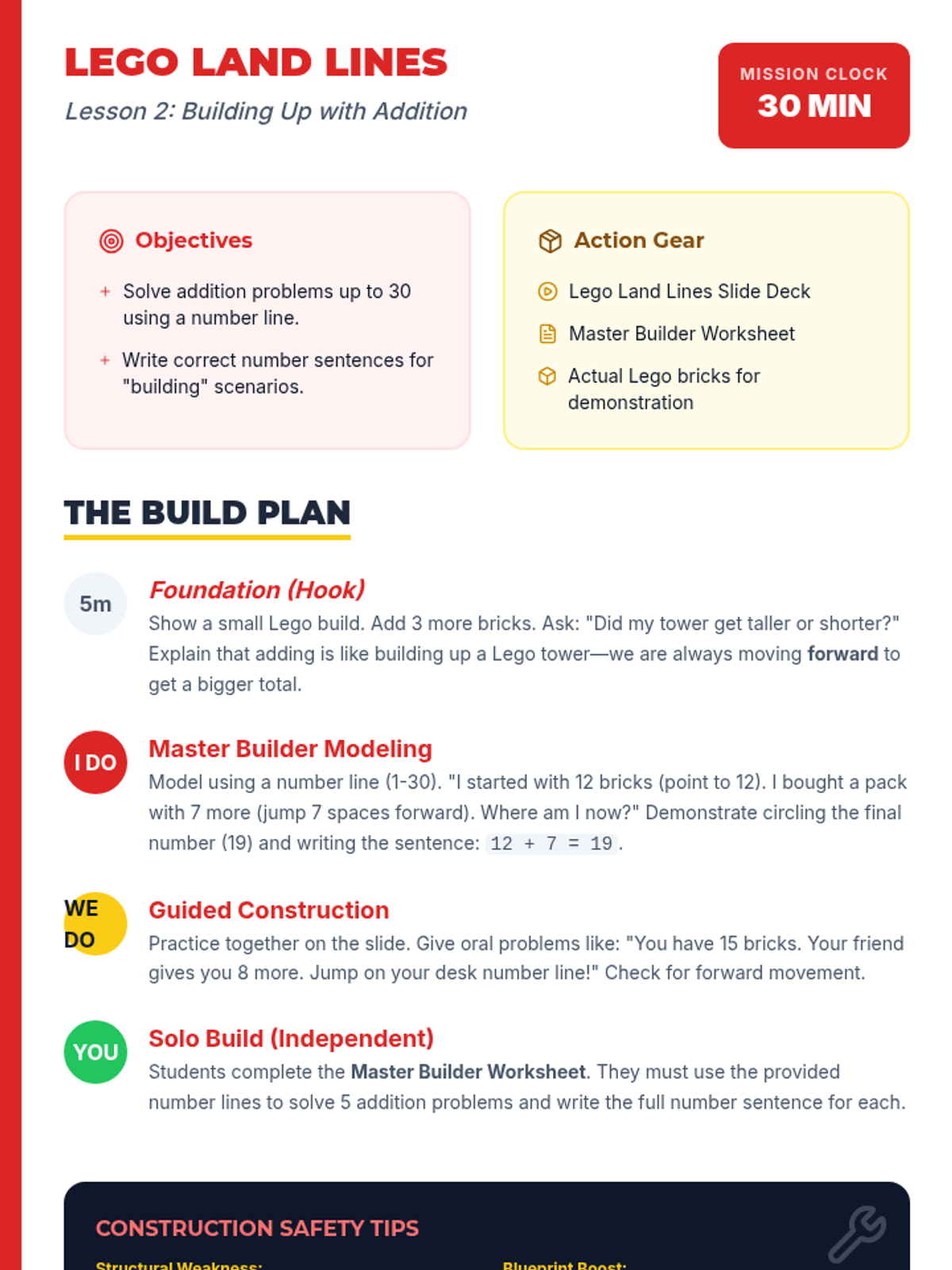
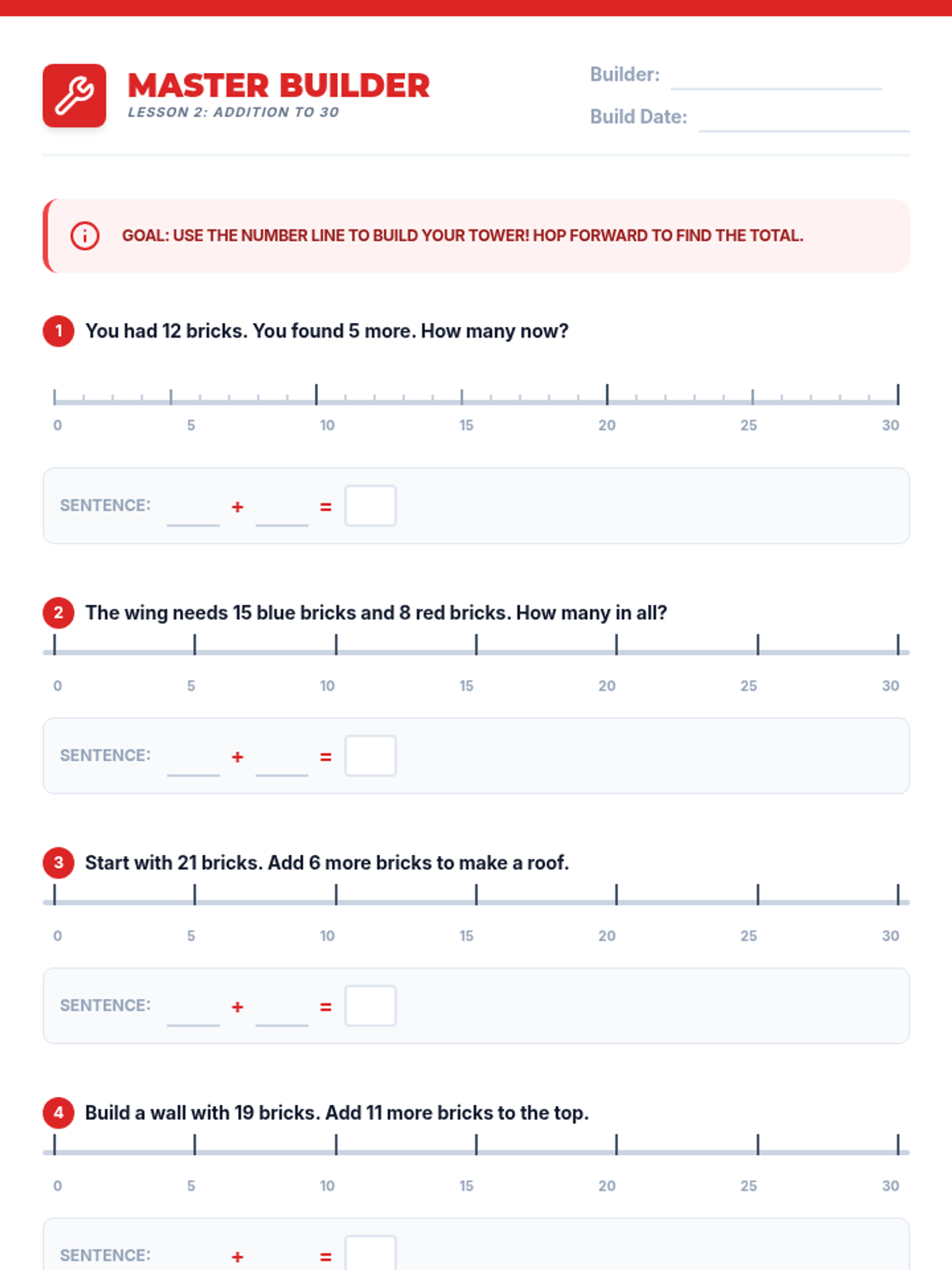
Focusing on addition within 30 using number lines and a Lego building theme. Students will practice 'building up' their totals by hopping forward on the number line.
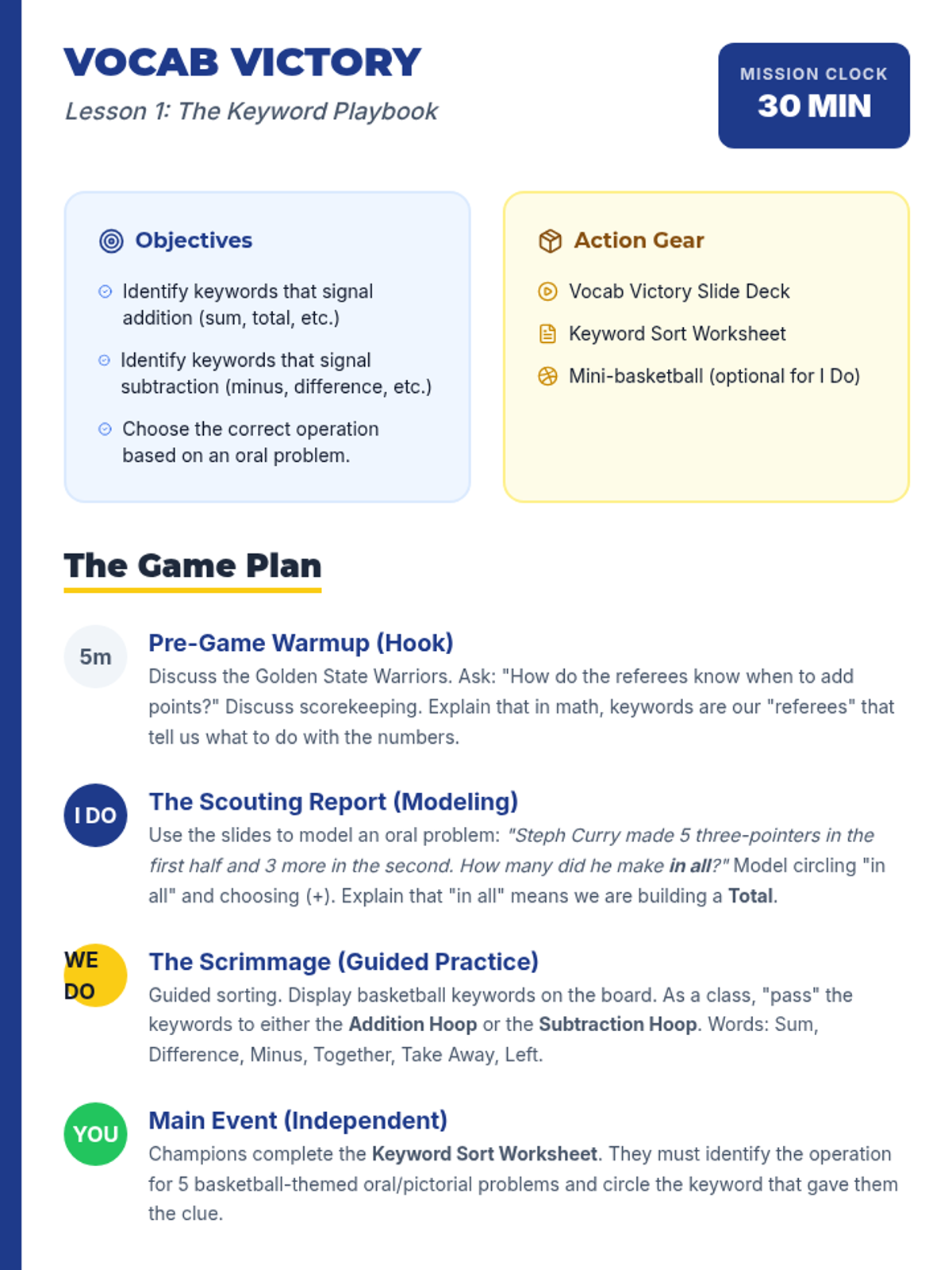
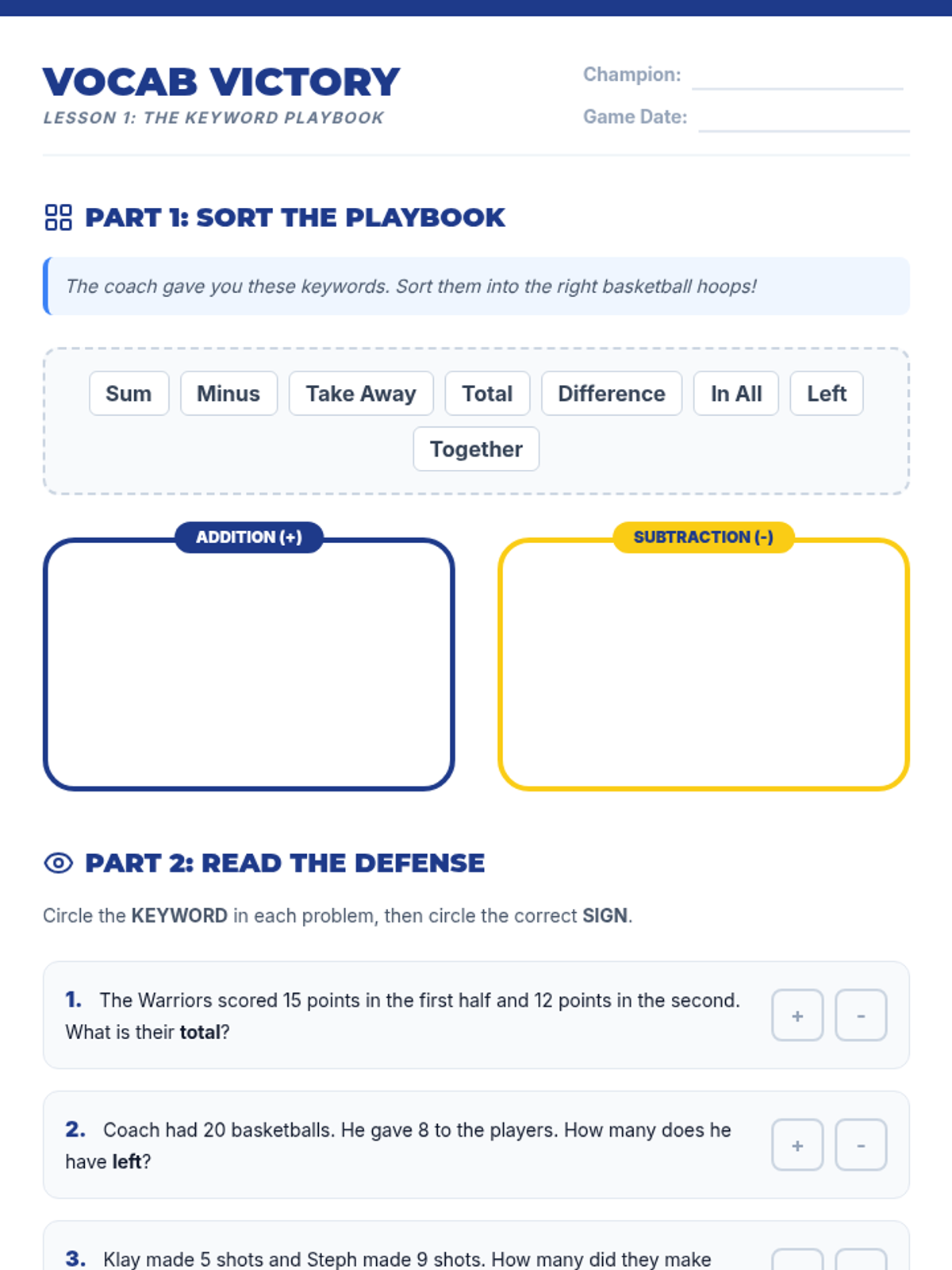
A review of math vocabulary for addition and subtraction using a Golden State Warriors theme. Students will learn to identify keywords in oral problems to determine whether to add or subtract.
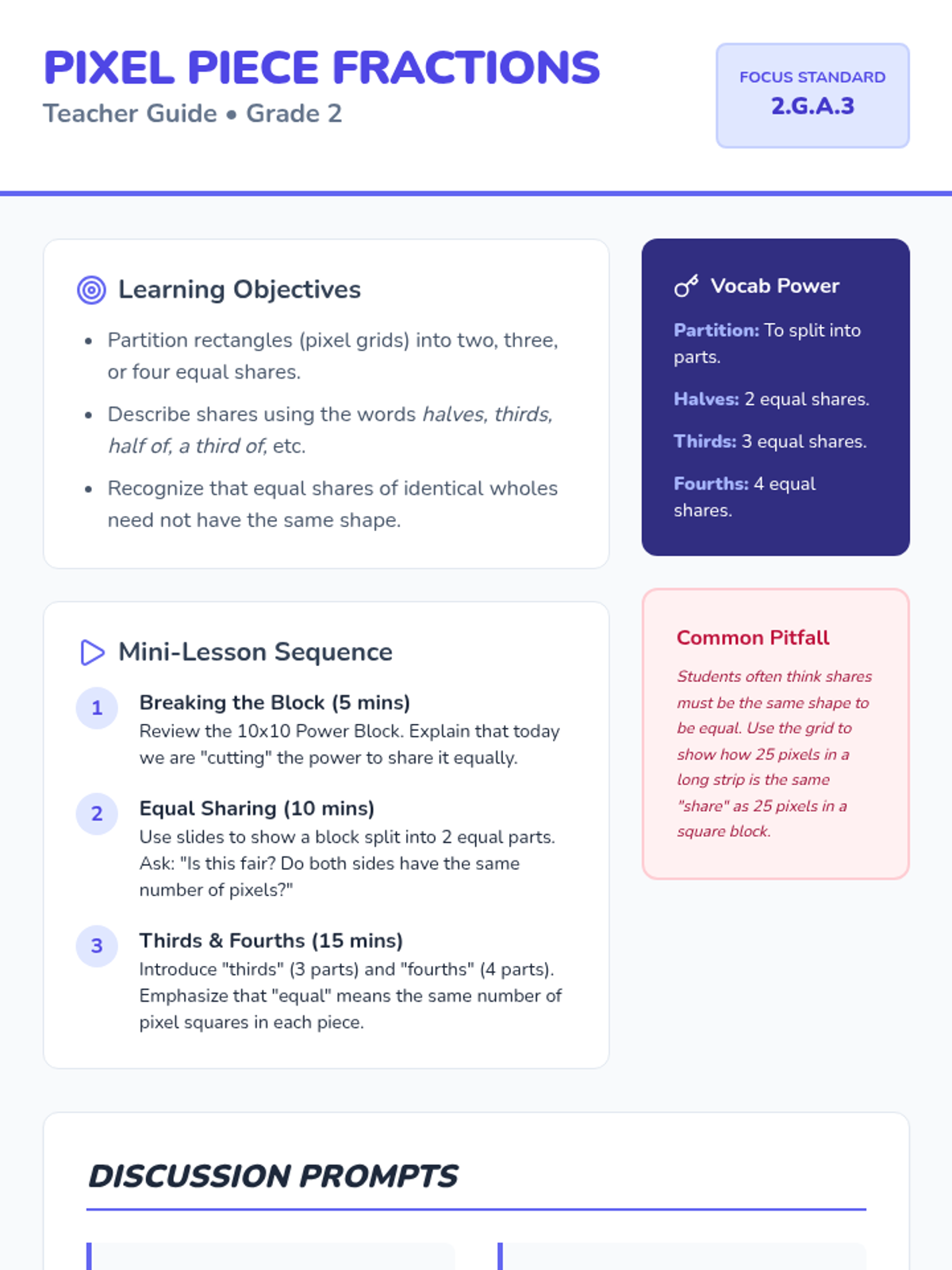
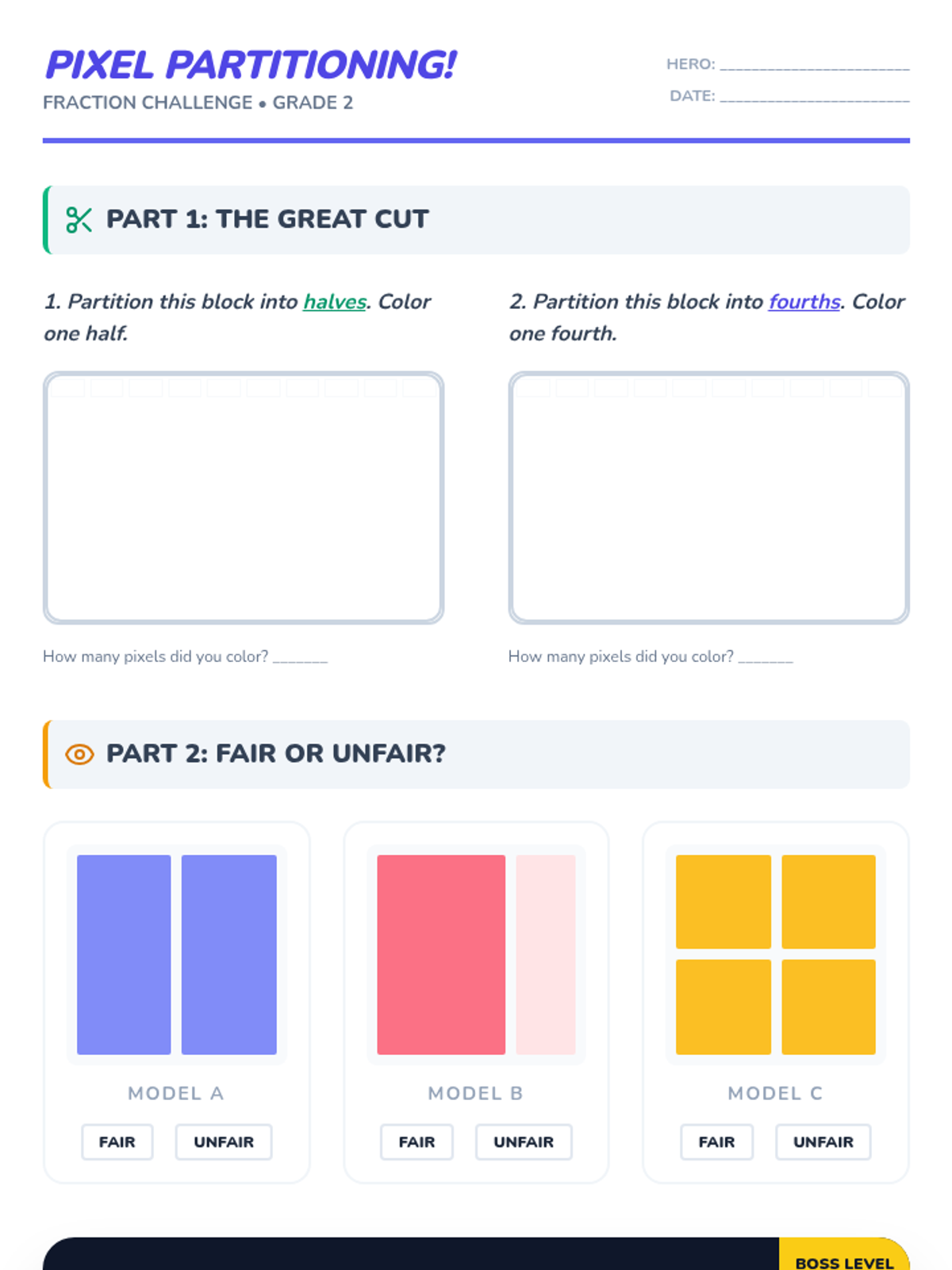
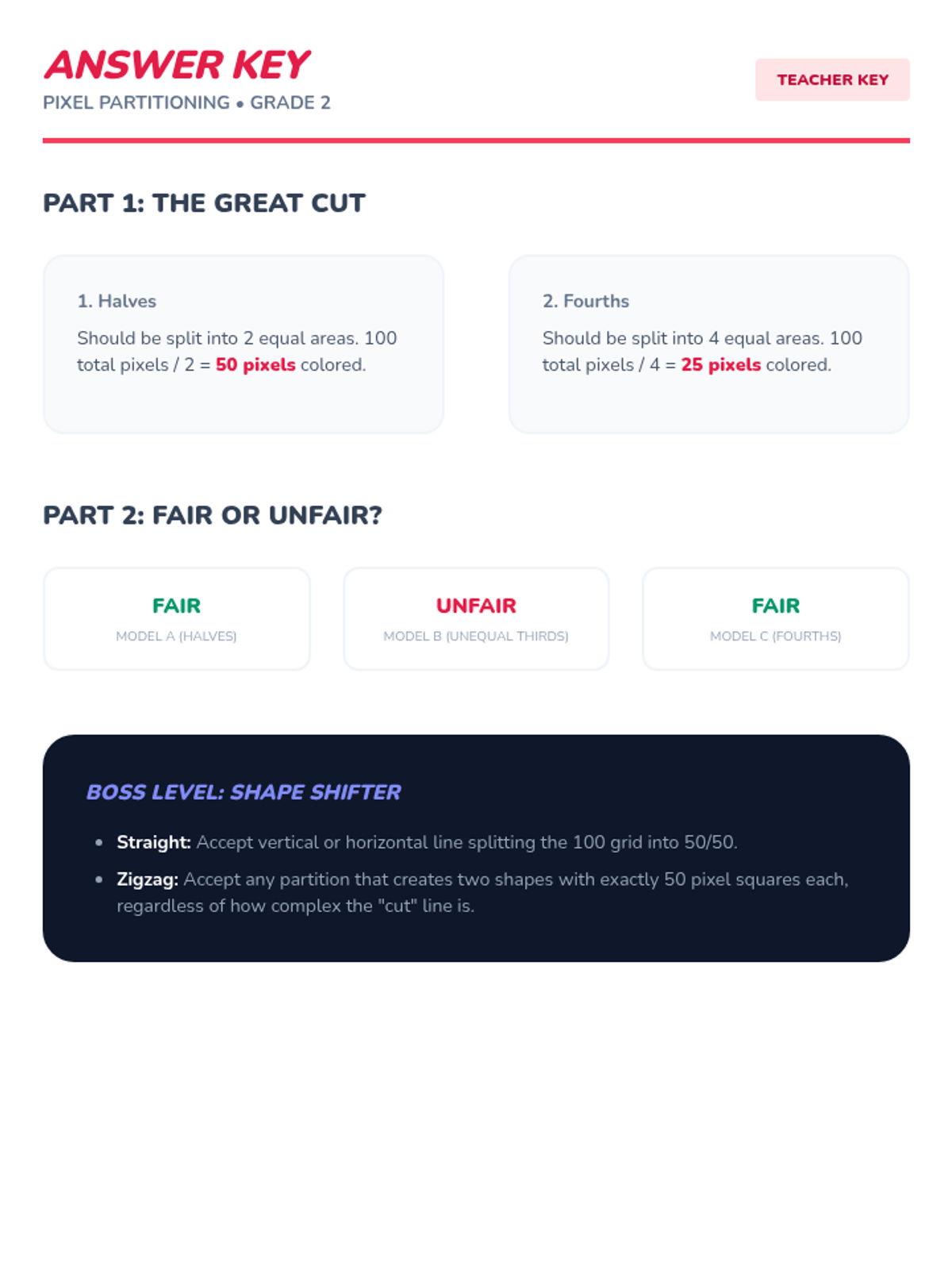
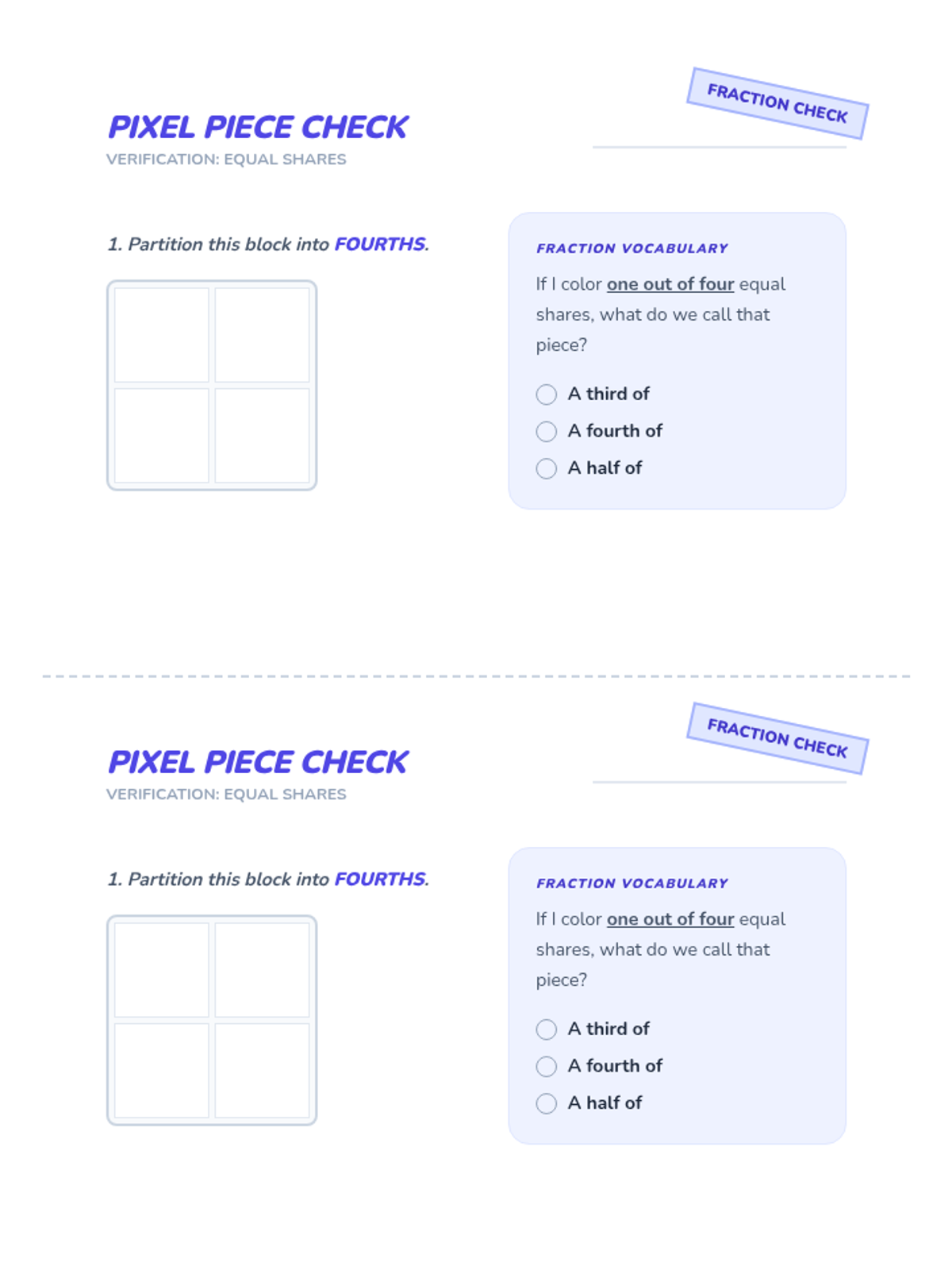
A lesson focused on 2nd-grade geometry and partitioning, where students use the pixel grid to understand halves, thirds, and fourths.
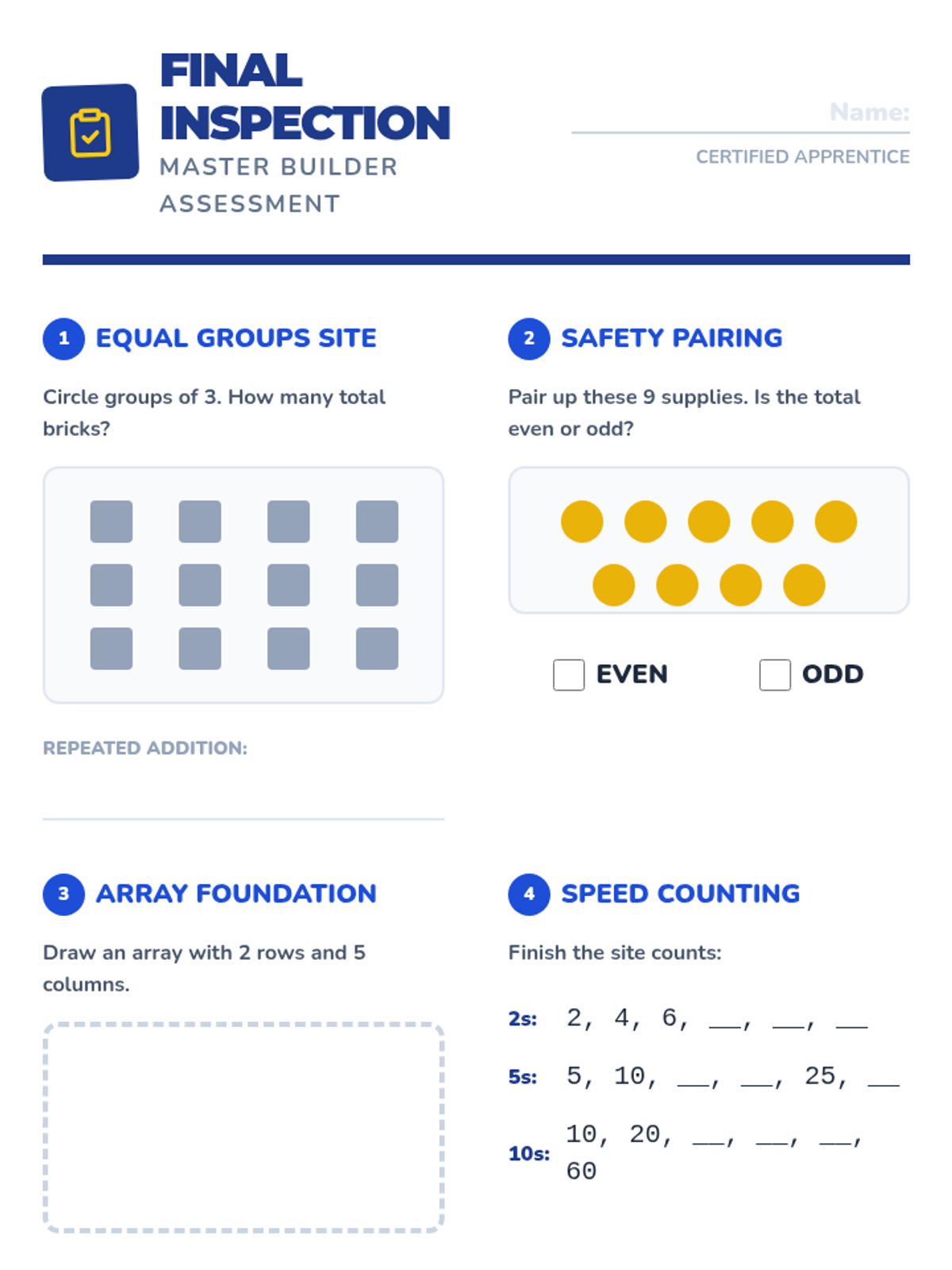
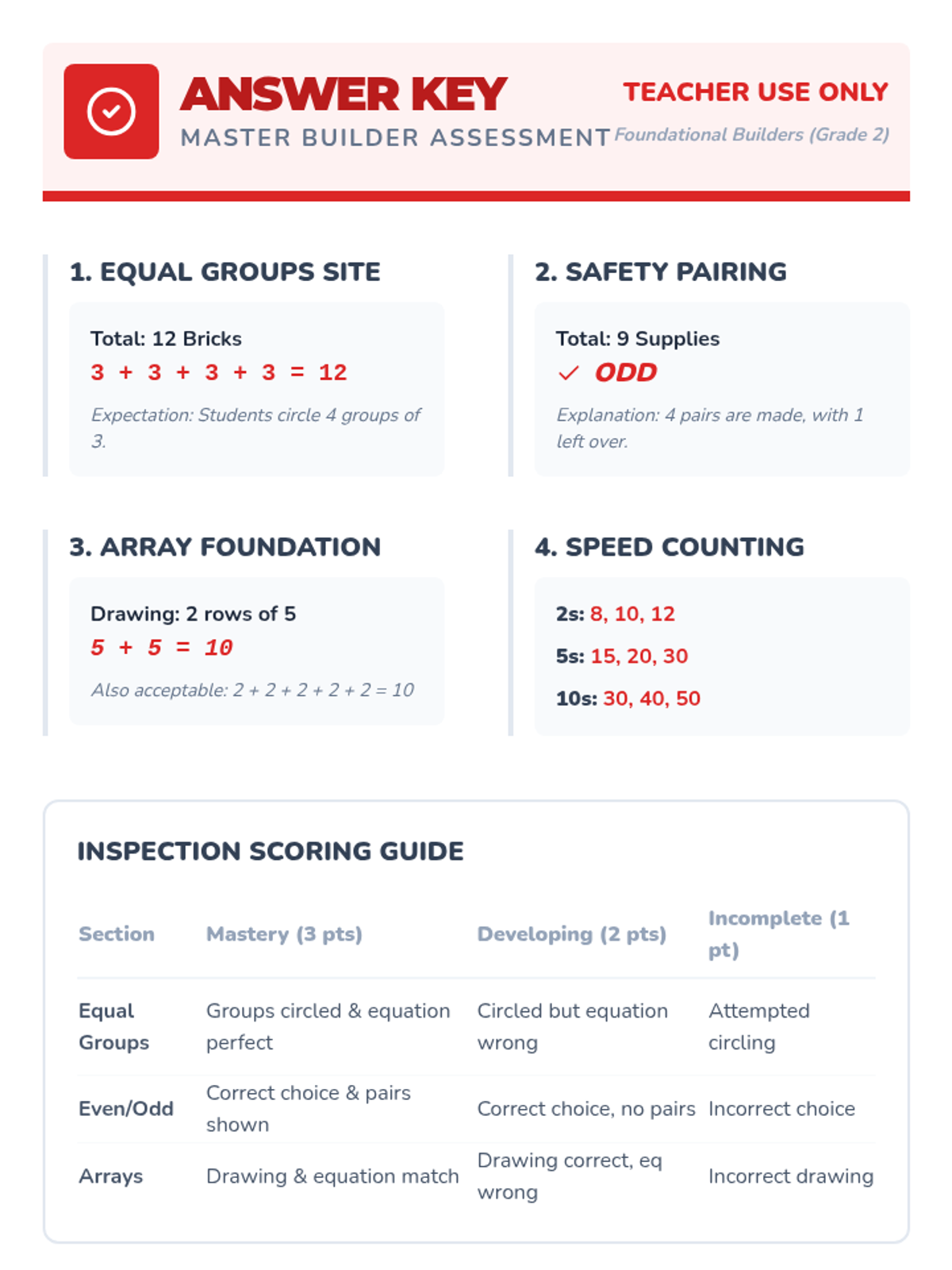
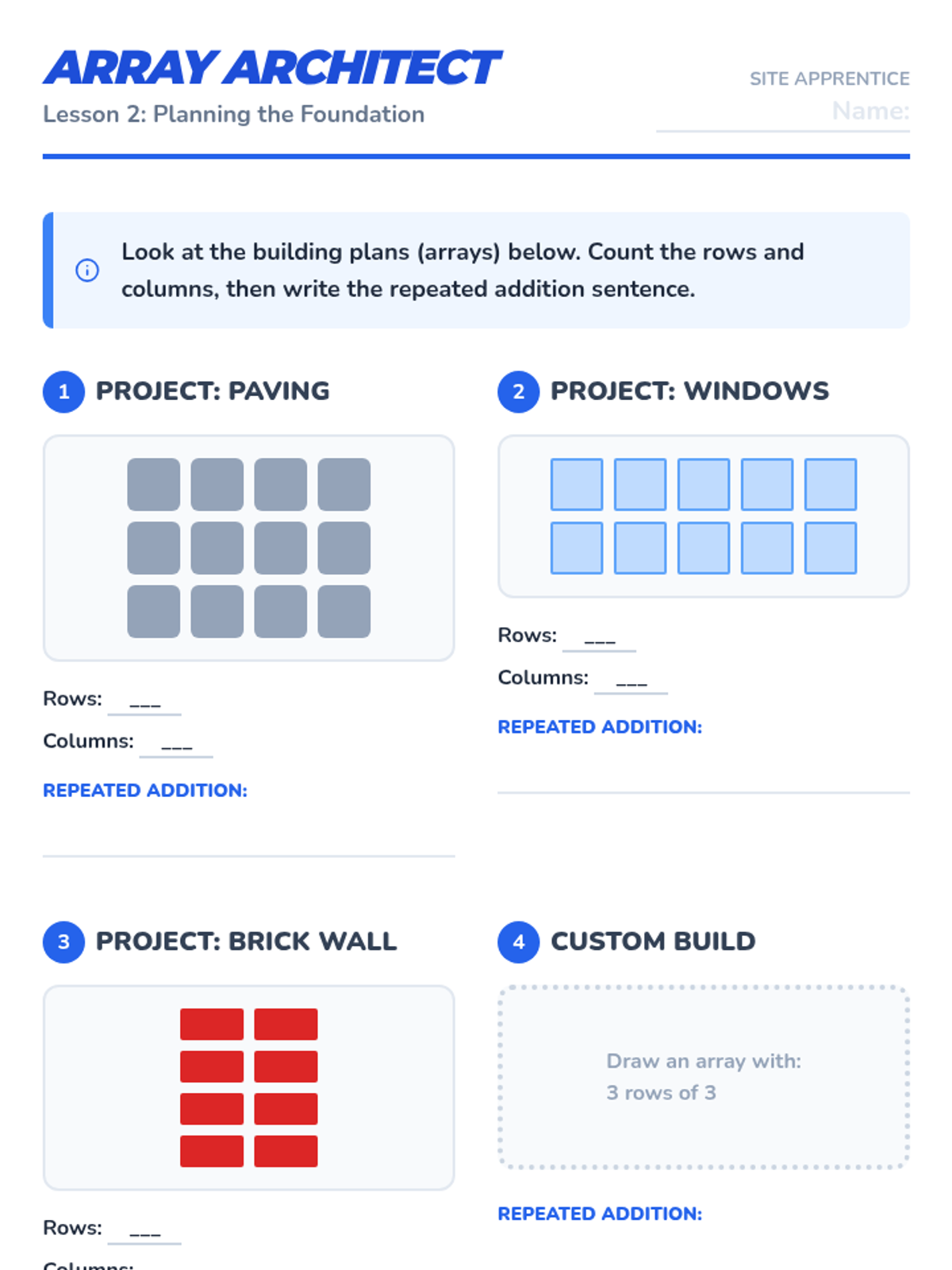
A final project-based assessment where students demonstrate their ability to build arrays, identify even/odd groups, and write repeated addition equations.
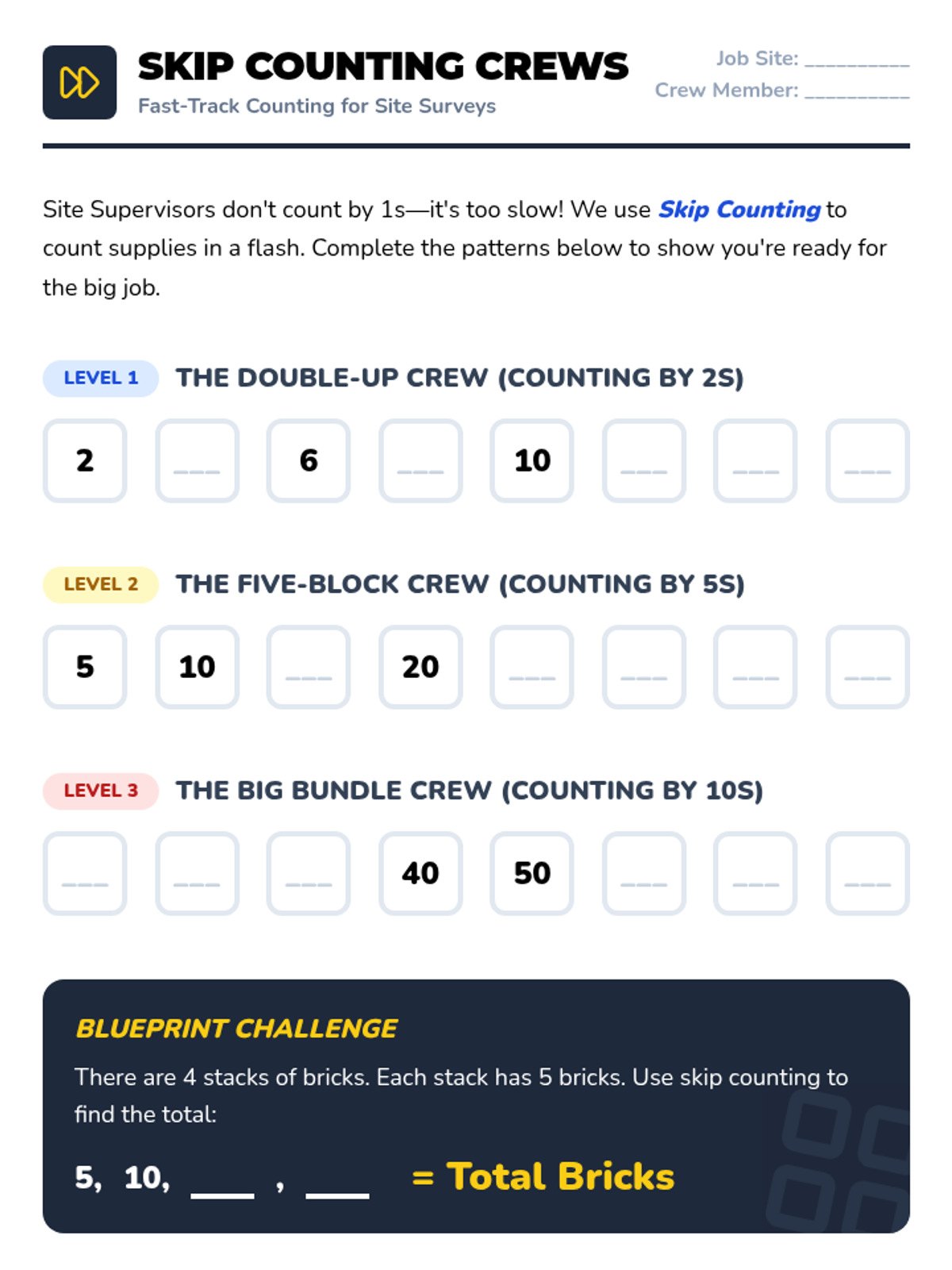
Students practice skip counting by 2s, 5s, and 10s as a fast-track method for counting large groups of building supplies.
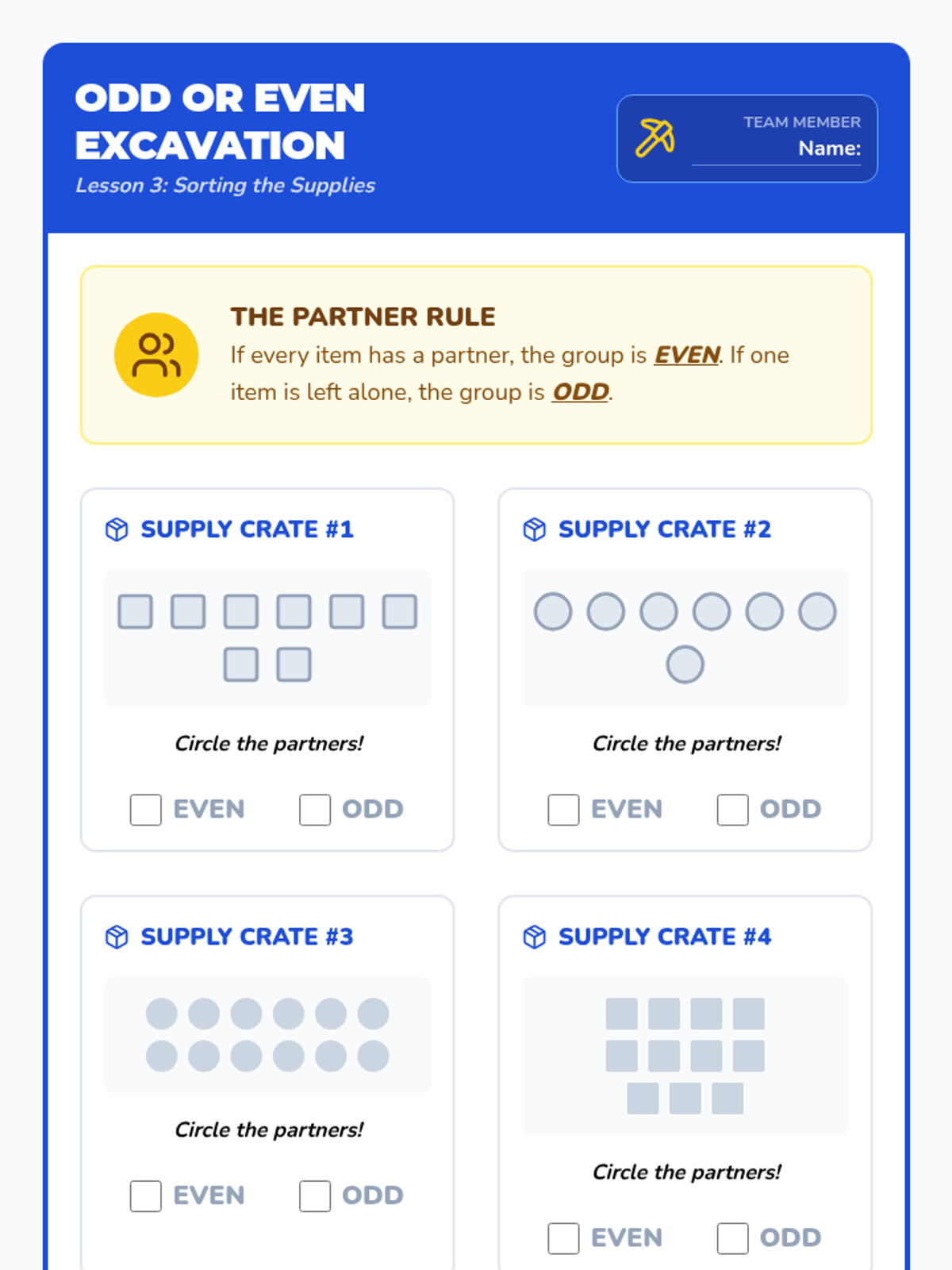
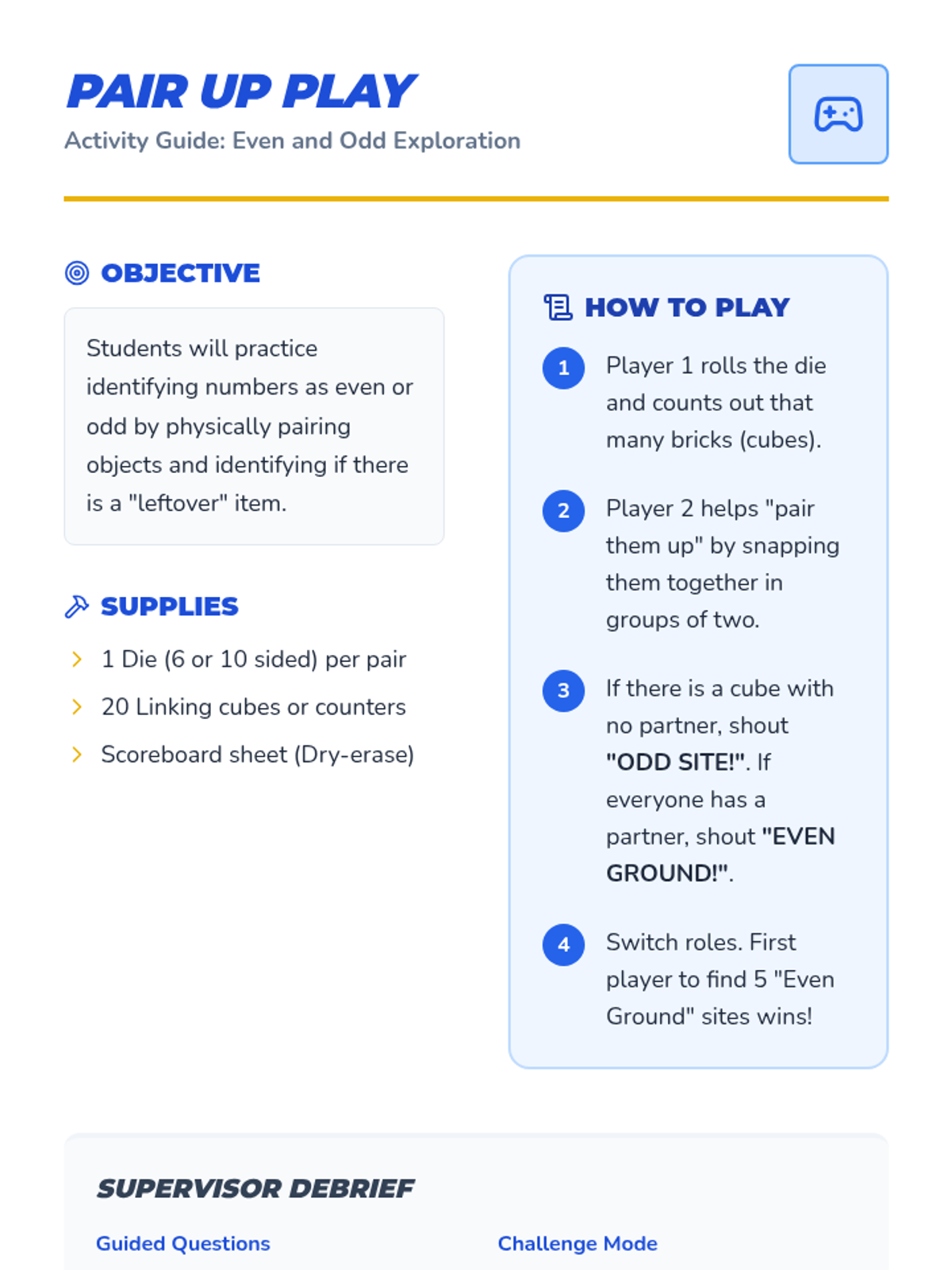
Students explore even and odd numbers by pairing objects and building 'towers of two' to see if any blocks are left over.
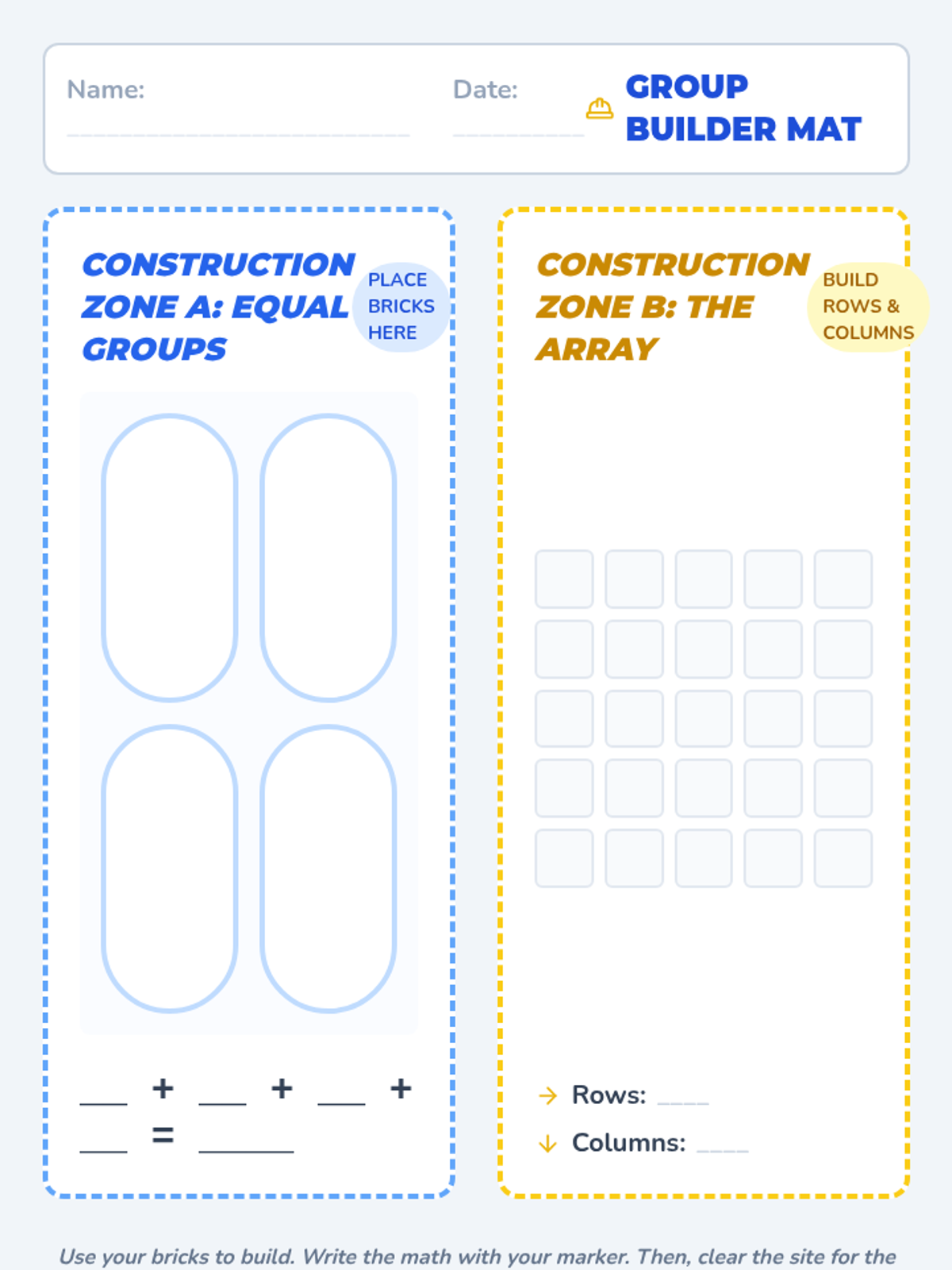
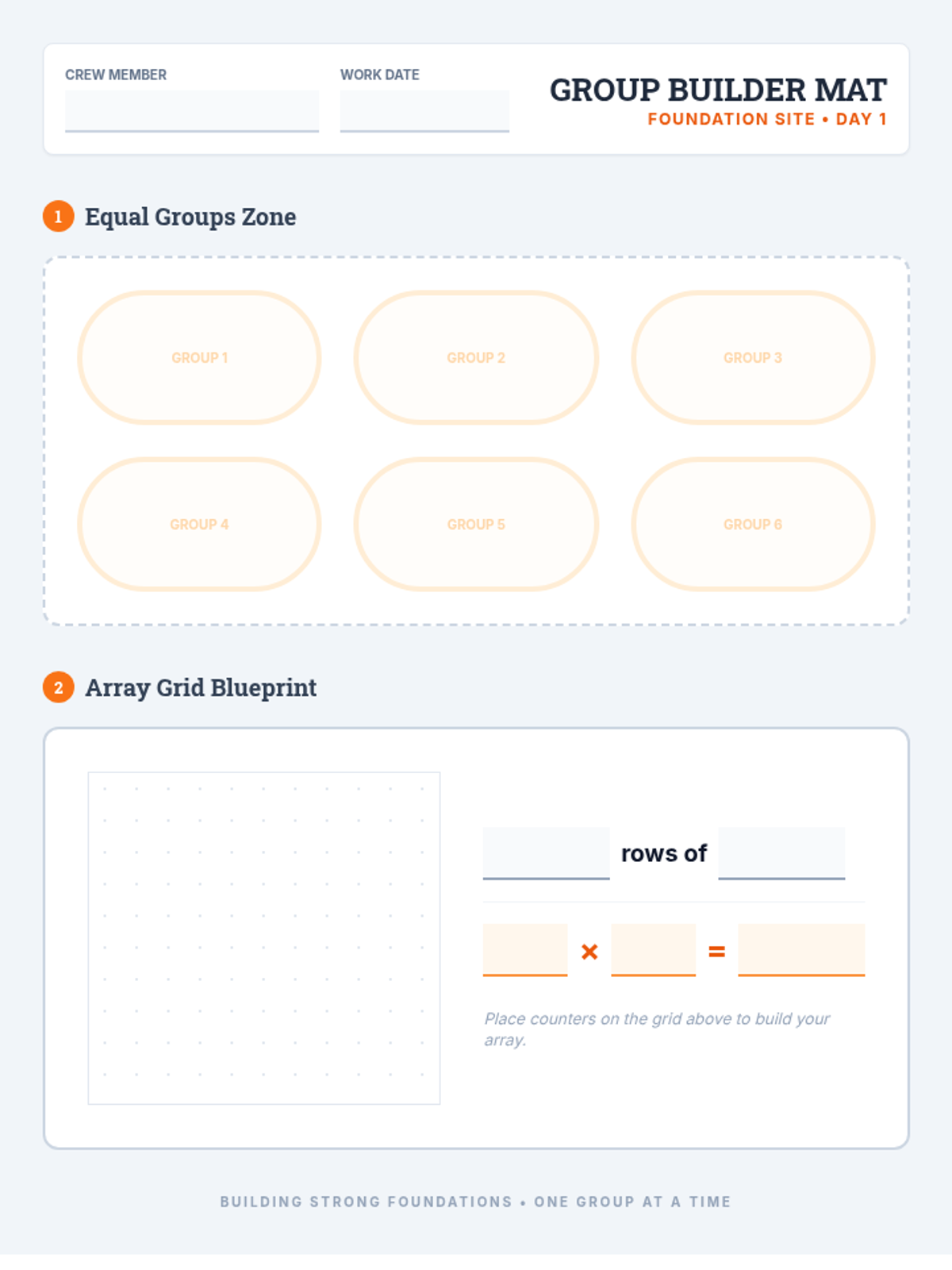
Students build and analyze rectangular arrays (up to 5x5) using building blocks, connecting the rows and columns to repeated addition.
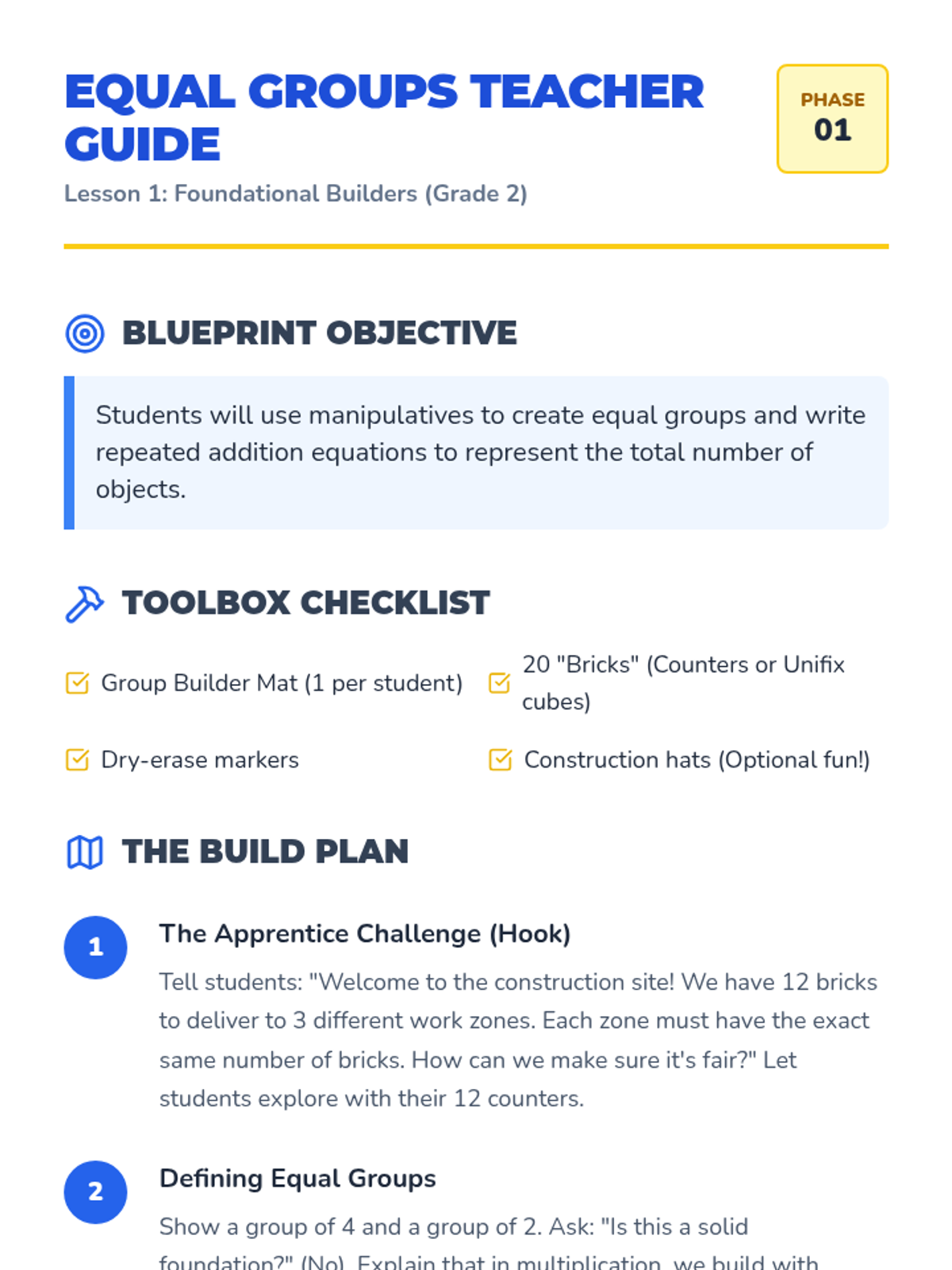
Students use manipulatives to create equal groups and write repeated addition equations to find the total, laying the conceptual groundwork for multiplication.
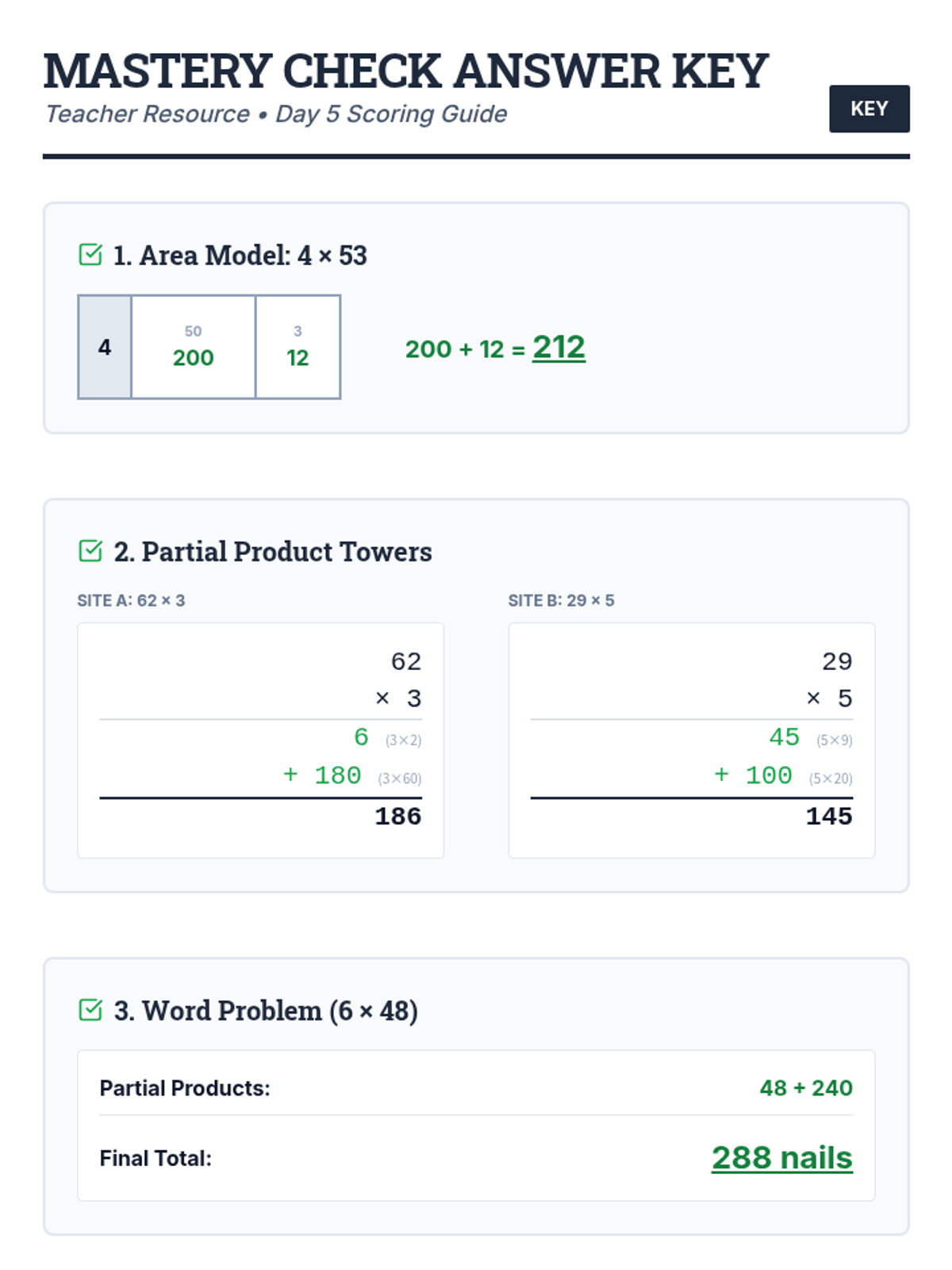
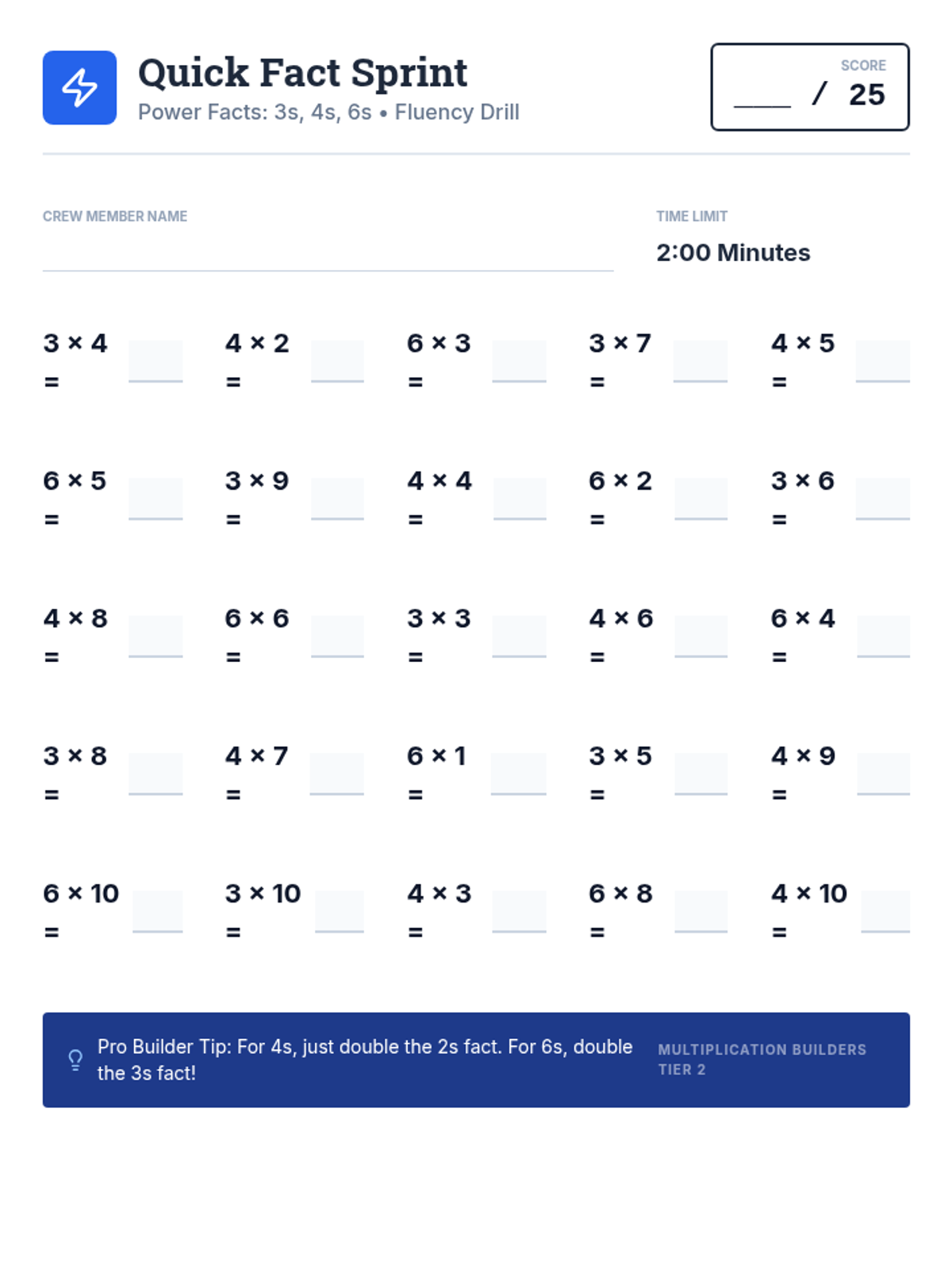
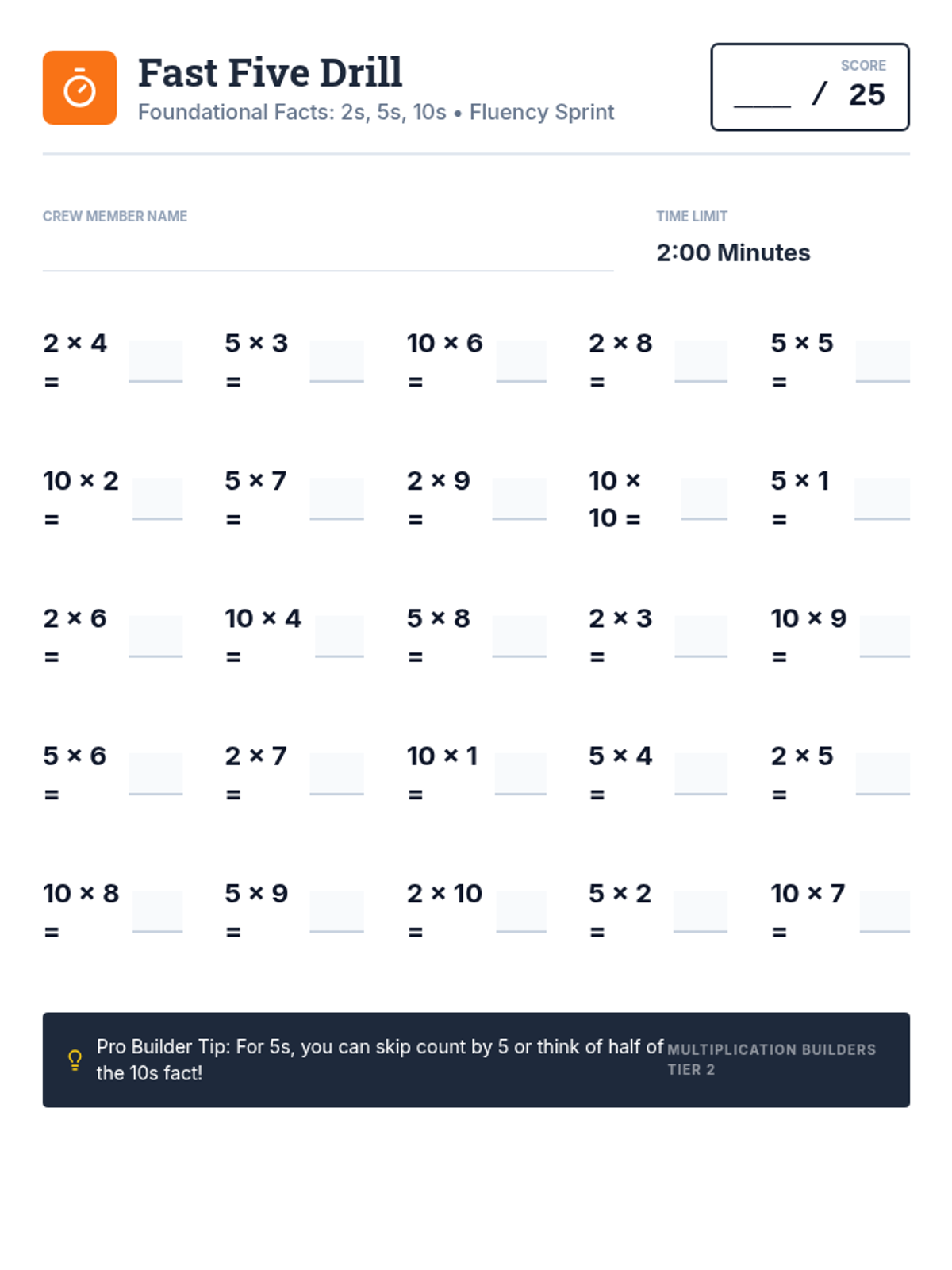
Synthesizes skills through word problem solving and a final fluency check to measure progress.
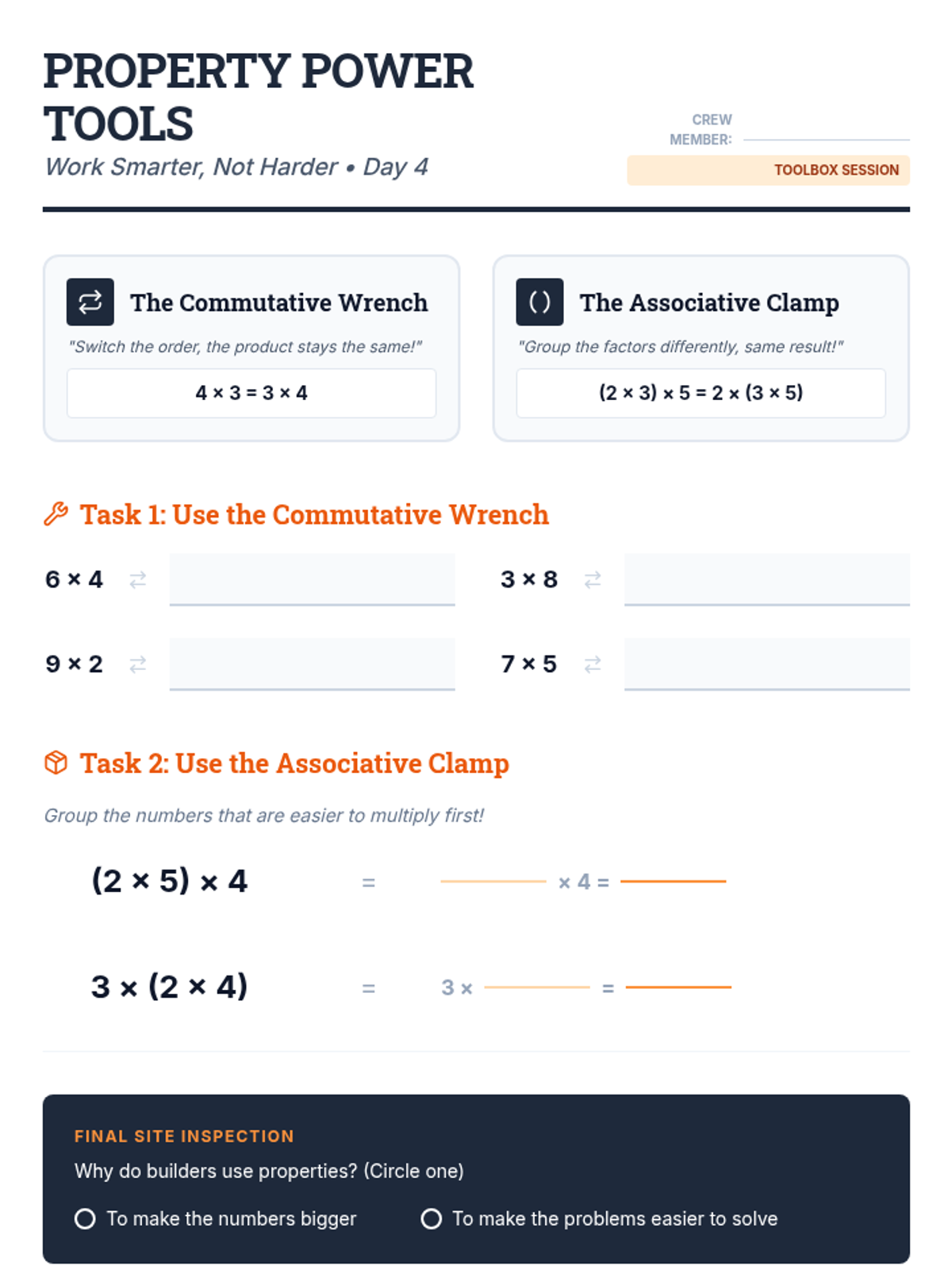
Explores the Commutative and Associative properties to simplify complex multiplication and build mental math strategies.
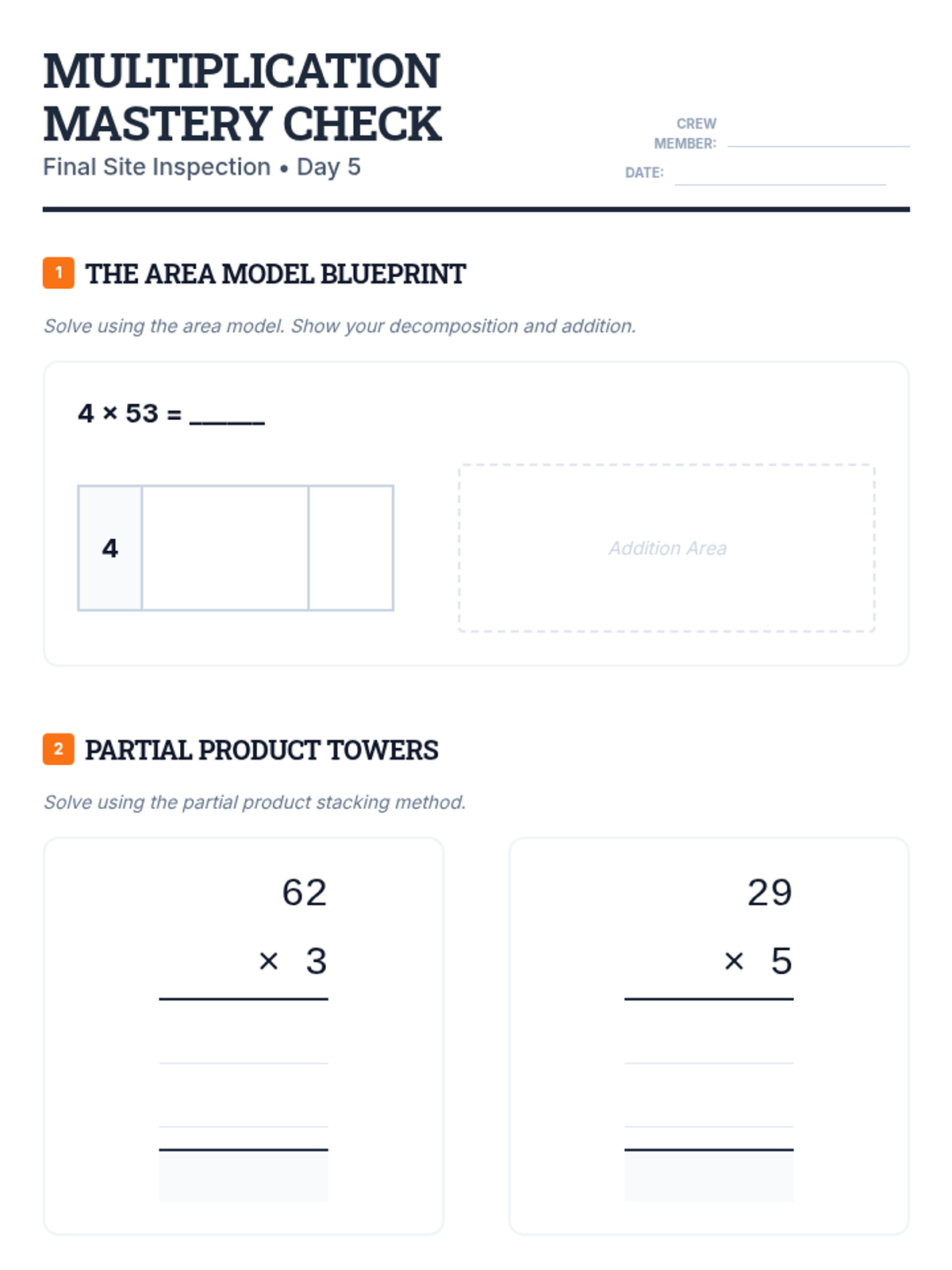
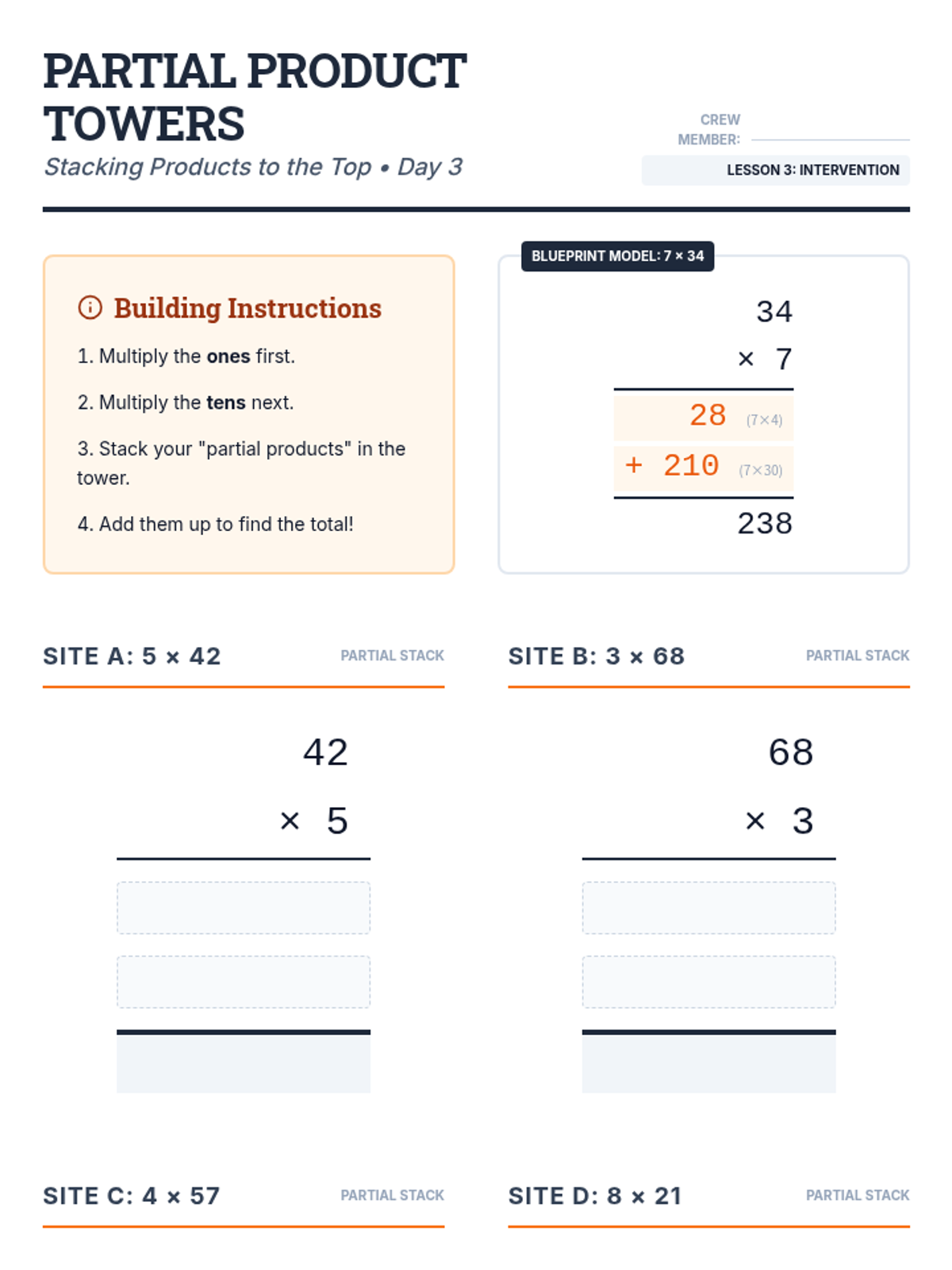
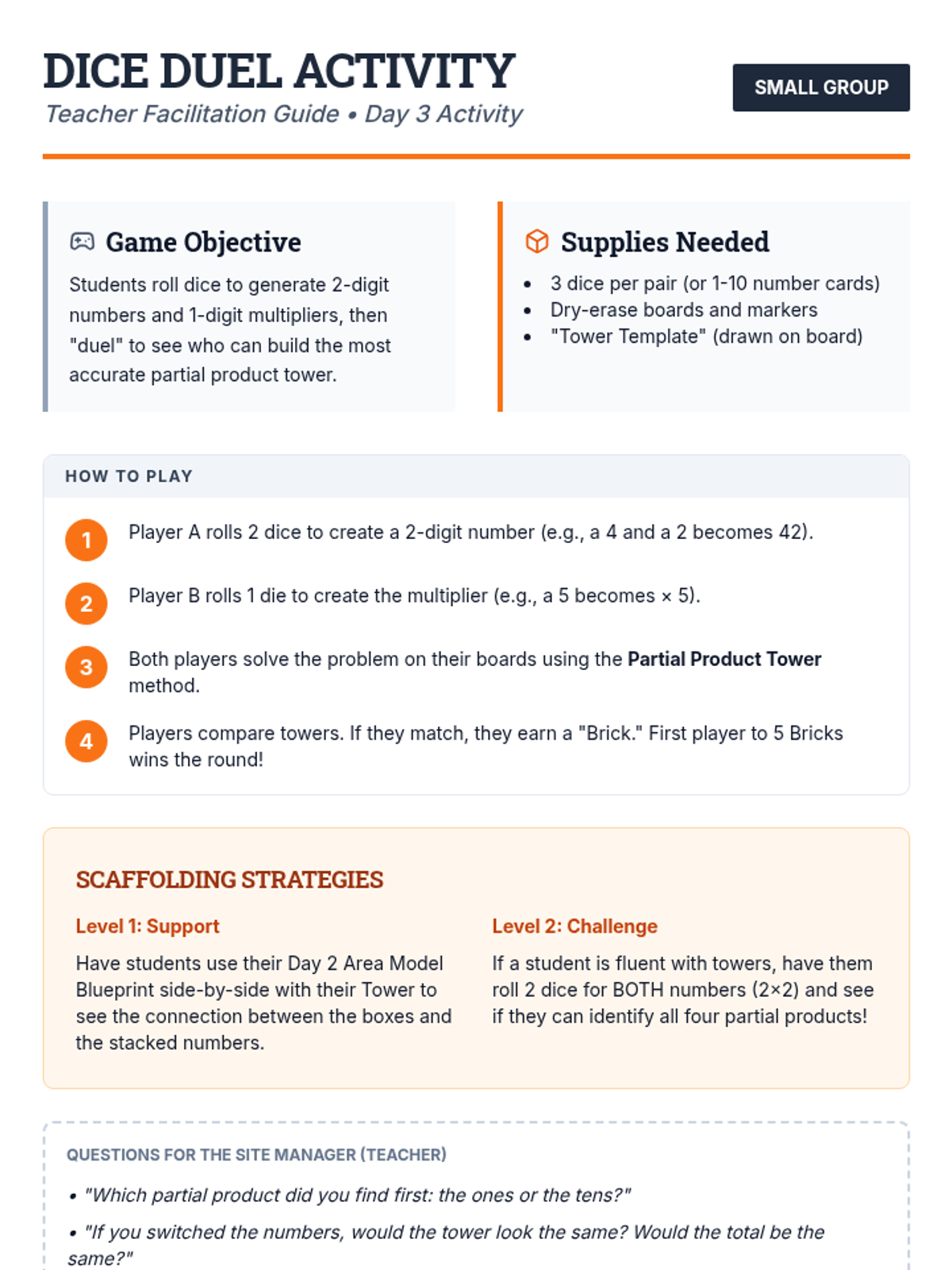
Transitions students from visual area models to the partial products strategy for more efficient calculation.
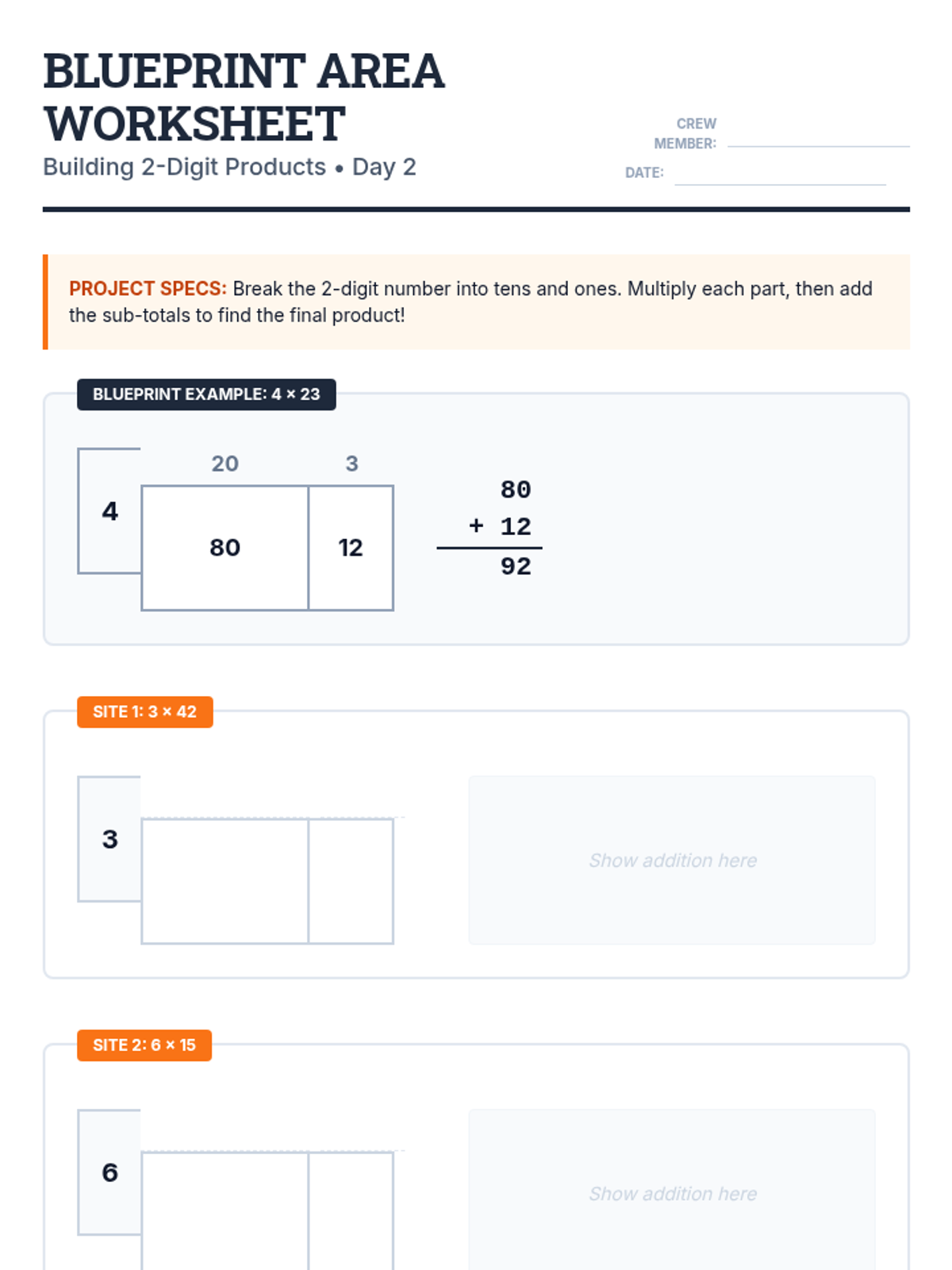
Introduces the area model for 2-digit by 1-digit multiplication, connecting place value to the distributive property.
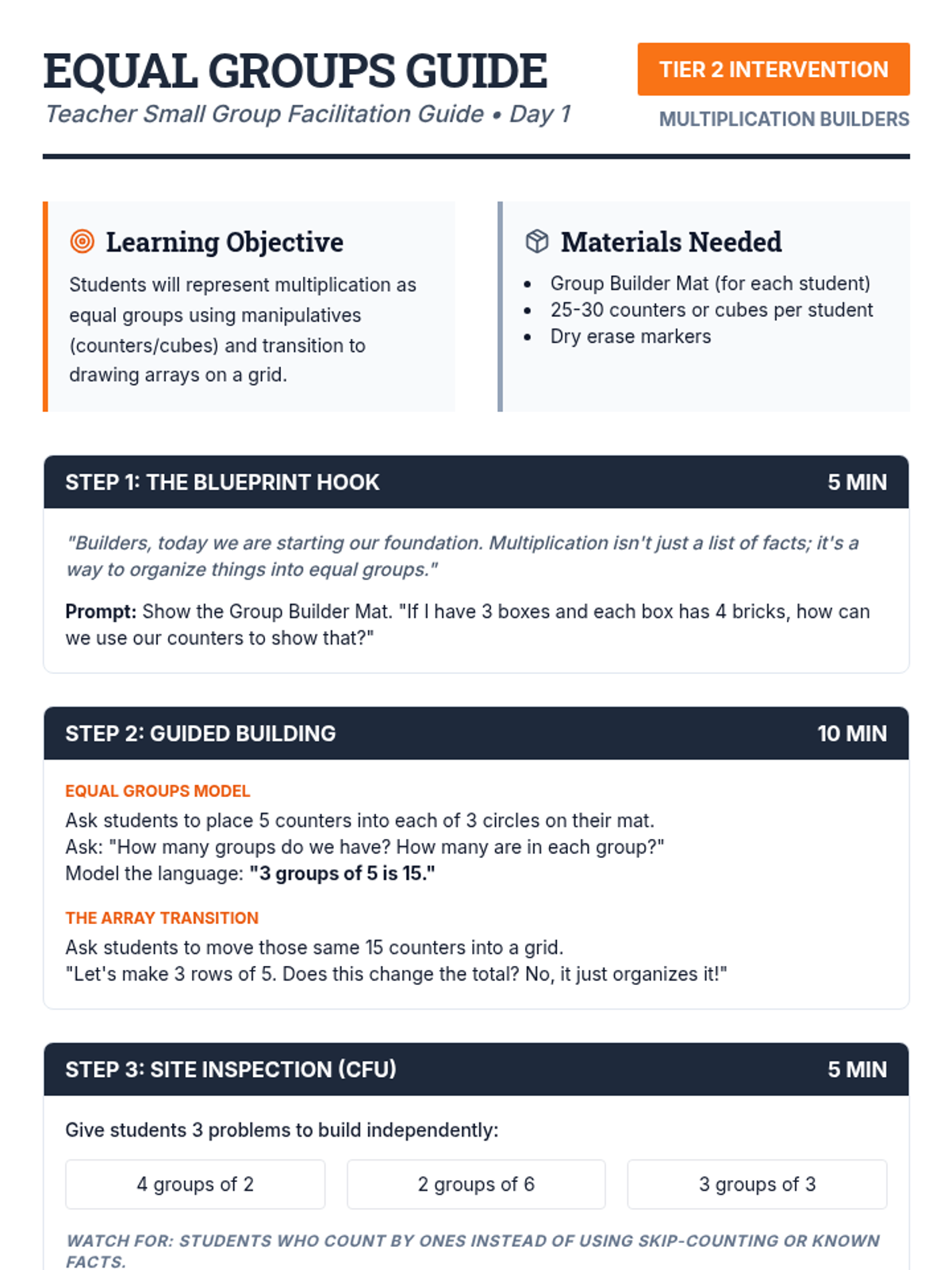
Focuses on the conceptual foundation of multiplication as equal groups and arrays using manipulatives and visual modeling.