Working with complex historical or scientific texts, students map out multi-step causal chains where one event triggers a sequence of others. They identify the distinction between correlation and sequential causation.
A comprehensive English II lesson focusing on Saki's 'The Interlopers' to master EOC-style analysis, short constructed responses, and thematic debates. Students will explore irony, characterization, and word nuance while evaluating the conflict between man and nature.
A comprehensive revising and editing practice focused on English 1 Texas EOC skills, featuring a student-centered personal narrative passage and exam-style questions.
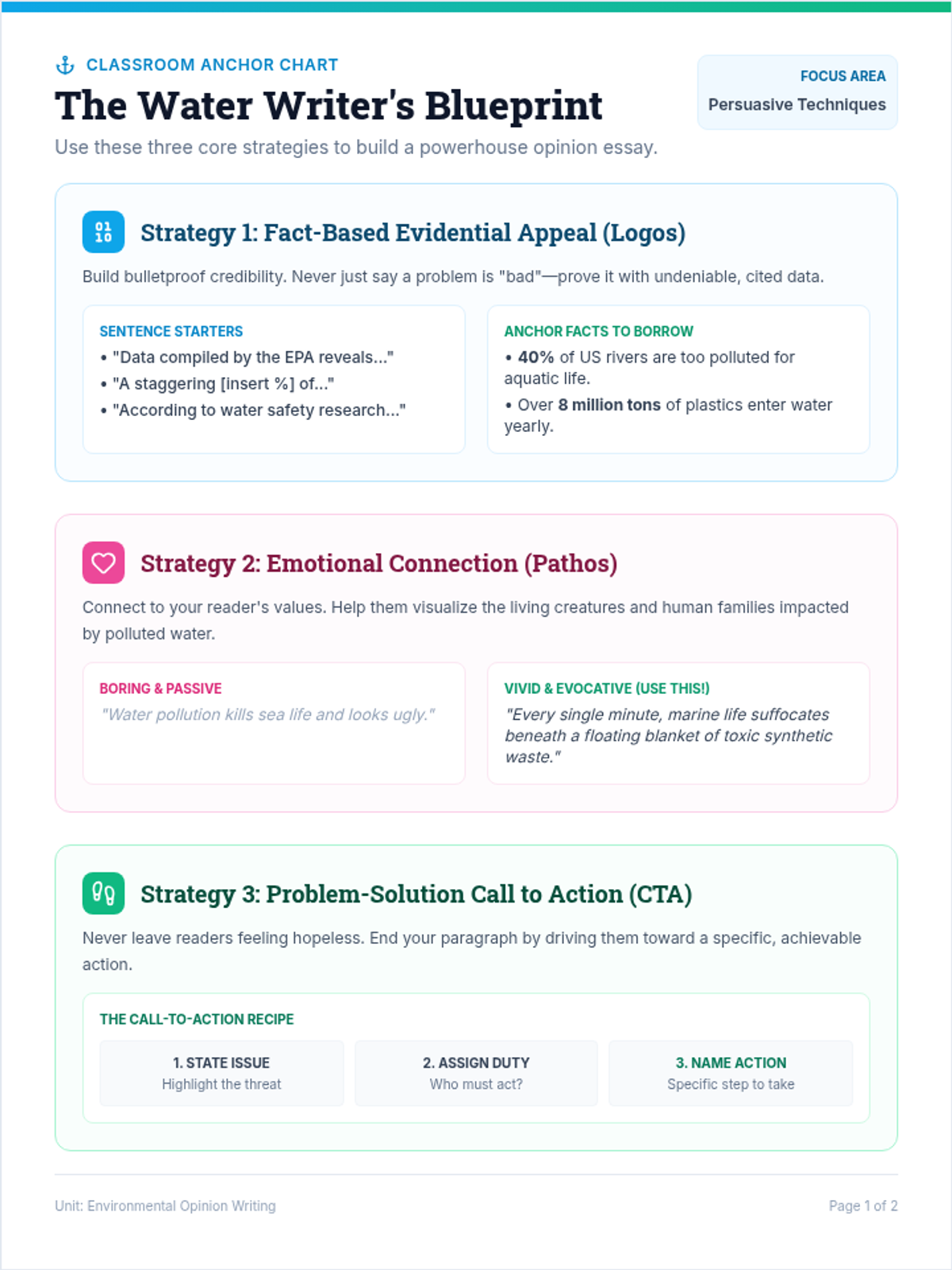
This lesson focuses on analyzing argumentative texts through the lens of rhetorical devices, author's purpose, and structural choices. Students will engage in collaborative discussions, analyze a persuasive essay on the social impact of fast fashion, and practice EOC-style assessment questions, including a Short Constructed Response (SCR).
This lesson prepares students for the English 1 EOC exam by analyzing a poem and an informational text about nature and ecosystems. It includes test-style questions, a short constructed response, and a collaborative speaking activity.
A comprehensive lesson on narrative sentence variation focusing on varied beginnings, sentence combining, length modulation, and descriptive clauses. Students move from identifying monotone rhythms to crafting dynamic, flowing prose.
Synthesizing the relationship between point of view and plot. Students use their annotations to respond to a short constructed response prompt about how the omniscient perspective impacts the selection's development.
Diving deeper into figurative language including metaphors, personification, and situational irony. Students finish the story and evaluate the symbolic significance of the 'open window' and 'heart trouble'.
Introduction to 3rd person omniscient point of view and sensory imagery. Students begin reading the text and analyze how Chopin uses the setting outside the open window to reflect Louise Mallard's internal shift.
A lesson focused on the climactic Act III of '12 Angry Men', exploring the shifting dynamics of the jury, the re-examination of evidence, and the final resolution of the trial.