Explores the cultural importance of titles and respectful address (Nin vs. Ni), focusing on how to properly address teachers and elders.
An introductory lesson on the history and vocabulary of Cinco de Mayo, focusing on the Battle of Puebla and the cultural significance of the holiday. Students explore key historical figures and the concept of bravery through guided instruction and collaborative activities.
A dual-language exploration of the iconic Mexican market bag (bolsa de mandado), focusing on its history, utility, and cultural significance in Mexican traditions.
A foundational exploration of the first three chapters of Harry Potter and the Sorcerer's Stone, focusing on bilingual comprehension and key vocabulary.
A lesson focused on the suffixes -en, -ize, and -ify. Students investigate how these suffixes transform base words into verbs representing actions or states.
A lesson focused on the suffixes -ful, -ous, and -ious. Students analyze how these suffixes form adjectives from nouns, representing full of or having qualities of.
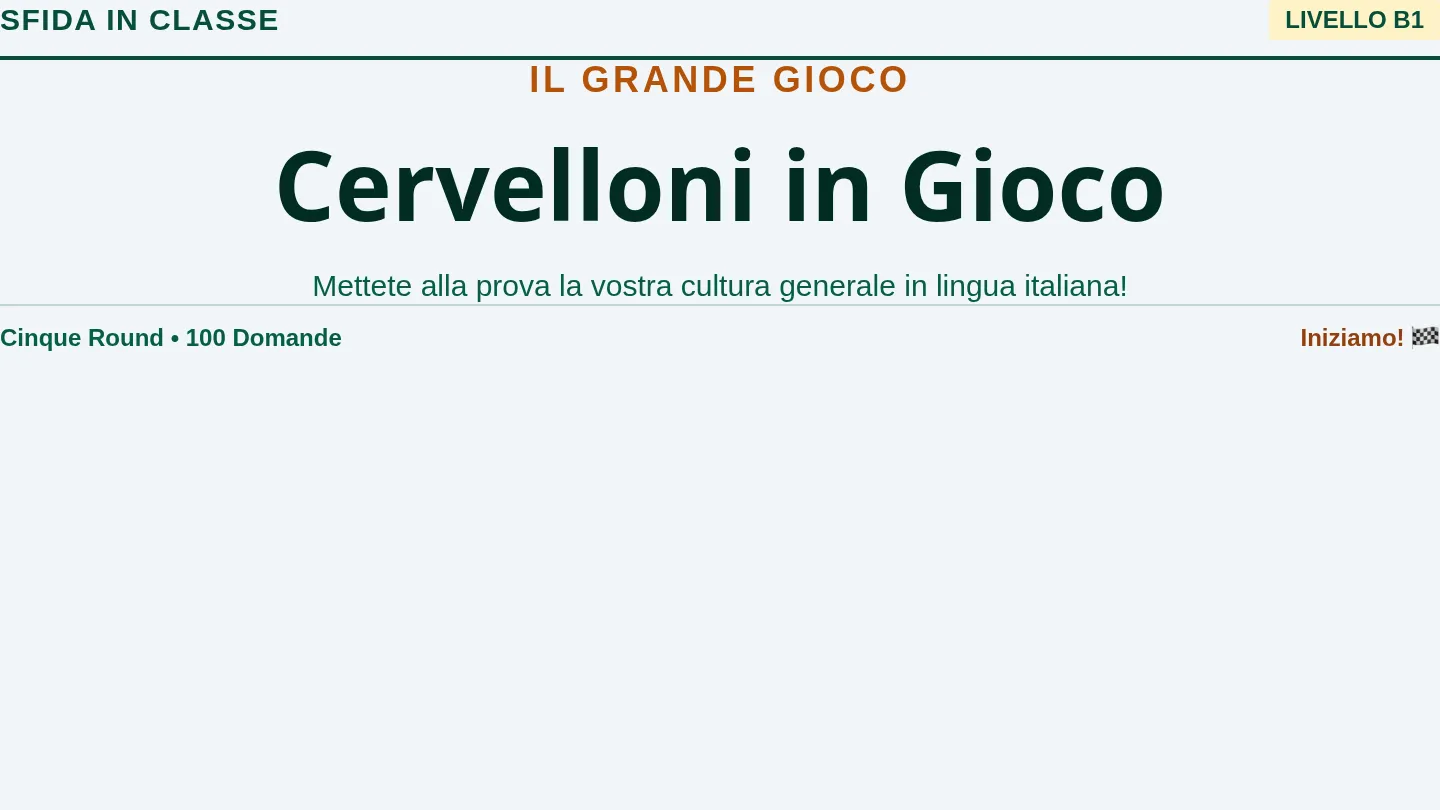
A fast-paced Italian vocabulary game for A1/A2 students covering food, travel, daily life, and general topics. Includes a presentation for class gameplay, printable game boards, and a teacher facilitation guide.
A lesson focused on the suffixes -al, -ial, and -ic. Students analyze how these suffixes form adjectives from nouns, representing relating to or having qualities of.
A lesson focused on the suffixes -ty and -ity. Students analyze how these suffixes form nouns from adjectives, representing states or qualities.
A lesson focused on identifying and using different types of sentences in Japanese: statements, questions, commands, and exclamations. Students will learn the appropriate punctuation for each.
A lesson focused on location and category suffixes (-ary, -ery, -ory). Students analyze how these suffixes form nouns and adjectives related to places, groups, and qualities.
A lesson focused on abstract suffixes (-ment, -less, -ness). Students explore how these suffixes form nouns and adjectives related to states, qualities, and actions.
A lesson focused on agentive suffixes (-er, -or, -ian, -ist). Students analyze how these suffixes identify people who perform specific actions or hold certain roles.
A lesson focused on comparative and superlative suffixes (-er, -est, -ier, -iest). Students explore how these suffixes change adjectives to compare two or more things.
A lesson focused on the suffixes -y, -ly, and -ily. Students analyze how these suffixes change word meanings and usage through contextual application.
A lesson focused on the prefixes sub-, com-, pro-, and en-. Students apply their knowledge of these prefixes to identify and use words in various contexts.
A lesson focused on the prefixes re-, ex-, in-, and de-. Students explore meanings like "again," "out," "in," and "down" through application.
A lesson focused on the prefixes pre-, fore-, post-, and after-. Students practice using these temporal and directional prefixes in context.
A lesson focused on the prefixes in-, un-, dis-, and mis-. Students analyze meanings and usage through contextual sentences and word puzzles.
A comprehensive vocabulary unit focusing on advanced roots, suffixes, and prefix assimilation from Sorts 42-50. This lesson includes practice sentences for all 200+ words, word scrambles, and a crossword puzzle to reinforce derivational relations.
The final restaurant simulation where students act as servers and customers.
Finalizing scripts and props for the restaurant skit performance.
Mastering courtesy expressions and ordering food in a cafe setting.
Exploring food labels and authentic menus to prepare for the restaurant project.
Live performances of the student-written telenovelas.
Collaborative script writing and rehearsal for the first major project.
Navigating a city using street signs and maps in Spanish.
Describing family and emotions with a focus on dramatic expression for the telenovela.
Learning school-related vocabulary using authentic schedules and creating student ID cards.
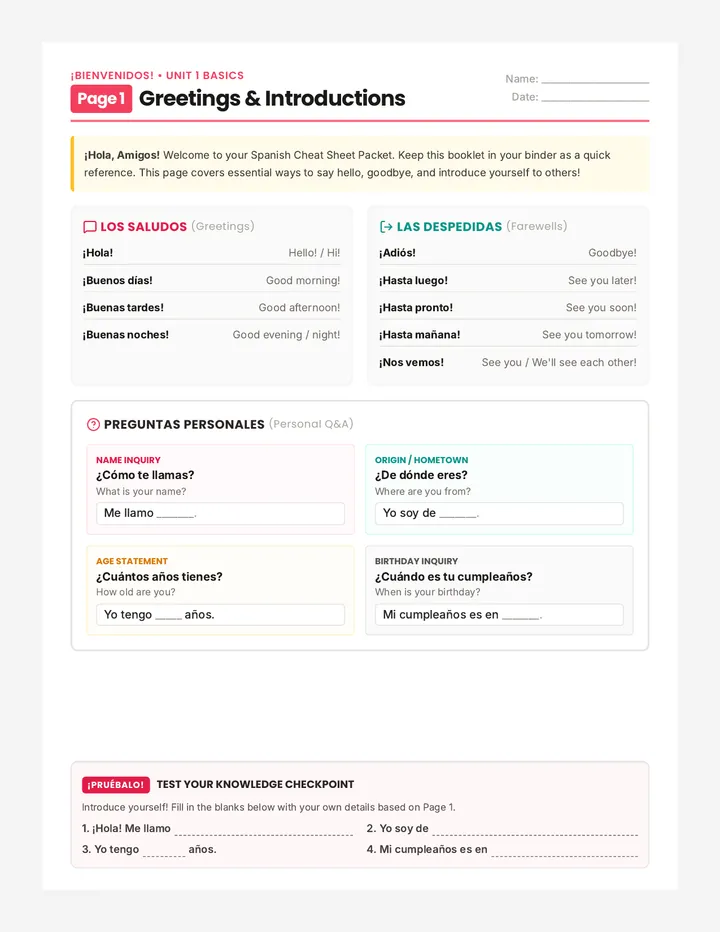
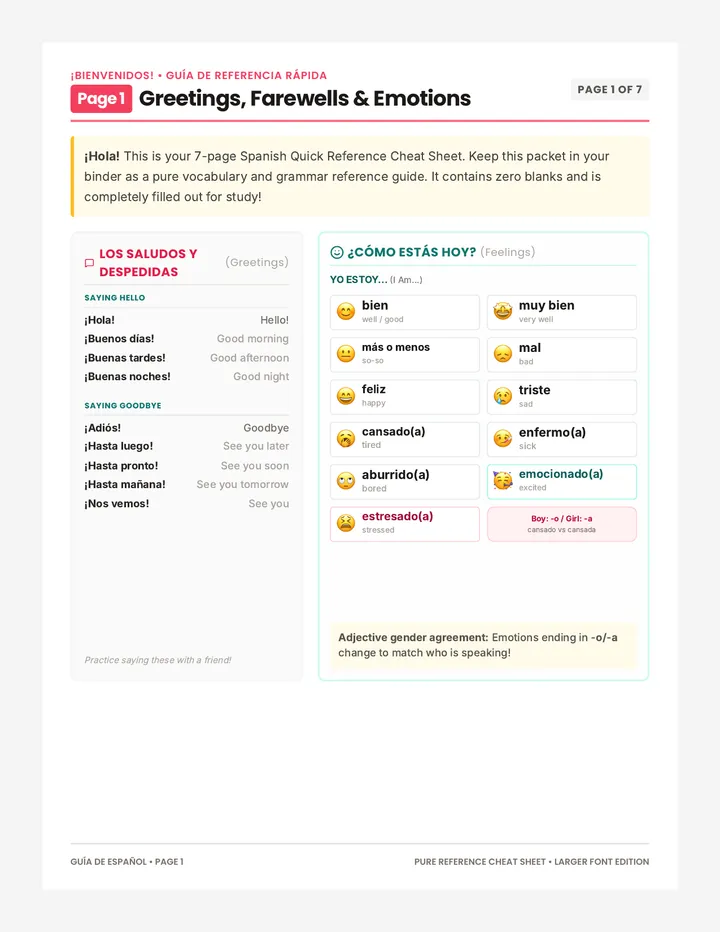
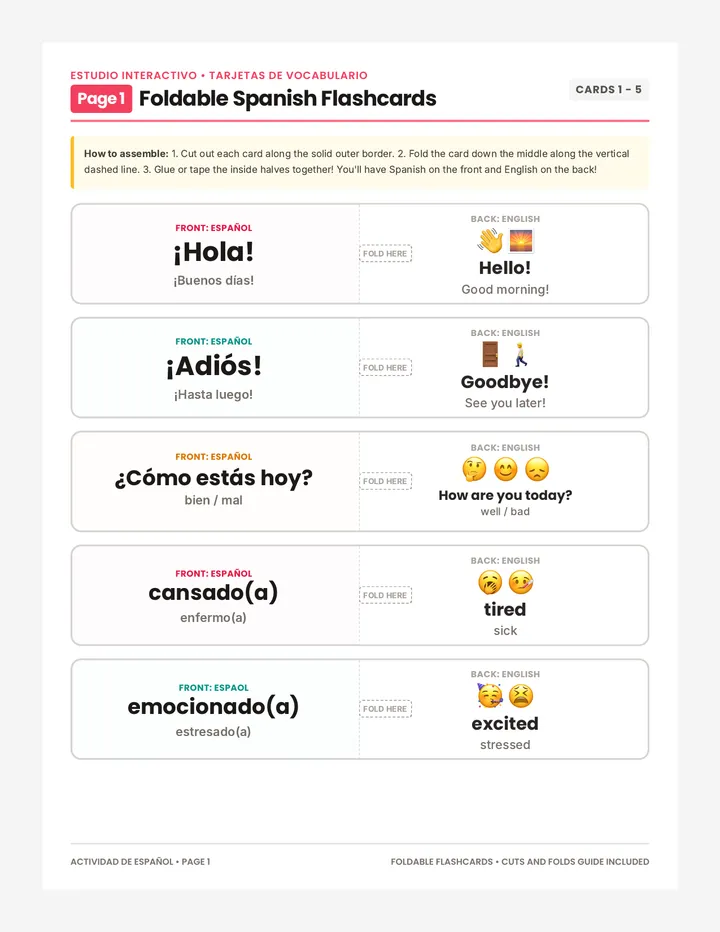
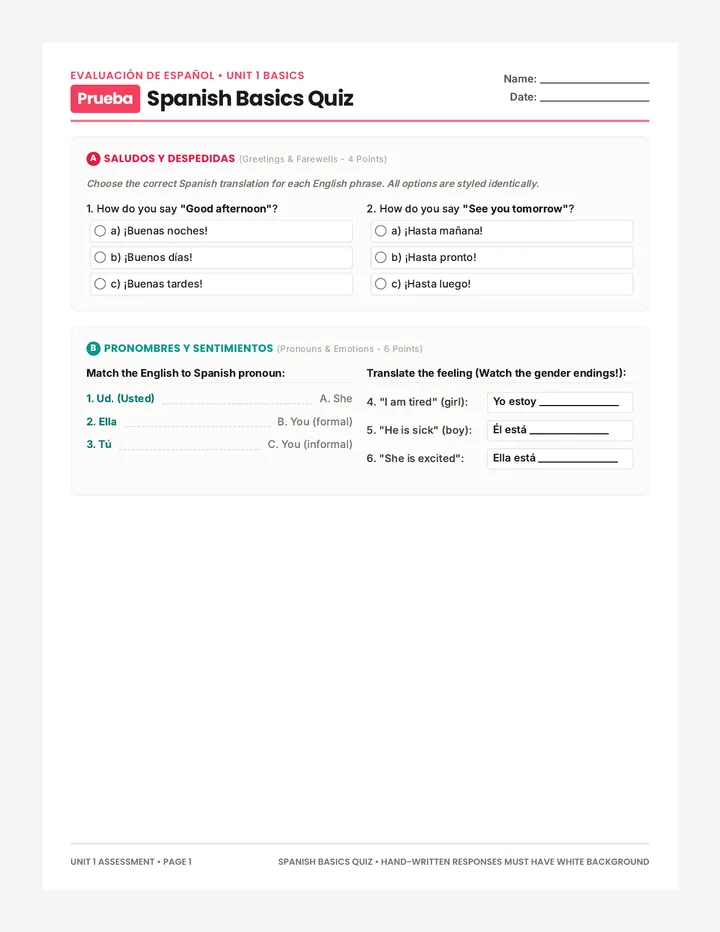
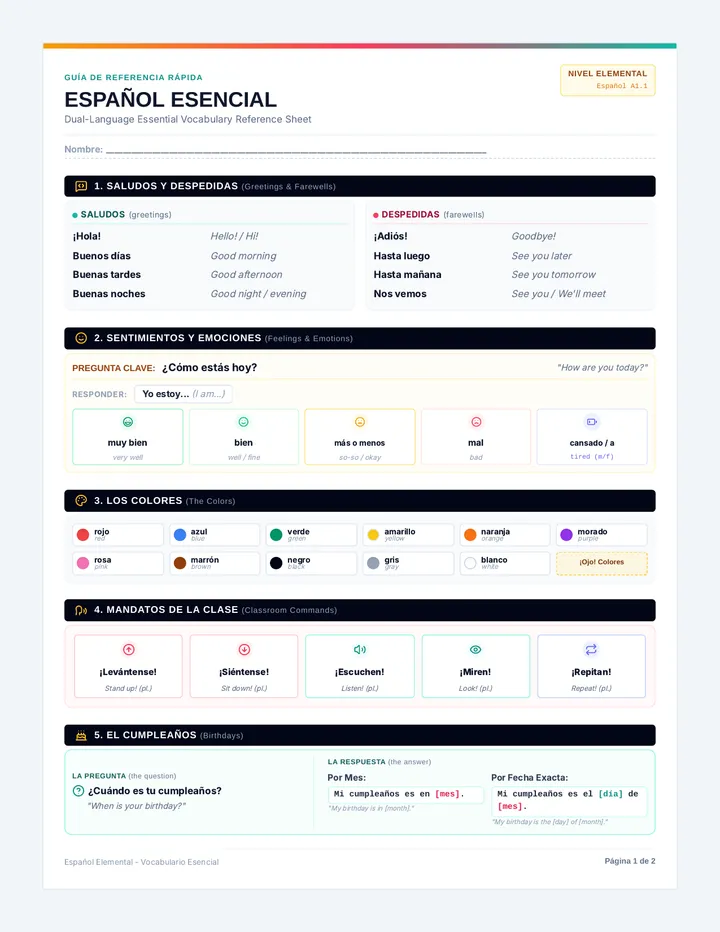
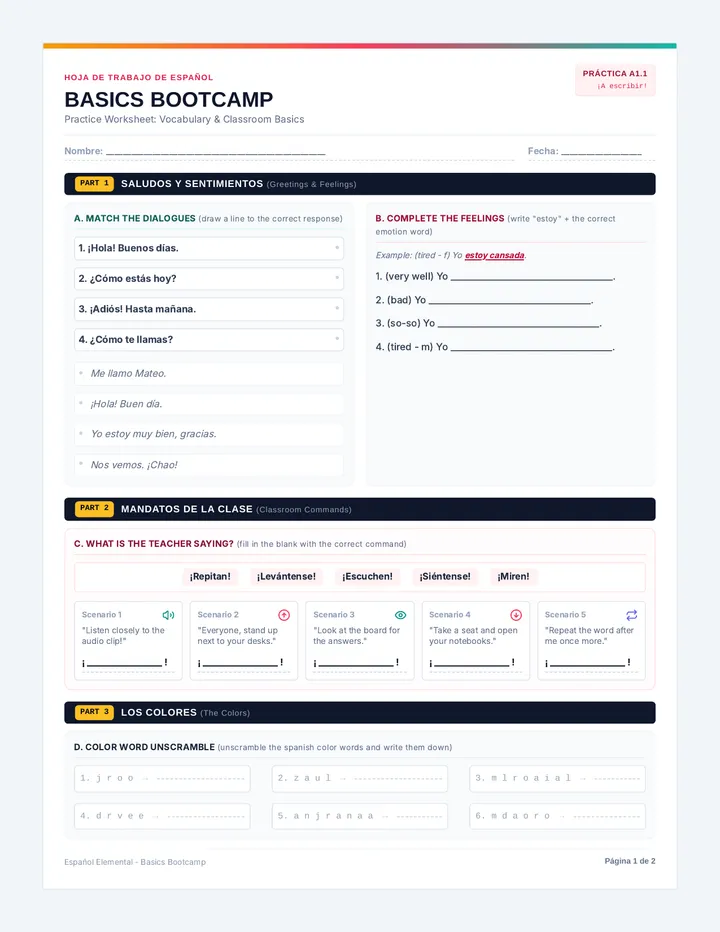
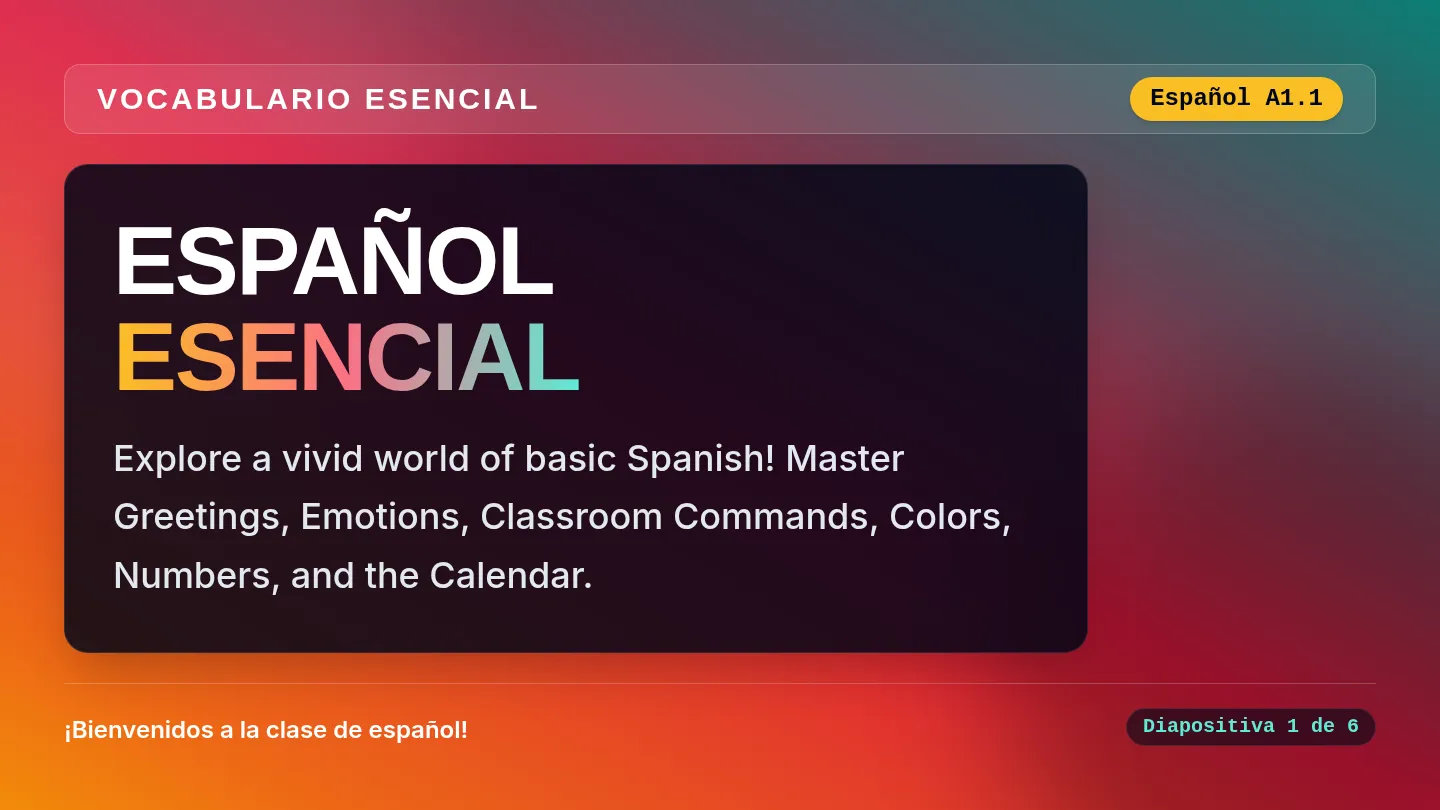
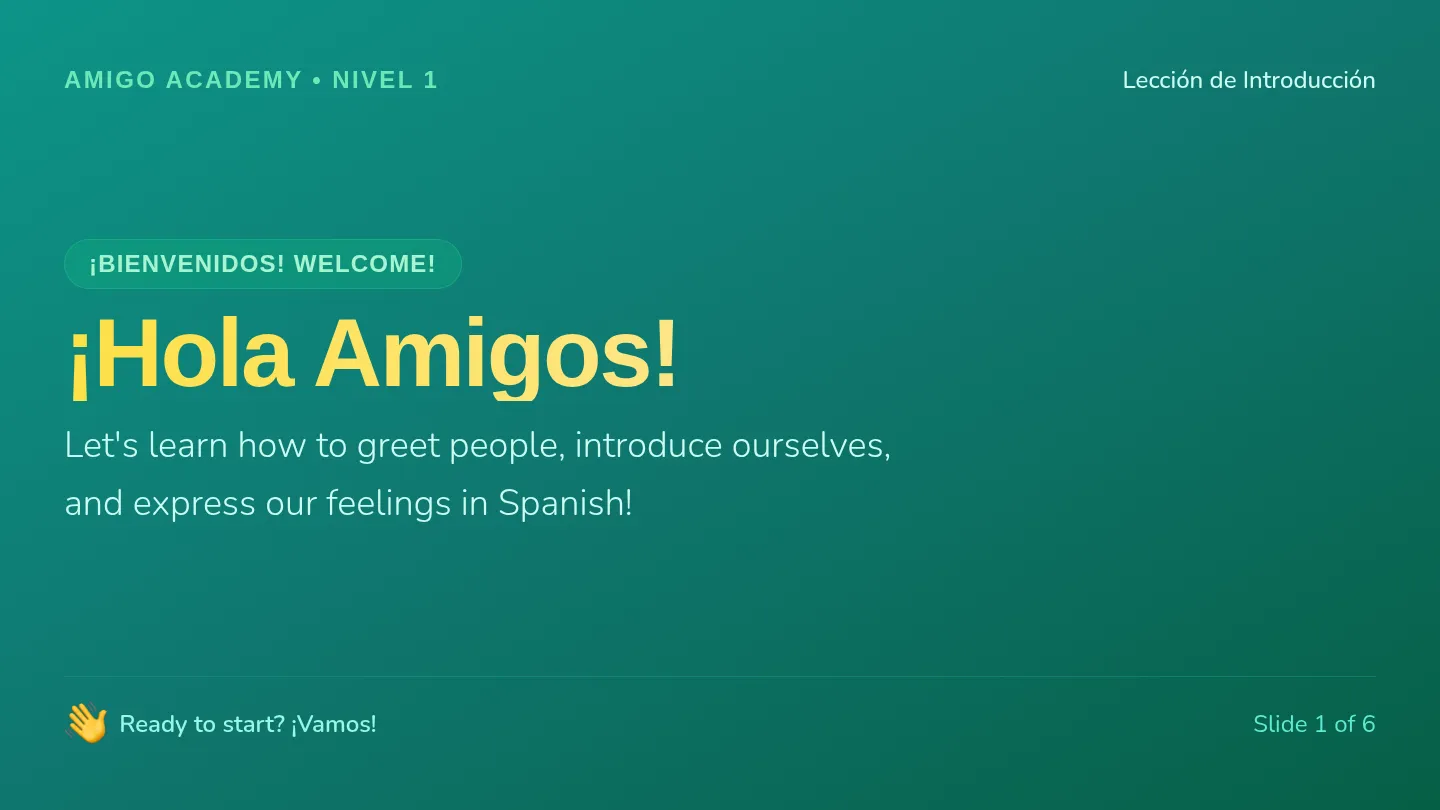
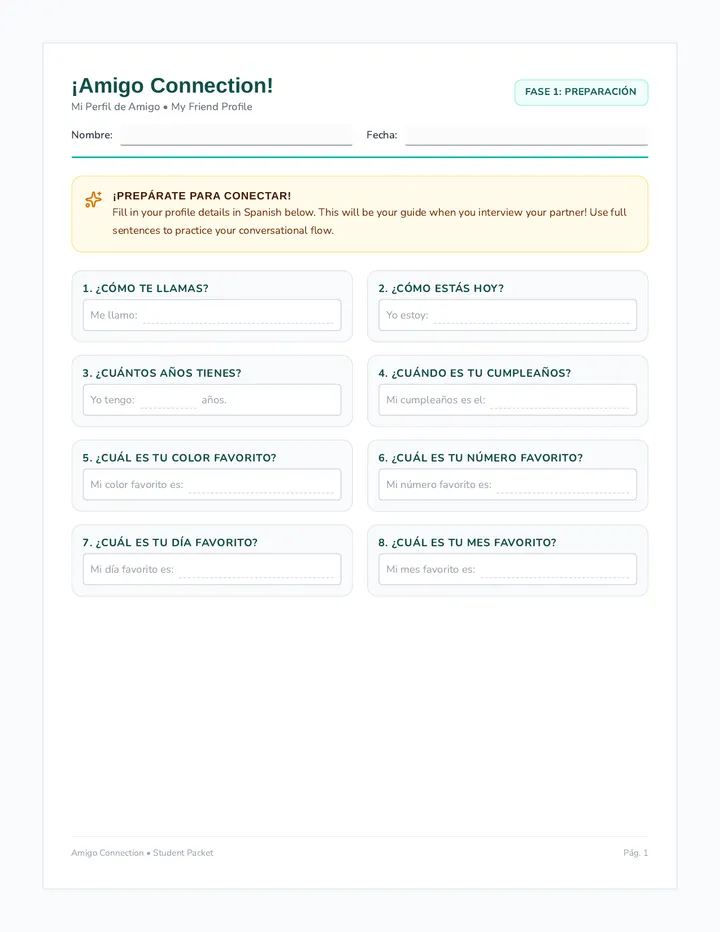
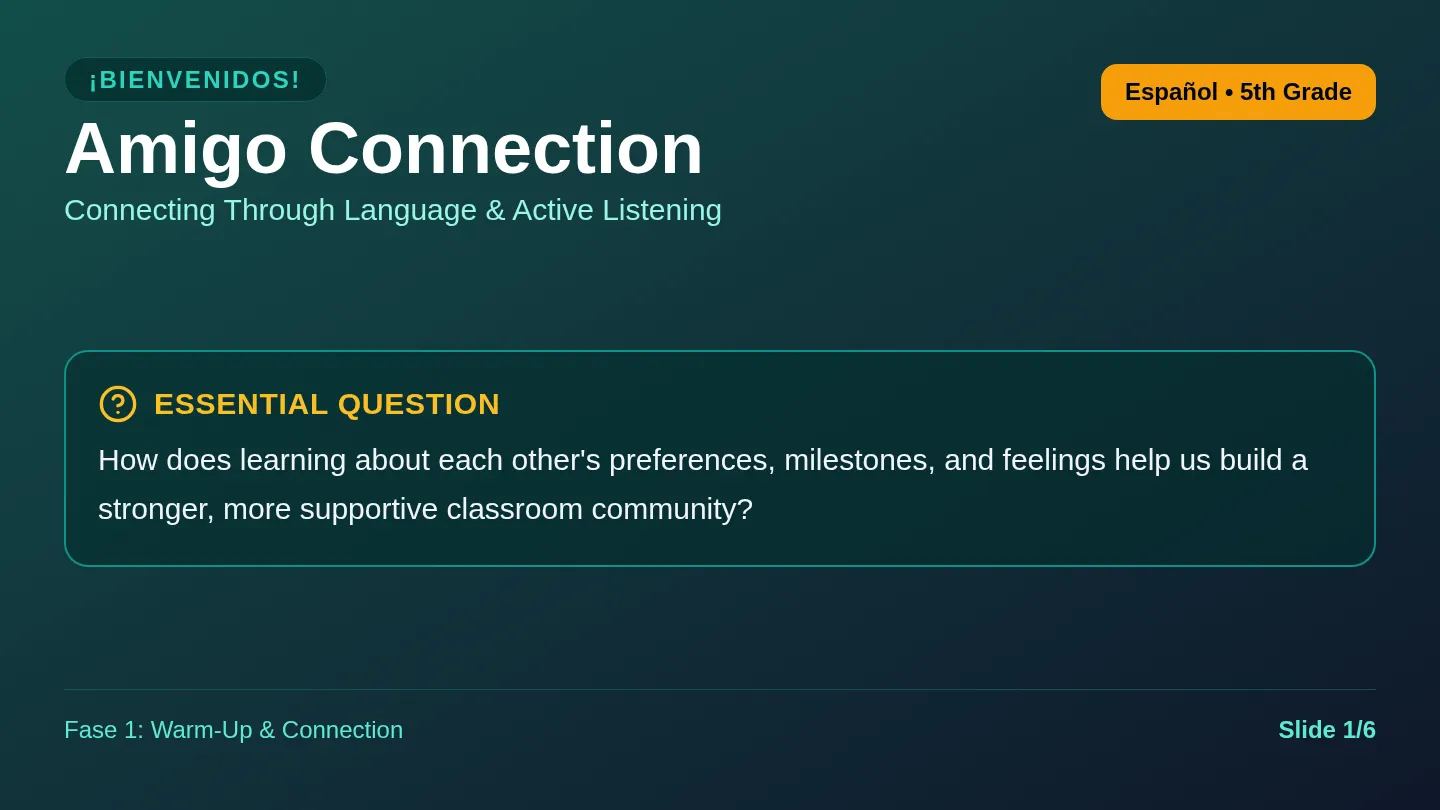
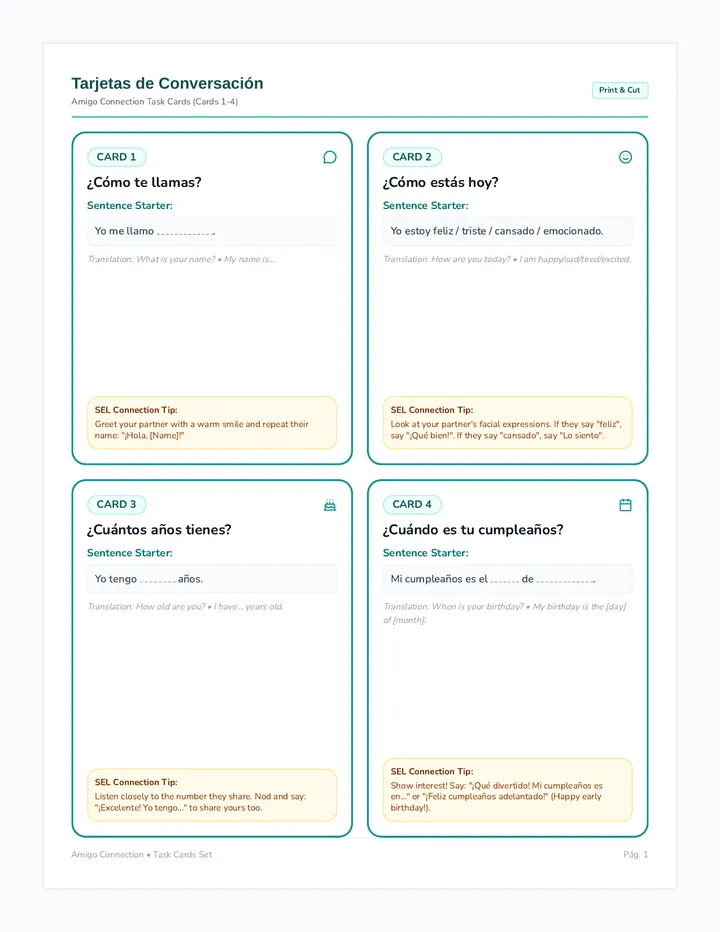
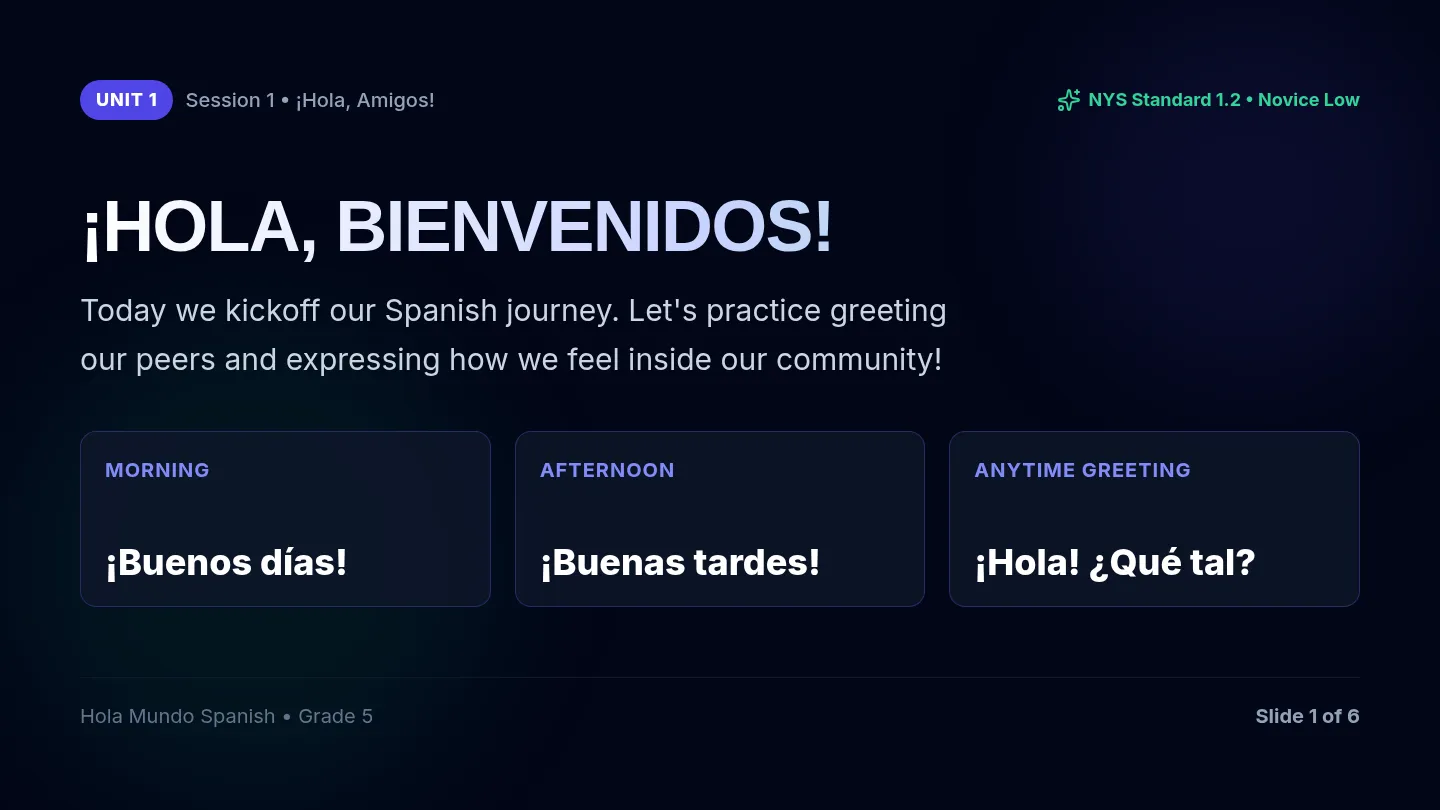
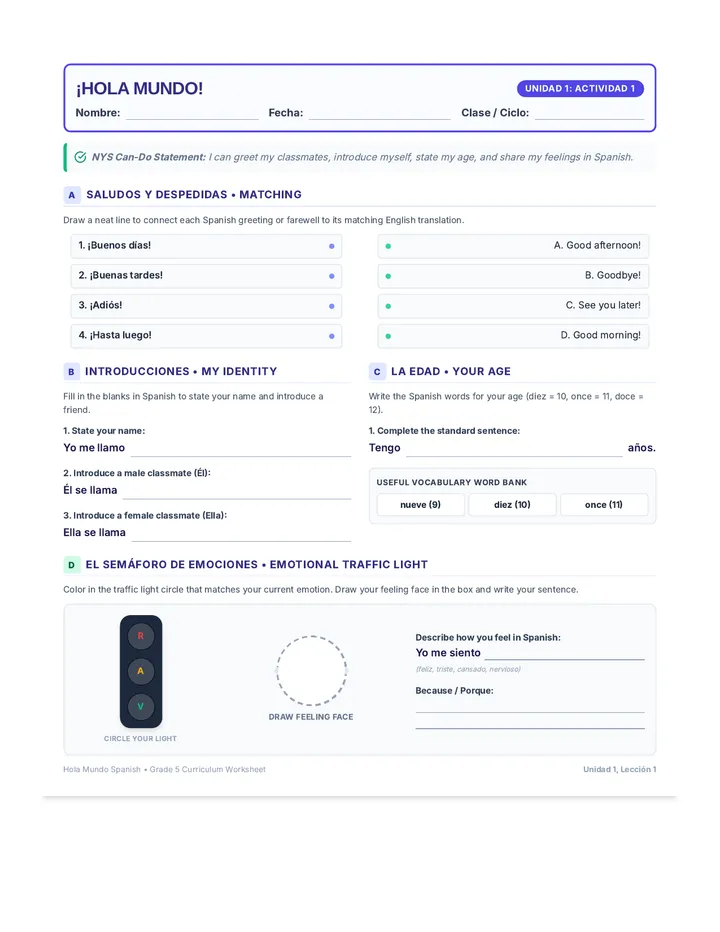
Introduction to basic greetings, names, and the concept of the telenovela project.
Una lección vibrante sobre modismos y expresiones comunes en español y sus equivalentes en inglés, explorando significados literales y figurados.
An introductory lesson on Japanese numbers 1-20 using Picture Talk and visual aids to build immediate comprehension through counting familiar objects.
Introduction aux salutations de base et aux règles de politesse en milieu bamanan, combinant lecture et expression orale.
Apprentissage des premières consonnes et formation des syllabes simples pour commencer à lire des mots de deux lettres.
Introduction aux voyelles du Bamanankan (a, e, ɛ, i, o, ɔ, u) et à la nasalisation, avec des exercices de tracé et de reconnaissance auditive.
A 45-minute exploratory Japanese lesson using storytelling and Comprehensible Input to introduce Oshogatsu, Hinamatsuri, and Kodomo no Hi. Students will engage with the cultural significance and specific traditions of each holiday through narrative and visual representation.
An introductory lesson exploring Japan's unique geography, diverse weather patterns, and iconic four seasons using comprehensible input strategies. Students will identify the four main islands, major landmarks like Mt. Fuji, and cultural seasonal shifts.
Focuses on vacation preparation, travel activities, and clothing needs for specific destinations. Students continue the TPRS narrative by packing for a trip and reading a comprehensible story about a travel mishap.
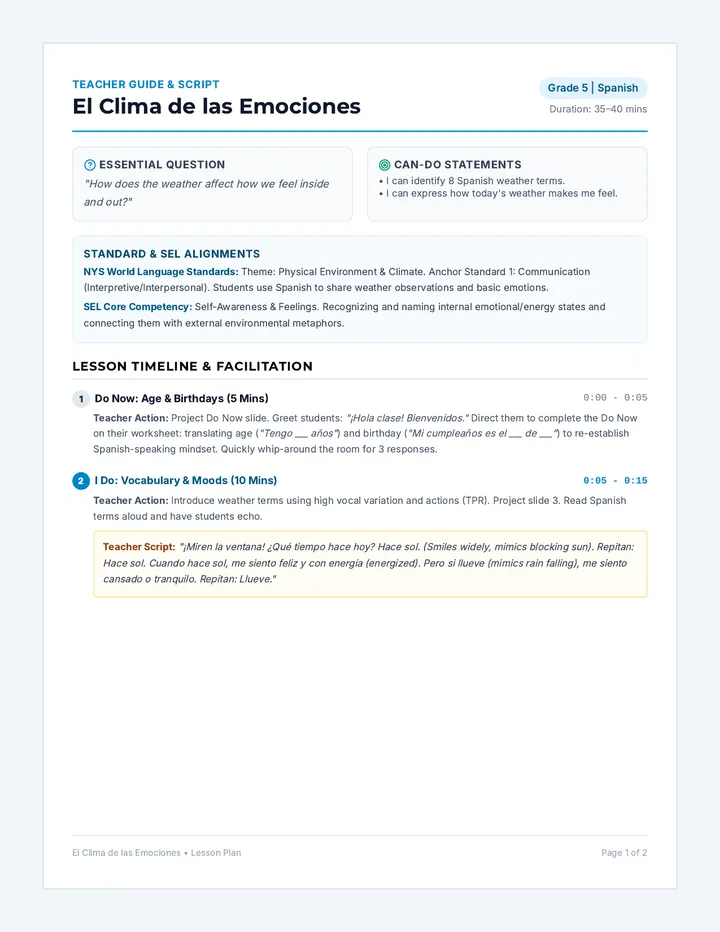
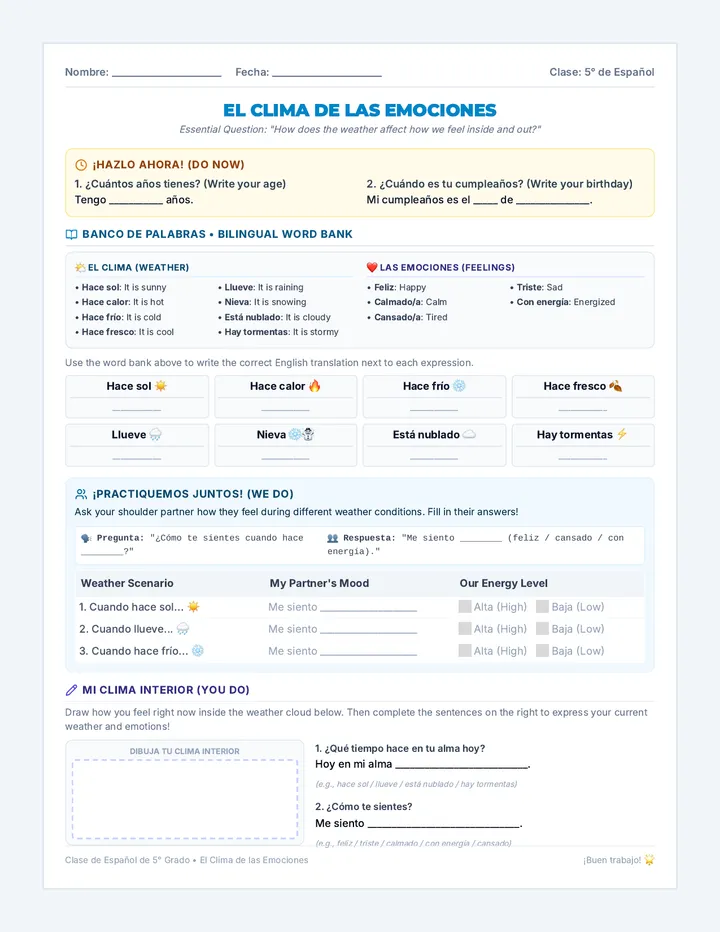
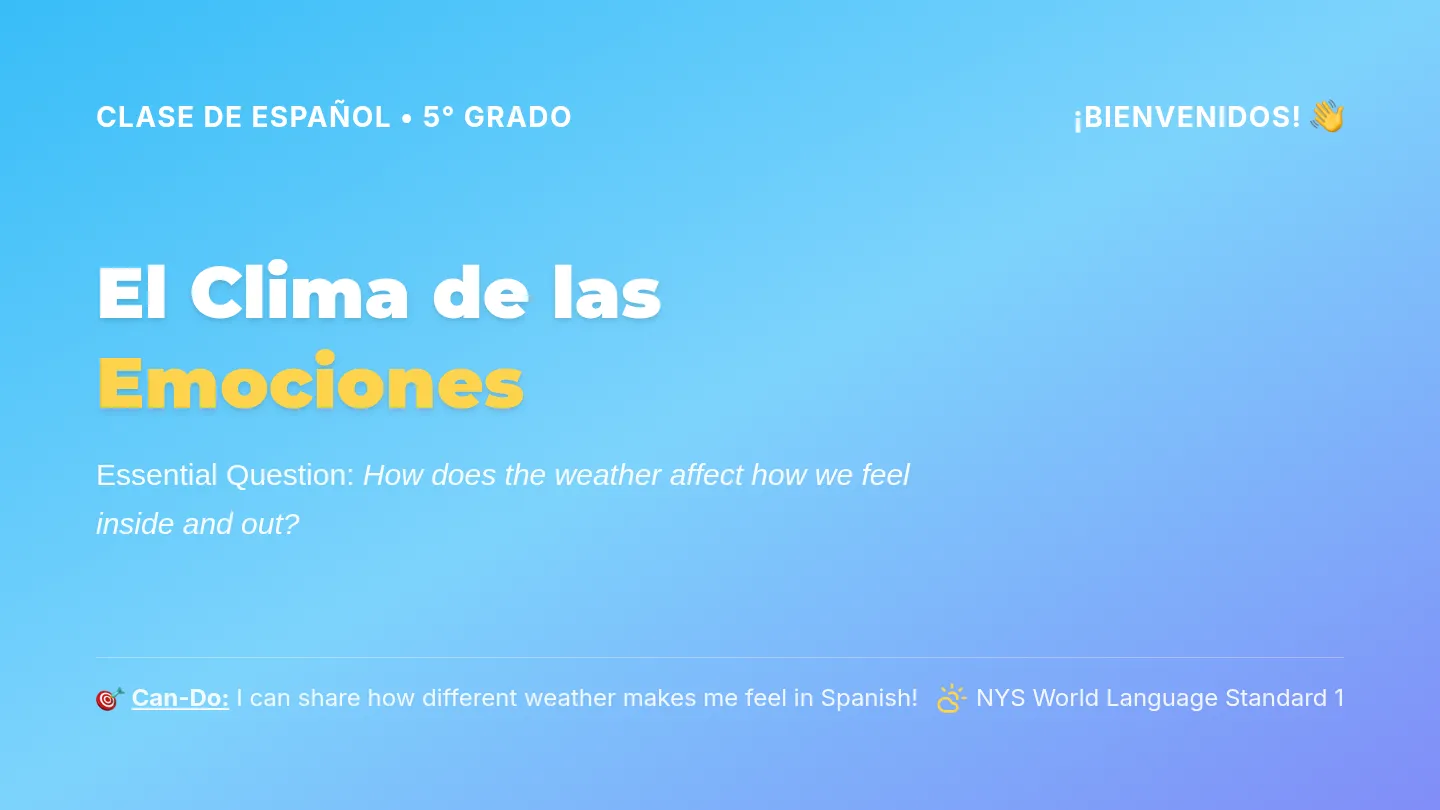
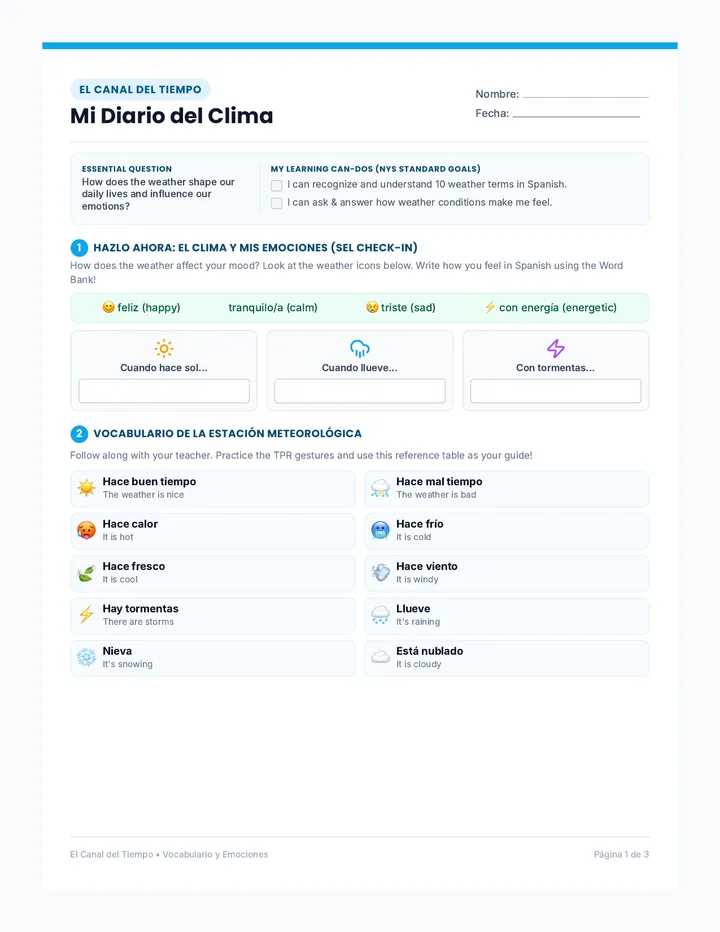
Introduces seasonal weather, basic clothing items, and hobbies using Picture Talk with cultural images from Spanish-speaking countries. Students engage in TPRS storytelling to practice describing what people wear and do in different climates.
Building on weather knowledge to discuss outdoor activities using 'Man kann' + infinitive. Students will connect specific weather conditions to possible leisure activities in Germany.
Introduction to weather vocabulary and seasons in Germany using high-frequency structures. Students will practice 'Es ist...' with weather adjectives through visual storytelling and repetition.
Students design their own Spanish restaurant, creating a menu, floor plan, and practicing ordering food in Spanish. This project-based lesson combines creativity, vocabulary, and conversational skills.
A festive conclusion focusing on German holiday traditions, including 'Schultüte' and 'Weihnachtsmärkte'. Students compare local and German celebrations using Venn diagrams.
Analyzing the meticulous detail of Albrecht Dürer and the modernism of the Bauhaus movement. Students create their own symbols inspired by these German artistic icons.
An exploration of German music from classical roots to modern pop and folk. Students analyze lyrics for cognates and identify traditional instruments.