Students investigate how boundary conditions create standing waves in strings and air columns. They will calculate the fundamental frequencies and subsequent harmonics for open and closed systems.
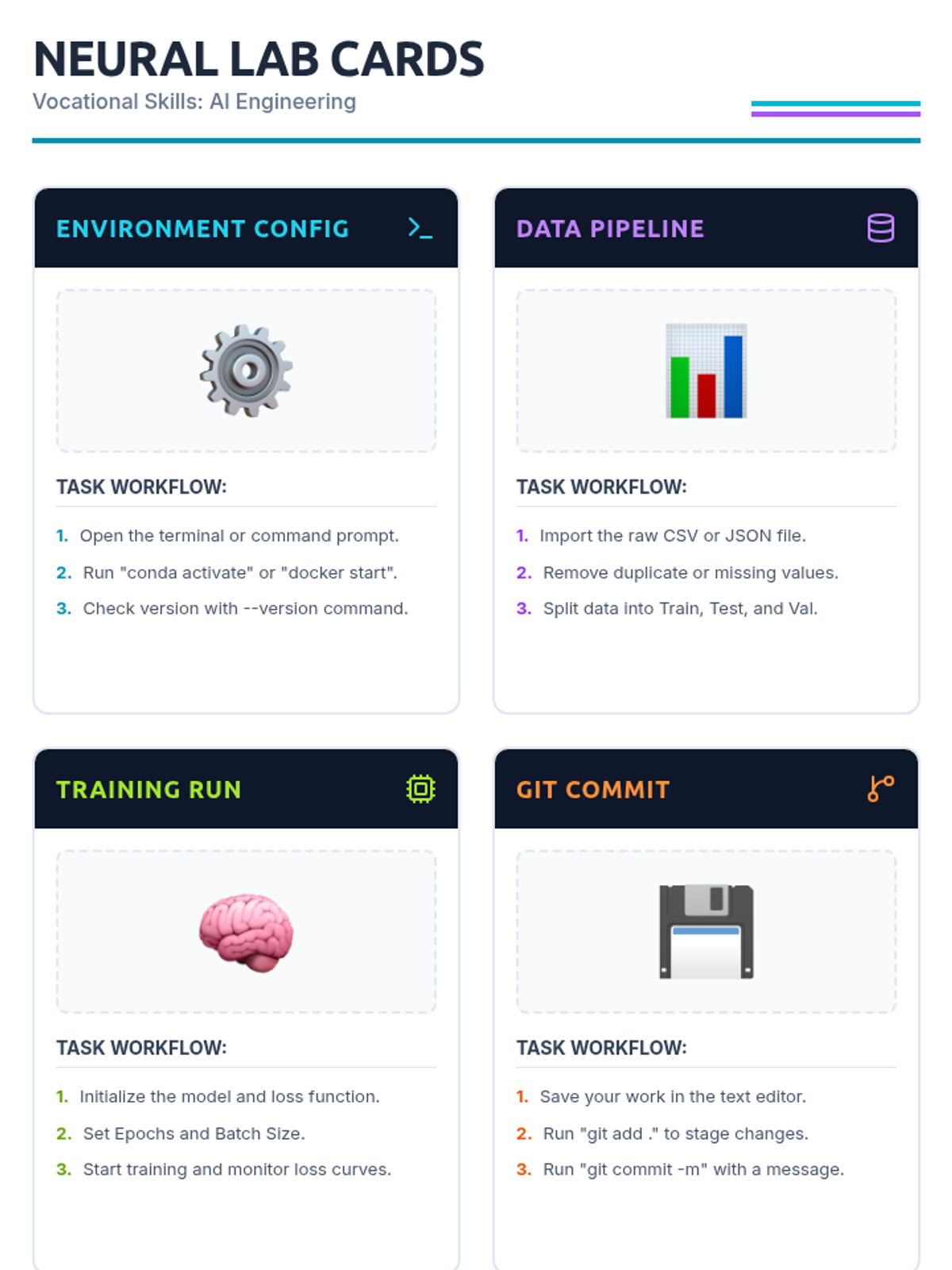
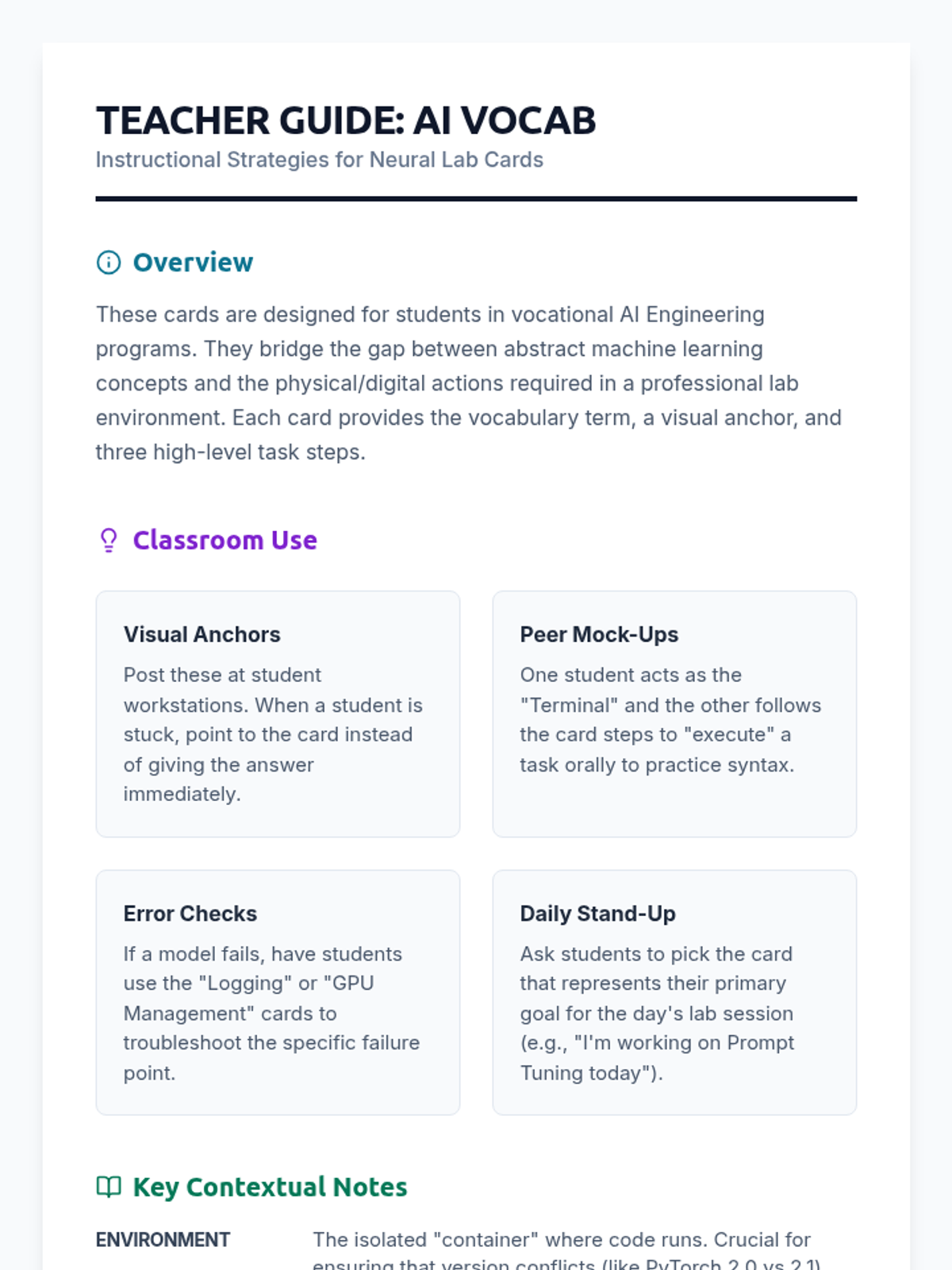
This lesson introduces foundational vocational skills for aspiring AI engineers, focusing on the practical steps required to manage environments, data, and models in a professional setting.
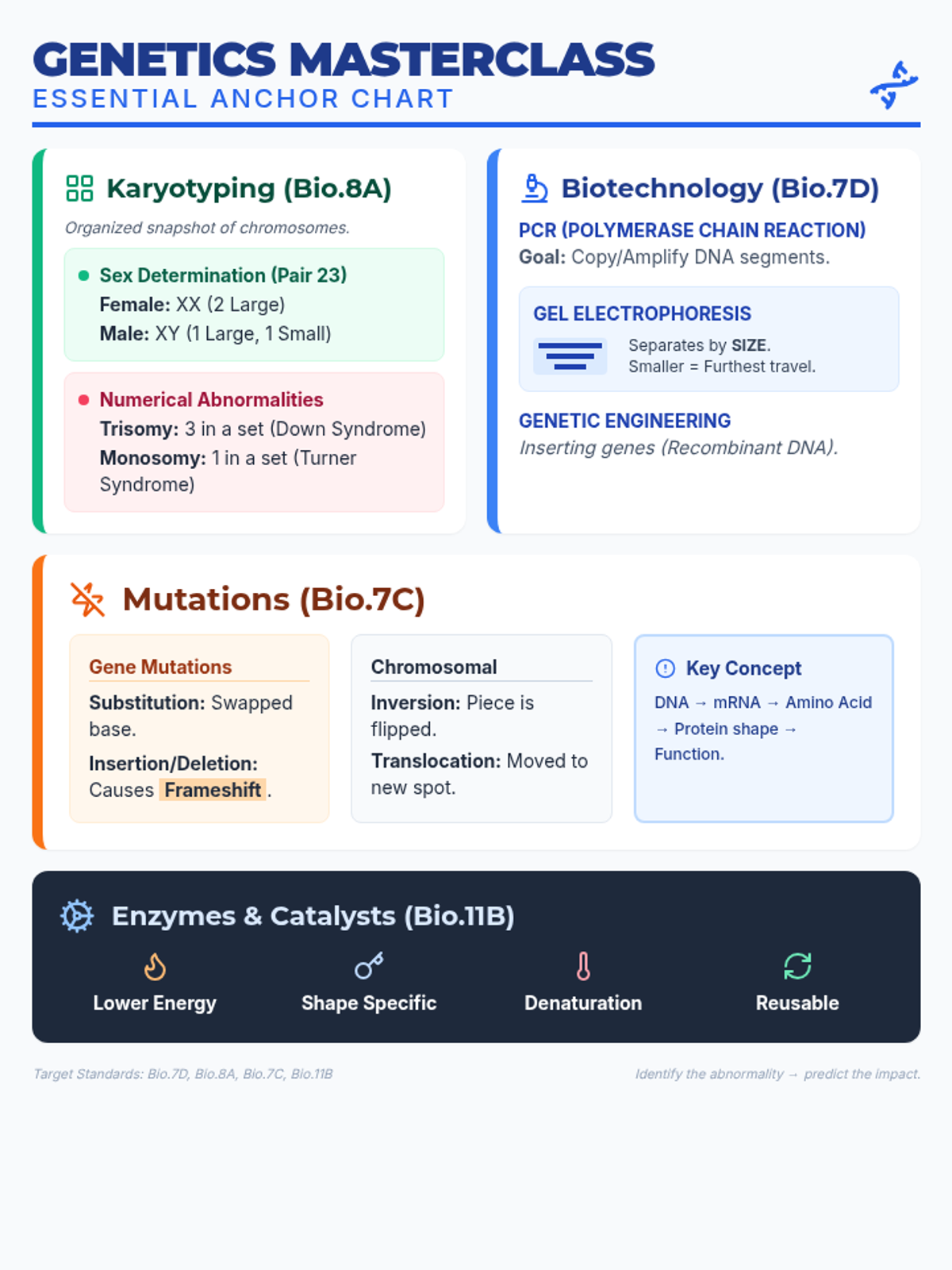
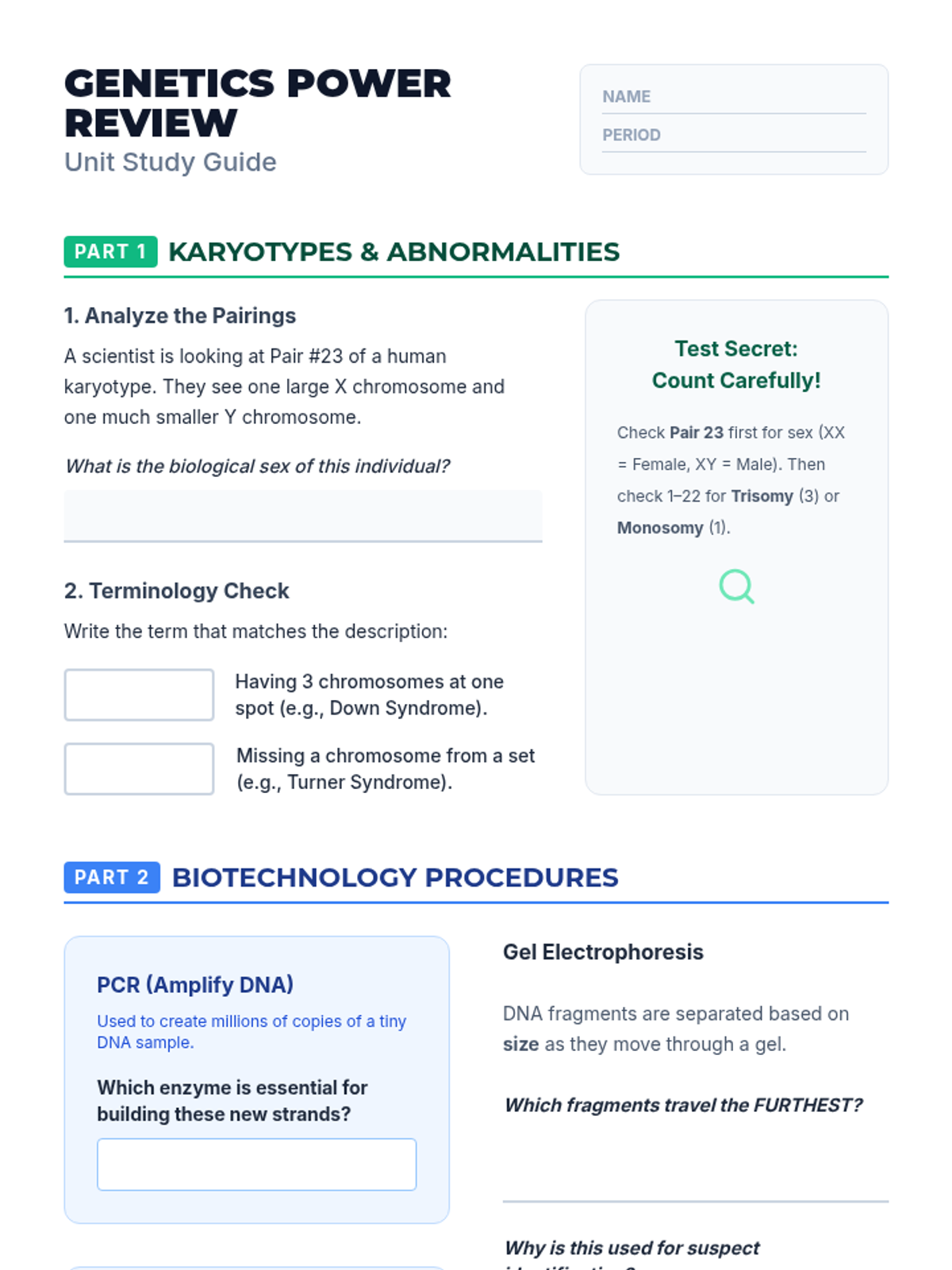
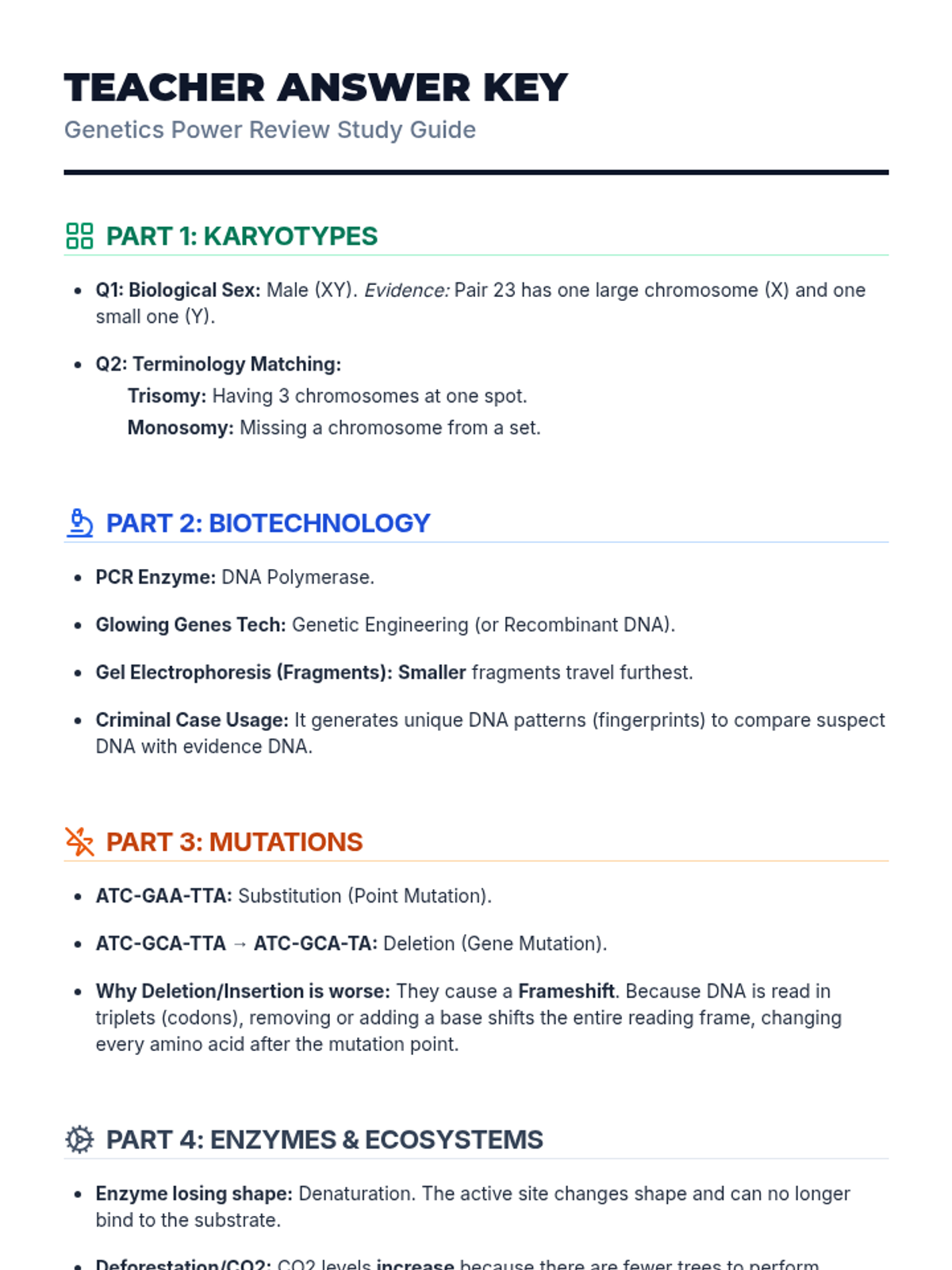
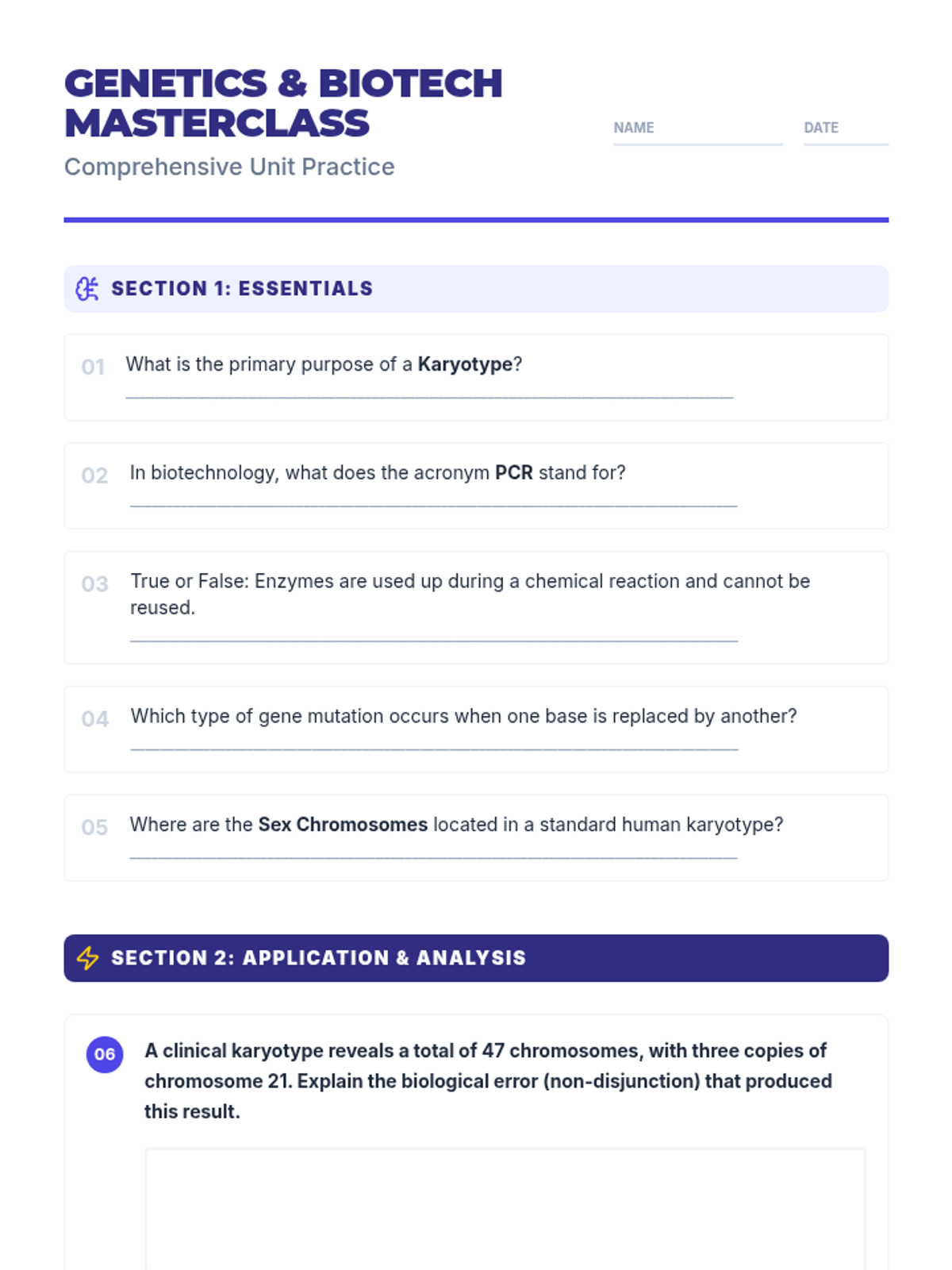
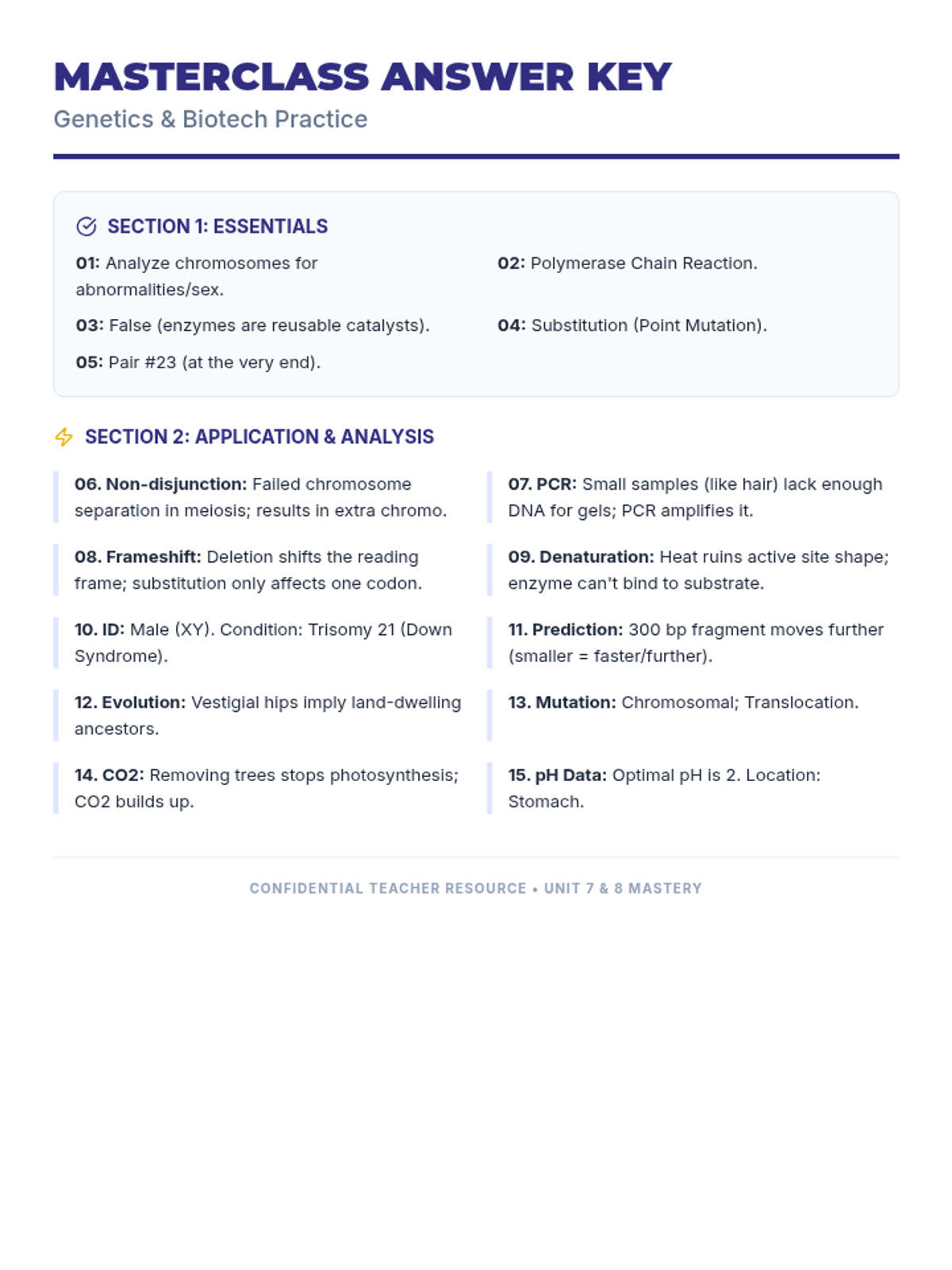
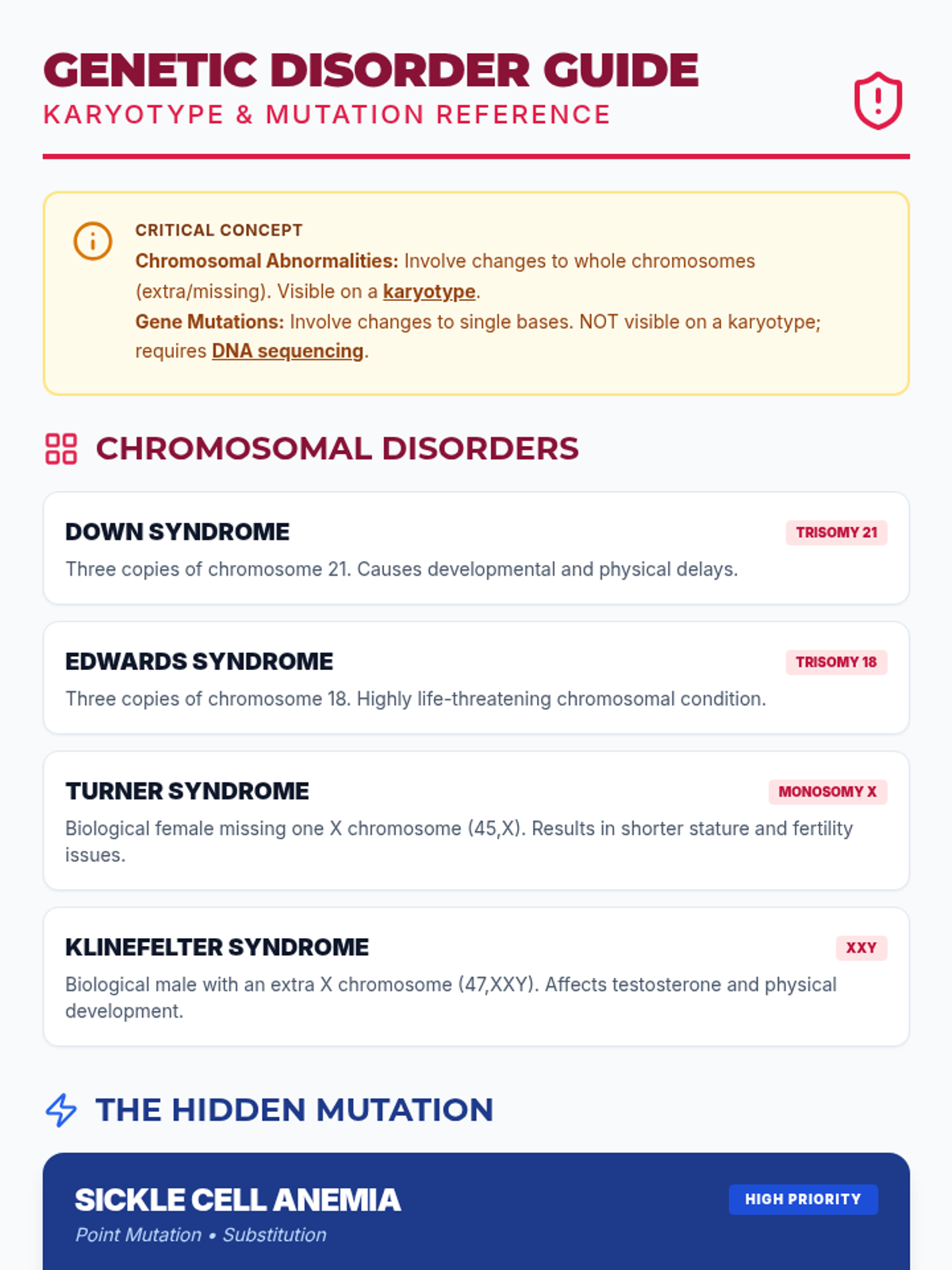
A high-impact review lesson designed to help students master the essential concepts of Karyotyping, Biotechnology (PCR/Gel Electrophoresis), and Mutations before their unit test. Includes visual anchor charts and structured practice.
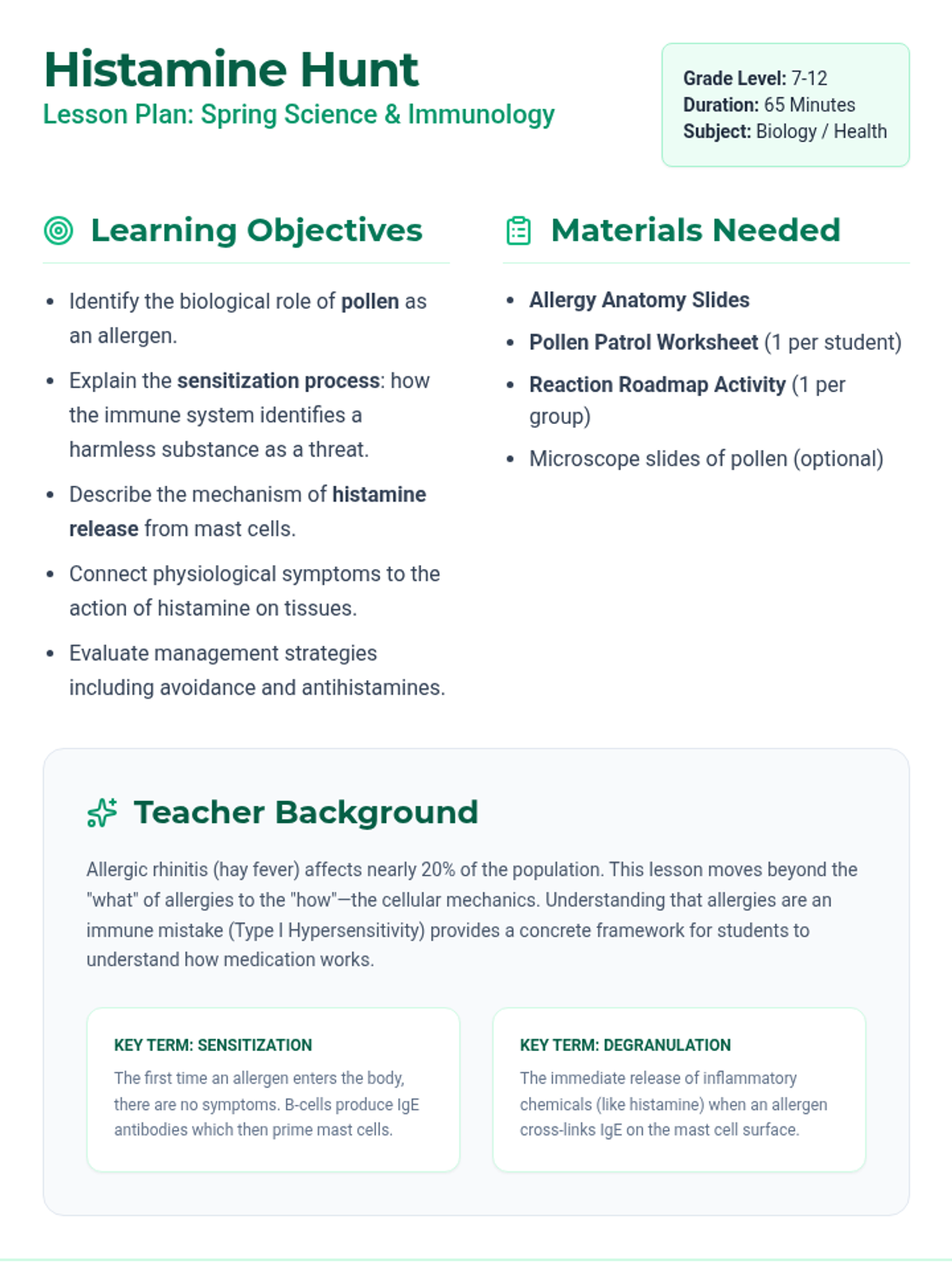
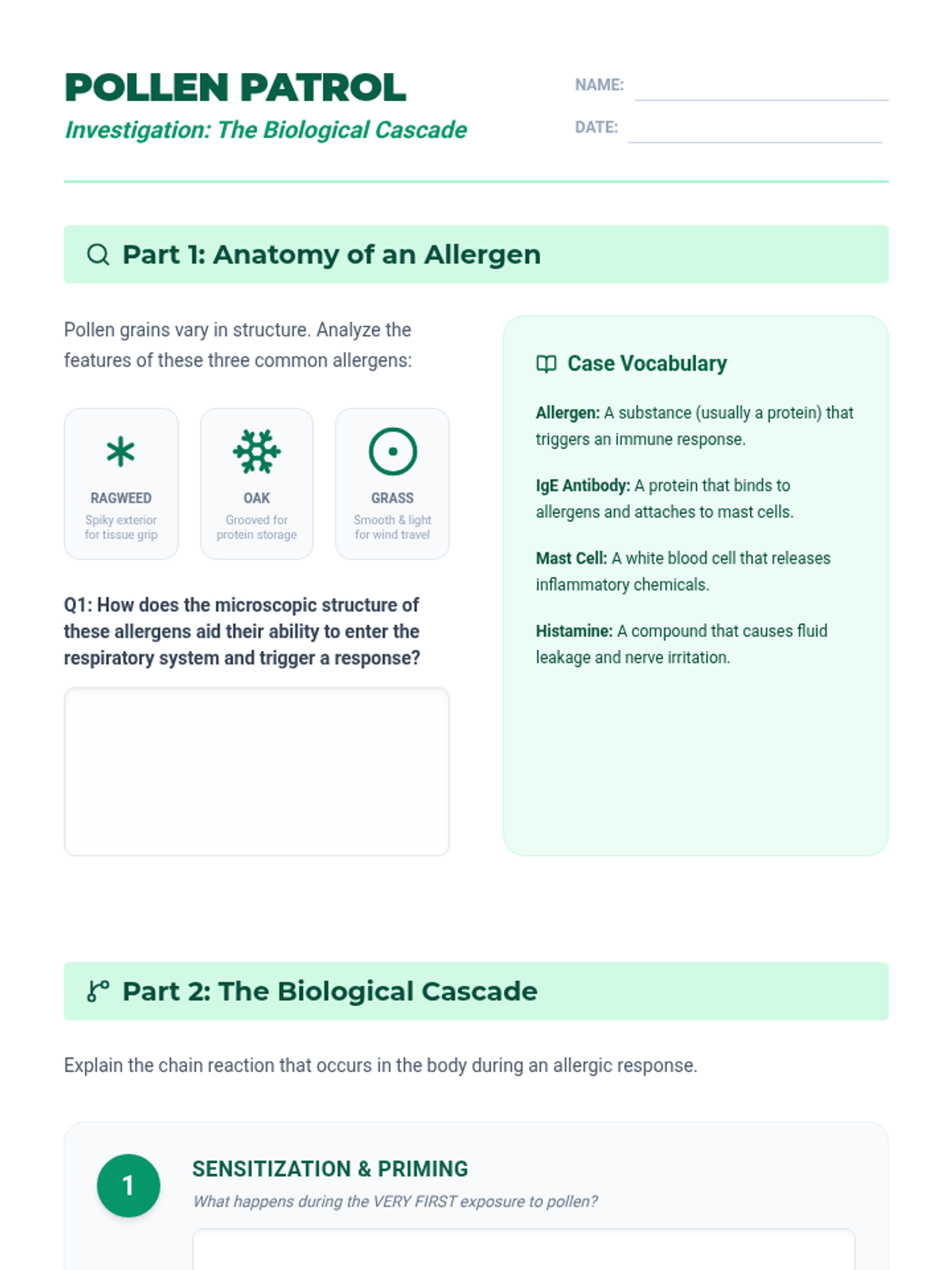
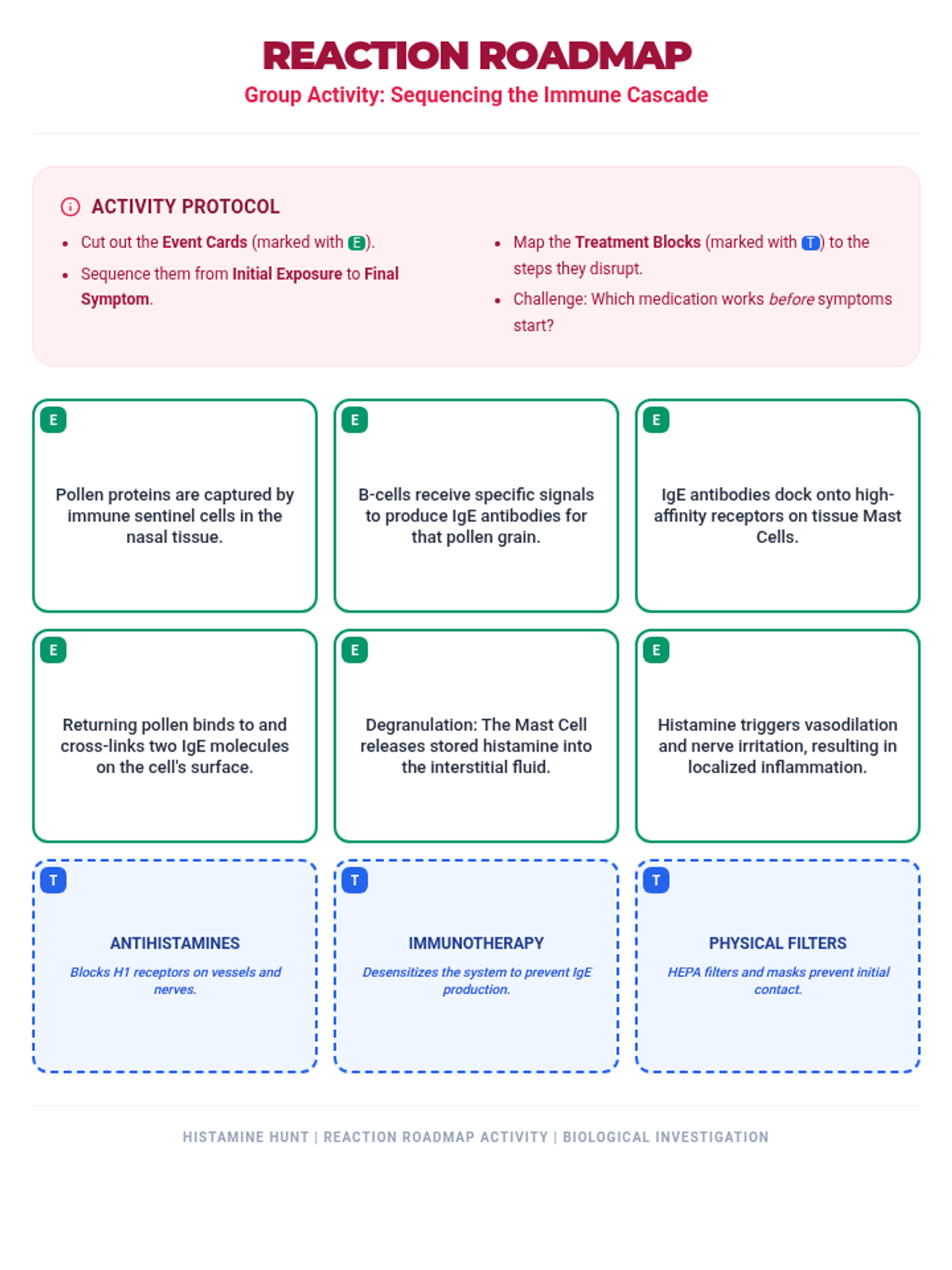
A comprehensive investigation into the biological mechanisms of seasonal allergies, focusing on the immune system's overreaction to pollen and the role of histamine. Students will explore hypersensitivity, physical symptoms, and evidence-based management strategies.
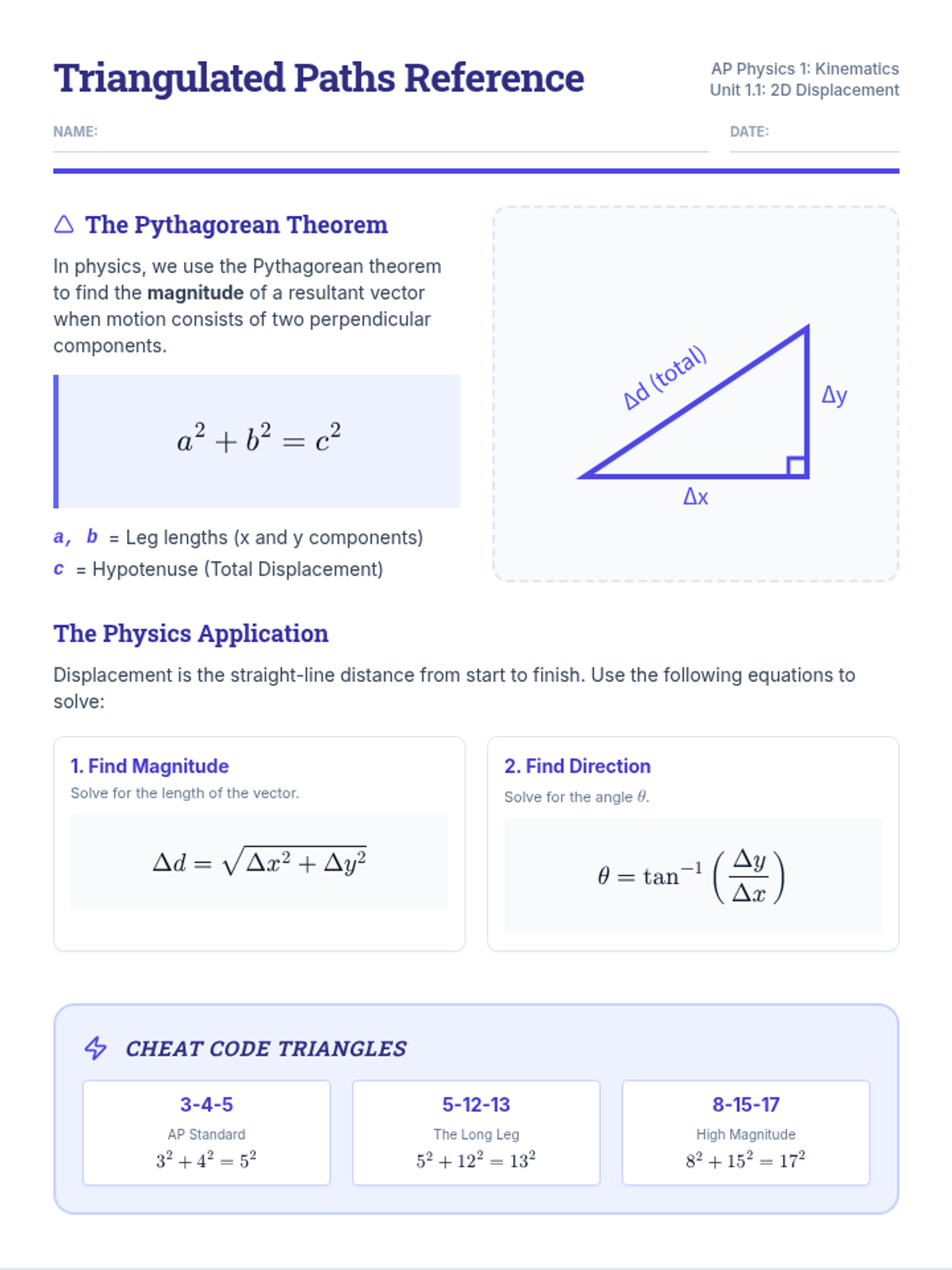
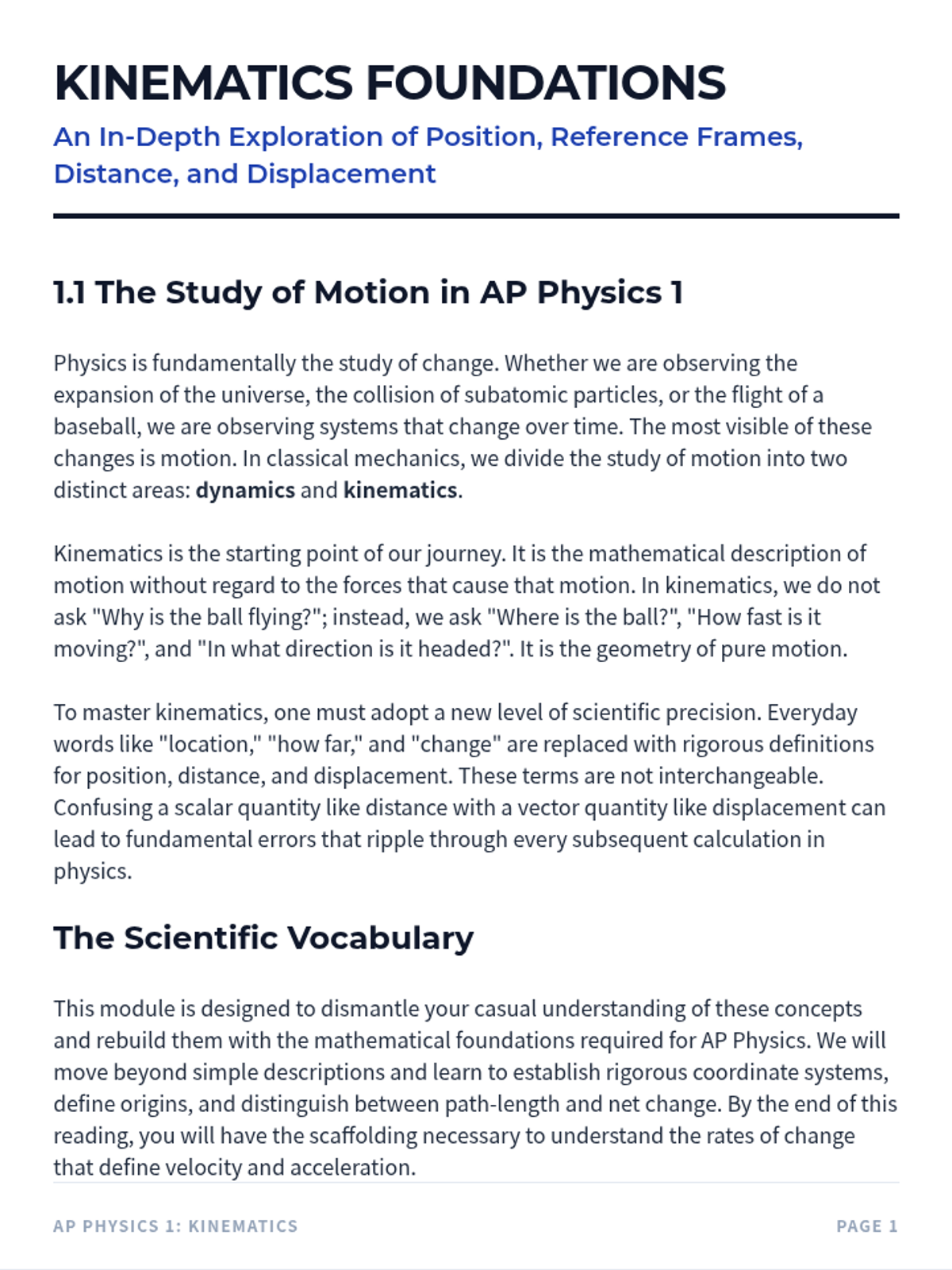
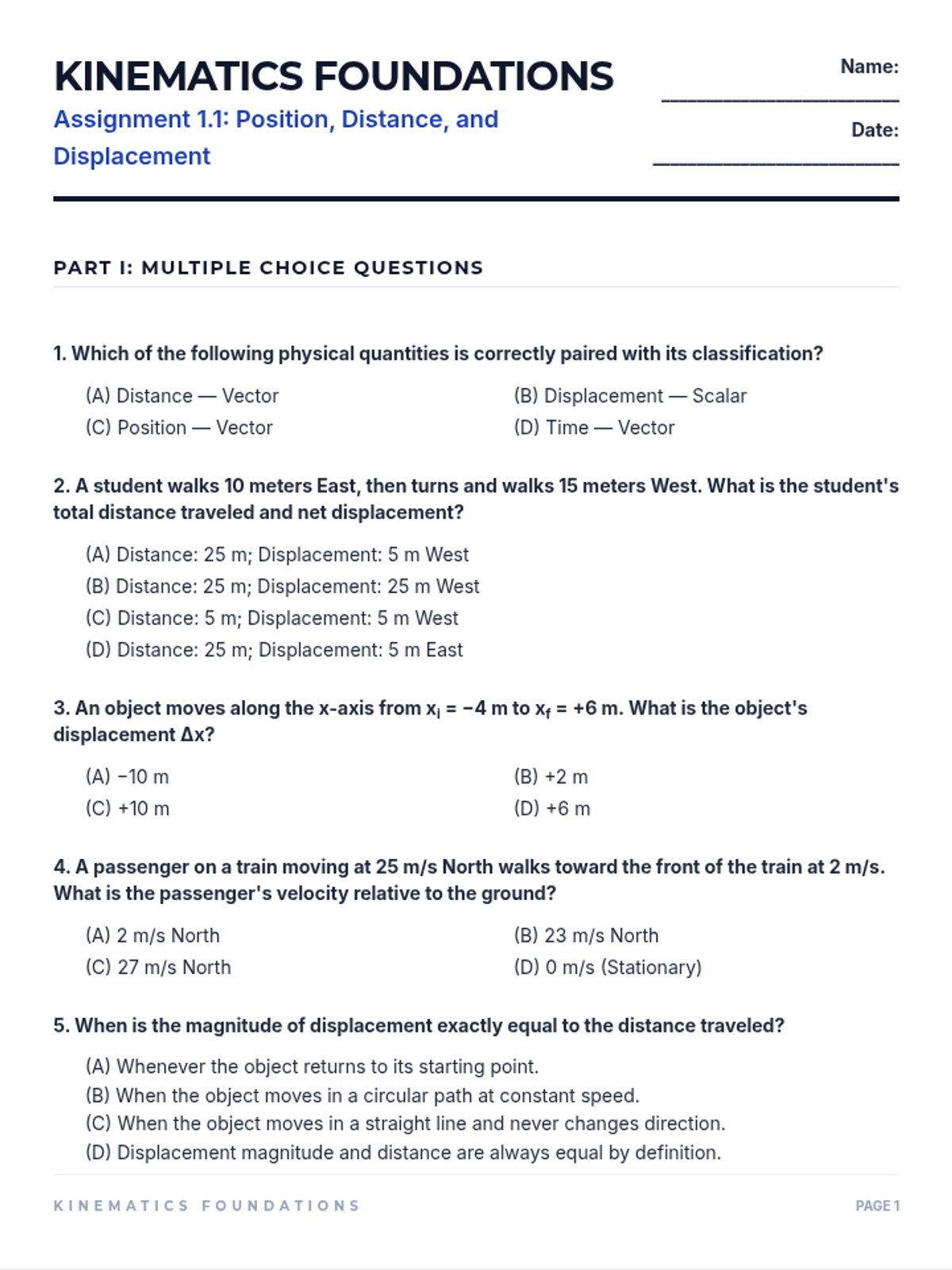
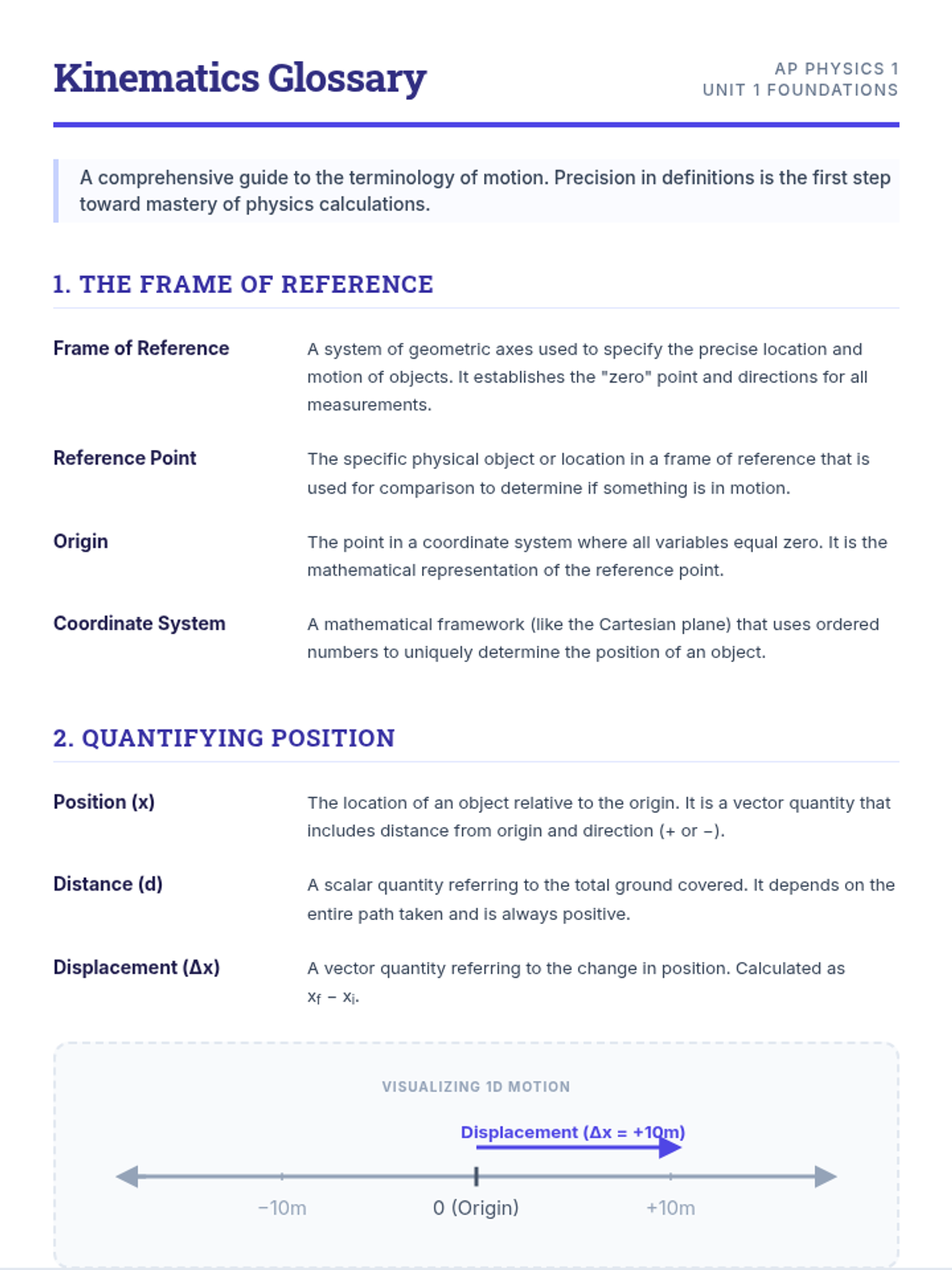
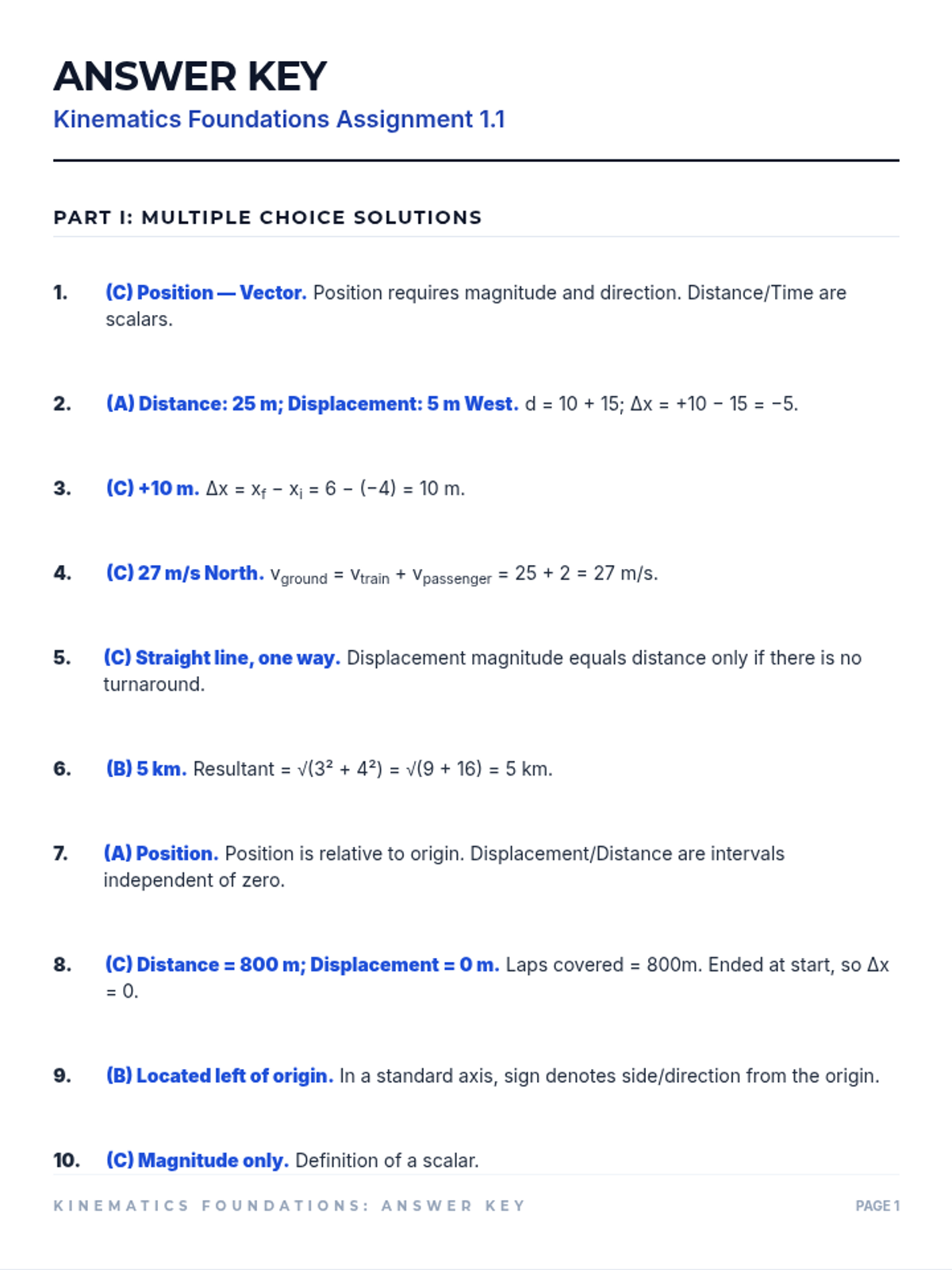
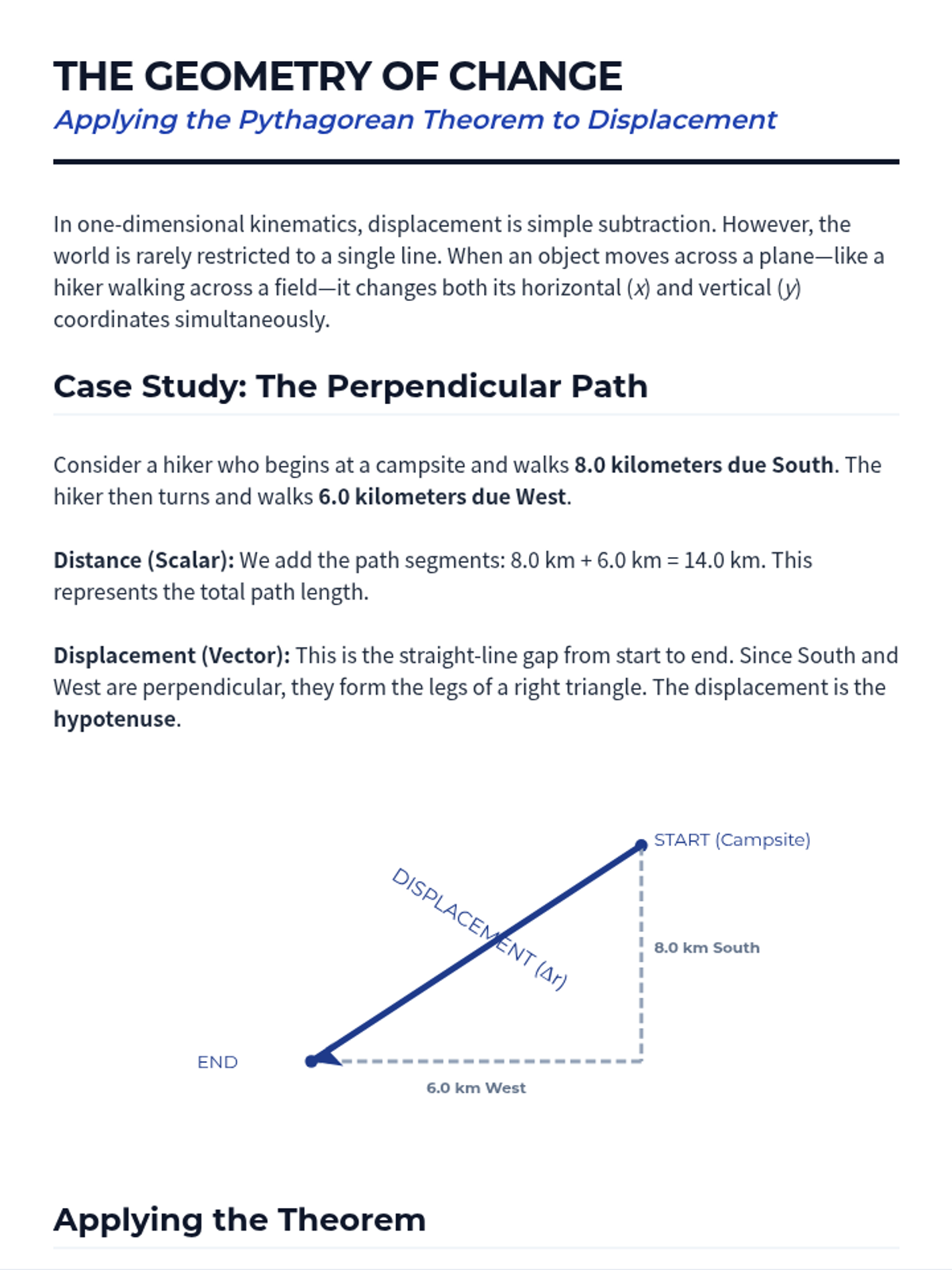
A foundational lesson on the geometry of motion, covering position, distance, displacement, and frames of reference for AP Physics 1.
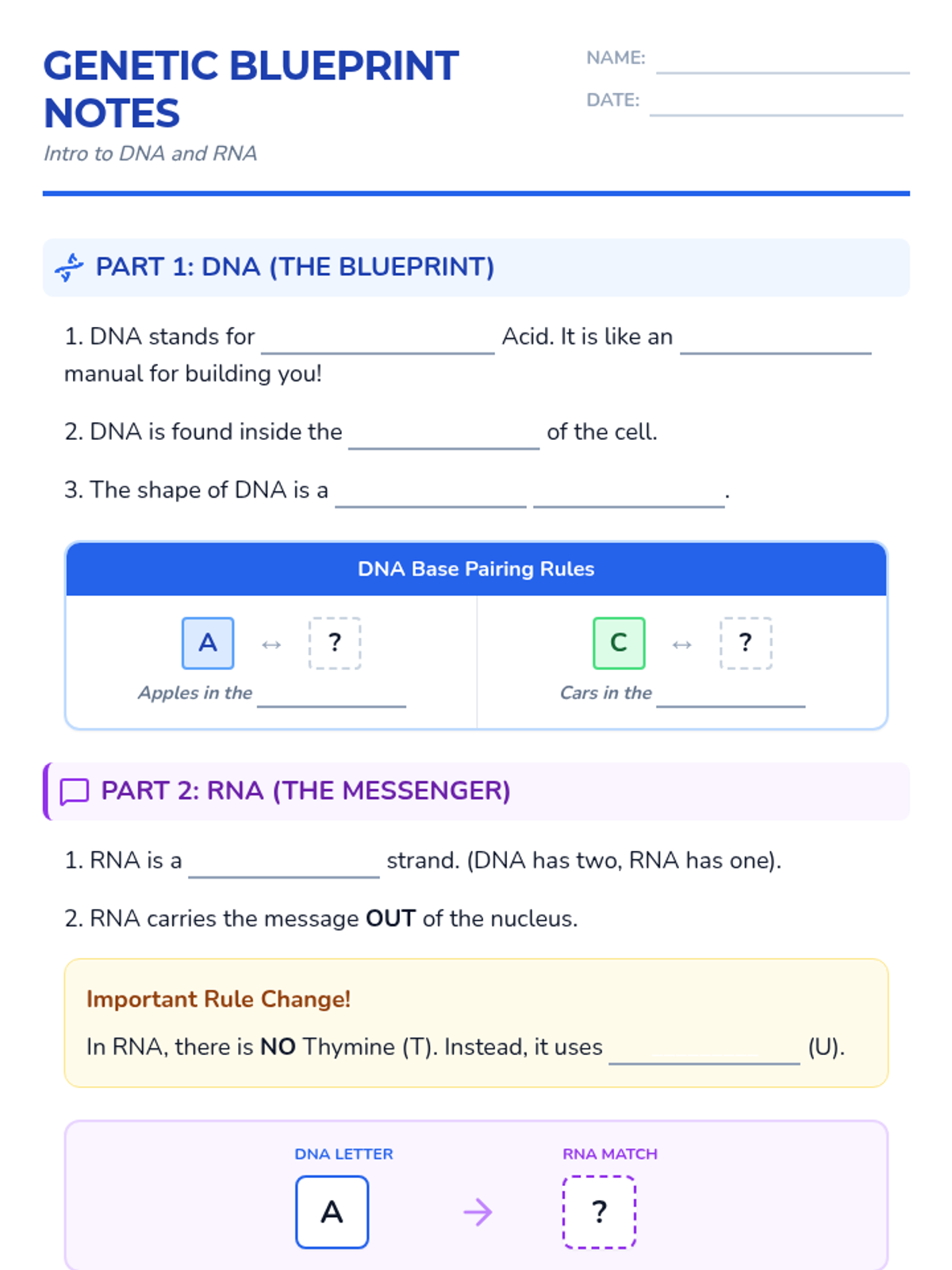
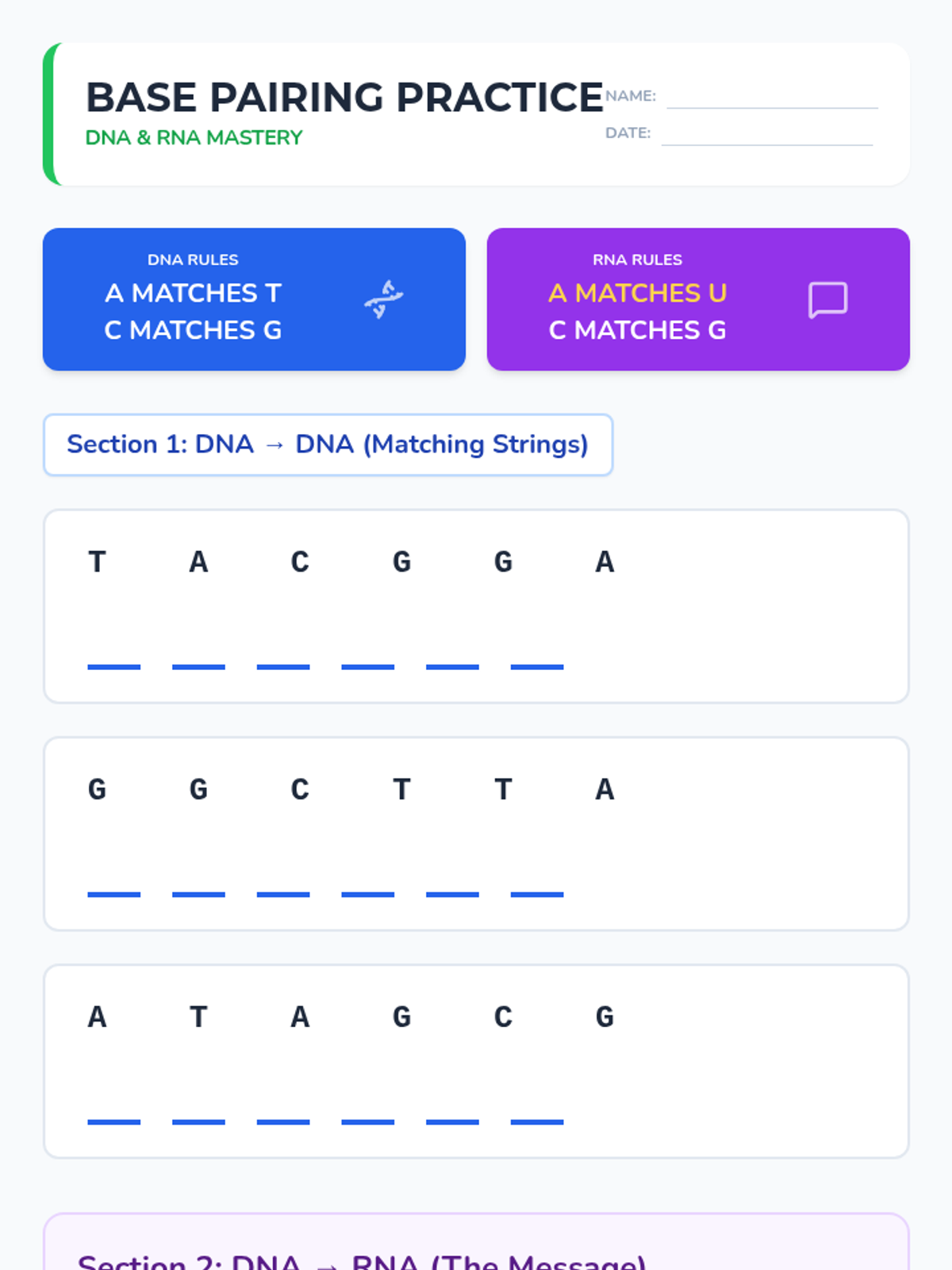
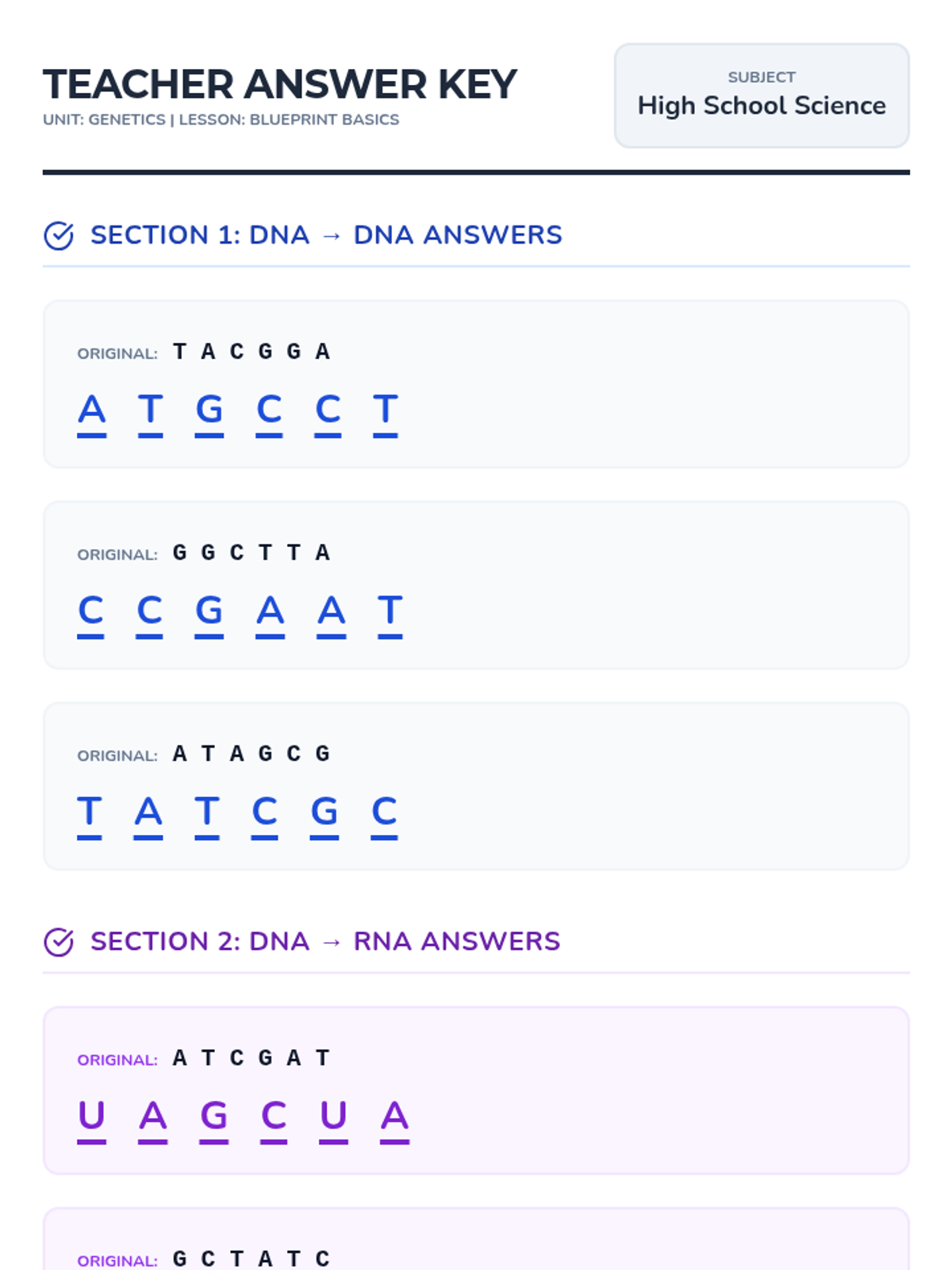
A foundational introduction to the structures of DNA and RNA, focusing on identifying components and mastering the base-pairing rules essential for genetics.
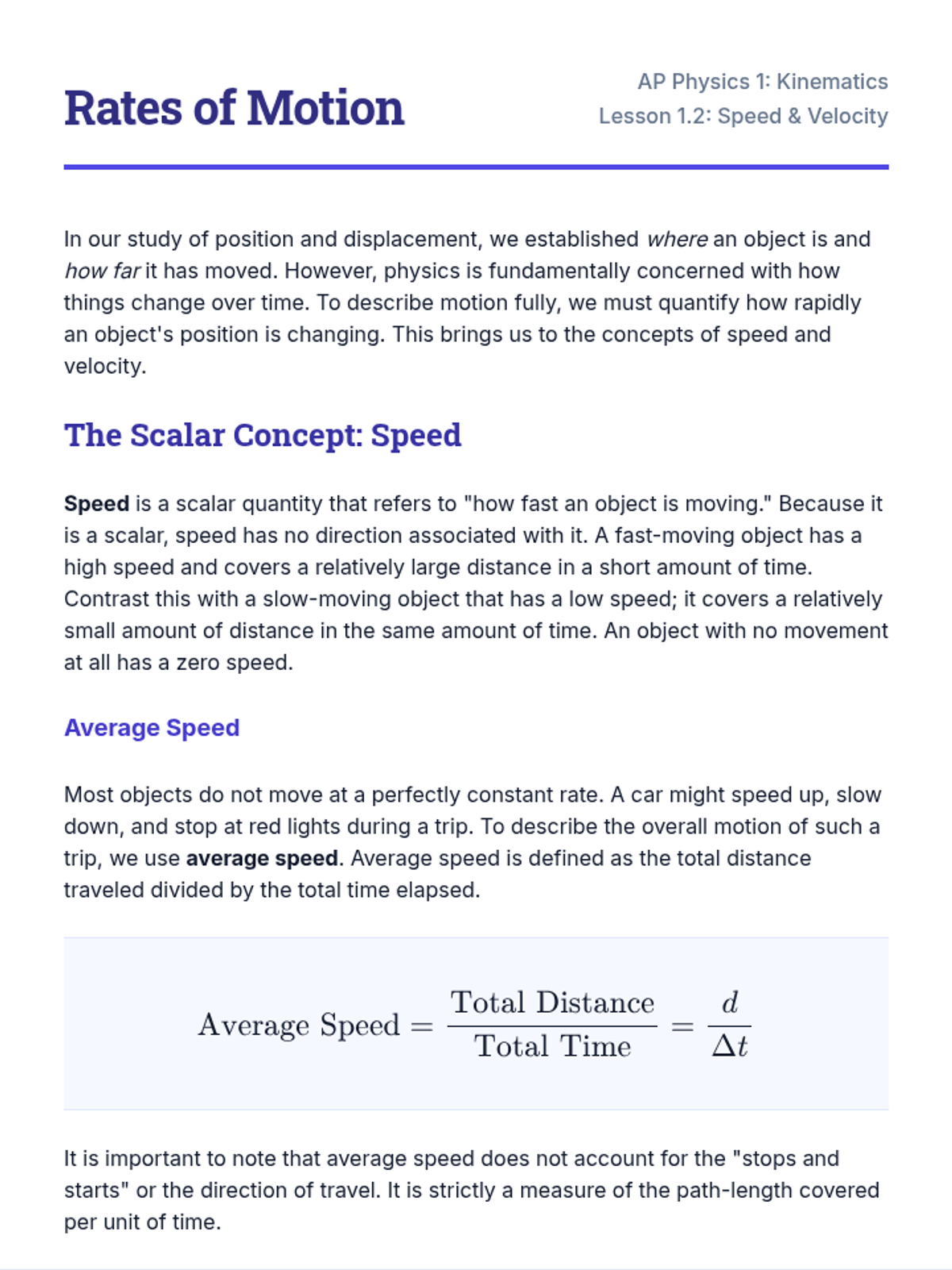
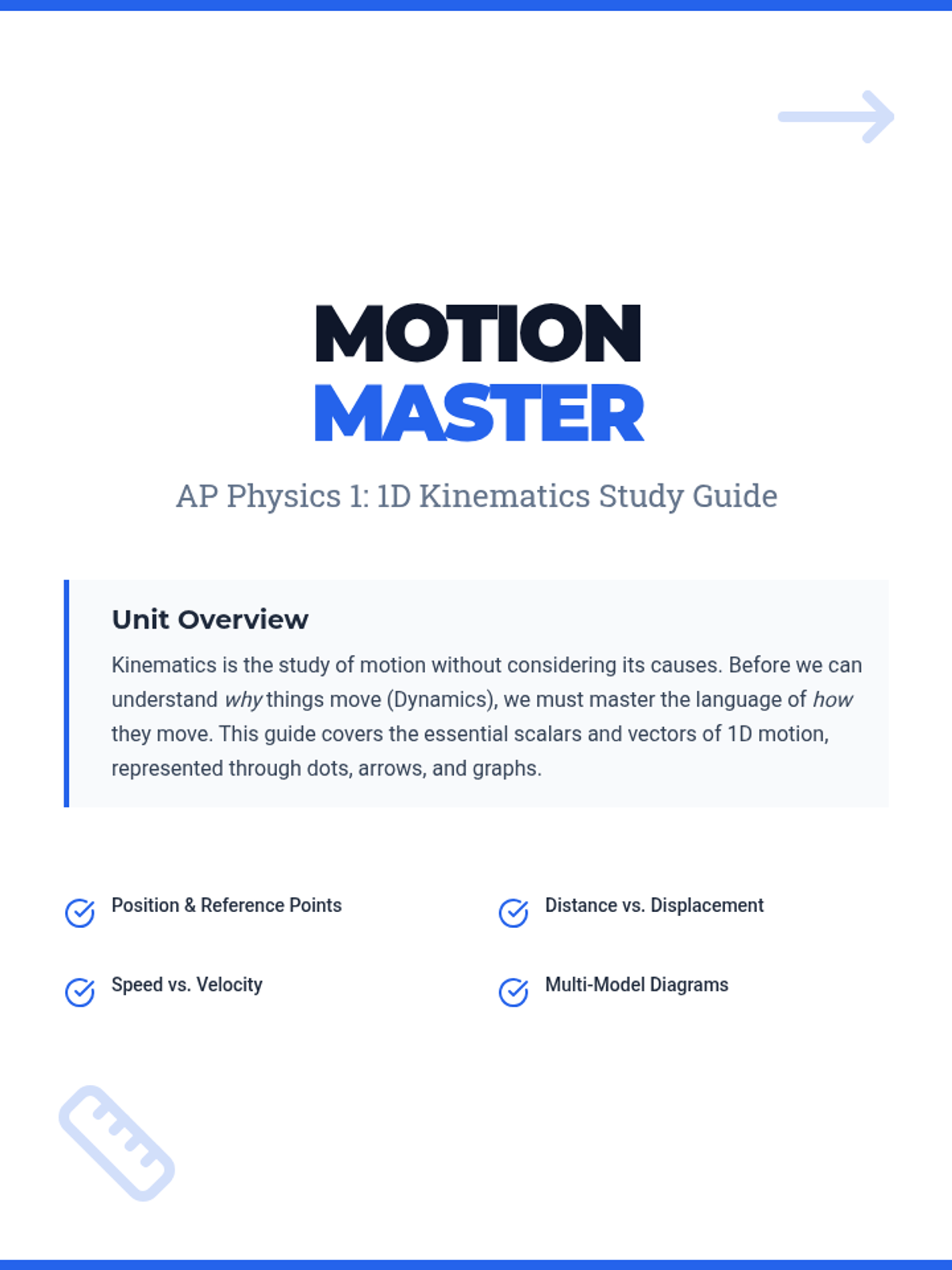
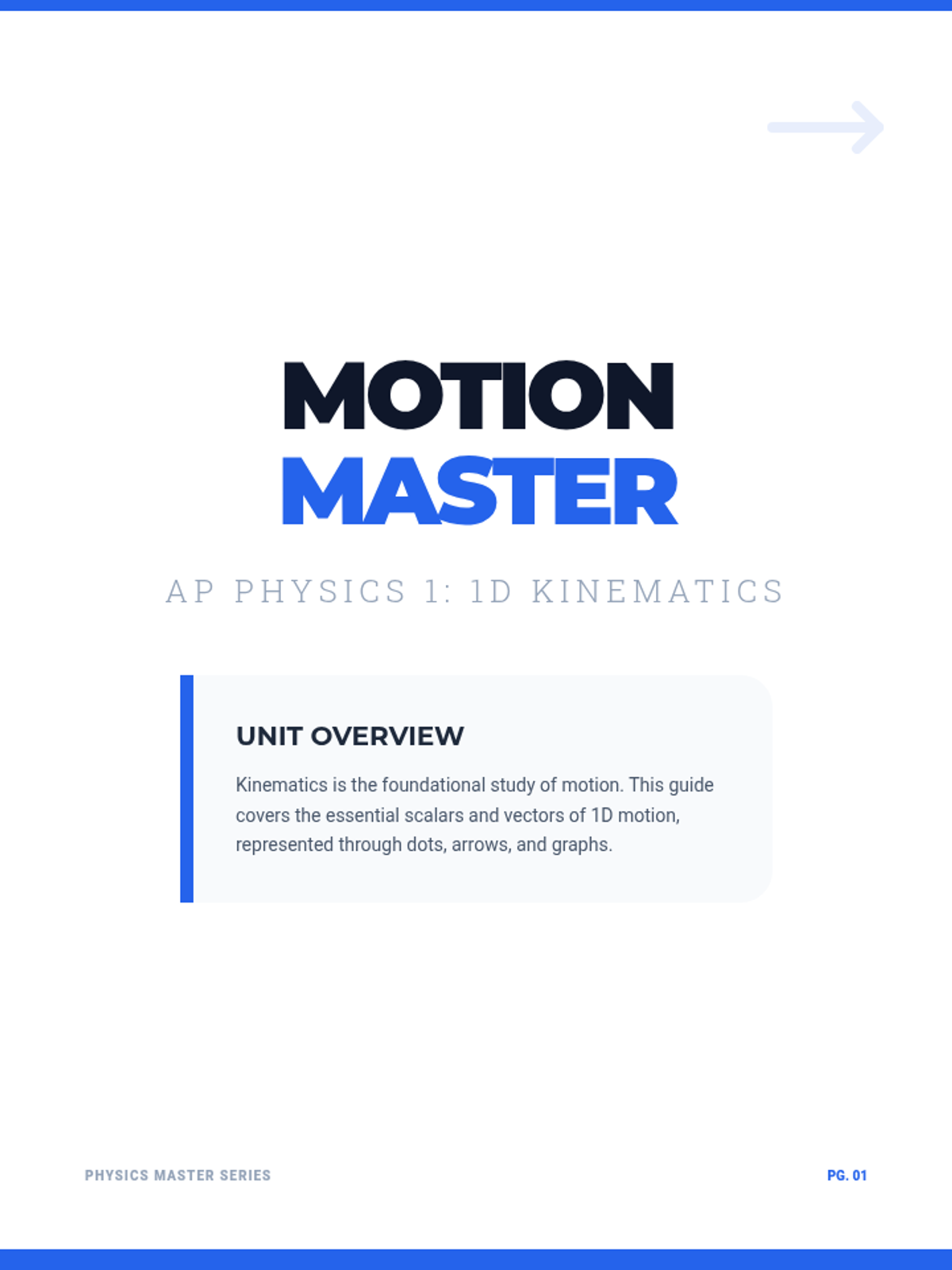
A comprehensive introduction to the fundamentals of one-dimensional kinematics, covering position, displacement, speed, and velocity through various representational models.
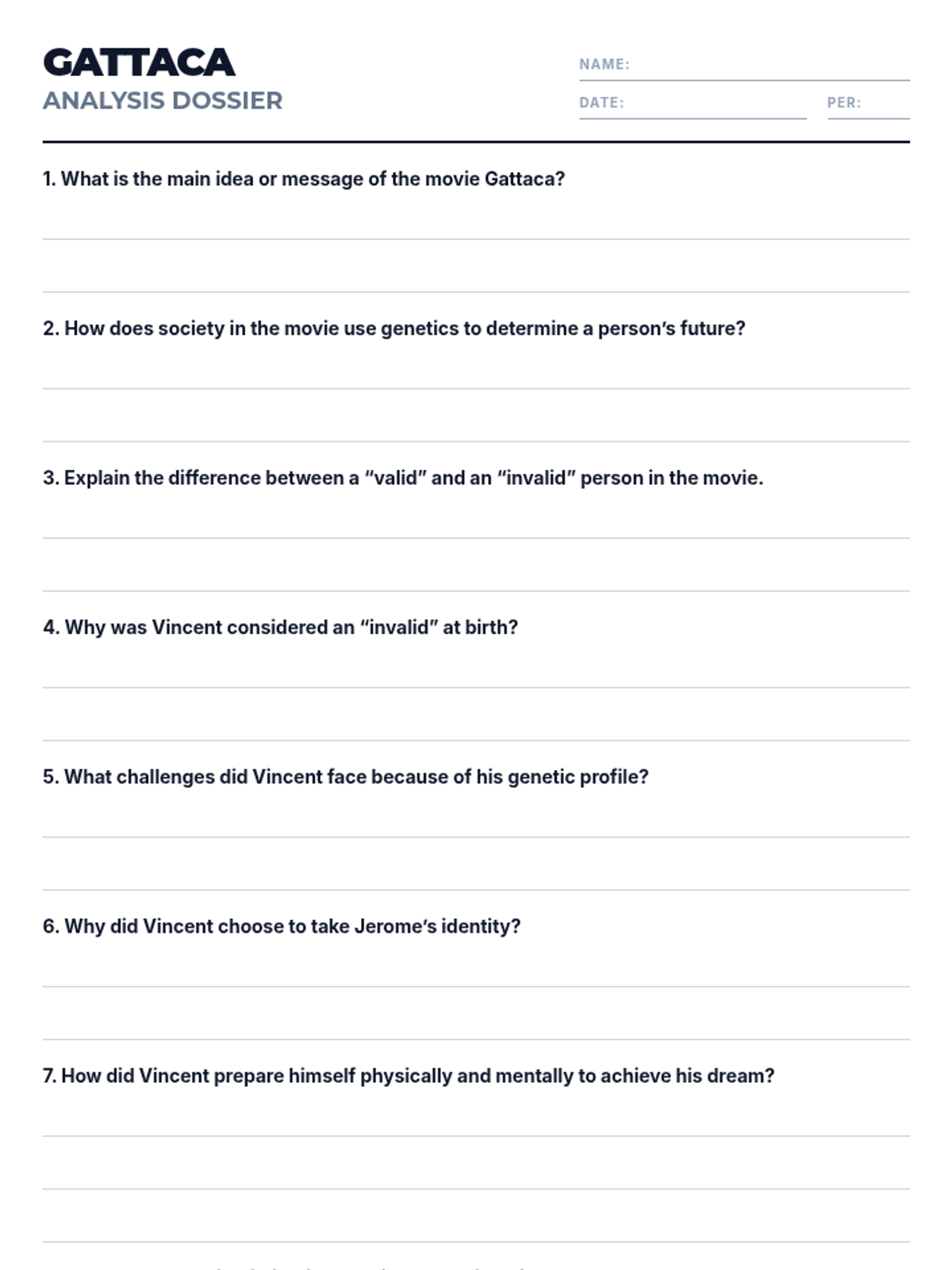
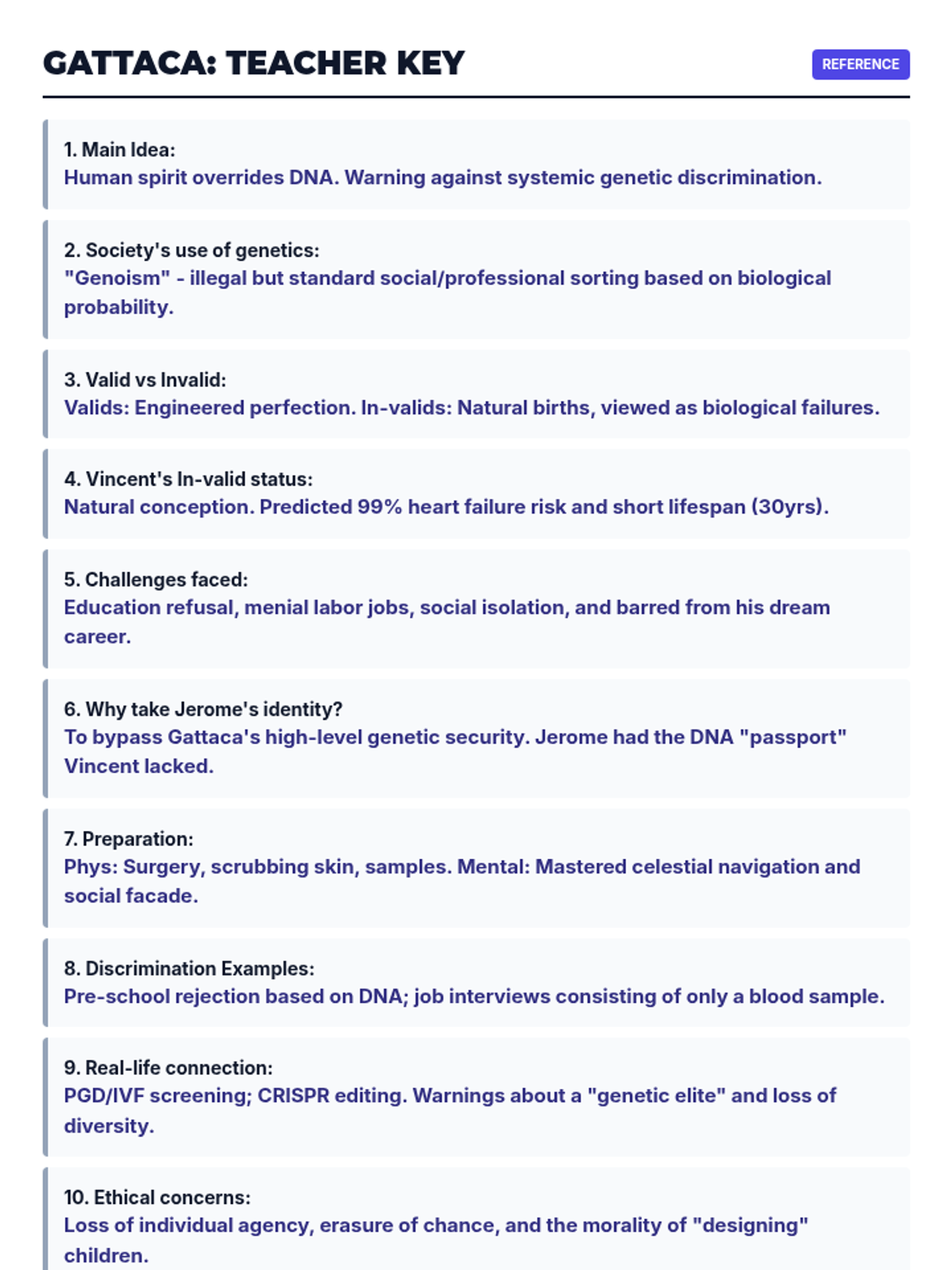
A comprehensive analysis of the ethical, social, and scientific themes in the film GATTACA, focusing on biotechnology and genetic discrimination.
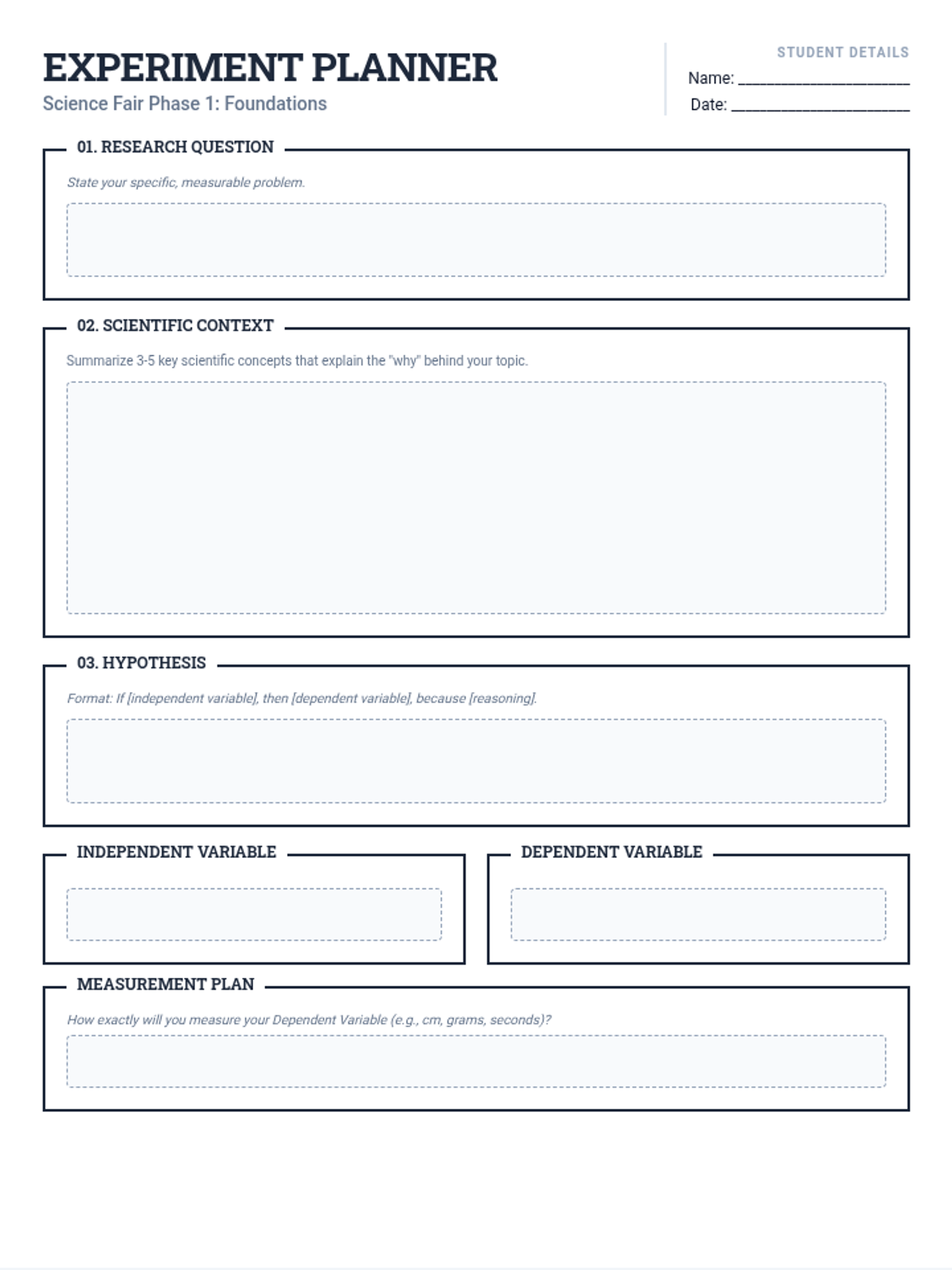
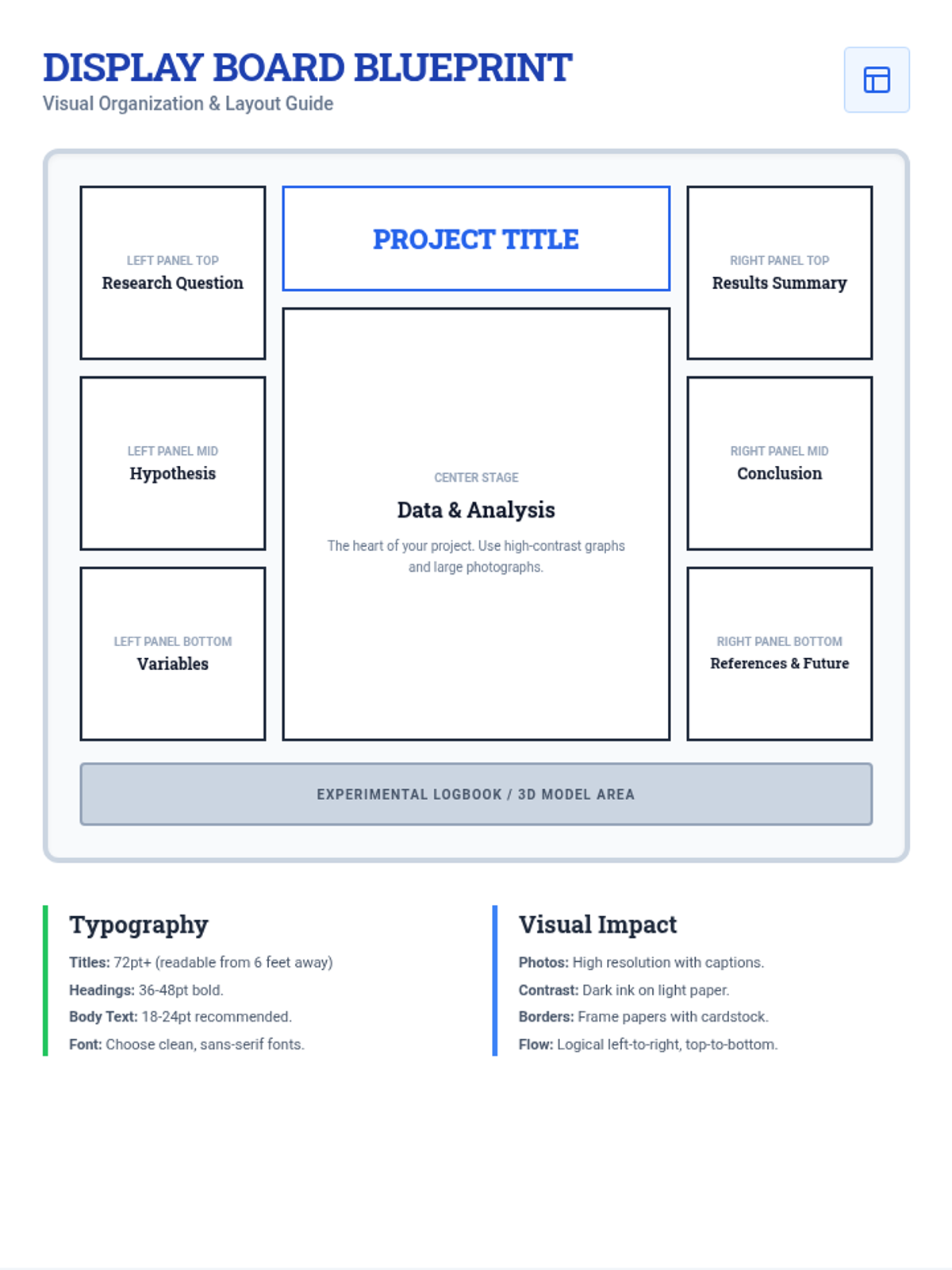
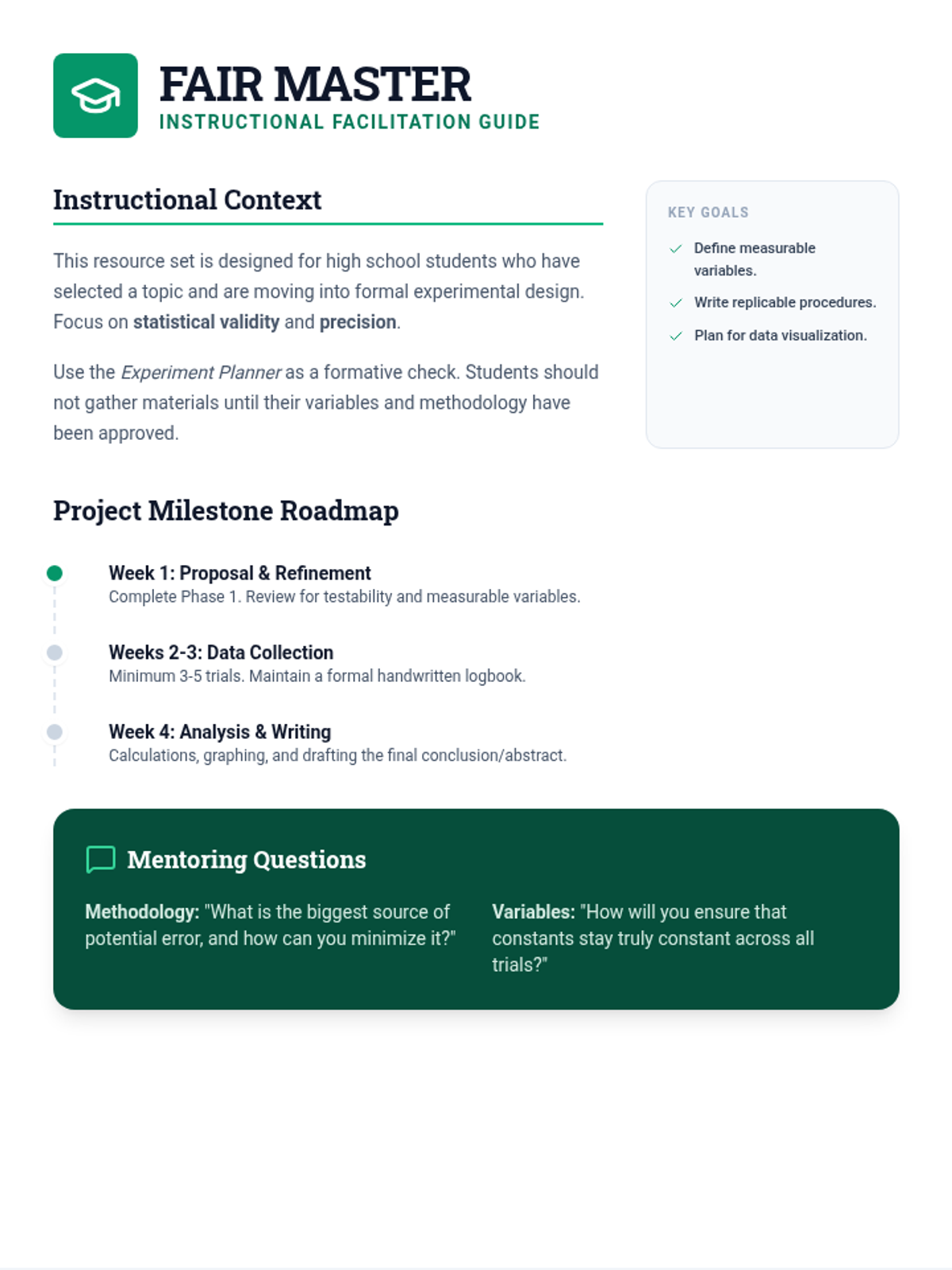
A comprehensive set of organizers and guides designed to help high school students move from a science fair topic to a fully realized experimental design and display board.
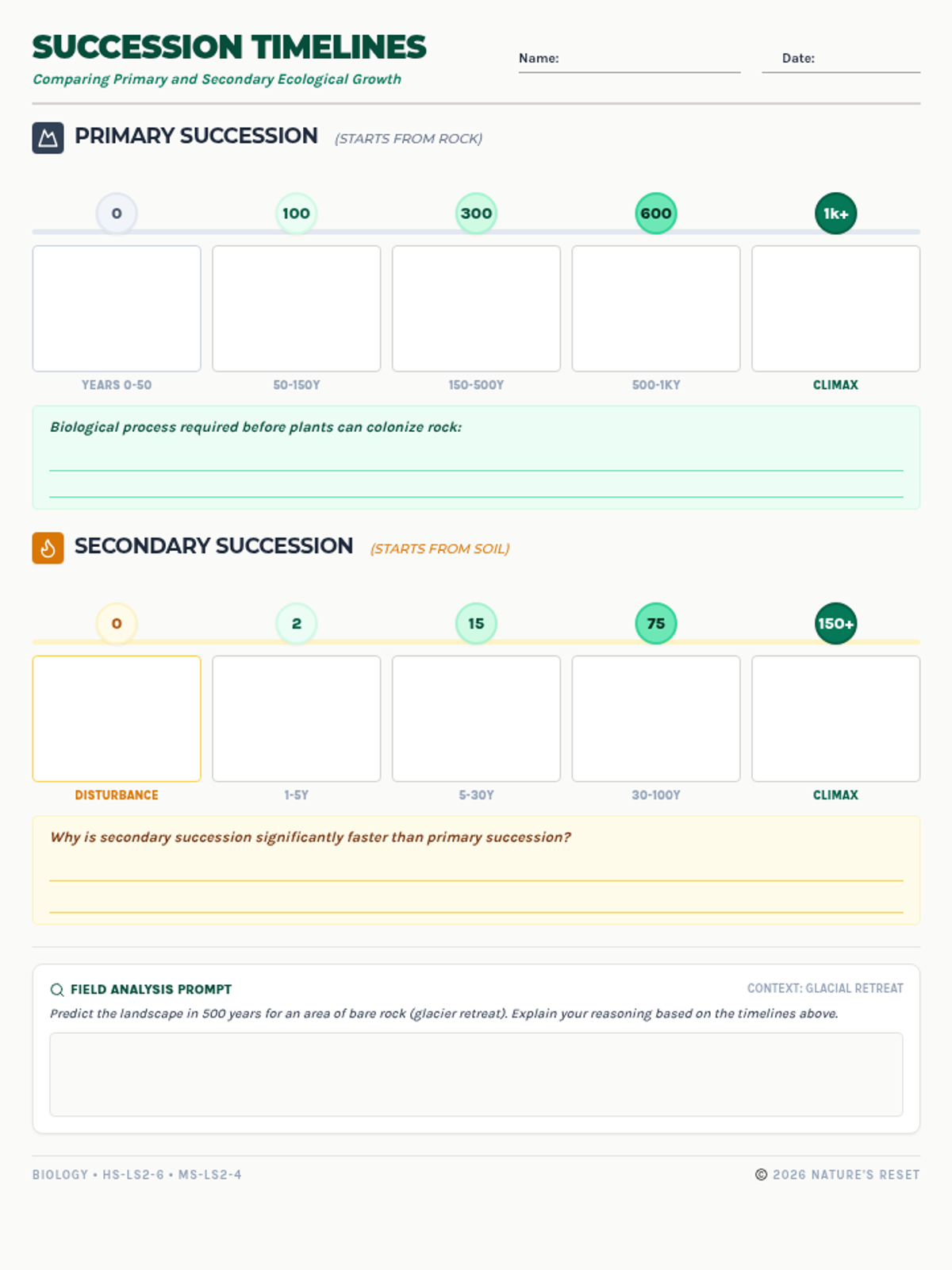
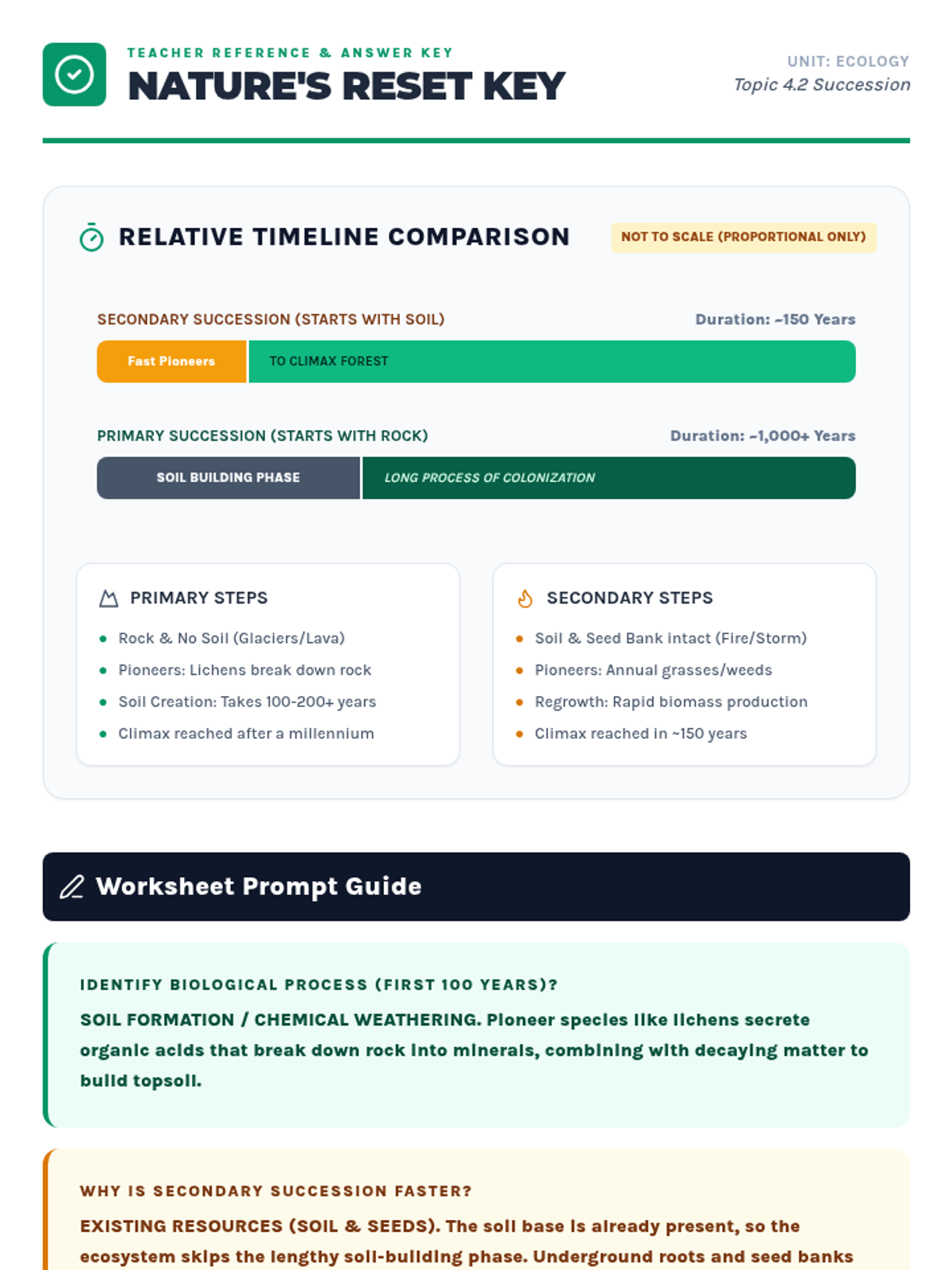
A visual exploration of how ecosystems recover and develop over time, comparing the long-term process of primary succession with the faster recovery of secondary succession. Students will analyze timeframes, pioneer species, and climax communities.
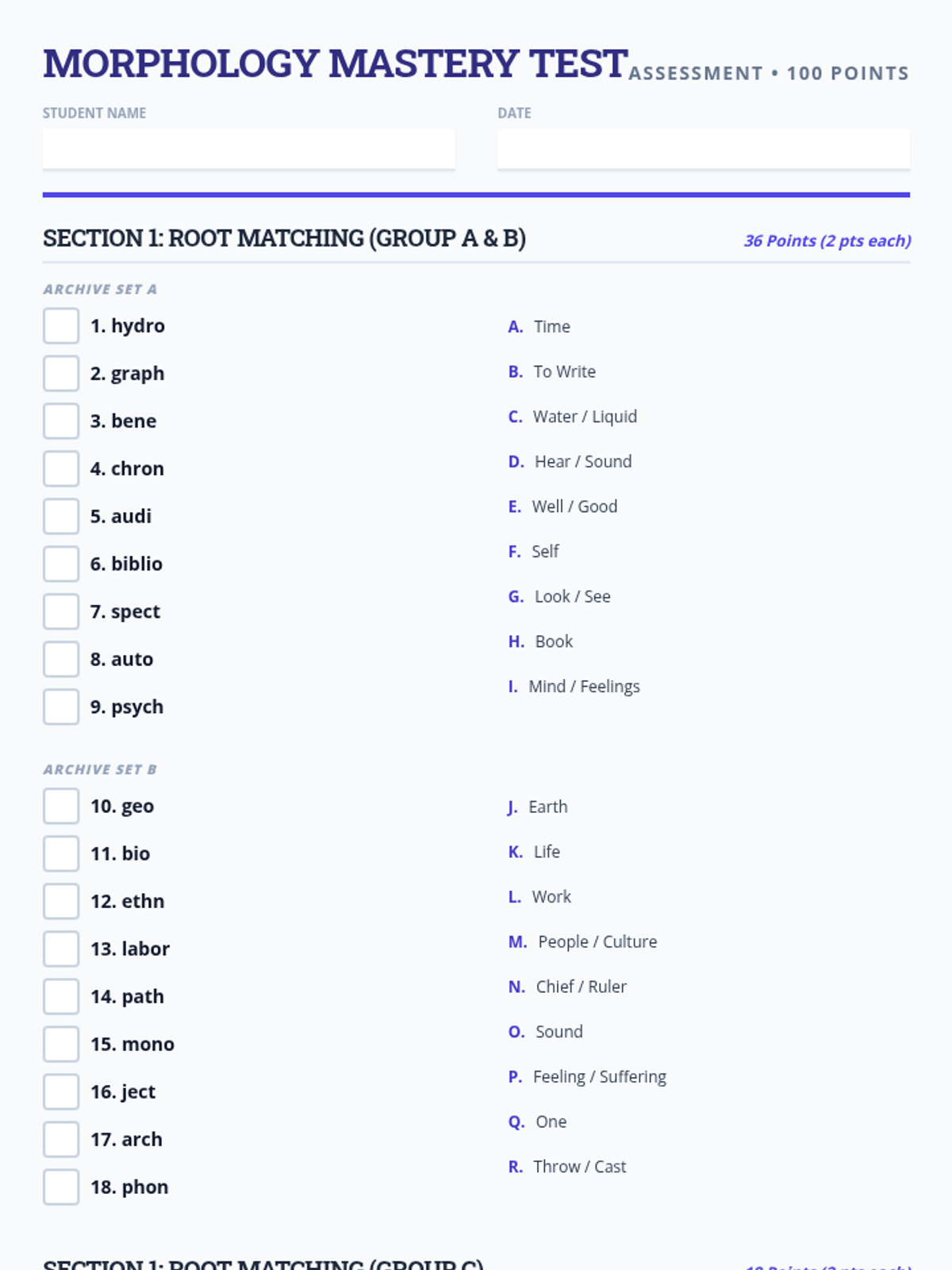
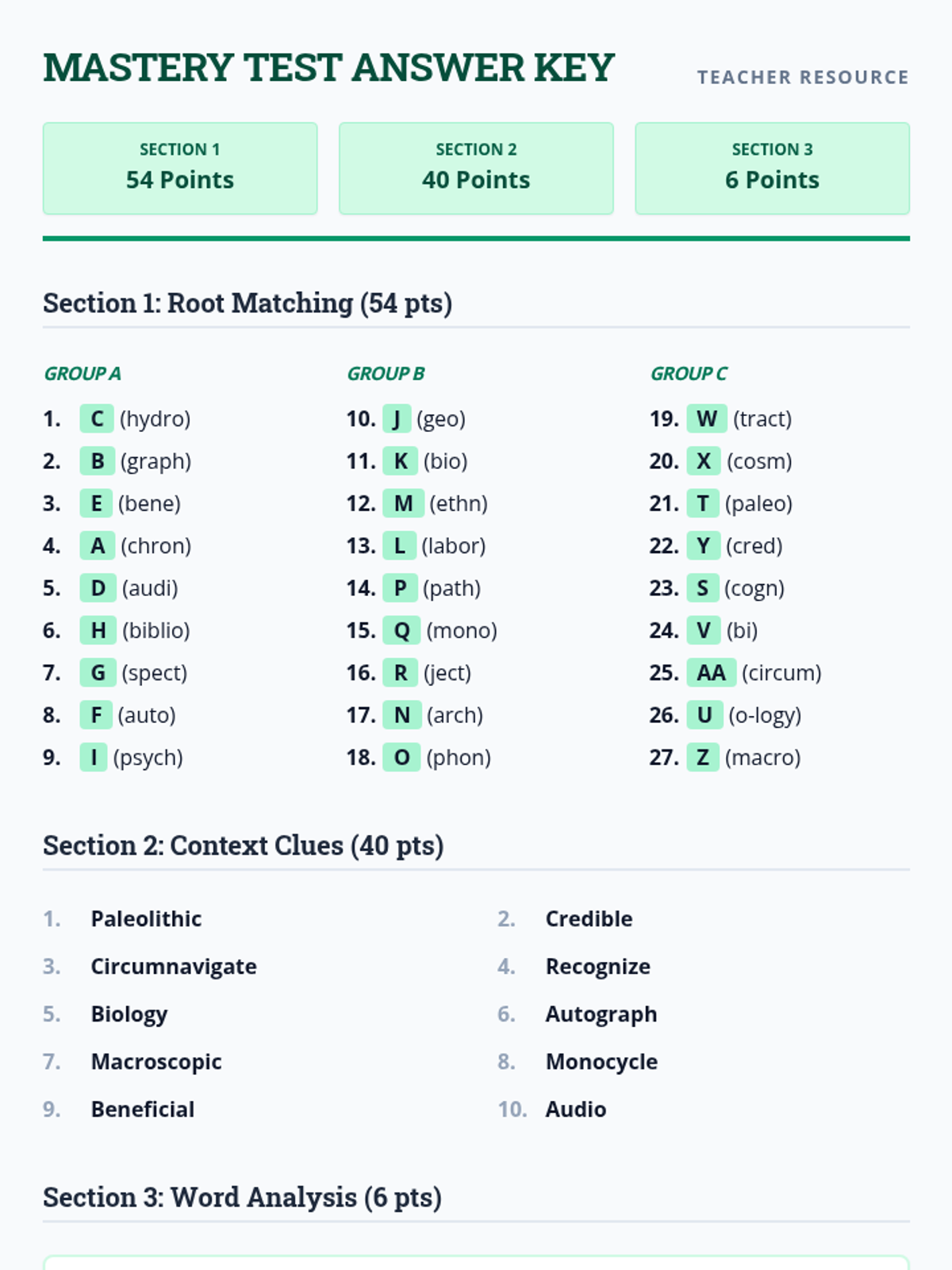
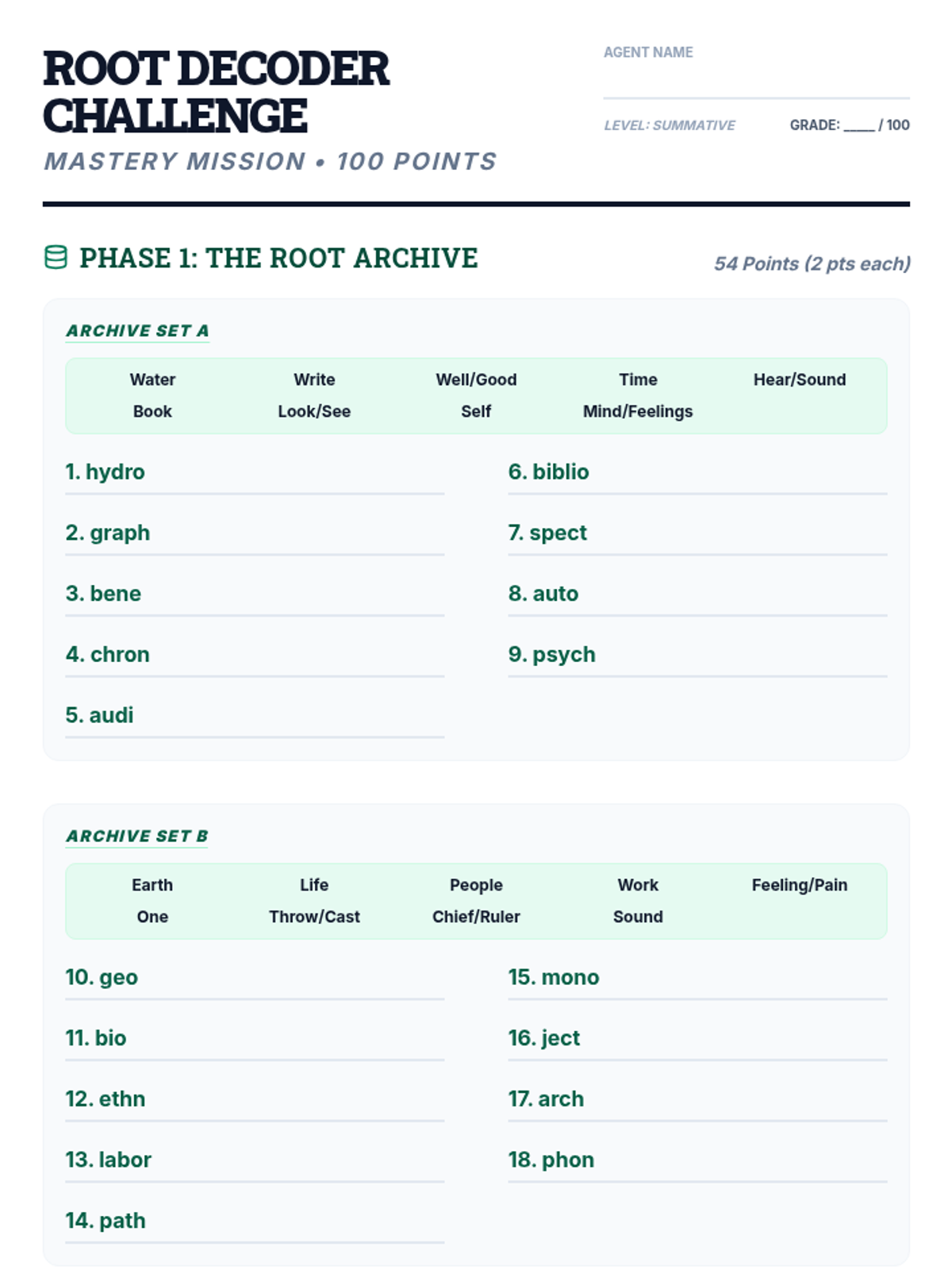
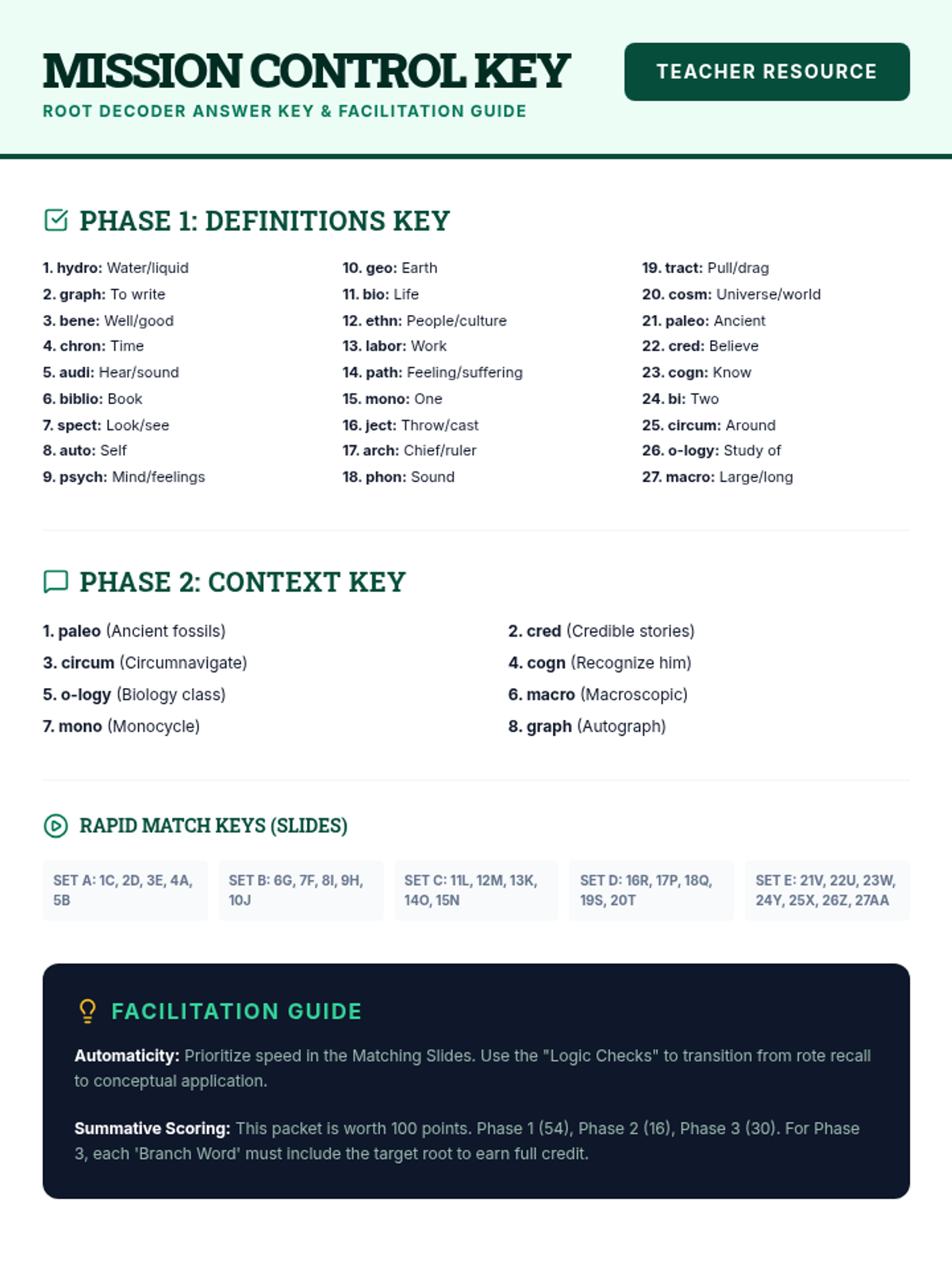
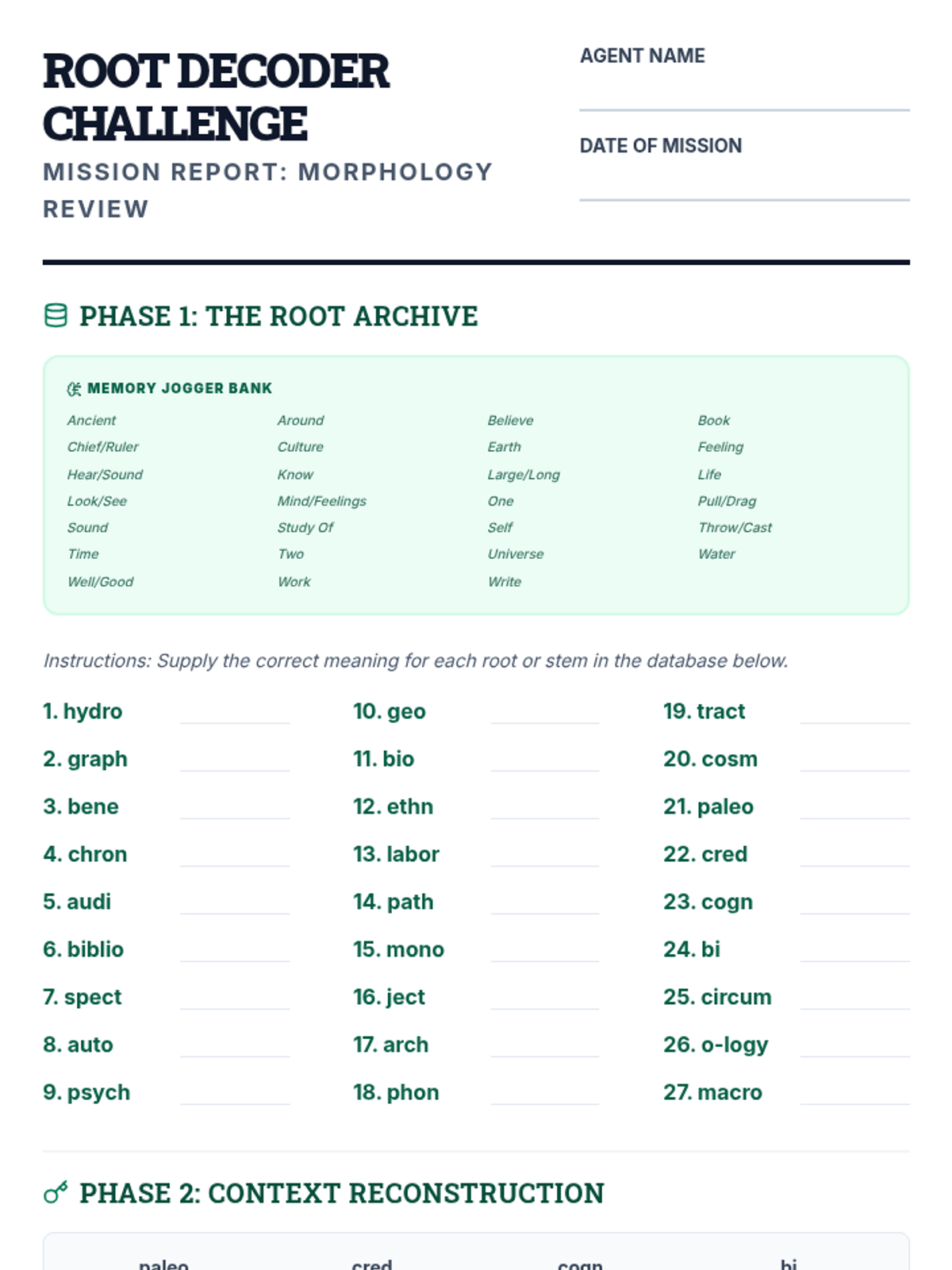
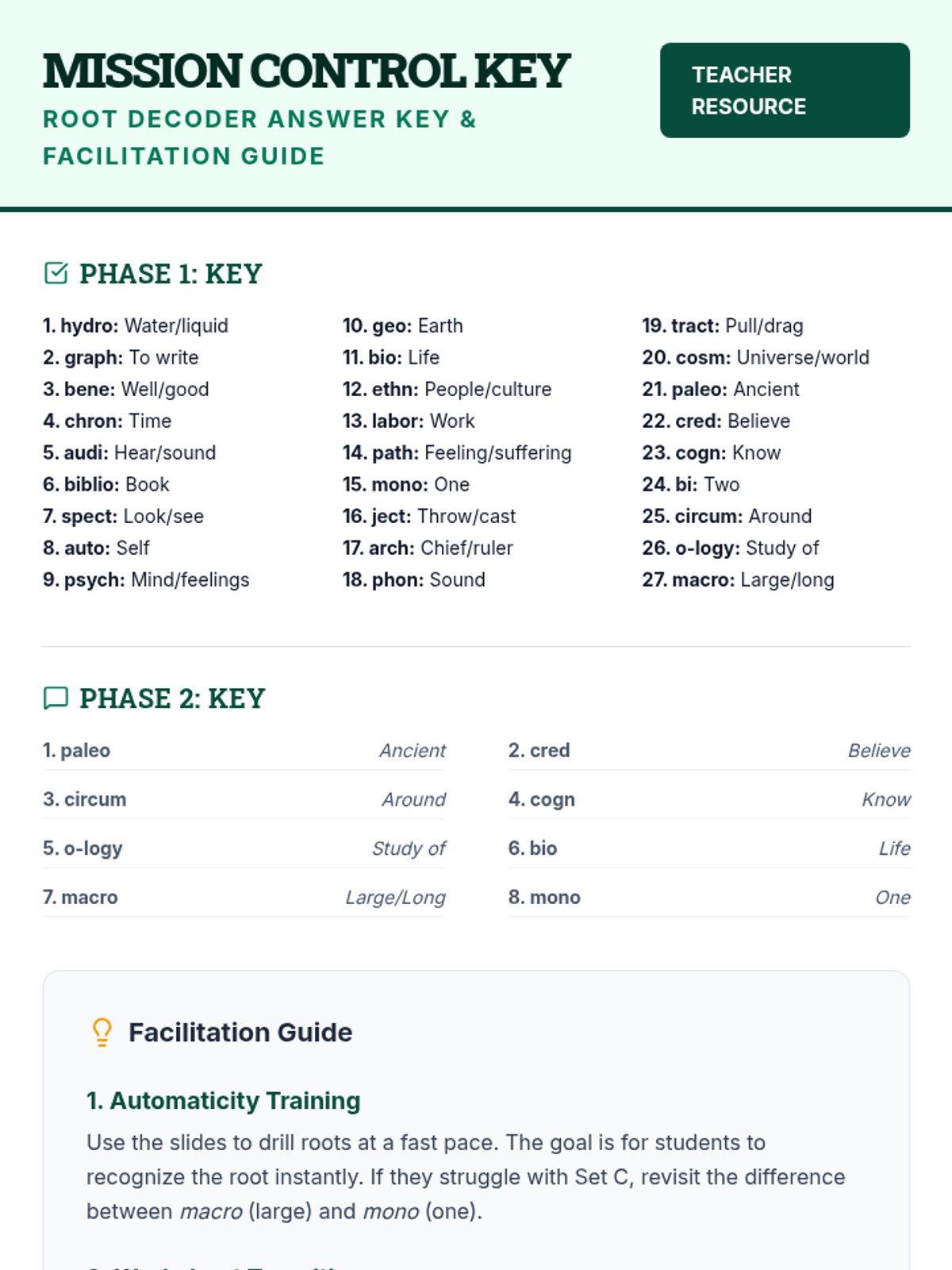
A comprehensive review lesson covering 27 Greek and Latin roots to help developmental reading students prepare for their morphology assessment through gamified slides and a decoding worksheet.
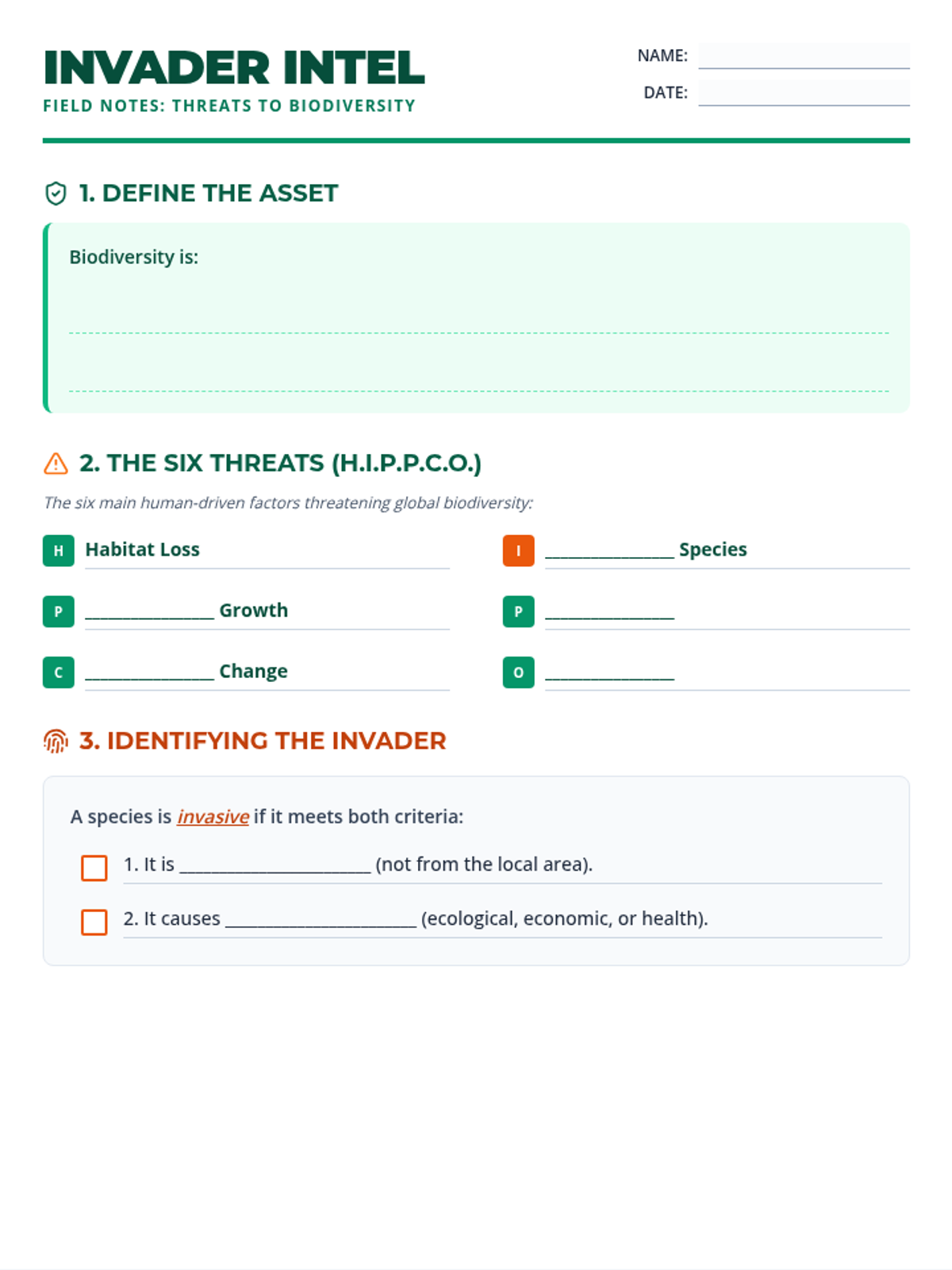
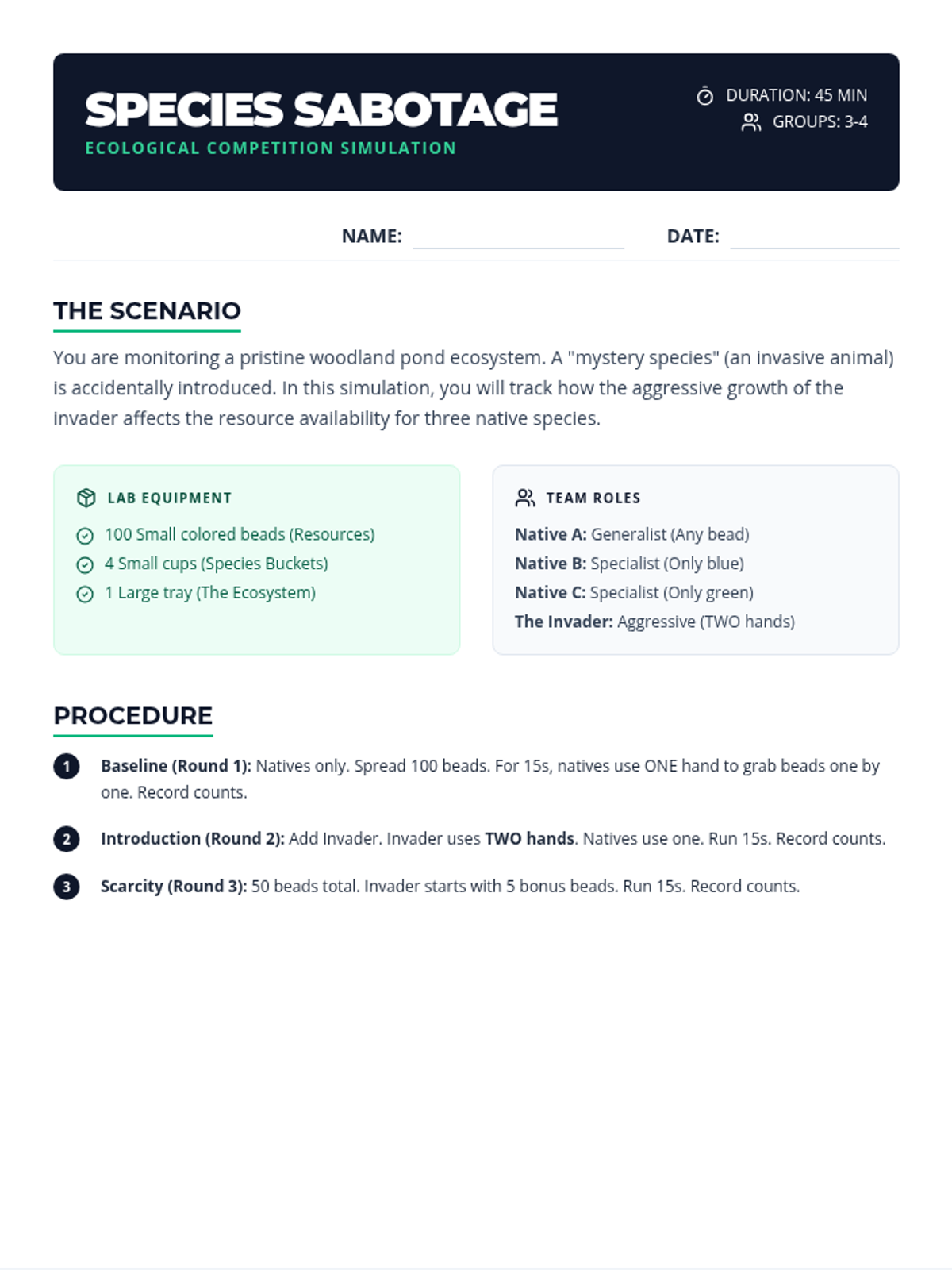
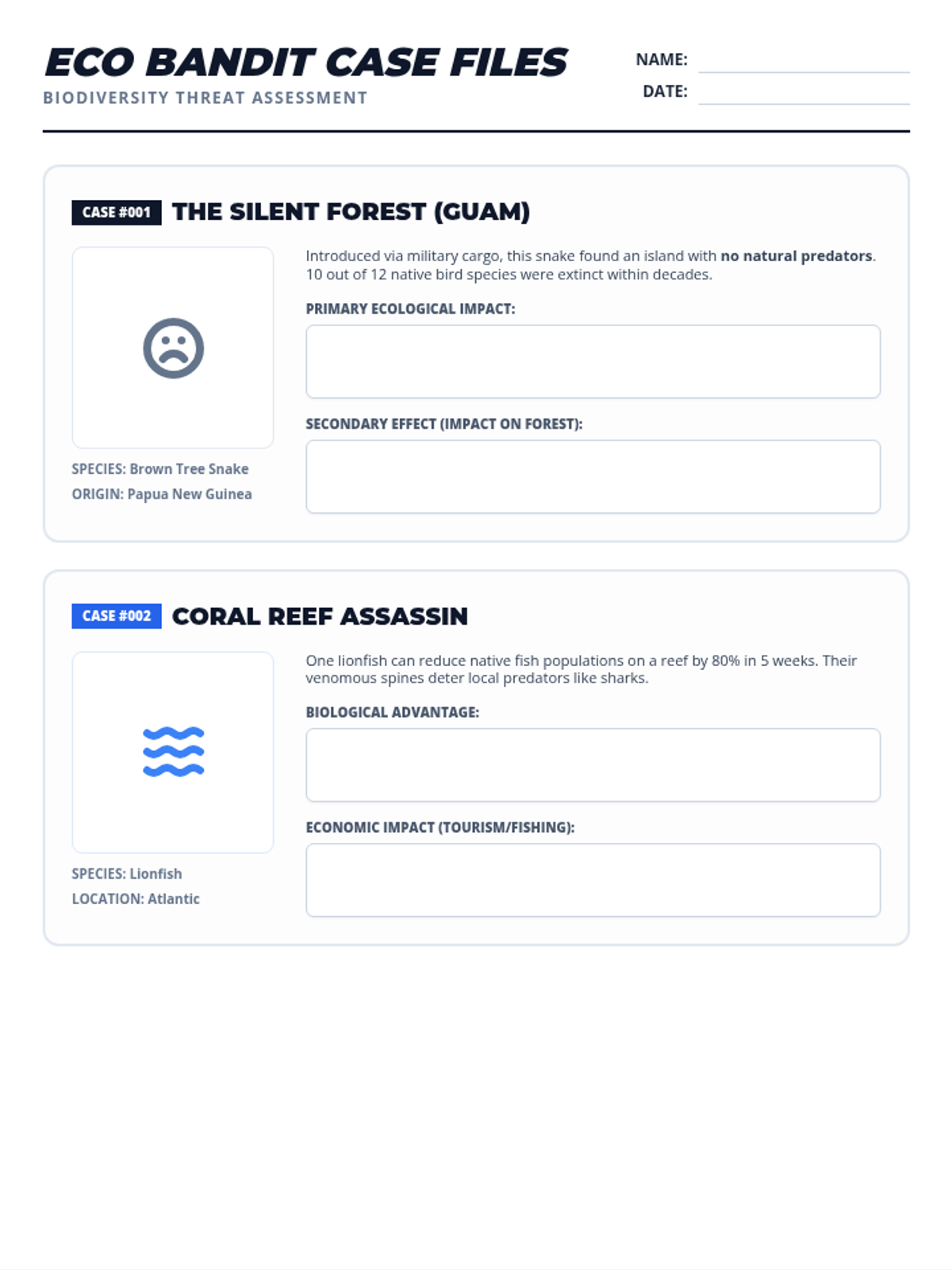
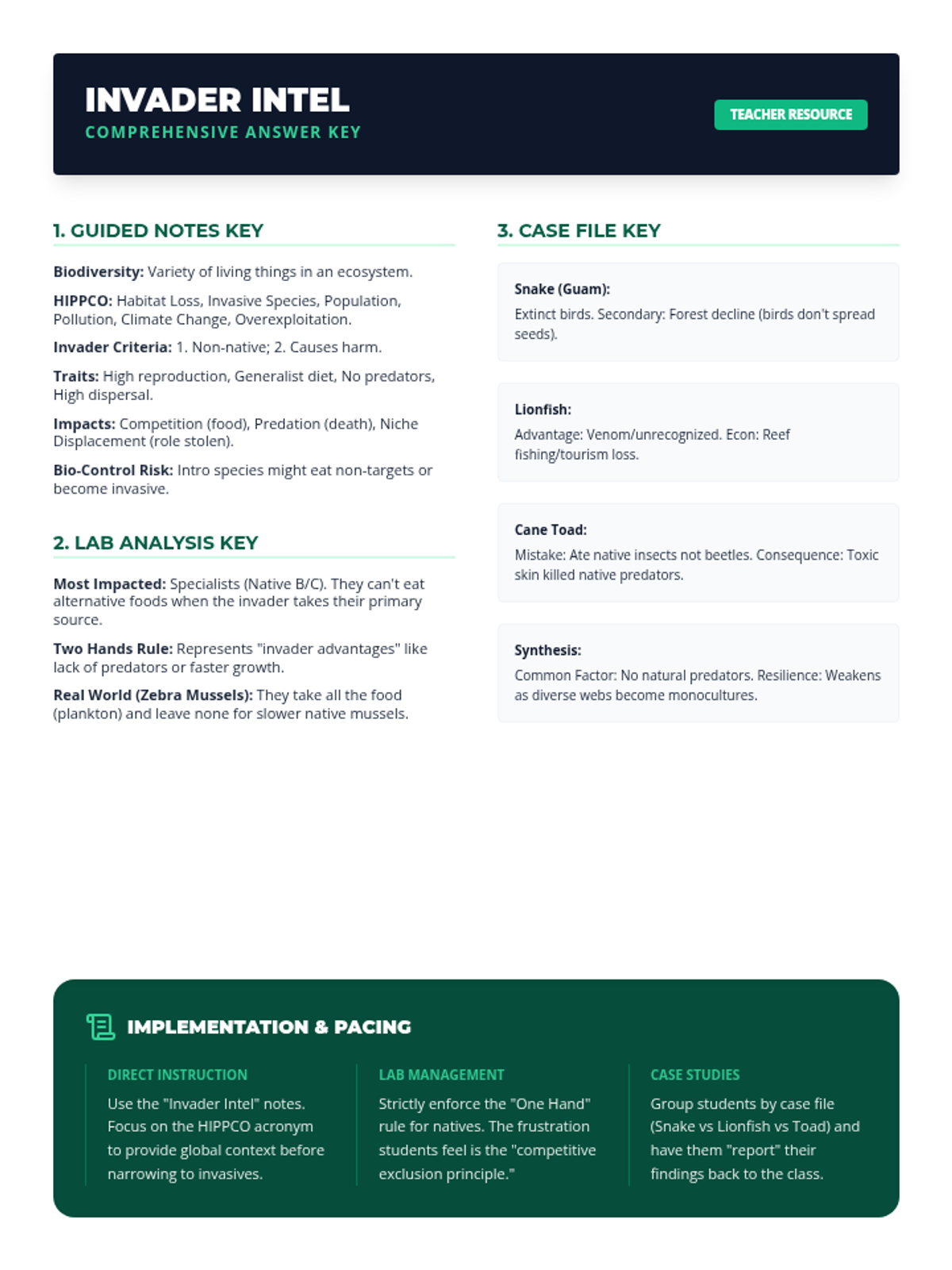
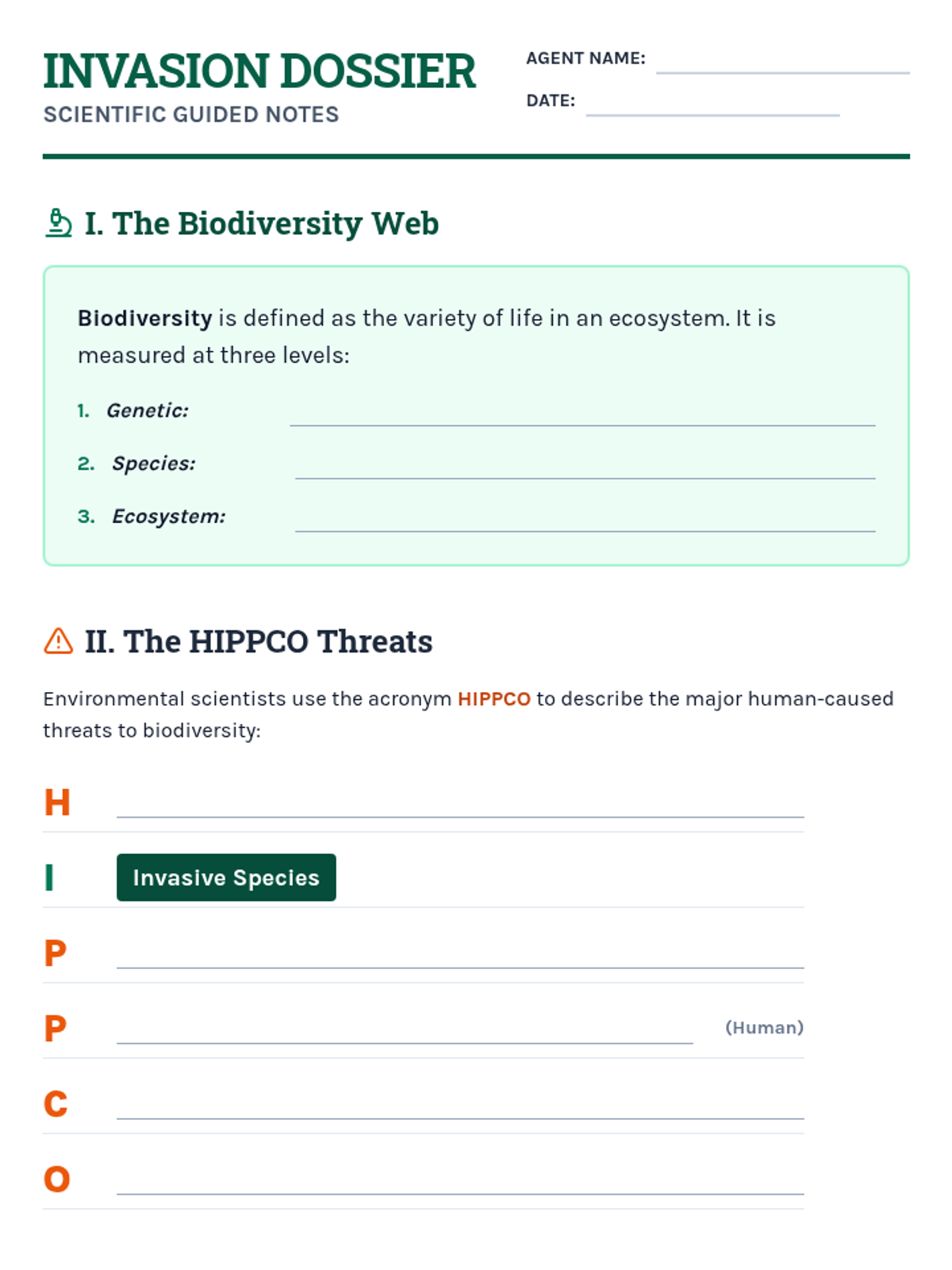
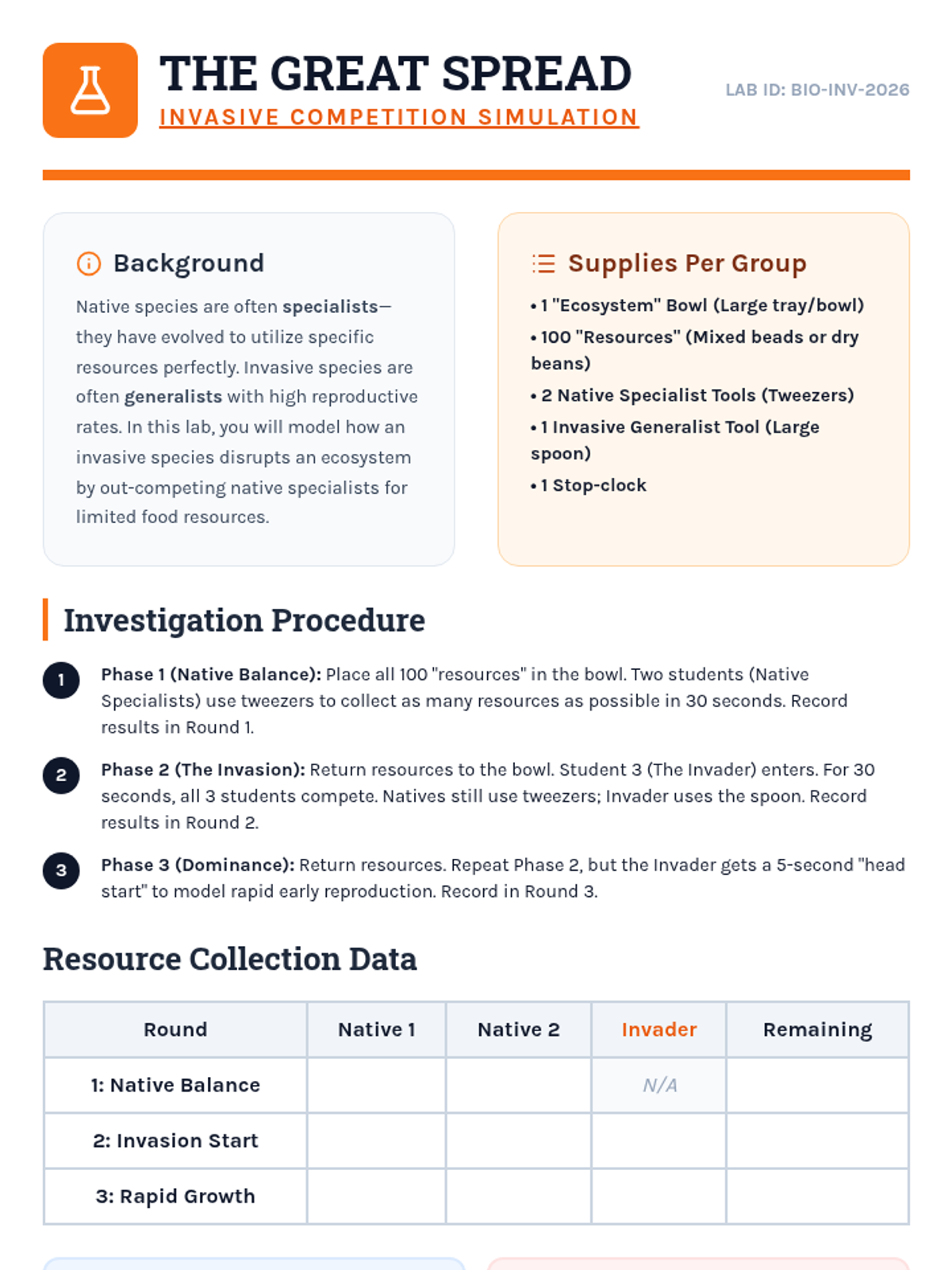
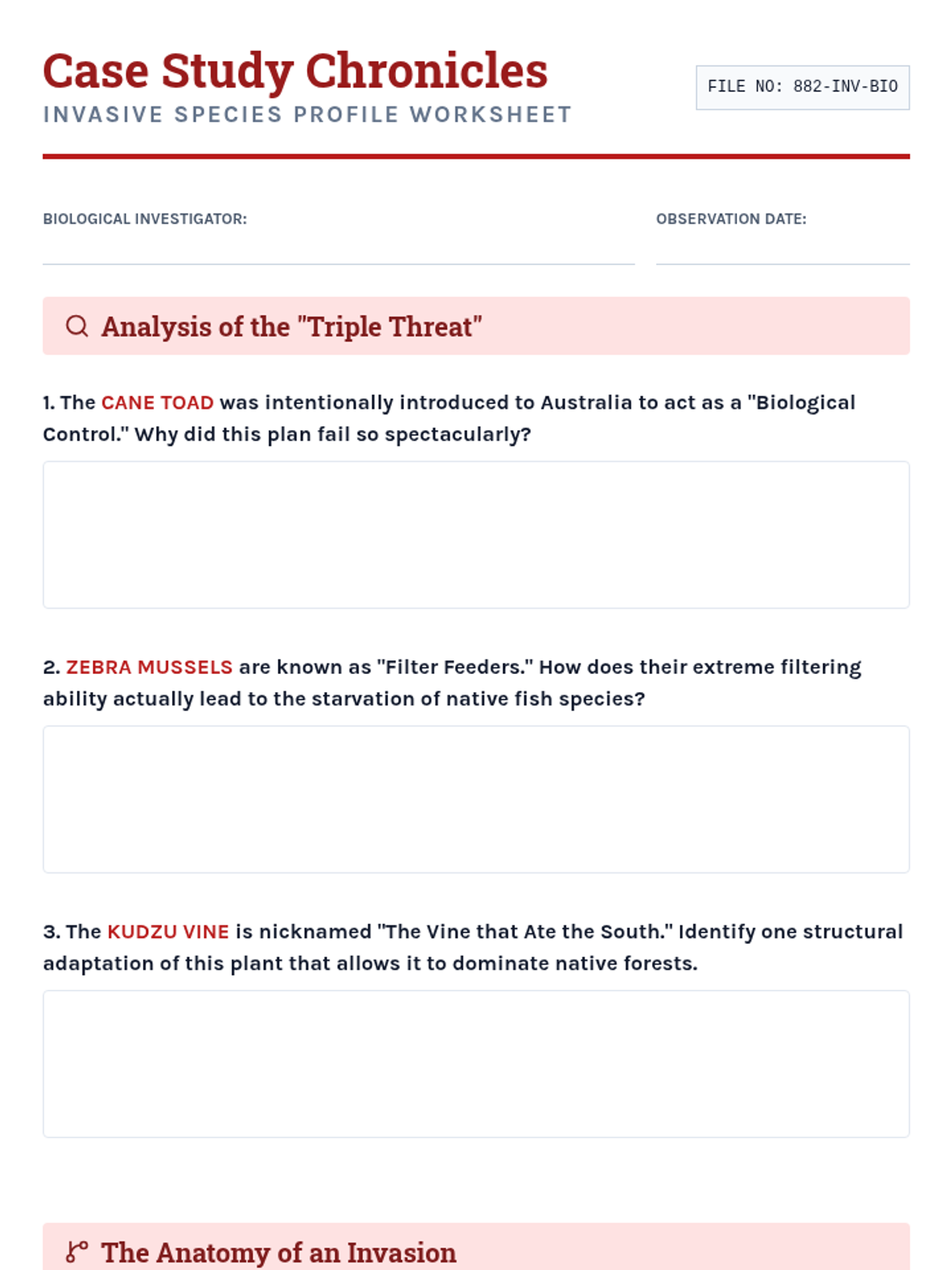
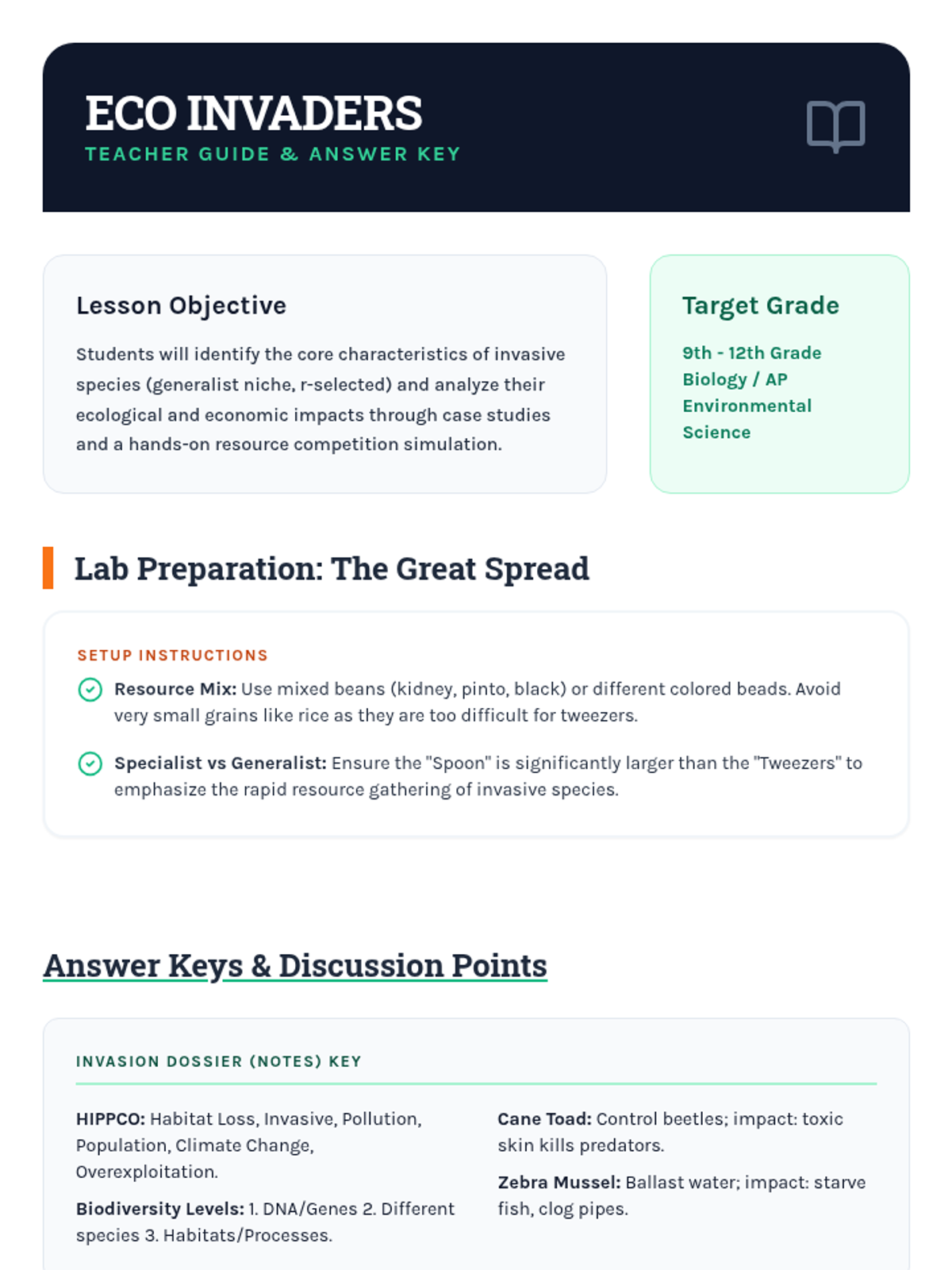
This lesson explores the impact of invasive species on global biodiversity through hands-on simulation and detailed case studies. Students will identify key characteristics of successful invaders and analyze the ecological and economic consequences of their introduction.
An immersive lesson exploring the impact of invasive species on global biodiversity through hands-on simulation, case study analysis, and guided inquiry.
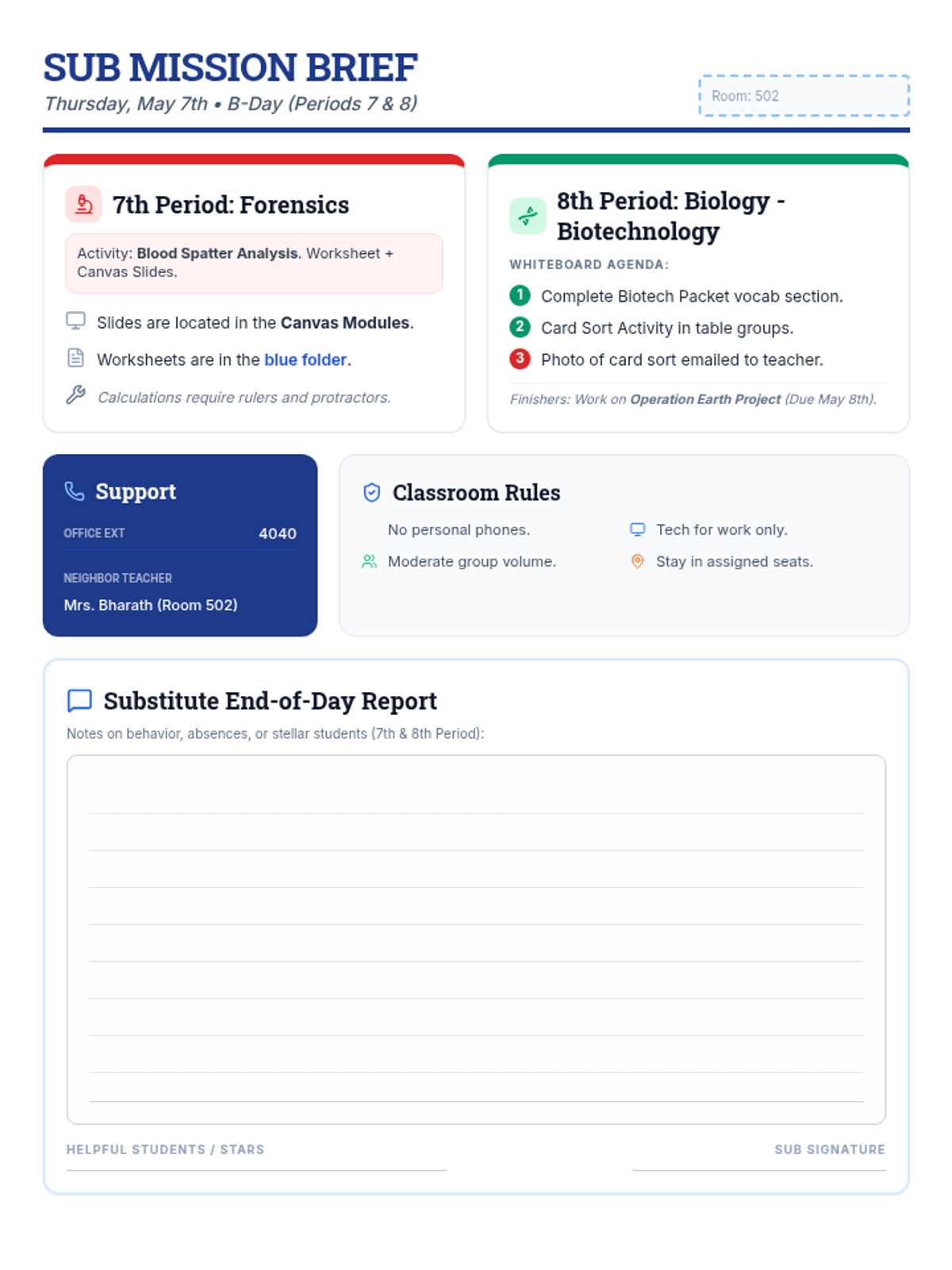
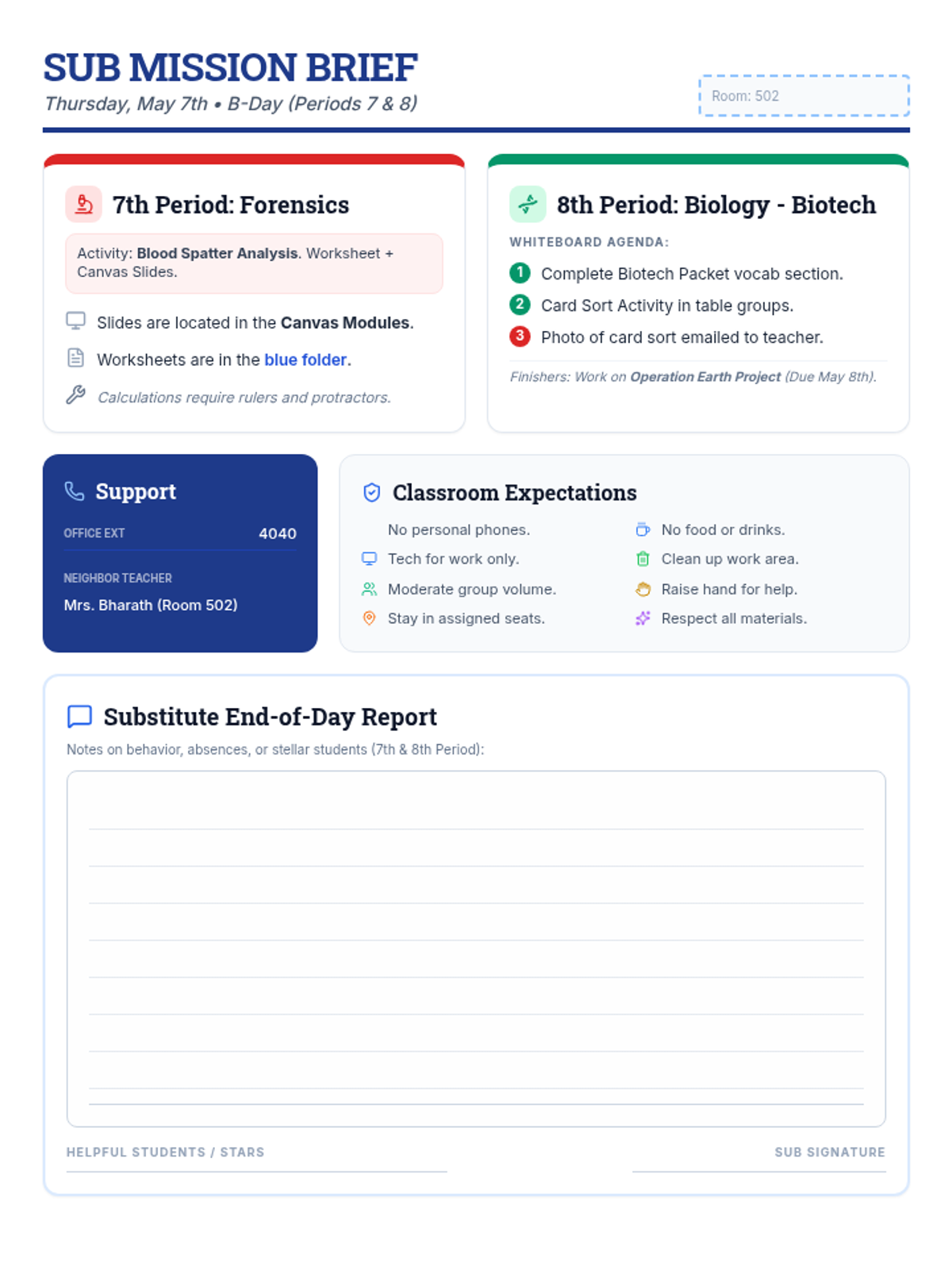
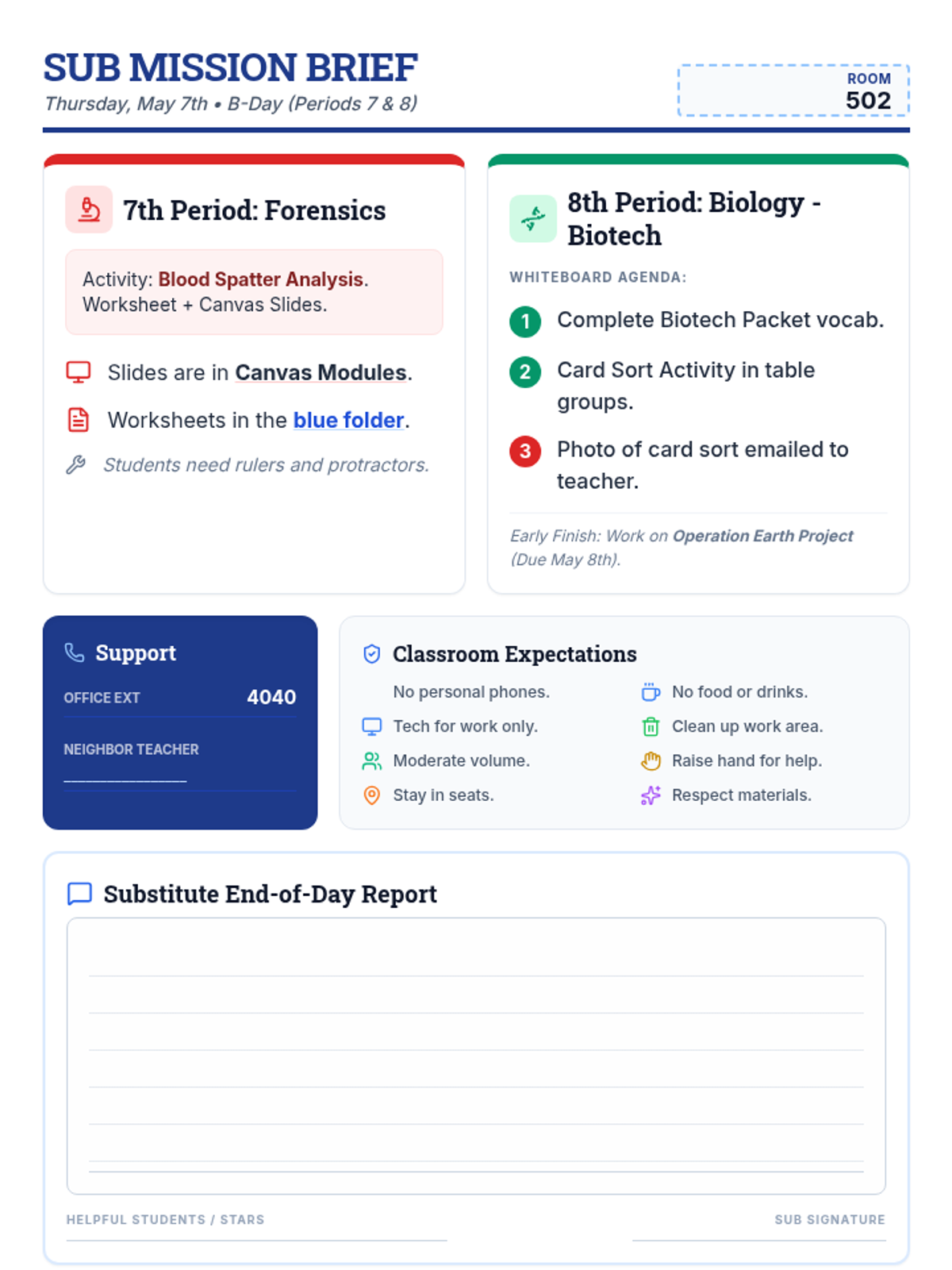
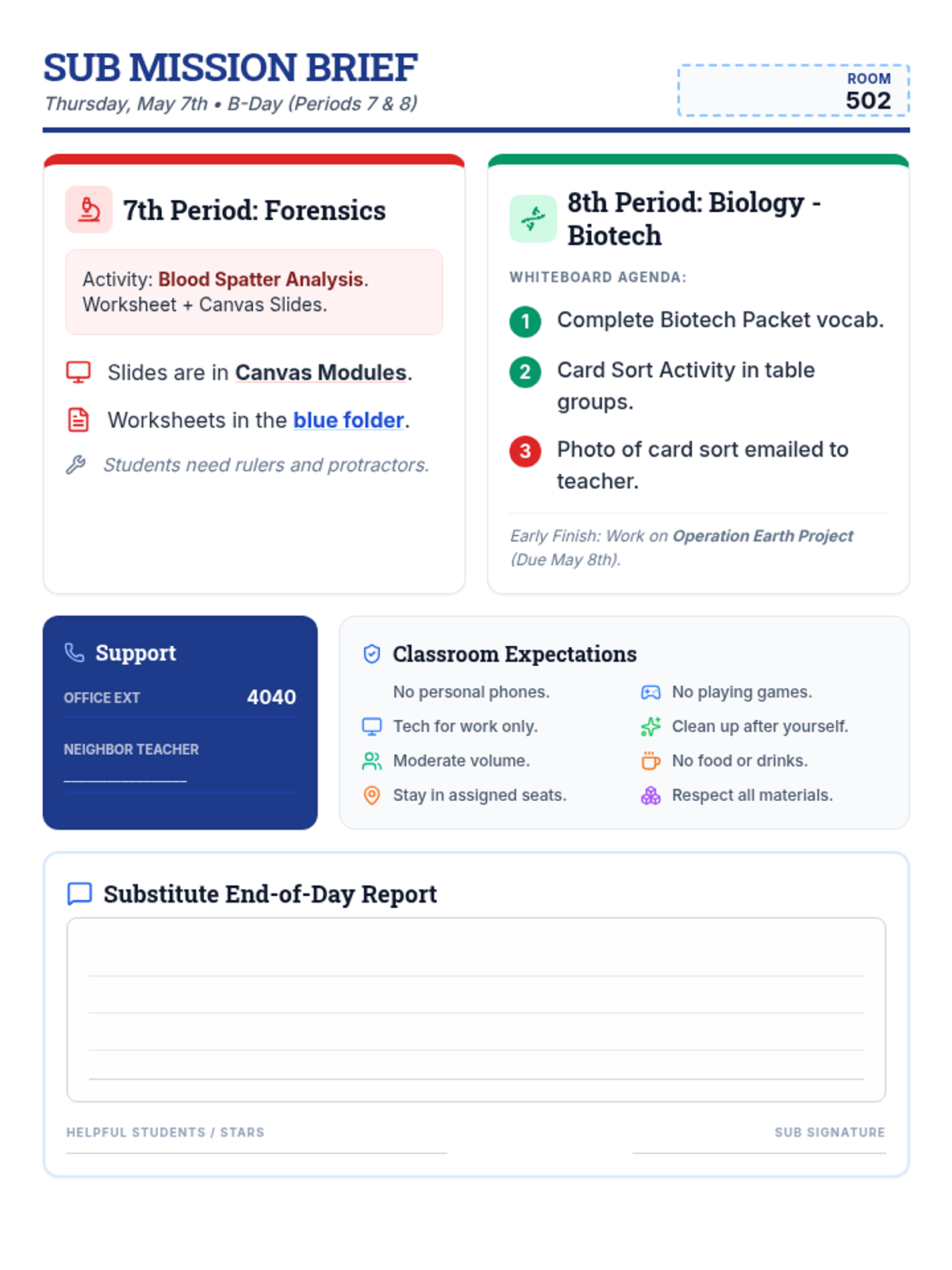
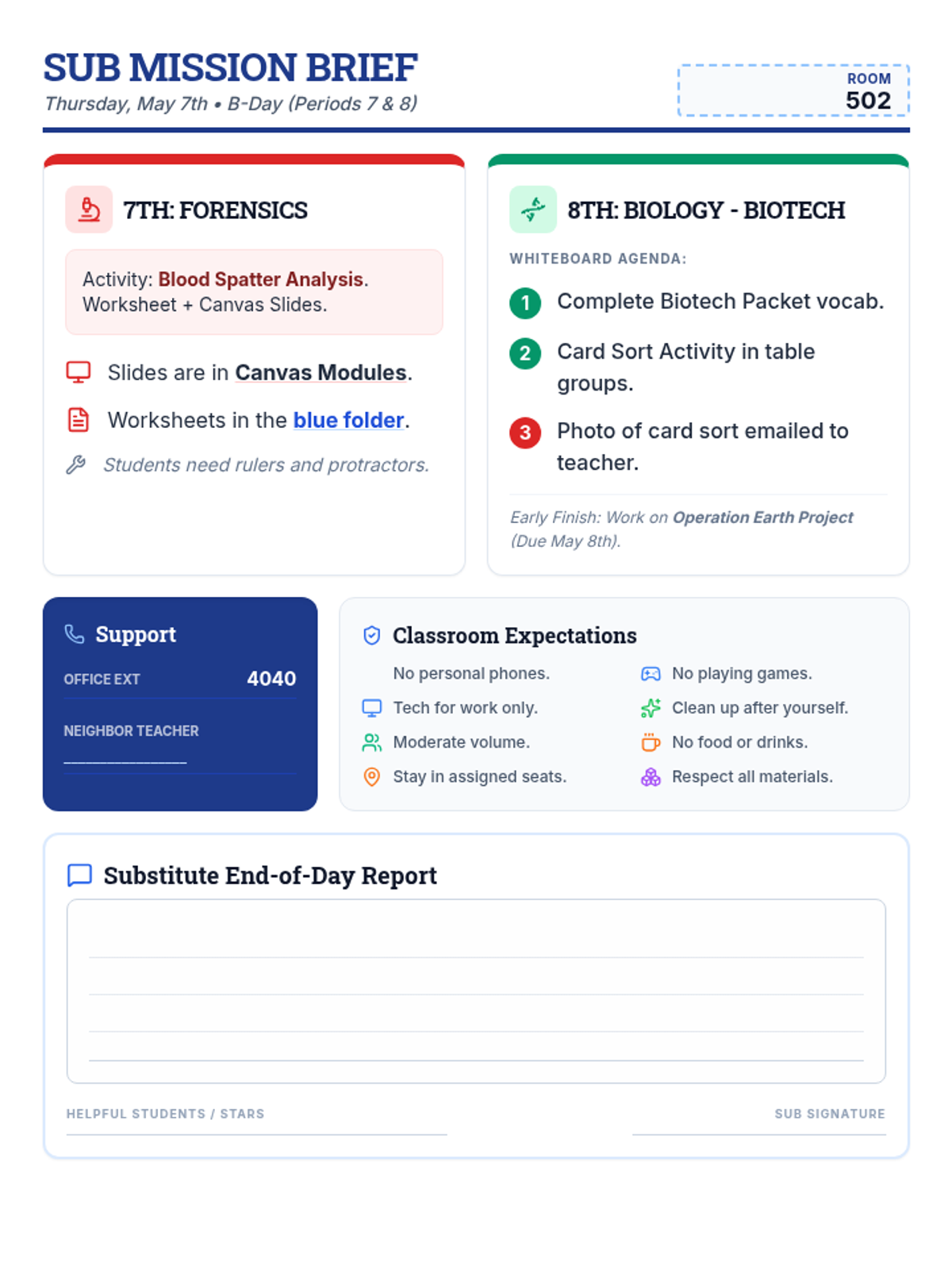
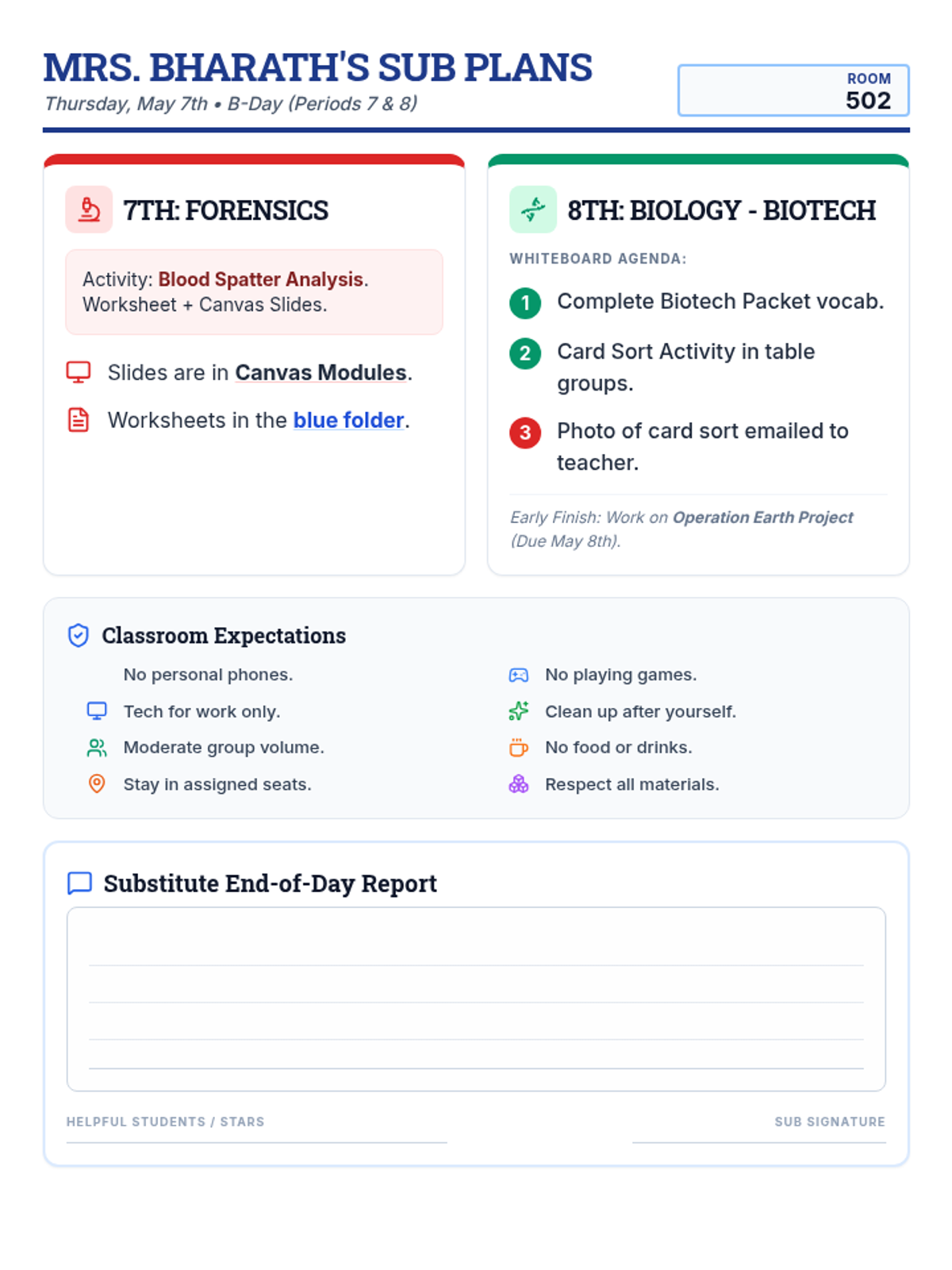
A concise and clear guide for a substitute teacher covering 7th and 8th period classes on May 7th, featuring forensics and biotechnology activities.
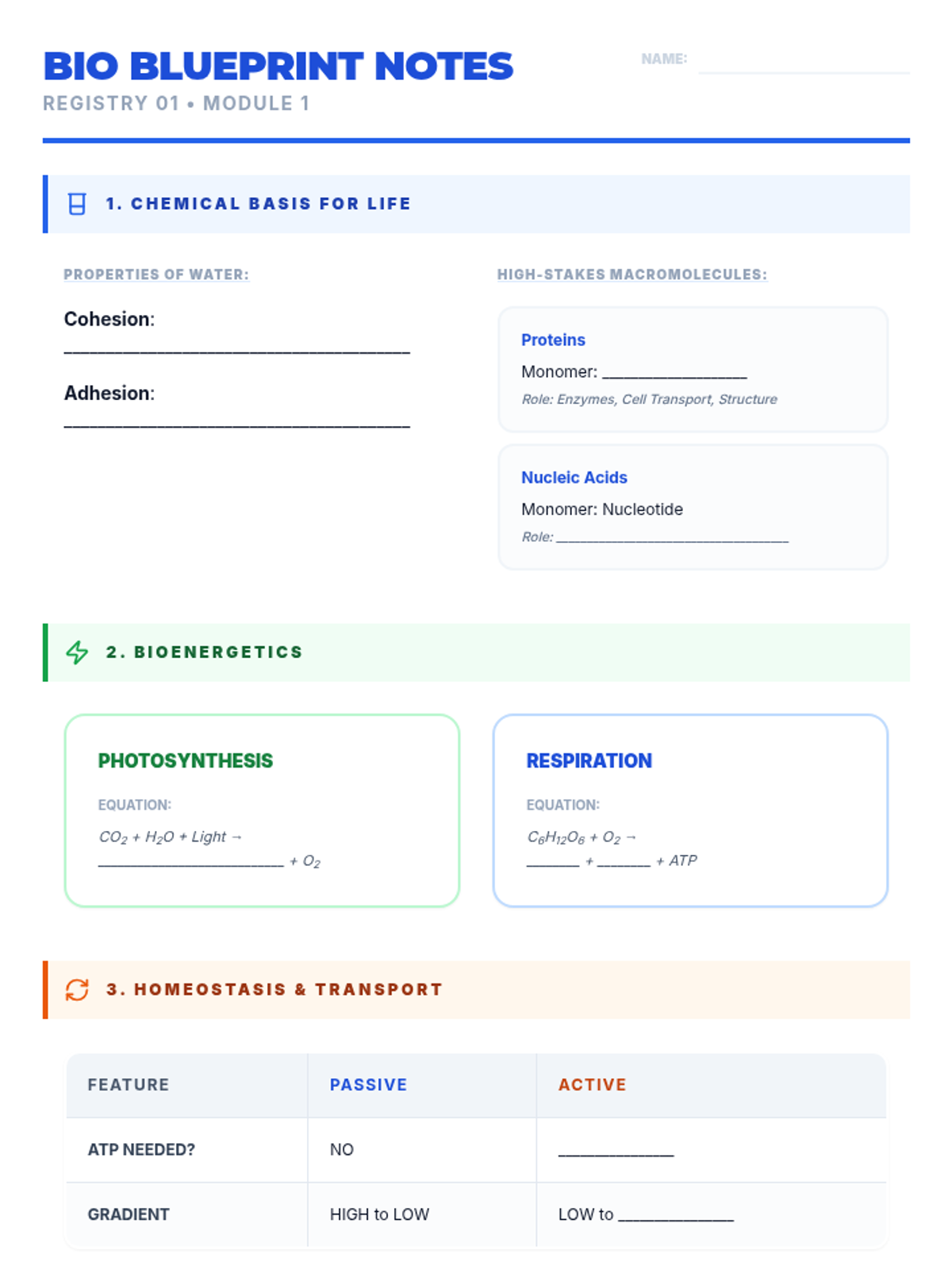
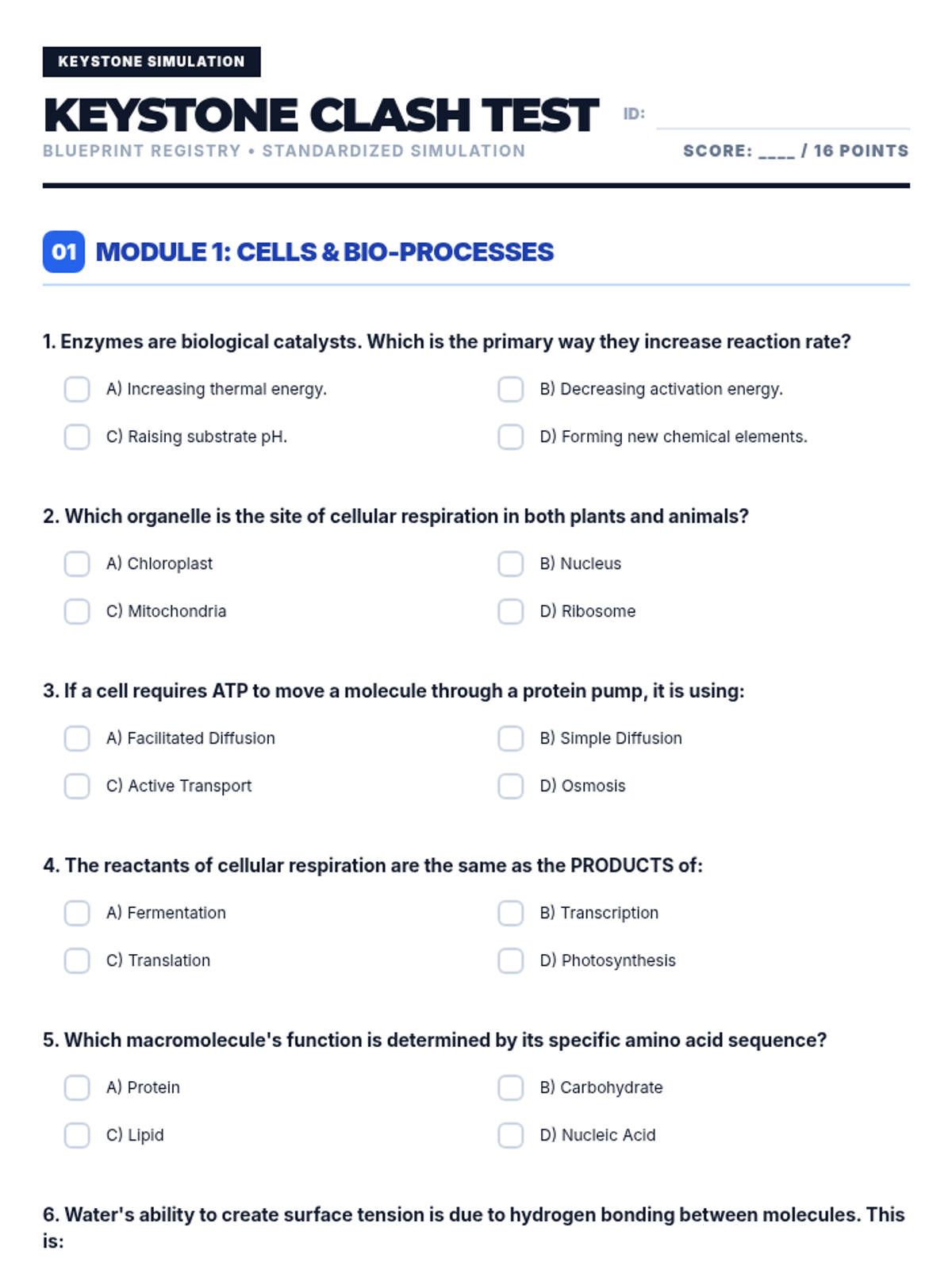
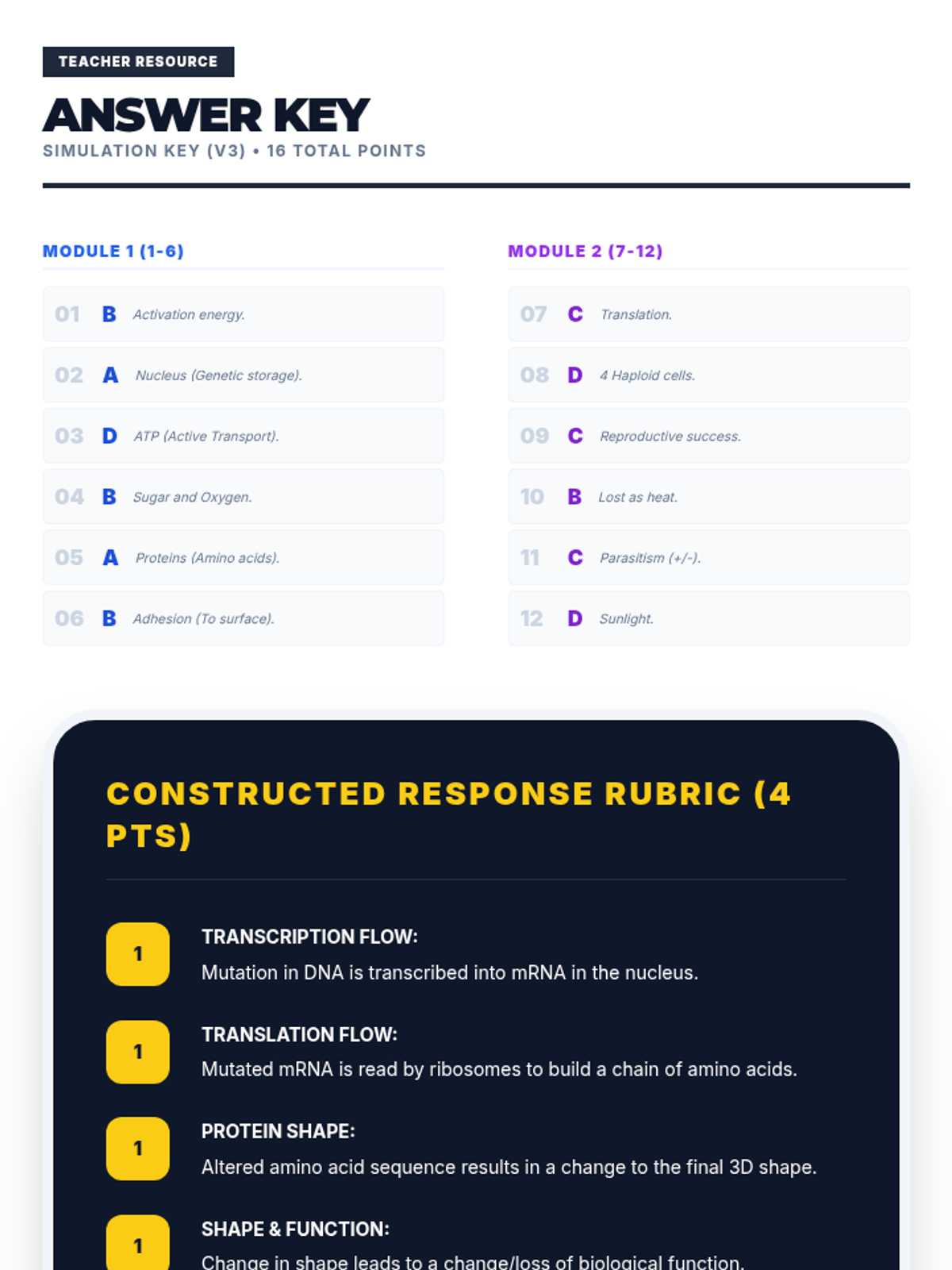
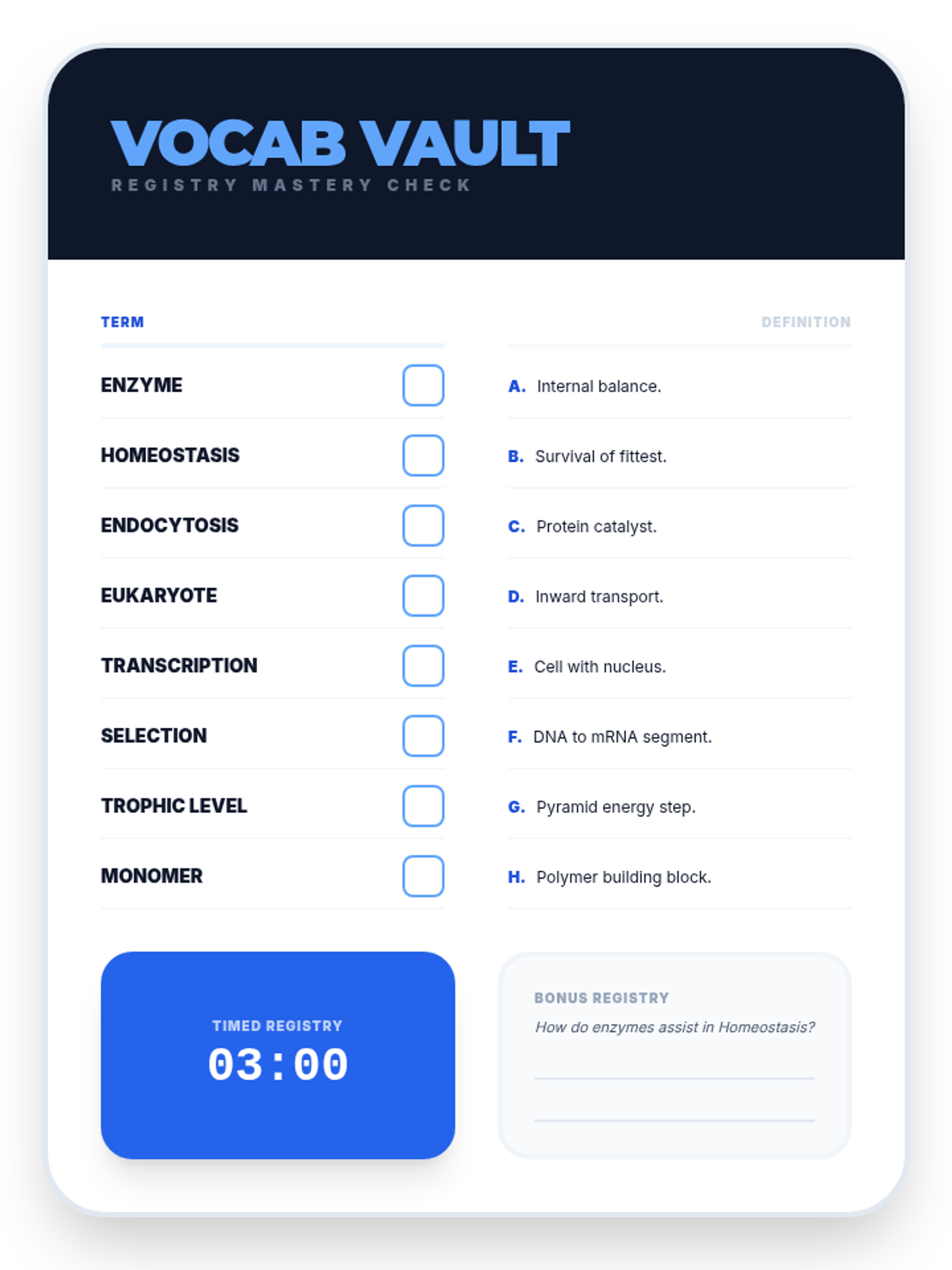
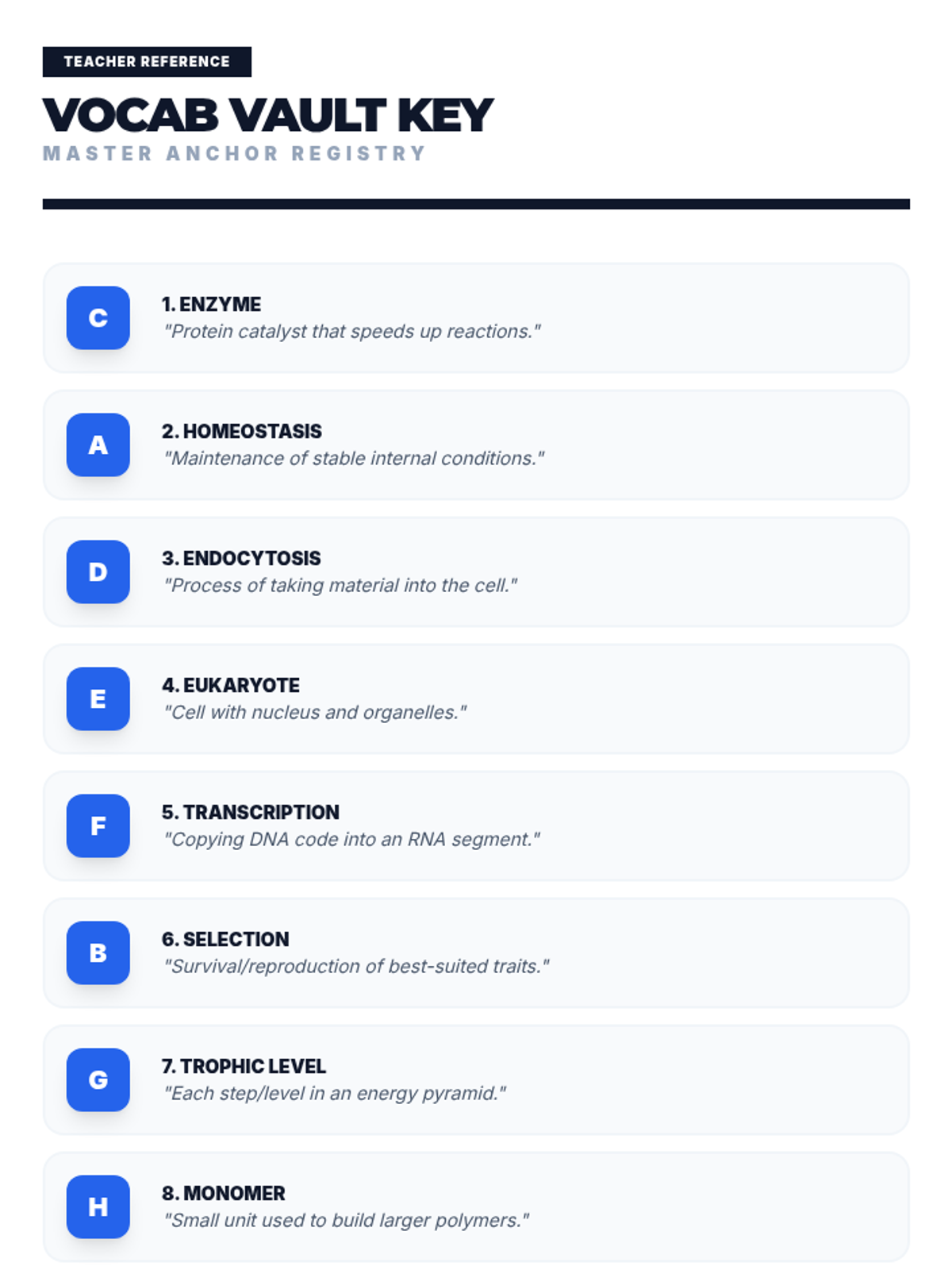
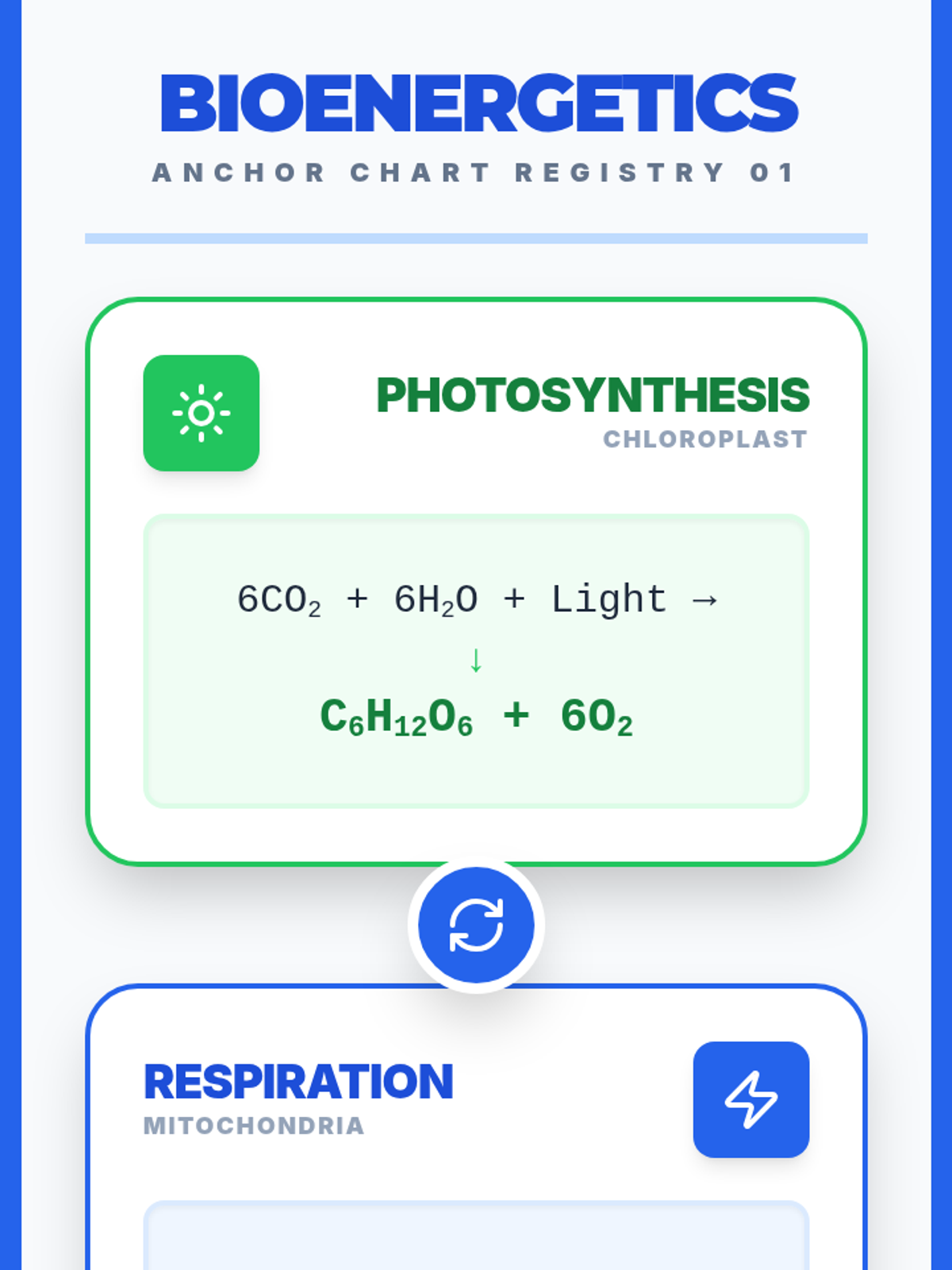
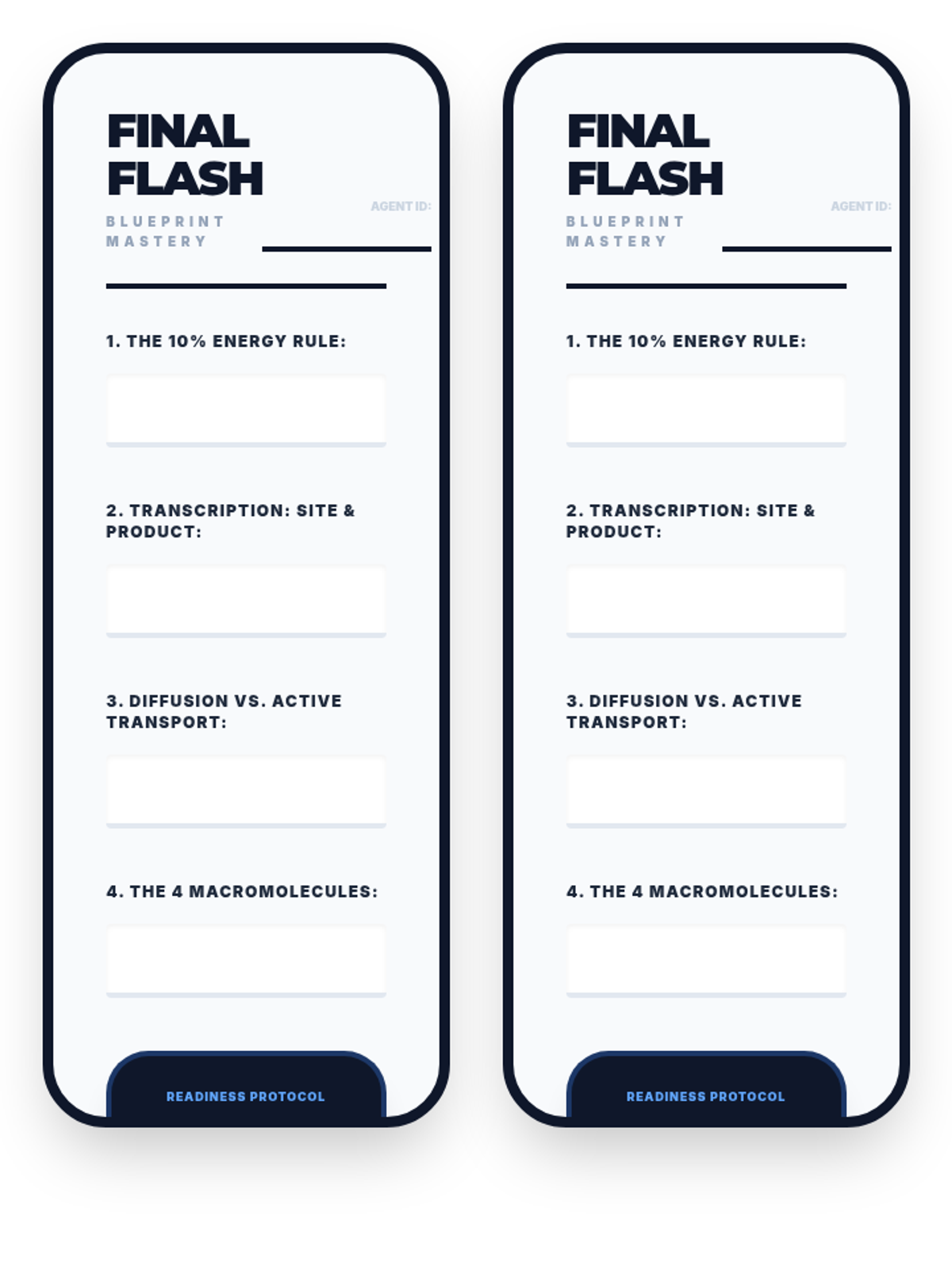
A comprehensive review session covering all Pennsylvania Biology Keystone Assessment Anchors, featuring guided notes, practice assessments, and visual aids to ensure student mastery of both modules.
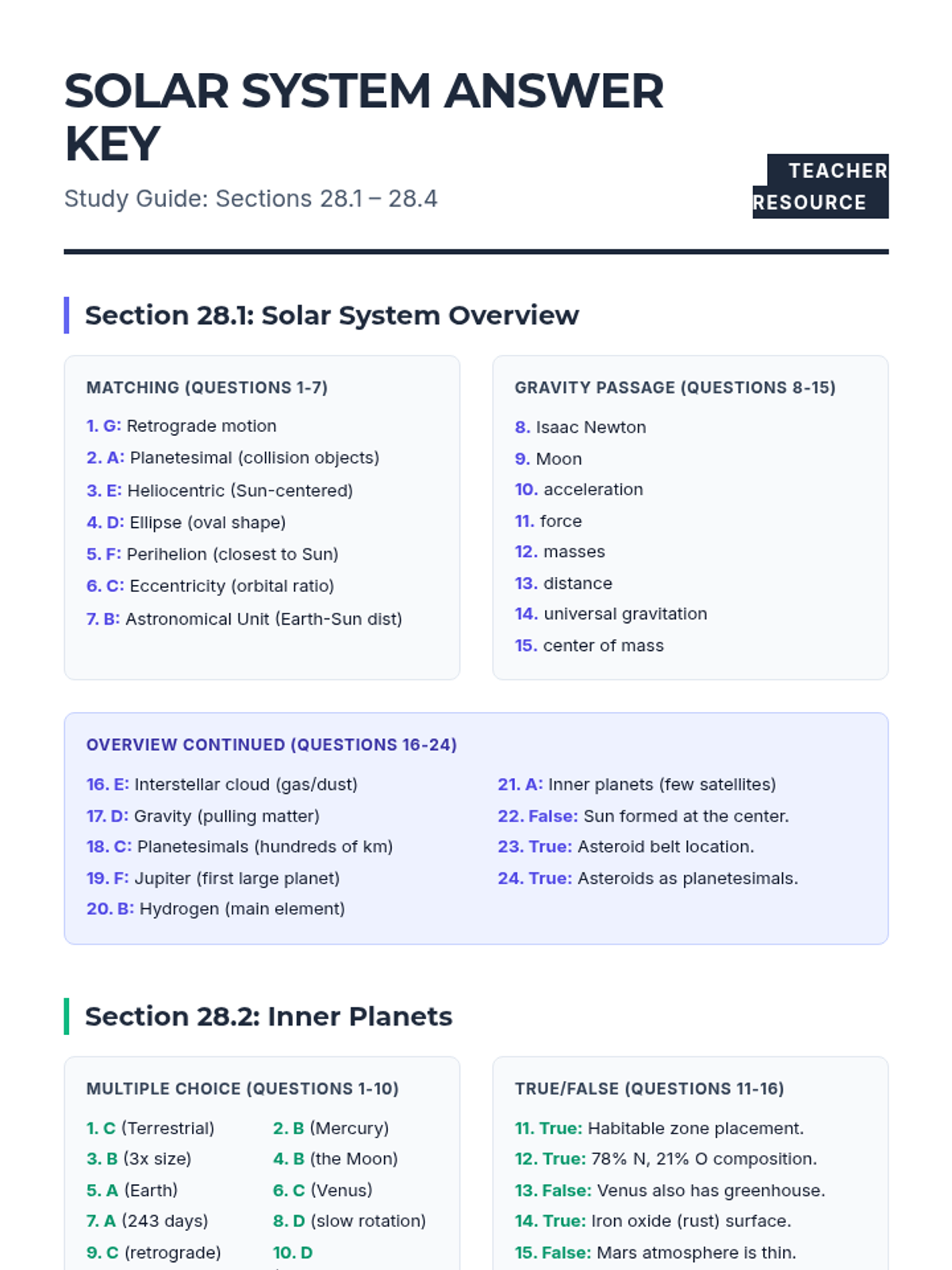
A comprehensive study of planetary characteristics, orbital mechanics, and the formation of our solar system based on the Unit 8 Study Guide.
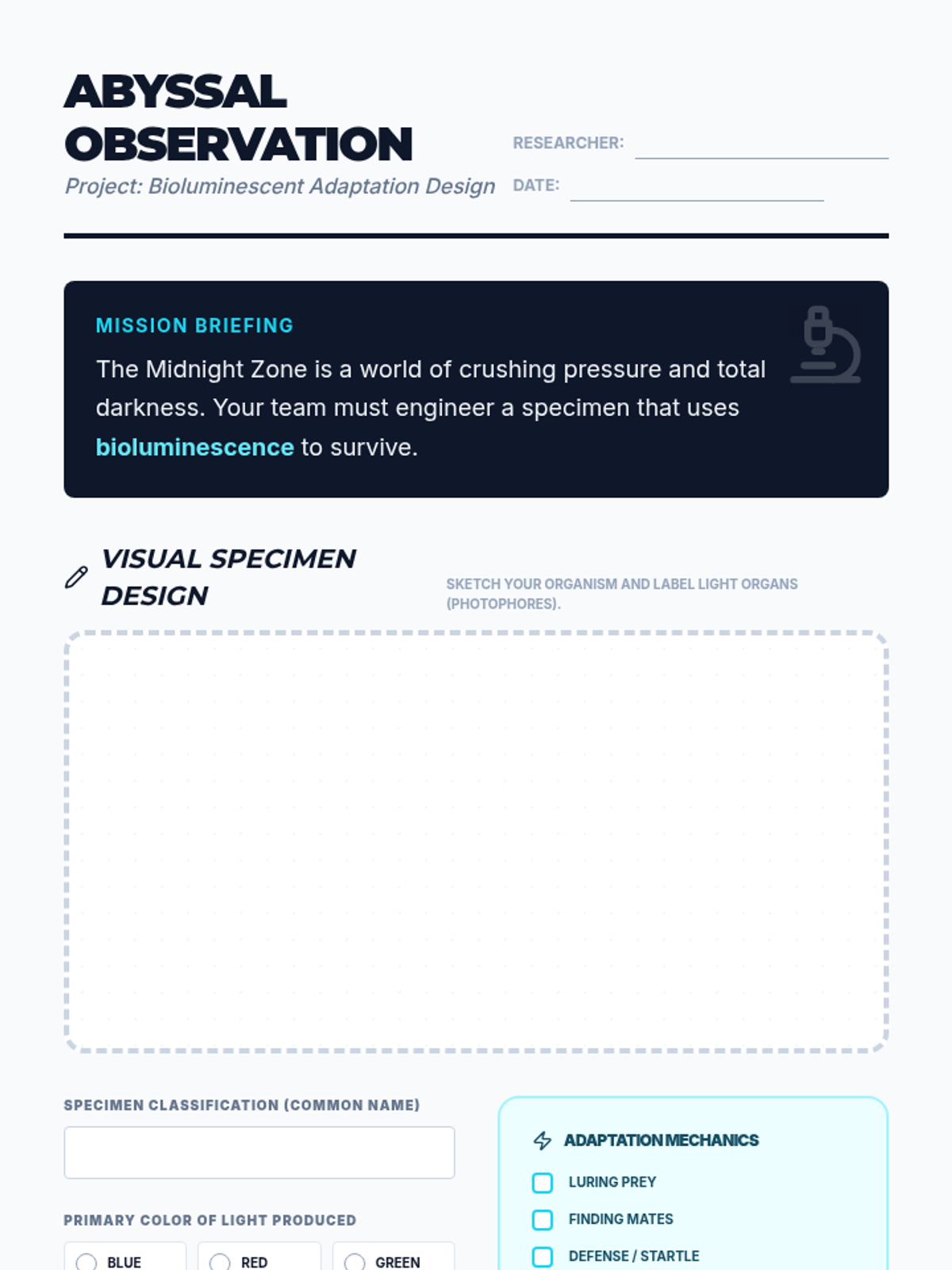
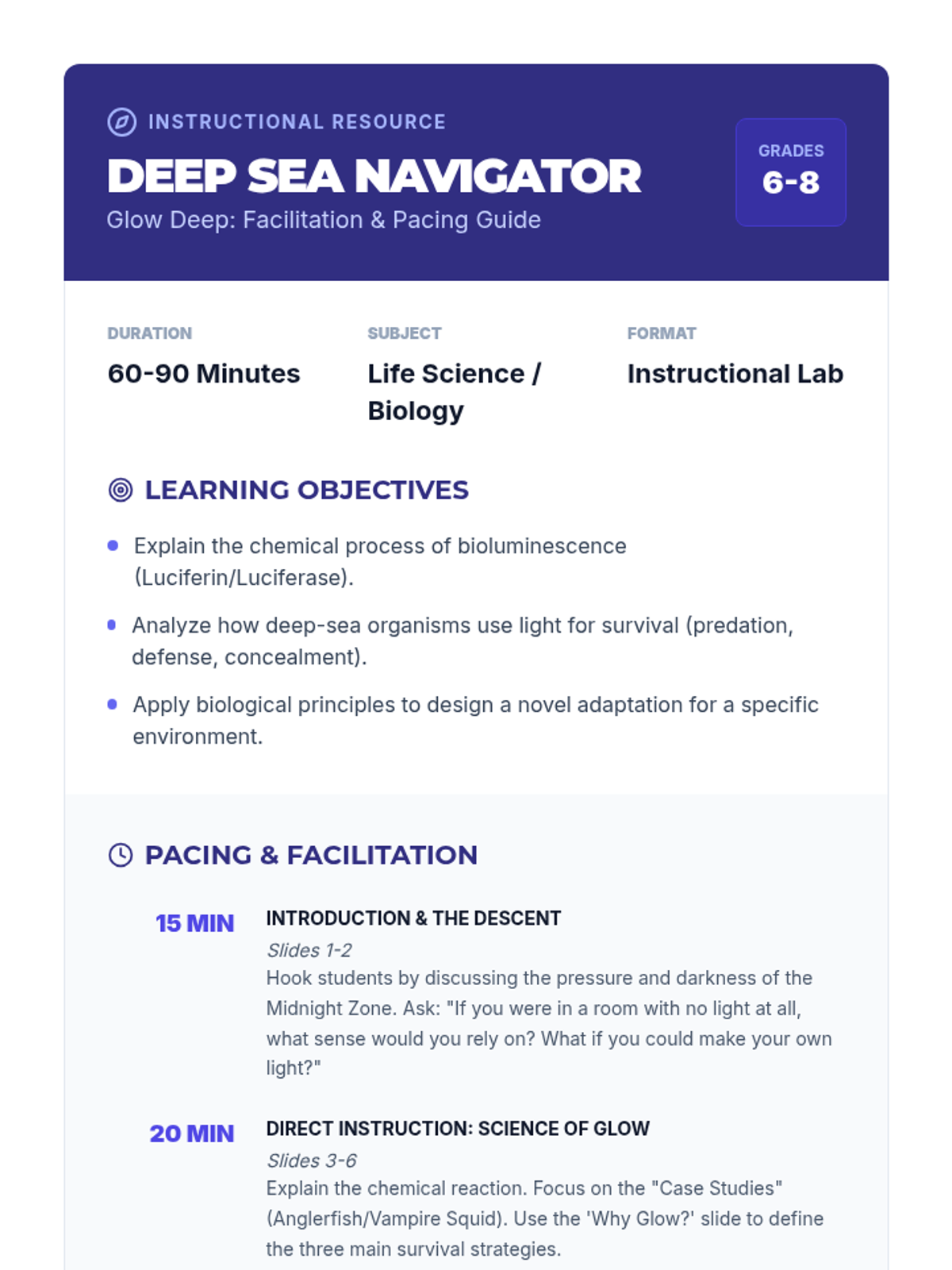
An immersive exploration of deep-sea bioluminescence, where students investigate how creatures adapt to the midnight zone through chemical light. Students will design their own abyssal organism based on scientific adaptation principles.
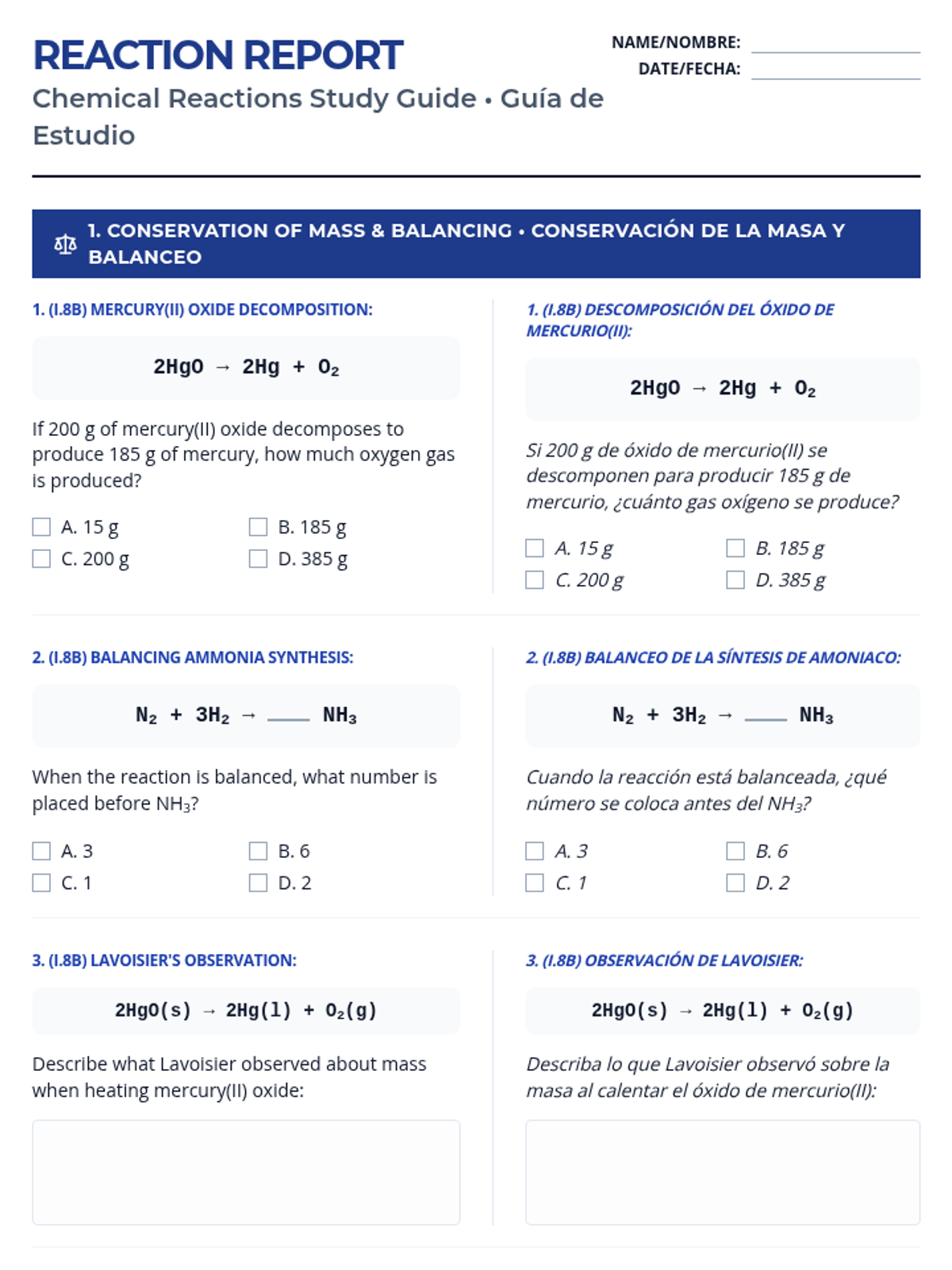
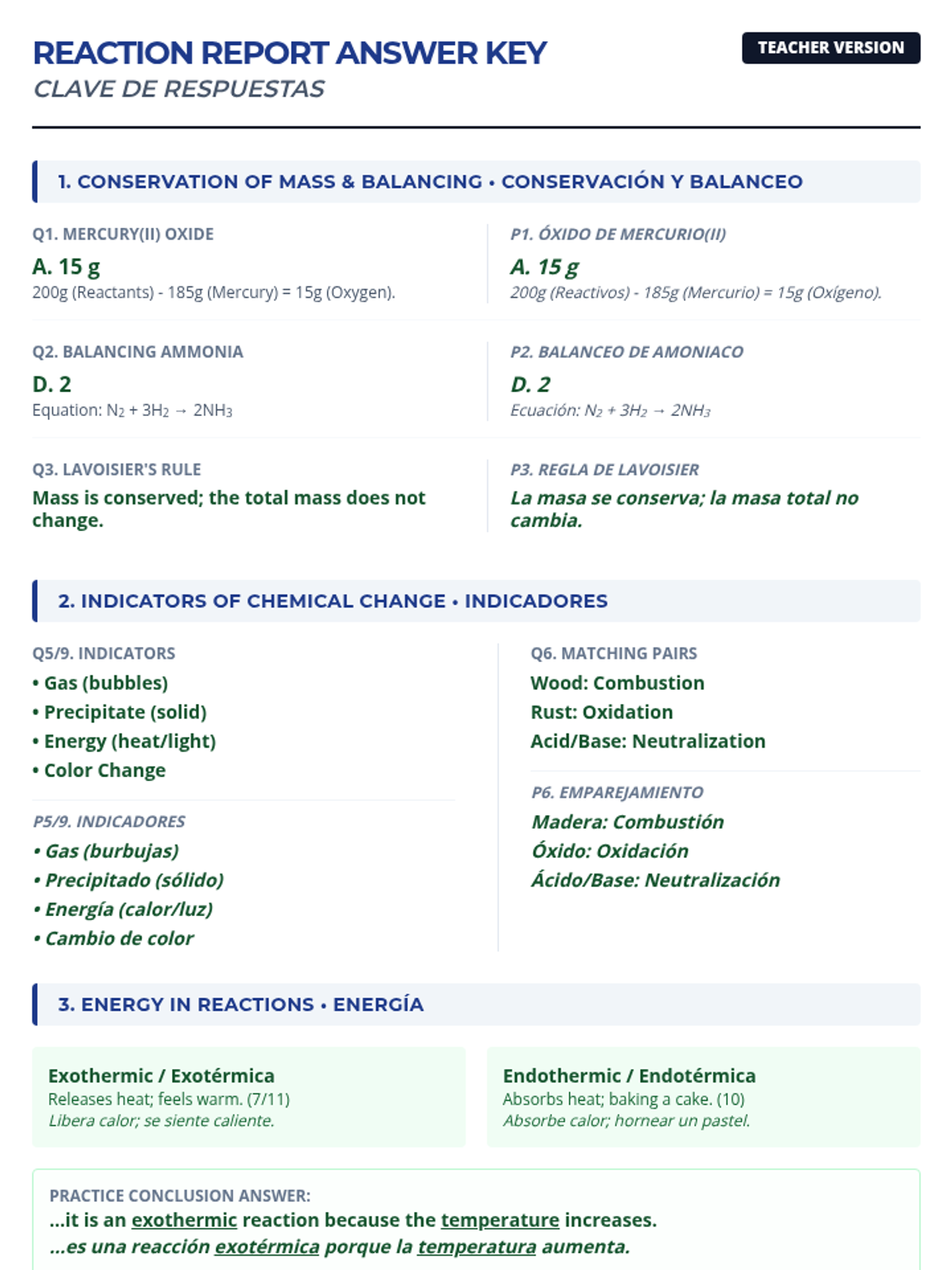
A comprehensive study guide covering chemical reactions, balancing equations, conservation of mass, and energy changes, provided in a bilingual English-Spanish format.
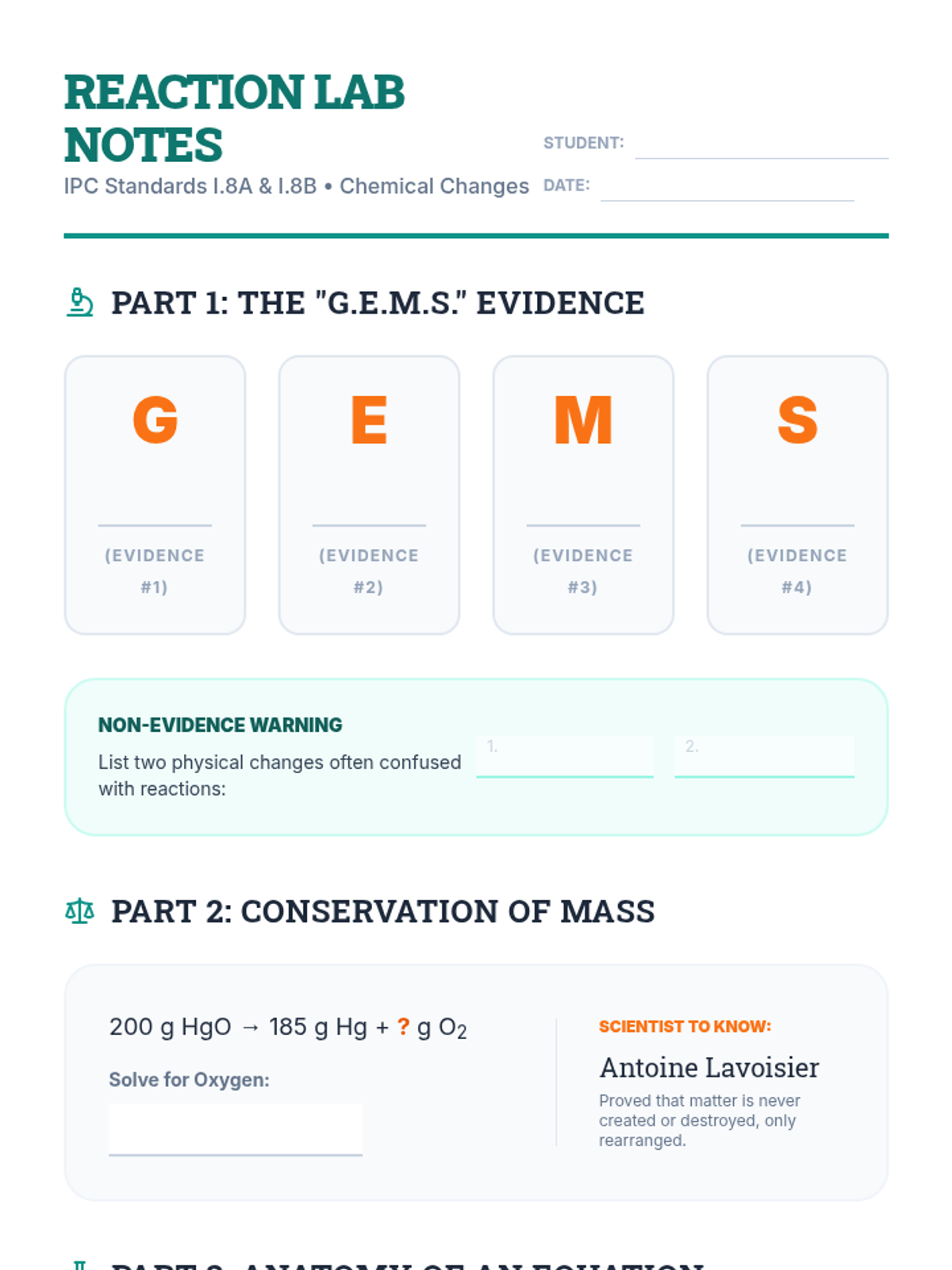
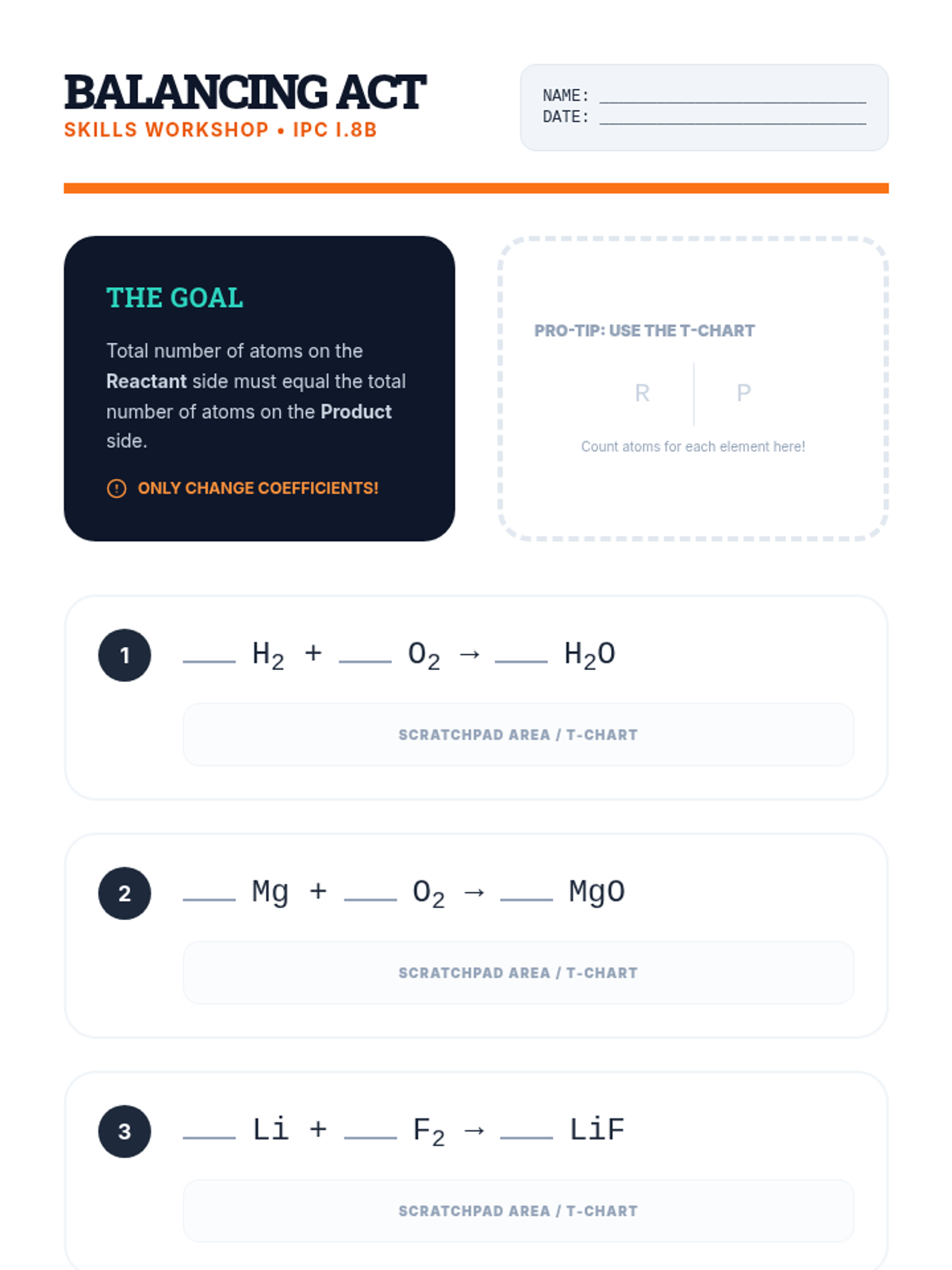
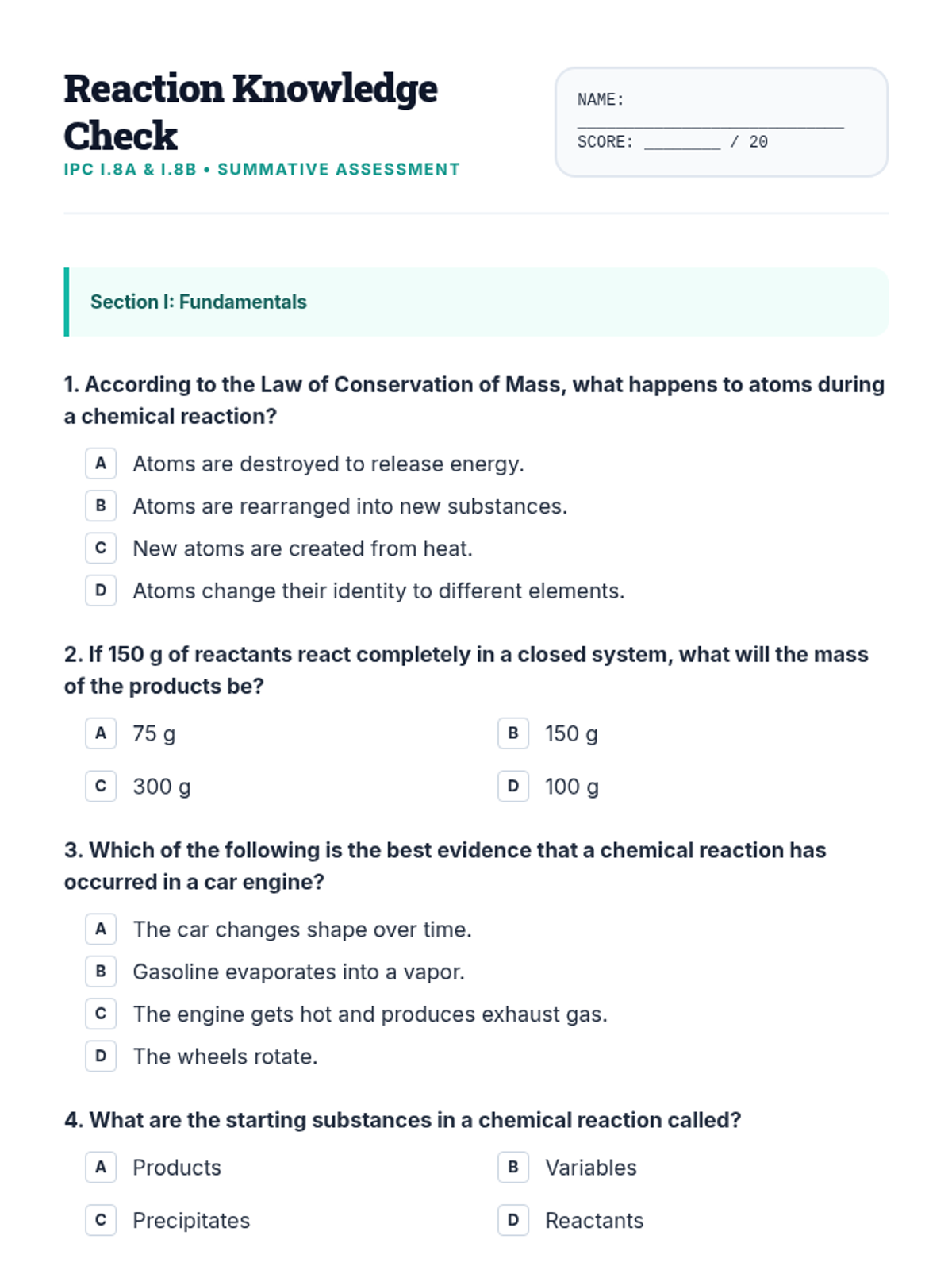
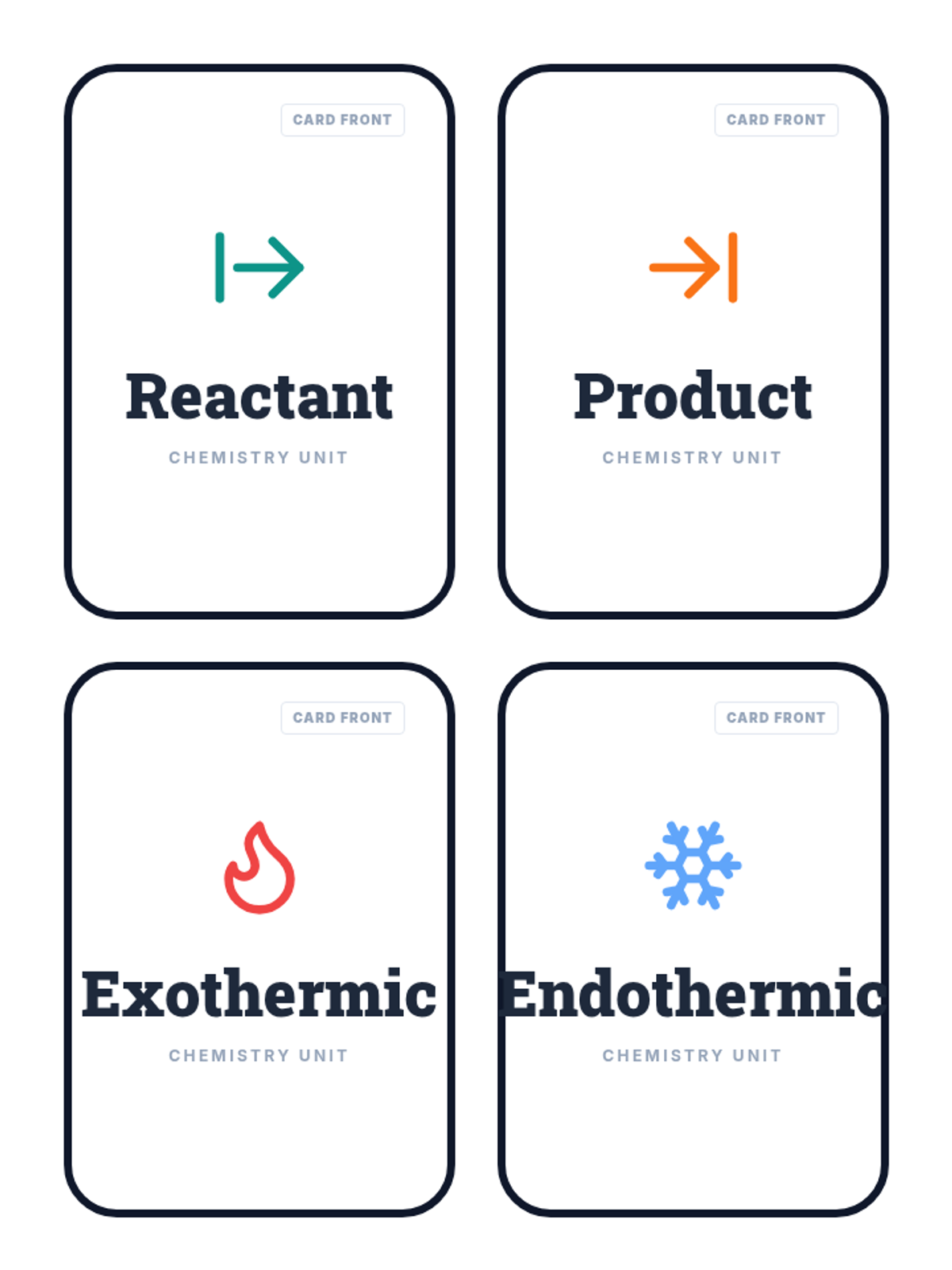
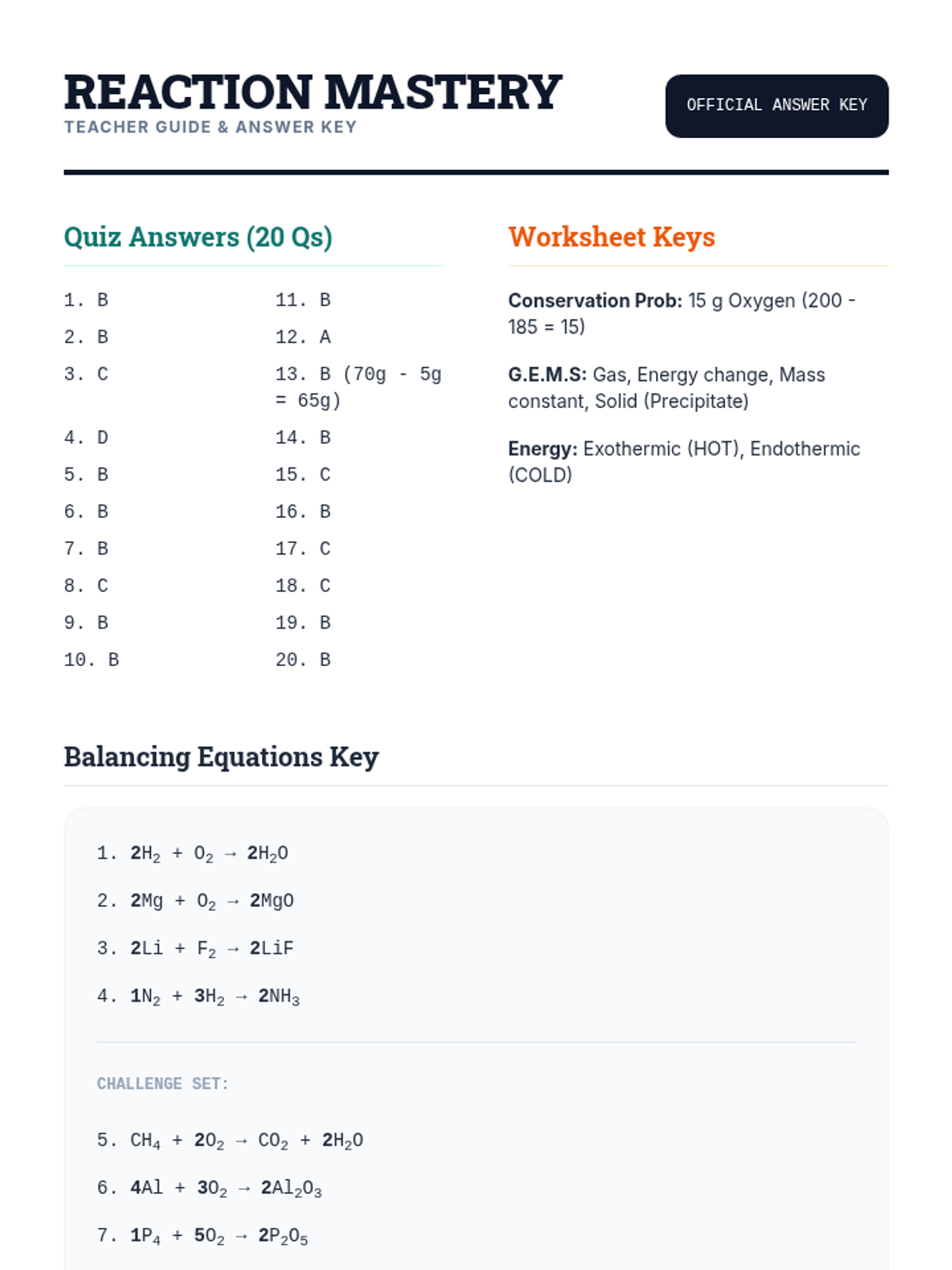
A comprehensive lesson on chemical reactions covering conservation of mass, balancing equations, evidence of reactions, and energy changes. Students will engage with visual slides, practice worksheets, and a summative assessment.
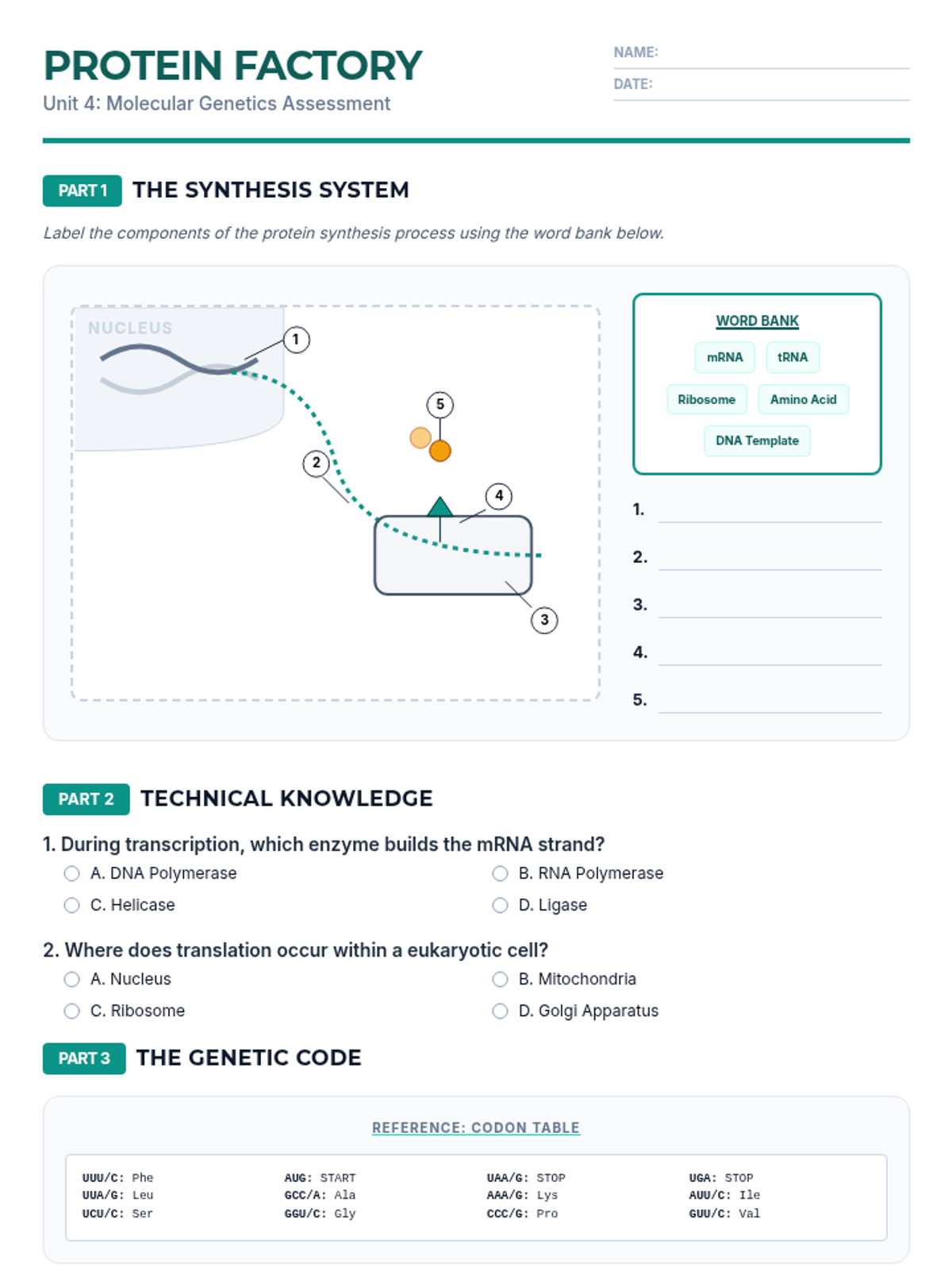
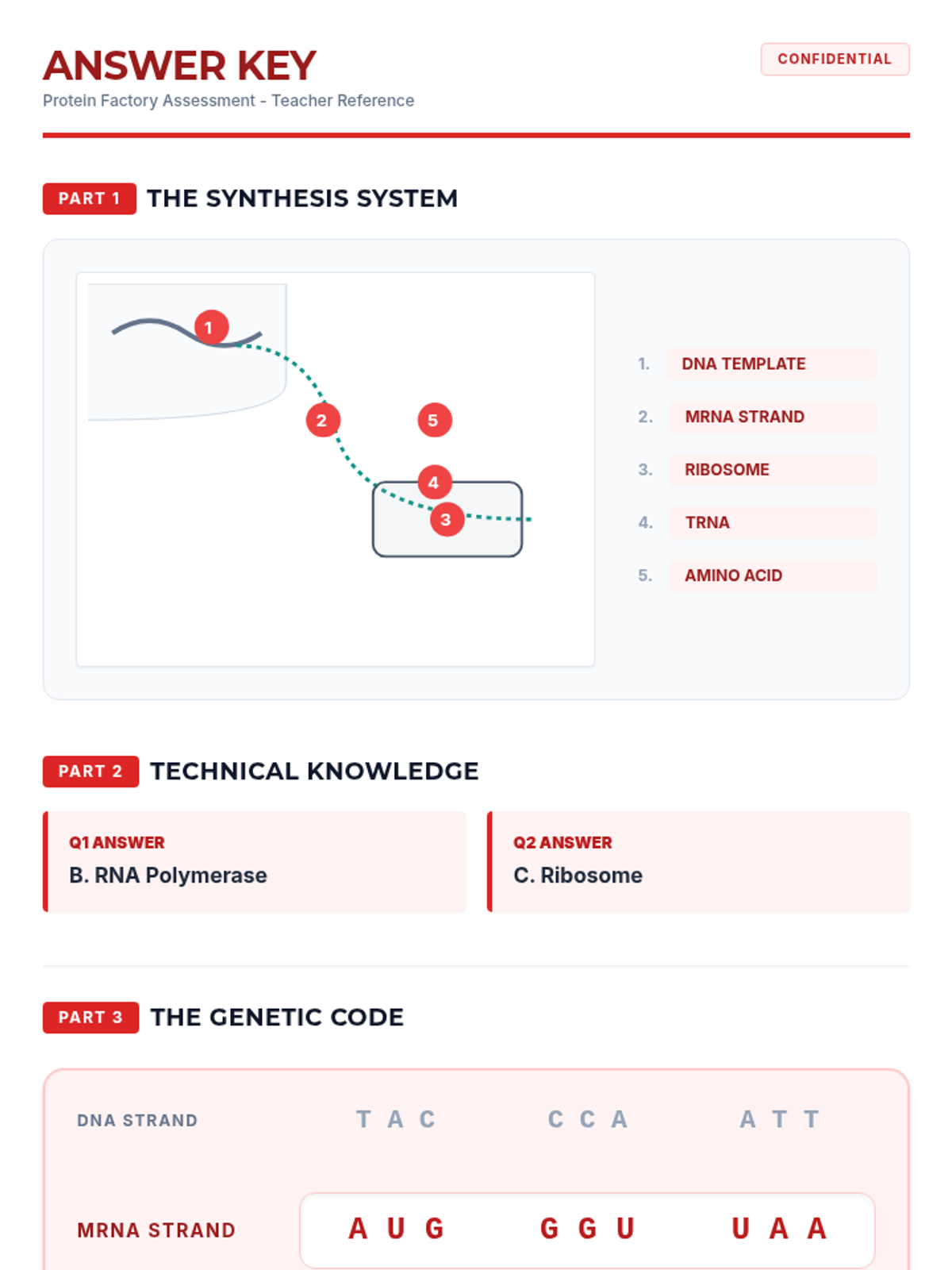
A comprehensive assessment on the central dogma of molecular biology, covering transcription, translation, and genetic code interpretation through diagrams and multiple-choice questions.
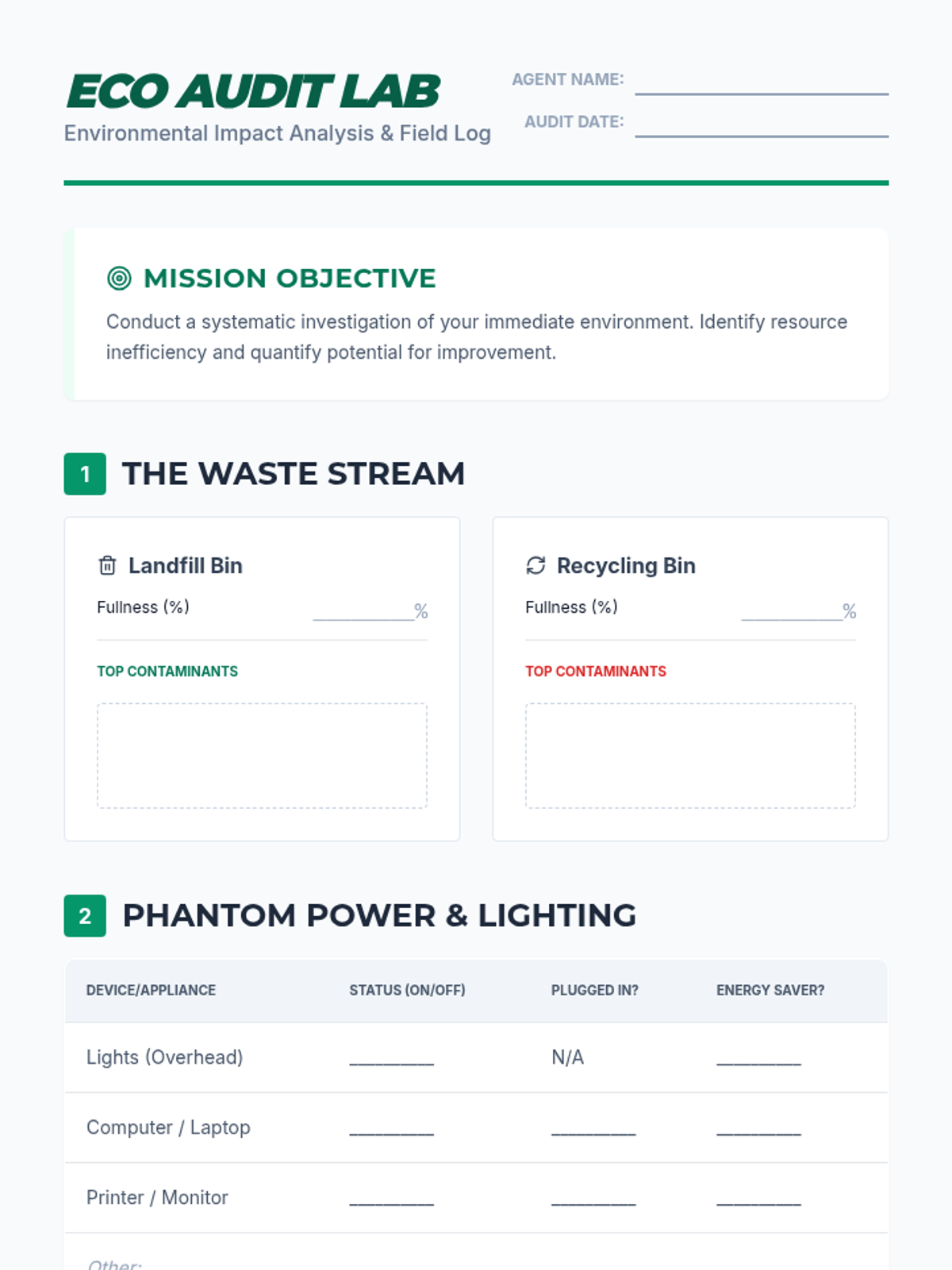
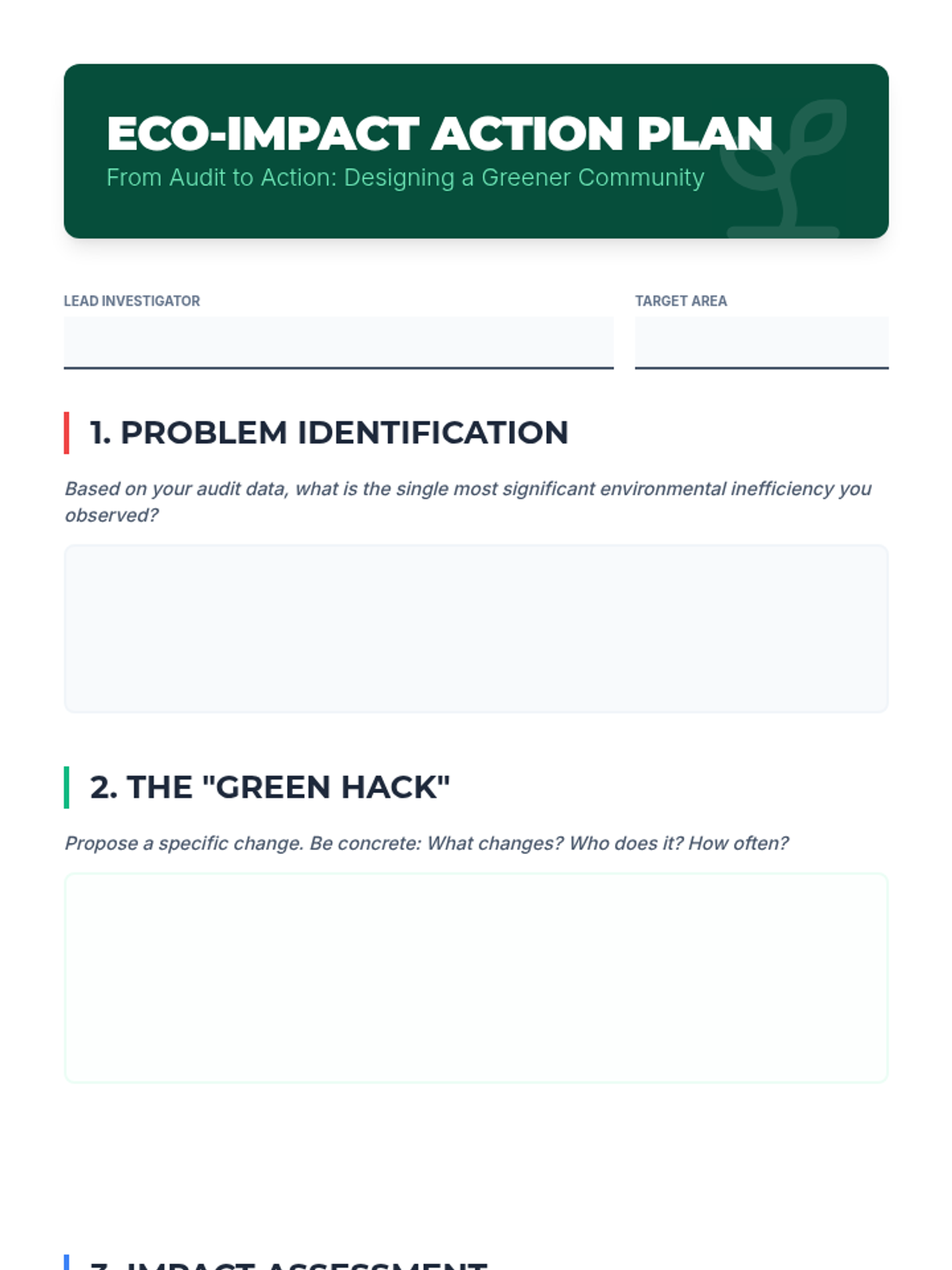
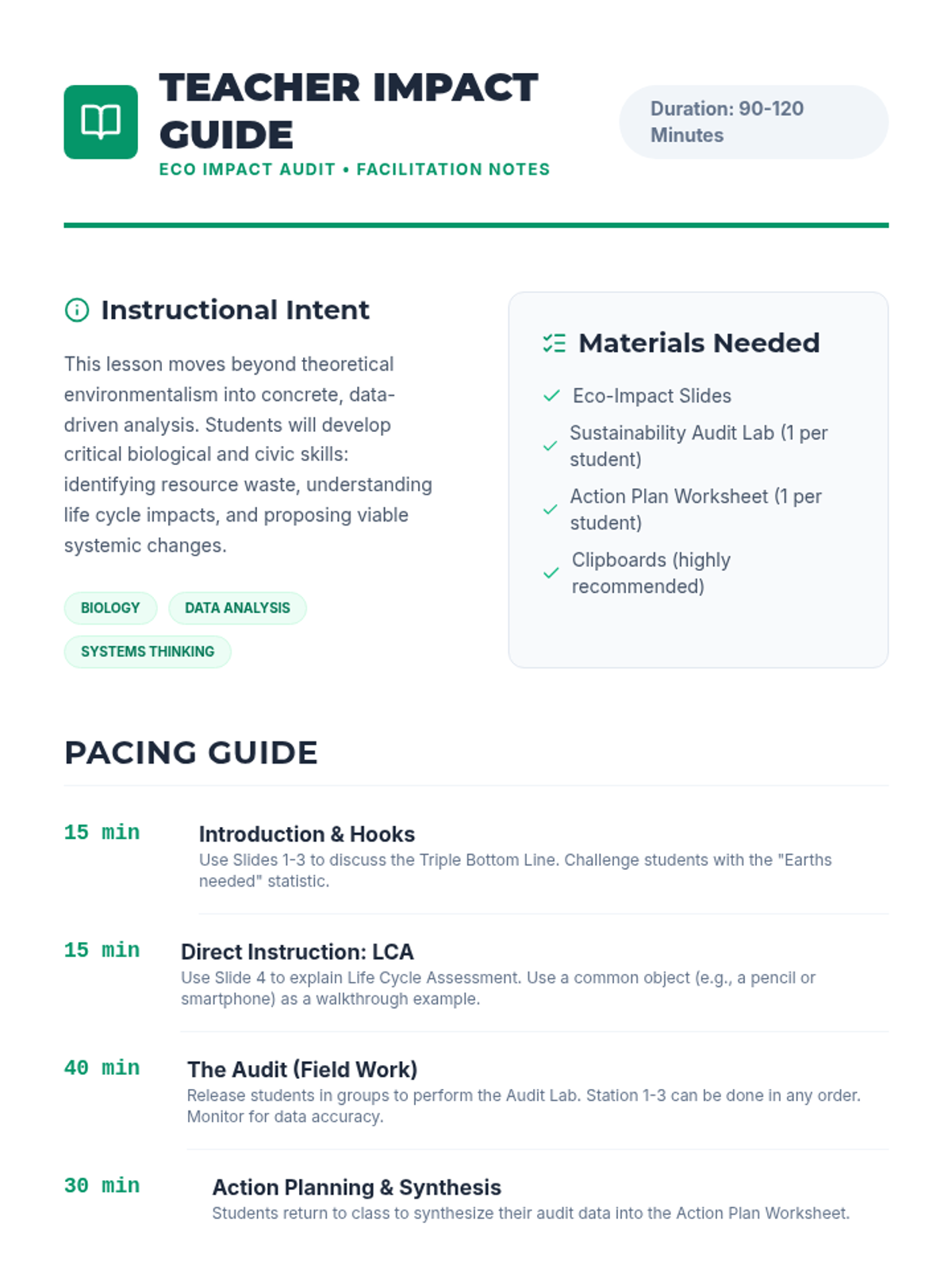
A hands-on lesson where students analyze their environmental footprint through a sustainability audit and develop data-driven solutions for real-world impact.
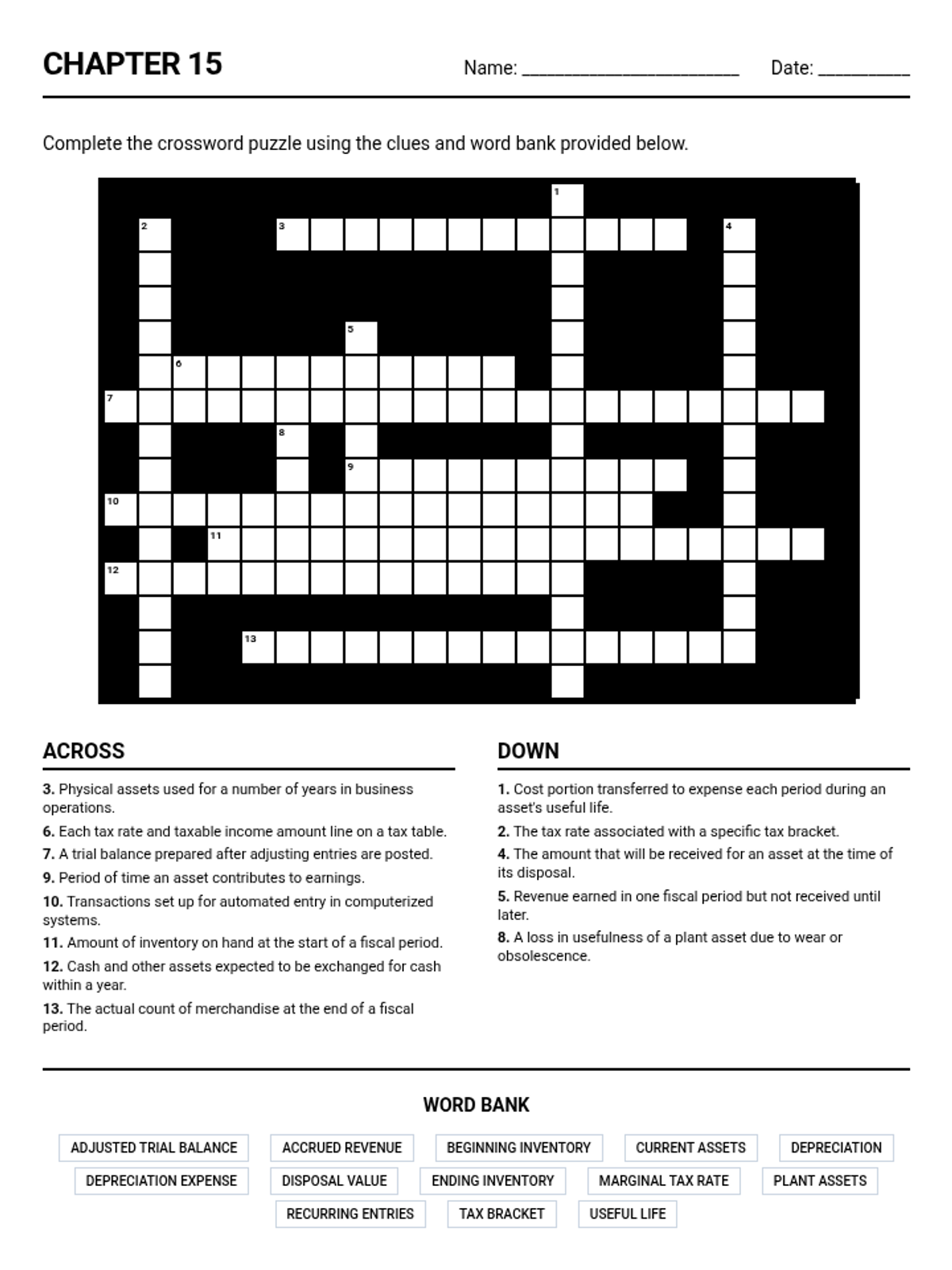
This lesson covers fundamental accounting concepts including asset valuation, tax structures, and inventory management through a hands-on crossword challenge.
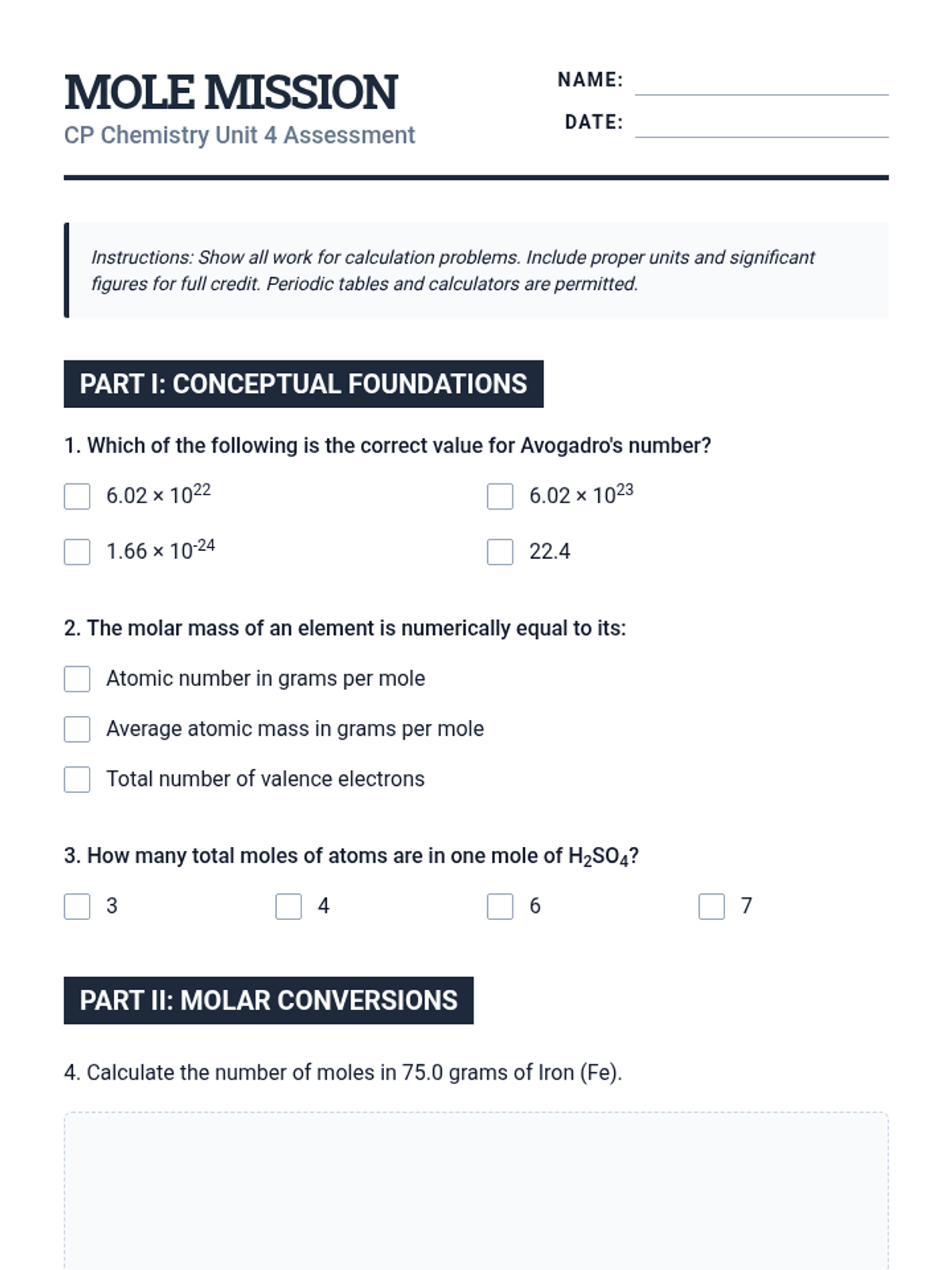
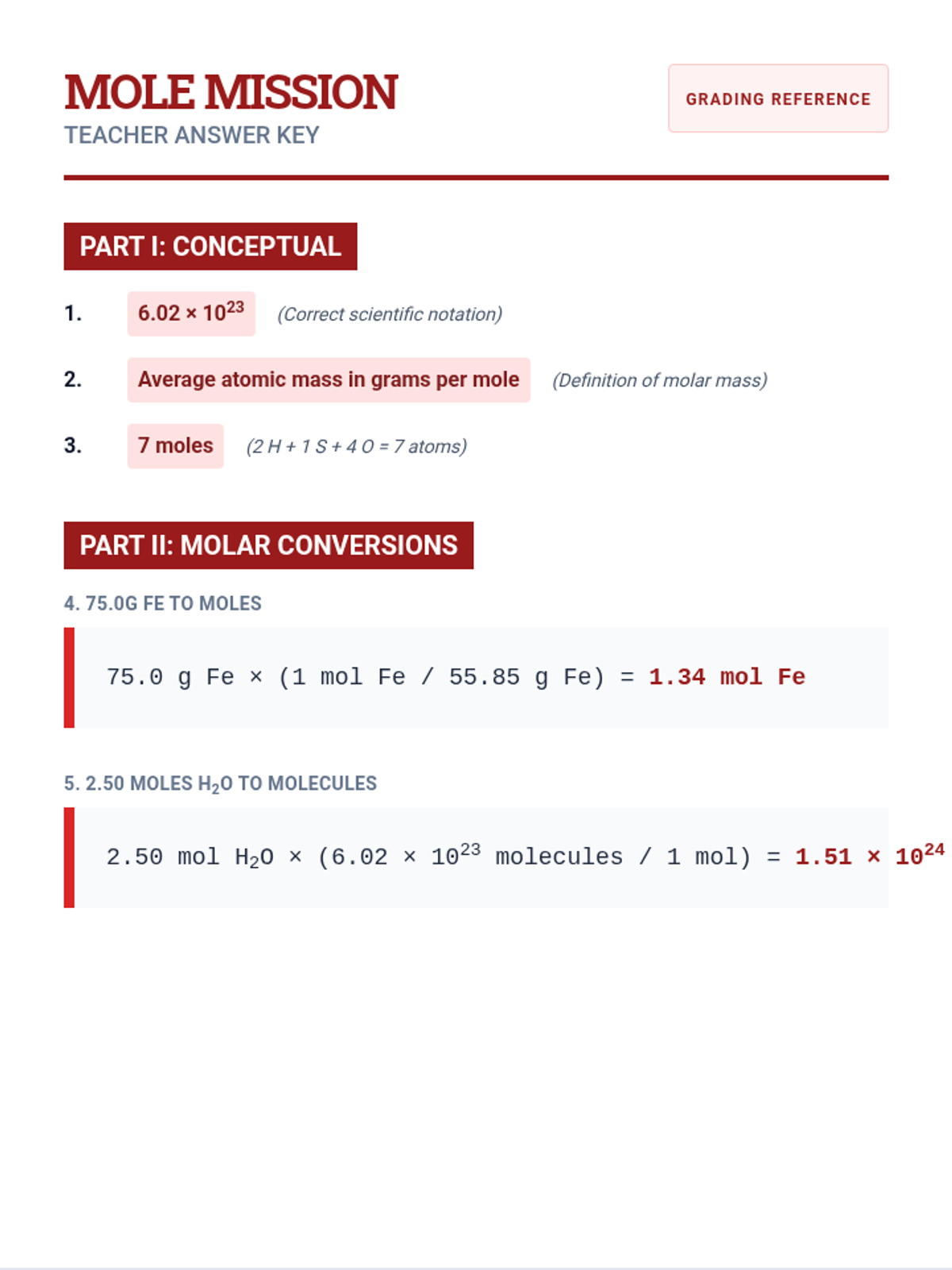
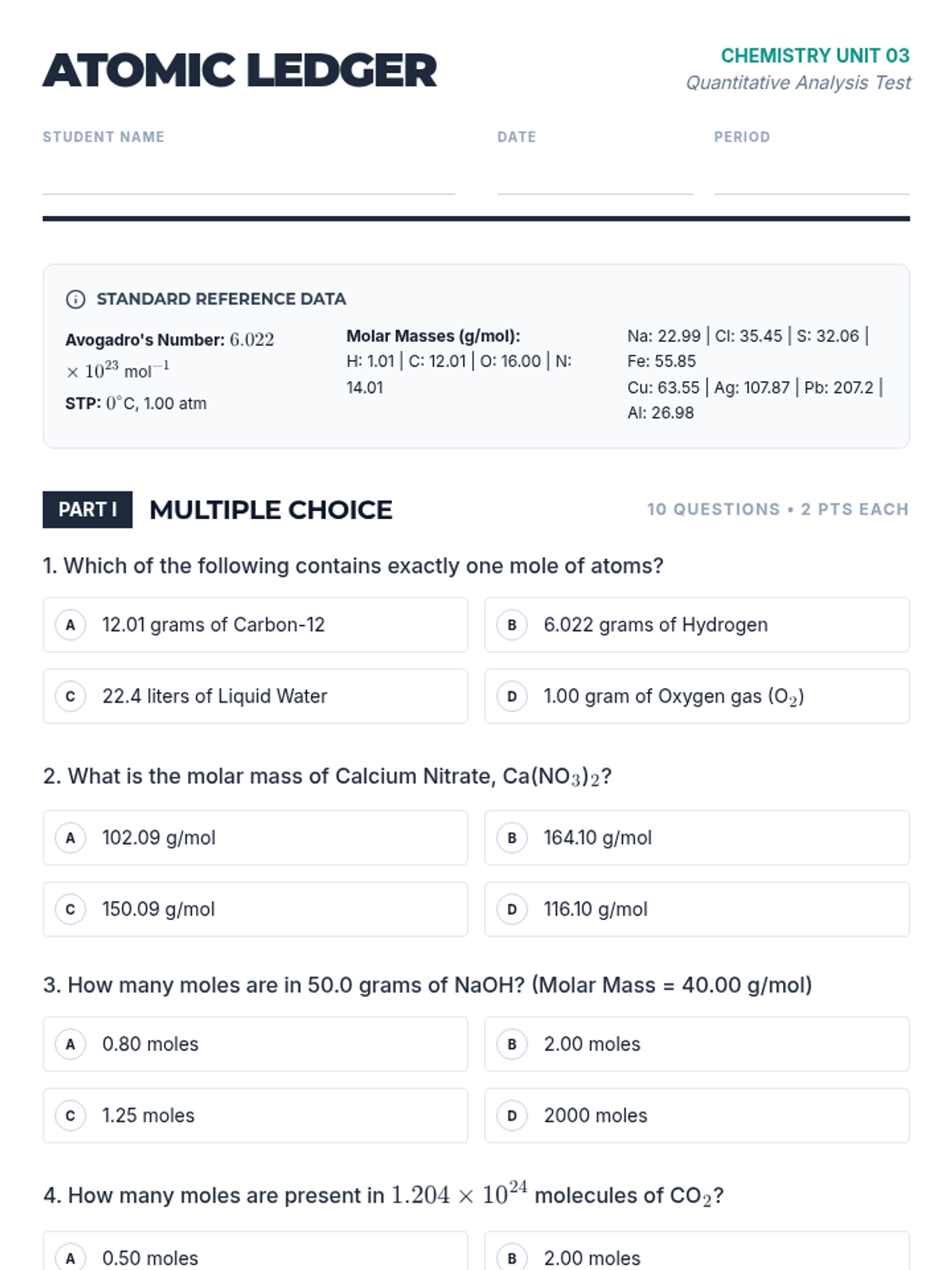
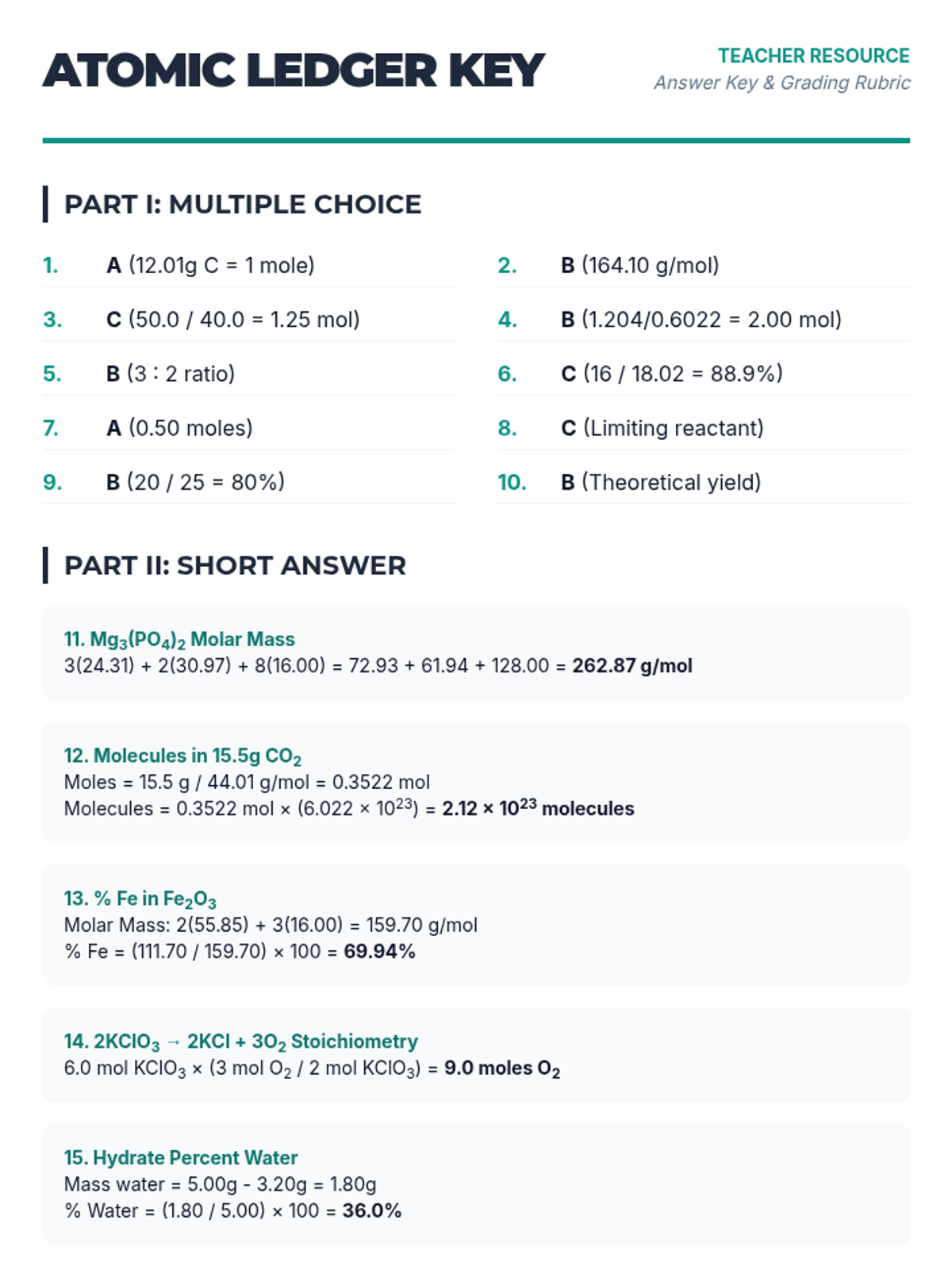
A comprehensive assessment and review package covering chemical quantities, molar conversions, and stoichiometric calculations for CP Chemistry.
A comprehensive assessment covering the mole, percent composition, and stoichiometry for high school chemistry students.
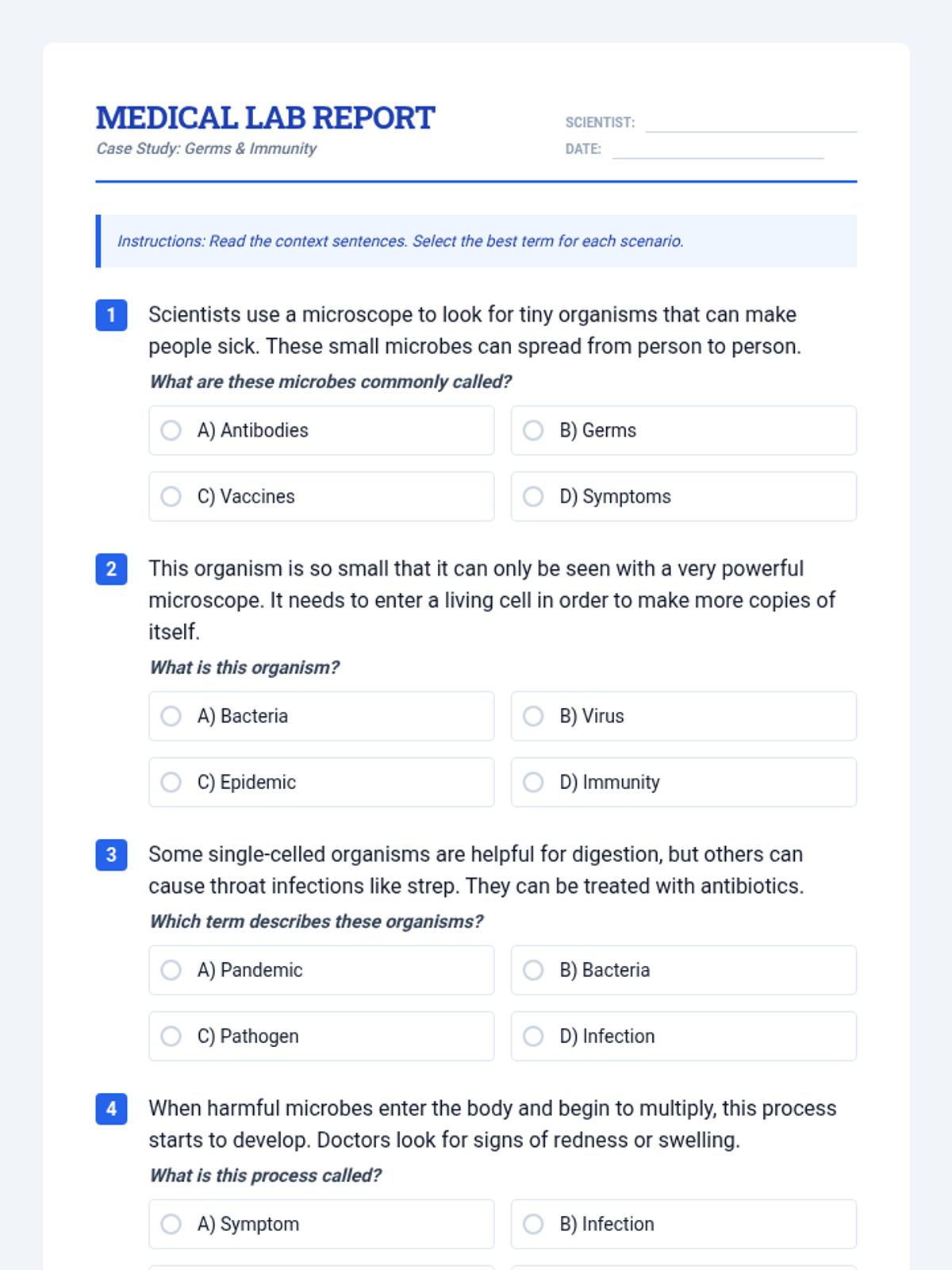
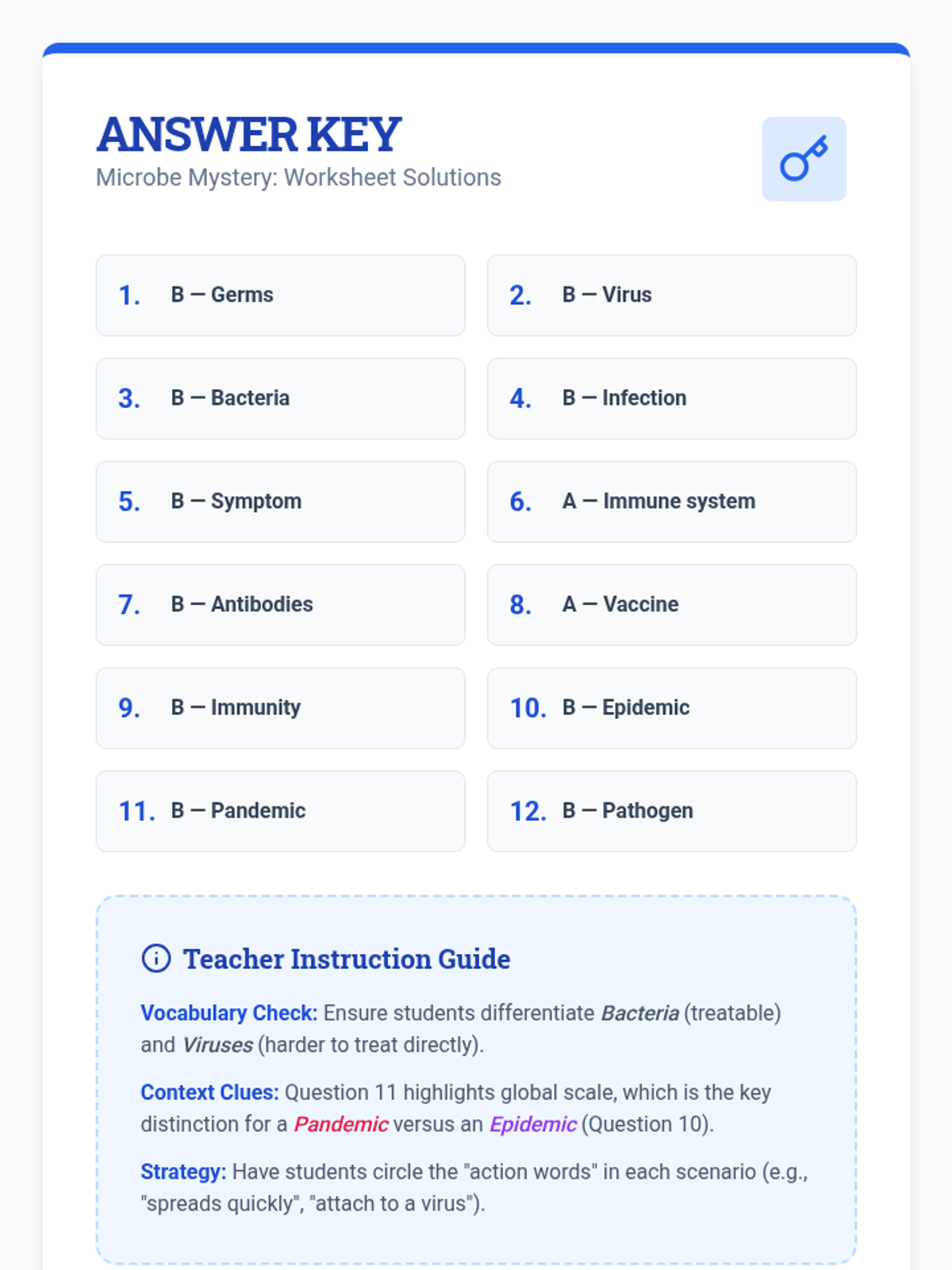
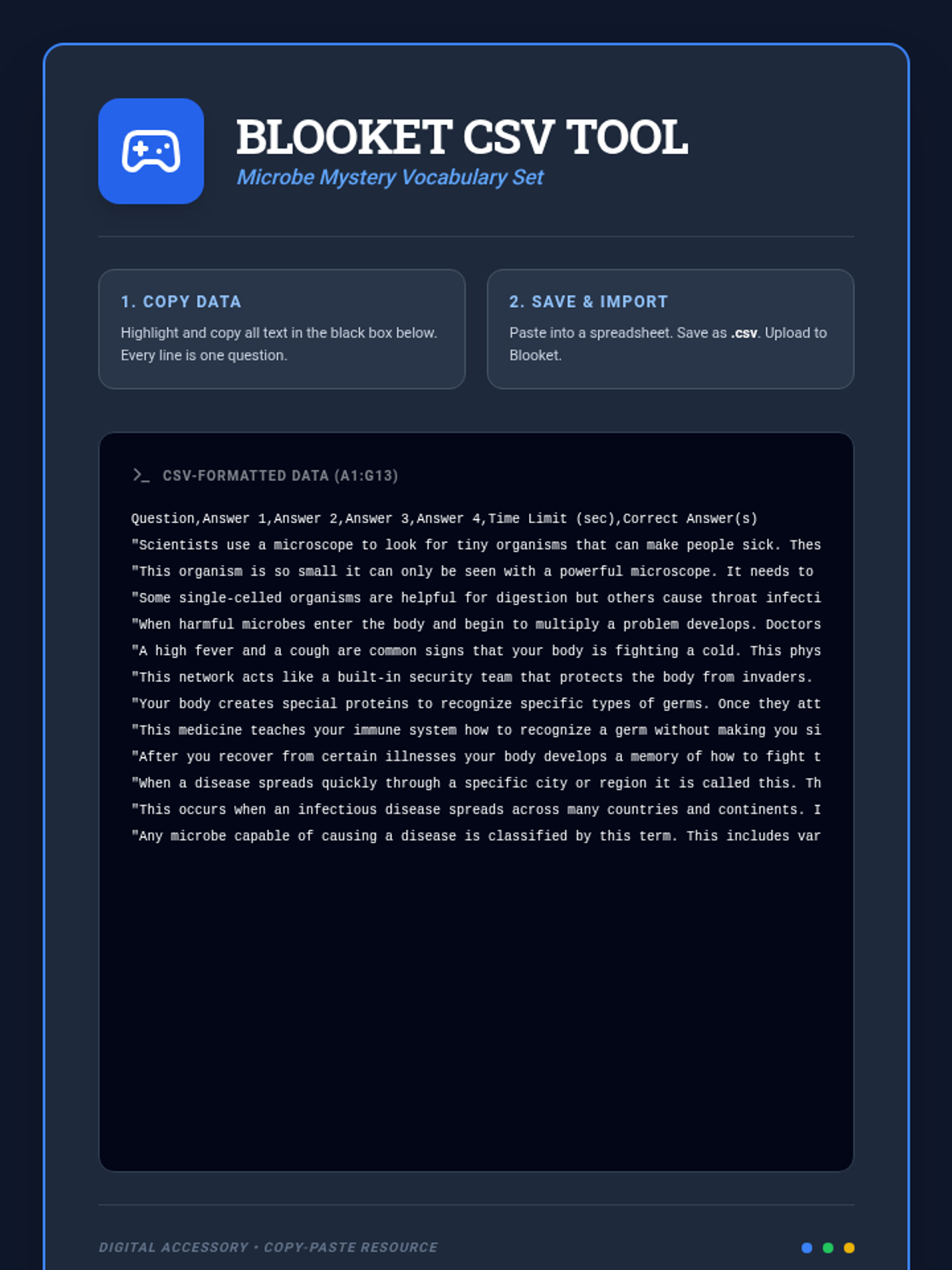
A comprehensive lesson on medical vocabulary related to germs and the immune system, designed for WIDA level 4 students. Includes visual aids and comprehension-based assessments.
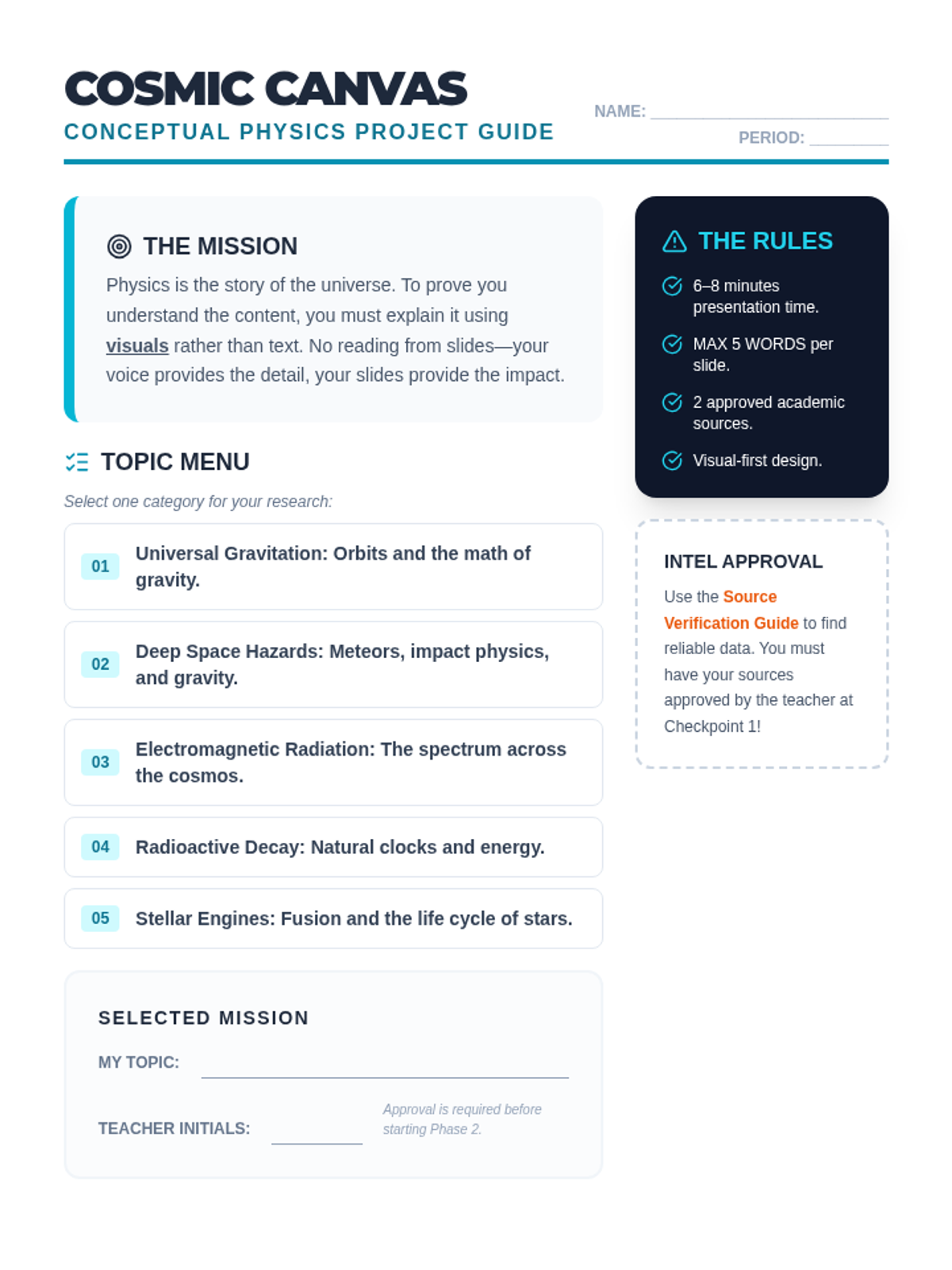
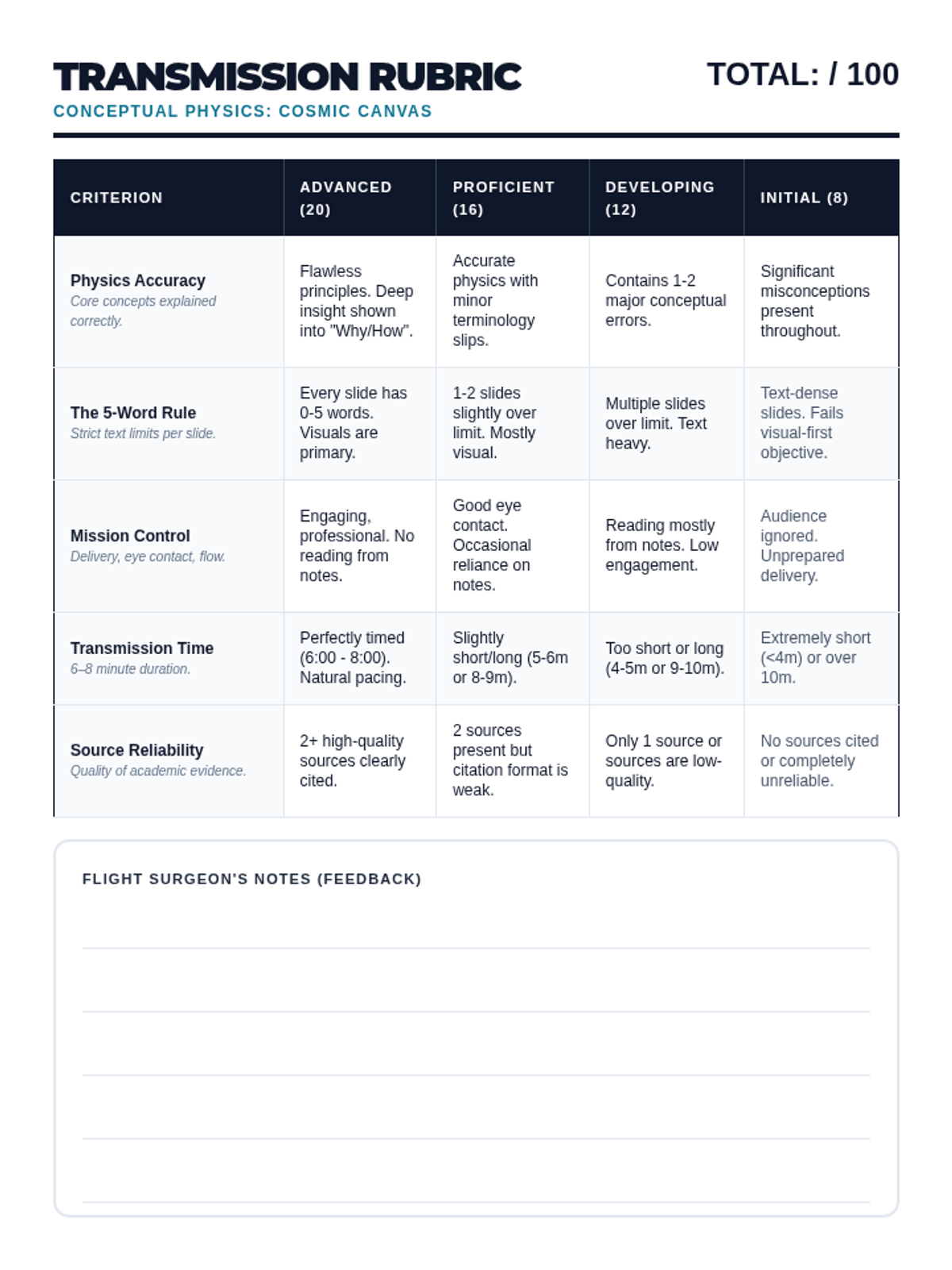
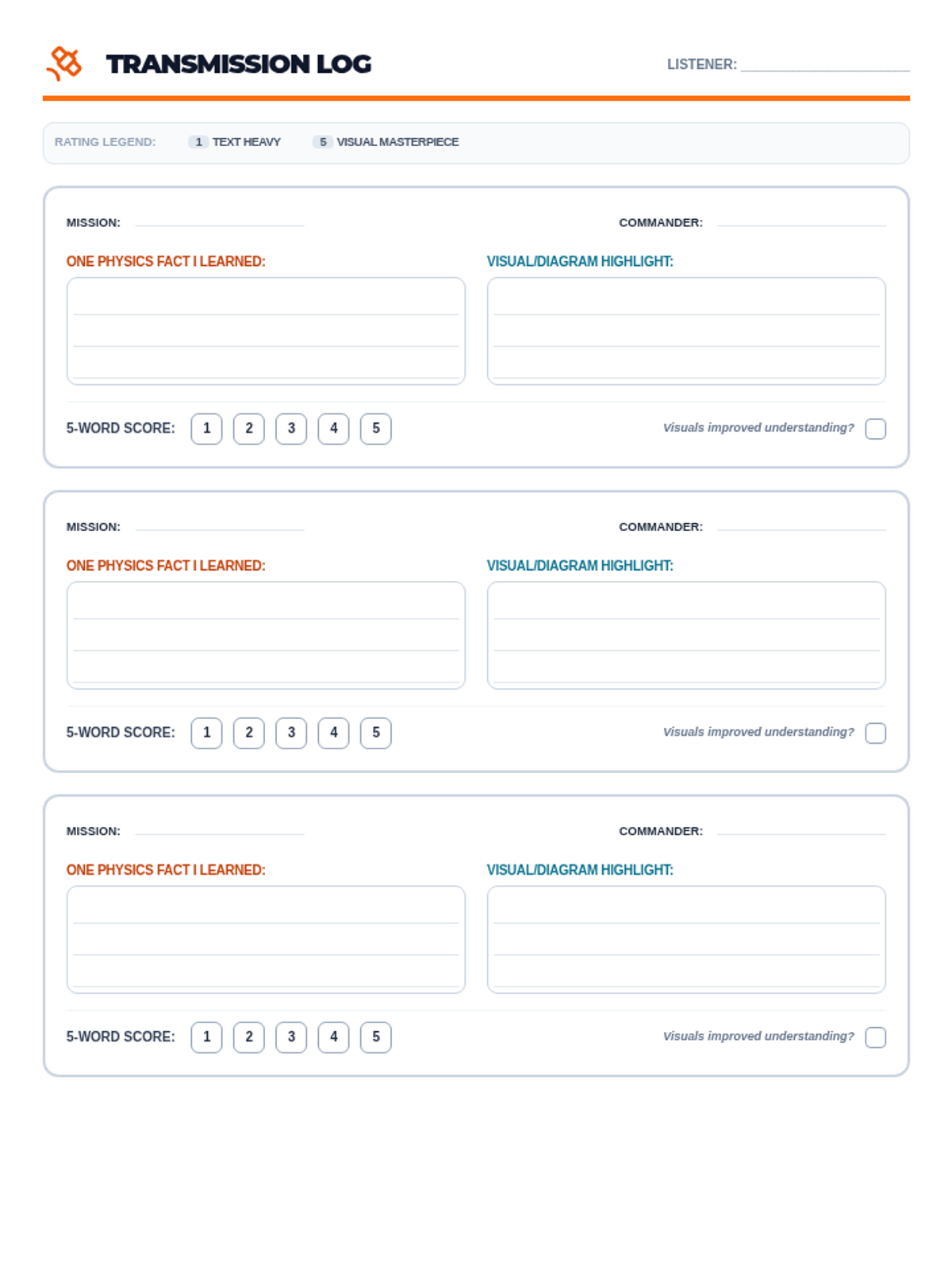
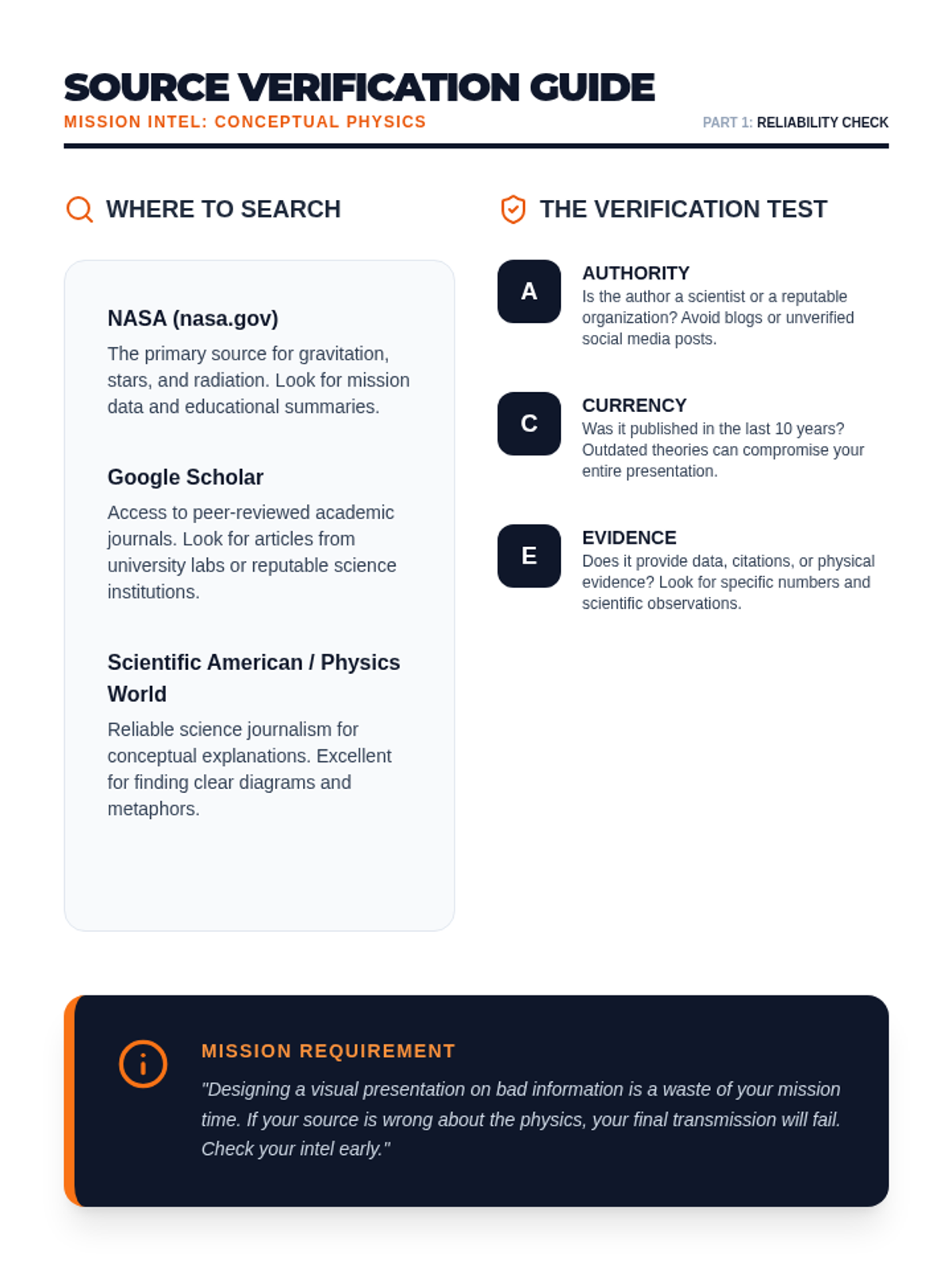
A comprehensive research project where students explore physics concepts in space and radiation through visual-minimalist presentations. The project emphasizes deep understanding of content over text-heavy slides.
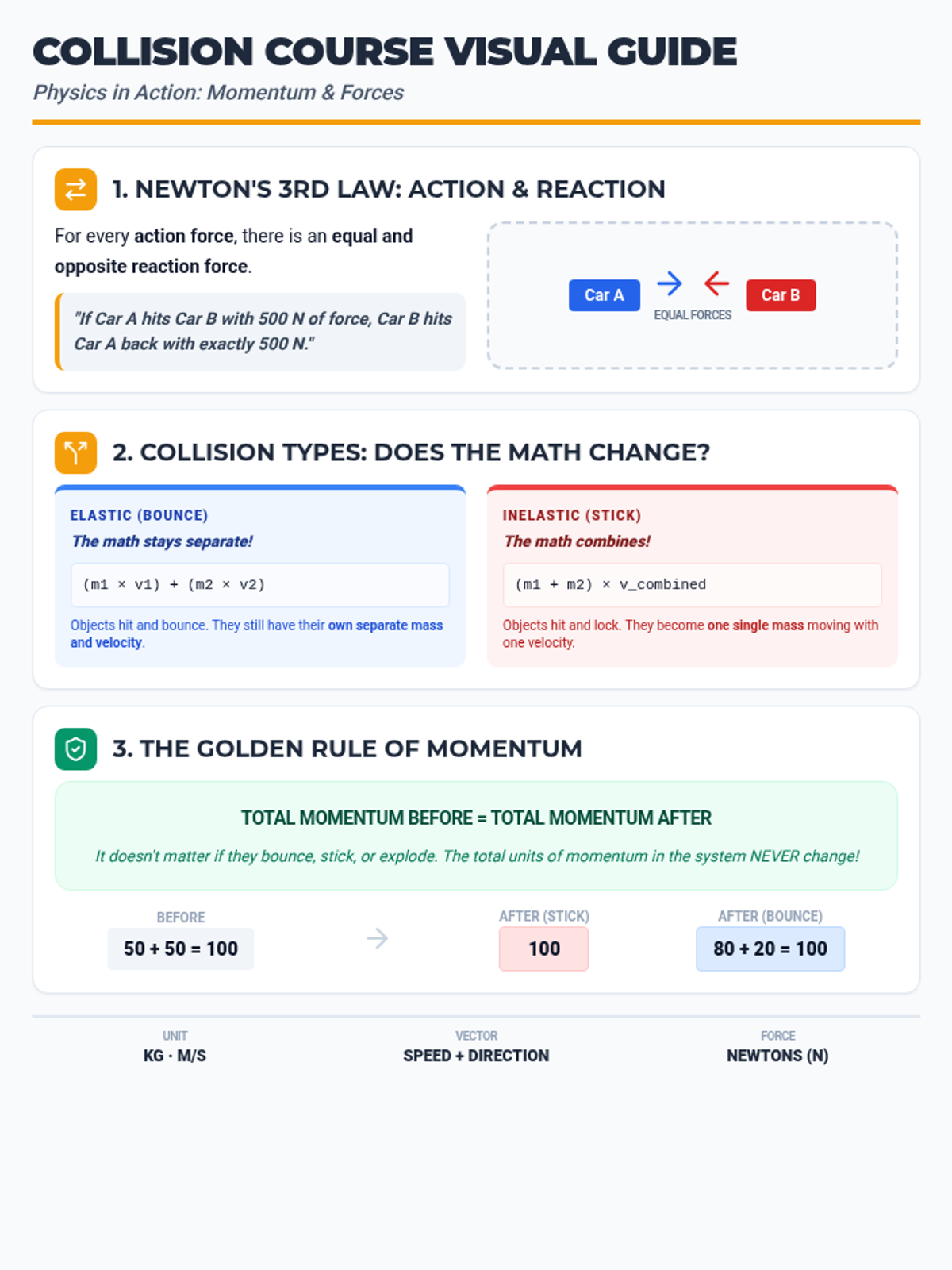
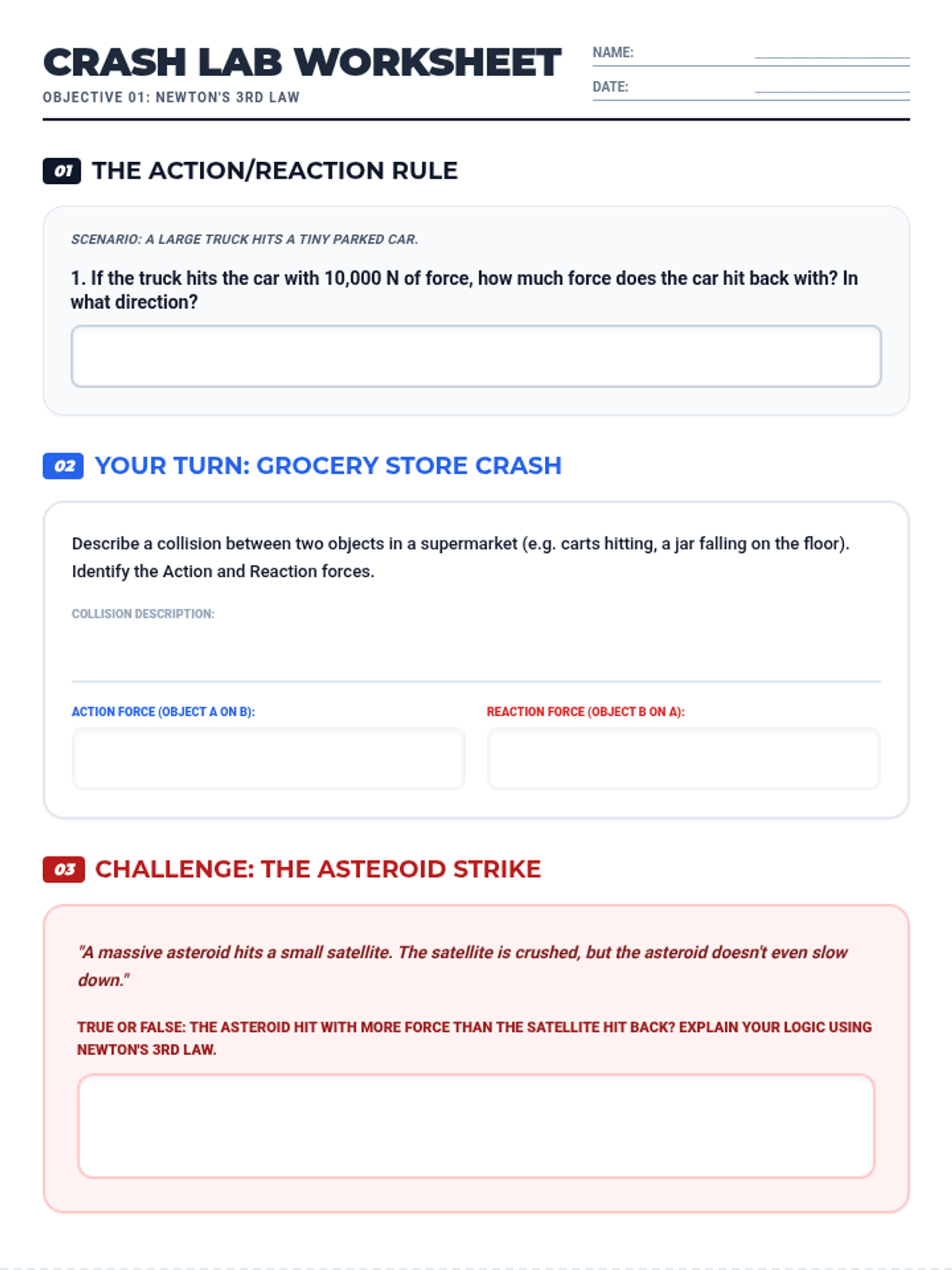
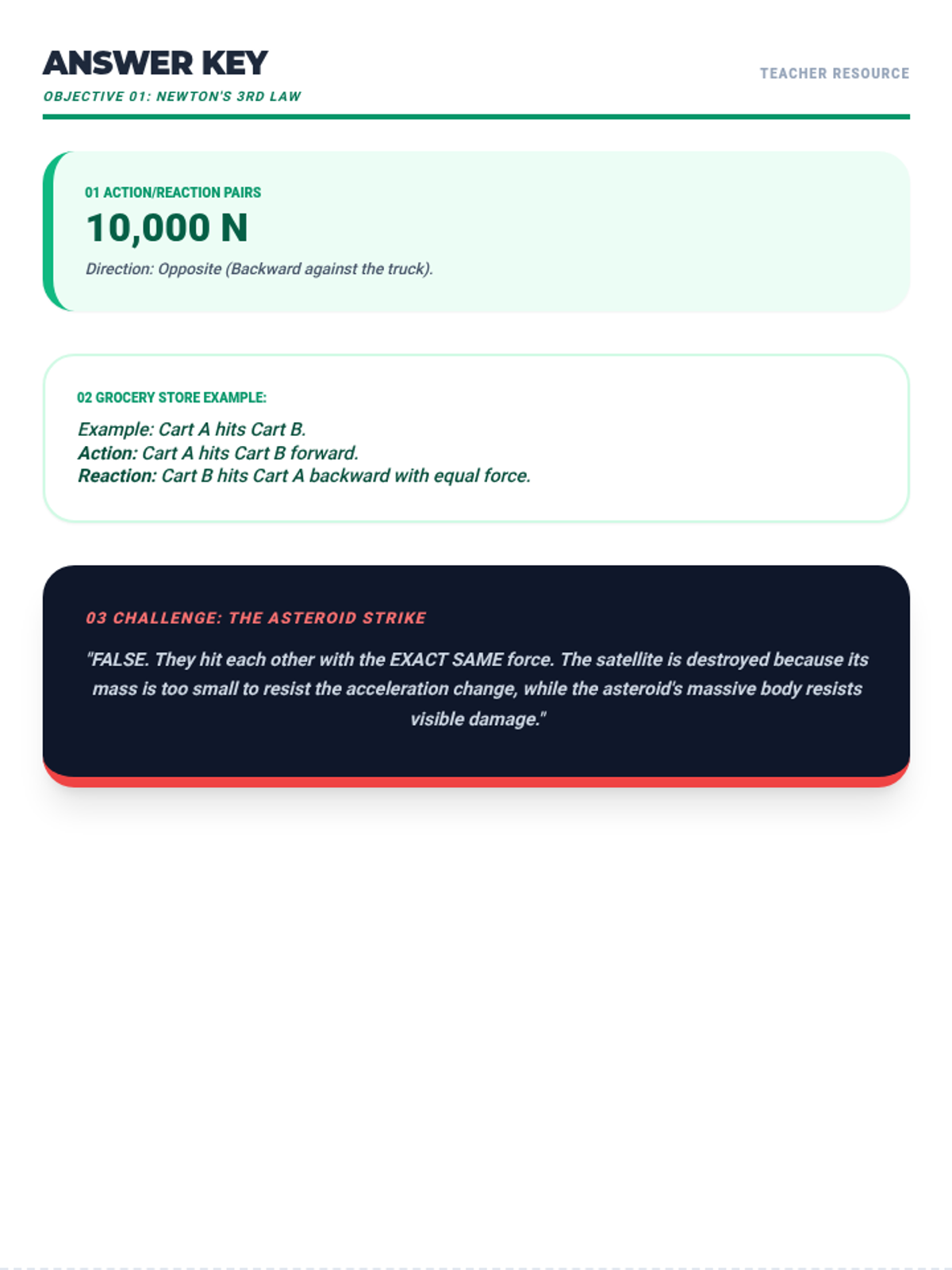
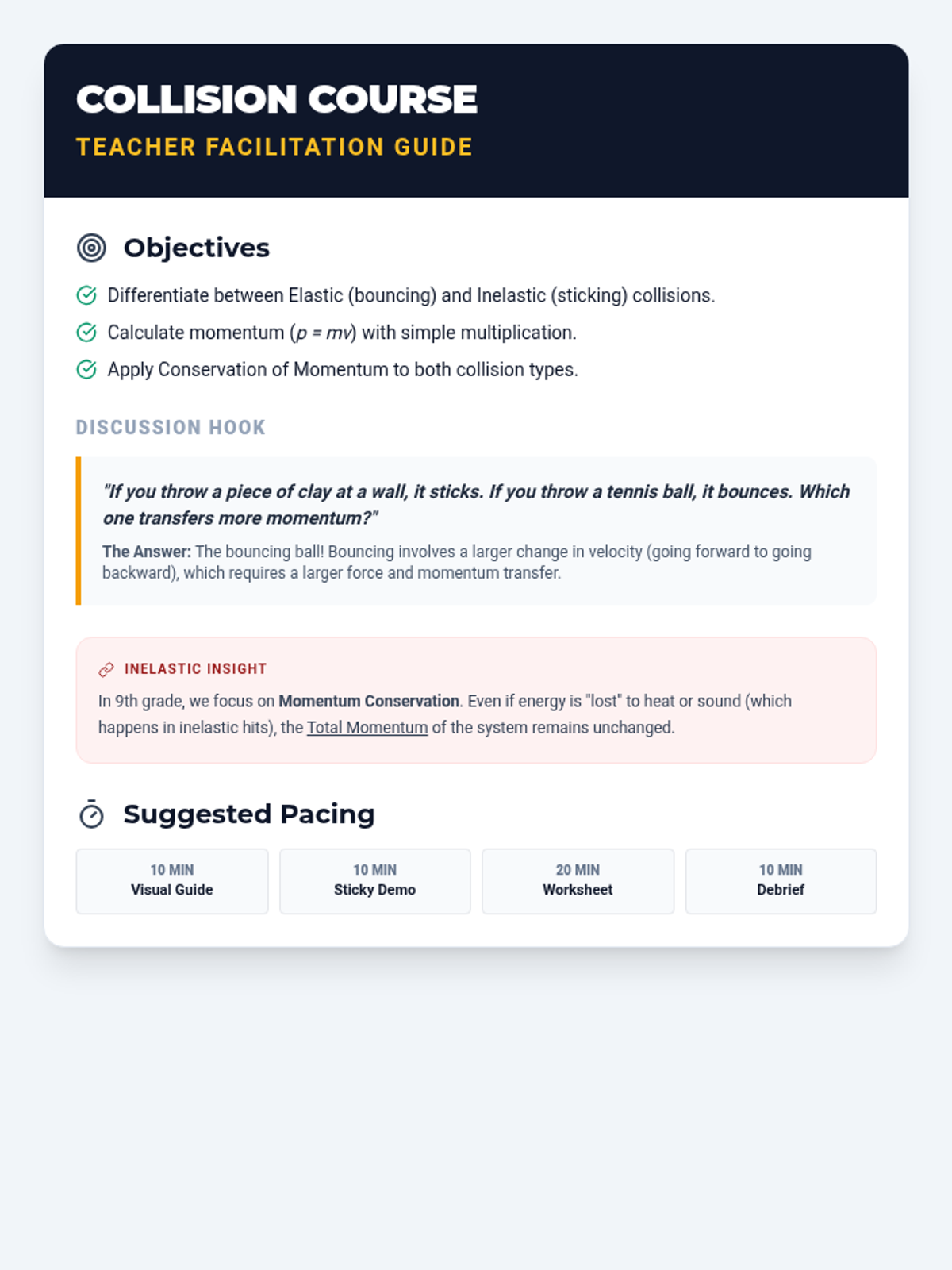
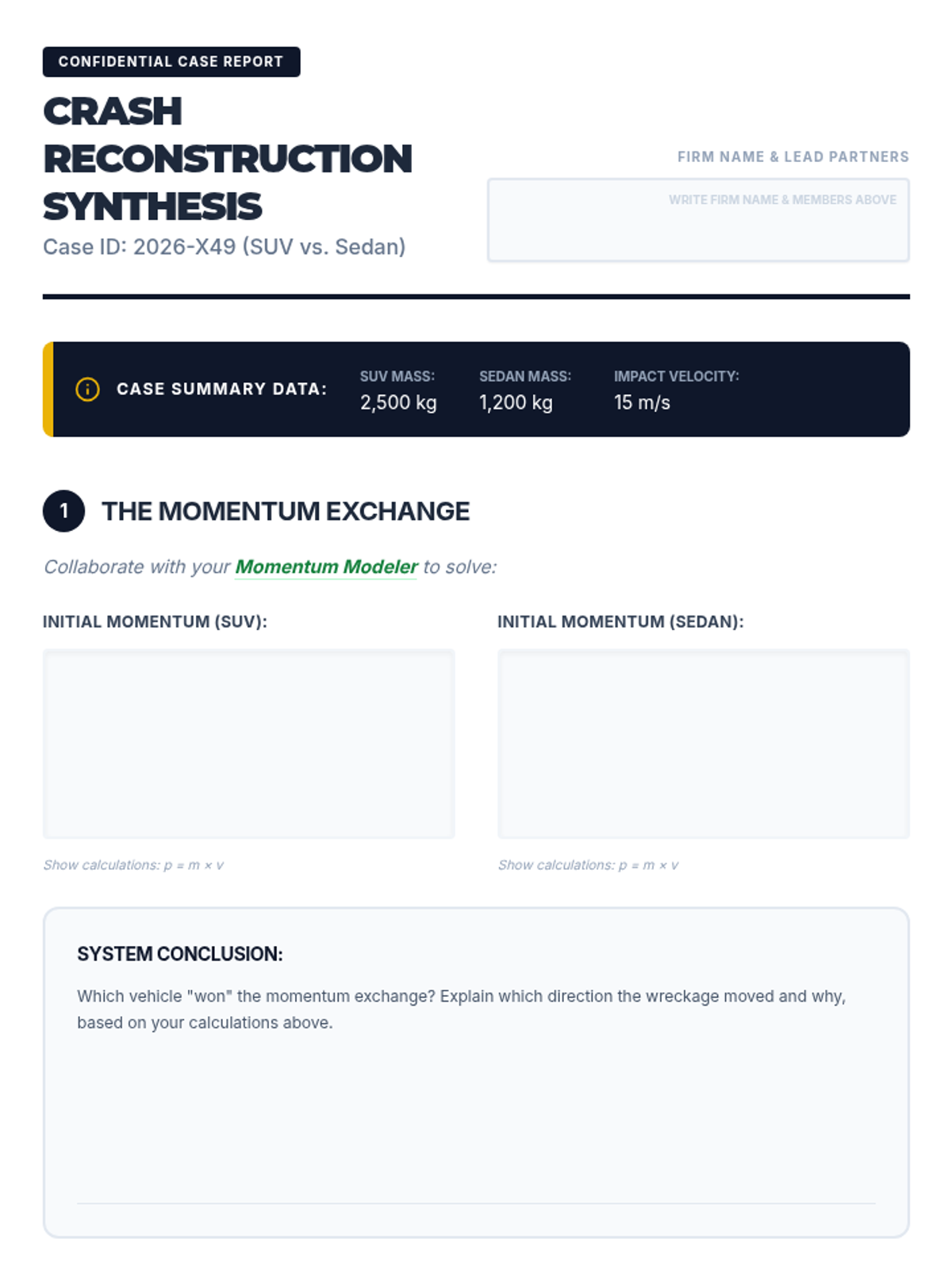
A conceptual introduction to momentum, Newton's 3rd Law, and conservation laws using car collisions as the primary model. Focused on qualitative understanding and simple single-step math.
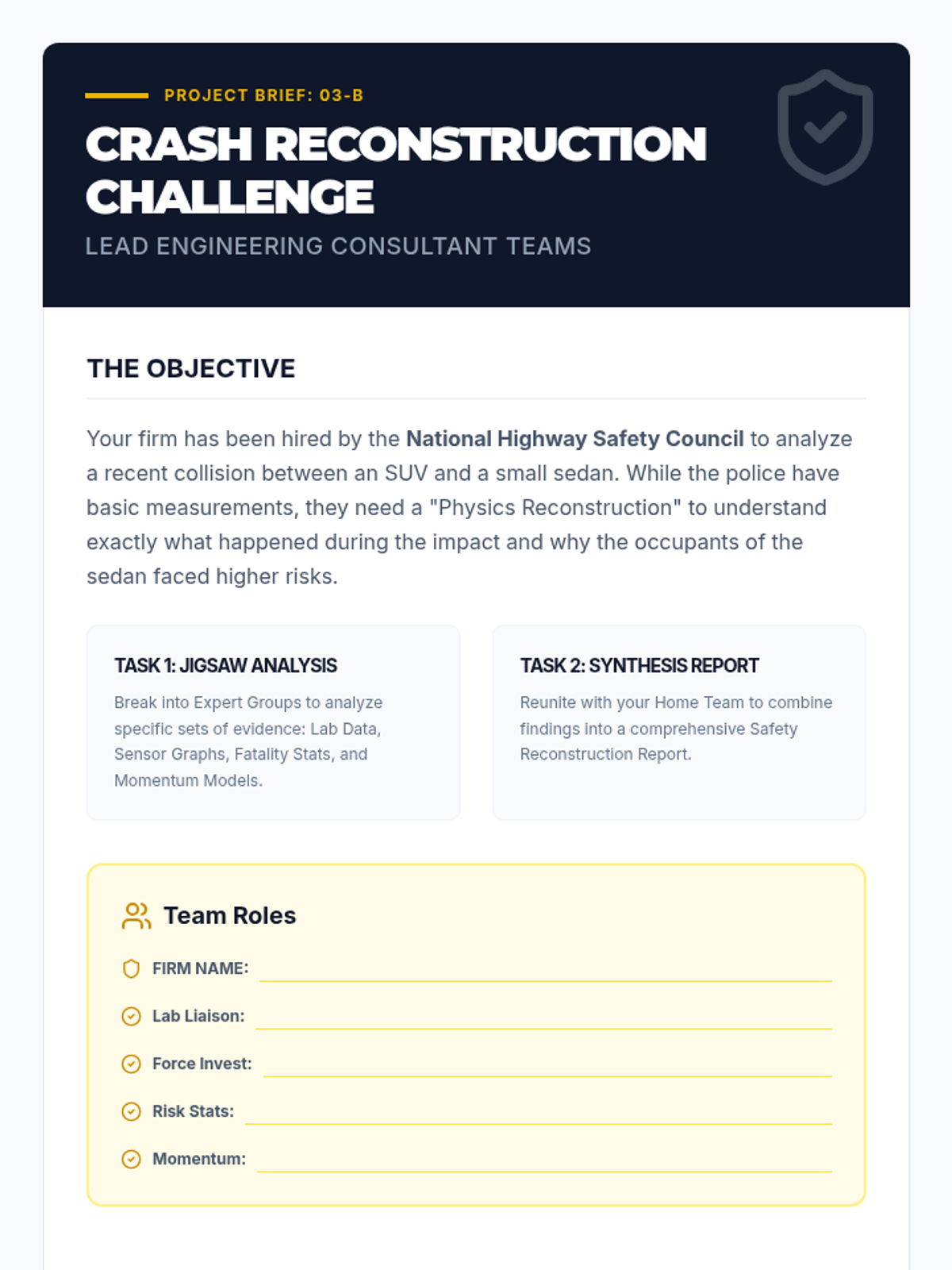
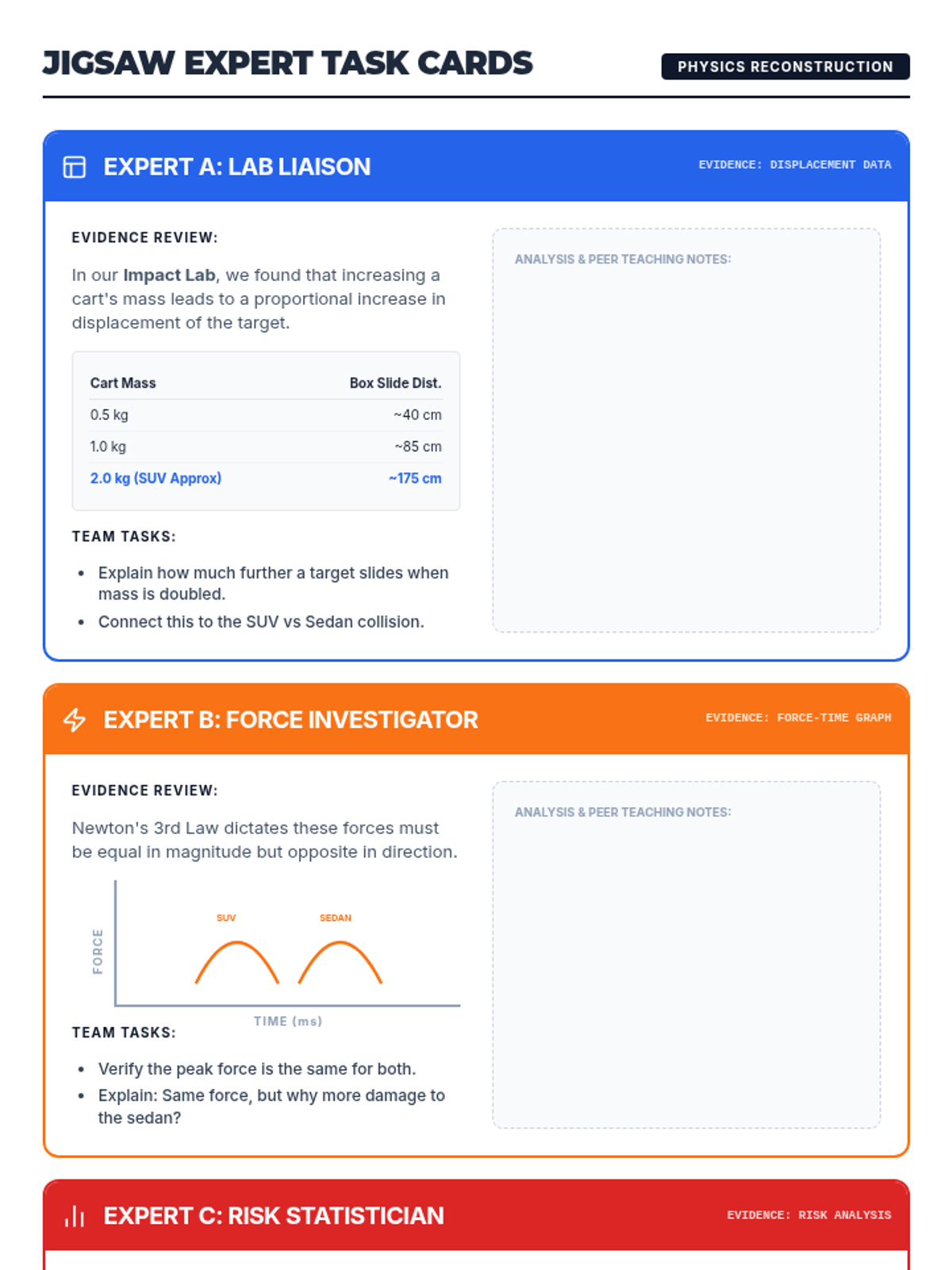
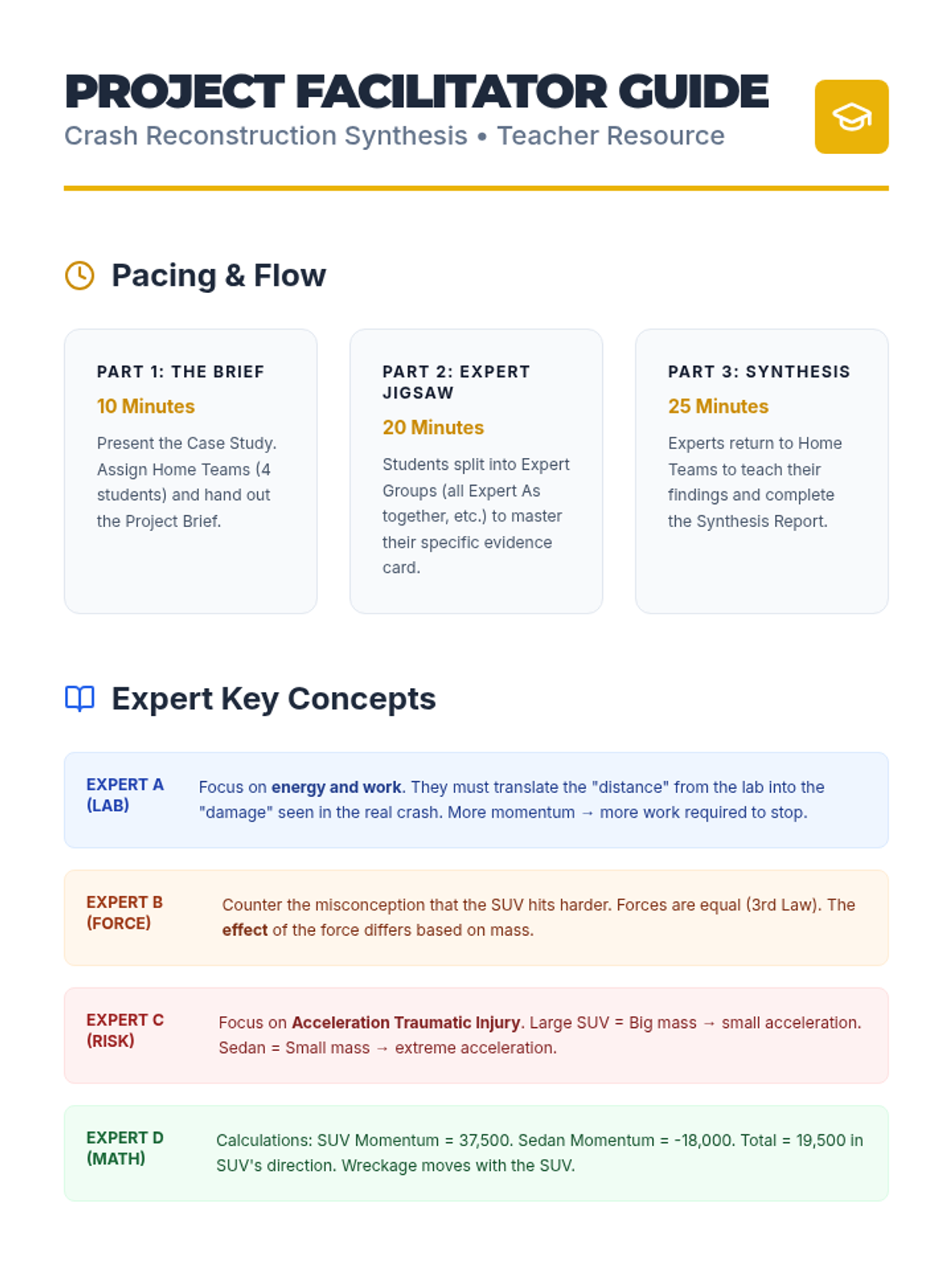
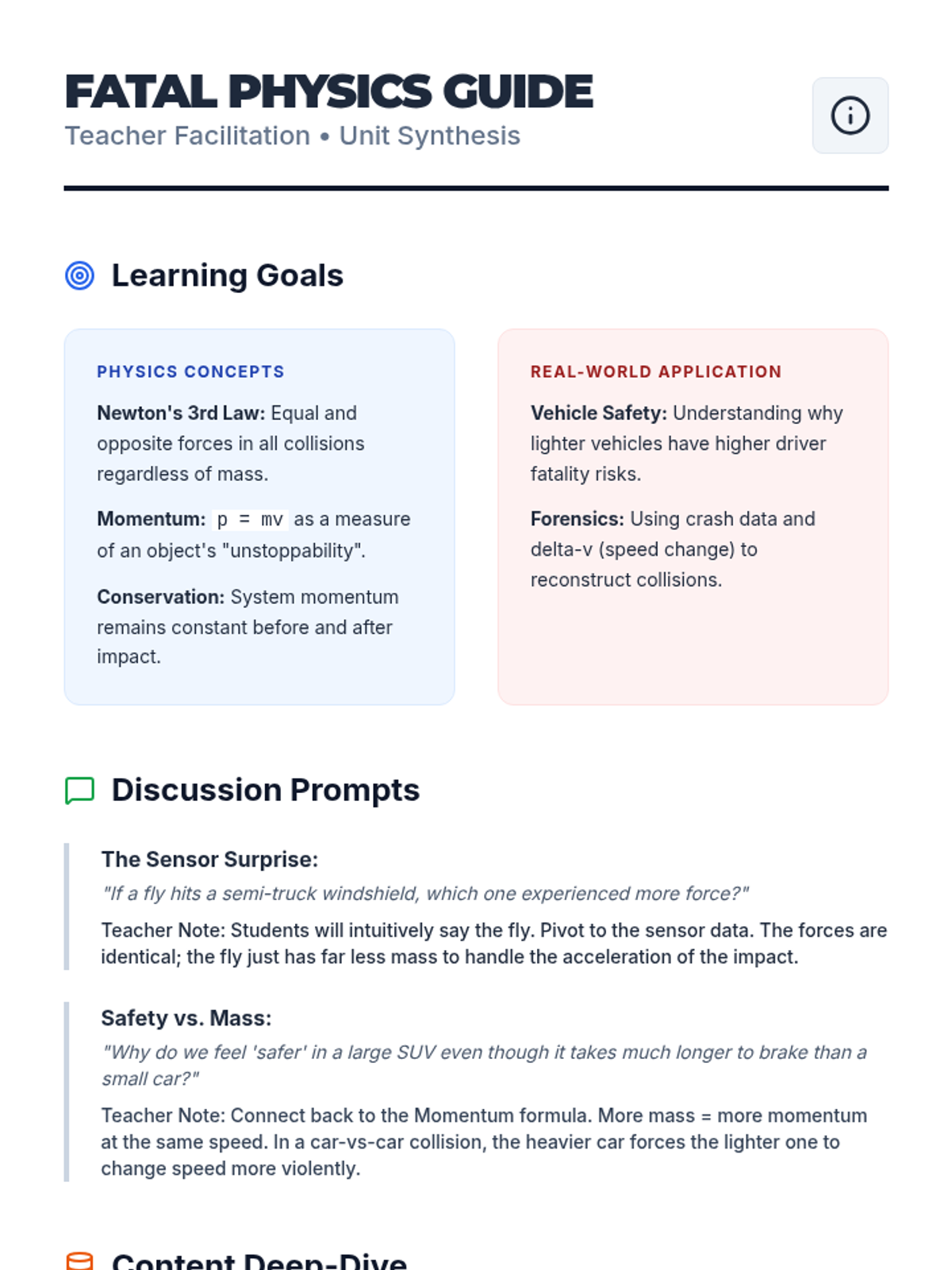
A culminating synthesis project where students act as safety engineering consultants. Using a jigsaw approach, students analyze lab data, force-sensor graphs, fatality statistics, and momentum models to reconstruct a multi-vehicle collision and recommend safety improvements.
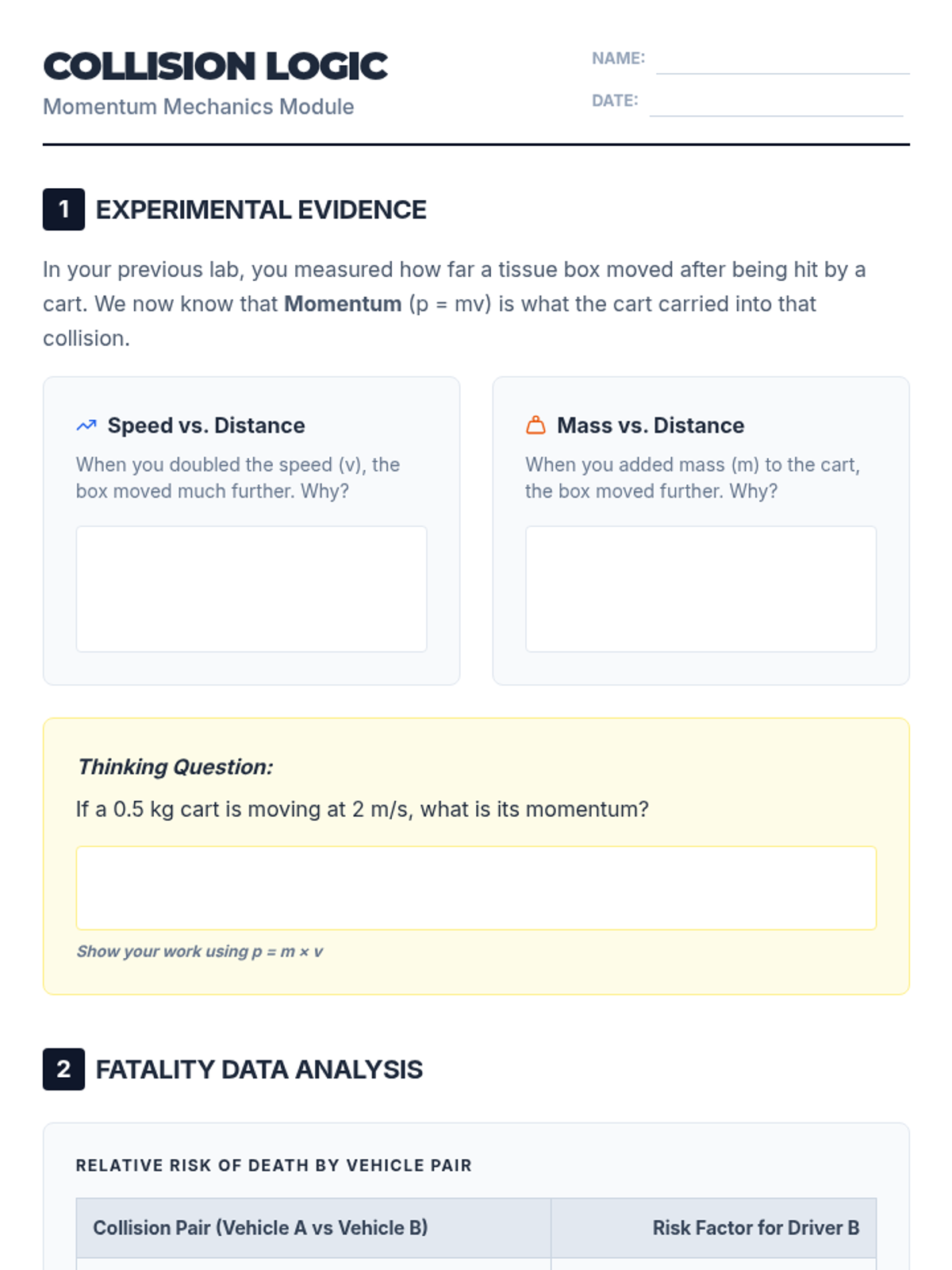
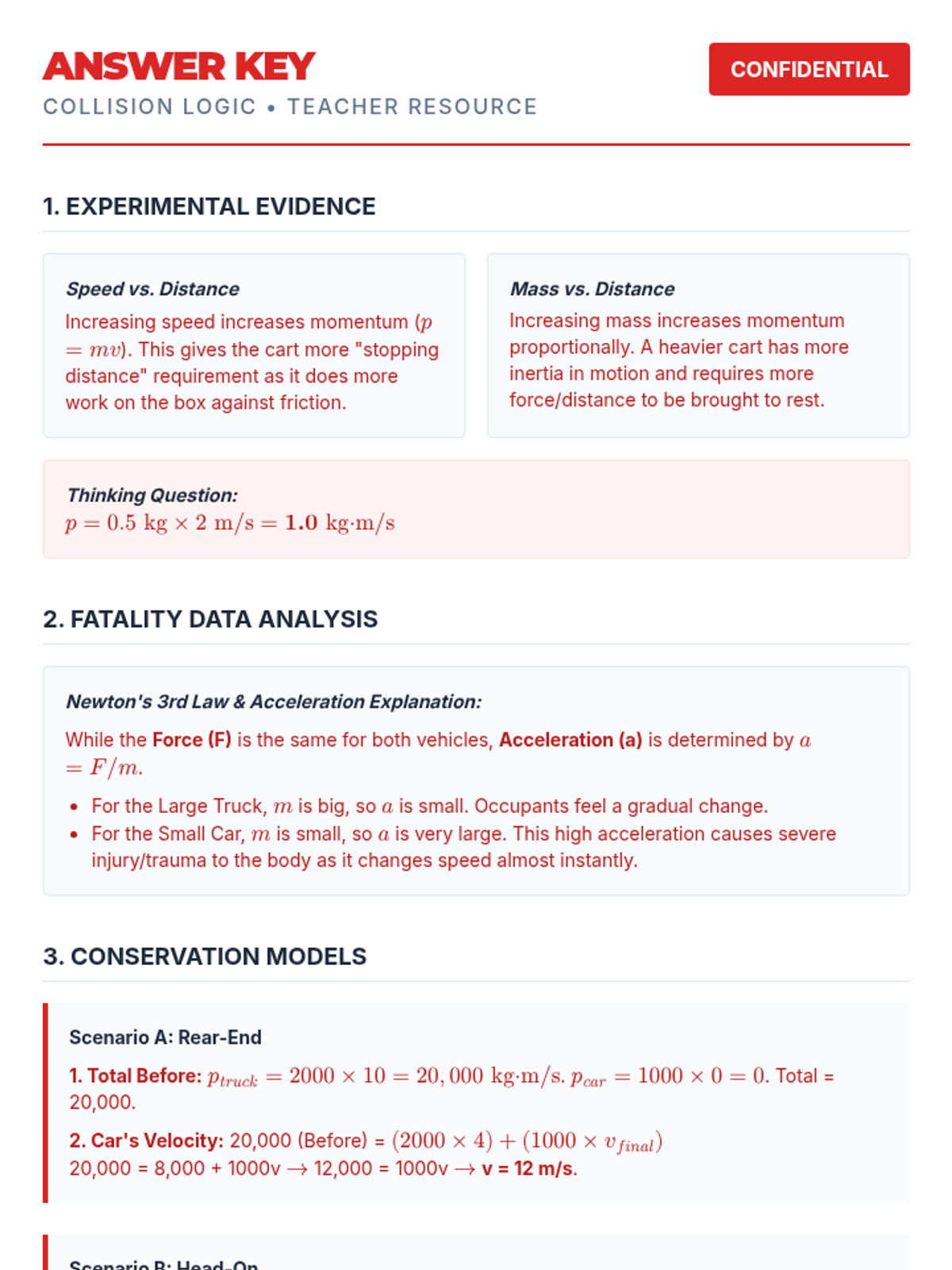
A lesson that connects experimental lab data to the formal physics of momentum, impulse, and vehicle safety. Students analyze collision sensor data and fatality statistics to understand how mass and velocity dictate crash outcomes.
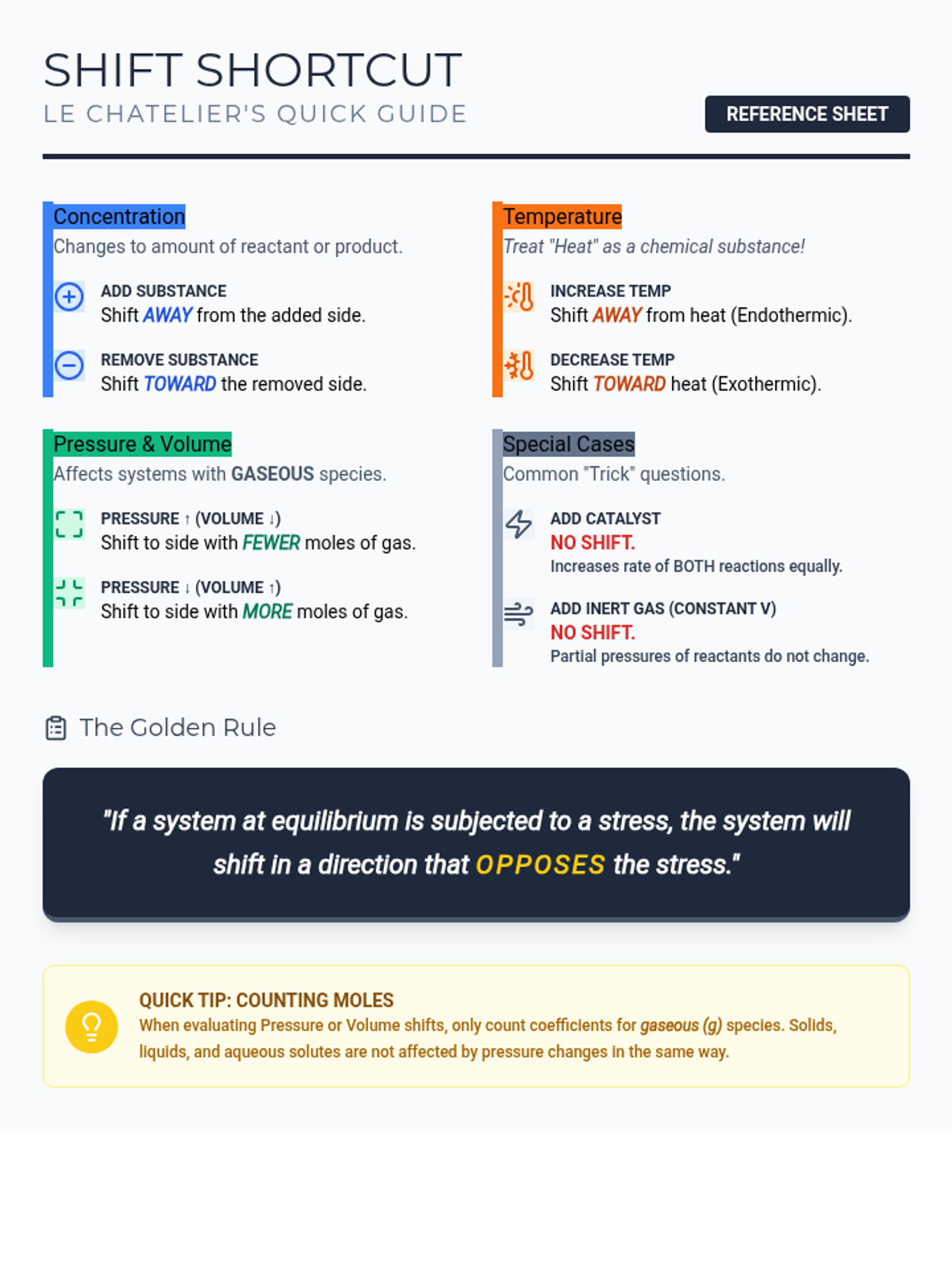
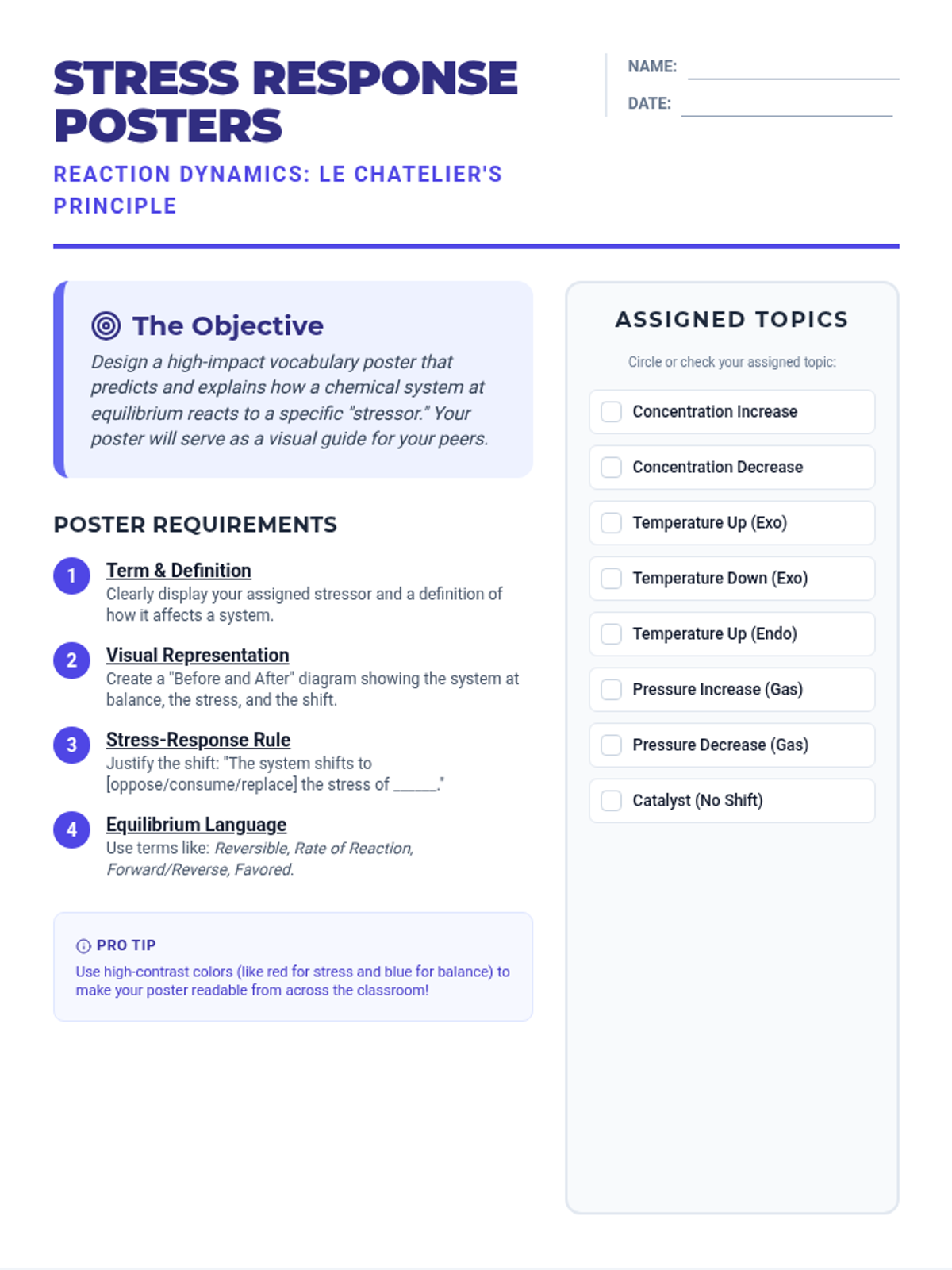
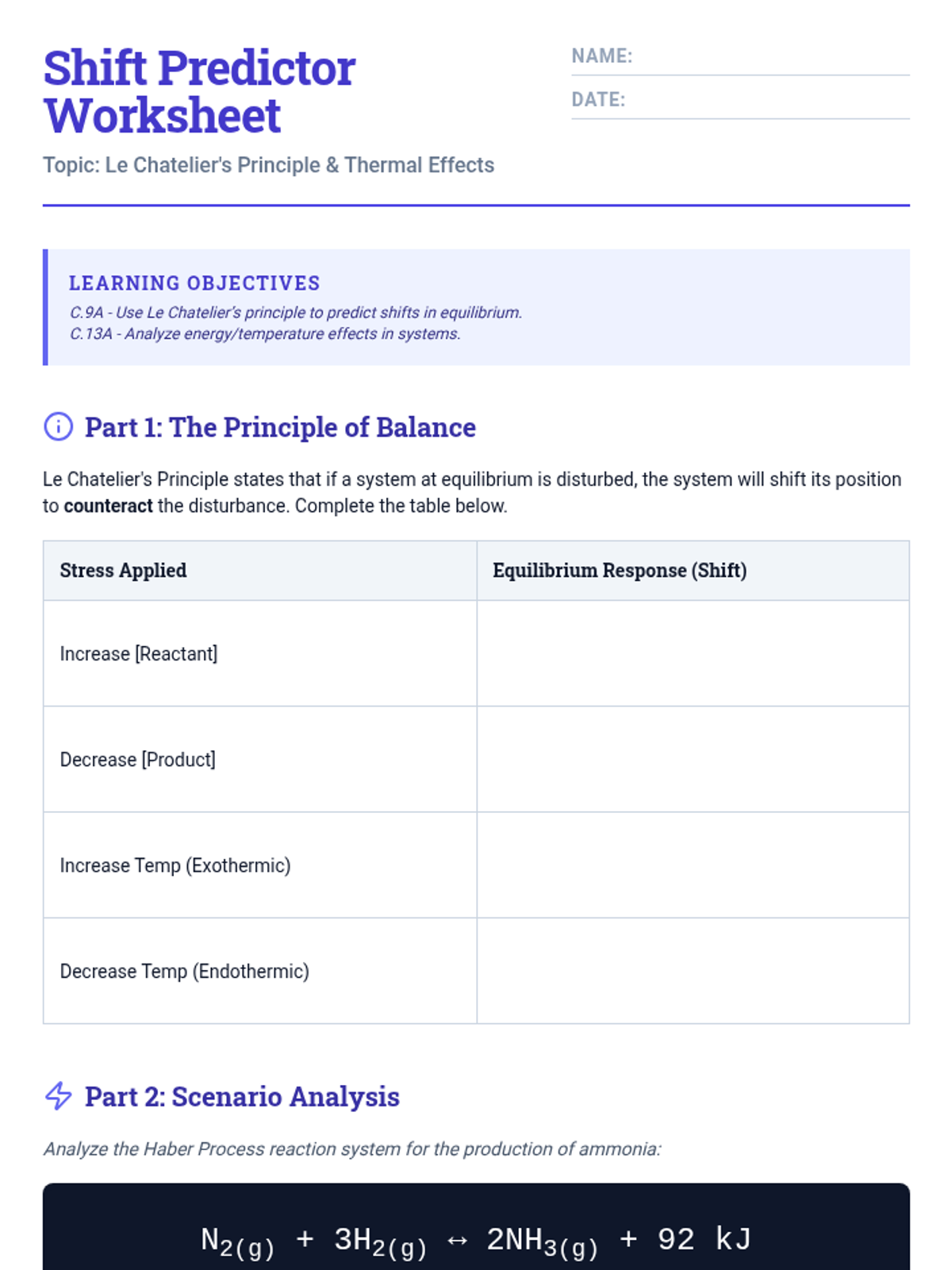
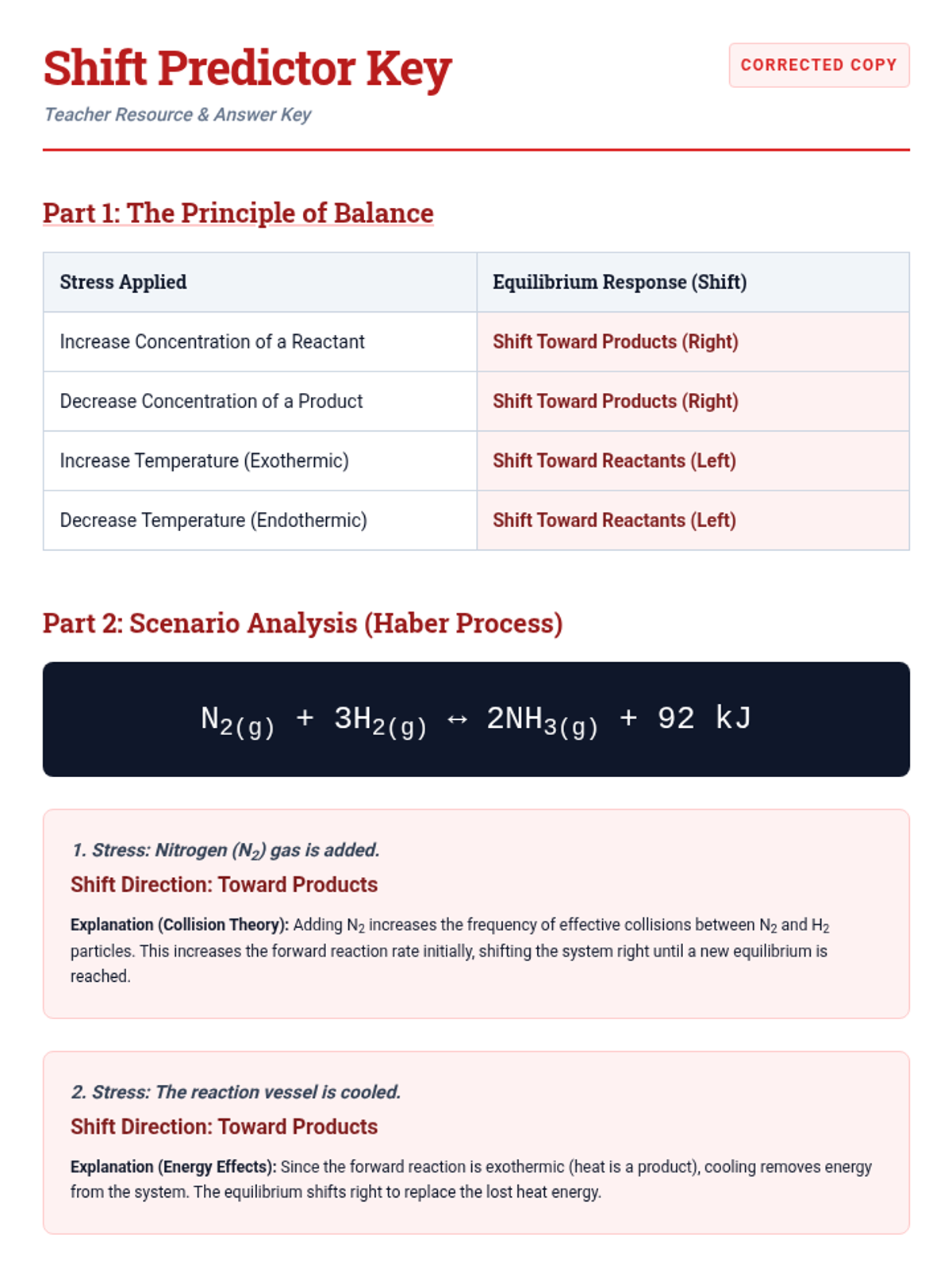
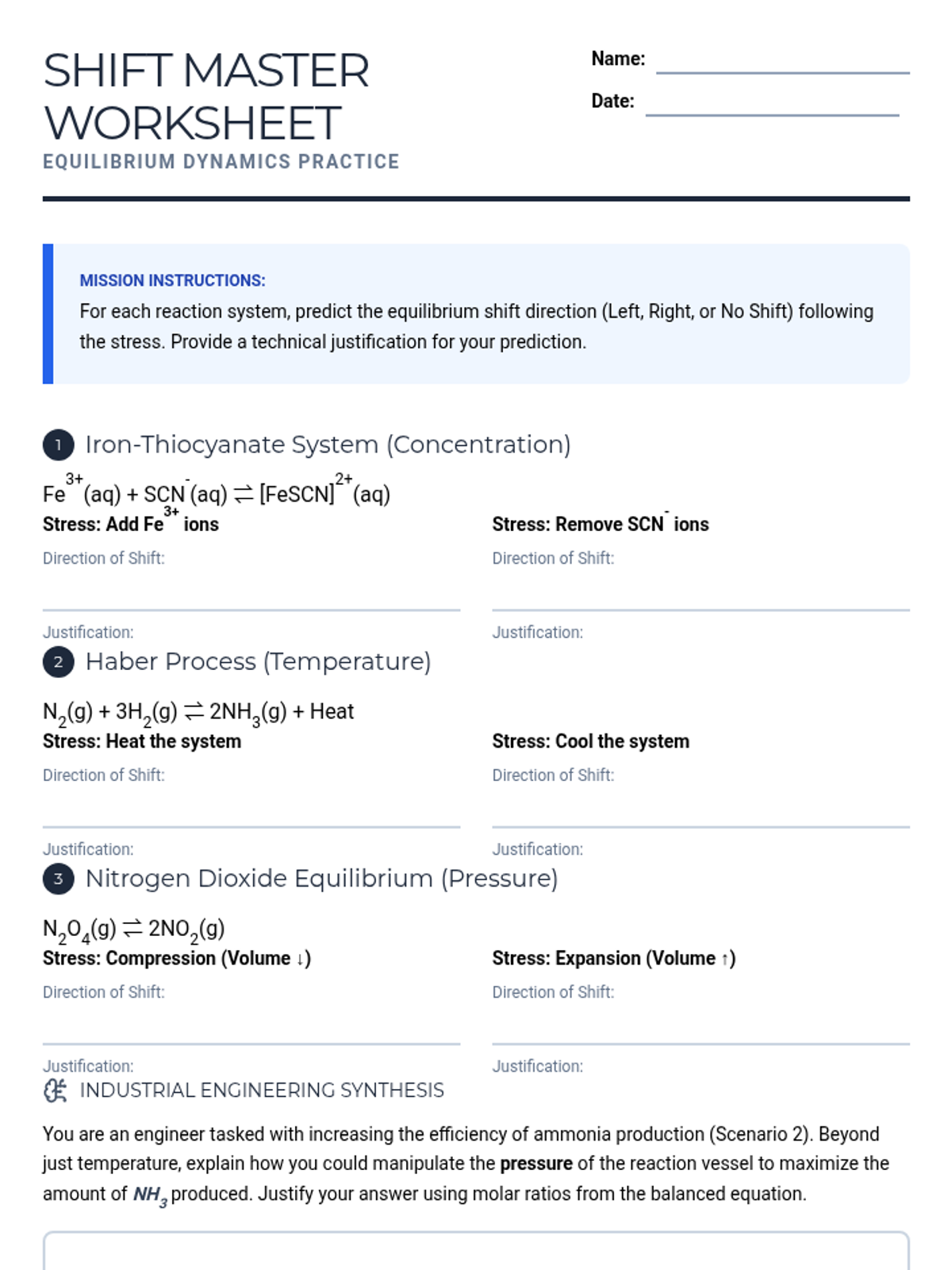
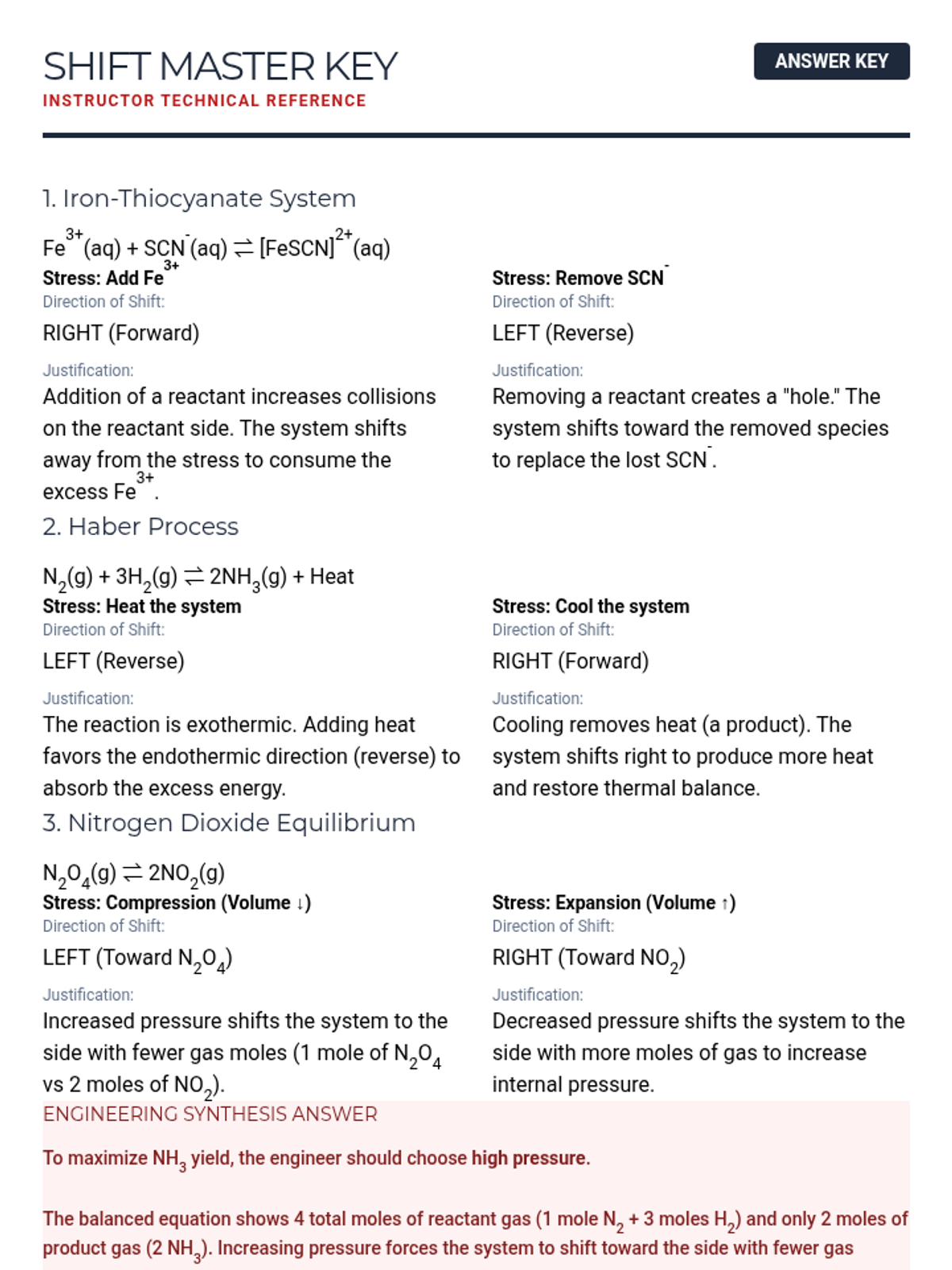
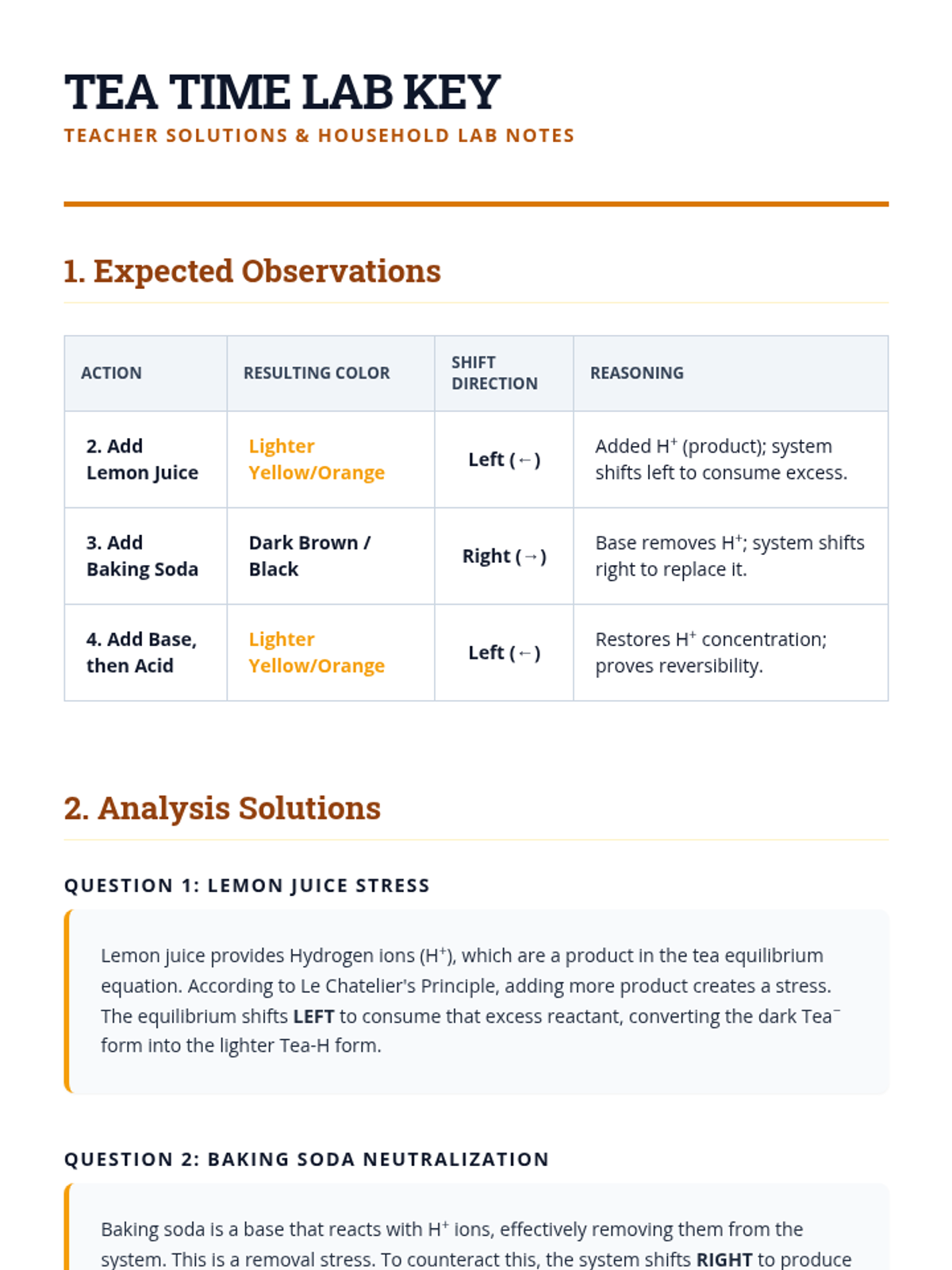
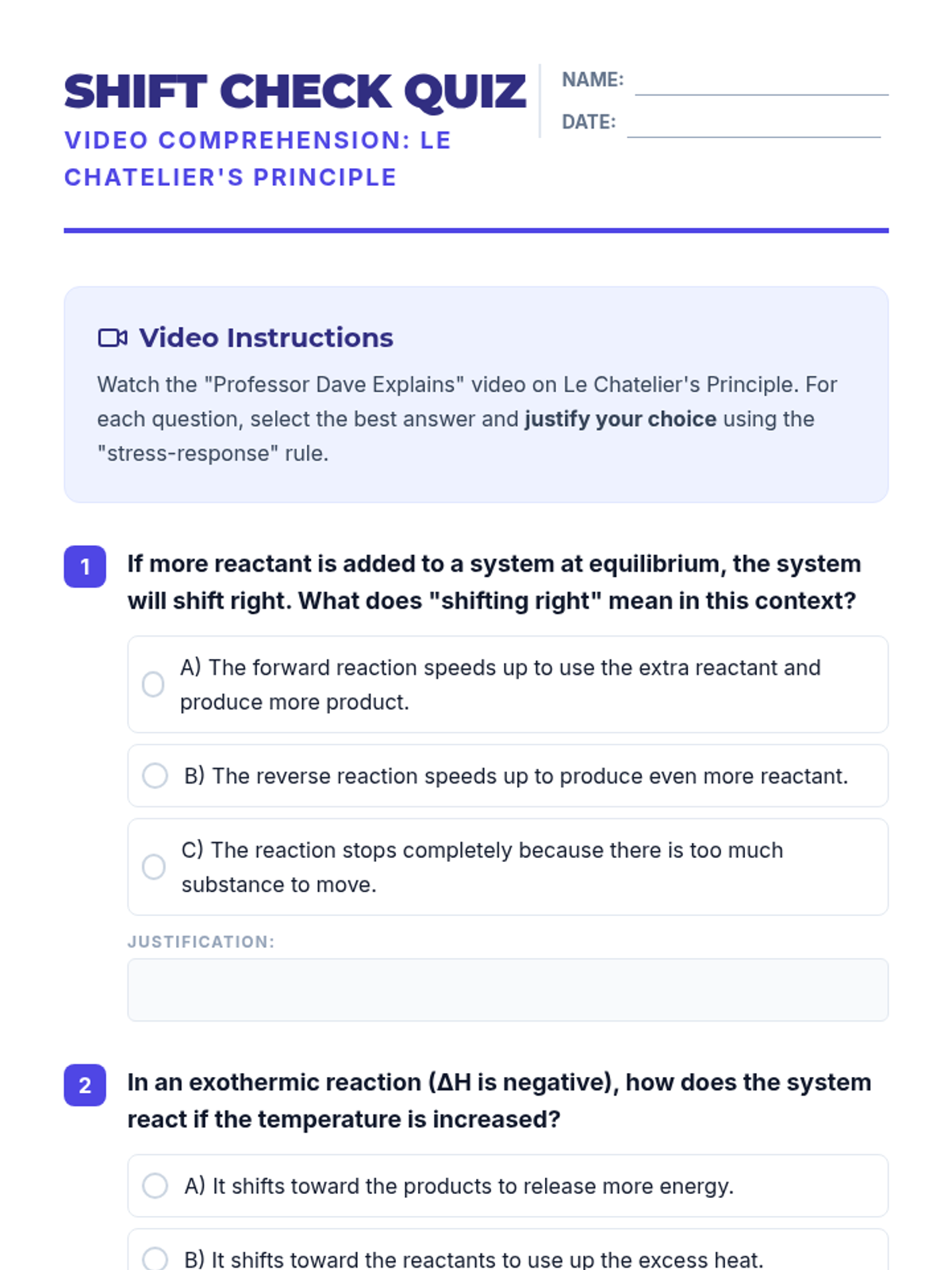
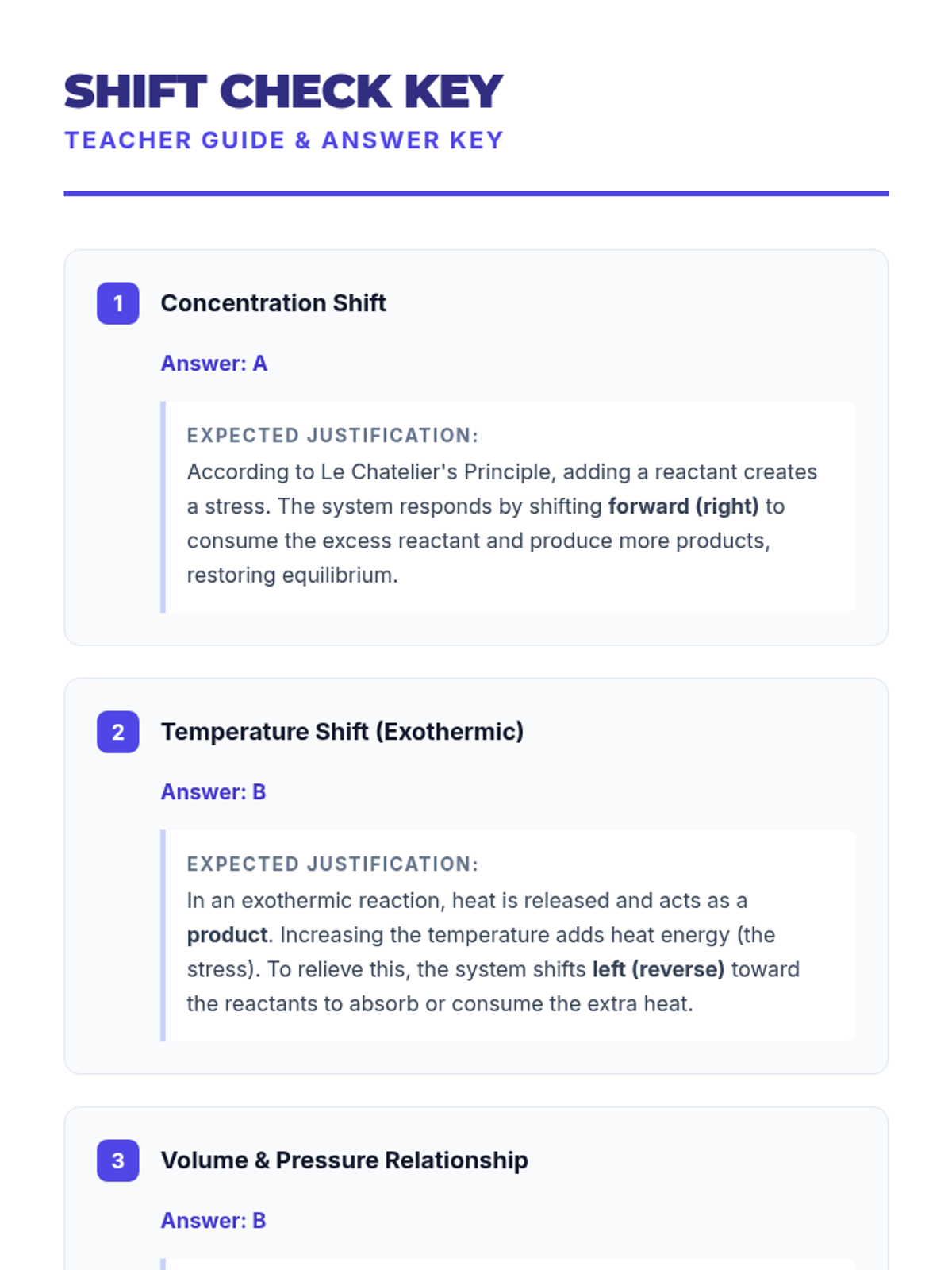
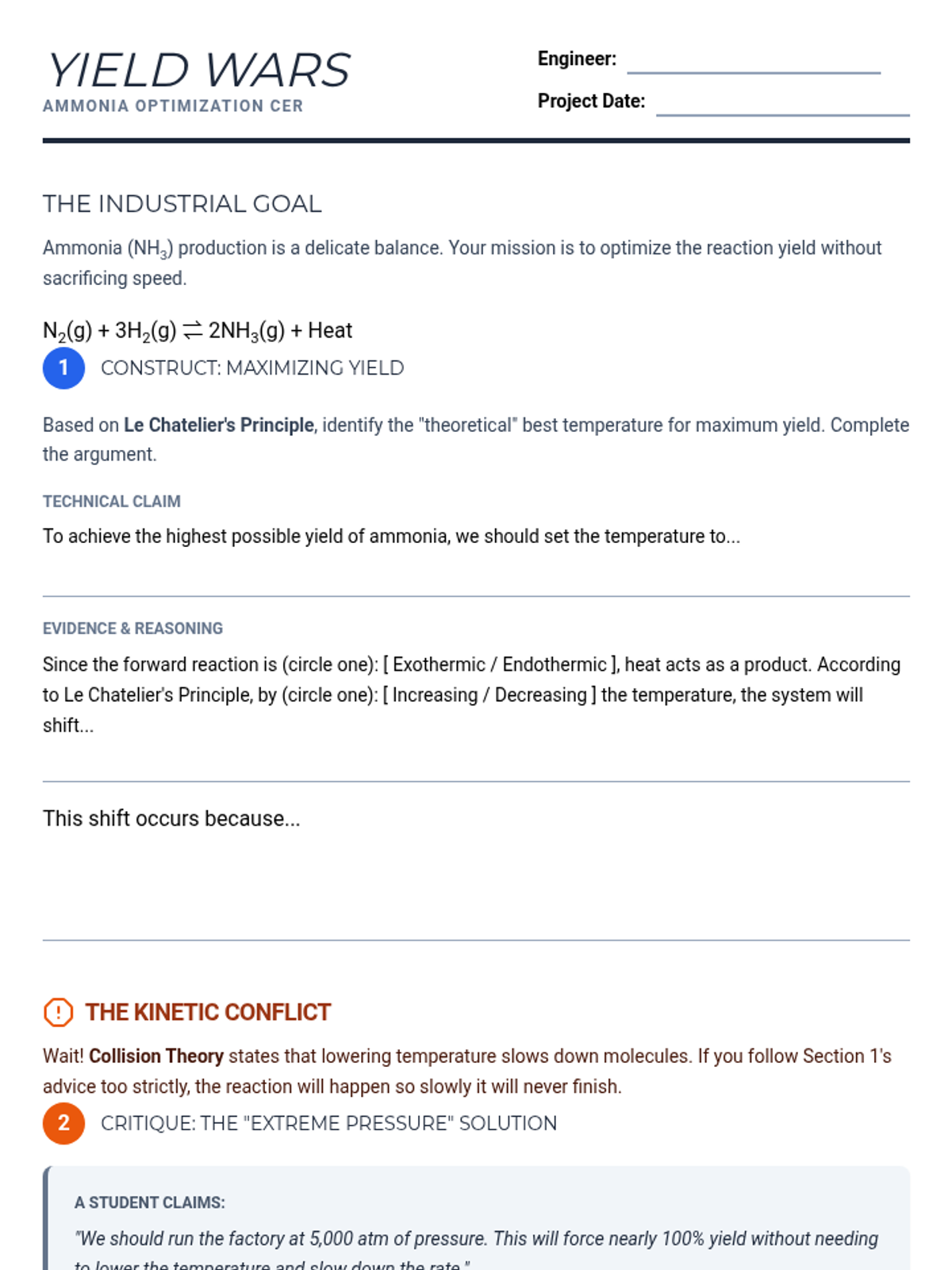
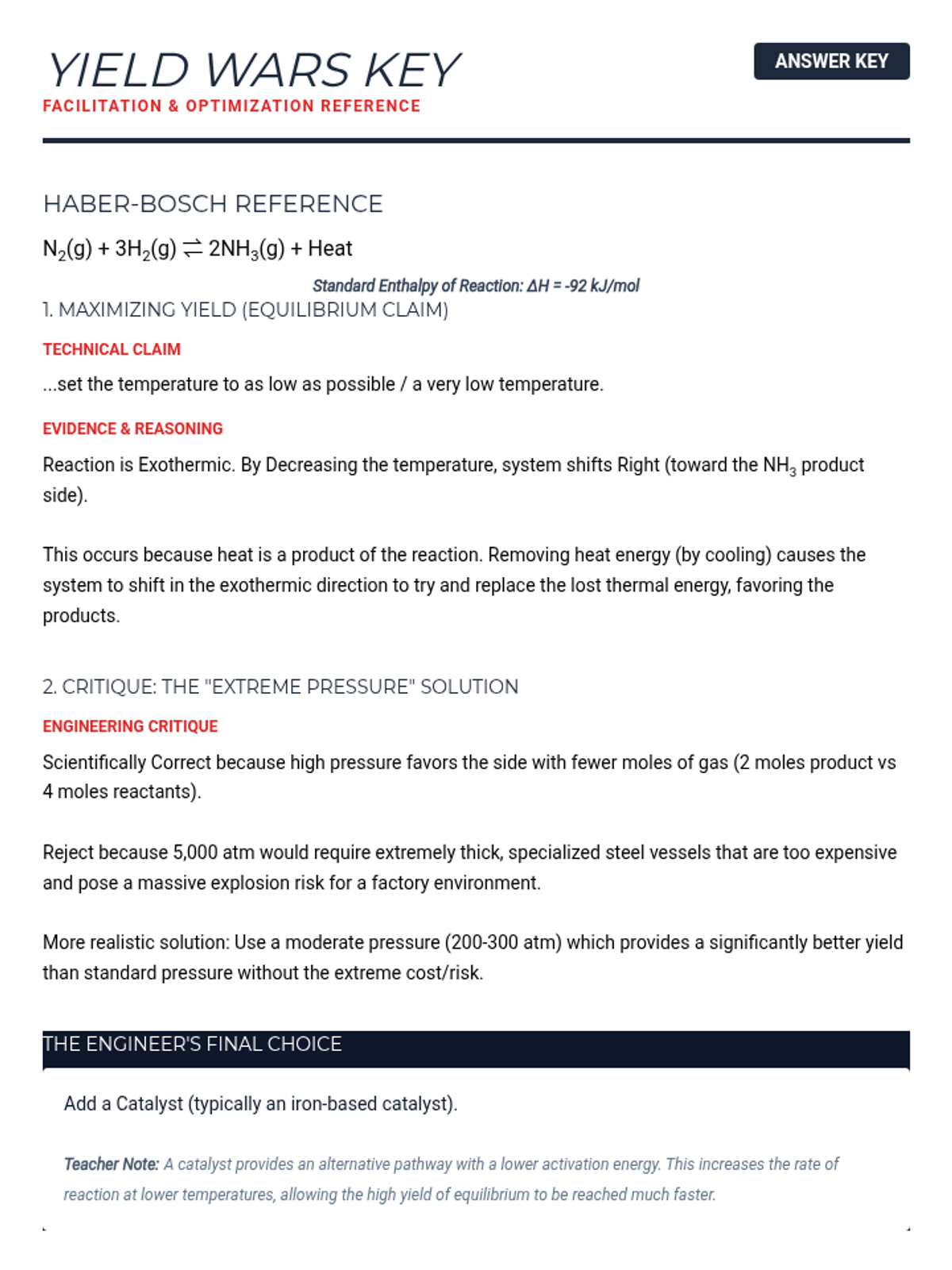
An investigation of Le Chatelier's Principle. Students apply external stresses—concentration and temperature changes—to the Iron(III) thiocyanate equilibrium system to observe, predict, and explain how a system at balance responds to change.
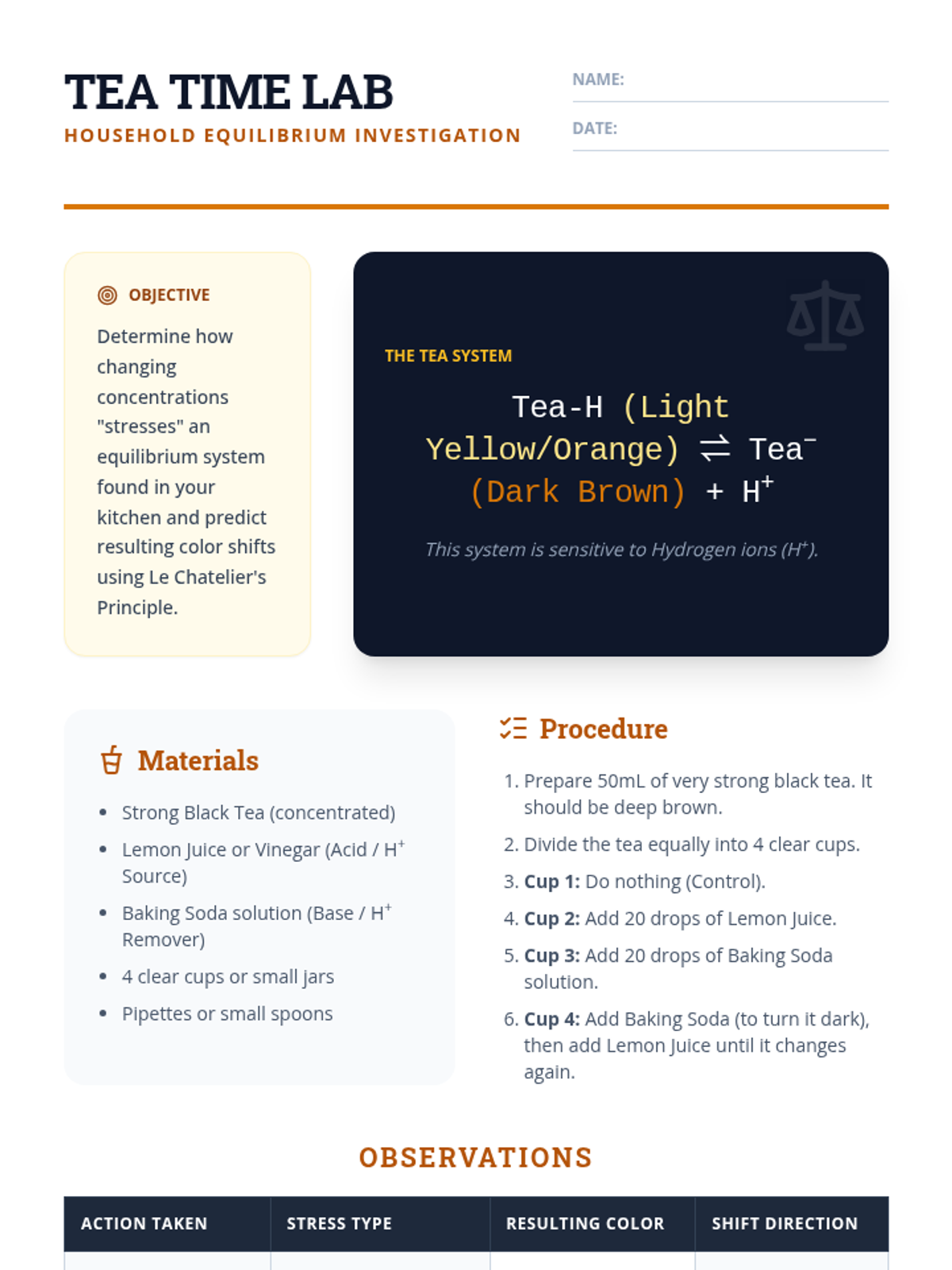
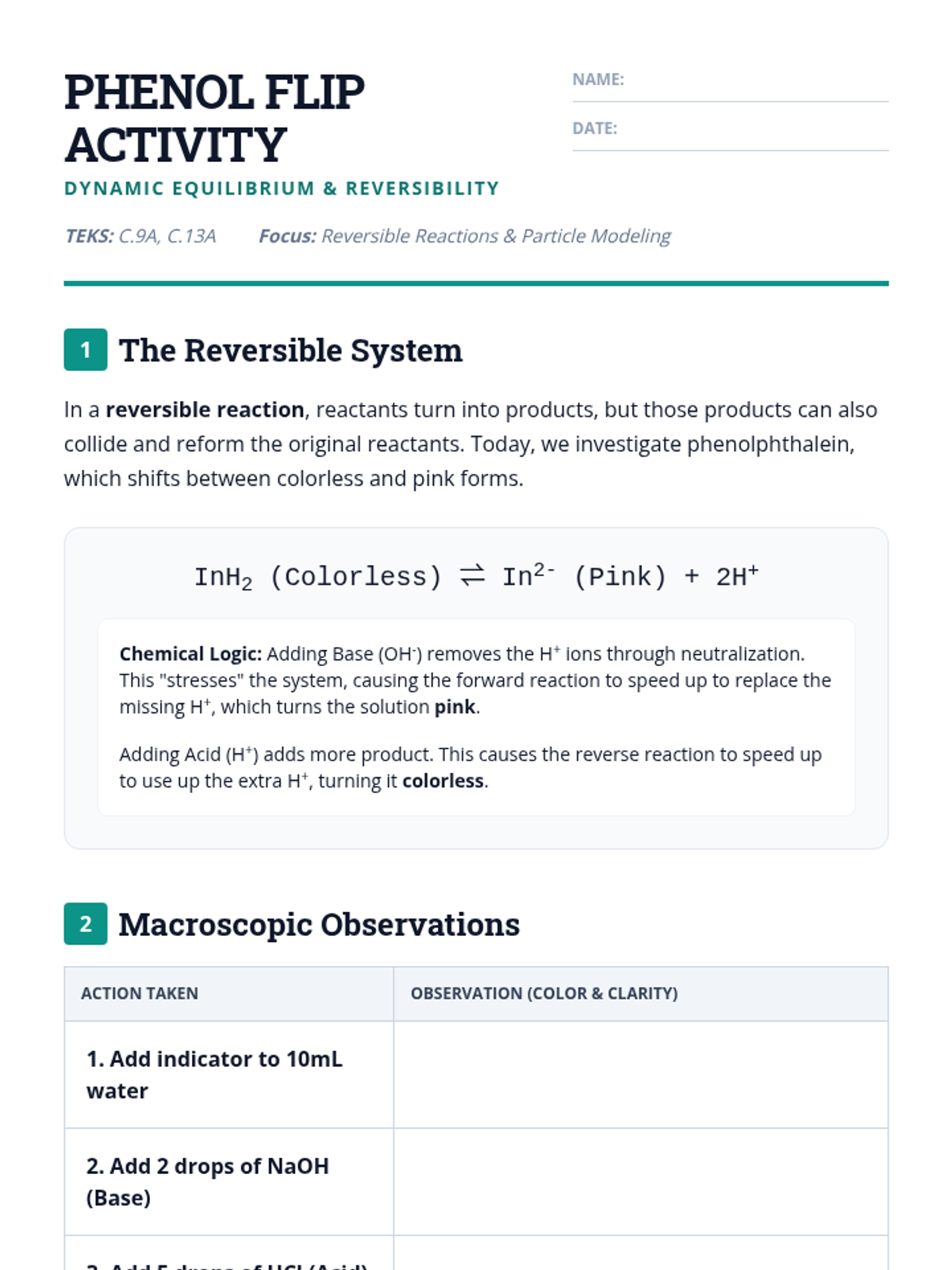
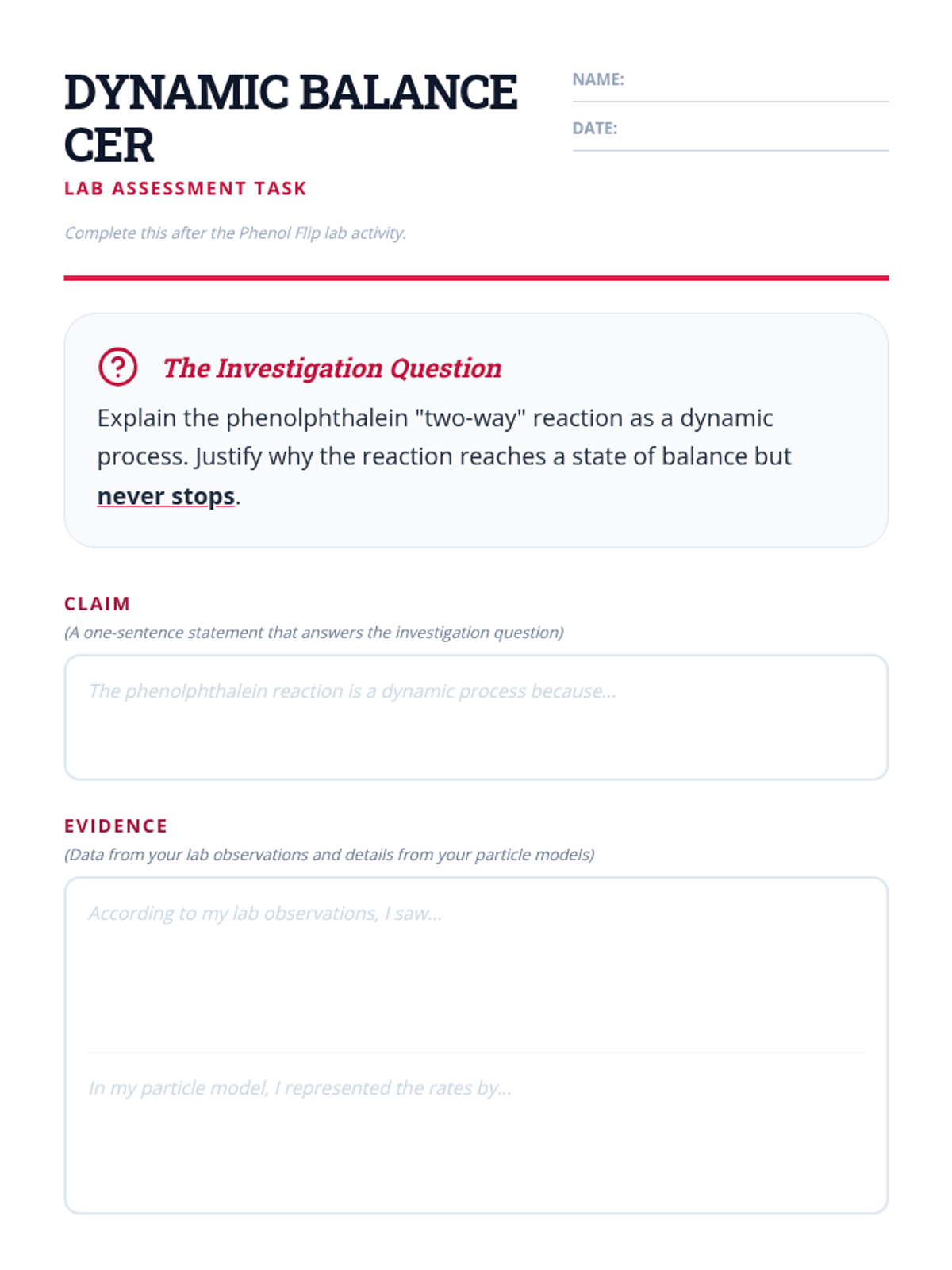
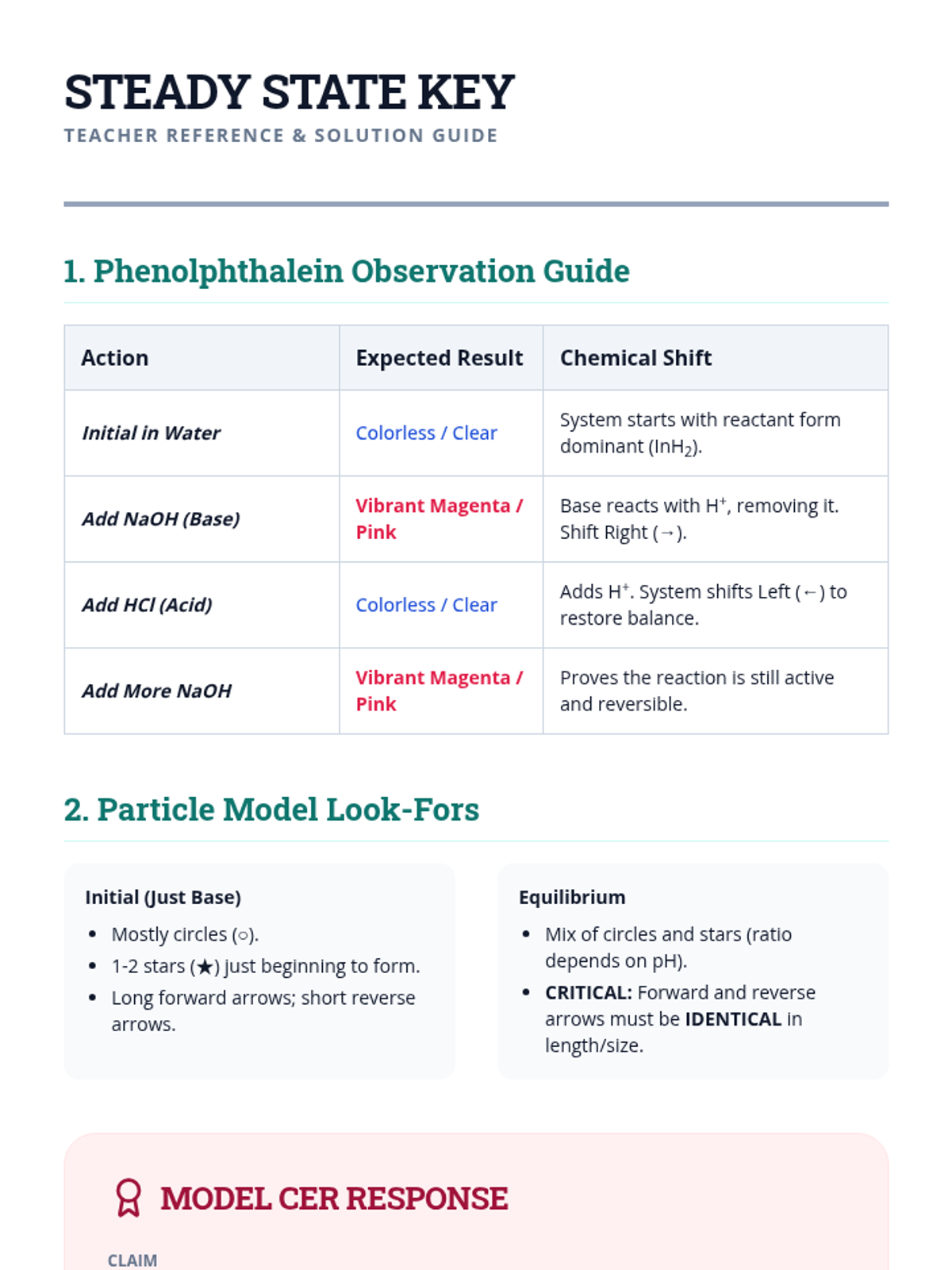
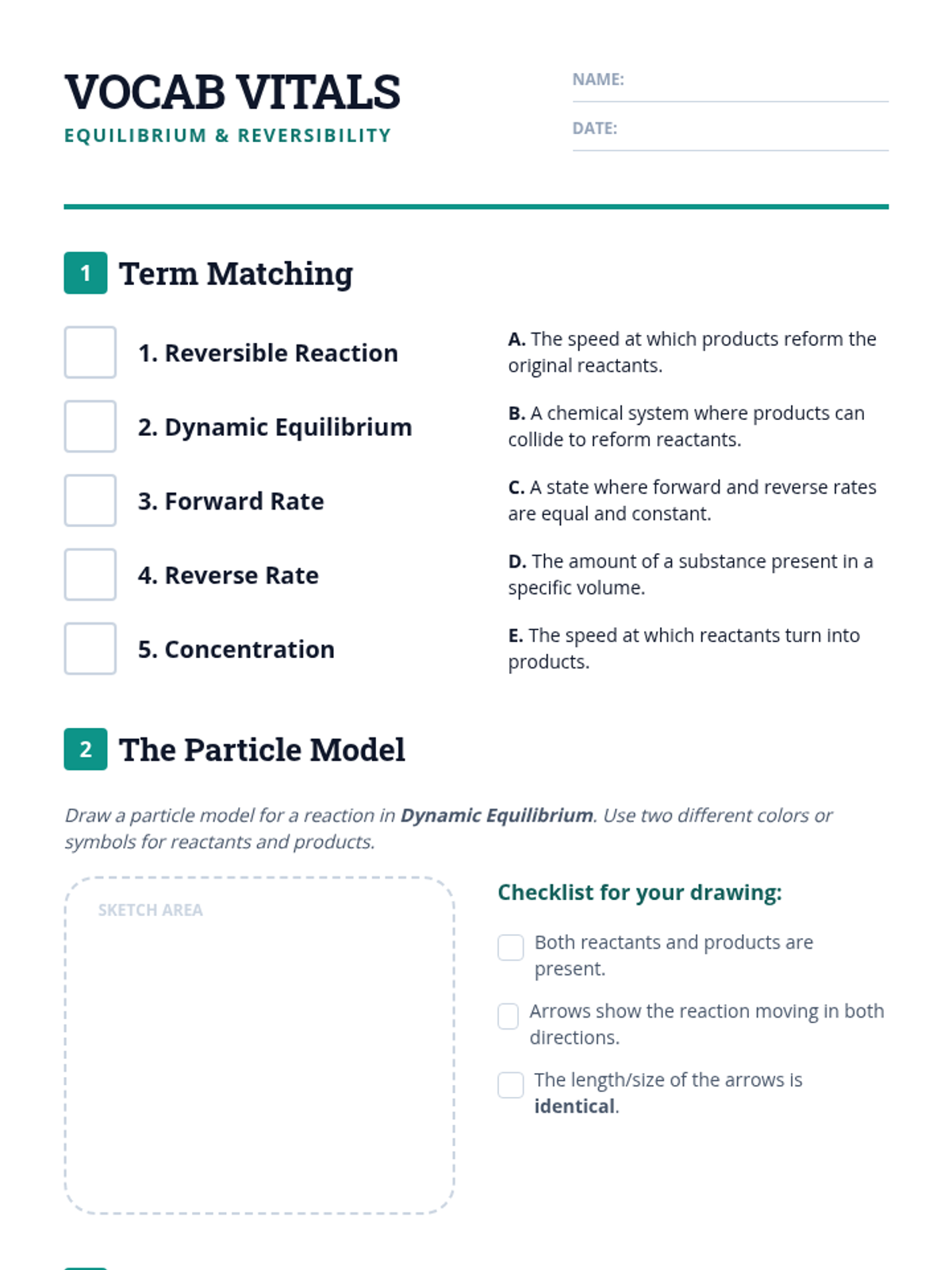
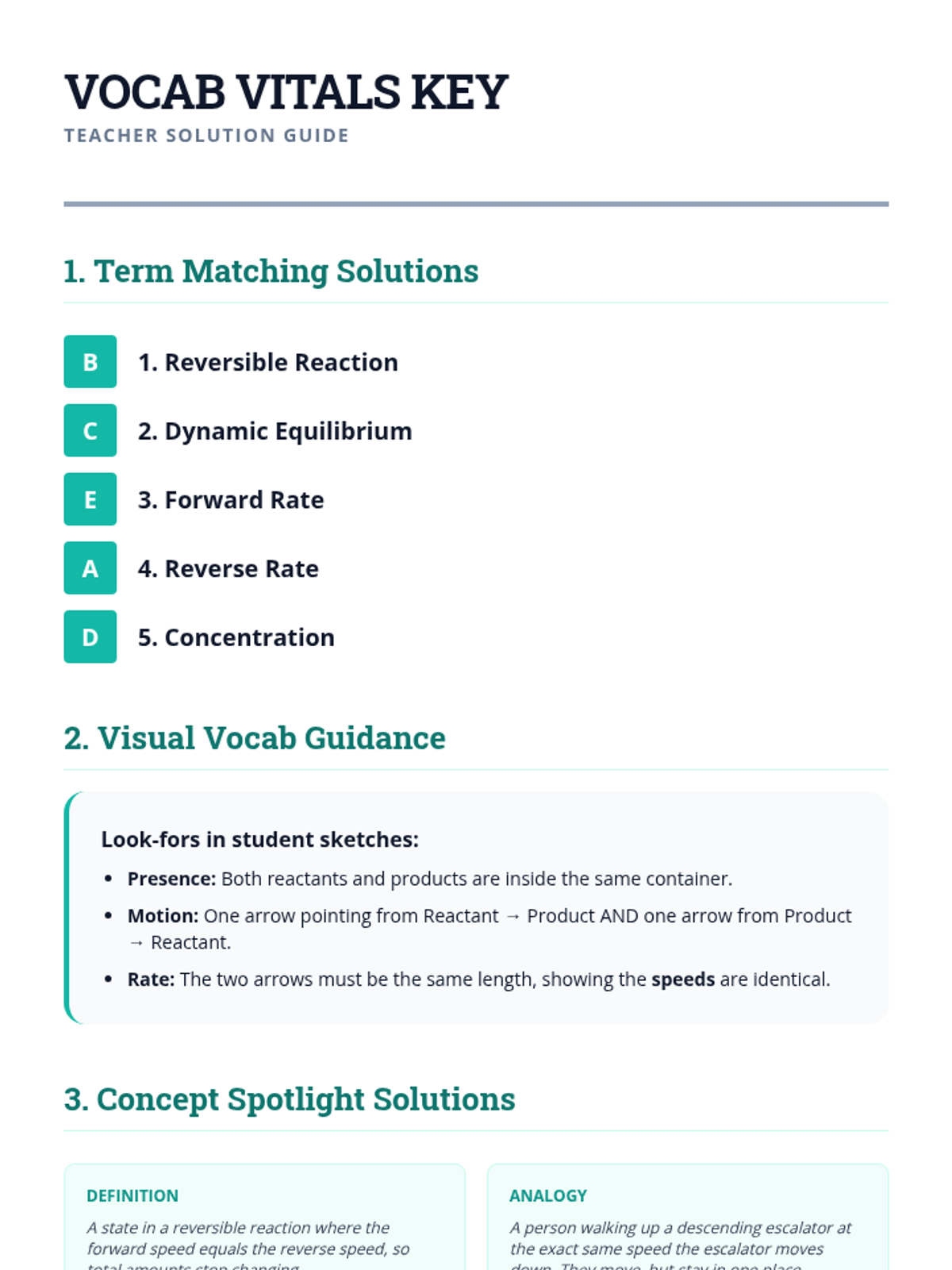
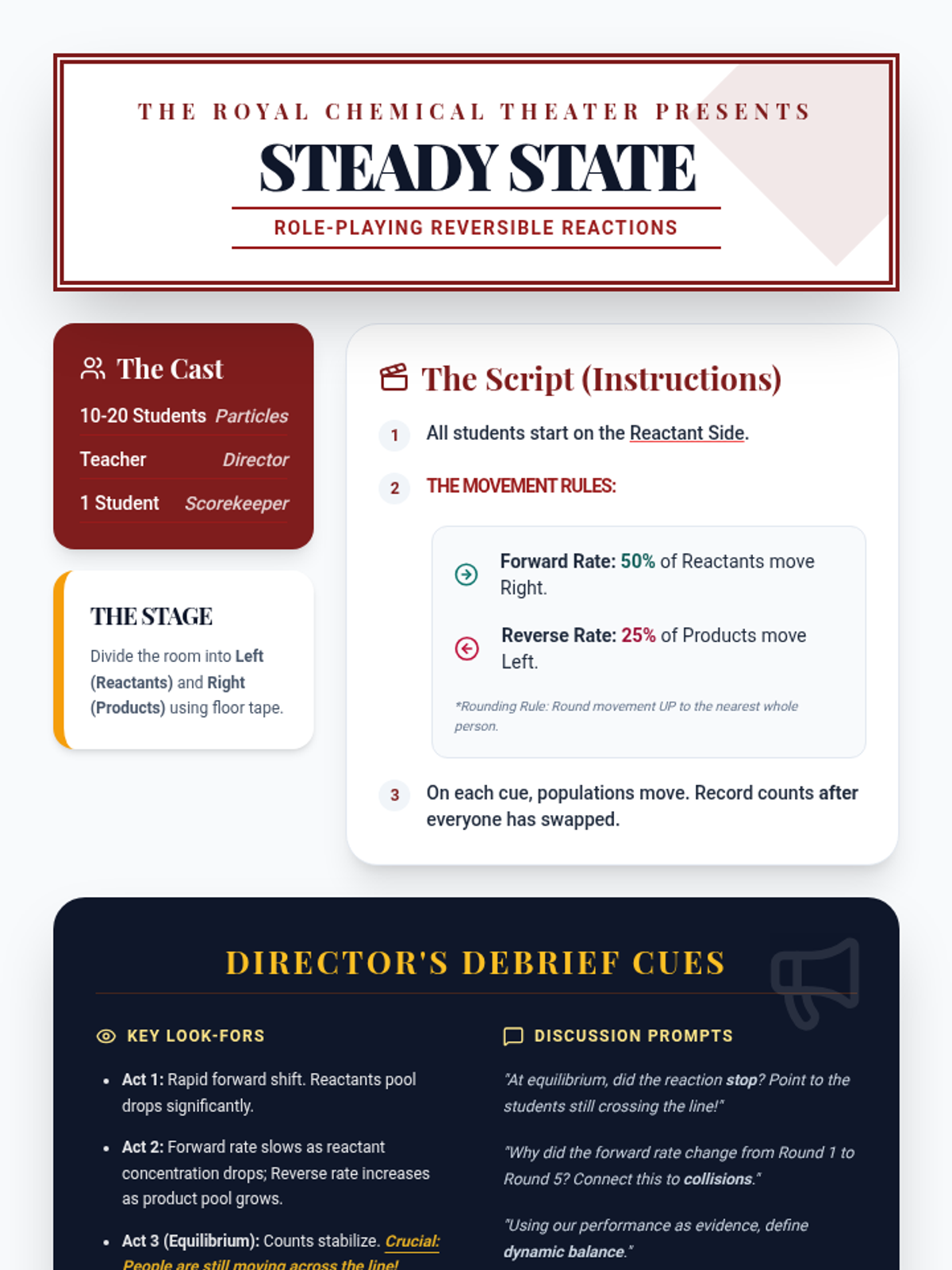
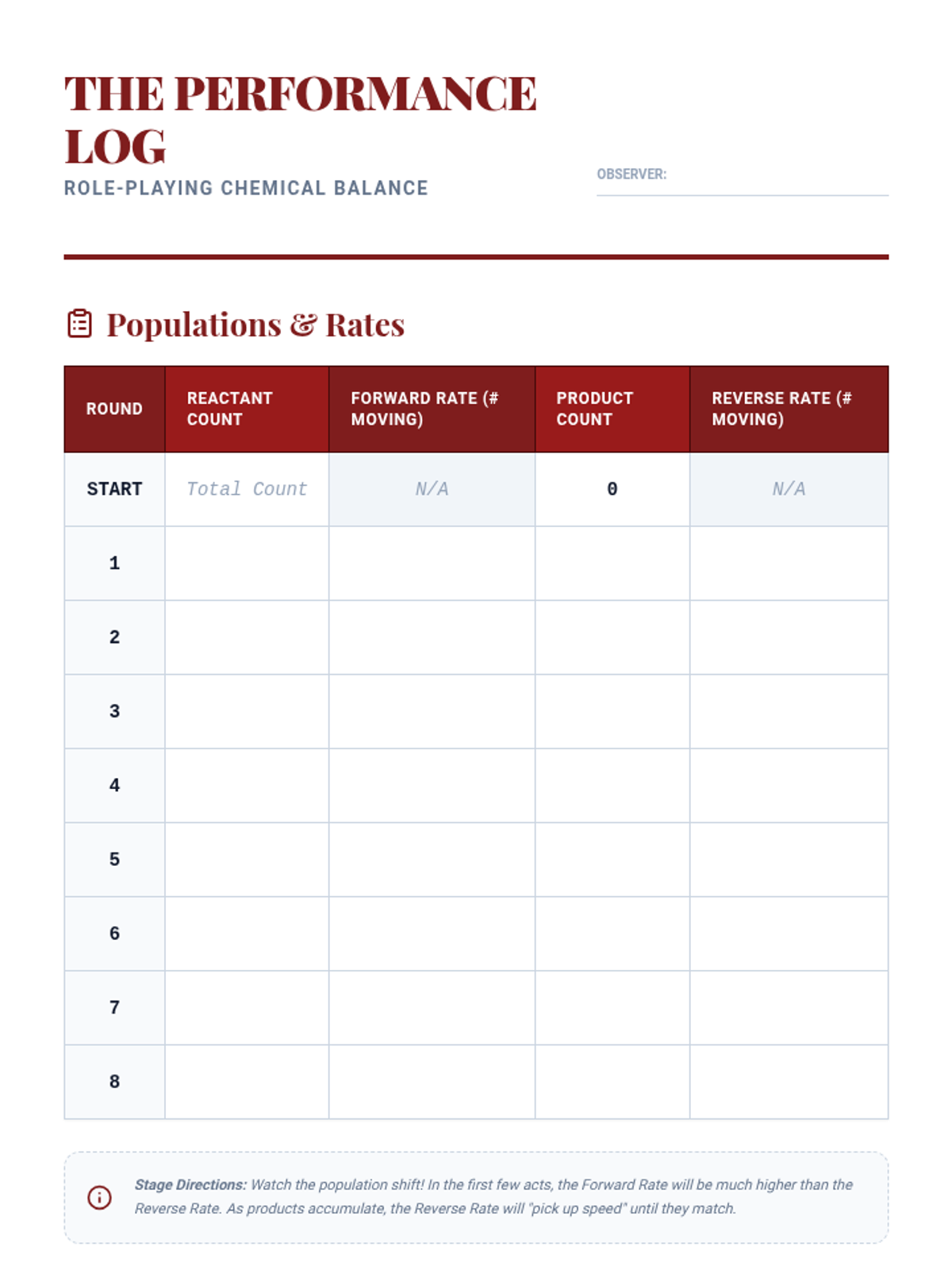
An introduction to reversible reactions and chemical equilibrium. Students use particle models and a pH-sensitive chemical indicator to visualize how reactions can occur in both directions and reach a point where forward and reverse rates are equal.
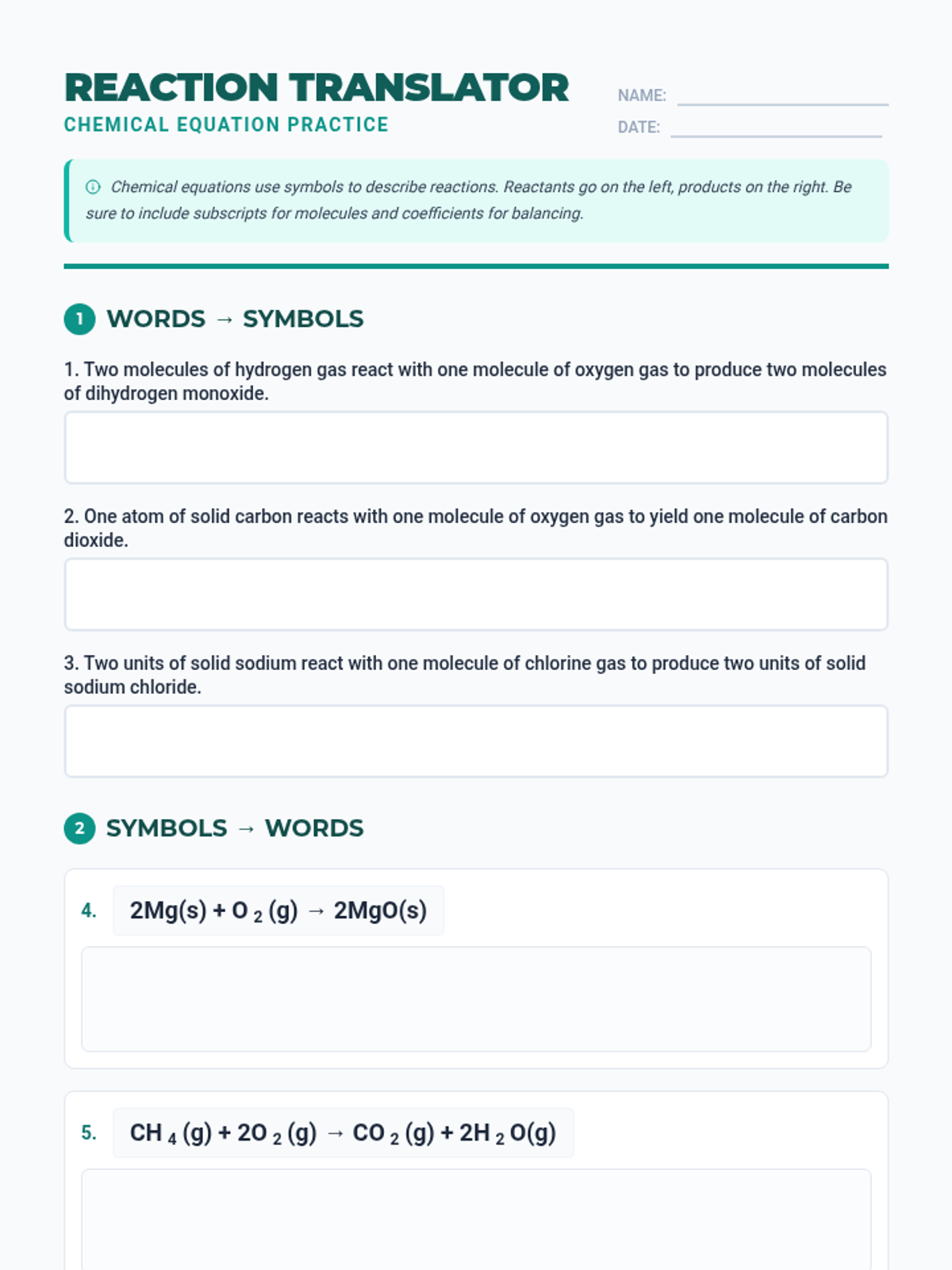
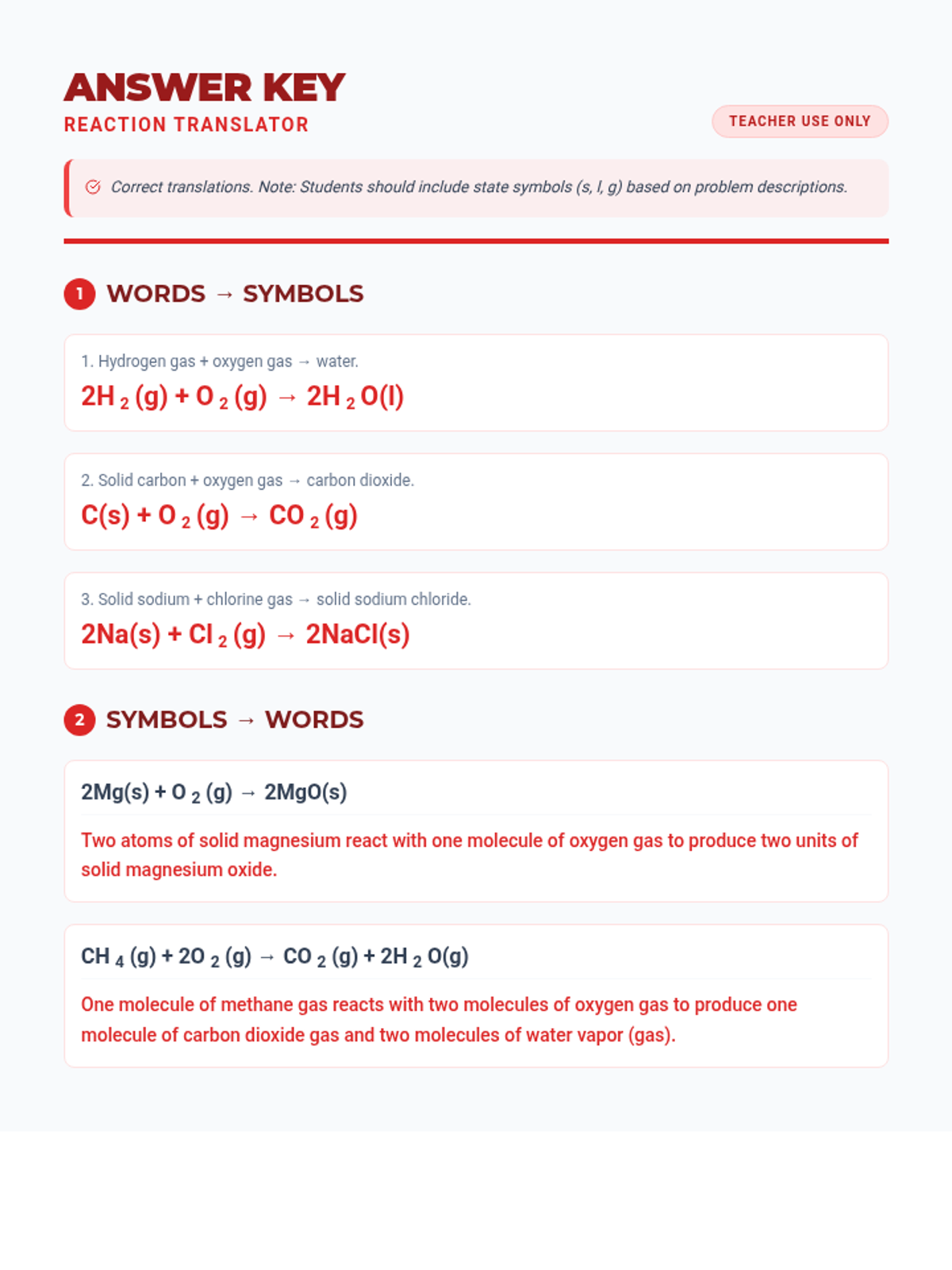
A focused practice session on translating chemical reactions between word descriptions and symbolic equations, covering key concepts of reactants, products, and stoichiometry.
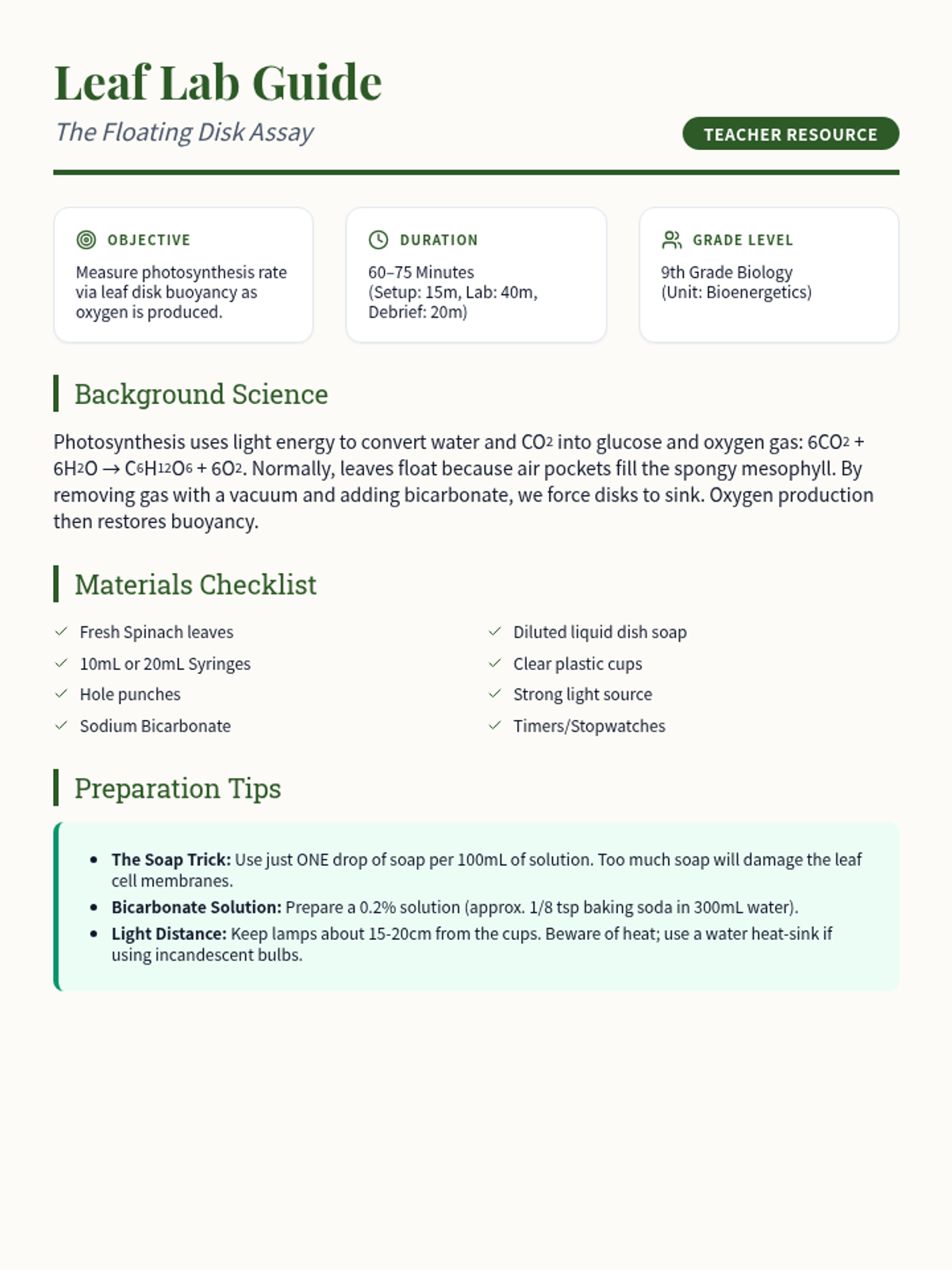
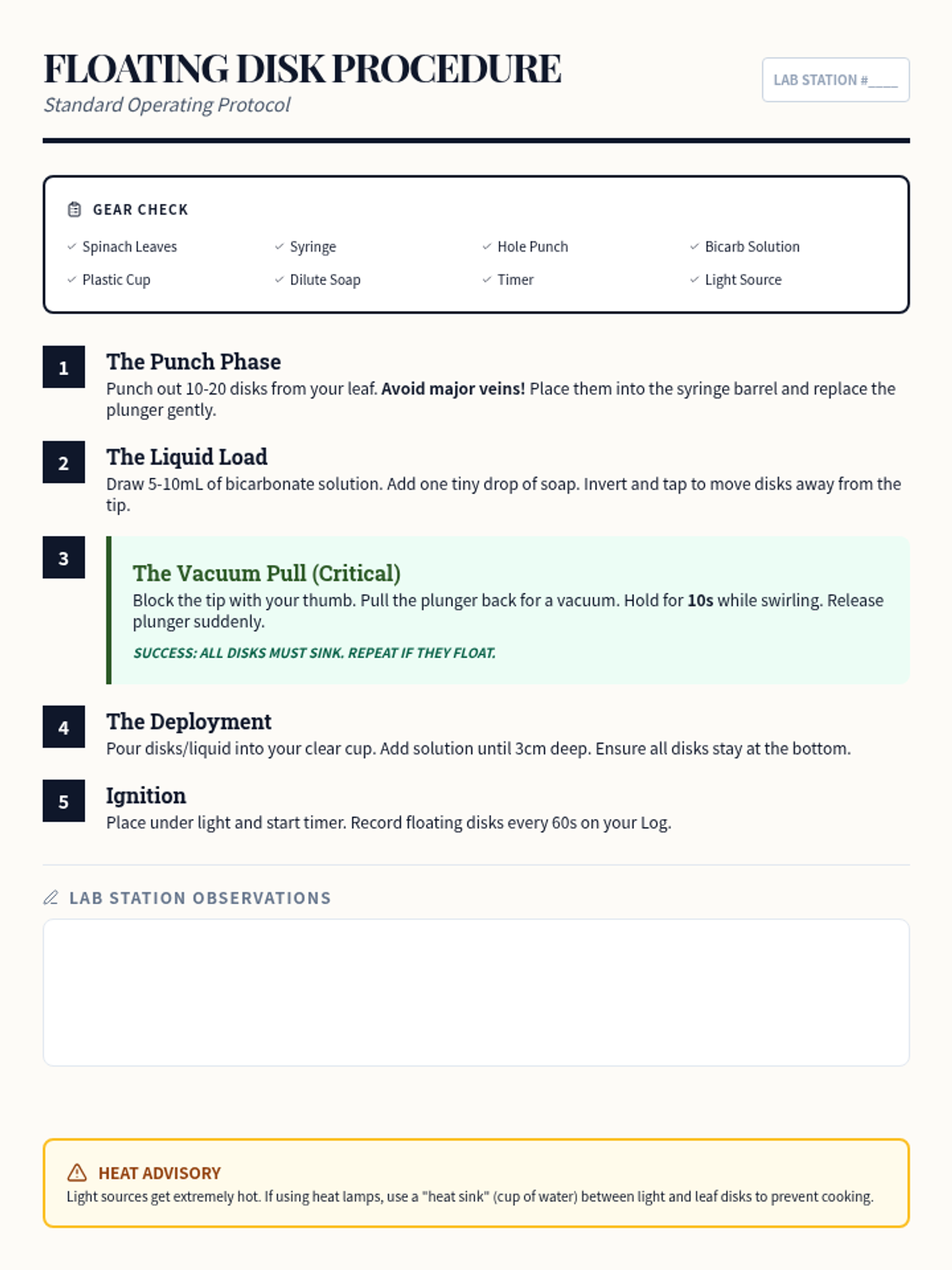
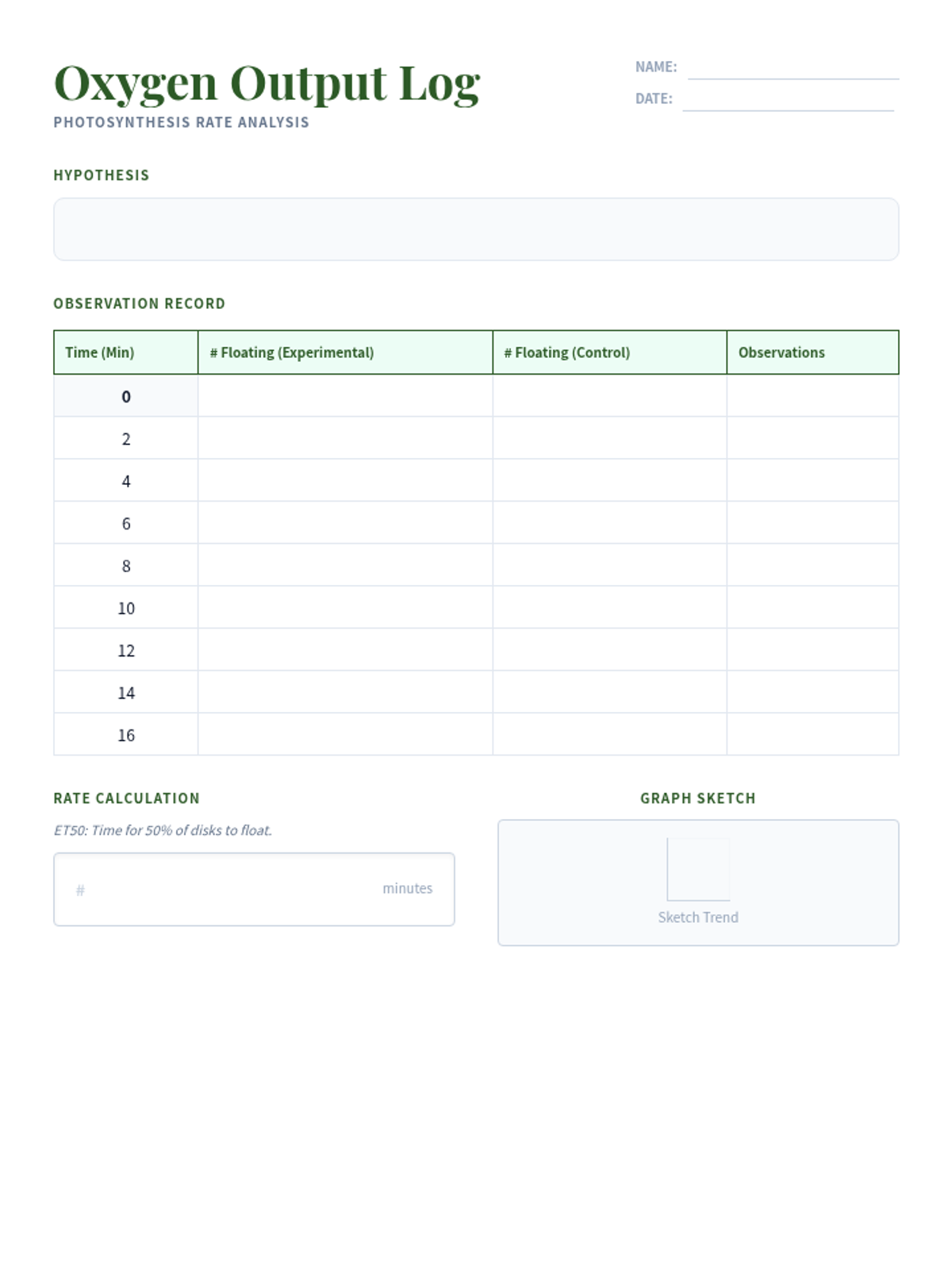
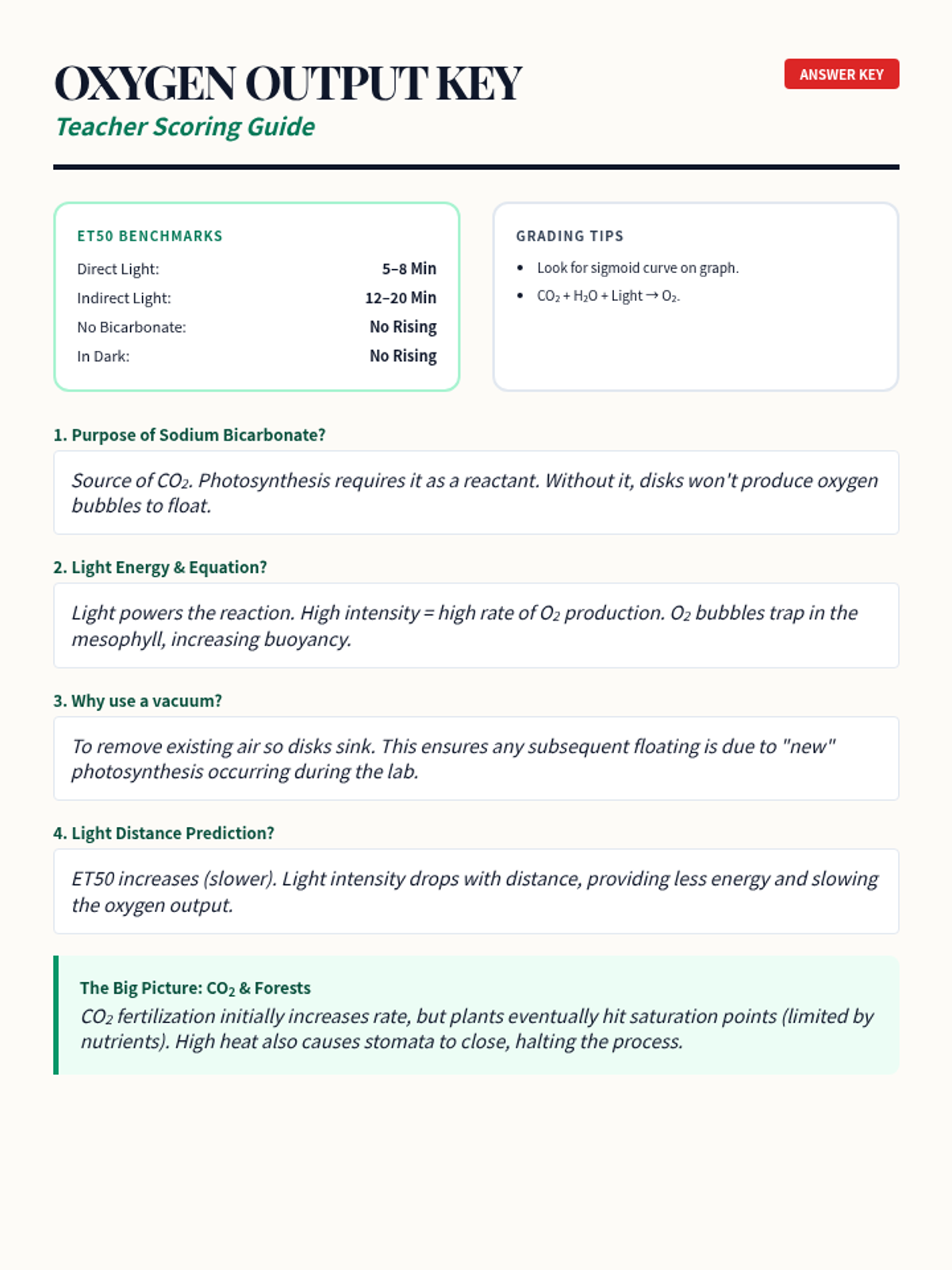
In this hands-on lab, students use the floating leaf disk assay to visualize and measure the rate of photosynthesis. They explore how light intensity and CO2 availability act as variables in oxygen production.
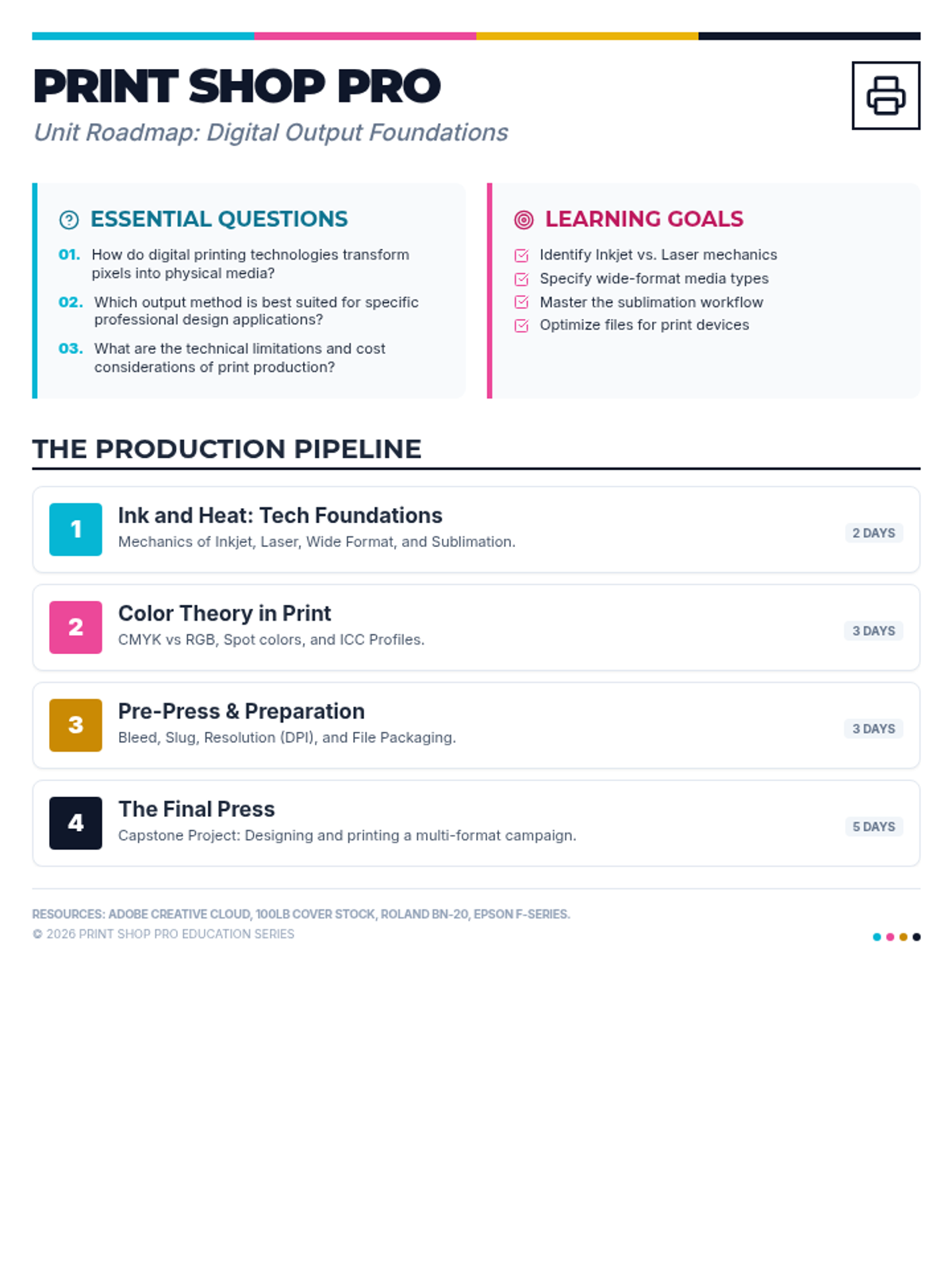
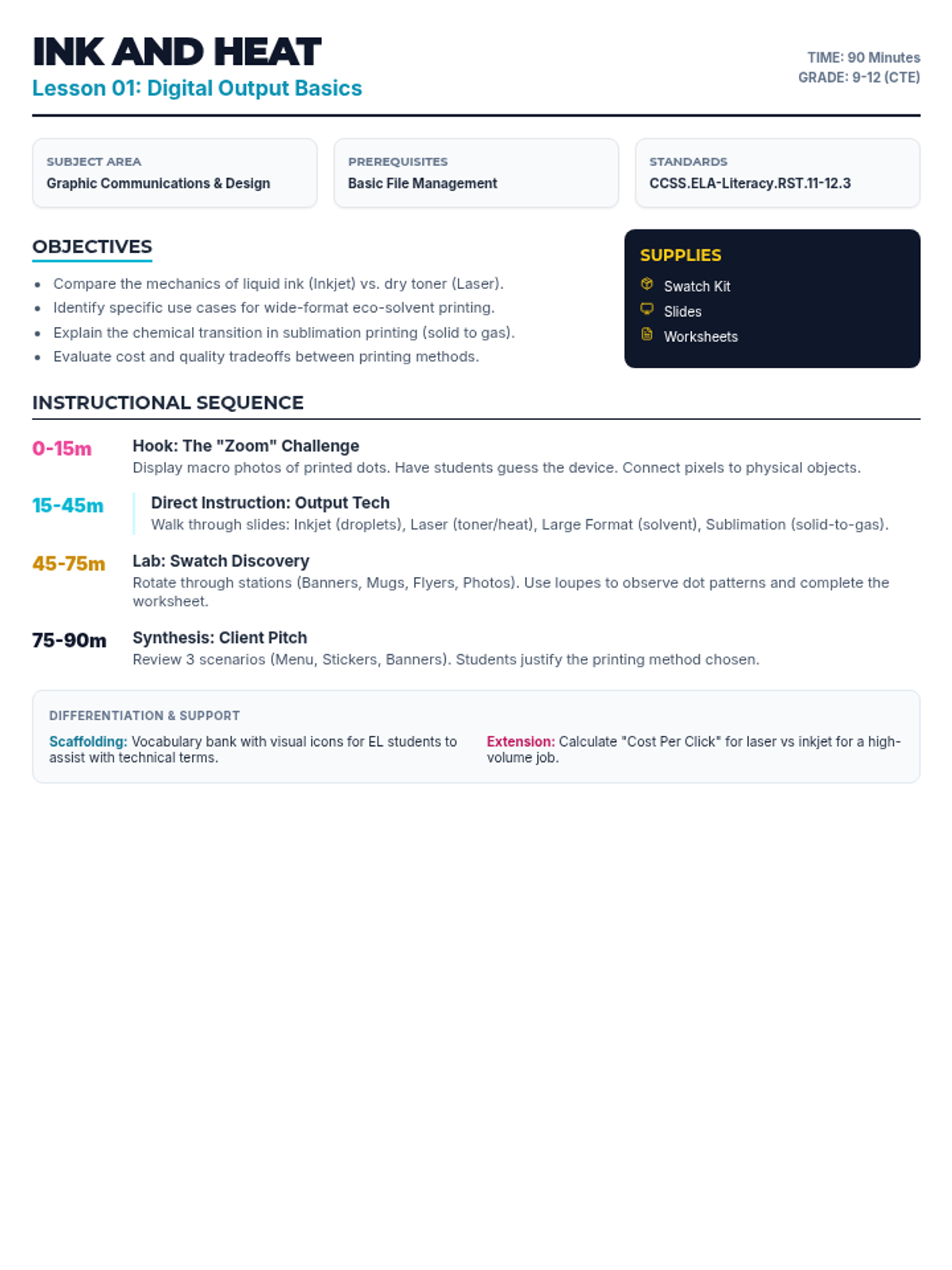
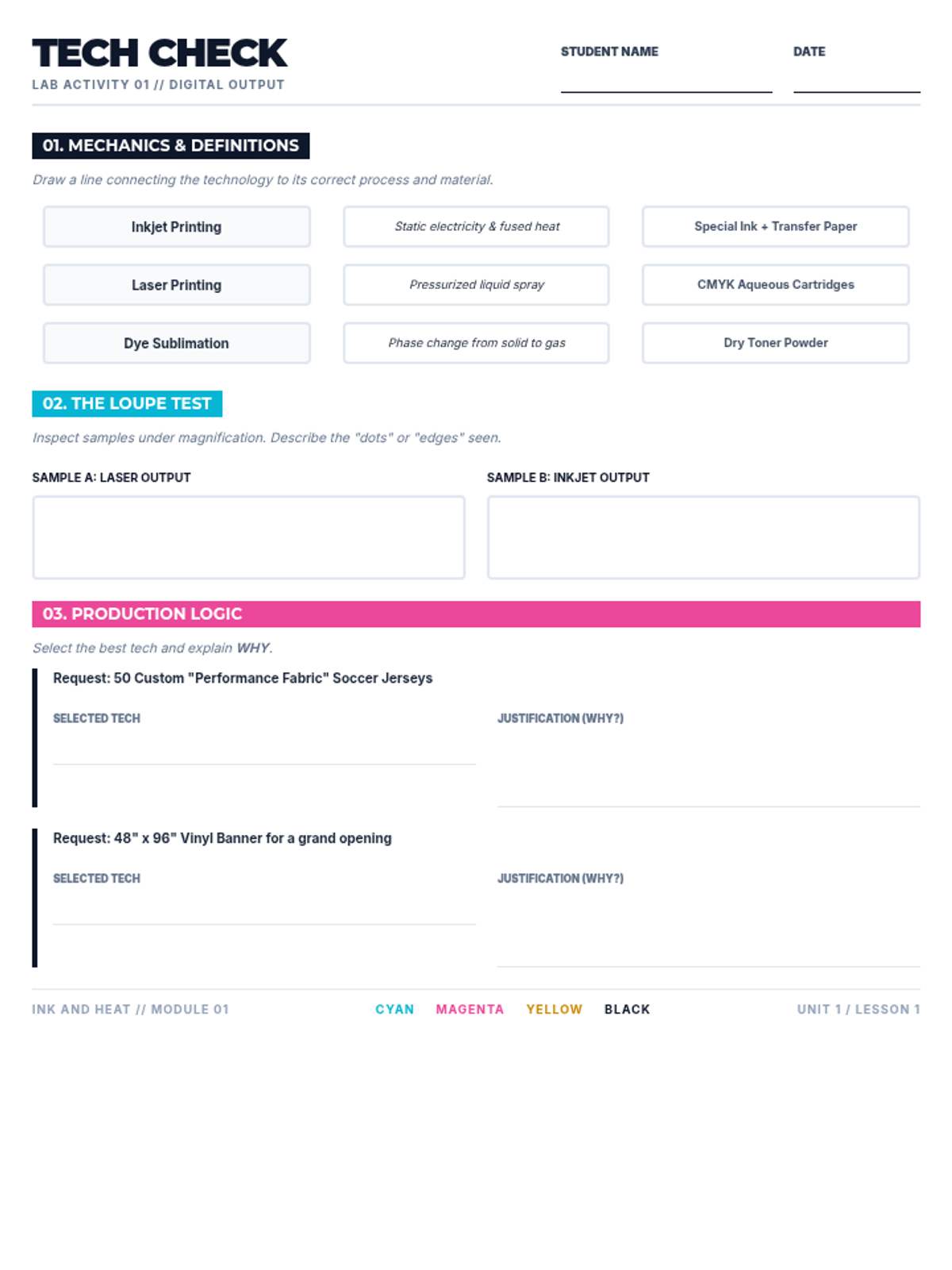
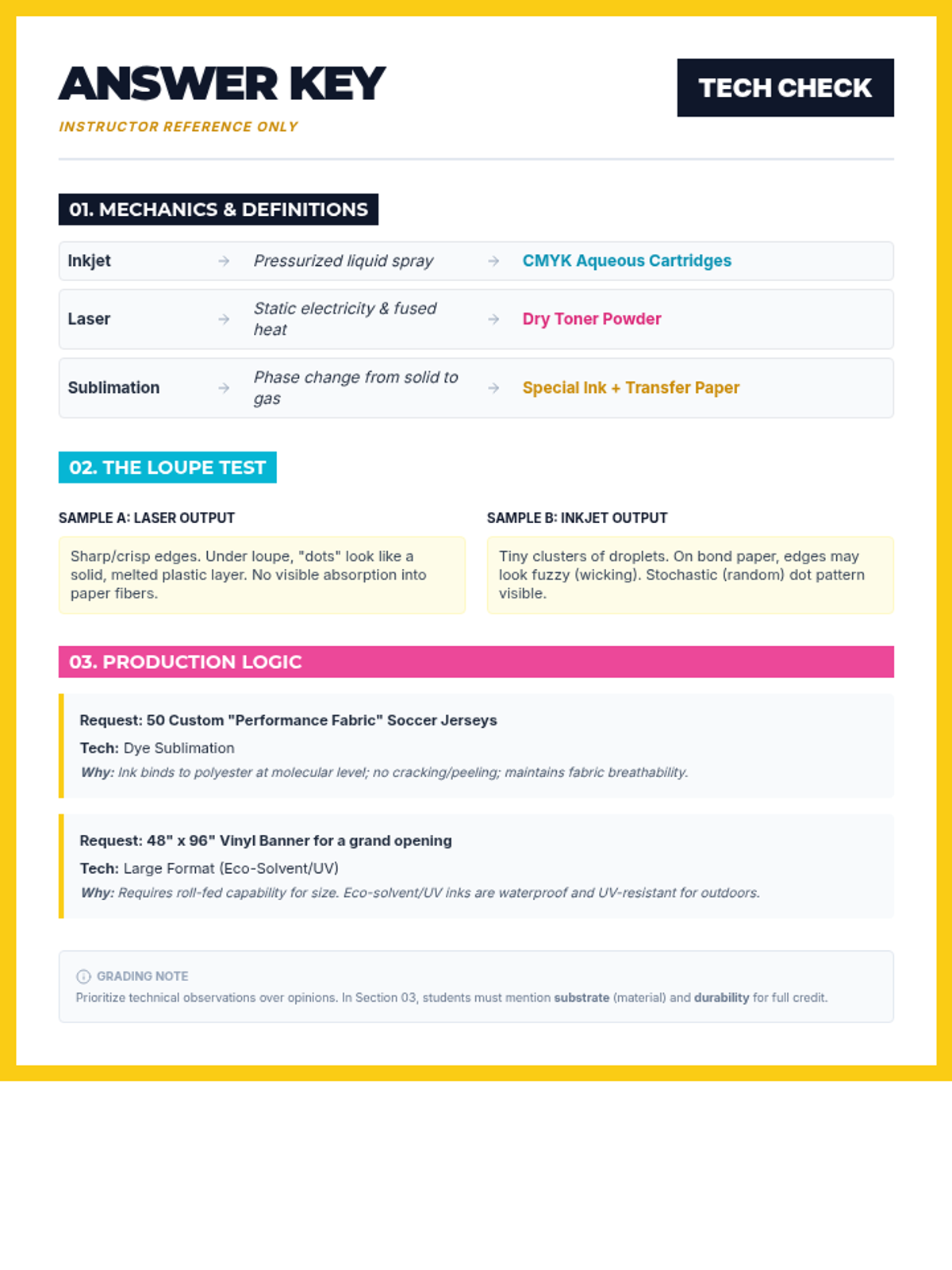
An introductory lesson on digital printing technologies, covering the mechanics of inkjet, laser, large format, and sublimation printing. Students will learn the pros, cons, and specific use cases for each method.
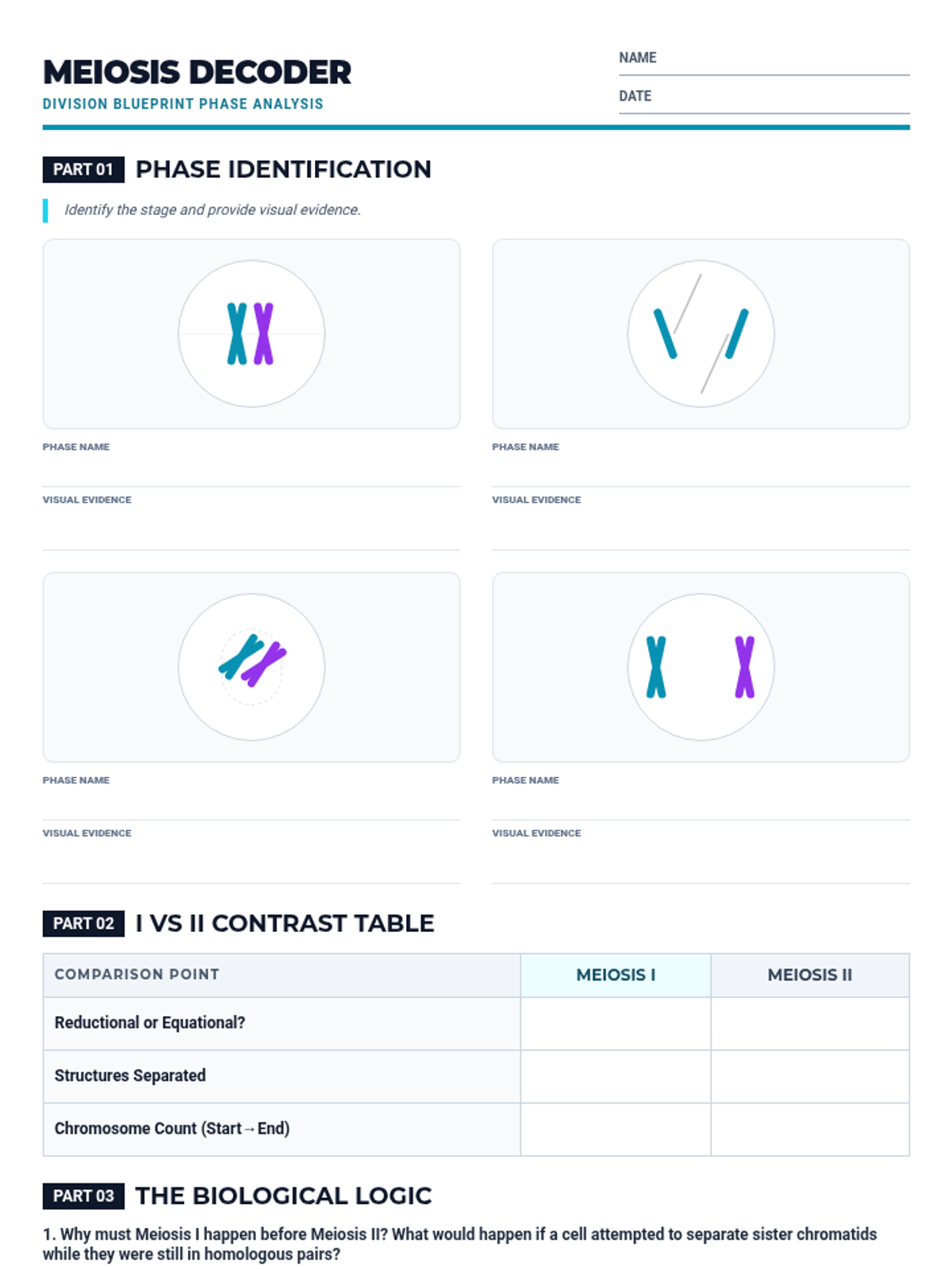
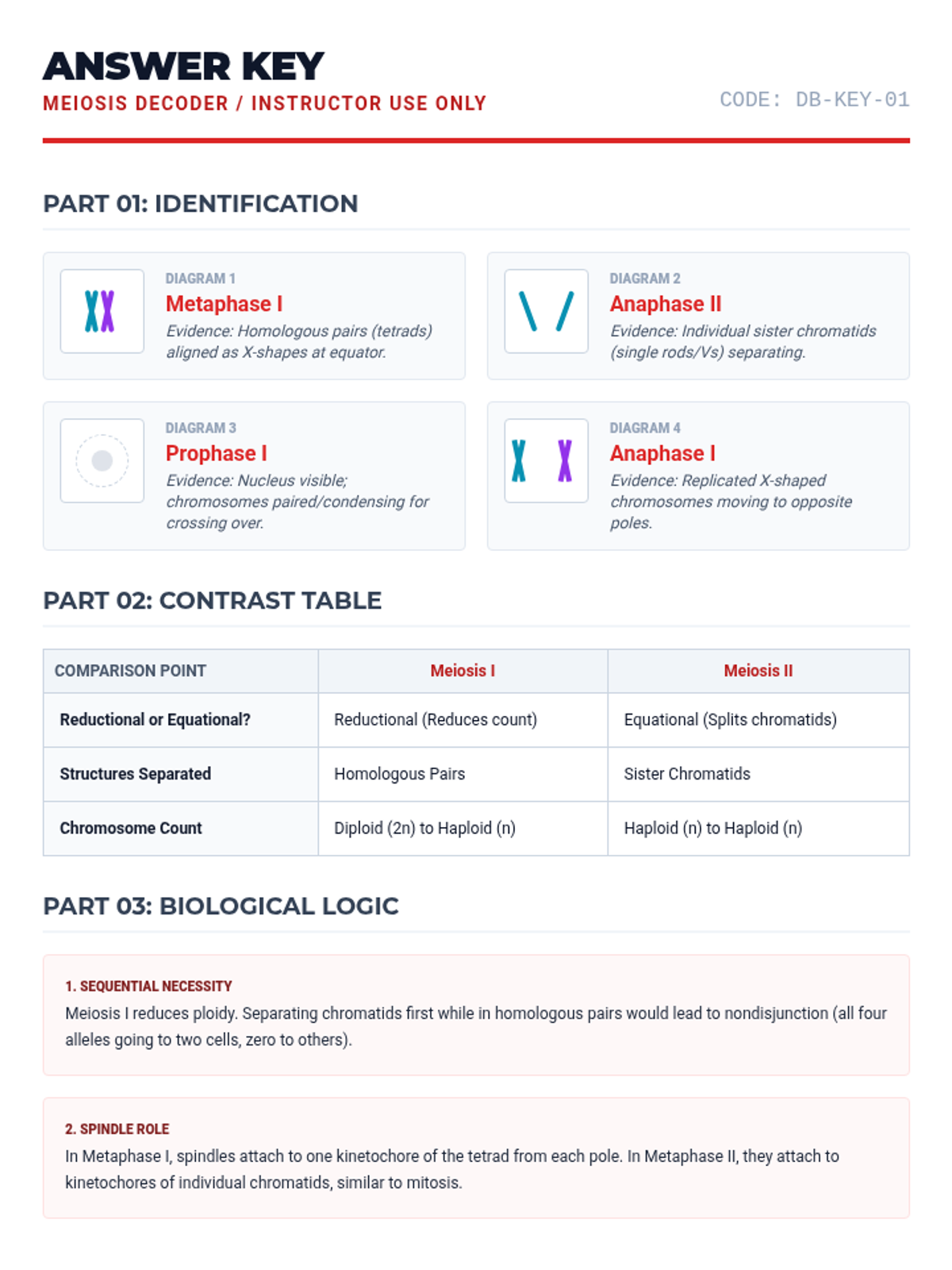
A comprehensive guide to meiosis, focusing on the structural and functional differences between Meiosis I and Meiosis II through visual identification and comparative analysis.
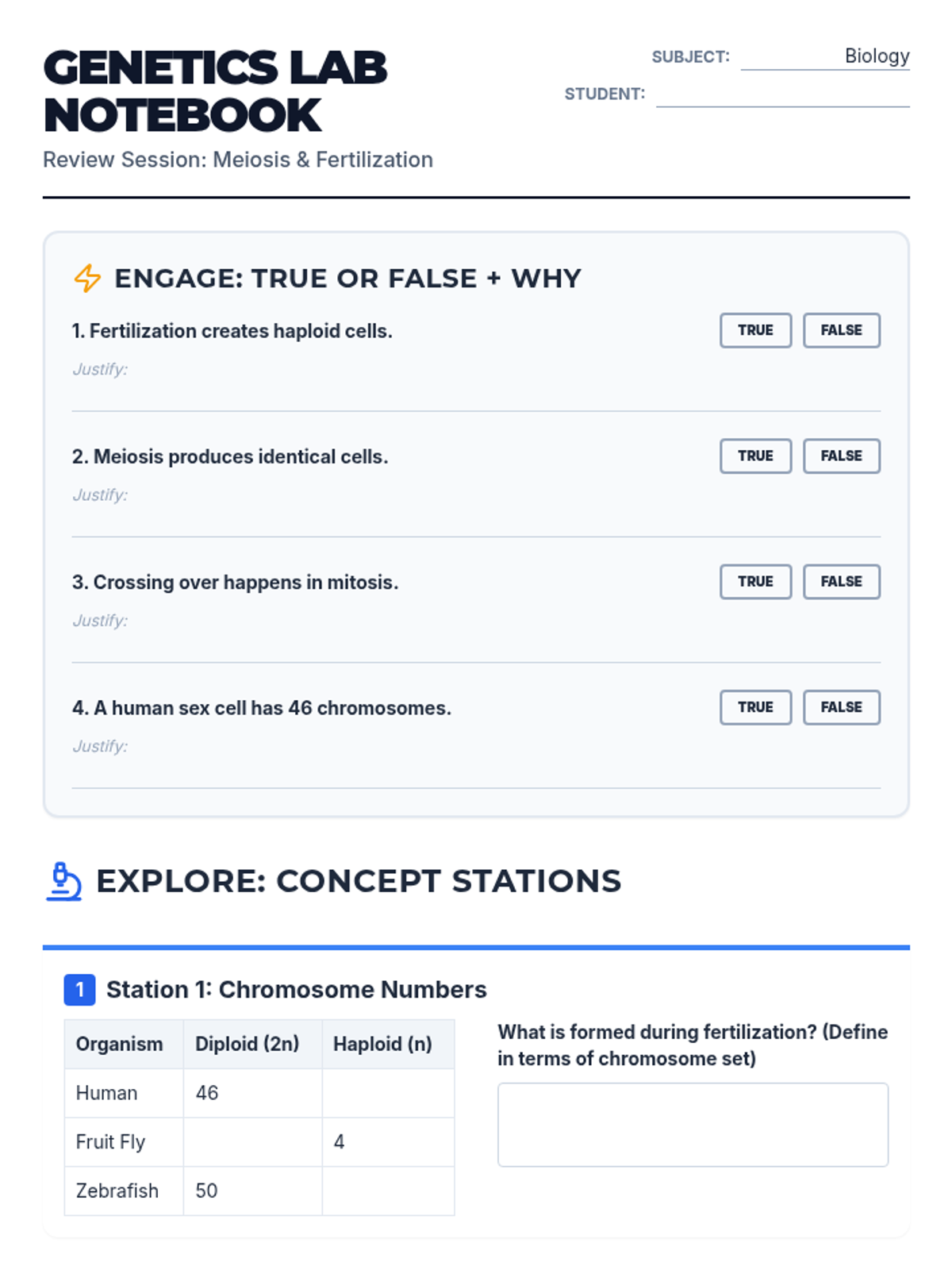
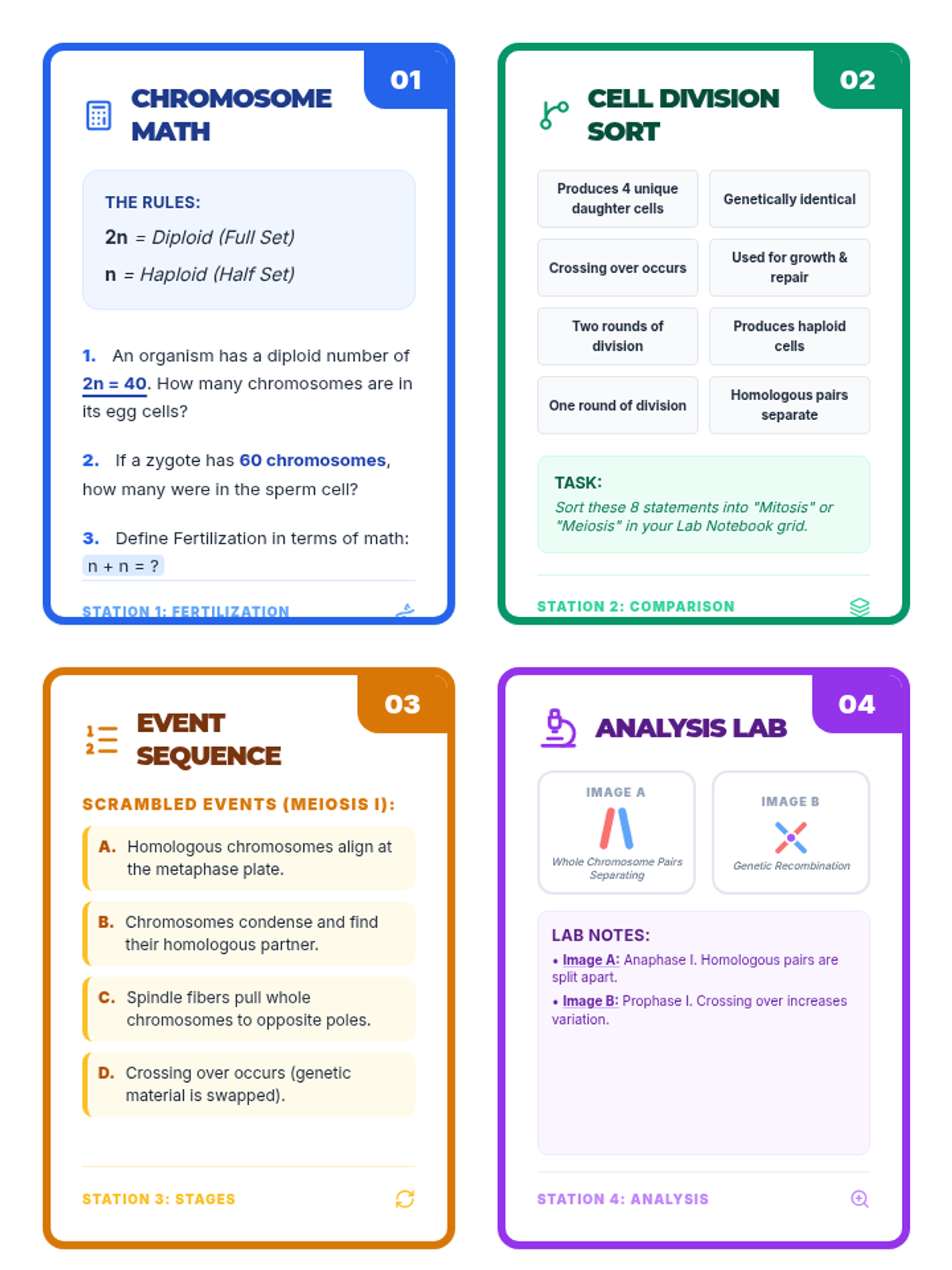
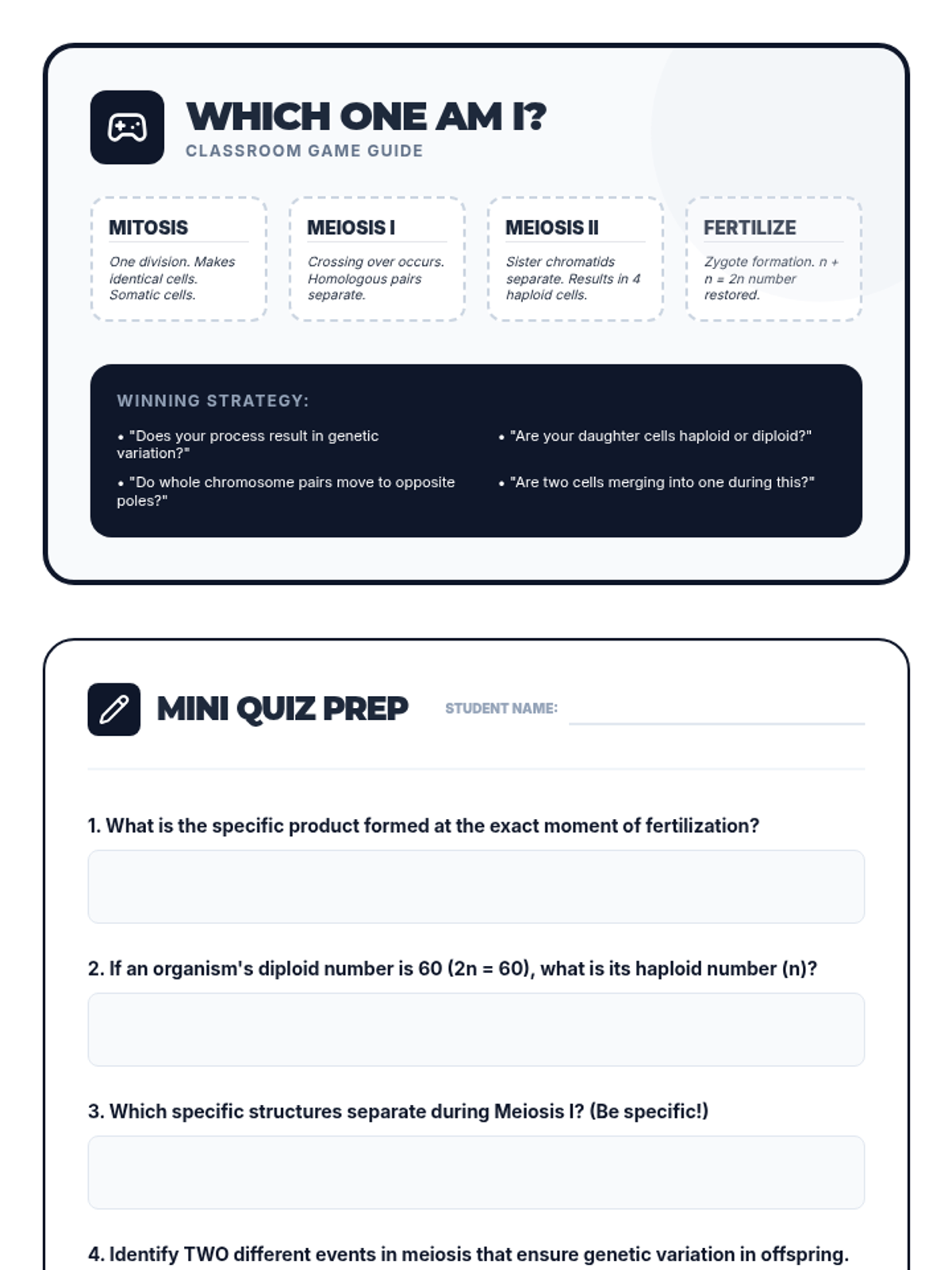
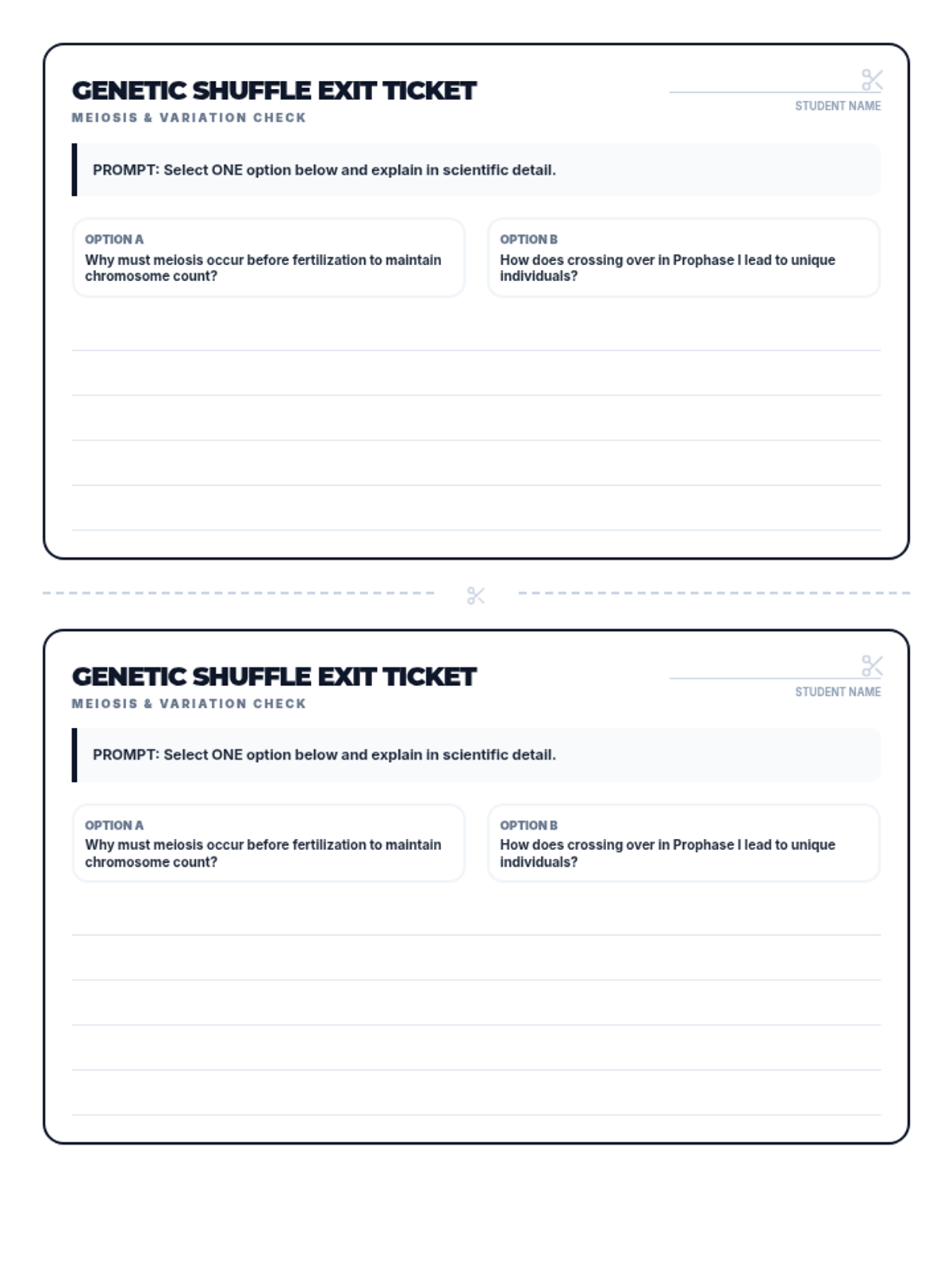
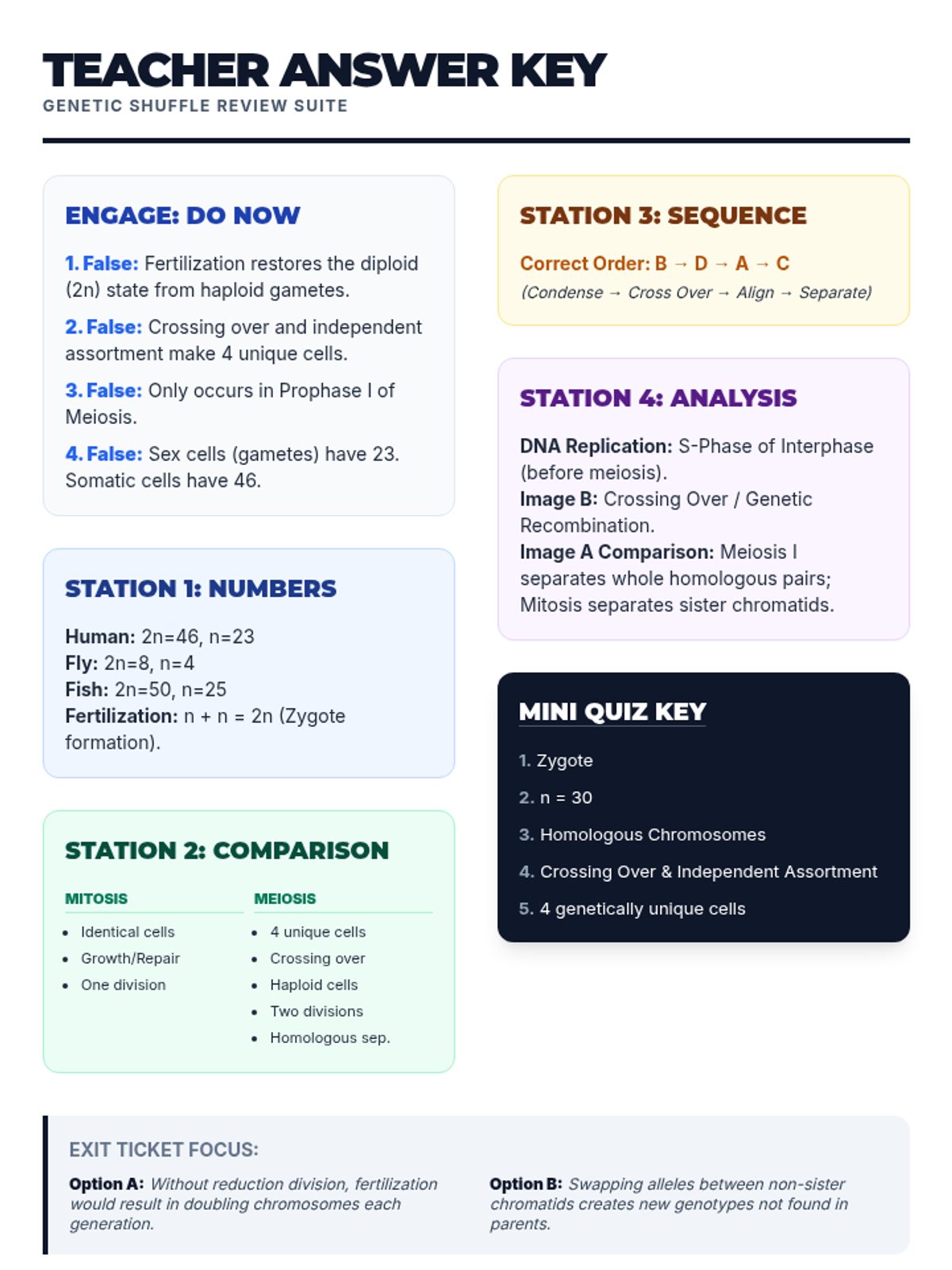
A high-school level review lesson covering meiosis, mitosis, fertilization, and genetic variation. Students rotate through concept stations to master chromosome math and cellular division sequences.
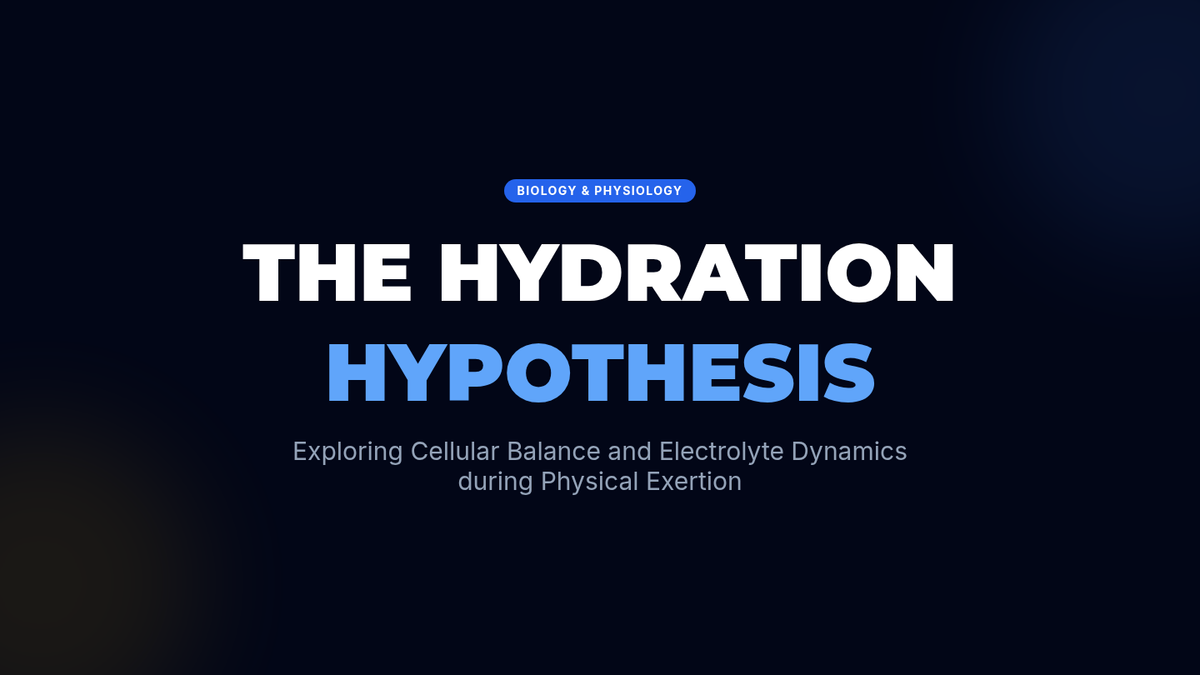
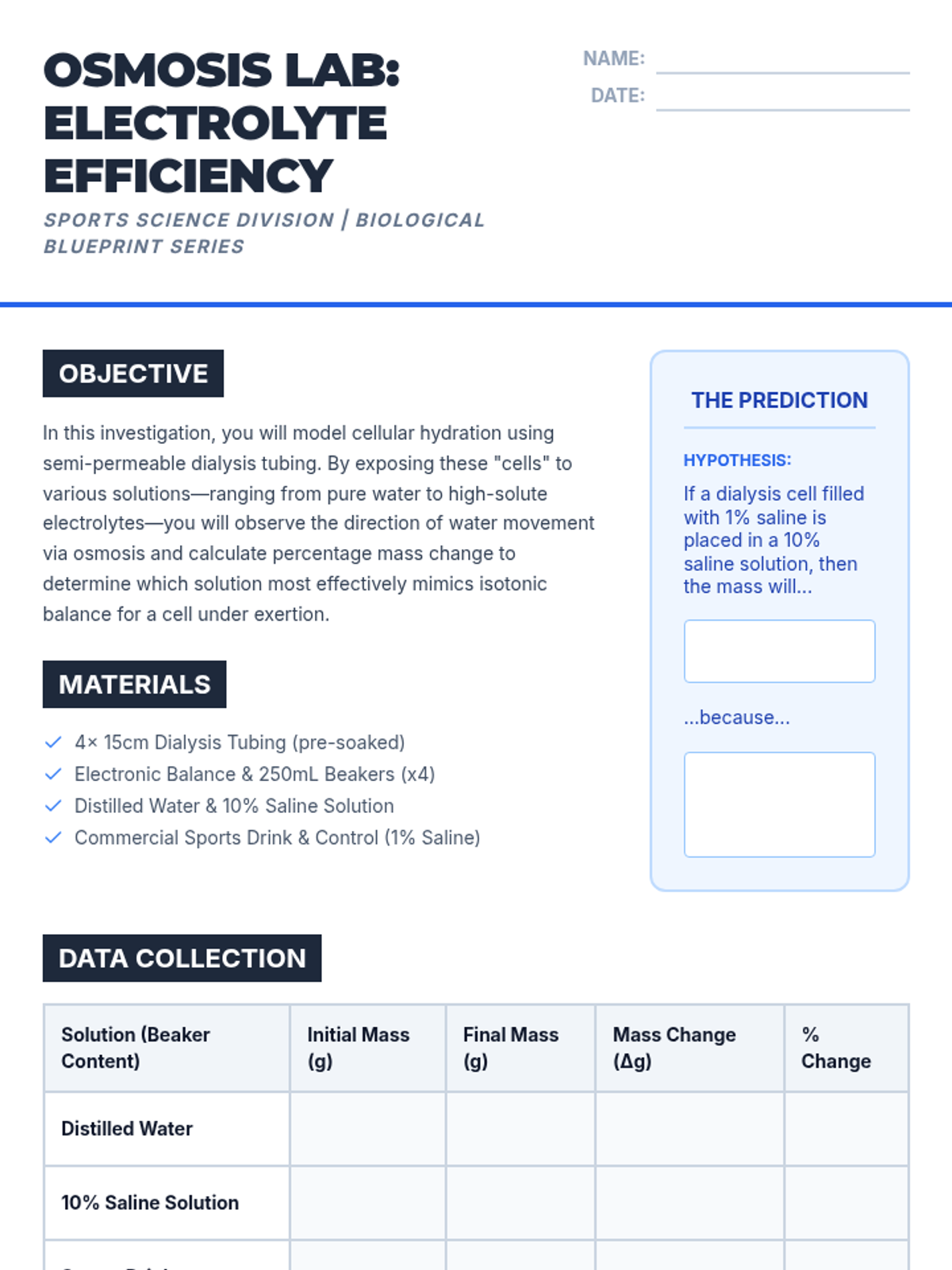
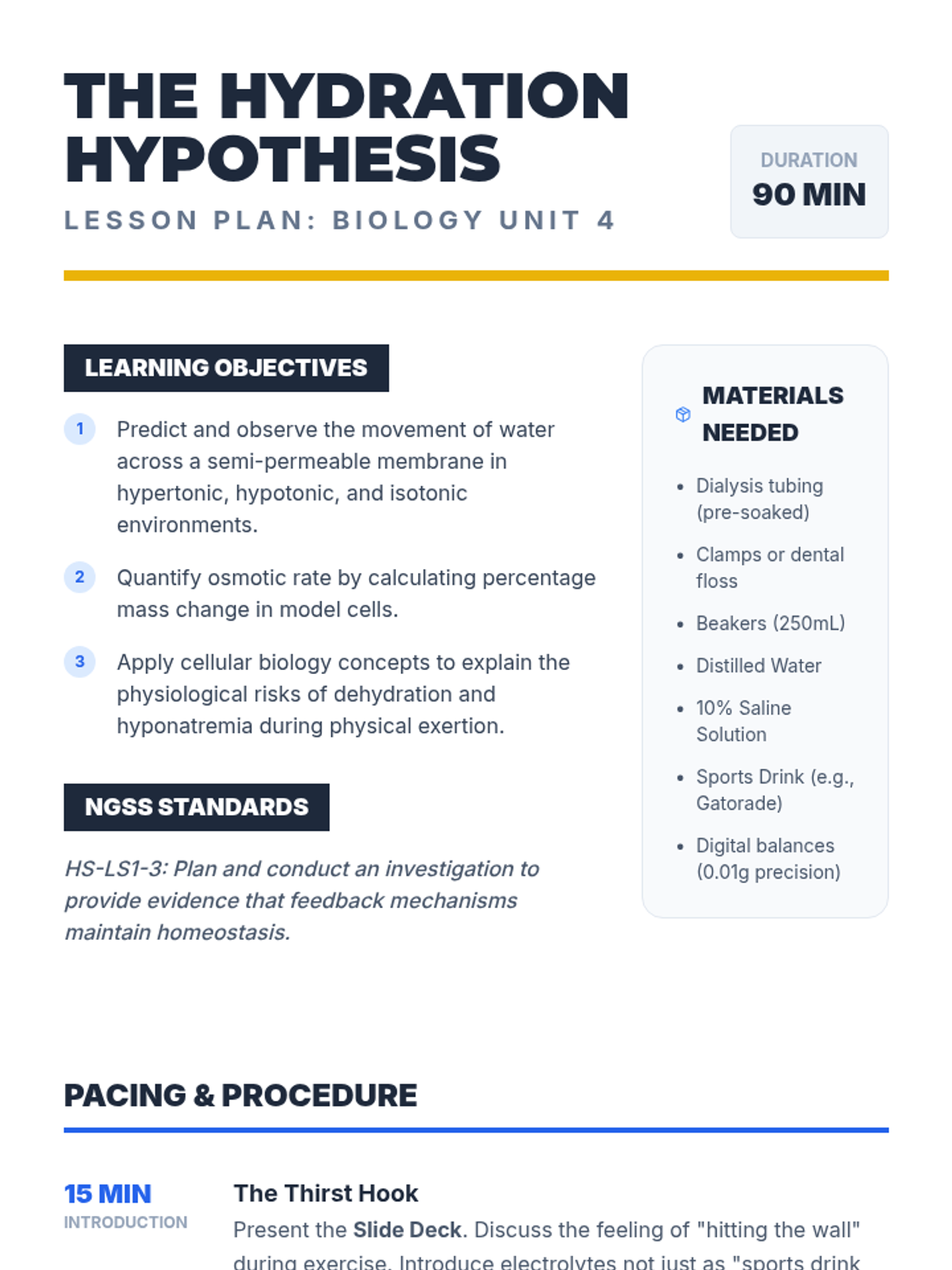
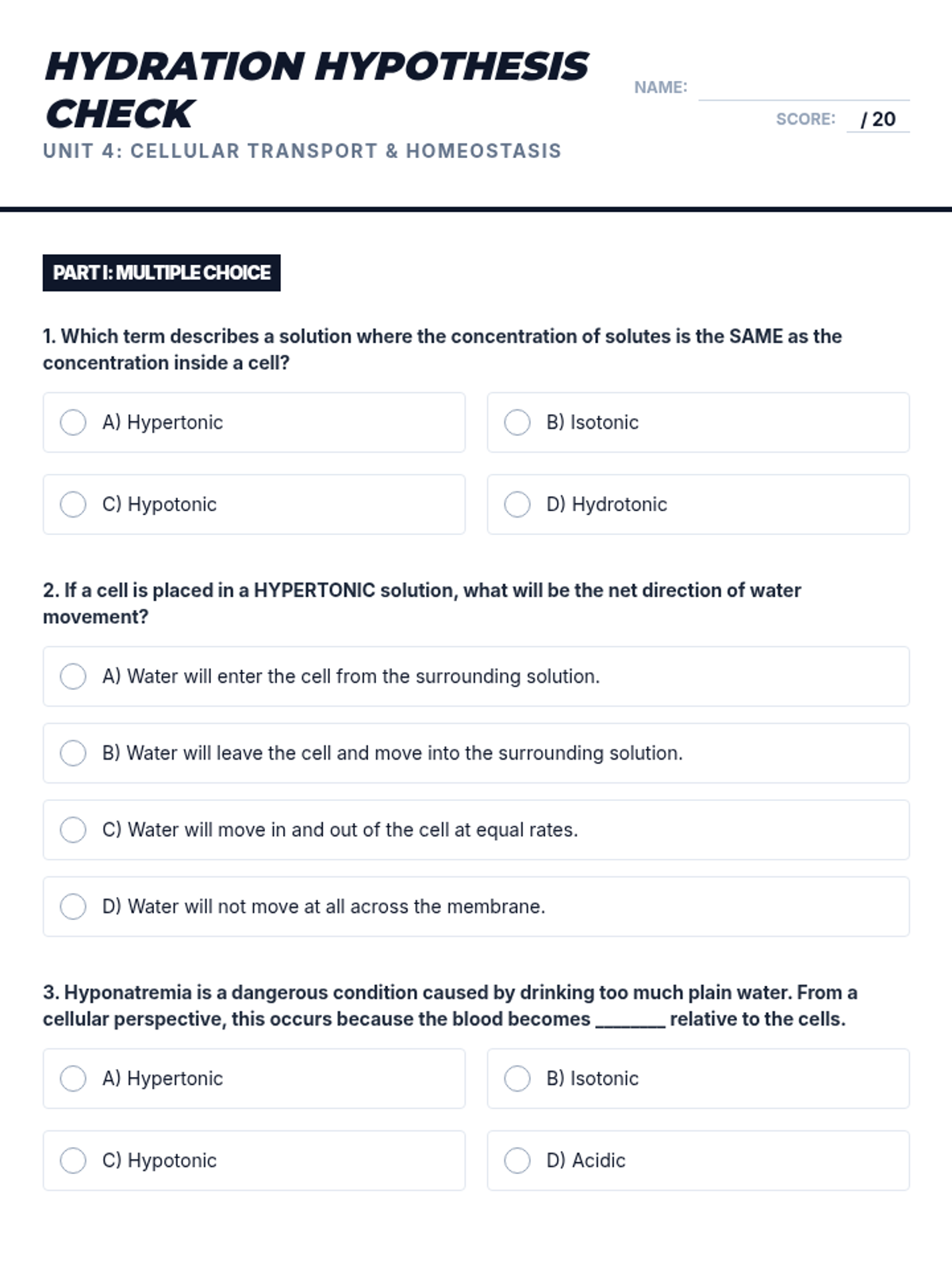
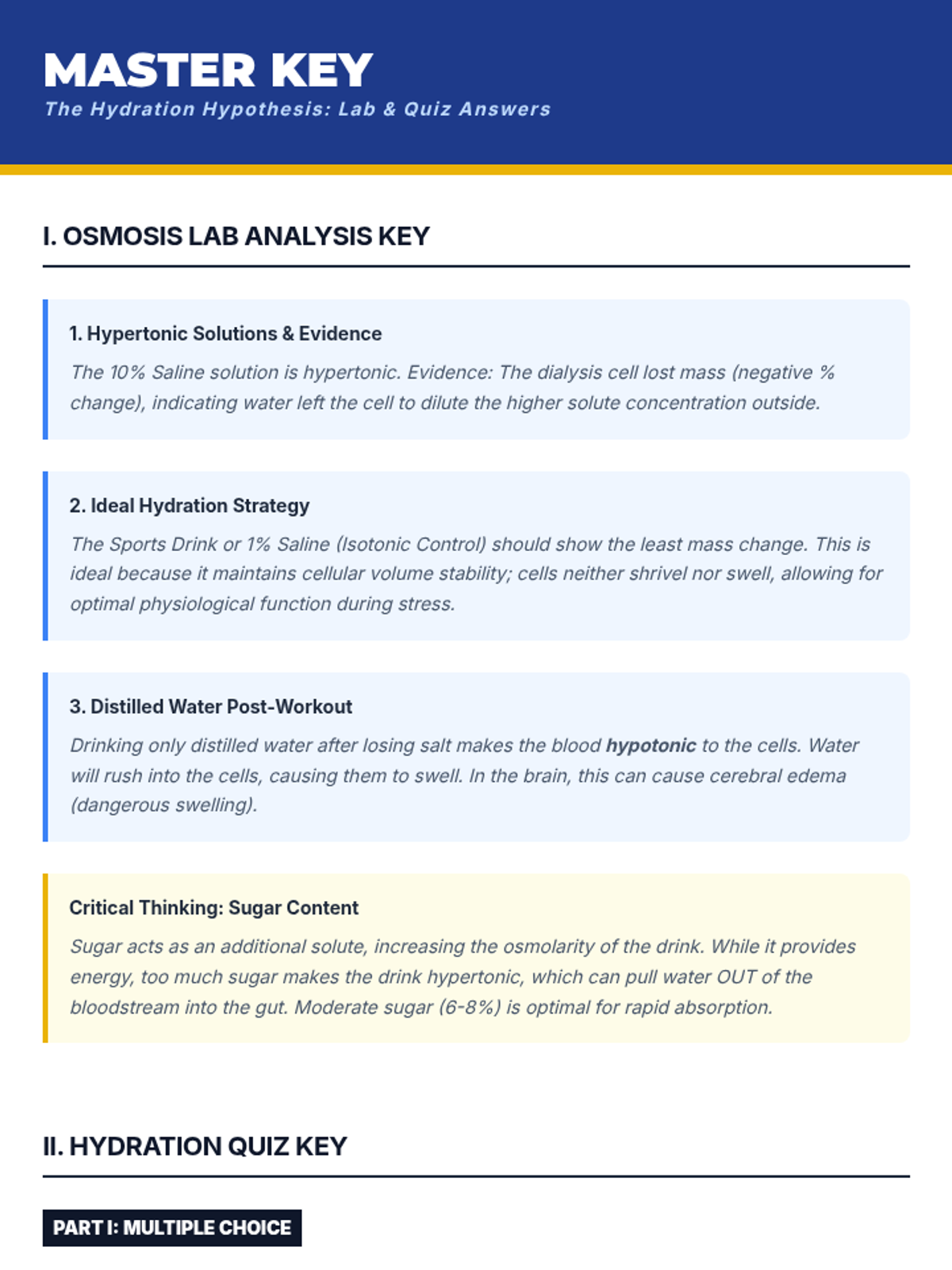
A high school biology lesson exploring the mechanics of cellular hydration, osmosis, and electrolyte balance during physical activity through experimental observation and physiological analysis.
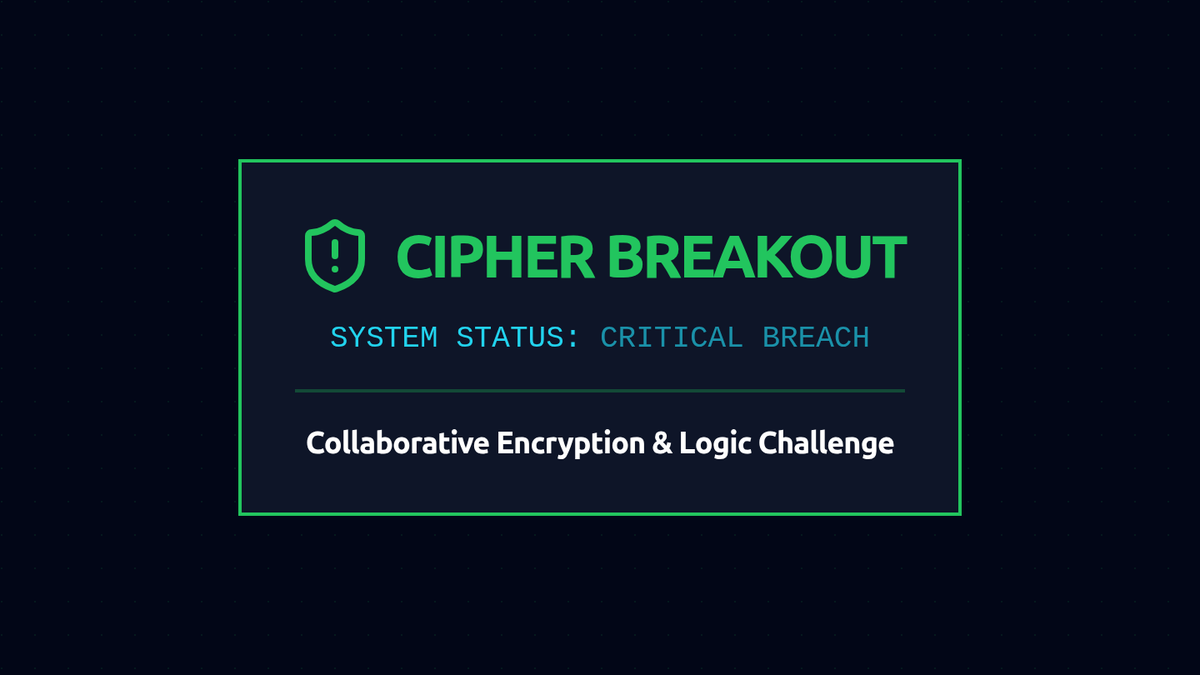
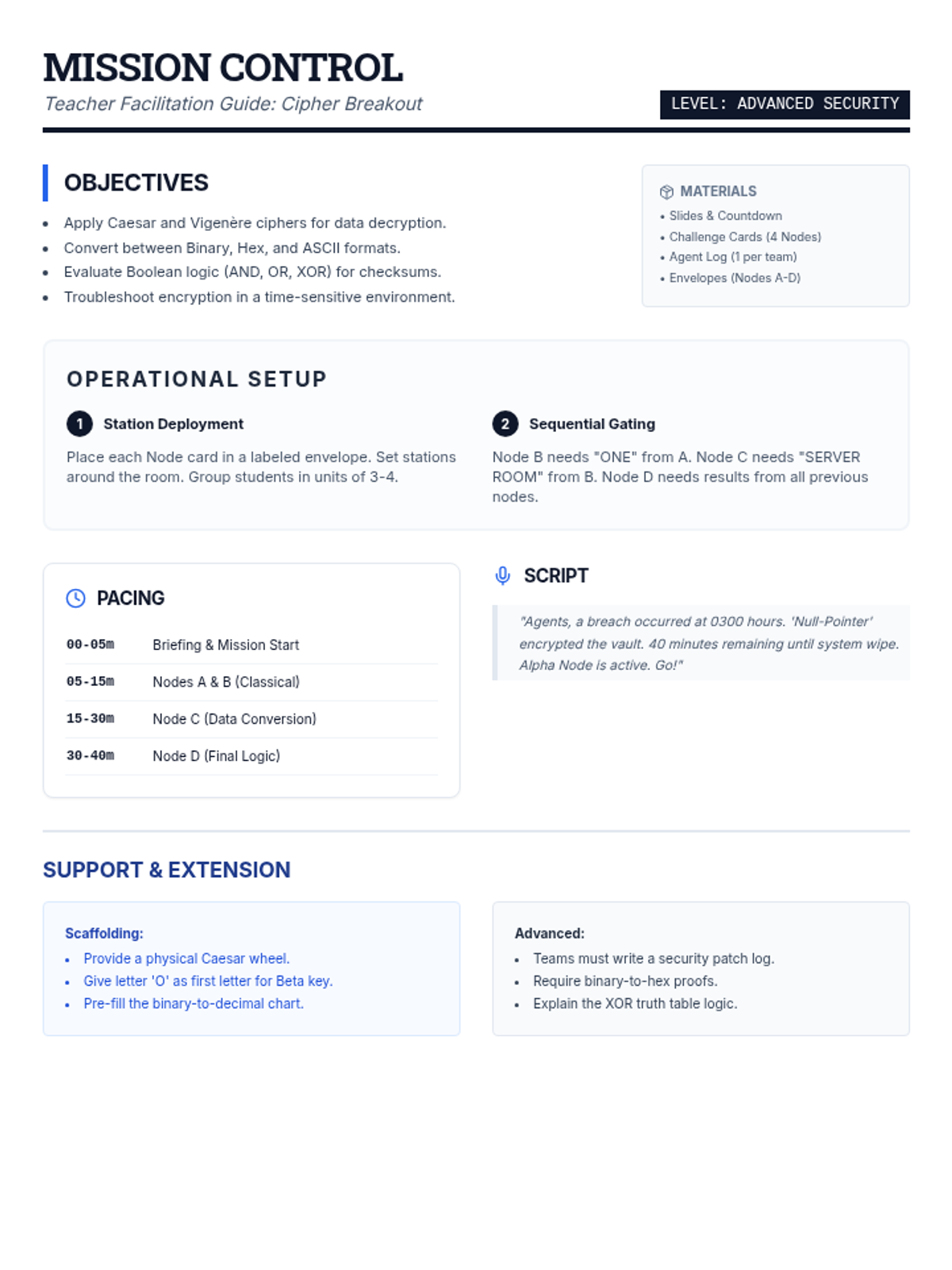
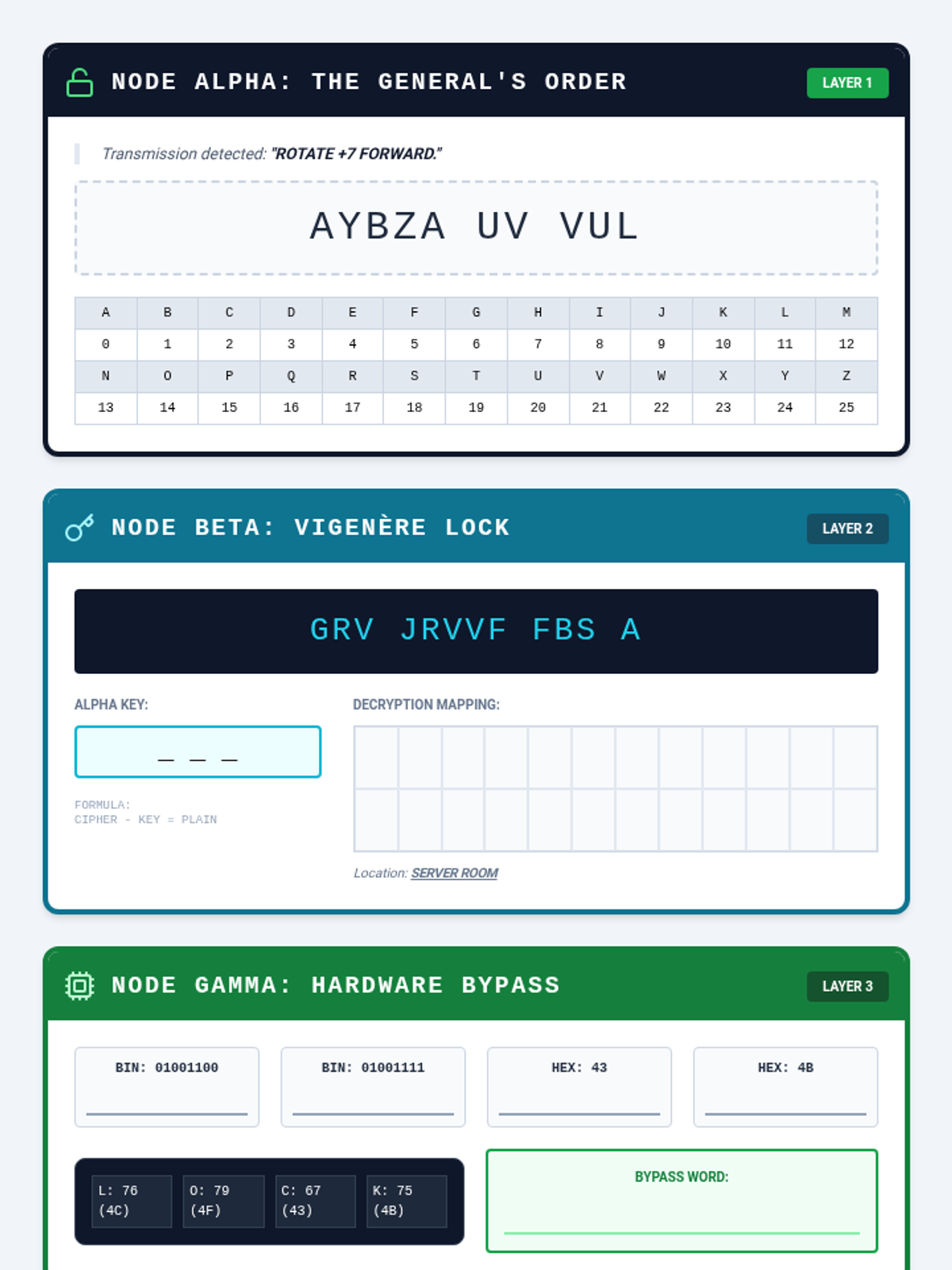
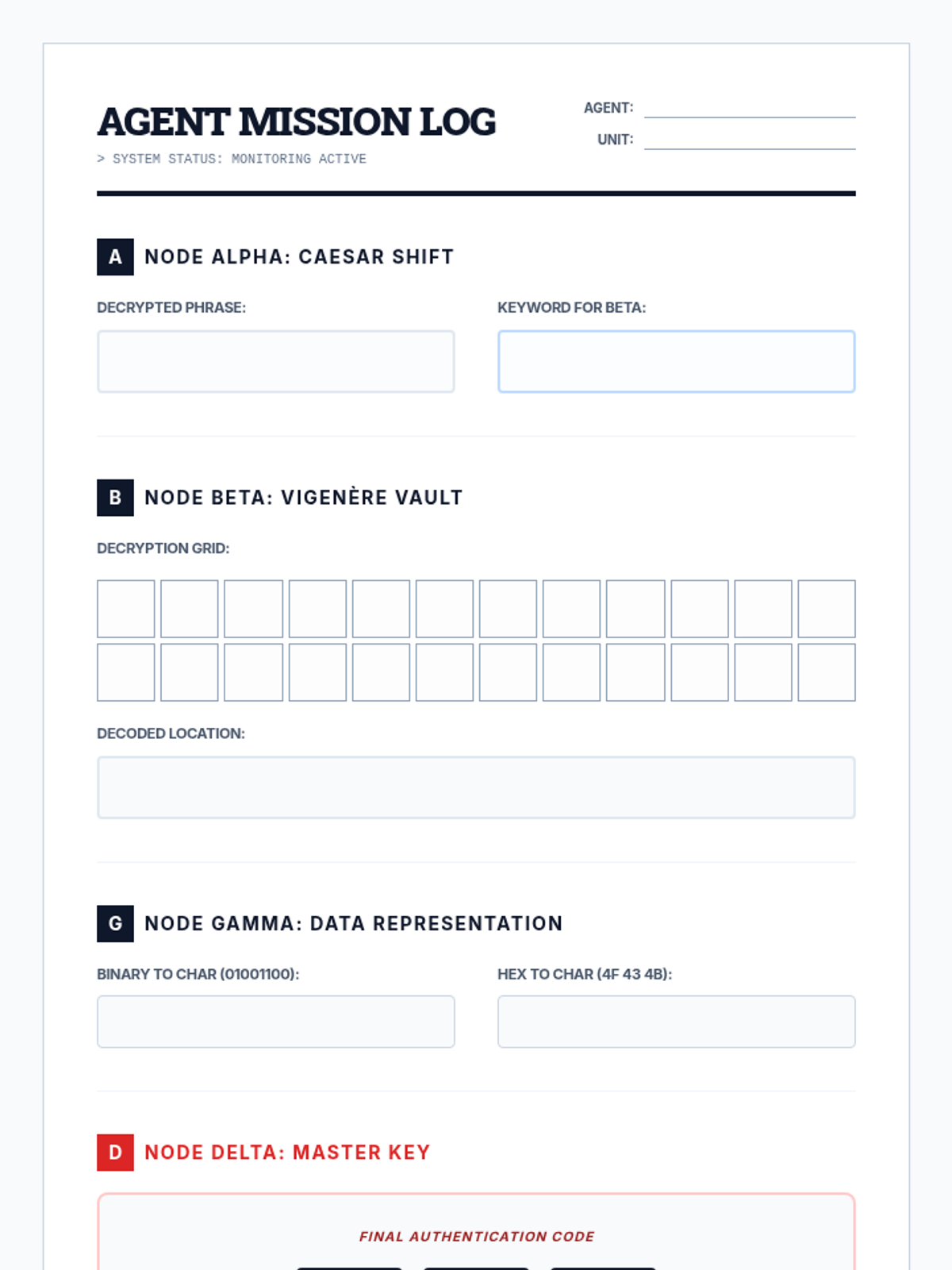
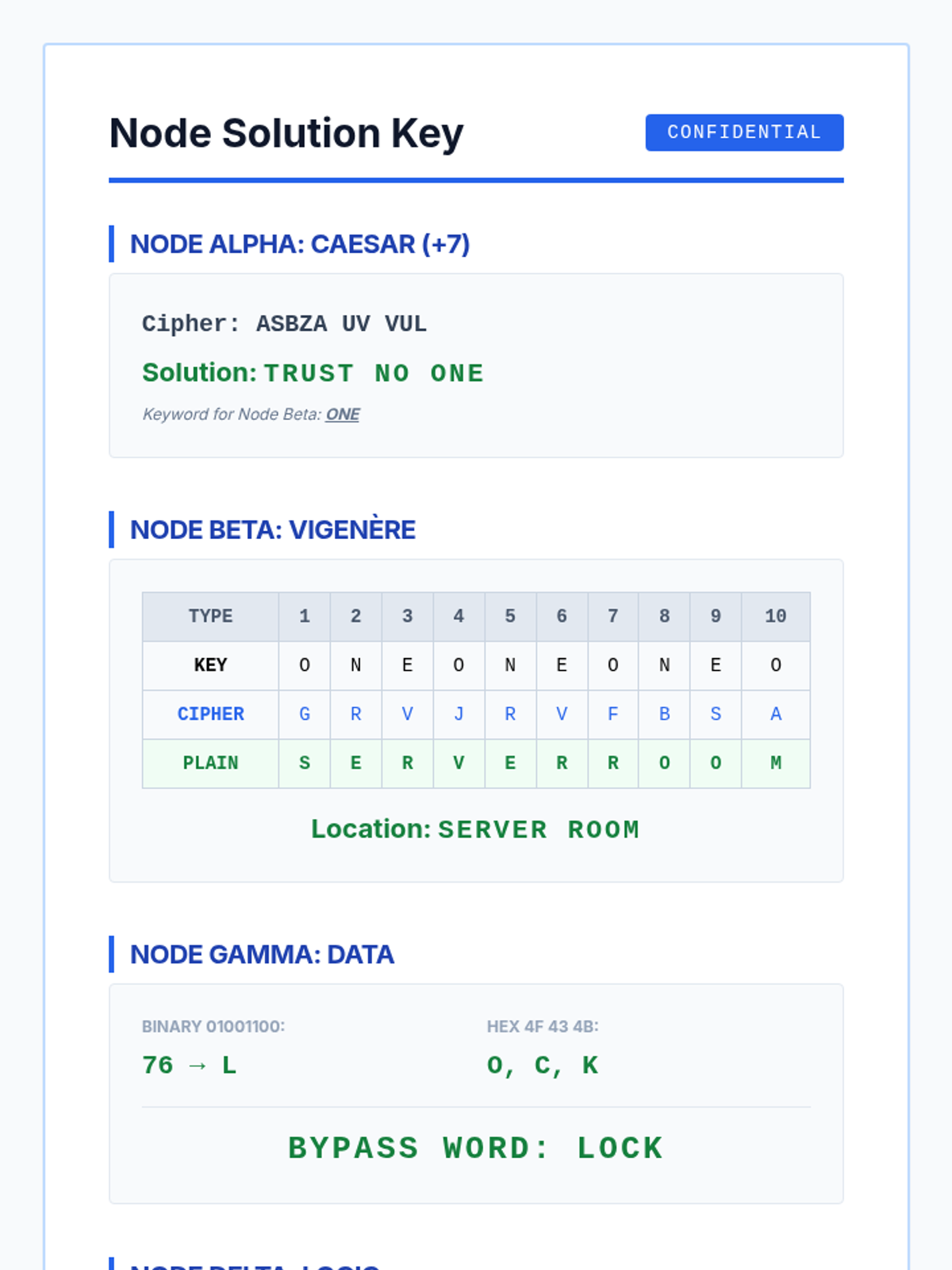
An immersive escape-room challenge for high schoolers to master encryption techniques including Caesar ciphers, Vigenere ciphers, and data representation. Students work in teams to decode clues and 'secure the system' before time runs out.