A set of flashcards focused on balancing equations with addition and subtraction within 20, designed to build algebraic thinking and mental math fluency.

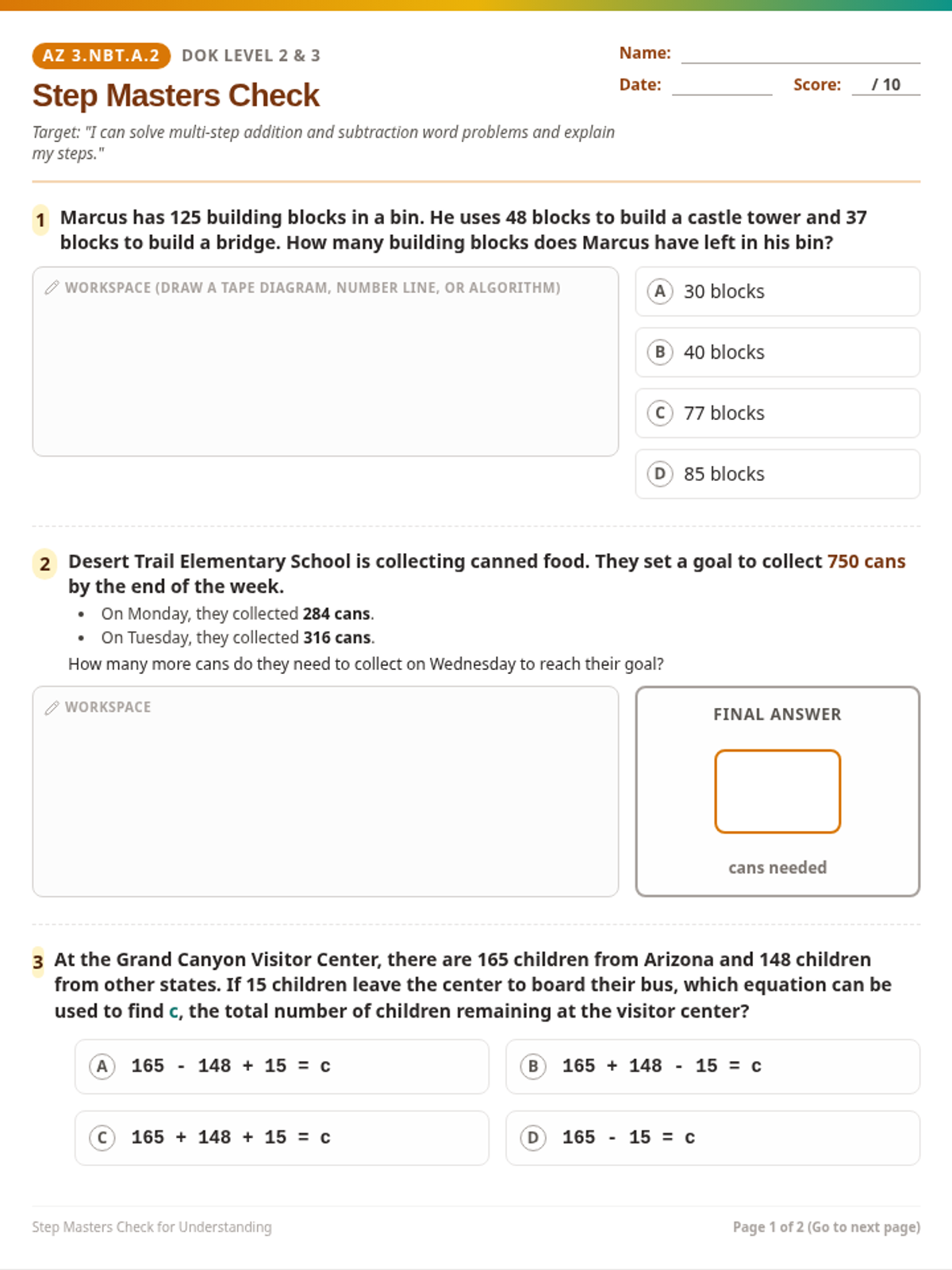
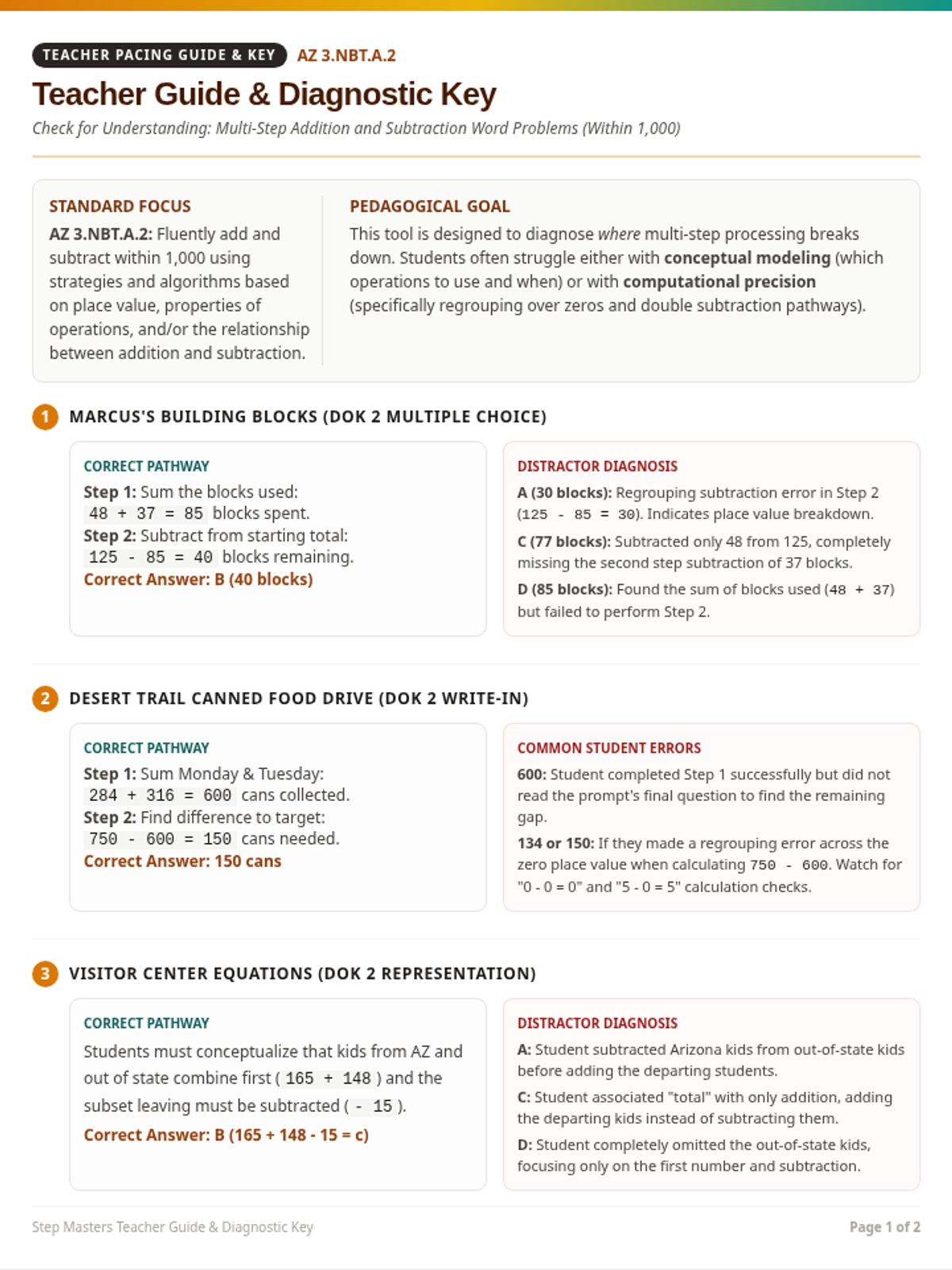
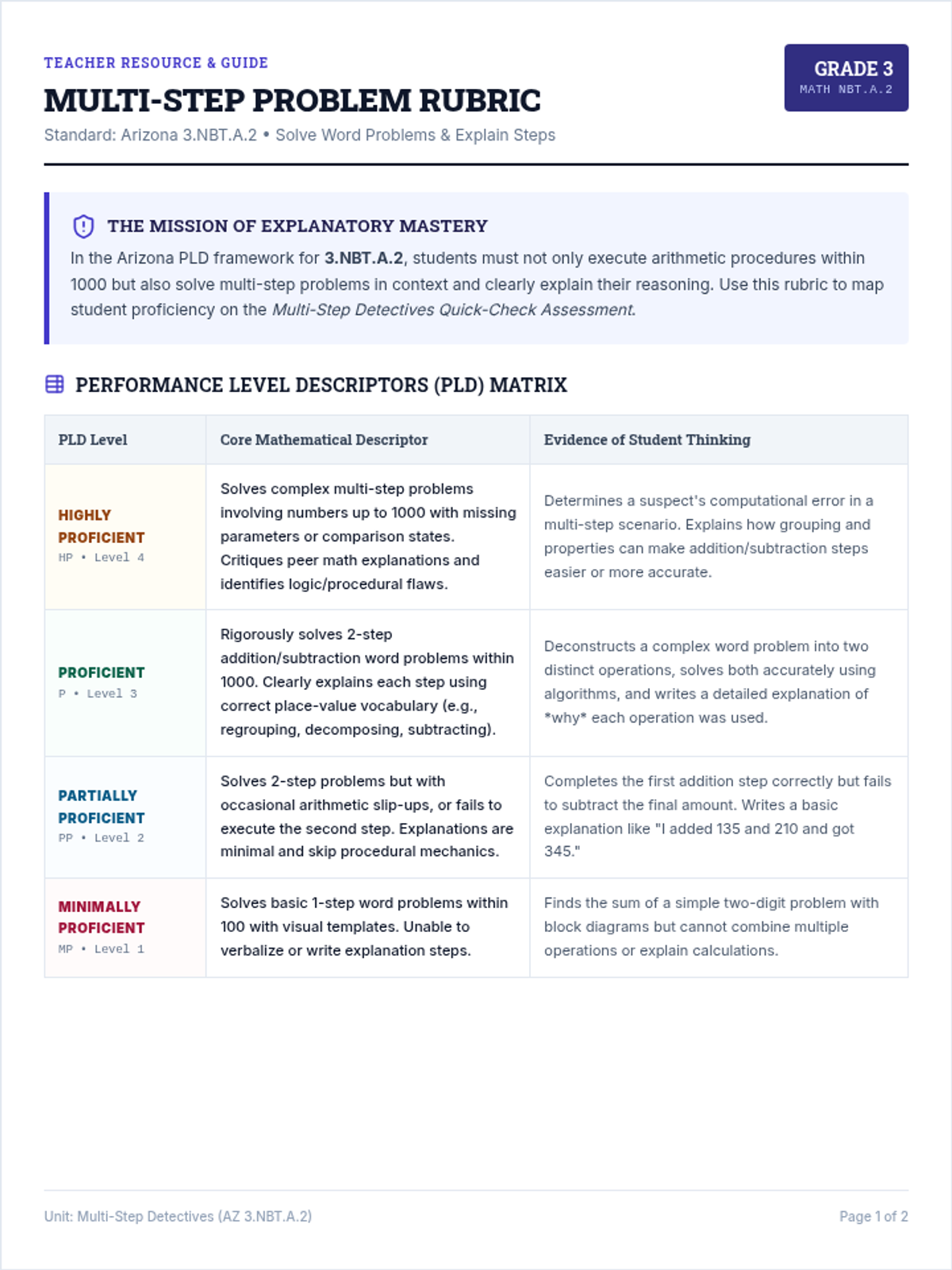
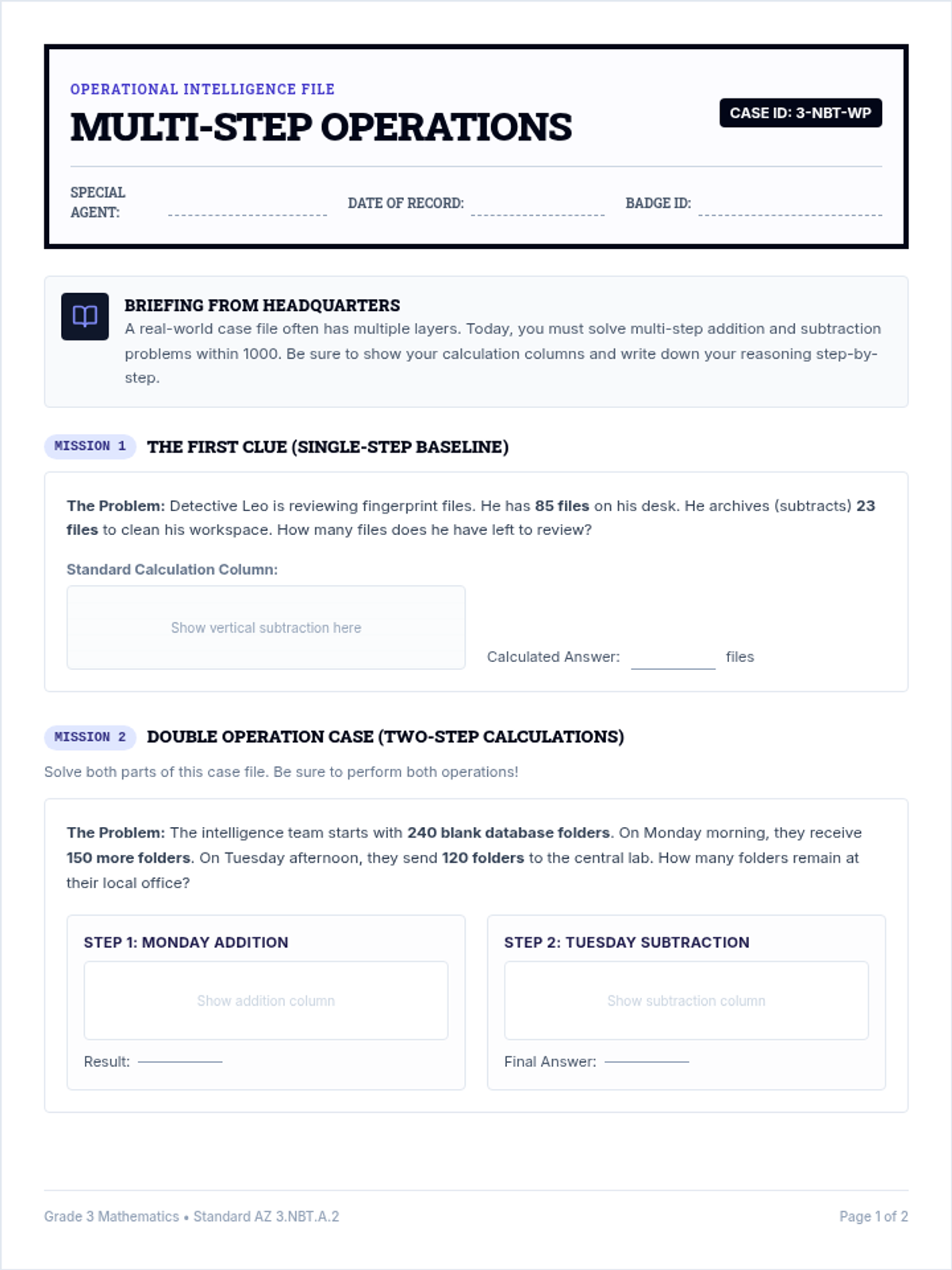
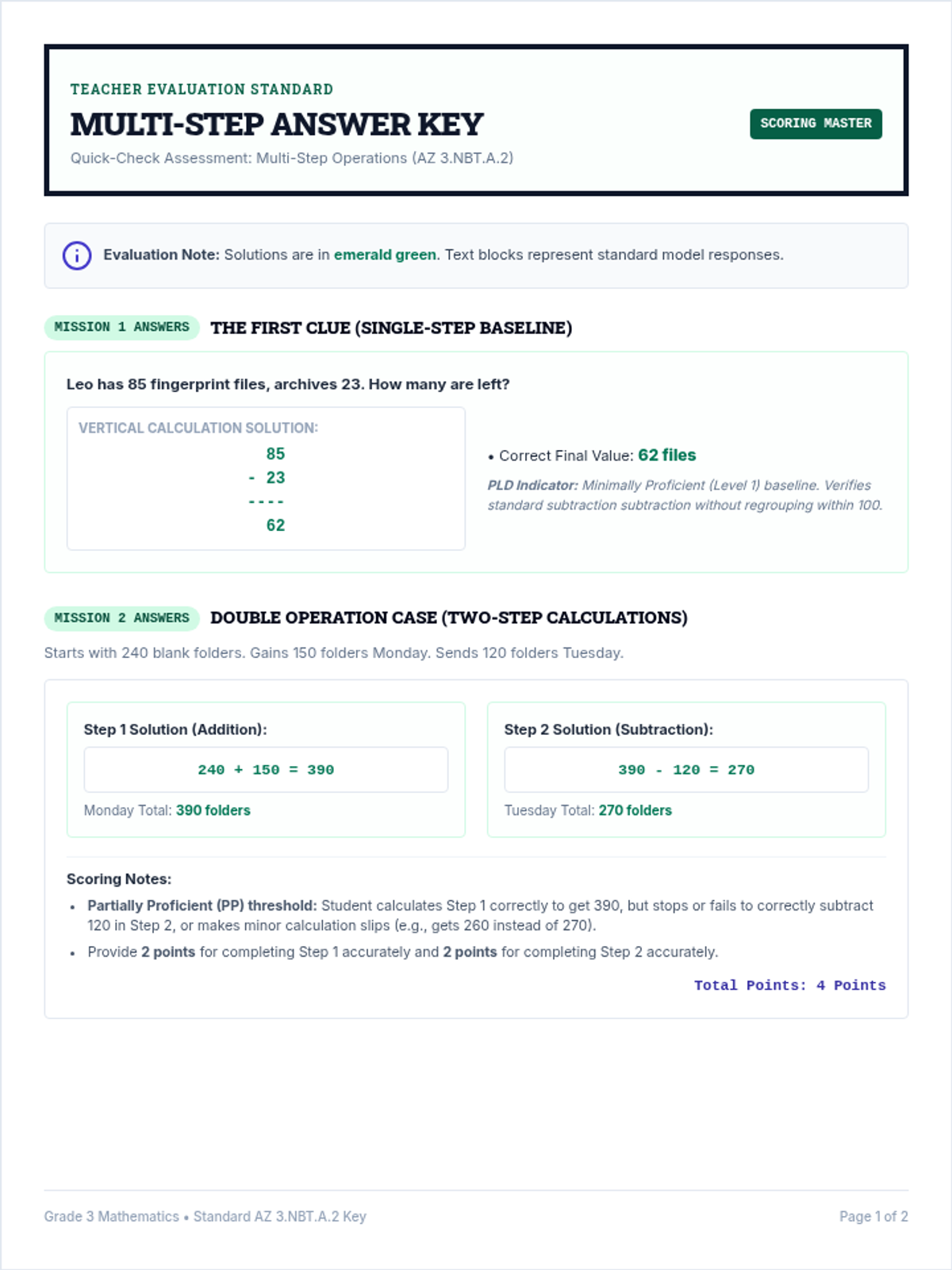
A comprehensive set of four math centers to be rotated over two days, covering multiplication/division, fractions, area, and multi-step word problems.
Day 3 of the desert-themed spiral review, featuring informational text about the Grand Canyon and math problems covering multiplication properties, time, equivalent fractions, and geometry attributes.
Day 2 of the desert-themed spiral review, featuring a desert-themed fable and math problems covering division, rounding, number lines, perimeter, and shape partitioning.
Day 1 of the desert-themed spiral review, featuring informational reading about the Saguaro cactus and math problems covering multiplication, addition, fractions, area, and geometry.
A foundational lesson on telling time to the nearest hour using analog and digital clocks. Students will practice identifying the hour hand's position and translating it to digital format.
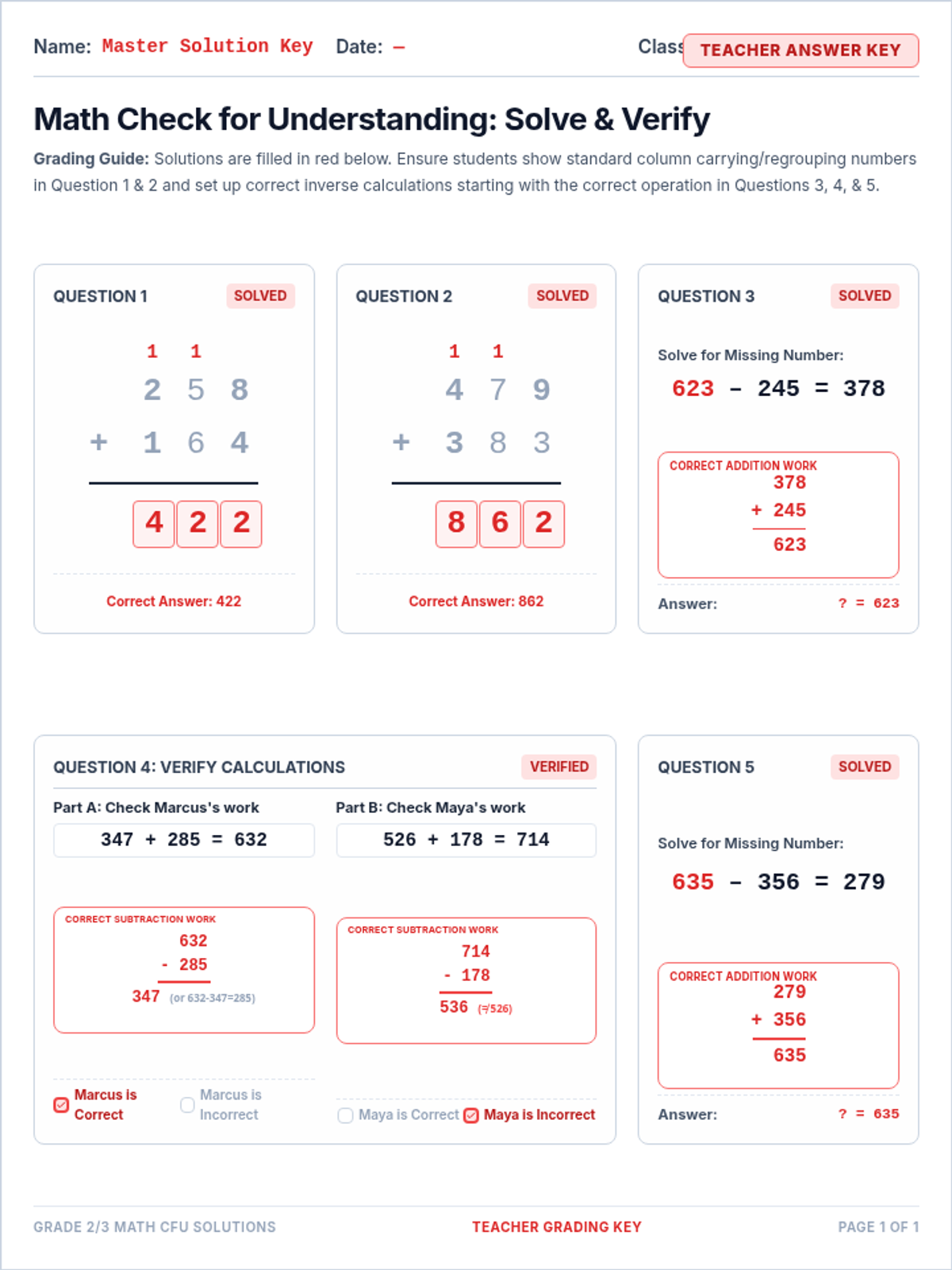
A focused practice set for mastering subtraction equations within 20, specifically targeting missing minuends (whole) and subtrahends (part).
A set of subtraction flashcards focusing on part-part-whole relationships within 20, featuring missing minuends, subtrahends, and differences.
A set of flashcards focused on finding the missing addend in equations with sums up to 20. Designed for hands-on practice and self-correction.
A focused practice session for mastering subtraction facts within 20 using equation-only flashcards.
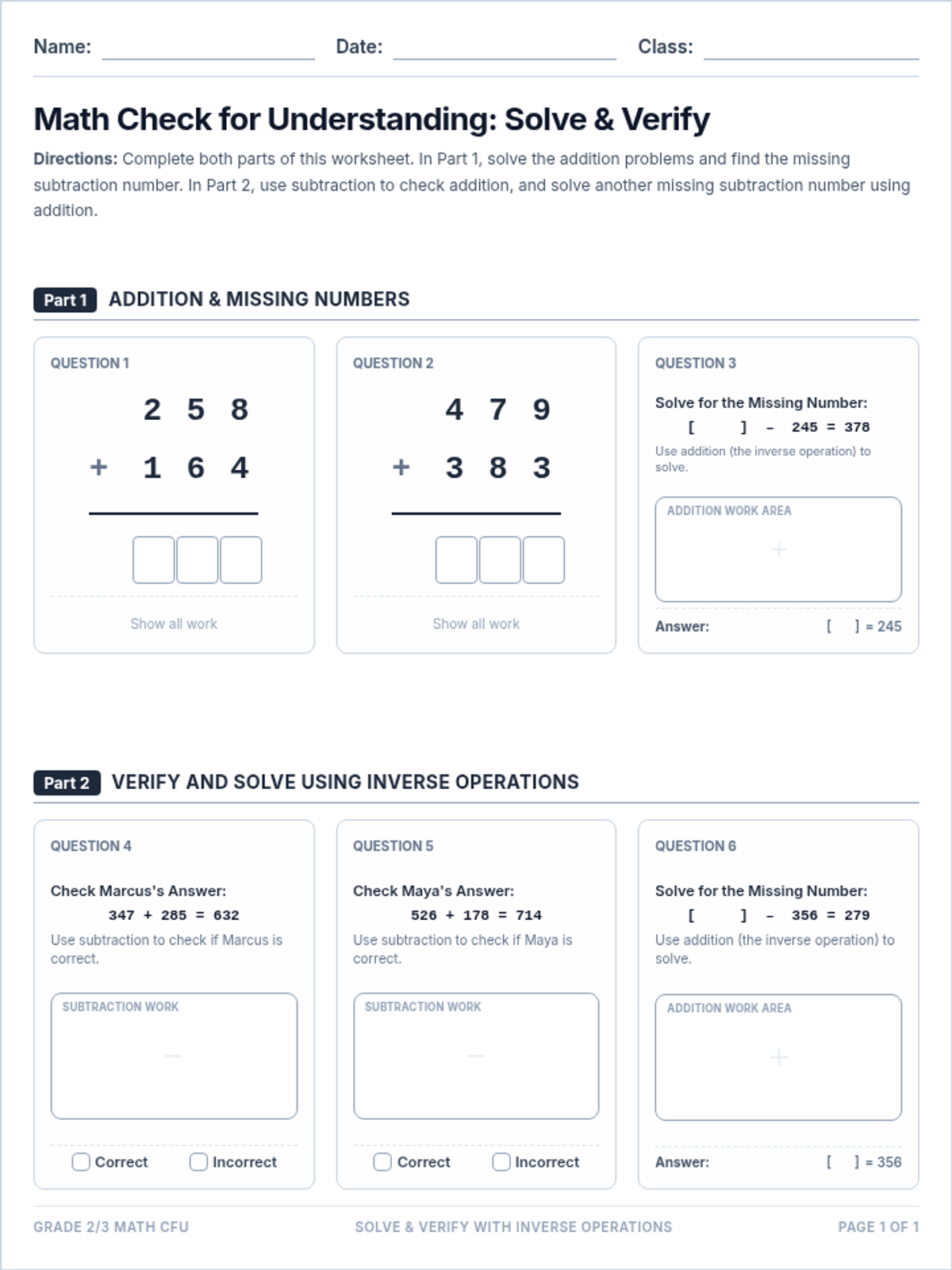
A collection of resources focused on mastering two-digit addition without regrouping through quick-fire practice and visual aids.
Students apply their knowledge of place value and comparison to solve real-world problems involving money and shopping within 1,000.
Students use place value strategies to compare and order three-digit numbers and money amounts, identifying the greatest and least values in a set.
Students locate and compare three-digit numbers on a number line, using the visual representation to determine which numbers are greater or less.
Students investigate different ways to represent the same value using coins, bills, and base-ten blocks, focusing on equivalencies like 100 cents being equal to 1 dollar.
Students explore three-digit numbers using base-ten blocks, standard form, expanded form, and word form, and compare equivalent representations like 100 and 10 tens.
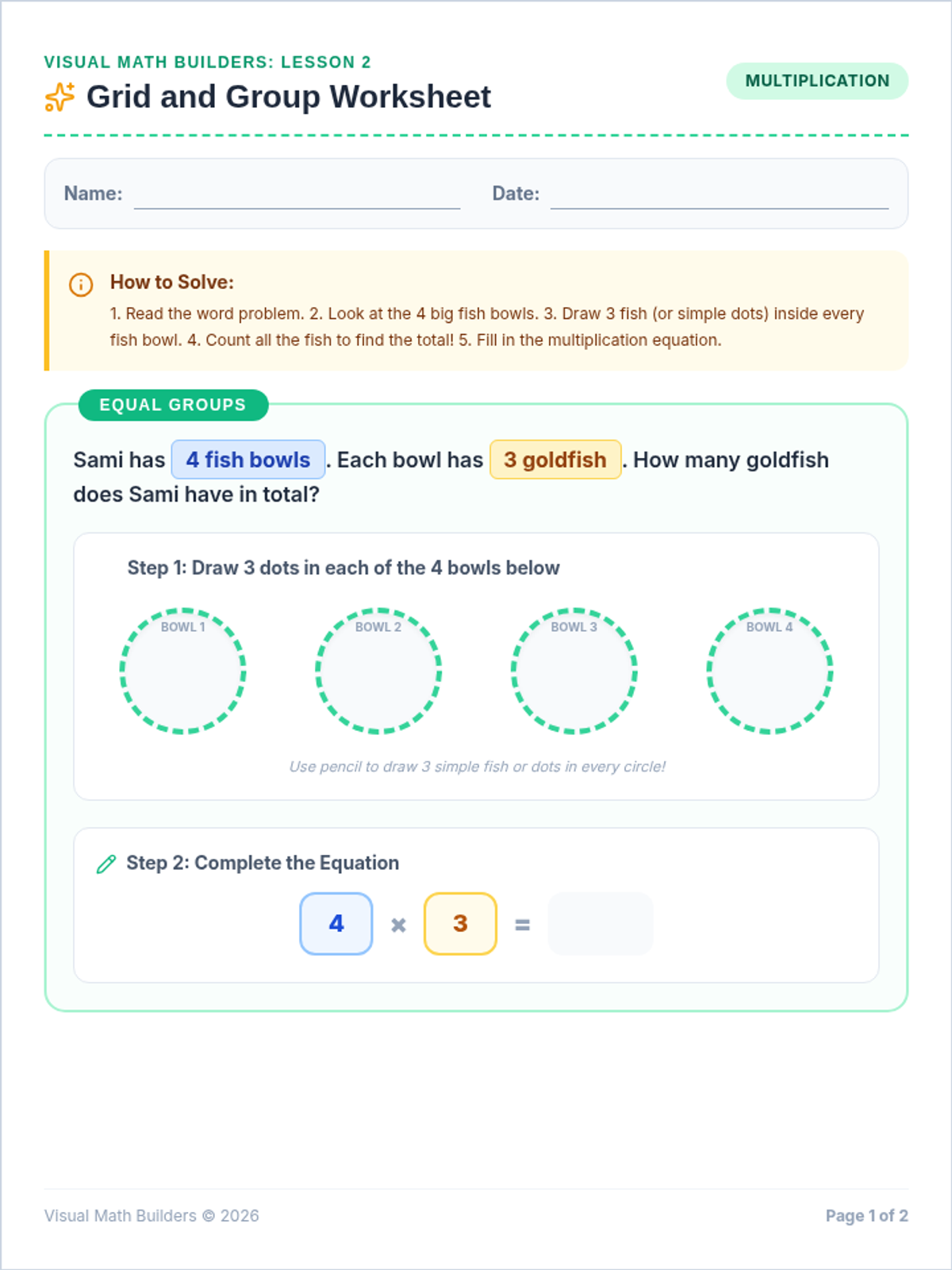
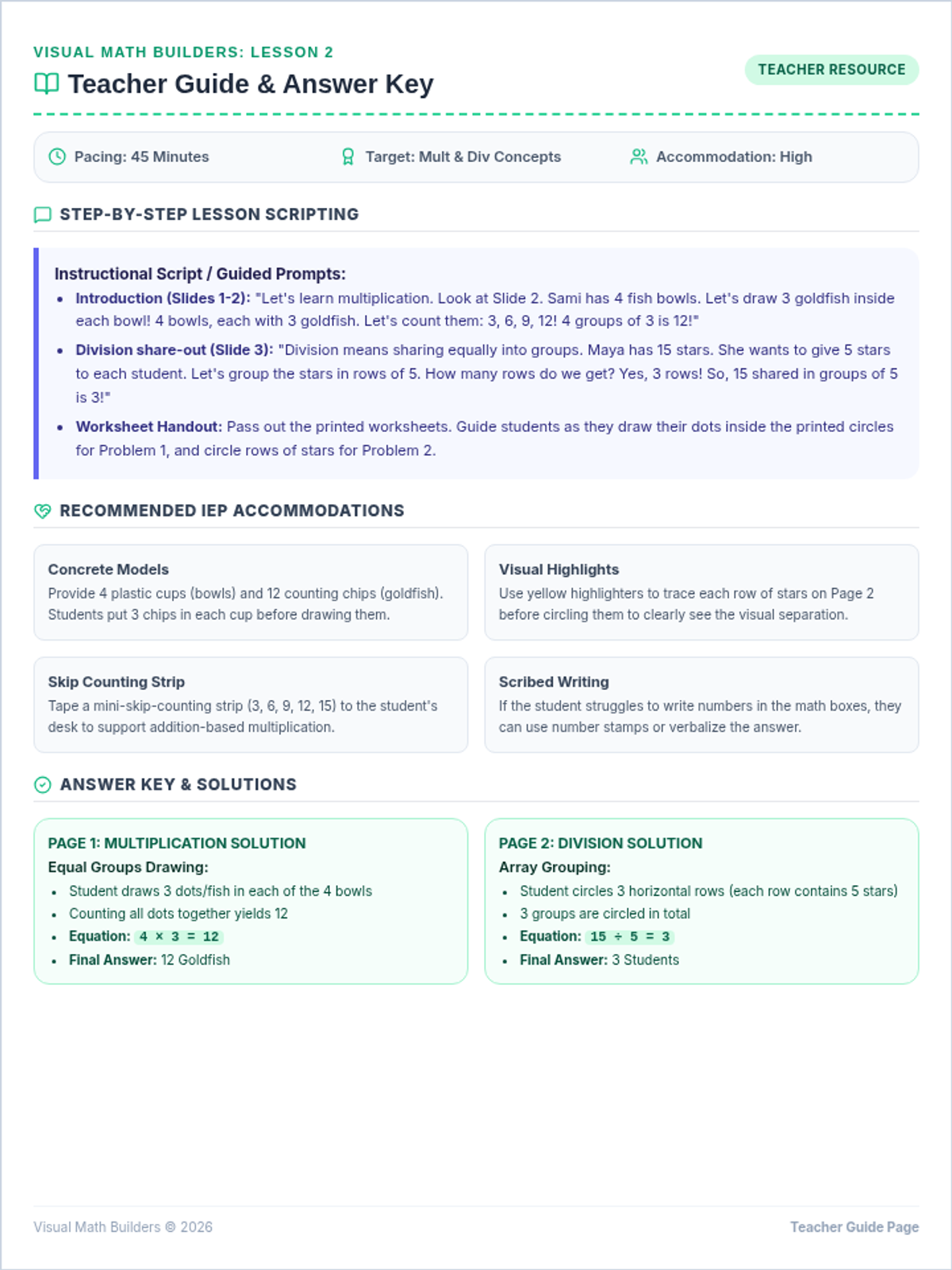
A series of lessons adapted from Grade 4 Multiplicative Comparison to Grade 2 Equal Groups, focusing on building foundations for multiplication through repeated addition, arrays, and skip-counting.