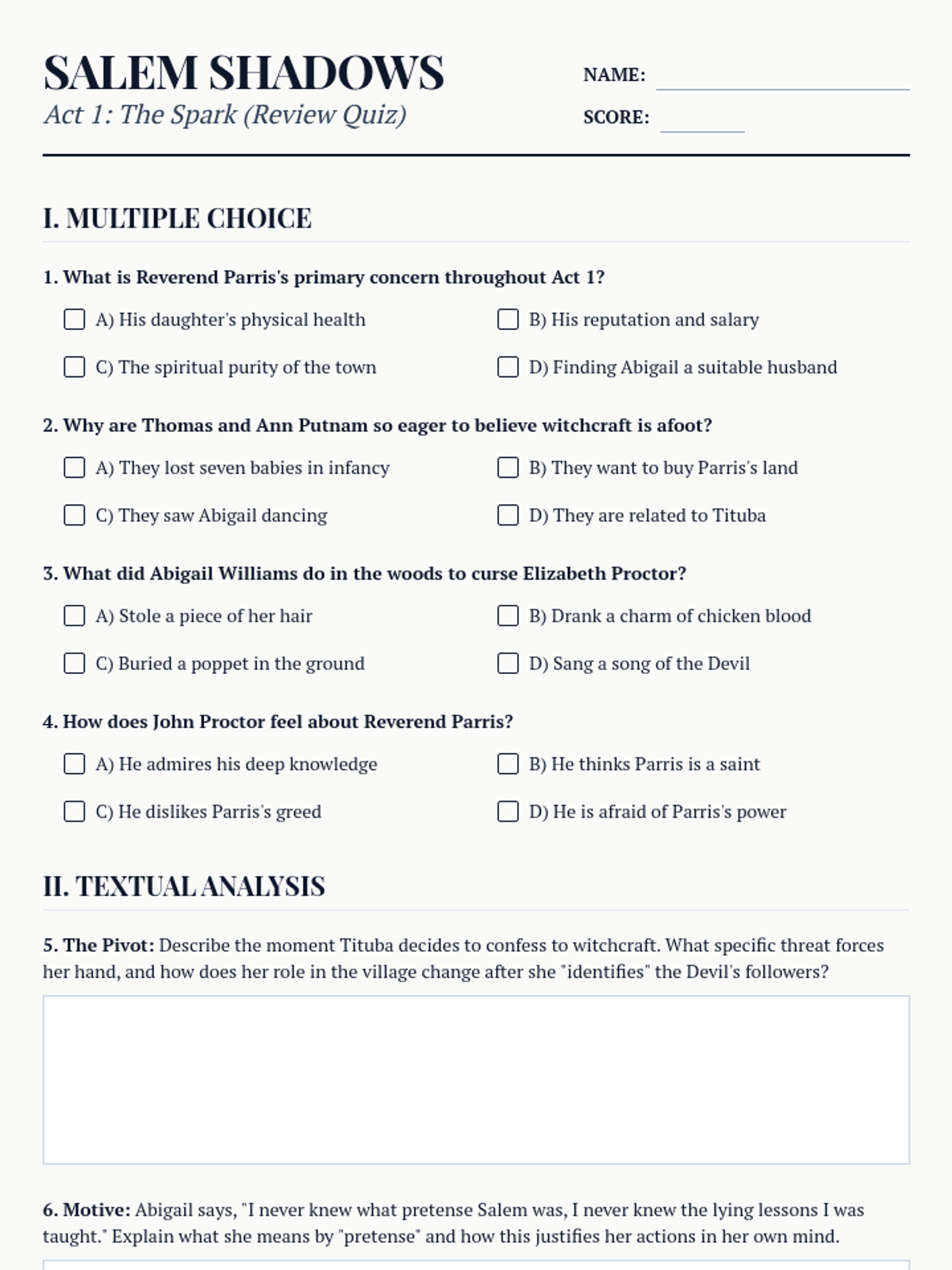
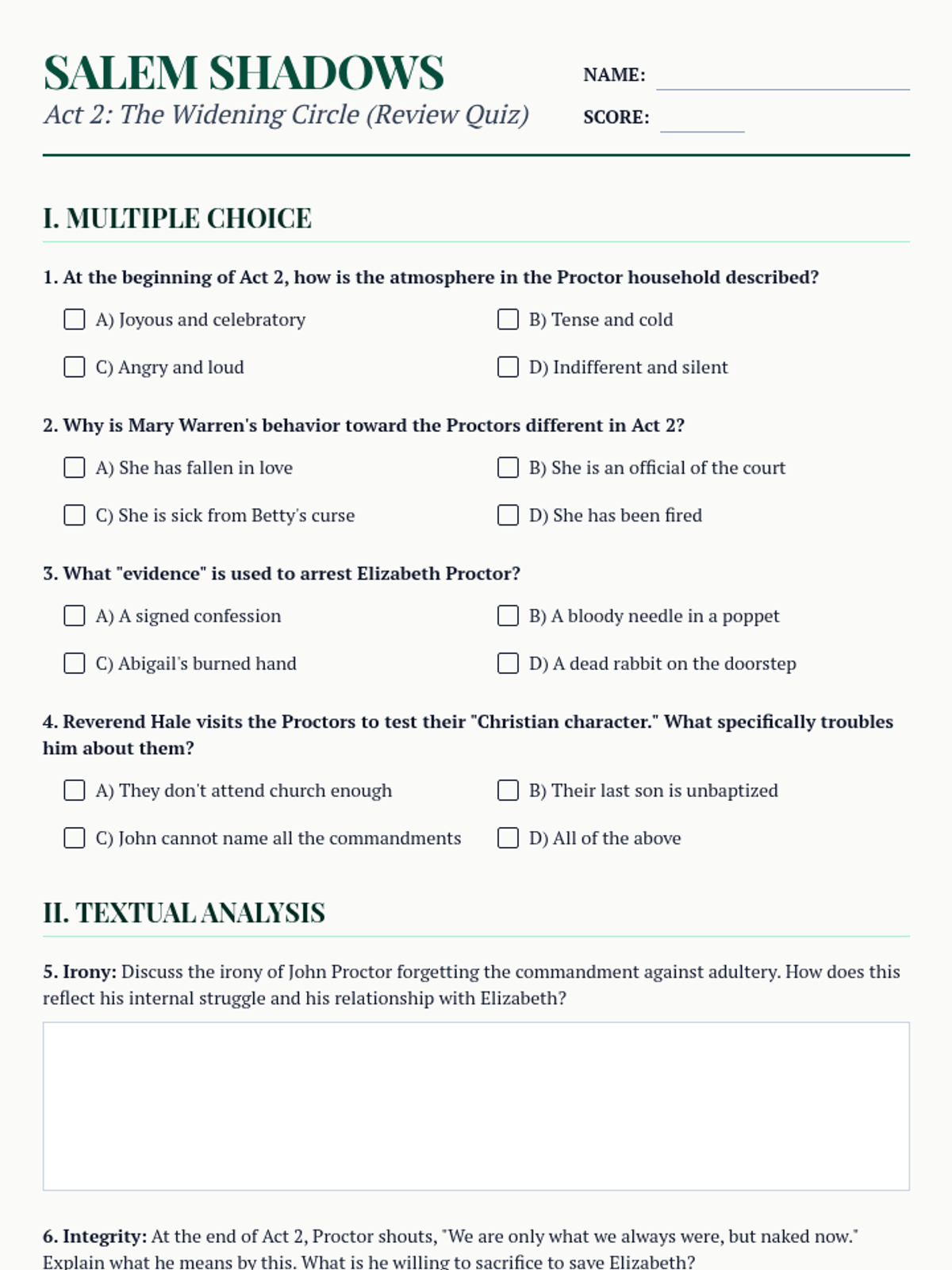
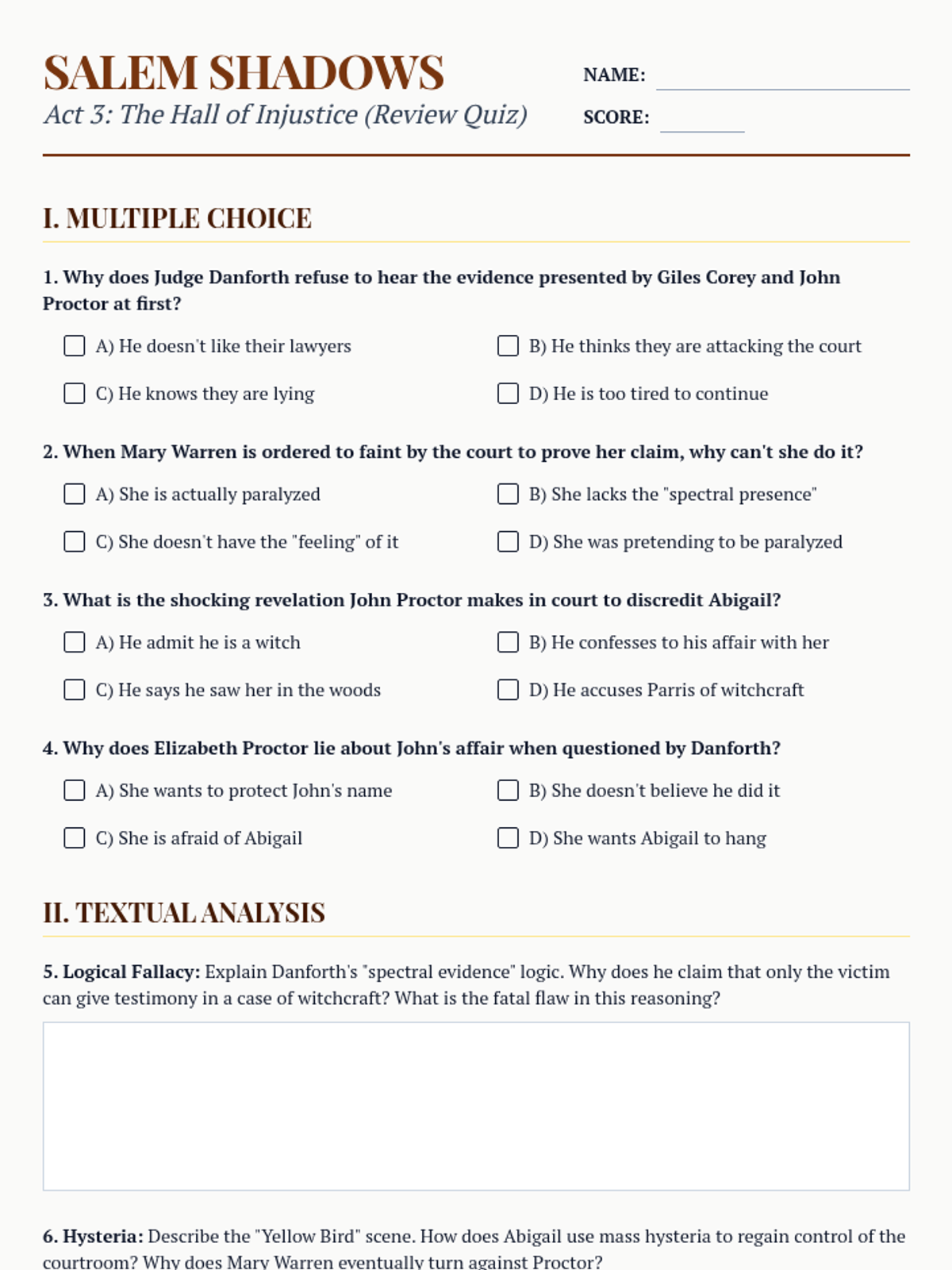
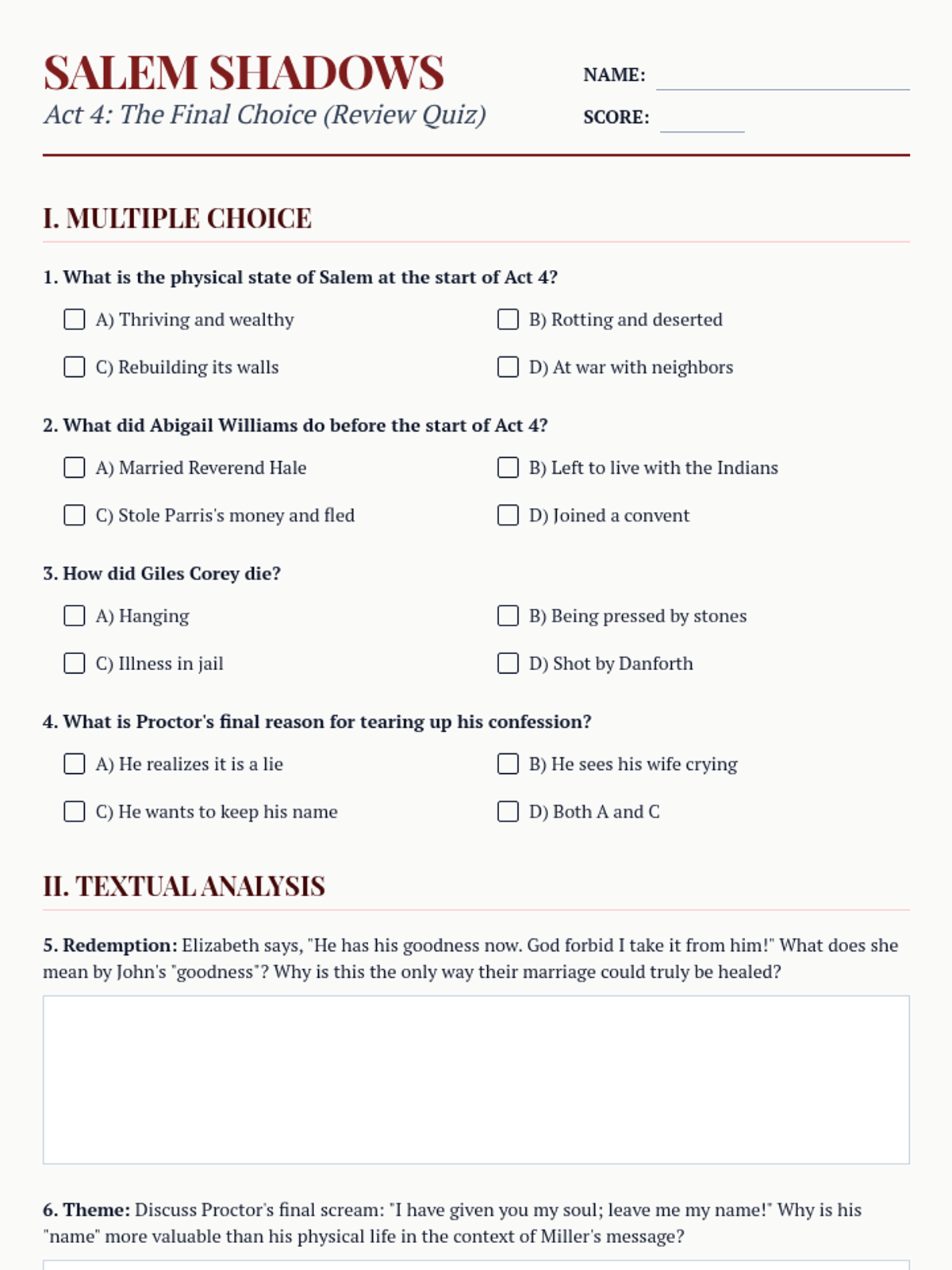
A deep dive into the complex web of relationships and motivations in Arthur Miller's 'The Crucible'. Students will trace connections between characters to understand how personal grudges fueled the Salem Witch Trials.
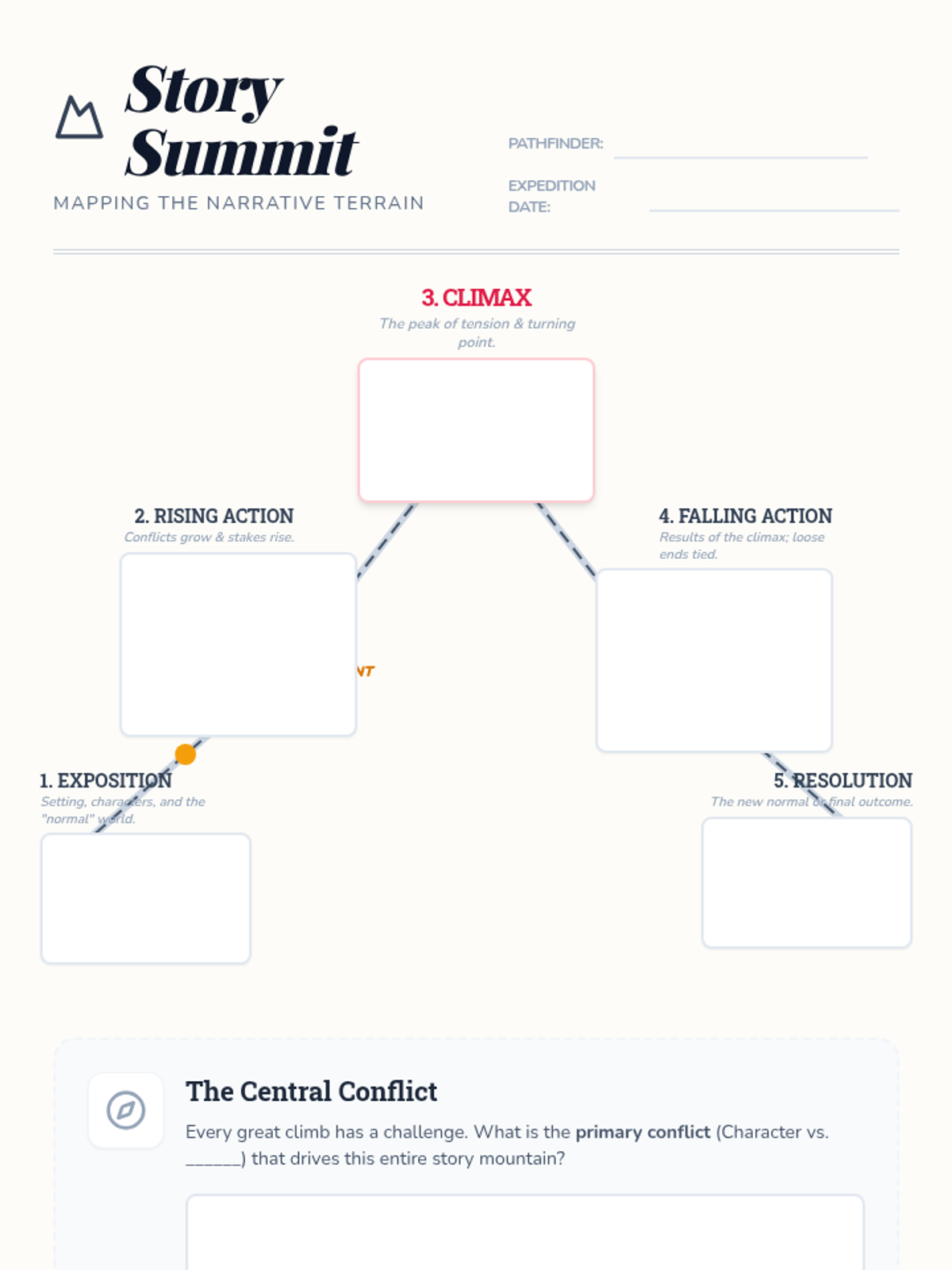
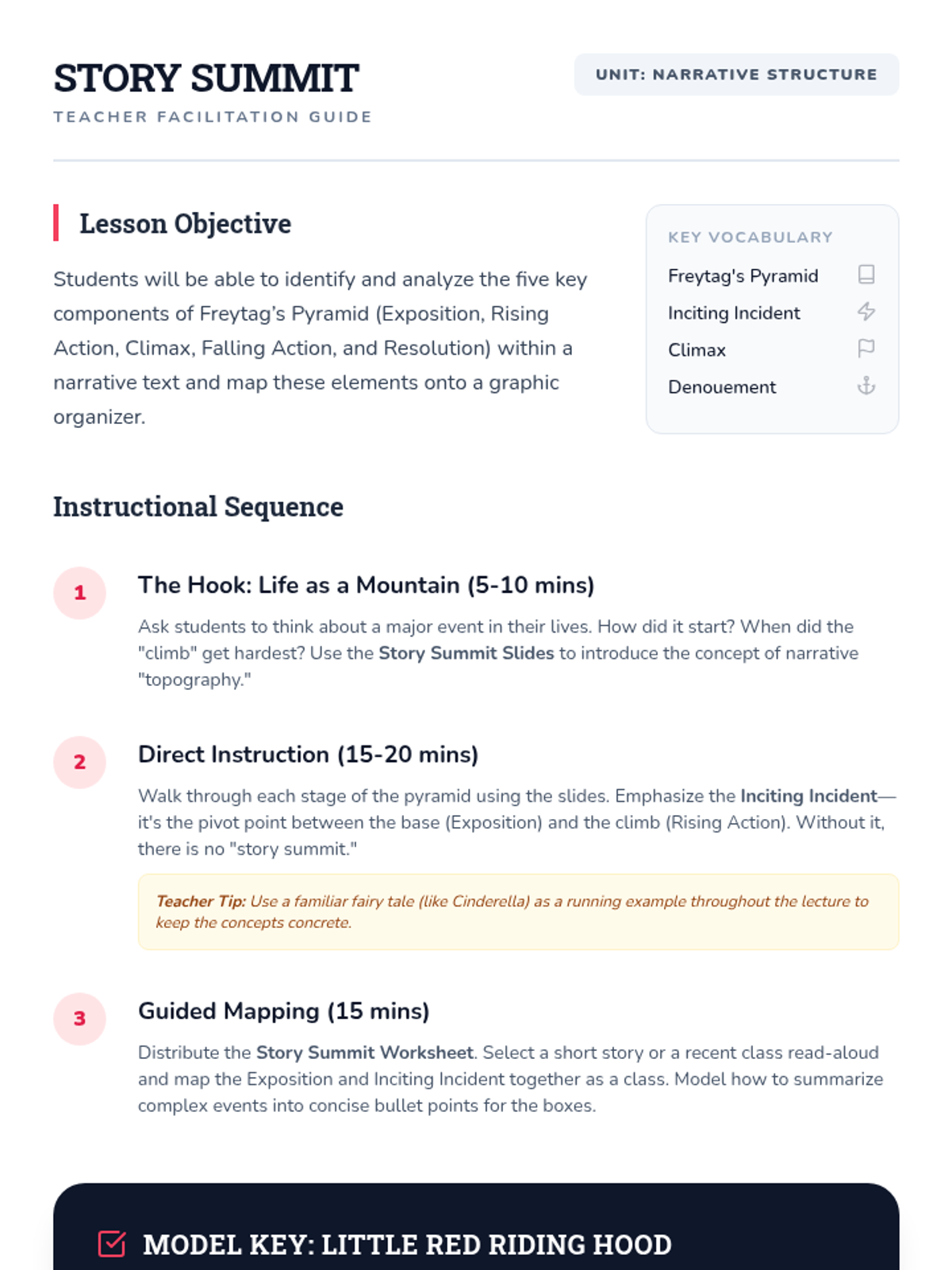
A lesson focused on identifying and mapping the key elements of a story's plot using Freytag's Pyramid structure.
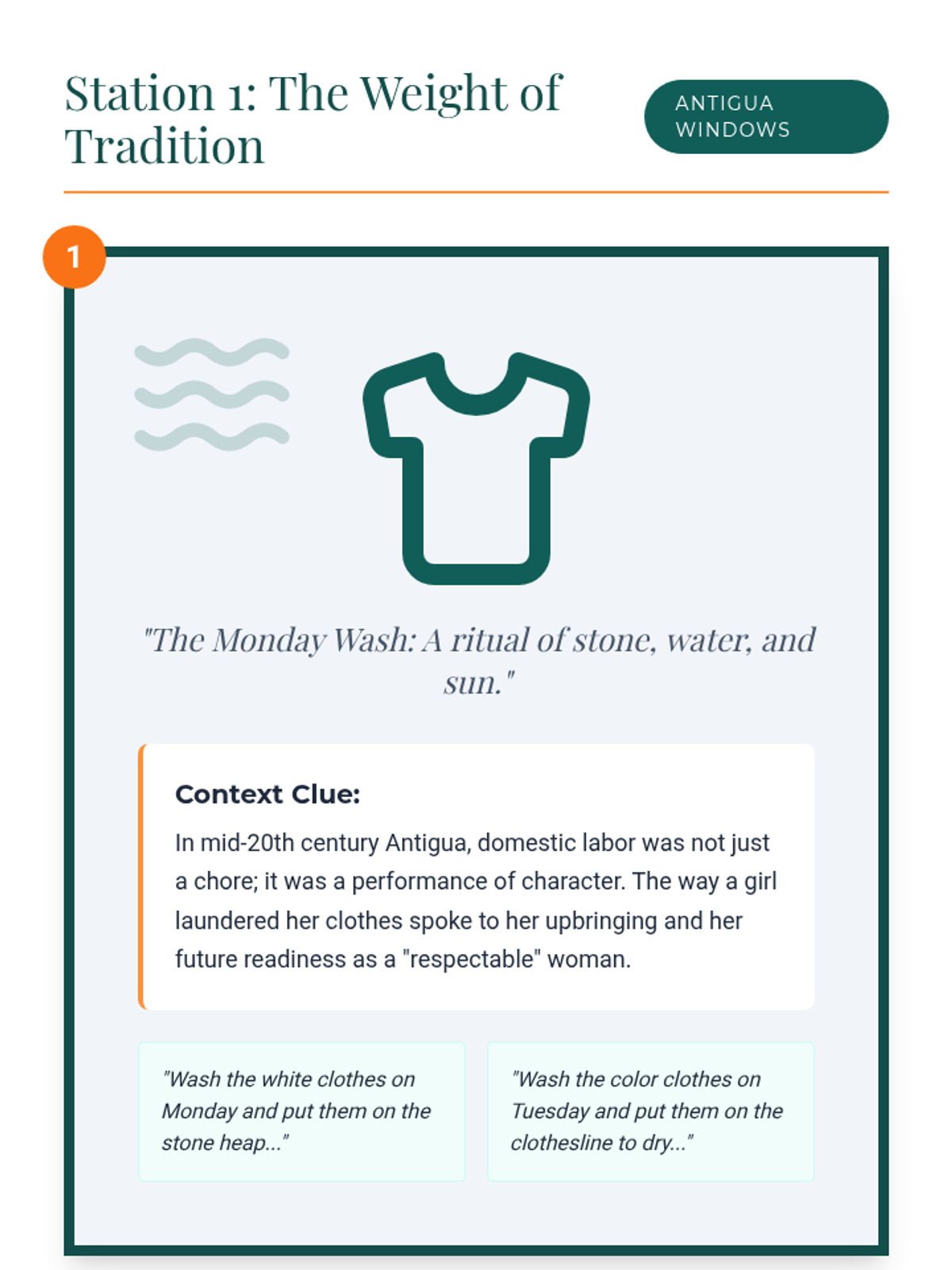
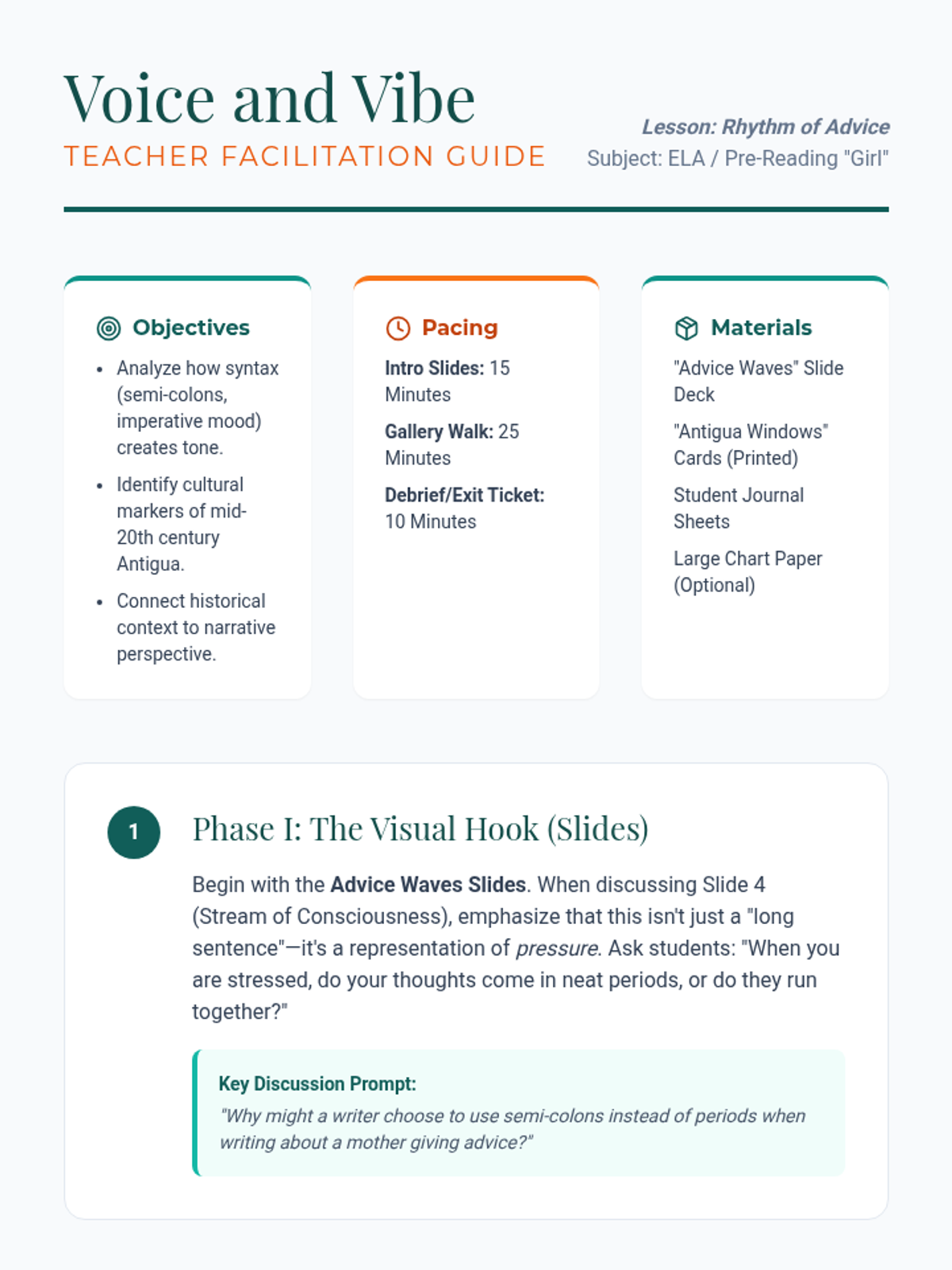
A pre-reading exploration of Jamaica Kincaid's 'Girl' focusing on the rhythmic syntax of stream of consciousness and the cultural landscape of mid-20th century Antigua. Students analyze visual cues of Antiguan life and learn about the unique structural choices that define the story's voice.
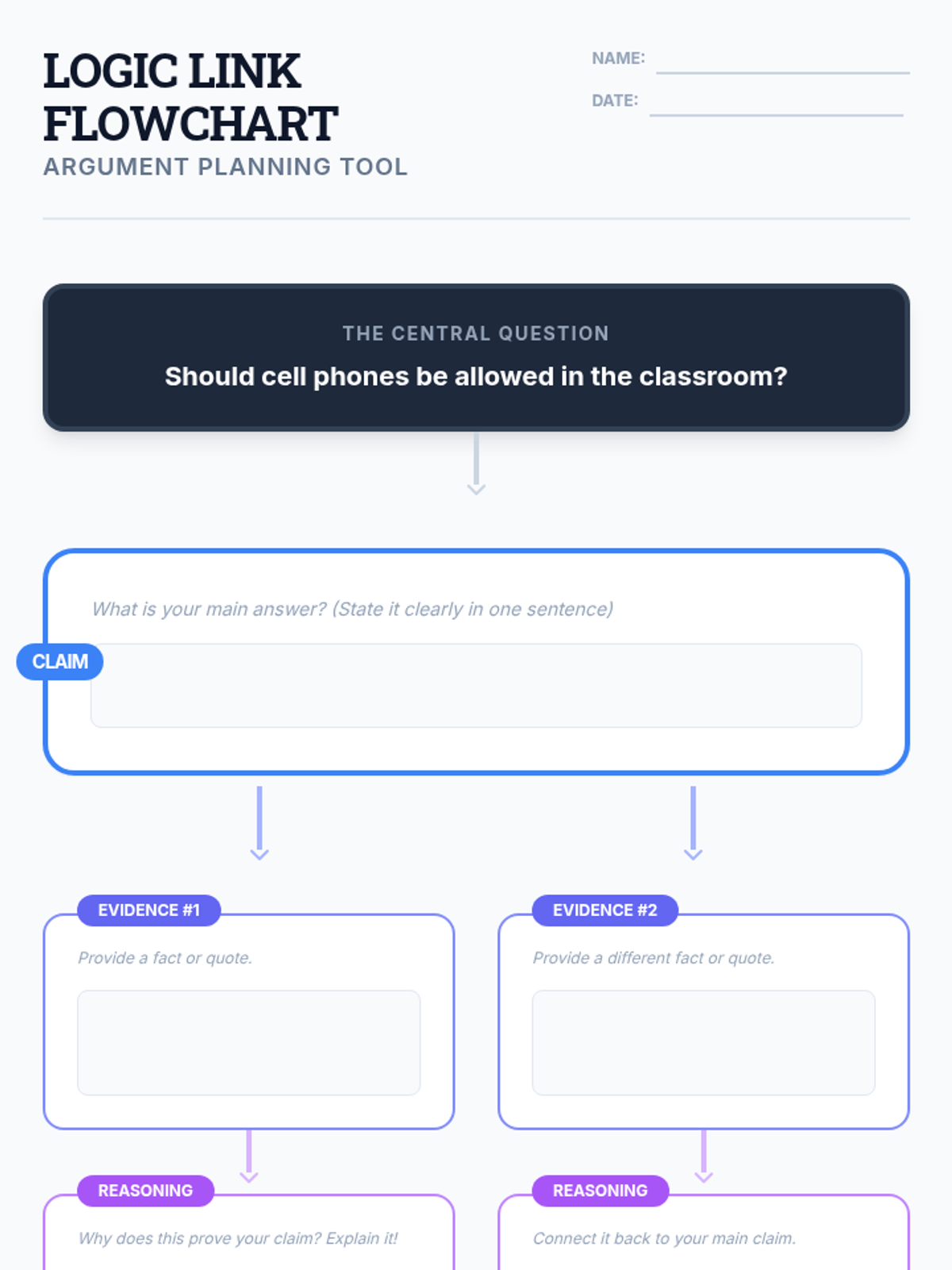
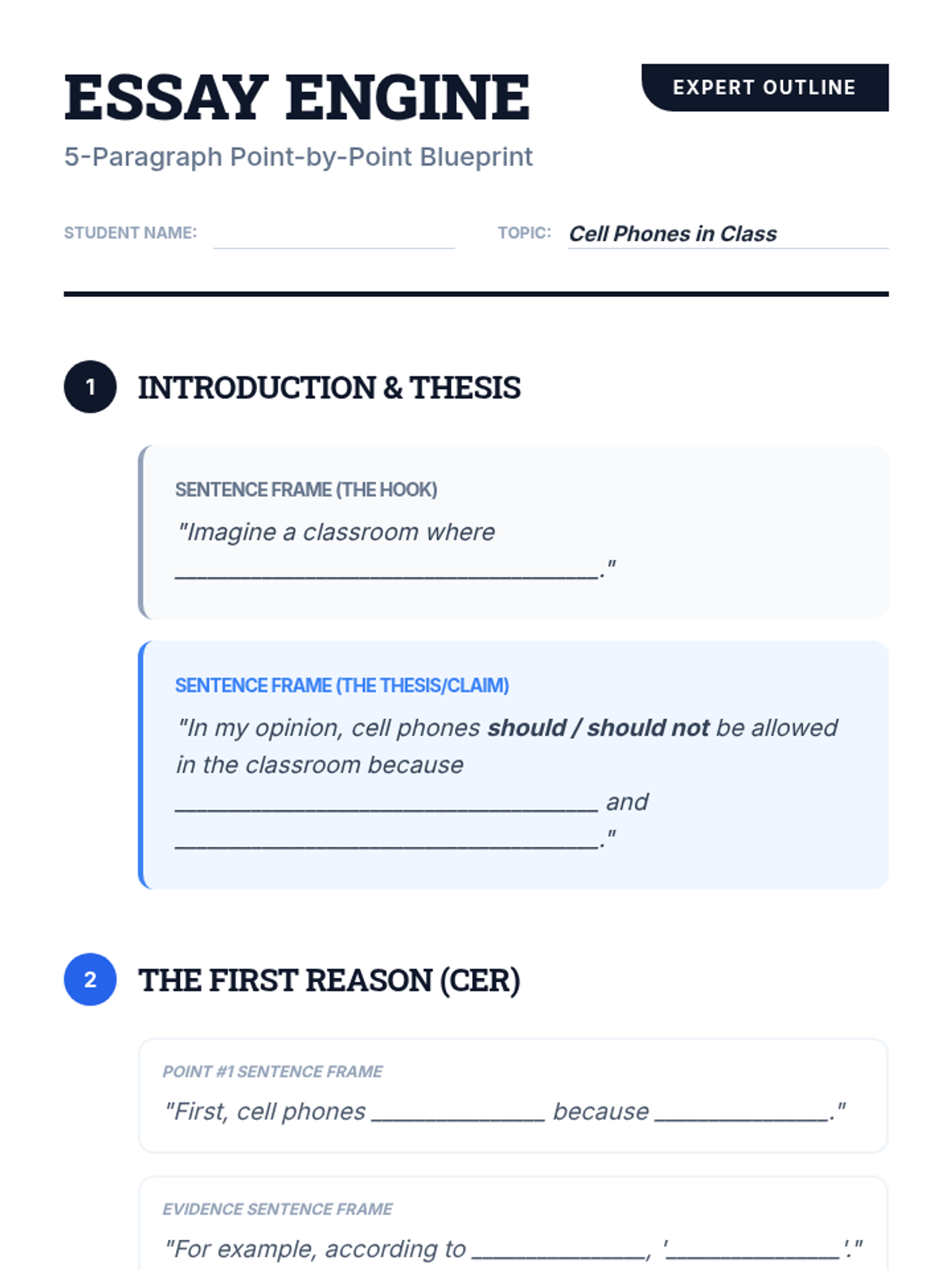
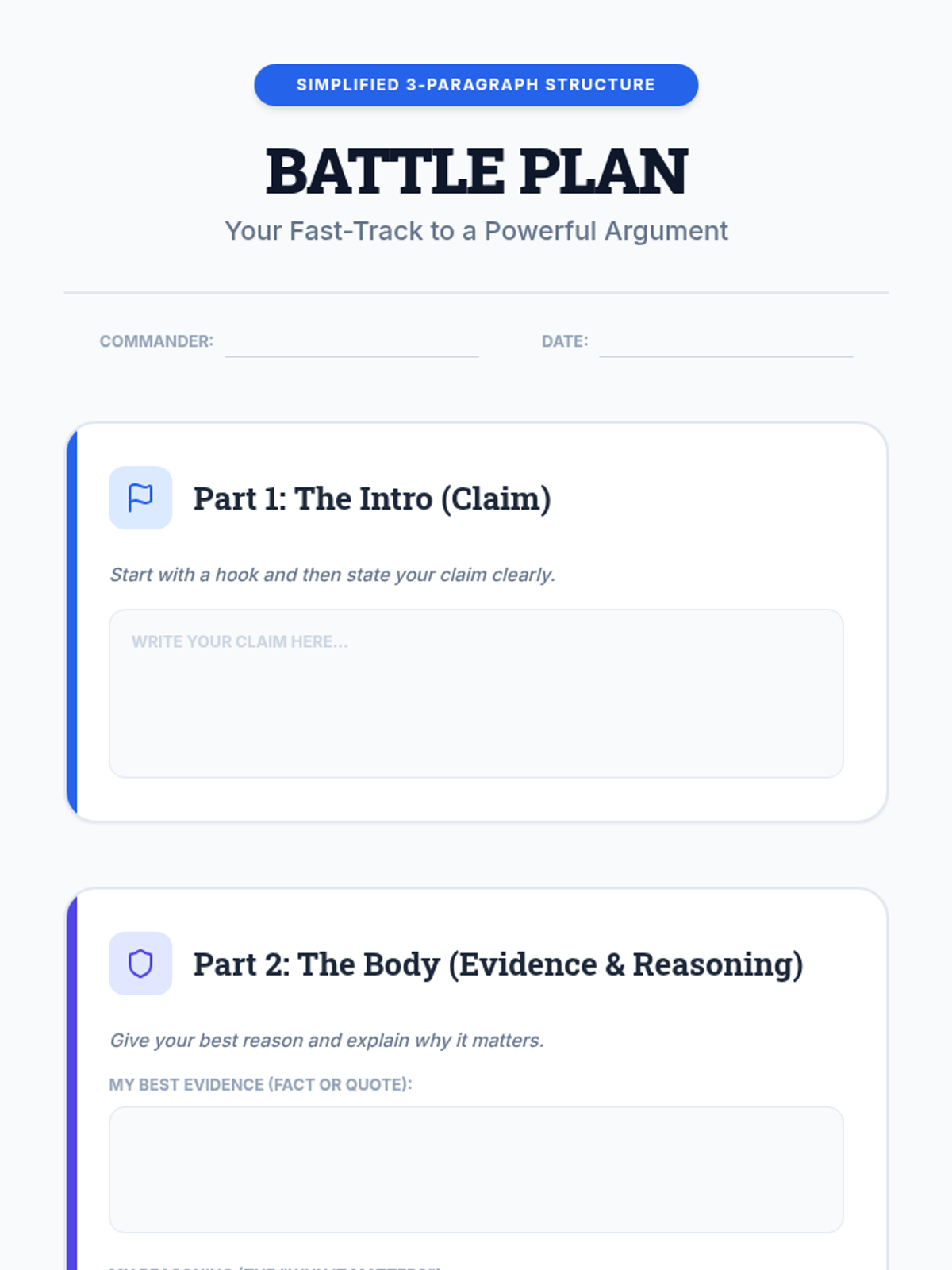
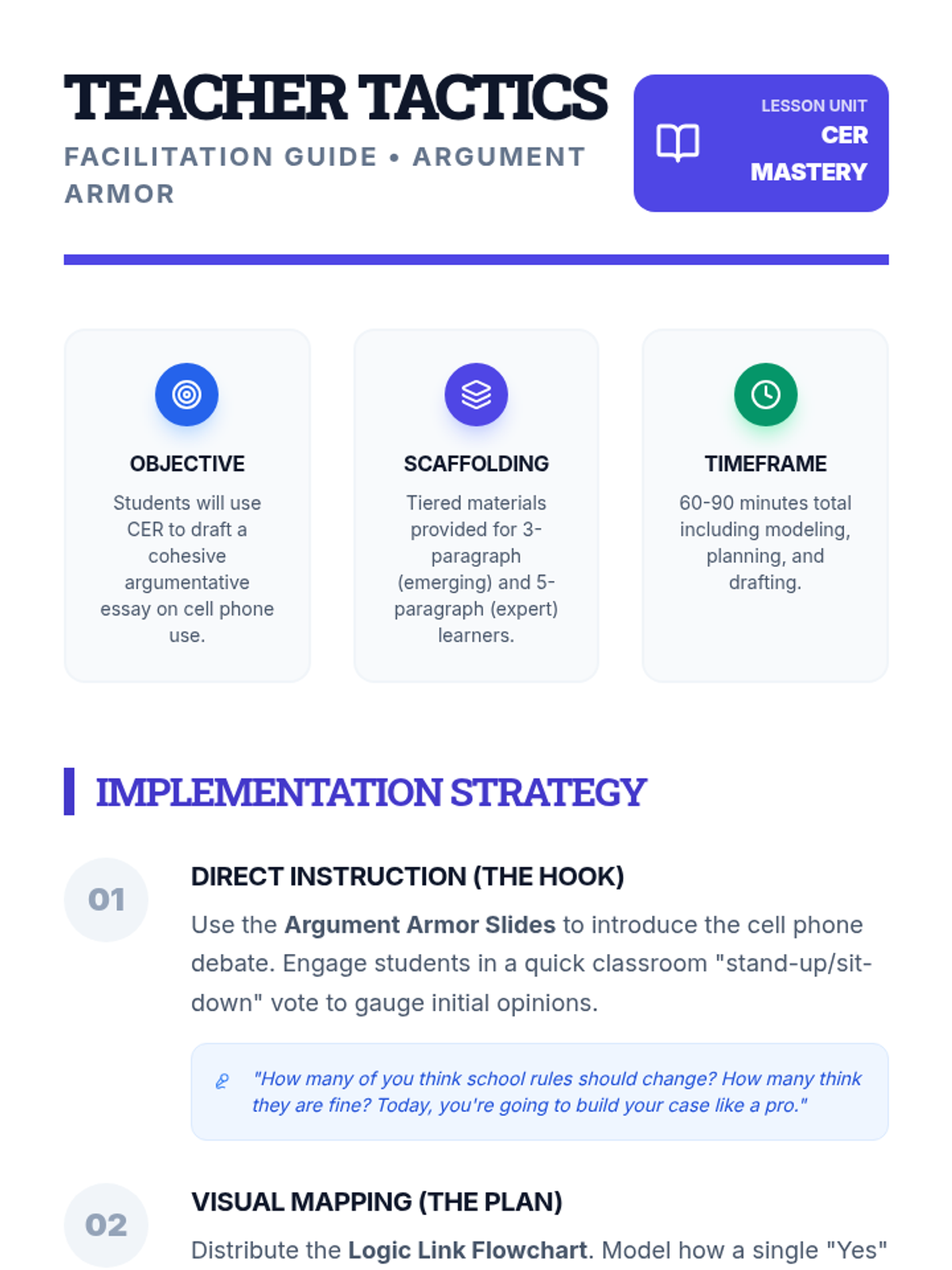
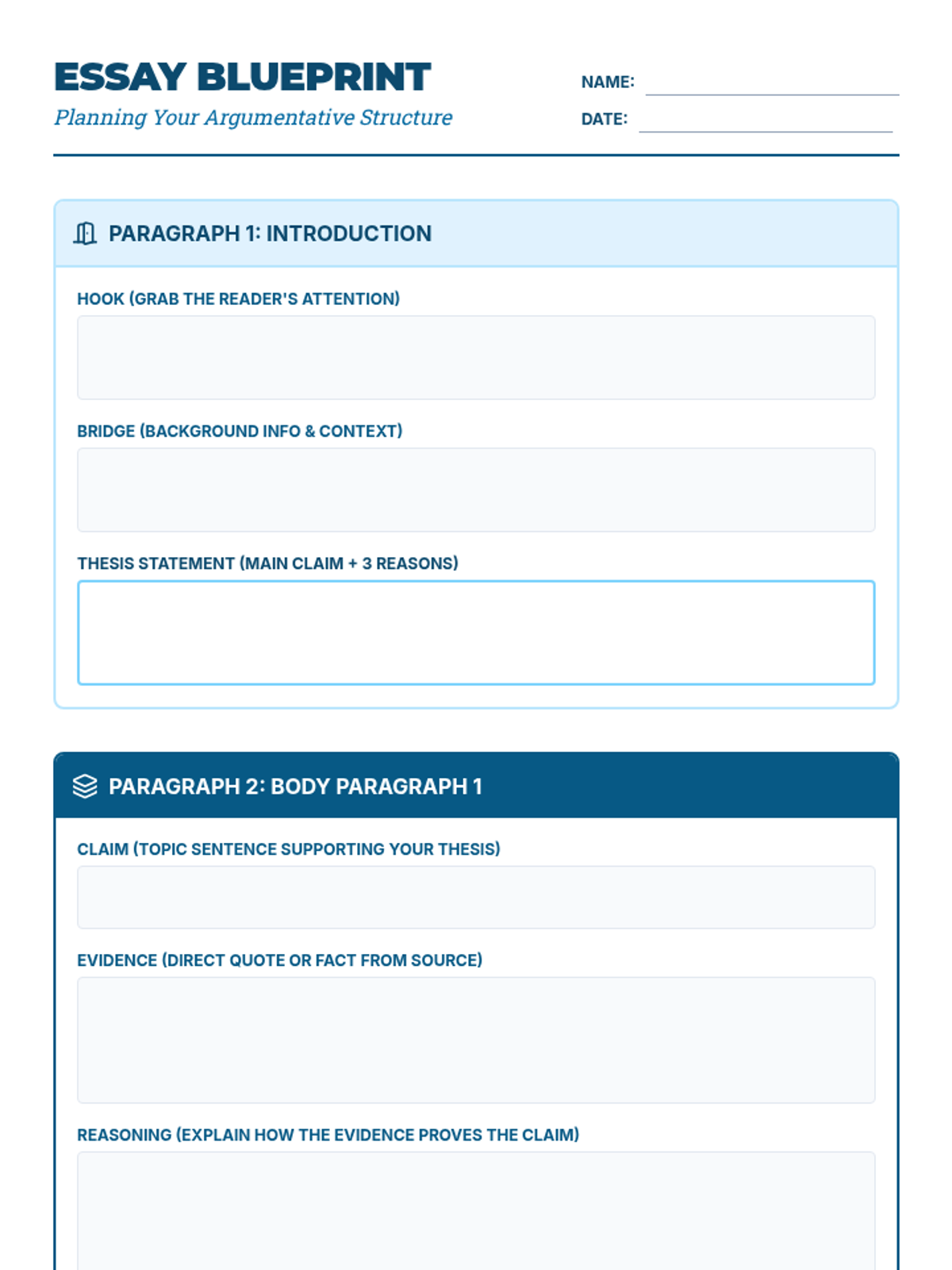
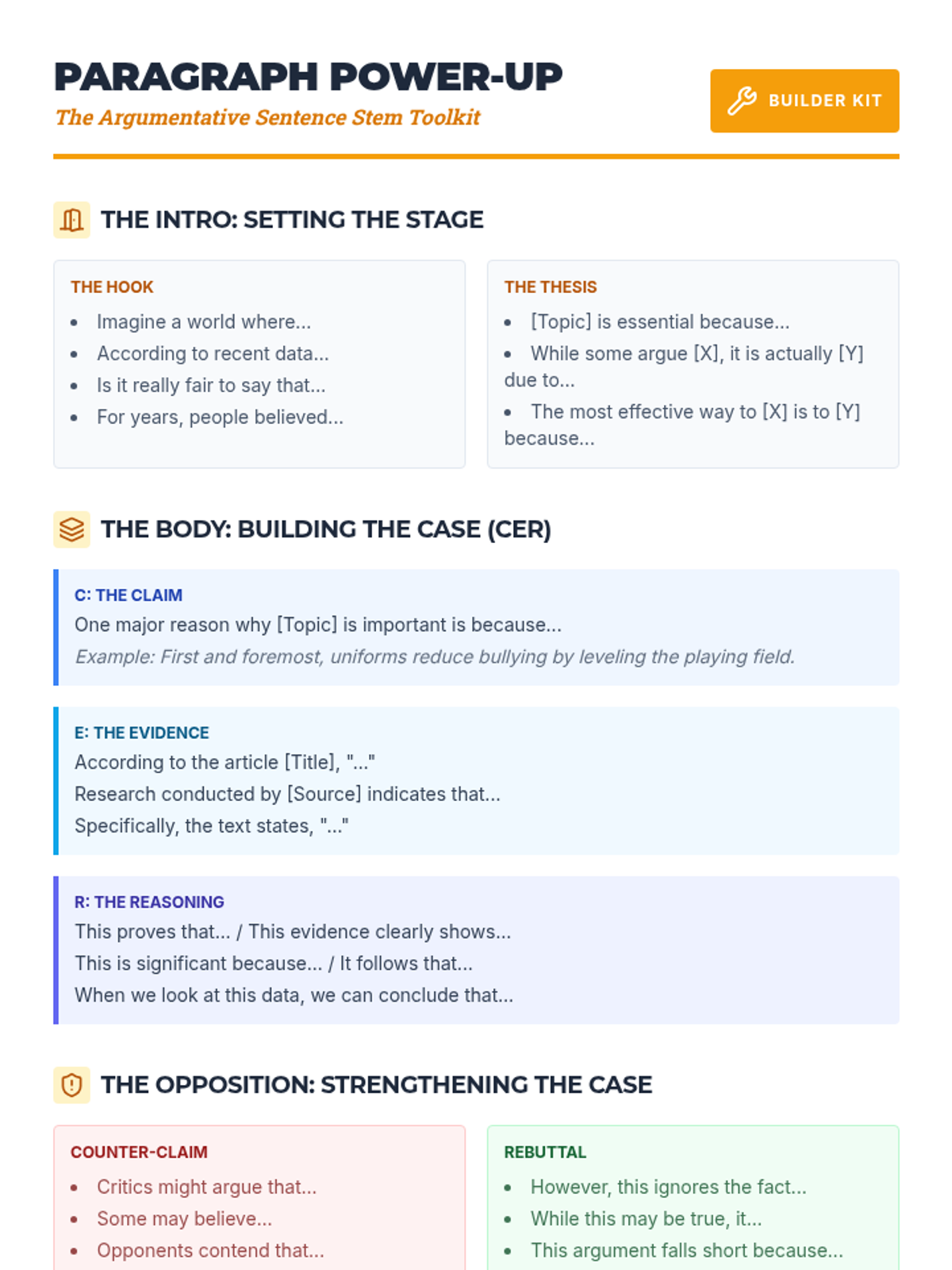
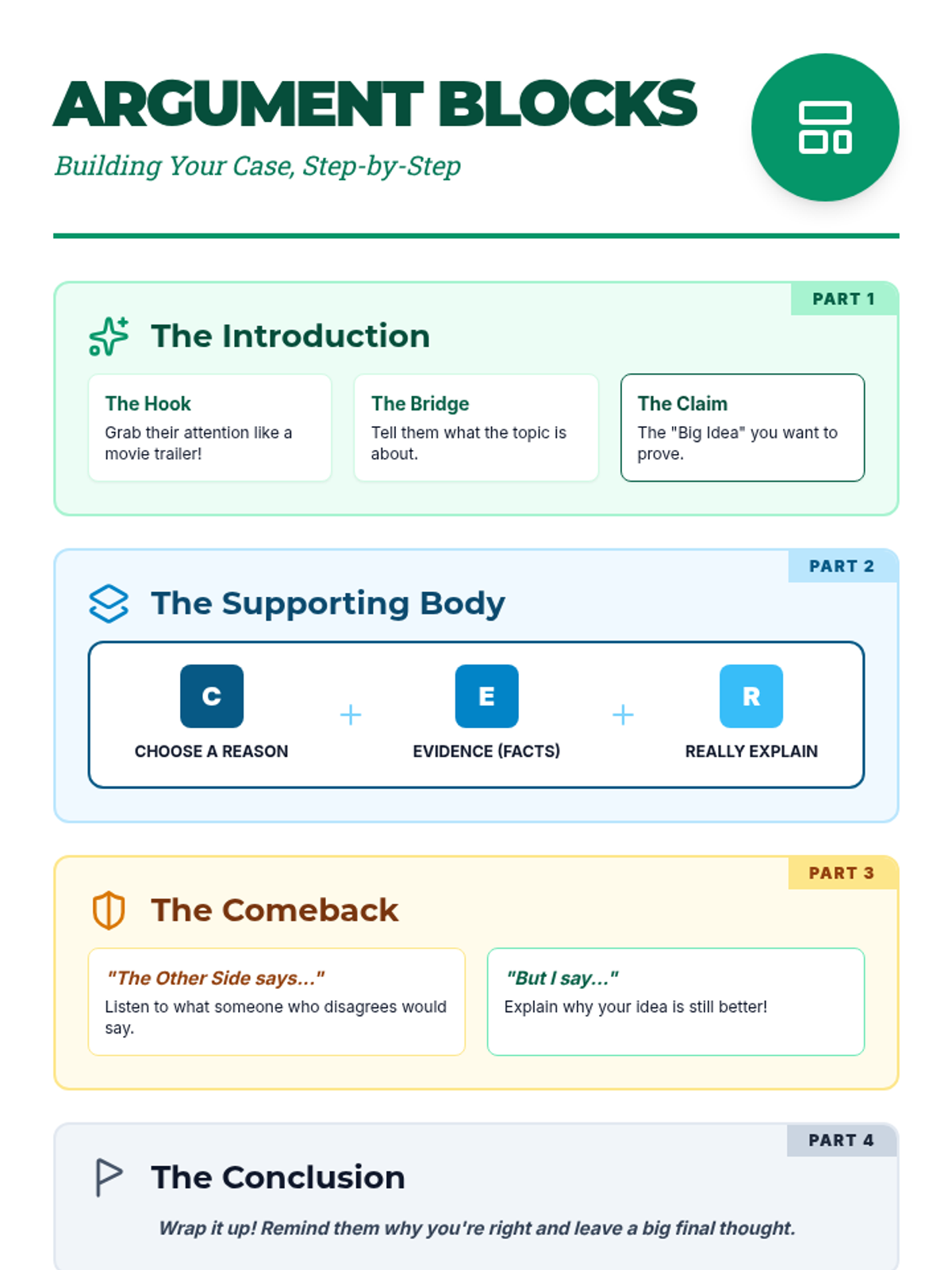
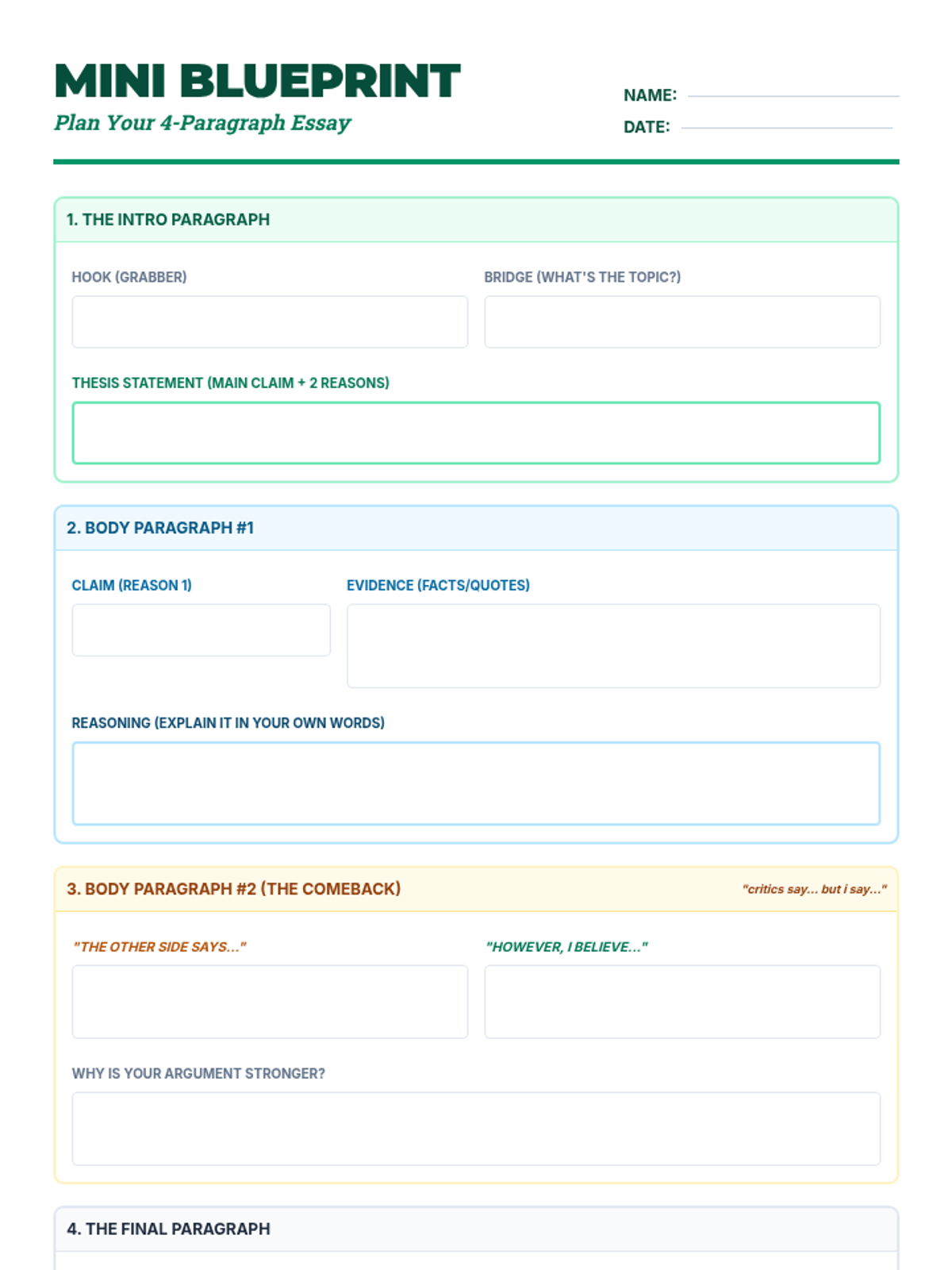
A scaffolded approach to argumentative writing using the CER (Claim, Evidence, Reasoning) framework and simplified structures to help students build persuasive essays about school-related debates.
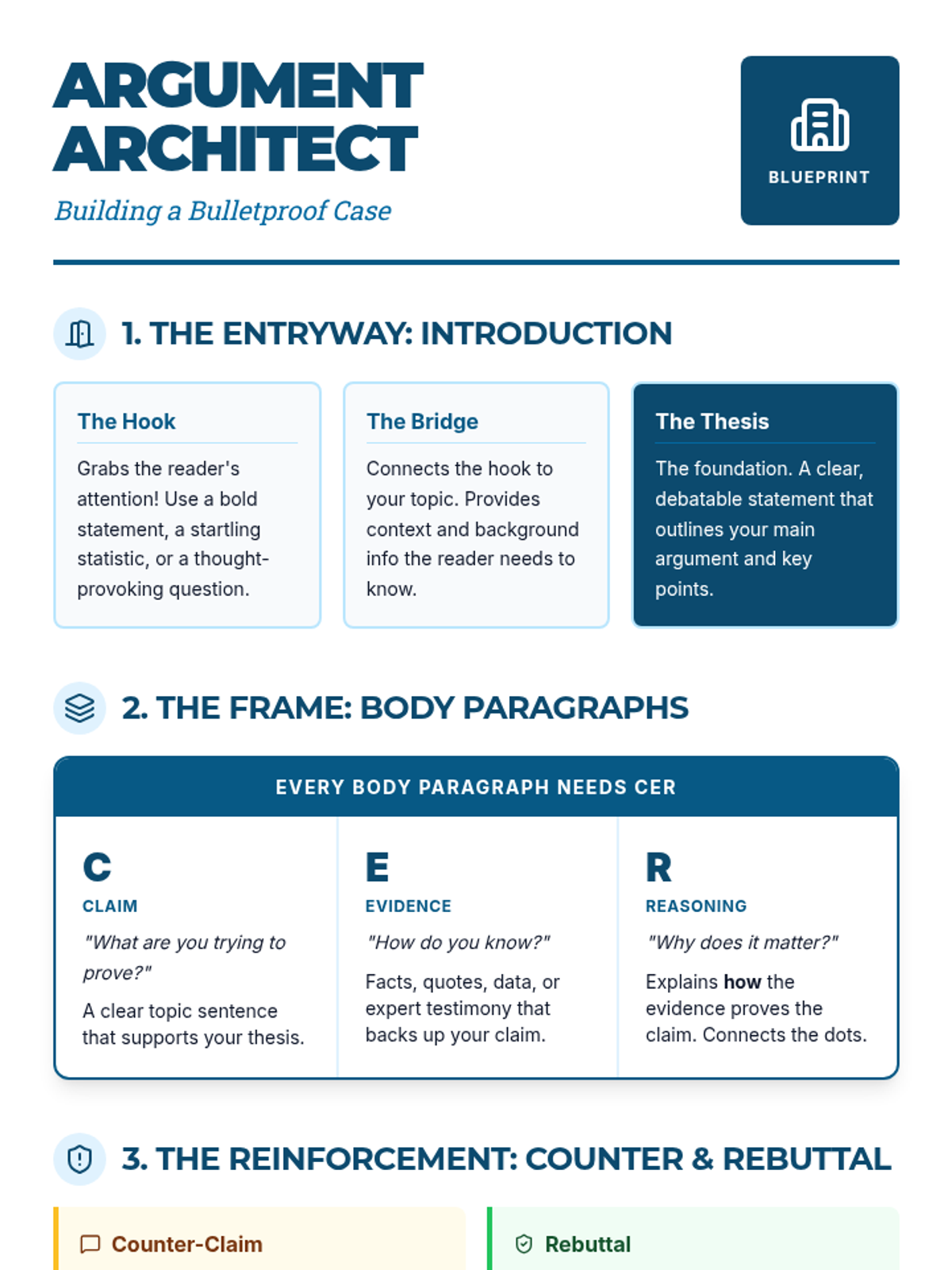
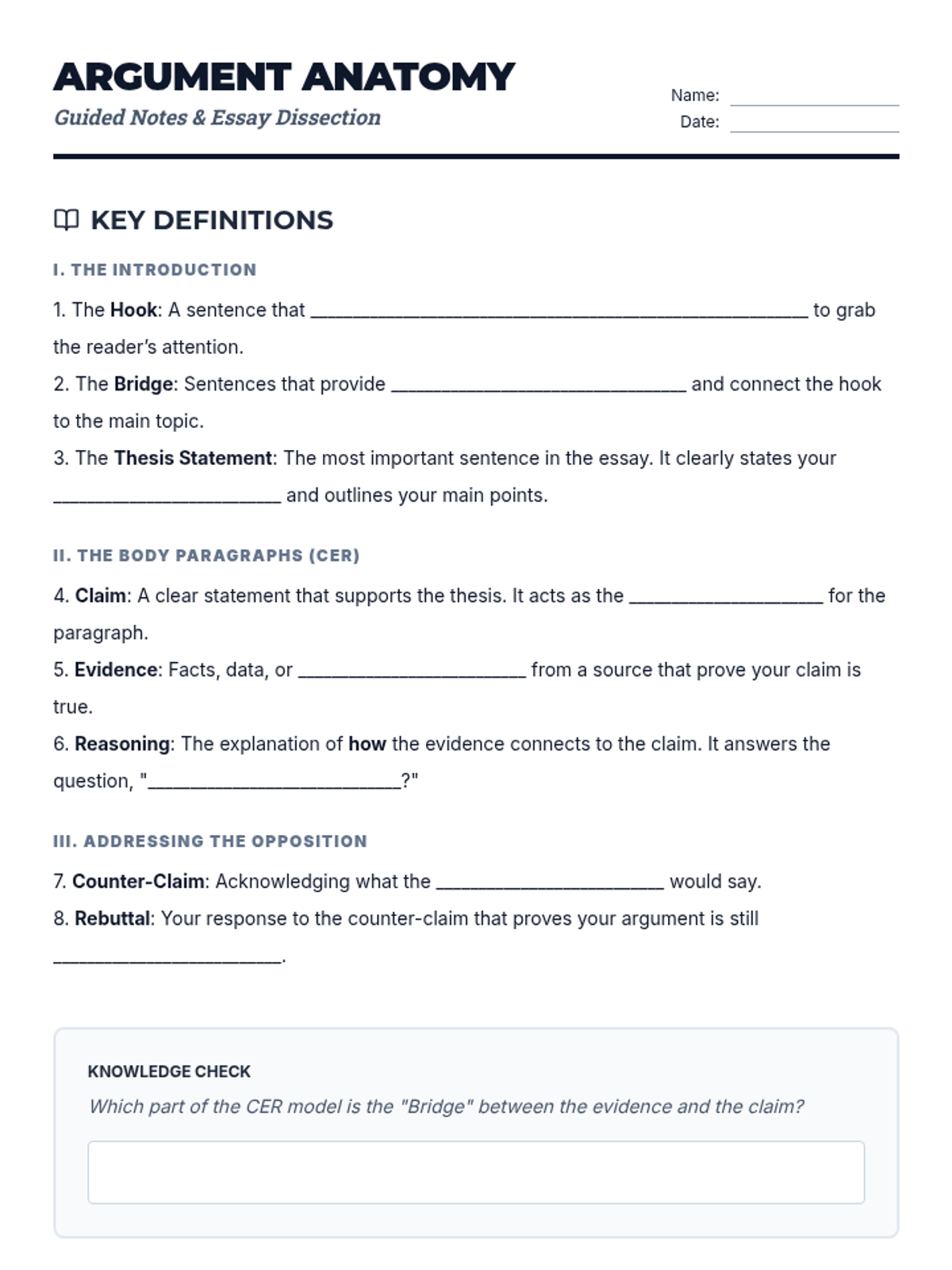
This lesson breaks down the complex components of an argumentative essay into manageable structural parts, focusing on the 5-paragraph model, the introduction triad (Hook, Bridge, Thesis), and the essential trio of Claim, Evidence, and Reasoning (CER). Students also learn how to address opposing viewpoints through counter-claims and rebuttals.
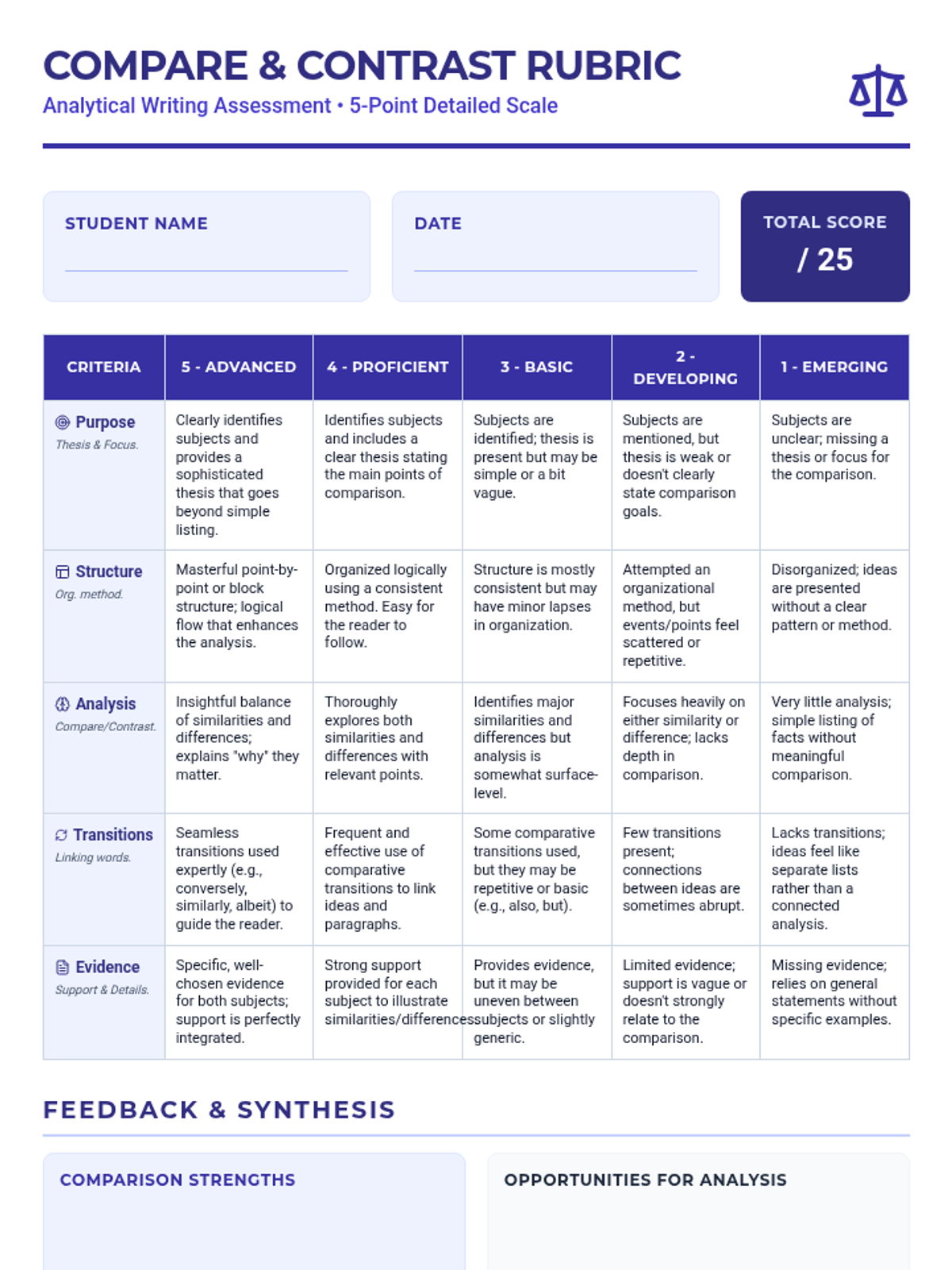
Resources for mastering comparative writing, including rubrics and organizers for subject analysis.
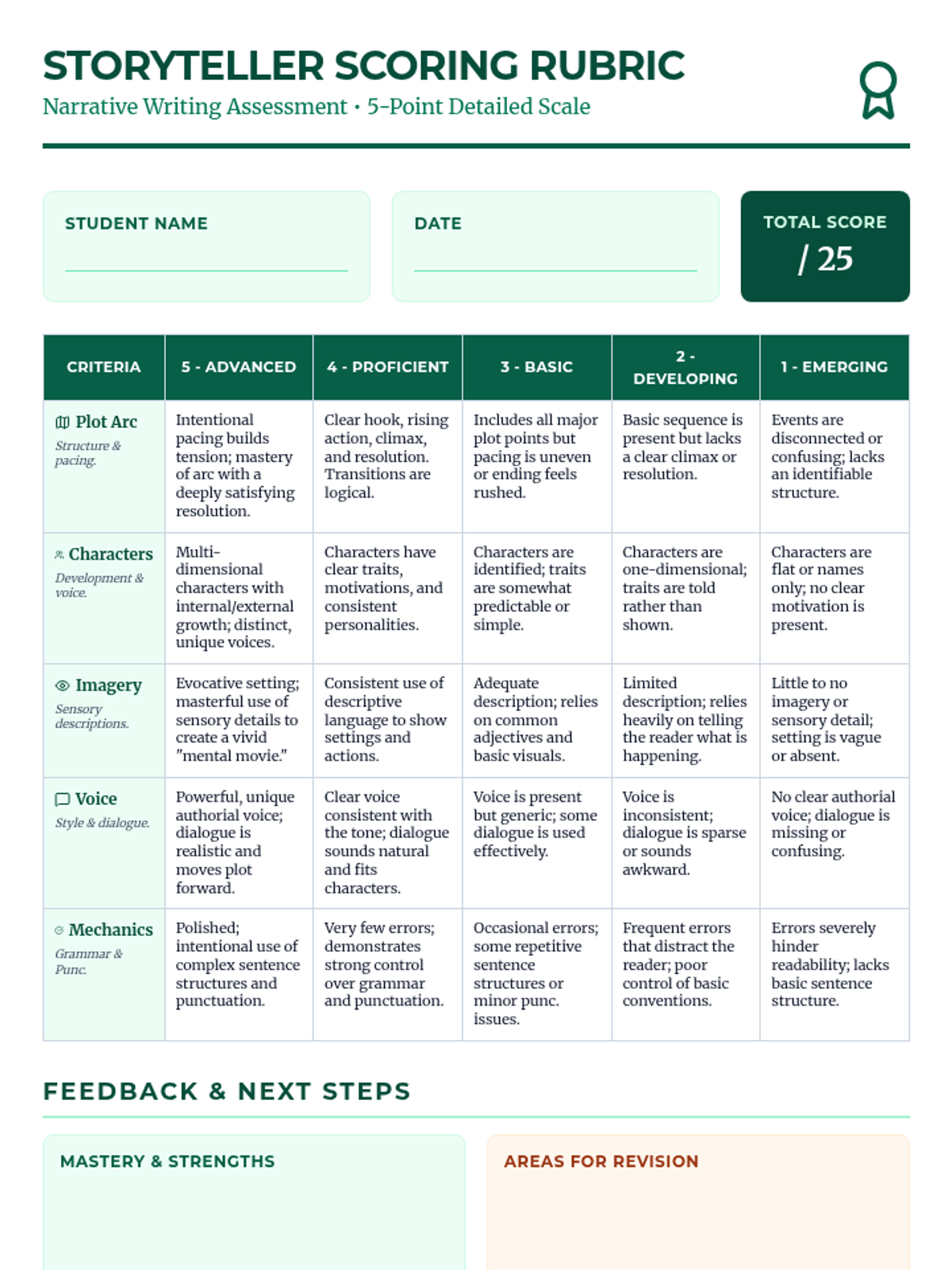
A collection of tools to help students and teachers evaluate narrative writing through clear criteria and student-friendly goals.
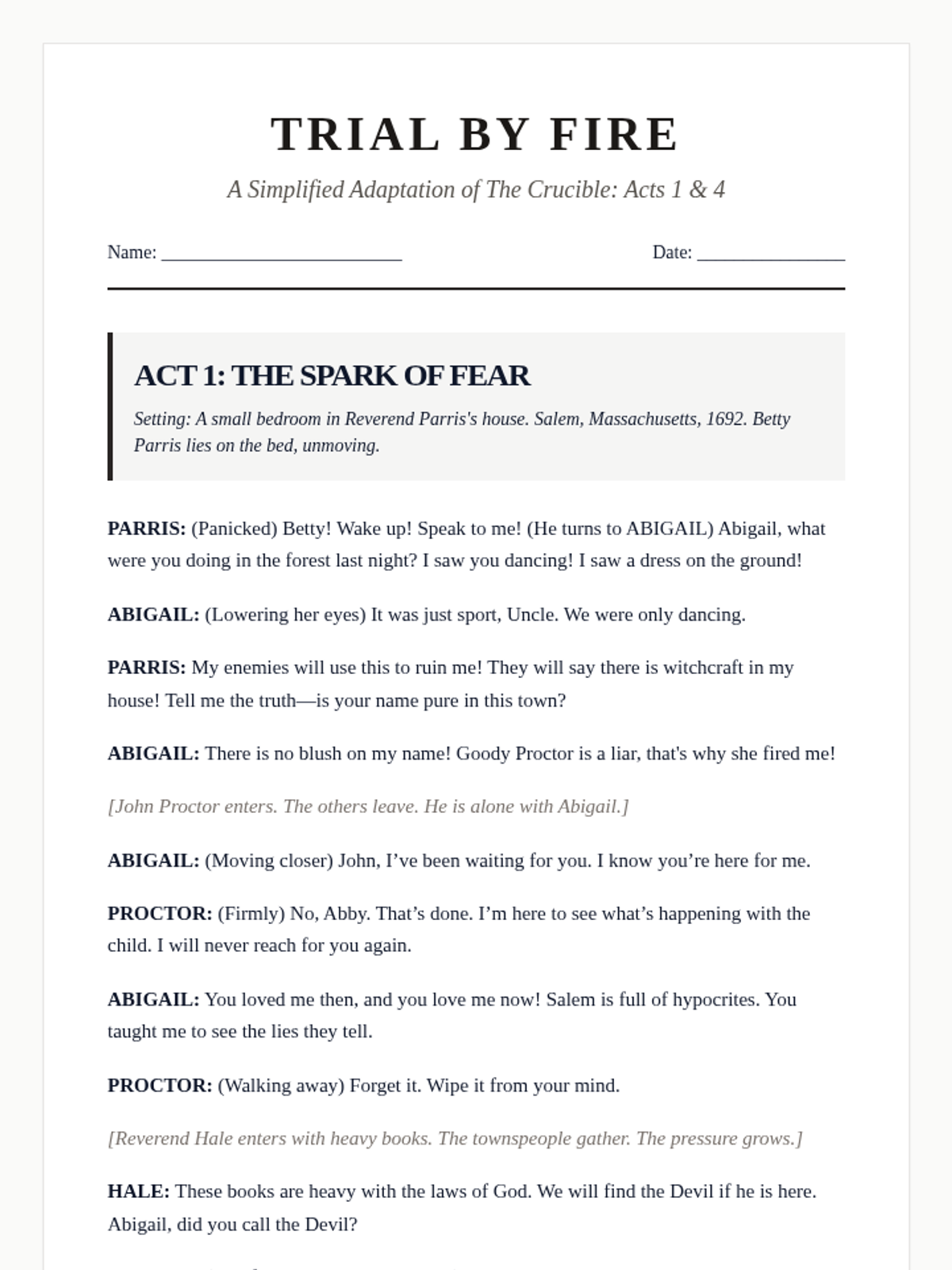
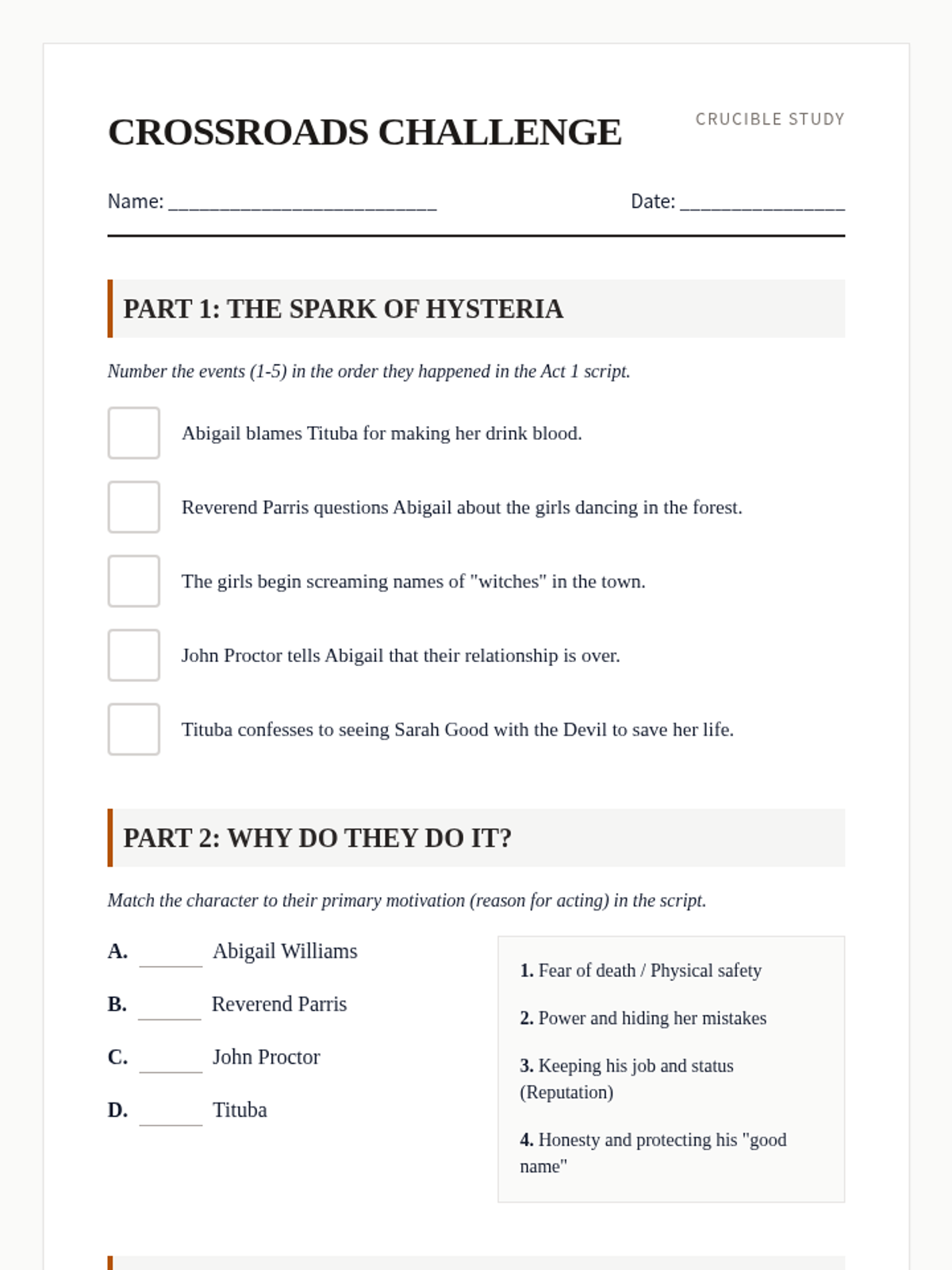
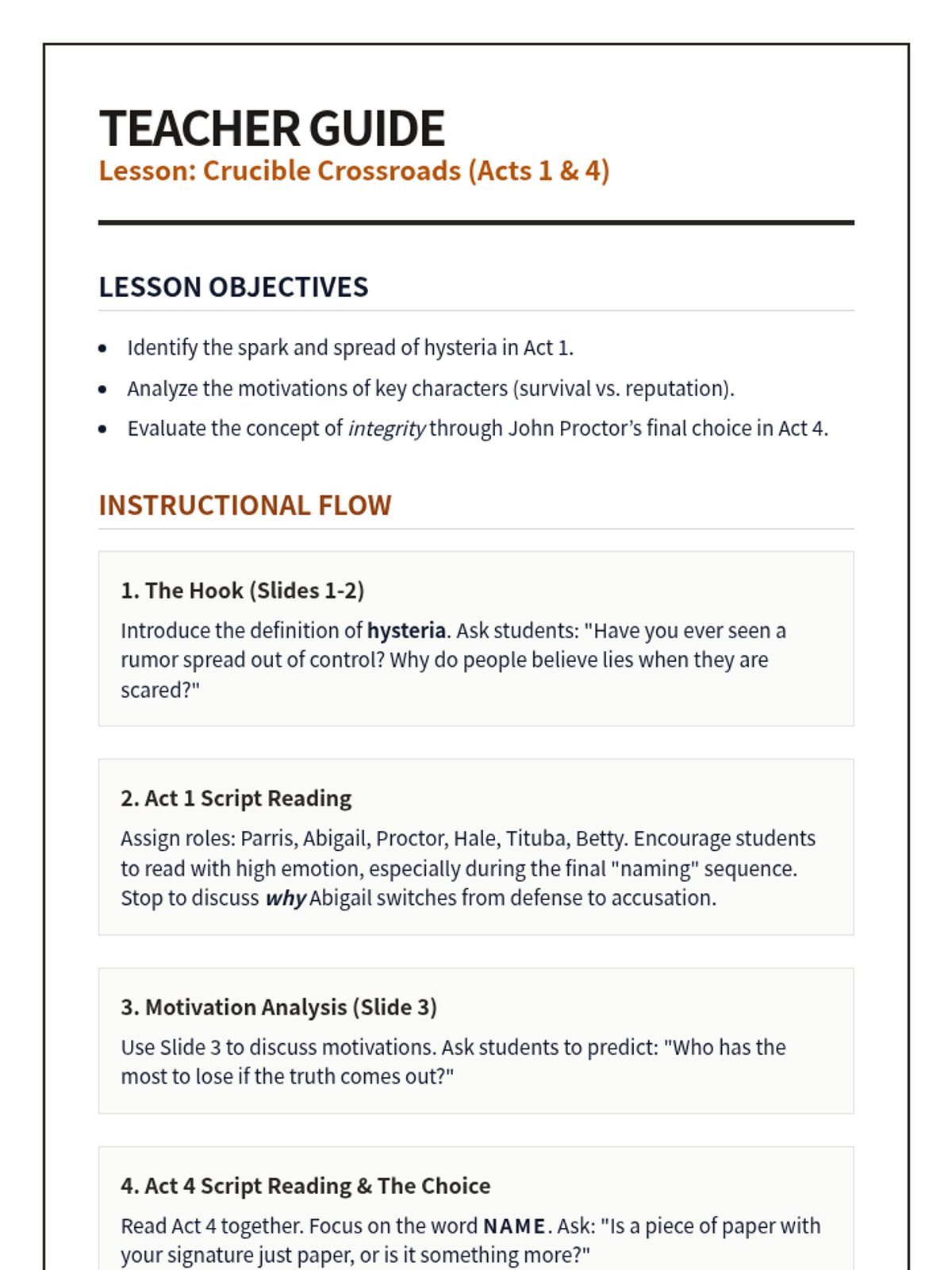
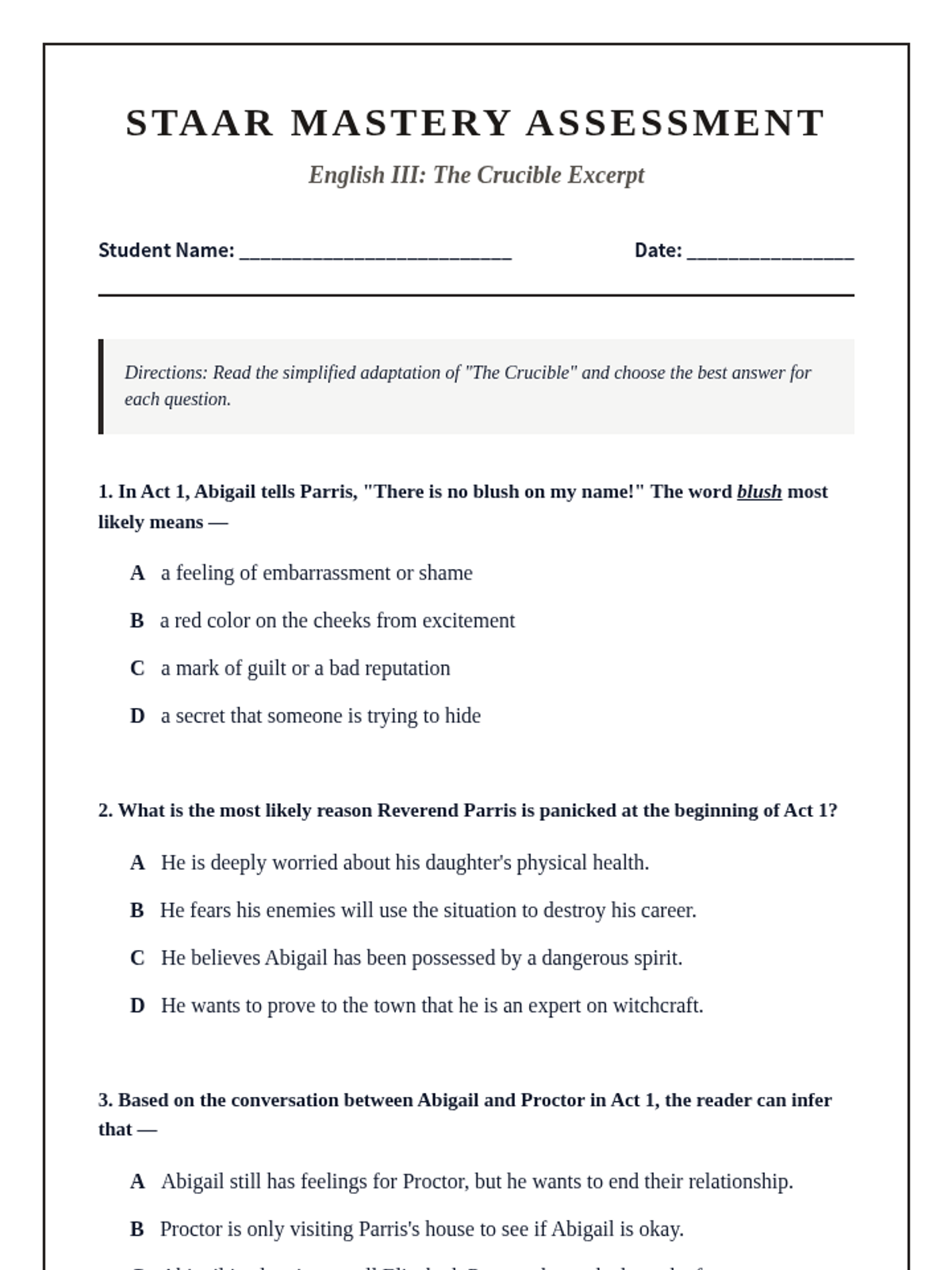
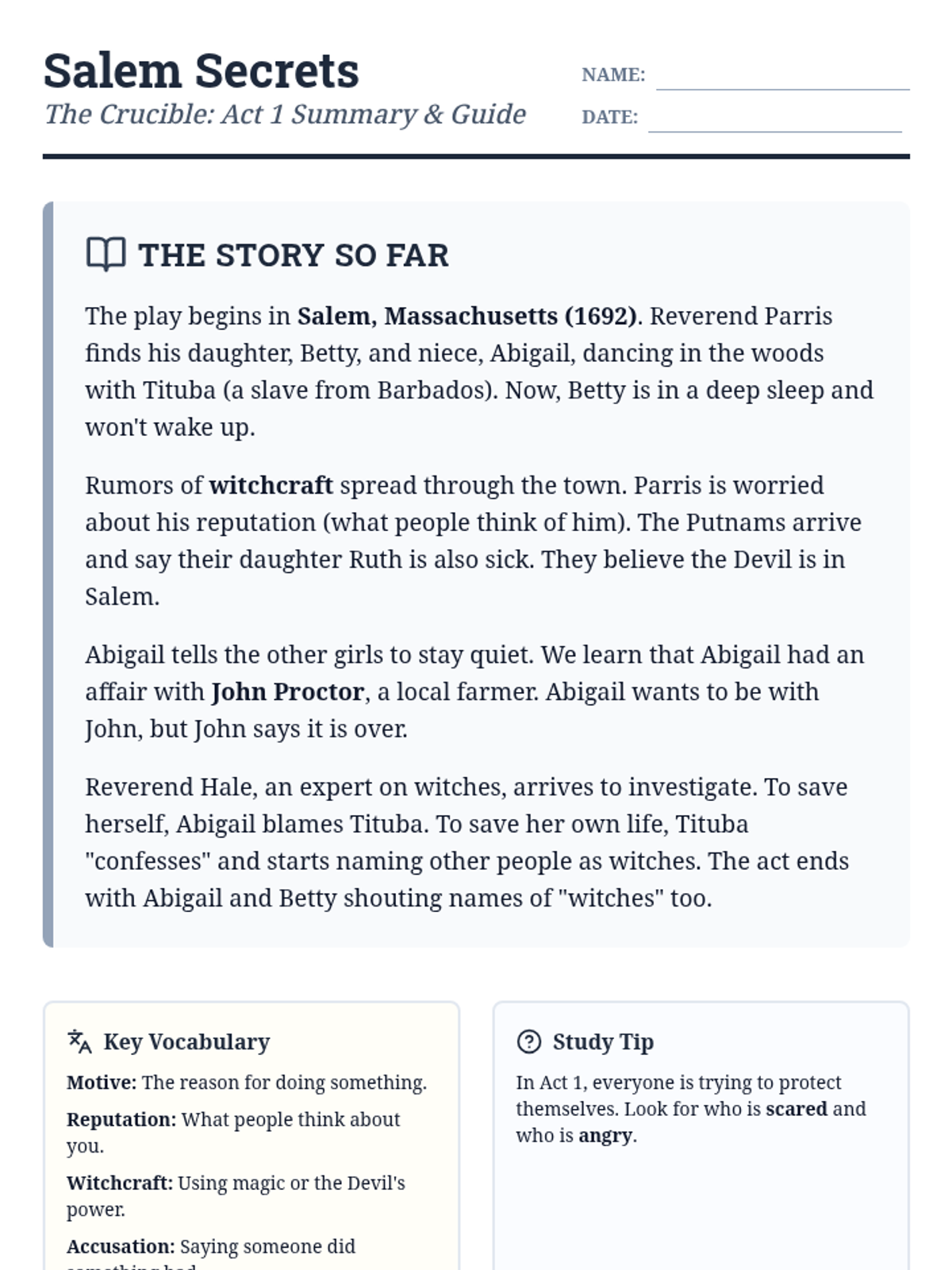
A focused study of The Crucible Acts 1 and 4, using simplified scripts to explore character motivation, the spread of hysteria, and the ultimate choice between life and integrity.
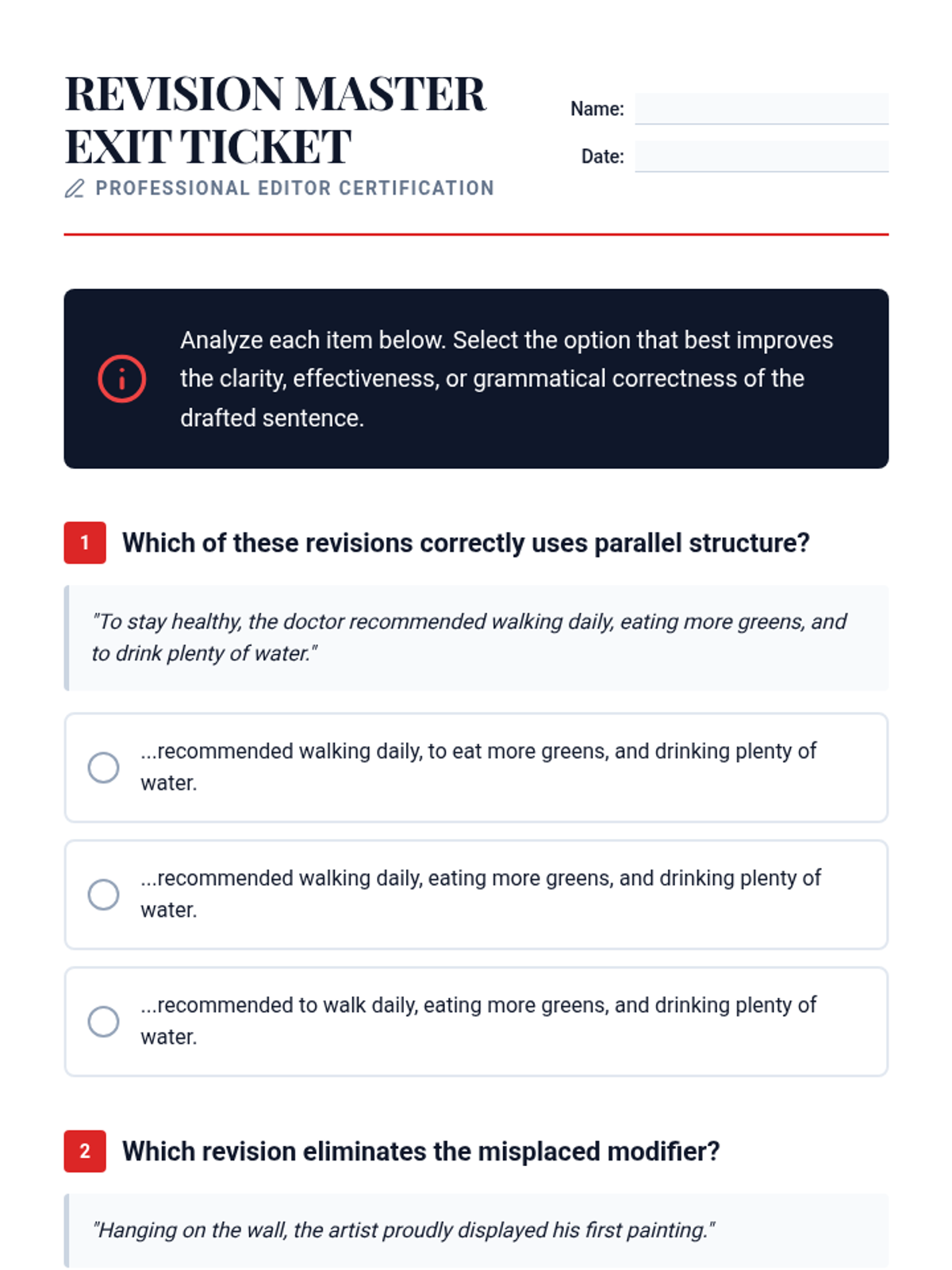
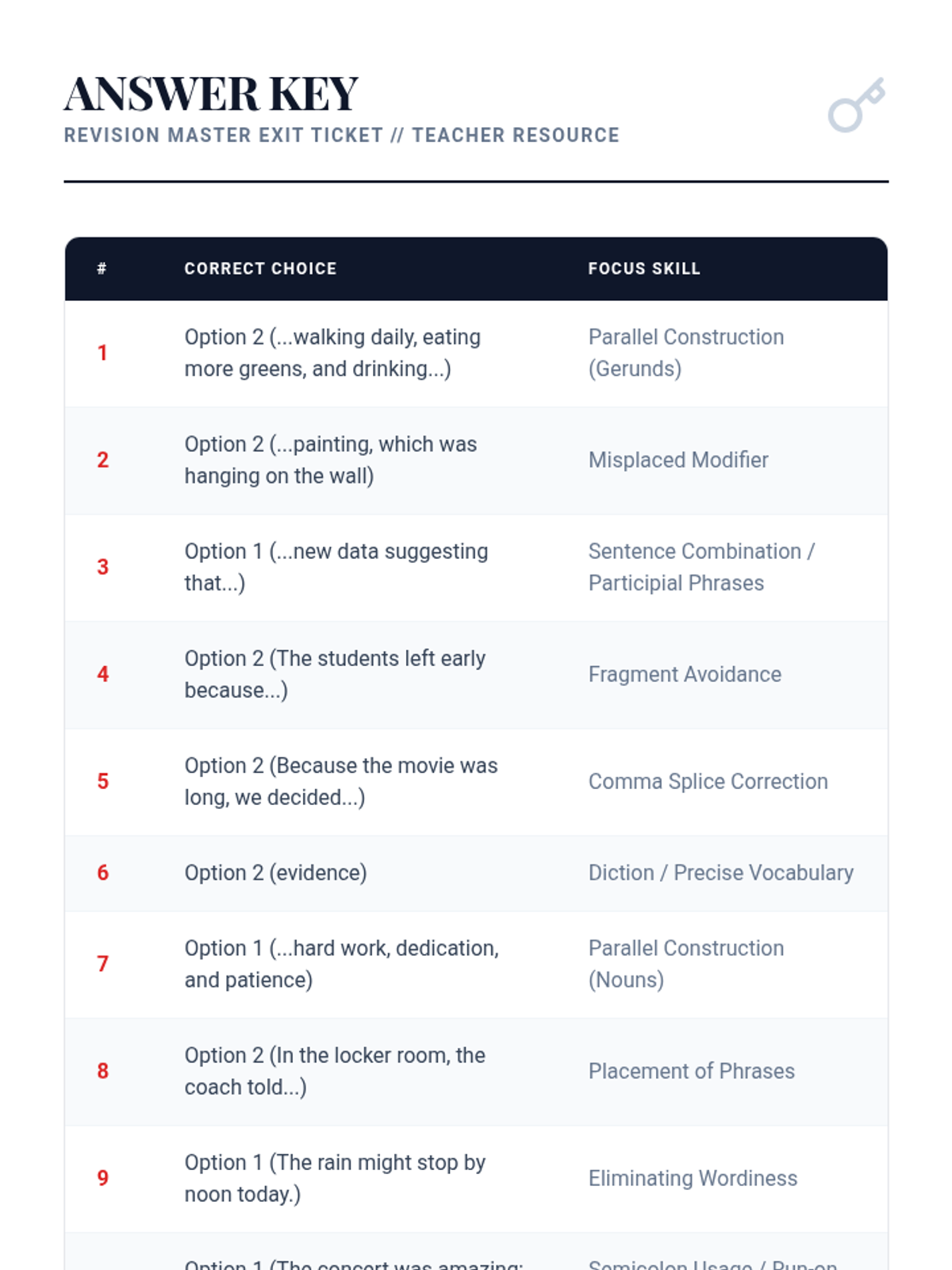
A comprehensive guide to high-level revision and editing, focusing on sentence effectiveness, parallel structure, and eliminating fragments or run-ons. Students learn to refine their writing with the precision of a professional editor.
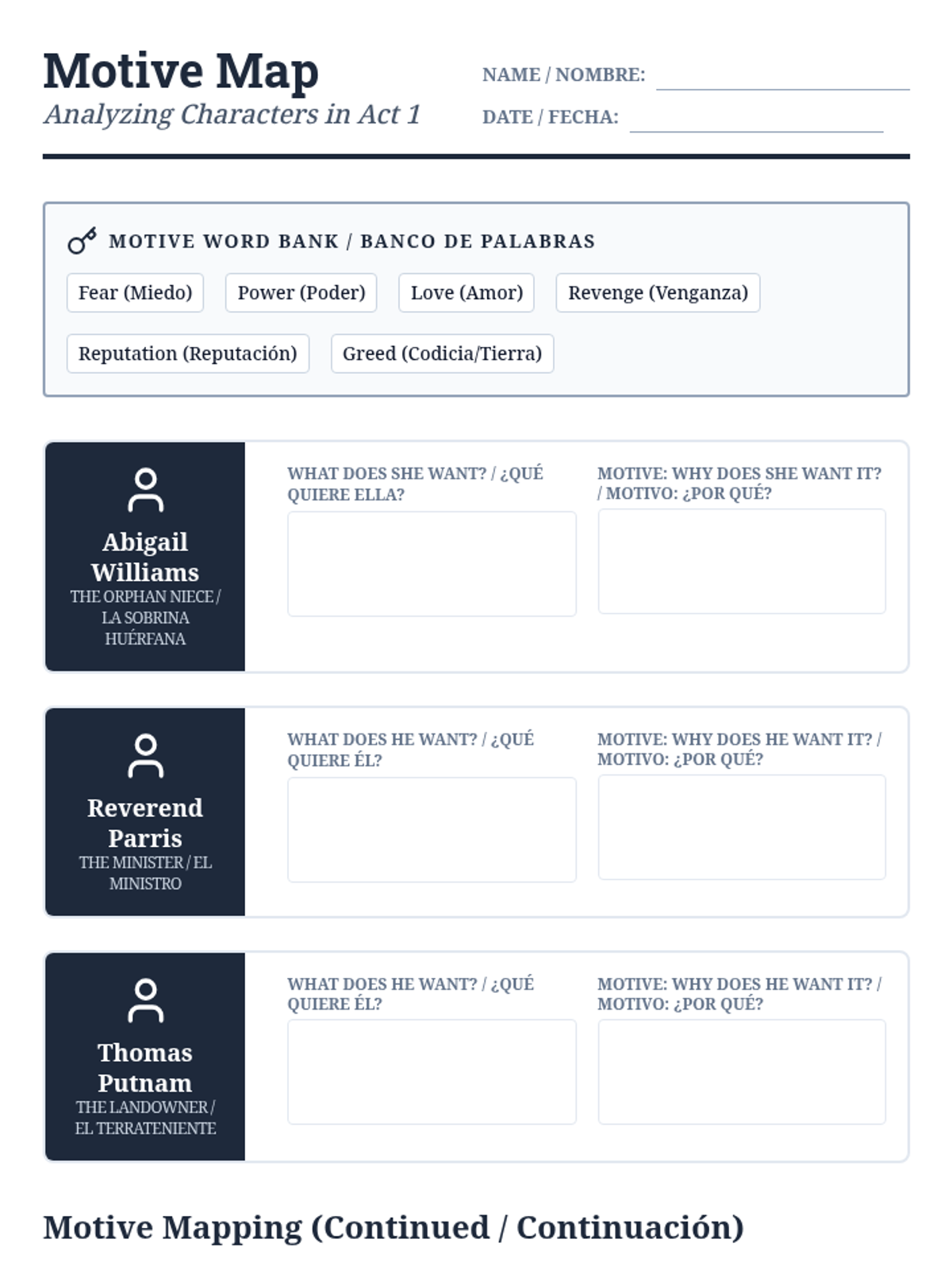
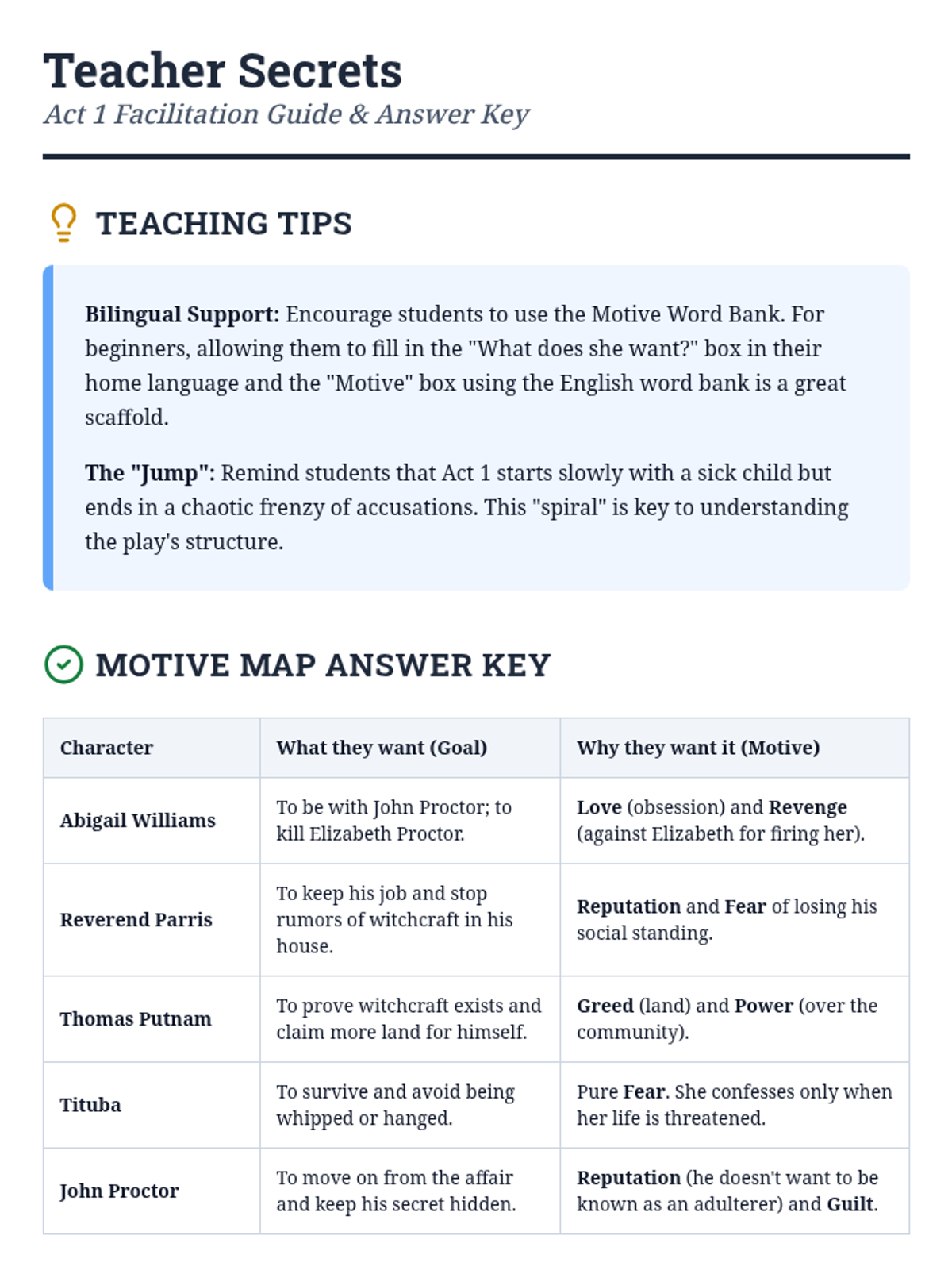
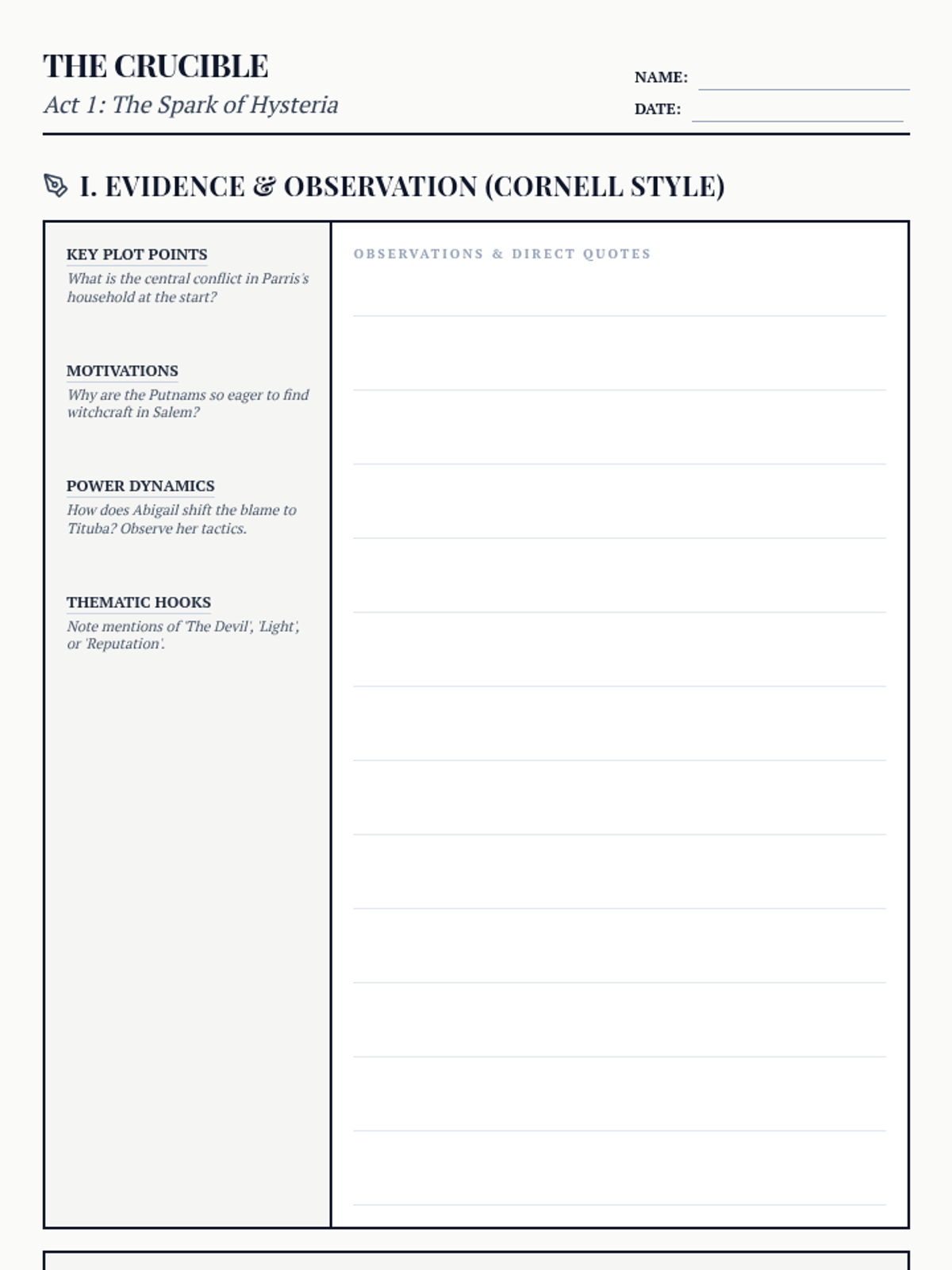
An introduction to the characters and escalating tensions in Act 1 of The Crucible, focusing on identifying individual motives and the power dynamics within Salem. Designed with scaffolding for bilingual learners.
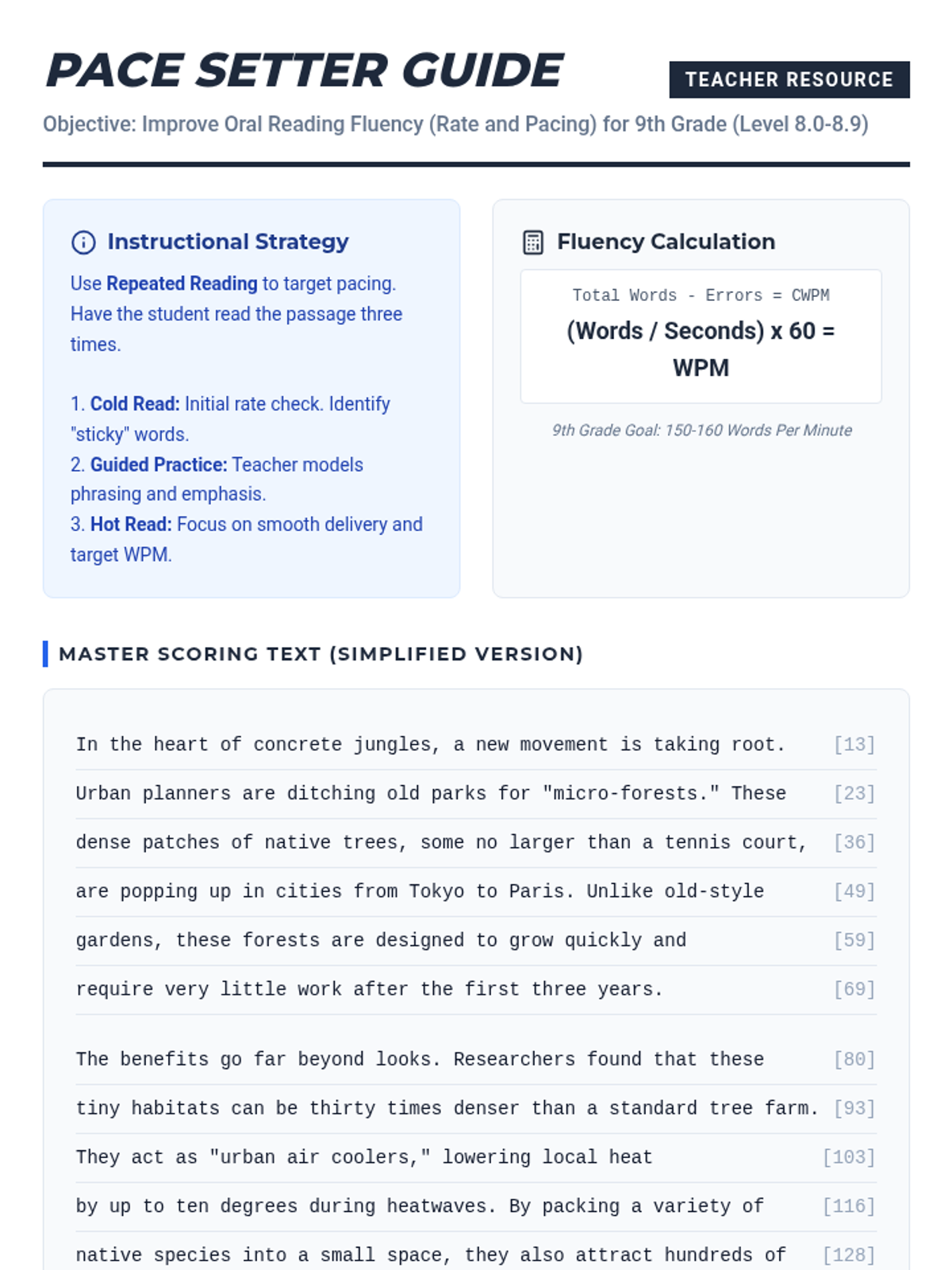
A fluency-focused lesson designed to improve reading rate and pacing through repeated readings of a contemporary news article about urban environmentalism.
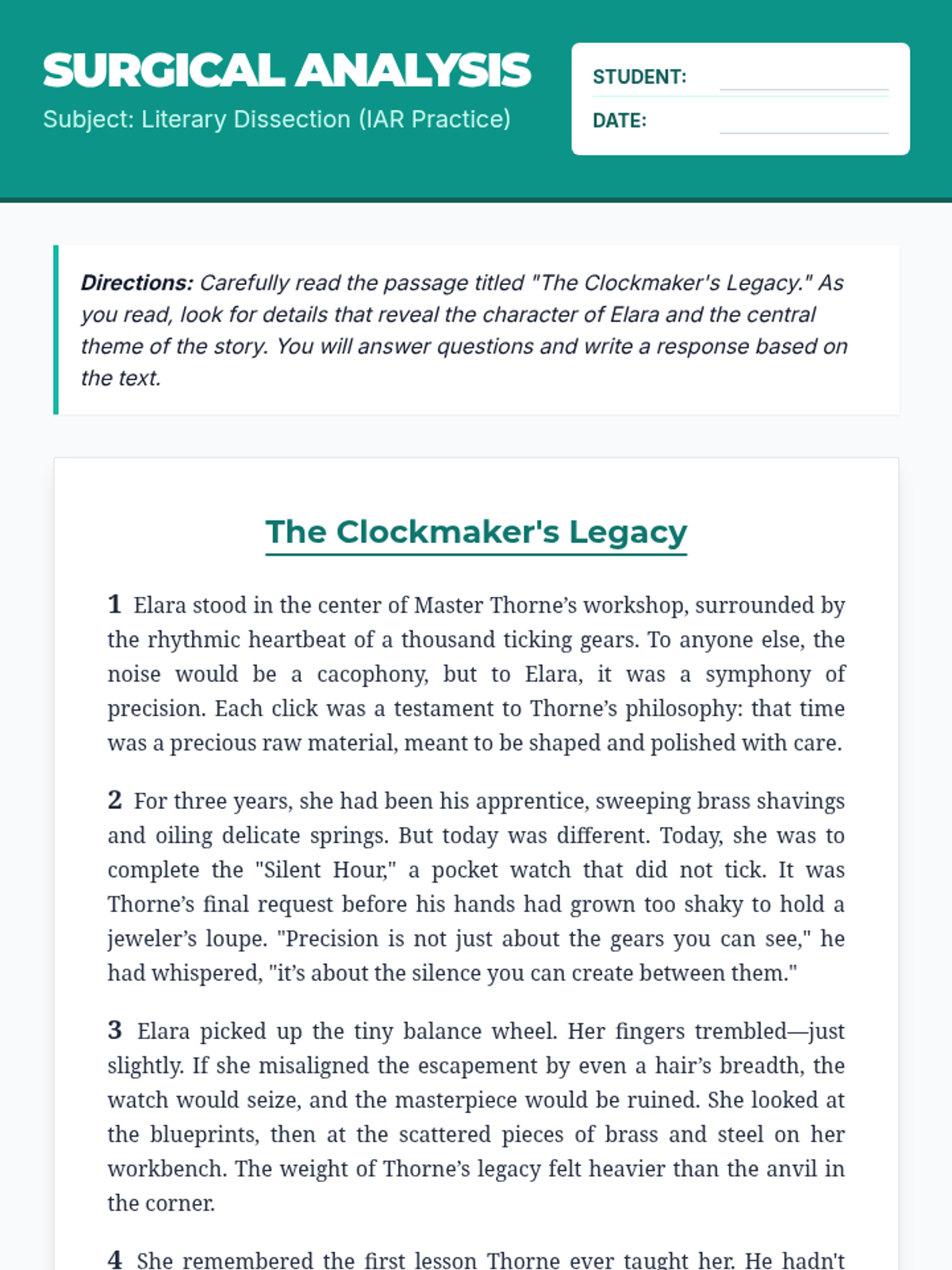
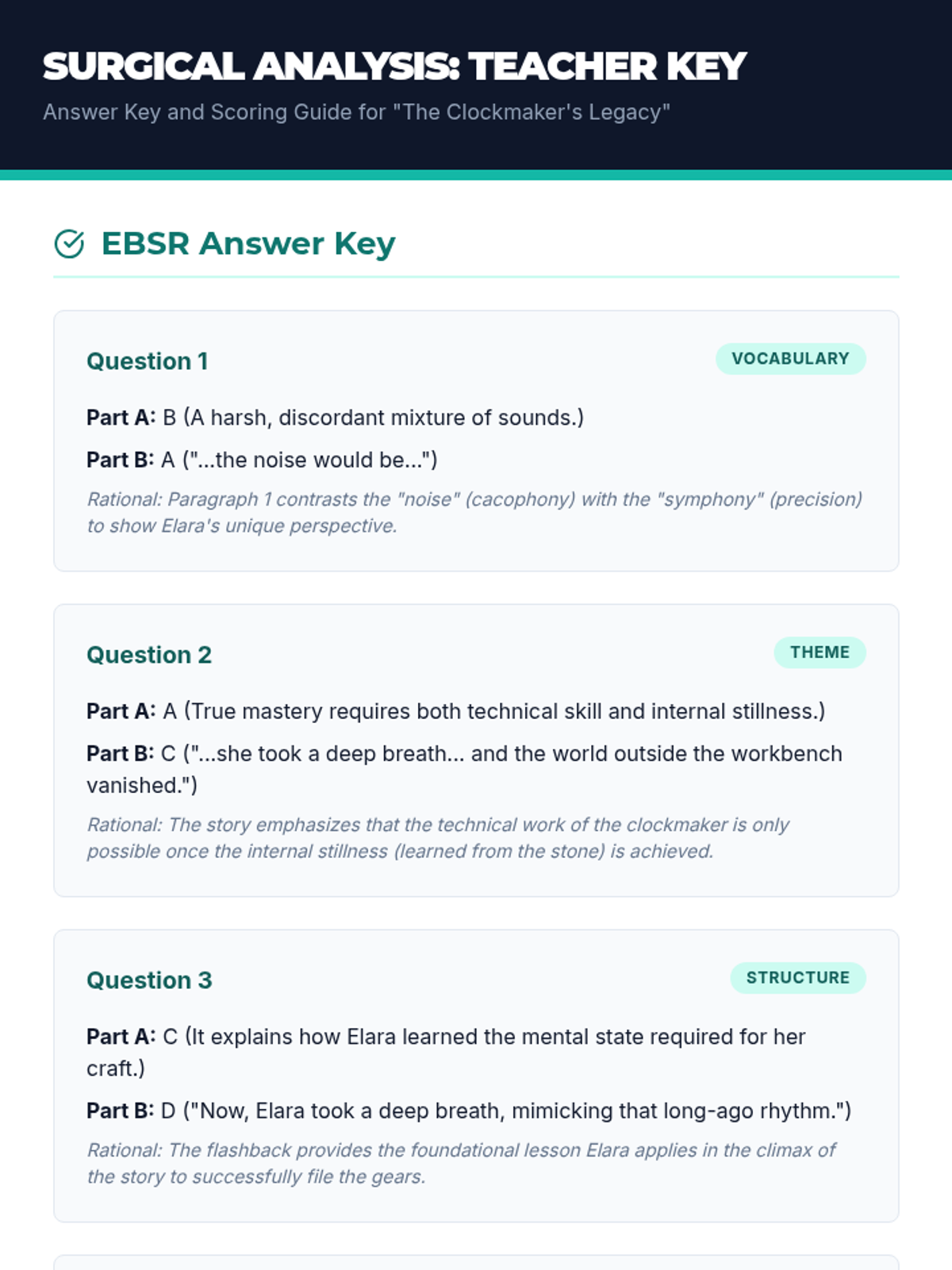
This lesson provides students with rigorous literary analysis practice modeled after the IAR assessment. Students will read a complex literary passage and respond to multi-part evidence-based questions and a prose constructed response.
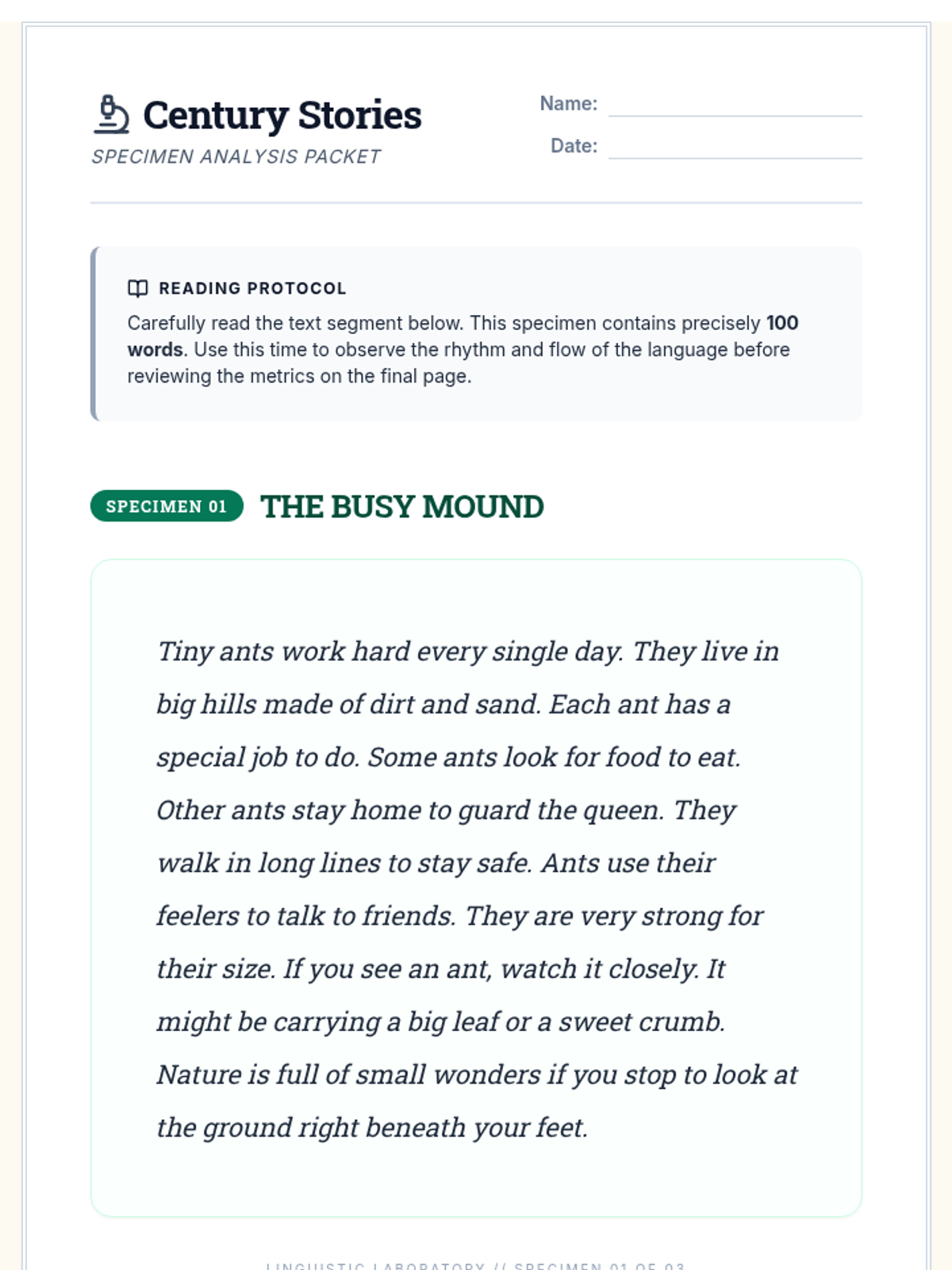
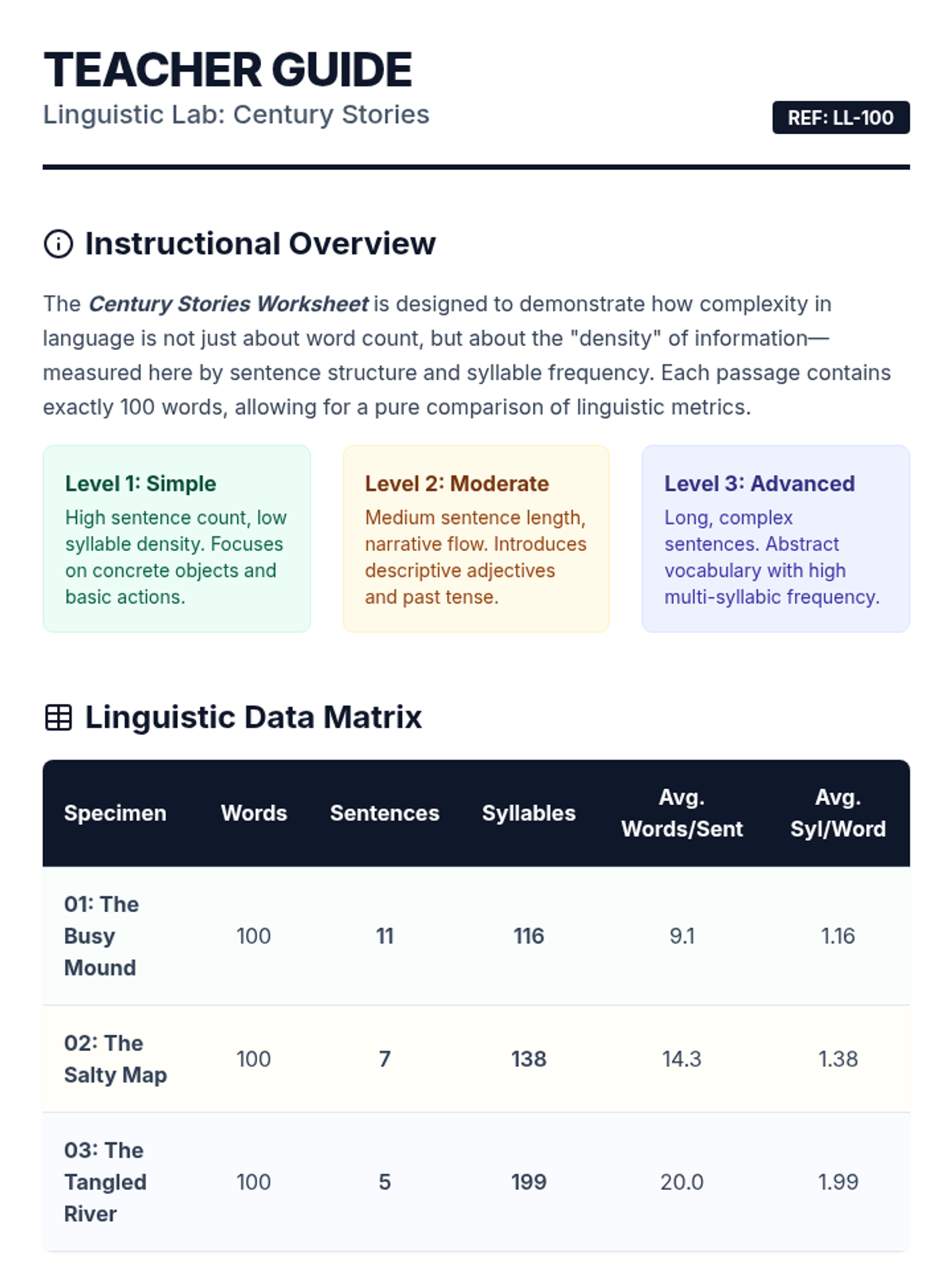
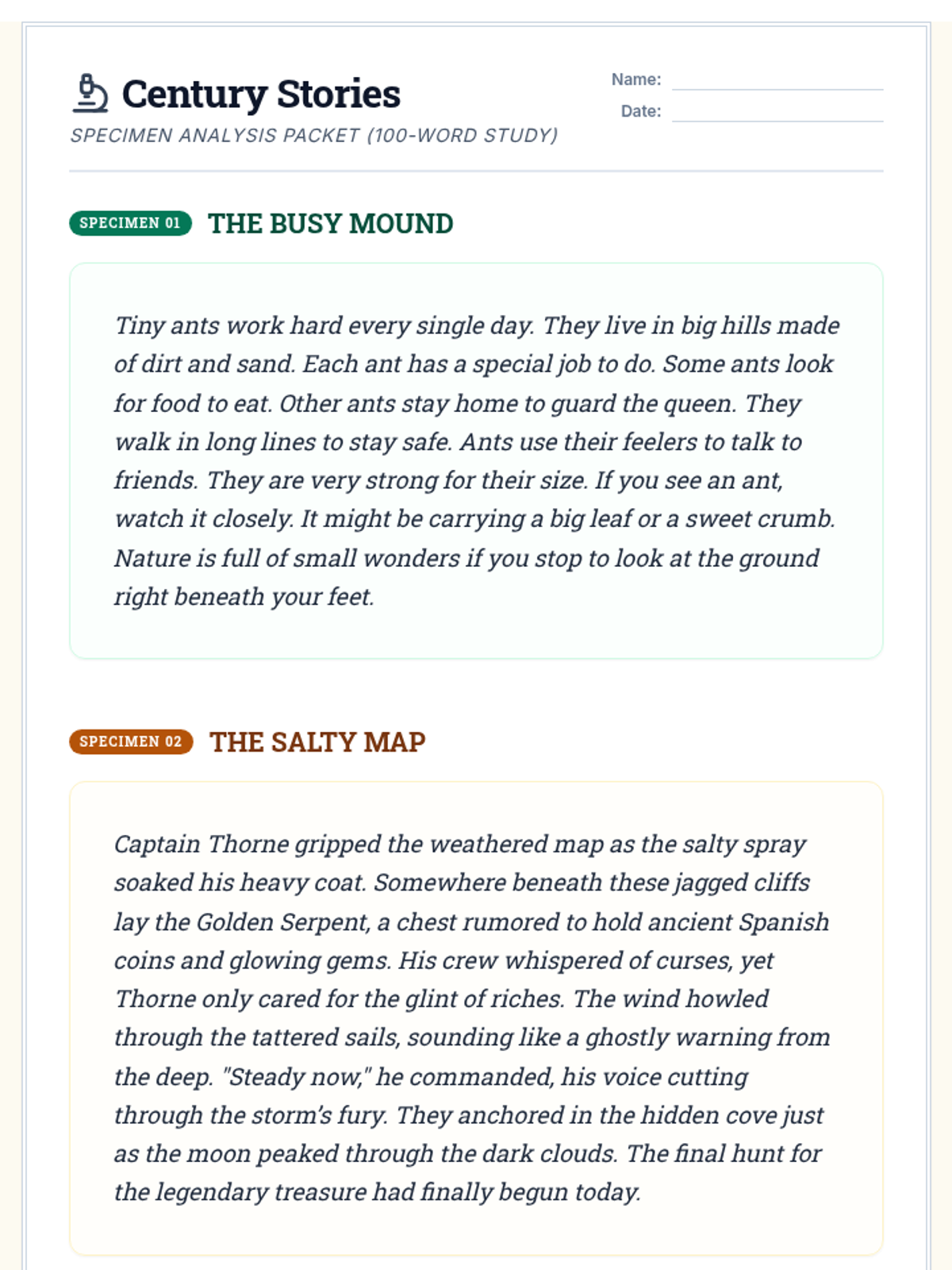
A collection of reading passages designed to challenge students' comprehension and linguistic awareness by analyzing word counts, sentence structures, and syllable patterns.
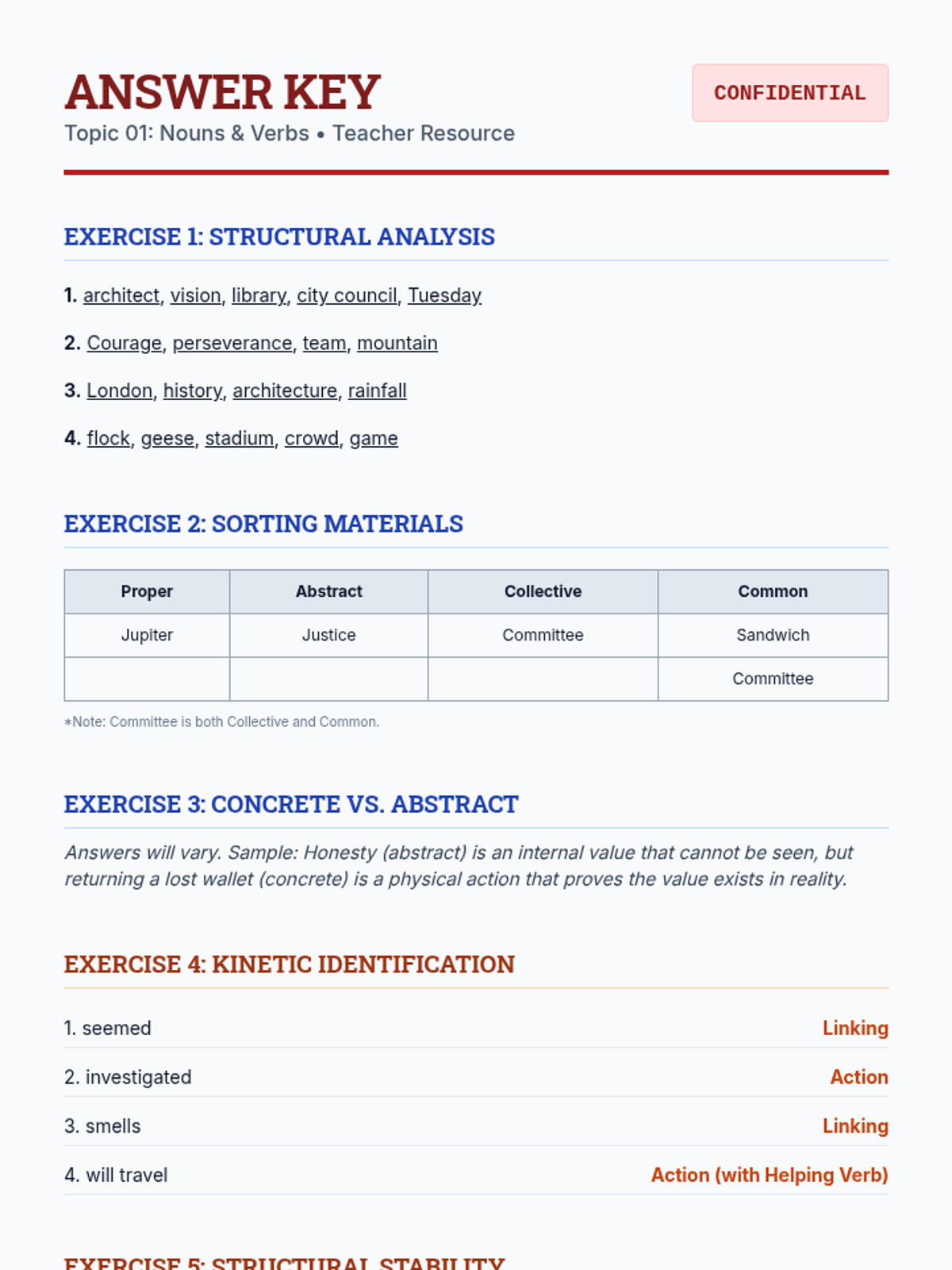
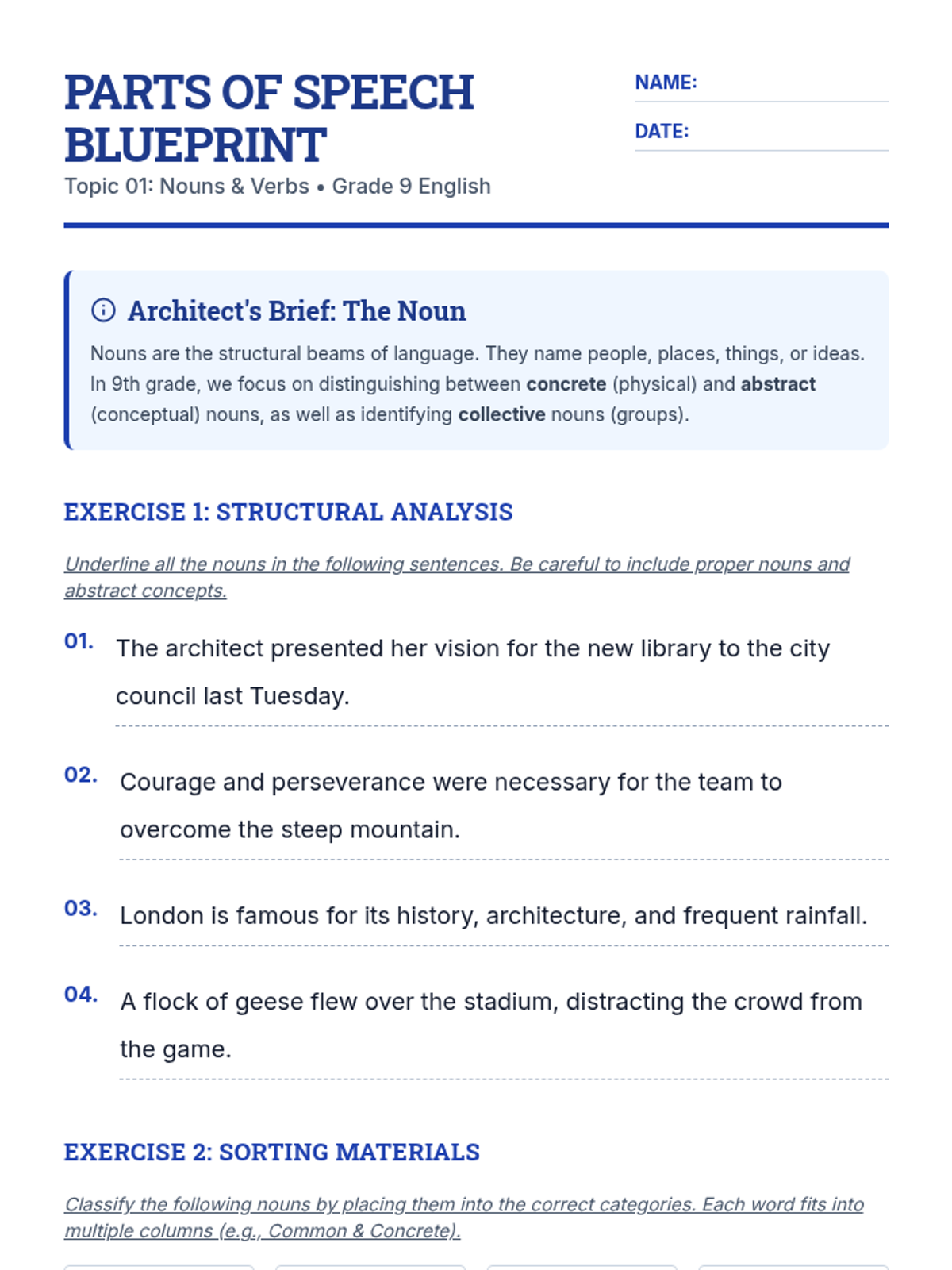
A foundational lesson for 9th-grade students focusing on the core building blocks of English grammar: nouns and verbs. Students will learn to identify, classify, and use these parts of speech effectively in their writing.
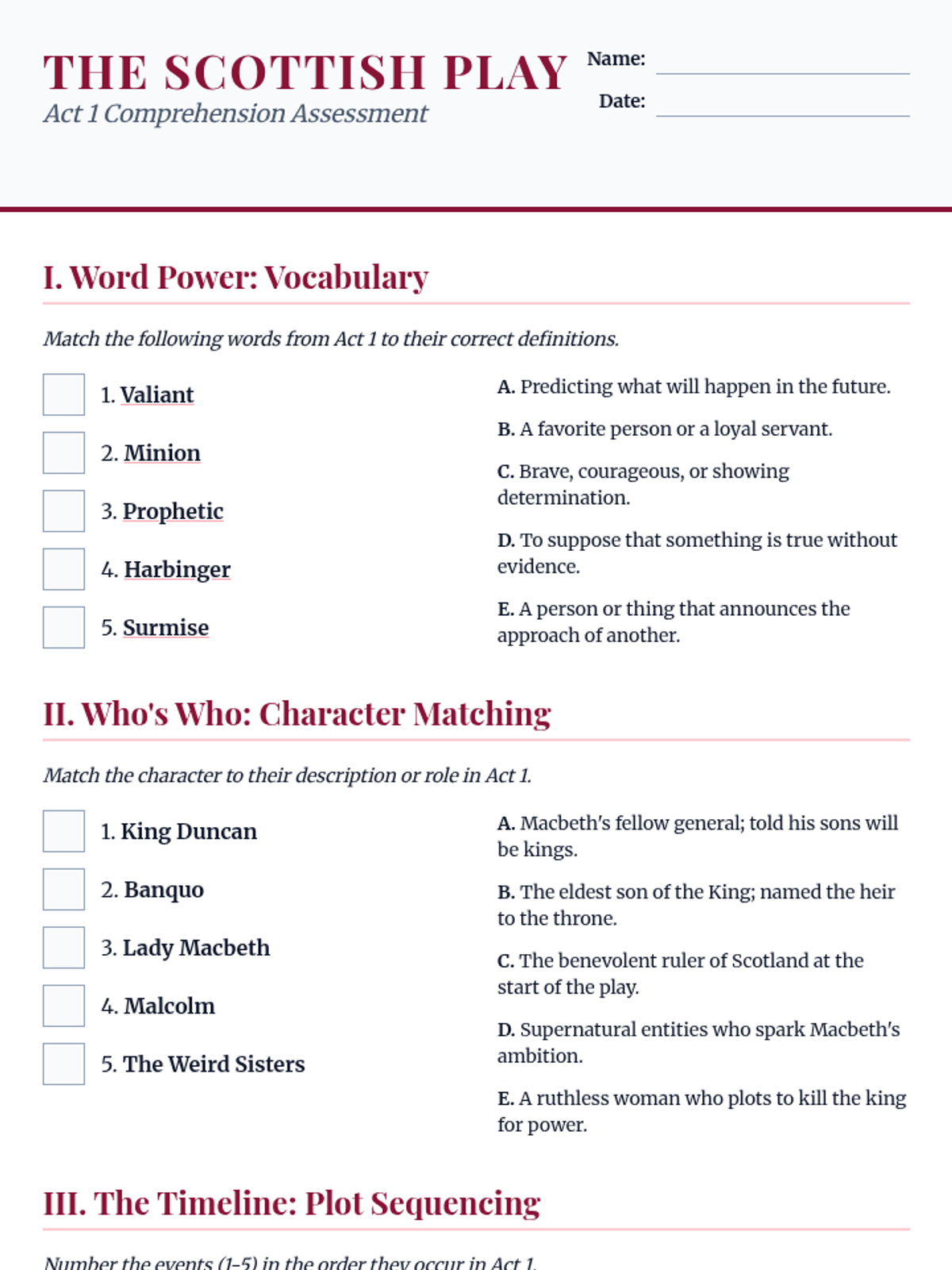
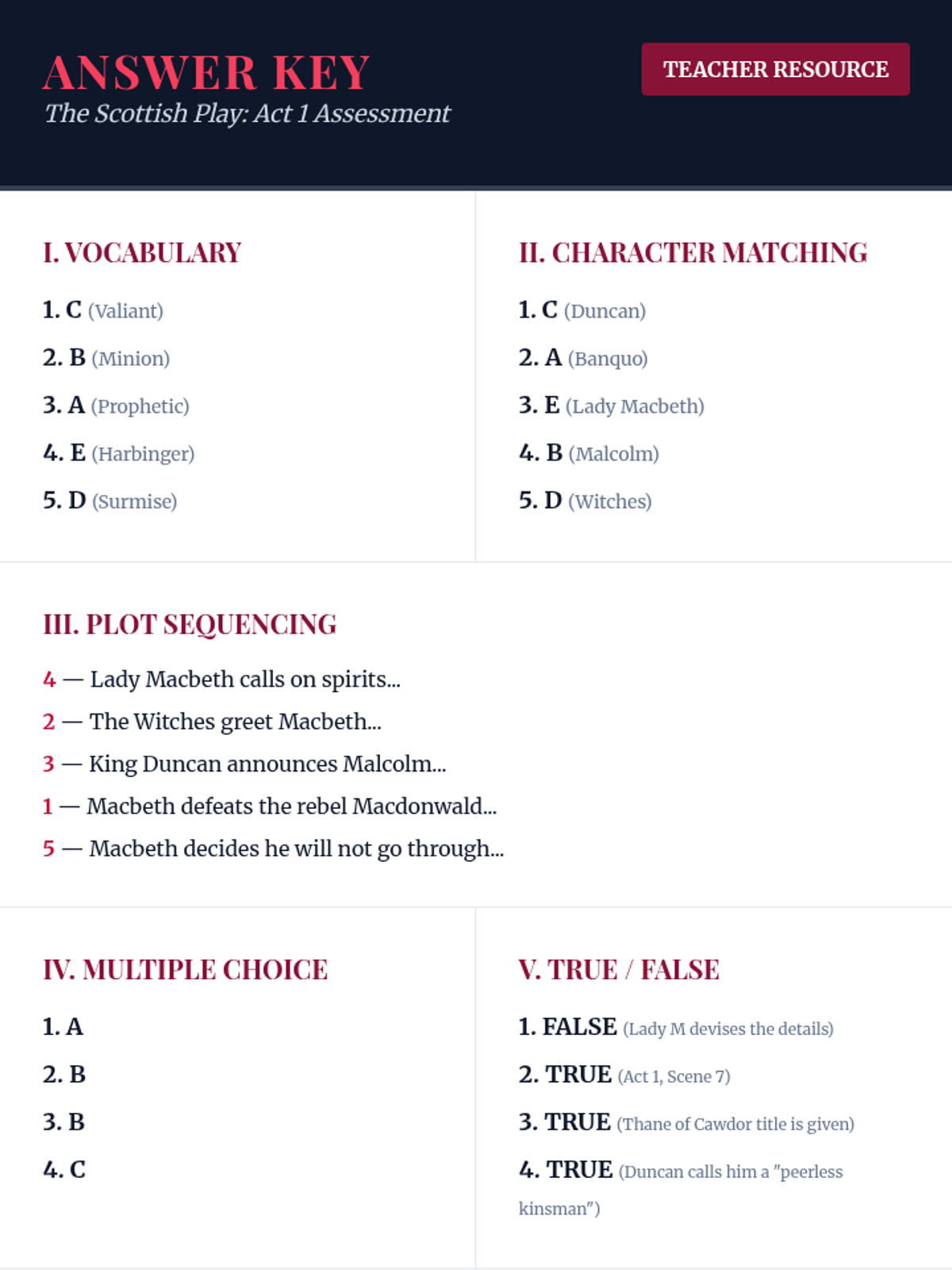
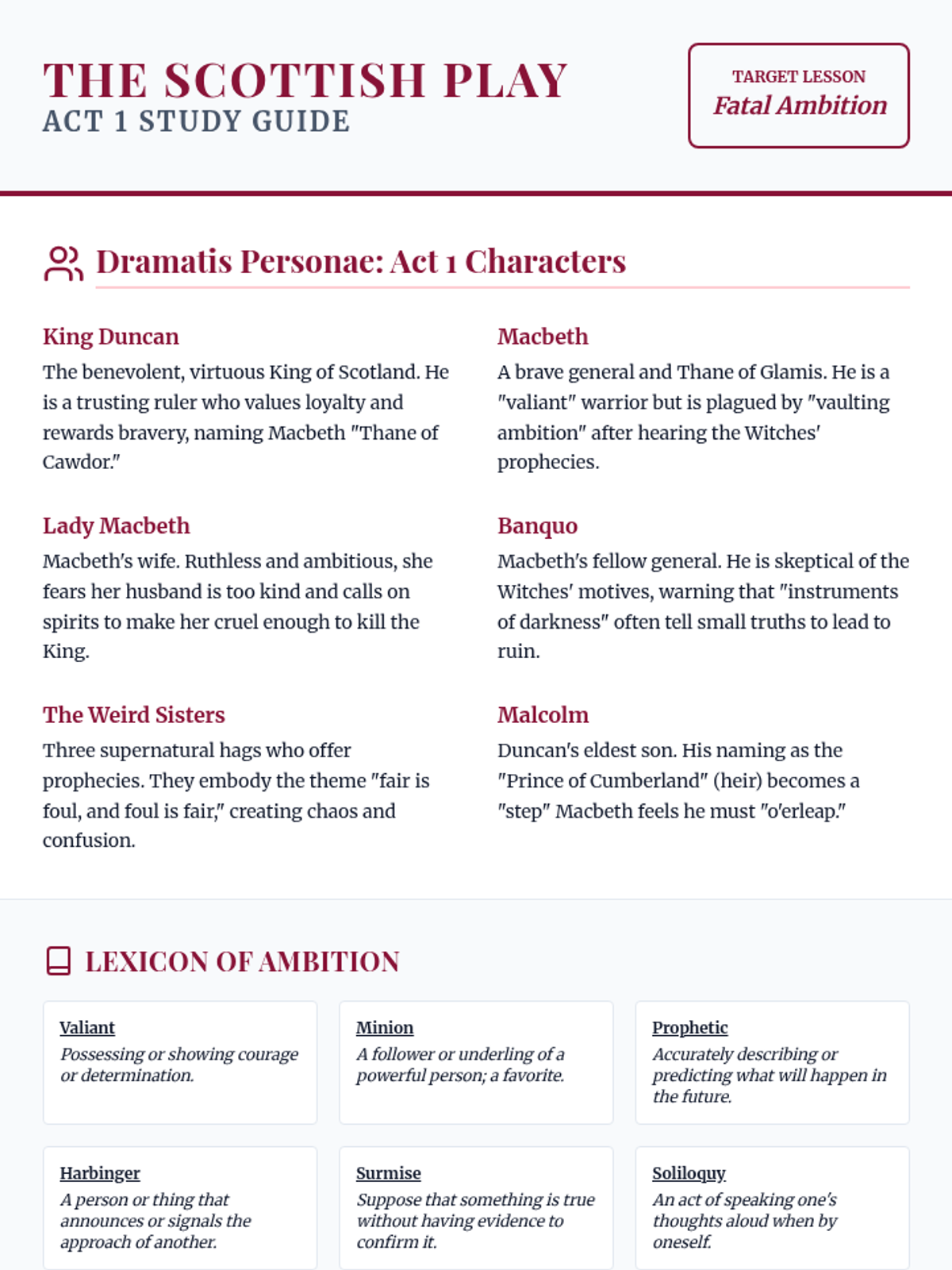
A comprehensive assessment covering the key plot points, characters, and themes of Act 1 of Shakespeare's Macbeth, designed for students using the No Fear Shakespeare version.
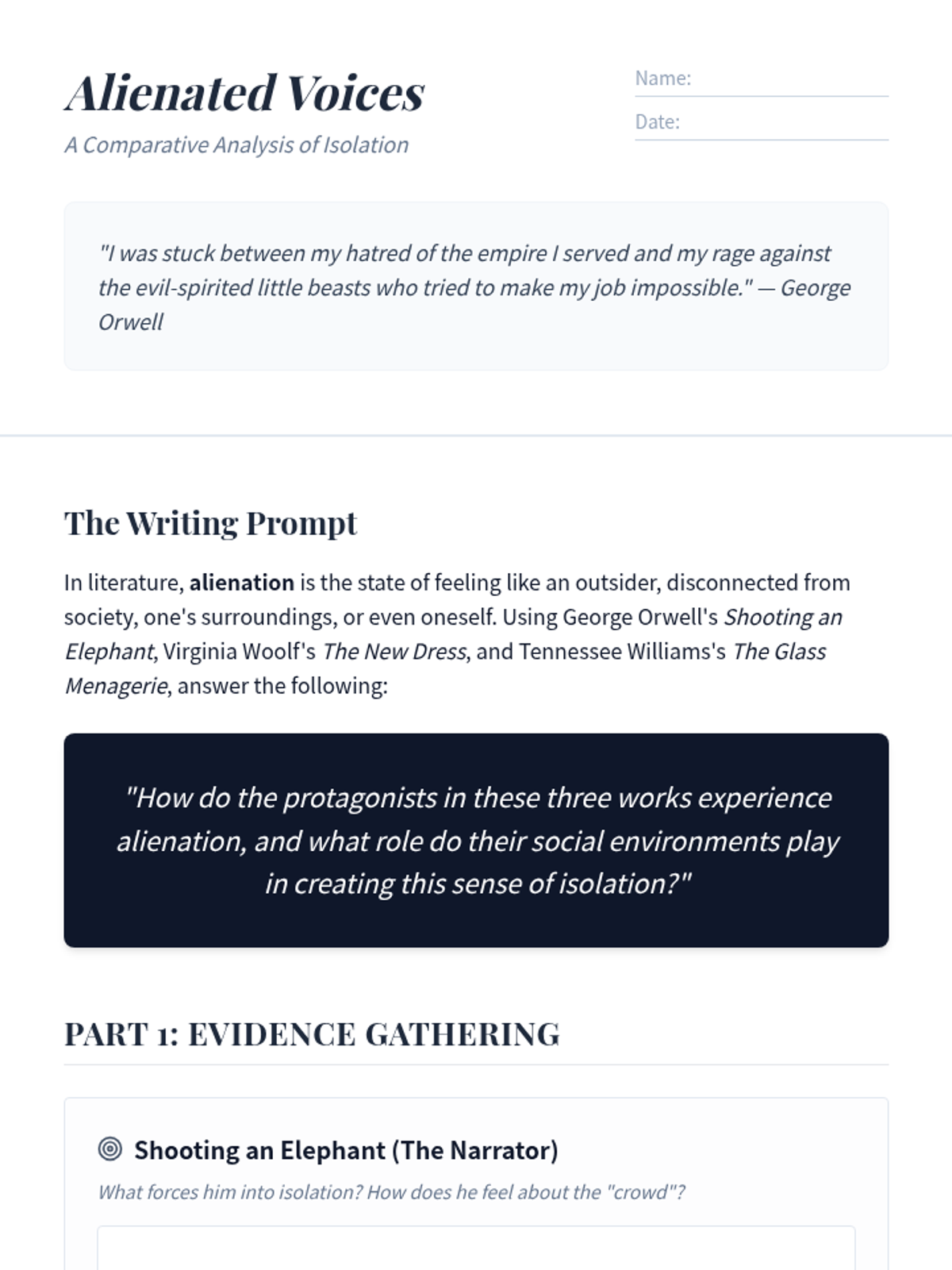
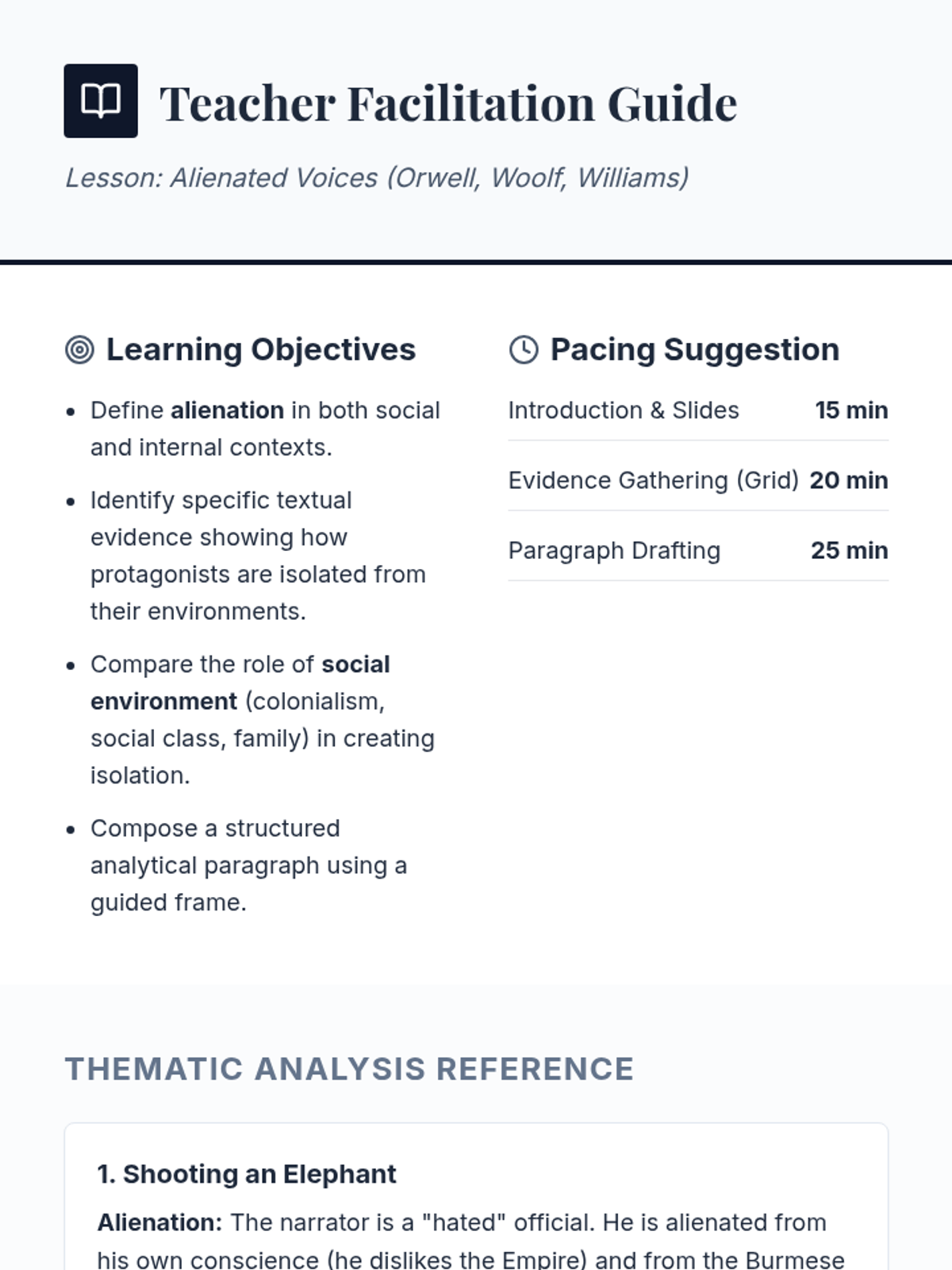
Students analyze the theme of alienation across three classic texts: George Orwell's 'Shooting an Elephant', Virginia Woolf's 'The New Dress', and Tennessee Williams's 'The Glass Menagerie'. They will use a structured frame to craft an analytical paragraph comparing the characters' experiences of isolation.
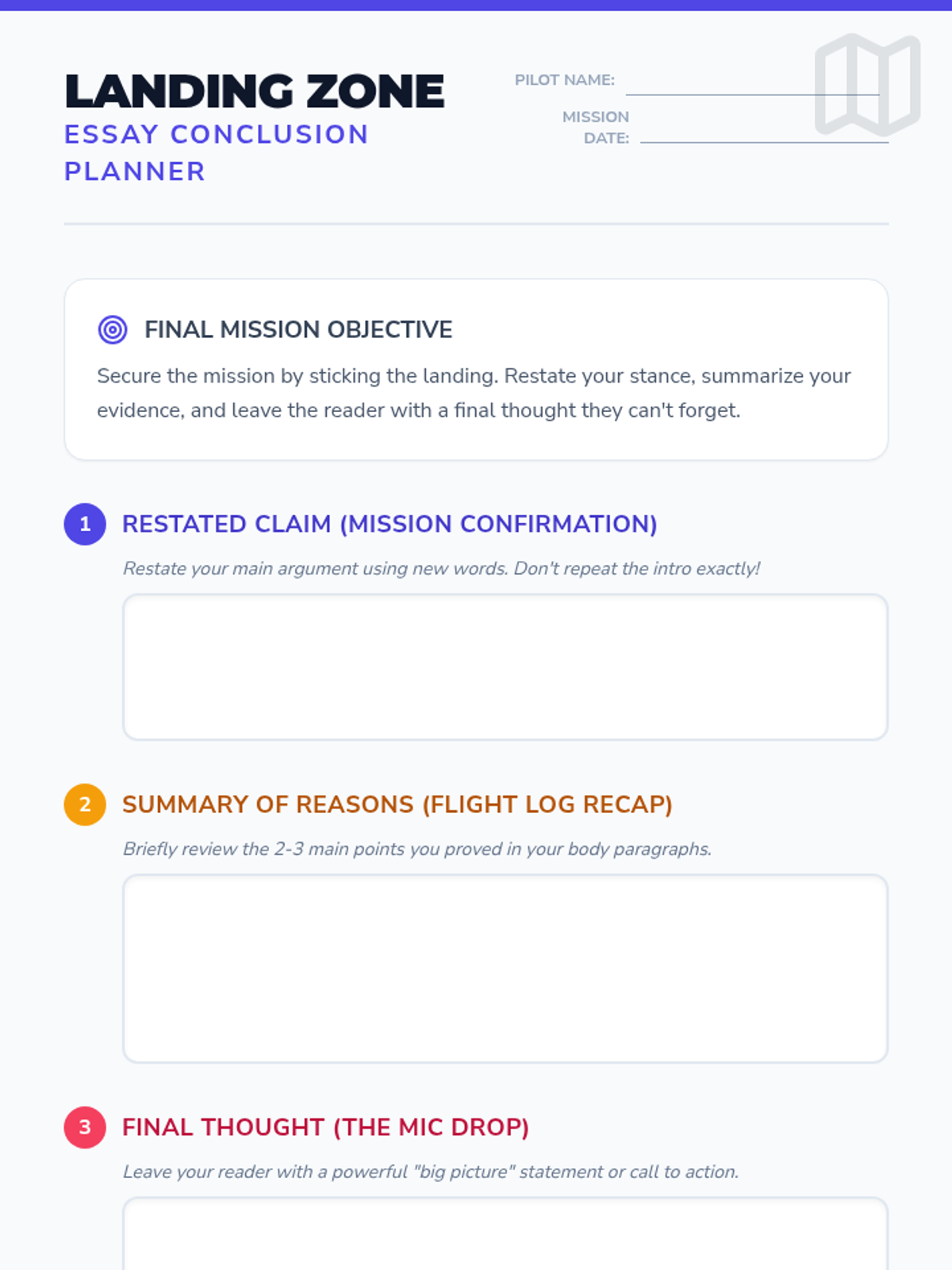
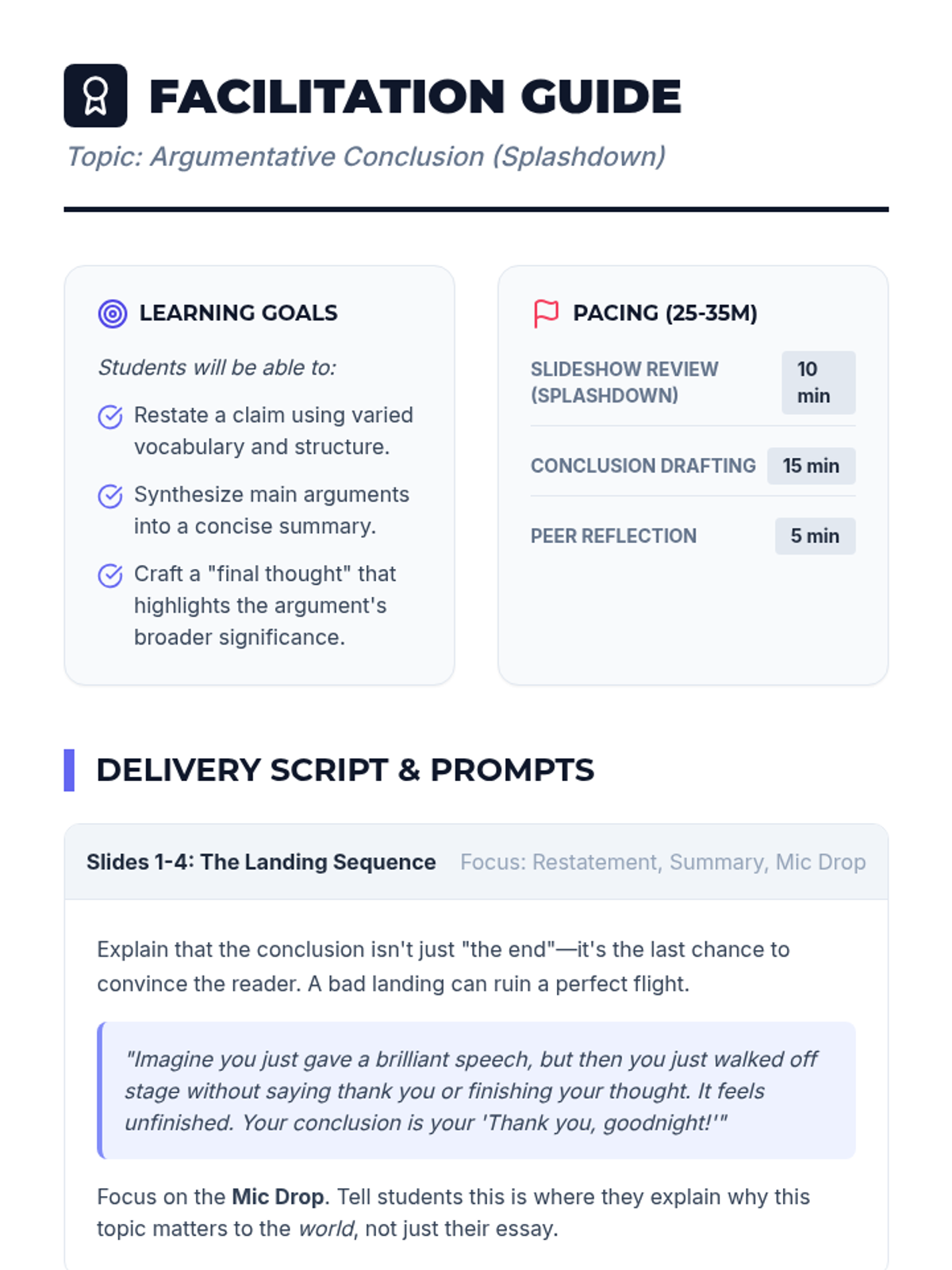
Master the art of closing an argument by restating the claim, summarizing key evidence, and leaving the reader with a powerful final thought. Finalize the mission with a 'mic drop' conclusion.
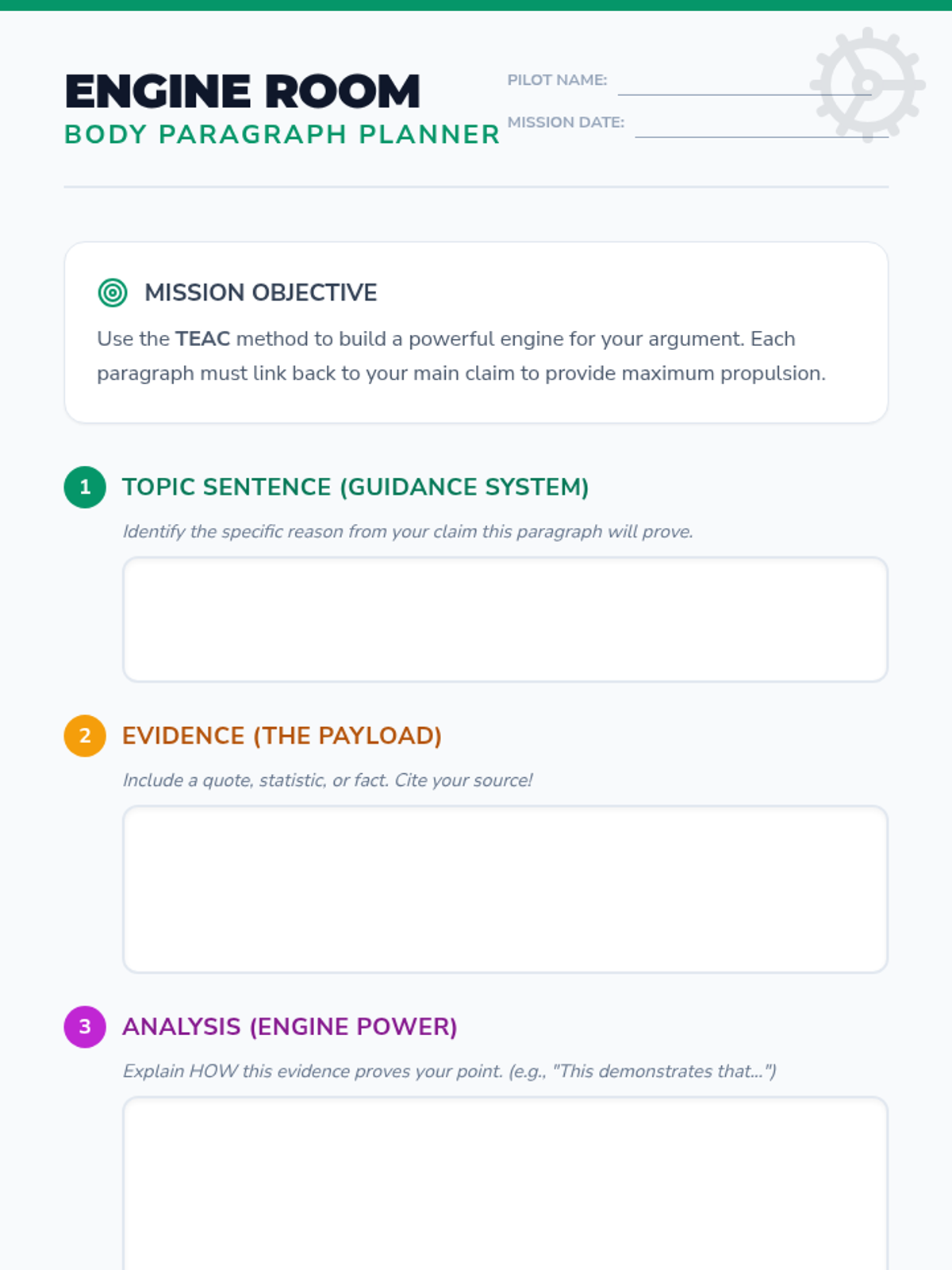
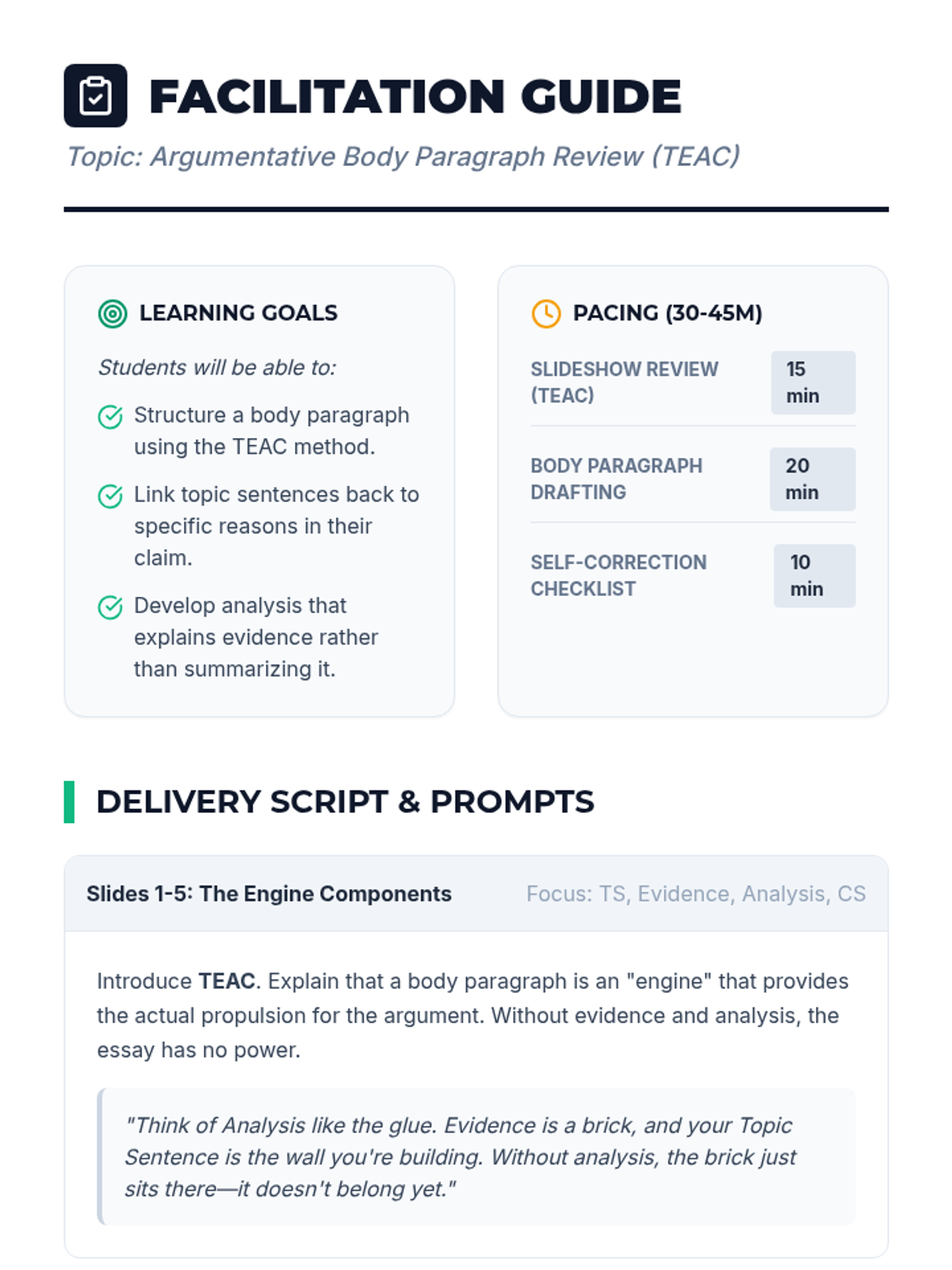
A deep dive into constructing powerful body paragraphs using the TEAC (Topic Sentence, Evidence, Analysis, Concluding Sentence) method. Students will learn to support their claims with evidence and deep reasoning.
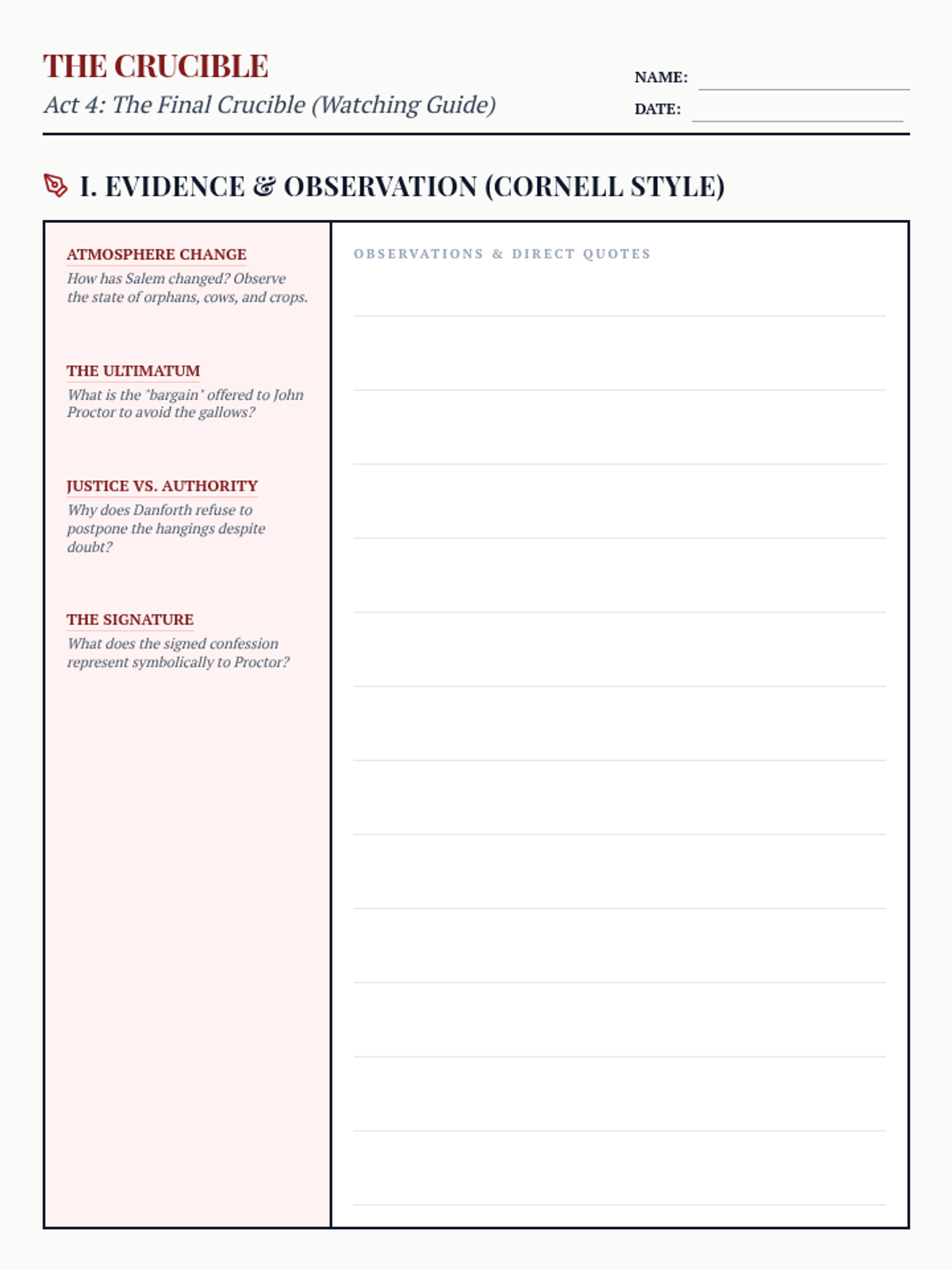
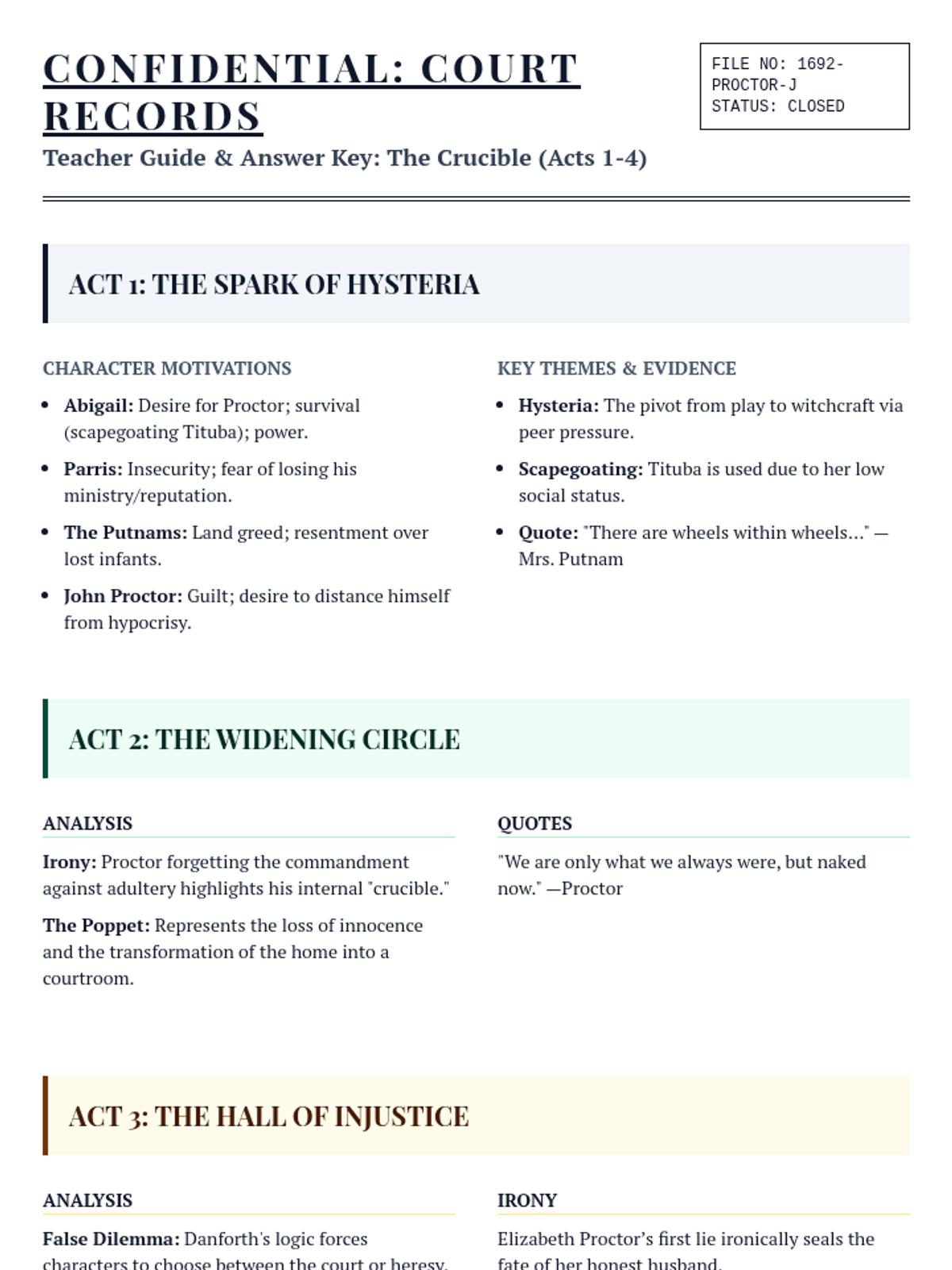
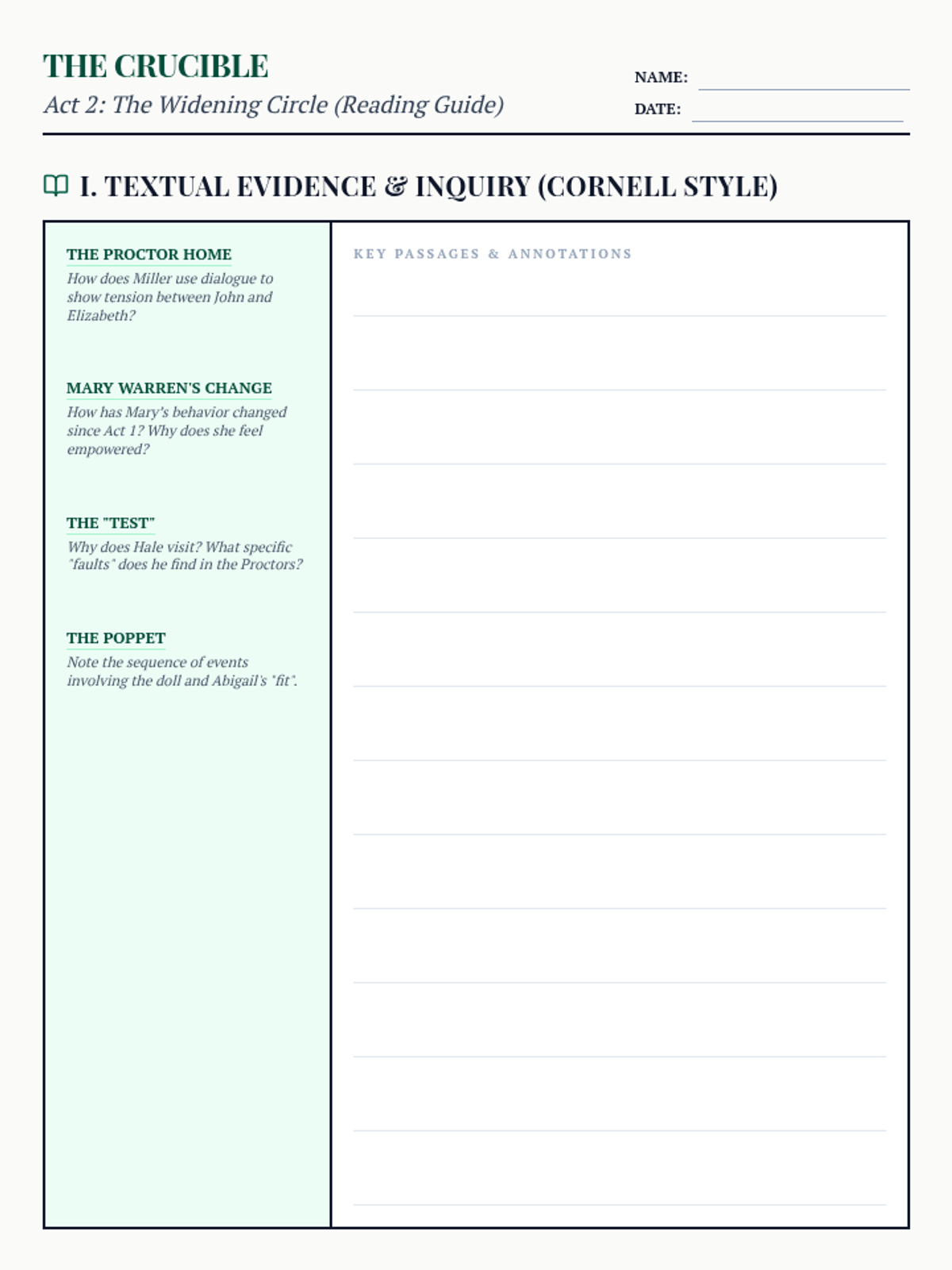
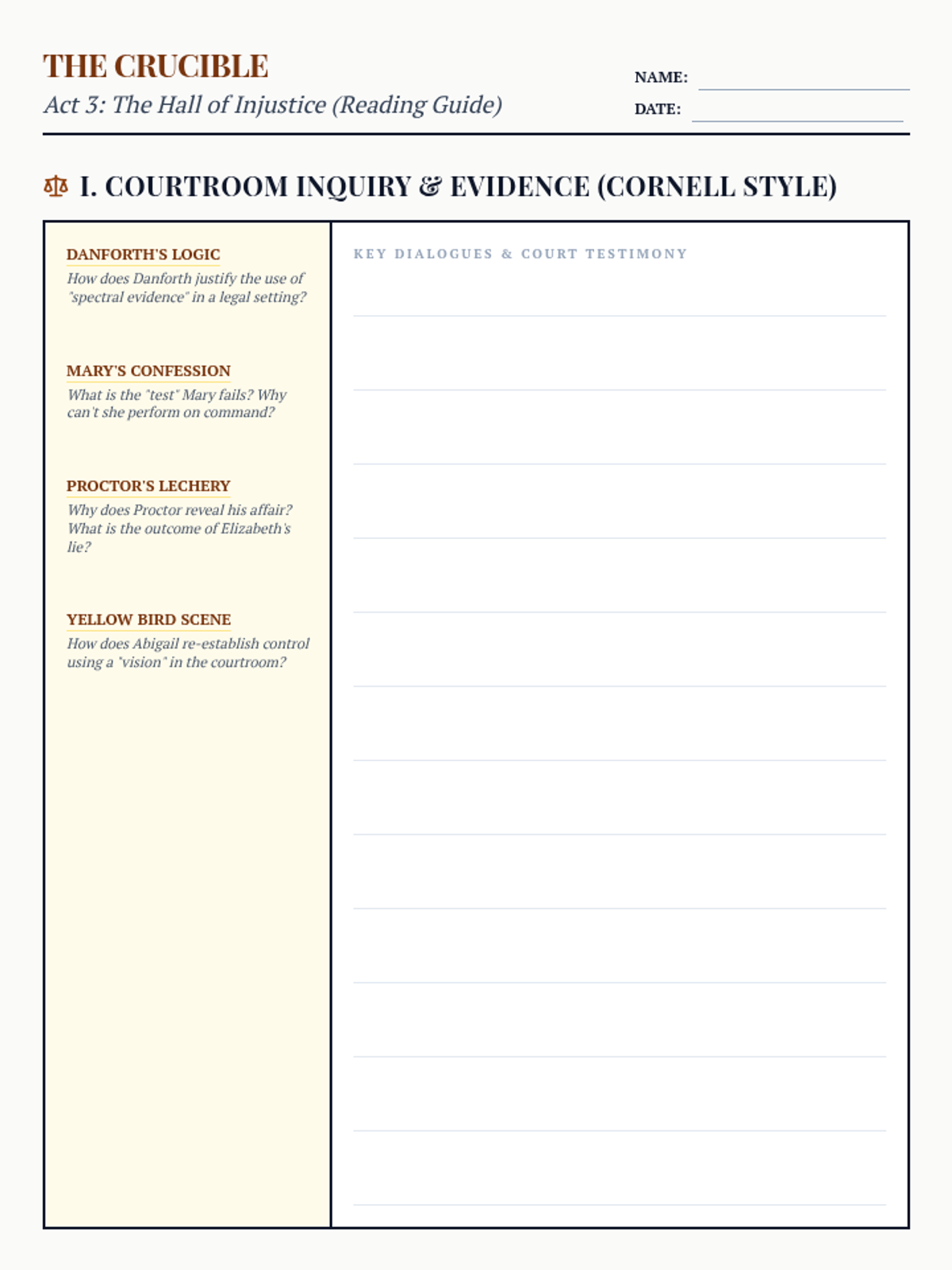
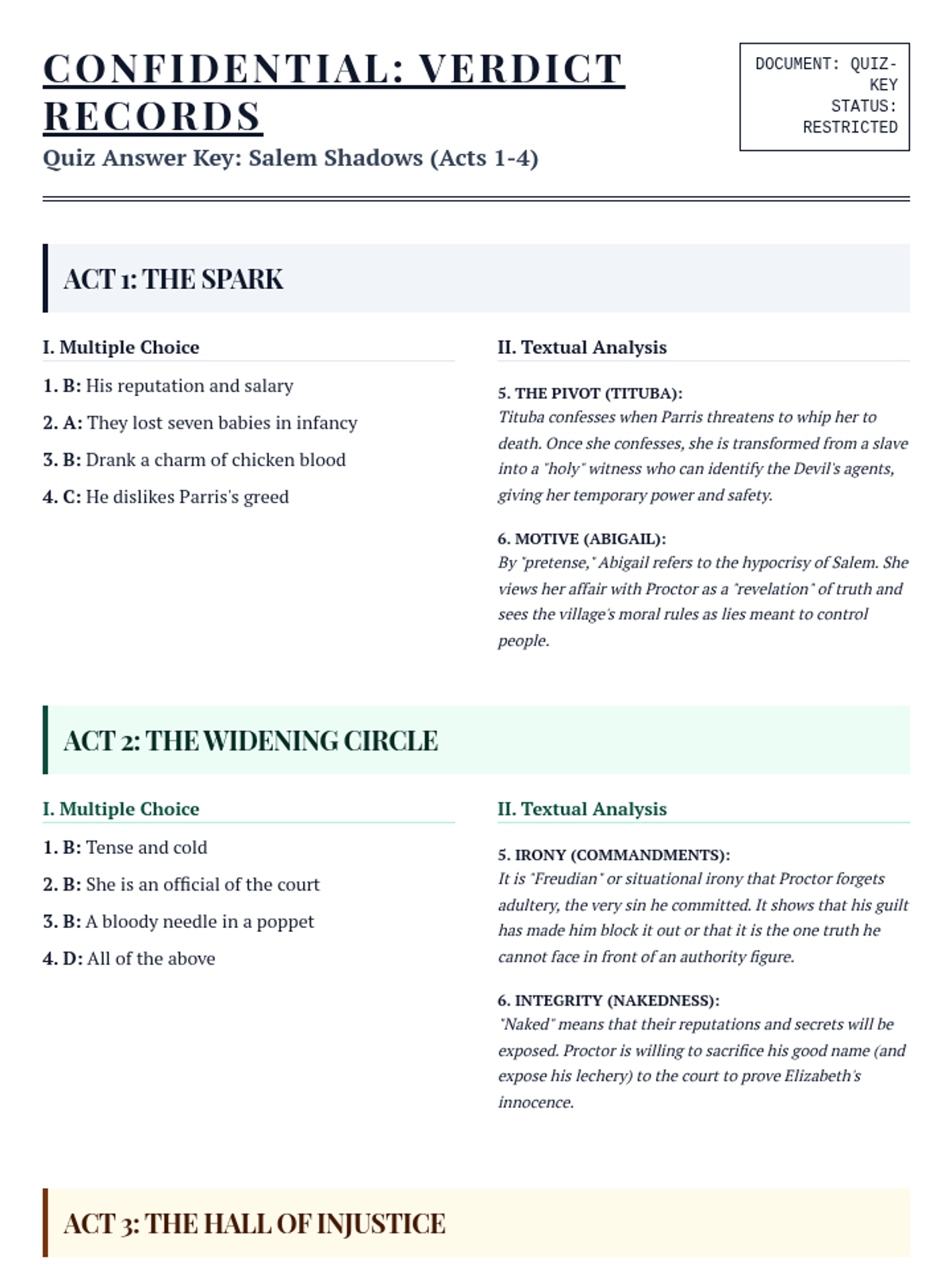
A comprehensive guide for Arthur Miller's 'The Crucible', featuring watching guides for Acts 1 and 4 and independent reading guides for Acts 2 and 3, focusing on the progression of hysteria, character evolution, and thematic analysis.