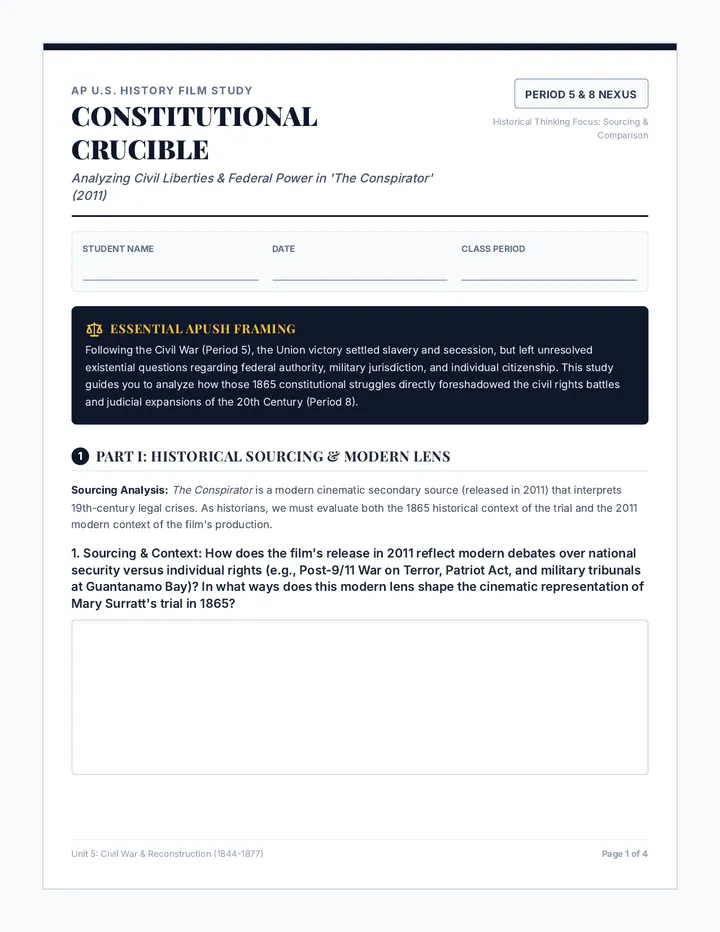
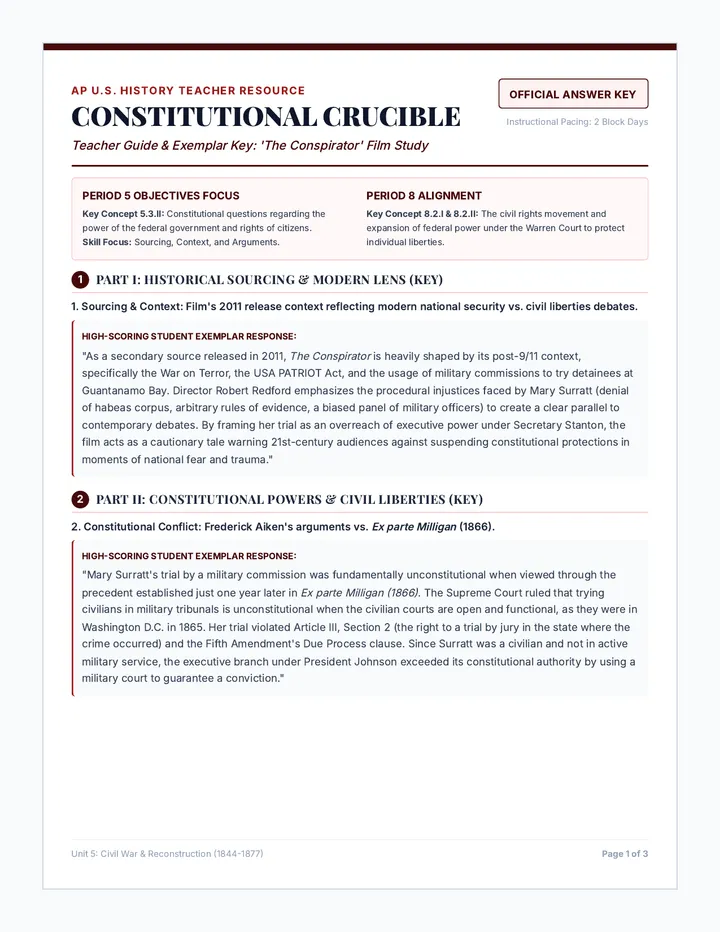
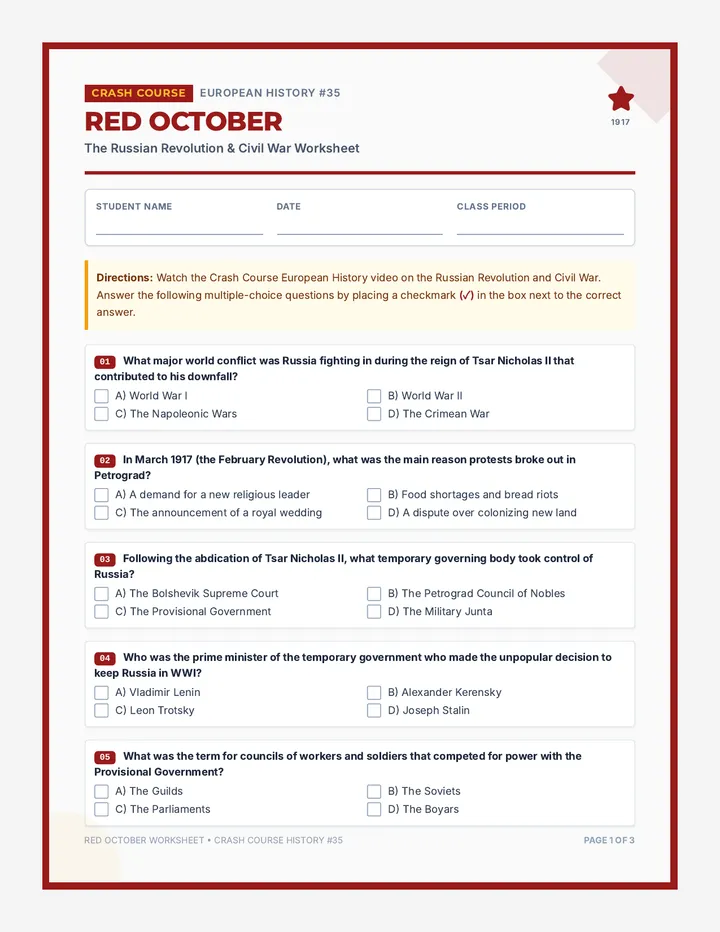
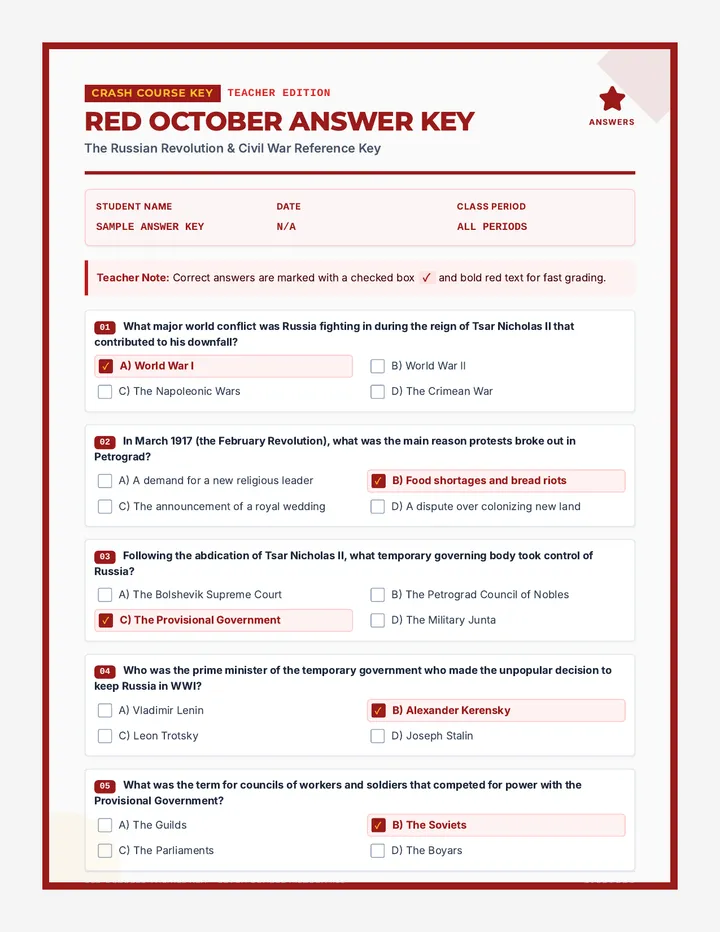
A lesson focused on the social structure and warrior culture of Medieval Japan, specifically designed with scaffolds for special education students to analyze the Shogun, Samurai, and the code of Bushido.
A comprehensive lesson exploring the Cuban Refugee Crisis through music, primary source analysis, and historical context, focusing on the human experience of displacement and the resilience of the Cuban-American community.
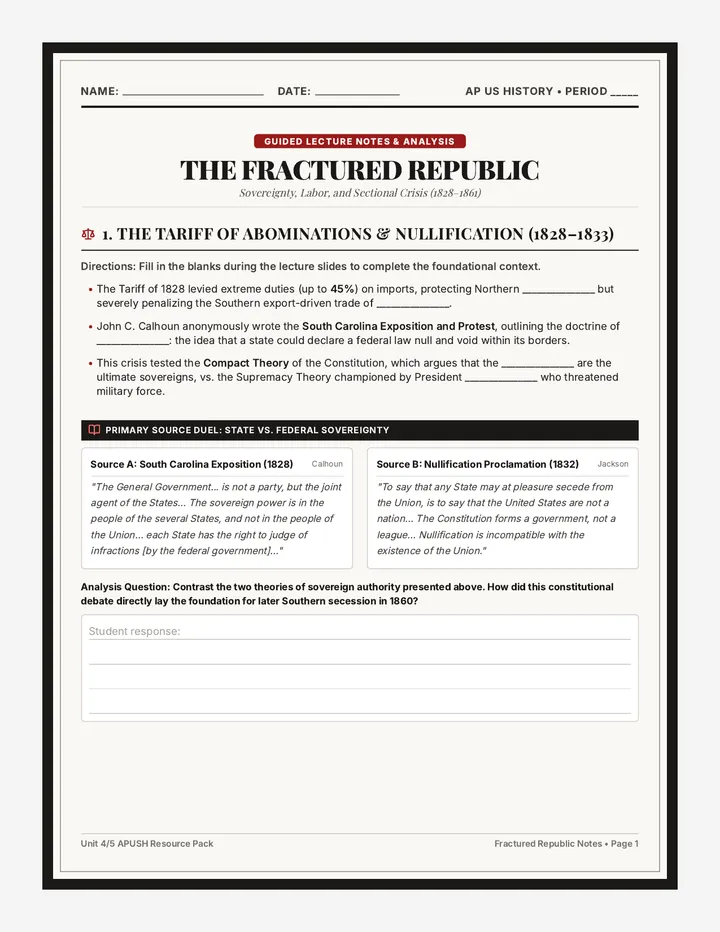
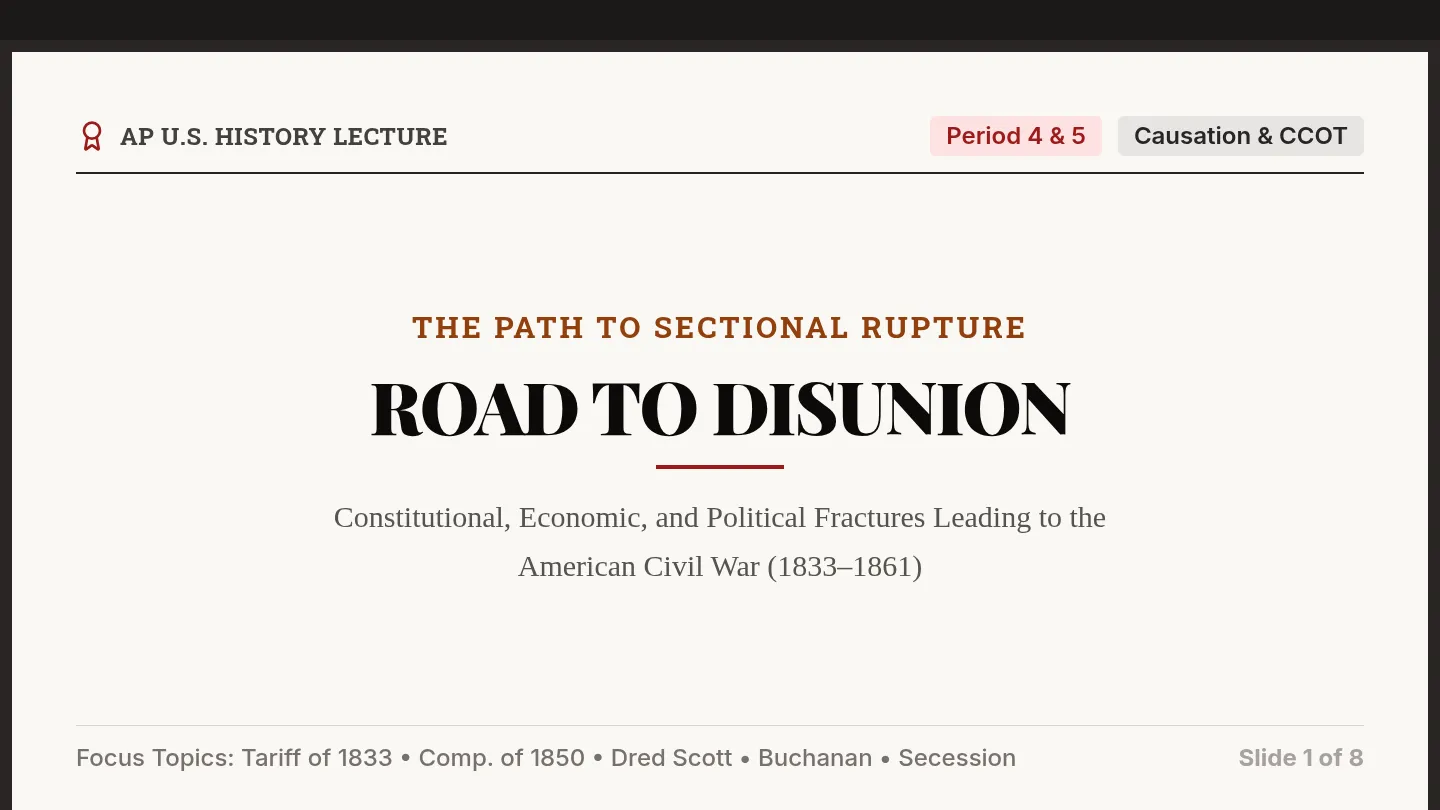
This lesson examines the historiography of the American Civil War, challenging students to compare and contrast various historical interpretations of the conflict's origins, including slavery, states' rights, and economic sectionalism.
A simplified introduction to the Magna Carta for special education students, focusing on the limitation of royal power and the birth of basic rights through visual aids and modified texts.
Introduces the Power and Progress curriculum structure, the four major units, and the core historical skills for the course.
Focuses on the Civil Rights movement and the development of contemporary American domestic and foreign policy.
Examines the impact of World War II, the subsequent economic boom, and the tension of the Cold War era.
Explores America's rise as a world power, the cultural shifts of the 1920s, and the economic challenges of the Great Depression.
Covers the founding of the nation, the impact of religion, and the shift into industrialization and immigration.
A 3-week unit on the Industrial Revolution, exploring the transition from hand-made to machine-made goods and the resulting changes in city life and labor.
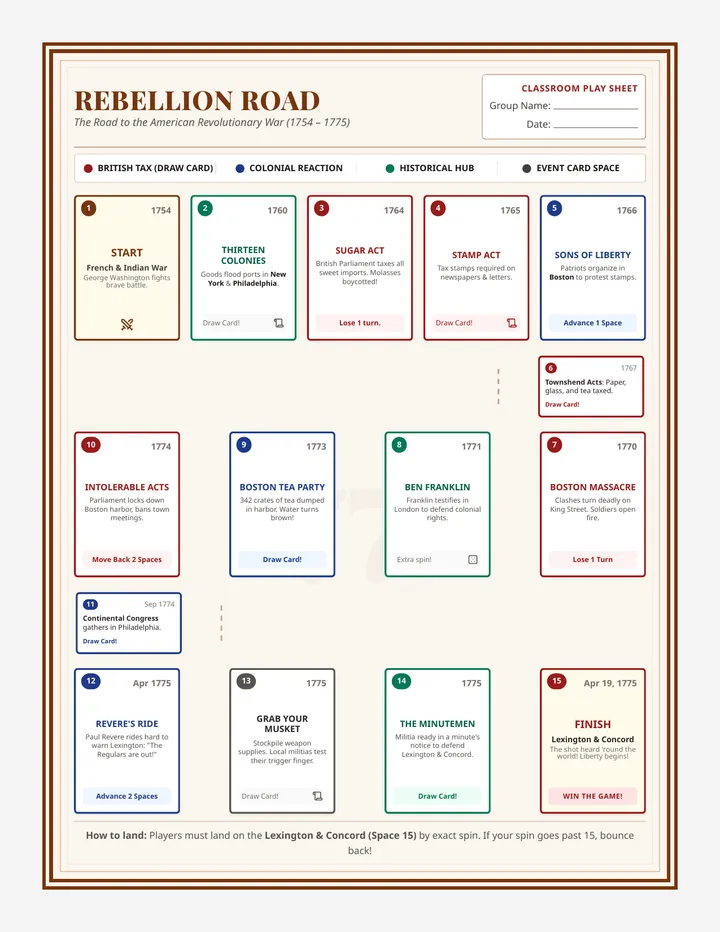
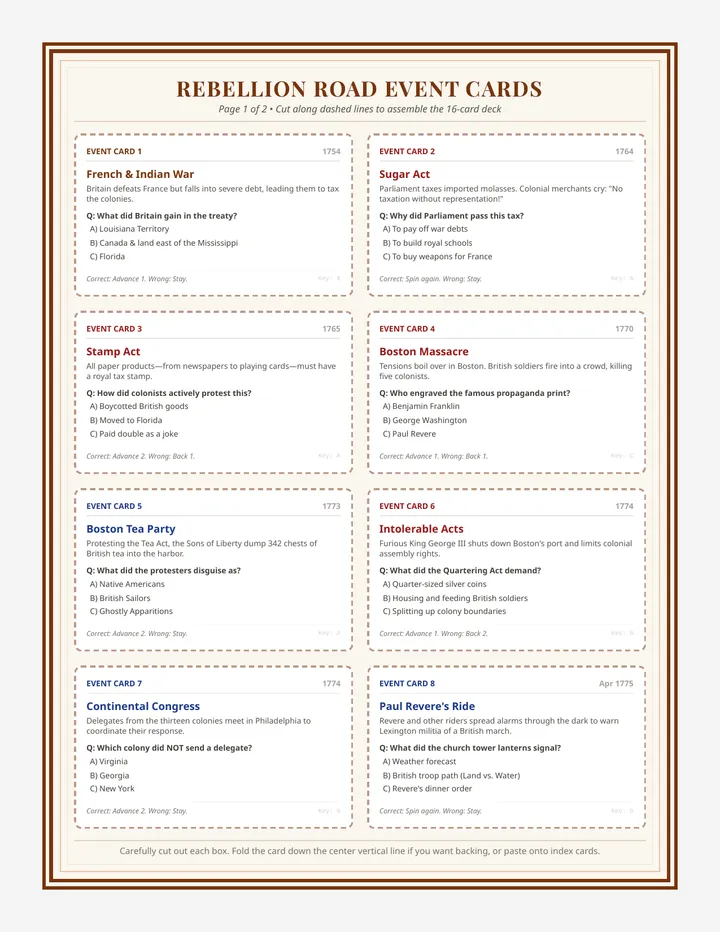
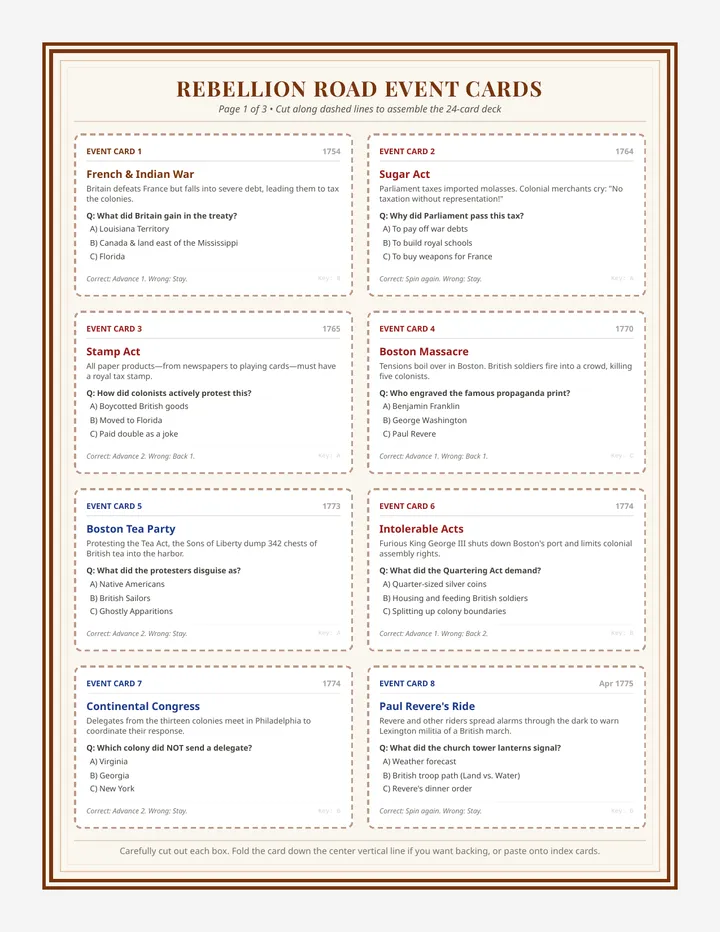
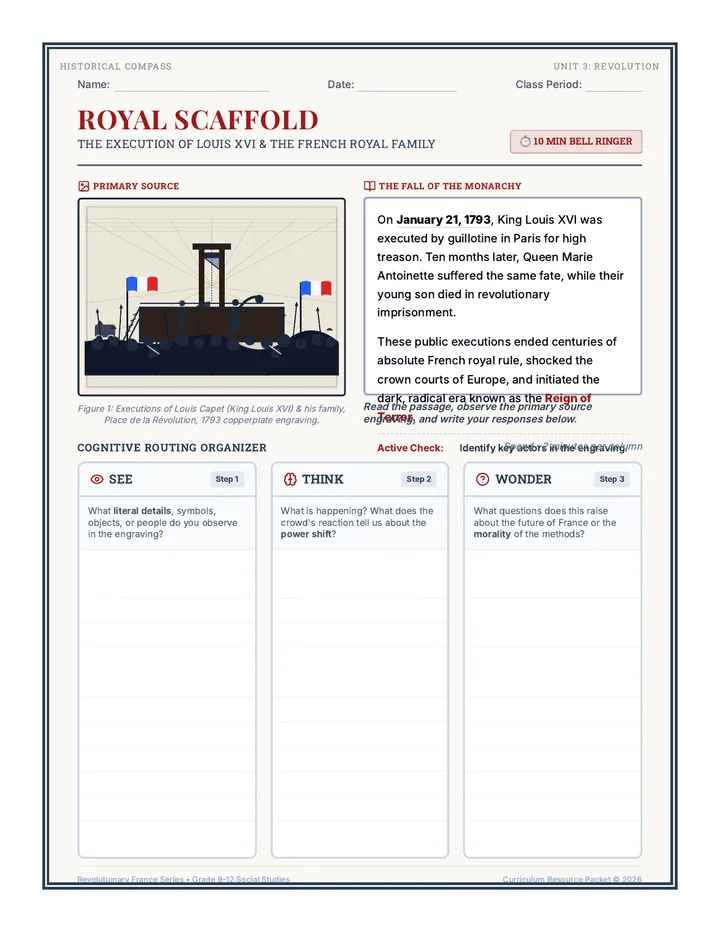
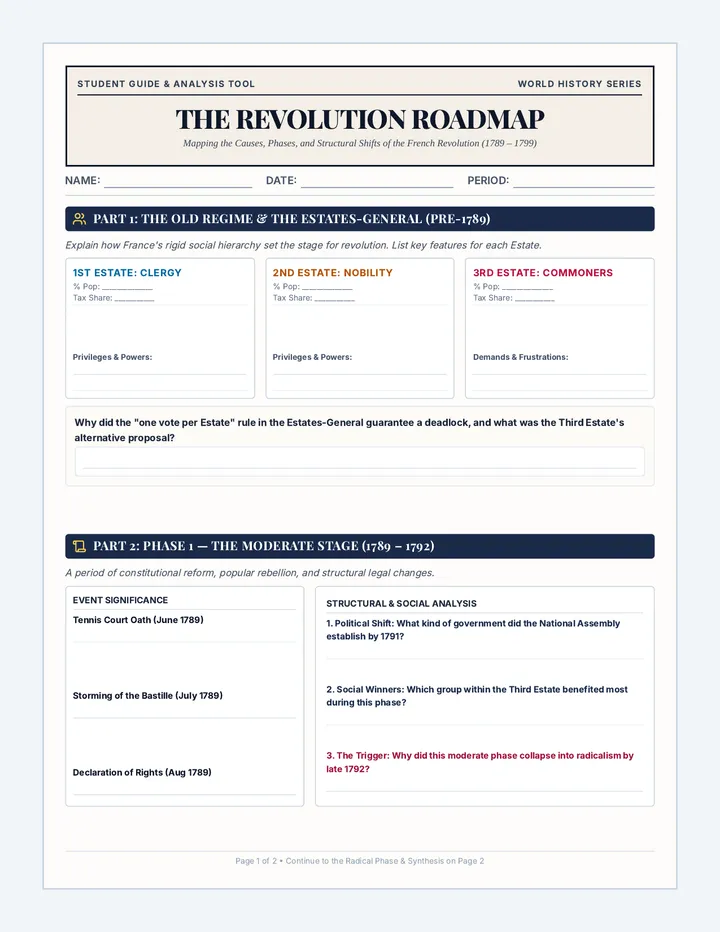
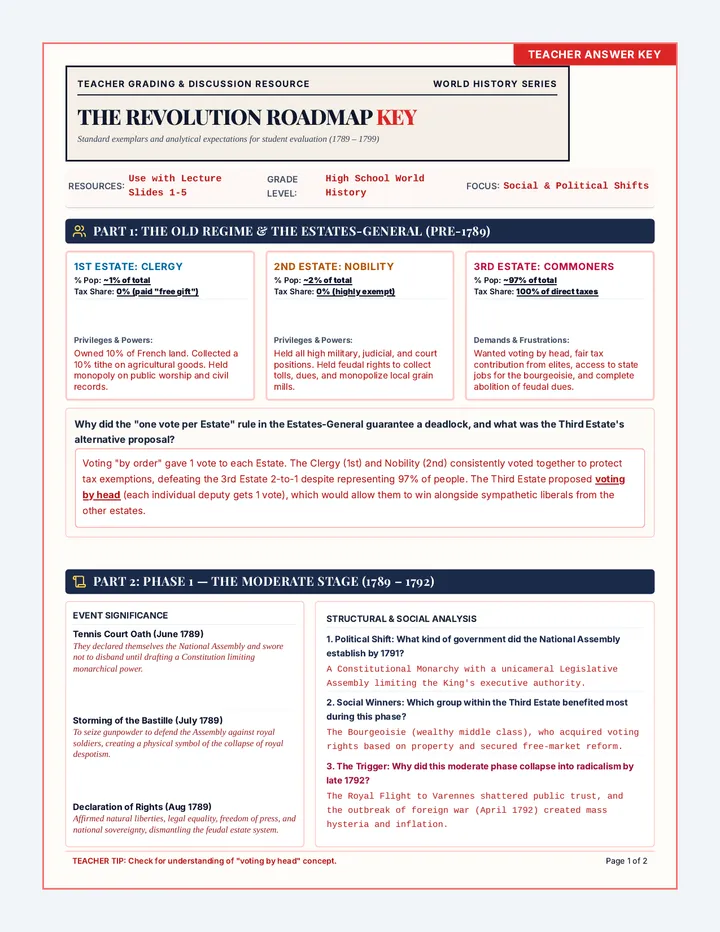
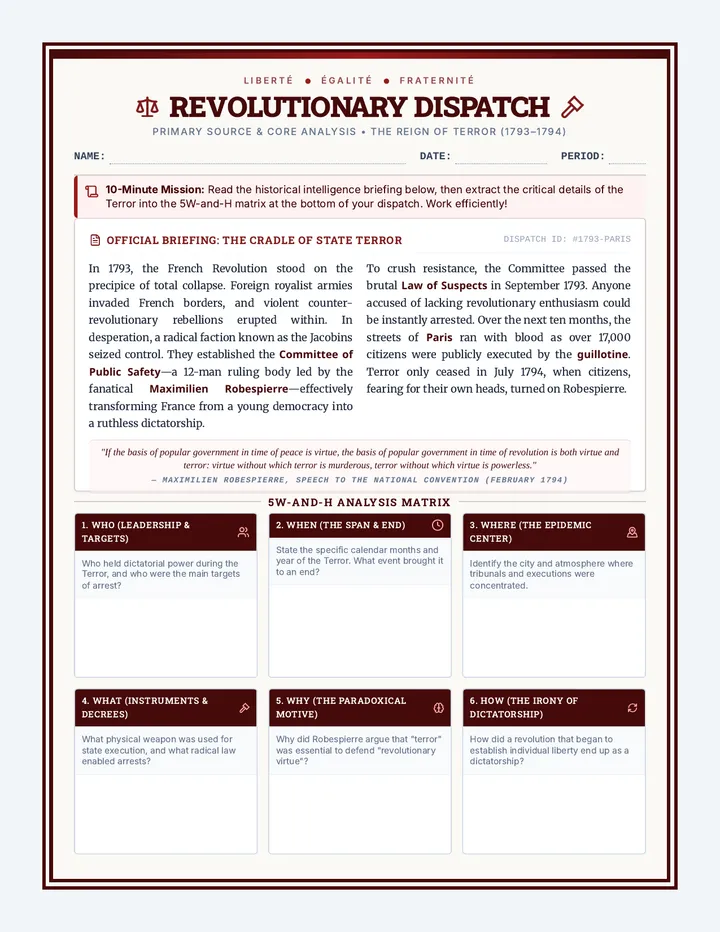
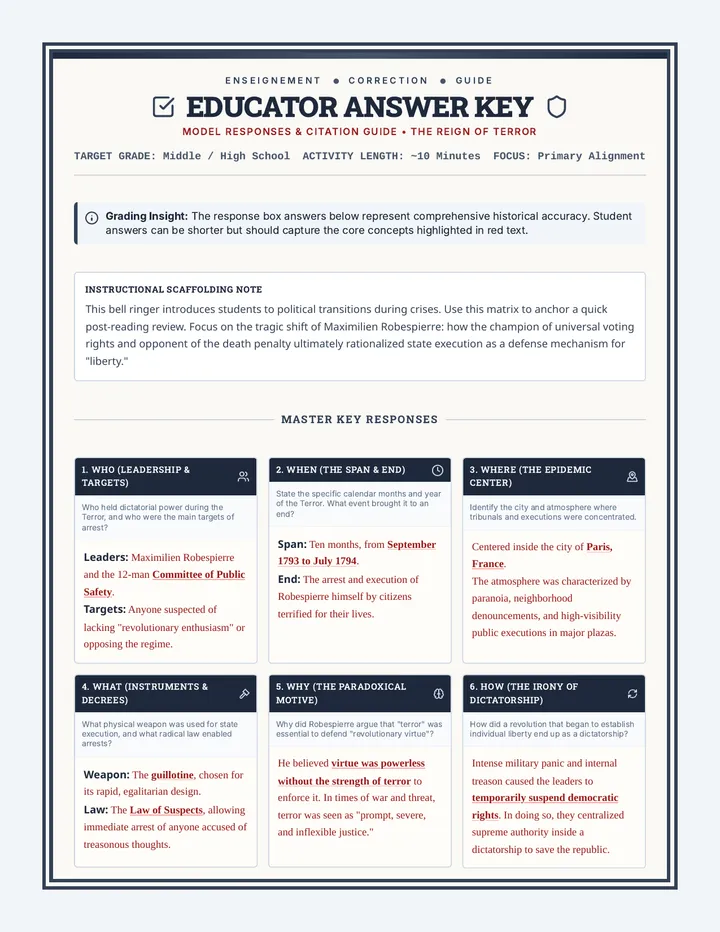
A 4-week unit comparing the American and French Revolutions, focusing on the fight for liberty and the documents that defined new nations.
A 3-week unit exploring the origins of democracy in Ancient Greece and Rome, and the impact of Judeo-Christian and Greco-Roman philosophies on modern government.
A 3-week unit covering the Scientific Revolution and the Enlightenment, focusing on how reason and science changed how people viewed the world and government.
Focuses on modern world history through the lens of human rights and global systems, emphasizing cause and effect and primary source analysis for high school SPED students.
An exploration of John Searle's famous thought experiment, examining the distinction between syntax and semantics and the debate over Strong Artificial Intelligence.
A lesson comparing the New England, Middle, and Southern colonies to provide context for the factors leading to the American Revolution.
A 50-minute high school US History lesson exploring how enslaved African Americans used spirituals and poetry as tools of psychological and physical resistance. Students will analyze coded lyrics and connect them to the abolitionist poetry of Frances Ellen Watkins Harper.
An 8th-grade U.S. History lesson focusing on the economic and military motivations behind the annexation of Hawaii, featuring the overthrow of Queen Lili\u02bbuokalani.
A lesson exploring the complex roles and motivations of African Americans during the American Revolution, focusing on the gap between the ideals of liberty and the reality of continued slavery.
A deep dive into the social structures, urban realities, and cultural rhythms of Ancient Rome, providing the foundational context for European historical development.
An introductory lesson focused on the Preamble to the U.S. Constitution, helping students analyze the source of authority and the specific goals of the American government through guided annotation and critical thinking.
A comprehensive 45-minute exploration into the multifaceted impacts of armed conflict, covering human, economic, social, and environmental costs that persist long after the fighting stops.
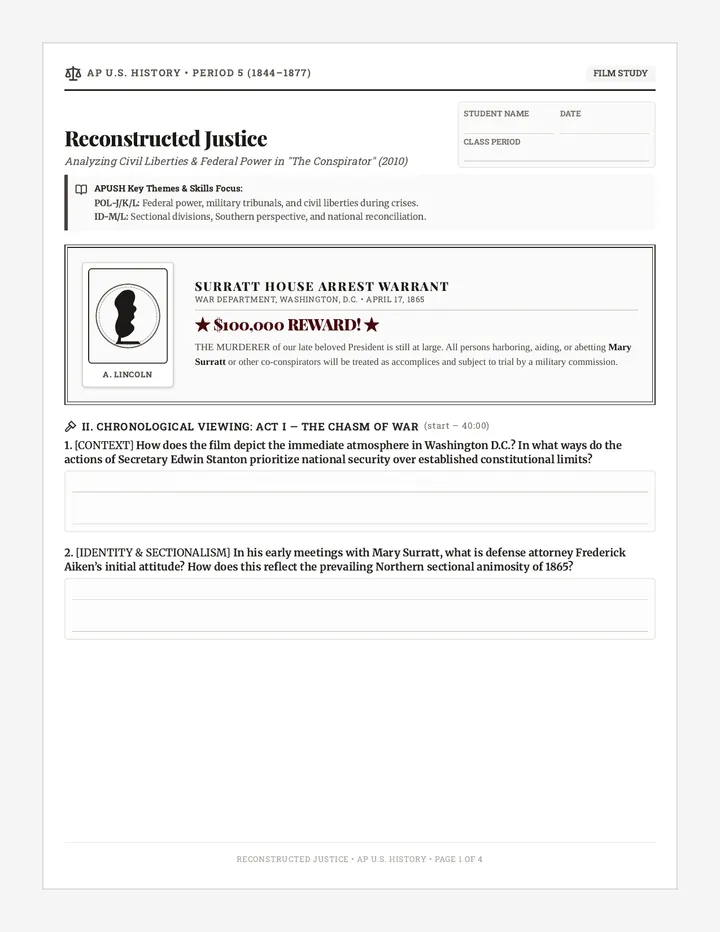
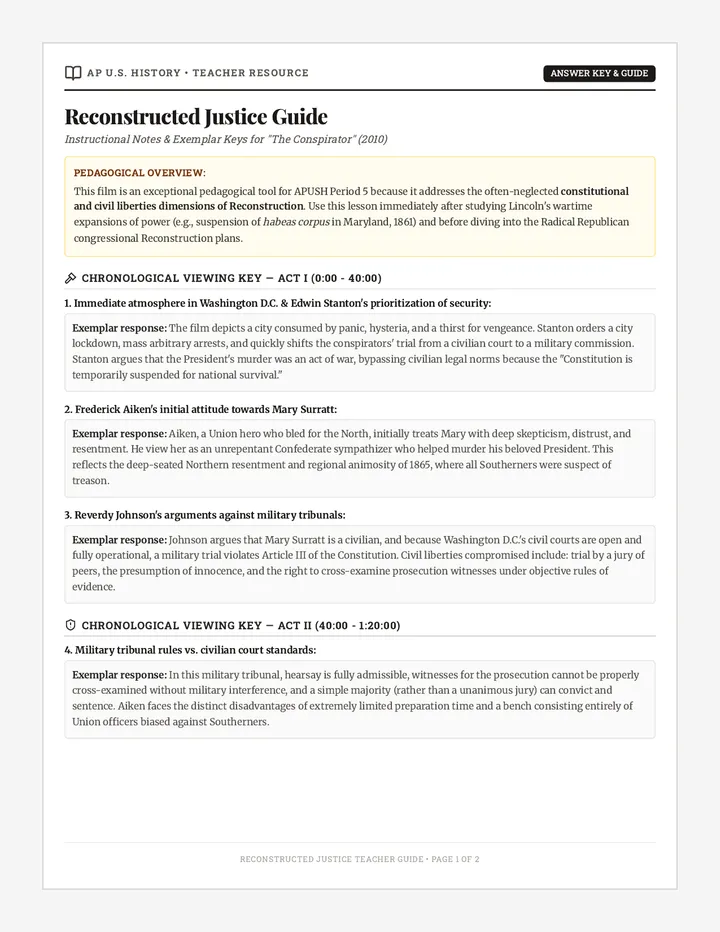
A deep dive into Abraham Lincoln's transformative leadership, focusing on his cabinet management, rhetorical brilliance, and strategic evolution during the American Civil War.
An in-depth exploration of Abraham Lincoln's political philosophy, focusing on the expansion of federal power, wartime leadership, and his economic vision for a modernized America. Students analyze cause-and-effect relationships within 19th-century American governance.
A comprehensive lesson covering the presidencies of Nixon, Ford, Carter, and Reagan, focusing on key events, scandals, economic shifts, and the rise of conservatism. Students engage with primary sources and data to analyze the changing landscape of late 20th-century America.
A comprehensive exploration of the 1990s through the modern day, covering technological shifts, political milestones, military conflicts, and cultural evolution in the United States.
A comprehensive look at Leif Erikson's life, his voyage to Vinland, and his legacy as the first European to reach North America. Students will explore historical sagas and archaeological evidence.