Students analyze Josef Albers' 'Interaction of Color' and execute precision experiments to demonstrate how contextual placement alters color perception.
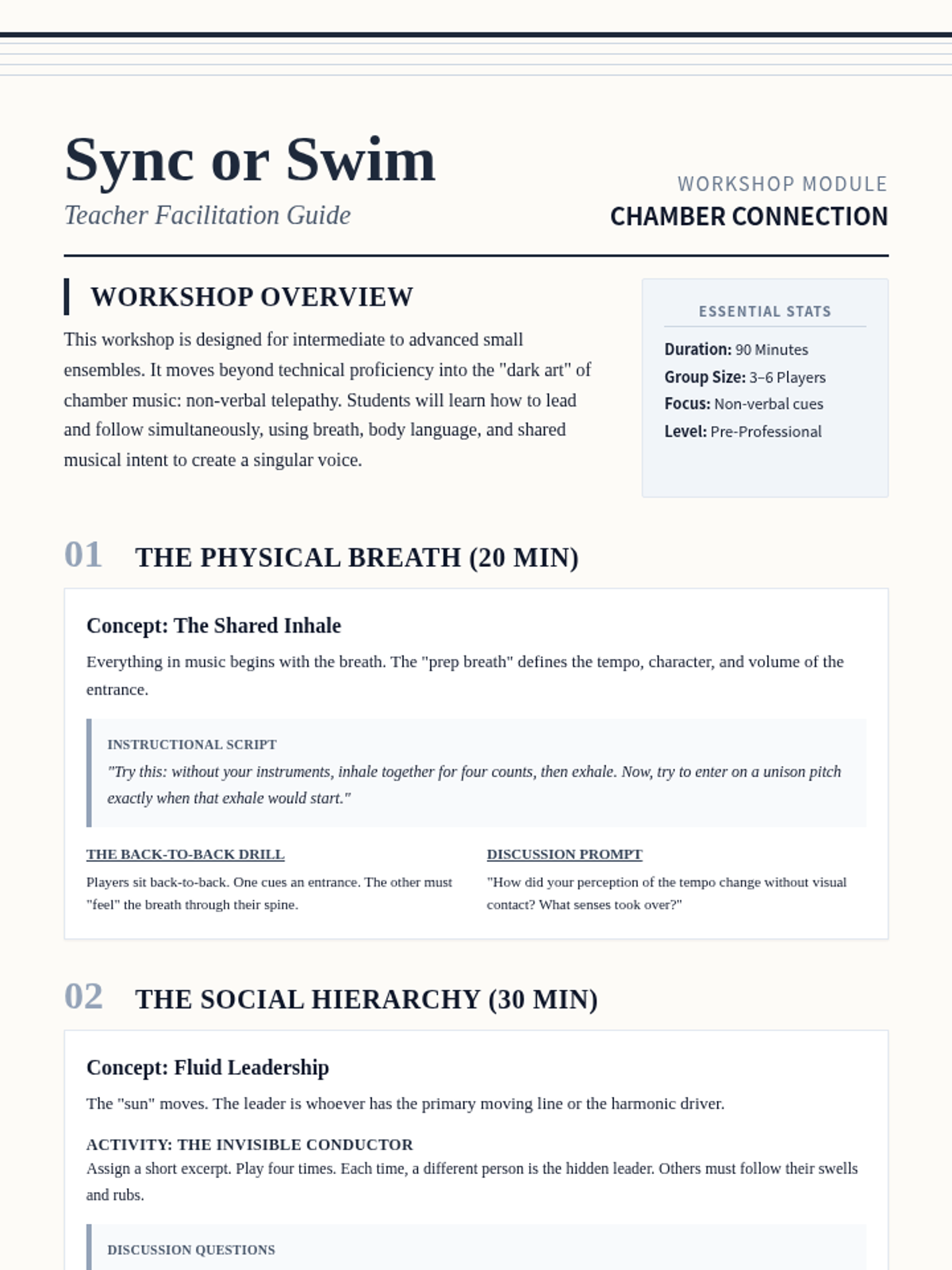
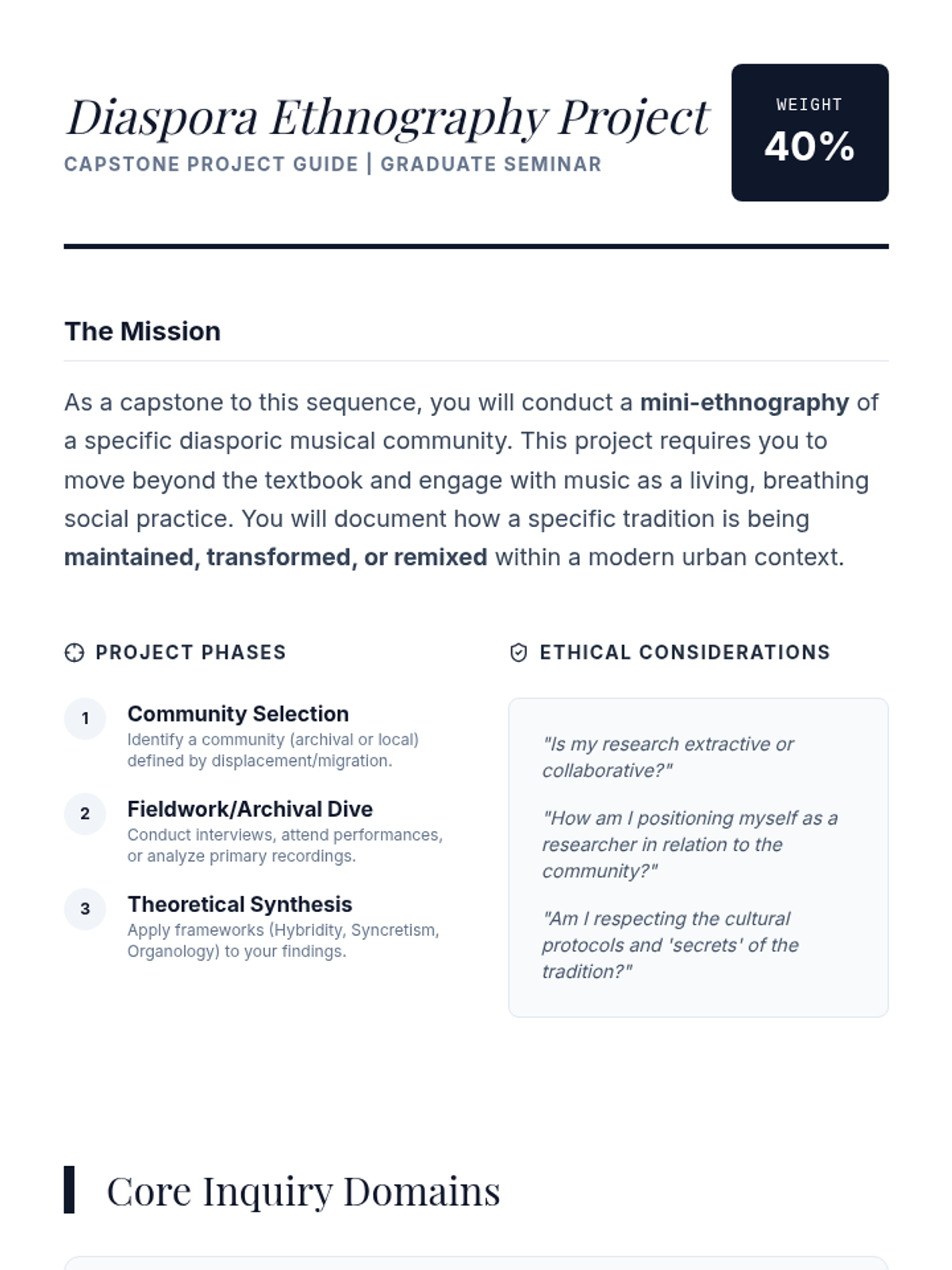
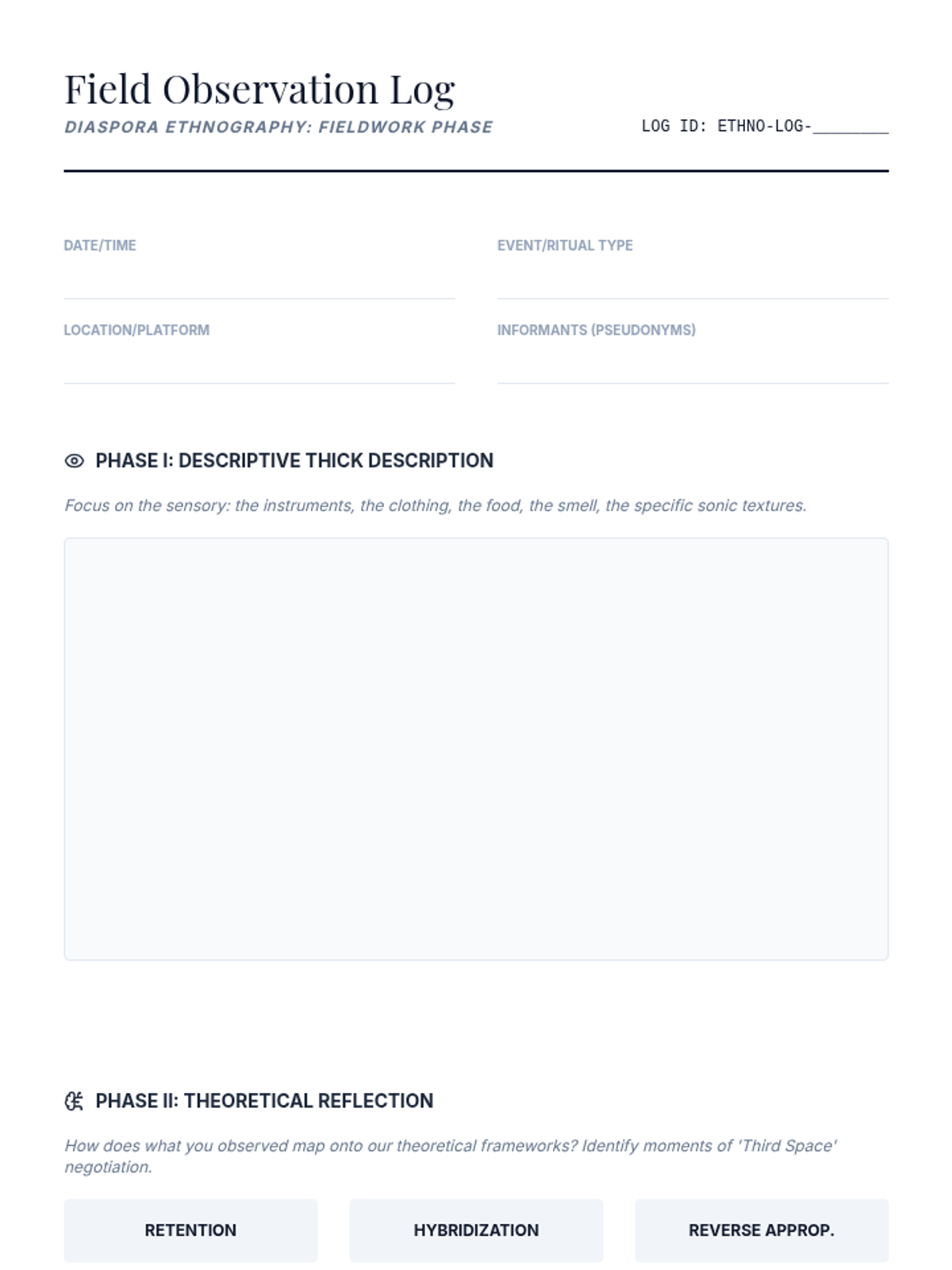
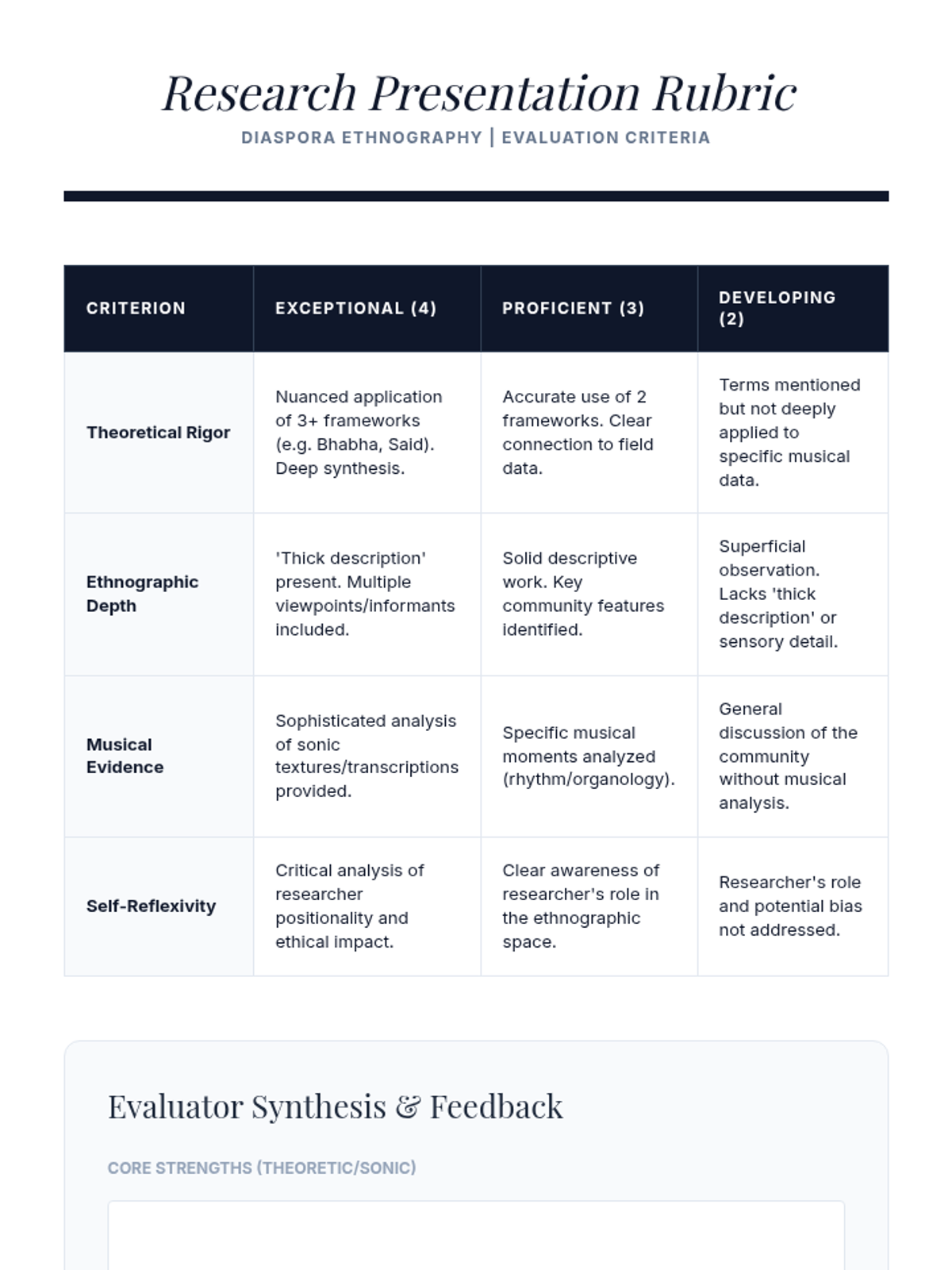
A project-based lesson where students design and conduct a mini-ethnography of a diasporic musical community, synthesizing theoretical frameworks into a research presentation.
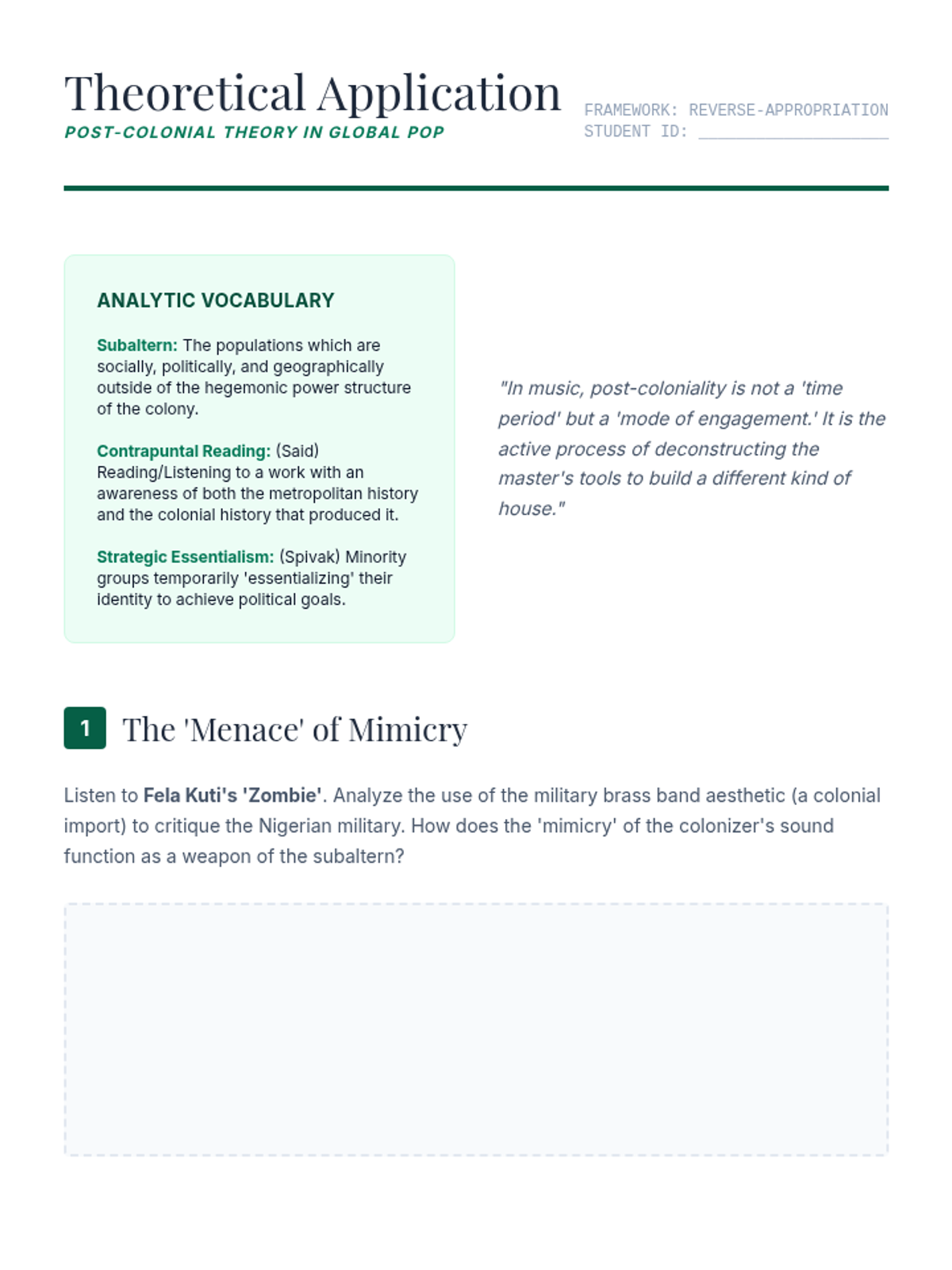
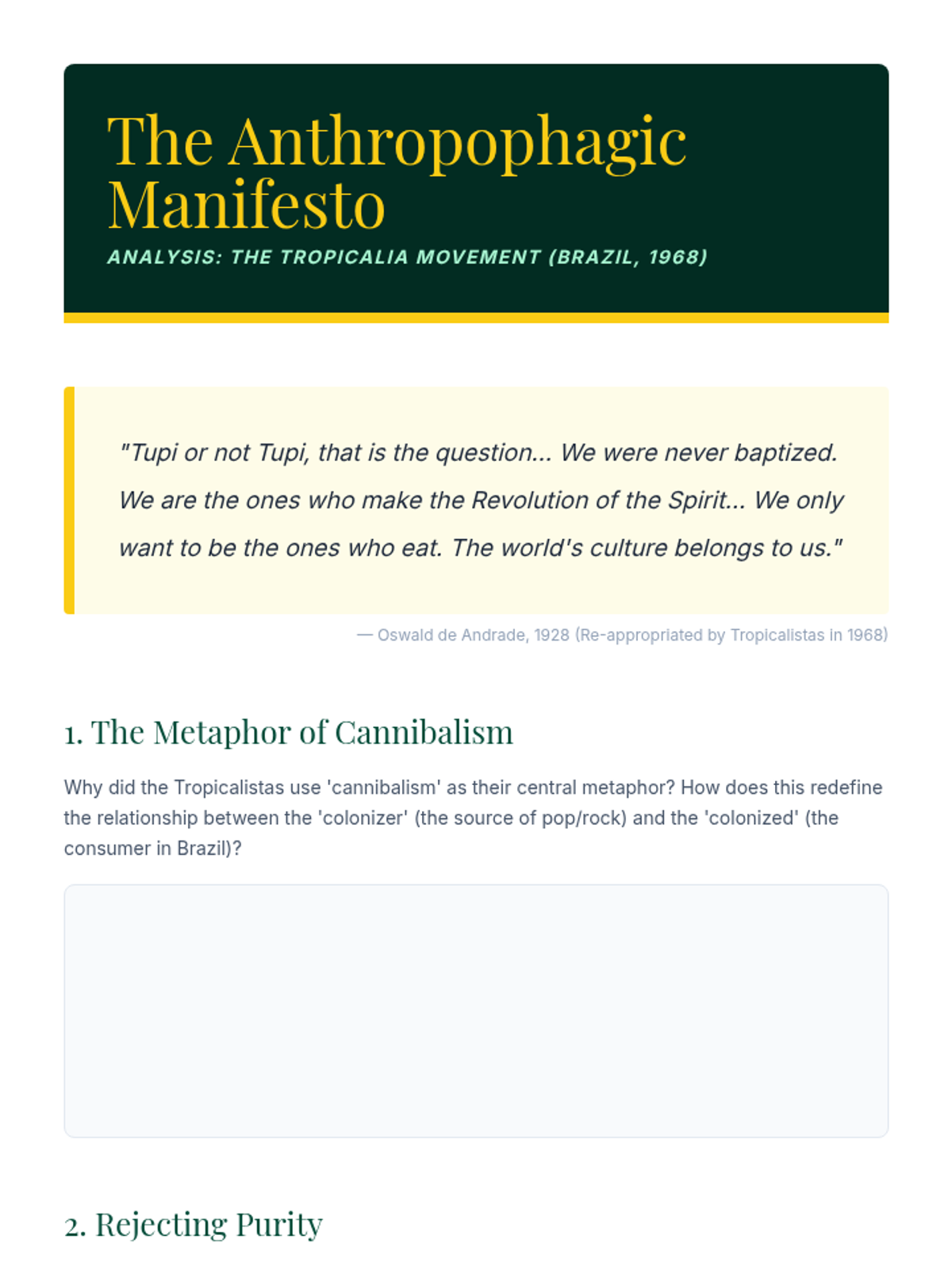
Applying post-colonial theory to late 20th-century global pop, exploring how formerly colonized nations reclaimed and remixed colonial instruments to assert cultural identity.

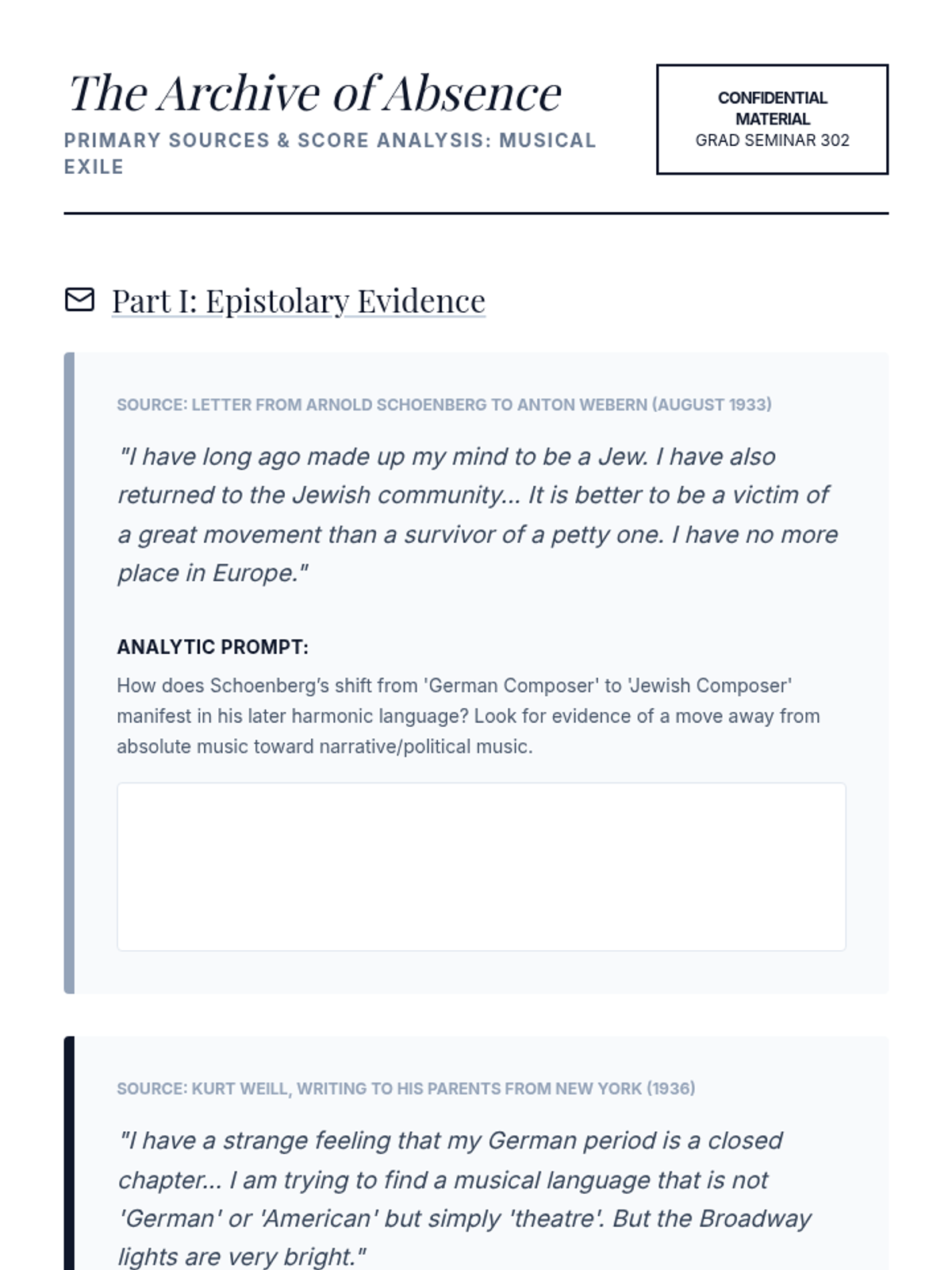
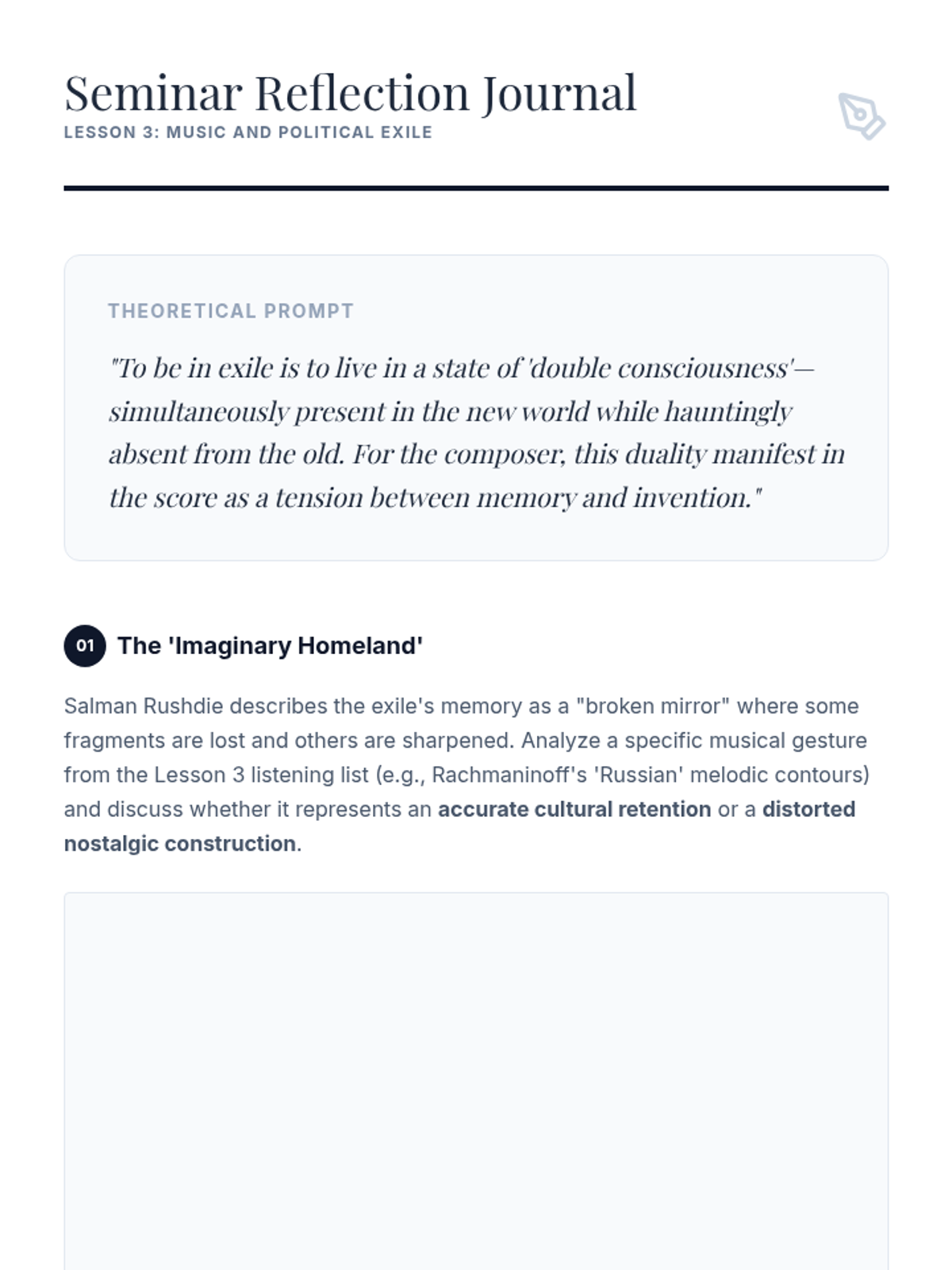
Investigating the impact of political displacement on 20th-century composers, examining how exile and the search for 'homeland' manifest in musical style and creative output.
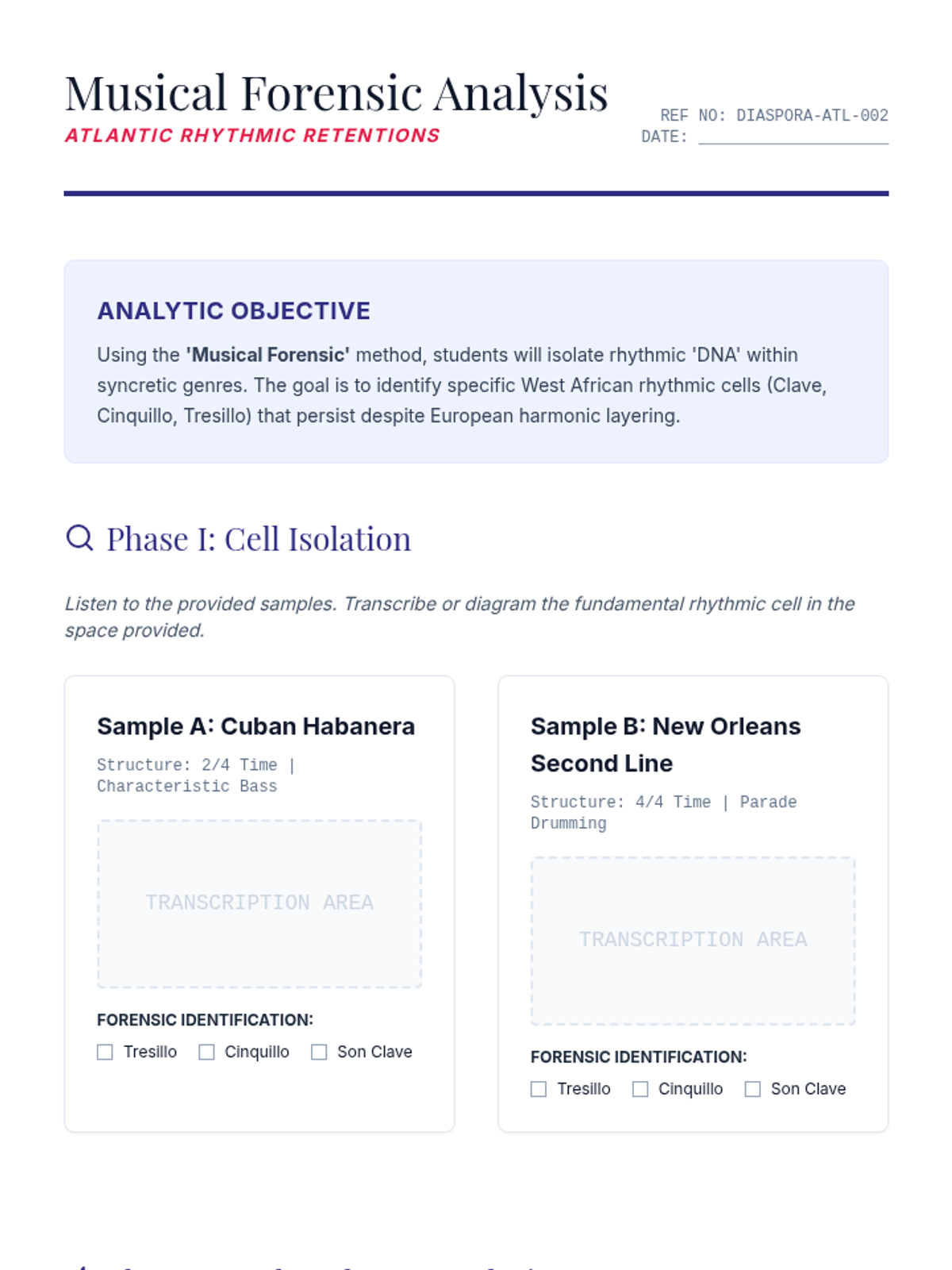
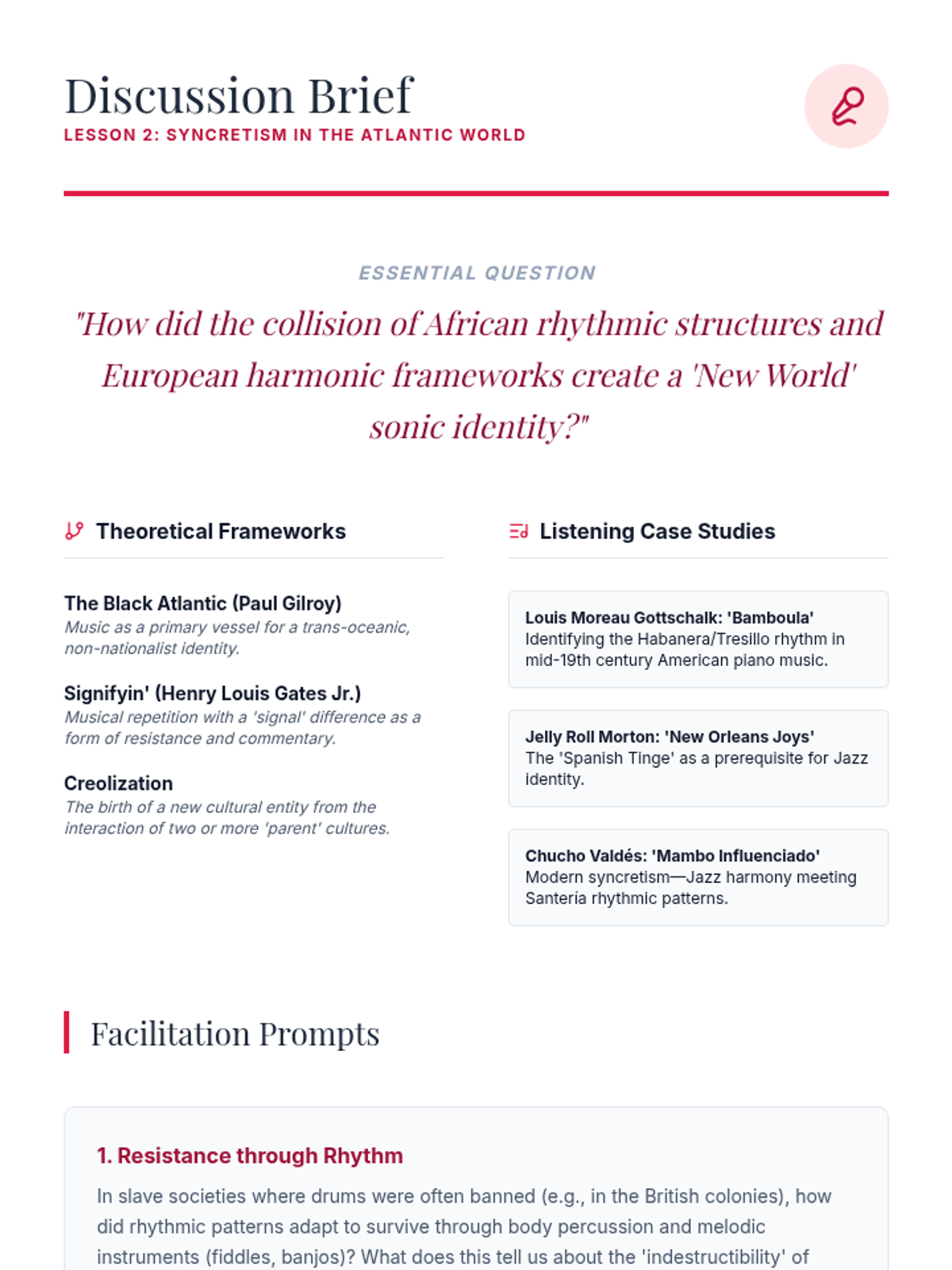
An analysis of the collision between African rhythmic structures and European harmonic traditions in the Americas, focusing on the genesis of syncretic genres like Jazz and Habanera.
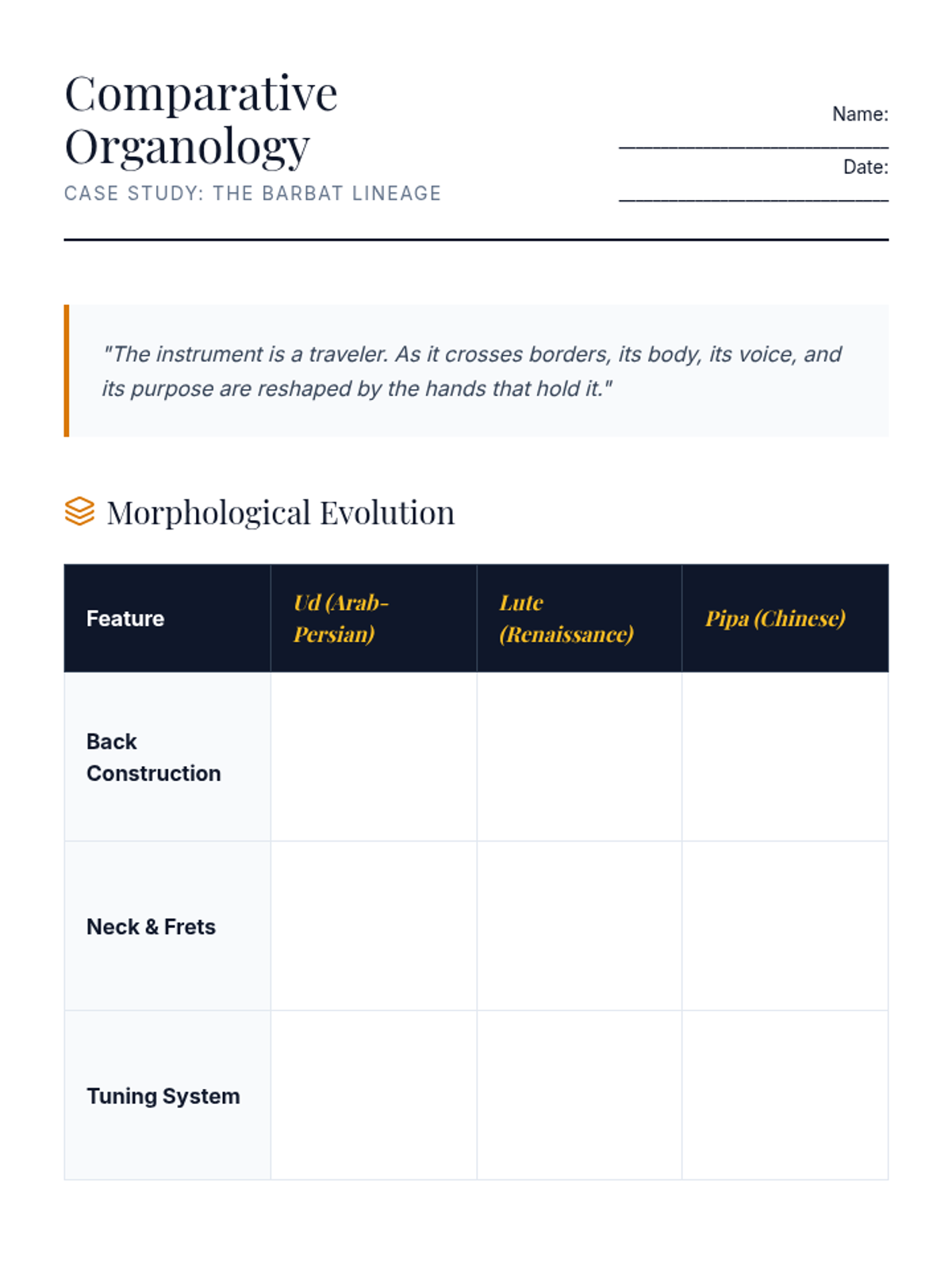
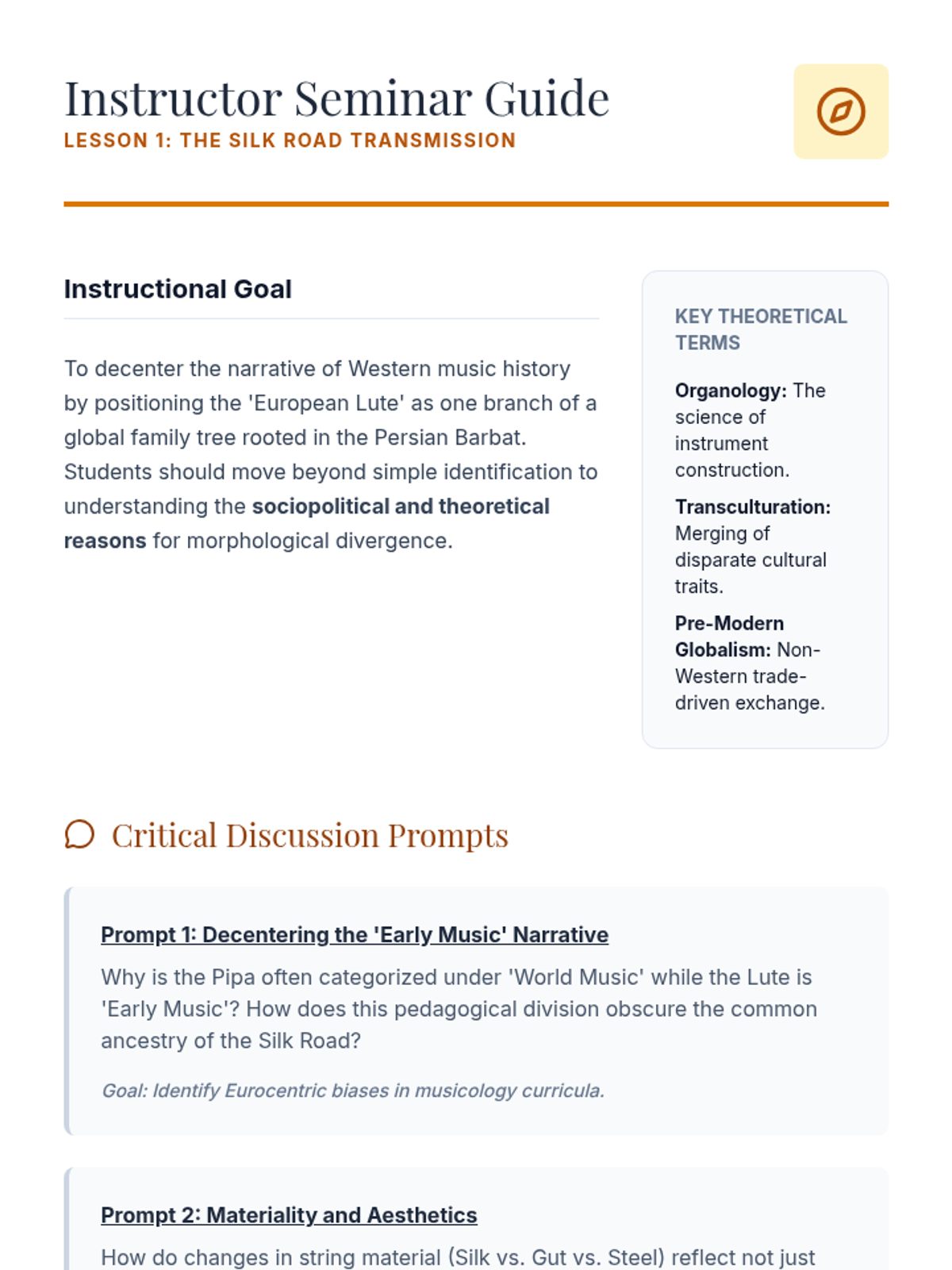
Students trace the organological evolution of string instruments along the Silk Road, exploring how pre-modern globalization facilitated trans-cultural musical flow between East and West.
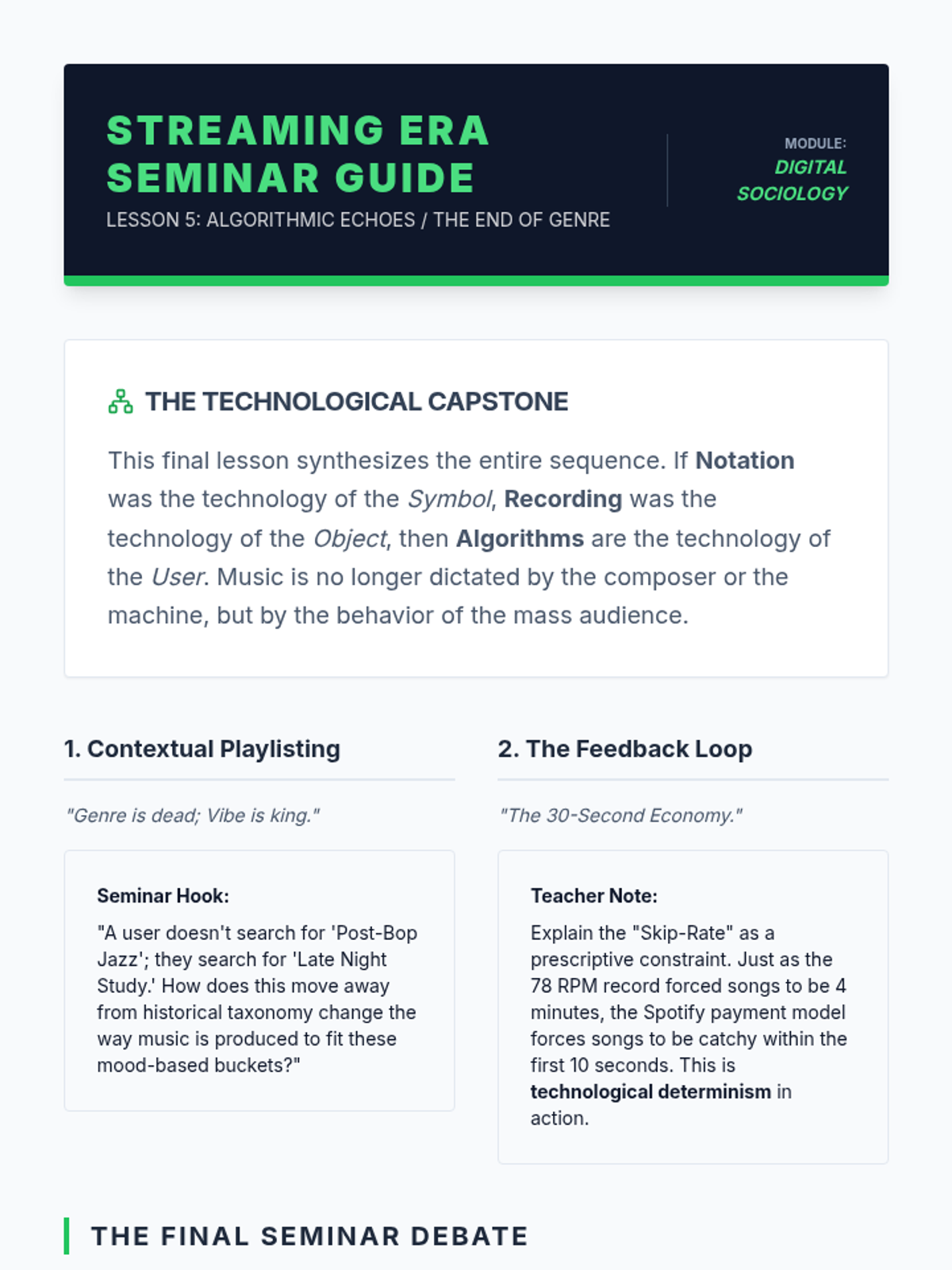
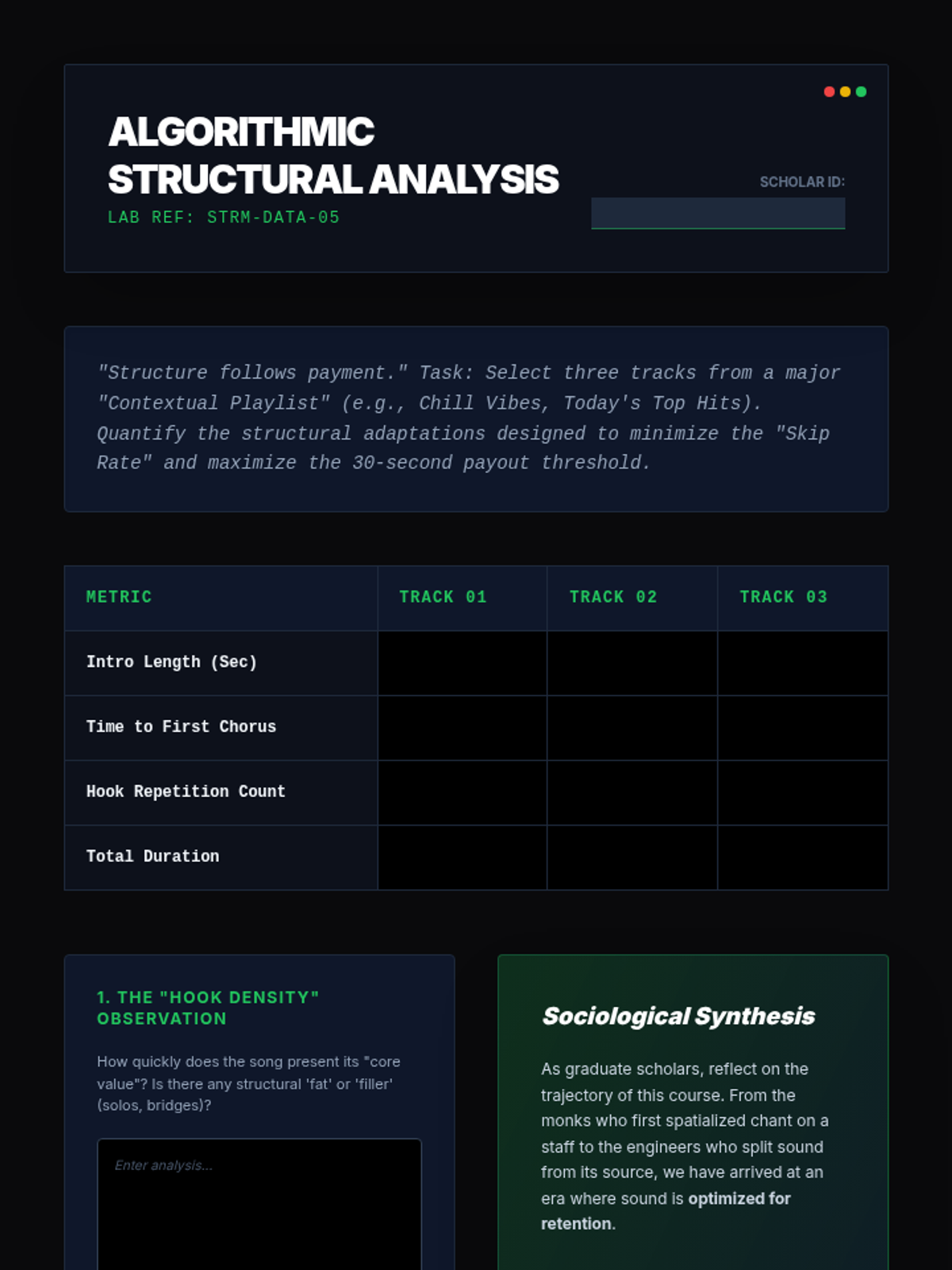
Concludes with an analysis of how streaming algorithms and metadata influence modern song structure and the sociological phenomenon of the 'end of genre.'
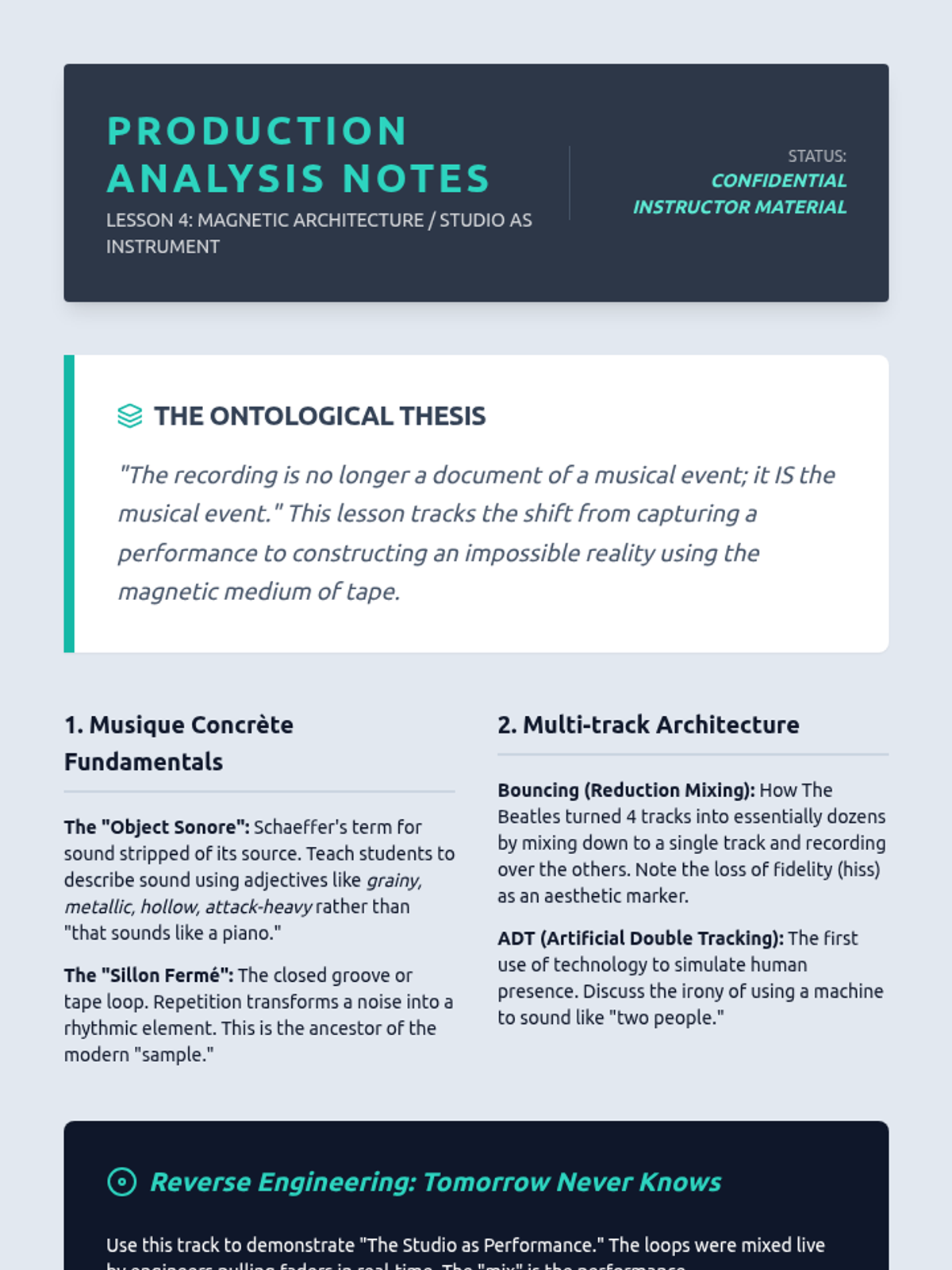
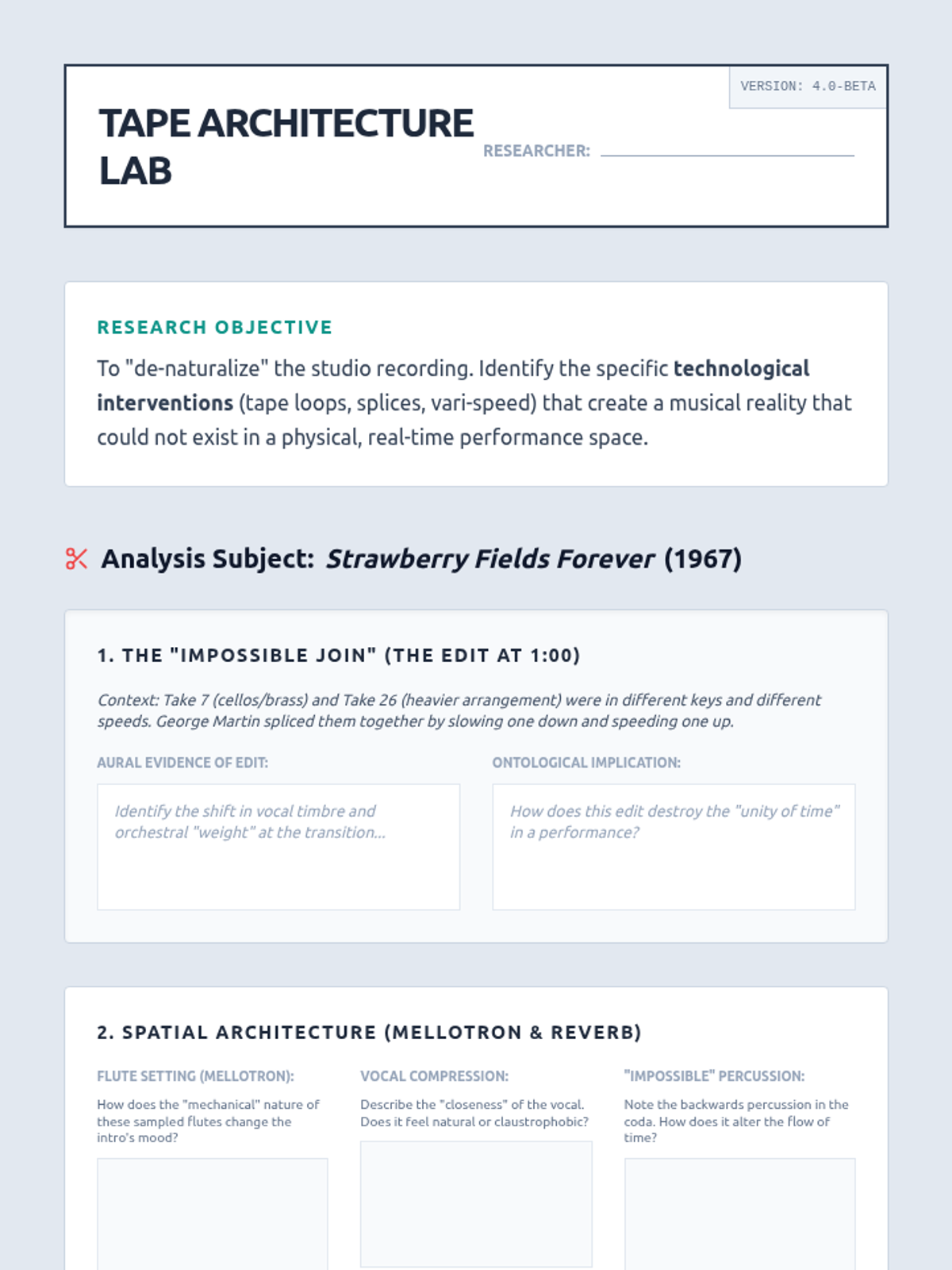
Explores the recording studio as a primary compositional tool, moving from Musique Concrète to multi-track recording and the ontological shift from score to recording.
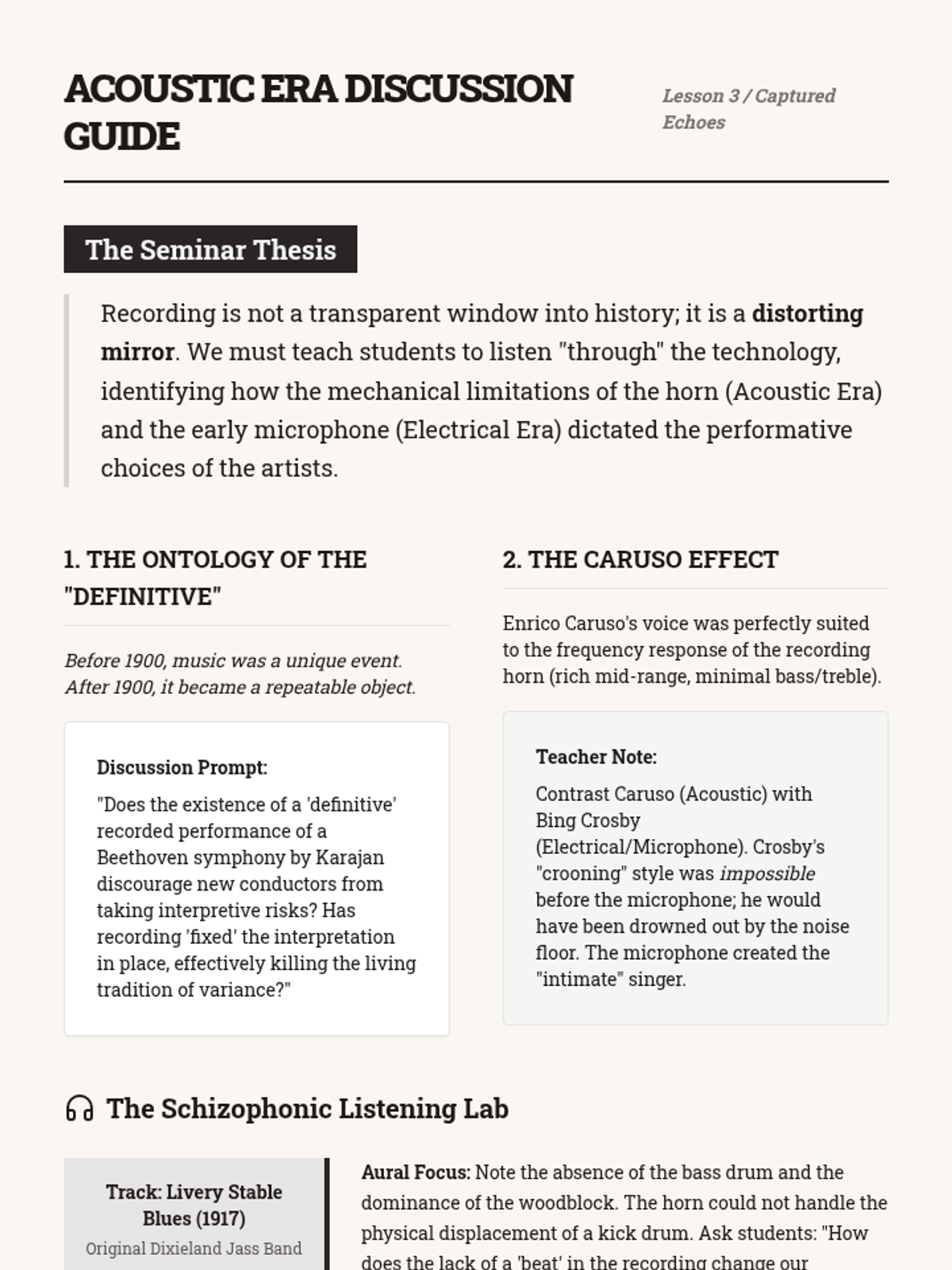
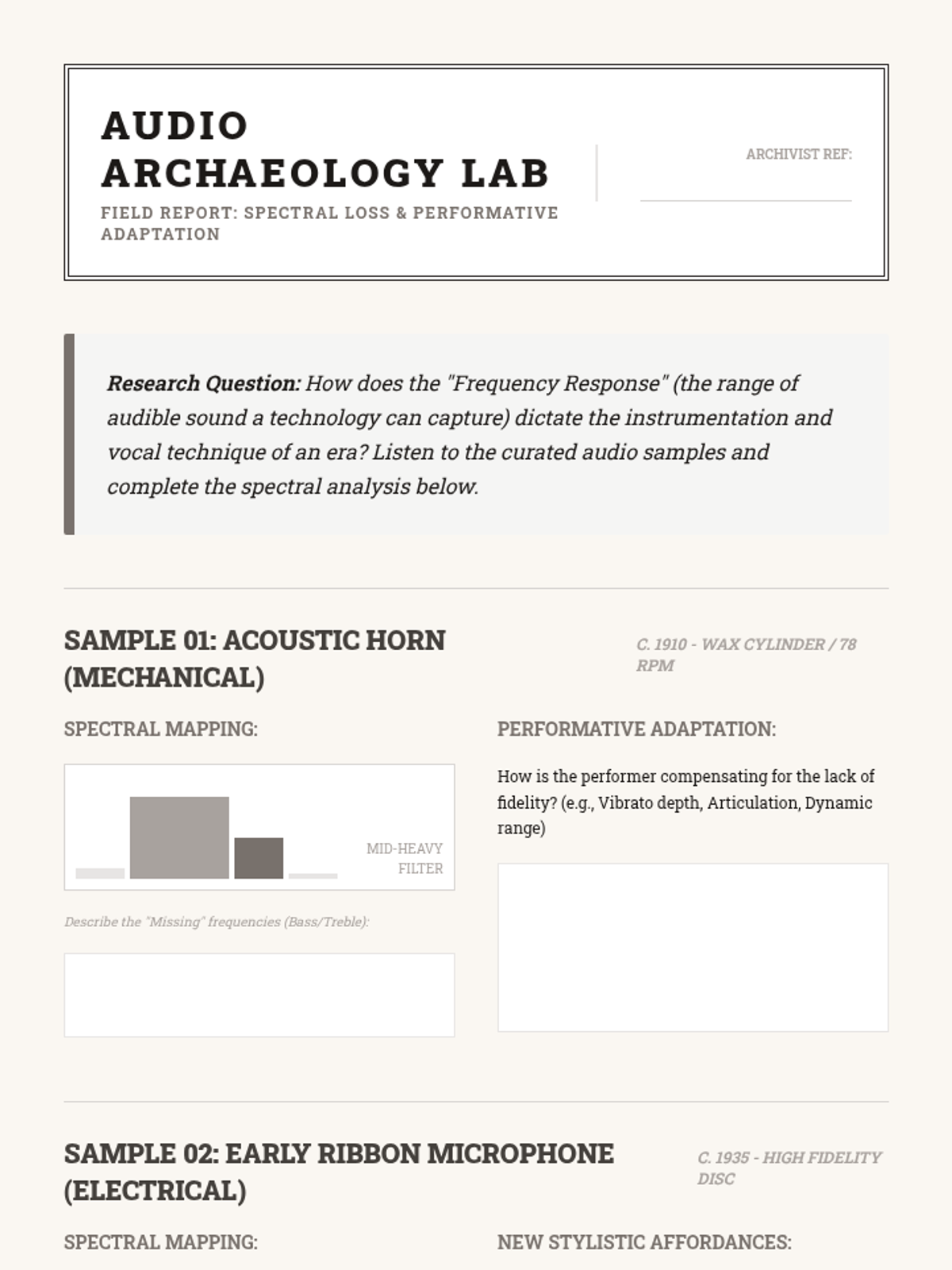
Investigates the separation of sound from its source (schizophonia) and how early recording limitations influenced performance practice and the concept of the 'definitive performance.'
Examines how the physical evolution of instruments during the Industrial Revolution, such as the cast-iron piano frame, dictated Romantic era orchestration and the rise of the virtuoso.
Analyzes the shift from oral tradition to fixed notation and how the technology of 'writing' music enabled new levels of polyphonic complexity while altering musical memory.