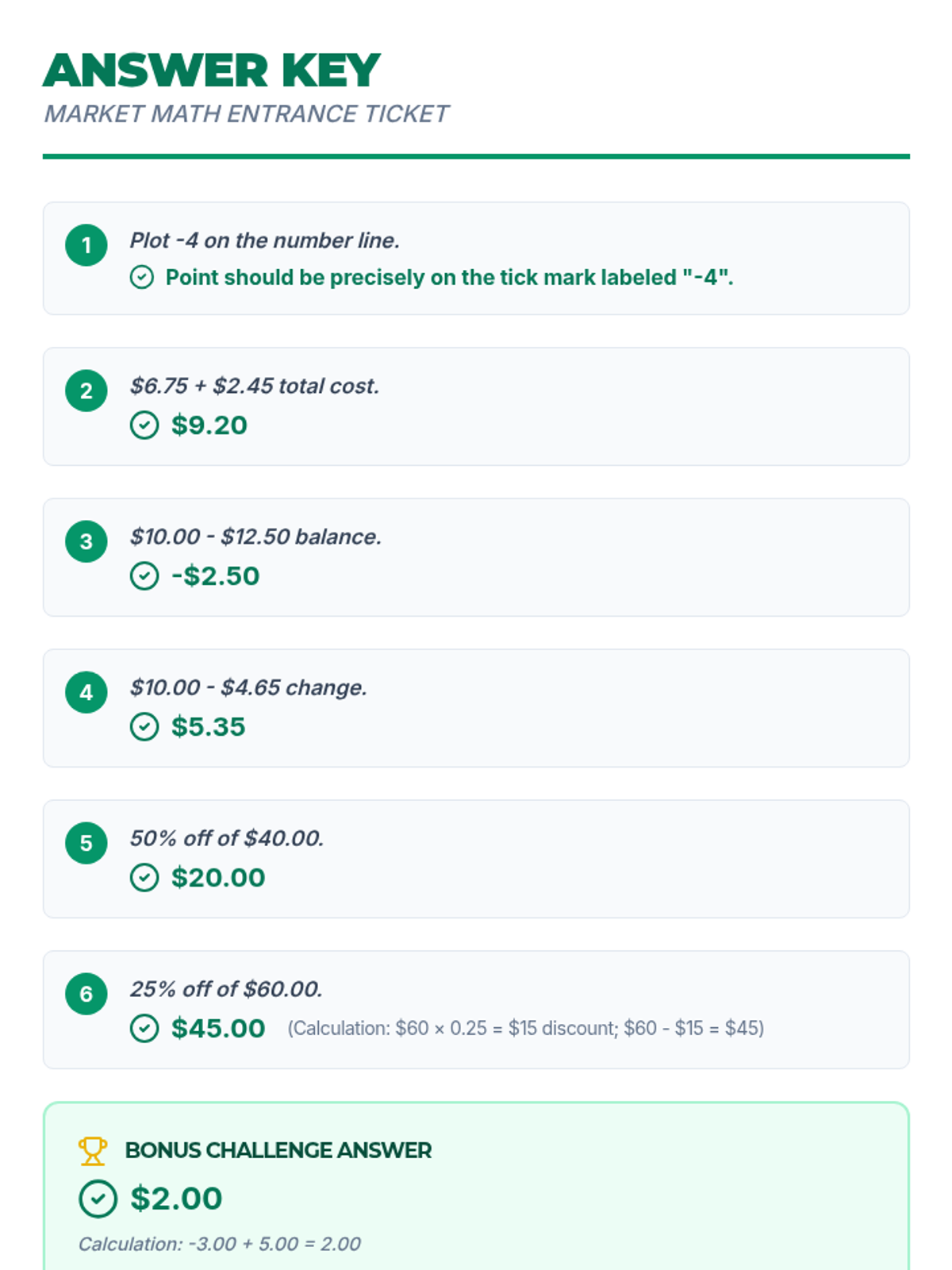
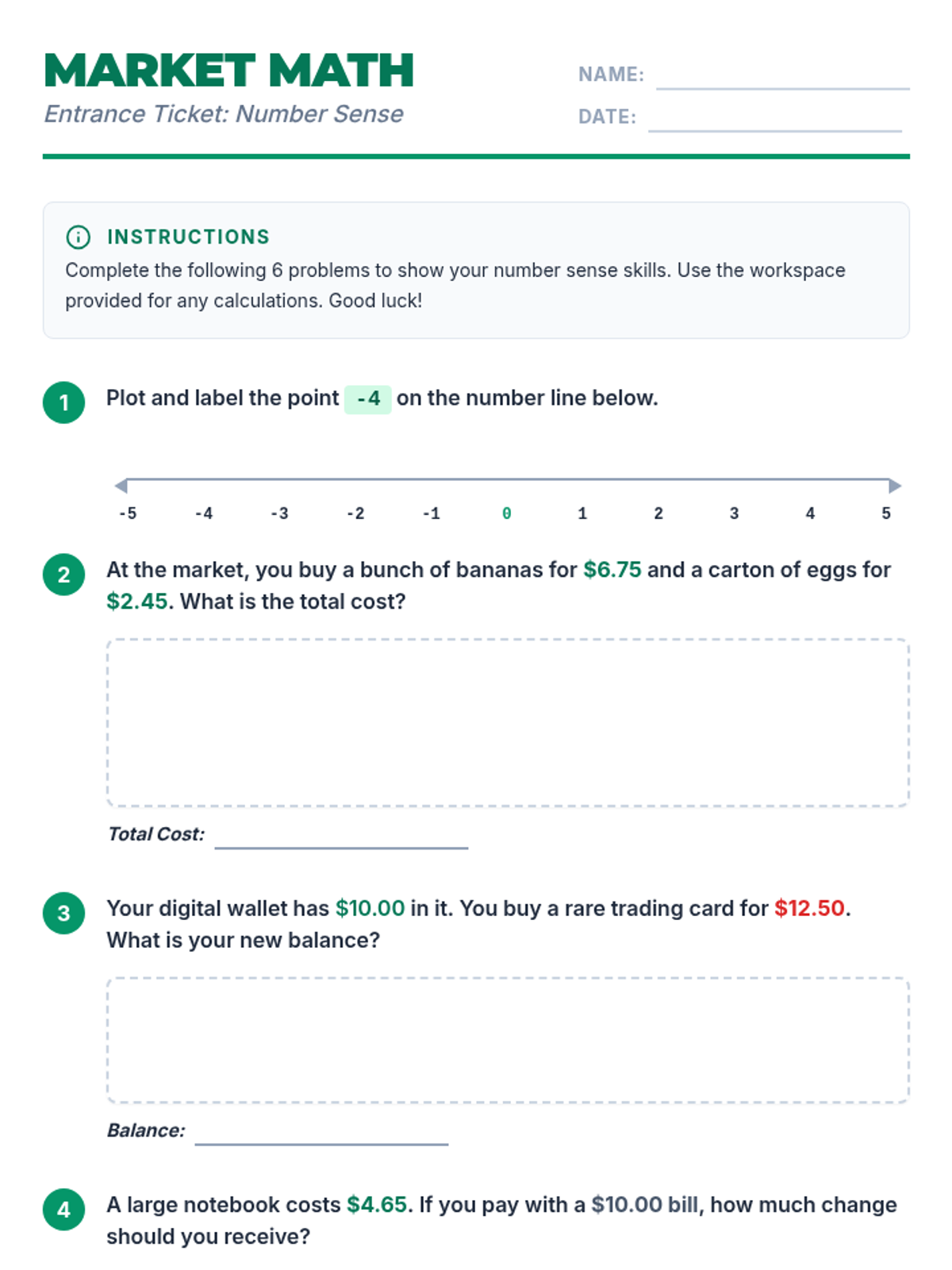
A structured board game lesson where students practice rational number operations and algebraic expressions through a classic competitive path game.
A comprehensive lesson focusing on constructing linear and exponential models and analyzing function transformations. Students will compare function families and evaluate how parameters shift and stretch graphs.
A lesson on understanding and graphing inequalities with negative numbers using the real-world context of temperature and thermometers. Students will master the 'flip the sign' rule when multiplying or dividing by negatives.
A visual-heavy lesson introducing 6th graders to adding and subtracting integers using thermometers, number lines, and integer chips. Students explore movement and zero pairs to master signed number operations.
A comprehensive assessment covering descriptive statistics, data distributions, measures of variation, and basic probability theory including tree diagrams.
A comprehensive practice session covering prime factorization, percentage conversions, multi-digit operations with regrouping, basic integers, and word problems with built-in scaffolding and visual aids.
This lesson focuses on solving equal group problems involving decimals, specifically dividing decimals by decimals in real-world money contexts. Students will learn how to shift the decimal point to create whole-number divisors and apply these skills to marketplace scenarios.
An introductory lesson on combining like terms designed for special education students, focusing on visual coding, shape-sorting strategies, and step-by-step guided practice.
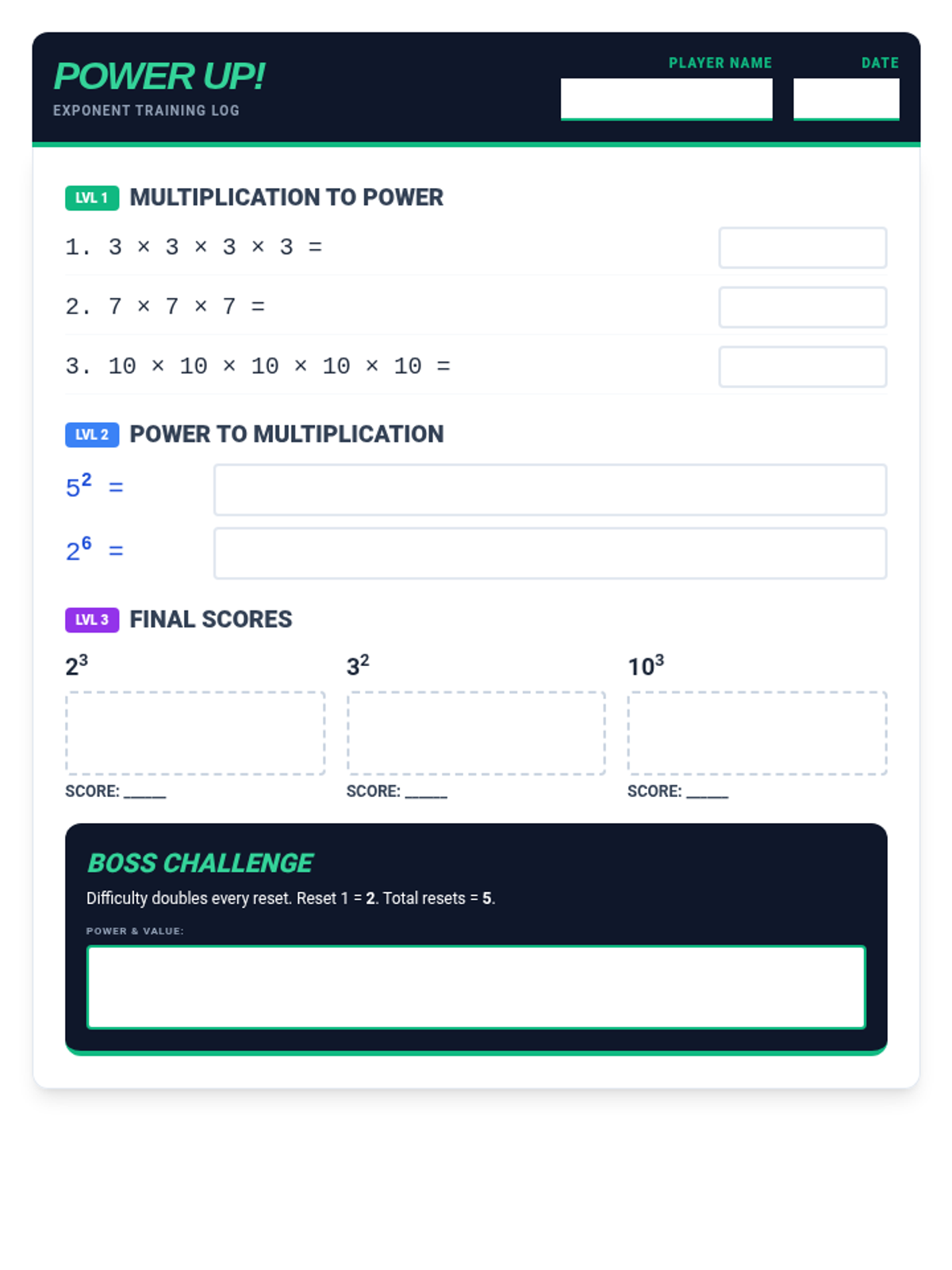
A lesson focused on identifying like terms and simplifying algebraic expressions through the lens of a high-tech 'Term Terminator' mission. Students will learn to group terms by variable and exponent to clean up cluttered code.
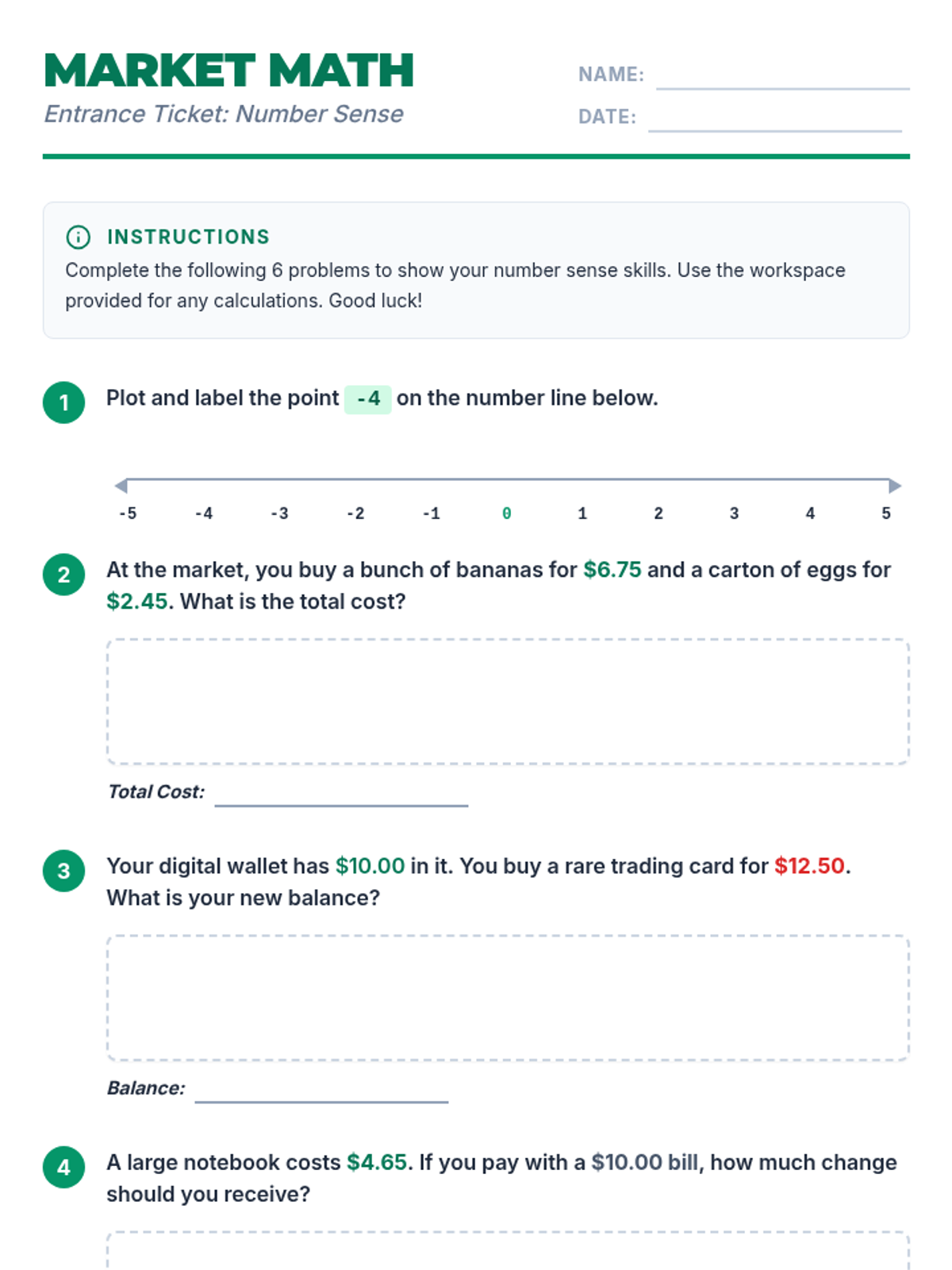
A comprehensive addition fluency pack for 5th graders, focusing on multi-digit whole numbers, decimals, and logical addition puzzles to build speed and accuracy.
A mini-lesson on calculating unit rates to find the best value at the grocery store. Students will learn to divide price by quantity and compare different product sizes.