A lesson centered on Paul Laurence Dunbar's 'The Place Where the Rainbow Ends,' focusing on imagery, symbolism, and the theme of hope through collaborative discussion and creative analysis.
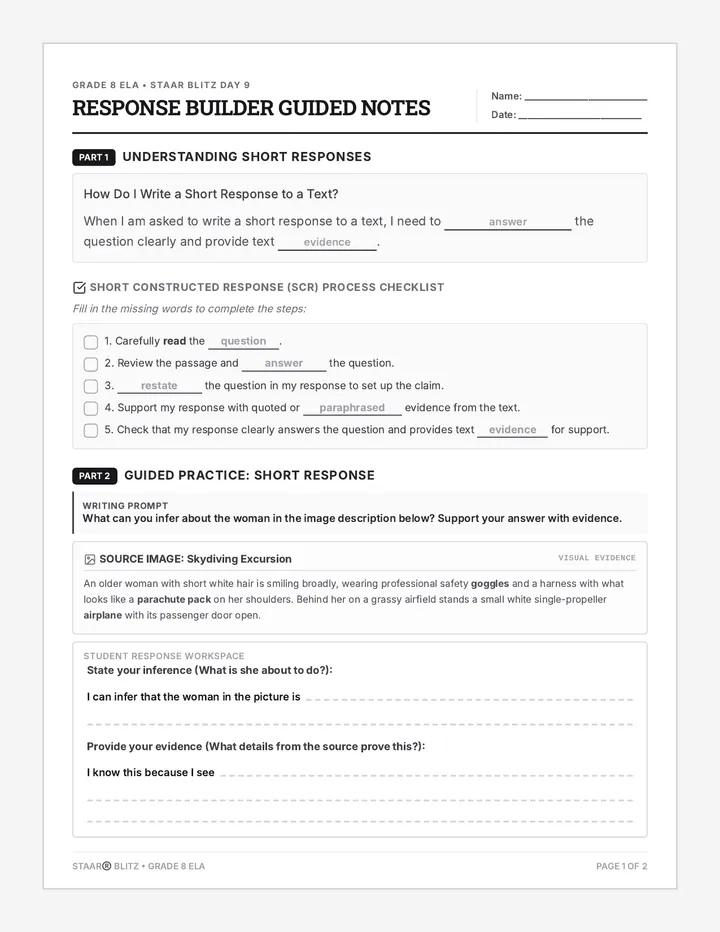
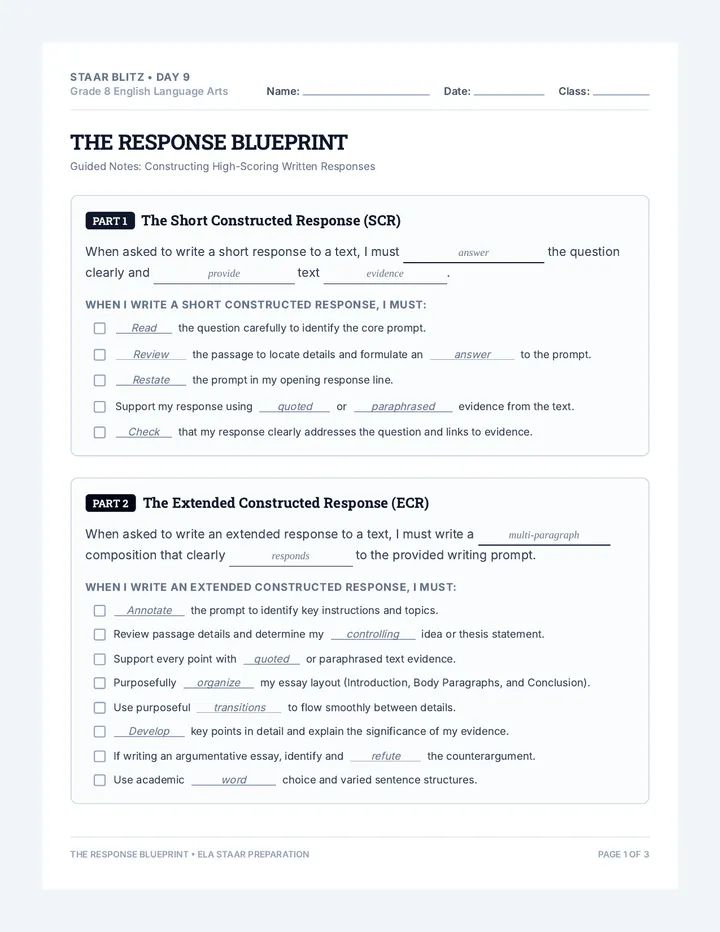
A short lesson focusing on practicing short constructed responses (SCR) using informational texts about the Ancestral Puebloans and the Haudenosaunee. Students read short passages, identify key details, and write evidenced-based responses.
A comprehensive lesson designed to help middle school students master the art of writing strong, argumentative thesis statements through a blueprint-themed instructional approach.
A comprehensive lesson for middle schoolers on mastering the art of the argumentative hook, covering four distinct strategies to grab a reader's attention and bridge to a strong claim.
A comprehensive assessment focusing on decoding 2-3 syllable words across various syllable patterns including closed, VCe, r-controlled, open, and vowel teams.
This lesson focuses on Chapter 4 of Frederick Douglass's narrative, analyzing how specific accounts of murder illustrate the inhumanity of slavery and the corruption of the Southern legal system. Students analyze key lines and imagery to identify Douglass's central claims about the lack of justice and value placed on enslaved lives.
An analysis of Chapter 8 'Moscow', focusing on the introduction of Uncle Anoosh and the influence of political ideology on personal identity and Marji's concept of heroism.
A summative assessment unit comparing the historical case of Phineas Gage with modern neuroscience regarding the adolescent brain, focusing on reading comprehension and comparative analysis.
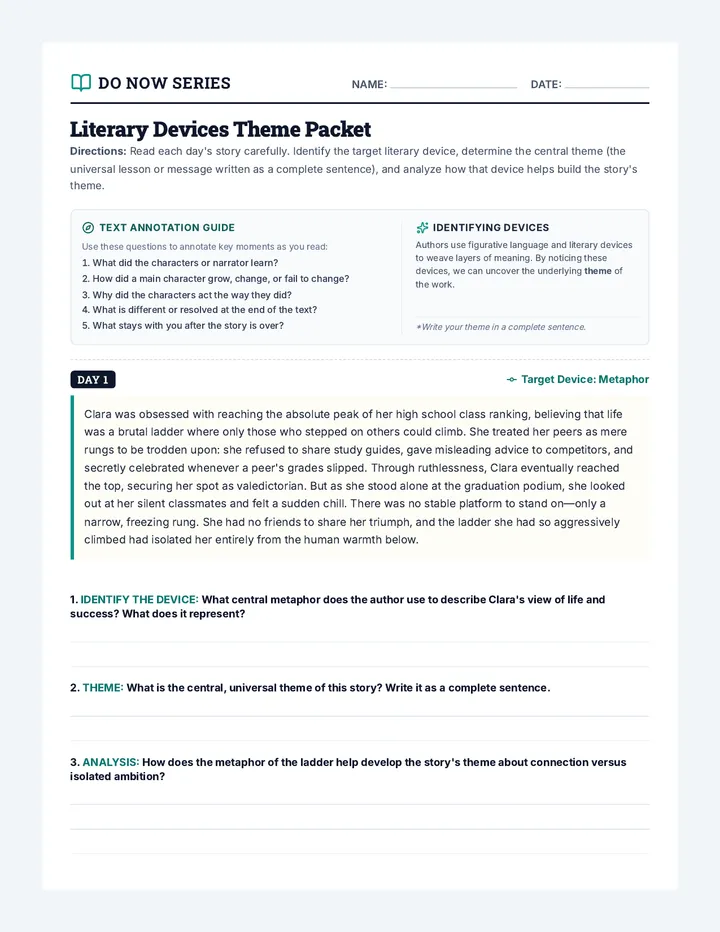
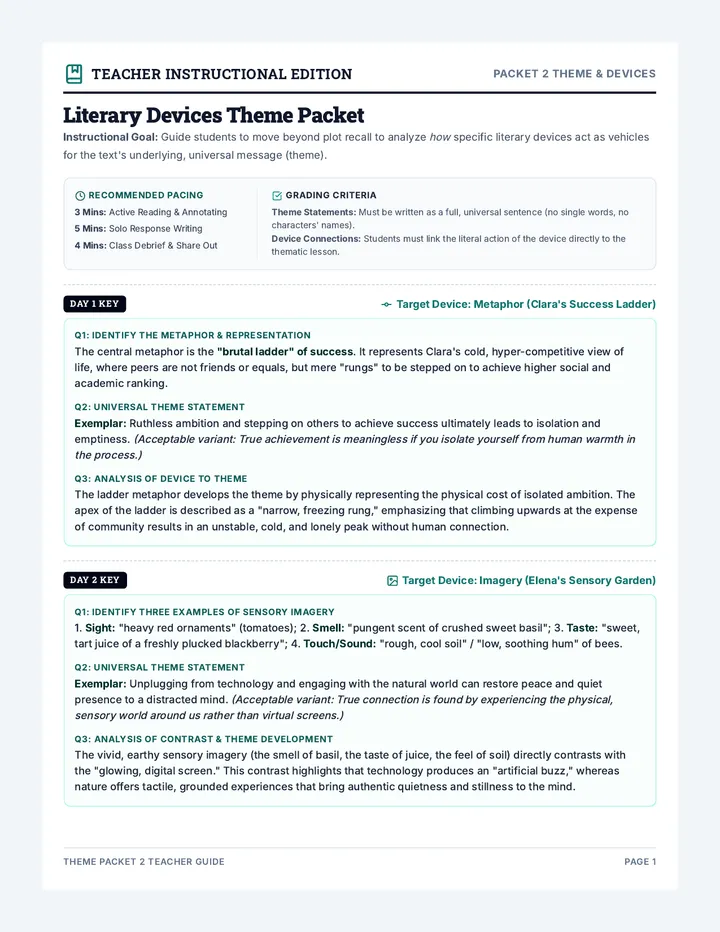
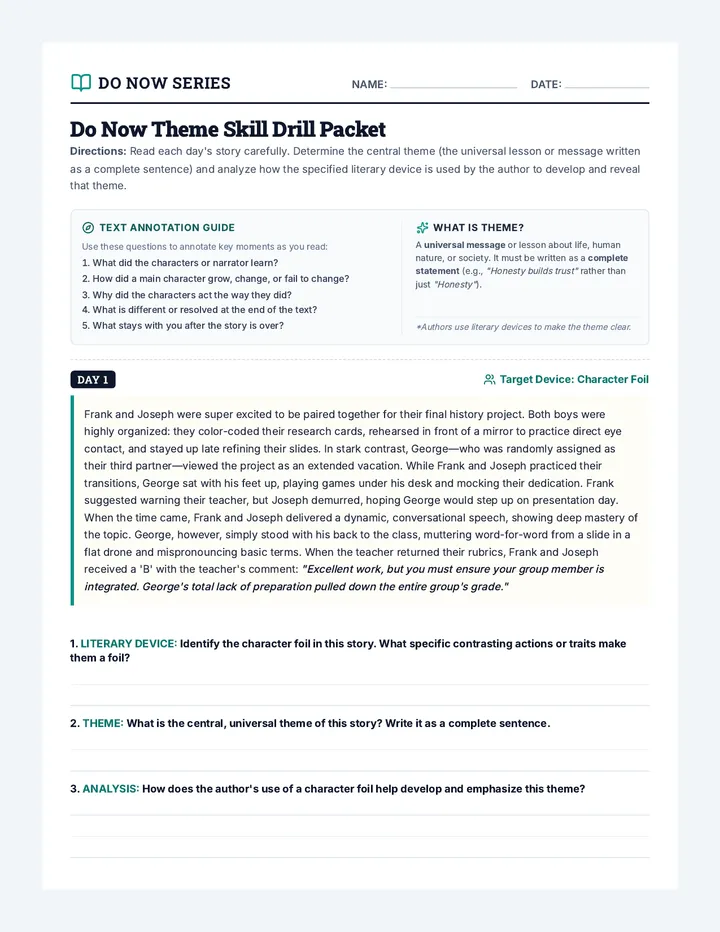
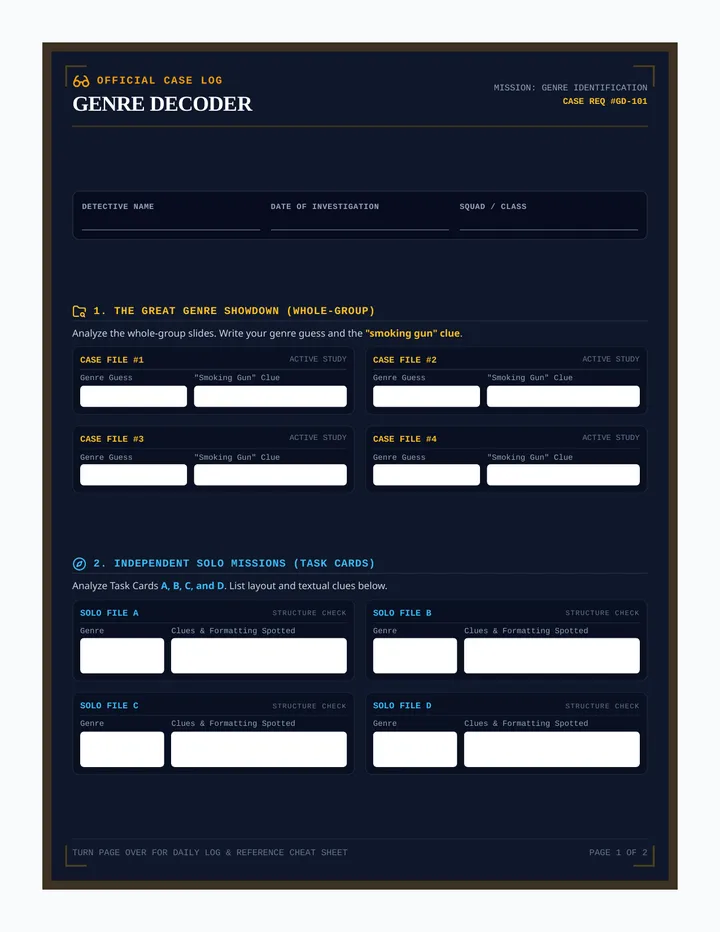
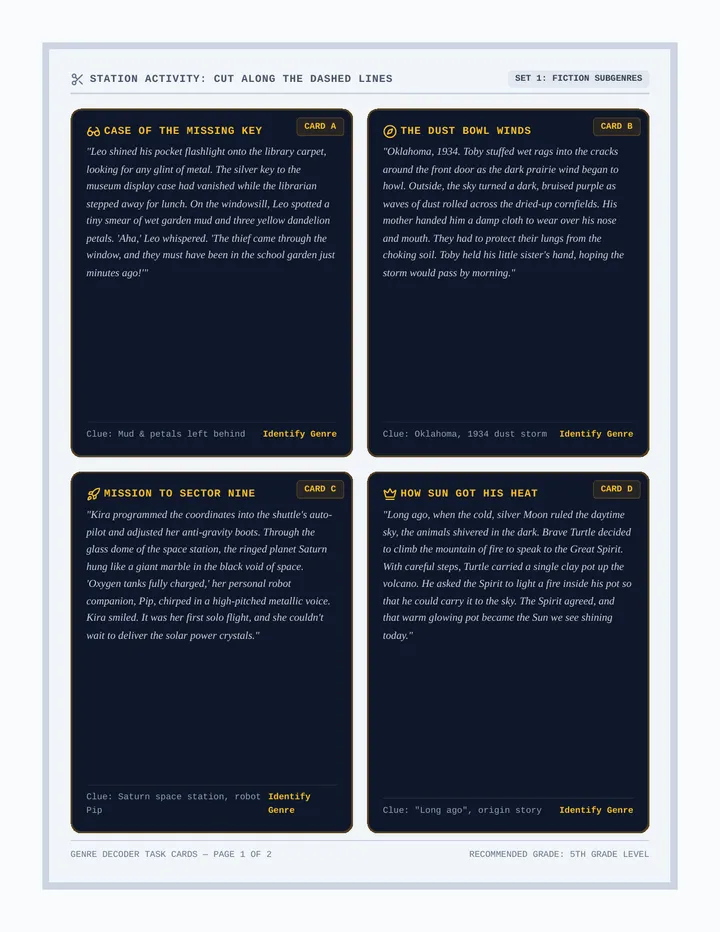
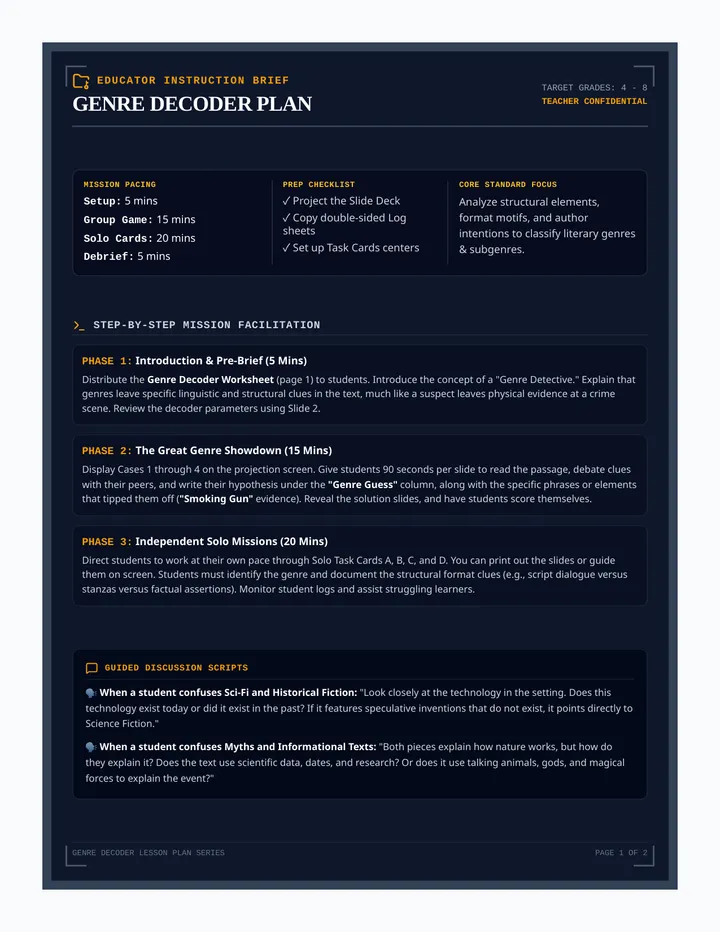
A lesson that bridges the gap between informational and narrative texts by applying detective skills to fiction. Students integrate character inferences with theme identification to solve 'literary mysteries,' analyzing fables like 'The Wisdom of the Cracked Pot' and 'The Kindness of the Lion.'
A lesson focused on identifying the central 'Big Picture' idea in informational texts using the 'Investigation Lens.' Students practice zooming out from specific details to synthesize the main message authors intend to convey, using cases about polar bear adaptations and Thomas Edison's persistence.
A foundational lesson on making inferences using text evidence and personal schema. Students learn 'The Detective's Equation' (Evidence + Schema = Inference) and apply it to solve short 'case studies' ranging from athletic disappointments to mysterious kitchen messes.
A comprehensive lesson focused on teaching students how to distinguish between vital and extra details in informational texts to identify key ideas and make inferences. Using a 'detective' theme, students analyze real-world topics like the invention of Band-Aids, the importance of bees, and medical 3D printing.
This lesson empowers 6th-grade students with advanced vocabulary strategies, focusing on context clue analysis and morphology (roots, prefixes, suffixes). Students will engage in interactive activities to decode unfamiliar words and effectively integrate them into their own communication.
A lesson focused on using the 'bolts and structure' metaphor to teach students how to identify and use text evidence to support inferences. Students learn to see evidence as the essential hardware that prevents their ideas from falling apart.

A lightning-fast 5-minute mini-lesson focusing on identifying and analyzing shifts in a character's point of view through a short narrative model.
A comprehensive lesson on the prefixes 're-' and 'de-', featuring guided instruction, word analysis, reading comprehension, and interactive matching activities set in a 'Prefix Lab' theme.
A vocabulary assessment for the novel 'The Watsons Go to Birmingham – 1963' focused on the words desperate, exasperated, hypnotized, jabber, and tempt. Designed with accessibility and clear character context for scholars.
A detective-themed lesson where students analyze the conflicting perspectives of Melba and Minnijean regarding the school play in Warriors Don't Cry. Students gather evidence to understand individual motivations and group concerns during the integration of Central High.