An immersive look into the world of rays, exploring their unique anatomy, diverse species, and fascinating underwater behaviors. Students will learn to identify different types of rays and understand their role in the ocean ecosystem.
A hands-on engineering lesson where students follow precise directions to fold a high-performance paper airplane while learning the four forces of flight.
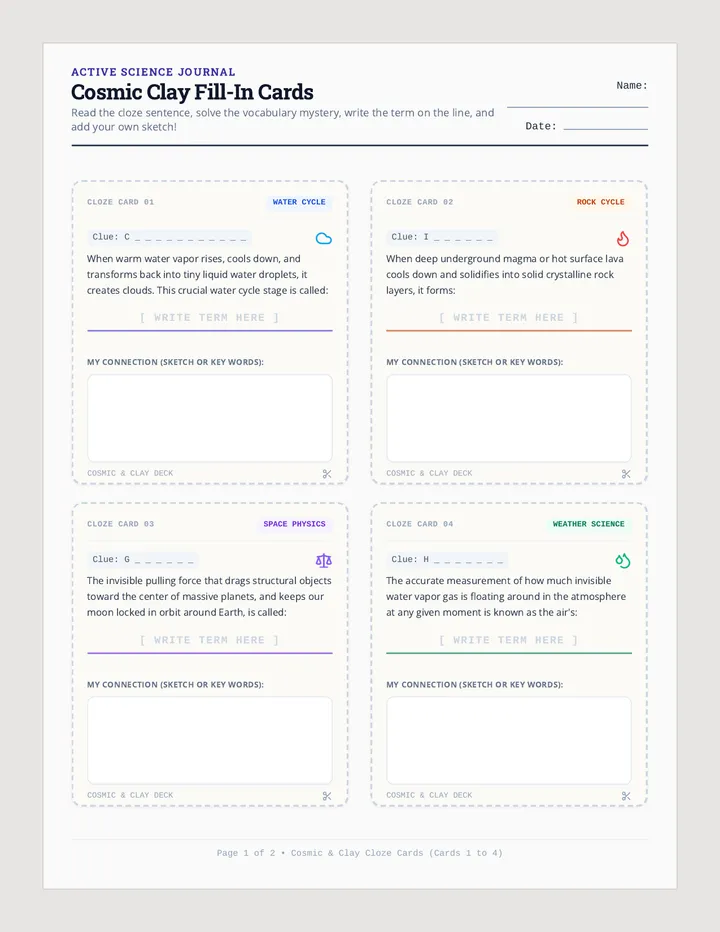
An introductory lesson on the continuous movement of water on, above, and below the surface of the Earth, focusing on the four main stages: evaporation, condensation, precipitation, and collection.
A comprehensive end-of-unit assessment and review lesson for the Infinite Frontier sequence. Includes a multi-topic test and a unit glossary.
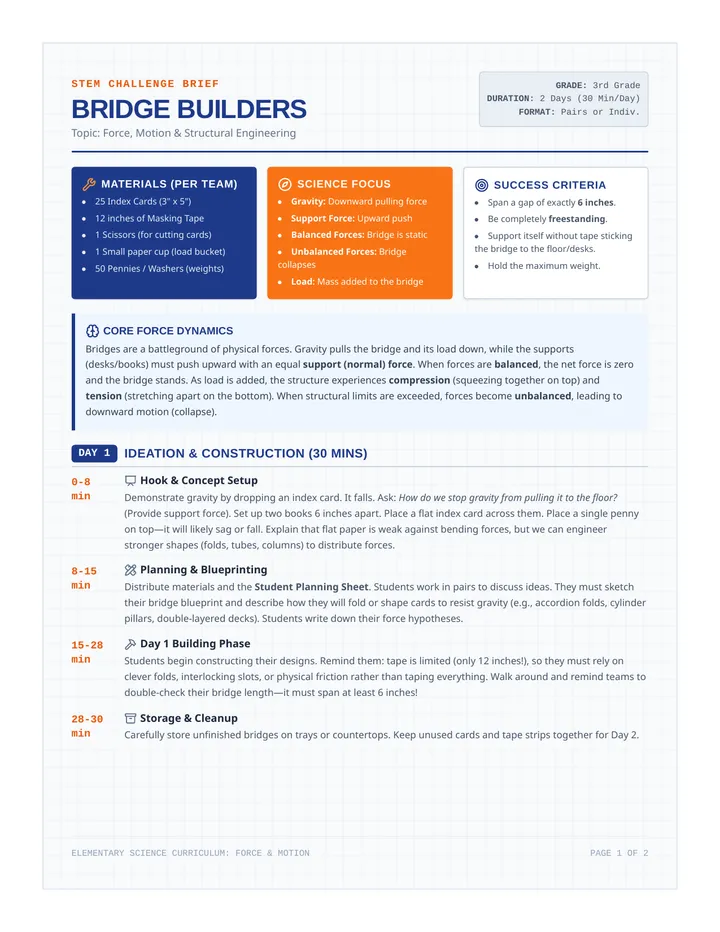
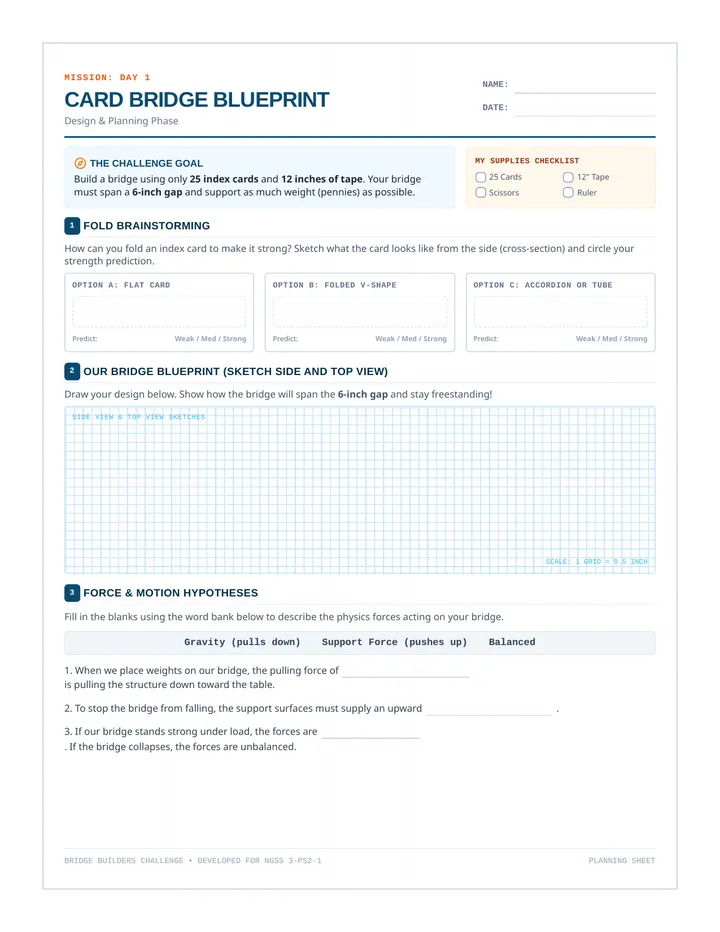
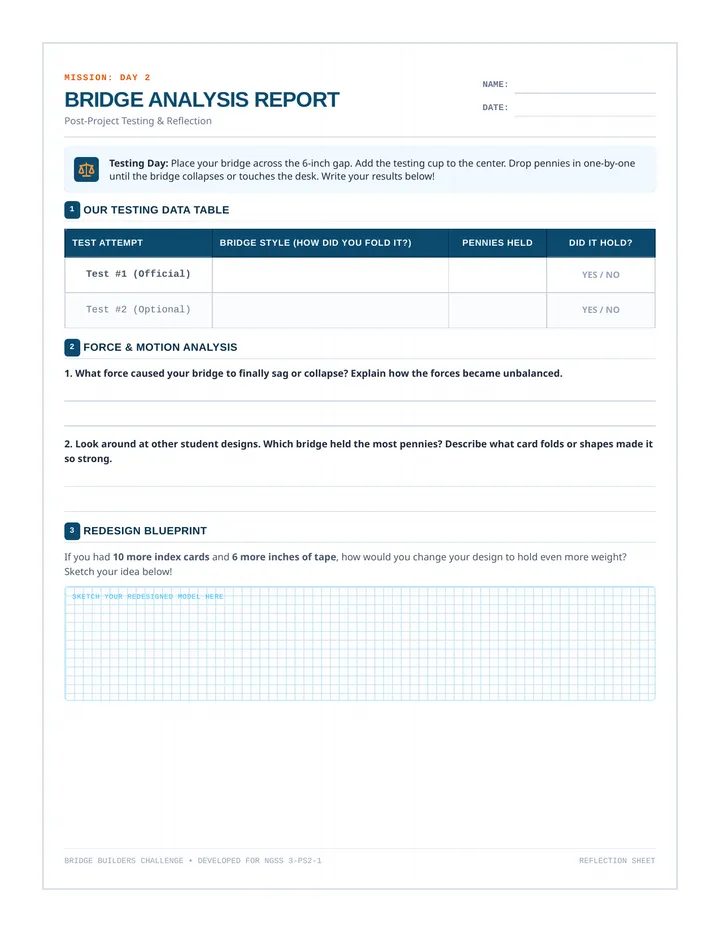
A lesson on the fundamental force of gravity, explaining its role as a downward force on Earth and the invisible "glue" that keeps the planets in orbit around the Sun.
A lesson exploring why the night sky appears to change throughout the night and across different seasons due to Earth's rotation and revolution.
A lesson on constellations, explaining how stars form patterns used for navigation and how the view of the sky changes between the Northern and Southern Hemispheres.
A lesson on the life cycle of stars, exploring how they are born in nebulae, grow, and eventually change brightness as they age or die.
A lesson exploring why some stars look brighter than others, focusing on the difference between apparent and absolute brightness and the role of distance.
A lesson on solar and lunar eclipses, exploring how the alignment of the Sun, Earth, and Moon creates dramatic shadows in space.
A lesson exploring the eight phases of the Moon, why the Moon seems to change shape, and the 29.5-day lunar cycle.
A lesson on Earth's revolution, exploring the path Earth takes around the sun and how its tilted axis leads to the change of seasons.
A lesson on Earth's rotation, focusing on the concept of an axis and how spinning creates the cycle of day and night.
A lesson exploring the history and future of human space exploration. From the Apollo moon landings to living on the International Space Station and planning the first human missions to Mars.
A lesson exploring how we use technology like rovers, probes, satellites, and telescopes to study space. Highlights famous missions like Mars Rovers and the James Webb Space Telescope.
A lesson exploring the hierarchy of space, from our solar system to the Milky Way galaxy and the vast universe beyond. Focuses on relative scale and the concept of galaxies.
A "Hi-Lo" lesson on the solar system for 6th graders reading at a 3rd-grade level. It explores planetary characteristics, the role of gravity, and scale through accessible text and high-interest visuals.
In this hands-on lesson, students explore the science of runoff and drainage by observing melting snow. They'll learn why drains are essential for preventing floods and how to keep water flowing safely through their environment.
Students analyze how living things change their environment through processes like transpiration and decomposition.
Students investigate how the atmosphere interacts with Earth's surface through deposition and how it provides essential gases for the biosphere.
Students explore how the geosphere interacts with other systems, including the movement of continents (Pangaea), the formation of aquifers, and the role of organic materials in soil.
Students analyze how the hydrosphere interacts with other systems through weathering, erosion, and supporting life.
Students explore the biosphere, identifying how life exists in various environments and how living things interact with other Earth systems.
Students investigate the atmosphere, exploring the layers of air that protect Earth and the composition of gases necessary for life.
Students analyze the geosphere, exploring Earth's interior layers and the solid crust that forms the foundation of our planet's systems.
Students explore the hydrosphere, identifying where water is found on Earth and how it moves through the water cycle through drawing and hands-on experiments.
Students design and build a STEM leprechaun trap inspired by 'How to Catch a Leprechaun', focusing on multi-step directions and problem-solving through the engineering design process.