Students explore the relationship between metric units and powers of ten, using visual staircases and laboratory 'blueprints' to master conversions.
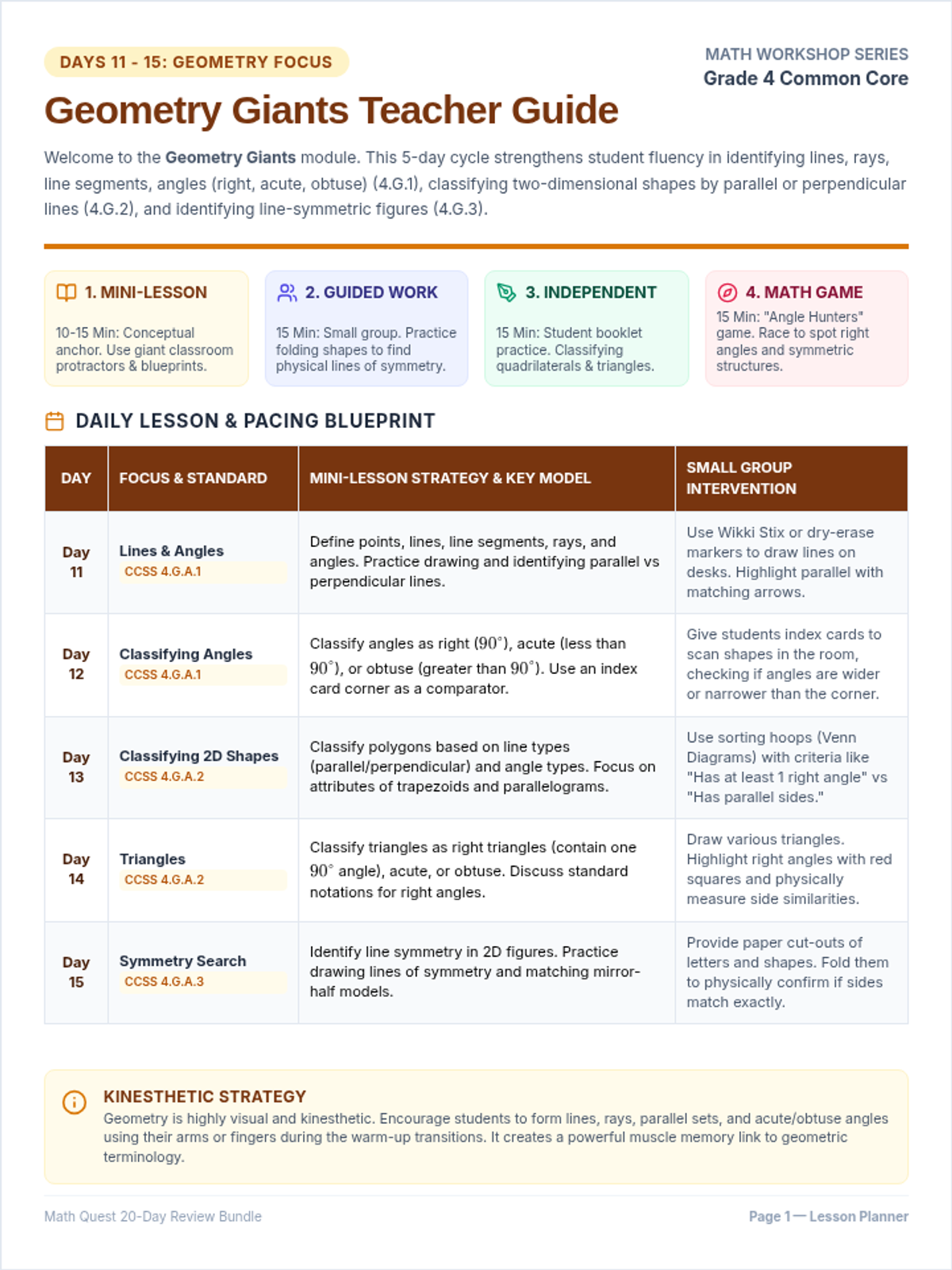
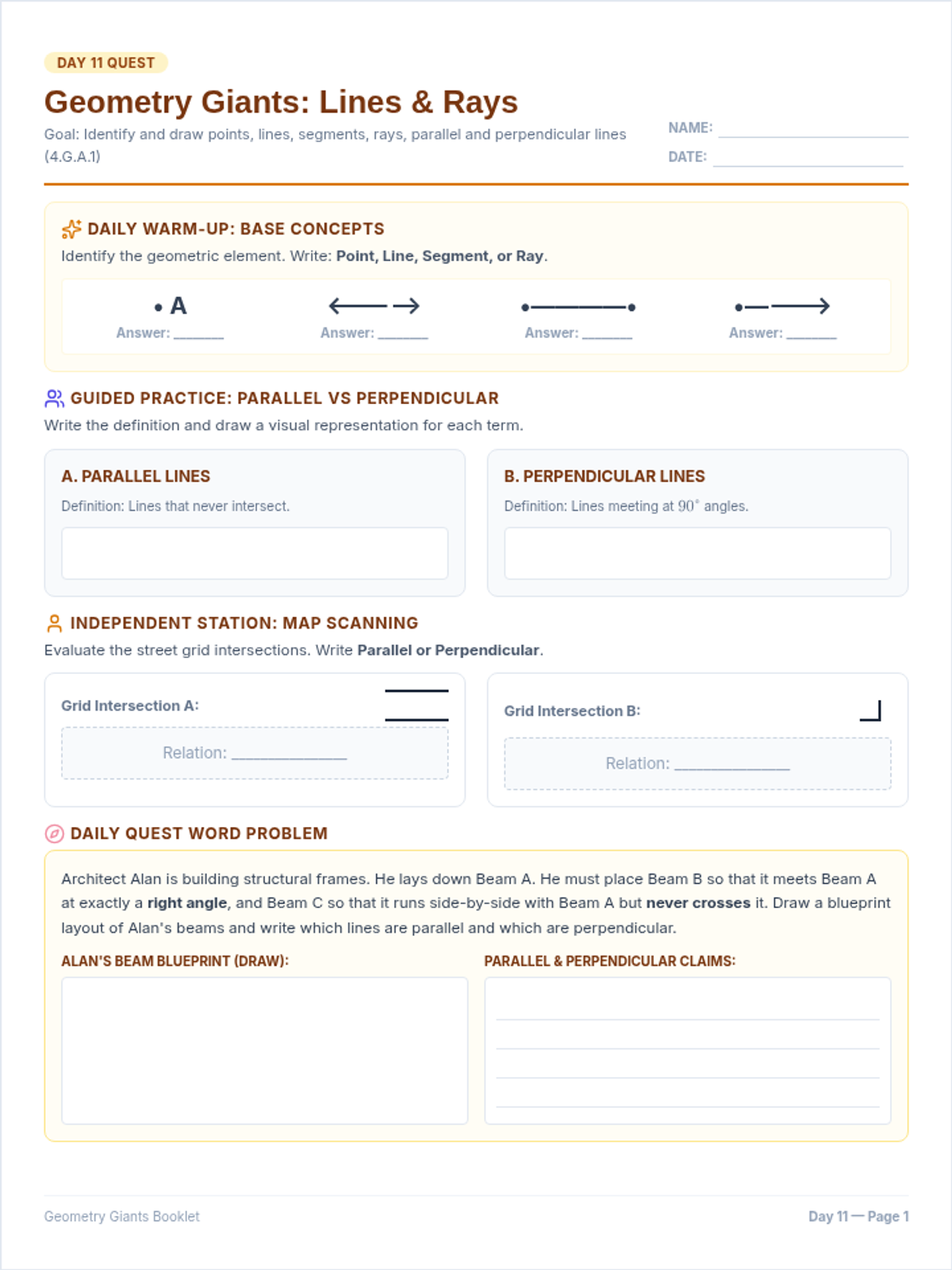
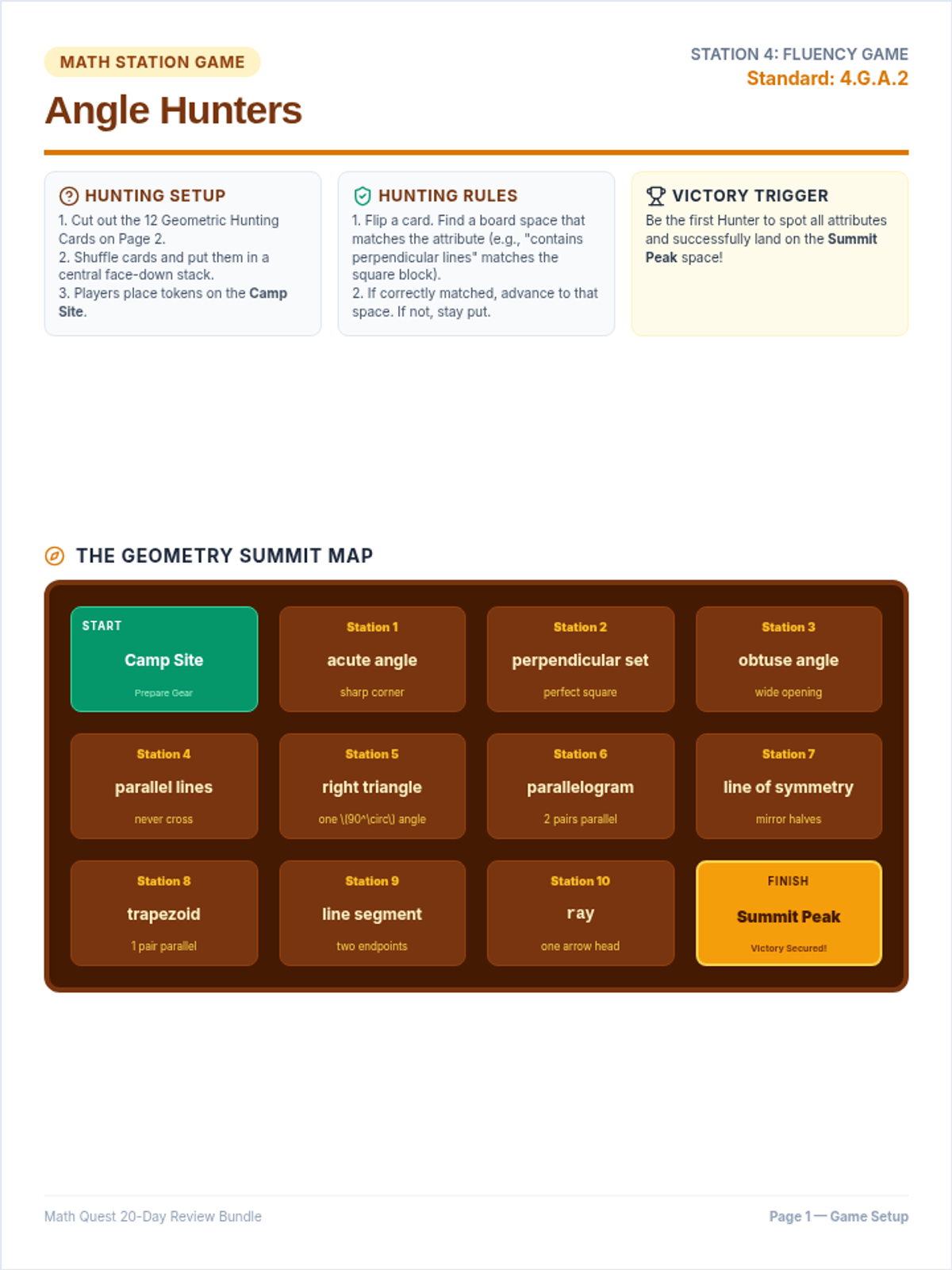
An introductory lesson covering the building blocks of geometry: points, lines, planes, rays, segments, and angles.
A comprehensive lesson on skip counting by 1s, 10s, and 100s within 1000, covering both forward and backward patterns starting from any number. Students act as 'Pattern Pathfinders' to solve number trail mysteries.
A hands-on geometry lesson where students act as structural engineers to discover the Triangle Inequality Theorem through sorting and investigation.
A fun, carnival-themed lesson introducing students to likelihood, theoretical probability, and experimental probability using simplified language and hands-on examples.
Students act as architects to verify the structural integrity of triangular designs using the Triangle Inequality Theorem. They perform numeric checks, analyze visual models, and solve word problems to determine if three side lengths can form a valid triangle.
A statistics lesson themed around Courage the Cowardly Dog, covering central tendency, dot plots, and probability.
A targeted assessment lesson focusing on applying one-step multiplication and division equations to solve real-world problems.
Explores 8th-grade concepts like slope as a fraction (rise over run) and identifying rational vs. irrational numbers in structural engineering.
Covers 7th-grade topics including complex fractions, unit rates, and scaling designs for construction projects.
Focuses on 6th-grade fraction operations (addition, subtraction, multiplication, division) through the lens of foundational construction measurements.
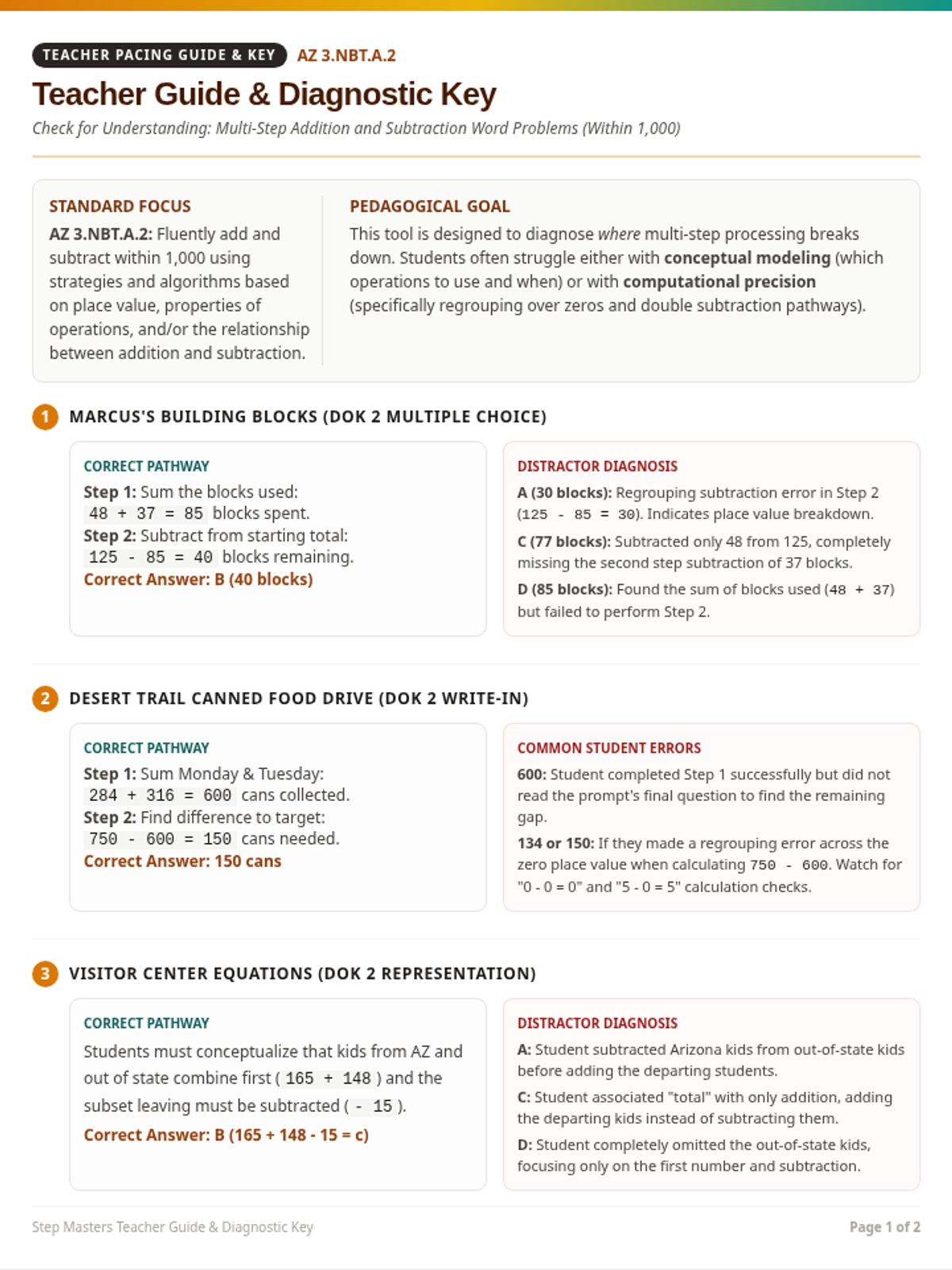
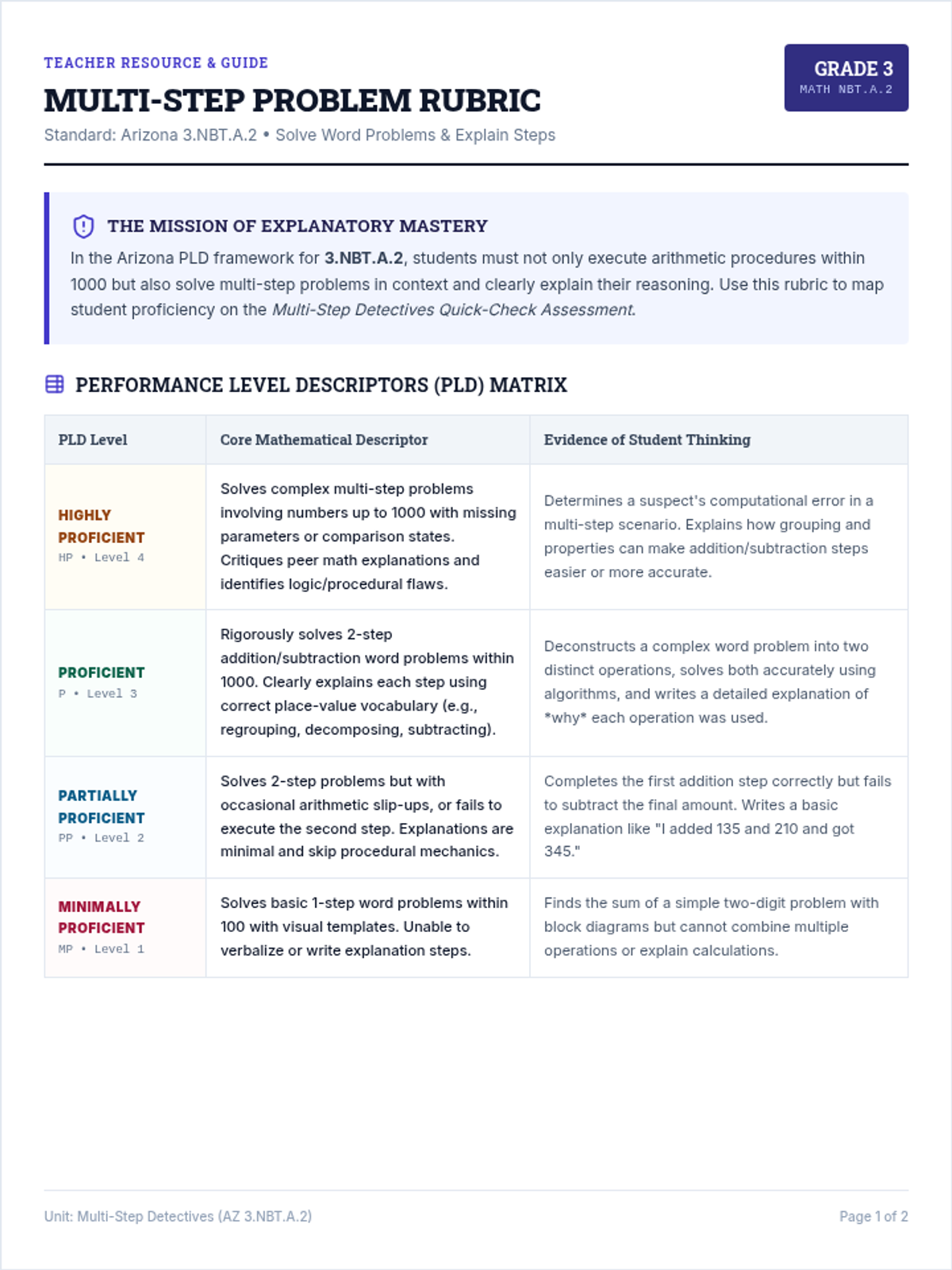
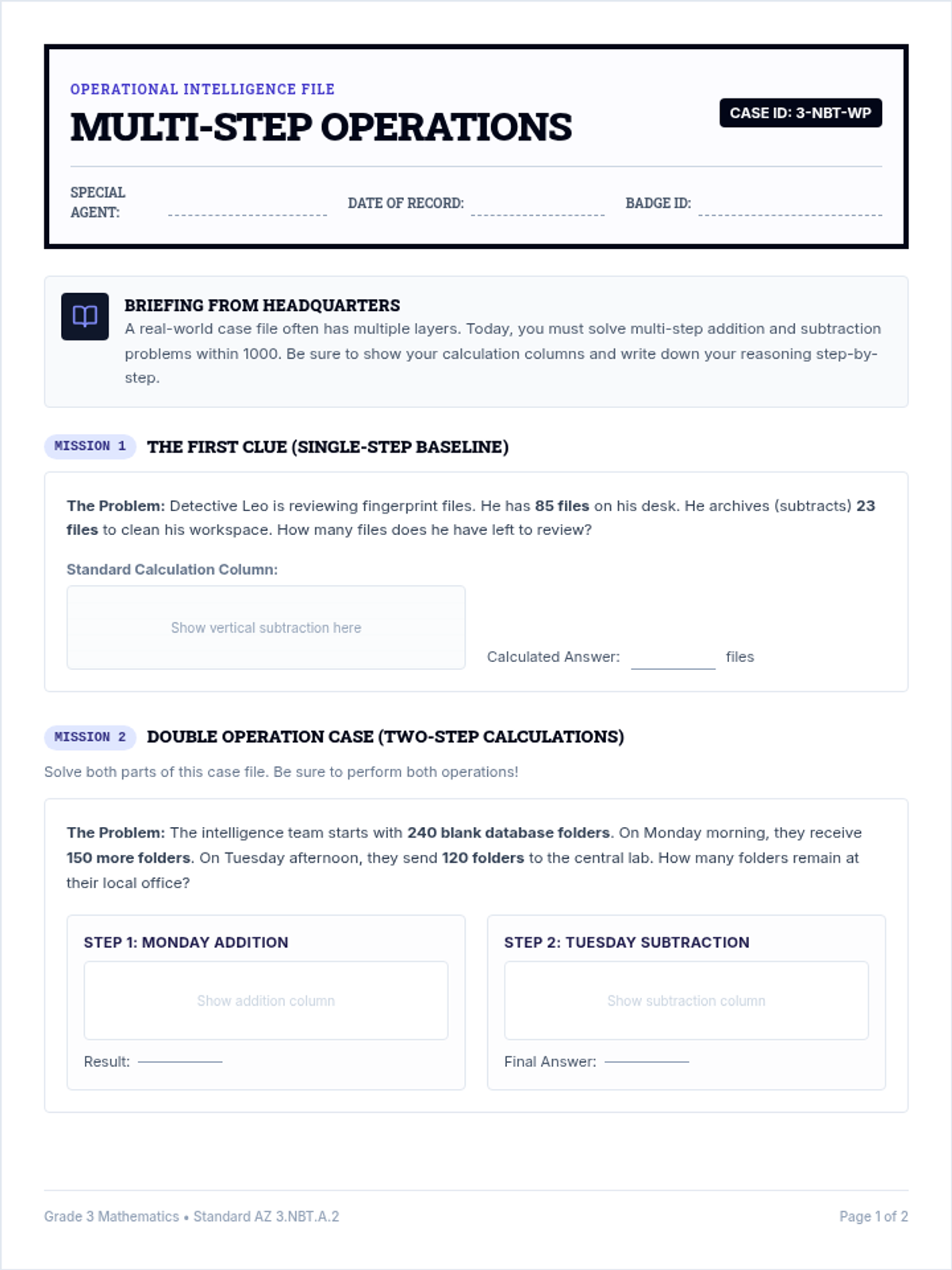
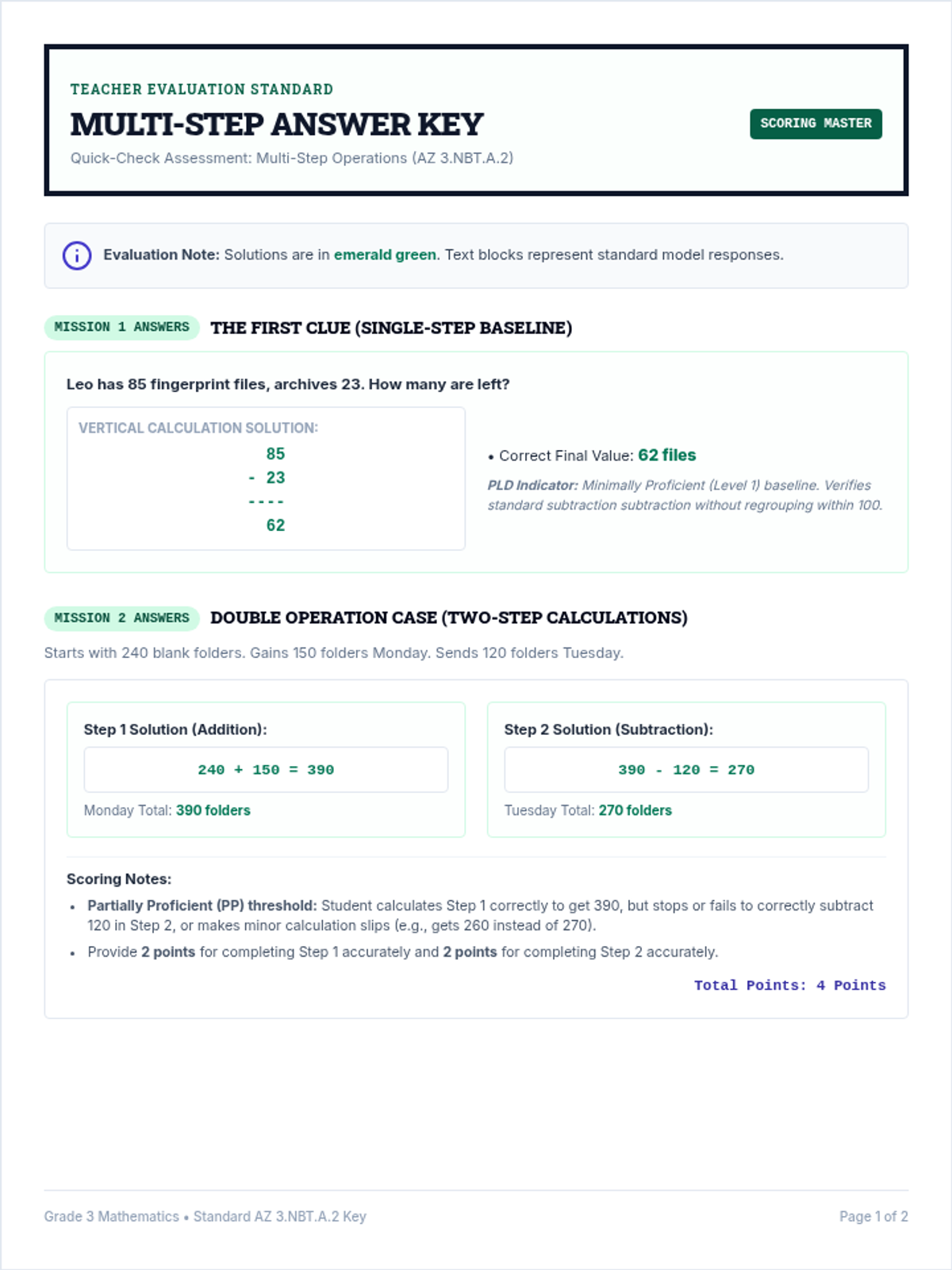
A lesson focused on identifying operation-specific keywords to decode and solve multi-step word problems using a detective-themed approach.
A lesson on multiplying and dividing fractions with unlike denominators, themed around an alchemy lab where students brew potions using mathematical formulas.
A lesson focused on solving and interpreting division word problems with remainders, using a bakery theme to provide real-world context.
A series of visually-rich activities for kindergarten students to master counting to 25 using touch-point numbers and sequencing exercises, specifically designed with visual supports for deaf learners.
A lesson focused on adding and subtracting proper fractions with unlike denominators using a step-by-step checklist and potion-themed problems.
A lesson focused on multiplying mixed numbers by whole numbers using area models as visual scaffolding to represent repeated addition and the distributive property in a culinary context.
Upper elementary students step into the shoes of business owners to design a sustainable venture. They will master multiplication and division through real-world applications of overhead costs, revenue, and profit margins.