A focused lesson on switching between the four basic operations, with a primary focus on 2-digit addition and subtraction proficiency.
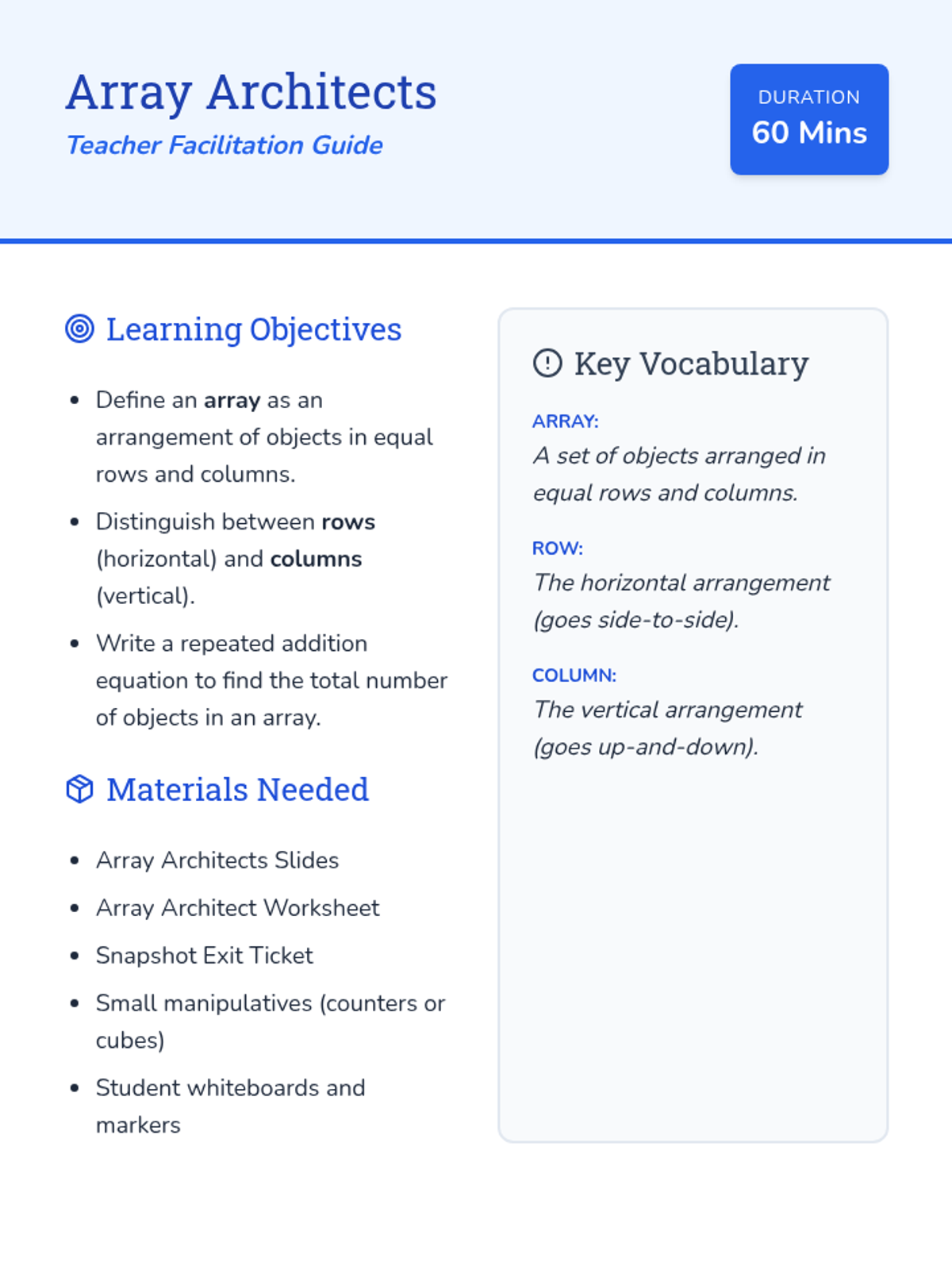
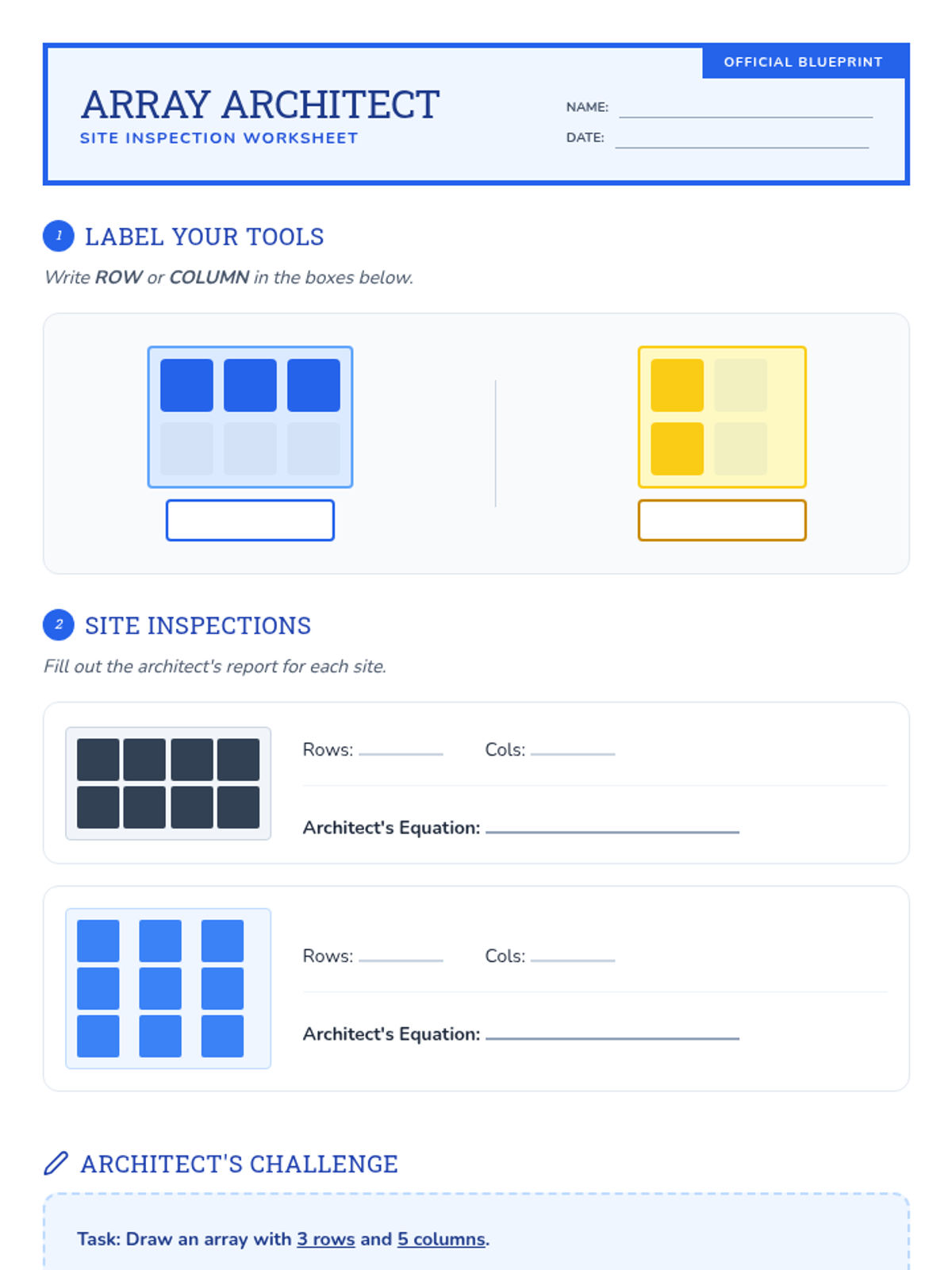
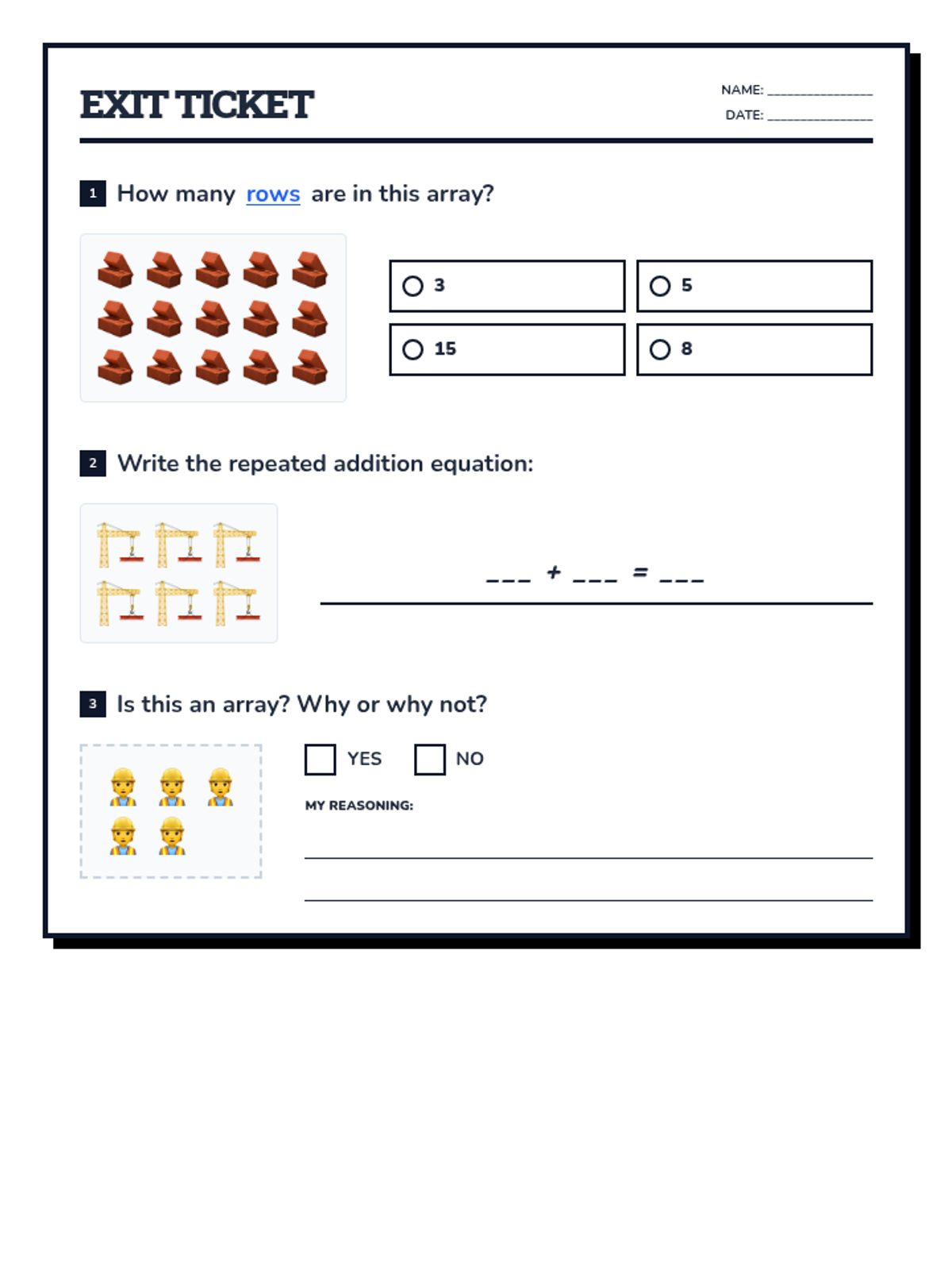
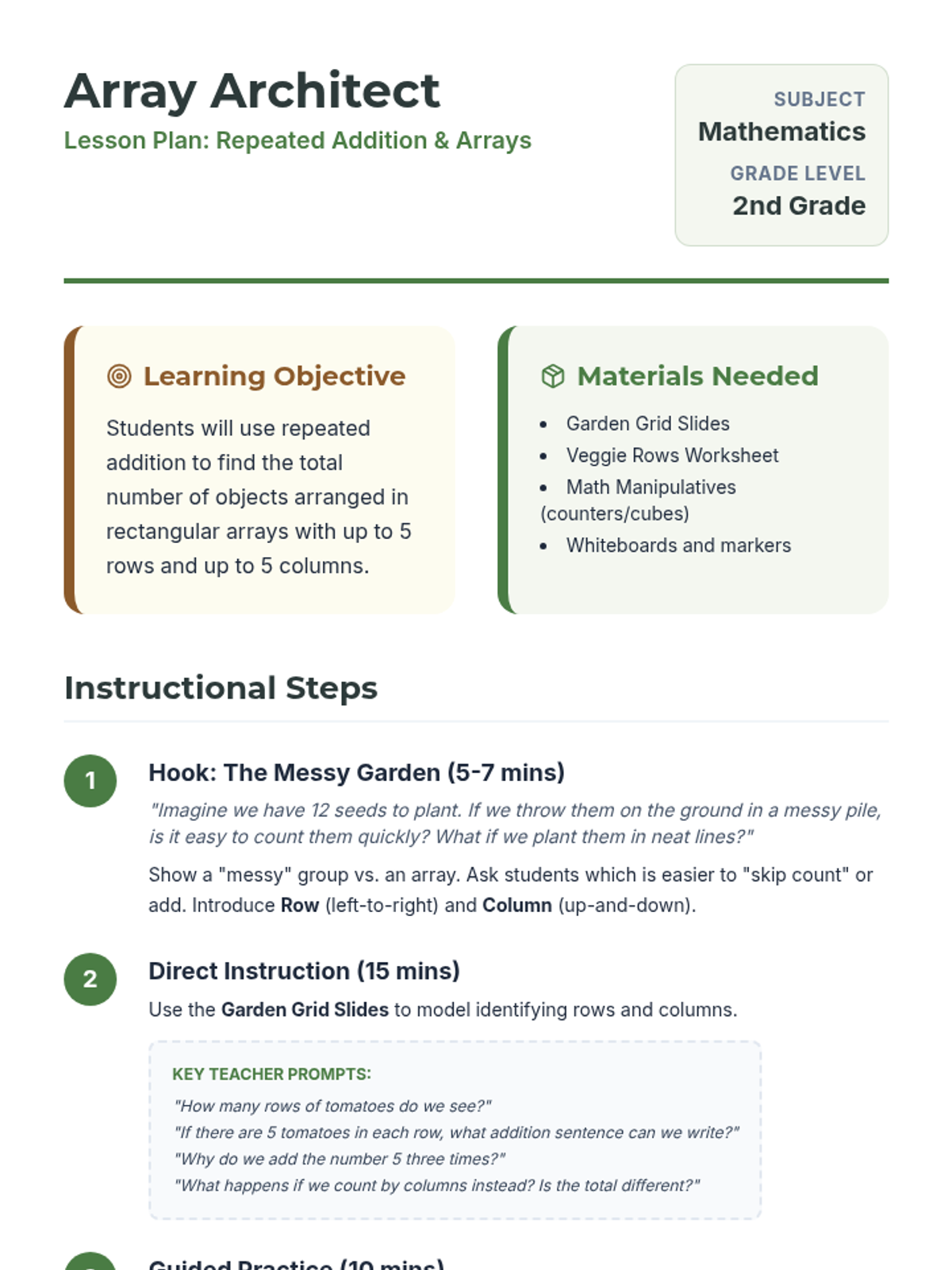
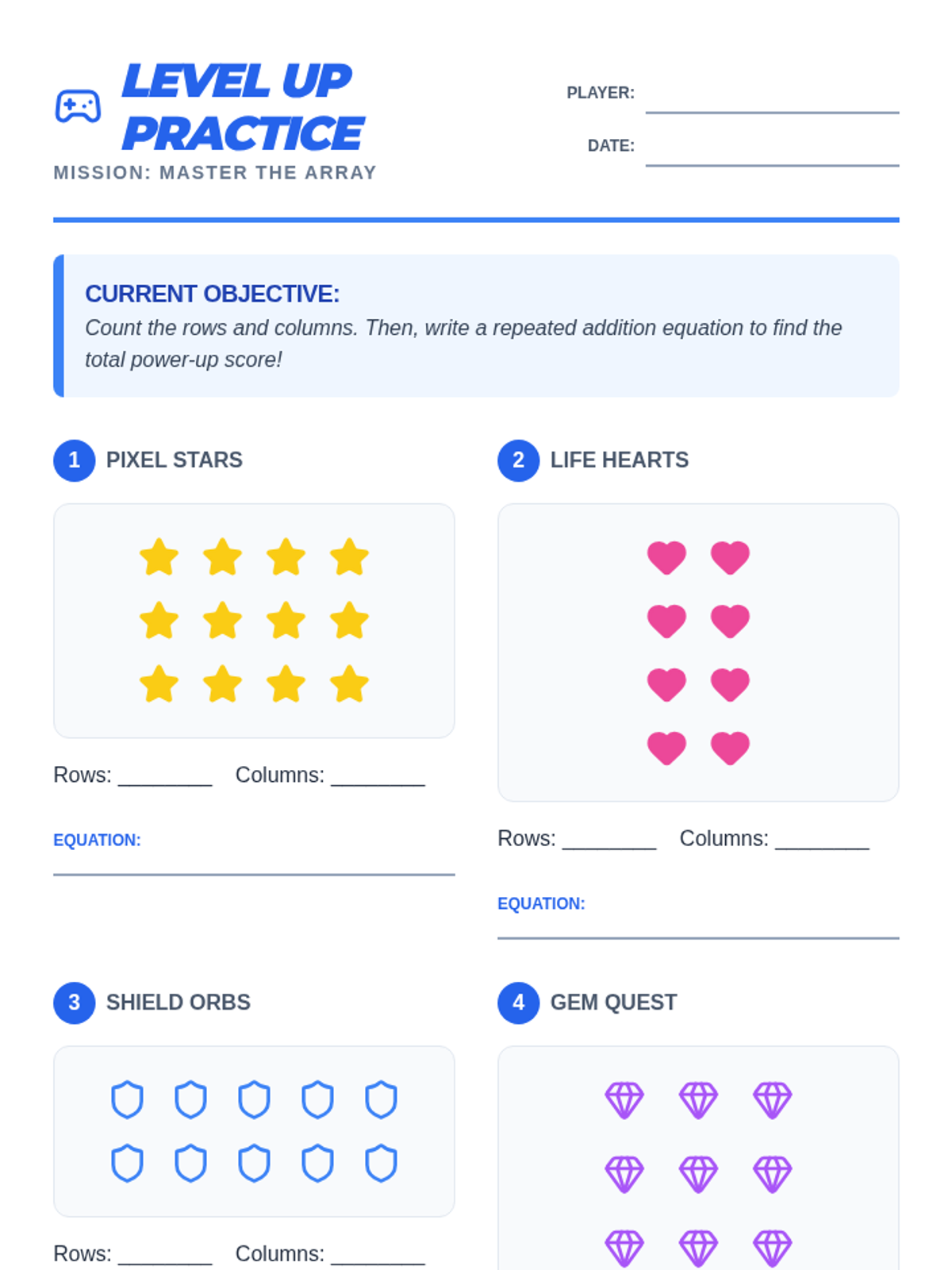
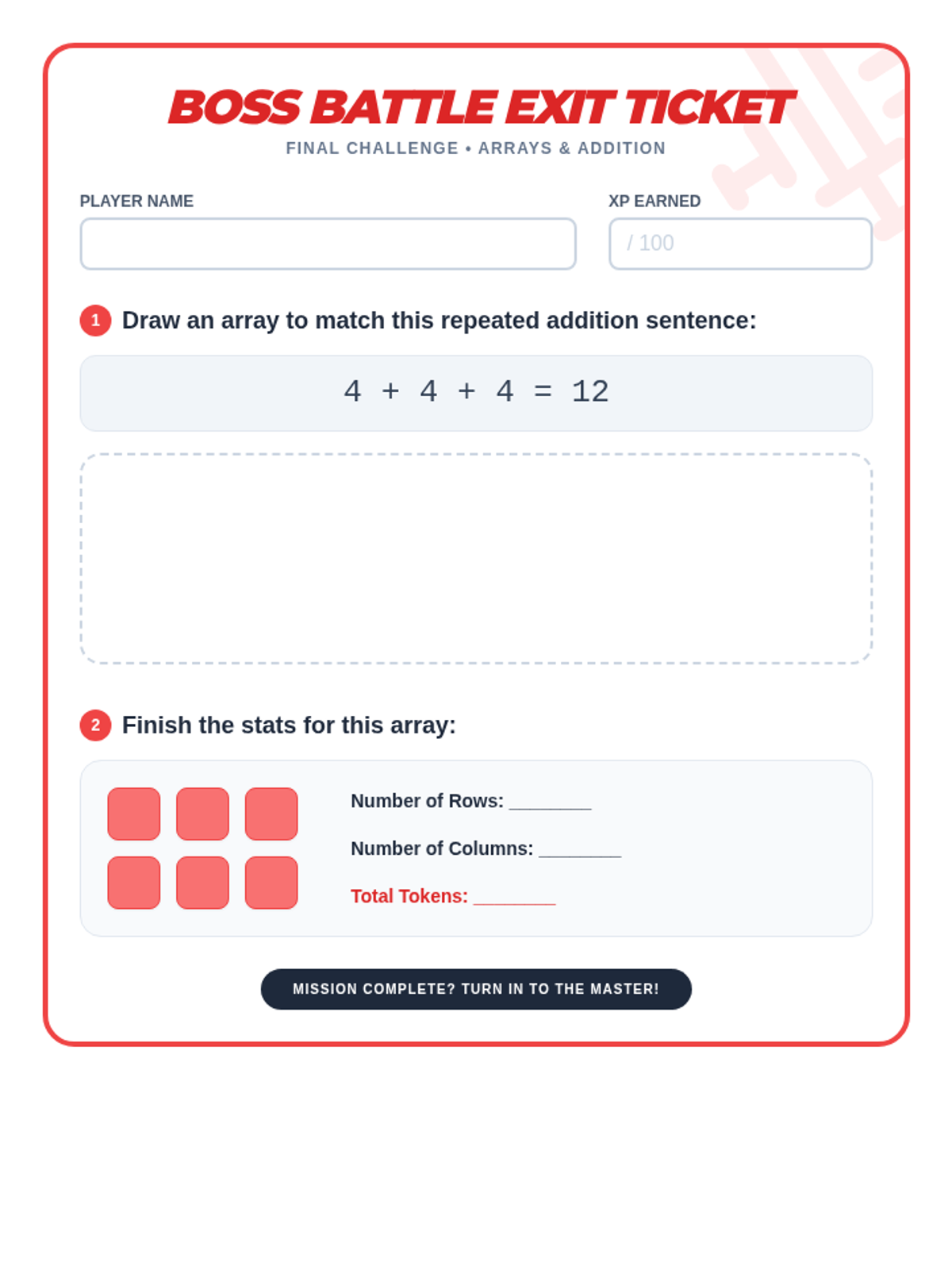
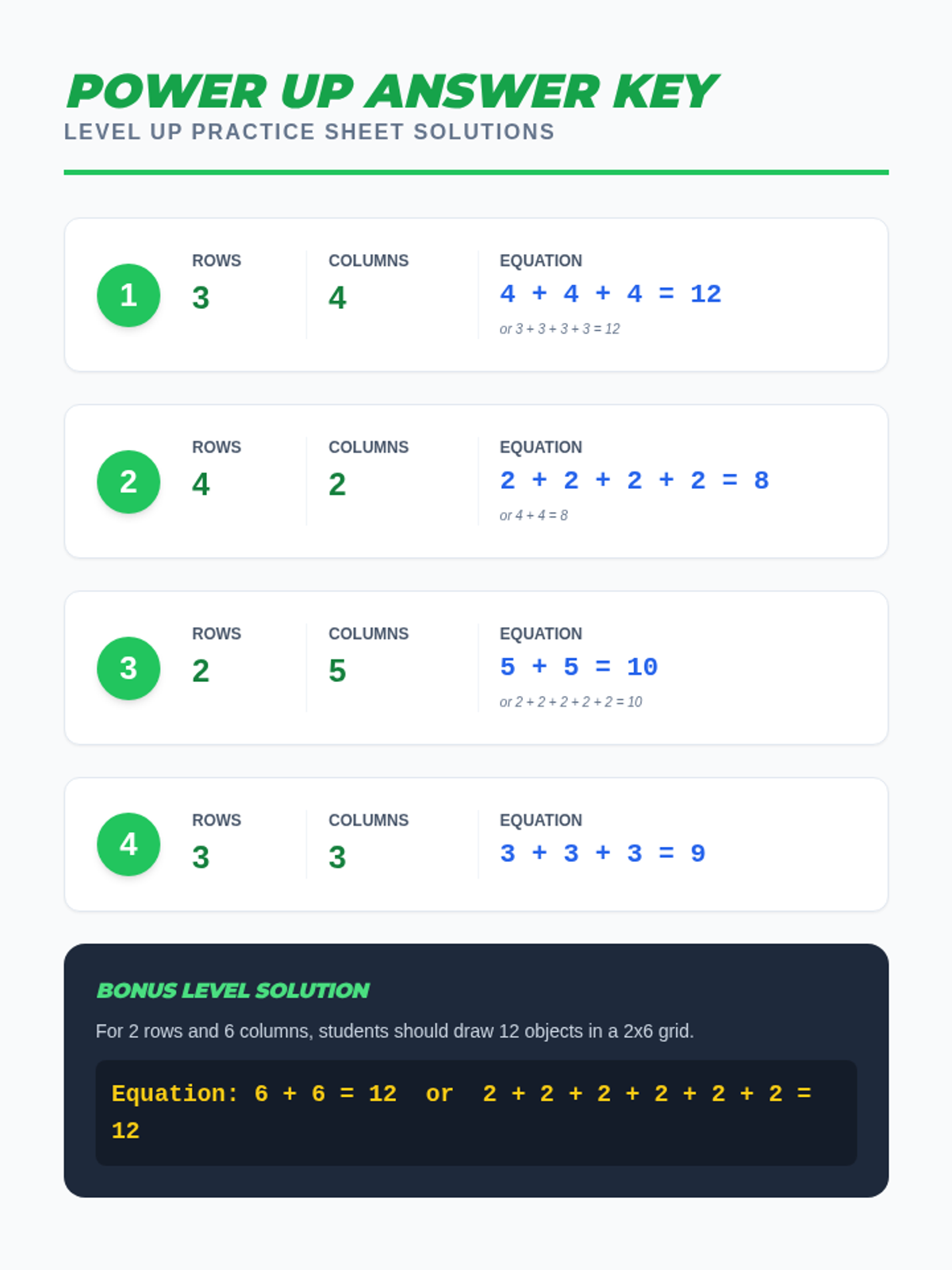
An introductory lesson on arrays for 2nd graders, focusing on identifying rows and columns and using repeated addition to find the total number of objects.
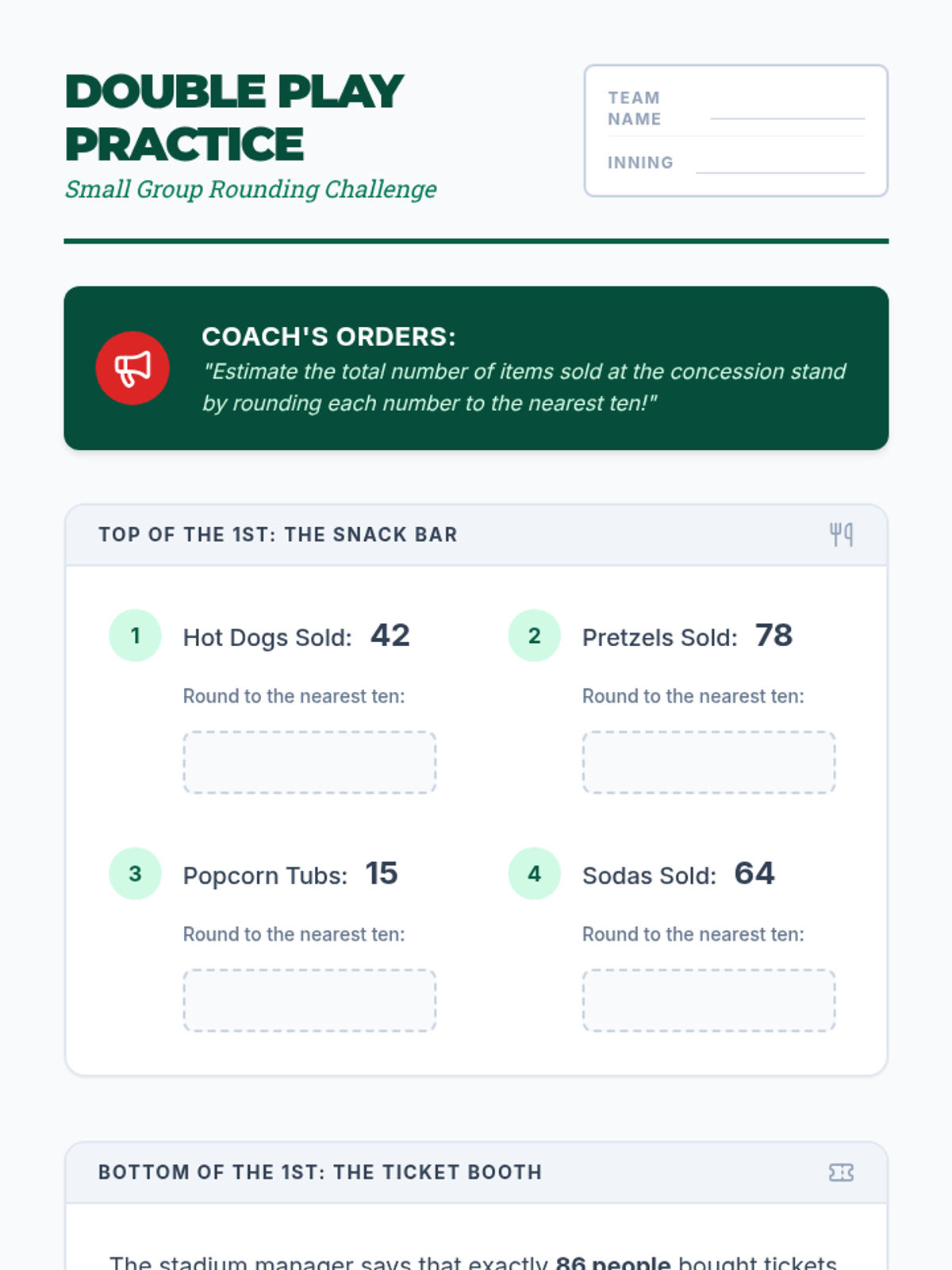
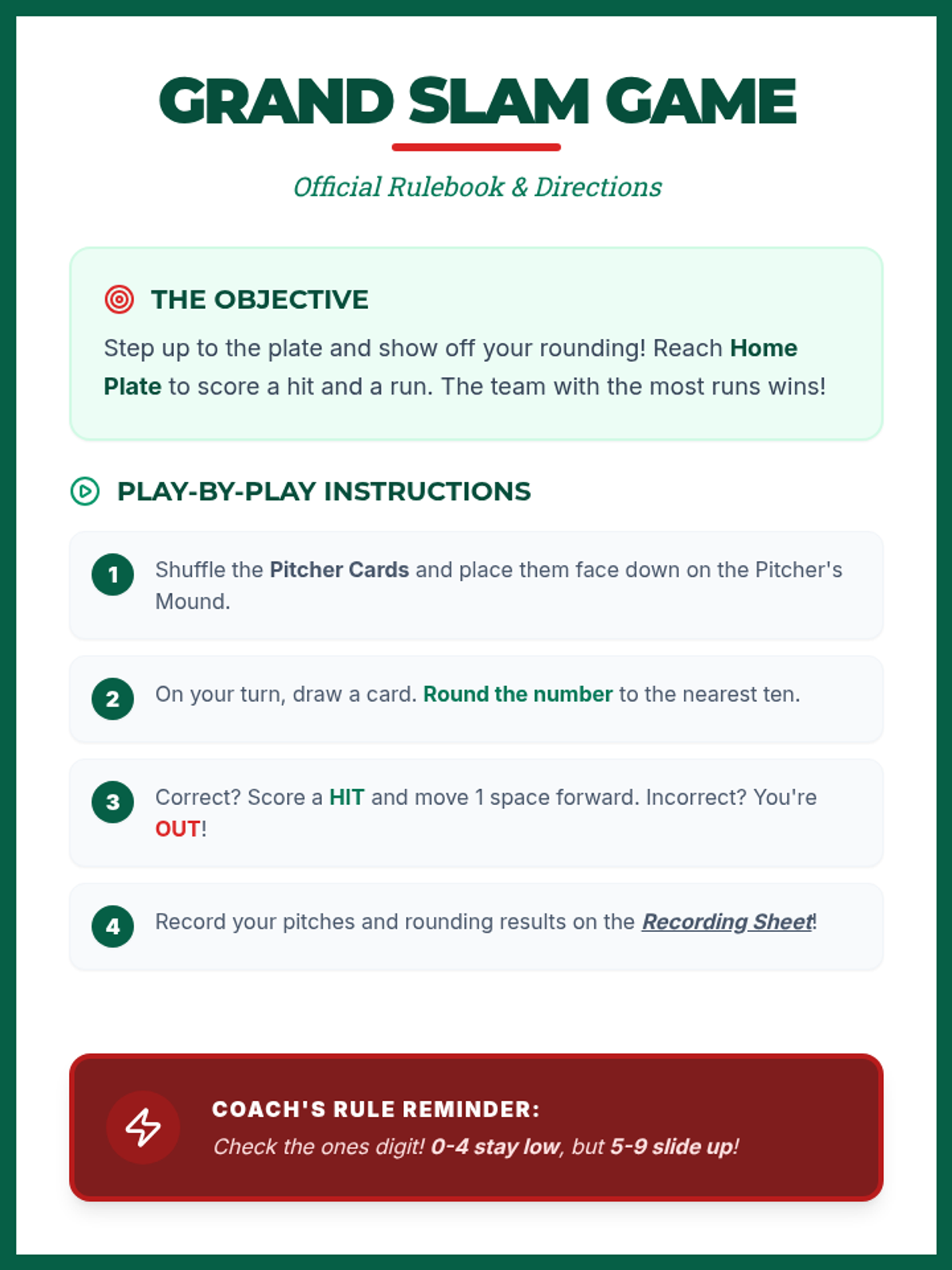
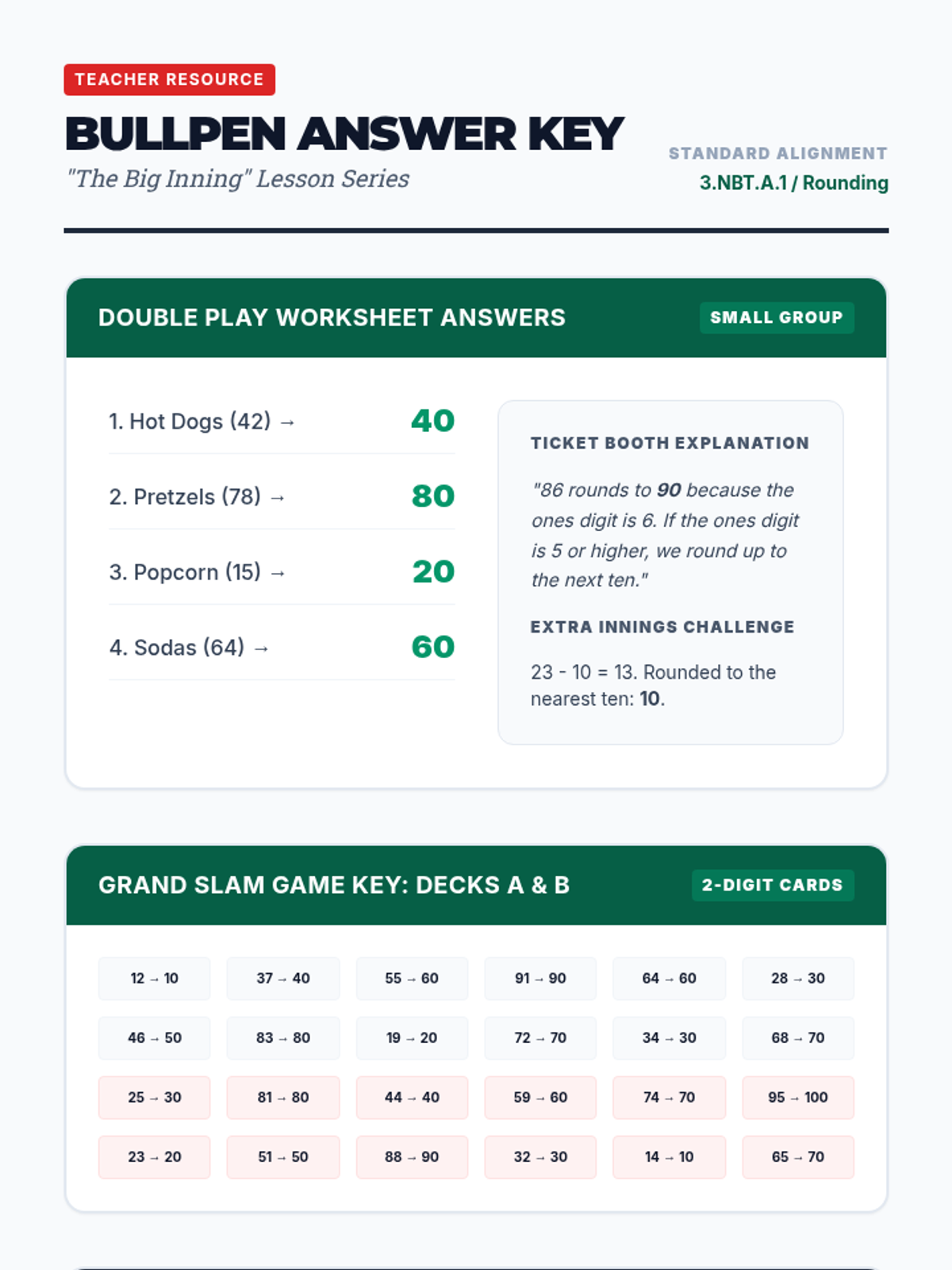
A baseball-themed lesson on rounding to the nearest ten, using the 'ballpark estimate' pun to teach estimation skills through whole-group instruction, small-group practice, and an independent game.
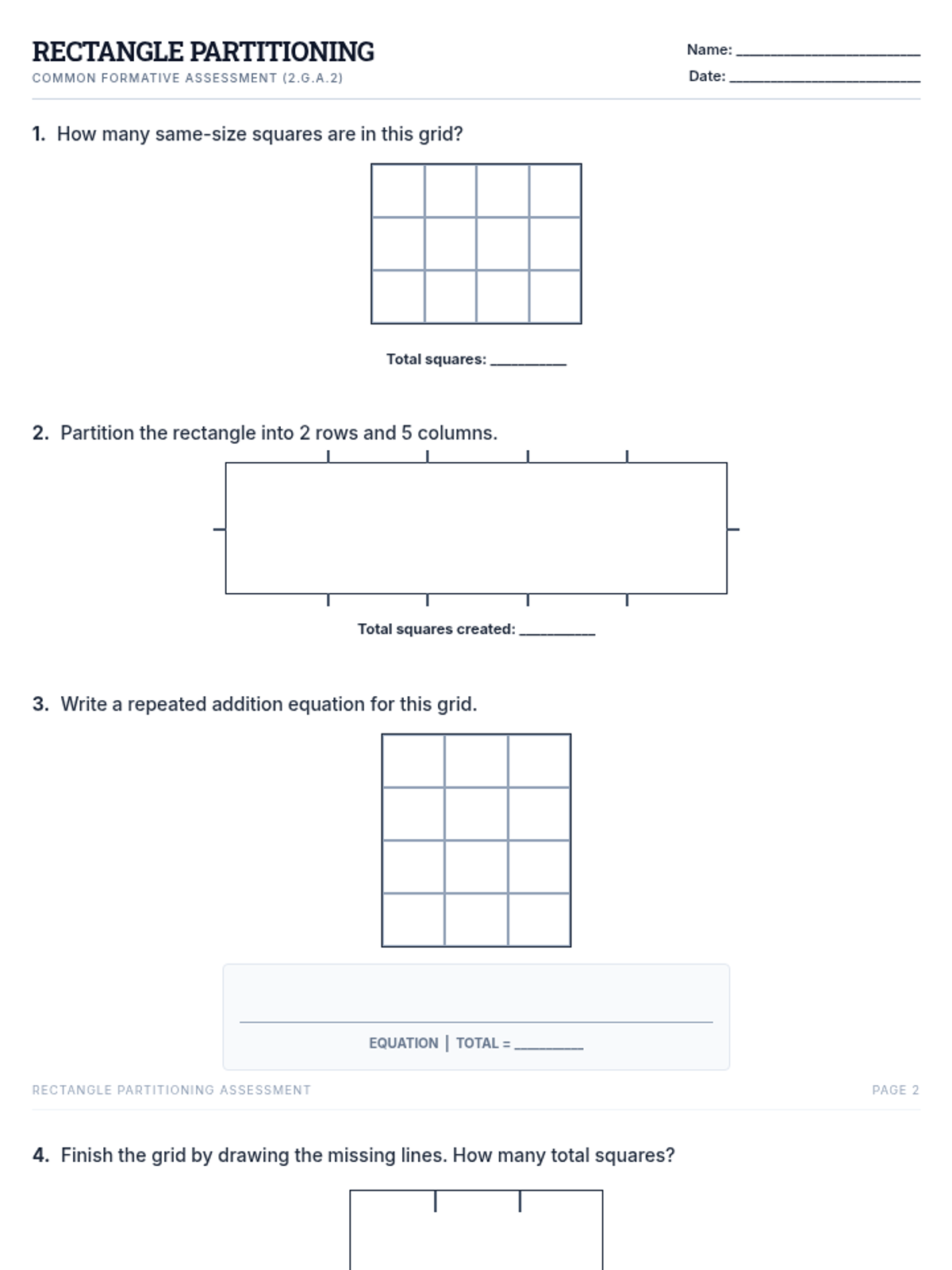
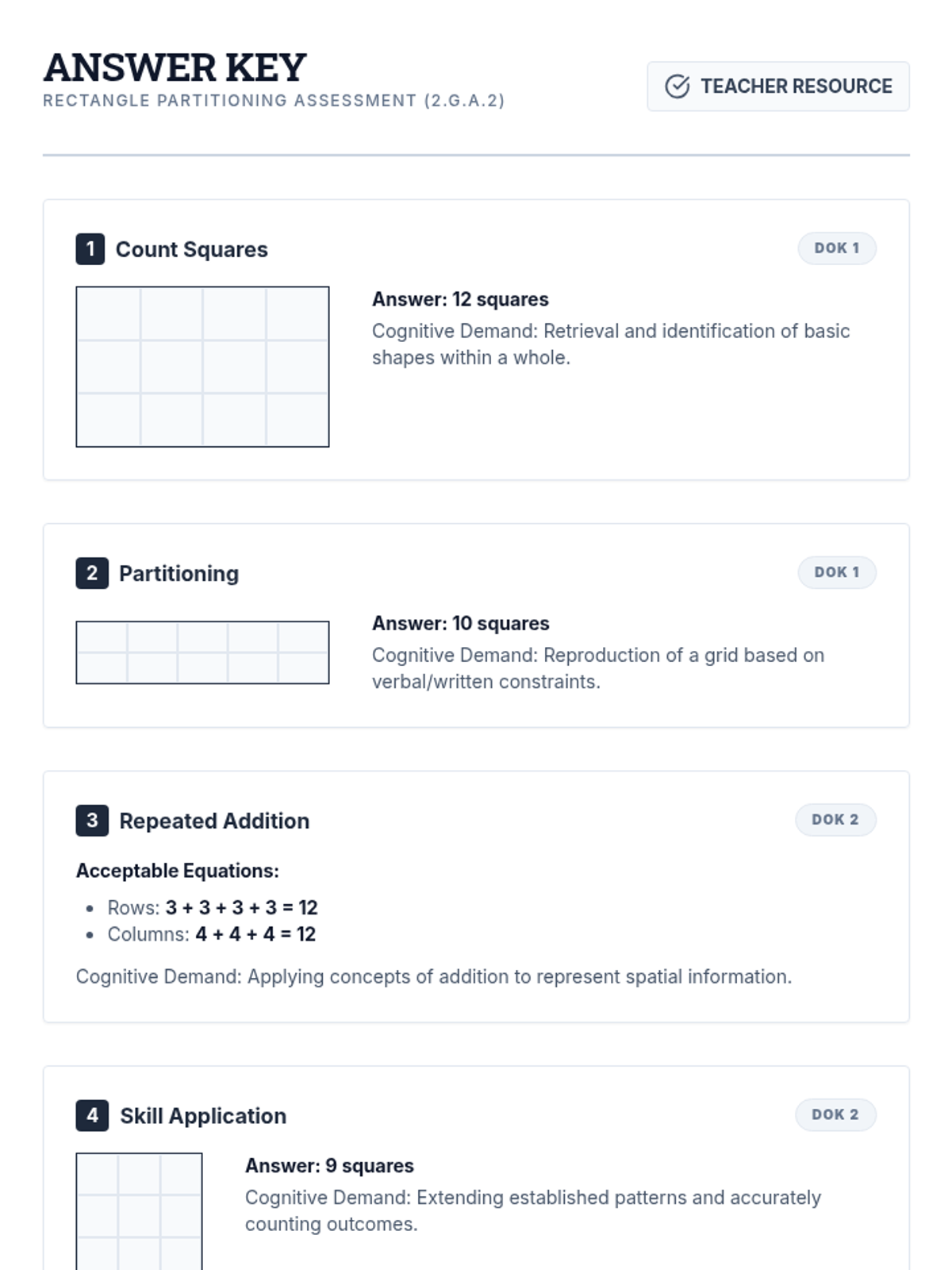
A formative assessment focused on partitioning rectangles into rows and columns of same-size squares, aligned with 2.G.A.2. This lesson includes a student-facing assessment and a comprehensive answer key with DOK level alignment.
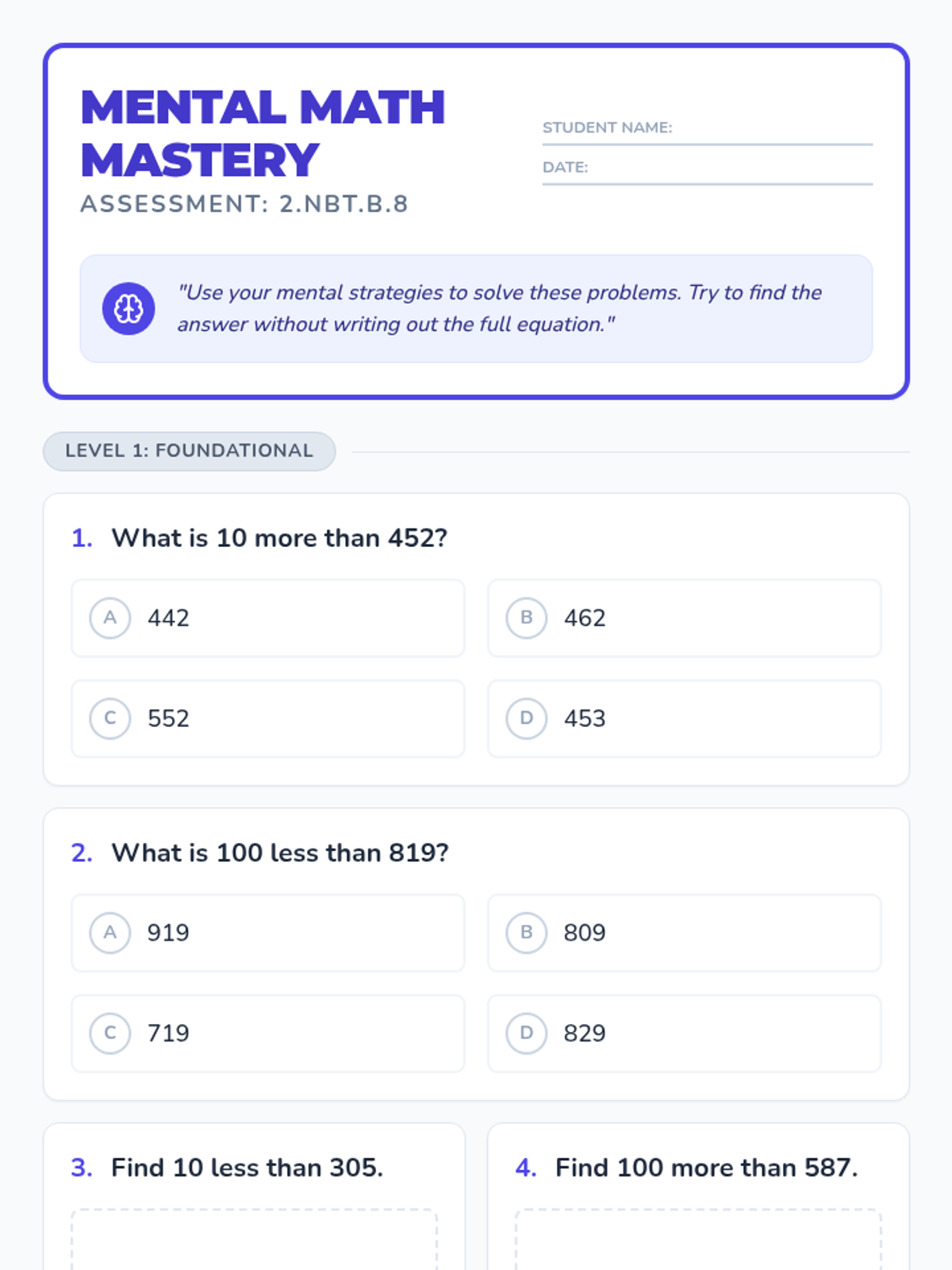
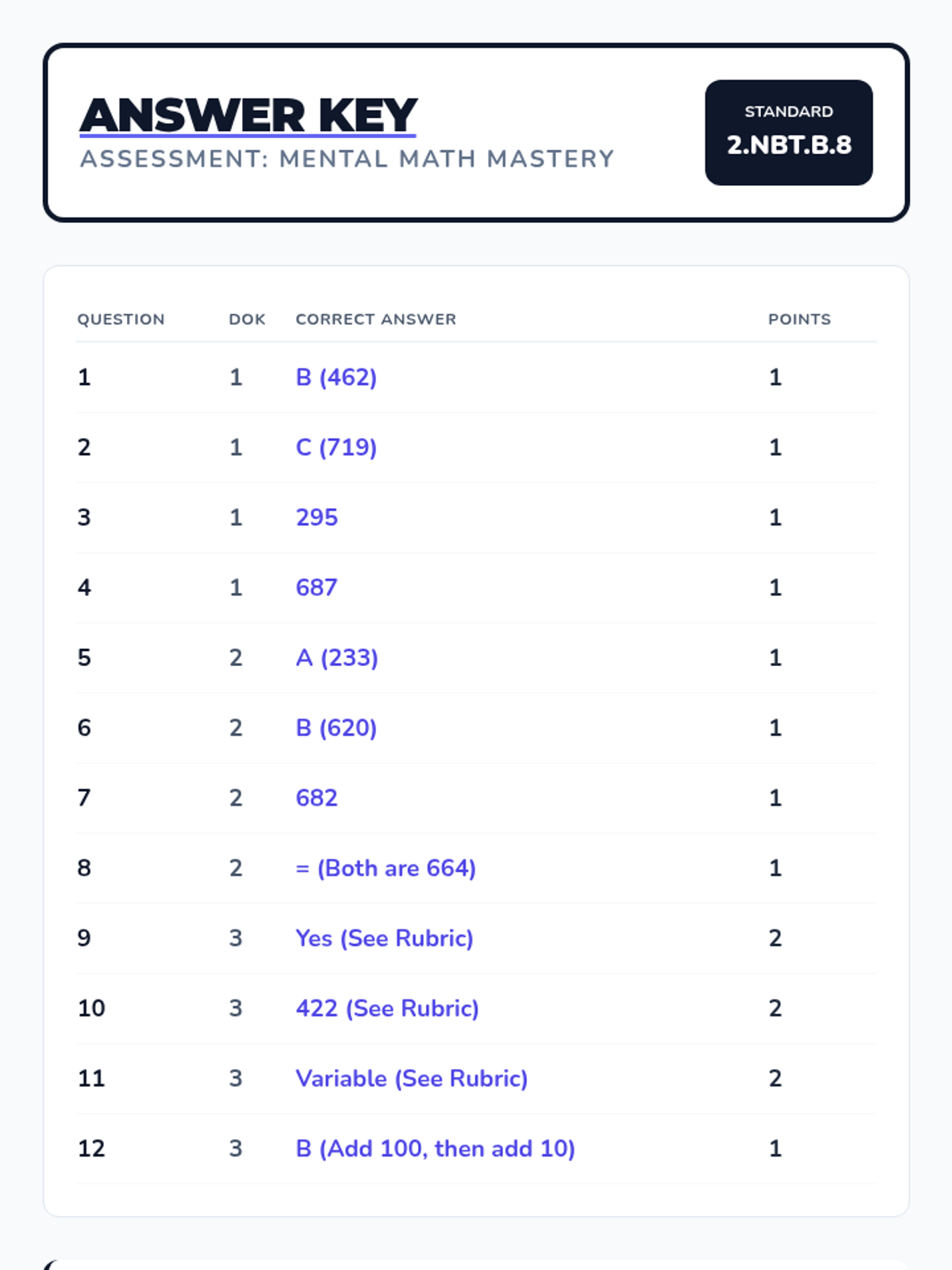
A lesson focused on mastering mental math strategies for adding and subtracting 10 and 100 from three-digit numbers, aligned with standard 2.NBT.B.8.
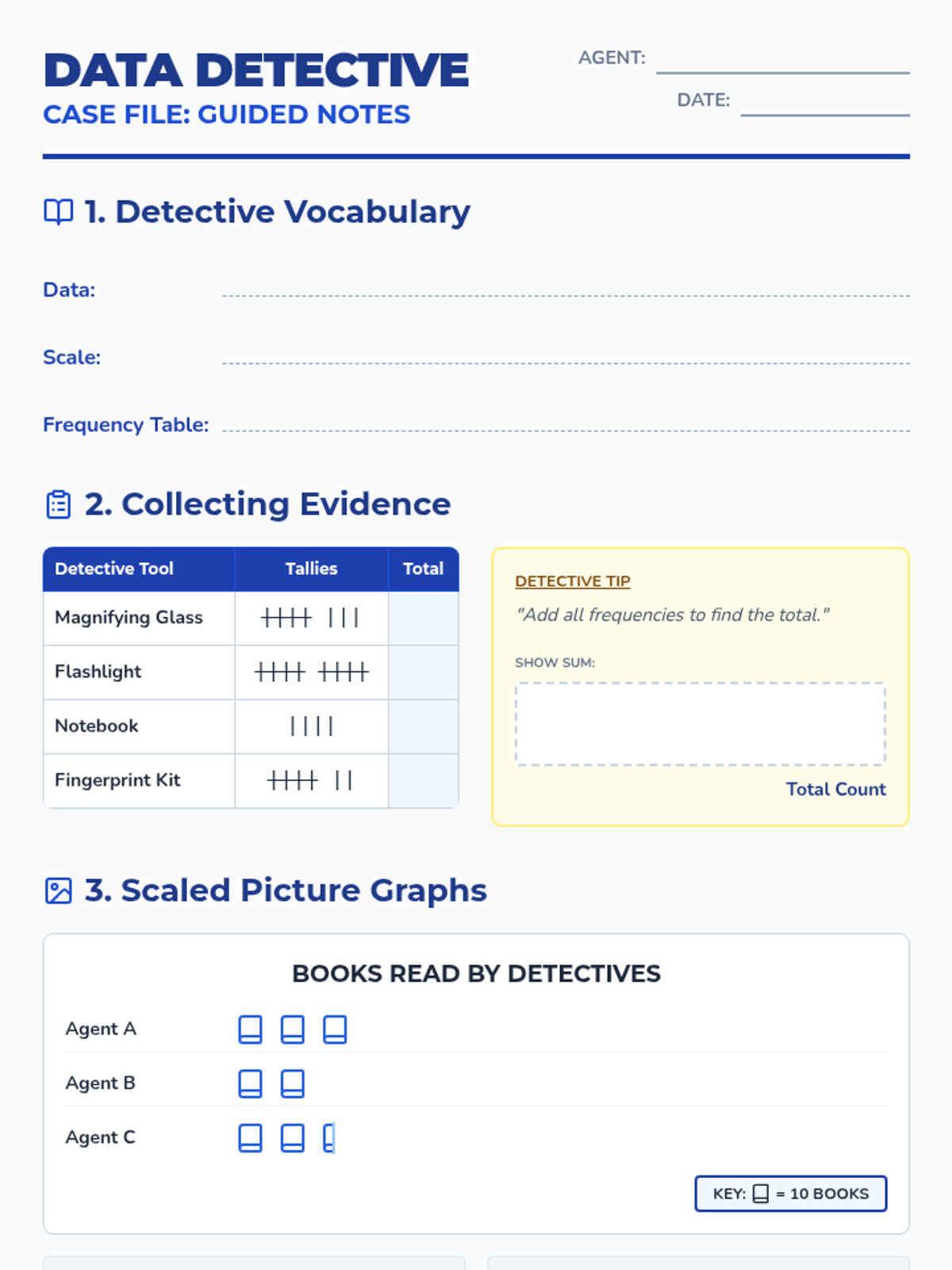
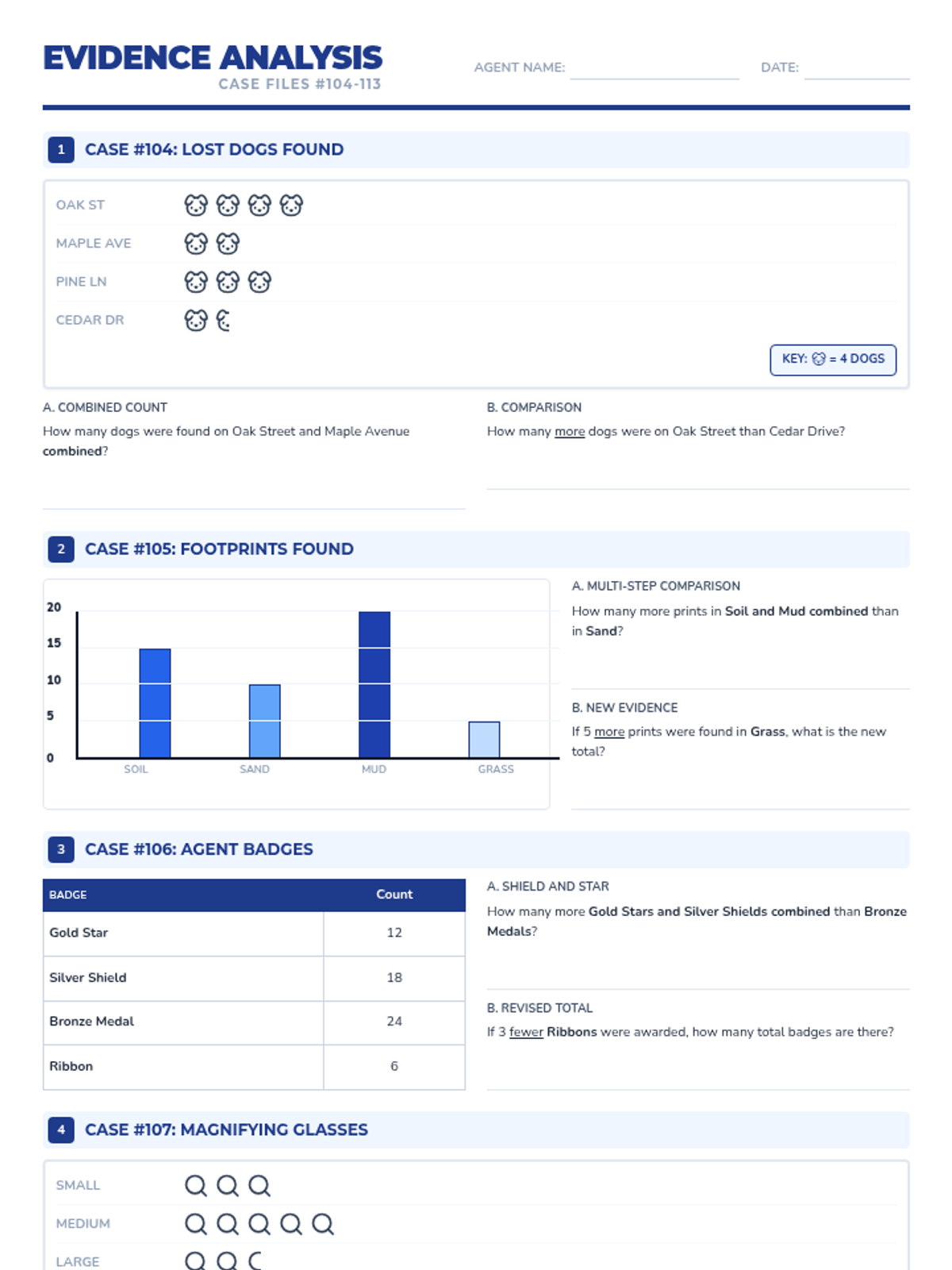
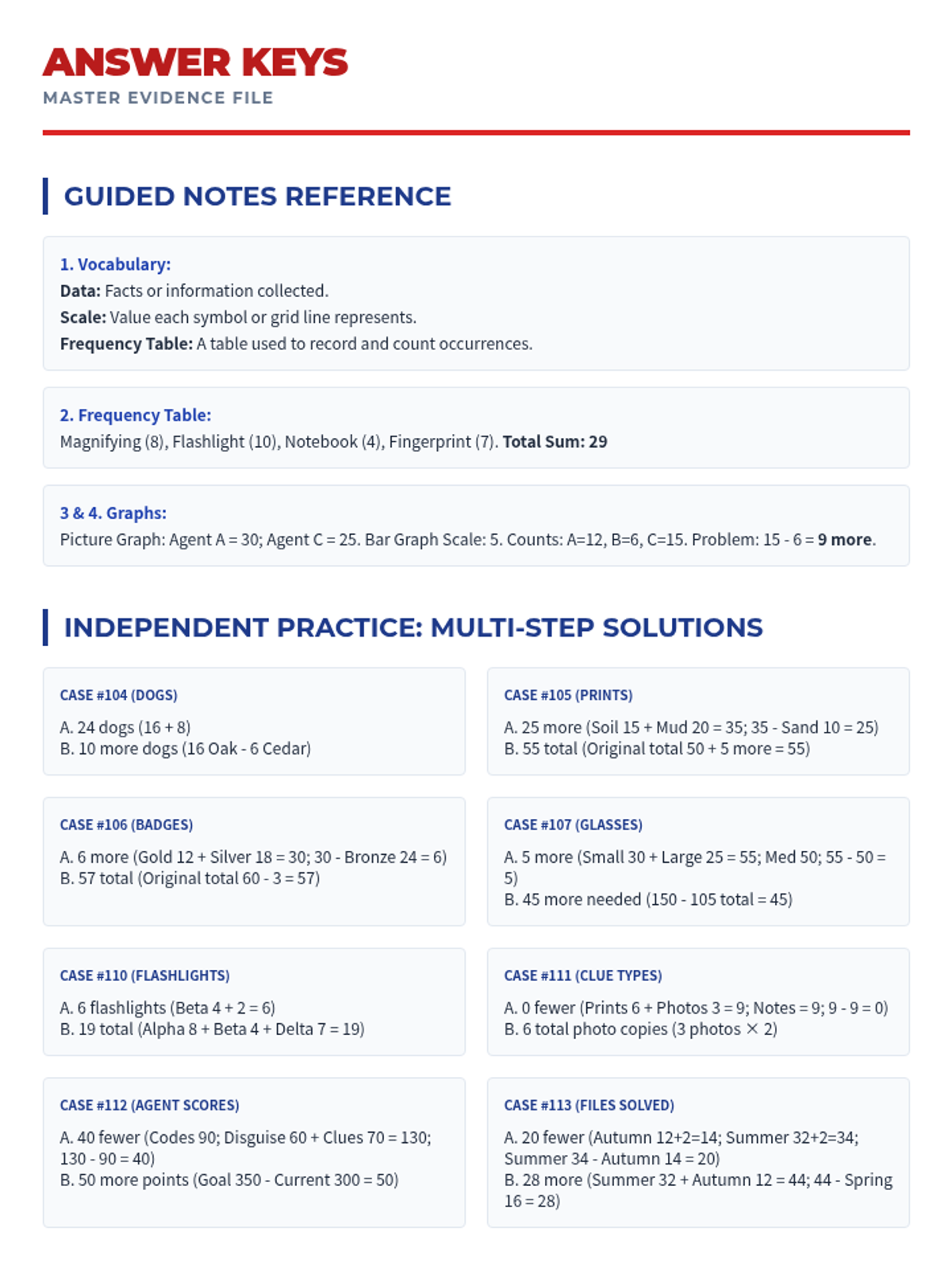
A comprehensive lesson on representing and interpreting scaled graphs, where students become 'Data Detectives' to collect, graph, and analyze information.
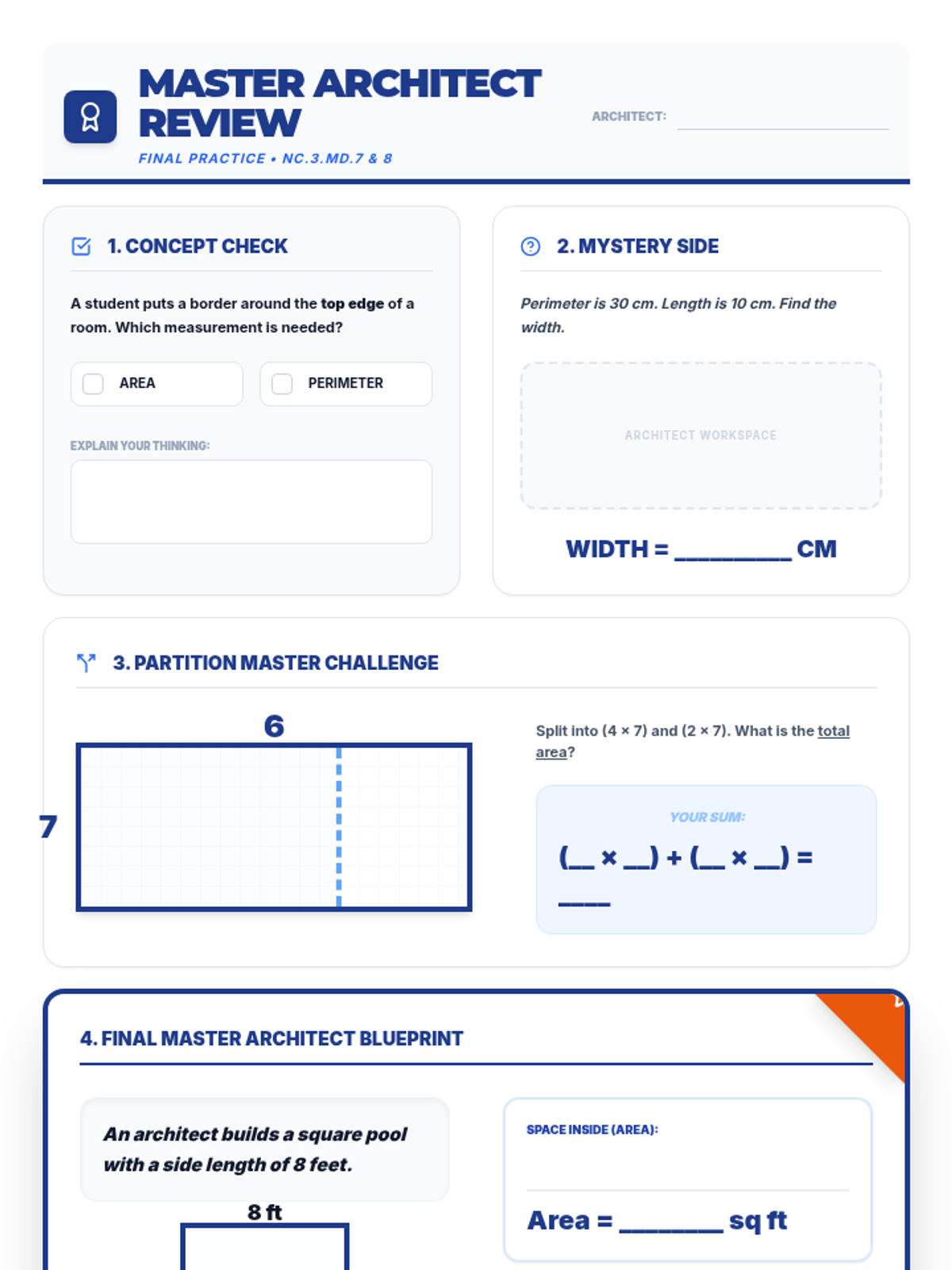
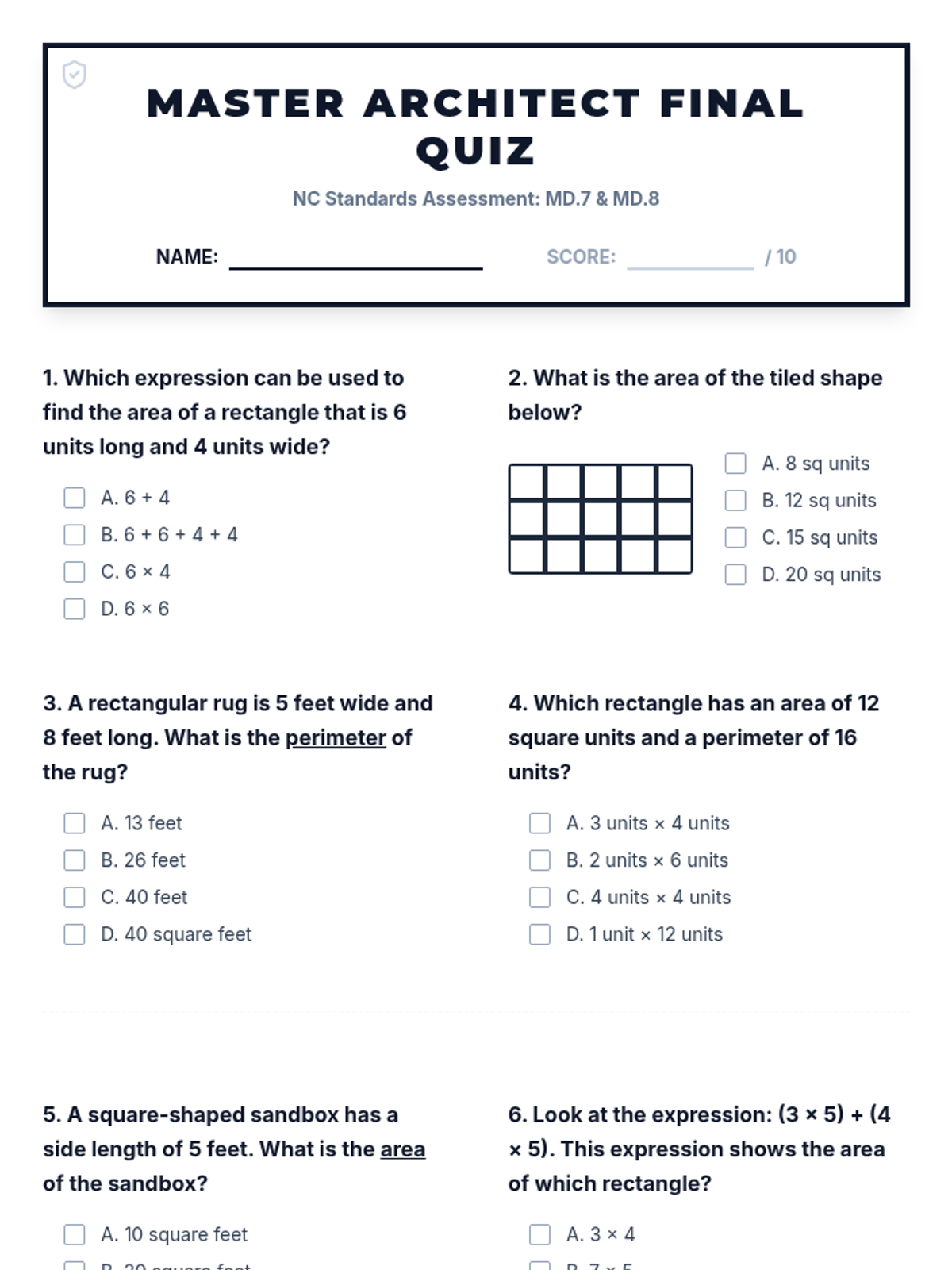
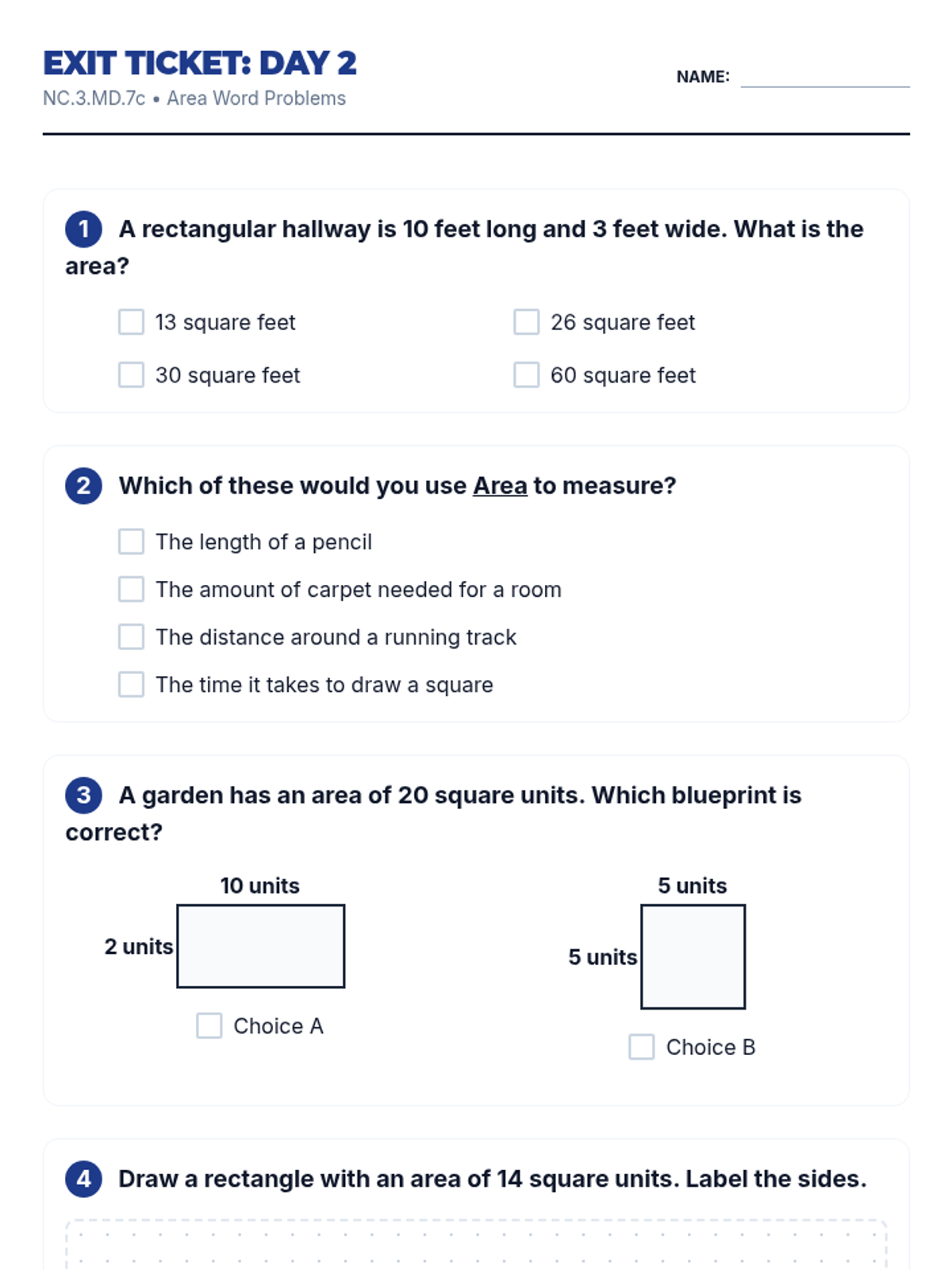
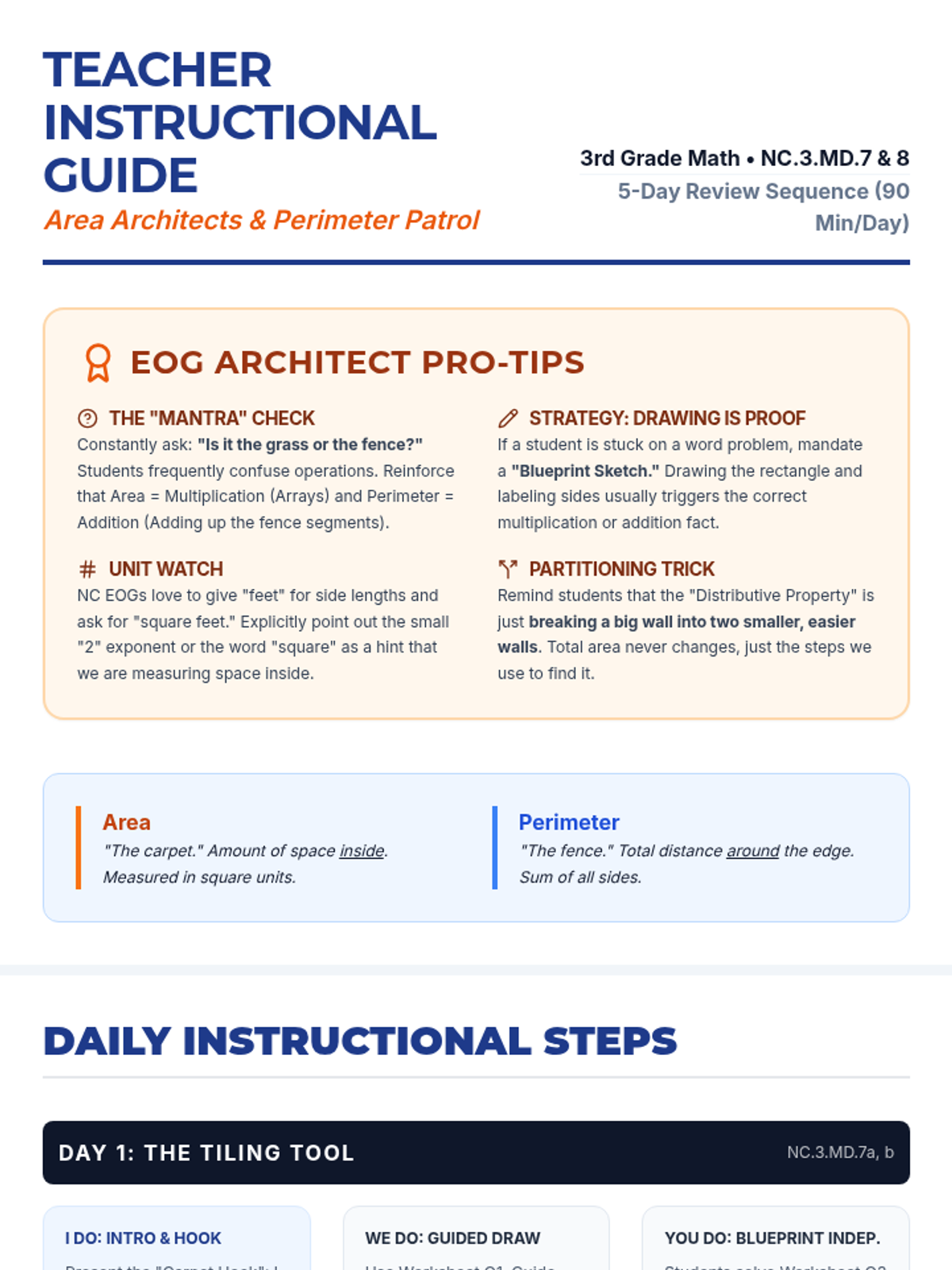
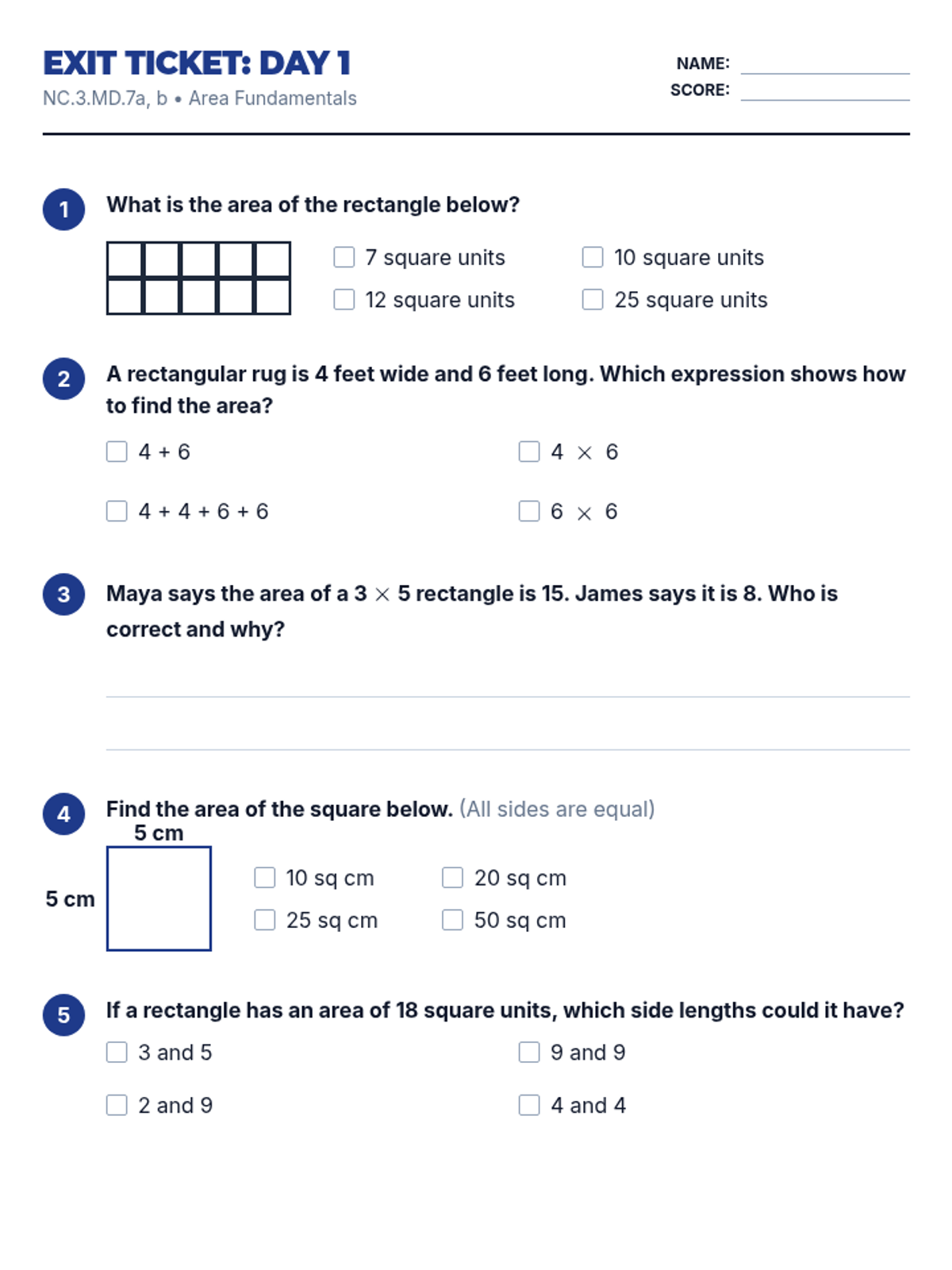
A comprehensive review of area and perimeter standards followed by a 10-question EOG-style final assessment.
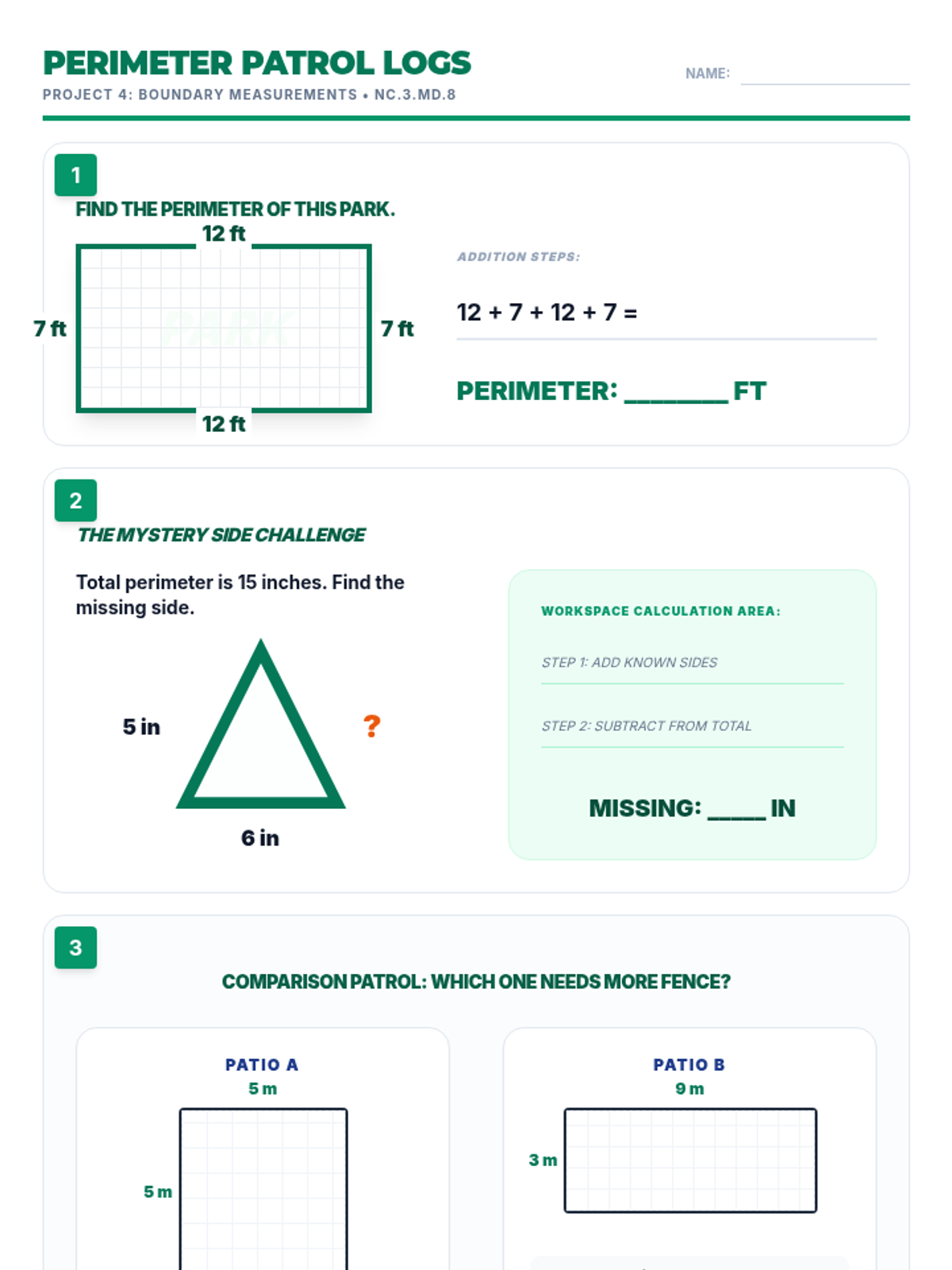
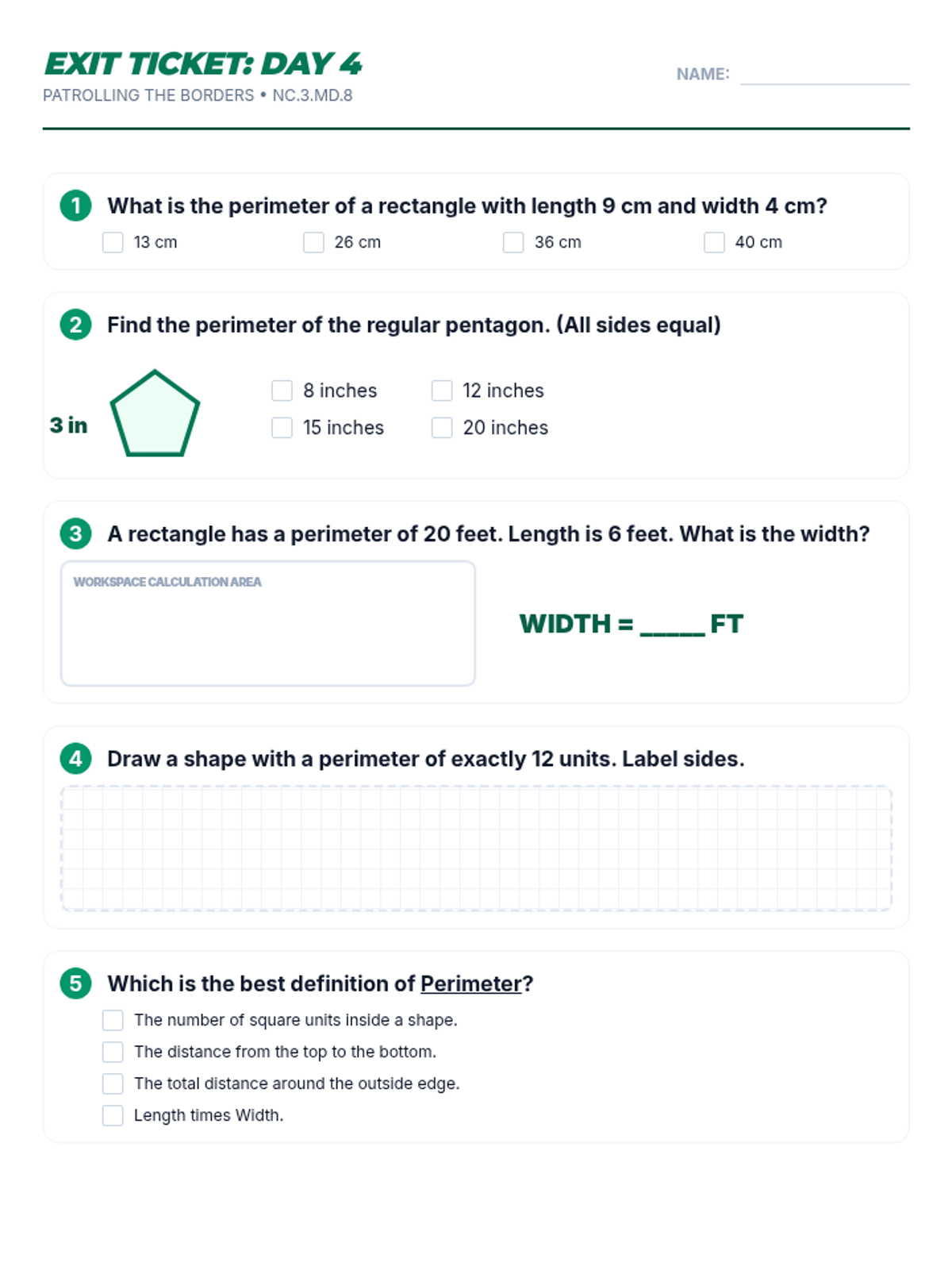
Understanding perimeter as the distance around a shape and solving problems involving unknown side lengths.
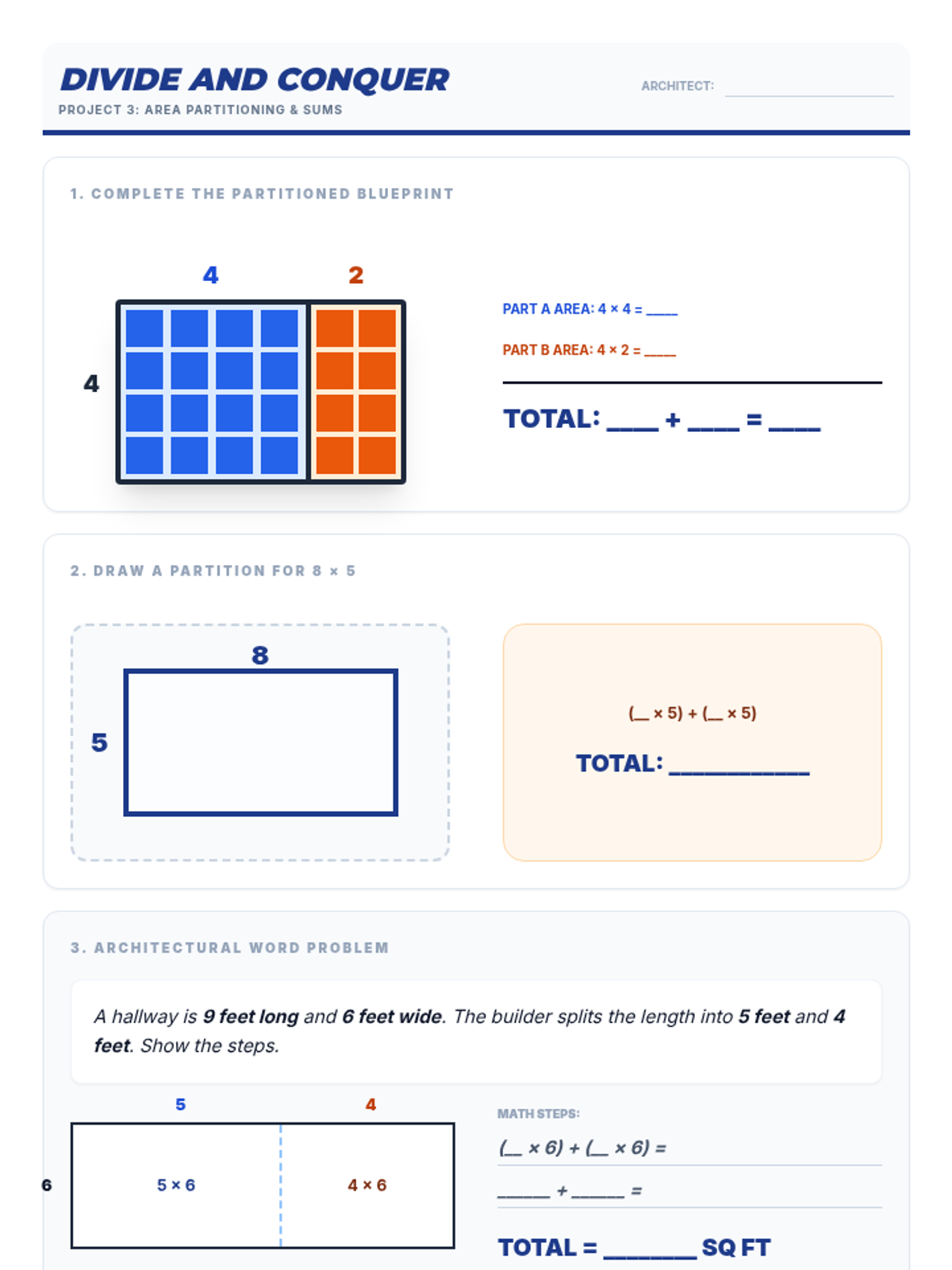
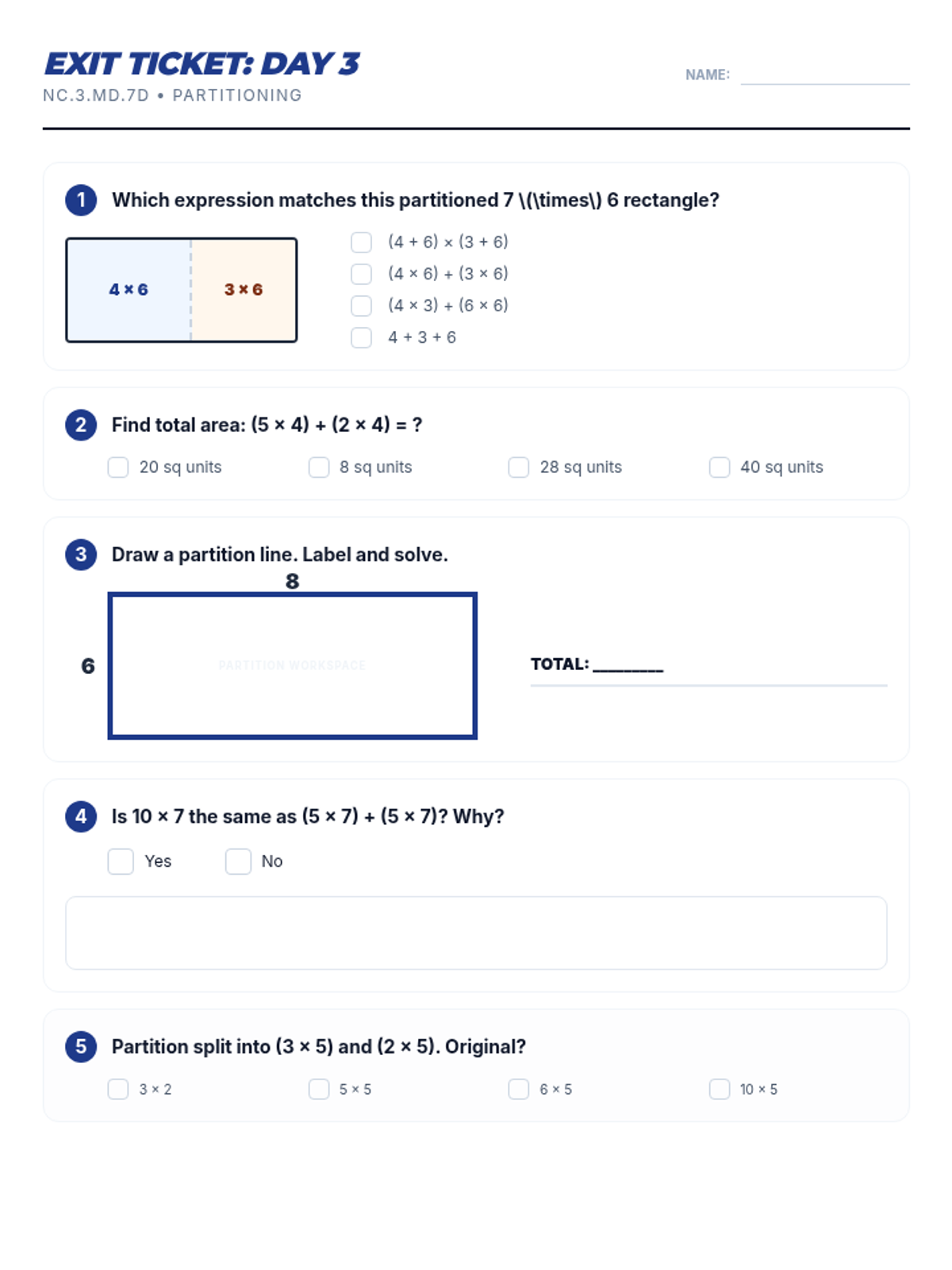
Exploring how to find the area of a large rectangle by partitioning it into two smaller ones and adding their areas together (Distributive Property).
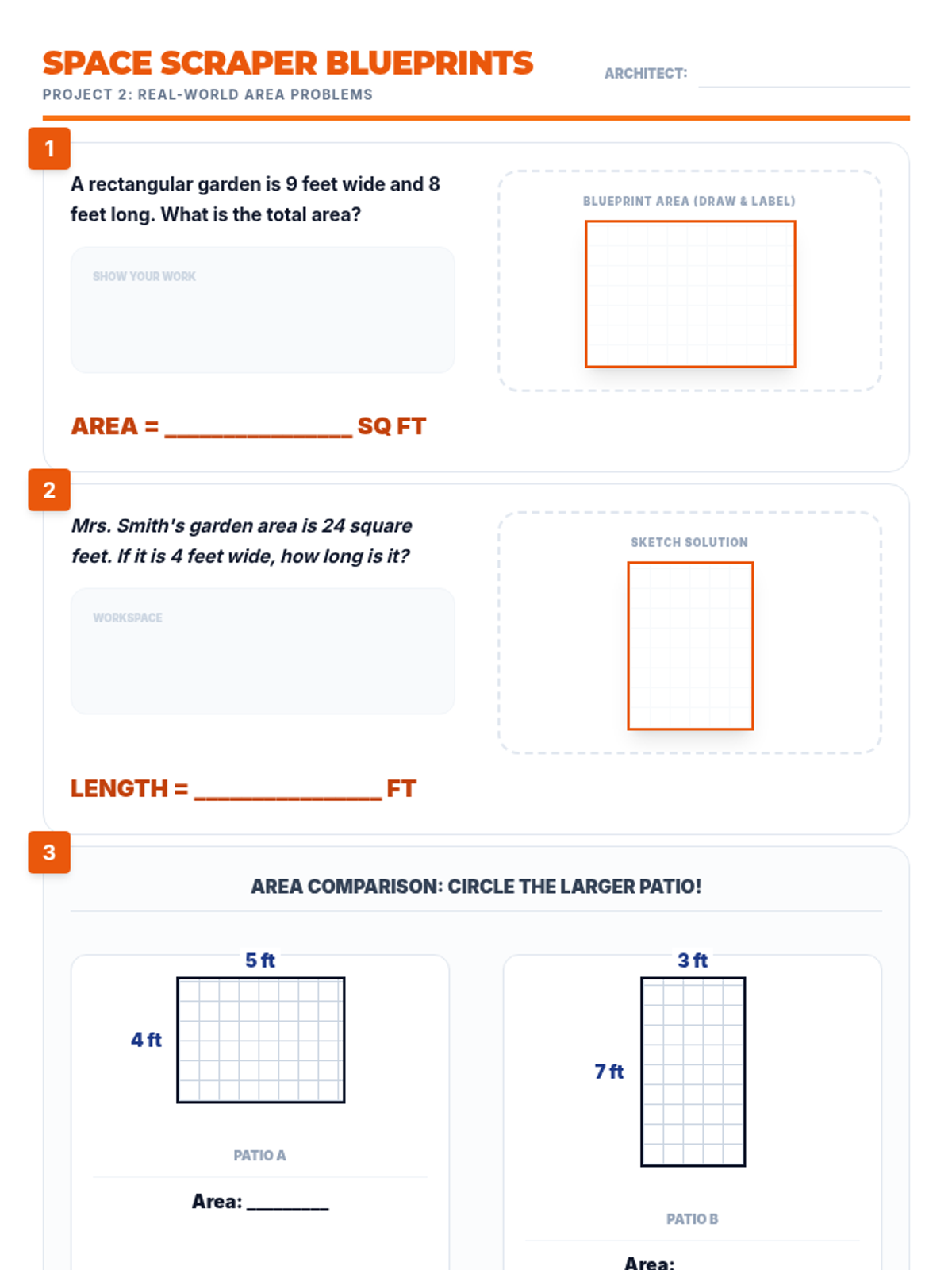
Applying area multiplication to solve real-world problems and representing products as rectangular areas in mathematical reasoning.
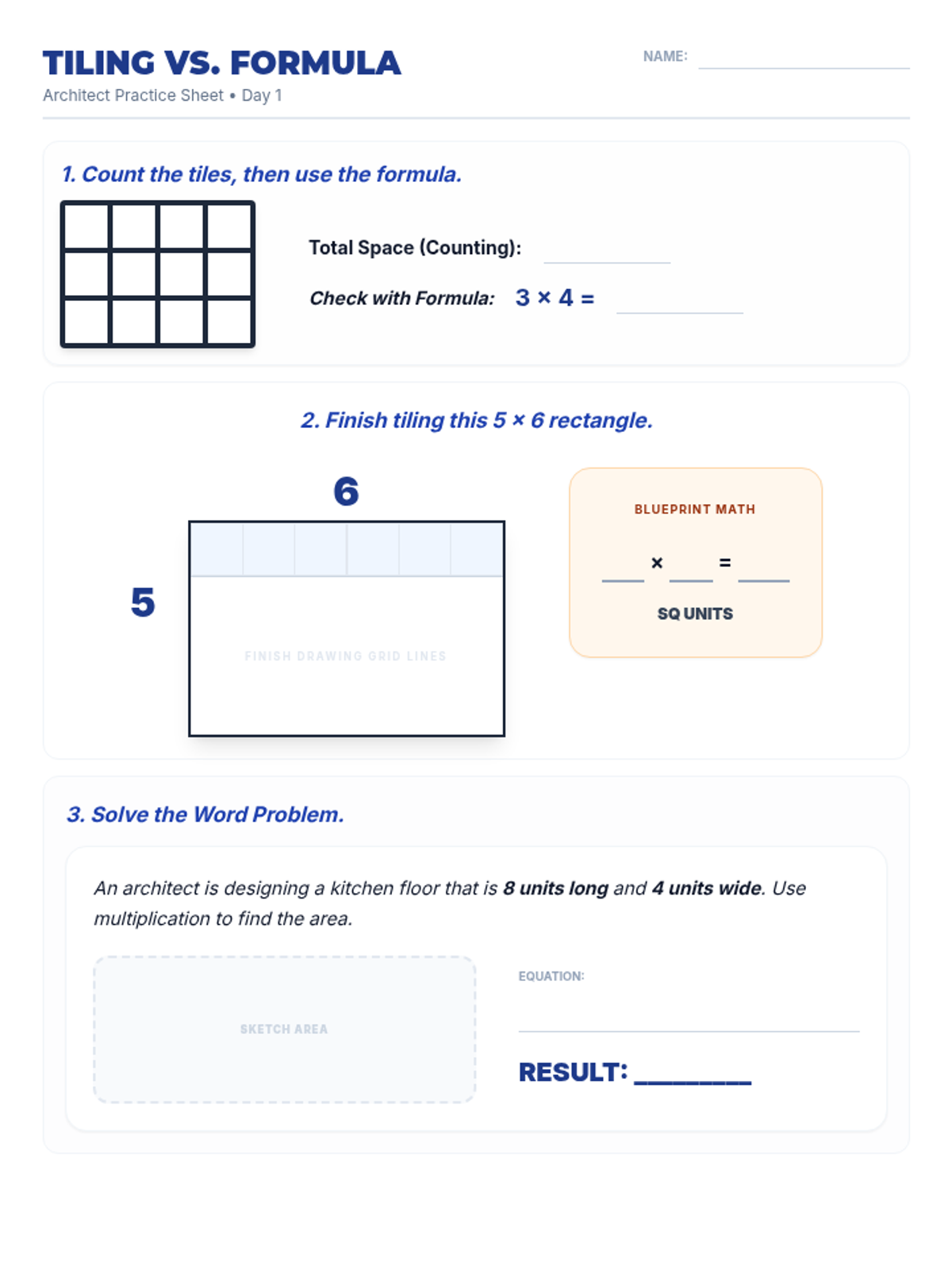
Introduction to area using tiling and side-length multiplication. Students compare counting unit squares to using the formula length x width.
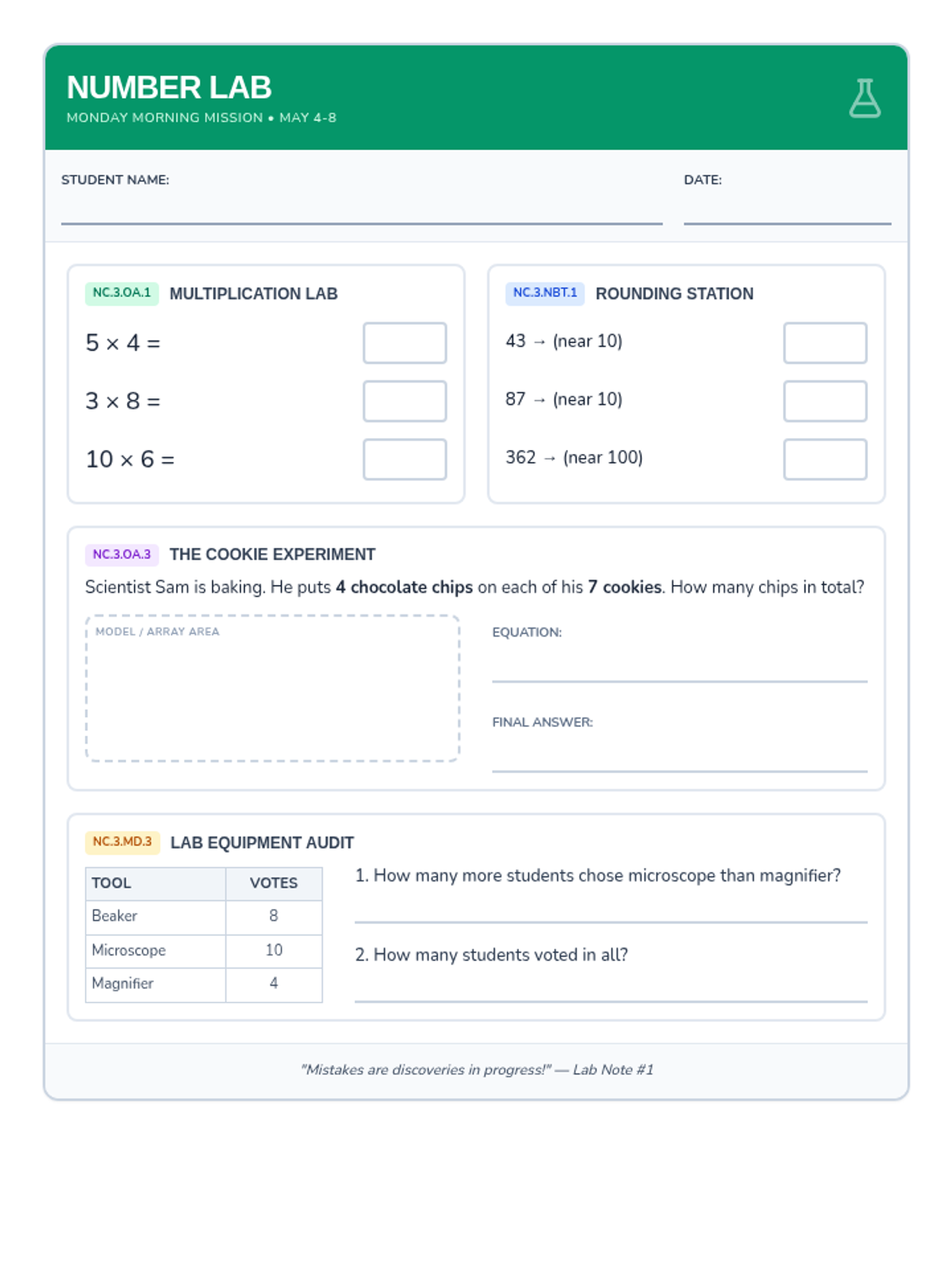
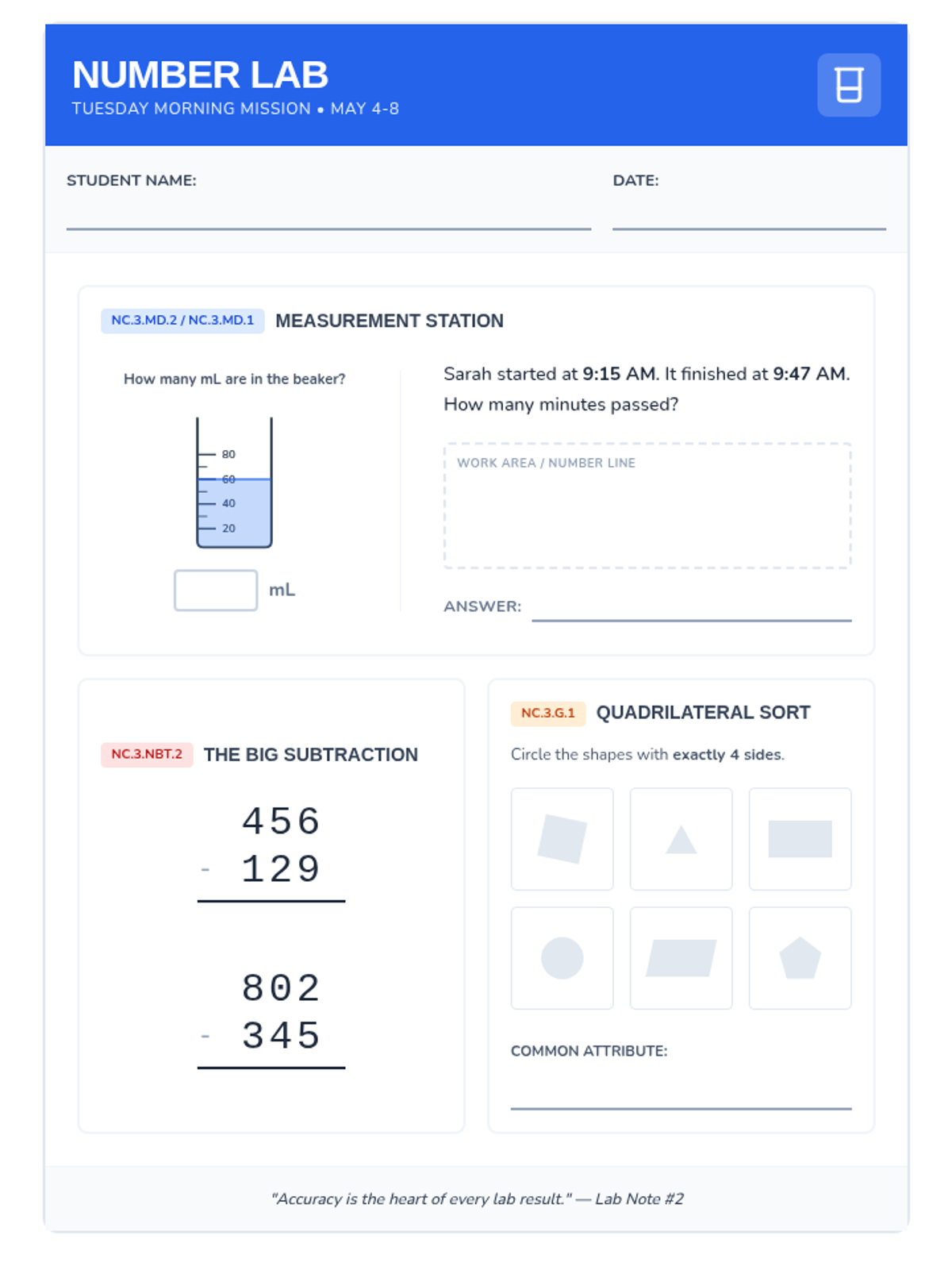
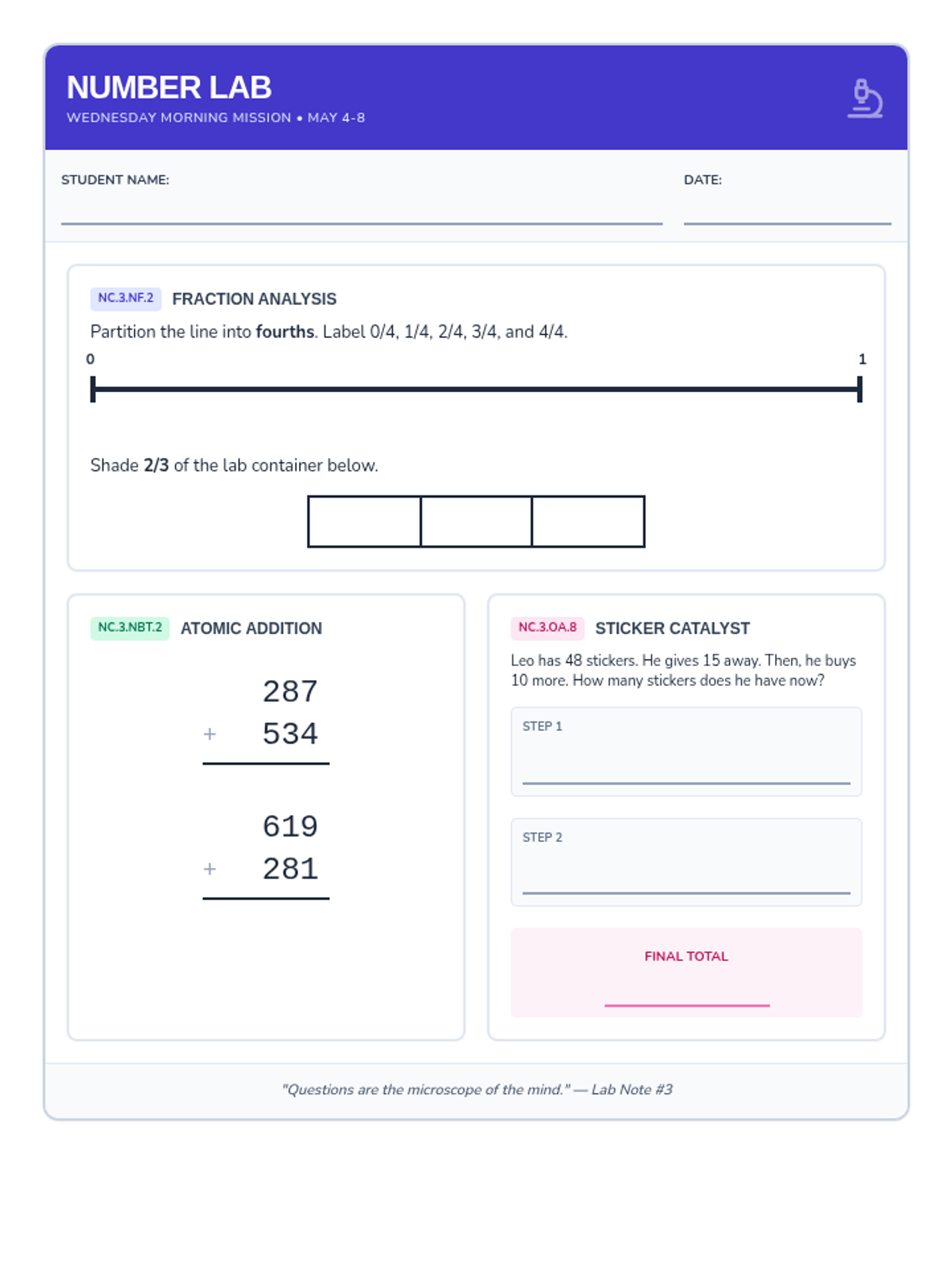
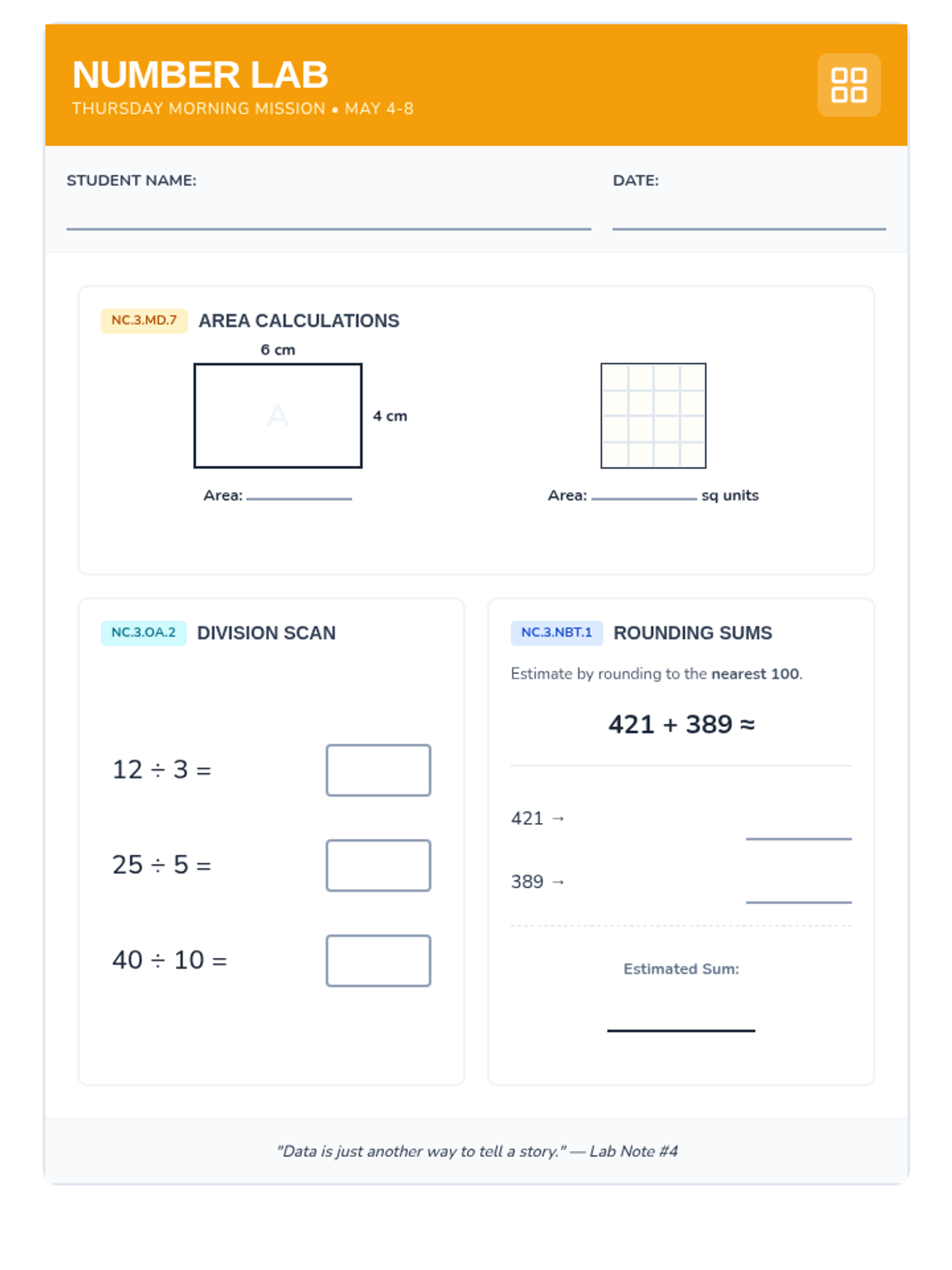
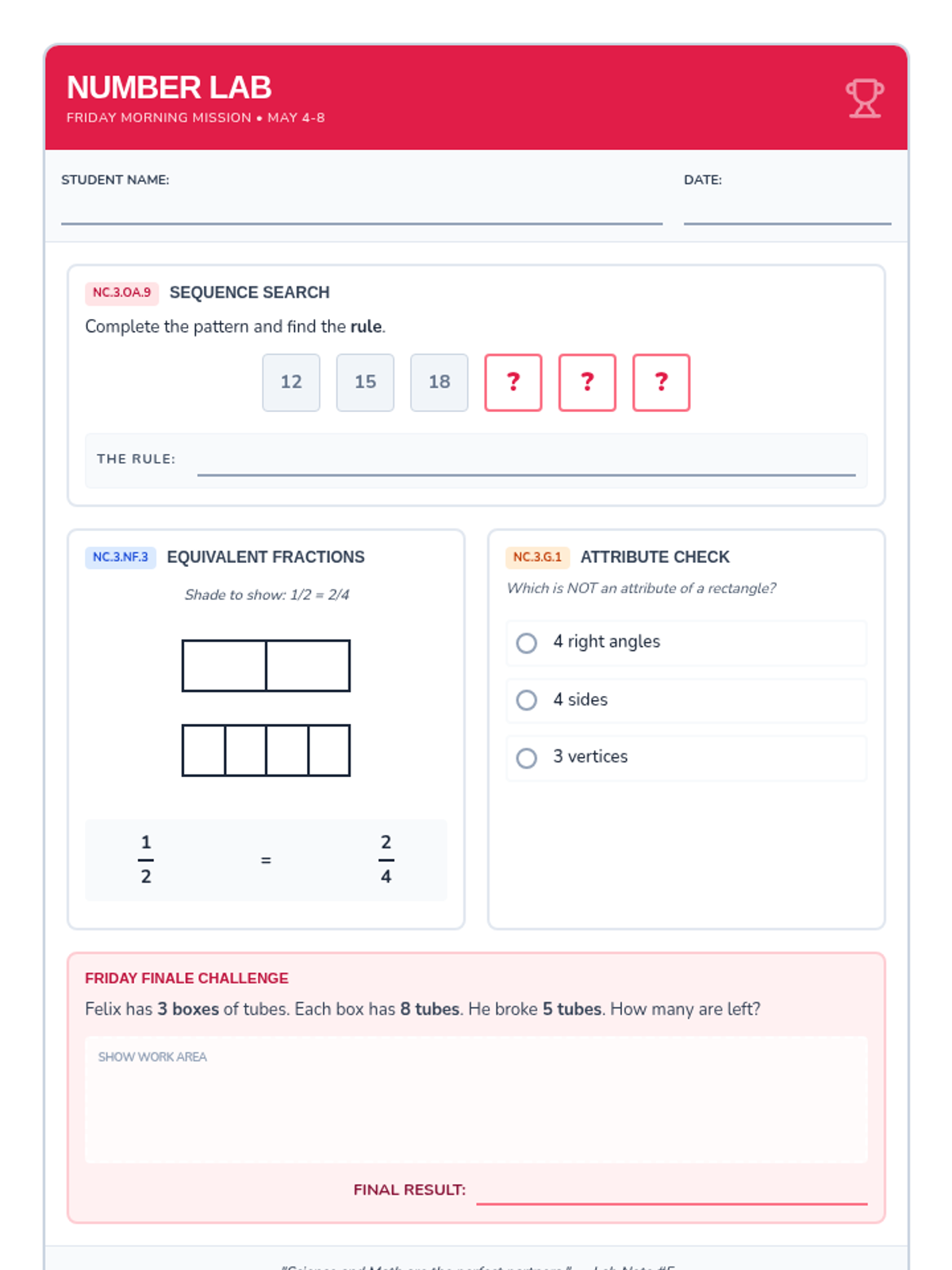
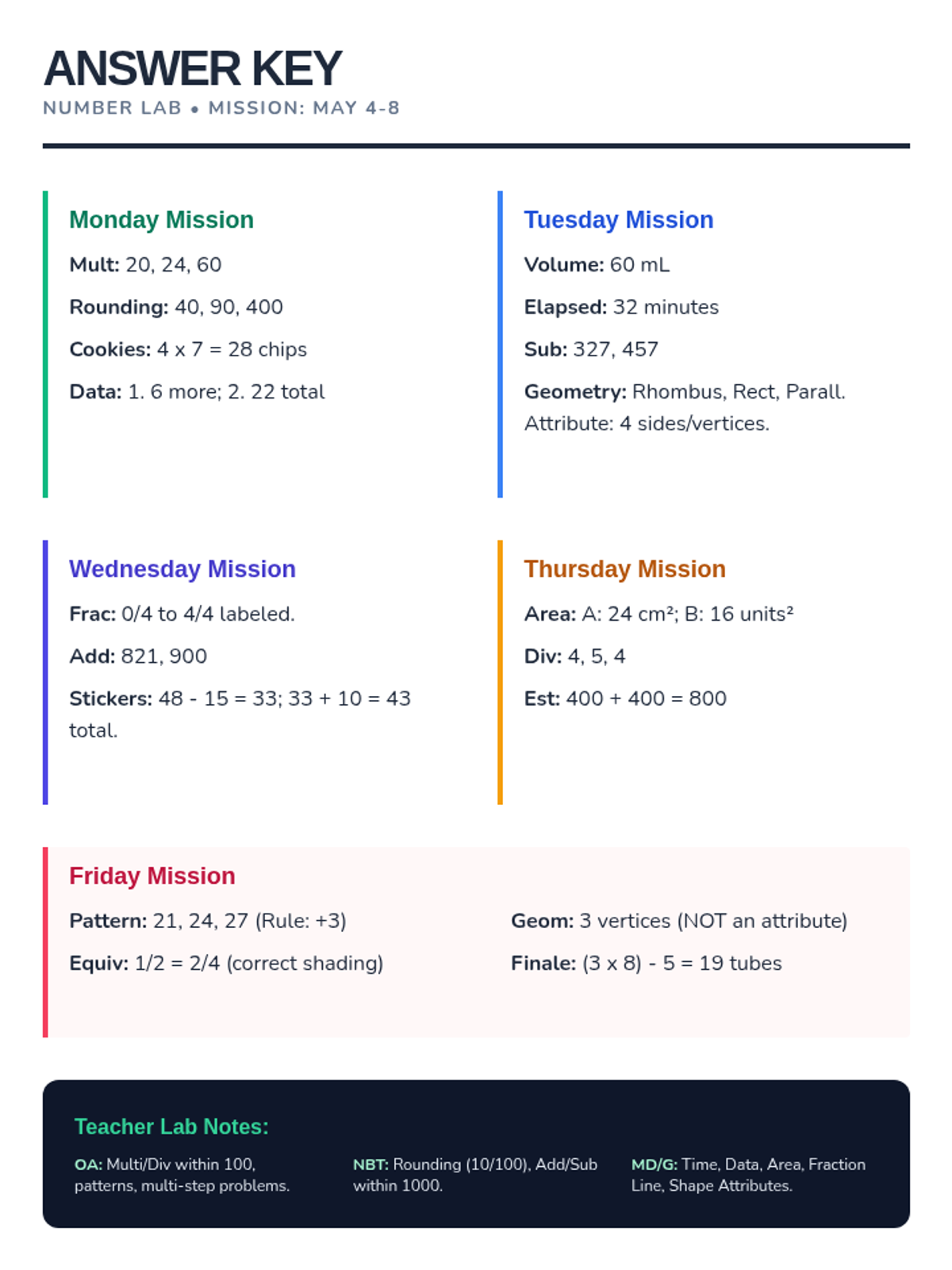
The first week of mixed spiral review covering rounding, multiplication within 100, elapsed time, fractions on number lines, and area.
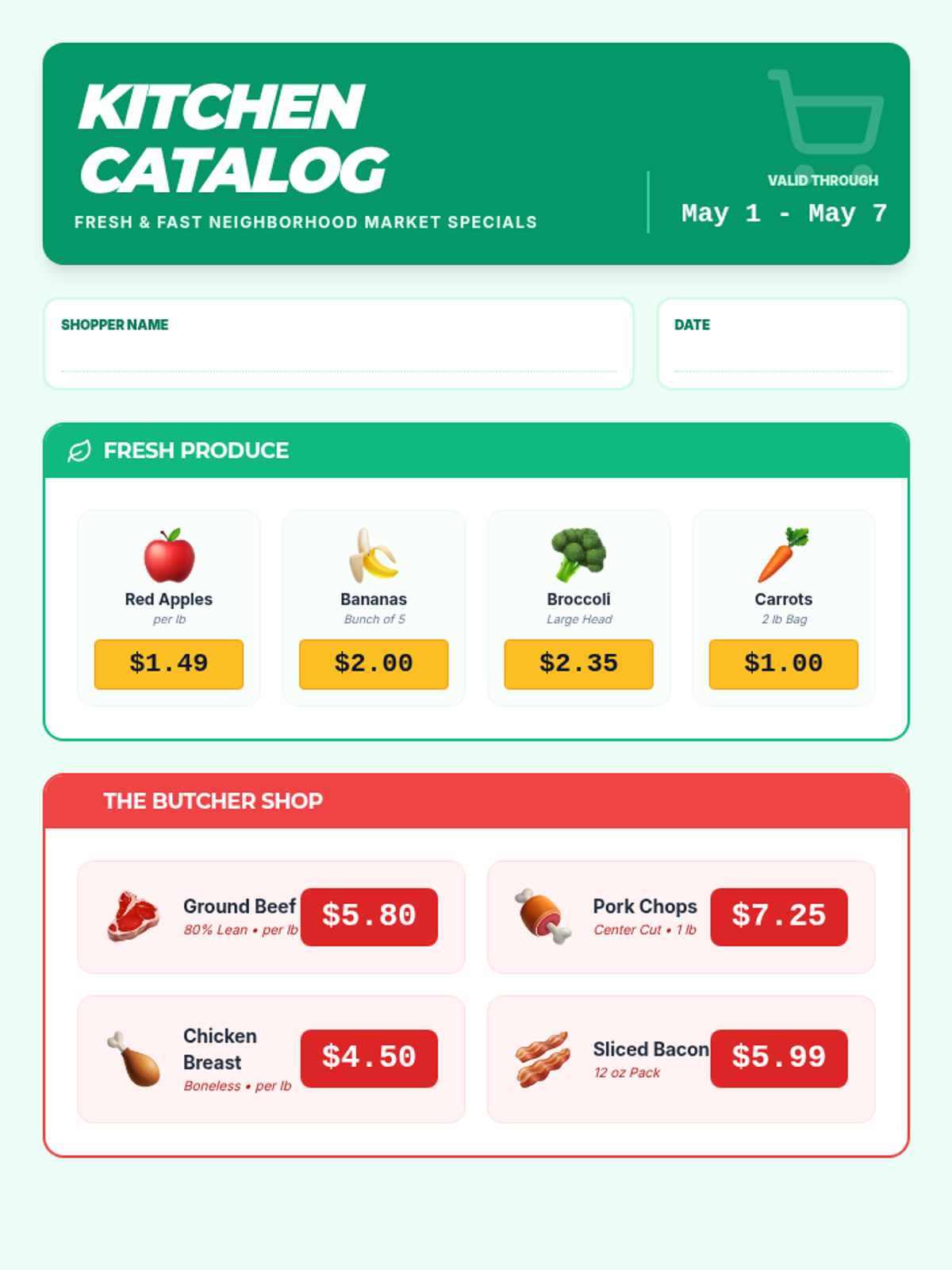
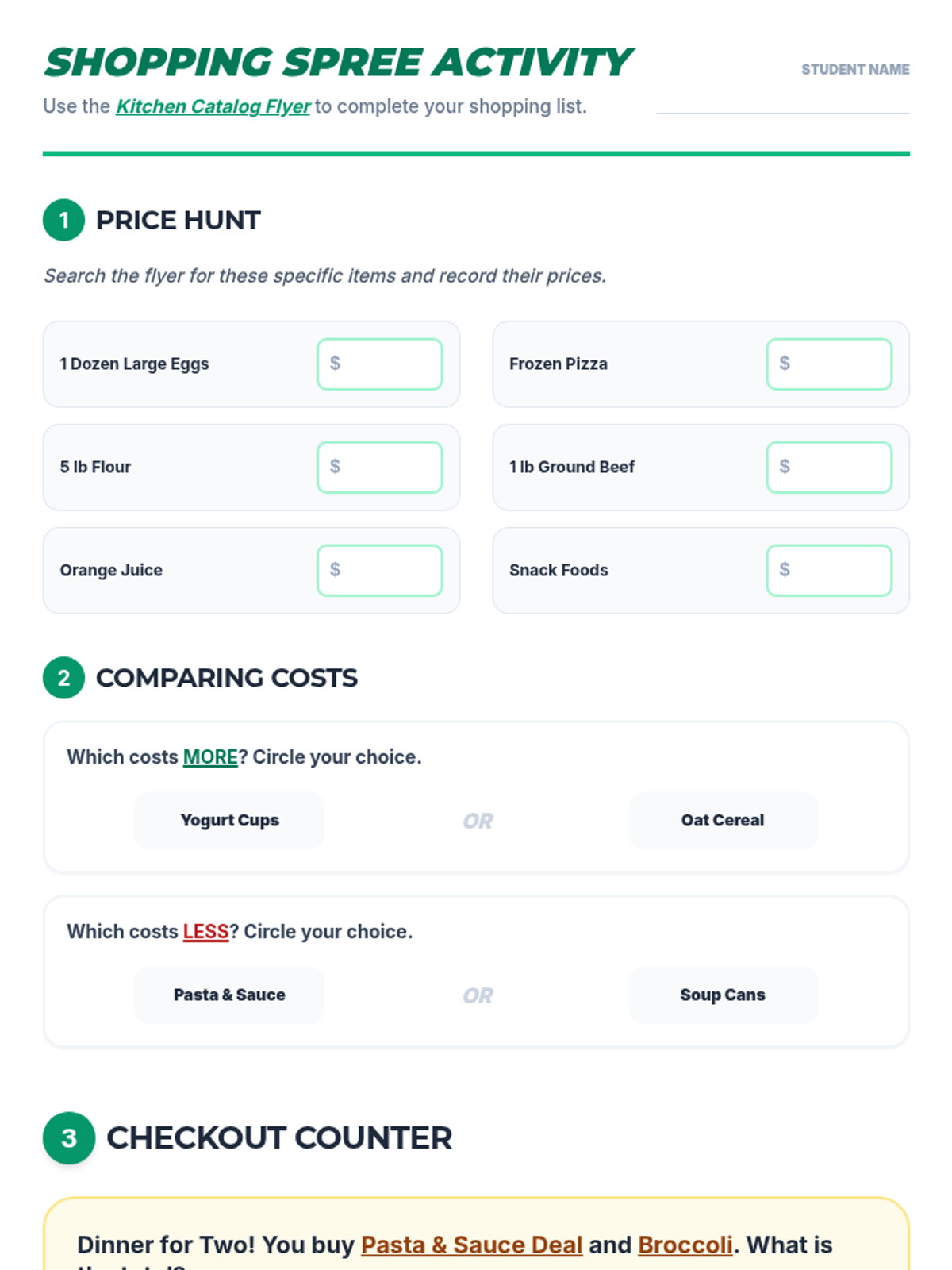
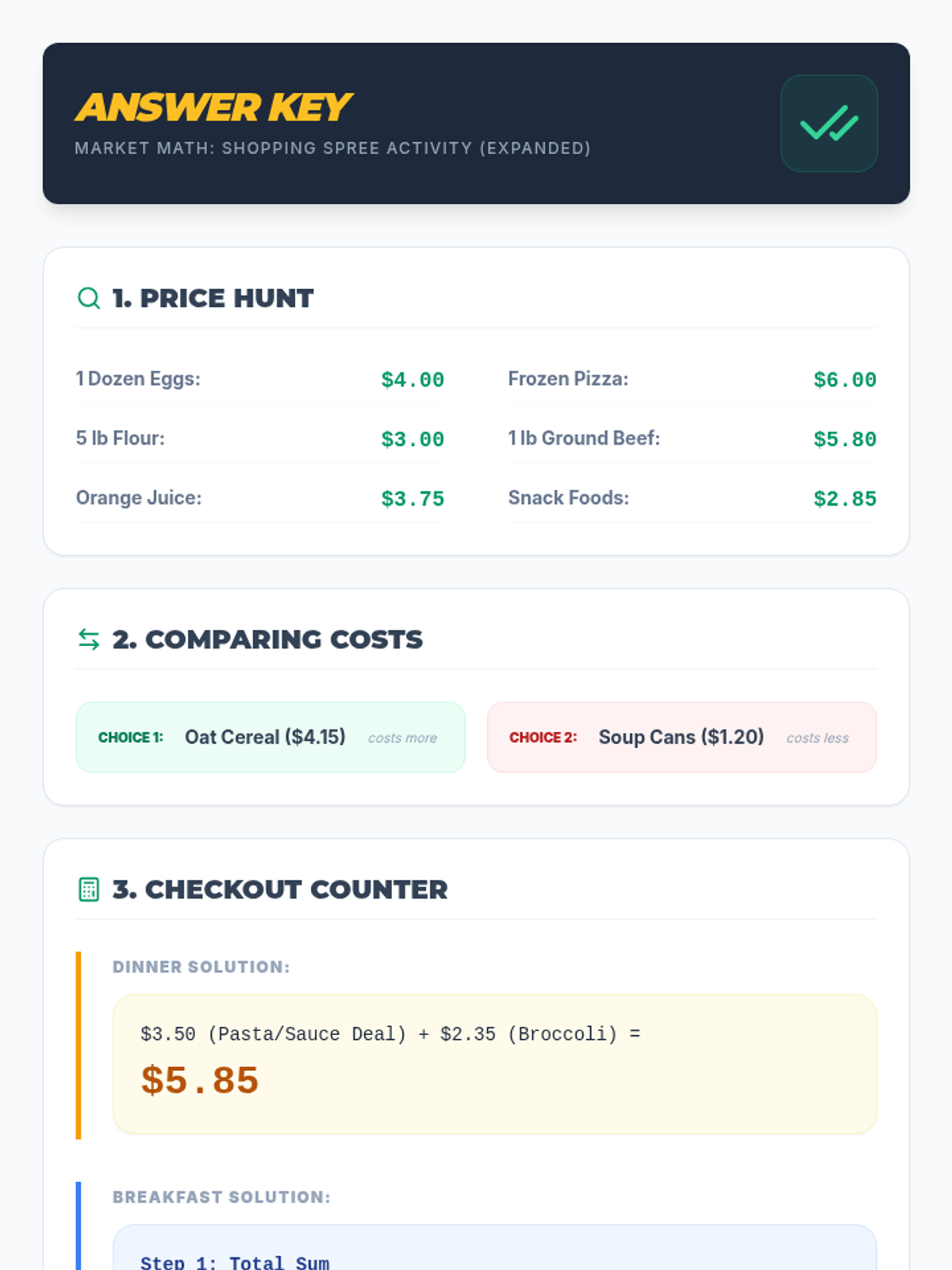
A lesson focused on real-world math applications using a grocery store advertisement. Students practice reading decimals, comparing prices, and calculating totals for a shopping trip.
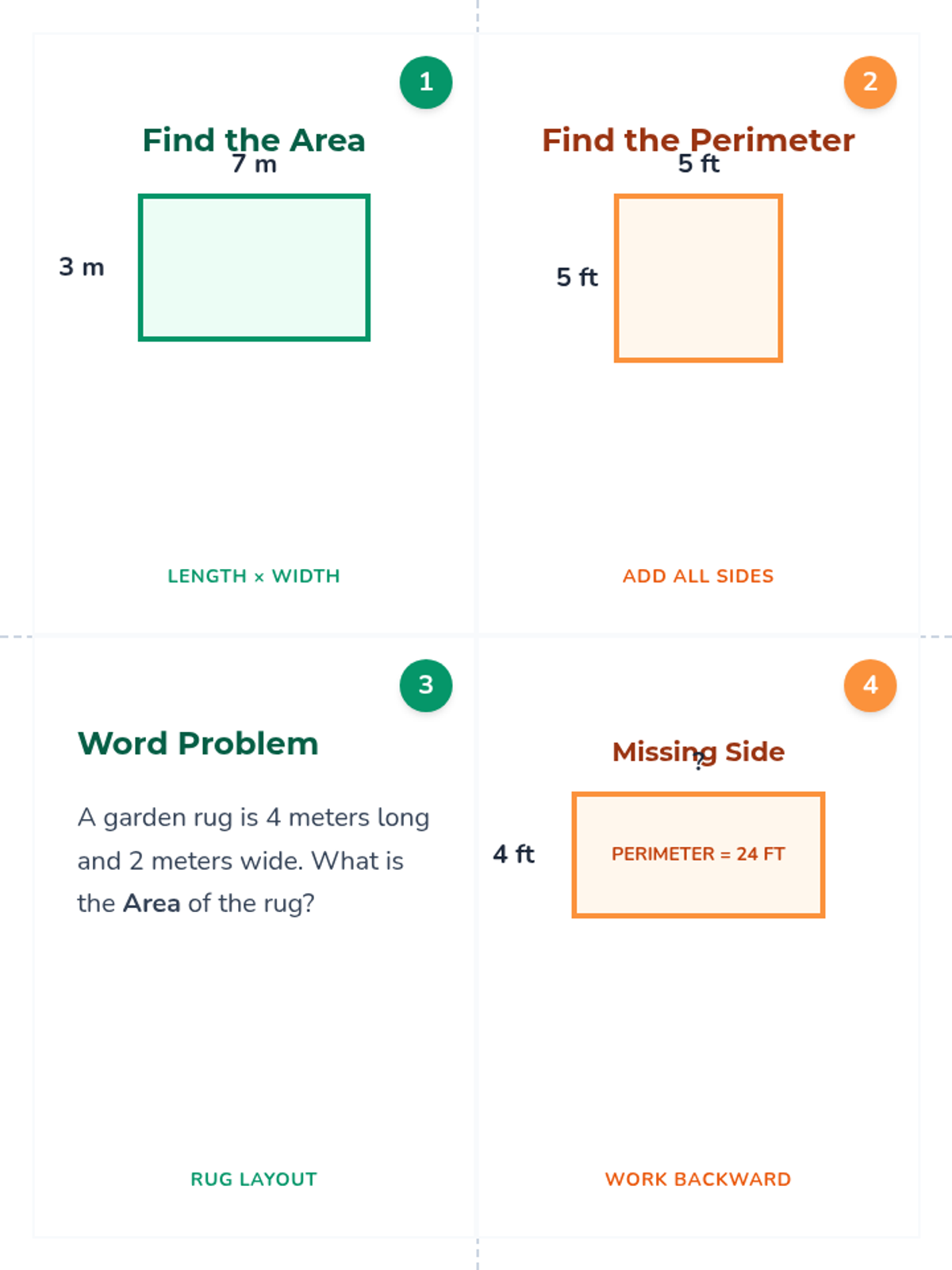
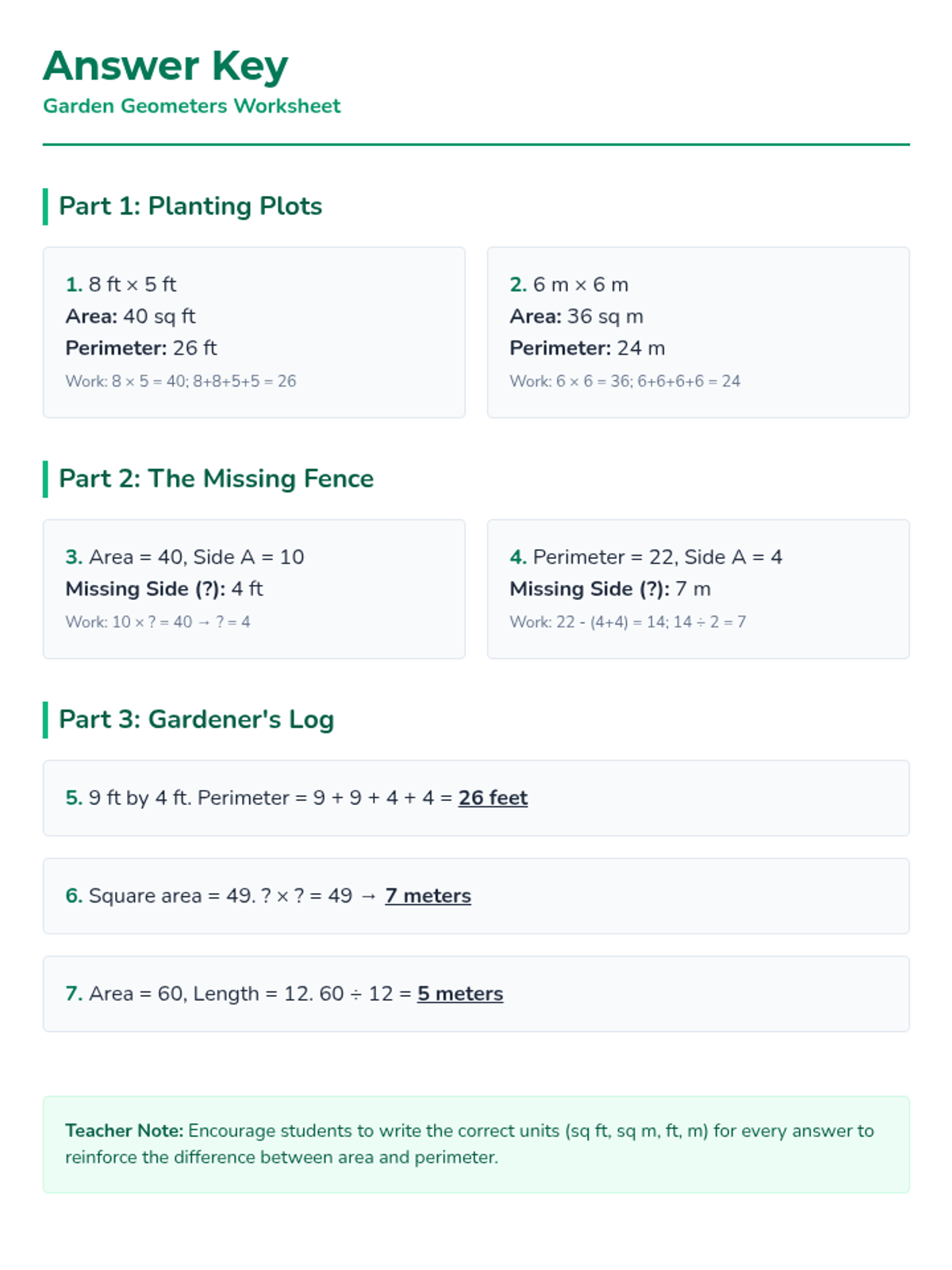
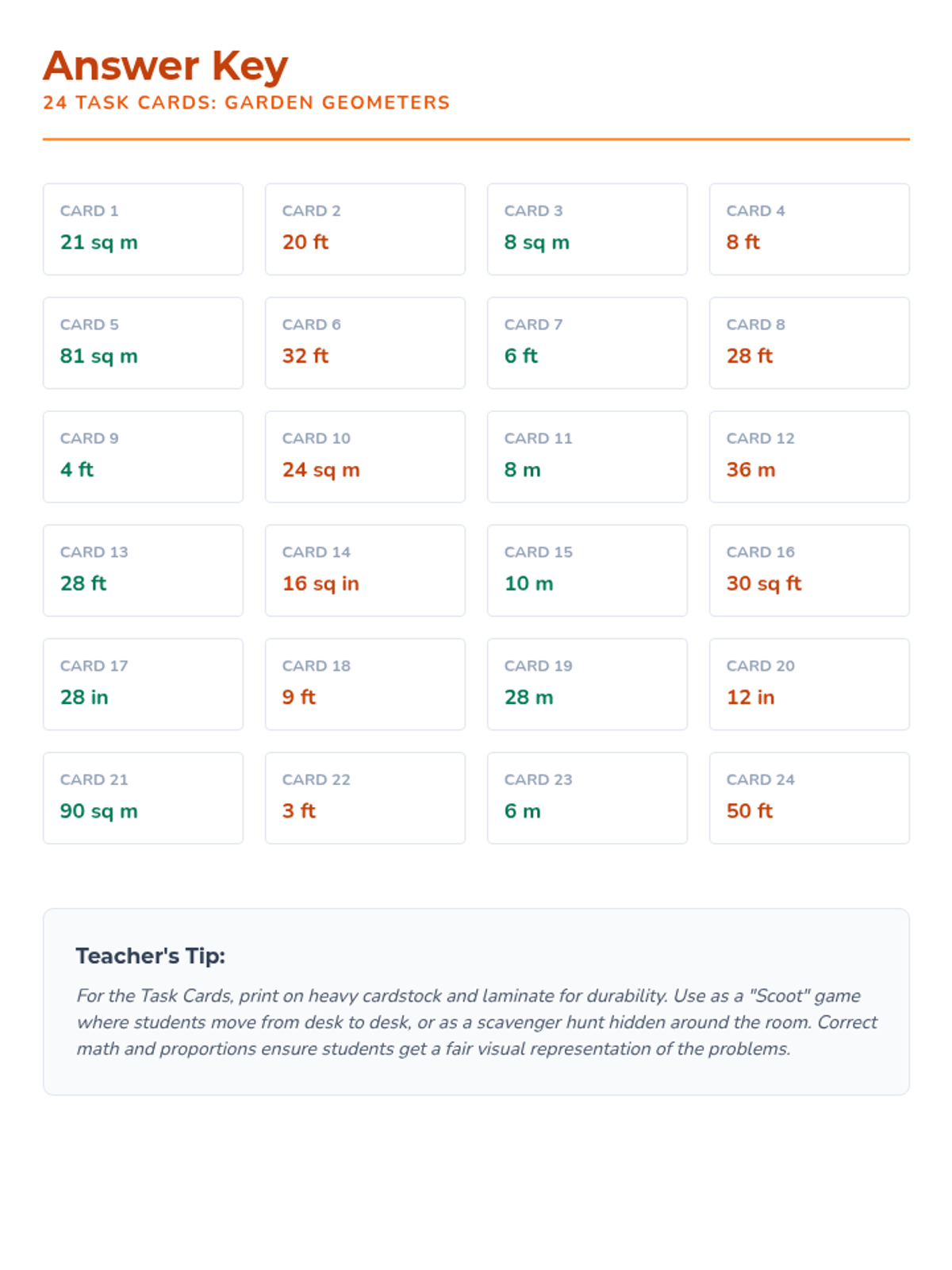
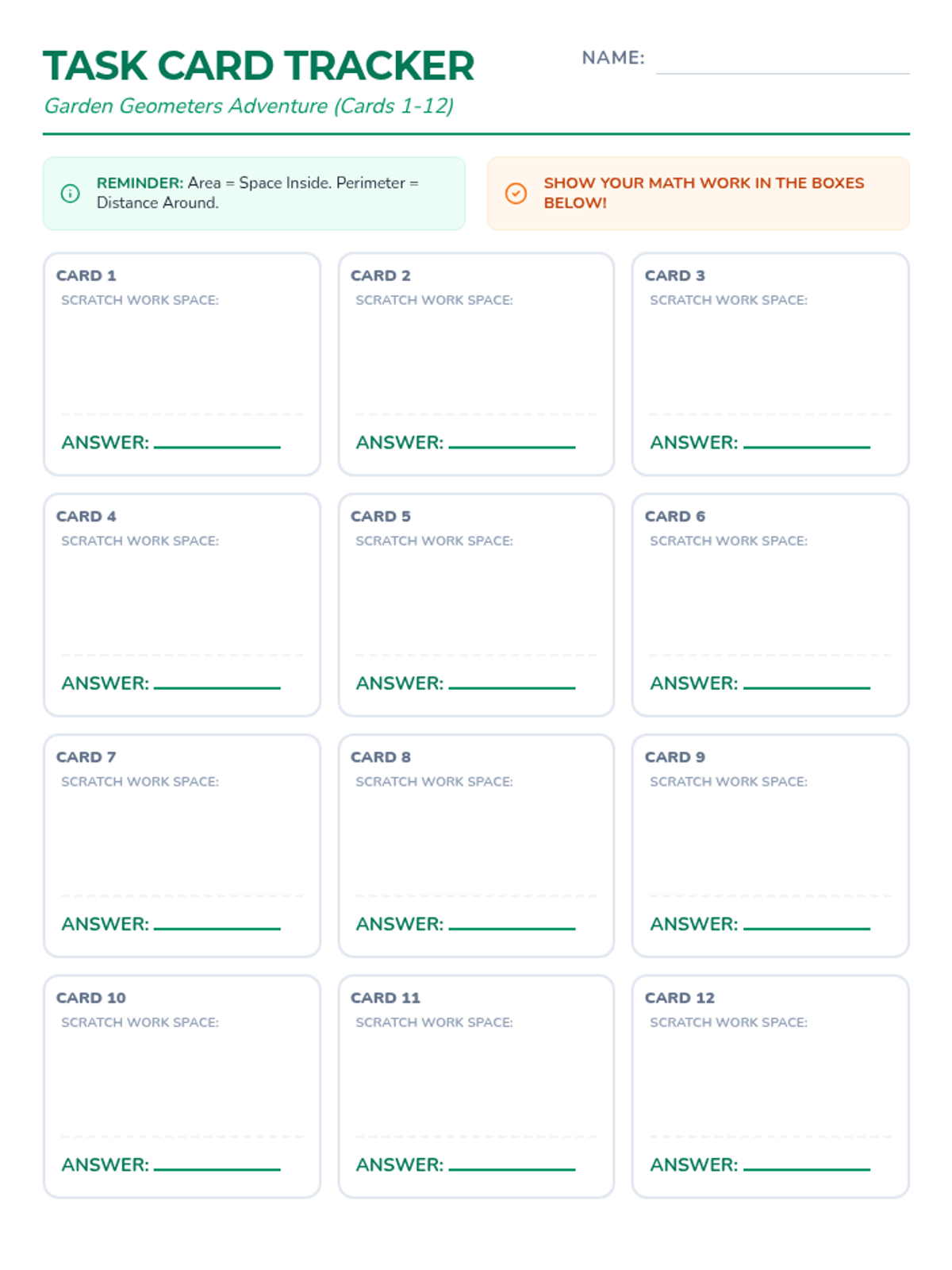
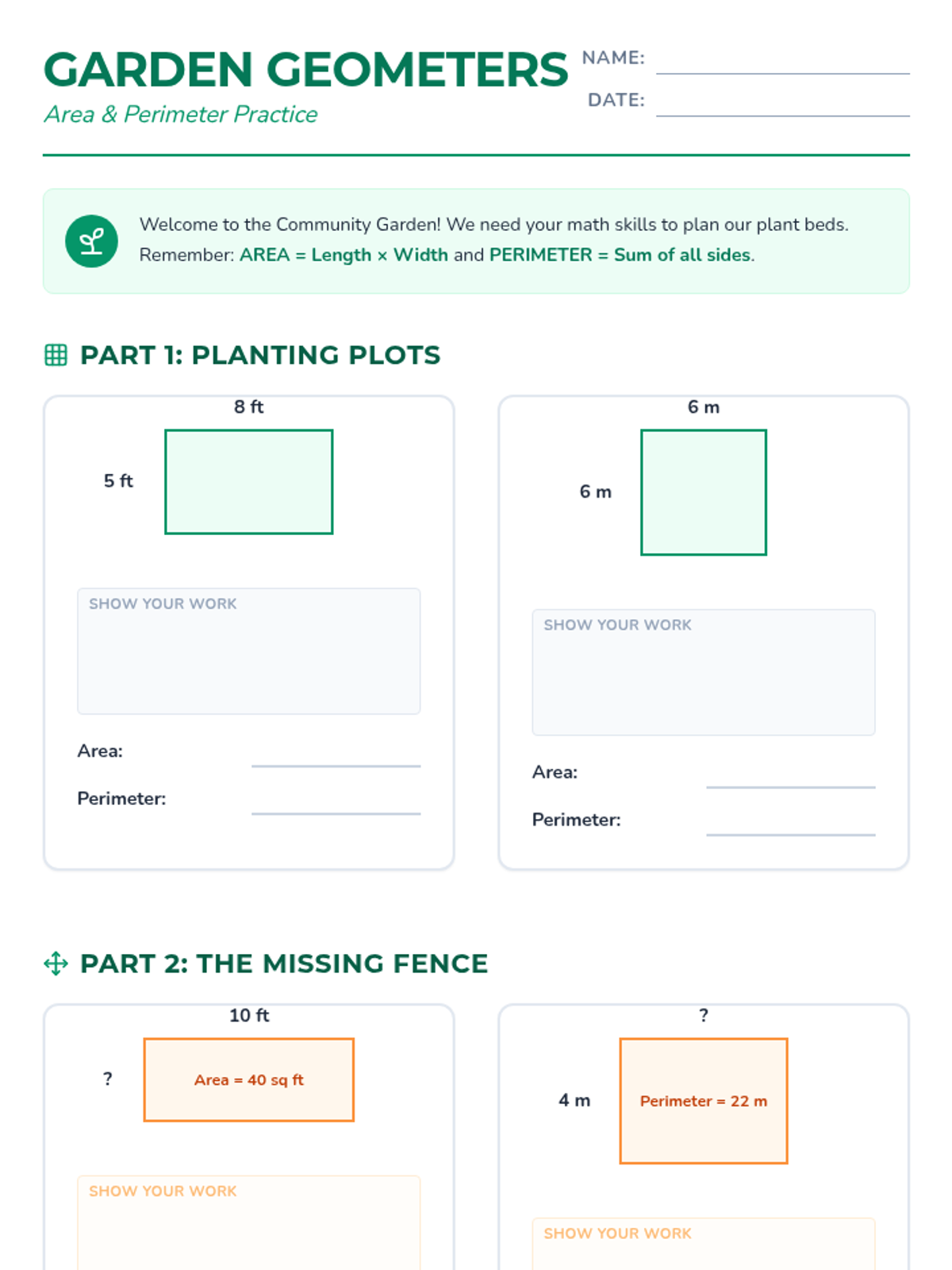
A lesson focused on calculating area and perimeter within the context of designing and maintaining a community garden, covering formulas, missing sides, and word problems.
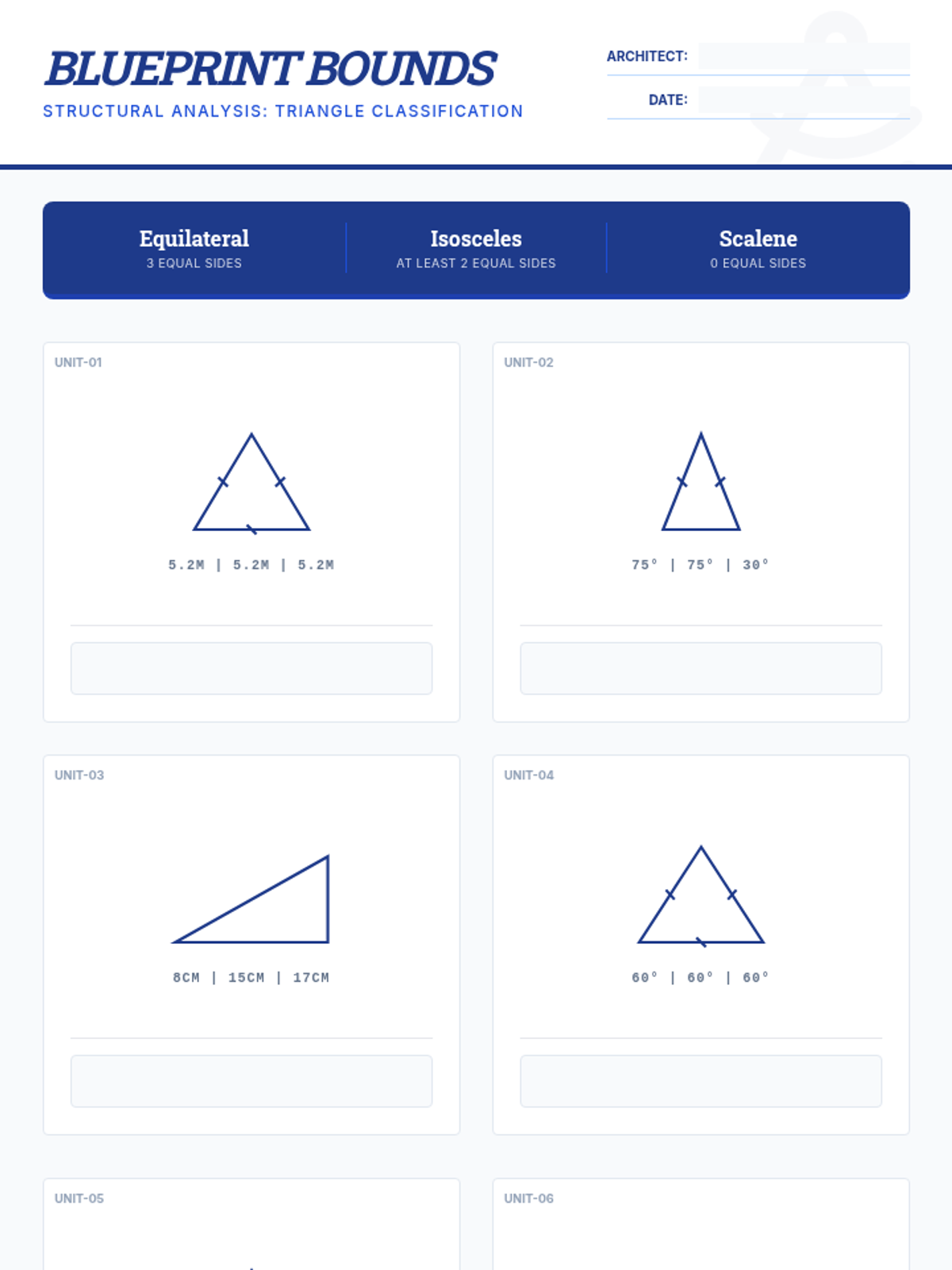
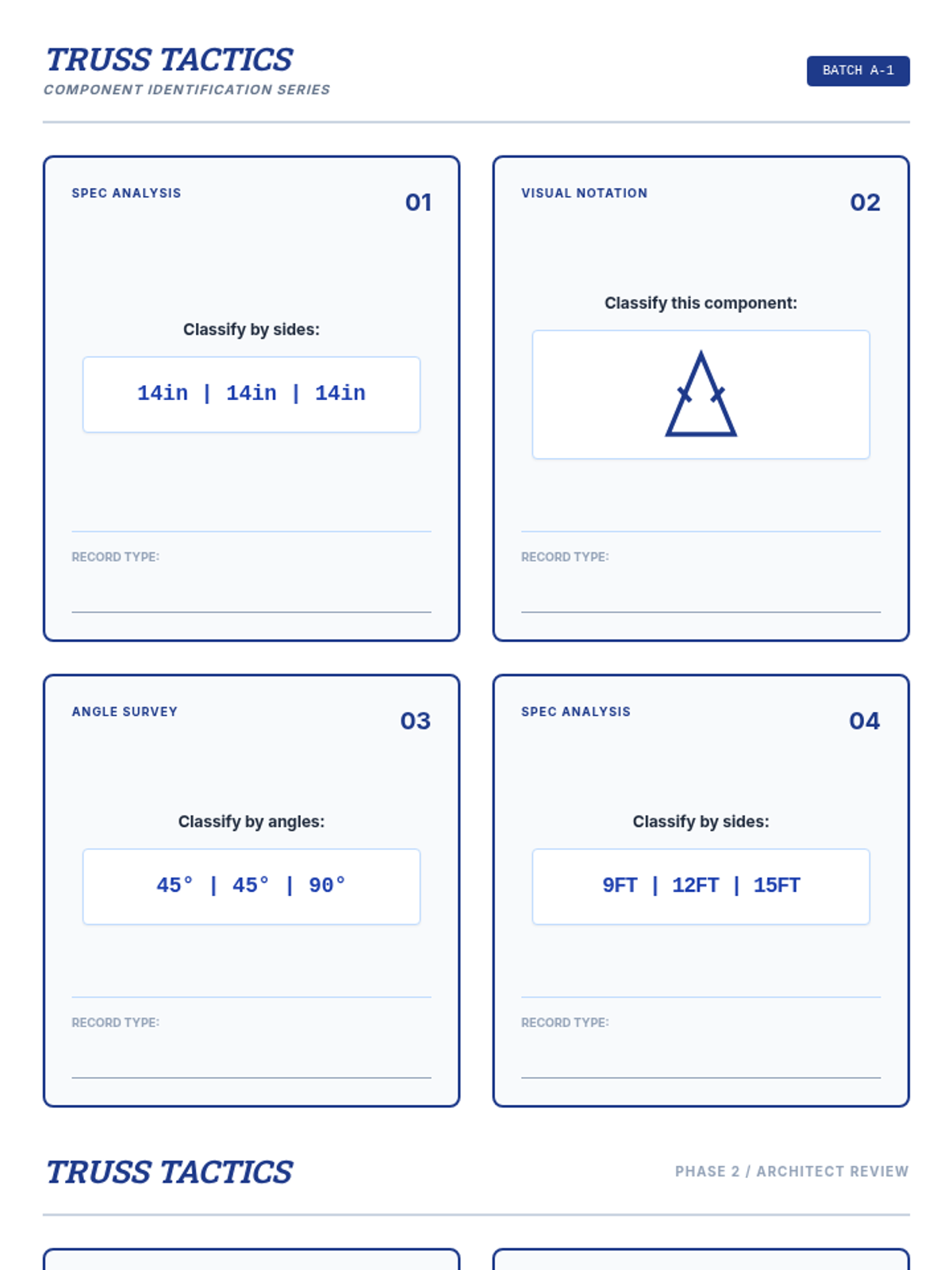
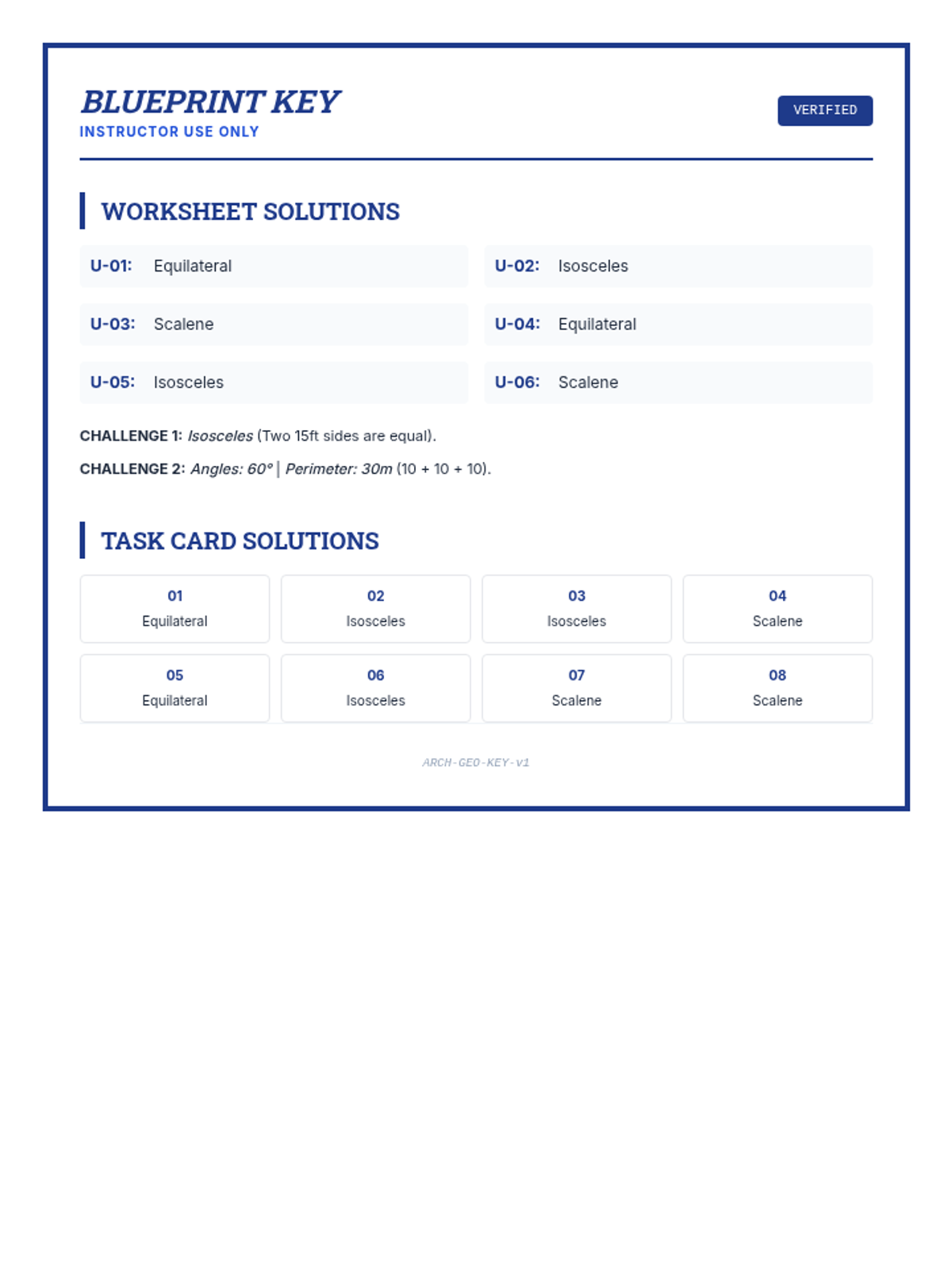
A hands-on geometry lesson focused on classifying triangles by side lengths (scalene, isosceles, equilateral) using geometric notation and measurements within an architectural drafting context.
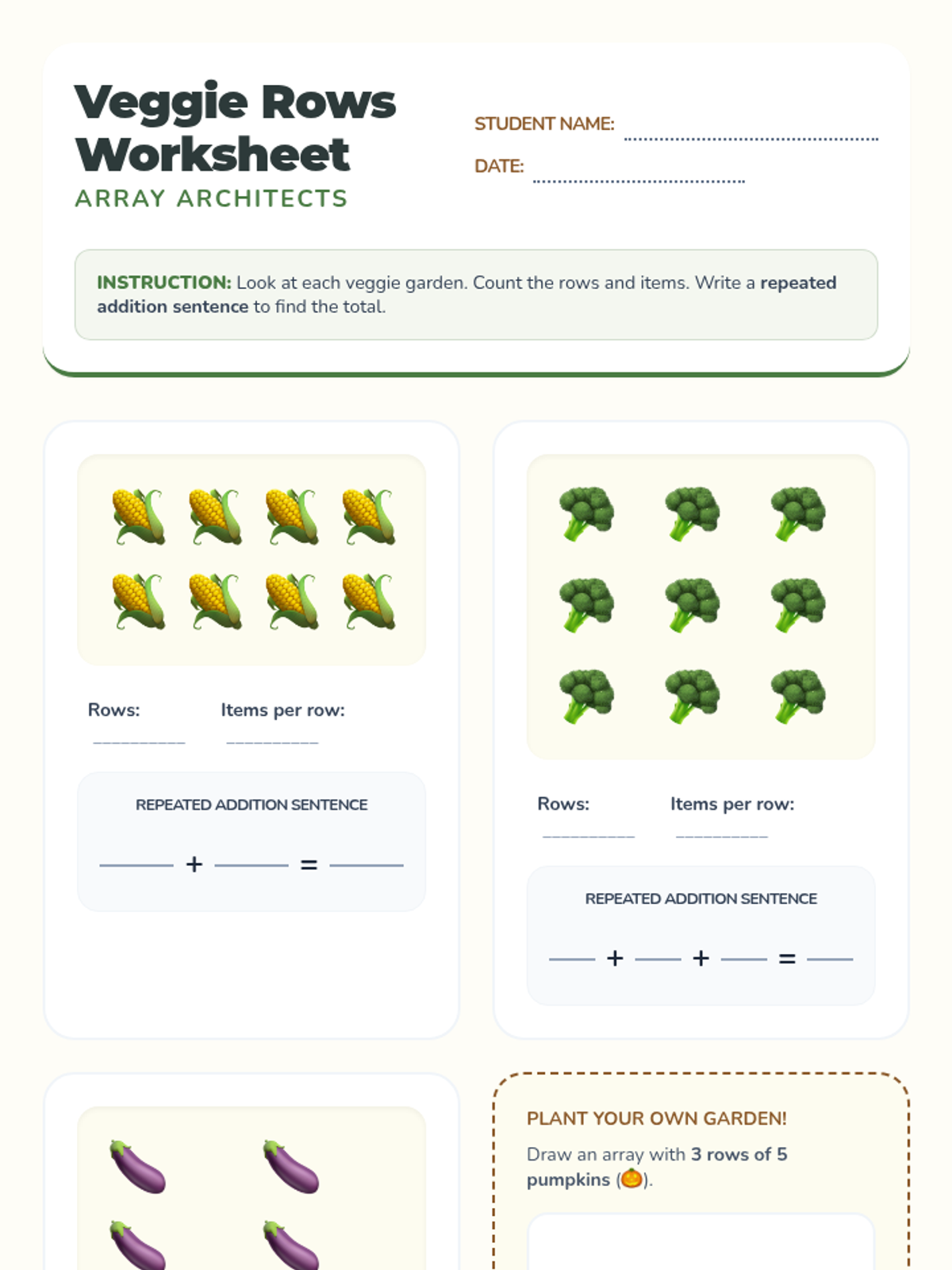
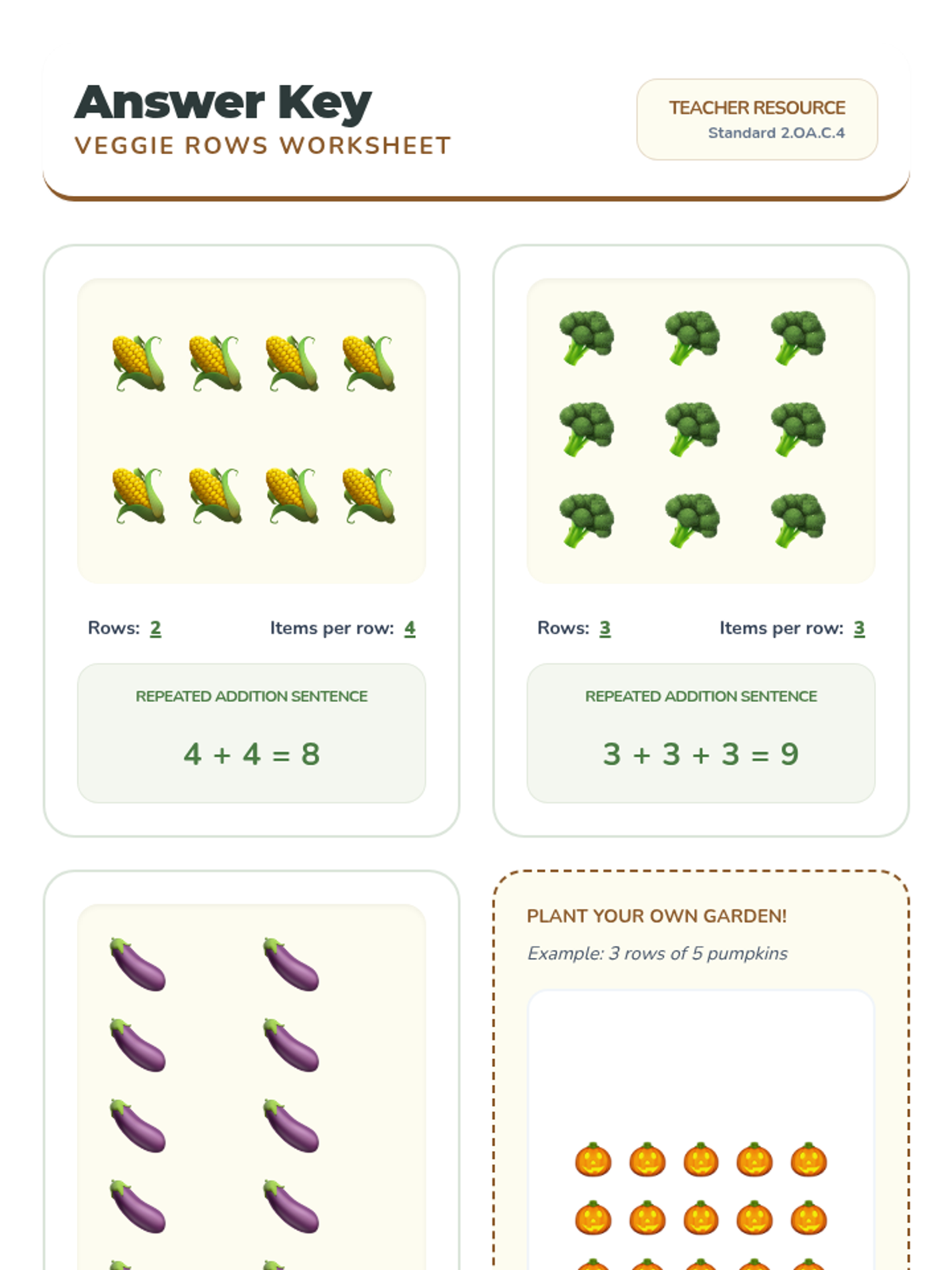
In this lesson, students explore the connection between arrays and repeated addition by organizing 'garden' items into rows and columns. They will learn to identify the number of items in each row/column and write corresponding addition sentences to find the total.
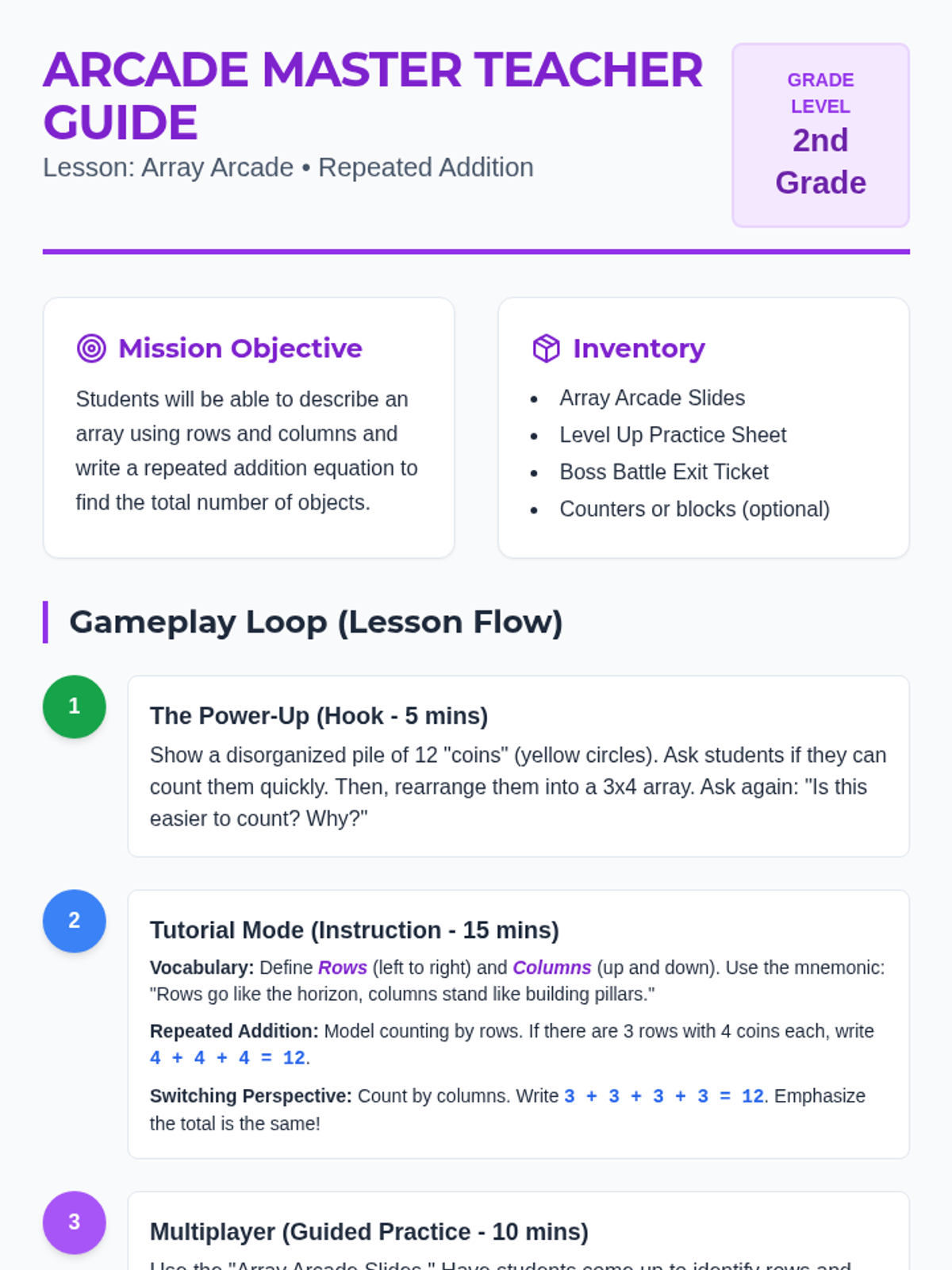
A high-energy introduction to arrays where students learn to identify rows and columns and relate them to repeated addition.
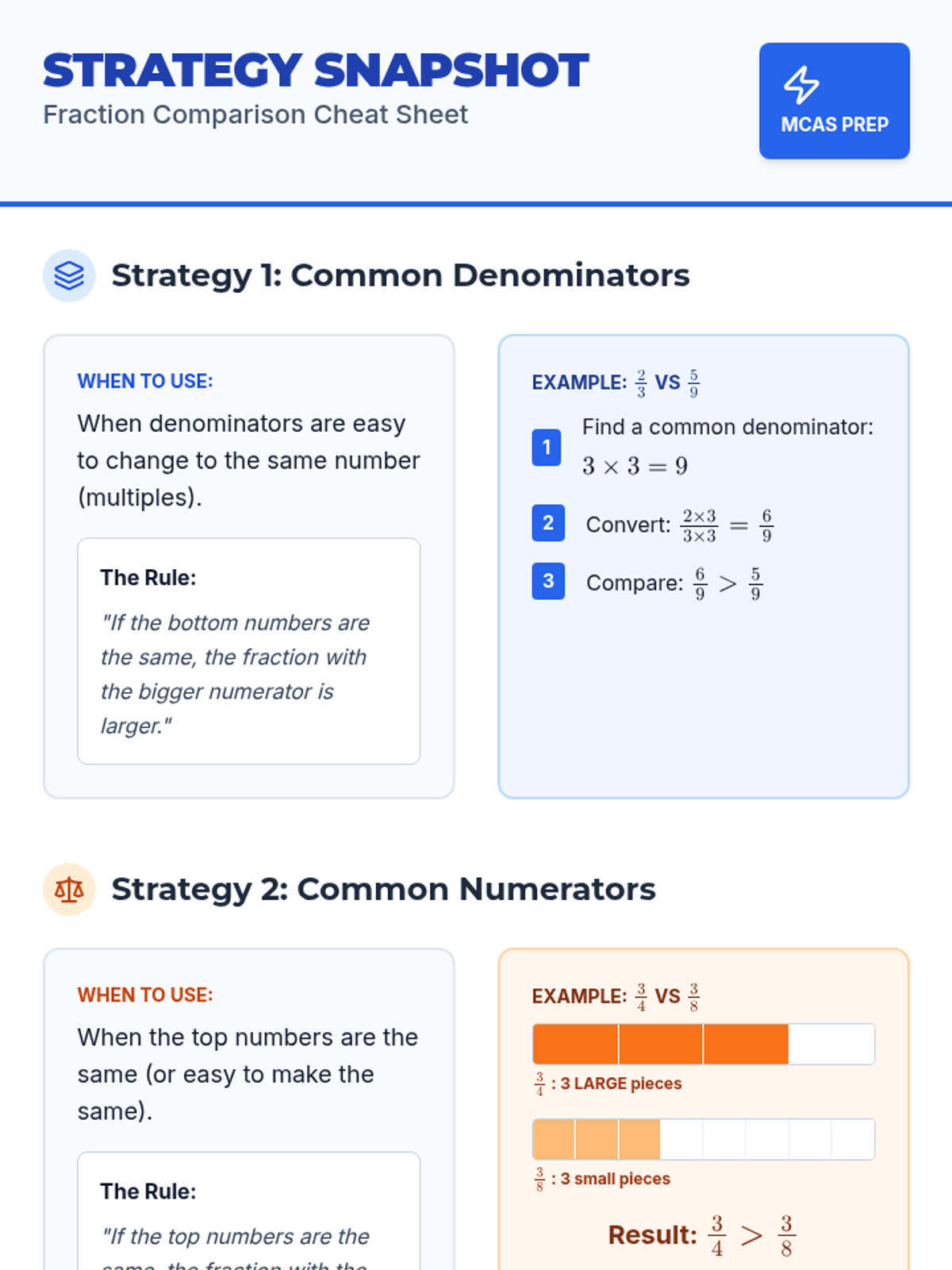
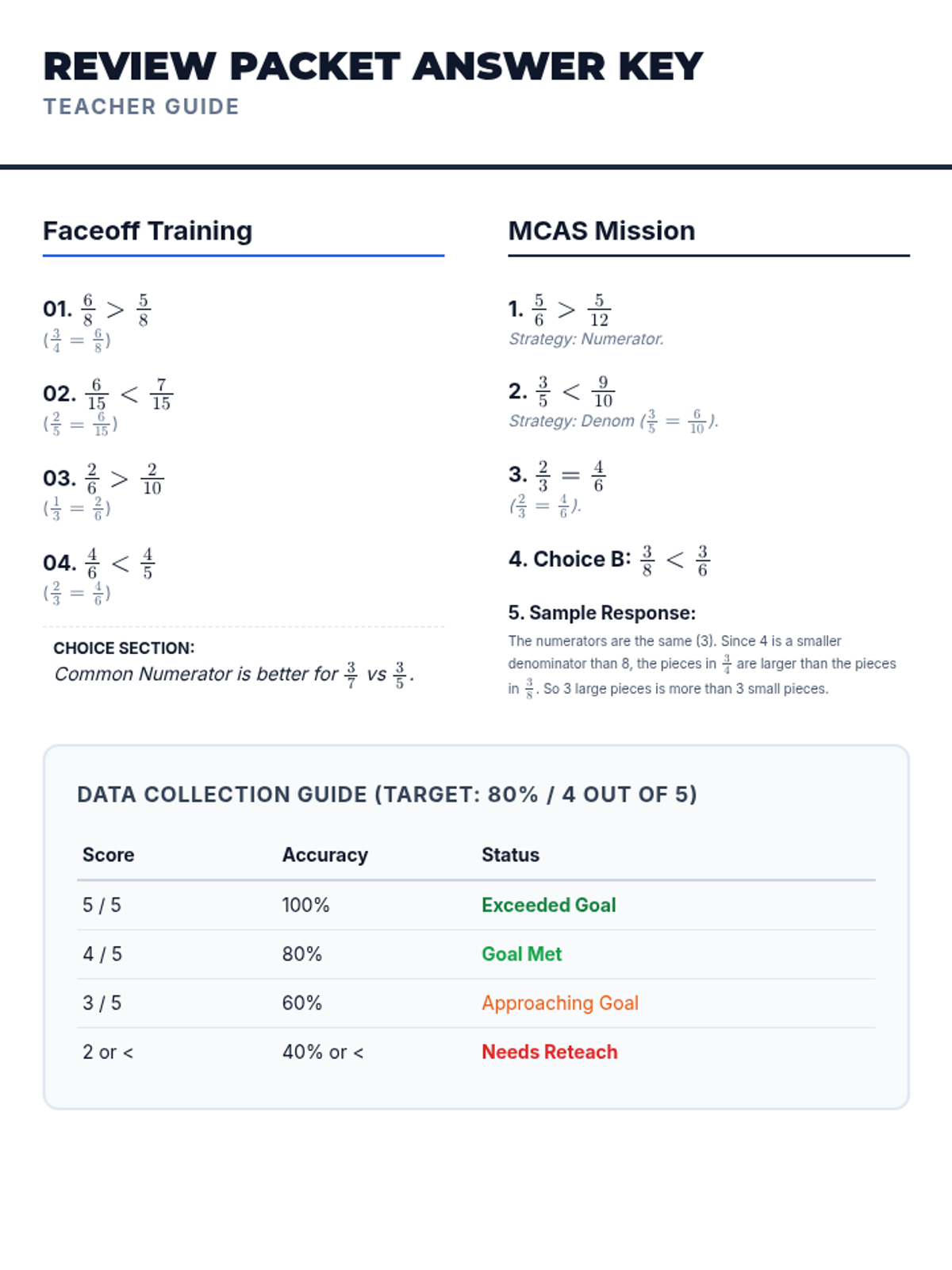
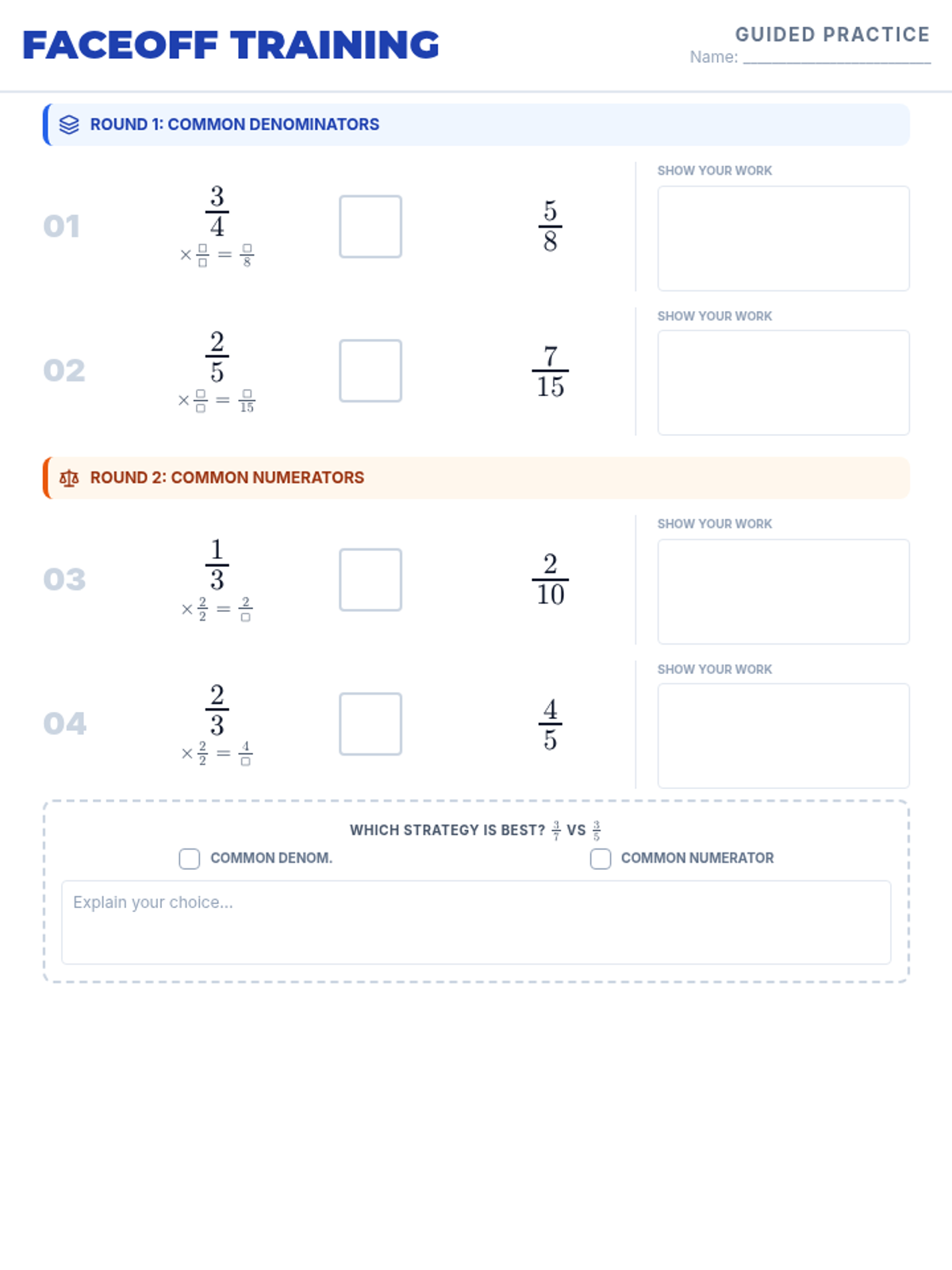
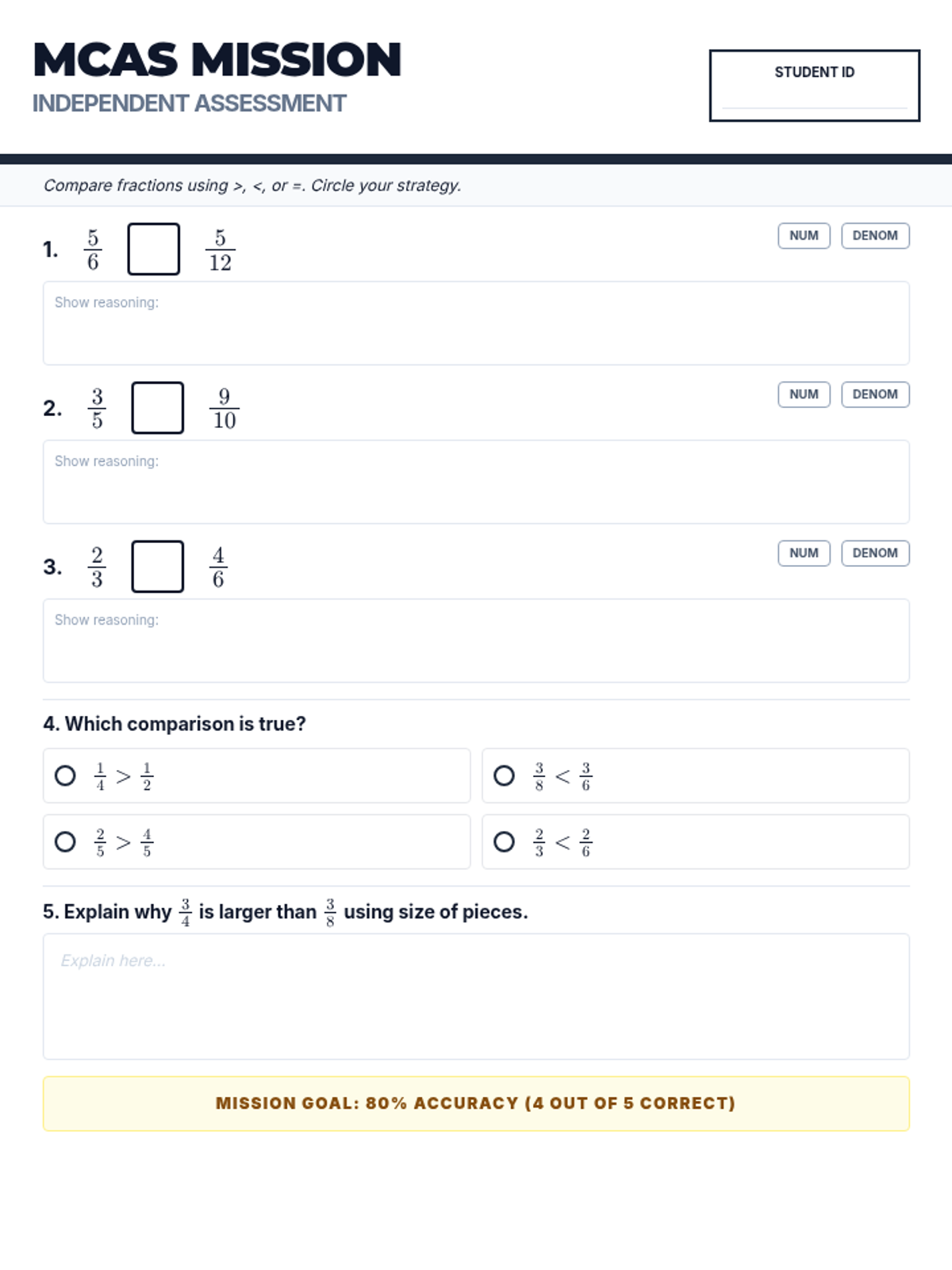
A high-intensity review lesson focused on comparing fractions using common numerators and common denominators, designed for rapid MCAS preparation.
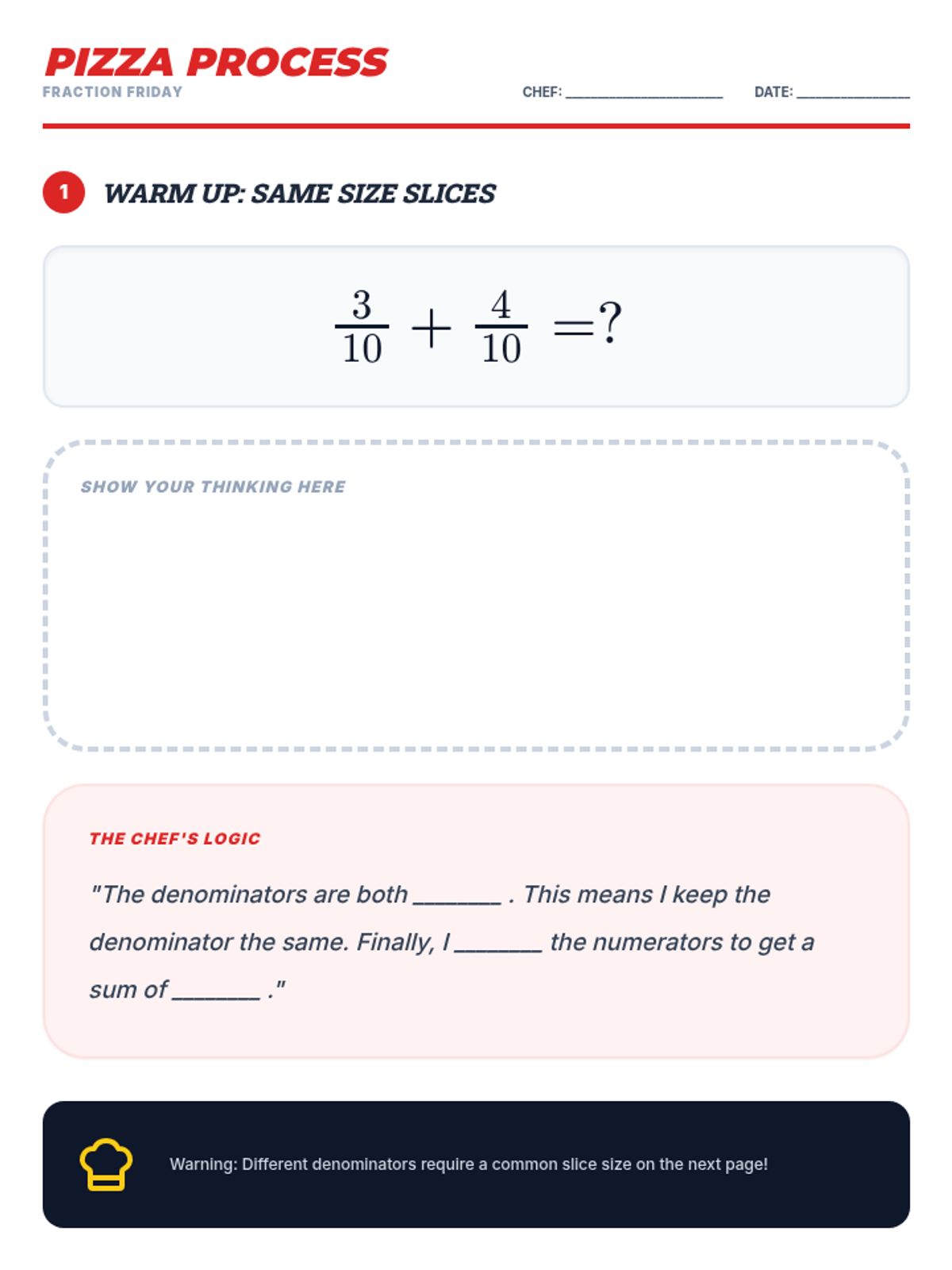
A 45-minute introductory lesson on adding and subtracting fractions, progressing from common denominators to uncommon denominators using step-by-step writing frames to solidify the mathematical process.