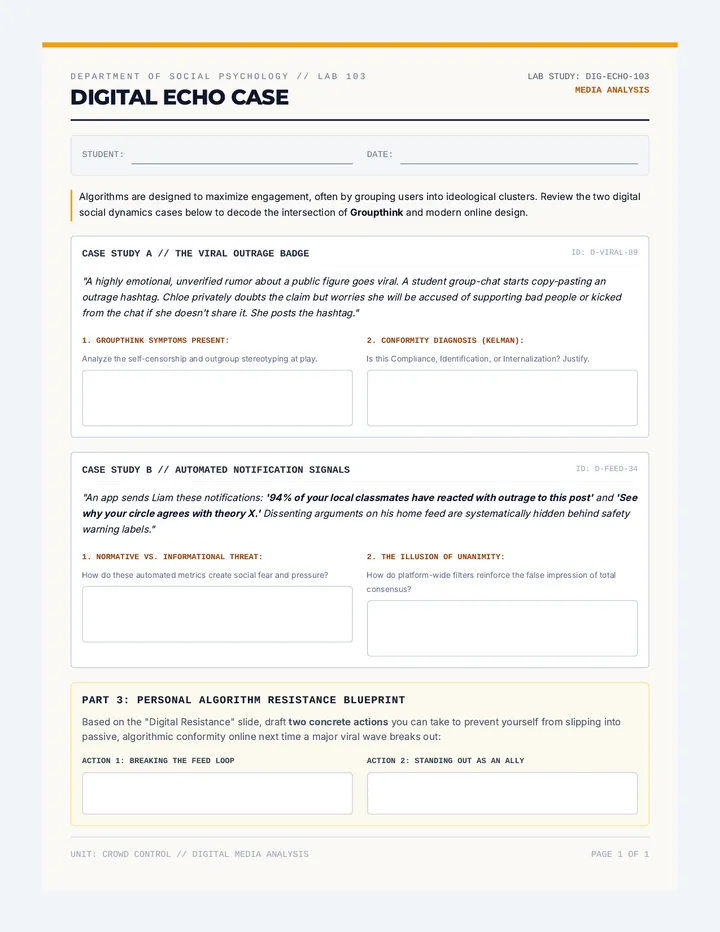
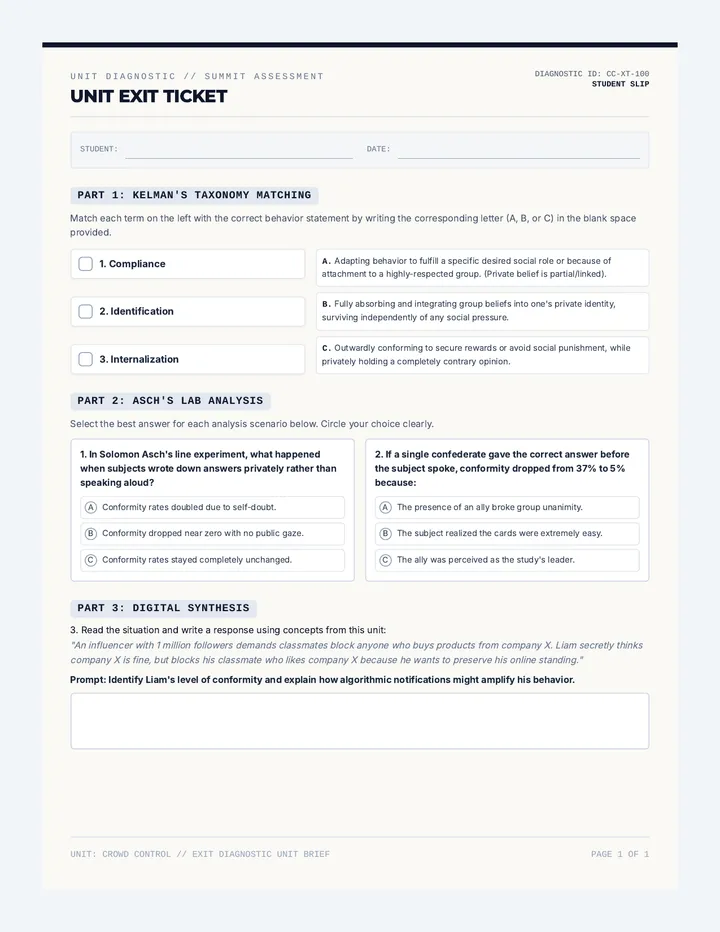
Introduces schemas and social scripts as mental frameworks that organize social information. Includes a 'false memory' experiment and exploration of how stereotypes function as schemas.
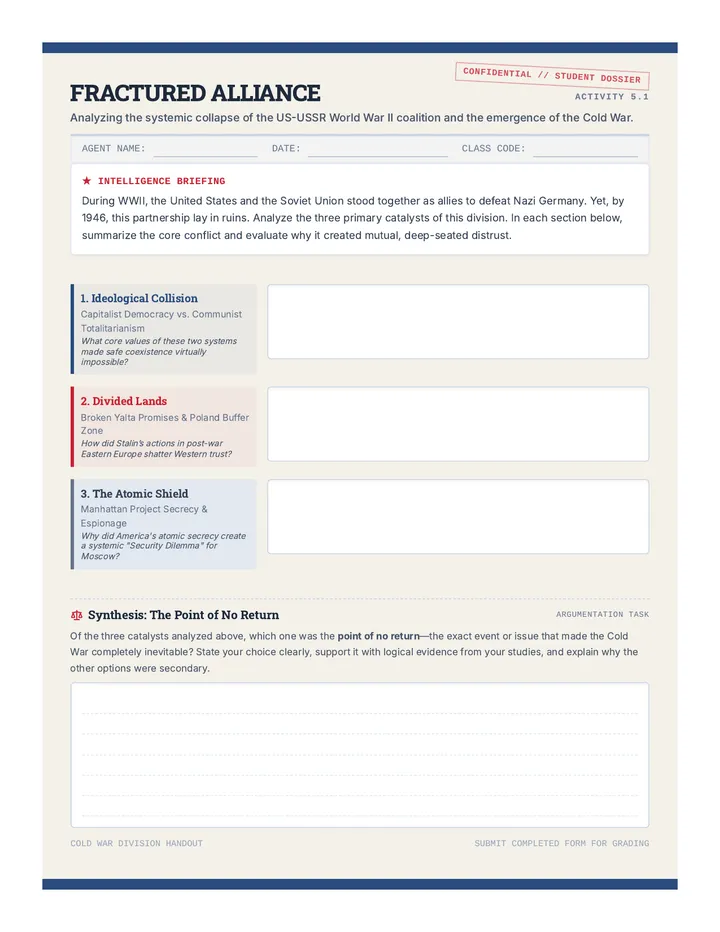
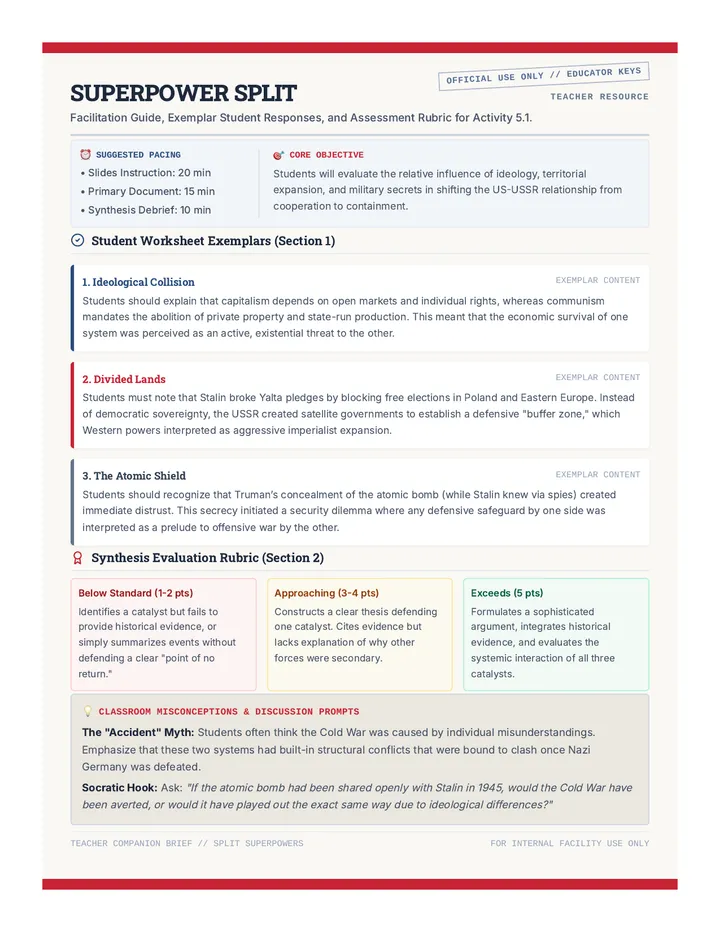
A comprehensive 50-minute lesson on the Cold War rivalry between the US and USSR, covering ideology, economic dominance, arms development, and international alliances like NATO and the Warsaw Pact.
A focused 15-minute exploration of the United Nations' origins, highlighting the pivotal role of Tennessee's own Cordell Hull, 'Father of the United Nations.'
Totalitarian Tactics, Radio Dispatch, Gatekeepers, War Room Briefings, Warrior Spirit, Justice Homefront, Home Front Heroines, Justice Denied, Home Front Heroes, Atomic Ambitions, and Yalta and Potsdam Conferences.

A comprehensive high school history lesson covering the Yalta and Potsdam Conferences, focusing on the division of Germany, the atomic bomb, and the onset of the Cold War.
A 25-minute intensive lesson on the Manhattan Project, focusing on the key sites (Oak Ridge, Los Alamos, Hanford) and President Truman's decision-making process for using the atomic bomb to end WWII.
A comprehensive lesson exploring the social, economic, and political impacts of World War II on the United States home front, covering rationing, industry, labor shifts, and civil unrest.
A focused examination of the constitutional issues, conditions, and historical impact of Japanese American internment during WWII, centered on Executive Order 9066 and the Korematsu v. US decision.
A comprehensive 35-minute lesson exploring the massive shift in American society as women entered the workforce and military during WWII, with a specific focus on Rosie the Riveter, Cornelia Fort, and the Women's Army Corps.
This lesson explores the economic and social impact of World War II on African Americans, focusing on the Double V campaign, the FEPC, and the integration of the military. Students will engage in a mock hearing to analyze employment discrimination and Truman's executive orders.
A fast-paced 25-minute lesson exploring the specialized units of WWII, focusing on the Tuskegee Airmen, 442nd Regimental Combat Team, and Navajo Code Talkers. Students analyze the unique contributions and systemic barriers faced by these soldiers through a lecture and graphic organizer.
Integrates the study of Jewish ethics (Tikkun Olam, Proverbs) and the practice of Shabbat.
Analyzes the giving of the Law at Mount Sinai, the Ten Commandments, and the 613 Mitzvot.
Focuses on the life of Moses, the Exodus from Egypt, and the significance of the Passover.
Examines the continuation of the Covenant through Isaac and Jacob and the formation of the Twelve Tribes.
Explores the origins of Judaism through the call of Abraham and the establishment of the first Covenant.
A master curriculum framework for World History that defines standards, objectives, skills, learning goals, and vocabulary for nine instructional units spanning 1200 C.E. to the present.
A master curriculum framework for Civic Literacy that defines standards, objectives, skills, learning goals, and vocabulary for thirteen instructional units.
A master curriculum framework for American History that defines standards, objectives, skills, learning goals, and vocabulary for thirteen instructional units.
A focused exploration of how the unique geography of the Nile River Valley shaped the development, stability, and culture of Ancient Egyptian civilization.
A comprehensive project-based lesson for 11th-grade students to synthesize US history from 1877 to the present through a creative ABC book. This lesson includes the initial project launch, a two-week implementation schedule with checkpoints, and a detailed planning template.
A comprehensive 60-minute lesson on the key figures, geography, and military factors of World War II's global theaters, aligned with TN standard US.50.
A comprehensive lesson on the shift in U.S. foreign policy from isolationism to interventionism under FDR, focusing on the key legislative and diplomatic steps leading to World War II.
A 25-minute lesson examining the rise and methods of control of 20th-century totalitarian leaders Adolf Hitler, Benito Mussolini, Joseph Stalin, and Hideki Tojo. Students analyze how economic instability and nationalist fervor paved the way for absolute power.
A cumulative assessment covering the Roaring Twenties through the New Deal, focusing on primary source analysis.
Examines the legal and political challenges to the New Deal, including the Supreme Court and individual critics.
A deep dive into the alphabet agencies and programs of FDR's New Deal.
Analyzes President Herbert Hoover's response to the economic crisis and the public's perception of his efforts.
Focuses on the daily life of Americans during the Great Depression, including Hoovervilles and migration.
Examines the environmental and human impact of the Dust Bowl on the Great Plains.
Analyzes the 1929 Stock Market Crash and the immediate systemic failures of the banking system.
Explores the economic contradictions of the 1920s, including consumerism, credit, and the underlying weaknesses in the economy.
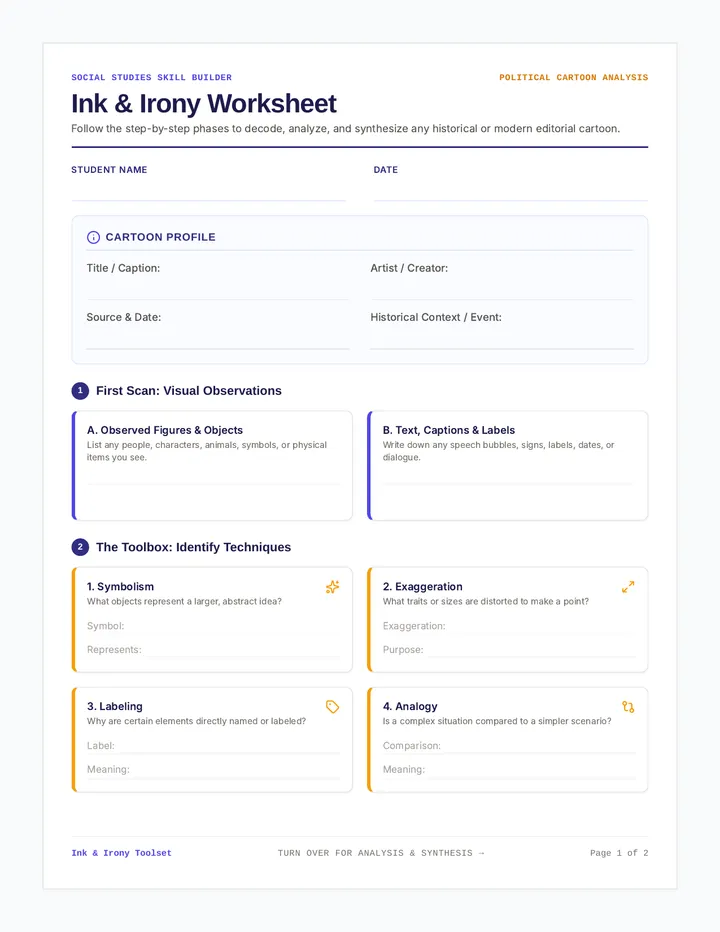
A fast-paced exploration of the controversies surrounding FDR's New Deal, focusing on charges of socialism and the infamous court-packing attempt. Students analyze primary source cartoons and engage in a structured debate over executive power.
A 50-minute deep dive into FDR's New Deal programs through primary source analysis, categorizing the 'alphabet soup' of agencies into Relief, Recovery, and Reform. Students will examine original posters, photographs, and legislation snippets to understand the massive scale of government intervention during the Great Depression.
A concise 20-minute lesson covering President Herbert Hoover's response to the Great Depression, focusing on his philosophy of Rugged Individualism, the Hoover Dam, the RFC, and the Bonus Army incident.
An application-based assessment focusing on Maslow's Hierarchy of Needs, featuring a labeling section, scenario analysis, and character evaluation from literature.
A unit assessment covering prominent African American leaders, their roles as agents of change, and the systemic barriers they worked to dismantle within their communities.
A collection of resources for an educational information booth about Peru at a cultural fair, including a fact sheet and interactive trivia cards.
This lesson explores the Homestead Act of 1862 and the logistical realities of settling the American West, focusing on the grid system and survival challenges.
A structured research phase where students choose a focus area—either an ethical teaching or a significant practice—and map its connection to core Jewish tenets and contemporary life.
A comprehensive guide to structuring an informative essay on the social, economic, and religious consequences of the Black Death in medieval Europe.
An AP World History lesson exploring the technological innovations and environmental consequences of the Green Revolution in the mid-20th century.
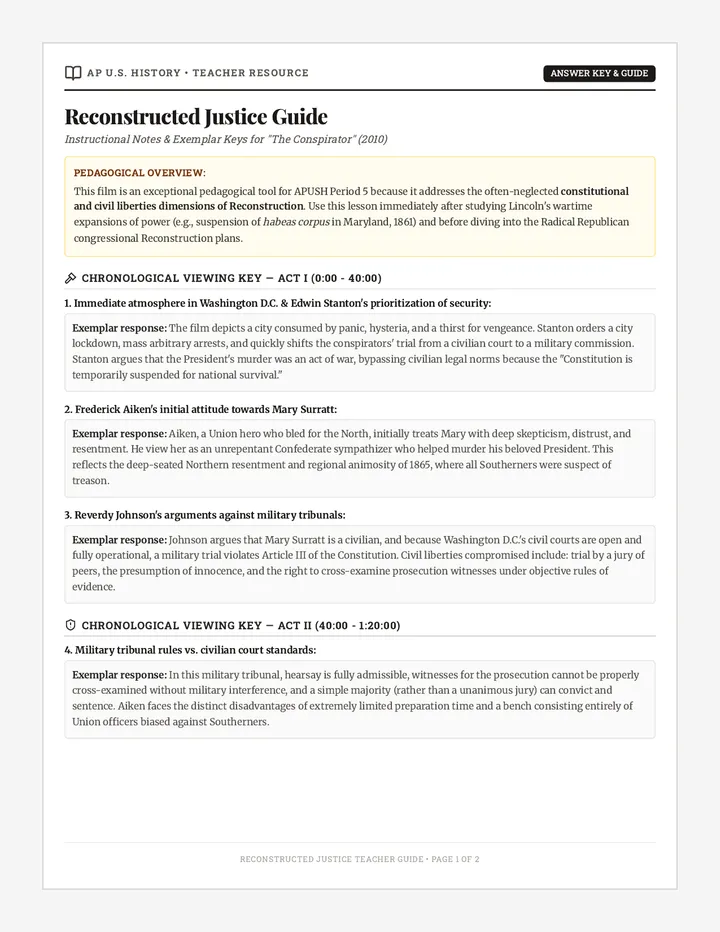
A deep-dive investigation into the Cuban Missile Crisis where students analyze declassified intelligence, private correspondence, and meeting transcripts to determine the causes and culpability of the nuclear standoff. Students act as intelligence analysts to produce a formal policy recommendation.
A comprehensive lesson exploring the systematic dehumanization of the Holocaust and its role in the birth of the modern international human rights movement. Students analyze primary documents, timelines of exclusion, and the legacy of the Nuremberg Trials.
A comprehensive assessment covering developmental domains, brain growth, major ECE theorists, and strategies for supporting young children's self-concept and identity.
A comprehensive look at the rise and fall of Maximilian I of Mexico, exploring the French intervention and the clash between imperial dreams and republican reality.
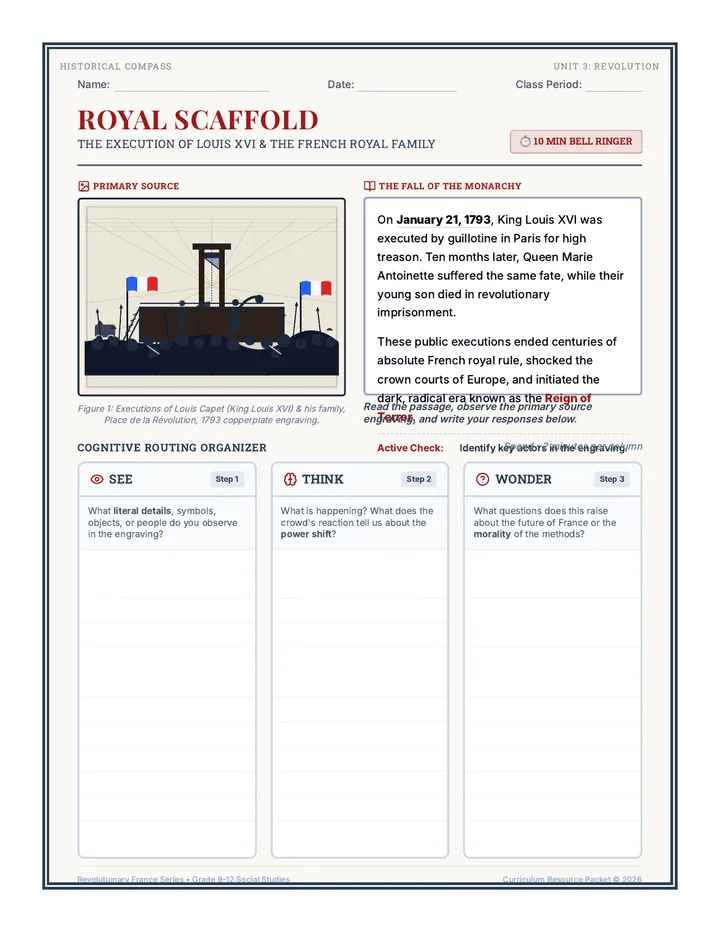
This lesson explores the devastating social and economic impacts of the Great Depression, focusing on unemployment, migration, and Hoovervilles, while challenging students to compare the contrasting philosophies of Presidents Hoover and FDR.