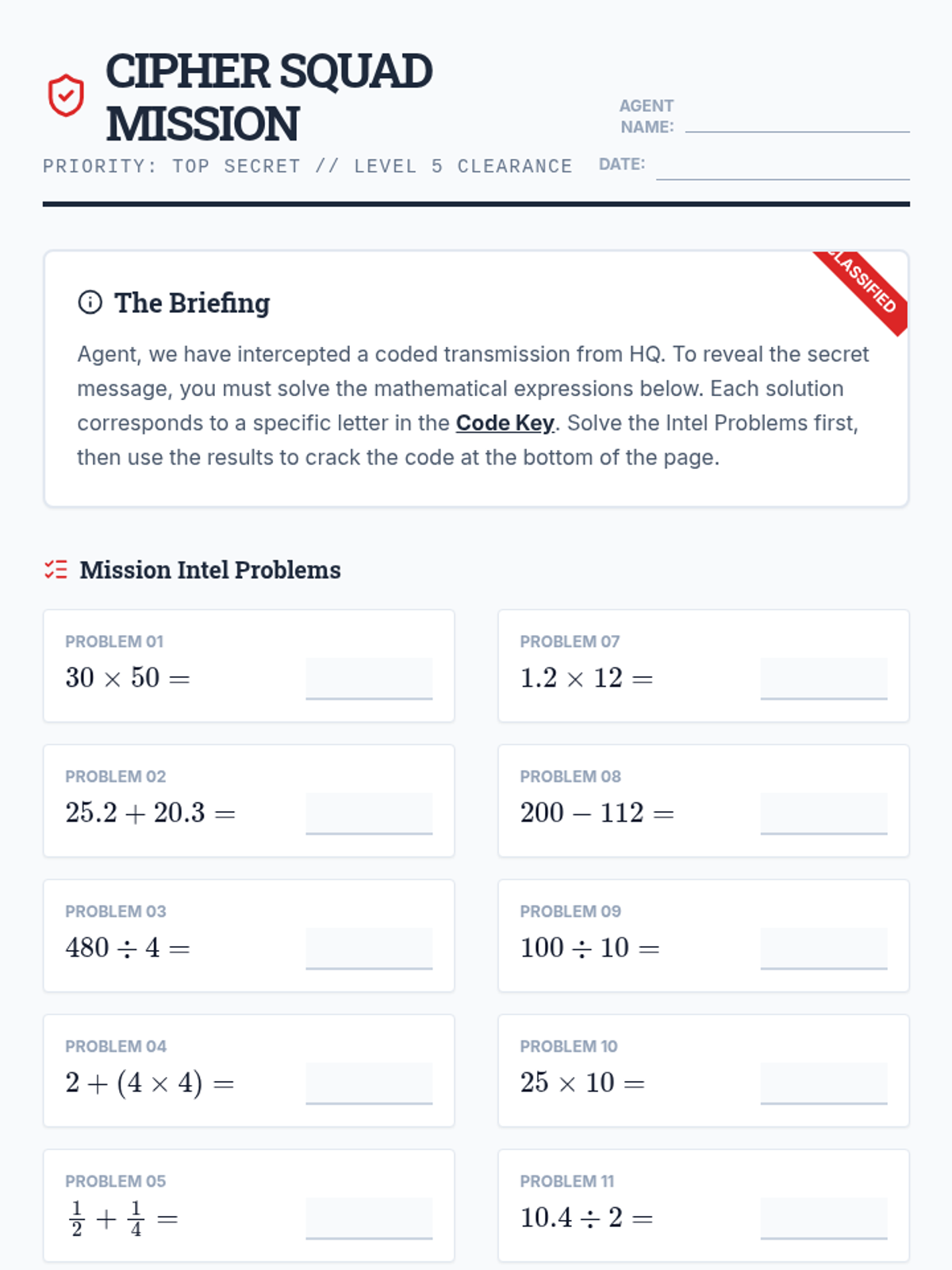
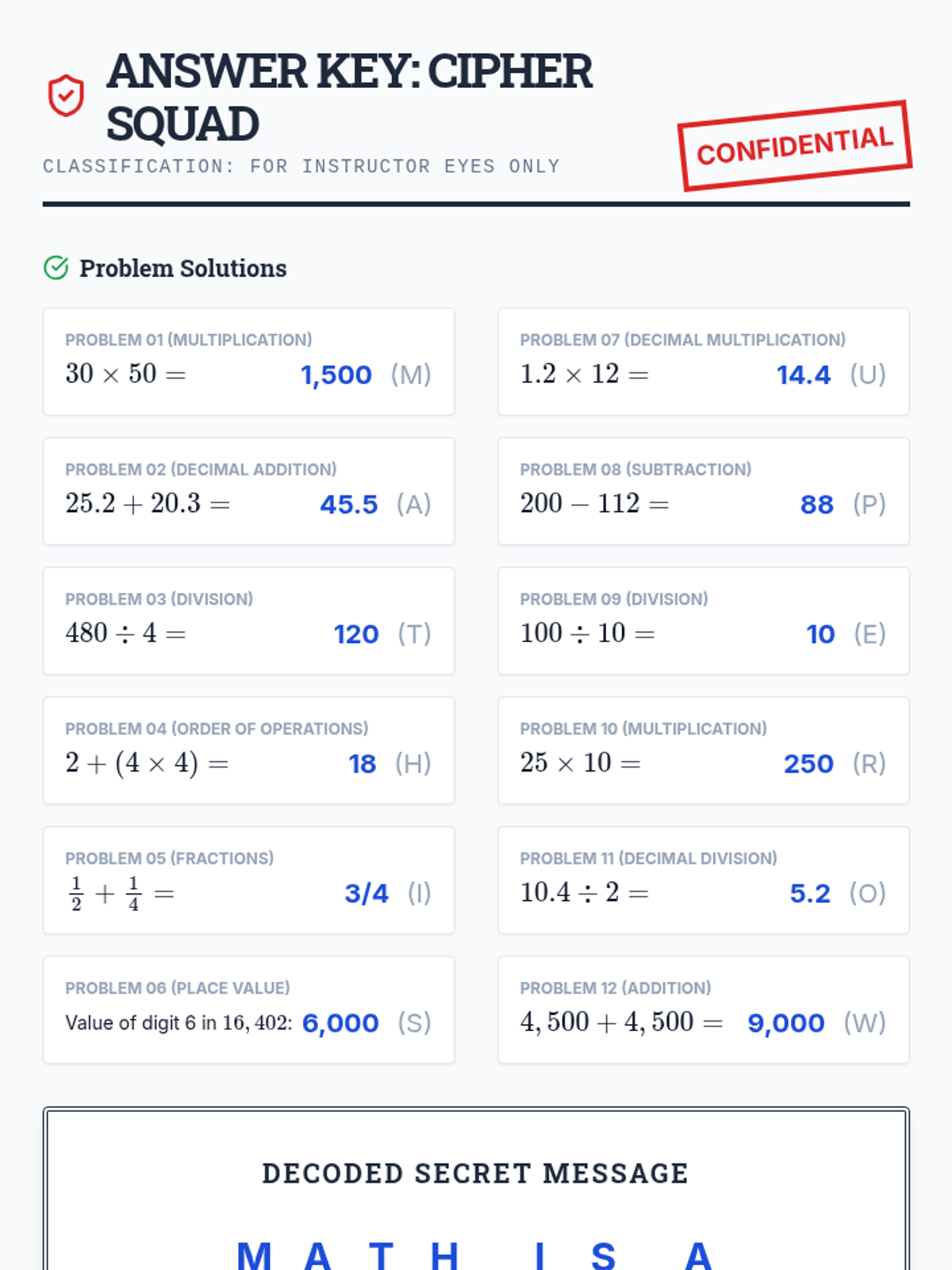
A high-energy, detective-themed math scavenger hunt where students solve 5th-grade problems to decode a secret message. Covers multiplication, division, fractions, decimals, volume, and order of operations.
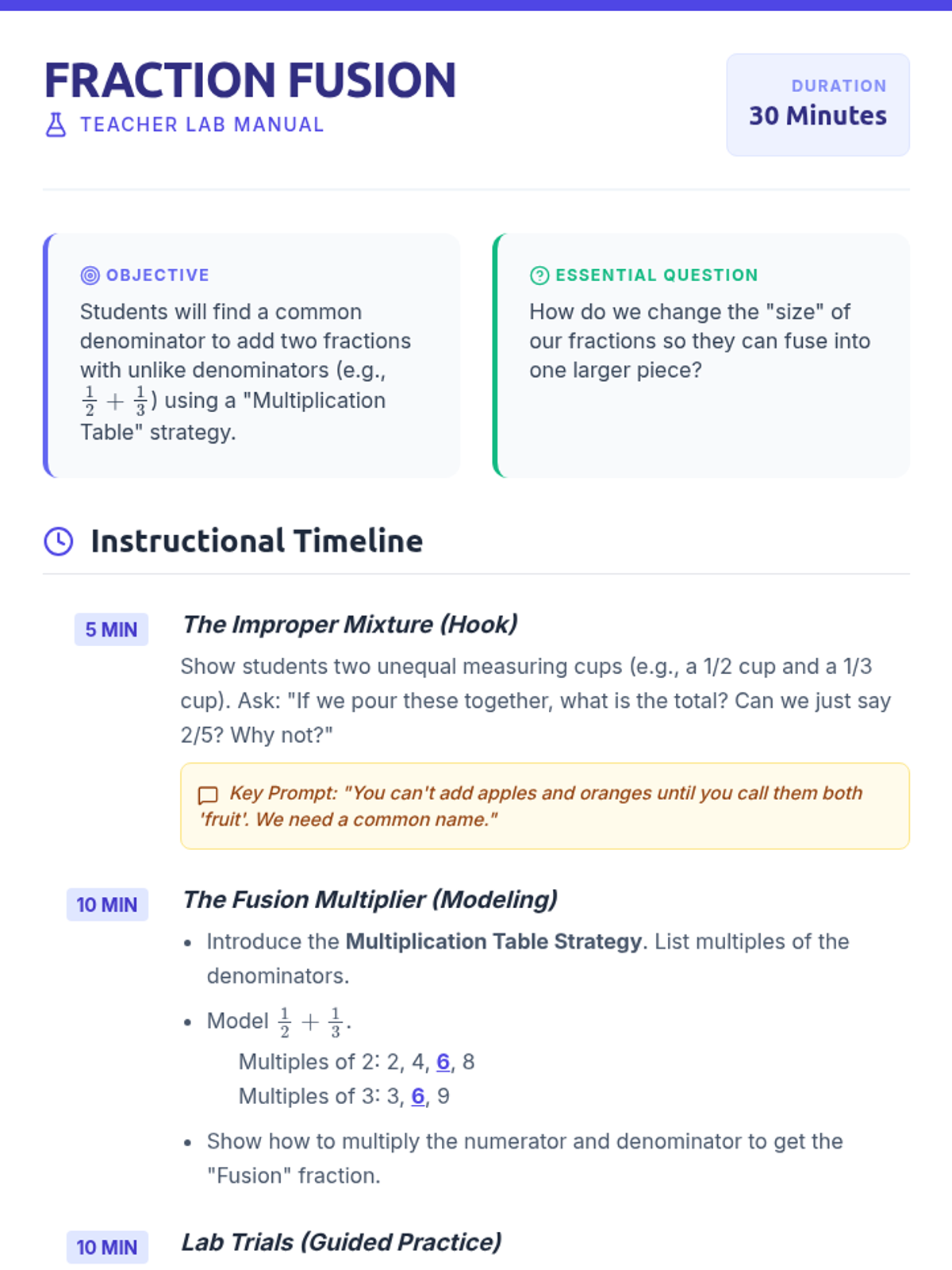
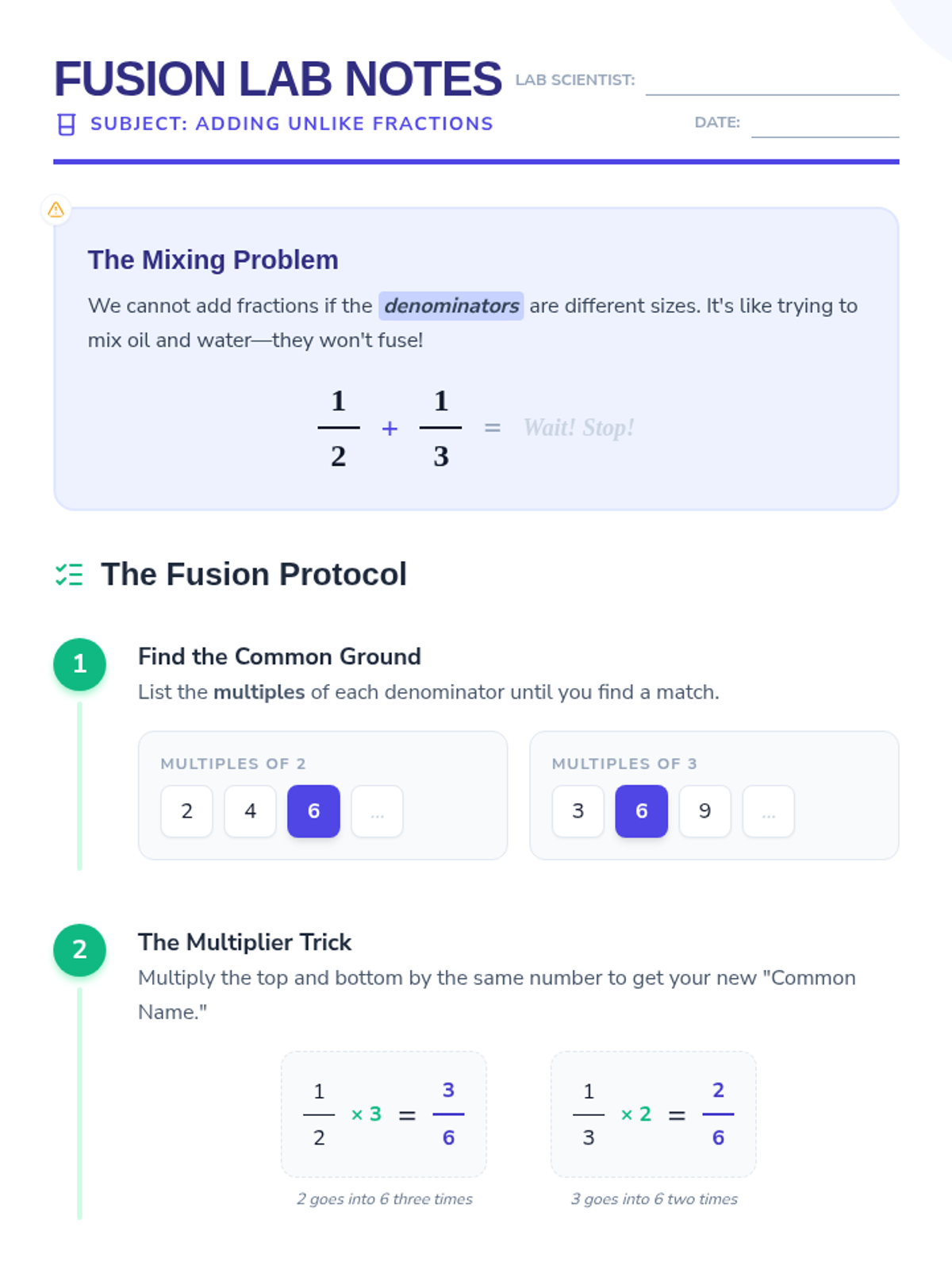
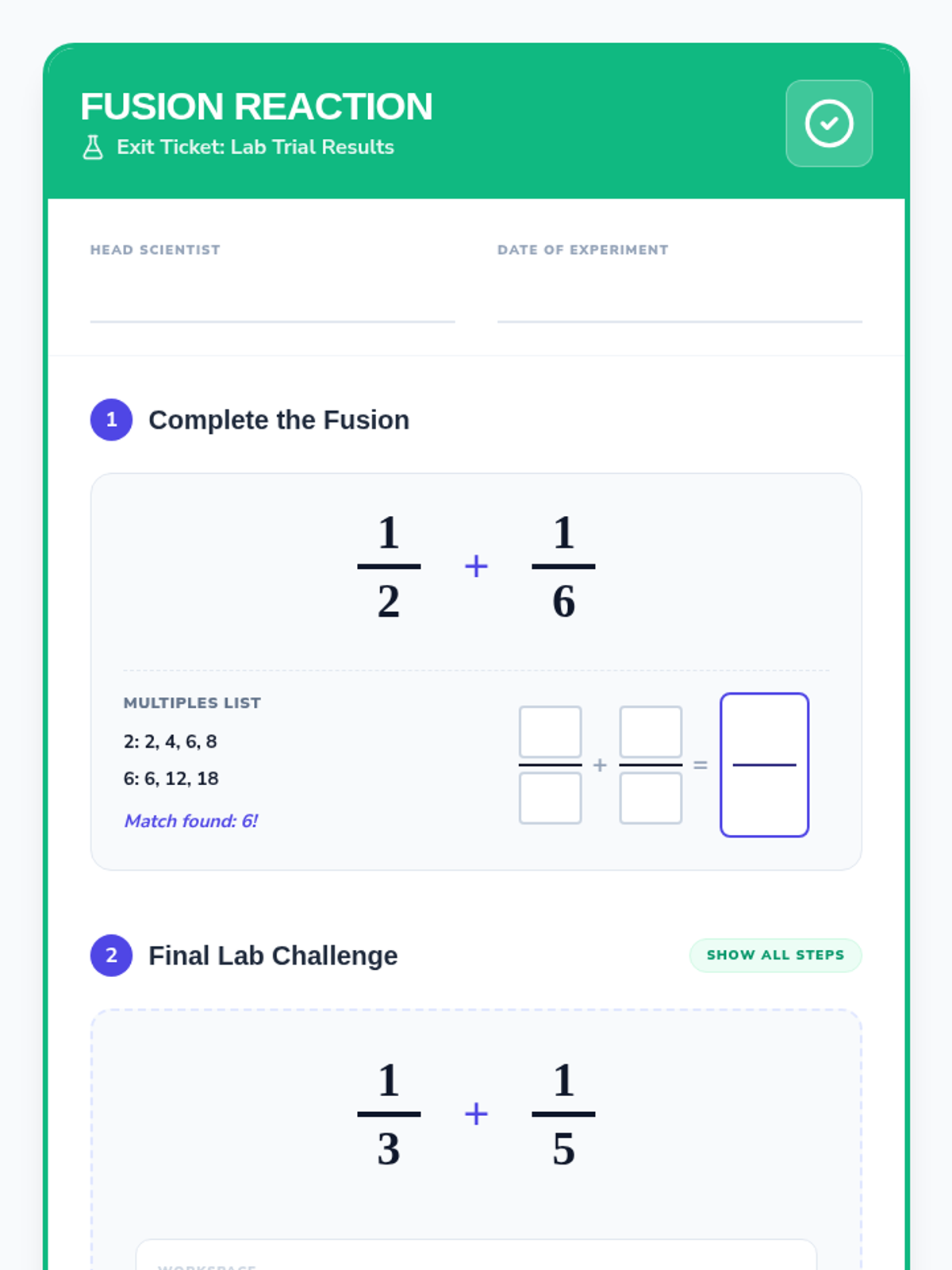
A targeted 30-minute introductory lesson on adding fractions with unlike denominators, designed for resource room students using the 'Fraction Fusion' laboratory theme.
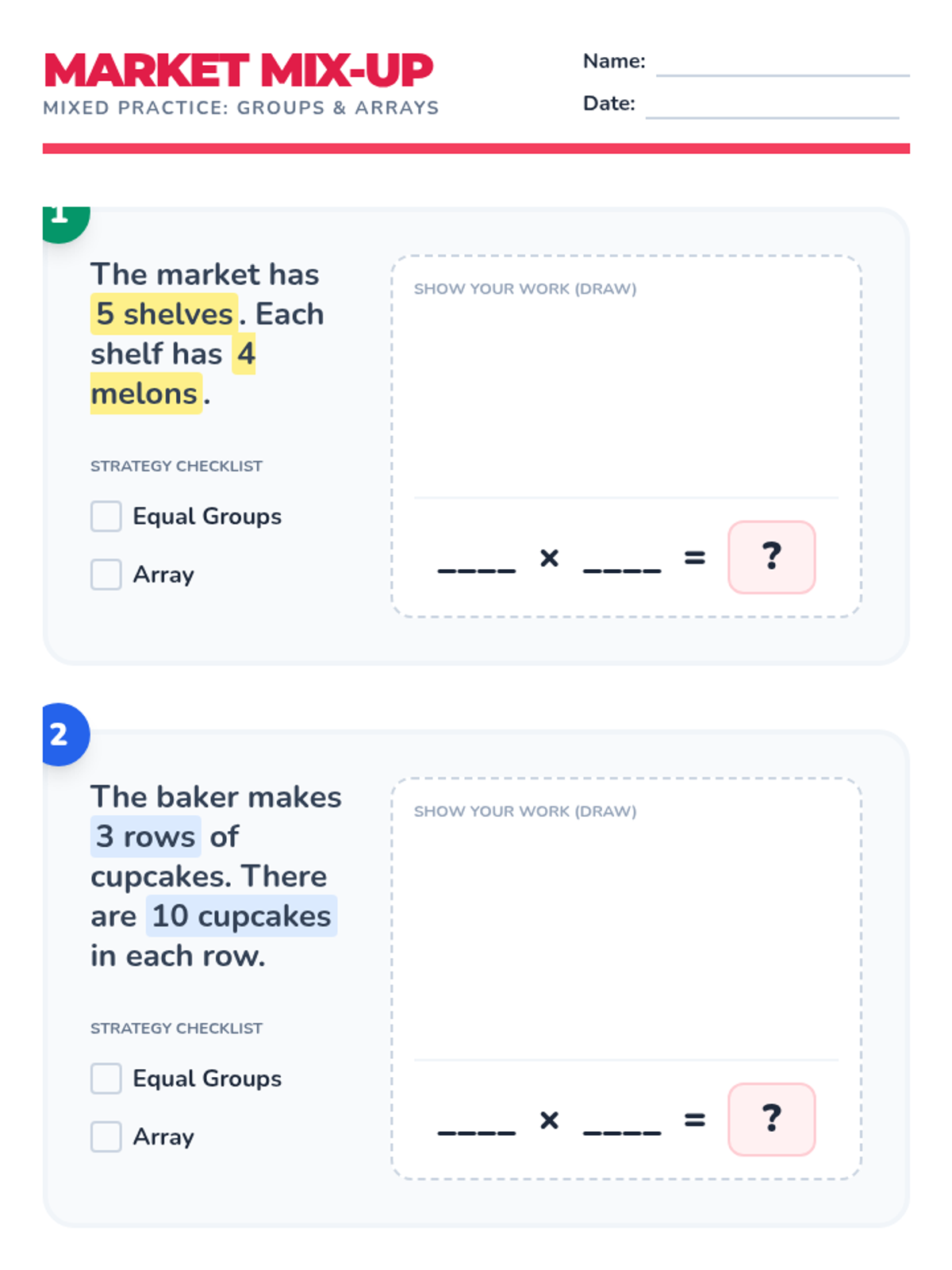
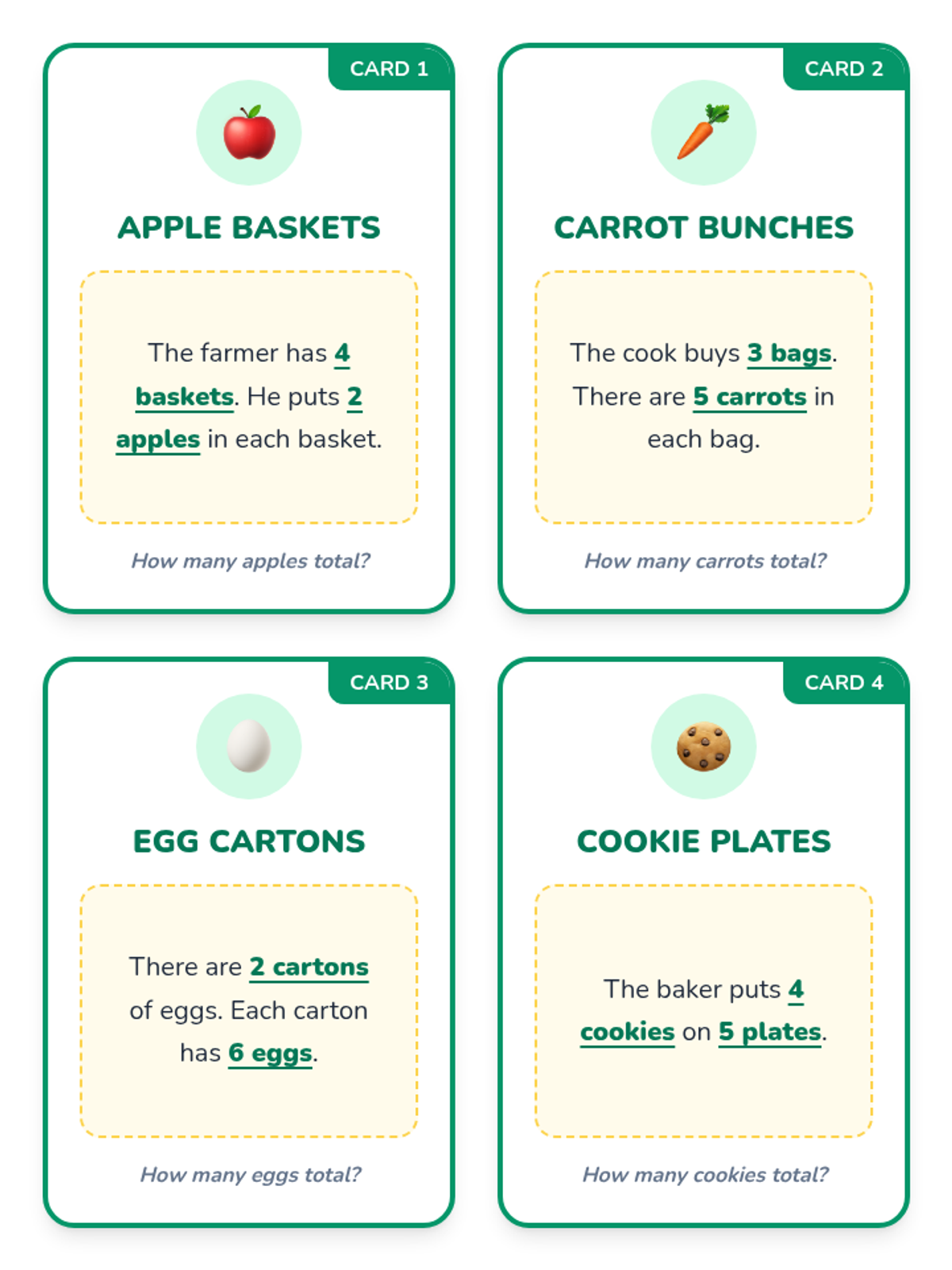
A mixed practice lesson where students choose between equal groups and arrays to solve market-themed word problems and build fact recall.
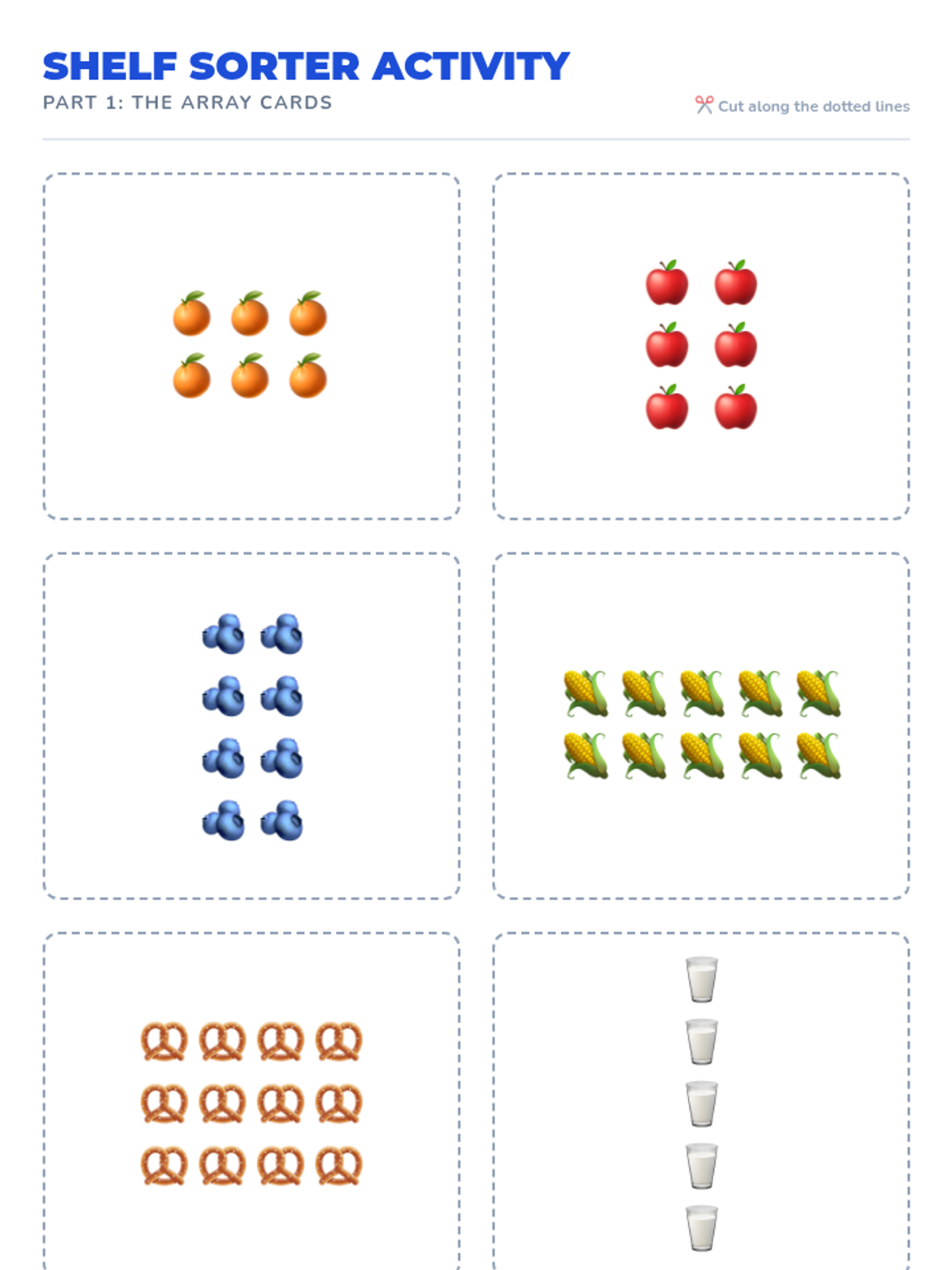
Students transition to using arrays to represent multiplication and division, visualizing items on market shelves in rows and columns.
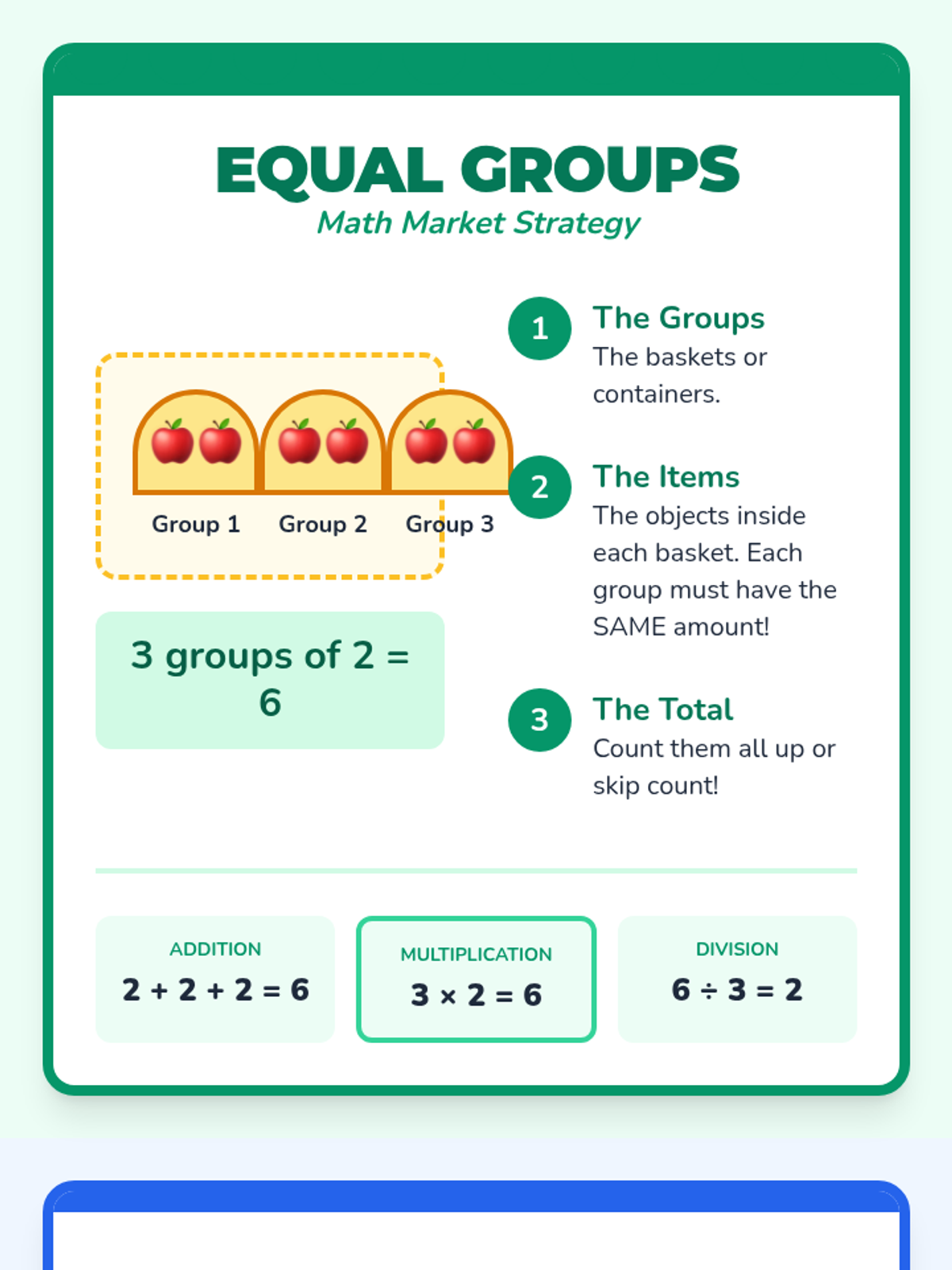
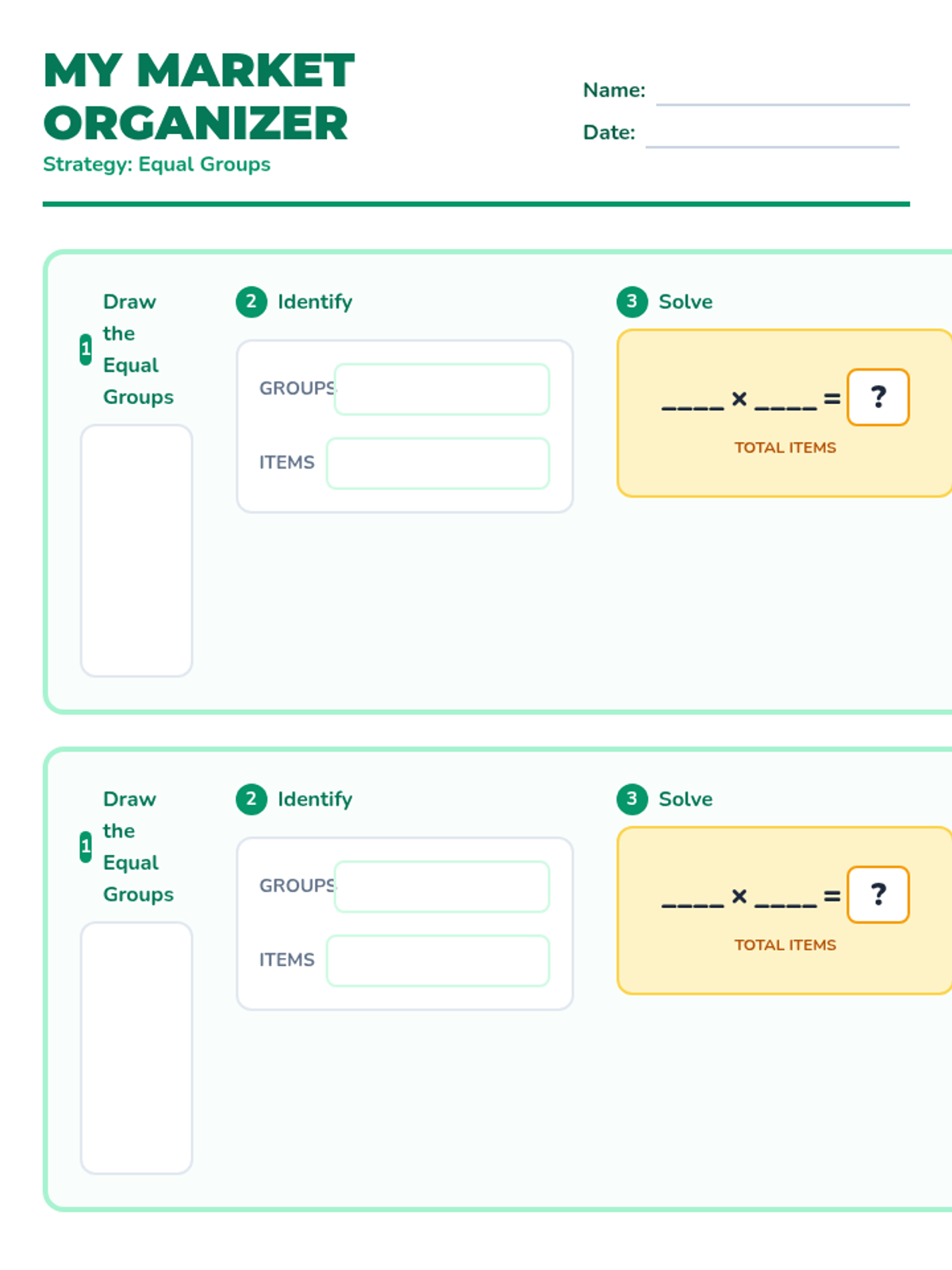
Students use equal groups to solve multiplication and division problems, using a 'Math Market' basket theme to visualize groups and items.
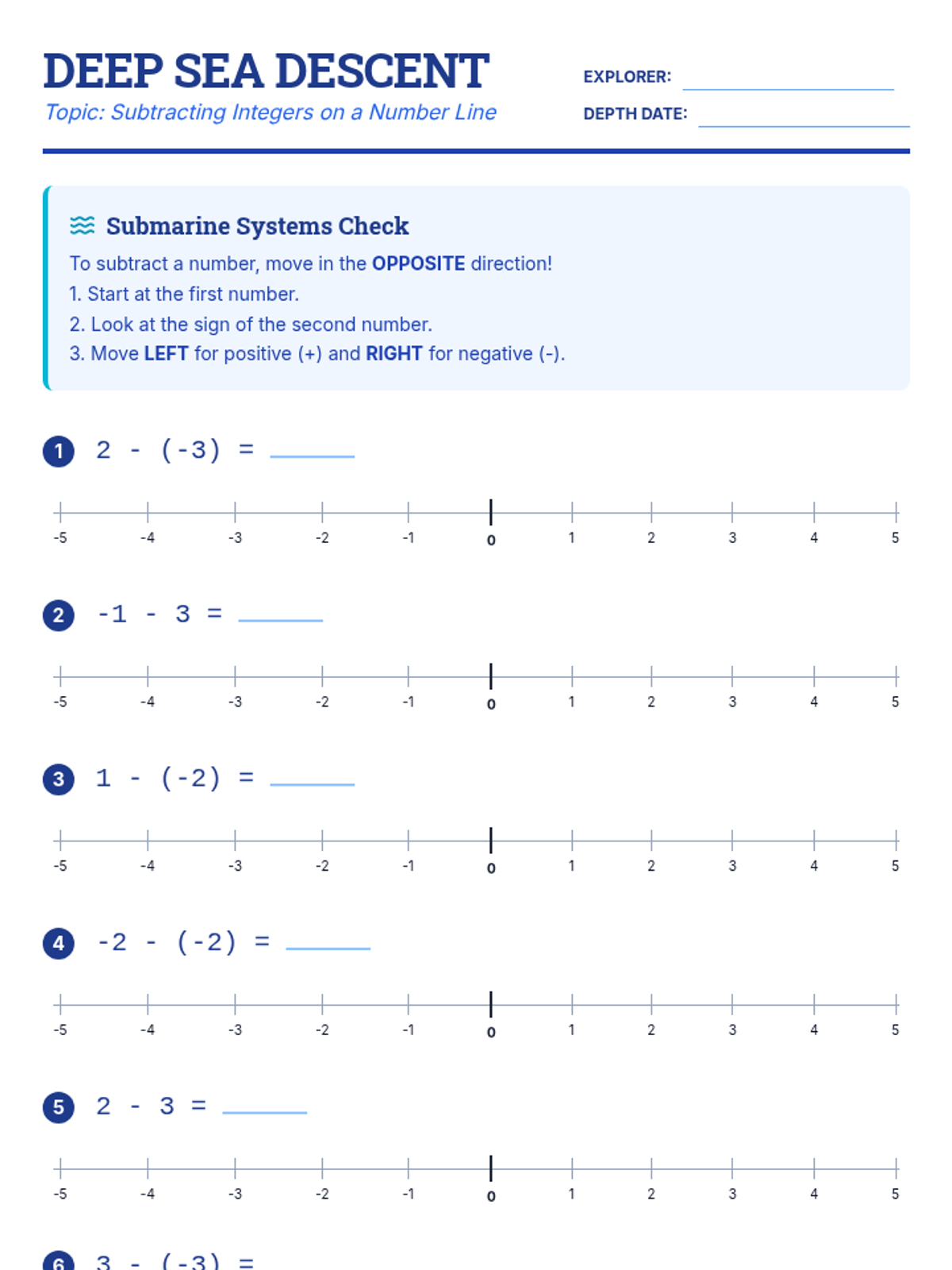
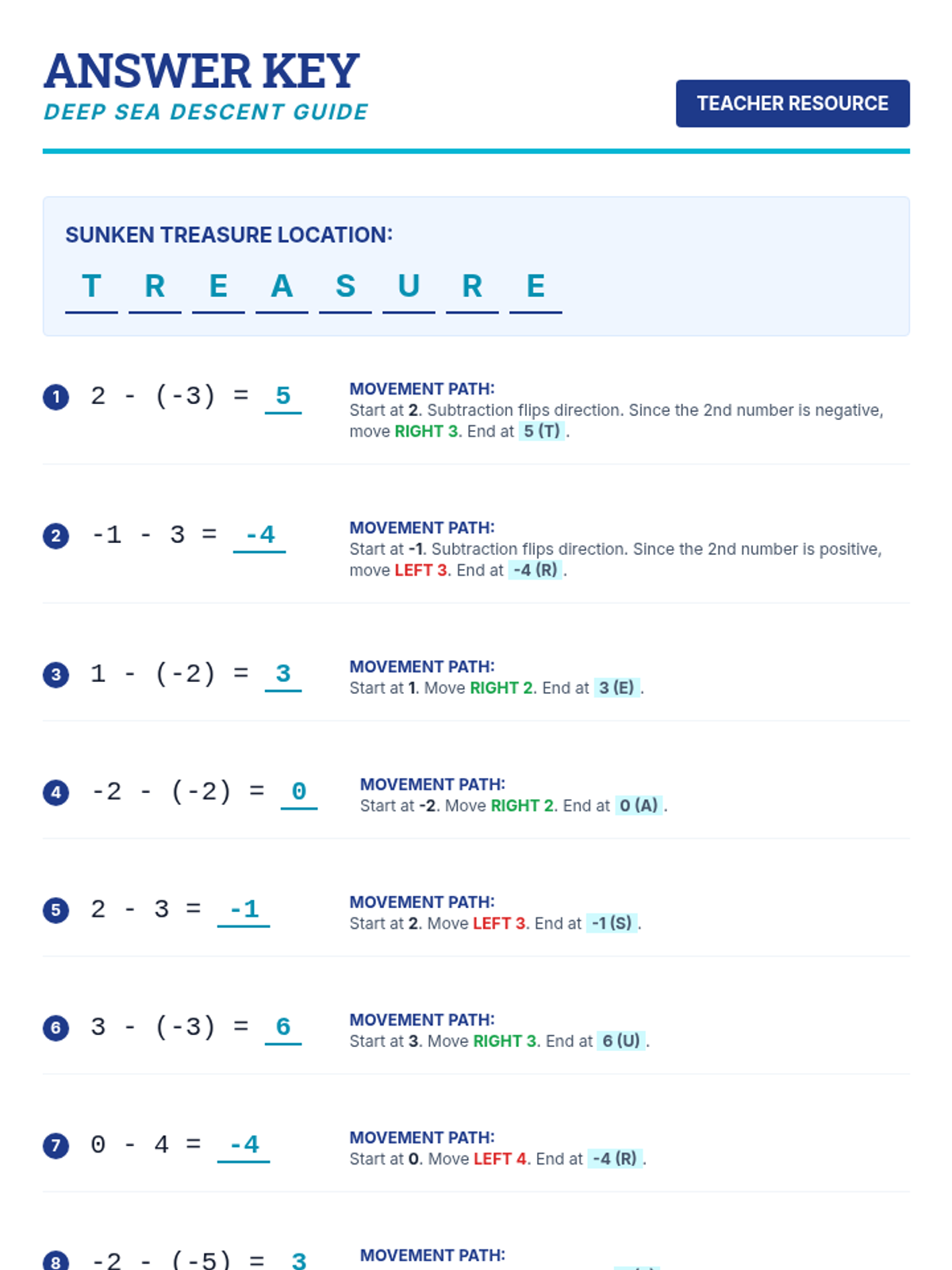
Students learn to subtract small positive and negative integers using number lines. They explore subtraction as the "opposite" of addition or as finding the difference/distance between two points.
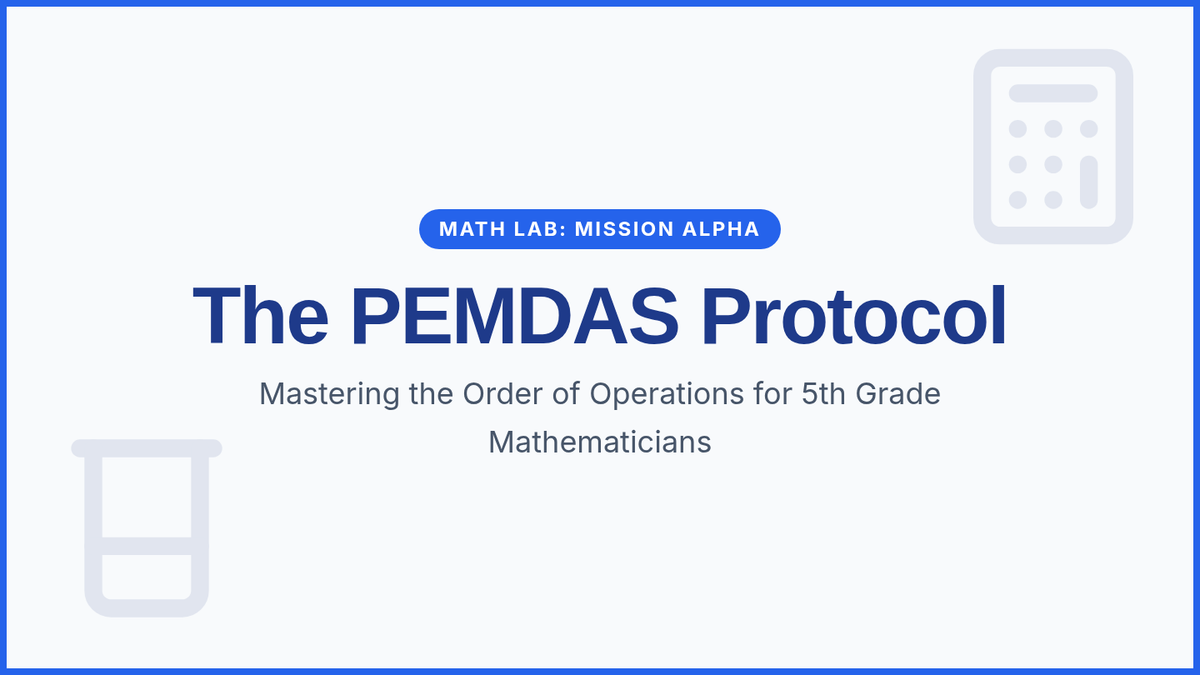
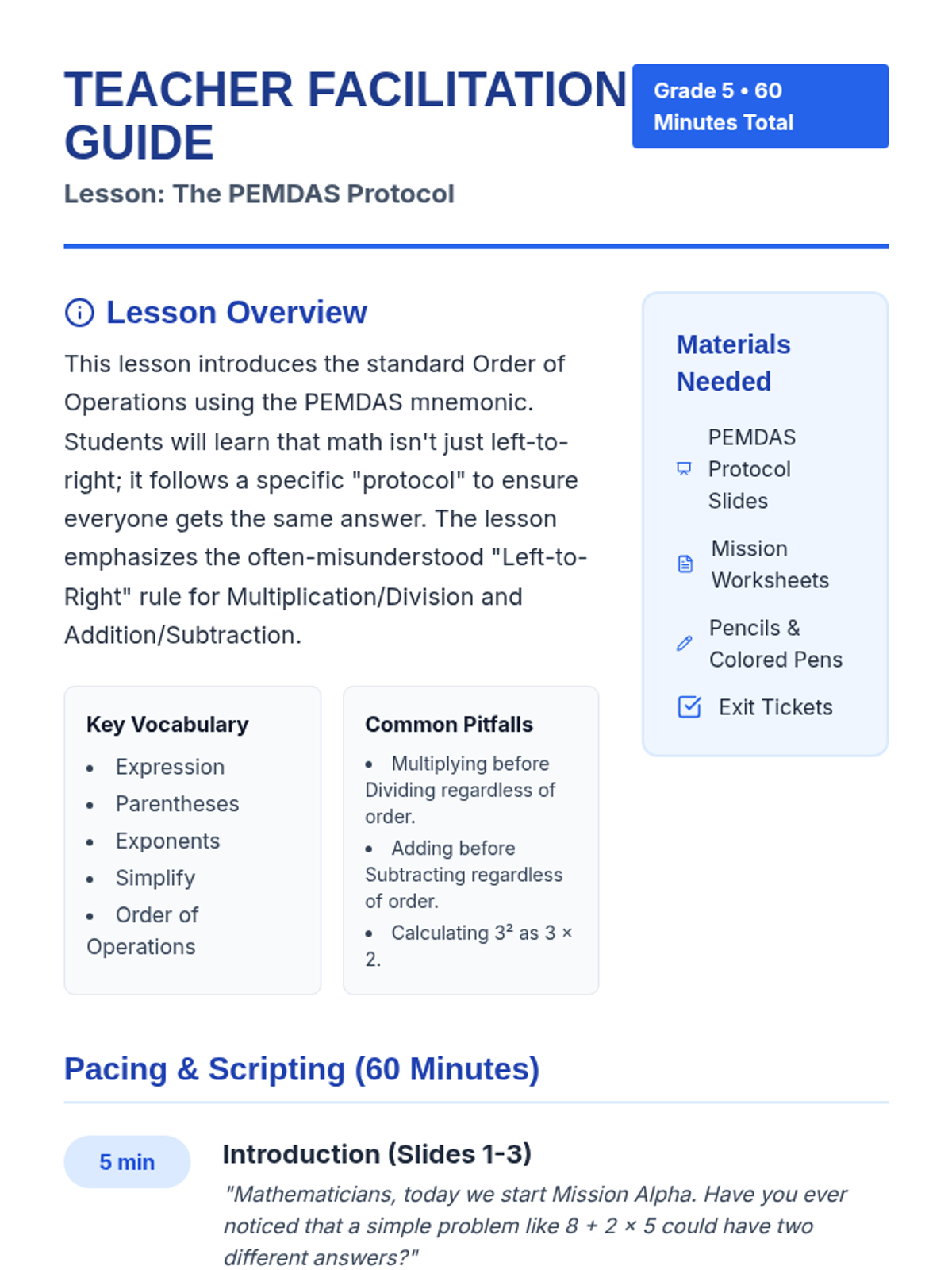
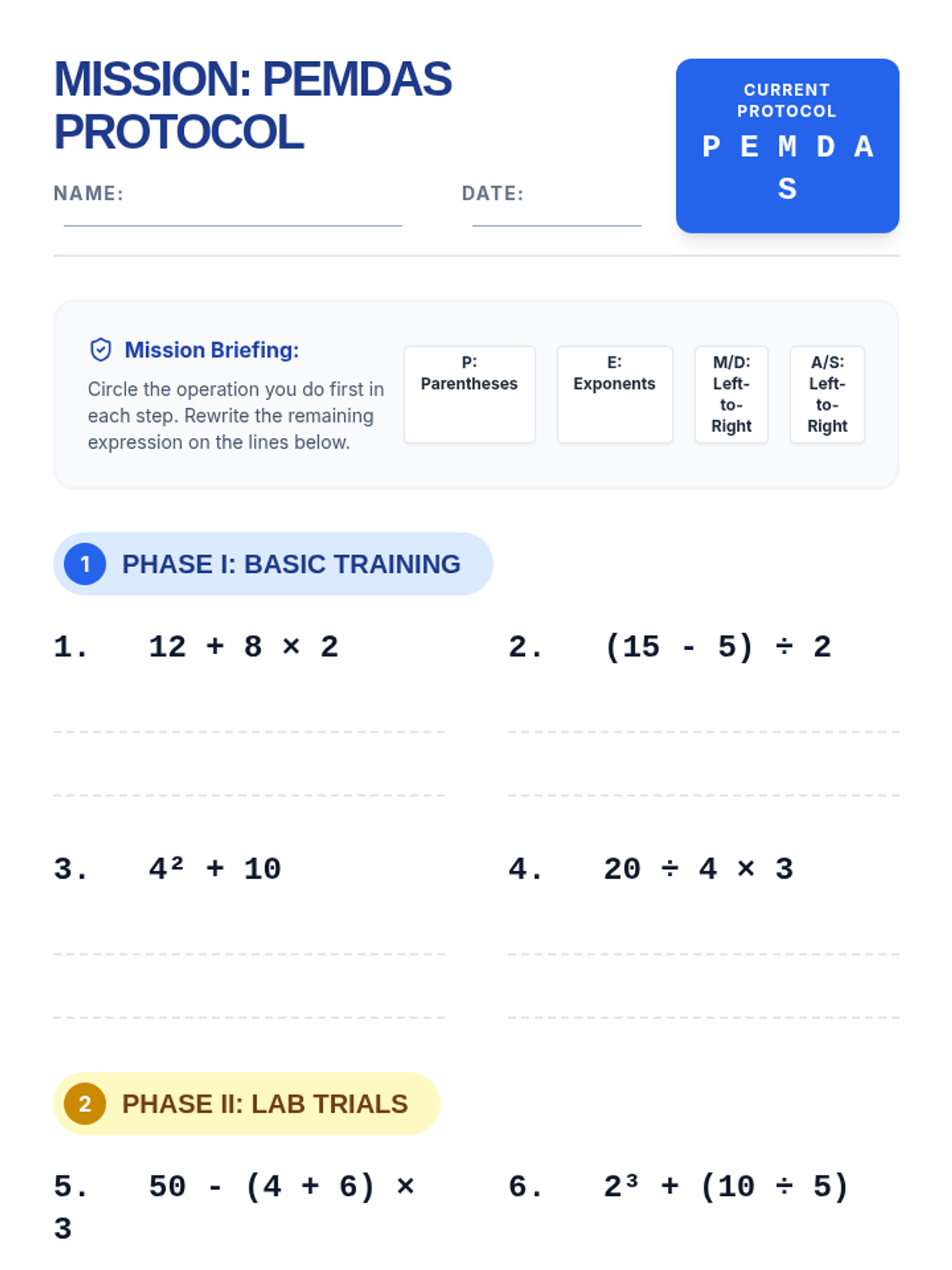
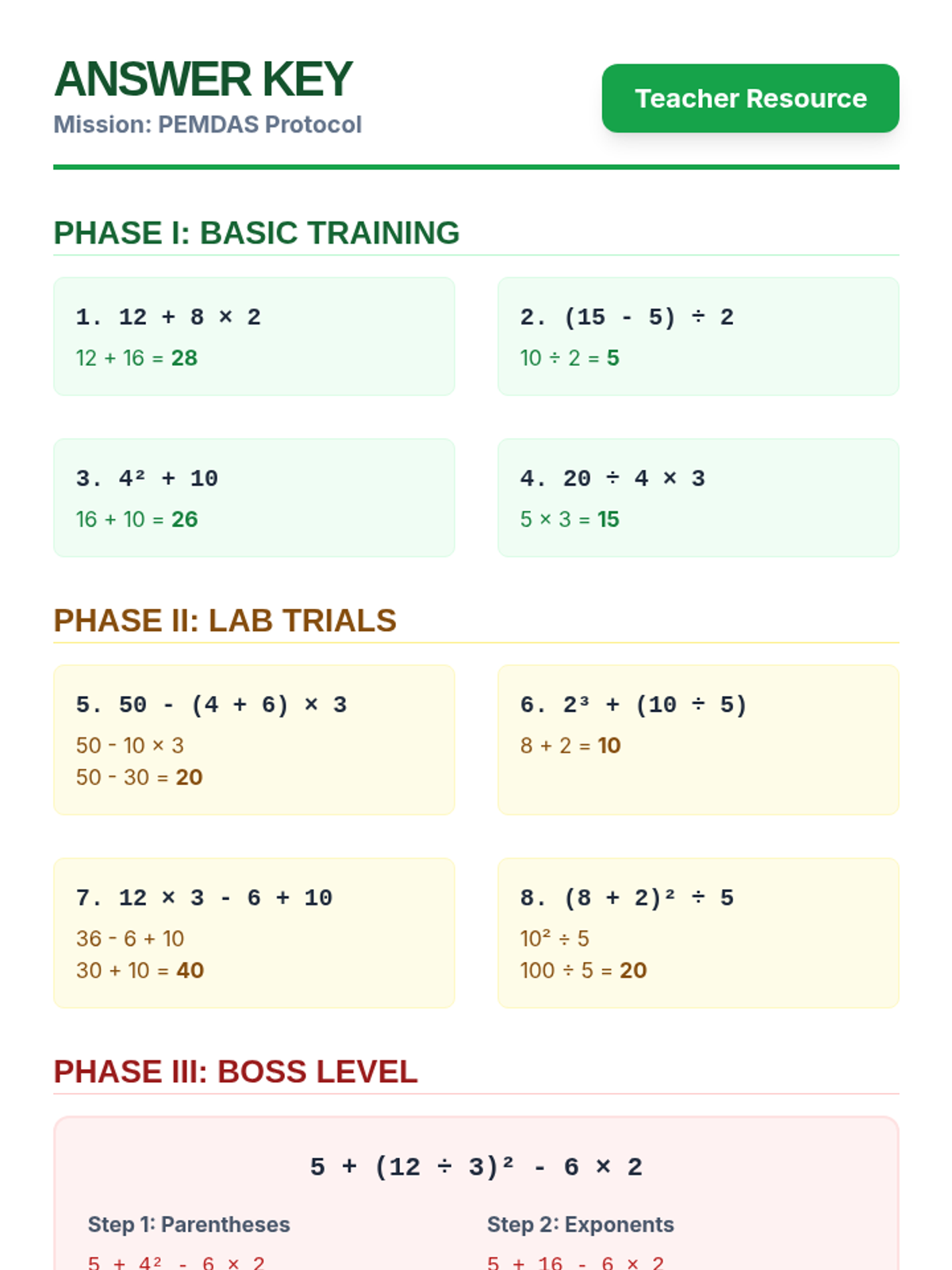
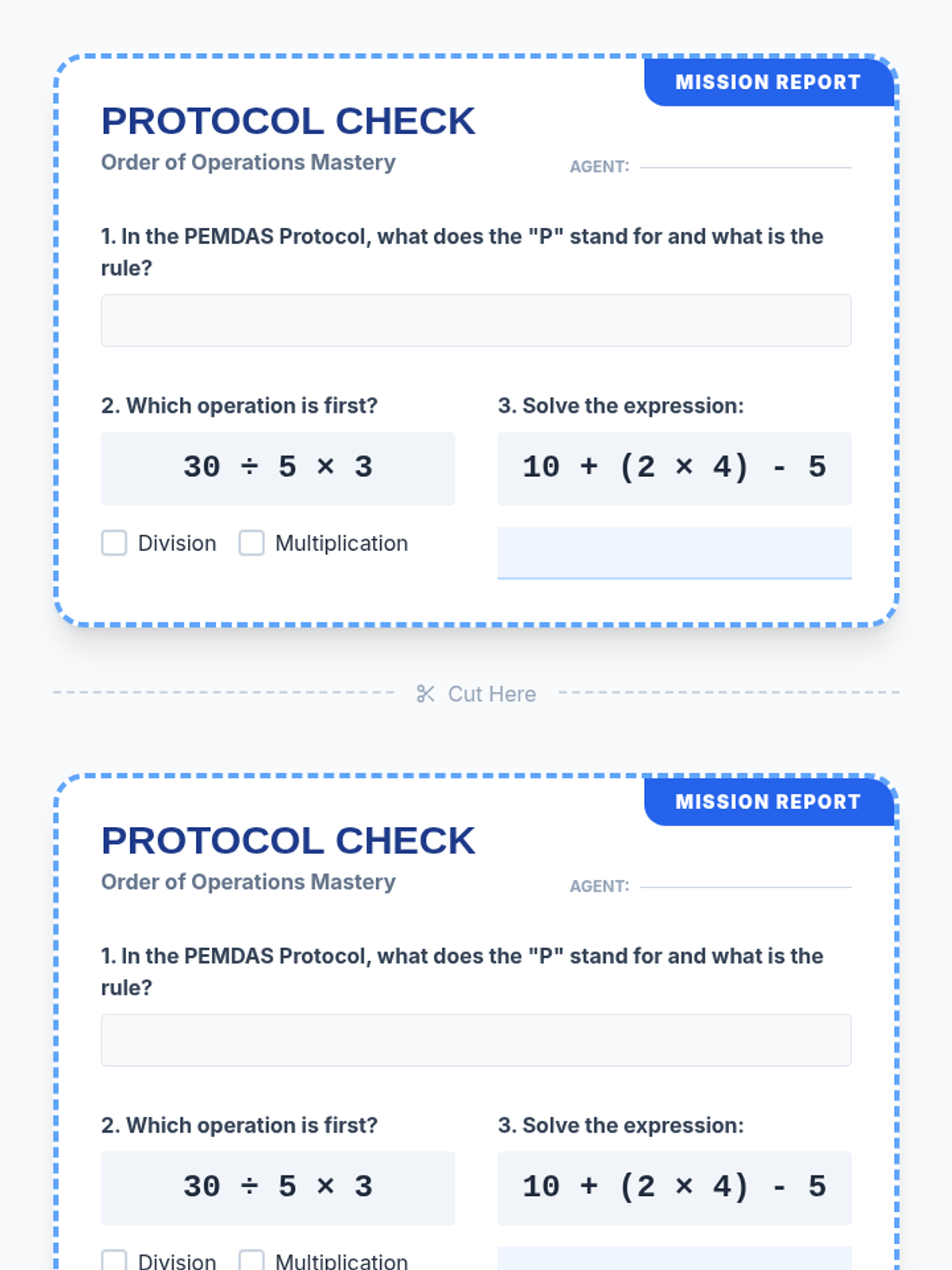
A comprehensive introduction to the order of operations (PEMDAS) for 5th-grade students, featuring a step-by-step breakdown of mixed operations and common pitfalls.
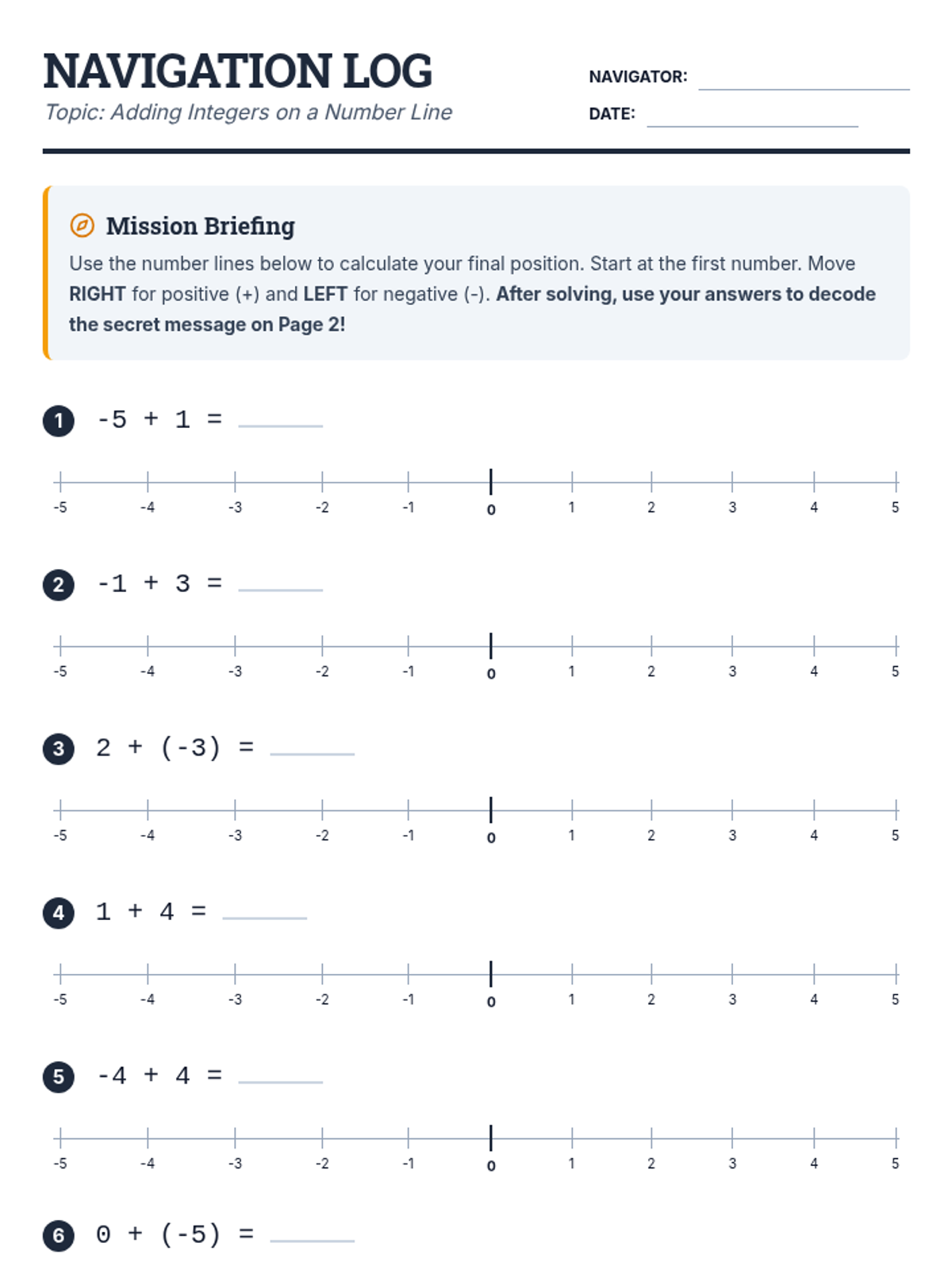
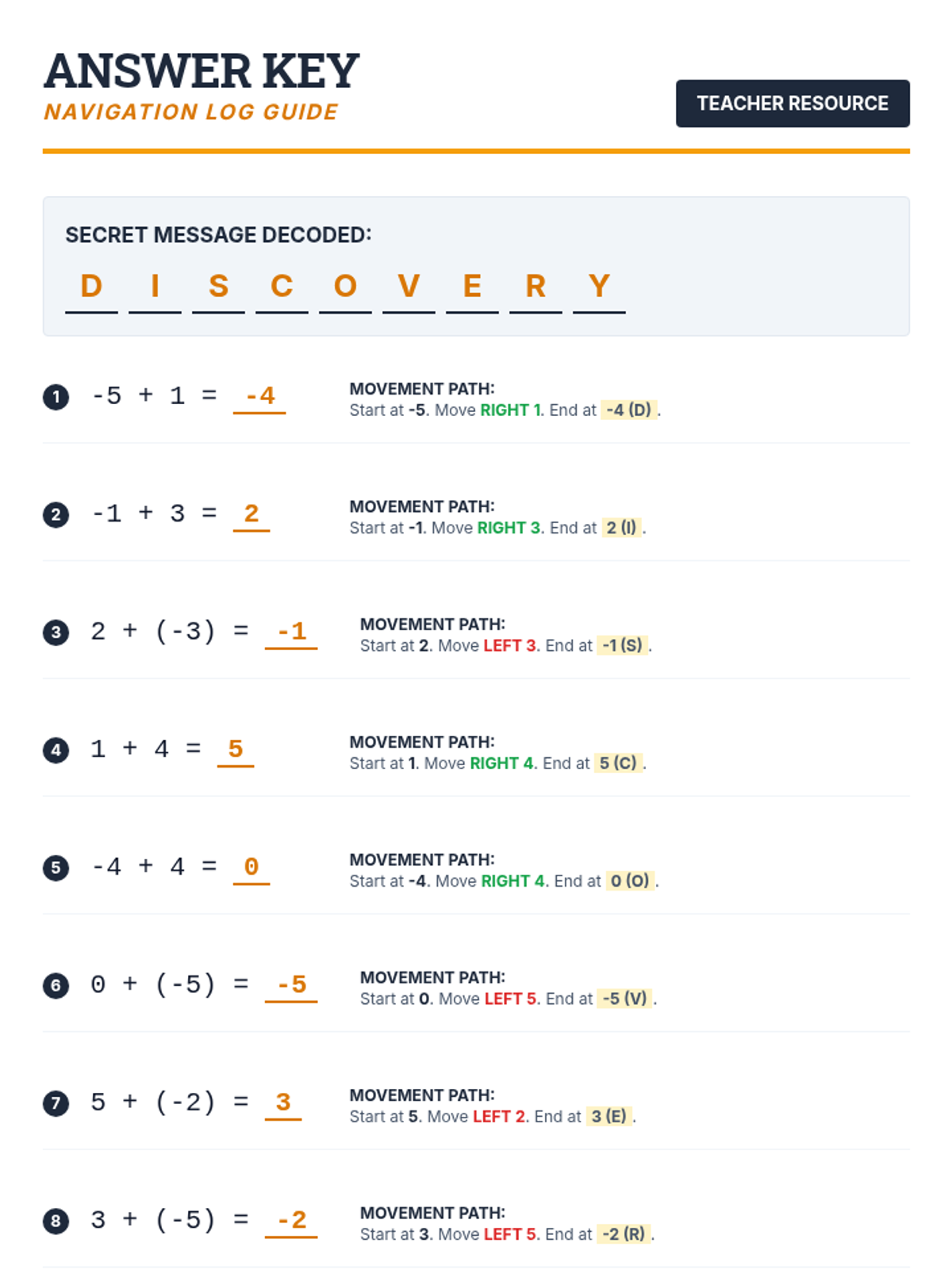
A practice-focused lesson helping 5th grade students master the addition of small positive and negative integers using number line models. Students apply their understanding of direction and distance to solve problems involving different signs and zero.
A high-stakes math mission where students solve complex 5th-grade problems to decode a secret message. This activity reinforces operations, place value, fractions, and decimals through an engaging spy-themed narrative.
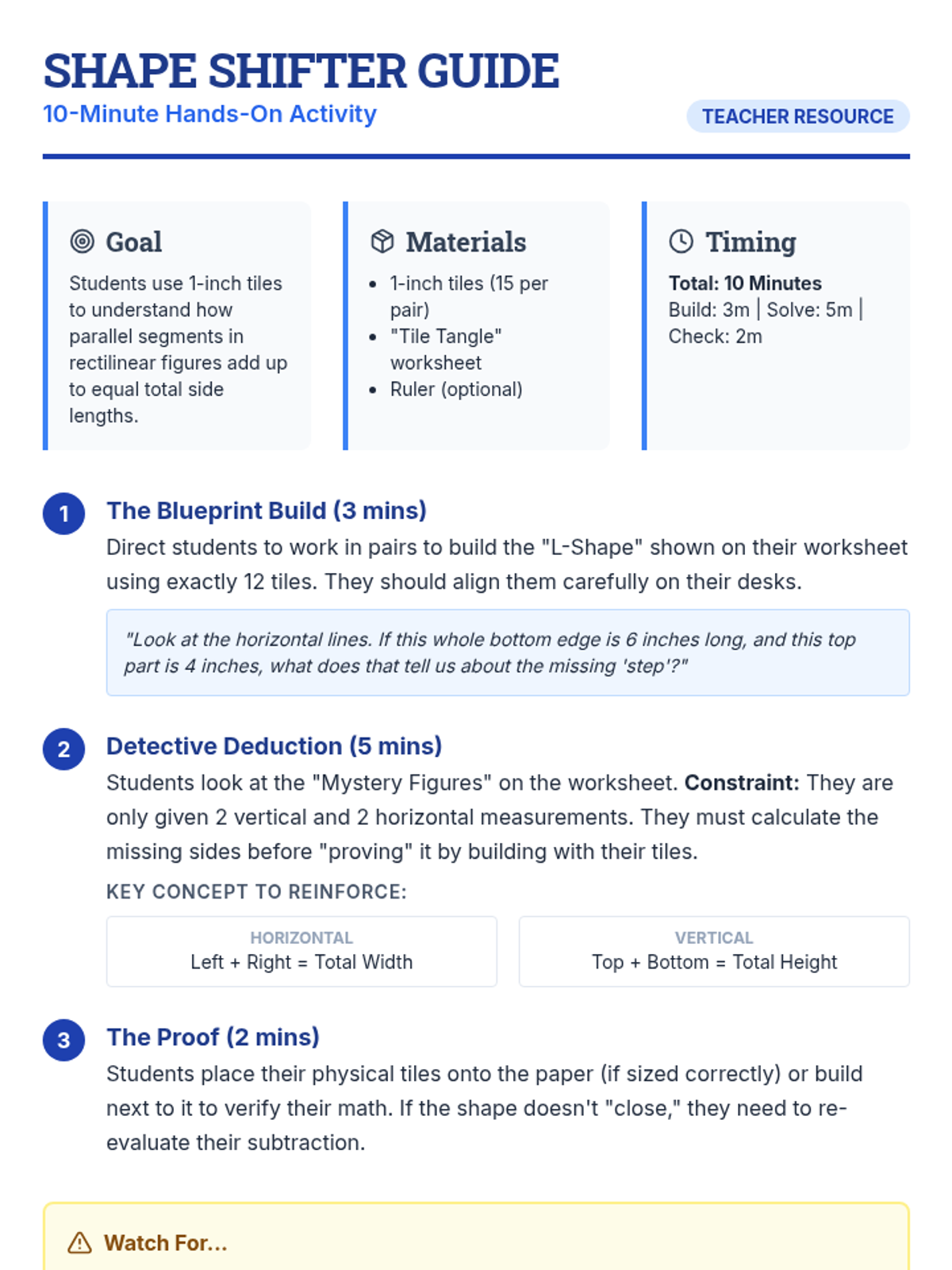
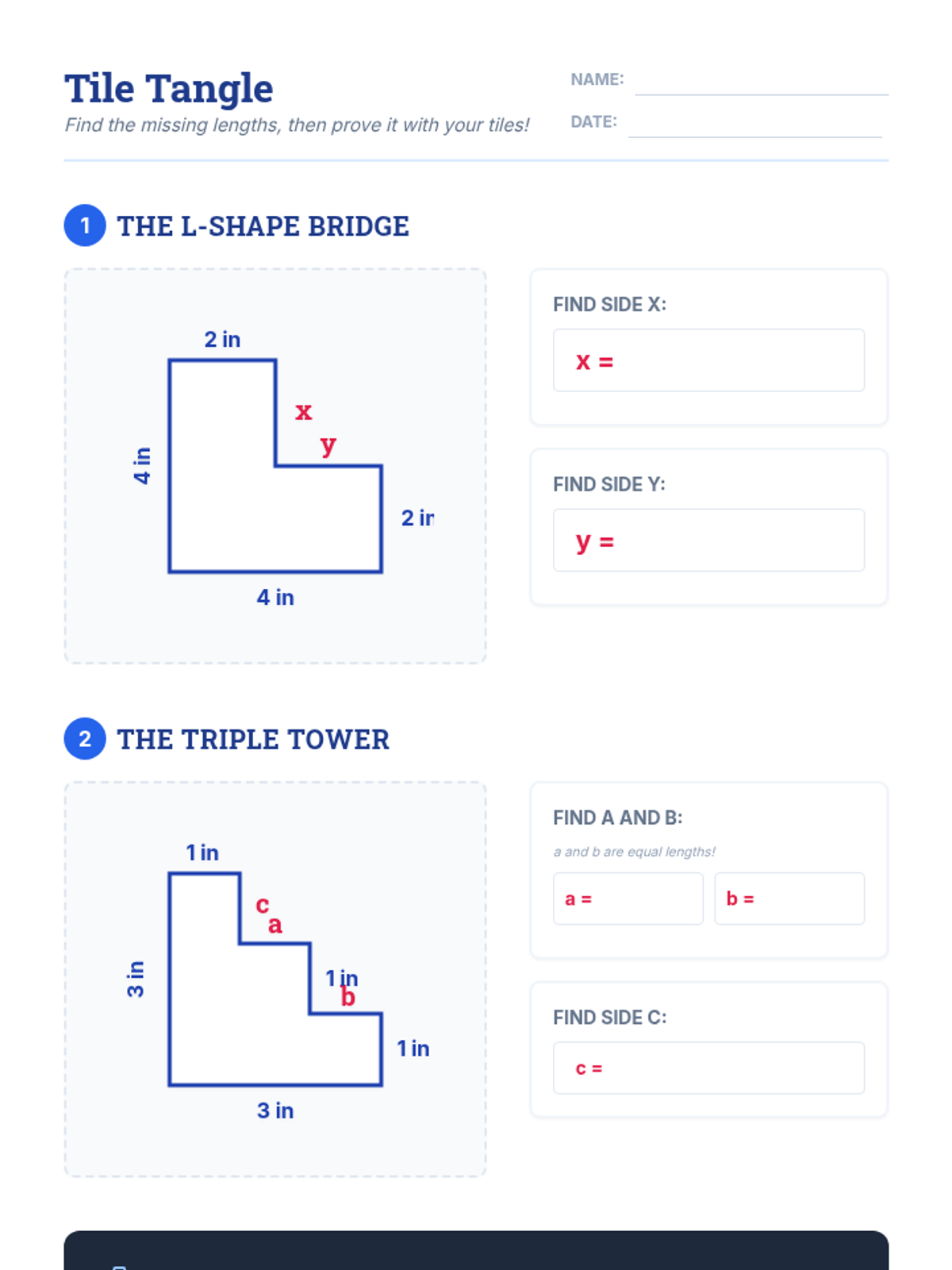
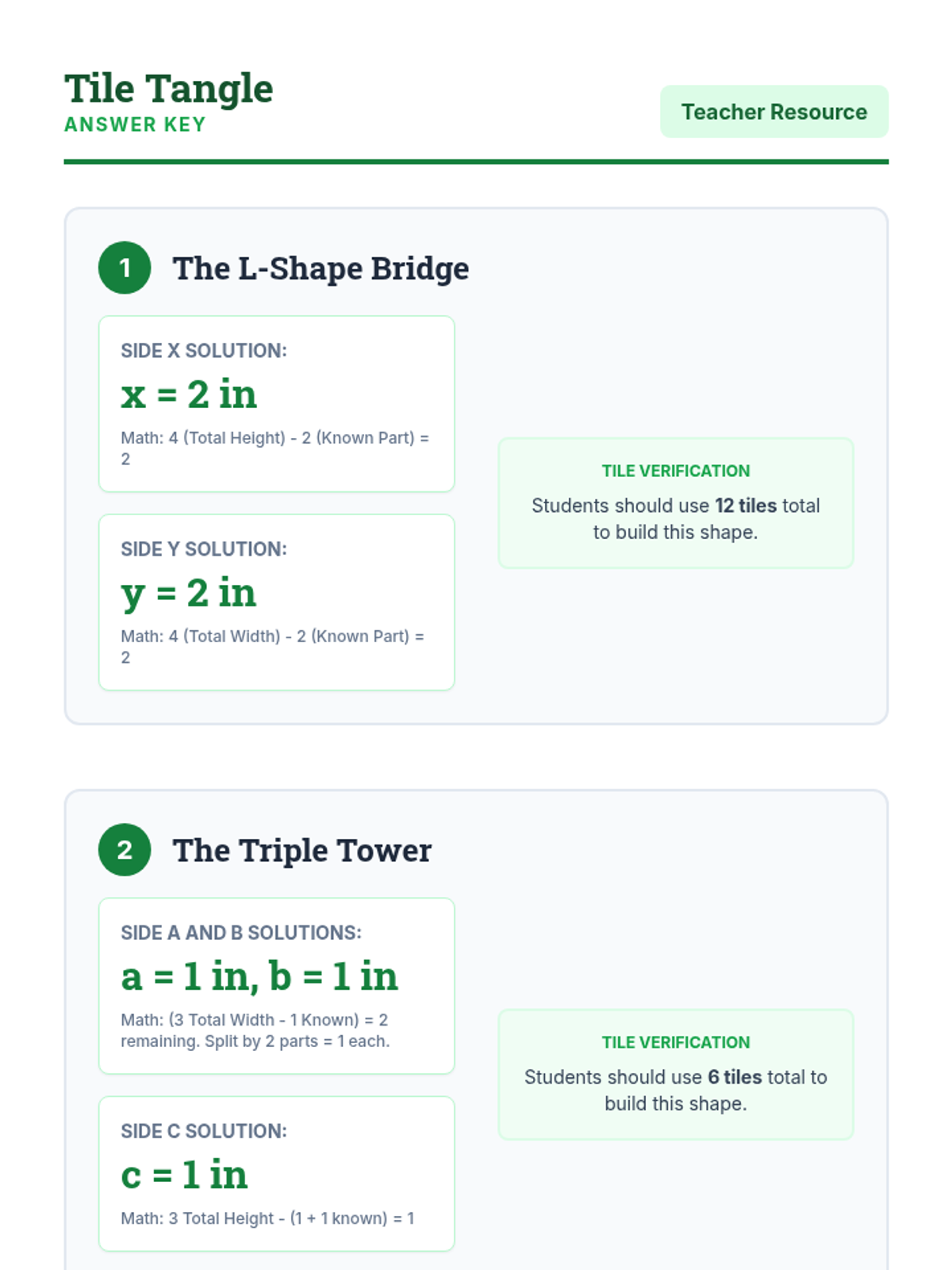
A quick, hands-on 10-minute activity where students use 1-inch tiles to construct rectilinear figures and calculate missing side lengths using the properties of parallel sides.
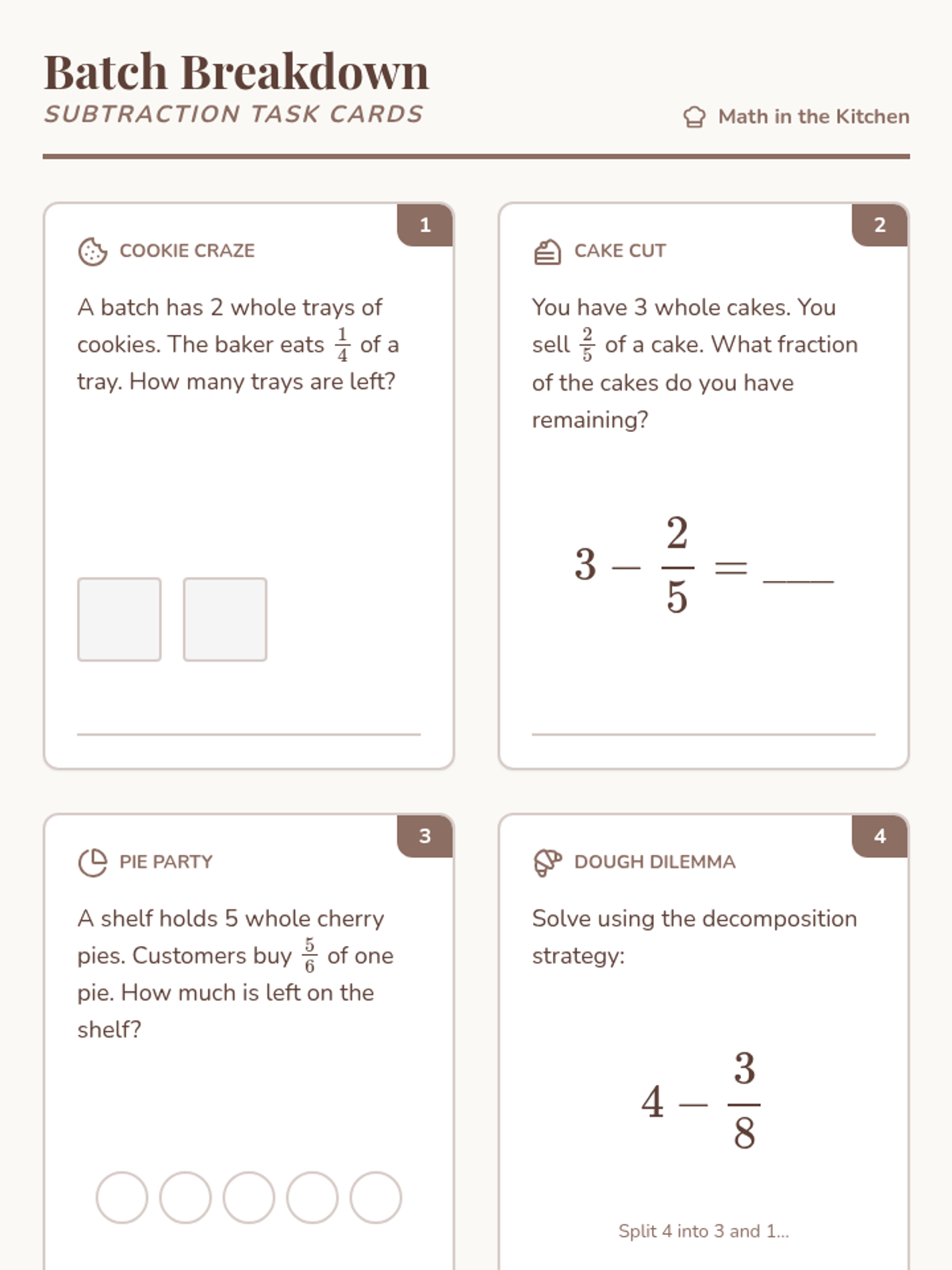
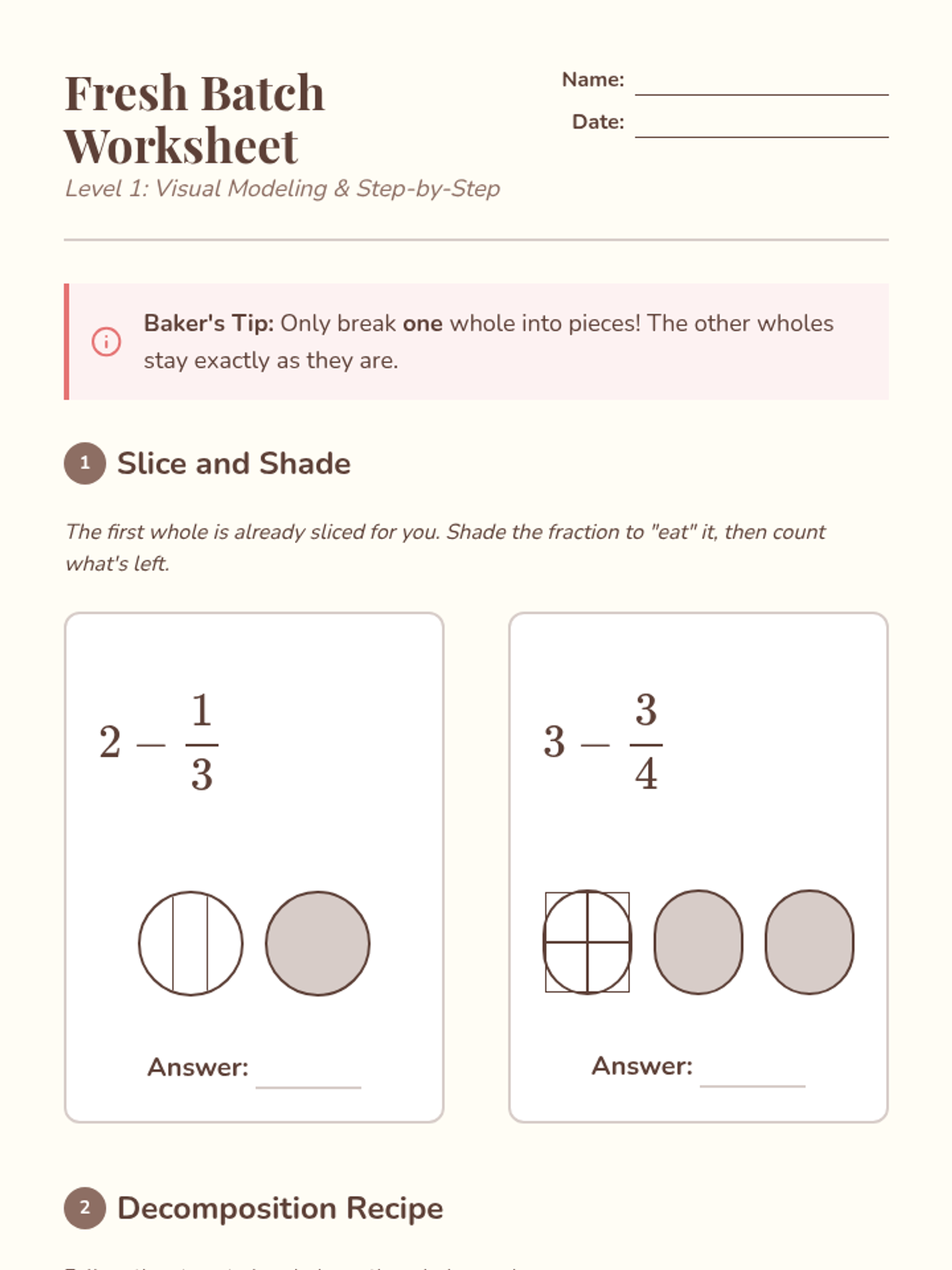
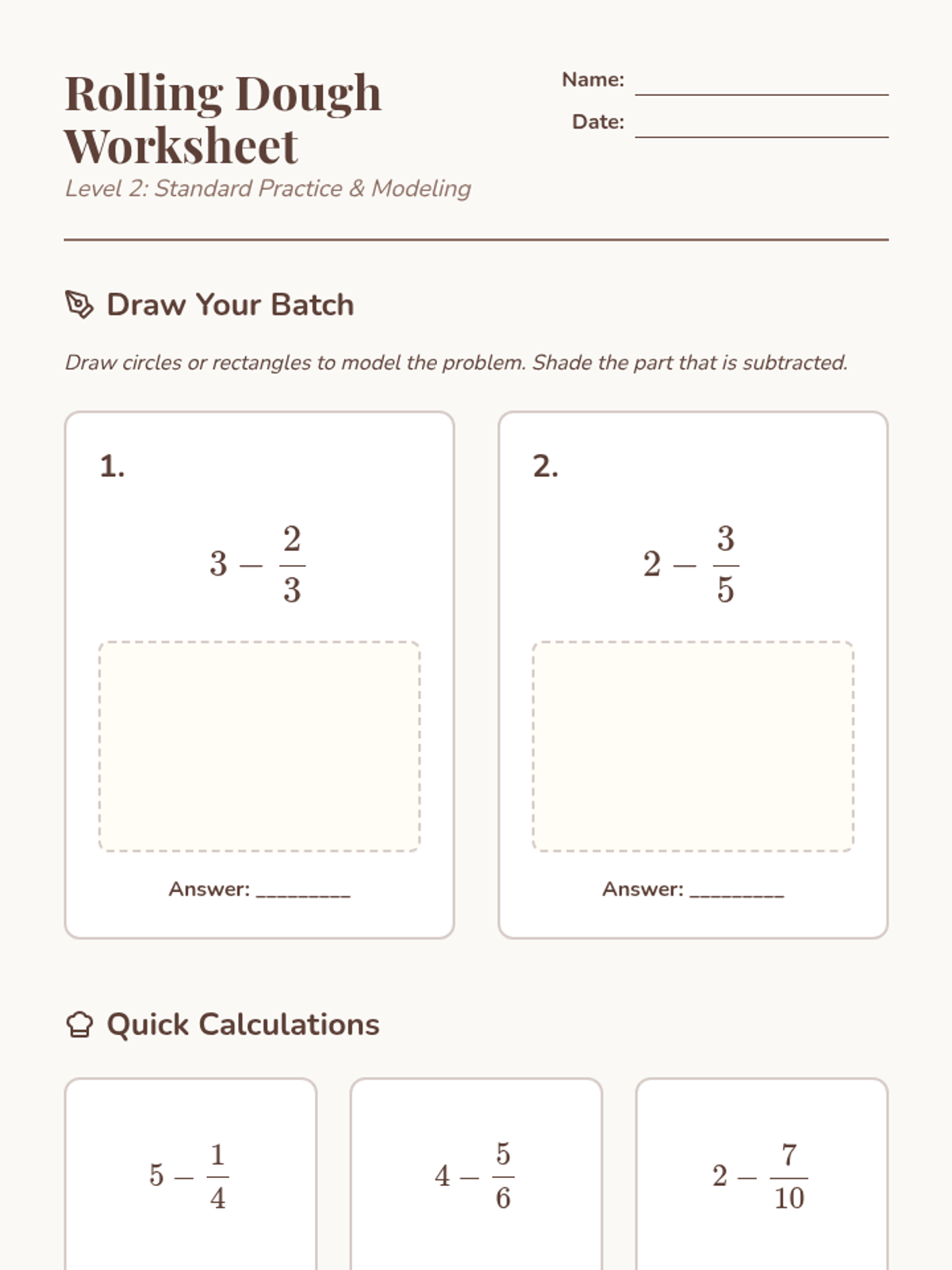
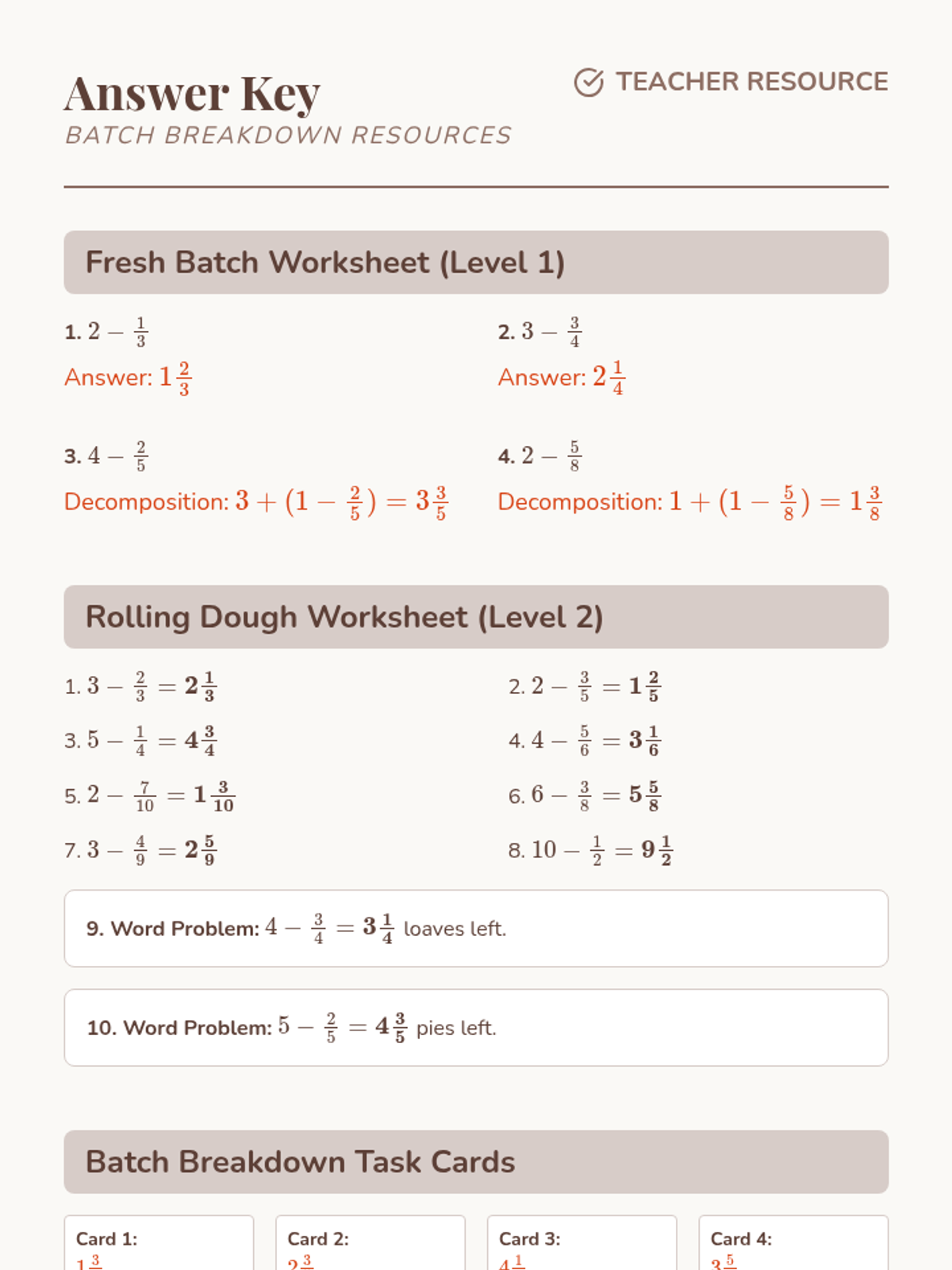
A comprehensive lesson on subtracting fractions from whole numbers greater than 1, focusing on pictorial representations and regrouping strategies through a bakery-themed lens.
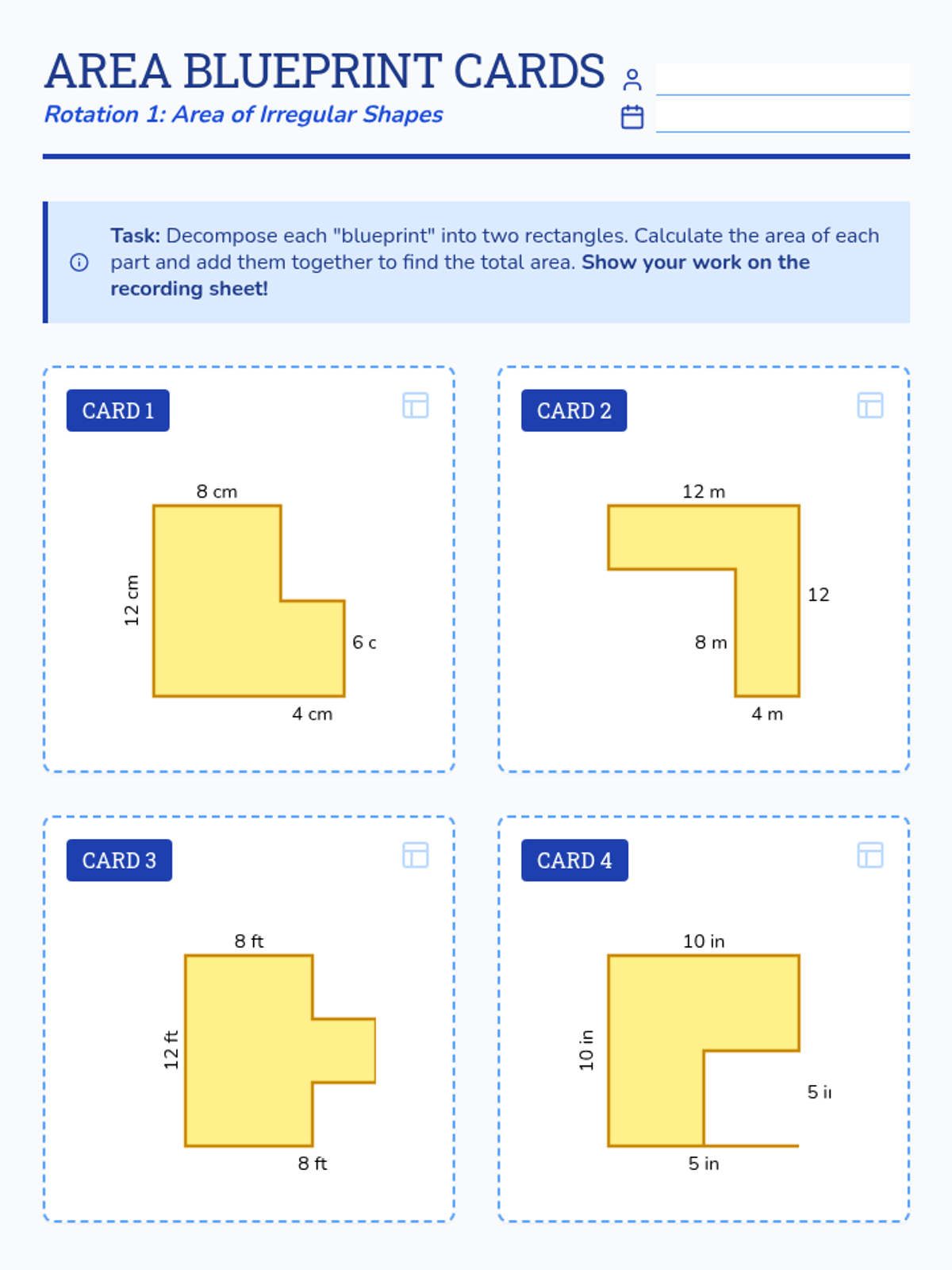
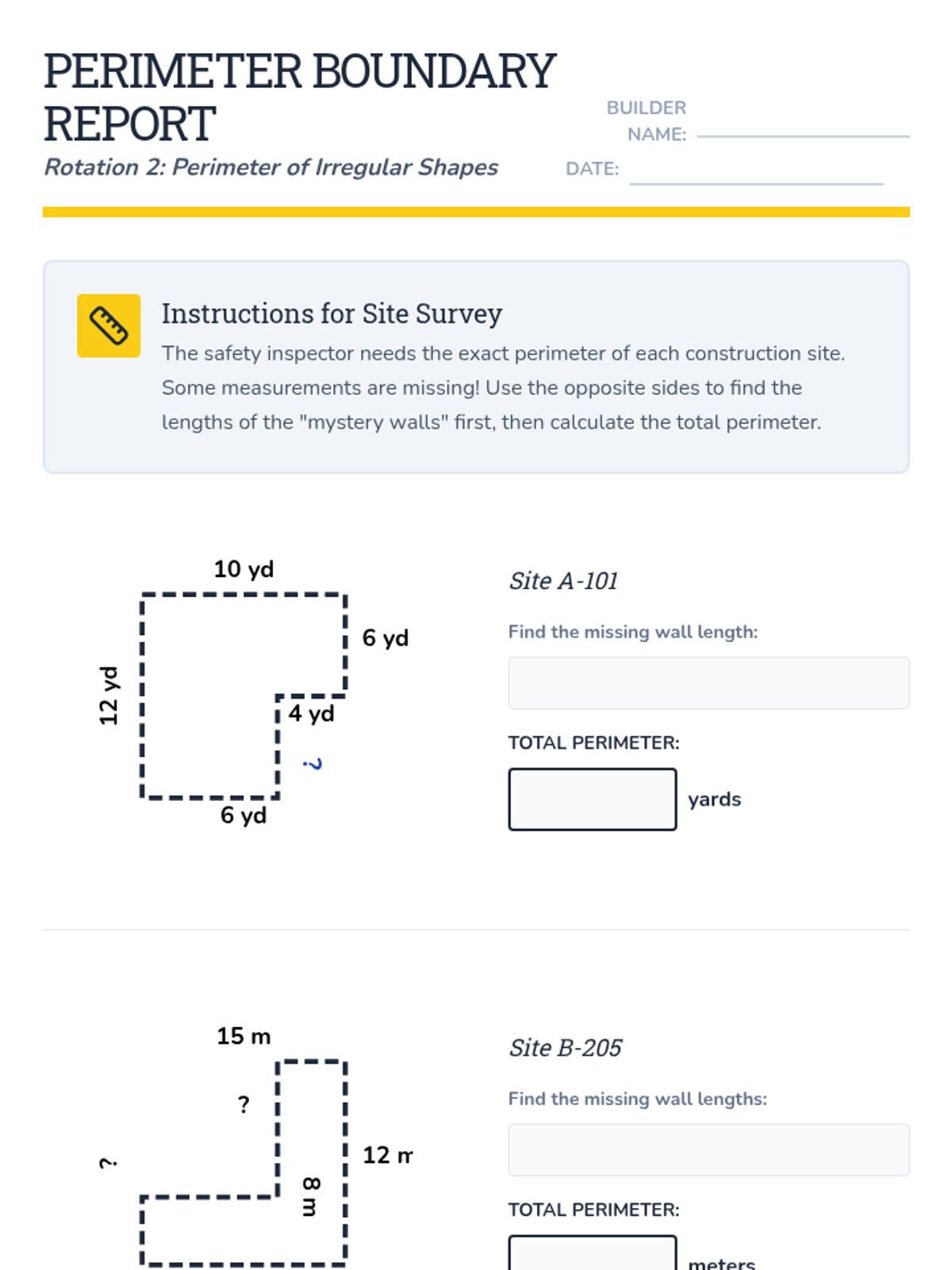
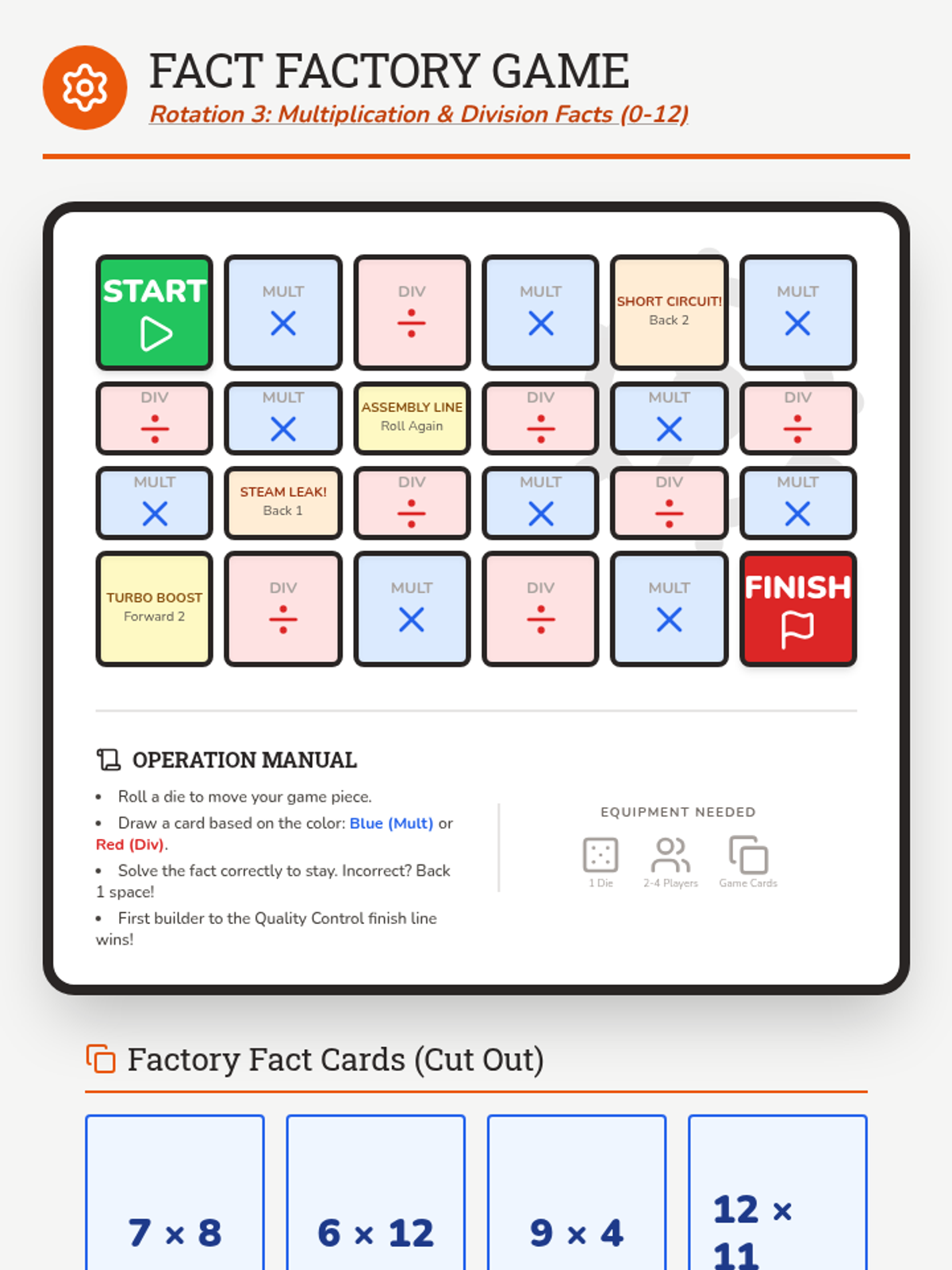
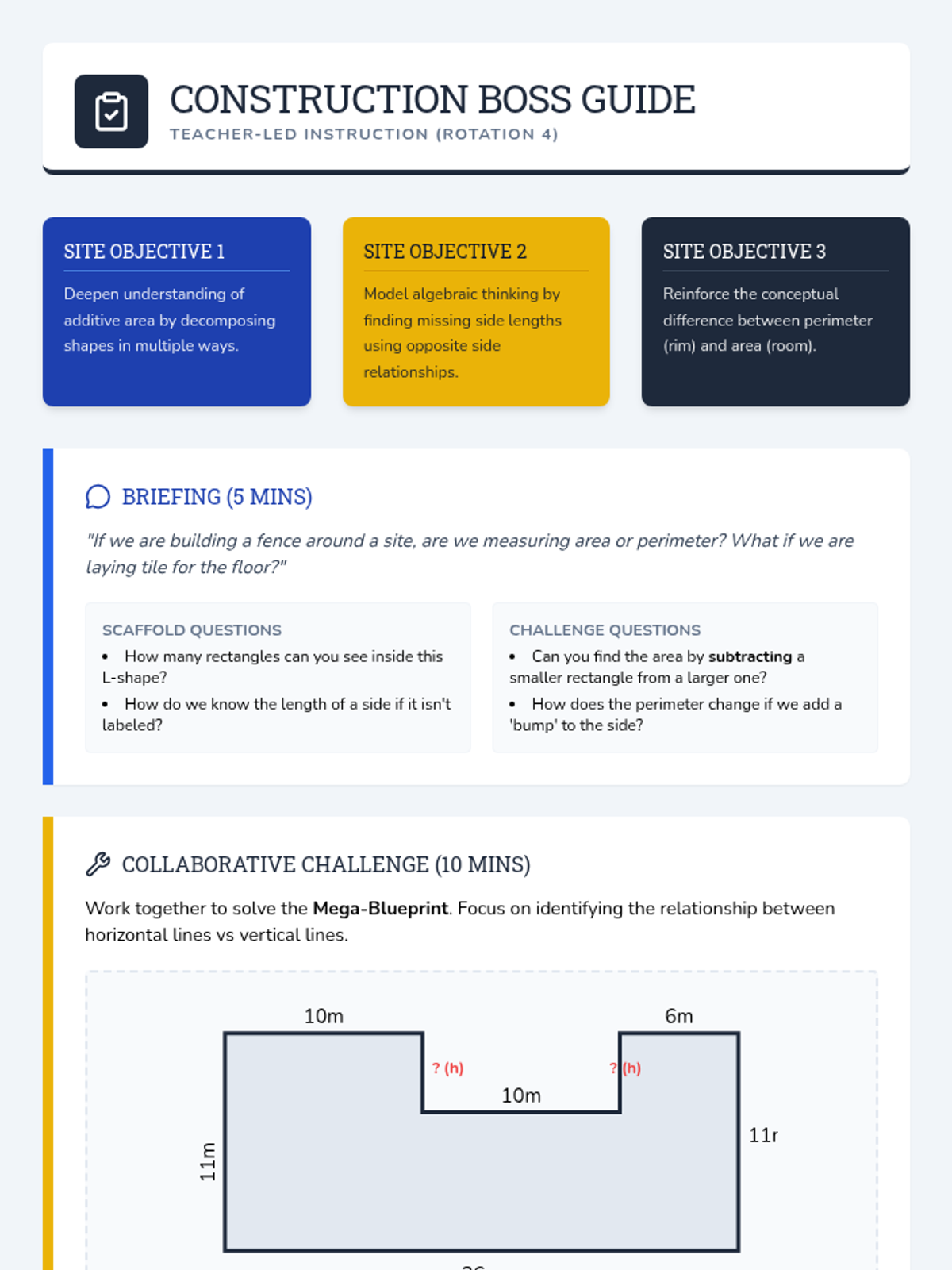
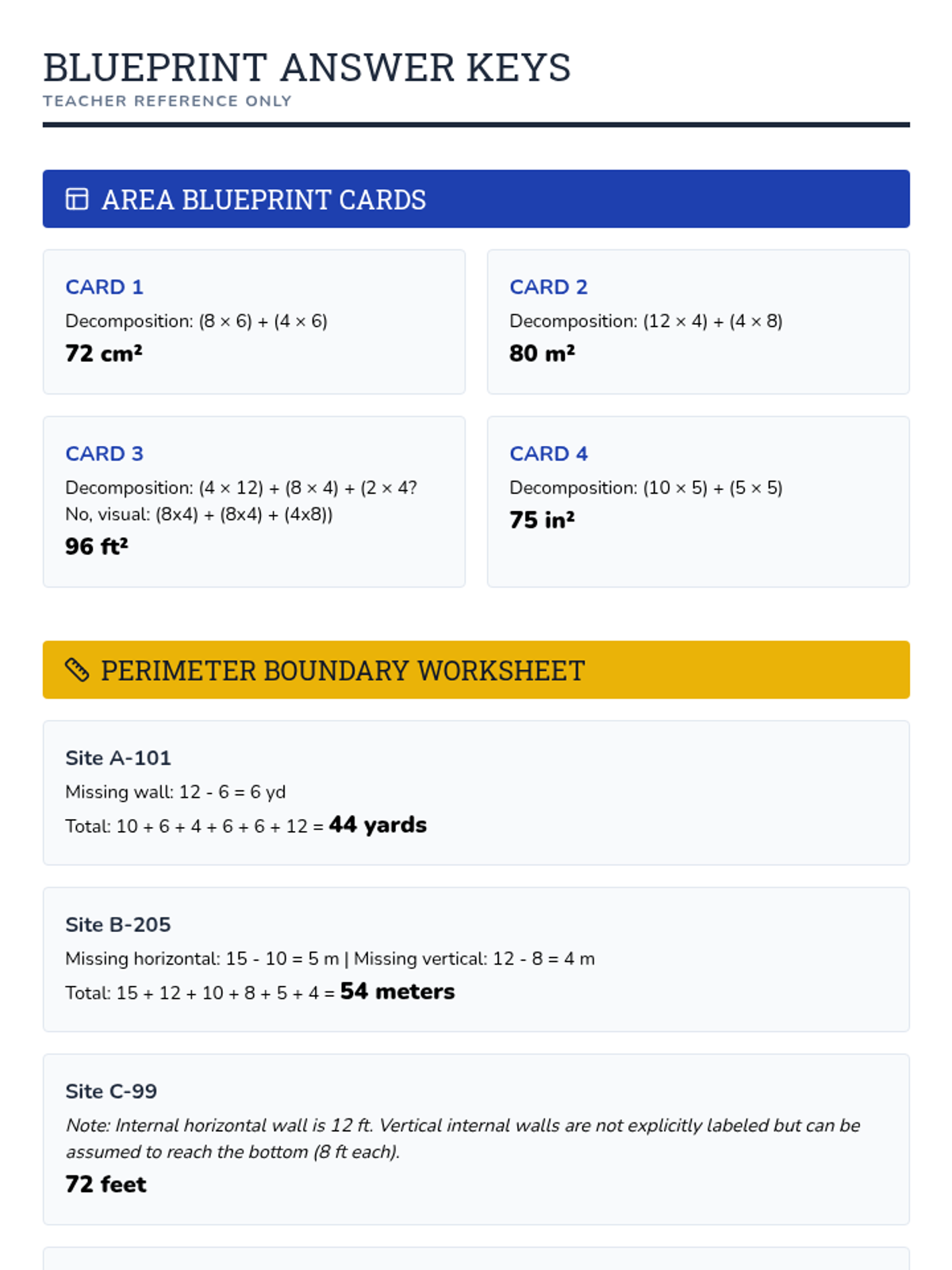
A set of four math center rotations themed around construction and blueprints, covering area and perimeter of rectilinear shapes, multiplication and division facts, and teacher-led instruction.
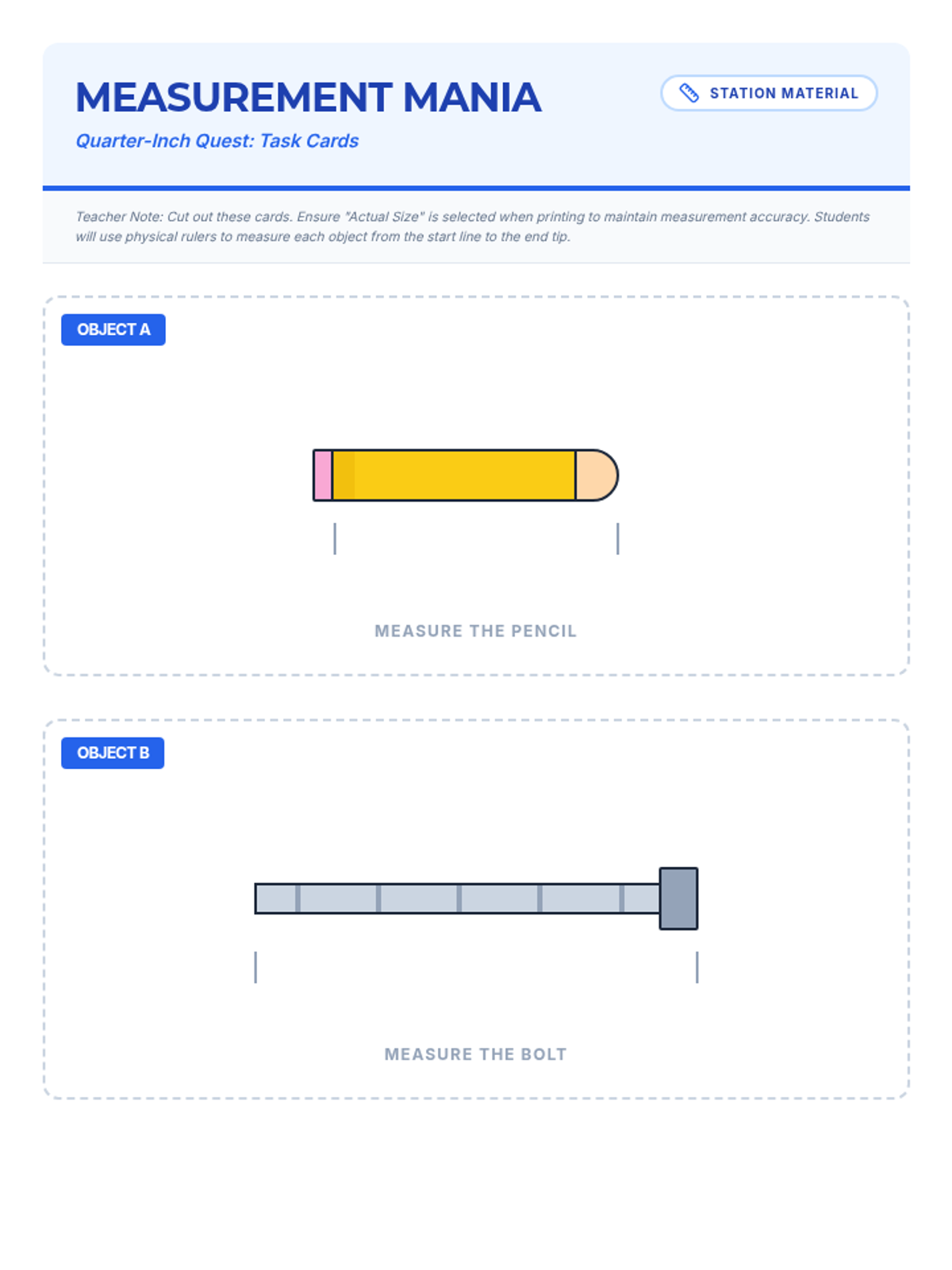
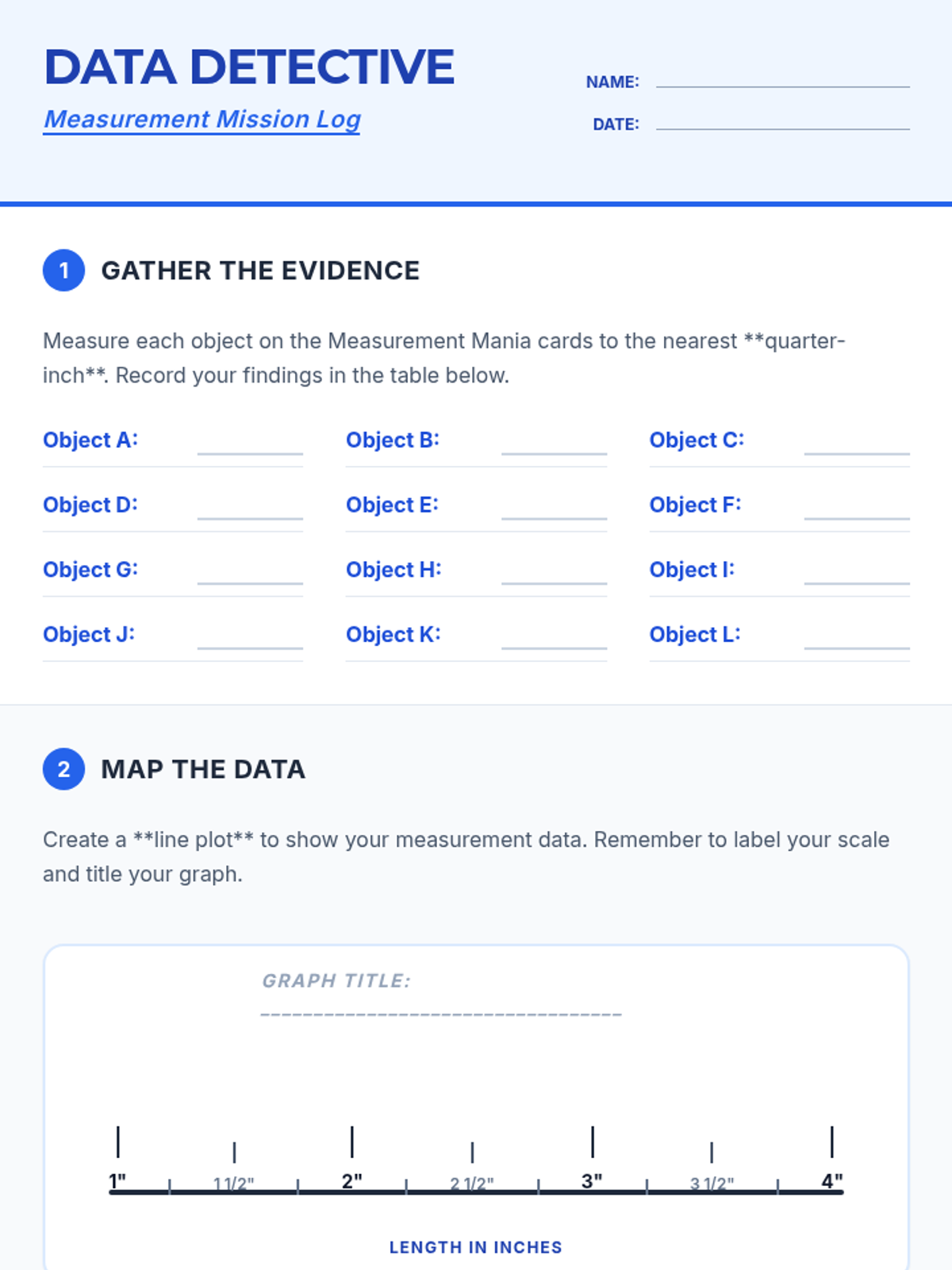
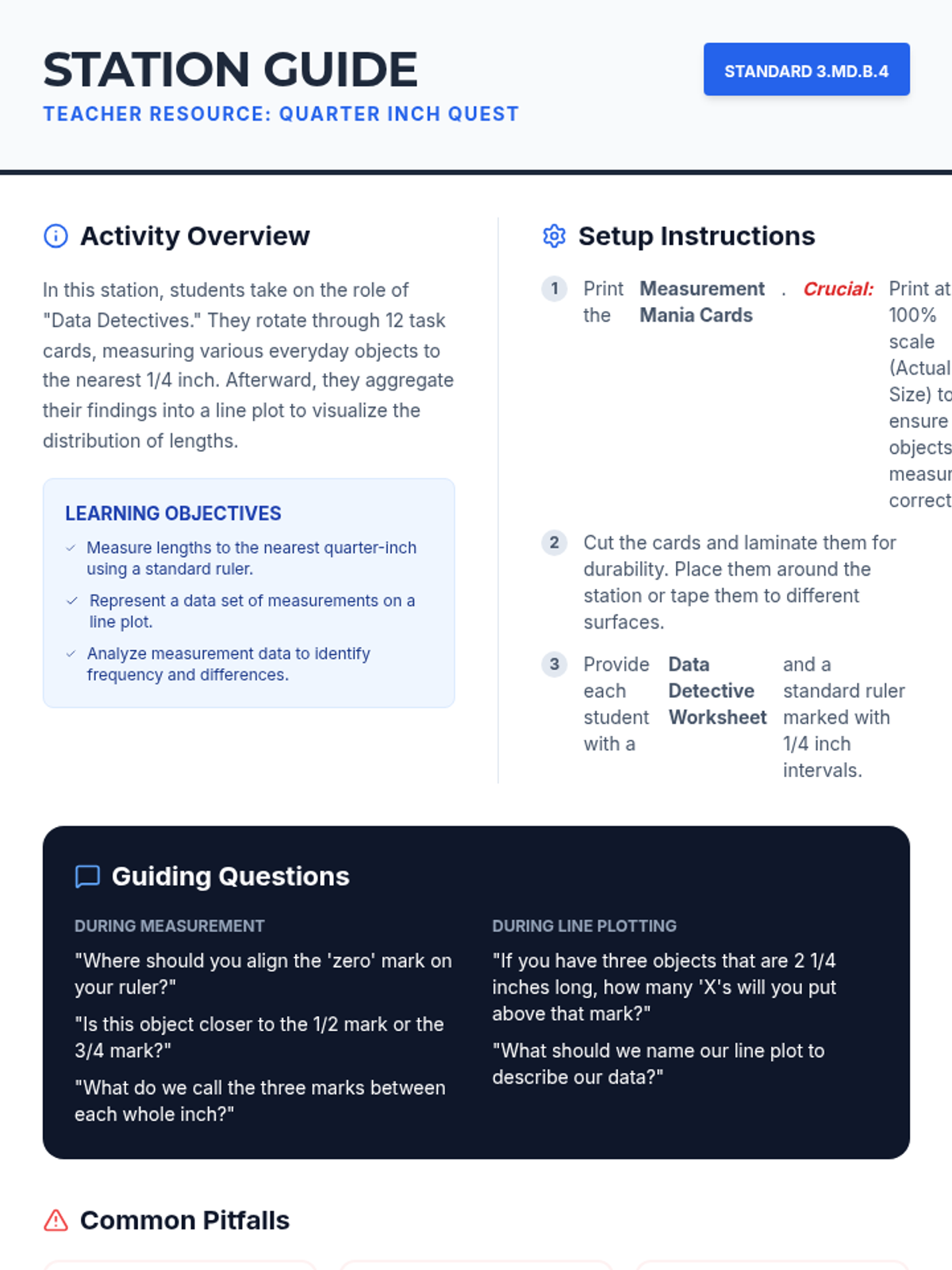
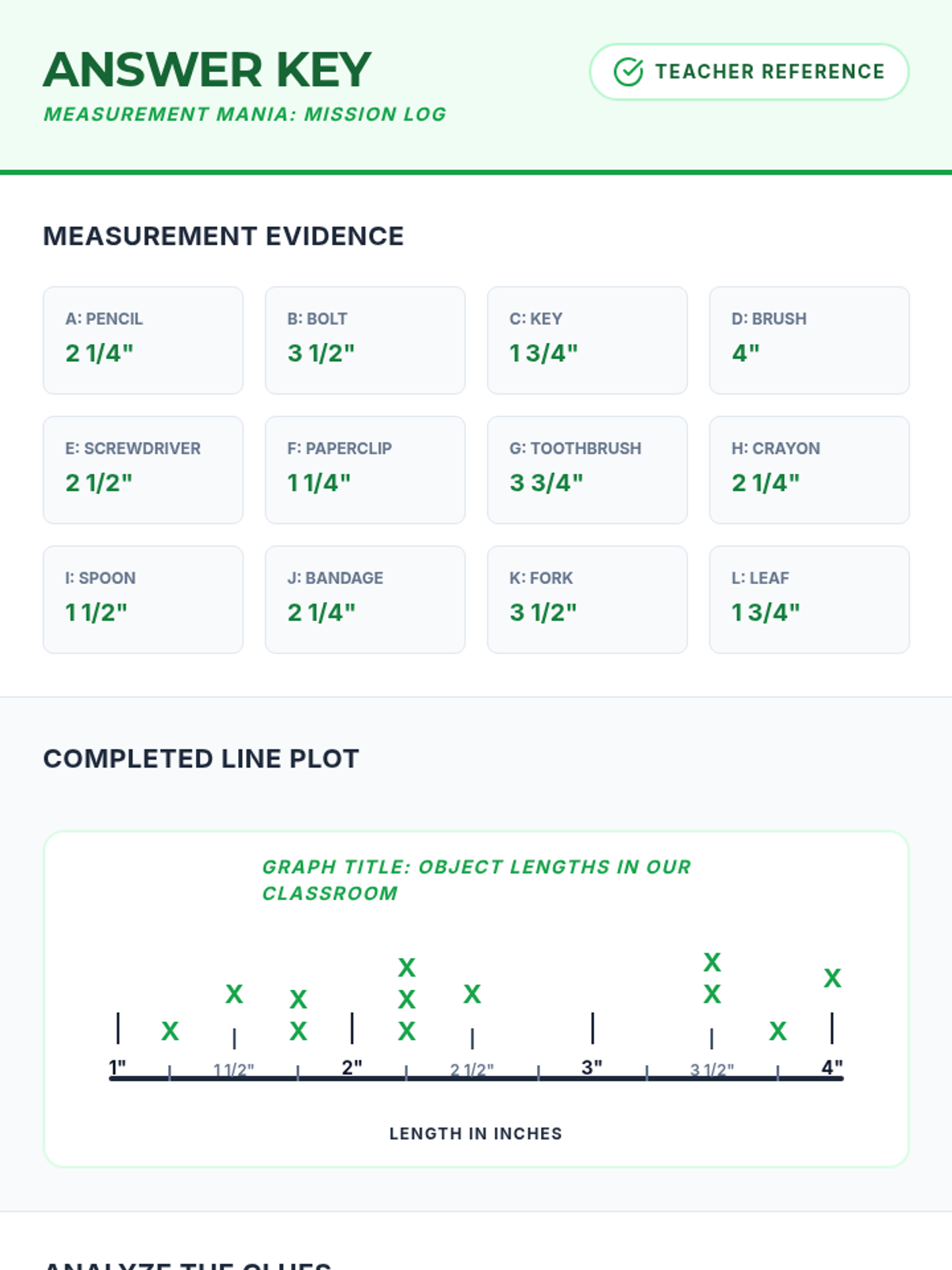
A hands-on measurement station where students measure objects to the nearest quarter-inch and represent their findings on a line plot.
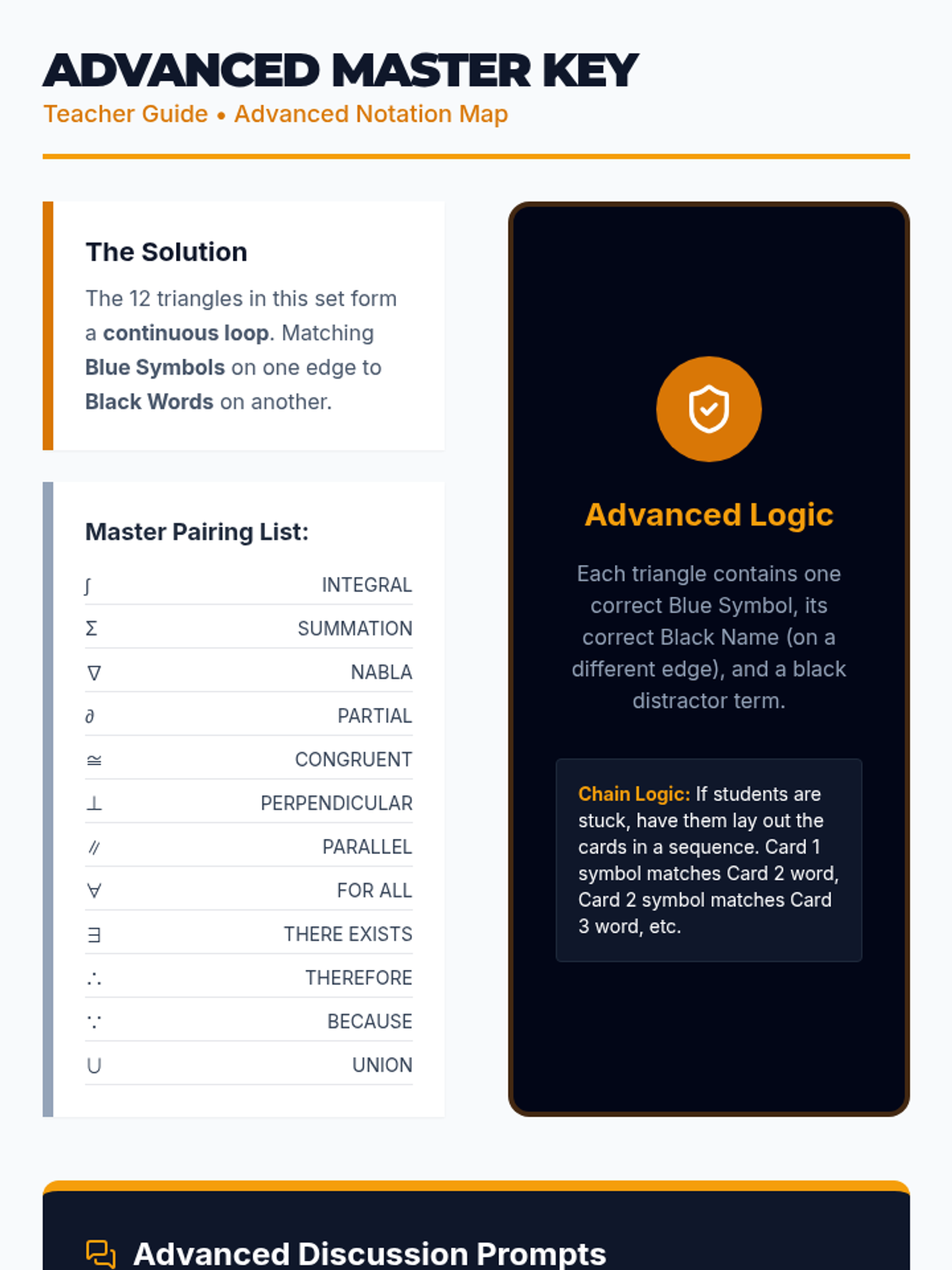
A deep dive into higher-level mathematical notation, focusing on calculus, set theory, and Greek symbols through a complex Tarsia challenge.
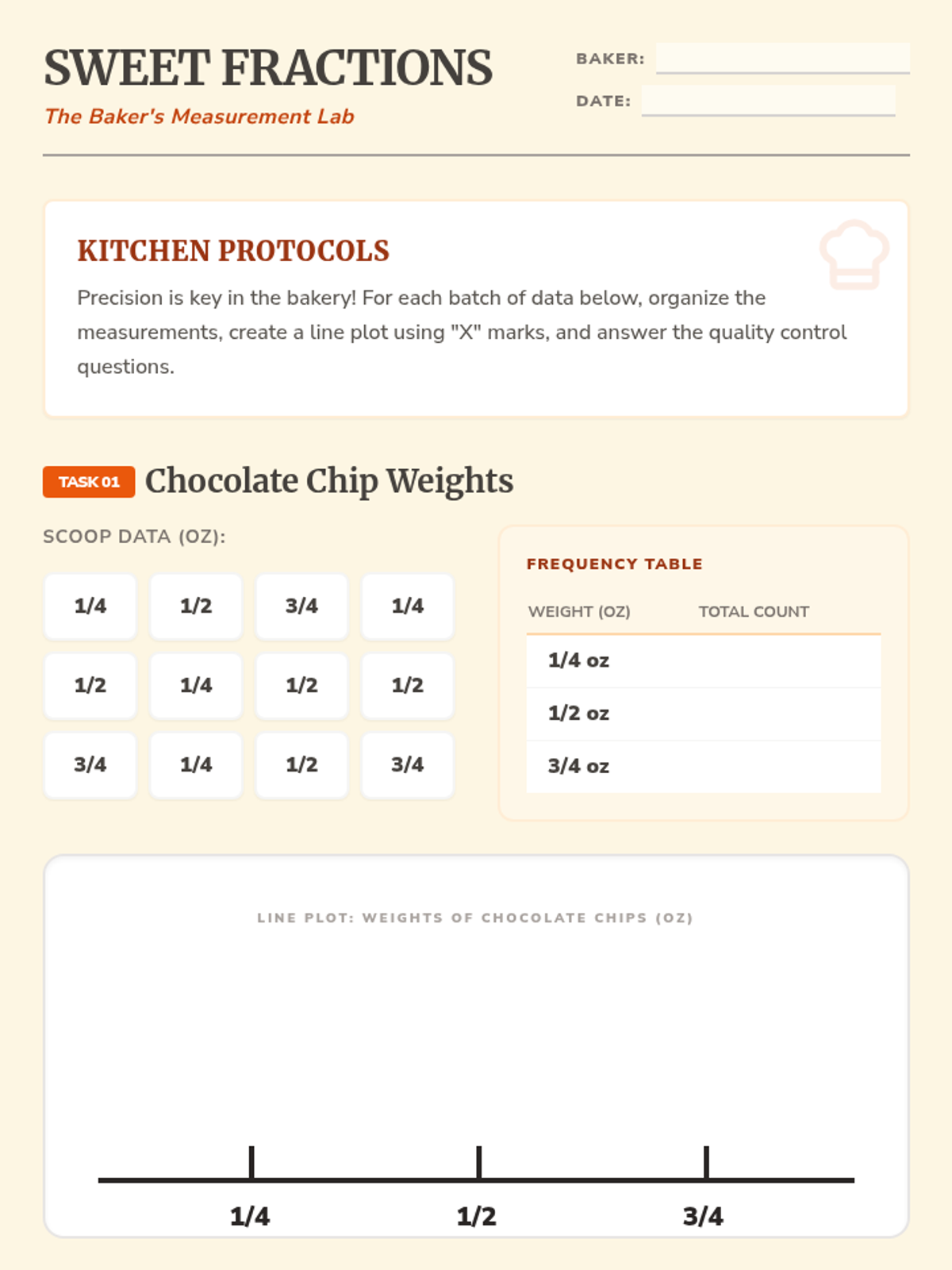
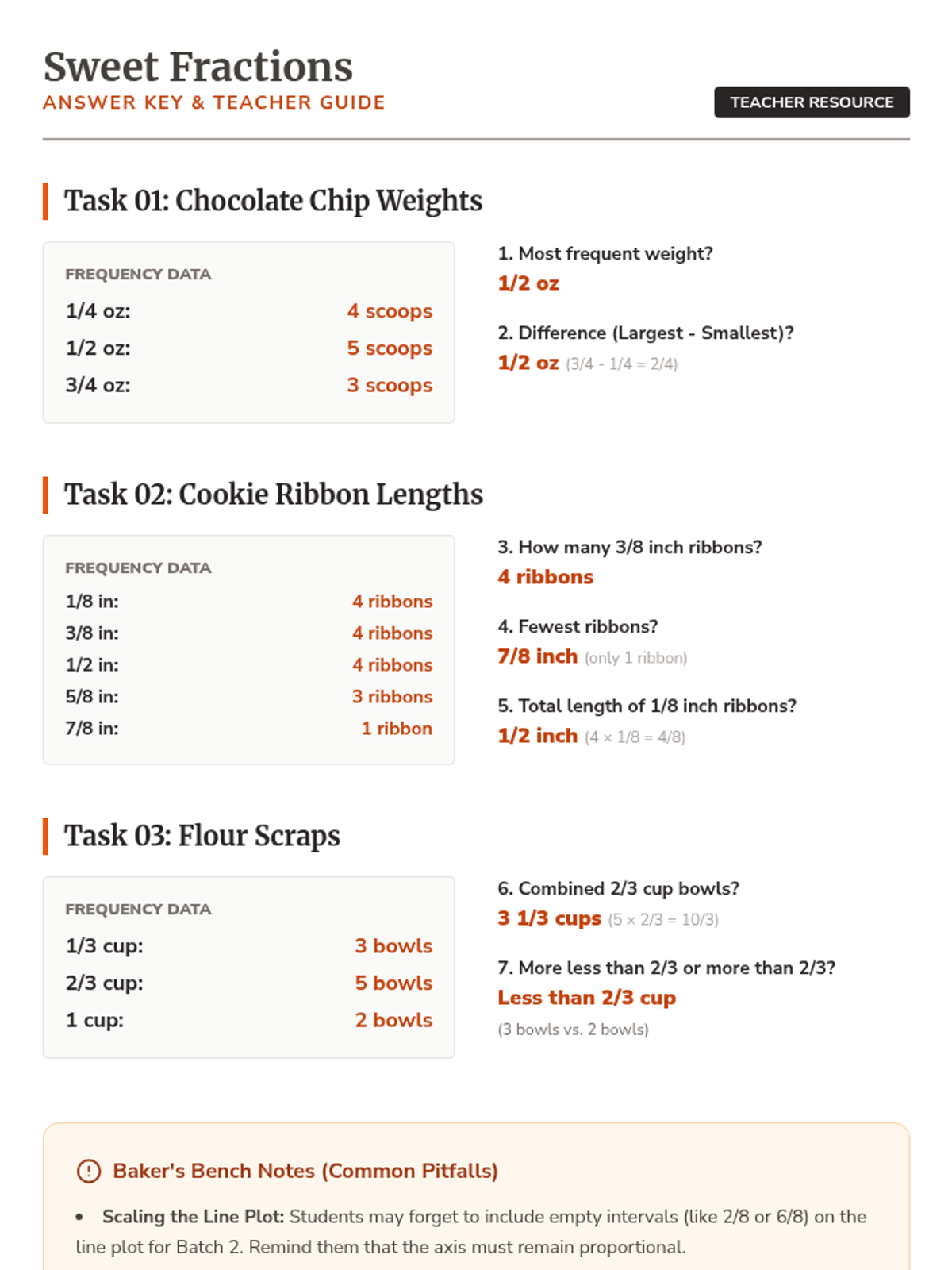
Students will learn how to organize fractional data and represent it accurately on a line plot, then analyze the results to answer measurement-based questions.
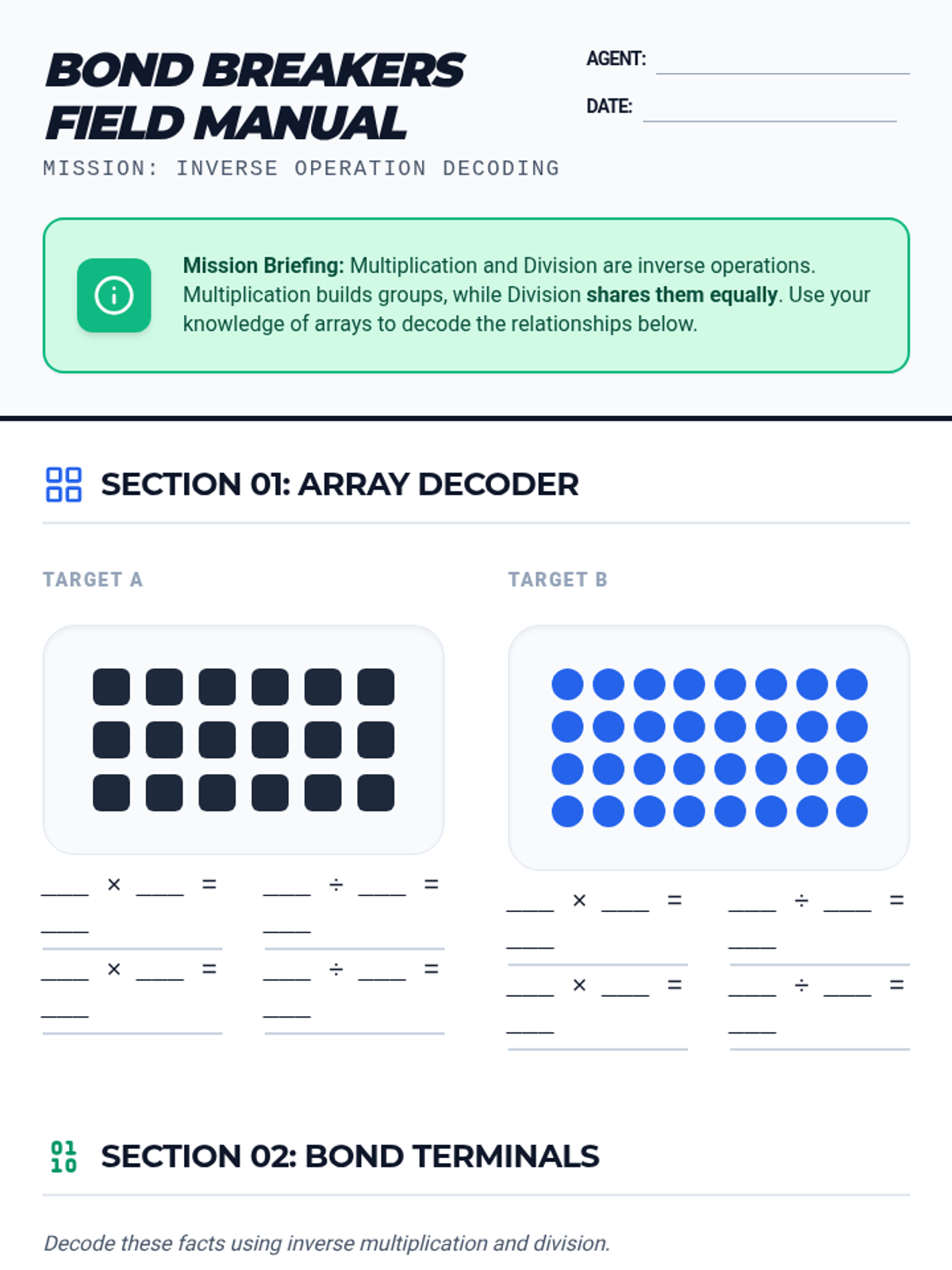
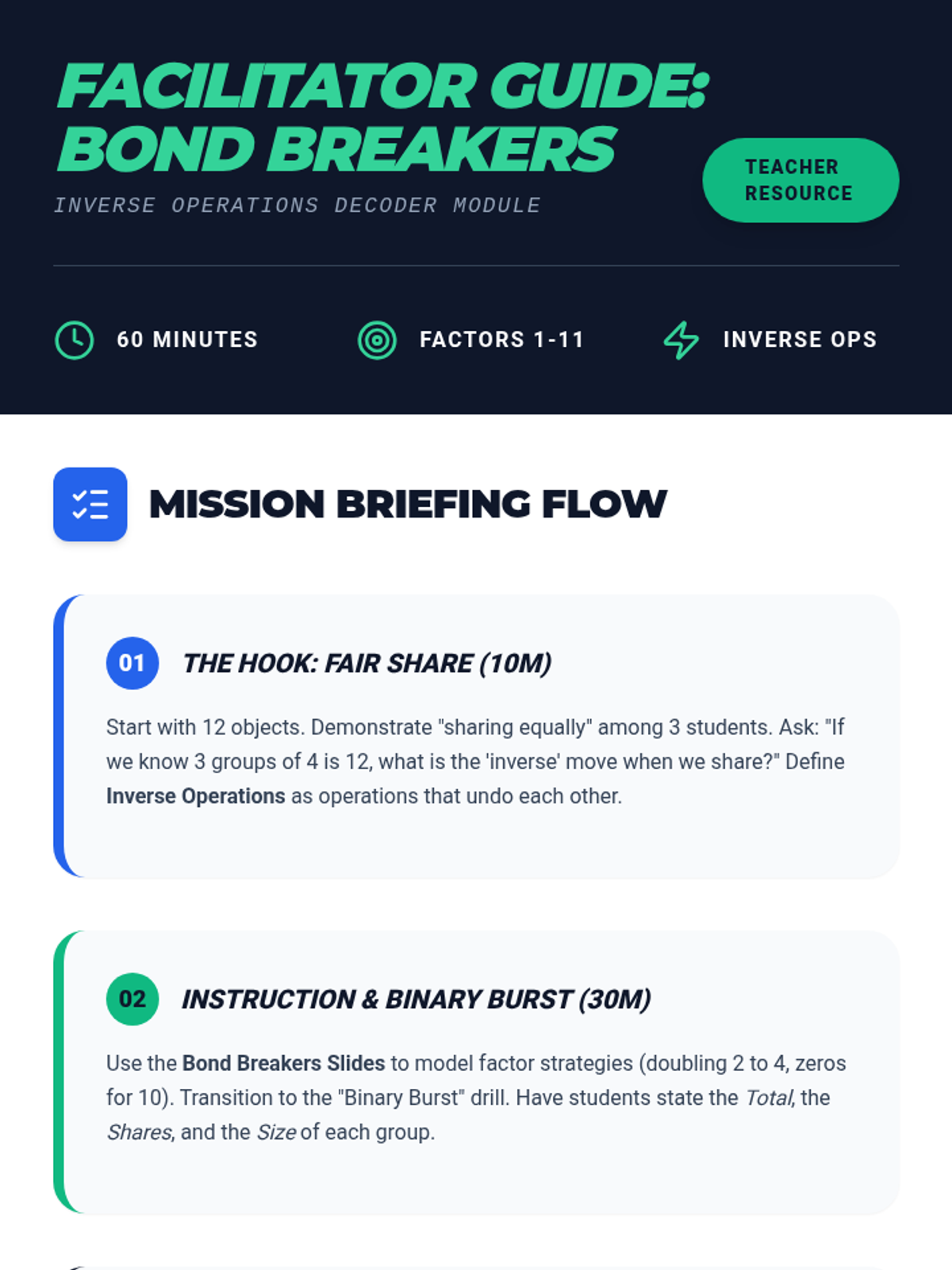
A lesson exploring the inverse relationship between multiplication and division using factors 1, 2, 3, 4, 5, 6, 8, 10, and 11. Students will use arrays and fact families to decode the connection between these two operations.