Students model the Central Nervous System through a reaction-time challenge and a 'human neural network' simulation. They identify the brain and spinal cord as the body's command center.
An introductory exploration of the four primary moon phases, helping students identify and understand the lunar cycle through visual observation.
A hands-on inquiry into the vital role of pollinators in the Indiana ecosystem. Students explore local species, simulate the pollination process, and record their findings in a field journal.
Students investigate severe weather patterns in Indiana and apply engineering principles to design and build structures capable of withstanding high-speed winds. This STEM-focused lesson combines earth science with a hands-on engineering challenge.
A hands-on simulation lesson where students act as routers and servers to understand how data packets travel across the internet using IP addresses and physical infrastructure.
Students explore the anatomy of the ear and the physics of sound waves to understand how noise impacts their health and focus. The lesson includes hands-on noise monitoring and the development of protective strategies for auditory well-being.
An immersive science lesson where students become 'River Rangers' to investigate the Hudson River's health through filtration experiments and mapping exercises.
A lesson exploring the science of how ice cools water through the transfer of thermal energy. Students will learn that heat moves from warm to cold, dispelling the common myth that 'cold' moves into the water.
Une séquence complète sur l'utilisation des robots dans les missions de sauvetage et de secours, comprenant vocabulaire technique, lecture et atelier d'écriture.
Students observe and categorize different cloud formations to predict upcoming weather patterns in the New England area. This meteorology lesson encourages 2nd through 5th graders to use sky observations as data for scientific forecasting.
A comprehensive lesson exploring the three primary types of symbiotic relationships: mutualism, commensalism, and parasitism. Students analyze animal interactions through task cards, case studies, and visual organizers.
A comprehensive lesson on structural and behavioral adaptations across various biomes, including specialized survival strategies like hibernation, migration, camouflage, and mimicry.
An introductory exploration of Earth's diverse biomes, focusing on the ocean, rainforest, and grassland ecosystems. Students learn to identify key characteristics and express personal preferences based on ecological traits.
A foundational lesson exploring how energy moves through ecosystems, focusing on trophic levels, the 10% rule, and the complex connections in terrestrial and aquatic food webs.
Teachers learn to break complex tasks into smaller, manageable steps using classroom routines and Iowa Core standards as examples.
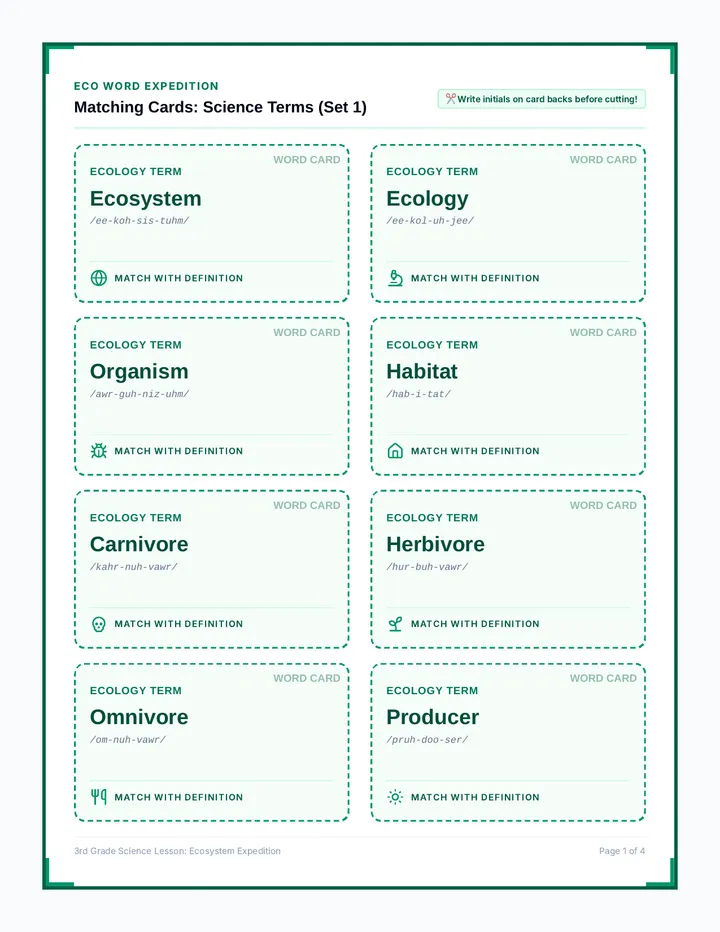
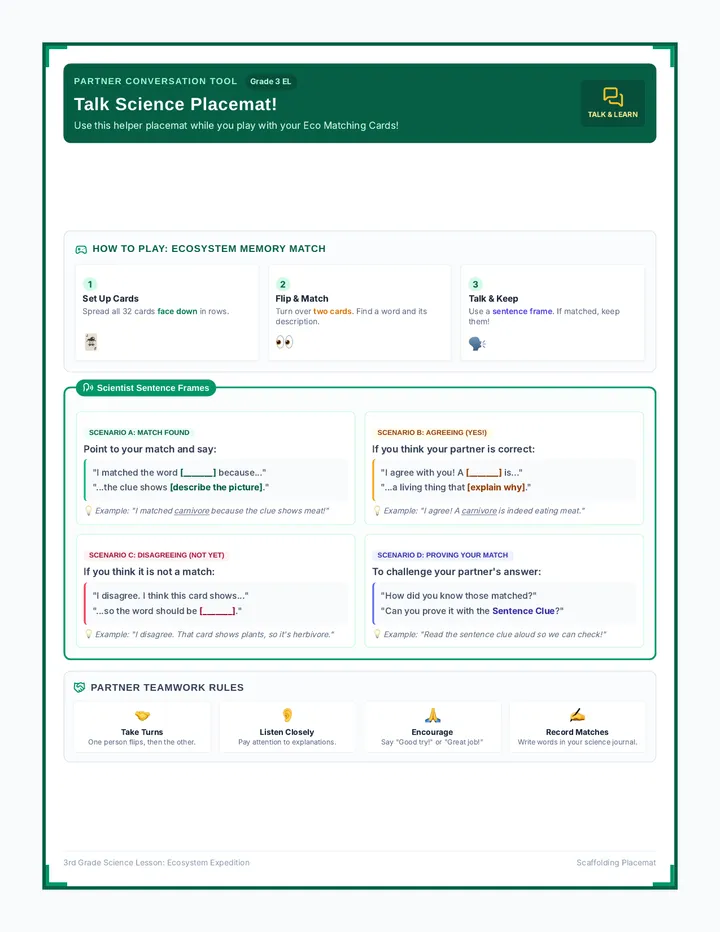
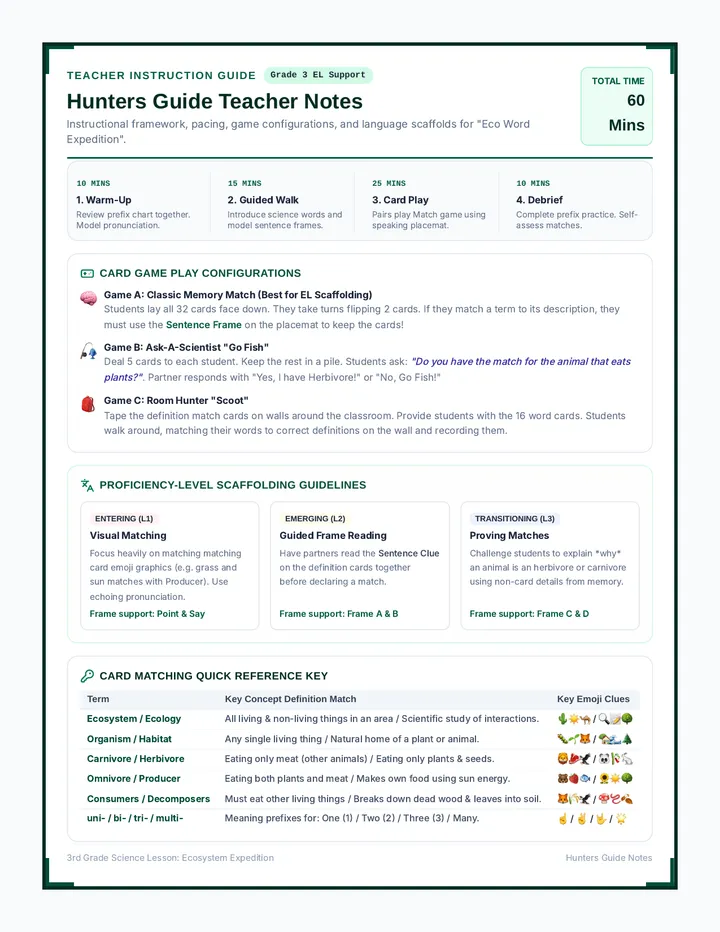
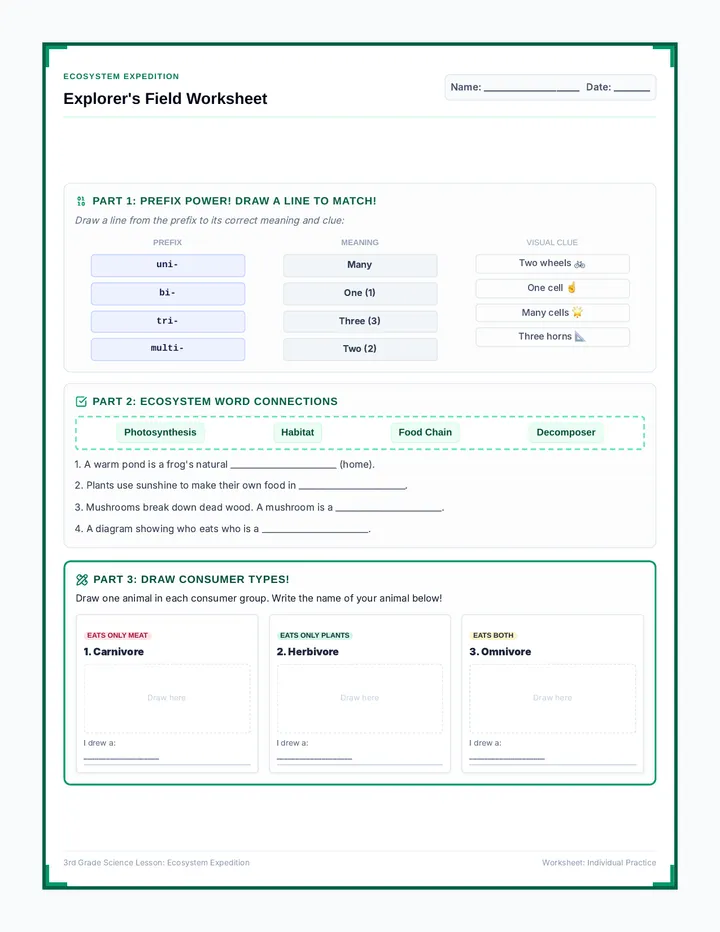
An interactive lesson exploring how energy flows through different ecosystems using 3rd-grade appropriate concepts of producers, consumers, and decomposers. Students will identify food chains in eight distinct habitats.
In this lesson, students dive into the water cycle while mastering RI.3.1 by asking and answering 'How' and 'Why' questions. They will explore the continuous journey of water through reading and evidence-based inquiry.
Students gain 'x-ray vision' over large datasets by learning to sort and filter information. They explore conditional formatting to visualize trends and identify specific target segments within their market research data.
Students transition from data entry to data analysis by mastering fundamental spreadsheet formulas. They learn the power of the equals sign, cell referencing, and essential functions like =SUM, =AVERAGE, and =COUNT to automate business calculations.
Students explore the efficiency of automated data collection by linking their market research forms to live spreadsheets. They learn the concept of real-time data syncing and master the 'Freezing Rows' skill to manage large datasets effectively.
Students learn the art of professional survey design to gather market intelligence. They distinguish between quantitative and qualitative data, identify biased questioning, and build a multi-format survey in Google Forms or Microsoft Forms to collect clean data from their target audience.
This lesson introduces students to the fundamental structure of spreadsheet software. They learn about cells, rows, columns, and addresses while performing basic data entry and formatting to align with their brand identity.
Students transition from brand design to market analysis by distinguishing between demographic data (external facts) and psychographic data (internal values). They apply these concepts by building a formal User Persona for their brand, justifying their earlier design choices based on audience data.
Students participate in a professional 'Gallery Walk' to provide and receive constructive feedback on their Brand Style Guides and One-Pagers. They apply the 'Glow and Grow' framework to refine their designs, fulfilling standards for artistic critique and professional communication.
Students master the principle of visual hierarchy to lead a customer's eye through a design. They apply the 'Rule of Three' (Size, Weight, and Contrast) to create a professional brand 'One-Pager' in Canva, ensuring their most important brand assets receive maximum visibility.