Students identify major North American landforms through a mystery mapping workshop, analyzing the physical characteristics of the Rockies, Appalachians, and more.
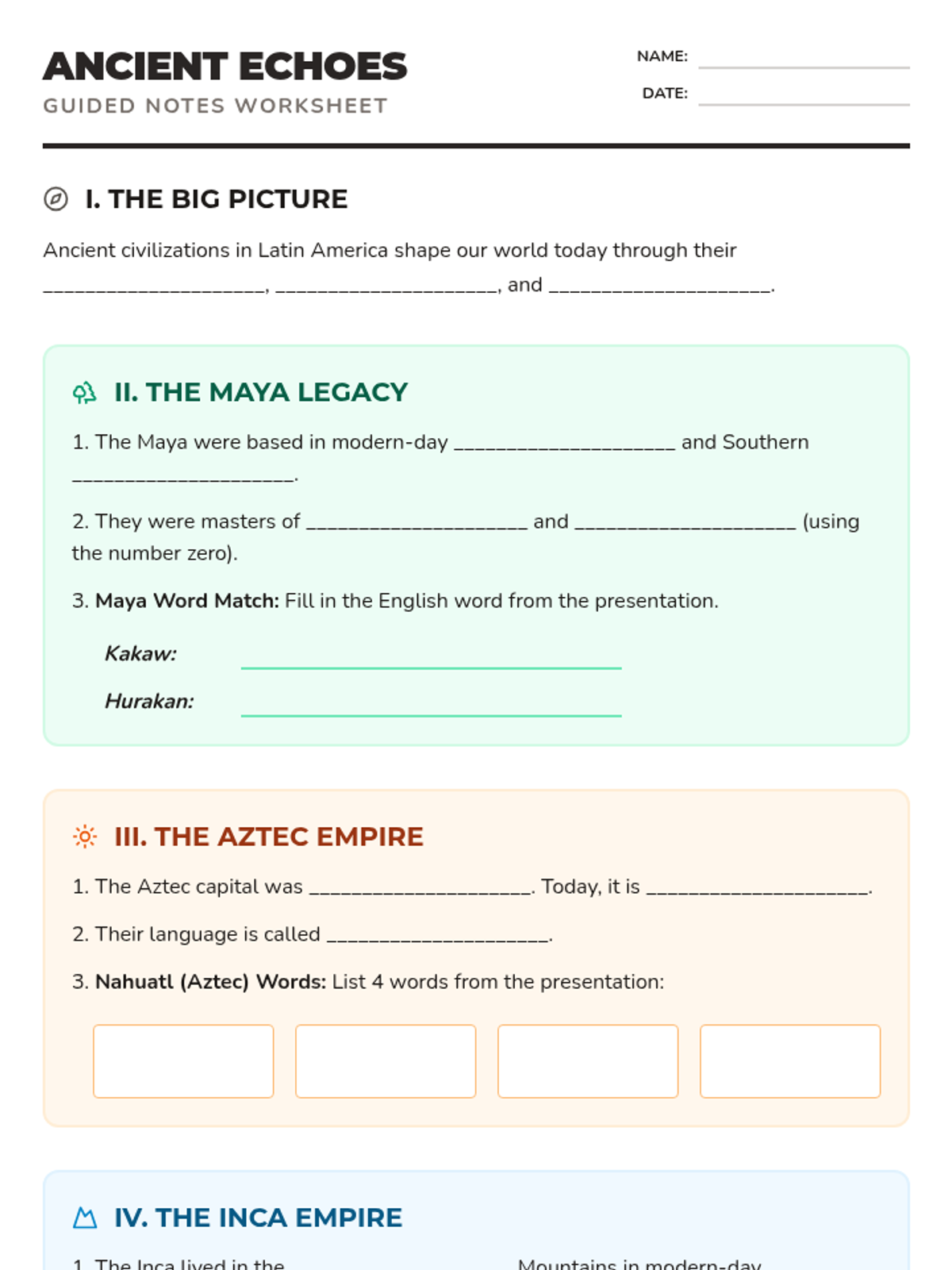
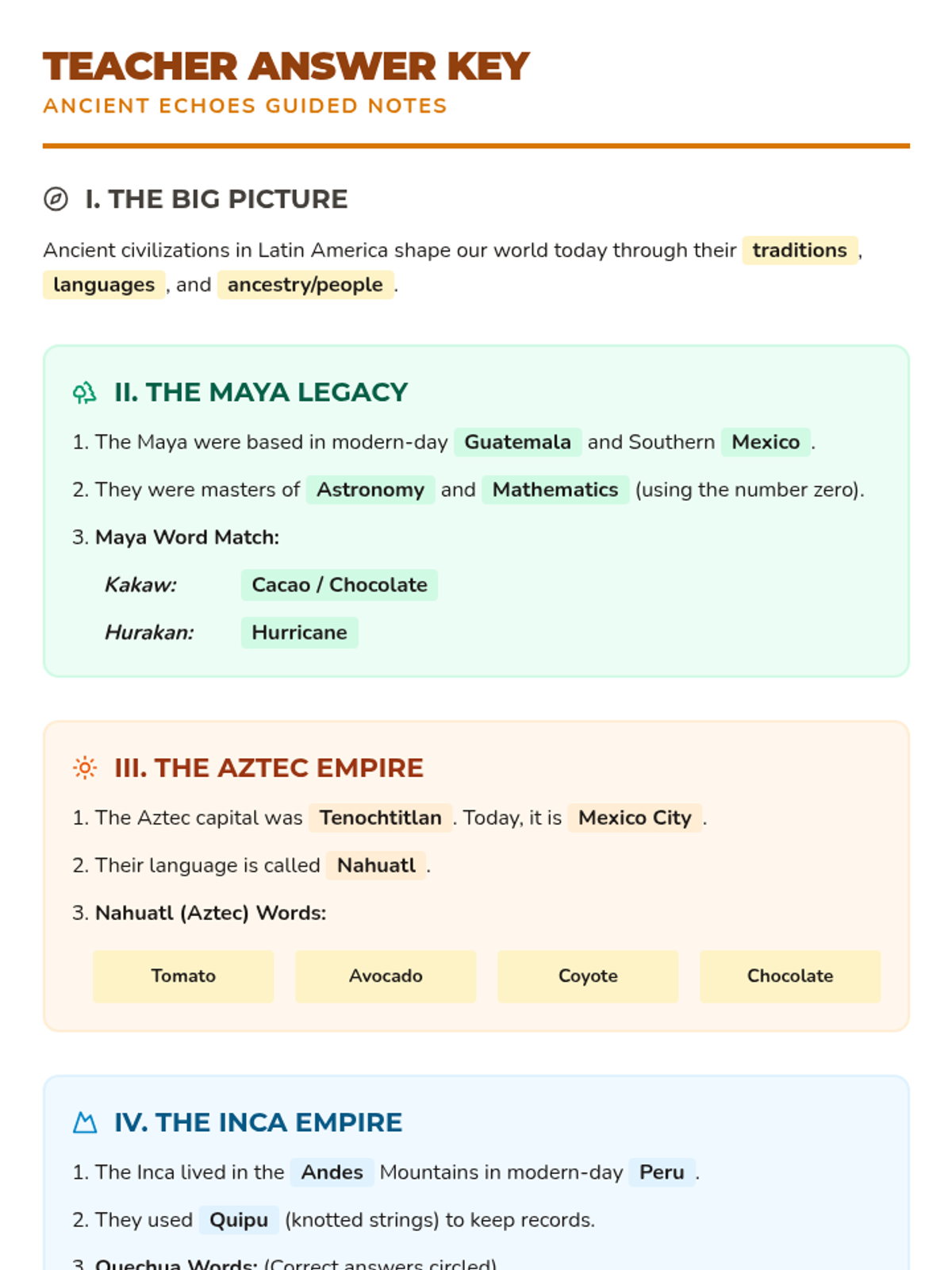
A lesson exploring the linguistic and cultural threads connecting the Maya, Aztec, and Inca civilizations to modern-day Mexico, Peru, and Guatemala. Students learn about indigenous words used in everyday language and enduring traditions.
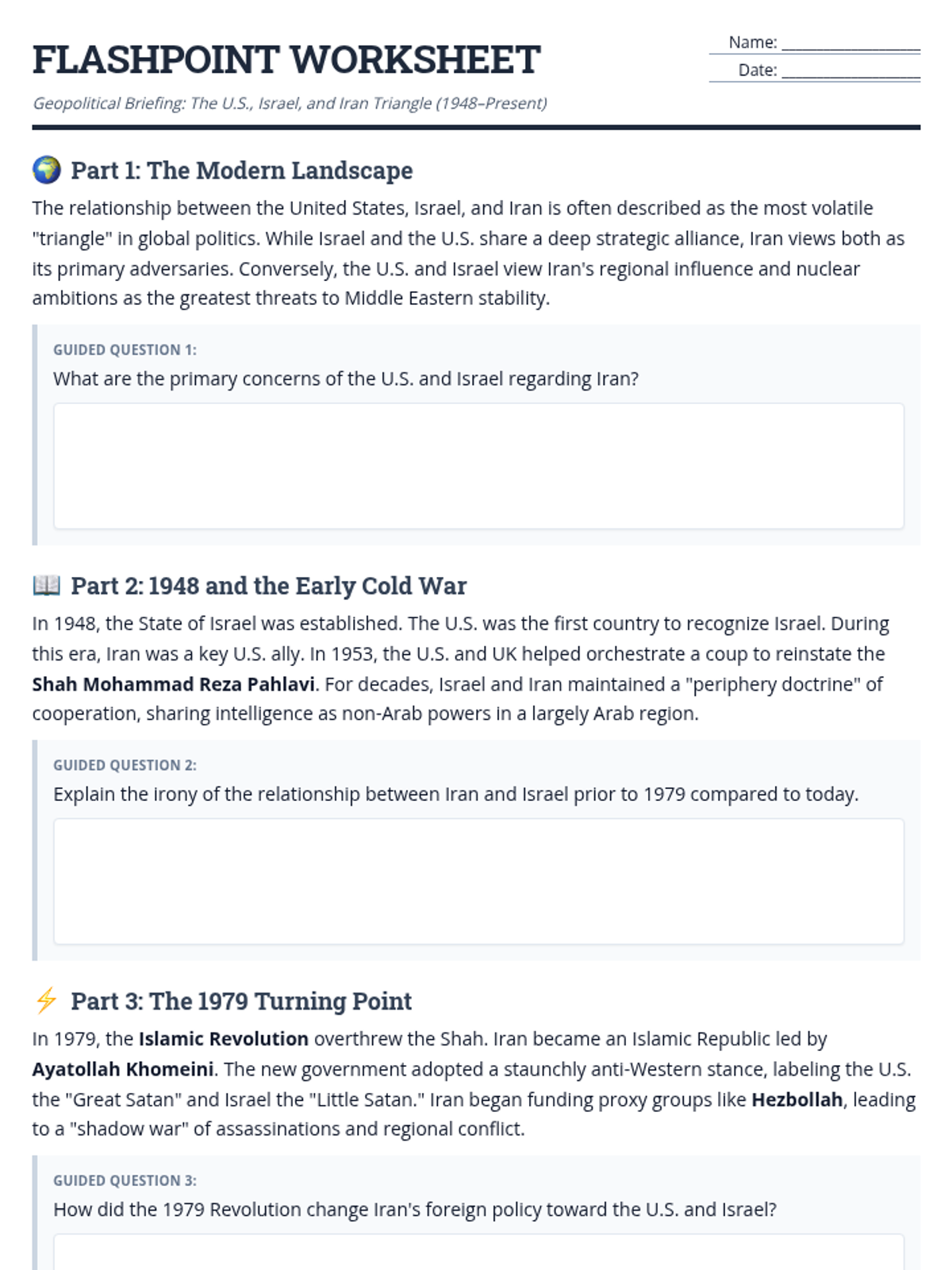
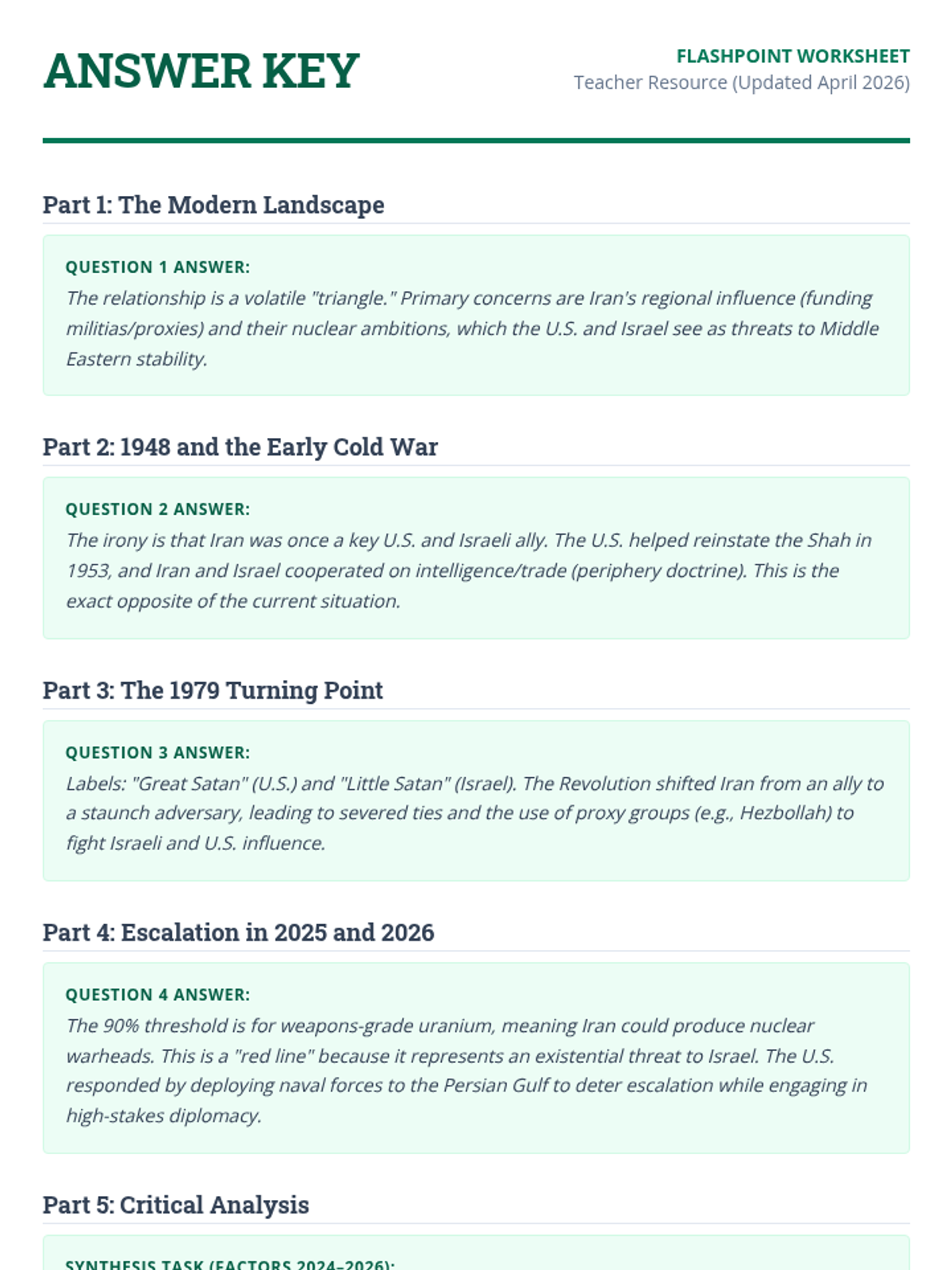
A high school level lesson covering the complex historical and modern relationship between the United States, Israel, and Iran from 1948 to the present day.
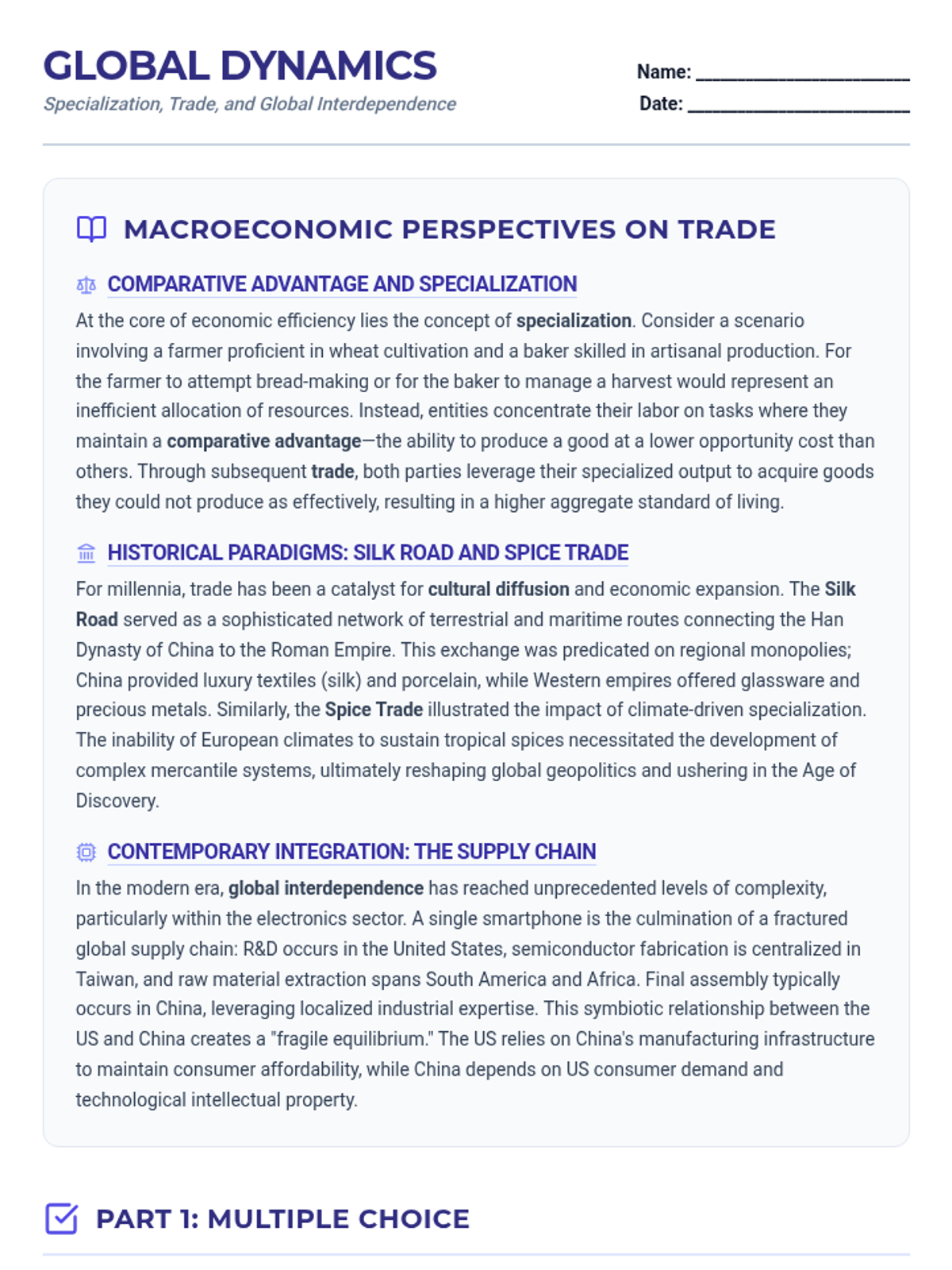
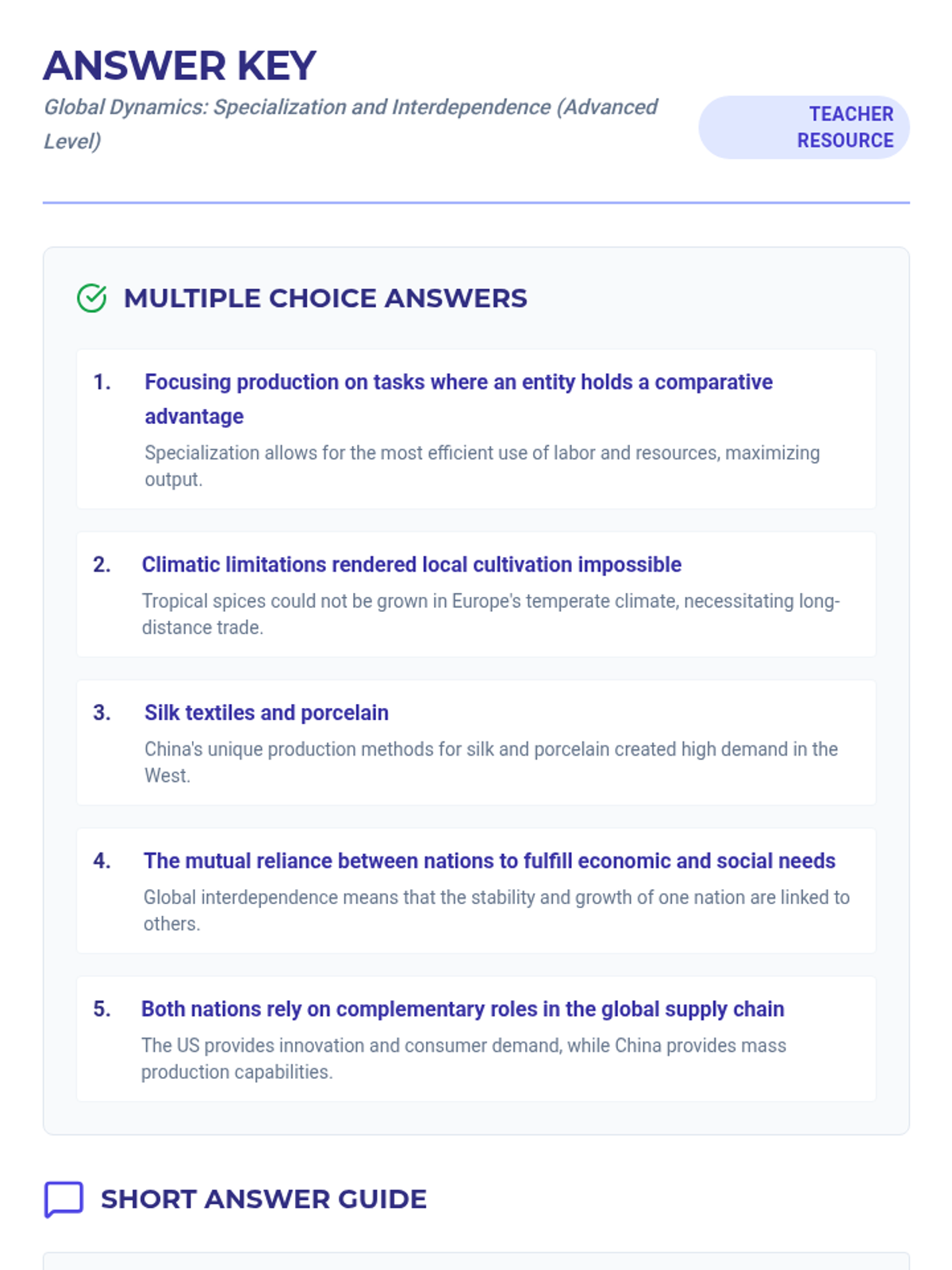
This lesson introduces students to the concepts of specialization, trade, and economic interdependence using historical and modern examples. Students will explore how individuals and nations rely on each other to fulfill their needs and wants.
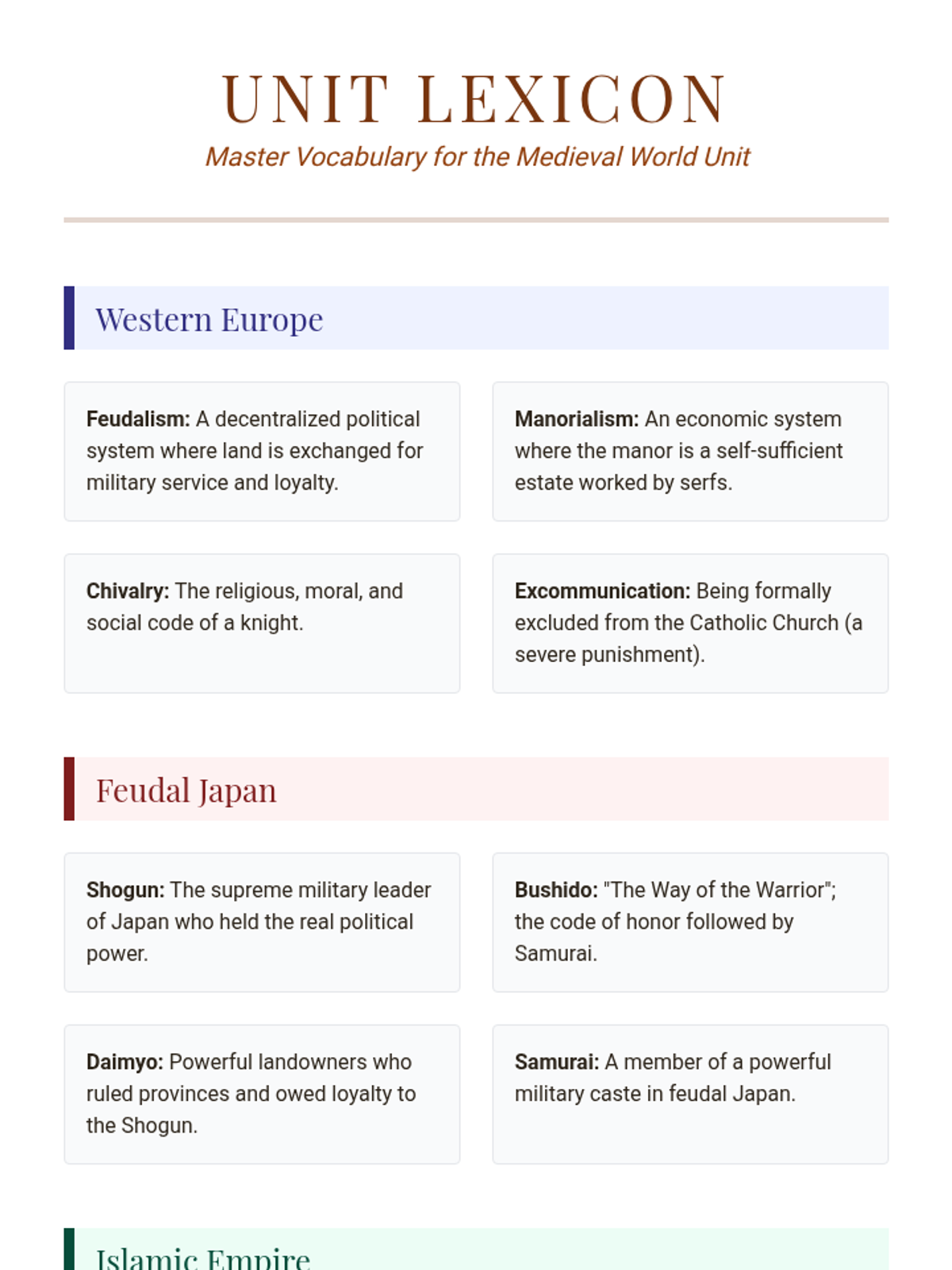
A review of the unit's key concepts and a final assessment on the shared characteristics and unique contributions of medieval civilizations.
Investigating the architecture, arts, and daily routines of people living in medieval castles, monasteries, and Japanese shrines.
A cross-cultural examination of medieval technology, from agricultural tools to navigational instruments and architectural marvels.
A look at the thriving economy of the Islamic Empire through trade networks, the Silk Road, and the impact of the Crusades.
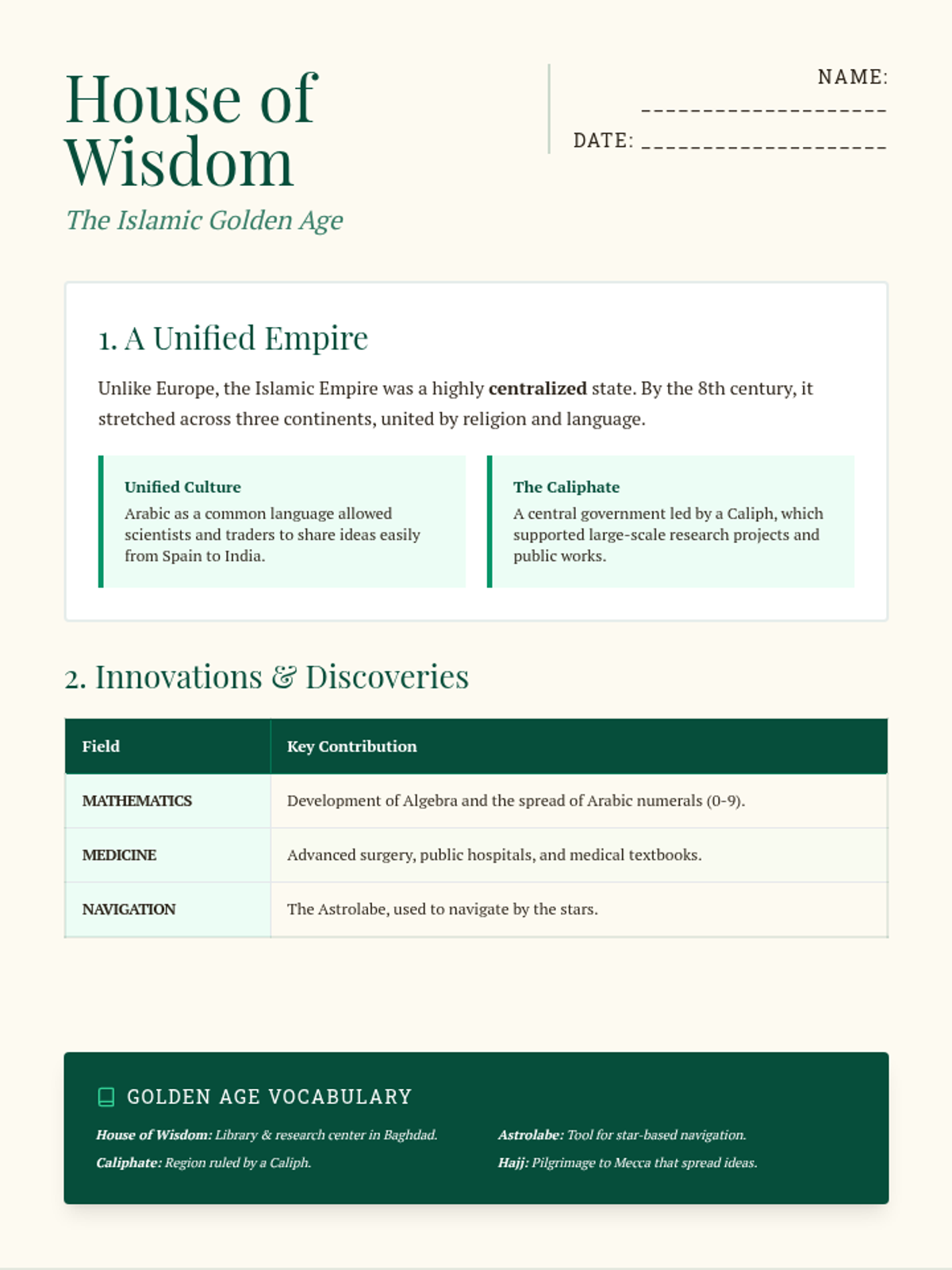
Exploring the Golden Age of the Islamic Empire, focusing on advancements in science, math, and the role of Islam in unifying a diverse caliphate.
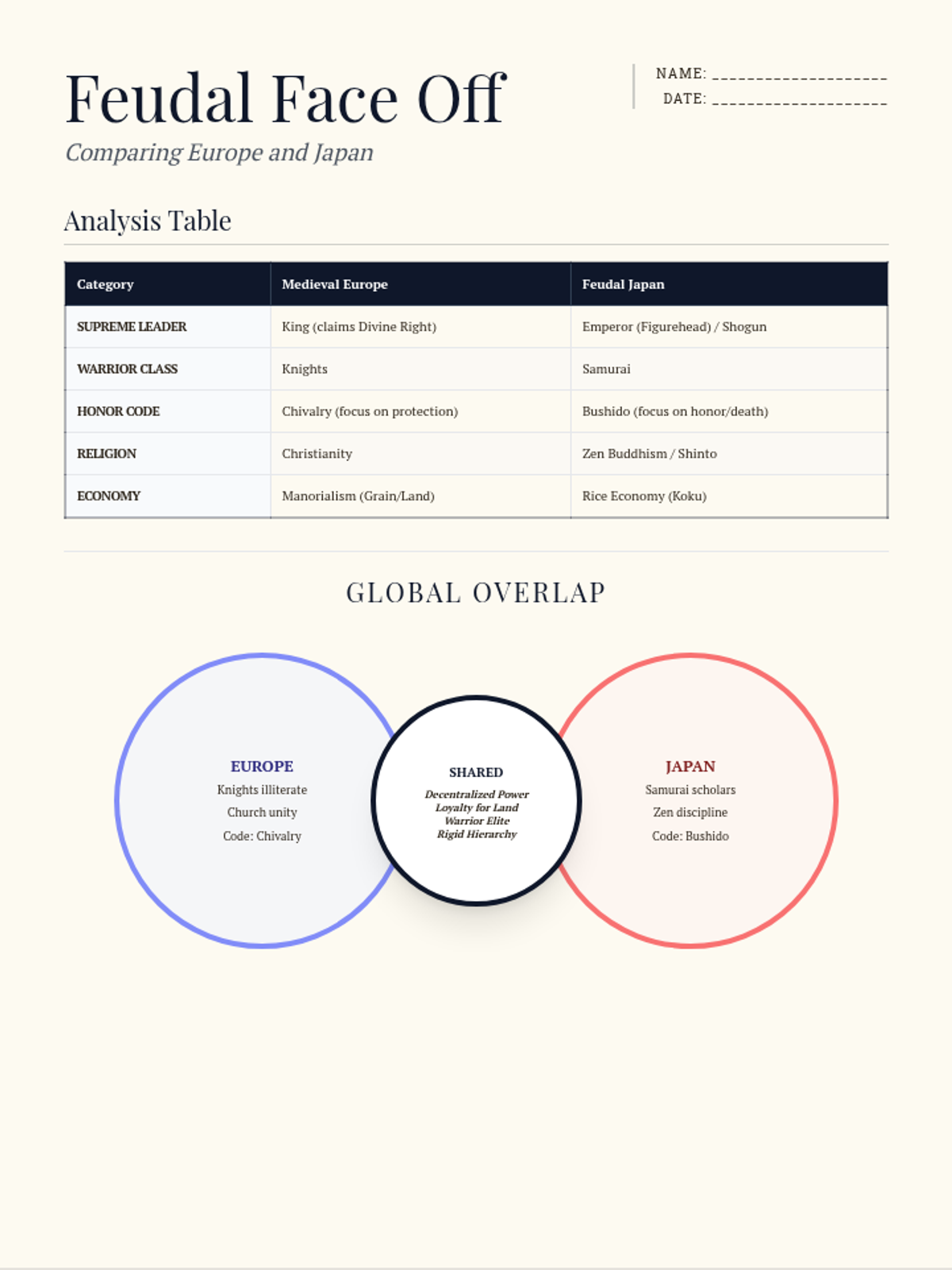
A comparative study of European and Japanese feudalism, highlighting similarities in social structures and differences in culture and technology.
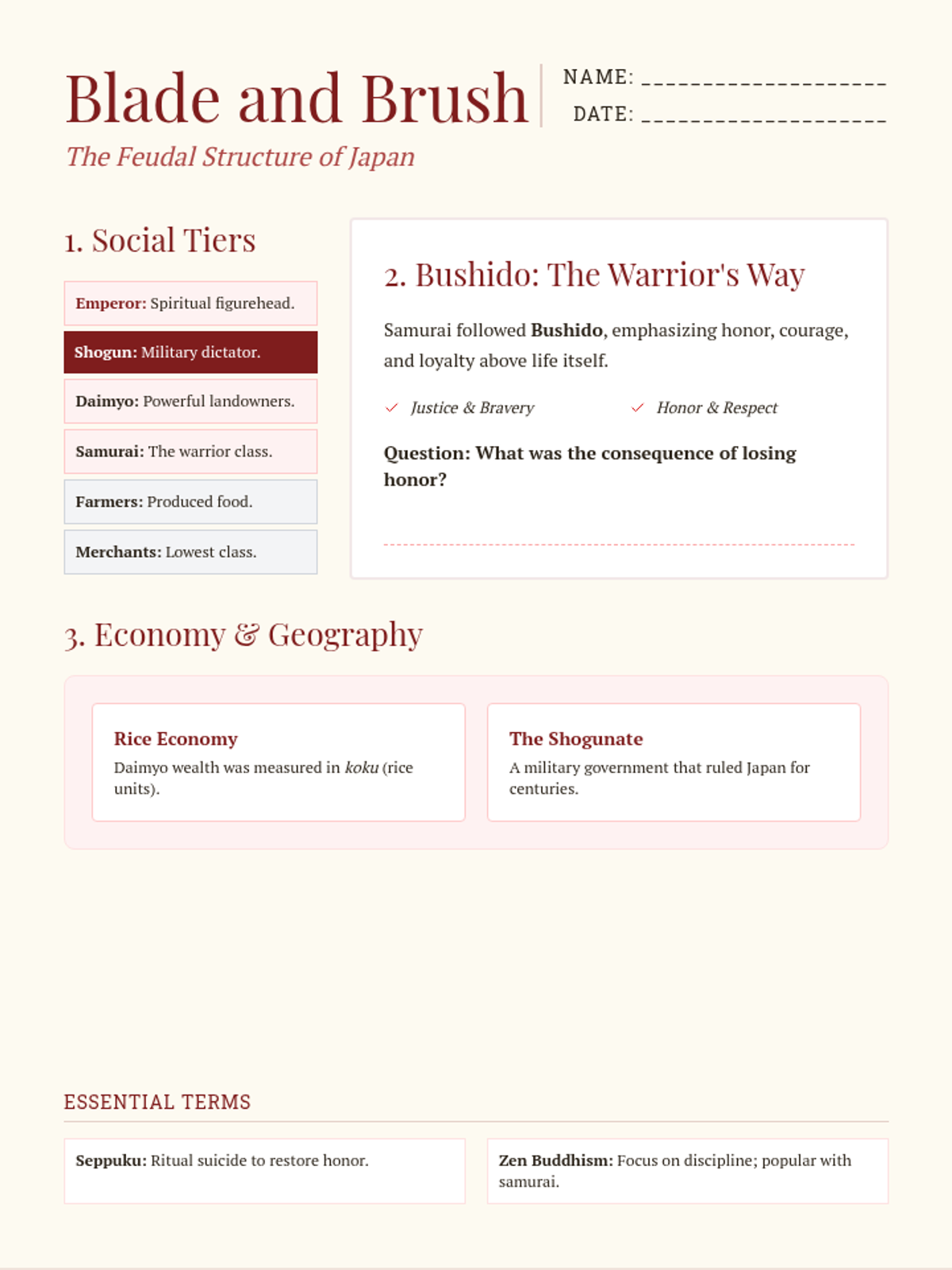
An analysis of Japan's feudal government, the role of the Shogun, and the code of the Samurai.
A deep dive into the influence of the Roman Catholic Church on medieval European society, politics, and daily life.