The introductory set of materials focused on identifying main ideas and supporting them with text evidence through a structured weekly routine.

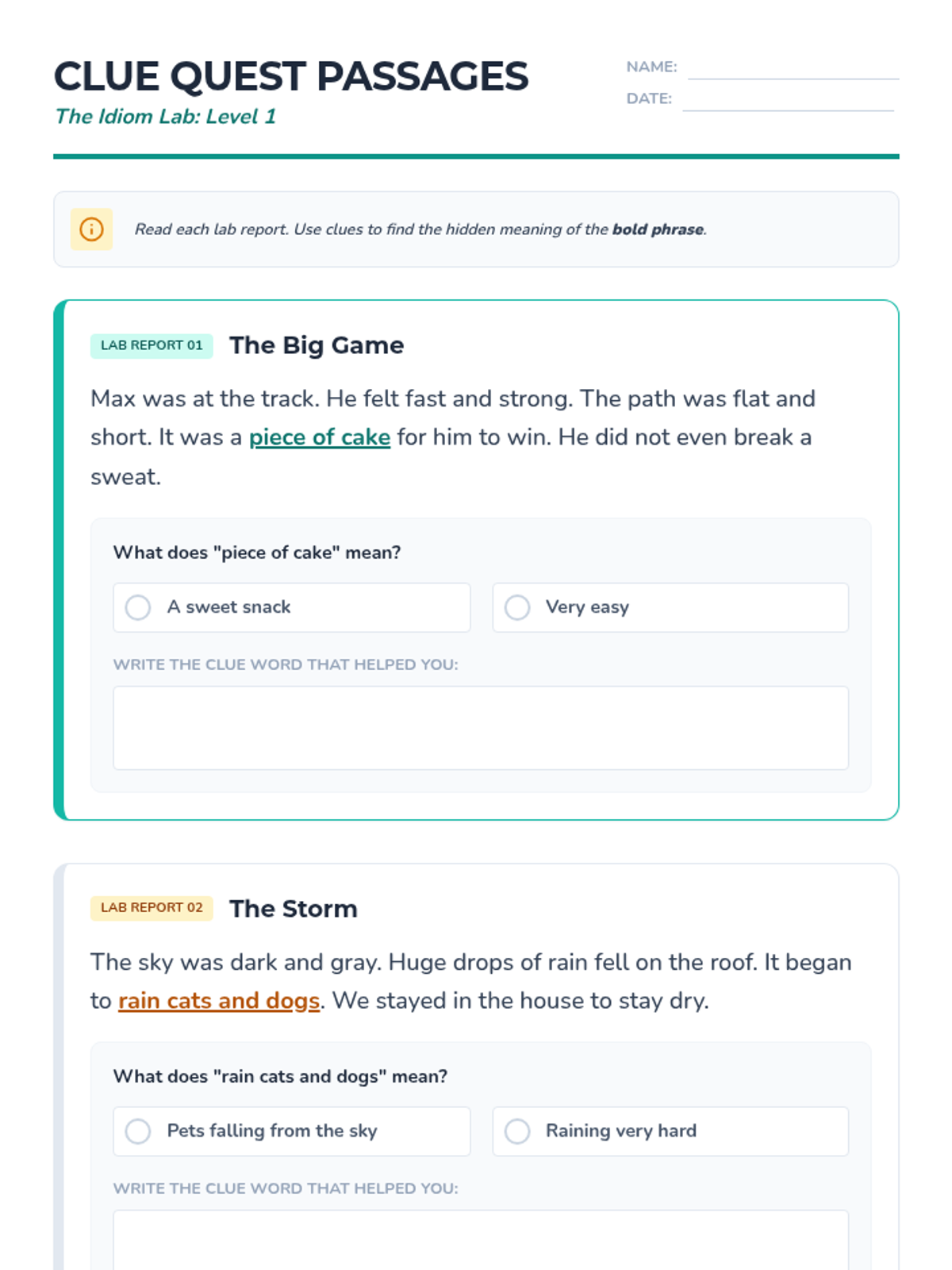
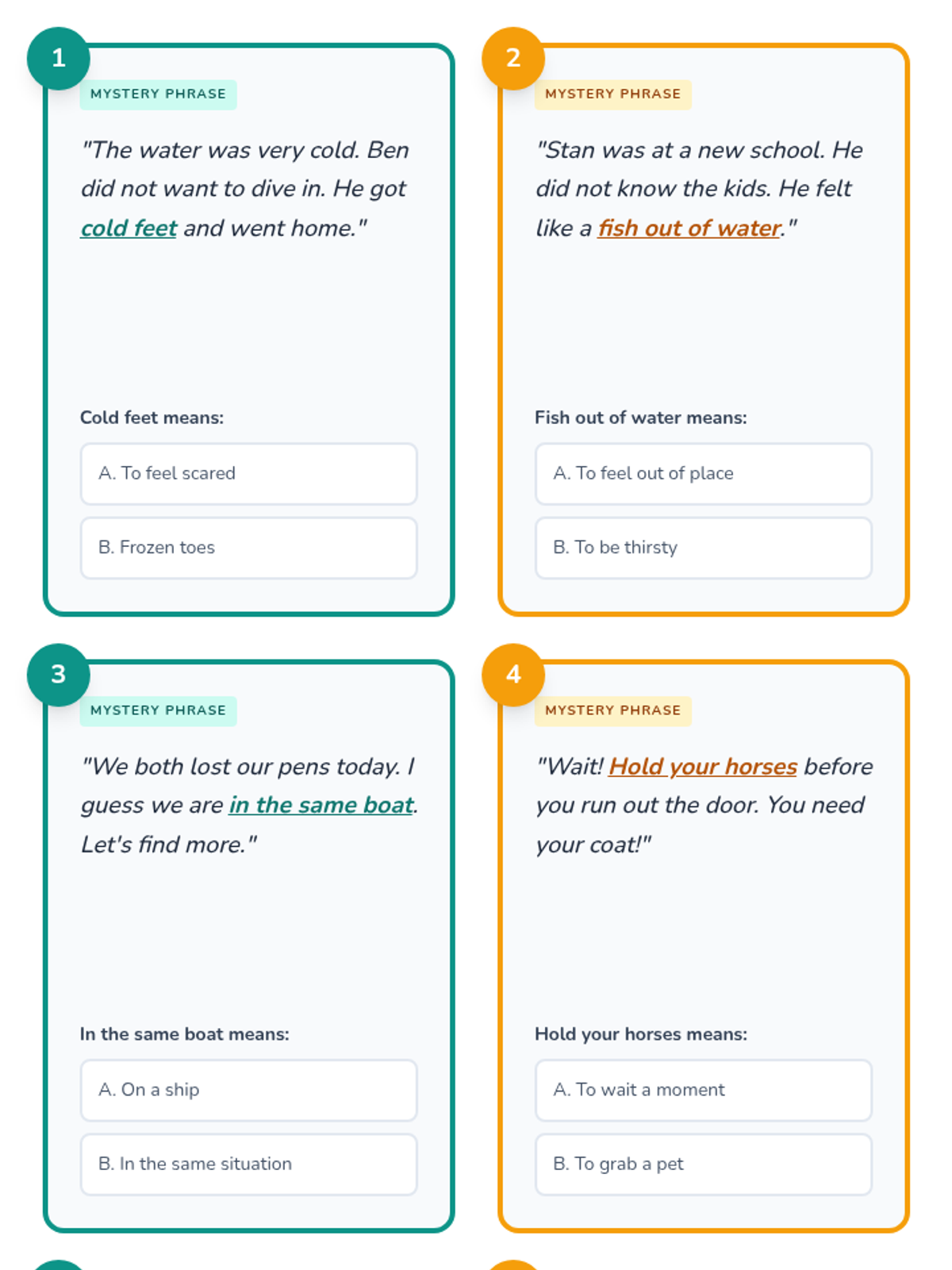
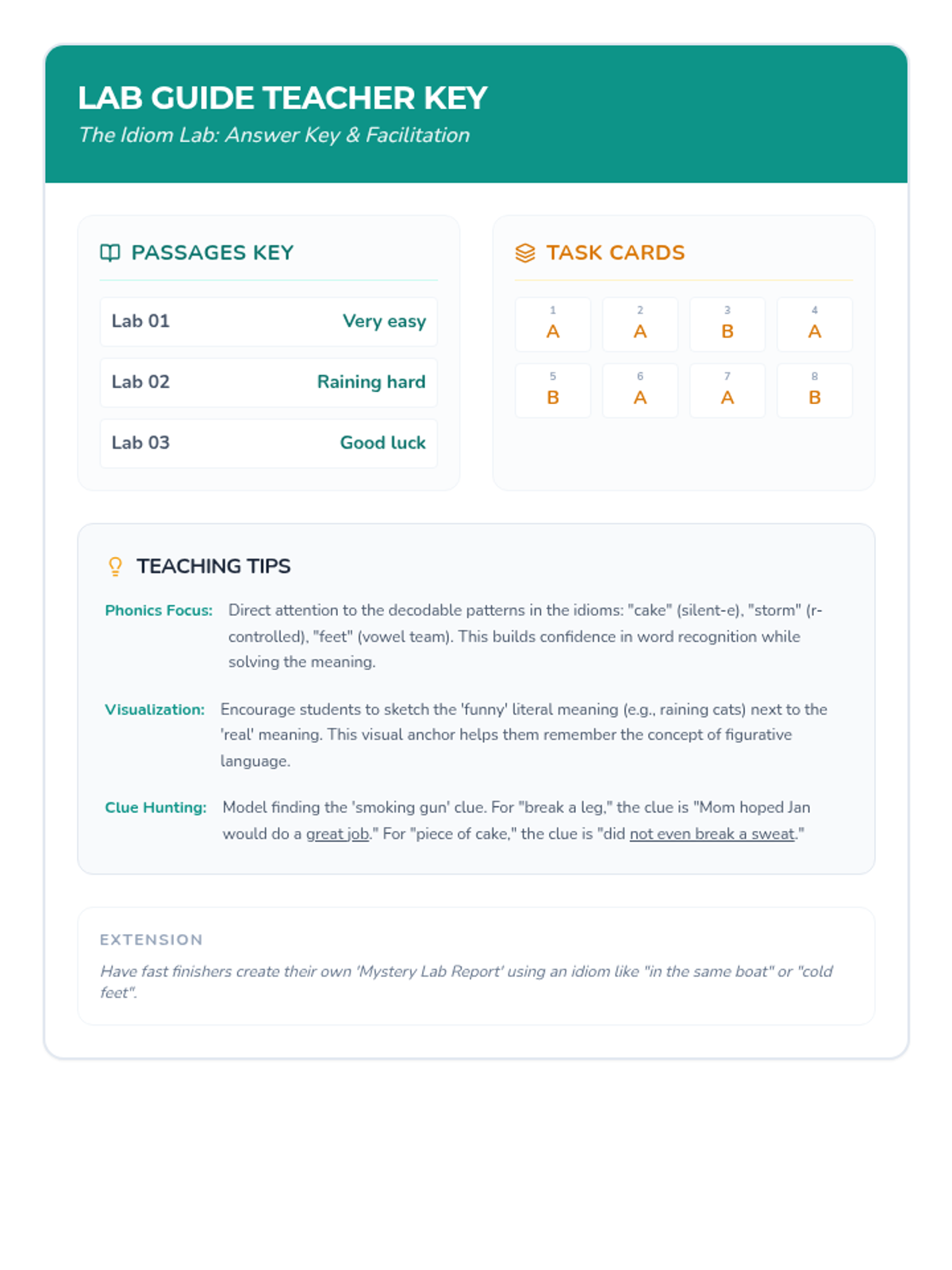
A foundational lesson on identifying and interpreting common idioms using context clues, specifically designed with decodable text for struggling readers.
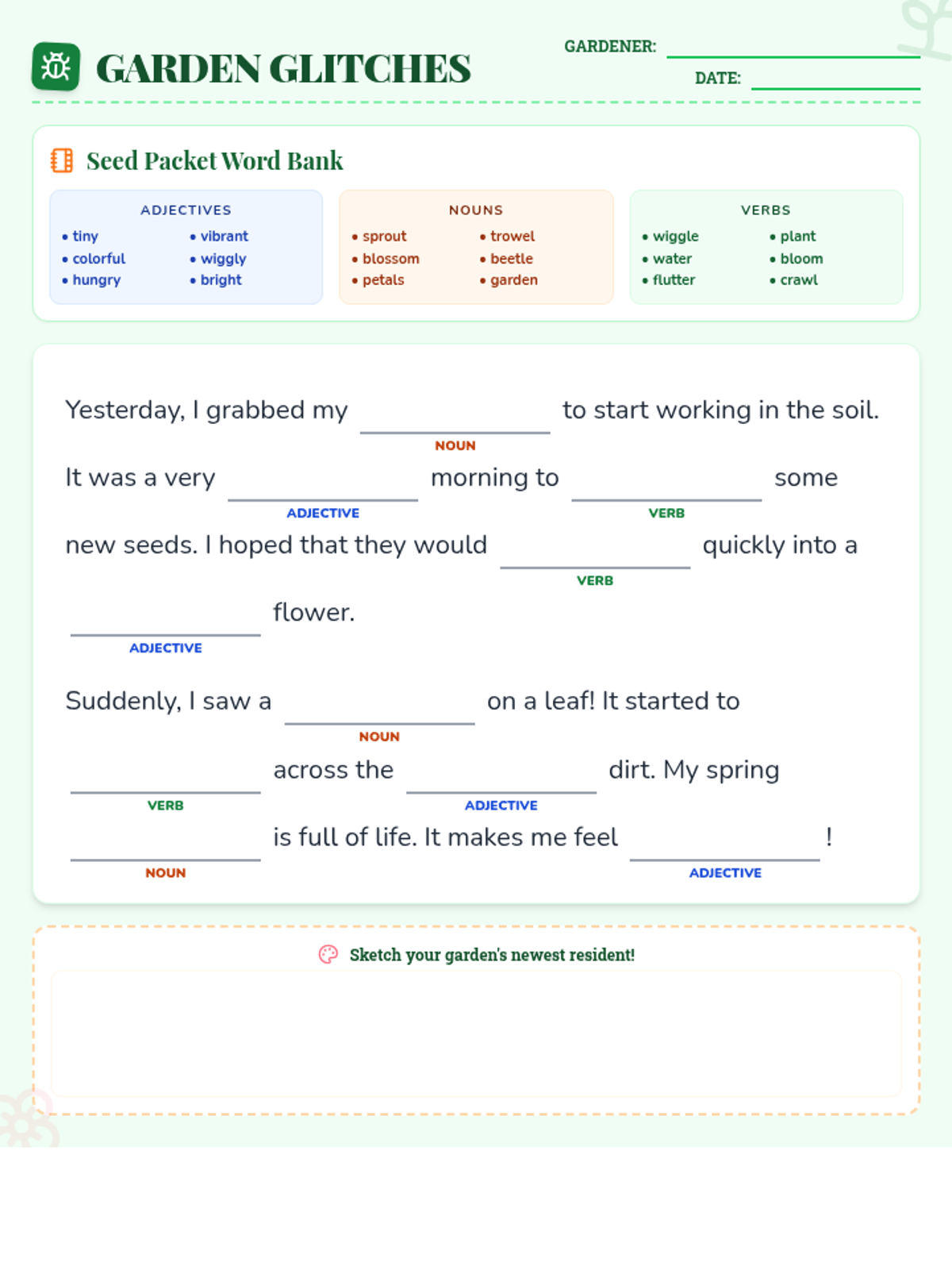
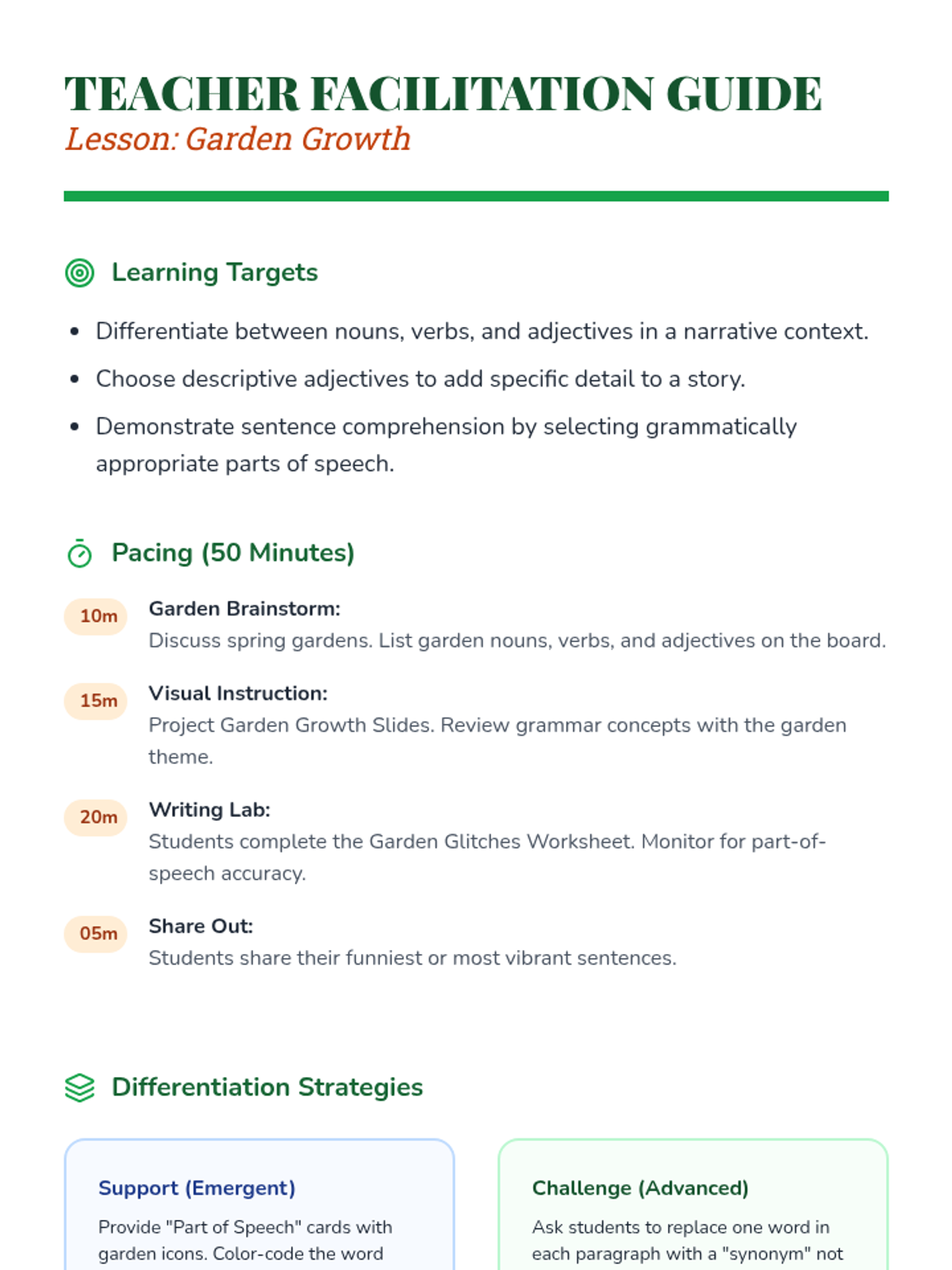
A second-grade focused lesson on nouns, verbs, and adjectives set in a vibrant spring garden. Students will explore descriptive language while filling in a garden-themed story.
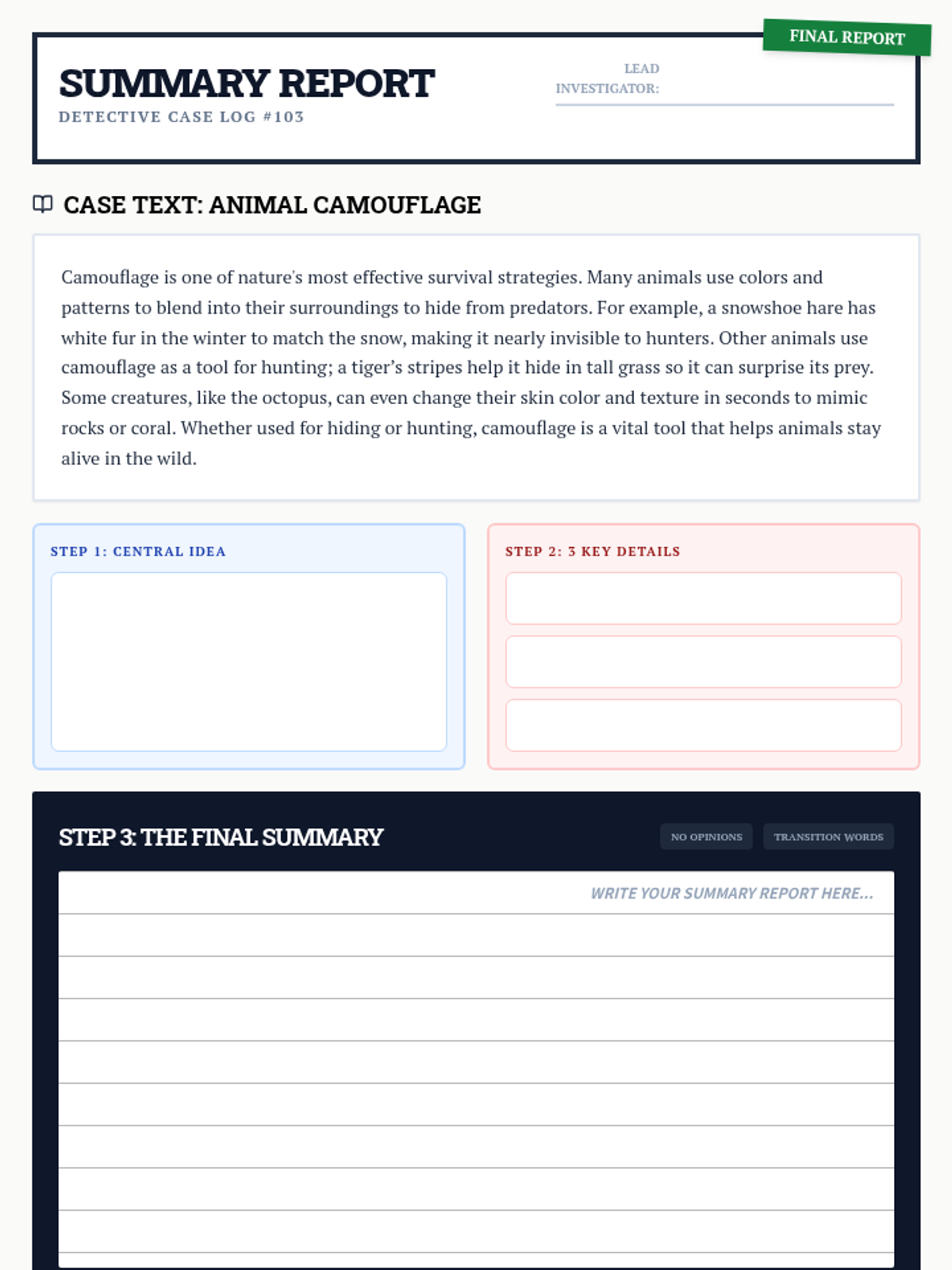
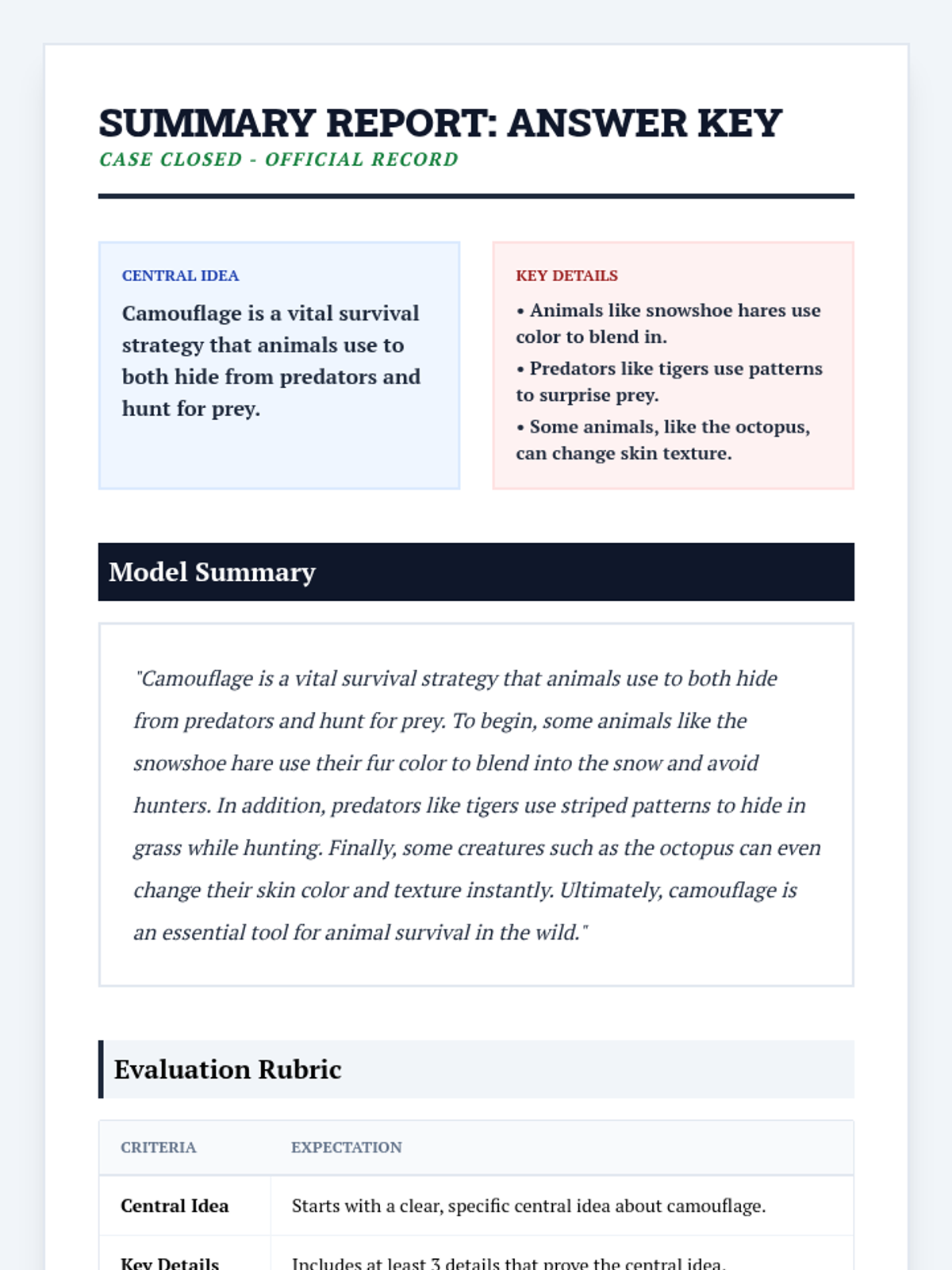
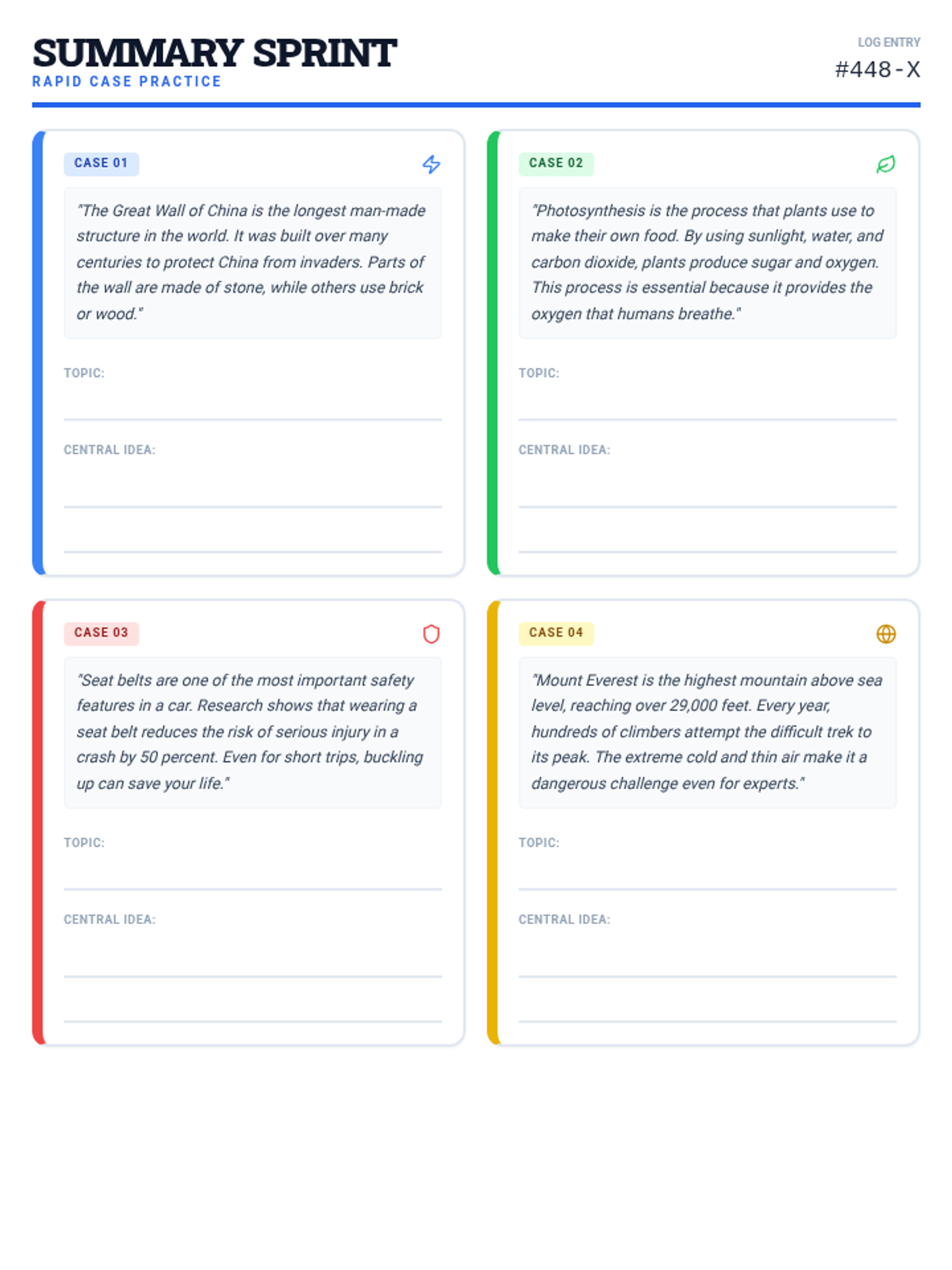
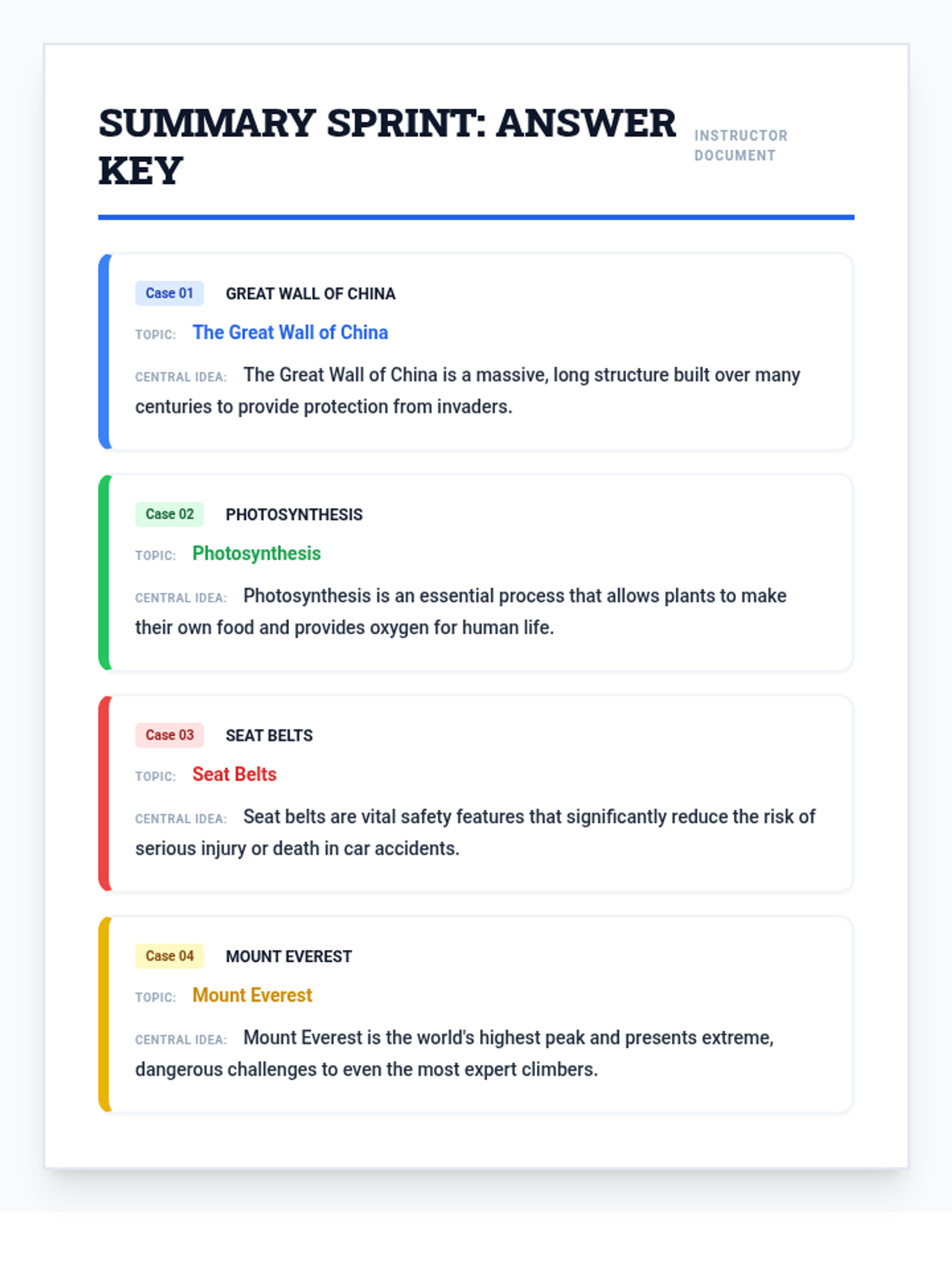
Provides a scaffolded approach to combining the central idea and key details into a cohesive, objective non-fiction summary.
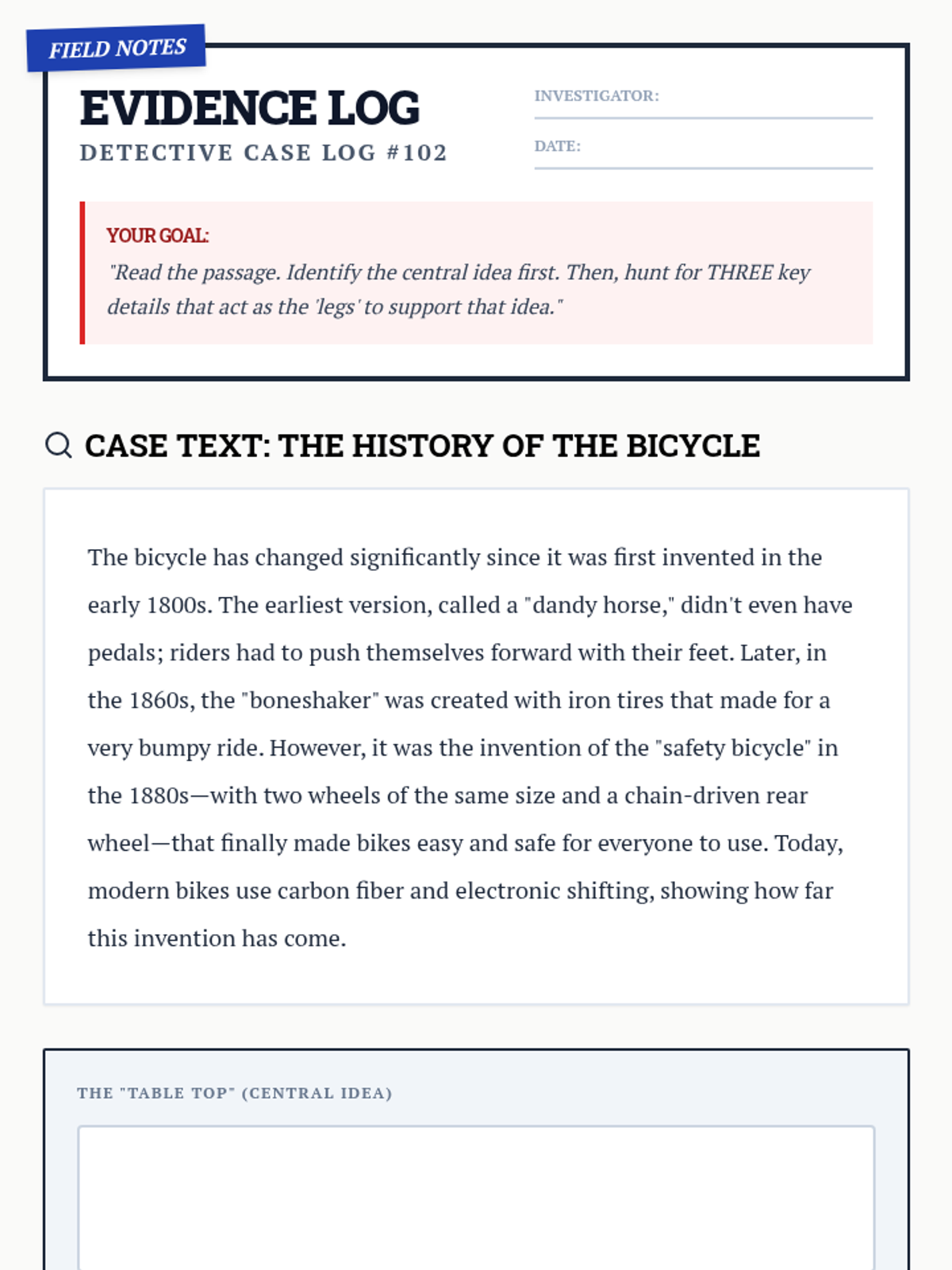
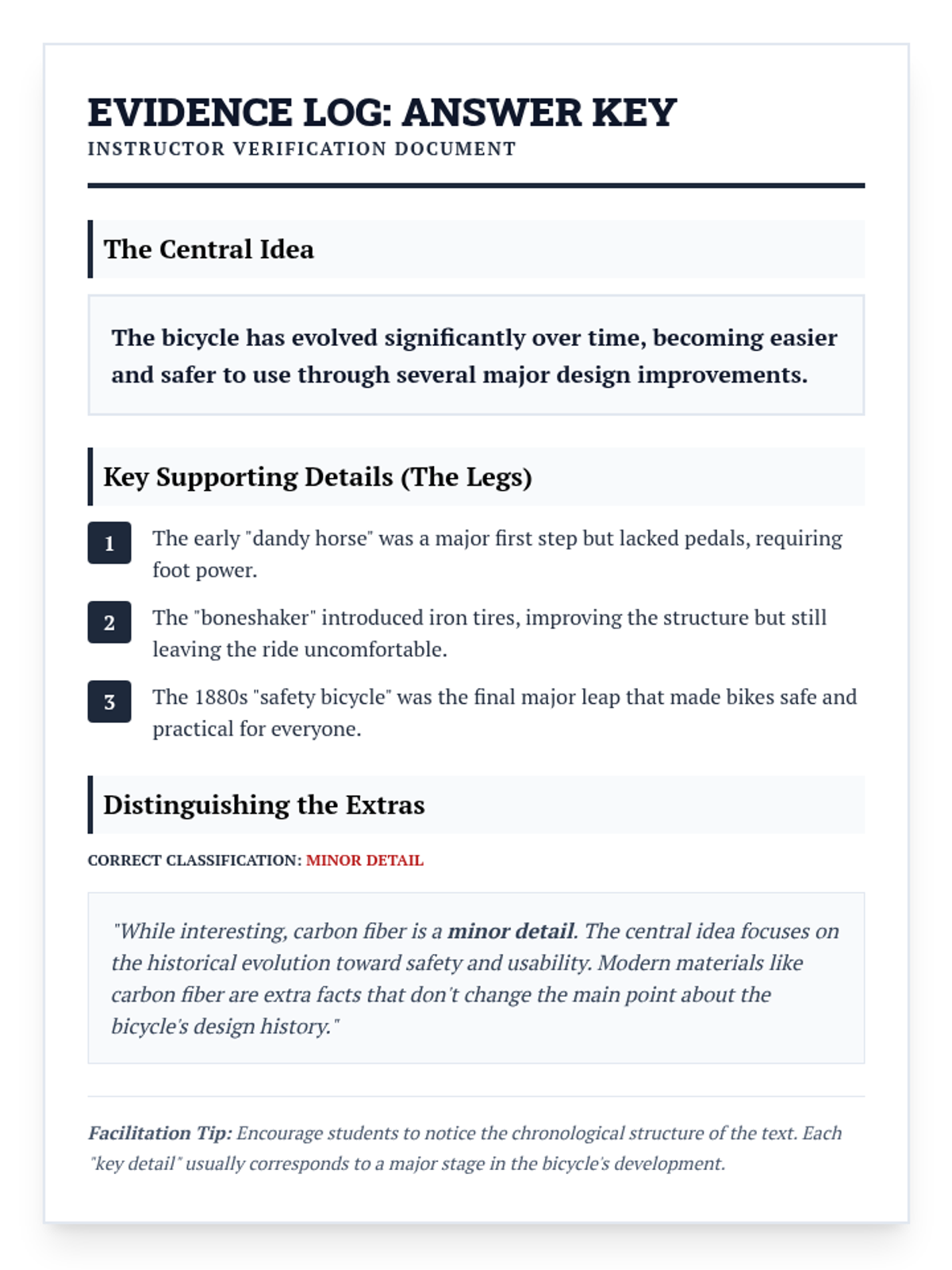
Focuses on identifying key details that directly support the central idea while filtering out interesting but non-essential information.
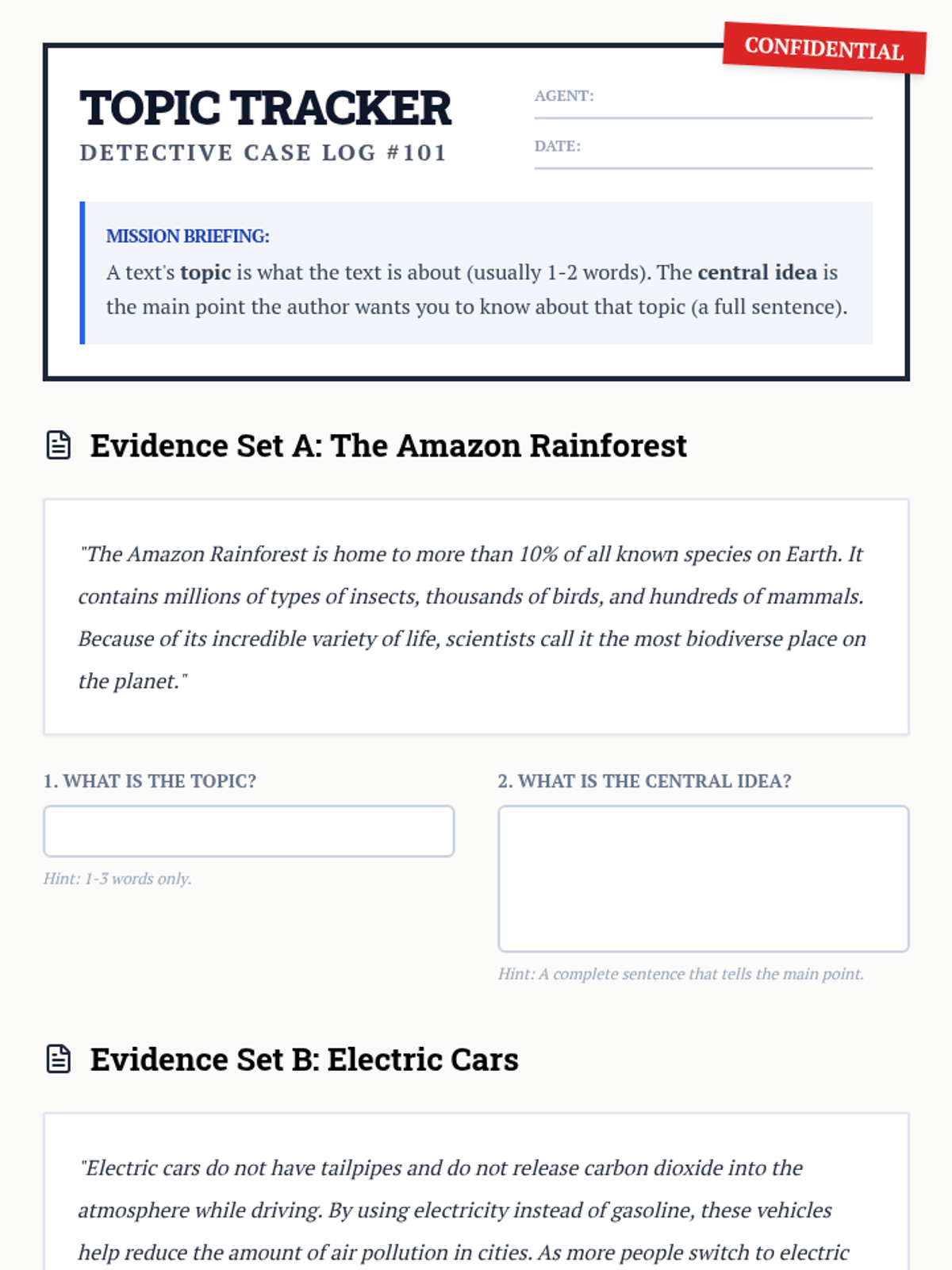
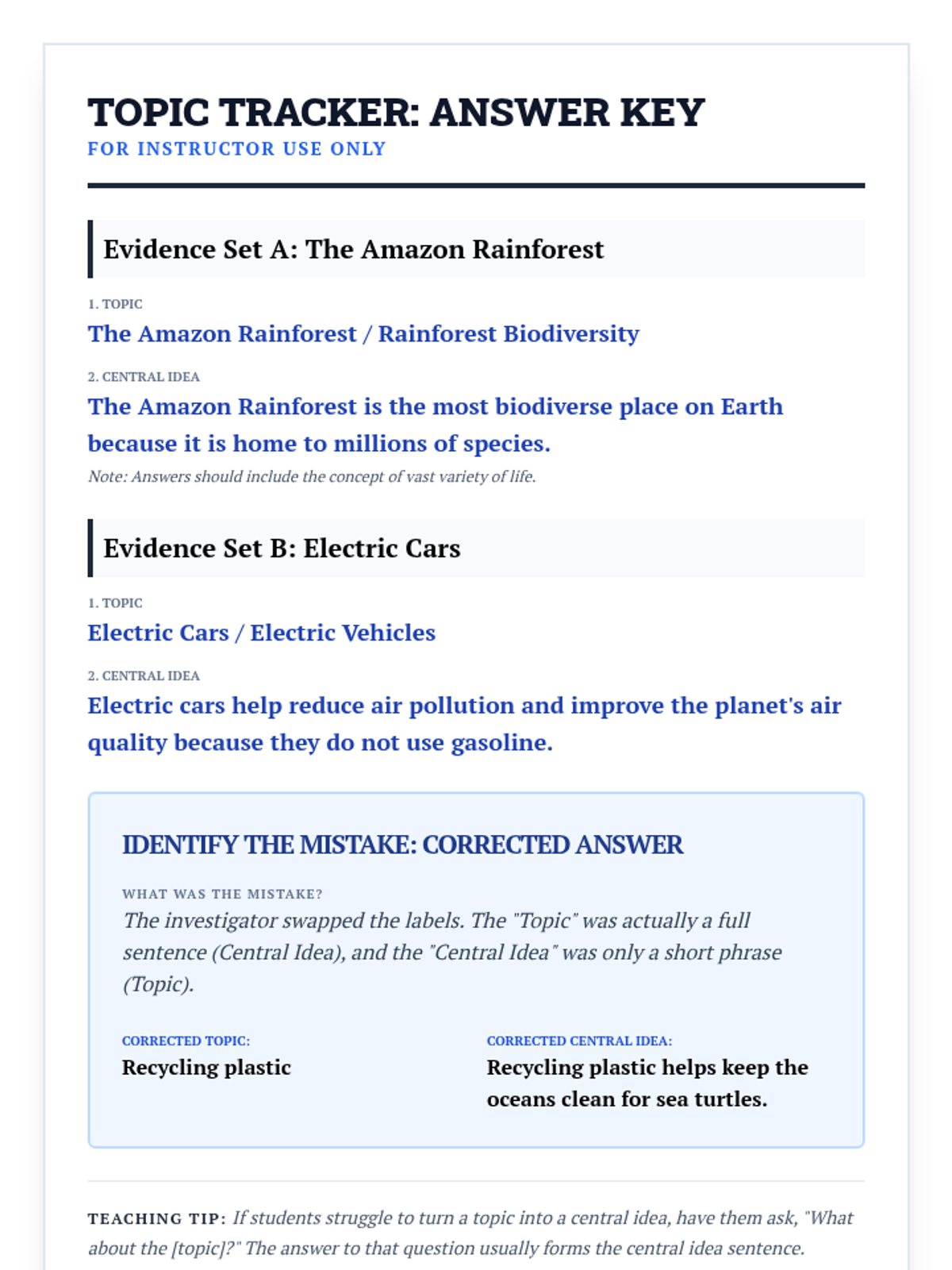
Teaches students to distinguish between the general topic (what the text is about) and the central idea (the specific point the author is making about that topic).
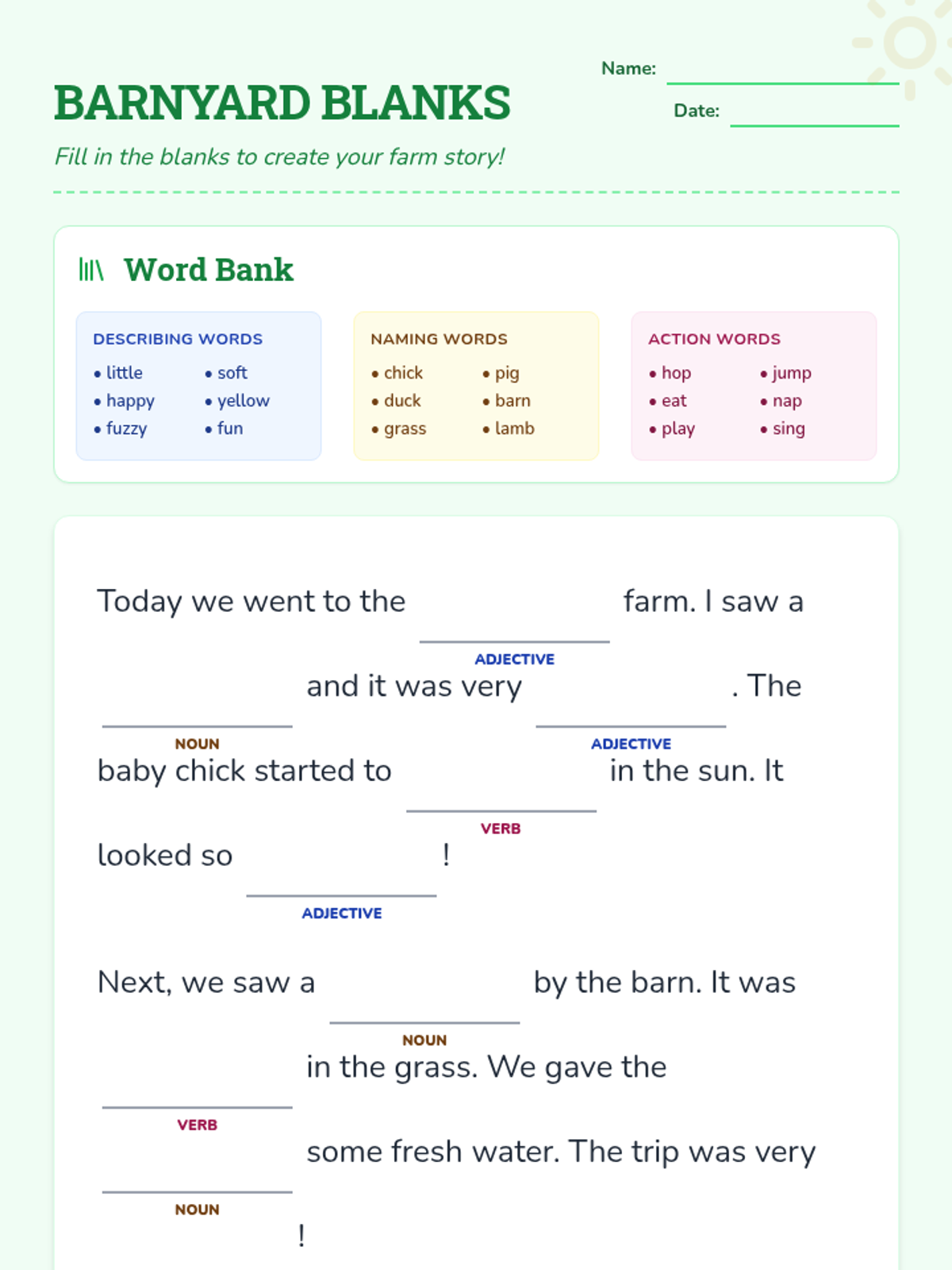
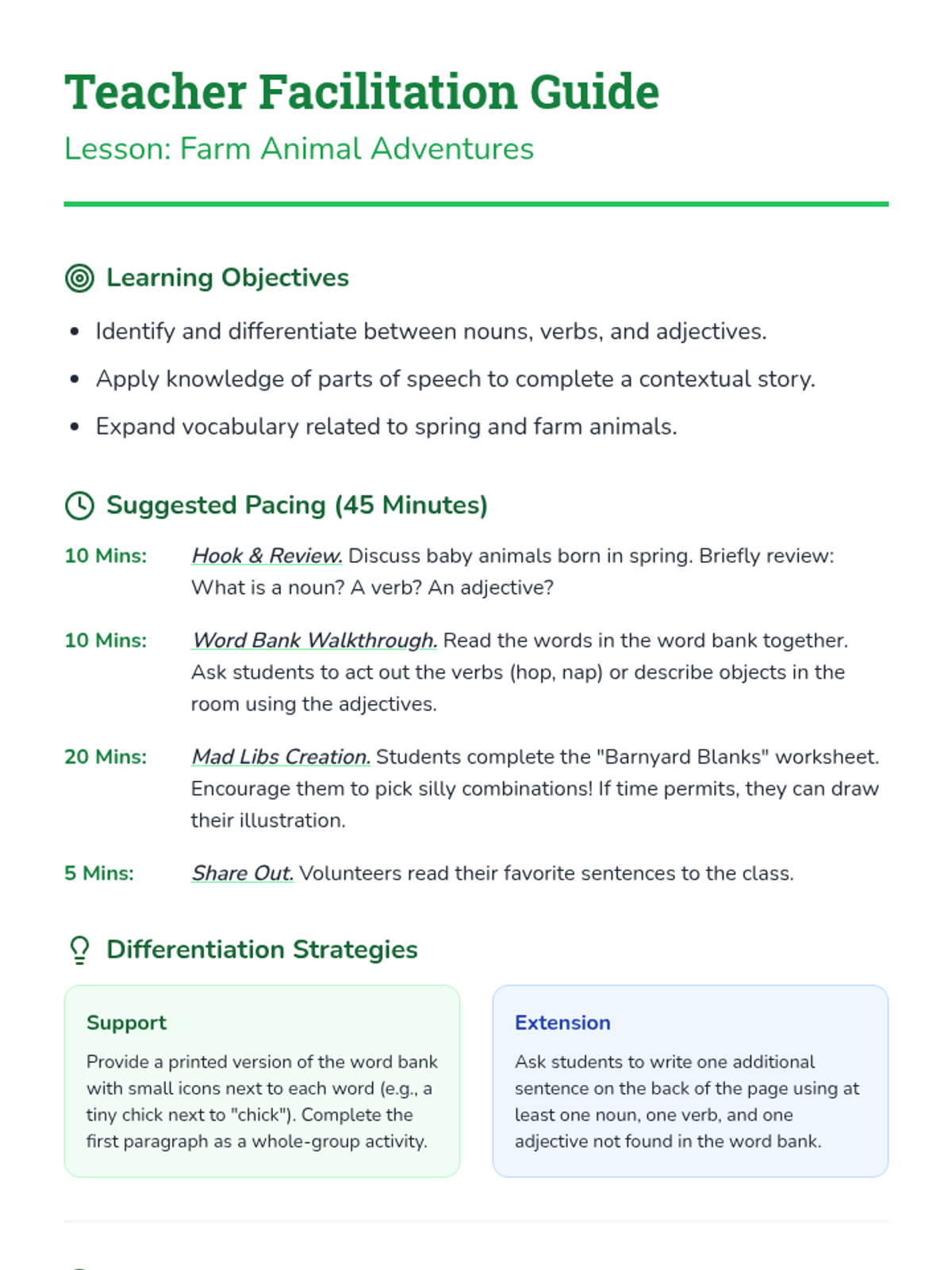
A fun, spring-themed lesson focused on identifying and using nouns, verbs, and adjectives through a baby animal farm story. Students will practice parts of speech while creating their own silly farm adventure.
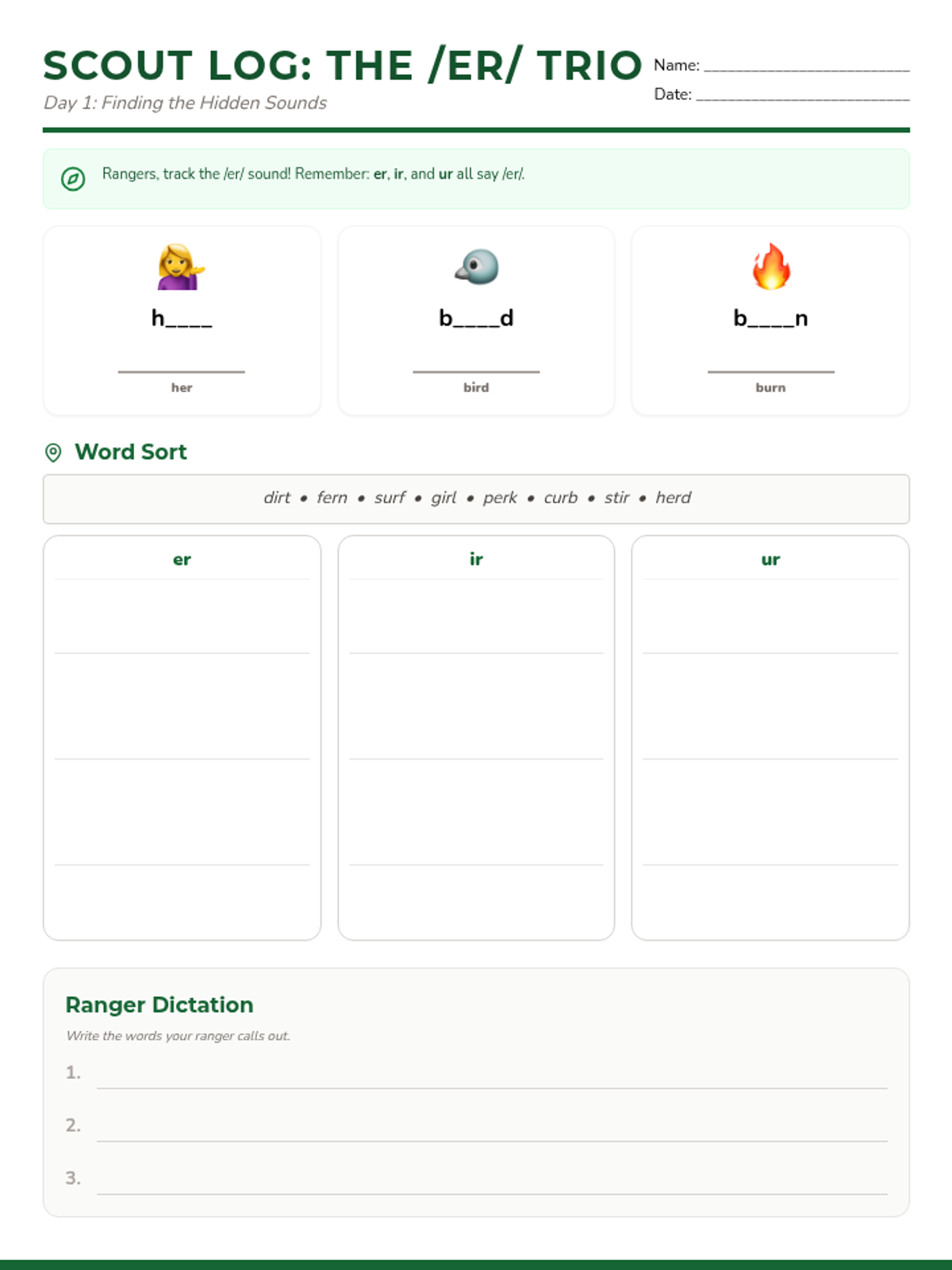
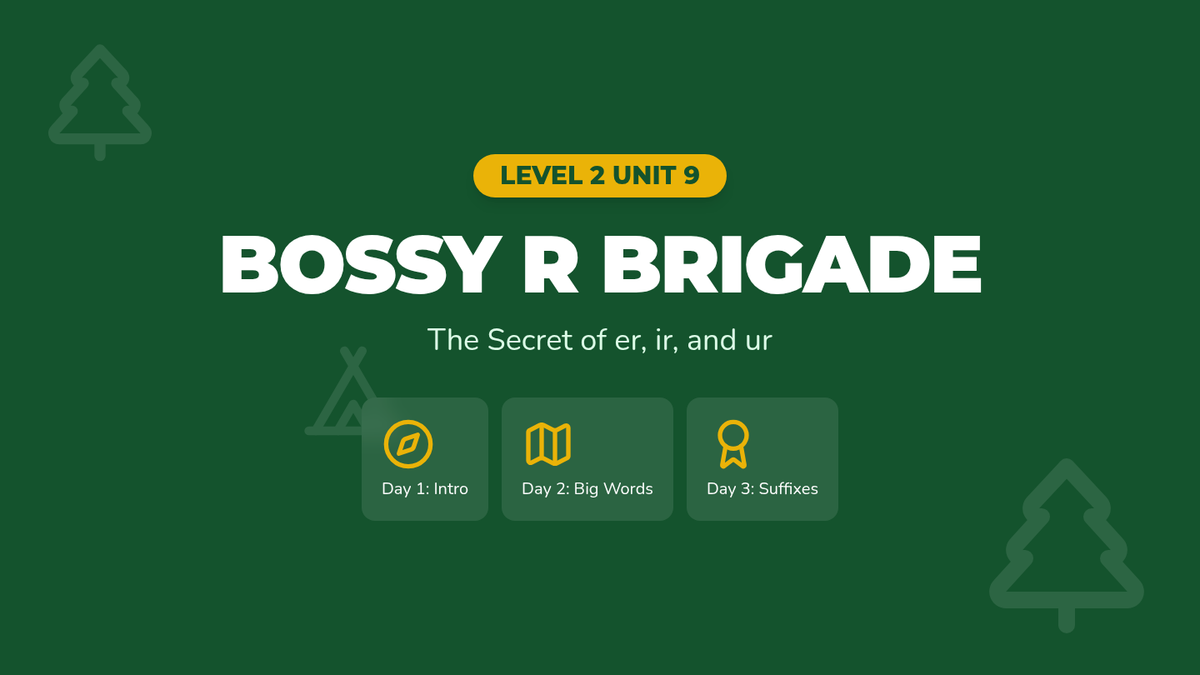
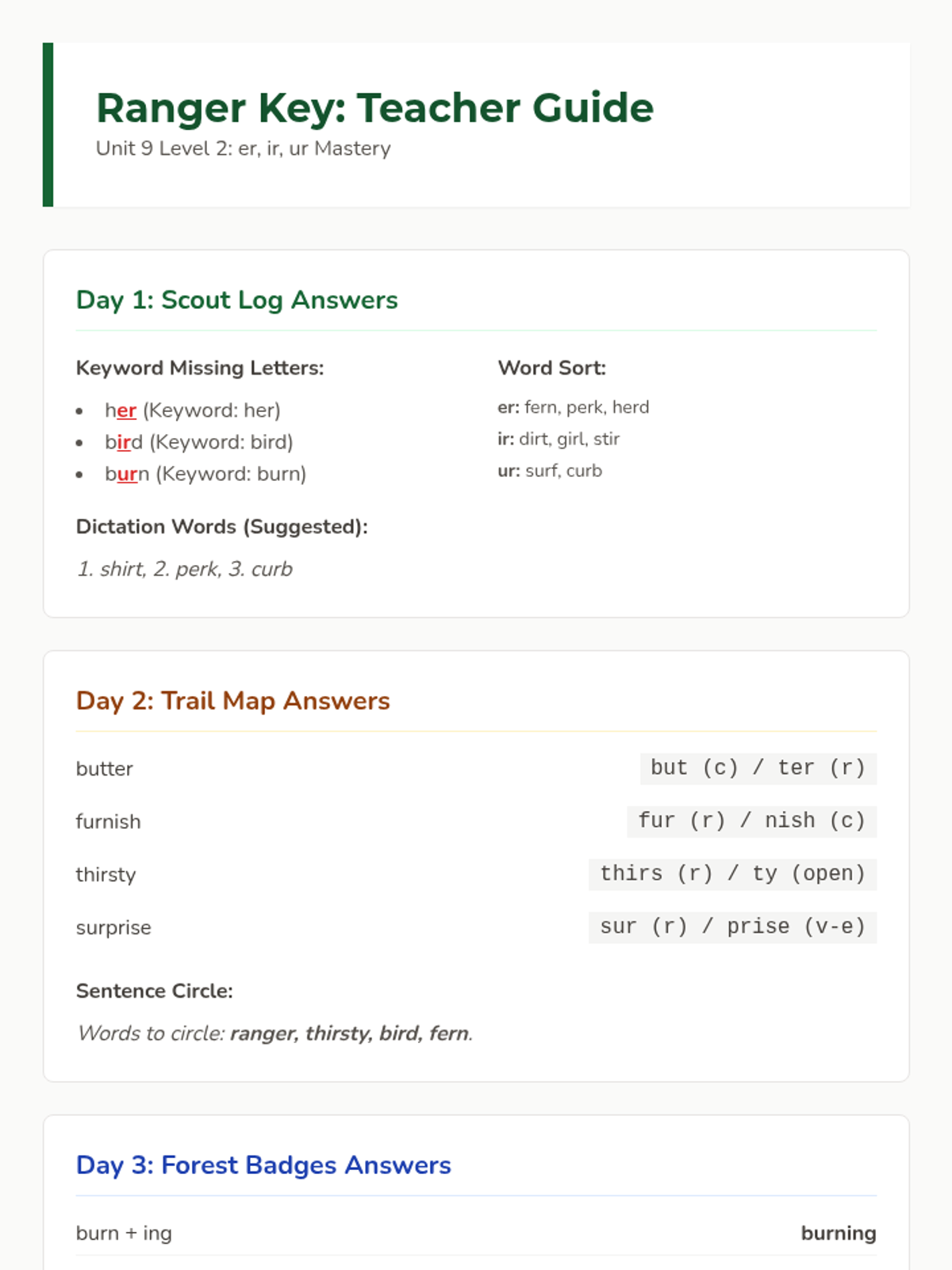
A comprehensive unit on R-controlled vowels (er, ir, ur), focusing on phonemic awareness, multisyllabic word decoding, and suffix application. Students explore these "Bossy R" sounds through a forest ranger theme.
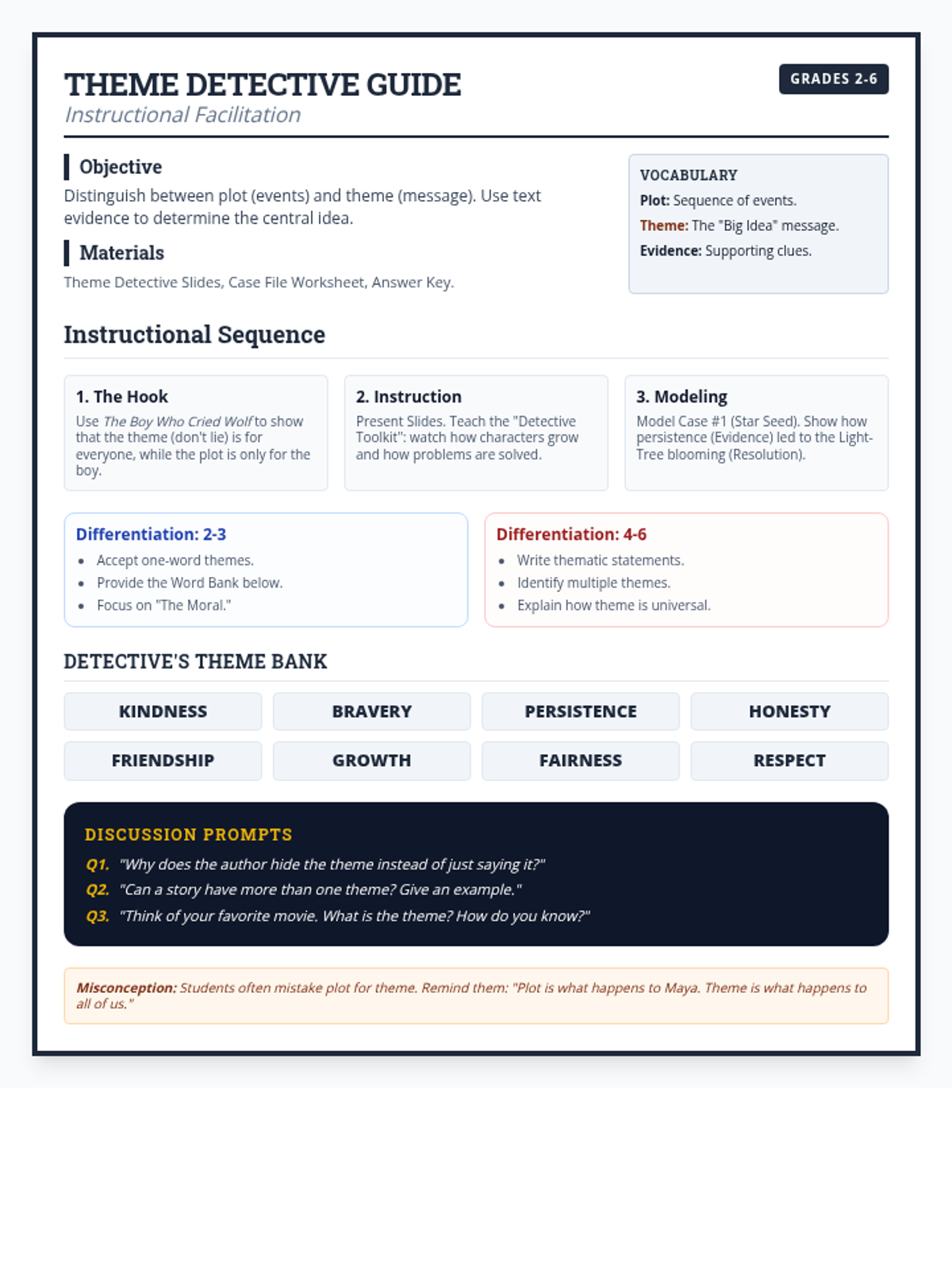
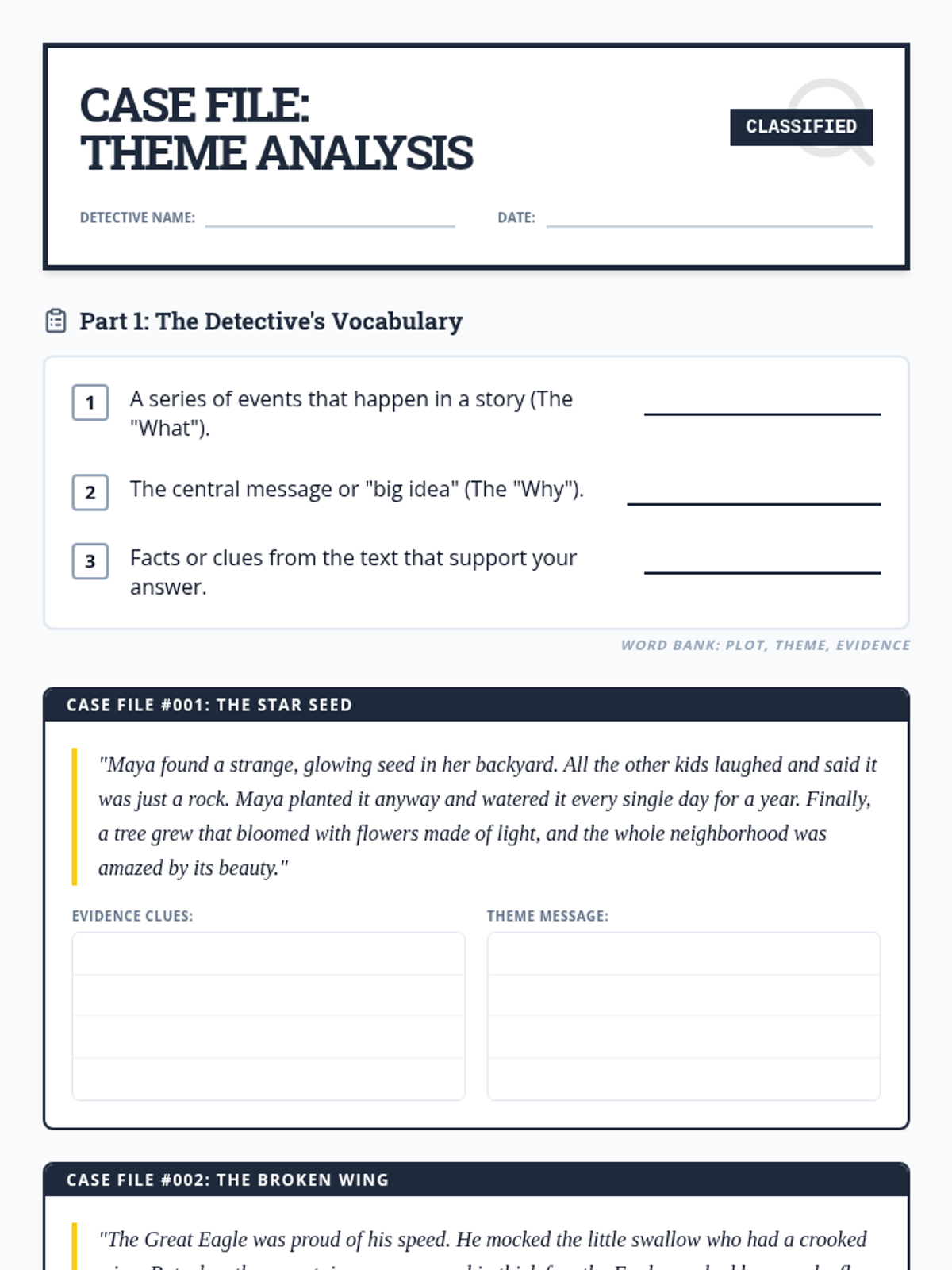
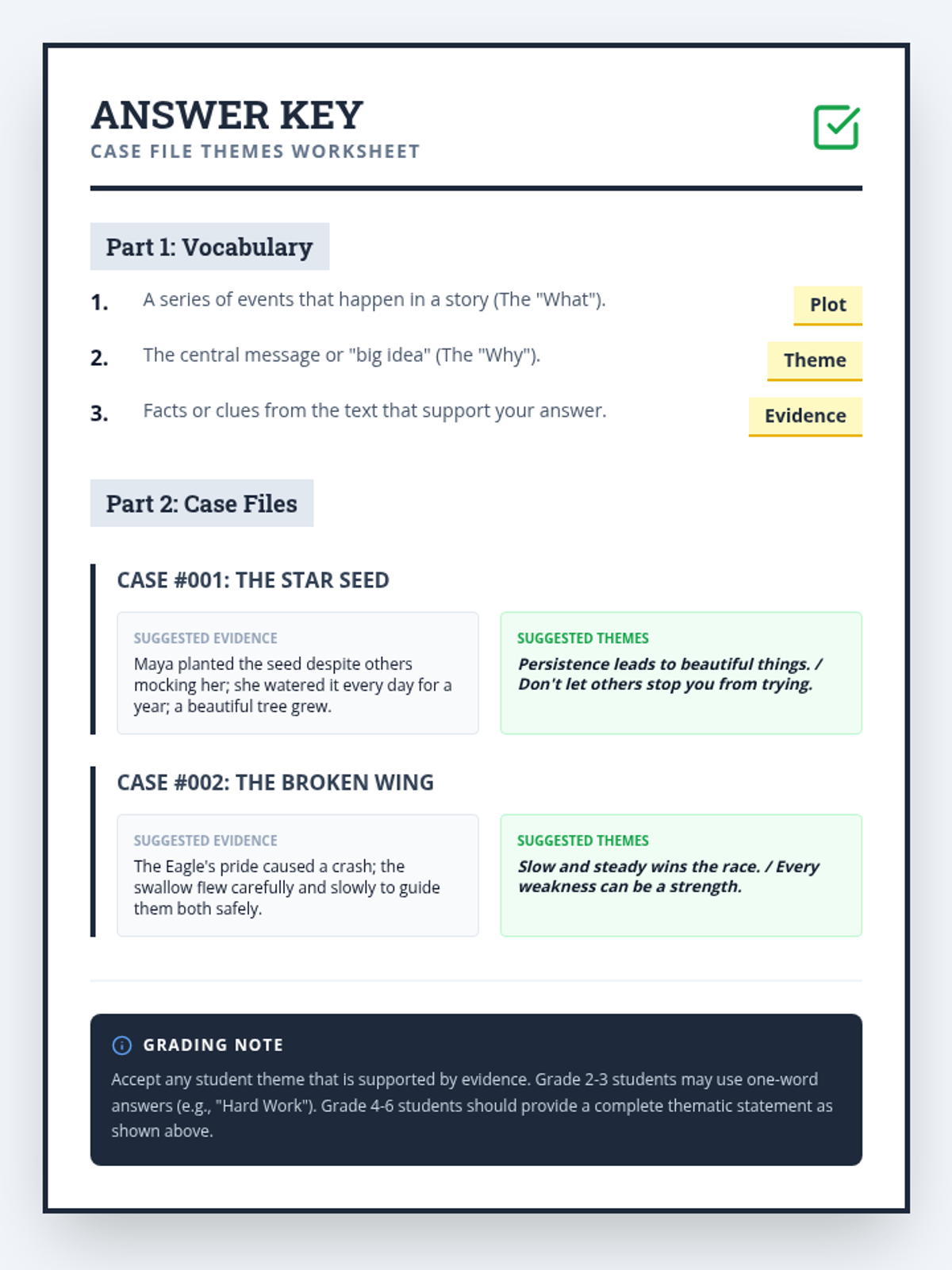
A comprehensive lesson on identifying and analyzing themes in literature, using a 'detective' metaphor to help students find the 'big idea' within stories. Includes differentiated strategies for grades 2-6.
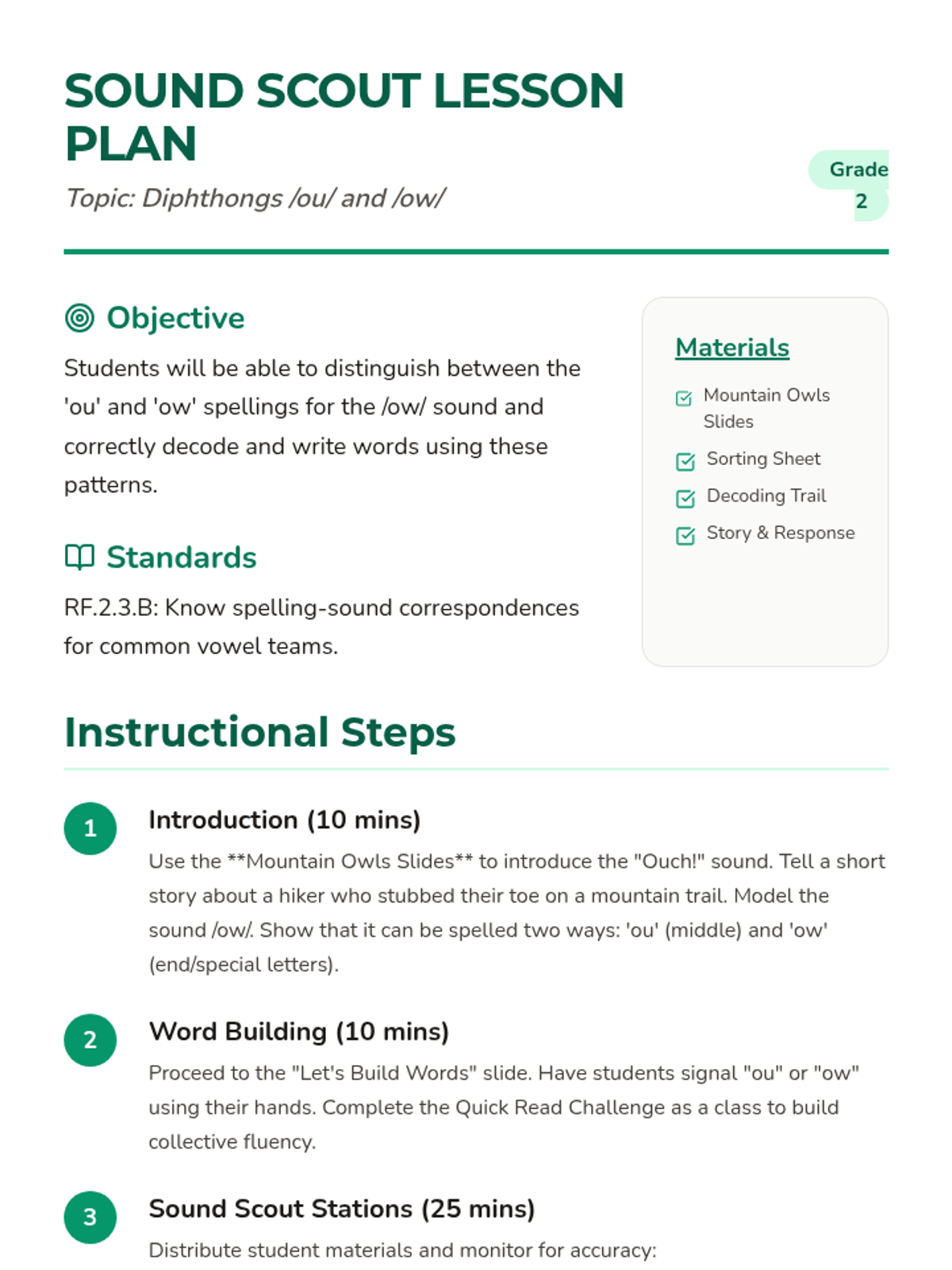
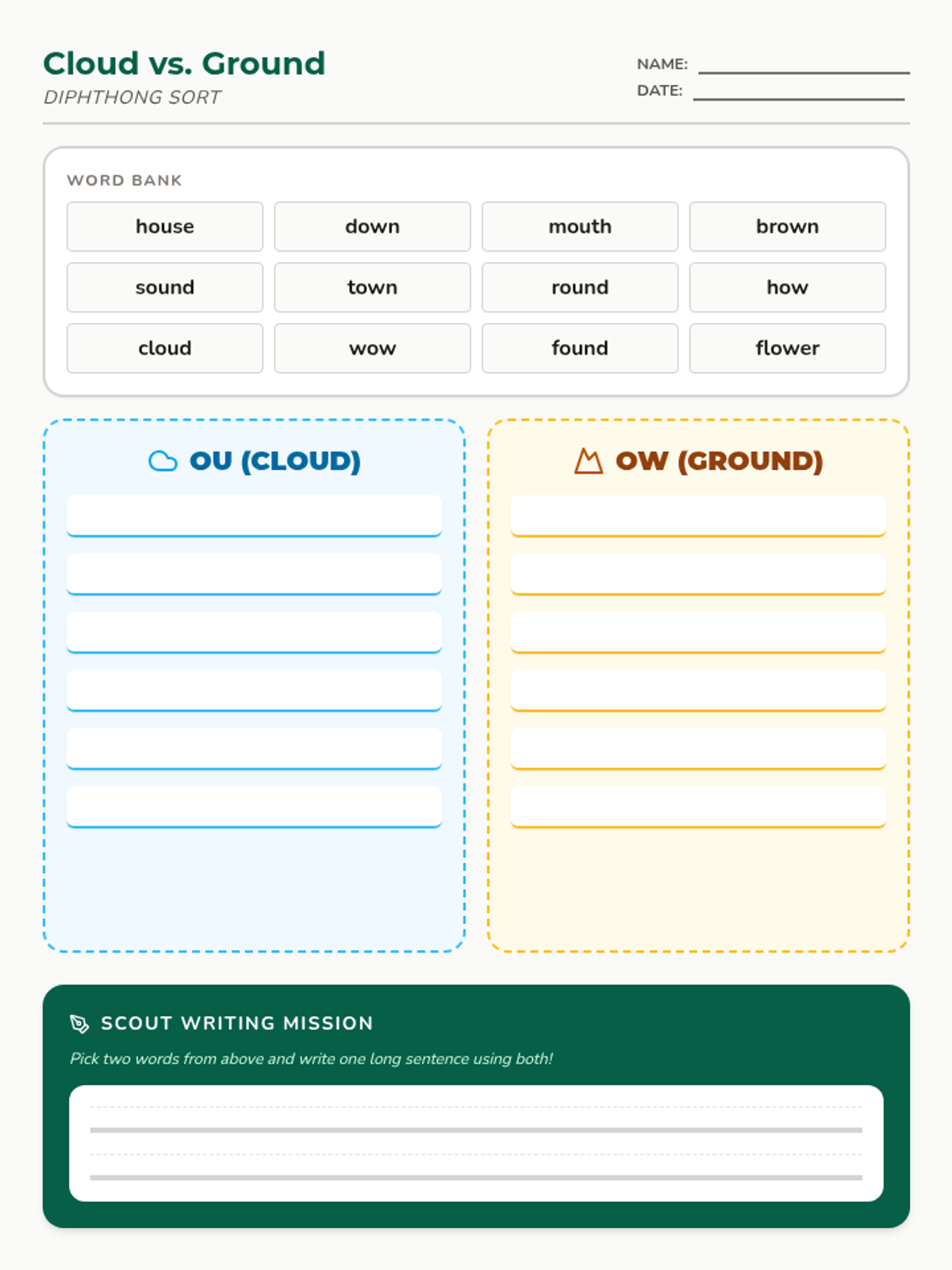
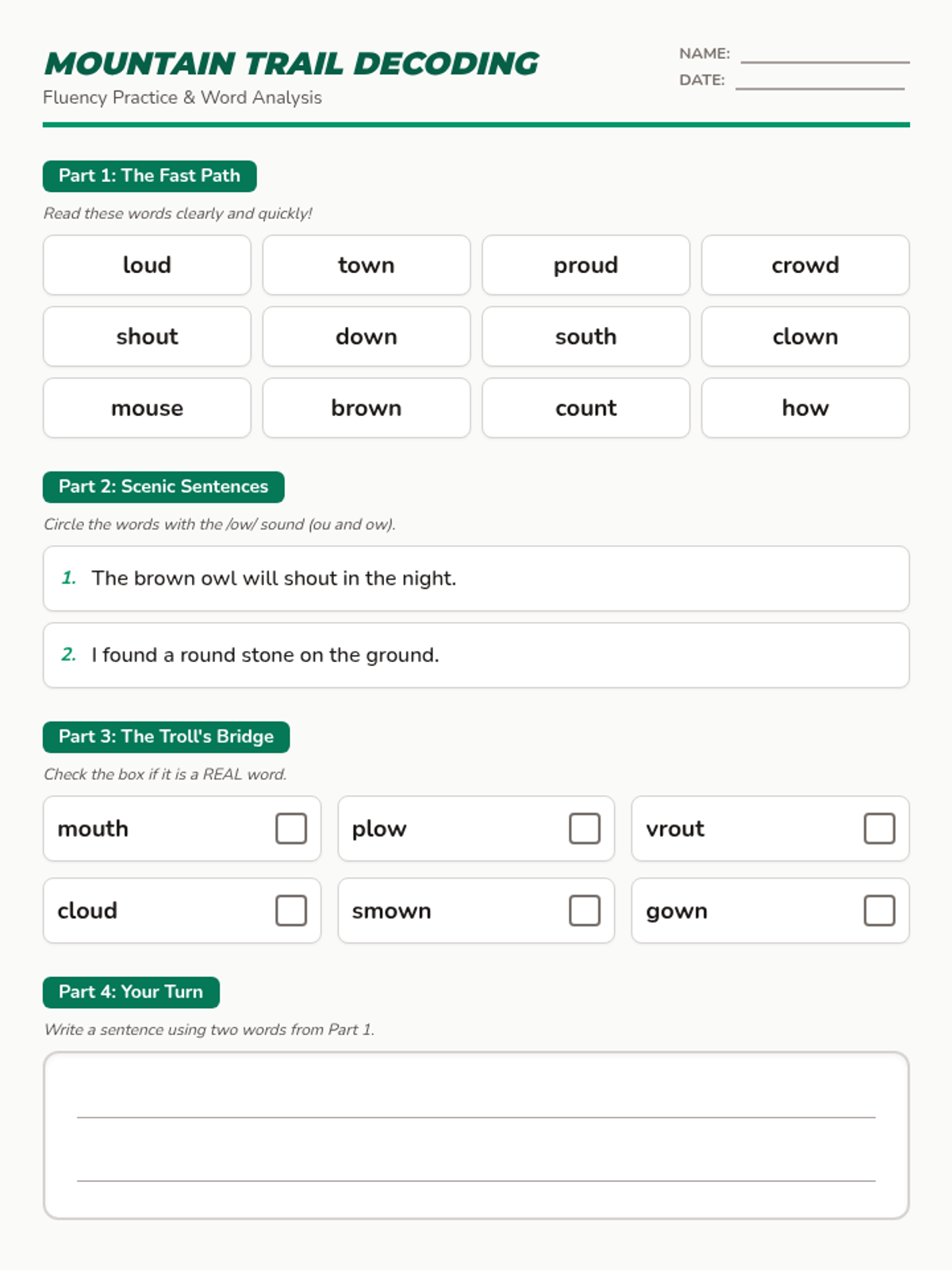
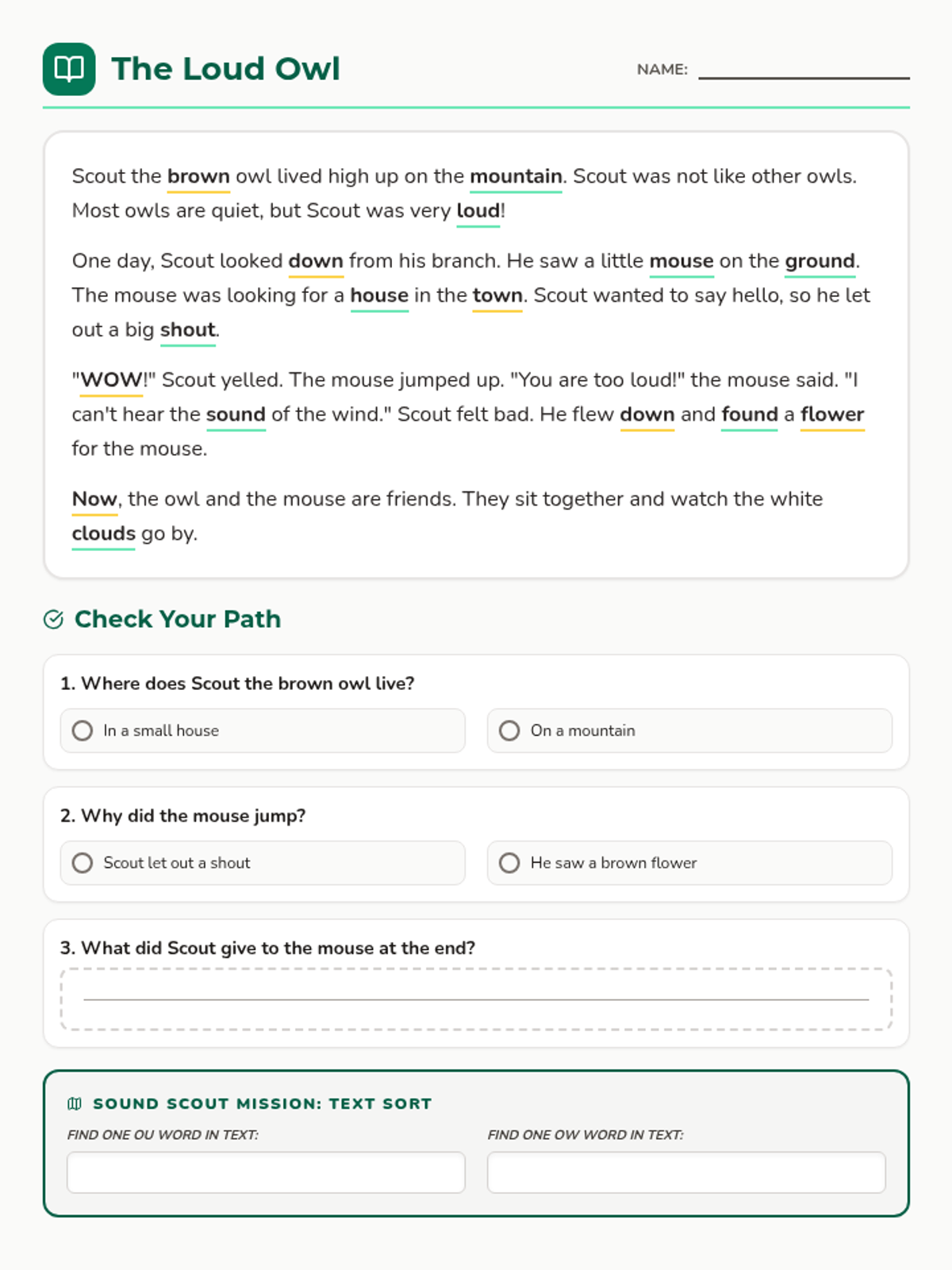
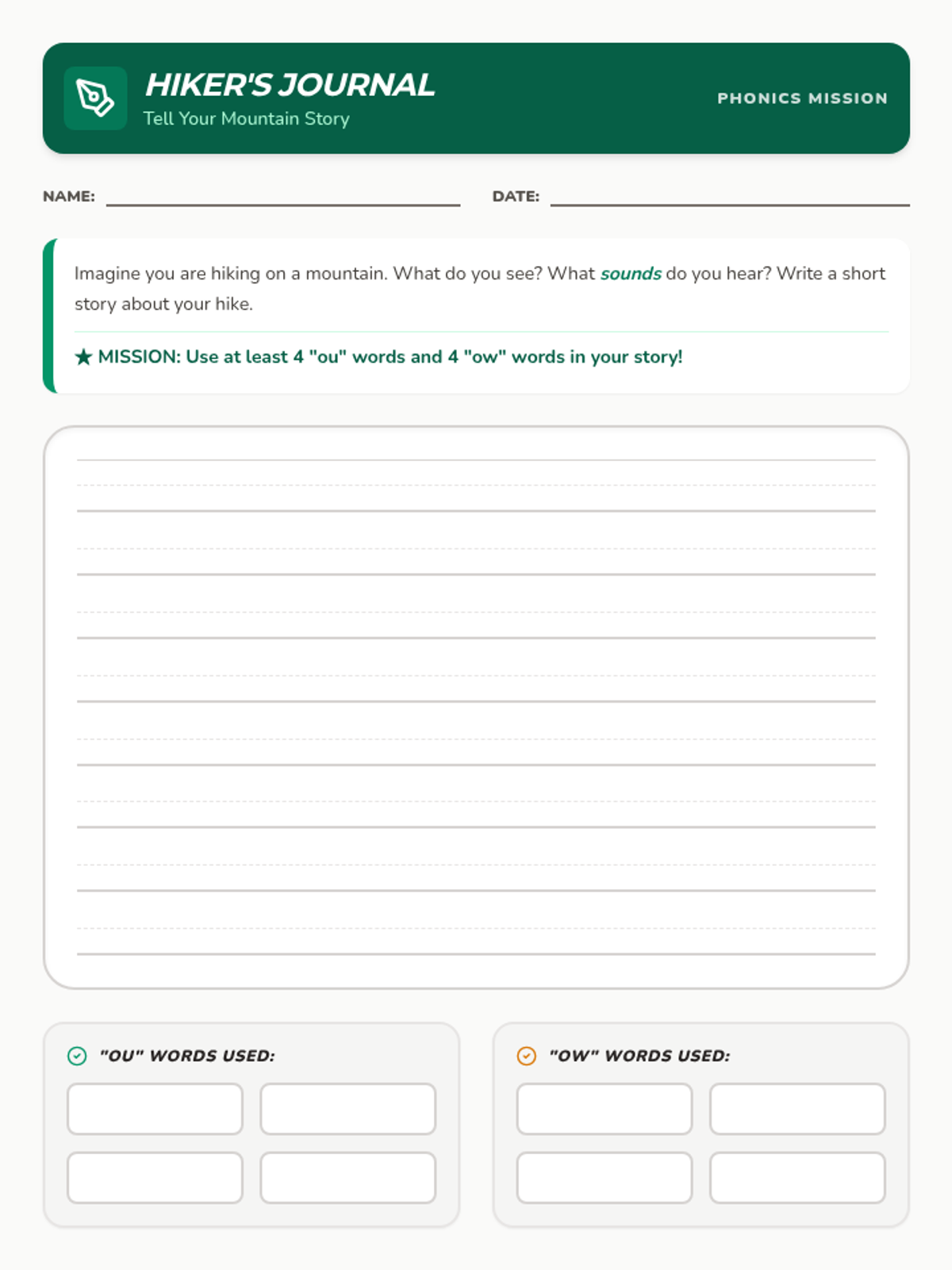
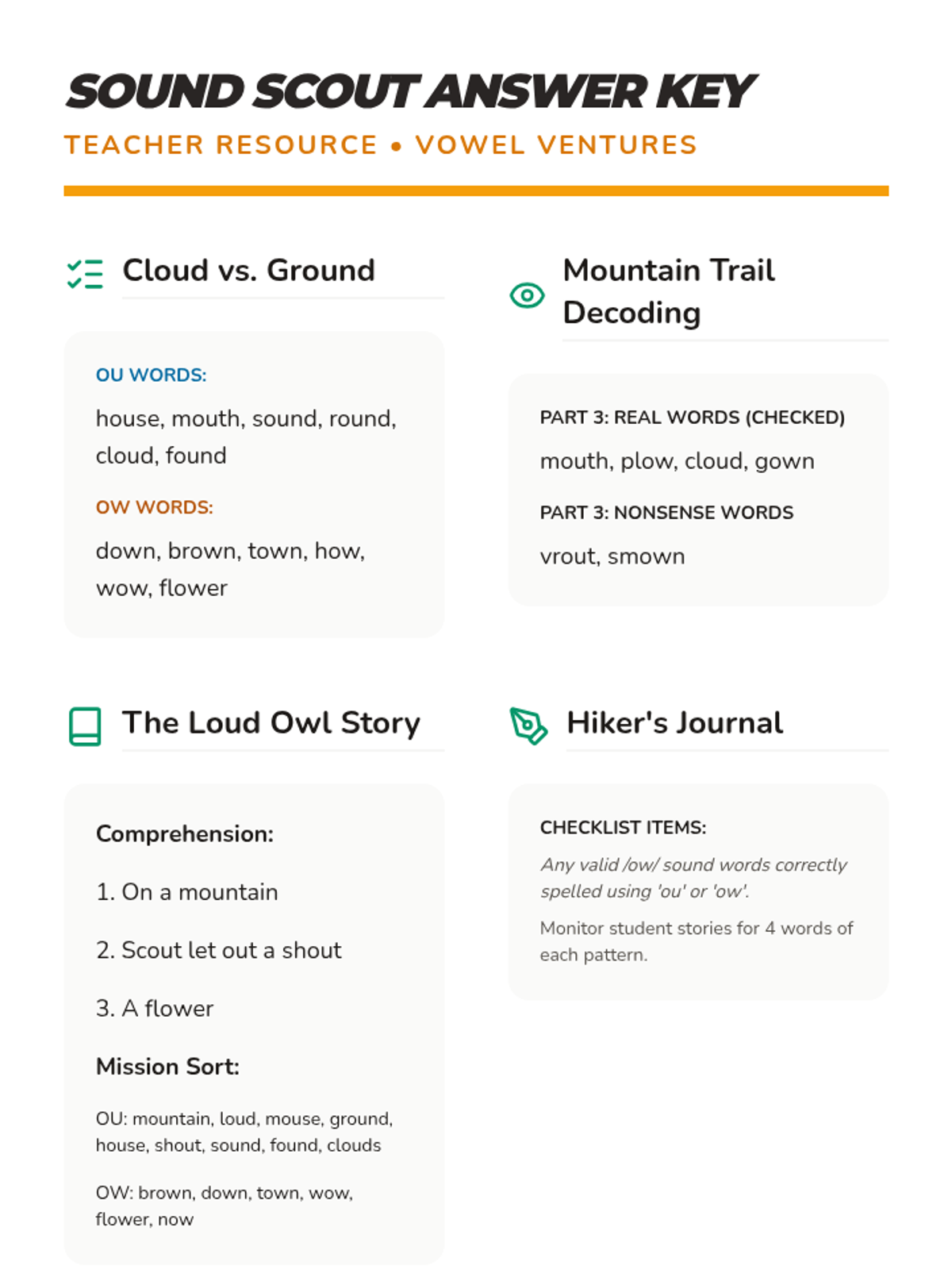
A comprehensive lesson on the diphthongs 'ou' and 'ow', using a 'Mountain Owls and Ground Hounds' theme to engage students in sorting, decoding, and reading comprehension.
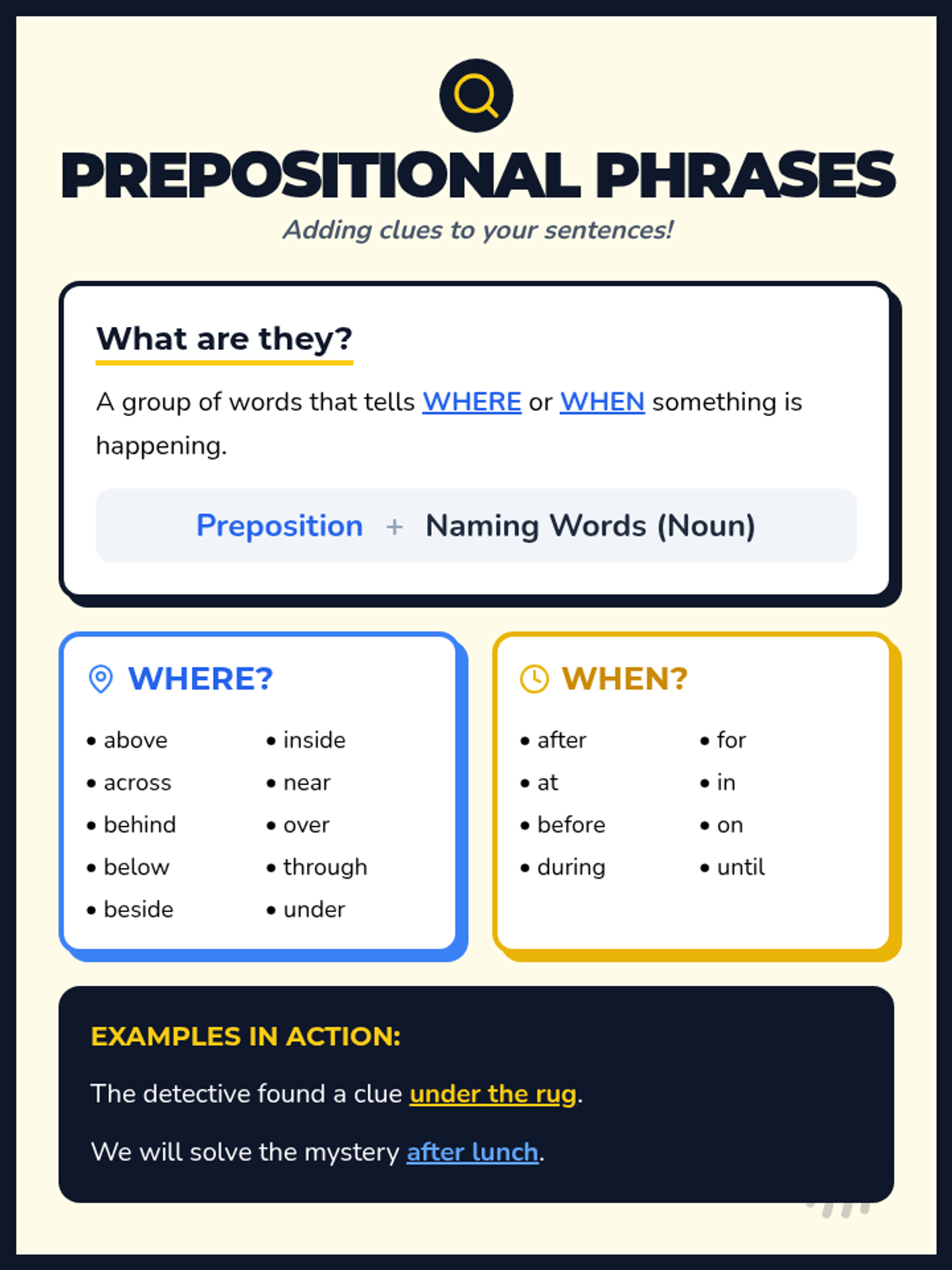
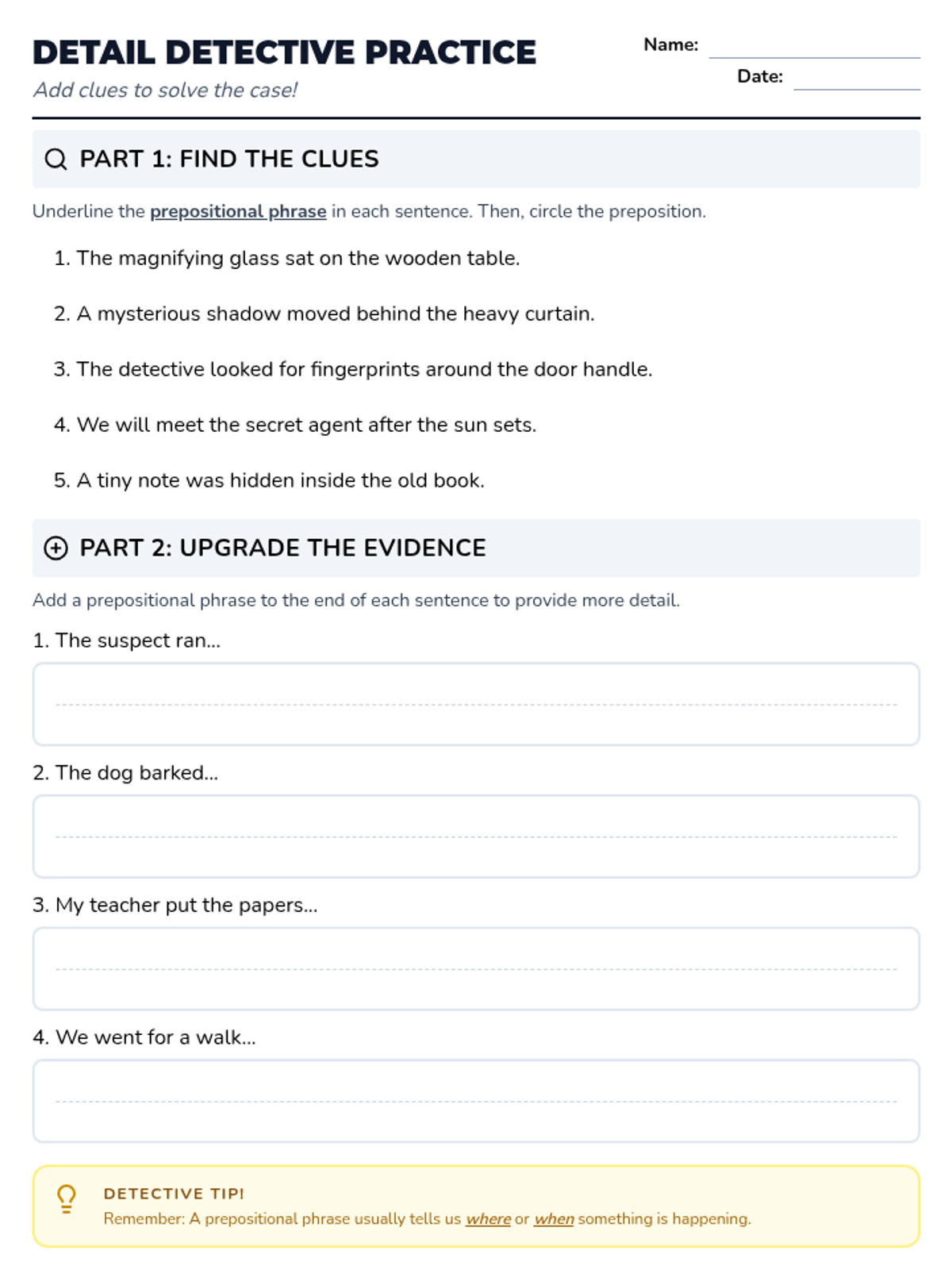
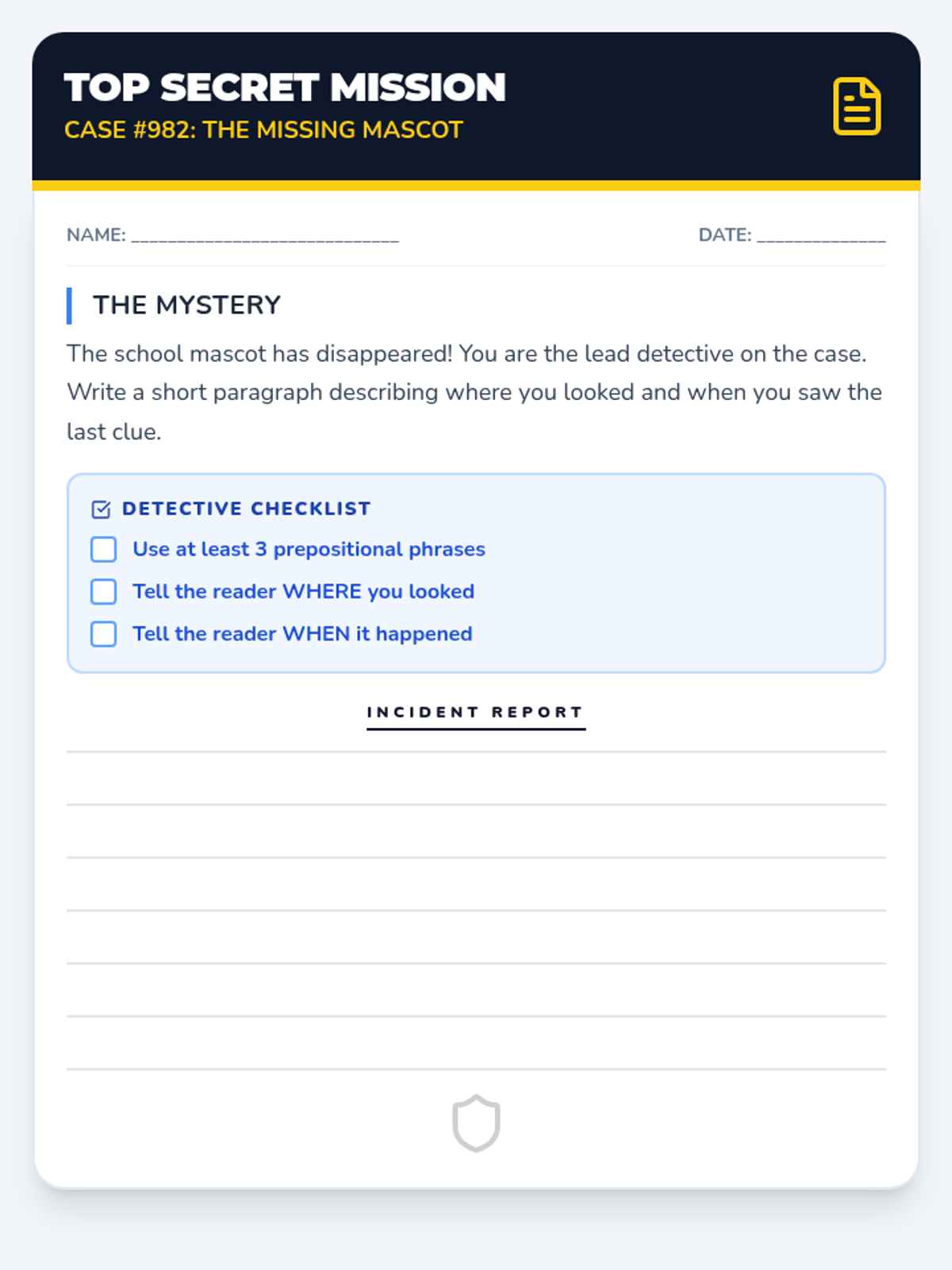
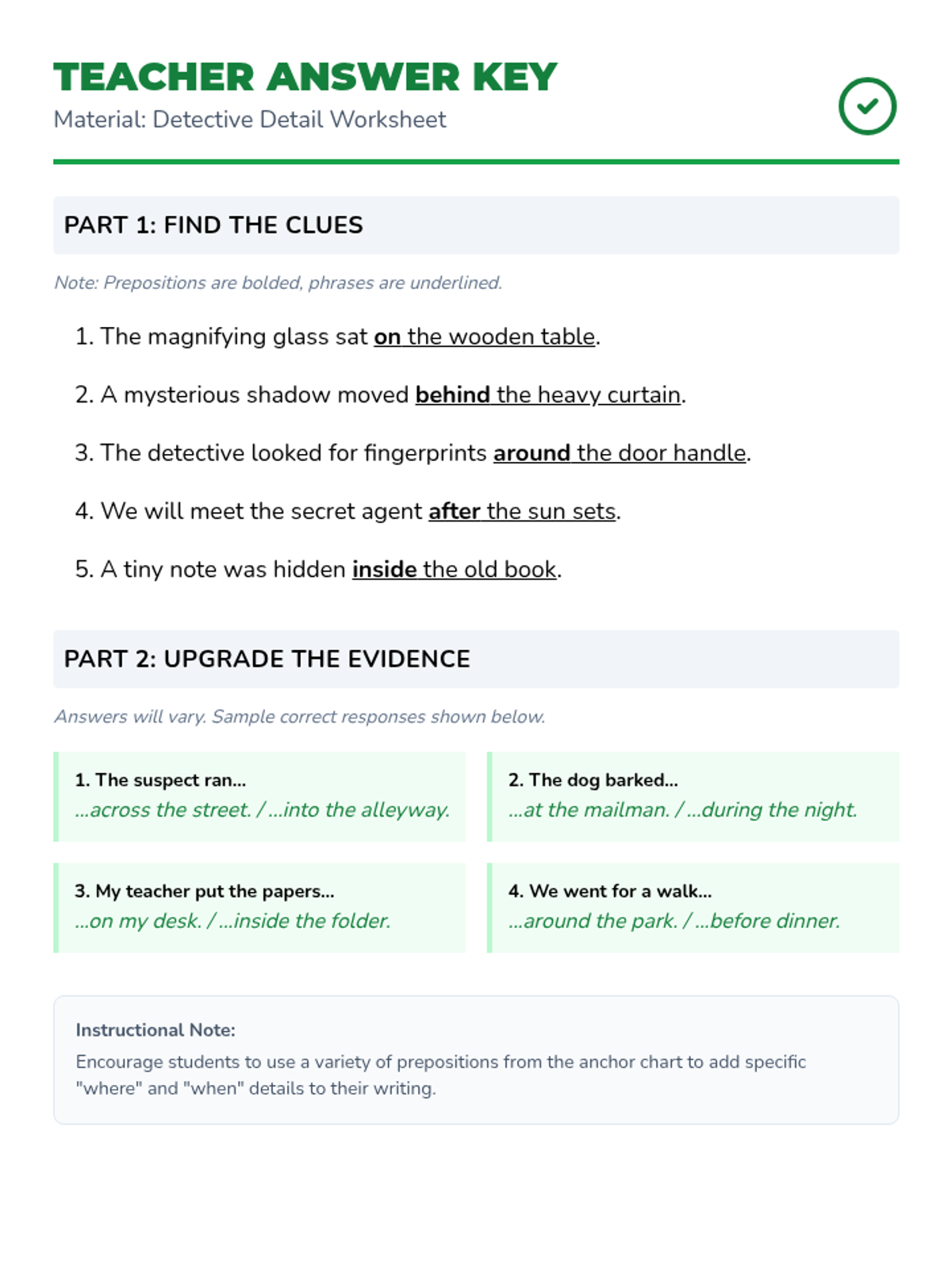
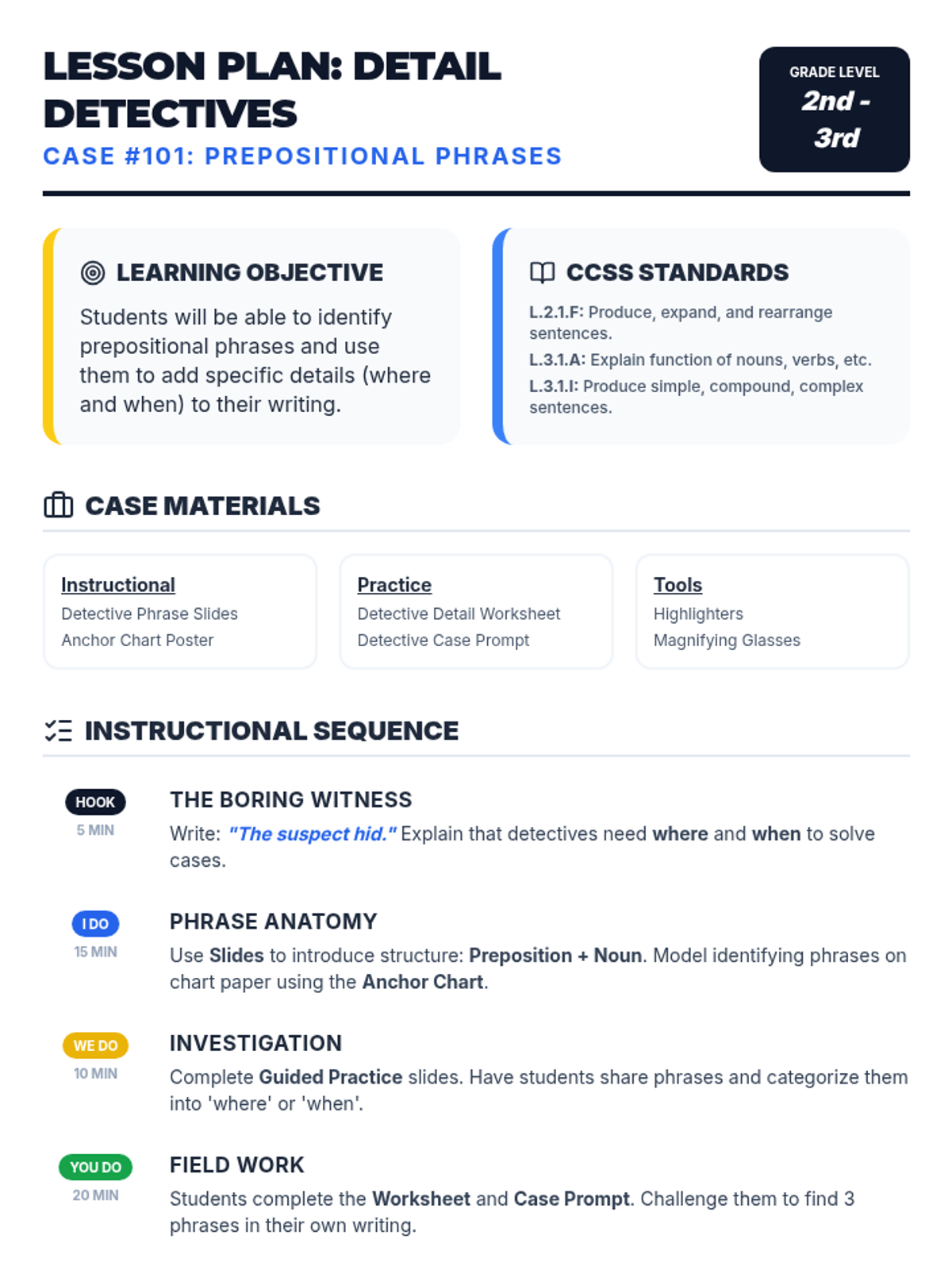
A lesson for 2nd and 3rd graders on using prepositional phrases to add specific details to their sentences, helping them describe where, when, and how things happen.