A lesson focused on the product and quotient properties of logarithms, specifically adding and subtracting logs. Designed with heavy scaffolding for a math resource setting.
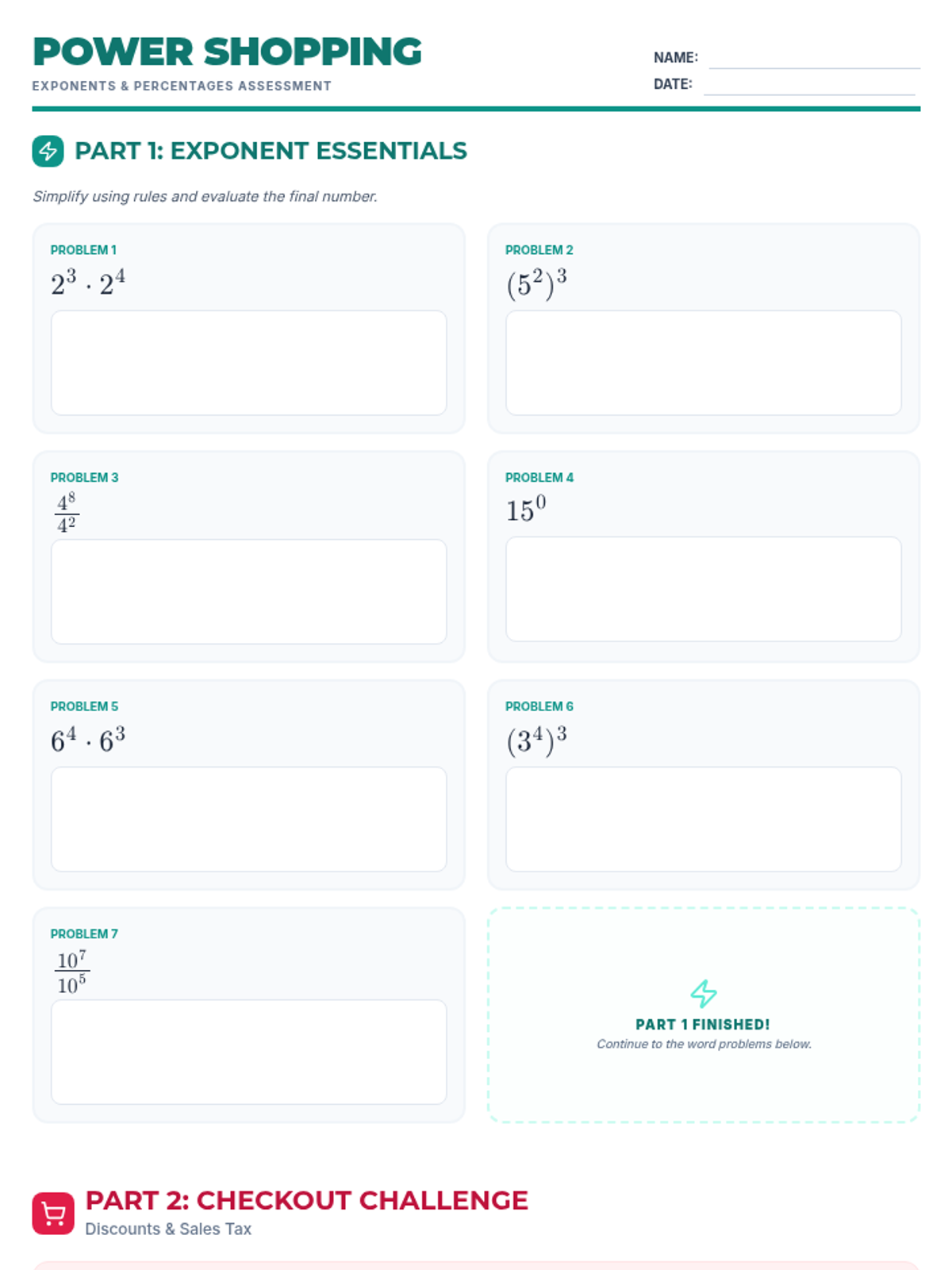
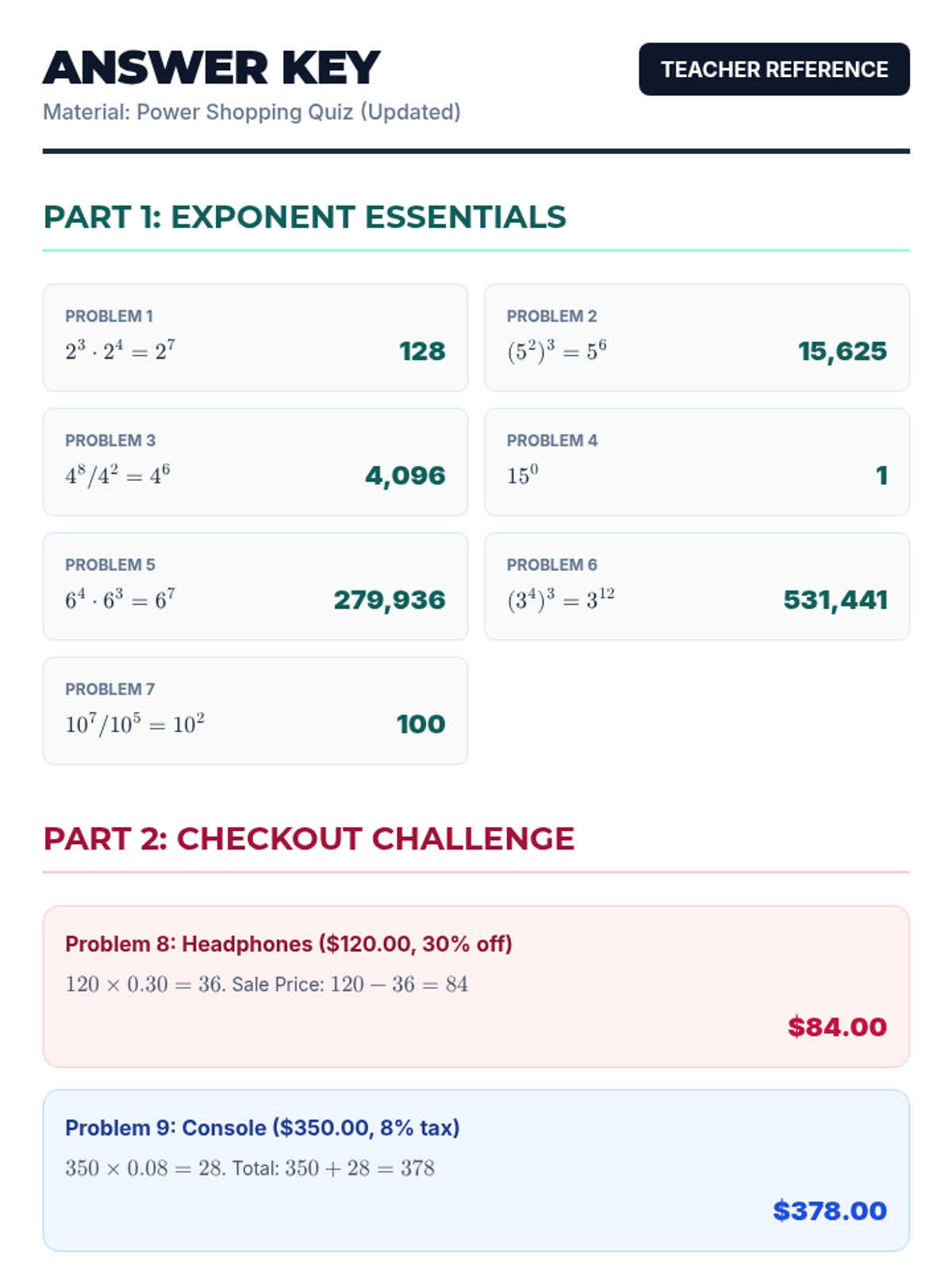
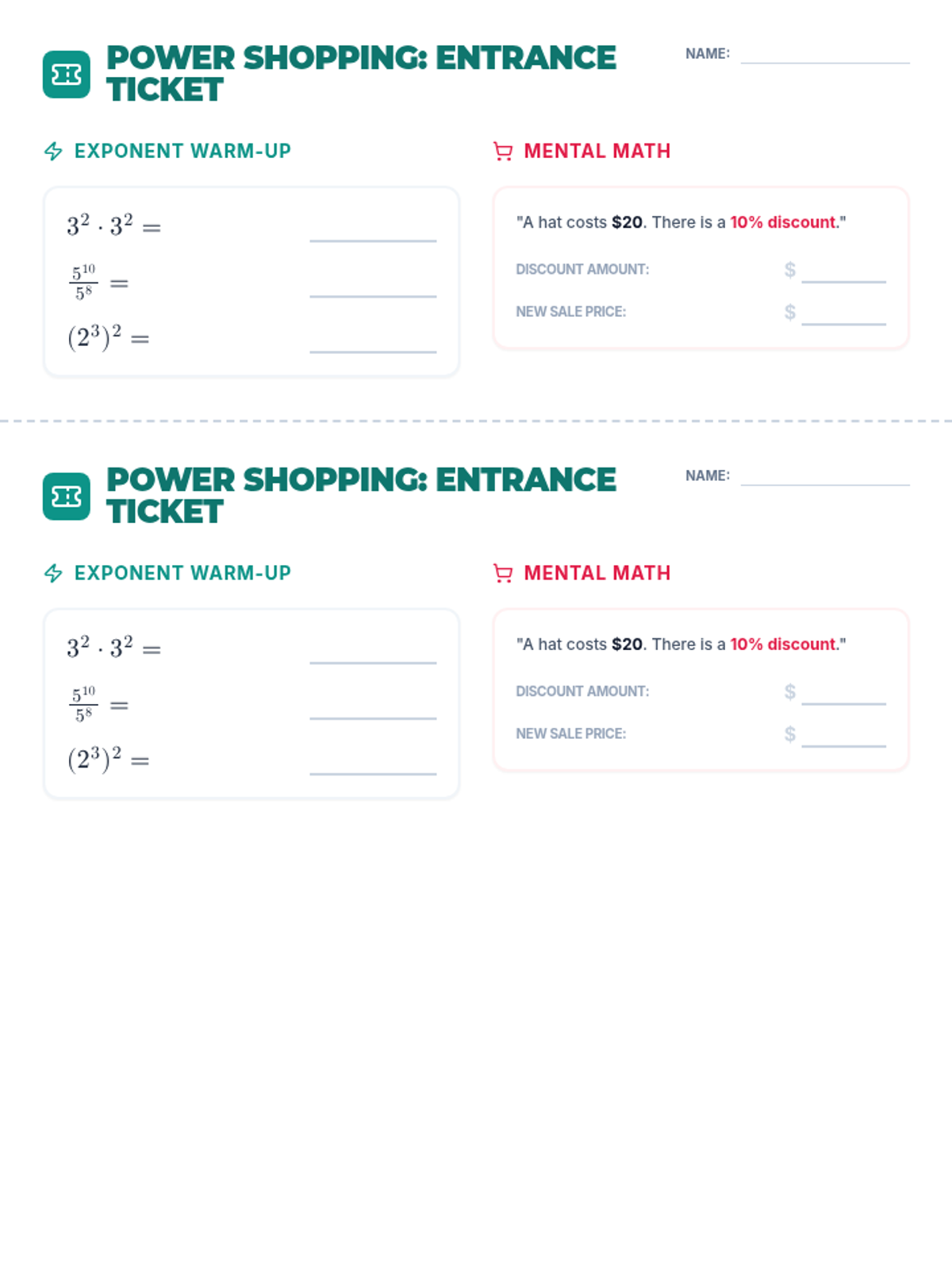
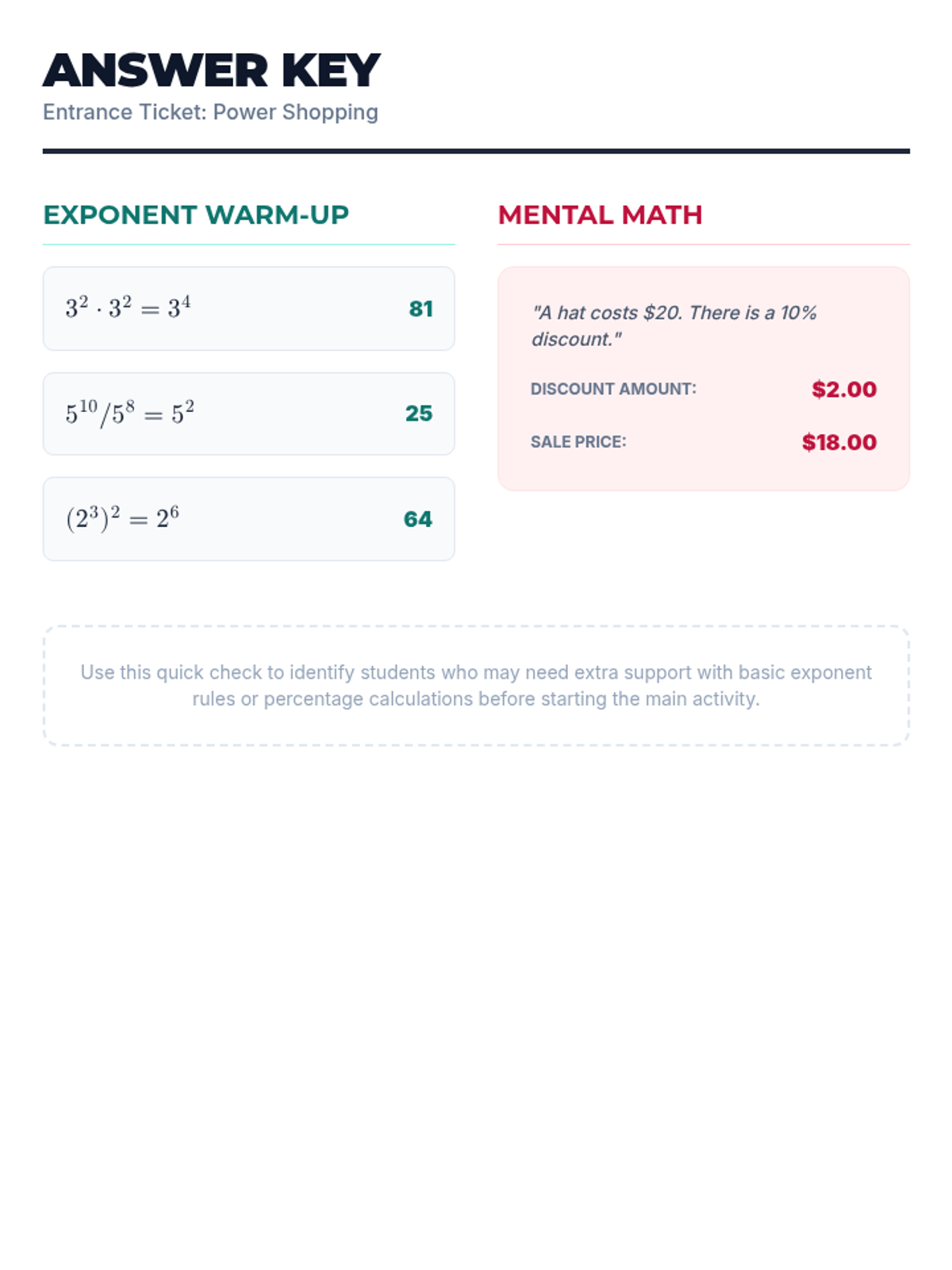
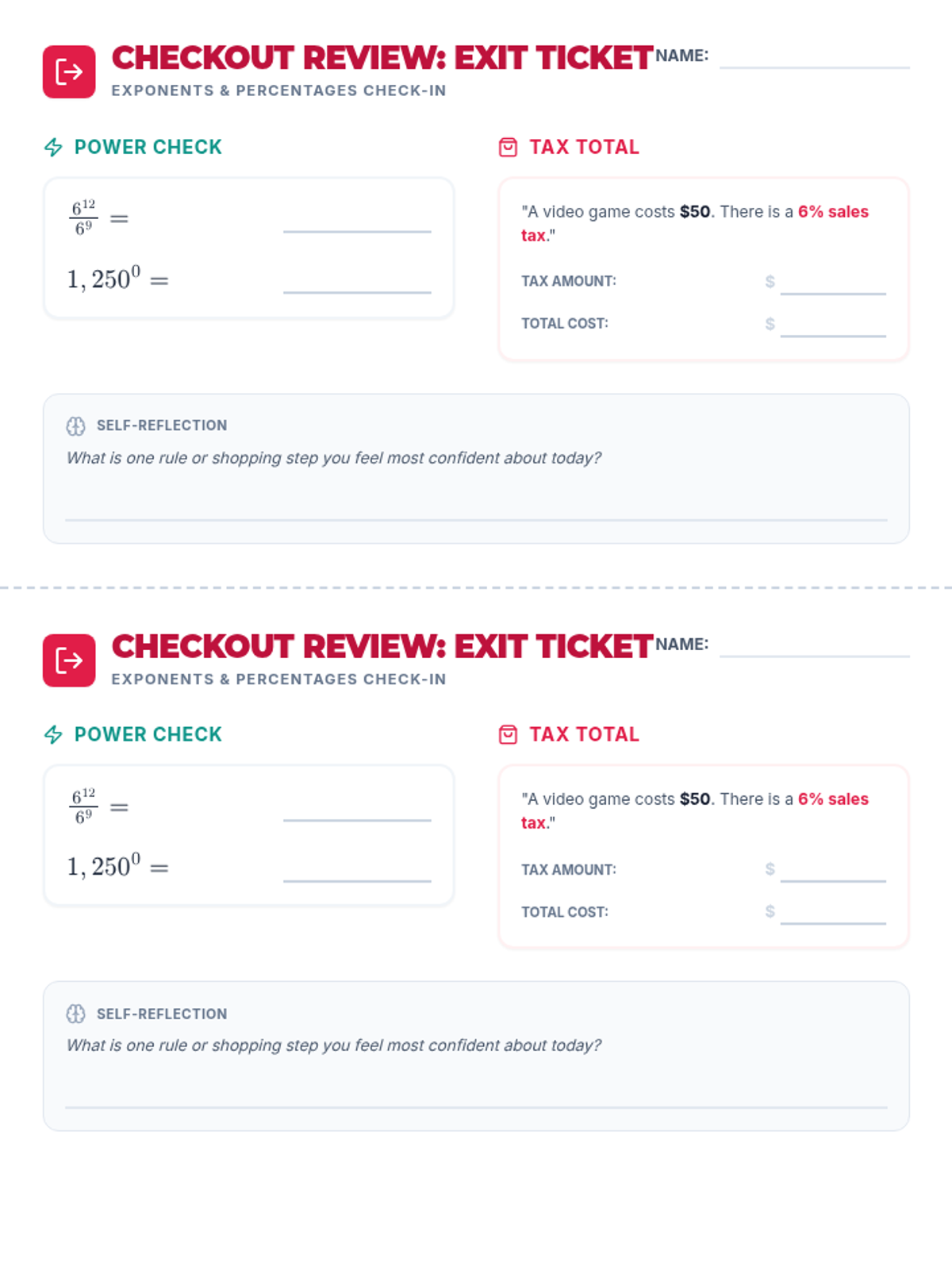
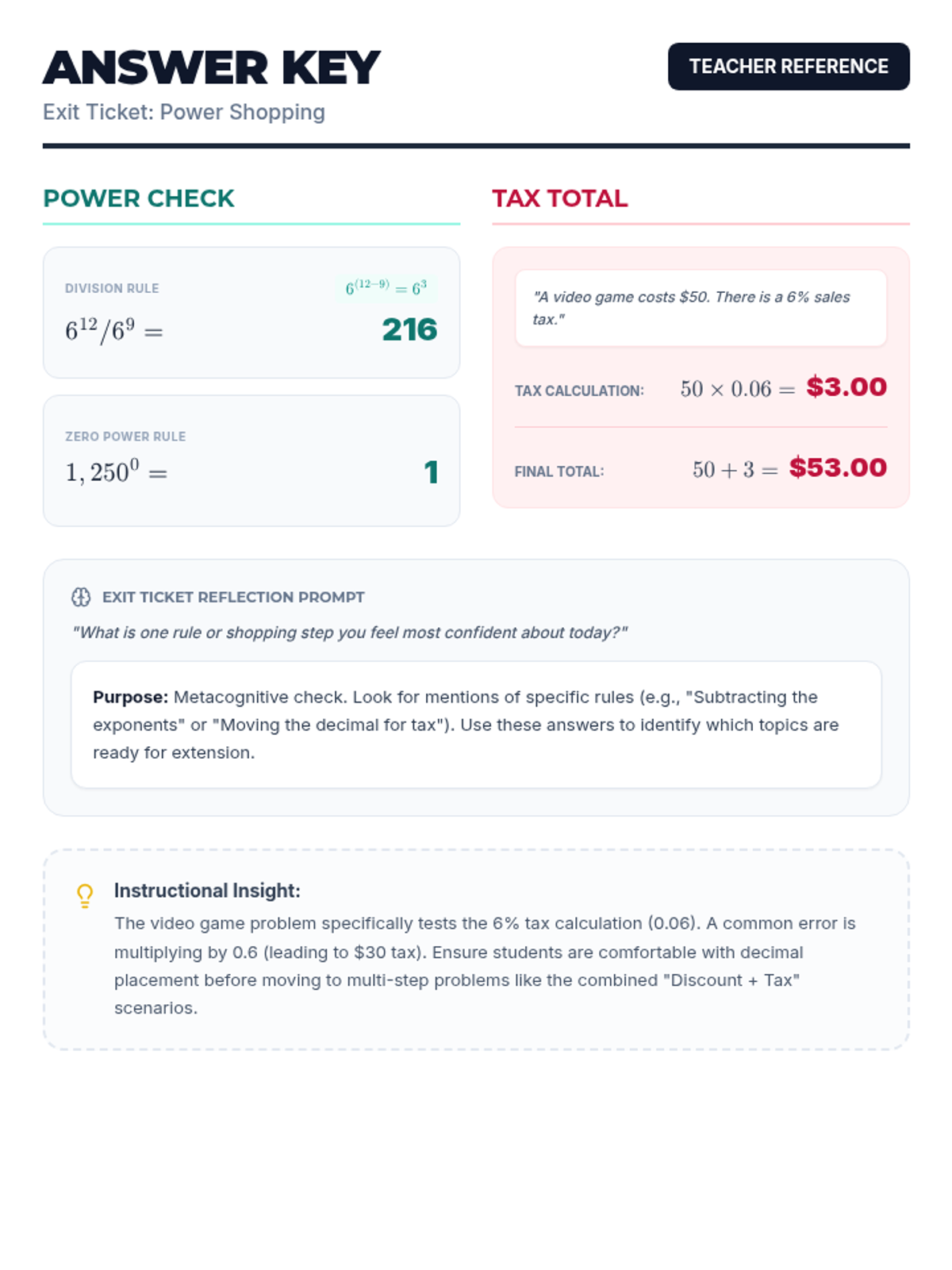
A math assessment focusing on basic exponent rules and real-world percentage applications involving sales tax and discounts.
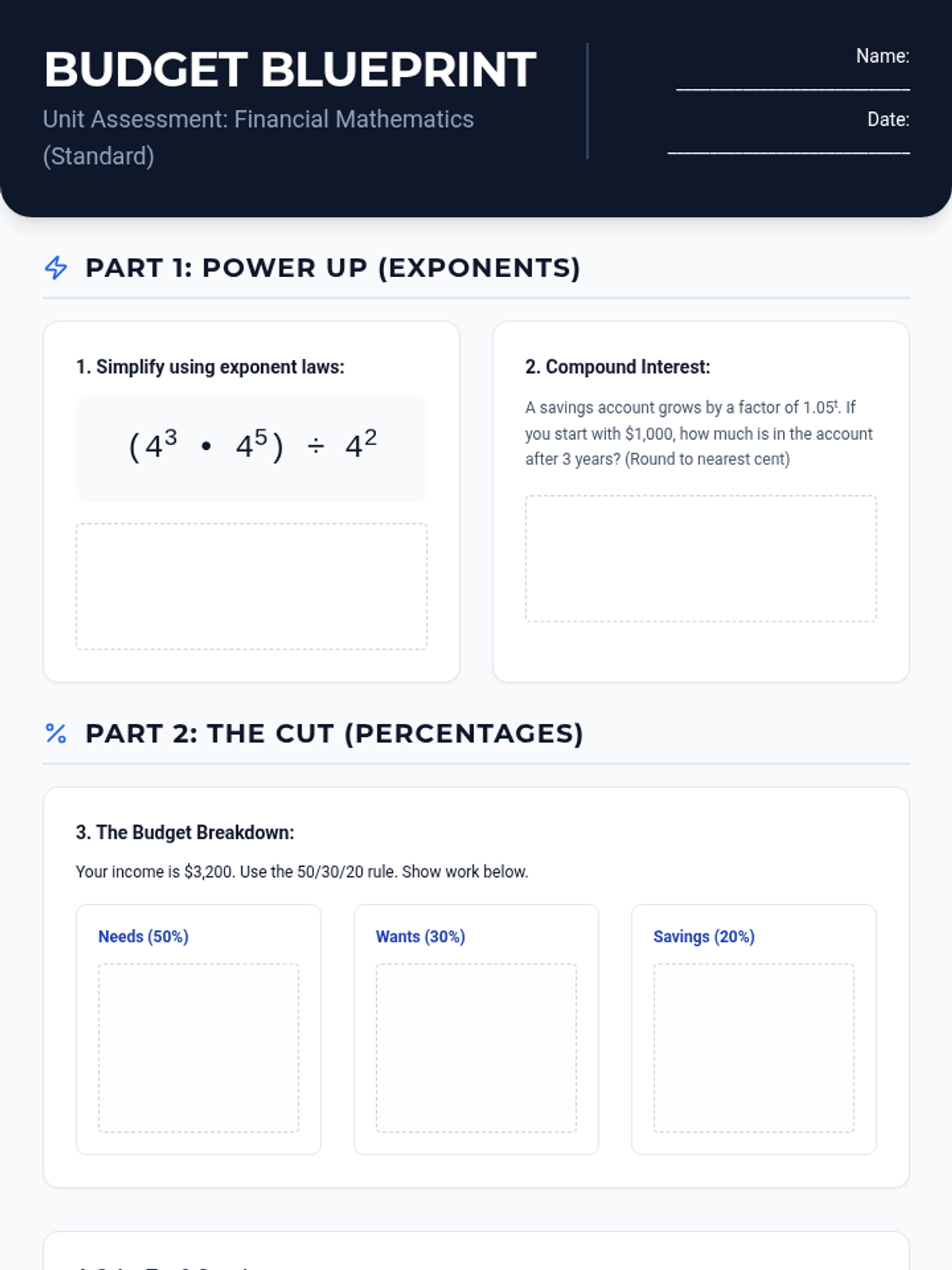
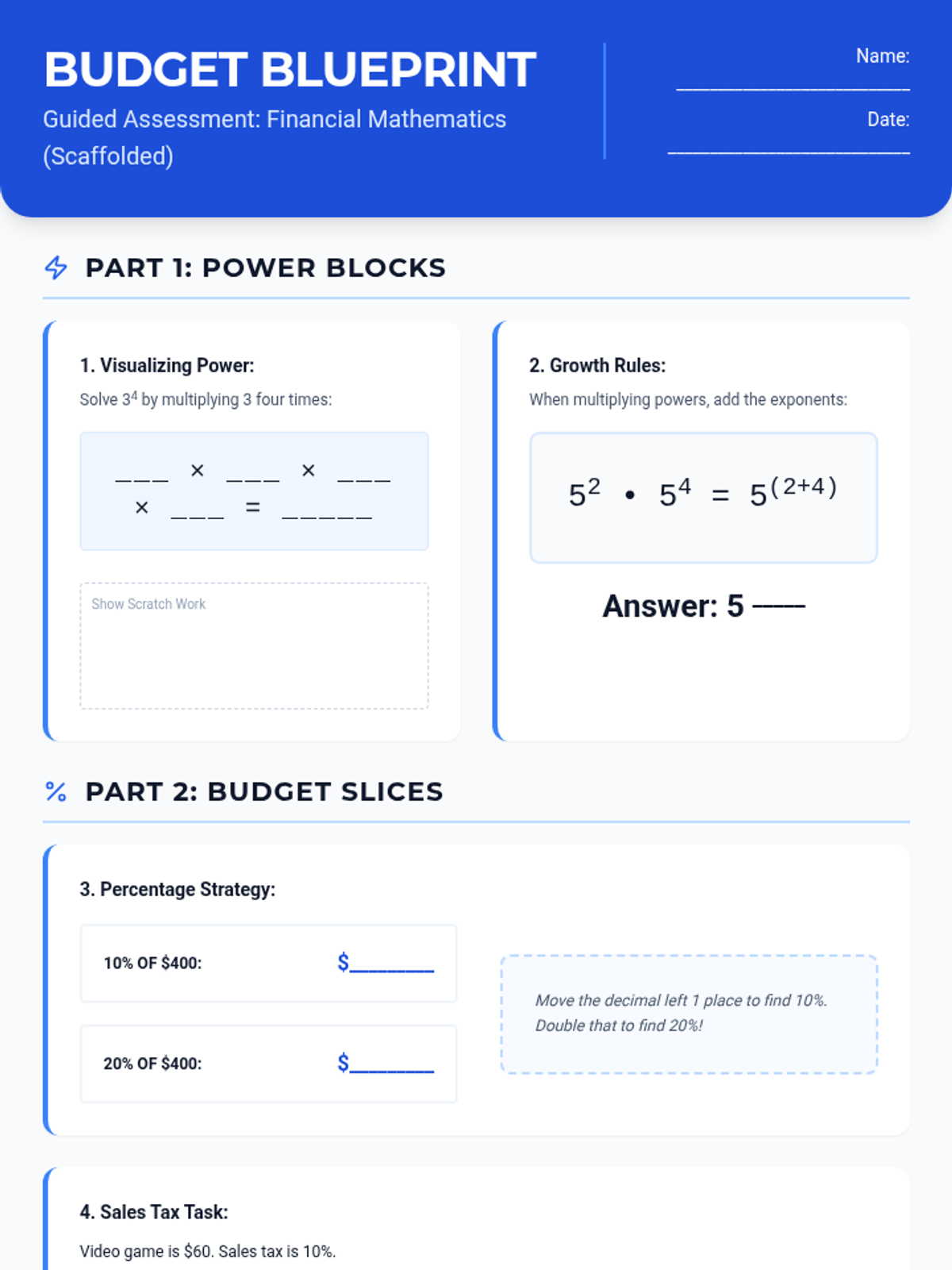
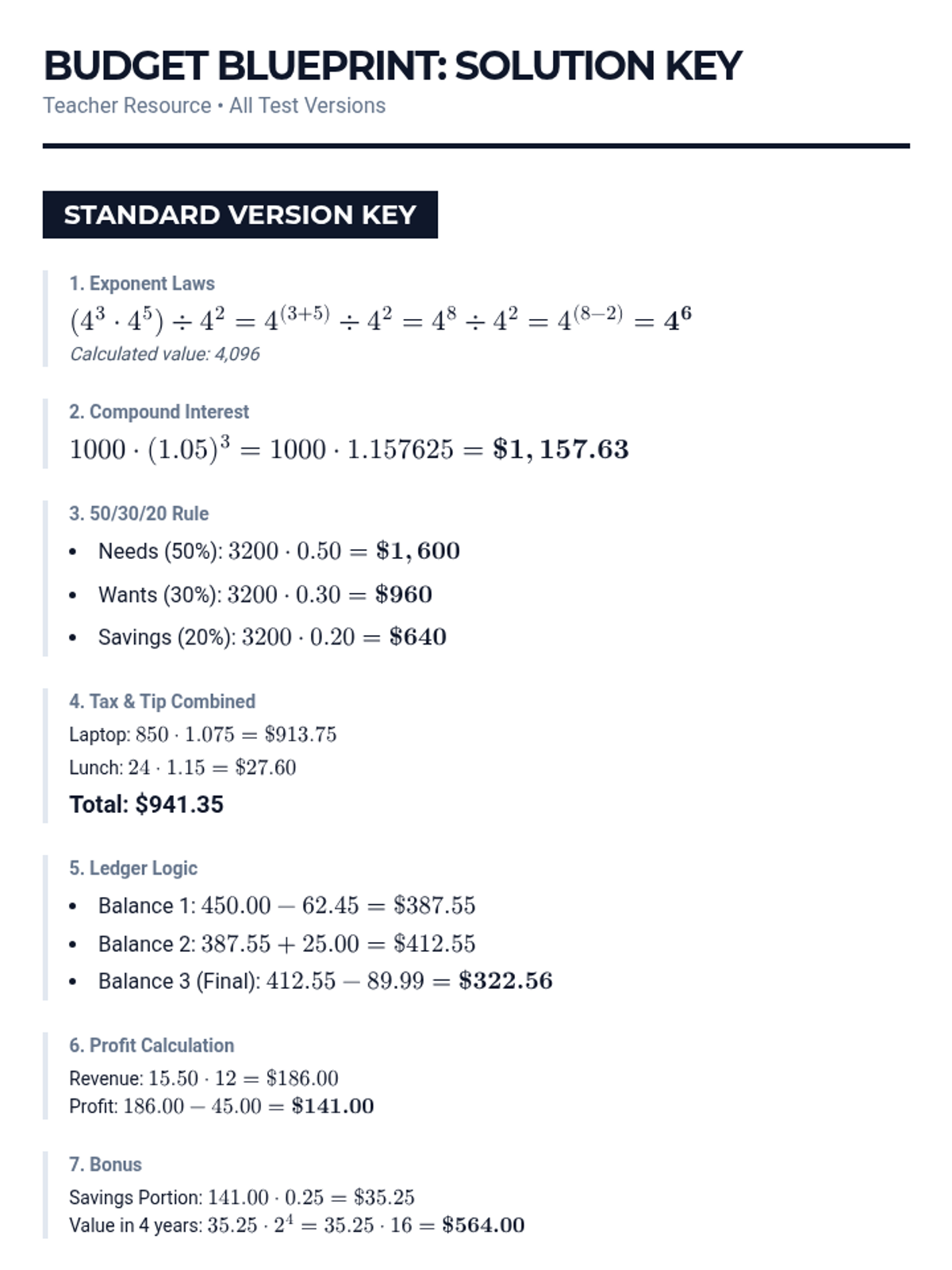
A lesson focused on applying exponent rules, percentage calculations, and basic arithmetic to real-world financial scenarios and budgeting. Includes two differentiated versions of a comprehensive unit test to support varied learning needs.
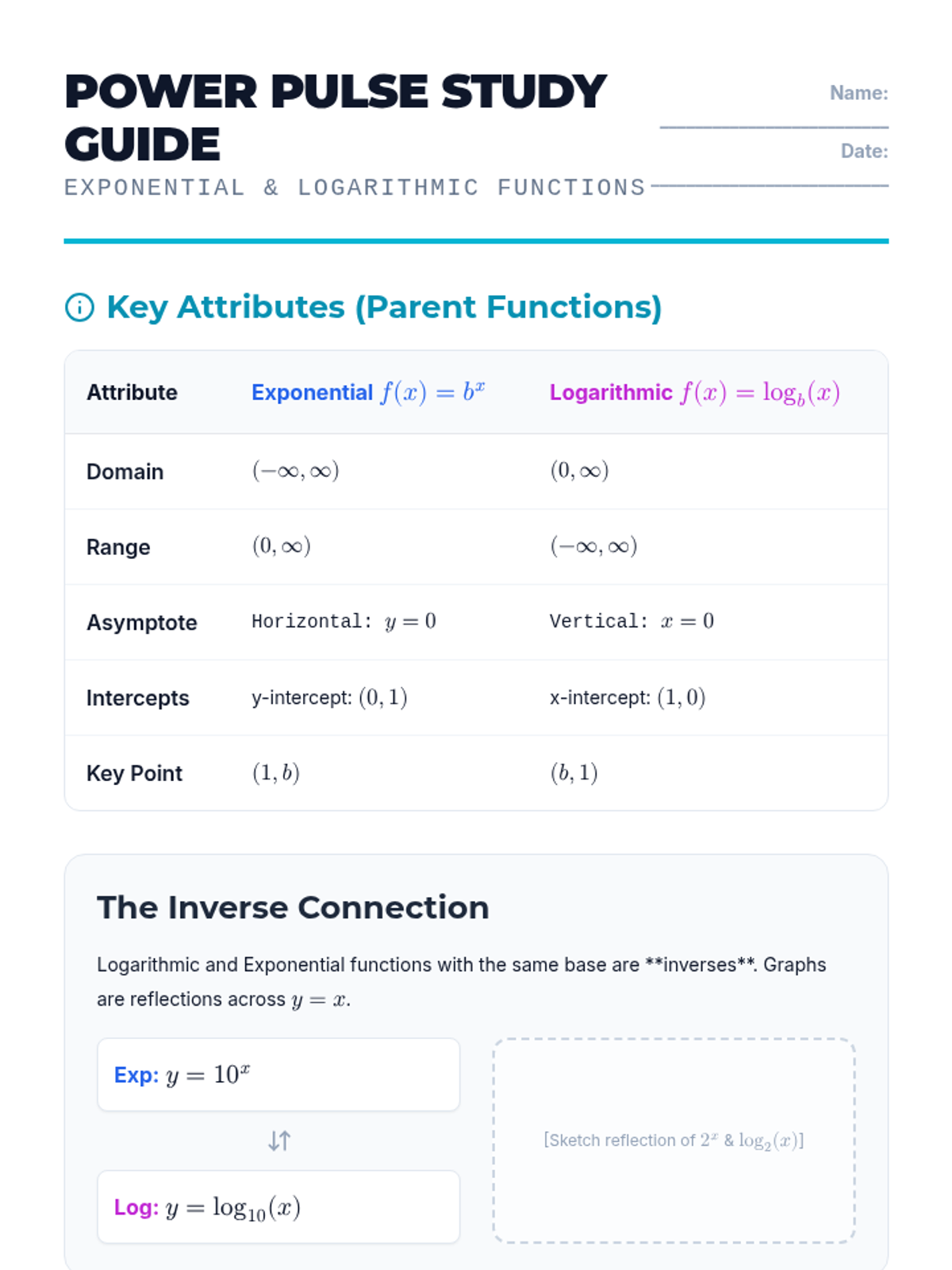
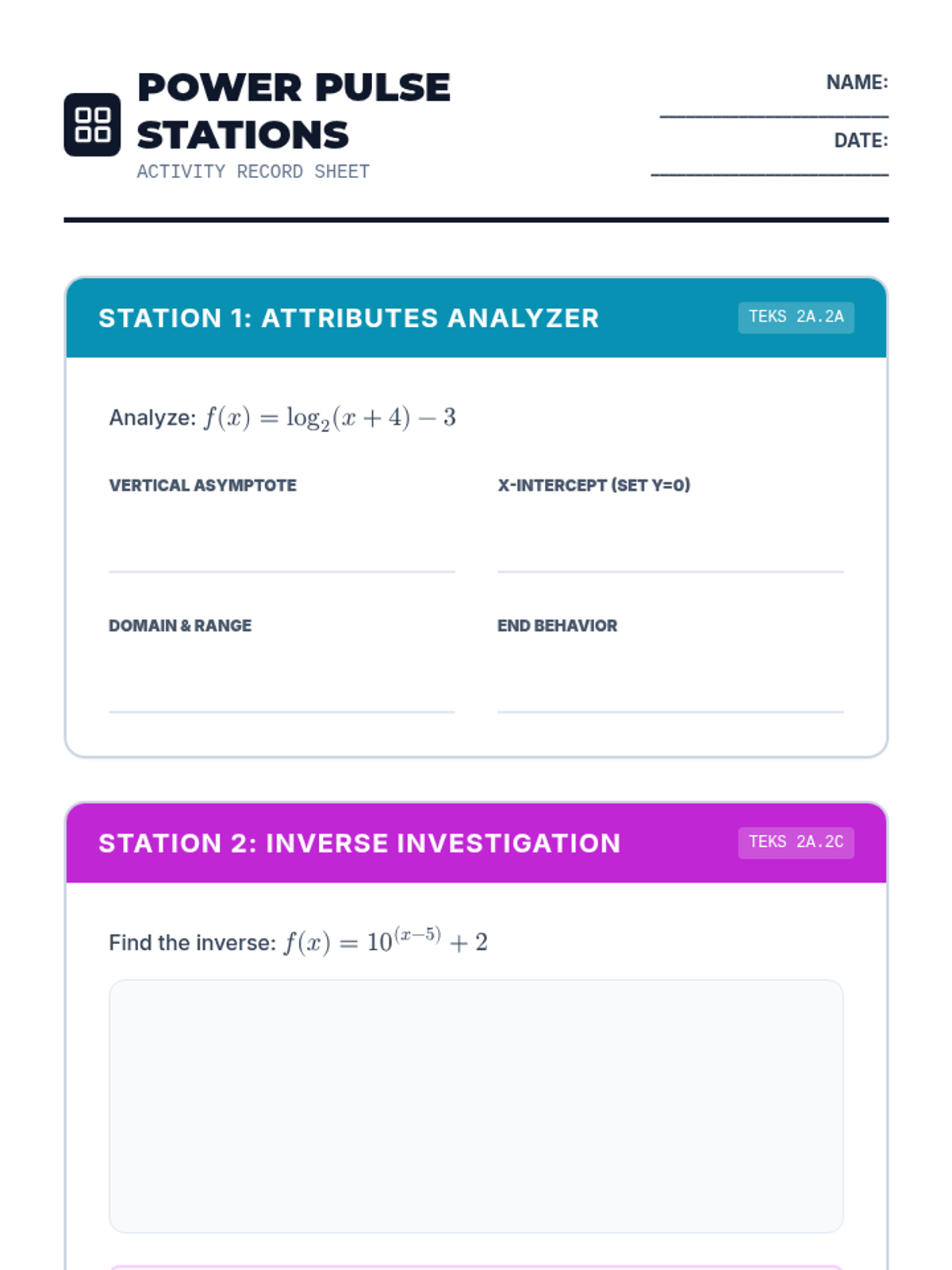
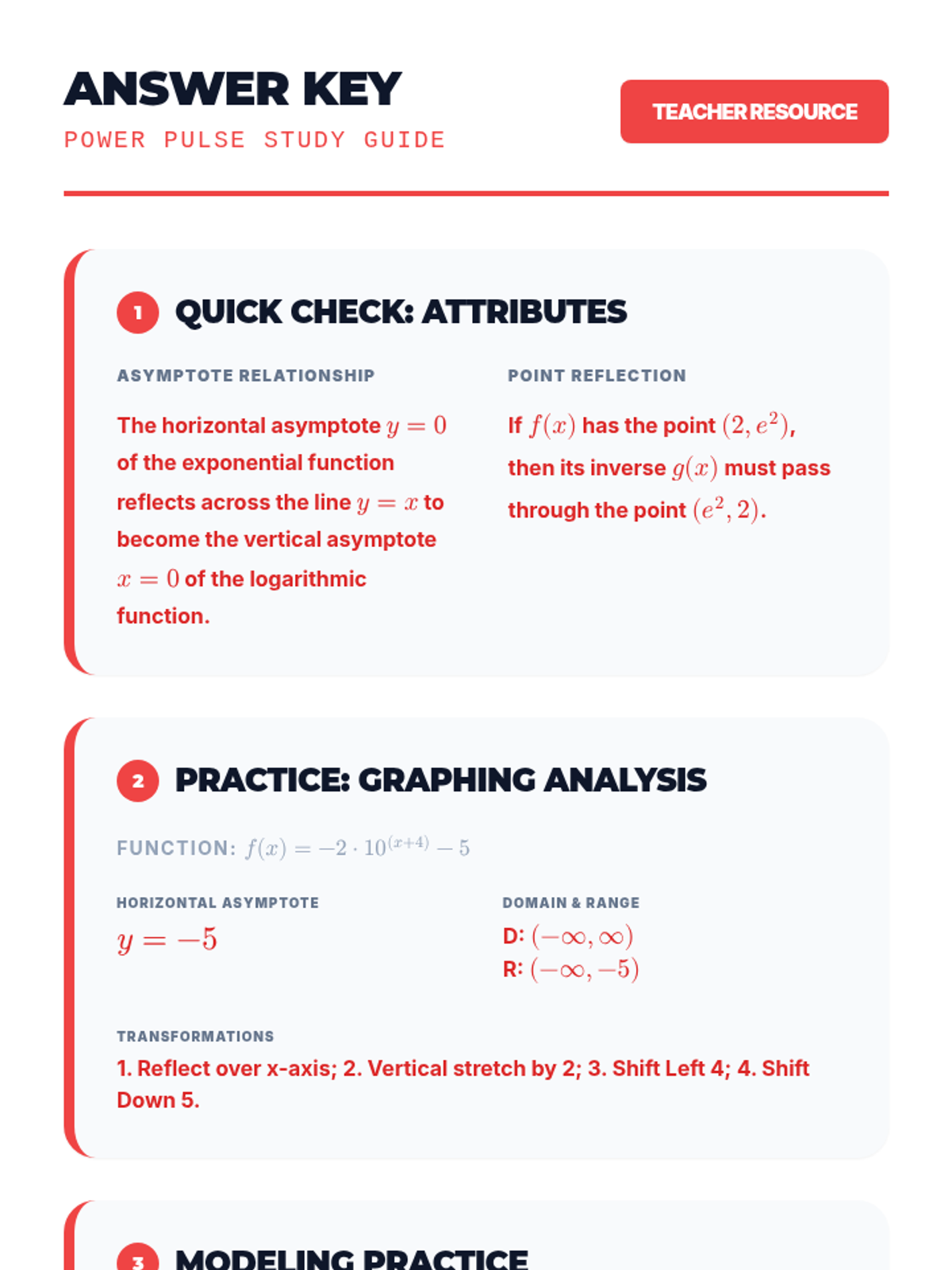
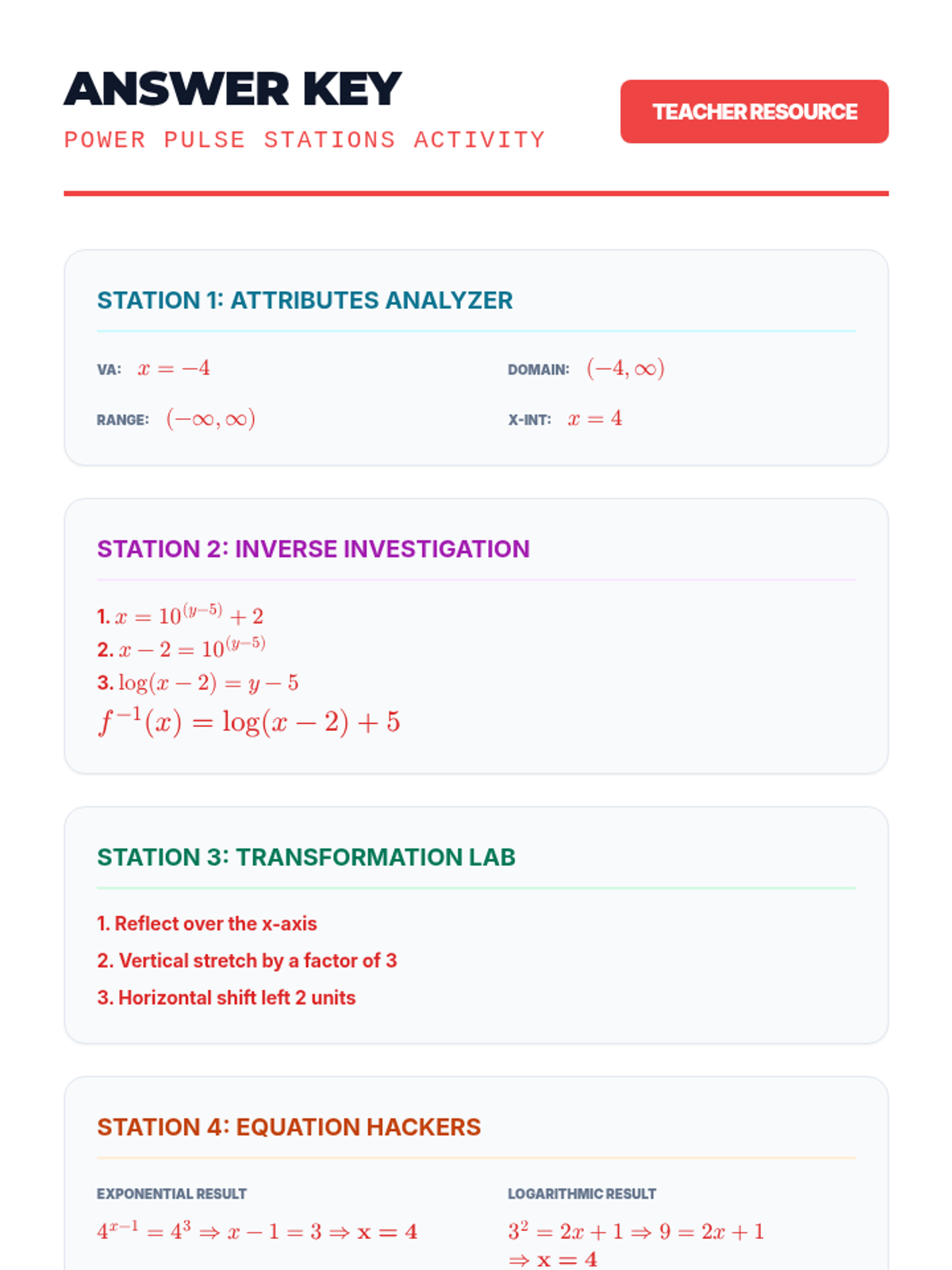
A comprehensive review of exponential and logarithmic functions, focusing on graphing attributes, transformations, inverse relationships, solving equations, and data modeling based on Texas Algebra 2 standards.
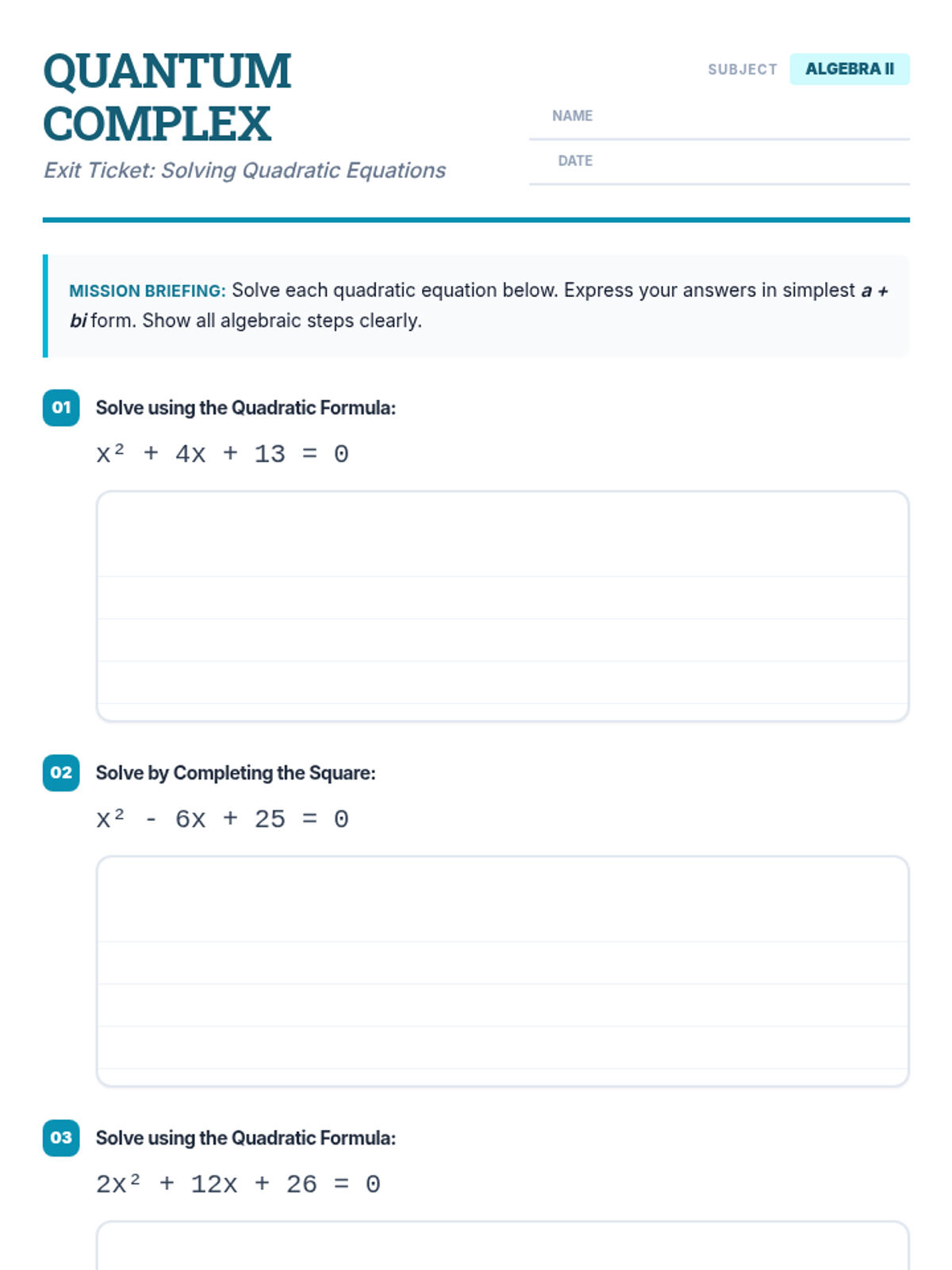
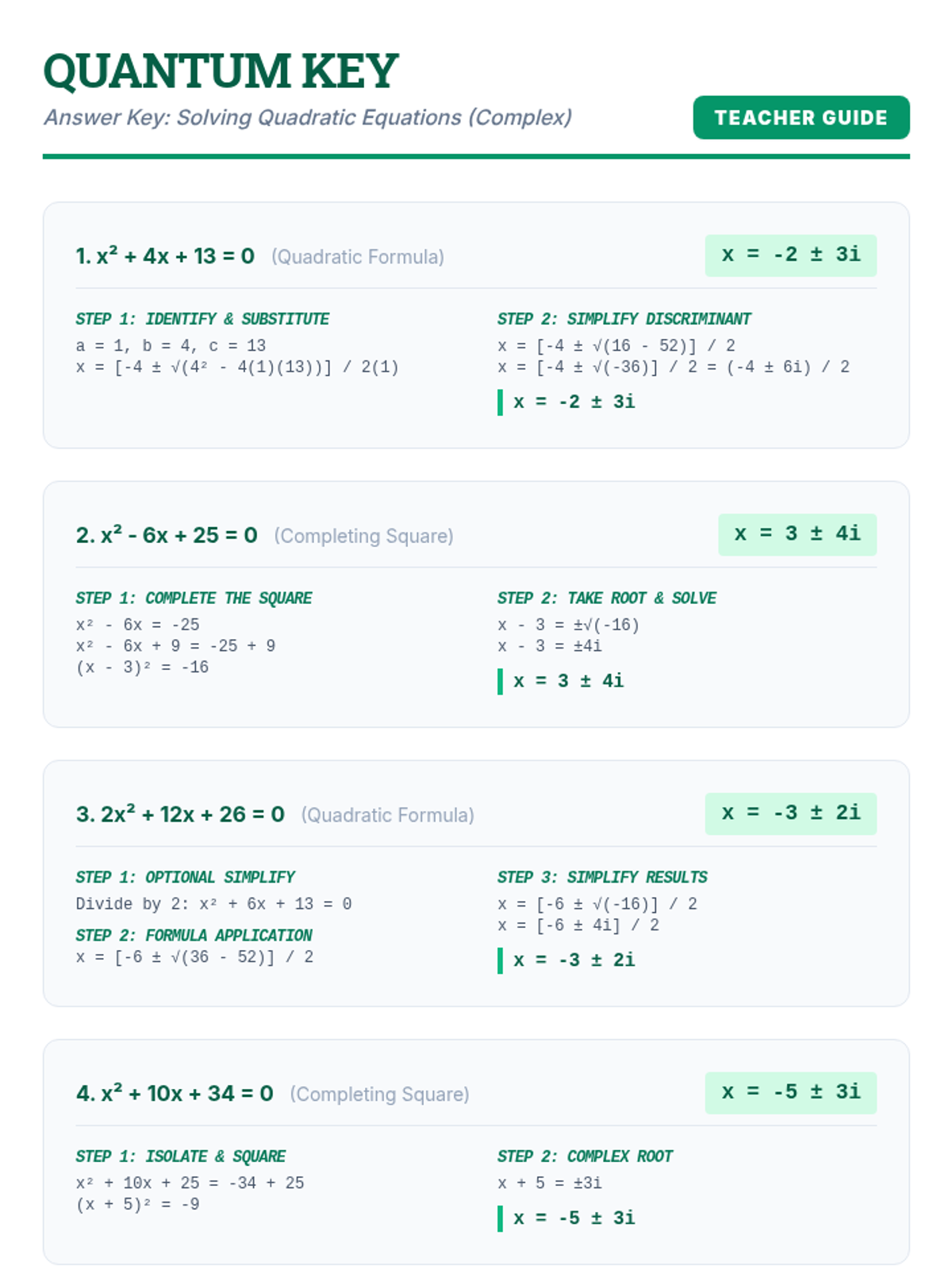
A quick assessment focusing on solving quadratic equations that result in complex solutions using the Quadratic Formula and Completing the Square.
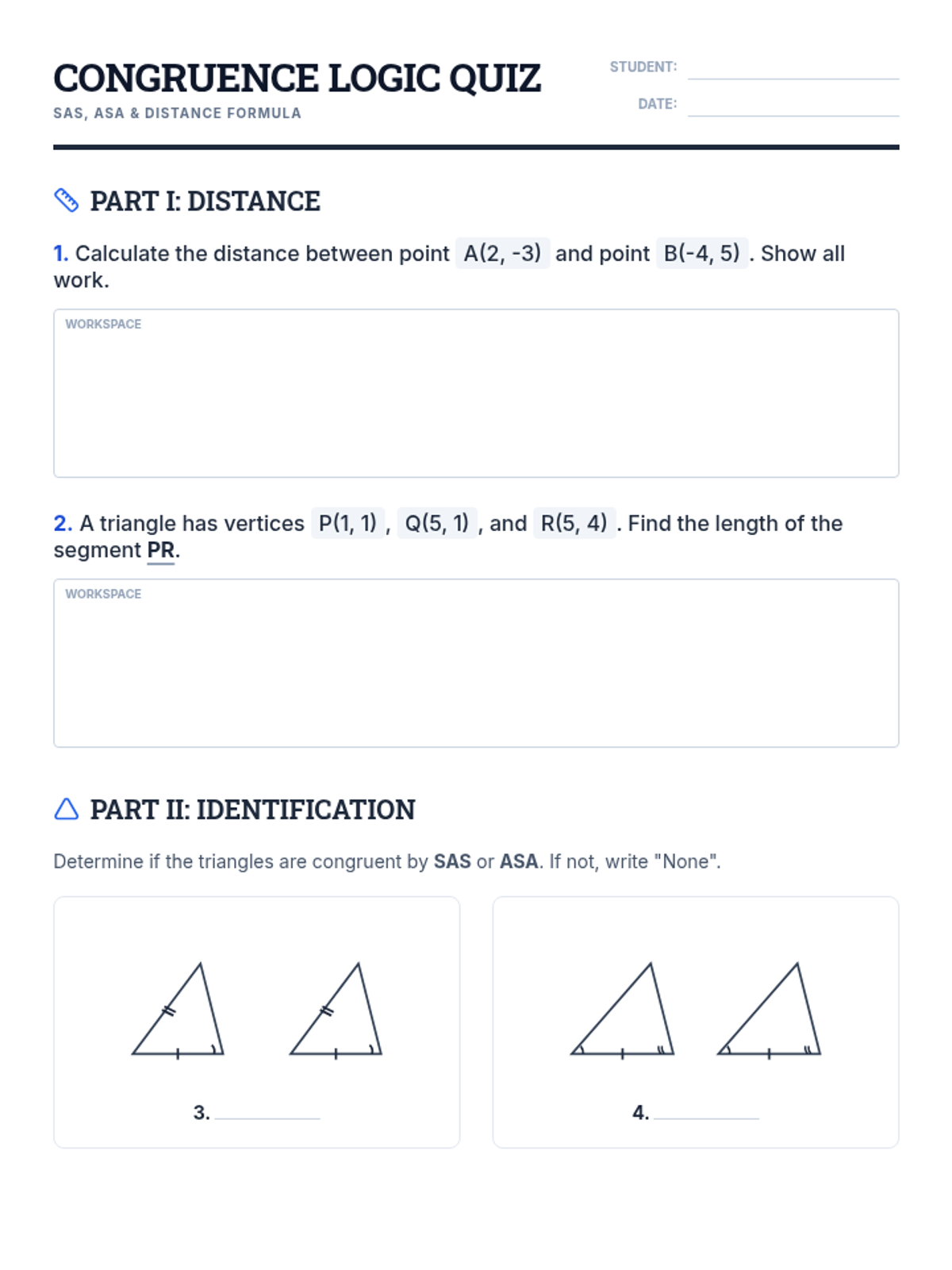
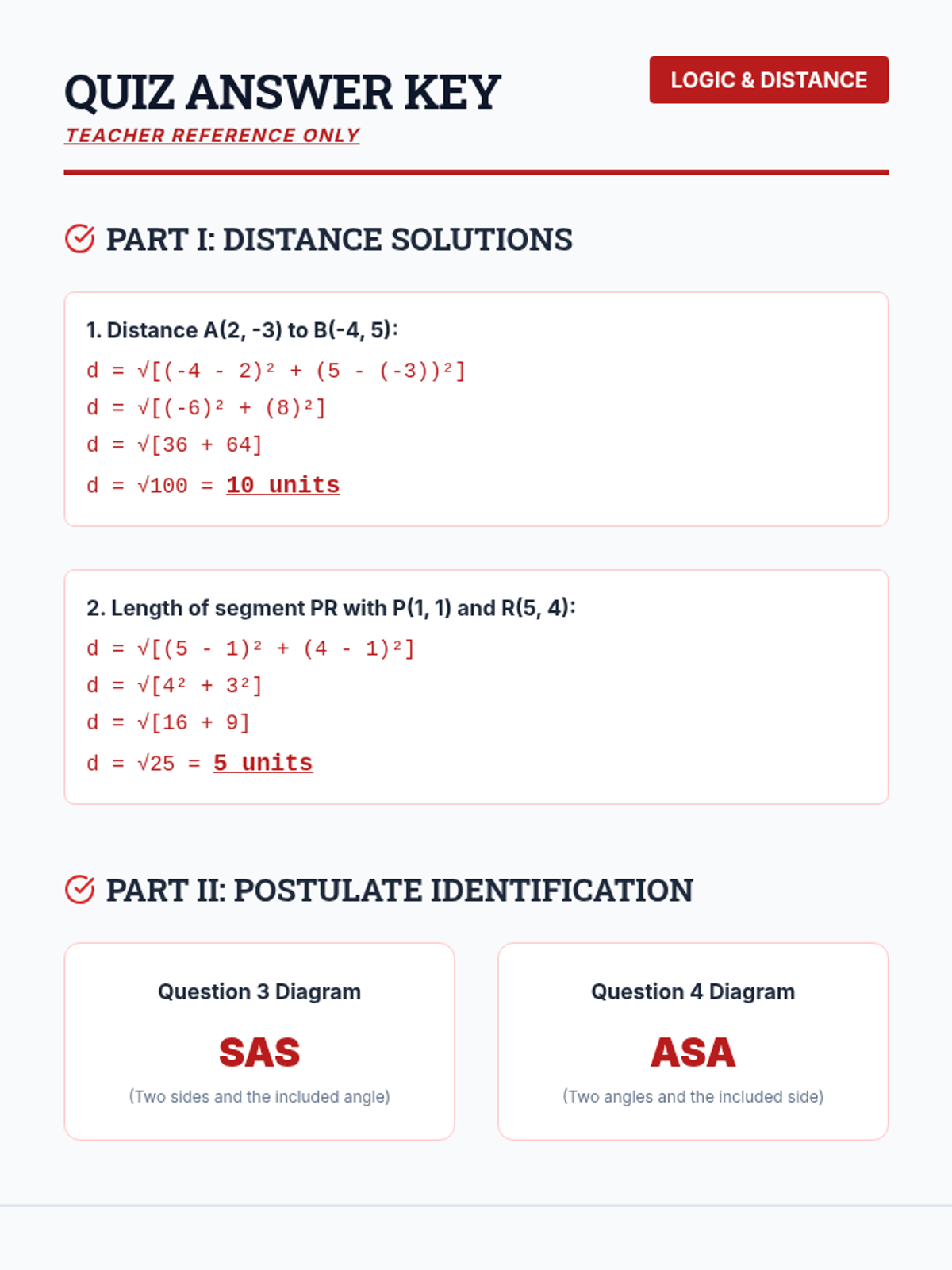
A lesson focusing on the practical application of the Distance Formula and the logical structure of SAS and ASA congruence proofs.
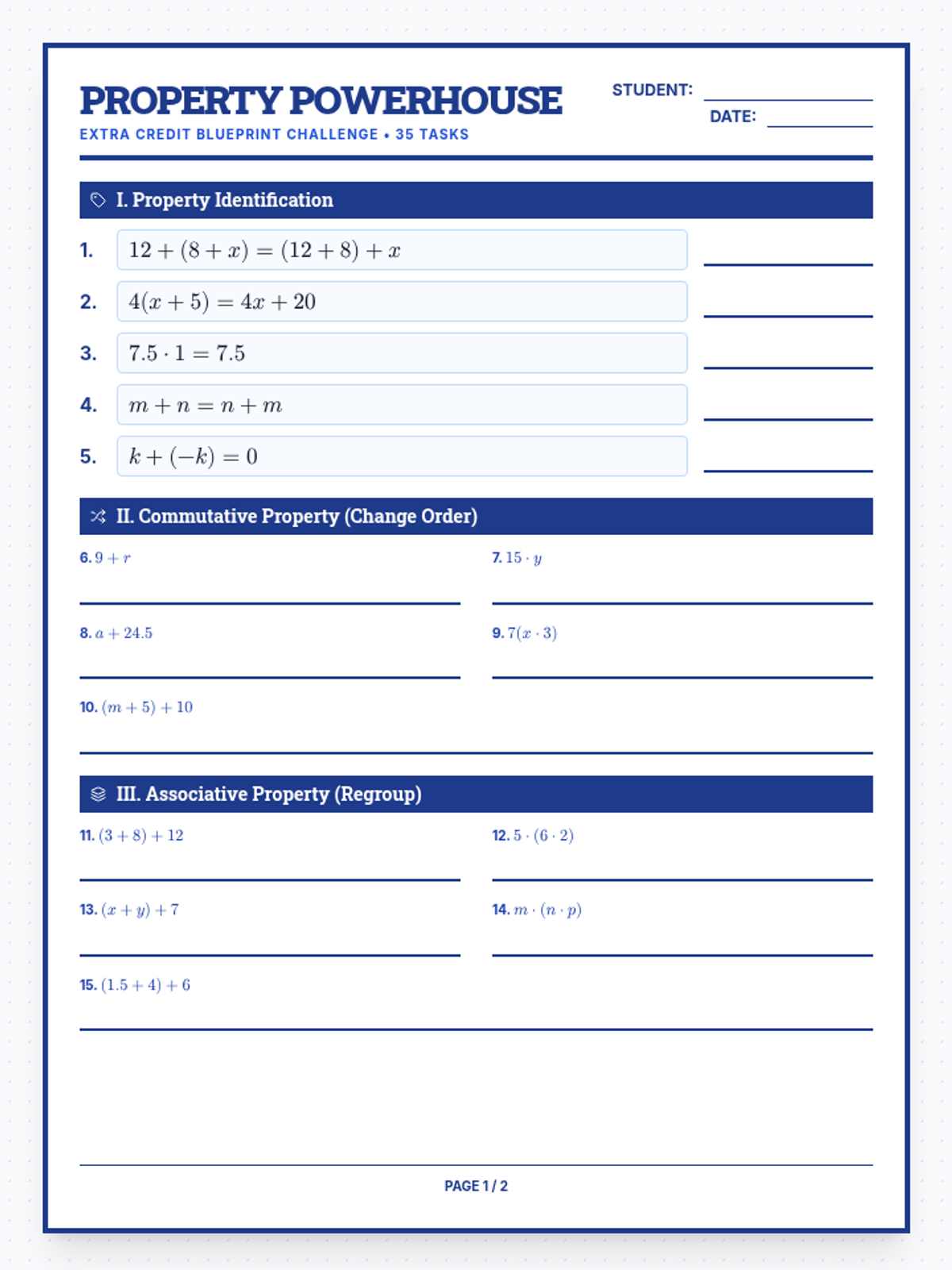
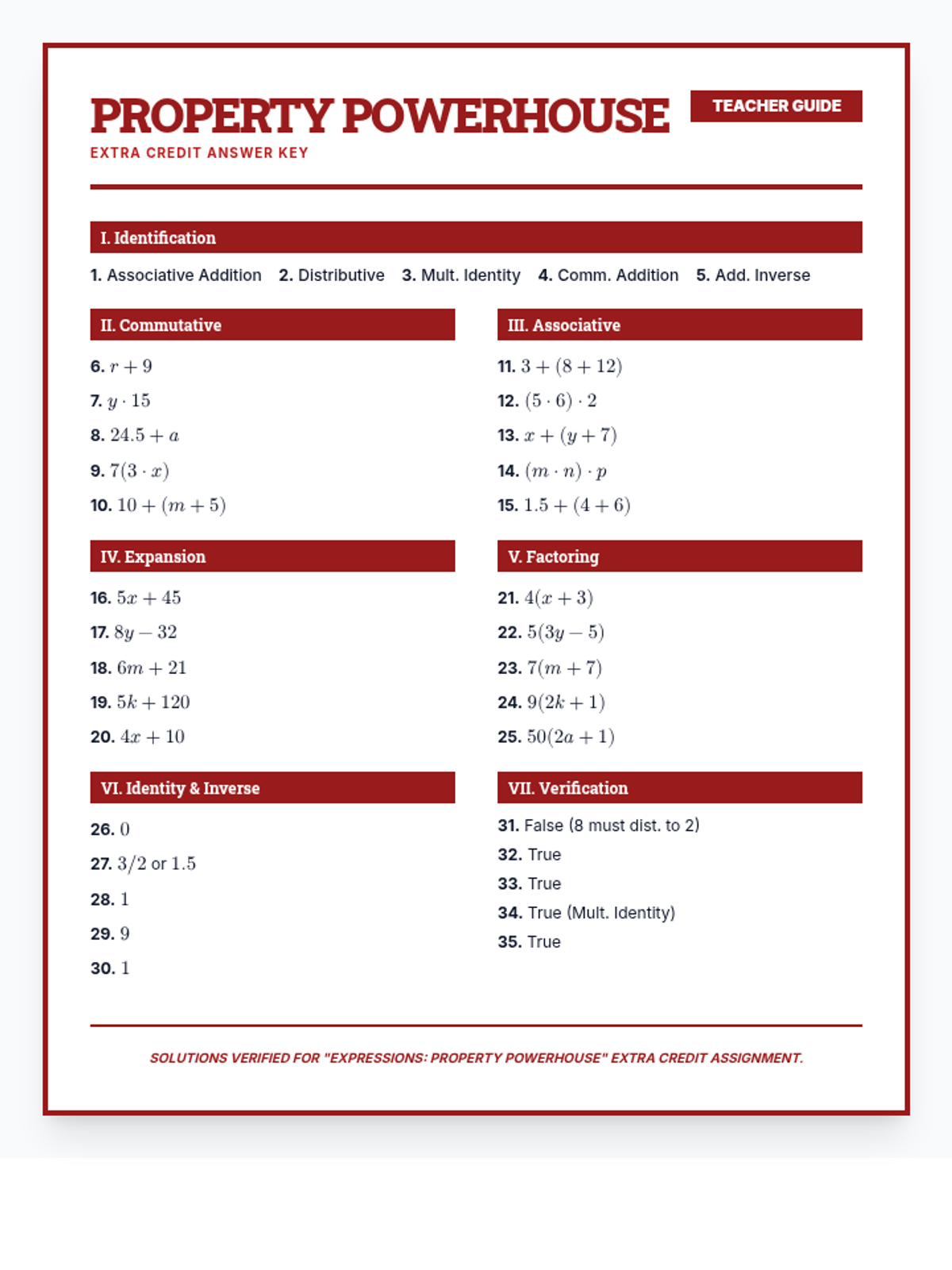
A deep dive into the fundamental properties of operations, focusing on the distributive, commutative, associative, identity, and inverse properties through a comprehensive 35-question extra credit challenge.
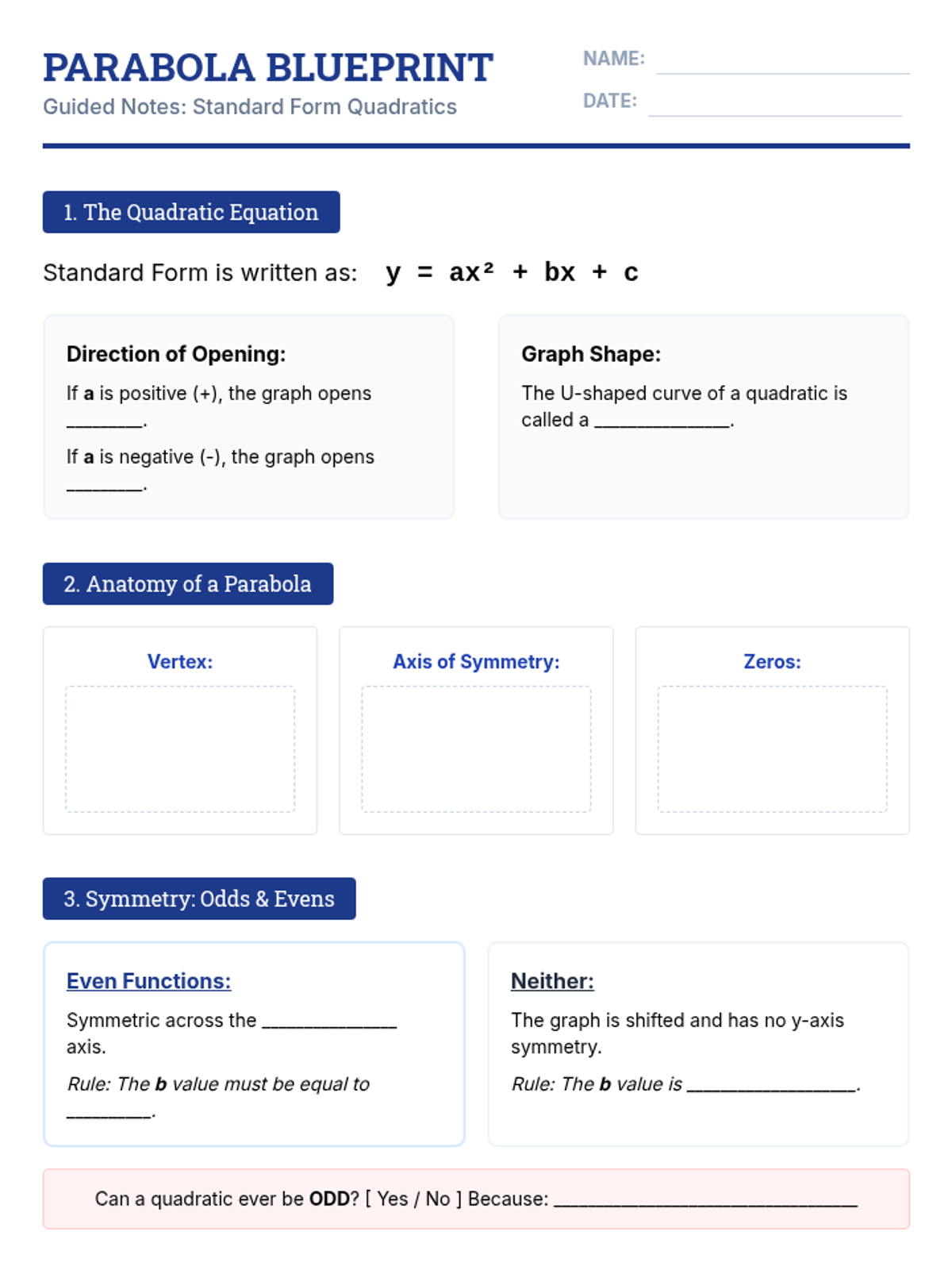
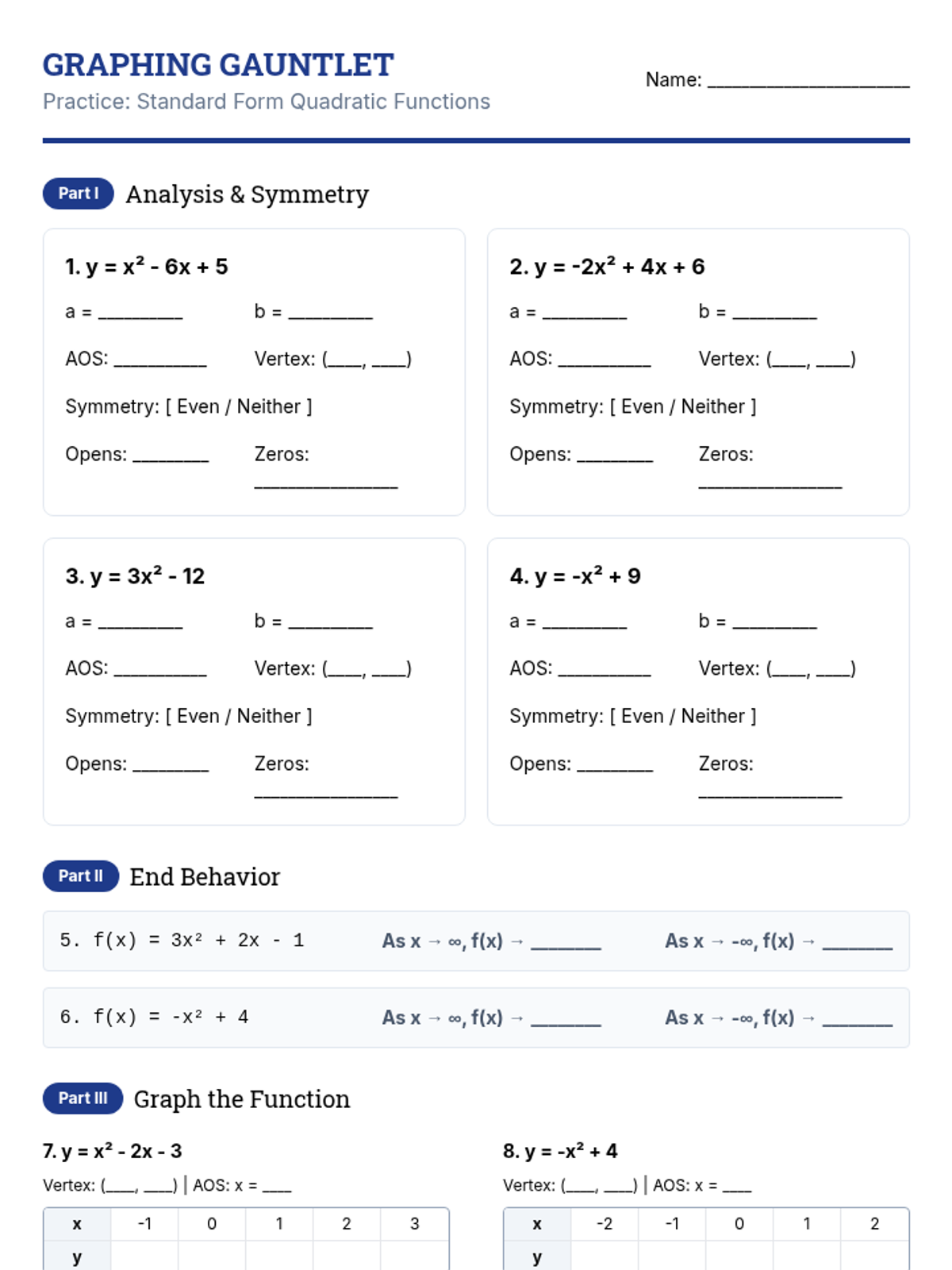
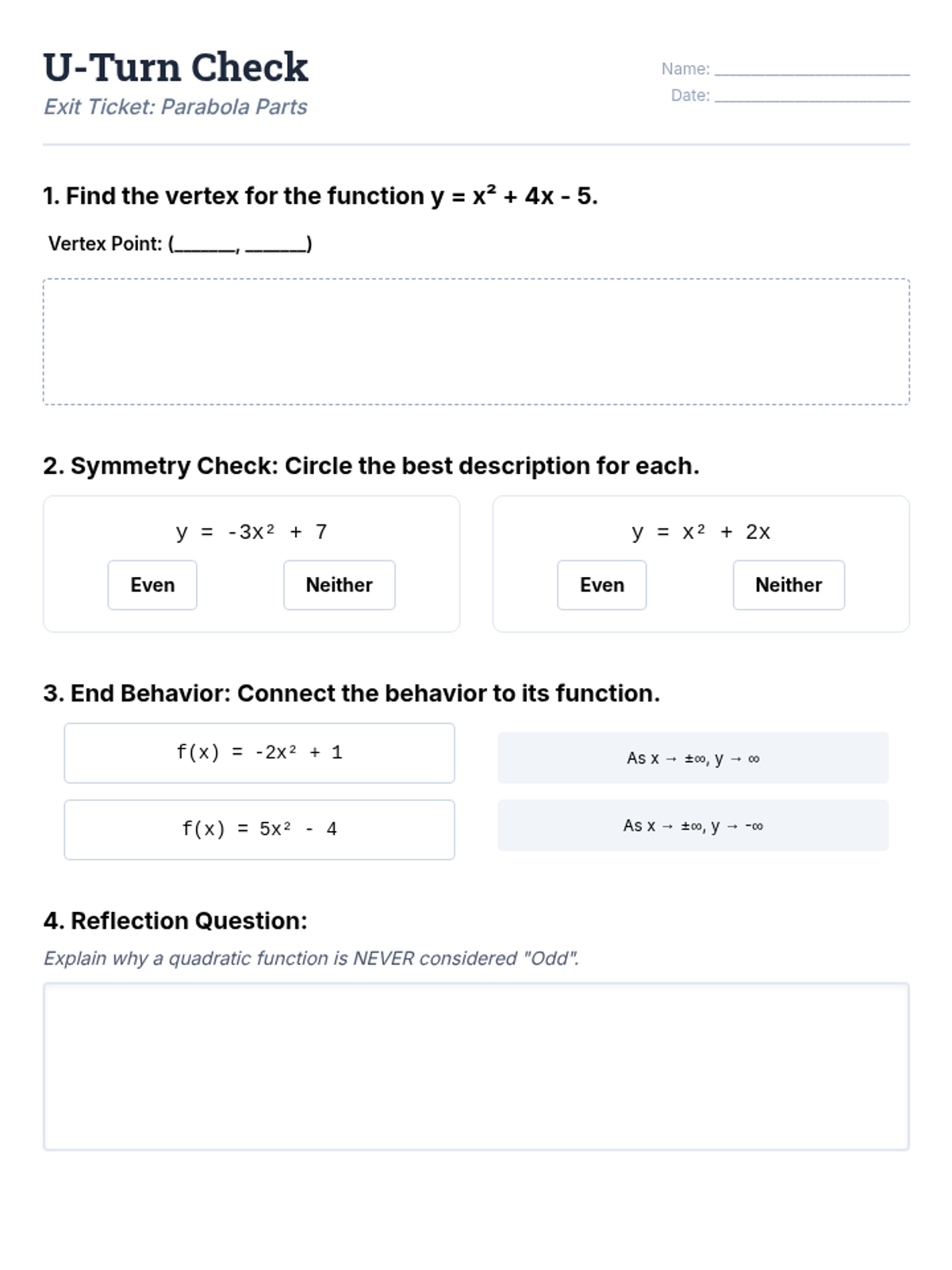
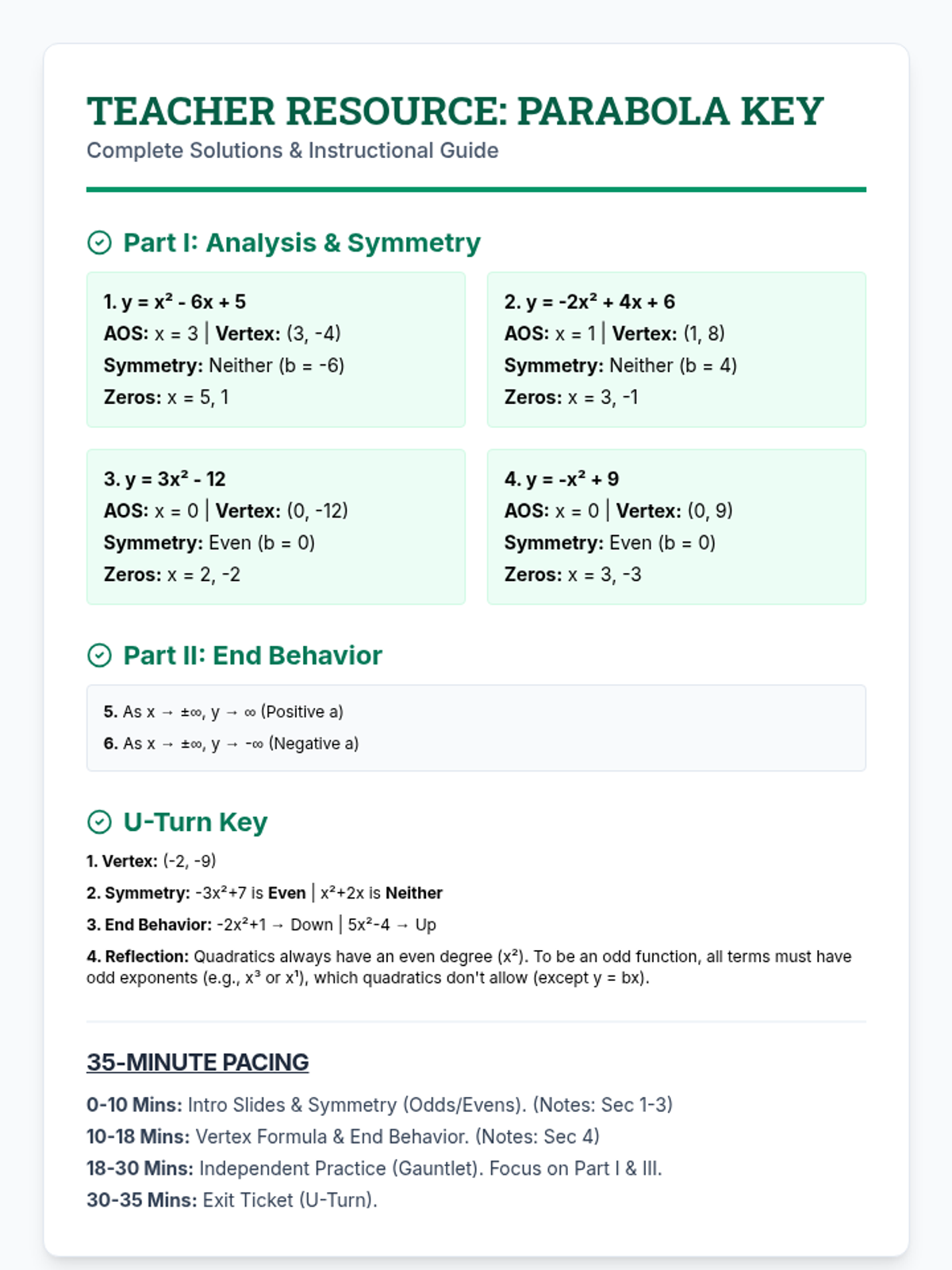
A comprehensive 35-minute lesson on graphing quadratic functions in standard form, covering vertex, axis of symmetry, end behavior, and zeros.
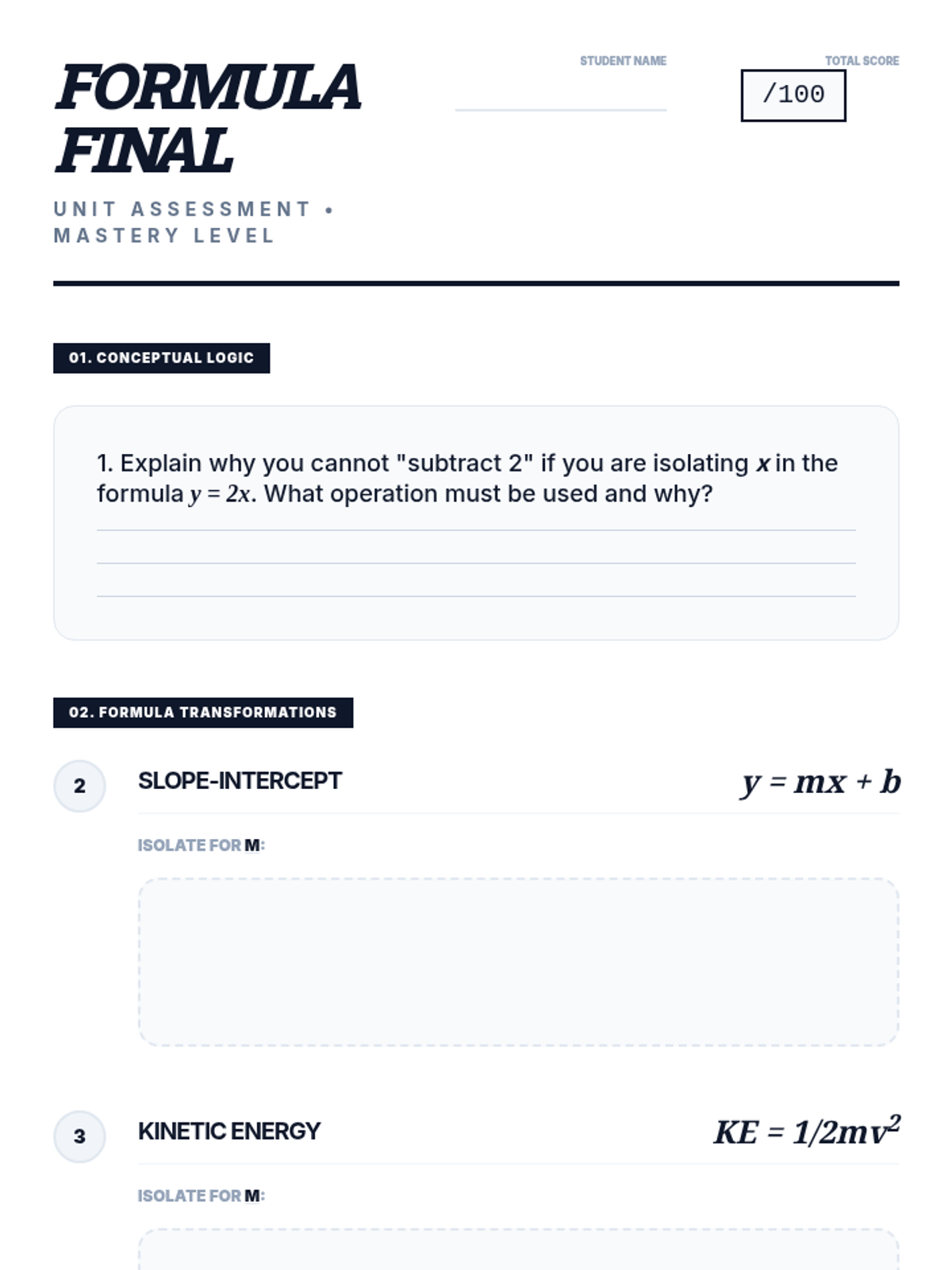
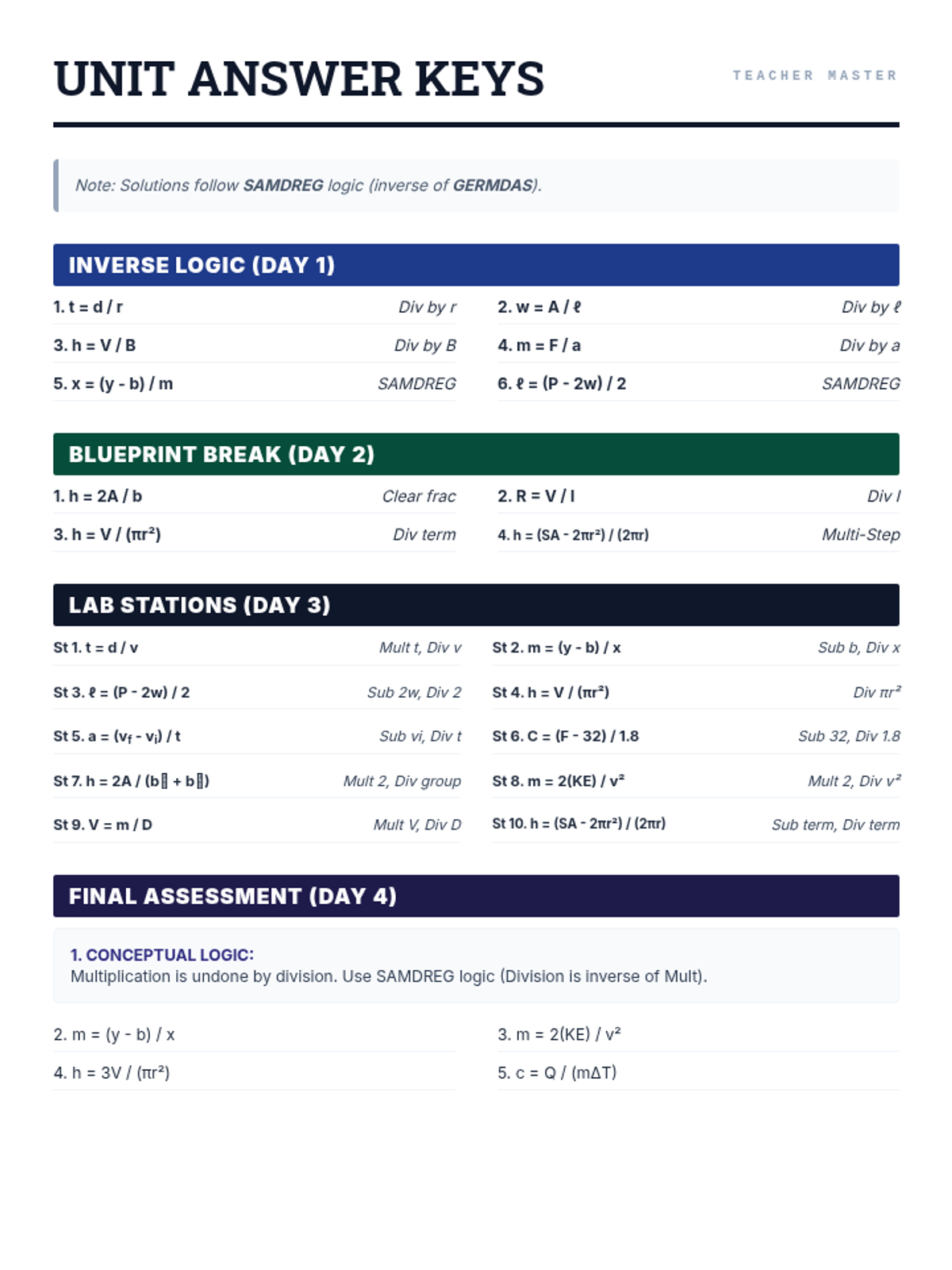
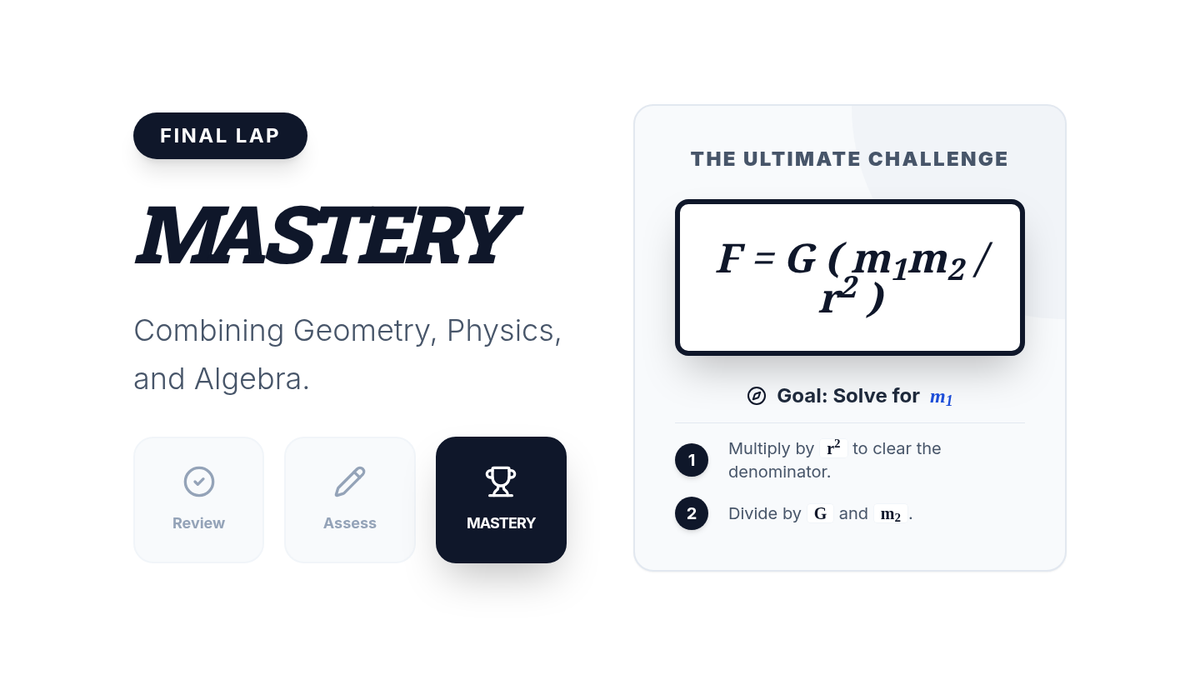
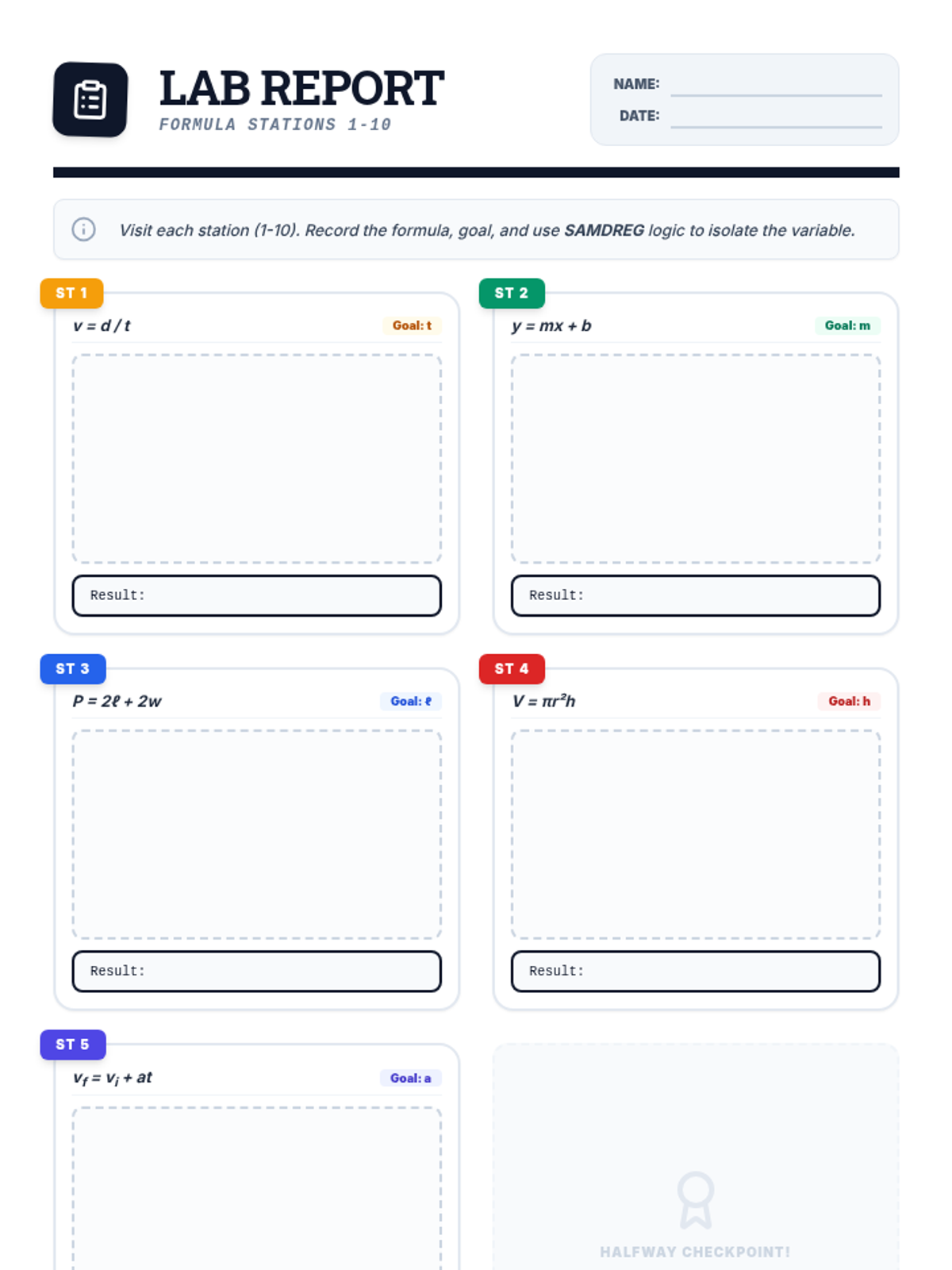
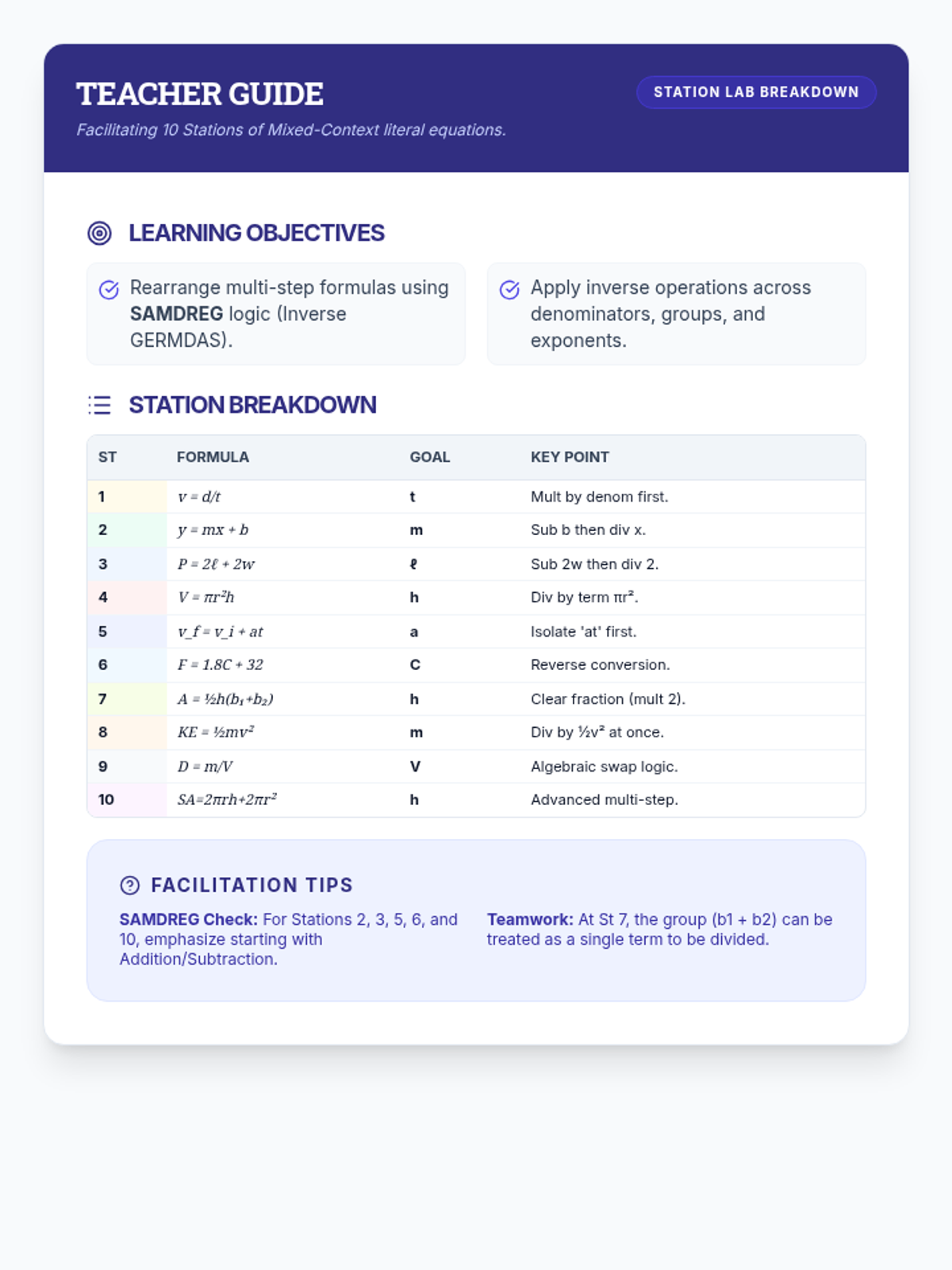
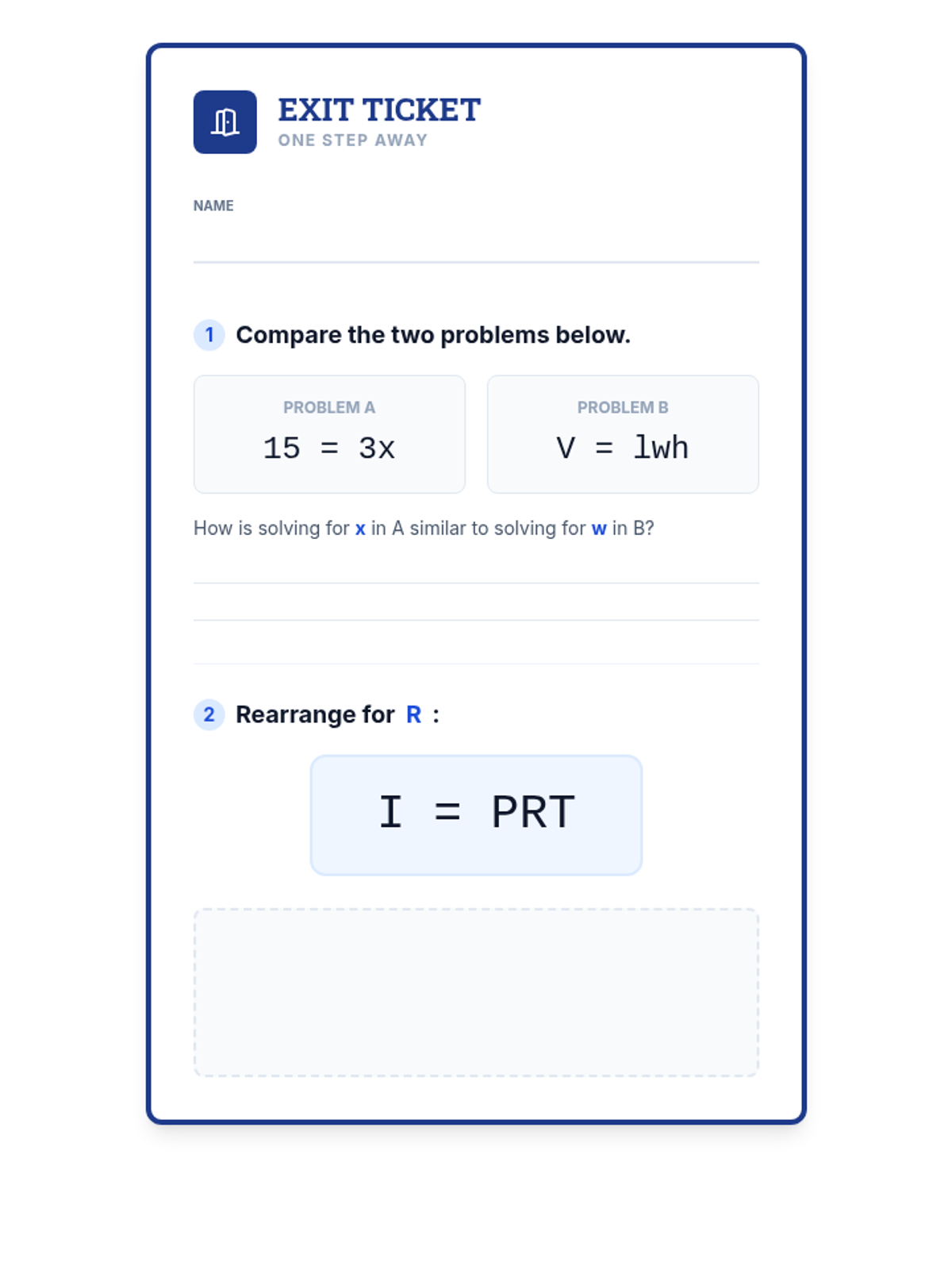
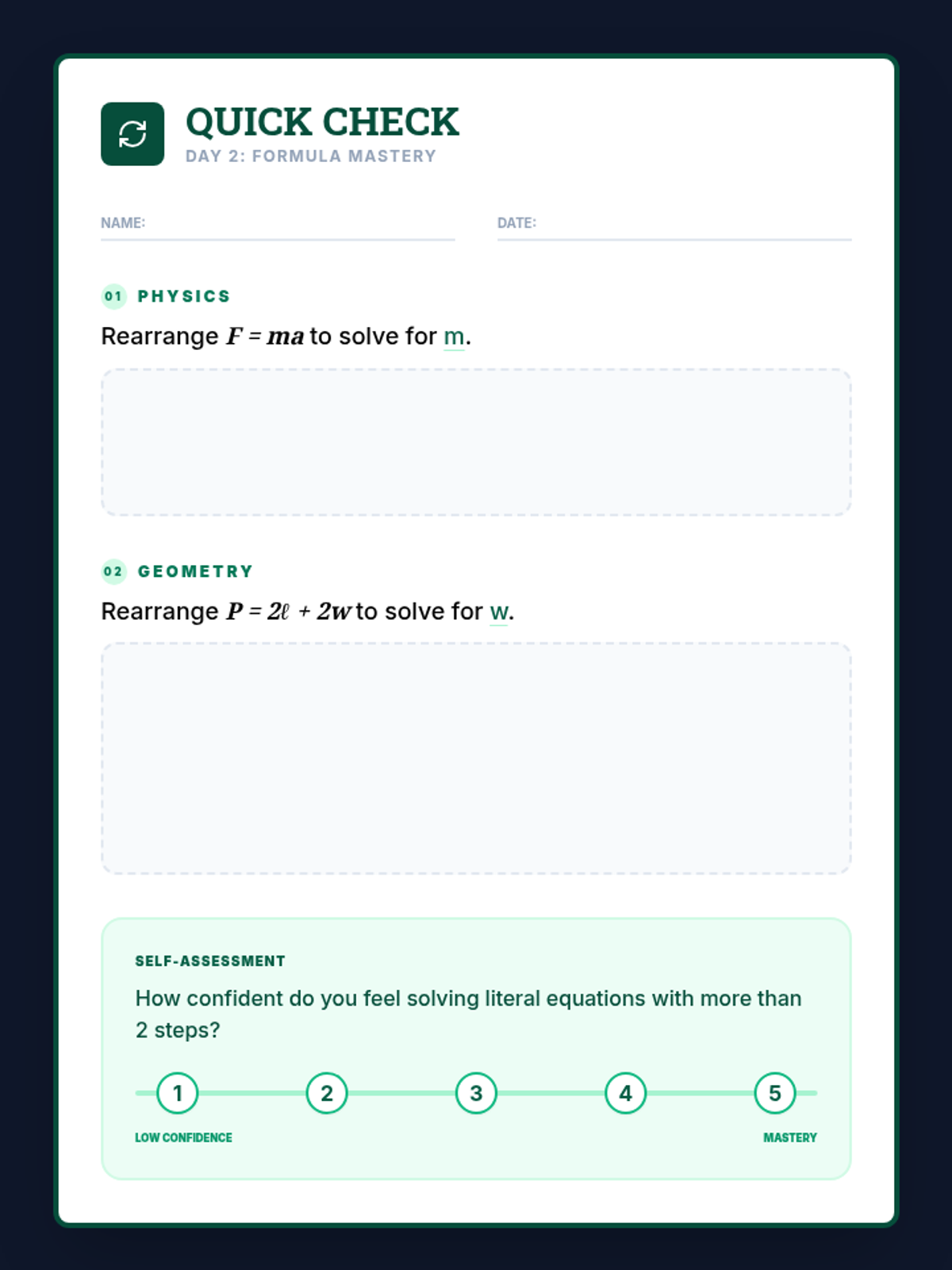
Review and assessment of literal equation mastery through multi-step problems.
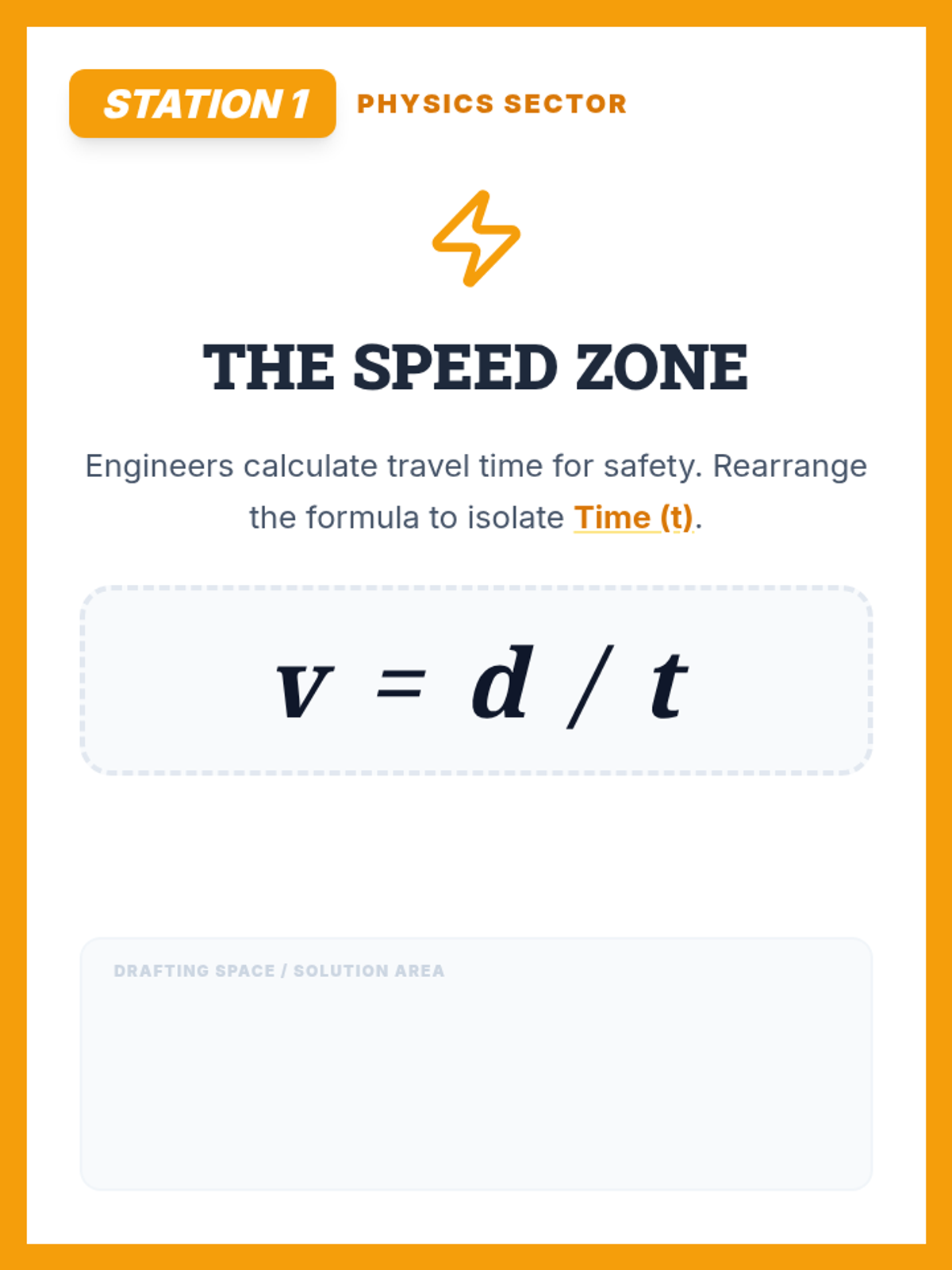
A stations-based exploration of physics formulas like force, velocity, and Ohm's law.
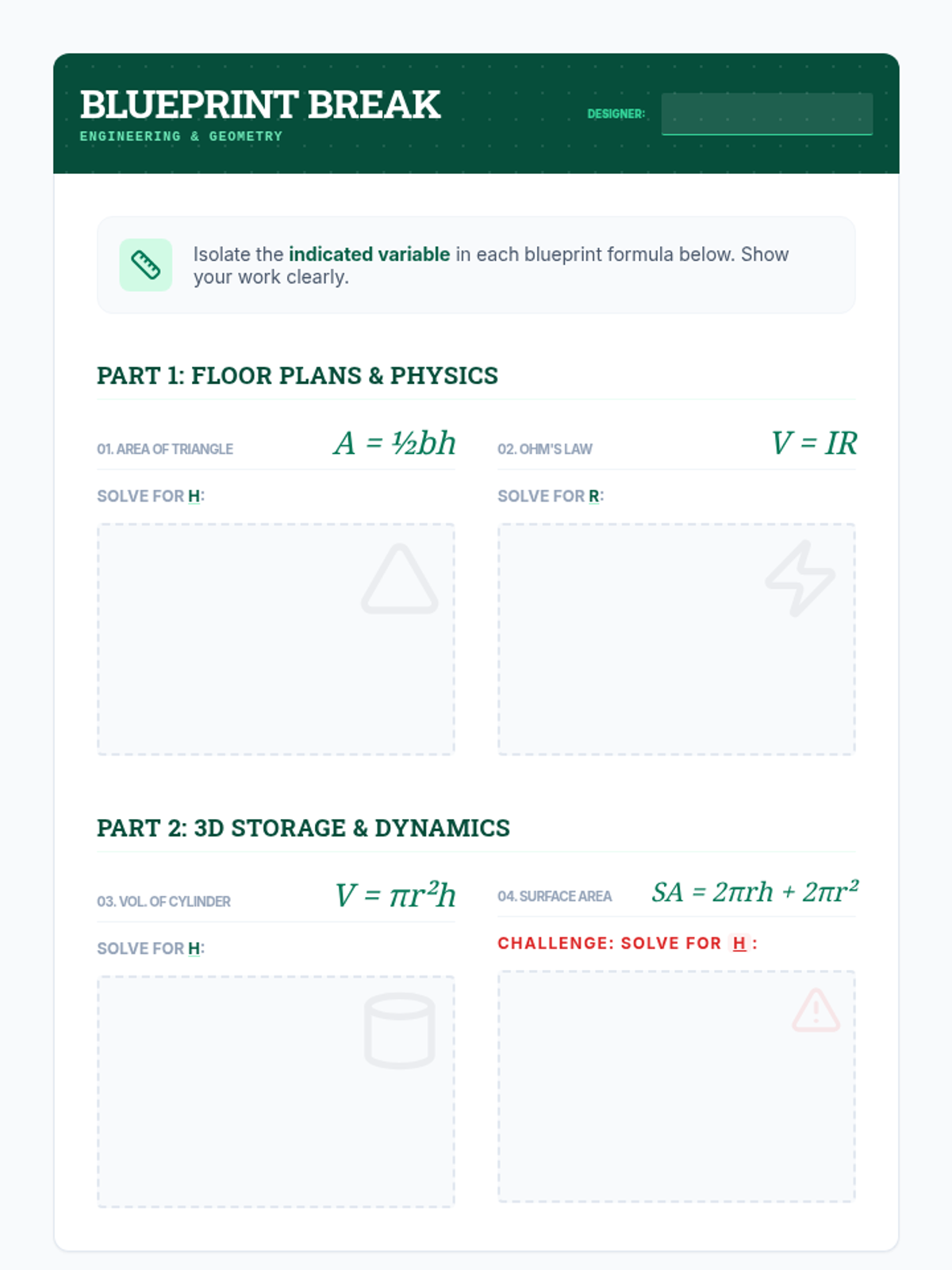
Applying formula manipulation to geometric formulas for area, perimeter, and volume.
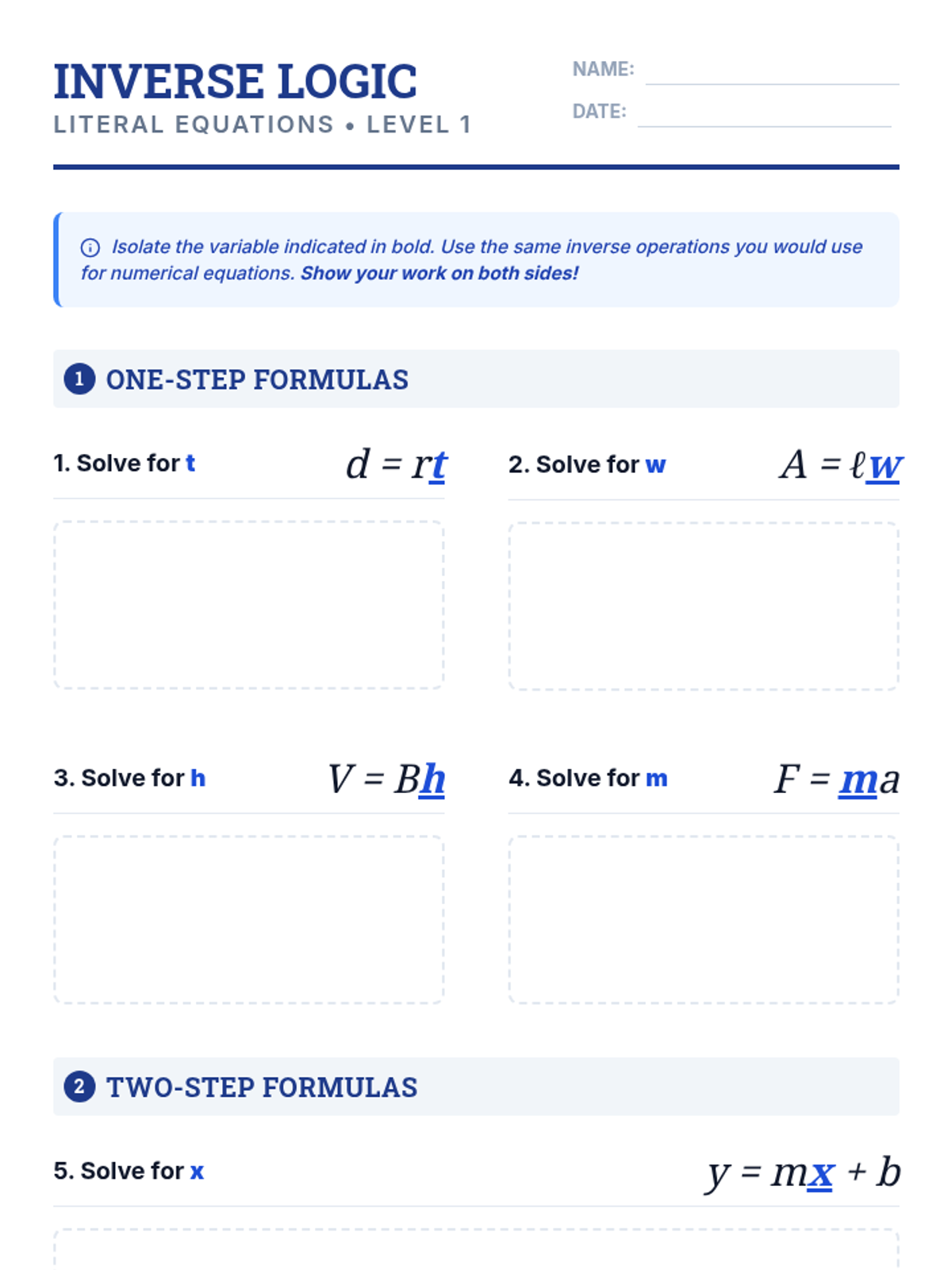
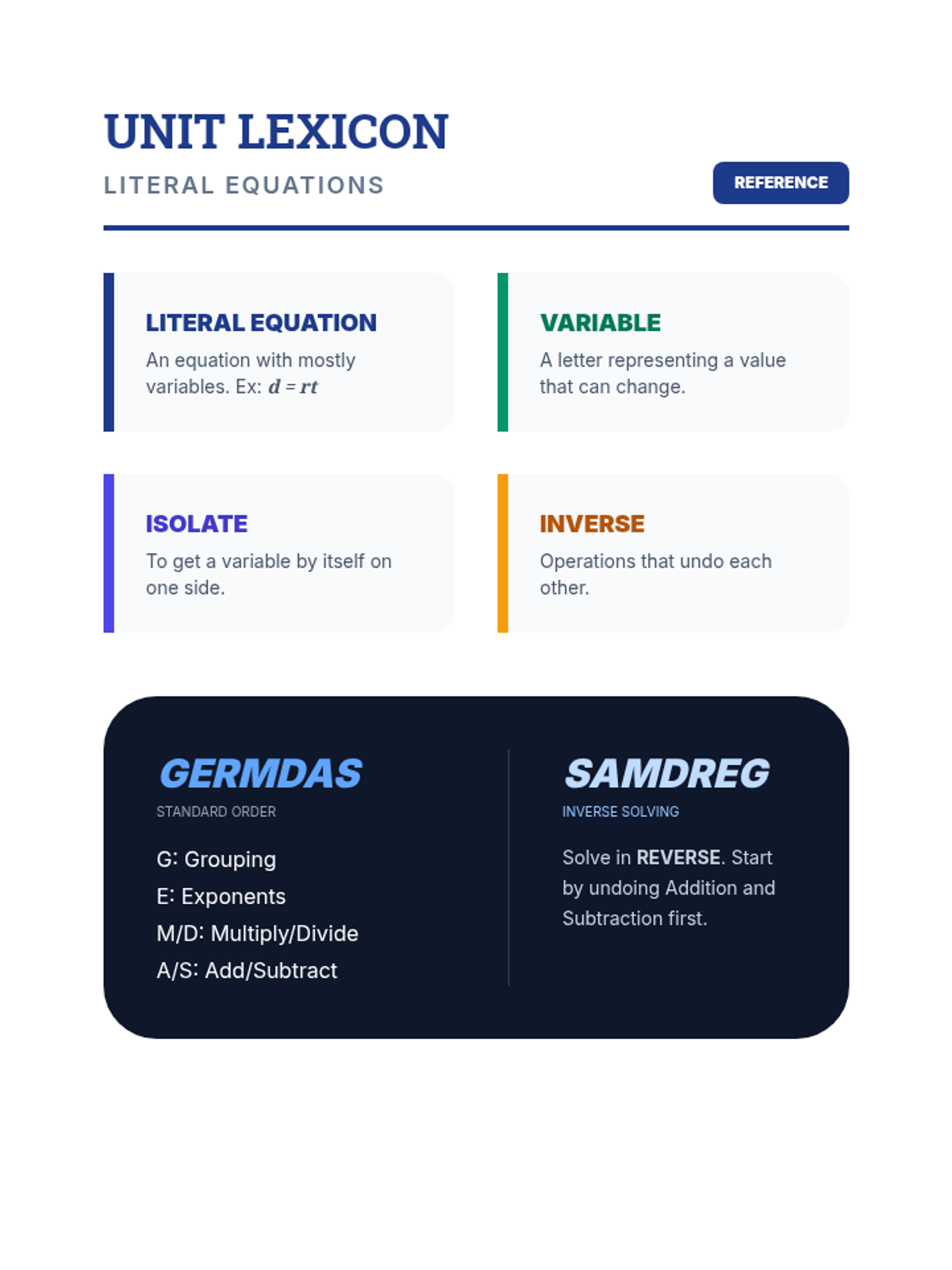
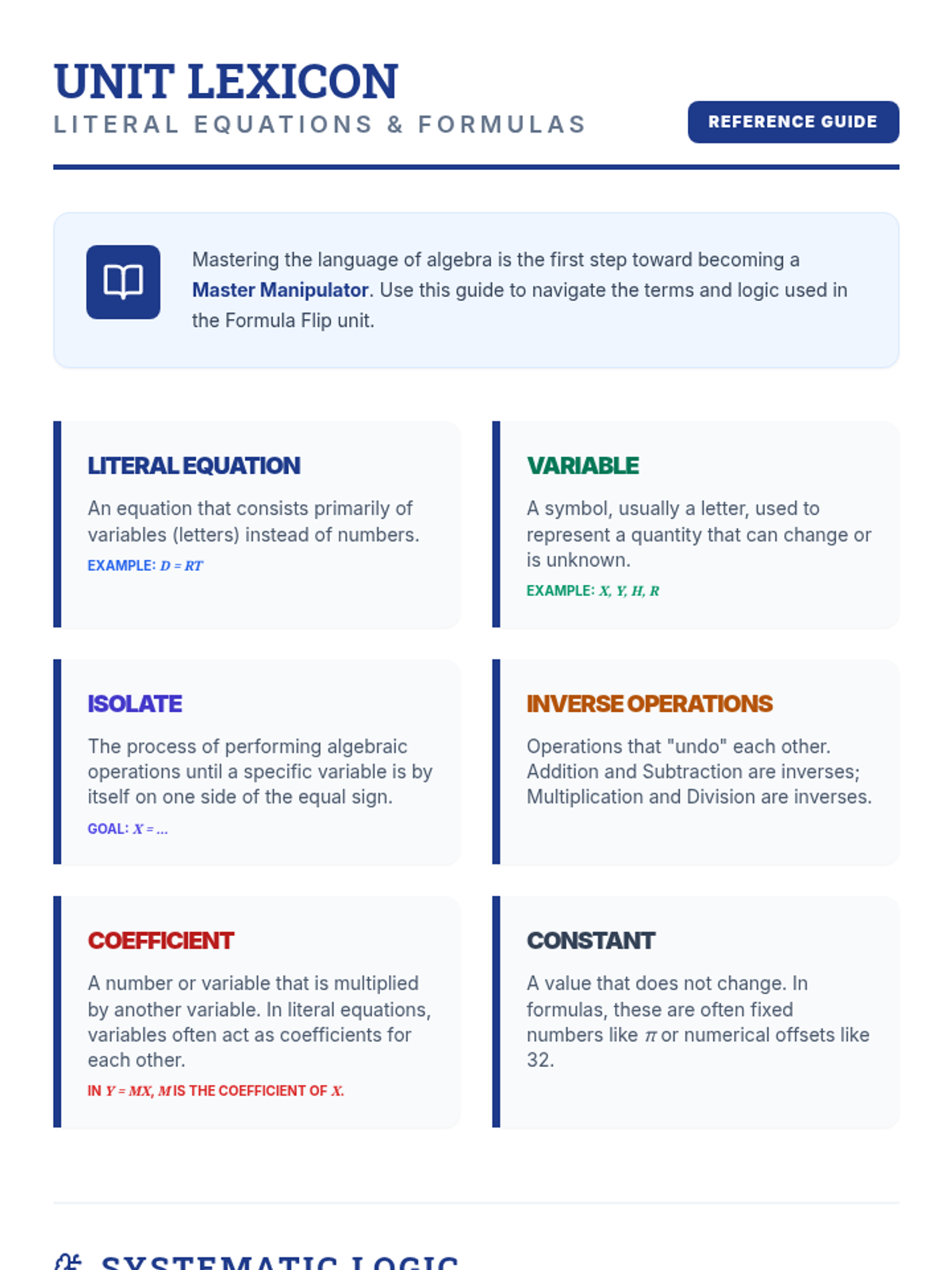
Introduction to literal equations by connecting the logic of solving standard equations to rearranging variables.
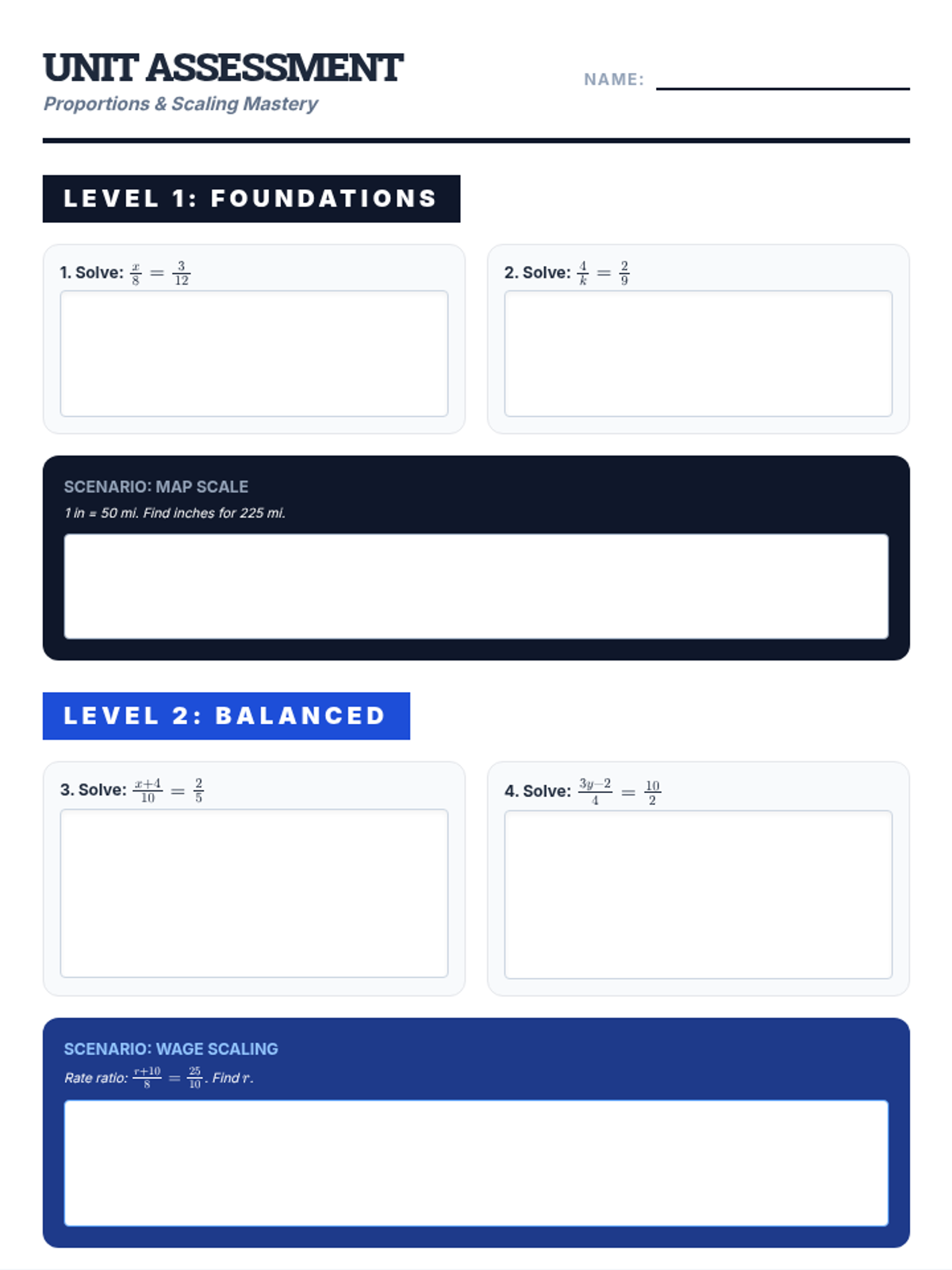
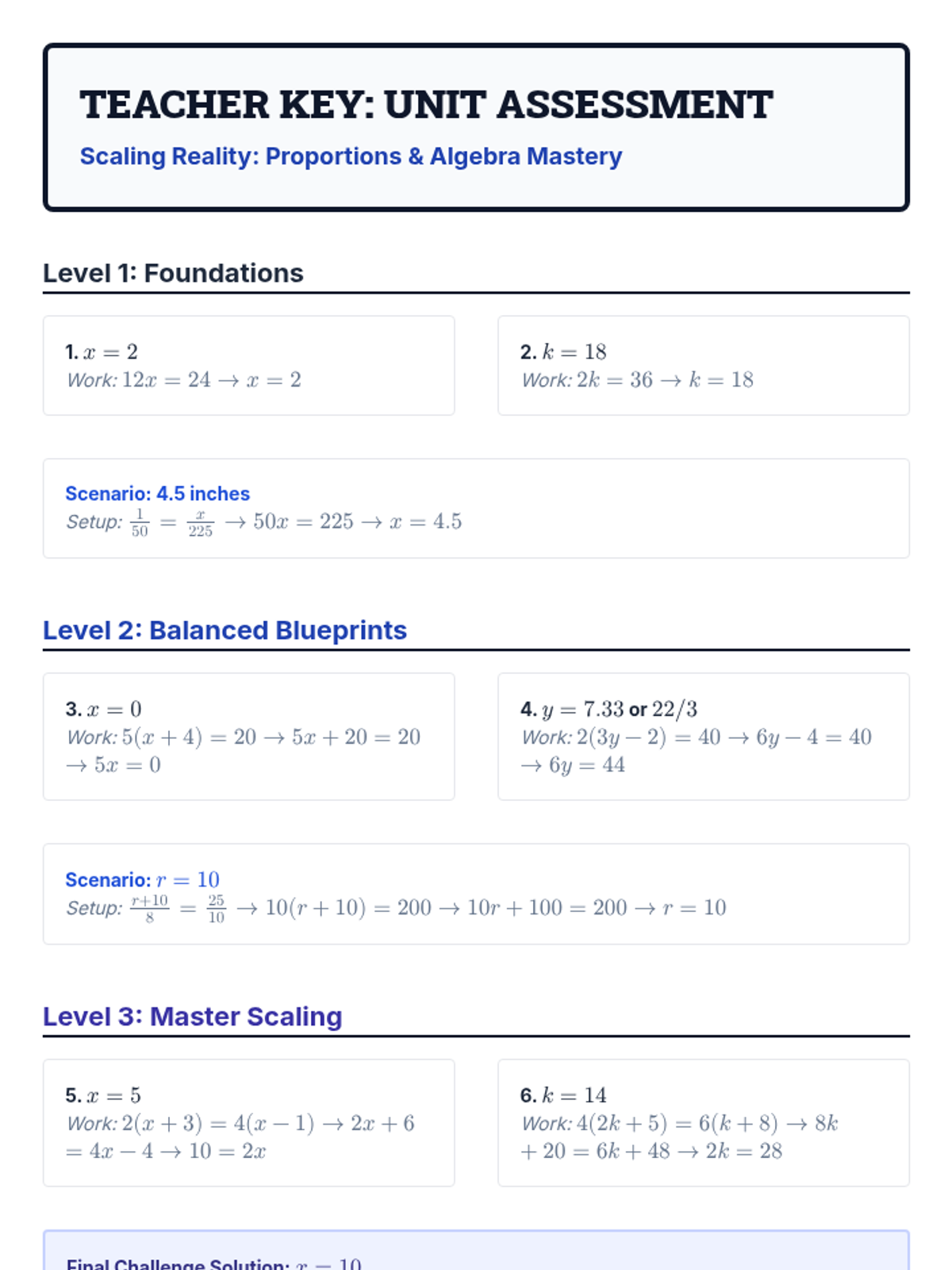
Comprehensive assessment of ratio and proportion skills, covering all algebraic complexities introduced in the unit.
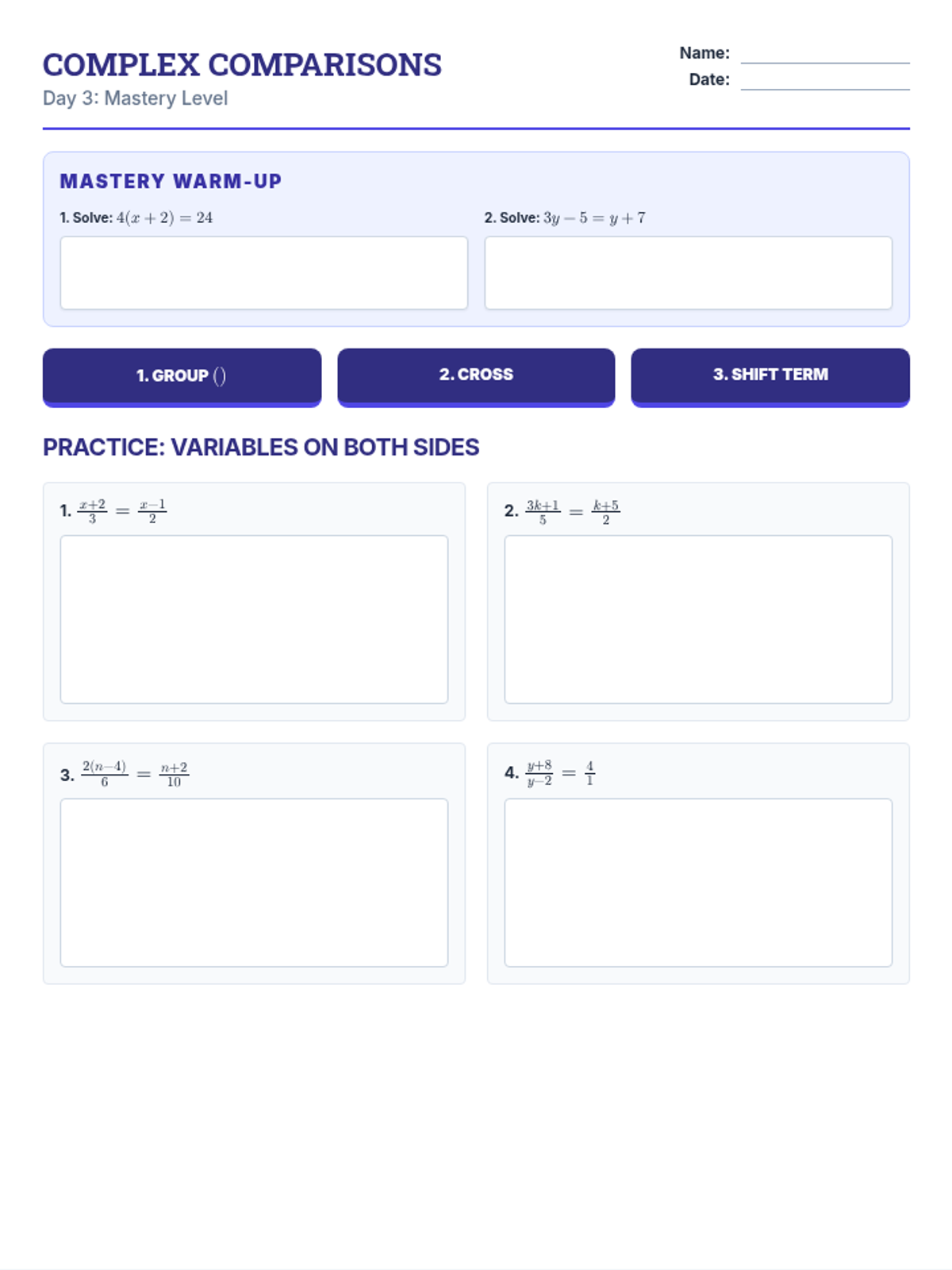
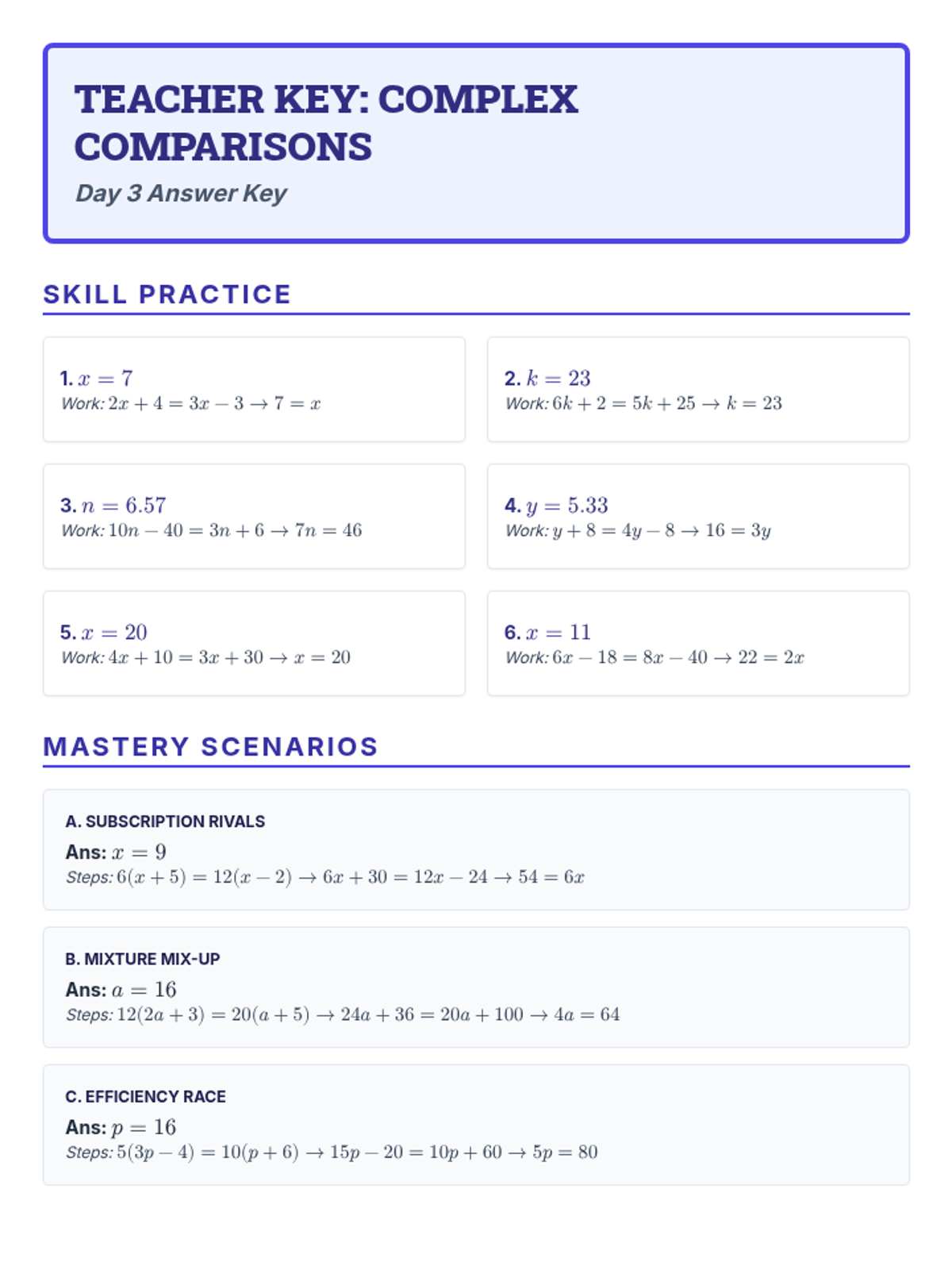
Advanced proportion solving involving the distributive property and variables on both sides. Contexts include business comparisons and mixture problems. (Task 3)
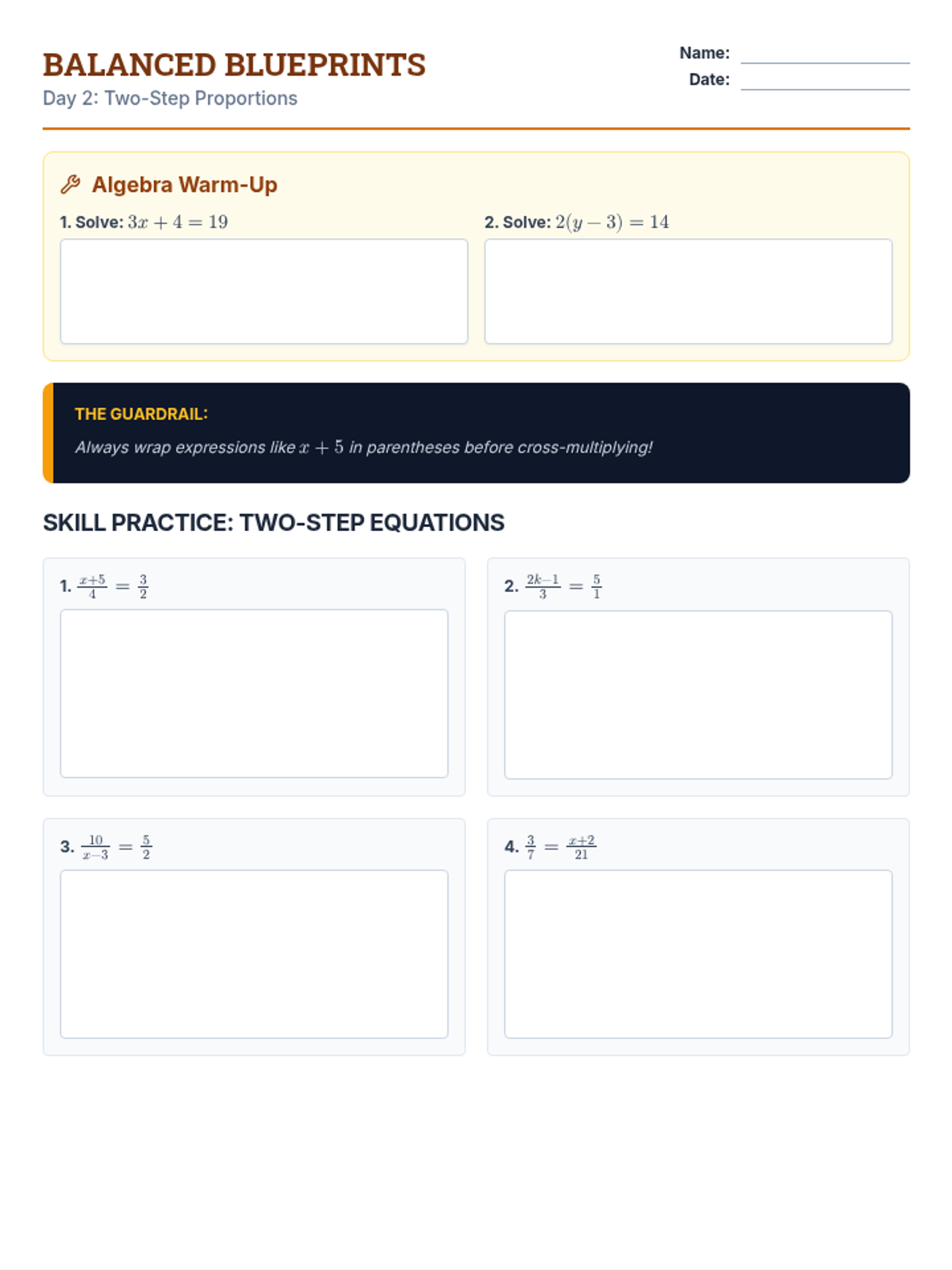
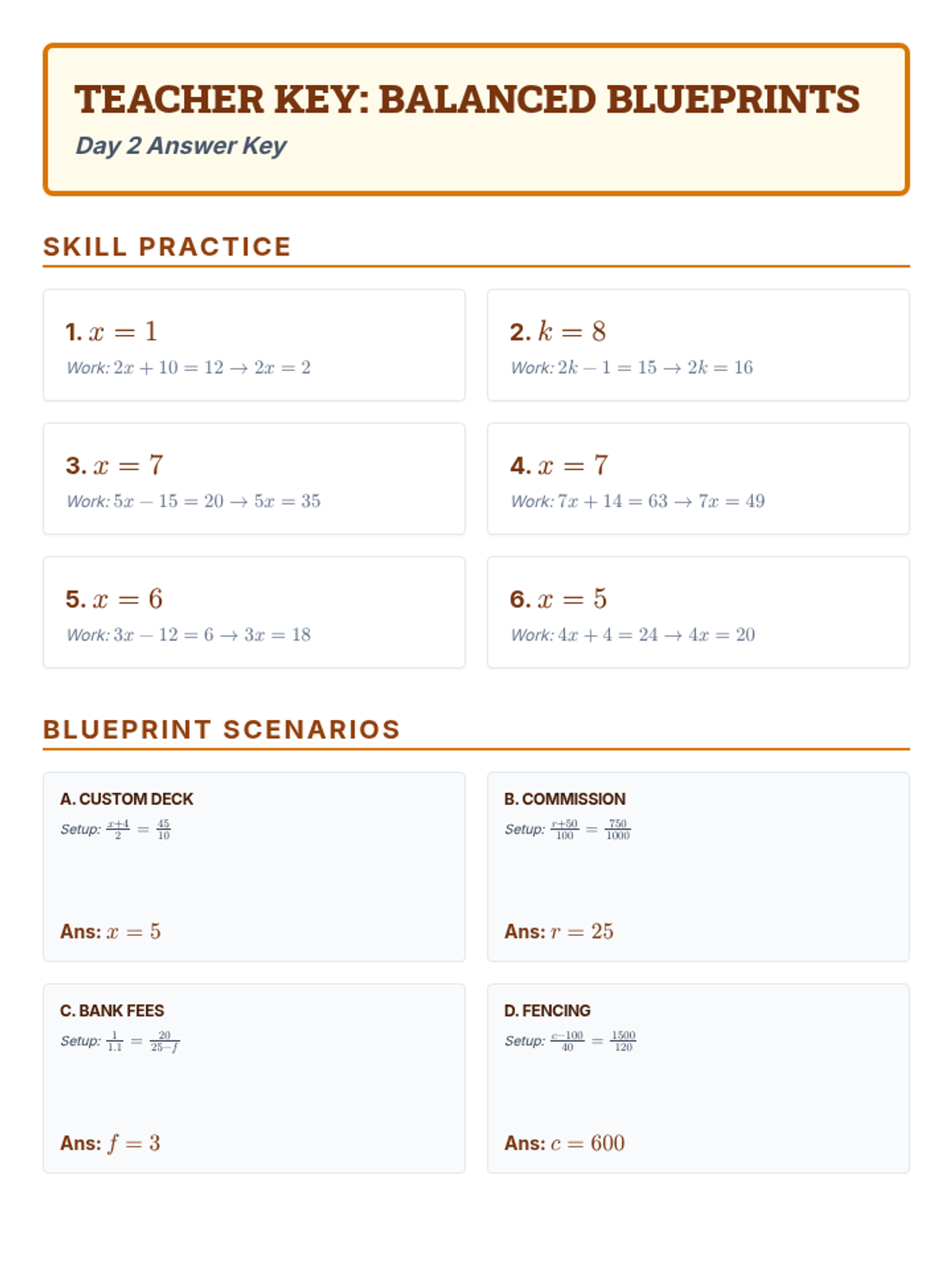
Solving proportions that result in two-step equations. Focuses on contexts like construction, currency conversion, and wage calculations. (Task 2)
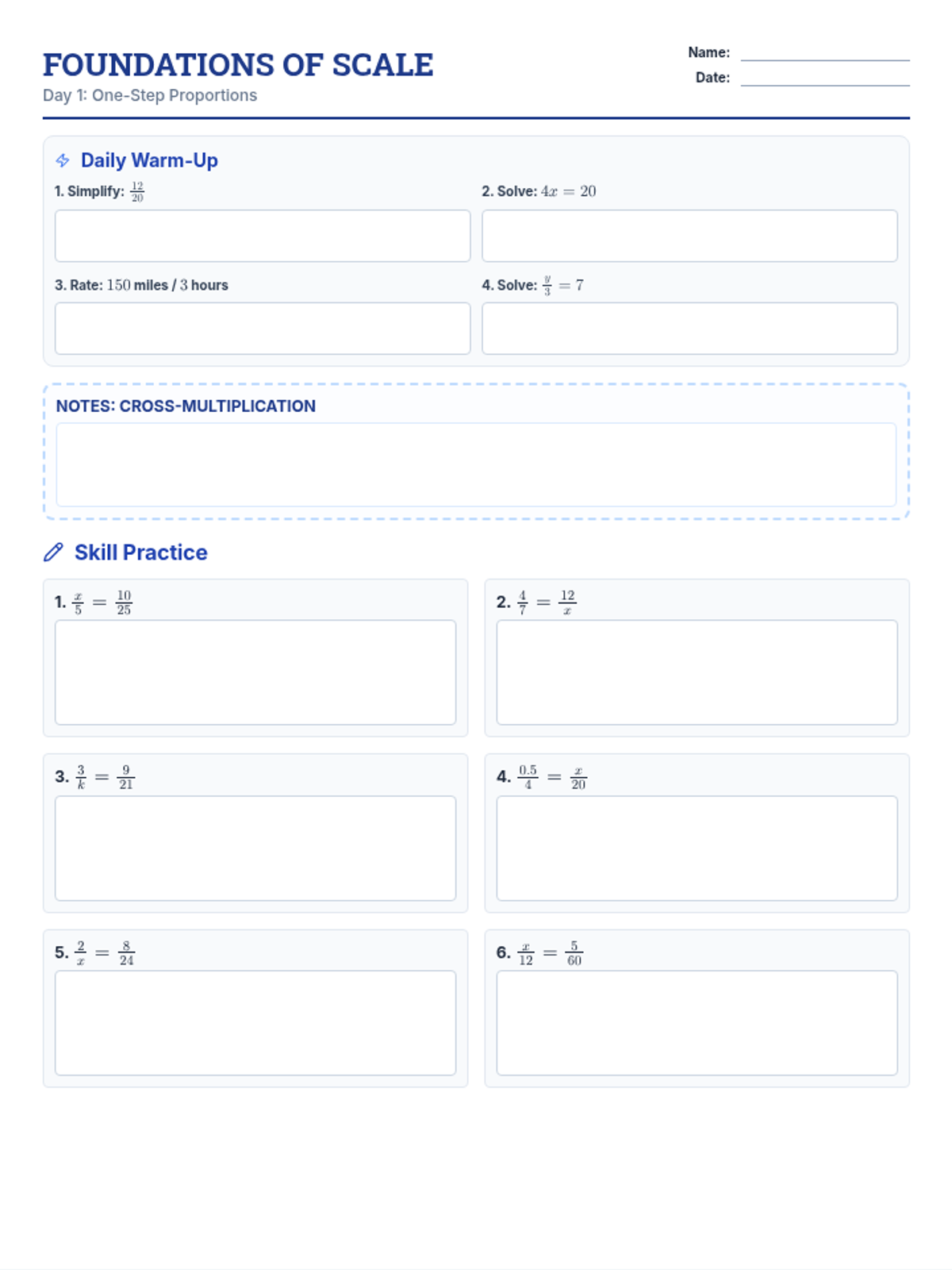
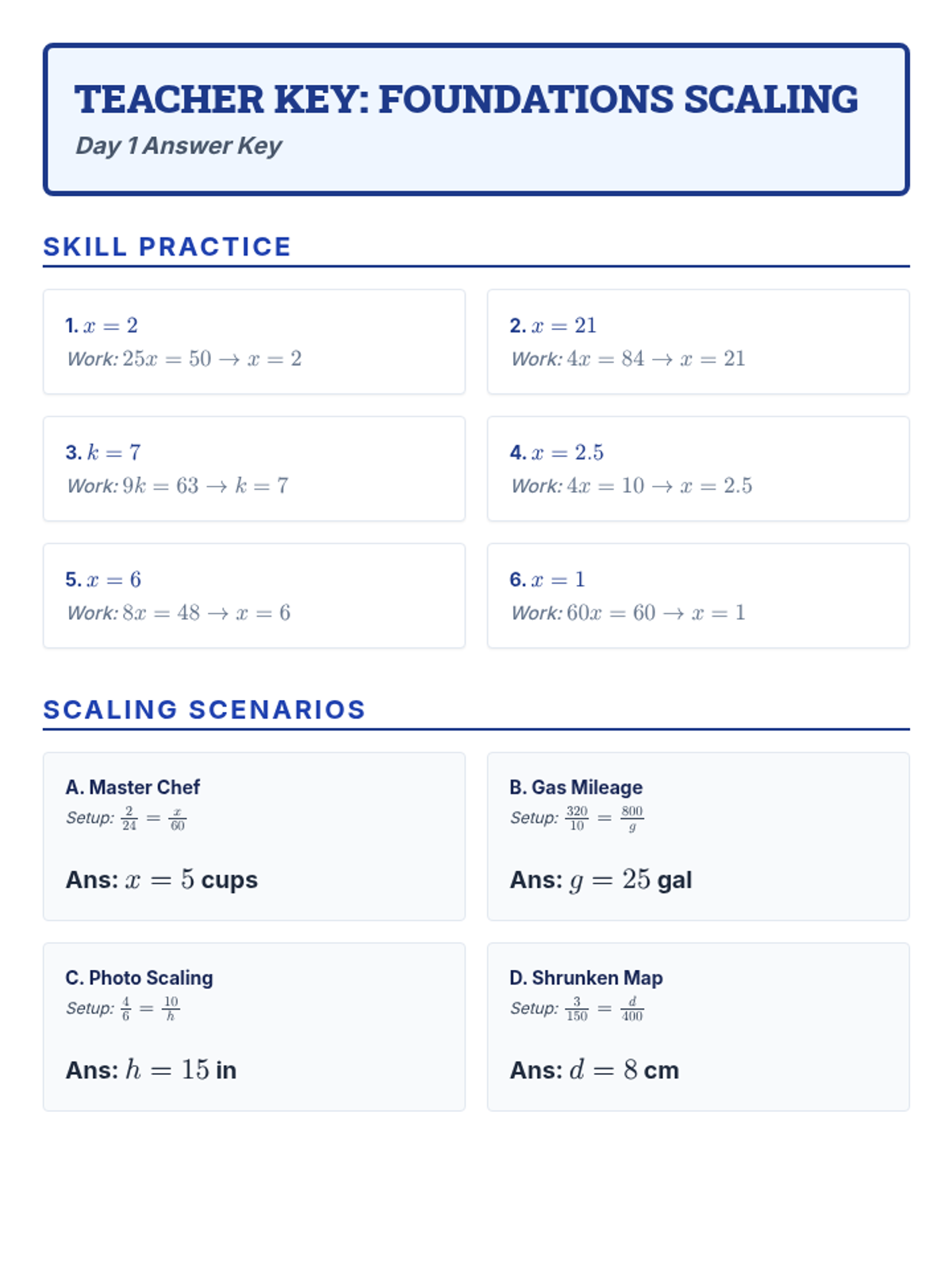
Introduction to proportions and solving one-step equations through cross-multiplication. Real-world contexts include recipe scaling and unit rates. (Task 1)
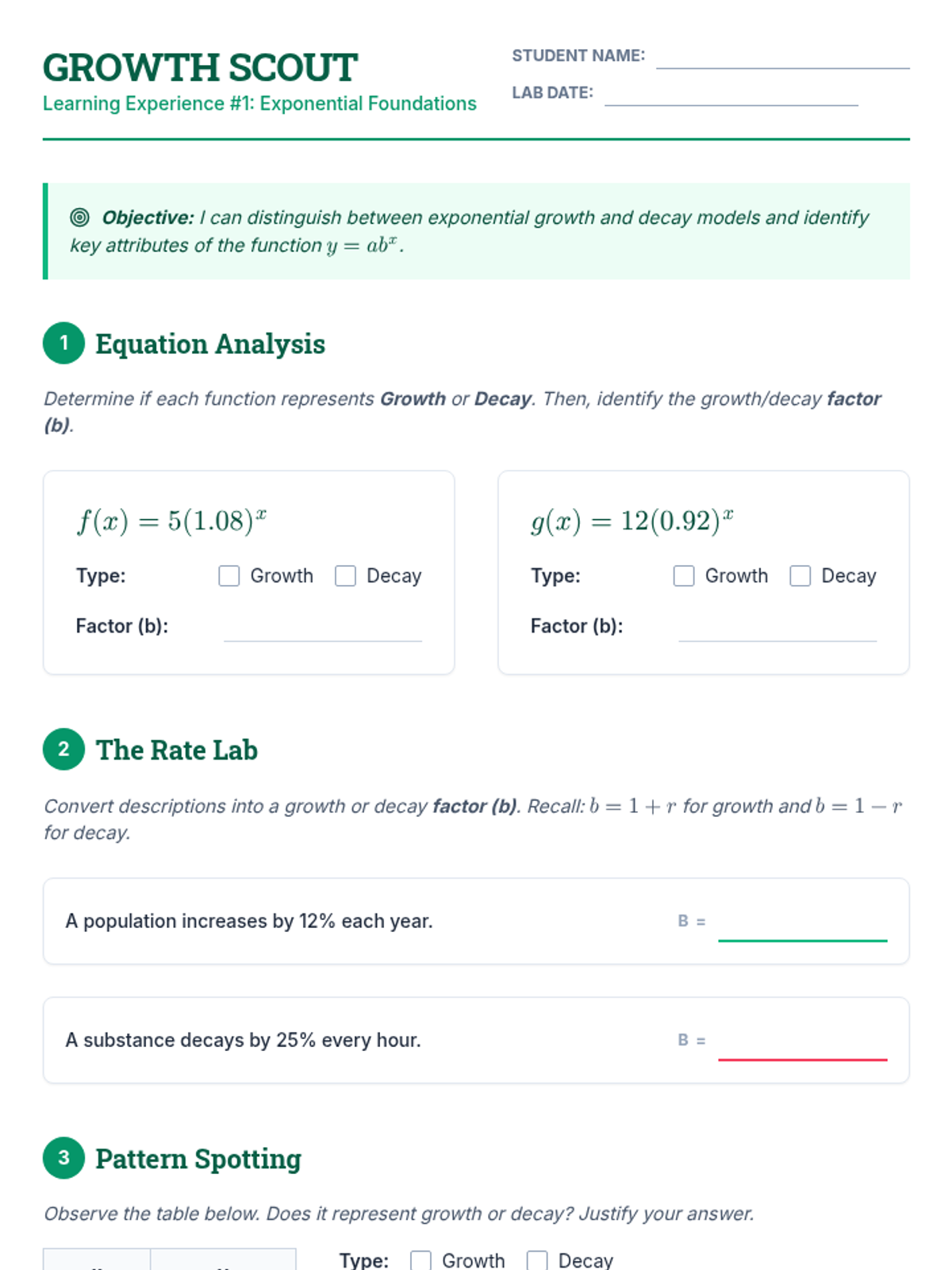
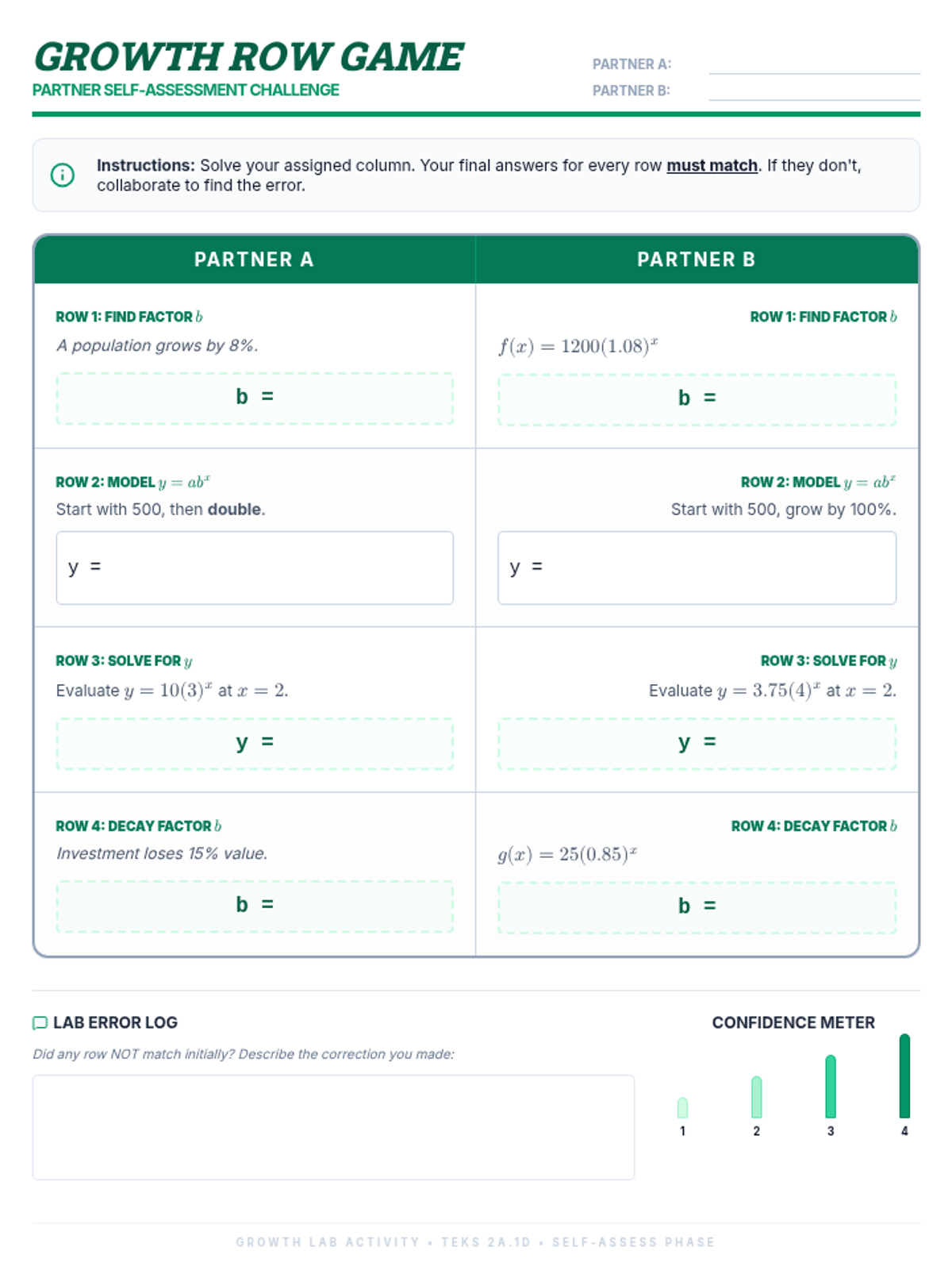
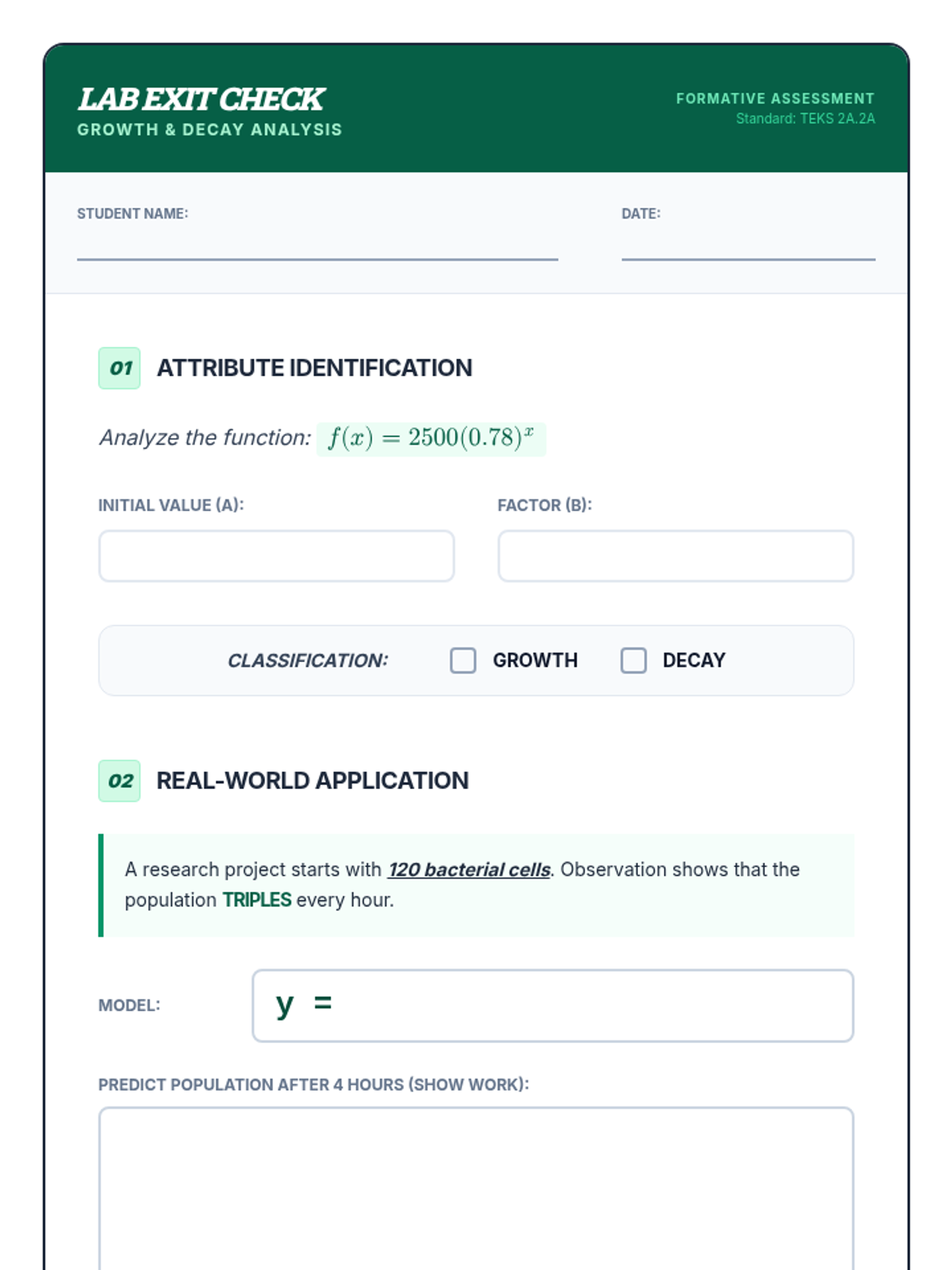
This lesson introduces exponential growth and decay functions, focusing on modeling real-life situations, identifying growth and decay factors, and analyzing key attributes of exponential models. Students will transition from Algebra 1 foundations to advanced Algebra 2 applications using the standard model \(y = ab^x\).