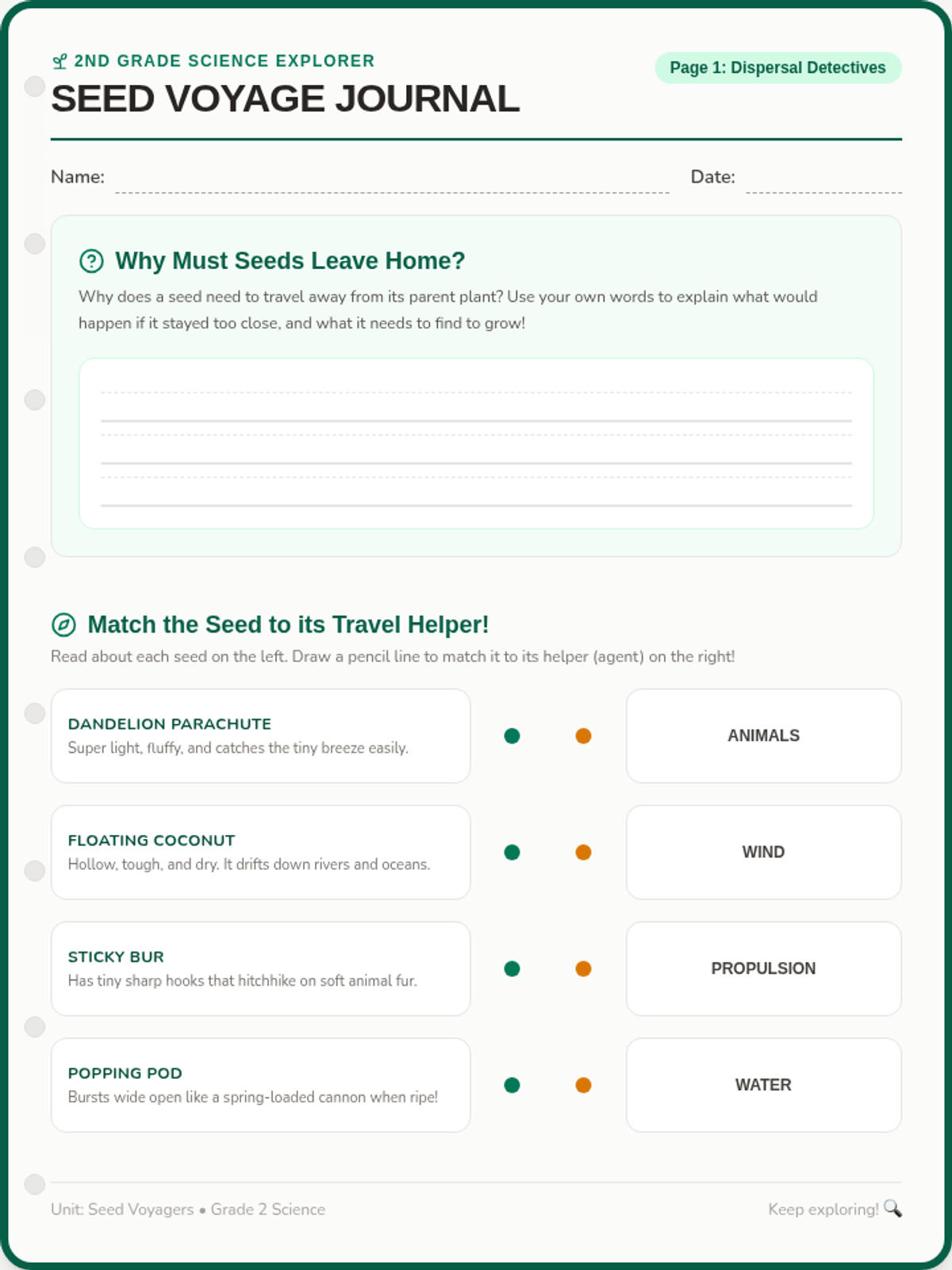
A 2nd-grade lesson exploring seasonal changes and plant adaptations through the lens of 'The Leaf Man.' Students will track plant life cycles across the four seasons through a read-aloud, interactive discussion, and creative mapping.
The final lesson focuses on social behavior, communication, and play. Students learn about how dolphins 'talk' with clicks and whistles and how they play with bubbles and sea plants.
This lesson covers the birth and early growth stages of a dolphin calf, including how they swim close to their mothers (slipstreaming) and how they grow over time.
Students explore where baby dolphins live (habitats) and what they eat (diet). The lesson emphasizes the transition from milk to fish and the characteristics of a warm ocean home.
An introduction to baby dolphins (calves), focusing on identifying what they are and comparing them to other animal babies. Students will learn the term 'calf' and basic physical features.
An introductory lesson on the continuous movement of water on, above, and below the surface of the Earth, focusing on the four main stages: evaporation, condensation, precipitation, and collection.
In this hands-on lesson, students explore the science of runoff and drainage by observing melting snow. They'll learn why drains are essential for preventing floods and how to keep water flowing safely through their environment.
Students design and build a STEM leprechaun trap inspired by 'How to Catch a Leprechaun', focusing on multi-step directions and problem-solving through the engineering design process.
A vocabulary-focused lesson for 2nd graders to review key Earth science terms like volcano, erosion, flooding, and wetlands, using simple analogies and visual aids.
An introductory science lesson comparing a live goldfish to a goldfish cracker to help students identify the characteristics of living and non-living things.
Students learn to distinguish between light sources and reflections and understand the basic path light takes from a source to the eye.
A hands-on exploration of cloud types and weather patterns for 2nd grade scientists. Students identify clouds through visual aids, create physical models, and track the sky in a daily weather journal.
A follow-up lesson focused on building fluency with mixed digraphs, providing cumulative review and a final progress assessment for sh, ch, th, wh, and ck.
A foundational lesson introducing and practicing common digraphs (sh, ch, th, wh, ck) through multi-sensory activities and differentiated reading tasks using a building-block theme.
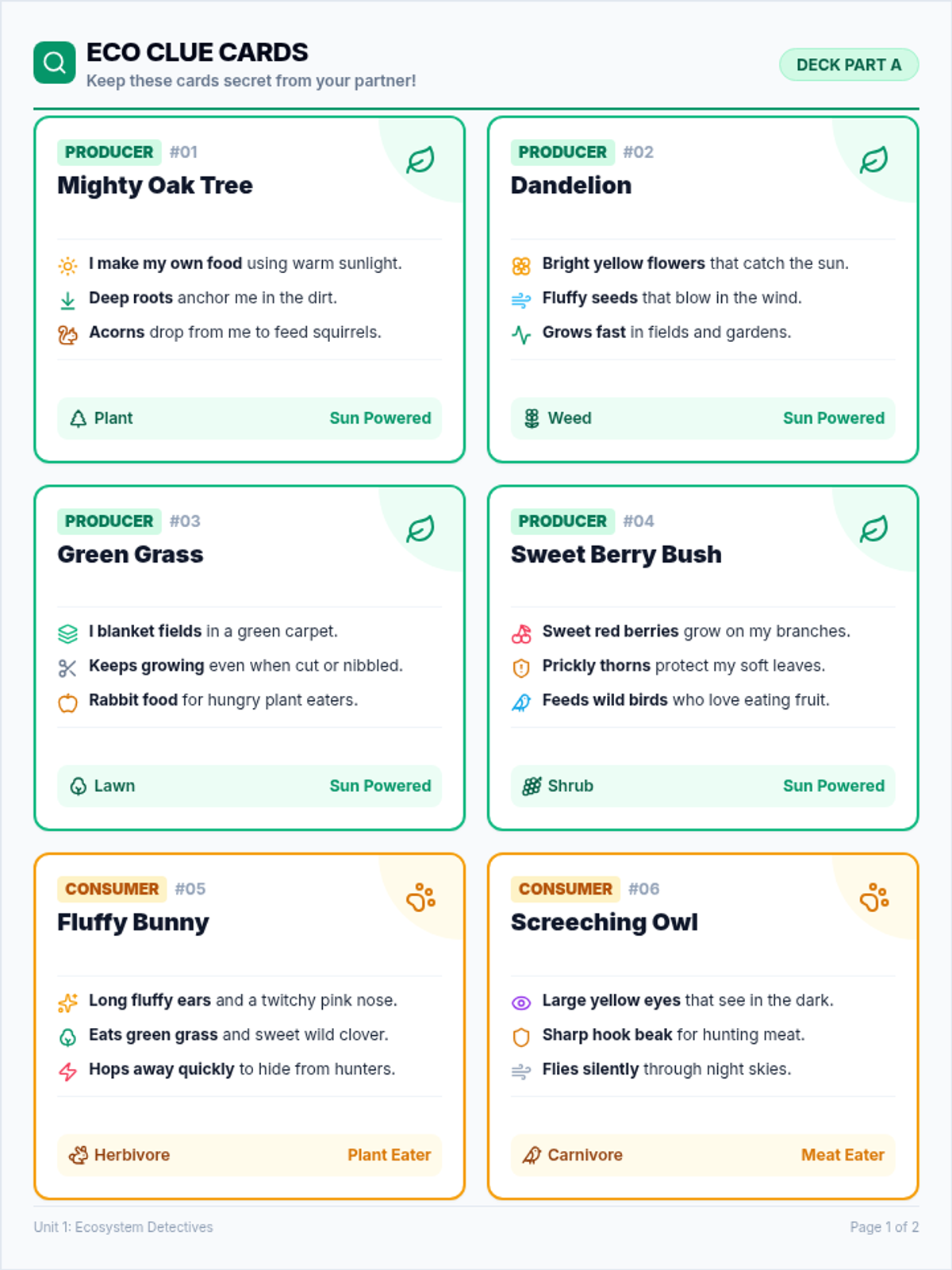
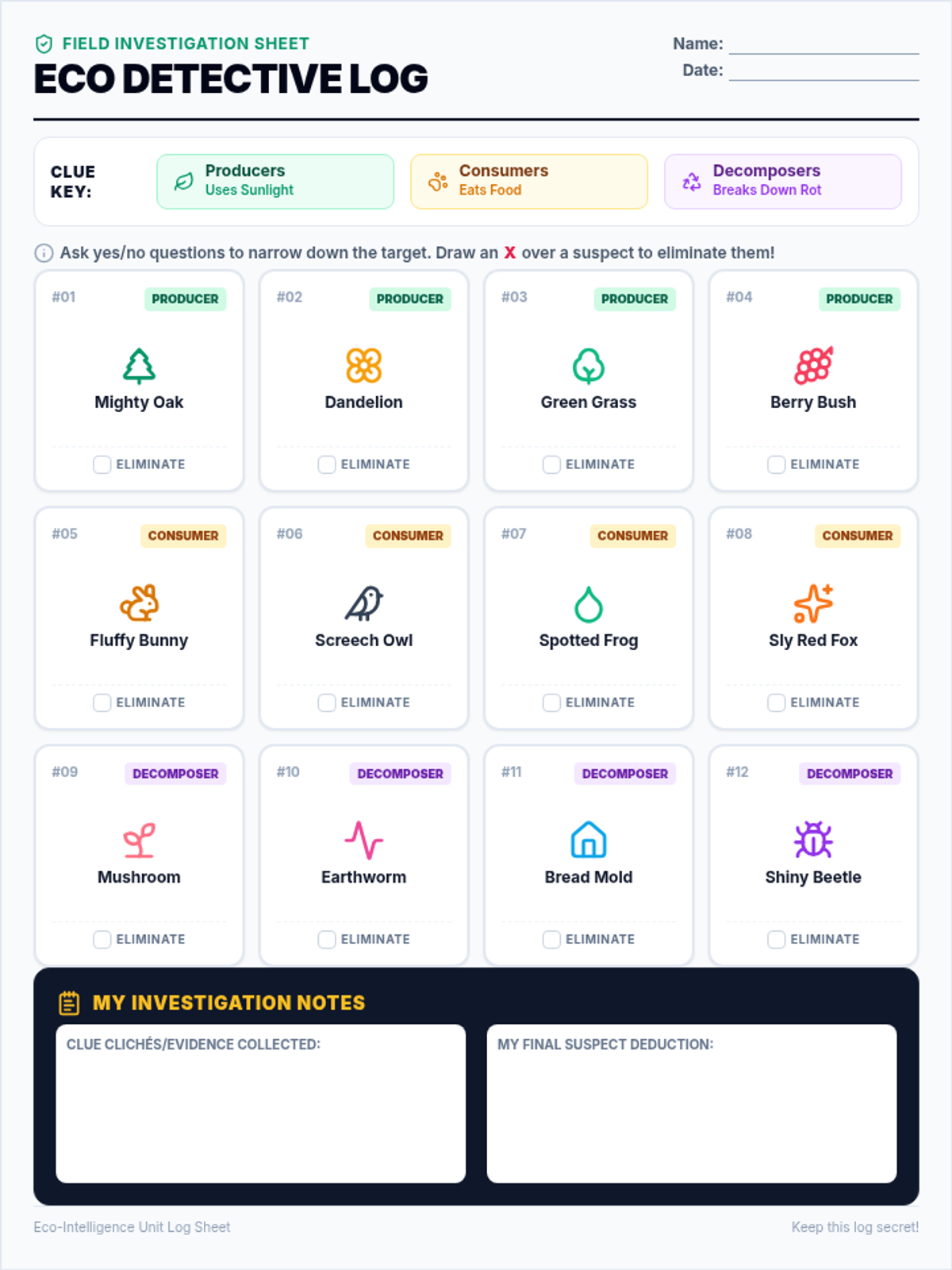
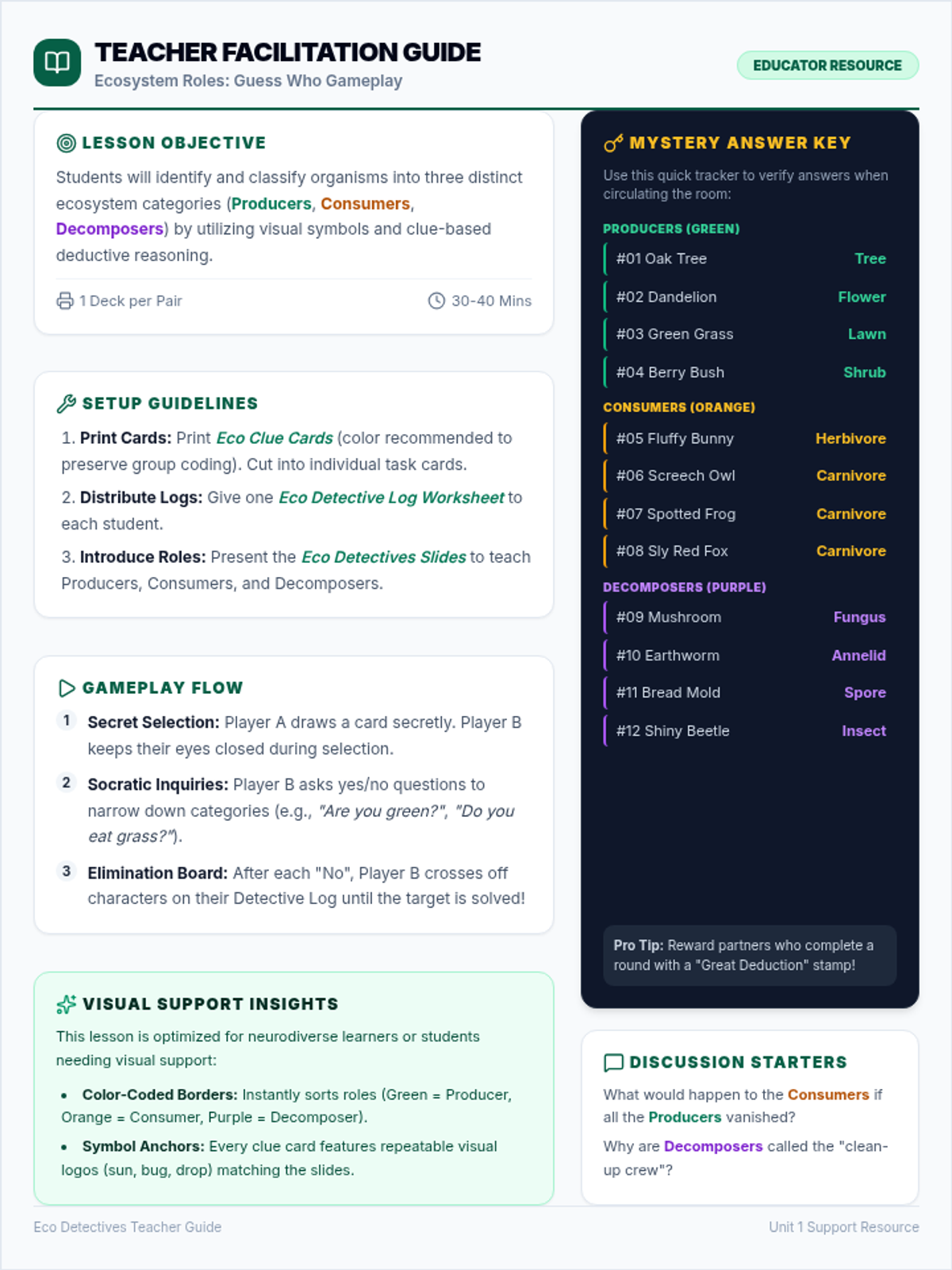
A lesson focused on identifying the roles of producers, consumers, and decomposers within an ecosystem through visual aids and hands-on sorting, designed for MCAS Alt portfolio evidence.
A foundational lesson on cybersecurity for elementary students, focusing on identifying personal information and learning the 'Ask First' rule for online sharing.
A comprehensive lesson on the water cycle, covering evaporation, condensation, precipitation, runoff, and absorption through visual aids and tiered practice.
An introductory lesson exploring the origins of rocks and the processes that form them, setting the stage for understanding erosion and Earth's changing landscape.
An interactive science lesson for K-3 students exploring the symbiotic relationship between bees and flowering plants through a hands-on pollination simulation.
A hands-on exploration for 2nd and 3rd graders where they identify computer components by comparing them to human body parts. Students learn how hardware supports software through a 'computer dissection' metaphor.
A comprehensive set of writing resources for 2nd grade EL Education Module 3, focusing on the fascinating world of pollinators and their role in nature. Includes teacher guides, student writing templates, and instructional slides.