An Honors Algebra 2 lesson focused on the cyclic nature of powers of i. Students move from basic simplification to generalizing patterns for contest-style summation problems.
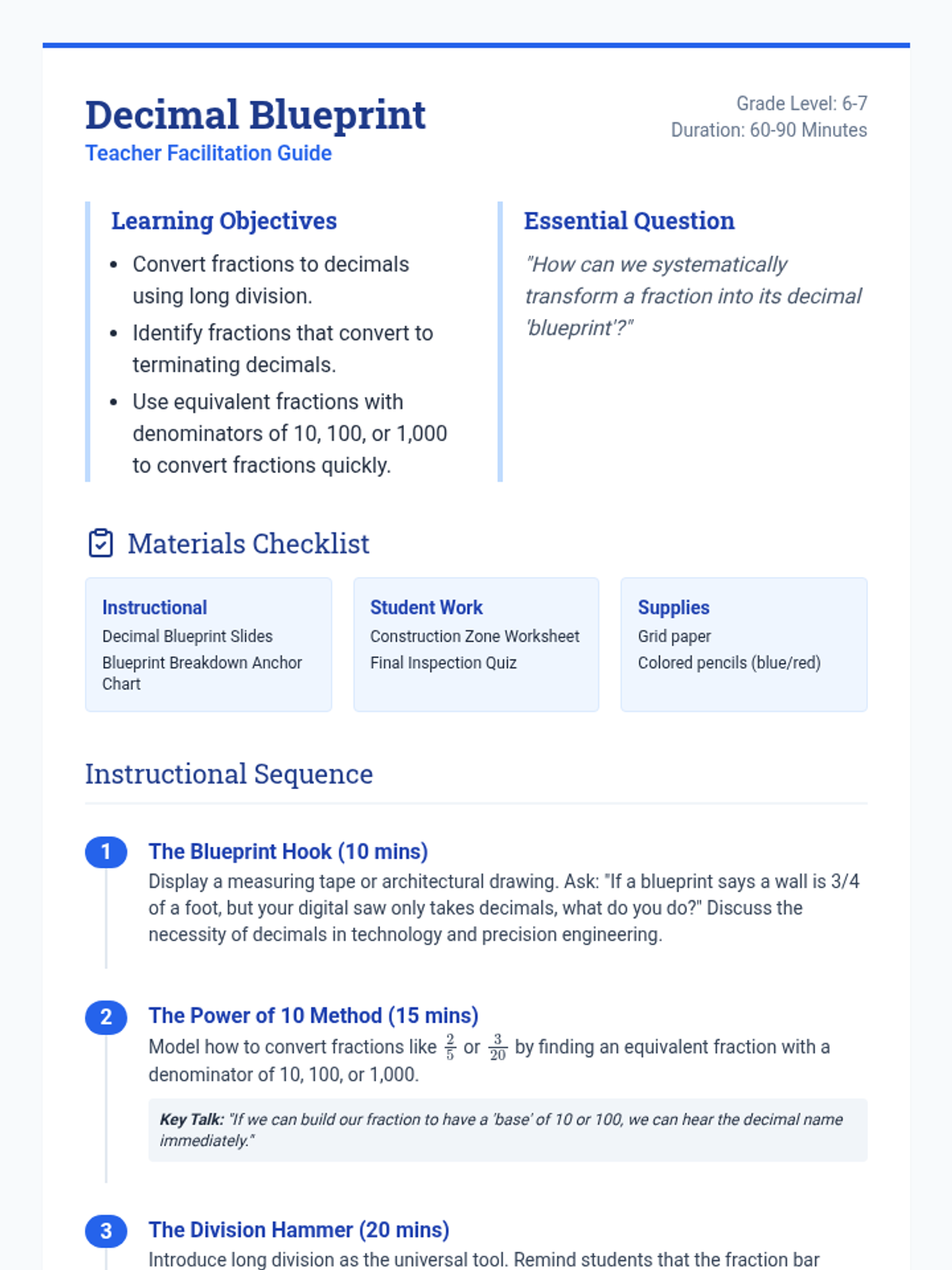
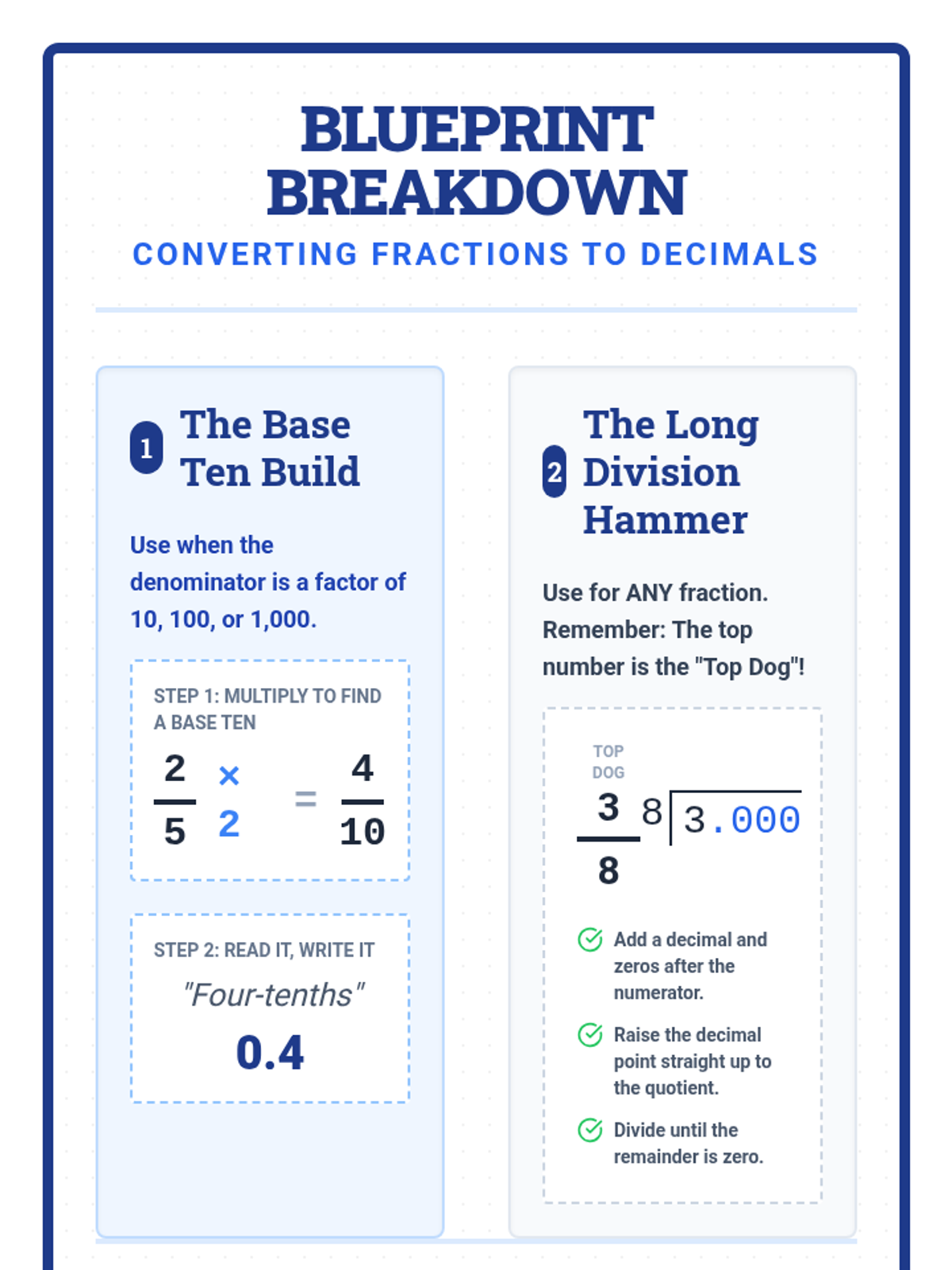
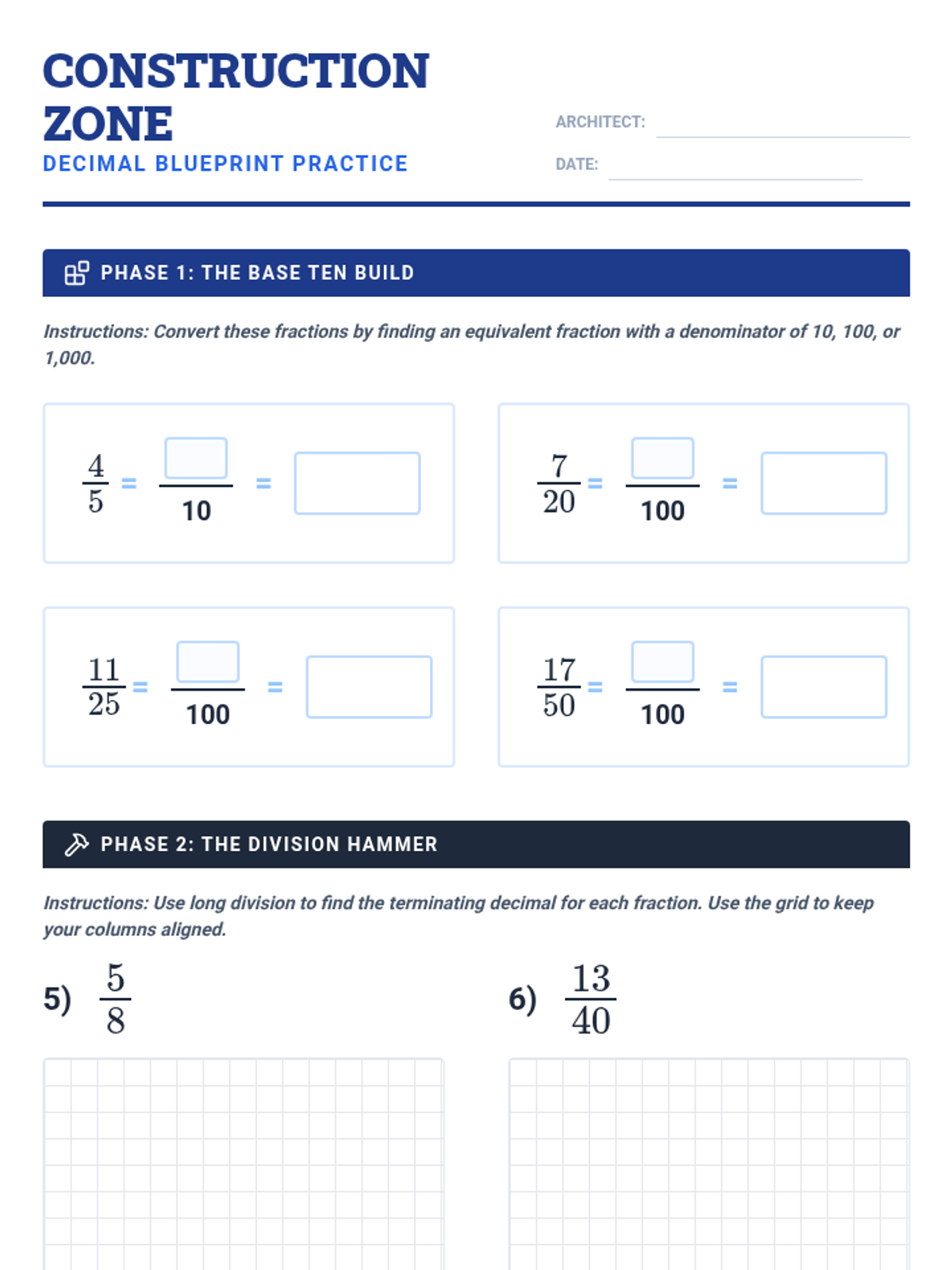
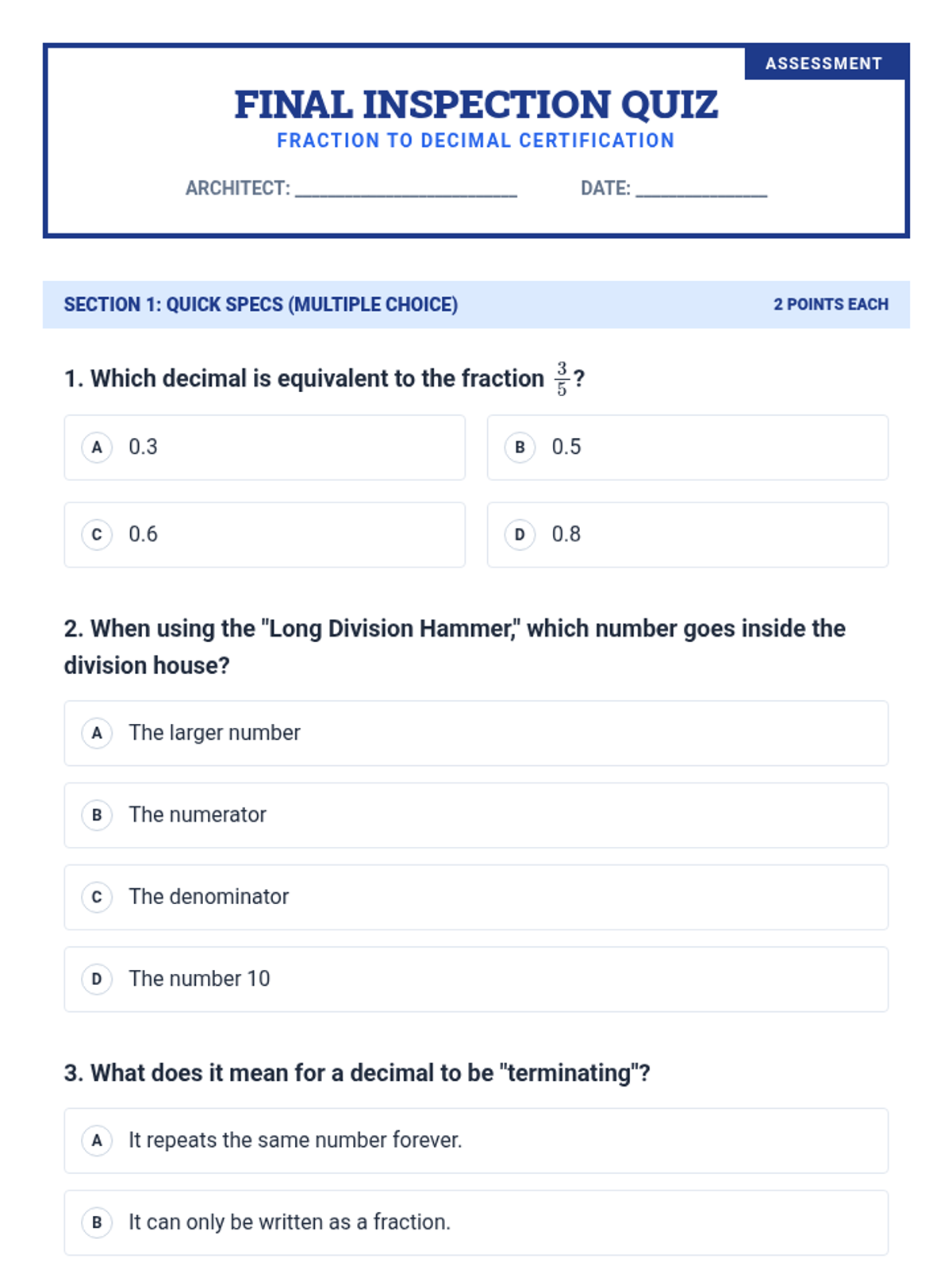
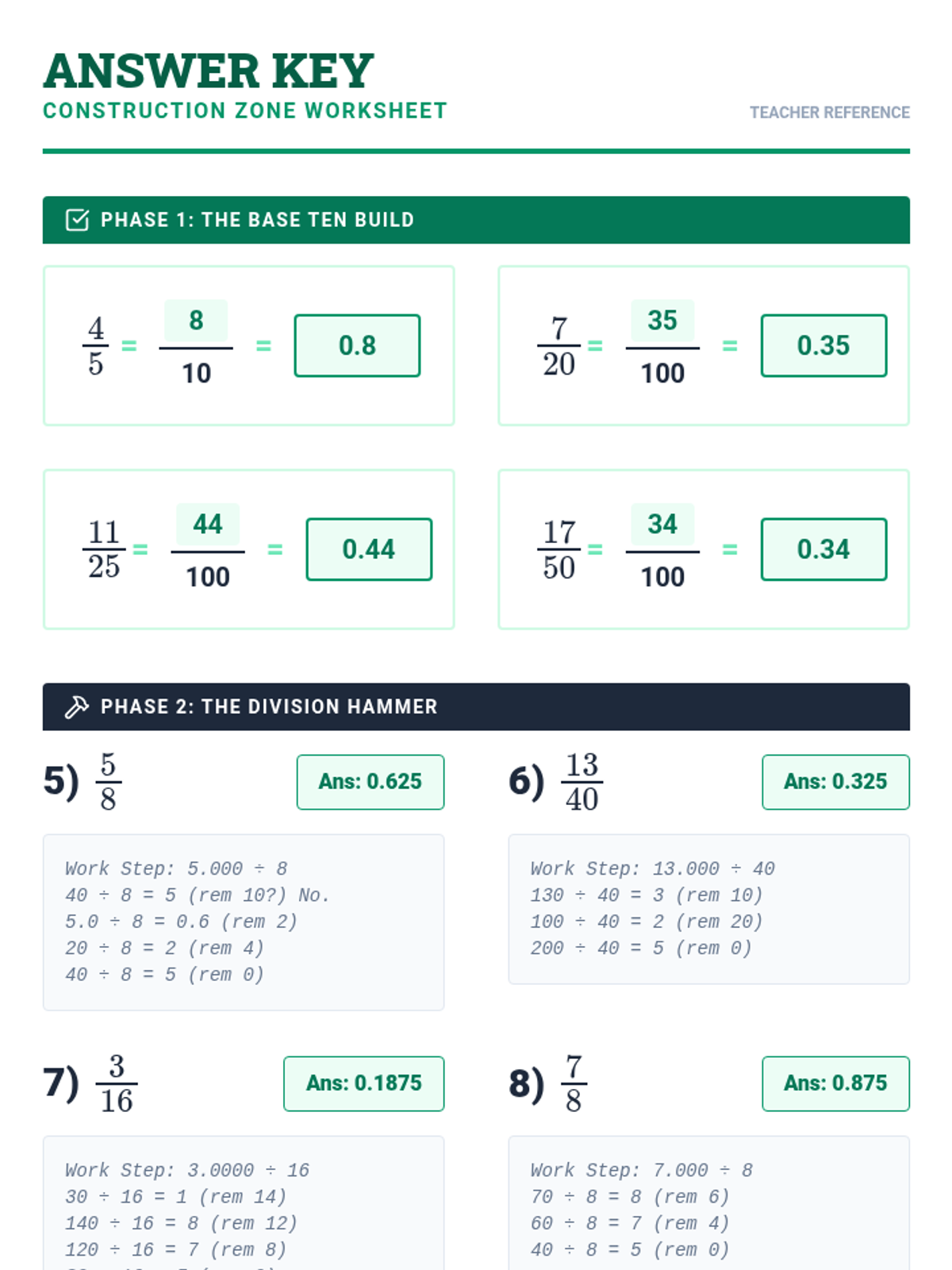
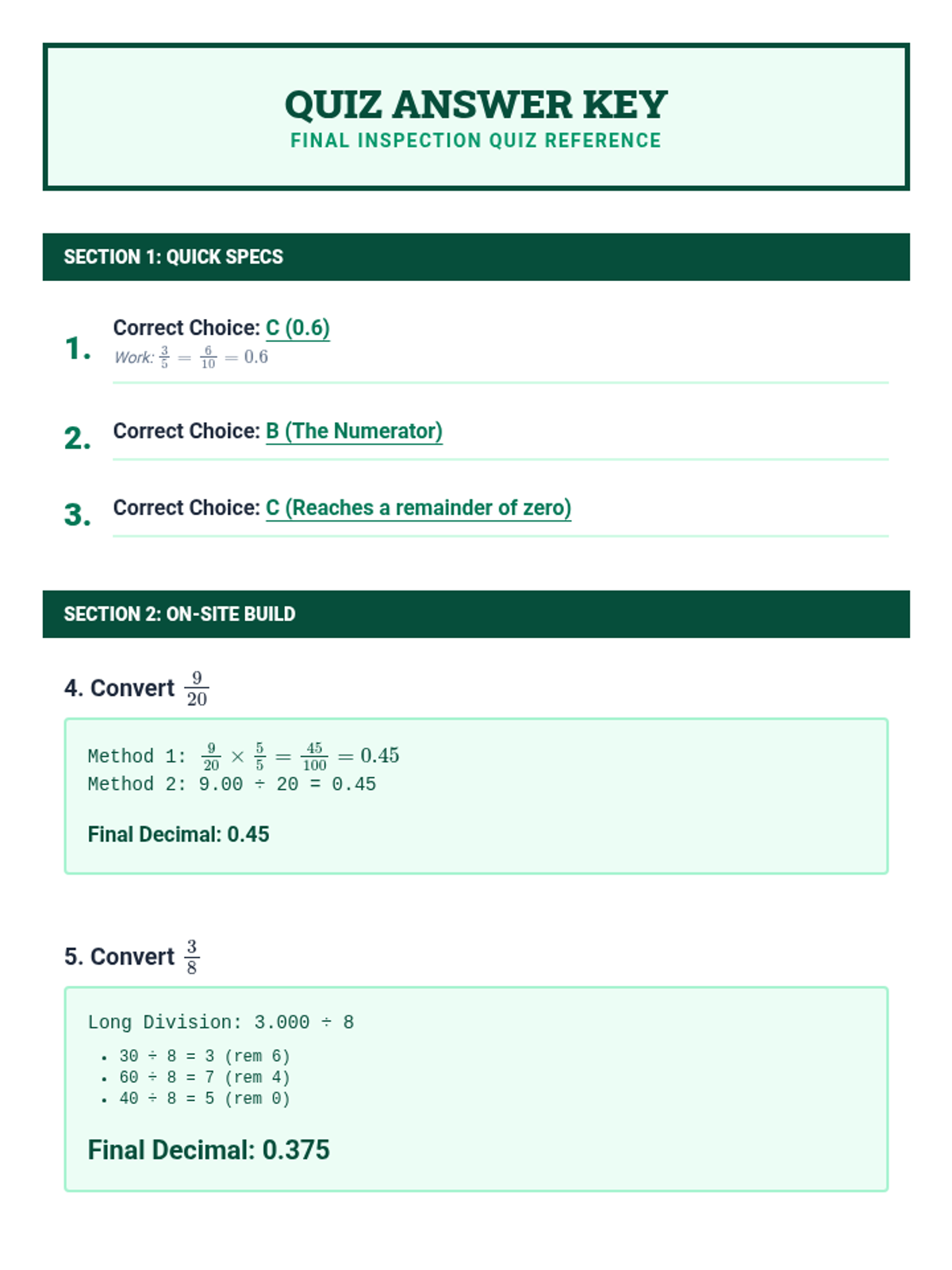
A comprehensive lesson on converting fractions to terminating decimals using long division and equivalent fractions with denominators of 10, 100, or 1,000. Students will act as 'Decimal Architects' to rebuild fractions into their decimal equivalents.
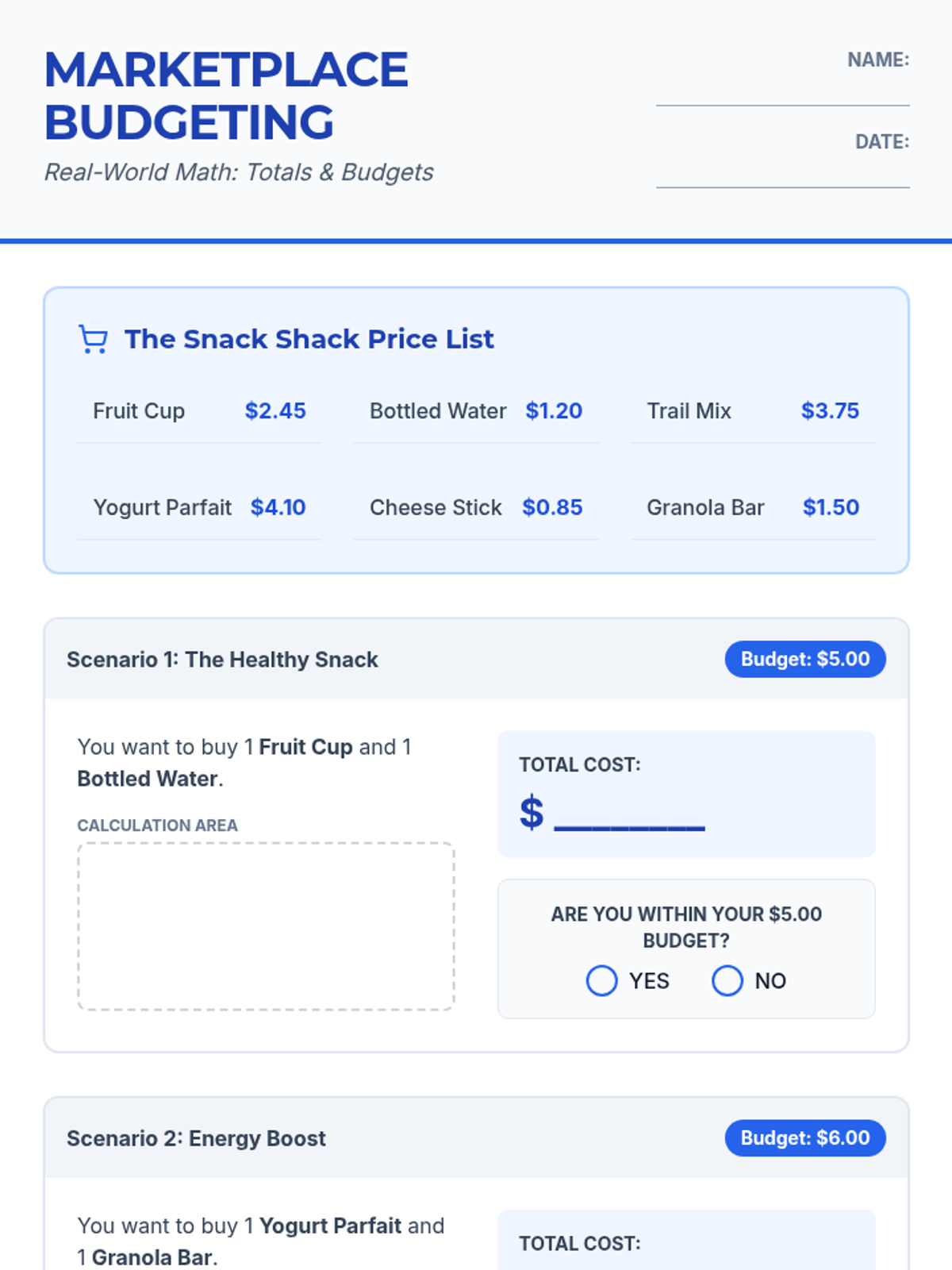
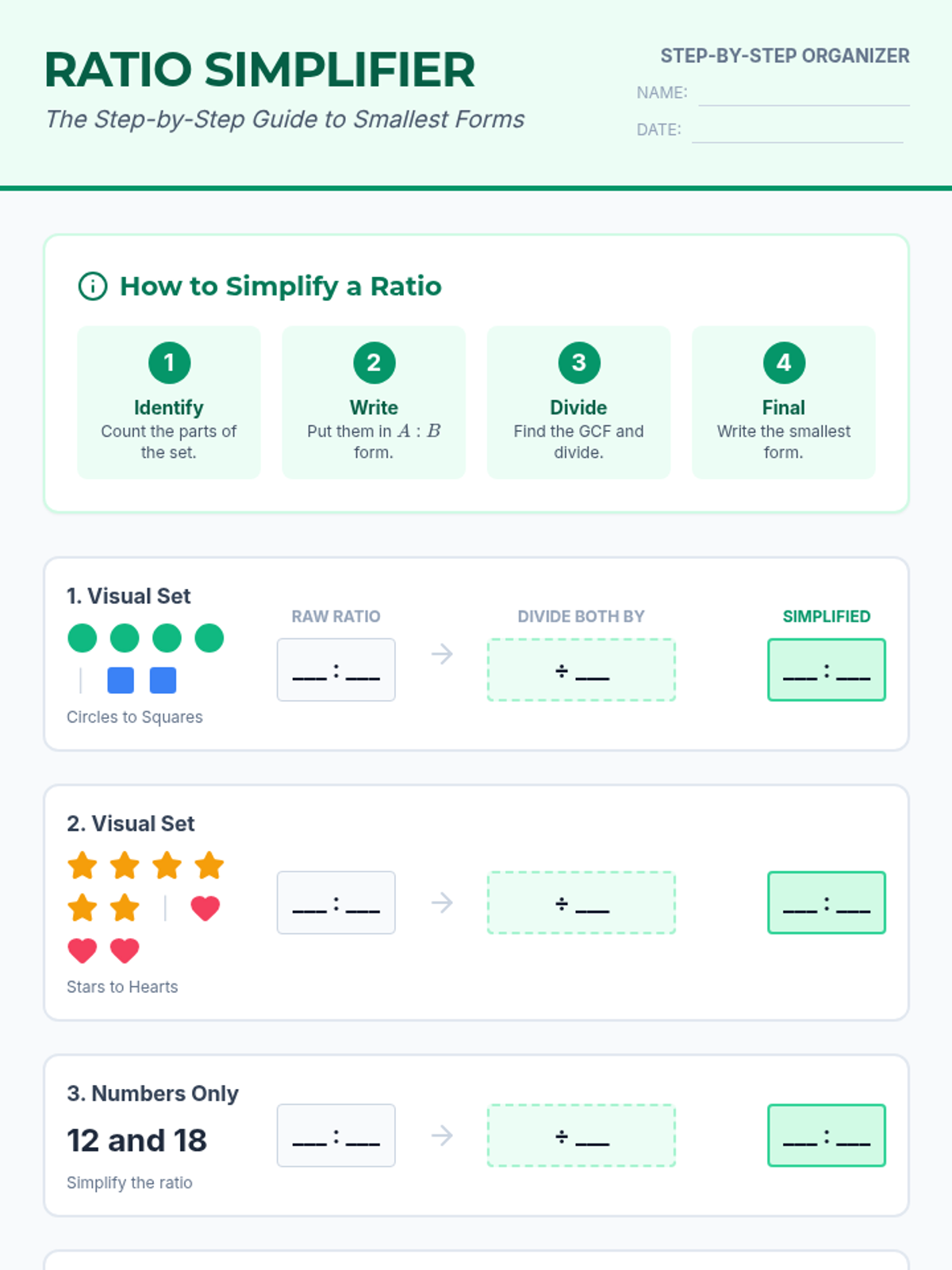
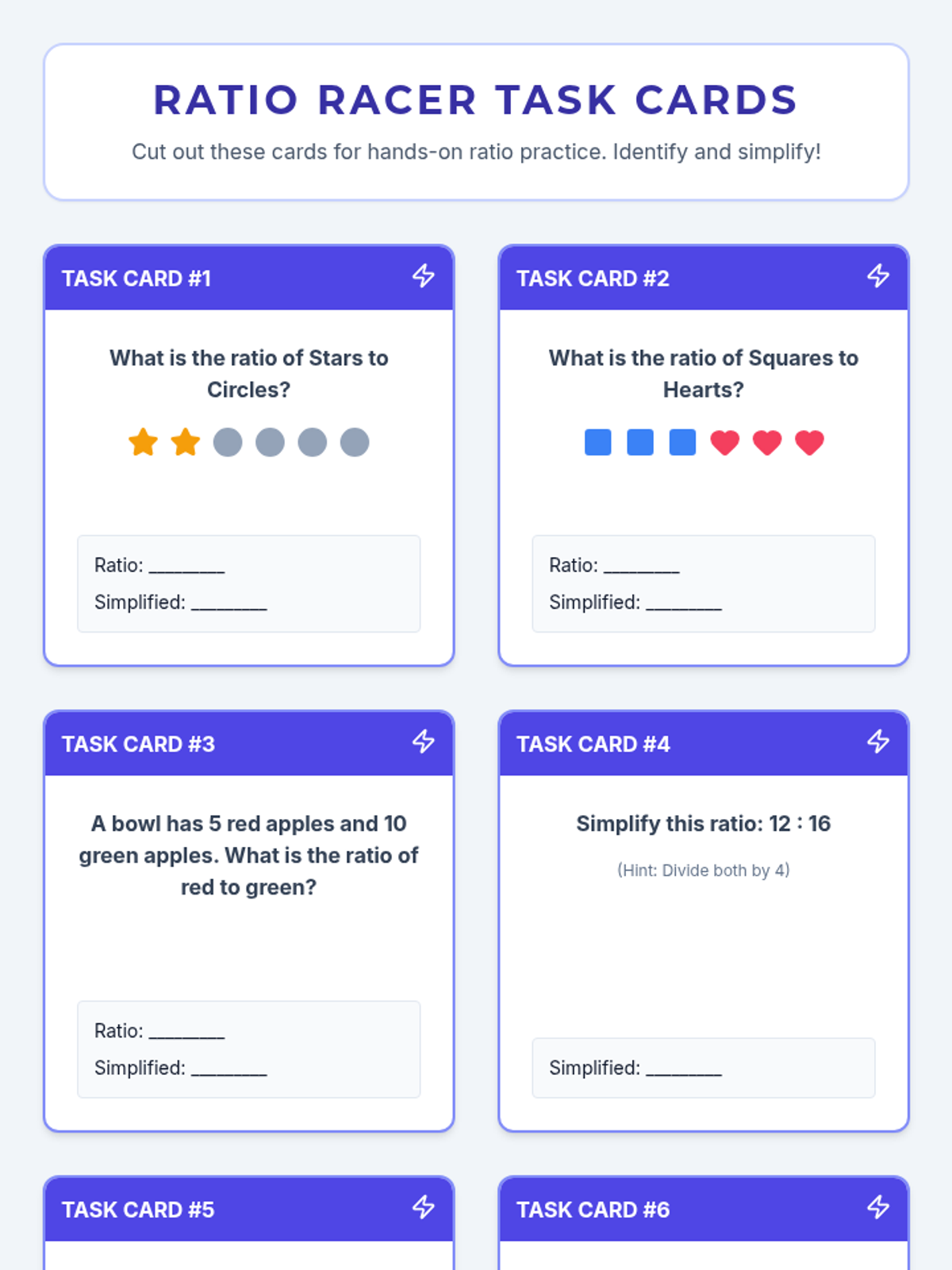
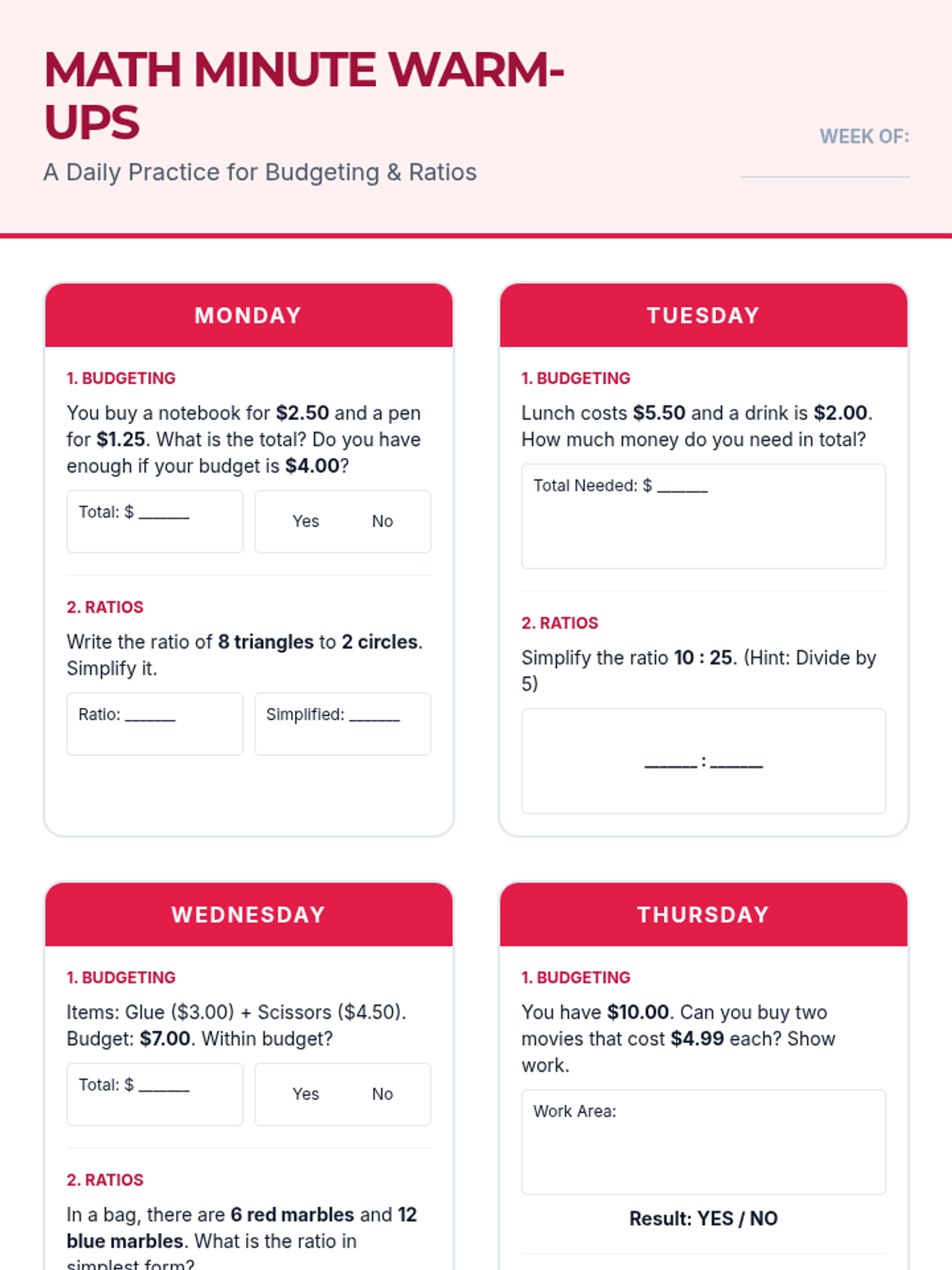
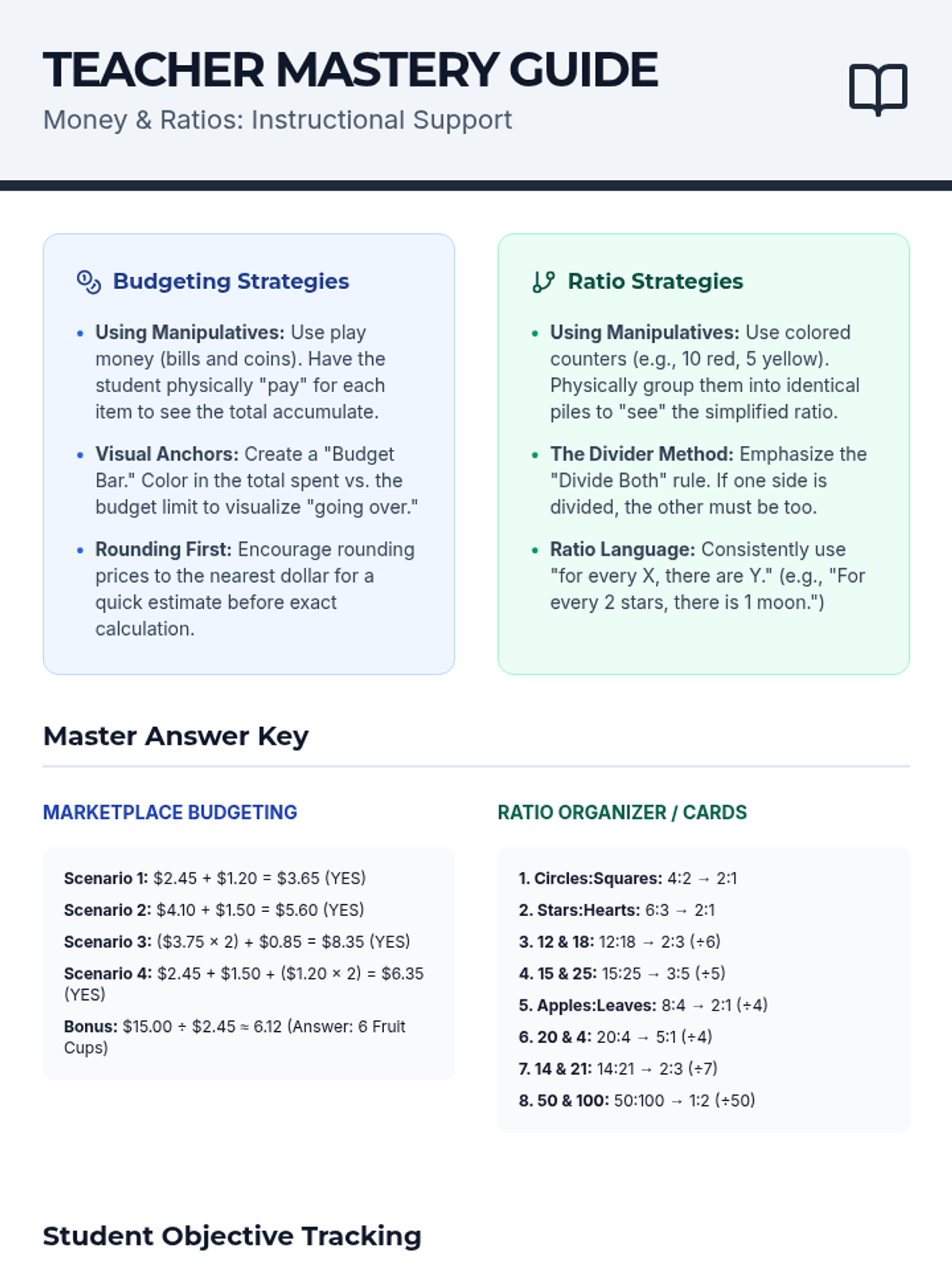
A comprehensive math lesson focusing on practical life skills: budgeting for multiple items and mastering ratio identification and simplification. This lesson integrates real-world shopping scenarios with structured mathematical organizers.
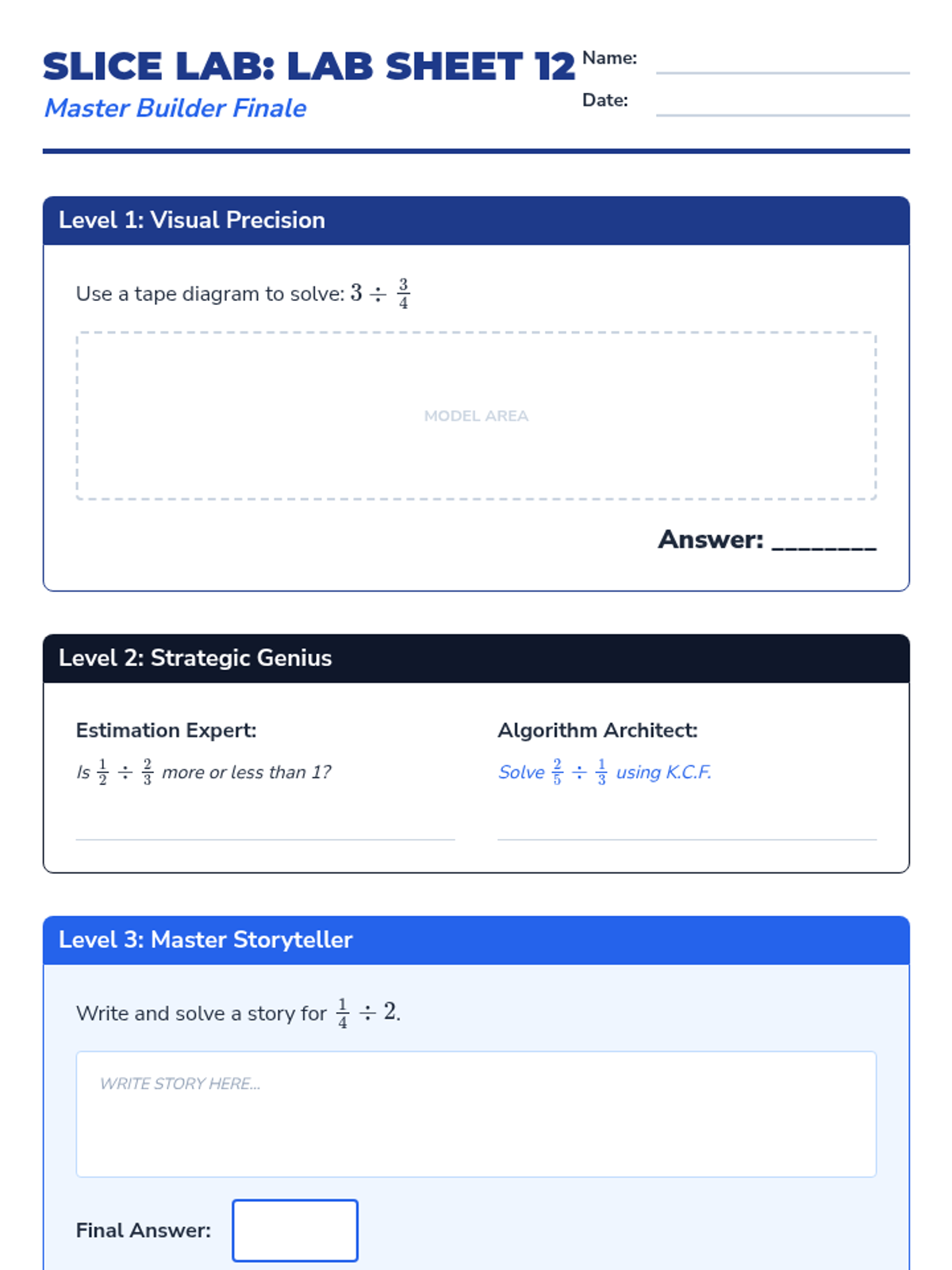
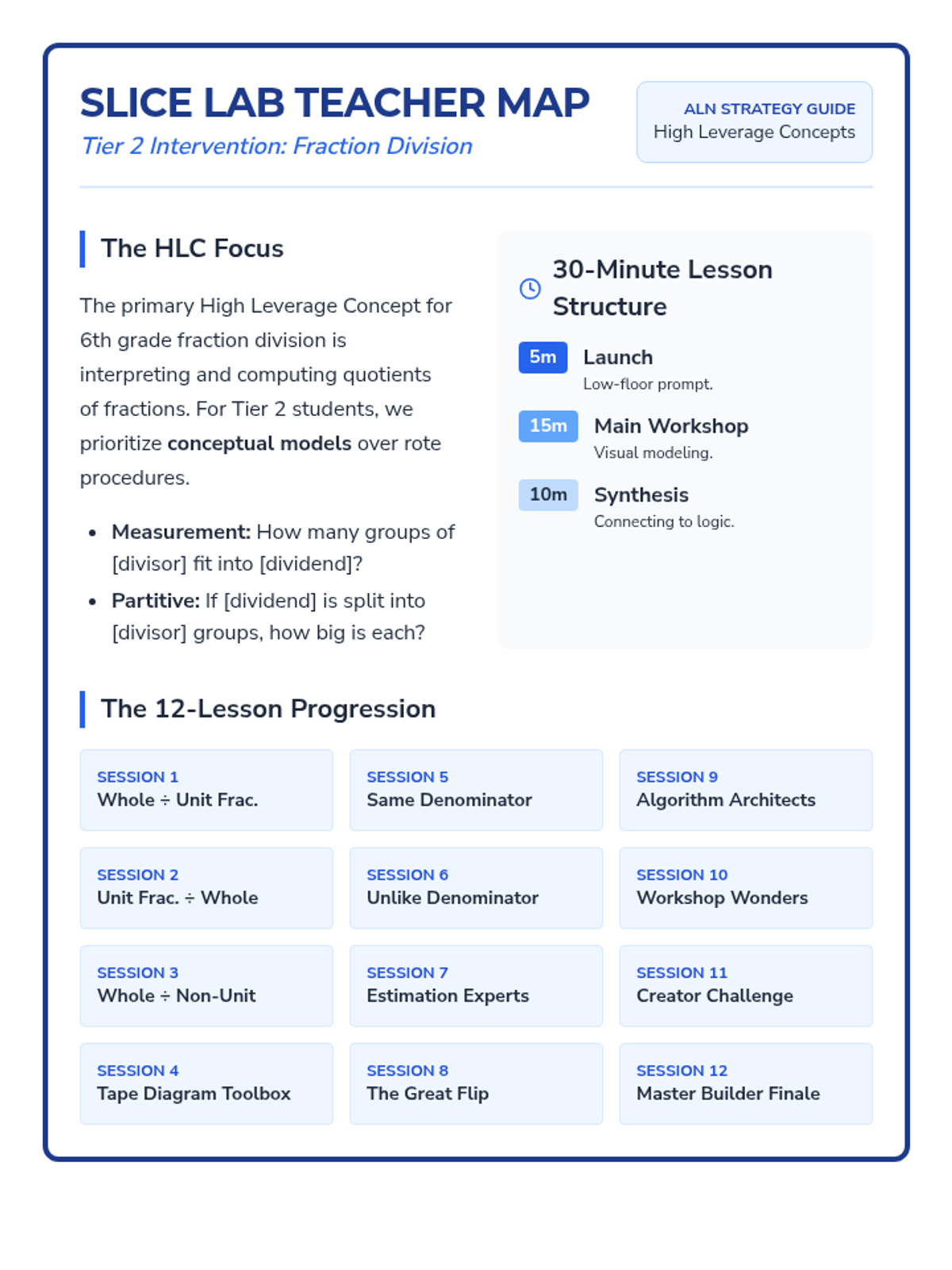
A final mastery check and celebration of learning where students solve a series of progressive fraction division tasks.
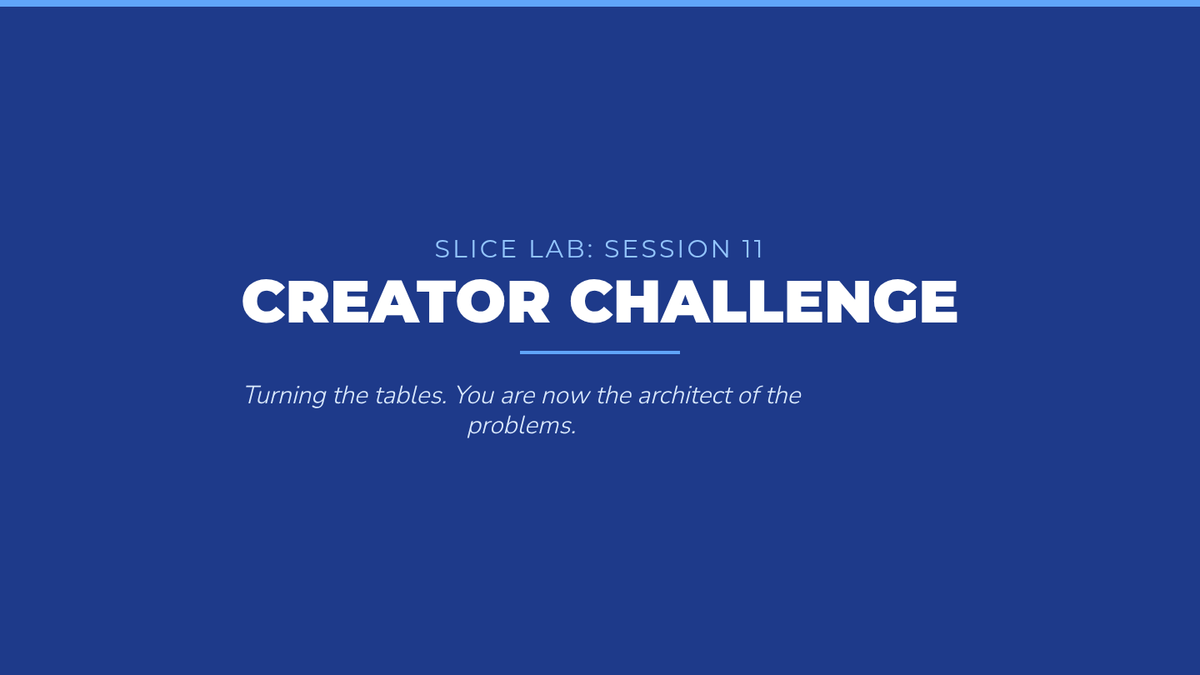
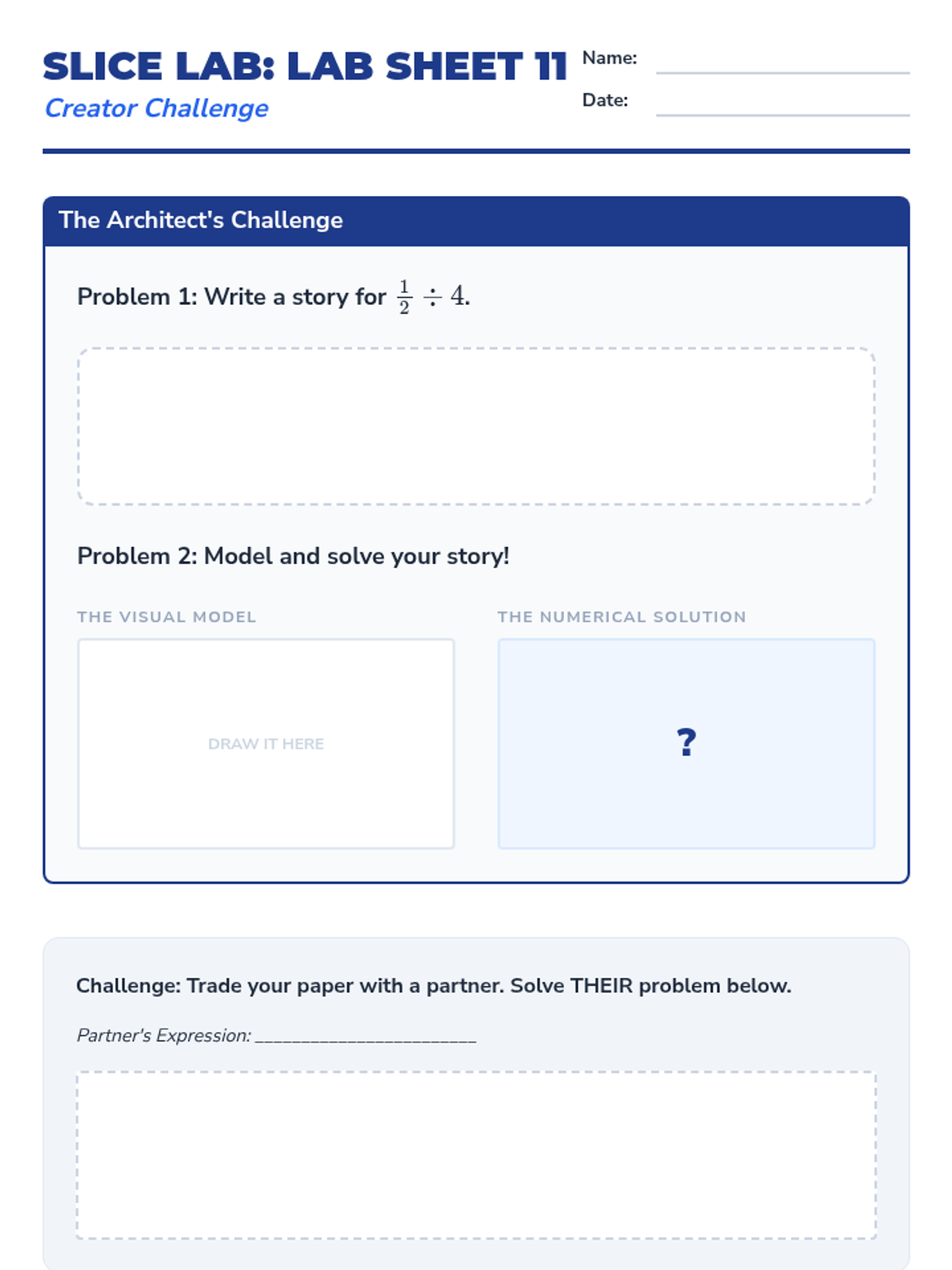
Students create their own division stories and models to demonstrate a deep understanding of the concept.
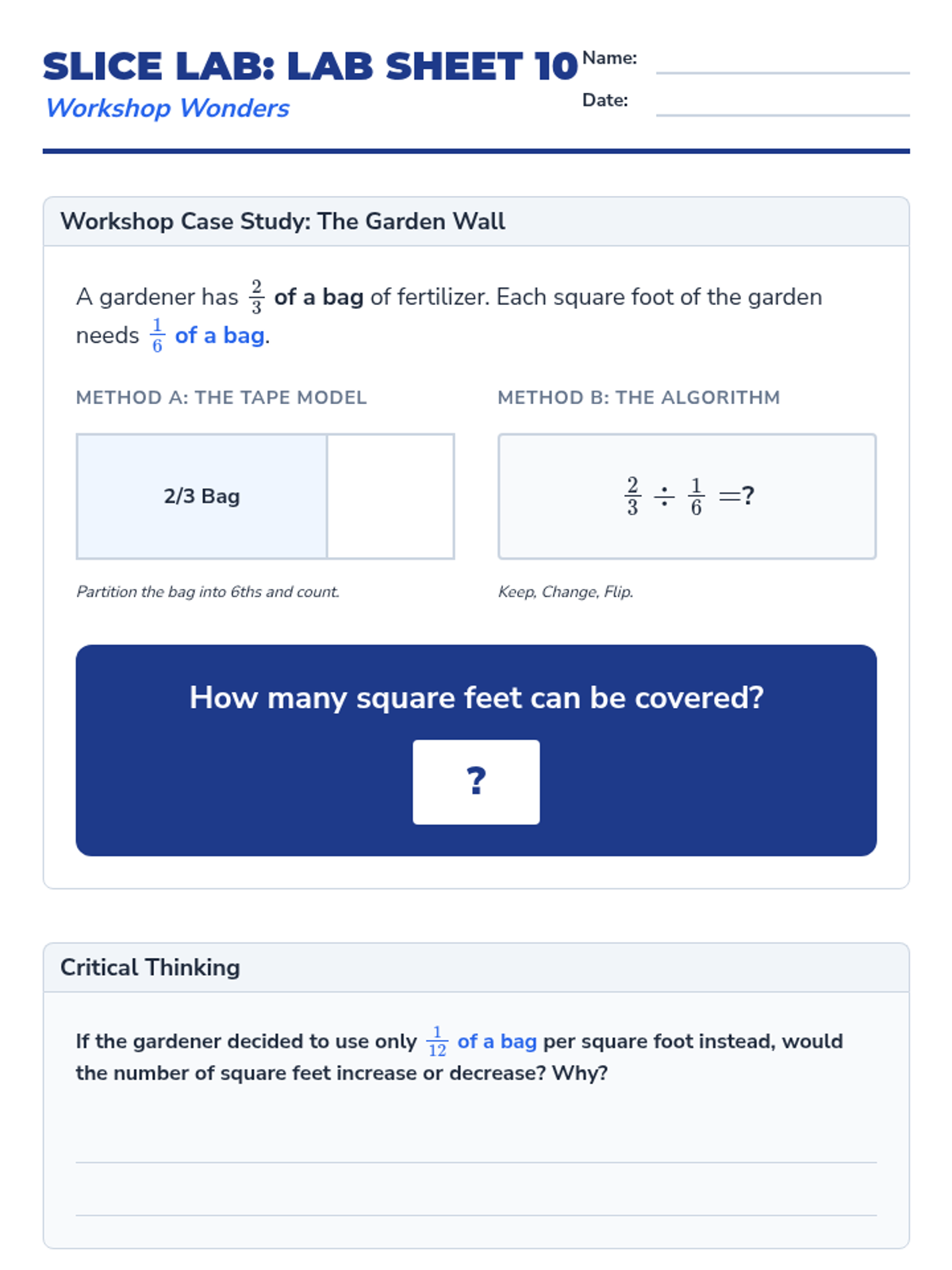
Students solve complex, multi-step word problems involving fraction division in real-world contexts.
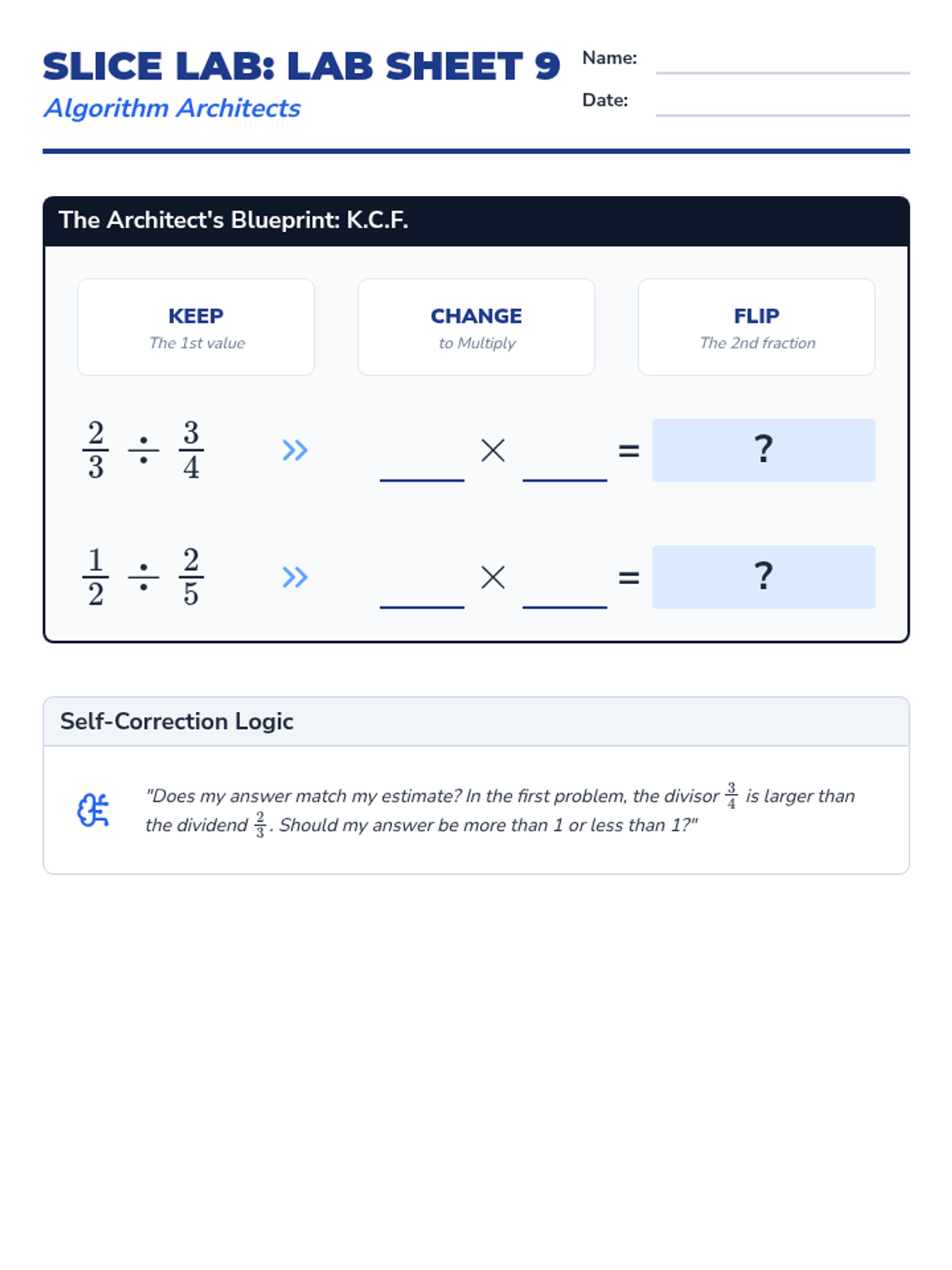
Students formalize the 'invert and multiply' algorithm and practice its application across various problem types.
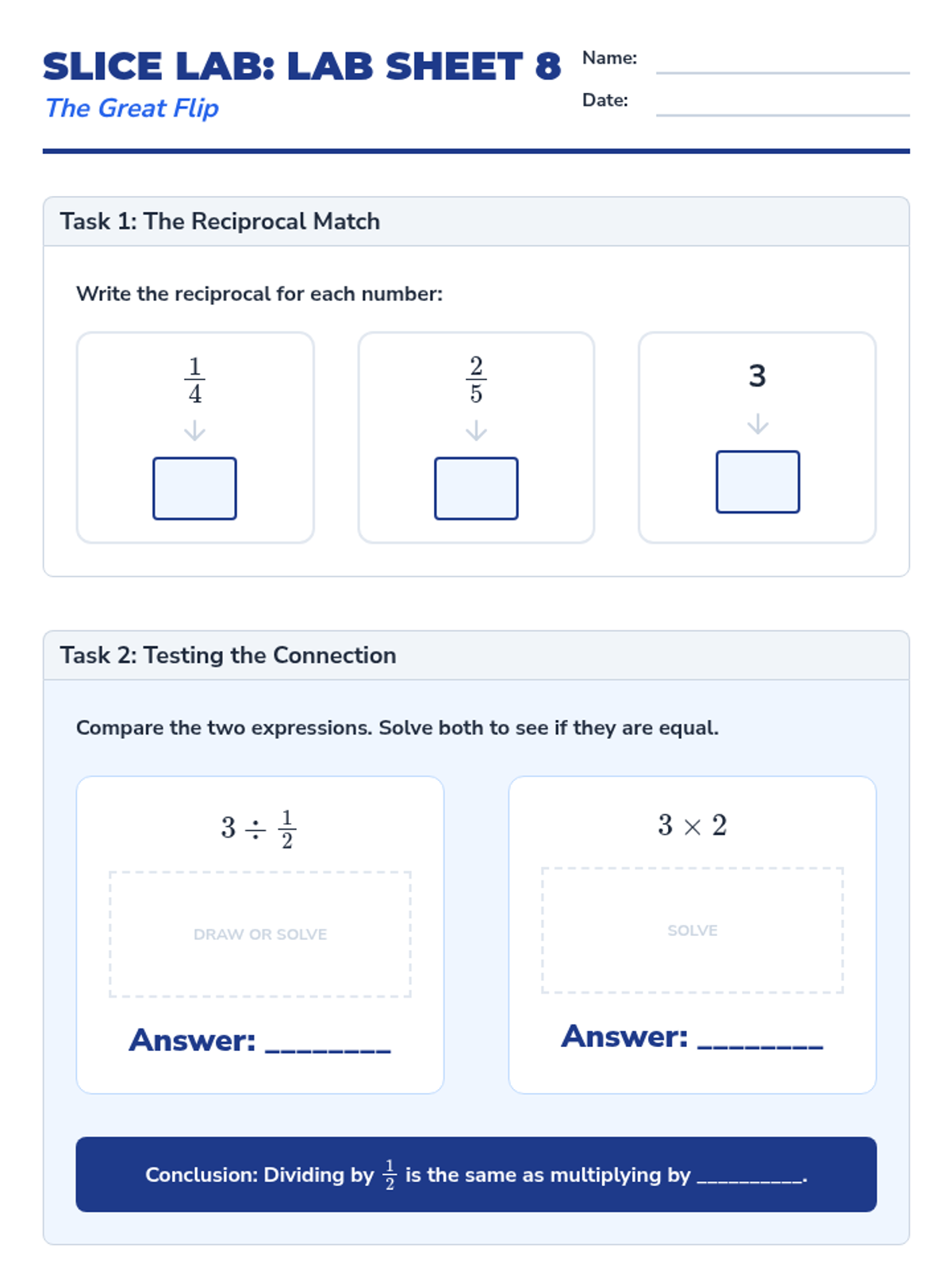
Students explore the relationship between dividing by a fraction and multiplying by its reciprocal using visual proofs.
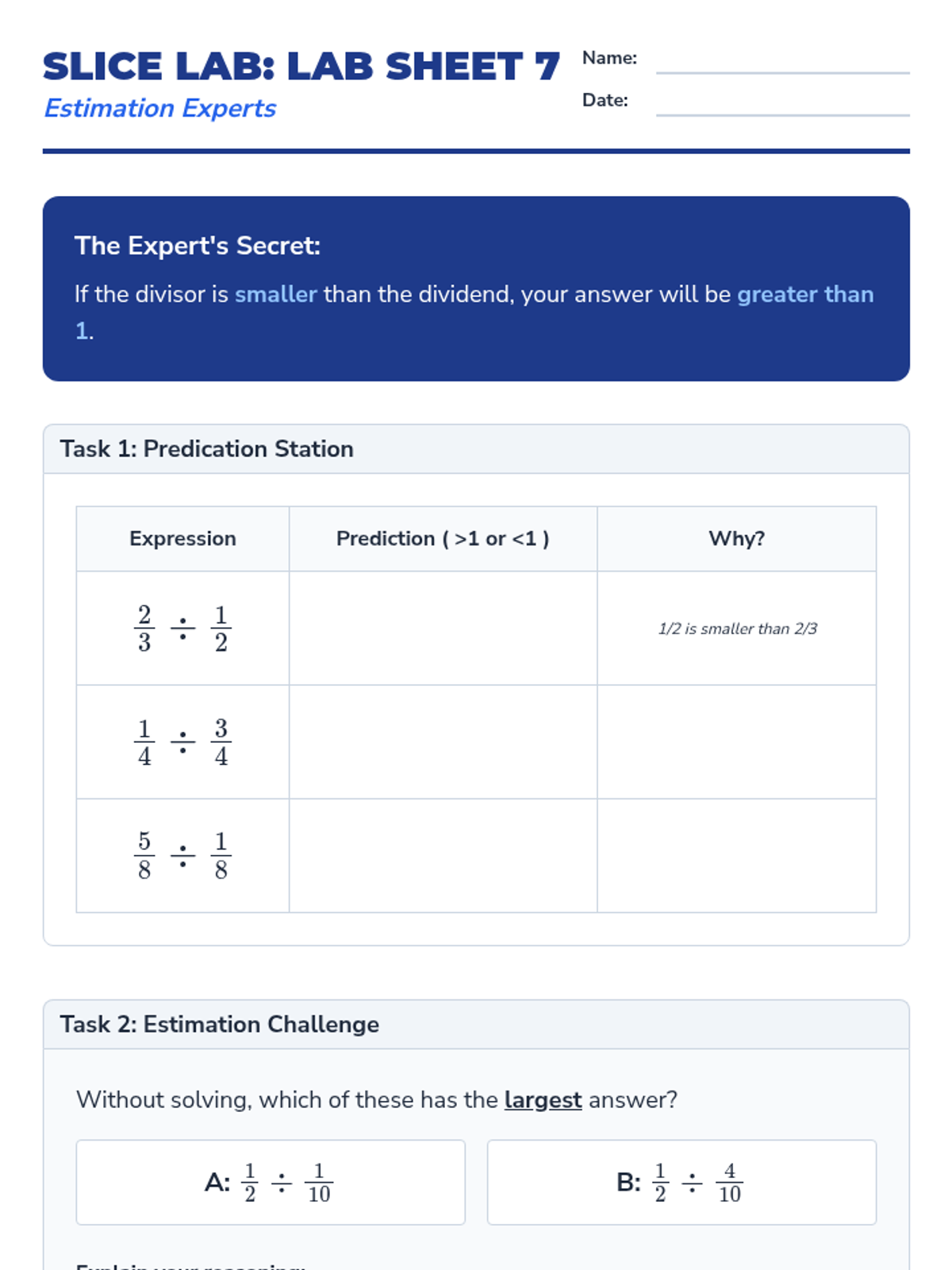
Students develop number sense by estimating whether a quotient will be greater than or less than 1 before solving.
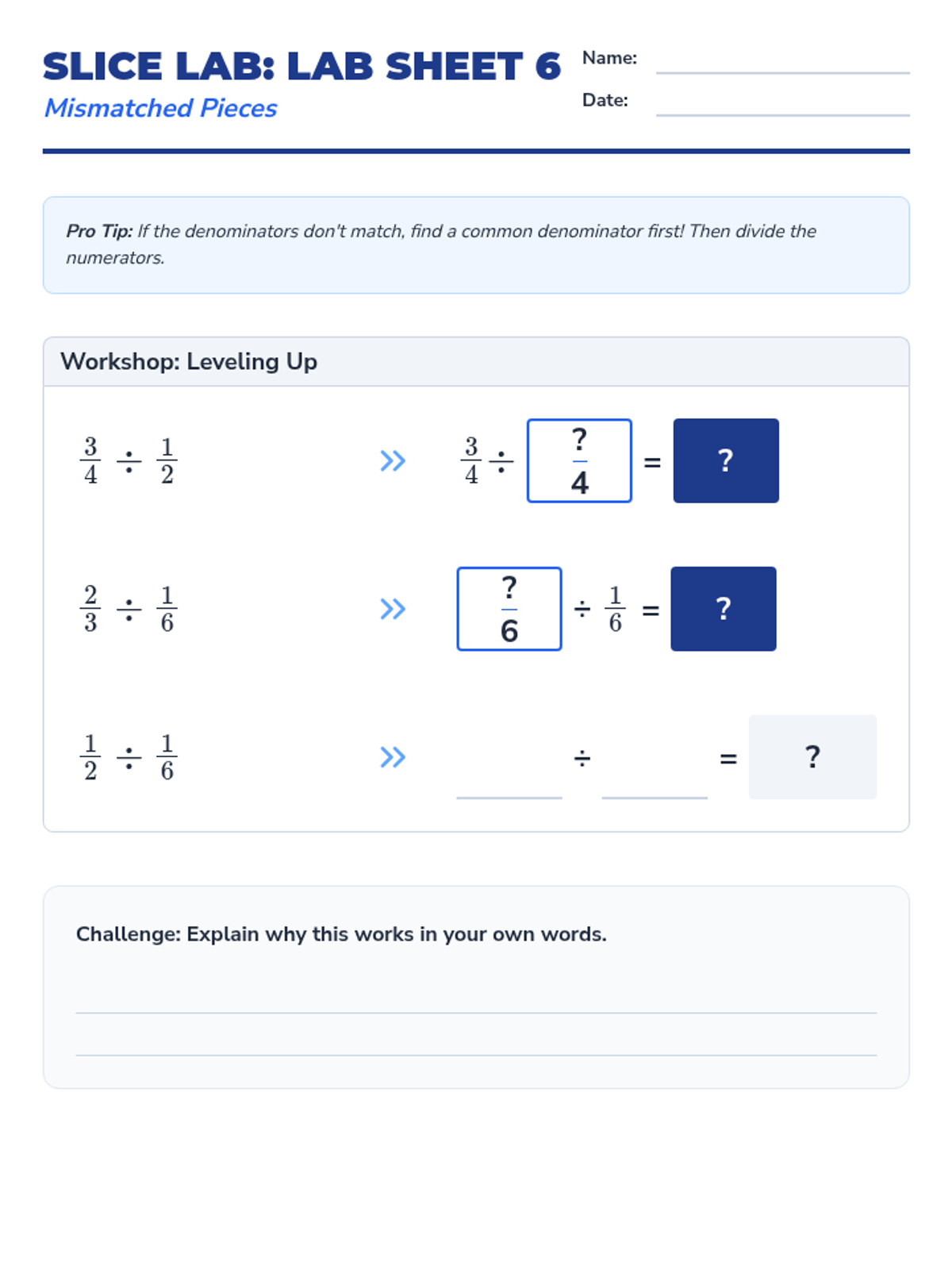
Students apply the common denominator strategy to divide fractions with unlike denominators by creating equivalent fractions first.
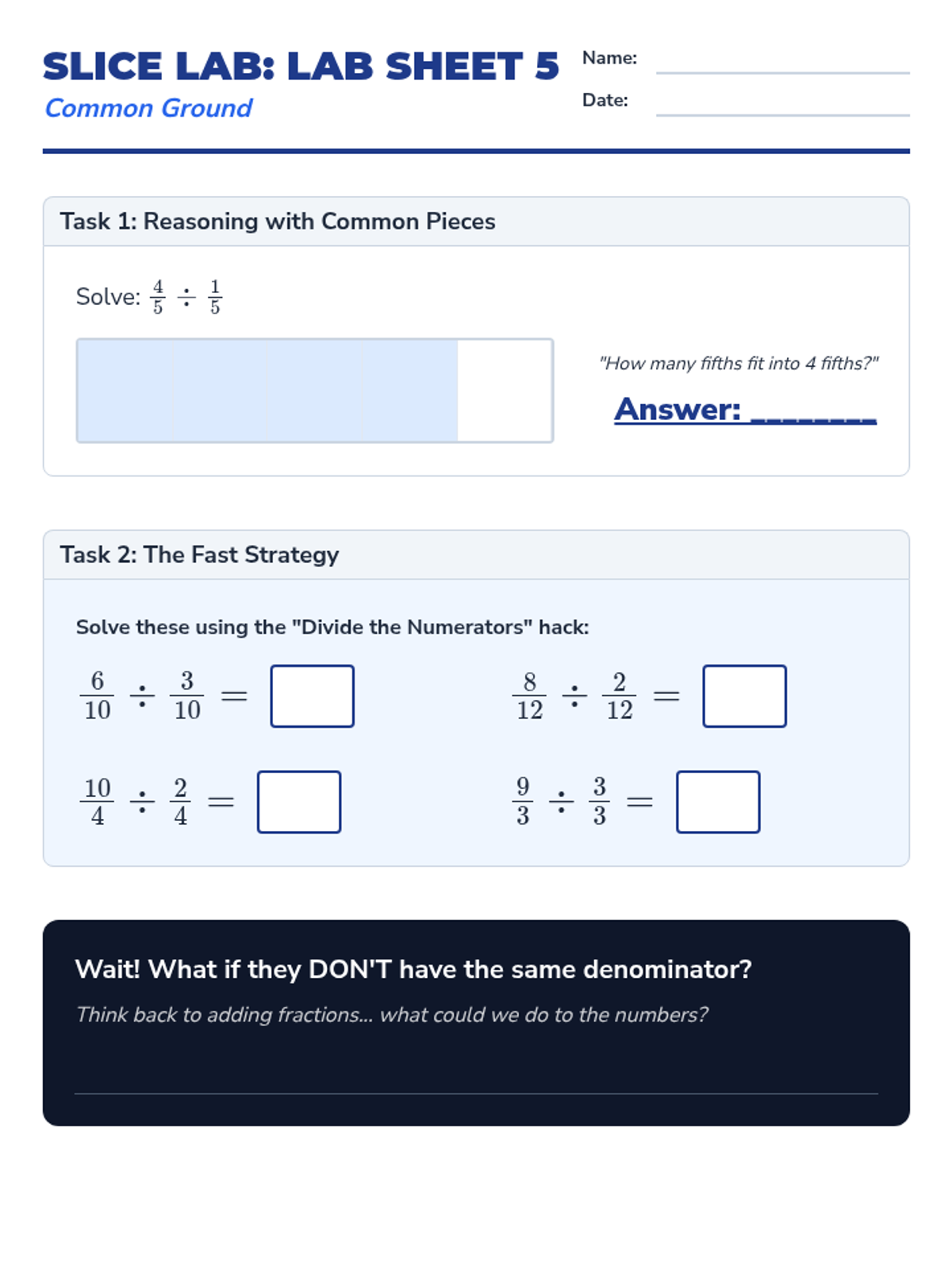
Students discover that dividing fractions with the same denominator is as simple as dividing their numerators.
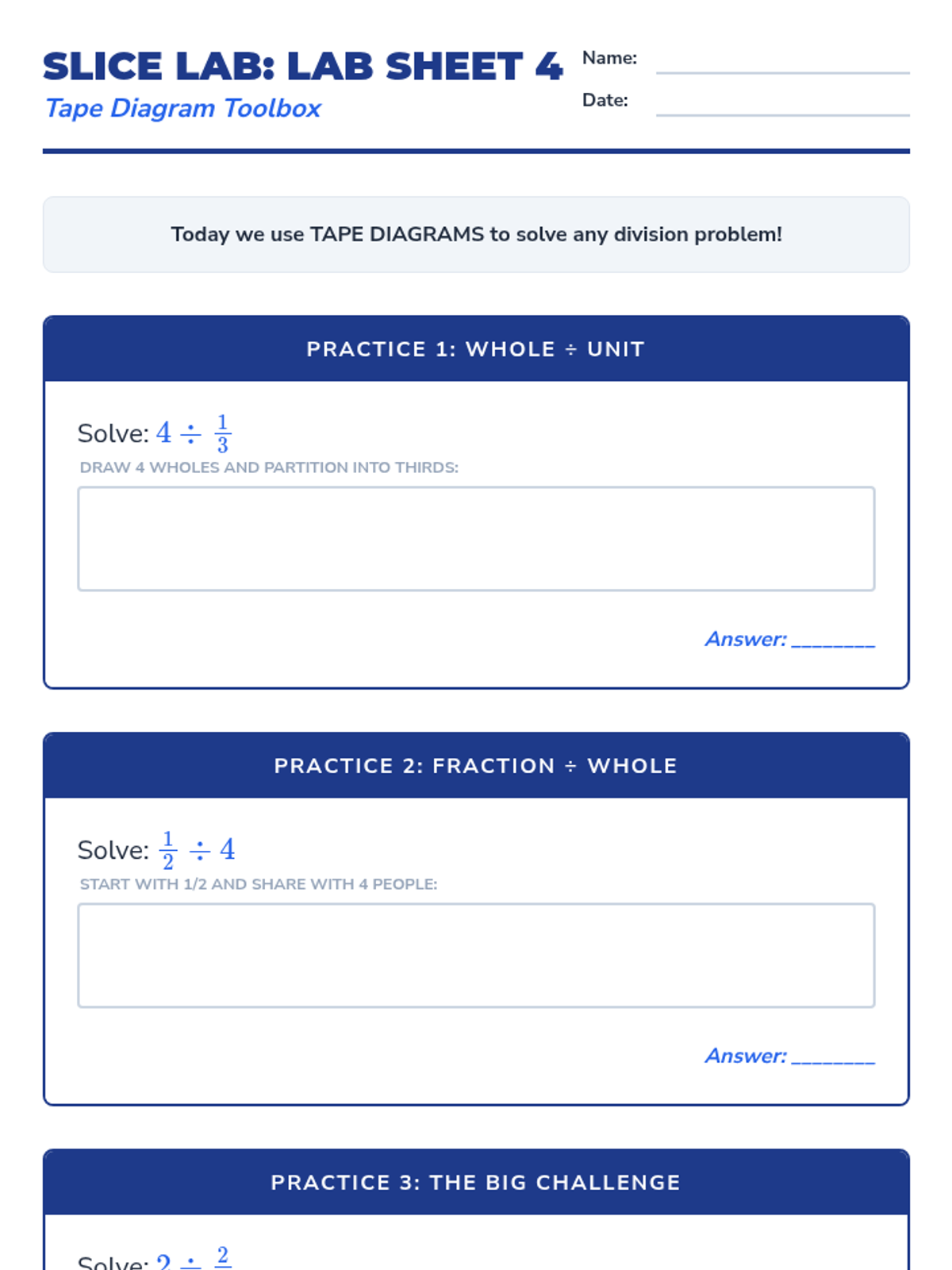
Students use tape diagrams as a primary tool to represent and solve division problems involving whole numbers and fractions.
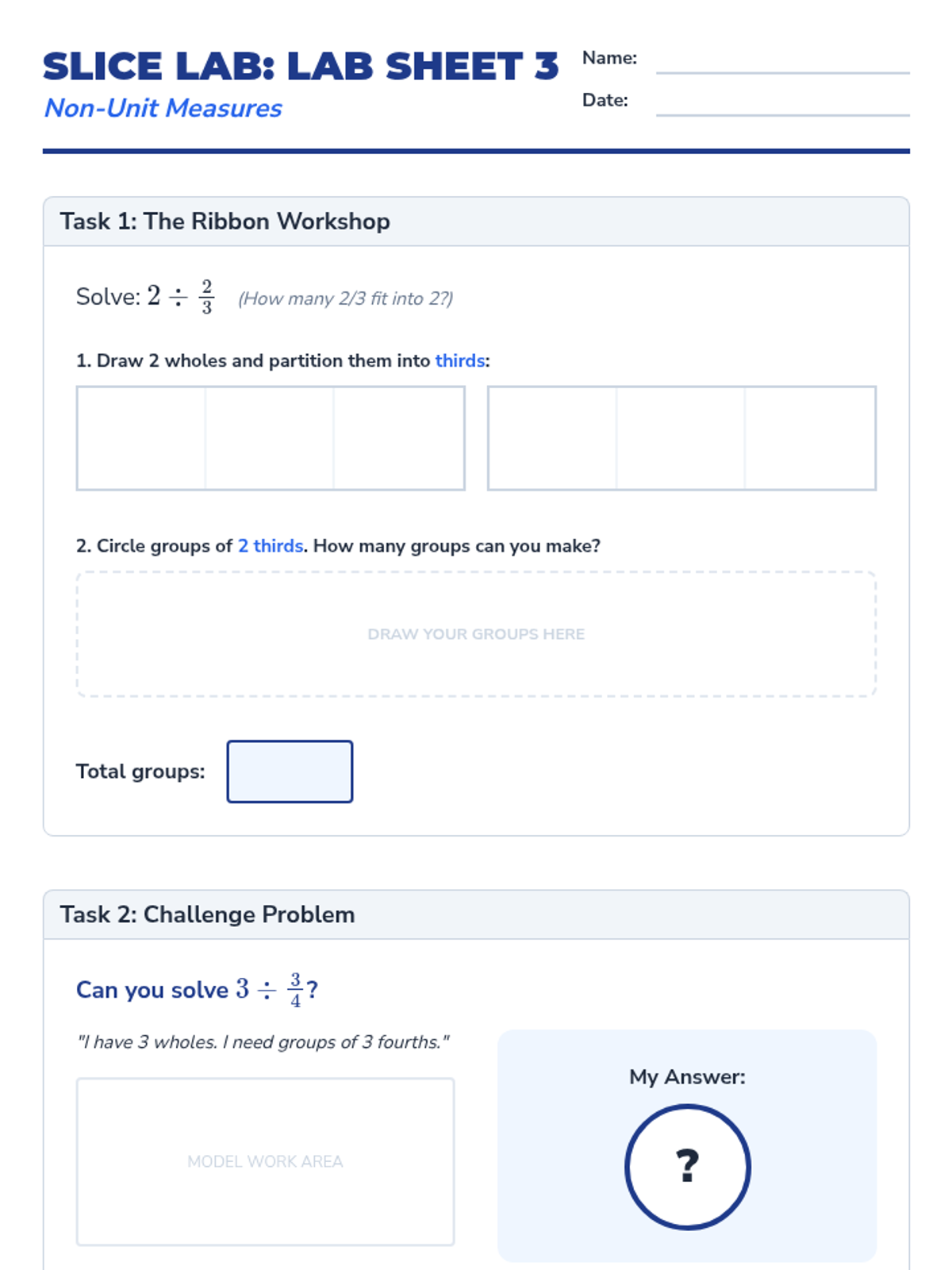
Students extend measurement division to non-unit fractions, using tape diagrams to see how many groups of 2/3 or 3/4 are in a whole.
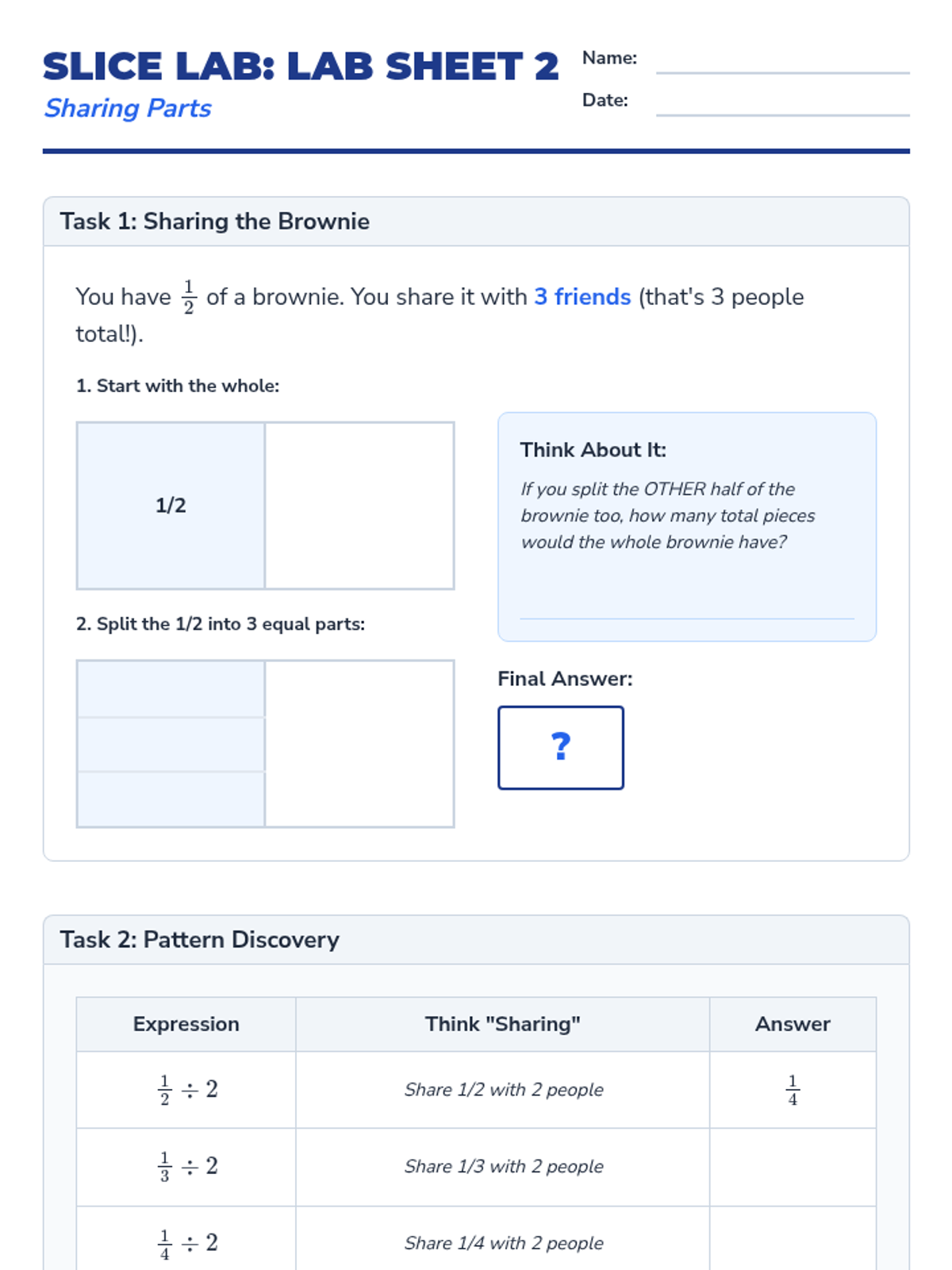
Students investigate division as sharing by splitting a unit fraction into equal parts among a whole number of groups.
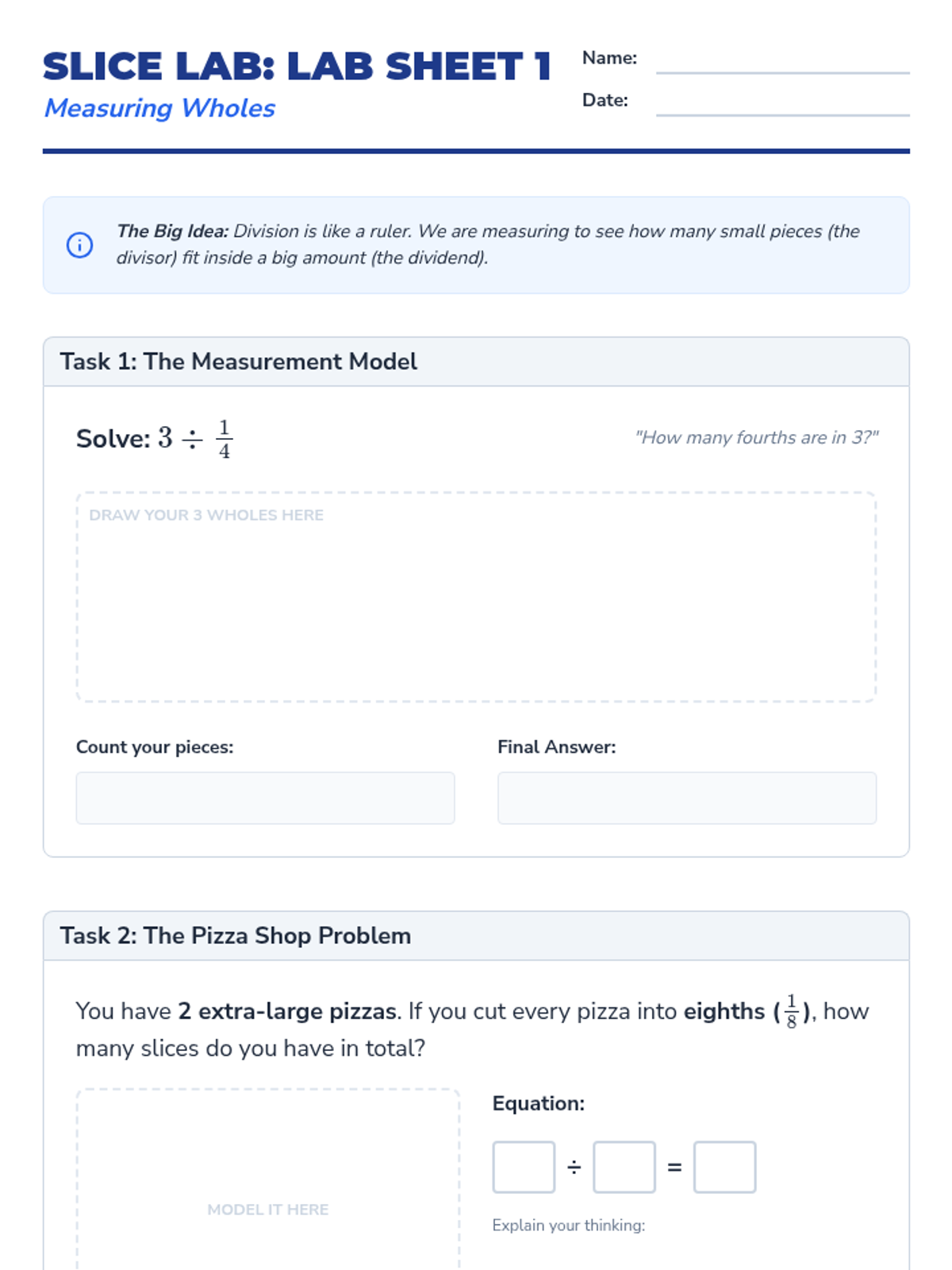
Students explore division as measurement by determining how many unit fractions fit into a whole number using visual models.
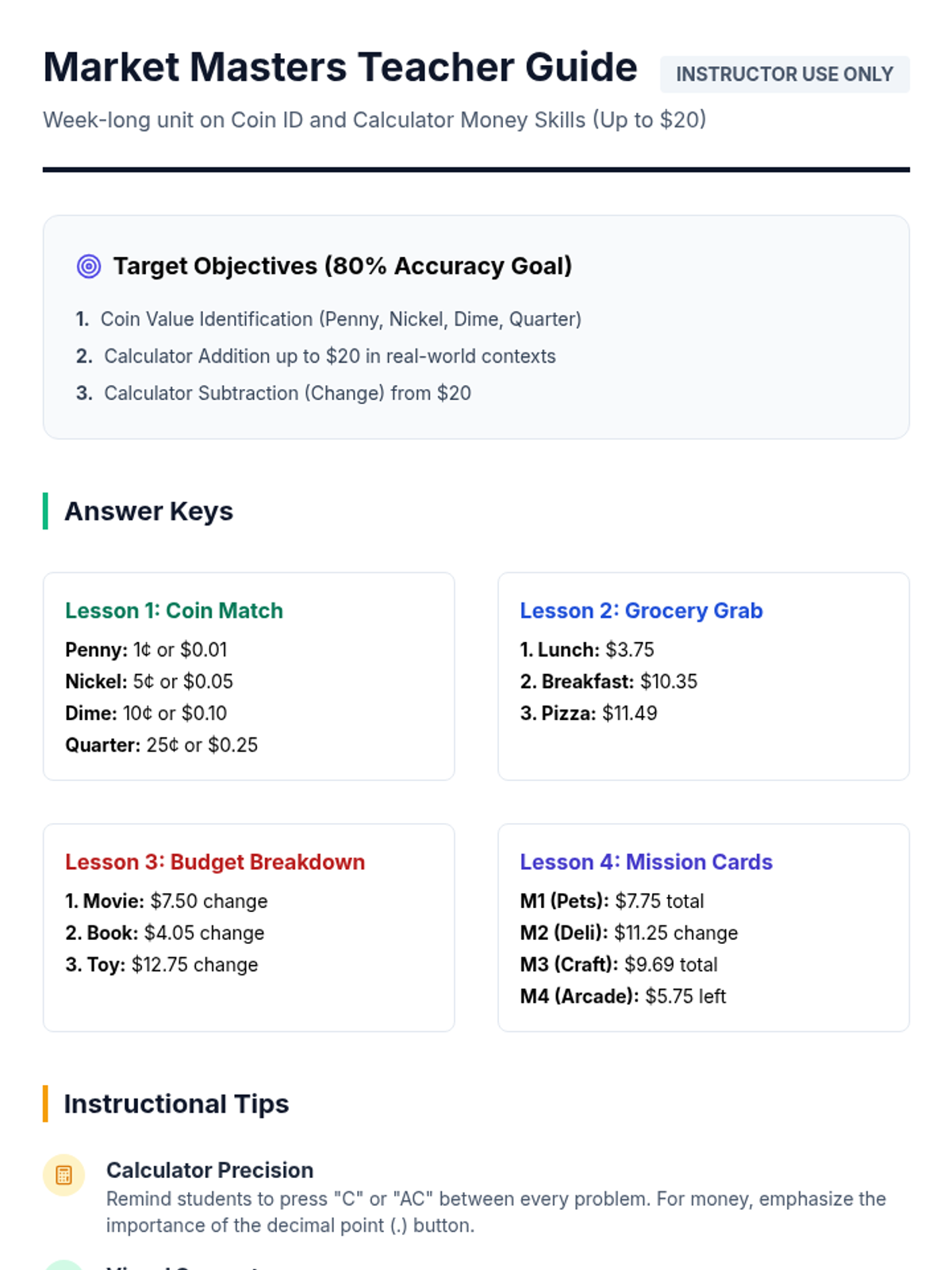
A final assessment and review day to track progress towards identifying coins and performing money calculations with 80% accuracy.
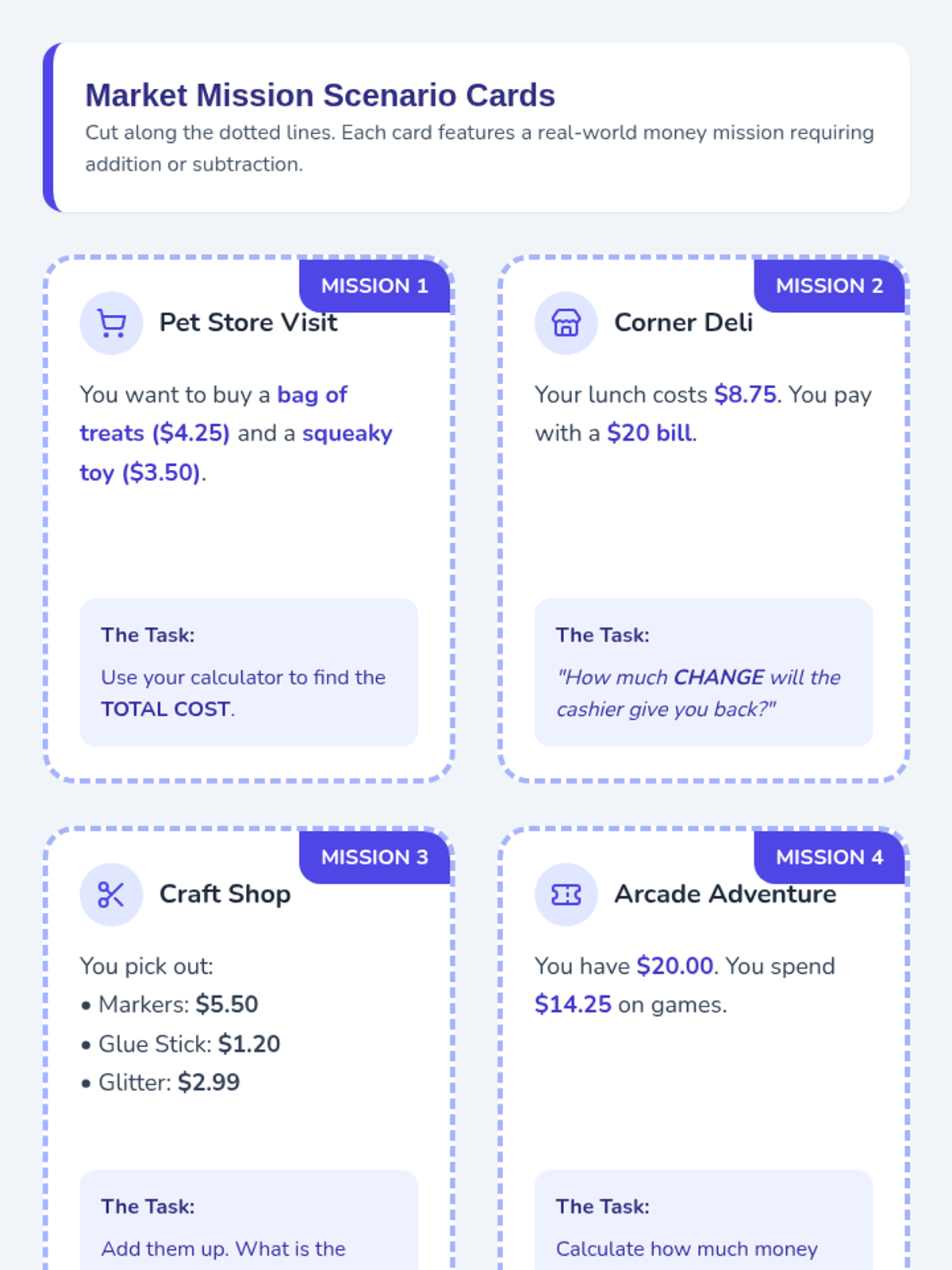
Applying both addition and subtraction to multi-step real-world scenarios using a set of interactive scenario cards.
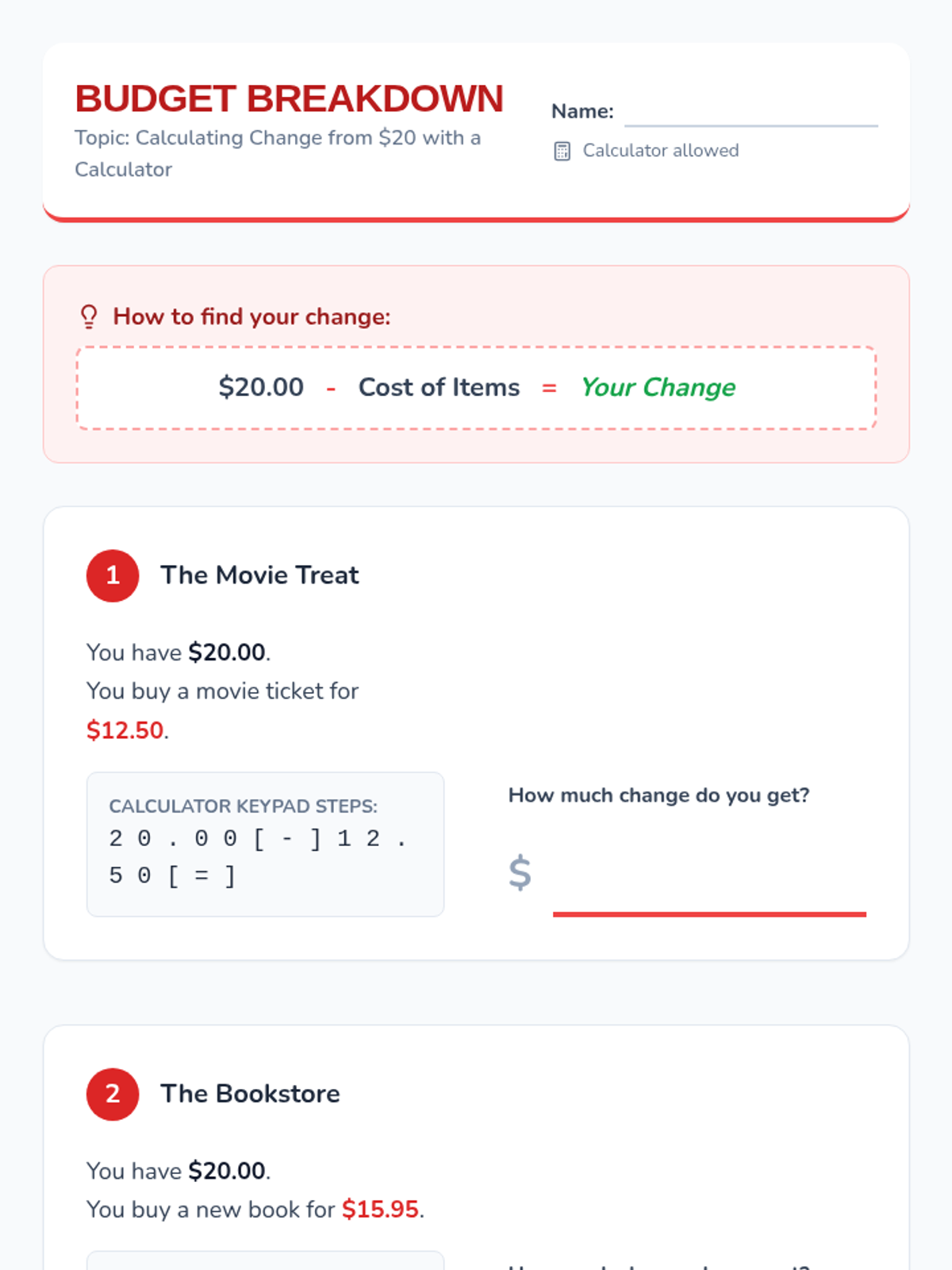
Practicing subtraction skills to calculate change and budget remaining money from a $20 limit.
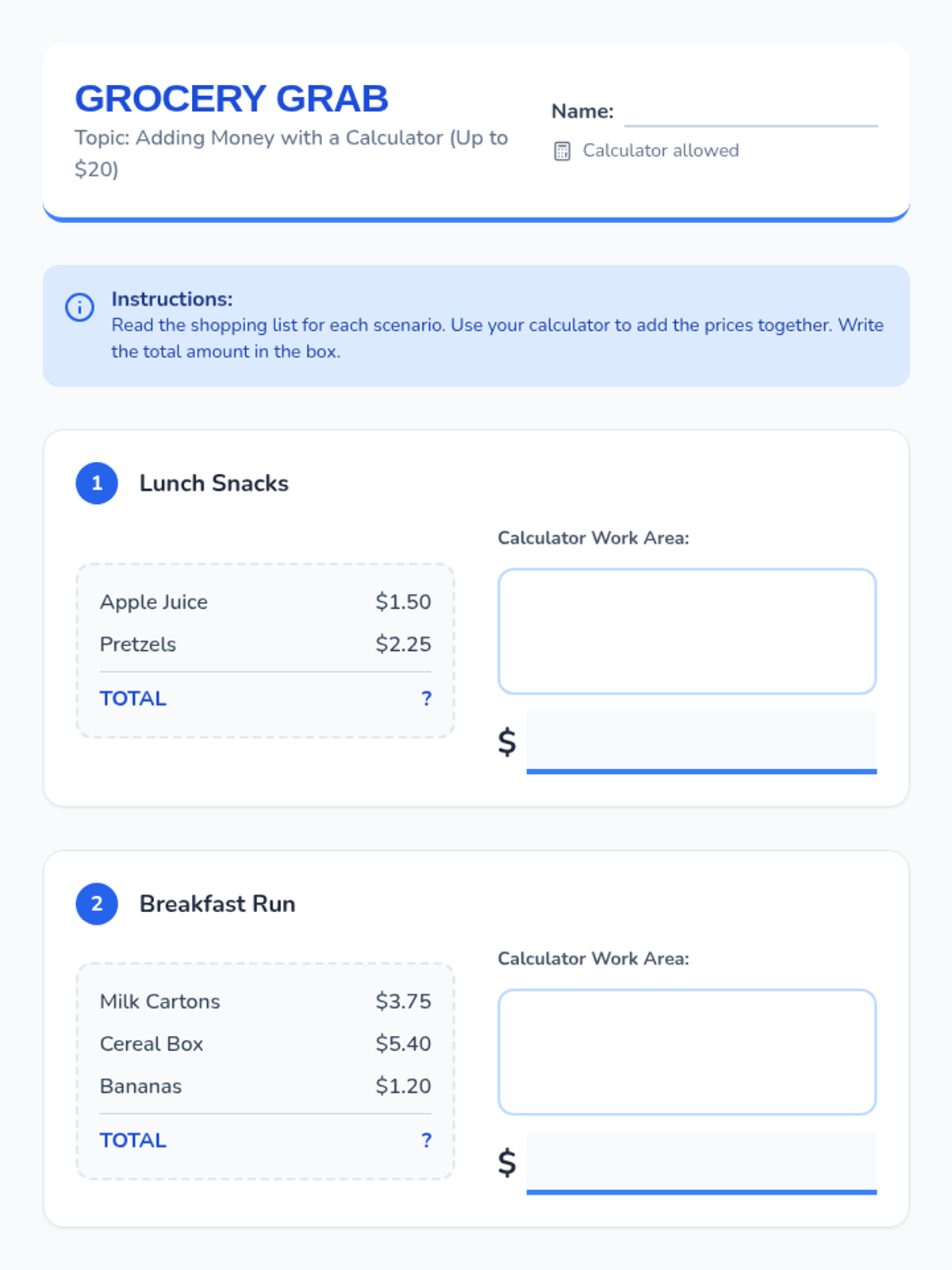
Introduction to adding money amounts up to $20 using a calculator based on shopping lists and grocery scenarios.
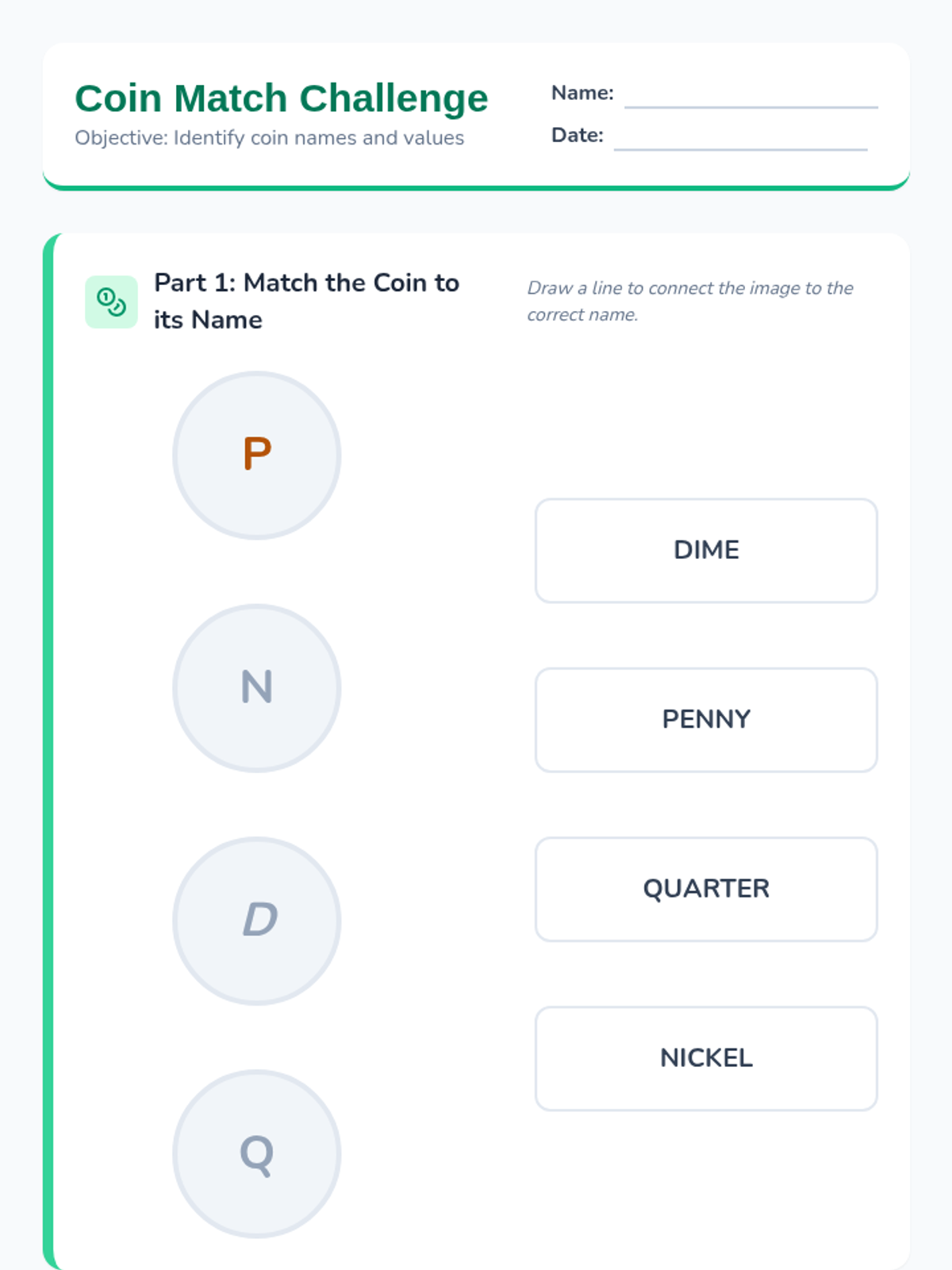
Focuses on identifying the names and values of pennies, nickels, dimes, and quarters through matching and visual aids.
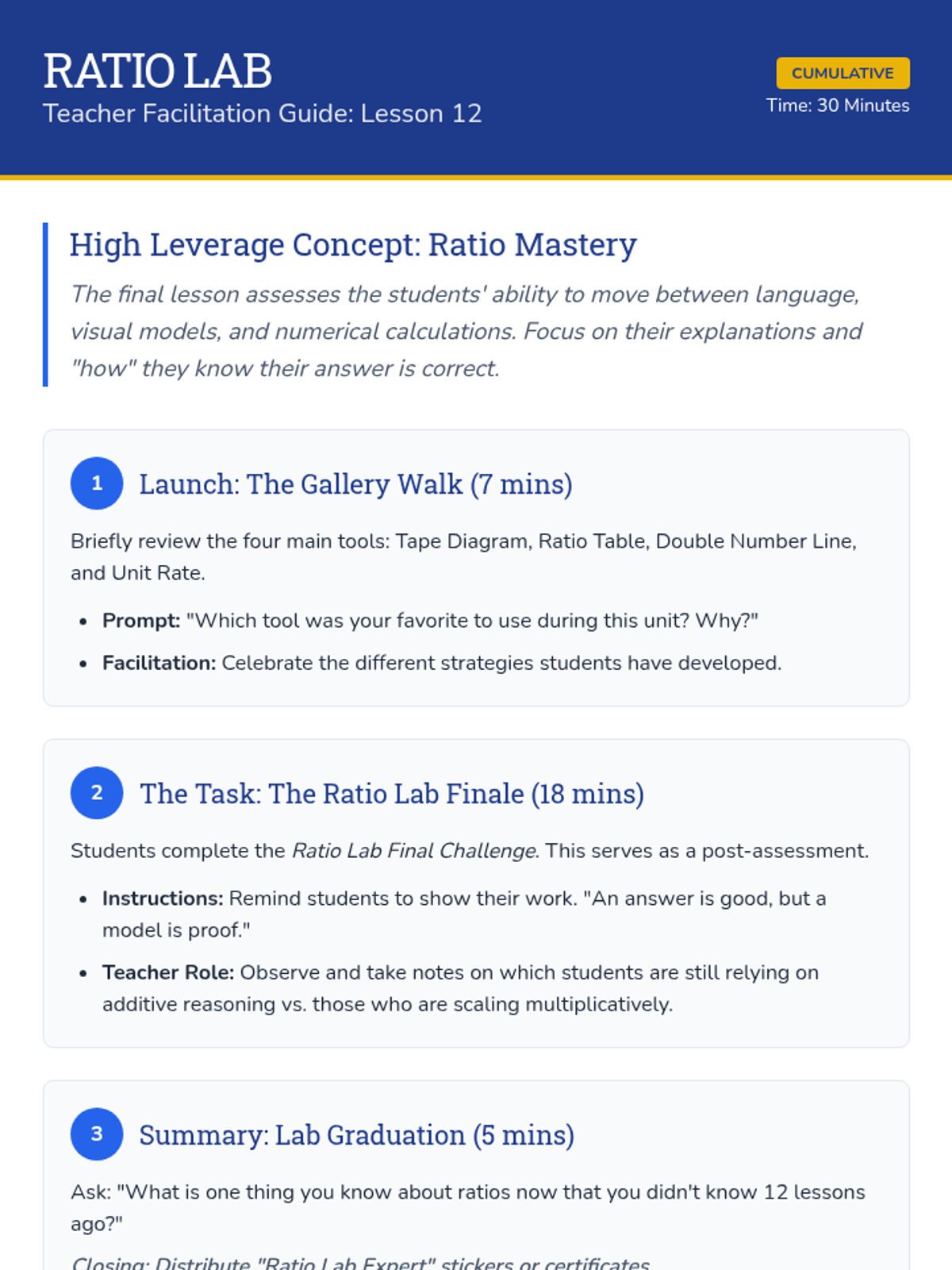
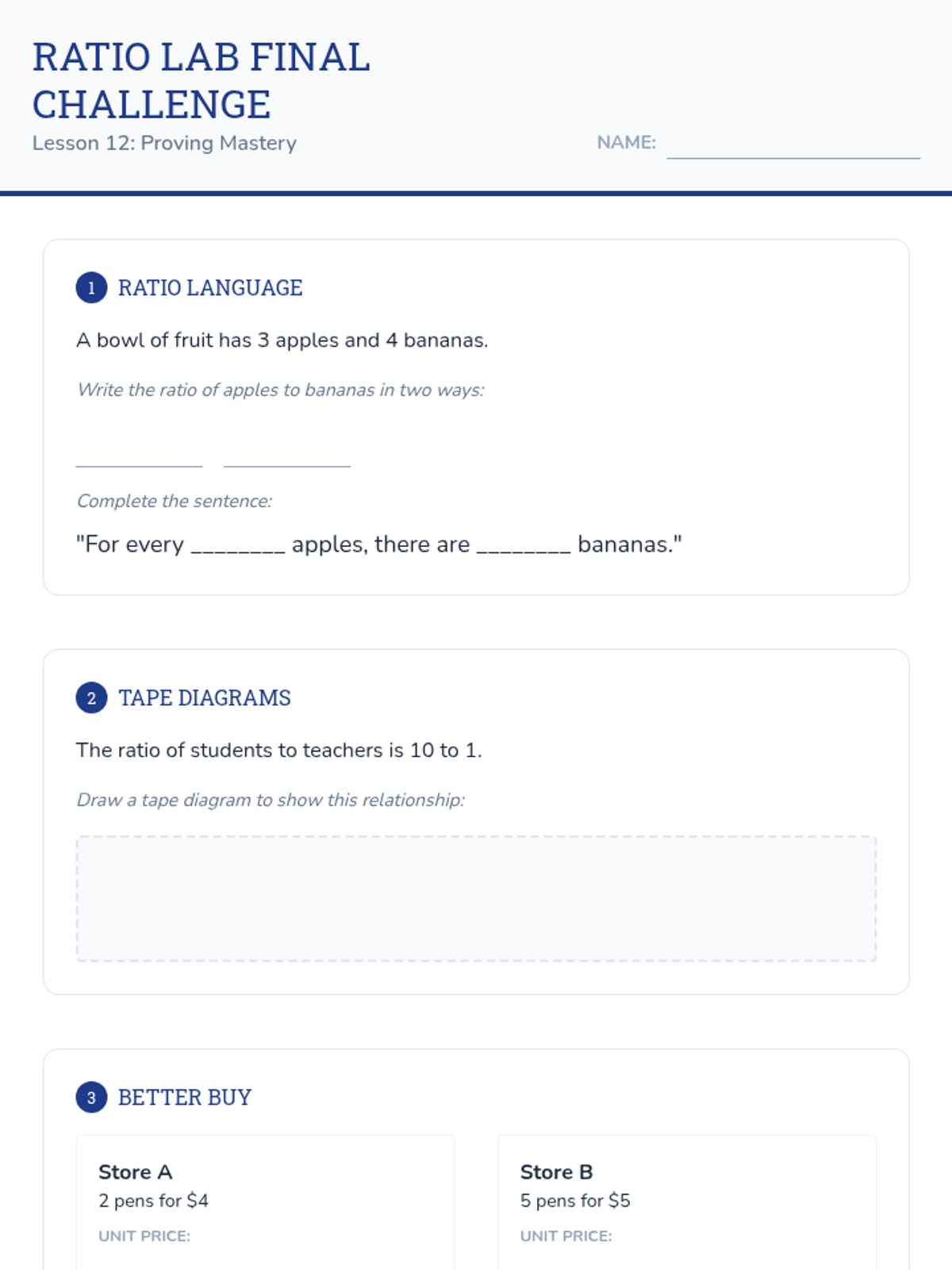
A cumulative review and assessment of ratio and rate concepts through a 'Lab Challenge'.
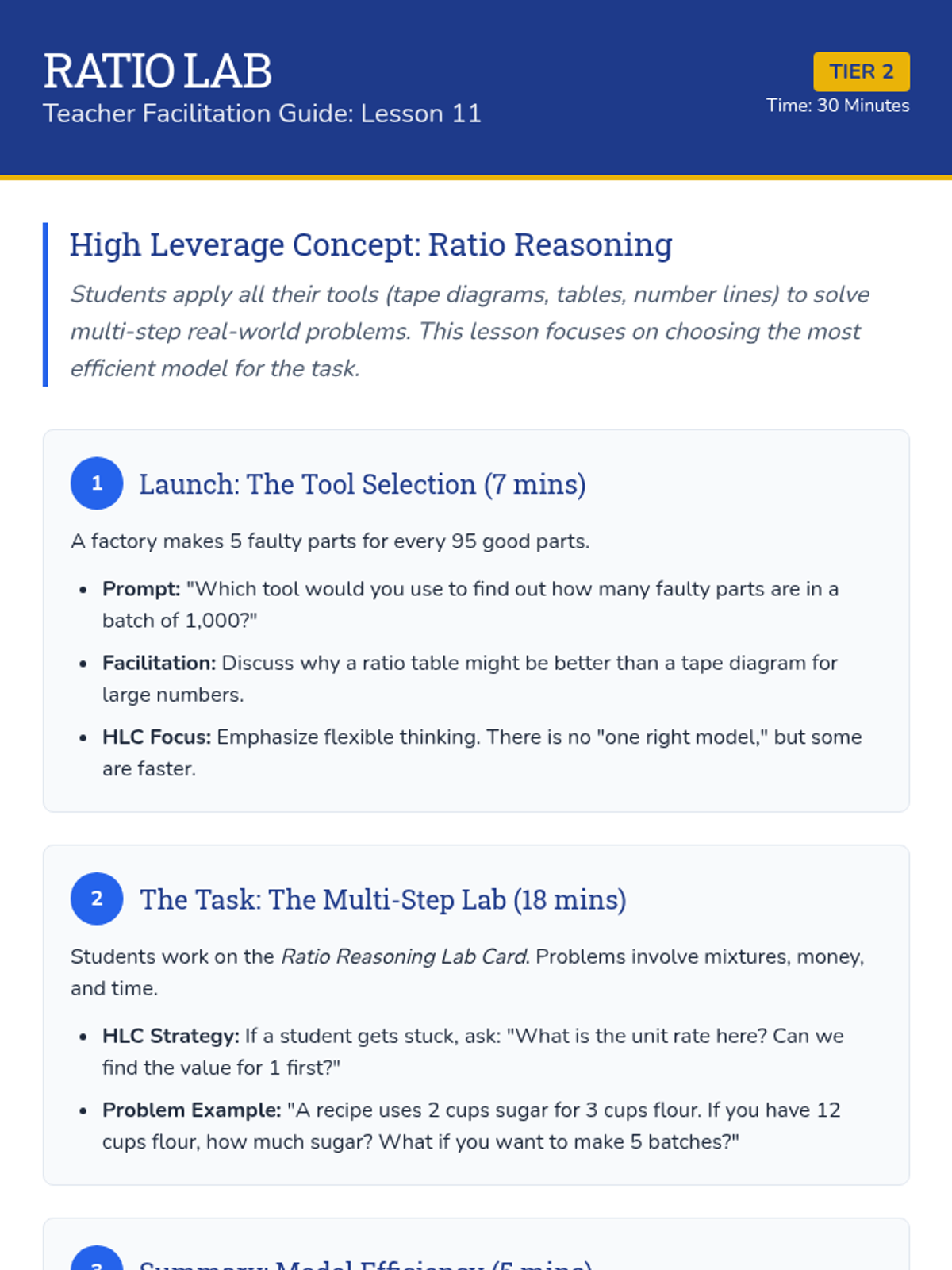
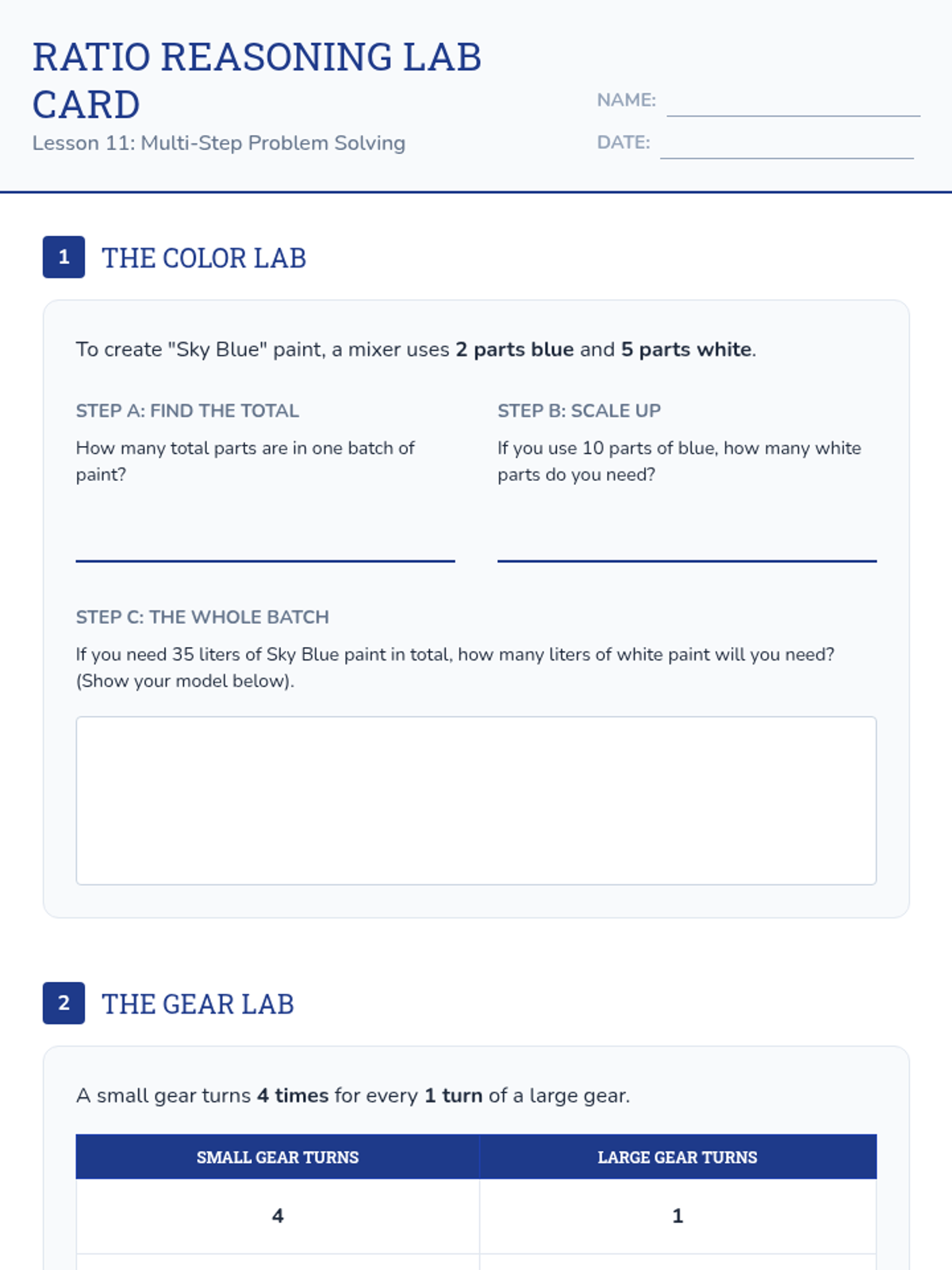
Students solve complex, multi-step ratio problems using a variety of visual models.
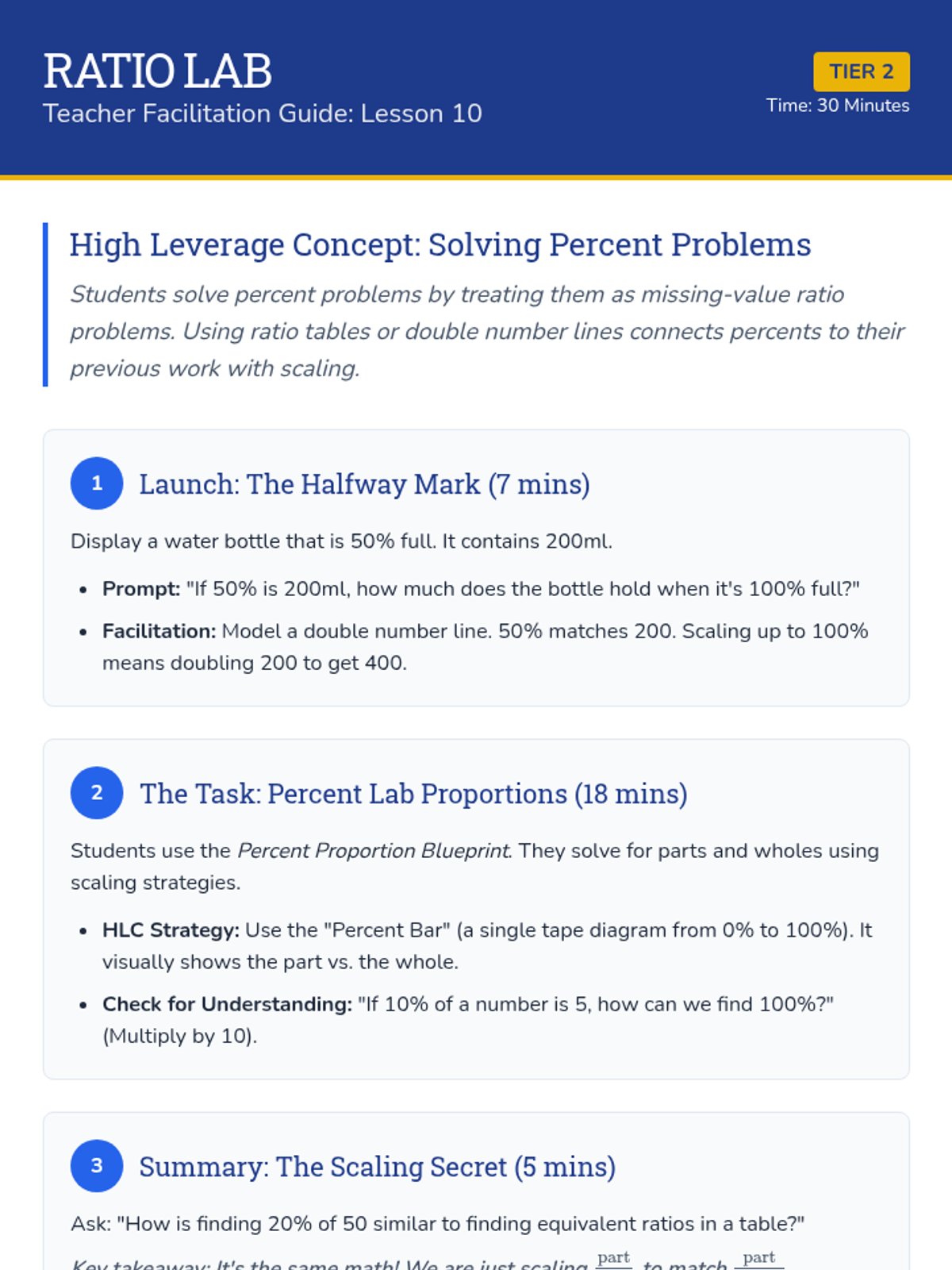
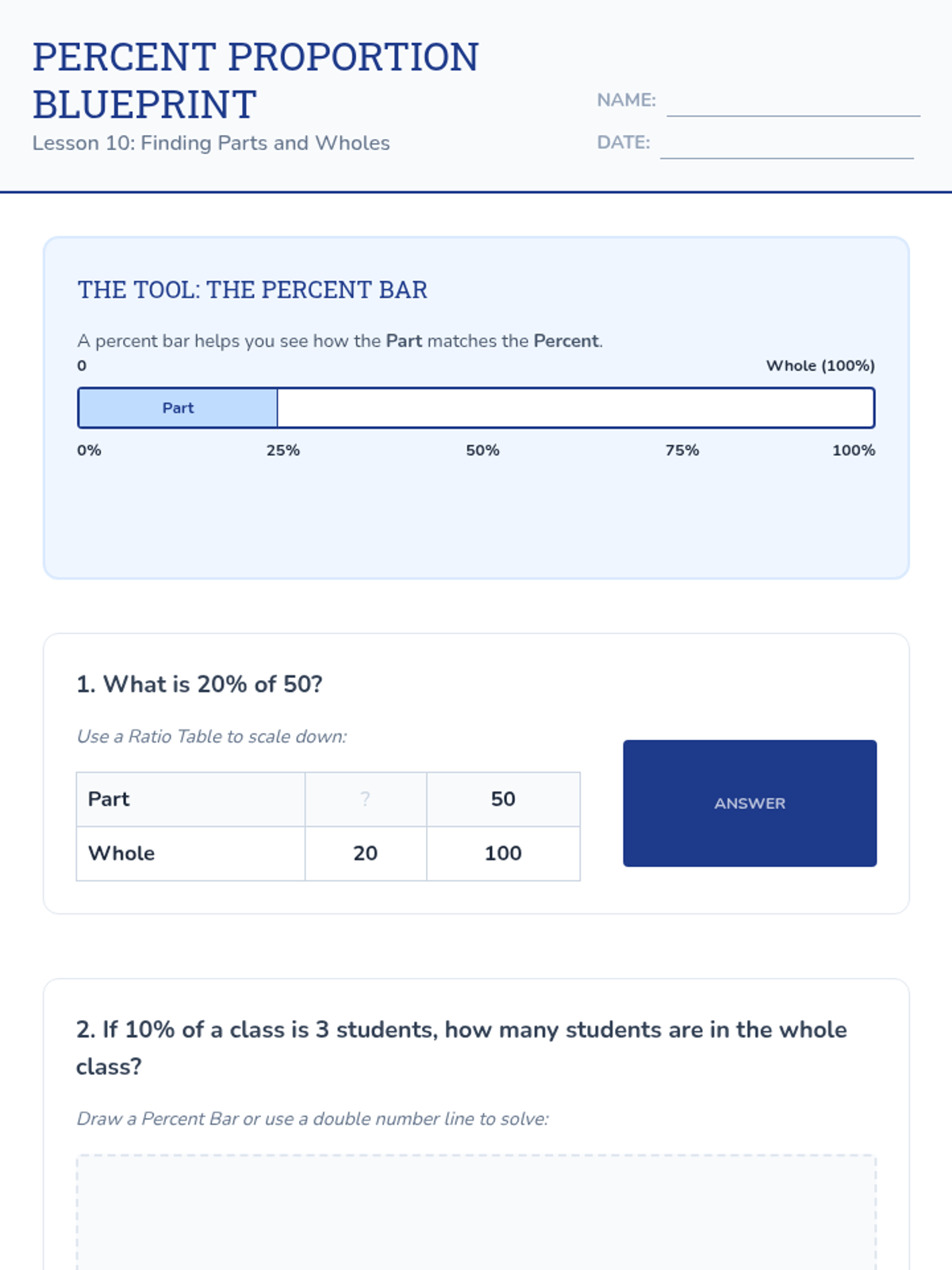
Students find the whole given a part and the percent, or find the part given the whole and percent.
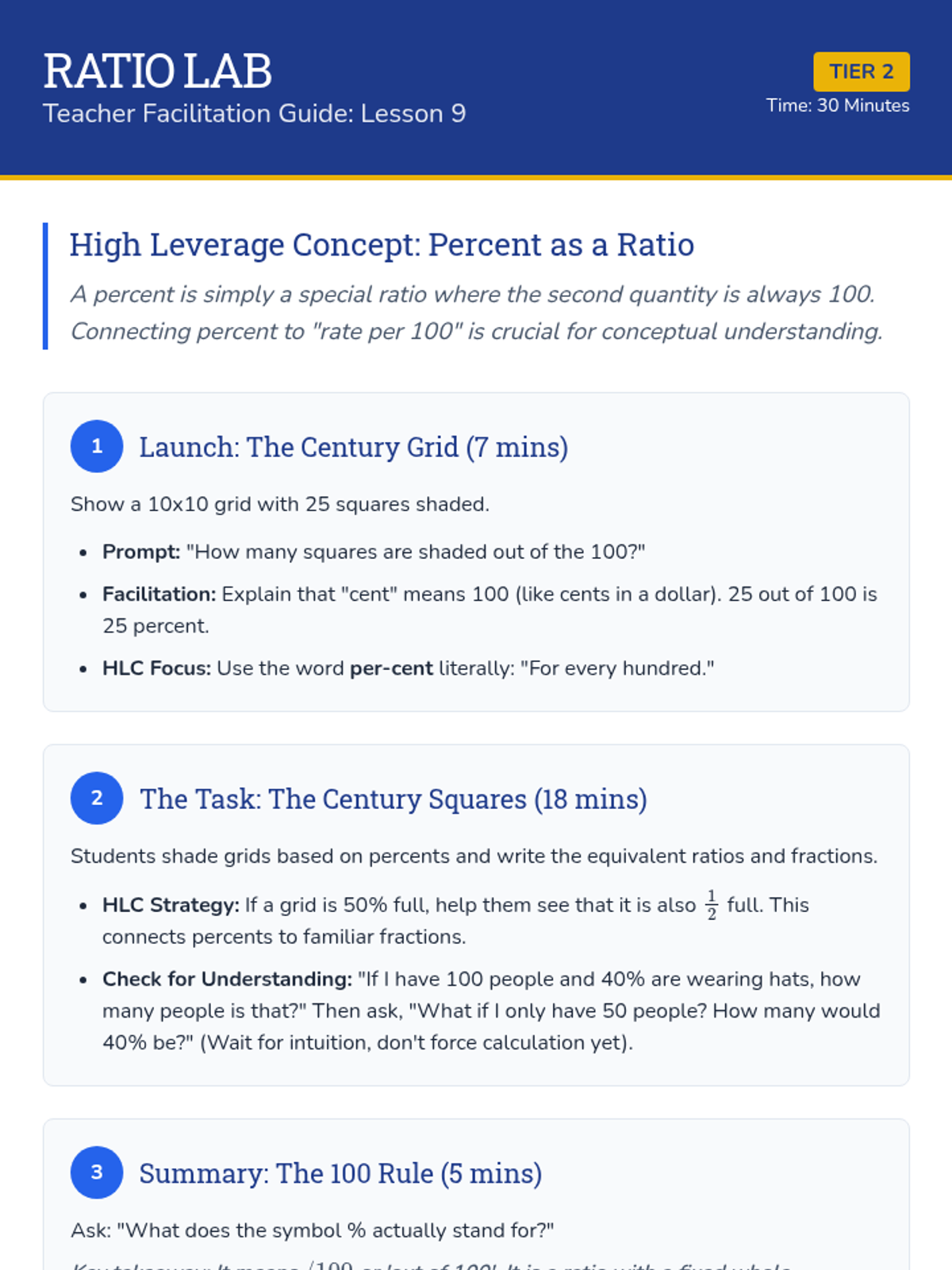
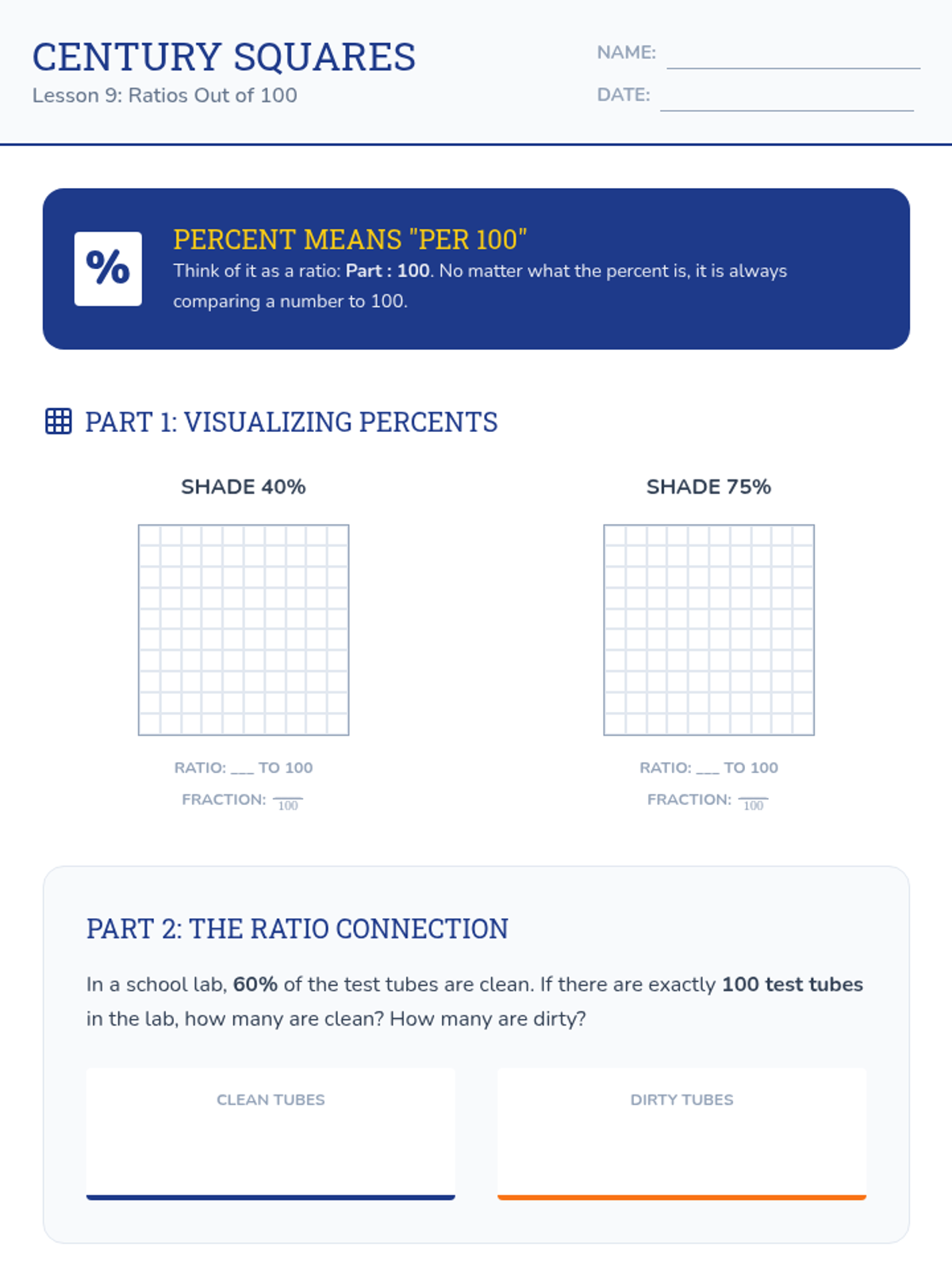
Students define percent as a rate per 100 and represent percents using 10x10 grids.
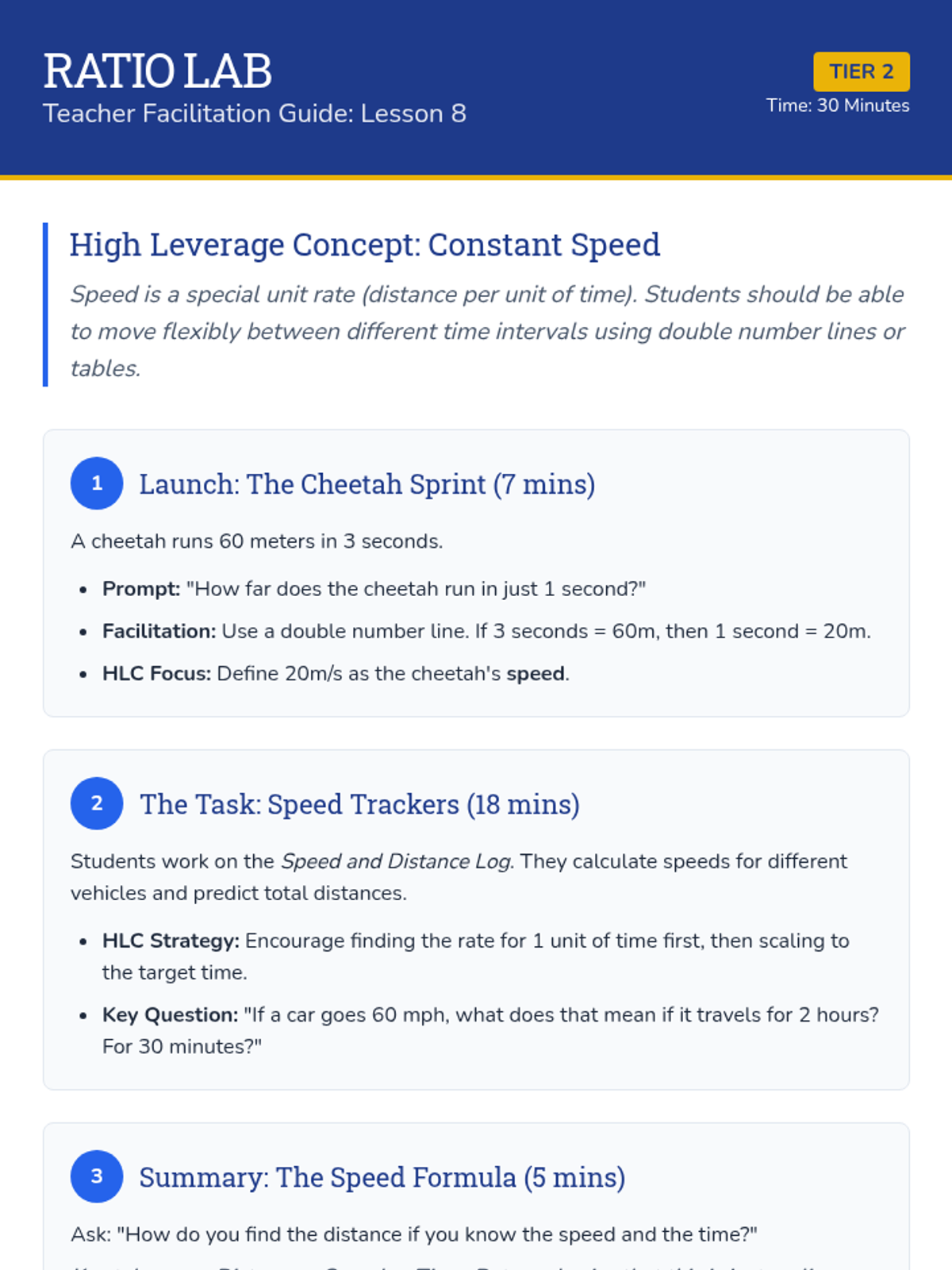
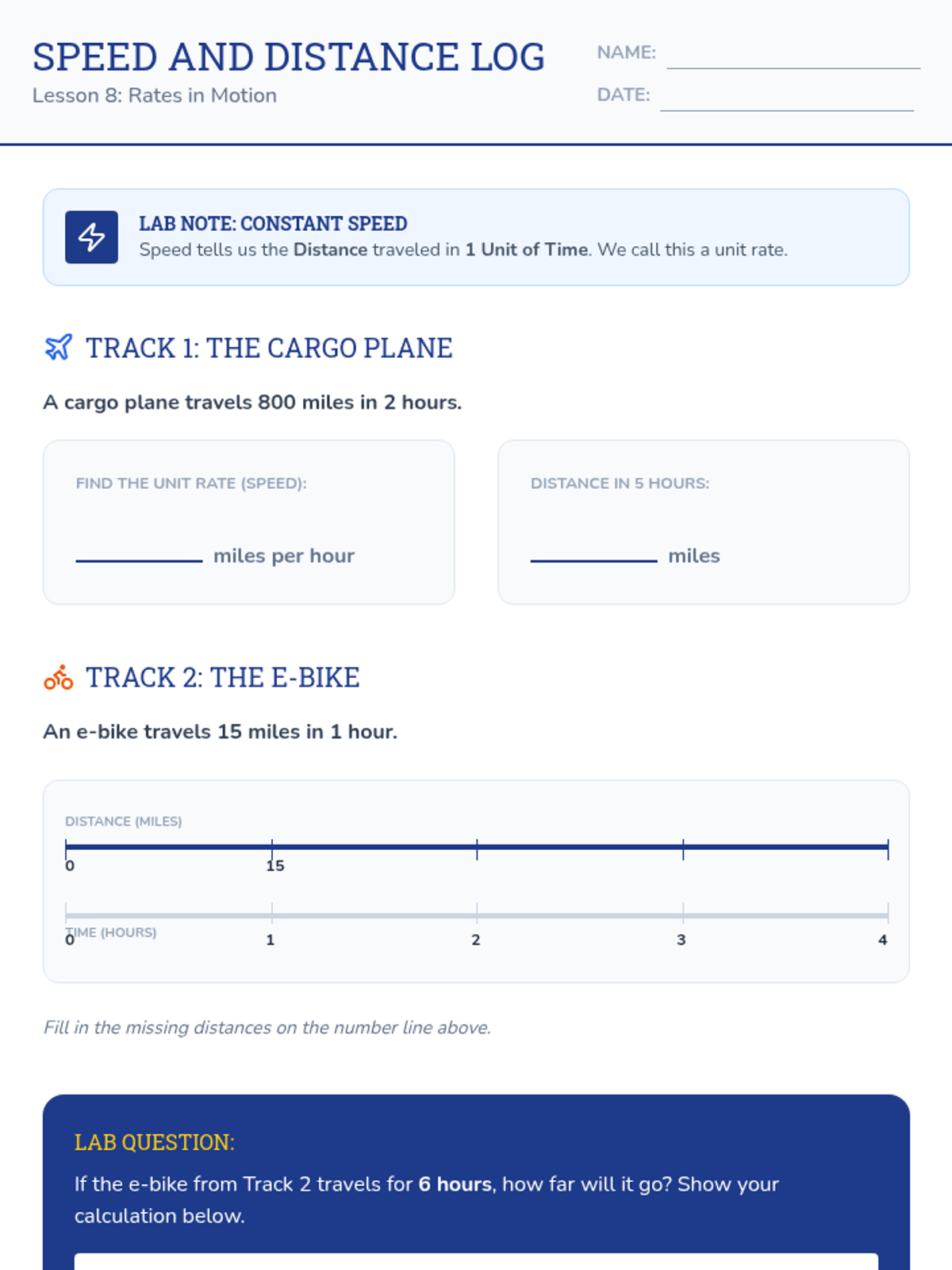
Students solve problems involving constant speed using unit rates and ratio reasoning.
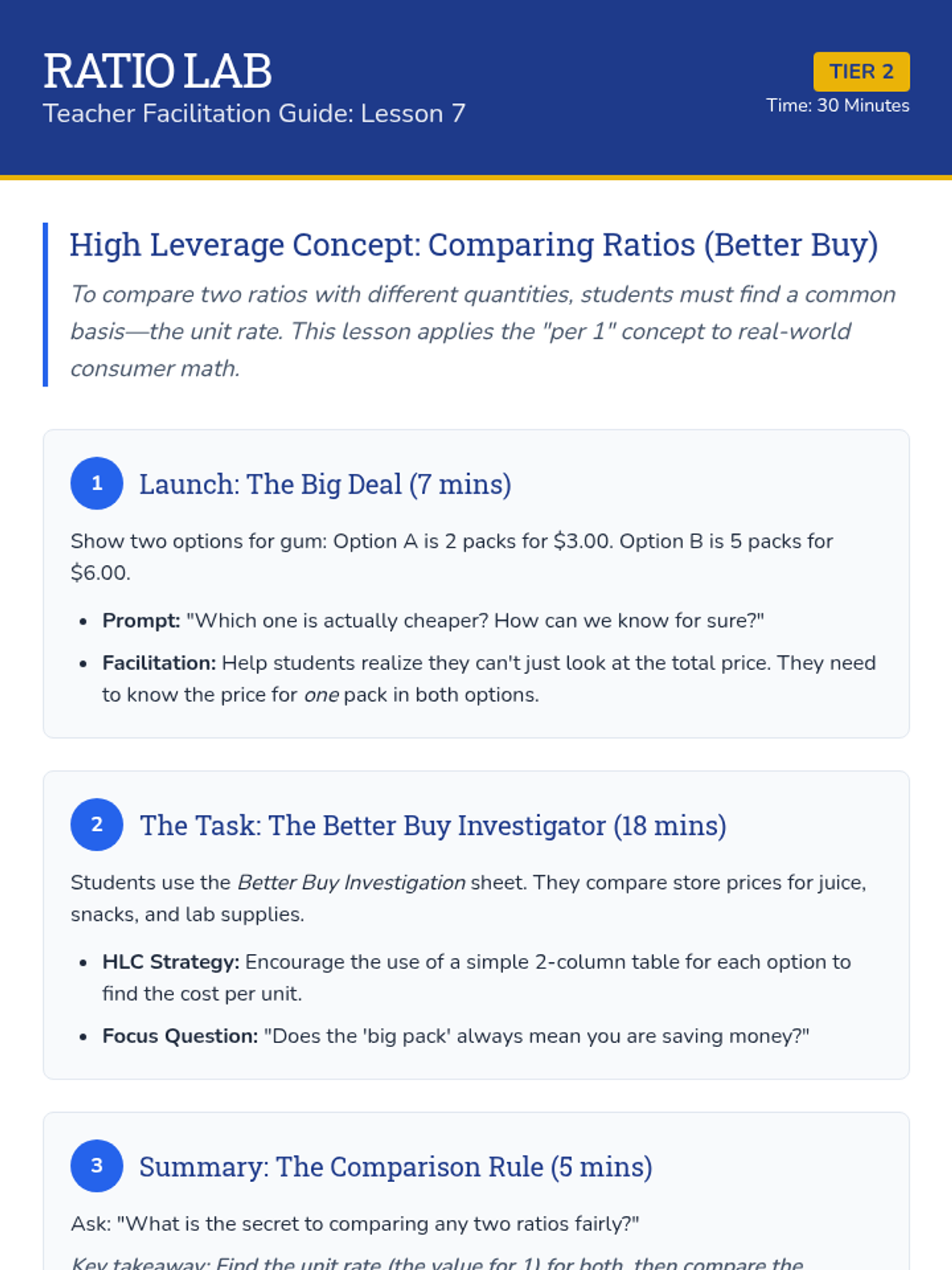
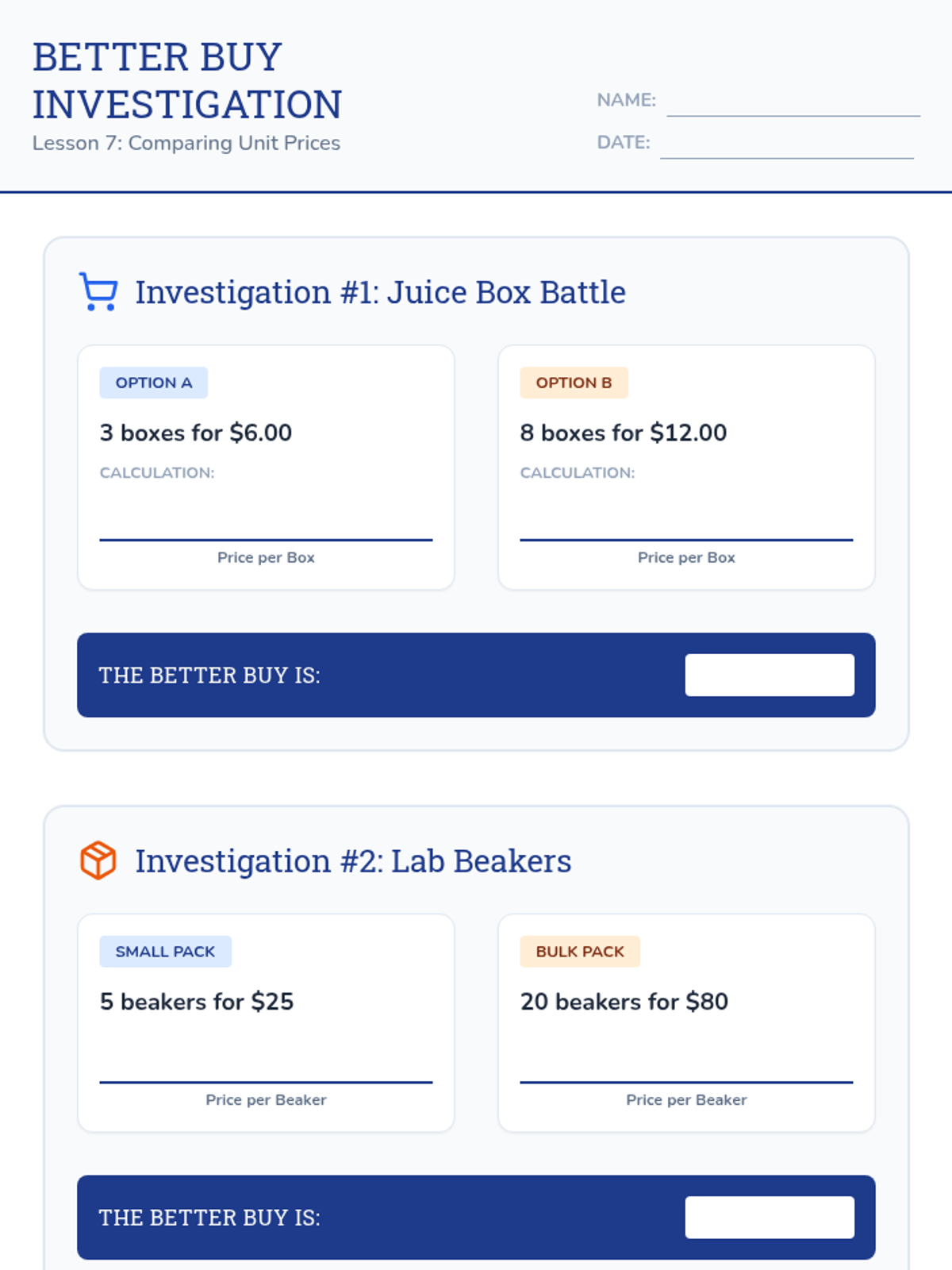
Students apply unit rate reasoning to find the 'better buy' in shopping scenarios.
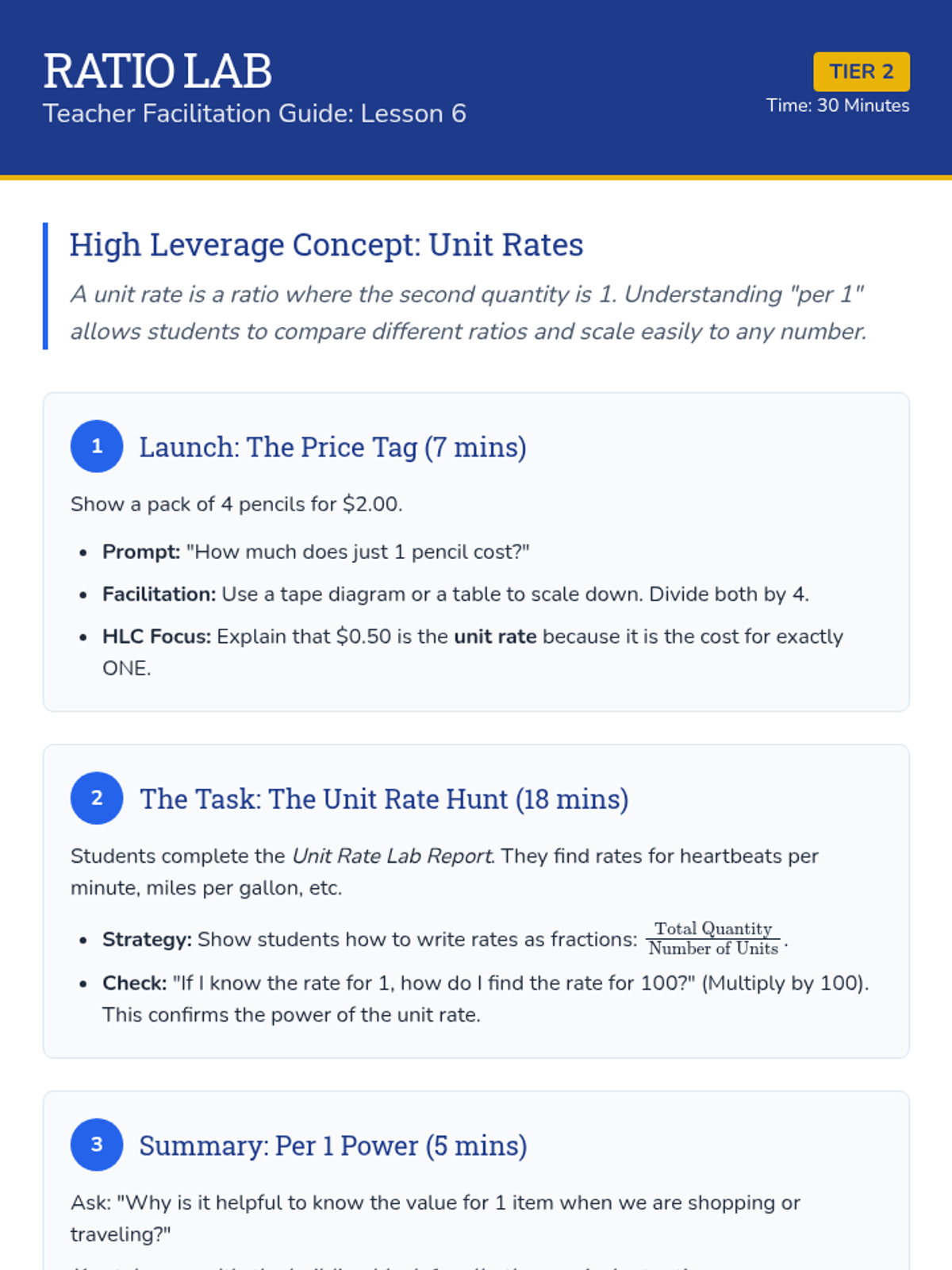
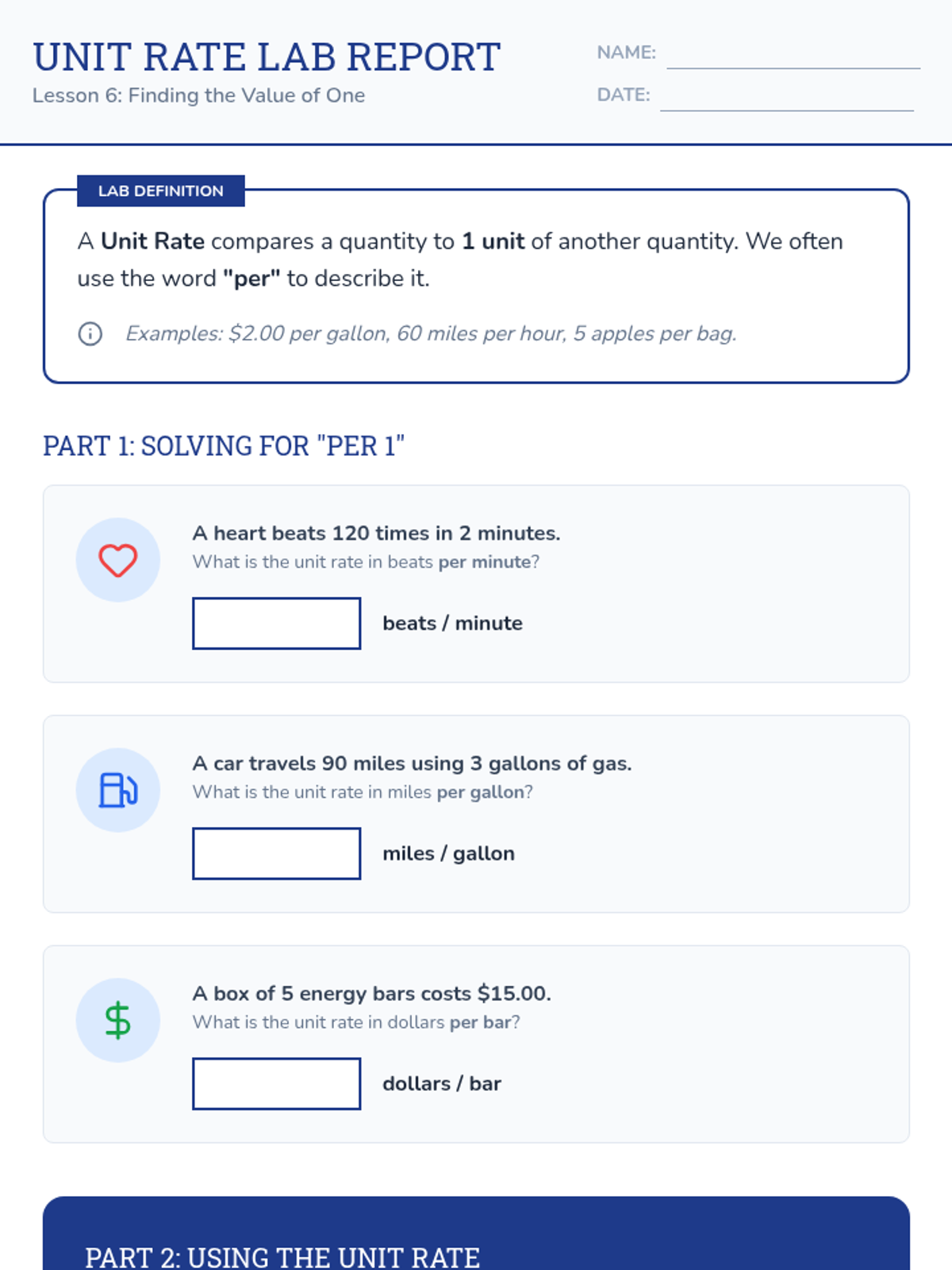
Students transition from ratios to unit rates, understanding the concept of 'per 1'.
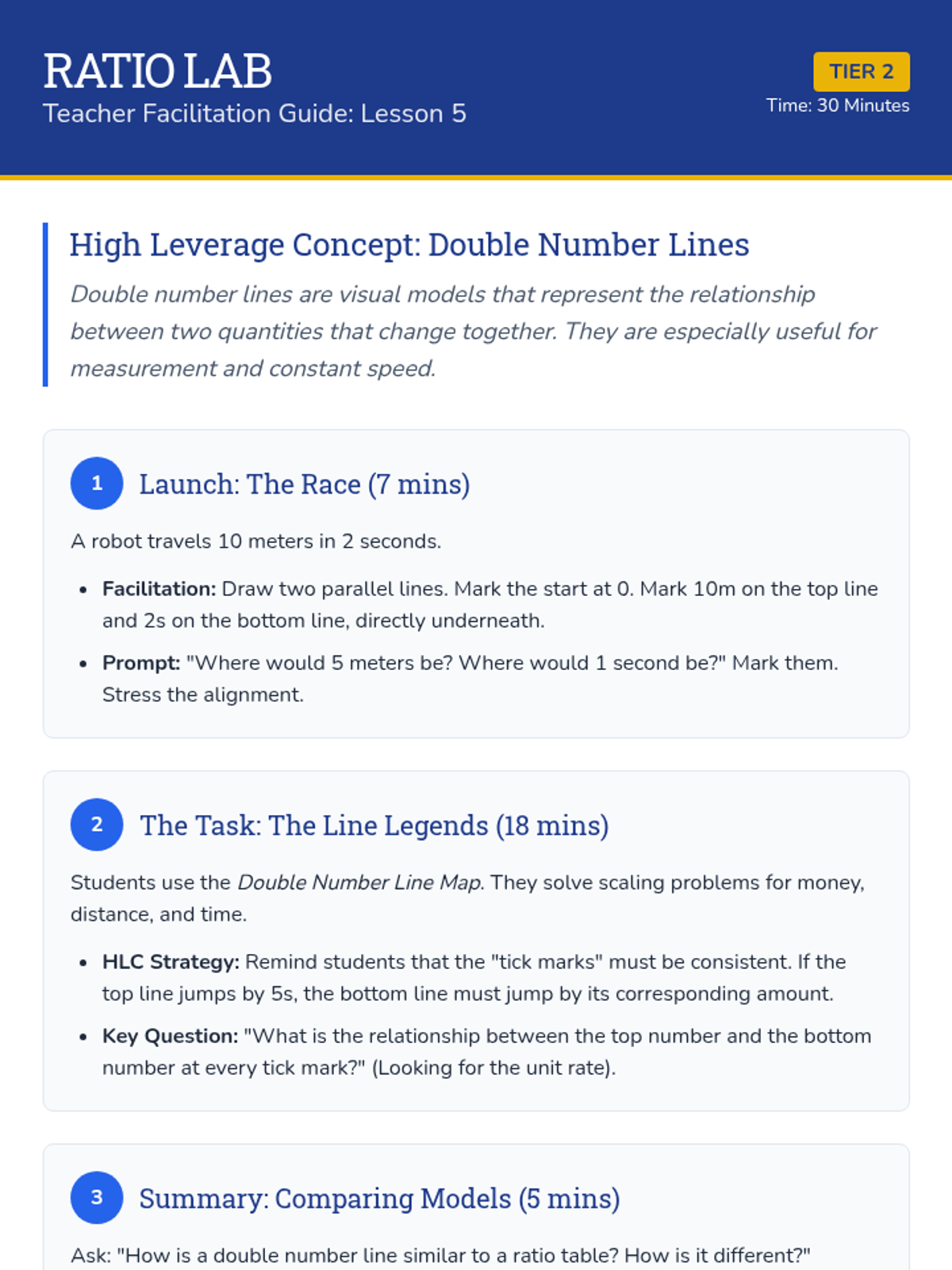
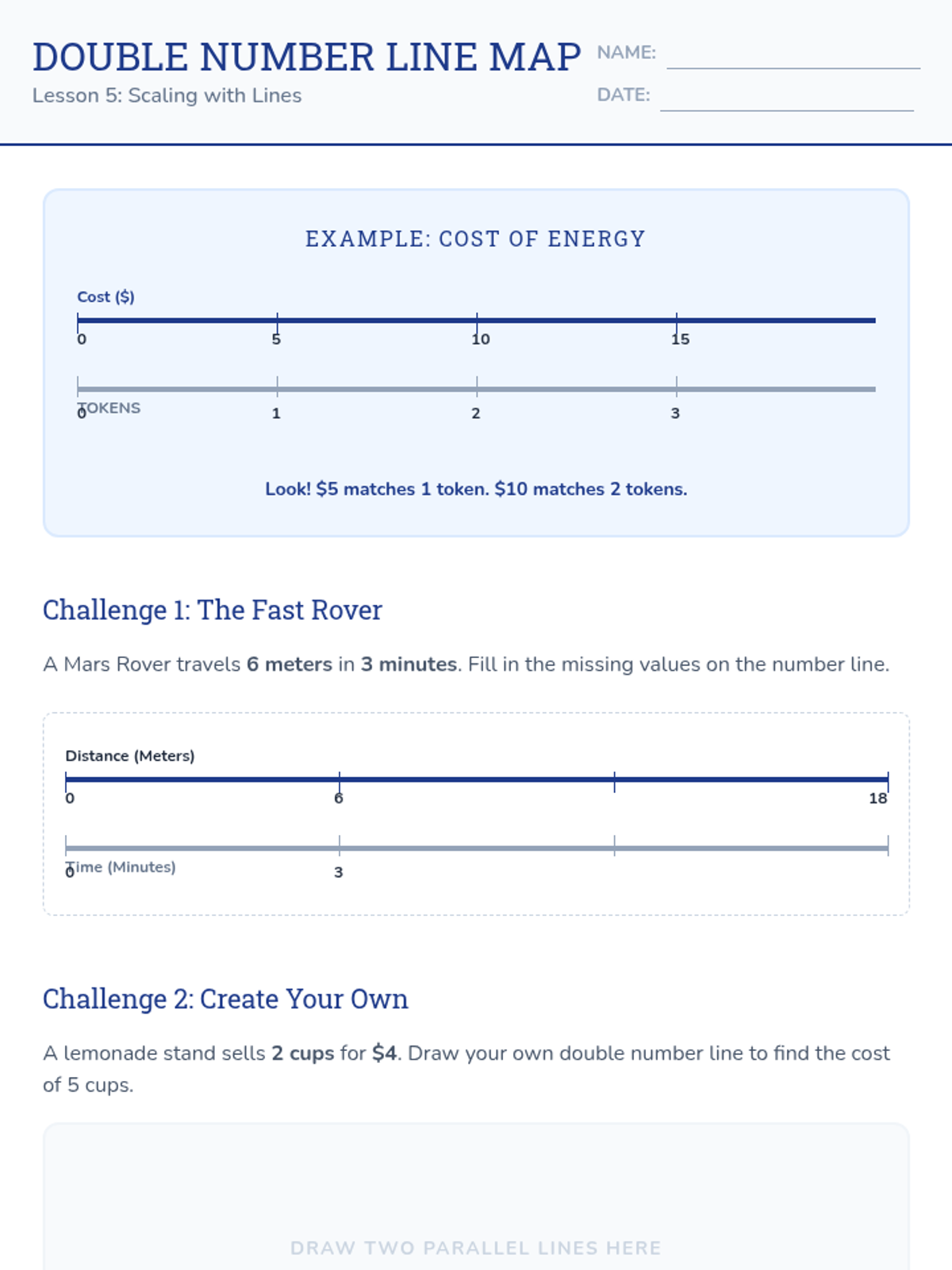
Students use double number lines to solve ratio problems involving distance, time, and scaling.
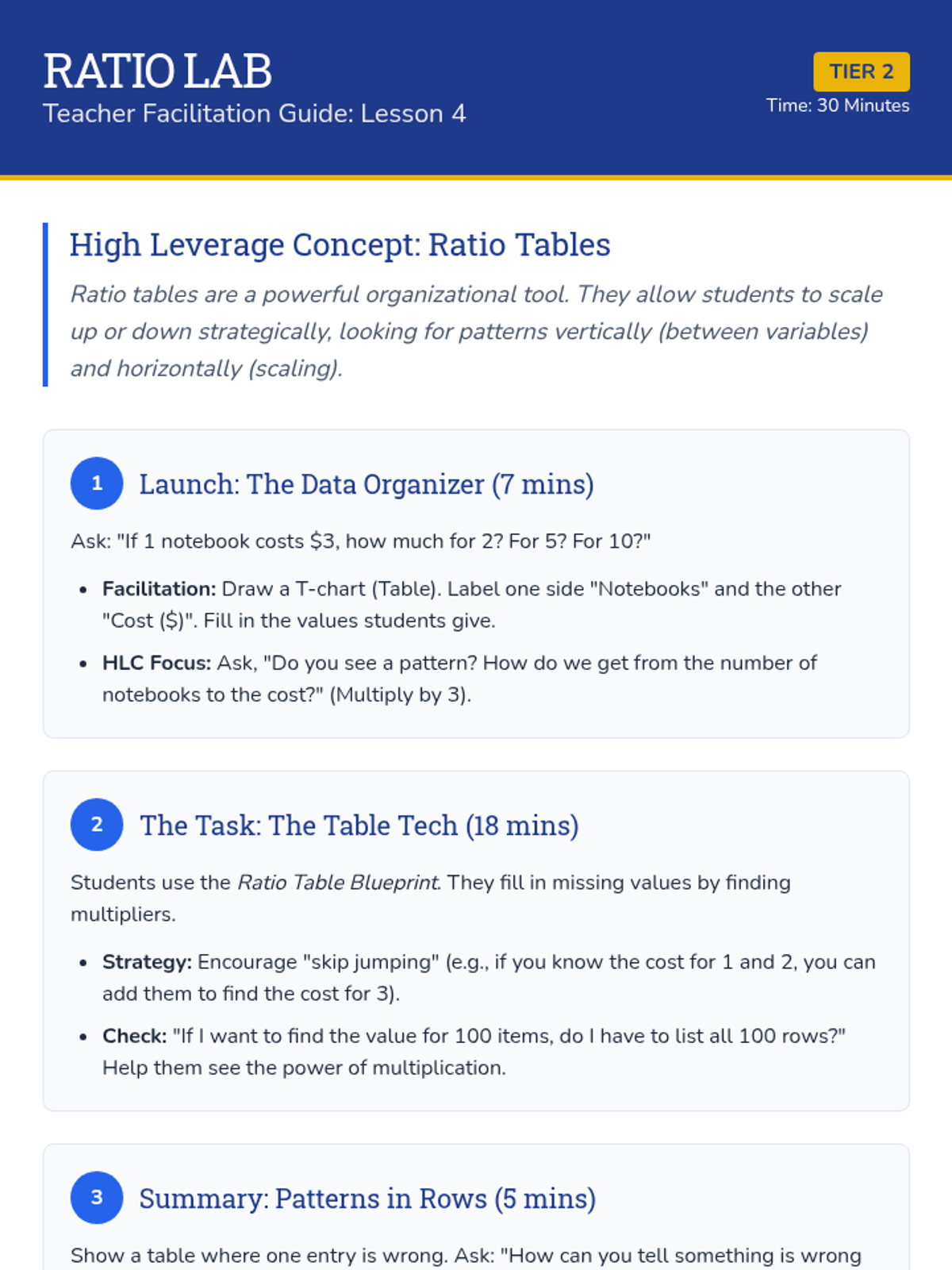
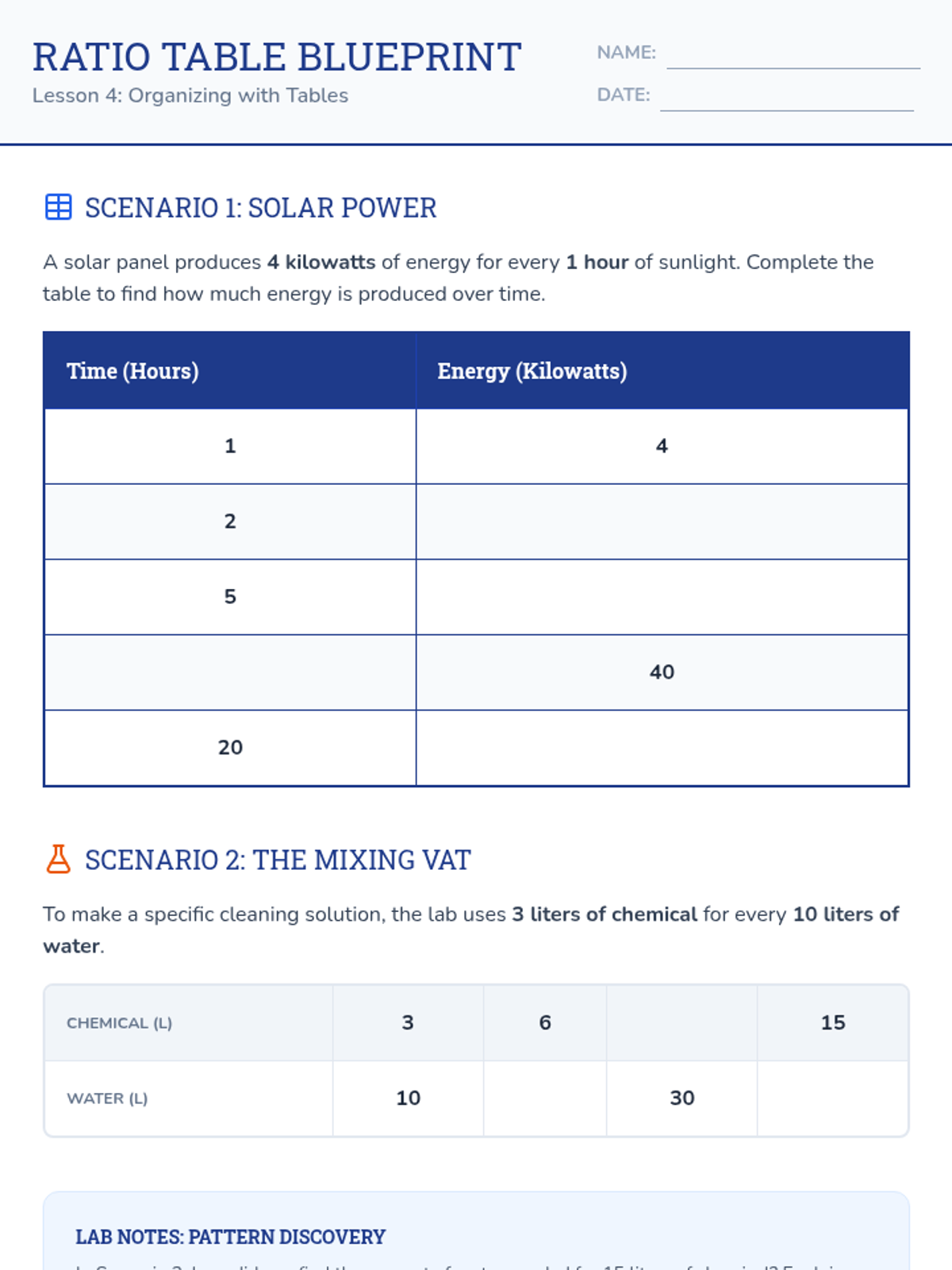
Students organize equivalent ratios into tables to identify patterns and solve problems.
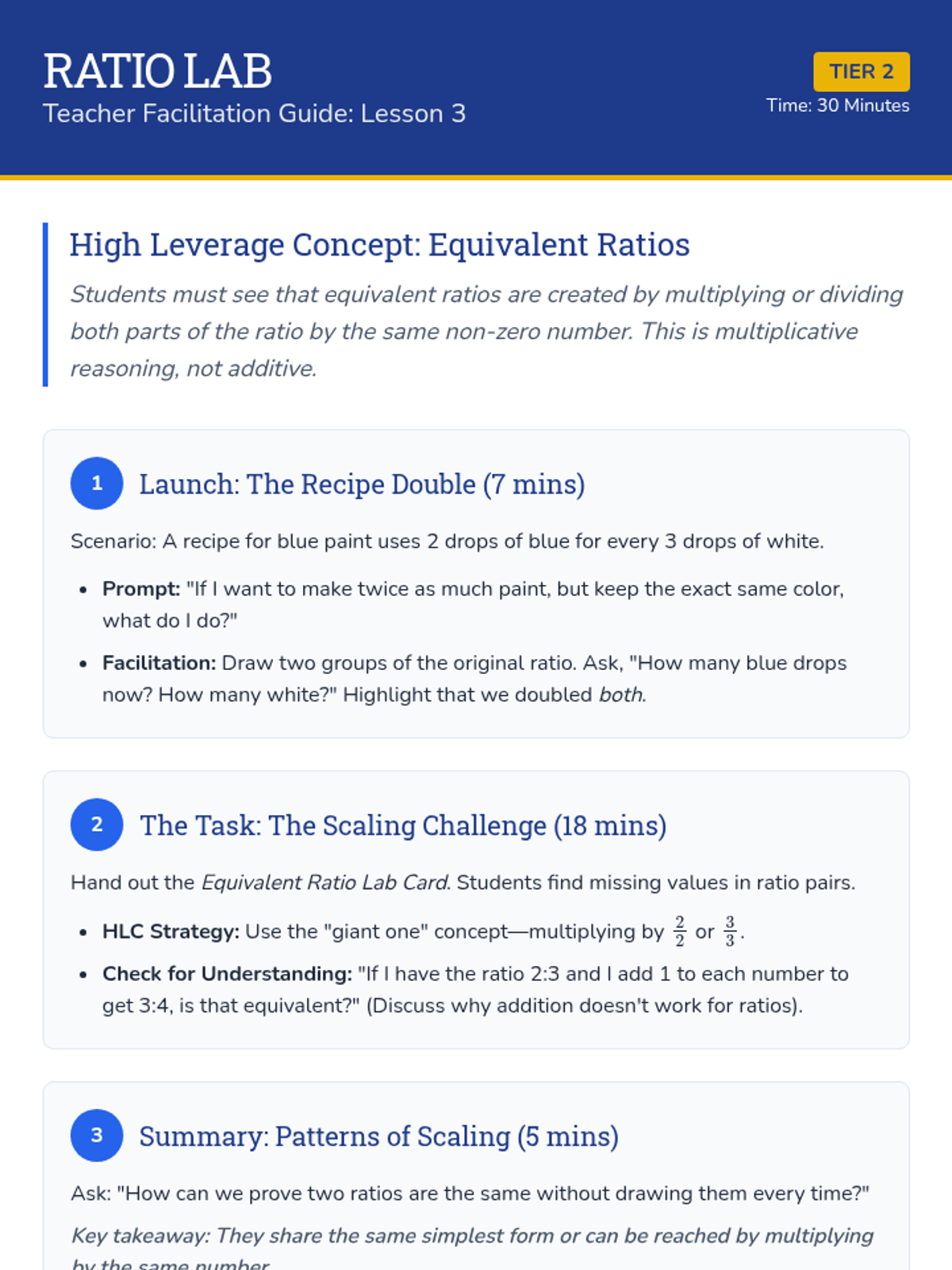
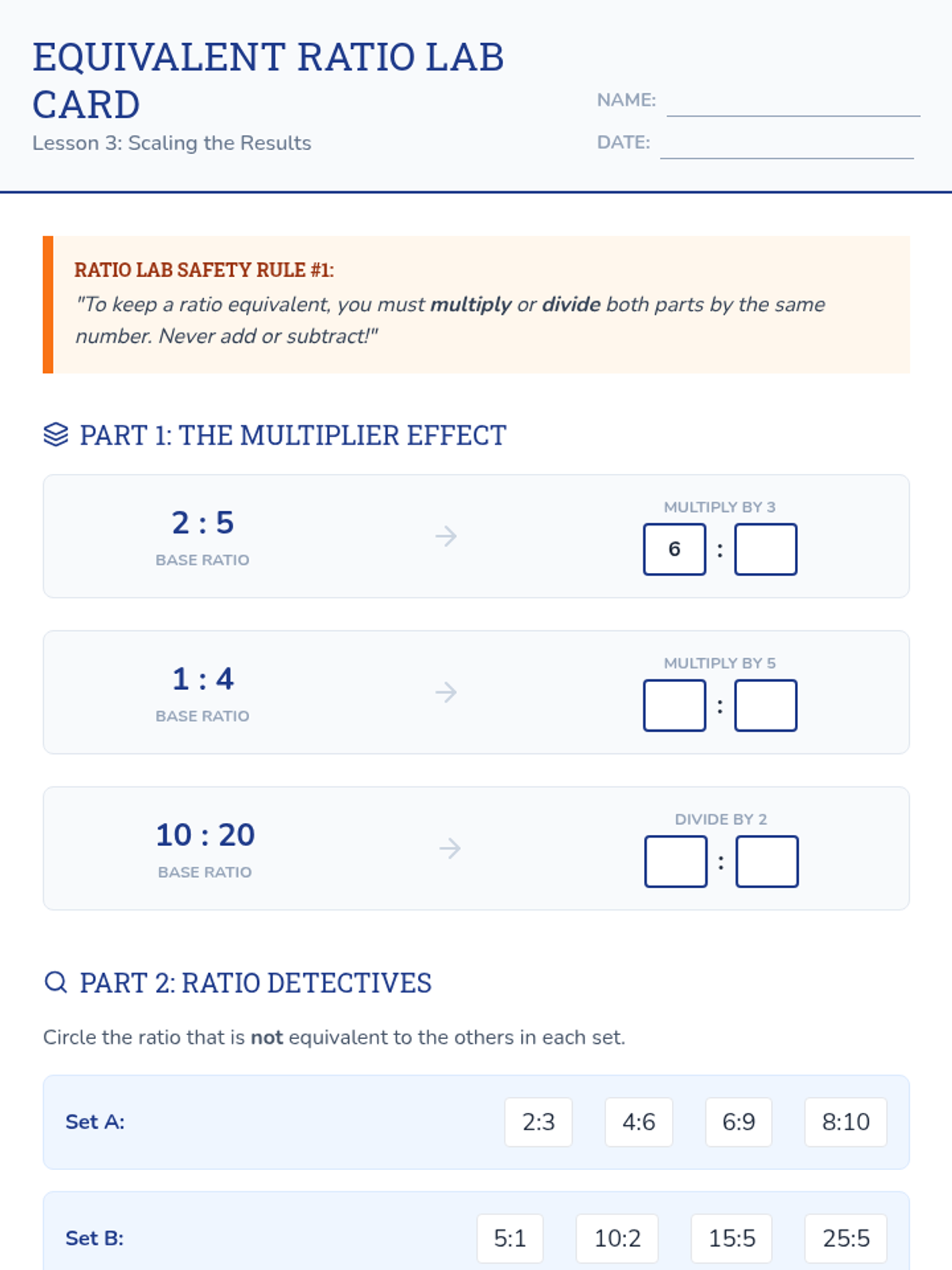
Students explore equivalent ratios using simple multiplication and division strategies.

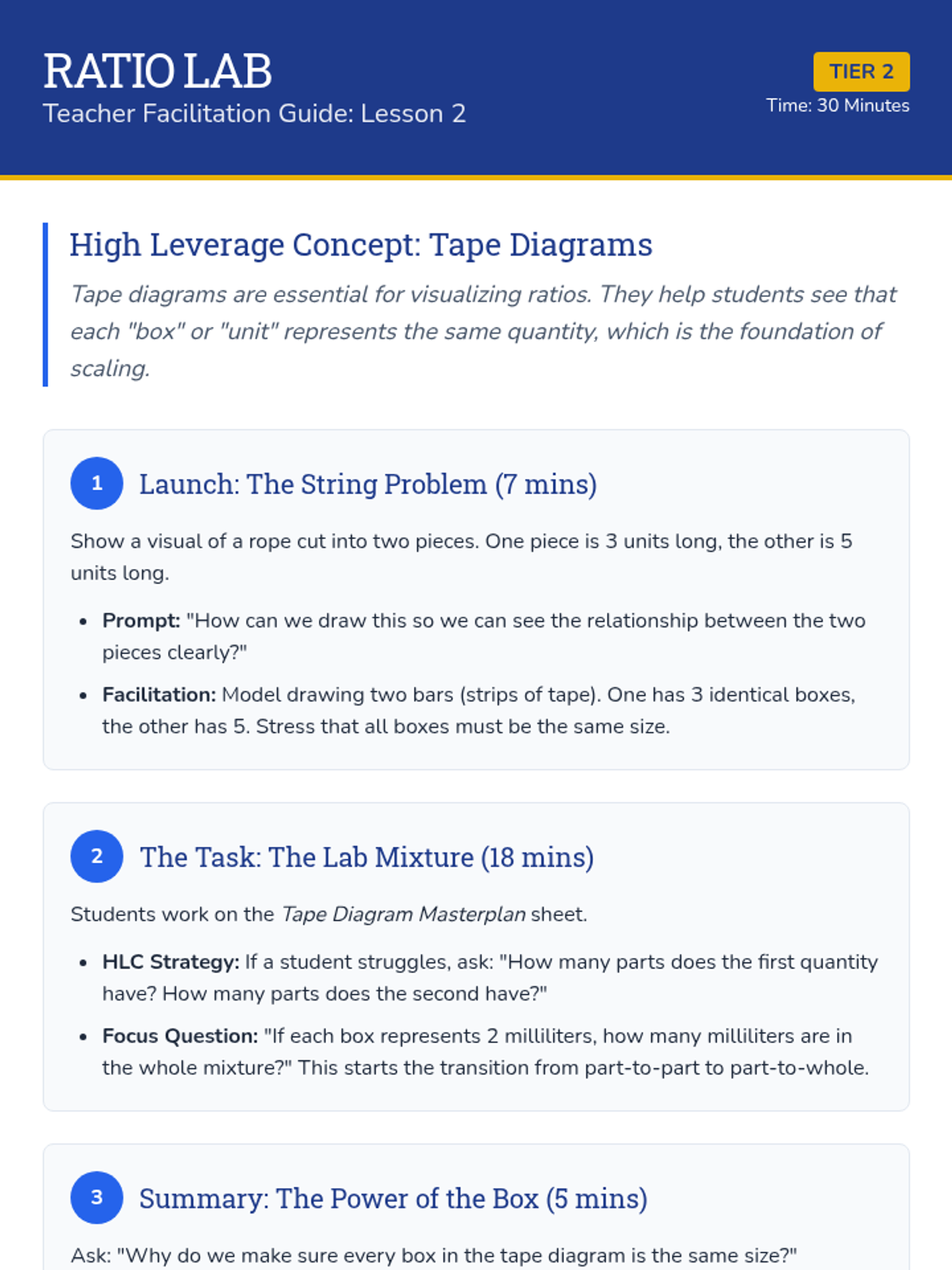
Students use tape diagrams to represent part-to-part and part-to-whole relationships visually.