Students learn to identify key facts in a single informational text, distinguishing them from minor details. They use a 'Fact Detective' theme to annotate a passage about sharks.
A structured reading intervention sequence at Douglas School combining targeted phonic lessons with the multisensory Nessy online literacy system.
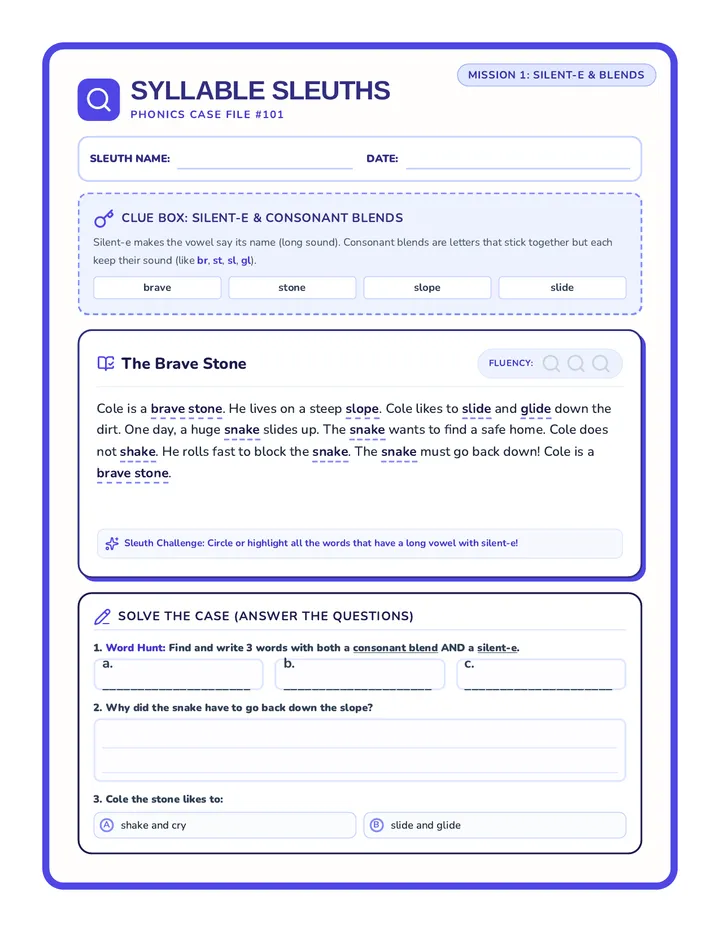
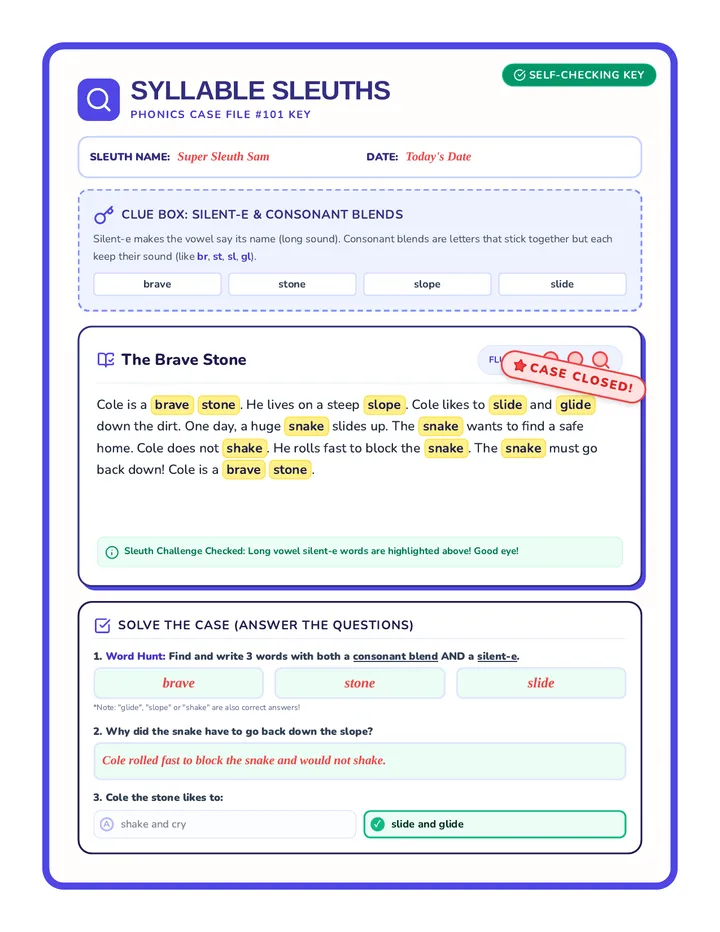
A highly structured, 3-part phonics intervention lesson focusing on advanced syllable types, consonant blends, silent-e, vowel teams, r-controlled vowels, and consonant-le syllables through decodable texts and self-checking materials.
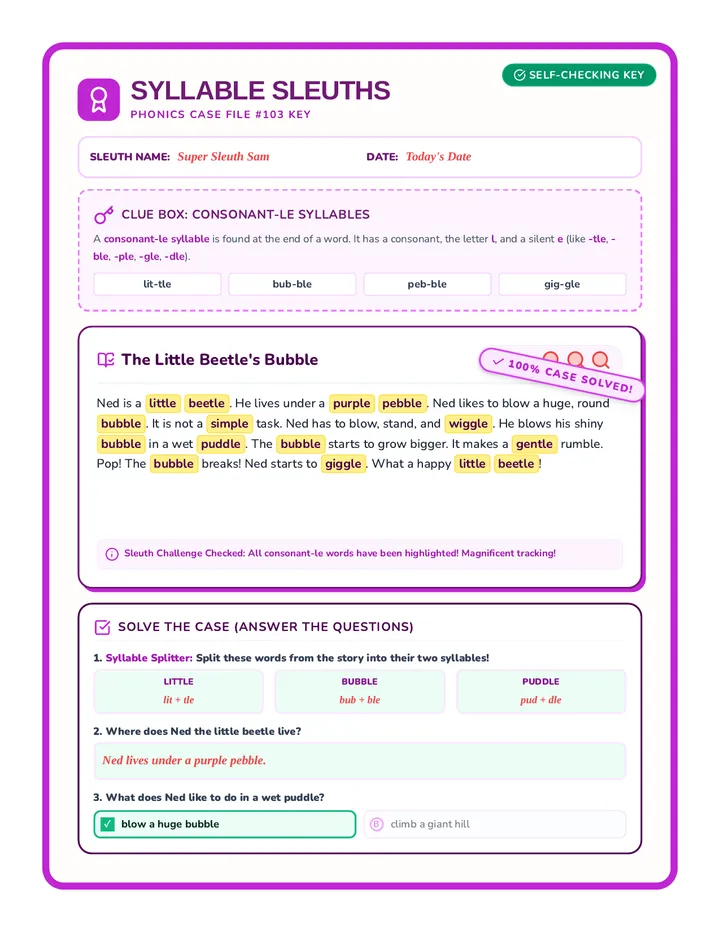
A self-checking child-friendly answer key for the Little Beetle Worksheet. It displays correct answers in red handwriting style with detective-themed grade stamp.
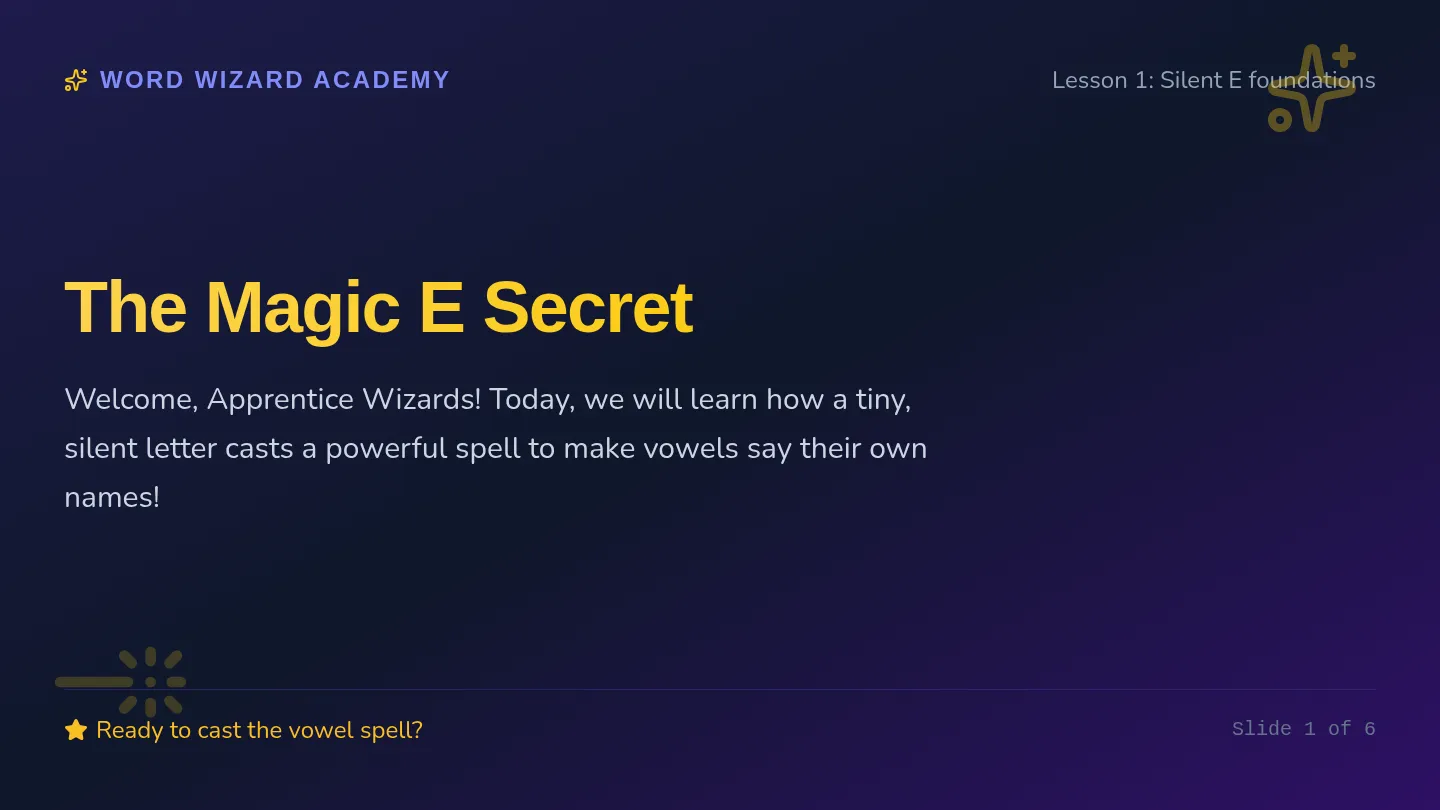
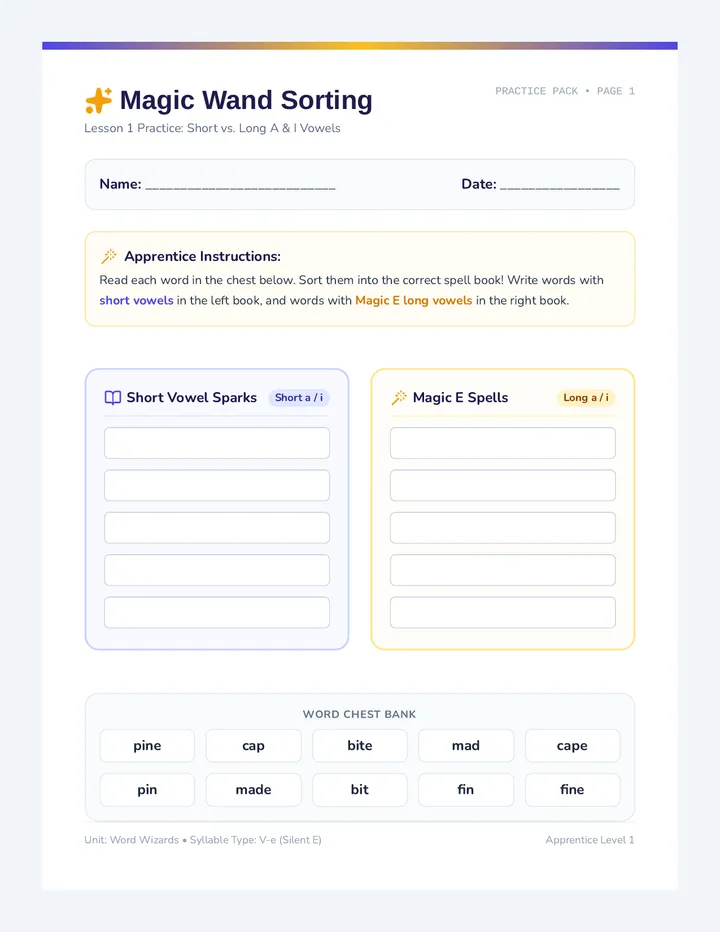
A 3-lesson phonics sequence focused on teaching Vowel-Consonant-e (V-e) syllables to late first and second graders. Using a whimsical 'Word Wizards' theme, it covers foundations, vowel expansion, and blends/digraphs, complete with guides, slides, practice pages, and assessments.
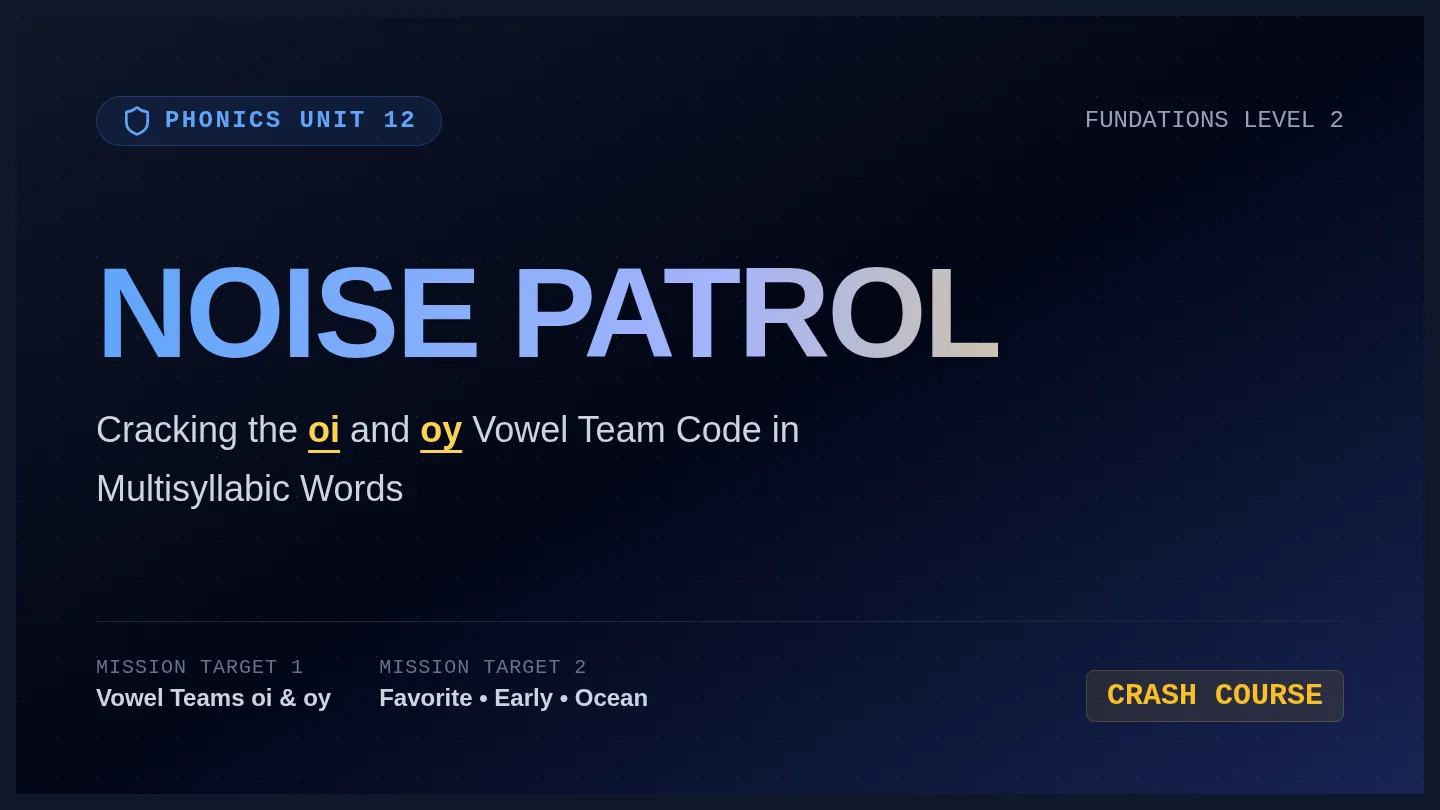
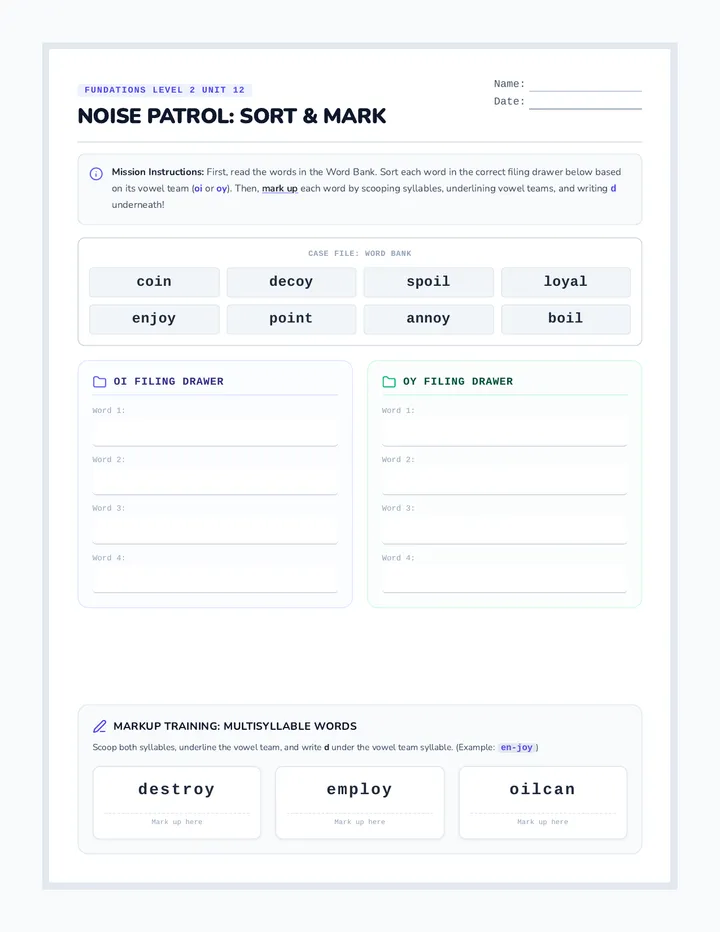
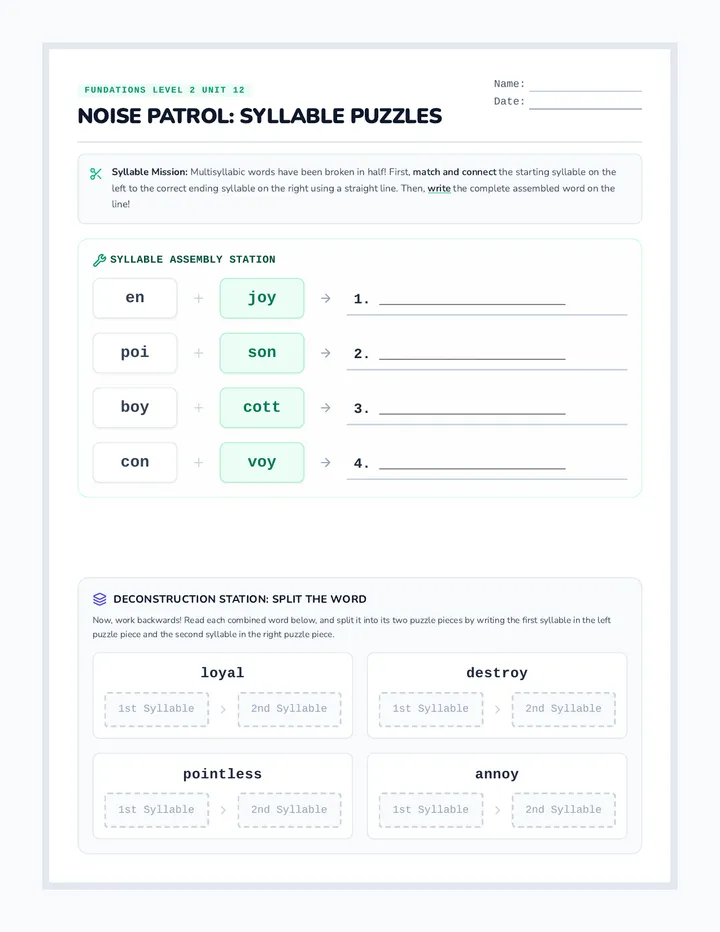
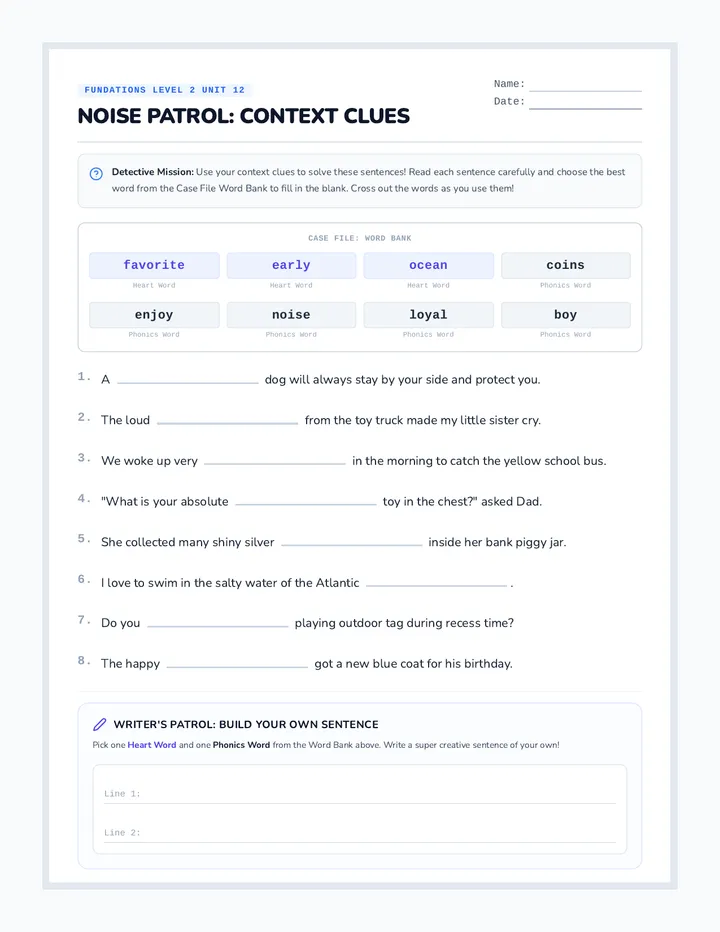
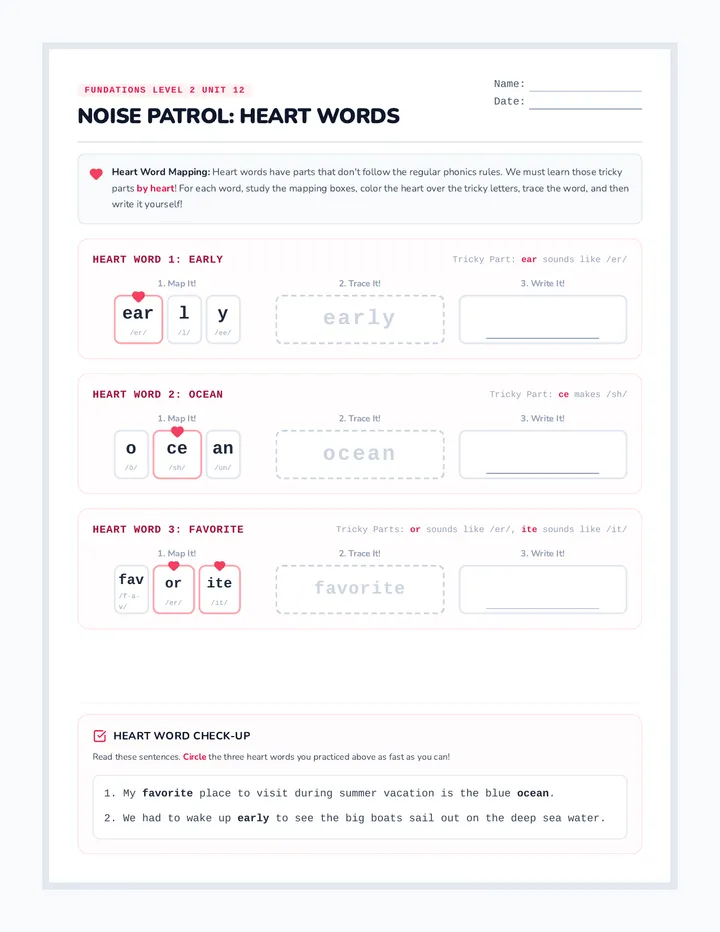
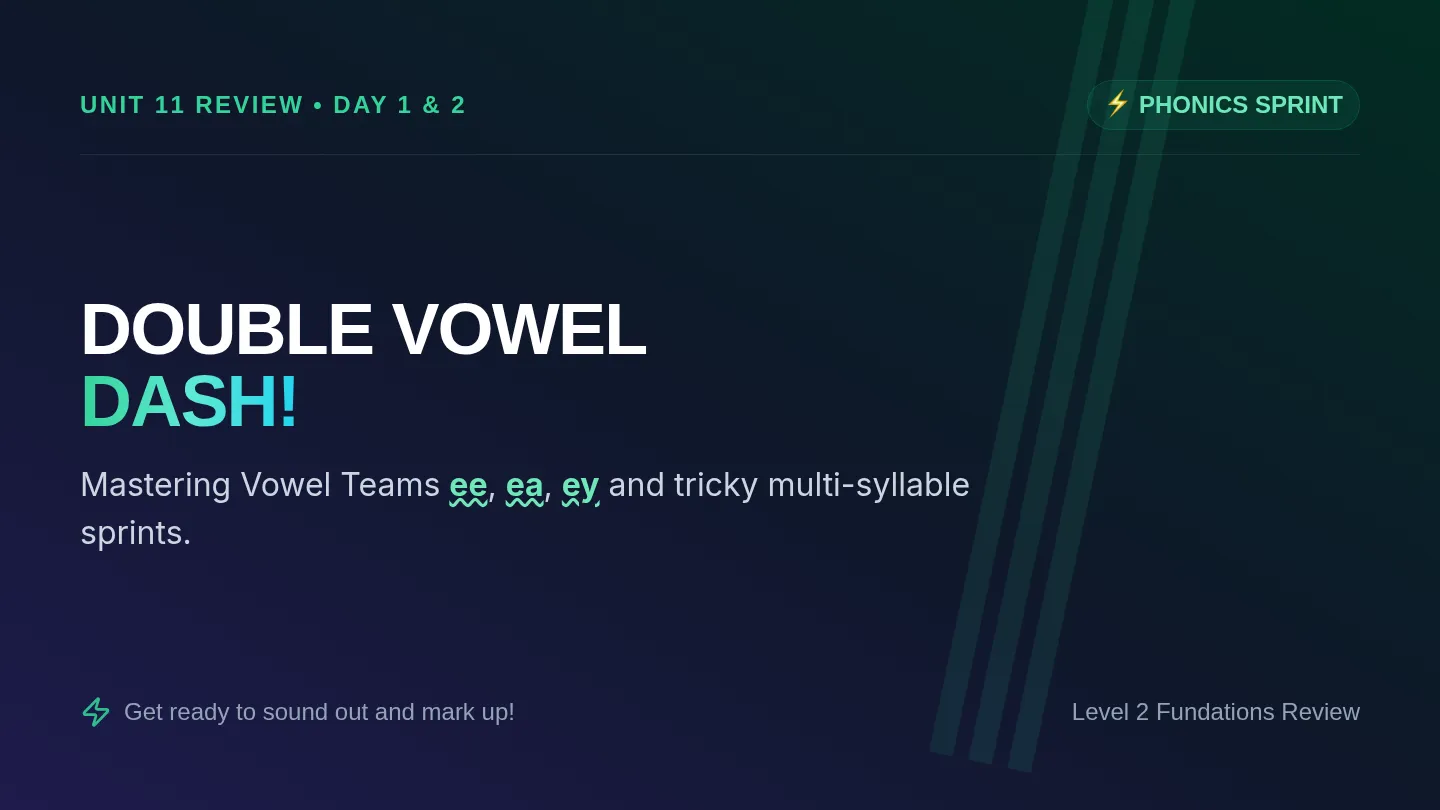
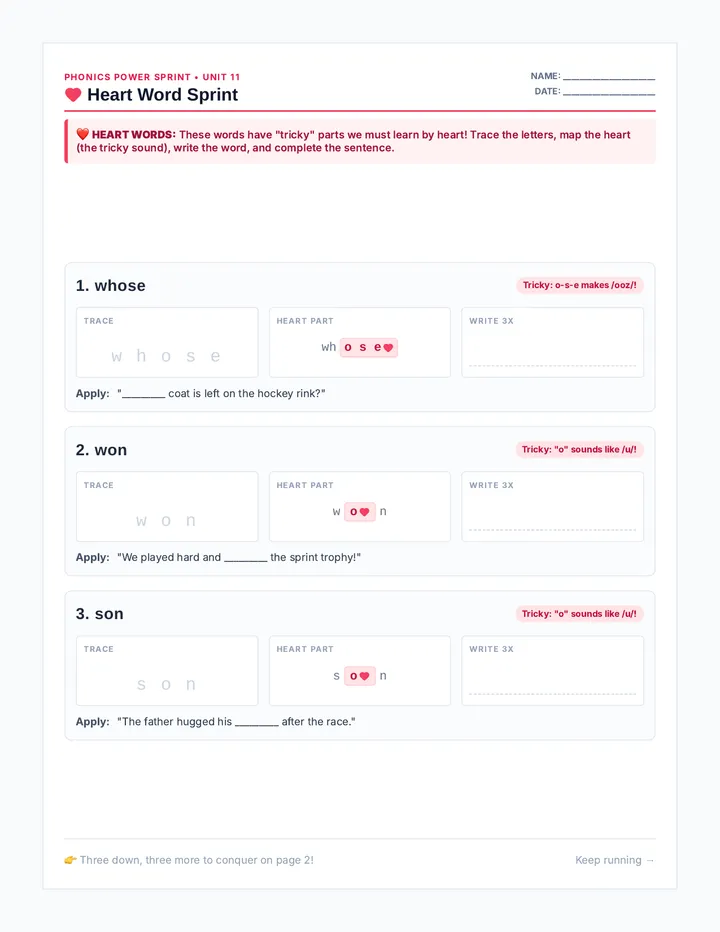
A high-impact phonics crash course for Fundations Level 2 Unit 12, focusing on vowel teams 'oi' and 'oy' in single and multisyllabic words, plus heart words 'favorite', 'early', and 'ocean'. Includes comprehensive slides and structured worksheets.
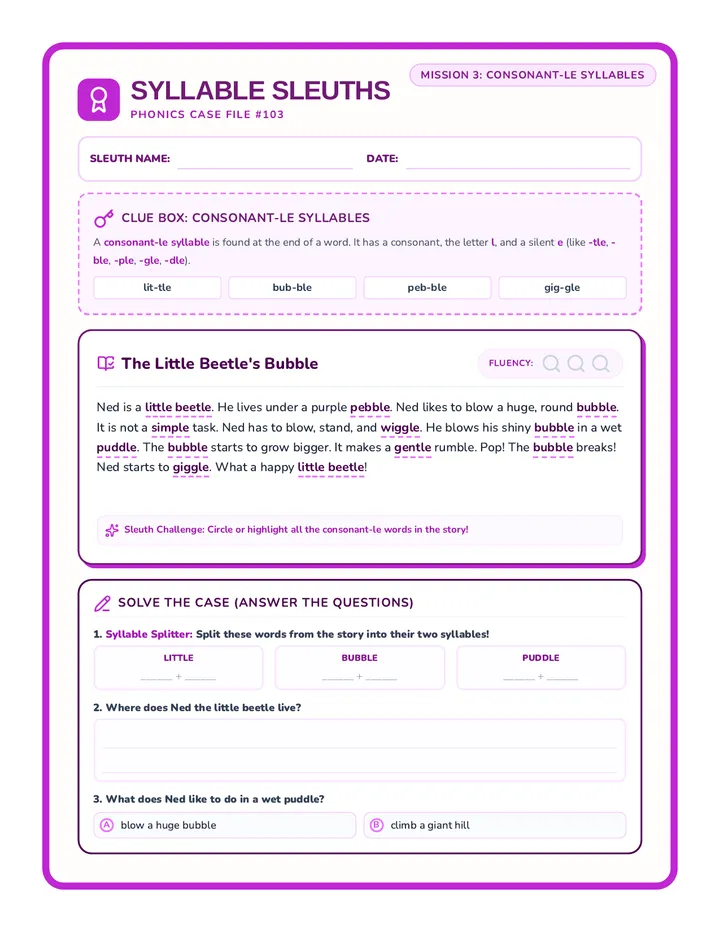
A student-facing decodable passage worksheet focusing on Consonant-le syllables. Includes a decodable text 'The Little Beetle's Bubble', a fluency tracker, a word hunt activity, and text-dependent comprehension questions.
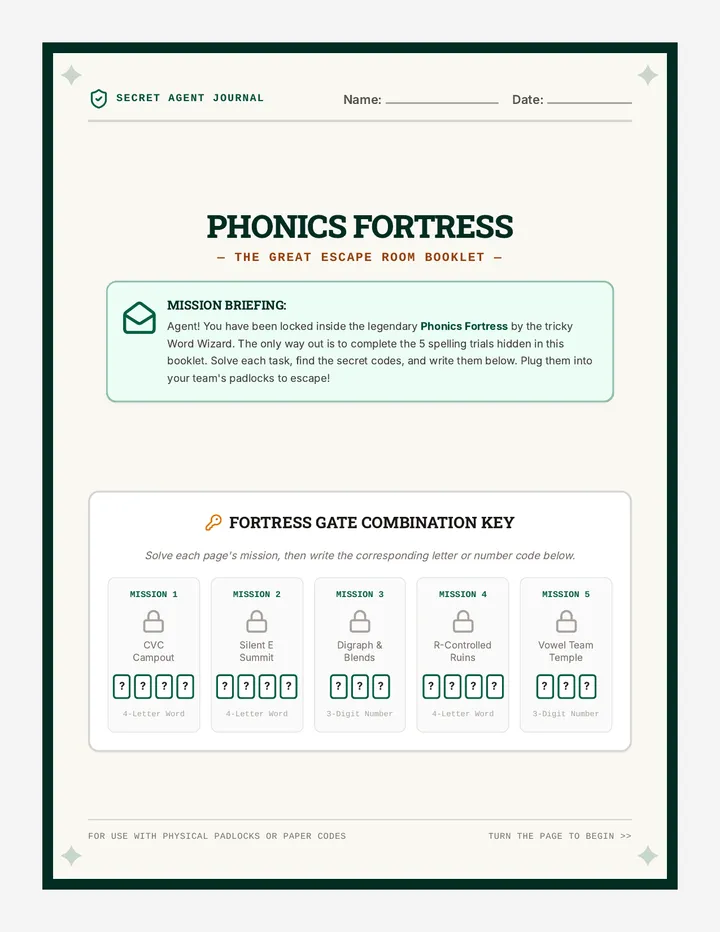
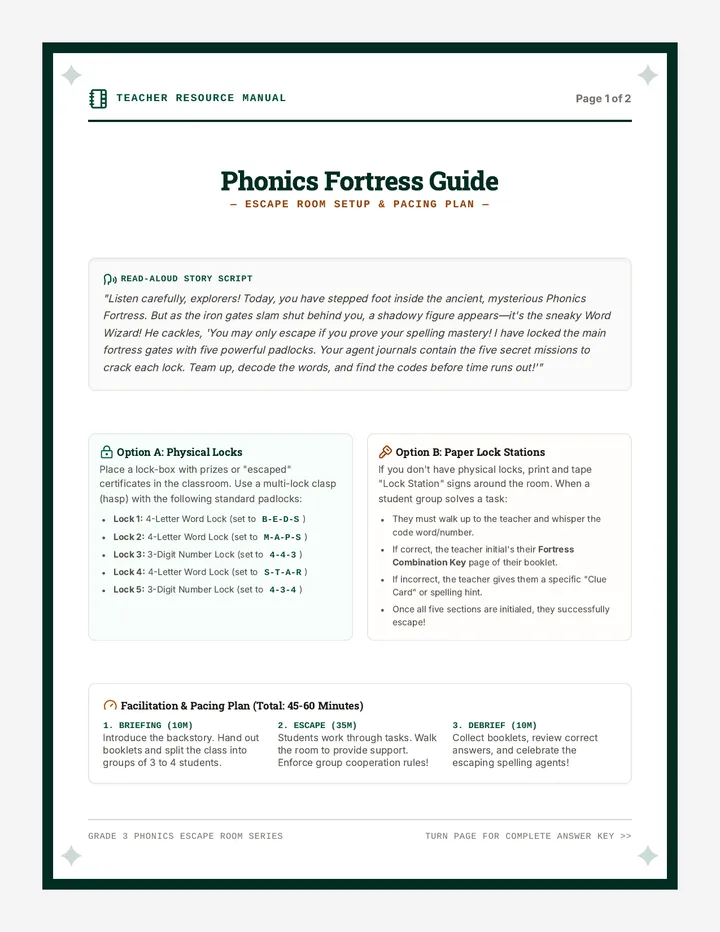
A comprehensive 5-day phonics breakout sequence where students complete daily independent spelling missions to crack codes. Covering CVC, Silent E, Digraphs/Blends, R-controlled vowels, and Vowel Teams, each day represents a new adventure challenge.
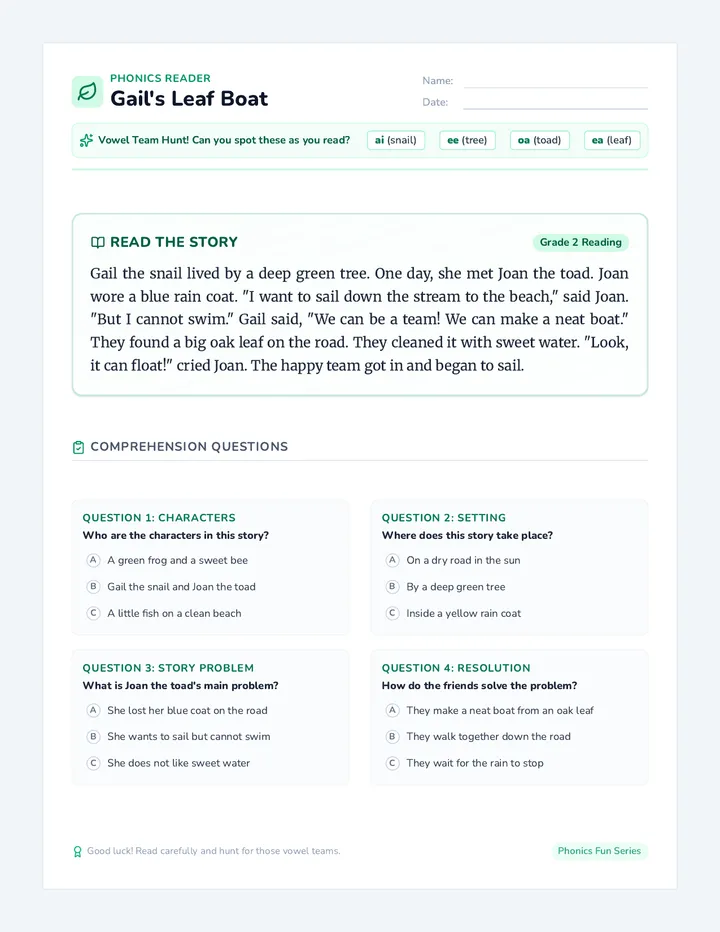
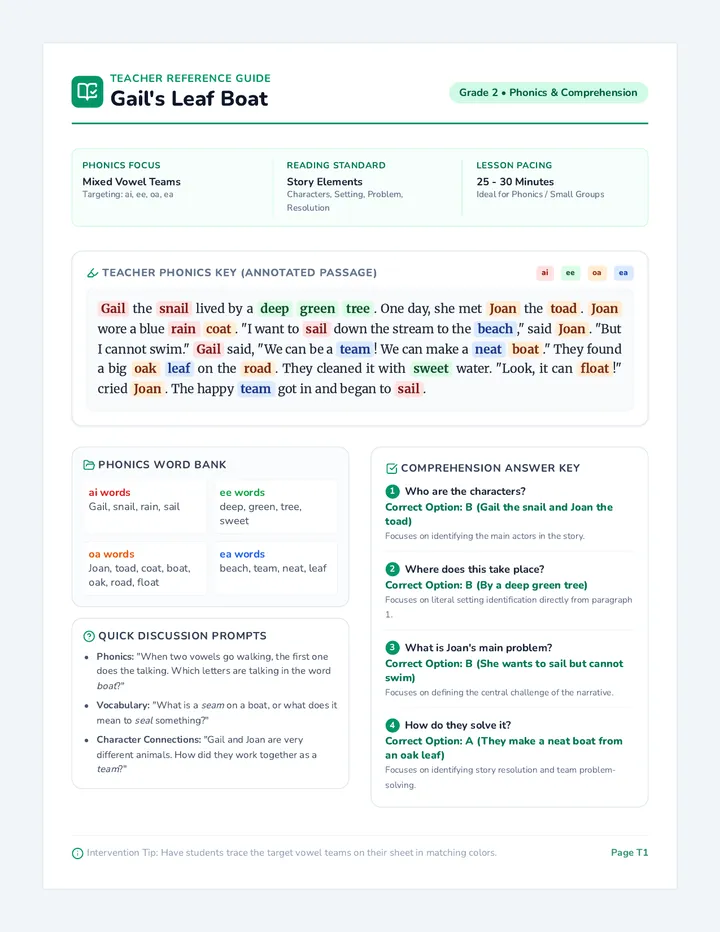
A 2nd grade reading comprehension lesson focused on identifying story elements and recognizing mixed vowel teams (ai, ee, oa, ea) in context. Includes a student reading worksheet and a teacher guide with an answer key and phonics support.
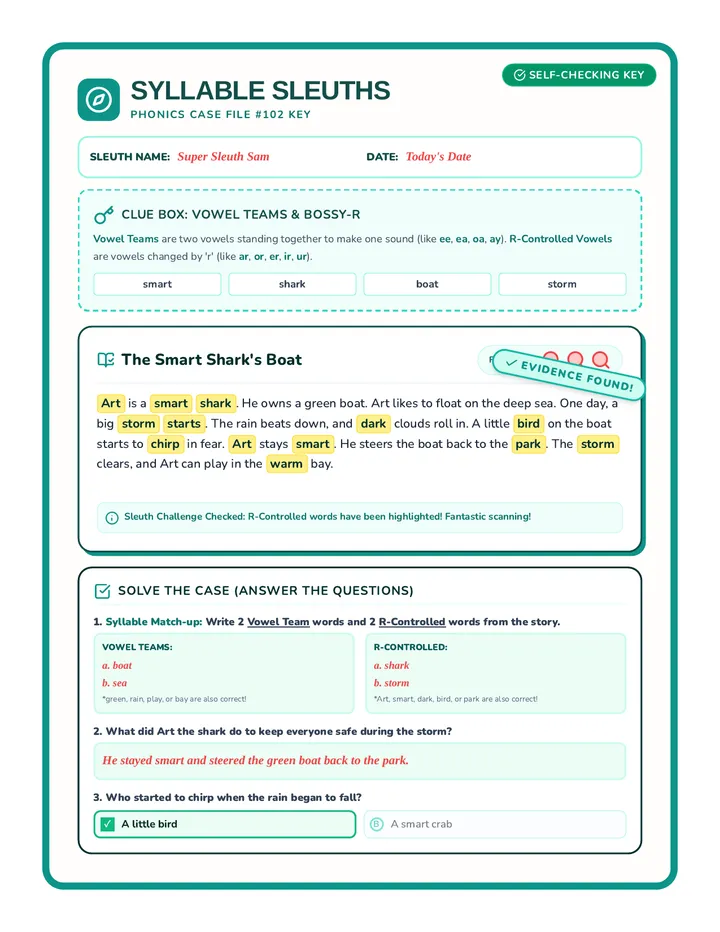
A self-checking child-friendly answer key for the Smart Shark Worksheet. It displays correct answers in red handwriting style with detective-themed grade stamp.
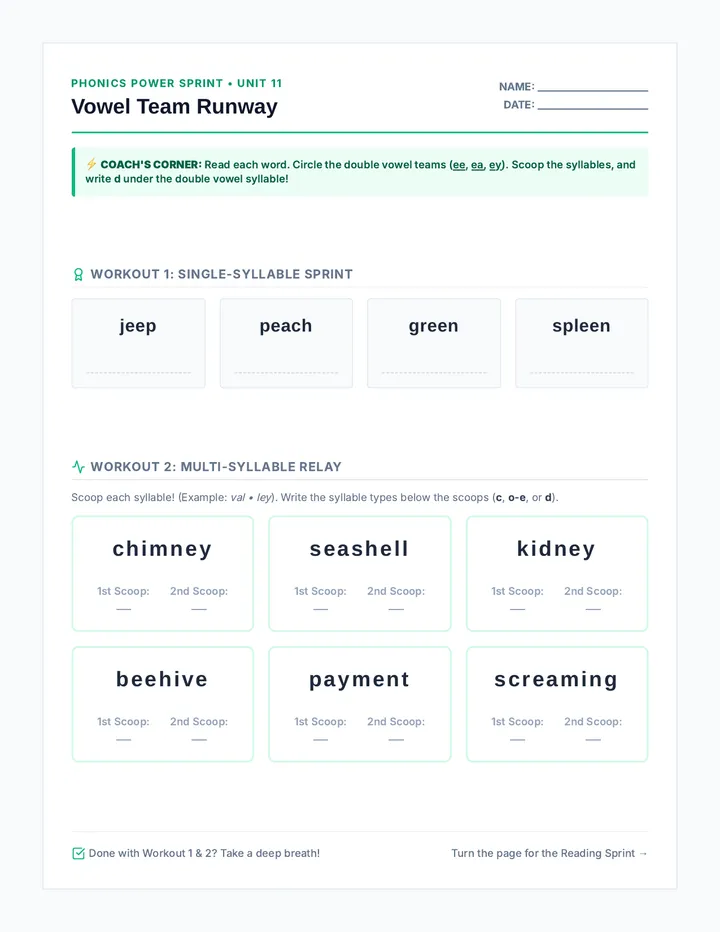
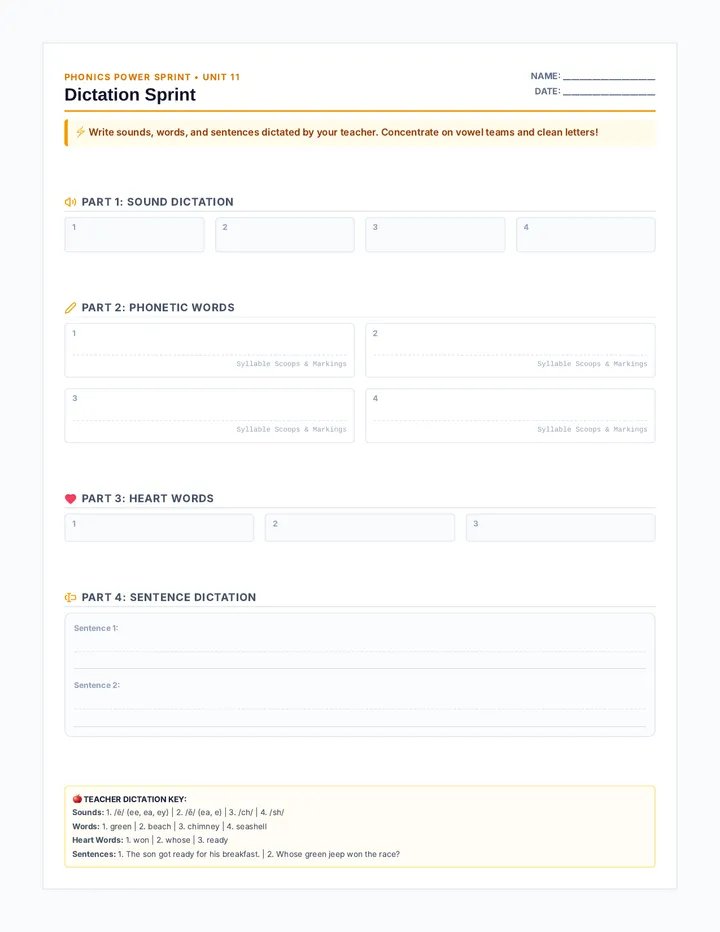
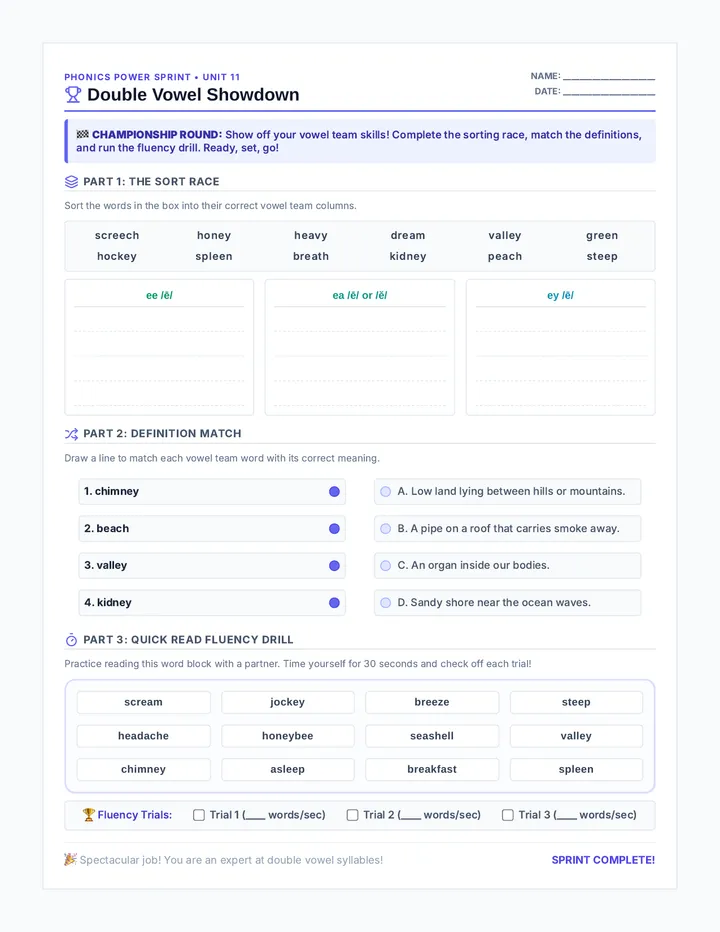
An accelerated, high-impact review of Fundations Level 2 phonics concepts, consolidating Units 11-17 into an intensive curriculum. This sequence focuses on double vowel syllables (vowel teams), multi-syllabic words, and essential high-frequency heart words to build rapid decoding and spelling mastery.
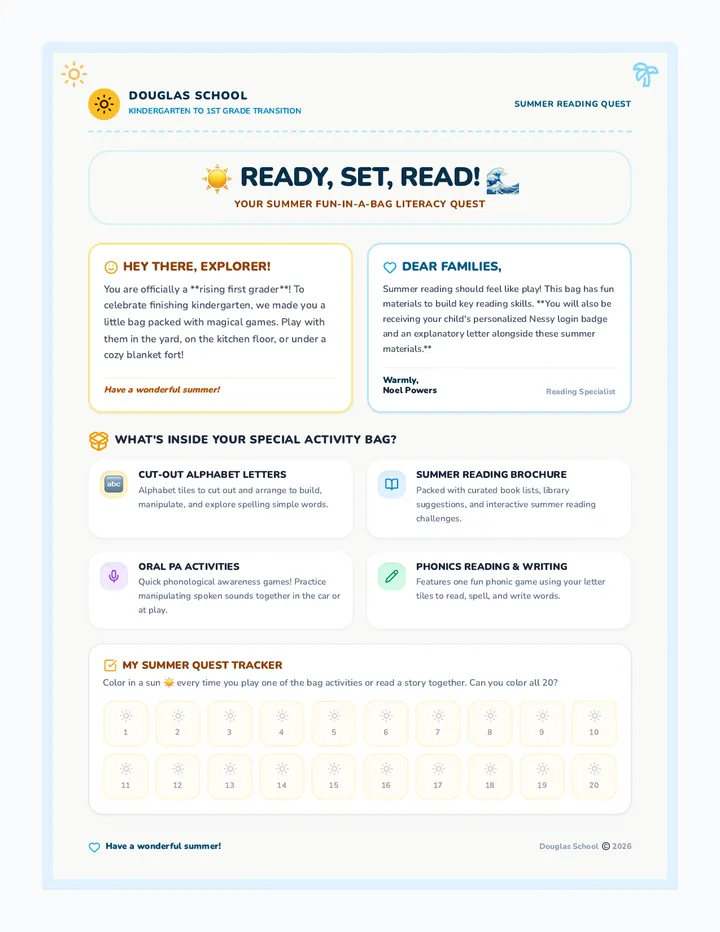
Summer literacy communication and family engagement resources to help rising kindergarteners maintain and build reading skills over the summer break through play-based activities.
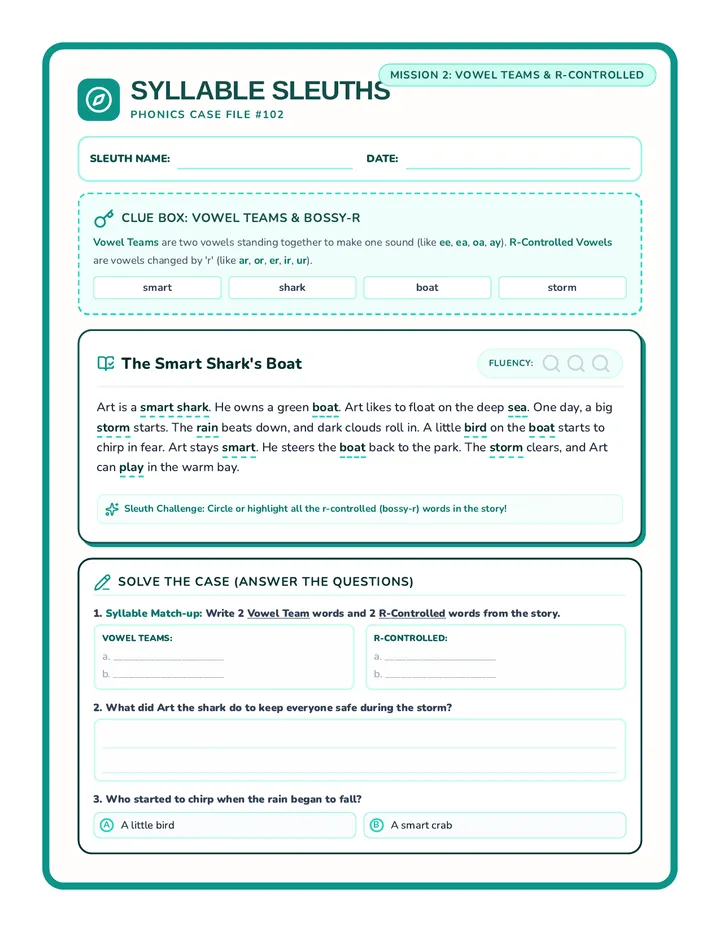
A student-facing decodable passage worksheet focusing on Vowel Teams and R-Controlled vowels. Includes a decodable text 'The Smart Shark's Boat', a fluency tracker, a word hunt activity, and text-dependent comprehension questions.