A comprehensive reading lesson focused on NCSCOS RI.3.2 (Main Idea and Key Details) using the context of firefighters. Includes instruction, practice, and a creative graphic organizer.
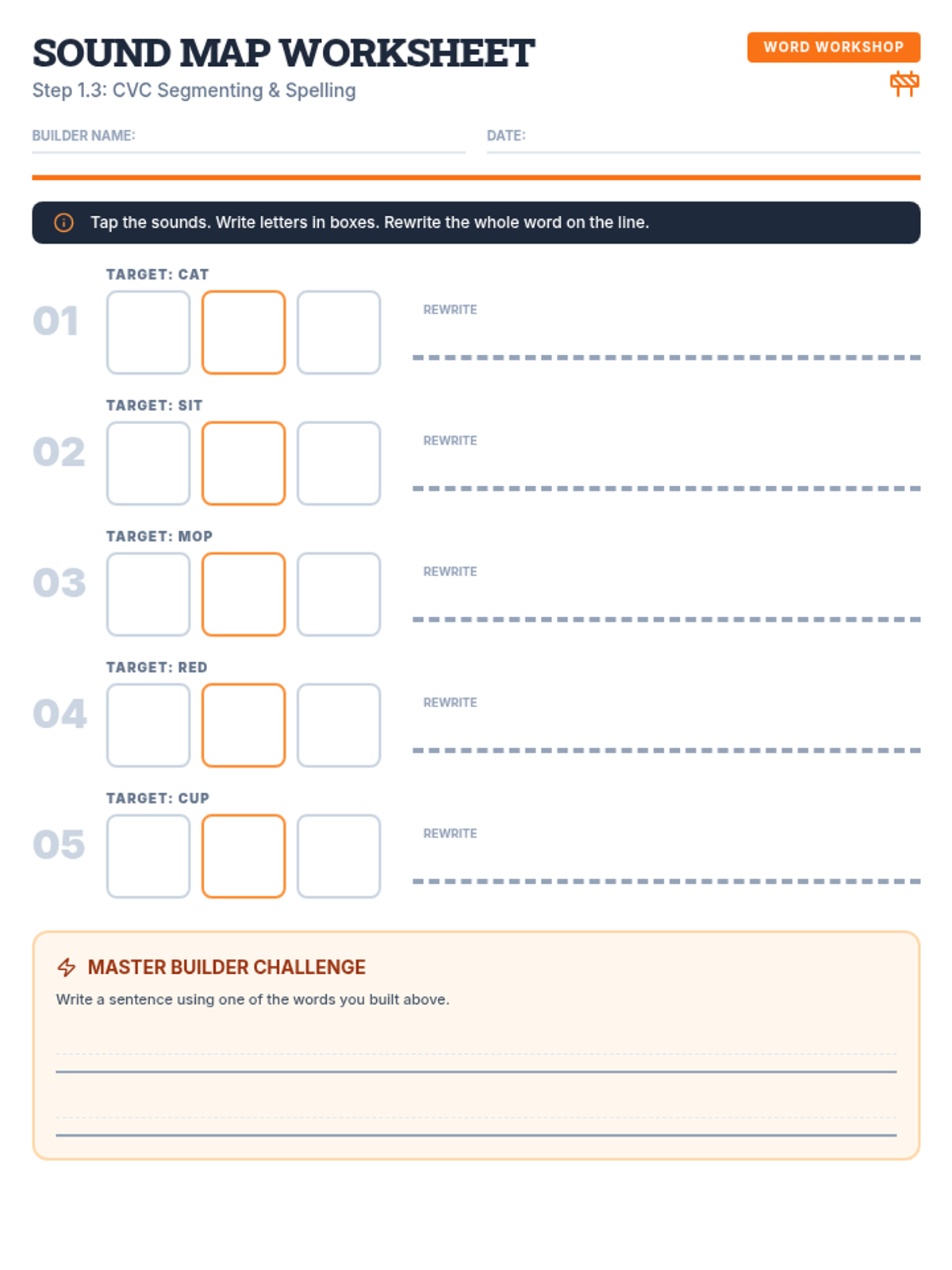
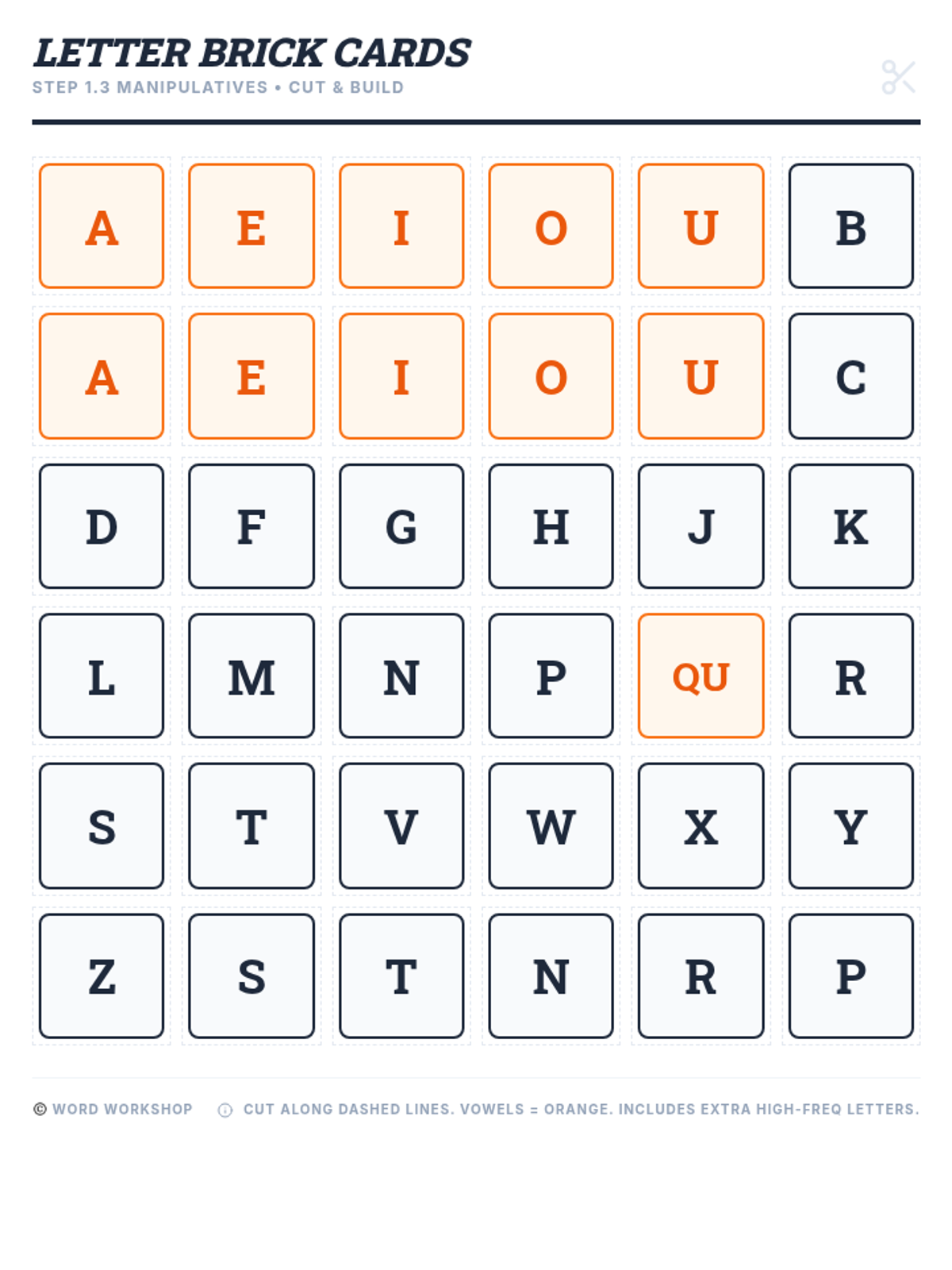
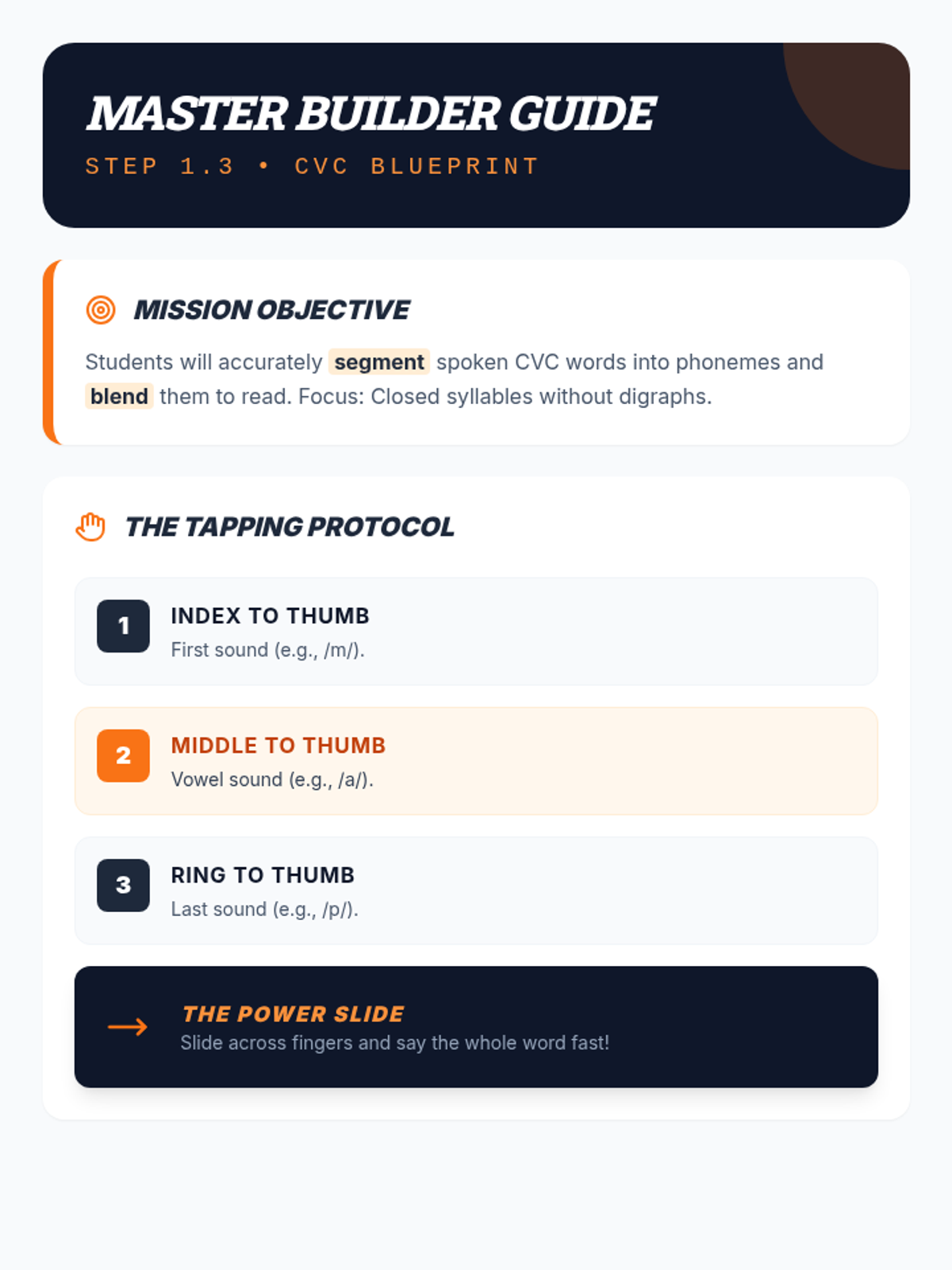
Focuses on reading and spelling CVC words by segmenting sounds and blending them together using visual and kinesthetic cues.
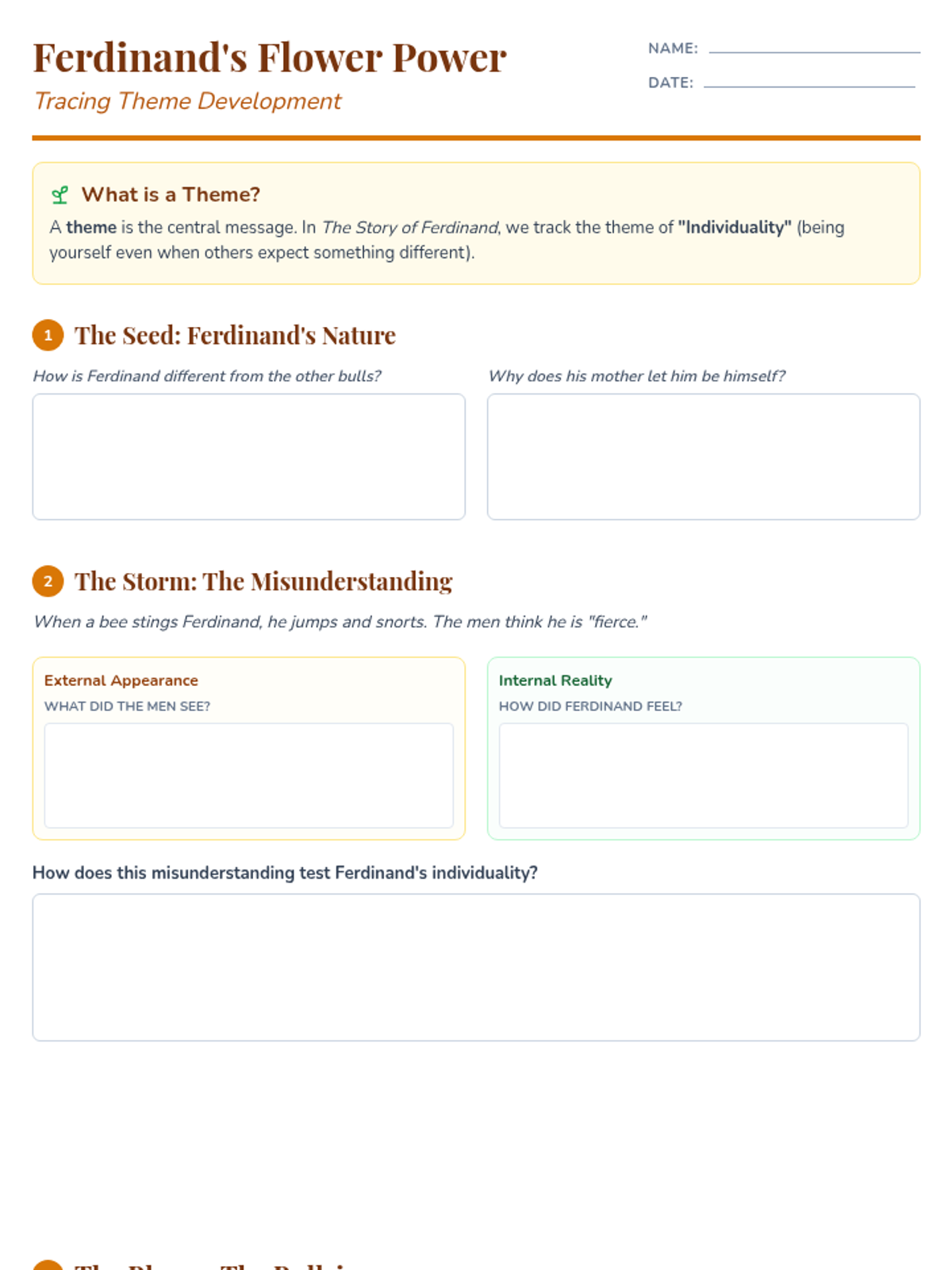
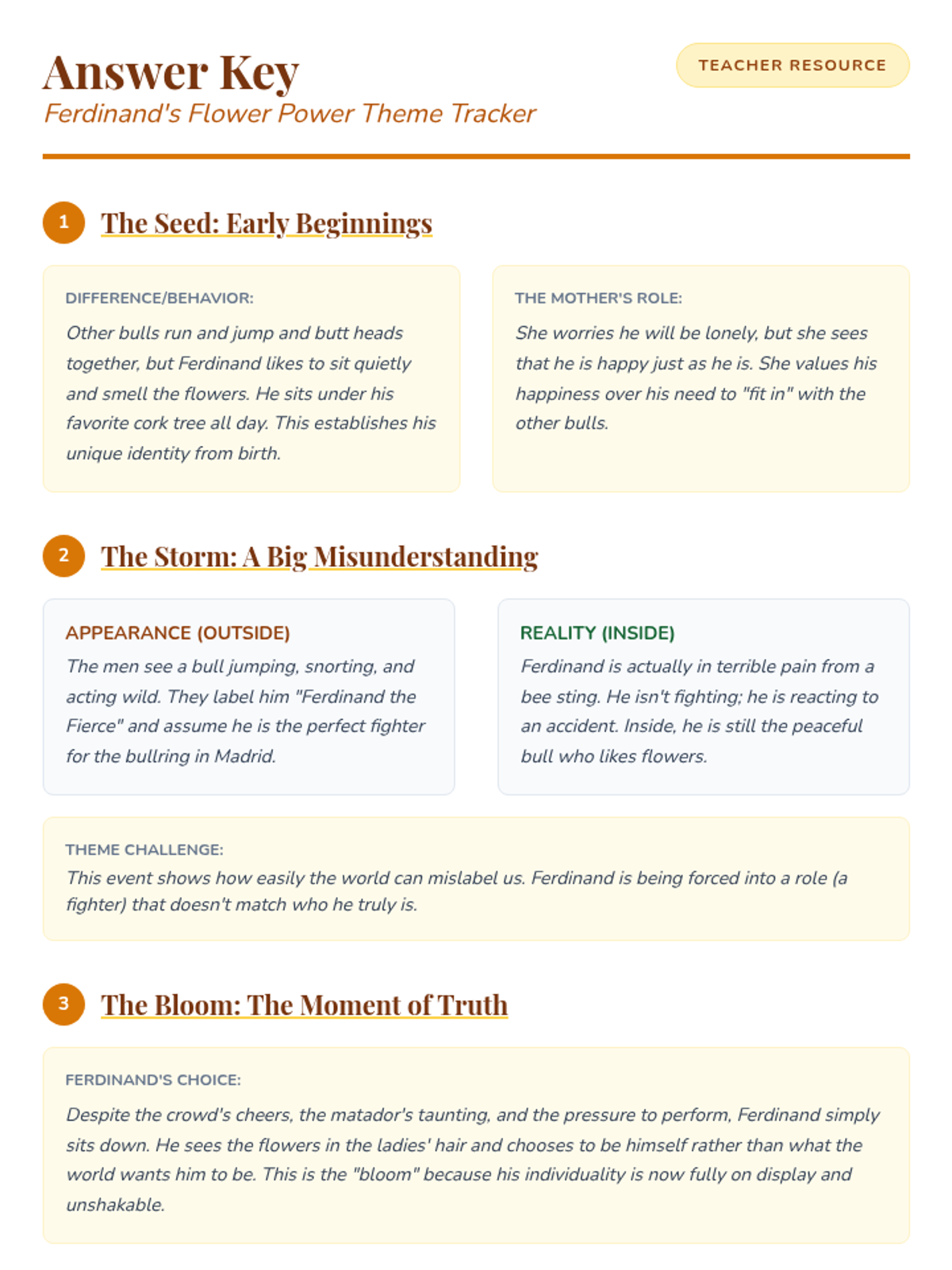
A lesson focused on analyzing the development of the theme of individuality and non-conformity in Munro Leaf's 'The Story of Ferdinand'. Students will track how Ferdinand stays true to himself despite external pressures.
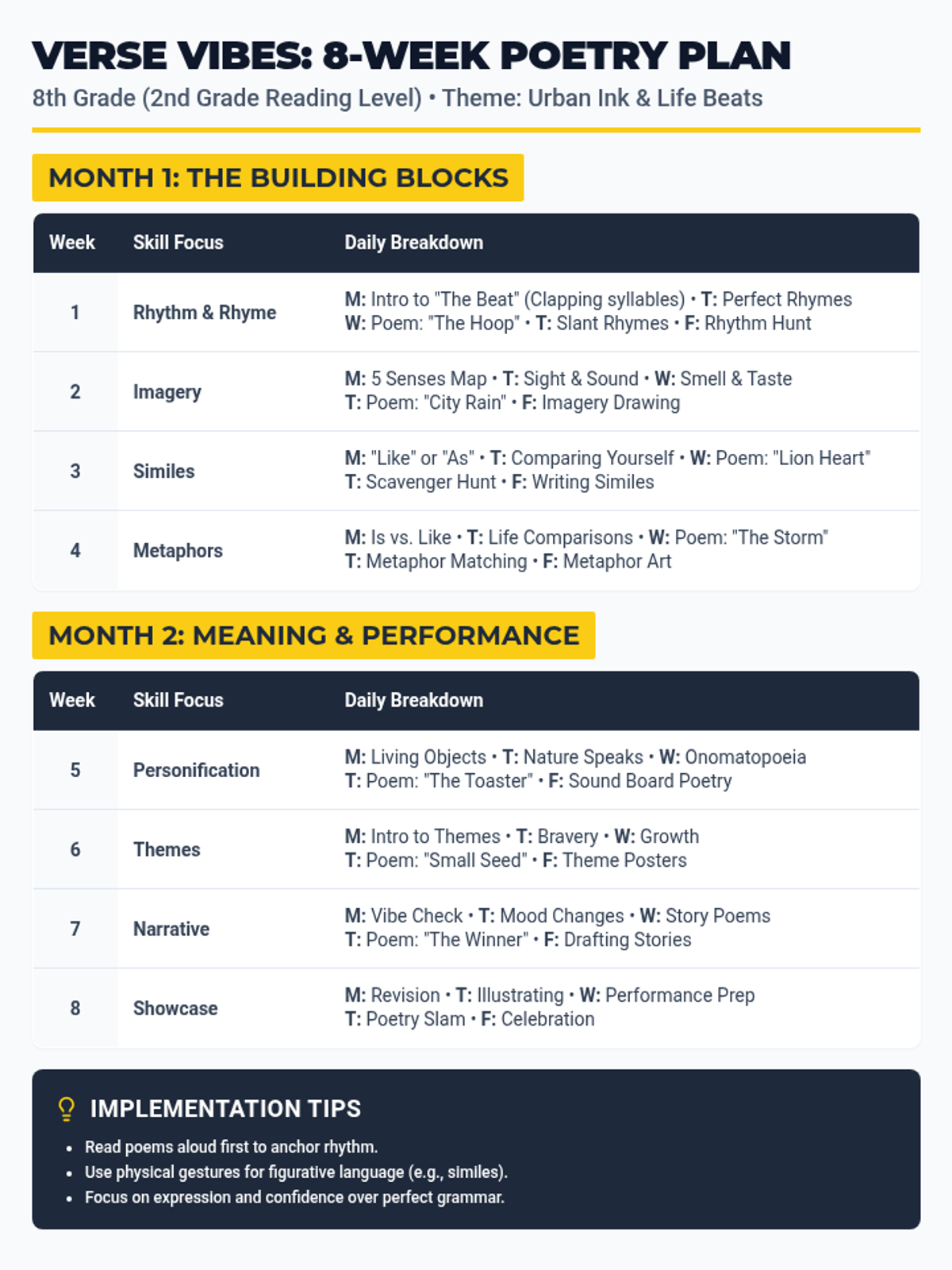
A culminating week where students compile their work into a portfolio and perform a 'Final Verse' for their peers.
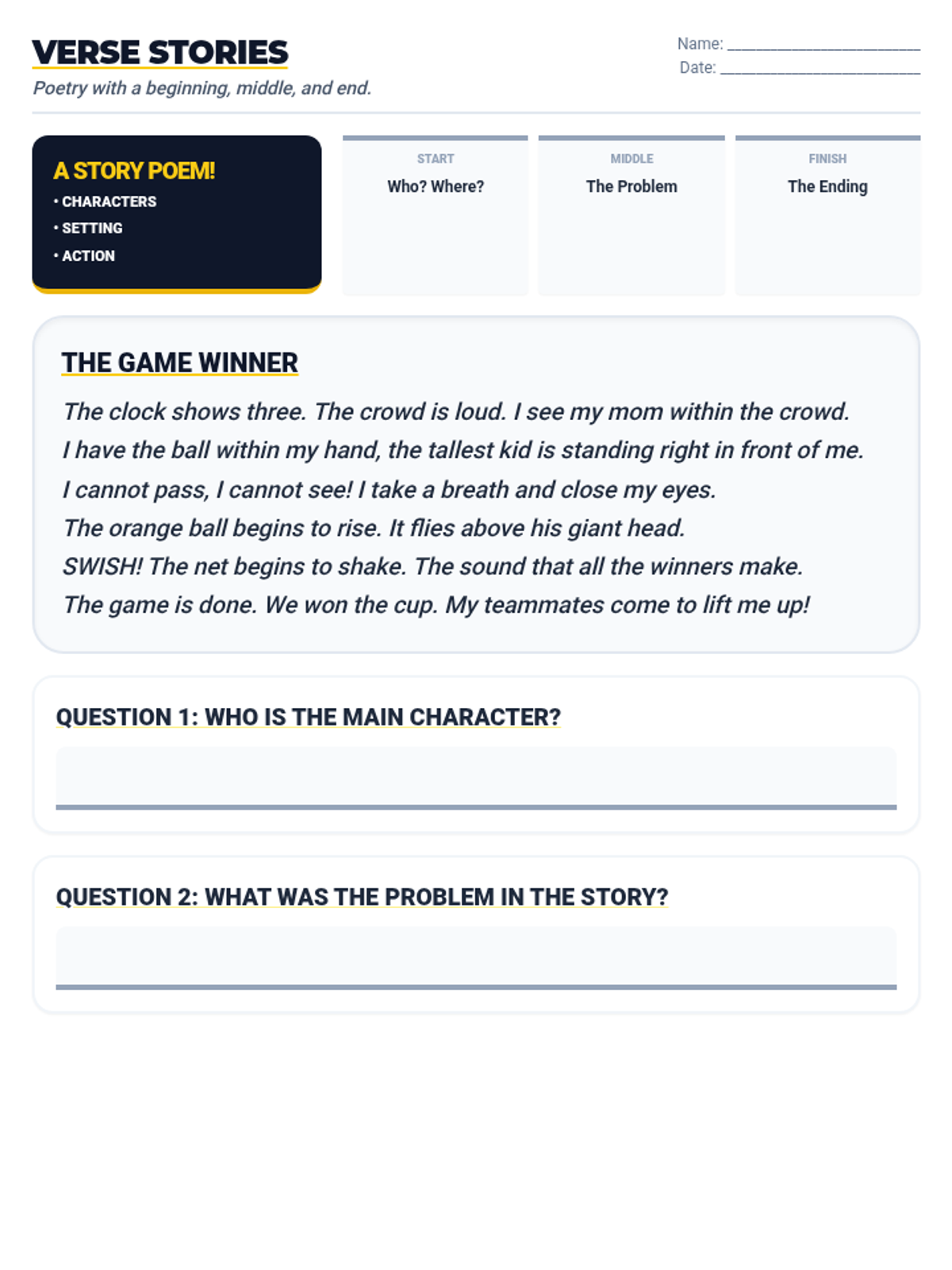
Teaching students that poems can tell stories. Students will read and write short narrative verses about everyday events.
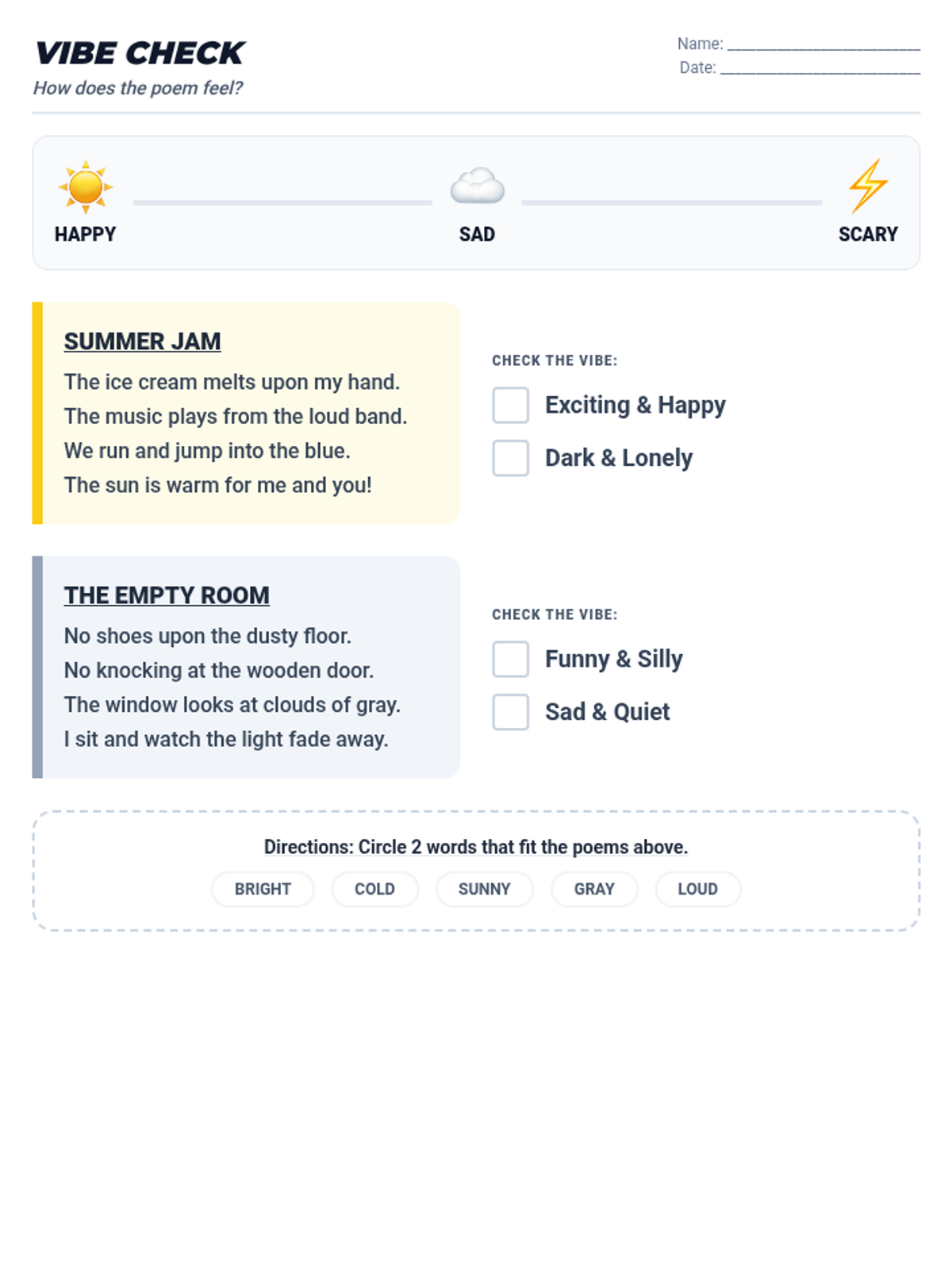
Exploring the emotional side of poetry. Students will identify how a poem makes them feel and what 'vibes' the author is sending.
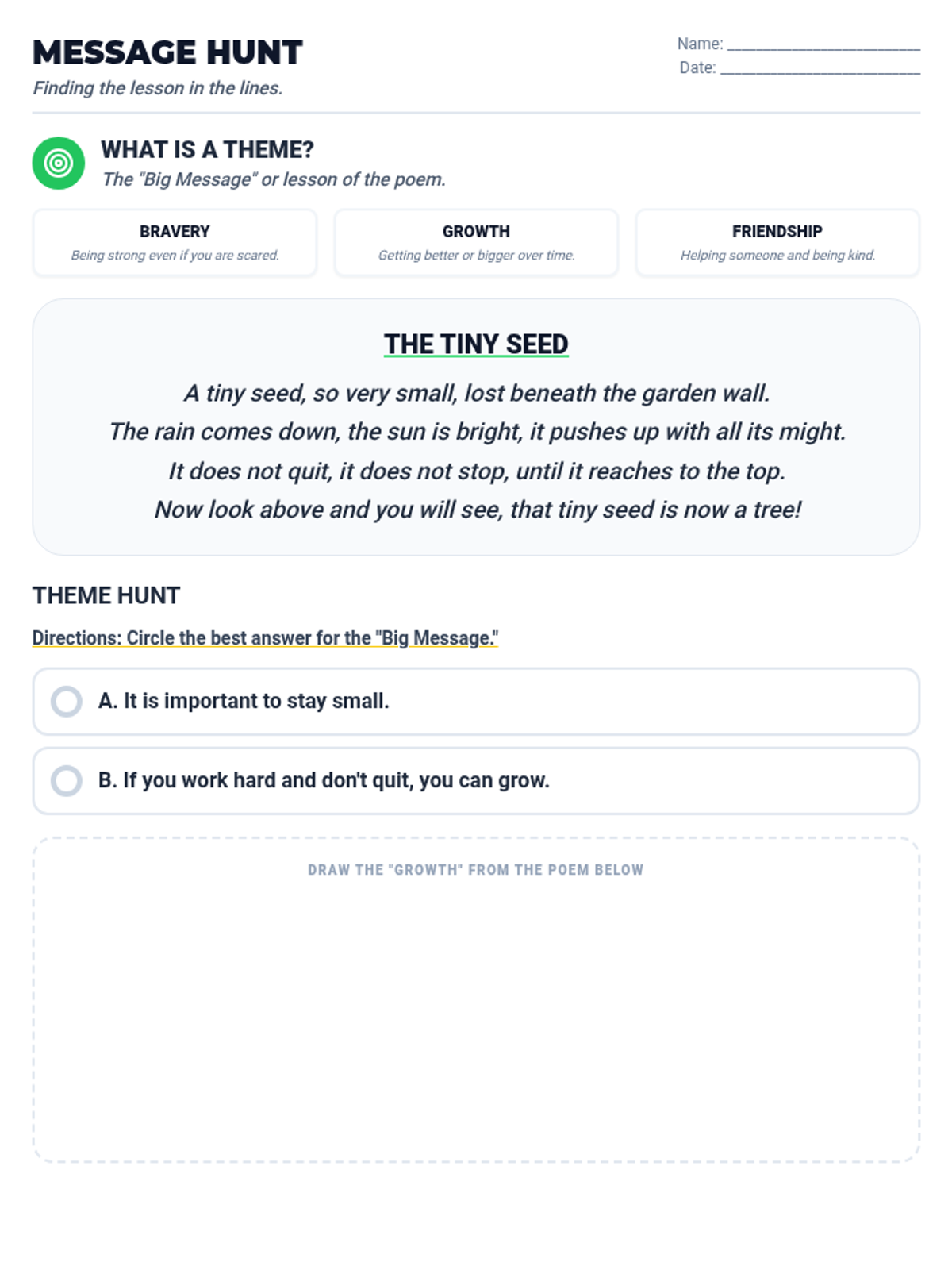
Helping students find the 'big idea' or lesson in a poem. Students will identify simple themes like bravery, friendship, and change.
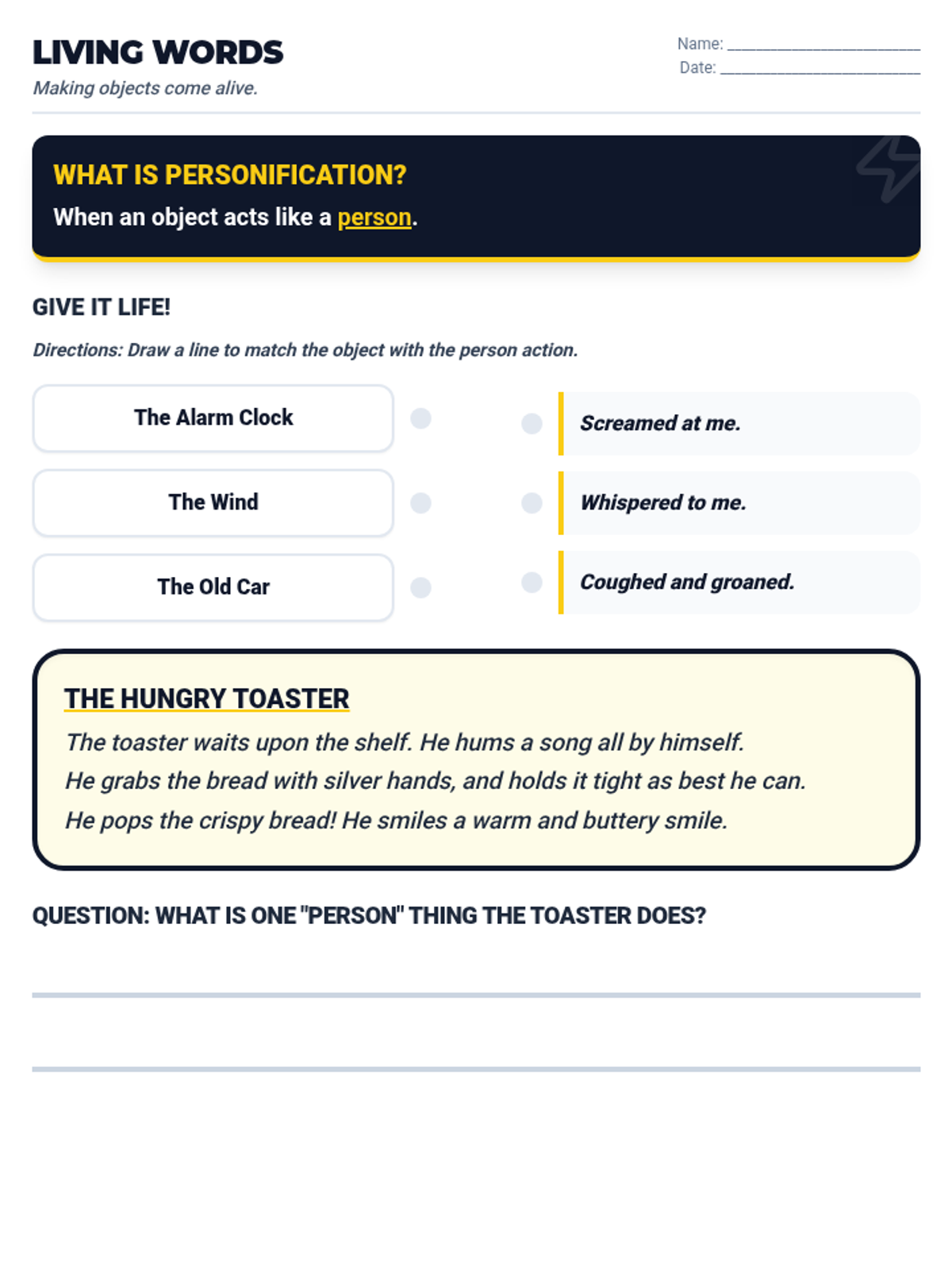
Exploring how poems can make objects act like people (personification) and how words can sound like their meanings (onomatopoeia).
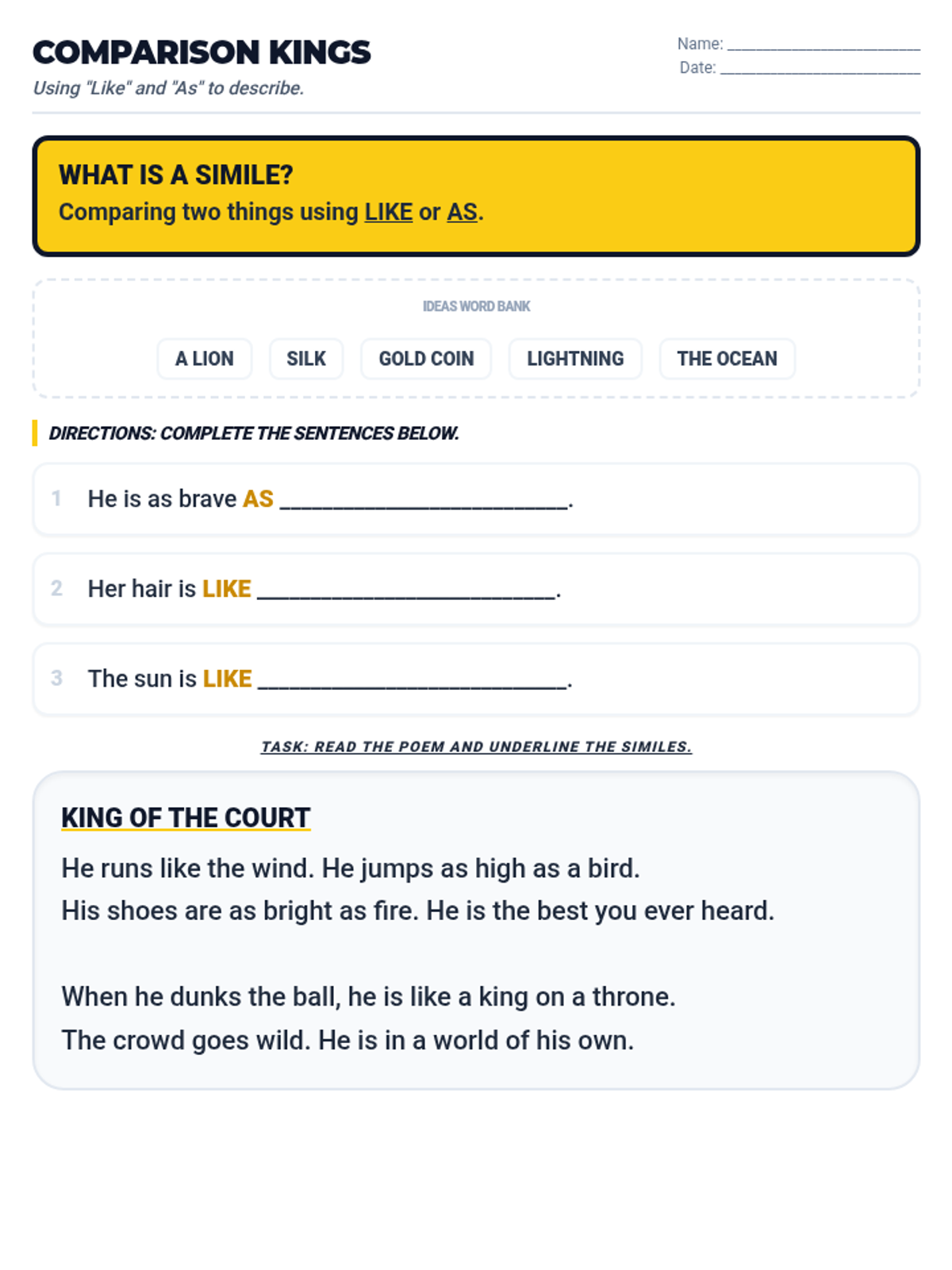
Introducing similes and metaphors as "secret comparisons." Students will use simple 'like' and 'as' structures to describe themselves and their world.
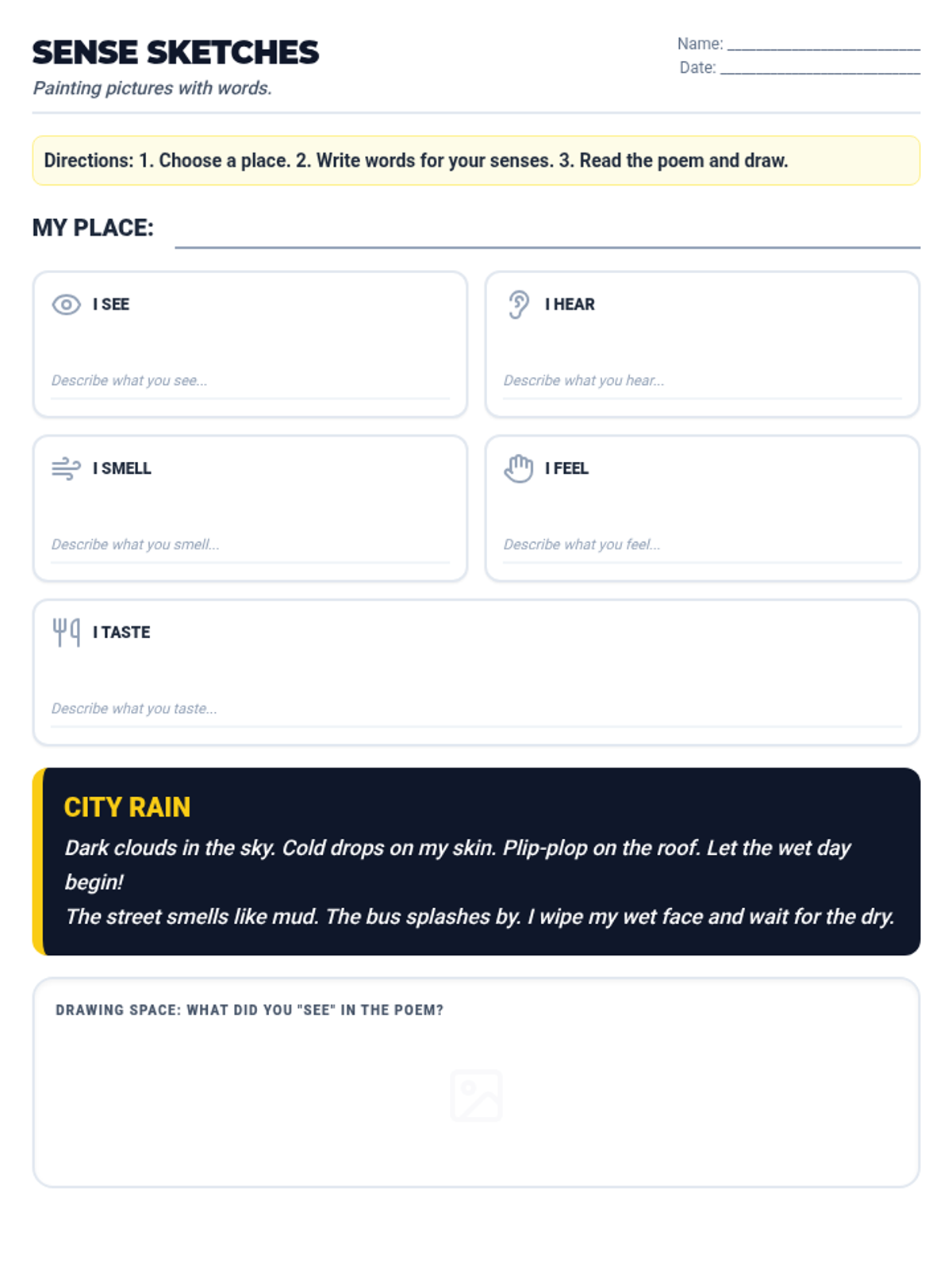
Focuses on building mental pictures using the five senses. Students will explore how simple words can describe smells, sights, and sounds in an urban or relatable environment.
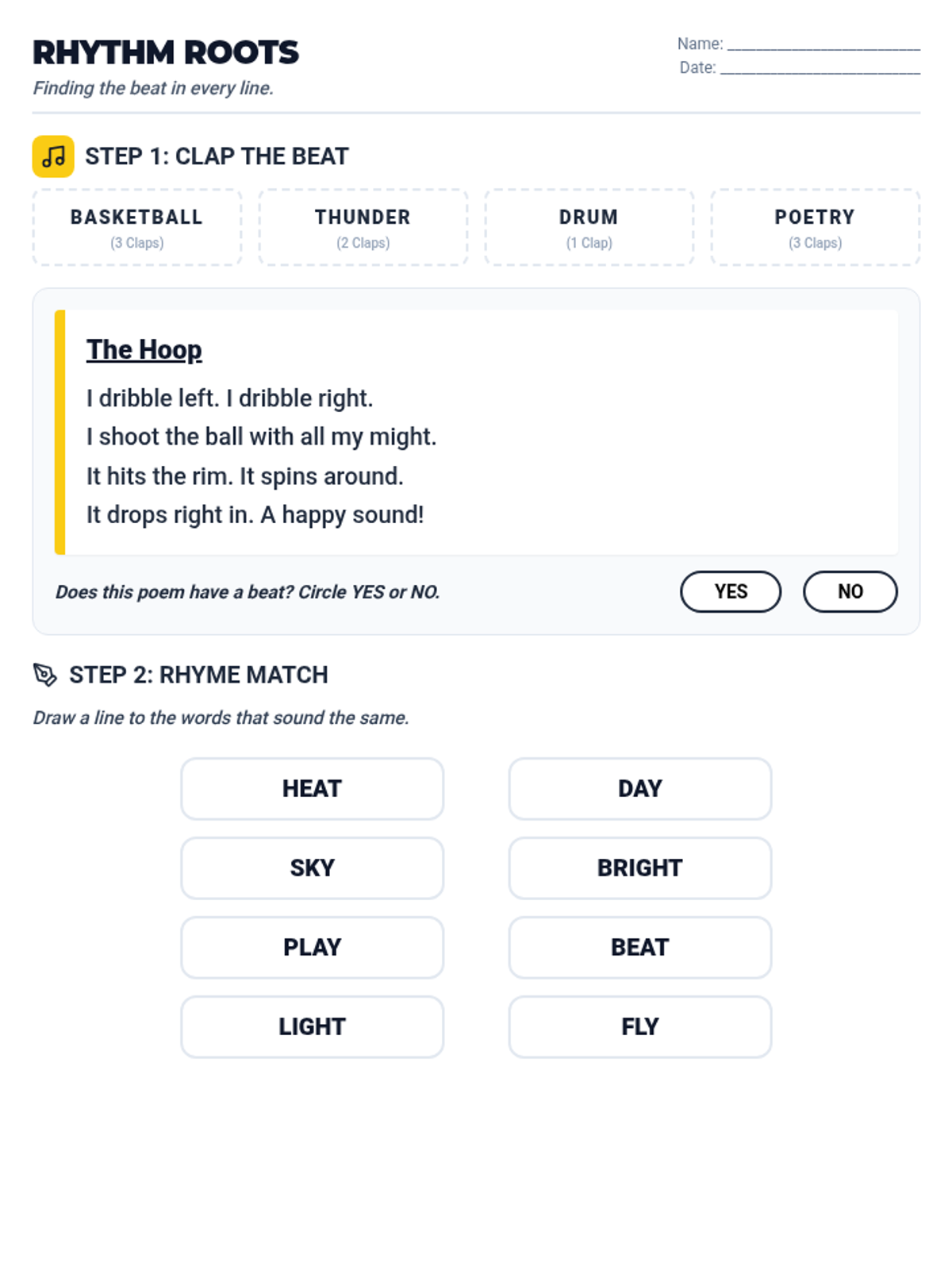
An introduction to the rhythm and 'beat' of poetry. Students will learn to identify the steady pulse in verse and practice simple rhyme schemes using accessible vocabulary.
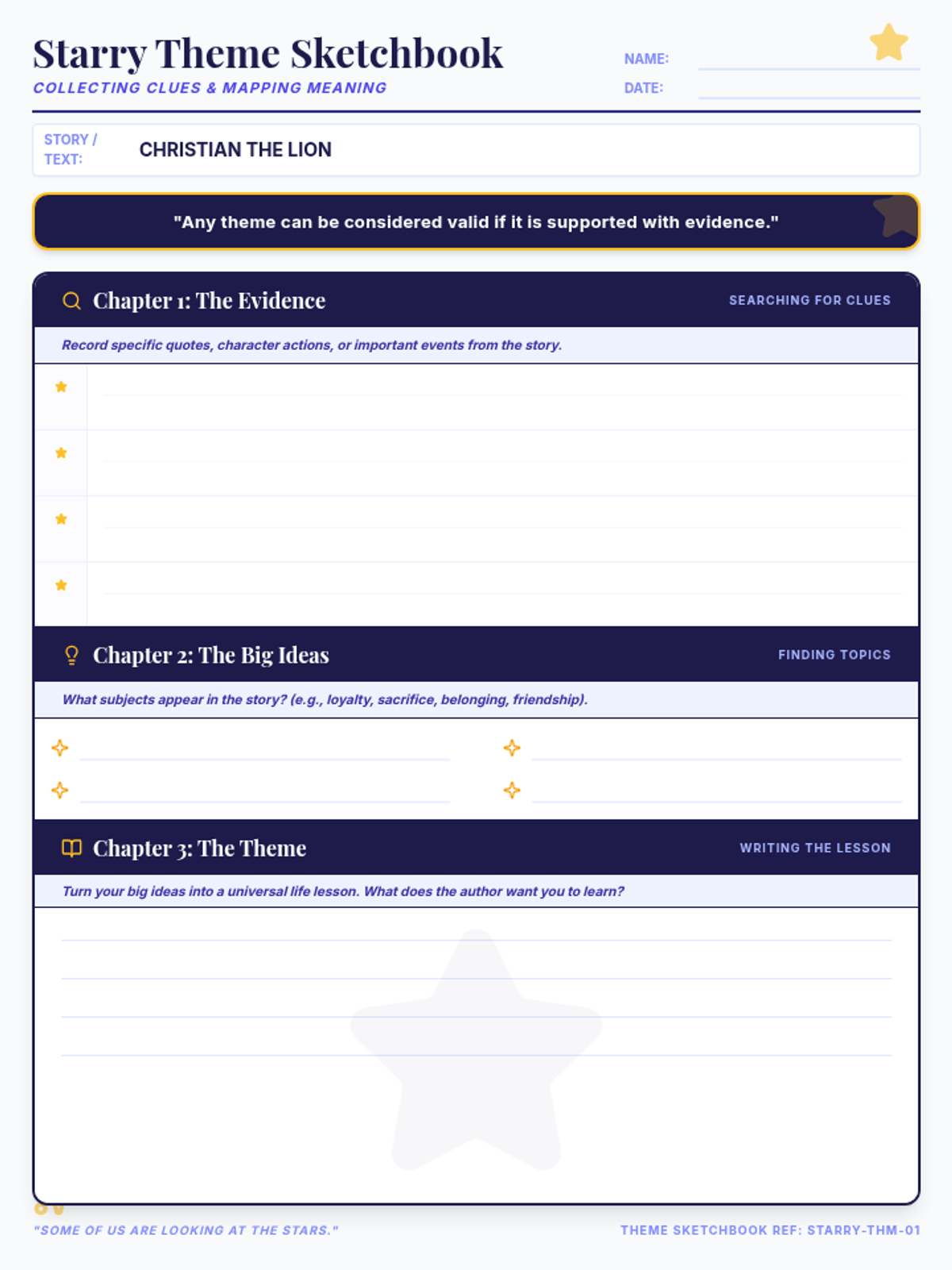
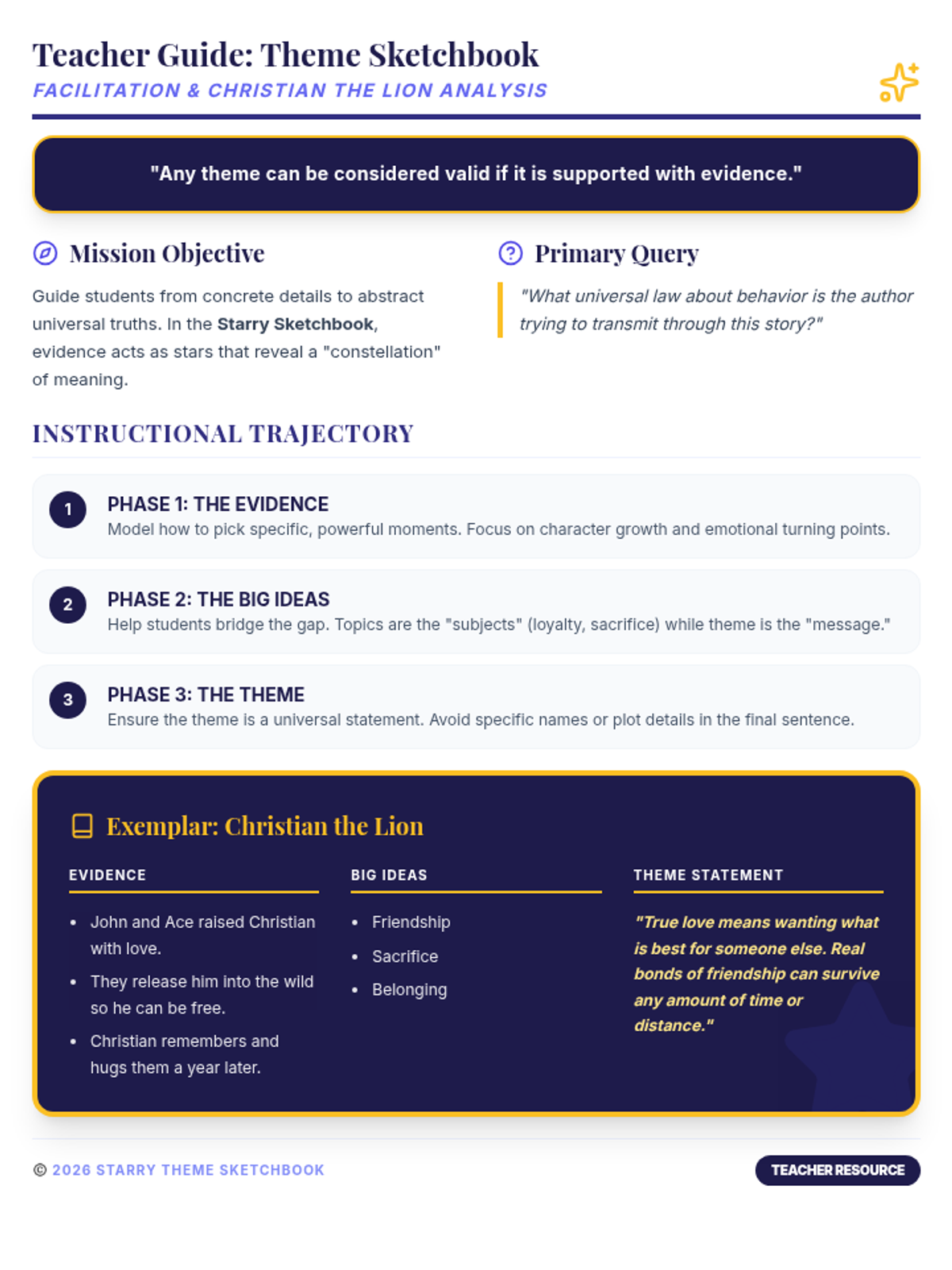
A lesson focused on identifying theme by collecting evidence, identifying topics, and synthesizing life lessons.
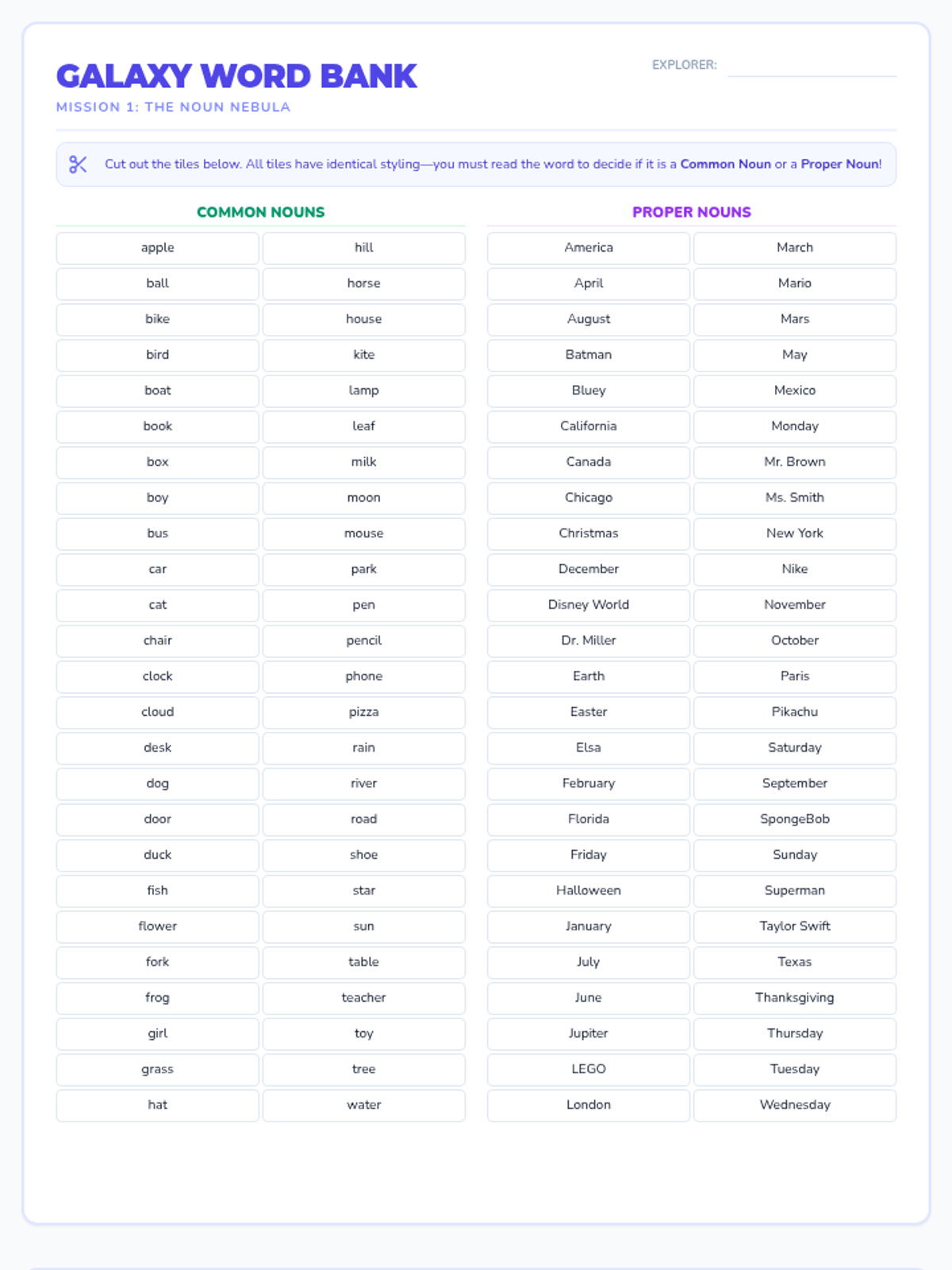
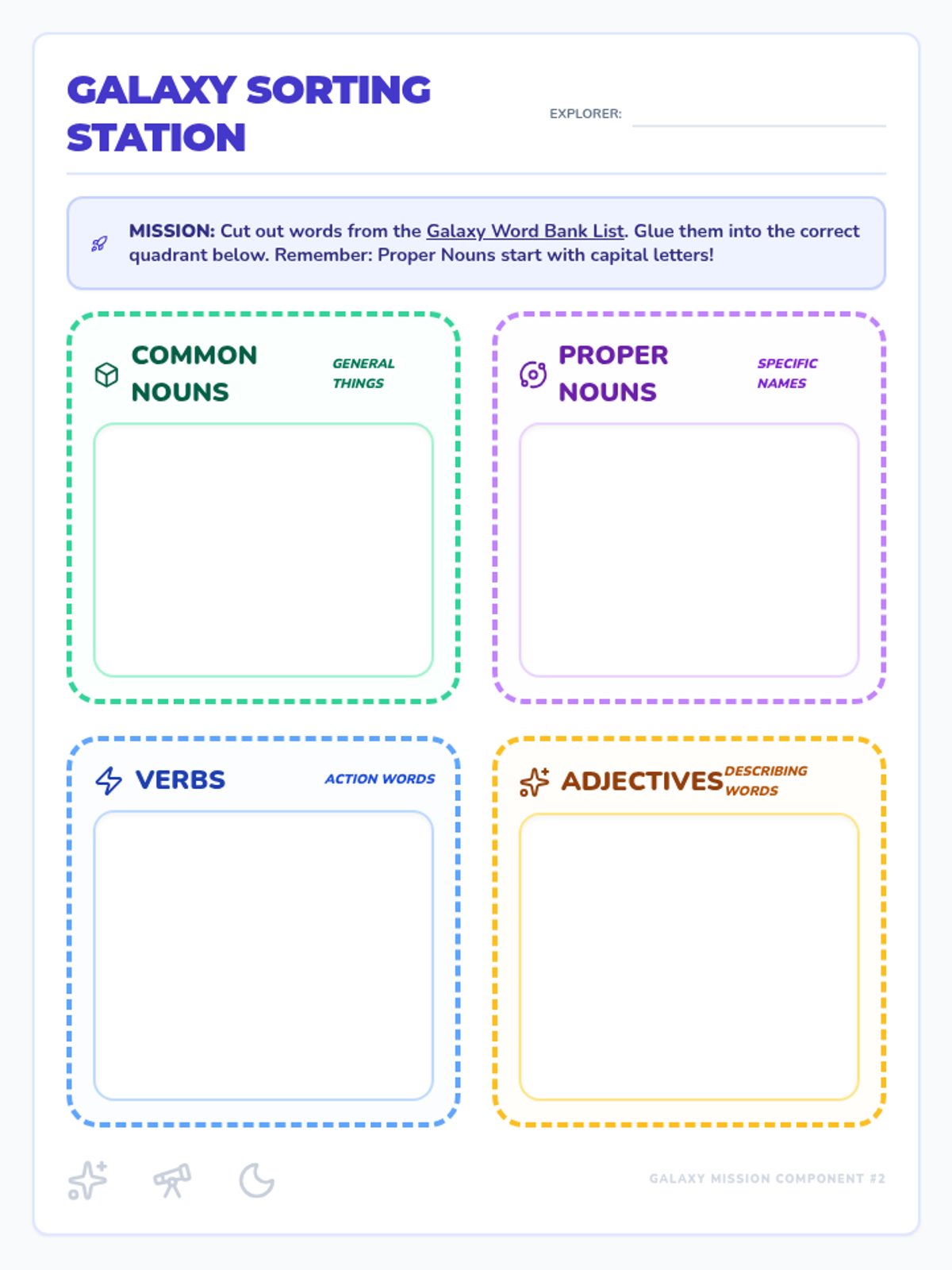
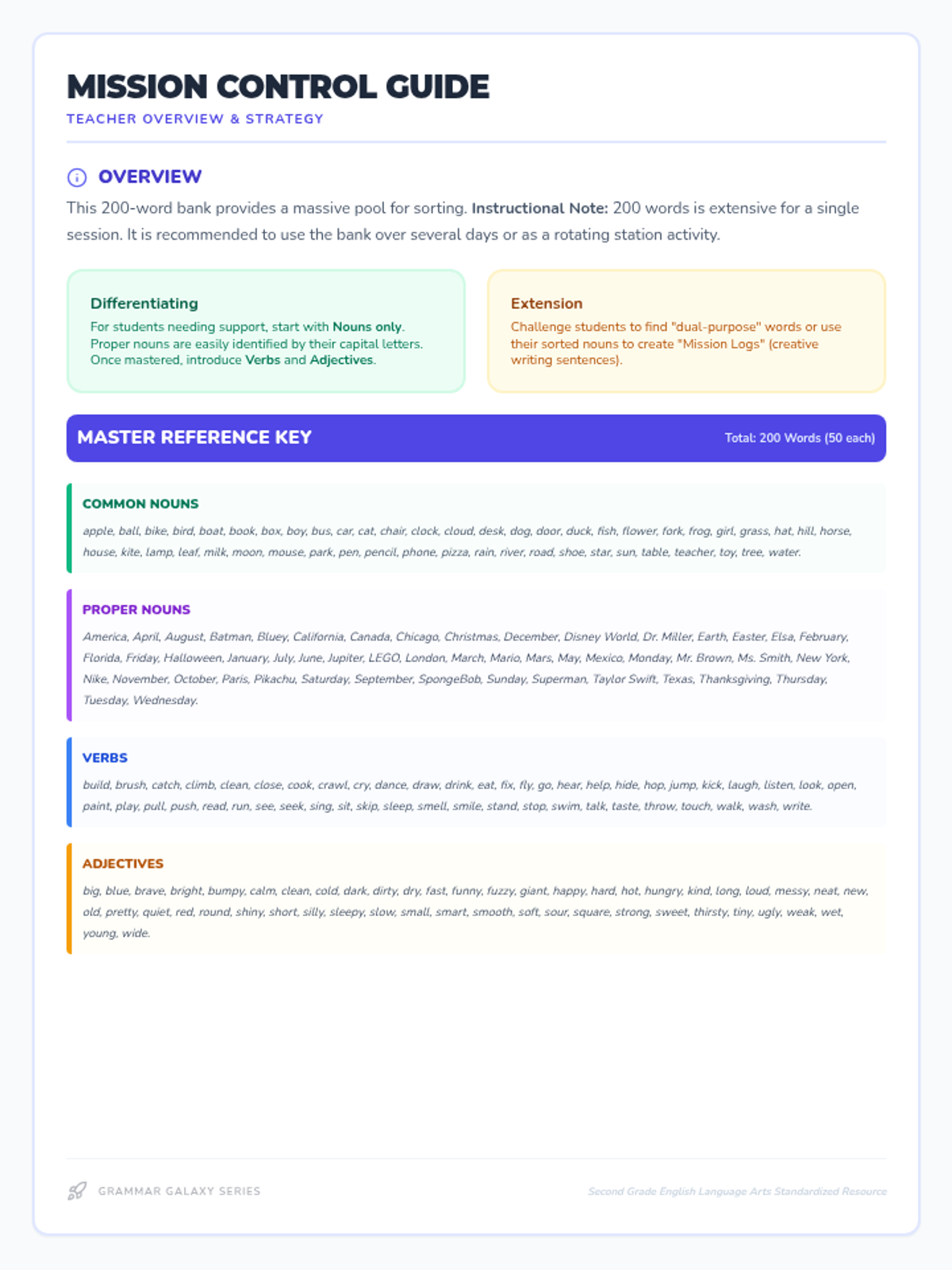
A comprehensive parts of speech sorting activity where students categorize 200 relatable words into adjectives, common nouns, proper nouns, and verbs.
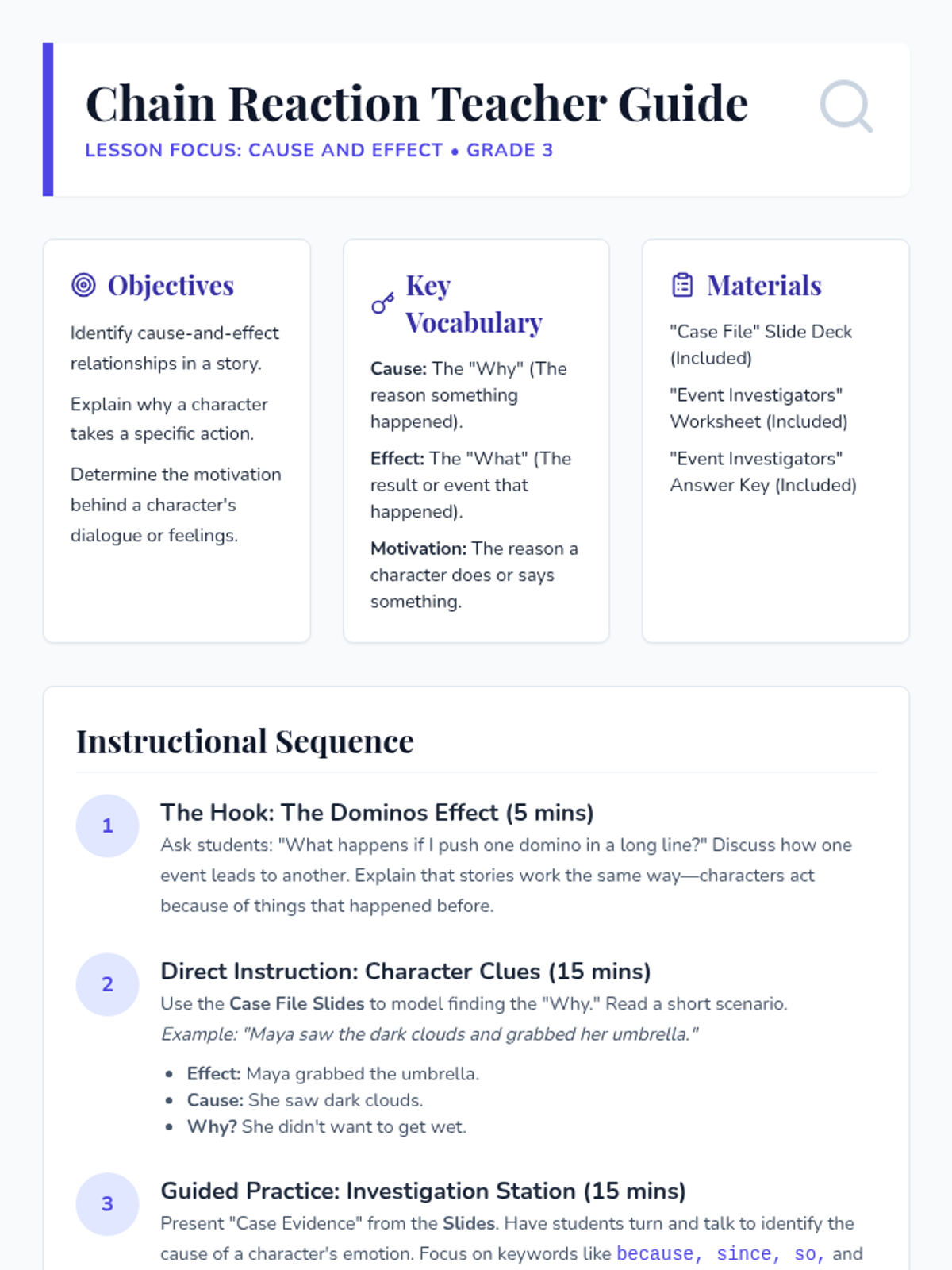
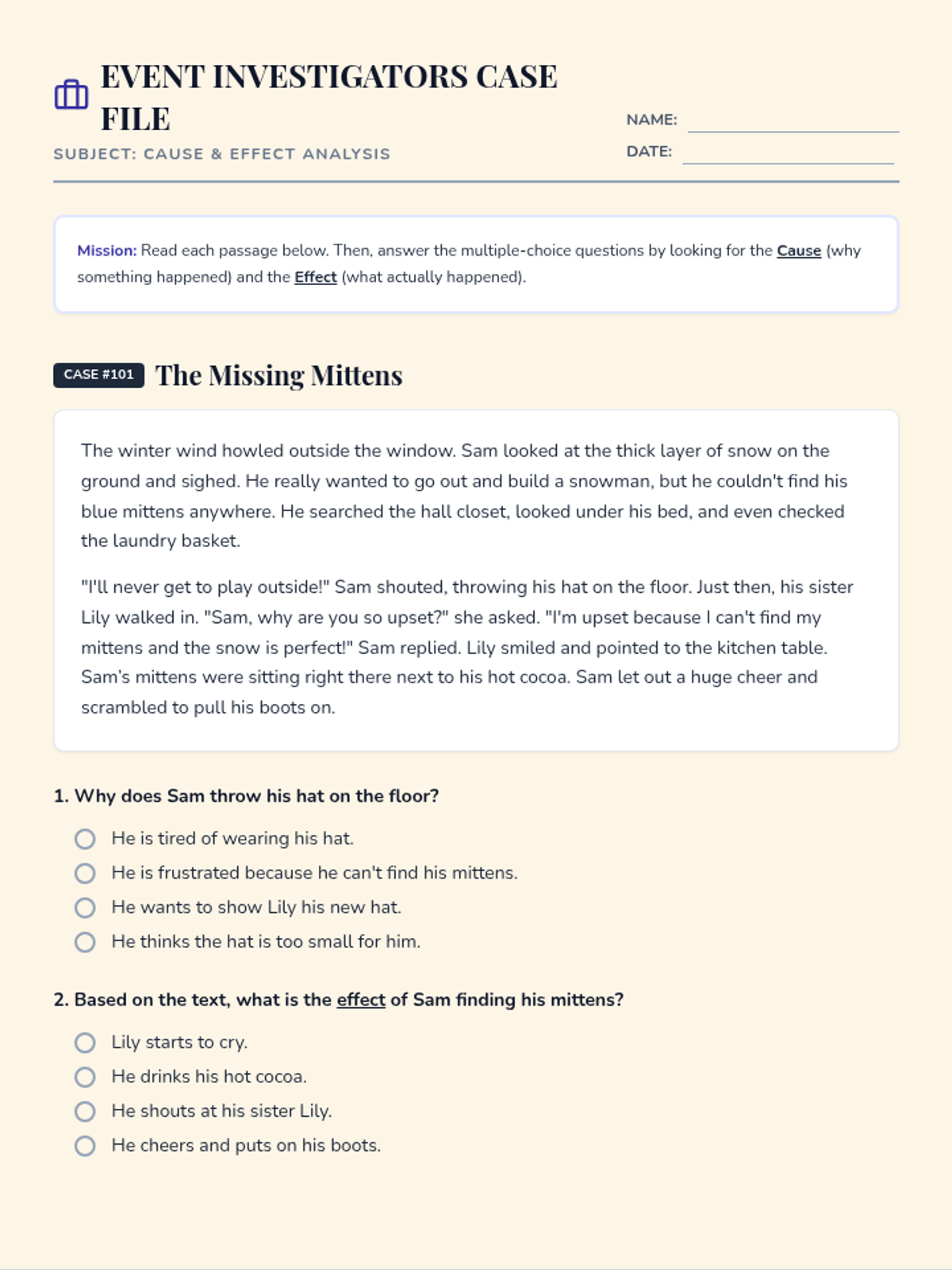
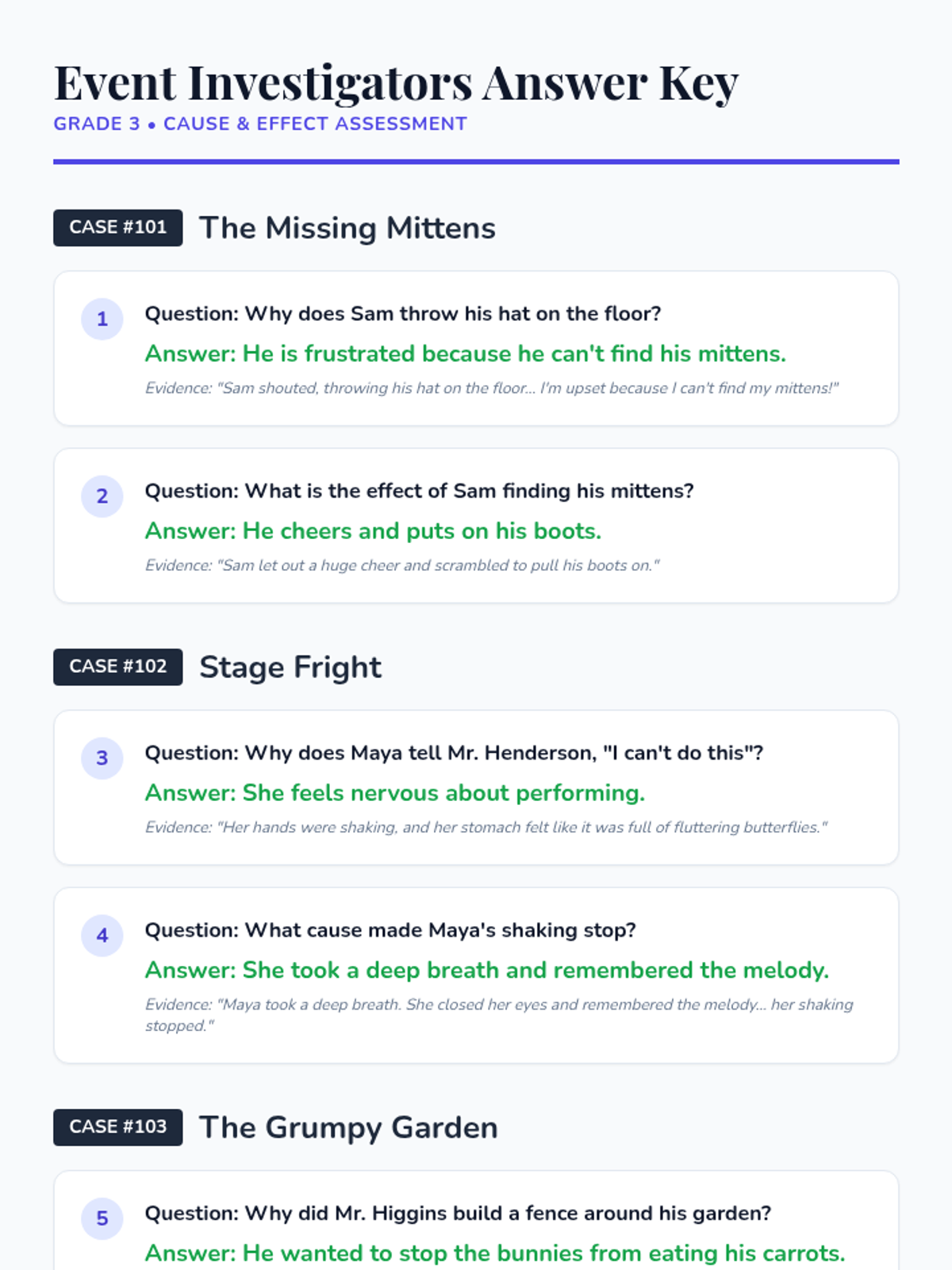
A 3rd-grade lesson focused on identifying cause-and-effect relationships within stories, specifically analyzing why characters act, speak, or feel in certain ways. Students act as detectives to uncover the 'why' behind story events.
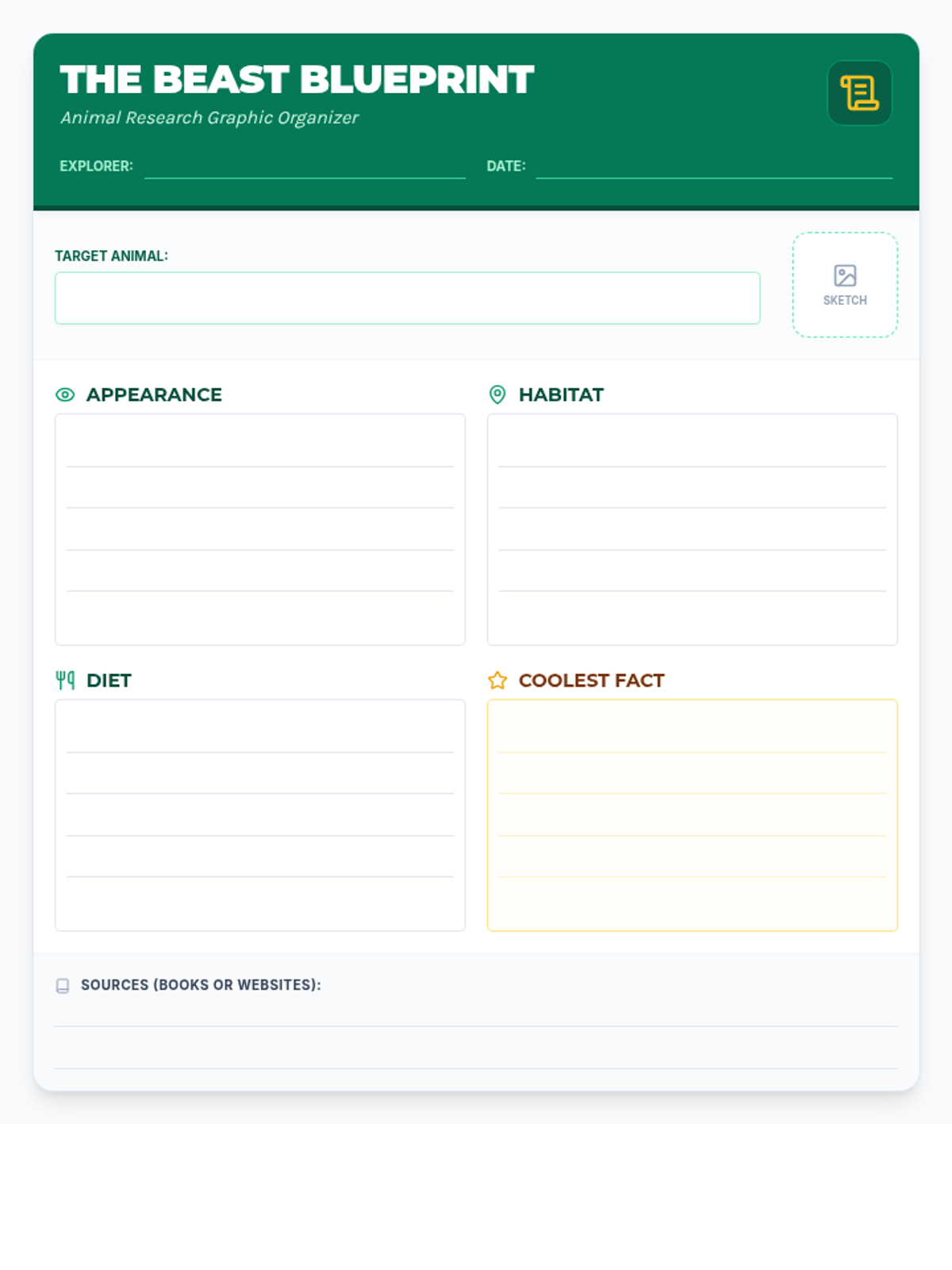
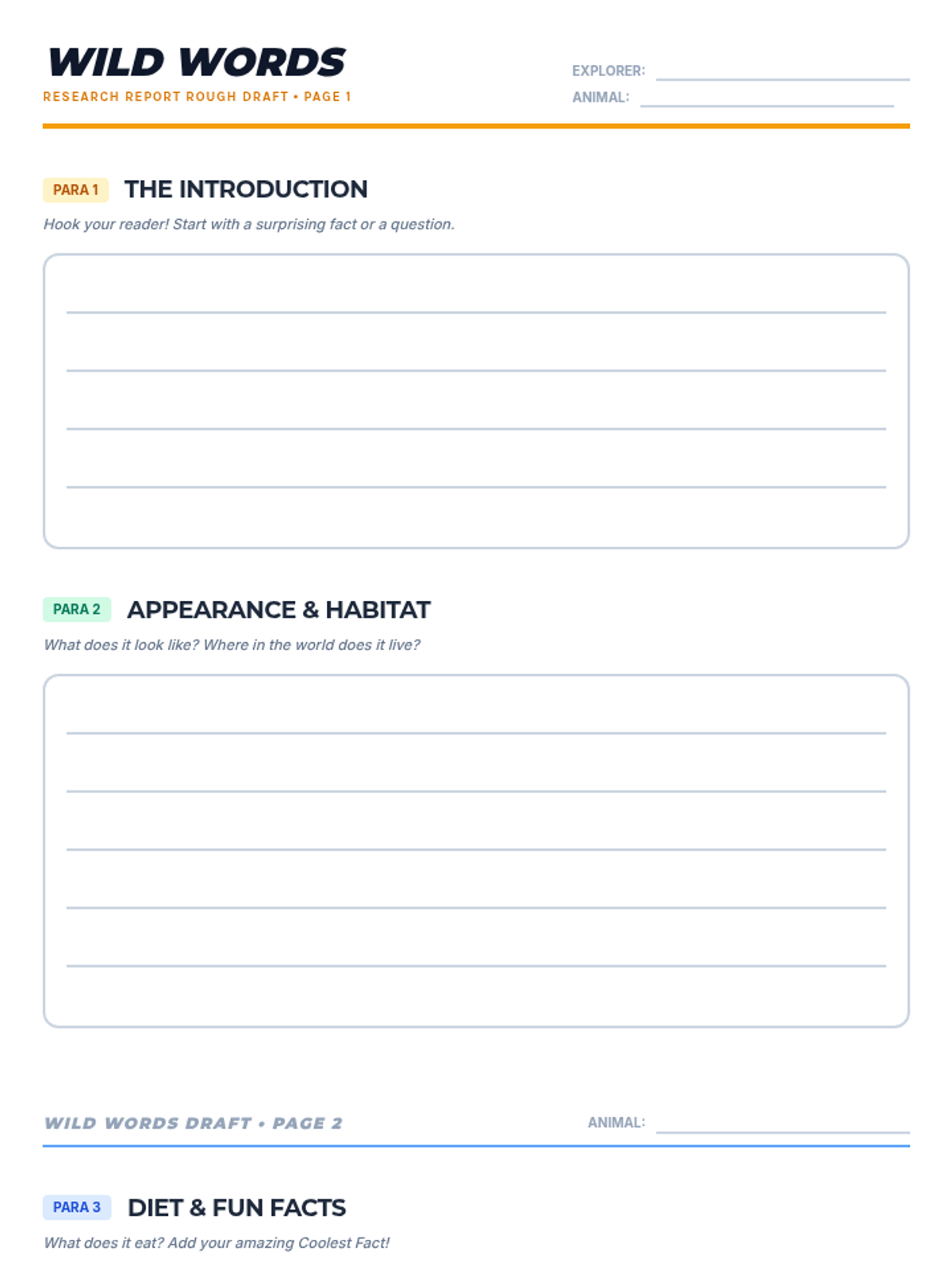
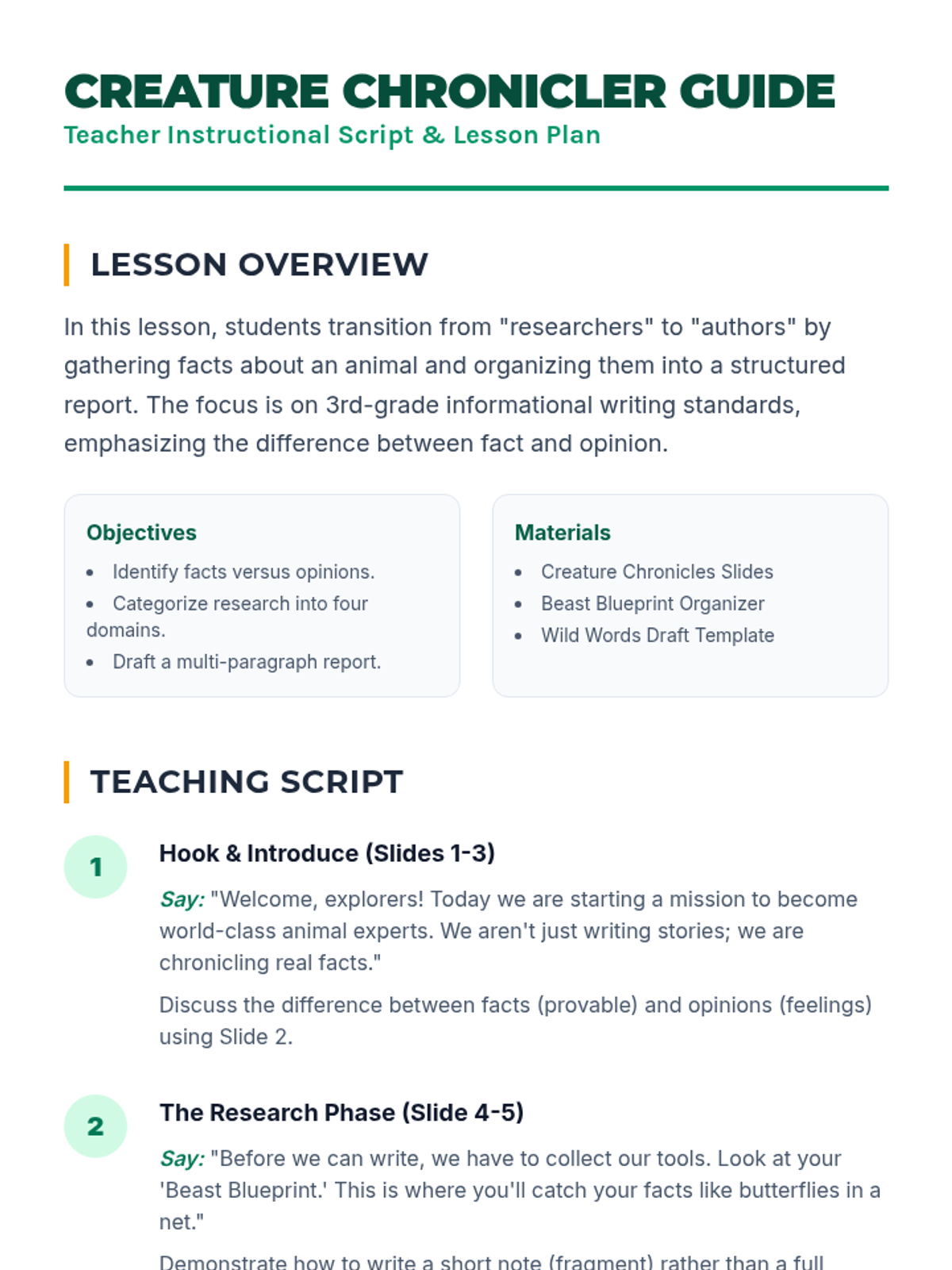
Students become wildlife explorers as they learn to research and organize information about their favorite animals. This lesson guides them through the process of gathering facts and drafting their first informational report.
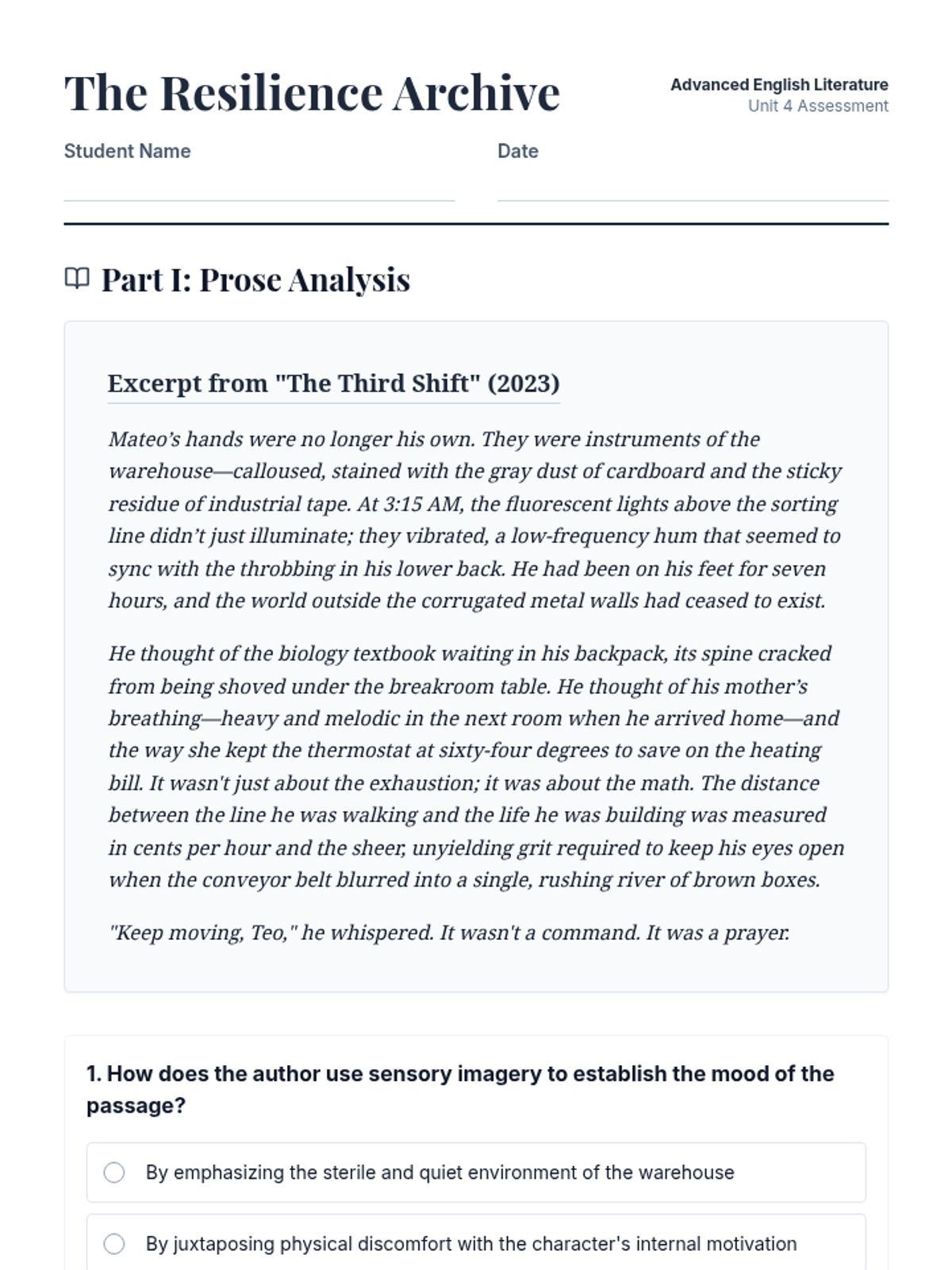
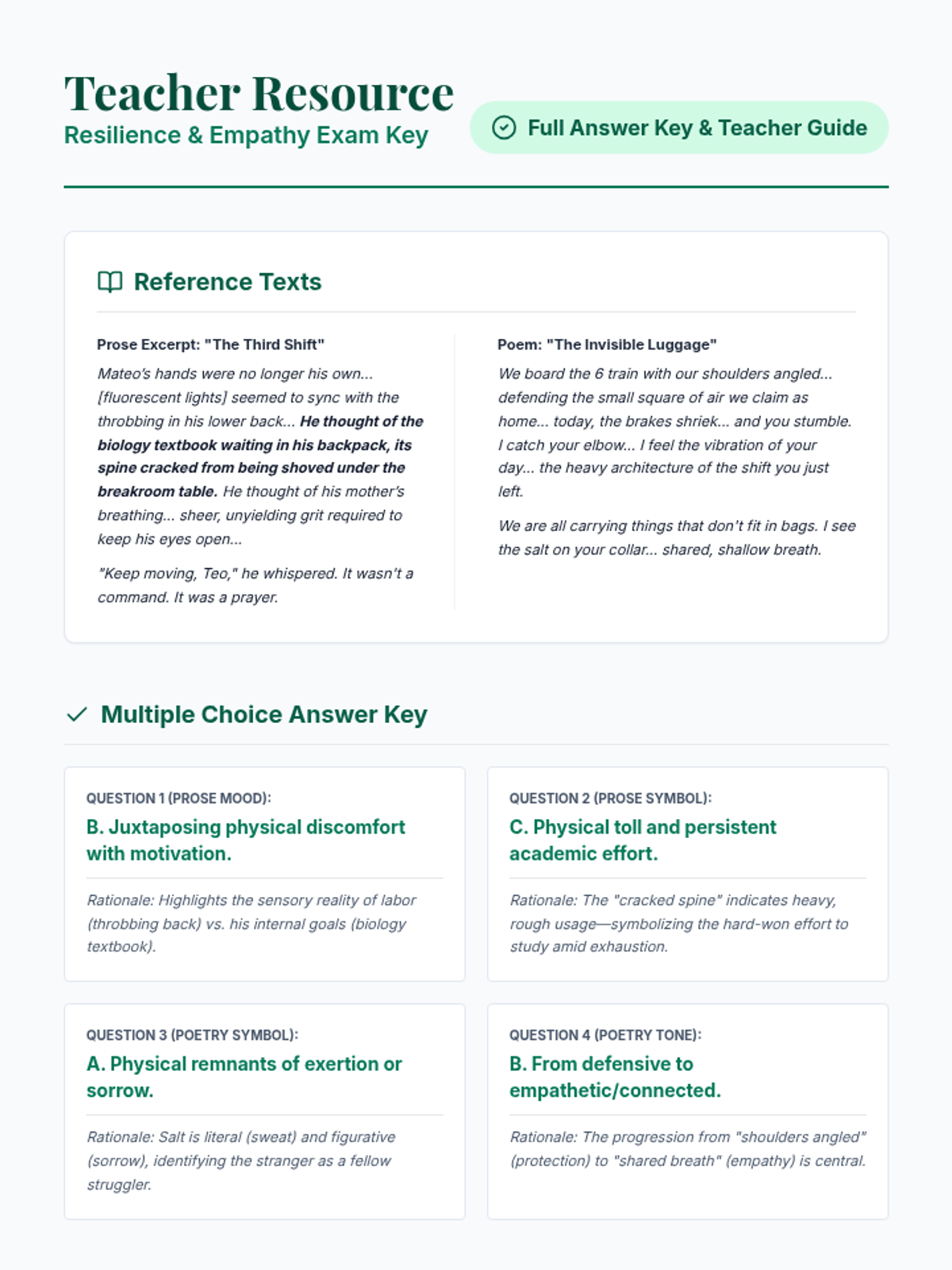
A rigorous assessment focusing on modern literary analysis and thematic synthesis. Students explore grit, struggle, and empathy through contemporary prose and poetry from diverse perspectives.
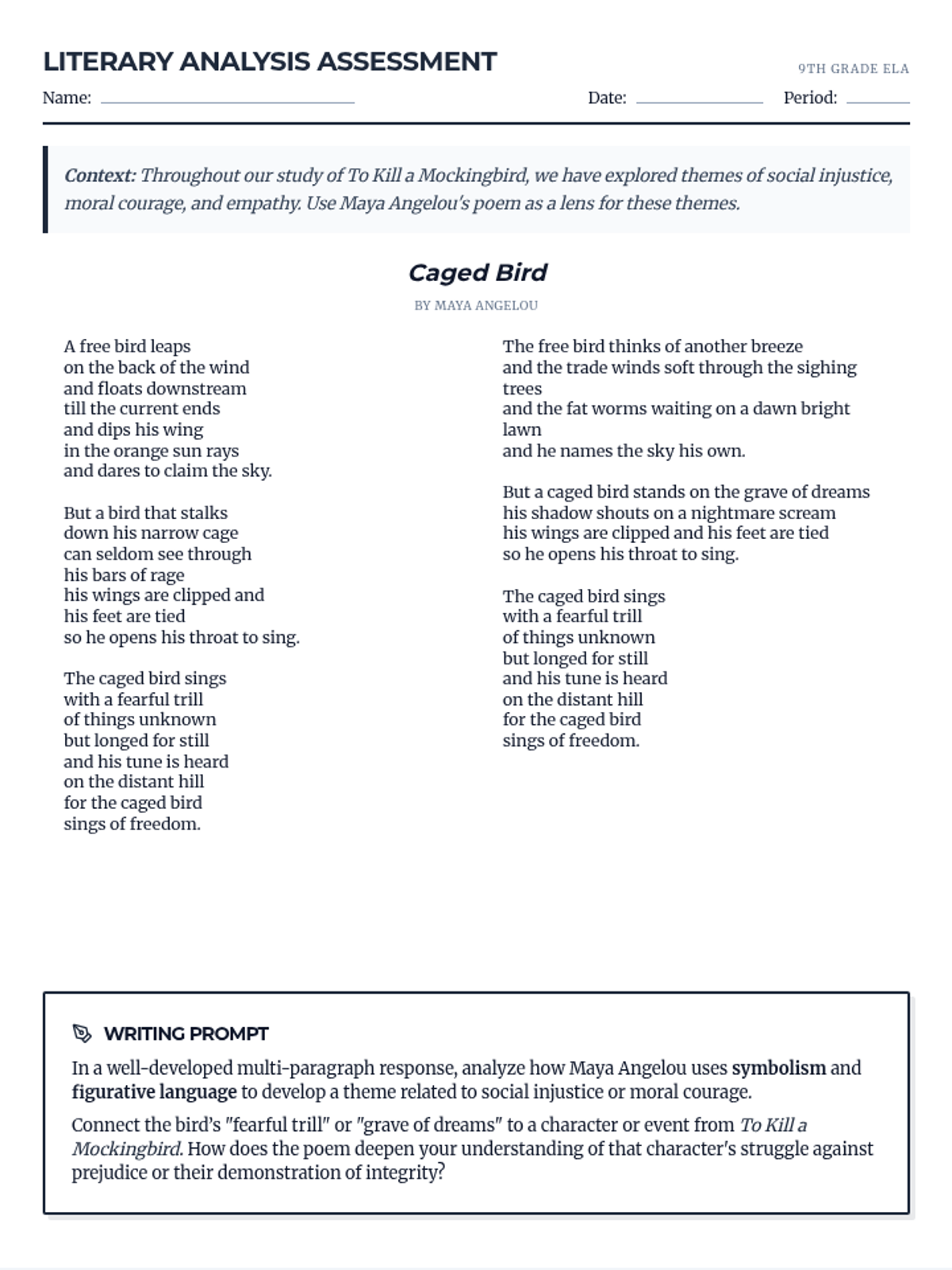
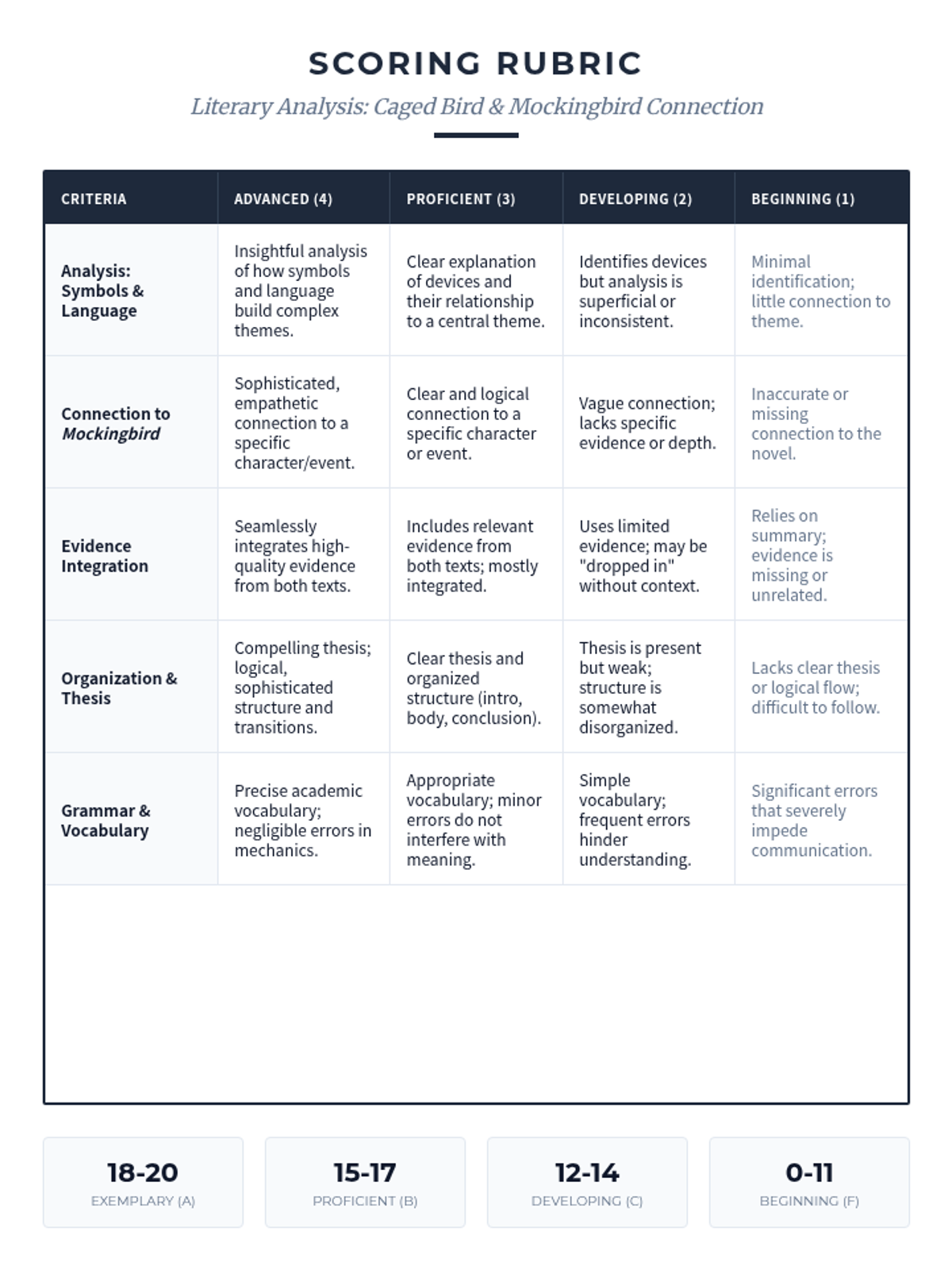
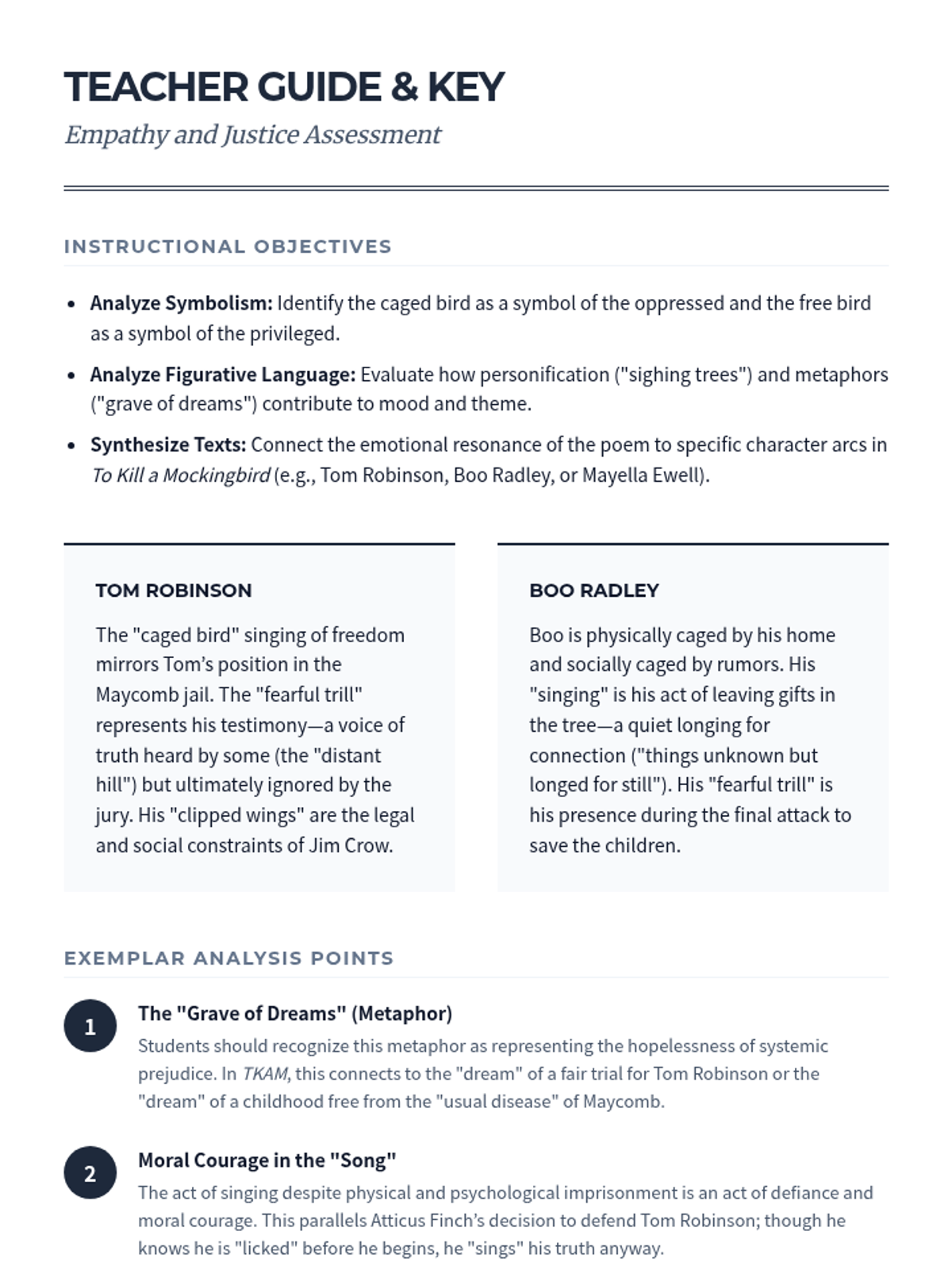
A literary analysis assessment where students connect the themes of social injustice and moral courage in Maya Angelou's 'Caged Bird' to Harper Lee's 'To Kill a Mockingbird'.
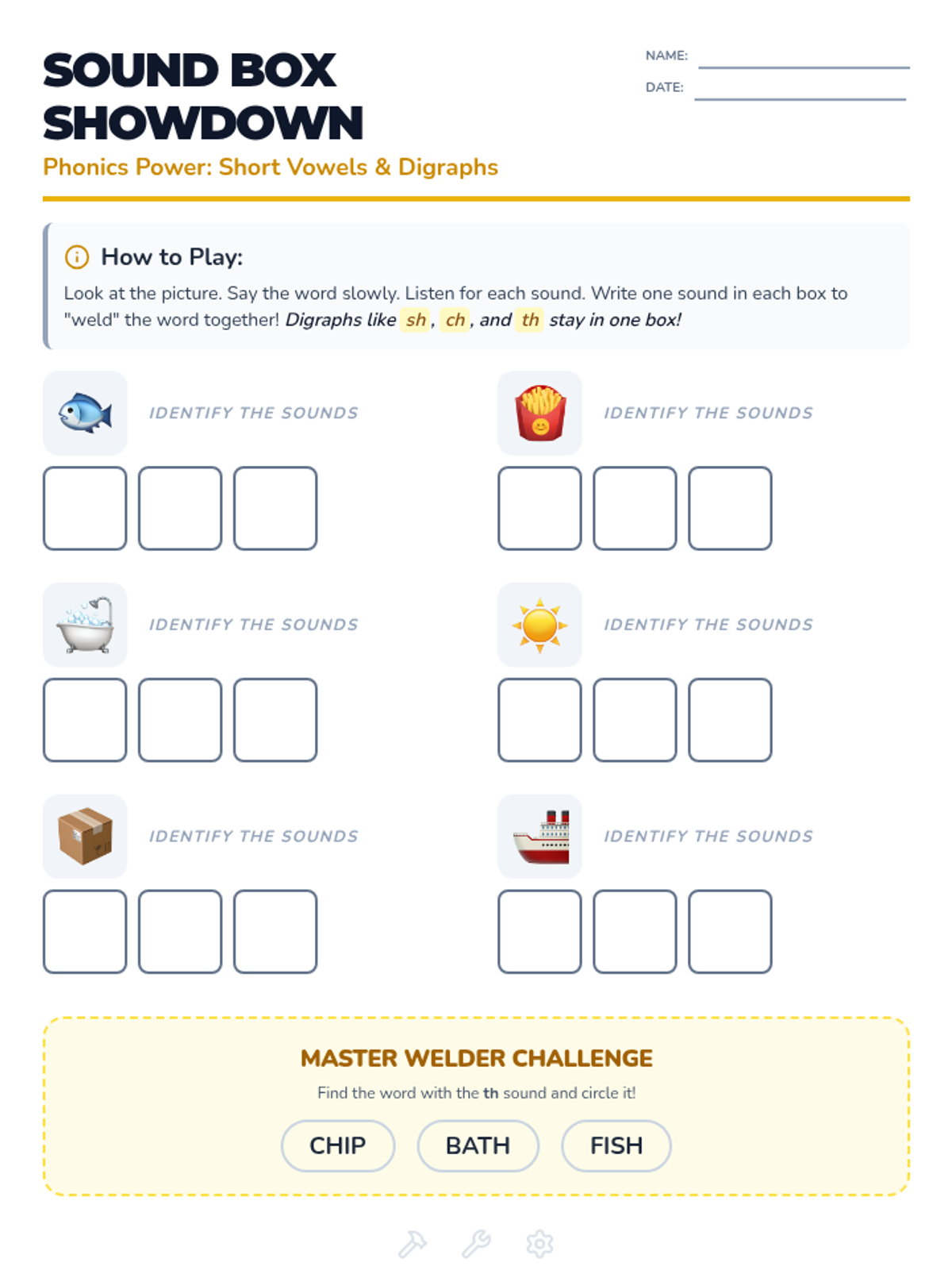
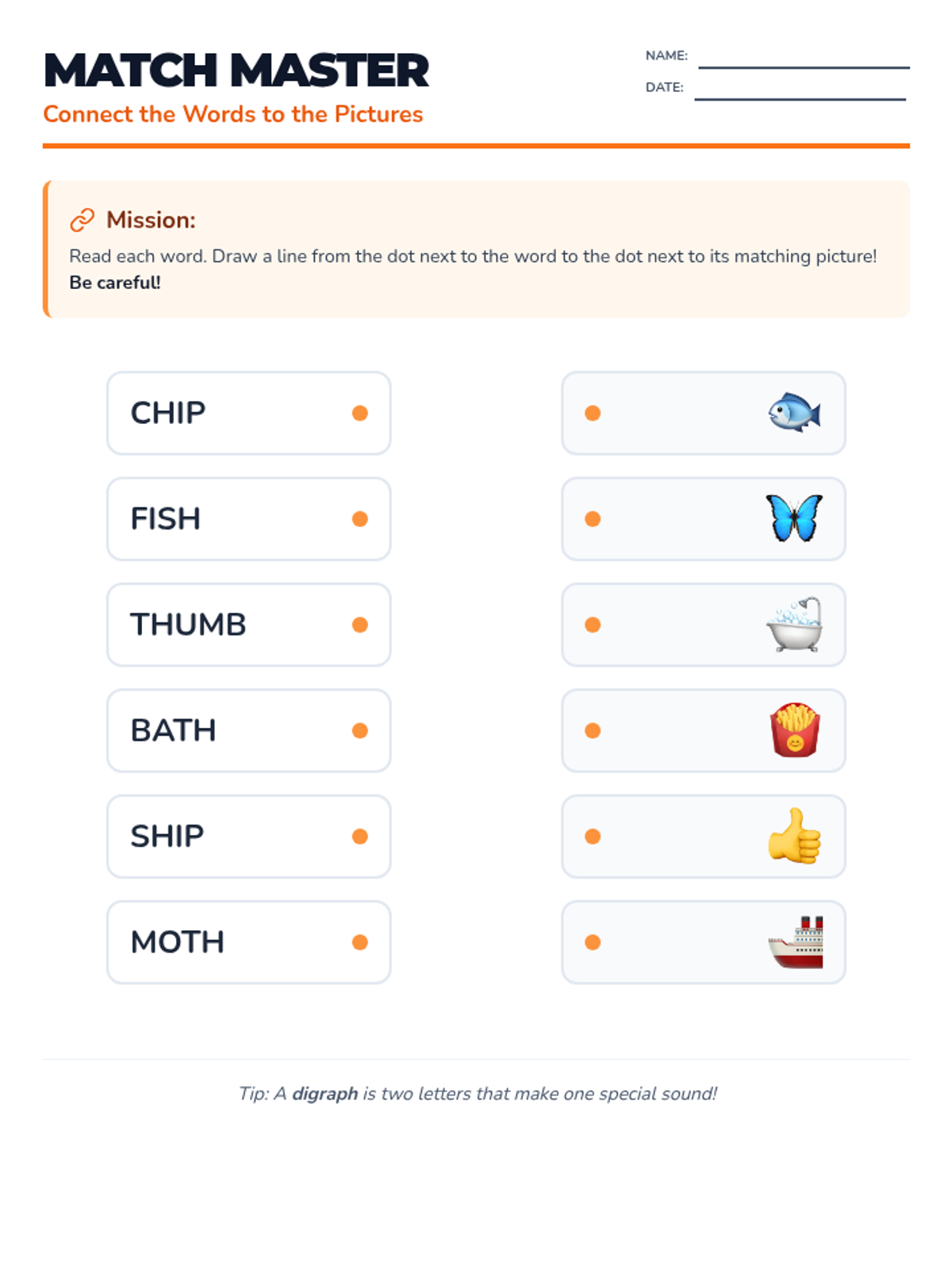
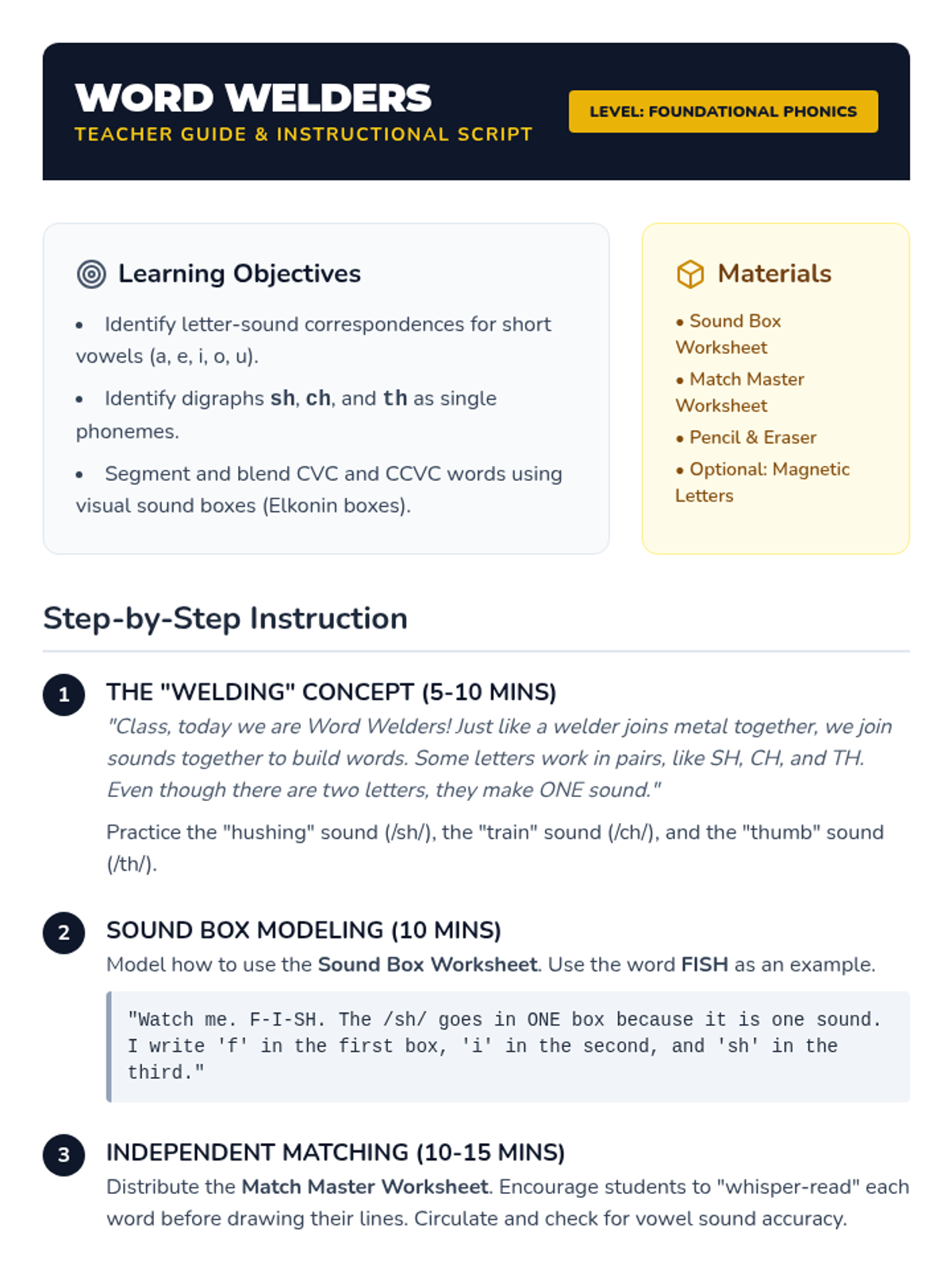
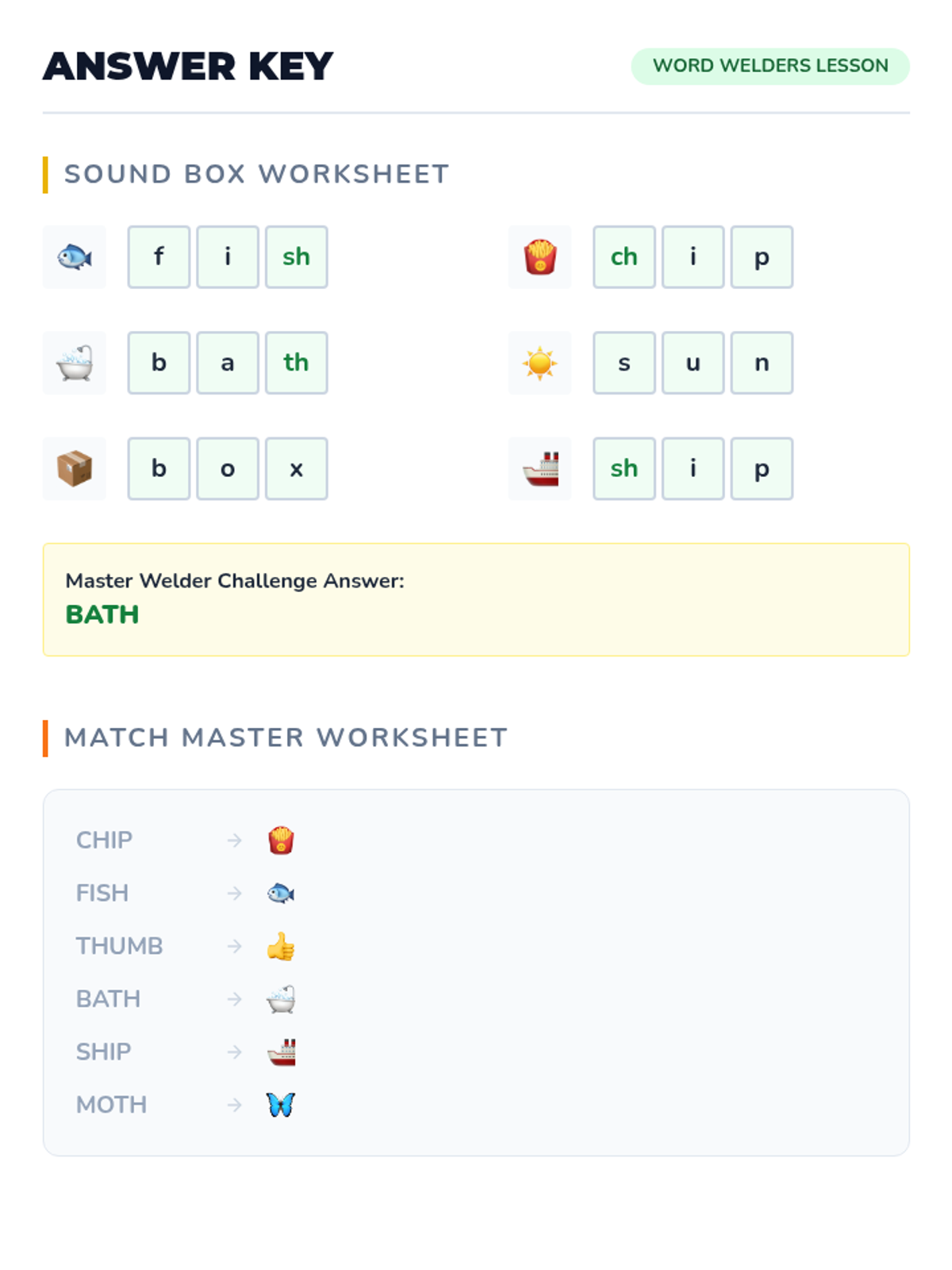
A foundational phonics lesson focused on blending short vowels and common digraphs (sh, ch, th) using Elkonin boxes and visual matching activities.
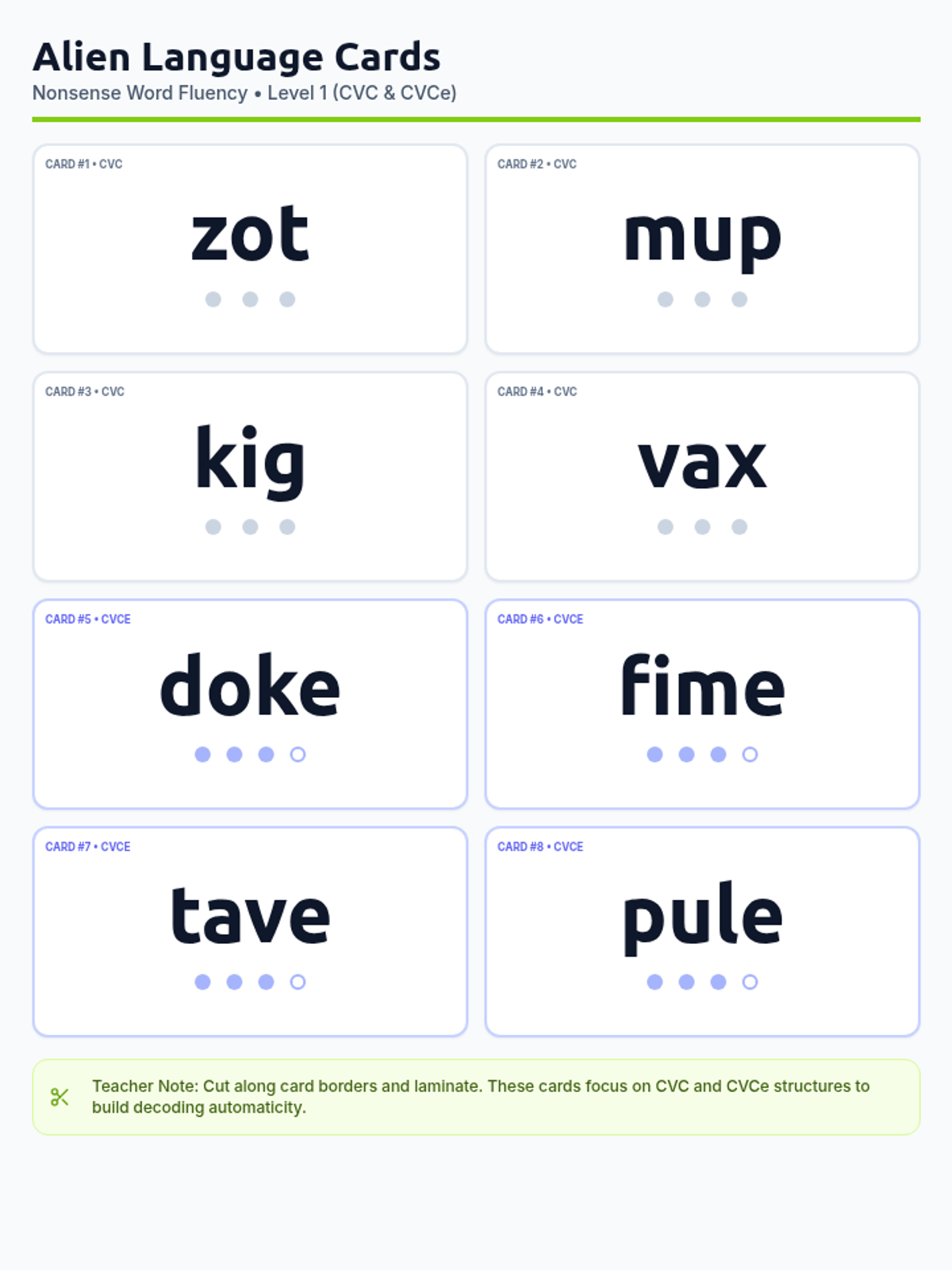
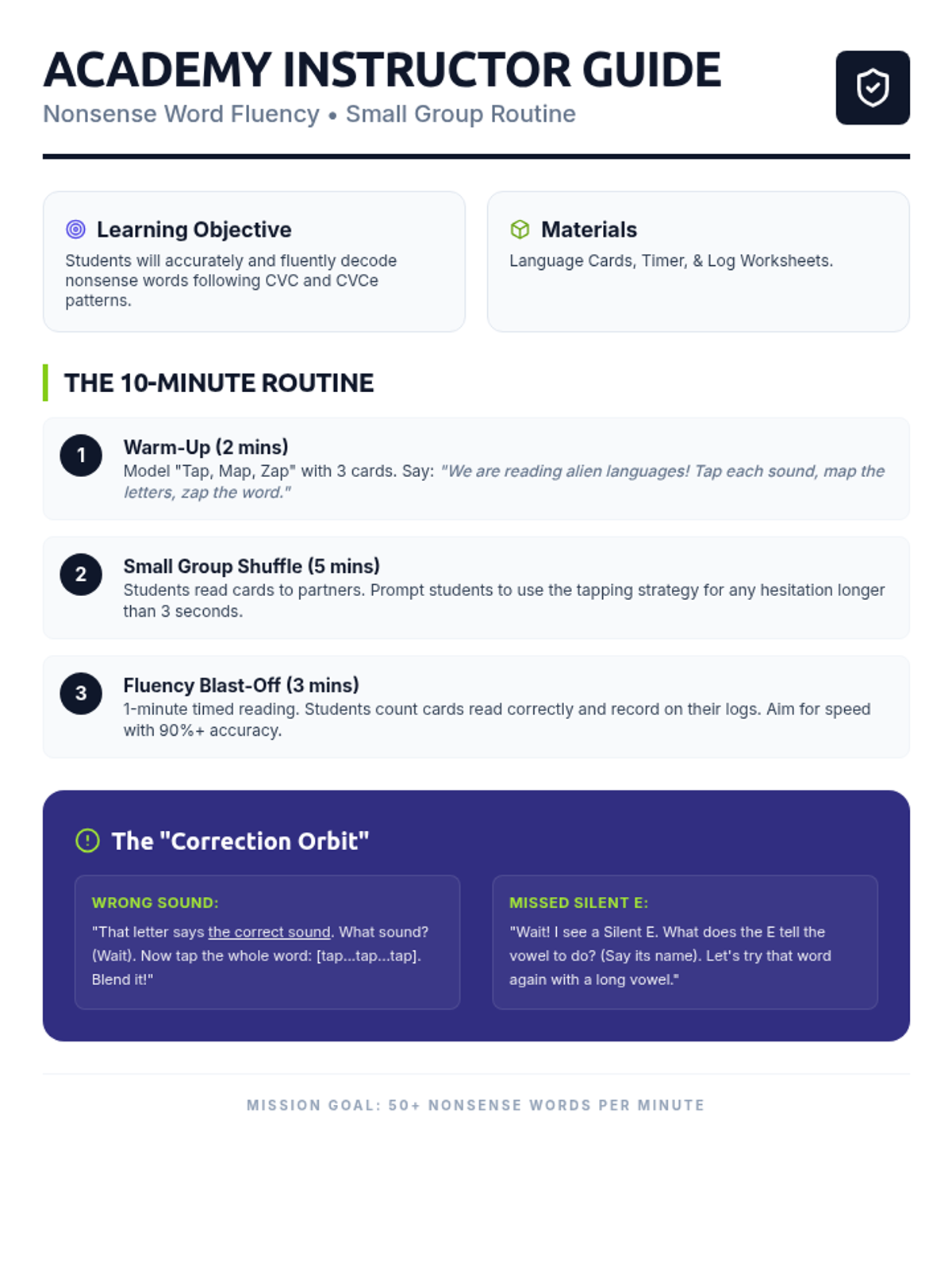
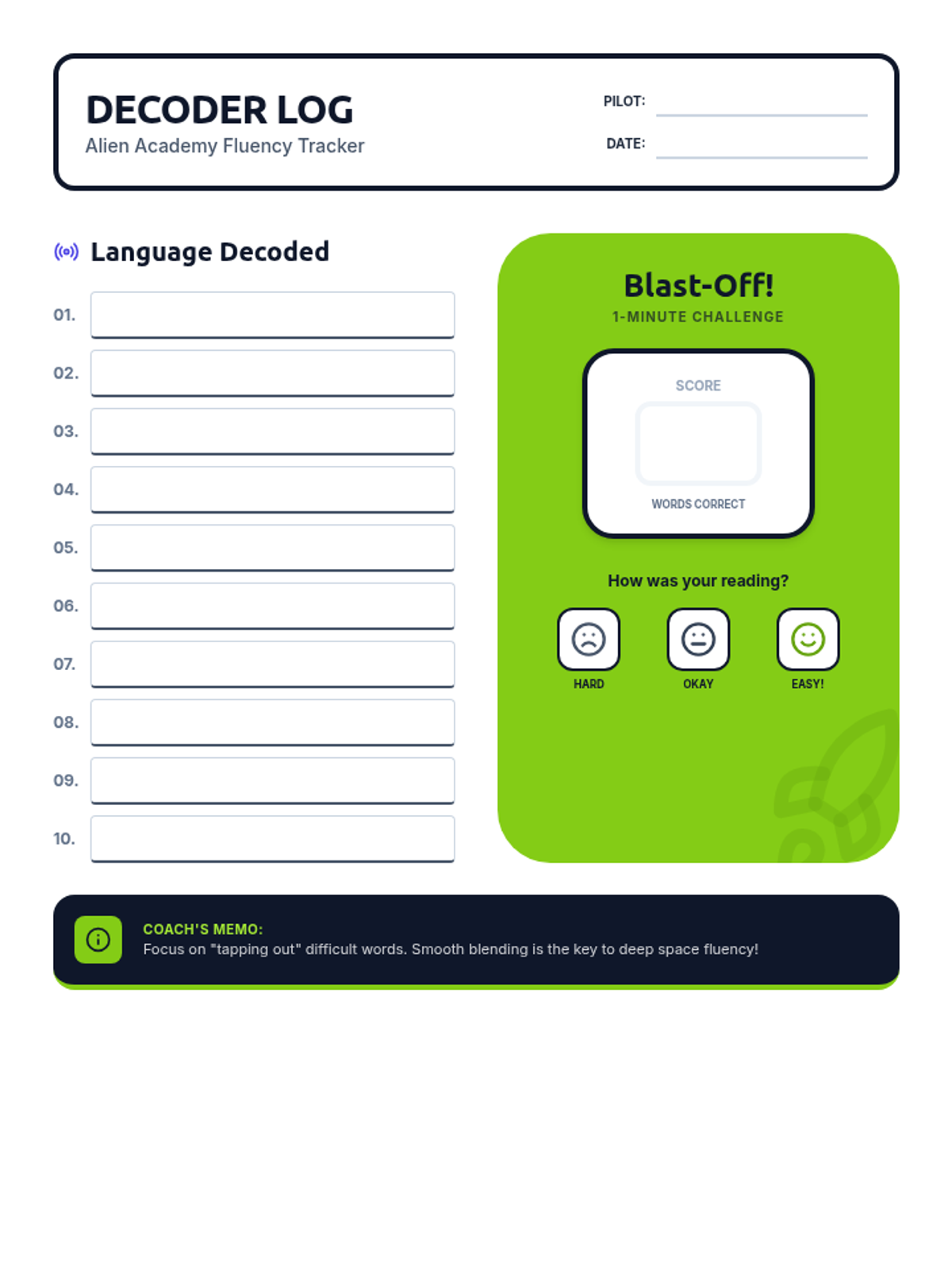
A high-energy fluency lesson where students decode 'alien languages' (nonsense words) to master phonics patterns. Focuses on CVC and CVCe structures through guided modeling and small-group card games.
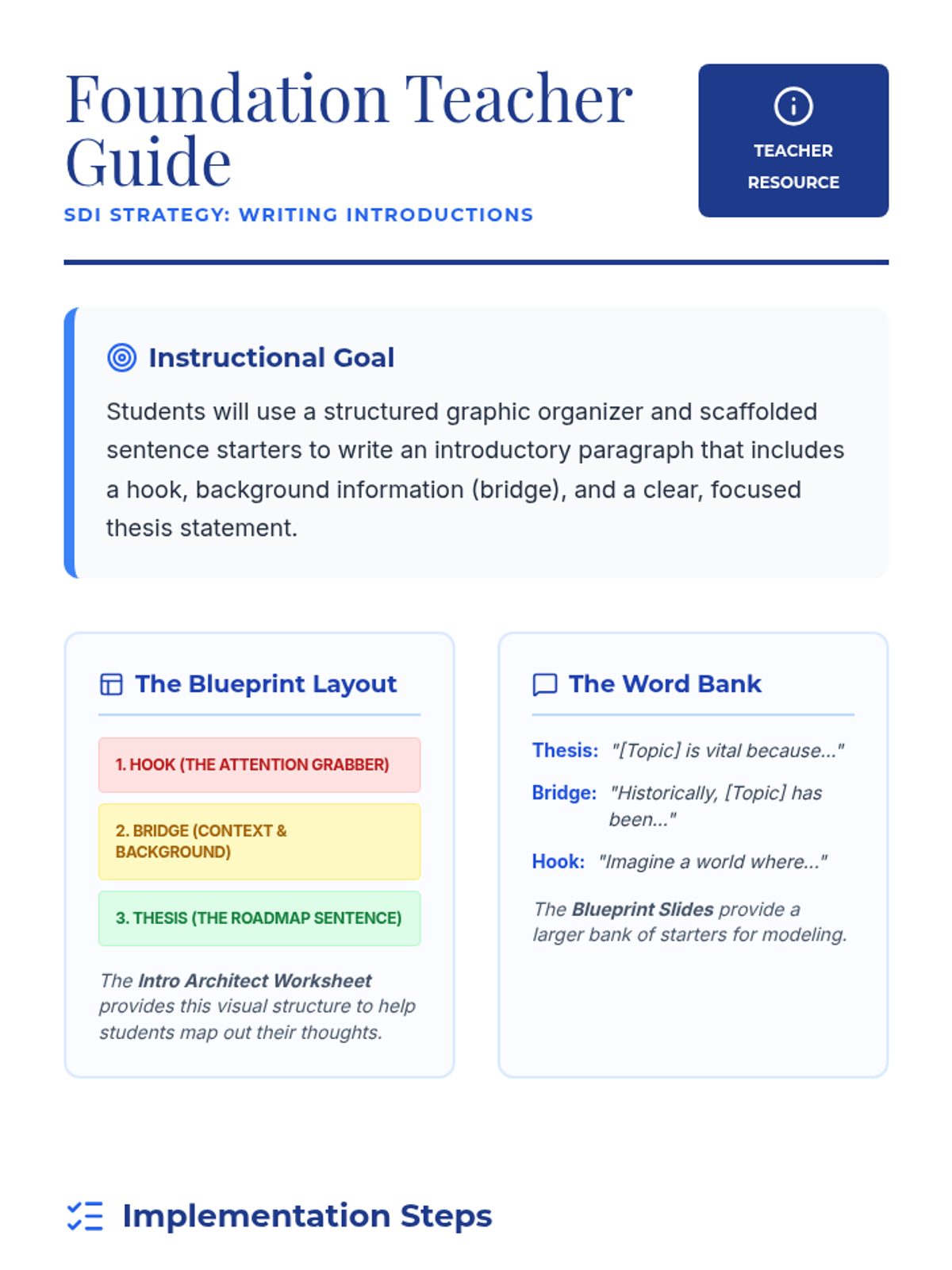
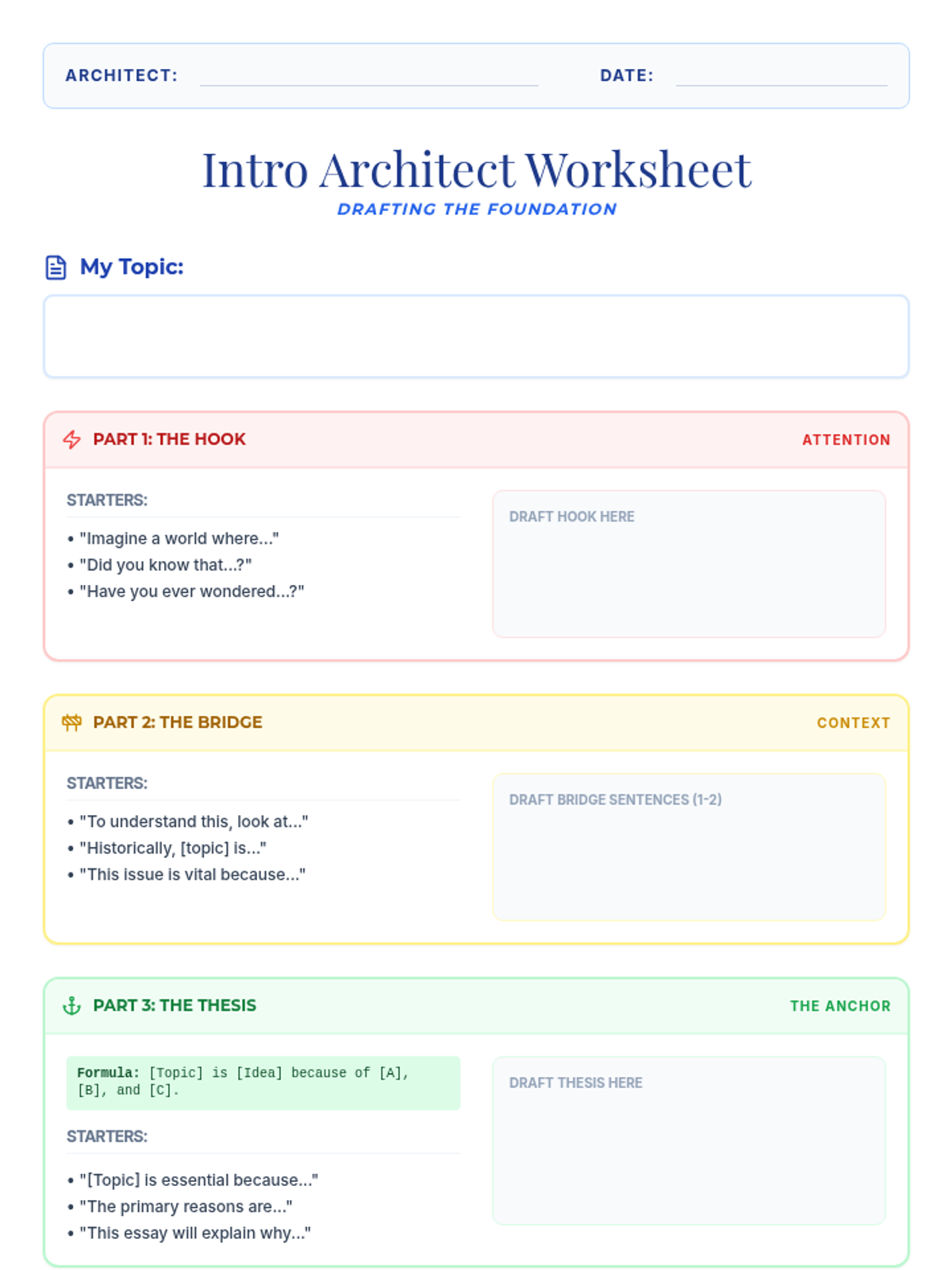
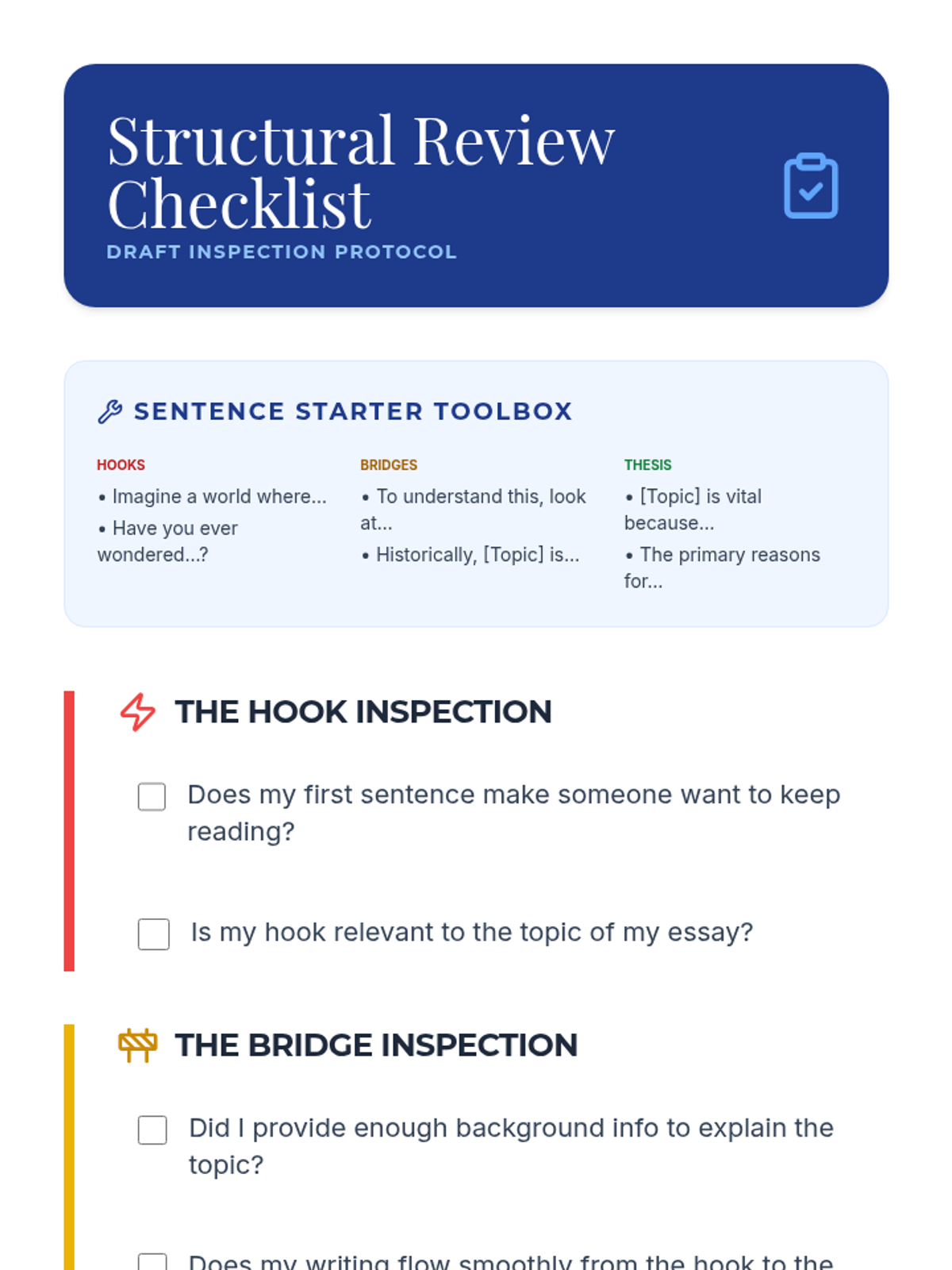
This lesson provides Specially Designed Instruction (SDI) for crafting introductory paragraphs. It utilizes graphic organizers and sentence starters to help students build a strong foundation for informative writing.
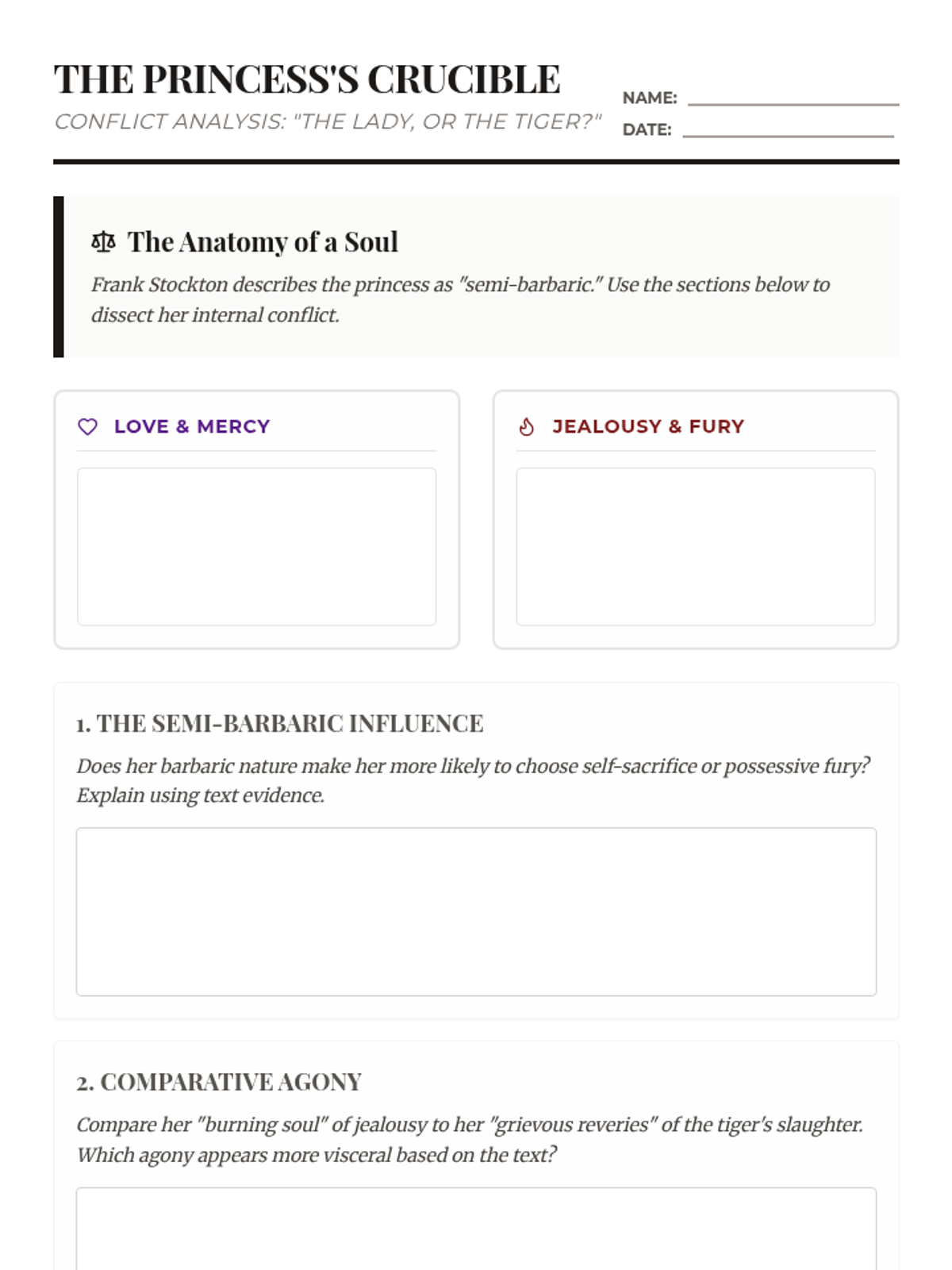
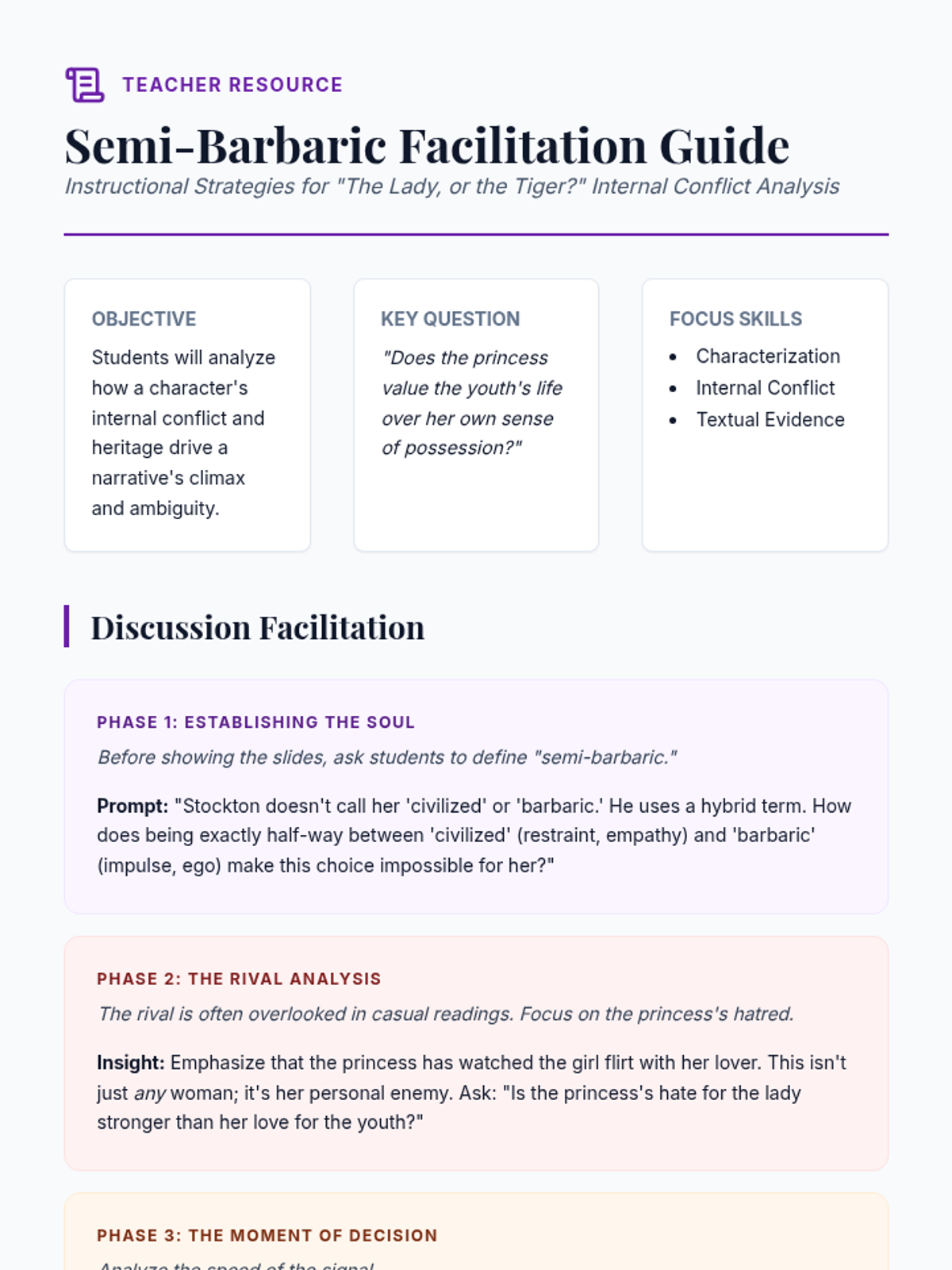
A deep-dive analysis of the internal conflict faced by the princess in Frank R. Stockton's classic short story. Students will explore themes of jealousy, love, and barbaric nature through guided discussion and analytical writing.
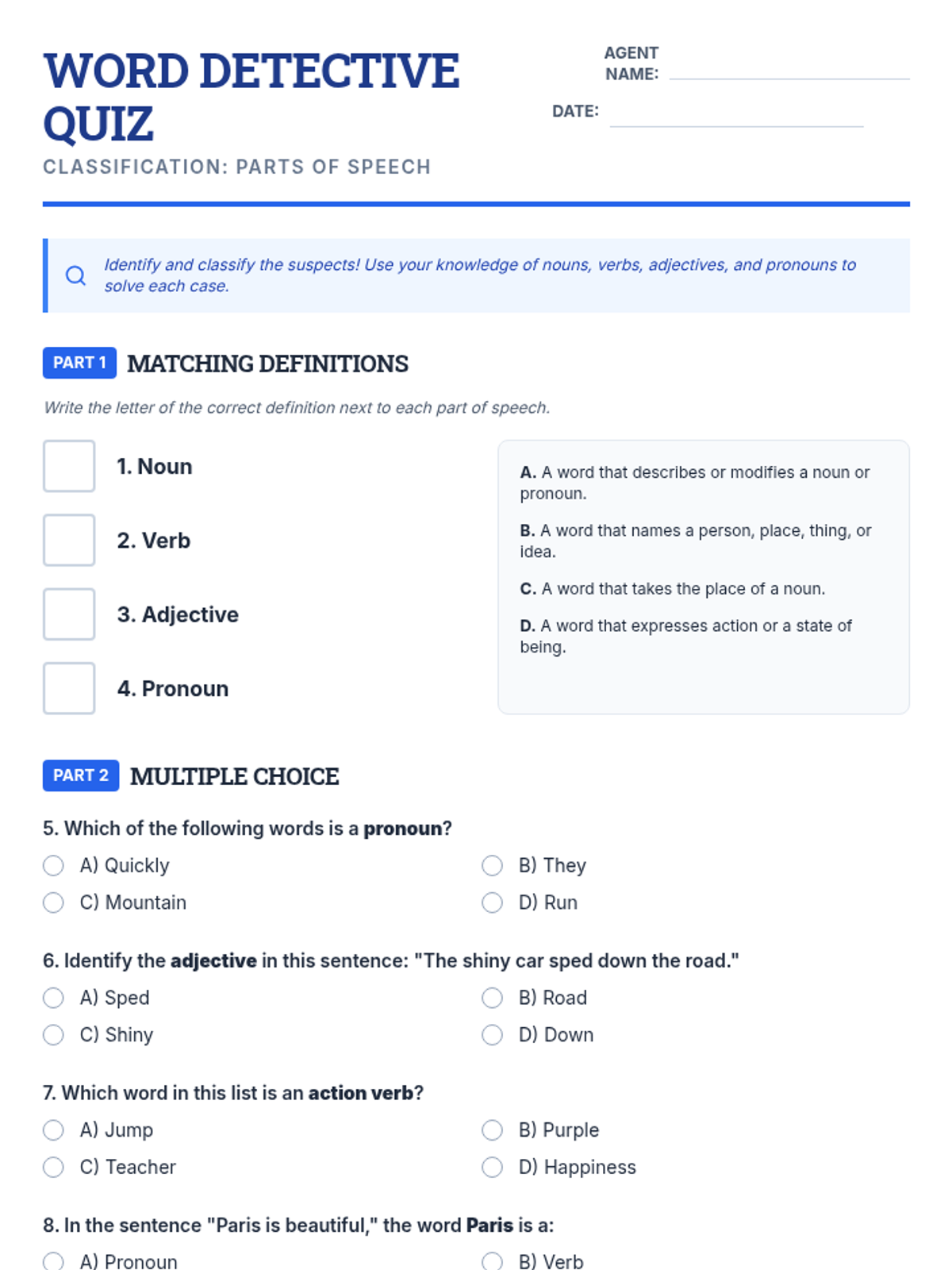
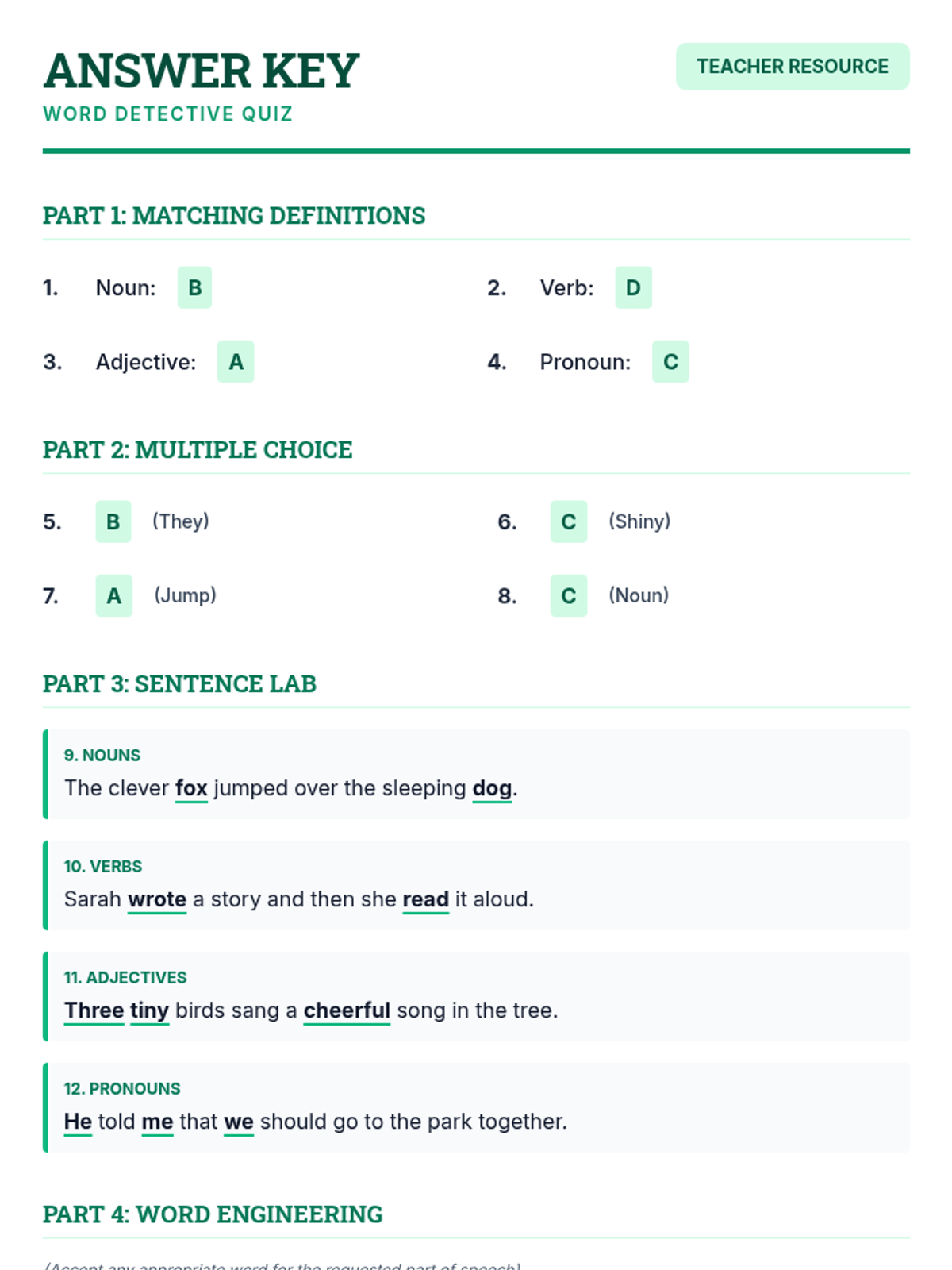
A comprehensive quiz covering the four foundational parts of speech: nouns, verbs, adjectives, and pronouns. Includes matching, multiple choice, identification, and creative fill-in-the-blank questions.
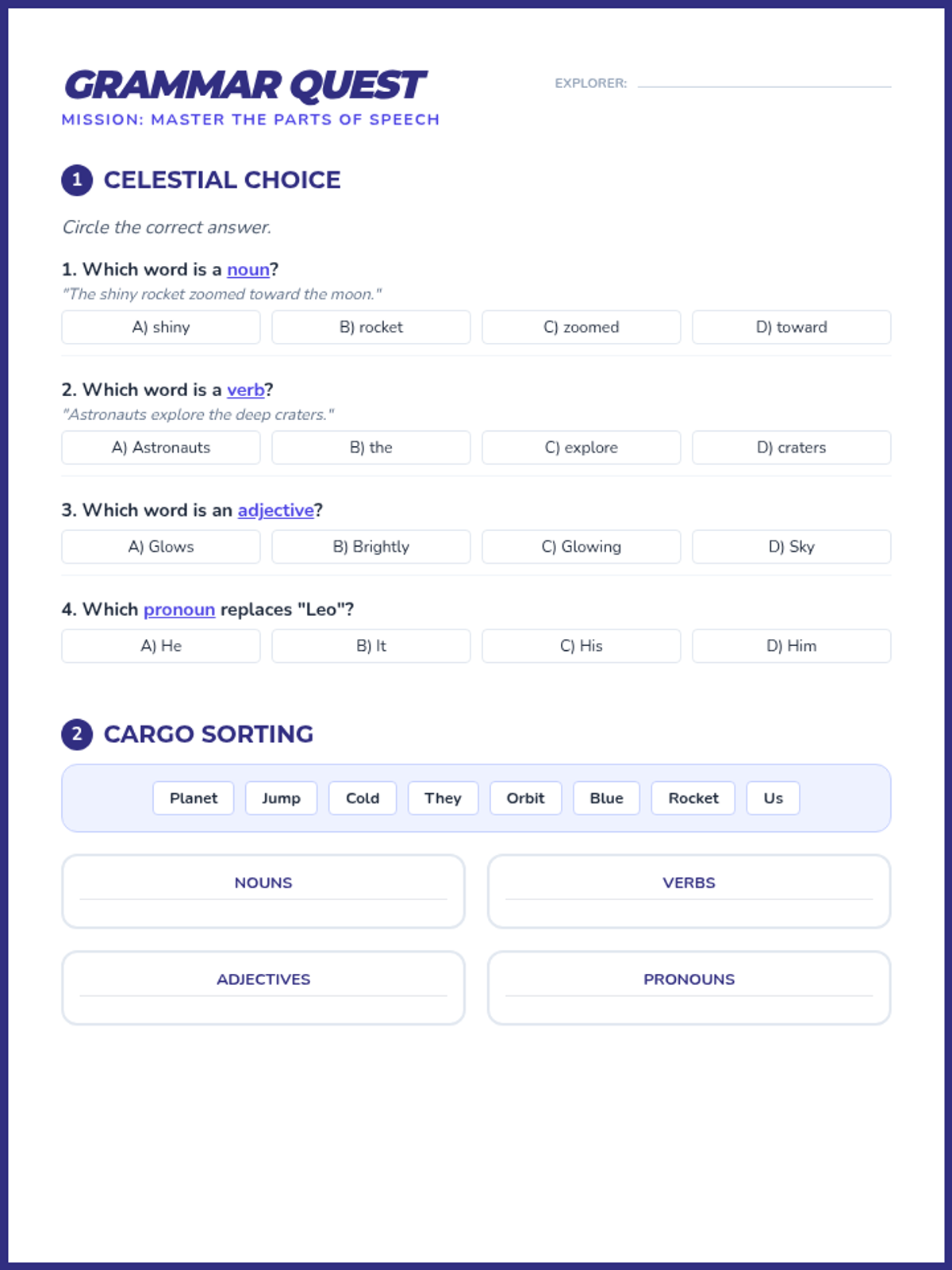
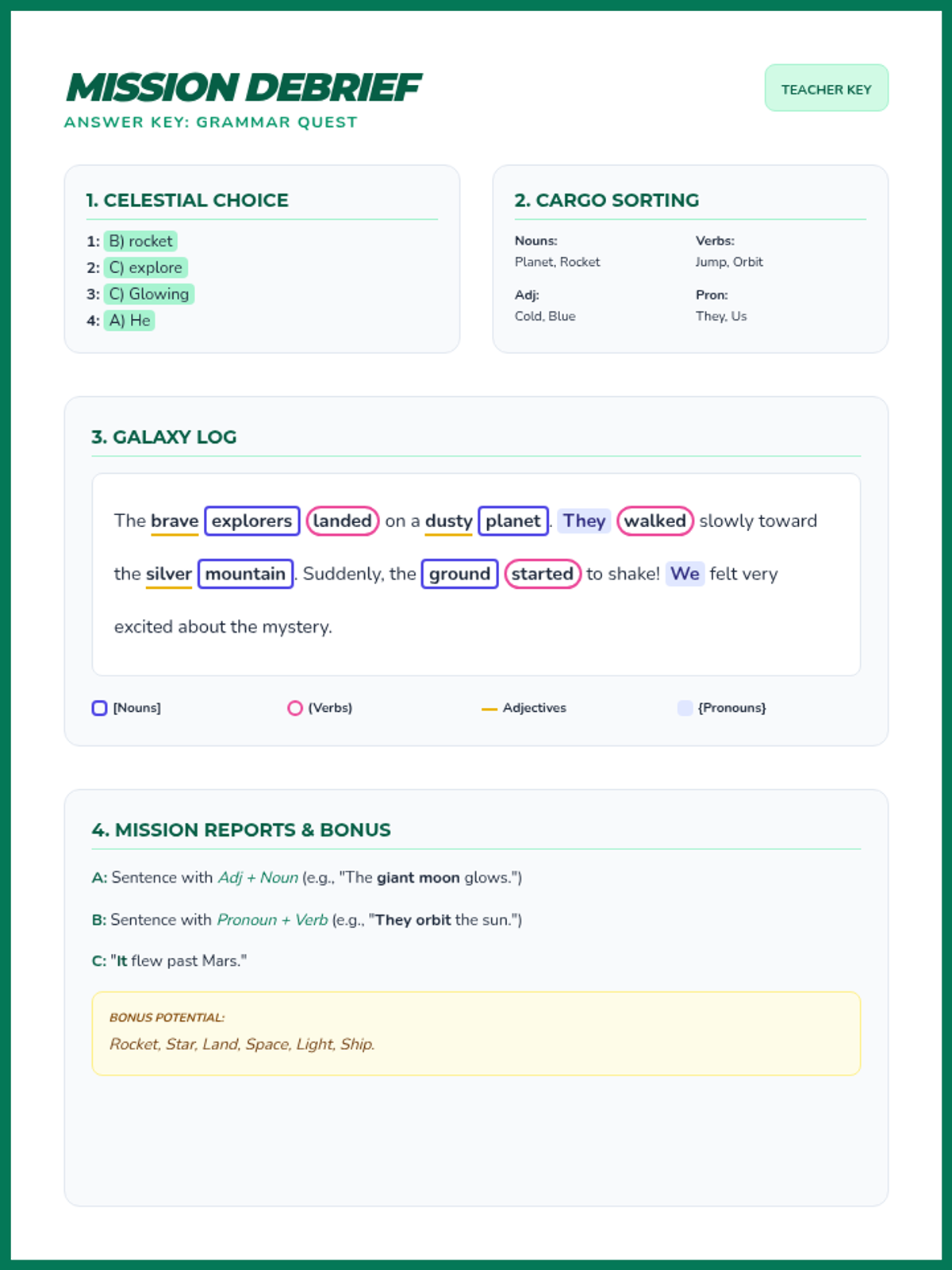
A comprehensive review and assessment of nouns, verbs, adjectives, and pronouns for 3rd-grade students, featuring a space-themed quest.
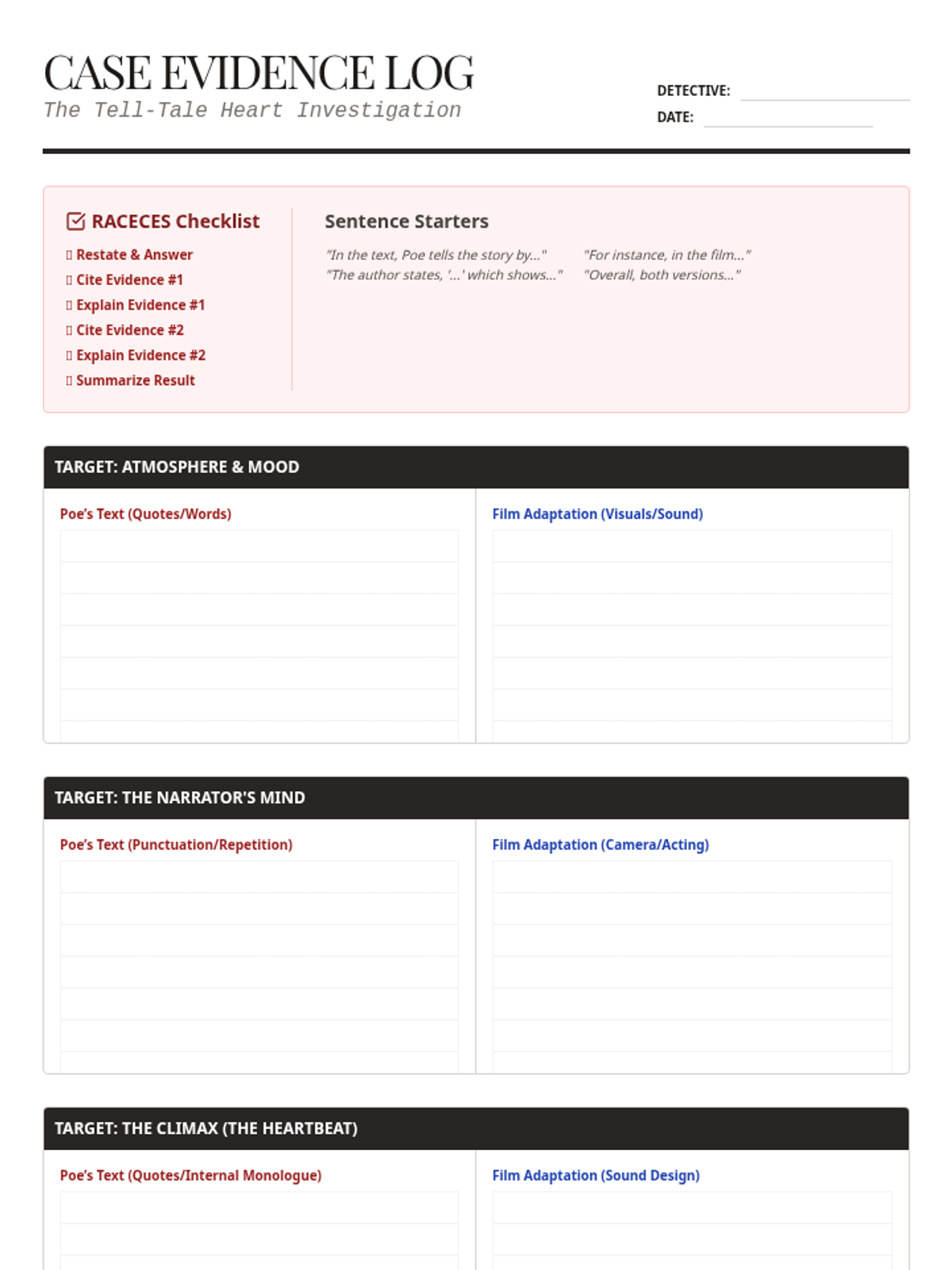
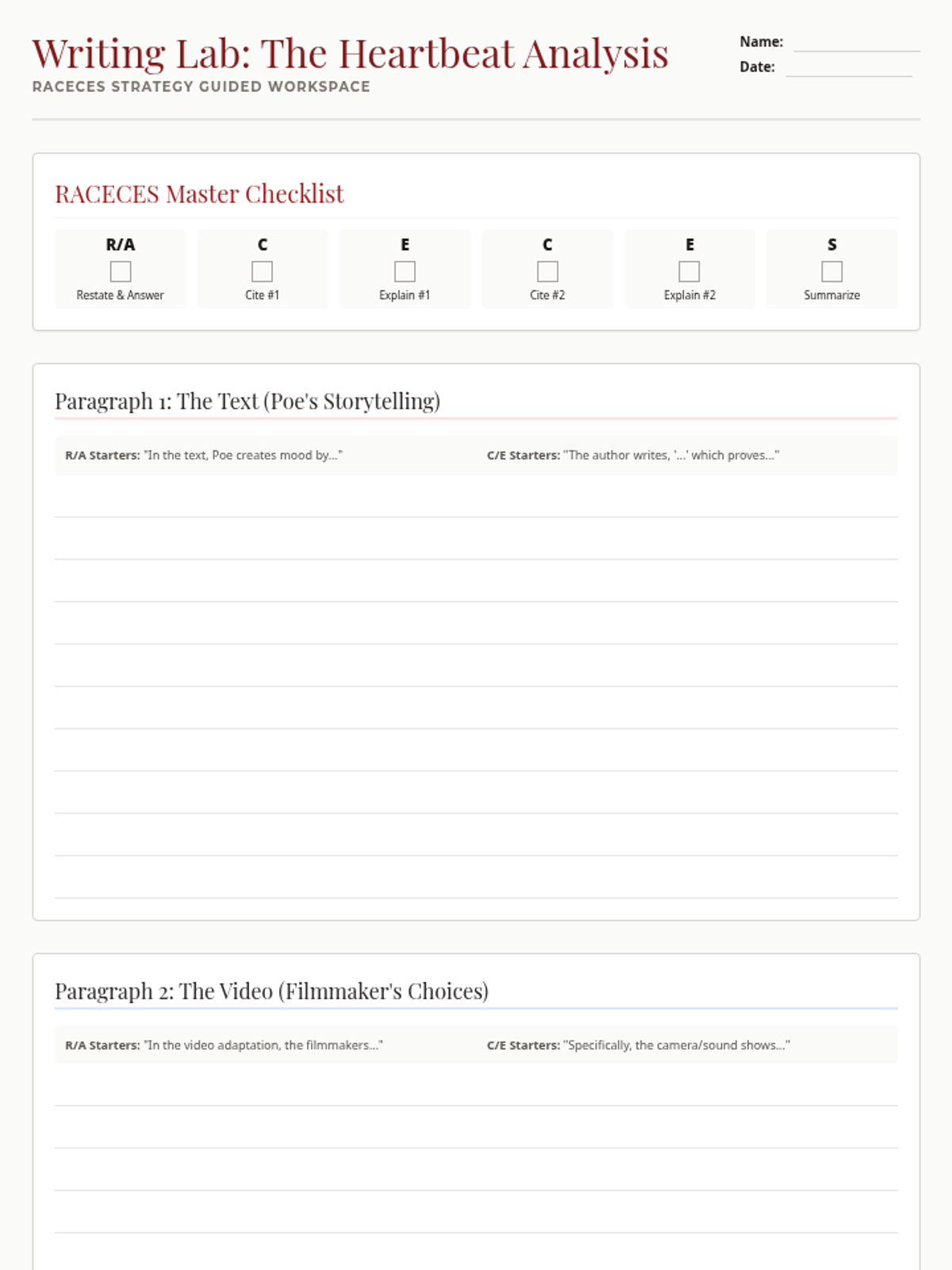
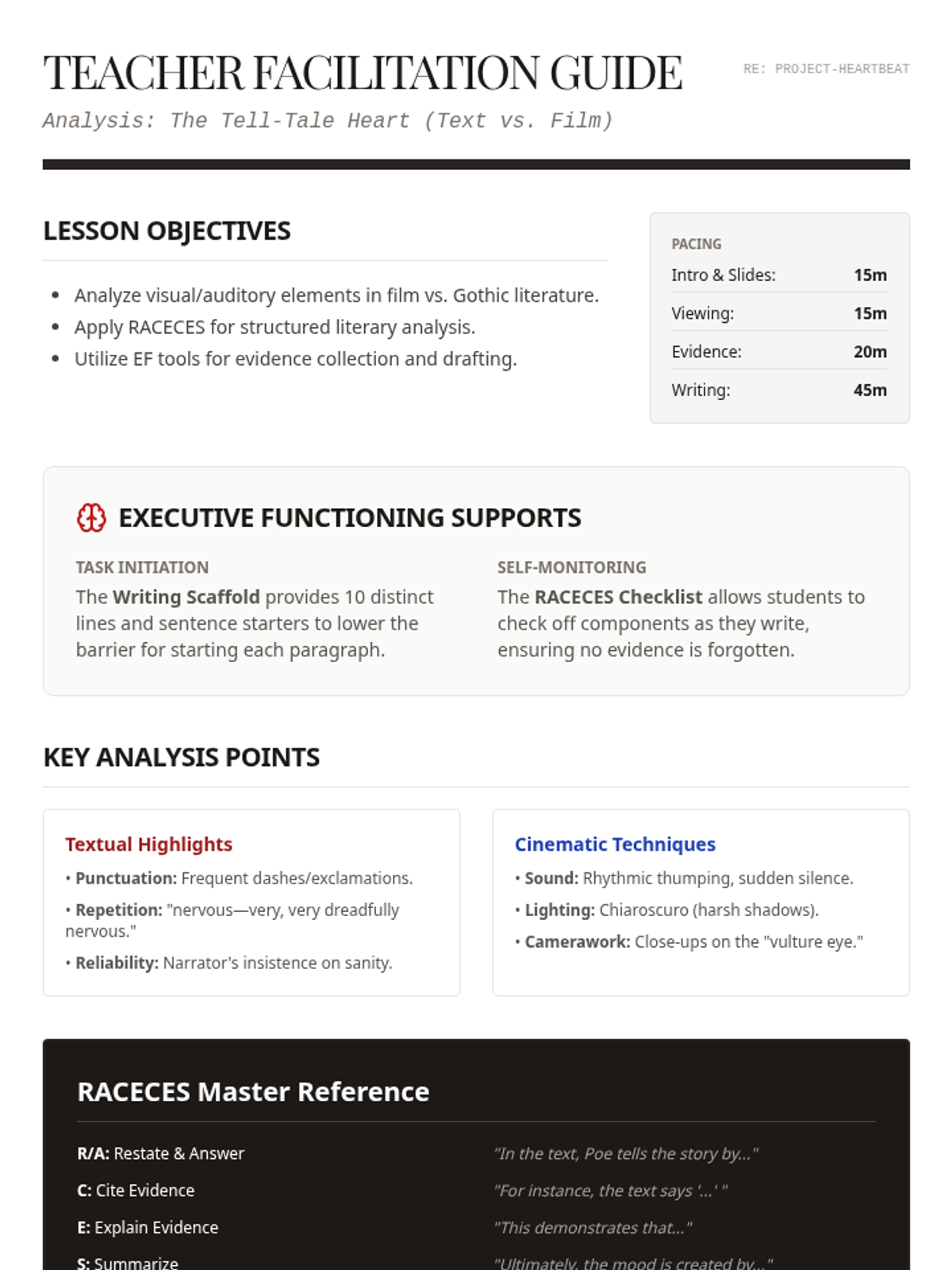
A scaffolded investigation comparing the classic text of 'The Tell-Tale Heart' with a film adaptation, utilizing executive functioning tools and the RACECES writing strategy.
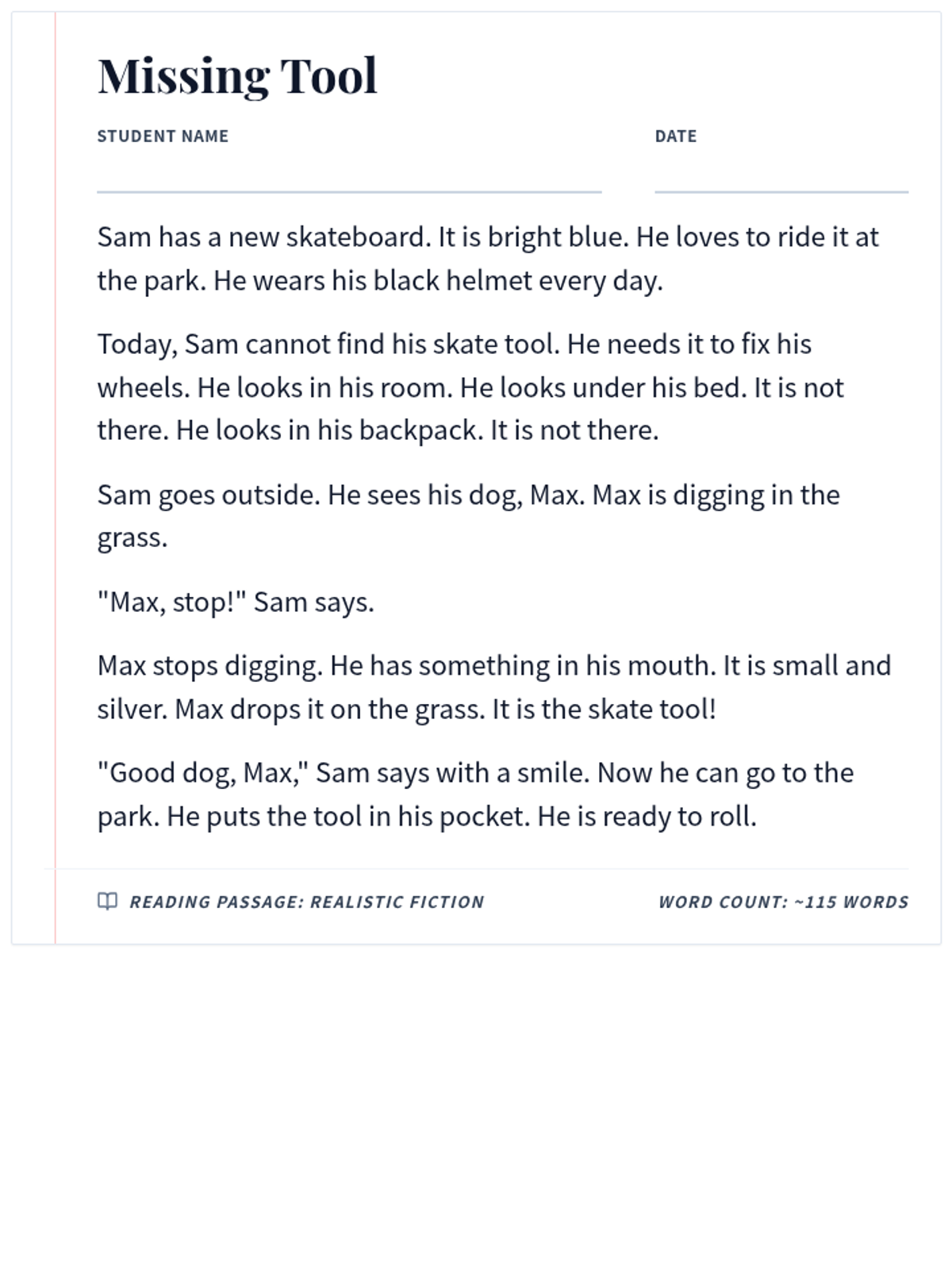
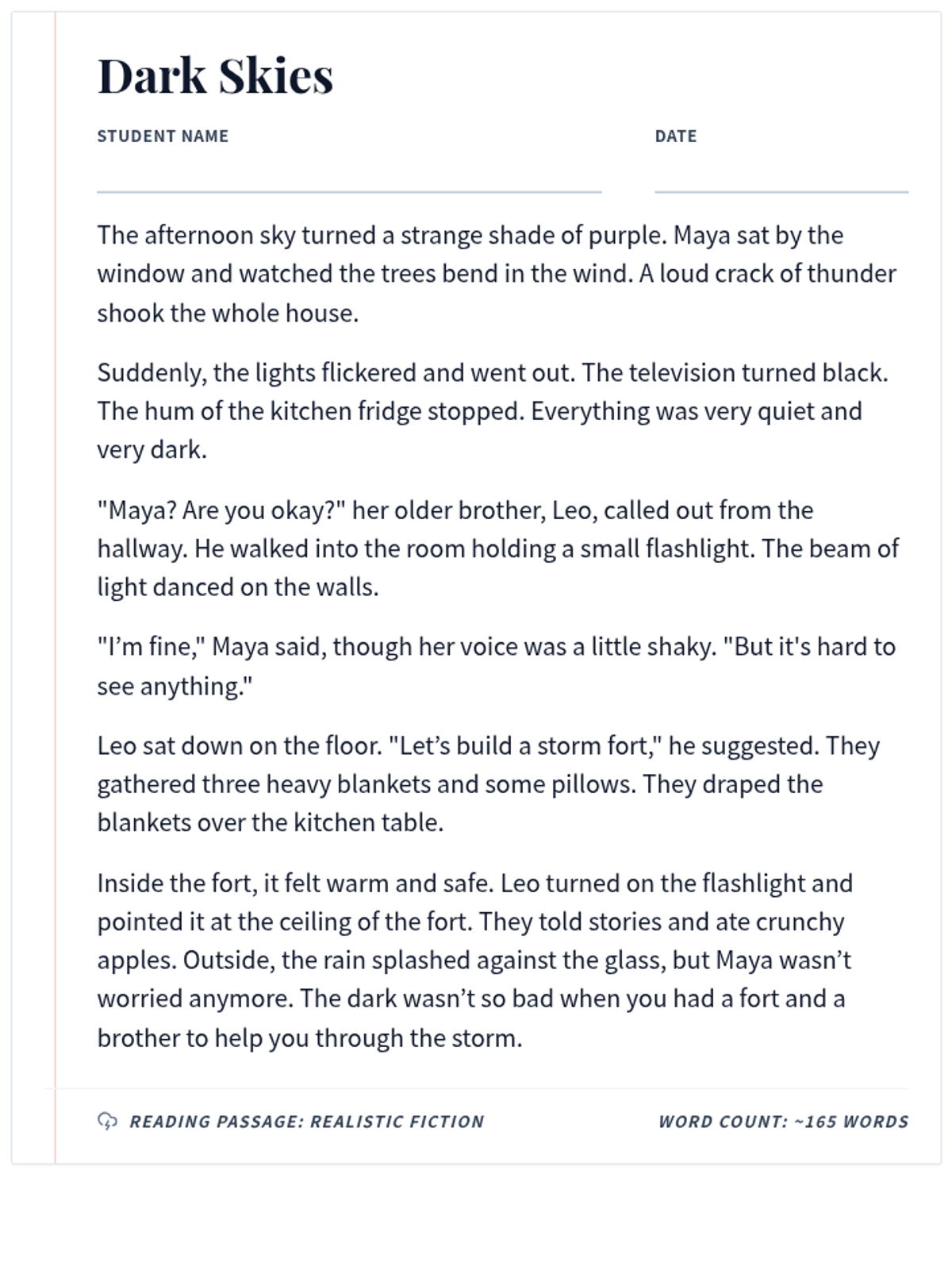
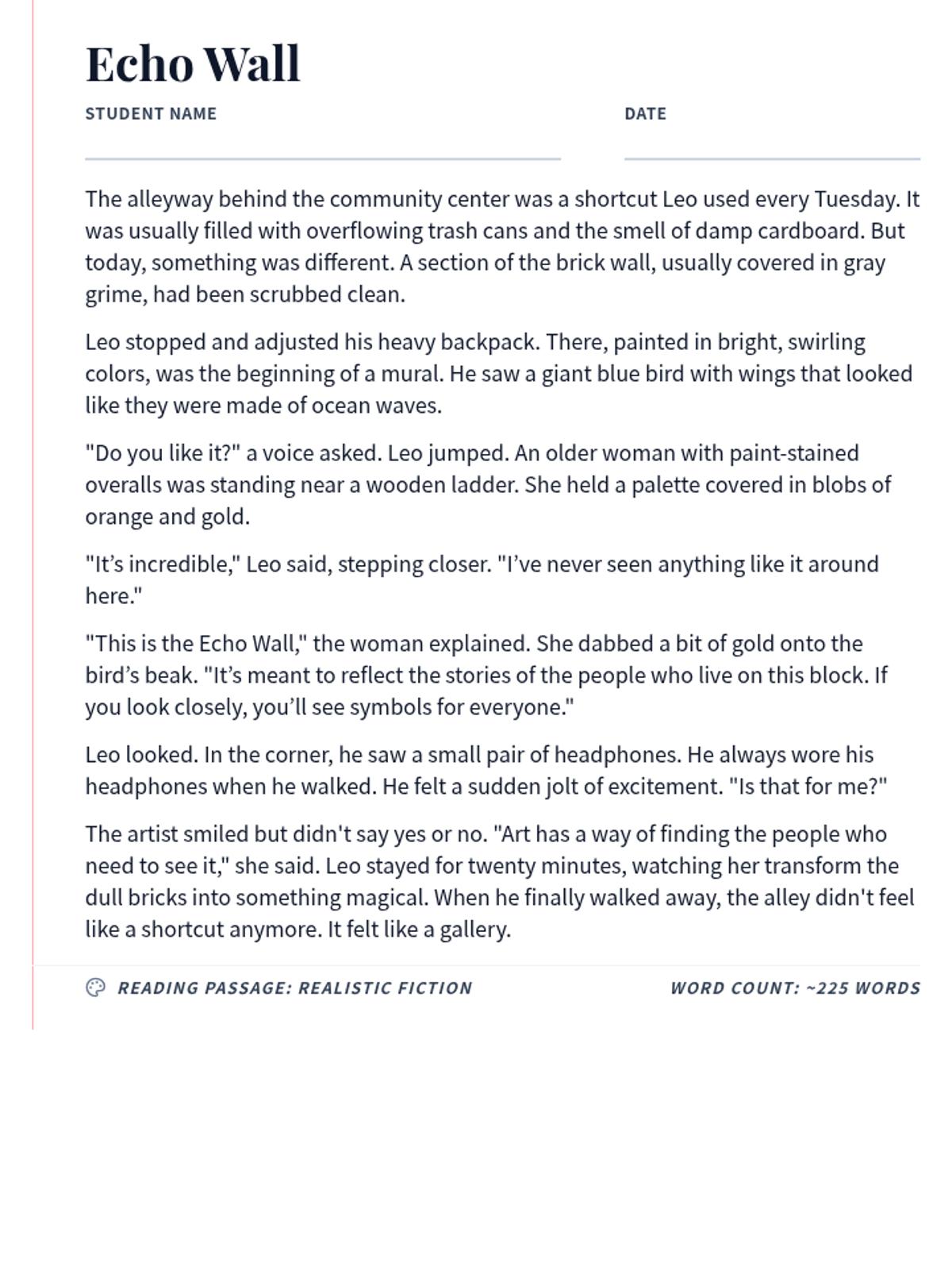
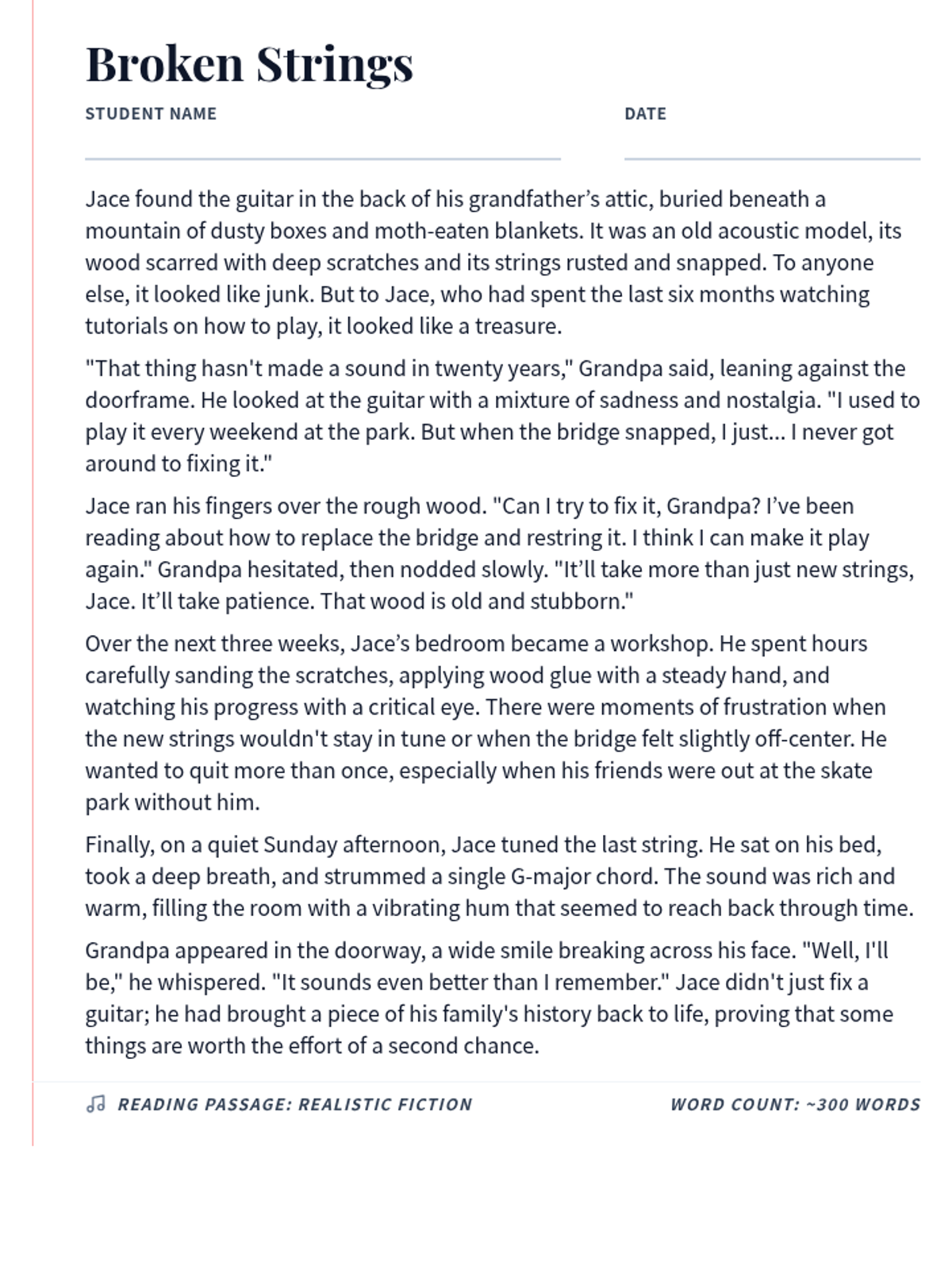
A collection of realistic fiction reading passages designed for assessing reading levels from 2nd through 5th grade. These texts feature age-appropriate themes for older students while maintaining accessible vocabulary and structure for struggling readers.
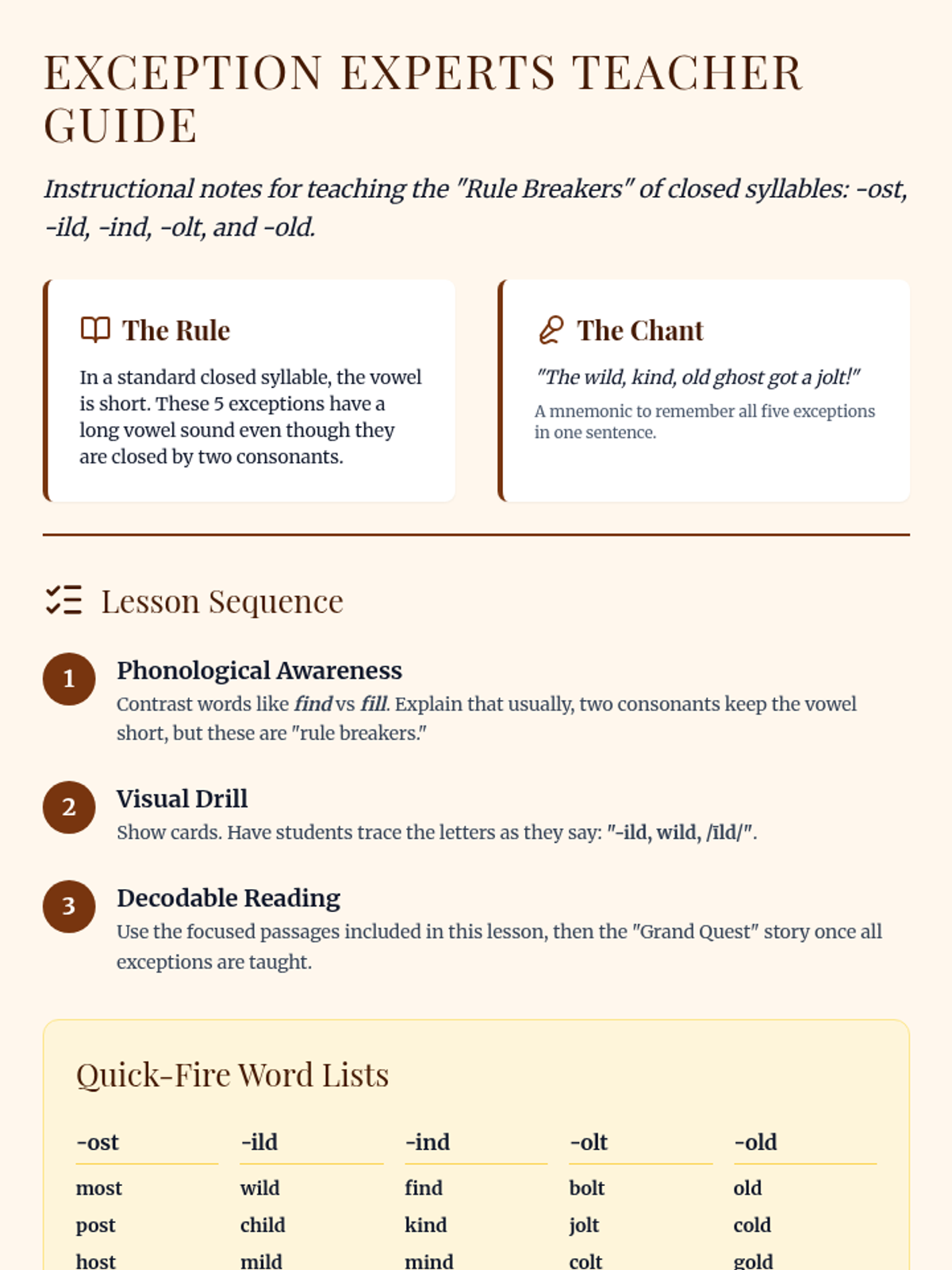
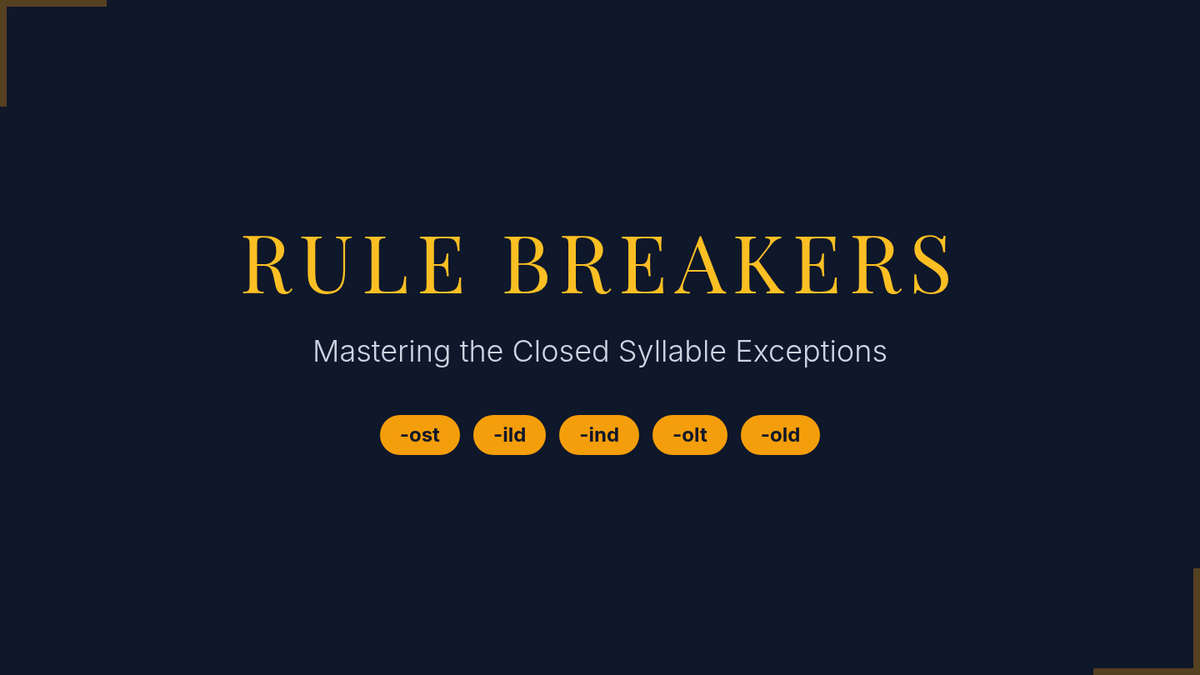
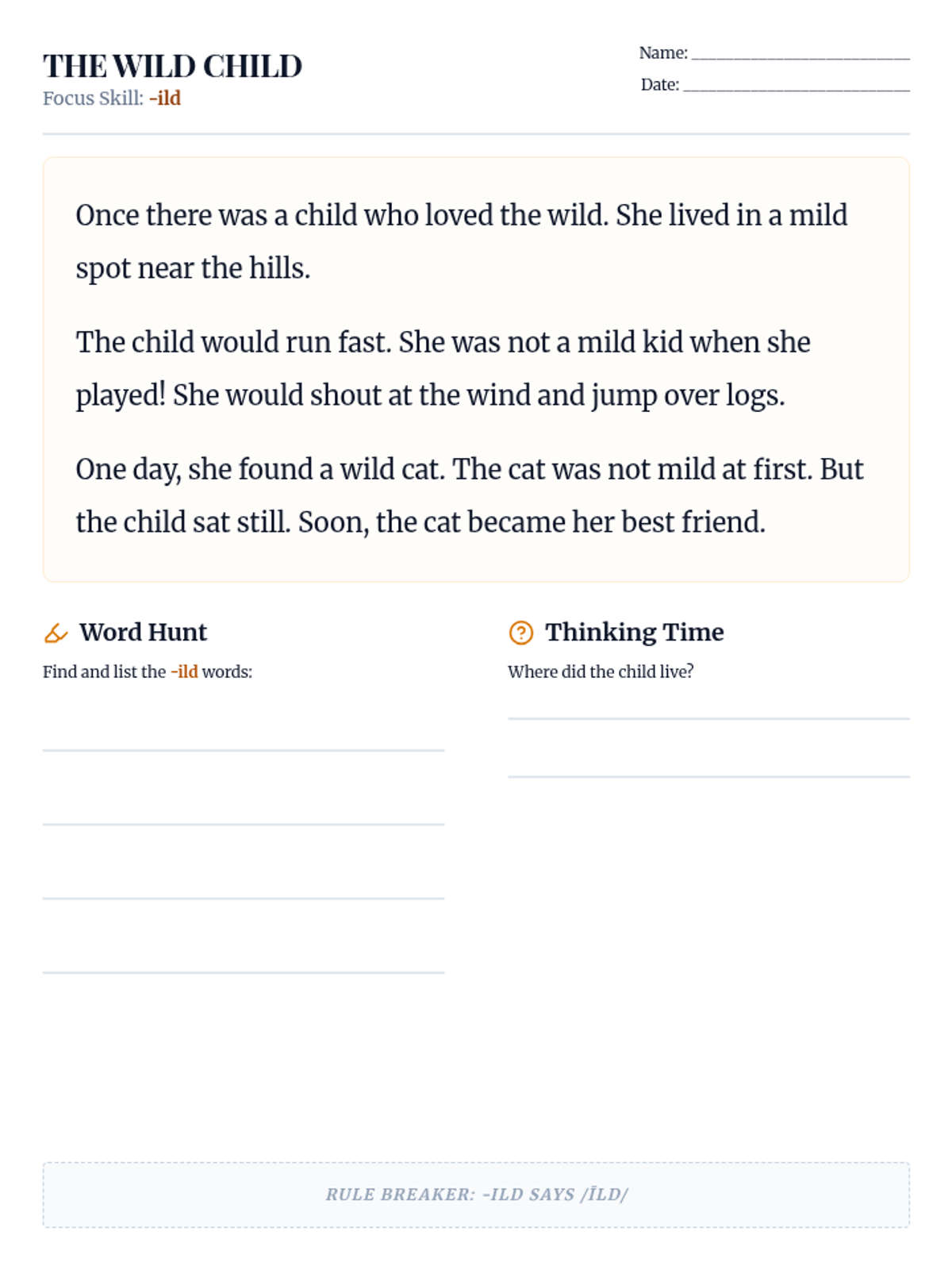
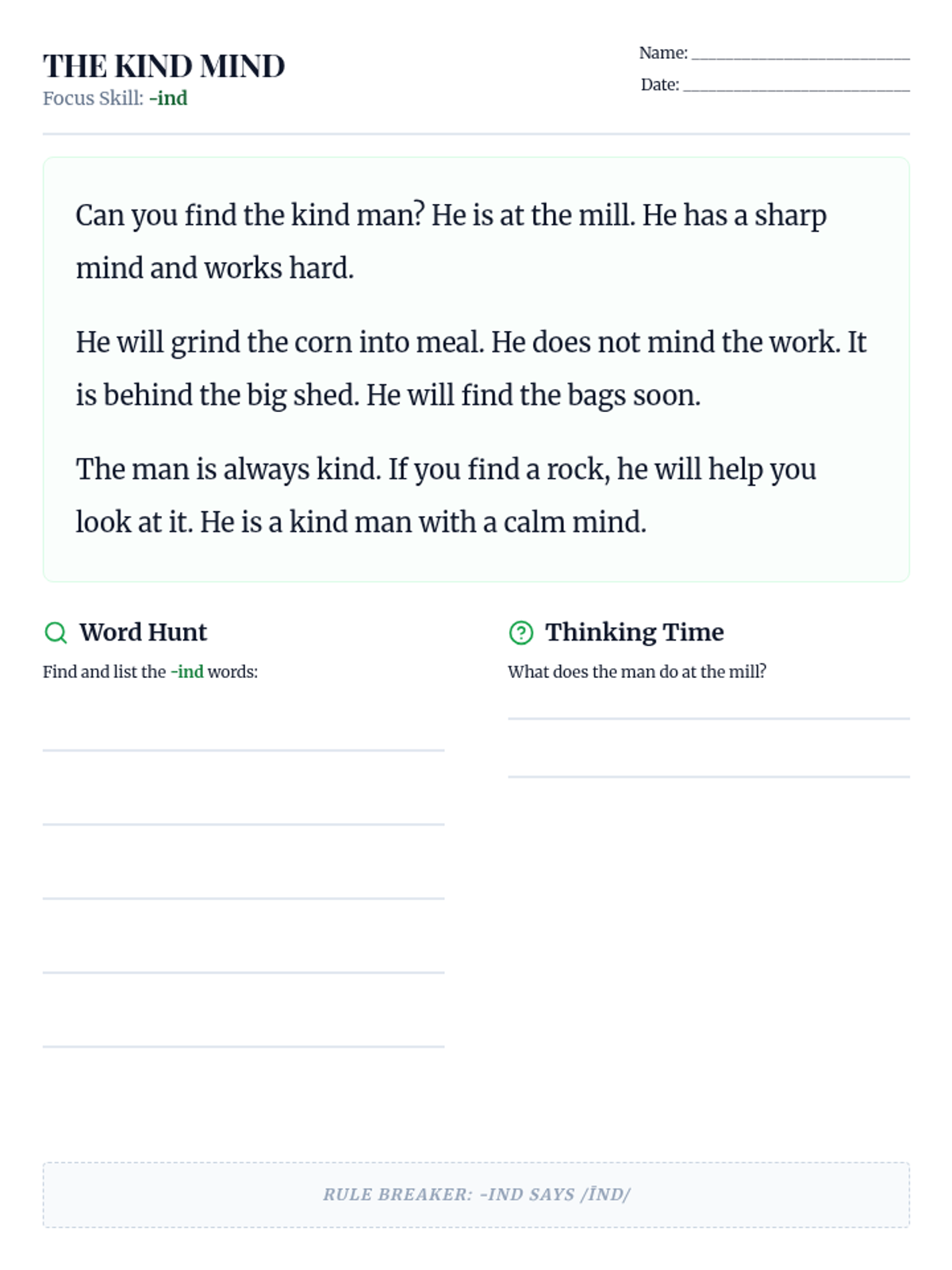
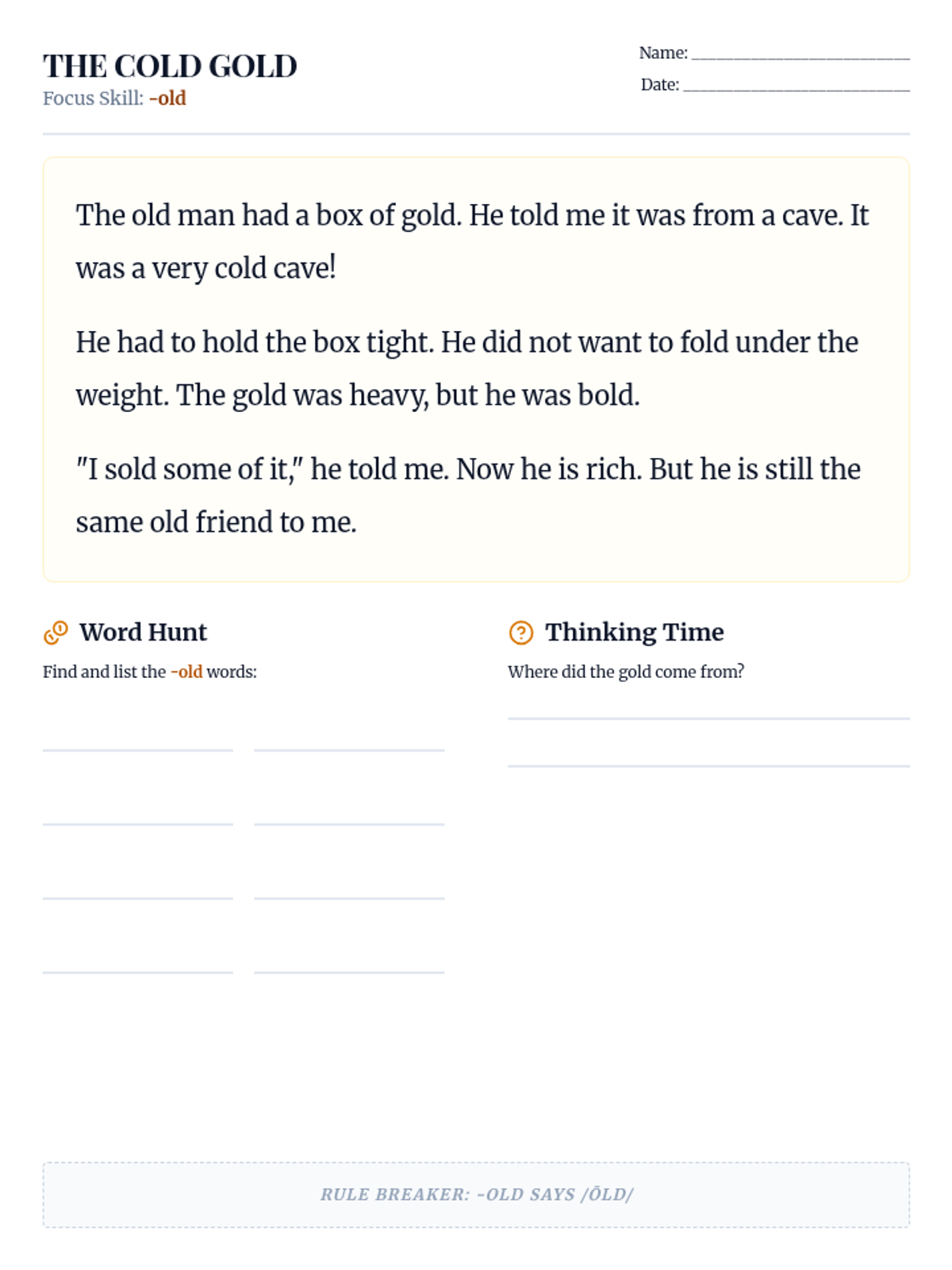
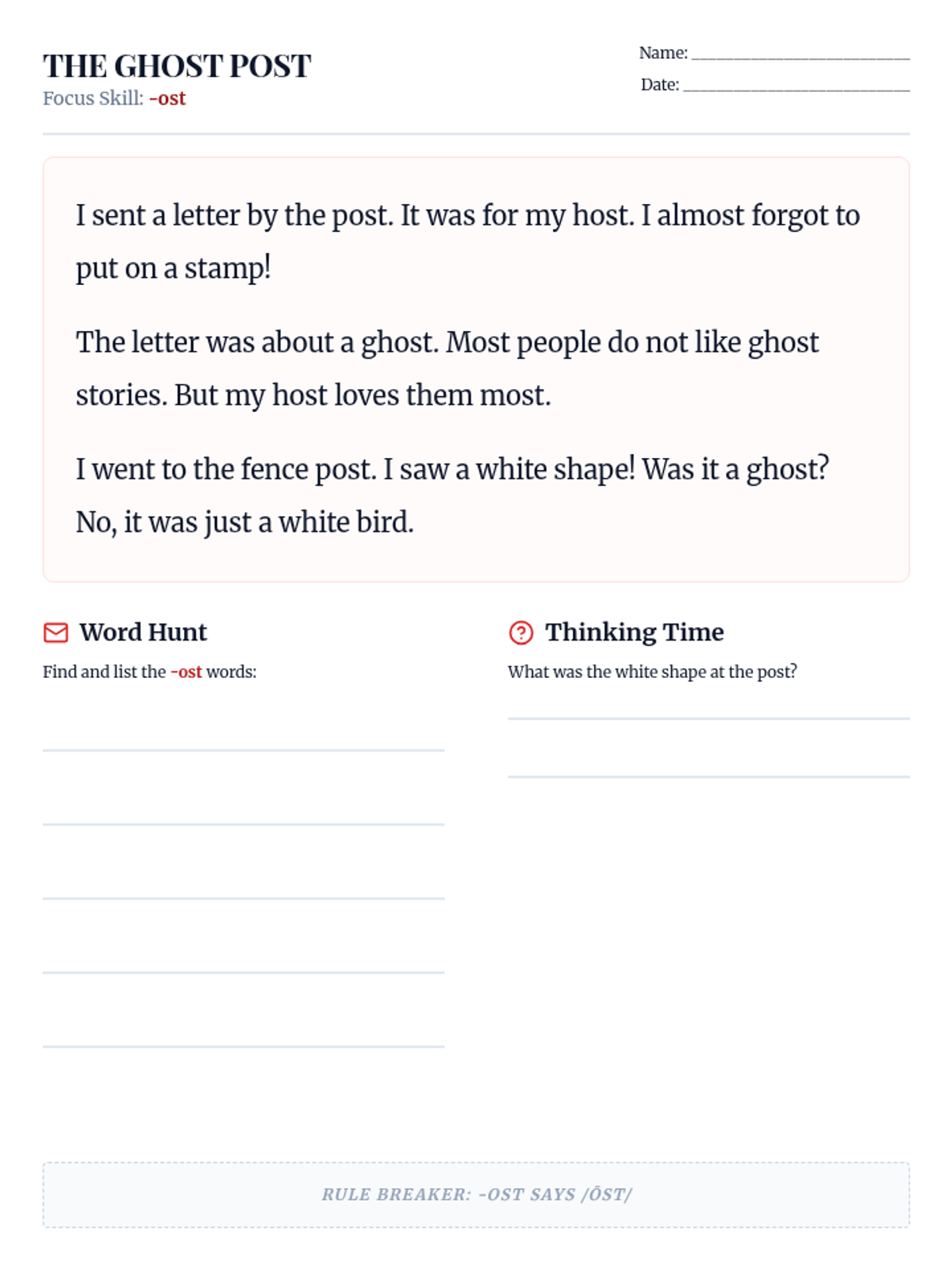
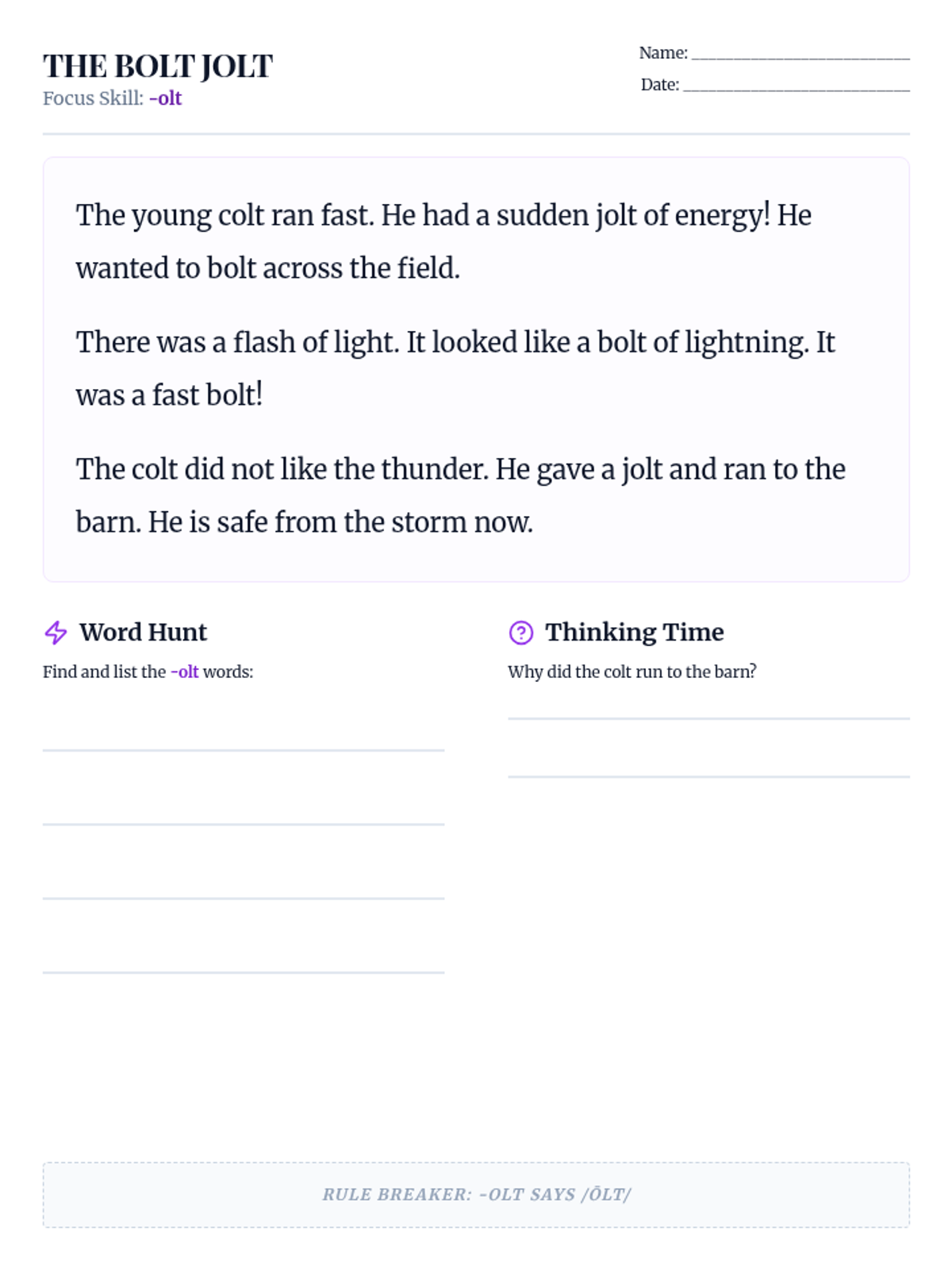
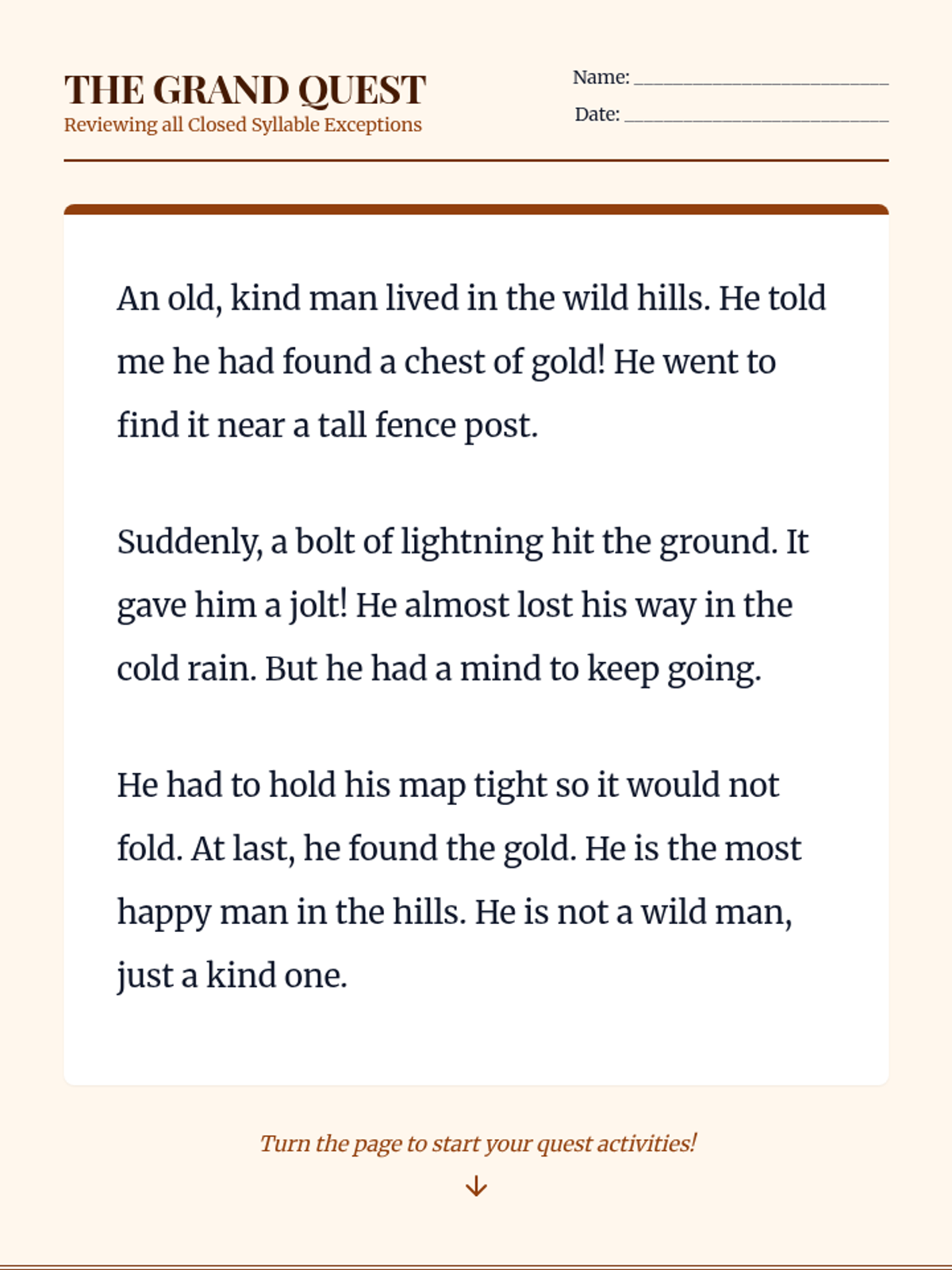
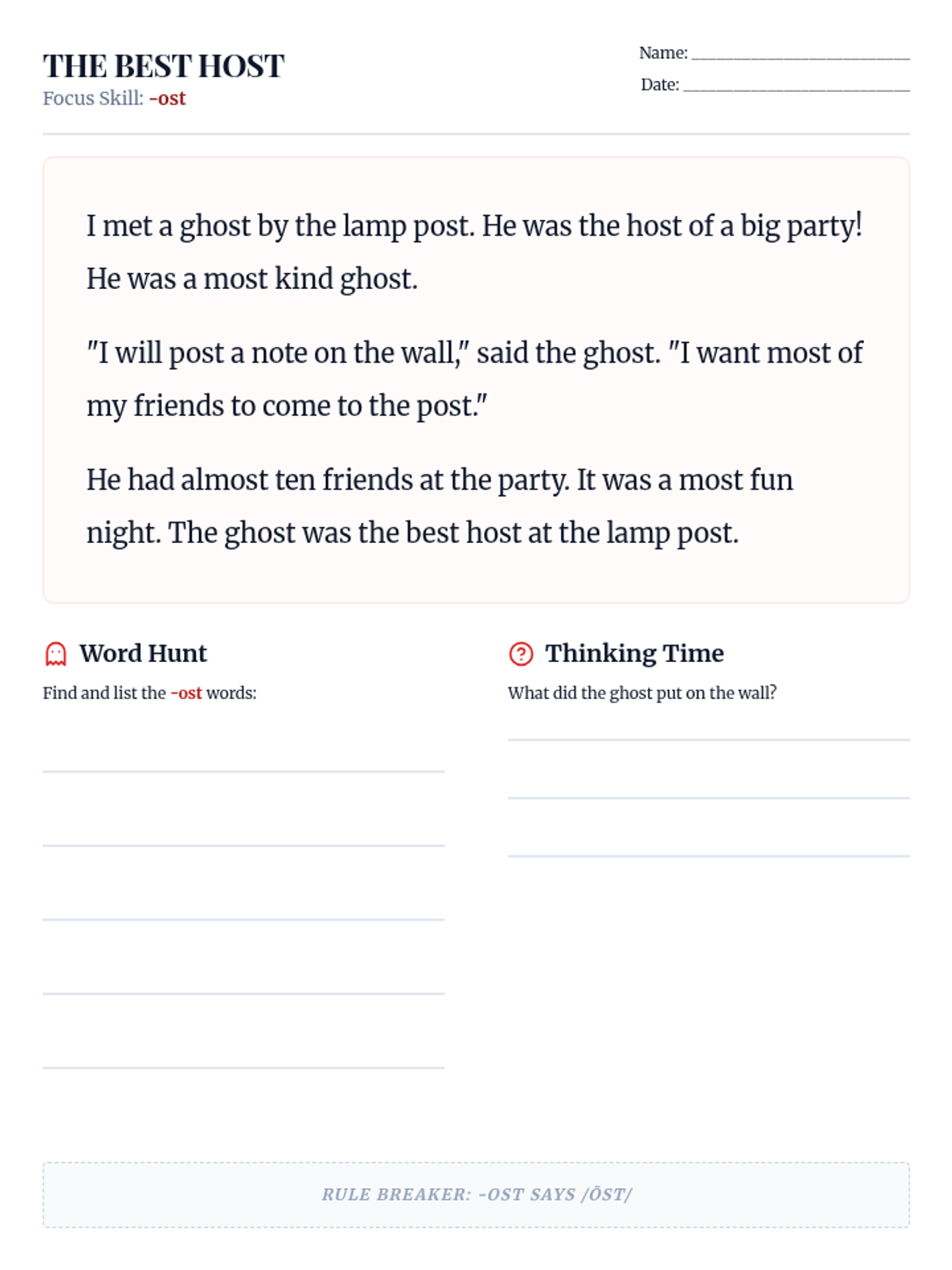
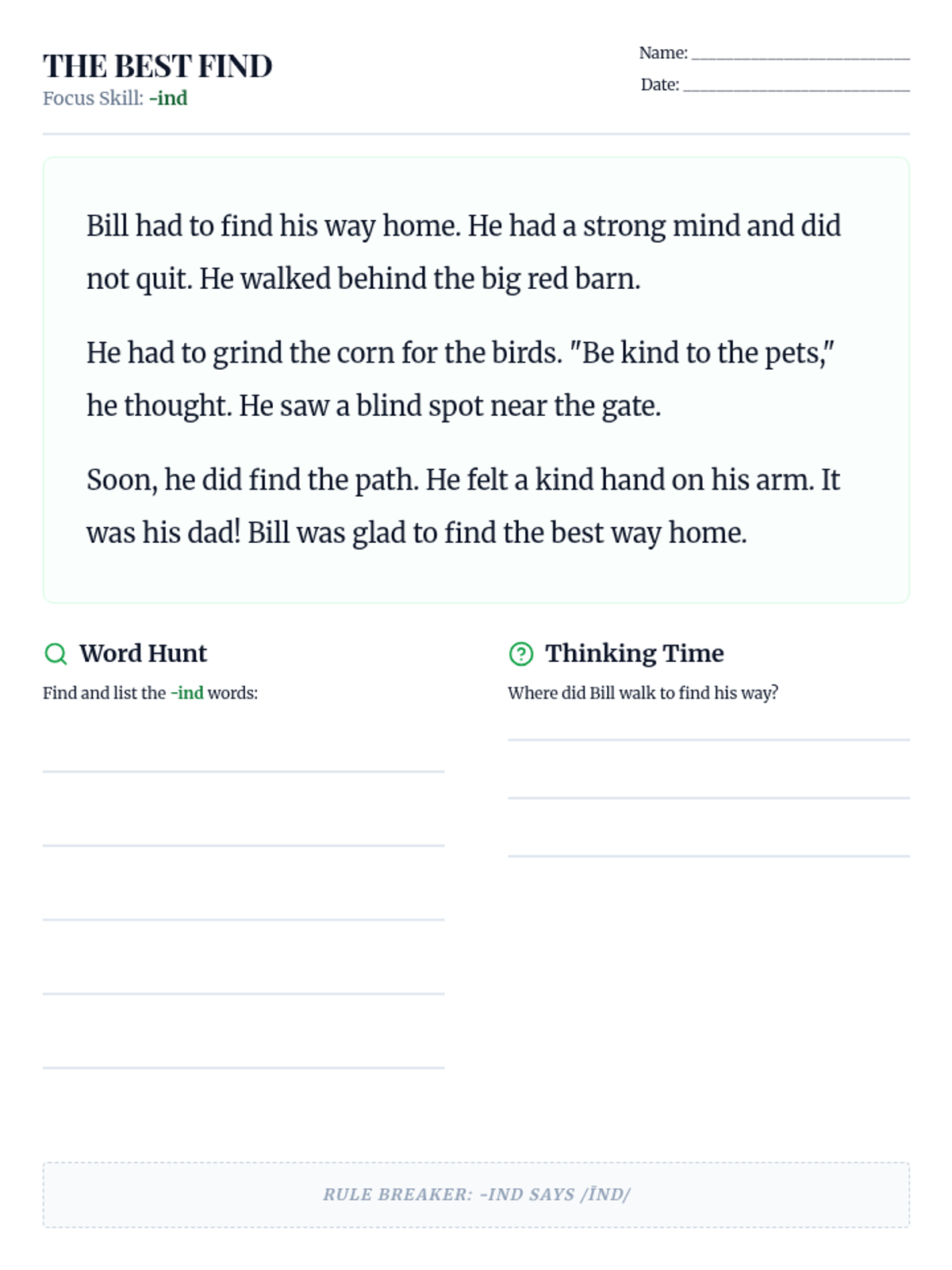
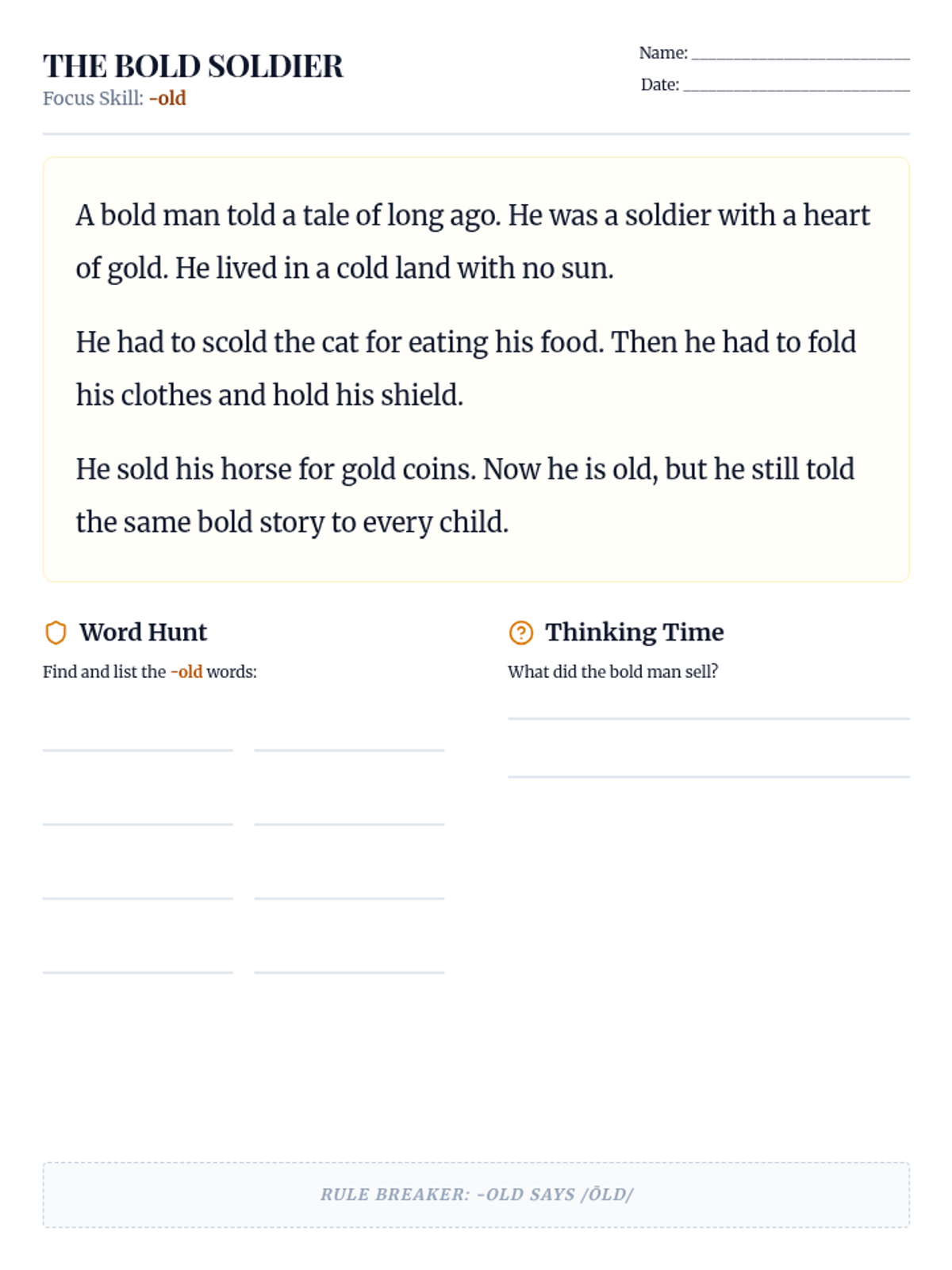
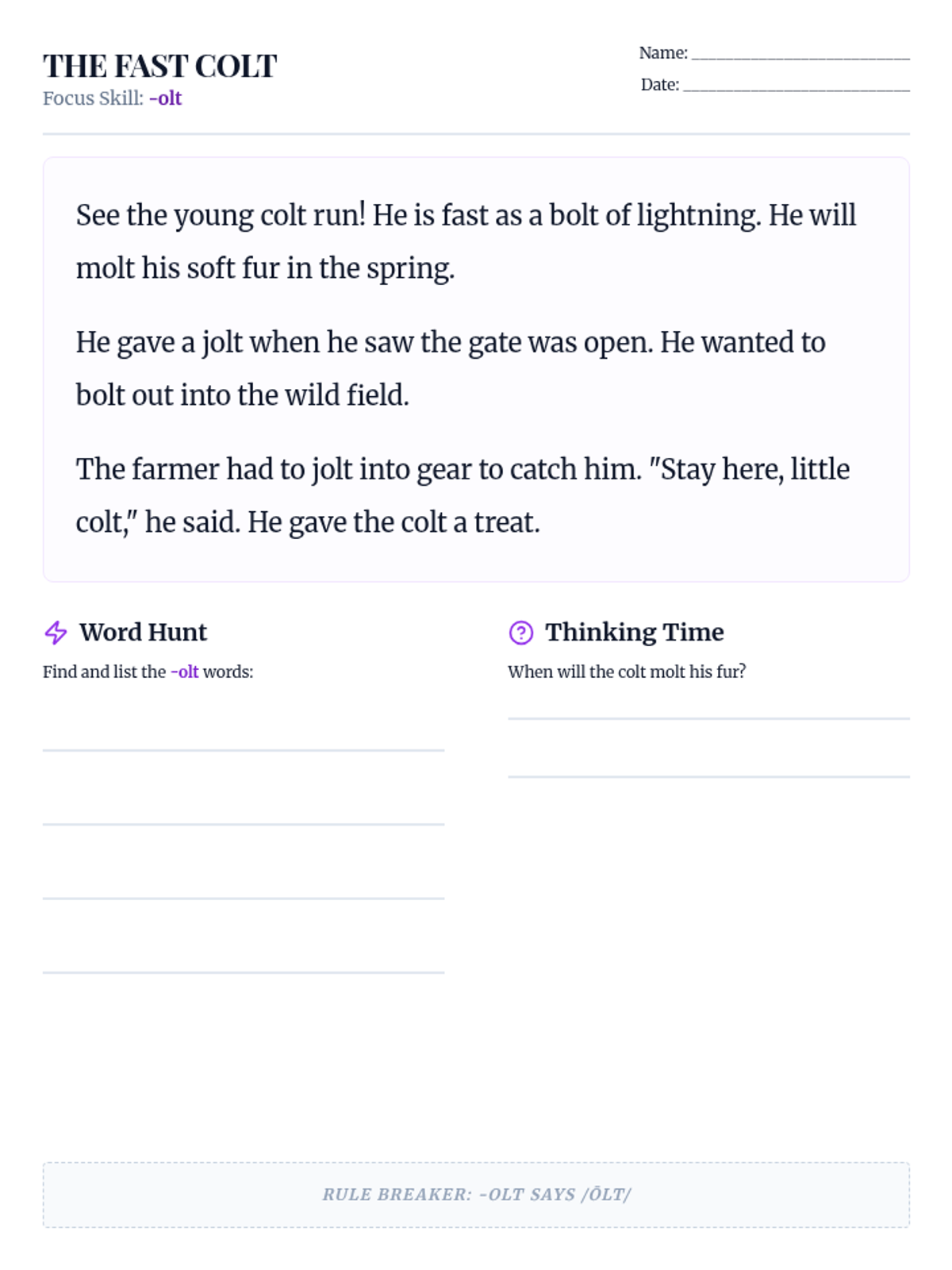
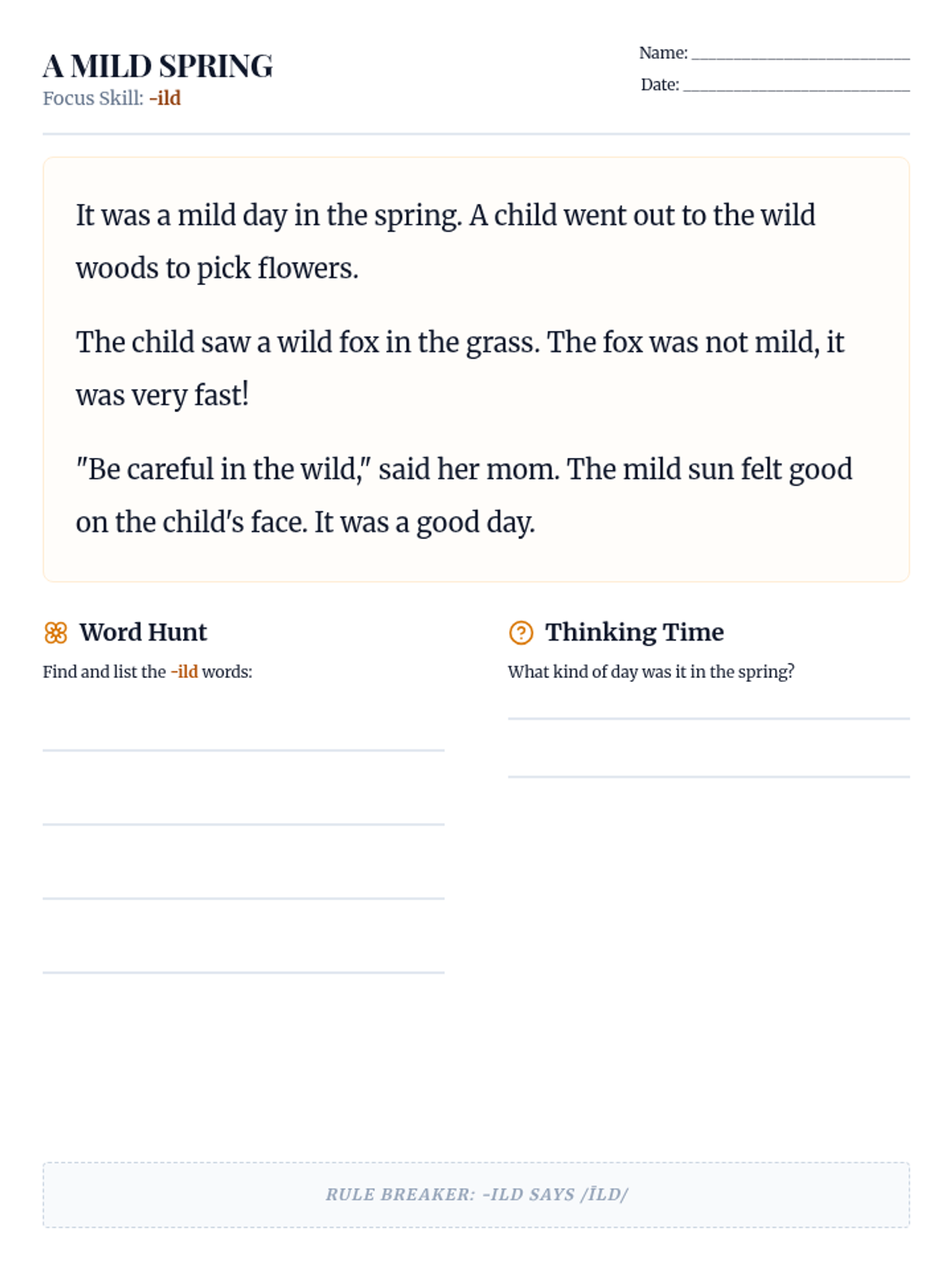
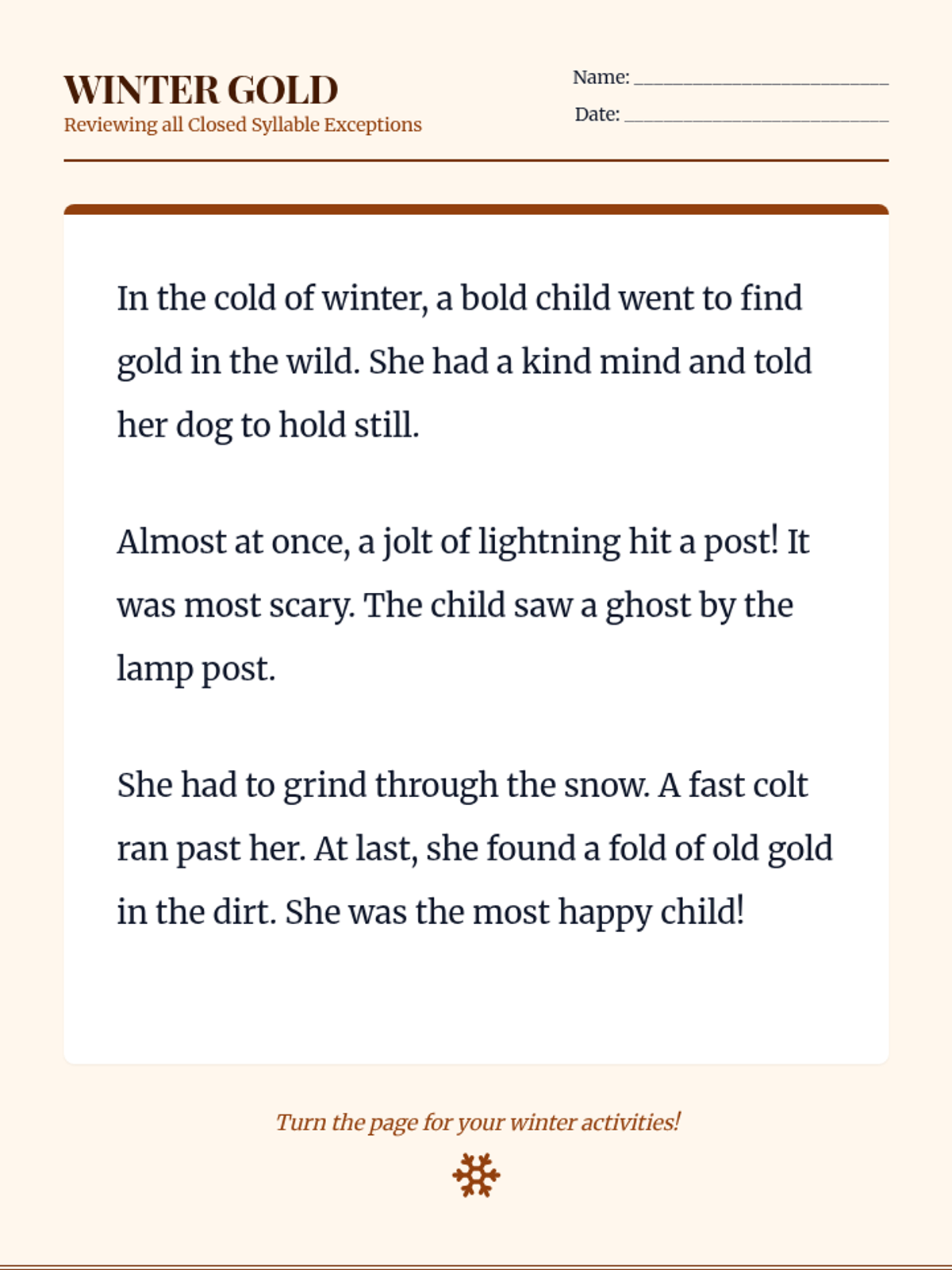
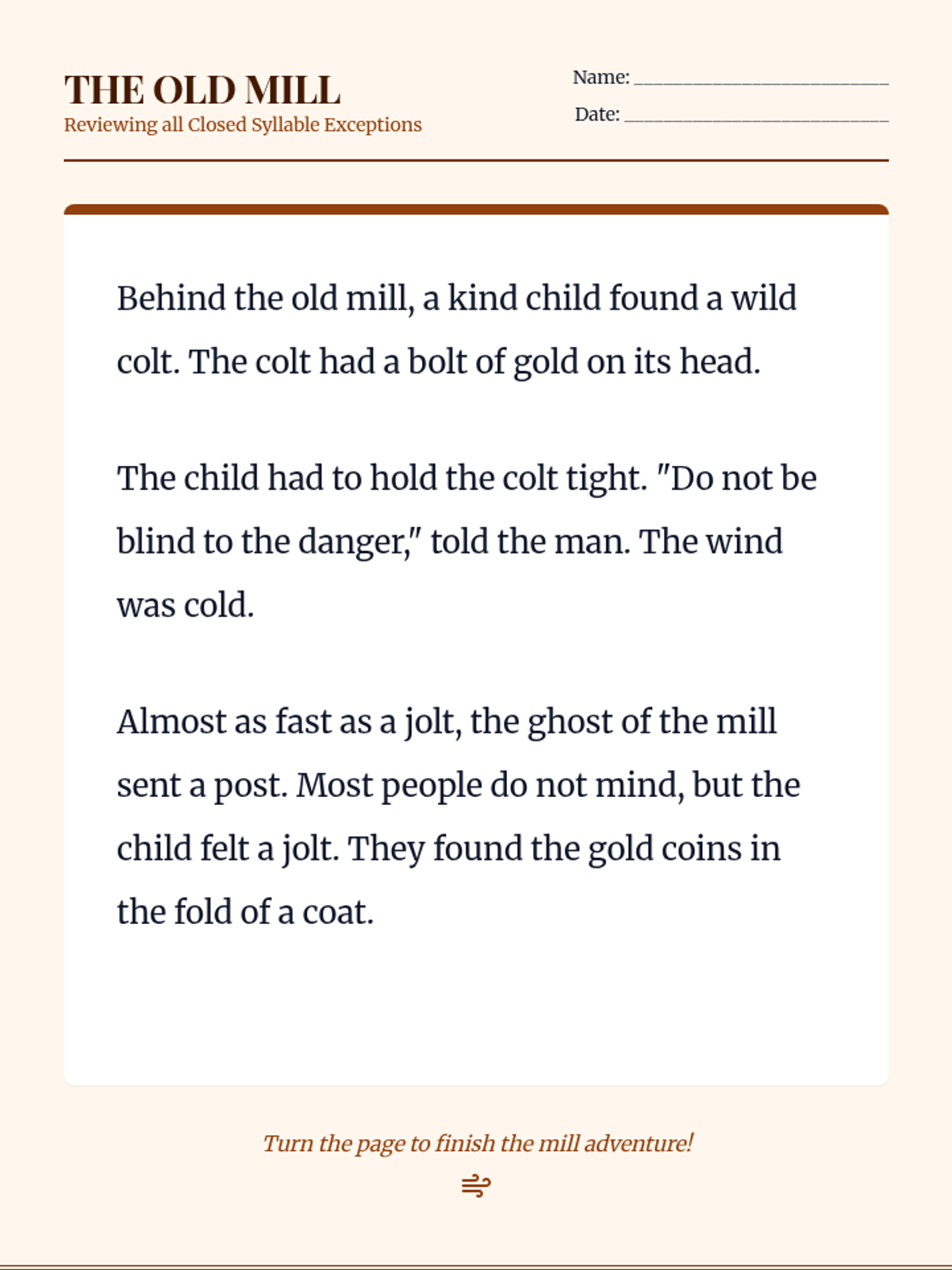
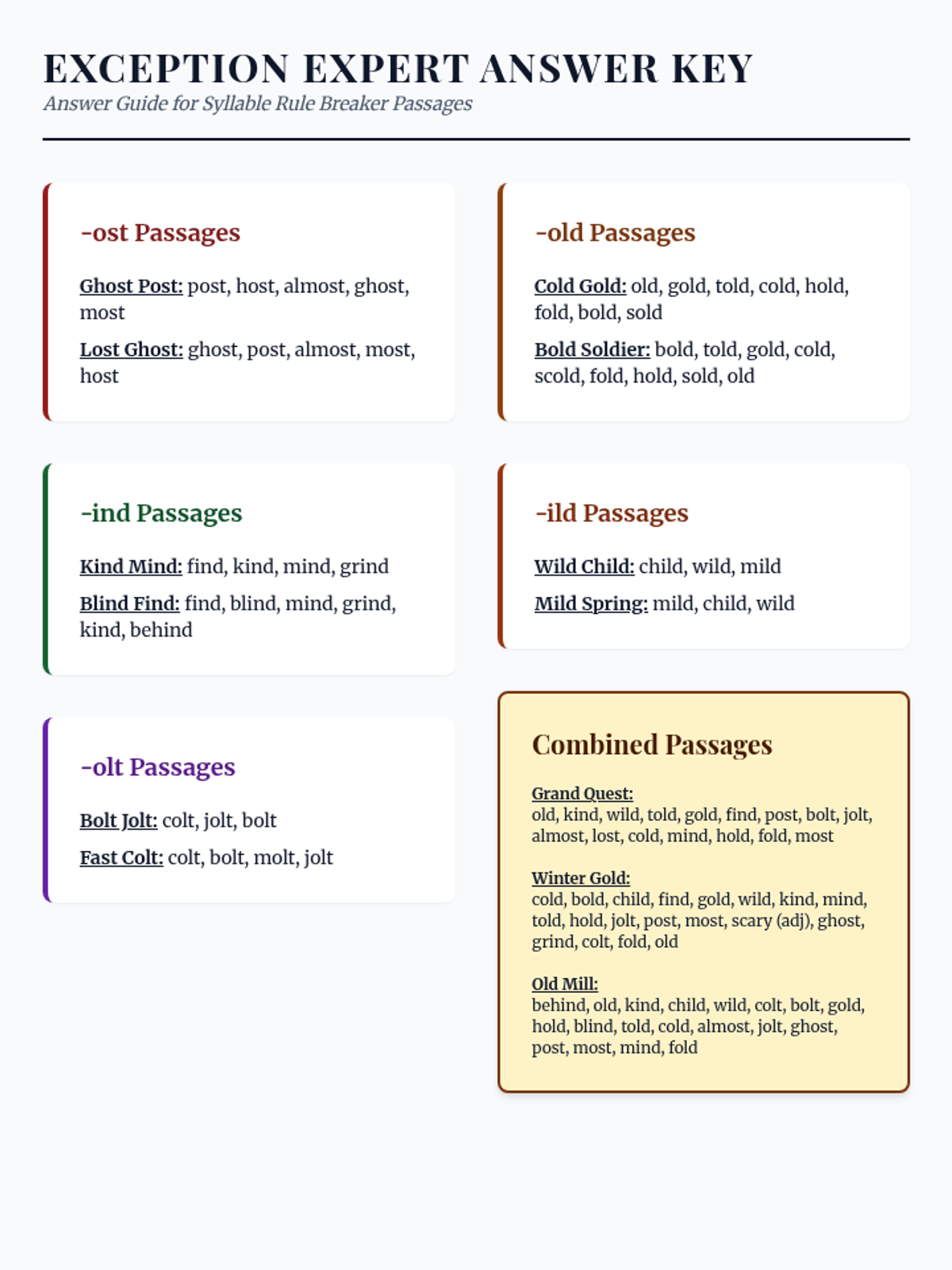
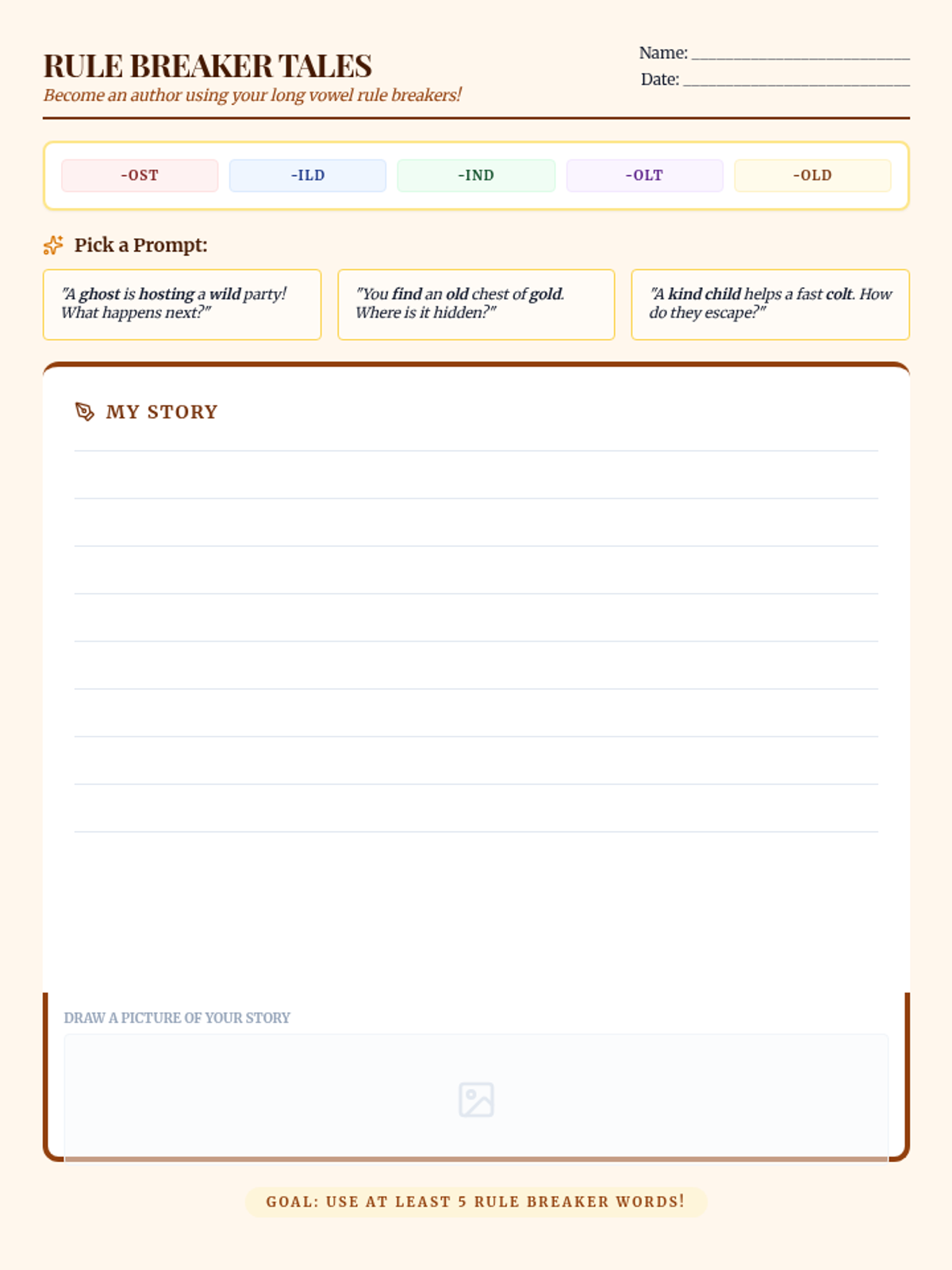
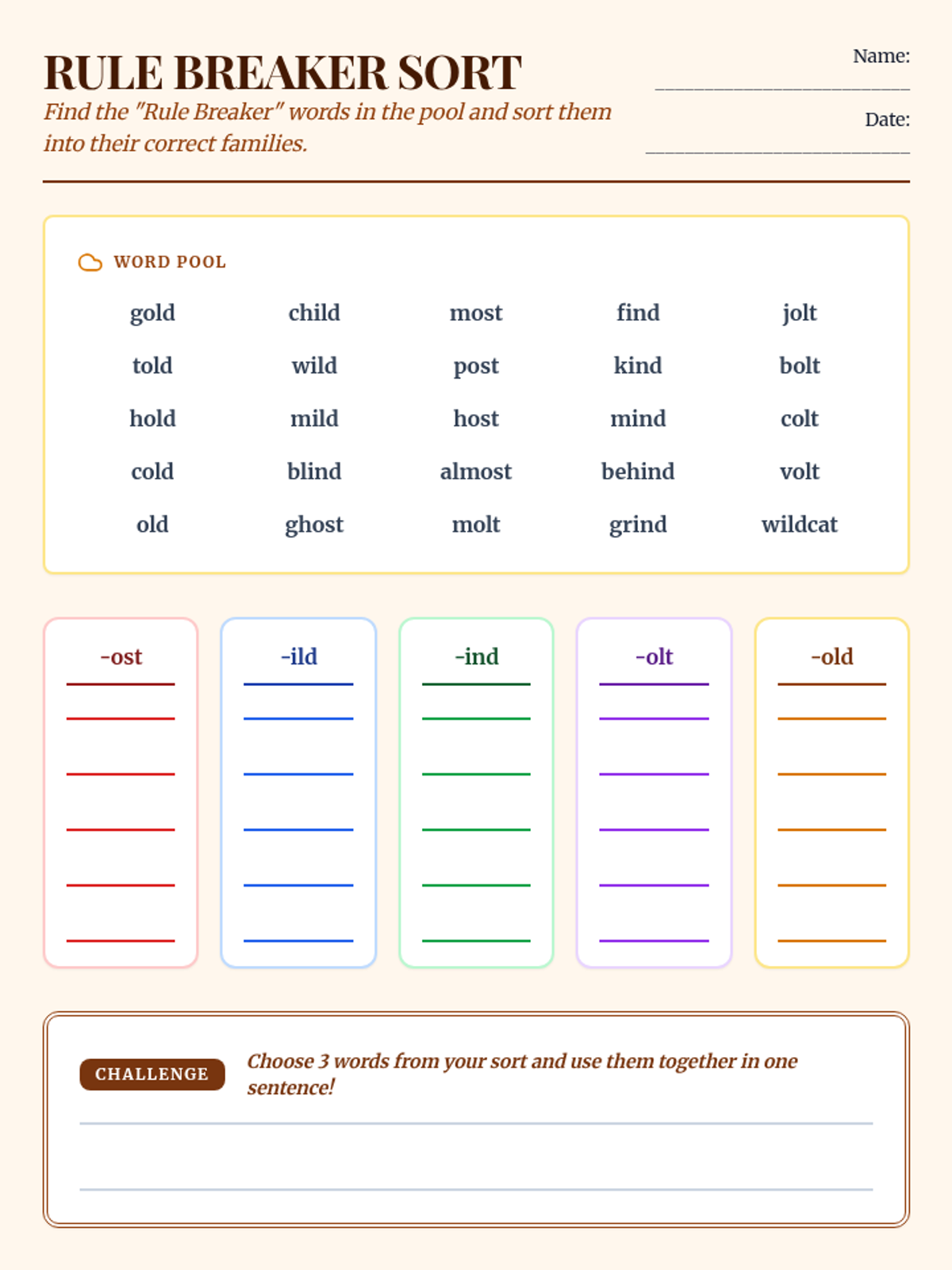
A focused lesson on closed syllable exceptions (-ost, -ild, -ind, -olt, -old), featuring decodable passages, instructional slides, and teacher support materials designed for grades 1-3.
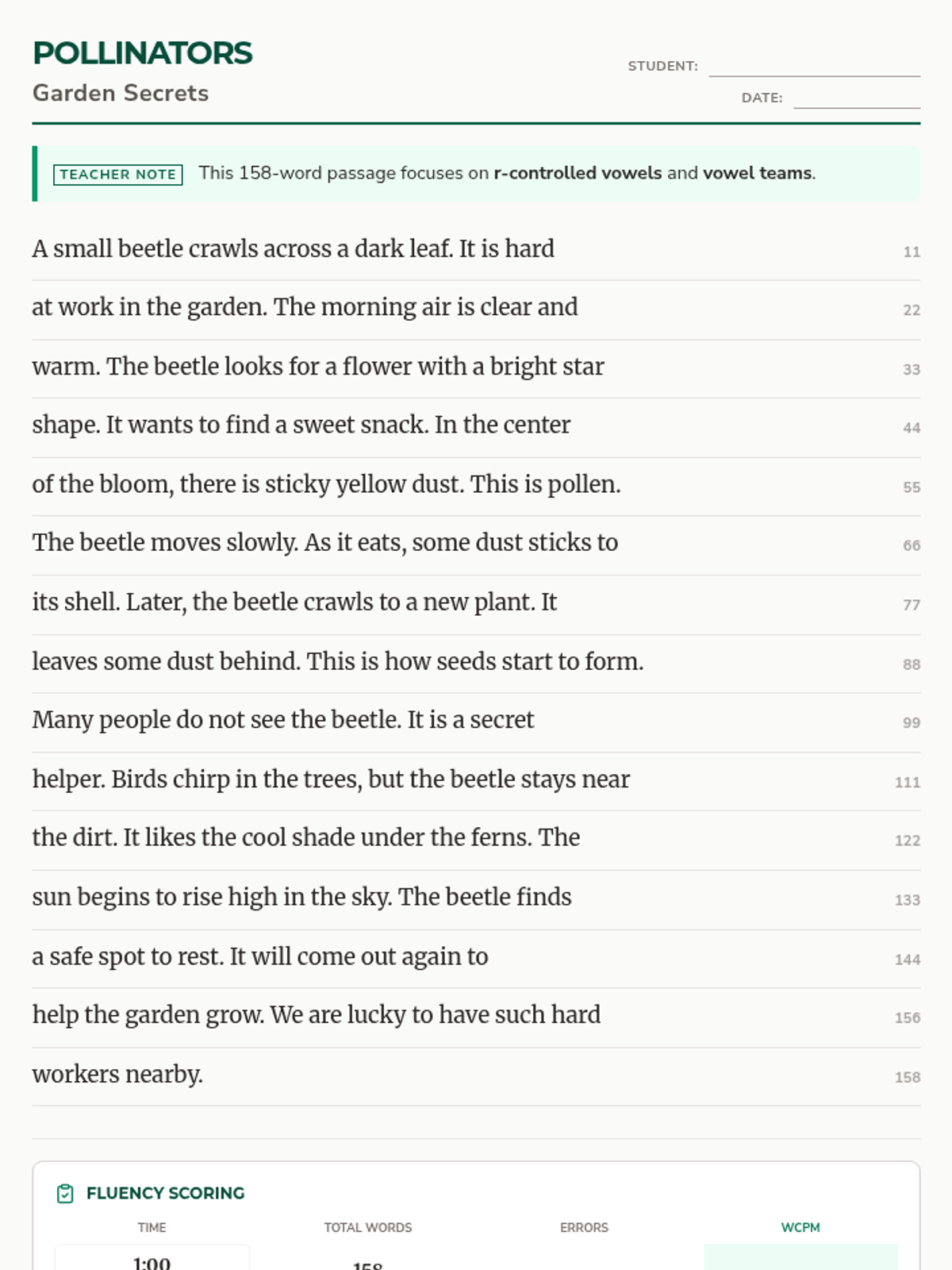
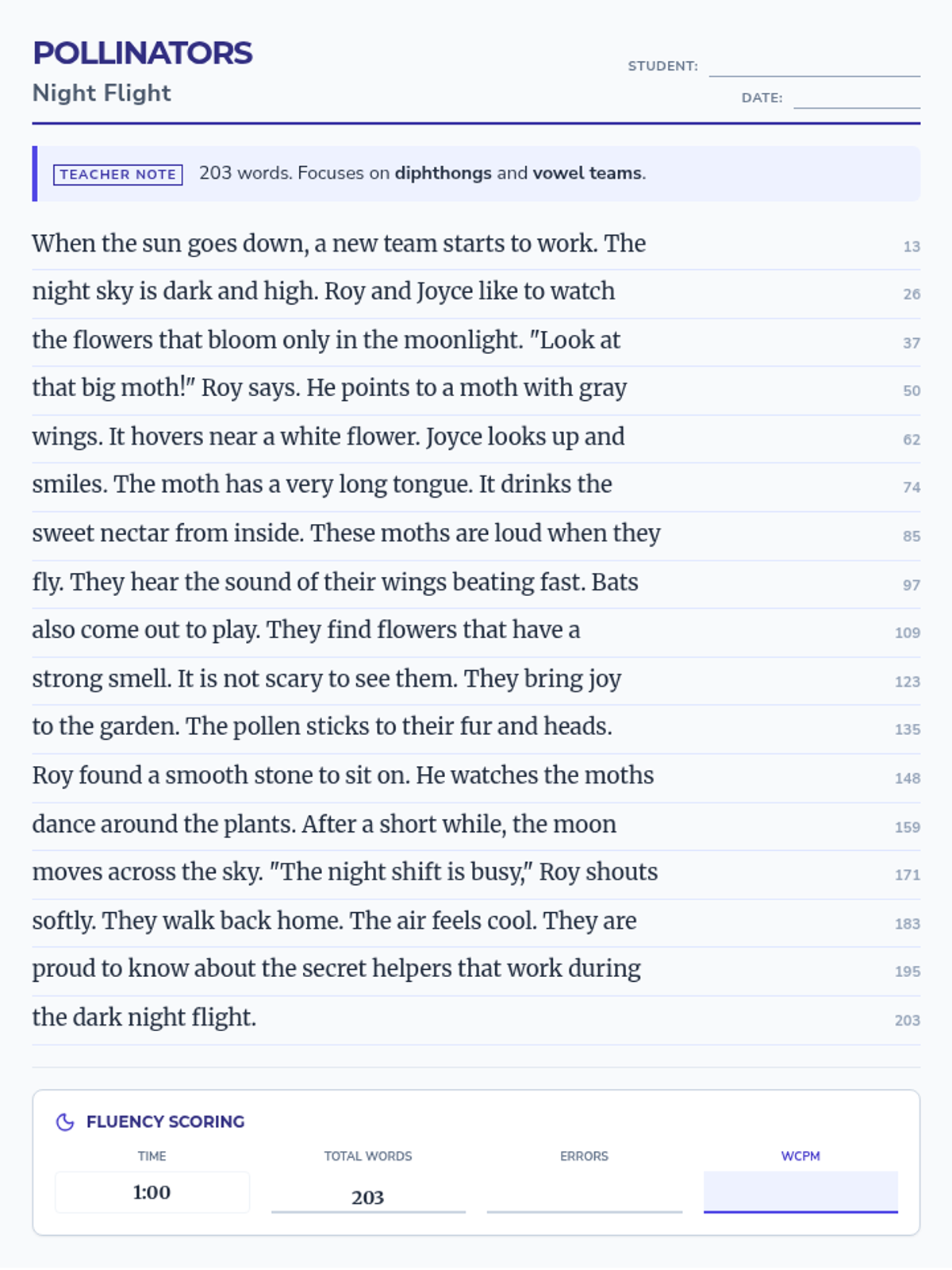
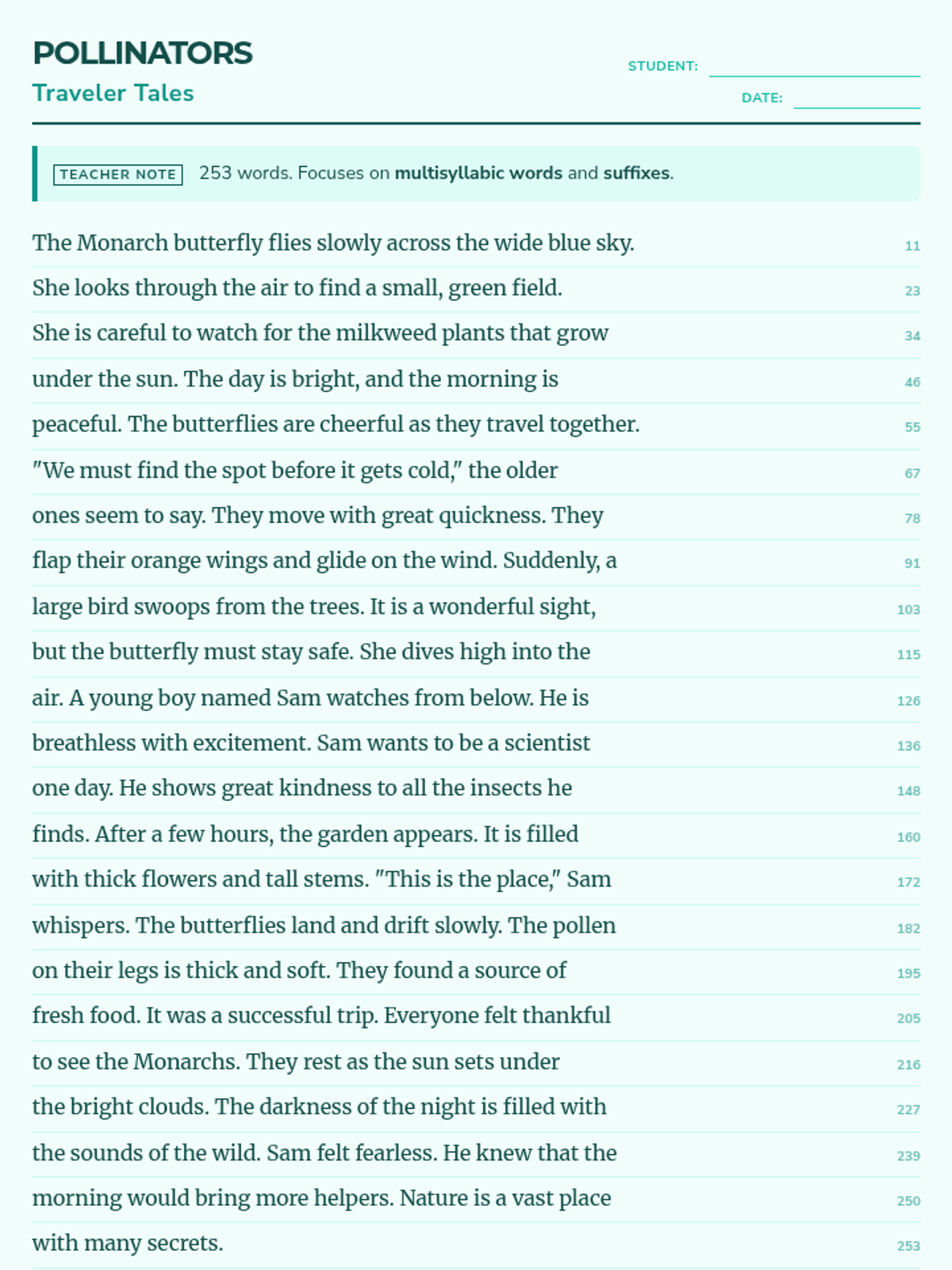
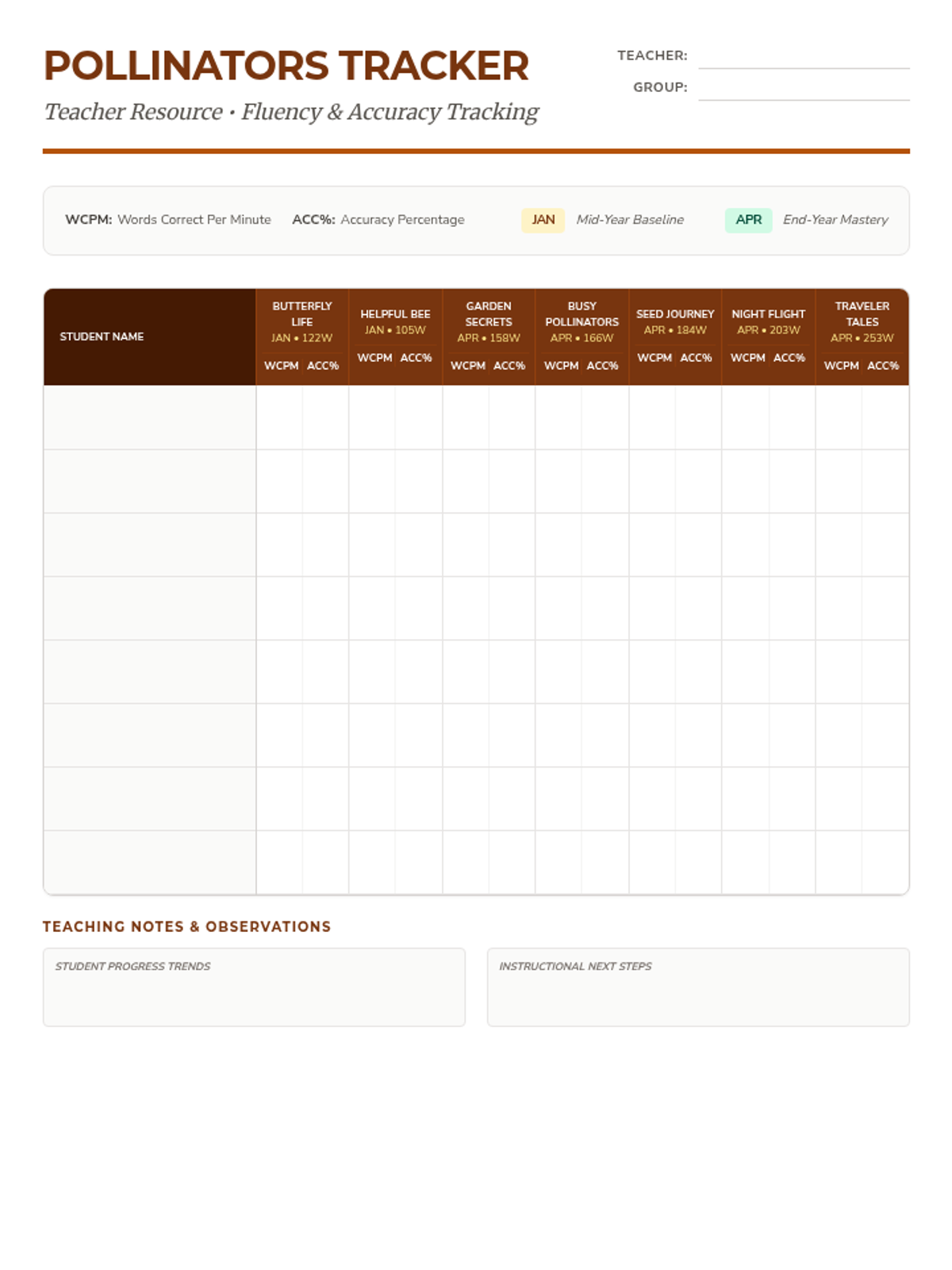
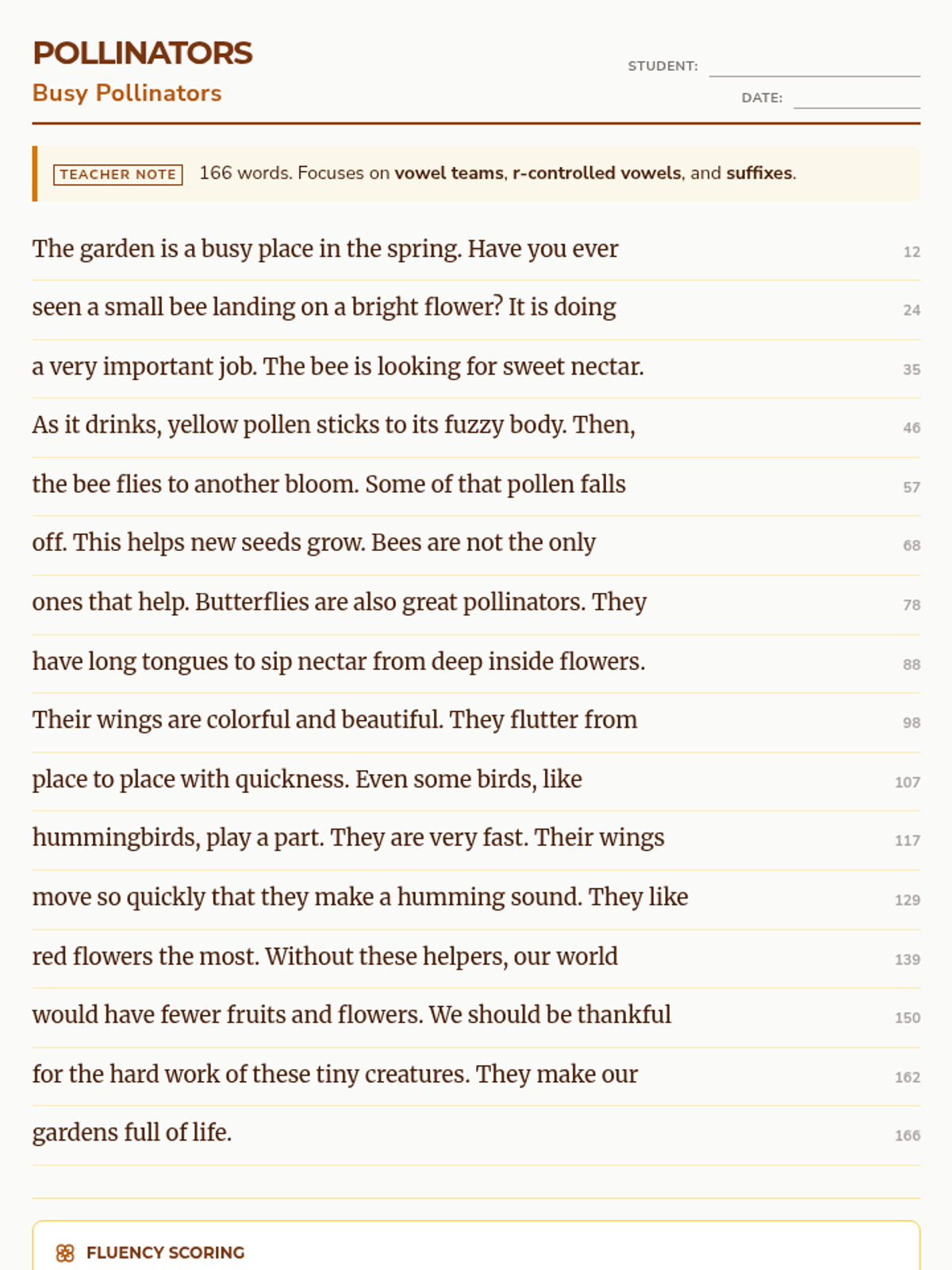
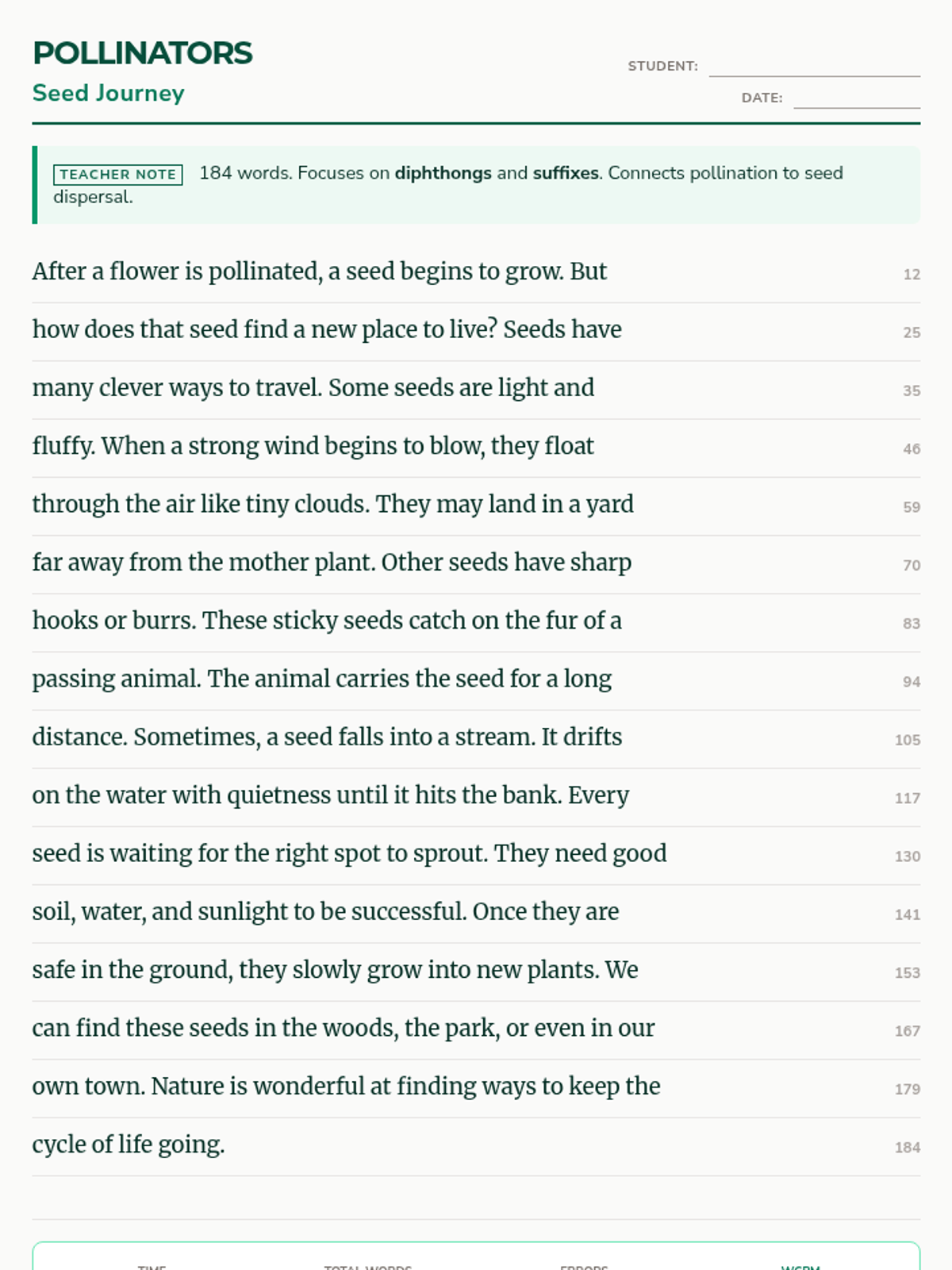
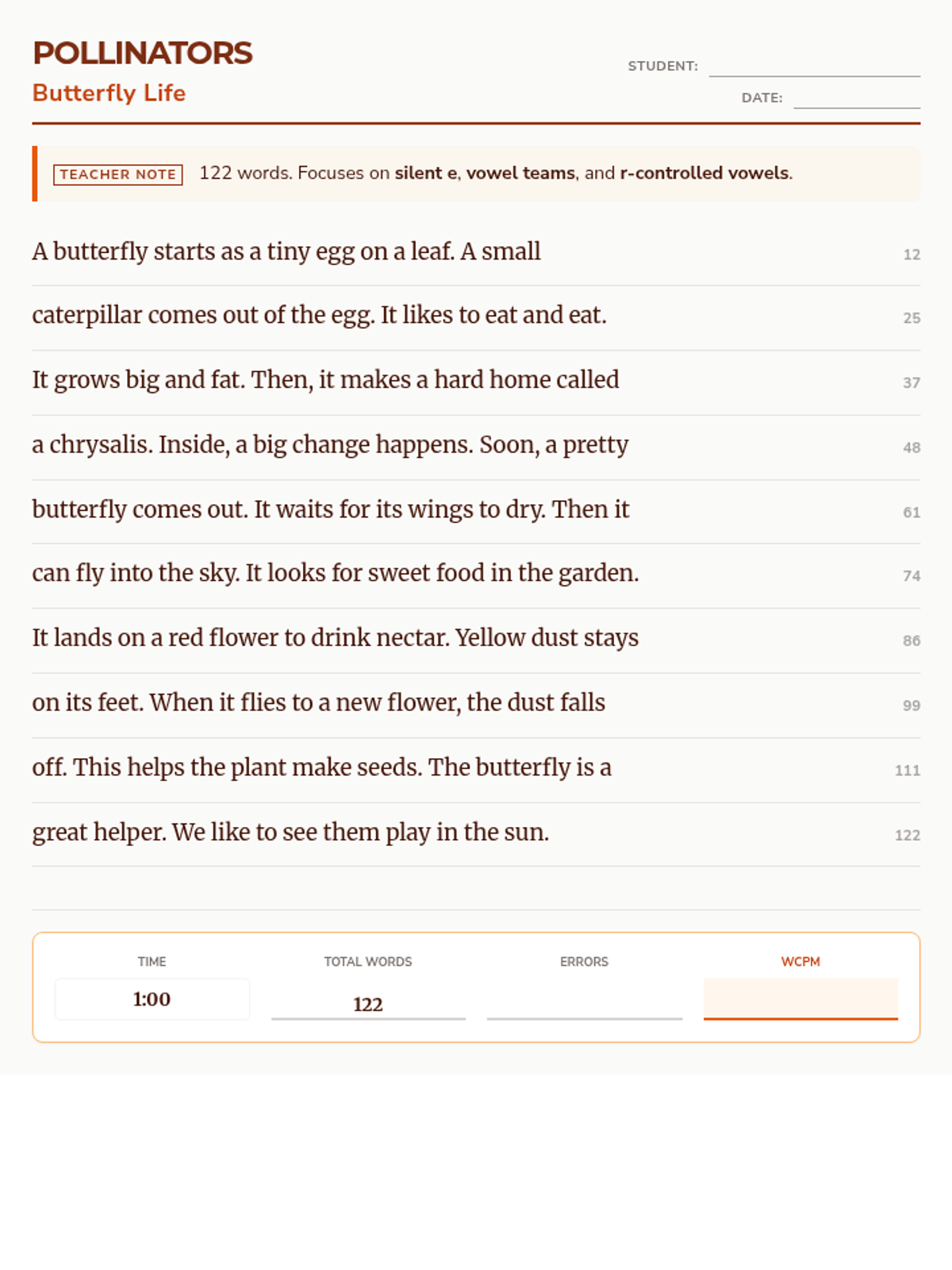
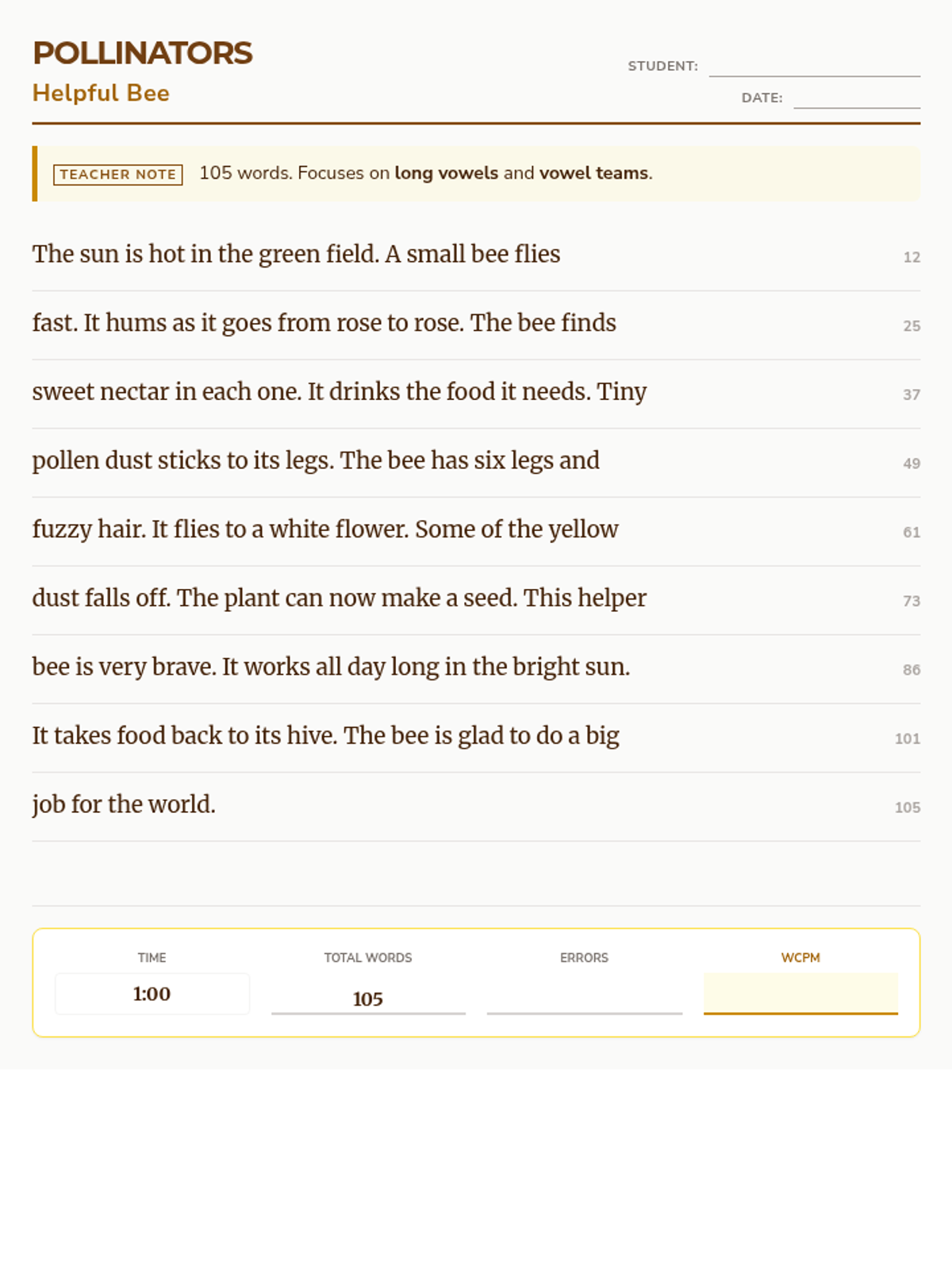
A collection of decodable reading passages for Grade 2 students focusing on the role of pollinators in nature, aligned with EL Education Module 3. Includes tracking tools for fluency assessment.
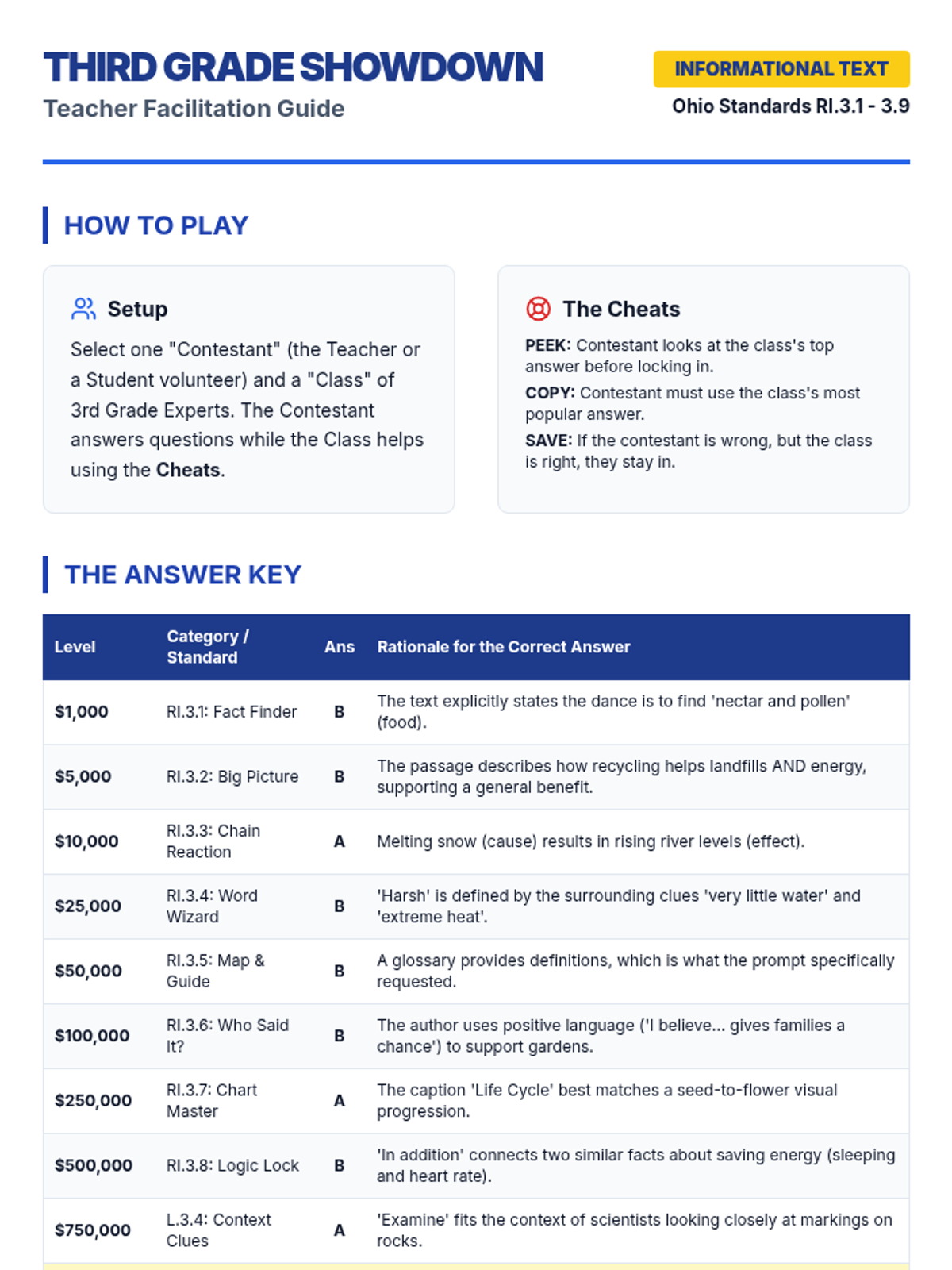
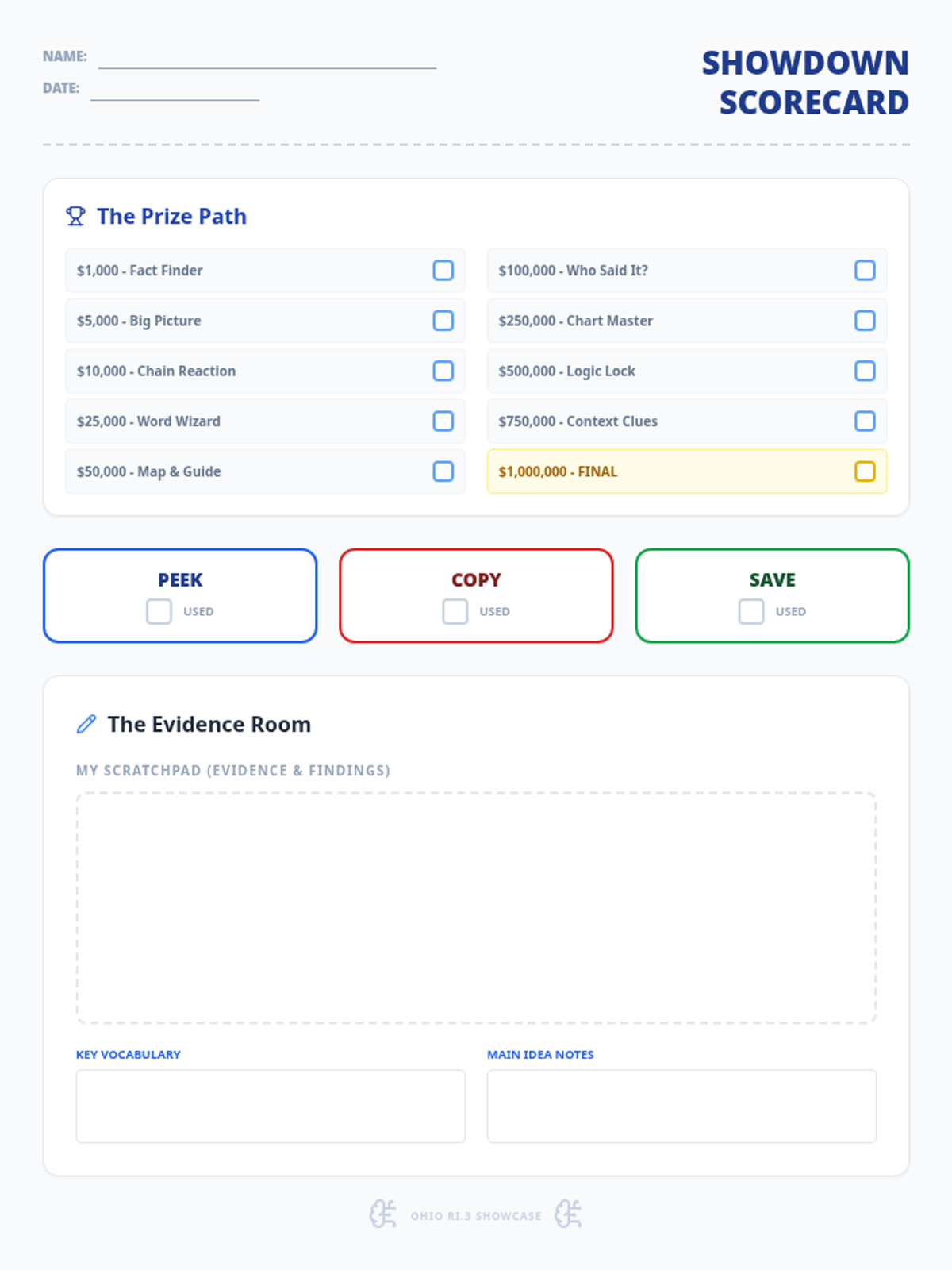
A high-stakes, game-show style lesson based on the 'Are You Smarter Than a 5th Grader' format, specifically targeting Ohio 3rd Grade Informational Text and Language standards. Students test their knowledge of main ideas, text features, and vocabulary to see if they can outsmart a 3rd grader.