World Wardrobe Slides World Wardrobe
Global Threads & Cultural Identity
More Than Just Fabric
Climate
Clothing protects us from heat, cold, rain, and snow.
History
Traditional garments tell the story of a culture's past.
Identity
What we wear shows who we are and where we belong.
"To know a culture, look at their loom."
Latin America
HUIPIL & PONCHO
The Huipil
A traditional loose-fitting tunic worn by women in Mexico and Central America, featuring hand-woven patterns and symbols.
The Poncho
A simple outer garment designed to keep the body warm, originating in the Andes Mountains.
Bright colors and geometric designs often represent nature and gods.
Native Americans
REGALIA & MOCCASINS
Sacred Regalia
Worn for ceremonies/powwows
Features beads, feathers, and fringe
Each piece is handmade and unique
Moccasins
Soft leather shoes made from deerskin or buffalo hide. Different tribes used distinct beadwork patterns to identify themselves.
Japan
KIMONO
The Kimono (meaning "thing to wear") is Japan's national dress.
T-shaped, straight-lined robe that falls to the ankles.
Wrapped with a wide belt called an Obi.
Patterns often change based on the season.
Symbolism of Cherry Blossoms and Cranes
Russia
Sarafan
A long, trapezoidal traditional jumper dress worn by women and girls. Often vibrant red and heavily embroidered.
Ushanka
A thick fur hat with "ear flaps" that can be tied up or let down. Essential for the freezing Russian winters!
Germany
Lederhosen
Leather breeches, often with suspenders, originally used for hard physical work in the Alps.
Dirndl
A dress consisting of a bodice, blouse, full skirt, and apron. The bow on the apron has traditional meanings!
Alpine Tradition
Practicality meets Celebration
Ghana
The Royal Kente Cloth
A hand-woven silk and cotton fabric made of interwoven cloth strips.
Gold = Royalty & Wealth
Green = Growth & Renewal
Red = Passion & Sacrifice
Originally worn only by Kings and Chiefs.
Jamaica
Quadrille Dress
A folk costume worn for traditional dances. It consists of a tiered skirt and a matching head tie made of "Bandana" (red and white plaid) fabric.
Bush Jacket
Also known as the "Guayabera," this light, short-sleeved shirt is formal yet perfect for the tropical Caribbean heat.
United States
Blue Jeans
Invented in 1873 as durable work pants for miners. Today, they are a global fashion icon.
Cowboy Boots
Functional footwear designed for riding horses, with a high heel to keep feet in the stirrups.
Utility meets Modern Style
Your Global Closet
"What part of your clothing shows where you are from?"
"How does the weather affect what you pick to wear today?"
Share with a partner
Costume Quest Activity Costume Quest
Exploring the World's Wardrobe
Name:
Date:
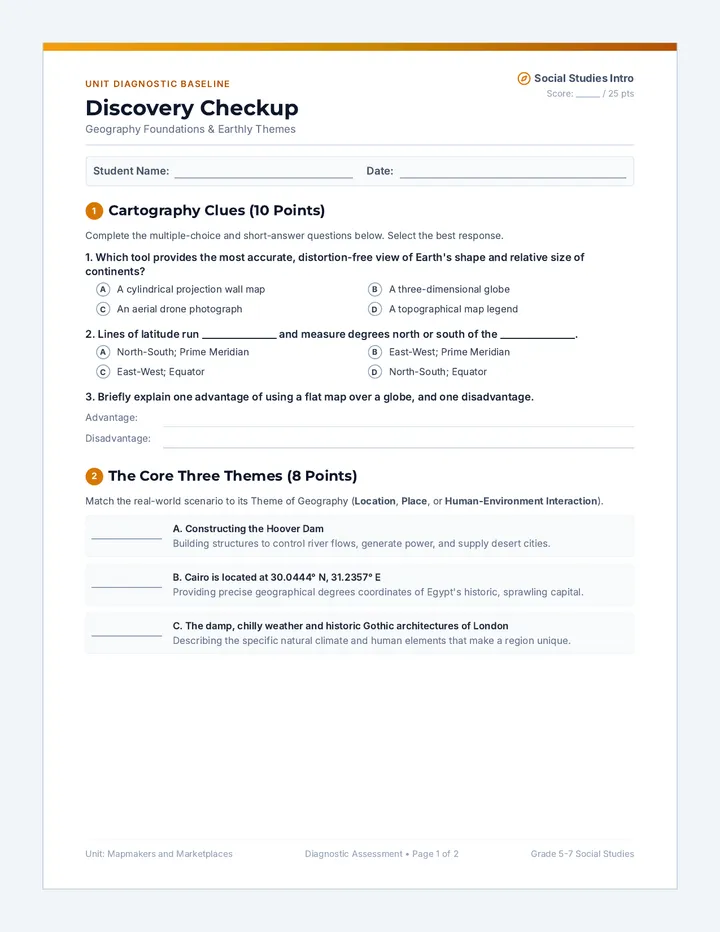
1. The Global Match
Match the traditional garment to its primary culture or country.
__
Kente Cloth
__
Lederhosen
__
Kimono
__
Huipil
__
Blue Jeans
A. Japan
B. United States
C. Ghana
D. Latin America
E. Germany
2. Climate Connection
Why was the Ushanka (Russia) or the Bush Jacket (Jamaica) designed this way? Choose one and explain how the weather shaped its design.
Page 1 of 2
3. Cultural Fusion Design
Imagine you are a world-famous fashion designer. Your task is to create a Fusion Garment that blends styles from two different cultures we studied today.
Selected Culture 1:
Selected Culture 2:
Sketch Your Design Here
The Designer's Note
What special details (beads, symbols, colors) did you include from both cultures?
Page 2 of 2
Garb Guide Answer Key ANSWER KEY
Garb Guide
Teacher Reference: Costume Quest Activity
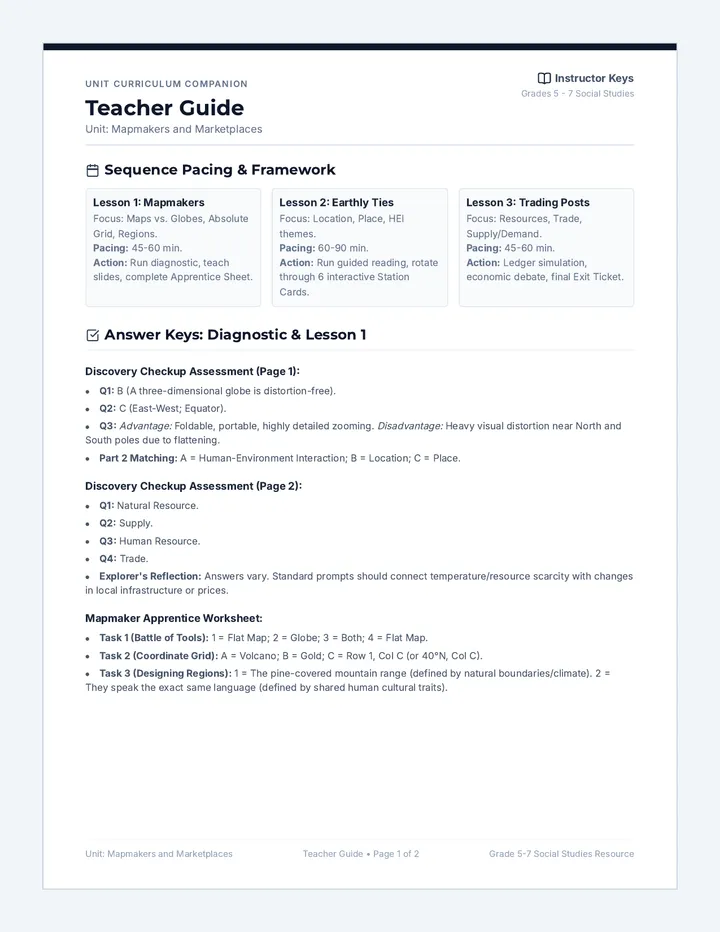
1. The Global Match
C
Kente Cloth
Ghana
E
Lederhosen
Germany
A
Kimono
Japan
D
Huipil
Latin America
B
Blue Jeans
United States
2. Climate Connection
Ushanka (Russia) Sample Answer:
"The Ushanka is designed for the sub-zero winters of Russia. It uses thick fur to trap heat around the head, and the foldable ear flaps are designed to protect the ears and jaw from frostbite and cold winds."
Bush Jacket (Jamaica) Sample Answer:
"The Bush Jacket is made from lightweight cotton to allow air to circulate in the tropical heat of Jamaica. Its short sleeves and loose fit prevent the wearer from overheating while maintaining a formal look."
Grading Note
For the Fusion Design challenge, look for students who have meaningfully combined visual elements. For example: A Kimono (Japan) made with Kente cloth patterns (Ghana), or Lederhosen (Germany) made from blue denim (USA). The "Designer's Note" should explicitly state which cultural symbols or colors they kept.
Interactive Wardrobe Slides World Wardrobe
Global Threads & Cultural Identity
Get ready for a Global Adventure!
More Than Just Fabric
Climate
Protects us from heat and cold.
Identity
Shows who we are.
Turn & Talk
"Look at your neighbor. What is one thing they are wearing that protects them from the weather today?"
Latin America
HUIPIL & PONCHO
The Huipil
A hand-woven tunic with symbols.
The Poncho
An outer layer for mountain warmth.
Action Break!
"The Poncho Pose: Everyone stand up and pretend you are wrapping a thick, warm blanket around your shoulders!"
Native Americans
REGALIA & MOCCASINS
Special Details
Beads, feathers, and fringe aren't just for looks—they show tribal history.
Imagine the Texture:
"If you touched a leather moccasin, would it feel smooth like paper or soft like a blanket?"
Smooth
Soft
Japan: The Kimono
Patterns on a Kimono match the Seasons !
Spring = Flowers
Winter = Cranes
Quick Riddle:
"If you saw a Kimono with bright red leaves, what season would it be?"
Fall? Spring? Summer?
Russia: Beat the Cold
The Ushanka
A thick fur hat with ear flaps. Essential for freezing winters!
Freeze Frame!
"When I say 'BRRR', show me your best shivering pose! When I say 'EAR FLAPS UP', reach for the ceiling!"
Germany: Alpine Style
Lederhosen
Tough leather pants for hard work.
Dirndl
A festive dress for celebrations.
Which would you choose?
A
Working in the fields
B
Dancing at a festival
Ghana: Kente Colors
Each color has a secret meaning:
● Gold = Royalty
● Green = Growing
● Red = Passion
Color Hunt!
"Quietly point to something in the classroom that is GOLD. Now point to something GREEN!"
Jamaica: Island Patterns
Quadrille Dress
Worn for dancing! It features a red and white (checkered) pattern.
Interactive Wardrobe Slides Updated Map Quest World Wardrobe
Global Threads & Cultural Identity
Get ready for a Global Adventure!
Map Quest!
We are visiting 9 amazing places today. As we travel, look for the Map Pin to see where we are!
1. Mexico
2. N. America
3. Japan
4. Afghanistan
5. Russia
6. Germany
7. Ghana
8. Jamaica
9. USA
"Buckle up for our 9-stop tour!"
More Than Just Fabric
Climate
Protects us from heat and cold.
Identity
Shows who we are.
Turn & Talk
"Look at your neighbor. What is one thing they are wearing that protects them from the weather today?"
Mexico
Latin America
The Huipil
A hand-woven tunic with symbols.
The Poncho
An outer layer for mountain warmth.
Action Break!
"The Poncho Pose: Everyone stand up and pretend you are wrapping a thick, warm blanket around your shoulders!"
N. America
Native Americans
Special Details
Beads, feathers, and fringe show tribal history.
Imagine the Texture:
"If you touched a leather moccasin, would it feel smooth like paper or soft like a blanket?"
Smooth
Soft
Japan
Japan: The Kimono
Patterns match the Seasons !
Spring = Flowers
Winter = Cranes
Quick Riddle:
"If you saw a Kimono with bright red leaves, what season would it be?"
Fall? Spring? Summer?
Afghanistan
Afghanistan
Perahan Tunban
A long, loose shirt (Perahan) worn over wide trousers (Tunban). It allows air to move, keeping the wearer cool in the heat!
The Pakol
A soft, round wool hat with a rolled rim. It keeps the head warm in the high, cold mountains.
Air Flow Test
"The Perahan Tunban is loose and breezy. Wave your hands in front of your face like a fan. Can you feel the cool air?"
Russia
Russia: Beat the Cold
The Ushanka
A thick fur hat with ear flaps. Essential for freezing winters!
Costume Quest Activity Updated Afghanistan Costume Quest
Exploring the World's Wardrobe
Name:
Date:
1. The Global Match
Match the traditional garment to its primary culture or country.
__
Kente Cloth
__
Lederhosen
__
Kimono
__
Perahan Tunban
__
Huipil
__
Blue Jeans
A. Japan
B. United States
C. Ghana
D. Latin America
E. Germany
F. Afghanistan
2. Climate Connection
Choose one garment (like the Ushanka , Bush Jacket , or Perahan Tunban ) and explain how the weather shaped its design.
Page 1 of 2
3. Cultural Fusion Design
Imagine you are a world-famous fashion designer. Your task is to create a Fusion Garment that blends styles from two different cultures we studied today.
Selected Culture 1:
Selected Culture 2:
Sketch Your Design Here
The Designer's Note
What special details (beads, symbols, colors) did you include from both cultures?
Page 2 of 2
Garb Guide Answer Key Updated Afghanistan ANSWER KEY
Garb Guide
Teacher Reference: Updated Activity
1. The Global Match
C
Kente Cloth
Ghana
E
Lederhosen
Germany
A
Kimono
Japan
F
Perahan Tunban
Afghanistan
D
Huipil
Lat. Am.
B
Blue Jeans
USA
2. Climate Connection
Perahan Tunban (Afghanistan) Sample Answer:
"The loose-fitting tunic and trousers allow air to circulate around the body, which is essential for staying cool in the intense dry heat of Afghanistan."
Ushanka (Russia) Sample Answer:
"Designed for sub-zero winters; uses thick fur to trap heat and ear flaps to protect against frostbite."
Teacher's Note
When students discuss Afghanistan, remind them that clothing often serves dual purposes: the Perahan Tunban keeps people cool in the heat, while the Pakol (wool hat) is for the cold mountainous regions.
Interactive Wardrobe Full Tour Slides World Wardrobe
Global Threads & Cultural Identity
Get ready for a Global Adventure!
Map Quest!
We are visiting 11 amazing places today. Look for the Map Pin!
1. Mexico
2. N. America
3. Japan
4. Afghanistan
5. Nigeria
6. India
7. Russia
8. Germany
9. Ghana
10. Jamaica
11. USA
More Than Just Fabric
Climate
Protects us from weather.
Identity
Shows who we are.
Turn & Talk
"Look at your neighbor. What is one thing they are wearing that protects them from the weather today?"
Mexico
Latin America
The Huipil
A hand-woven tunic with symbols.
The Poncho
An outer layer for mountain warmth.
Action Break!
"The Poncho Pose: Pretend you are wrapping a thick, warm blanket around your shoulders!"
N. America
Native Americans
Special Details
Beads and feathers show tribal history.
Imagine the Texture:
"If you touched a leather moccasin, would it feel smooth like paper or soft like a blanket?"
Japan
Japan: The Kimono
Patterns match the Seasons !
Spring = Flowers
Winter = Cranes
Quick Riddle:
"If you saw a Kimono with bright red leaves, what season would it be?"
Afghanistan
Afghanistan
Perahan Tunban
Loose shirt and pants to stay cool in the dry heat!
The Pakol
A wool hat for high, cold mountains.
Air Flow Test
"Wave your hands in front of your face like a fan. Can you feel the cool air?"
Nigeria
Nigeria
The Gele
A stunning, elaborate head tie worn by women. It is often made of stiff fabric to hold its shape!
The Agbada
A wide-sleeved grand robe worn by men. It shows importance and celebration.
The Balance Test
"Stand tall and pretend you are wearing a beautiful Gele. Can you walk 3 steps without it 'falling' off?"
Costume Quest Full Tour Activity Costume Quest
Exploring the World's Wardrobe
Name:
Date:
1. The Global Match
Match the traditional garment to its primary culture or country.
__
Kente Cloth
__
Lederhosen
__
Sari
__
Gele
__
Perahan Tunban
__
Blue Jeans
A. Nigeria
B. United States
C. Ghana
D. India
E. Germany
F. Afghanistan
2. Climate Connection
Choose one garment (like the Ushanka , Perahan Tunban , Sari , or Agbada ) and explain how the weather shaped its design.
Page 1 of 2
3. Cultural Fusion Design
Imagine you are a world-famous fashion designer. Your task is to create a Fusion Garment that blends styles from two different cultures we studied today.
Selected Culture 1:
Selected Culture 2:
Sketch Your Design Here
The Designer's Note
What special details (beads, symbols, colors) did you include from both cultures?
Page 2 of 2
Garb Guide Full Tour Answer Key ANSWER KEY
Garb Guide
Full Tour Teacher Reference
1. The Global Match
C
Kente Cloth
Ghana
E
Lederhosen
Germany
D
Sari
India
A
Gele
Nigeria
F
Perahan Tunban
Afghan.
B
Blue Jeans
USA
2. Climate Connection
Sari (India) Sample Answer:
"Saris are made from lightweight cotton or silk, which helps the body stay cool and allows air to flow through the drapes in the hot, humid climate of India."
Agbada (Nigeria) Sample Answer:
"The wide sleeves and loose fit of the Agbada act like a personal fan, letting air move around the body to provide comfort during ceremonies in a tropical climate."
Cultural Sensitivity
When teaching about the Gele or Sari , emphasize that the way these are wrapped is a skilled art form passed down through generations.
Home Country Threads Slides Home Country Threads
A Global Classroom Tour
Traveling to where our families are from!
Our 16-Stop Journey
Mexico
Guatemala
Honduras
El Salvador
Colombia
Brazil
Nigeria
Ghana
Sierra Leone
Afghanistan
India
Japan
Germany
Jamaica
Native Am.
USA
Mexico Guatemala
The Vibrant Huipil
In both Mexico and Guatemala , women wear hand-woven tunics called Huipils .
Symbols in the thread tell stories of nature!
Spot the Difference
"Mexican huipils are often white with bright flowers. Guatemalan ones are often solid colors with geometric shapes!"
Honduras El Salvador
Embroidery & Elegance
Honduras
Famous for the Guayabera (breezy shirt) and intricate Lenca embroidery with high-contrast colors!
El Salvador
Traditional Refajo skirts are wrapped and held with colorful woven belts called Fajas .
Feel the Breeze
"A Guayabera is made of thin linen to keep you cool. Everyone, pretend to fan yourself with your shirt!"
Colombia Brazil
Celebration Colors
Colombia
The Pollera Colorada is a big, ruffled skirt used for Cumbia dancing. It spins like a giant flower!
Brazil
The Baiana costume features long white lace dresses and beautiful turbans worn during festivals.
Twirl Time!
"If you had a giant skirt, how wide could you make it spin? Use your arms to draw a huge circle!"
Nigeria Ghana Sierra Leone
The Art of the Weave
Nigeria
Intricate Gele head ties and wide-sleeved Agbada robes.
Ghana
Royal Kente cloth with patterns that mean "wealth" and "growth."
Sierra Leone
The Ronko is a traditional cotton shirt worn by hunters, dyed in earthy colors.
Can you see the patterns in the classroom that look like these weaves?
Home Country Threads Slides Updated Student Homes Home Country Threads
Our Global Classroom Journey
Traveling to where our families belong!
The Big Tour
We are visiting 15 amazing stops today!
Mexico
Guatemala
Honduras
El Salvador
Colombia
Brazil
Nigeria
Ghana
Sierra Leone
Afghanistan
India
Japan
Germany
Jamaica
USA
Mexico & Guatemala
The Sacred Huipil
Women wear hand-woven tunics with symbols of nature. Guatemalan Huipils often use dark colors with bright patterns!
"Every stitch is a story about the weaver's family and town."
Action Break!
"Pretend you are using a loom. Pull the thread across, then push it down! Left, right, push!"
Honduras & El Salvador
Embroidery & White Cotton
El Salvador
Beautiful Refajo skirts are tied with colorful woven belts called Fajas .
Honduras
The crisp, white Guayabera shirt keeps everyone cool in the sun!
Sun Guard
"Light white clothes reflect the sun. Hold up your hands like a mirror to show how the light bounces off!"
Colombia
Colombia: Pollera Colorada
A giant, ruffled skirt with layers of bright colors. It is the star of the Cumbia dance!
Why all the ruffles?
"The more fabric, the bigger the spin!"
Twirl Alert!
"Everyone stand up and spin once in a circle. Imagine your skirt spreading out like a fan!"
Brazil
Brazil: Baiana de Acarajé
Lace & Turbans
Traditional outfits from Bahia feature white lace dresses and beautifully wrapped turbans.
Did you know?
The white color represents peace and purity in the Afro-Brazilian tradition.
Nigeria
Nigeria: Gele & Agbada
The Gele
A grand head tie that stands tall like a crown!
The Agbada
A wide robe that makes the wearer look powerful and strong.
The Balance Challenge
"Walk with your head high like you are wearing a 2-foot tall Gele. Don't let it fall!"
Home Threads Activity Home Threads Activity
Connecting Our Global Families
Name:
Date:
1. The Global Match
Match the special garment or detail to the country it comes from.
__
Pollera Colorada (Spinning Skirt)
__
Gele (Tall Head Tie)
__
Ronko (Hunter's Shirt)
__
Guayabera (Breezy White Shirt)
__
Huipil (Hand-woven Tunic)
__
Refajo & Faja (Skirt and Belt)
__
Lace & Turbans
A. Nigeria
B. Guatemala / Mexico
C. El Salvador
D. Sierra Leone
E. Colombia
F. Brazil
G. Honduras
2. Family Threads
Which country on our tour is special to your family? Describe one detail about their clothing that you find interesting (like a color, a pattern, or how it feels).
Page 1 of 2
3. World Fusion Designer
Pick two countries from our tour. Combine their clothing styles to create a new, Fusion Garment !
First Country:
Second Country:
Sketch Your Fusion Design
The Designer's Note
What did you take from each country? (Example: "I used the Huipil patterns with the Agbada sleeves.")
Page 2 of 2
Home Threads Answer Key ANSWER KEY
Home Threads Key
Teacher Guide: Student Home Countries
1. The Global Match
E
Pollera Colorada
Colombia
A
Gele
Nigeria
D
Ronko
Sierra Leone
G
Guayabera
Honduras
B
Huipil
Guat. / Mexico
C
Refajo & Faja
El Salvador
F
Lace & Turbans
Brazil
Classroom Strategy
When students are completing the Family Threads reflection, encourage them to share their answers with the class. This is a powerful moment for students to see their own cultures reflected and celebrated as the "experts" in the room!
Home Country Threads Slides Updated Student Homes Final Home Threads
Our Global Classroom Journey
Traveling to where our families belong!
The Big Tour
We are visiting 16 amazing stops today!
Mexico
Guatemala
Honduras
El Salvador
Colombia
Brazil
Nigeria
Ghana
Sierra Leone
Afghanistan
India
Japan
Germany
Jamaica
Native Am.
USA
Our Families' Styles
Climate
Protects our families from heat and cold.
Identity
Shows our history and where we are from.
Family Talk
"Look at your neighbor. Can you guess what country their family might be from just by looking at their smile?"
Mexico & Guatemala
The Sacred Huipil
Hand-woven tunics filled with symbols like birds and flowers. Guatemalan huipils are famous for their dark backdrops and neon patterns!
"Every weaver puts a piece of their heart into the loom."
Loom Motion
"Pretend you are weaving. Pull the thread, push it tight! Left, right, push!"
Honduras & El Salvador
White Cotton & Colorful Fajas
El Salvador: Skirts (Refajos) are tied with bright belts (Fajas).
Honduras: Light white Guayaberas keep our families cool in the tropical sun!
Cool Down
"Light clothes reflect the sun like a mirror. Show me your 'cool as a breeze' pose!"
Colombia
Colombia: Pollera Colorada
Giant ruffled skirts that spin like a flower during the Cumbia dance. Red, yellow, and blue are common!
Spin Cycle!
"Everyone stand up and do a slow, graceful twirl. Imagine your skirt spreading wide!"
Brazil
Brazil: Lace & Turbans
In Bahia, traditional costumes feature white lace dresses and beautiful turbans. They represent peace and family history.
"Traditional white lace feels like a soft breeze."
Nigeria & Ghana
West African Weaving
Nigeria: Tall Geles and royal Agbada robes.
Ghana: Hand-woven Kente cloth with gold, red, and green.
Home Country Threads Slides Updated Student Homes Final Revised Home Threads
Our Global Classroom Journey
Traveling to where our families belong!
The Big Tour
We are visiting 16 amazing stops today!
Mexico
Guatemala
Honduras
El Salvador
Colombia
Brazil
Nigeria
Ghana
Sierra Leone
Afghanistan
India
Japan
Native Am.
Germany
Jamaica
USA
Mexico & Guatemala
The Sacred Huipil
Hand-woven tunics filled with symbols like birds and flowers. Guatemalan huipils are famous for their dark backdrops and neon patterns!
"Every weaver puts a piece of their heart into the loom."
Loom Motion
"Pretend you are weaving. Pull the thread, push it tight! Left, right, push!"
Honduras & El Salvador
White Cotton & Colorful Fajas
El Salvador: Skirts (Refajos) are tied with bright belts (Fajas).
Honduras: Light white Guayaberas keep our families cool in the tropical sun!
Cool Down
"Light clothes reflect the sun like a mirror. Show me your 'cool as a breeze' pose!"
Colombia
Colombia: Pollera Colorada
Giant ruffled skirts that spin like a flower during the Cumbia dance. Red, yellow, and blue are common!
Spin Cycle!
"Everyone stand up and do a slow, graceful twirl. Imagine your skirt spreading wide!"
Brazil
Brazil: Lace & Turbans
In Bahia, traditional costumes feature white lace dresses and beautifully wrapped turbans. They represent peace and family history.
"Traditional white lace feels like a soft breeze."
Nigeria
Nigeria: Gele & Agbada
The Gele
A grand head tie that stands tall like a crown!
The Agbada
A wide robe that makes the wearer look powerful and strong.
The Balance Challenge
"Walk with your head high like you are wearing a 2-foot tall Gele. Don't let it fall!"
Sierra Leone
Sierra Leone: Country Cloth
The Ronko
A traditional hunter's shirt made of heavy cotton. It is dyed with local leaves and roots for a rich, earthy color.
World Wardrobe Presentation World Wardrobe
Global Threads & Cultural Identity
Traveling to where our families belong!
The Big Tour
We are visiting 16 amazing stops today!
Mexico
Guatemala
Honduras
El Salvador
Colombia
Brazil
Nigeria
Ghana
Sierra Leone
Afghanistan
India
Japan
Native America
Germany
Jamaica
USA
Our Families' Styles
Climate
Protects our families from weather.
Identity
Shows our history and who we are.
Family Talk
"Look at your neighbor. Can you guess one reason why people wear different clothes in different parts of the world?"
Mexico & Guatemala
The Sacred Huipil
Hand-woven tunics filled with symbols like birds and flowers. Guatemalan huipils are famous for their dark backdrops and neon patterns!
"Every weaver puts a piece of their heart into the loom."
Loom Motion
"Pretend you are weaving. Pull the thread, push it tight! Left, right, push!"
Honduras & El Salvador
White Cotton & Colorful Fajas
El Salvador: Skirts (Refajos) are tied with bright belts (Fajas).
Honduras: Light white Guayaberas keep our families cool in the tropical sun!
Cool Down
"Light clothes reflect the sun like a mirror. Show me your 'cool as a breeze' pose!"
Colombia
Colombia: Pollera Colorada
Giant ruffled skirts that spin like a flower during the Cumbia dance. Red, yellow, and blue are common!
Spin Cycle!
"Everyone stand up and do a slow, graceful twirl. Imagine your skirt spreading wide!"
Brazil
Brazil: Lace & Turbans
In Bahia, traditional costumes feature white lace dresses and beautifully wrapped turbans. They represent peace and family history.
"Traditional white lace feels like a soft breeze."
Nigeria & Ghana
West African Weaving
Nigeria: Tall Geles and royal Agbada robes.
Ghana: Hand-woven Kente cloth with gold, red, and green.
World Wardrobe Activity Final World Wardrobe Activity
Exploring Global Threads & Identity
Name:
Date:
1. The Global Match
Match the garment to the country or culture where it belongs.
__
Huipil (Woven Tunic)
__
Pollera Colorada (Spinning Skirt)
__
Lace & Turbans
__
Gele (Head Tie)
__
Ronko (Hunter's Shirt)
__
Perahan Tunban (Loose Trousers)
__
Sari (Wrapped Cloth)
__
Kimono (Seasonal Robe)
__
Blue Jeans
__
Moccasins (Beaded Leather)
A. Brazil
B. Colombia
C. Japan
D. Afghanistan
E. Nigeria
F. USA
G. Sierra Leone
H. Mexico / Guatemala
I. India
J. Native America
2. Family Threads
Which country on our tour is special to your family? Describe one detail about their clothing that you find interesting (like a pattern, color, or fabric).
Page 1 of 2
3. World Fusion Designer
Pick two countries from our tour. Combine their clothing styles to create a new, Fusion Garment !
First Country:
Second Country:
Sketch Your Fusion Design
The Designer's Note
What did you take from each country? (Example: "I used the Sari fabric to make a Poncho.")
Page 2 of 2
World Wardrobe Answer Key Final ANSWER KEY
World Wardrobe Key
Teacher Reference: 16-Stop Global Tour
1. The Global Match
Huipil
H
Pollera Colorada
B
Lace & Turbans
A
Gele
E
Ronko
G
Perahan Tunban
D
Sari
I
Kimono
C
Blue Jeans
F
Moccasins
J
A: Brazil
B: Colombia
C: Japan
D: Afghan.
E: Nigeria
F: USA
G: S. Leone
H: Mex/Guat
I: India
J: Native Am
Instructional Tip
This activity focuses on 10 of the 16 stops to keep the matching challenge manageable for elementary students. For the Family Threads section, look for students to use descriptive sensory words (soft, breezy, bright, heavy ) that connect the clothing to climate or tradition.
World Wardrobe Activity Updated Comprehensive World Wardrobe Activity
Exploring Our Families' Global Threads
Name:
Date:
1. The Big Global Match
Match the special garment or detail to the country or group it comes from.
__
Huipil (Hand-woven Tunic)
__
Guayabera (Breezy White Shirt)
__
Pollera Colorada (Spinning Skirt)
__
White Lace dresses & Turbans
__
Gele (Stiff Head Tie)
__
Kente Cloth (Royal Weave)
__
Ronko (Hunter's earthy shirt)
__
Perahan Tunban (Loose Trousers)
__
Sari (9-yard wrapped silk)
__
Kimono (T-shaped Seasonal Robe)
__
Moccasins (Beaded Leather)
__
Blue Jeans (Tough Miners' Pants)
A. Afghanistan
B. Brazil
C. Colombia
D. Ghana
E. Honduras / El Salvador
F. India
G. Japan
H. Mexico / Guatemala
I. Native America
J. Nigeria
K. Sierra Leone
L. USA
2. Family Threads
Which country or culture on our tour is most special to your family? Describe one detail about its clothing that you think is amazing (like a pattern, a fabric, or a color).
Page 1 of 2
3. World Fusion Designer
Pick two cultures from our global tour. Combine their clothing styles to create a brand new Fusion Garment !
First Country:
Second Country:
Sketch Your Fusion Design Here
The Designer's Note
What did you take from each culture? (Example: "I used the Gele's height with the Huipil's flower patterns.")
Page 2 of 2
World Wardrobe Answer Key Comprehensive Final Answer Key
World Wardrobe Key
Teacher Reference: Comprehensive 12-Item Match
1. The Global Match
Huipil
Mex/Guat H
Guayabera
Hond/El Sal E
Pollera Colorada
Colombia C
Lace & Turbans
Brazil B
Gele
Nigeria J
Kente Cloth
Ghana D
Ronko
Sierra Leone K
Perahan Tunban
Afghanistan A
Sari
India F
Kimono
Japan G
Moccasins
Native Am. I
Blue Jeans
USA L
2. Family Threads Note
This section is open-ended and subjective. Encourage students to share their personal family connections. If a student's family is not from one of the countries listed, they can discuss a country they were particularly interested in during the presentation.
Fusion Design Evaluation
Grade based on creativity and the ability to explain why they chose those two elements. For example: "A Huipil (Mexico) with long Agbada (Nigeria) sleeves." The "Designer's Note" should explicitly name the cultures and the specific features borrowed from each.
World Wardrobe Presentation Revised World Wardrobe
Global Threads & Cultural Identity
Traveling to where our families belong!
The Big Tour
We are visiting 16 amazing stops today!
Mexico
Guatemala
Honduras
El Salvador
Colombia
Brazil
Nigeria
Ghana
Sierra Leone
Afghanistan
India
Japan
Native America
Germany
Jamaica
USA
Our Families' Styles
Climate
Protects our families from weather.
Identity
Shows our history and who we are.
Family Talk
"Look at your neighbor. Can you guess one reason why people wear different clothes in different parts of the world?"
Mexico & Guatemala
The Sacred Huipil
Hand-woven tunics filled with symbols like birds and flowers. Guatemalan huipils are famous for their dark backdrops and neon patterns!
"Every weaver puts a piece of their heart into the loom."
Loom Motion
"Pretend you are weaving. Pull the thread, push it tight! Left, right, push!"
Honduras & El Salvador
White Cotton & Colorful Fajas
El Salvador: Skirts (Refajos) are tied with bright belts (Fajas).
Honduras: Light white Guayaberas keep our families cool in the tropical sun!
Cool Down
"Light clothes reflect the sun like a mirror. Show me your 'cool as a breeze' pose!"
Colombia
Colombia: Pollera Colorada
Giant ruffled skirts that spin like a flower during the Cumbia dance. Red, yellow, and blue are common!
Spin Cycle!
"Everyone stand up and do a slow, graceful twirl. Imagine your skirt spreading wide!"
Brazil
Brazil: Lace & Turbans
In Bahia, traditional garments feature white lace dresses and beautifully wrapped turbans. They represent peace and family history.
"Traditional white lace feels like a soft breeze."
Nigeria & Ghana
West African Weaving
Nigeria: Tall Geles and royal Agbada robes.
Ghana: Hand-woven Kente cloth with gold, red, and green.
World Wardrobe Presentation Revised Sensitive World Wardrobe
Global Threads & Cultural Identity
Exploring the threads that connect us!
Our 16 Stops
We are visiting 16 amazing places today!
Mexico
Guatemala
Honduras
El Salvador
Colombia
Brazil
Nigeria
Ghana
Sierra Leone
Afghanistan
India
Japan
Native American
Germany
Jamaica
USA
Clothing & Culture
Climate
How the weather affects what we wear.
Identity
How clothing tells the story of who we are.
Think & Share
"Look at what you are wearing today. What is one reason you or your family chose that clothing?"
Mexico & Guatemala
The Sacred Huipil
Hand-woven garments filled with symbols like birds and flowers. These garments carry the traditions of the weaver's community.
Symbols in the thread tell stories of the natural world.
Loom Motion
"Pretend you are using a backstrap loom. Pull the thread, push it tight! Left, right, push!"
Honduras & El Salvador
Refajo & Guayabera
El Salvador: Skirts called Refajos are often held with vibrant woven belts.
Honduras: Light cotton Guayabera shirts provide comfort in warm climates.
Reflect the Heat
"Light-colored fabrics can reflect sunlight. Hold up your hands like a mirror to show how light bounces off!"
Colombia
The Pollera Colorada
Wide, layered skirts used for the traditional Cumbia dance. The layers of fabric create a beautiful spinning motion.
Spin Gracefully
"Everyone stand up and do one slow, careful turn. Imagine the weight of the fabric spinning with you!"
Brazil
Lace & Tradition
In Bahia, traditional attire often features delicate white lace and wrapped turbans, reflecting a rich heritage.
White fabric is often chosen to symbolize peace.
Nigeria & Ghana
West African Artistry
Nigeria: Tall head ties called Geles and flowing Agbada robes.
Ghana: Kente cloth, woven with patterns that represent growth and wealth.