Culminating fluency practice using decodable passages and peer feedback, focusing on reading rate, accuracy, and self-correction strategies.
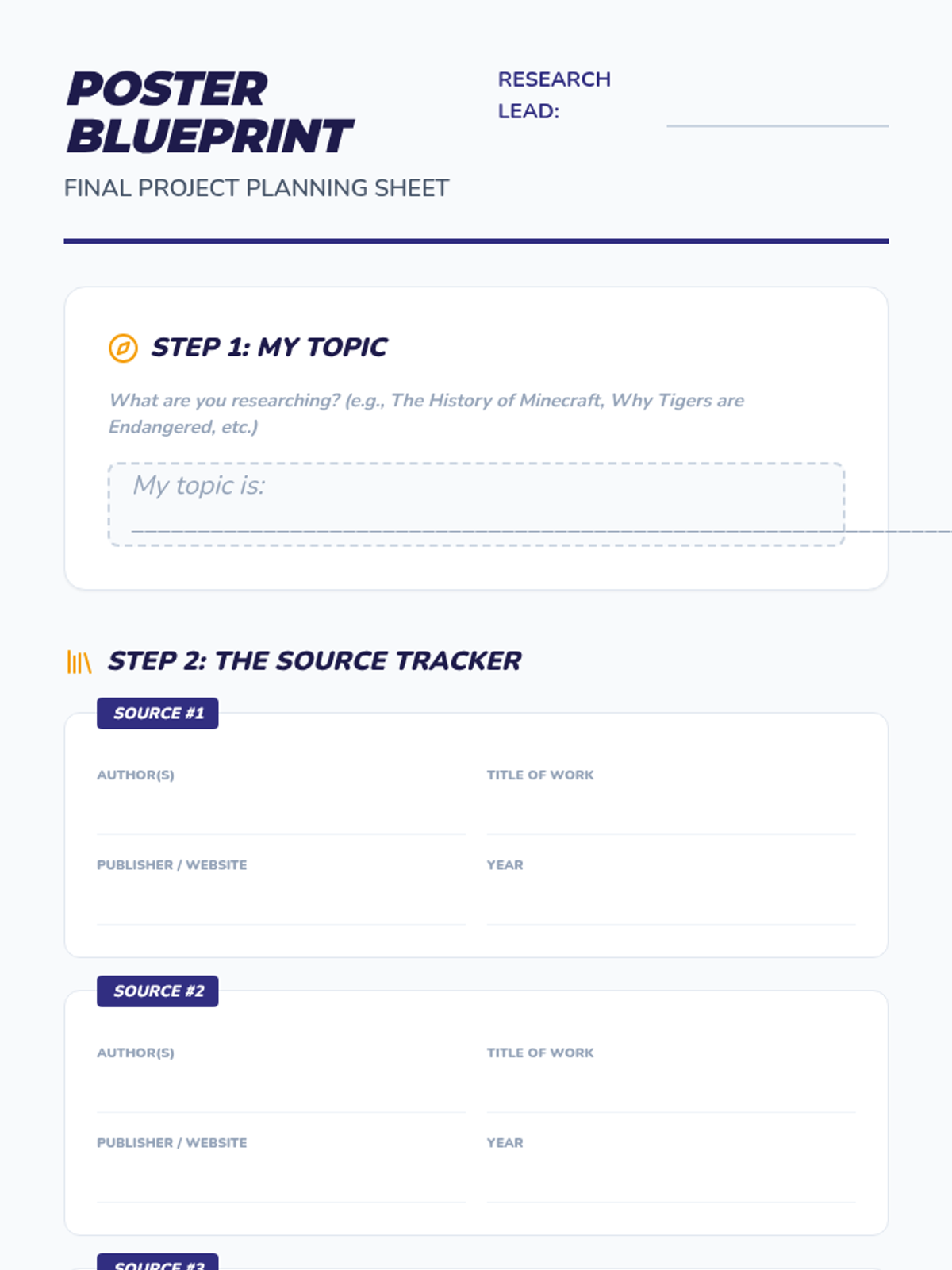
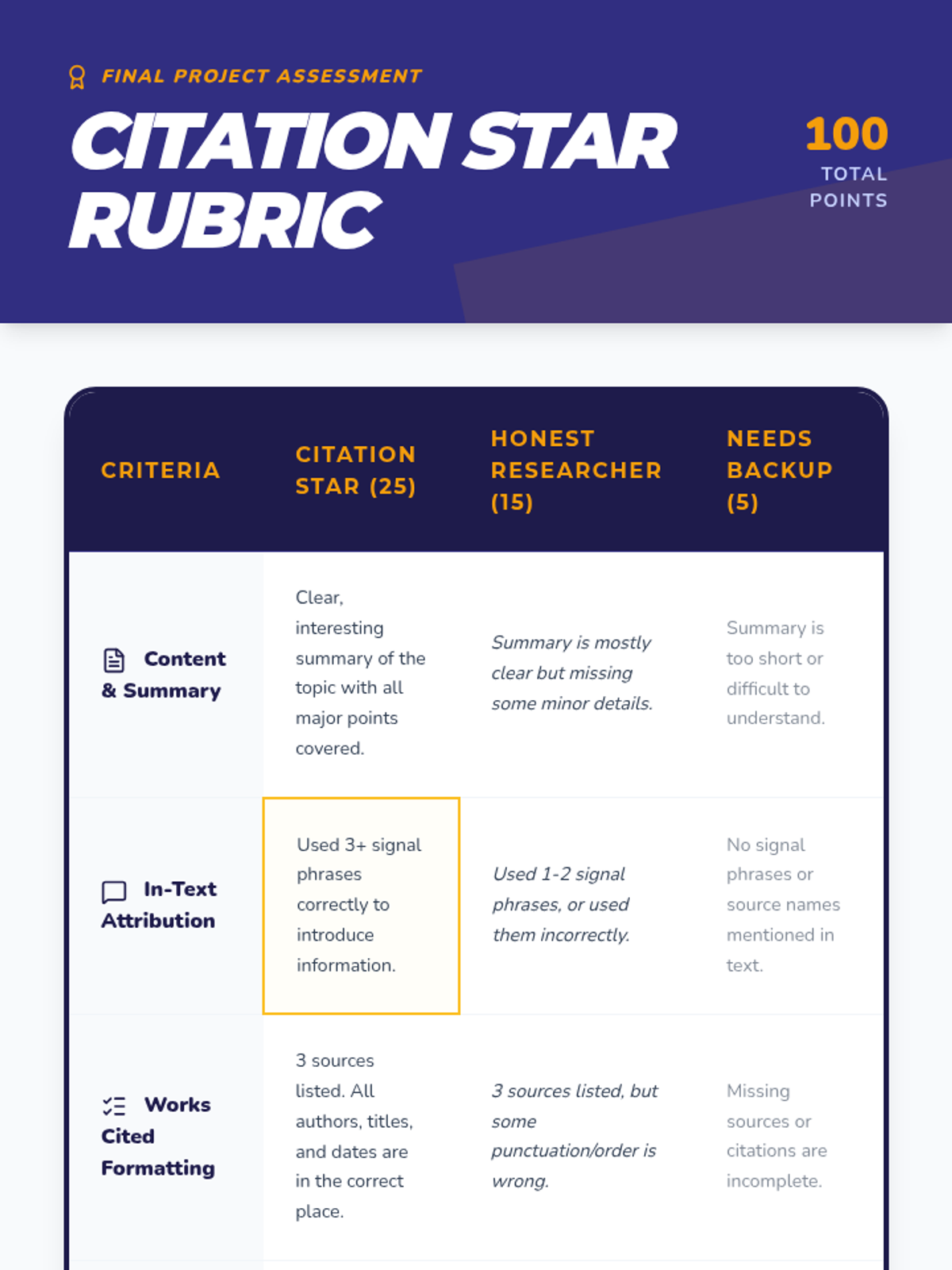
In this final project-based lesson, students synthesize their learning by creating a "Research Credits" poster. They select a topic of interest, find three sources, summarize key information, and produce a perfectly formatted Works Cited section.
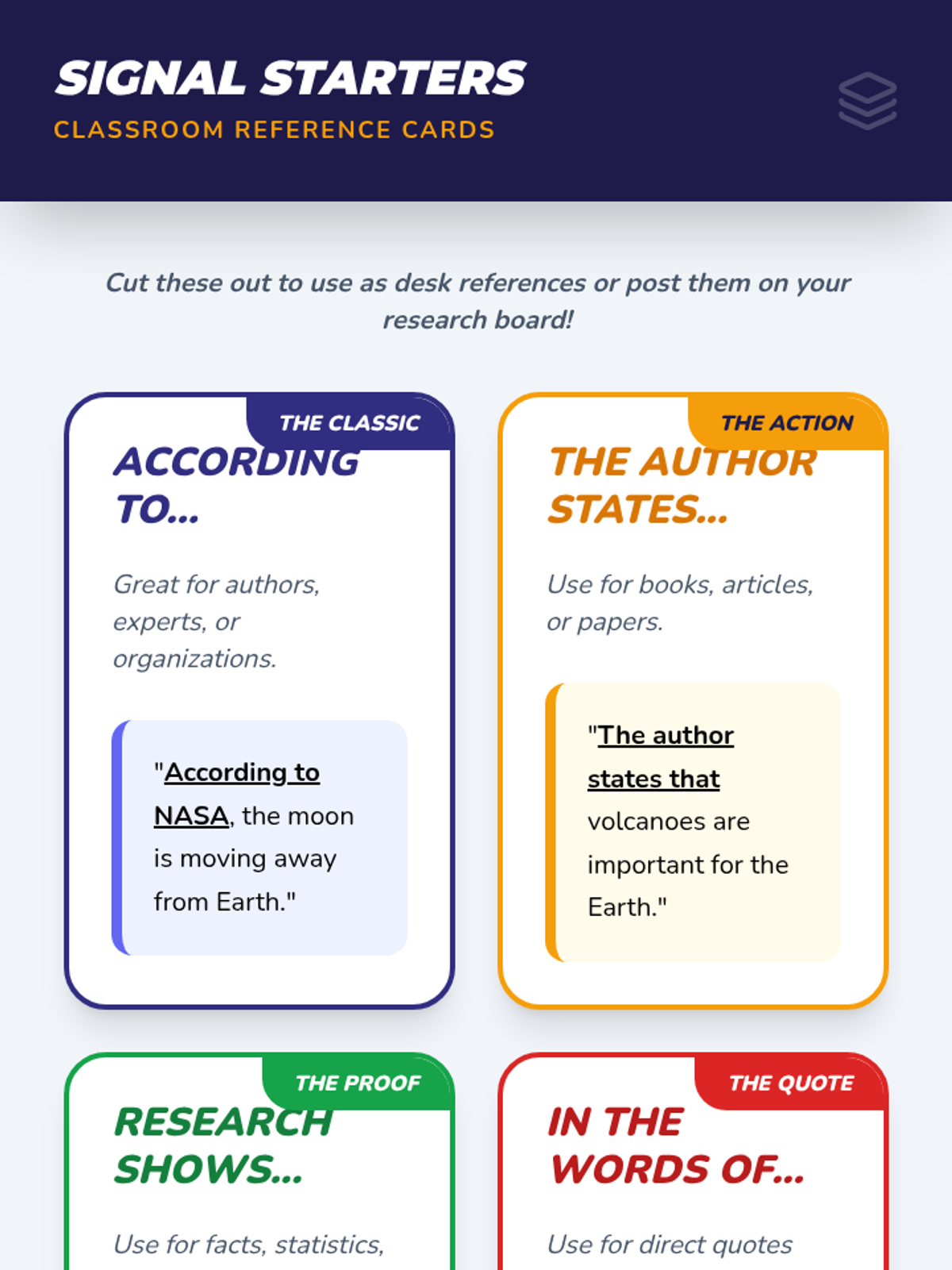
Students learn the mechanics of in-text attribution, practicing how to introduce sources using "signal phrases" (e.g., 'According to...'). They understand how to bridge the gap between their own ideas and those of external experts.
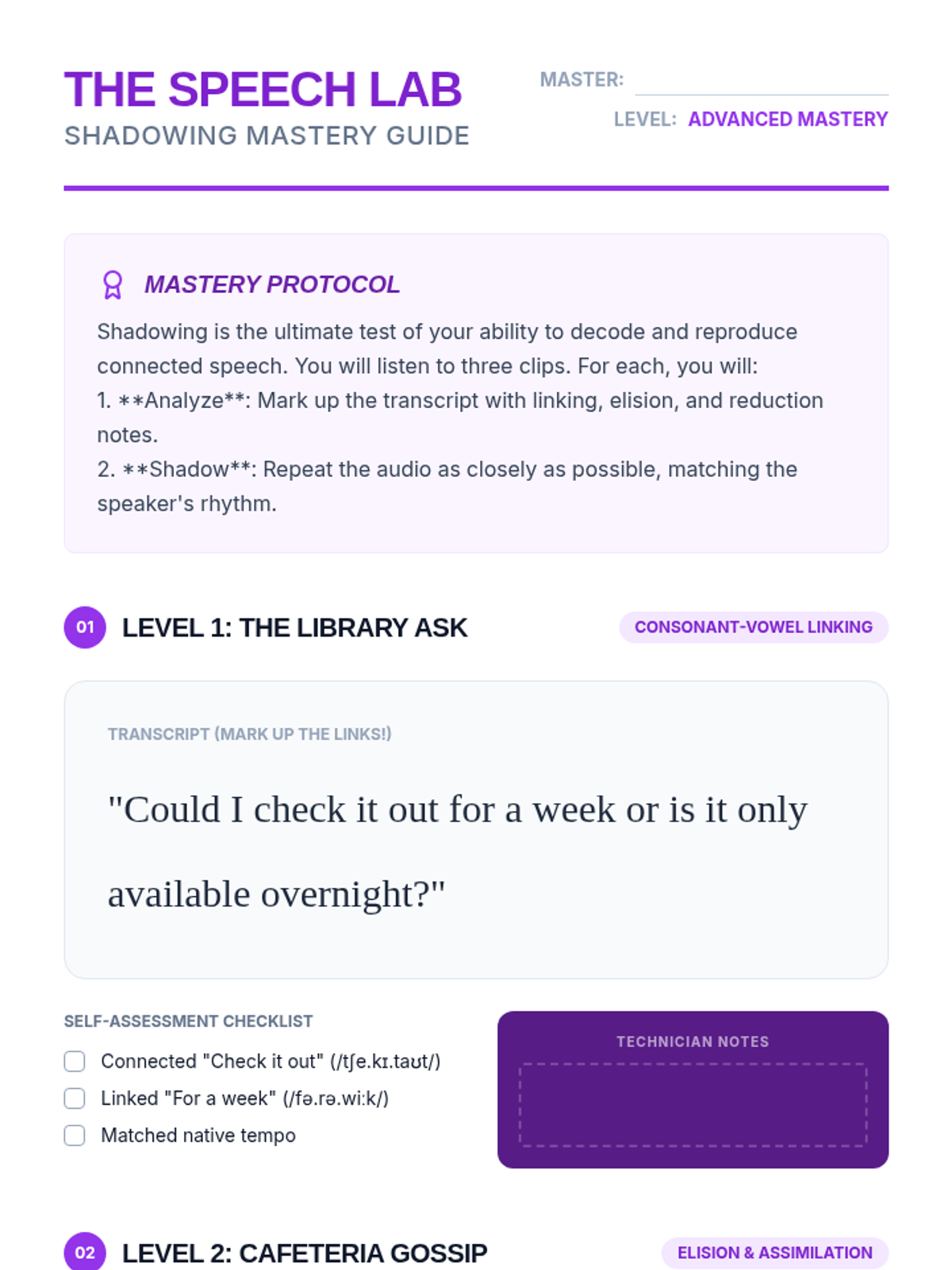
Students engage in a 'shadowing' technique, repeating audio immediately after hearing it to internalize the rhythm and flow of connected speech. This active processing reinforces their ability to predict and process sound streams.
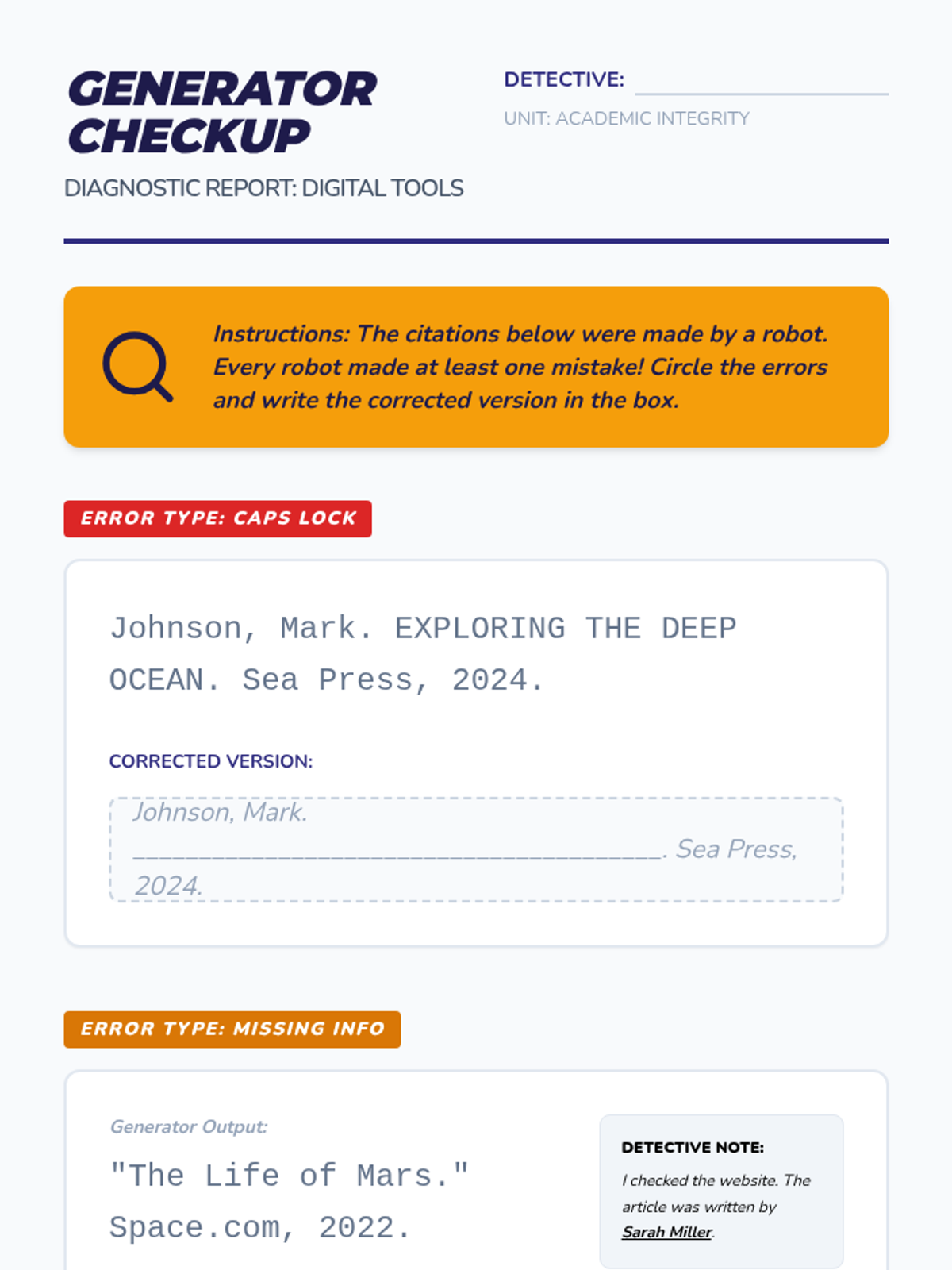
Students learn the benefits and risks of using digital citation tools. This lesson focuses on identifying common machine errors, such as capitalization issues and missing data, and emphasizes student accountability for final accuracy.
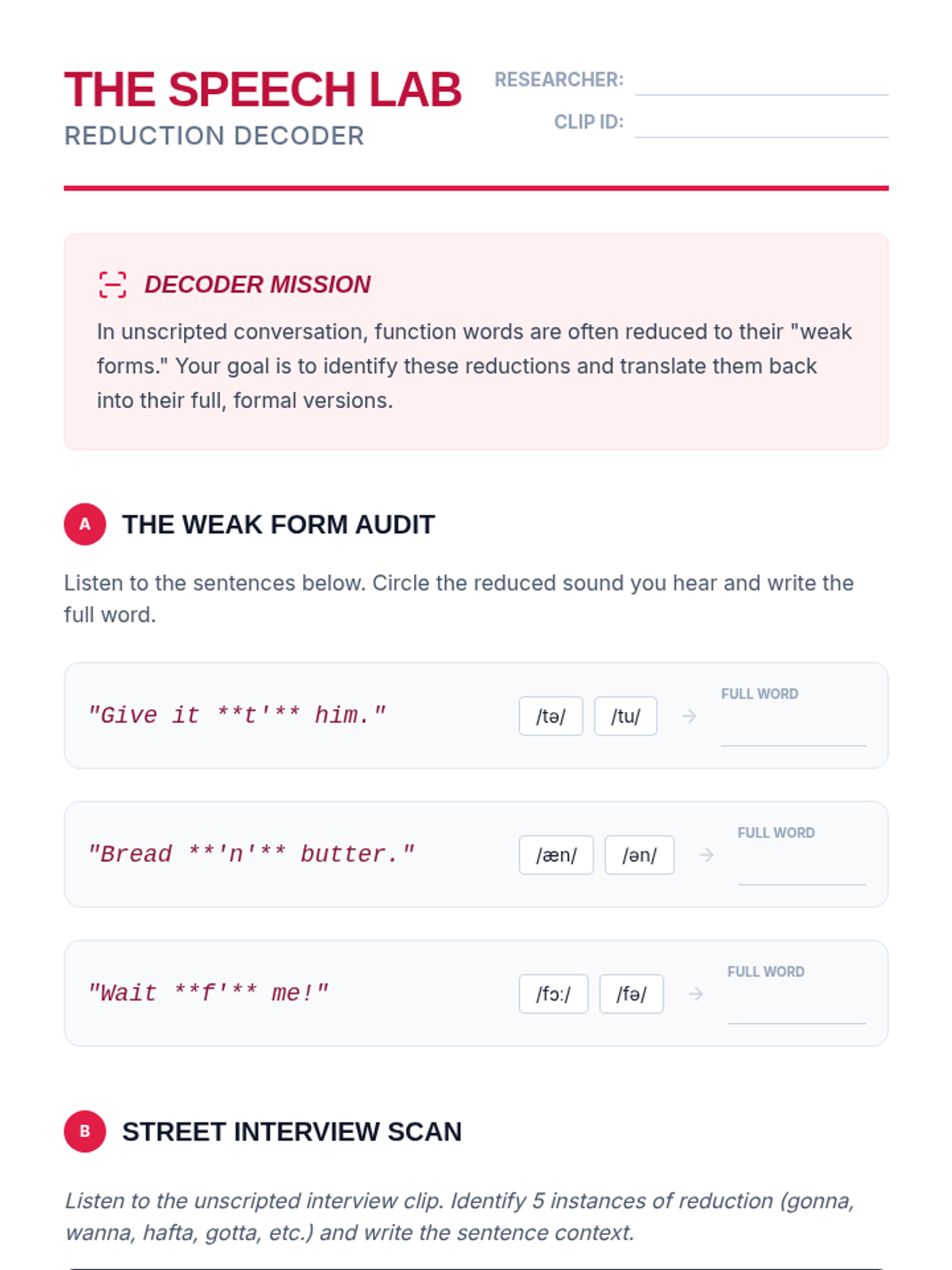
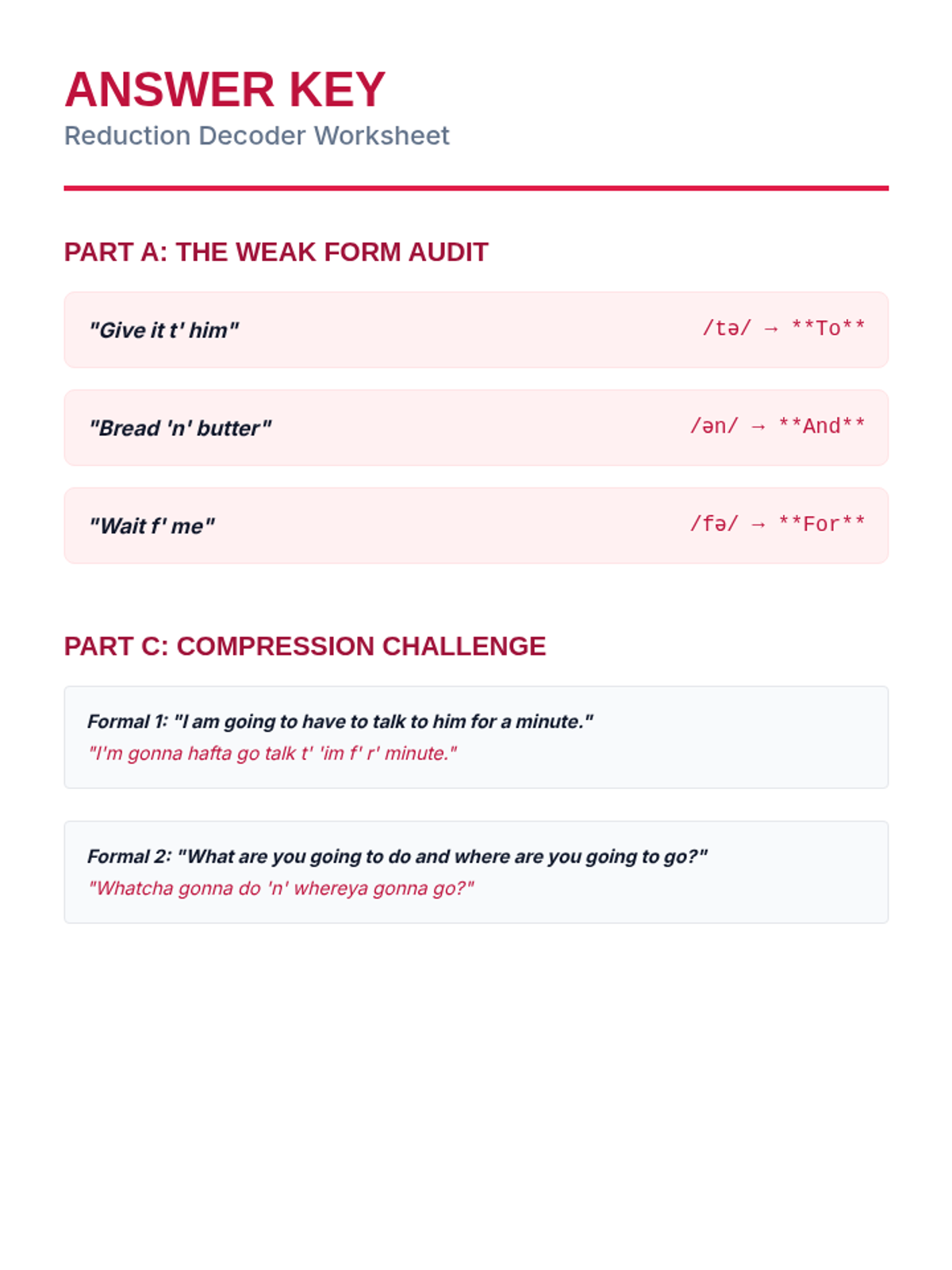
Focusing on function words, this lesson tackles common reductions like 'gonna,' 'wanna,' and weak forms of auxiliary verbs. Students analyze unscripted interviews to catch these reductions in context.
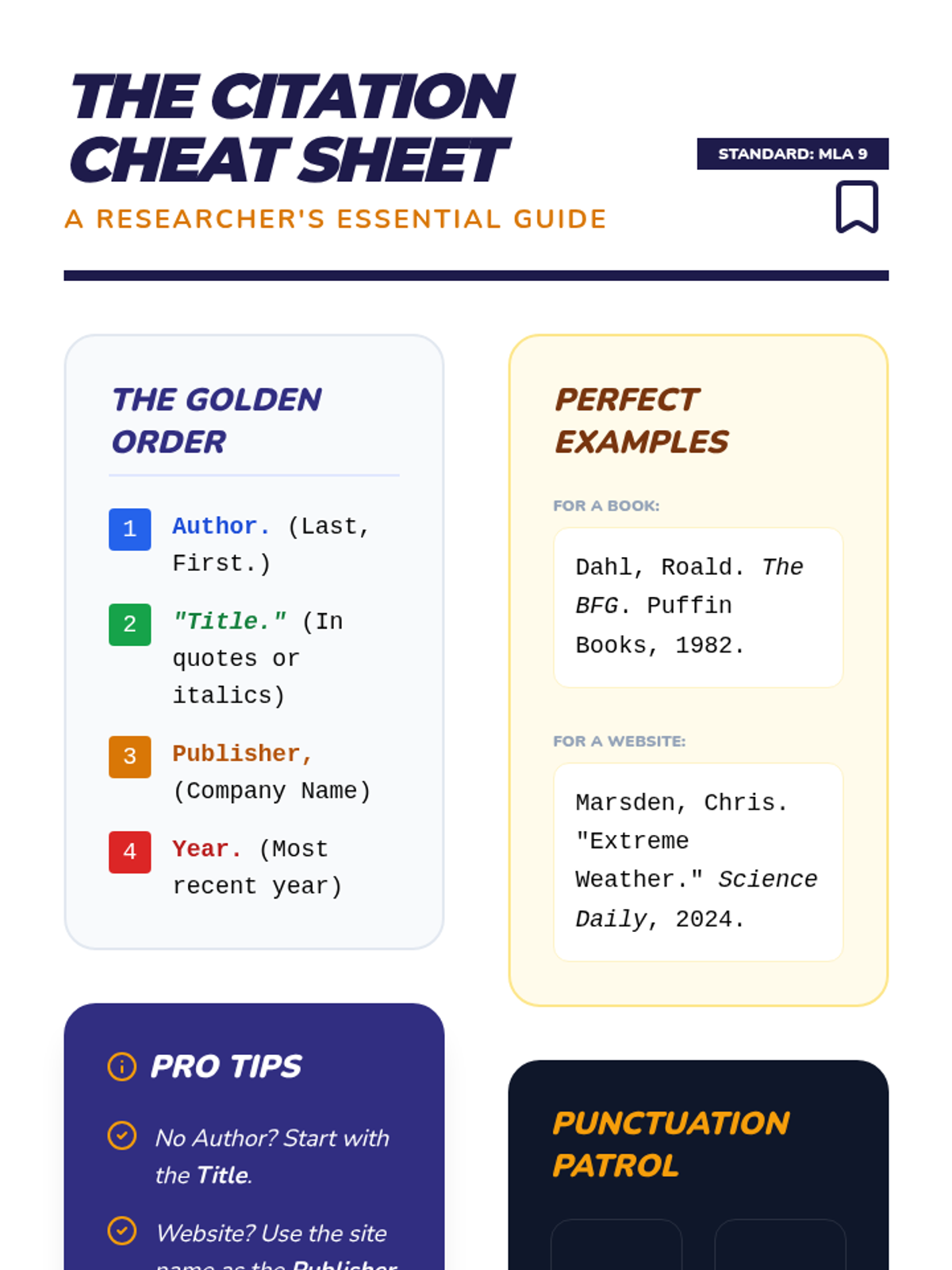
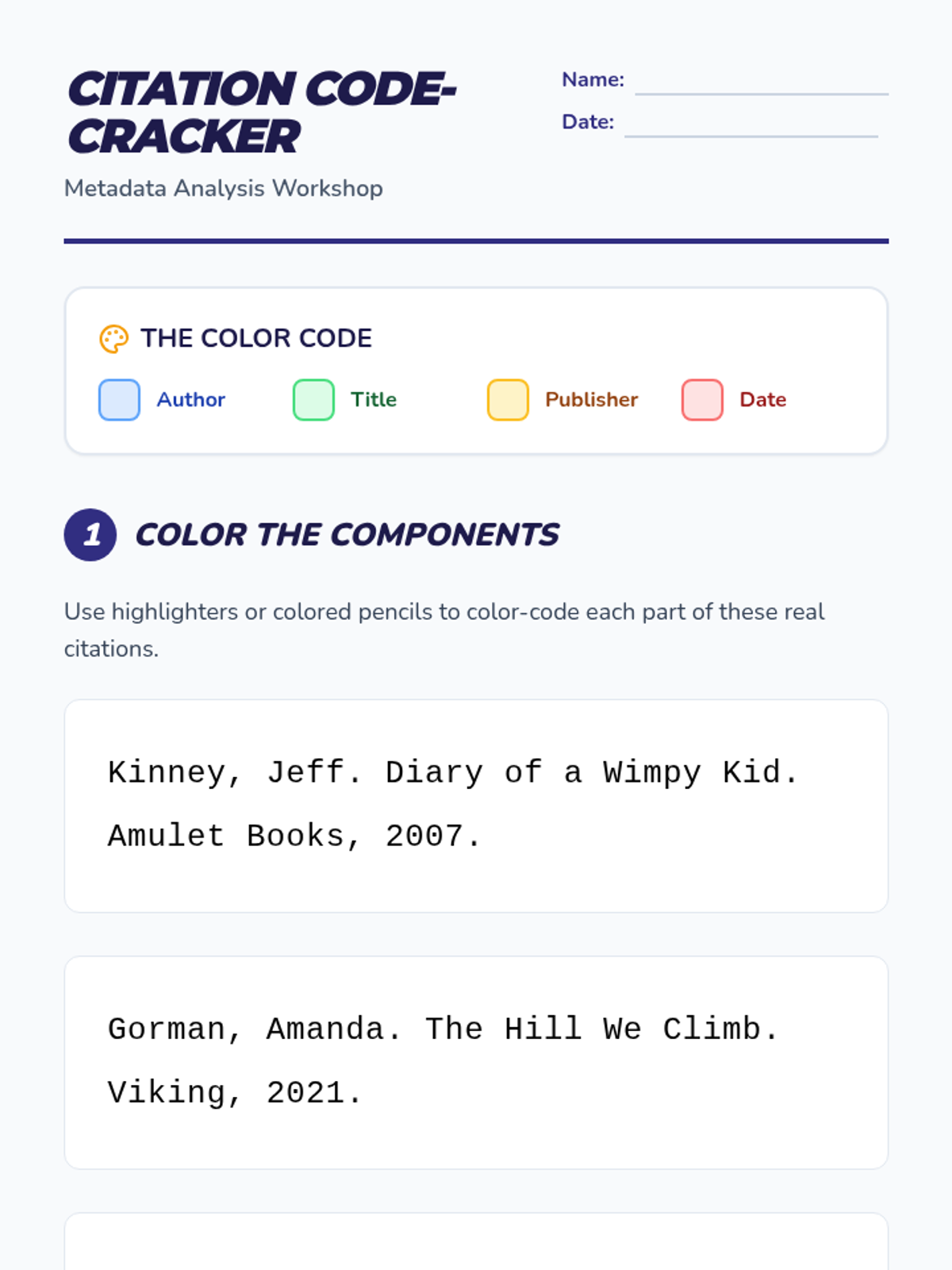
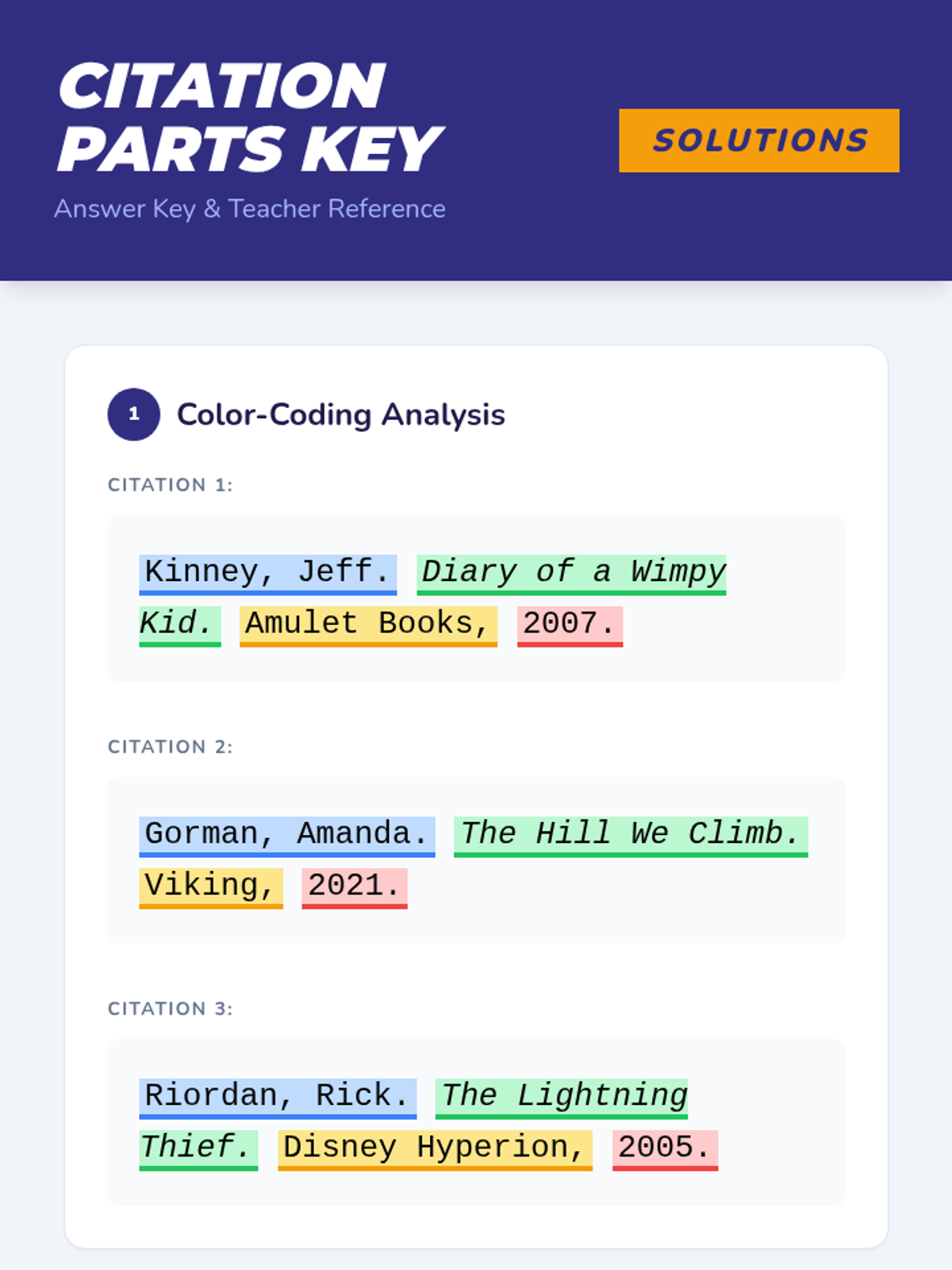
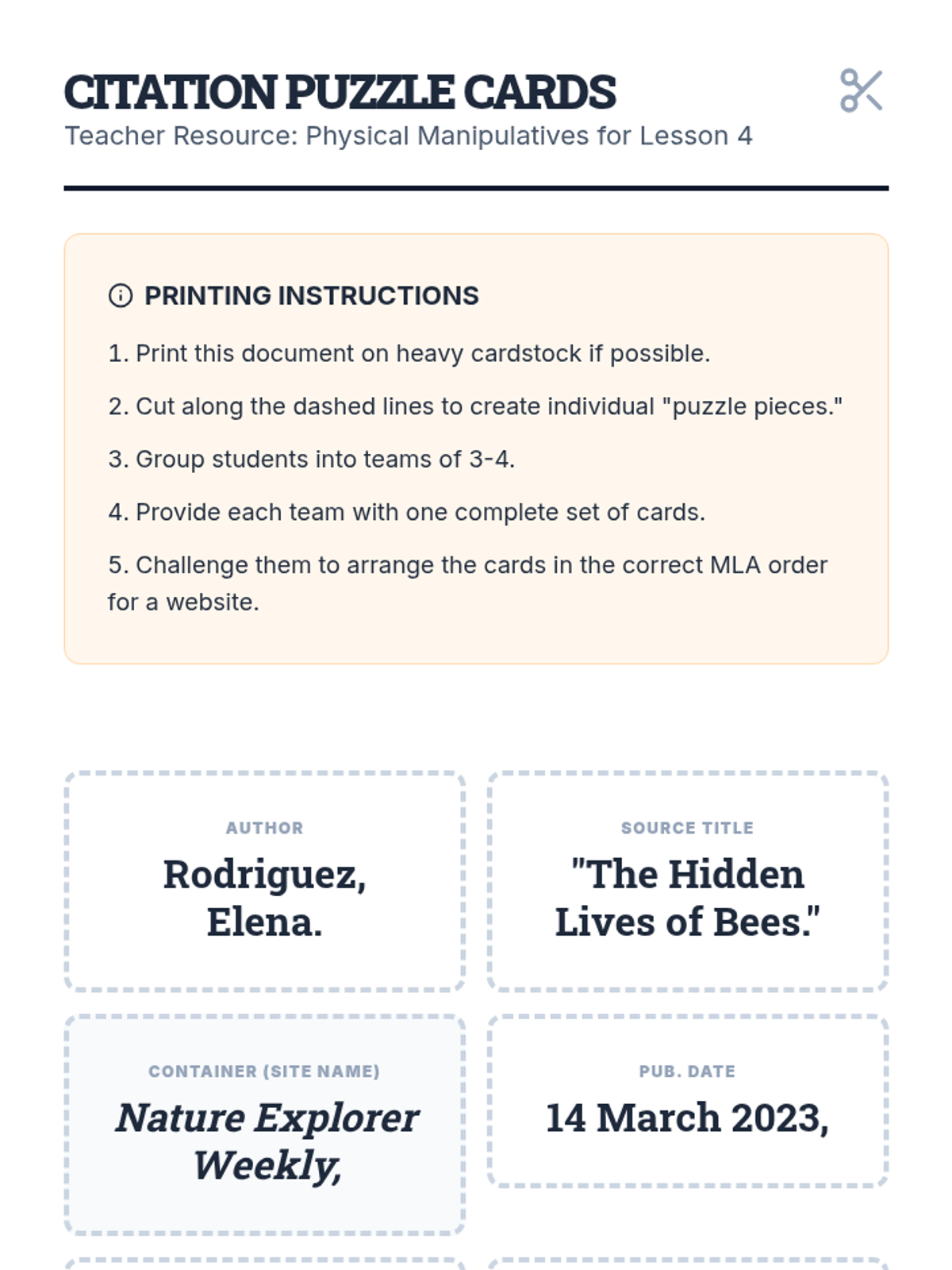
Students learn to identify and format the four core elements of an MLA citation: Author, Title, Publisher, and Date. They use color-coding to demystify the punctuation and structure of citations.
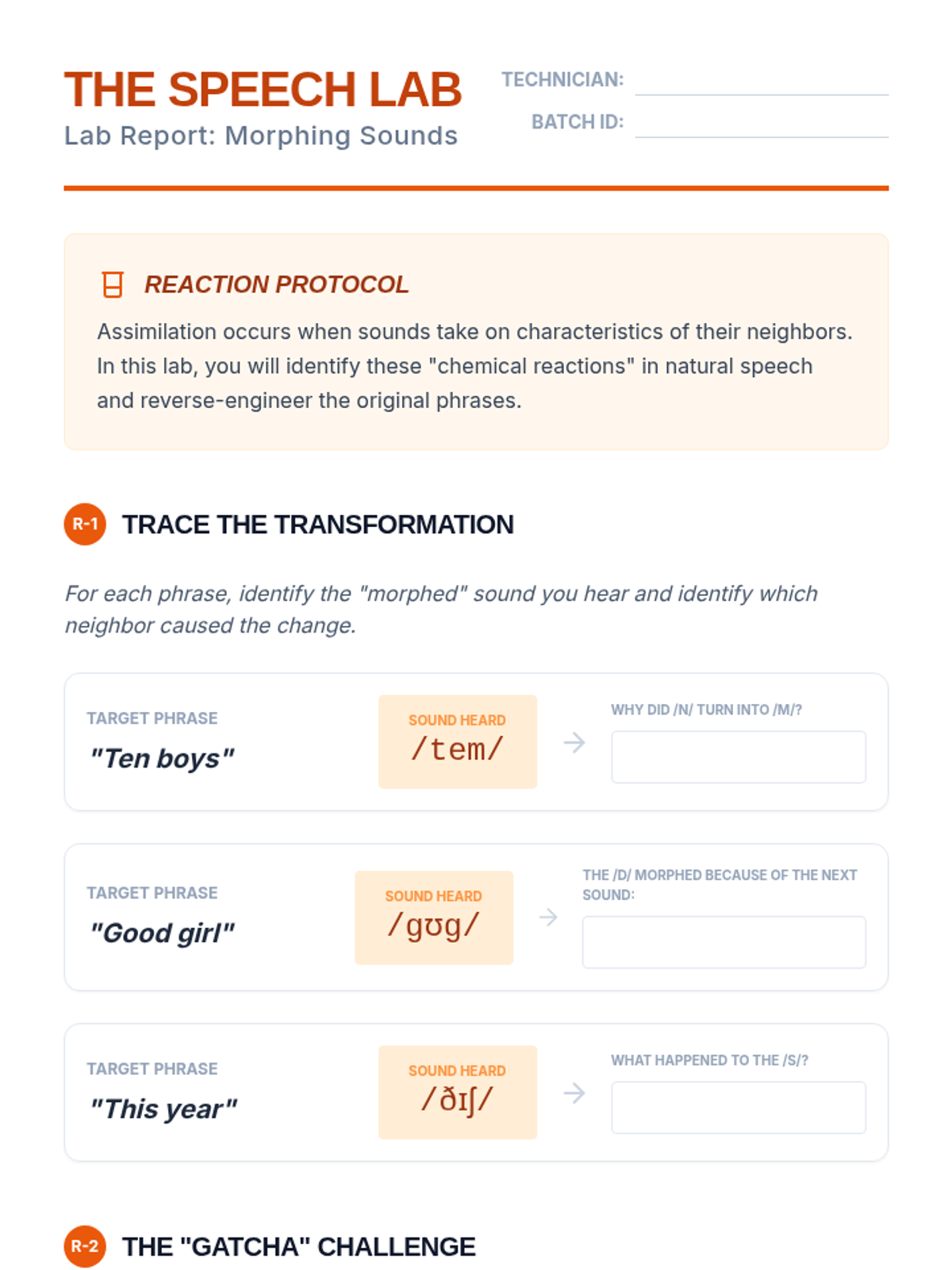
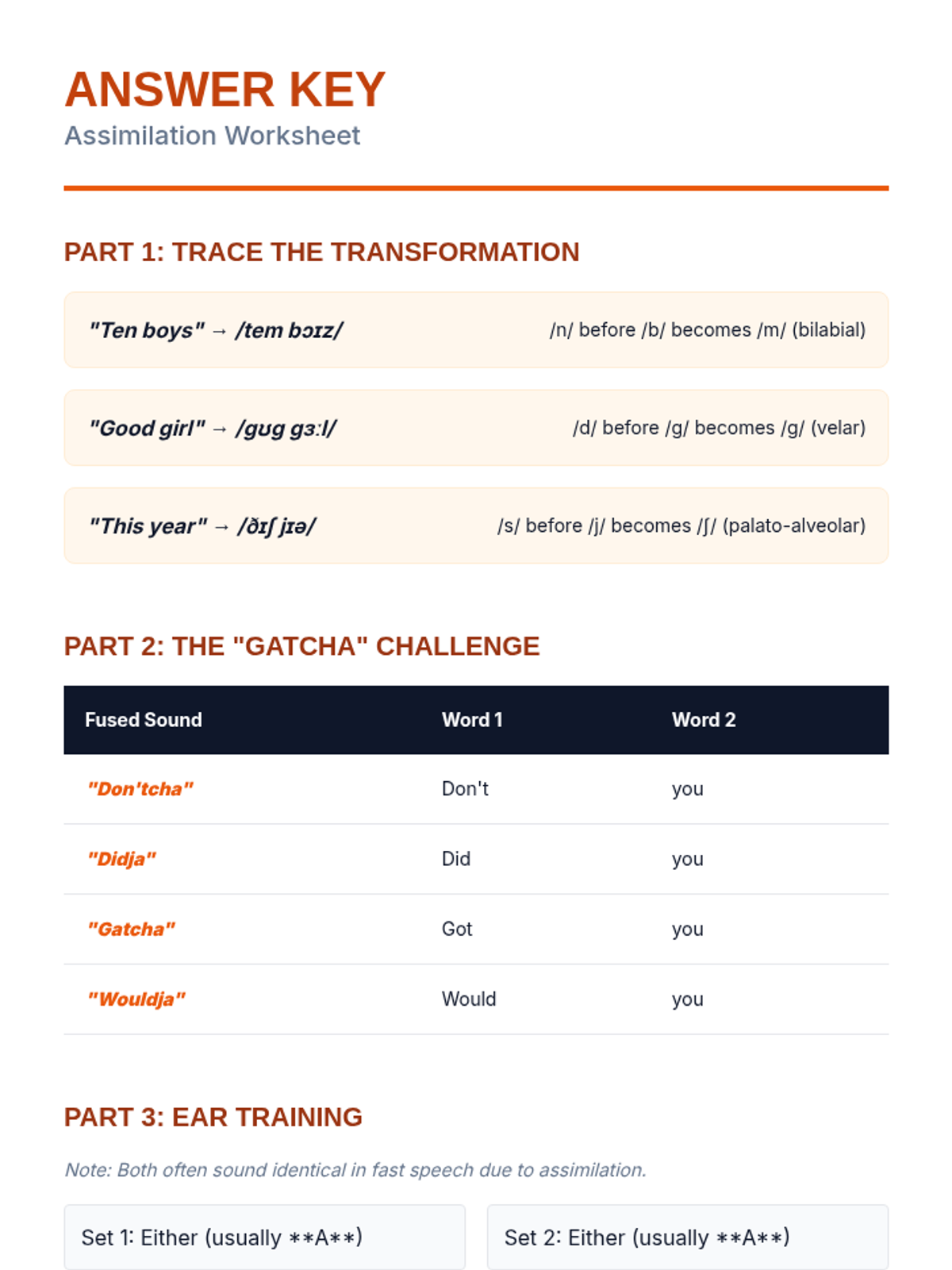
Students learn how sounds influence their neighbors (e.g., 'hand bag' becoming 'hambag'). The lesson uses minimal pair discrimination and dictation exercises to train ears to recognize words despite phonological changes.
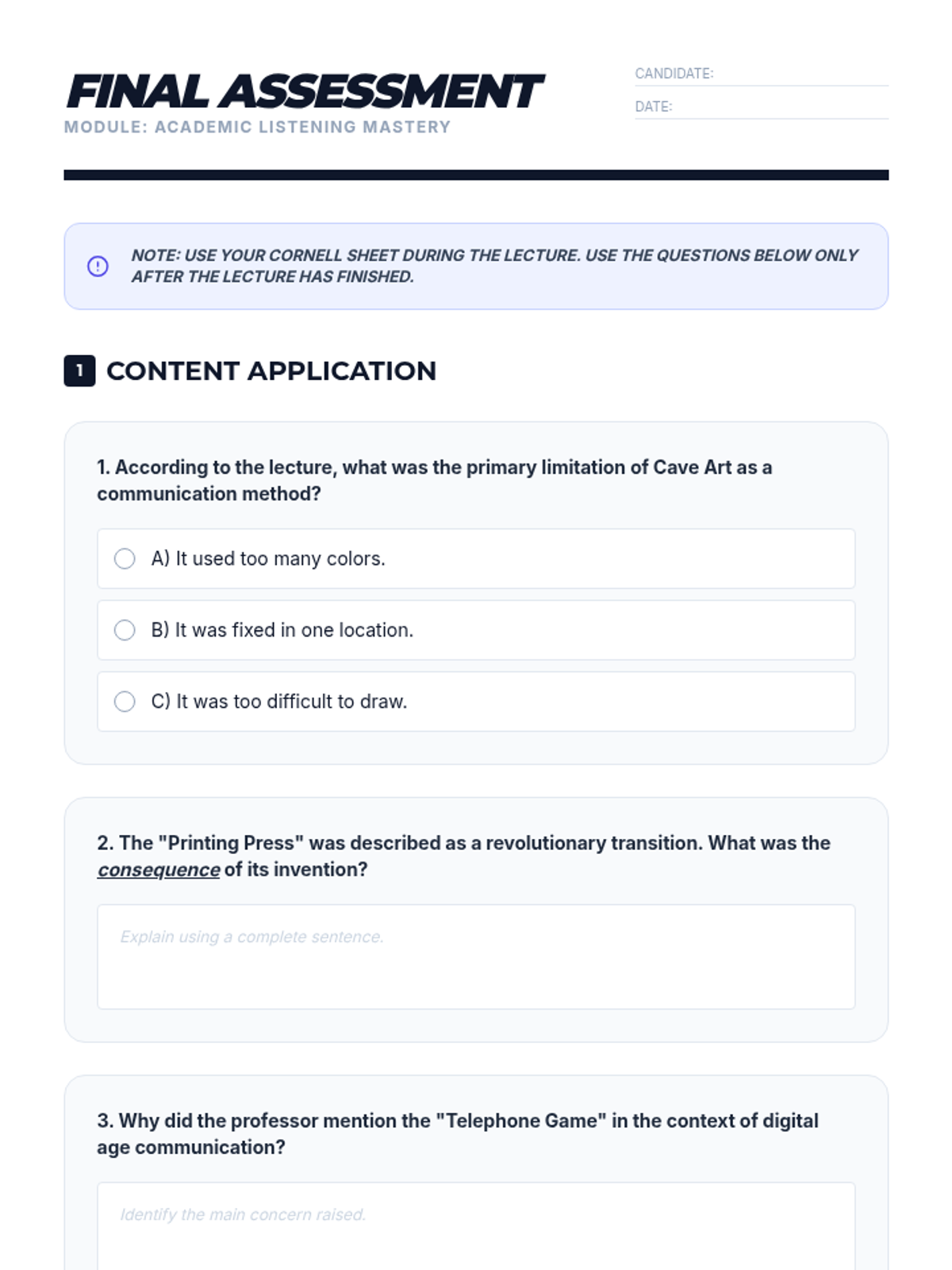
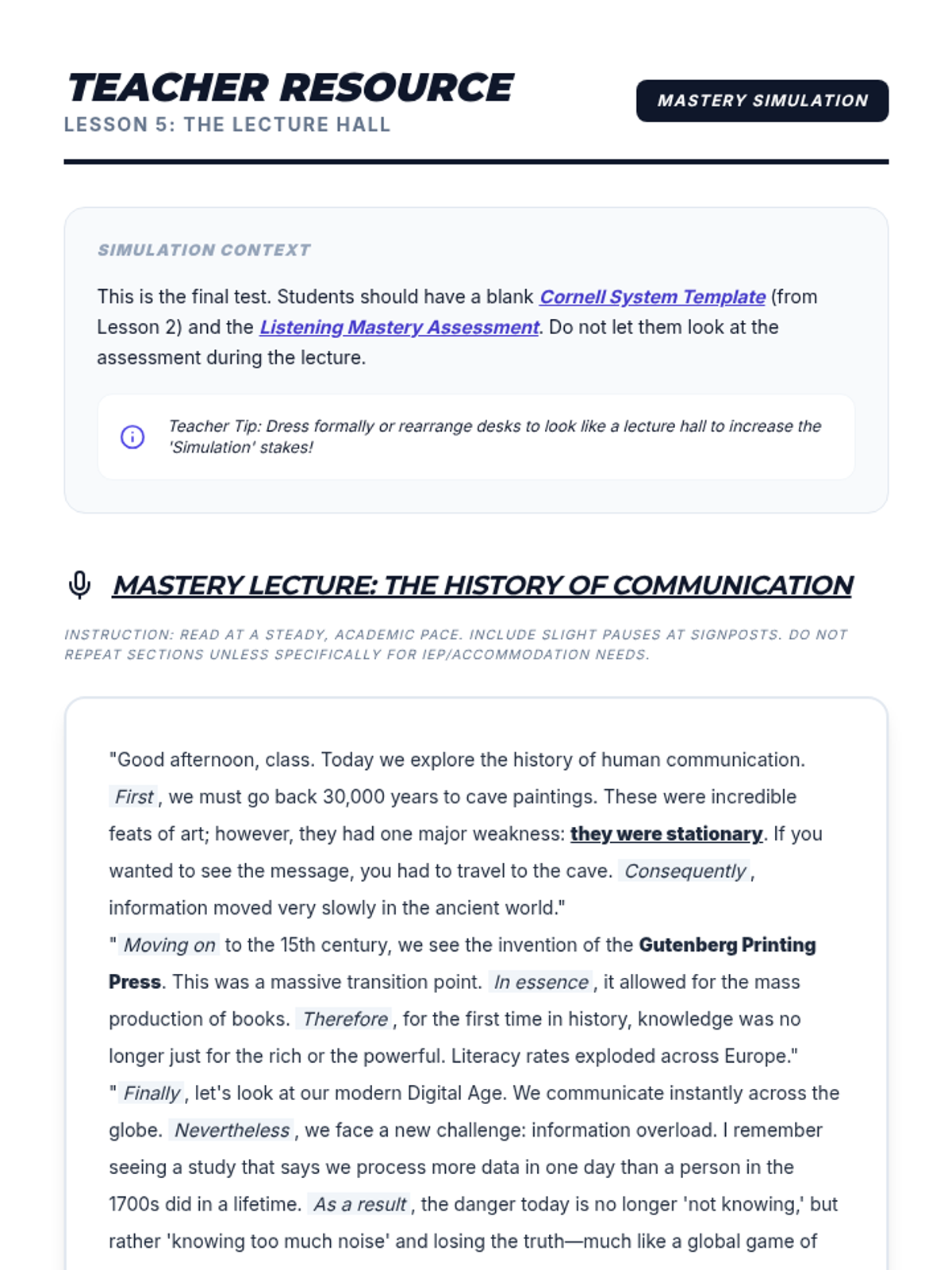
Students participate in a university-style mini-lecture simulation. They apply all learned strategies—signpost identification, Cornell note-taking, and synthesis—to capture information and complete a formal assessment.
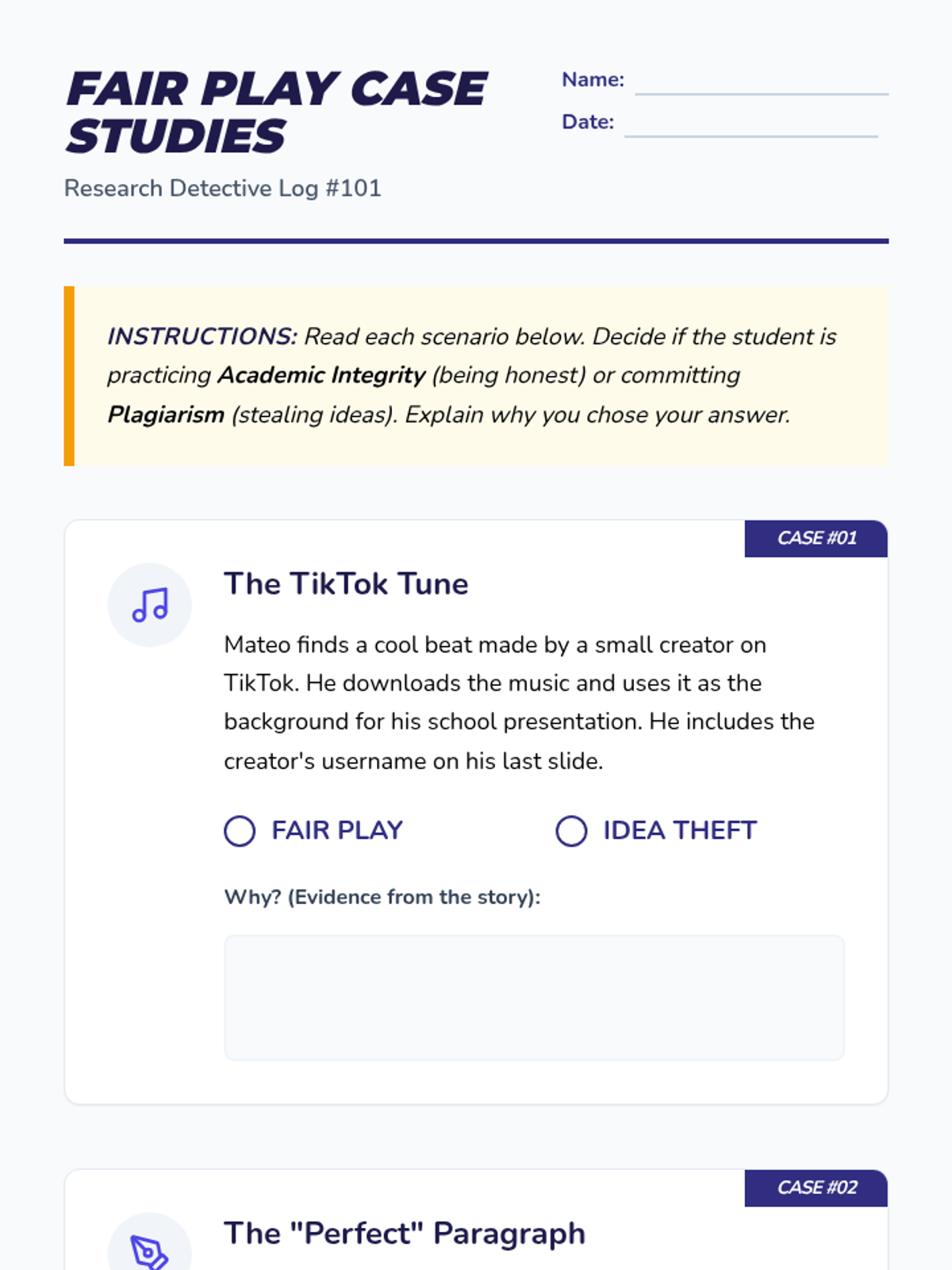
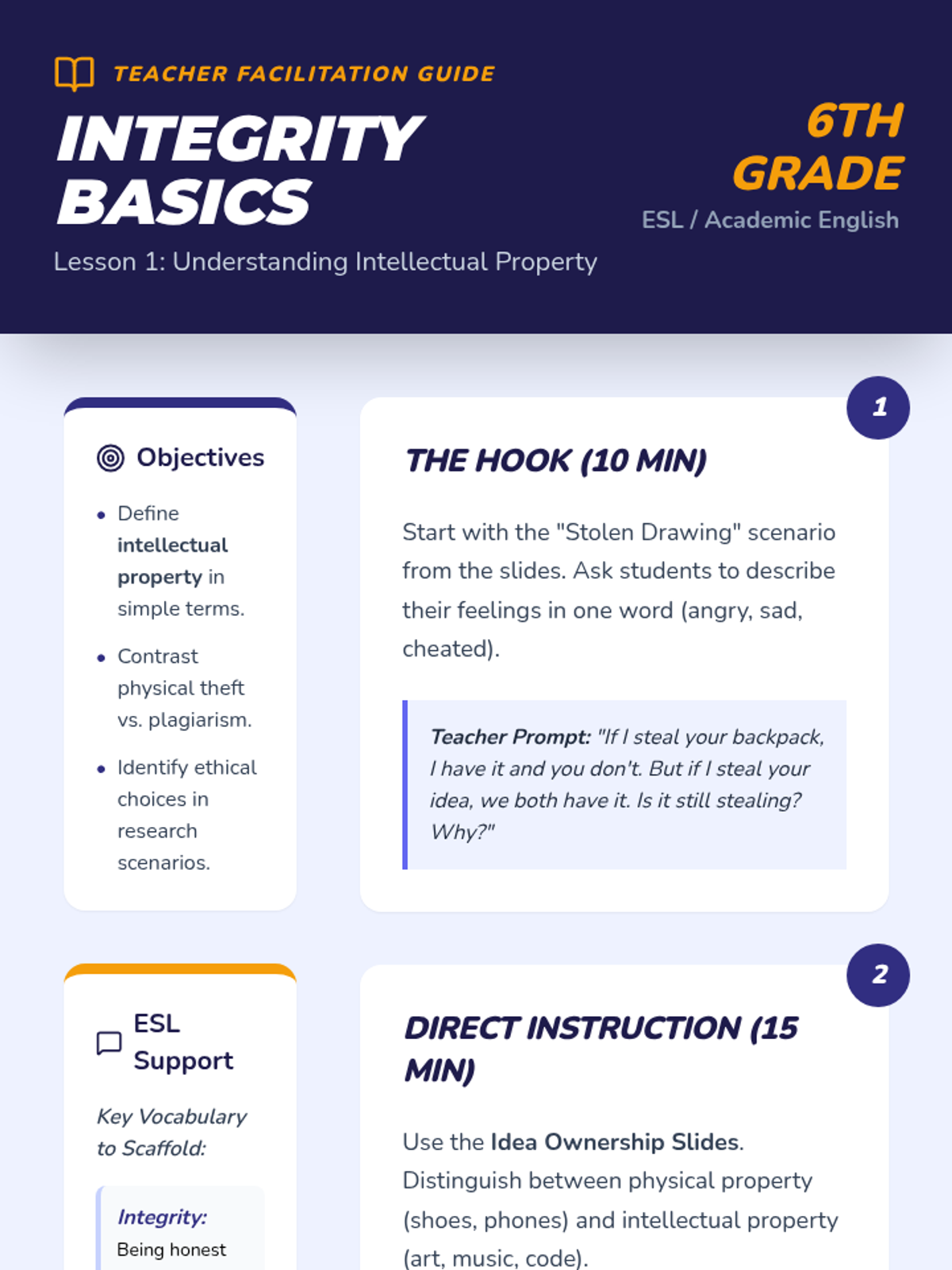
Students explore the concept of intellectual property and ownership of ideas. They discuss why creators deserve credit and how stealing ideas differs from stealing physical objects.
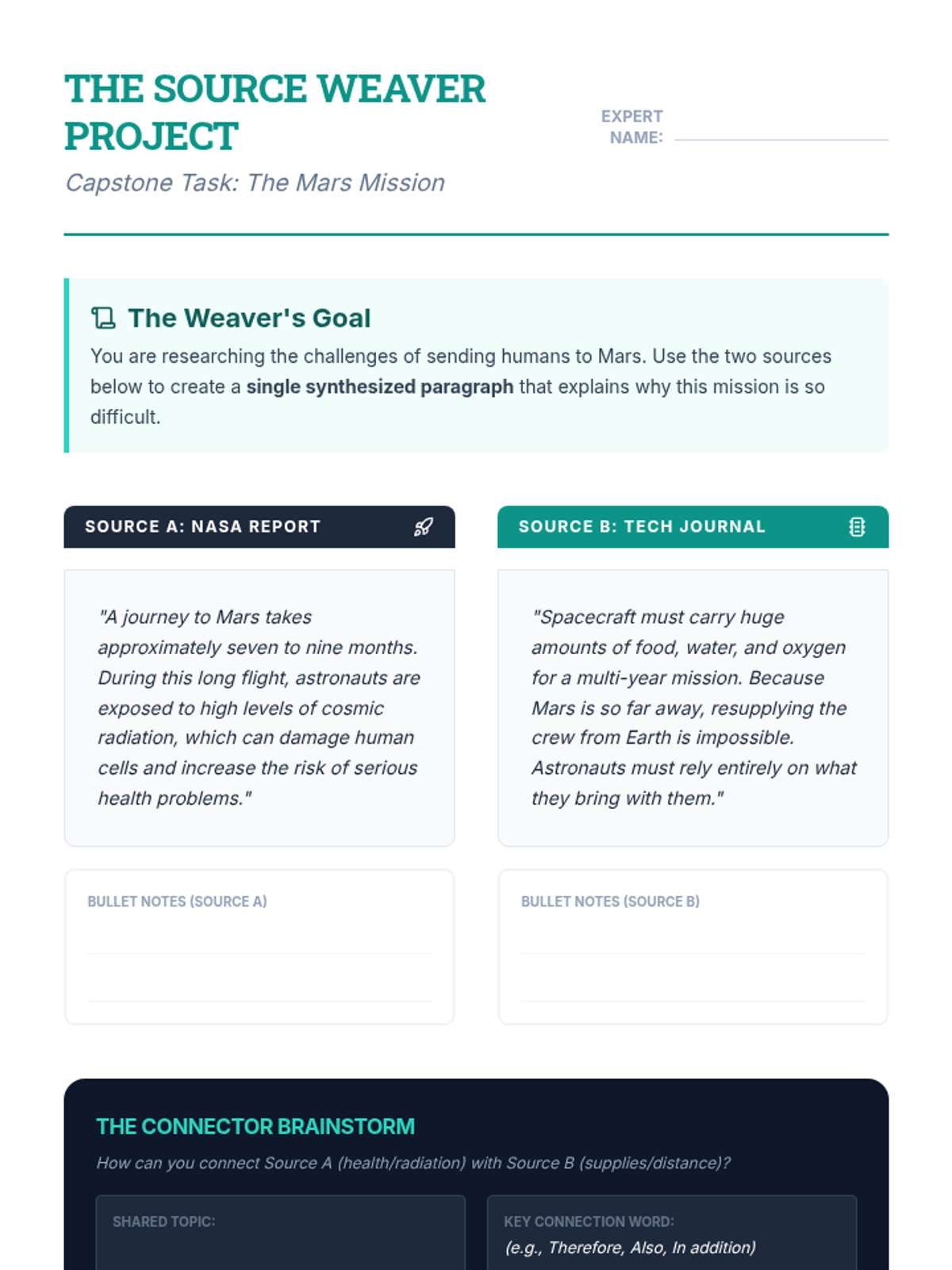
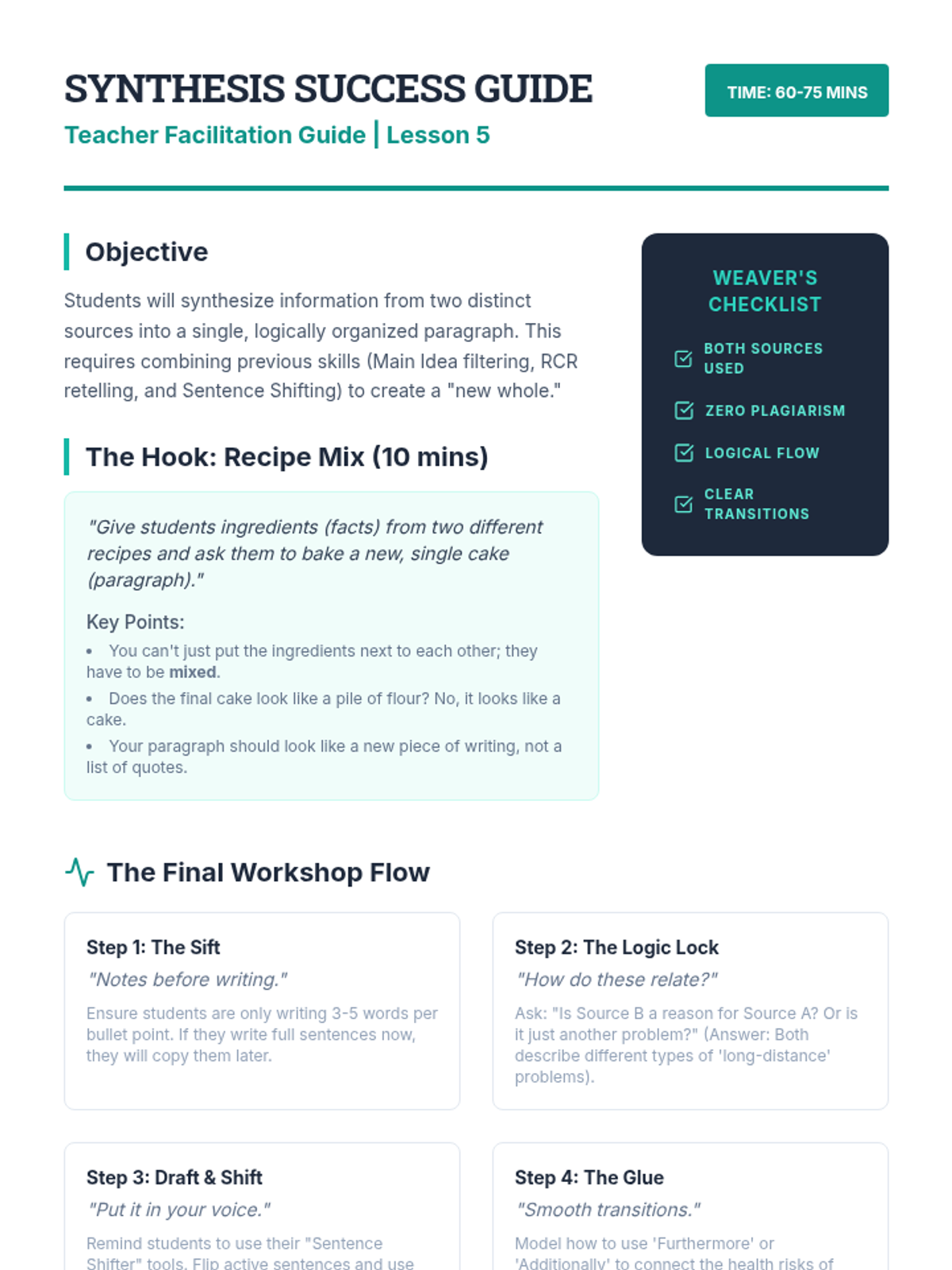
The capstone activity where students combine information from two different sources into a single, logically organized paragraph.
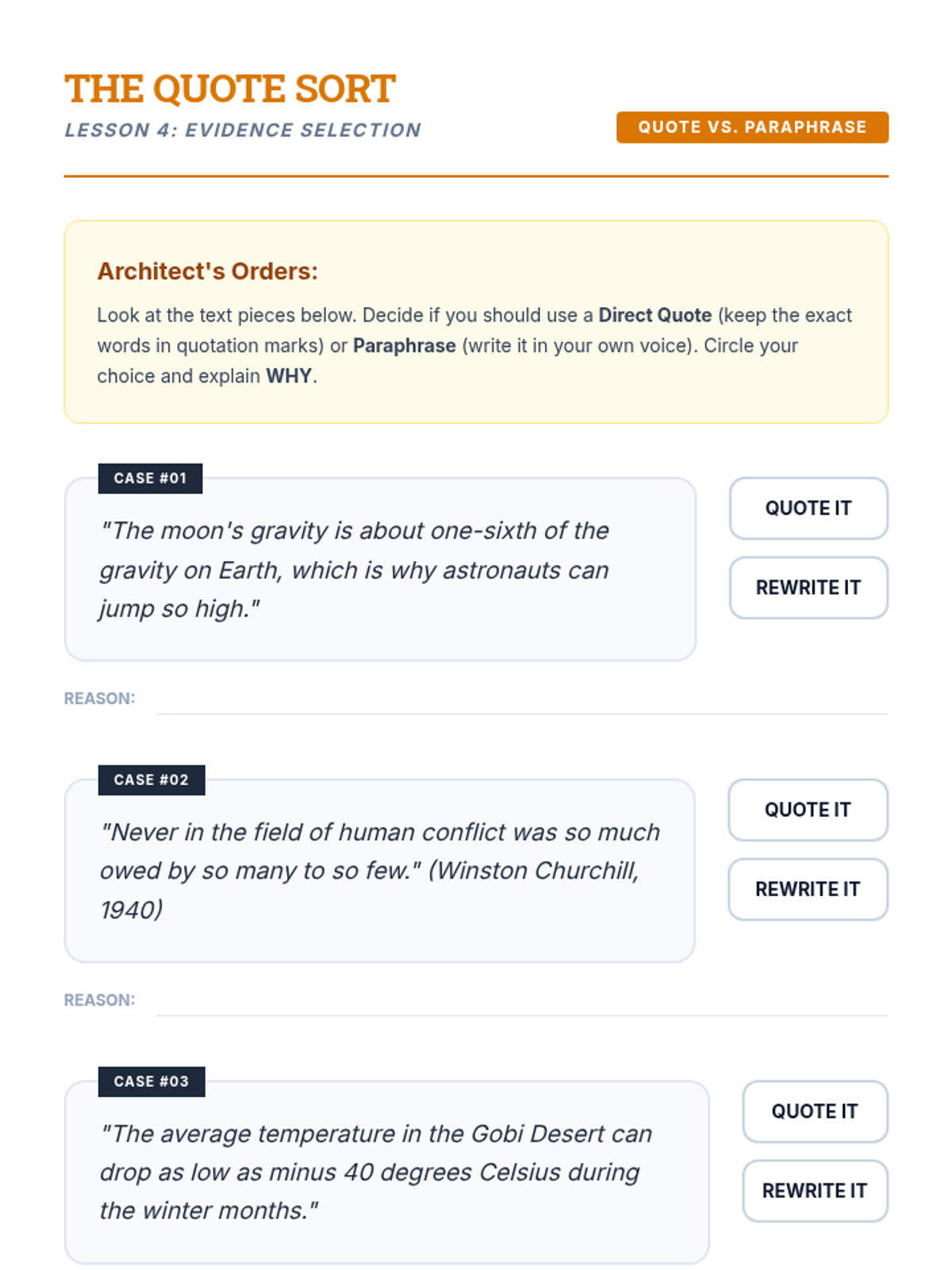
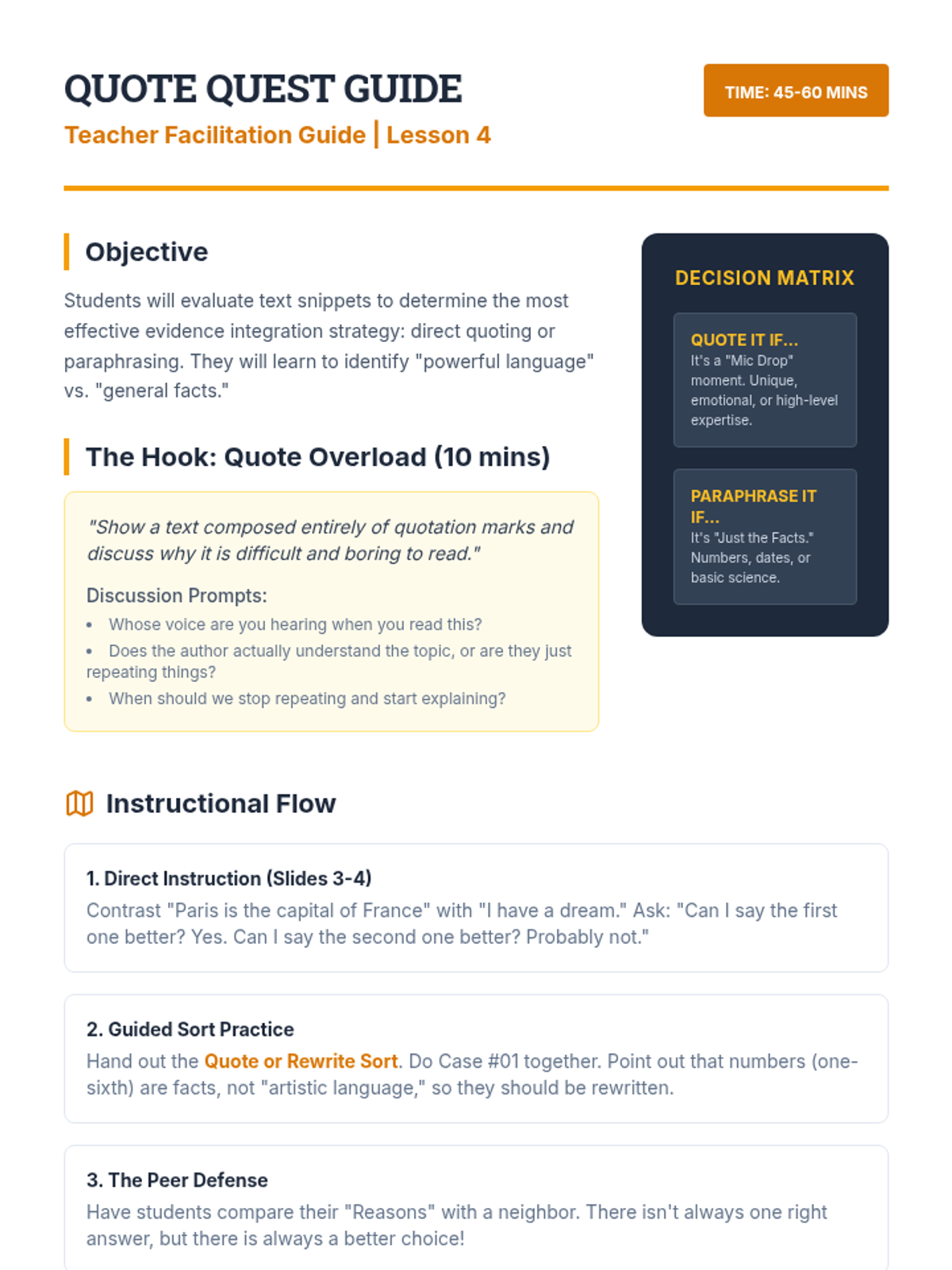
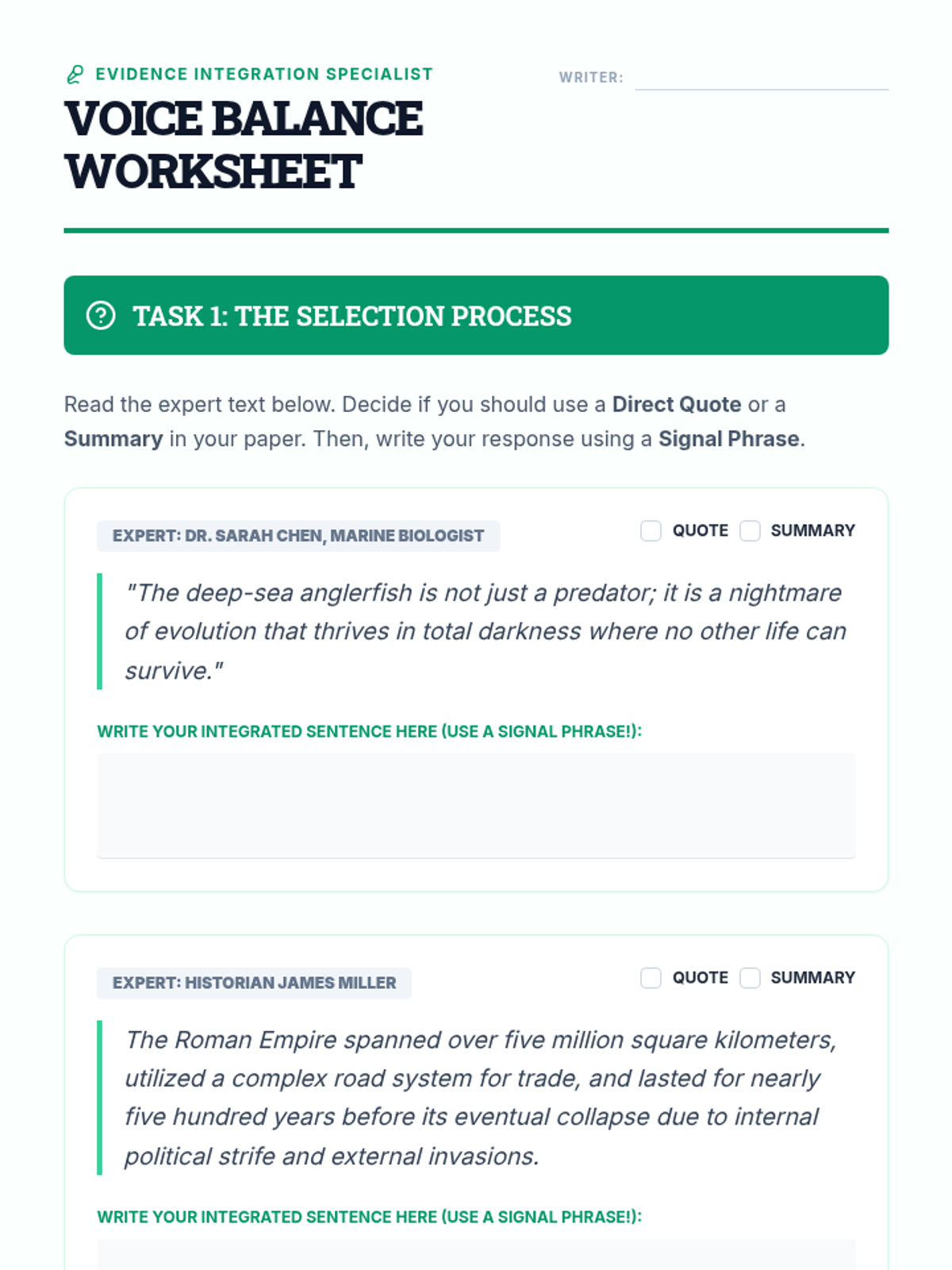
Distinguishes between when to use direct quotes for impact and when to paraphrase for factual clarity.
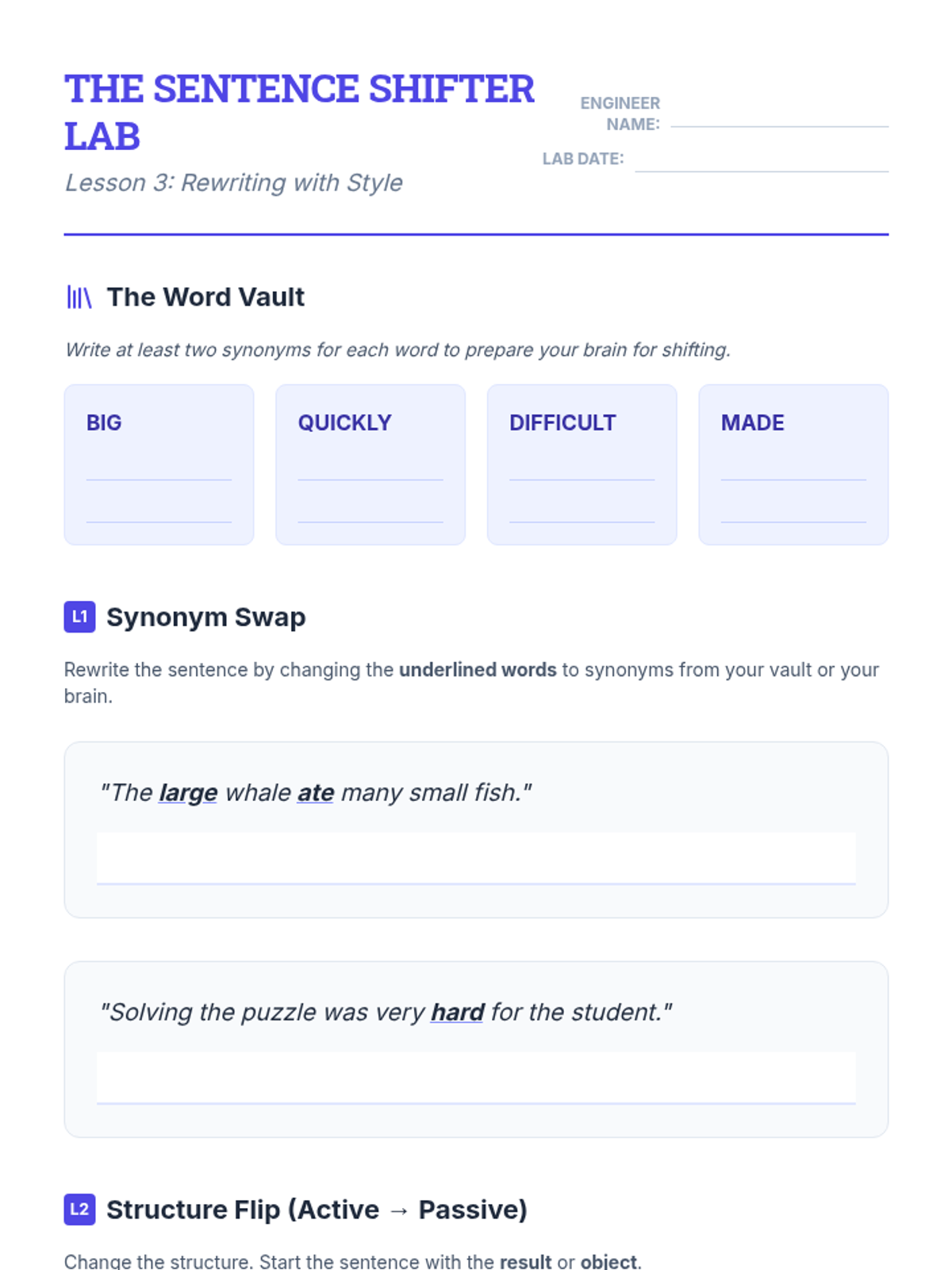
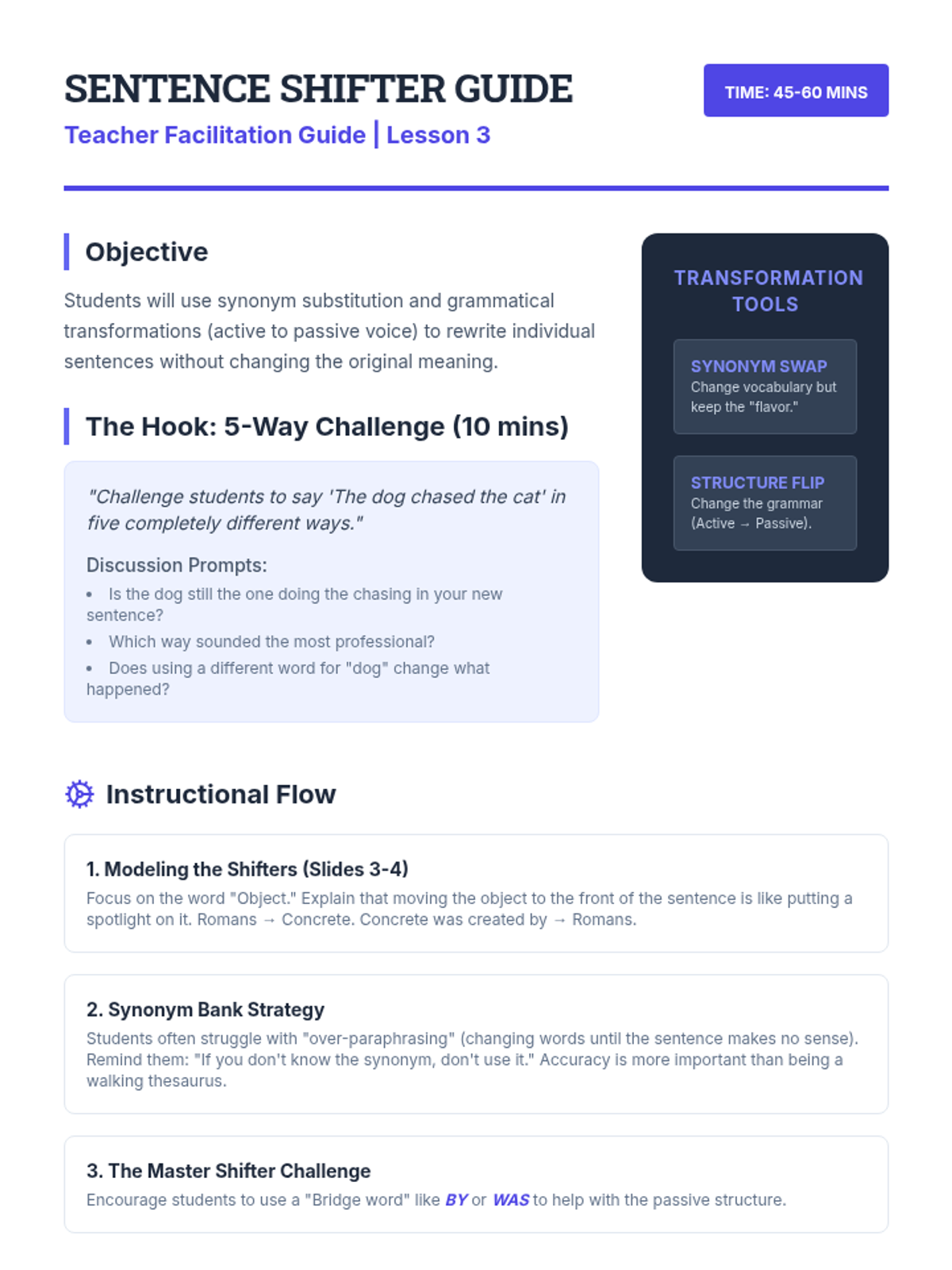
Guided practice in rewriting sentences using synonyms and grammatical shifts, such as changing active to passive voice, while maintaining original meaning.
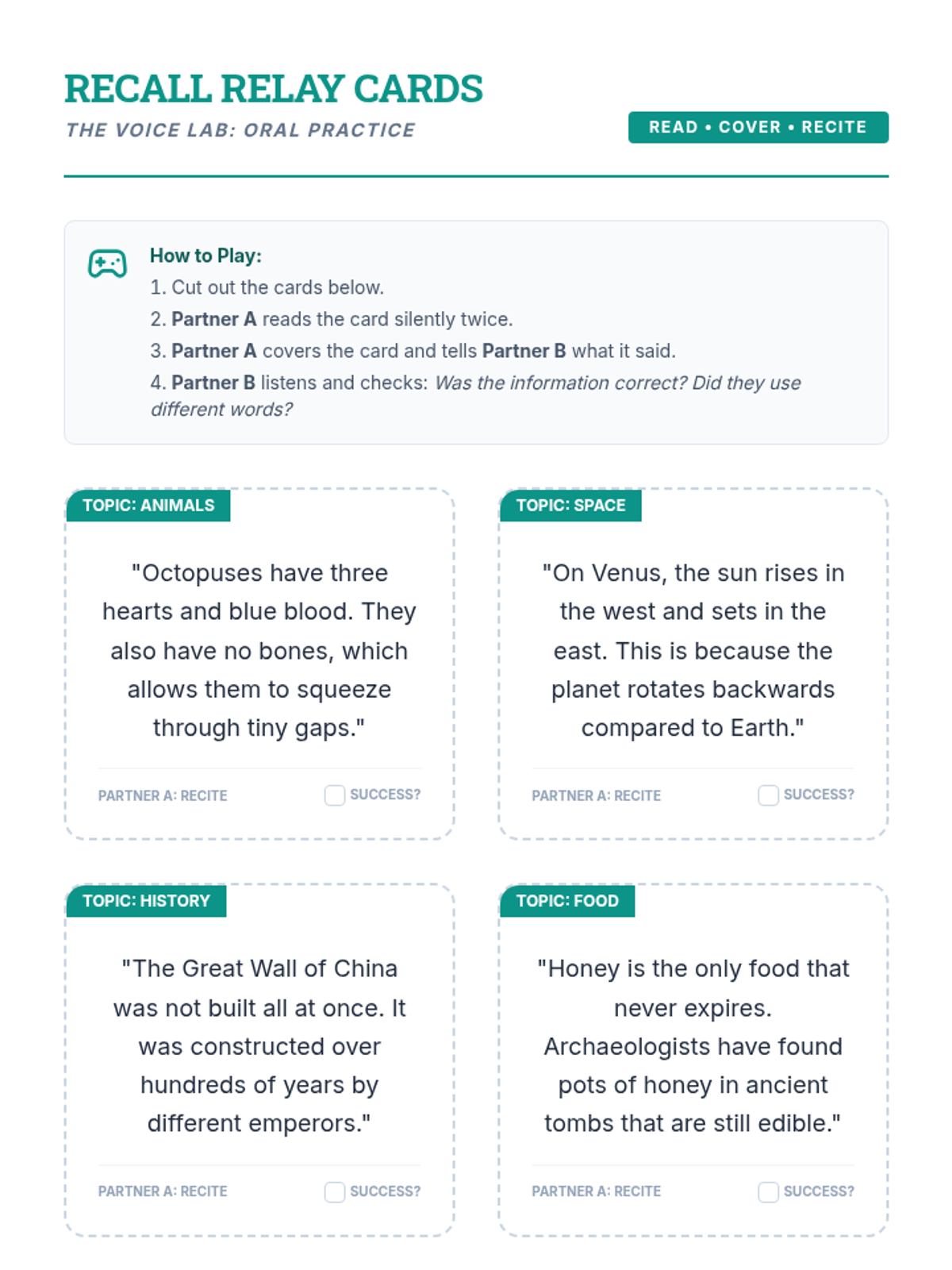
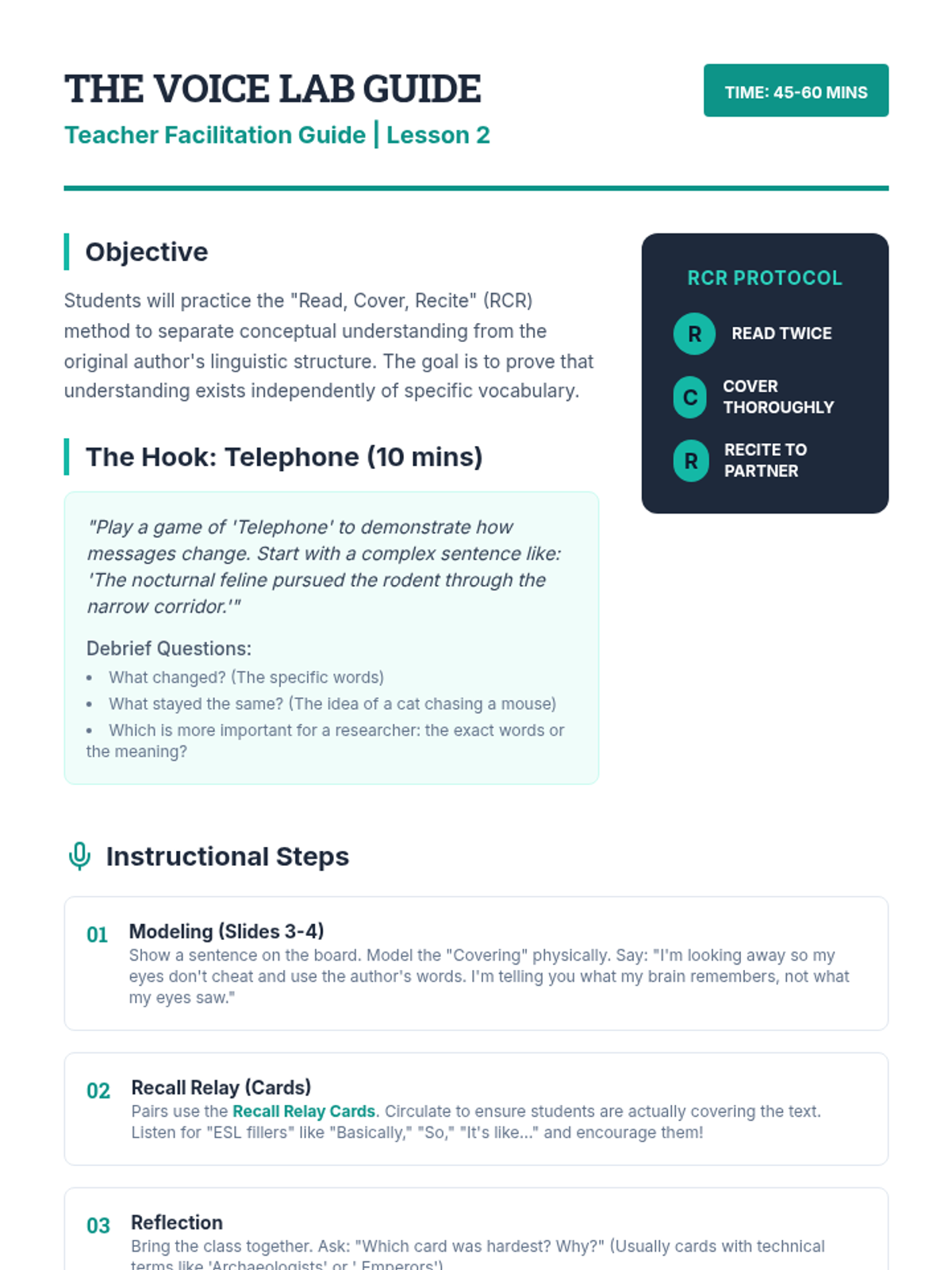
Focuses on the 'Read, Cover, Recite' method to separate conceptual understanding from the original text's linguistic structure through oral retelling.
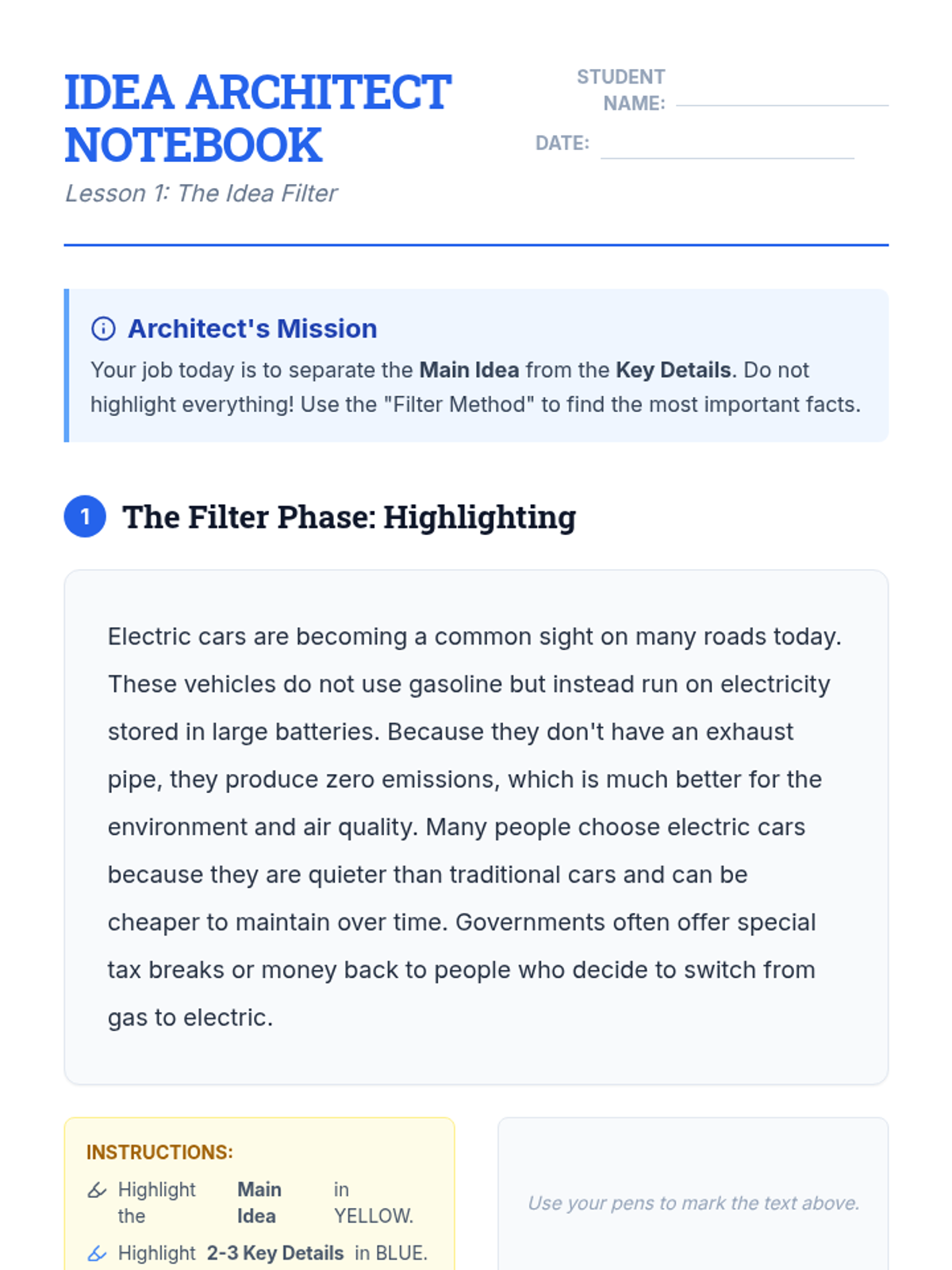
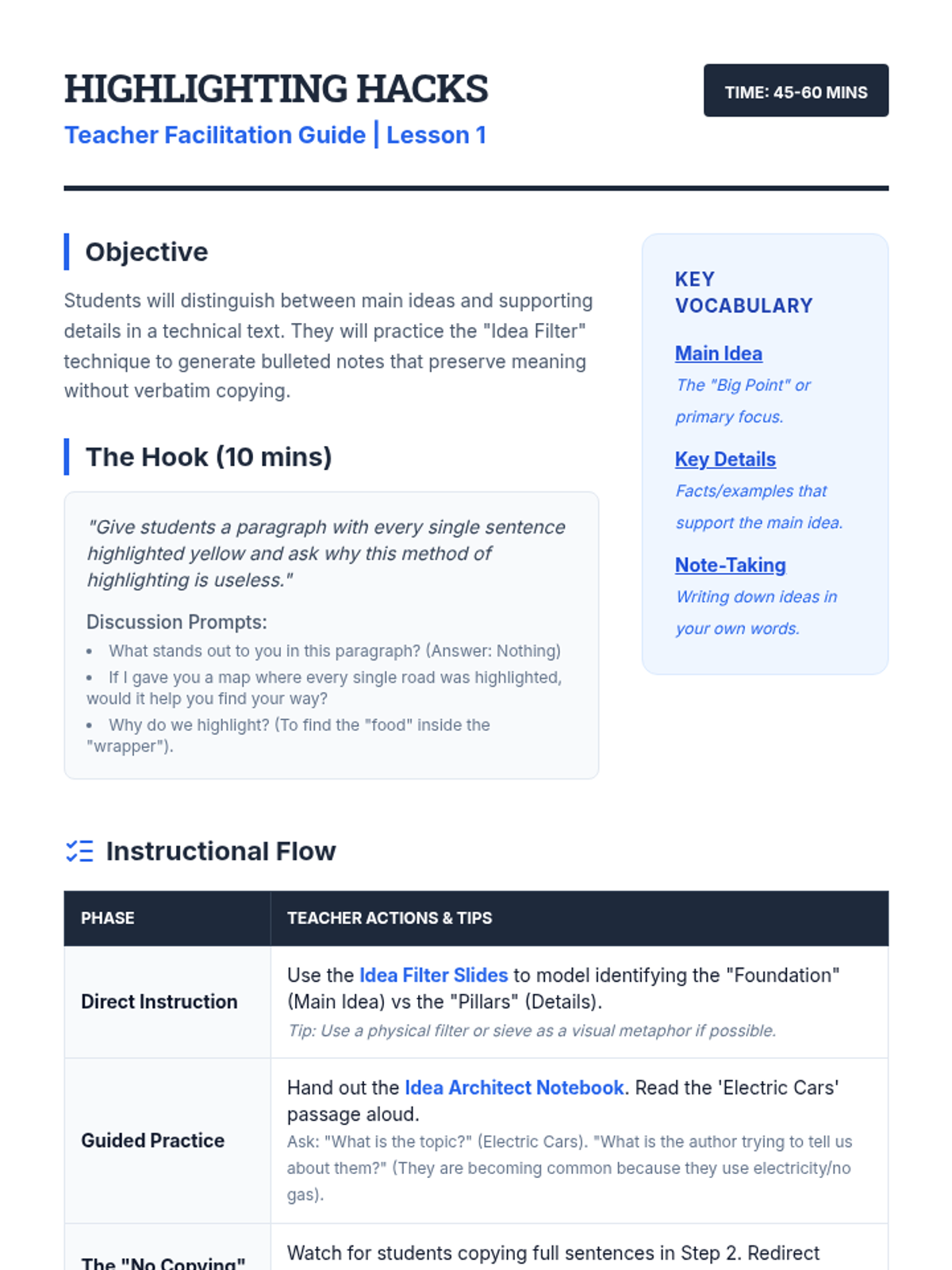
Students learn to separate core concepts from 'fluff' using effective highlighting and note-taking strategies, moving away from copying full sentences.
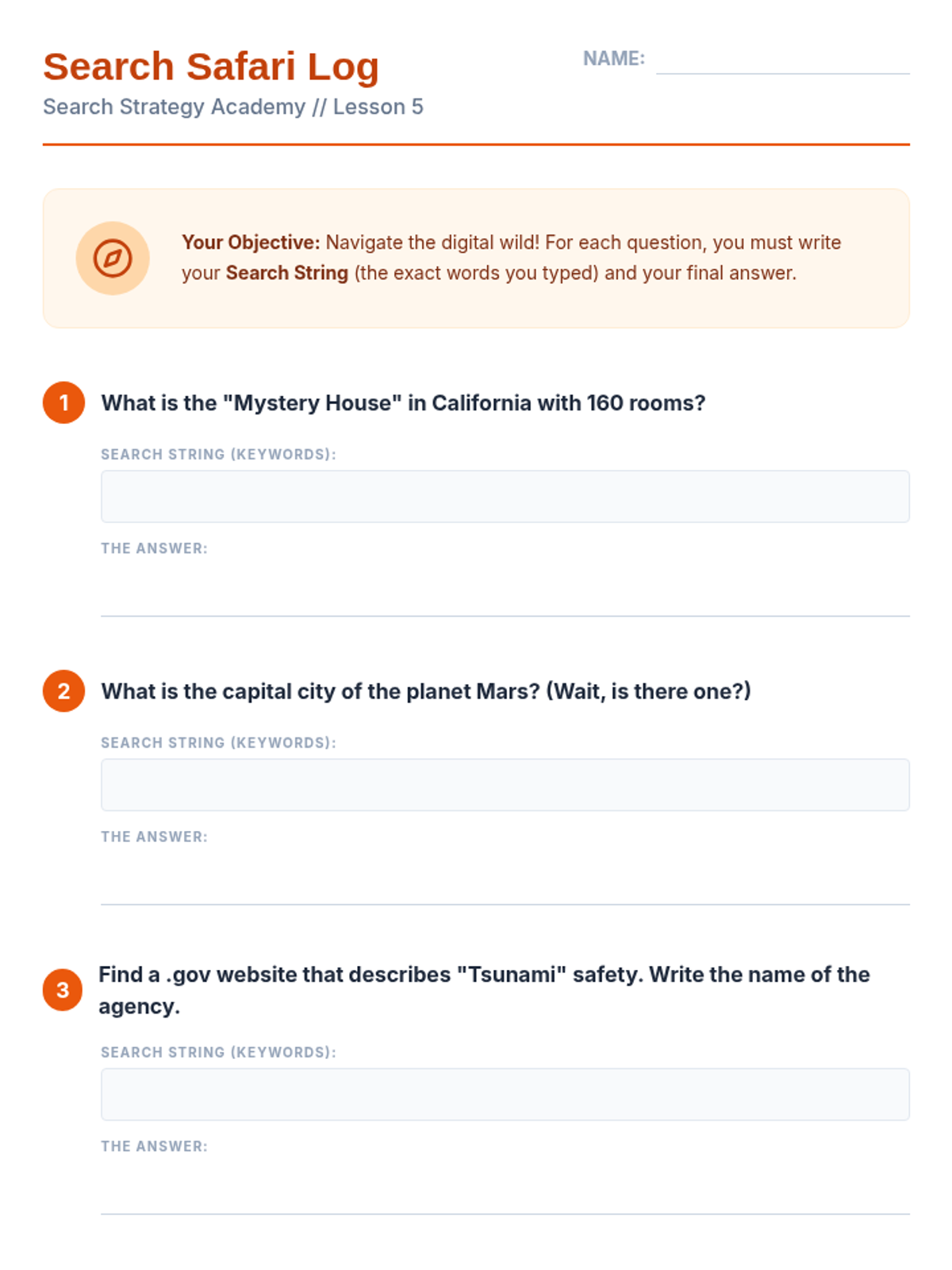
A culminating scavenger hunt challenge where students apply all previous skills to find obscure information and document their search paths.
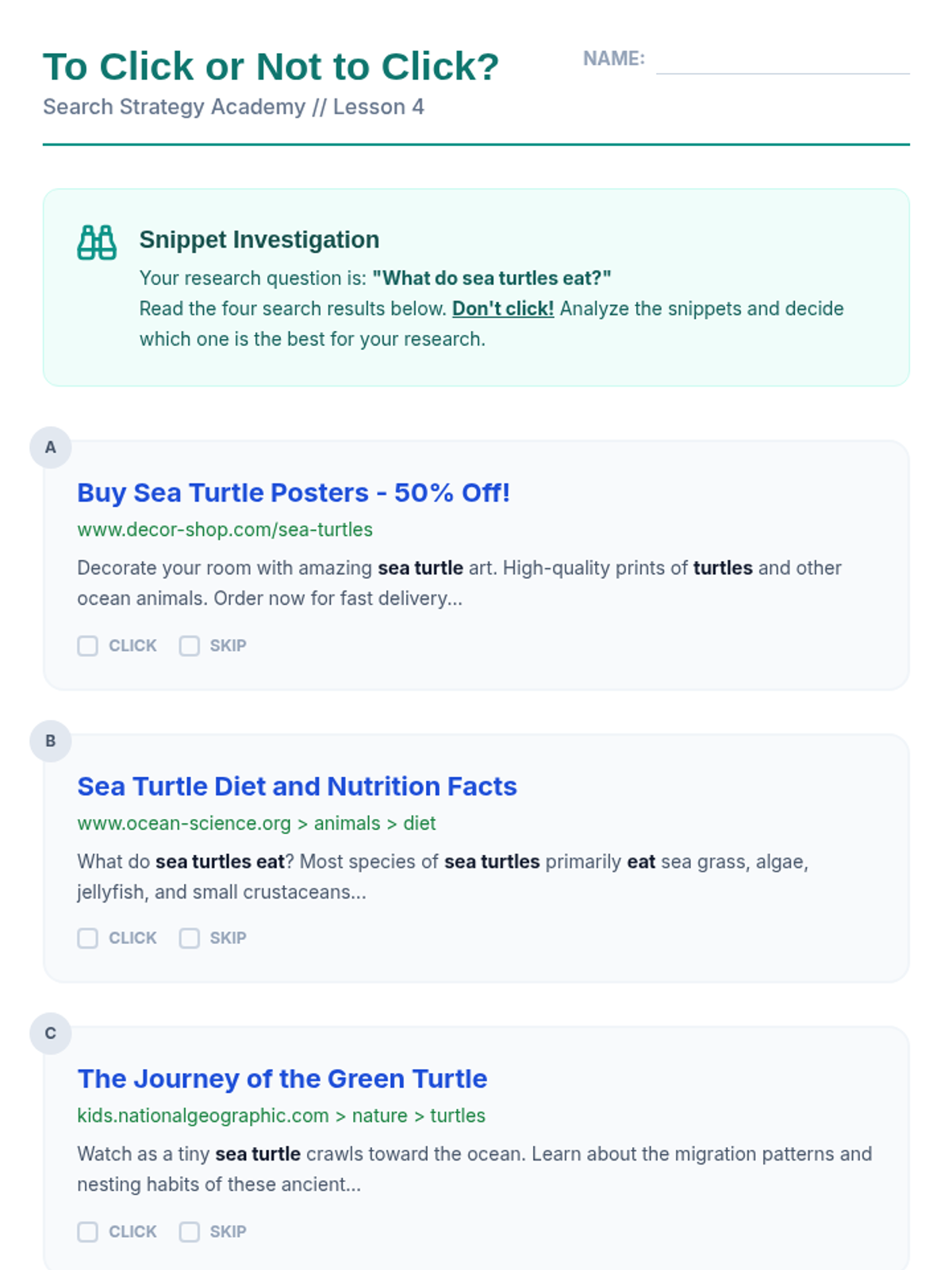
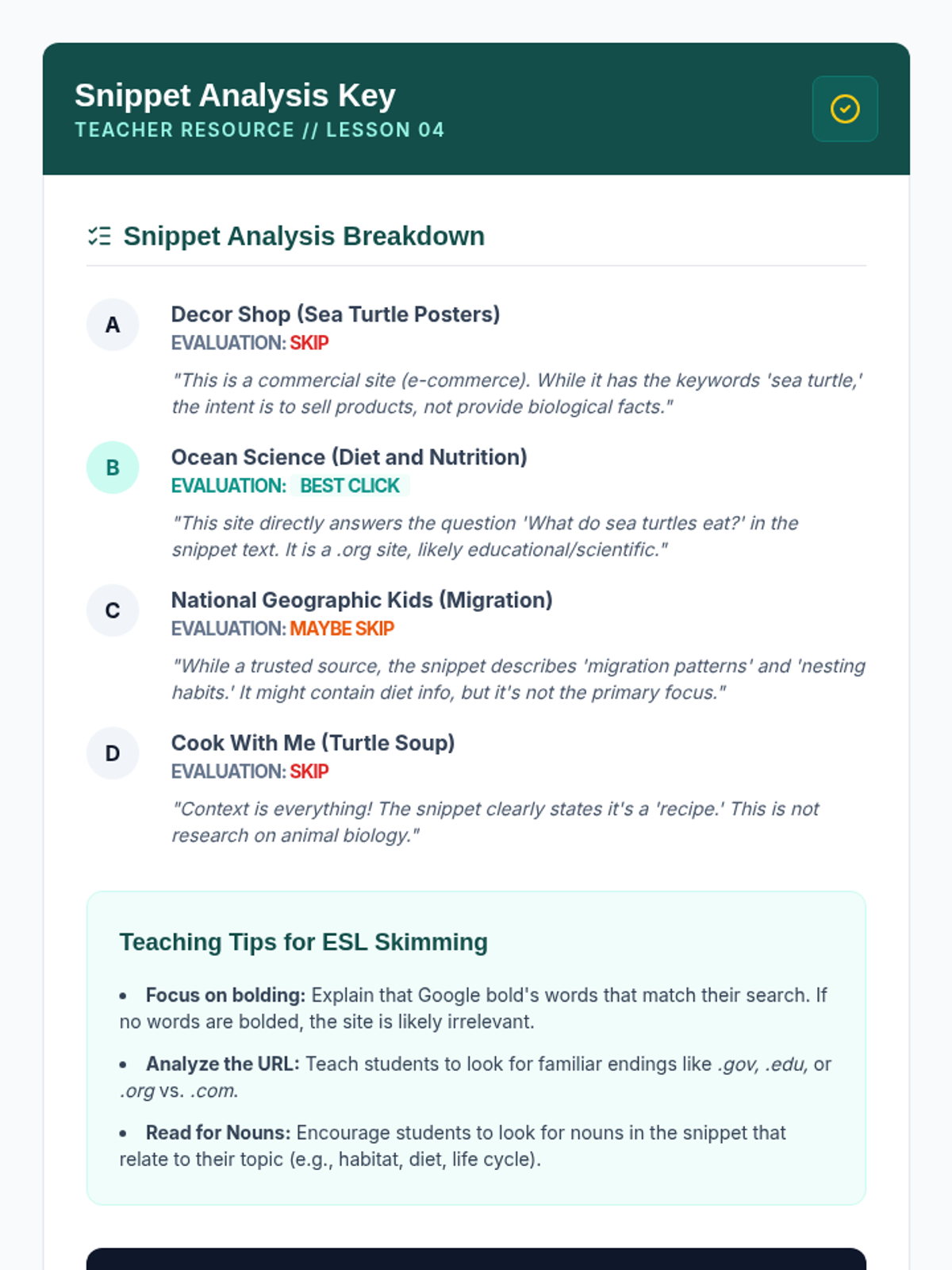
Focuses on the skill of rapid appraisal by teaching students how to read and interpret search result snippets, titles, and bolded terms before clicking.
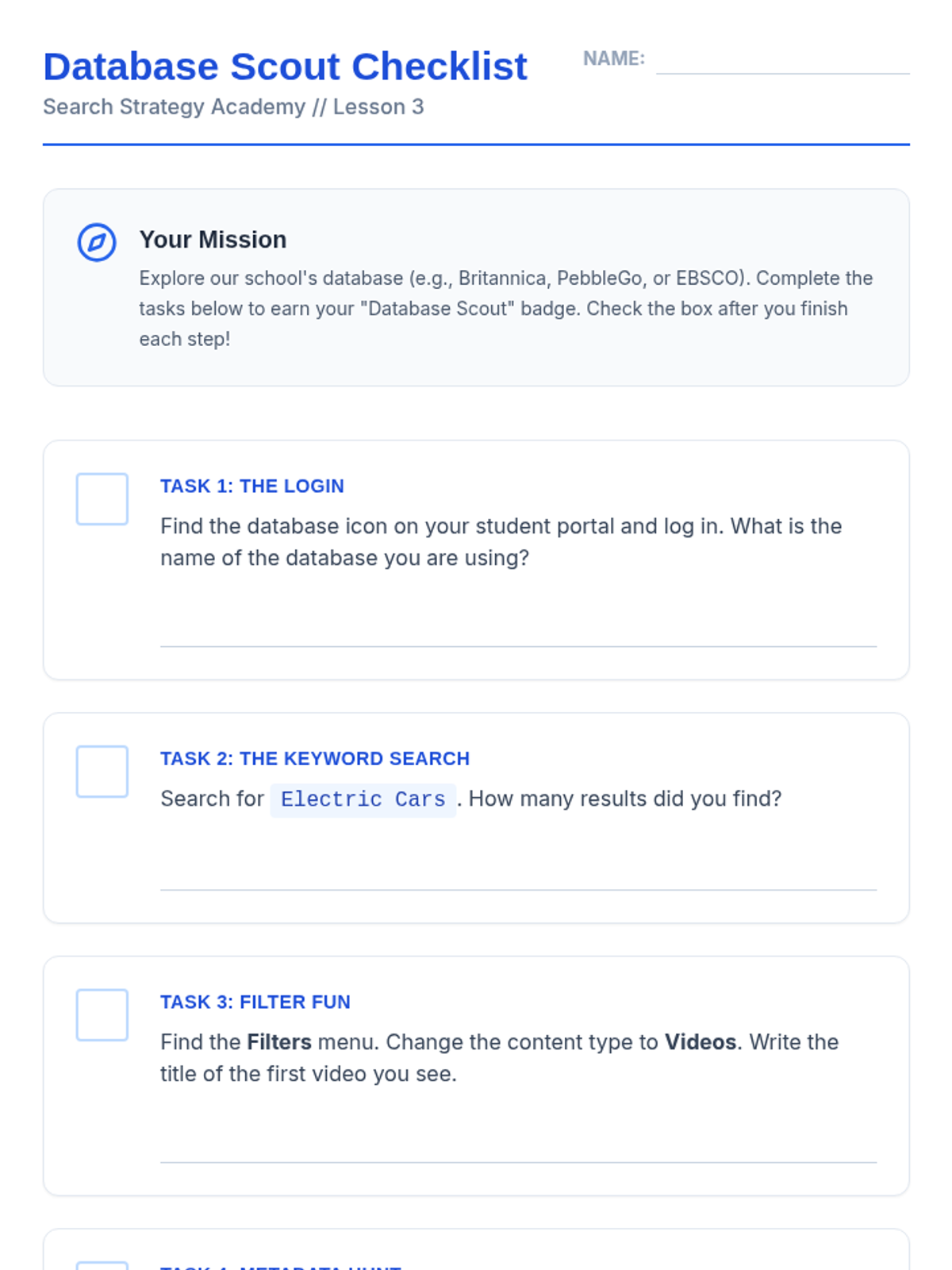
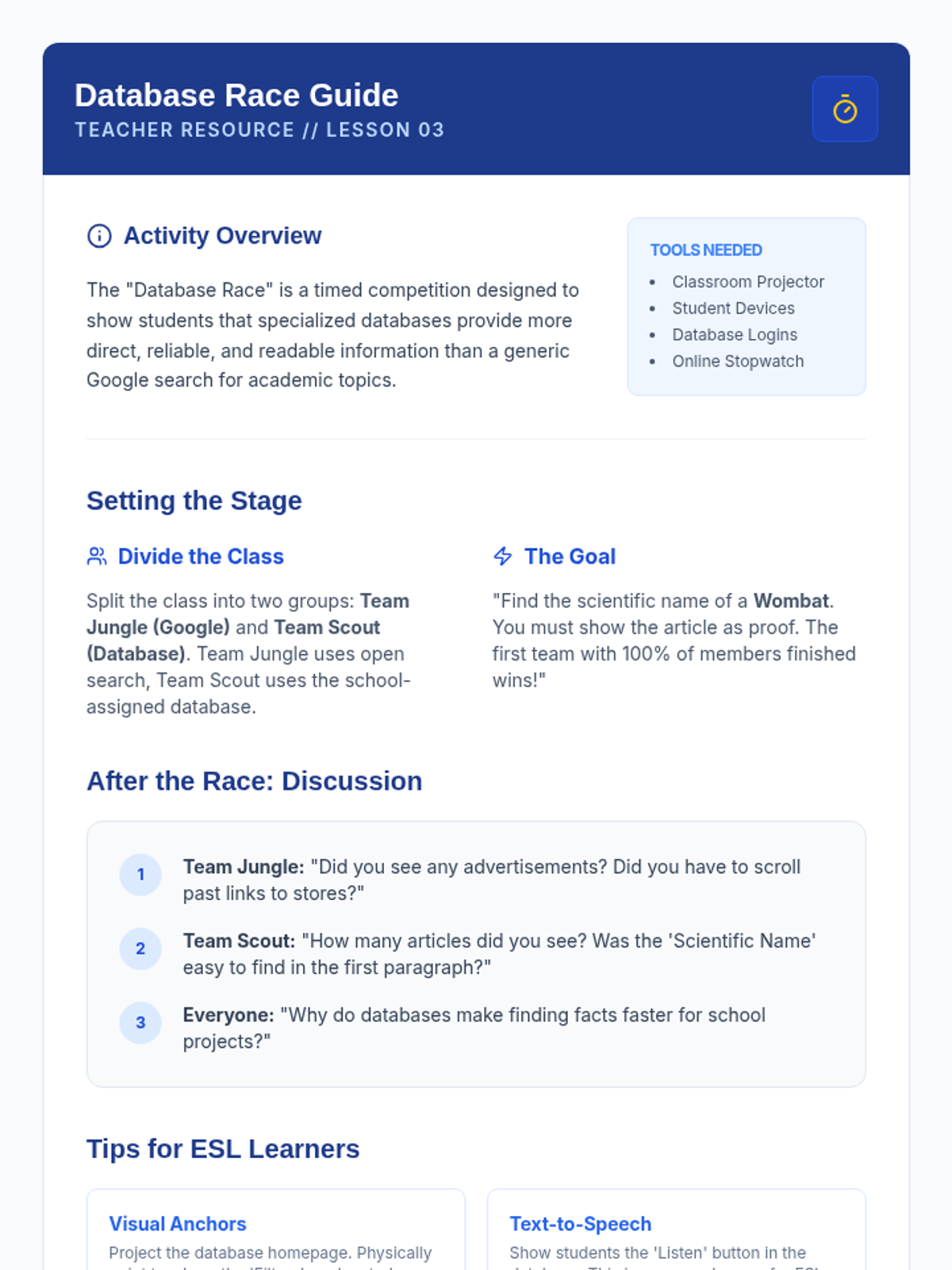
Students explore the specific features of academic databases, including filters, metadata, and specialized search bars, comparing them to general search engines.
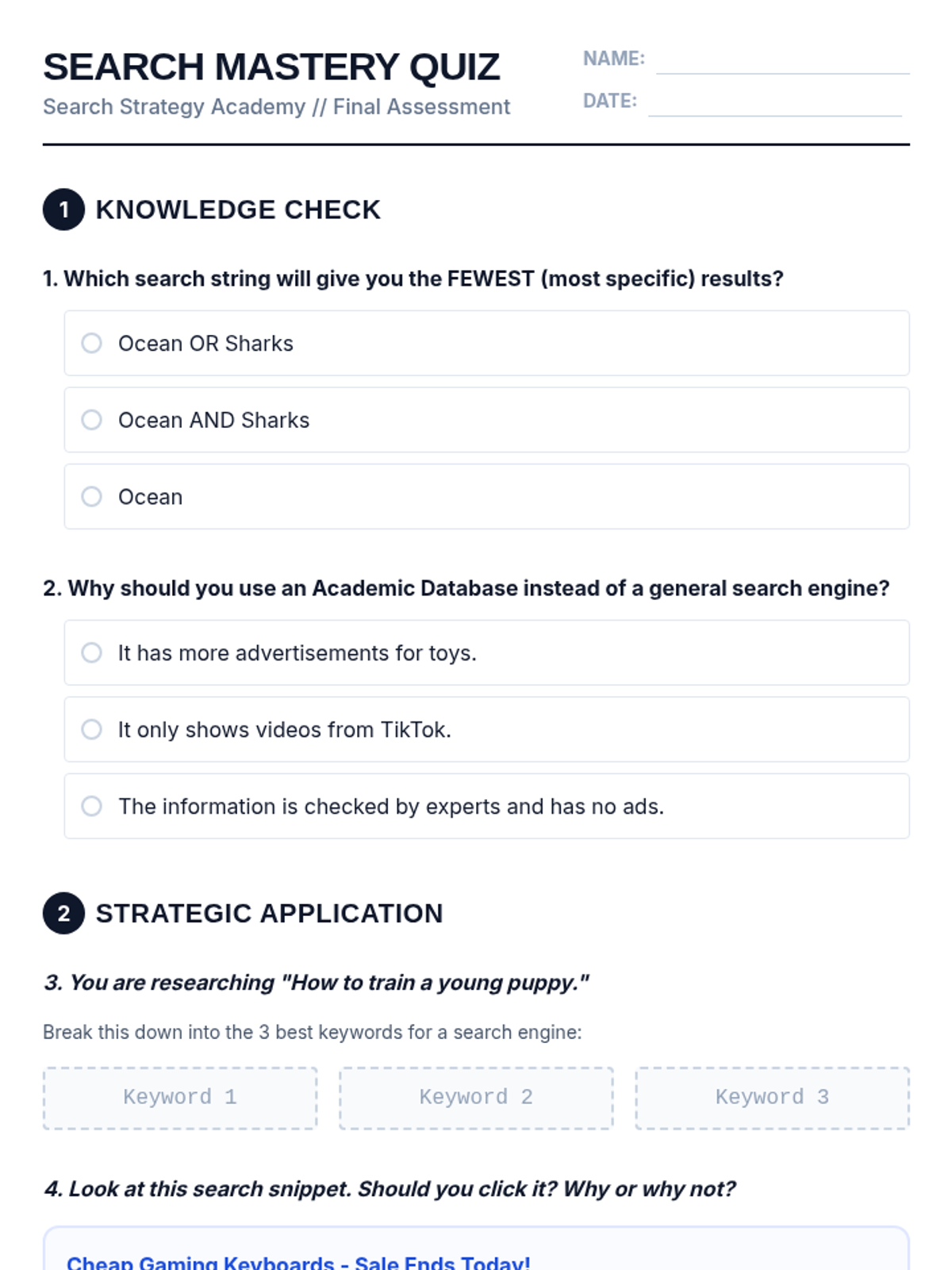
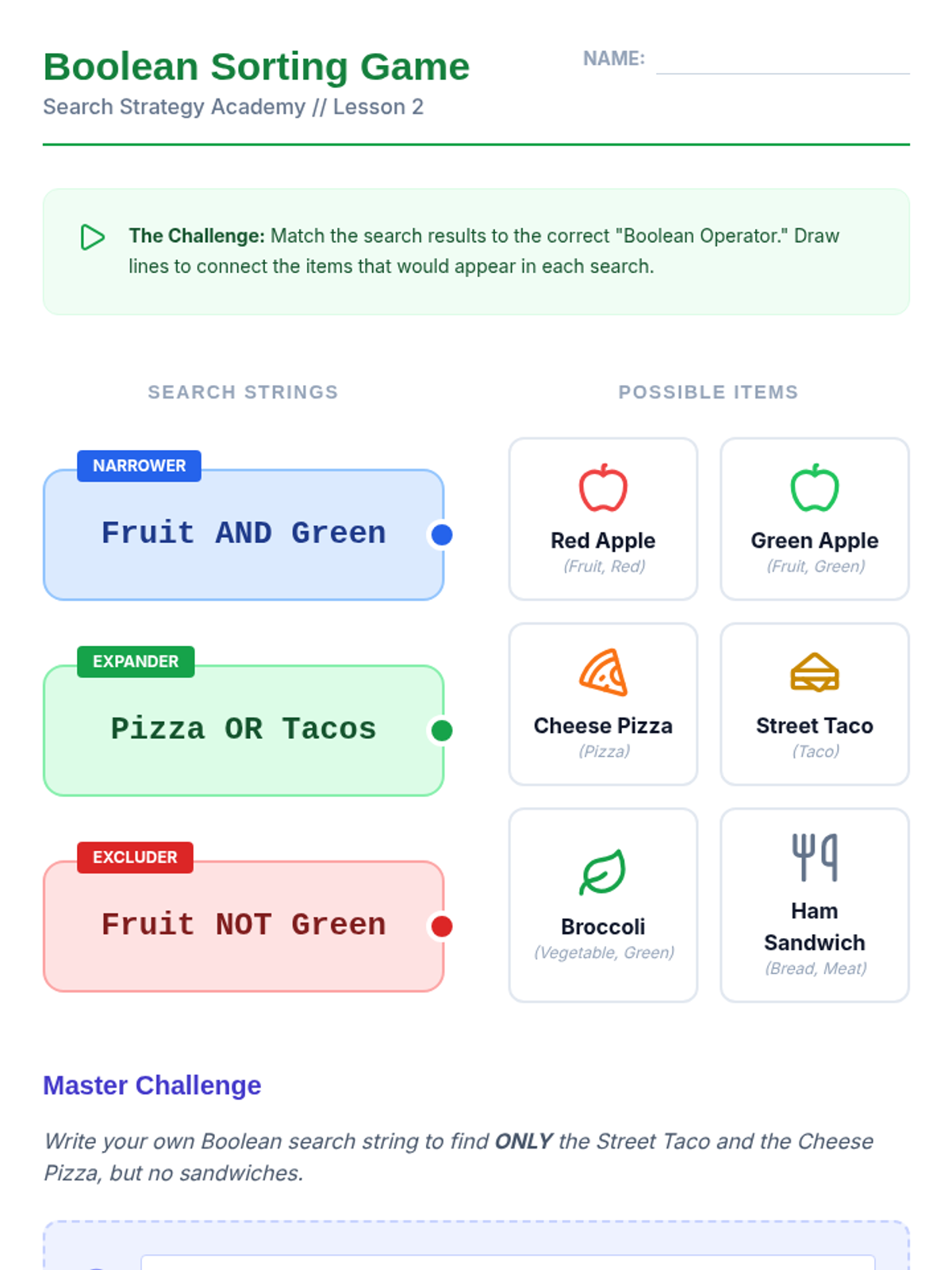
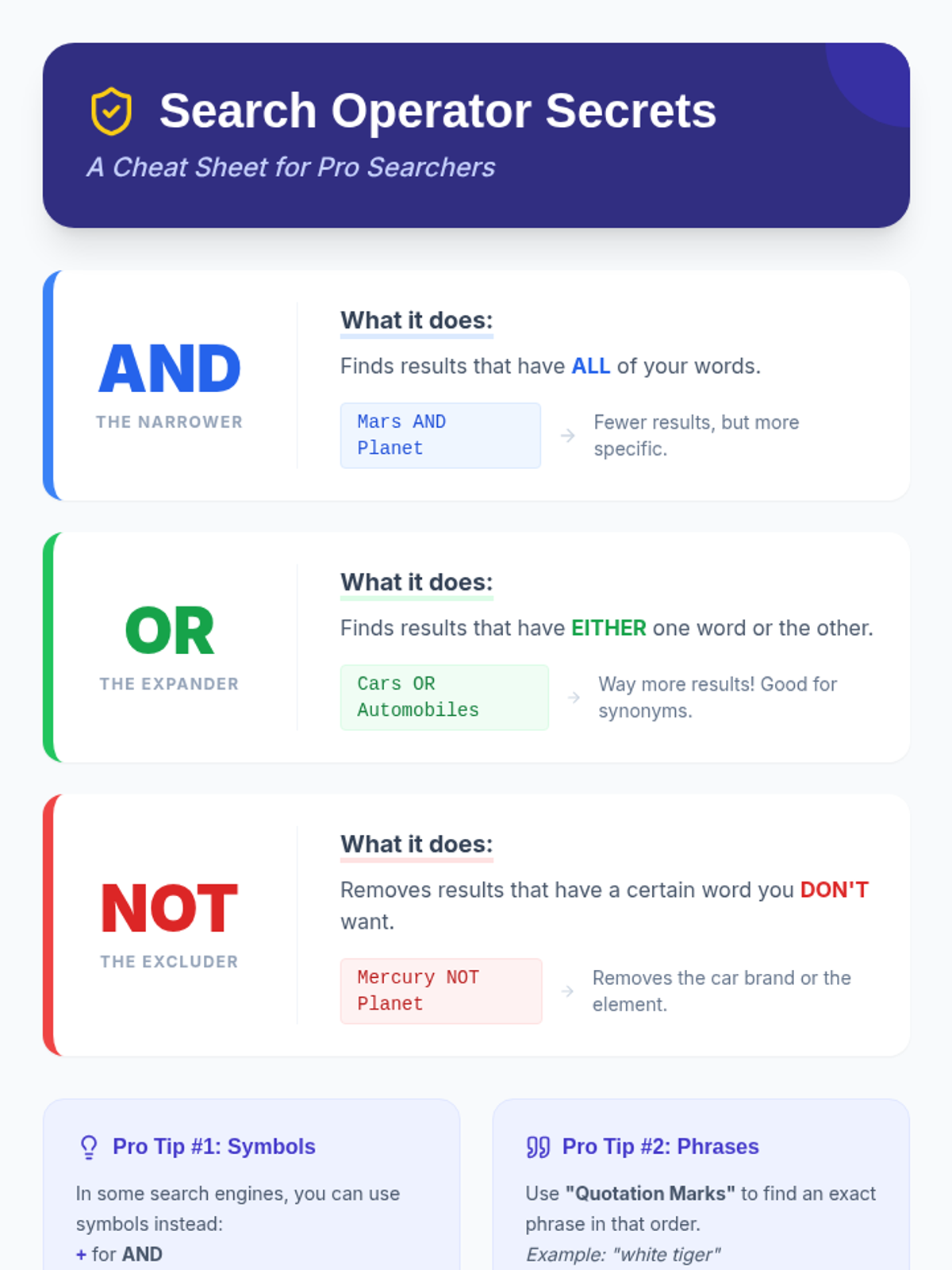
Introduces Boolean operators (AND, OR, NOT) through visual and physical activities to help students understand how to narrow or expand their search results.
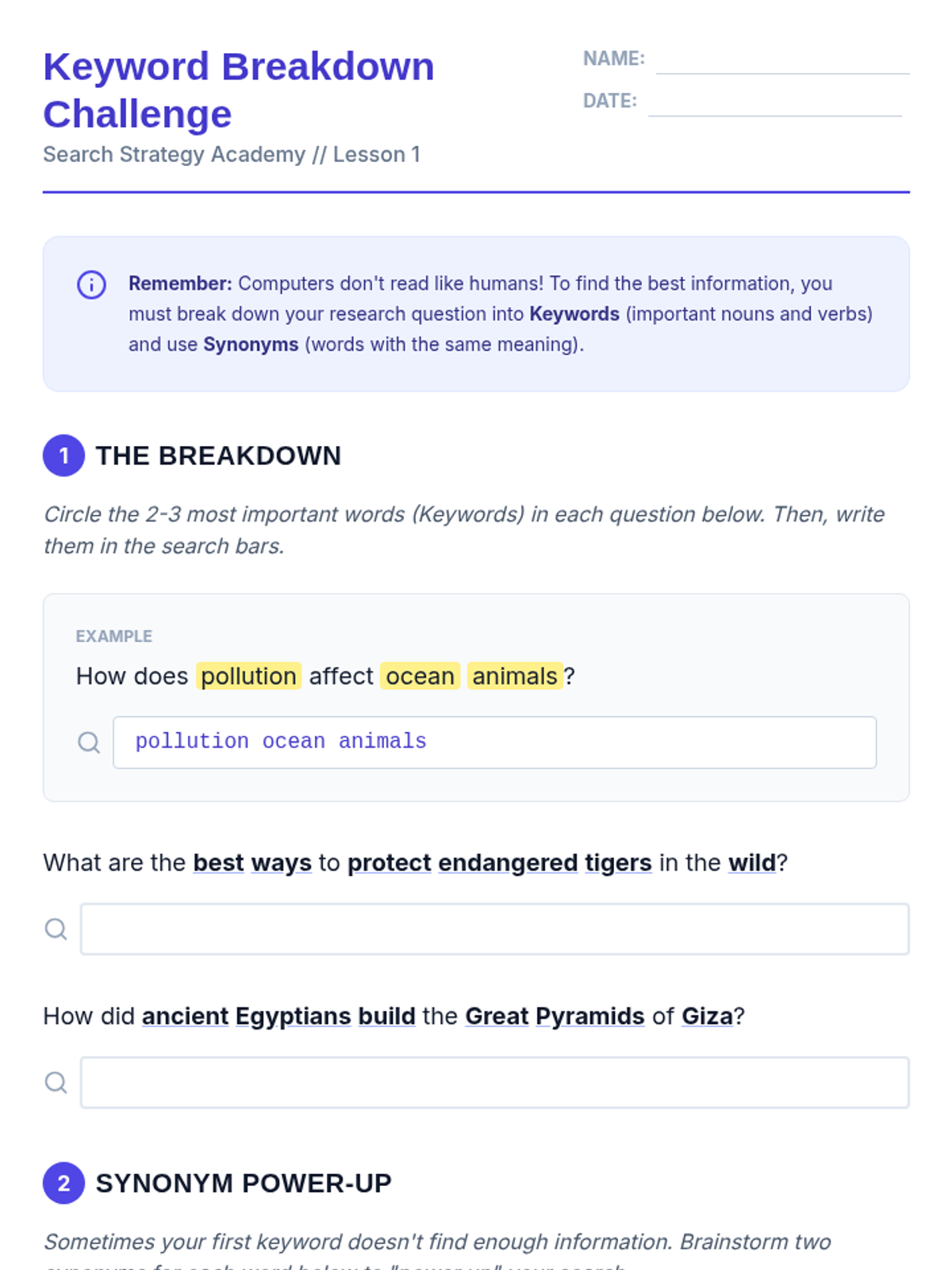
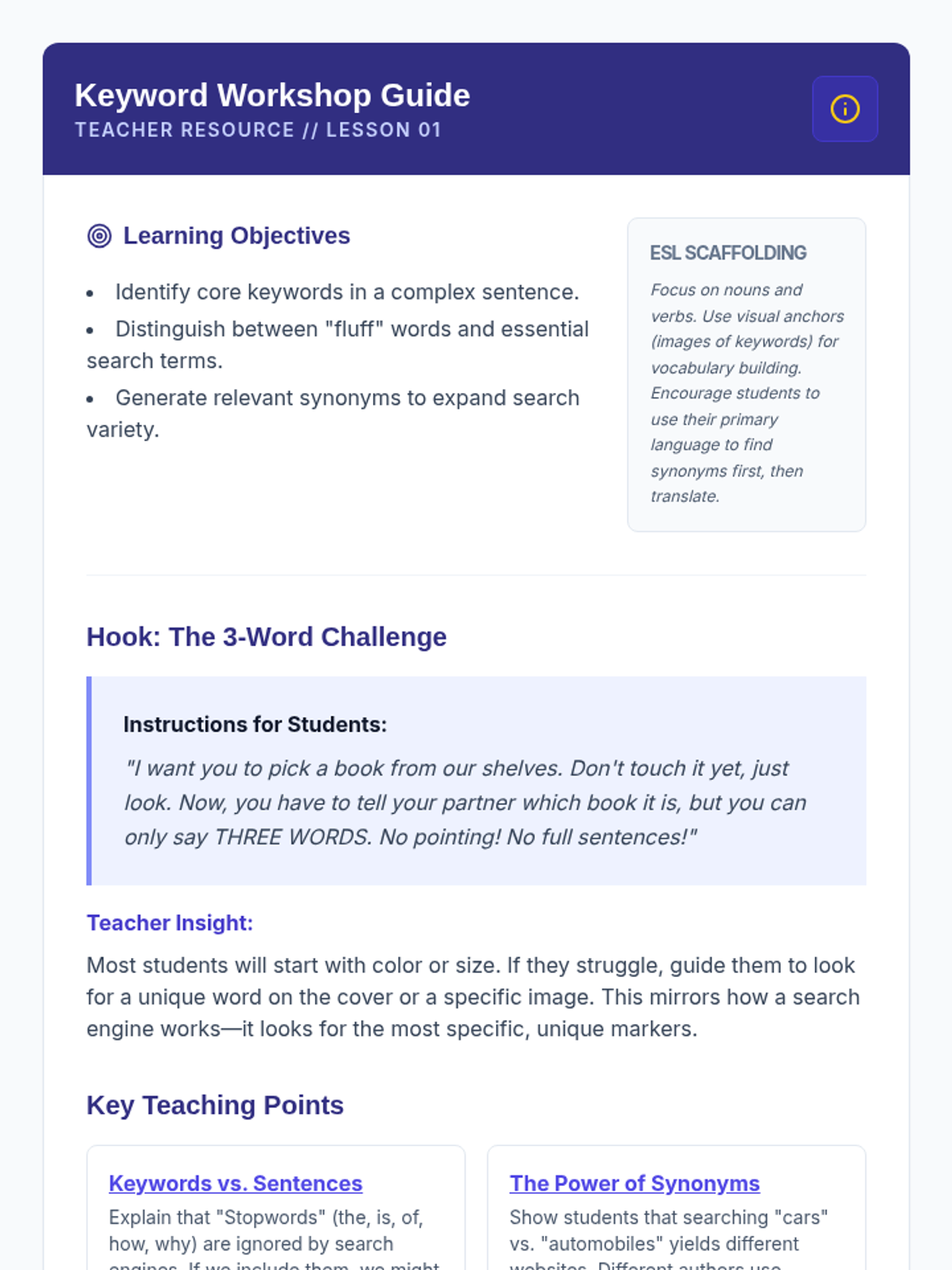
Students learn to deconstruct complex questions into core keywords and brainstorm synonyms to expand their search potential, moving away from typing full sentences into search engines.
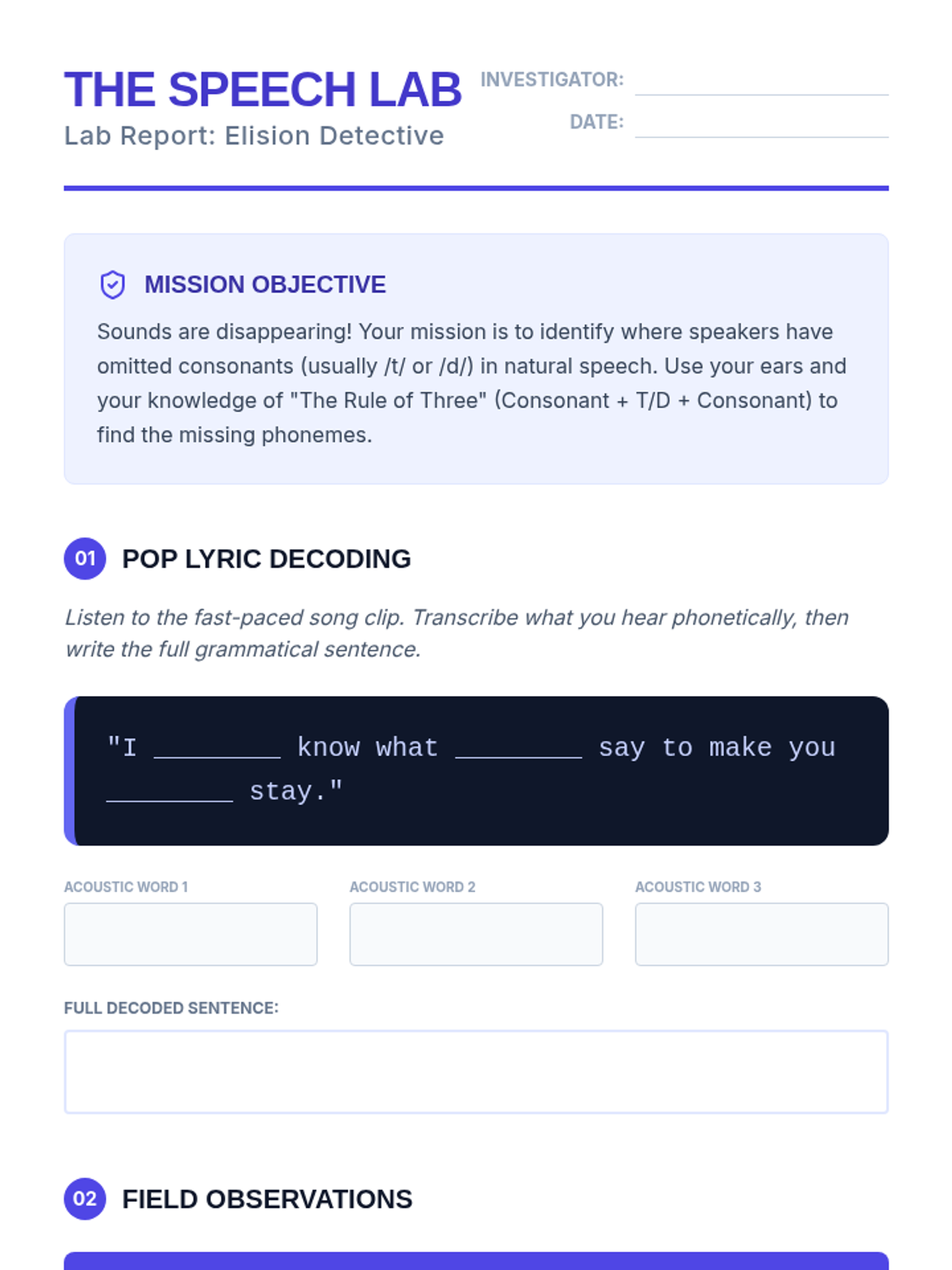
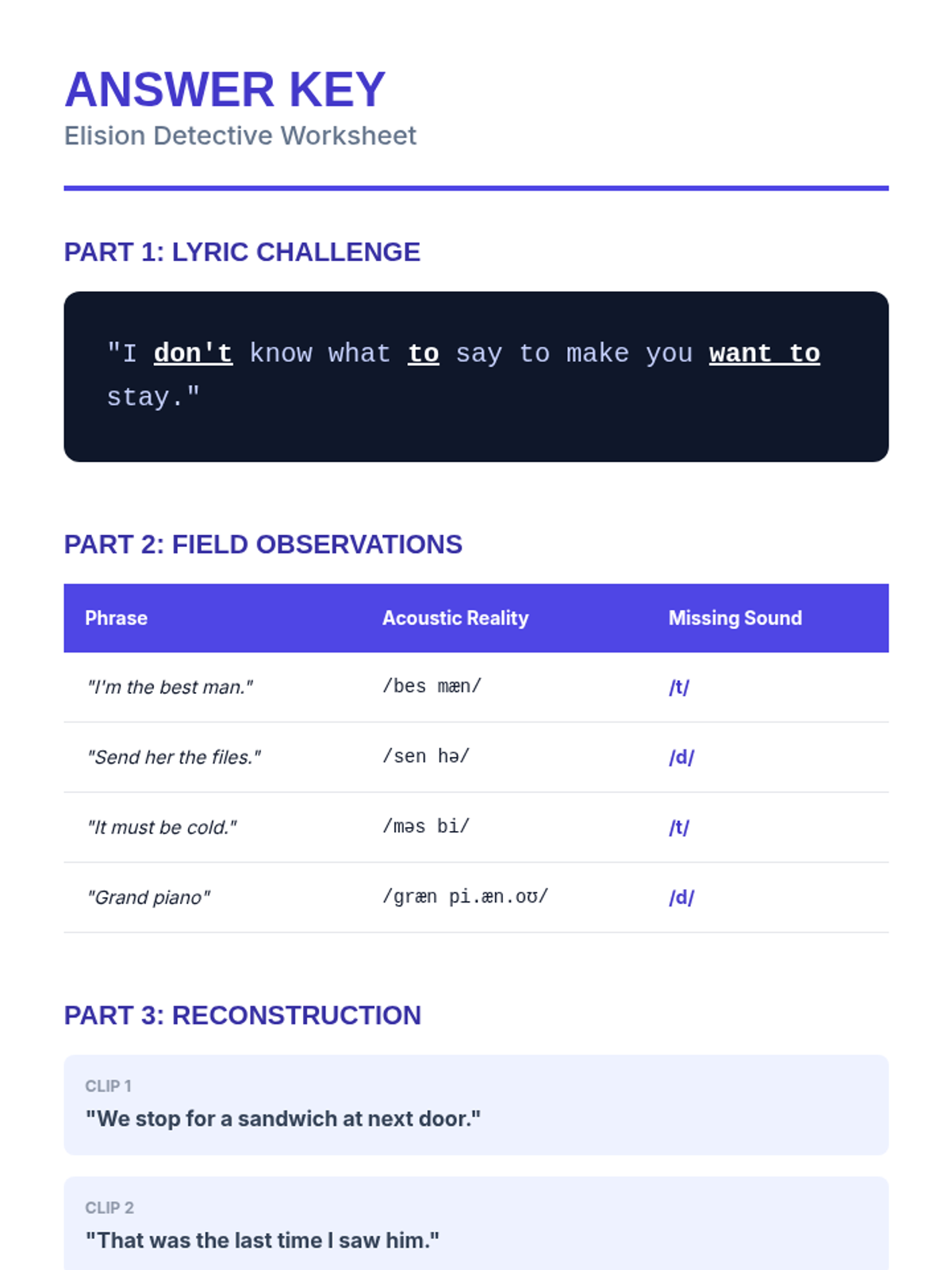
This lesson covers the phenomenon of elision, where sounds (particularly /t/ and /d/) disappear in rapid speech. Students practice listening to high-speed dialogues to identify words that have been 'swallowed' by the speaker.
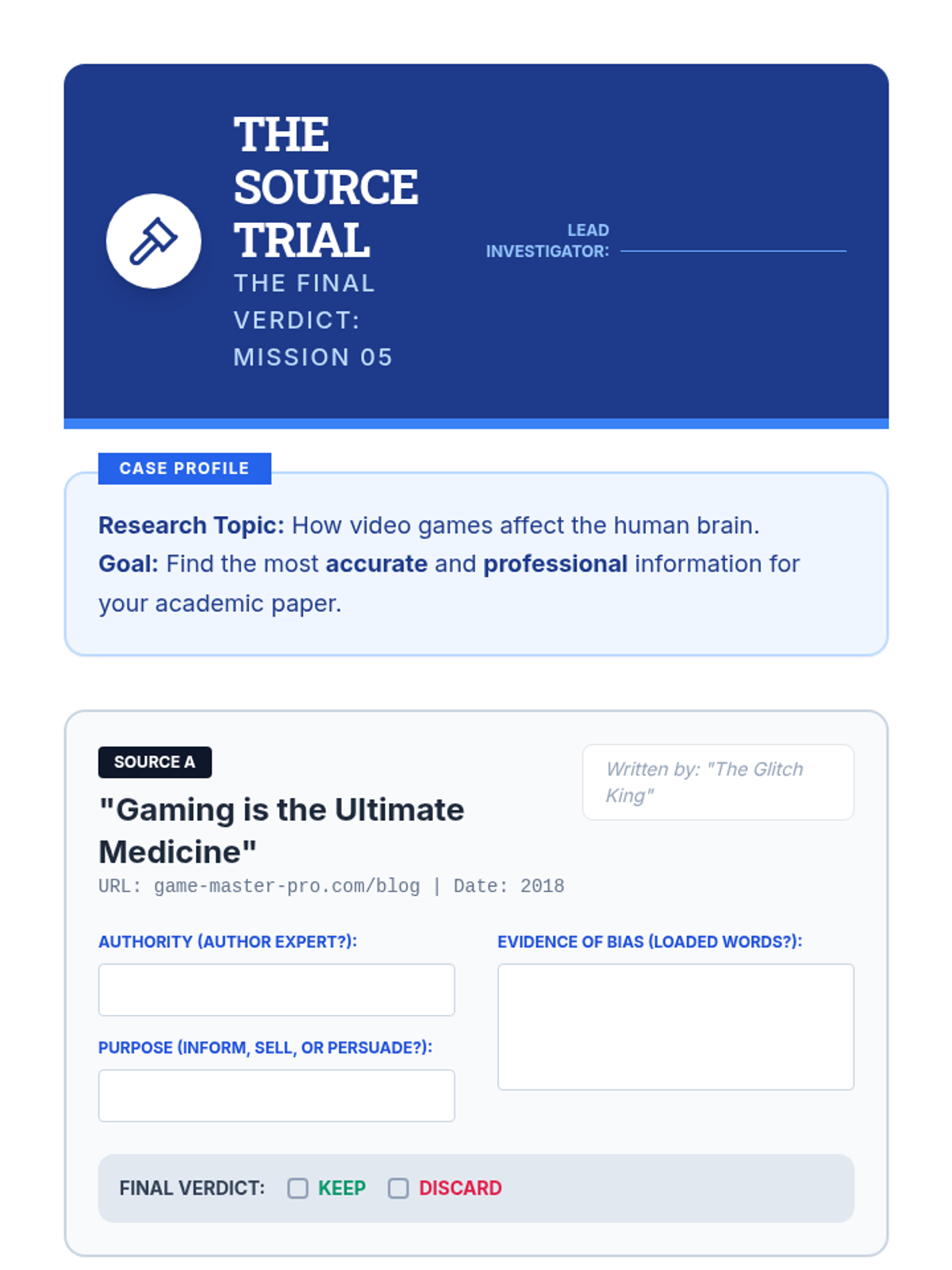
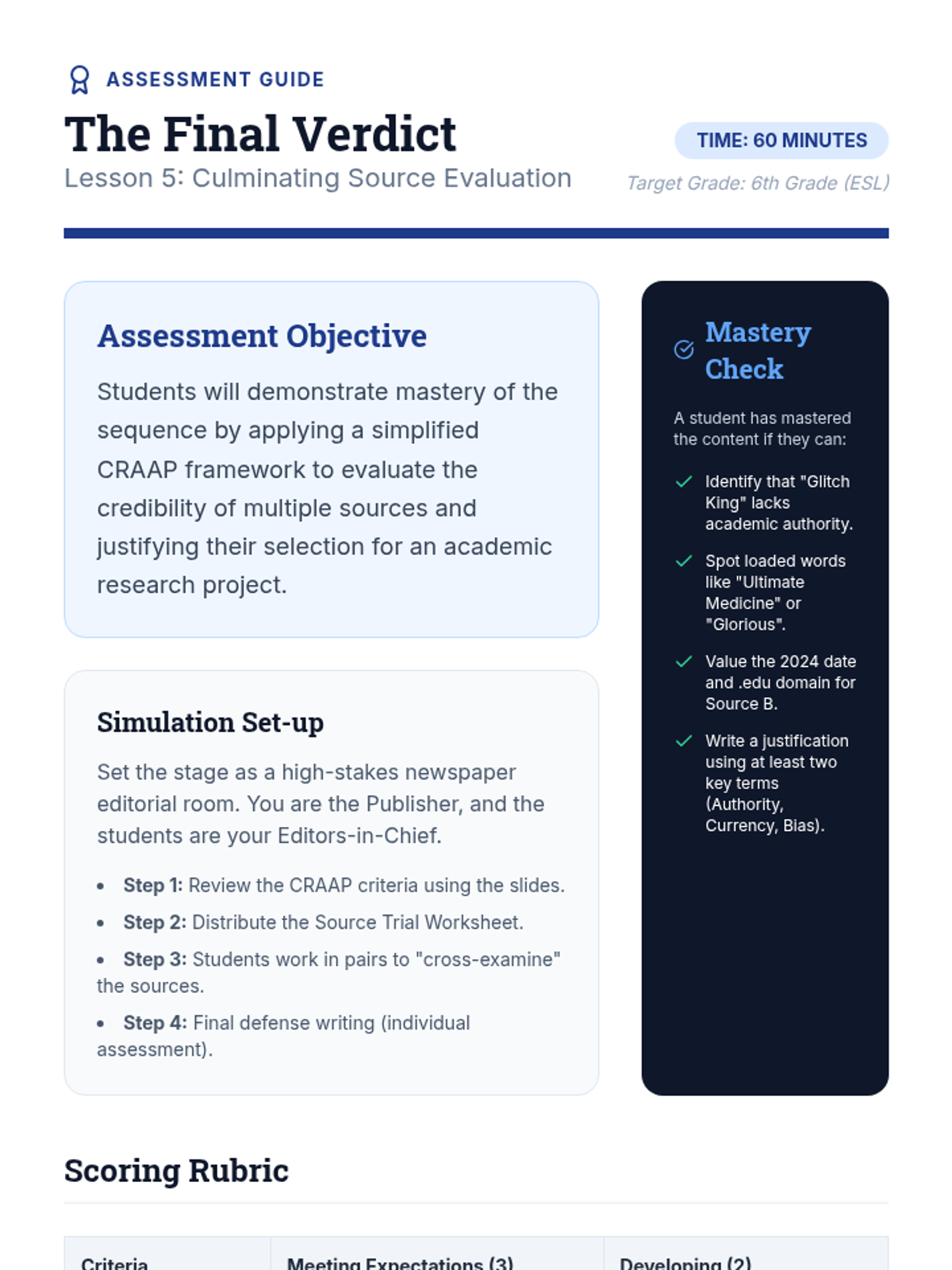
A culminating simulation where students apply an evaluation framework to judge the credibility of sources for a hypothetical research project.
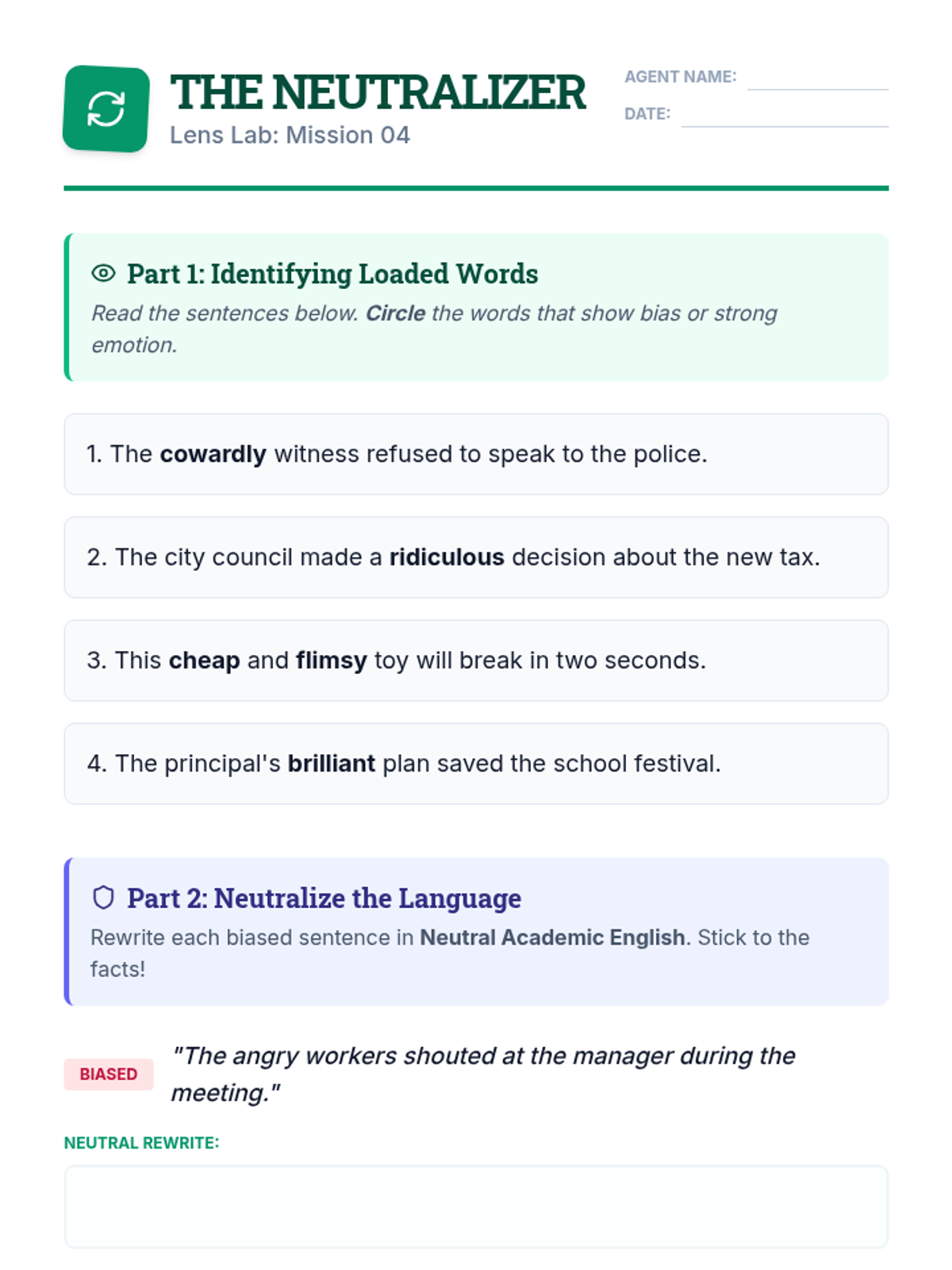
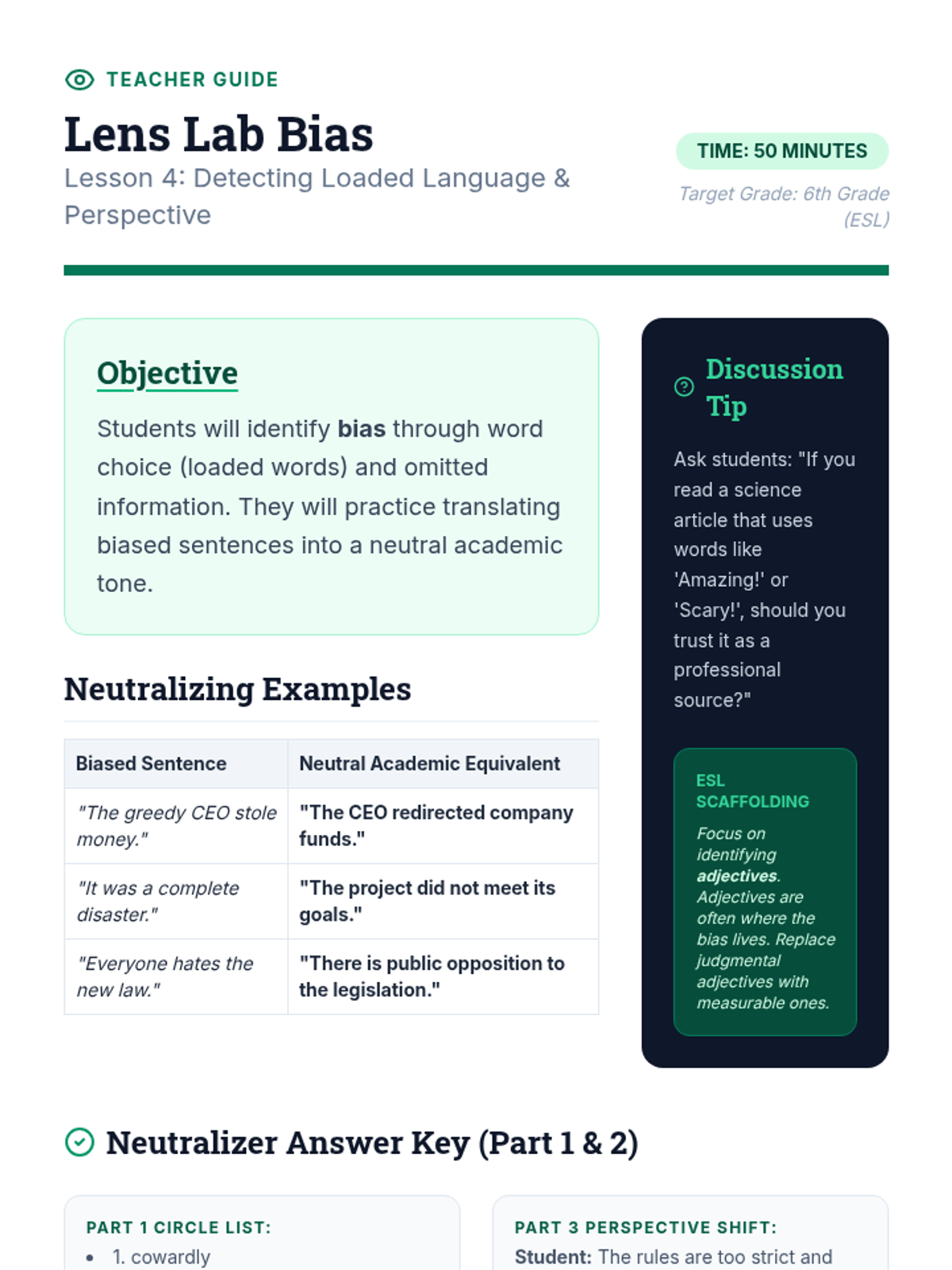
Students identify bias through word choice and perspective, practicing how to transform biased language into neutral academic tone.
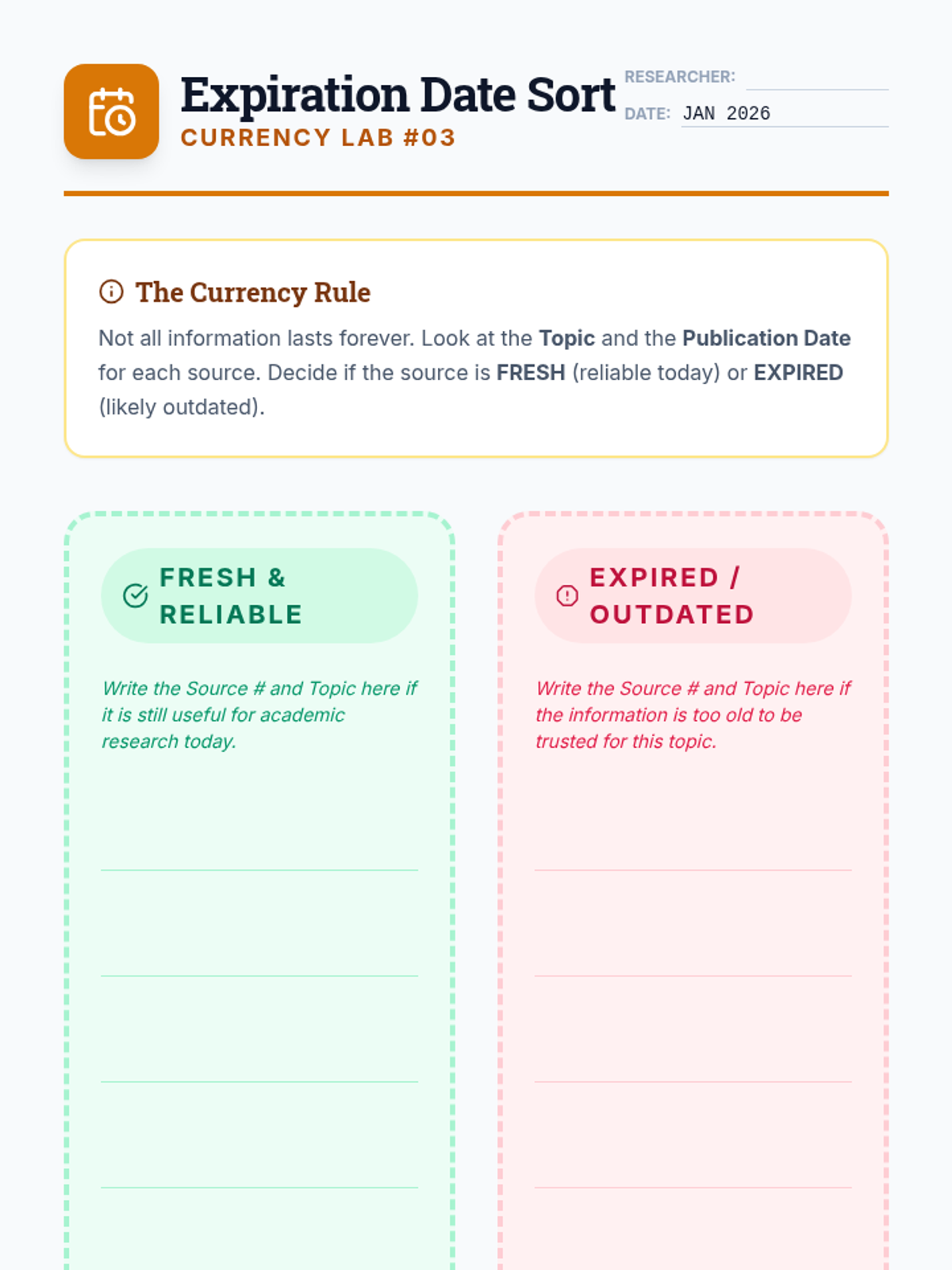
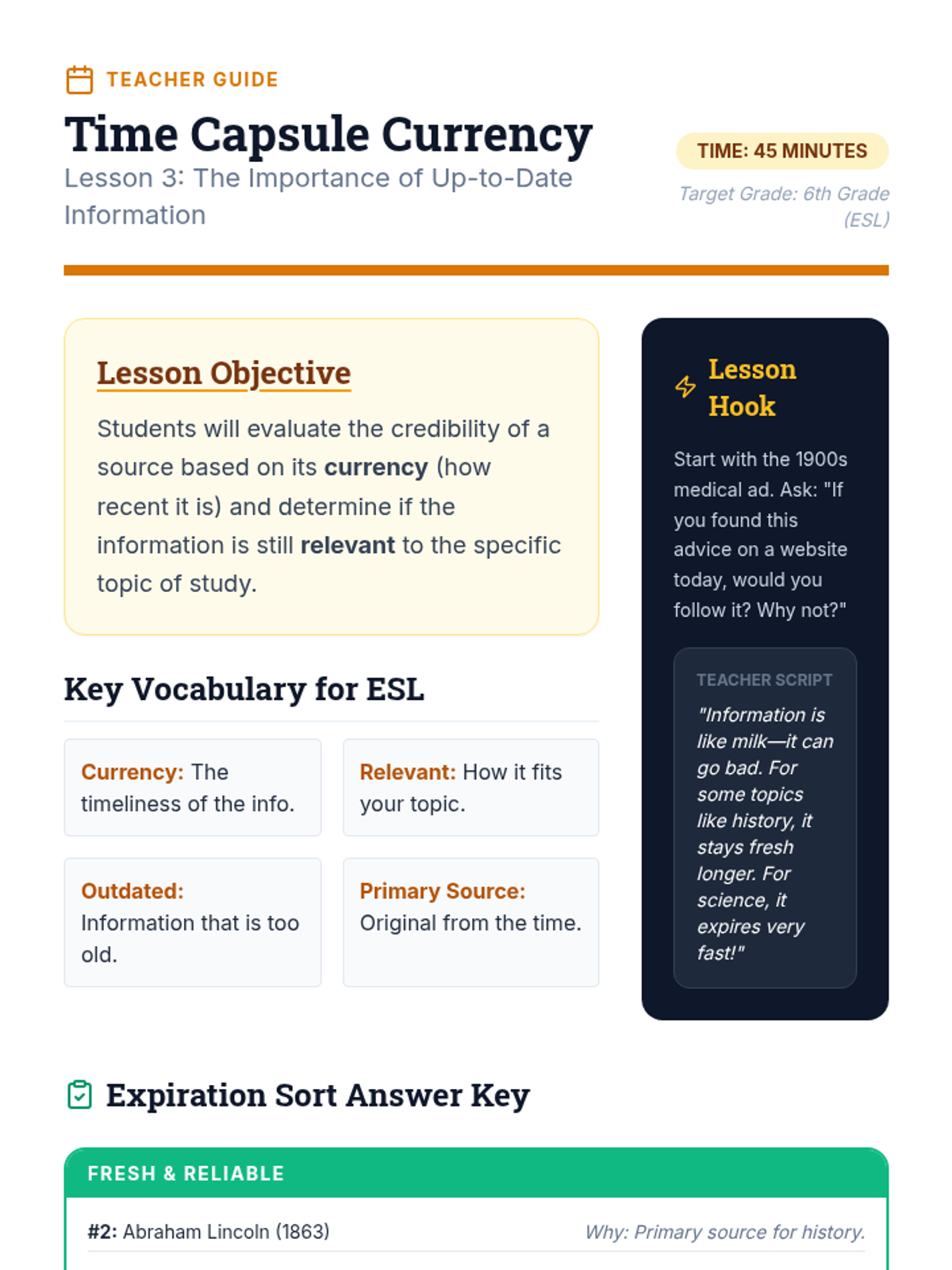
Students explore how information changes over time and why the 'freshness' of a source matters in academic research, especially in STEM fields.
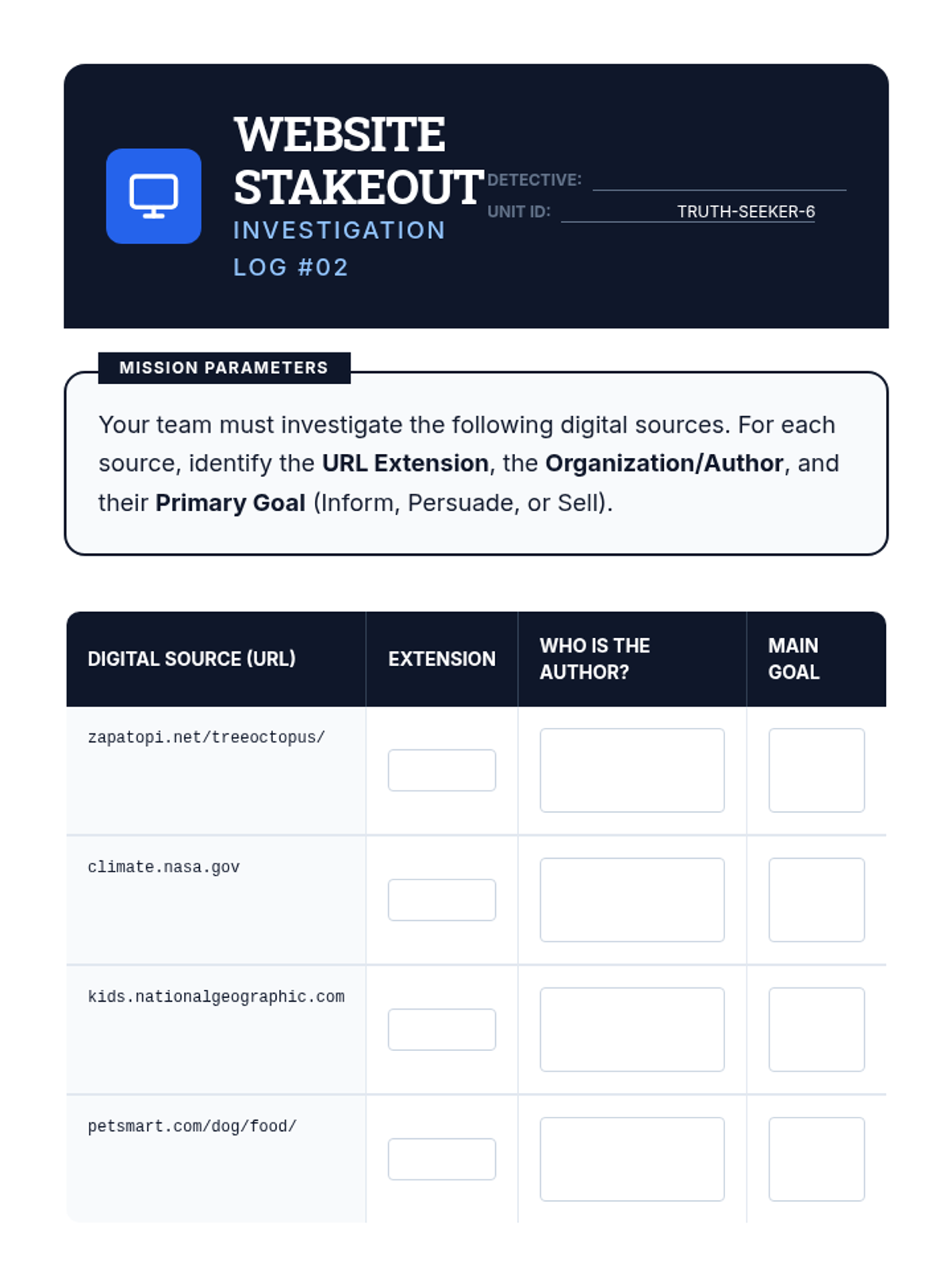
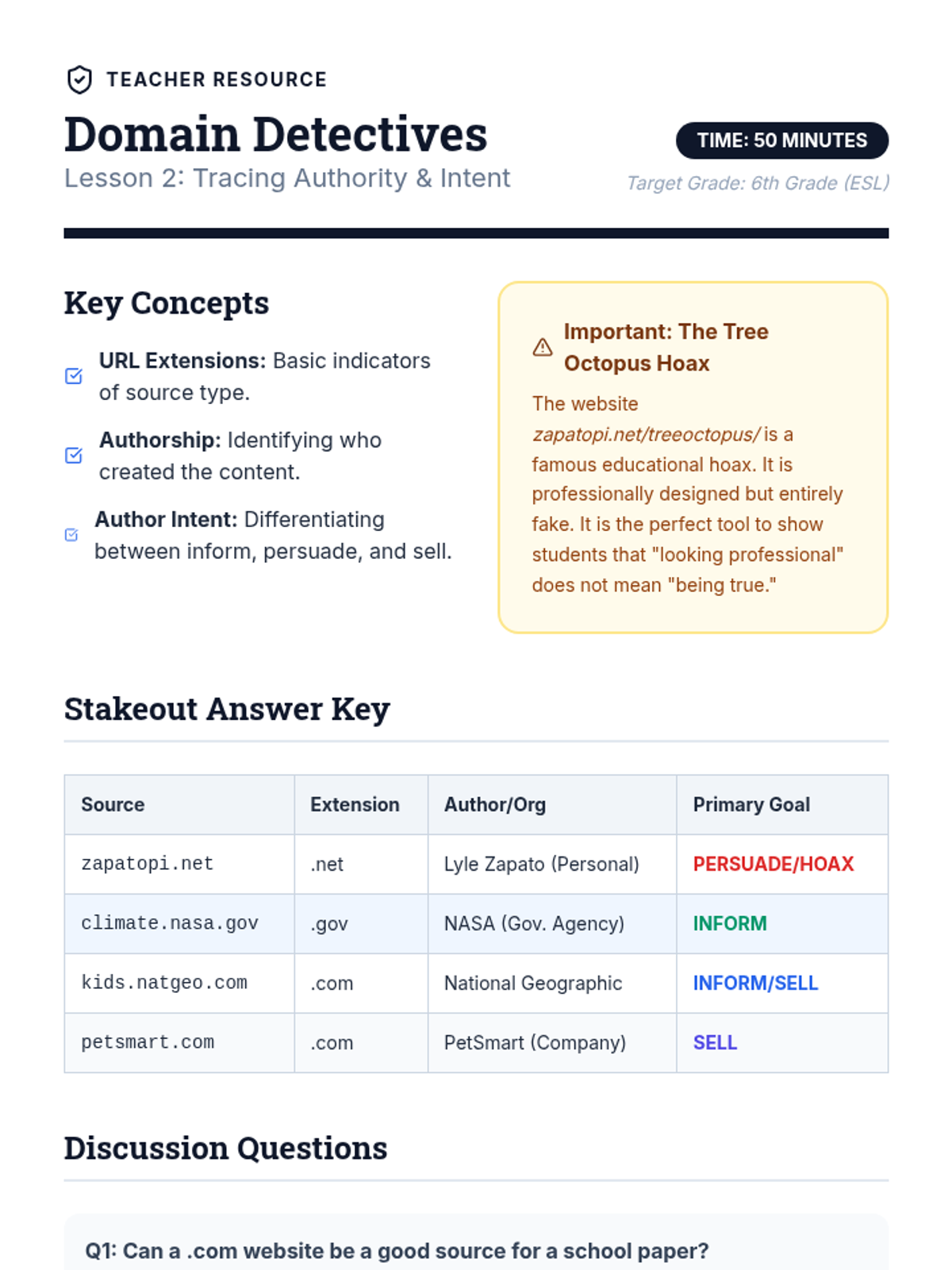
Learners investigate URL extensions and authorship to determine the authority and intent behind digital information sources.
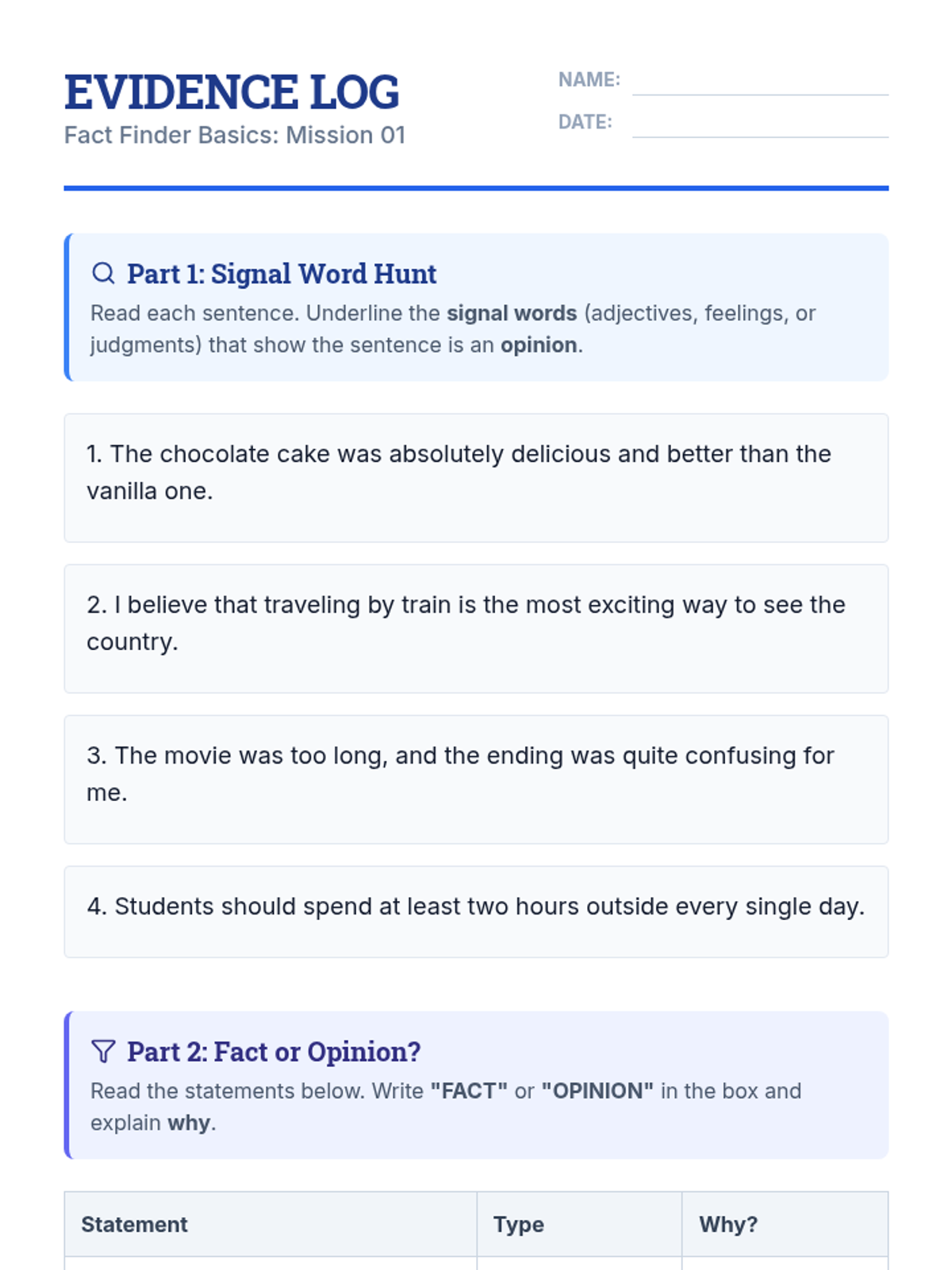
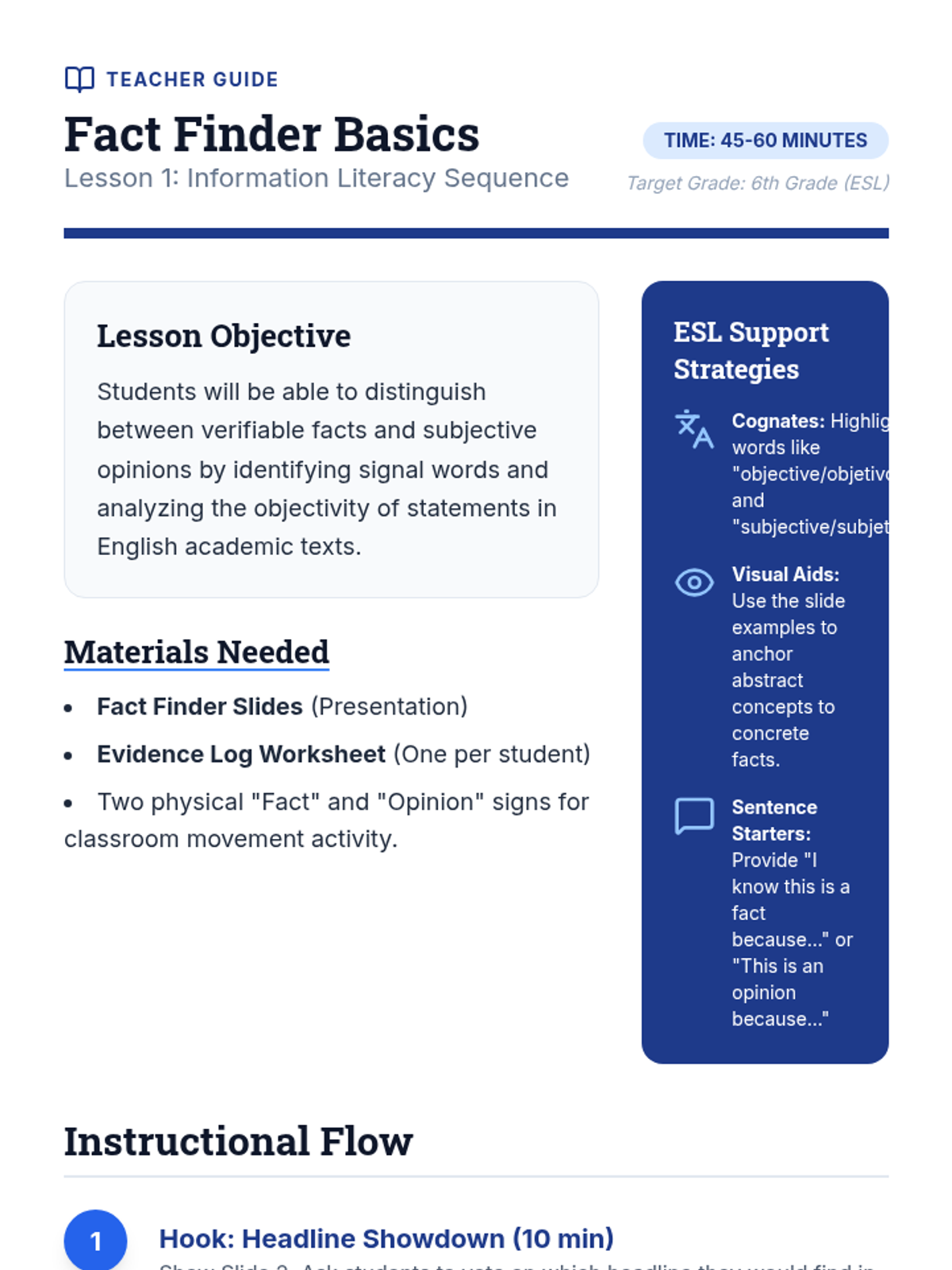
Students learn to identify signal words and categorize statements as verifiable facts or subjective opinions, a foundational skill for academic reading in English.
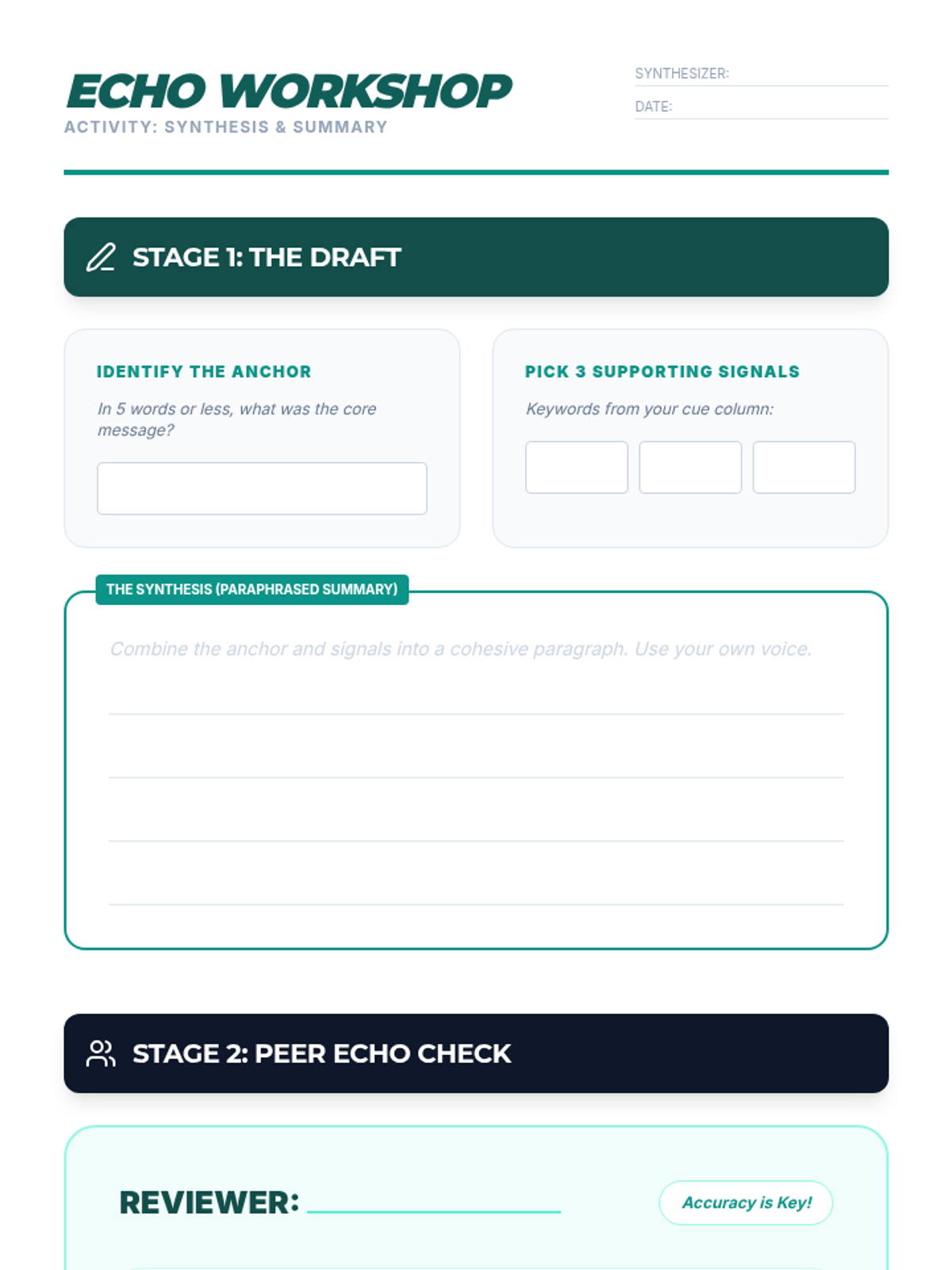
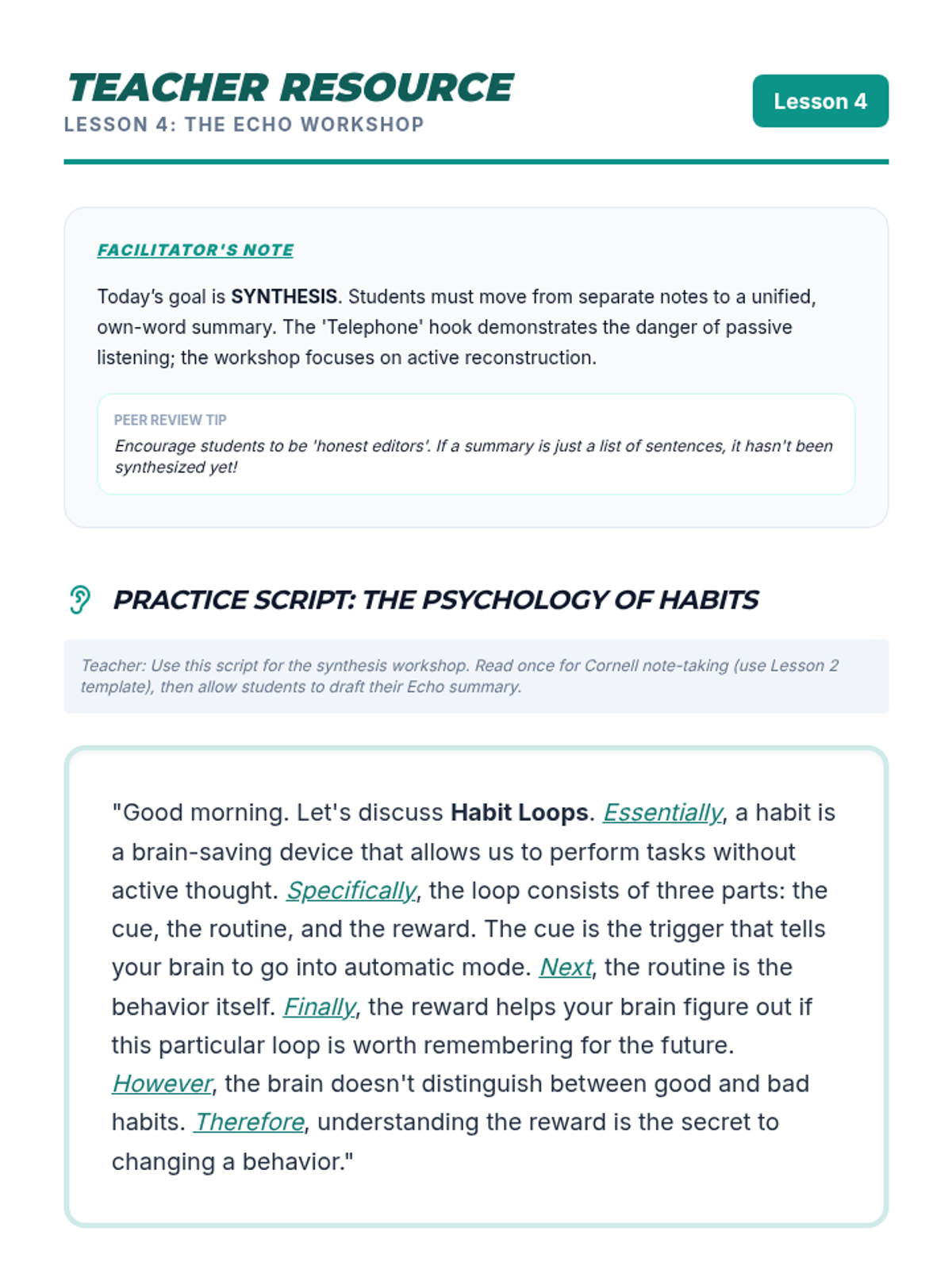
Learners practice reconstructing audio messages in their own words, focusing on paraphrasing rather than direct quotation. Peer evaluation ensures accuracy and comprehension through a synthesis-based workshop.
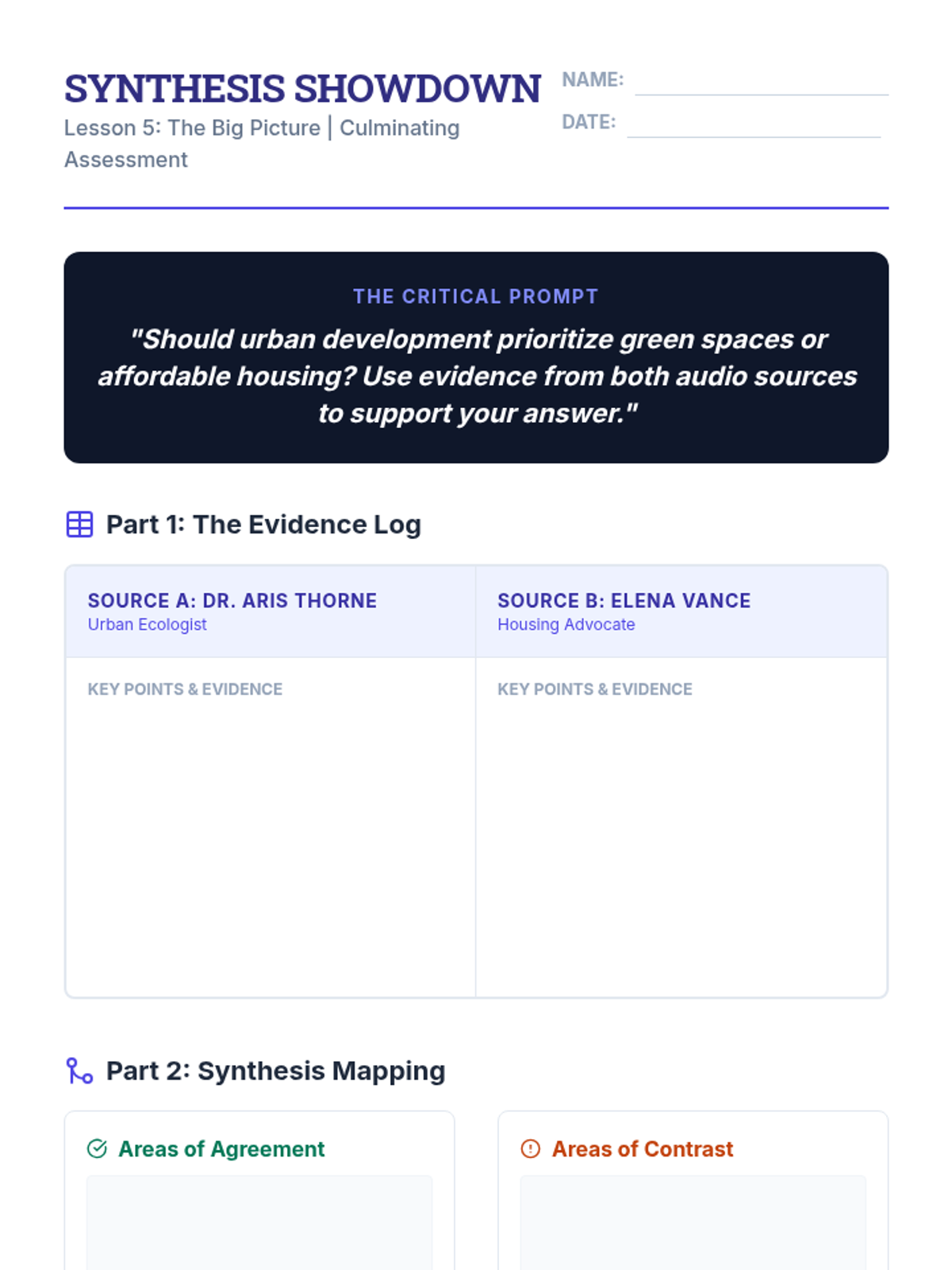
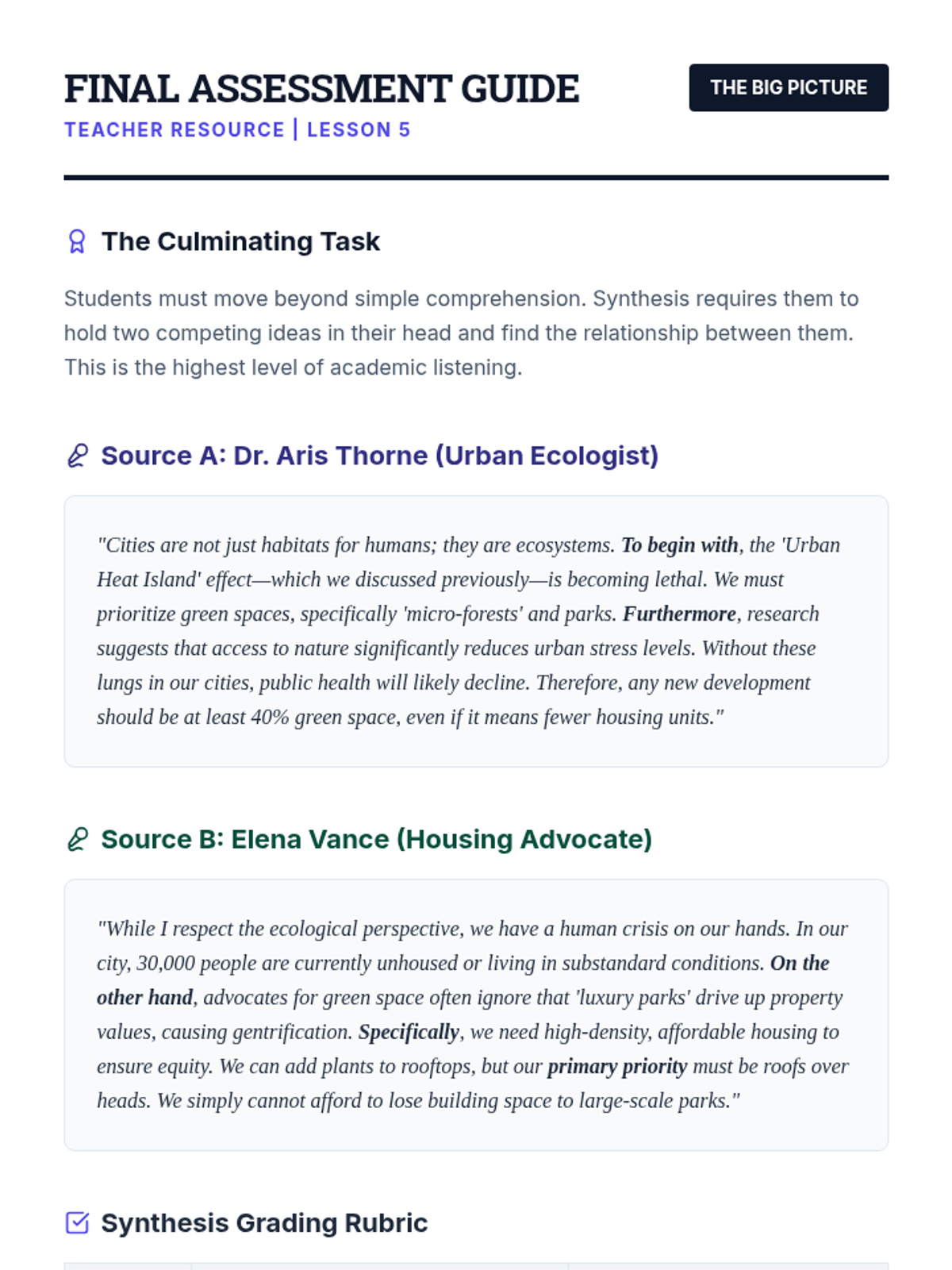
In this culminating lesson, students listen to two contrasting viewpoints on a single global issue. They must synthesize the information to answer a prompt, citing specific details from both audio sources to support their conclusion.
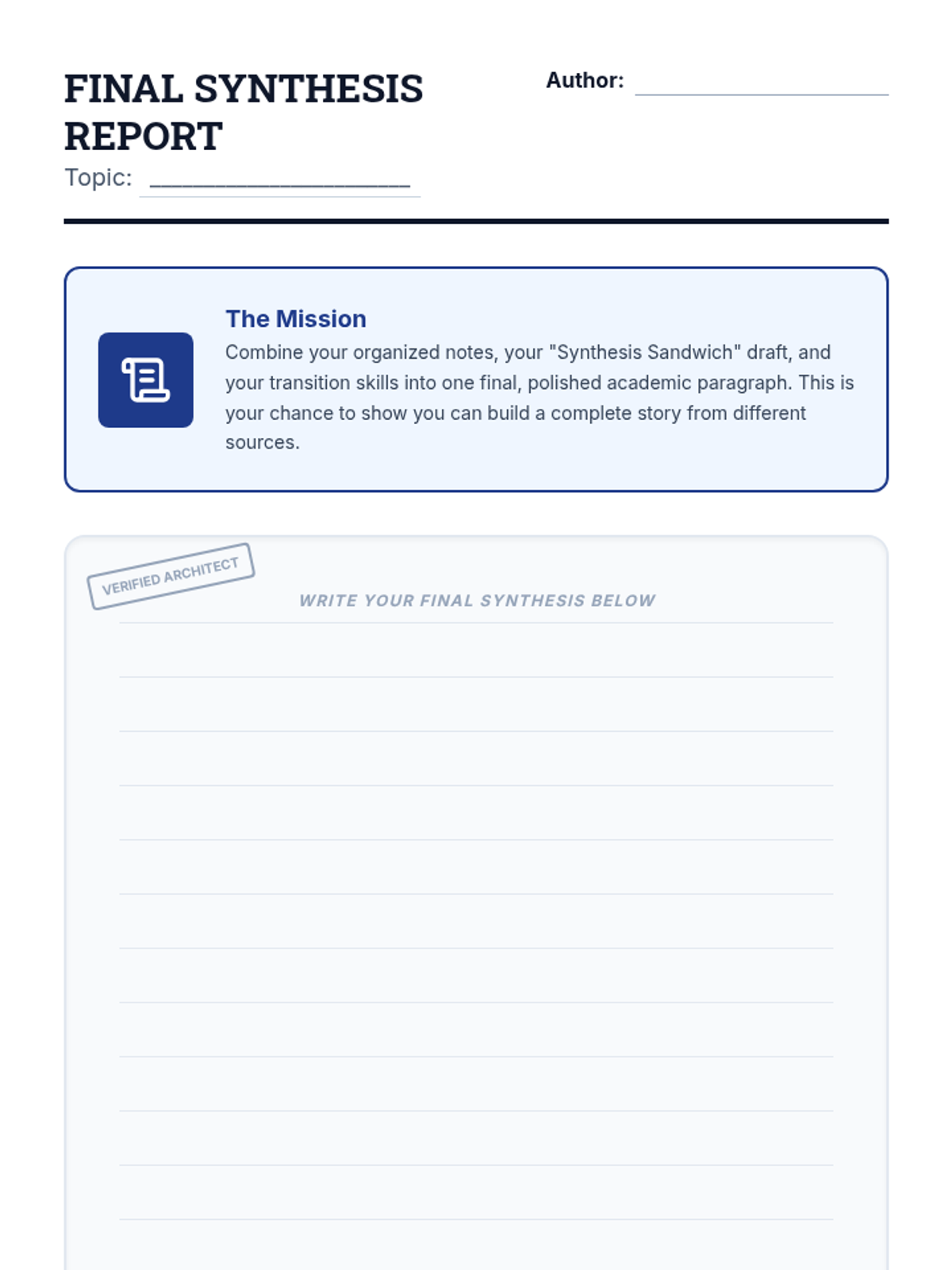
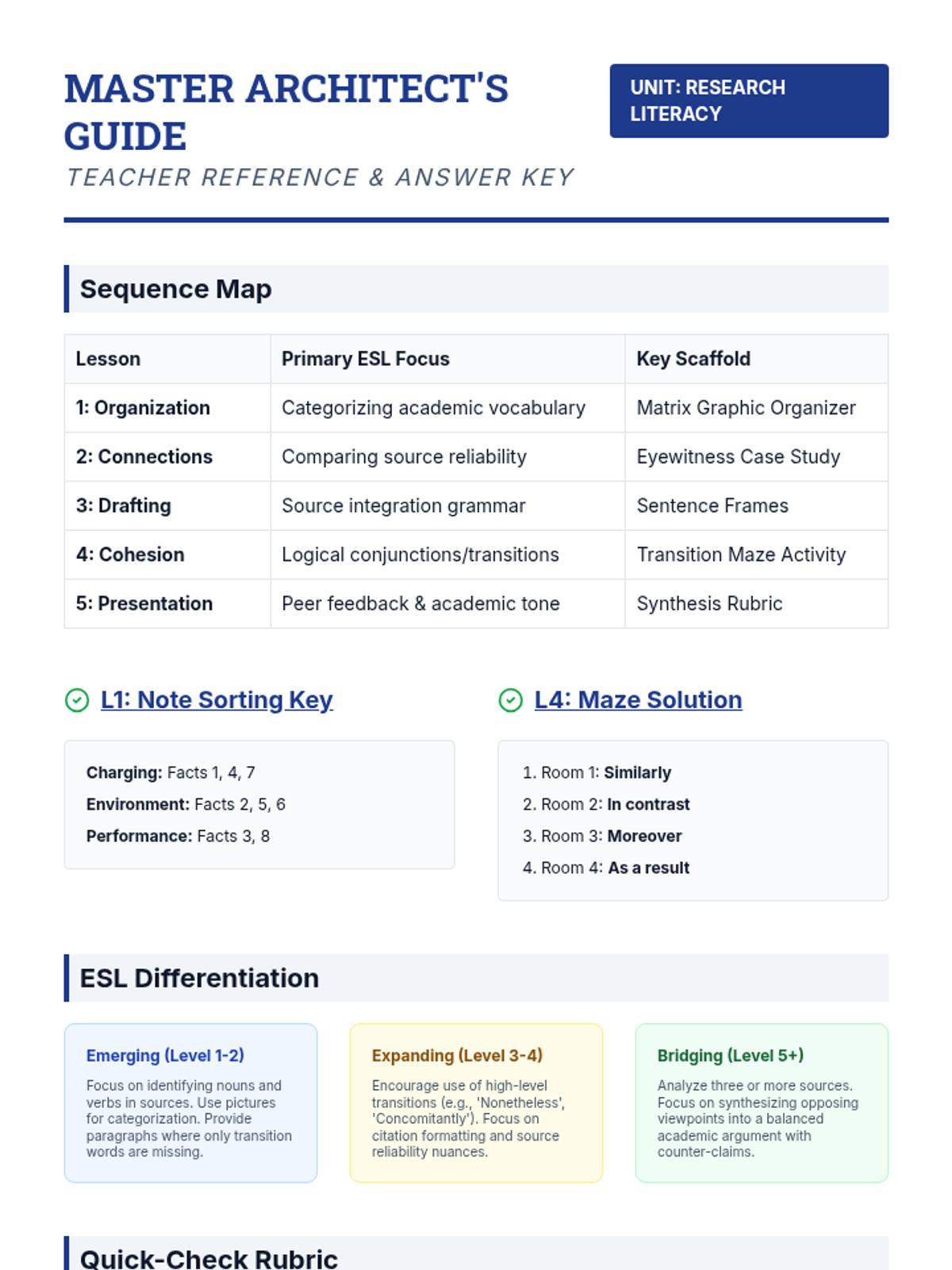
Students finalize their research synthesis into a report or presentation and participate in a peer-review gallery walk.
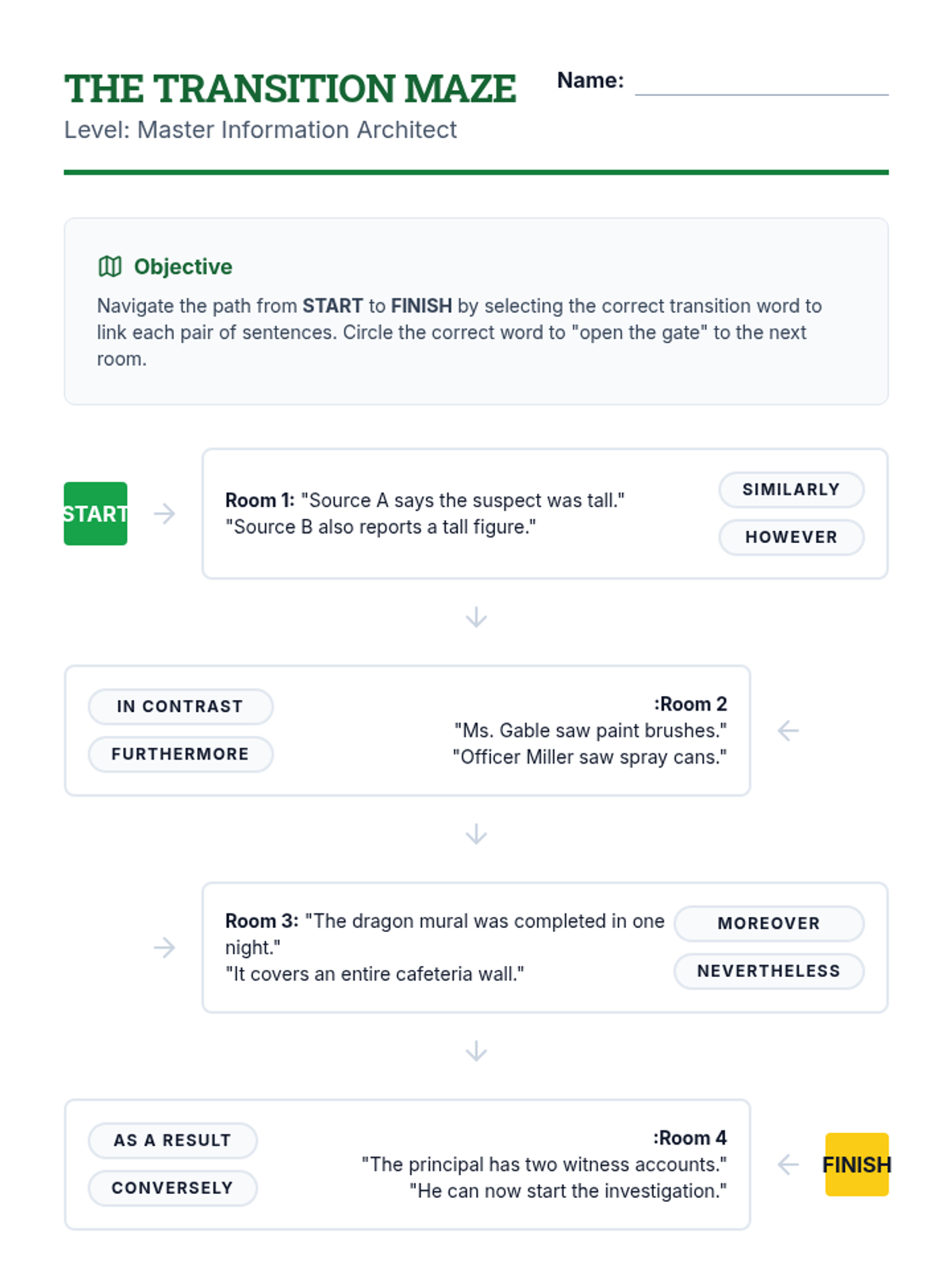
This lesson focuses on academic transitions like 'however' and 'furthermore' to link ideas smoothly, featuring a 'Transition Maze' game.
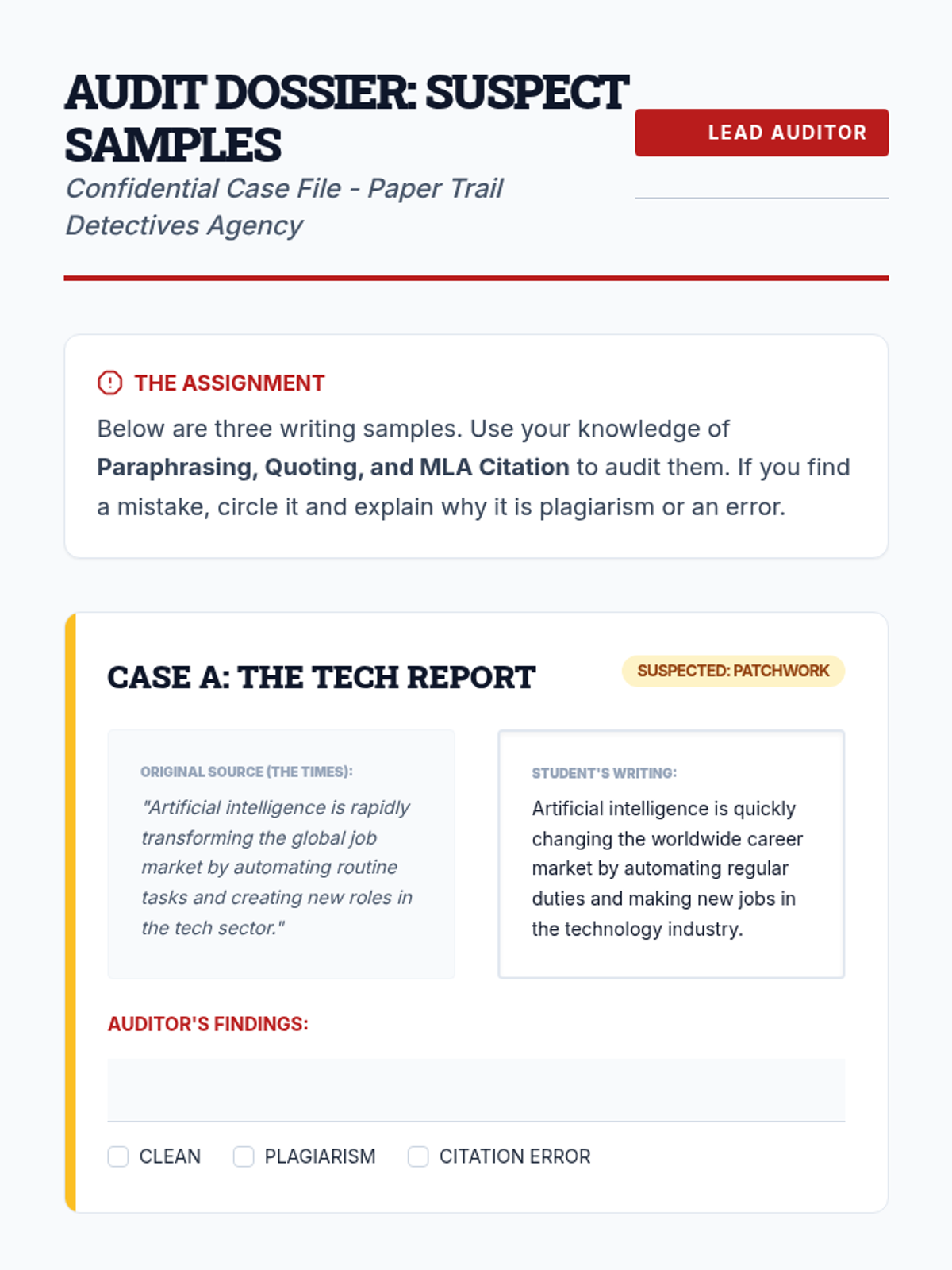
A capstone simulation where students act as editors to identify and correct plagiarism and citation errors in research samples.
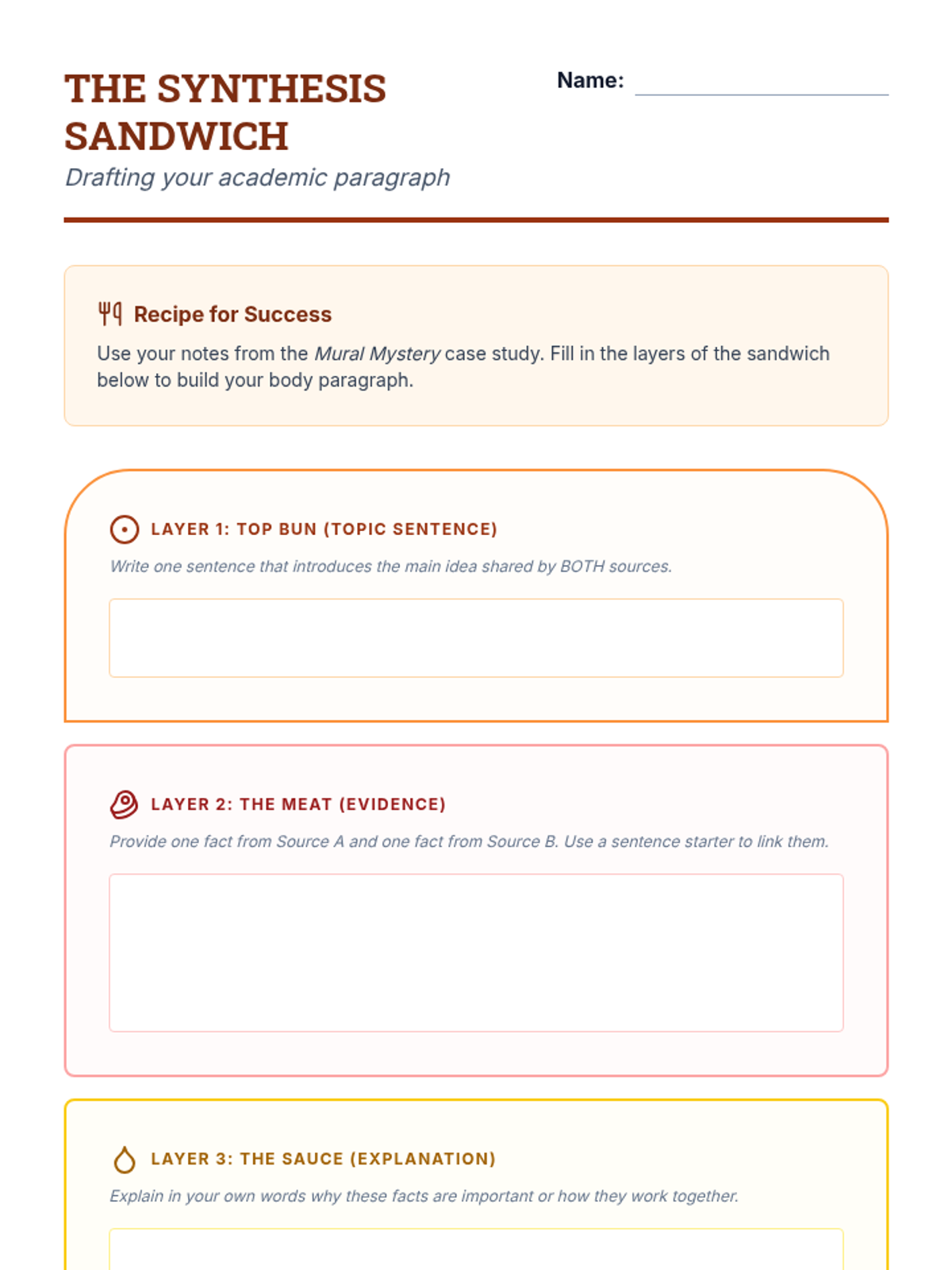
Students draft a body paragraph that combines information from multiple sources using the 'Topic Sentence - Evidence - Explanation' structure and sentence frames.
A hands-on dive into MLA citation formatting where students learn the correct order and punctuation for various source types.
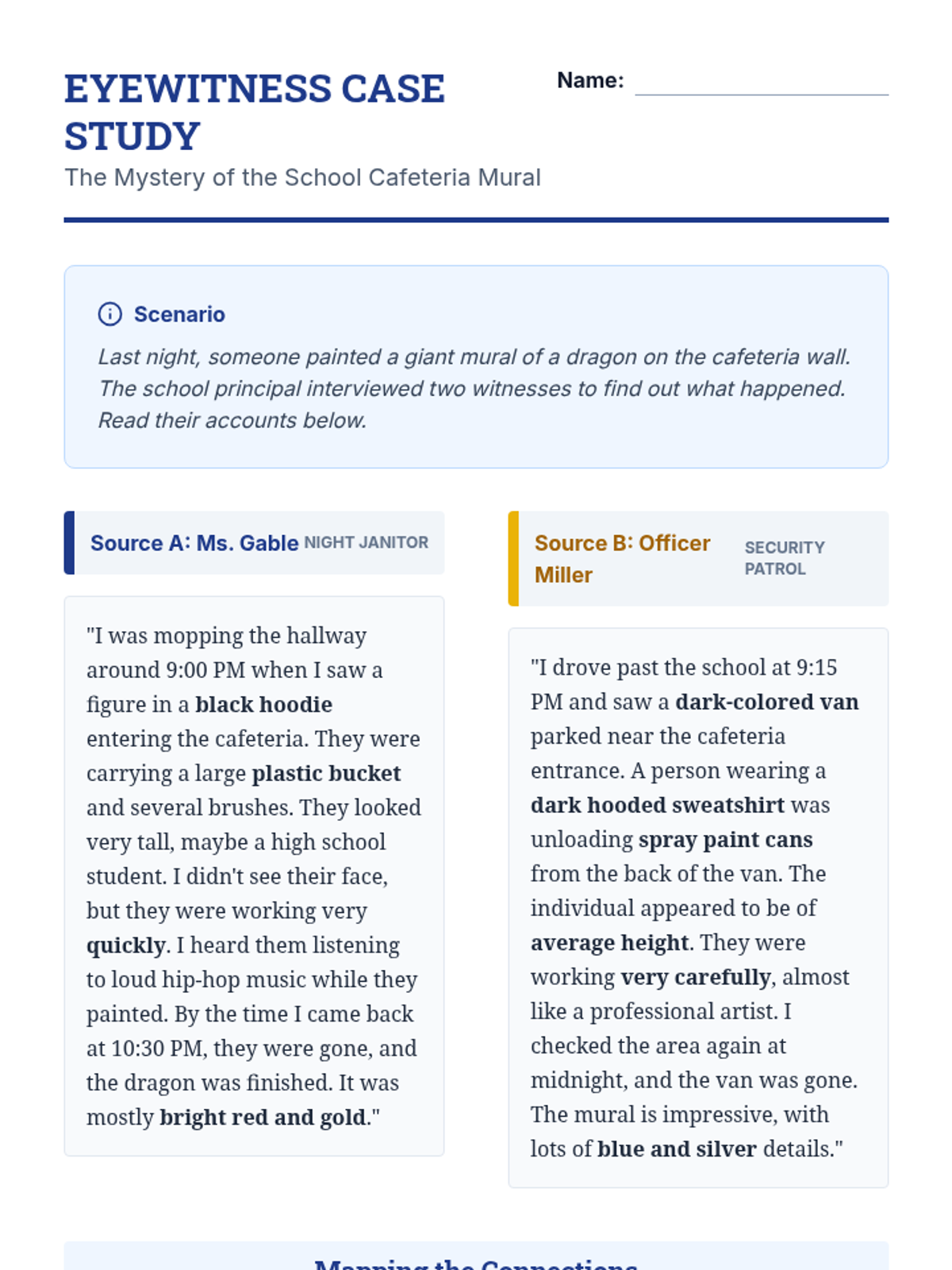
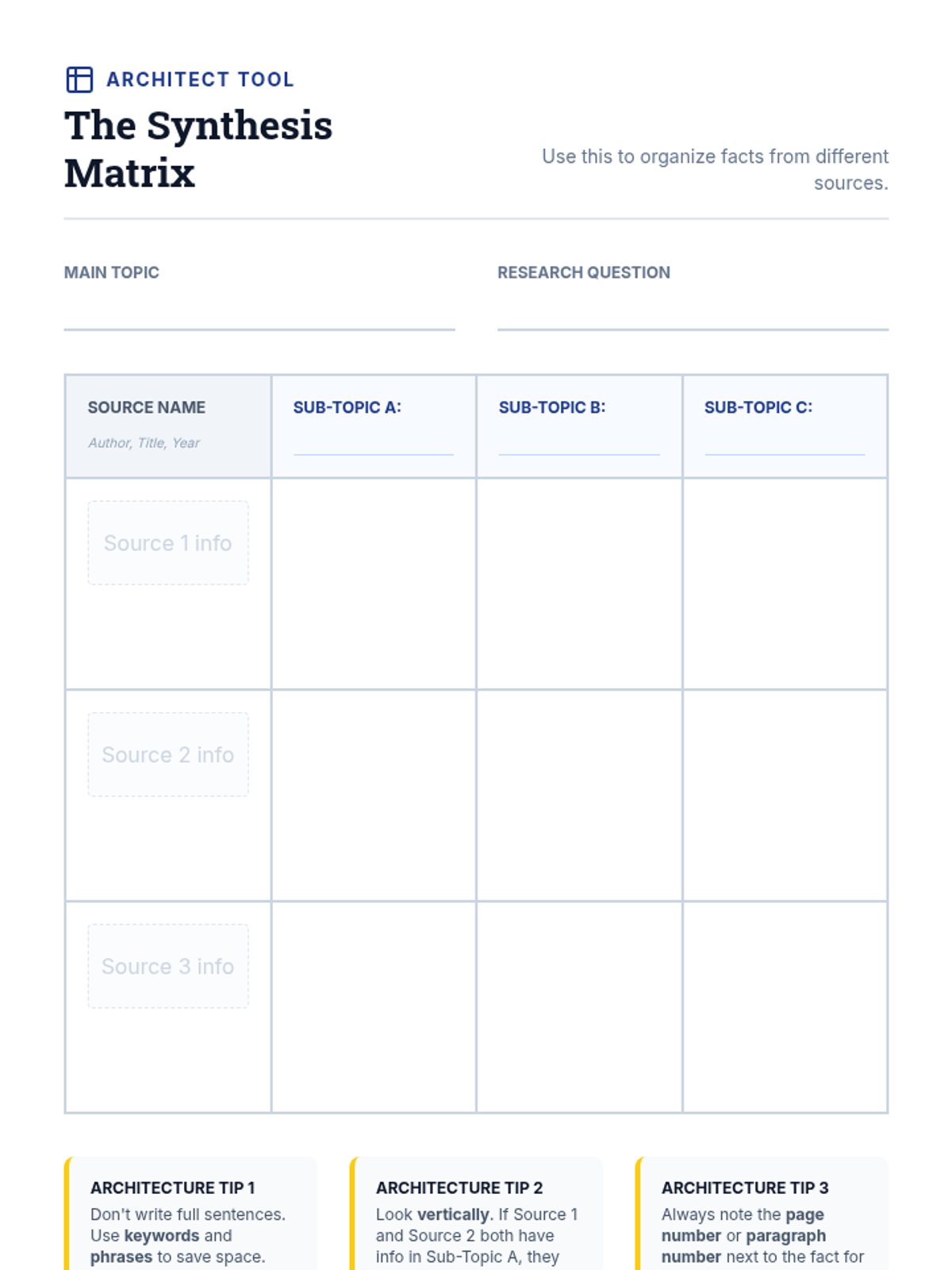
Learners compare two short articles on the same topic to find areas of agreement and disagreement, using Venn diagrams to visualize source overlap.
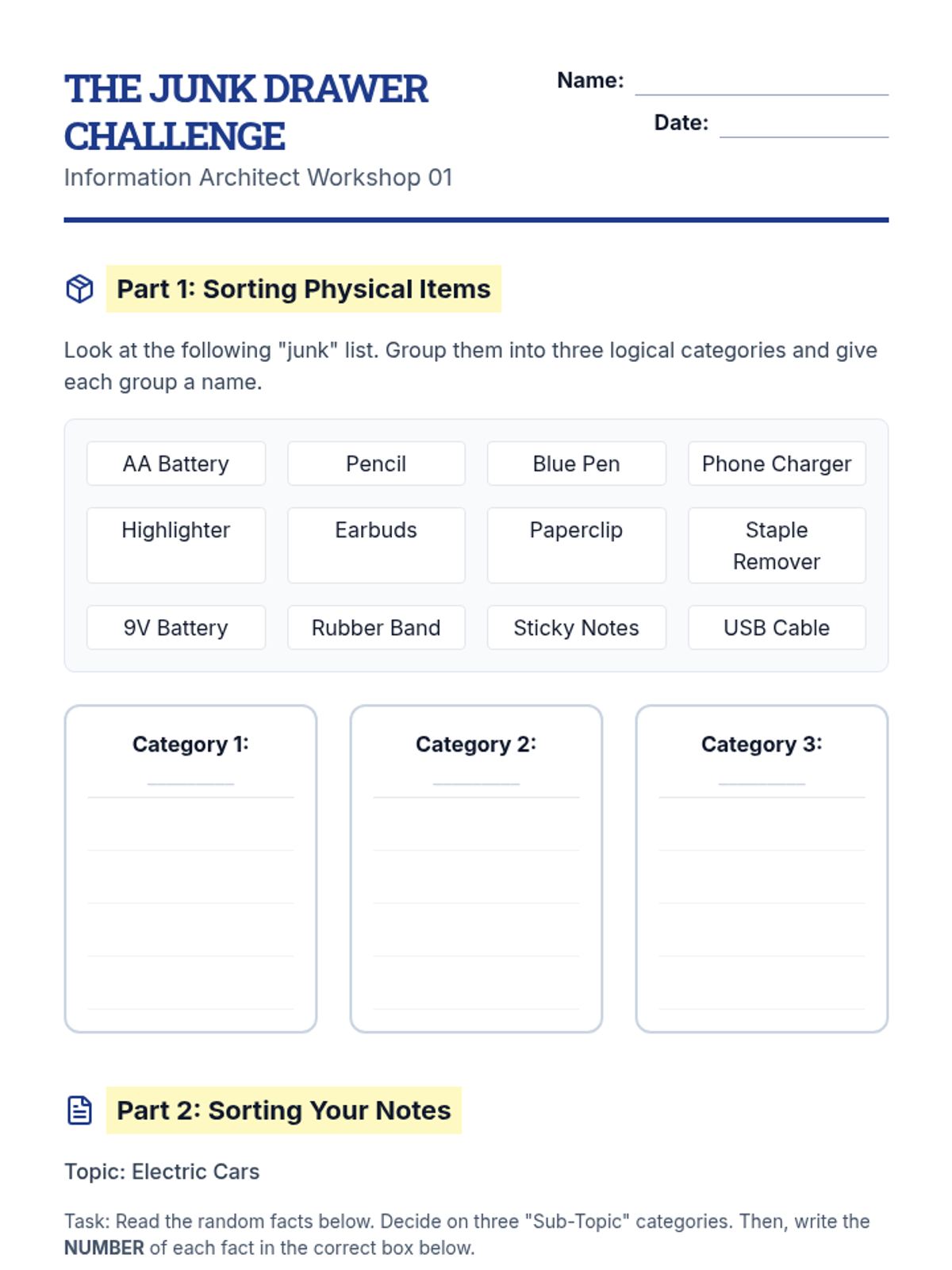
Students learn to categorize scattered facts using graphic organizers like matrix charts. They practice sorting a 'junk drawer' of information into logical sub-topics to prepare for academic writing.
Students learn to choose between quoting and summarizing, using signal phrases to integrate evidence into their own writing voice.