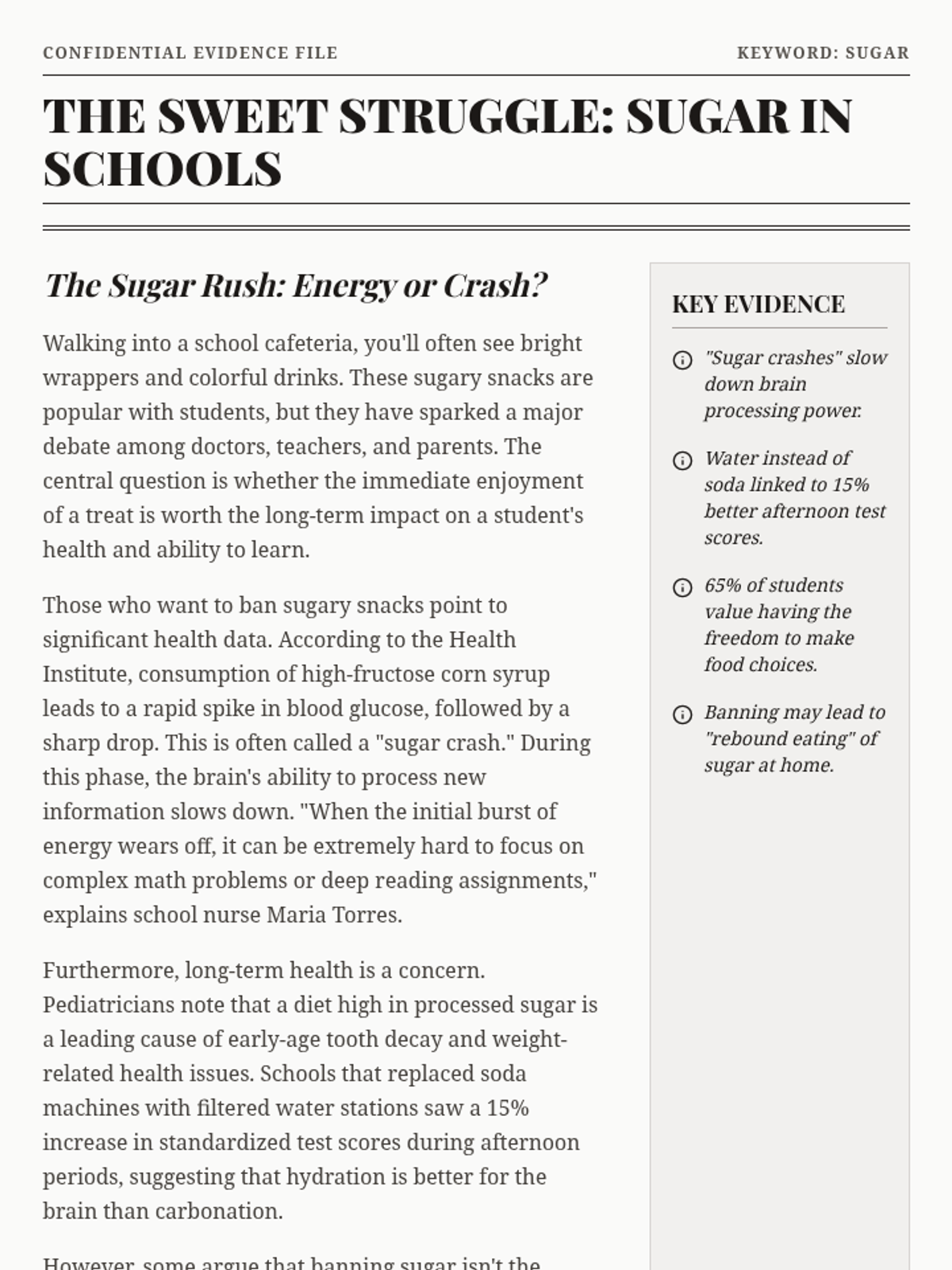
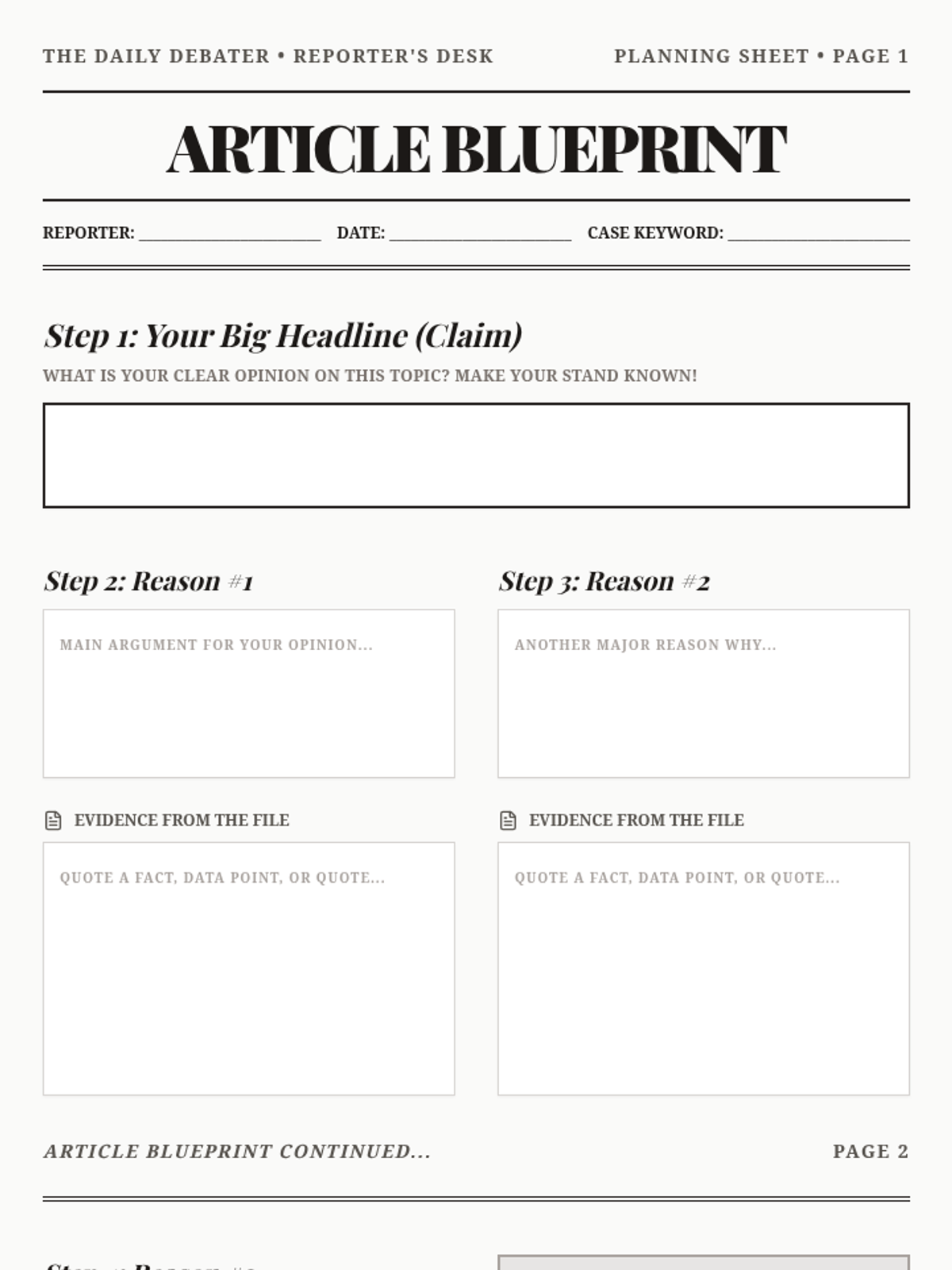
A 30-minute media literacy lesson for 7th-grade students focused on distinguishing between facts and opinions in everyday media. Students will practice critical evaluation skills through interactive examples and discussion.
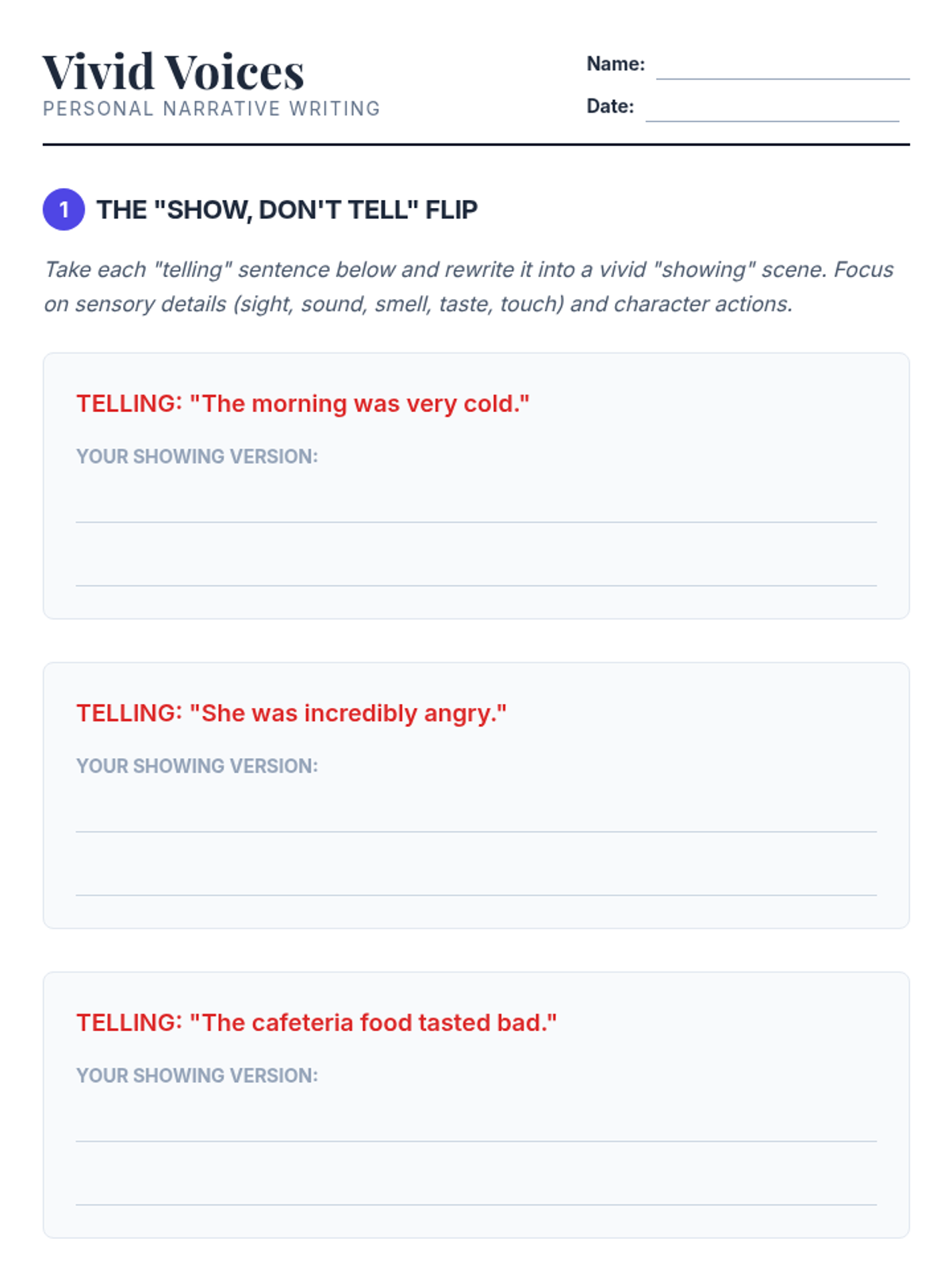
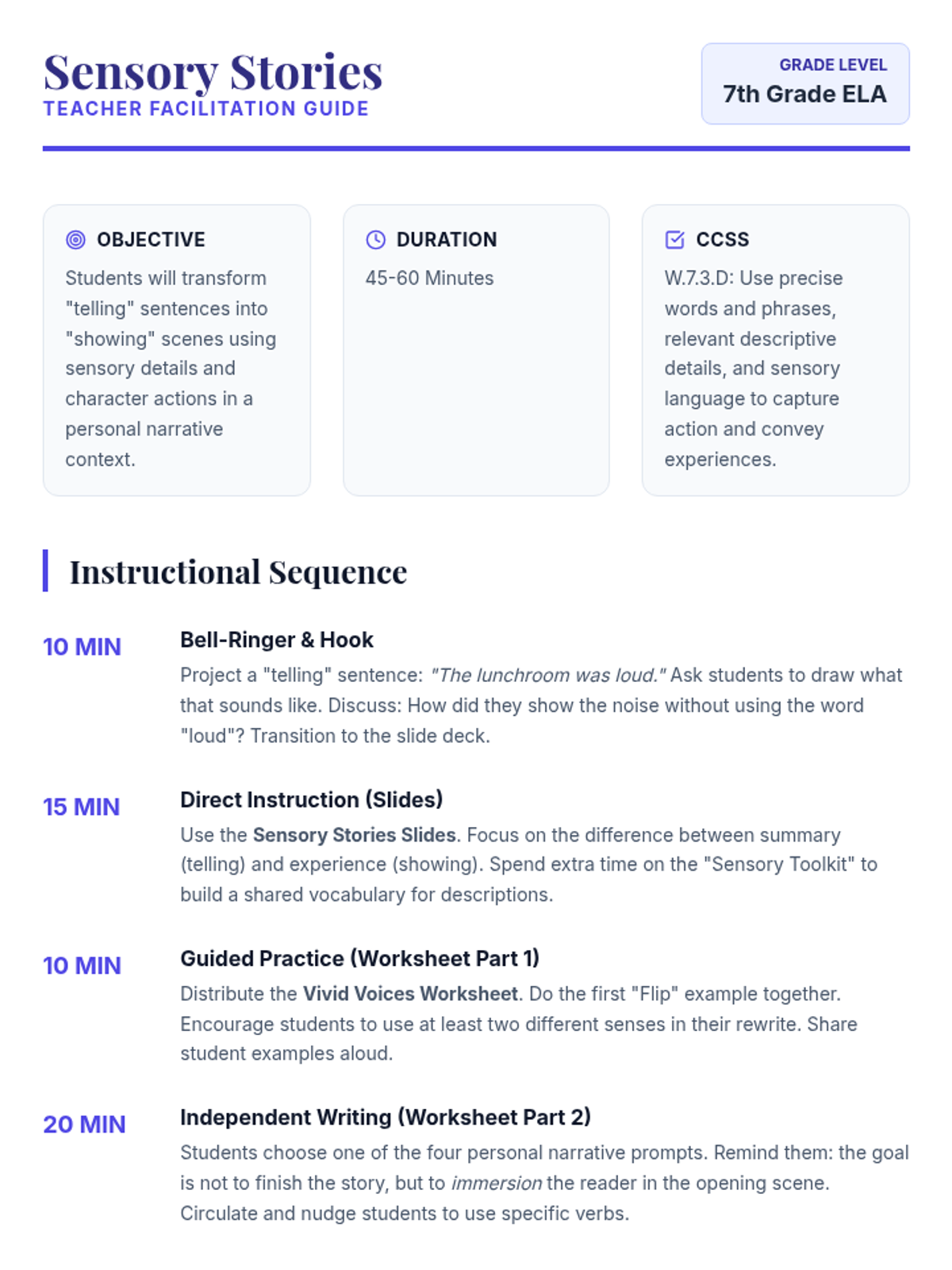
This lesson introduces 7th-grade students to the 'Show, Don't Tell' technique in personal narrative writing, focusing on using sensory details and internal dialogue to create immersive stories. Students will practice transforming flat statements into vivid scenes and apply these skills to original writing prompts.
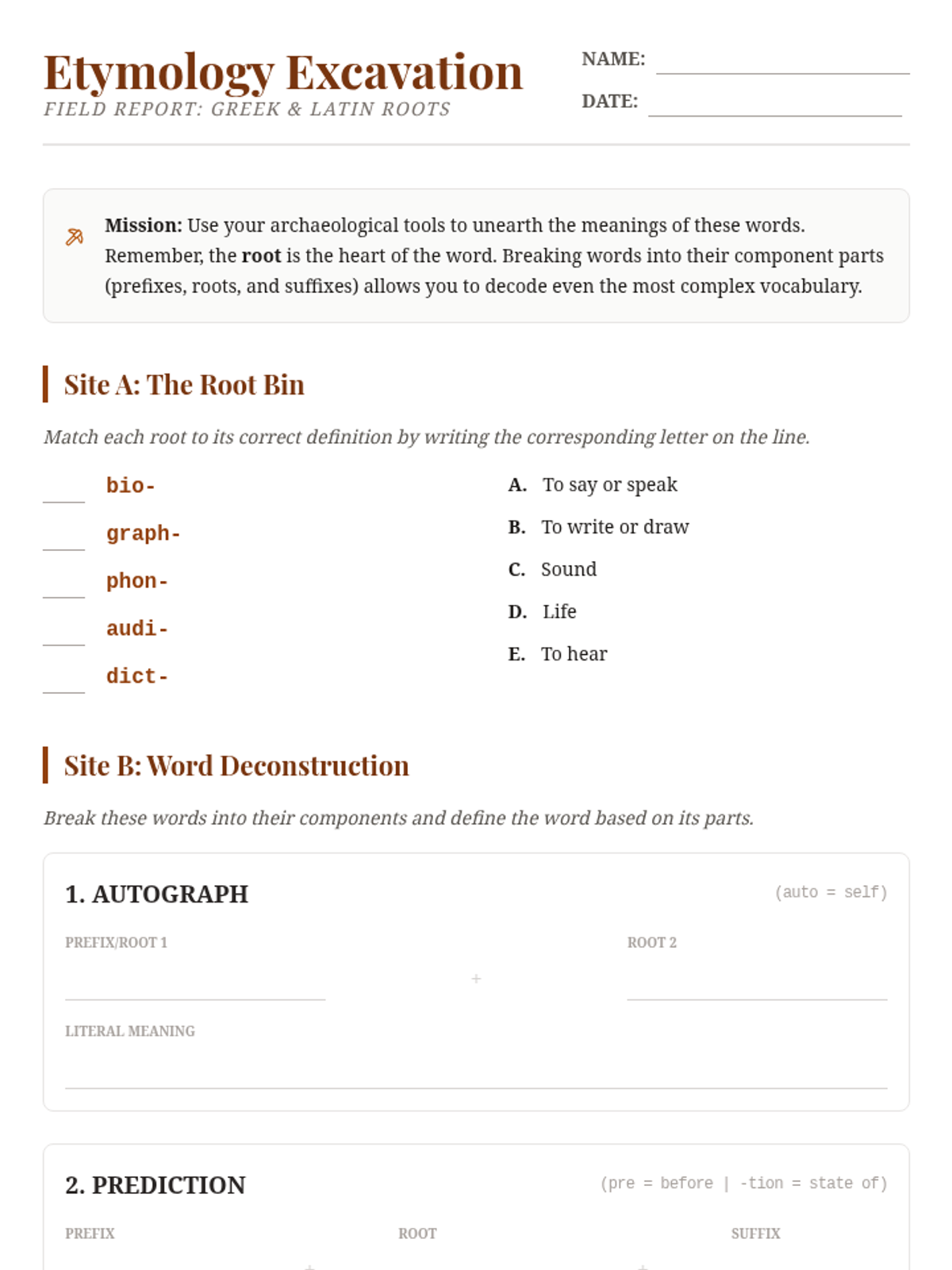
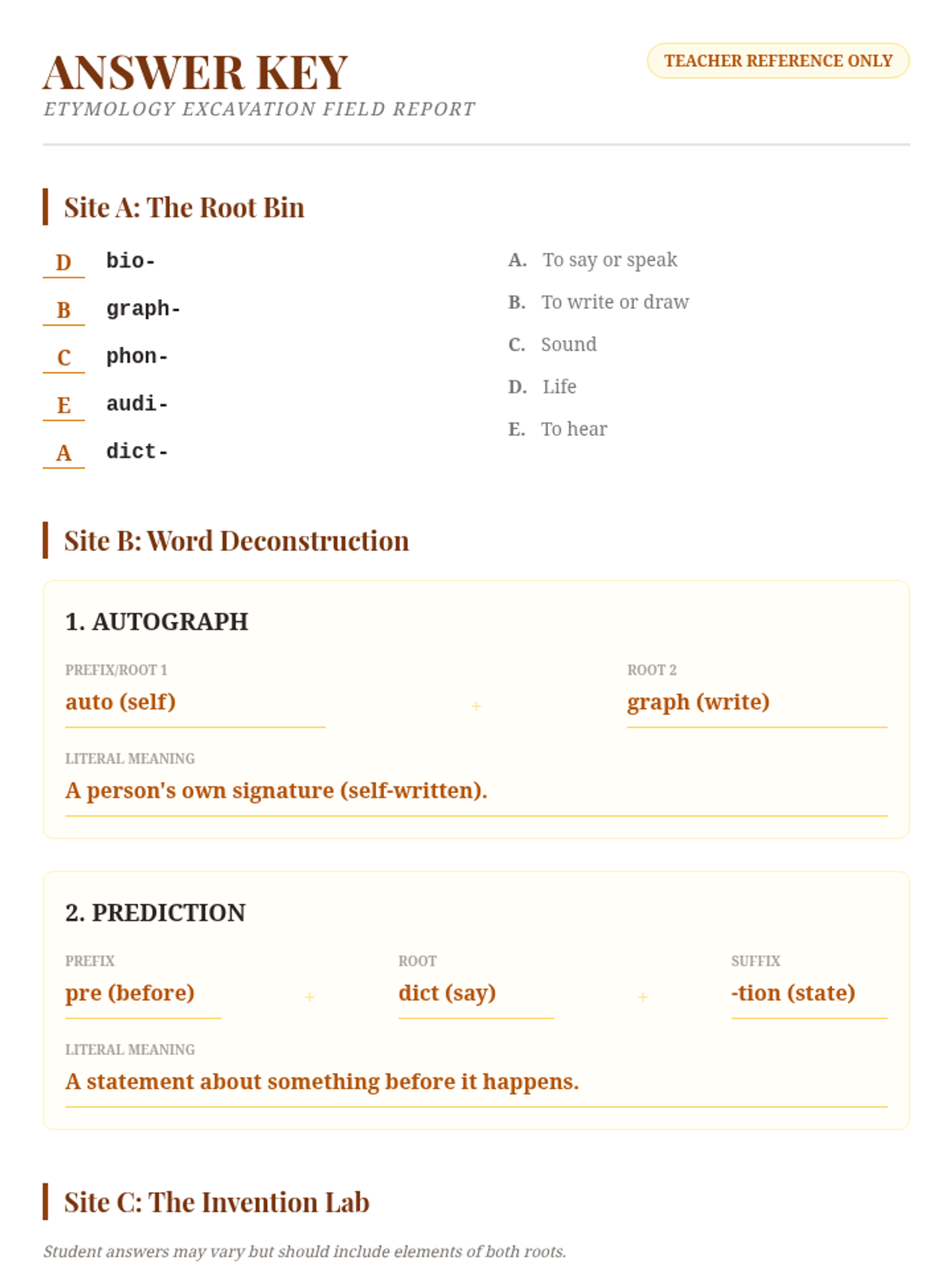
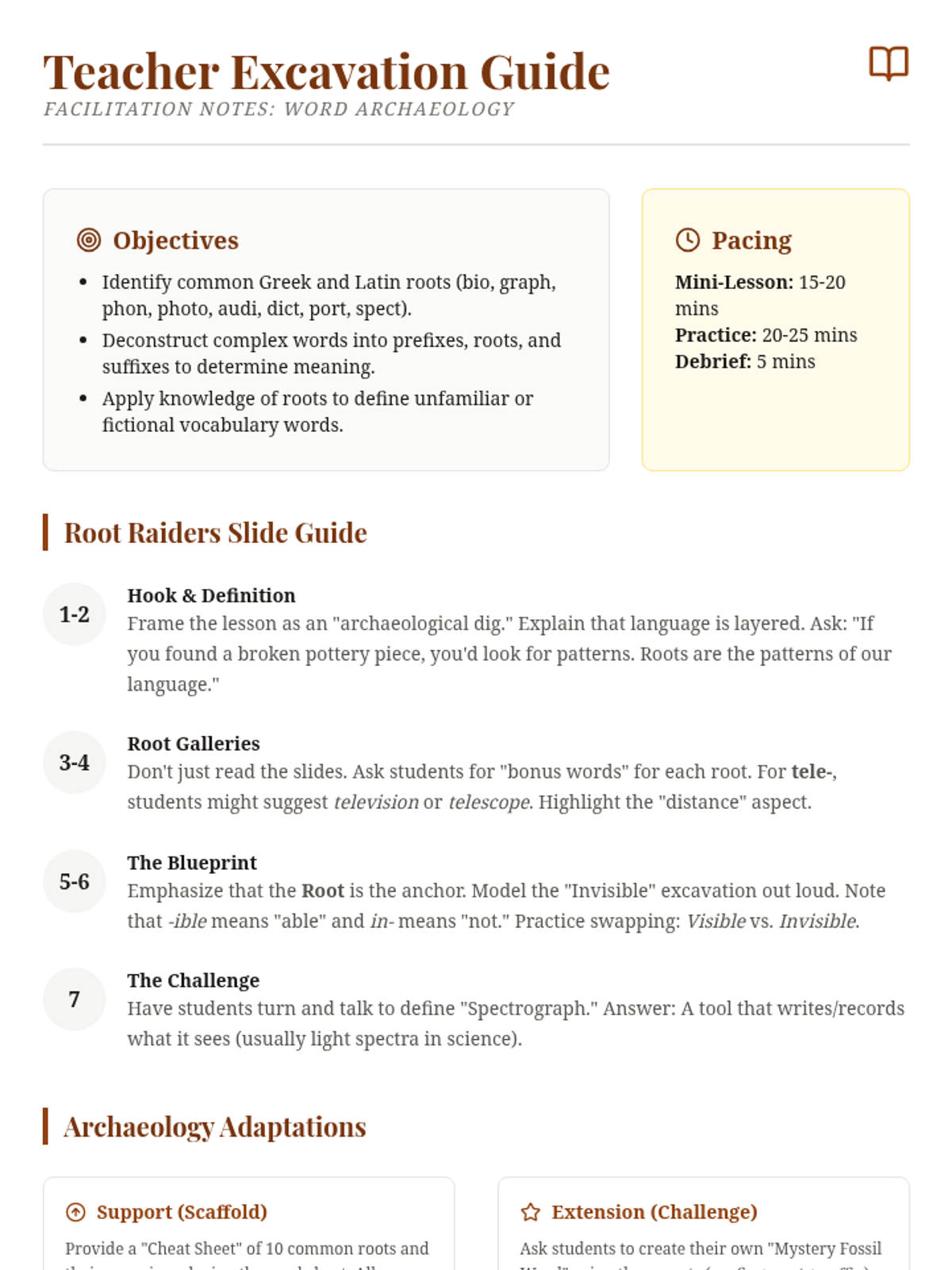
A deep dive into common Greek and Latin roots for 7th graders, using a word archaeology theme to explore how language is built and understood.
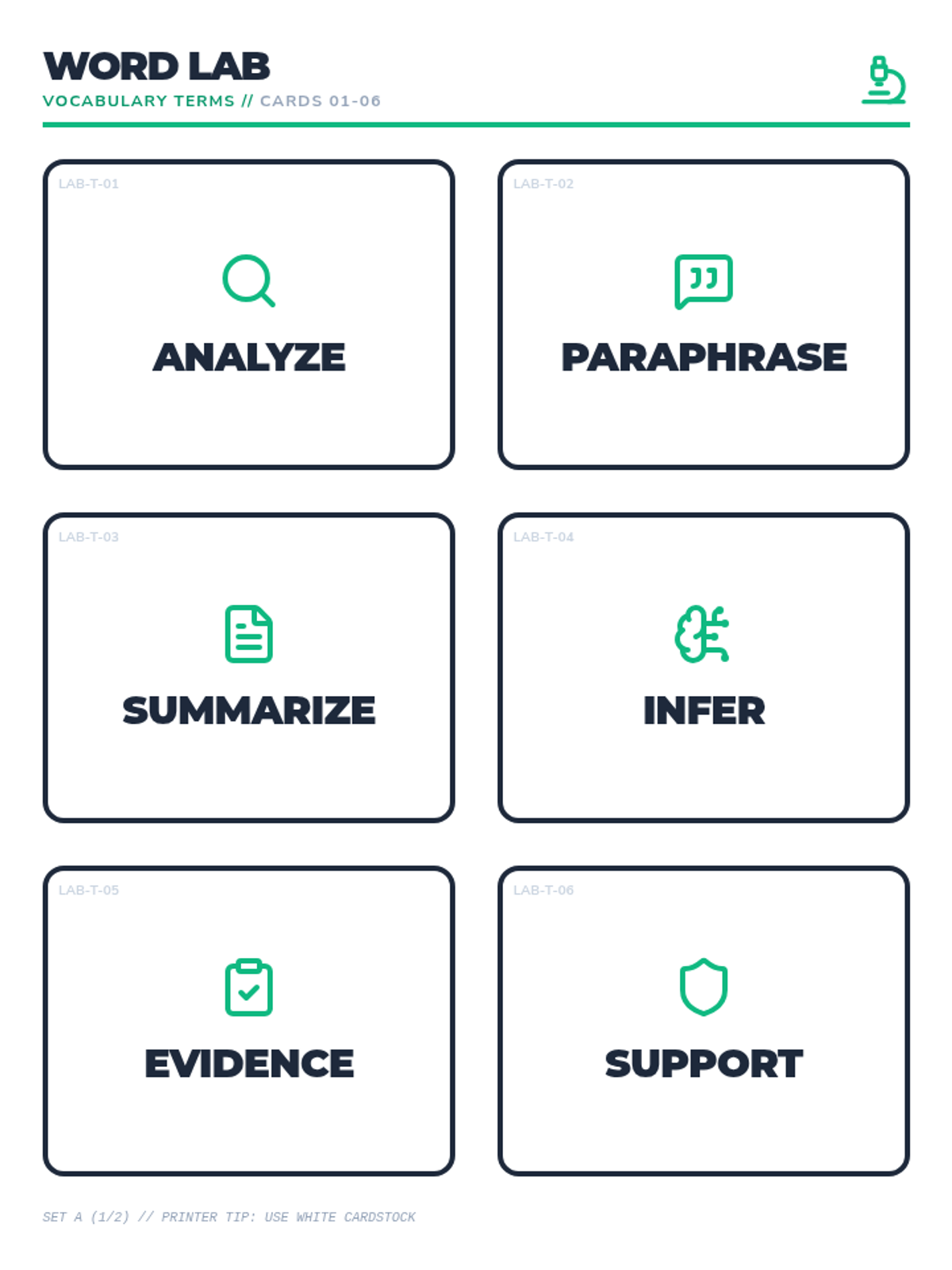
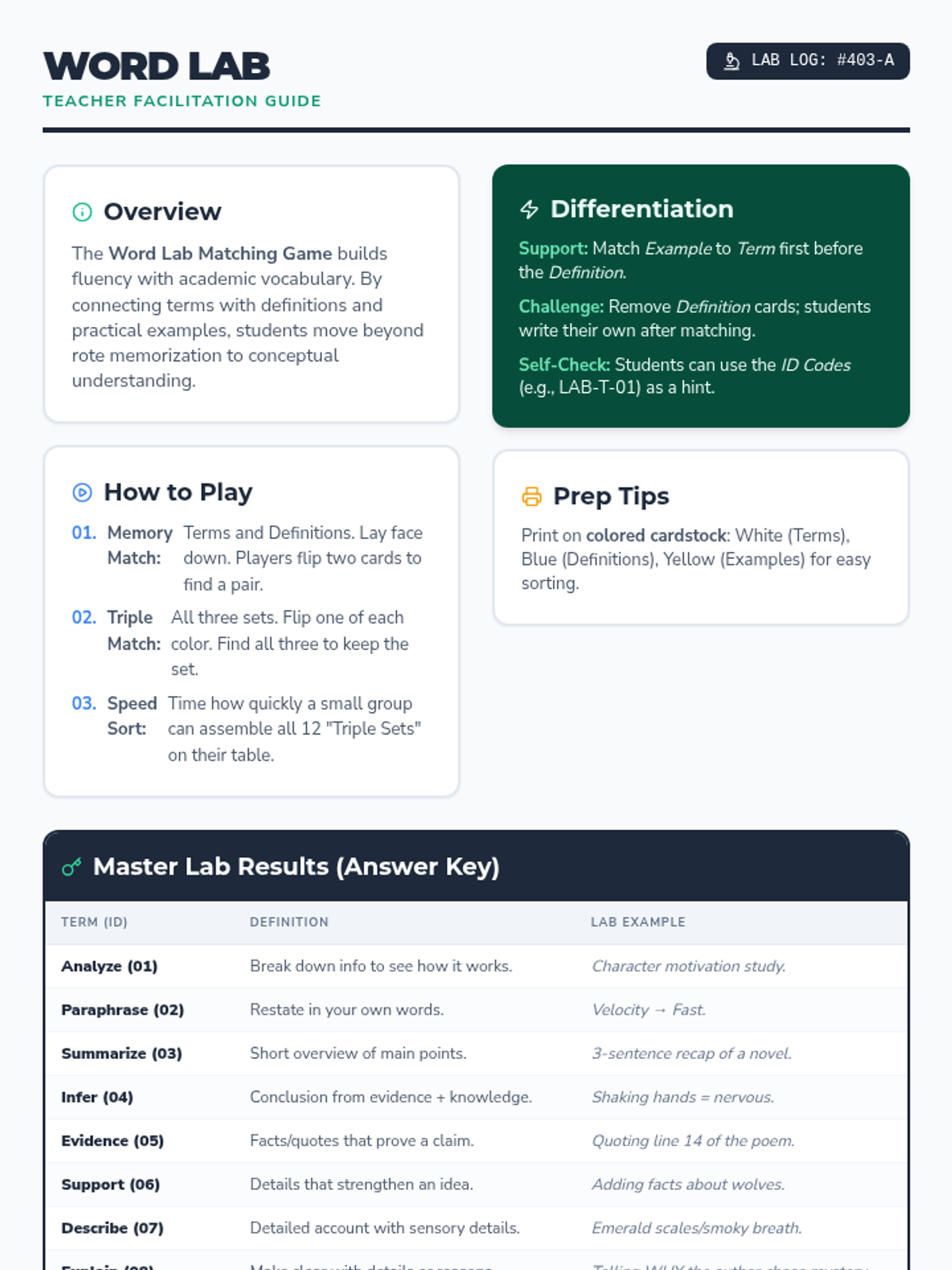
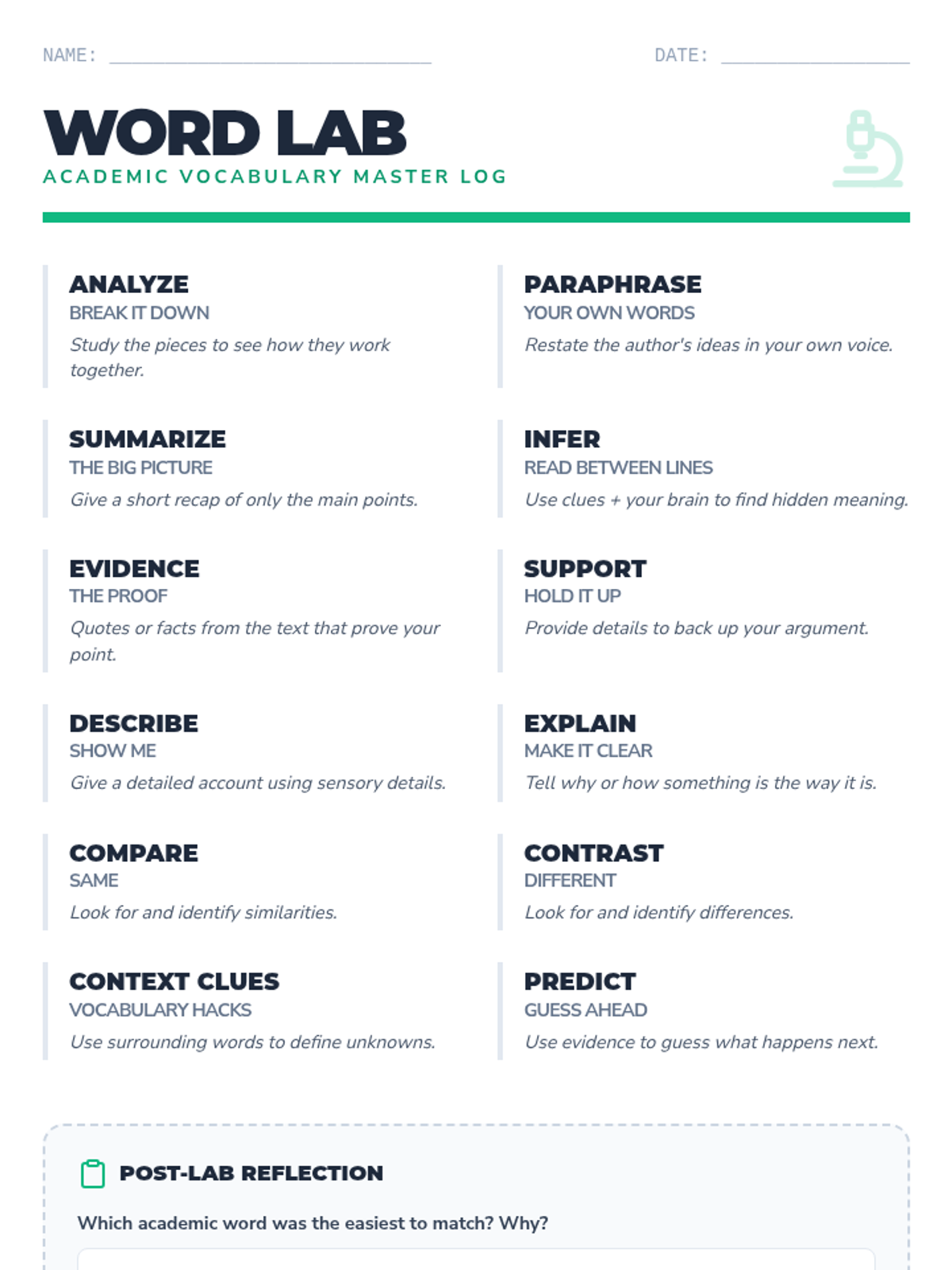
A lesson focused on mastering academic vocabulary used in reading comprehension questions. Students will learn to distinguish between common analytical verbs and concepts through a hands-on matching game and reference guides.
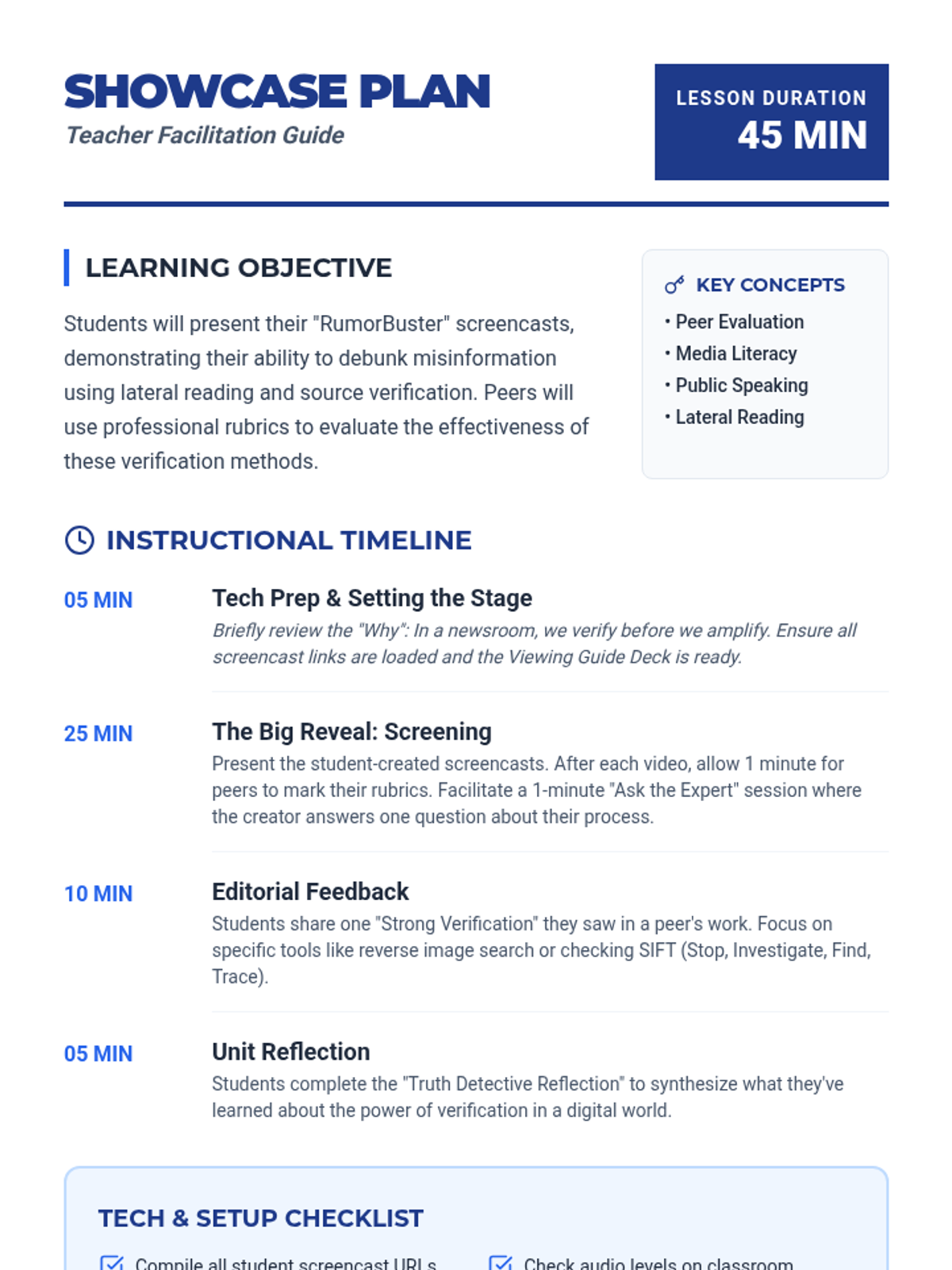
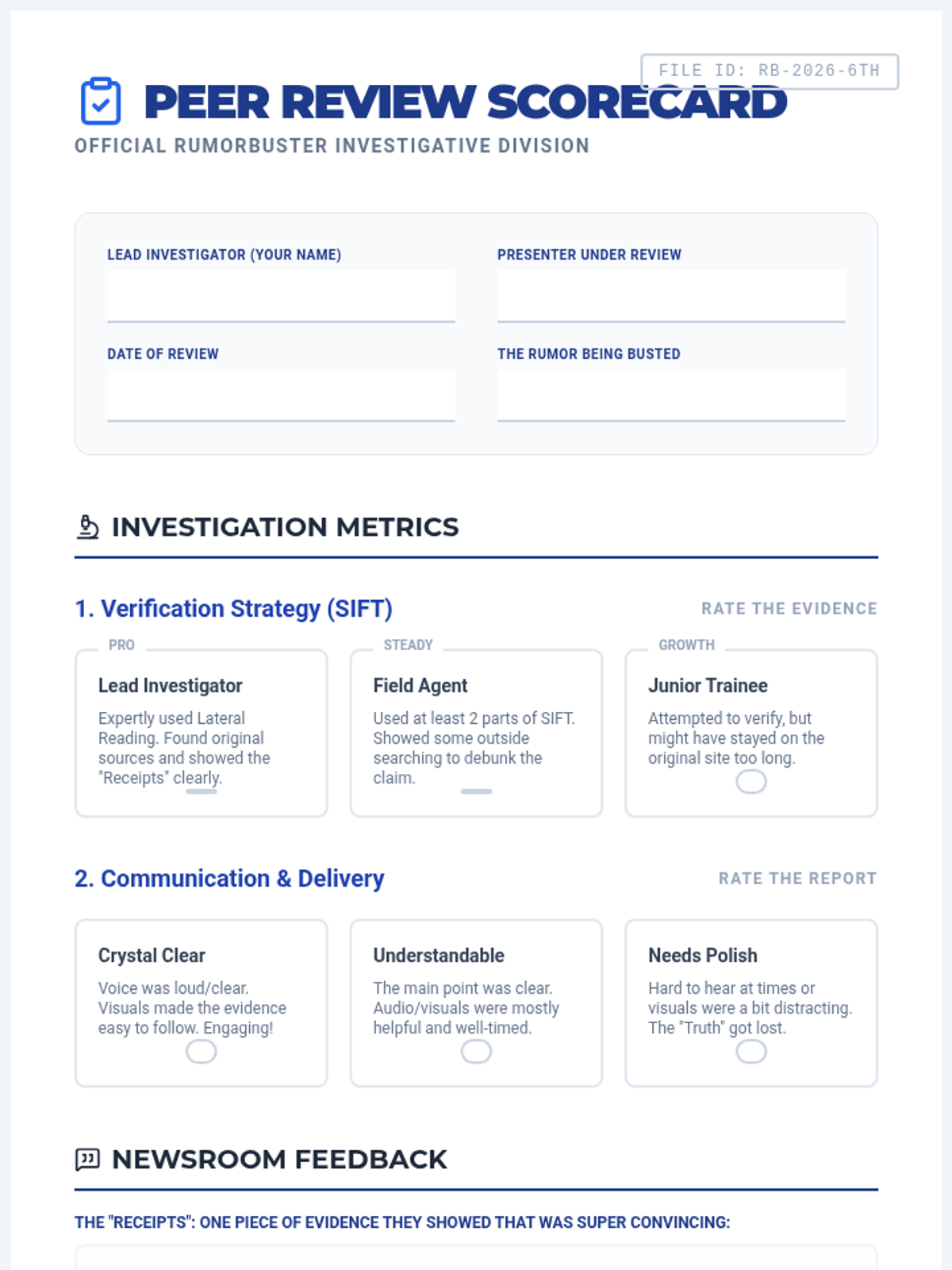
A 45-minute lesson where students showcase their media literacy investigations through screencasts, engage in peer evaluation using a professional rubric, and reflect on their growth as digital fact-checkers.
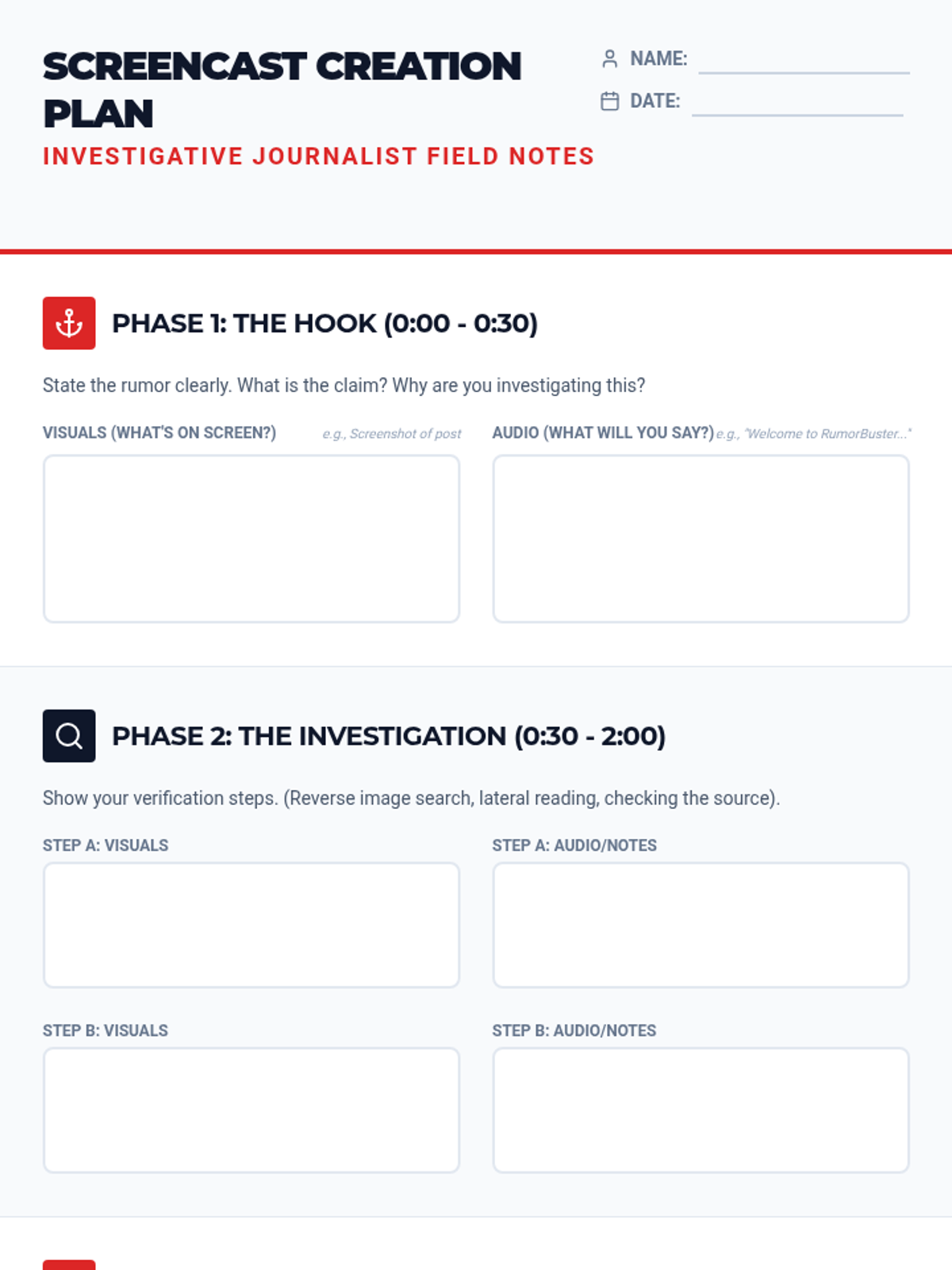
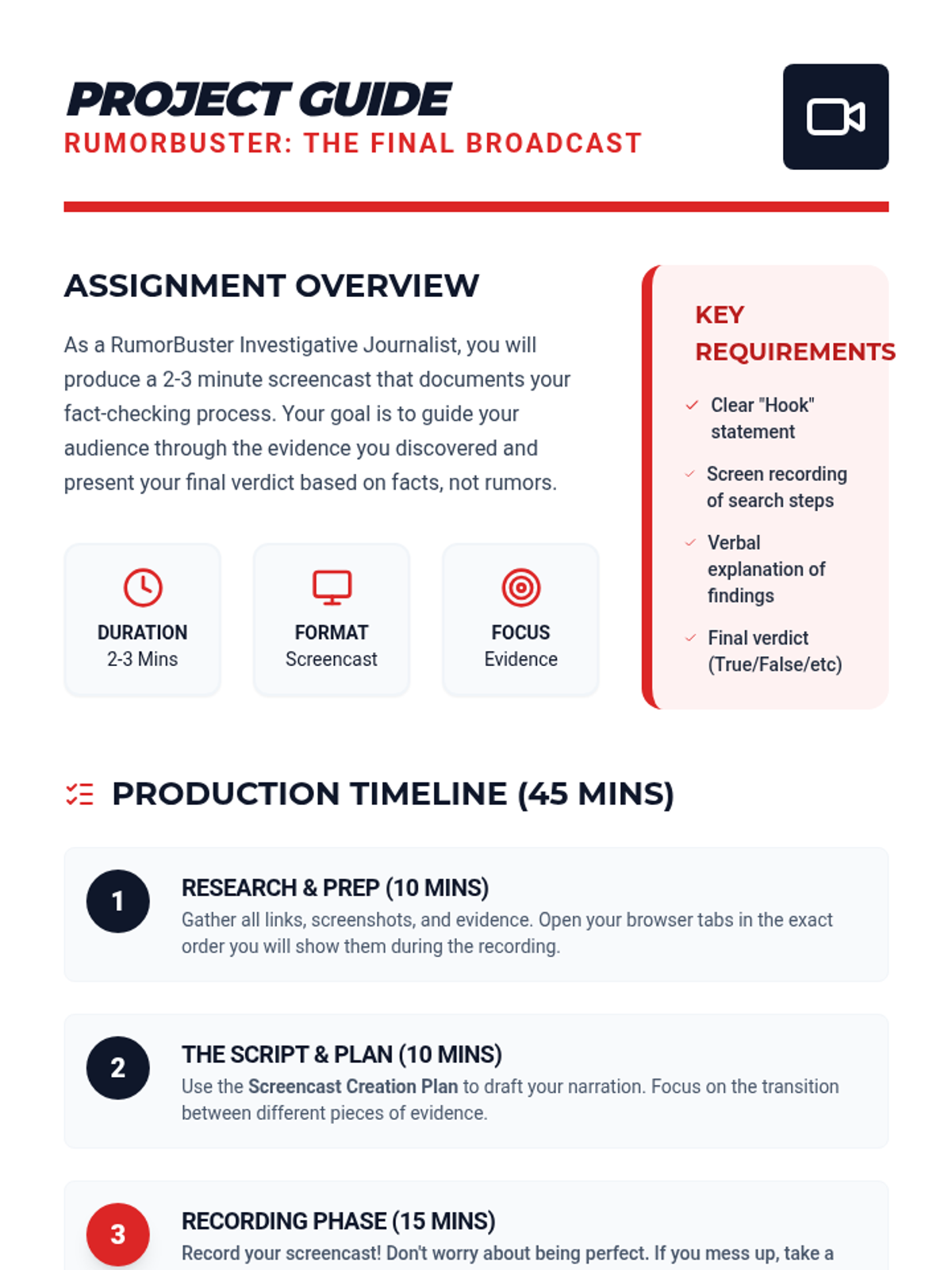
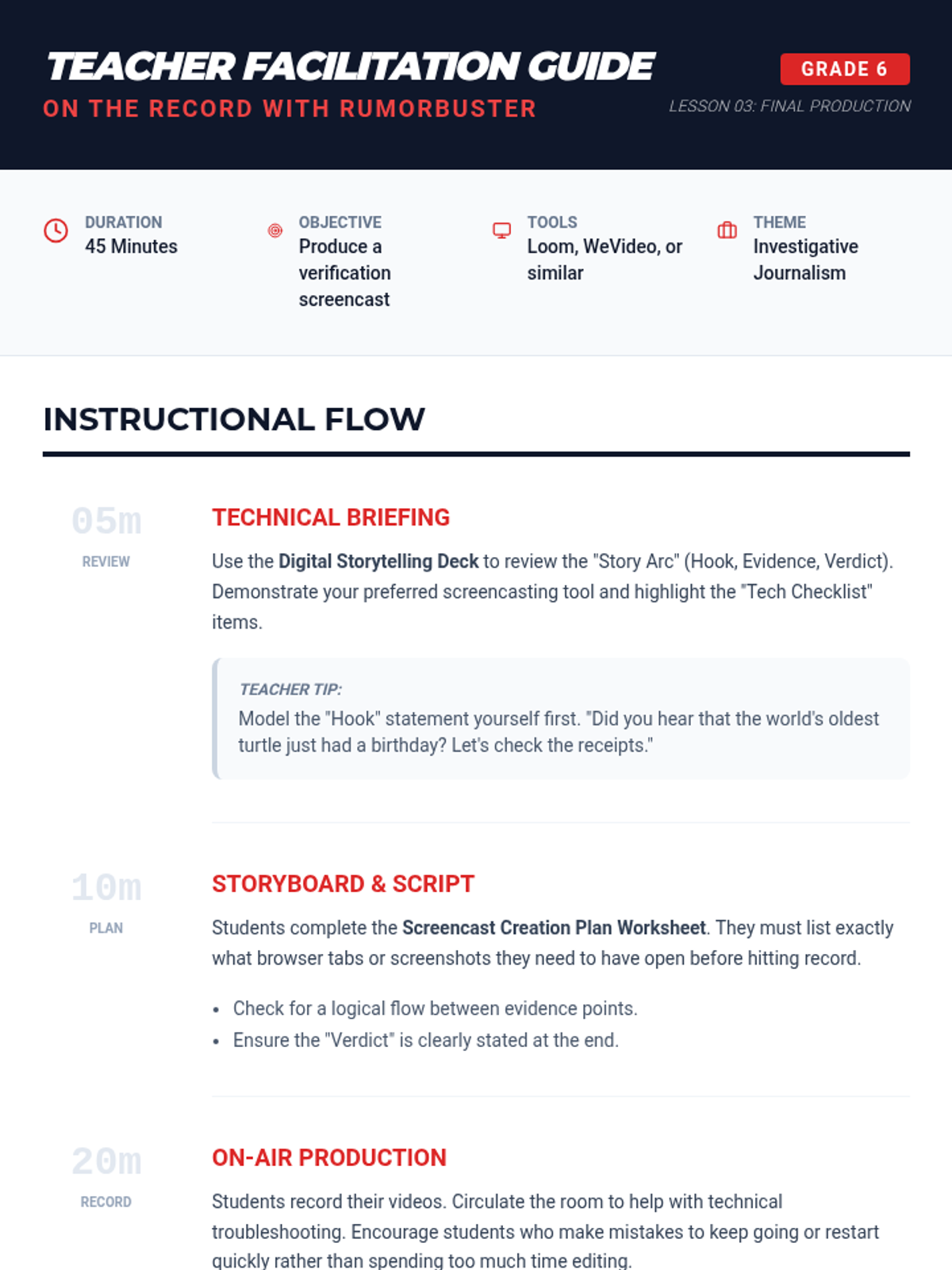
In this lesson, students step into the role of investigative journalists to create a screencast that documents their fact-checking process and final findings. They will learn to combine digital storytelling with technical screencasting skills to present evidence clearly and convincingly.
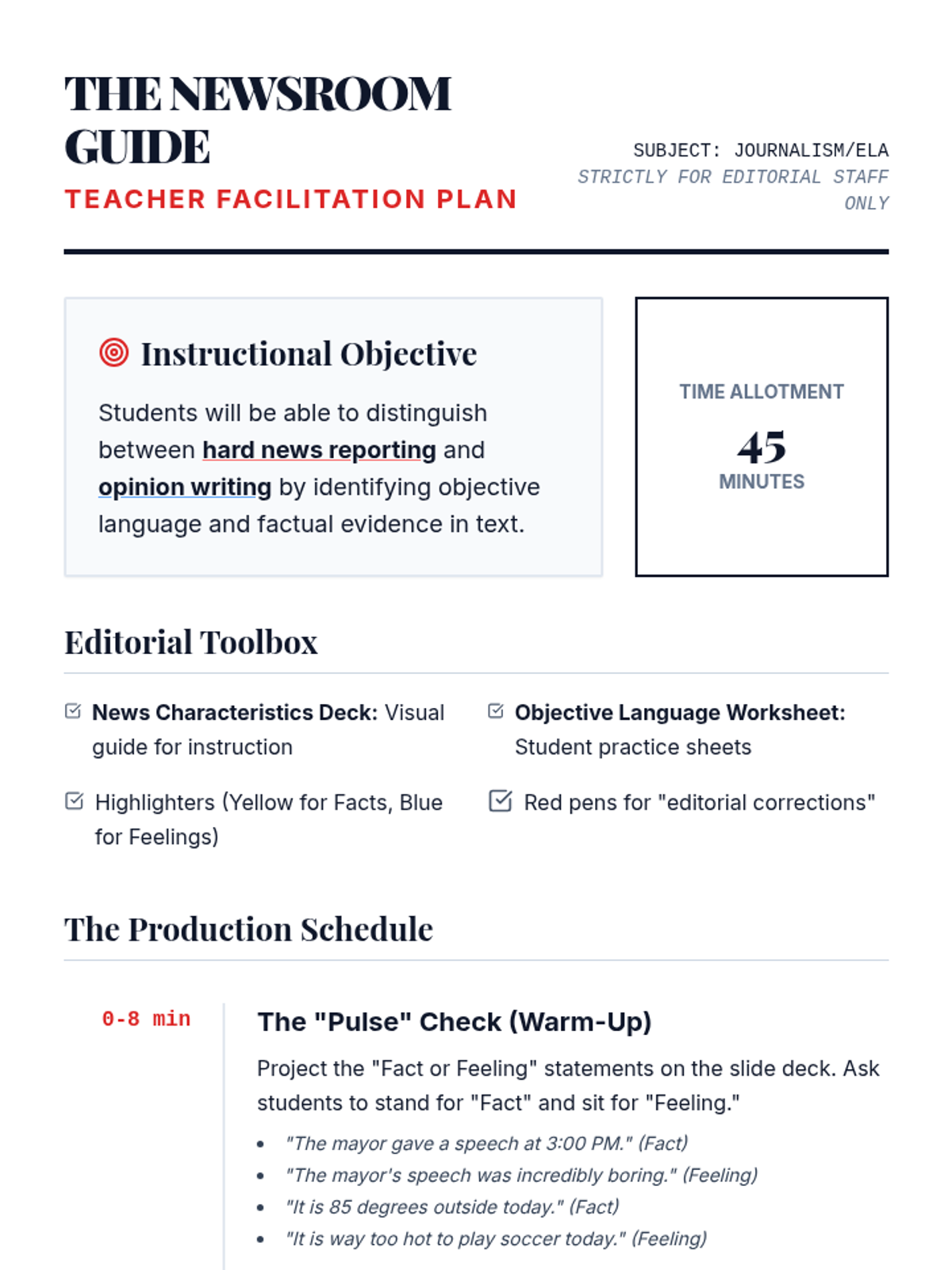
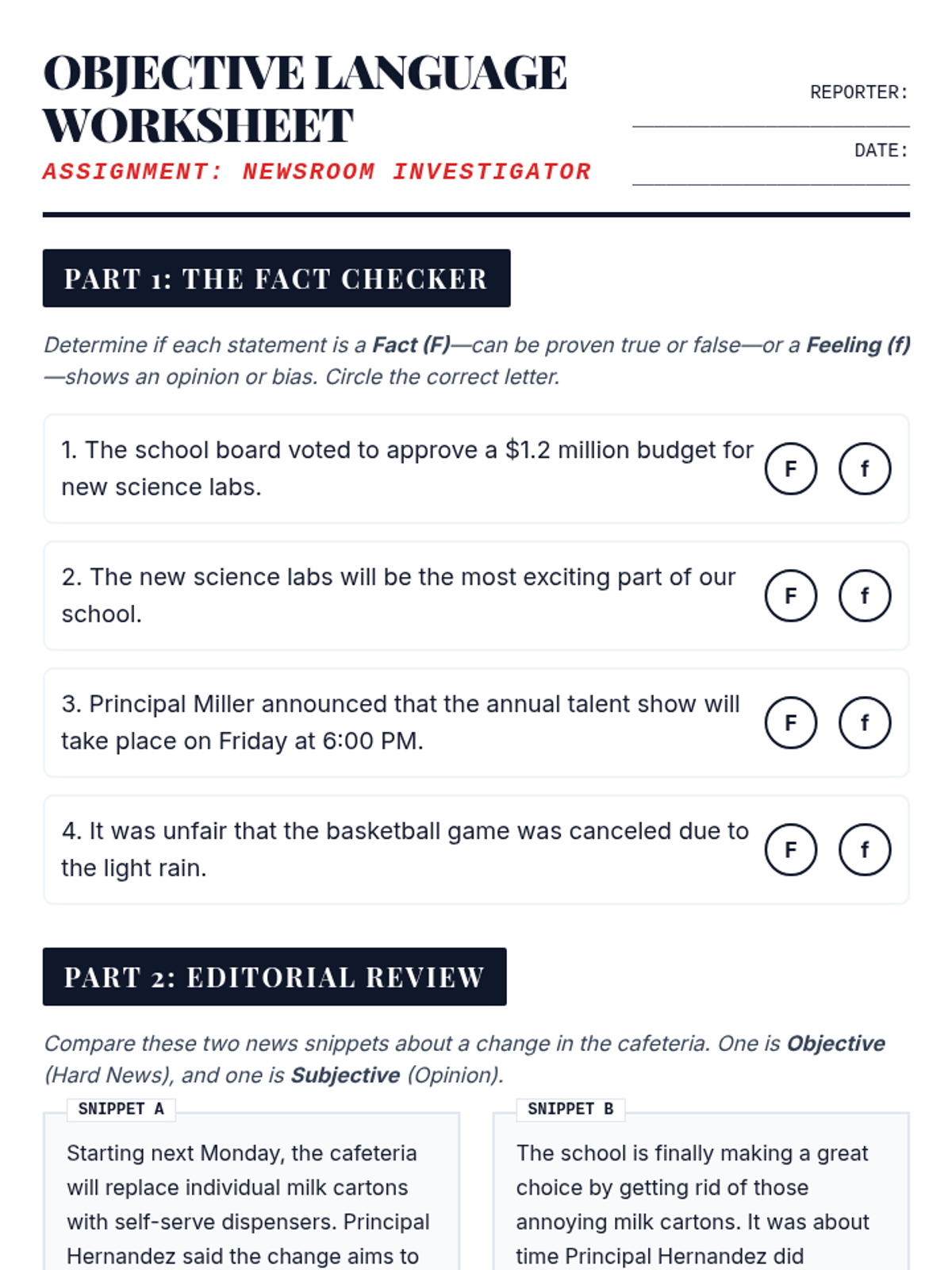
A 45-minute lesson where students become newsroom investigators, learning to distinguish between objective hard news reporting and subjective opinion pieces through hands-on analysis and writing practice.
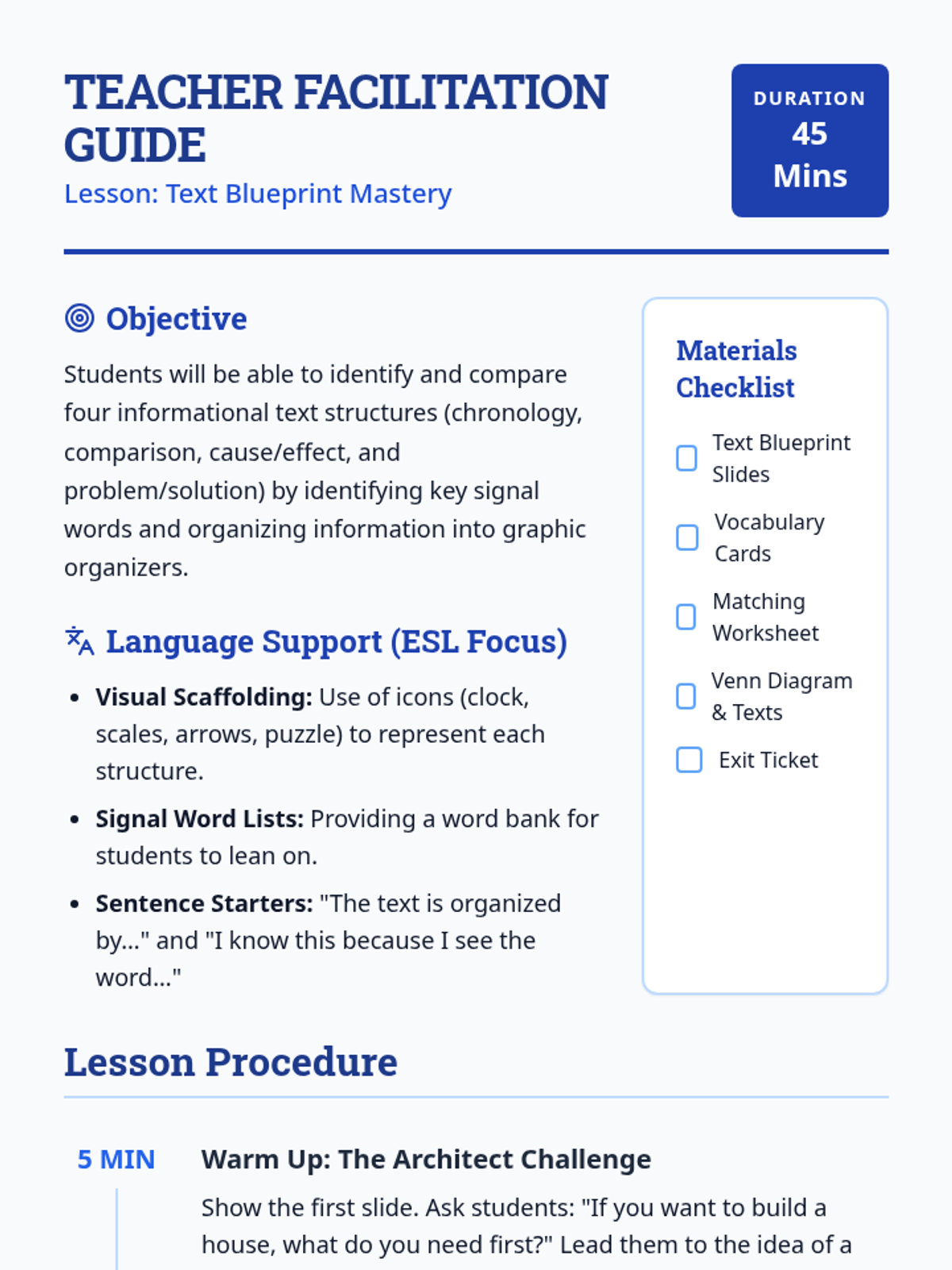
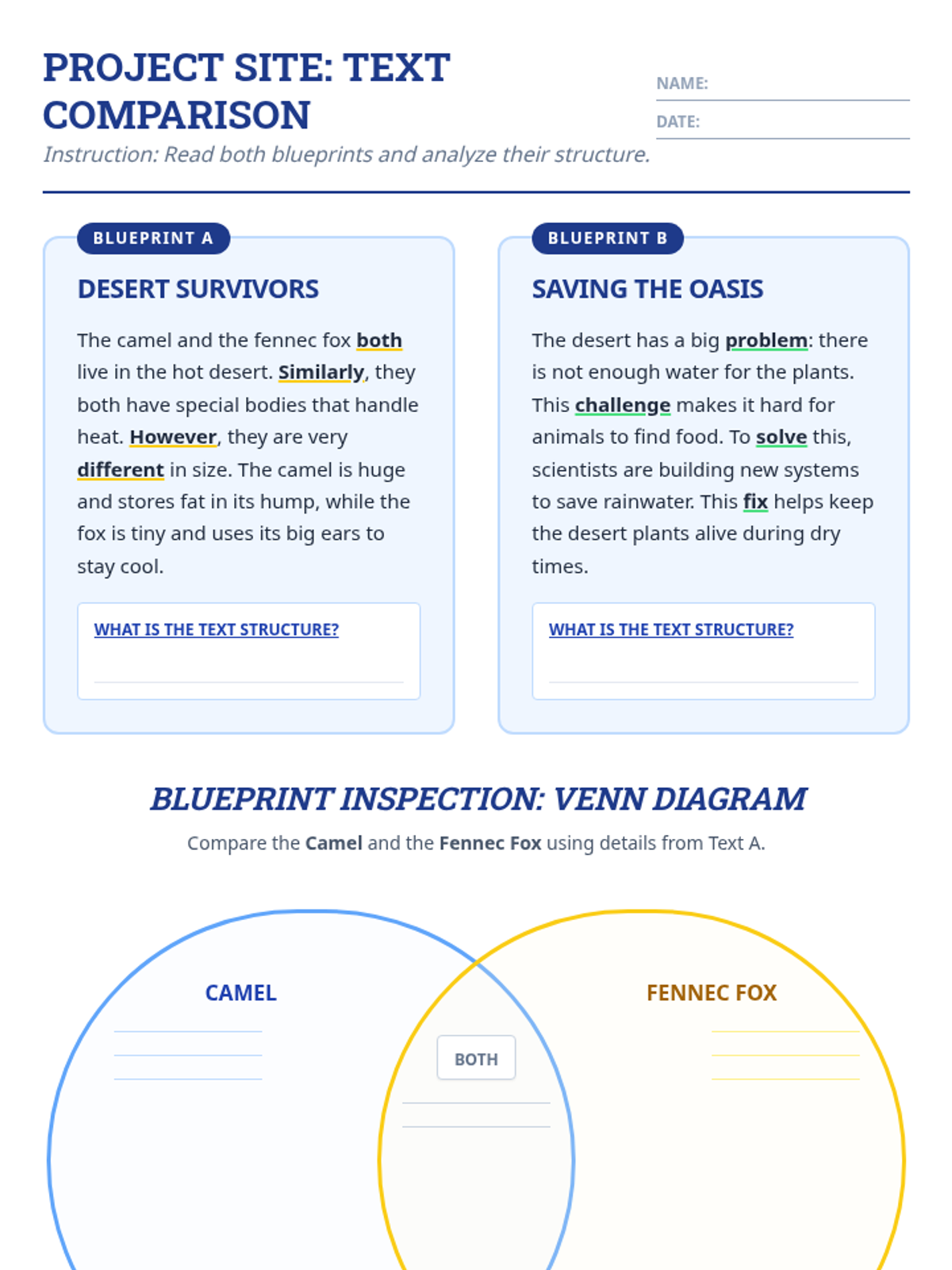
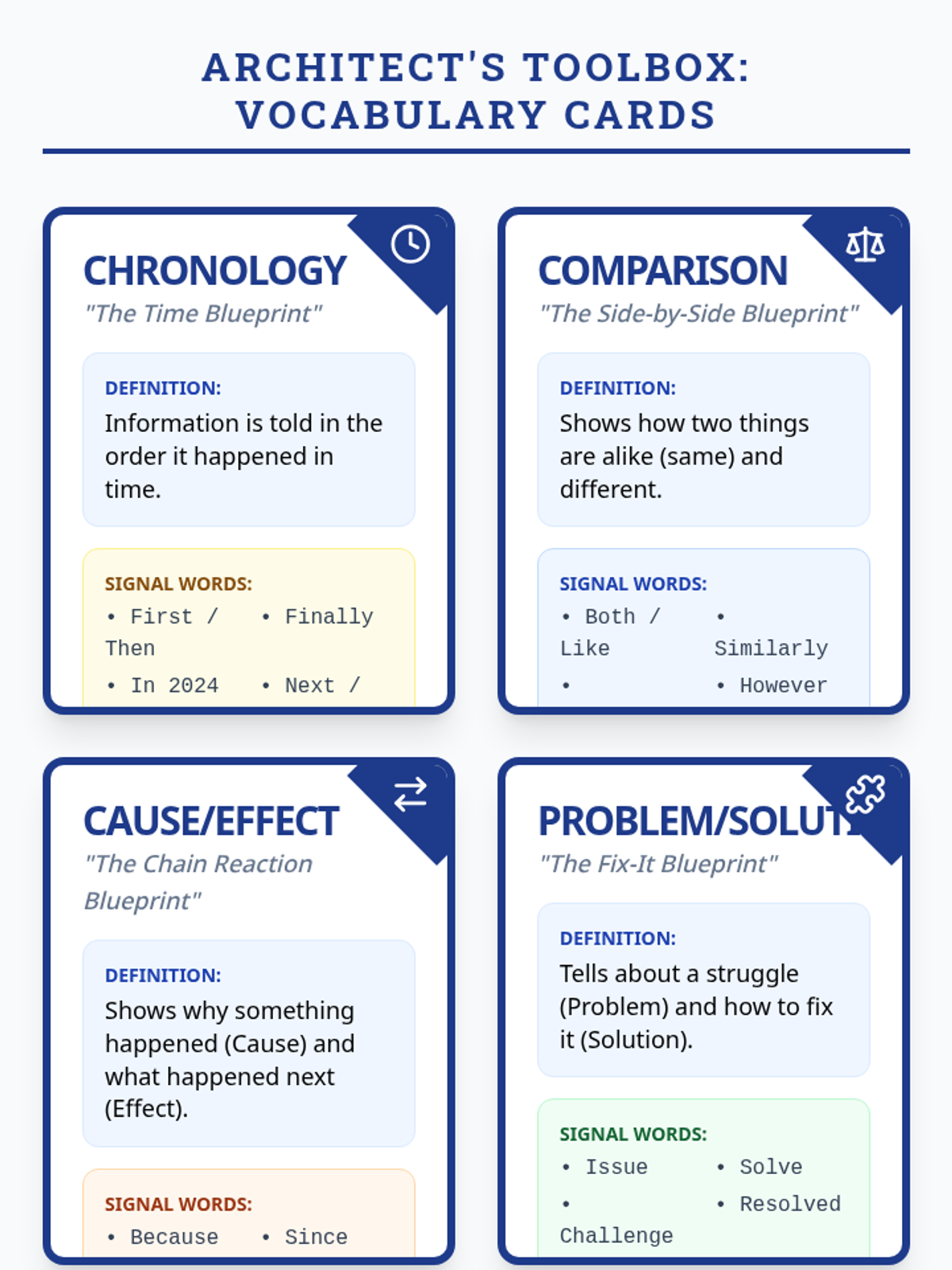
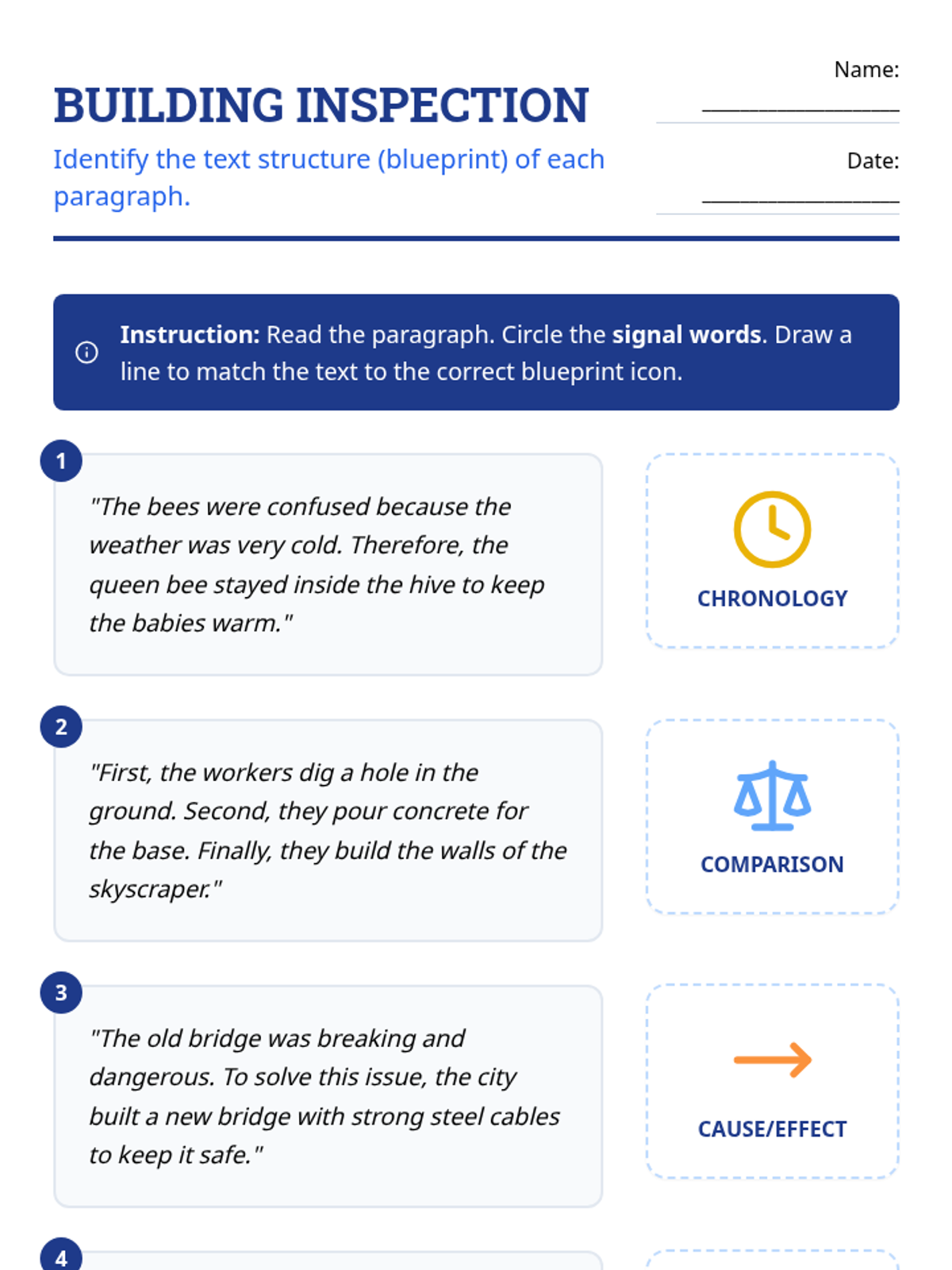
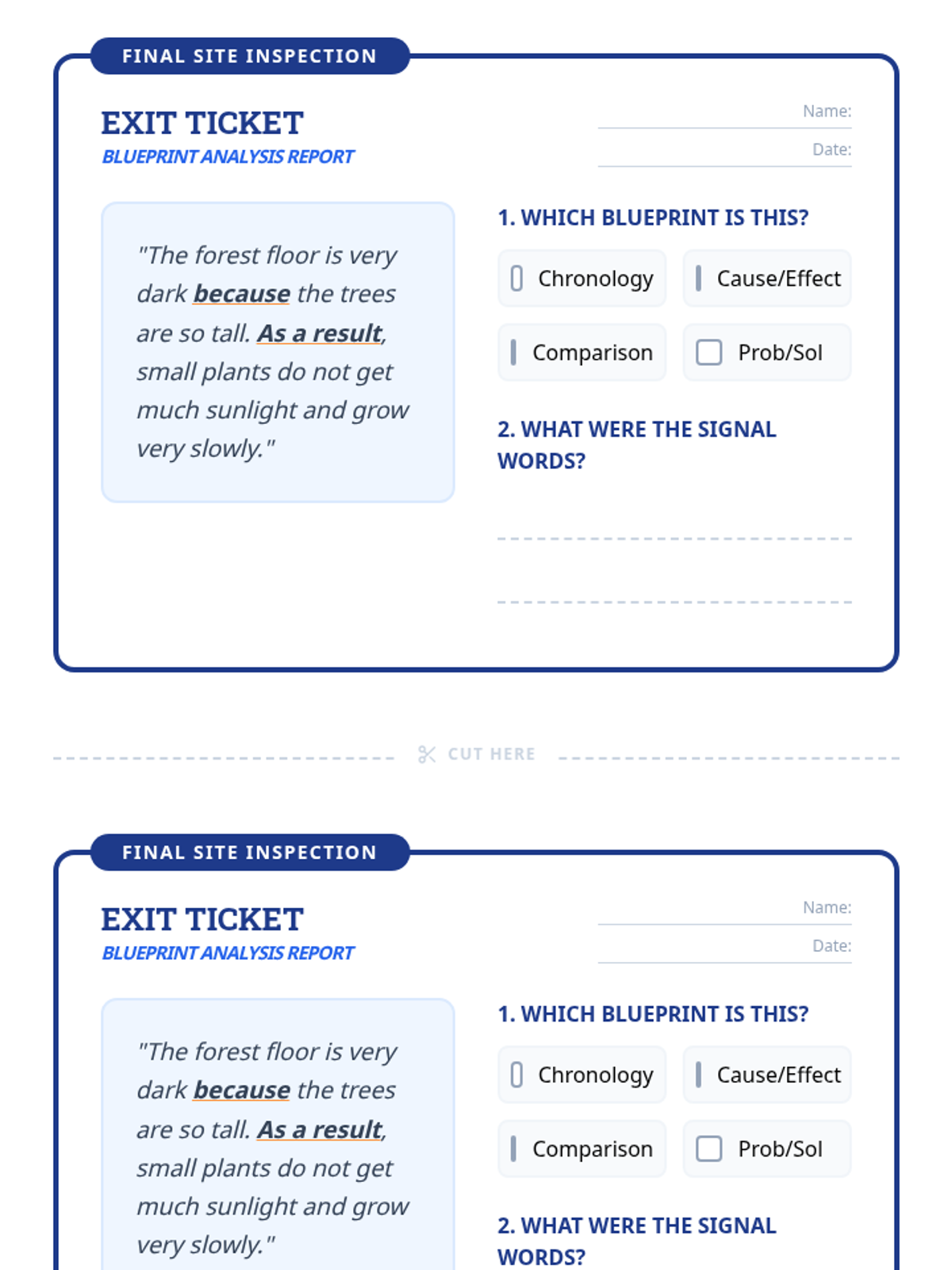
Students will identify and compare four major text structures: chronology, comparison, cause/effect, and problem/solution. Through an architectural 'blueprint' theme, ESL students will learn signal words and structural patterns to improve reading comprehension.
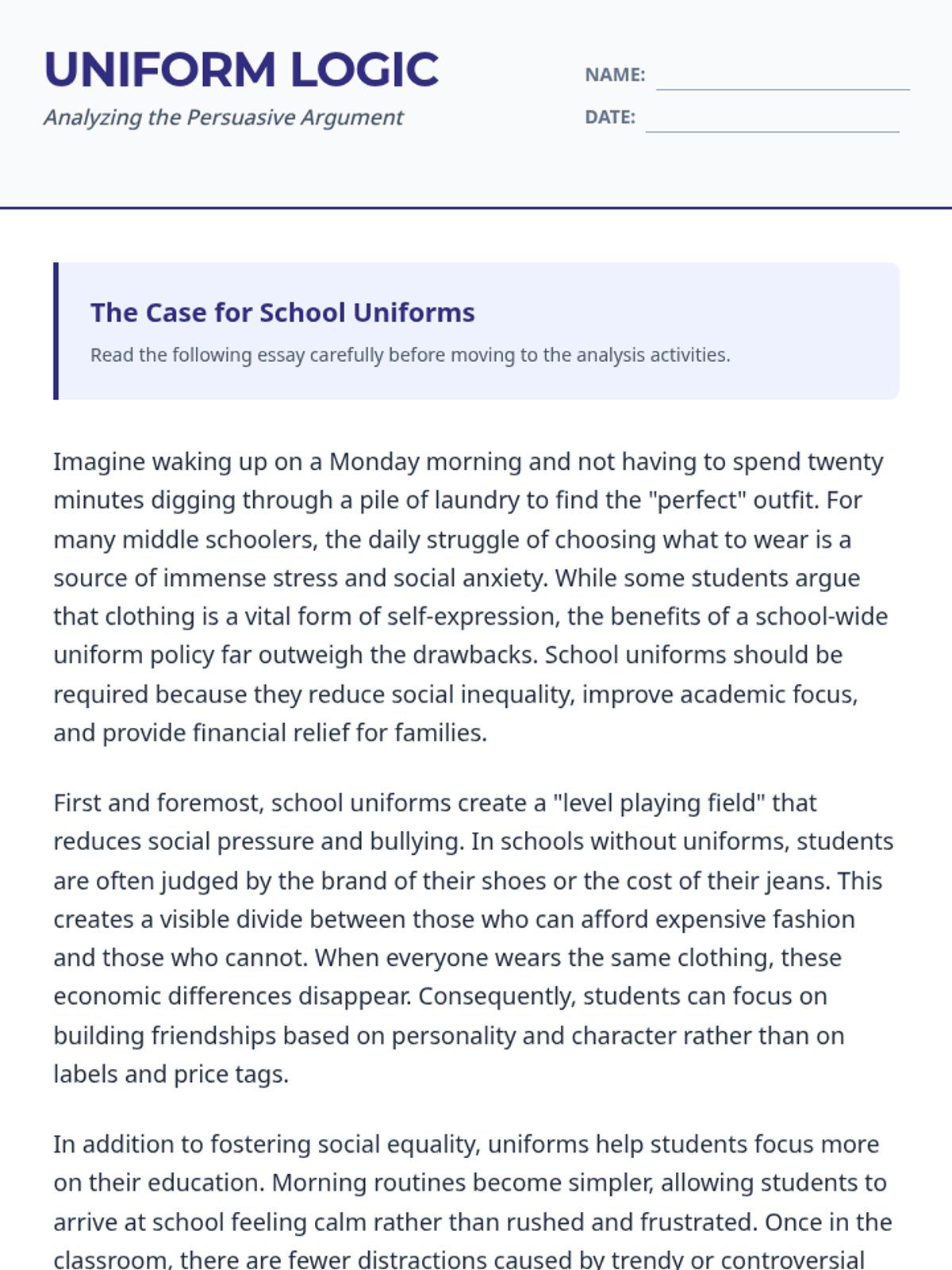
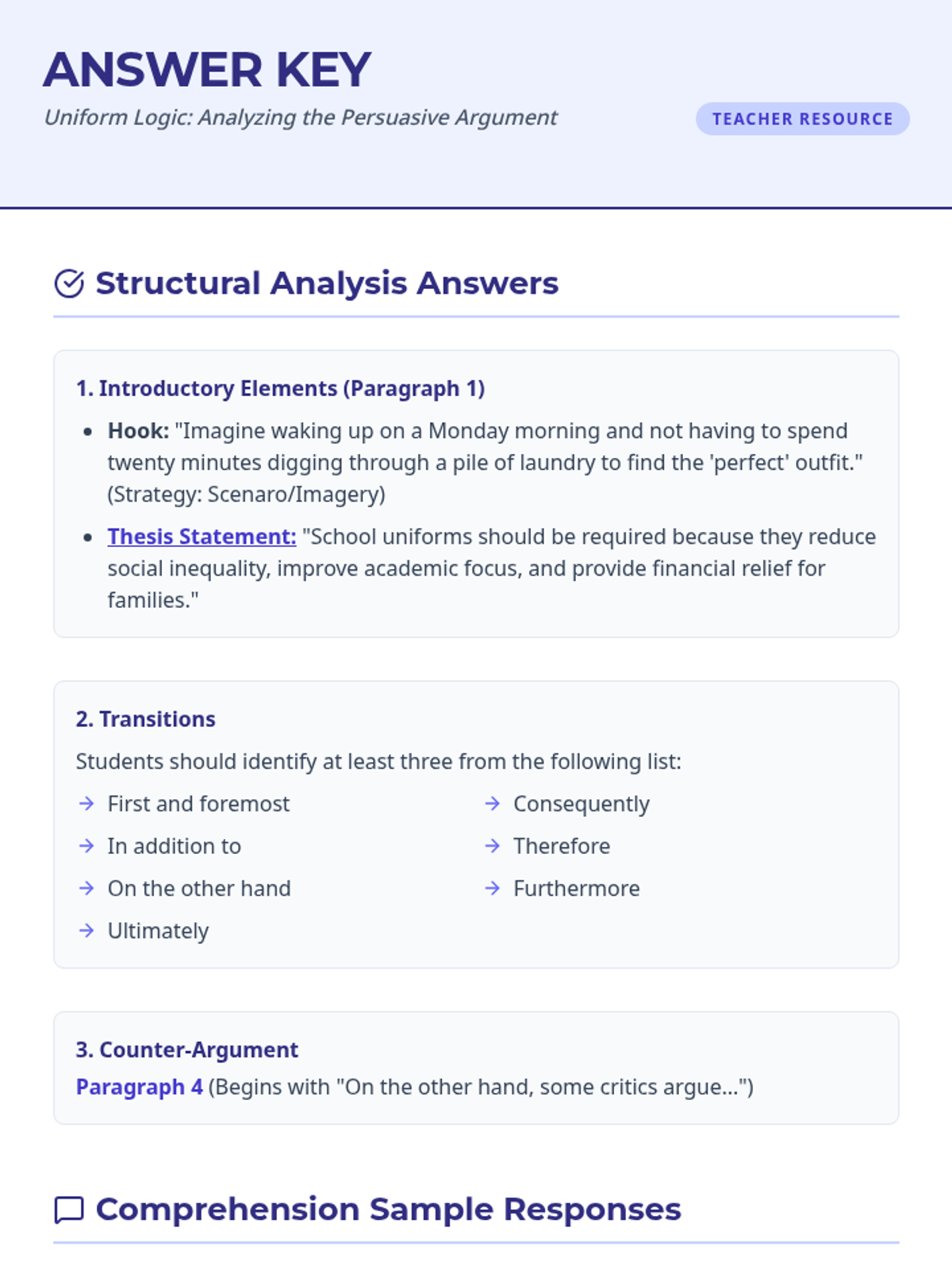
A lesson focused on analyzing the structure and content of a persuasive essay regarding school uniforms, helping students identify key argumentative components.
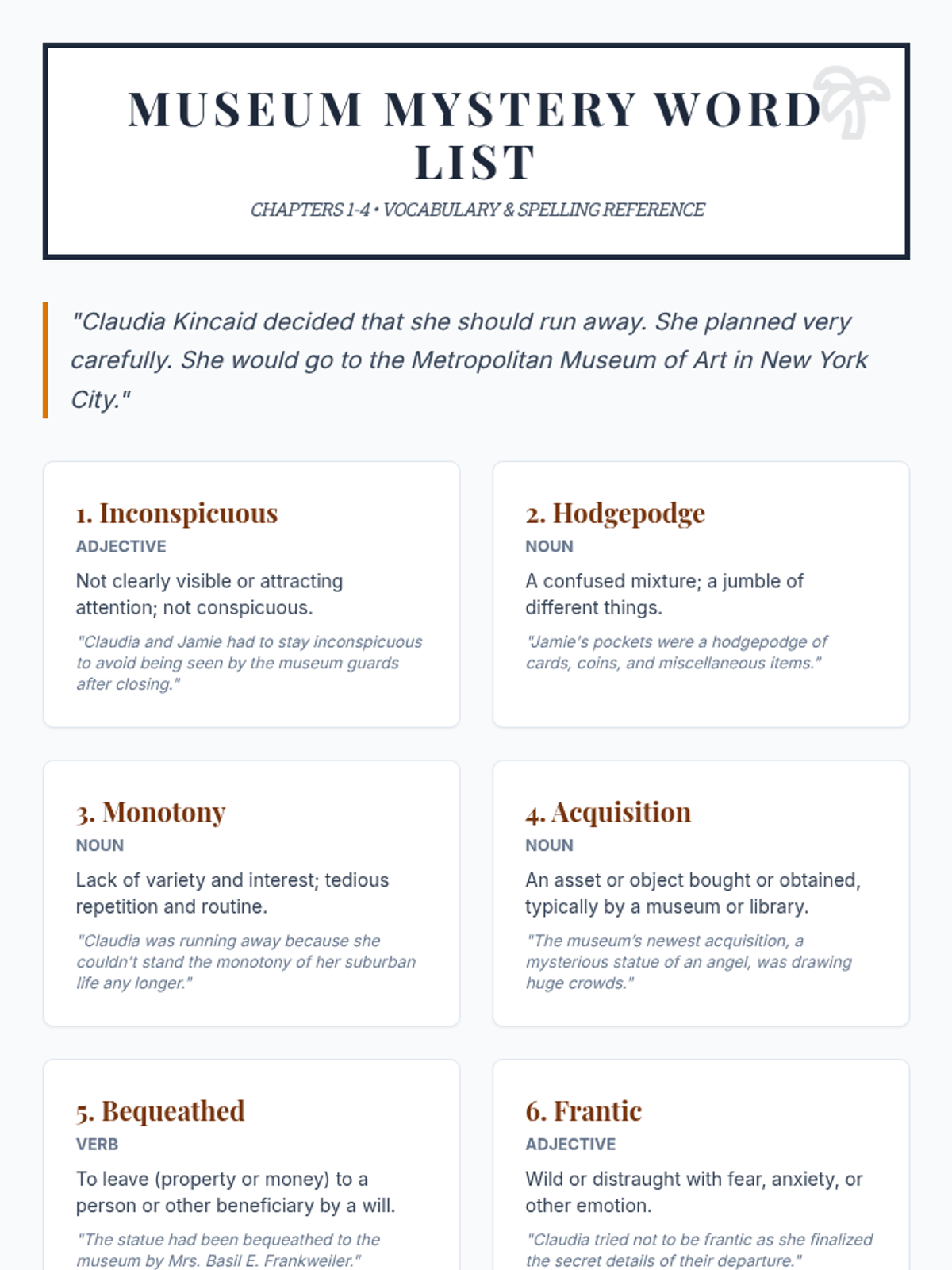
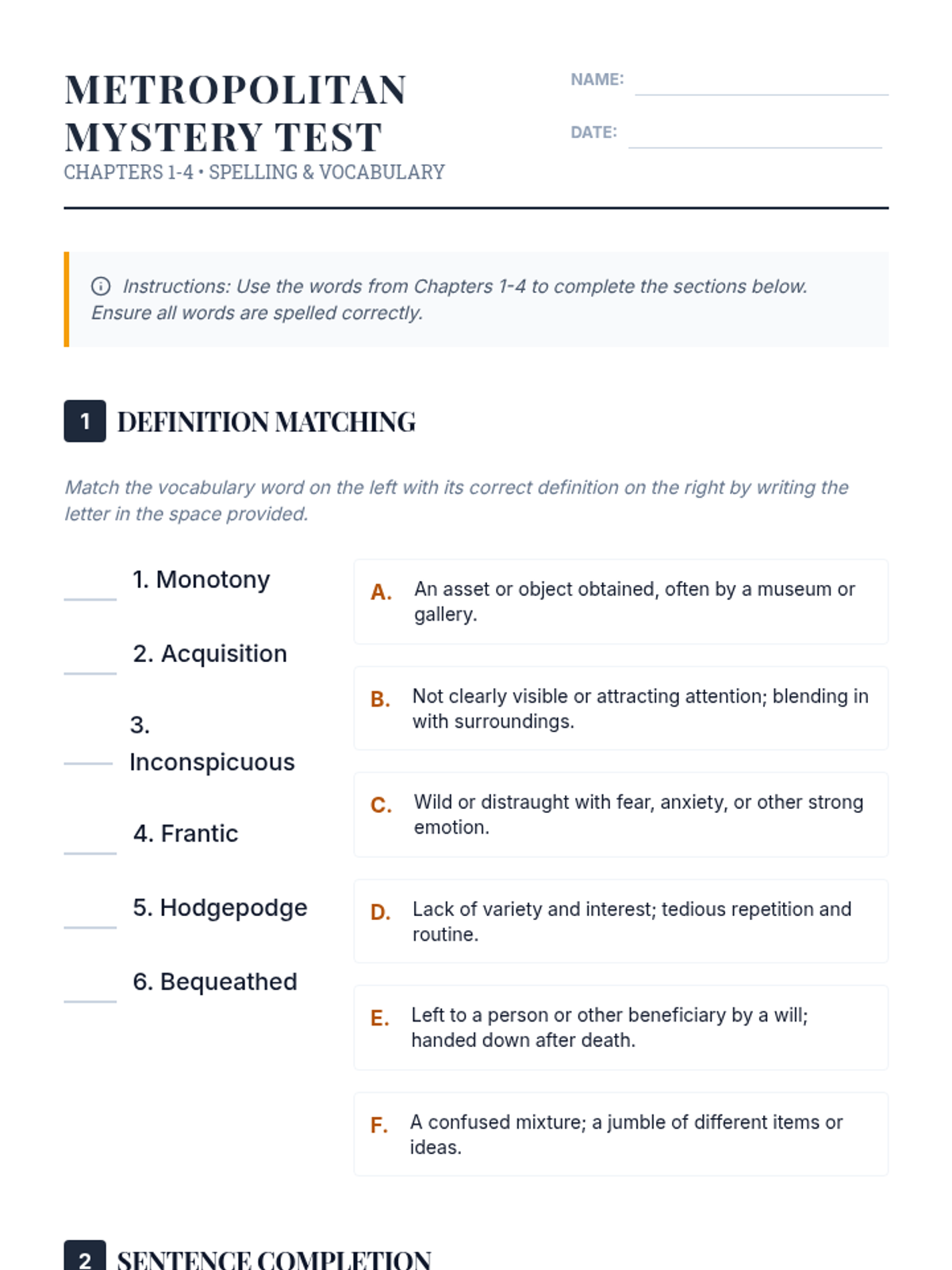
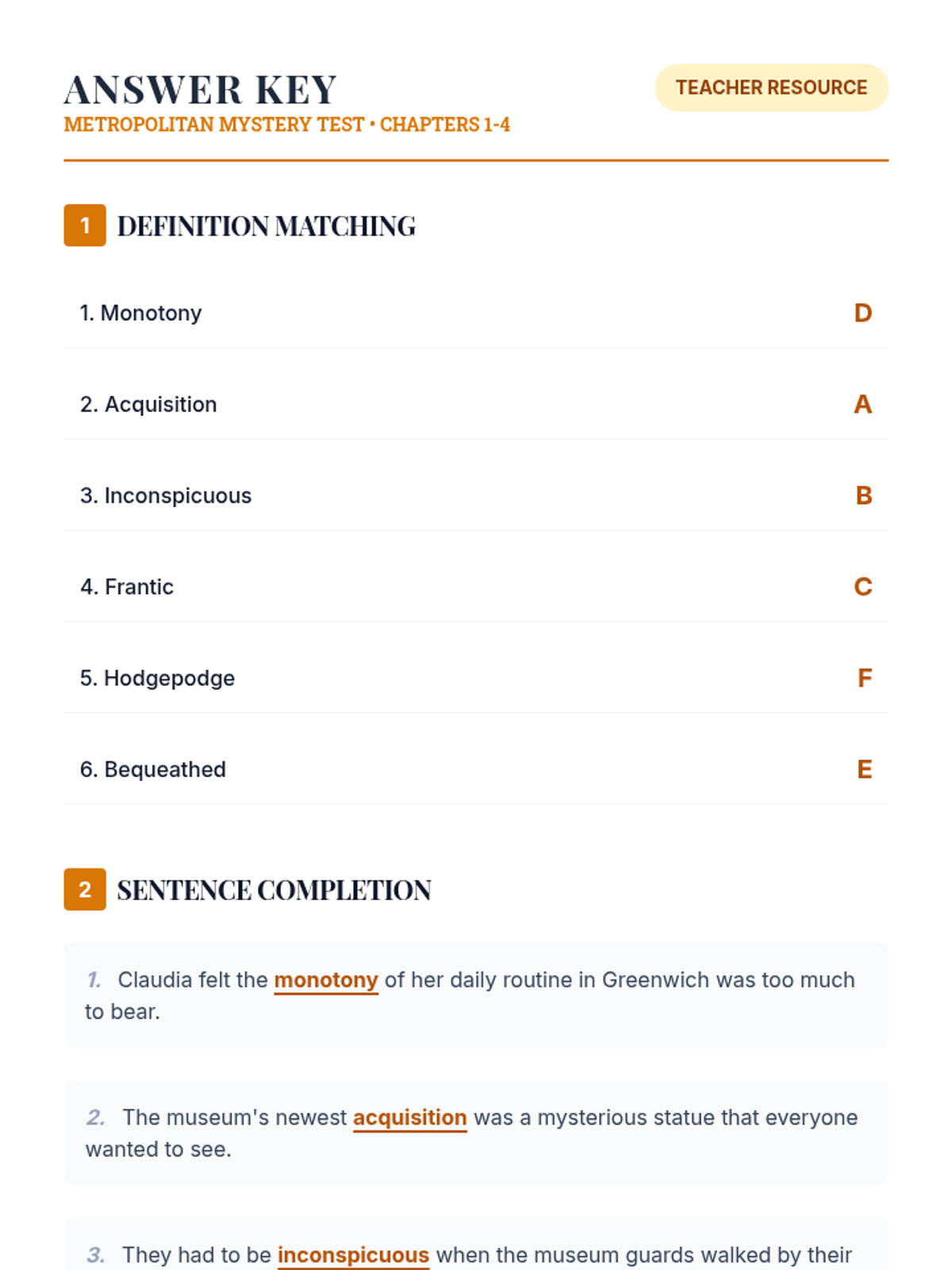
A spelling and vocabulary unit based on Chapters 1-4 of 'From the Mixed-Up Files of Mrs. Basil E. Frankweiler', focusing on Claudia and Jamie's secret adventure in the Metropolitan Museum of Art.
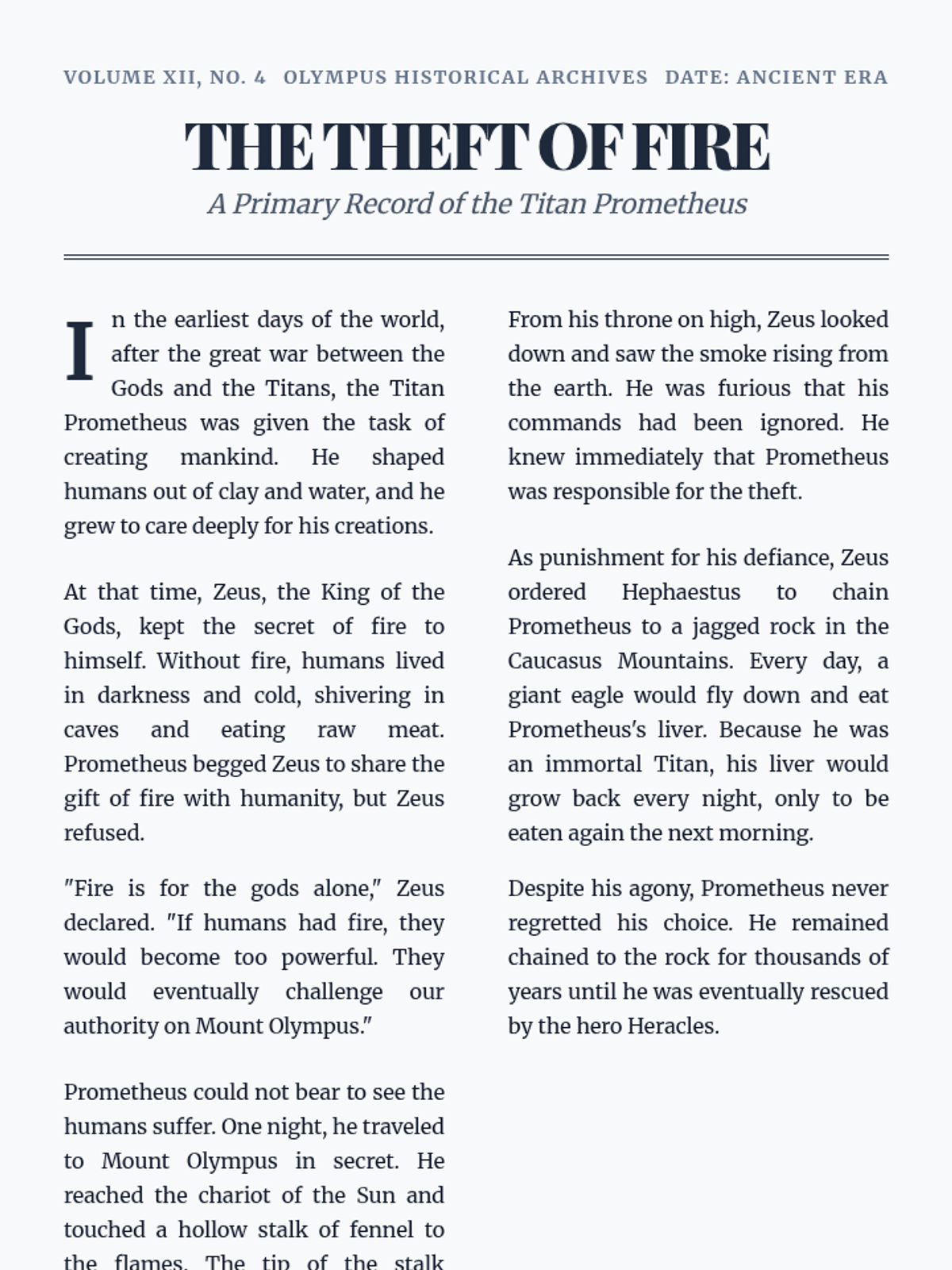
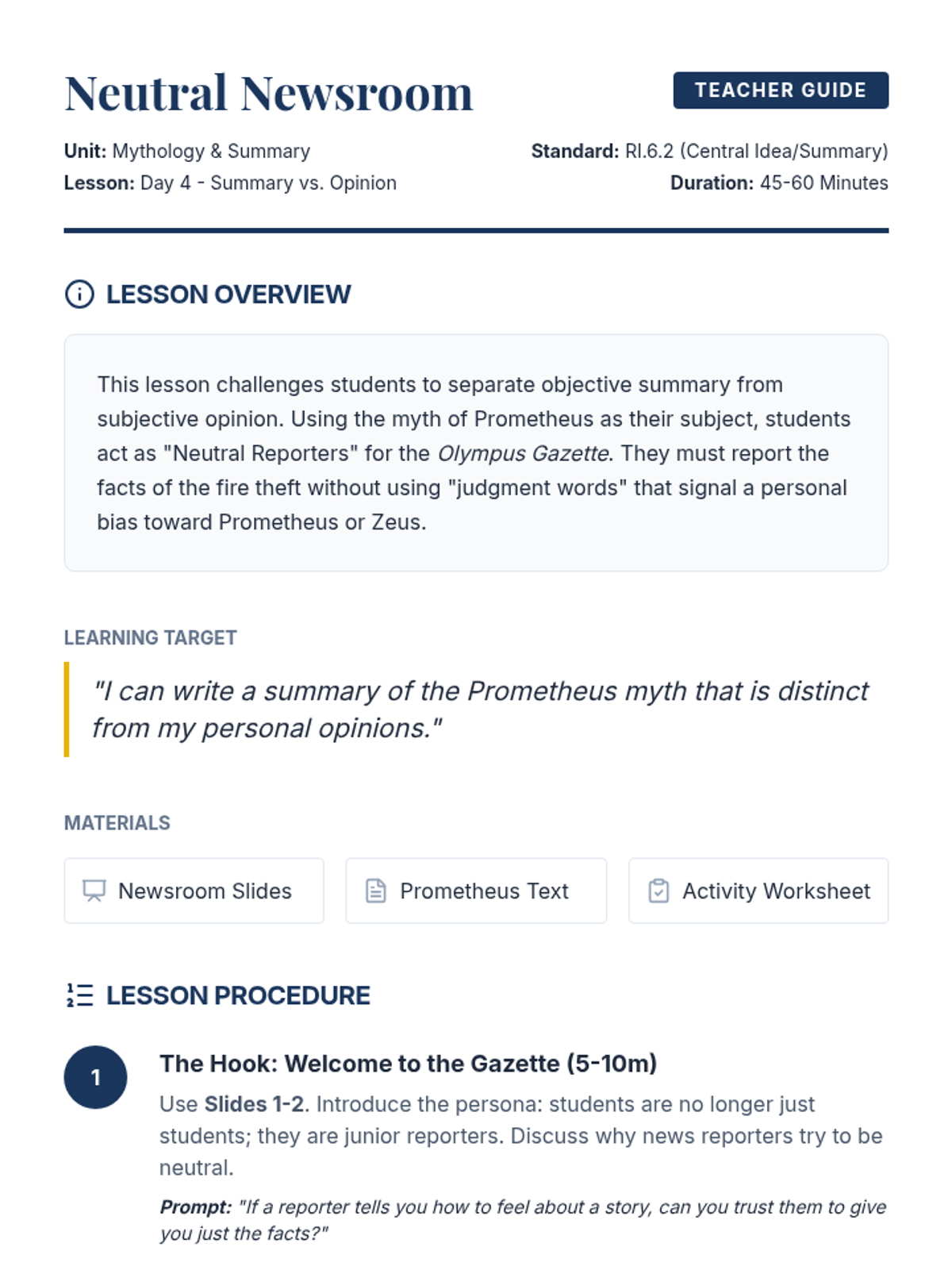
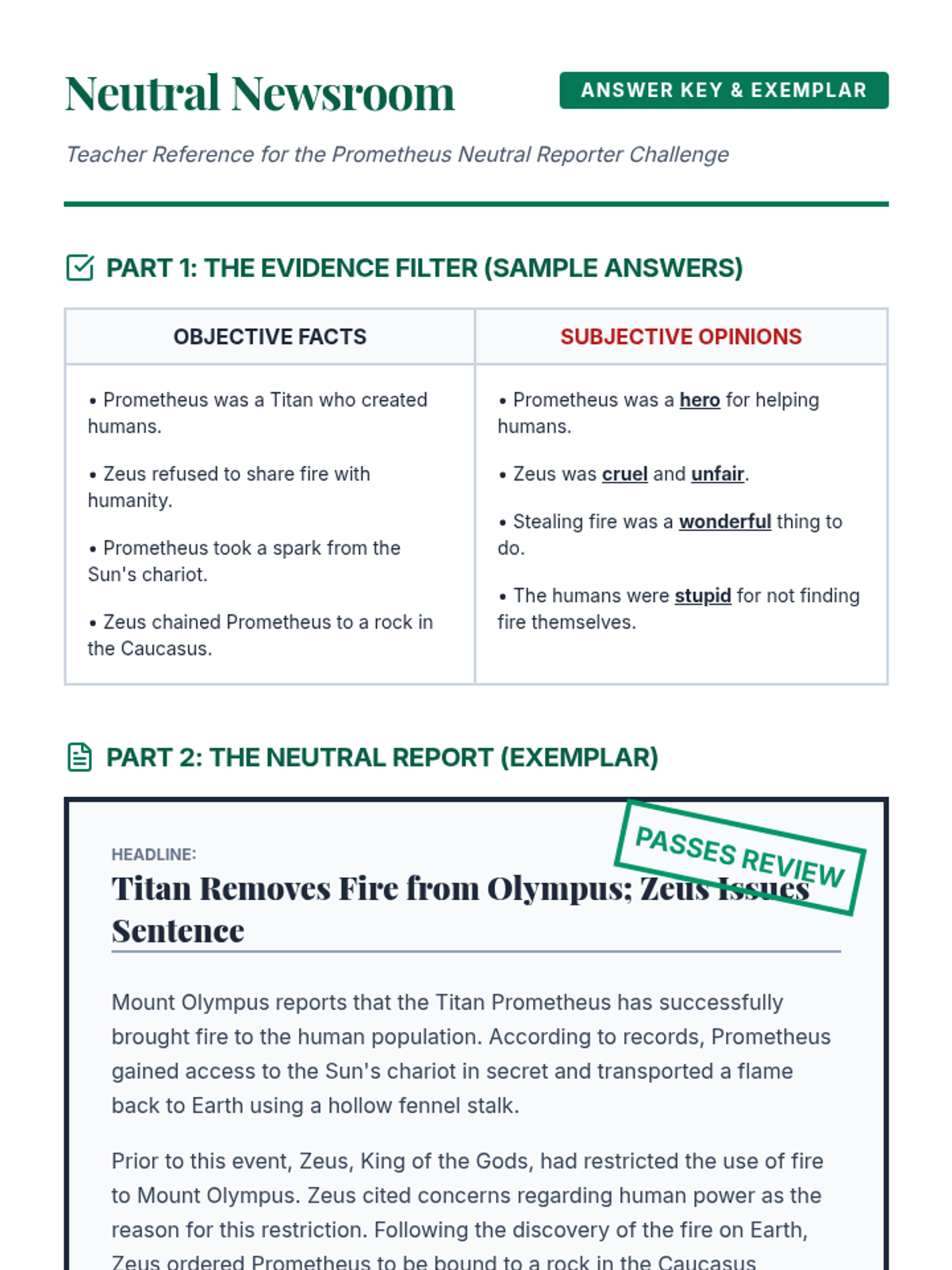
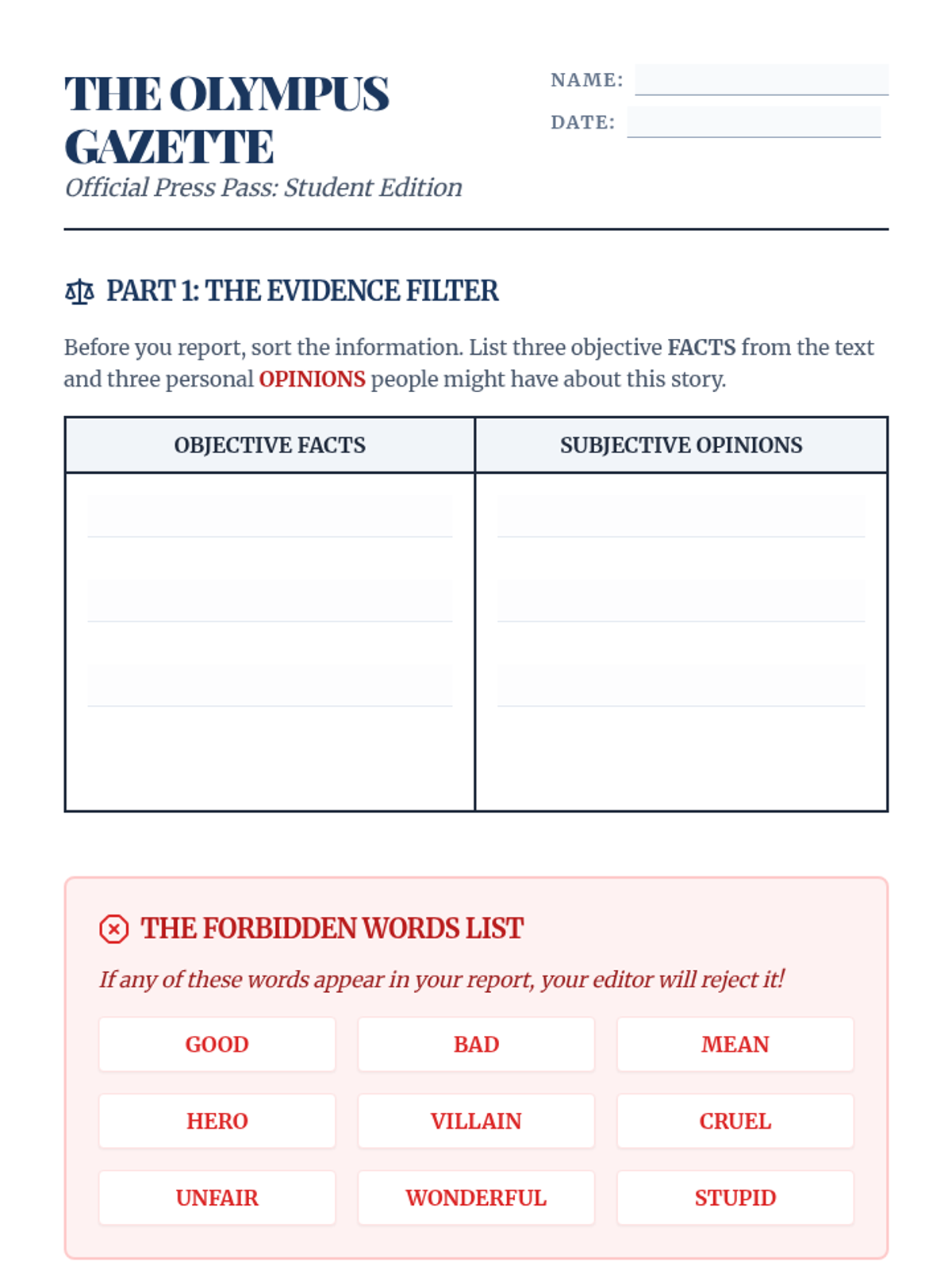
A lesson focused on distinguishing summary from opinion through the lens of the Prometheus myth, featuring a neutral news reporting activity.
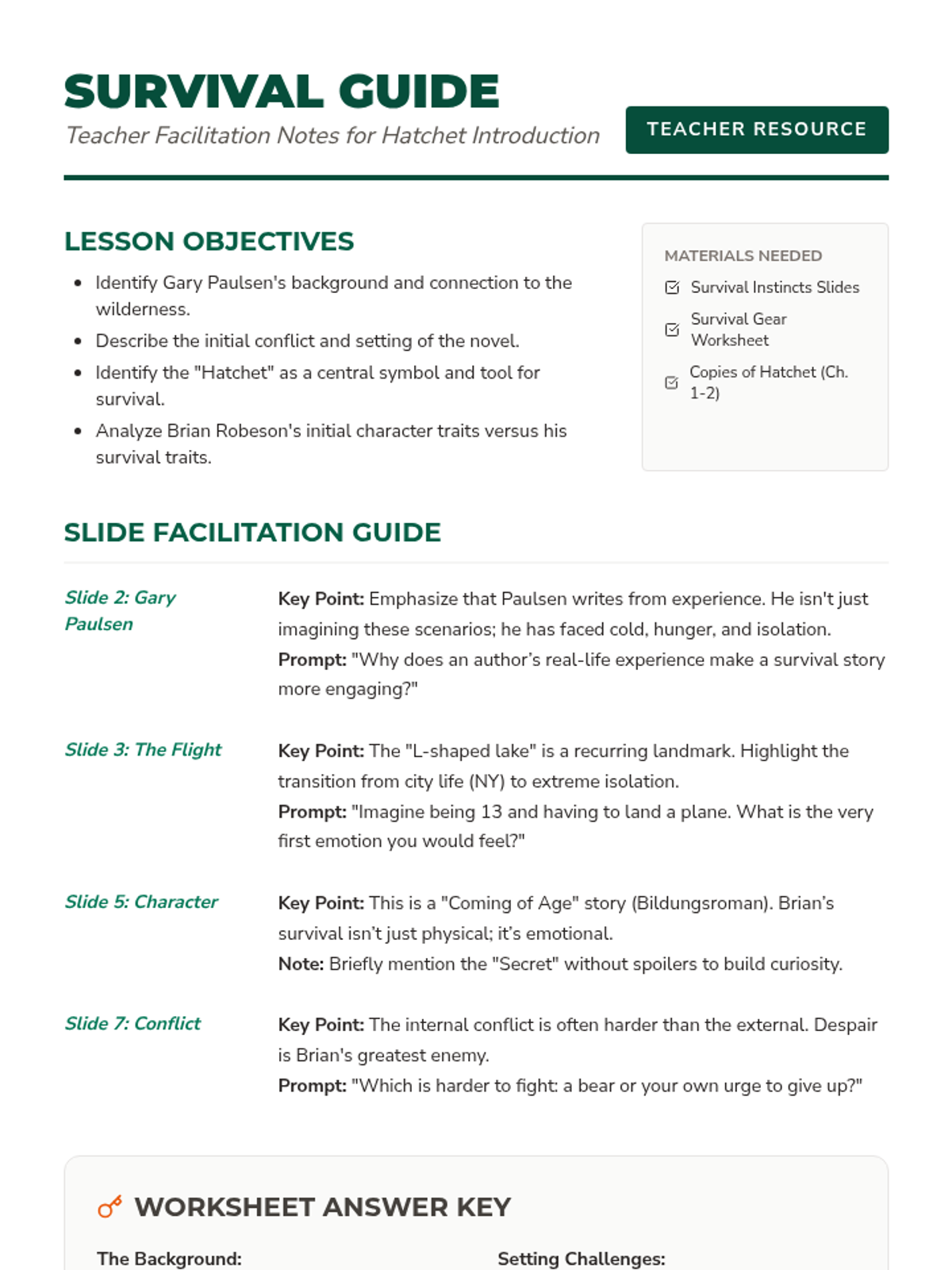
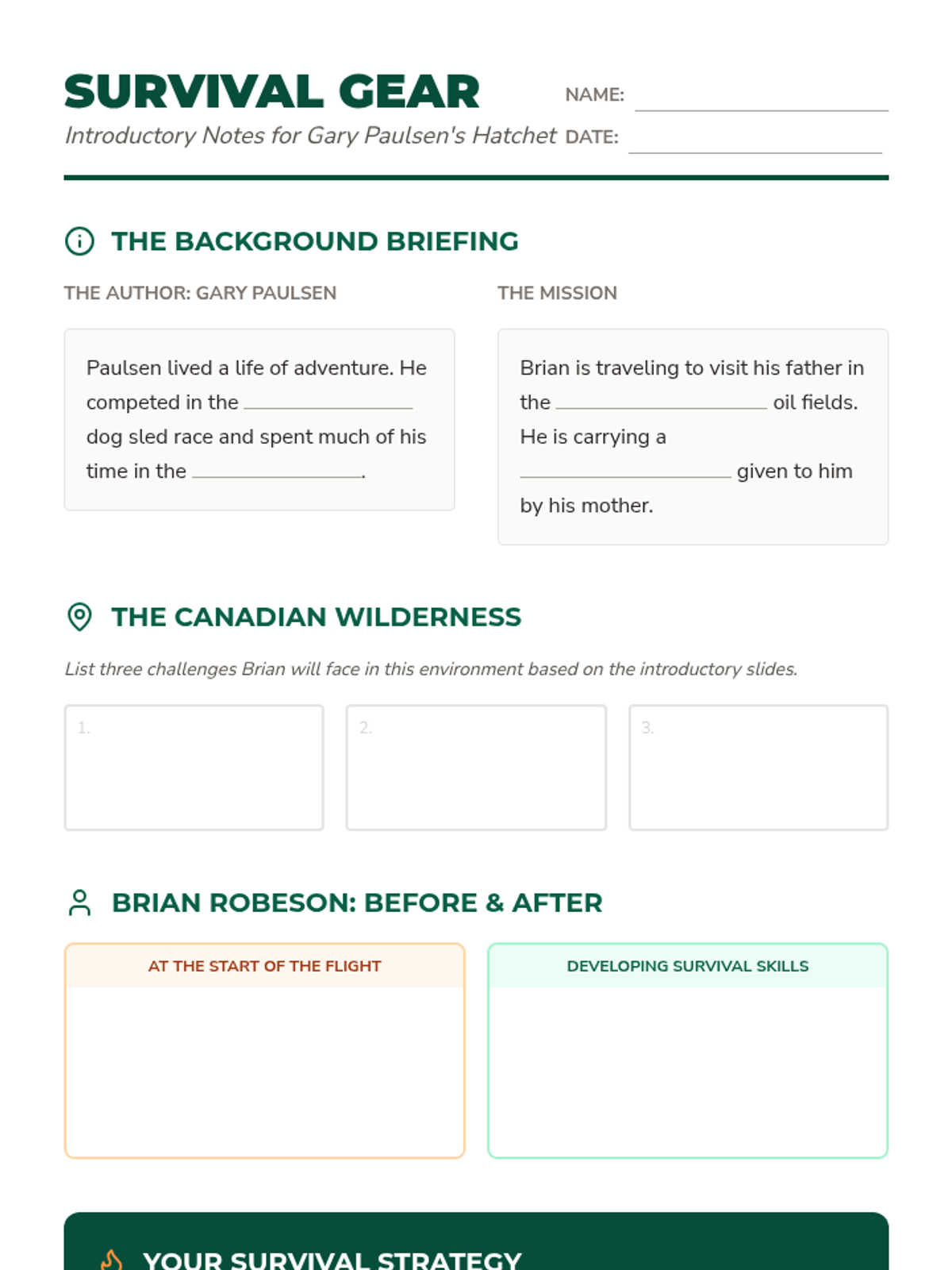
An introductory lesson for the novel Hatchet by Gary Paulsen, focusing on plot, setting, character, and the theme of survival.
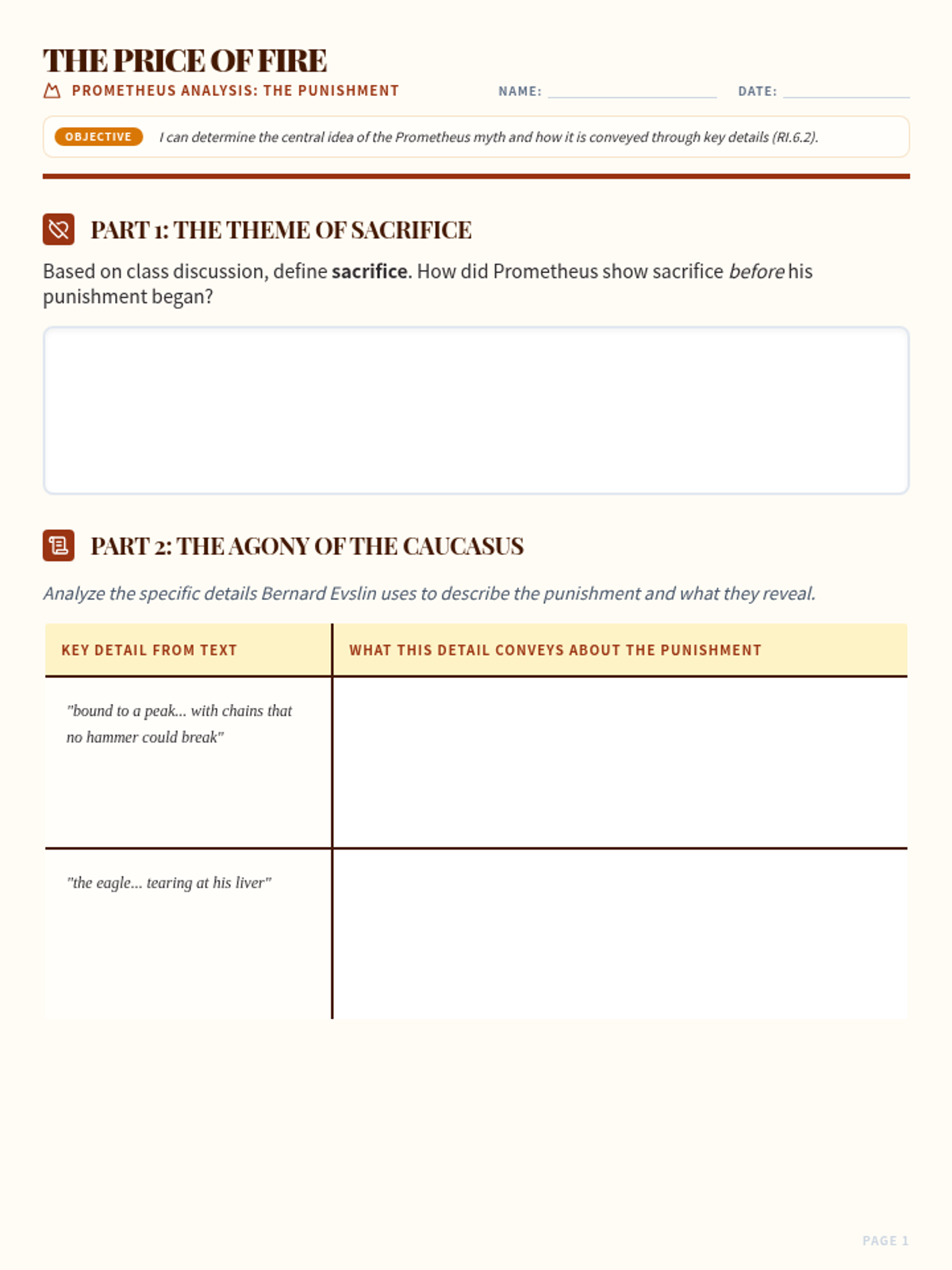
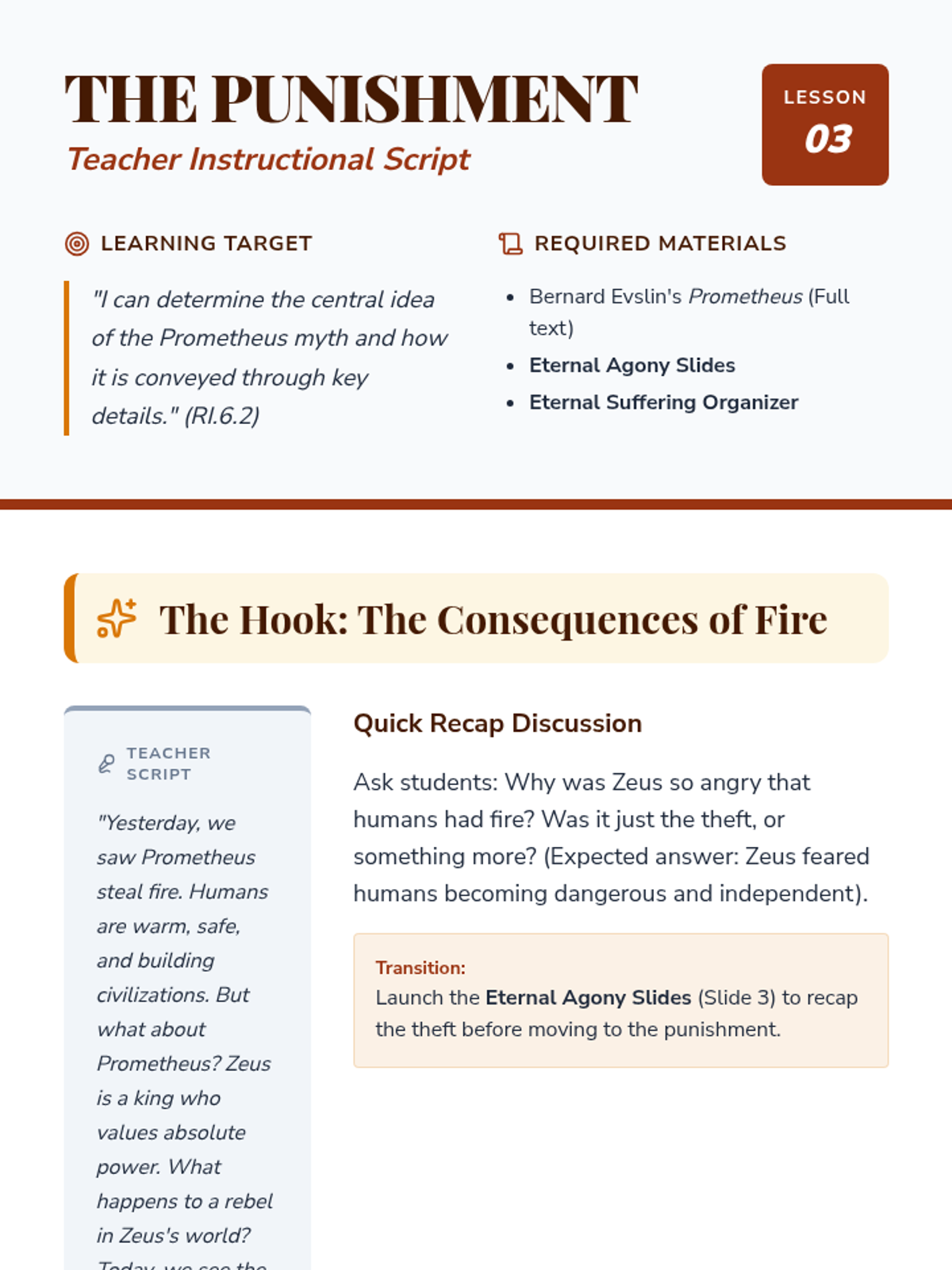
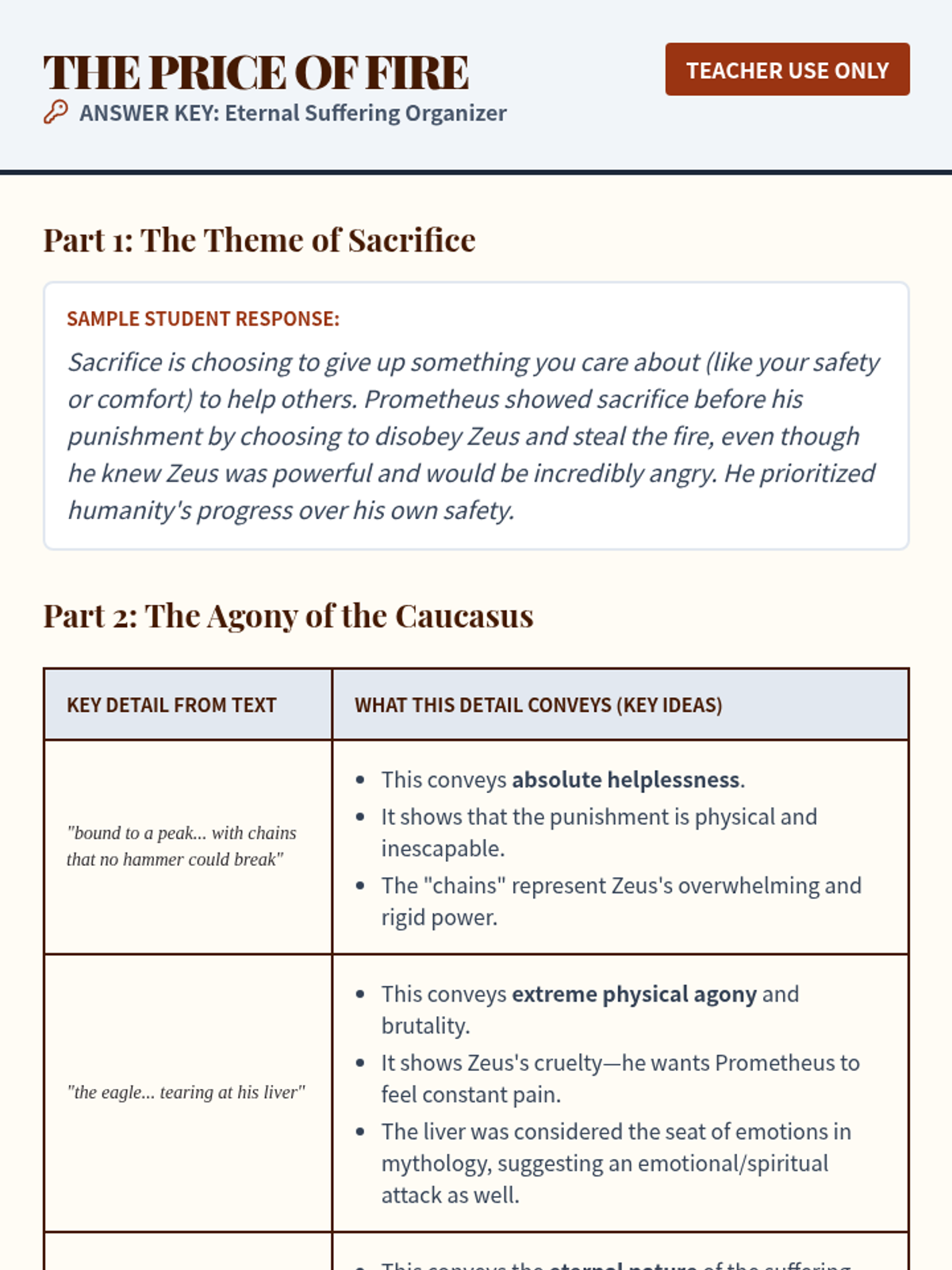
In this lesson, students analyze the climax of the Prometheus myth, focusing on how specific details of his punishment convey the central idea of eternal sacrifice and defiance. Students will use the Bernard Evslin version of the text to identify key details and explain their significance.
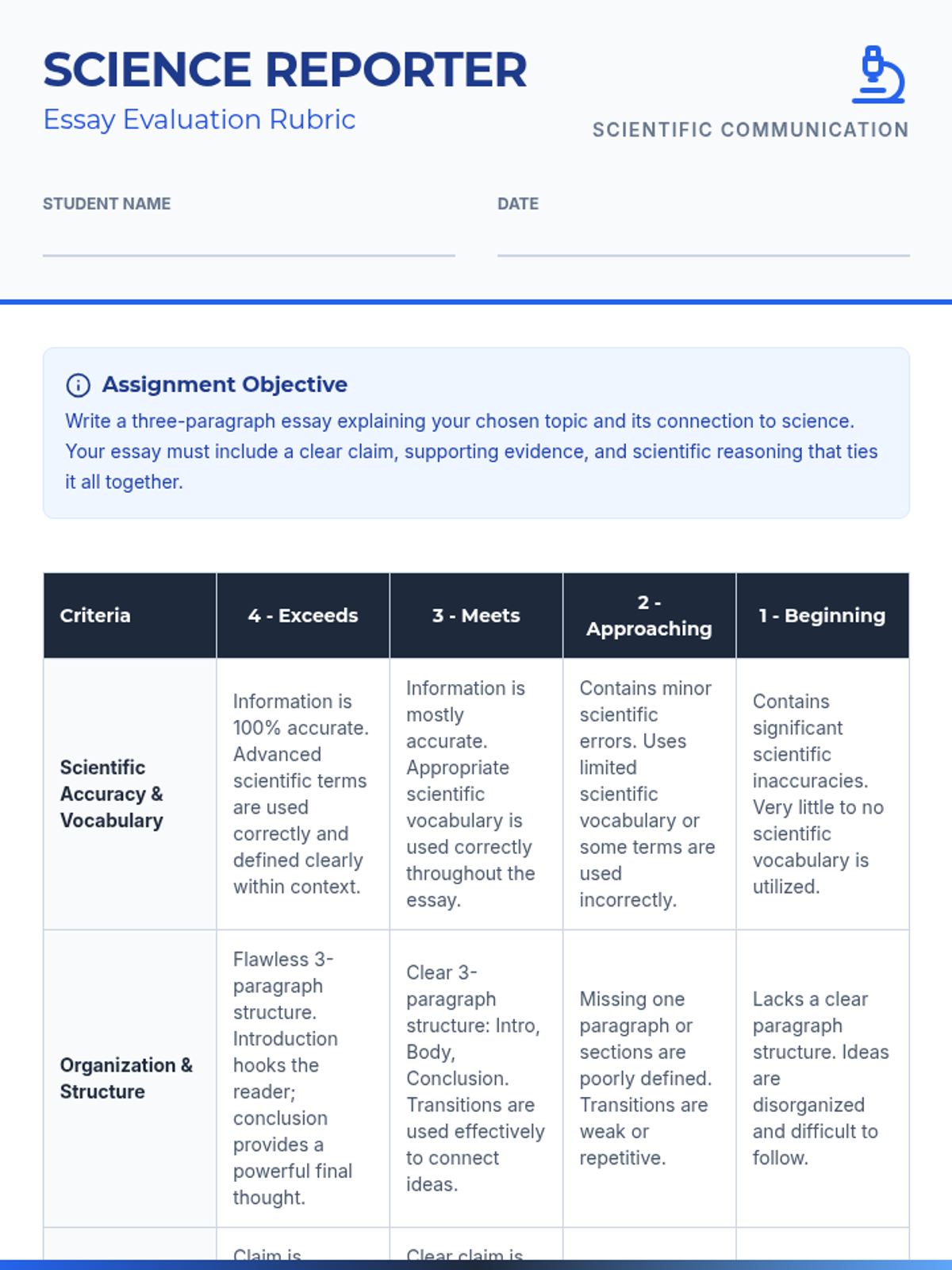
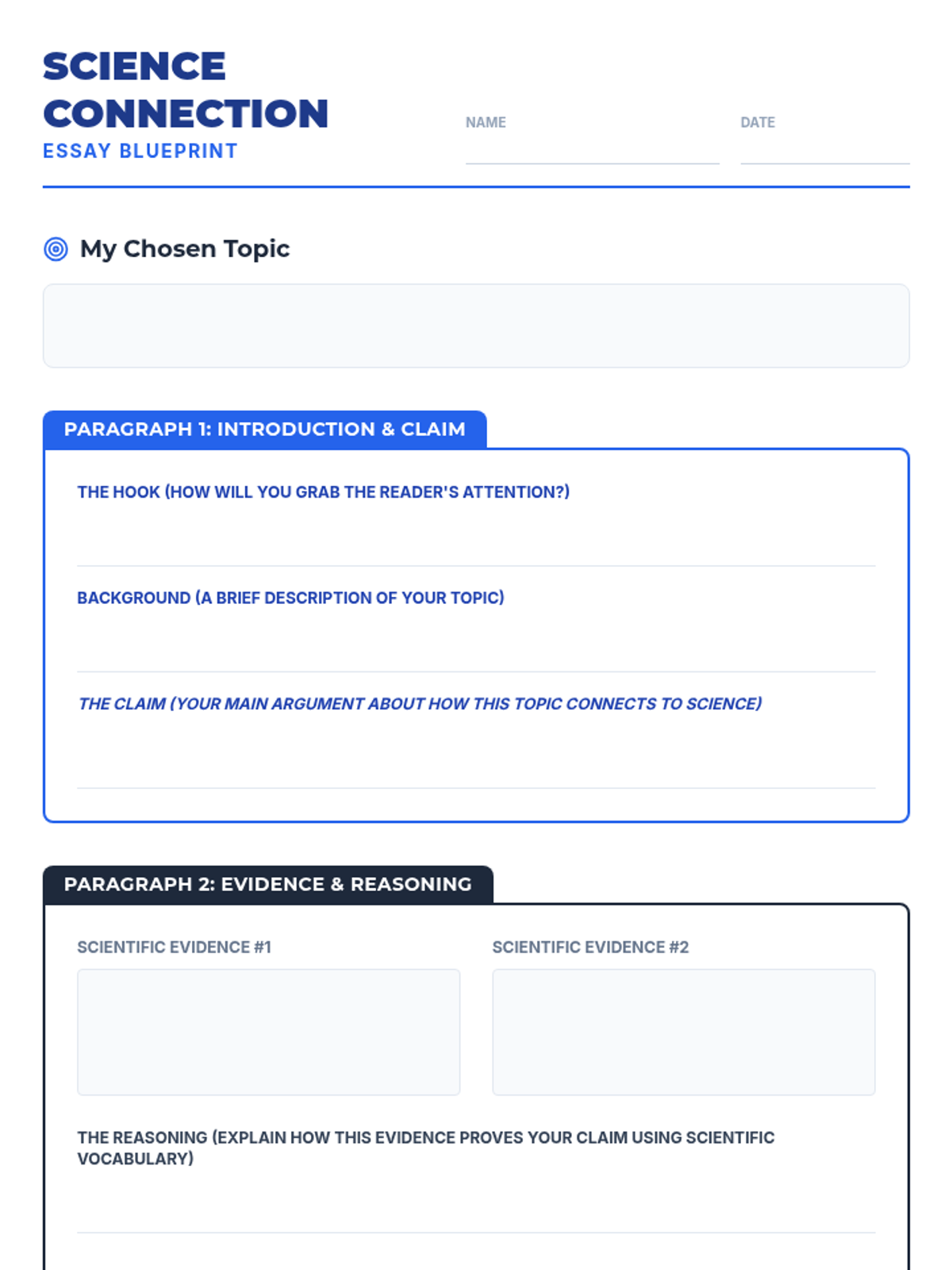
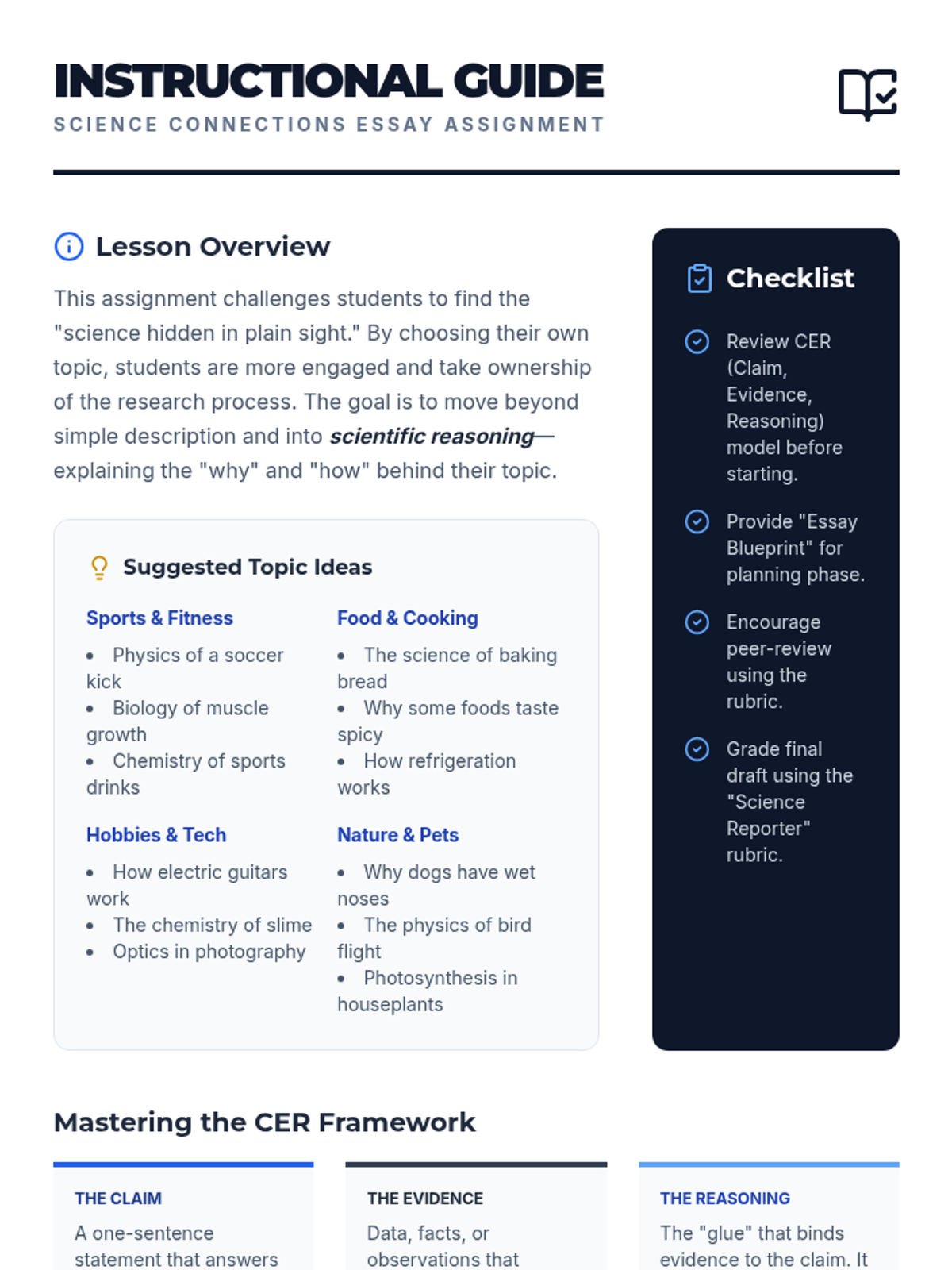
A lesson focused on helping students write a structured three-paragraph essay connecting a self-chosen topic to scientific principles.
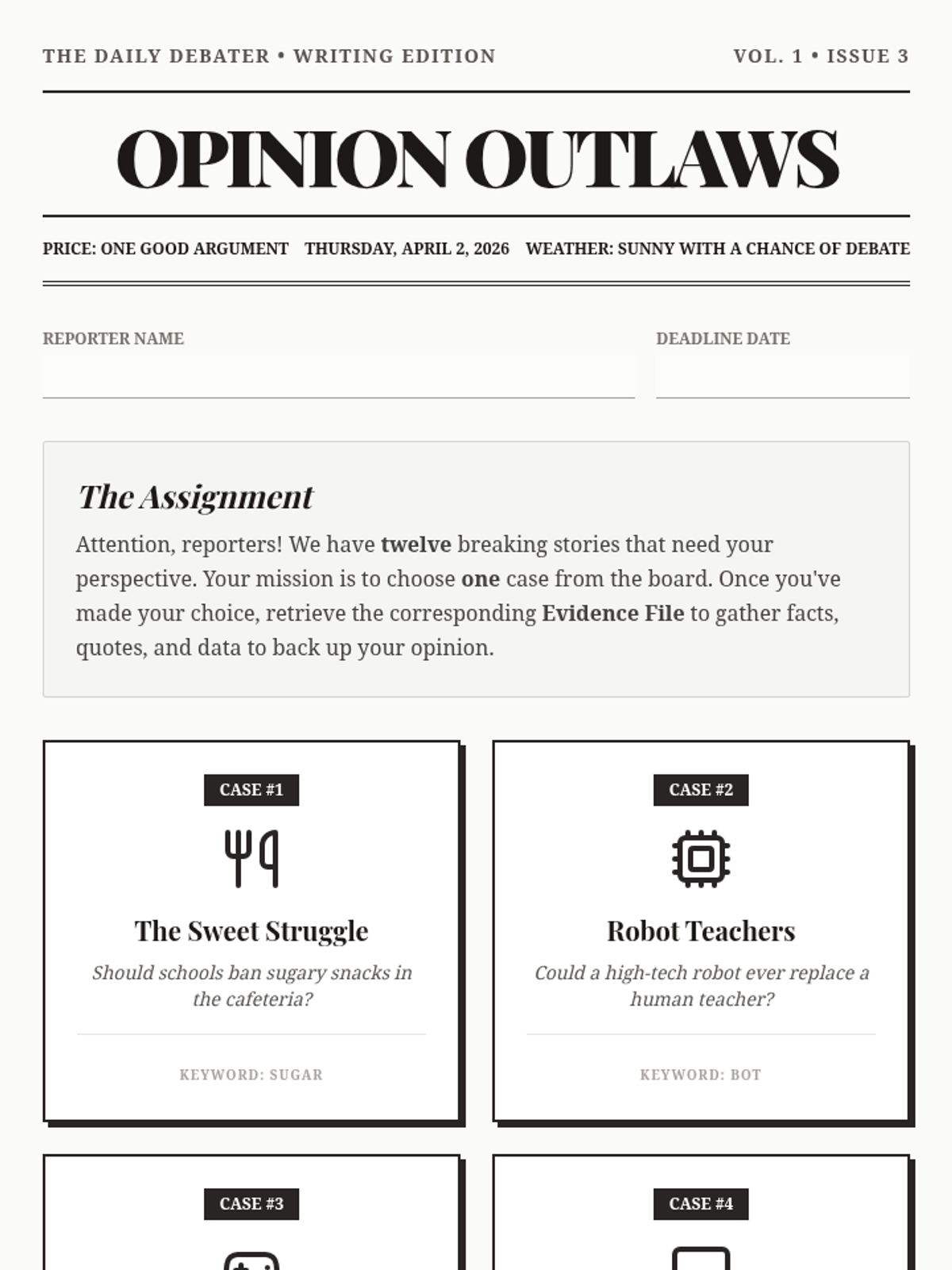
A choice-based writing lesson where students select an opinion prompt and use provided short articles to gather evidence for their persuasive pieces.