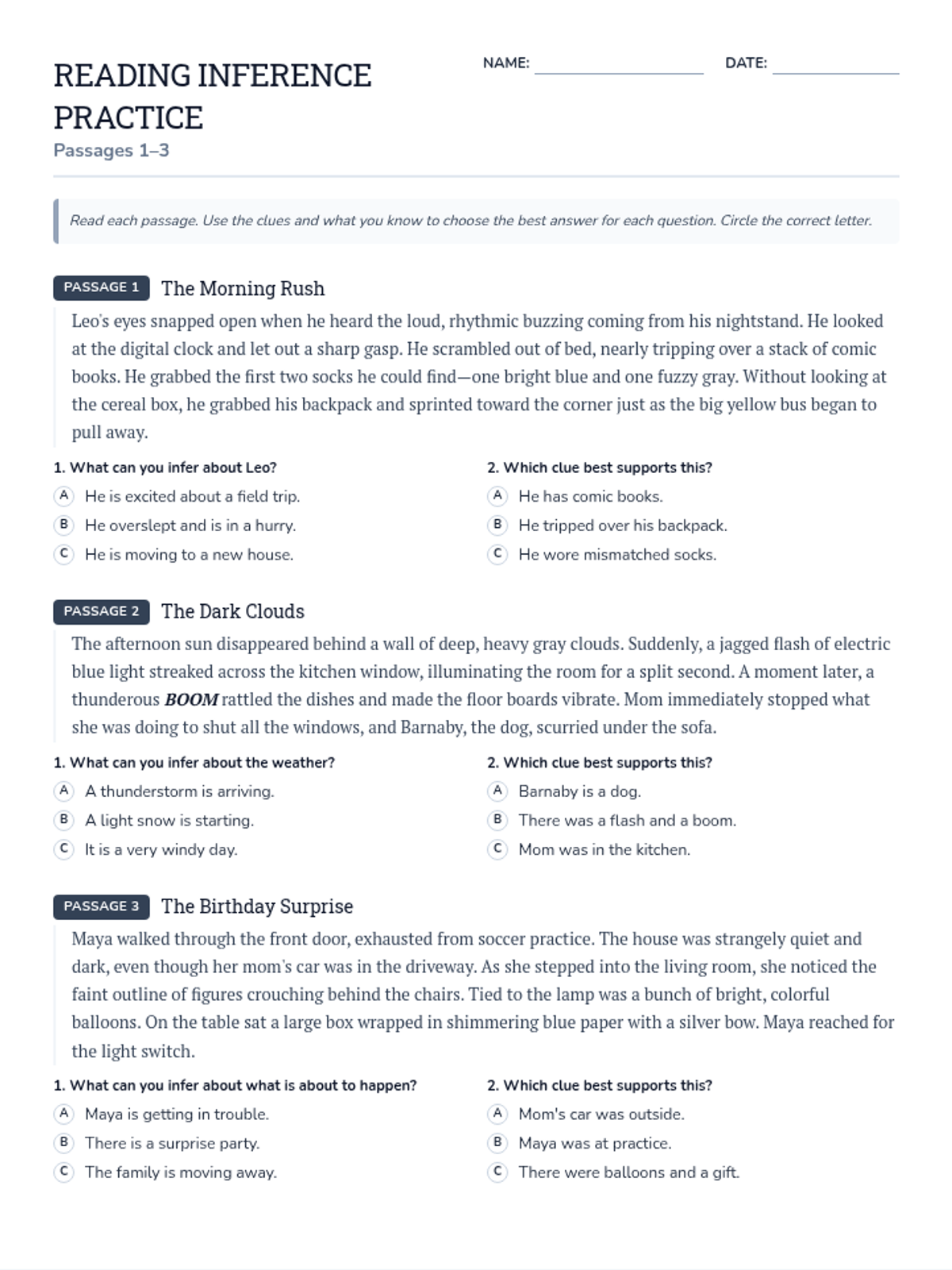
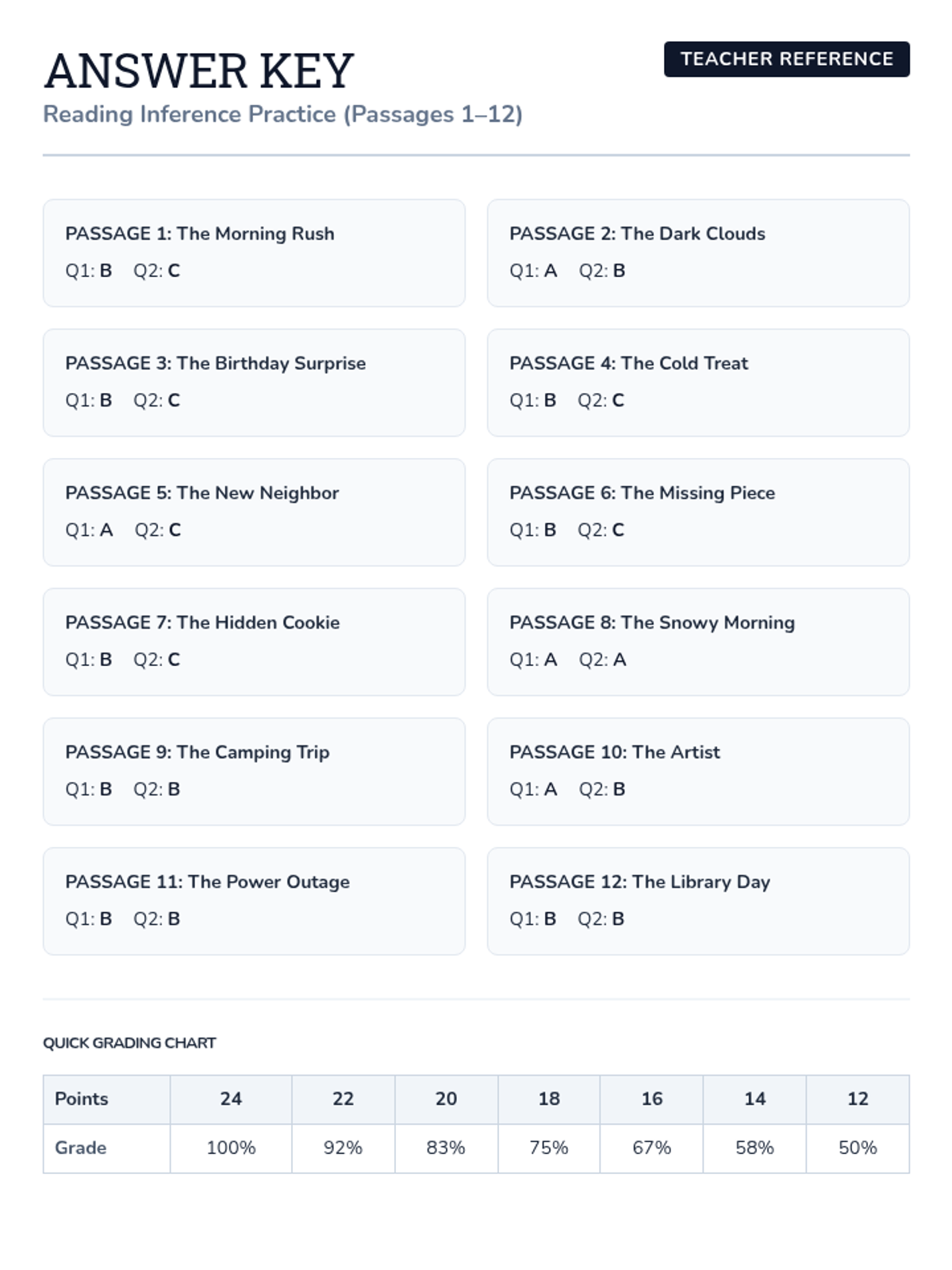
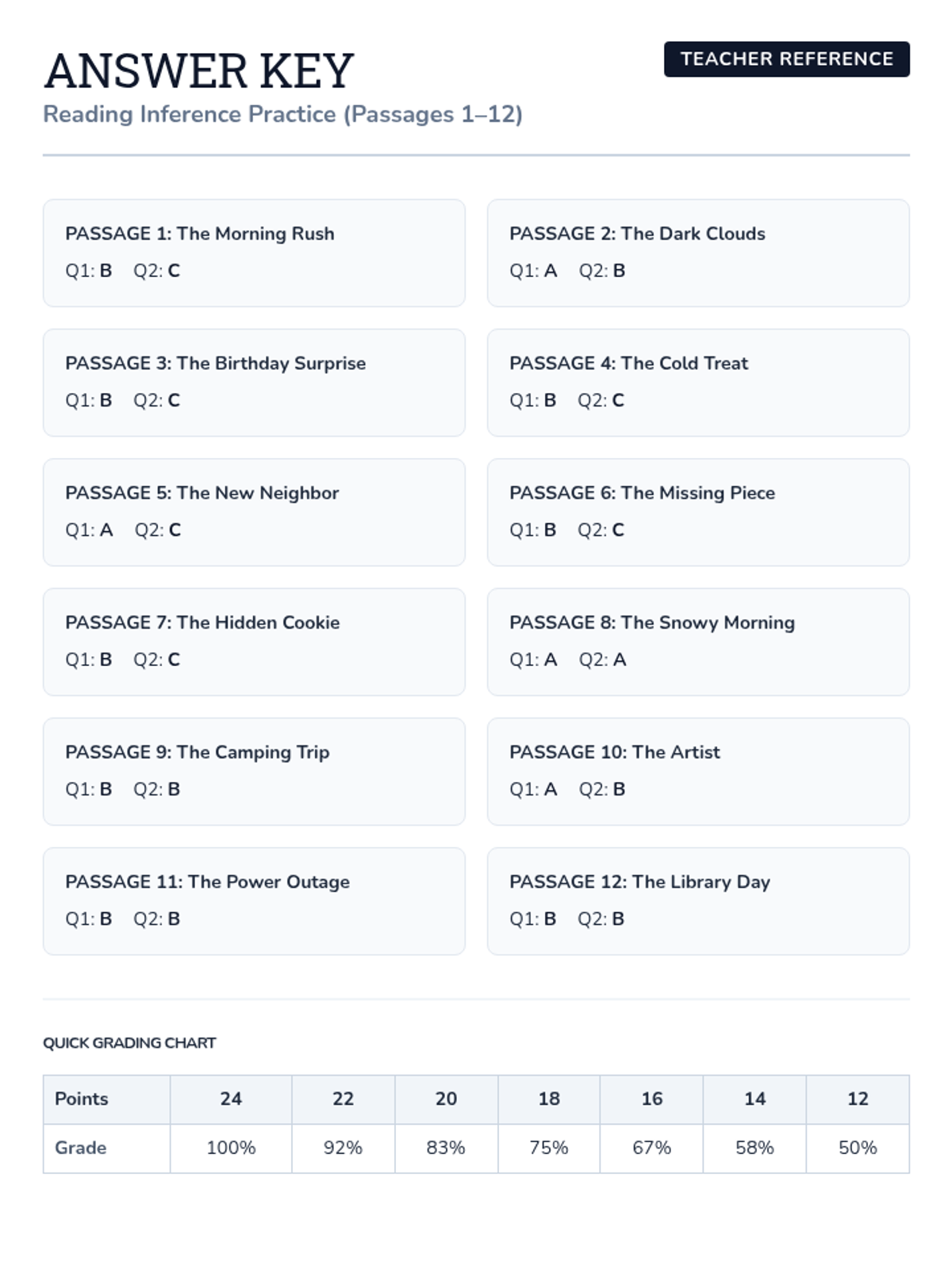
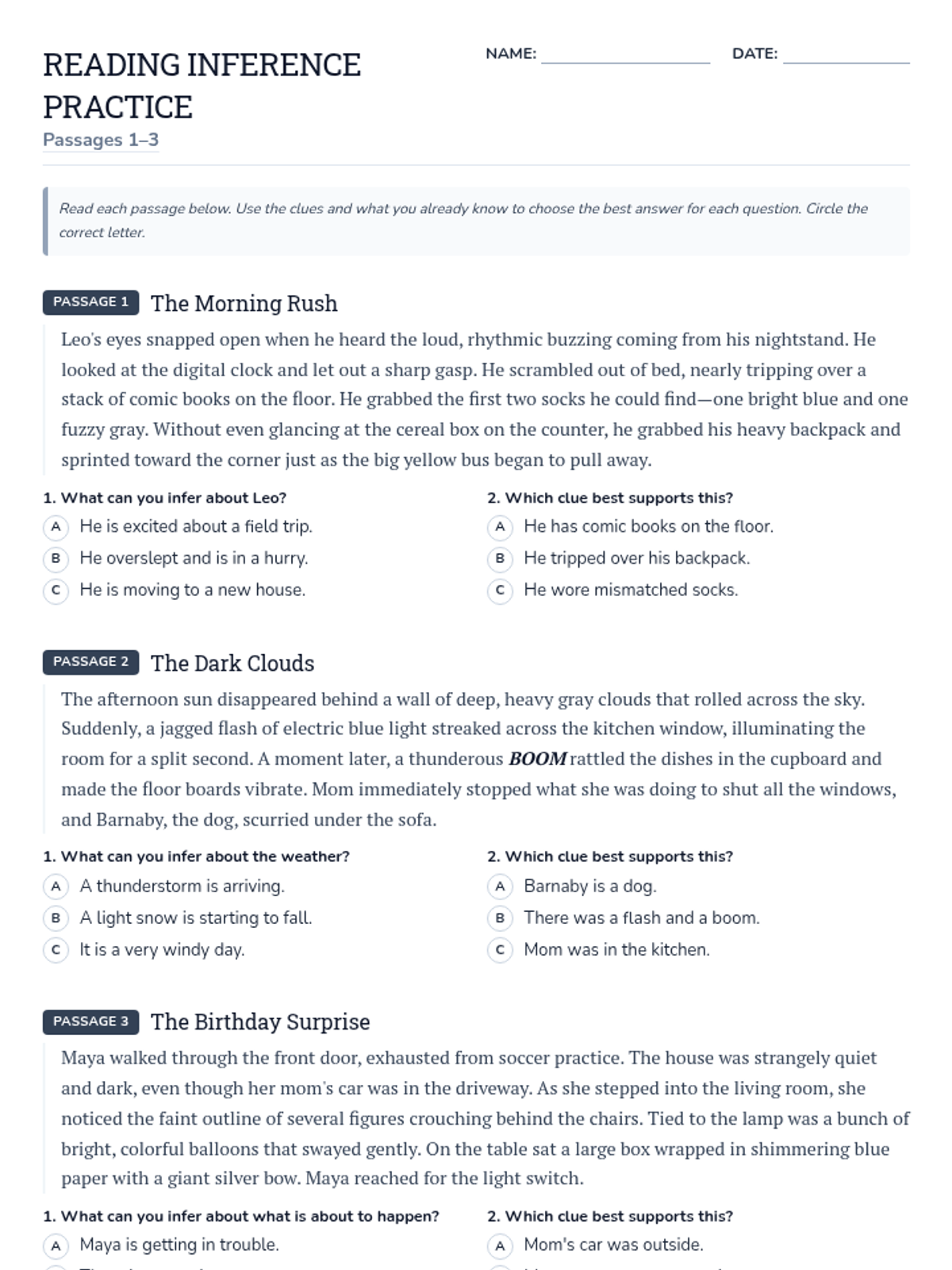
An introductory lesson on inferencing where students learn the 'Inference Equation' and practice identifying text evidence and background knowledge in short nonfiction contexts.
A comprehensive lesson on crafting effective concluding paragraphs, focusing on restating thesis statements, summarizing main points without adding new info, and achieving the ideal length of 4-6 sentences.
A week-long daily practice focused on mastering the fundamentals of simple sentences, specifically capitalization and punctuation, through a construction-themed approach.
A creative narrative writing lesson centered on the 100th day of school, featuring imaginative prompts that challenge 5th graders to think beyond the ordinary.
Final assessments and a project-based learning activity where students explore the book's themes creatively.
The aftermath of the rescue, Winnie's big decision, and the ultimate resolution of the story (Chapters 21-Epilogue).
The tension rises as the man in the yellow suit makes his move and the Tucks face a dire threat (Chapters 13-20).
Exploring the Tucks' home life, their explanation of the spring, and Winnie's growing bond with the family (Chapters 6-12).
Introduction to the Foster family, the woods, and the initial encounter with the Tucks (Prologue to Chapter 5).
The final mission: an assessment where detectives use all their skills to interpret a new text and solve an 'Escape Room' style challenge.
Detectives practice the 'Substitution Strategy,' replacing figurative phrases with literal ones to ensure they've fully cracked the meaning of a text.
The agency shifts focus to adages and proverbs, teaching detectives how to decode 'Ancient Advice' and match it to modern-day situations.
Detectives apply their skills to short narratives, investigating how characters' feelings and actions provide the evidence needed to understand tricky idioms.
Students are introduced to the 'Meaning Detective' agency, learning how to spot 'Literal Leaks' (phrases that don't make sense literally) and use surrounding context clues to solve them.
A 30-minute introductory lesson on identifying and extracting textual evidence from informational texts using a detective-themed approach.
A final assessment where students act as lead detectives, analyzing a detailed 'case file' passage and justifying their inferences with cited evidence.
Students tackle longer, more complex nonfiction passages, learning to connect multiple pieces of evidence to form nuanced inferences about cause and effect.