A foundational lesson exploring the unique geographic features of the Italian Peninsula that allowed Ancient Rome to flourish, focusing on the Alps, Tiber River, and Seven Hills.
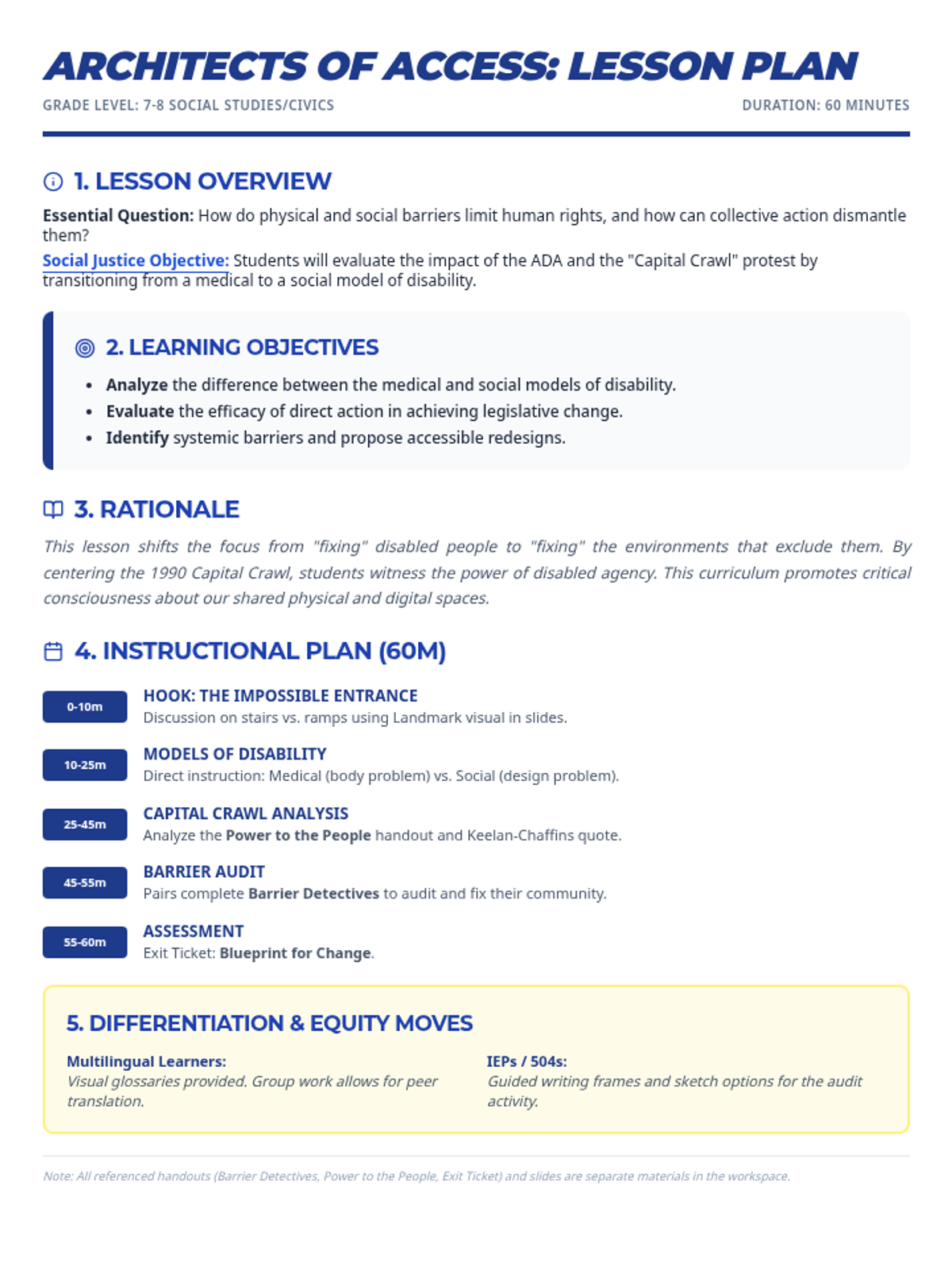
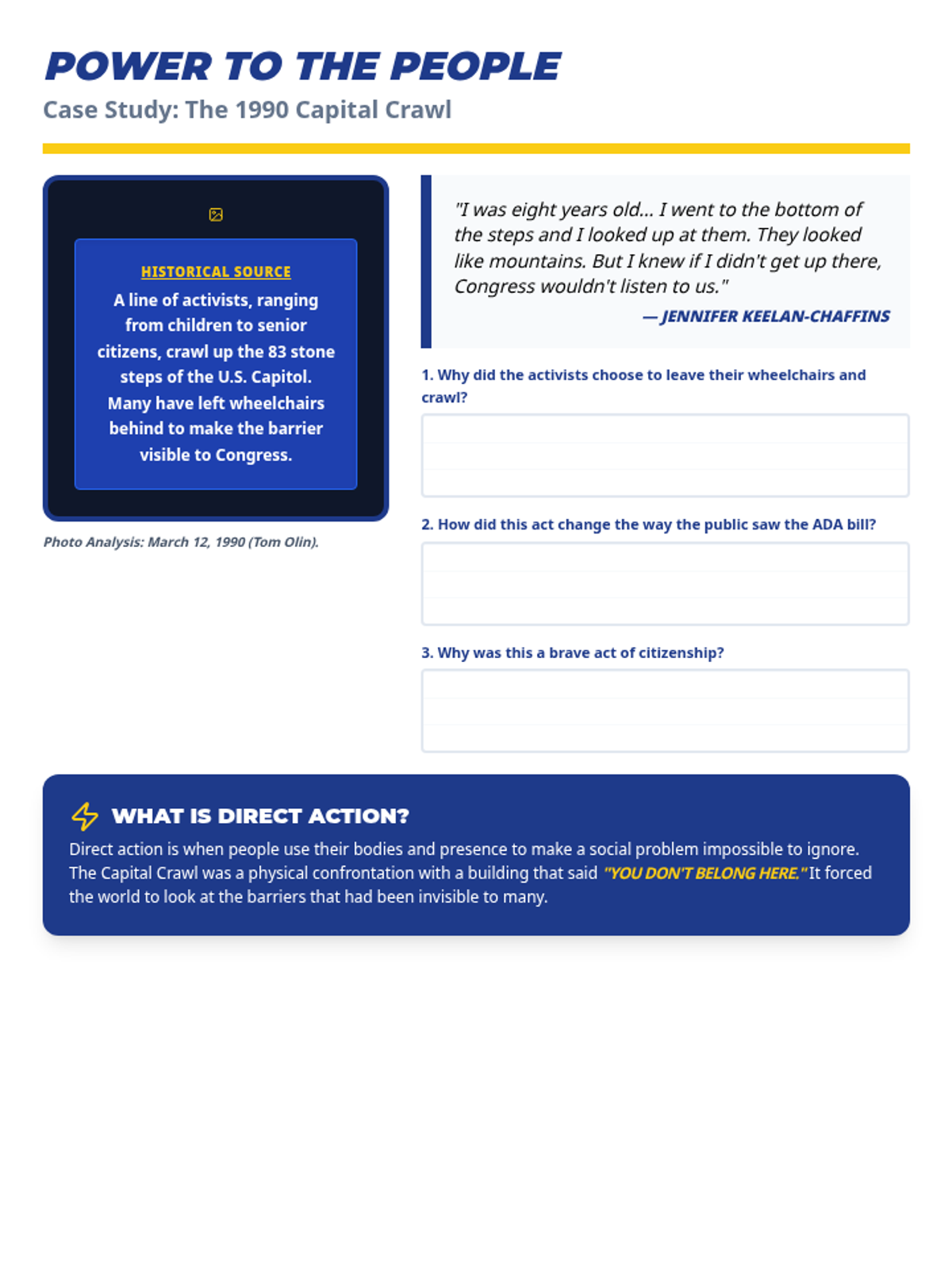
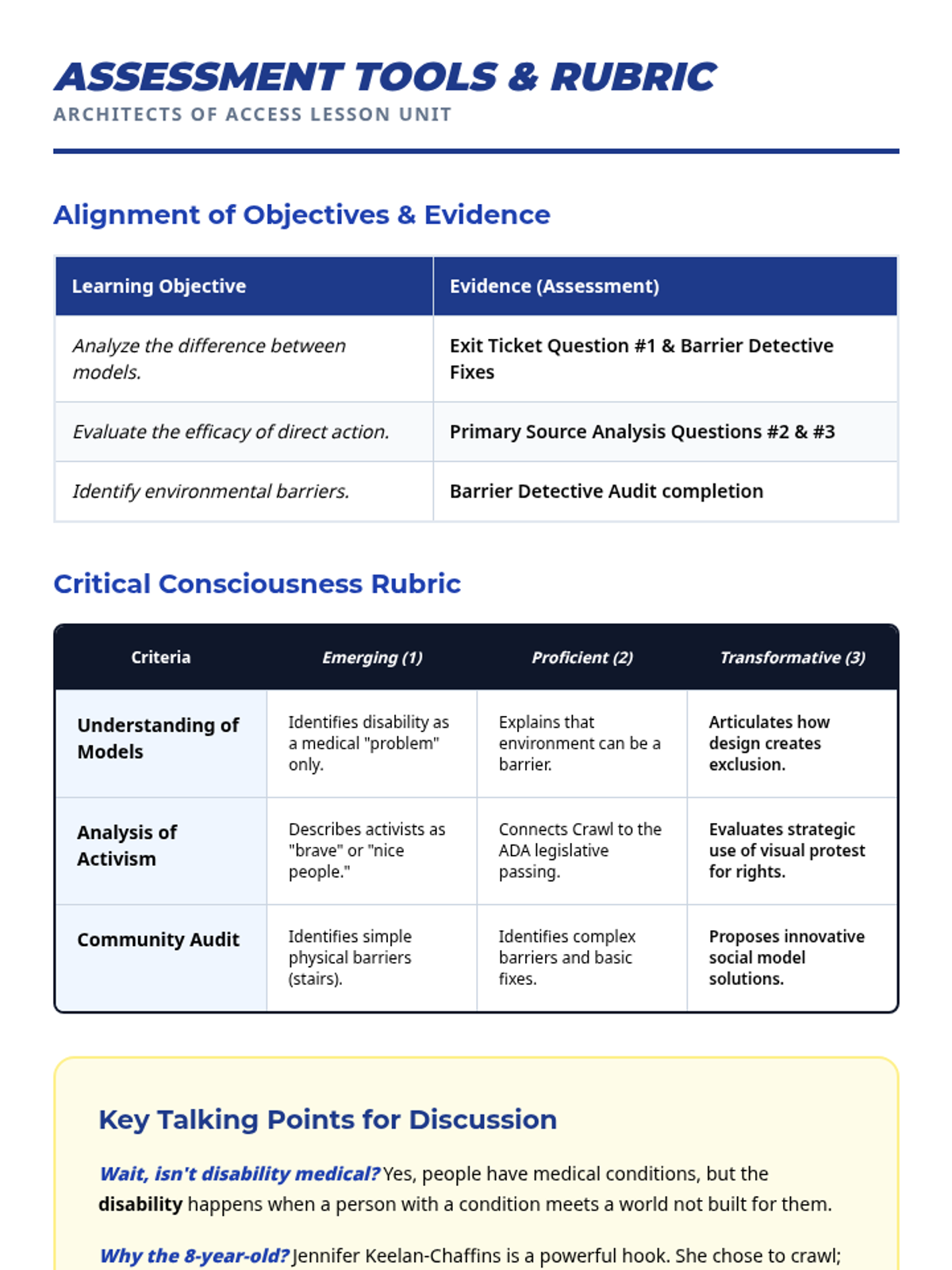
A middle school civics lesson exploring disability rights history, the ADA, and the shift from the medical to the social model of disability through the lens of the 'Capital Crawl' activism.
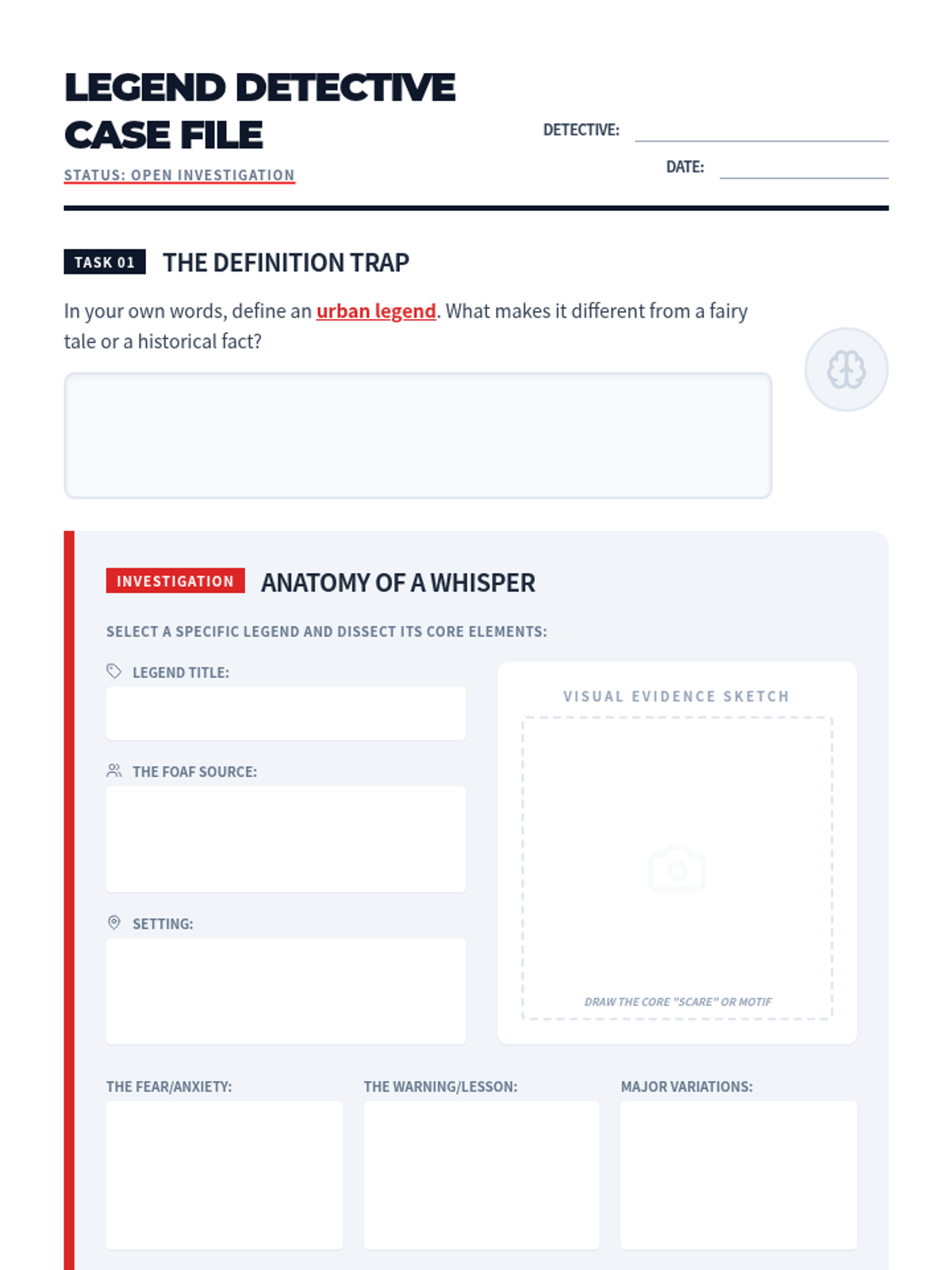
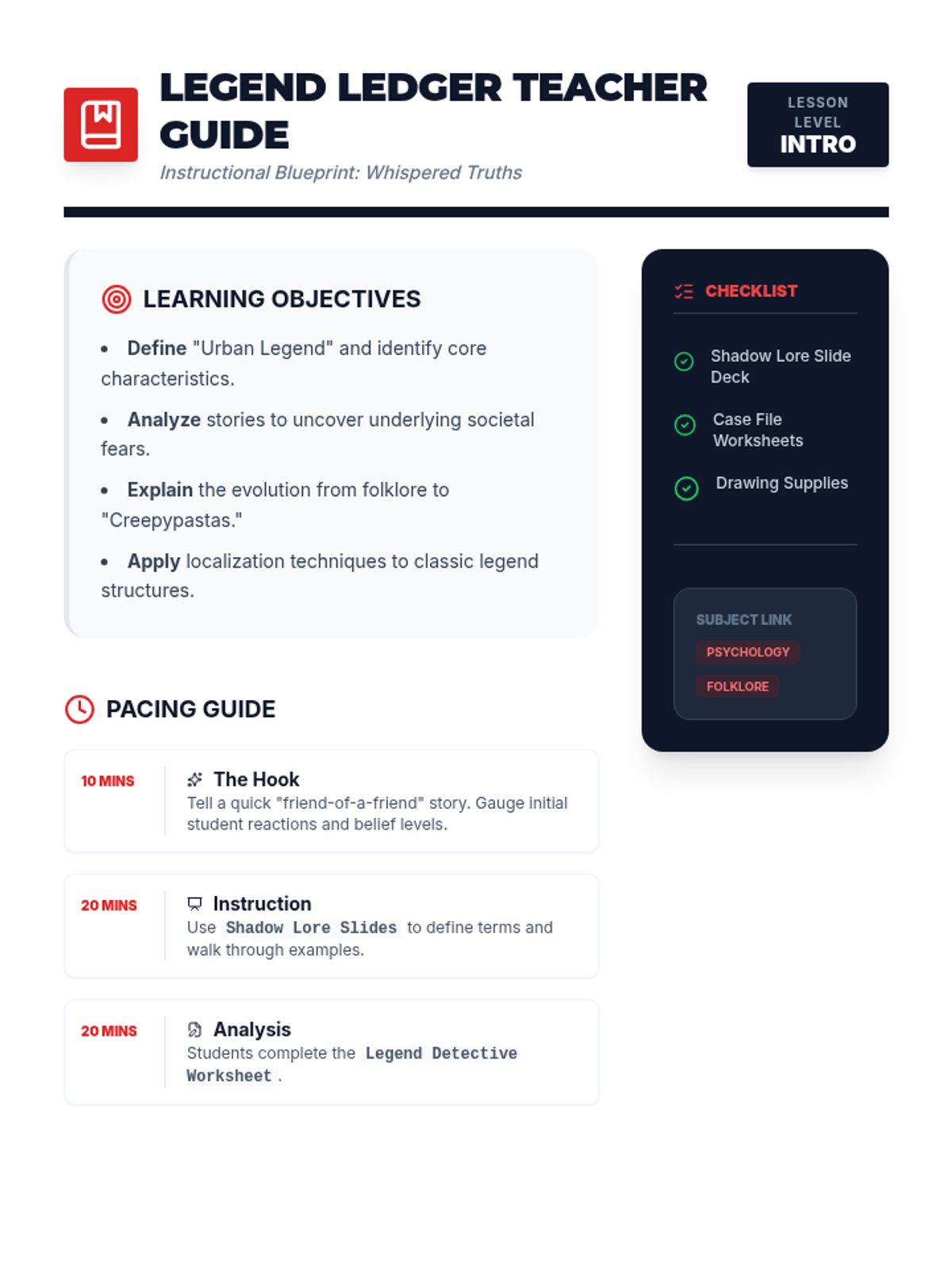
An introductory lesson on urban legends, covering their definition, key characteristics, and famous examples, followed by student analysis and discussion.
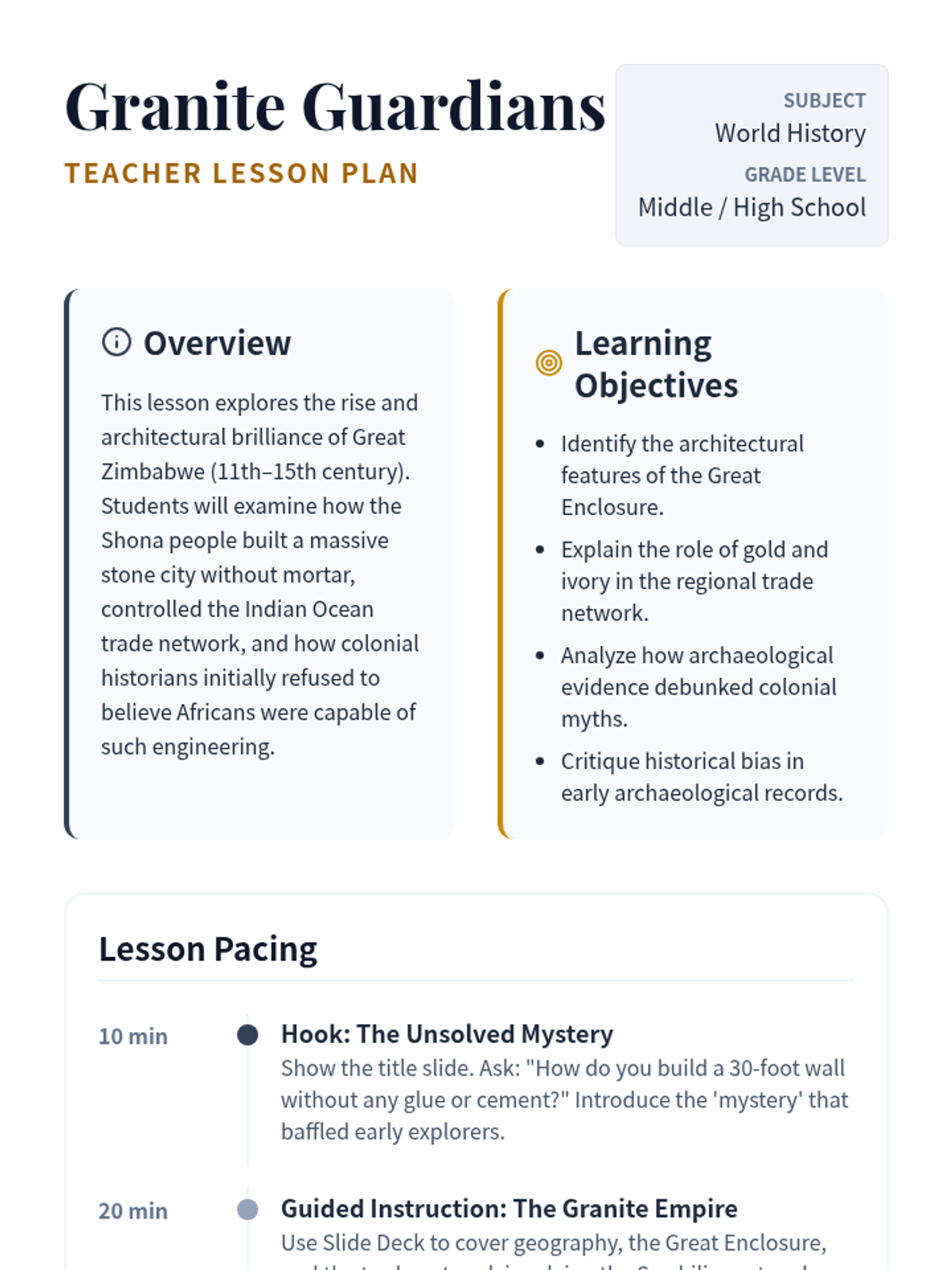
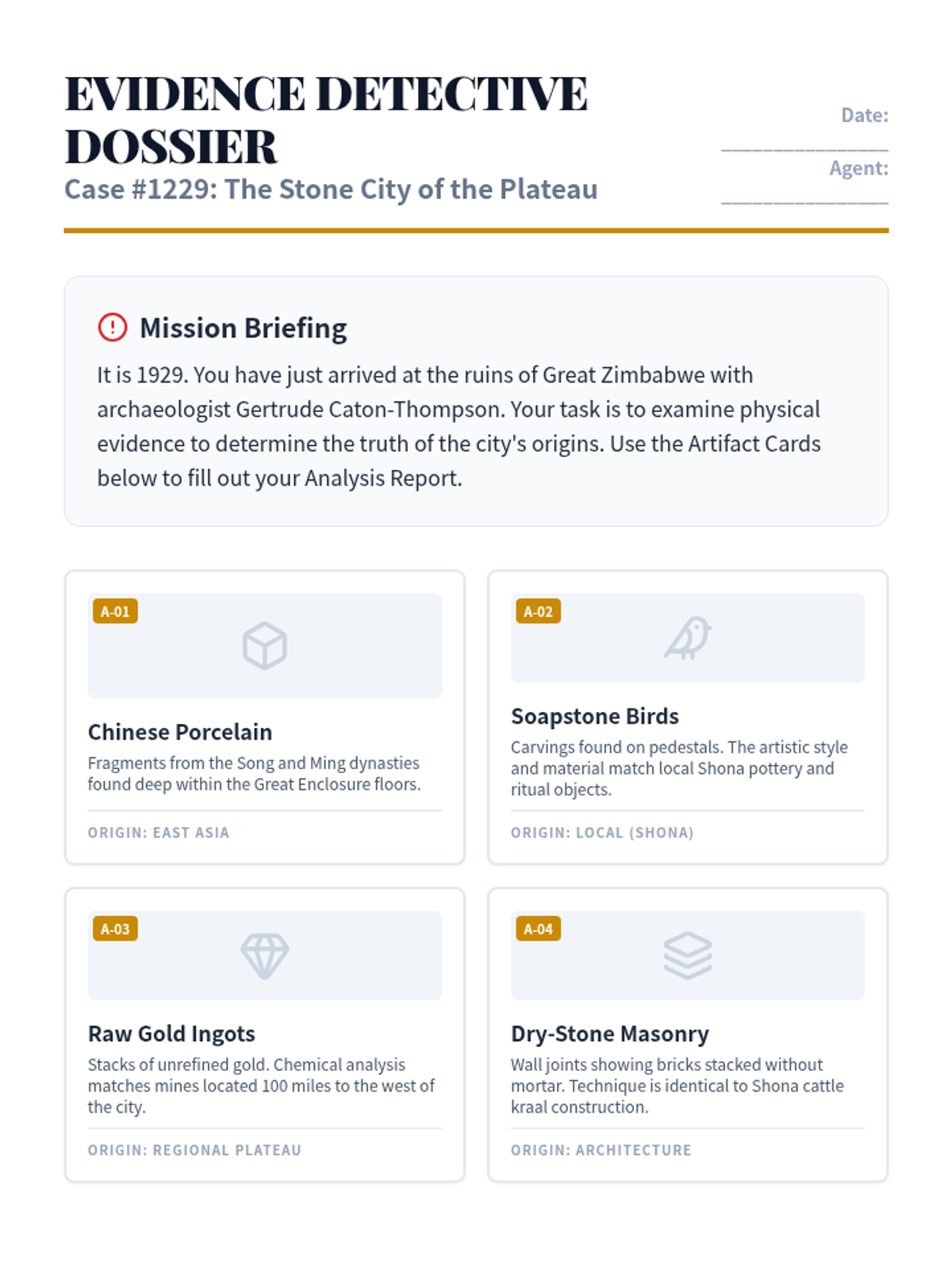
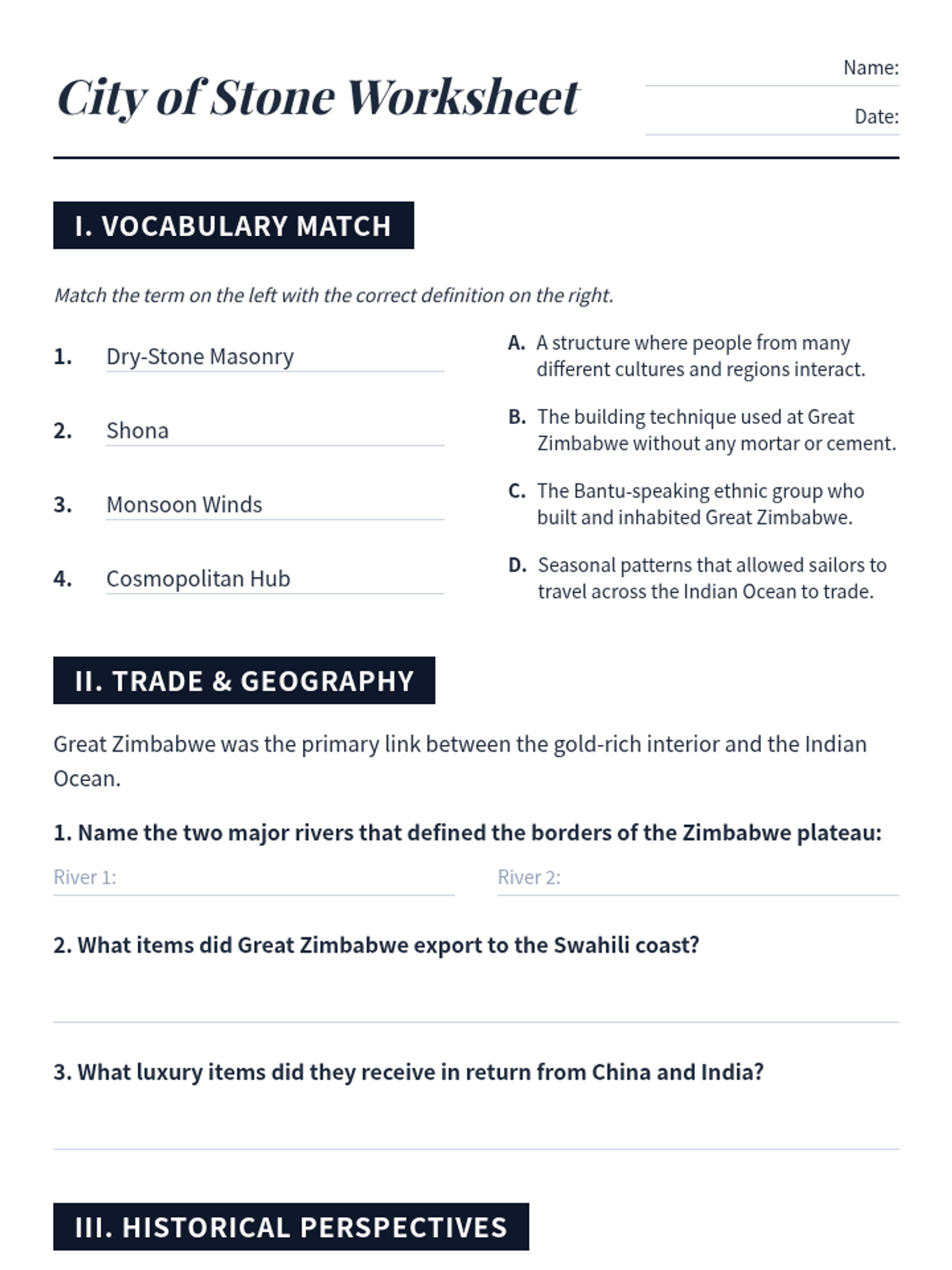
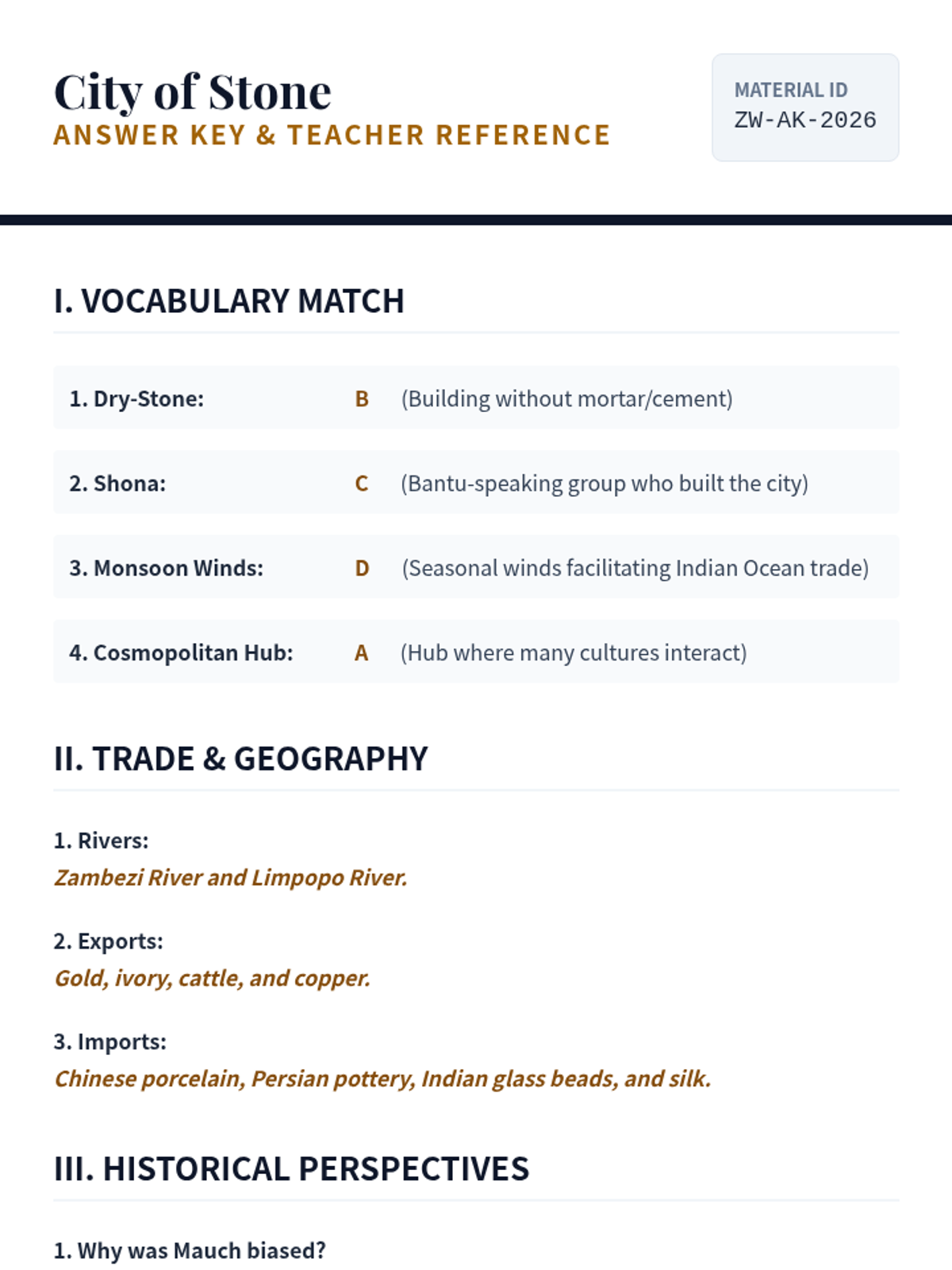
Students investigate the architectural mystery and economic power of Great Zimbabwe, analyzing archaeological evidence to debunk colonial-era myths about African civilizations.
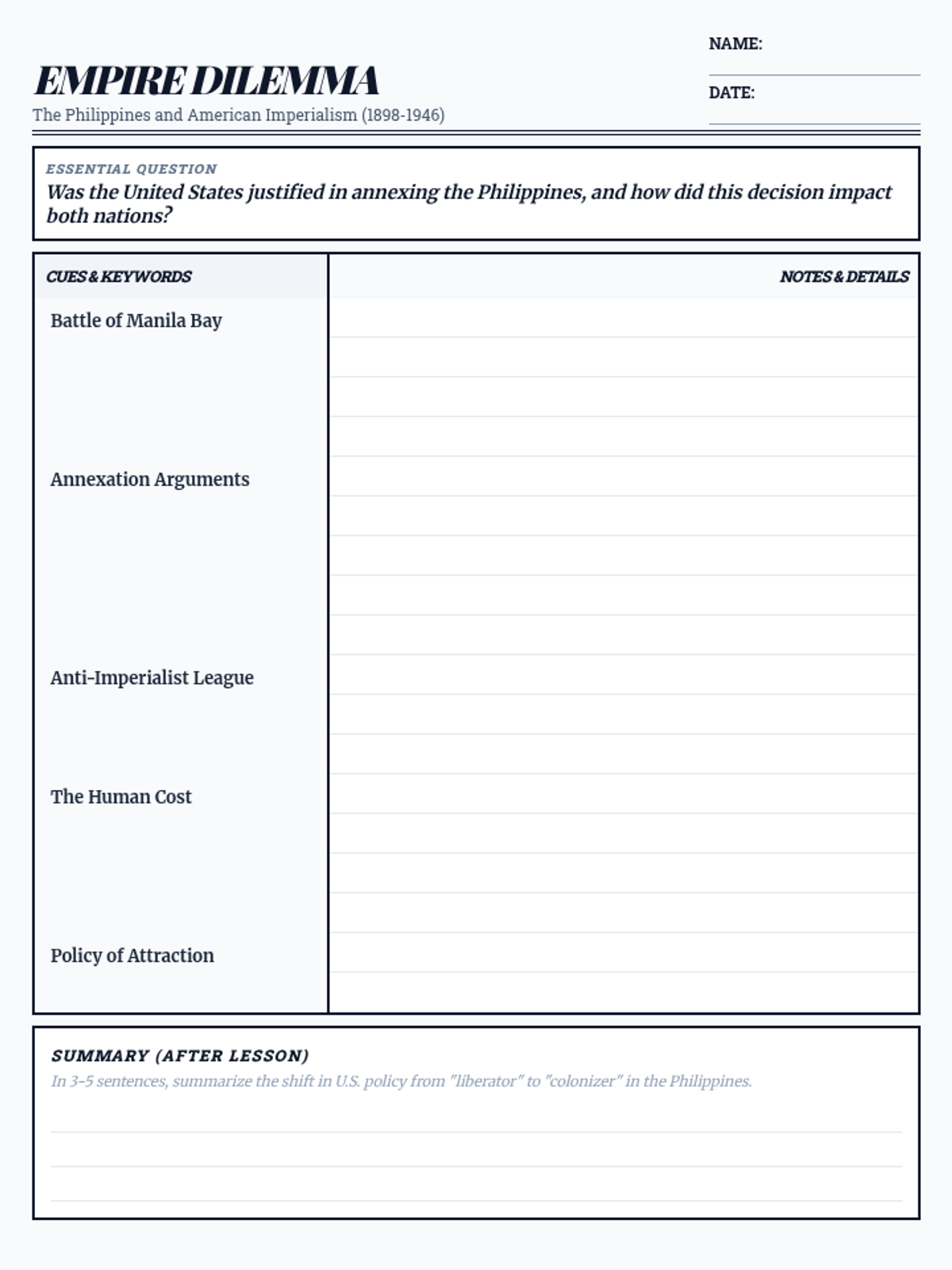
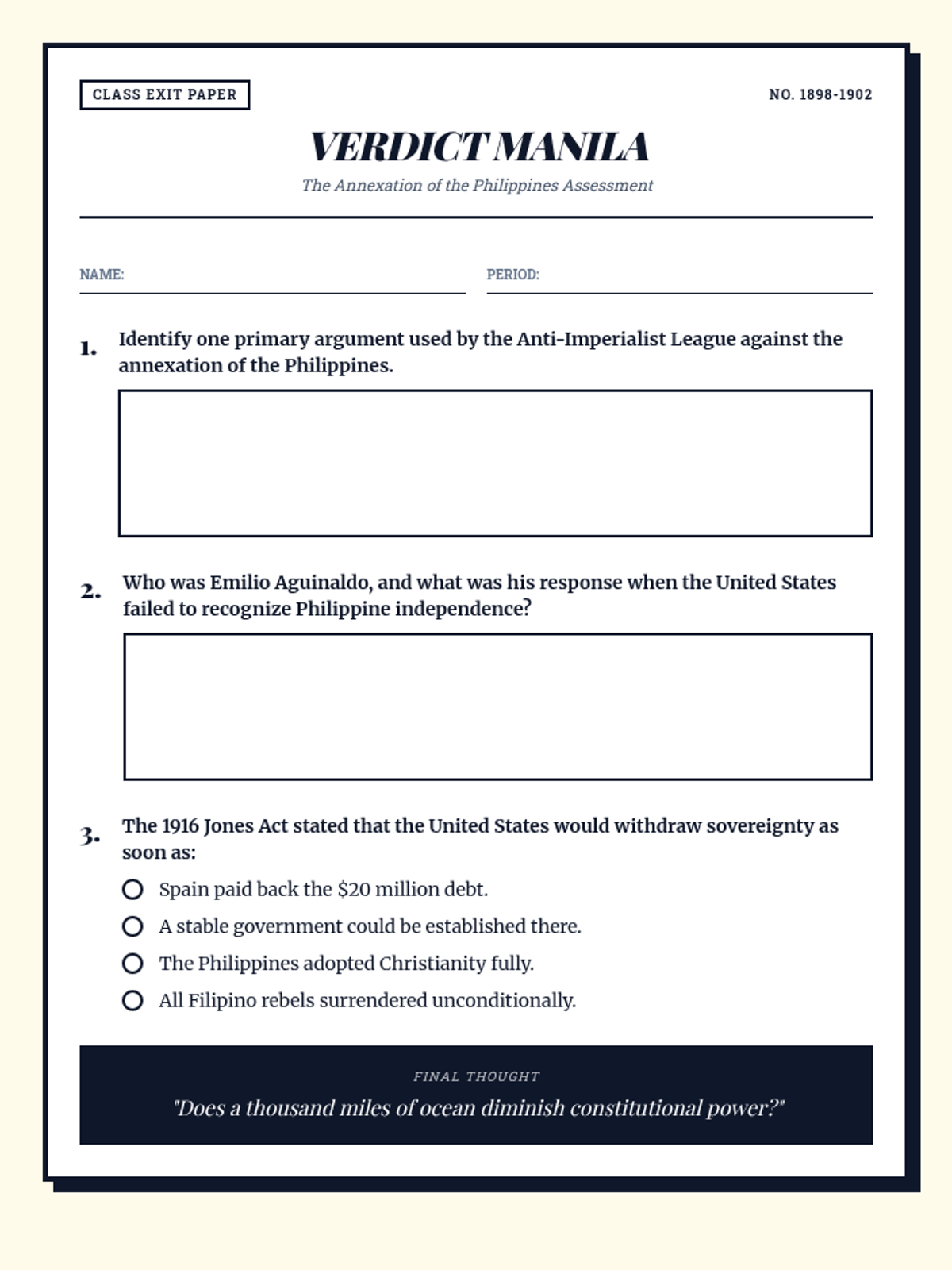
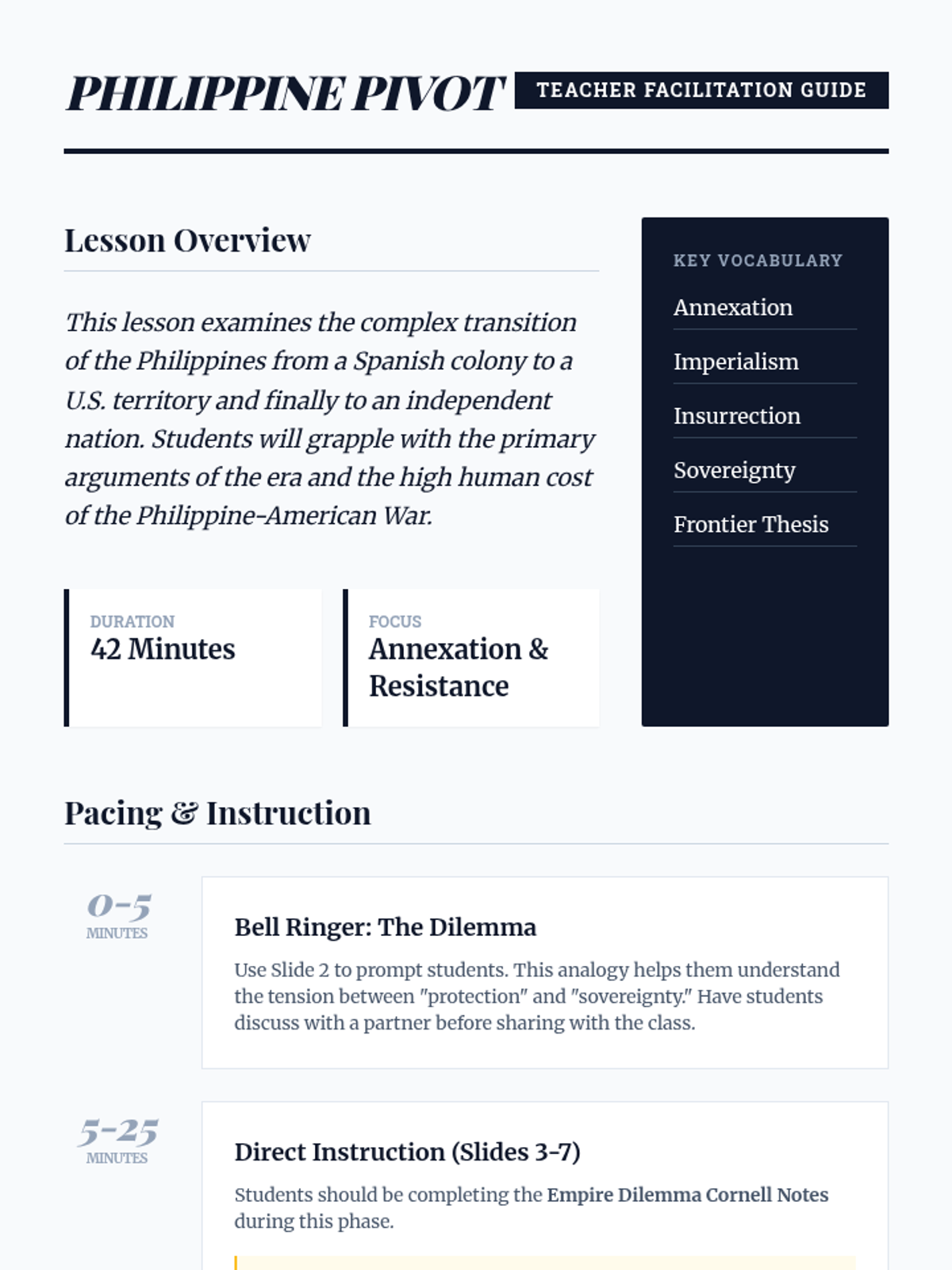
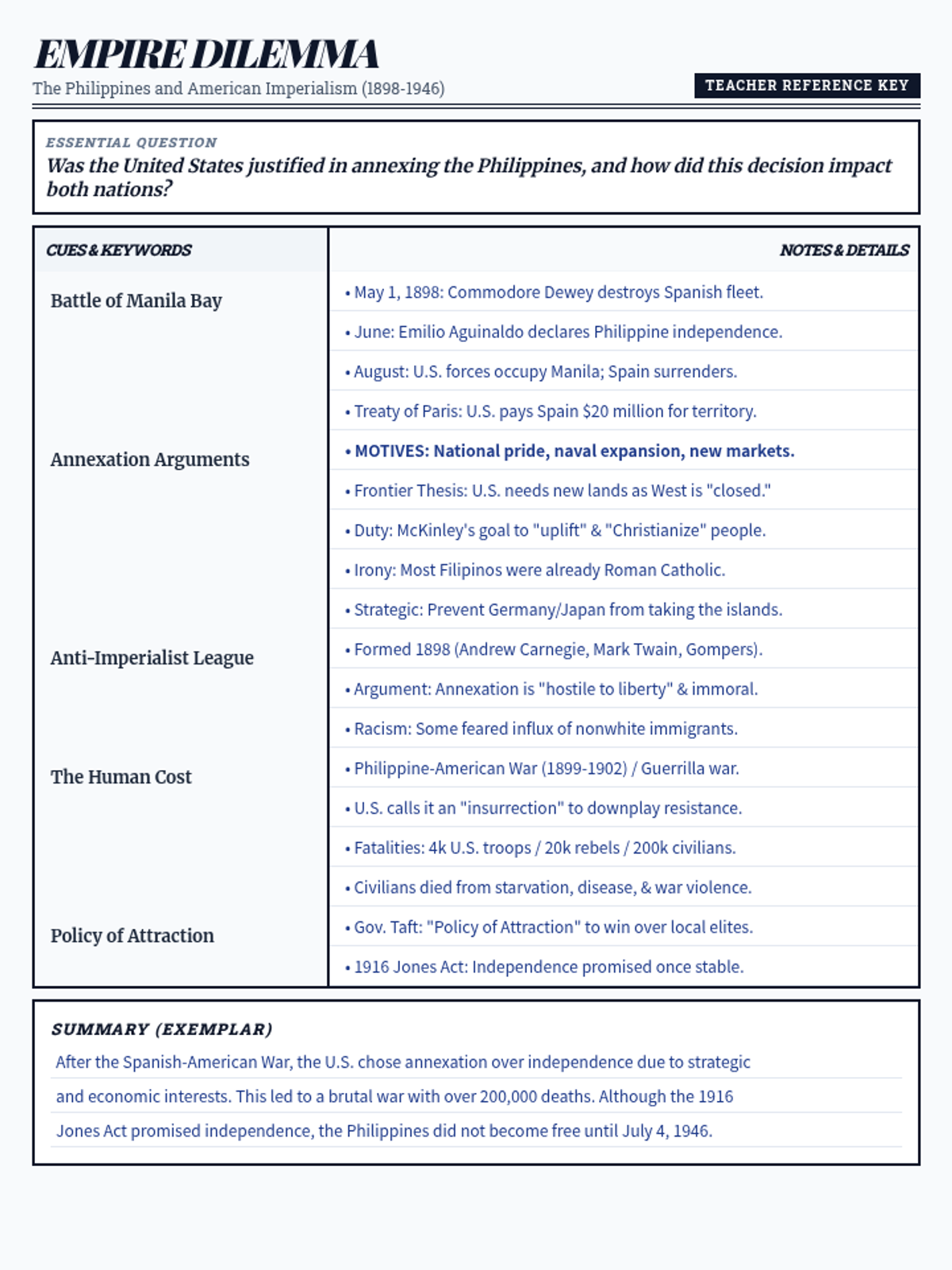
A 42-minute lesson exploring the annexation of the Philippines, the arguments for and against American imperialism, and the resulting Philippine-American War.
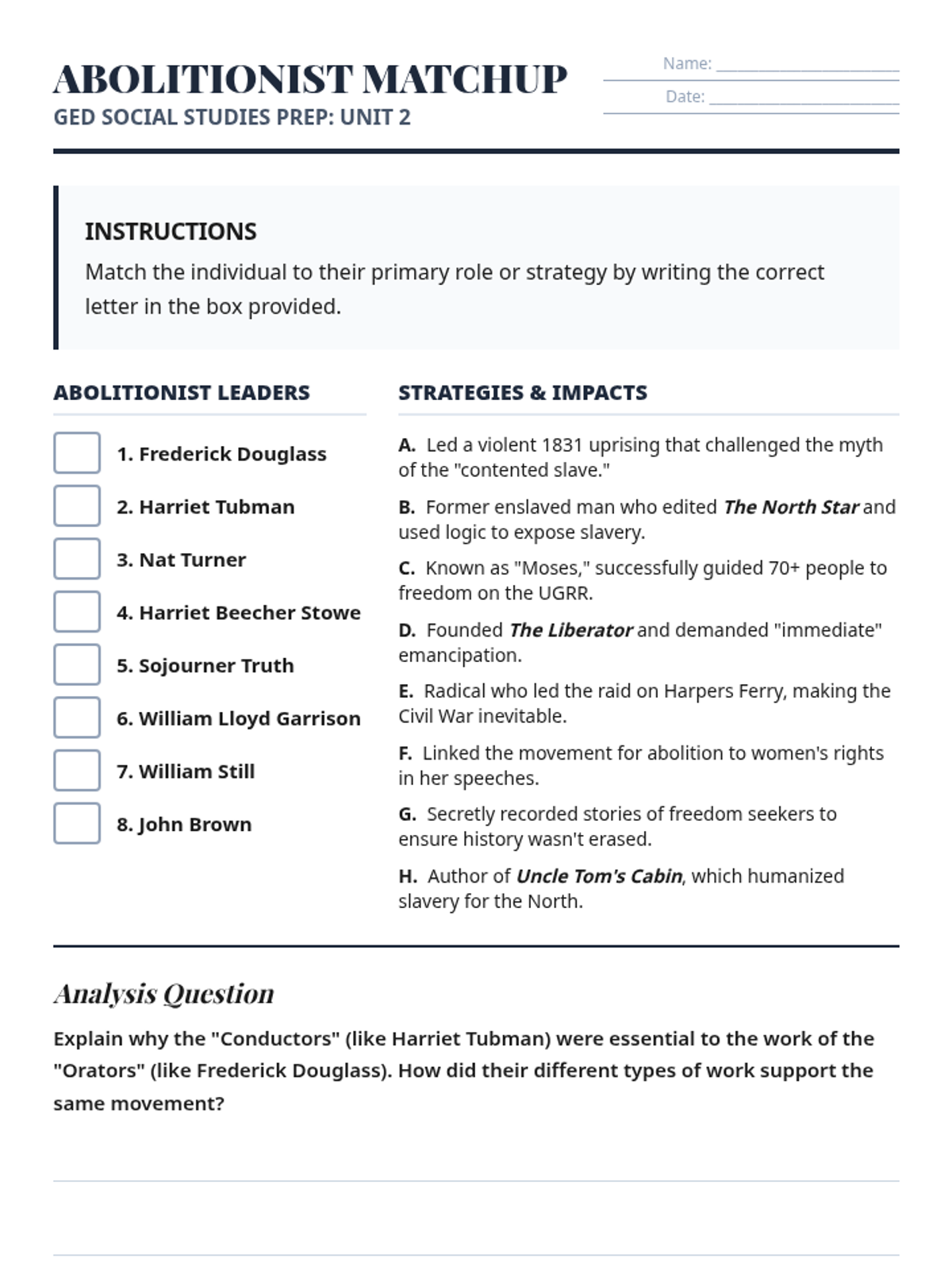
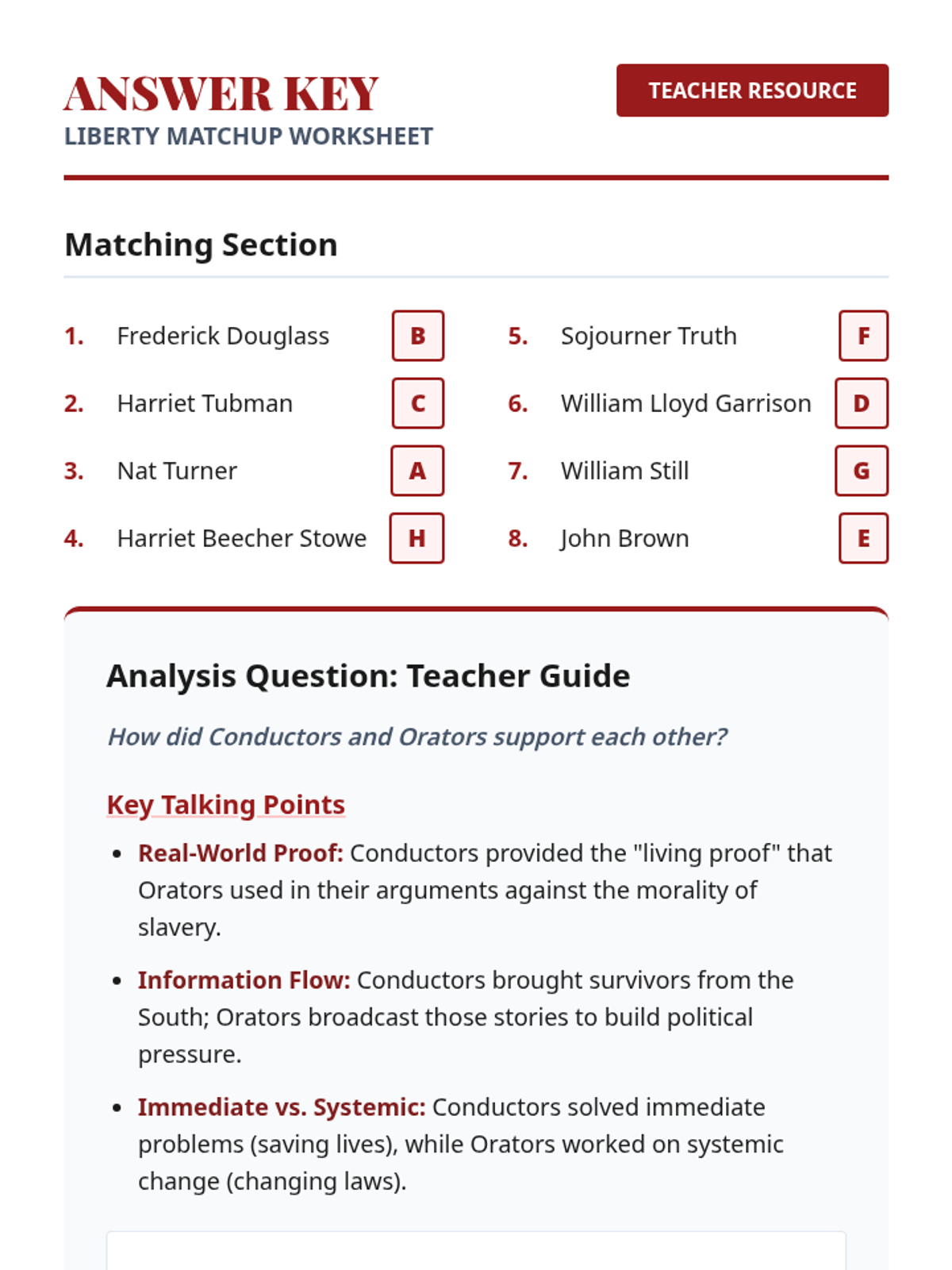
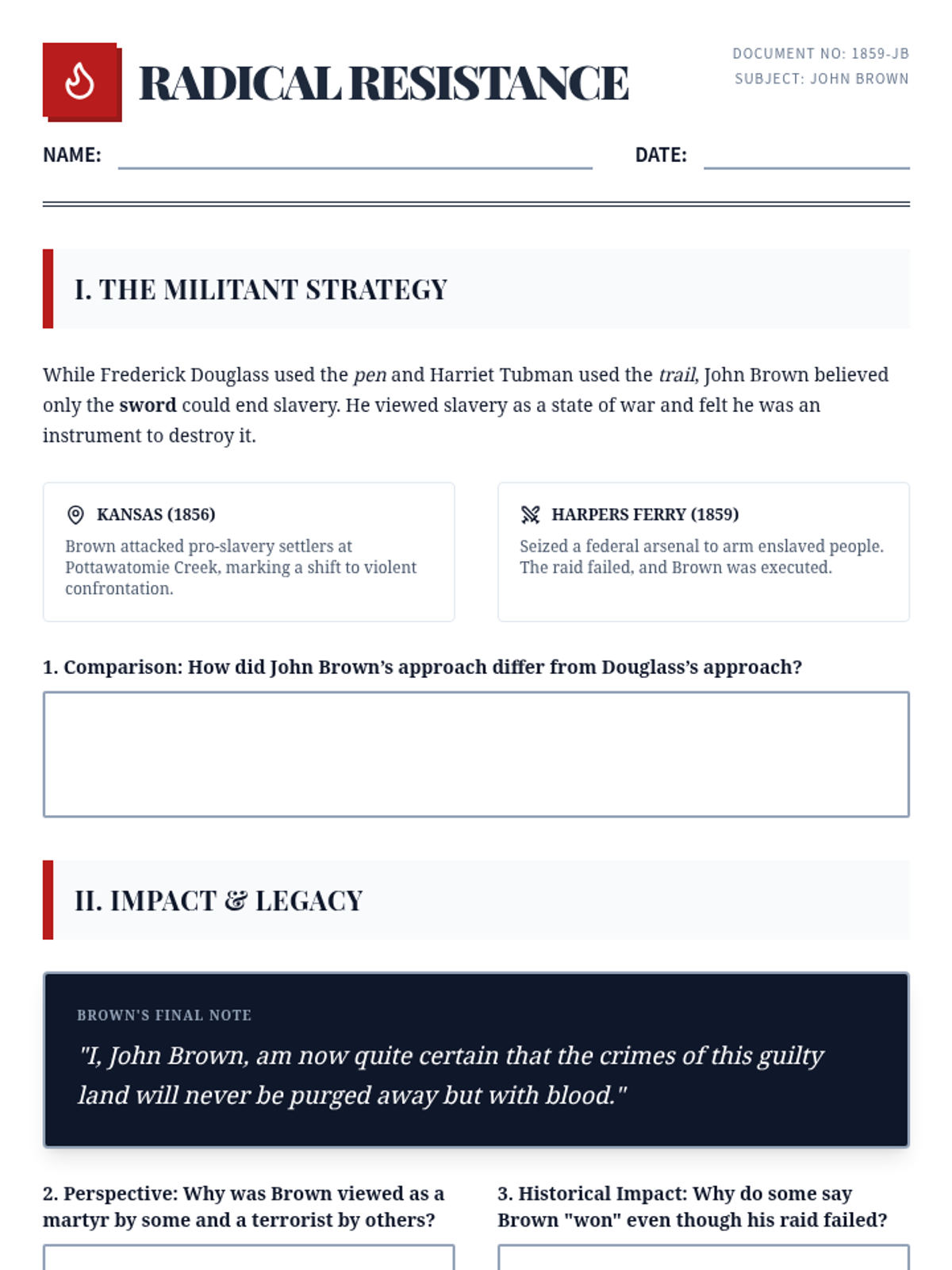
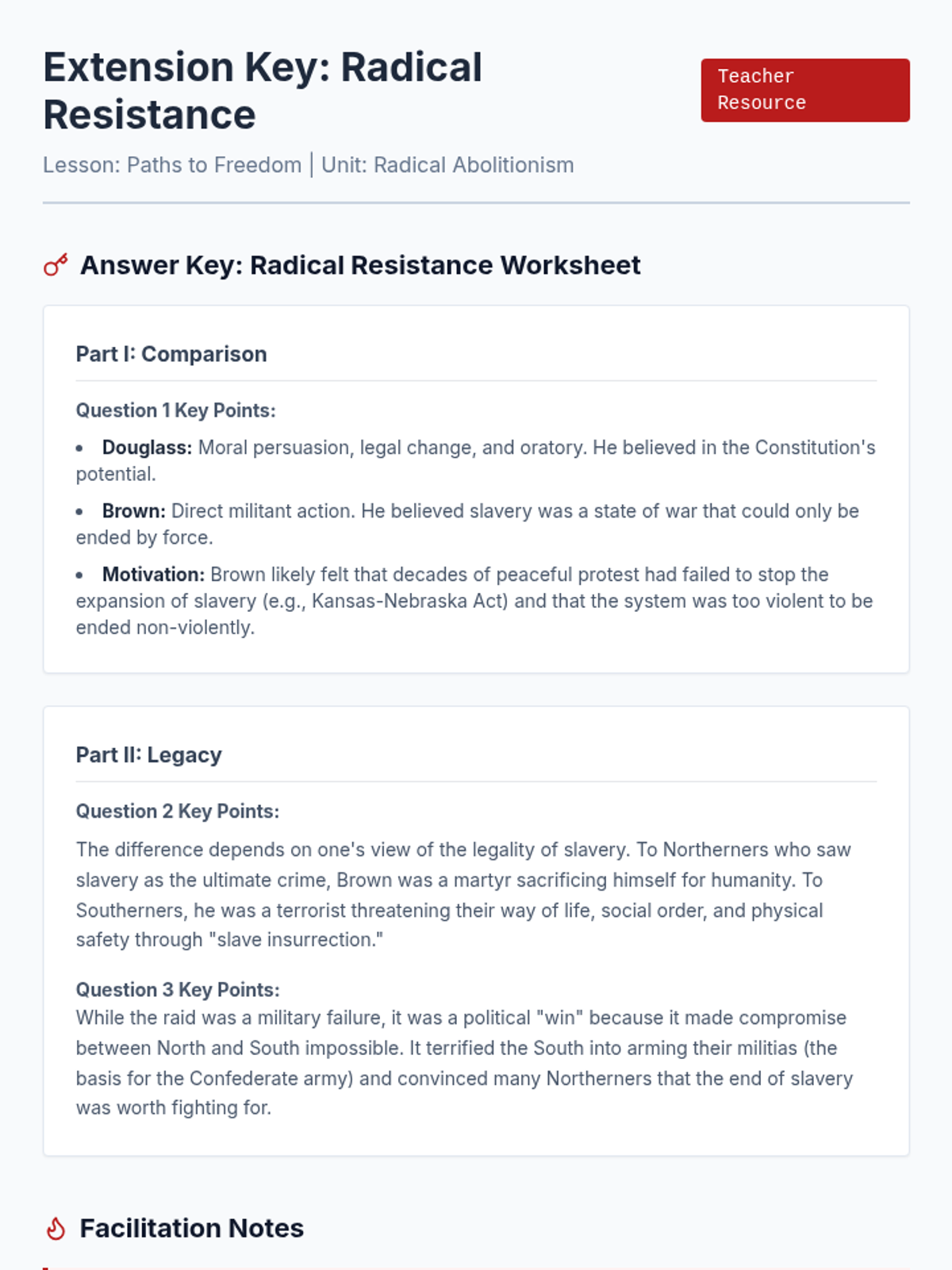
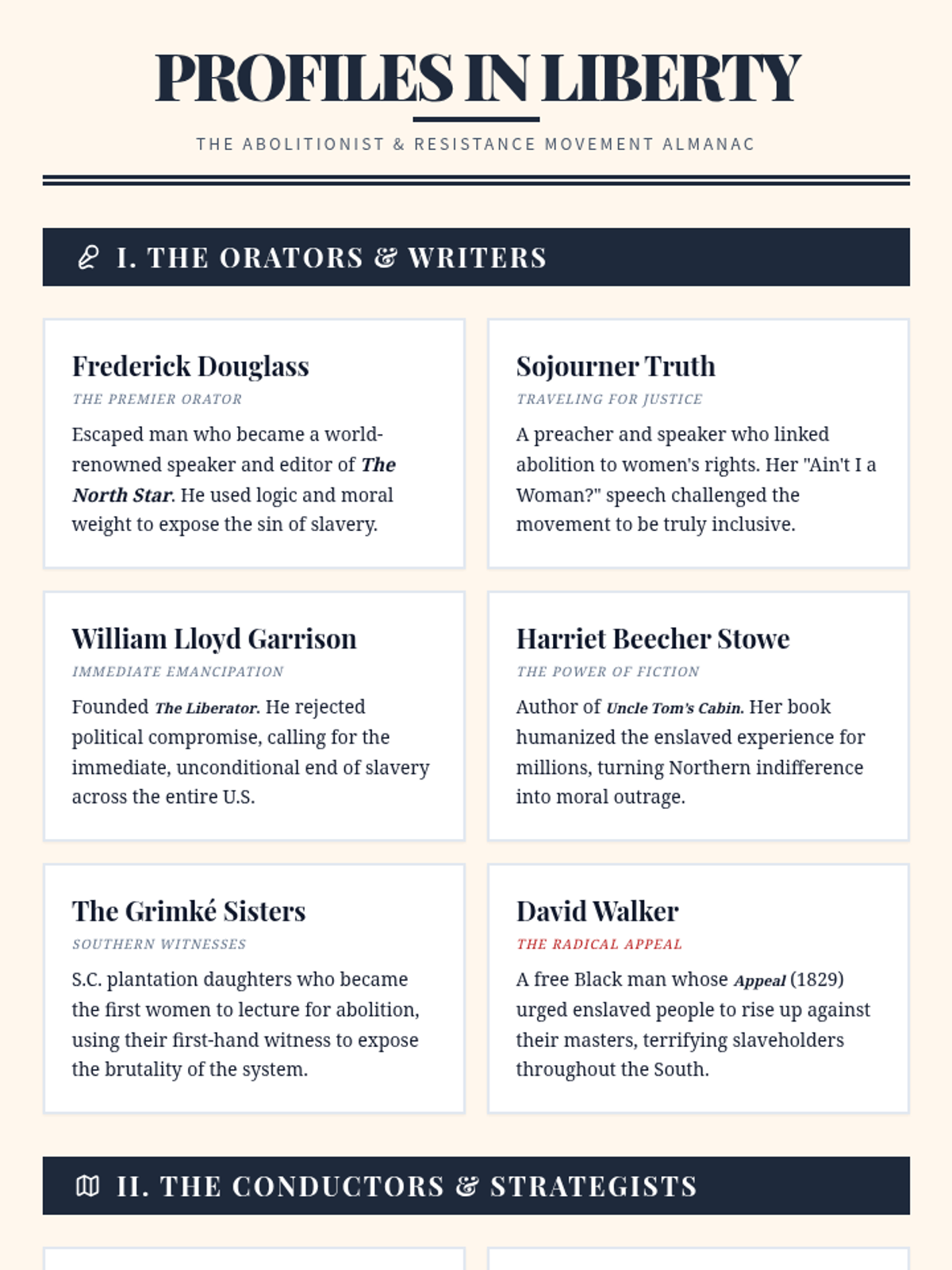
A comprehensive study of key figures in the abolitionist movement, categorized by their methods of resistance: oratory, strategy, and militant action. Designed specifically for GED Social Studies preparation.
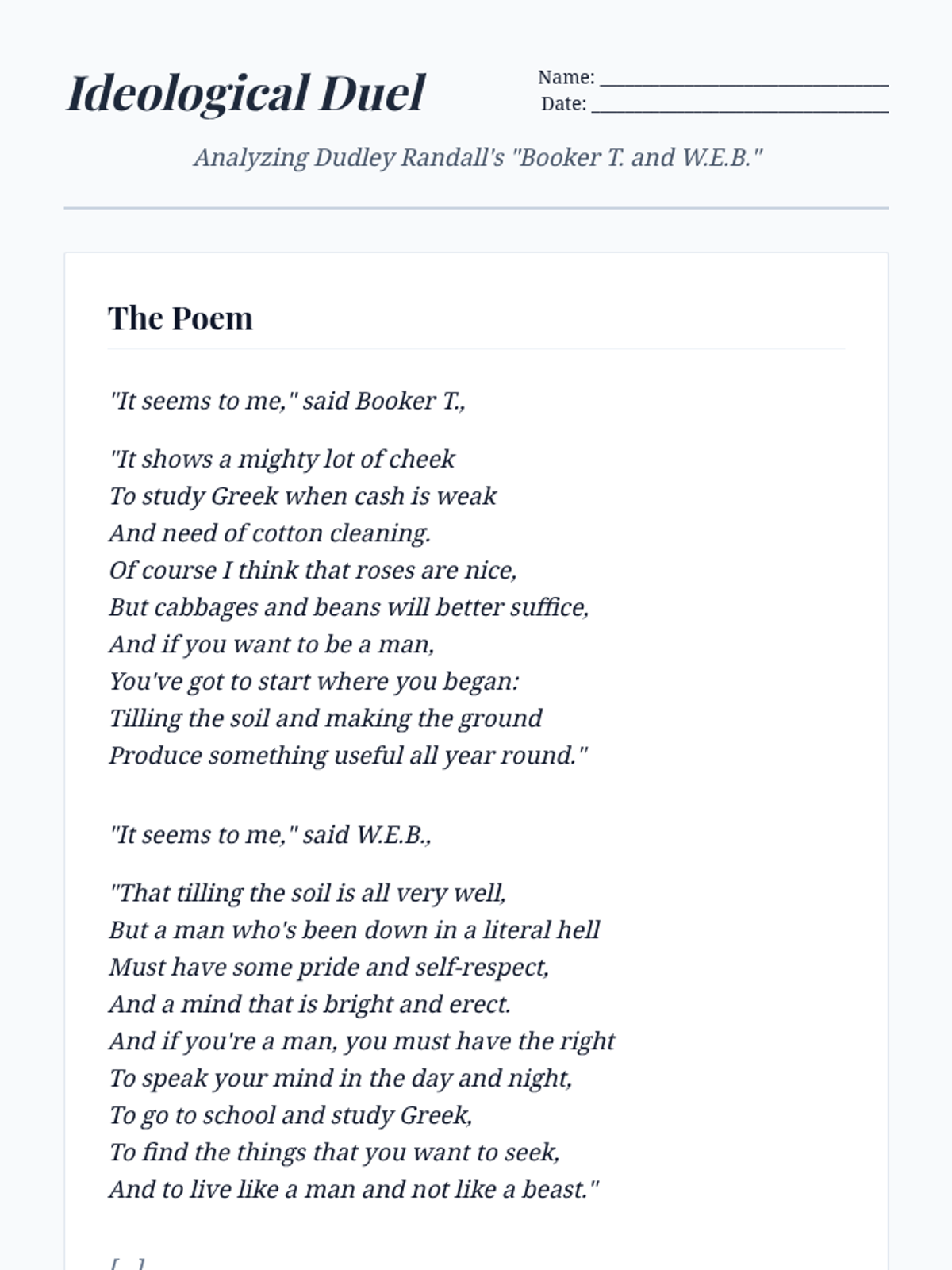
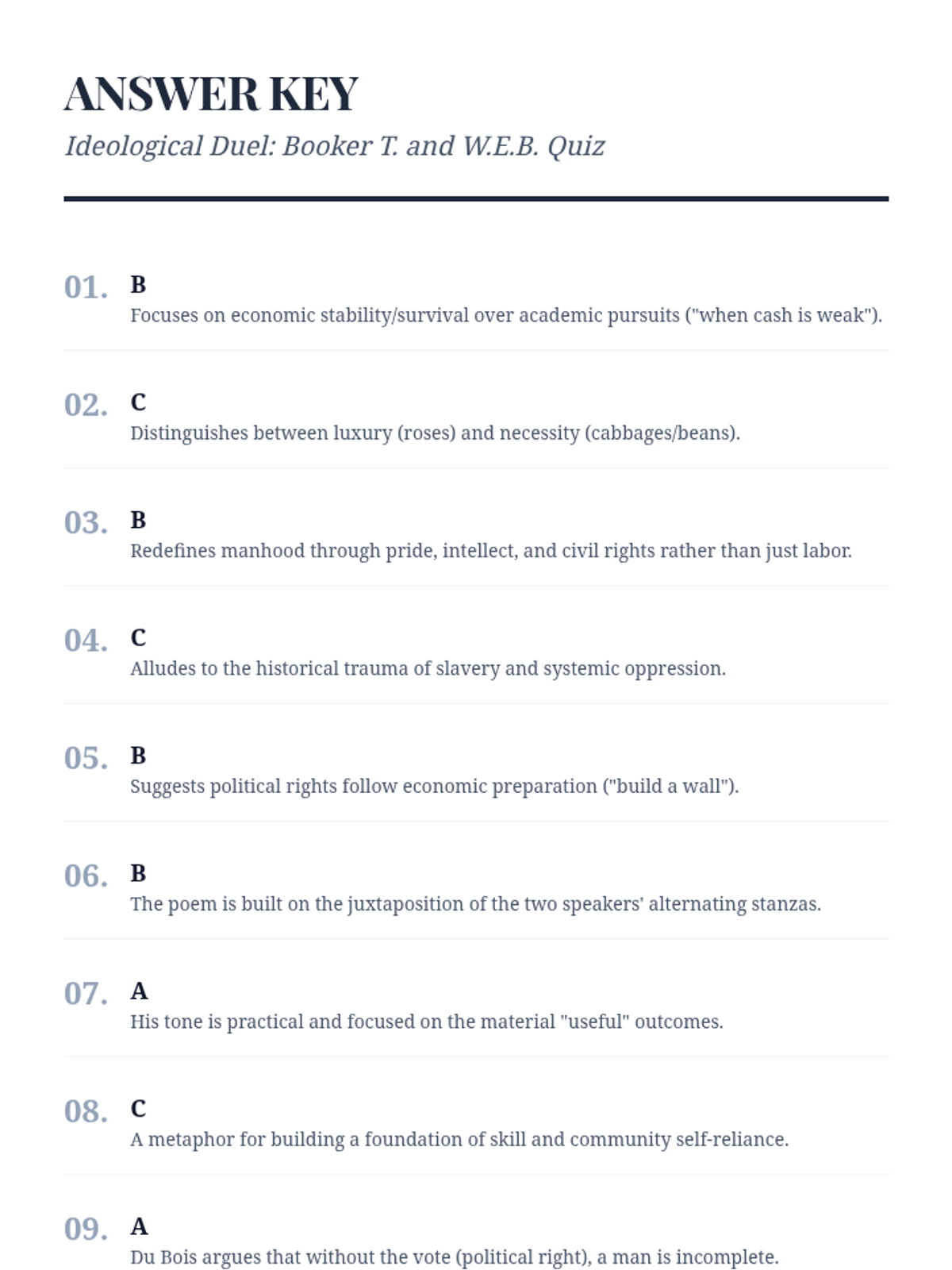
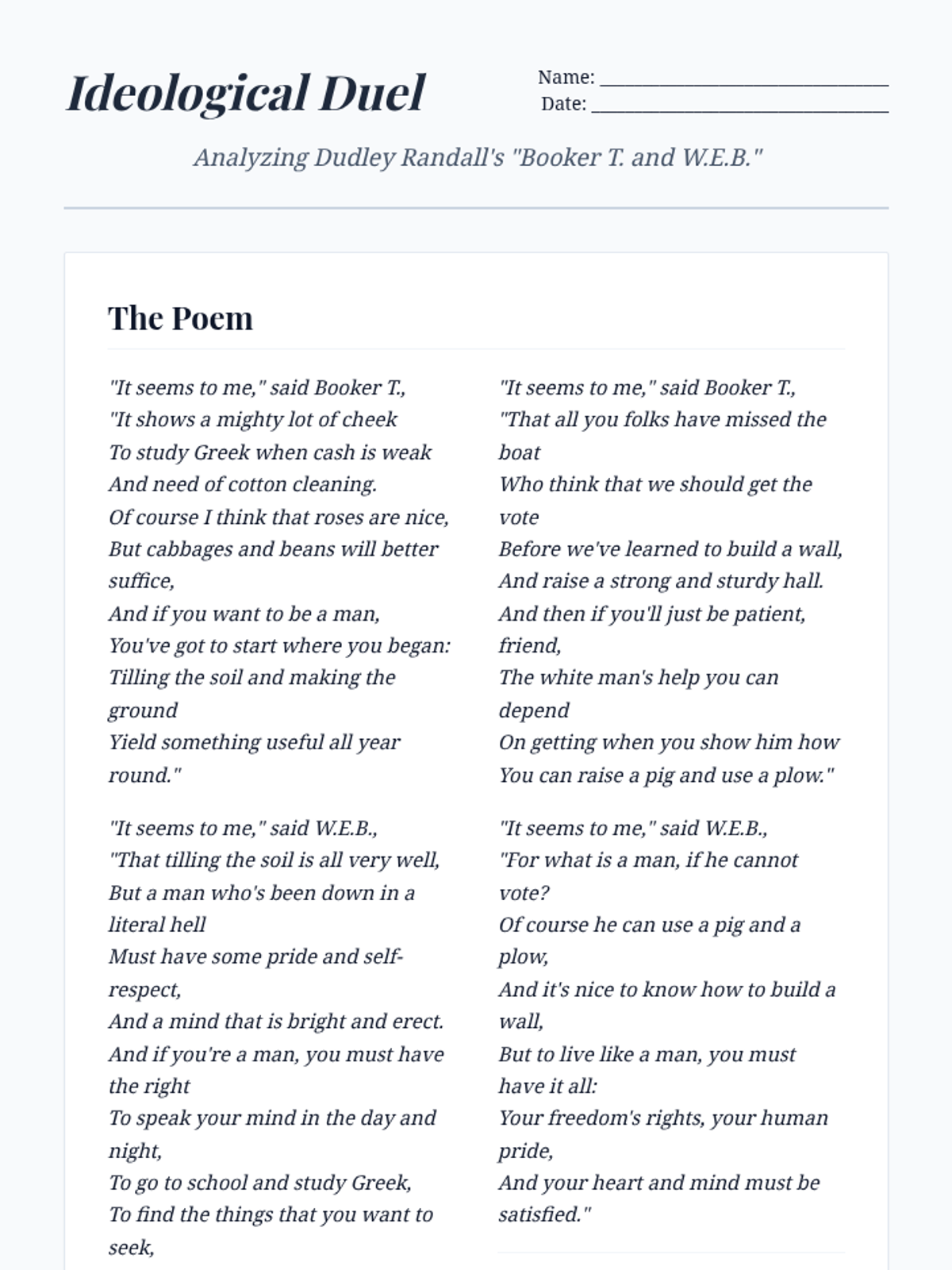
This lesson explores the conflicting philosophies of Booker T. Washington and W.E.B. Du Bois as portrayed in Dudley Randall's poem 'Booker T. and W.E.B.' Students will analyze the poem's use of dialogue and imagery to understand the early 20th-century civil rights debate.
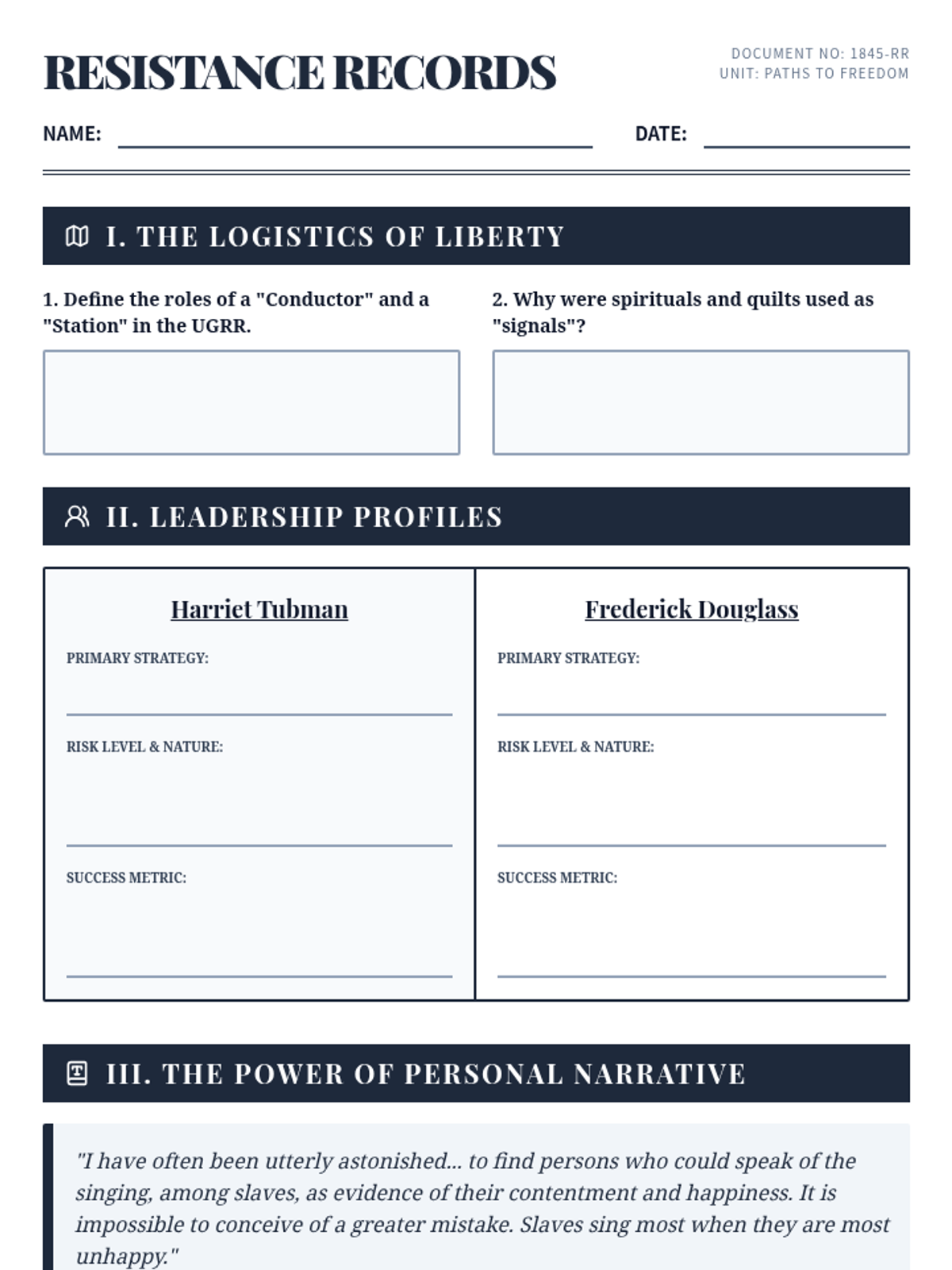
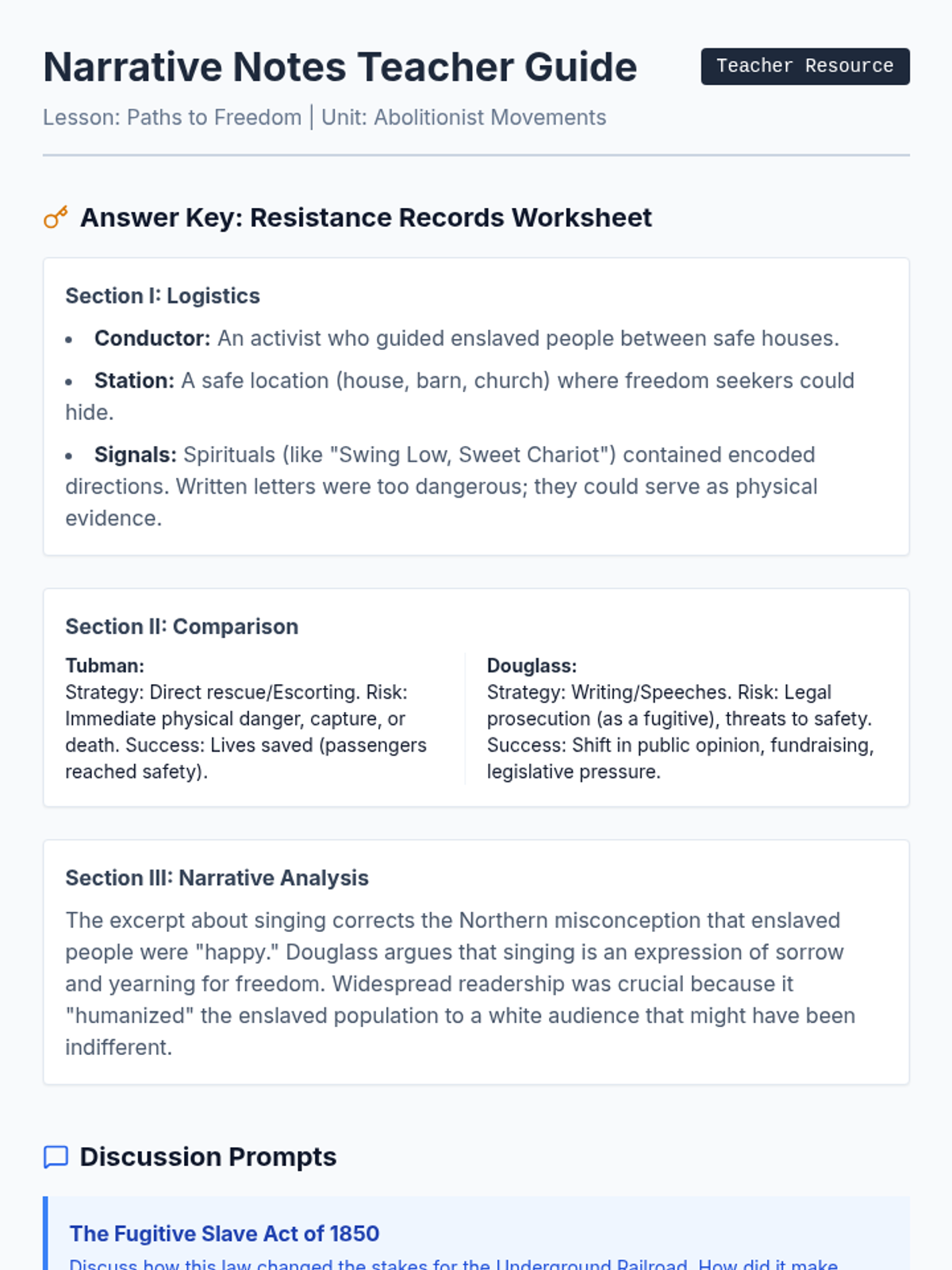
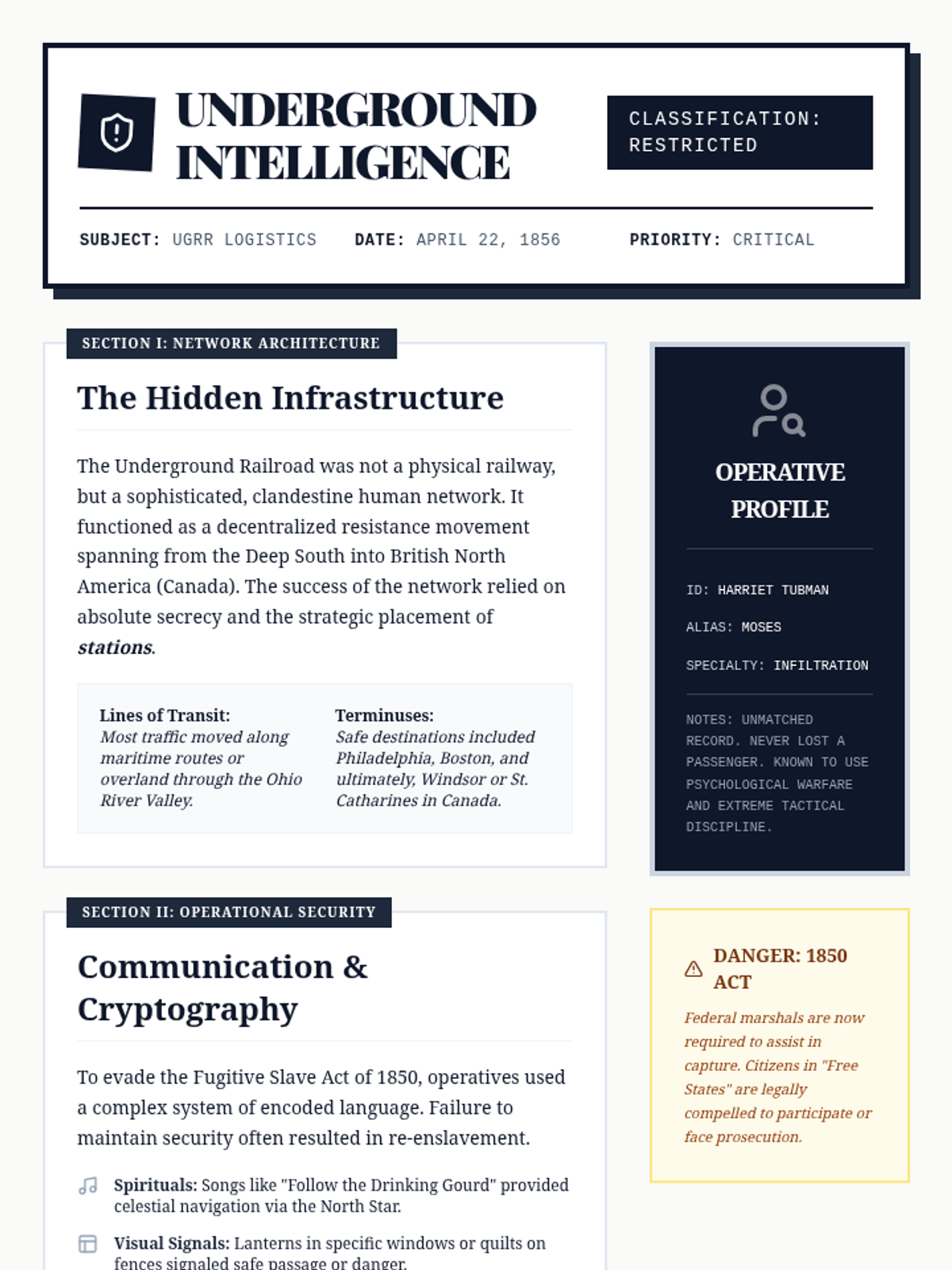
A comprehensive exploration of the Underground Railroad, comparing the leadership styles of Harriet Tubman and Frederick Douglass, and analyzing the impact of abolitionist literature.
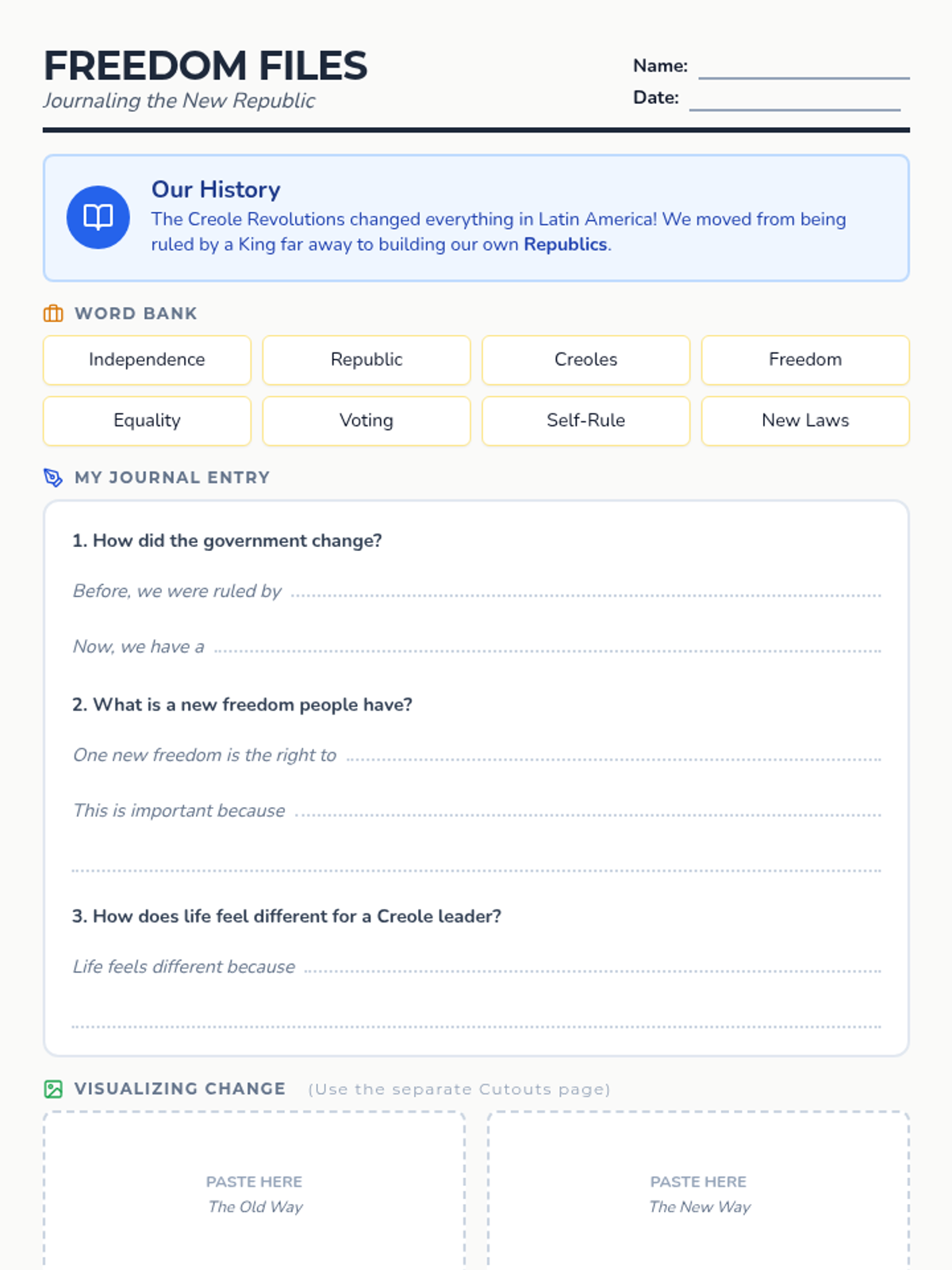
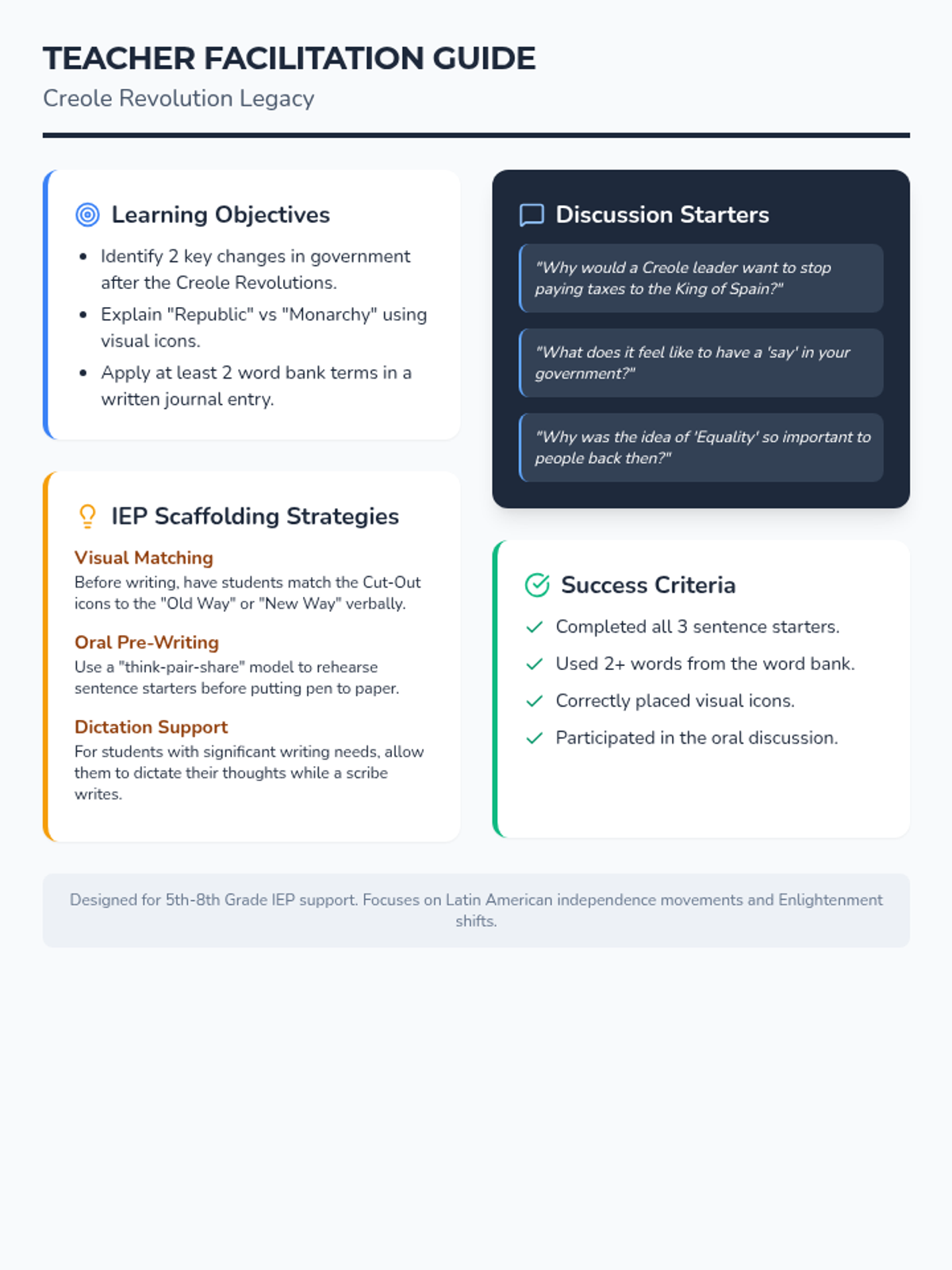
This lesson explores the social and political transformations following the Creole Revolutions in Latin America, specifically designed with scaffolds for IEP students to express their understanding of new freedoms and government structures.
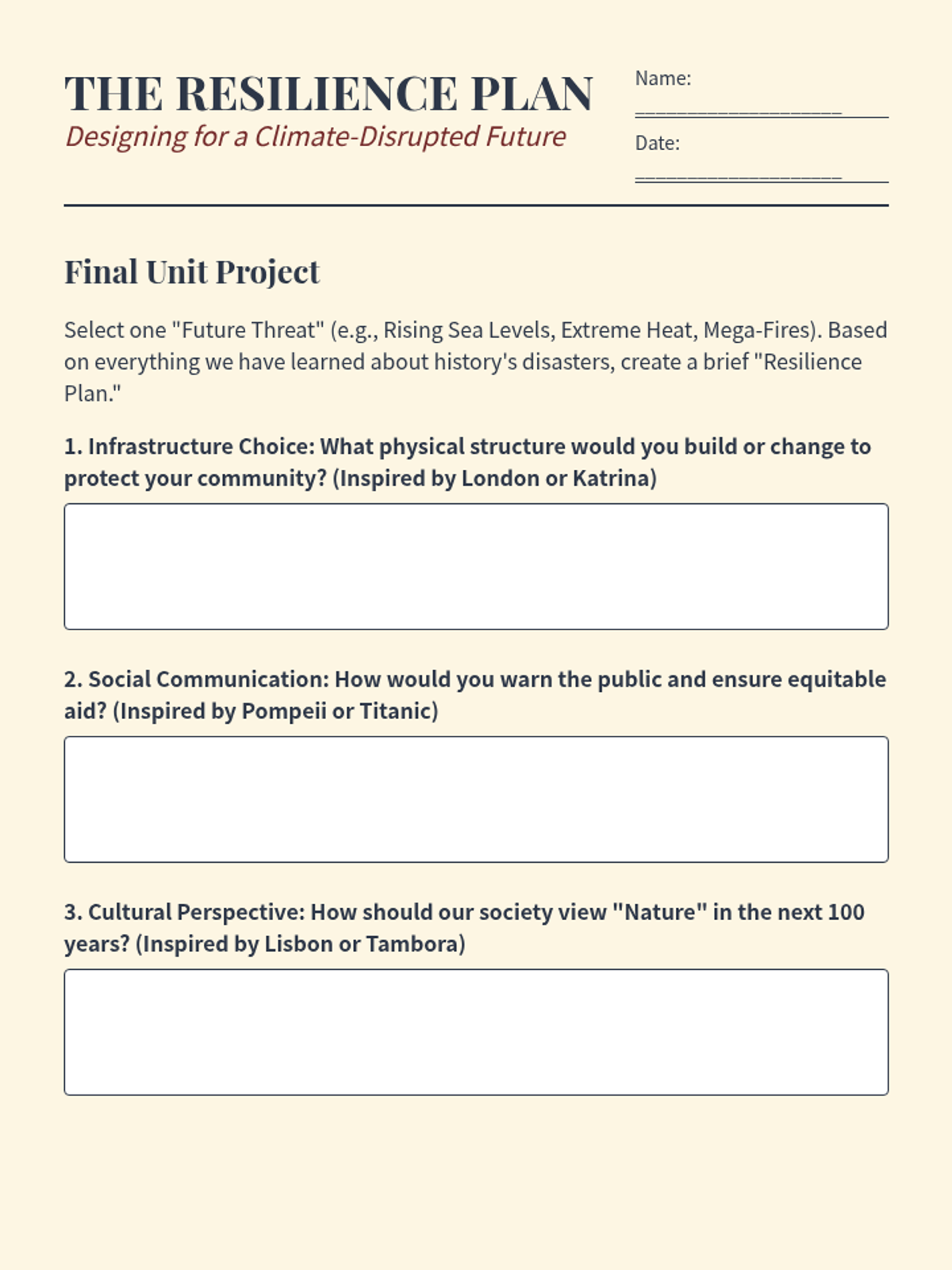
Synthesize the unit by looking at modern climate-related disasters and creating disaster management strategies for the future.
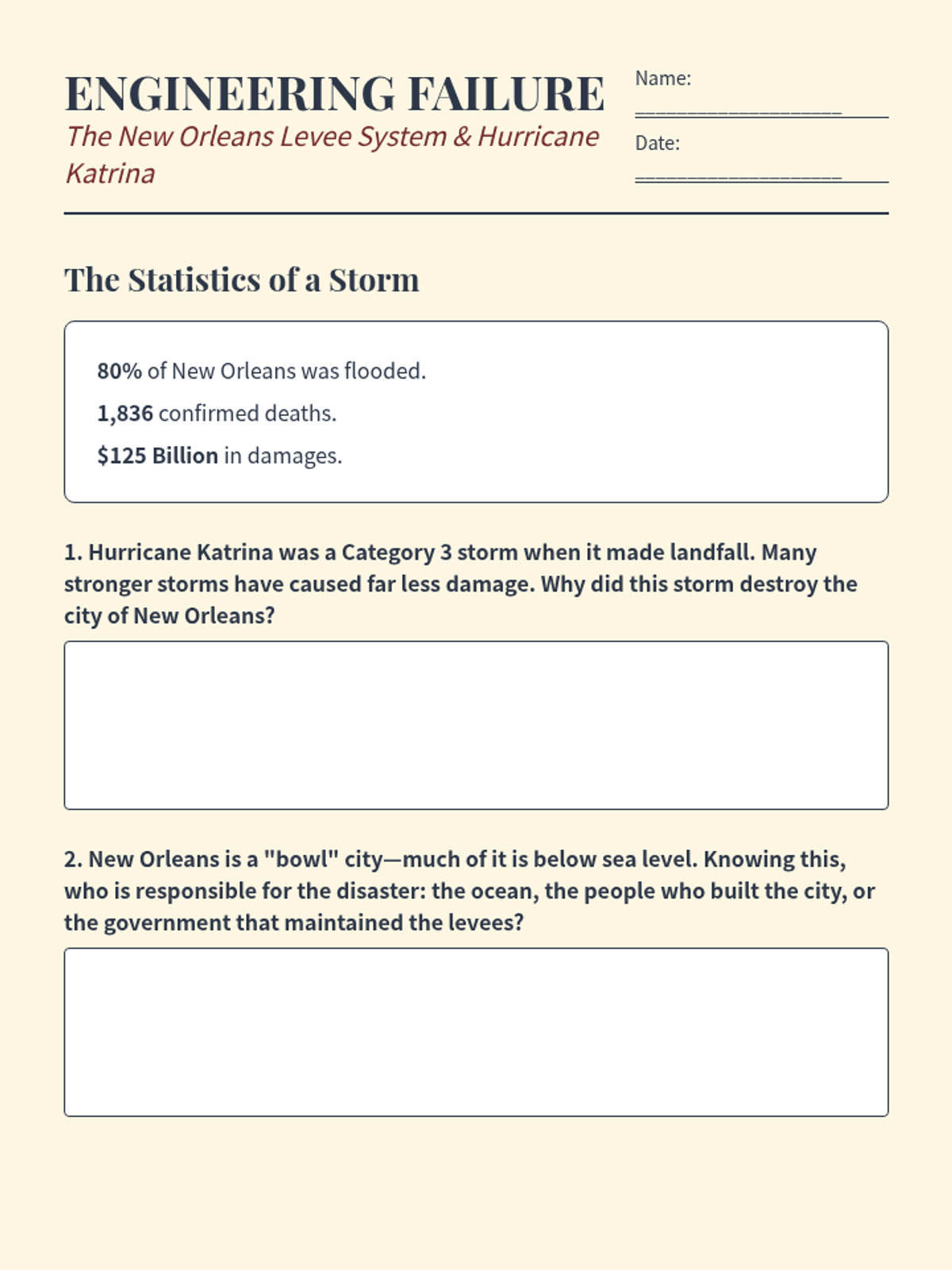
Investigate Hurricane Katrina (2005) as a disaster where natural force met infrastructure failure and socioeconomic inequality.
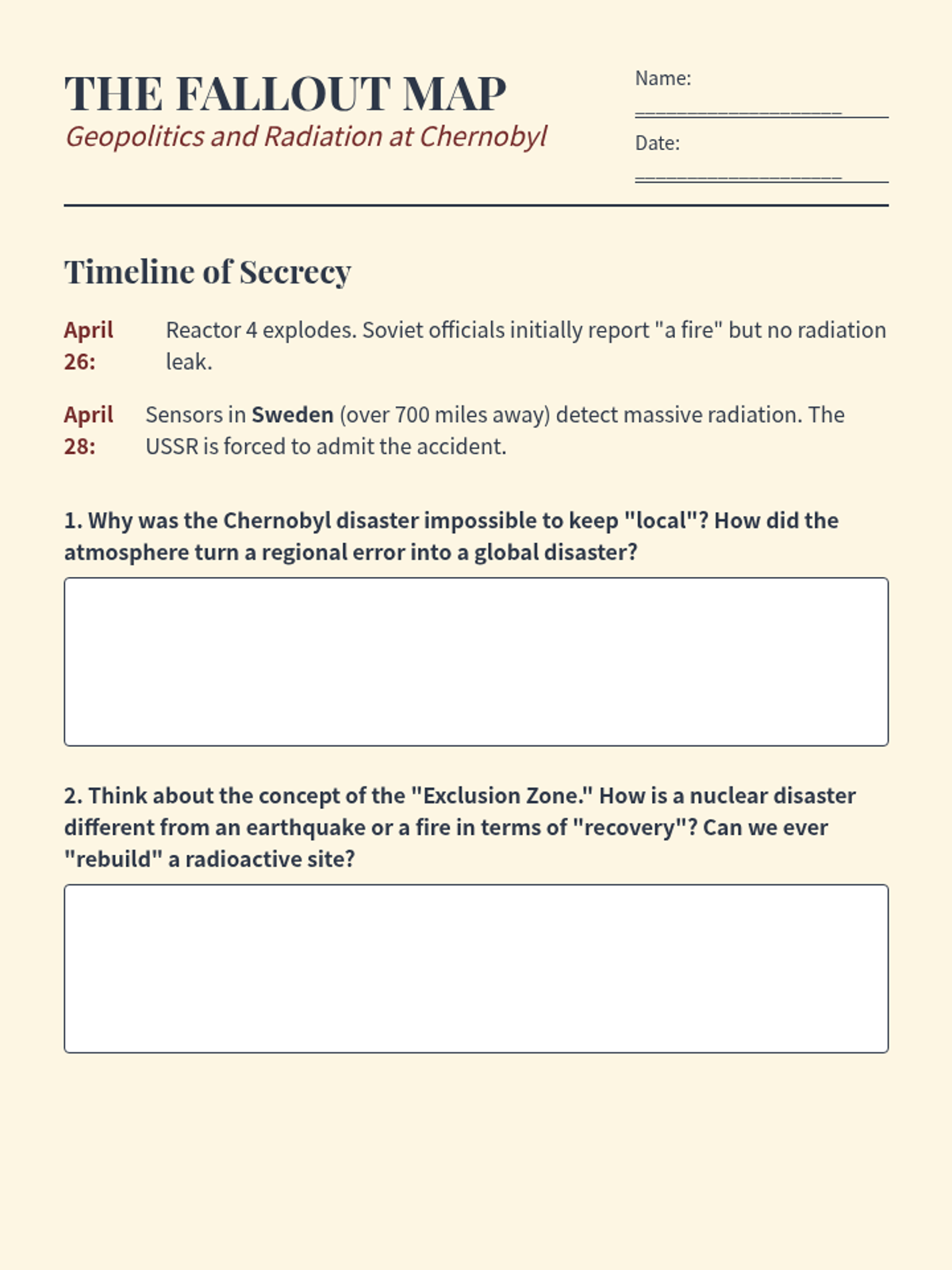
Examine the 1986 Chernobyl disaster as the quintessential man-made catastrophe, exploring the intersection of technology, secrecy, and environmental impact.
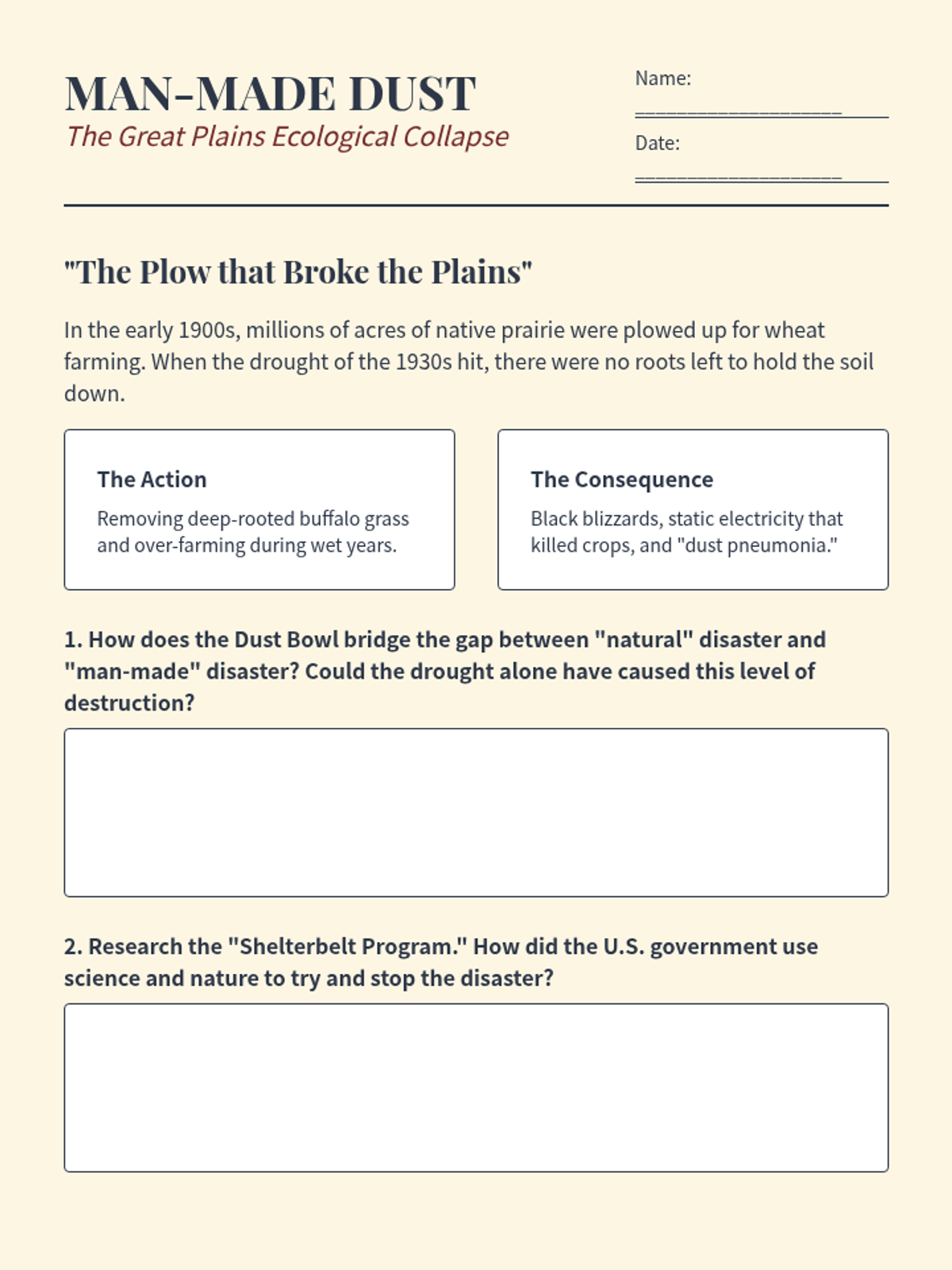
Study the 1930s Dust Bowl as an example of how human agricultural practices can turn a natural drought into an environmental and human catastrophe.