A concise review lesson connecting the concepts of division as equal groups and fractions as equal parts of a whole, including numerator and denominator definitions.
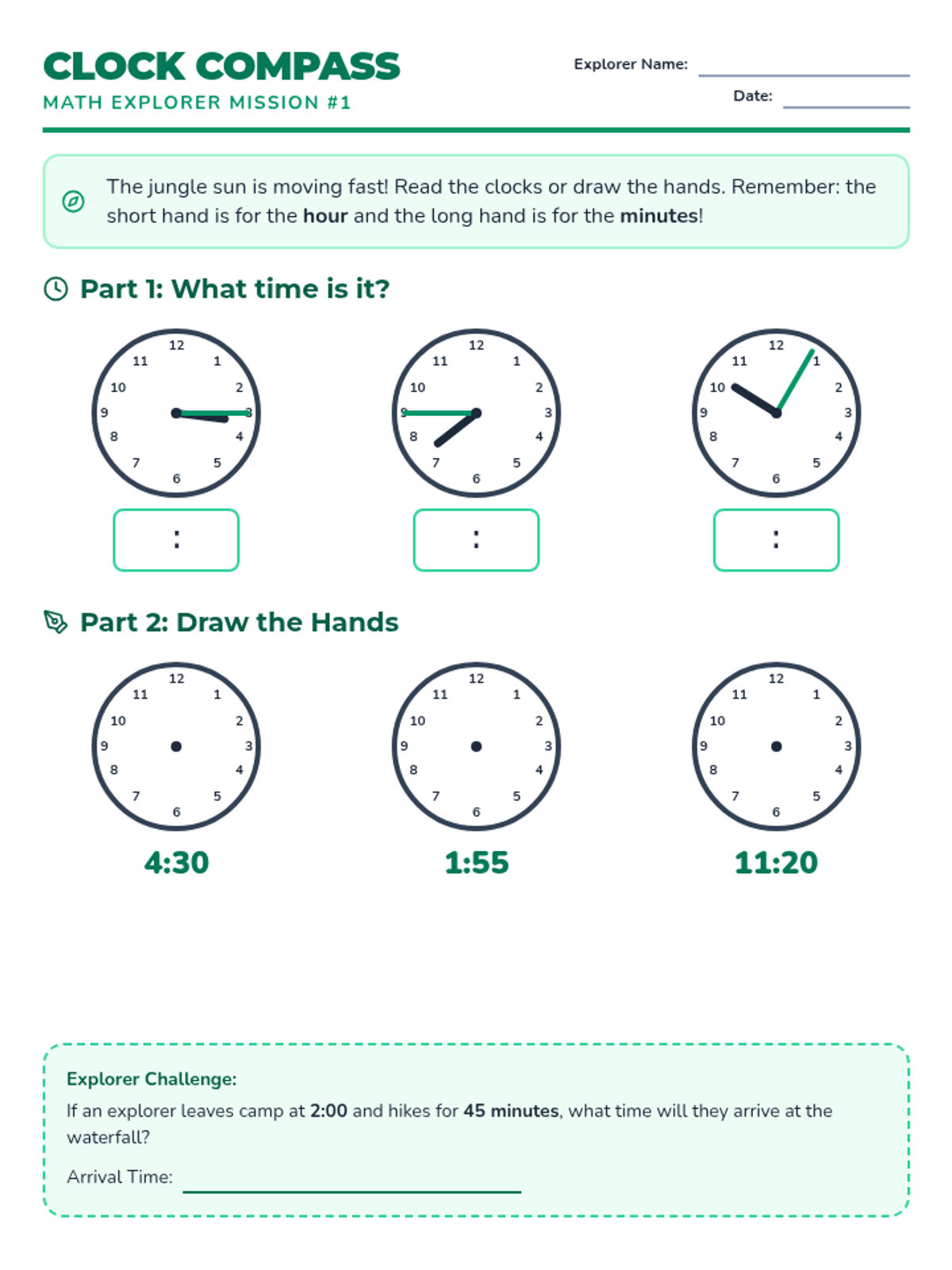
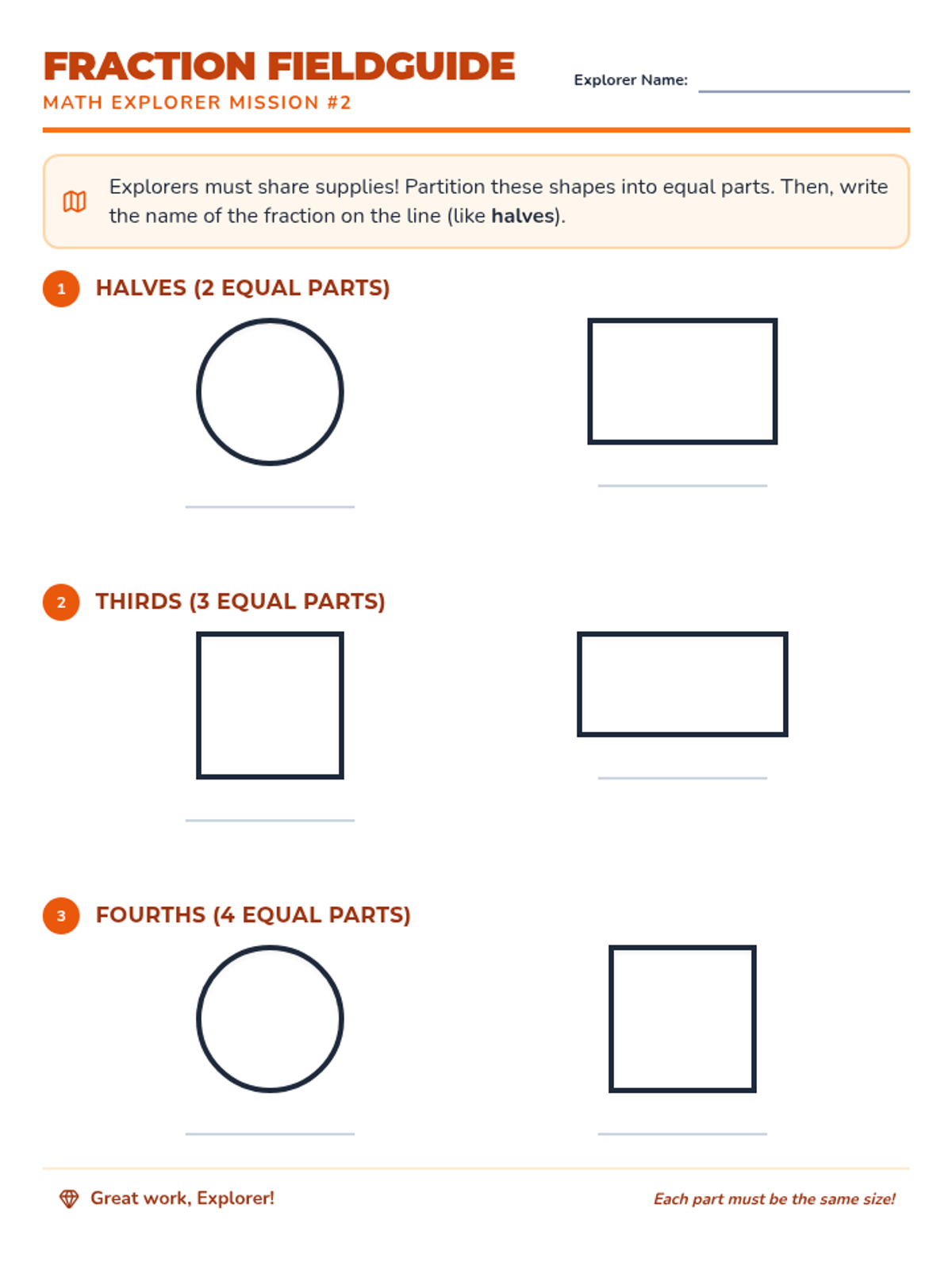
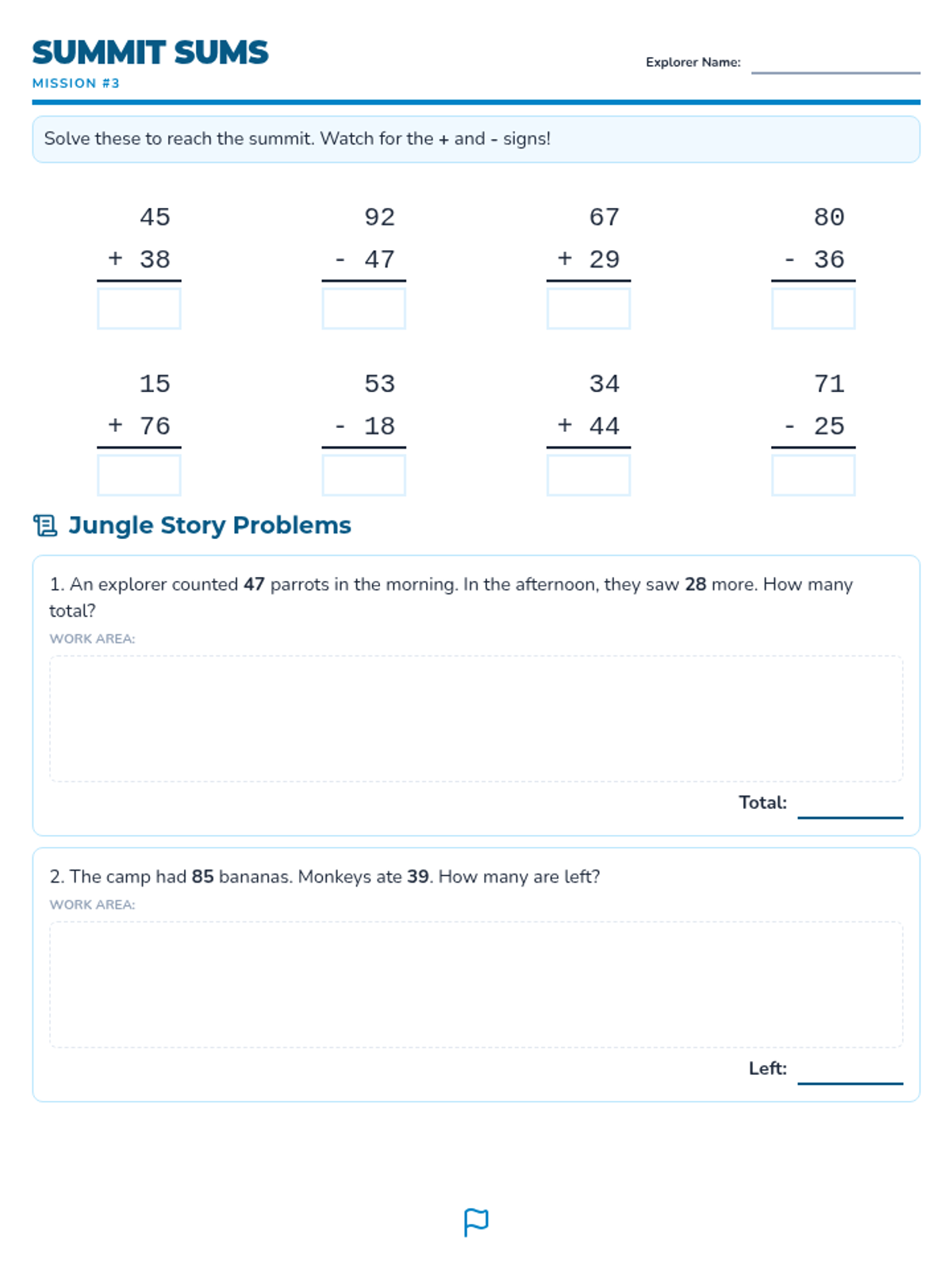
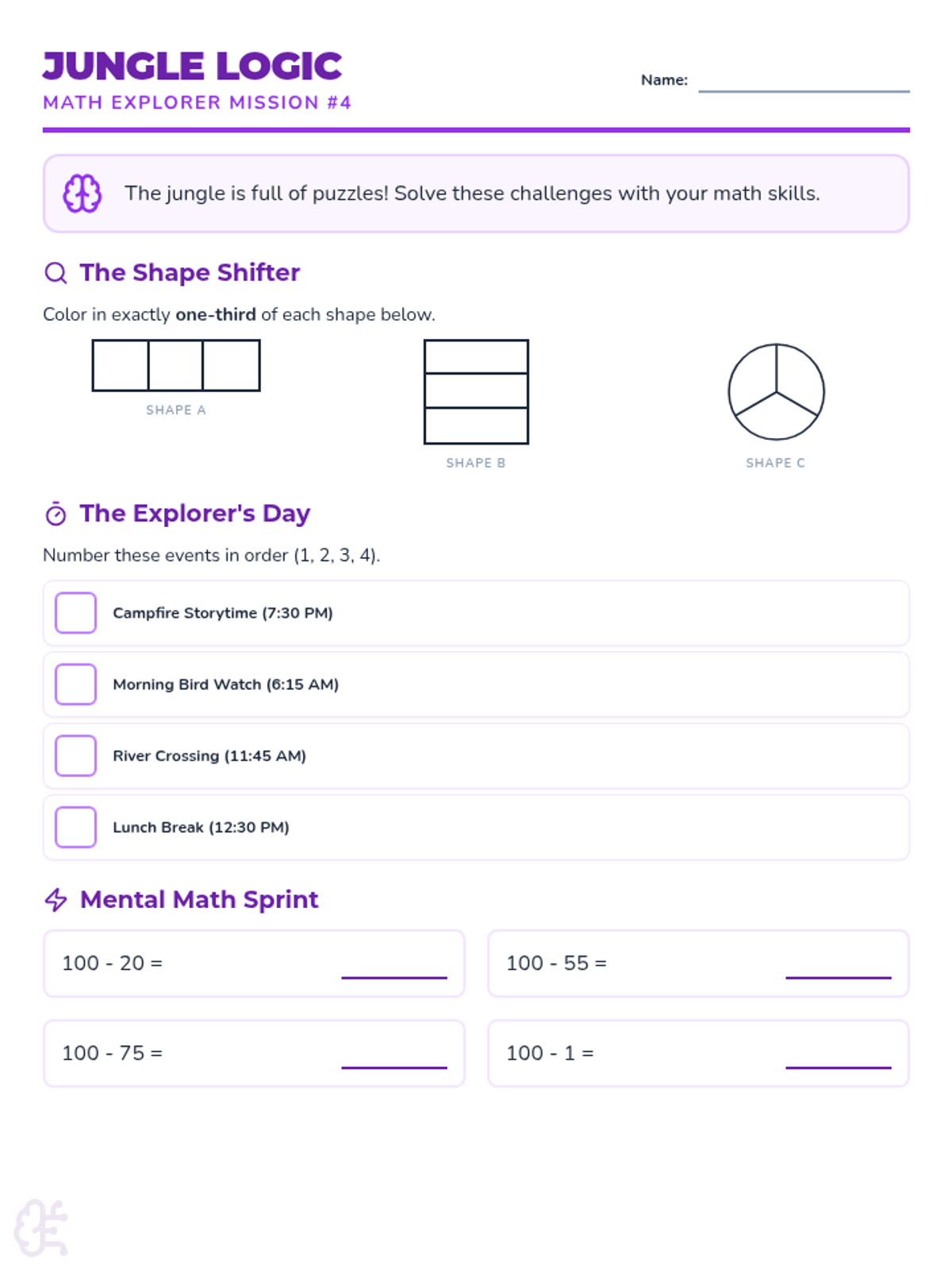
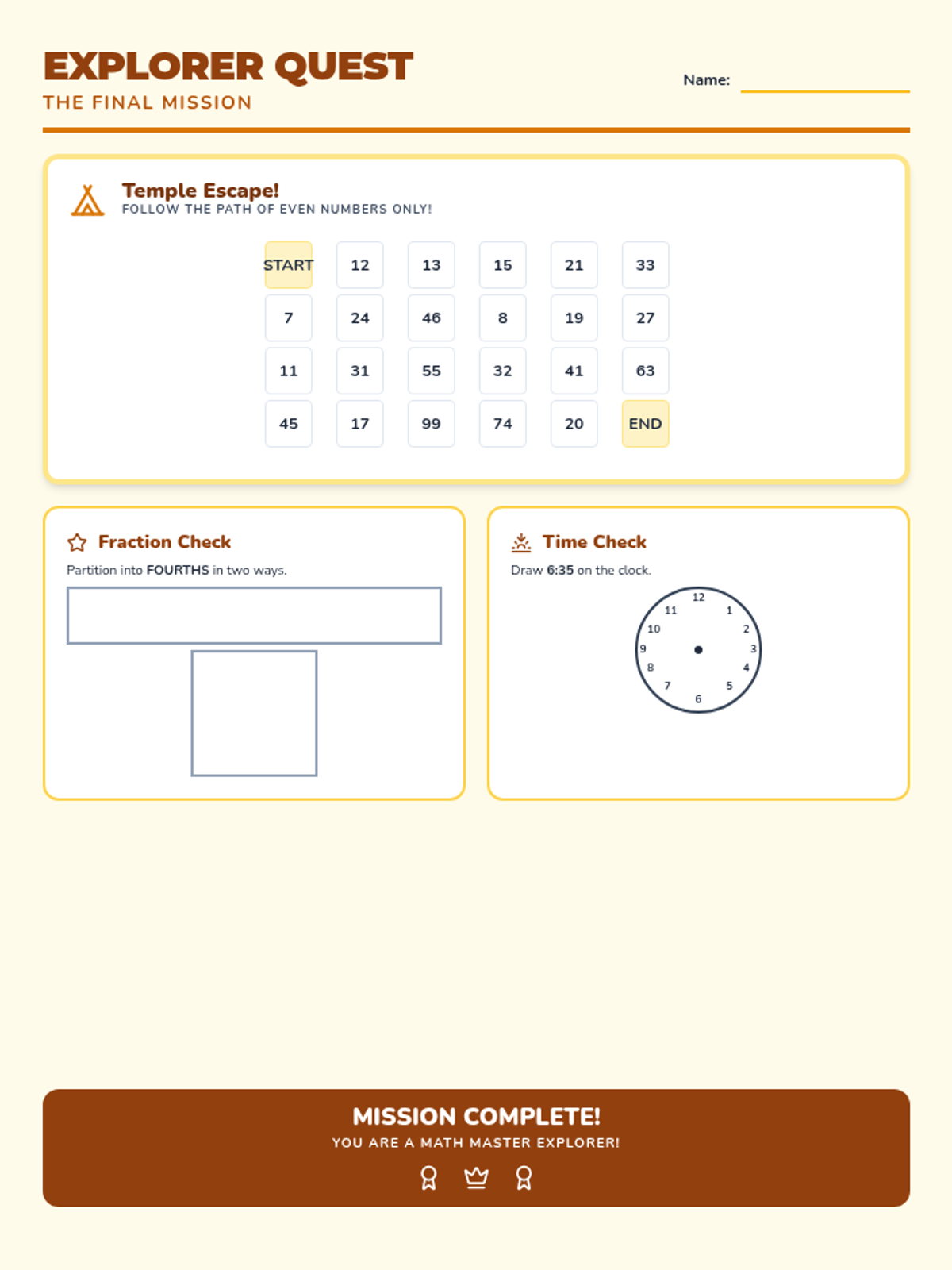
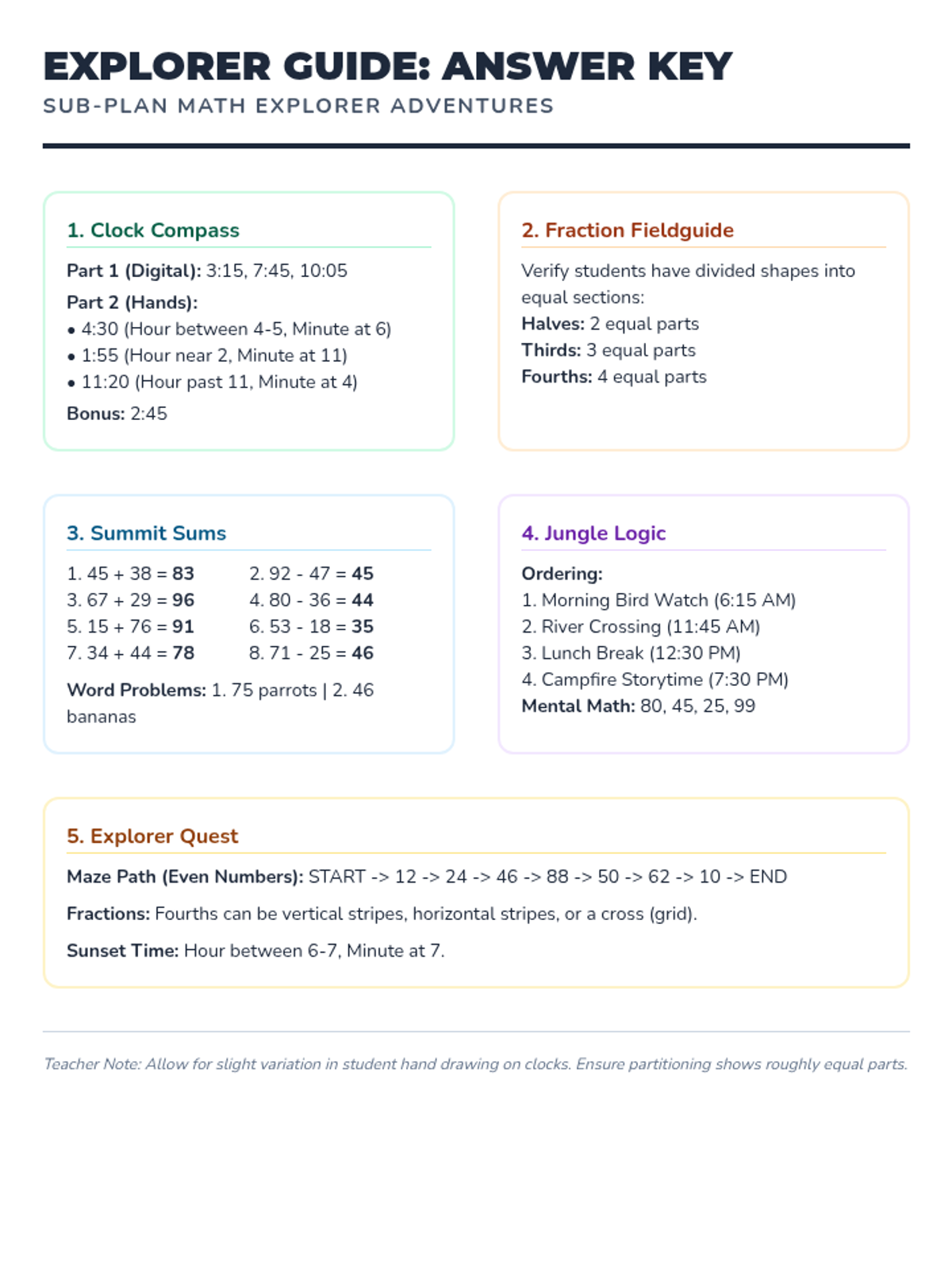
A comprehensive sub-plan packet for 2nd grade math, covering telling time, partitioning shapes into fractions, and addition/subtraction within 100 through an engaging jungle exploration theme.
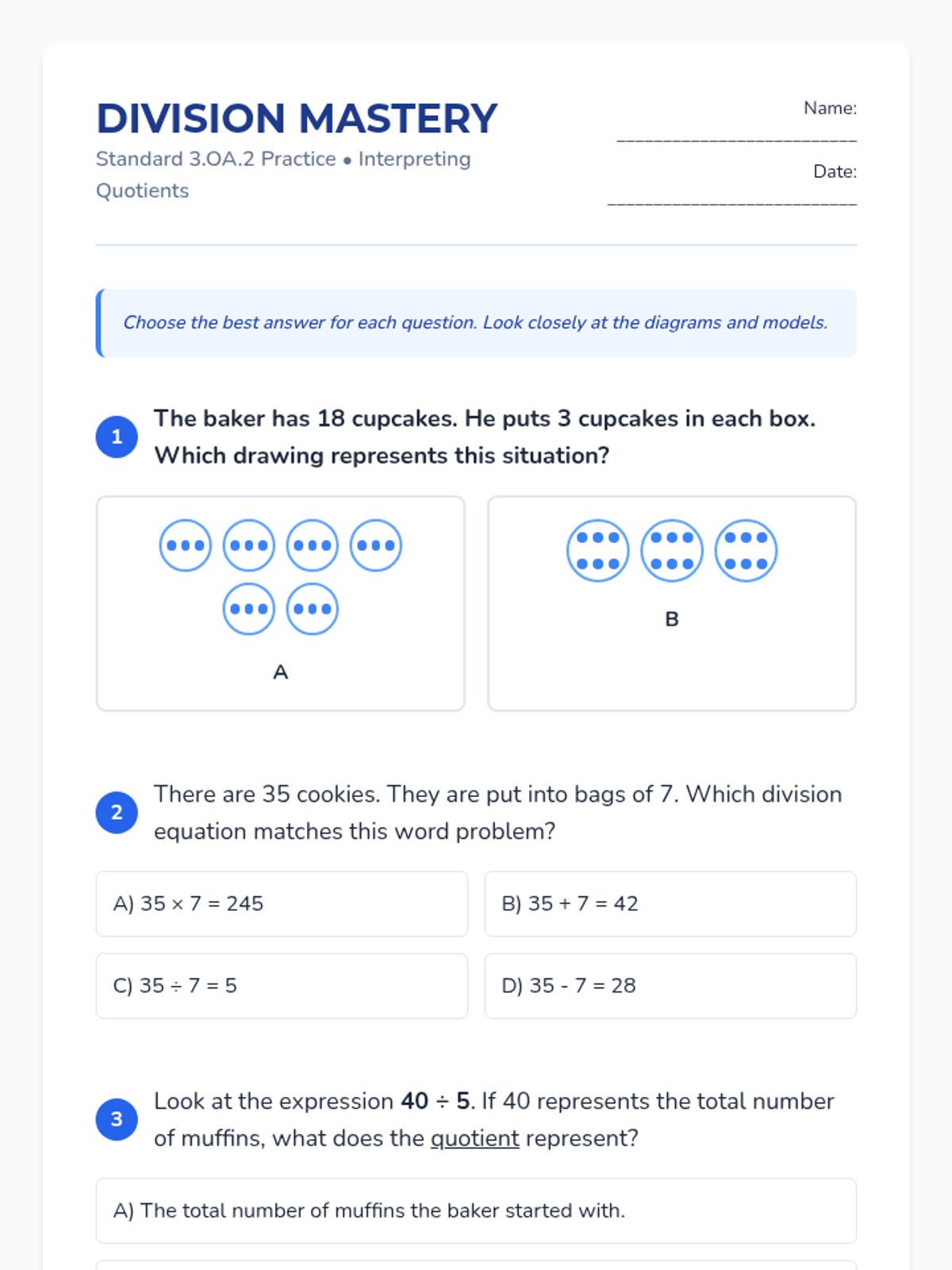
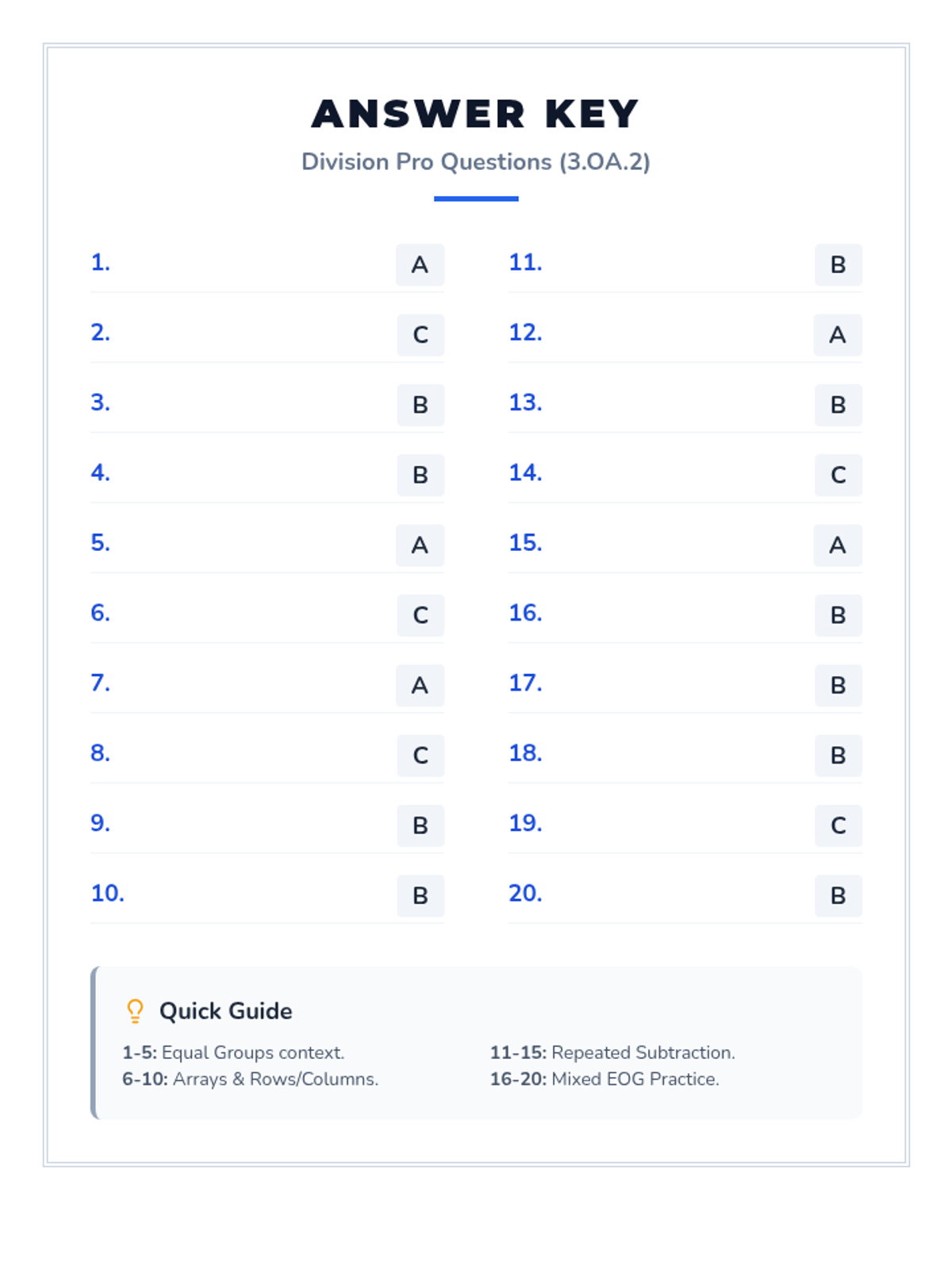
A comprehensive lesson on interpreting quotients through equal groups, arrays, and repeated subtraction, specifically aligned to 3.OA.2 for EOG preparation.
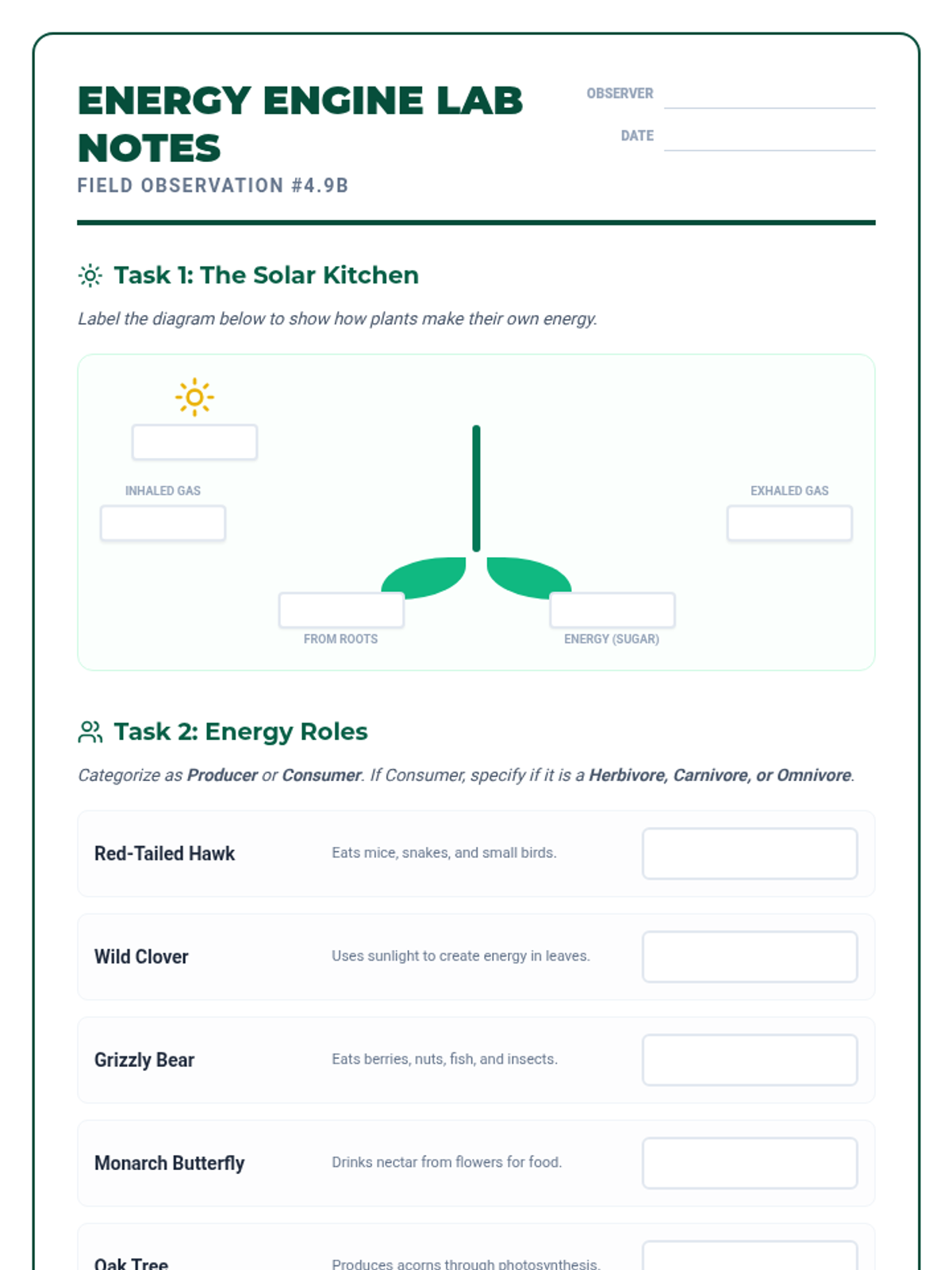
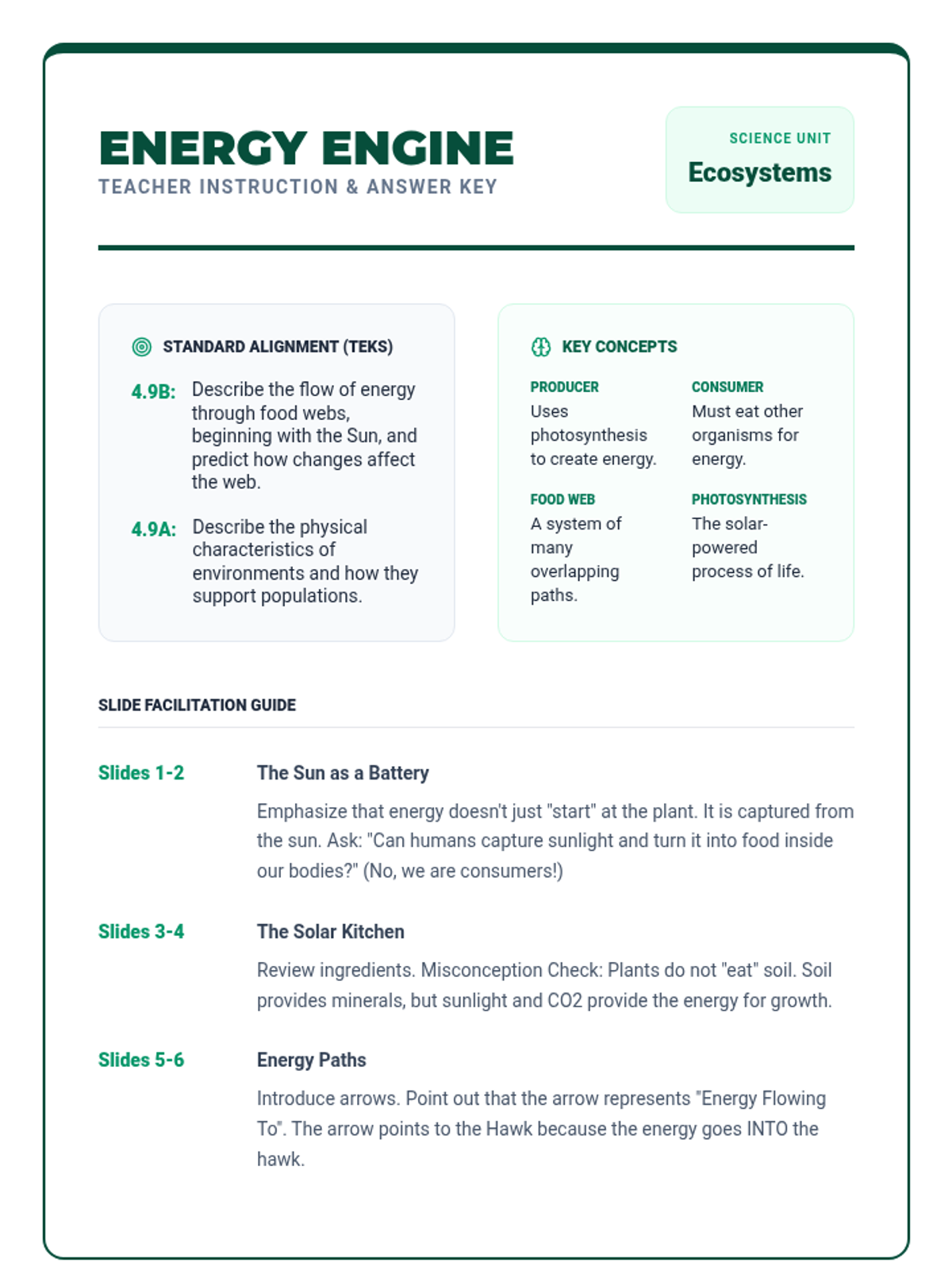
An exploration of energy flow in ecosystems, covering photosynthesis, producers, consumers (herbivores, carnivores, omnivores), and complex food webs.
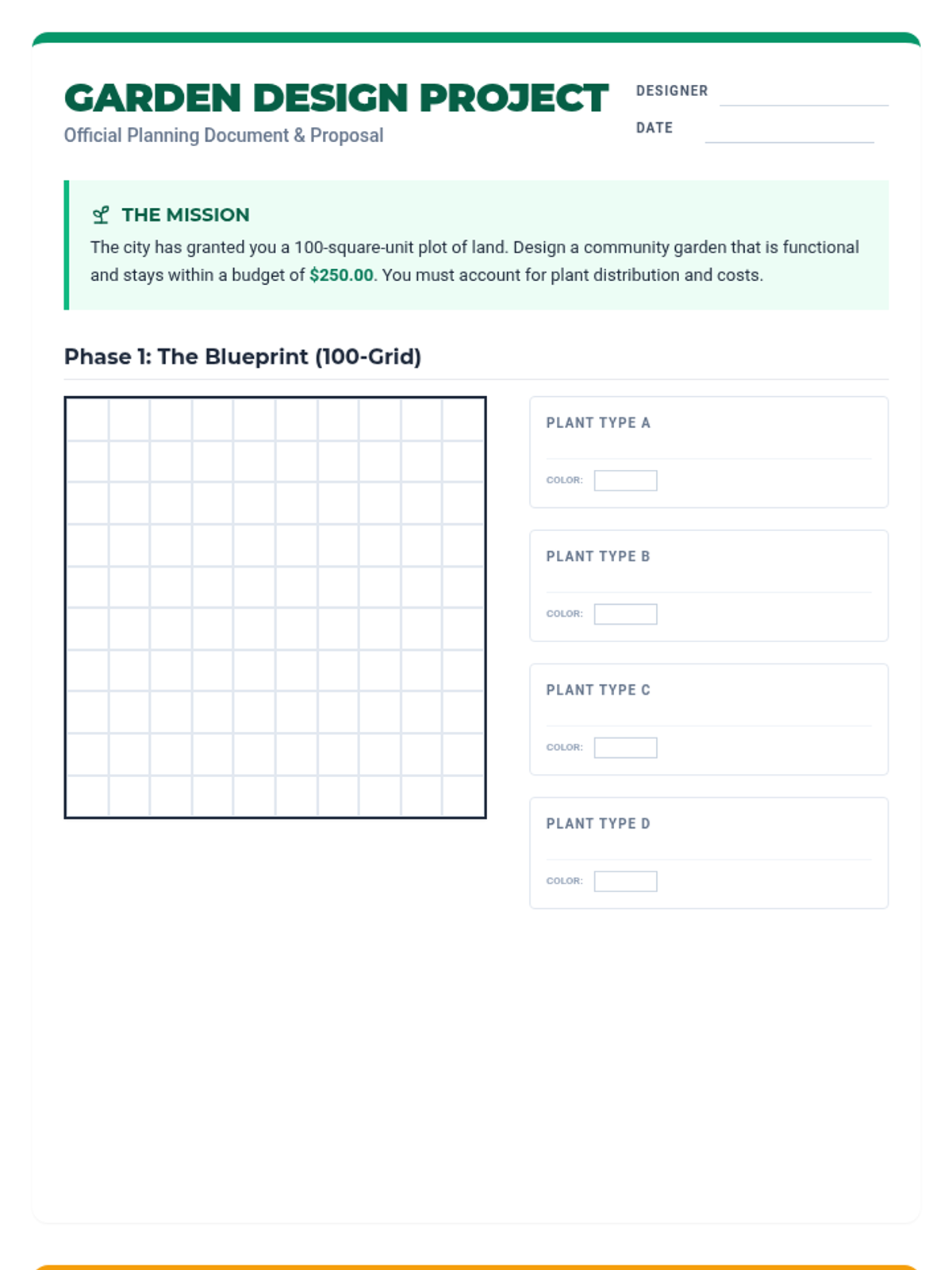
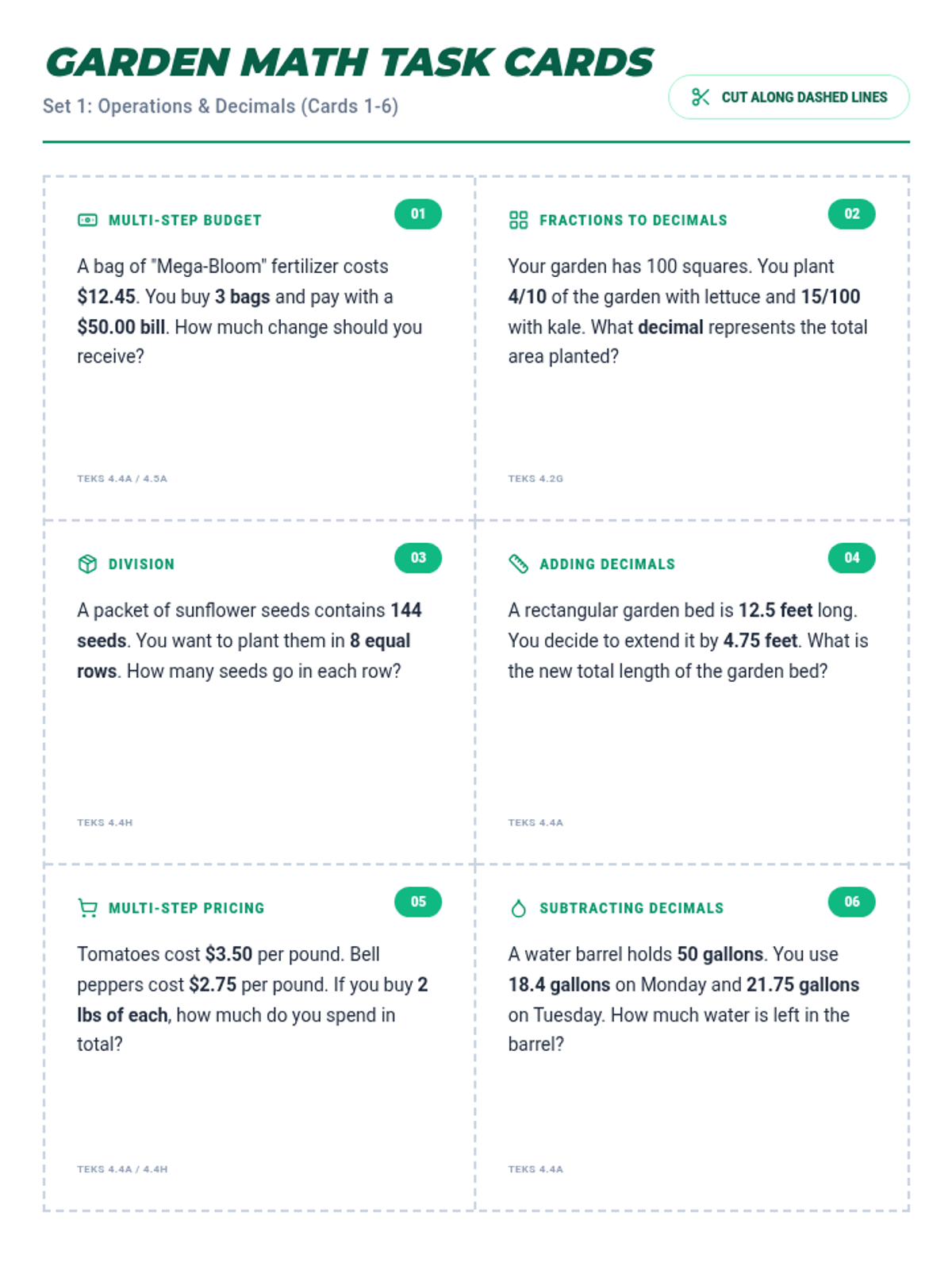
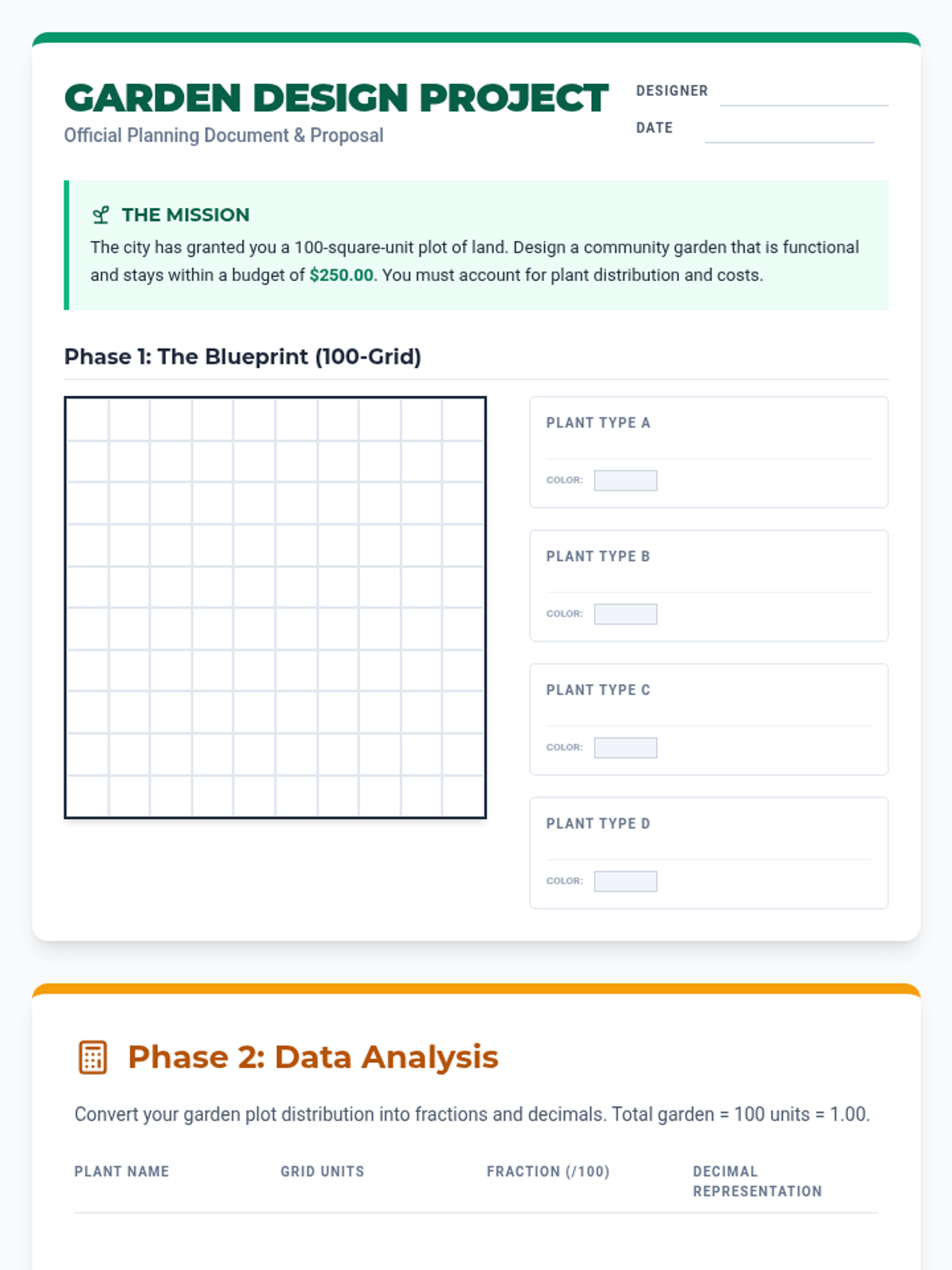
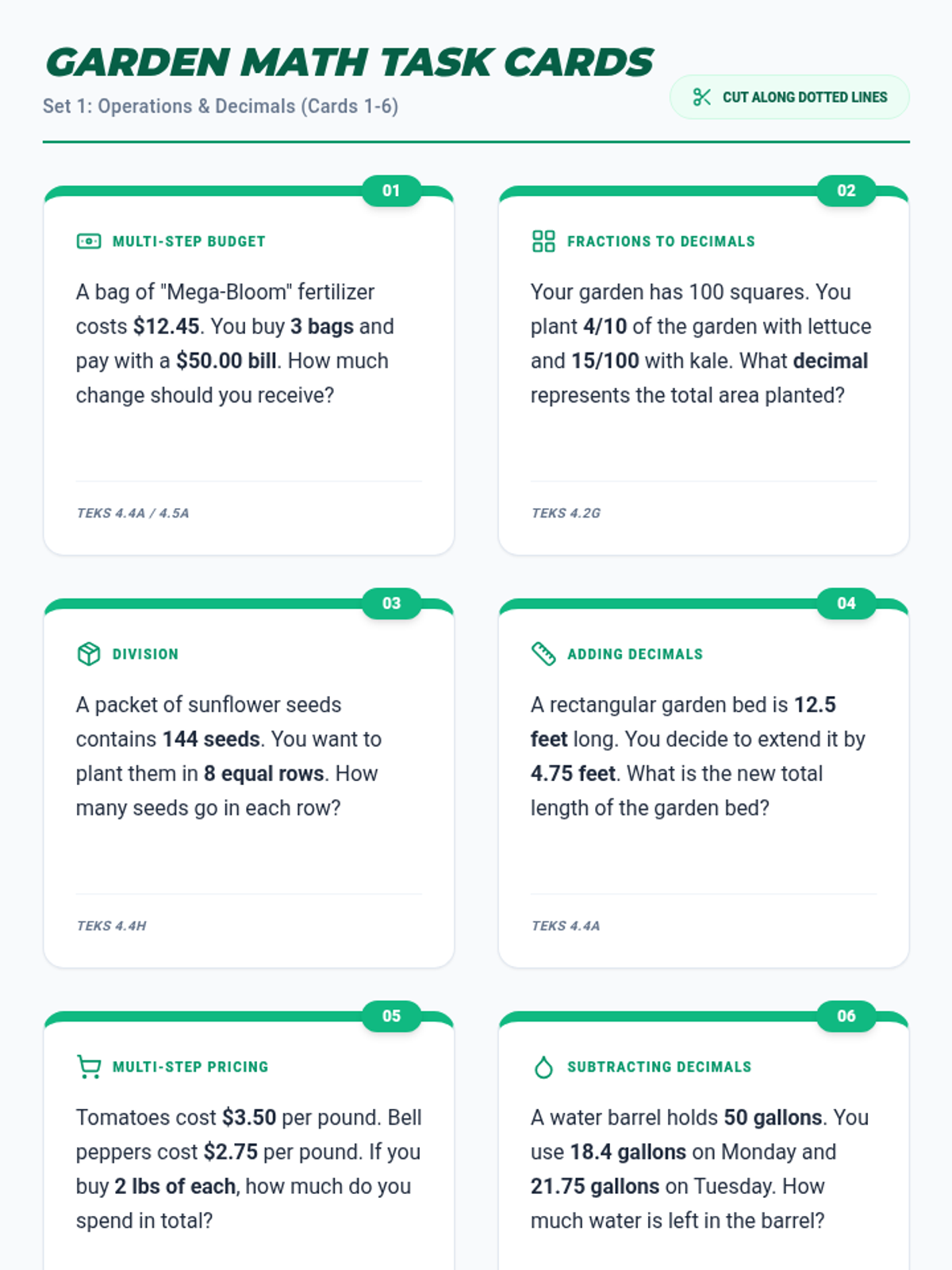
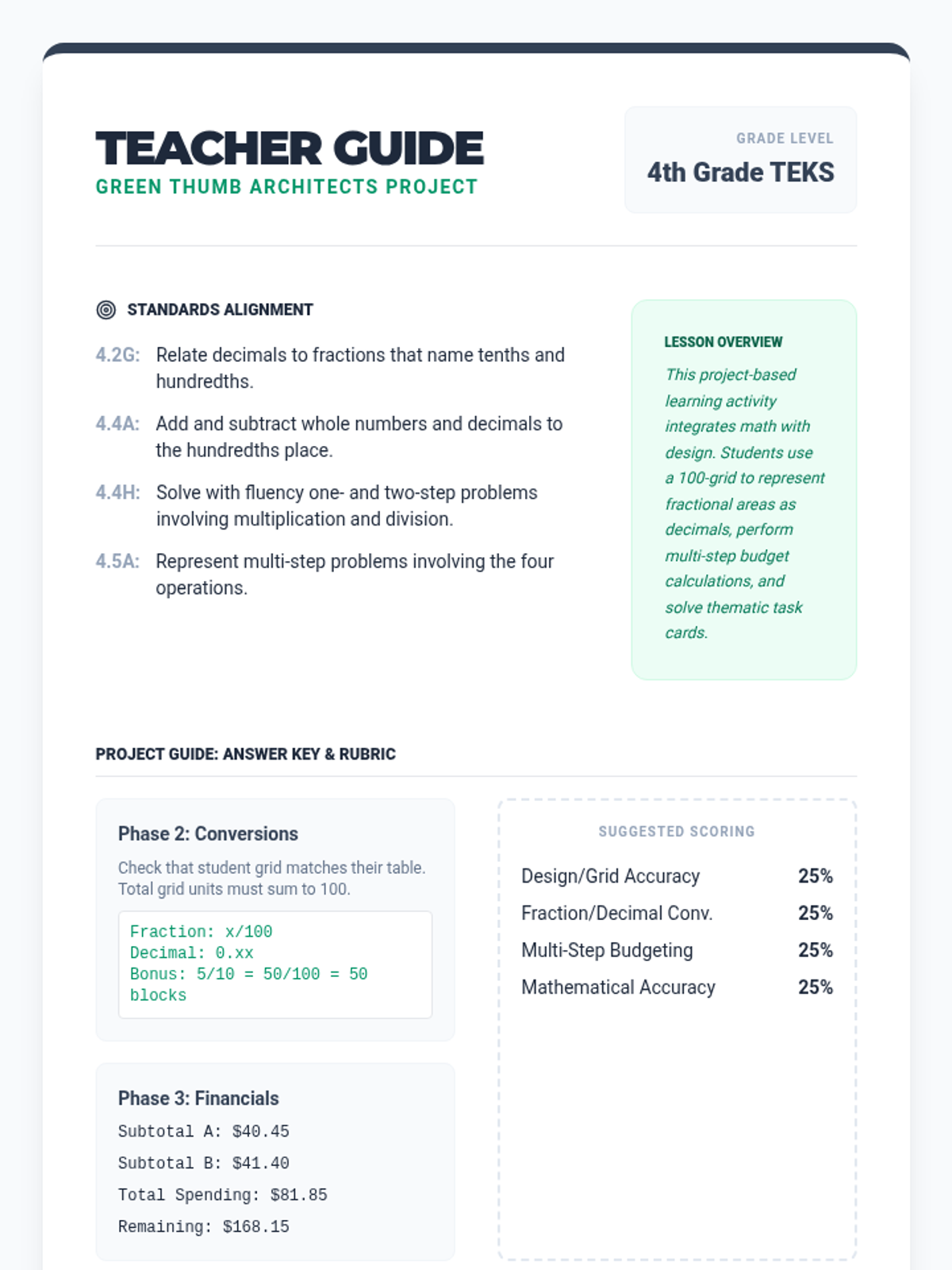
A math-focused project where students step into the role of garden designers to plan a community space while mastering multi-step word problems, decimal operations, and the relationship between fractions and decimals.
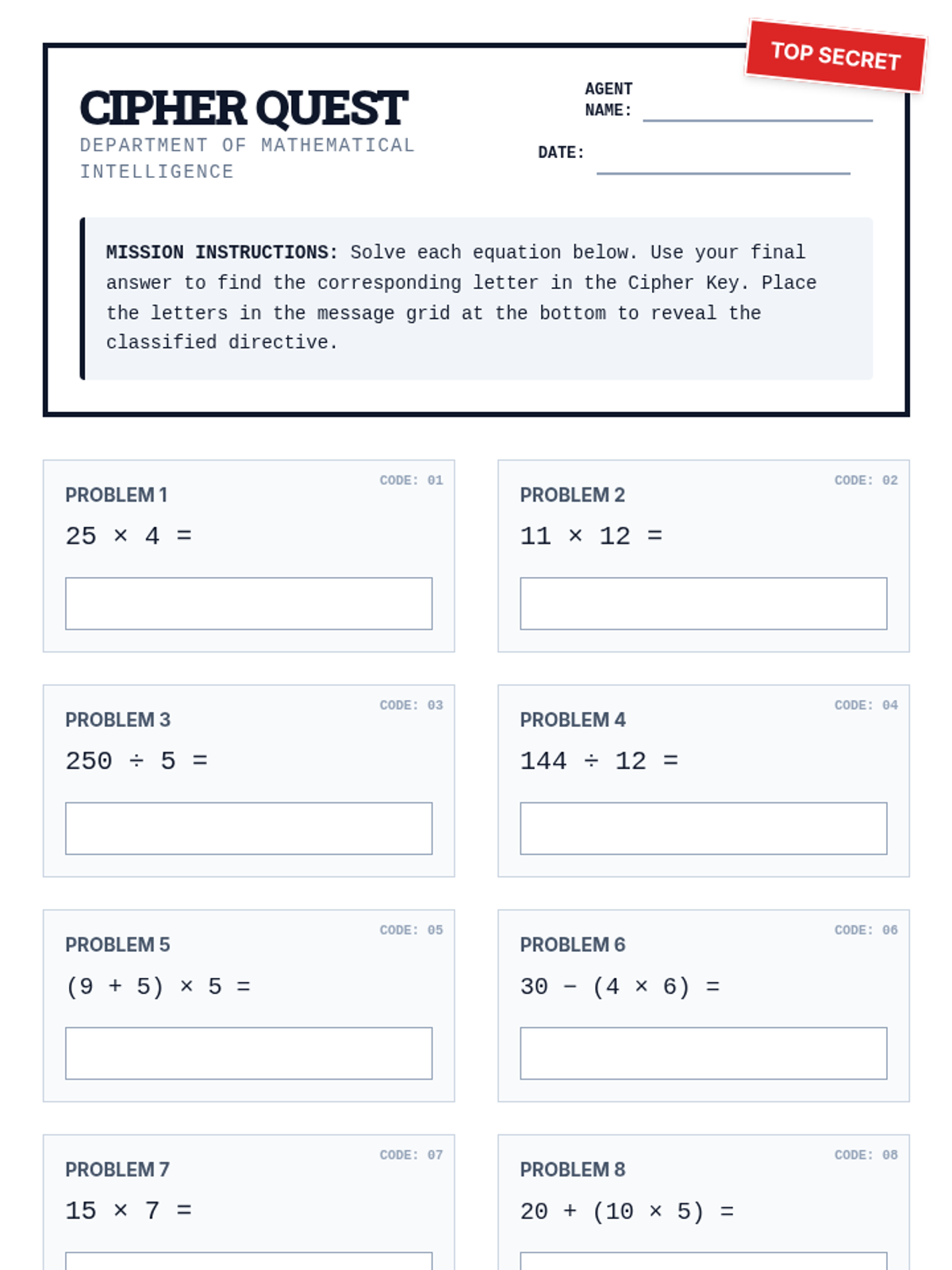
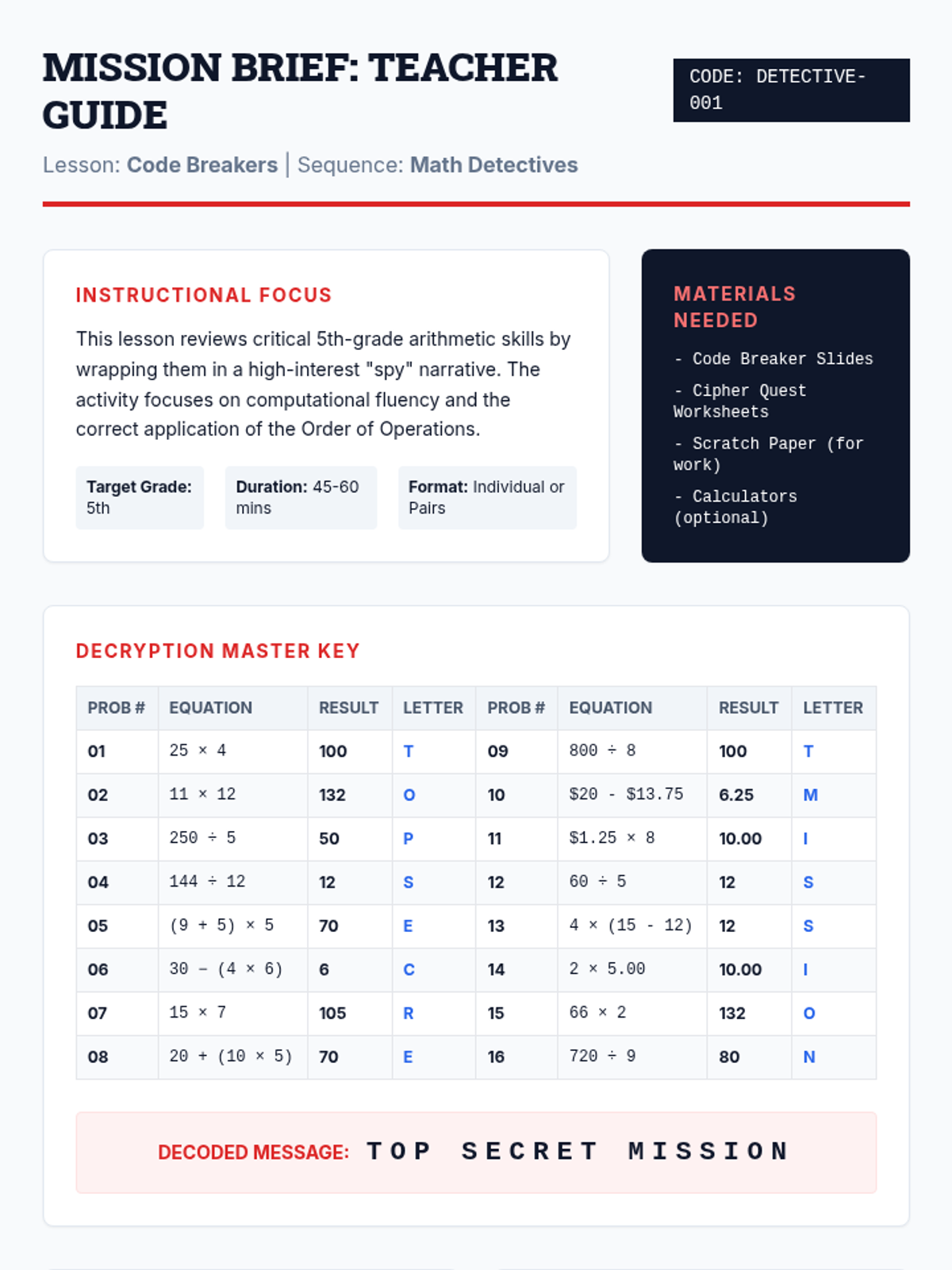
An engaging introduction to multi-digit multiplication, division, and order of operations through a spy-themed decoding challenge. Students act as 'Math Detectives' to solve a series of problems and reveal a hidden message.
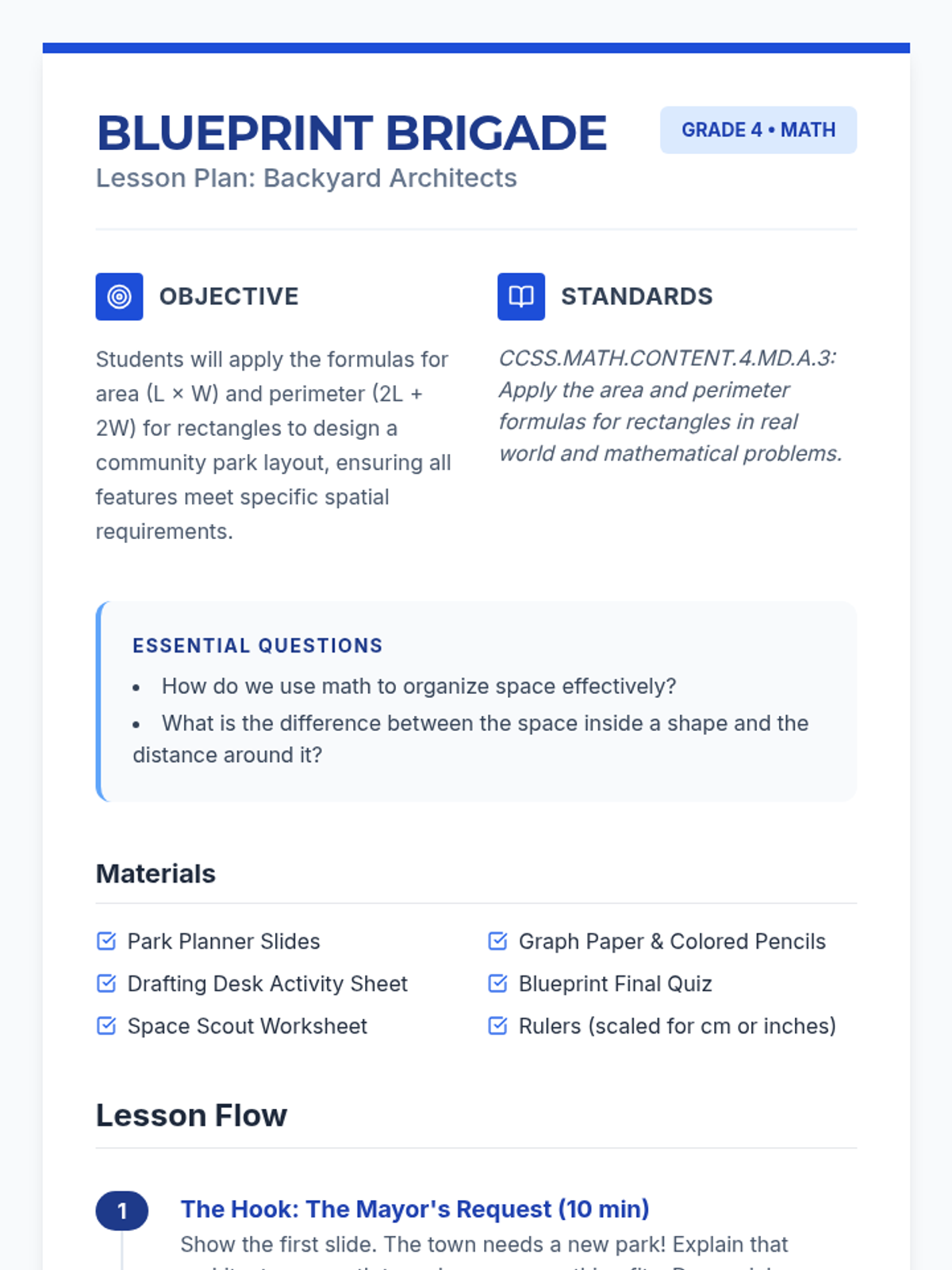
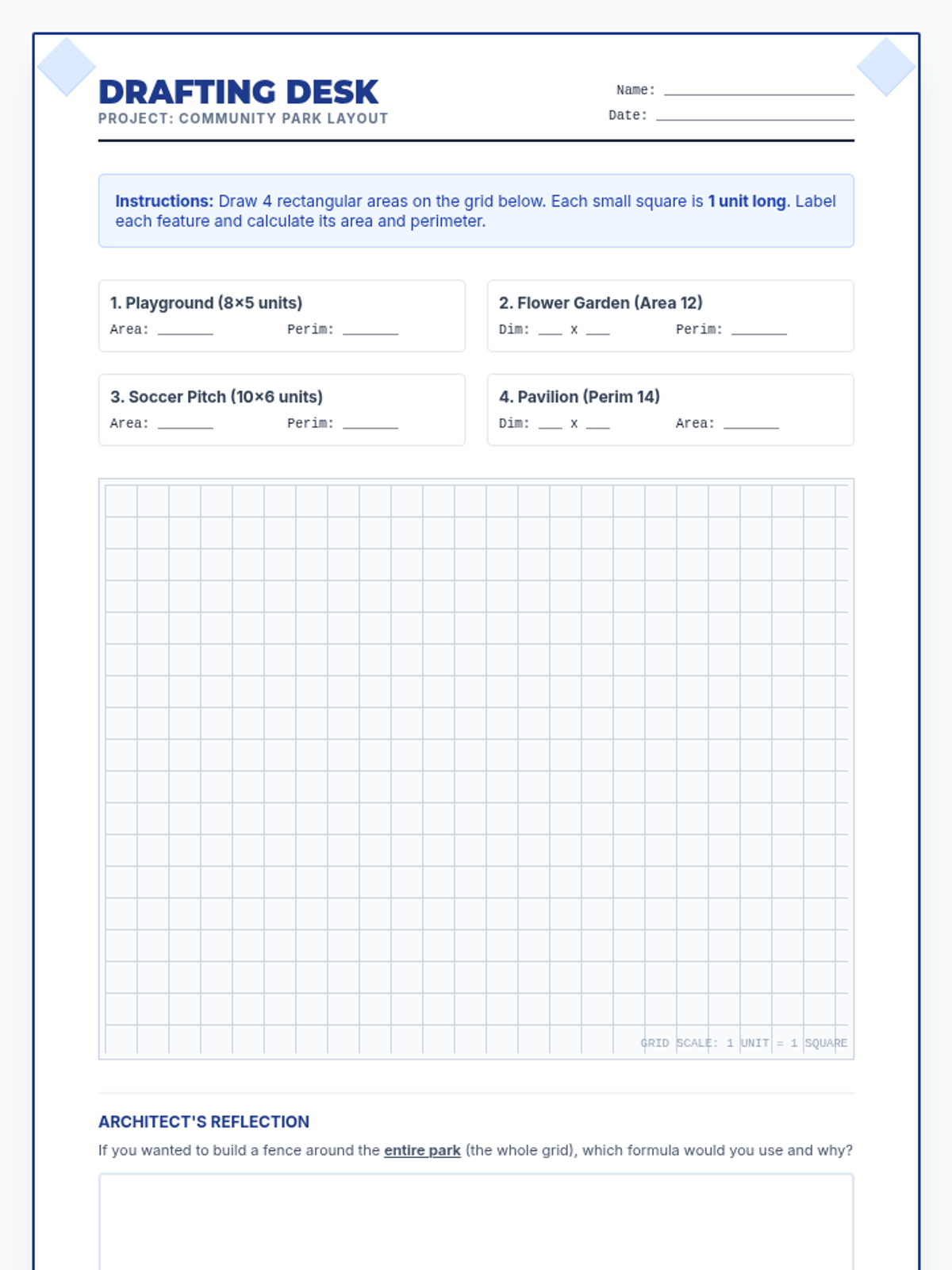
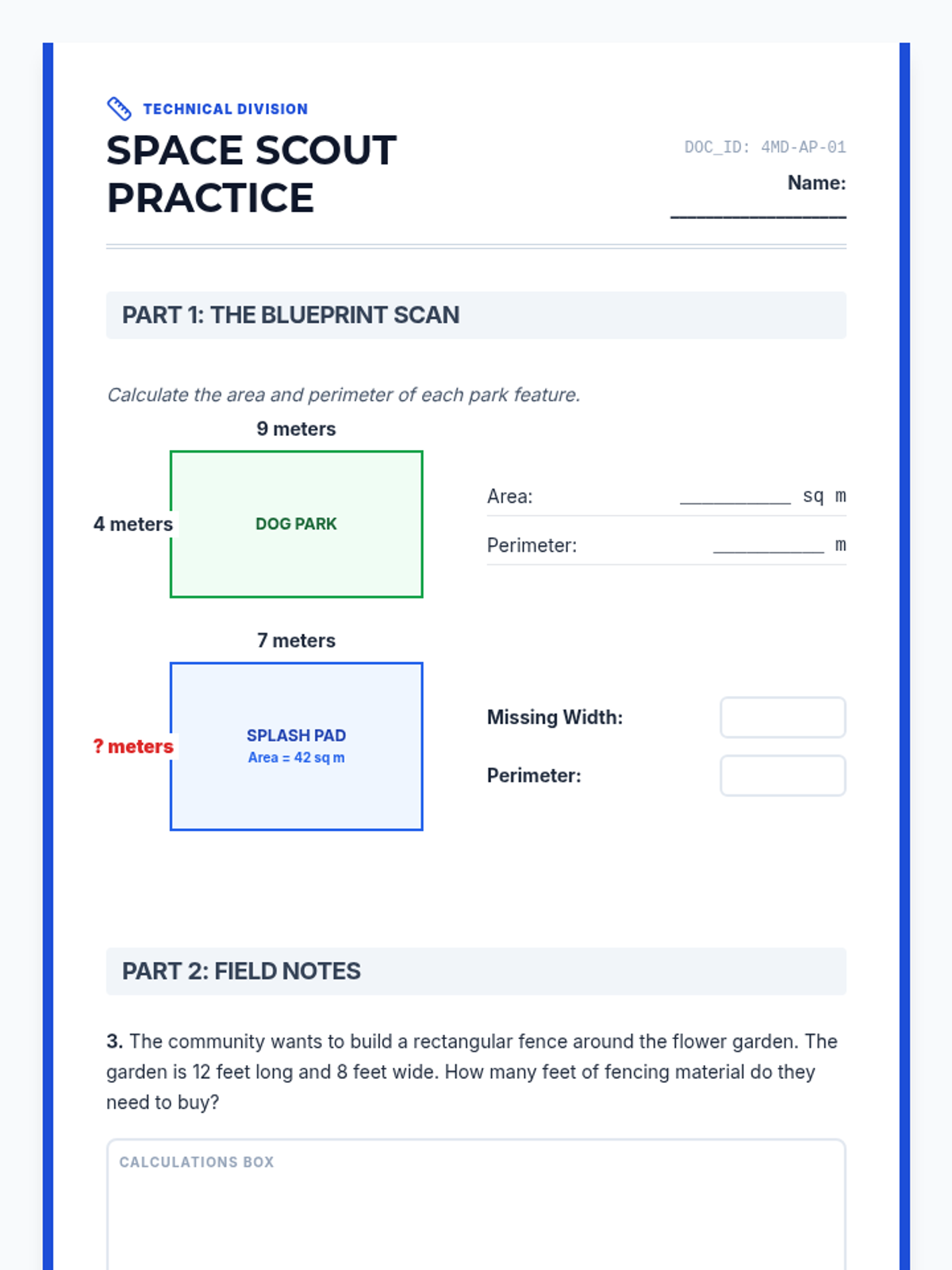
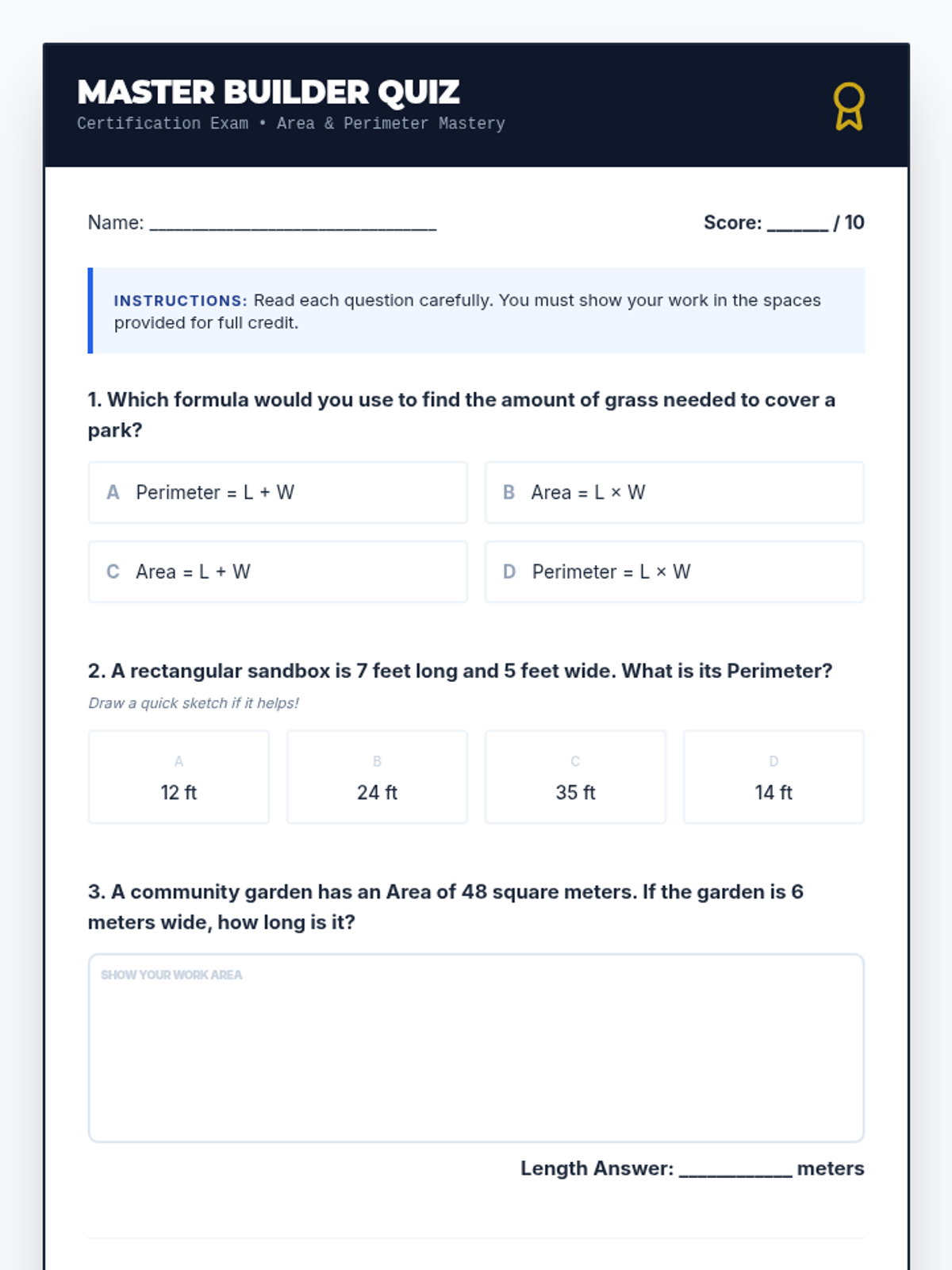
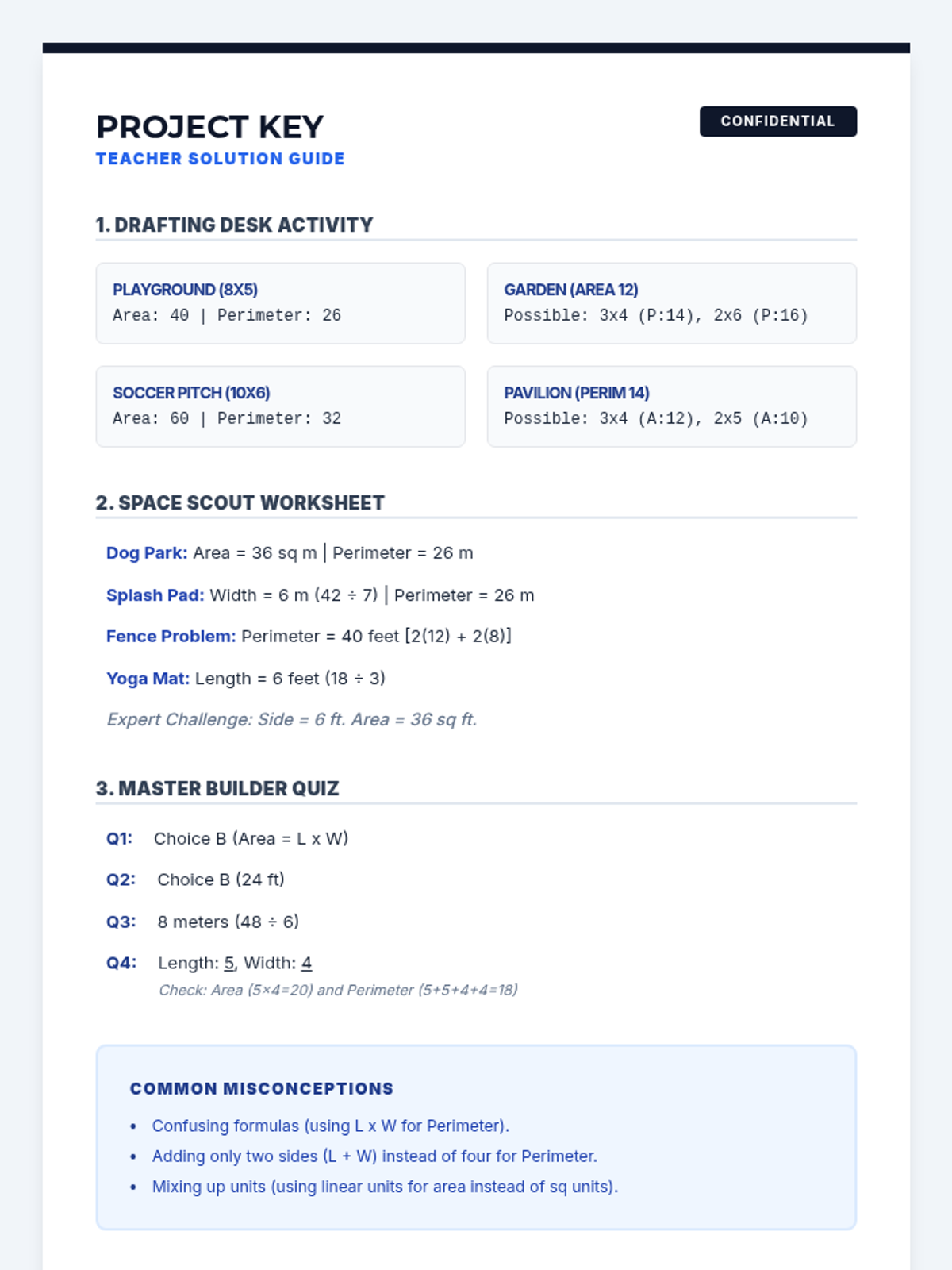
Students become backyard architects, designing a community park by calculating area and perimeter of rectangular features. This lesson bridges multiplicative thinking with real-world spatial planning for 4th graders.
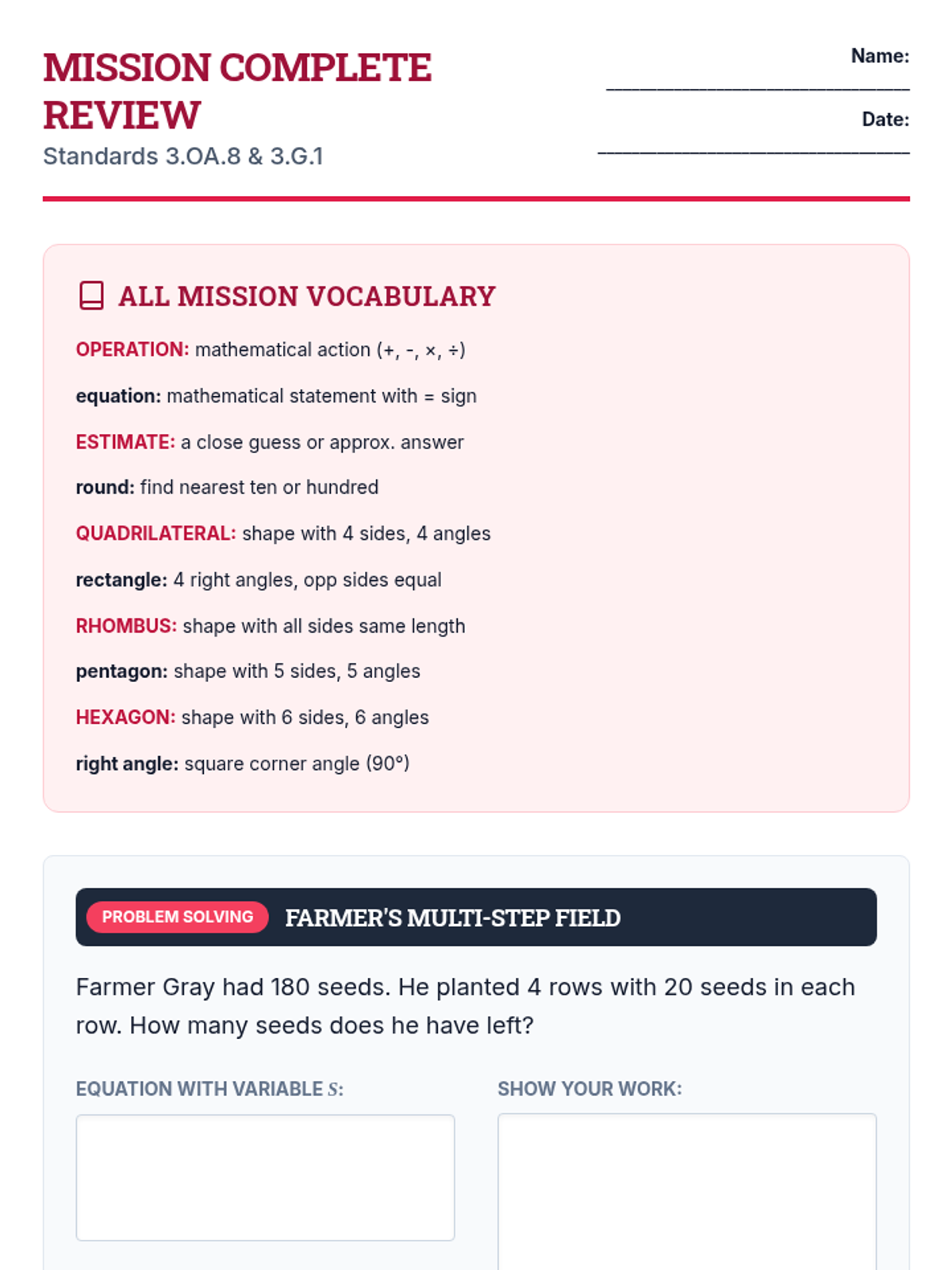
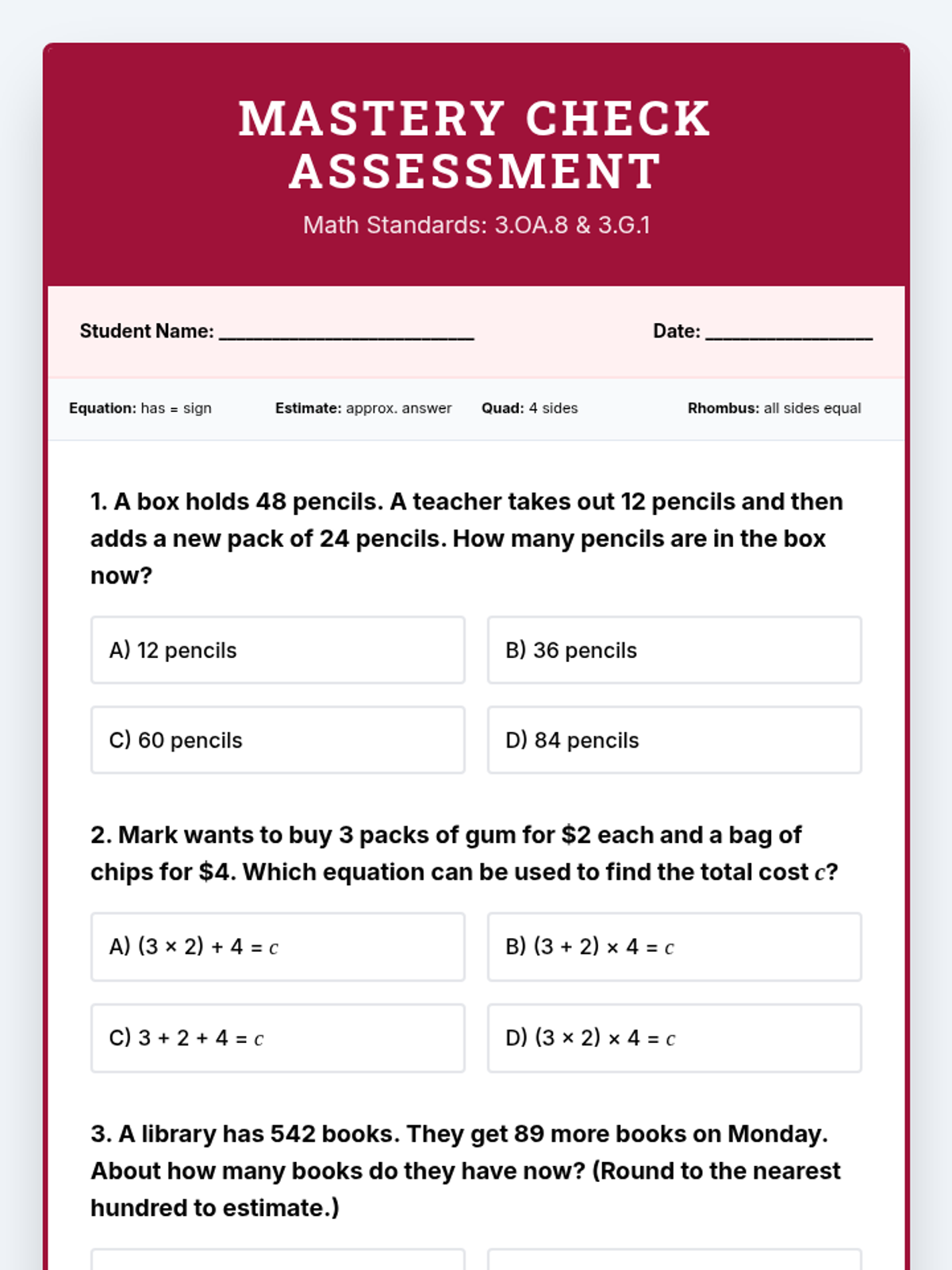
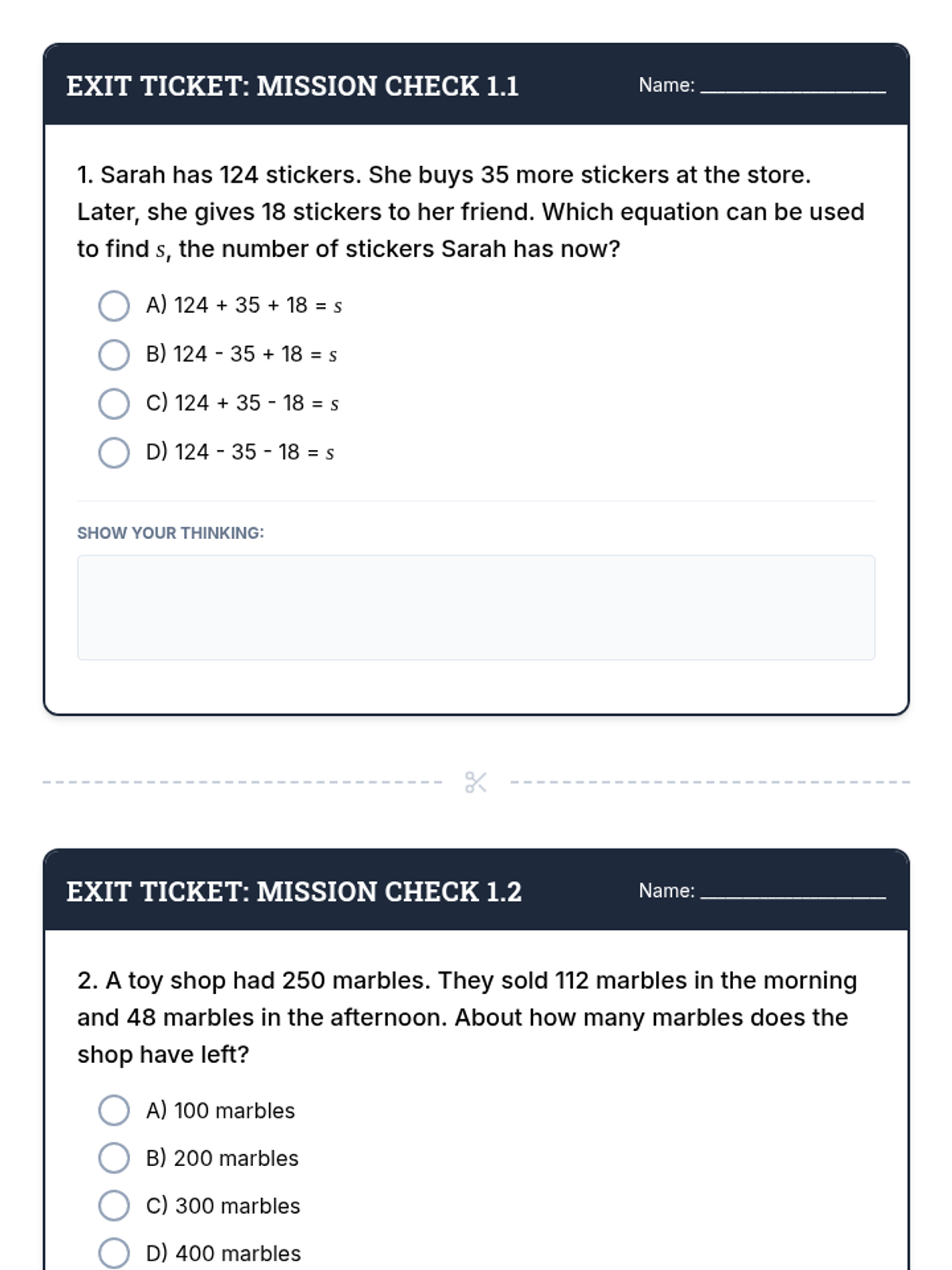
A cumulative review and final assessment covering both word problem solving and geometric classification to ensure mastery of standards 3.OA.8 and 3.G.1.
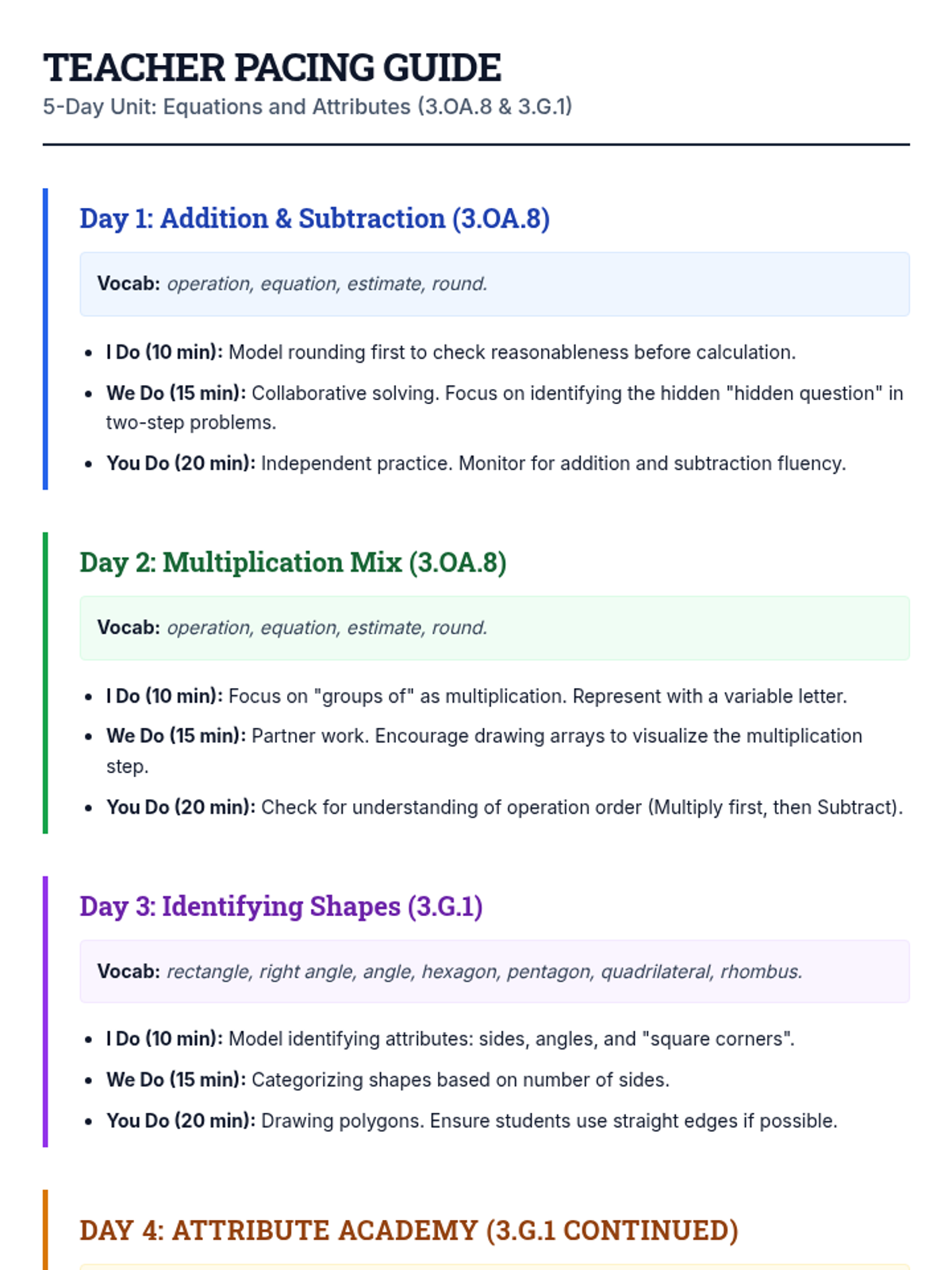
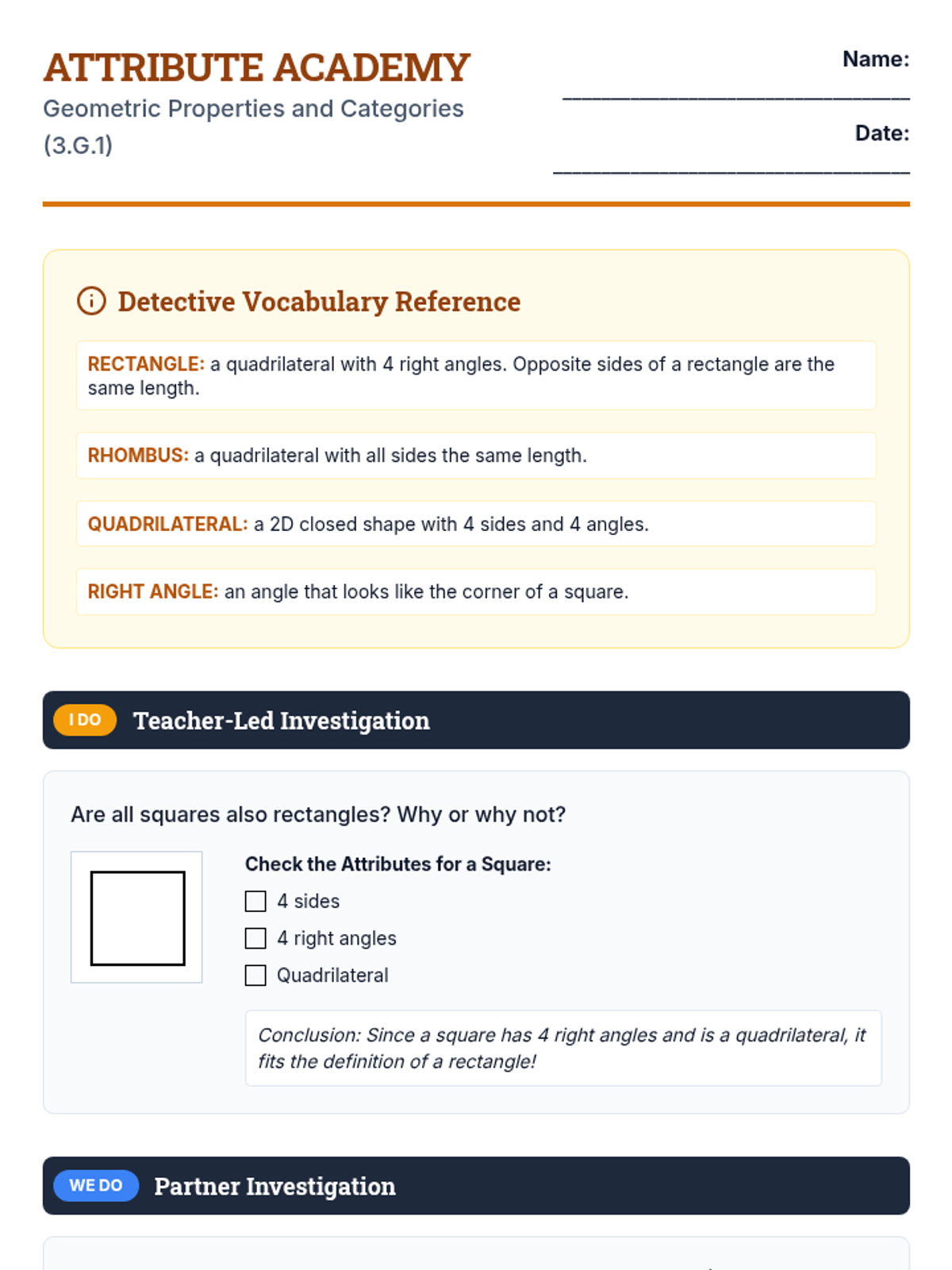
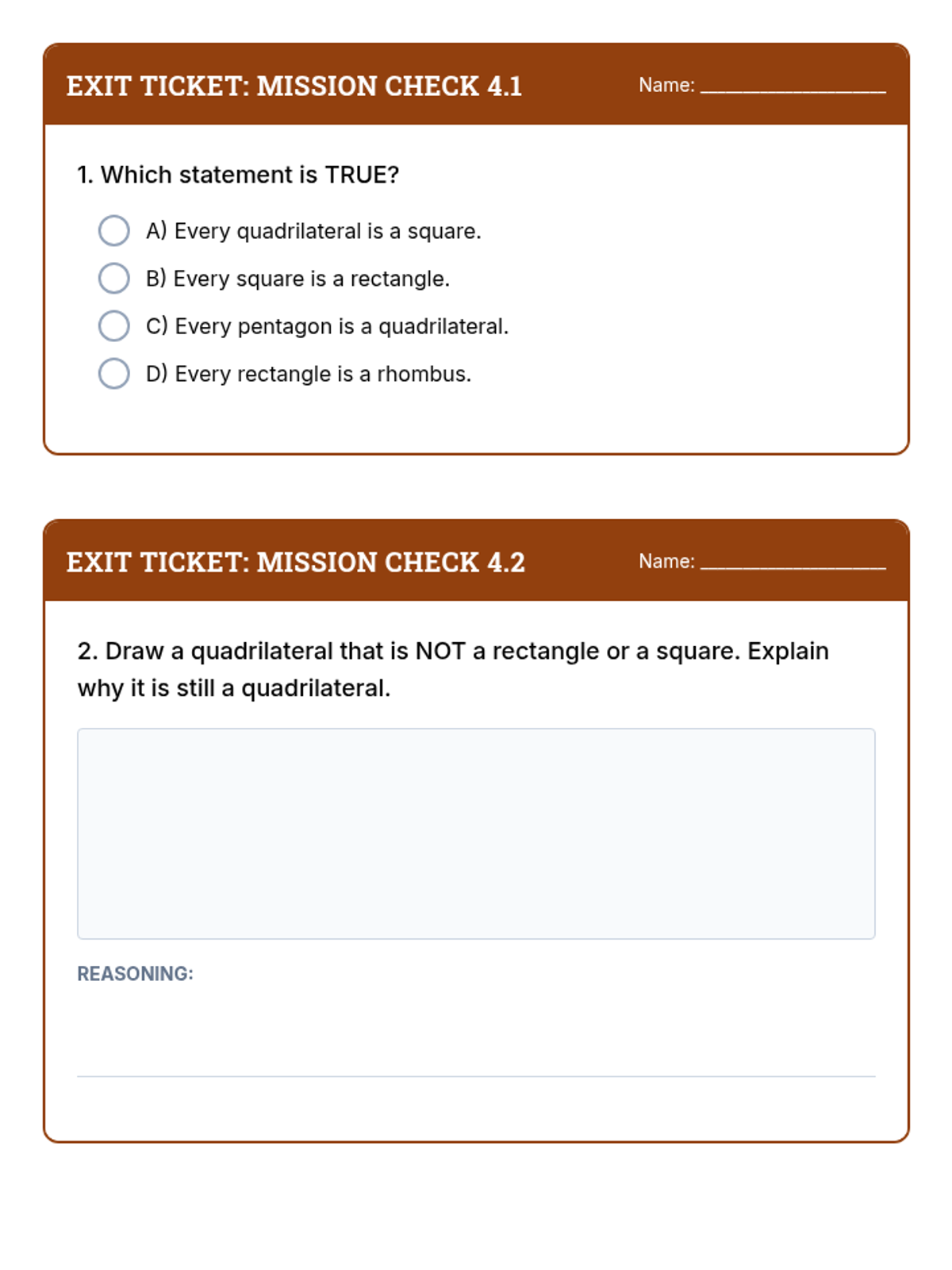
Deeper exploration of geometric attributes, focusing on classifying shapes within larger categories and recognizing shared properties.
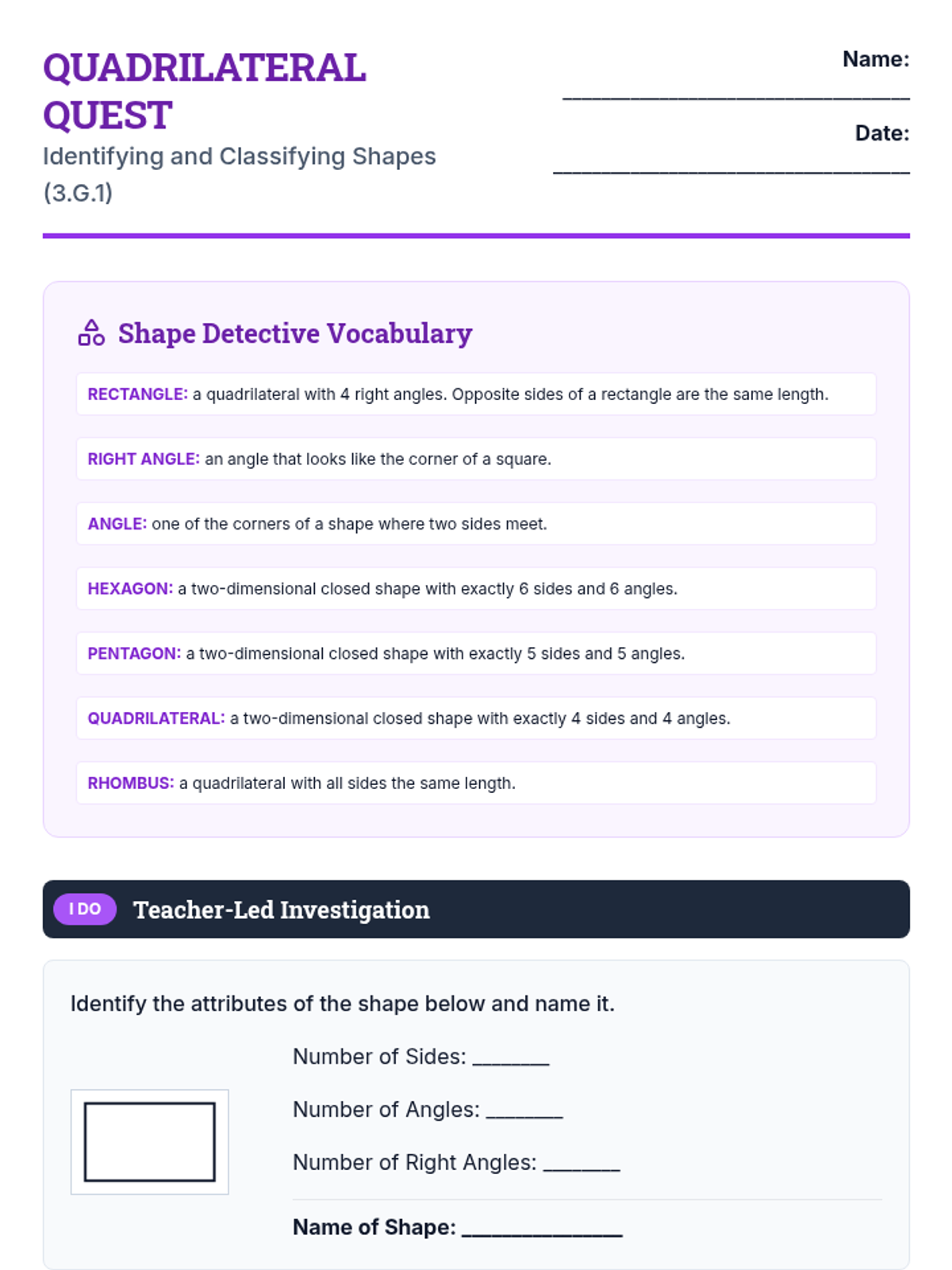
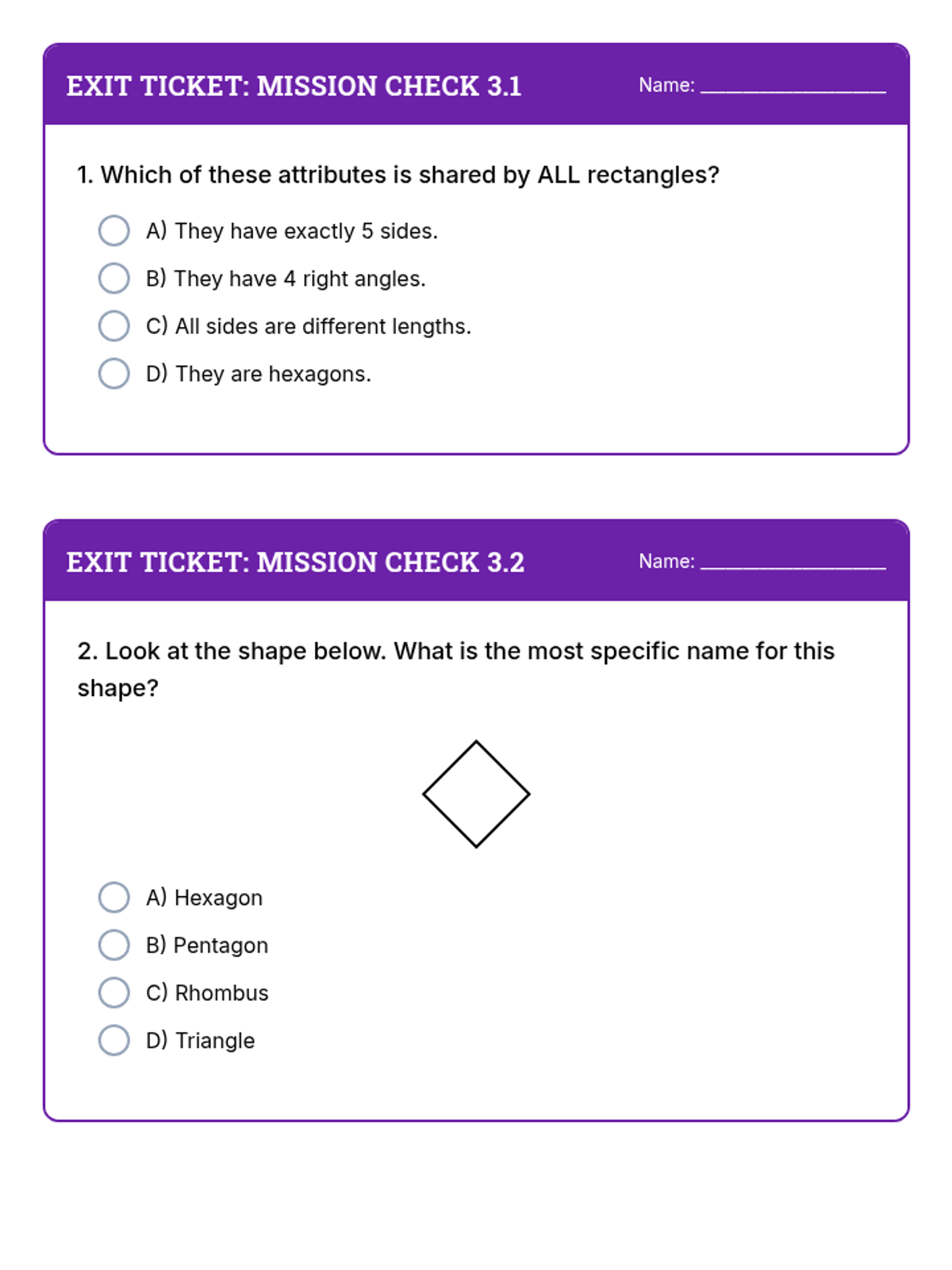
Introduction to identifying and classifying quadrilaterals based on their attributes, including sides, angles, and specific definitions of common shapes.
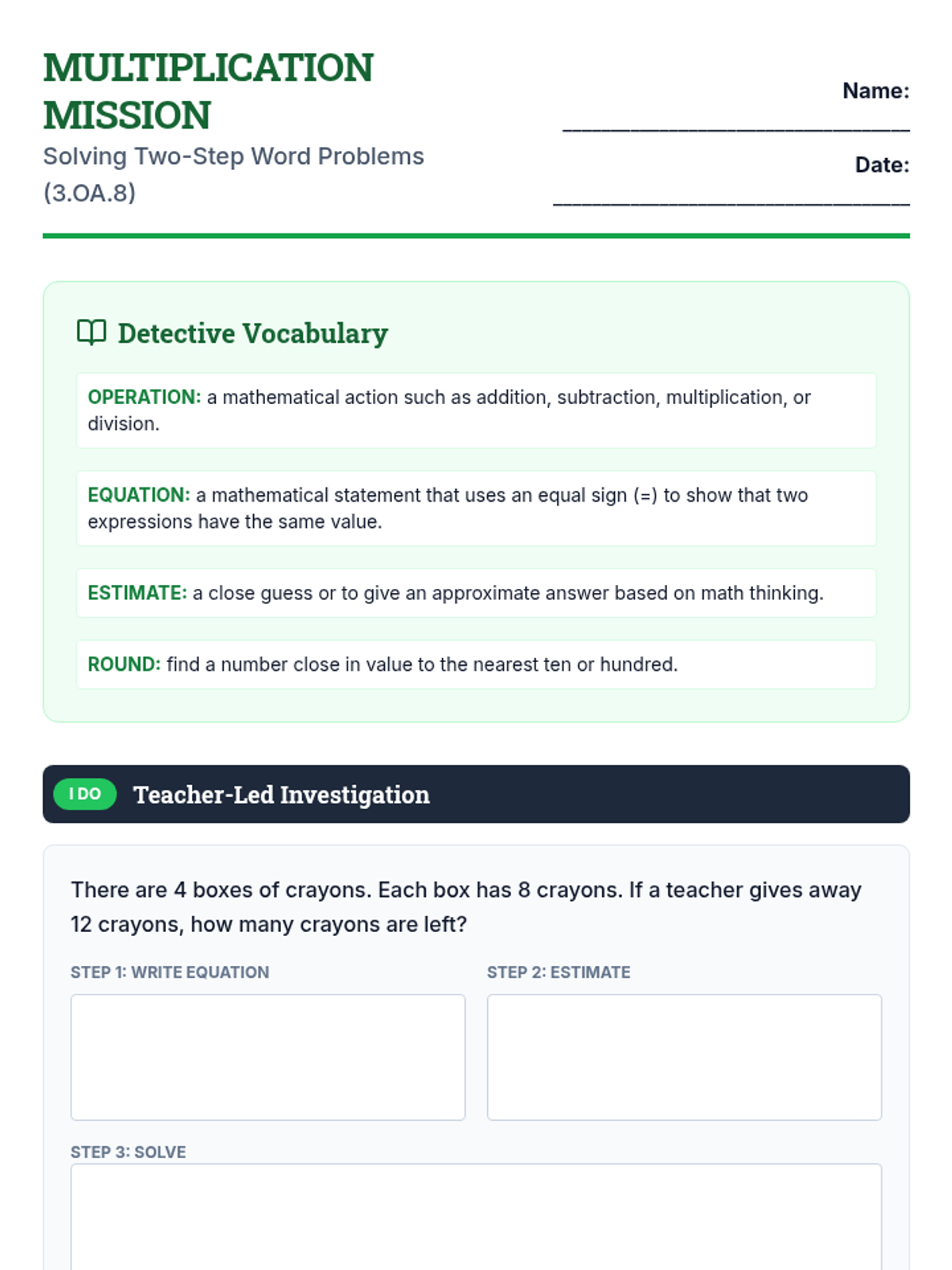
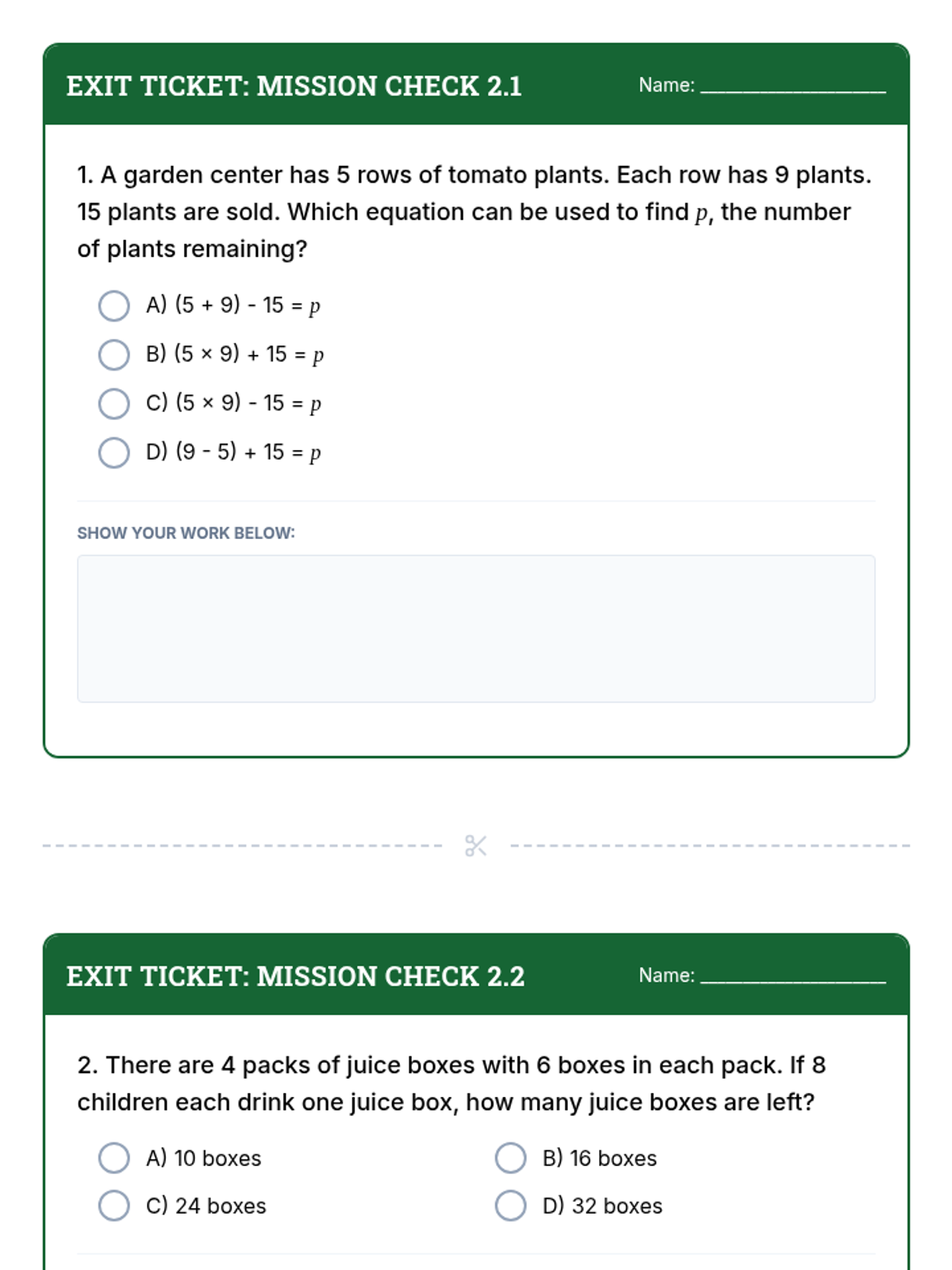
Extends problem-solving skills to two-step word problems involving multiplication and other operations, focusing on equation representation and estimation strategies.
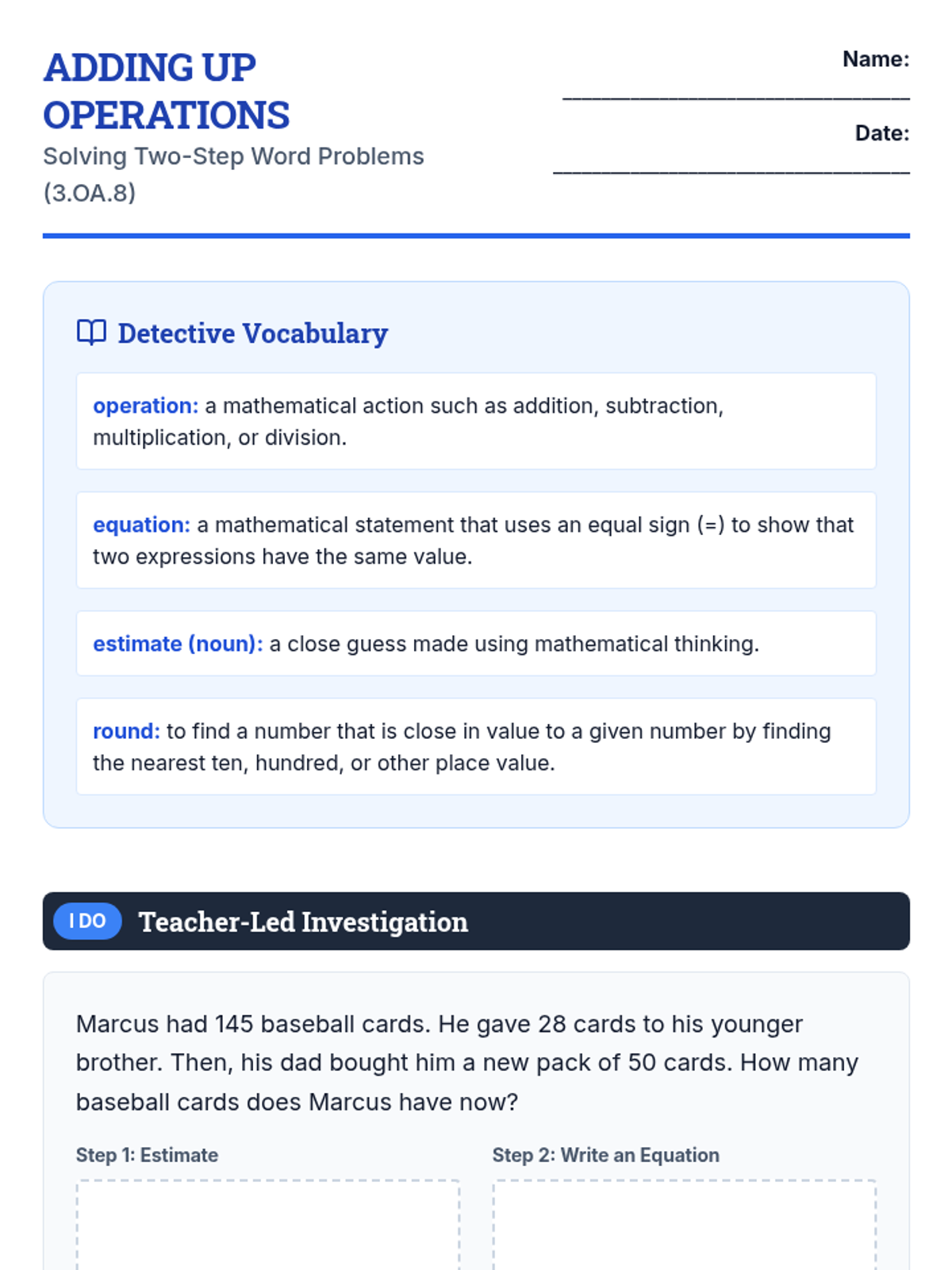
Focuses on solving two-step word problems using addition and subtraction, emphasizing representing problems with equations and assessing reasonableness through estimation and rounding.