A mathematical game lesson focusing on addition skills using two dice, where students practice finding sums from 2 to 12 and applying strategic thinking to win.
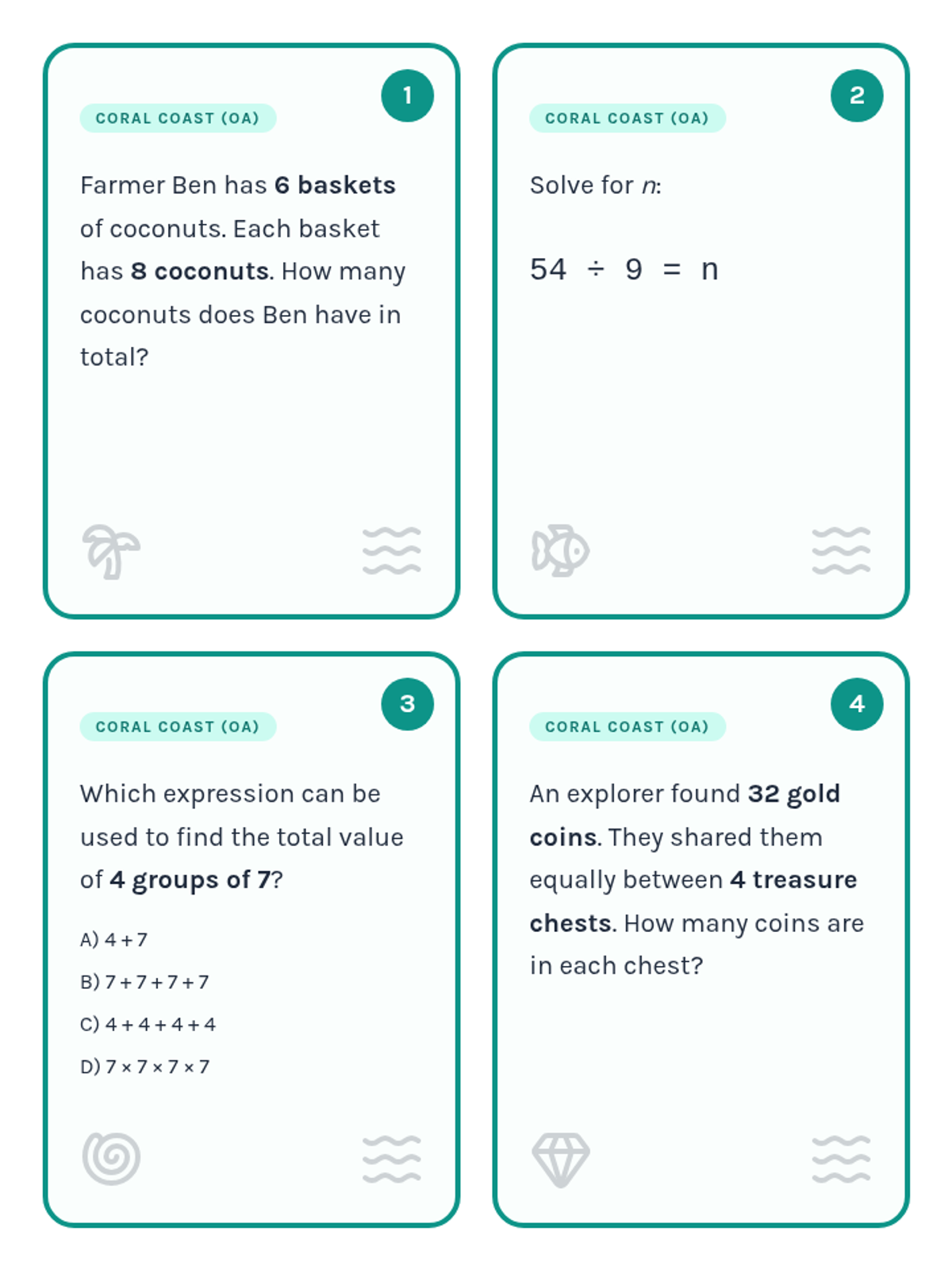
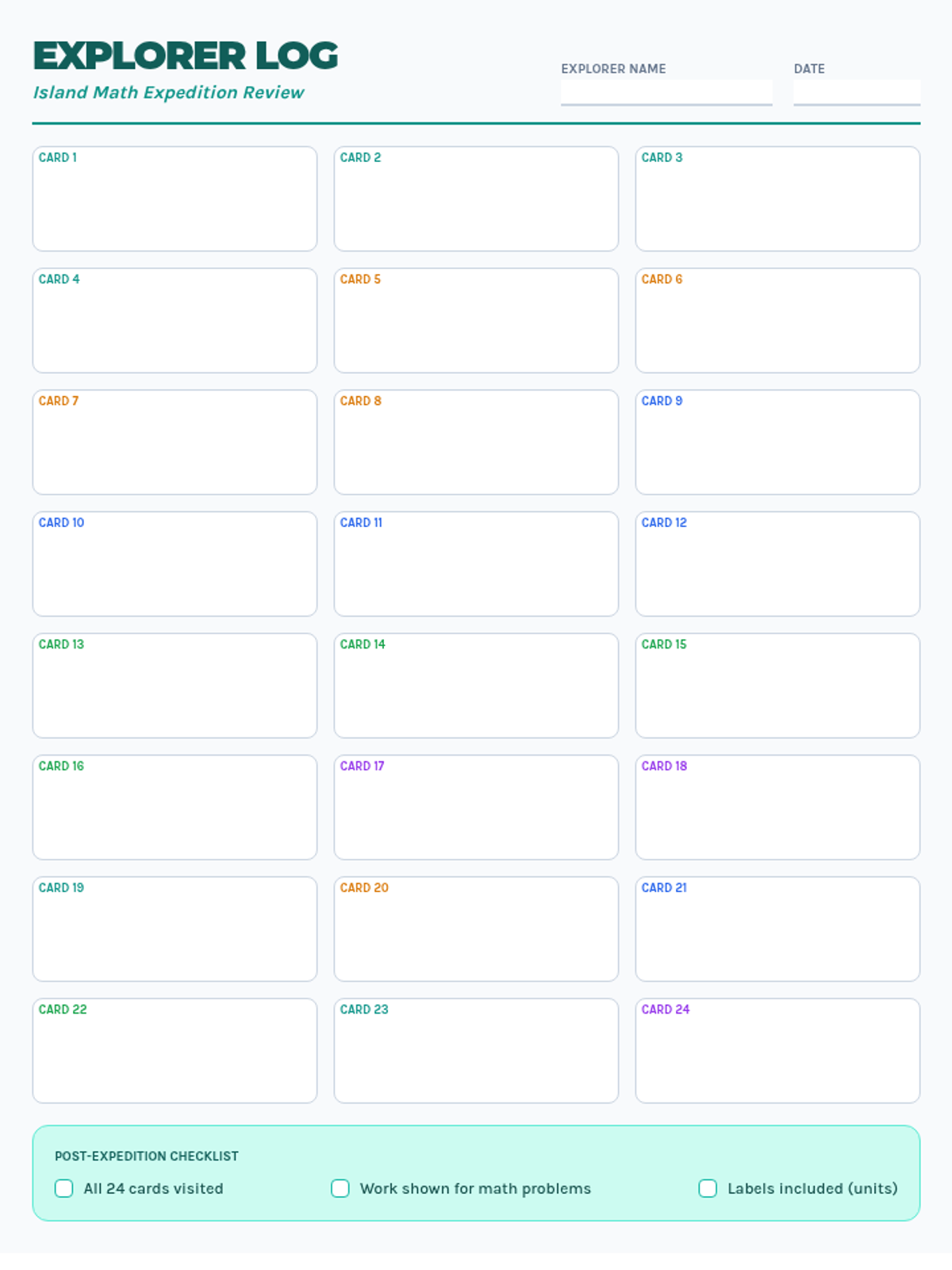
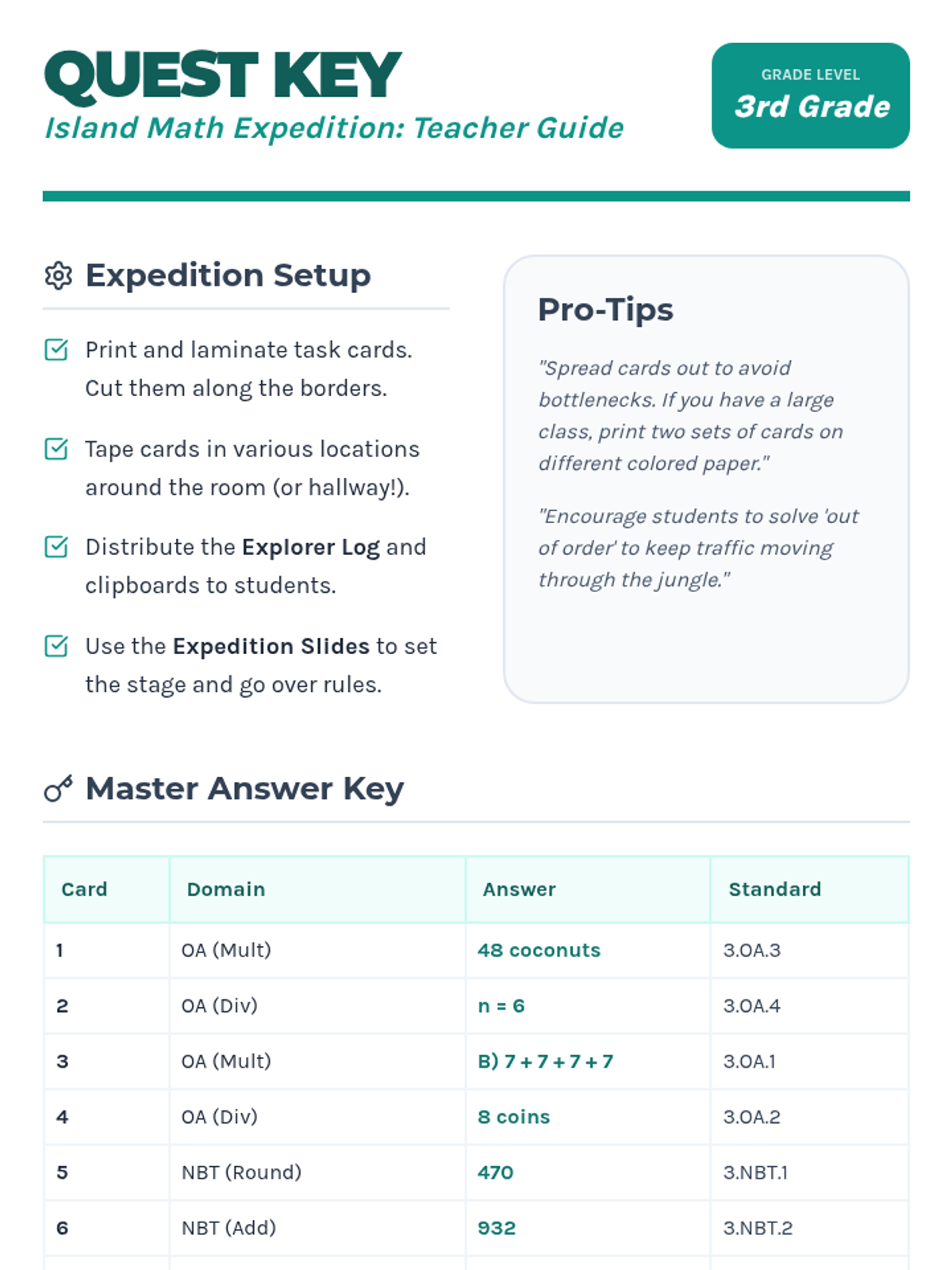
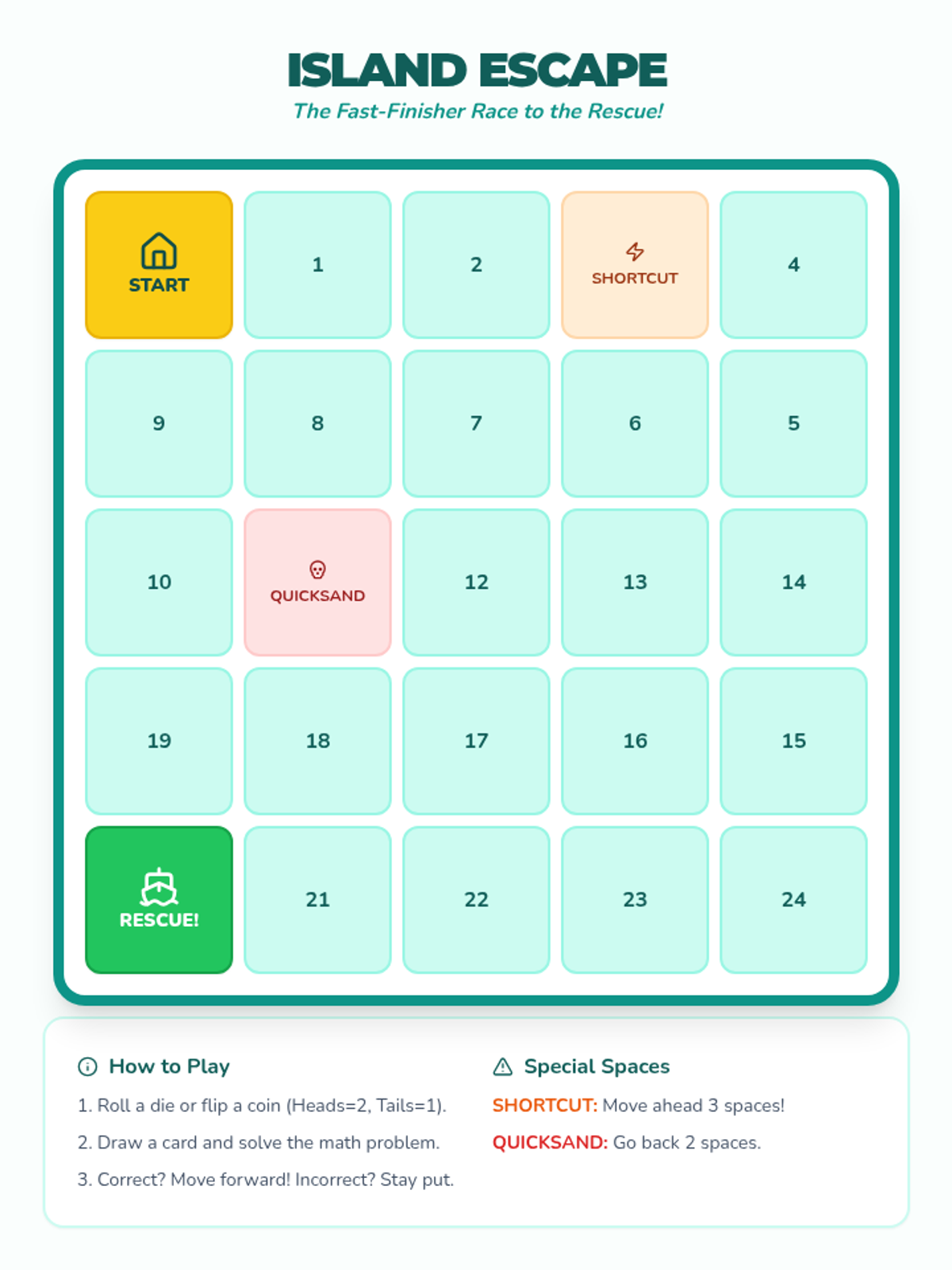
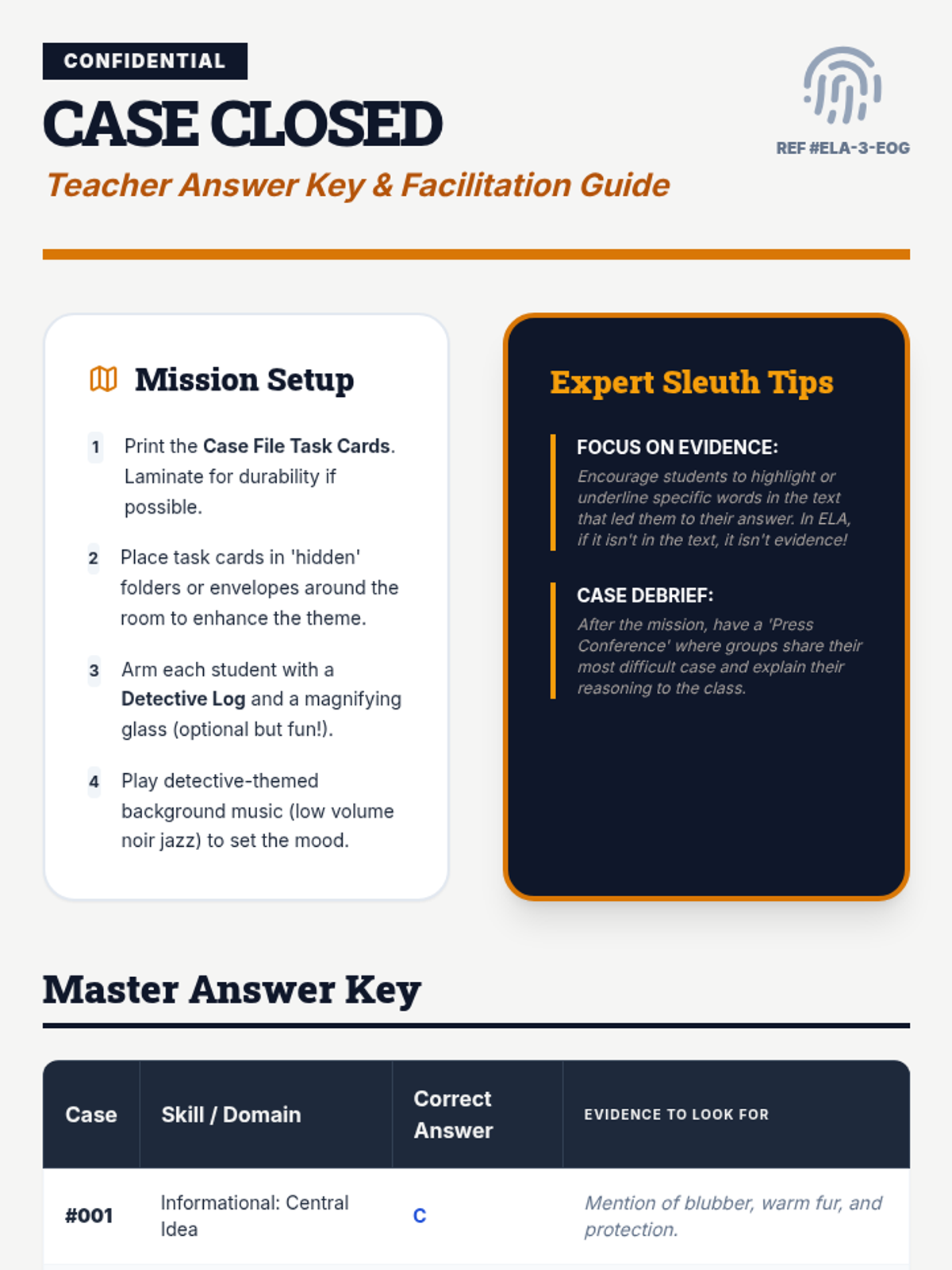
A comprehensive 3rd-grade math review game designed as an island-themed scavenger hunt. Students solve task cards across all math domains to 'navigate' their way across the island.
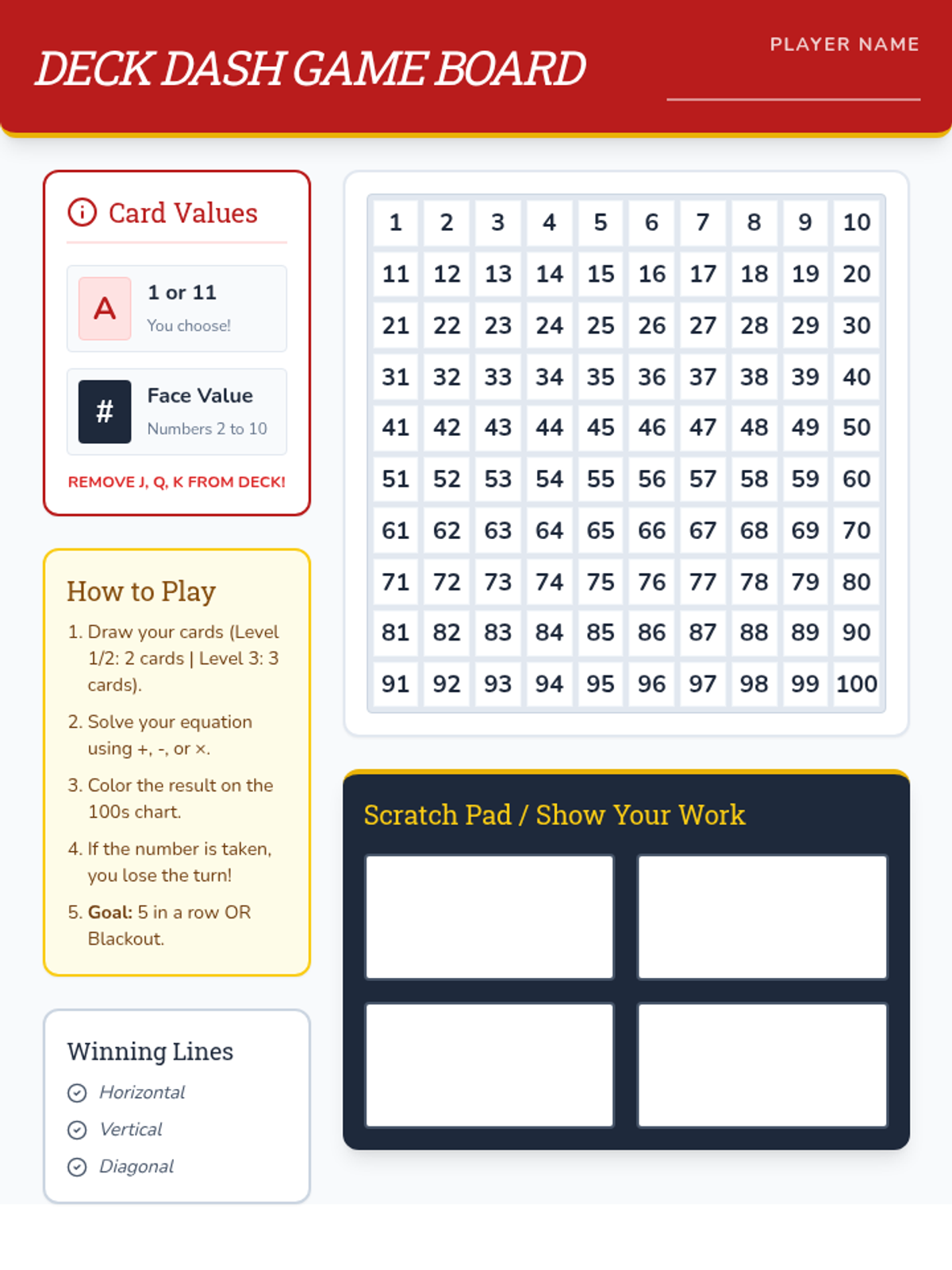
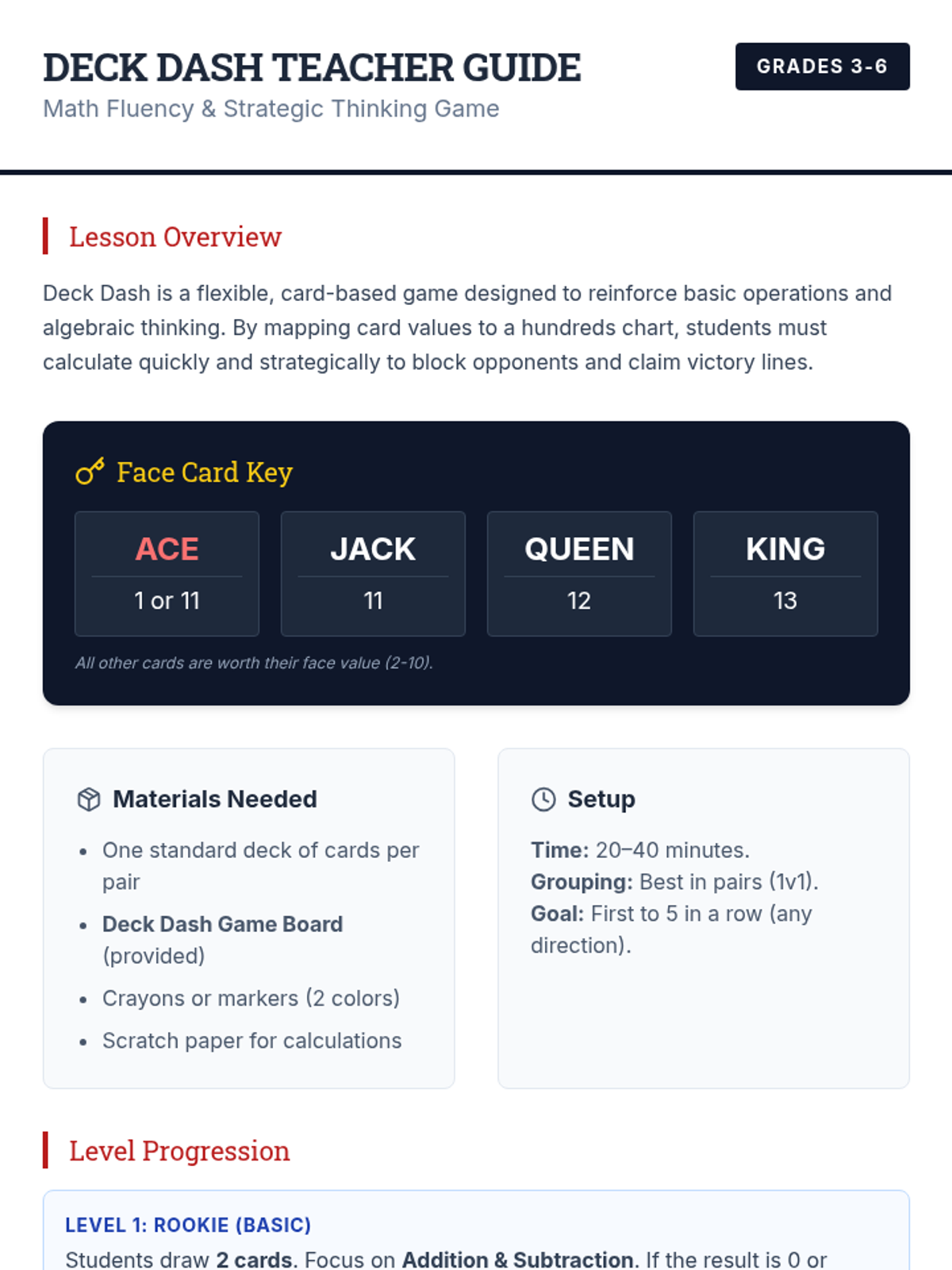
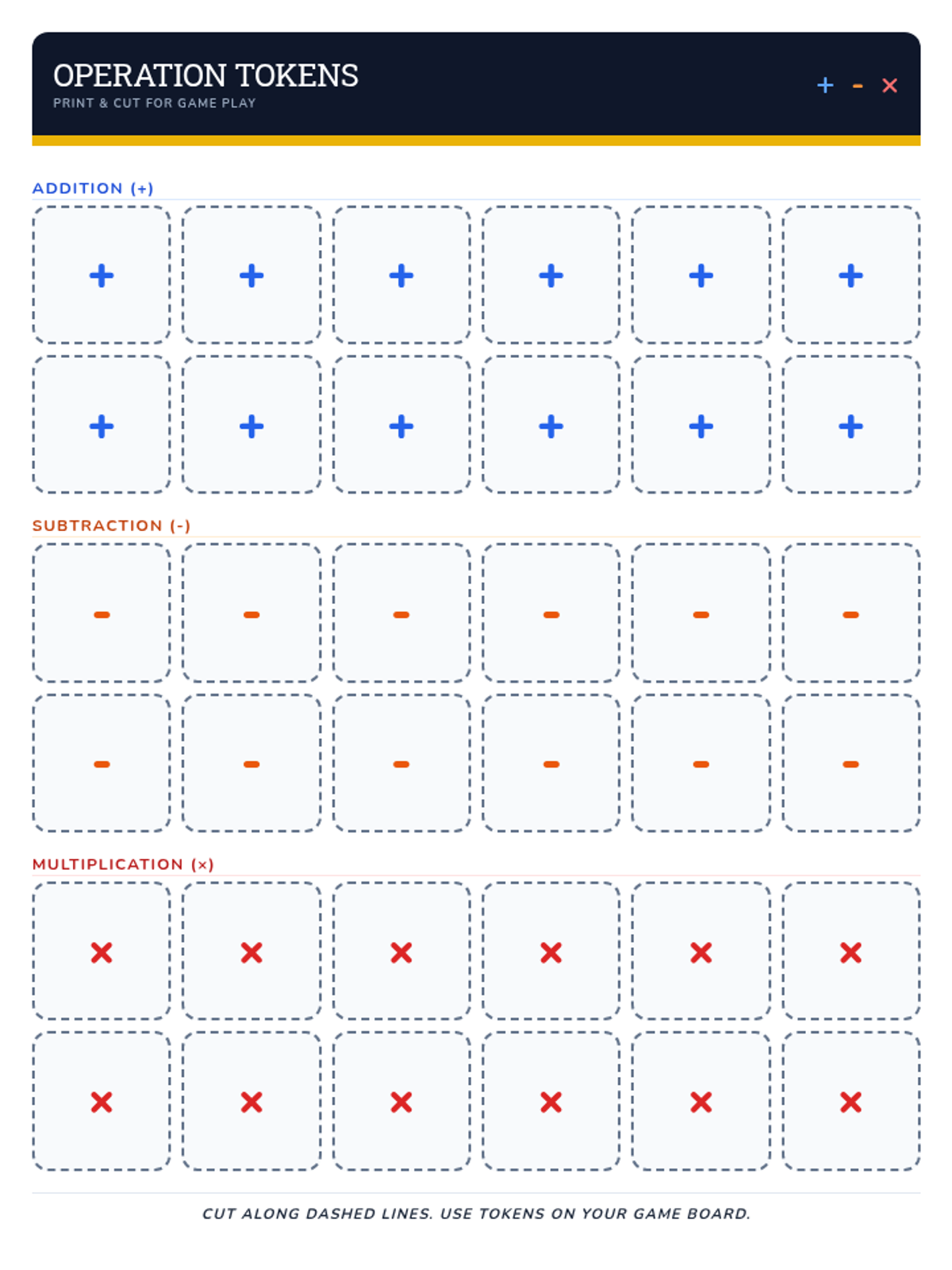
A fast-paced math game using a standard deck of cards where students practice addition, subtraction, and multiplication to claim numbers on a hundreds chart. Includes three levels of difficulty from basic operations to multi-step expressions.
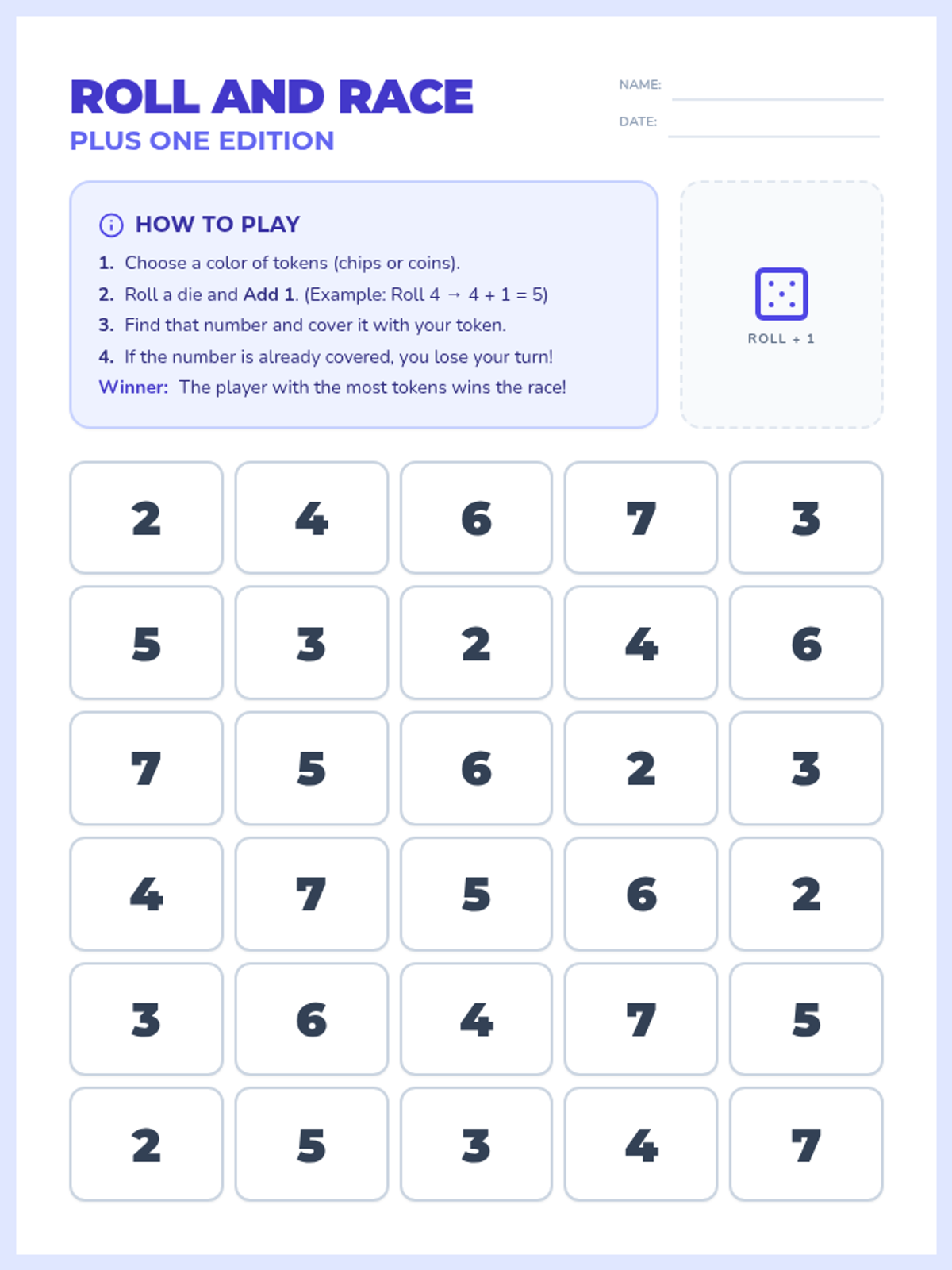
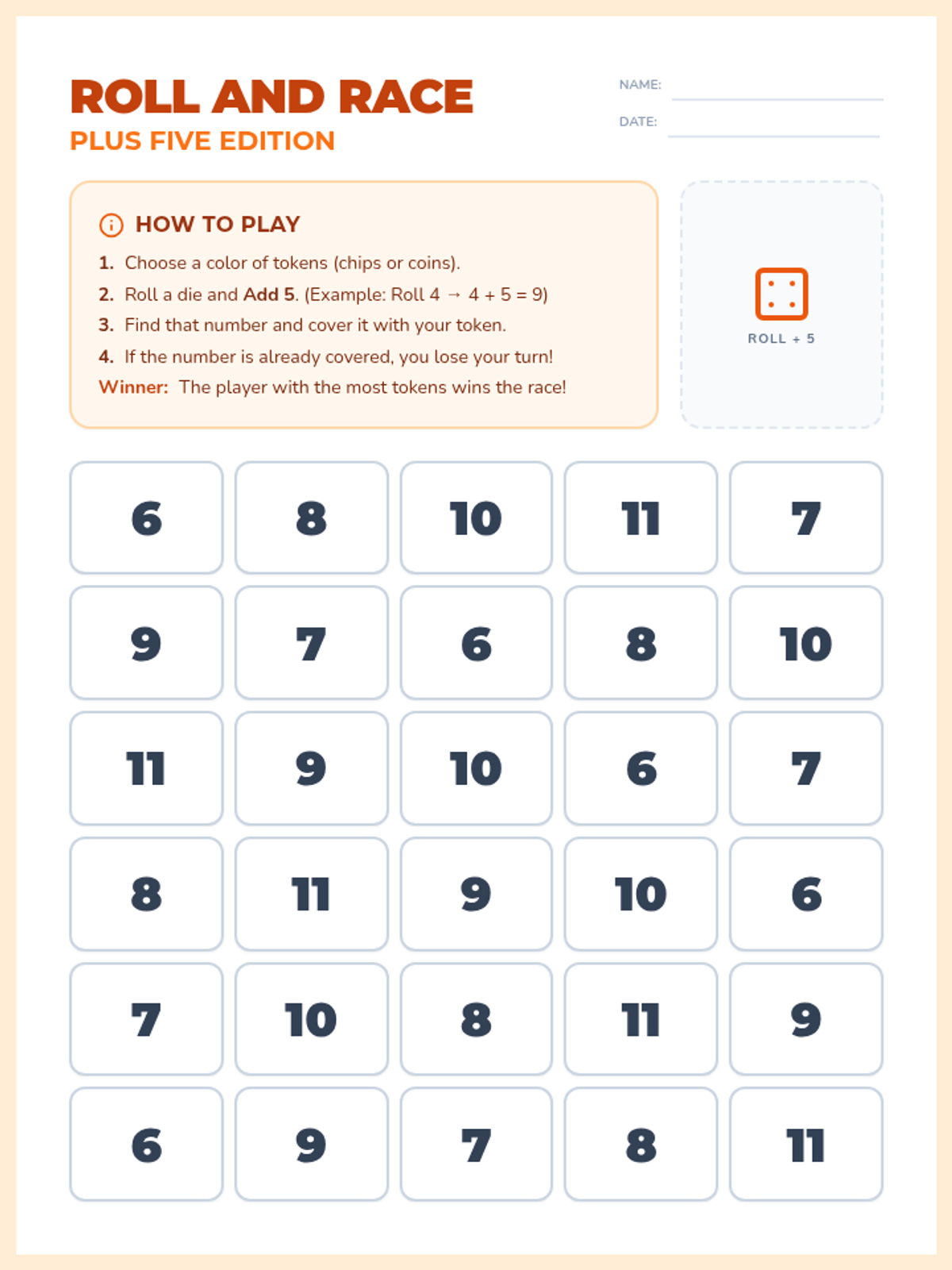
A collection of 'Roll and Race' game boards designed to help students practice basic addition (Adding 1 and Adding 10) using standard dice. These boards are formatted for front-to-back printing.
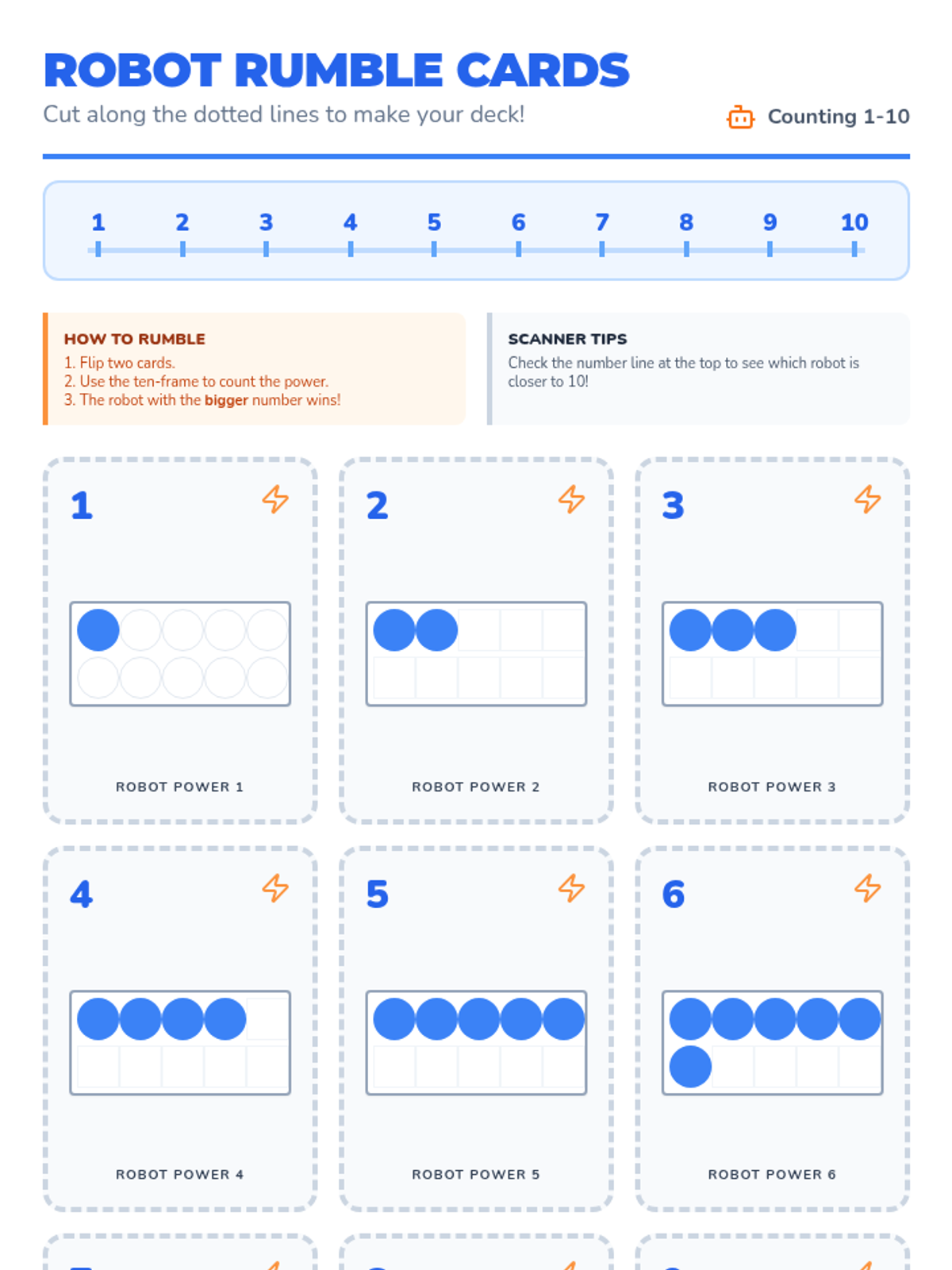
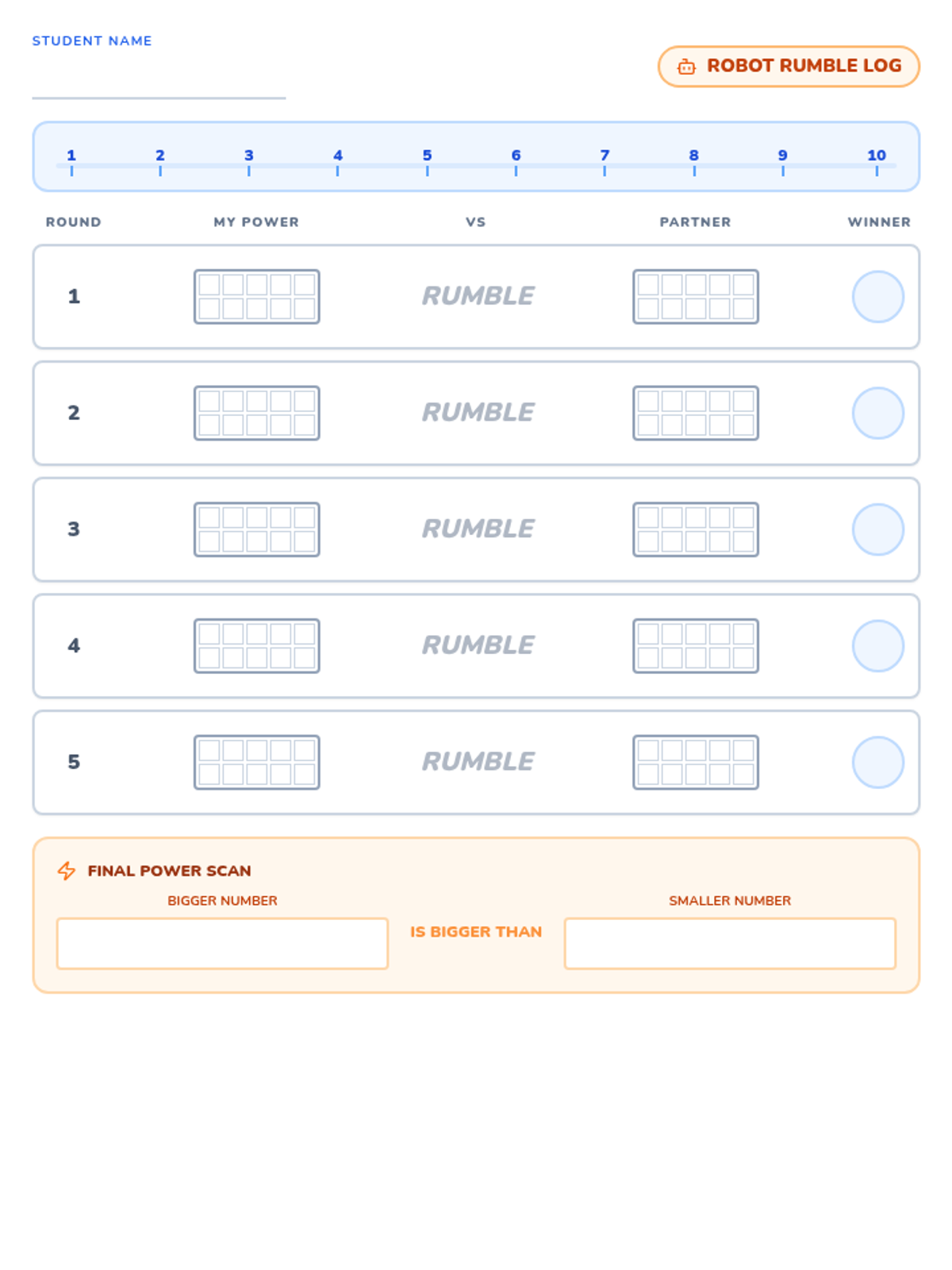
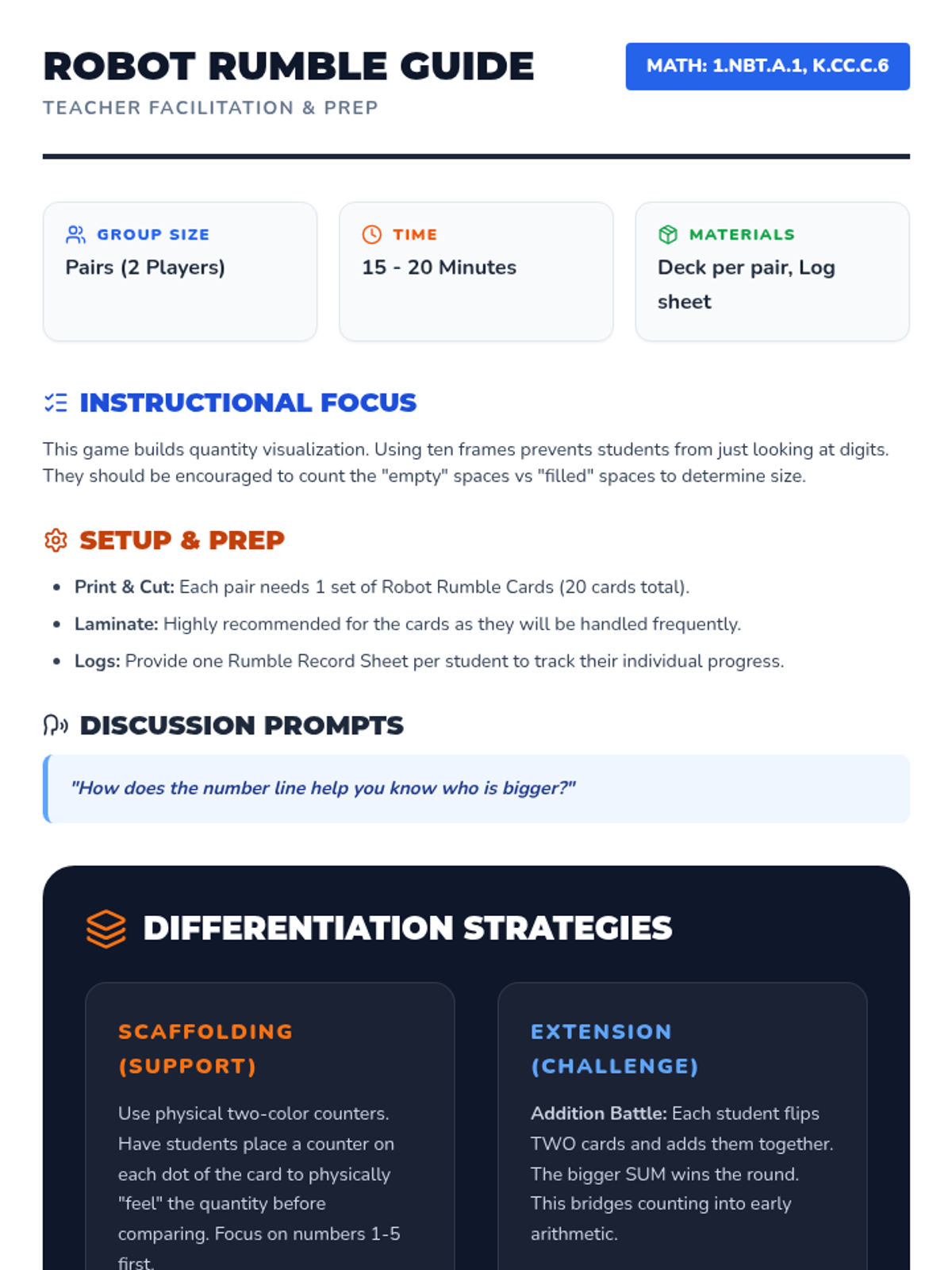
A high-energy card game where students practice counting 1-10 and comparing numbers using custom robot playing cards with ten-frame visuals and number lines.
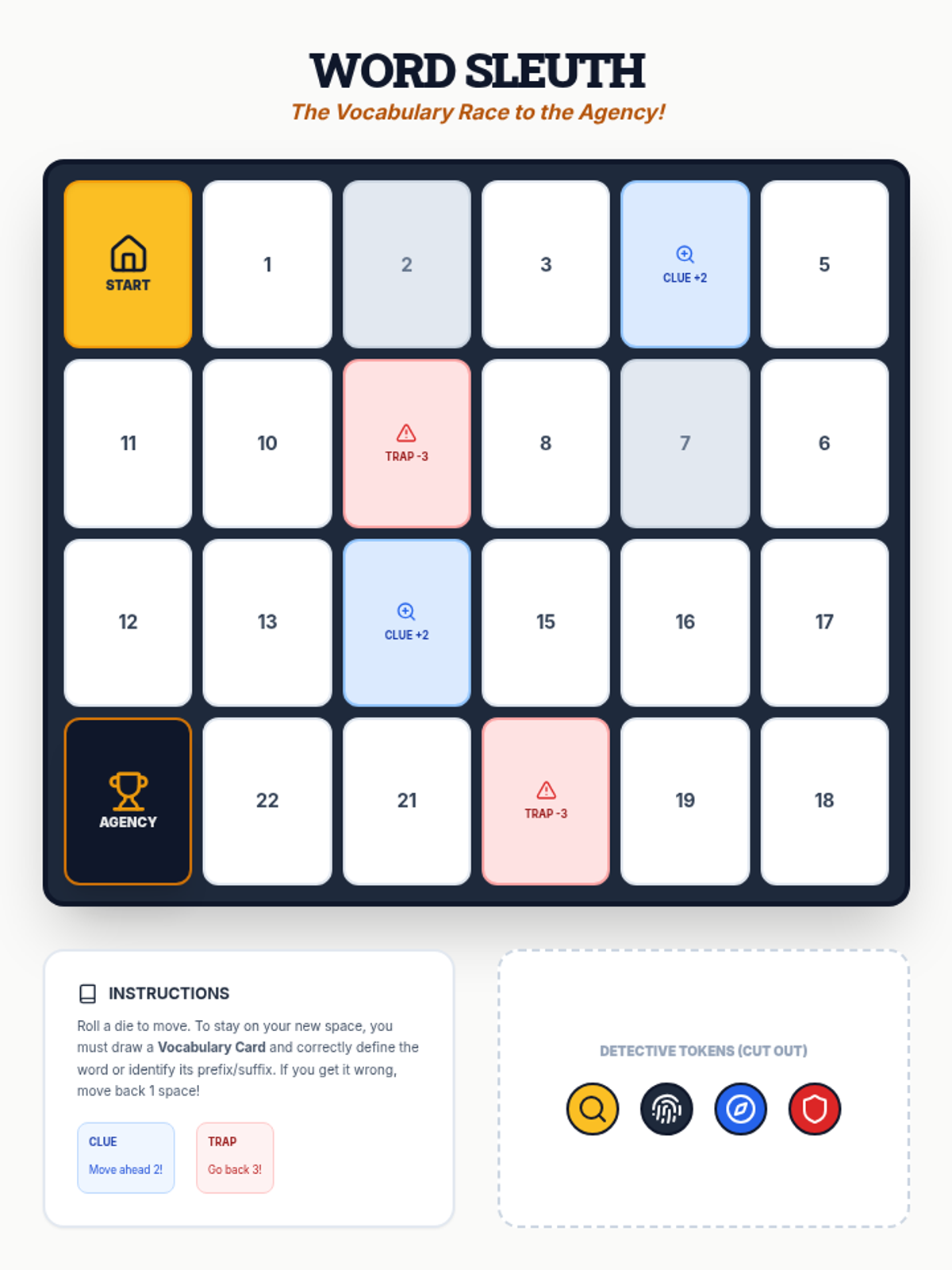
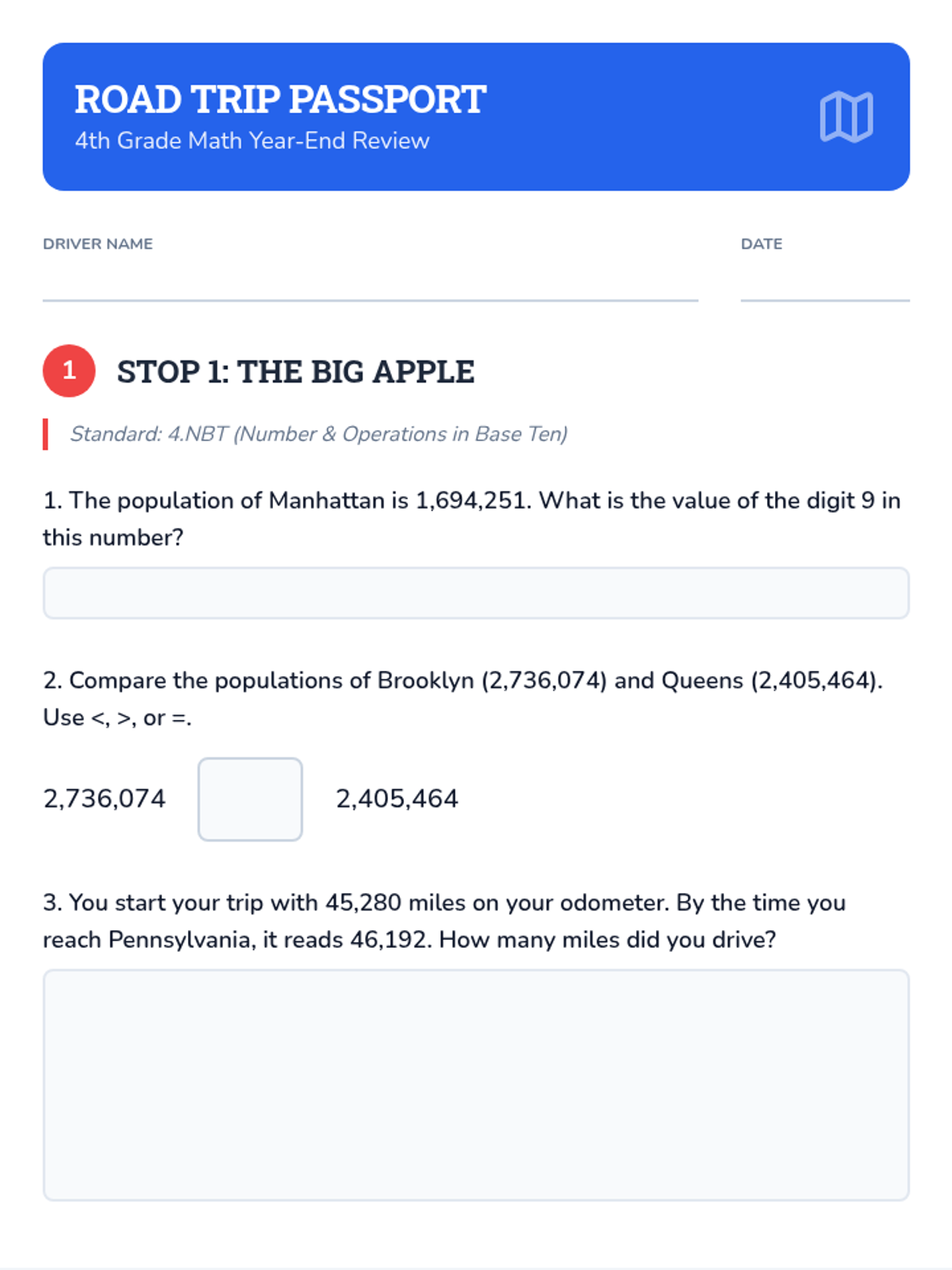
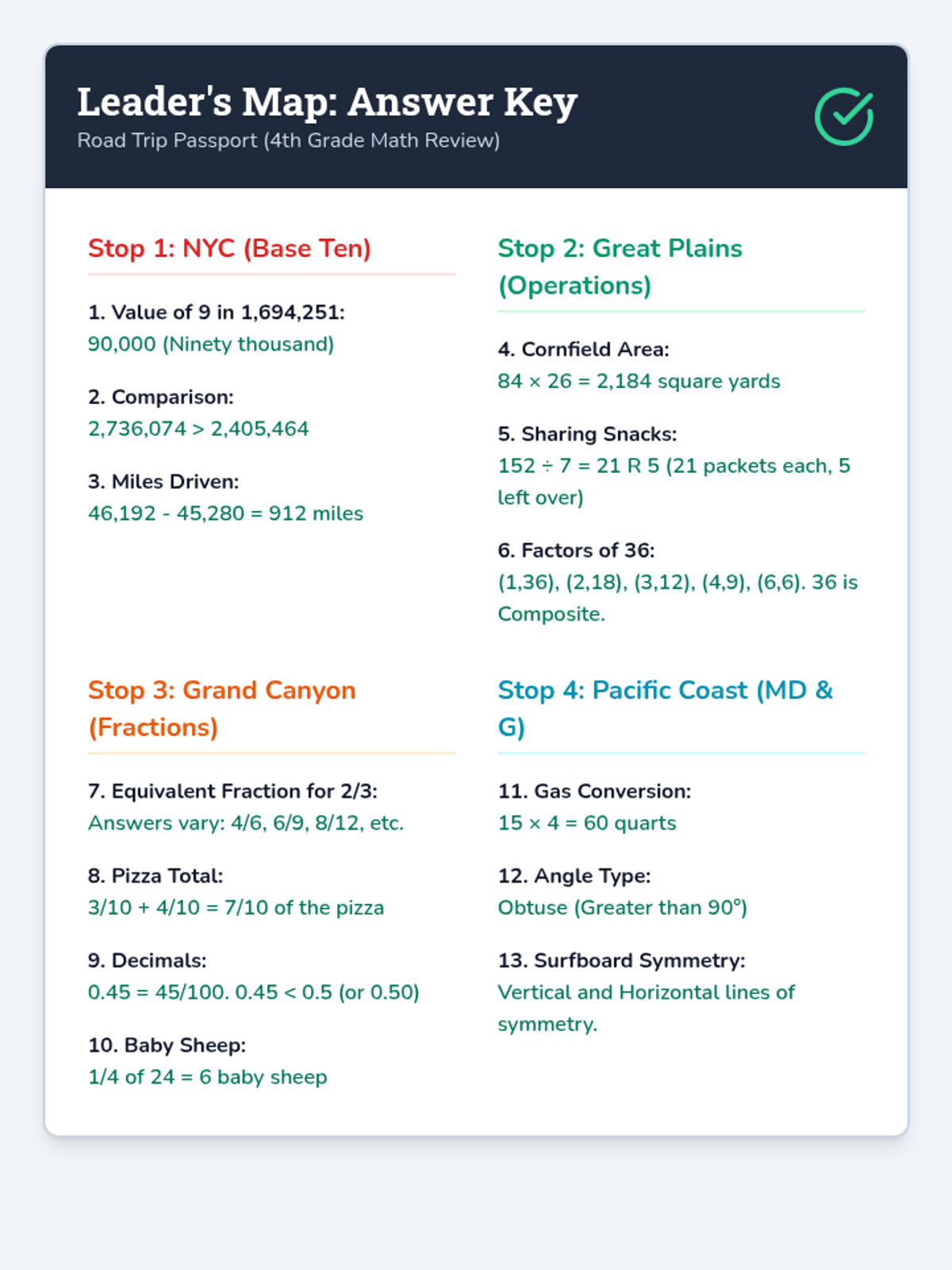
A comprehensive math review lesson where students travel from New York to California, solving grade-level problems to reach each destination.
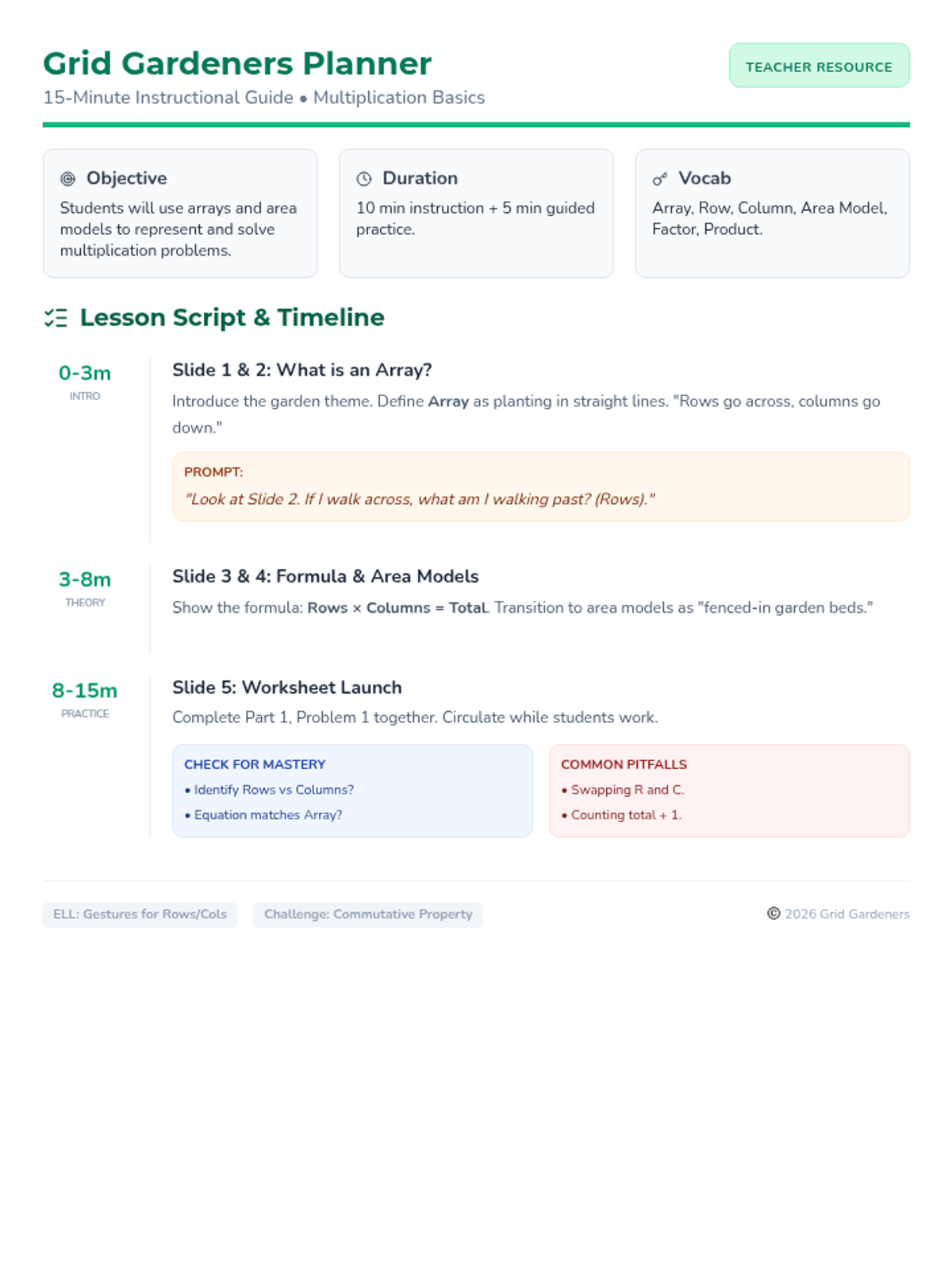
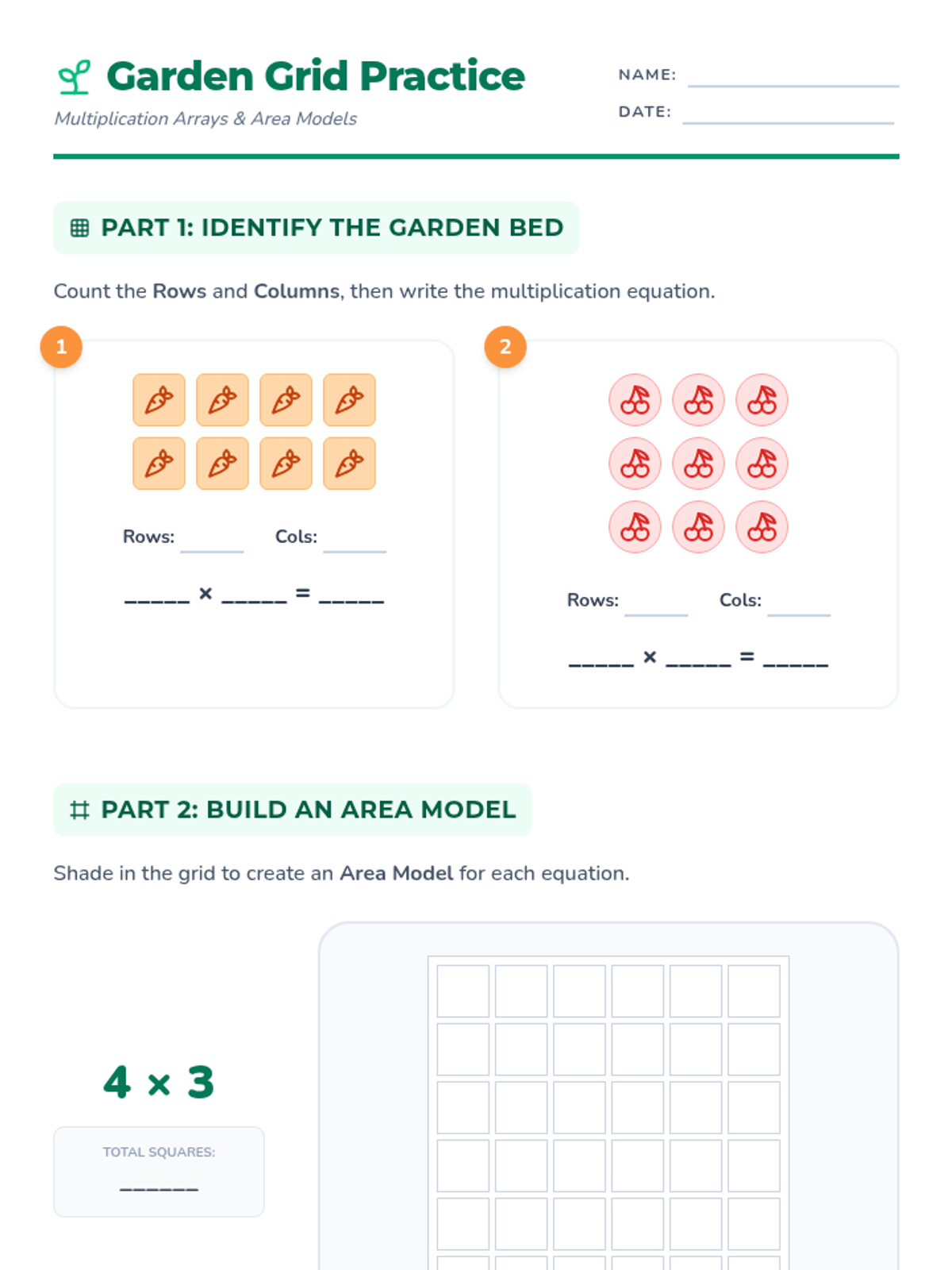
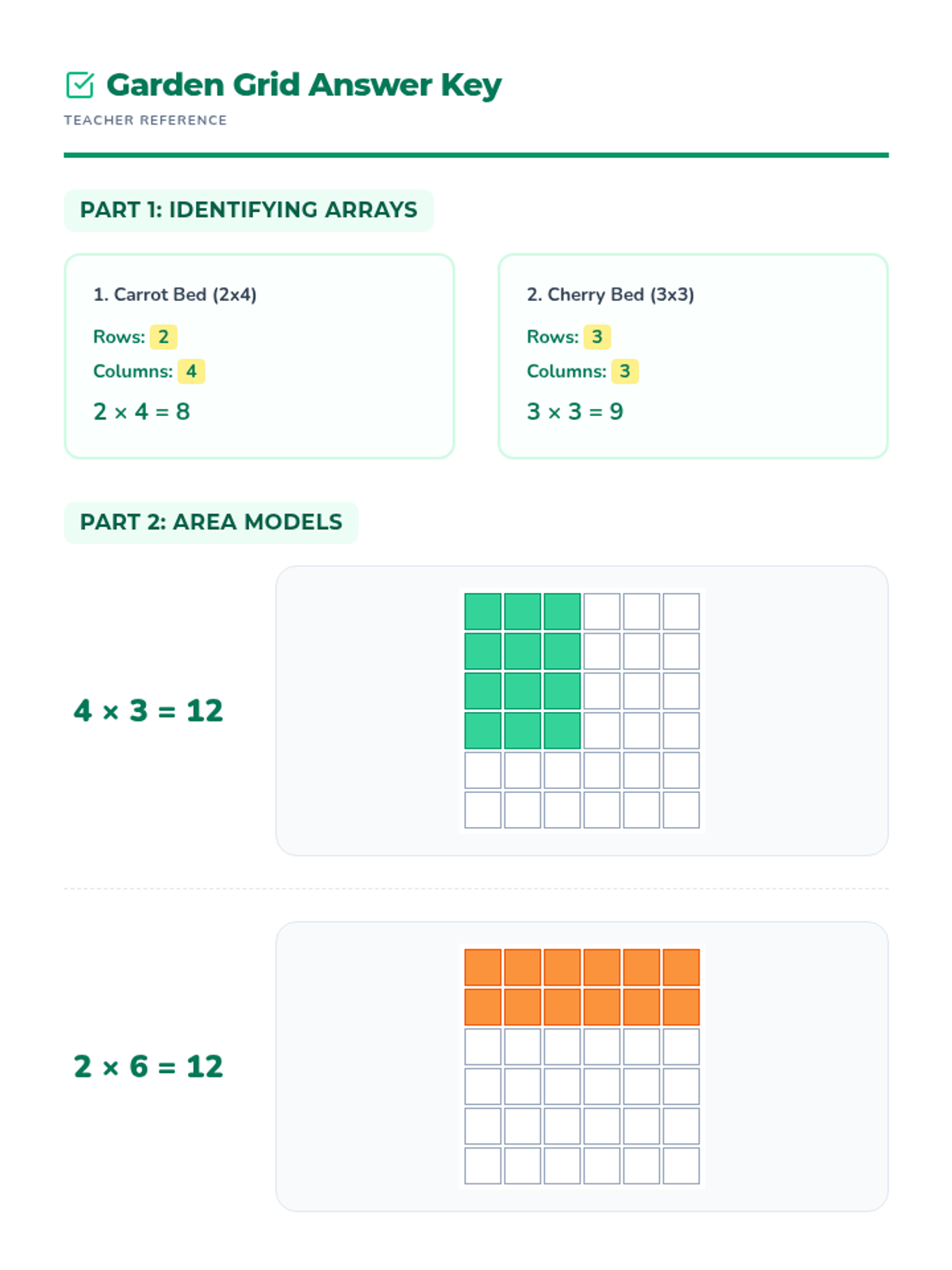
A 15-minute introduction to multiplication using arrays and area models, themed around a community garden. Students learn to identify rows and columns and translate them into multiplication equations.
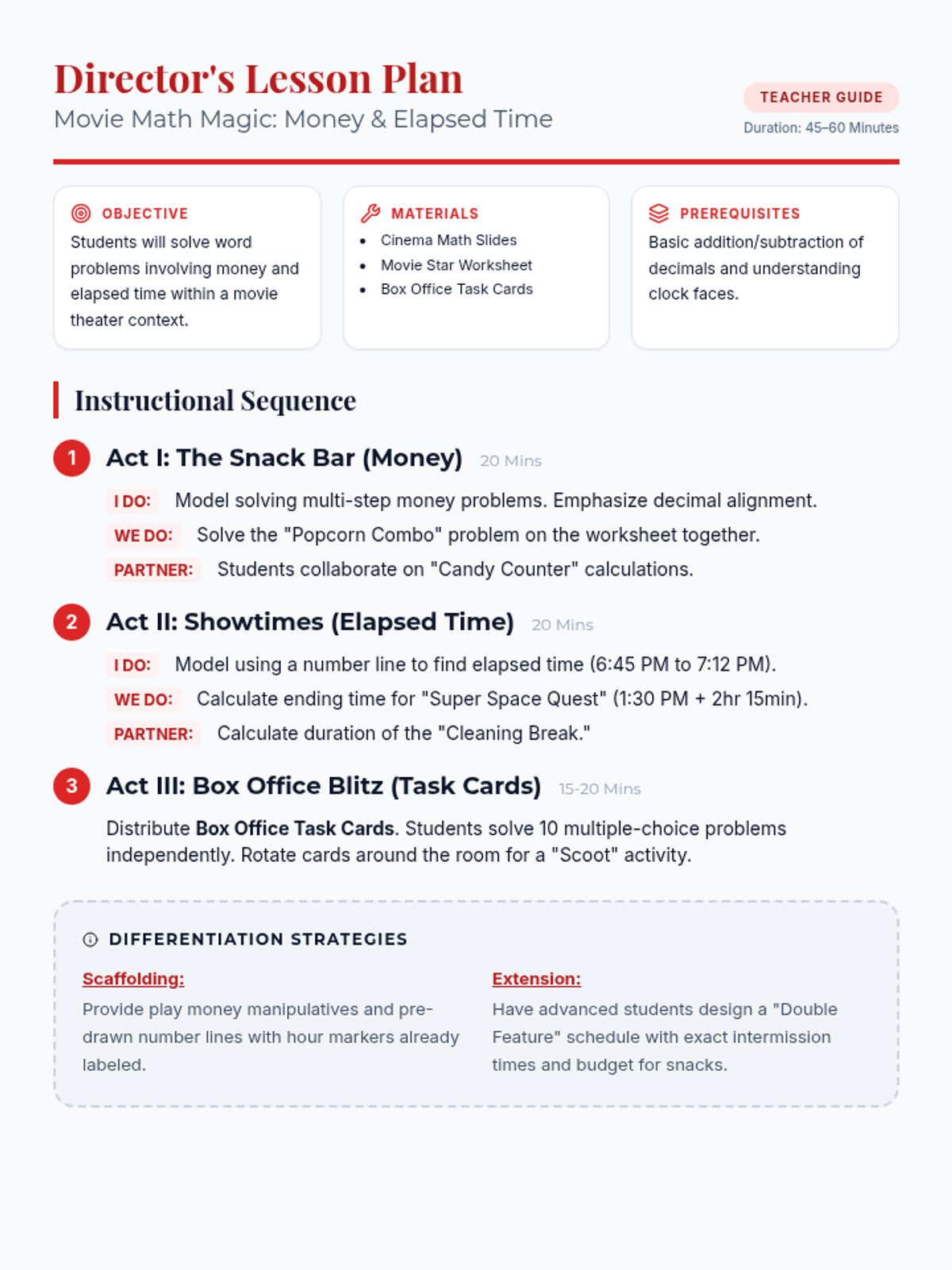
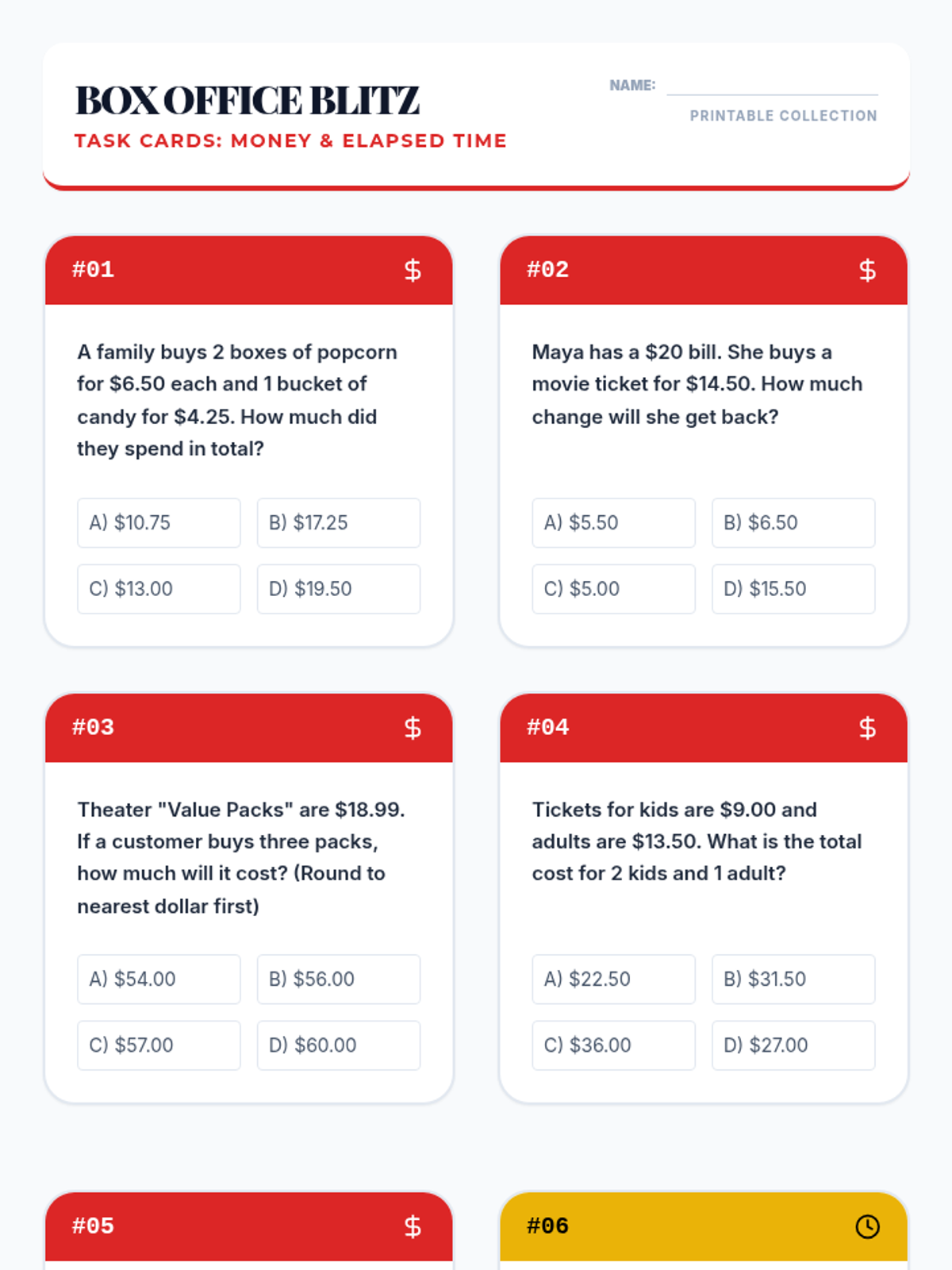
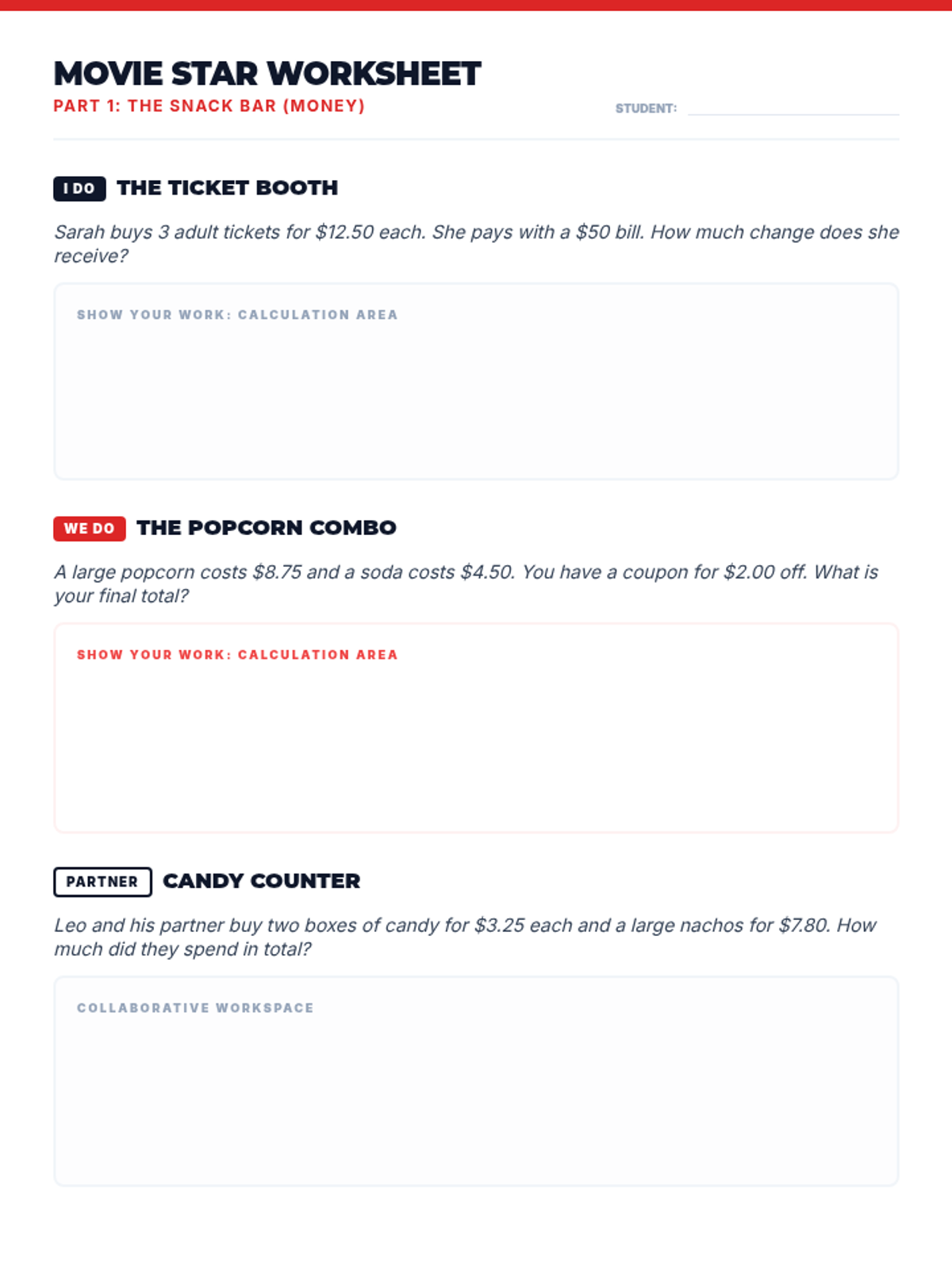
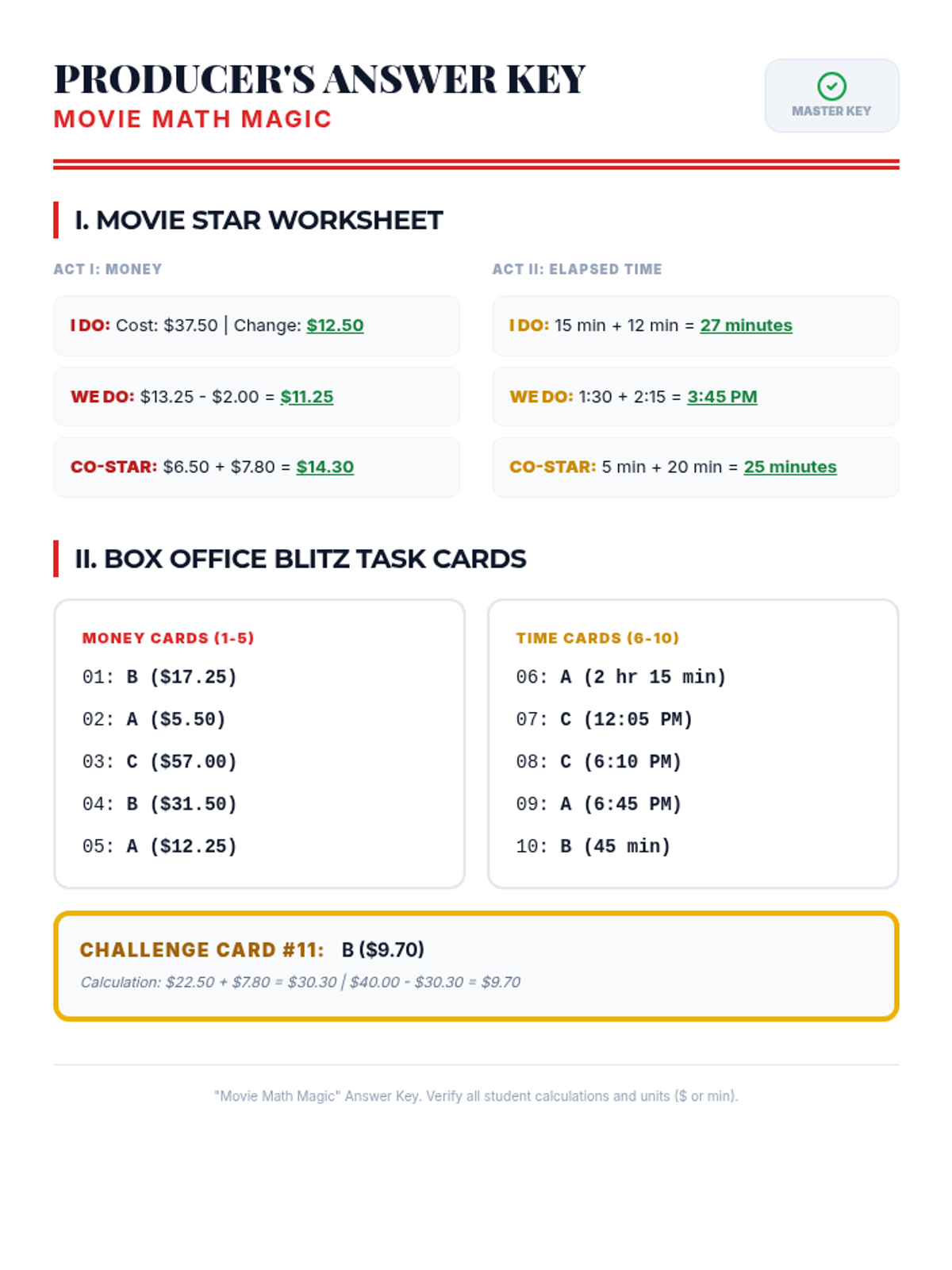
A math lesson themed around a movie theater, covering money and elapsed time word problems through explicit instruction and task card practice.
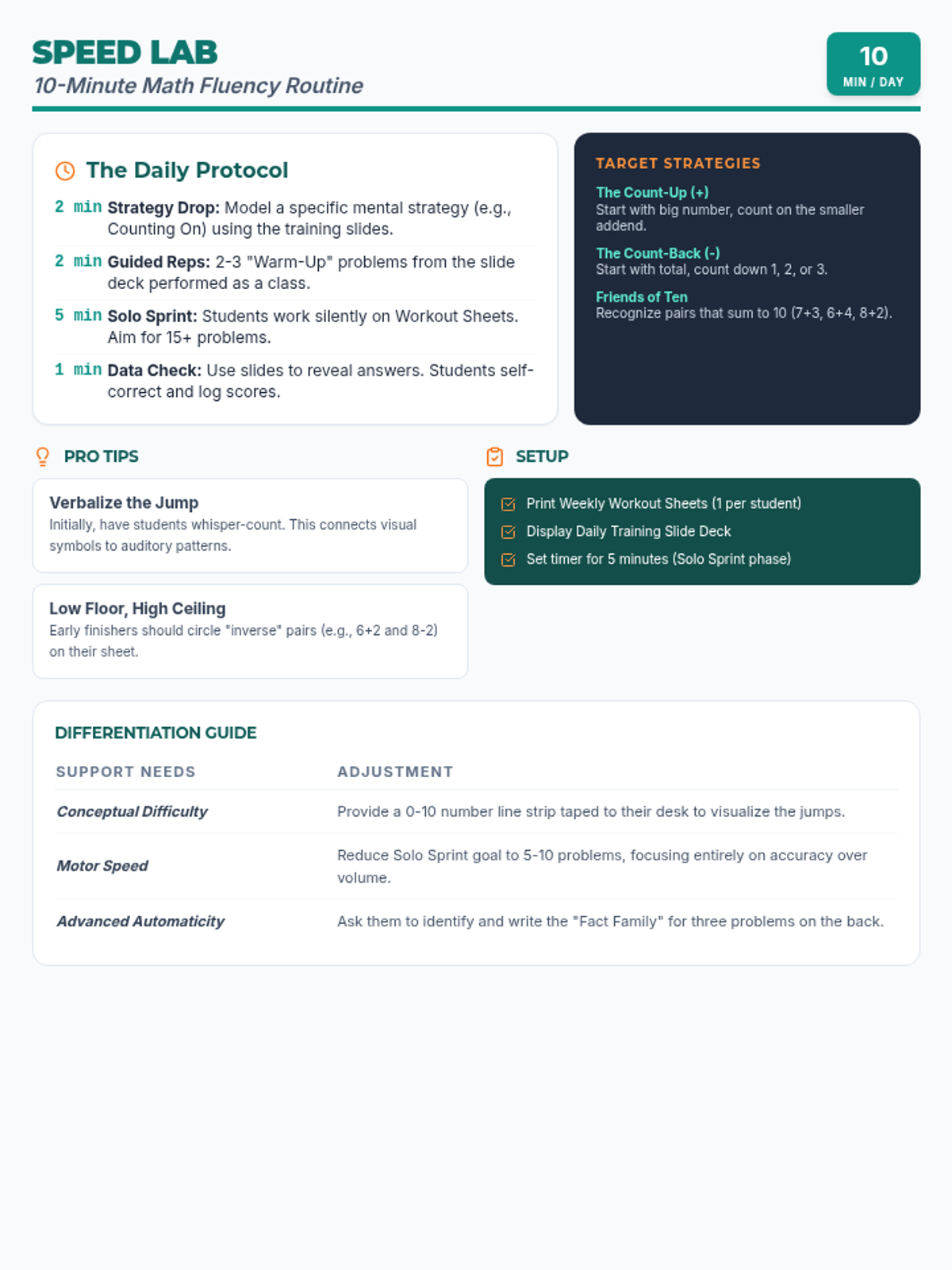
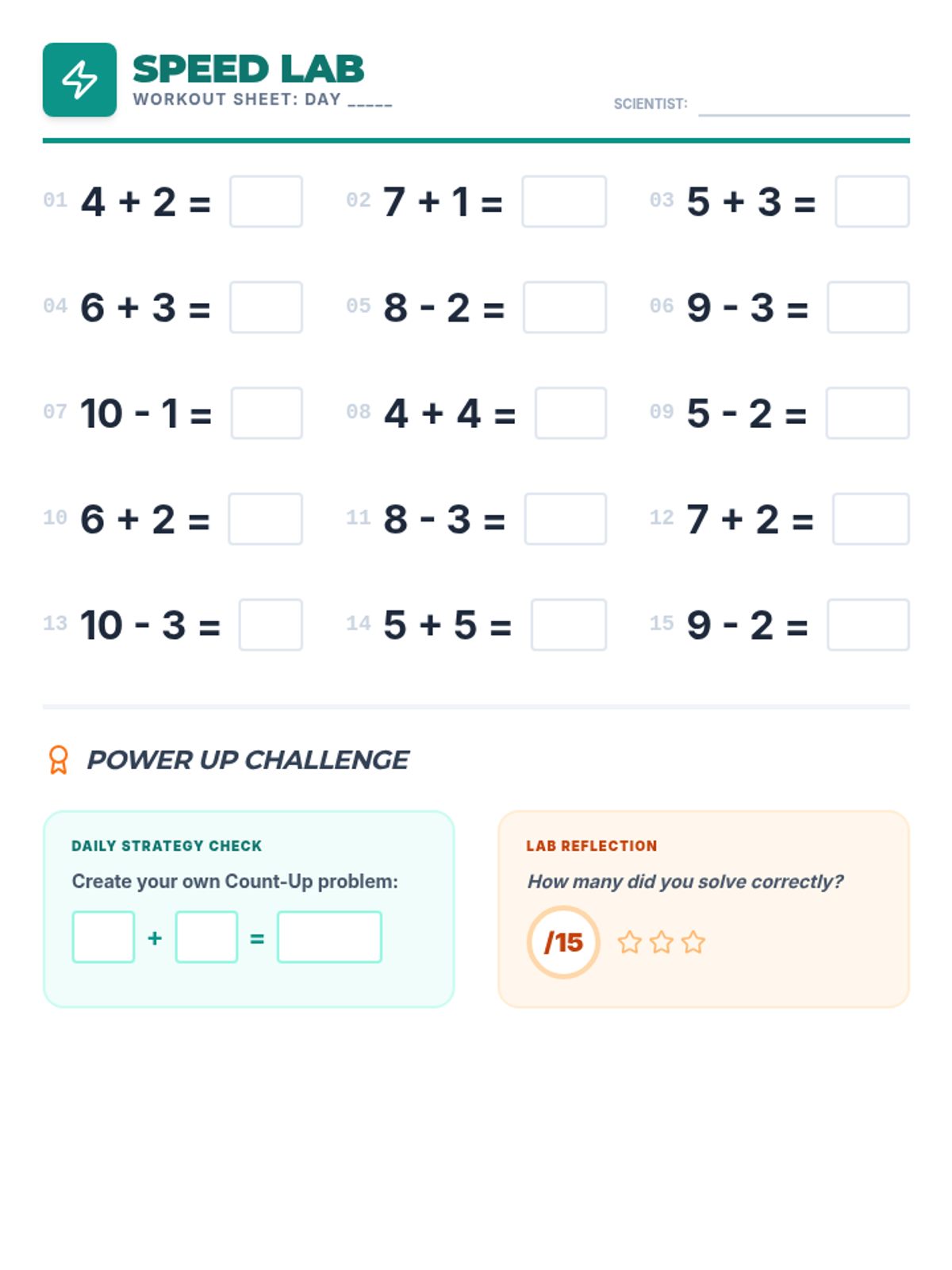
A 10-minute daily math fluency routine focusing on addition and subtraction within 10 using high-leverage strategies like counting on and making ten.
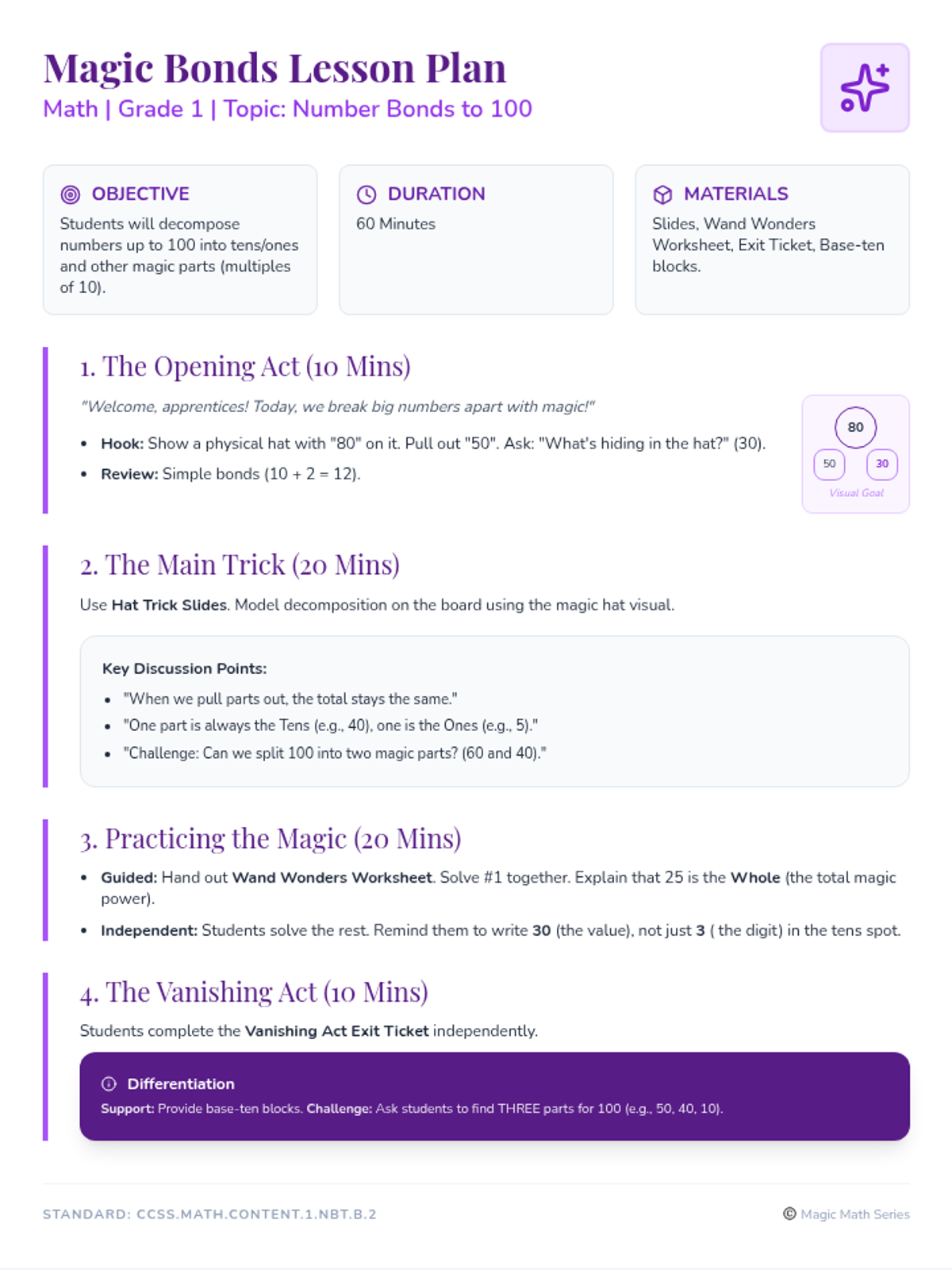
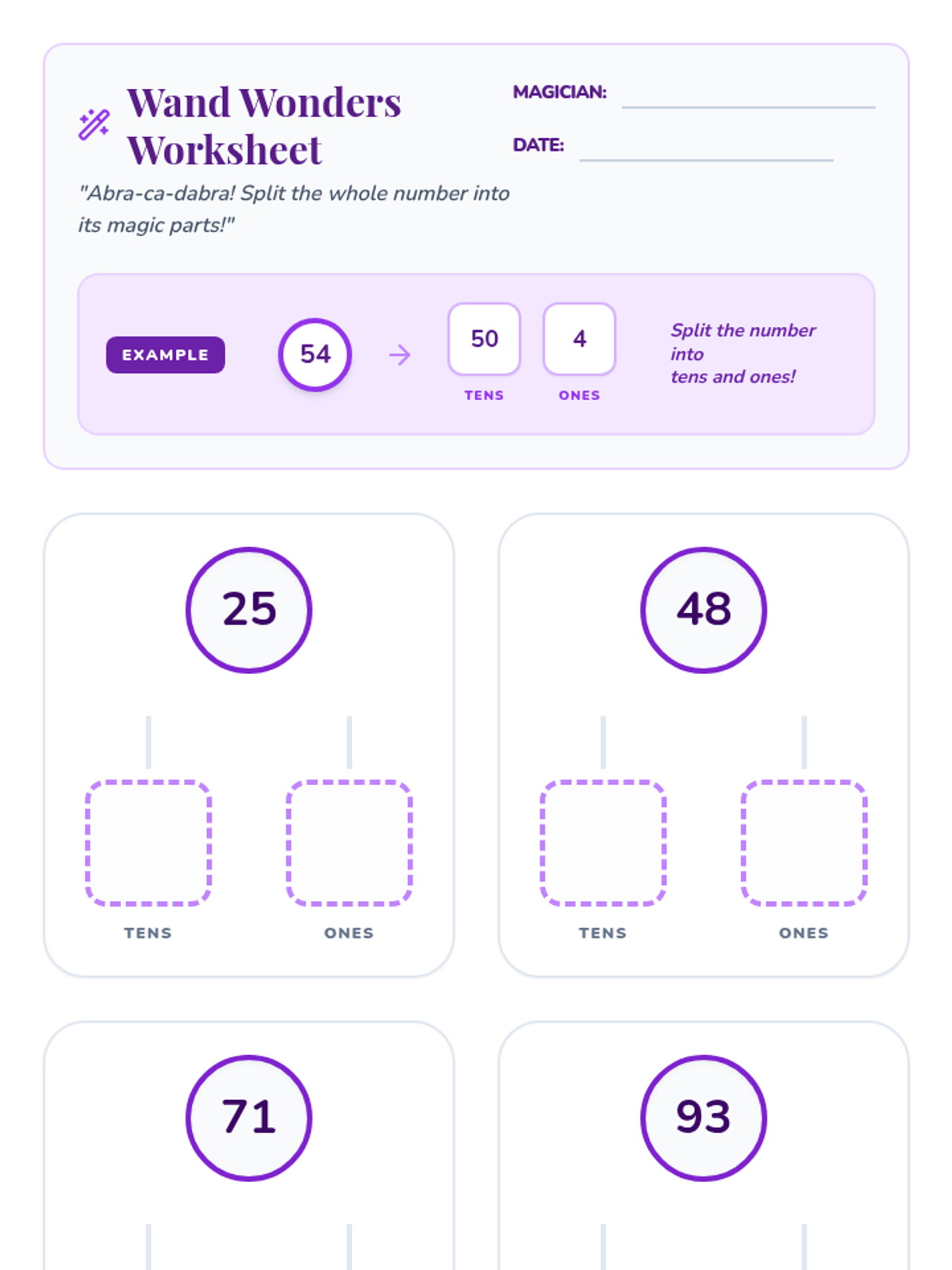
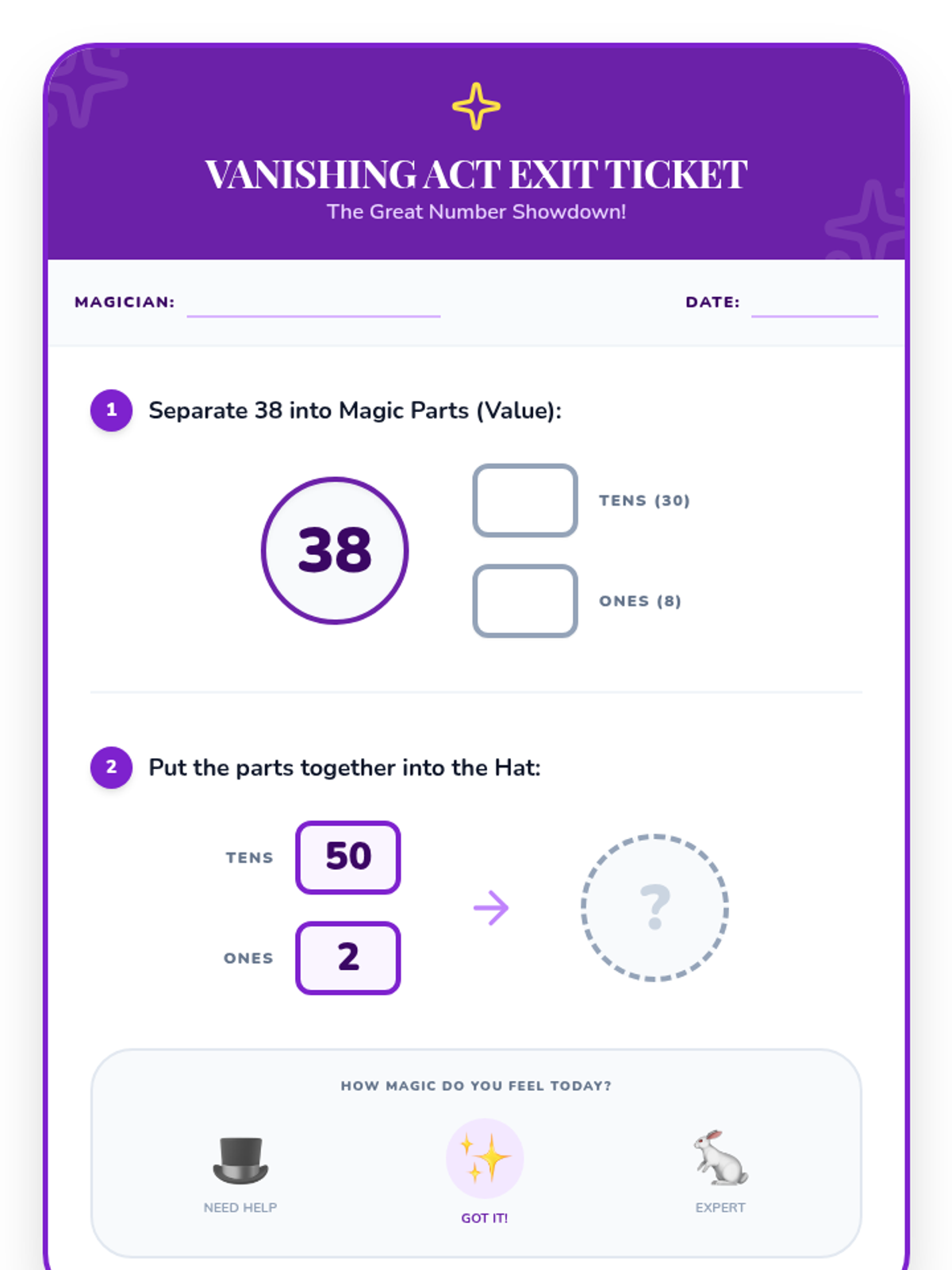
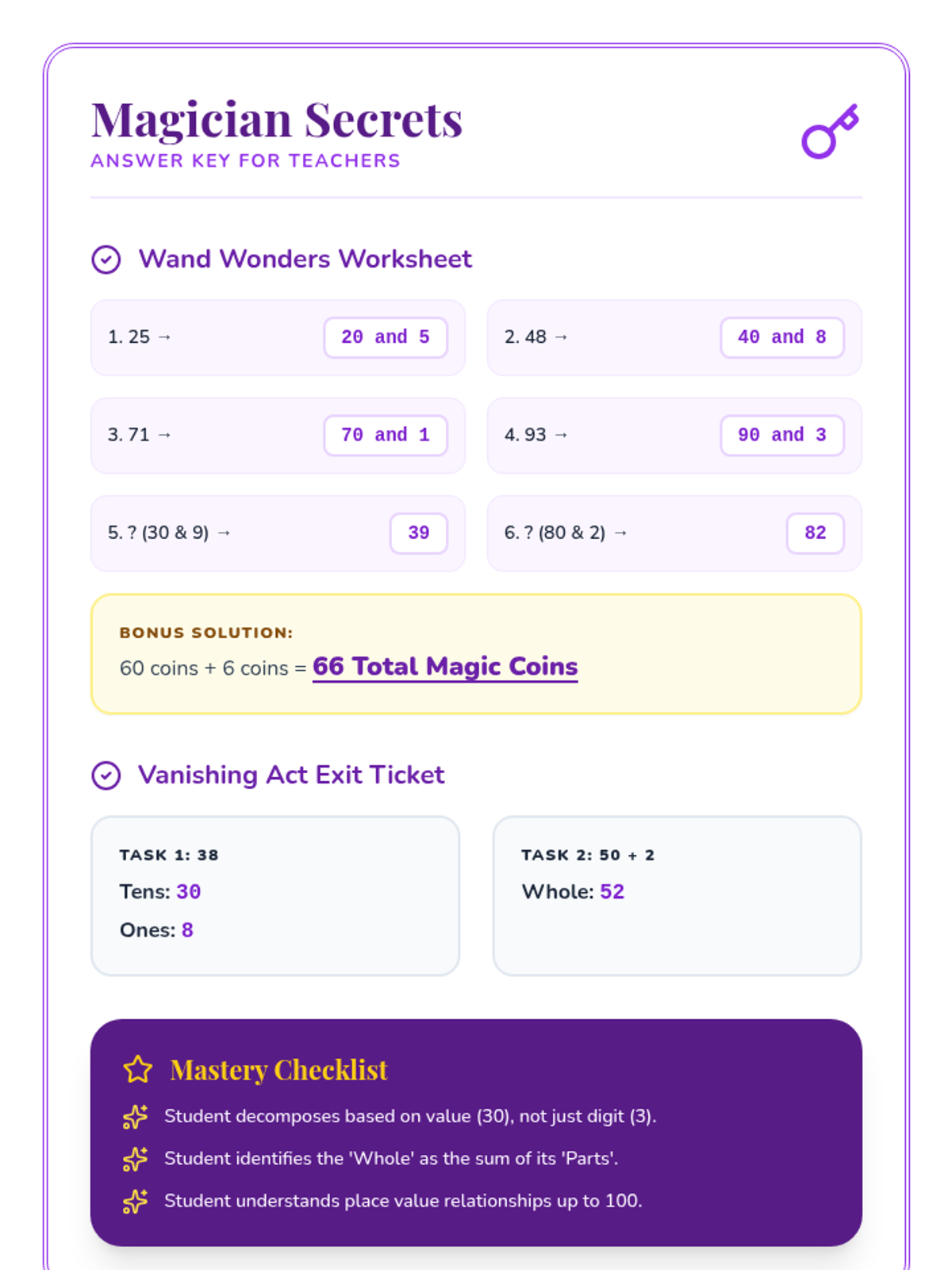
A magical exploration of number bonds with sums up to 100, where students use the magician's hat theme to decompose two-digit numbers into tens and ones.
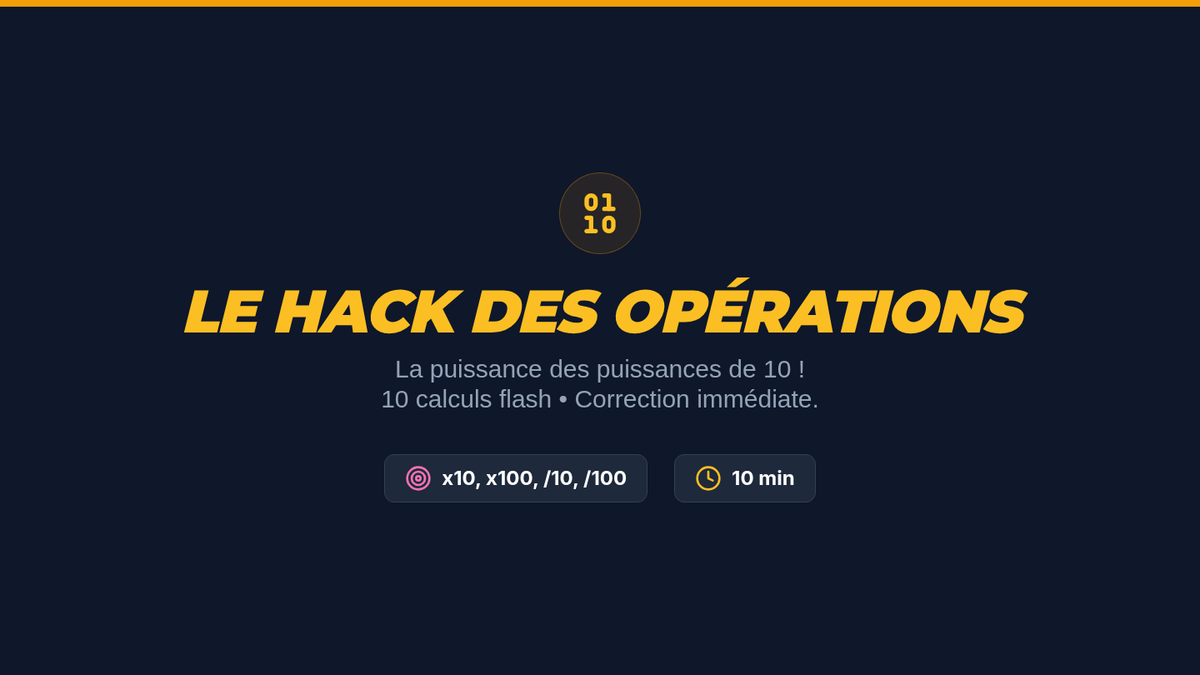
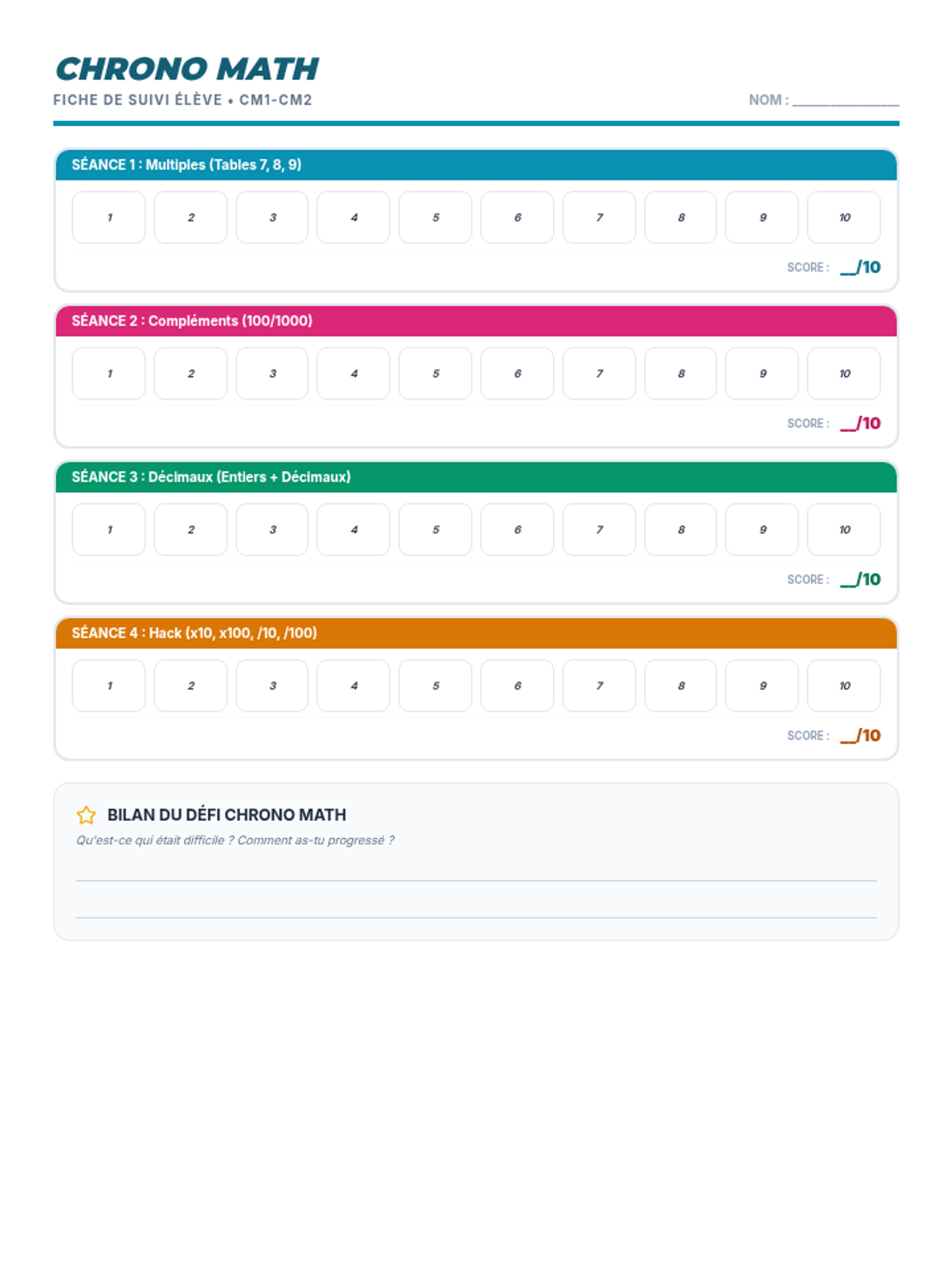
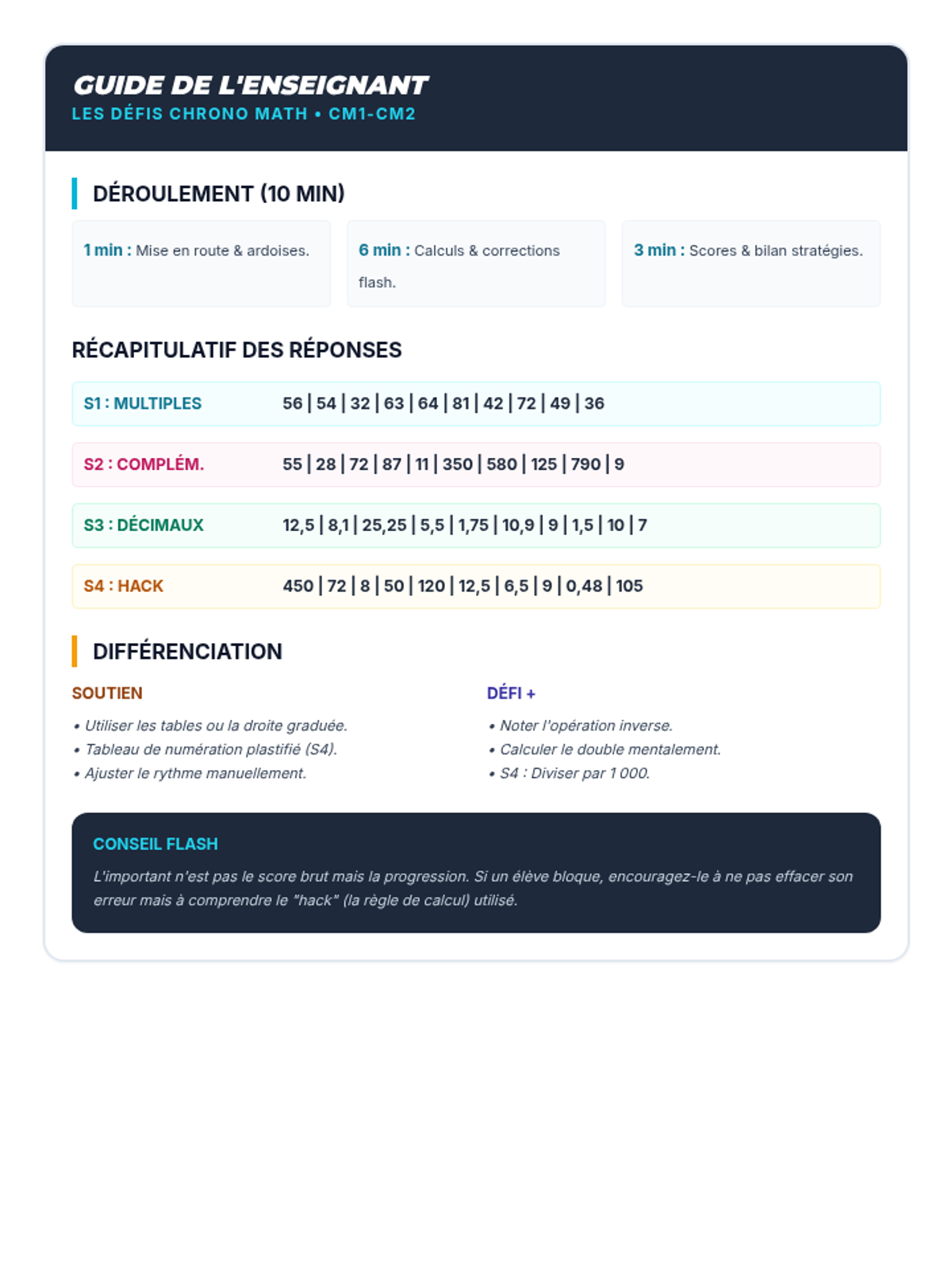
Multiplier et diviser des nombres entiers et décimaux par 10, 100 et 1000 en utilisant des stratégies de décalage de virgule.
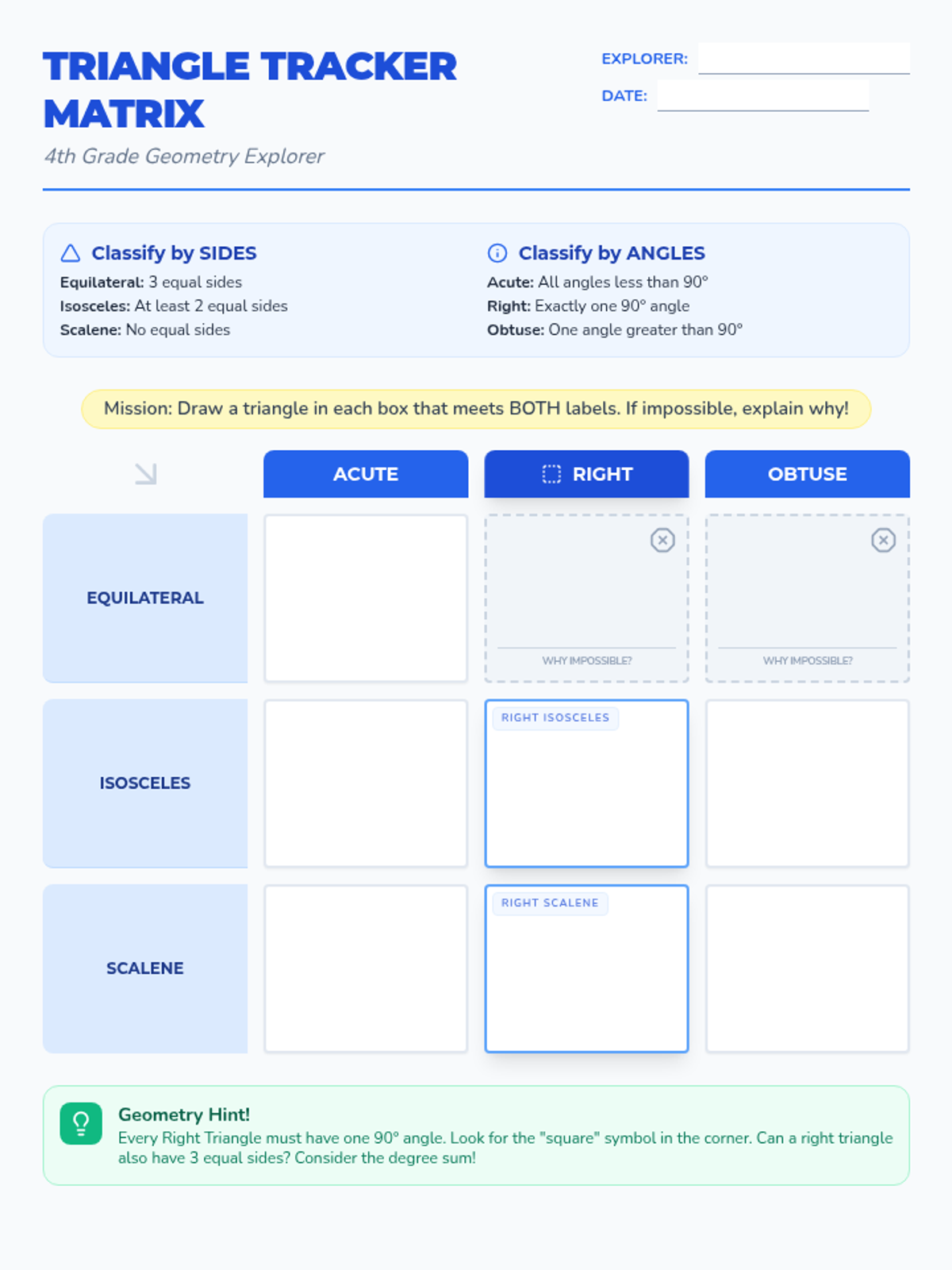
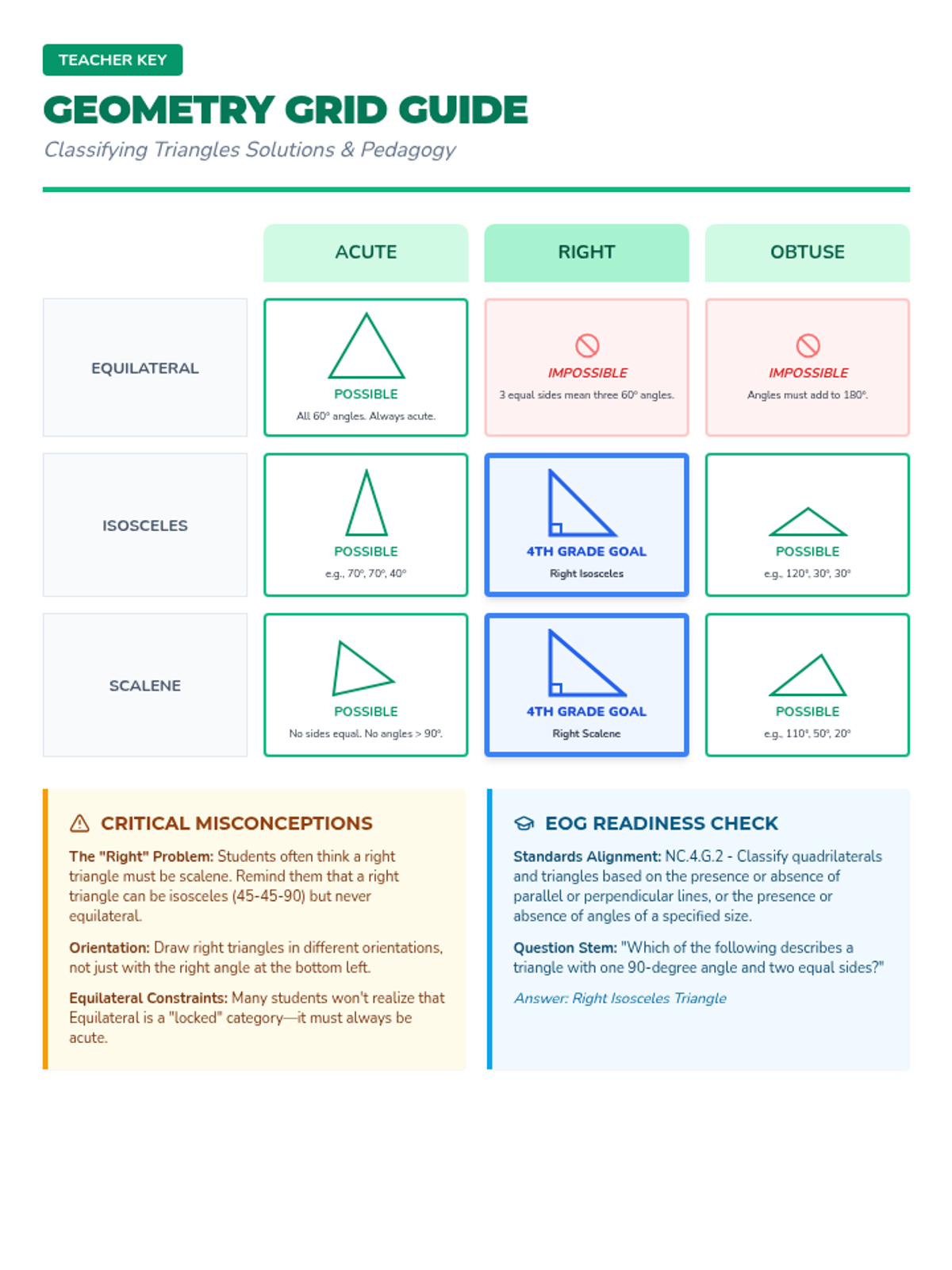
A focused exploration of classifying triangles by their side lengths and angle measures, specifically designed for 4th-grade EOG preparation. Students will identify and draw triangles based on dual criteria and investigate which combinations are physically possible.
Additionner mentalement des nombres décimaux simples (0,1 ; 0,5 ; 0,25) à des entiers pour consolider la notion de valeur de position.
Calculer rapidement les compléments à 100 et à 1000 pour développer des stratégies de calcul mental efficaces.
Entraînement intensif sur les tables de multiplication de 7, 8 et 9 à travers un format flash rapide pour renforcer la mémorisation.
Un grand défi final pour réviser les probabilités et faire la synthèse de l'année.
Un projet d'architecture pour étudier les solides et les échelles.
Une fouille archéologique pour calculer des périmètres et aires complexes.