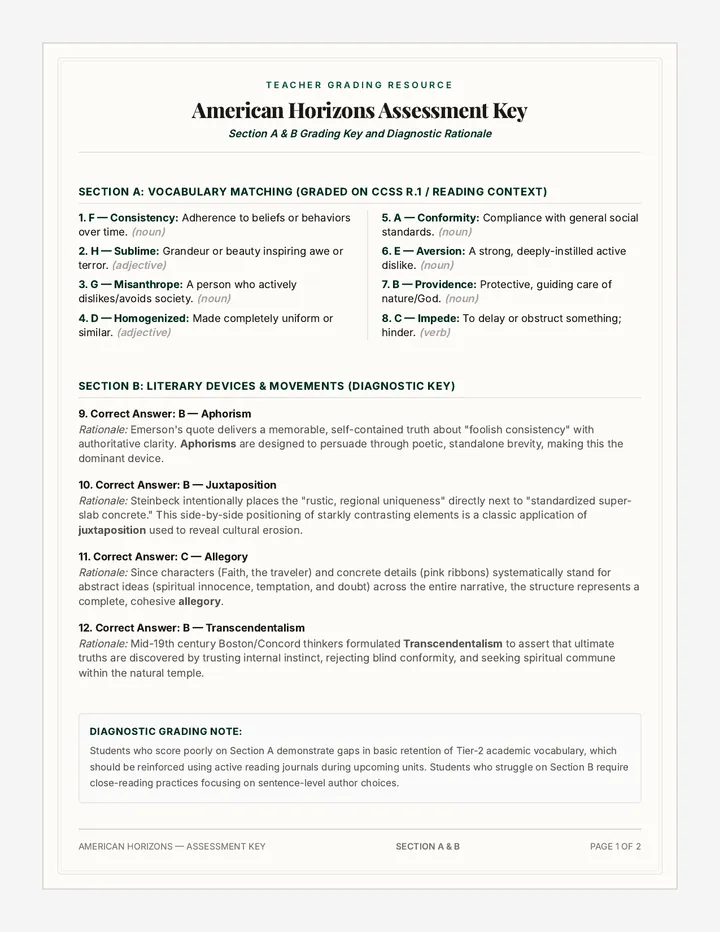
A comprehensive lesson package for analyzing contemporary expository documentaries using SAT-aligned reading standards, focusing on central ideas, details, inferences, and analogies.
A targeted lesson for ELL students (WIDA Levels 1-2) focusing on character analysis and reading comprehension of Book 4 of the Odyssey, centered on Telemachus and Menelaus.
A high school ELA lesson exploring the intersection of biology and poetry. Students analyze how anatomical metaphors bridge physical sensation and complex human emotion, culminating in the creation of their own figurative 'anatomies'.
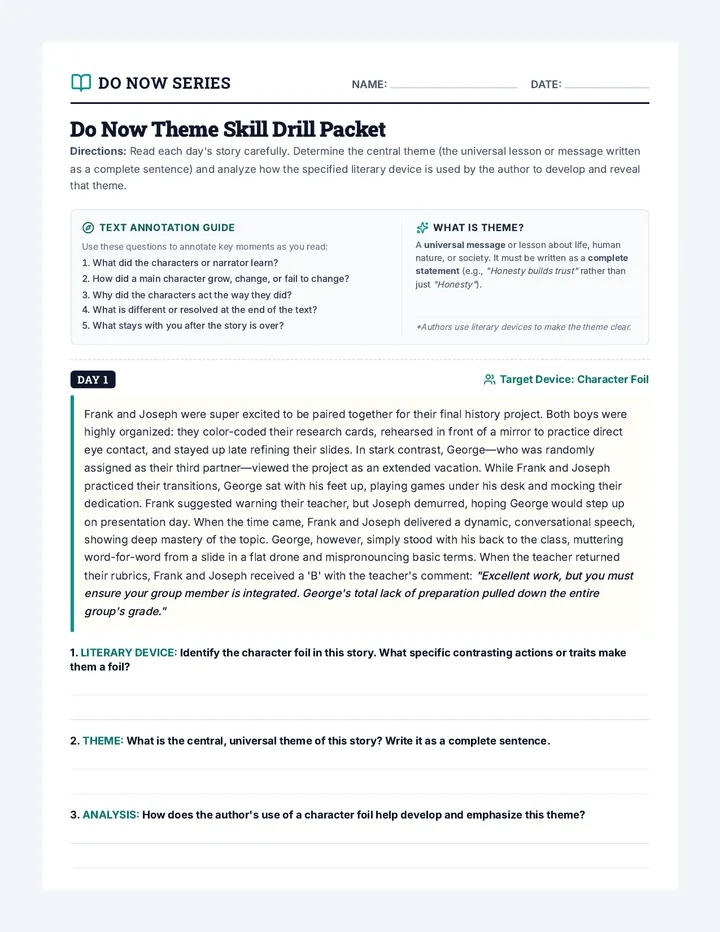
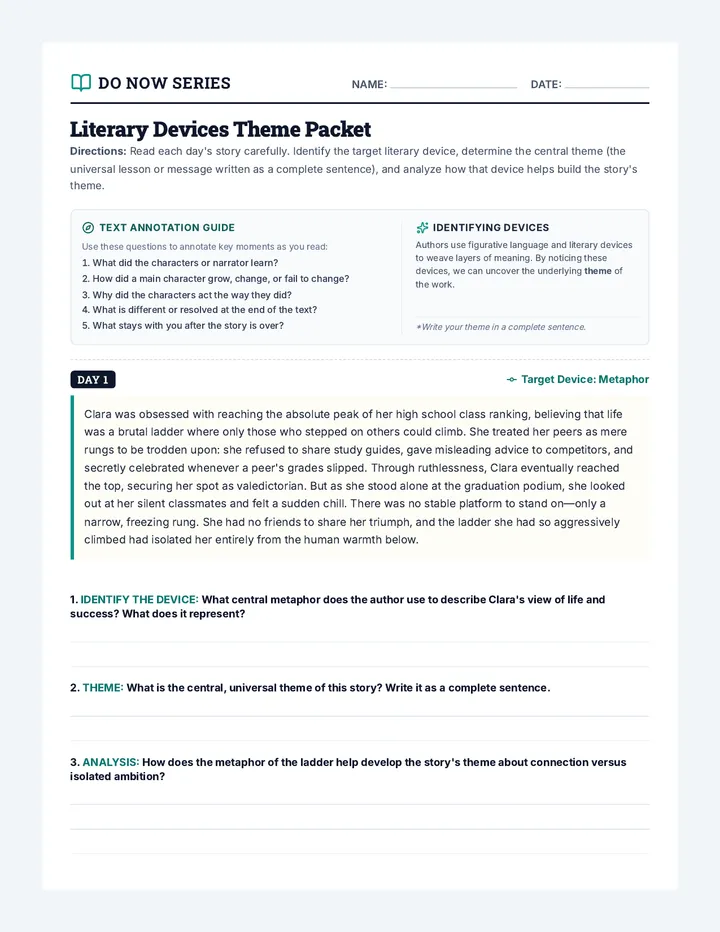
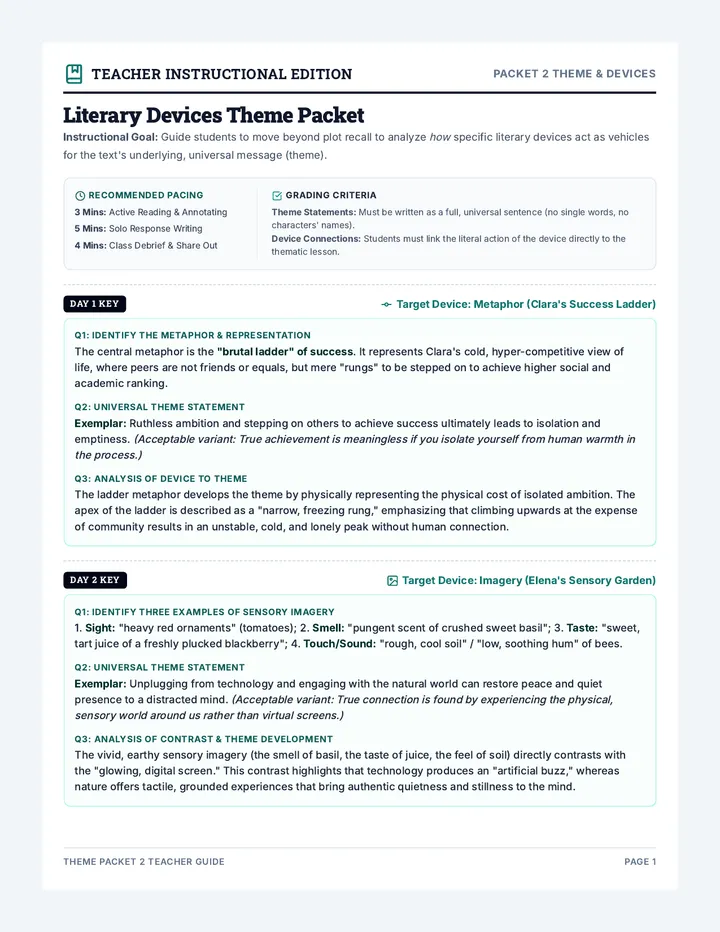
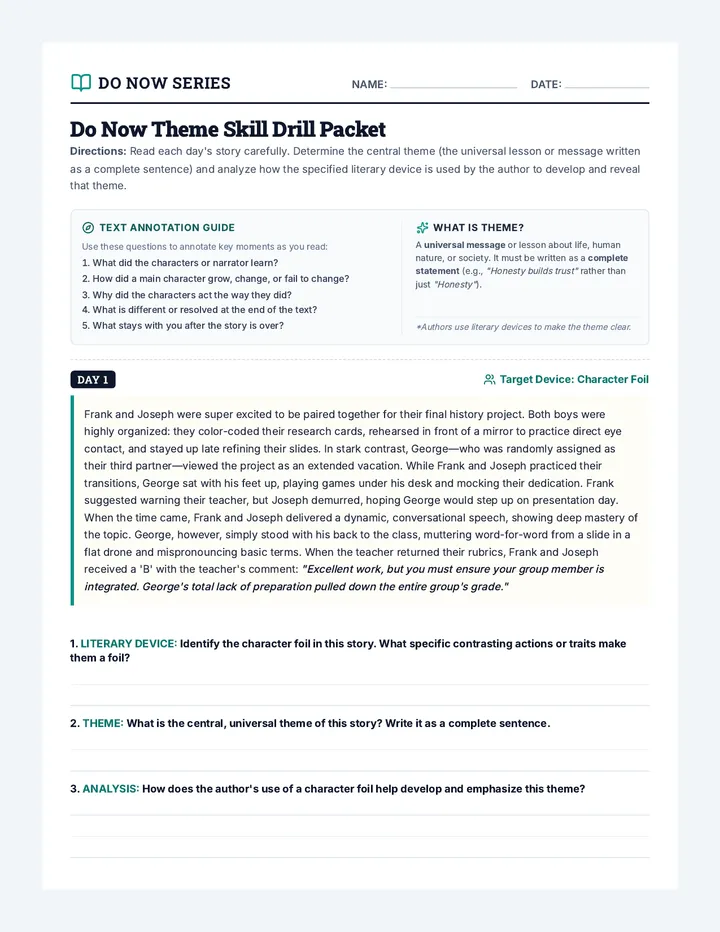
A foundational lesson on identifying theme, distinguishing between topics and universal messages, and understanding the 'so what' of a story.
Deep dive into the core themes of perseverance, teamwork, and personal growth required for the final summative projects.
A focused assessment lesson covering the climax and resolution of Arthur Miller's The Crucible, specifically targeting character development and motivations in Act IV.
An exploration of satire and rhetorical devices through the lens of Kurt Vonnegut's '2BR02B', focusing on how irony, hyperbole, and understatement critique societal obsession with perfection and control.
A high school English lesson where students conduct a mock trial for a tragic hero, analyzing textual evidence to explore themes of fate, choice, and moral culpability.
A foundational lesson for Pre-K and Kindergarten students to identify nouns as people, places, and things through visual cues and coloring activities.
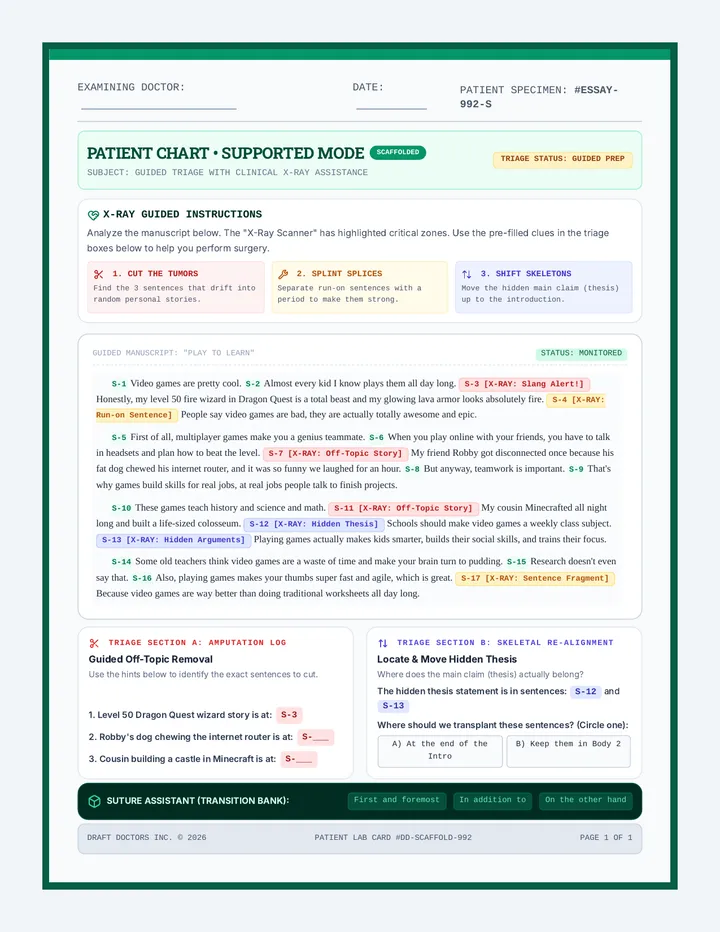
A high-school level exploration of figurative language through a 'classified case file' lens, focusing on identification and analysis of literary devices in classic and contemporary texts.
Students analyze first-person narratives of resilience through literature circles, exploring themes of human strength and community support to inform their own narrative writing.
A comprehensive review session focused on preparing students for the AP Literature Q3 prompt using four key texts. Students will analyze themes, literary devices, and evidence to build a mental library for the open-ended essay.
Explores the pivotal moments of Act Two, including the clash between assimilation and heritage, the purchase of the Clybourne Park house, and the shifting power dynamics within the Younger household.
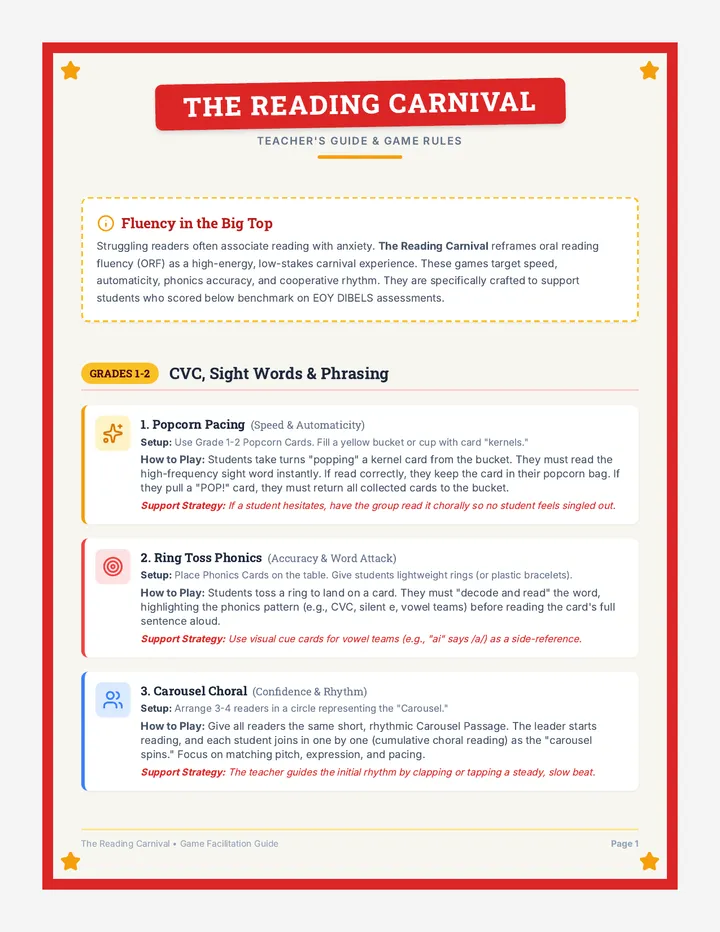
Weeks 19 through 36 of the Daily Grammar Practice program, progressing to compound-complex sentences and advanced punctuation.
Weeks 1 through 18 of the Daily Grammar Practice program, covering basic to intermediate sentence structures.
A focused lesson on identifying and constructing the three core types of academic claims: Fact, Value, and Policy. Students move from basic identification to analyzing how these claims work together in complex arguments.
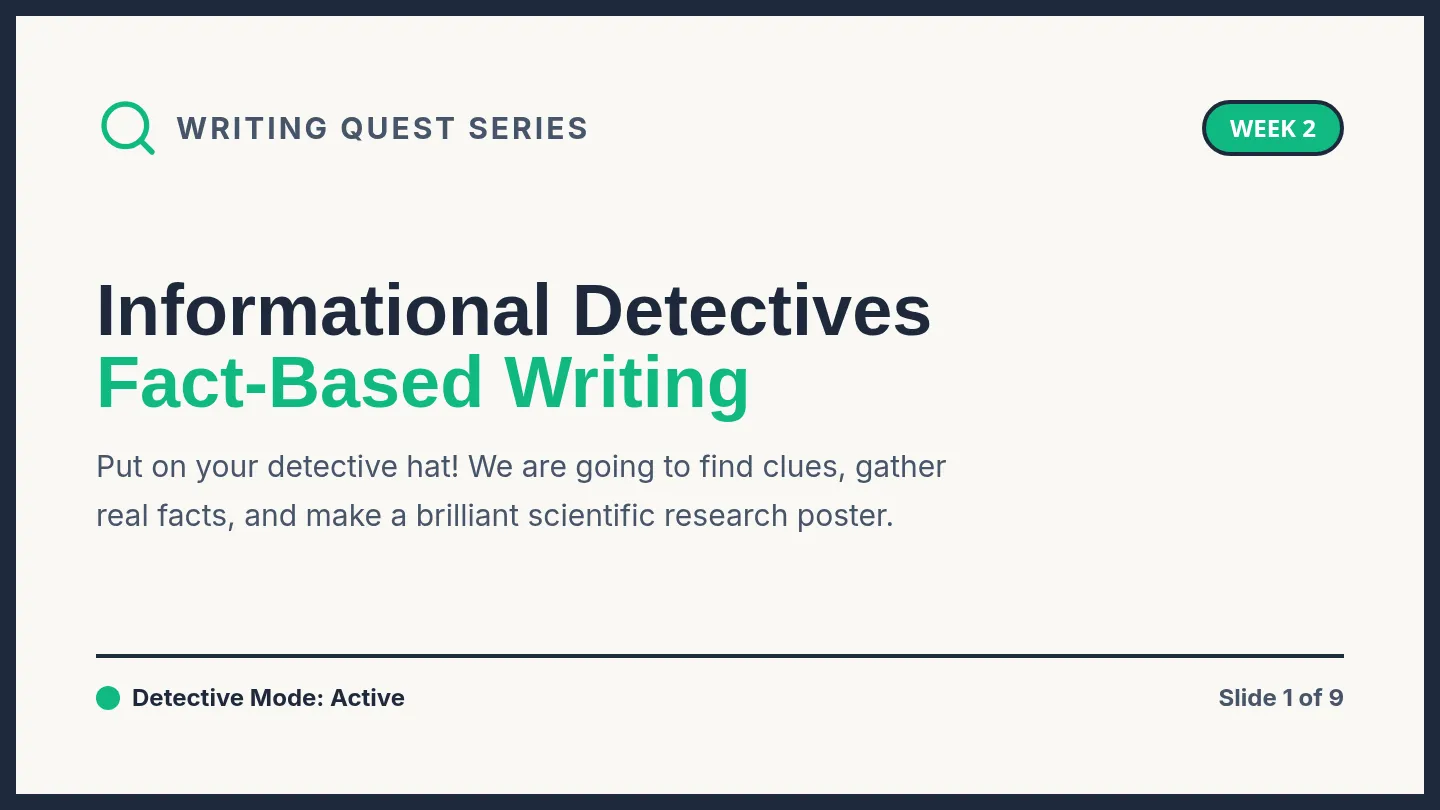
A lesson focused on developing inferential and critical thinking skills for 3rd-grade readers, using a detective-themed approach to "solve" stories by looking for clues.